NewzIntel.com

    • Checkout Page
    • Contact Us
    • Default Redirect Page
    • Frontpage
    • Home-2
    • Home-3
    • Lost Password
    • Member Login
    • Member LogOut
    • Member TOS Page
    • My Account
    • NewzIntel Alert Control-Panel
    • NewzIntel Latest Reports
    • Post Views Counter
    • Privacy Policy
    • Public Individual Page
    • Register
    • Subscription Plan
    • Thank You Page

Category: Farming

  • MIL-OSI Analysis: Sudan’s war is an economic disaster: here’s how bad it could get

    Source: The Conversation – Africa (2) – By Khalid Siddig, Senior Research Fellow and Program Leader for the Sudan Strategy Support Program, International Food Policy Research Institute (IFPRI)

    Since April 2023, Sudan has been engulfed in a devastating war between the Sudanese Armed Forces and the Rapid Support Forces. What began as a struggle for power has turned into a national catastrophe. More than 14 million people have been displaced. Health and education systems have collapsed and food insecurity threatens over half the population of about 50 million.

    The war has disrupted key sectors, triggering severe economic contractions, and worsening poverty and unemployment levels.

    Sudan’s finance minister reported in November 2023 that the war had resulted in economic losses exceeding US$26 billion – or more than half the value of the country’s economy a year earlier. The industrial sector, which includes manufacturing and oil refining, has lost over 50% of its value. Employment has fallen by 4.6 million jobs over the period of the conflict. More than 7 million more people have been pushed into poverty. The agrifood system alone has shrunk by 33.6%. These estimates exclude informal economy losses.

    My research applies economy-wide models to understand how conflict affects national development. In a recent study, my colleagues and I used this approach to answer the question: what will happen to Sudan’s economy and poverty levels if the war continues through 2025?

    To assess the economic impact of the conflict, we used a Social Accounting Matrix multiplier model. This is a tool that captures how shocks affect different sectors and other agents of the economy, such as firms, government and households.

    Based on our modelling, the answer is devastating: the conflict could shrink the size of Sudan’s economy by over 40% from 2022 levels, plunging millions more into poverty.

    We modelled two scenarios to capture the potential trajectories of Sudan’s economy.

    The extreme scenario assumes a sharp initial collapse, with a 29.5% contraction in the size of the economy in 2023 and 12.2% in 2024, followed by a 7% decline in 2025, reflecting some stabilisation over time.

    The moderate scenario, based on World Bank projections, applies a 20.1% contraction in 2023 and a 15.1% drop in 2024, also followed by a 7% reduction in 2025, indicating a slower but more prolonged deterioration.

    We estimated the annual figures and report only the aggregate impacts through 2025 for clarity.

    We found that if the conflict endures, the value of Sudan’s economy will contract by up to 42% from US$56.3 billion in 2022 (pre-conflict) to US$32.4 billion by the end of 2025. The backbone of livelihoods – agriculture – will be crippled. And the social fabric of the country will continue to fray.

    How we did it

    Our Social Accounting Matrix multiplier model used data from various national and international sources to show the impact of conflict on the value of the economy, its sectors and household welfare.

    We connected this to government and World Bank data to reflect Sudan’s current conditions.

    This allowed us to simulate how conflict-driven disruptions affect the value of the economy, its sectors and household welfare.

    What we found

    Under the extreme scenario, we found:

    • Gross domestic product collapse: Gross domestic product (GDP) measures the total value of all goods and services produced in a country within a year. It’s a key indicator of economic health. We found that the value of Sudan’s economy could contract by up to 42%. This means the country would be producing less than 60% of what it did before the conflict. This would affect incomes, jobs, government revenues and public services. The industrial sector – heavily concentrated in Khartoum – would be hardest hit, with output shrinking by over 50%. The value of services like education, health, transport and trade would fall by 40%, and agriculture by more than 35%.

    • Job losses: nearly 4.6 million jobs – about half of all employment – could disappear. Urban areas and non-farm sectors would be worst affected, with over 700,000 farming jobs at risk.

    • Incomes plummet: household incomes would decline across all groups – rich and poor, rural and urban – by up to 42%. Rural and less-educated households suffer the most.

    • Poverty spikes: up to 7.5 million more people could fall into poverty, adding to the 61.1% poverty level in 2022. In rural areas, the poverty rate could jump by 32.5 percentage points from the already high rural poverty rate pre-conflict (67.6% of the rural population). Women, especially in rural communities, are hit particularly hard. Urban poverty, which was at 48.8% pre-conflict, increases by 11.6 percentage points.

    • The agrifood system – which includes farming, food processing, trade and food services – would lose a third of its value under the extreme scenario.

    Why these findings matter

    Sudan was already in a fragile state before the war. It was reeling from decades of underinvestment, international sanctions and institutional breakdown.

    The war has reversed hard-won gains in poverty reduction. It is also dismantling key productive sectors – from agriculture to manufacturing – which will be essential for recovery once the conflict ends. Every month of continued fighting adds to the damage and raises the cost of rebuilding.

    Our projections already show major economic collapse, yet they don’t include the full extent of the damage. This includes losses in the informal economy or the strain on household coping strategies. The real situation could be even worse than what the data suggests.

    What needs to be done

    First and foremost, peace is essential. Without an end to the fighting, recovery will be impossible.

    Second, even as conflict continues, urgent action is needed to stabilise livelihoods. This means:

    • supporting agriculture in areas that remain relatively safe. Food production must be sustained to prevent famine.

    • restoring critical services where possible – particularly transport, trade and retail – to keep local economies functioning

    • protecting the most vulnerable, such as women in rural areas and the elderly, through expanded social protection and targeted cash assistance.

    Third, prepare for recovery. The international community – donors, development banks and NGOs – must begin laying the groundwork for post-conflict reconstruction now. This includes investment in public infrastructure, rebuilding institutions and re-integrating displaced populations.

    The bottom line

    Sudan’s war is more than a political crisis. It is an economic catastrophe unfolding in real time. One that is deepening poverty, destroying livelihoods and erasing years of progress.

    Our research provides hard numbers to describe what Sudanese families are already experiencing every day.

    The country’s economy is bleeding. Without a shift in the trajectory of the conflict, recovery could take decades – if it happens at all.

    Khalid Siddig does not work for, consult, own shares in or receive funding from any company or organisation that would benefit from this article, and has disclosed no relevant affiliations beyond their academic appointment.

    – ref. Sudan’s war is an economic disaster: here’s how bad it could get – https://theconversation.com/sudans-war-is-an-economic-disaster-heres-how-bad-it-could-get-260609

    MIL OSI Analysis –

    July 17, 2025
  • MIL-OSI USA: Ranking Member Frankel Statement at the Subcommittee Markup of the 2026 State, Foreign Operations, and Related Programs Funding Bill

    Source: United States House of Representatives – Congresswoman Lois Frankel (FL-21)

    Congresswoman Lois Frankel (D-FL-22), Ranking Member of the State, Foreign Operations, and Related Programs Subcommittee, delivered the following remarks at the Subcommittee’s markup of the fiscal year 2026 State, Foreign Operations, and Related Programs funding bill:

    -As Prepared For Delivery-

    Thank you, Mr. Chairman.

    Let me start by recognizing the collegiality of Chairman Diaz-Balart and the thoughtful members on both sides of the aisle. I also want to thank the dedicated committee staff—and my own team—for their hard work and guidance. But above all, I want to express my deep gratitude to the public servants who bring American values to life around the world—diplomats, development professionals, and humanitarian workers. They serve and served in some of the most dangerous and difficult places on earth. Many have recently been forced out of their jobs, dismissed without cause or ceremony. To those who’ve served and those still standing: You are patriots. You represent the best of who we are. And we owe you more than thanks—we owe you the tools to do your job.

    With the right allocation and a White House that actually valued diplomacy, development, and humanitarianism, I believe we could have crafted a strong, bipartisan measure worthy of our nation’s leadership.

    Instead, I rise in fierce opposition to the Republican FY26 State, Foreign Operations, and Related Programs bill—a reckless, shortsighted blueprint for American retreat.

    It follows a deeply troubling pattern. The White House has illegally impounded foreign aid, dismantled USAID, gutted the State Department—all without input from Congress. More than ten thousand USAID staff were dismissed. Over 5,000 aid programs have been axed. Just last week, 1,300 State Department employees were let go. Entire offices eliminated.

    And all of this in the middle of a global convergence of crises: armed conflicts, climate disasters, health emergencies, famine, mass migration, and rising authoritarianism.

    This is not theoretical. These crises are slamming into us. When fragile states collapse, migration surges. When we cancel trade support, American farmers and manufacturers lose customers. When we fail to build climate resilience, homes and crops are washed away. When global health systems fail, disease reaches our shores. And when the U.S. pulls back, China and Russia are right there to take our place.

    Worse still, our closest allies—pressured to increase military spending—are also cutting their foreign aid. So as global needs explode, the soft power of democratic nations is vanishing. And the vacuum left behind? It’s being filled by regimes that don’t share our values—or our interests.

    This bill slashes international affairs funding by 22 percent—$13 billion in deep, devastating cuts.

    It guts development and economic support: children pulled from classrooms and left without clean water; farmers cut off from tools that feed communities; young entrepreneurs abandoned, fueling extremism and instability; conflict prevention programs eliminated—so violence erupts unchecked; local organizations, our most trusted partners, shut down.

    It cuts humanitarian assistance by 42 percent. That’s not just unwise—it’s inhumane: women and girls in conflict zones left without care after suffering horrific sexual violence; refugees denied shelter, medicine, hope; food rations slashed below survival levels in places like Syria, Sudan, Bangladesh; and millions of children dying from malnutrition.

    This bill is cruel. It is cold. And it is not who we are.

    And of course, Republicans couldn’t resist another attack on women—reviving the Global Gag Rule, gutting funding for the UN Population Fund, and shortchanging family planning programs that save lives and lift up communities.

    This bill also abandons multilateral institutions like the United Nations and World Health Organization; it sidelines the U.S. from global decision-making; weakens our ability to promote peace and defend allies; forces partners into the arms of authoritarian regimes; and forfeits the power of burden-sharing through institutions like UNICEF, the World Bank, and the UN.

    It’s putting China in charge of the world.

    Let me be blunt: These cuts are not abstract. They are deadly.

    In Nigeria, malnourished infants are dying because therapeutic food deliveries have stopped. In Myanmar, hospitals are shutting their doors in the middle of conflict. In The Gambia, programs to support survivors of female genital mutilation have been halted just as the country debates re-legalizing the practice. In Ukraine, wounded soldiers are going without care. In Afghanistan, pregnant women are being turned away from clinics. In Ecuador, women entrepreneurs—stripped of support—are being pushed toward our border.

    This isn’t just a loss of aid. It’s a loss of American credibility. A loss of moral authority. A loss of global influence.

    And it will cost us dearly.

    Why should the American people care? Because when we fail to lead with compassion and common sense, the world becomes less stable, our troops face more danger, and we pay the price—again and again.

    When we cut aid, we increase the risk of war. When we defund development, we undercut diplomacy. And when we turn our back on the world, we endanger our own.

    I speak as the proud mother of a U.S. Marine veteran. I know what happens when diplomacy fails. When we fail to prevent conflict with education, aid, and engagement, the burden falls on the Pentagon—and on families whose loved ones serve our military.

    Let’s remember: The entire international affairs budget has typically been less than one percent of federal spending. But it delivers exponential returns for our safety, prosperity, and moral standing.

    These programs give youth an alternative to violence. They build markets for American goods. They prevent wars. They reduce migration pressures. They keep our troops home.

    This bill—sadly—is a missed opportunity. A failure to lead. A failure to invest in the power of peace, progress, and partnership.

    But let me end with this: Democrats are not giving up. We stand ready to work with our Republican colleagues—to fight for a bill that reflects our values, honors our commitments, and protects American lives.

    A sustained path to a safer, stronger, and more prosperous nation cannot be built on isolation and threats.

    Because we cannot bomb our way to peace. We cannot drone our way to stability. And we cannot retreat our way to safety.

    A strong America leads—not with fear, but with courage. 

    Not by pulling back, but by reaching out.

    And that’s the bill we should all fight for.

    Thank you. I yield back.

    MIL OSI USA News –

    July 17, 2025
  • MIL-OSI Africa: Sudan’s war is an economic disaster: here’s how bad it could get

    Source: The Conversation – Africa – By Khalid Siddig, Senior Research Fellow and Program Leader for the Sudan Strategy Support Program, International Food Policy Research Institute (IFPRI)

    Since April 2023, Sudan has been engulfed in a devastating war between the Sudanese Armed Forces and the Rapid Support Forces. What began as a struggle for power has turned into a national catastrophe. More than 14 million people have been displaced. Health and education systems have collapsed and food insecurity threatens over half the population of about 50 million.

    The war has disrupted key sectors, triggering severe economic contractions, and worsening poverty and unemployment levels.

    Sudan’s finance minister reported in November 2023 that the war had resulted in economic losses exceeding US$26 billion – or more than half the value of the country’s economy a year earlier. The industrial sector, which includes manufacturing and oil refining, has lost over 50% of its value. Employment has fallen by 4.6 million jobs over the period of the conflict. More than 7 million more people have been pushed into poverty. The agrifood system alone has shrunk by 33.6%. These estimates exclude informal economy losses.

    My research applies economy-wide models to understand how conflict affects national development. In a recent study, my colleagues and I used this approach to answer the question: what will happen to Sudan’s economy and poverty levels if the war continues through 2025?

    To assess the economic impact of the conflict, we used a Social Accounting Matrix multiplier model. This is a tool that captures how shocks affect different sectors and other agents of the economy, such as firms, government and households.

    Based on our modelling, the answer is devastating: the conflict could shrink the size of Sudan’s economy by over 40% from 2022 levels, plunging millions more into poverty.

    We modelled two scenarios to capture the potential trajectories of Sudan’s economy.

    The extreme scenario assumes a sharp initial collapse, with a 29.5% contraction in the size of the economy in 2023 and 12.2% in 2024, followed by a 7% decline in 2025, reflecting some stabilisation over time.

    The moderate scenario, based on World Bank projections, applies a 20.1% contraction in 2023 and a 15.1% drop in 2024, also followed by a 7% reduction in 2025, indicating a slower but more prolonged deterioration.

    We estimated the annual figures and report only the aggregate impacts through 2025 for clarity.

    We found that if the conflict endures, the value of Sudan’s economy will contract by up to 42% from US$56.3 billion in 2022 (pre-conflict) to US$32.4 billion by the end of 2025. The backbone of livelihoods – agriculture – will be crippled. And the social fabric of the country will continue to fray.

    How we did it

    Our Social Accounting Matrix multiplier model used data from various national and international sources to show the impact of conflict on the value of the economy, its sectors and household welfare.

    We connected this to government and World Bank data to reflect Sudan’s current conditions.

    This allowed us to simulate how conflict-driven disruptions affect the value of the economy, its sectors and household welfare.

    What we found

    Under the extreme scenario, we found:

    • Gross domestic product collapse: Gross domestic product (GDP) measures the total value of all goods and services produced in a country within a year. It’s a key indicator of economic health. We found that the value of Sudan’s economy could contract by up to 42%. This means the country would be producing less than 60% of what it did before the conflict. This would affect incomes, jobs, government revenues and public services. The industrial sector – heavily concentrated in Khartoum – would be hardest hit, with output shrinking by over 50%. The value of services like education, health, transport and trade would fall by 40%, and agriculture by more than 35%.

    • Job losses: nearly 4.6 million jobs – about half of all employment – could disappear. Urban areas and non-farm sectors would be worst affected, with over 700,000 farming jobs at risk.

    • Incomes plummet: household incomes would decline across all groups – rich and poor, rural and urban – by up to 42%. Rural and less-educated households suffer the most.

    • Poverty spikes: up to 7.5 million more people could fall into poverty, adding to the 61.1% poverty level in 2022. In rural areas, the poverty rate could jump by 32.5 percentage points from the already high rural poverty rate pre-conflict (67.6% of the rural population). Women, especially in rural communities, are hit particularly hard. Urban poverty, which was at 48.8% pre-conflict, increases by 11.6 percentage points.

    • The agrifood system – which includes farming, food processing, trade and food services – would lose a third of its value under the extreme scenario.

    Why these findings matter

    Sudan was already in a fragile state before the war. It was reeling from decades of underinvestment, international sanctions and institutional breakdown.

    The war has reversed hard-won gains in poverty reduction. It is also dismantling key productive sectors – from agriculture to manufacturing – which will be essential for recovery once the conflict ends. Every month of continued fighting adds to the damage and raises the cost of rebuilding.

    Our projections already show major economic collapse, yet they don’t include the full extent of the damage. This includes losses in the informal economy or the strain on household coping strategies. The real situation could be even worse than what the data suggests.

    What needs to be done

    First and foremost, peace is essential. Without an end to the fighting, recovery will be impossible.

    Second, even as conflict continues, urgent action is needed to stabilise livelihoods. This means:

    • supporting agriculture in areas that remain relatively safe. Food production must be sustained to prevent famine.

    • restoring critical services where possible – particularly transport, trade and retail – to keep local economies functioning

    • protecting the most vulnerable, such as women in rural areas and the elderly, through expanded social protection and targeted cash assistance.

    Third, prepare for recovery. The international community – donors, development banks and NGOs – must begin laying the groundwork for post-conflict reconstruction now. This includes investment in public infrastructure, rebuilding institutions and re-integrating displaced populations.

    The bottom line

    Sudan’s war is more than a political crisis. It is an economic catastrophe unfolding in real time. One that is deepening poverty, destroying livelihoods and erasing years of progress.

    Our research provides hard numbers to describe what Sudanese families are already experiencing every day.

    The country’s economy is bleeding. Without a shift in the trajectory of the conflict, recovery could take decades – if it happens at all.

    – Sudan’s war is an economic disaster: here’s how bad it could get
    – https://theconversation.com/sudans-war-is-an-economic-disaster-heres-how-bad-it-could-get-260609

    MIL OSI Africa –

    July 17, 2025
  • MIL-OSI USA: Baldwin Demands USDA Safeguard Farmers’ Financial Information, Revoke DOGE’s Access to Payment System

    US Senate News:

    Source: United States Senator for Wisconsin Tammy Baldwin

    WASHINGTON, D.C. – U.S. Senator Tammy Baldwin (D-WI) is demanding that the United States Department of Agriculture (USDA) safeguard Wisconsin farmers’ personal and financial information and rescind the Department of Government Efficiency’s (DOGE) unprecedented access to USDA’s payment systems. Recent reports exposed that DOGE has access to USDA databases containing farmers’ sensitive financial information. This intrusion not only breaches farmers’ privacy but also raises serious concerns about the future of USDA payments, our nation’s food security, and the consolidation of farmland and processing operations.

    “Wisconsin farmers share sensitive financial information with USDA when seeking federal loans or disaster assistance. Historically, only trained Farm Service Agency staff and senior USDA officials have had access to this data. However, reports indicate that DOGE has been granted sweeping access to the National Payment System that controls tens of billions of dollars in payments and loans to farmers and ranchers across the United States. There is no clear justification for this, and it raises serious concerns about data security, farmers’ privacy, and the potential misuse of confidential records,” wrote Senator Baldwin in a letter to USDA Secretary Brooke Rollins.

    “At a time when farmers and rural communities are facing volatile market conditions and increasingly severe weather, the accessibility and security of USDA resources is more important than ever,” Senator Baldwin continued. “I urge you to take immediate steps to restore the public’s confidence in the security of USDA’s payment systems. I request that you rescind DOGE’s access to farmers’ private data, as well as their involvement in payment and loan decisions. The agency must ensure that farmers are safeguarded from the unauthorized use of their data and that funds they have been promised are not unjustifiably blocked or delayed.”

    The full letter is available here and below:

    Dear Secretary Rollins:

    I am writing to you today on behalf of Wisconsin farmers who partner with the United States Department of Agriculture (USDA). When farmers utilize USDA services to produce the highest quality food and contribute to their rural economies, they must be able to trust their partners in Washington. For that reason, I am alarmed by recent reports that the Department of Government Efficiency (DOGE) has access to USDA databases containing farmers’ personal information—an intrusion that not only breaches their privacy, but also raises serious concerns about the future of USDA payments, our nation’s food security, and the consolidation of farmland and processing operations.

    Wisconsin farmers share sensitive financial information with USDA when seeking federal loans or disaster assistance. Historically, only trained Farm Service Agency staff and senior USDA officials have had access to this data. However, reports indicate that DOGE has been granted sweeping access to the National Payment System that controls tens of billions of dollars in payments and loans to farmers and ranchers across the United States. There is no clear justification for this, and it raises serious concerns about data security, farmers’ privacy, and the potential misuse of confidential records.

    DOGE has already been granted unprecedented access to sensitive data from other federal databases. While at the National Labor Relations Board, DOGE accessed and possibly exported sensitive and personally identifiable information regarding union members, lawsuits and corporate data. USDA systems and staff are charged with storing similarly sensitive information. Farmers deserve to know that their private information is protected and will not be exported for unauthorized, and potentially illegal, uses. In the wrong hands, sensitive data about our nation’s agricultural sector could be taken advantage of to exploit vulnerabilities in our food supply chains. It could also be used to further consolidate agricultural processing capacity and land ownership.

    I am also concerned by the reports that DOGE has the ability to approve or block USDA payments and loans. An unappointed and unelected group of Washington insiders with no accountability to farmers should not be in charge of delaying disaster relief checks or blocking contracts. At a time when farmers and rural communities are facing volatile market conditions and increasingly severe weather, the accessibility and security of USDA resources is more important than ever.

    I urge you to take immediate steps to restore the public’s confidence in the security of USDA’s payment systems. I request that you rescind DOGE’s access to farmers’ private data, as well as their involvement in payment and loan decisions. The agency must ensure that farmers are safeguarded from the unauthorized use of their data and that funds they have been promised are not unjustifiably blocked or delayed.

    Sincerely, 

    MIL OSI USA News –

    July 17, 2025
  • MIL-OSI United Kingdom: Isle of Wight councillor joins literacy leaders to promote reading 16 July 2025 Isle of Wight councillor joins literacy leaders to promote reading across the UK

    Source: Aisle of Wight

    Councillor Julie Jones-Evans has added another chapter to her story as the Local Government Association’s Library Champion — this time with a visit to 10 Downing Street.

    She joined authors and literacy leaders to help turn the page on declining reading habits, as part of the launch of the National Year of Reading 2026, a nationwide campaign encouraging people of all ages to rediscover the joy of reading for pleasure.

    The event brought together a cast of literary champions, including bestselling author Cressida Cowell, known for her How to Train Your Dragon series, and Jonathan Douglas, chief executive of the National Literacy Trust.

    Also in attendance were representatives from The Reading Agency, the organisation behind the ever-popular Summer Reading Challenge, which inspires thousands of children to keep reading through the school holidays, including on the Isle of Wight.

    “It was a real honour to represent the Isle of Wight and local government at such an inspiring event,” said Councillor Jones-Evans.

    “Reading for pleasure has so many benefits — from improving mental wellbeing to supporting educational and life outcomes. It’s something we should all be championing.”

    The Year of Reading comes at a time when national figures show a worrying trend: only one in three children continue to read for pleasure after leaving primary school, and fewer parents are reading to their children at home.

    The campaign aims to reverse this by working with schools, libraries, and community groups to make reading more accessible, enjoyable, and part of everyday life.

    “The energy in the room was fantastic,” Councillor Jones-Evans added.

    “Everyone there shared a belief that reading can change lives — and not just for children.

    Whether it’s a gripping novel, a comic book, or a bedtime story, reading opens doors and sparks imagination.”

    As the campaign rolls out across the country, local communities are being encouraged to get involved — whether by joining a library, taking part in reading challenges, or simply picking up a book and sharing it with someone else.

    Councillor Jones-Evans is also inviting town, parish, and community councils to consider how they can play a part in supporting the National Year of Reading.

    Stay connected

    Want to stay up to date with all things libraries, including the upcoming Summer Reading Challenge?

    MIL OSI United Kingdom –

    July 17, 2025
  • MIL-OSI USA: REP. HILL’S BILL TO TURN VACANT FEDERAL BUILDING INTO COMMUNITY SPACE IN PERRY COUNTY ADVANCES THROUGH COMMITTEE

    Source: United States House of Representatives – Congressman French Hill (AR-02)

     Rep. French Hill (AR-02) today released the following statement after his bill, H.R. 3187, advanced out of the House Committee on Natural Resources with unanimous consent. The bill directs the Secretary of Agriculture to convey a vacant U.S. Forest Service building and surrounding land to Perry County.

    Rep. Hill said, “I’m pleased to see my bill to transfer a long-vacant U.S. Forest Service building to Perry County unanimously passed the House Natural Resources Committee. That building has sat empty for years, and now it’s one step closer to being put to good use for youth programs, agricultural education, and local conservation efforts. It’s a smart use of public resources and a clear win for Perry County.

    “I’m especially thankful to my friend and fellow Arkansan, Chairman Westerman, for moving this bill through his committee. As it heads to the House Floor, I’ll keep working to get my bill passed so local leaders can finally put the building to work for the people of Perry County.”

    Following the passage of H.R. 3187 through the House Committee on Natural Resources, Chairman Westerman said, “Congressman Hill’s simple land transfer removes a burden from the American taxpayer and will help support the needs of a local community in my home state. This commonsense legislation will provide Perry County with new resources to support the community. I’d like to thank Congressman Hill for his work on this bill and for his work for Arkansans.”

    Background

    The 0.81-acre parcel, located at 1069 Fourche Avenue, includes a federal building operated by the U.S. Forest Service. The building is vacant, and the U.S. Forest Service has no plans to use it going forward. While the building will require repairs and updates, Perry County has the funds to make the necessary improvements. Once conveyed and repaired, the property will support permanent operations of the University of Arkansas Extension Program and the Perry County Conservation District and serve as the meeting space for the 4-H Youth Development Program.

    Several local leaders and Perry County residents have voiced their support for the building to be conveyed to Perry County.

    You can read the full bill text HERE.

    MIL OSI USA News –

    July 17, 2025
  • MIL-OSI Analysis: ‘Alligator Alcatraz’ showcases Donald Trump’s penchant for visual cruelty

    Source: The Conversation – Canada – By Marycarmen Lara Villanueva, PhD Candidate, Department of Social Justice Education, Ontario Institute for Studies in Education, University of Toronto

    The United States government recently announced the opening of a massive immigrant detention facility built deep within the Florida Everglades that’s been dubbed “Alligator Alcatraz.” White House Press Secretary Karoline Leavitt said during a media briefing that “there is only one road leading in … and the only way out is a one-way flight.”

    For some taking in her remarks, the moment felt dystopian. According to Florida Gov. Ron DeSantis, the facility is surrounded by swamps and alligators and is equipped with more than 200 security cameras, 8,500 metres of barbed wire and a security force of 400 personnel.

    Accounts from some of the first detainees at the facility have shed light on the inhumane conditions. They’ve described limited access to water and fresh air, saying they received only one meal a day and that the lights are on 24/7.

    Apparently designed to be an immigration deterrence and a display of cruelty, Alligator Alcatraz is much more than infrastructure. It is visual policy aimed to stage terror as a message while making Trump’s authoritarian and fascist politics a material reality.

    Contributing to this fascist visual apparatus, AI-generated images of alligators wearing Immigration and Customs Enforcement (ICE) hats have circulated widely on social media. Some have questioned whether these images were satire or state propaganda.

    A screenshot of a June 2025 Homeland Security post on X, formerly Twitter.

    Surveillance, migration, debilitation

    In a moment of growing right-wing rhetoric and support for anti-immigrant violence, understanding how visual regimes operate, and what they attempt to normalize, is important.


    Read more:
    Nearly 54% of extreme conservatives say the federal government should use violence to stop illegal immigration


    Surveillance and deterrence technologies used along the U.S.–Mexico border for decades were intentionally designed to restrict the movement of undocumented migrants. According to Human Rights Watch, this has resulted in more than 10,000 deaths.

    Since 1994, U.S. Border Patrol has been accused of directing migrants away from urban crossings along the southern border, intentionally funnelling them into harsh and inhospitable terrain like the Sonora Desert.

    The desert serves as a deterrent to prevent immigrants from reaching their destiny. American theorist Jasbir Puar’s concept of debility is useful in making sense of the strategic process whereby the state works not to kill, but to weaken, as a form of slow violence that wears people down over time. The desired outcome is deterrence.

    On the southern U.S. border, severe dehydration and kidney failure can be outcomes of this debilitating process, potentially resulting in disability or death.

    Infrastructures of violence

    Sarah Lopez, a built environment historian and migration scholar in the U.S., describes the architecture of migrant immobilization as existing on a continuum with prison design. She’s highlighted the increasingly punitive conditions of immigration detention facilities, such as small dark cells or the absence of natural light.

    French architect and writer Léopold Lambert explains that architecture isn’t just about buildings, but about how space is used to organize and control people. He coined and developed the term weaponized architecture to describe how spaces are designed to serve the political goals of those in power.

    Colonialism, capitalism and modernity are closely connected, and architecture has played a key role in making them possible. Alligator Alcatraz sits at the intersection of all three, intentionally created to invoke danger and isolation. In other words, it’s cruel by design.

    As Leavitt put it, the facility is “isolated and surrounded by dangerous wildlife and unforgiving terrain.” The Trump administration has essentially transformed land into infrastructure and migrants into disposable threats.

    Terrorizing the marginalized

    State-sanctioned “unforgiving terrains” are not new, and the use of alligators to terrorize people of colour isn’t new either.

    The grotesque history of Black children being used as “alligator bait” in Jim Crow-era imagery is well-documented.

    So when Trump publicly fantasized about alligators eating immigrants trying to escape the new detention centre, it came as no surprise to those familiar with the long racist visual history linking alligators to representations of Black people.

    This logic is redeployed in the form of a racial terror that is made visible, marketable and even humorous in mainstream political discourse.

    Visuality and migration

    “Visuality” is a key term in the field of visual and cultural studies, originally coined by Scottish historian Thomas Carlyle and reintroduced in the early 2000s by American cultural theorist Nicholas Mirzoeff. It can be understood as the socially, historically and culturally constructed ways of seeing and understanding the visual world.

    Visual systems have historically been used to justify western imperial and colonial rule by controlling how people see and understand the world.

    While Alligator Alcatraz is a brand-new detention facility, it draws from a longer visual and spatial history of domination.

    The AI-generated images of alligators wearing ICE hats can be seen as part of a broader visual system that makes racialized violence seem normal, justified and even funny. In this absurd transformation, the alligator is reimagined as a legitimate symbol of border enforcement.

    Migrant death by water

    The spectacle of Alligator Alcatraz, with its swampy inhospitable landscape, cannot be divorced from the long visual history of migrant death by water that’s relied on the circulation of images to provoke outrage — and sometimes state action.

    Examples include the iconic image of Aylan Kurdi, the Syrian child whose lifeless body washed ashore in Turkey in 2015, and the devastating photo of Oscar Alberto Martínez Ramírez and his two-year-old daughter who both drowned crossing the Rio Grande in 2019.

    These images sparked global concern, but they also reinforced the idea that migrant lives only matter when they end in death — as if borders only become visible when they cause deaths.

    Alligator Alcatraz was built in eight days. The fact that a detention camp — or what some have called a concentration camp — can be assembled almost overnight, while basic human needs like clean drinking water or emergency warning systems go unmet for years, speaks volumes about where political will and government priorities lie.

    Marycarmen Lara Villanueva does not work for, consult, own shares in or receive funding from any company or organisation that would benefit from this article, and has disclosed no relevant affiliations beyond their academic appointment.

    – ref. ‘Alligator Alcatraz’ showcases Donald Trump’s penchant for visual cruelty – https://theconversation.com/alligator-alcatraz-showcases-donald-trumps-penchant-for-visual-cruelty-260566

    MIL OSI Analysis –

    July 17, 2025
  • MIL-OSI Analysis: California farmers identify a hot new cash crop: Solar power

    Source: The Conversation – USA (2) – By Jacob Stid, Ph.D. student in Hydrogeology, Michigan State University

    This dairy farm in California’s Central Valley has installed solar panels on a portion of its land. George Rose/Getty Images

    Imagine that you own a small, 20-acre farm in California’s Central Valley. You and your family have cultivated this land for decades, but drought, increasing costs and decreasing water availability are making each year more difficult.

    Now imagine that a solar-electricity developer approaches you and presents three options:

    • You can lease the developer 10 acres of otherwise productive cropland, on which the developer will build an array of solar panels and sell electricity to the local power company.
    • You can select 1 or 2 acres of your land on which to build and operate your own solar array, using some electricity for your farm and selling the rest to the utility.
    • Or you can keep going as you have been, hoping your farm can somehow survive.

    Thousands of farmers across the country, including in the Central Valley, are choosing one of the first two options. A 2022 survey by the U.S. Department of Agriculture found that roughly 117,000 U.S. farm operations have some type of solar device. Our own work has identified over 6,500 solar arrays currently located on U.S. farmland.

    Our study of nearly 1,000 solar arrays built on 10,000 acres of the Central Valley over the past two decades found that solar power and farming are complementing each other in farmers’ business operations. As a result, farmers are making and saving more money while using less water – helping them keep their land and livelihood.

    A hotter, drier and more built-up future

    Perhaps nowhere in the U.S. is farmland more valuable or more productive than California’s Central Valley. The region grows a vast array of crops, including nearly all of the nation’s production of almonds, olives and sweet rice. Using less than 1% of all farmland in the country, the Central Valley supplies a quarter of the nation’s food, including 40% of its fruits, nuts and other fresh foods.

    The food, fuel and fiber that these farms produce are a bedrock of the nation’s economy, food system and way of life.

    But decades of intense cultivation, urban development and climate change are squeezing farmers. Water is limited, and getting more so: A state law passed in 2014 requires farmers to further reduce their water usage by the mid-2040s.

    California’s Central Valley is some of the most productive cropland in the country.
    Citizen of the Planet/UCG/Universal Images Group via Getty Images

    The trade-offs of installing solar on agricultural land

    When the solar arrays we studied were installed, California state solar energy policy and incentives gave farm landowners new ways to diversify their income by either leasing their land for solar arrays or building their own.

    There was an obvious trade-off: Turning land used for crops to land used for solar usually means losing agricultural production. We estimated that over the 25-year life of the solar arrays, this land would have produced enough food to feed 86,000 people a year, assuming they eat 2,000 calories a day.

    There was an obvious benefit, too, of clean energy: These arrays produced enough renewable electricity to power 470,000 U.S. households every year.

    But the result we were hoping to identify and measure was the economic effect of shifting that land from agricultural farming to solar farming. We found that farmers who installed solar were dramatically better off than those who did not.

    They were better off in two ways, the first being financially. All the farmers, whether they owned their own arrays or leased their land to others, saved money on seeds, fertilizer and other costs associated with growing and harvesting crops. They also earned money from leasing the land, offsetting farm energy bills, and selling their excess electricity.

    Farmers who owned their own arrays had to pay for the panels, equipment and installation, and maintenance. But even after covering those costs, their savings and earnings added up to US$50,000 per acre of profits every year, 25 times the amount they would have earned by planting that acre.

    Farmers who leased their land made much less money but still avoided costs for irrigation water and operations on that part of their farm, gaining $1,100 per acre per year – with no up-front costs.

    The farmers also conserved water, which in turn supported compliance with the state’s Sustainable Groundwater Management Act water use reduction requirements. Most of the solar arrays were installed on land that had previously been irrigated. We calculated that turning off irrigation on this land saved enough water every year to supply about 27 million people with drinking water or irrigate 7,500 acres of orchards. Following solar array installation, some farmers also fallowed surrounding land, perhaps enabled by the new stable income stream, which further reduced water use.

    Irrigation is key to cropland productivity in California’s Central Valley. Covering some land with solar panels eliminates the need for irrigation of that area, saving water for other uses elsewhere.
    Citizen of the Planet/UCG/Universal Images Group via Getty Images

    Changes to food and energy production

    Farmers in the Central Valley and elsewhere are now cultivating both food and energy. This shift can offer long-term security for farmland owners, particularly for those who install and run their own arrays.

    Recent estimates suggest that converting between 1.1% and 2.4% of the country’s farmland to solar arrays would, along with other clean energy sources, generate enough electricity to eliminate the nation’s need for fossil fuel power plants.

    Though many crops are part of a global market that can adjust to changes in supply, losing this farmland could affect the availability of some crops. Fortunately, farmers and landowners are finding new ways to protect farmland and food security while supporting clean energy.

    One such approach is agrivoltaics, where farmers install solar designed for grazing livestock or growing crops beneath the panels. Solar can also be sited on less productive farmland or on farmland that is used for biofuels rather than food production.

    Even in these areas, arrays can be designed and managed to benefit local agriculture and natural ecosystems. With thoughtful design, siting and management, solar can give back to the land and the ecosystems it touches.

    Farms are much more than the land they occupy and the goods they produce. Farms are run by people with families, whose well-being depends on essential and variable resources such as water, fertilizer, fuel, electricity and crop sales. Farmers often borrow money during the planting season in hopes of making enough at harvest time to pay off the debt and keep a little profit.

    Installing solar on their land can give farmers a diversified income, help them save water, and reduce the risk of bad years. That can make solar an asset to farming, not a threat to the food supply.

    Jacob Stid works for Michigan State University. Funding for this work came from the US Department of Agriculture’s National Institute of Food and Agriculture program and the Department of Earth and Environmental Sciences at Michigan State University. He also receives funding from the Foundation for Food and Agricultural Research.

    Annick Anctil receives funding from NSF and USDA.

    Anthony Kendall receives funding from the USDA, NASA, the NSF, and the Foundation for Food and Agricultural Research. He is an Assistant Professor at Michigan State University, and serves on the nonprofit board of the FLOW Water Advocates.

    – ref. California farmers identify a hot new cash crop: Solar power – https://theconversation.com/california-farmers-identify-a-hot-new-cash-crop-solar-power-259653

    MIL OSI Analysis –

    July 17, 2025
  • MIL-OSI: Wilshire Indexes and GCM Grosvenor Launch Private Market Infrastructure Index, Laying Foundation for Broader Strategic Alliance

    Source: GlobeNewswire (MIL-OSI)

    LONDON and CHICAGO, July 16, 2025 (GLOBE NEWSWIRE) — Wilshire Indexes, a global leader in index design, and GCM Grosvenor (NASDAQ: GCMG), a leading global alternative asset management solutions provider, today announced the launch of the jointly developed FT Wilshire Private Markets Infrastructure Index (the “Index”). This first-of-its-kind benchmark fills a void for the asset class by providing investors with a transparent, reliable reference point based on the performance of a diversified universe of leading open-ended infrastructure funds. Until now, infrastructure investors lacked a comprehensive benchmark that truly reflected the breadth of the market. To address growing demand for passive exposure to this universe of assets, GCM Grosvenor is developing one or more investable vehicles designed to track the Index, with anticipated launches in the coming months.

    The Index was created through close collaboration between Wilshire Indexes and GCM Grosvenor, leveraging the breadth, depth, and global scale of both organizations, with support of a select group of leading open-ended infrastructure funds. Wilshire Indexes will calculate and govern the benchmark, drawing on its four-decade heritage of transparent, rules-based index methodologies and next-generation data analytics technology. GCM Grosvenor, leveraging its $82 billion alternative investments platform, will contribute ongoing private market insights and risk management expertise as the Index evolves. In addition, GCM Grosvenor is advancing plans for a single point-of-entry investment vehicle, which it will manage, that will track the Index and offer investors streamlined access to diversified infrastructure exposure.

    “This partnership brings together Wilshire Indexes’ index innovation with GCM Grosvenor’s deep private markets expertise to deliver a simple, scalable solution for infrastructure investing,” said Mark Makepeace, Chief Executive Officer of Wilshire Indexes. “We’re proud to help set a new standard for transparency and accessibility in private assets.”

    Jon Levin, President of GCM Grosvenor, added, “Institutional investors are increasingly asking for an efficient way to gain diversified infrastructure exposure. Working with Wilshire Indexes lets us answer that call today – and lays the groundwork for additional alternative investment products.”

    North Dakota Trust Lands, a longstanding collaborator with both Wilshire Indexes and GCM Grosvenor, played an instrumental role in forging the partnership behind the index and anticipated investor-focused product. “Allocators like us have long searched for a volatility-matched, risk-appropriate, and investable infrastructure benchmark, and we believe that Wilshire Indexes and GCM Grosvenor have the best expertise to help bring this vision to life,” said Frank Mihail, Chief Investment Officer of North Dakota Trust Lands.

    Following the launch of the Infrastructure Index, the Wilshire Indexes and GCM Grosvenor intend to collaborate on additional alternative investment indices and complementary investable products across the alternative investments landscape. Future initiatives will capitalize on the breadth, depth, and global scale of both organizations, leveraging advanced data analytics and scalable technology platforms to further enhance transparent access to alternative assets.

    Wilshire Indexes expects to publish the initial Index results to subscribers in the third quarter of 2025. GCM Grosvenor anticipates launching the prospective tracking vehicles later this year, subject to customary approvals.

    About Wilshire Indexes

    Wilshire Indexes is a global index provider that empowers institutional investors, asset managers and retail intermediaries with unmatched flexibility in solving benchmarking, portfolio construction, and risk management challenges. Transforming the way investors use benchmarks to realize their objectives, Wilshire Indexes provides global coverage of the markets through the leading FT Wilshire Index Series. Combining new technology and modular products in a growth-aligned commercial model designed for collaboration, efficiency, and speed to market, Wilshire Indexes offers a completely new way to work with an index provider.

    About GCM Grosvenor

    GCM Grosvenor (Nasdaq: GCMG) is a global alternative asset management solutions provider with approximately $82 billion in assets under management across private equity, infrastructure, real estate, credit, and absolute return investment strategies. The firm has specialized in alternatives for more than 50 years and is dedicated to delivering value for clients by leveraging its cross-asset class and flexible investment platform. GCM Grosvenor’s experienced team of approximately 550 professionals serves a global client base of institutional and individual investors. The firm is headquartered in Chicago, with offices in New York, Toronto, London, Frankfurt, Tokyo, Hong Kong, Seoul and Sydney. For more information, visit: gcmgrosvenor.com.

    About North Dakota Department of Trust Lands

    The North Dakota Department of Trust Lands manages 2.6 million mineral acres, 700,000 surface acres and 13 permanent education trusts, including the Common Schools Trust Fund currently valued at over $7.5 billion. The Department operates under the direction of the five-member North Dakota Board of University and School Lands, chaired by the governor of North Dakota. Mineral royalty income, agricultural rents and easement revenues from state-owned lands are invested to provide income and grow trusts to benefit education now and for future generations. Since 2014, the Common Schools Trust Fund has distributed more than $2 billion to support North Dakota K-12 education, reducing the burden on local property taxpayers and the state’s general fund. During the 2025-2027 biennium, the Common Schools Trust Fund will distribute $585 million, translating to approximately $2,508 in funding per K-12 student and contributing 24% of the state funding share.

    Media Contact

    Tom Johnson and Abigail Ruck
    H/Advisors Abernathy
    tom.johnson@h-advisors.global / abigail.ruck@h-advisors.global
    212-371-5999

    The MIL Network –

    July 17, 2025
  • MIL-OSI Europe: Written question – Common agricultural policy reform – P-002877/2025

    Source: European Parliament

    Priority question for written answer  P-002877/2025
    to the Commission
    Rule 144
    Daniel Buda (PPE)

    The Commission proposed a reform of the common agricultural policy (CAP) and integration of the agricultural budget into flexible national plans, in order for funding to be rerouted to other priorities. The proposal was scrapped after opposition from farmers, agriculture ministers and the farming lobby. Although the structure of the CAP has been salvaged, it will suffer major budget cuts of an estimated 15 % to 25 %, which will affect direct payments to farmers and is liable to spark renewed protests.

    Since the current structure of the CAP is to be retained, how will the Commission manage the impact of these estimated budget cuts on farmers, particularly when it comes to keeping farms viable and competitive, and ensuring long-term food security and the sustainability of the agricultural sector, given the EU’s new strategic priorities?

    Submitted: 15.7.2025

    Last updated: 16 July 2025

    MIL OSI Europe News –

    July 16, 2025
  • MIL-OSI Europe: Netherlands: EIB, Rabobank, and DLL partner to provide €1 billion for European SMEs with a focus on sustainability and agriculture

    Source: European Investment Bank

    EIB

    • The European Investment Bank signs two €250 million loan facilities with Rabobank and its subsidiary DLL, aimed at supporting access to finance for European companies.
    • The Rabobank facility targets SMEs and mid-caps in the Netherlands committed to investing in the energy transition and enhancing their organizational sustainability.
    • The DLL facility provides access to finance, in multiple EU countries, to SMEs and mid-caps focused on climate action and sustainability, with an emphasis on circularity, food, and energy transitions.

    Rabobank, DLL, and the European Investment Bank are partnering to increase access to finance for SMEs and mid-caps with a particular emphasis on sustainability and bioeconomy sectors, including agriculture.

    Rabobank will borrow €250 million from the EIB and match this amount with its own funds, making €500 million available to support small-scale projects undertaken by Dutch SMEs and mid-caps, with a focus on sustainability and agriculture. Specifically, at least 40% of investments are earmarked for climate-relevant investments, and at least 40% of the available funding will be directed towards bioeconomy sectors, including agriculture.

    DLL has secured an additional €250 million, which it will also match with its own funds, aiming to improve access to finance for SMEs and mid-caps across the EU. The focus will be on France, Germany, Italy, Spain, Belgium, Sweden, Poland, Ireland, and the Netherlands, targeting investments in sustainability by local companies.

    In total, the combined EIB loans as well as Rabobank and DLL’s matching funds will make €1 billion in new funding available for SMEs and mid-caps, with a particular focus on financing climate-relevant and agricultural projects.

    “It is important to understand that climate financing is a key driver of economic growth,” states EIB Vice President Robert de Groot. “We have to look at the bigger picture, which is that climate change is disrupting business and economic behaviours. We have a long track-record with Rabobank and DLL in terms of climate relevant financing, and hope that this facility can convince other financiers to make available more support for entrepreneurs developing more sustainable projects.”

    Carlo van Kemenade, Director Retail NL and Member of the Managing Board of Rabobank: “We are proud to build on the successful partnership with the EIB and the new launch of impact loans. Sustainability is an important pillar of Rabobank’s strategy. Clients are also very positive about this impact loan. The interest rate discount is both a reward for the impact they have as a leader in sustainability and an encouragement to continue on the path we have set with our clients.”

    “As a transition partner for a better world, DLL believes that sustainability is fundamental to long-term business success,” says Lara Yocarini, Member of the Managing Board, Rabobank, and CEO and Chair of the Executive Board of DLL. “The attractive funding from the European Investment Bank will enhance our ability to provide more accessible, affordable, and tailored leasing solutions, ultimately reducing barriers for our partners and customers to invest in more sustainable equipment and technology.”

    Background information:

    The European Investment Bank (EIB) is the long-term lending institution of the European Union, owned by its Member States. It makes long-term finance available for sound investment in order to contribute towards EU policy goals. Over the last ten years, the EIB has made available more than €27 billion in financing for Dutch projects in various sectors, including research & development, transport, drinking water, healthcare, and SMEs.

    The EIB is the European Union’s bank; the only bank owned by and representing the interests of the European Union Member States, The Netherlands owns a 5,2% share of the EIB. It works closely with other EU institutions to implement EU policy and is the world’s largest multilateral borrower and lender. The EIB provides finance and expertise for sustainable investment projects that contribute to EU policy objectives. More than 90% of its activity is in Europe.

    About Rabobank

    Rabobank is an international financial services provider operating on the basis of cooperative principles. It offers retail banking, wholesale banking, private banking, leasing, and real estate services. As a cooperative bank, Rabobank puts customers’ interests first in its services. Rabobank is committed to being a leading customer-focused cooperative bank in the Netherlands and a leading food and agri bank worldwide. Rabobank employed 49,000 FTE per 31 December 2024. Rabobank Group is active in 37 countries.

    About DLL

    DLL is a global asset finance company for equipment and technology with a managed portfolio of more than EUR 47 billion. Founded in 1969 and headquartered in Eindhoven, the Netherlands, DLL provides financial solutions within the Agriculture, Construction, Energy Transition, Food, Healthcare, Industrial, Technology, Transportation, and Workplace industries in more than 25 countries. The company partners with equipment manufacturers, dealers, and distributors to enable easier access to equipment, technology, and software, to support business growth.

    DLL is committed to a more sustainable future for the environment and the communities in which it operates. Combining customer focus and industry knowledge, DLL provides financial solutions for the complete asset life cycle, including commercial finance, retail finance and used equipment finance. DLL is a wholly owned subsidiary of Rabobank Group.

    MIL OSI Europe News –

    July 16, 2025
  • MIL-OSI United Kingdom: Food Minister Daniel Zeichner: Good Food Cycle speech

    Source: United Kingdom – Executive Government & Departments

    Speech

    Food Minister Daniel Zeichner: Good Food Cycle speech

    Speech by Food Minister Daniel Zeichner launching the Good Food Cycle at Darley Street Market in Bradford.

    Well, good afternoon everybody and thank you. First of all, thank you to Andrew, and to all our brilliant contributors – really fantastic.

    Politicians often say they’re really pleased to be in places. And I am pleased to be in places – but I have been really thrilled to be here. I’ve not been to Bradford before, and I’ve been absolutely knocked out by what I’ve seen this morning. I’m so pleased to be here.

    I’m told you’re one of the UK’s youngest, most diverse, and dynamic cities. I represent Cambridge, and we probably could have a little discussion about that – but I think you may be winning! What I know for sure is that you’ve got a rich food culture here. I’ve been seeing it outside, I’ve been hearing about it, and I’m so thrilled that we made the decision that Bradford should be the place to come and talk about the government’s vision for our food system. What we’re calling the Good Food Cycle.

    And I hope that’s a phrase that will stick in your minds – because that’s what this is all about.

    Let me start, though, by thanking some of the people who’ve made this morning possible: Bradford 2025, the local council – I’m delighted to be here working with you – and Inn Churches. Very impressed by the work you’re doing.

    I’ve heard about Jamie Oliver’s Ministry of Food, I’ve seen some of the demonstrations that are being done outside with some of the children – I’ve met some of the children – who are extraordinarily confident and well-informed about raw beans! Very good for them!

    Living Well, the wider community, all the efforts being made to empower, educate, and inspire as many people as possible to cook great-tasting, healthy food for themselves and their families. I think this project here, which I’ve been hearing about – clearly a long time in the making – what a fantastic achievement in this year of 2025.

    It really does show how communities, local government, food producers and processors can work together for the community. Because it shows that good, healthy food can be accessible to everyone, and help bring communities together.

    And just in my brief tour around, I could see how that’s being brought to life.

    I’m told it’s £31 million of investment into the heart of Bradford – it shows what can be done to support local food producers, what you’re making, and how we used to have those strong local food production systems. What a chance to re-energise that!

    But of course, this sits in a wider context – one that includes household-name food businesses with a national footprint, like Morrisons, like Marks and Spencer. They all play a part in our national food system.

    And let’s pay tribute to that national food system, because it is one of the most extraordinary and advanced in the world. Huge, huge things. I remember, I was the shadow minister during the Covid crisis, and there was a point where it wasn’t entirely clear that we could carry on feeding the nation. But people stepped up. And it really showed what an amazing system this is.

    But we also have to be aware that the current food system does have some challenges.

    Henry Dimbleby – a lot of you will be aware – did a lot of work a few years ago on this. He called it the junk food cycle. Which, at one level, is harsh. But what he was pointing out was that there are internal dynamics within the system that keep producing negative feedback loops.

    That’s the thing we want to address.

    I think it can be addressed. I think there are many people in this room who have been working on this for many, many years. But it’s possible to do something about it. To do it differently.

    And that’s why I’ve come here today – to launch what we’re calling the Good Food Cycle. We think it’s a really significant step in the change we want to take together.

    And I think this is actually a very special moment because it’s the first time, as far as I can see, that the whole of government is aligned on a vision for the food system, looking ahead to the future. And it’s one which puts people and the planet at its heart.

    Now, we haven’t done this alone. This is not just about government. We’ve worked across the food system.

    Sarah [Bradbury, IGD CEO] has been saying this – and our colleagues involved in the systems process have told us too – we’ve worked with industry, trying to do what only government can do: convene and coordinate action on food.

    And the reason we’re doing this is not just because it’s a good thing to do – it’s because what we’re hearing from people, right across the country, across generations and communities, is that this is really, really important.

    Because the one thing we all do – is eat. And we should take joy and celebration in that. It’s really important.

    So, over the last six months – in the early part of this government – we’ve spoken to over 400 individuals. That’s been coordinated through the process – thank you to everyone who helped make that happen.

    We’ve heard from organisations, from businesses. We’ve been asking the question: What would a good food system look like?

    I’m very grateful to the people who’ve been sitting on the Food Strategy Advisory Board – some of you may have read about that – Sarah has been providing the secretariat and more; keeping together a complicated group of people with very different views, but we’re working well together – and the Systems Advisory Council. Also, the F4 – that’s the grouping of the key parts of industry. All of them have been involved in this discussion. So many people from academia as well – I see leading academic figures locally.

    All have given time and effort to help us develop what we believe is a shared vision.

    [Political line removed]

    Well, I’m absolutely determined, as the food minister, that we will not make that mistake.

    We will listen. We’ll work alongside those in the food system who make key decisions – and also those who play key roles in that system. Whether that’s a supermarket boss, or someone who’s making the Sunday lunch. Or someone working in a shop.

    All those people are going to be involved in this discussion.

    This is a vision for a healthier, more affordable, sustainable, and resilient 21st-century UK food system that grows the economy, feeds the nation, nourishes people, and protects the environment and climate – now and in the future.

    So, for the next steps to make our Good Food Cycle vision a reality, we’ve identified ten priority outcomes that we’ll be working with people to deliver.

    Those outcomes are focused on:

    • Ensuring everyone has access to healthier and more affordable food
    • Creating the conditions for a thriving and growing food sector, with more investment in healthy, sustainable, affordable food
    • Ensuring a secure, sustainable and resilient food supply
    • Building on vibrant local food cultures – like we’ve seen here in Bradford

    We know there’s a huge prize for investing in the UK food system, which is why we are focused on creating the right conditions to bring money and talent into the UK food system.

    Because when we grow, make, and sell healthy food, frankly, everyone benefits.

    Now, the cost of healthy food is a key concern for working people across the country. And we’re focused on food and nutritional security, from a household to a national level.

    One way to support a secure and more resilient food system is to enhance our food security monitoring – in response to continued volatility from geopolitical and climate shocks.

    It’s critical that this information is transparent and available to people across the food system.

    Today I am committing to a new annual food security statistics publication to be published in the years between the triennial UK Food Security Report, starting this year.

    It will be a more frequent and focused publication, designed to ensure that key UK food security analysis is made public in order to capture emerging trends, and to support both policymakers and the public.

    That’s a government step we’re announcing today – to ensure we continue to support a more secure food supply chain in this country, so we can build a stronger future.

    I believe now is the time to act and make positive change to support our nation. Because with climate, health, and economic pressures growing, we stand to lose out if we don’t act now. Action on improving the food system isn’t just for national government – frankly, it’s for all of us.

    So, I’d like to say just a little bit about what I’ve heard is happening here in Bradford – and I hope you’ll find it as inspirational as I do.

    I understand that in February of this year, the Bradford 2025 UK City of Culture, in collaboration with others, unveiled over 30 innovative projects as part of its Creative Health programme, harnessing the transformative power of culture and creativity to tackle some of the district’s most urgent health and social challenges. 

    And we’re already seeing great outcomes from this work.

    The Cookery School, run by Inn Churches in this Market, in partnership with Jamie Oliver’s Ministry of Food,  teaches children and adults how to make healthy, fresh, tasty meals from scratch for themselves and their families.  

    Living Well is an initiative led by Bradford Council Public Health, the NHS Bradford and Craven Health and Care Partnership and a wide range of key stakeholders and community groups. They are helping to address the rising levels of obesity and reduce the high levels of early and preventable deaths within the district. 

    I’d like to thank the initiatives leaders, the Bradford Council and Bradford District and Craven Health and Care Partnership for all their hard work in helping individuals to live well.  

    This government wants to work across the food system to make the healthy choice the easy choice for people in Bradford and across the country.  

    But a healthy food system is not only about what we eat, it is also about how our food is produced and the impact it has on the environment.  

    When we come together to eat – we are sharing in something incredibly powerful. Culture. 

    Which brings me back to why I am here in Bradford today. Culture and Community are closely interlinked. Communities build culture. This building is the site of a shift in culture. One which is about connecting people with their local food producers, as well as supporting them to have the skills to use this amazing bounty of British ingredients. 

    Everyone should be able to take pride and joy in what they grow and eat. And we want local producers to grow more of what we eat and communities to eat more of what we grow. 

    This Government is here to enable, protect and prepare. Enable health, growth and productivity. Protect food standards. Prepare for the impacts of a more extreme weather and more volatile world.

    This is a cross-government strategy, and we will work collaboratively to ensure we take the right steps to address the needs of the nation. 

    This is a milestone in our commitment to transform the food system. So today, we set out what we want to achieve, and why it’s important.

    Now and in the future, we’ll work with citizens, with civil society, with farmers, with fishers, with food businesses to agree how to reach that vision, and how we will measure our progress.

    If we can replicate some of the energy and commitment I have seen today and enable the growth of other Darley Street markets in other towns across the country; enable every class of school children to enjoy healthy, delicious food; enable investment in responsible food businesses , we will be well on our way. 

    Friends, together we can make the healthy, sustainable choice the easy and obvious one – for everyone. Together, we can create the Good Food Cycle.

    Updates to this page

    Published 16 July 2025

    MIL OSI United Kingdom –

    July 16, 2025
  • Cabinet approves PM Dhan-Dhaanya Krishi Yojana to boost agricultural productivity

    Source: Government of India

    Source: Government of India (4)

    In a step to transform India’s agricultural landscape, the Union Cabinet, chaired by Prime Minister Narendra Modi, has approved the “Prime Minister Dhan-Dhaanya Krishi Yojana” for a period of six years starting from the financial year 2025–26. The scheme, which was announced in the Union Budget 2025-26, aims to uplift 100 districts with low agricultural productivity, low cropping intensity, and limited credit access.

    Drawing inspiration from NITI Aayog’s Aspirational District Programme, this is the first scheme of its kind focused exclusively on agriculture and allied sectors. It is designed to enhance crop productivity, promote diversification and sustainable farming, strengthen post-harvest storage, improve irrigation, and expand credit access for farmers.

    The scheme will operate through convergence of 36 existing schemes across 11 central departments, along with state-level initiatives and partnerships with the private sector. At least one district from every state and union territory will be included, with the total allocation based on net cropped area and the number of operational holdings in each region.

    To ensure efficient execution, committees will be formed at district, state, and national levels. Each district will prepare a customized Agriculture and Allied Activities Plan through its District Dhan-Dhaanya Samiti, which will include progressive farmers. These plans will align with national goals such as water and soil conservation, crop diversification, and the expansion of organic and natural farming.

    Implementation of the scheme will be tracked via 117 key performance indicators using a digital dashboard with monthly updates. Central Nodal Officers will oversee progress in each district, while NITI Aayog will provide regular guidance and evaluation.

    July 16, 2025
  • Cabinet approves PM Dhan-Dhaanya Krishi Yojana to boost agricultural productivity

    Source: Government of India

    Source: Government of India (4)

    In a step to transform India’s agricultural landscape, the Union Cabinet, chaired by Prime Minister Narendra Modi, has approved the “Prime Minister Dhan-Dhaanya Krishi Yojana” for a period of six years starting from the financial year 2025–26. The scheme, which was announced in the Union Budget 2025-26, aims to uplift 100 districts with low agricultural productivity, low cropping intensity, and limited credit access.

    Drawing inspiration from NITI Aayog’s Aspirational District Programme, this is the first scheme of its kind focused exclusively on agriculture and allied sectors. It is designed to enhance crop productivity, promote diversification and sustainable farming, strengthen post-harvest storage, improve irrigation, and expand credit access for farmers.

    The scheme will operate through convergence of 36 existing schemes across 11 central departments, along with state-level initiatives and partnerships with the private sector. At least one district from every state and union territory will be included, with the total allocation based on net cropped area and the number of operational holdings in each region.

    To ensure efficient execution, committees will be formed at district, state, and national levels. Each district will prepare a customized Agriculture and Allied Activities Plan through its District Dhan-Dhaanya Samiti, which will include progressive farmers. These plans will align with national goals such as water and soil conservation, crop diversification, and the expansion of organic and natural farming.

    Implementation of the scheme will be tracked via 117 key performance indicators using a digital dashboard with monthly updates. Central Nodal Officers will oversee progress in each district, while NITI Aayog will provide regular guidance and evaluation.

    July 16, 2025
  • MIL-OSI Asia-Pac: Hong Kong Customs seizes live turtles of scheduled endangered species (with photos)

    Source: Hong Kong Government special administrative region

    Hong Kong Customs yesterday (July 15) detected a smuggling case involving a passenger at the Shenzhen Bay Control Point and seized four live turtles of a scheduled endangered species with an estimated market value of about $40,000. The passenger concerned was convicted and sentenced to two months’ imprisonment at the Tuen Mun Magistrates’ Courts today (July 16) for contravening the Protection of Endangered Species of Animals and Plants Ordinance (Cap. 586) and the Prevention of Cruelty to Animals Ordinance (Cap. 169).

    Customs officers intercepted a 43-year-old female passenger yesterday at the Departure Hall of the Shenzhen Bay Control Point for Customs clearance. Upon examination, four live turtles were found wrapped around the woman’s thighs and covered underneath her long skirt. Officers of the Agriculture, Fisheries and Conservation Department (AFCD) attended the scene for inspection and confirmed that the batch of live turtles was of an endangered species listed in the Convention on International Trade in Endangered Species of Wild Fauna and Flora and regulated under the Protection of Endangered Species of Animals and Plants Ordinance (Cap. 586) in Hong Kong. The case was handed over to the AFCD for follow-up investigation and prosecution. 

    Customs reminds the public not to carry controlled items into and out of Hong Kong.

    According to the Protection of Endangered Species of Animals and Plants Ordinance, any person importing, exporting or possessing specimens of endangered species not in accordance with the Ordinance commits an offence and will be liable to a maximum fine of $10 million and imprisonment for 10 years upon conviction with the specimens forfeited.

    Also, according to the Prevention of Cruelty to Animals Ordinance, any person who, by wantonly or unreasonably doing or omitting to do any act, causes any unnecessary suffering to any animal commits an offence and will be liable to a maximum fine of $200,000 and imprisonment for three years upon conviction.

    Members of the public may report any suspected smuggling activities to Customs’ 24-hour hotline 182 8080 or its dedicated crime-reporting email account (crimereport@customs.gov.hk) or online form (eform.cefs.gov.hk/form/ced002).

    MIL OSI Asia Pacific News –

    July 16, 2025
  • MIL-OSI Russia: US to Launch Section 301 Investigation into Brazil

    Translation. Region: Russian Federal

    Source: People’s Republic of China in Russian – People’s Republic of China in Russian –

    An important disclaimer is at the bottom of this article.

    Source: People’s Republic of China – State Council News

    NEW YORK, July 16 (Xinhua) — The Office of the U.S. Trade Representative announced Tuesday that it will launch an investigation into Brazil’s trade policies under Section 301 of the Trade Act of 1974.

    The investigation, ordered by U.S. President Donald Trump, will focus on “Brazil’s attacks on U.S. social media companies and other unfair trade practices that harm American businesses, workers, farmers, and technologists,” the agency said in a statement, citing U.S. trade negotiator Jamison Greer.

    The investigation will aim to determine “whether the actions, policies, and practices of the Brazilian government relating to digital commerce and electronic payment services, unfair, preferential tariffs, interference in the fight against corruption, intellectual property protection, market access for alcohol, and illegal logging are unreasonable or discriminatory and burden or restrict U.S. commerce,” the statement said. –0–

    Please note: This information is raw content obtained directly from the source of the information. It is an accurate report of what the source claims and does not necessarily reflect the position of MIL-OSI or its clients.

    .

    MIL OSI Russia News –

    July 16, 2025
  • MIL-OSI United Kingdom: Free and low-cost things to do in Leeds over the summer holidays

    Source: City of Leeds

    Summer Reading Challenge at Leeds Libraries
    The 2025 Summer Reading Challenge has begun and is a free holiday activity for children aged 4 to 11. It’s all about reading for fun, aiming to improve children’s reading skills and confidence. Children can read anything they like and collect free rewards for their reading, including a bookmark, pop badge and wooden medal. This year’s theme is Story Garden – Adventures in Nature and the Great Outdoors and will inspire children to tap into a world of imagination through reading, exploring the magical connection between storytelling and nature.
    Monday 7 July to Friday 22 August, various library locations, cost: free

    Butterfly Fever at Tropical World
    As part of the Big Butterfly Count 2025 enjoy a special weekend of activities on Saturday 19 and Sunday 20 July, inside the zoo and at the Wildflower Meadows in Roundhay Park (weather permitting). The Butterfly Conservation Yorkshire team will be on site with lots of information on these fascinating creatures. Pick up your free copy of the Butterfly ID chart and head down to the Wildflower Meadow to record the number and type of butterflies you spot in a 15-minute slot – don’t forget to submit your sightings!
    Saturday 19 to Sunday 20 July, cost: included in admission
    Find out more: Big Butterfly Count at Tropical World

    A Lotherton Summer Holiday
    Enjoy all things summer at Lotherton this school holiday. With six weeks of summer fun, including a whole host of children’s entertainment, activities, and a family trail.
    Saturday 19 July to Sunday 31 August, cost: included in admission (some activities at additional cost)
    Find out more: A Lotherton Summer Holiday

    Summer Fun at Temple Newsam Home Farm
    Visit the farm’s adorable animals, rare breed livestock, and take in the stunning landscape of the Temple Newsam Estate. Families can make and take home their own special crafts, explore the exciting interactive trail, it’s fun for all the family. Don’t forget your camera, as there are plenty of photo opportunities!
    Saturday 19 July to Monday 25 August, cost: included in admission
    Find out more: Summer Fun at Temple Newsam Home Farm

    Summer of Fun at Kirkgate Market
    Head to Kirkgate Market throughout the summer holidays for a range of family friendly activities, including arts and crafts, shows, circus school, bumper cars, interactive games, a climbing wall, and roller skating.
    Monday 21 July to Saturday 30 August, cost: free
    Find out more: Summer of Fun at Kirkgate Market

    Deer Tractor Tours at Lotherton
    Experience Lotherton’s herd of red deer up close as you are taken on a tour of the Deer Park in the Lotherton tractor trailer. Learn all about this magnificent species – Britain’s biggest native mammal – and discover the estate from a different viewpoint.
    Monday 21 July to Monday 25 August, cost: £7.50 per person + admission
    Find out more: Deer Tractor Tours at Lotherton

    Stories in the Streets at Abbey House Museum
    Stories from our Story Time exhibition have spilled out into the Victorian Streets! You can find Mrs Tiggywinkle doing her washing, the Hungry Caterpillar munching his way through the grocer’s shop and seagulls eating the Lighthouse Keeper’s lunch. Come along to spot the stories plus a range of trails and crafts to join in for the whole family to work together. Drop-in during normal opening hours. Don’t forget to check out our Story Time exhibition while you’re here, all about children’s books through the ages!
    Wednesday 23 July to Sunday 31 August, cost: included in admission
    Find out more: Stories in the Streets at Abbey House Museum

    Breeze in the Park
    Breeze in the Park is back for 2025! Enjoy interactive play, arts and crafts, games, sports, food and, of course, Breeze’s famous collection of classic inflatables. Coming to a park near you throughout summer.
    Wednesday 23 July to Thursday 21 August, cost: £1 per child. Optional additional activities and food at additional cost. Inflatable fast track and various discounts available with a £5 Breeze Pass.
    Find out more: Breeze in the Park

    Story Garden – Code and Create at Leeds libraries
    To celebrate this year’s Summer Reading Challenge theme, make your own Story Gardens in lots of exciting ways. Join our library team to code robot bees and programme moisture sensors to keep plants hydrated! A free family-friendly event recommended for children aged 7+. All children must be accompanied by an adult.
    Thursday 24 July to Thursday 21 August, various library locations, cost: free
    Find out more: Story Garden – Code and Create at Leeds Libraries

    A Magical Miffy Summer at Leeds City Museum
    Hop down to Leeds City Museum over the summer holidays to experience Miffy summer fun! Take part in sing-along storytimes, make Miffy-inspired wands, experience dazzling magic shows, and design interactive artwork at electric paint and animation workshops. There will also be a pop-up sensory room filled with dark tents, light-up toys, squishy floor tiles, dens and a bubble tube.
    Thursday 24 July to Wednesday 27 August, various times (booking required for some activities – please see website for more details), cost: give what you can
    Find out more: A Magical Miffy Summer at Leeds City Museum

    Steam Toys & Meccano Show at Leeds Industrial Museum
    Marvel at the displays of working steam toys and Meccano from local collectors at this fun and friendly event. Enjoy this annual event from the Friends of Pudsey Roller as enthusiasts and collectors bring in their steam toys and Meccano to share with visitors. There will also be a pop-up cafe selling delicious treats and raising funds for the Pudsey Roller.
    Sunday 27 July, 12pm to 4pm, cost: included in admission
    Find out more: Steam Toys & Meccano Show at Leeds Industrial Museum

    Pot a Plant at Temple Newsam
    Head to the Walled Garden, where a friendly team will help you to pot up a stunning Coleus plant from the estate’s national collection to take home! Coleus are known for their striking, multicoloured foliage, and can thrive in both sun and shade, making them a versatile choice for any growing space.
    Wednesday 30 July, 1pm to 3pm, cost: £3 per plant (booking essential)
    Find out more: Pot a Plant at Temple Newsam

    Tooth and Claw Workshop at Leeds Discovery Centre
    Discover the animal skulls in the Natural Science collection and learn about how some have adapted teeth and claws to find food. Get up close and personal to the claws and teeth in our collection! Why are they that big? Why are they that sharp?! Join us for a family workshop and tour of our amazing collection store.
    Wednesday 30 July, 10am to 12pm, cost: give what you can
    Find out more: Tooth and Claw Workshop at Leeds Discovery Centre

    Mystery Matinees at Leeds Industrial Museum
    Enjoy a family film in the museum’s cosy, 1920s-style Palace Picture House. Please note, the museum is closed on Mondays.
    Tuesday 5 August to Sunday 31 August, cost: included in admission
    Find out more: Mystery Matinees at Leeds Industrial Museum

    Crafty in the Cloister at Kirkstall Abbey
    Take part in craft activities in the heart of the Abbey – the cloister. Every Thursday afternoon there will be new craft and colouring activities, reflecting on the nature in the abbey. The Cloister is the central courtyard in the abbey that served as a quiet area, surrounded by covered walkways to minimise noise and disruption. A quiet and meditative space for the Cistercian monks.
    Thursday 7, 14, 21, 28 August, 2pm to 4pm, cost: give what you can
    Find out more: Crafty in the Cloister at Kirkstall Abbey

    Fladam presents…Green Fingers at Leeds libraries
    It’s Green Fingers’ first day at school, and so far nobody has spotted his bright green hands. But then… GOO! GUNK! GLOOP! What a mess! Why are they suddenly misbehaving? It doesn’t help that heinous headmaster Mr Marigold despises anything dirty… but is something magical going on? Maybe the answers can be found in the mysterious school garden? A family-friendly show recommended for children aged 3+. All children must be accompanied by an adult.
    Tuesday 12 August to Thursday 21 August, various library locations, cost: give what you can
    Find out more: Fladam presents…Green Fingers at Leeds libraries

    Taxidermied! Workshop at Leeds Discovery Centre

    Join a Natural Science curator to look at how animals are taxidermied and preserved, and get up close to our animal collections. How are our animal collections preserved? Learn about taxidermy and the preservation of animals, and how they can contribute to the understanding of animals. After a tour in our store, we’ll be creating a shoebox scene of your own to take home.
    Wednesday 13 August, 10am to 12pm, cost: give what you can
    Find out more: Taxidermied! Workshop at Leeds Discovery Centre

    Pattern Making Poetry at Leeds Art Gallery
    Creative family fun session with artist Kalisha Piper Cheddie. Use drawing and collage to make patterns on long pieces of paper that will be hung on the large walls in Central Court on the first floor of the gallery. While you’re there, take some time to find out more about Lynette Yiadom-Boakye’s favourite music and poetry that inspired her exhibition, To Improvise a Mountain: Lynette Yiadom-Boakye Curates. Drop-in, no need to book.
    Tuesday 19, Wednesday 20, Thursday 21 August, 11am to 3pm, cost: give what you can
    Find out more: Pattern Making Poetry at Leeds Art Gallery

    The Child Friendly Leeds 12 wishes represent the voices of 80,000 children and young people in Leeds. Working towards these wishes makes Leeds a better city for children to grow up in. This article is in support of Child Friendly Leeds Wish 7: Children and young people know about different things to do and places to go across the city. They enjoy different cultural experiences including art, music, sport and film. Read the full wish and find out more: https://wearechildfriendlyleeds.com/wish-7-things-to-do/ Child Friendly Leeds also have a great guide full of even more things to do in Leeds over summer. Take a look at their summer activities guide here.

    MIL OSI United Kingdom –

    July 16, 2025
  • MIL-OSI China: US launches section 301 probe against Brazil

    Source: People’s Republic of China – State Council News

    The Office of the U.S. Trade Representative announced Tuesday that it will open an investigation into Brazil’s trade policies under Section 301 of the Trade Act of 1974.

    The investigation, launched under U.S. President Donald Trump’s direction, will look into “Brazil’s attacks on American social media companies as well as other unfair trading practices that harm American companies, workers, farmers, and technology innovators,” said the office in a statement, citing U.S. Trade Representative Jamieson Greer.

    Greer determined that Brazil’s tariff and non-tariff barriers “merit a thorough investigation, and potentially, responsive action” after consulting with other government agencies, cleared advisers and Congress.

    The investigation will seek to determine “whether acts, policies, and practices of the Government of Brazil related to digital trade and electronic payment services; unfair, preferential tariffs; anti-corruption interference; intellectual property protection; ethanol market access; and illegal deforestation are unreasonable or discriminatory and burden or restrict U.S. commerce,” said the statement. 

    MIL OSI China News –

    July 16, 2025
  • MIL-OSI New Zealand: New Zealand and Malaysia commit to boosting halal meat trade

    Source: New Zealand Government

    New Zealand and Malaysia have committed to boosting trade in high-quality halal meat products.

    Minister for Food Safety Andrew Hoggard says, “Malaysia is a significant market for New Zealand’s premium halal meat products, with exports of more than $60 million last year.”

    “Malaysia is facilitating the approval of several New Zealand halal meat premises seeking first-time access to this market, which is crucial to growing exports.

    “With a population of more than 35 million people, new access will help set the stage for significant growth in the Malaysian market.

    “Once approved, this will boost returns for Kiwi farmers, processors and exporters,” Mr Hoggard says.

    Malaysian authorities will visit the new premises to review their halal production processes as part of the approval process.

    This progress was announced at a Halal Forum in Wellington today, hosted by Mr Hoggard and Malaysia Deputy Prime Minister and Minister for Rural and Regional Development Dato’ Seri Dr. Ahmad Zahid bin Haji Hamidi.

    Dato’ Seri Zahid says New Zealand and Malaysia are also working closely together to streamline the export requirements for New Zealand halal meat.

    “Malaysia places significant importance on compliance with halal requirements.”

    “We are working hard with New Zealand to strengthen halal collaboration, which includes refreshing the requirements for the export of halal meat to Malaysia. This is a testament to the strong relationship between both countries, and the confidence Malaysia has in New Zealand’s halal processing and assurance systems,” Dato’ Seri Zahid says.

    Mr Hoggard says the refreshed requirements will help provide certainty for Kiwi producers in areas including registration of new premises, documentation, processing, labelling, packaging, and storage.

    “New Zealand remains fully committed to our strong relationship with Malaysia and supplying the best quality halal products to consumers in this important market.”

    MIL OSI New Zealand News –

    July 16, 2025
  • US launches probe into Brazil’s trade practices, digital payment services

    Source: Government of India

    Source: Government of India (4)

    U.S. Trade Representative Jamieson Greer said on Tuesday he had launched an investigation into Brazil’s “unfair” trading practices, a week after President Donald Trump threatened a 50% tariff on imports from Latin America’s largest economy.

    Trump’s trade war, launched since starting his second term in January, sets tariffs on nearly all U.S. trading partners, aiming to reorder the global economy and end decades of what he calls discrimination against the United States.

    The USTR investigation, announced last week by Trump, will decide if Brazil’s treatment of digital trade and preferential tariffs, among others, is “unreasonable or discriminatory and burdens or restrict” U.S. commerce, Greer said.

    “At President Trump’s direction, I am launching a Section 301 investigation into Brazil’s attacks,” he added in a statement.

    Among victims of such attacks he cited U.S. social media and other companies, as well as workers, farmers, and technology innovators he described as harmed by Brazil’s “unfair trading practices”.

    Following extensive consultations, Greer added, “I have determined that Brazil’s tariff and non-tariff barriers merit a thorough investigation, and potentially, responsive action.”

    Trump justified his 50% tariff from August 1, well above the rate of 10% initially proposed, with a demand for an end to the trial of former President Jair Bolsonaro for allegedly plotting a coup.

    The high tariff for Brazil surprised many trade experts since its U.S. goods imports exceed its exports, and because Trump linked the rate so clearly to Bolsonaro’s trial.

    Brazil offered no immediate reaction to news of the U.S. investigation. On Monday, Vice President Geraldo Alckmin said it had yet to receive a response from Washington to an offer it made in trade talks two months ago.

    During his first term, Trump used Section 301 of the Trade Act of 1974 to justify a spate of tariffs against China. It was also used to investigate other countries for digital services taxes on U.S. tech firms.

    In a statement, USTR said Brazil disadvantaged U.S. firms by setting lower tariffs on exports of other trading partners and accused it of failing to battle corruption.

    It added that Brazil also charged substantially higher tariffs on U.S. ethanol exports, and “appears to be failing” to enforce laws against illegal deforestation, which it said harmed the competitiveness of U.S. timber producers.

    (Reuters)

    July 16, 2025
  • MIL-OSI New Zealand: Rural News – Progress on rates reform – but only half the picture – Federated Farmers

    Source: Federated Farmers

    Federated Farmers is welcoming the Government’s moves to rein in soaring council rates but says key elements are missing from the reform bill announced yesterday.
    “The proposed legislation rightly refocuses councils on core services – roads, water, rubbish, and basic infrastructure – something we’ve long called for,” Federated Farmers local government spokesperson Sandra Faulkner says.
    “New financial performance measures, benchmarking and more regular public reporting should help drive greater transparency and accountability.”
    But Faulkner says while the Local Government (Systems Improvements) Amendment Bill also contains some regulatory relief tweaks, it fails to address a major pressure point: the constant loading of councils with new, unfunded mandates.
    There’s also no sign of ditching the 30% cap on uniform annual charges, or direction to councils they should use this tool more to distribute costs more fairly, instead of relying on property value-based rates that hit farmers hard.
    “Federated Farmers is in no doubt that many councils need to show more financial discipline.
    “Data shows the average dairy farmer’s rates in 2024/25 were $23,000, a 25% increase in the last five years. Rates for sheep and beef farms average $19,000, a 35% increase since 2020/21.
    “These are huge amounts to come out of farmers’ budgets year after year and our rural families are really feeling the pressure,” Faulkner says.
    Local Government Minister Simon Watt says the Government is working at pace to develop a rates cap model, expected later this year.
    “Federated Farmers supports the idea – but it has to be well-designed,” Faulkner says.
    “A lot of careful thought will be needed to get this right. There needs to be off-ramps for councils facing legitimate cost pressures for essential infrastructure like roads.
    “Councils still need to be well-funded in the interests of maintaining robust infrastructure.”
    She also warns a cap could affect Local Government Funding Authority credit ratings, potentially driving up borrowing costs for councils.
    “The last thing councils need are higher debt interest costs from LGFA, the principal lender at competitive rates to local authorities.”
    Faulkner says the bill and upcoming select committee hearings are a good chance to finally tackle bigger questions about council costs and funding.
    “Minister Watts has ruled out new taxes or revenue tools for councils, with the Government saying there’s still scope to get better value from current rates. But that ignores half the equation.
    “The bill acknowledges council rates rises are being driven by rising council costs, particularly for critical infrastructure.”
    The Federated Farmers ‘Restoring Confidence in Local Decision-Making’ blueprint calls for local road and bridge maintenance and renewal costs to be funded 90% from road user charges, rather than the current situation where ratepayers fork out just under 50% of these costs.
    “And we think there should be local referendums for any large council commercial projects – such as stadiums and conference centres – if they cost more than $500 per rateable property.” 

    MIL OSI New Zealand News –

    July 16, 2025
  • MIL-OSI New Zealand: Investments Sector – NZ SUPER FUND STAKEHOLDER UPDATE

    Source: New Zealand Super Fund

    Nelson-Tasman State of Emergency

    NZ Super Fund-owned farms and orchards in the top of the South Island seem to have escaped the worst of the recent weather, with extensive cleaning up required but no significant damage to trees or infrastructure. Our thoughts are with those of our neighbours who have been hit hard by successive storms and heavy rain events over the past few weeks. The FarmRight team has been out in the community helping where it can.

    Kaingaroa Timberlands expands plantation area

    Kaingaroa Timberlands (KT), in which the Guardians has a 42 percent shareholding, recently announced it had bought 9,200 hectares of forestry land from Te Waihou Holdings Ltd.

    Ryan Cavanagh, Chief Executive of KT subsidiary Timberlands, said the transaction underscored KT’s long-term commitment to New Zealand and its confidence in the forestry industry:

    “By expanding our estate, we are not only securing the future of forestry in the Central North Island, we are also positioning ourselves to make further investments in our operations, driving further economic growth and job creation. It will help ensure New Zealand can remain a global leader in responsibly managed forestry.”

    Ryan said the transaction preserves the land’s established role in commercial forestry and supports the South Waikato region’s economic and environmental objectives.

    Select Committee Report tabled

    The Finance & Expenditure Select Committee has presented a report on the Guardians of New Zealand Superannuation to Parliament. The Committee’s report draws on our appearance before them on 2 April, and covers topics including performance, tax status, domestic investments, and the Elevate NZ Venture Fund. The full report can be found here.

    Guardians Board Member joins Business Hall of Fame

    Ahead of her induction next month into the NZ Business Hall of Fame, Guardians Board member Hinerangi Raumati talked to the NBR’s Mike McRoberts about the growing influence of kaupapa Māori in corporate New Zealand, and her own efforts to integrate Māori values and perspectives into mainstream boardrooms.

    “There is a certain group dynamic that can happen in a room full of men … just bringing a different lens to things, as well as having a holistic view of the world, is what my approach has always been,” said Hinerangi – referring to a time in her career when she was frequently not only the sole Māori at the decision-making table but also the only woman.

    Hinerangi also told the NBR that while it’s important to recognise what has been achieved, more remains to be done.

    “None of us should sit on our laurels in terms of what we’ve achieved, and we shouldn’t lower our expectations either. Just keep raising the bar on what we’ve done. There’s good things being done in this country … we should all be proud of those things.”

    Go to the Business Hall of Fame website for more information on Hinerangi and the other 2025 laureates; click here to read Mike McRoberts’ full story (paywalled). 

    Super Fund reintroduces buyout strategies

    After stepping back from private market buyouts more than ten years ago, the NZ Super Fund is re-entering the global arena with a commitment of around US$800 million, reports i3Insights’ Florence Chong.

    Doug Bell and Sian Orr from our External Investments & Partnerships team talked to Florence about how this initiative reflects a broader strategy designed to enhance international diversification, leverage specialist external managers, and integrate sustainability and other ESG considerations into the NZ Super Fund’s private markets programme.

    Read the full article here: https://nzsuperfund.cmail20.com/t/d-l-suikyut-hujkdust-o/

    MIL OSI New Zealand News –

    July 16, 2025
  • MIL-OSI New Zealand: Politics – Farmers welcome halt to new plan changes

    Source: Federated Farmers

    The decision that councils will be stopped from rushing through new restrictive plan changes is welcome news to farmers, Federated Farmers RMA reform spokesperson Mark Hooper says.
    “Councils across New Zealand have been continuing to push ahead with new district plans that put farms under restrictive overlays, such as Outstanding Natural Landscapes and Significant Natural Areas.
    “This is despite the fact any plan changes may only have a shelf life of months, given the Government int

    MIL OSI New Zealand News –

    July 16, 2025
  • MIL-OSI USA: Krasniy Oktyabr Inc. USA Issues Alert on Eviscerate Dry Salted Vobla “Aral Silver”

    Source: US Department of Health and Human Services – 3

    Summary

    Company Announcement Date:
    July 15, 2025
    FDA Publish Date:
    July 15, 2025
    Product Type:
    Food & BeveragesFoodborne Illness
    Reason for Announcement:

    Recall Reason Description
    Potential Foodborne Illness – Clostridium botulinum

    Company Name:
    KRASNIY OKTYABR INC. USA
    Brand Name:

    Brand Name(s)
    ARAL SILVER VOBLA

    Product Description:

    Product Description
    EVISCERATE DRY SALTED VOBLA ARAL SILVER

    Company Announcement
    KRASNIY OKTYABR INC. USA. of BROOKLYN, NY, is recalling its “ARAL SILVER VOBLA” brand “ARAL”, because the product was found to be uneviscerated.
    The fish were distributed nationwide through retail stores. The product comes in a clear plastic vacuum packaged bag with a blue label, containing two whole fish inside marked “Product of Kazakhstan”.
    The recall was initiated after routine sampling by New York State Department of Agriculture and Markets food inspectors and subsequent analysis by NYS Food Laboratory revealed the product was not properly eviscerated prior to processing.
    The sale of uneviscerated fish is prohibited because clostridium botulinum spores are more likely to be concentrated in the viscera than any other portion of the fish. Uneviscerated fish have been linked to outbreaks of botulism poisoning. Symptoms of botulism include dizziness, blurred or double vision and trouble with speaking or swallowing. Difficulty in breathing, weakness of other muscles, abdominal distension and constipation may also be common symptoms. People experiencing these problems should seek immediate medical attention.
    No illness has been reported to date in connection with this problem.
    Consumers who have purchased packages ‘DRY SALTED VOBLA ARAL SILVER’ are urged to return them to the place of purchase for a full refund. Consumers with questions may contact the company at 718-858-6720.

    Company Contact Information

    Consumers:
    718-858-6720

    Product Photos

    Content current as of:
    07/15/2025

    Regulated Product(s)

    Topic(s)

    Follow FDA

    MIL OSI USA News –

    July 16, 2025
  • MIL-OSI USA: Senator Marshall Hosts HHS Secretary Kennedy & USDA Secretary Rollins for First ‘MAHA’ Roundtable

    US Senate News:

    Source: United States Senator for Kansas Roger Marshall
    Washington – On Tuesday, U.S. Senator Roger Marshall, M.D. (R-Kansas) hosted Health and Human Services Secretary Robert F. Kennedy Jr. and Secretary of Agriculture Brooke Rollins, alongside farmers from across the country and agriculture experts, for the inaugural Make America Healthy Again (MAHA) roundtable on Capitol Hill. The conversation centered on how agriculture aligns with the MAHA movement, emphasizing the critical role of soil health in producing nutrient-dense food.
    “As a fifth-generation Kansas farm kid and a physician, I recognize that producing nutrient-dense foods for a healthier America starts with healthy soil,” said Senator Marshall. “Today, I was privileged to welcome Secretary Kennedy, Secretary Rollins, farmers, and agriculture experts from across the country to Capitol Hill for the first MAHA roundtable. Focused on soil health, I believe healthy soil leads to healthy food and healthy people, fostering a healthier America. MAHA will thrive due to the dedication, collaboration, and partnership of those who joined us today.”
    “America’s farmers and ranchers are not just stakeholders in this fight—they are the foundation of it,” Secretary Kennedy said. “I was proud to join Senator Marshall and Secretary Rollins today to meet directly with ranchers, farmers, and agricultural experts who are driving our shared mission to Make America Healthy Again.”
    “Farmers are at the heart of the Trump Administration’s mission to Make America Healthy Again. Thank you to Senator Marshall for gathering our great farmers and ranchers to discuss the role soil health plays in growing healthy foods. I look forward to continuing to support American agriculture as producers work towards healthier, more fertile soil,” said Secretary Rollins.
    Click HERE for additional photos.
    Background:
    As chair of the Senate Agriculture subcommittee on Conservation, Natural Resources, and Biotechnology, Senator Marshall has long fought for better agriculture practices and healthier foods in America. He is also the founder of both the MAHA Caucus and the Food is Medicine Caucus.

    MIL OSI USA News –

    July 16, 2025
  • MIL-OSI New Zealand: Rural News – Government delivers lifeline for flood-affected farmers – Federated Farmers

    Source: Federated Farmers

    Federated Farmers are welcoming the announcement of a $600,000 Government support package to help flood-affected farmers in the Nelson Tasman region get back on their feet.
    “This funding is desperately needed to support recovery efforts on the ground and will make a real difference for farming families,” says Federated Farmers president Wayne Langford.
    “We’re incredibly grateful that the Government have recognised this need early and taken practical steps that will allow clean-up work to get underway immediately.”
    The Government package includes $50,000 for the Farmers Adverse Events Trust, established by Federated Farmers, and will be matched dollar-for-dollar by donations from other farmers.
    Langford has visited many impacted farmers over the past fortnight, and will be on the ground again today surveying the damage and assessing what further support might be needed.
    “Each farm is completely different. Some have only had minor damage that they will be able to fix themselves, but others will definitely need some significant help,” Langford says.
    “That’s where Federated Farmers are going to be focusing most of our efforts. We need to prioritise those who have been hit hardest and then work our way out from there.
    “What this $50,000 from the Government means is that we can start work almost immediately with diggers, bulldozers and fencers from later this week.
    “That’s the kind of support these farmers need the most right now. They need boots on the ground, shovels in the dirt, and heavy machinery starting to roll in.”
    Langford says Federated Farmers will be playing a key role in coordinating this work but more donations will still be required to fund recovery efforts over the coming weeks.
    “We really need New Zealanders to get in behind these farmers with donations. It doesn’t matter if they’re large or small, every dollar counts and will make a difference.”

    MIL OSI New Zealand News –

    July 16, 2025
  • MIL-OSI Economics: Apple lands record-breaking 81 Emmy Award nominations with Severance leading

    Source: Apple

    Headline: Apple lands record-breaking 81 Emmy Award nominations with Severance leading

    July 15, 2025

    PRESS RELEASE

    Apple lands record-breaking 81 Emmy Award nominations, with Severance leading as this year’s most-nominated series and The Studio becoming the most-nominated freshman comedy in history

    Global phenomenon Severance scores 27 nominations for hit second season, including Outstanding Drama Series and nine performance category nominations

    Breakout comedy The Studio sweeps with 23 nominations, including Outstanding Comedy Series, making history with the most nominations for a freshman comedy and most overall acting nominations this year

    Apple TV+ leads as the only network to land multiple title nominations across Outstanding Comedy and Drama Series categories, as The Studio, Severance, Slow Horses, and Shrinking land top program nominations, alongside Apple’s first-ever Outstanding Television Movie nod for The Gorge

    Apple also lands the most acting nominations of any network or studio this year, with 31 performance nods total

    Apple Originals honored with nominations across 14 titles, including Severance, The Studio, Slow Horses, Shrinking, Presumed Innocent, The Gorge, Bad Sisters, Dope Thief, Disclaimer, Pachinko, Your Friends & Neighbors, Dark Matter, Deaf President Now!, and Bono: Stories of Surrender

    CULVER CITY, CALIFORNIA Apple TV+ today earned a record-breaking 81 Emmy Award nominations across 14 hit Apple Original titles for this year’s 77th Emmy Awards. Severance became this year’s most-nominated series with 27 nominations, and The Studio made history as the most-nominated freshman comedy series with 23 nominations in total. Additionally, with top program nominations for drama (Slow Horses) and comedy (Shrinking), Apple TV+ became the only network to have multiple titles nominated in the Outstanding Comedy and Drama Series categories. Apple also landed the most acting nominations of any network or studio this year, with 31 performance nods total.

    “Everyone at Apple is celebrating the talent, creativity, and hard work of all of our Emmy nominees this morning,” said Zack Van Amburg, Apple’s head of Worldwide Video. “Severance and The Studio have exceeded our wildest expectations in earning the most nominations for both drama and comedy series, alongside the phenomenal Shrinking and Slow Horses. These shows have connected deeply with audiences around the world, and we’re incredibly appreciative to the Television Academy for recognizing the breadth of storytelling that has been an honor for us to champion. We send our warmest congratulations to all of today’s nominees.”

    “This record-breaking year is a milestone for Apple, and we’re especially proud of the continued impact our outstanding series nominees — Severance, The Studio, Shrinking, and Slow Horses — are having on global culture,” said Jamie Erlicht, Apple’s Head of Worldwide Video. “These nominations honor bold storytelling, exceptional performances, and remarkable craftsmanship, and we’re deeply grateful to the Television Academy for recognizing these visionary creators.”

    Severance dominates as the most-nominated series this year, with 27 overall nominations, including Outstanding Drama, Outstanding Lead Actor for Adam Scott, Outstanding Lead Actress for Britt Lower, Outstanding Directing for Ben Stiller and Jessica Lee Gagné, Outstanding Writing for Dan Erickson, alongside recognition for outstanding performances by Zach Cherry, Tramell Tillman, John Turturro, Patricia Arquette, Jane Alexander, Gwendoline Christie, and Merritt Wever, as well as nods across several craft categories.

    As the most-nominated freshman comedy series in history, in addition to Outstanding Comedy, The Studio scores Outstanding Lead Actor, Directing, and Writing for Seth Rogen; Outstanding Supporting Actor for Ike Barinholtz; and Outstanding Supporting Actress for Kathryn Hahn and Catherine O’Hara. It also earned five of the six nominations in the Outstanding Guest Actor category, including first-ever acting nominations for directors Martin Scorsese and Ron Howard, alongside Bryan Cranston, Dave Franco, and Anthony Mackie, plus an Outstanding Guest Actress nomination for Zoë Kravitz.

    In its sophomore season, Apple’s beloved Shrinking nabs its first-ever nomination for Outstanding Comedy Series, and Harrison Ford is recognized with his first Emmy Award nomination for his celebrated performance in the series. Jason Segel nabs Outstanding Lead Actor in a Comedy, alongside Outstanding Supporting Actor and Actress nominations for Michael Urie and Jessica Williams, respectively.

    Following last year’s Emmy Award win for Outstanding Writing for a Drama Series, Slow Horses lands nominations for Outstanding Drama, Outstanding Lead Actor for Sir Gary Oldman, Outstanding Directing for Adam Randall, Outstanding Casting, and Outstanding Writing for a Drama Series for Will Smith.

    Apple Original Films’ The Gorge lands the first Outstanding Television Movie nomination for Apple TV+, as Apple Original documentaries Deaf President Now! and Bono: Stories of Surrender are also recognized.

    Apple TV+ series stars lead with the most performance nominations overall, earning 31 acting category nominations, including 10 top acting nominations for acclaimed performances in The Studio, nine nominations for the stars and guest stars of Severance, and four nominations each for performances in Shrinking and Presumed Innocent. Dope Thief star Brian Tyree Henry also scores a nomination for Outstanding Lead Actor in a Limited or Anthology Series or Movie, as Sir Gary Oldman lands his second nomination for Outstanding Lead Actor in a Drama Series for Slow Horses, and Sharon Horgan is recognized with her second nomination for Outstanding Lead Actress in a Drama Series for the BAFTA Award-winning Bad Sisters.

    The nominations were announced today by the Television Academy, and the winners will be unveiled at the Creative Arts ceremonies on September 6 and 7, and the Primetime Emmy Awards ceremony on September 14, 2025.

    To date, Apple Original films, documentaries, and series have earned 580 wins and 2,761 award nominations and counting, including multi-Emmy Award-winning comedy Ted Lasso and historic Oscar Best Picture winner CODA.

    In total, Apple scores 81 Emmy Award nominations, including:

    Severance (27)

    • Outstanding Drama Series
    • Outstanding Lead Actor in a Drama Series: Adam Scott
    • Outstanding Lead Actress in a Drama Series: Britt Lower
    • Outstanding Supporting Actor in a Drama Series: Zach Cherry
    • Outstanding Supporting Actor in a Drama Series: Tramell Tillman
    • Outstanding Supporting Actor in a Drama Series: John Turturro
    • Outstanding Supporting Actress in a Drama Series: Patricia Arquette
    • Outstanding Guest Actress in a Drama Series: Jane Alexander
    • Outstanding Guest Actress in a Drama Series: Gwendoline Christie
    • Outstanding Guest Actress in a Drama Series: Merritt Wever
    • Outstanding Directing for a Drama Series: Jessica Lee Gagné
    • Outstanding Directing for a Drama Series: Ben Stiller
    • Outstanding Writing for a Drama Series: Dan Erickson
    • Outstanding Production Design for a Narrative Contemporary Program (One Hour or More)
    • Outstanding Music Composition for a Series (Original Dramatic Score)
    • Outstanding Casting For A Drama Series 
    • Outstanding Choreography For Scripted Programming 
    • Outstanding Cinematography For A Series (One Hour)
    • Outstanding Picture Editing For A Drama Series (X3)
    • Outstanding Title Design
    • Outstanding Music Supervision
    • Outstanding Sound Editing For A Comedy Or Drama Series (One Hour)
    • Outstanding Sound Mixing For A Comedy Or Drama Series (One Hour)
    • Outstanding Special Visual Effects In A Single Episode
    • Outstanding Stunt Performance

    The Studio (23)

    • Outstanding Comedy Series
    • Outstanding Lead Actor in a Comedy Series: Seth Rogen
    • Outstanding Supporting Actor in a Comedy Series: Ike Barinholtz
    • Outstanding Supporting Actress in a Comedy Series: Kathryn Hahn
    • Outstanding Supporting Actress in a Comedy Series: Catherine O’Hara
    • Outstanding Guest Actor in a Comedy Series: Bryan Cranston
    • Outstanding Guest Actor in a Comedy Series: Dave Franco
    • Outstanding Guest Actor in a Comedy Series: Ron Howard
    • Outstanding Guest Actor in a Comedy Series: Anthony Mackie
    • Outstanding Guest Actor in a Comedy Series: Martin Scorsese
    • Outstanding Guest Actress in a Comedy Series: Zoë Kravitz
    • Outstanding Directing for a Comedy Series: Seth Rogen, Evan Goldberg
    • Outstanding Writing for a Comedy Series: Seth Rogen, Evan Goldberg, Peter Heck, Alex Gregory, Frida Perez
    • Outstanding Production Design for a Narrative Program (Half-Hour)
    • Outstanding Casting For A Comedy Series
    • Outstanding Cinematography For A Series (Half-Hour)
    • Outstanding Contemporary Costumes For A Series
    • Outstanding Picture Editing For A Single Camera Comedy Series
    • Outstanding Contemporary Hairstyling 
    • Outstanding Music Composition for a Series (Original Dramatic Score)
    • Outstanding Music Supervision
    • Outstanding Sound Editing For A Comedy Or Drama Series (Half-Hour)
    • Outstanding Sound Mixing For A Comedy Or Drama Series (Half-Hour) And Animation

    Shrinking (7)

    • Outstanding Comedy Series
    • Outstanding Lead Actor in a Comedy Series: Jason Segel
    • Outstanding Supporting Actor in a Comedy Series: Harrison Ford
    • Outstanding Supporting Actor in a Comedy Series: Michael Urie
    • Outstanding Supporting Actress in a Comedy Series: Jessica Williams
    • Outstanding Casting For A Comedy Series
    • Outstanding Sound Mixing For A Comedy Or Drama Series (Half-Hour) And Animation

    Slow Horses (5)

    • Outstanding Drama Series
    • Outstanding Lead Actor in a Drama Series: Gary Oldman
    • Outstanding Writing for a Drama Series: Will Smith
    • Outstanding Directing for a Drama Series: Adam Randall
    • Outstanding Casting For A Drama Series

    Presumed Innocent (4)

    • Outstanding Lead Actor in a Limited or Anthology Series or Movie: Jake Gyllenhaal
    • Outstanding Supporting Actor in a Limited or Anthology Series or Movie: Bill Camp
    • Outstanding Supporting Actor in a Limited or Anthology Series or Movie: Peter Sarsgaard
    • Outstanding Supporting Actress in a Limited or Anthology Series or Movie: Ruth Negga

    Disclaimer (2)

    • Outstanding Lead Actress in a Limited or Anthology Series or Movie: Cate Blanchett
    • Outstanding Cinematography For A Limited Or Anthology Series or Movie

    Bad Sisters (1)

    • Outstanding Lead Actress in a Drama Series: Sharon Horgan

    Dope Thief (1)

    • Outstanding Lead Actor in a Limited or Anthology Series or Movie: Brian Tyree Henry

    The Gorge (2)

    • Outstanding Television Movie
    • Outstanding Sound Editing For A Limited Or Anthology Series, Movie Or Special

    Deaf President Now! (2)

    • Outstanding Documentary or Nonfiction Special
    • Outstanding Directing For A Documentary/Nonfiction Program: Nyle DiMarco, Davis Guggenheim

    Pachinko (2)

    • Outstanding Production Design for a Narrative Period or Fantasy Program (One Hour or More)
    • Outstanding Cinematography For A Series (One Hour)

    Your Friends & Neighbors (1)

    • Outstanding Original Main Title Theme Music

    Bono: Stories of Surrender (1)

    • Outstanding Technical Direction and Camerawork For A Special

    Dark Matter (1)

    • Outstanding Title Design

    Nominees for Outstanding Commercial (2)

    • “Heartstrings” — Apple AirPods Pro
    • “Flock” — Apple Privacy

    Severance
    In Severance, Mark Scout (Adam Scott) leads a team at Lumon Industries, whose employees have undergone a severance procedure that surgically divides their memories between their work and personal lives. This daring experiment in “work-life balance” is called into question as Mark finds himself at the center of an unraveling mystery that will force him to confront the true nature of his work … and of himself. In season two, Mark and his friends learn the dire consequences of trifling with the severance barrier, leading them further down a path of woe.

    The Studio
    In The Studio, Seth Rogen stars as Matt Remick, the newly appointed head of embattled Continental Studios. As movies struggle to stay alive and relevant, Matt and his core team of infighting executives battle their insecurities as they wrangle narcissistic artists and craven corporate overlords in the ever-elusive pursuit of making great films. With their power suits masking their never-ending sense of panic, every party, set visit, casting decision, marketing meeting and award show presents them with an opportunity for glittering success or career-ending catastrophe. As someone who eats, sleeps and breathes movies, it’s the job Matt’s been pursuing his whole life, and it may very well destroy him.

    Shrinking
    Shrinking follows a grieving therapist who starts to break the rules and tell his clients exactly what he thinks. Ignoring his training and ethics, he finds himself making huge, tumultuous changes to people’s lives … including his own.

    Slow Horses
    This darkly funny espionage drama follows a team of British intelligence agents who serve in a dumping ground department of MI5 due to their career-ending mistakes. Led by their brilliant but irascible leader, the notorious Jackson Lamb (Academy Award winner Sir Gary Oldman), they navigate the espionage world’s smoke and mirrors to defend England from sinister forces.

    Presumed Innocent
    Presumed Innocent is an eight-episode limited series starring and executive produced by Jake Gyllenhaal, hailing from David E. Kelley and executive producer J.J. Abrams and based on the New York Times bestselling novel of the same name by Scott Turow. Starring Gyllenhaal in the lead role of chief deputy prosecutor Rusty Sabich, the series takes viewers on a gripping journey through the horrific murder that upends the Chicago Prosecuting Attorney’s office when one of its own is suspected of the crime. The series explores obsession, sex, politics, and the power and limits of love, as the accused fights to hold his family and marriage together. The star-studded ensemble cast of the thriller also includes Ruth Negga, Bill Camp, Elizabeth Marvel, Peter Sarsgaard, O-T Fagbenle and Renate Reinsve.

    Disclaimer
    Disclaimer is a gripping psychological thriller in seven chapters, starring Academy Award winners Cate Blanchett and Kevin Kline. Written and directed by five-time Academy Award winner Alfonso Cuarón, “Disclaimer” is based on the bestselling novel of the same name by Renée Knight. Acclaimed journalist Catherine Ravenscroft (Blanchett) built her reputation revealing the misdeeds and transgressions of others. When she receives a novel from an unknown author, she is horrified to realize she is now the main character in a story that exposes her darkest secrets. As Catherine races to uncover the writer’s true identity, she is forced to confront her past before it destroys her life and her relationships with her husband Robert (Sacha Baron Cohen) and their son Nicholas (Kodi Smit-McPhee). The ensemble cast includes Lesley Manville, Louis Partridge, Leila George and Hoyeon, and features Indira Varma as the narrator.

    Bad Sisters
    Bad Sisters season two returns to follow the lives of the Garvey sisters played by Sharon Horgan as Eva, Anne-Marie Duff as Grace, Eva Birthistle as Ursula, Sarah Greene as Bibi and Eve Hewson as Becka. Two years after the “accidental death” of Grace’s abusive husband, the close-knit Garvey sisters may have moved on, but when past truths resurface, the ladies are thrust back into the spotlight, suspicions are at an all-time high, lies are told, secrets revealed and the sisters are forced to work out who they can trust.

    Dope Thief
    Based on Dennis Tafoya’s book Dope Thief, the series follows long-time Philly friends and delinquents who pose as DEA agents to rob an unknown house in the countryside, only to have their small-time grift become a life-and-death enterprise, as they unwittingly reveal and unravel the biggest hidden narcotics corridor on the Eastern Seaboard.

    The Gorge
    Two highly-trained operatives (Miles Teller and Anya Taylor-Joy) are appointed to posts in guard towers on opposite sides of a vast and highly classified gorge, protecting the world from an undisclosed, mysterious evil that lurks within. They bond from a distance while trying to stay vigilant in defending against an unseen enemy. When the cataclysmic threat to humanity is revealed to them, they must work together in a test of both their physical and mental strength to keep the secret in the gorge before it’s too late.

    Pachinko
    Epic in scope and intimate in tone, the story begins with a forbidden love and crescendos into a sweeping saga that journeys between Korea, Japan and America to tell an unforgettable story of war and peace, love and loss, triumph and reckoning.

    Your Friends & Neighbors
    After being fired in disgrace, a hedge fund manager still grappling with his recent divorce, resorts to stealing from his neighbors’ homes in the exceedingly affluent Westmont Village, only to discover that the secrets and affairs hidden behind those wealthy facades might be more dangerous than he ever imagined.

    Deaf President Now!
    The story of the greatest civil rights movement most people have never heard of. Deaf President Now! recounts the eight days of historic protests held at Gallaudet University in 1988 after the school’s board of trustees appointed a hearing president over several very qualified Deaf candidates. After a week of rallies, boycotts and protests, the students of Gallaudet University triumph as the hearing president resigns and beloved dean Dr. I. King Jordan becomes the university’s first Deaf president. The protests marked a pivotal moment in civil rights history, with an impact that extended well beyond the Gallaudet campus, and paved the way for the Americans with Disabilities Act (ADA). Deaf President Now! features exclusive interviews with the five key figures of the movement, including the DPN4 — Jerry Covell, Bridgetta Bourne-Firl, Tim Rarus and Greg Hlibok — alongside I. King Jordan, as well as archival and scripted elements. The film also incorporates an experimental narrative approach called Deaf Point of View, using impressionistic visual photography and intricate sound design to thrust the audience into the Deaf experience.

    Bono: Stories of Surrender
    Bono: Stories of Surrender is a vivid reimagining of Bono’s critically acclaimed one-man stage show, Stories of Surrender: An Evening of Words, Music and Some Mischief… As he pulls back the curtain on a remarkable life and the family, friends and faith that have challenged and sustained him, he also reveals personal stories about his journey as a son, father, husband, activist and rock star. Along with never-before-seen, exclusive footage from the tour, the film features Bono performing many of the iconic U2 songs that have shaped his life and legacy.

    Dark Matter
    Hailed as one of the best sci-fi novels of the decade, Dark Matter is a story about the road not taken. The series will follow Jason Dessen (played by Joel Edgerton), a physicist, professor and family man who — one night while walking home on the streets of Chicago — is abducted into an alternate version of his life. Wonder quickly turns to nightmare when he tries to return to his reality amid the mind-bending landscape of lives he could have lived. In this labyrinth of realities, he embarks on a harrowing journey to get back to his true family and save them from the most terrifying, unbeatable foe imaginable: himself.

    All programs are currently streaming on Apple TV+.

    Apple TV+ offers premium, compelling drama and comedy series, feature films, groundbreaking documentaries, and kids and family entertainment, and is available to watch across all your favorite screens. After its launch on November 1, 2019, Apple TV+ became the first all-original streaming service to launch around the world, and has premiered more original hits and received more award recognitions faster than any other streaming service in its debut.

    About Apple TV+ Apple TV+ is available on the Apple TV app in over 100 countries and regions on over 1 billion screens, including iPhone; iPad; Apple TV; Apple Vision Pro; Mac; popular smart TVs from Samsung, LG, Sony, VIZIO, TCL, and others; Roku and Amazon Fire TV devices; Chromecast with Google TV, PlayStation, and Xbox gaming consoles; and at tv.apple.com, for $9.99 per month with a seven-day free trial. For a limited time, customers who purchase and activate a new iPhone, iPad, Apple TV, or Mac can enjoy three months of Apple TV+ for free.1About Apple Apple revolutionized personal technology with the introduction of the Macintosh in 1984. Today, Apple leads the world in innovation with iPhone, iPad, Mac, AirPods, Apple Watch, and Apple Vision Pro. Apple’s six software platforms — iOS, iPadOS, macOS, watchOS, visionOS, and tvOS — provide seamless experiences across all Apple devices and empower people with breakthrough services including the App Store, Apple Music, Apple Pay, iCloud, and Apple TV+. Apple’s more than 150,000 employees are dedicated to making the best products on earth and to leaving the world better than we found it.

    1. For more information, visit apple.com/tvpr and see the full list of supported devices.

    Press Contacts

    Apple Media Helpline

    media.help@apple.com
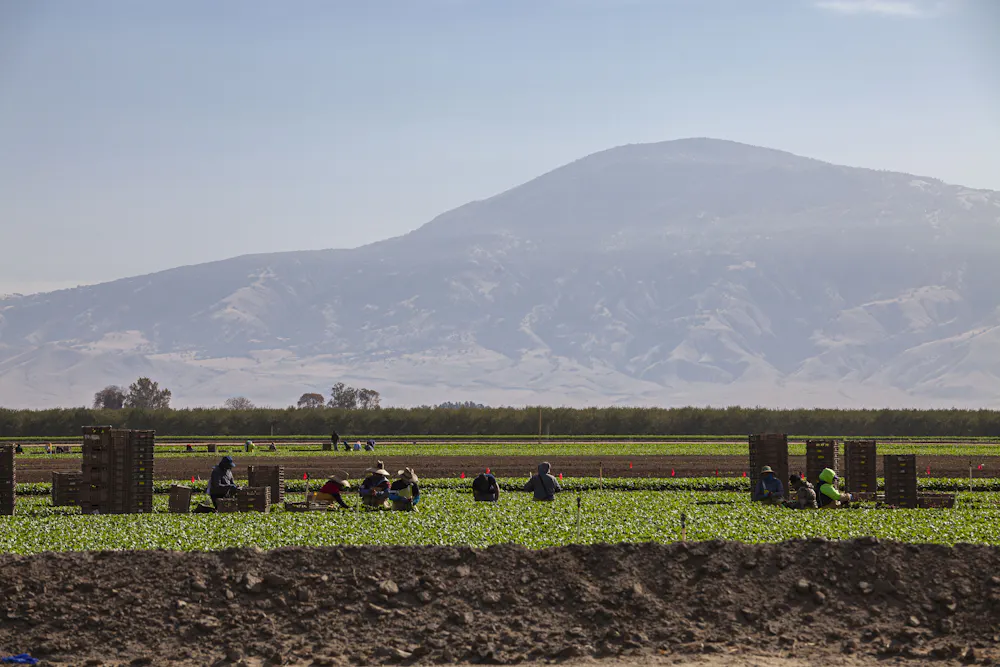
    MIL OSI Economics –

    July 16, 2025
  • MIL-OSI New Zealand: Government announces $600,000 support package for flood-affected farmers, growers and foresters

    Source: New Zealand Government

    The Government is increasing its financial contribution to support rural communities in the Nelson Tasman Region, with additional funding to help farmers, foresters, growers and rural contractors recover from recent severe weather events.

    Agriculture and Forestry Minister Todd McClay speaking during a visit to the Tasman District today announced an additional $600,000 in Government and industry support, bringing the total Government financial contribution for the affected primary sector to $500,000.

    “These regions have experienced significant damage to forests, farms and rural infrastructure. This funding will help meet immediate recovery needs and help rural businesses get back on their feet,” Mr McClay says. 

    The support package includes:

    • A $300,000 Government contribution to the Mayoral Relief Fund tagged to the rural sector.
    • $100,000 contribution by the Government and Federated Farmers to the Farmers Adverse Events Trust to support with the immediate recovery needs for the most impacted pastoral farmers in the Nelson Tasman region.
    • $100,000 contribution by the Government and Horticulture New Zealand, to help the horticulture sector across the Top of the South.
    • $100,000 announced by Government in June to support and coordinate recovery efforts, including $20,000 for the Top of the South Rural Support Trust.

    “We continue to work with New Zealand Winegrowers to ensure appropriate support for affected vineyards, including the potential use of Enhanced Taskforce Green,” Mr McClay said.

    “Many farmers and growers are facing their second clean-up in a fortnight from floods and storm damage. Rural communities are resilient, but the relentless wet weather conditions have taken a toll. This support is designed to provide meaningful and direct assistance quickly,” Mr McClay says.

    MPI staff are on the ground working with the Rural Support Trust and industry groups assessing damage and coordinating assistance.

    “Farmers, foresters and growers will face many, many months of work to repair damage to their land and get their businesses back on track. We will continue to assess what further assistance might be required.”

    “Farmers and growers who need help or assistance should in the first instance contact their local Rural Support Trust on 0800 787 254,” Mr McClay said.

    MIL OSI New Zealand News –

    July 16, 2025
  • MIL-OSI USA: Welch Calls for Resignation of DHS Secretary Noem 

    US Senate News:

    Source: United States Senator Peter Welch (D-Vermont)

    Welch took to the Senate floor to demand Noem resign or be fired 
    WASHINGTON, D.C. – U.S. Senator Peter Welch (D-Vt.) today called for the resignation of U.S. Department of Homeland Security Secretary Kristi Noem, citing Secretary Noem’s mishandling of the U.S. Federal Emergency Management Agency (FEMA) and record of undermining FEMA’s work, as well as her handling of President Trump’s cruel and illegal mass deportation campaign.
    “The Department of Homeland Security has a simple but extremely important mission: keep Americans safe. Under that mission, the department is tasked with two critical jobs—border security and disaster response. Our current Secretary of Homeland Security, Kristi Noem, has failed both. In her short tenure, Secretary Noem has overstepped, underperformed, and endangered the lives of countless Americans,” said Senator Welch. “I believe it is time for Secretary Noem to resign or for her to be fired.” 
    Watch Senator Welch’s floor remarks here: 

    Read key excerpts of Senator Welch’s remarks:  
    “Secretary Noem has undermined FEMA’s work, and in so doing has endangered disaster victims. Just a few months ago, Secretary Noem said in a cabinet meeting, and I quote ‘We are eliminating FEMA.’ And she meant it.  
    “And we saw evidence of that in not just Texas, but in North Carolina, New Mexico, California, Kentucky, Hawaii, and Vermont—where FEMA is crucial to helping people, and communities, and businesses recover from disaster. We need FEMA. It’s only the federal government that can surge into affected communities. We can’t lose that function and that capacity. When you need safety from a flood, and when you need to start the long road to recovery, you need the support of the federal government. No state, no community can do this alone. They cannot do this alone.  
    “I have seen from our experience in Vermont that FEMA, in fact, must be reformed—it must not be destroyed, as Secretary Noem has suggested. We cannot have a leader in charge of FEMA that is committed to its destruction. We must have one who is energetically committed to its reform.” 
    • • • 
    “We are seeing under the leadership of Secretary Noem that her response is an across-the-board embarkation on a massive and far-reaching deportation plan. There is no distinction in her policy among those who were brought here as children, who have families, who have jobs, who pay taxes, and who serve their communities.   
    “And there is a big difference between deporting known criminals and rounding up immigrants—some of whom have status to be here, in fact, are here legally—from work sites, and schools, and churches. This mass deportation policy is not about serving America and doing what our country needs to be strong and safe. It is instead about Secretary Noem accumulating the highest possible headcount of deportees. It’s hurting those folks, their families, and their communities, of course. 
    “It’s also hurting America. Particularly rural America. Our farmers depend on labor to milk their cows, to pick their crops. It’s weakening our construction industry, where workplace raids are shutting down construction sites, including for low-income housing, which we desperately need. This is decimating our health care workforce and the hospitality industry in every state in the union. 
    “We need a Homeland Security Secretary who will help us develop a sensible policy for folks who are here without status but have no criminal record; work; who have families; and are taxpayers.” 
    • • • 
    “We have an obligation to protect the safety of the families that all of us represent. I urge every one of my colleagues to demand better for our constituents and for every American. We need a Secretary of the Department of Homeland Security who puts public safety and preparedness before her personal image or political aspirations. Secretary Noem must resign.” 

    MIL OSI USA News –

    July 16, 2025
  • MIL-OSI USA: Welch Calls for Resignation of DHS Secretary Noem 

    US Senate News:

    Source: United States Senator Peter Welch (D-Vermont)

    Welch took to the Senate floor to demand Noem resign or be fired 
    WASHINGTON, D.C. – U.S. Senator Peter Welch (D-Vt.) today called for the resignation of U.S. Department of Homeland Security Secretary Kristi Noem, citing Secretary Noem’s mishandling of the U.S. Federal Emergency Management Agency (FEMA) and record of undermining FEMA’s work, as well as her handling of President Trump’s cruel and illegal mass deportation campaign.
    “The Department of Homeland Security has a simple but extremely important mission: keep Americans safe. Under that mission, the department is tasked with two critical jobs—border security and disaster response. Our current Secretary of Homeland Security, Kristi Noem, has failed both. In her short tenure, Secretary Noem has overstepped, underperformed, and endangered the lives of countless Americans,” said Senator Welch. “I believe it is time for Secretary Noem to resign or for her to be fired.” 
    Watch Senator Welch’s floor remarks here: 

    Read key excerpts of Senator Welch’s remarks:  
    “Secretary Noem has undermined FEMA’s work, and in so doing has endangered disaster victims. Just a few months ago, Secretary Noem said in a cabinet meeting, and I quote ‘We are eliminating FEMA.’ And she meant it.  
    “And we saw evidence of that in not just Texas, but in North Carolina, New Mexico, California, Kentucky, Hawaii, and Vermont—where FEMA is crucial to helping people, and communities, and businesses recover from disaster. We need FEMA. It’s only the federal government that can surge into affected communities. We can’t lose that function and that capacity. When you need safety from a flood, and when you need to start the long road to recovery, you need the support of the federal government. No state, no community can do this alone. They cannot do this alone.  
    “I have seen from our experience in Vermont that FEMA, in fact, must be reformed—it must not be destroyed, as Secretary Noem has suggested. We cannot have a leader in charge of FEMA that is committed to its destruction. We must have one who is energetically committed to its reform.” 
    • • • 
    “We are seeing under the leadership of Secretary Noem that her response is an across-the-board embarkation on a massive and far-reaching deportation plan. There is no distinction in her policy among those who were brought here as children, who have families, who have jobs, who pay taxes, and who serve their communities.   
    “And there is a big difference between deporting known criminals and rounding up immigrants—some of whom have status to be here, in fact, are here legally—from work sites, and schools, and churches. This mass deportation policy is not about serving America and doing what our country needs to be strong and safe. It is instead about Secretary Noem accumulating the highest possible headcount of deportees. It’s hurting those folks, their families, and their communities, of course. 
    “It’s also hurting America. Particularly rural America. Our farmers depend on labor to milk their cows, to pick their crops. It’s weakening our construction industry, where workplace raids are shutting down construction sites, including for low-income housing, which we desperately need. This is decimating our health care workforce and the hospitality industry in every state in the union. 
    “We need a Homeland Security Secretary who will help us develop a sensible policy for folks who are here without status but have no criminal record; work; who have families; and are taxpayers.” 
    • • • 
    “We have an obligation to protect the safety of the families that all of us represent. I urge every one of my colleagues to demand better for our constituents and for every American. We need a Secretary of the Department of Homeland Security who puts public safety and preparedness before her personal image or political aspirations. Secretary Noem must resign.” 

    MIL OSI USA News –

    July 16, 2025
←Previous Page
1 … 19 20 21 22 23 … 308
Next Page→
NewzIntel.com

NewzIntel.com

MIL Open Source Intelligence

  • Blog
  • About
  • FAQs
  • Authors
  • Events
  • Shop
  • Patterns
  • Themes

Twenty Twenty-Five

Designed with WordPress