Source: United States Senator Alex Padilla (D-Calif.)
Padilla Introduces Bipartisan Bills to Improve Fire Mitigation and Resiliency Efforts
WASHINGTON, D.C. — As Southern California recovers from devastating fires, U.S. Senator Alex Padilla (D-Calif.) introduced a package of three bipartisan bills to bolster fire resilience and proactive mitigation efforts. The package includes the Wildfire Emergency Act, to support forest restoration, wildfire mitigation, and energy resilience; the Fire-Safe Electrical Corridors Act, to authorize the removal of trees or other vegetation within existing electrical utility corridors; and the Disaster Mitigation and Tax Parity Act, to further incentivize homeowners to proactively protect their homes from disasters.
The package of bipartisan bills comes as Southern California begins the recovery from one of the worst natural disasters in state history. The Palisades and Eaton fires have burned over 57,000 acres and destroyed over 16,200 structures, claiming the lives of at least 29 victims.
“The devastating fires in Southern California are a harsh reminder of the importance of proactive fire mitigation efforts to keep families and homes safe,” said Senator Padilla. “As these disasters become more frequent and more extreme, we need to find smarter solutions to strengthen fire resilience across the country. From expediting the removal of hazardous fuels near power lines, to supporting our wildland firefighting forces, to hardening homes and energy facilities, these commonsense bills would help reduce the threats of catastrophic fires to California communities.”
“Montanans see firsthand the effects that catastrophic wildfires have on our communities. These bipartisan bills will streamline forest management processes to mitigate the root causes of wildfires, improve community and home hardening efforts, and support our brave firefighters. I’ll work every day for more solutions to keep our state safe,” said Senator Steve Daines (R-Mont.), co-lead of the Wildfire Emergency Act and the Fire-Safe Electrical Corridors Act.
“This commonsense legislation takes a critical step toward empowering individuals and communities to better protect themselves from the devastating effects of natural disasters like Hurricane Helene,” said Senator Thom Tillis (R-N.C.), co-lead of the Disaster Mitigation and Tax Parity Act. “By excluding qualified catastrophe mitigation payments from income tax, we are incentivizing property owners to make the necessary improvements that reduce damage and save lives. This proactive approach to disaster preparedness not only helps families rebuild faster but strengthens our resilience in the face of future disasters.”
“We have seen how natural disasters have devastated communities around the country, and we must ensure we have the resources and programs in place to respond. Homeowners should not face additional taxes for wanting to protect their homes and our bipartisan legislation will provide the needed tax relief to help affected Americans recover from these disasters,” said Senator Adam Schiff (D-Calif.), co-lead of the Disaster Mitigation and Tax Parity Act.
“Louisianans understand the impact of devastating storms, but with the help of state and local programs, we have tools to rebuild and return to wholeness,” said Dr. Bill Cassidy (R-La.), co-lead of the Disaster Mitigation and Tax Parity Act. “If communities need tax relief, let’s give it to them!”
Wildfire Emergency Act
This sweeping legislation, co-led by Senator Daines, would reduce the threat of destructive wildfires through forest restoration, firefighter training, energy resilience retrofits, and wildfire-hardening home modifications in low-income communities. This bipartisan bill would take numerous steps to ensure that the Department of Agriculture (USDA), the Department of Energy (DOE), and the Department of the Interior (DOI) are better able to mitigate the risk and impact of wildfires.
Specifically, the legislation would:
Provide the U.S. Forest Service (USFS) with a pilot authority to leverage private financing to increase the pace and scale of forest restoration projects. The USFS would be able to expand up to 20 existing collaborative forest restoration projects using this pilot authority.
Authorize funding for programs to expand the forest conservation and wildland firefighting workforce.
Establish an energy resilience program at DOE to ensure that critical facilities remain active during wildfire disruptions, authorizing up to $100 million for necessary retrofits.
Expand an existing DOE weatherization grant program to provide up to $13,000 to low-income households to make wildfire-hardening retrofits, such as ember-resistant roofs or gutters.
Expedite the placement of wildfire detection equipment on the ground, such as sensors or cameras, as well as the use of space-based observation.
Establish a prescribed fire-training center in the West and authorize grants to support training the next generation of foresters and firefighters.
Authorize up to $50 million to support community grants of up to $50,000 for locally focused land stewardship and conservation.
A one-pager on the bill is available here.
Full text of the bill is available here.
Fire-Safe Electrical Corridors Act
This bill, co-led by Senator Daines, would allow the U.S. Forest Service to approve the removal of hazardous trees and other vegetation near power lines on federal forest lands without requiring a timber sale, reducing the risk of catastrophic wildfires through easier material removal. The legislation advanced last year through the Senate Committee on Energy and Natural Resources as part of the Promoting Effective Forest Management Act of 2023.
Three of the largest and most destructive wildfires in California history — the 2017 Thomas Fire, the 2018 Camp Fire and the 2021 Dixie Fire — were started by electrical equipment. Together, these wildfires burned more than 1.2 million acres, destroyed more than 15,000 homes, and killed 87 people.
Currently, the USFS allows utility companies to cut down trees and branches in existing utility corridors, but some forest managers interpret the law to forbid removal of the material off the land. This creates uncertainty and can lead to an unnecessary buildup of dead, dry fuels directly under utility lines. This bill would help reduce the risk of wildfires on forest lands by ensuring the clearing of existing corridors and give certainty to utilities.
The legislation would also require any utility that sells marketable forest products from hazardous trees removed near power lines to return any proceeds to the USFS.
A one-pager on the bill is available here.
Full text of the bill is available here.
Disaster Mitigation and Tax Parity Act
This bipartisan legislation, co-led by Senators Tillis, Cassidy, and Schiff would provide a tax exemption on payments from state-based programs for homeowners to proactively harden their homes against natural disasters.
Specifically, the bill excludes from gross income calculations any qualified catastrophe mitigation payment made under a state-based catastrophe loss mitigation program. Qualifying payments are defined as any amount received and used for improvements to an individual’s property for the sole purpose of reducing the damage that would be done by a windstorm, earthquake, flood, or wildfire.
California, North Carolina, and Louisiana are among the states that provide funding to homeowners who take steps to protect their homes from natural disasters. These improvements can include removing trees, bushes, and other fire-prone vegetation close to homes that contribute to wildfires, strengthening foundations to protect against earthquakes, and installing fortified roofs to withstand hurricanes.
However, homeowners are currently required to pay federal taxes on these payments, unnecessarily limiting money available for critical disaster-related upgrades. This fix will bring parity to the tax treatment of disaster mitigation efforts and ensure taxpayers are able to put the full amount of these payments toward securing their homes.
Senators Michael Bennet (D-Colo.), Ted Budd (R-N.C.), John Hickenlooper (D-Colo.), John Kennedy (R-La.), Amy Klobuchar (D-Minn.), Jeff Merkley (D-Ore.), and Roger Wicker (R-Miss.) are cosponsoring the legislation.
Full text of the bill is available here.
Senator Padilla has long been a leader in strengthening the federal and state response to wildfires. Last month, Padilla introduced another package of three bipartisan bills to strengthen wildfire resilience and rebuilding efforts through legislation including the Wildland Firefighter Paycheck Protection Act, the Fire Suppression and Response Funding Assurance Act, and the Disaster Housing Reform for American Families Act. His legislation to strengthen FEMA’s wildfire preparedness and response efforts, the FIRE Act, became law in 2022.
Abuja (Agenzia Fides) – In addition to the serious waves of violence that are affecting the Nigerian population, including kidnappings, clashes, terrorist attacks and brutal murders, there is poverty, food insecurity, inadequate health care and a disproportionate increase in the cost of living.”We are suffering greatly. We have almost nothing to eat and for more than four years we have not been able to dedicate ourselves to agricolture because the bandits have driven us out of our communities. We urgently need the government’s support,” says a statement from residents of a refugee camp in Zamfara state, in northwest Nigeria.In this region of the country, armed groups are driving farmers off their land, closing markets and extorting money from communities. More than 2.2 million people have been forced to flee, many of them now living in overcrowded camps without any resources. According to local press reports, the ongoing conflicts are also affecting agriculture and food production in the northeast. Families returning to their land are reluctant to farm away from militarized cities, risking starvation. Food shortages are so severe that some families are forced to eat cassava husks to survive.In 2020, the Nigerian government launched the so-called “National Multisectoral Action Plan for Food and Nutrition”, an initiative for the period 2021-2025 to combat food security and malnutrition, with a focus on increasing food production through agricultural investments. Unfortunately, so far, the funds have not been sufficient.Agriculture generates 24% of Nigeria’s Gross Domestic Product (GDP) and employs more than 30% of the total workforce, but the funding for the sector remains well below the 10% target set by the African Union in the 2003 Maputo Declaration, which calls for at least 10% of national budgets to be allocated to agriculture and rural development within five years (see Fides, 21/9/2006).Africa’s most populous country, with around 225 million inhabitants, has one of the highest rates of childhood stunting in the world: 32% of children under five are affected.According to the United Nations Children’s Fund (UNICEF), two million children in Nigeria, mainly in the north of the country, are affected by malnutrition, which kills around 2,400 children under five every day. (AP) (Agenzia Fides, 3/2/2025)
Share:
On Jan. 30 the legacy of Martin Luther King Jr. was celebrated at the first Service and Advocacy Summit at UConn Health.
The summit’s keynote speaker was Linda Sprague Martinez, Ph.D., director of the Health Disparities Institute.
She kicked off her address with the famous words of MLK: “Of all the forms of inequality, injustice in health is the most shocking and inhuman.”
“We see inequities in health care and in health outcomes across a spectrum of chronic conditions,” she stressed in her address to faculty, students, and staff about the benefits of “Community Based Participatory Research Advancing Health Equity.”
“Participatory research is a collaborative approach to research,” she says. “Advancing health equity requires conducting research with the community. Working in partnership facilitates an environment in which we are co-learning.”
She adds, “People in the community know what they need to be healthy,” and recommends research priorities originate in the community, building trust relationships with the community members, and then co-designing research protocols based on community identified priorities.
“If we are not translating knowledge generated in community settings in partnership with community members, we are not going to bring about meaningful change,” reports Sprague Martinez.
Student showcase on Jan. 30 (UConn Health Photo/Tina Encarnacion).
As a strong example of participatory research, Sprague Martinez shared how her UConn Health Disparities Institute is collaborating with the state of Connecticut’s Commission on Racial Equity for Public Health to launch a community-based research project recruiting citizens from across the state as community research advisors and faculty to advance health equity.
Sprague Martinez serves UConn School of Medicine as professor in the Department of Medicine and Department of Public Health Sciences, and faculty affiliate at UConn School of Social Work.
At the event student organization’s such as UConn School of Pharmacy Diversity Committee, Pathway Scholars Foundation, Student National Medical Assoc (SNMA), Latin Medical Student Assoc (LMSA), Medial Students for Choice (MSFC), and the Student Diversity Equity & Inclusion Committee (SDEIC) also showcased their community outreach efforts.
Class of 2027 medical student Uma Mehta was one of the student organizers of MLK Week, along with Cailyn Regan and Jenn Casparino, and attended the Summit’s student showcase.
Medical student Uma Mehta visiting the LMSA table at the MLK Week student showcase.
“When I think of MLK I envision hope, symbols of resistance, and expression of ideals,” shared Mehta. “For our patients things are at times uncertain, especially after a diagnosis. But as providers we can help give them a sense of hope, autonomy, and power over their diagnosis. This can be really helpful, healing, and powerful.”
MLK week festivities also celebrated the health care disparities research of medical and dental students in a research poster showcase outside the Academic Rotunda lobby.
All medical students are required as part the curriculum to complete a Public Health Certificate in Social Determinants of Health and Disparities. In fact, UConn medical school was the first in the nation to require students to complete a certificate curriculum in social determinants of health.
Final projects for the second-year students were displayed in the Rotunda Lobby for over a week with live poster session presentations.
Medical student Uma Mehta also had the opportunity to share her student research team project to School of Medicine Dean Dr. Bruce T. Liang.
For example, Joseph Chopra of Bedford, New Hampshire is a second-year medical student. He presented his research team’s project focused on solving the issues of the underserved COPD population in Connecticut’s census. His research team is proposing a community-driven initiative and inexpensive intervention tool to improve indoor air quality thru DIY air filters.
“Our COPD populations are underserved. COPD is associated with more sickness and poorer outcomes overall. COPD leads to worse outcomes for older people too,” said Chopra. “We wanted to find an intervention that helped.”
Chopra has been inspired by MLK’s legacy and also the community outreach efforts he has witnessed while in medical school at UConn.
Second-year UConn medical student Joseph Chopra presenting his student team’s poster on COPD and how to help the underserved community with its health disparities.
“I have found a lot of inspiration from the people inside the community. Community outreach is very important and its wonderful to have the opportunity to learn from them about health disparities,” he says.
Second-year medical students Samantha Mae Mallari of Milford and Ethan Knapp of Ridgefield were presenting their research project for their student team.
It was about “Evidence-Based Strategies to Address Coronary Heart Disease in Norwalk, CT” and how a soda tax, produce prescription program, and Farmer’s Market could potentially lead to a healthier city.
“Coronary artery disease and diabetes are big issues and we need to address their root causes,” shared Knapp. “We need to focus on diet.”
They have both really enjoyed UConn School of Medicine’s teachings about health disparities and the certificate program.
Second-year medical students (both right) Ethan Knapp and Samantha Mae Mallari presenting their student team research outside the Academic Rotunda on Jan. 30.
“It’s a good way to teach us all the social factors that go into medicine, and for a well-rounded curriculum,” says Knapp. “A lot of our medical school graduates stay in Connecticut to serve underserved populations, so it’s good for us to learn how to address all their social determinants of health.”
Mallari concludes, “We have MLK Day, but we should be thinking about health disparities always, especially in the medical field.”
GreenLightBiosciencesis a pioneer company in the application of RNA technology for agriculture uses and specifically pest control.
Innovative RNA-based biocontrol products for plant health are an alternative to traditional chemical pesticides, supporting regenerative agriculture and biodiversity protection.
The agreement contributes to the EIB Group strategic priority ofsupporting innovative financing for agriculture and bioeconomy.
The operation is supported by InvestEU, an EU programme that aims to unlock over €372 billion in investment by 2027.
The European Investment Bank (EIB) has signed a loan of up to €35 million with GreenLight Biosciences España to support research and production of ribonucleic acid interference (RNAi)-based biocontrols. RNAi based biocontrols constitute a sustainable alternative to traditional chemical pesticides, with benefits to biodiversity through low or no impact to naturally occurring insect fauna, honeybees, and the soil.
The EIB loan will support GreenLight Bio’s RDI programmes associated with the research, registration, and production of a pipeline of ten products to be launched in the EU for plant health and bee health applications such as control of potato plagues, control of fungi affecting grapes and other fruits and vegetables, and protection honeybees among others. The loan will also finance the research and innovation centre of Greenlight Biosciences in Seville, Spain.
RNAi solutions for plant health are species-selective and degrade quickly and without trace in the environment offering an eco-friendly alternative to hazardous agrochemical usage, for which there is an urgent need to find suitable alternatives due to the significant impact of these chemicals on health and the environment. Additionally, RNAi offers a new mode of action for farmers that are confronted with increasing number of cases of resistances and active pesticide withdrawals within the EU.
“We are very happy to join forces with GreenLight Bio to provide RNA based alternatives to chemical pesticides. The agreement is a clear example of how the EIB is stepping up its support for bioeconomy and agriculture, fostering sustainable farming practices and driving innovation across the entire agriculture value chain,” said EIB Vice-PresidentGelsomina Vigliotti.
The EIB loan is guaranteed by InvestEU, the flagship EU programme to mobilise over €372 billion of additional public and private sector investment to support EU policy goals from 2021 to 2027. The project contributes to the EIB Group strategic priority of supporting innovative financing for agriculture and bioeconomy.
“At GreenLight Biosciences, we believe that providing farmers with nature-based pest control solutions is key to building a more sustainable and resilient food supply chain. Our platform is not only environmentally friendly but also offers farmers an effective and safe alternative to traditional pesticides,” stated GreenLight Biosciences Chief Strategy Officer & co-founder Marta Ortega-Valle. “With the support of the European Investment Bank, we can expand our efforts to bring these innovative solutions to farmers across Europe.”
The EIB Group support for the agriculture and bioeconomy
The agriculture and bioeconomy sector is a key contributor to economic growth in the world’s rural and coastal regions. It plays a vital role in food security, healthy diets and resilience to climate change. It is also the backbone for local entrepreneurship, employment and social development in many countries around the world.
At the European Investment Bank Group (EIB Group), we finance projects and invest across the agricultural, fisheries, food, and forestry value chains, focusing on food quality and security, sustainable rural development, climate-smart production, innovation, and resource efficiency. We foster innovative and sustainable bio-resource pathways that are critical for greening the economy.
Most recently the EIB Group has announced a €3 billion financing package for agriculture, forestry and fisheries across Europe along with moves to bolster farm insurance. The EIB Group loans will be matched by other participating financial institutions, unlocking close to €8.4 billion of long-term investments for the bioeconomy sector.
Background information
EIB
The European Investment Bank (EIB) is the long-term lending institution of the European Union owned by its Member States. It finances investments that contribute towards EU policy goals. EIB projects bolster competitiveness, drive innovation, promote sustainable development, enhance social and territorial cohesion, and support a just and swift transition to climate neutrality.
InvestEU
The InvestEU programme provides the European Union with crucial long-term funding by leveraging substantial private and public funds in support of a sustainable recovery. It also helps mobilise private investments for the European Union’s policy priorities, such as the European Green Deal and the digital transition. The InvestEU programme brings together under one roof the multitude of EU financial instruments currently available to support investment in the European Union, making funding for investment projects in Europe simpler, more efficient and more flexible. The programme consists of three components: the InvestEU Fund, the InvestEU Advisory Hub and the InvestEU Portal. The InvestEU Fund is implemented through financial partners that will invest in projects using the EU budget guarantee of €26.2 billion. The entire budget guarantee will back the investment projects of the implementing partners, increase their risk-bearing capacity and thus mobilise at least €372 billion in additional investment.”
GreenLight Biosciences
GreenLight Biosciences is a leader in next generation biocontrols using nature to create a world where plants, people, and the planet can thrive together. The company develops, manufactures, and commercializes highly effective agricultural solutions for farmers and beekeepers that are environmentally friendly and easy to use. Our pipeline includes RNA based products to protect honeybees and a range of fruits and vegetables. The GreenLight platform allows us to research, design, and manufacture across multiple product categories including insecticides, fungicides, and herbicides.
The Strategic Dialogue on the future of EU Agriculture presented its independent recommendations to the Commission[1]. The President of the Commission has asked the Commissioner for Agriculture and Food in his mission letter[2] to follow up on some of the Dialogue’s recommendations. This includes the EU-wide benchmarking system in the agri-food sector.
The Commission is currently analysing how such a benchmarking system could be designed and what its scope could be. No decision on the exact nature or timeline for a proposal of this initiative has been taken.
The Commission does not have the information requested as regards the expected costs and projected emission cuts deriving from the proposed Danish agricultural emissions tax.
A virulent strain of bird flu continues to spread across the world. Australia, New Zealand and Pacific nations are the only countries free from the infection, but this will no doubt change.
Known as “Highly Pathogenic Avian Influenza” or H5N1, the bird flu strain had killed more than 300 million birds worldwide as of December last year, including both poultry and wild bird populations.
Birds have always been part of the cultures and livelihoods of Australia Indigenous people. They feature in songs and dance, and are used for food and customary practices such as ceremonies and craft. Many of these practices continue today.
To date however, Indigenous peoples have not been adequately included in federal government planning for the arrival of H5N1.
So what is the likely result? Agencies and organisations will be ill-prepared to support Indigenous people experiencing intense social and cultural shock. And the opportunity to draw from the strengths of Indigenous organisations to tackle this impending disaster will have been squandered.
What is H5N1?
First identified in Hong Kong in 1997, H5N1 has since spread globally.
H5N1 is a viral infection primarily affecting birds – both poultry and wildlife. As overseas experience has shown, it can lead to population declines in wild birds and disrupt local ecosystems. Infected birds may exhibit symptoms such as lethargy, respiratory distress and neurological signs such as paralysis, seizures and tremors, and sudden death.
The virus also affects mammals including humans.
Since November 2003, more than 900 human cases have been reported across 24 countries. About half these people died.
Birds are highly significant to many Indigenous groups.
The adult magpie goose and its eggs, for example, are an important food source for groups in the Kakadu region.
In Tasmania, Indigenous groups are revitalising customary practices by harvesting mutton birds. And bird feathers are used by Indigenous artisans in fashion and jewellery-making.
If H5N1 makes birds sick and diminishes their populations, Indigenous people’s livelihoods and wellbeing – social, emotional, and spiritual – will be severely affected.
Many birds are already struggling
Of greatest concern are the fate of threatened and endangered bird species. Indeed, Australia’s Threatened Species Commissioner, Dr Fiona Fraser, has warned the forthcoming H5N1 event may be more ecologically devastating than the 2019–20 bushfires.
Migratory birds, such as waders that travel from Siberia to lake systems throughout Australia, may take years or decades to return – if they return at all.
Even relatively healthy bird populations, such as emus, may be at risk in areas where local populations are dwindling.
The challenge has become more pronounced following the 2019–20 bushfires that affected vast areas of Australia’s southeast. Biodiversity in these burnt forests was later found to have declined, especially in bird populations.
These challenges mean Australia’s native bird populations may struggle to remain healthy and sustainable, and their availability to Indigenous groups is likely to diminish.
Mobilising Indigenous know-how
Indigenous people are deeply engaged in caring for Country and caring for their communities. This makes them a strategic asset when planning for the arrival of H5N1.
For example, Indigenous rangers are deeply engaged in land and water management including habitat restoration and biodiversity surveys. So, they are well placed to protect and monitor native species.
Indigenous health organisations will also be crucial to identifying human illness, should rare animal-to-human transmissions occur.
Shire councils and land councils are also well-placed to identify and monitor the impacts of bird flu.
It’s time for Indigenous inclusion
Indigenous inclusion in the federal government’s response to the threat H5N1 has been late and inadequate
This means Australia is already behind in supporting Indigenous groups to understand the threat and how to respond if they observe it – including how to deal with sick or dead birds.
To fill these gaps in public information, National Indigenous Disaster Resilience at Monash University has produced a bird flu fact sheet.
Indigenous community organisations demonstrated an extraordinary capacity for leadership during COVID-19. The muscle memory to mobilise in response to another outbreak remains strong.
Indigenous groups must be centred in preparing and responding to H5N1. What’s more, Indigenous culture needs to be foregrounded when considering how the virus might affect the social, psychological, spiritual, and economic wellbeing of communities.
In response to concerns raised in this article, a spokesperson for the Department of Agriculture, Fisheries and Forestry said the federal government was “working to engage with First Nations communities to ensure we meet community needs” before and during an outbreak of H5N1.
The department’s Northern Australia Quarantine Strategy was surveilling for avian influenza in northern Australia, including working with Indigenous Rangers. Indigenous engagement has also included presentations delivered virtually and on-country.
“By fostering close partnerships with First Nations communities and Indigenous rangers, and leveraging access to a broad collaborative network, NAQS is able to facilitate trusted avenues for First Nations communities and Indigenous rangers to report concerns about wild bird health across northern Australia,” the spokesperson said.
States and territories were planning local responses, and nationally coordinated, culturally appropriate communication activities were being developed. The spokesperson said Parks Australia was also working with Traditional Owners at jointly managed national parks, and with the Indigenous Protected Areas network, in developing plans to prepare and respond to any H5N1 detection.
Bhiamie Williamson is a director of Country Needs People, and the Australian Indigenous Governance Institute
Vinod Balasubramaniam receives funding from Ministry of Higher Education (MOHE) Malaysia.
Nell Reidy does not work for, consult, own shares in or receive funding from any company or organisation that would benefit from this article, and has disclosed no relevant affiliations beyond their academic appointment.
Governor Kathy Hochul today announced that 22 farms have been awarded over $15.8 million in funding through the first round of the Concentrated Animal Feeding Operation (CAFO) Enhanced Nutrient and Methane Management Program (CAFO ENMP). Funding from the program will go toward projects that help farmers protect water quality and mitigate the impacts of climate change by reducing greenhouse gas emissions. Funding for this program was announced as part of the Governor’s 2024 State of the State and builds on the commitment that Governor Hochul has made to support dairy farm modernization and sustainability.
“The dairy industry is a cornerstone of New York’s economy, thanks to the dedication of dairy farmers and manufacturers across the state whose work has made this commodity New York’s largest agricultural sector,” Governor Hochul said. “I am proud to help our farmers reduce their carbon footprint while continuing to put world-class products on the tables of New Yorkers for generations to come.”
Through the first round of funding, the program will help CAFO-permitted farmers implement projects that enhance manure management systems that sequester carbon and conserve manure nutrients applied to fields and soil to protect water quality. The program also supports advancements in precision feed management to balance nutrients and reduce methane emissions. The estimated Greenhouse Gas (GHG) reduction for all projects is 122,833 MTCO2e a year, the equivalent of taking 28,651 gas powered vehicles off the road for one year.
A total of 22 projects have been awarded through the State’s Soil and Water Conservation Districts via two funding tracks. Seventeen projects were awarded in Track A, which will go toward Nutrient and GHG Management Best Management Practices Systems. Five projects were awarded in Track B, which will go toward Manure Storage Cover and Flare Projects and associated practices. The awards are as follows:
Capital Region
$11,414.38 awarded to the Saratoga County Soil and Water Conservation District to work with one farm in the Hudson-Hoosic Watershed.
Central New York
$1,025,759.00 awarded to the Cortland County Soil and Water Conservation District to work with two farms in the Chenango Watershed.
$293,850.00 awarded to the Madison County Soil and Water Conservation District to work with one farm in the Oneida Lake Watershed.
Finger Lakes
$3,192,578.00 awarded to the Ontario County Soil and Water Conservation District to work with three farms in the Seneca Watershed.
$2,167,334.00 awarded to the Ontario County Soil and Water Conservation District to work with one farm in the Chemung Watershed.
$1,248,588.05 awarded to the Wyoming County Soil and Water Conservation District to work with three farms in the Upper Genesee Watershed.
$608,987.20 awarded to the Wyoming County Soil and Water Conservation District to work with one farm in the Lower Genesee Watershed.
$246,900.00 awarded to the Genesee County Soil and Water Conservation District to work with one farm in the Oak Orchard – Twelve Mile Creek Watershed.
Mohawk Valley
$942,162.50 awarded to the Montgomery County Soil and Water Conservation District to work with one farm in the Mohawk Watershed.
$741,861.35 awarded to Herkimer County Soil and Water Conservation District to work with one farm in the Mohawk Watershed.
$98,483.68 awarded to the Oneida County Soil and Water Conservation District to work with one farm in the Mohawk Watershed.
$54,611.89 awarded to Oneida County Soil and Water Conservation District to work with one farm in the Oneida Lake Watershed.
North Country
$810,571.00 awarded to the Clinton County Soil and Water Conservation District to work with one farm in the Lake Champlain Watershed.
$526,926.21 awarded to the Franklin County Soil and Water Conservation District to work with one farm in the St. Lawrence Watershed.
$457,056.00 awarded to the St. Lawrence County Soil and Water Conservation District to work with one farm in the St. Lawrence Watershed.
Western New York
$1,909,650.00 awarded to the Cattaraugus County Soil and Water Conservation District to work with one farm in the Cattaraugus Watershed.
$1,470,815.00 awarded to the Chautauqua County Soil and Water Conservation District to work with one farm in the Chautauqua-Conneaut Watershed.
Full project descriptions are available here.
New York State Department of Agriculture and Markets Commissioner Richard Ball said, “New York State is home to some of the most passionate dairy farmers who are not only producing and processing some of the very best dairy products in the world, but also working hard to leave the industry better for future generations. This funding is a true testament to the value of helping our farmers transition to climate-safe practices that preserve our natural resources while continuing to protect their businesses and nourish our communities. I want to thank our Soil and Water Districts and our farmers for the work they’re doing, and I look forward to seeing these projects come to fruition.”
New York State Department of Environmental Conservation Interim Commissioner Sean Mahar said, “DEC applauds Governor Hochul’s continued investments to bolster the sustainability of New York’s agricultural industry and provide resources to farmers who serve as crucial partners in the conservation of land and other natural resources. DEC’s requirements play an important role in protecting water quality and this funding will help ensure best management practices are in place and nutrient management plans implemented on livestock farms.”
New York State Soil and Water Conservation Committee Chair Matt Brower said, “The requirements for the CAFO General Permit can result in significant financial and management challenges for farm operations in New York. Having these funds available to farmers is important to help them meet those challenges, while also improving water quality and addressing climate change concerns. We are fortunate to have such a great partnership between the farmers and the local Soil and Water Conservation Districts, which makes the planning and implementation of the projects possible. The State Soil and Water Conservation Committee greatly appreciates the efforts of the Districts.”
Senator Michelle Hinchey said, “New York dairy is a pillar of our state’s economy, as our largest agricultural sector and a critical job creator in rural communities and beyond. Clean air, water, and healthy soil are fundamental to thriving farm businesses and, therefore, a reliable food supply. Our state has a major stake in providing direct financial support to dairy farmers who are pioneering climate-forward practices that protect our environment and reduce emissions. The CAFO Enhanced Nutrient and Methane Management Program we established last year is helping make that happen and we congratulate the farmers across New York State whose projects have received funding in this first round.”
Assemblymember Donna Lupardo said, “As a major producer of safe and nutritious food, the dairy industry is a critical part of New York’s agricultural economy. I’m glad to see 22 farms benefit from funding that will help them reduce their carbon footprint and assist with milk storage technologies. For both our climate and our food supply, it’s important that we continue to support our dairy producers through initiatives like these.”
New York Farm Bureau President David Fisher said, “As the fifth-largest dairy producer in the United States, New York is a powerhouse in the industry, ranking number one in cottage cheese, sour cream and yogurt production. And, as stewards of the land, dairy farmers have a vested interest in protecting soil and water quality, reducing their carbon footprint and implementing modern technology to preserve farming for future generations. By awarding CAFO ENMP funding to soil and water conservation districts across the state, Gov. Hochul is sending a strong message that dairy farmers are trusted partners in sustainability and environmental health.”
Under the Governor’s leadership, the Fiscal Year (FY) 2025 Budget included additional funding to help boost the dairy industry, including $34 million in capital funding over two years to expand on-farm milk storage capacity, improve efficiencies, invest in milk transfer systems, cooling technologies, and other projects to further opportunities for dairy farmers to transport or store their products.
The FY 2025 Budget also included a nearly $82 investment in agricultural stewardship programs and initiatives, such as the Climate Resilient Farming grant program, that are helping farms to implement environmentally sustainable practices and combat climate change. In her 2025 State of the State Address, Governor Hochul proposed additional funding to research and implement climate-resilient practices on dairy farms.
About the Dairy Industry in New York State
New York State is home to nearly 3,000 dairy producers that produce 16.1 billion pounds of milk annually, making New York the nation’s fifth largest dairy state. With dairy farming accounting for half of the state’s agricultural economy, New York’s unique and talented dairy producers and processors provide significant contributions to New York’s agriculture industry, the economy, and to the health of our communities.
WASHINGTON, DC – U.S. Senators Ron Wyden and Jeff Merkley said today they are demanding the immediate reinstatement of Inspectors General (IGs) from at least 18 government agencies, in a letter to Donald Trump strongly condemning his recent decision to remove them from their crucial posts.
The IGs who were removed included those overseeing the Departments of Defense, State, Education, Transportation, Veterans Affairs, Housing and Urban Development, Interior, Energy, Commerce, Agriculture, Labor, Health and Human Services, and Treasury, as well as the Environmental Protection Agency, the Office of Personnel Management, the Small Business Administration, the Social Security Administration, and the Special Inspector General for Afghanistan Reconstruction. In the letter, which Wyden and Merkley sent with 30 colleagues, the senators underscored that Trump’s actions violated the law and threaten the independence of these non-partisan watchdogs.
“Inspectors General are responsible for providing independent oversight of federal programs by working to root out waste, fraud, and abuse and protect taxpayer dollars – oversight our federal agencies desperately need,” the senators wrote. “The federal government and the American people count on these officials to operate in a professional and non-partisan way to hold our government accountable—regardless of who is in power. Without strong, qualified, and independent officials to lead these critical efforts, the Administration risks wasting taxpayer dollars, and allowing fraud and misconduct to go unchecked.”
The senators continued: “While the President has the authority to remove Inspectors General from office, Congress has established clear requirements to ensure such removals are transparent and are not politicized,” wrote the senators. “With respect to your firings Friday night, Congress has not received either the mandatory 30-day notice or a rationale for their removal. Because your actions violated the law, these IGs should be reinstated immediately, until such time as you have provided in writing ‘the substantive rationale, including detailed and case-specific reasons’ for each of the affected Inspectors General and the 30-day notice period has expired.”
For much of the 20th century, efforts to remake government were driven by a progressive desire to make the government work for regular Americans, including the New Deal and the Great Society reforms.
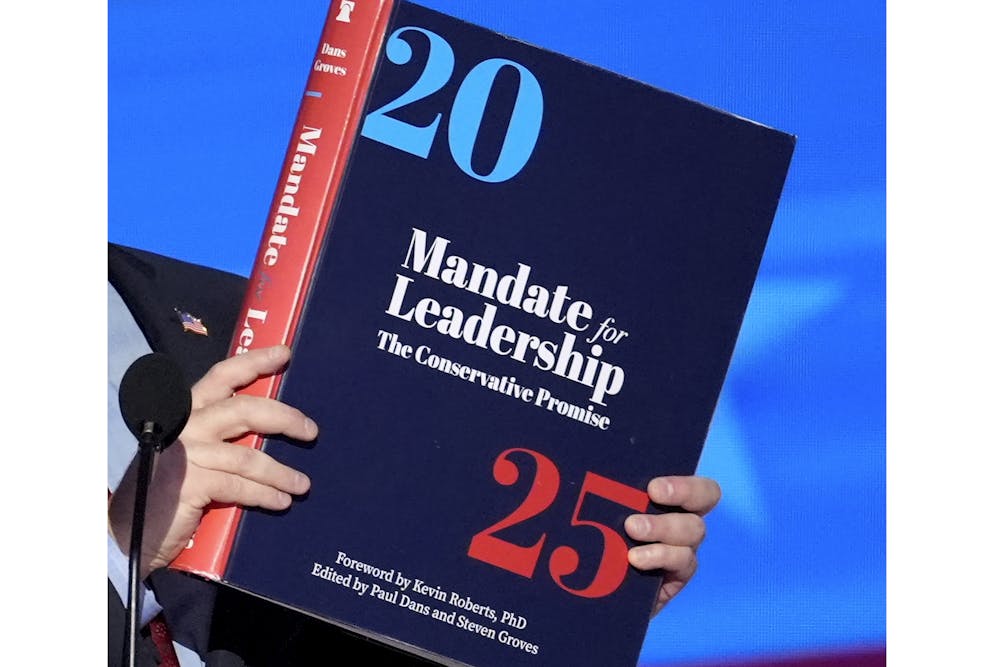
But they also met a conservative backlash seeking to rein back government as a source of security for working Americans and realign it with the interests of private business. That backlash is the central thread of the Heritage Foundation’s “Project 2025” blueprint for a second Trump Administration.
But Project 2025 does so with particular detail and urgency, hoping to galvanize dramatic change before the midterm elections in 2026. As its foreword warns: “Conservatives have just two years and one shot to get this right.”
The standard for a transformational “100 days” – a much-used reference point for evaluating an administration – belongs to the first administration of Franklin D. Roosevelt.
President Franklin D. Roosevelt signs the Social Security Bill in Washington on Aug. 14, 1935. AP Photo, file
Social reforms and FDR
In 1933, in the depths of the Great Depression, Roosevelt faced a nation in which business activity had stalled, nearly a third of the workforce was unemployed, and economic misery and unrest were widespread.
But Roosevelt’s so-called “New Deal” unfolded less as a grand plan to combat the Depression than as a scramble of policy experimentation.
Roosevelt did not campaign on what would become the New Deal’s singular achievements, which included expansive relief programs, subsidies for farmers, financial reforms, the Social Security system, the minimum wage and federal protection of workers’ rights.
A generation later, another wave of social reforms unfolded in similar fashion. This time it was not general economic misery that spurred actions, but the persistence of inequality – especially racial inequality – in an otherwise prosperous time.
LBJ’s Great Society
President Lyndon B. Johnson’s Great Society programs declared a war on poverty and, toward that end, introduced a raft of new federal initiatives in urban, education and civil rights.
As with the New Deal, the substance of these policies rested less with national policy designs than with the aspirations and mobilization of the era’s social movements.
Resistance to policy change
Since the 1930s, conservative policy agendas have largely taken the form of reactions to the New Deal and the Great Society.
The central message has routinely been that “big government” has overstepped its bounds and trampled individual rights, and that the architects of those reforms are not just misguided but treasonous. Project 2025, in this respect, promises not just a political right turn but to “defeat the anti-American left.”
After the 1946 midterm elections, congressional Republicans struck back at the New Deal. Drawing on business opposition to the New Deal, popular discontent with postwar inflation, and common cause with Southern Democrats, they stemmed efforts to expand the New Deal, gutting a full employment proposal and defeating national health insurance.
They struck back at organized labor with the 1947 Taft-Hartley Act, which undercut federal law by allowing states to pass anti-union “right to work” laws. And they launched an infamous anti-communist purge of the civil service, which forced nearly 15,000 people out of government jobs.
In 1971, the U.S. Chamber of Commerce commissioned Lewis Powell – who would be appointed by Republican President Richard Nixon to the Supreme Court the next year – to assess the political landscape. Powell’s memorandum characterized the political climate at the dawn of the 1970s – including both Great Society programs and the anti-war and Civil Rights movements of the 1960s – as nothing less than an “attack on the free enterprise system.”
In a preview of current U.S. politics, Powell’s memorandum devoted special attention to a disquieting “chorus of criticism” coming from “the perfectly respectable elements of society: from the college campus, the pulpit, the media, the intellectual and literary journals, the arts and sciences, and from politicians.”
Powell characterized the social policies of the New Deal and Great Society as “socialism or some sort of statism” and advocated the elevation of business interests and business priorities to the center of American political life.
A copy of Project 2025 is held during the Democratic National Convention on Aug. 21, 2024, in Chicago. AP Photo/J. Scott Applewhite
Building a conservative infrastructure
Powell captured the conservative zeitgeist at the onset of what would become a long and decisive right turn in American politics. More importantly, it helped galvanize the creation of a conservative infrastructure – in the courts, in the policy world, in universities and in the media – to push back against that “chorus of criticism.”
In national politics, the conservative resurgence achieved full expression in President Ronald Reagan’s 1980 campaign. The “Reagan Revolution” united economic and social conservatives around the central goal of dismantling what was left of the New Deal and Great Society.
Publicly, the Reagan administration argued that tax cuts would pay for themselves, with the lower rates offset by economic growth. Privately, it didn’t matter: Either growth would sustain revenues, or the resulting budgetary hole could be used to “starve the beast” and justify further program cuts.
Project 2025, the latest in this series of blueprints for dramatic change, draws most deeply on two of those plans.
As in the congressional purges of 1940s, it takes aim not just at policy but at the civil servants – Trump’s “deep state” – who administer it.
In the wake of World War II, the charge was that feckless bureaucrats served Soviet masters. Today, Project 2025 aims to “bring the Administrative State to heel, and in the process defang and defund the woke culture warriors who have infiltrated every last institution in America.”
Whatever their source – party platforms, congressional bomb-throwers, think tanks, private interests – the success or failure of these blueprints rested not on their vision or popular appeal but on the political power that accompanied them. The New Deal and Great Society gained momentum and meaning from the social movements that shaped their agendas and held them to account.
The lineage of conservative responses has been largely an assertion of business power. Whatever populist trappings the second Trump administration may possess, the bottom line of the conservative cultural and political agenda in 2025 is to dismantle what is left of the New Deal or the Great Society, and to defend unfettered “free enterprise” against critics and alternatives.
Colin Gordon receives funding from the National Endowment for the Humanities, the Mellon Foundation, and the Russell Sage Foundation.
It has taken decades for some to accept the devastating effects of climate change on our planet. Despite scientific evidence that was available years ago, many people were reluctant to make the connection between increasing use of fossil fuels, rising global temperatures and devastating weather events.
A key reason for this reluctance is the dislocation of cause and effect, both in time and geography. And here there are clear parallels with another deadly human activity that is causing increasing levels of suffering across the planet: the production, trafficking and consumption of illicit drugs. Here are some troubling “highlights” from the UN’s latest World Drugs Report:
Cocaine production is reaching record highs, with production climbing in Latin America coupled with drug use and markets expanding in Europe, Africa and Asia.
Synthetic drugs are also inflicting great harm on people and communities, caused by an increase in methamphetamine trafficking in south-west Asia, the near and Middle East and south-eastern Europe, and fentanyl overdoses in North America.
Meanwhile, the opium ban imposed by the de facto authorities in Afghanistan is having a significant impact on farmers’ livelihoods and incomes, necessitating a sustainable humanitarian response.
The report notes how organised criminal groups are “exploiting instability and gaps in the rule of law” to expand their trafficking operations, “while damaging fragile ecosystems and perpetuating other forms of organised crime such as human trafficking”.
Illicit drug use is damaging large parts of the world socially, politically and environmentally. Patterns of supply and demand are changing rapidly. In our new longform series Addicted, leading drug experts bring you the latest insights on drug use and production as we ask: is it time to declare a planetary emergency?
At every stage of the process of producing drugs such as cocaine, there are not only societal impacts but environmental ones too. An example of the interconnected relationship between climate change and drugs is demonstrated in the use of land.
Demand for cocaine has grown rapidly across many western countries, and meeting this can only be met by changing how land is used. Forests are cleared in South America to make way for growing coca plants. The refinement of coca into cocaine involves toxic chemicals that pollute the soil and nearby watercourses. This in turn compromises those living in these areas as access to clean water and fertile land is reduced.
Until this is reversed, these local communities will not be able to cultivate the land to earn an income or rely on water sources to live. And each year, some of their number will add to the hundreds of thousands of people around the world who die, directly or indirectly, as a result of illicit drug use.
People in the world with drug use disorders (1990-2021)
Having spent most of my career researching the human toll of drug use at almost every stage of the supply and consumption chain, I believe a complete shift in the way we think about the world’s drug problem is required.
We already have many years of evidence of the ways that drugs – both natural and (increasingly) synthetic – are destabilising countries’ legal and political institutions, devastating entire communities, and destroying millions of lives. My question is, as with climate change, why are we so slow to recognise the existential threat that drug use poses to humanity?
The disconnect between users and producers
For decades, problems with drugs have been viewed as a mainly western issue, affecting Europe, North America and Australasia in terms of drug taking. This perception was fostered in part by US president Richard Nixon’s “war on drugs” announcement in June 1971, when he declared drug abuse to be “public enemy number one”.
This western-centric focus has come at a cost – we still have little data and information about drug use and problems in Africa, for example. But we are beginning to see how far drugs and their associated devastation has reached beyond traditional western borders.
Illicit drug use has increased by 20% over the past decade, only partly due to population growth. Almost 300 million people are estimated to consume illicit drugs regularly, with the three most popular being cannabis (228 million users), opioids (60 million) and cocaine (23 million). According to the UN report:
The range of drugs available to consumers has expanded, making patterns of use increasingly complex and polydrug use a common feature in most drug markets. One in 81 people (64 million) worldwide were suffering from a drug use disorder in 2022, an increase of 3% compared with 2018.
There are multiple harmful consequences of drug use. The largest global burden of disease continues to be attributed to opioids, use of which appears to have remained stable at the global level since 2019, in contrast to other drugs.
In the same way that climate change has threatened whole populations, so too have drugs. Yet many of us remain disconnected from how they are produced and distributed – and the misery they cause throughout the supply chain, all over the world.
The production of cocaine, for example, is associated with violence and exploitation at every stage of the manufacturing process. Death threats to farmers and unwilling traffickers have all increased in parallel with the growing demand for cocaine in the US and Europe.
Global drug use disorder deaths by substance (2000-21):
Organised crime groups not only supply and distribute drugs but also trade in people, whether for the commercial sex trade or other forms of modern slavery. This makes sense as the infrastructure and contacts to move drugs are similar to those used to move humans across borders and even continents. Yet many cocaine users are oblivious – wilfully or otherwise – of the violence associated with how this drug is supplied to them. As the UK National Crime Agency points out:
Reducing demand is another critical factor in reducing the supply of illegal drugs. Many people see recreational drug use as a victimless crime. The reality is that the production of illegal drugs for western markets has a devastating impact in source countries in terms of violence, exploitation of vulnerable and indigenous people and environmental destruction.
While some of the suffering associated with the production of drugs like cocaine makes the headlines, it’s often overshadowed by the glamorisation of criminal drug gangs in films and on TV. To the extent that people worry about the impact of drugs, it’s usually focused on those in our immediate communities, such as people dependent on heroin who are sleeping rough and vulnerable to exploitation. But there have already been other victims before the drug reaches our streets.
Shifts in the global supply chain
Tracking heroin routes demonstrates the way that drug supply is an international effort which affects every community on its journey, from the Afghan farmer to officials who are bribed so the drug can cross borders or be let through ports without being seized, to the person injecting or smoking the finished product.
Much of Europe’s heroin is produced in Afghanistan by small farming operations growing opium, which is then transformed into the drug. Most Afghan farmers are simply surviving growing the crop, and don’t reap significant wealth from their harvest. It is those supplying and distributing the opium as heroin who can make serious money from it.
Meanwhile, following the return of the Taliban to power in Afghanistan in August 2021, those farmers’ livelihoods have faced a new threat.
The Taliban is ideologically opposed to the production of opium. Soon after assuming control, its leaders issued a decree banning farmers from growing opium. They have enforced this by destroying crops when farmers have ignored the ban – although there is still believed to be a significant stockpile of heroin in the country, meaning that as yet, there has not been a big impact on supply to Europe and the UK. But this could change amid the emergence of more deadly synthetic alternatives, including nitazenes and other new synthetic opioids.
Heroin trafficking flows based on reported seizures (2019-22):
Either way, the drug gangs who traffic heroin won’t worry about the opium farmers’ wellbeing. As so often happens with changes in the availability of illicit drugs, when there is a shortage, these groups prove adaptable and nimble at providing alternatives quickly.
While gathering intelligence about organised crime gangs is difficult and potentially dangerous, the European Union Drugs Agency (EUDA) has provided some insights about who these groups are and how they operate. The Netherlands remains an important hub for the distribution of heroin, with several Dutch criminal groups involved in importing and distributing heroin from Afghanistan.
But others are involved too: the EUDA’s intelligence shows that criminal networks with members from Kurdish background are central to the wholesale supply and have control over many parts of the supply chain. These professional, well-organised groups have established legal businesses throughout the route of supply that facilitate their illicit activities – largely along the Balkan route with hubs in Europe.
Intermediate & final recipients of heroin shipments (2019-22):
Unlike these organised crime gangs, governments and law enforcement appear to respond to emerging threats slowly and lack the flexibility and ingenuity that the gangs repeatedly demonstrate.
As drug detection techniques have improved, organised crime has shown how inventive it can be. Taking advantage of the COVID-19 pandemic, dealers used consignments of surgical masks to conceal large quantities of cocaine being trafficked to China and Hong Kong from South America.
And as western markets for cocaine become saturated, organised crime gangs have exploited new markets in Asia, where cocaine seizures, a proxy for use of cocaine, have increased. But the shifting landscape is also reflected in changes in consumption, with use of the synthetic stimulant methamphetamine growing rapidly in Asia – reflected in record levels of seizures in the region in 2023.
For the organised crime gangs, production and supply of synthetic drugs is in many ways easier, as it is not reliant on an agricultural crop in the way that heroin and cocaine are and can be manufactured locally. This reduces the distribution logistics and distance needed for an effective supply chain. According to the UN Office on Drugs and Crime, organised crime gangs are exploiting gaps in law enforcement and state governance to both traffic large volumes of drugs and expand their production in the region.
Where there is destabilisation, there is opportunity for those who seek to profit from drug addiction. In Syria, Russia and Ukraine, war has made some people very rich.
Syria and Russia: the new drug hotspots
The wars in Syria and Ukraine bear testament to the way drugs provide solutions to people who are experiencing the worst of times – and to governments that are ready to exploit evolving situations.
As the war in Syria progressed, the Bashar Al-Assad regime actively developed a strategy to dominate the captagon market in the Middle East and North Africa. First produced in the 1960s in Germany to treat conditions such as attention deficit disorders and narcolepsy and other conditions, captagon is a stimulant that staves off hunger and sleep, making it ideal for military use – particularly in countries where food supplies are inconsistent. It has been referred to as the “drug of jihad” used by Islamic fighters in the region.
As the war progressed in Syria, the country and its leader became increasingly isolated, its economy crashed creating the perfect conditions to develop the trade in captagon. Rather than drug production leading to the collapse of law and order, it was the other way round.
Isolated by the west and with a historically strained relationship with its neighbours including Saudi Arabia, the Assad regime – under the guidance, reportedly, of Assad’s brother Maher al-Assad– ruthlessly positioned itself as the world’s main producer and distributor of this drug, then used this position to leverage its influence and try to reintegrate into the Arab world.
Video by TRT World.
Captagon also provided much-needed revenue for the Assad regime. The drug was estimated to be worth US$5.7 billion annually to the Syrian economy – at a time when western governments have placed severe sanctions on the country, restricting its ability to raise revenue. Saudi Arabia was one of the main countries being supplied captagon by Syria. Until the fall of Assad, it was the senior leadership in Syria that controlled the supply and distribution of the drug – giving rise to the label “the world’s largest narco state”.
The Assad government achieved this position by making captagon good value – a viable alternative to alcohol in terms of price and for those who don’t drink. Exploiting many of its own citizens, the regime encouraged individuals and businesses to participate in manufacturing and distributing the drug.
The fall of Assad and his hurried escape to Russia left the rebel fighters to pick up vast hauls of captagon and other drug ingredients. “We found a large number of devices that were stuffed with packages of captagon pills meant to be smuggled out of the country. It’s a huge quantity,” one fighter belonging to the Hayat Tahrir al-Sham (HTS) group told the Guardian. What this will do to drug production and supply in the region is unclear.
While the latest UN World Drug Report highlights “a rapid increase in both the scale and sophistication of drug trafficking operations in the region over the past decade”, it goes on to highlight that “one of the most striking changes worldwide in drug trafficking and drug use over the past decade has taken place in Central Asia, Transcaucasia [Armenia, Azerbaijan and Georgia] and eastern Europe”, where there has been a shift “away from opiates, mostly originating in Afghanistan – towards the use of synthetic stimulants, notably cathinones … There is hardly any other region where cathinones play such a significant role.”
This is part of “a groundbreaking shift in the global drug trade, pioneered in Russia and now spreading globally,” according to the Global Initiative Against Transnational Organized Crime. This shift is changing the nature of drug sales, using “darknet markets and cryptocurrency for anonymous transactions, allowing buyers to retrieve drugs from hidden physical locations or ‘dead drops’, rather than direct exchanges.”
The rise of Russia’s dead drop drug trade stems from several unique national factors: restrictive anti-drug policies, strained western trade relations, and a strong technological foundation. Enabled by these conditions, the dead drop model has reshaped how drugs are distributed in Russia.
Drug transactions now involve no face-to-face interactions; instead, orders are placed online, paid for with cryptocurrency, and retrieved from secret locations across cities within hours. This system, offering convenience and anonymity, has seen synthetic drugs – especially synthetic cathinones like mephedrone – overtake traditional imported substances like cocaine and heroin in Russia … These potent synthetic drugs are cheap, easy to manufacture, and readily distributed through Russia’s vast delivery networks.
The report notes that this shift in drug distribution has been accompanied by rising levels of violence including punishment beatings, and a public health crisis.
Podcast by the Global Initiative Against Transnational Organized Crime.
Yet officially, there is very little reliable data about drug use in Russia. Under the premiership of Vladimir Putin, Russia has no sympathy with those who are dependent, viewing them as weak and without value. And its invasion of Ukraine three years ago has had ramifications for Ukraine’s users too.
Prior to the war, Ukraine had demonstrated an increasingly progressive policy towards those who had problems with drugs, establishing treatment centers and encouraging access to treatment. Since Russia invaded Ukraine in February 2022, this strategy has been severely set back, with many people who need access to substitute treatments such as methadone unable to secure consistent supply of these drugs.
Another global blind spot is China, where, like Russia, little is known about the extent or type of problems that drugs are causing. Both regimes are ideologically opposed to recreational or problem drug use and, as far as we know, there is no state-funded rehabilitation provided in either country; the approach is to criminalise people rather than offer health-based interventions.
We shouldn’t be too critical as many western countries, including the UK, also need to pivot from a criminal approach to drug problems towards a health-focused one. Portugal made such a policy change several years ago, recognising that people who develop problems with drugs such as dependency need help rather than punishment.
This radical shift in thinking has made a significant change to the way those using drugs are treated, in the main offered help and specialist support rather than being arrested and sent to jail, only to be released and then repeat the same cycle of drug use, arrest and prison.
The evidence of this policy change is impressive: not only have drug-related deaths fallen, but population-level drug use is among the lowest in Europe. Nowhere is this policy shift more urgent than the US.
North America: epicentre of the opioid crisis
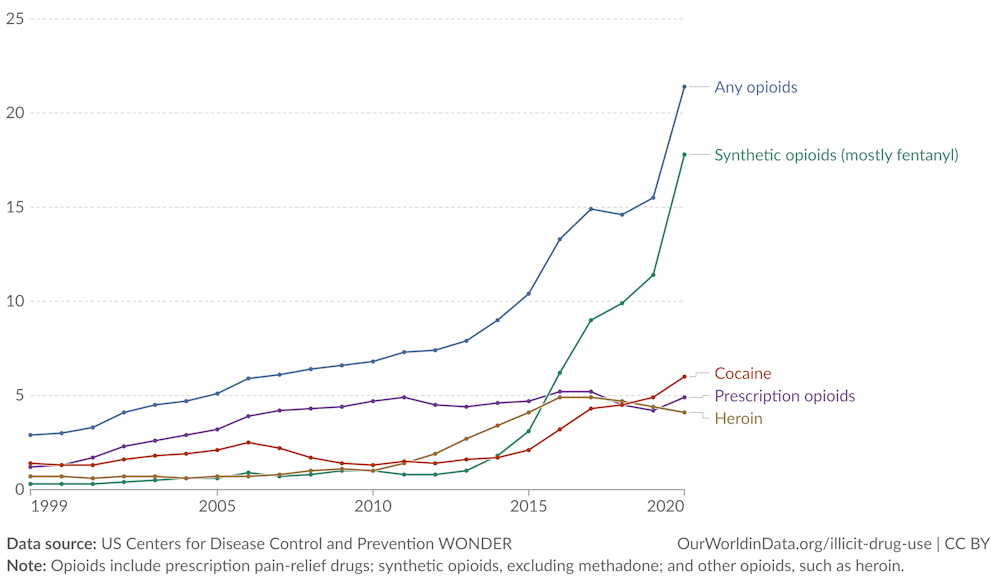
In the US, the synthetic opioids fentanyl and oxycodone have contributed to more than 100,000 fatal overdoses each year since 2021. While there are signs this deaths toll is at last beginning to fall, the harm and pain of addiction and overdose affects every strata of American society – as shown in moving portrayals of America’s opioid crisis such as Painkiller and Dopesick. Most fatalities are caused by respiratory depression where breathing is significantly slowed or stops altogether.
Official trailer for Painkiller (Netflix)
Fentanyl is an analgesic drug that is 50-100 times more potent than heroin or morphine. Where China used to be the principal manufacturer and supplier of fentanyl to the US, Mexico is now the primary source. In December 2024, Mexican authorities announced “the largest mass seizure of fentanyl pills ever made” – amounting to more than 20 million doses of fentanyl pills worth nearly US$400 million. The pills were found in Mexico’s Sinaloa state, home of the Sinaloa drug cartel and a hub of fentanyl production,
“This is what makes us rich,” one fentanyl cook recently told the New York Times. He was scathing about the idea that Donald Trump would be able to stamp out the supply of fentanyl from Mexico to the US by threatening Mexico’s government with tariffs. “Drug trafficking is the main economy here.”
However, the introduction of synthetic opioids to the US came not via organised crime but through a deliberate strategy of the pharmaceutical industry. Upon launching its prescription opioid painkiller OxyContin (a brand name for oxycodone) in 1996, Perdue Pharma, owned by the Sackler family, devised a plan to increase prescriptions of the drug by incentivizing and rewarding doctors to give these drugs to their patients. On a business level, this was a success; on a human level, it has been a disaster.
As patients quickly developed tolerance to drugs such as OxyContin, they had to take higher doses to avoid withdrawal symptoms or the positive feelings it gave them. Taking more of these opiates increases the risk of accidental overdose, many of which proved to be fatal. It has also driven those dependent on drugs to the black market, and into the hands of organised drug gangs, as they seek the drugs in greater quantities.
Dependency on fentanyl and other opioids is all-consuming. When not using these drugs, people are entirely focused on ensuring sufficient supply of the next dose. This includes funding supply which can take people to places they thought they would never be, for example breaking the law, shoplifting or getting involved in commercial sex to make enough money to buy drugs.
Synthetic opiates like OxyContin and fentanyl have proved to be classless, ageless and sex blind. The first-hand experience of addiction and fatalities have radically altered the way many Americans think about drugs and the problems they cause. Canada, too, is suffering a major crisis.
Compounding this tragedy is the failure of the state to provide interventions and treatment that could have reduced fatal and non-fatal overdoses. It is only now that evidence-based interventions are beginning to be made widely available, such as access to Naloxone – a drug that can reverse the effects of opiates and potentially save a life.
Of course, it isn’t just hospitals and health professionals that are challenged by the results of widespread use of opioids, but public services like the police and fire service. In some areas of the US, there have been so many daily overdoses that every service was called on to try and deal with it. Local mayors have made it a priority to train police and fire personnel to be trained as first responders, such is the scale of the problem.
But it is not just in North America that we see the failure of politicians and the state to act when faced with growing problems with drugs. In the UK, where record numbers are dying because of using drugs such as heroin, the government has not invested in overdose prevention strategies. At a time when fatal overdoses increase year on year, budgets for specialist treatment have been reduced. It remains to be seen what the recently elected Labour government will do, if anything, to tackle the tragic rise in drug related fatalities.
What connects both examples from the US and UK is the attitude and perception of drug use many of us have. Drug use and the heavy use of prescription painkillers is still heavily stigmatised. Many of us still view this as something individuals bring on themselves or have a choice about.
So, if we don’t care about what happens to people who develop problems with drugs, why should our elected representatives? In part, it is our bigotry that is enabling the lack of timely intervention, despite us possessing the knowledge and evidence of how drug harms can be minimised.
Latin America: breakdown of the rule of law
Under the last Conservative government, the UK Home Office asserted that people who used cocaine recreationally are supporting violence not only in the UK but in the countries that produce its raw ingredients. It’s not clear if this has made any difference to those using cocaine in the UK – personally, I doubt many people consider or are aware of how cocaine is produced or its provenance.
Perhaps if those using cocaine, mainly in western countries, realised the extent of violence and suffering that cocaine manufacture causes they might think again. Latin America has suffered enormously, with few countries there not touched in some way by the violence and breakdown of law associated with drug production and supply. According to the latest UN World Drugs Report:
Global cocaine supply reached a record high in 2022, with more than 2,700 tons of cocaine produced that year, 20% more than in the previous year … The impact of increased cocaine trafficking has been felt in Ecuador in particular, which has seen a wave of lethal violence in recent years linked to both local and transnational crime groups, most notably from Mexico and the Balkan countries.
Cocaine seizures and homicide rates increased five-fold between 2019 and 2022 in Ecuador, with the highest such rates reported in the coastal areas used for trafficking the drug to major destination markets in North America and Europe.
Cocaine trafficking flows based on reported seizures (2019-22):
As with opium production in Afghanistan, it is small-scale farmers in Colombia, Peru and Bolivia that grow the coca plant that will be turned into cocaine. Like their Afghan counterparts, they grow coca as it is more profitable than alternatives such as coffee. While it may be profitable in the short term, there are greater costs to them and their society.
Cocaine production brings with it violence as those further up the drug production chain try to control its trade. Few parts of these societies are unscathed, from bribing local politicians through to whole regions that are controlled by organised crime. Keeping control means that the use of firearms and violence increases. Against this backdrop, it is unsurprising that basic health and social services suffer.
So, while a coca grower may have more money, every other aspect of their life is negatively impacted. Whether it is regional or state institutions, both are compromised by the drug trade and those that control it. While this may not lead to the total collapse of law and order, it does create injustice and distorts the rule of law in many areas of Latin America and the Caribbean, where competition between gangs has also resulted in an increase in homicides.
The impact is on all sectors of society, now and into the future. For example, while historically the role of women has been largely underrepresented in research and drug policy, the UN report recognises that this is changing:
As women increasingly participate in economic activities, the role that women play in the drug phenomenon may become increasingly important. For example, a shift away from plant-based drug production may affect many women in rural households involved in opium poppy and coca bush cultivation.
The UN also identifies the specific risk to young people and the drugs trade, highlighting:
Long-term efforts to dismantle drug economies must provide socioeconomic opportunities and alternatives, which go beyond merely replacing illicit crops or incomes and instead address the root structural causes behind illicit crop cultivation, such as poverty, underdevelopment, and insecurity. They must also target the factors driving the recruitment of young people into the drug trade, who are at particular risk of synthetic drug use.
Meanwhile, demand for treatment in Europe due to problems with cocaine has risen significantly in recent years, since 2011 there has been an 80% increase in treatment presentations. This reflects the growing number of people using cocaine and the rise in purity of the drug.
Amid what may seem to be a story of unrelenting despair and hopelessness, there are local initiatives and even a few state-wide policies that provide optimism that change is possible.
In my roles both as clinician and scientist, I’ve often been amazed by how ingenious people can be when faced with the apparently impossible. For example, the way some people use heroin to dampen their psychotic symptoms, such as auditory and visual hallucinations – or the development of Naloxone, a drug that can temporarily reverse the effects of opioids, providing a short window for emergency services to treat people who have overdosed.
Early in my career, I witnessed the emergence of HIV in the UK in the 1980s. The speed at which this disease spread was not matched by our ability to treat it. Our response to HIV was undoubtedly hampered by prejudice and stigma towards marginalised groups in society, namely gay men and those using drugs (particularly injecting them).
However, unexpectedly and courageously, the Conservative government recognised those who were most at risk of contracting HIV, and organised a package of measures to contain the spread of infection. One part of this was a media campaign based on public health messaging designed to reduce the risk of contracting the disease. But the government also invested in treatment for those who had been infected and engaged with people at high risk, such as those intravenously injecting drugs.
I worked in specialist HIV clinics for those using drugs. At the time, methadone and diamorphine were provided as an alternative to heroin. Regulations and protocols that restricted the prescribing of these medical opioids were eased, so we could ensure patients attending these clinics were given sufficient oral and injectable opioids that they didn’t need to source street heroin.
This meant they had access to medical grade opioids and, crucially, were given regular supplies of sterile injecting equipment. It was this that reduced the risk of contracting HIV, as some people would share injecting equipment when using heroin.
This impressive policy ran counter to the Conservative party’s ideology at the time, which was to punish rather than help those using drugs like heroin. It showed me how, even with traditional mindsets, it is possible to shift policy thinking in the face of a health crisis. And make no mistake, the global drug problem is an ongoing health crisis. Today, the UN points to the risks that intravenous users of drugs still face:
An estimated 13.9 million people injected drugs in 2022, with the largest number living in North America and East and South-East Asia … The relative risk of acquiring HIV is 14 times higher for those who inject drugs than in the wider population globally.
There are, though, signs of positive change in the way some countries and regions are changing their drug policies. Scotland recently opened a drug consumption facility in Glasgow – a safe place for people to use their drugs, usually injecting drugs like heroin. Such spaces provide access to sterile injecting equipment, reducing the risk of blood-borne infections such as HIV or Hepatitis. At the same time, they offer the opportunity to engage with people who have not accessed traditional health services.
Portugal, as mentioned earlier, has made substantial changes to the way it approaches drug use and the problems associated with it. This policy shift since 2000 has saved lives and brought a more humane way of treating people who develop problems with drugs.
Contrast this with the wasted effort and resources ploughed into the war on drugs – initiated by Nixon and followed by so many western governments ever since. My plea to policymakers is simple: employ the same evidence-based science you use for health issues towards drugs and problem drug use.
Science and research can help in many ways, if given the chance. Some of it might seem radical, like providing safe drug consumption spaces. Some of it is more mundane, but vital – like tackling inequality, a clear driver of problem drug use across the world.
But while we often look to politicians to take the lead on change, it is people – us – that really hold the solution. By far the greatest threat to people and society from drugs is ignorance and bigotry. So many lives have been lost to drugs because of shame, either as a driver of drug use or a barrier to seeking help.
Beliefs are notoriously difficult to shift. As with climate change, the most powerful driver of change is personal experience. We know that when a family or community is affected by a drug overdose, their beliefs and perceptions change. But this is not the way any of us should want to see change happen.
To hear about new Insights articles, join the hundreds of thousands of people who value The Conversation’s evidence-based news. Subscribe to our newsletter.
Ian Hamilton does not work for, consult, own shares in or receive funding from any company or organisation that would benefit from this article, and has disclosed no relevant affiliations beyond their academic appointment.
Ocala, Florida – United States Attorney Roger B. Handberg announces the return of an indictment charging Jared Menendez (25, Fruitland Park) with attempted enticement of a minor to engage in sexual activity and attempted transfer of obscene material to a minor. If convicted of the attempted enticement offense, Menendez faces a minimum sentence of 10 years, up to life, in federal prison. The attempted transfer of obscene material offense carries a maximum sentence of 10 years’ imprisonment. Menendez is currently detained pending the resolution of the case.
According to the indictment, between November 14 and December 20, 2024, Menendez attempted to persuade, induce, entice, and coerce an individual whom he believed had not yet attained 18 years of age to engage in sexual activity.
An indictment is merely a formal charge that a defendant has committed one or more violations of federal criminal law, and every defendant is presumed innocent unless, and until, proven guilty.
This case was investigated by Homeland Security Investigations and the Marion County Sheriff’s Office. It will be prosecuted by Assistant United States Attorney Sarah Janette Swartzberg.
This case was brought as part of Project Safe Childhood, a nationwide initiative launched in May 2006 by the Department of Justice to combat the growing epidemic of child sexual exploitation and abuse. Led by United States Attorneys’ Offices and the Criminal Division’s Child Exploitation and Obscenity Section (CEOS), Project Safe Childhood marshals federal, state, and local resources to locate, apprehend, and prosecute individuals who sexually exploit children, and to identify and rescue victims. For more information about Project Safe Childhood, please visit www.justice.gov/psc.
The Rhode Island Department of Health (RIDOH) is advising consumers that Blue Ridge Beef is recalling 5,700 pounds of their two-pound log Natural Mix dog food due to a contamination of Salmonella.
The recalled products have the Lot number N25/12/31. (Lot numbers are stamped in the clips on the end of the chubs/bags.) The products have UPC# 854298001054.
Salmonella can affect animals eating the products and there is risk to humans from handling contaminated pet products, especially if they have not thoroughly washed their hands after having contact with the products or any surfaces exposed to these products.
Healthy people infected with Salmonella should monitor themselves for some or all of the following symptoms: nausea, vomiting, diarrhea or bloody diarrhea, abdominal cramping and fever. Rarely, Salmonella can result in more serious ailments, including arterial infections, endocarditis, arthritis, muscle pain, eye irritation, and urinary tract symptoms. Consumers exhibiting these signs after having contact with this product should contact their healthcare providers.
Pets with Salmonella infections may be lethargic and have diarrhea or bloody diarrhea, fever, and vomiting. Some pets will have only decreased appetite, fever, and abdominal pain. Infected but otherwise healthy pets can be carriers and infect other animals or humans. If your pet has consumed the recalled product and has these symptoms, please contact your veterinarian.
Samples of the product were collected on 01/08/25 by the North Carolina Department of Agriculture and tested by the North Carolina Department of Agriculture Food and Drug Protection Laboratory. The product tested positive for Salmonella.
On 01/27/2025 the firm was notified by the FDA that the product tested positive for Salmonella.
These products were distributed between January 3, 2025 and January 24, 2025. The product is packaged in clear plastic and was sold primarily in retail stores located in Virginia, Maryland, Pennsylvania, Connecticut, Massachusetts, New York State, Tennessee, and Rhode Island.
Consumers who have purchased this product are urged to return to place of purchase or destroy the food in a way that children, pets, and wildlife cannot access it.
For more information contact blueridgebeefnc@yahoo.com or 704-873-2072.
HOUSTON, Feb. 03, 2025 (GLOBE NEWSWIRE) — Skyward Specialty Insurance Group, Inc.™ (NASDAQ: SKWD) (“Skyward Specialty” or “the Company”) expects to issue its fourth quarter 2024 earnings results after the market closes on Tuesday, February 25th which will be available on the Company website at investors.skywardinsurance.com/ under Quarterly Results.
Skyward Specialty will host its earnings call to review the fourth quarter 2024 financial results on Wednesday, February 26 at 9:30 a.m. EDT.
Investors may access the live audio webcast via the link on the Company’s investor site at investors.skywardinsurance.com/ under Events & Presentations. Additionally, investors can access the earnings call via conference call by registering via the conference link. Users will receive dial-in information and a unique PIN to join the call upon registering.
A webcast replay will be available two hours following the call in the same location on the Company’s investor website.
About Skyward Specialty
Skyward Specialty (NASDAQ: SKWD) is a rapidly growing and innovative specialty insurance company, delivering commercial property and casualty products and solutions on a non-admitted and admitted basis. The Company operates through eight underwriting divisions — Accident & Health, Captives, Global Property & Agriculture, Industry Solutions, Professional Lines, Programs, Surety and Transactional E&S.
Skyward Specialty’s subsidiary insurance companies consist of Houston Specialty Insurance Company, Imperium Insurance Company, Great Midwest Insurance Company, and Oklahoma Specialty Insurance Company. These insurance companies are rated A (Excellent) with a stable outlook by A.M. Best Company. For more information about Skyward Specialty, its people, and its products, please visit skywardinsurance.com.
Governor Kathy Hochul today announced $20.7 million to support SNUG Street Outreach programs that work to reduce gun violence and save lives in 14 communities across New York State. These grants to community-based organizations and hospitals fund outreach workers, hospital responders, social workers and case managers who are credible messengers and work with individuals at risk of gun violence, connecting them with support and services to change behavior and increase opportunities. Last week, Governor Hochul announced that shooting incidents with injury reported in communities participating in the State’s Gun Involved Violence initiative reached record lows in 2024 with 588 incidents reported compared to 817 in 2023, a 28 percent reduction. The Governor’s FY26 Executive Budget continues unprecedented support for SNUG, Gun Involved Violence and other initiatives in communities that report 90 percent of violent crimes with firearms and 85 percent of violent crimes outside of New York City.
“Public safety is my number one priority — that’s why my Budget invests in proven initiatives like the SNUG program to drive down gun violence, save lives and keep New Yorkers safe,” Governor Hochul said. “Outreach teams across the State are working alongside law enforcement and local partners to target gun violence anywhere it occurs, and to engage stakeholders in a comprehensive approach that makes our communities safer for all.”
New York State’s SNUG program uses a public health approach to address gun violence by identifying the source, interrupting transmission and treating individuals, families and communities affected by the violence. Administered by the state Division of Criminal Justice Services, SNUG, Gun Involved Violence (GIVE) initiative, the State’s nationally recognized Crime Analysis Centers Network and Project RISE (Respond, Invest, Sustain, Empower) are key components of Governor Hochul’s comprehensive plan to address the causes and consequences of gun violence and other crimes.
New York State Division of Criminal Justice Services Commissioner Rossana Rosado said, “Our SNUG Street Outreach teams are a critical component of Governor Hochul’s comprehensive crime reduction and public safety plan. These dedicated individuals work in communities disproportionately affected by gun violence. They mediate and defuse conflicts and provide access to programs and support, including counseling and case management, so youth and families can thrive, and communities can heal. We thank Governor Hochul for her continued support of this work and for her leadership on public safety.”
The $20.7 million will fund staff, programs, services, equipment and technology for the SNUG locations during the 2025 calendar year. Community-based organizations and hospitals receive the funding, which supports 181 full-time and 39 part-time employees who work in specific neighborhoods in Albany, the Bronx, Buffalo, Hempstead, Mt. Vernon, Newburgh, Niagara Falls, Poughkeepsie, Syracuse, Rochester, Troy, Utica, Wyandanch and Yonkers. DCJS tracks shooting data in these “SNUG zones” and last year, those zones collectively reported significant, double-digit decreases in shooting victims, individuals killed by gun violence and shooting incidents with injury when compared to 2023.
SNUG outreach workers, social workers, case managers and hospital responders work in neighborhoods disproportionately affected by gun violence, and the program also embeds social workers and hospital responders at Level One trauma centers in Albany, Buffalo, the Bronx, Rochester and Syracuse. These professionals work with individuals and families in the aftermath of a violent incident to offer support, services and connect them to the SNUG program in their communities for additional assistance.
SNUG staff are credible messengers who live in the communities in which they work, and some have been involved with the criminal justice system or lost loved ones to violence. They work with teens and young adults to detect and defuse disputes before they escalate; respond to shootings to prevent retaliation through mediation and assist family members of those who have been injured or killed; and mentor youth involved with the program to set goals and connect them with educational and job opportunities as well as other services. The programs also engage the community, religious organizations and clergy, and local businesses by sponsoring anti-violence marches, job fairs, block parties, sporting events and other community gatherings.
The following organizations and hospitals will receive funding and support from DCJS to administer SNUG:
New York City and Long Island
Bronx – Jacobi Medical Center: $2,702,617
Hempstead – Family and Children’s Association: $1,164,397
Wyandanch – Economic Opportunity Council of Suffolk: $746,522
Hudson Valley
Mt. Vernon – Family Services of Westchester: $1,088,391
Newburgh – Regional Economic Community Action Plan: $896,799
Poughkeepsie – Family Services Inc.: $1,076,245
Yonkers – Yonkers YMCA: $1,010,259
Capital Region
Albany – Trinity Alliance of the Capital Region: $1,820,329 and Albany Medical Center: $262,310
Troy – Trinity Alliance of the Capital Region: $860,134
Central New York
Syracuse – Syracuse Model Neighborhood Facility: $1,820,189 and SUNY Upstate Medical Center: $464,374
Mohawk Valley
Utica – Integrated Community Alternatives Network: $792,673
Finger Lakes
Rochester – PathStone Corp.: $1,949,426 and Rochester General Hospital: $571,002
Western New York
Buffalo – Erie County Medical Center: $2,800,915
Niagara Falls – Community Missions of Niagara Frontier: $ 677,170
Comprehensive training, site visits and support from DCJS set SNUG apart from other community-based violence interruption programs across the state and country. New staff must complete 40 hours of training and new supervisors complete 32 hours of management training. All staff must also complete 40 hours of professional development training annually. This ongoing training and support help ensure that the program operates consistently across all SNUG sites despite being operated by different community-based organizations and hospitals.
State Senate Majority Leader Andrea Stewart-Cousins said, “As a State Senator, I was proud to advocate for the first SNUG investments in Yonkers and New York State because I knew that real community-driven solutions were key to reducing gun violence and keeping our neighborhoods safe. We’ve seen firsthand how SNUG has changed lives—interrupting cycles of violence, providing critical support, and helping young people find a better path. I’m so proud that Yonkers is receiving more than $1 million in new funding to support this lifesaving program. As Majority Leader, I remain committed to continuing smart, effective investments like SNUG across Westchester and New York. I thank Governor Hochul, my Westchester Delegation and Majority Senators, as well as our partners in the Assembly for their continued leadership and partnership in the fight against gun violence. I look forward to building on this progress together to keep our communities safe.”
State Senator Jamaal Bailey said, “Investing $20.7 million in SNUG to enhance efforts such as preventing gun violence, supporting at-risk individuals, and strengthening communities across New York State is essential. SNUG has been a pivotal partner in preventing gun violence and an organization that has significantly impacted my district, and will continue to do so as Mt. Vernon – Family Services of Westchester is receiving $1,088,391. By funding outreach workers, social workers, and hospital responders, future conflicts can de-escalate and create safer neighborhoods and brighter futures for all of us. Thank you to Governor Hochul for your leadership and prioritizing the safety of our community.”
State Senator Nathalia Fernandez said, “This funding for SNUG, is about more than just intervention—it’s about changing the conditions that lead to violence in the first place. Jacobi Hospital’s Standing Up to Violence program has done just that in its years in service. By supporting credible messengers, outreach workers, and trauma responders, we’re making sure the right people are in place to mediate conflicts, connect at-risk individuals with opportunities, and prevent the next tragedy before it happens. I commend Governor Hochul for investing in real solutions, because every neighborhood, every family, every child in the Bronx deserves to grow up safe from gun violence.”
State Senator Samra G. Brouk said, “Every member of our community deserves to feel safe, wherever they may be. Over $20 million dollars in funding to reduce gun violence across New York State will build upon the tremendous impact that programs such as GIVE have already had on communities like Rochester. I applaud Governor Hochul for addressing the root causes of violence and supporting working solutions to protect our fellow New Yorkers.”
State Senator Sean Ryan said, “Promoting public safety in Buffalo and across our state is a top priority. It’s why we have passed the toughest gun safety laws in the nation and continue to fund initiatives that reduce crime and strengthen communities. I am thankful for Governor Hochul’s support for these outreach programs, which have a proven track record of reducing gun violence.”
State Senator Monica Martinez said, “Gun violence is taking the lives of New Yorkers and instilling fear within our communities. The SNUG Street Outreach program is a proven tool that preempts these devastating tragedies by engaging at-risk individuals and providing them with the support needed to choose a different path. Thank you, Governor Hochul, for enshrining our shared commitment to ending gun violence in New York State in this year’s executive budget.”
State Senator Patricia Fahy said, “Investing in evidence-based programming and on-the-ground resources is exactly how we combat the scourge of gun violence. Partnering with law enforcement, community-based interrupters in cycles of violence like the Trinity Alliance of the Capital Region and increasing the state’s commitment to funding these initiatives is why we’re seeing gun violence rates drop in communities across the state. Thank you to Governor Hochul and my legislative colleagues for continuing to work to ensure that New Yorkers everywhere feel safe on our streets, and to ending the epidemic of gun violence here in New York State.”
State Senator Siela Bynoe said, “The epidemic of gun violence that has taken the lives of too many people across Long Island, and the nation, must end. Addressing the root causes of gun violence through programs that offer outreach where it’s most needed, is both necessary and impactful. I am grateful for Governor Hochul’s support of community-based solutions in the district.”
State Senator Joseph Griffo said, “It is imperative that we continue to look for ways to address and reduce gun violence in the state. This funding will strengthen the SNUG program in Utica by supporting a variety of important services and resources that will enhance public safety in the city and region.”
State Senator Rachel May said, “The state has demonstrated real progress in reducing gun violence rates, and this is our opportunity to continue that success. By increasing funding for the Syracuse Model Neighborhood Facility and SUNY Upstate Medical Center, we can make a meaningful impact on our communities where the scourge of gun violence is widespread. Thank you to Governor Hochul for her leadership, as well as to my colleagues in the legislature for their commitment to curb gun violence in New York State.”
Assembly Majority Leader Crystal Peoples-Stokes said, “We know that outreach works. When people in the community are supporting efforts to combat gun violence, lives get saved. I support the GIVE Initiative and other anti-violence initiatives as well as the work SNUG continues to do in our communities. The Response Teams at Erie County Medical Center continue to be top of the line.”
Assemblymember J. Gary Pretlow said, “As we continue to combat gun violence in our communities, investing in programs like SNUG is not just necessary—it’s life-saving. This funding from Governor Hochul ensures that we can provide resources, mentorship, and intervention to those most at risk, creating safer neighborhoods for everyone. I am proud to support SNUG and the dedicated individuals working tirelessly to break the cycle of violence in Mount Vernon and beyond.”
Assemblymember William B. Magnarelli said, “Reducing gun violence is a priority in protecting our communities. By working with organizations in the community, together we can reinforce safety measures and prevention methods to decrease gun violence.”
Assemblymember John T. McDonald III said, “As one of the original supporters of SNUG which started here in the Capital Region, I have worked closely with Trinity Alliance and those who are part of SNUG and have seen the positive impact of the program. That is why I am appreciative of the Governor’s support to continue to grow the program, including in the City of Troy where the program has taken roots and is welcomed by the public safety team. The data validates the critical need and impact of the program which is making our communities safer.”
Assemblymember Pamela J. Hunter said, “I am grateful for Governor Hochul’s leadership and commitment to reducing gun violence in our communities. The $20.7 million investment in SNUG Street Outreach programs, including critical funding for Syracuse Model Neighborhood Facility and SUNY Upstate Medical Center, will have a direct and positive impact on the lives of people in the 128th Assembly District. By supporting outreach workers, hospital responders, and case managers, this initiative provides life-changing resources to those most at risk, helping to break cycles of violence and create safer neighborhoods. I look forward to seeing the continued progress of these evidence-based efforts to protect and uplift our communities.”
Assemblymember Jonathan Jacobson said, “Unfortunately, gun violence plagues the cities of Newburgh and Poughkeepsie as it does too many areas of the State and the Nation. Gun violence must be addressed in three ways: ending gun trafficking from outside of New York State; enforcing our gun laws including full application of our red flags laws; and engaging the community through community-based organizations to discourage and stop gun violence before it starts. I wish to applaud Governor Hochul for her commitment to stopping gun violence using all three avenues and for the investment in this year’s budget in anti-gun violence initiatives with community-based organizations.”
Assemblymember Marianne Buttenschon said, “We unfortunately continue to see our youth negatively impacted by gun violence and this program works to reduce the violence. I appreciate the Governor providing additional funding to SNUG Programs.”
Assemblymember Demond Meeks said, “Community-based programs like SNUG and GIVE are making a real difference in the fight against gun violence. By focusing on mediation, mentorship, and support, they’re helping to change behaviors and address the root causes of this complex issue. The data is clear: these programs are strengthening our neighborhoods and saving lives. I commend Governor Hochul for her ongoing commitment to investing in these vital resources that directly support communities disproportionately impacted by crime.”
Assemblymember Jen Lunsford said, “Tangible investments in grassroots organizations working to stop gun violence in our community have paid dividends over the past year. We can see crime trending down in nearly every gun-related category thanks to this kind of targeted delivery of resources. This announcement from the Governor of large scale funding for gun violence prevention will help us continue to reduce violence and bring peace and stability to our neighborhoods.”
Assemblymember John Zaccaro, Jr. said, “Far too many families in the Bronx and across our communities in New York have felt the devastating effects of gun violence. The SNUG program will strengthen intervention efforts and connect at-risk individuals with critical resources. By addressing the root causes of violence and providing meaningful intervention, we are not only preventing tragedies but also creating pathways to brighter futures for individuals and families. I thank Governor Hochul for her leadership and commitment to investing in proven violence prevention programs that make a tangible difference in the lives of New Yorkers.”
Assemblymember Kwani B. O’Pharrow said, “Investing in community outreach and support programs like SNUG is crucial for reducing gun violence and fostering safer environments. Thank you, Governor Hochul, for your commitment to transforming lives and creating lasting change in our communities.”
Assemblymember Gabriella Romero said, “With a partner like Governor Kathy Hochul investing in our communities that need it most, we are making real strides in reducing gun violence and saving lives. I want to thank the Governor for her continued commitment to evidence-based, community-driven solutions like SNUG. This $20.7 million investment—including over $2 million for Albany’s Trinity Alliance and Albany Medical Center—will ensure that outreach workers, hospital responders, and social service professionals can continue their critical work to proactively reduce gun violence. These initiatives are making a difference, and I remain committed to securing the resources Albany needs to keep our neighborhoods safe.”
Assemblymember Noah Burroughs said, “SNUG has been doing excellent work in the community within my district. Gun-related crimes are down and we would like to see those numbers decrease more. This is a great opportunity for the 14 communities in New York State that Snug services to continue doing good work throughout all of its communities. Thank you Governor Hochul for this investment in Hempstead.”
Assemblymember Harry Bronson said, “SNUG Street Outreach is impactful because it empowers community-based organizations to leverage their existing relationships and partnerships to reduce gun violence in the areas where they serve. Since implementing SNUG, Rochester has seen a significant and marked decrease in violence, at all levels. But we still have work to do. The funding the Governor is providing to Rochester General Hospital and Pathstone will enable them to bring on the staff, programming and services they need to expand this successful public safety initiative.”
Erie County Executive Mark C. Poloncarz said, “Investing in SNUG programs helps to build safer communities and reduce gun violence. This grant award will help provide the ongoing training and support that is critical to SNUG and I thank Governor Hochul for her partnership in helping to keep our citizens safe.”
Albany Mayor Kathy Sheehan said, “I want to thank and applaud Governor Kathy Hochul and DCJS for their continued investments for SNUG & GIVE initiatives. I have said it many times before, that this Governor isn’t just talk, but action. The investments in these programs allow cities like Albany to wisely make strategic choices to get resources on the ground, establish connections with our neighbors and allow alternative approaches to focusing on public safety. Just this week at my State of the City we highlighted a reduction of crime of 3% compared to the 5-year average & a reduction of 21% since I assumed office. Today’s announcement of an additional $2 million dollars to keep these programs going is something celebrated by every resident in the City of Albany. Thank you Governor!”
Buffalo Mayor Chris Scanlon said, “I want to thank Governor Hochul for her continued investment in violence prevention efforts here in Buffalo. The $2.8 million awarded to Erie County Medical Center for the SNUG Street Outreach program will provide critical resources to community organizations and trauma responders who work tirelessly to prevent gun violence and save lives. In recent years, we’ve seen firsthand how these initiatives make a real difference in our neighborhoods and this funding will allow us to continue that progress—connecting at-risk individuals with the support they need and ensuring a safer, healthier, stronger Buffalo for all.”
Syracuse Mayor Ben Walsh said, “With New York State’s strong support, teamwork with community partners and effective intervention by Syracuse Police, gun violence is down significantly in the City of Syracuse. In 2024, gun violence dropped more than 26% across all of the major categories and the most serious violence – shooting victims injured or deceased dropped 39%. This funding for outreach programs shows Governor Hochul knows reducing gun violence requires the full community working together which is the focus of our Mayor’s Office to Reduce Gun Violence. I’m deeply grateful for the Governor’s help and for the caring and effective work the SNUG Street Outreach team does every day in Syracuse.”
Rochester Mayor Malik D. Evans said, “Governor Hochul’s leadership and continued investments in programs like GIVE and Project RISE have played a major role in helping us reduce gun violence in Rochester by more than 50 percent from the peak years of the pandemic. This investment in SNUG outreach workers is yet another example of her commitment and resolve on this critical issue and the city of Rochester is fortunate for the governor’s partnership.”
Niagara Falls Mayor Robert Restaino said, “We appreciate the continued investment by Governor Hochul in programs that help keep our communities safe. We know that our community benefits from the various initiatives advanced by the Governor. These additional resources will help continue our efforts to keep our City safe.”
Poughkeepsie Mayor Yvonne D. Flowers said, “Governor Hochul continues to deliver for the City of Poughkeepsie, and we are grateful for her commitment to our community. Investing in vital outreach programs like SNUG strengthens our city by expanding our ability to engage and support our youth, guiding them toward positive opportunities. With the TRAC Program no longer in operation, I encourage Family Services Inc. and SNUG to use this funding to develop additional gun violence prevention initiatives and create safe spaces for our children after school. Congratulations to SNUG and I look forward to collaborating with them as we work together to unite our community in the fight against gun violence.”
Utica Mayor Michael Galime said, “To truly be proactive with the issues of Gun Violence we must make sure to approach it from every angle. Good policing will always be at the forefront but additional resources like SNUG are essential to providing additional boots on the ground to raise awareness and prevention. In Utica we are grateful for this funding and will continue to support SNUG however possible.”
Newburgh Mayor Torrance Harvey said, “A huge thank you goes out to Governor Hochul for allocating more funds for anti-violence initiatives in the city of Newburgh! This funding is a significant step toward fostering safer communities and reducing violence. Thank you again, Governor Hochul, for your commitment to making Newburgh a safer place!”
Hempstead Mayor Waylyn Hobbs, Jr. said, “Thank you Governor Hochul for supporting our village through programs such as SNUG that have successful results in our community.”
Troy Mayor Carmella Mantello said, “I commend Governor Hochul for her continued investment in SNUG and the critical work of violence prevention programs across New York State. In Troy, we have seen firsthand the positive impact of SNUG in engaging our communities, de-escalating conflicts, and providing essential support to those at risk. This funding will help strengthen these efforts and help make our neighborhoods safer.”
The Division of Criminal Justice Services provides critical support to all facets of the state’s criminal justice system, including, but not limited to: training law enforcement and other criminal justice professionals; overseeing a law enforcement accreditation program; ensuring Breathalyzer and speed enforcement equipment used by local law enforcement operate correctly; managing criminal justice grant funding; analyzing statewide crime and program data; providing research support; overseeing county probation departments and alternatives to incarceration programs; and coordinating youth justice policy. Follow DCJS on Facebook, Instagram, LinkedIn and X (formerly Twitter).
Source: United Nations General Assembly and Security Council
United Nations Secretary-General António Guterres has appointed Arnaud Peral of France as the United Nations Resident Coordinator in the Philippines, with the host Government’s approval, on 1 February.
Mr. Peral was most recently the United Nations Resident Coordinator in Tunisia since 2020. Prior to that, he served successively as United Nations Resident Coordinator and United Nations Development Programme (UNDP) Resident Representative in Ecuador, UNDP Country Director in Colombia, UNDP Deputy Resident Representative in México and then Brazil, Programme Manager and Chief of Staff in UNDP´s Regional Bureau for Latin America and the Caribbean in New York and Programme Officer in UNDP Cuba.
Prior to joining the UN system in 2000, Mr. Peral served as Cooperation Counsellor for Scientific and Technical Cooperation in the French Embassy in Cuba, Research Assistant in the Ministry of Environment in France and Research Assistant in public policy in the Ministry of Agriculture in Chile.
Mr. Peral holds a master’s degree in development economics from the University of Paris X-Nanterre and a bachelor’s degree in economic policy from the University Pierre Mendes France, Grenoble.
__________
* This supersedes Press Release SG/A/1982 of 17 September 2020.
WASHINGTON, D.C. – Yesterday, House Foreign Affairs Committee Chairman Brian Mast joined Margaret Brennan on CBS’ “Face the Nation” to discuss the review of foreign assistance and the Biden State Department’s fixation on DEI.
WATCH HERE
-Transcript-
MARGARET BRENNAN: And we’re joined now by Florida Republican Congressman Brian Mast, who is the chairman of the Foreign Affairs Committee, which has oversight over the State Department and its programs.
He joins us from Fort Pierce, Florida.
Good morning to you.
CHAIRMAN BRIAN MAST (R-Florida): Good morning.
BRENNAN: I want to start first on the tariffs that were announced overnight by President Trump. You know there’s a free trade agreement with Mexico and Canada. President Trump negotiated it during his first term.
The tariffs may violate that deal. If he’s invoking tariffs on a national security basis, can you explain the threat posed by Canada?
CHAIRMAN MAST: Yes, and he was – President Trump, that is to say, was very specific in his executive order, outlined that it’s specifically related to fentanyl. It’s specifically related to human trafficking.
And there’s a trust, but verify situation that has to go on here.
BRENNAN: Through Canada?
CHAIRMAN MAST: Through Canada as well, absolutely, fentanyl through Canada, human trafficking through Canada, also with China in that mix for fentanyl as well.
That was specifically outlined in it. And until that comes to an end, this is what’s going to be on the table. And bear in mind as well that USMCA reauthorization is coming up in the coming-up months and years.
BRENNAN: So you don’t believe that this violates the trade agreement, the treaty?
CHAIRMAN MAST: The violation has been to the United States of America. It’s been to our sovereignty. It’s been to our people. We’ve been taken for granted.
BRENNAN: Right, but Congress votes on these things. So…
CHAIRMAN MAST: And I will make sure certainly, as the Foreign Affairs chairman, that we give every single authority as we go through State Department reauthorization, to make sure that this moves forward, as well as purging of people throughout the State Department, other agencies, where we’re freezing aid.
These are all very important and necessary steps to make sure that we secure America. And we’re going to support that.
BRENNAN: I’m sorry. Can I follow up on what you just said there?
CHAIRMAN MAST: Please do.
BRENNAN: You want to authorize purging of State Department personnel? What does that mean exactly?
CHAIRMAN MAST: Well, if you want to take a look at the State Department, where DEI has been a priority over, let’s say, diplomacy on many accounts, I can give you hundreds of examples of where they were authorizing…
BRENNAN: What proof do you have of that?
CHAIRMAN MAST: Sure, let’s list them off, half-a-million dollars to expand atheism in Nepal, $50,000 to do, let’s see, a transgender opera in Colombia, $47,000 to do an LGBTQ trans comic book in Peru, $20,000 a pop to do drag shows in Ecuador.
Shall I continue with more examples of where DEI was a priority?
BRENNAN: Oh, it certainly seems like there could be a review of things. Foreign aid, as you know, is less than 1 percent of the entire federal budget. So we’re talking small amounts of money by comparison. But when…
CHAIRMAN MAST: We’re still talking about tens and tens of billions of dollars.
And if you want to go to somebody else, on the other side of the aisle, Samantha Power, she had a worthy goal, although it was a stupid goal. She said she was hoping to get the amount of foreign aid, U.S. aid dollars that go to actual aid up to 30 cents on the dollar from 10 cents on the dollar. That’s a major problem that we have this agency that that’s all that goes abroad…
BRENNAN: I think you’re talking about…
CHAIRMAN MAST: … when it should be the American worker’s dollar.
BRENNAN: I think now you’re talking about the USAID, the aid agency…
CHAIRMAN MAST: Yes.
BRENNAN: … which is a – separate from the State Department currently and has about $40 billion worth…
CHAIRMAN MAST: Which is likely going to be rolled more closely under Secretary Rubio.
BRENNAN: Tell – yes, tell me about that, because that’s where I was going.
Has the Trump administration informed you of plans to dismantle or significantly shrink this agency?
CHAIRMAN MAST: This is something that I’m working on very specifically, in conjunction with Secretary Rubio, to make sure that there’s the appropriate command-and-control of these agencies, where, again, to make that same point, right now, maybe 10 to 30 cents…
BRENNAN: They already report to the secretary of state.
CHAIRMAN MAST: But 10 to 30 cents on the dollar is what actually goes to aid. So there’s not the right amount of command-and- control that’s going on with the way that it’s set up currently.
And let’s make another point on this as well.
BRENNAN: Congress – Congress authorizes and earmarks funding.
CHAIRMAN MAST: Most of these dollars – most of these dollars that go out of USAID, 70-plus percent don’t come from U.S. growers, U.S. farmers, U.S. ranchers, or go through us ports. And that’s another big problem for America.
BRENNAN: So – I’m sorry. If Congress already authorizes and earmarks the funding, just to be very clear, you’re not endorsing getting rid of USAID as a separate department, which already reports to the secretary of state, are you?
CHAIRMAN MAST: I would be absolutely for, if that’s the path we go down, removing USAID as a separate department and having it fall under one of the other parts of United States Department of State, because of its failure.
I just went over the numbers twice with you in the amount of aid that actually makes it into the hands. I mean, you could you could almost say – this is a little bit hyperbole – but there’s probably more dollars that go towards state dinners around the D.C. Beltway than what actually goes into rice and beans abroad.
That’s the state of what’s going on with USAID. And Samantha Power said no less herself.
BRENNAN: Well, I think every single administration authorizes reviews, could increase efficiencies. There are plenty of people who propose bringing it more under the authority of the State Department. Madeleine Albright tried to do that. That’s not a new MAGA idea.
I think the question here, though, is about how you do it. Do you still believe that in the law signed in the 1960s that Congress has to sign off on any changes to USAID? Or do you think President Trump can just make all of this happen through executive order?
CHAIRMAN MAST: So, all of those examples that you just gave of those historical figures, the difference is now the job is going to get done.
It’s going to be 99.99 percent of cents on the dollar actually go towards what it’s intended, instead of people around the Beltway.
BRENNAN: OK, so you’re talking about – you’re talking about…
CHAIRMAN MAST: That’s what’s going to happen. That’s the change.
BRENNAN: … efficiencies in aids versus restructuring.
So let me ask you about that. Well, like I said…
CHAIRMAN MAST: Well, that requires restructuring, 100 percent. You can’t create that efficiency just by wishing it into existence.
BRENNAN: Sure.
CHAIRMAN MAST: You have to restructure where the failures are and put the right things in place.
BRENNAN: Of course.
But what we’re hearing from many of these aid organizations and officials is that, can you restructure after you finish the review and not freeze funding now, immediately? I spoke to former USAID global health head Atul Gawande yesterday. He told me this isn’t a pause in foreign aid. It is a demolition of USAID.
As he put it, you can’t pause a flight in midair. That’s what’s happening.
CHAIRMAN MAST: Let’s…
BRENNAN: This immediate freeze in funding is stopping agencies in the field from being able to do the work they do.
CHAIRMAN MAST: Let’s say why that is so important. And let’s talk about the real facts on the ground.
The Trump administration comes in or representatives like myself that do oversight. The agencies will literally not tell us what they are writing grants for, literally, or they will lie about it, or they will tell the new political appointees under the Trump administration, I’m just not going to tell you that. Those are real things that have happened.
So the way that you make them come and answer for where they are actually sending dollars is to say, we’re freezing that. We’re putting it on hold. You need to come to us and explain what it is you’re doing, why you’re doing it and where it’s actually saving life. And guess what?
BRENNAN: But…
CHAIRMAN MAST: When they don’t come explain something, that also begs the question, why were they doing it in the first place?
BRENNAN: But the way these things work is, the contractors have to front the cash, then go to the U.S. government for reimbursement.
So when you put in an immediate freeze, that means drugs don’t get delivered. That means they don’t get distributed. That means bomb disposal units don’t get to go out there in places like Cambodia and remove ordnance or provide help to people who receive it.
That’s the pushback from aid organizations, who are saying they’re going to have to carry out layoffs in the thousands in the coming week. Does that concern you at all?
CHAIRMAN MAST: They will have an opportunity. It doesn’t concern me because of the grift that has been going on to the American taxpayer, the American worker.
That’s what needs to be answered for. And so you look at this. Let’s use PEPFAR as an example. You were talking about drugs going to individuals. There was a release of that hold that was put – that was authorized. But it shouldn’t be the case that the American people fund HIV and AIDS drugs for 20 million people across Africa, where many of these countries are working very directly with our adversaries like China.
That is an example of them taking us for granted. We need to be asking the question, should they be weaning off of this? Should we be paying it for these very expensive HIV and AIDS drugs?
BRENNAN: Yes.
CHAIRMAN MAST: Should the American worker be footing the bill for that? Those are real questions.
BRENNAN: Yes, real questions, but, in the meantime, people need their drugs while you ask those questions. So that’s where the disagreement is with the aid organizations.
But let me ask you about air traffic controllers and what’s happening here at home.
CHAIRMAN MAST: Not with all the leaders of other countries, though. I believe I saw the leader of Kenya as one step up and say, hey, this is an example where we need to step up for ourselves and show how we can take care of ourselves. And I believe that was the president there.
BRENNAN: I want to ask you, as I was saying, about another committee you sit on, Transportation Committee.
The FAA hiring policy for air traffic controllers, including under the first Trump administration, offered equal opportunity to those with targeted disabilities, including, as the president read, hearing, vision, missing extremities, partial paralysis, complete paralysis, severe intellectual debility – disability. Excuse me.
The president singled this out, this policy, as a contributor possibly to the crash. Do you agree with the diversity policy, or do you agree with the president? I know you lost two limbs serving this country in Afghanistan. Do you hear those words and take offense to them or…
CHAIRMAN MAST: No, no offense. Let’s unpack it.
Number one, I will use myself as an example, right? There are things that I am suited to do, no doubt. But flying an aircraft, to stick with the subject at hand, would not be one of them. I could fly a personal – a personal aircraft.
BRENNAN: This is air traffic controllers.
CHAIRMAN MAST: But to put me in charge of traffic or 150 lives, that would not be the right case for me personally, given my physical disabilities and foot pedals on an aircraft.
To go to the diversity side of it and the actual crash, yes, there were very real errors that took place both in the air traffic control tower and with the helicopter pilots, it seems. But, more systemically, is there a big hiring problem across all federal agencies, to include the FAA, where they made the priority diversity and inclusion…
BRENNAN: Yes.
CHAIRMAN MAST: … instead of excellence and performance? Yes, that’s the case. They made the priority appearance and lifestyle and not the big deal.
BRENNAN: Congressman, thank you for your time today.
Headline: Governor Josh Stein Advocating for $1.07 Billion to Rebuild Western NC
Governor Josh Stein Advocating for $1.07 Billion to Rebuild Western NC bwood
Raleigh, NC
Governor Josh Stein today requested $1.07 billion in immediate funding to support urgent rebuilding needs in western North Carolina. Governor Stein’s budget request includes funds to strengthen the economy, get people back into homes faster, repair infrastructure, support farmers, fix private roads and bridges, remove debris, and help school children stay at grade level.
“The people of western North Carolina have suffered tremendously since Helene swept through,” said Governor Josh Stein. “I appreciate what the General Assembly has done so far, but it’s time for us to step up and get them the money they need right now to rebuild. We can’t forget western North Carolina – and I will do everything in my power to ensure that the state shows up for them.”
Governor Stein made his budget request at MANNA Food Bank, which works with over 300 community-based nonprofit food assistance partner agencies in 16 western North Carolina counties.
“MANNA has been an essential resource for the people it serves, and its work has become even more critical since Hurricane Helene struck,” said Governor Stein. “As these organizations continue the daily work of supporting their community, we have a responsibility to support them.”
The Governor’s budget request includes funding in the following categories. An overview of some of the programs is below; full request details are available here.
Strengthening the Economy
$150 million across two grant programs for businesses that suffered physical damage or significant economic loss.
$30 million for grants to small towns and counties to rebuild downtowns and other business districts.
$15 million to the Economic Development Partnership of North Carolina’s VisitNC division to support North Carolina’s tourism industry and to attract travelers and new businesses to the area.
$100 million for revenue replacement grants to support local governments whose resources were exhausted by immediate disaster response, as they work to keep water and sewer services going, pay law enforcement, and support school operations.
Providing Safe and Warm Places to Live
$150 million for a Helene Home Construction and Repair Program to immediately start rebuilding the estimated 5,100 homes that will need to be rebuilt post-Helene.
$25 million to support people struggling to afford rent, mortgage, or utility costs because their home or livelihood was affected.
$10 million for Back@Home, a program that supports people who are without homes and provides them with case management support.
$50 million in incentives for affordable housing construction.
$25 million to fill in gaps for home repairs that are not covered by FEMA.
Repairing Infrastructure
$75 million to repair private roads and bridges.
$25 million to clean up local parks and greenways in affected areas.
$12 million to expedite debris removal.
$10 million to provide backup power for emergency operations and other critical infrastructure.
$4 million to repair septic systems.
Supporting Farmers
$15 million for grants to farmers for verified uninsured losses to crops, livestock, aquaculture, and infrastructure.
$100 million to help farmers clear debris and repair their land and waterways so they can resume production and protect against future flooding.
$19.4 million to prepare for the wildfire season and mitigate future risk.
Caring For Families and Children
$34.2 million for school districts that missed 15 or more days of school to provide summer instruction and other support services to ensure students continue to perform at grade level on End of Grade and End of Course assessments.
$20 million to fund food banks in affected areas.
$2 million to help college students who are struggling to pay tuition, fees, or emergency expenses that might force them to drop out of school at UNC Asheville, Appalachian State University, and Western Carolina University.
ENGLEWOOD, Colo., Feb. 03, 2025 (GLOBE NEWSWIRE) — Gevo, Inc. (NASDAQ: GEVO), a leading developer of hydrocarbon fuels and chemicals with net-zero greenhouse gas emissions, is pleased to announce that it has acquired the ethanol production plant and carbon capture and sequestration (“CCS”) assets of Red Trail Energy, LLC (“Red Trail Energy”) for an aggregate purchase price of $210 million, subject to customary adjustments, including a working capital adjustment. The acquired assets include the plant, pore space, and we are bringing on their experienced operational personnel. In addition to creating another strategic option for economic and competitively advantaged sustainable aviation fuel (“SAF”) facilities, this acquisition is expected to contribute $30 million to $60 million of Adjusted EBITDA(1) to Gevo annually. The acquired assets are being renamed “Net-Zero North.”
“This transformational acquisition marks the start of Net-Zero North,” said Gevo Chief Executive Officer, Patrick Gruber. “Looking forward, this is a great site to expand the plant to produce SAF, along with other additional co-located projects. We like the potential annual Adjusted EBITDA of $30 million to $60 million, synergies with the existing Gevo platform of assets, and having CCS assets in the Gevo portfolio as a risk mitigation tool for carbon sequestration for our Net-Zero 1 (“NZ1”) plant under development in South Dakota. The proven CCS site will allow us to permanently sequester biogenic carbon dioxide to produce US products with the highest quantity and quality of carbon abatement to address a growing global market demand. Net-Zero North is a key step on our path to becoming self-sustaining and profitable as a company in advance of our NZ1 project coming online.”
The transaction was funded with a combination of Gevo equity capital and a $105 million senior secured term loan facility from Orion Infrastructure Capital (“OIC”), a U.S.-based private investment firm. OIC has also indicated interest in providing up to an additional $100 million in debt for future growth projects at Net-Zero North that are mutually agreed upon. In addition, OIC is investing $5 million in equity at Net-Zero North, which is in addition to the equity contributed by Gevo. The investment comes from OIC’s Infrastructure Credit Strategy, which provides non-dilutive and flexible capital to middle market infrastructure businesses in North America. The strategy seeks to capitalize on the growing need for investment and innovation in sustainable Infrastructure in North America.
“We are thrilled to partner with the Gevo team on this acquisition,” said Ethan Shoemaker, Investment Partner and Head of Infrastructure Credit at OIC. “The Net-Zero North assets bring together operating carbon sequestration, a strong track record of profitability, near-term upside from their industry-leading carbon intensity score, a strong operating team, and room to grow. We are also excited about the potential synergies and incremental value that the Gevo team and platform of assets brings to the Net-Zero North business.”
“North Dakota is a state that understands both energy and agriculture, and that they are synergistic,” Gruber said. “We expect to continue to partner with the community to grow the business as they’re a resource that understands how oil and gas, pipelines, carbon capture, and regenerative agriculture all fit together. Net-Zero North provides the fundamental pieces of the puzzle towards cost-effective energy production, such as SAF, while addressing the market demand for cost effective, lower-carbon-footprint products.”
“We’re taking on a first-class operation from the previous owners, with an exemplary safety record and excellent people to back it up,” said Chris Ryan, President and Chief Operating Officer of Gevo. “The operations team have done a great job, and we’re excited they’re continuing on with us. We are already in engineering development for a Net-Zero alcohol-to-jet (“ATJ”) SAF plant to be built at the site.”
“Net-Zero North is one of a select few ethanol plants in the U.S., of which we are aware, that are expected to maximize value from carbon abatement, including under Section 45Z,” explained Ryan. “Net-Zero North, with its efficient operating profile and CCS, is projected to achieve a carbon intensity (“CI”) score in the low 20s (not including improved agricultural results that farmers can achieve using regenerative agriculture practices) using the variation of the GREET model proposed in the Section 45Z rule. We believe that is about 30 CI points lower than the best plants that are not connected to CCS. British Columbia previously scored the Net-Zero North plant at a CI of 19. This is a great starting point to expand Gevo’s business.”
Advisors Ocean Park Securities, LLC acted as exclusive financial advisor and sole lead arranger on the debt financing for Gevo.
Acquisition Conference Call A conference call will be held on Monday, February 3, 2025, at 10:00am ET to discuss the acquisition.
To participate in the live call, please register through the following event weblink: https://register.vevent.com/register/BI174d9b6ef4074fed9db695b122abda12
After registering, participants will be provided with a dial-in number and pin. To listen to the conference call (audio only), please register through the following event weblink: https://edge.media-server.com/mmc/p/7e4padot
A webcast replay will be available after the conference call ends on February 3, 2025. The archived webcast will be available in the Investor Relations section of Gevo’s website at www.gevo.com..
Further information regarding the acquisition and accompanying debt financing is included in the Current Report on Form 8-K, which Gevo will file with the U.S. Securities and Exchange Commission (the “SEC”).
About Gevo Gevo is a next-generation diversified energy company committed to fueling America’s future with cost-effective, drop-in fuels that contribute to energy security, abate carbon, and strengthen rural communities to drive economic growth. Gevo’s innovative technology can be used to make a variety of renewable products, including SAF, motor fuels, chemicals, and other materials that provide U.S.-made solutions. By investing in the backbone of rural America, Gevo’s business model includes developing, financing, and operating production facilities that create jobs and revitalize communities. Gevo owns and operates one of the largest dairy-based renewable natural gas (“RNG”) facilities in the United States, turning by-products into clean, reliable energy. We also operate an ethanol plant with an adjacent CCS facility, further solidifying America’s leadership in energy innovation. Additionally, Gevo owns the world’s first production facility for specialty ATJ fuels and chemicals. Gevo’s market driven “pay for performance” approach regarding carbon and other sustainability attributes, helps ensure value is delivered to our local economy. Through its Verity subsidiary, Gevo provides transparency, accountability and efficiency in tracking, measuring and verifying various attributes throughout the supply chain. By strengthening rural economies, Gevo is working to secure a self-sufficient future and to make sure value is brought to the market.
About OIC With approximately $5 billion in assets under management, OIC invests in North America and select international markets. OIC’s unique partnership approach – for entrepreneurs, by entrepreneurs – cultivates creative credit, equity, and growth capital solutions to help middle market businesses scale and deploy sustainable infrastructure. OIC’s target investment sectors include energy efficiency, digital infrastructure, sustainable power generation, renewable fuels, waste & recycling, and transportation, storage & logistics. OIC was founded in 2015 by a team of energy and sustainability veterans, successful infrastructure investors, and former asset owners and industry operators. Across OIC’s platform is a team of approximately 45 professionals based in New York, Houston, and London.
Forward Looking Statements This release contains “forward-looking statements” within the meaning of the federal securities laws. All statements other than statements of historical fact are forward-looking statements, including statements related to the expected operation of Net-Zero North, the expected effect of the acquisition on Adjusted EBITDA, the expected annual Adjusted EBITDA from Net-Zero North, and our future prospects as a combined company, including our plans for the site and synergies with our other projects. These statements relate to analyses and other information, which are based on forecasts of future results or events and estimates of amounts not yet determinable. We claim the protection of The Private Securities Litigation Reform Act of 1995 for all forward-looking statements in this release.
These forward-looking statements are identified by the use of terms and phrases such as “anticipate,” “assume,” “believe,” “estimate,” “expect,” “goal,” “intend,” “plan,” “potential,” “predict,” “project,” “target” and similar terms and phrases or future or conditional verbs such as “could,” “may,” “should,” “will,” and “would.” However, these words are not the exclusive means of identifying such statements. Although we believe that our plans, intentions and other expectations reflected in or suggested by such forward-looking statements are reasonable, we cannot assure you that we will achieve those plans, intentions or expectations. All forward-looking statements are subject to risks and uncertainties that may cause actual results or events to differ materially from those that we expected.
Important factors that could cause actual results or events to differ materially from our expectations, or cautionary statements, include among others, the risk that anticipated benefits, including synergies, from the acquisition may not be fully realized or may take longer to realize than expected, including that the transaction may not be accretive within the expected timeframe or to the extent anticipated; failure to successfully integrate the acquired assets and employees; changes in legislation or government regulations affecting the future operations of the acquired assets; and other risk factors or uncertainties identified from time to time in Gevo’s filings with the SEC. All written and oral forward-looking statements attributable to us, or persons acting on our behalf, are expressly qualified in their entirety by the cautionary statements identified above and in the section entitled “Risk Factors” and elsewhere in our Annual Report on Form 10-K for the year ended December 31, 2023 as well as other cautionary statements that are made from time to time in our other SEC filings and public communications. You should evaluate all forward-looking statements made in this release in the context of these risks and uncertainties.
We caution you that the important factors referenced above may not reflect all of the factors that could cause actual results or events to differ from our expectations. In addition, we cannot assure you that we will realize the results or developments we expect or anticipate or, even if substantially realized, that they will result in the consequences or affect us or our operations in the way we expect. The forward-looking statements included in this release are made only as of the date hereof. We undertake no obligation to publicly update or revise any forward-looking statement as a result of new information, future events or otherwise, except as otherwise required by law.
Media Contact Heather Manuel Vice President, Stakeholder Engagement & Partnerships PR@gevo.com
IR Contact Eric Frey Vice President of Corporate Development IR@Gevo.com
(1) Adjusted EBITDA is a non-GAAP measure calculated as earnings before interest, taxes, depreciation and amortization, inclusive of the value of monetizable tax credits such as Sections 45Q and 45Z and excluding project development costs.
Rural America faces many challenges that Congress and the federal government could help alleviate under the new Trump administration.
Rural hospitals and their obstetrics wards have been closing at a rapid pace, leaving rural residents traveling farther for health care. Affordable housing is increasingly hard to find in rural communities, where pay is often lower and poverty higher than average. Land ownership is changing, leaving more communities with outsiders wielding influence over their local resources.
Here are some ways we believe the Trump administration could work with Congress to boost these communities’ health and economies.
1. Rural health care access
One of the greatest challenges to rural health care is its vulnerability to shifts in policy and funding cuts because of rural areas’ high rates of Medicare and Medicaid beneficiaries.
Funding from those federal programs affects rural hospitals, and rural hospitals are struggling.
Nearly half of rural hospitals operate in the red today, and over 170 rural hospitals have closed since 2010. The low population density of rural areas can make it difficult for hospitals to cover operating costs when their patient volume is low. These hospital closures have left rural residents traveling an extra 20 miles (32 km) on average to receive inpatient health care services and an extra 40 miles (64 km) for specialty care services.
The government has created programs to try to help keep hospitals operating, but they all require funding that is at risk. For example:
The Low-volume Hospital Adjustment Act, first implemented in 2005, has helped numerous rural hospitals by boosting their Medicare payments per patient, but it faces regular threats of funding cuts. It and several other programs to support Medicare-dependent hospitals are set to expire on March 31, 2025, when the next federal budget is due.
The rural emergency hospital model, created in 2020, helps qualifying rural facilities to maintain access to essential emergency and outpatient hospital services, also by providing higher Medicare payments. Thus far, only 30 rural hospitals have transitioned to this model, in part because they would have to eliminate inpatient care services, which also limits outpatient surgery and other medical services that could require overnight care in the event of an emergency.
Rural emergency hospitals can get extra funding, but there’s a catch: They have no inpatient beds, so people in need of longer care must go farther. AP Photo/Rogelio V. Solis
Services for pregnant women have also gotten harder to find in rural areas.
Before the COVID-19 pandemic, telehealth – the ability to meet with your doctor over video – wasn’t widely used. It could be difficult for doctors to ensure reimbursement, and the logistics of meeting federal requirements and privacy rules could be challenging.
The pandemic changed that. Improving technology allowed telehealth to quickly expand, reducing people’s contact with sick patients, and the government issued waivers for Medicare and Medicaid to pay for telehealth treatment. That opened up new opportunities for rural patients to get health care and opportunities for providers to reach more patients.
However, the Medicare and Medicaid waivers for most telehealth services were only temporary. Only payments for mental and behavioral health teleheath services continued, and those are set to expire with the federal budget in March 2025, unless they are renewed.
Like their urban peers, rural communities face a shortage of affordable housing.
Unemployment in rural areas today exceeds levels before the COVID-19 pandemic. Job growth and median incomes lag behind urban areas, and rural poverty rates are higher.
Rural housing prices have been exacerbated by continued population growth over the past four years, lower incomes compared with their urban peers, limited employment opportunities and few high-quality homes available for rent or sale. Rural communities often have aging homes built upon outdated or inadequate infrastructure, such as deteriorating sewer and water lines.
Rental homes in older towns can become run down. Community maintenance of pipes and other services also requires funding. LawrenceSawyer/E+ via Getty Images
One proposal to help people looking for affordable rural housing is the bipartisan Neighborhood Homes Investment Act, which calls for creating a new federal tax credit to spur the development and renovation of family housing in distressed urban, suburban and rural neighborhoods.
Similarly, the Section 502 Direct Loan Program through the U.S. Department of Agriculture, which subsidizes mortgages for low-income applicants to obtain safe housing, could be expanded with additional funding to enable more people to receive subsidized mortgages.
3. Locally owned land benefits communities
Seniors age 65 and older own 40% of the agricultural land in the U.S., according to the American Farmland Trust. That means that more than 360 million acres of farmland could be transferred to new owners in the next few decades. If their heirs aren’t interested in farming, that land could be sold to large operations or real estate developers.
A farmer carries organic squash during harvest. Young farmers often struggle to find land to expand their operations. Thomas Barwick/Stone via Getty Images
Congress can take some steps to help communities keep more farmland locally owned.
The proposed Farm Transitions Act, for example, would establish a commission on farm transitions to study issues that affect locally owned farms and provide recommendations to help transition agricultural operations to the next generation of farmers and ranchers.
About 30% of farmers have been in business for less than 10 years, and many of them rent the land they farm. Programs such as USDA’s farm loan programs and the Beginning Farmer and Rancher Development Program help support local land purchases and could be improved to identify and eliminate barriers that communities face.
We believe that by addressing these issues, Congress and the new administration can help some of the country’s most vulnerable citizens. Efforts to build resilient and strong rural communities will benefit everyone.
Randolph Hubach receives funding from the National Institutes of Health and the Health Resources and Services Administration.
Cody Mullen receives funding from the Health Resources and Services Administration. He is affiliated with the National Rural Health Association.
For much of the 20th century, efforts to remake government were driven by a progressive desire to make the government work for regular Americans, including the New Deal and the Great Society reforms.
But they also met a conservative backlash seeking to rein back government as a source of security for working Americans and realign it with the interests of private business. That backlash is the central thread of the Heritage Foundation’s “Project 2025” blueprint for a second Trump Administration.
But Project 2025 does so with particular detail and urgency, hoping to galvanize dramatic change before the midterm elections in 2026. As its foreword warns: “Conservatives have just two years and one shot to get this right.”
The standard for a transformational “100 days” – a much-used reference point for evaluating an administration – belongs to the first administration of Franklin D. Roosevelt.
President Franklin D. Roosevelt signs the Social Security Bill in Washington on Aug. 14, 1935. AP Photo, file
Social reforms and FDR
In 1933, in the depths of the Great Depression, Roosevelt faced a nation in which business activity had stalled, nearly a third of the workforce was unemployed, and economic misery and unrest were widespread.
But Roosevelt’s so-called “New Deal” unfolded less as a grand plan to combat the Depression than as a scramble of policy experimentation.
Roosevelt did not campaign on what would become the New Deal’s singular achievements, which included expansive relief programs, subsidies for farmers, financial reforms, the Social Security system, the minimum wage and federal protection of workers’ rights.
A generation later, another wave of social reforms unfolded in similar fashion. This time it was not general economic misery that spurred actions, but the persistence of inequality – especially racial inequality – in an otherwise prosperous time.
LBJ’s Great Society
President Lyndon B. Johnson’s Great Society programs declared a war on poverty and, toward that end, introduced a raft of new federal initiatives in urban, education and civil rights.
As with the New Deal, the substance of these policies rested less with national policy designs than with the aspirations and mobilization of the era’s social movements.
Resistance to policy change
Since the 1930s, conservative policy agendas have largely taken the form of reactions to the New Deal and the Great Society.
The central message has routinely been that “big government” has overstepped its bounds and trampled individual rights, and that the architects of those reforms are not just misguided but treasonous. Project 2025, in this respect, promises not just a political right turn but to “defeat the anti-American left.”
After the 1946 midterm elections, congressional Republicans struck back at the New Deal. Drawing on business opposition to the New Deal, popular discontent with postwar inflation, and common cause with Southern Democrats, they stemmed efforts to expand the New Deal, gutting a full employment proposal and defeating national health insurance.
They struck back at organized labor with the 1947 Taft-Hartley Act, which undercut federal law by allowing states to pass anti-union “right to work” laws. And they launched an infamous anti-communist purge of the civil service, which forced nearly 15,000 people out of government jobs.
In 1971, the U.S. Chamber of Commerce commissioned Lewis Powell – who would be appointed by Republican President Richard Nixon to the Supreme Court the next year – to assess the political landscape. Powell’s memorandum characterized the political climate at the dawn of the 1970s – including both Great Society programs and the anti-war and Civil Rights movements of the 1960s – as nothing less than an “attack on the free enterprise system.”
In a preview of current U.S. politics, Powell’s memorandum devoted special attention to a disquieting “chorus of criticism” coming from “the perfectly respectable elements of society: from the college campus, the pulpit, the media, the intellectual and literary journals, the arts and sciences, and from politicians.”
Powell characterized the social policies of the New Deal and Great Society as “socialism or some sort of statism” and advocated the elevation of business interests and business priorities to the center of American political life.
A copy of Project 2025 is held during the Democratic National Convention on Aug. 21, 2024, in Chicago. AP Photo/J. Scott Applewhite
Building a conservative infrastructure
Powell captured the conservative zeitgeist at the onset of what would become a long and decisive right turn in American politics. More importantly, it helped galvanize the creation of a conservative infrastructure – in the courts, in the policy world, in universities and in the media – to push back against that “chorus of criticism.”
In national politics, the conservative resurgence achieved full expression in President Ronald Reagan’s 1980 campaign. The “Reagan Revolution” united economic and social conservatives around the central goal of dismantling what was left of the New Deal and Great Society.
Publicly, the Reagan administration argued that tax cuts would pay for themselves, with the lower rates offset by economic growth. Privately, it didn’t matter: Either growth would sustain revenues, or the resulting budgetary hole could be used to “starve the beast” and justify further program cuts.
Project 2025, the latest in this series of blueprints for dramatic change, draws most deeply on two of those plans.
As in the congressional purges of 1940s, it takes aim not just at policy but at the civil servants – Trump’s “deep state” – who administer it.
In the wake of World War II, the charge was that feckless bureaucrats served Soviet masters. Today, Project 2025 aims to “bring the Administrative State to heel, and in the process defang and defund the woke culture warriors who have infiltrated every last institution in America.”
Whatever their source – party platforms, congressional bomb-throwers, think tanks, private interests – the success or failure of these blueprints rested not on their vision or popular appeal but on the political power that accompanied them. The New Deal and Great Society gained momentum and meaning from the social movements that shaped their agendas and held them to account.
The lineage of conservative responses has been largely an assertion of business power. Whatever populist trappings the second Trump administration may possess, the bottom line of the conservative cultural and political agenda in 2025 is to dismantle what is left of the New Deal or the Great Society, and to defend unfettered “free enterprise” against critics and alternatives.
Colin Gordon receives funding from the National Endowment for the Humanities, the Mellon Foundation, and the Russell Sage Foundation.
Source: The Conversation – UK – By Aditya Deshbandhu, Lecturer of Communications, Digital Media Sociology, University of Exeter
SimCity 3000, the predecessor to The Sims, played a pivotal part in my childhood, growing up in Hyderabad, India. Its recreation of the western, urban world helped me understand how cities were planned, designed and financed – and how they provided people with key services like transportation, health and education while preparing for accidents and other hazards.
As an eight-year-old trying to figure out my place in the world, that game offered me a way to make meaning of the chaos that can be life. So, when The Sims launched in 2000 – enabling me to live inside a virtual city, rather than simply build one – I had to get my hands on a copy.
Twenty-five years later, I write this piece in a drastically different gaming landscape, where games offer high visual fidelity and ever-increasing frame rates for ultra-smooth game play. But despite all these technological innovations and the pursuit of photo-realism, the popularity of The Sims’ game designer Will Wright’s satire on American consumer culture endures.
Sul Sul! This article is part of a mini series from The Conversation marking 25 years of The Sims franchise.
At a time when the success of a modern video game is measured in metrics like “cumulative engagement time” (number of players playing at the same time), acquisition of new players and “intensity of engagement” (number of hours spent by a player), now-over-a-decade-old The Sims 4 continues to excel with its mastery of the live-service format.
The trailer for the first Sims game.
Live-service describes the form modern digital games embrace when they transition from conventional products into “services” – a shift made possible because games today can be regularly updated, fixed and expanded upon by their makers remotely. They can acquire new levels and in-game features in a similar way to how streaming platforms like Netflix drop new episodes of your favourite show.
Players don’t buy a live-service game, they sign up for the journey.
Expanding player horizons
In each incarnation of The Sims, players have been able to access new ways to perform roles and tasks that mimic everyday life, in the form of expansions and content packs.
The original title, The Sims (2000), had seven expansion packs and two content packs. I distinctly remember brewing potions in the chemistry lab and rubbing a magic lamp to conjure a genie in the first expansion, Livin’ Large; the new holiday island that was built for The Sims: Vacation; and leaving my Sim’s home to visit downtown areas as part of Hot Date.
The trailer for The Sims Hot Date expansion pack.
But for The Sims 4 (2014), the developers went all in. This game – and its subsequent expansions – represents a digital supermarket of lifestyles, sub-cultures, activities and stardom. For example, 2018’s Get Famous pack not only introduced Del Sol Valley – a region that resembled Los Angeles and the Hollywood Hills – but also introduced the “reputation” mechanism for players.
The Discover University expansion (2019) allowed players to take their Sims to school in a new region called Britechester – after this update, the game integrated Sims’ careers and education, and in many ways changed the rules of the game. And the Eco Lifestyle expansion pack (2020) is memorable because the game engaged with ideas of sustainable living for the first time.
Today, video game makers the world over try to master formats like free-to-play games where players pay for cosmetic items, customisations and added content, or expansions offering downloadable content. The Sims set the standard for most of them.
Over the past 25 years, this franchise has had several life simulation competitors in the form of Second Life, Facebook’s once popular Farmville, virtual reality experiences like Half-Life: Alyx and, during the pandemic when we worked, learnt and played online, initiatives like the Metaverse.
However, today only The Sims endures. The game’s developers continue to give its players what they want, while also getting them to engage with difficult ideas like sustainability, the question of life and death, and even gentrification (For Rent expansion pack, anyone?).
Few games let players critique life so closely. For game researchers like me, this begs the question: do people play life simulation games like The Sims in order to build alternative lives, relive their own – or create something entirely new?
Looking for something good? Cut through the noise with a carefully curated selection of the latest releases, live events and exhibitions, straight to your inbox every fortnight, on Fridays. Sign up here.
Aditya Deshbandhu does not work for, consult, own shares in or receive funding from any company or organisation that would benefit from this article, and has disclosed no relevant affiliations beyond their academic appointment.
COOTAMUNDRA, Australia, Feb. 03, 2025 (GLOBE NEWSWIRE) — Australian Oilseeds Holdings Limited, a Cayman Islands exempted company (the “Company”) (NASDAQ: COOT) today announced expanded distribution of its premium cold pressed oils at Woolworths, a major retailer in Australia with over 1,000 locations across the country. Four SKUs of the Company’s cold pressed GEO Extra Virgin Non-GMO Canola oil and its cold pressed GEO Non-GMO Extra Virgin Vegetable oil are now available at Woolworths locations in pack sizes ranging from 750ml to 4L.
“We are very pleased to partner with Woolworths to provide consumers greater access to our high-quality, sustainable and locally sourced oils,” said Gary Seaton, Chief Executive Officer of Australian Oilseeds Holdings Limited. “Our GEO brand exemplifies our mission by offering a unique range of products that significantly reduce the use of chemicals in farming and food production systems, creating a cleaner, healthier environment for all. This agreement, coupled with our recently announced expansion in China, demonstrates significant progress on our key strategic initiatives along with helping to accelerate our growth trajectory. We look forward to increasing our range of healthier GEO oils in Woolworths supermarkets throughout 2025.”
Australian oilseed investments is also in discussions with other retail chains in both Australia and the United States for supply of its unique range of non-GMO cold pressed extra virgin vegetable oils.
About Australian Oilseeds Investments Pty Ltd. Australian Oilseeds Investments Pty Ltd. is an Australian proprietary company that, directly and indirectly through its subsidiaries, is focused on the manufacture and sale of sustainable oilseeds (e.g., seeds grown primarily for the production of edible oils) and is committed to working with all suppliers in the food supply chain to eliminate chemicals from the production and manufacturing systems to supply quality products to customers globally. The Company engages in the business of processing, manufacture and sale of non-GMO oilseeds and organic and non-organic food-grade oils, for the rapidly growing oilseeds market, through sourcing materials from suppliers focused on reducing the use of chemicals in consumables in order to supply healthier food ingredients, vegetable oils, proteins and other products to customers globally. Over the past 20 years, the Company’s cold pressing oil plant has grown to become the largest in Australia, pressing strictly GMO-free conventional and organic oilseeds.
Forward-Looking Statements: This press release contains “forward-looking statements” within the meaning of the “safe harbor” provisions of the Private Securities Litigation Reform Act of 1995, including but not limited to, statements regarding our financial outlook, business strategy and plans, market trends and market size, opportunities and positioning. These forward-looking statements are based on current expectations, estimates, forecasts and projections. Words such as “expect,” “anticipate,” “should,” “believe,” “hope,” “target,” “project,” “goals,” “estimate,” “potential,” “predict,” “may,” “will,” “might,” “could,” “intend,” “shall” and variations of these terms and similar expressions are intended to identify these forward-looking statements, although not all forward-looking statements contain these identifying words. Forward-looking statements are subject to a number of risks and uncertainties, many of which involve factors or circumstances that are beyond our control. For example, global economic conditions could in the future reduce demand for our products; we could in the future experience cybersecurity incidents; we may be unable to manage or sustain the level of growth that our business has experienced in prior periods; our financial resources may not be sufficient to maintain or improve our competitive position; we may be unable to attract new customers, or retain or sell additional products to existing customers; we may experience challenges successfully expanding our marketing and sales capabilities, including further specializing our sales force; customer growth could decelerate in the future; we may not achieve expected synergies and efficiencies of operations from recent acquisitions or business combinations, and we may not be able to pay off our convertible notes when due. Further information on potential factors that could affect our financial results is included in our most recent Annual Report on Form 10-K and our other filings with the Securities and Exchange Commission. The forward-looking statements included in this press release represent our views only as of the date of this press release and we assume no obligation and do not intend to update these forward-looking statements.
Contact Australian Oilseeds Holdings Limited 126-142 Cowcumbla Street Cootamundra New South Wales 2590 Attn: Bob Wu, CFO Email: bob@energreennutrition.com.au
Investor Relations Contact Reed Anderson (646) 277-1260 reed.anderson@icrinc.com
Earth systems models are an important tool for studying complex processes occurring around the planet, such as those in and between the atmosphere and biosphere, and they help researchers and policymakers better understand phenomena like climate change. Incorporating more data into these simulations can improve modeling accuracy; however, sometimes, this requires the arduous task of gathering millions of data points.
Researchers, including UConn Department of Natural Resources and the Environment Assistant Professor James Knighton, Pablo Sanchez-Martinez from the University of Edinburgh, and Leander Anderegg from the University of California Santa Barbara, have developed a method to bypass the need for gathering data for over 55,000 tree species to better account for how plants influence the flow of water around the planet. Their findings are published in Nature Scientific Data.
Plants play essential roles in Earth’s processes, from capturing carbon and making oxygen available for other life forms like humans. Plants are also responsible for the movement of water, says Knighton, where an estimated 60% of all rain is returned to the atmosphere through transpiration. This huge global-scale movement of water through plants is complex and currently represented by Earth system models (ESMs) in a simplified way says Knighton, where all plants in a region may be considered as a single entity (i.e., a plant functional type),
“Plant Functional Types (PFTs) are used because we don’t know a lot about the details of individual plant species,” says Knighton, a faculty member in the College of Agriculture, Health and Natural Sciences. “It would be harder to take a detailed map of vegetation over a continent and put in all the right values for each individual species so it’s easier just to consider one generic PFT.”
The problem with PFTs is that different plant species vary in their hydrologic traits – or how water moves through plants — and this oversimplification of such systemically influential traits could limit the effectiveness of available models to predict the future. Scientists have moved towards accounting for these differences by creating databases, like the TRY Plant Trait Database, where this information is collected. However, Knighton points out that only about 5,000 to 15,000 plant species have had their traits well-cataloged after several centuries of plant science.
“There are around 60,000 to 70,000 tree species on Earth, meaning that after 200 years, we know maybe 5 to 10% of what’s happening,” he says. “If that were the way we would do things, it would take us another 2,000 years or so to learn about all the plants that we needed to, and at that point, climate change has set in, and it’s too late. We can’t do that. We can’t just wait for field researchers to go out and do their studies and populate this global database. It’s still incredibly useful to conduct field studies, but those alone will not get us where we need to be fast enough.”
Knighton and his colleagues decided to address this problem and expedite the process by looking at the data for traits that are available, information like how tall a tree grows, how deep the roots descend, or how fast water flows within the plant. They then compared the history of that species and its relatedness to other species in what is called a phylogenetic test for those traits.
“We looked to see how similar trait values are between closely related species, and the idea behind that is, if these traits are critical for their survival, evolution will have preserved the trait values, they won’t be randomly dispersed,” Knighton says. “For example, if growing deep roots was critical for a certain type of plant to survive, the species that branch off from that one will probably also have deep roots, and everything that’s in that family or that genus will have a similar root structure.”
Graduate students Caroline Stanton (left) and Kevin Li (right) collecting samples from trees in the UConn Forest. (Contributed photo)
The researchers performed the test for all the traits, and Knighton says they found high levels of conservation across the phylogenetic tree, which means closely related species tend to have closer trait values.
“Then we took the phylogeny where you can take all of the plant species on Earth and map them onto each other, and show exactly how closely related each plant is to every other plant,” he says.
Knighton says they can impute the trait data if they have the information for closely related species, meaning that this data can be inferred without having to take millions of field measurements.
“We used different numerical machine learning techniques, and in doing that, we were able to come up with a database of these very critical tree values for 55,000 tree species on Earth,” he says. “If you want to do global modeling that includes more detail in the vegetation, which is important, you now have a starting point. You don’t have to use this generic, one plant species per continent approach, you could, in theory, try something more detailed, but putting in all the different species and seeing what happens.”
Knighton says they consider this work to be a low-order approximation, but it is an important starting point. As more data is collected from field researchers, the data can be used to update and refine the interpolated data to improve the accuracy of this approach.
This work is the next step in a larger project, the first step of which was a proof-of-concept experiment at a smaller, more local level. That project established this method of imputing hydrologic traits as a viable approach, and Knighton says the next step is to compare the imputed data with observational data that they are collecting in UConn Forest and from other sites around the United States.
Knighton explains there are 10 sites across the U.S. where ample data is collected, which will serve as test cases. Knighton says master’s student Caroline Stanton ’26 is currently building ecosystem models of each site, and they are calibrating high-resolution models to estimate the traits which they will compare with data that scientists have collected over the last 20 years. Then, they will compare the estimated plant trait results with the observational data collected from the site to see how the quality of the model is impacted by each approach.
Eventually, the researchers hope to apply the method to forested sites across the globe to study aspects of what drives traits to vary. Understanding the variation in traits across different plant species has the potential to strengthen the accuracy of models, but these data can also give insights into what drives the different traits to vary.
Knighton says he and his colleagues hope climate modelers will find this information helpful, but they also hope it can improve our understanding of the Earth system overall, and more about the vital roles plants play,
“Plants control our environment to an incredible degree.”
This work is supported by the National Science Foundation (Grant numbers 2243263, 2003205, 20230833 and 2216855), Renewable Energy, Natural Resources, and Environment: Agroecosystem Management (GRANT13398847 from the USDA National Institute of Food and Agriculture.)
ADVISORY – LANCASTER CO. – Shapiro Administration to Announce Recipients of $10 Million Investments Through Nation’s First Agricultural Innovation Grant Program
Brubaker Farms in Mt. Joy, Lancaster County, Agriculture Secretary Russell Redding will announce the recipients of Governor Josh Shapiro’s $10 million Agricultural Innovation Grant Program. Grants will fund cutting-edge solutions and technologies that will shape the future of Pennsylvania agriculture and keep Pennsylvania a national leader.
The Agricultural Innovation Grant Program was proposed as part of Governor Shapiro’s 2024-2025 budget and passed with broad bipartisan support. The Agricultural Innovation Grant Program is a key element of Governor Shapiro’s Economic Development Strategy, which positions agriculture alongside life sciences, manufacturing, robotics, technology, and energy as vital drivers of Pennsylvania’s long-term economic success.
WHO: Pennsylvania Agriculture Secretary Russell Redding PA Department of Agriculture Director of Innovation Mike Roth State Representative Paul Takac PA Farm Bureau President Chris Hoffman
WHEN: Monday, February 3, 2025, 11 a.m.
WHERE: Brubaker Farms 492 Musser Road Mount Joy, PA 17552
Millions of baits are laid annually. But we still don’t understand how effective baiting actually is. Current evidence paints a mixed picture. That’s a problem, because baiting can have unintended consequences, such as killing native animals we don’t want to target. Some research suggests baiting can actually increase attacks on livestock, or that poisoning dingoes can increase feral cat and fox numbers and worsen the damage to native wildlife.
We need better evidence on what baiting does and doesn’t do. Our new research draws on data from 34 previous studies assessing baiting effectiveness. In total, these largely Australian studies summarised the fate of more than 1,400 cats, foxes and dingoes. We used these data sets to conduct the most comprehensive analysis of baiting effectiveness to date.
Biosecurity officers drying meat baits for a baiting program in Broken Hill in 2019. NSW Government, Local Land Services, Western Region, CC BY
Baiting is ubiquitous
Baits can be purchased commercially or produced in-house. In some states, land managers can bring meat baits to government authorities to have poison added free of charge. They are then distributed by vehicle along tracks and roads or dropped from aircraft across vast areas of Australia, New Zealand and islands worldwide.
Single baiting programs can sometimes cover areas larger than 9,000 square kilometres – a land area similar to Puerto Rico or Cyprus.
So how can we best undertake these baiting programs?
1. Baiting does work
Across the 34 studies, baiting cut predator survival in half (51.7%) – substantially higher than the death rate in unbaited areas (16%).
This finding was broadly consistent regardless of whether baits were placed along tracks and roads or scattered over broader areas.
In some cases, predator numbers can recover rapidly following baiting. Under favourable conditions, feral cat and fox populations can double in a year, while dingo populations can grow 50% annually. But, under average conditions, such high rates of population increase are likely uncommon.
Predators from outside the control area can rapidly repopulate areas after a baiting program. For example, multiple studies have found no change in fox numbers even when baiting was conducted at monthly intervals. Similar results have been found after intensive fox shooting.
But there are also examples where prolonged, broad-scale baiting has worked well. To protect the threatened yellow footed rock wallaby, researchers baited around wallaby populations in New South Wales and South Australia and largely eliminated foxes from large areas. Wallaby numbers then increased.
Feral cats are silent, stealthy hunters who prefer to hunt rather than scavenge. Vanessa Westcott, CC BY
But our analysis doesn’t support this – feral cats appeared to be just as susceptible to baits as foxes and dingoes. That’s good news for wildlife.
Significant and ongoing work has been put into designing better baits for feral cats to increase consumption rates. The most widely known of these baits is Eradicat, a sausage-style bait.
While this bait is aimed at feral cats, our analysis didn’t provide strong evidence showing Eradicat actually killed more feral cats than other poison bait recipes. This suggests any bait is more effective than no bait when it comes to cat control.
Eradicat baits have to be sweated to bring out the oils and make them more appealing. Luke Bayley, CC BY
3. Blanket coverage works better
In land manager circles, there’s a long-running debate over how best to bait. Some advocate putting out more baits over the same area, while others suggest more frequent baiting is better.
So which is it? Our analysis shows more baits in an area is likely to equate to better control of predators, while distributing baits more frequently may not have the same effect.
Why is this? Like people, animals are individuals, with their own behavioural tendencies. Wary animals may never take baits. Some foxes are known to store baits to eat later, by which time the baits may be less toxic, sickening rather than killing the animal.
This is believed to lead to bait aversion, where foxes avoid baits in the future due to previous bad experiences – just as we might avoid foods which made us sick.
A single, more intensive application of bait is likely to work better because susceptible predators eat the bait and die, and there is limited opportunity for bait aversion to develop. In contrast, more frequent baiting in a short period of time are of limited benefit because animals learn to avoid them.
Dingoes have been routinely baited for decades. Ian Mayo, CC BY
Fresh baits have long been believed to be eaten more readily than dry baits.
But our analysis shows this may not always be true. Overall, the type of bait had little impact on whether or not it led to reduced predator survival.
Optimising baiting
More efficient control of predators will mean fewer baits are needed to achieve the same result. That, in turn, means less risk of harming other native animals, as well as reducing how much work and money it costs to control feral cats, foxes and dingoes.
Our research shows baiting does indeed cut the number of predators prowling an area. But it also shows many factors we thought were important in making a baiting program effective may only have a limited effect.
The goal of poison baiting is to reduce the damage predators do to livestock and wildlife. Baiting is an important and effective tool in reducing predator pressure on threatened species. But its efficacy – and the risk other animals could take the bait – means we have a responsibility to continually optimise its use and ensure its application is targeted.
Pat Taggart receives funding from the federal Department of Agriculture, Fisheries and Forestry.
Daniel Noble receives funding from the Australian Research Council.
Yong Zhi Foo receives funding from the the Australian Research Council.
Source: United States House of Representatives – Representative Bennie G Thompson (D-MS)
Washington, D.C. – Congressman Bennie G. Thompson (MS-02) proudly announces the 2024 Congressional App Challenge winners for Mississippi’s 2nd Congressional District. Two brilliant minds, Summer Boatman and Bryson Flowers, students at Grenada High School, clinched first place with their groundbreaking digital application creation, “FITTERFLY.” The app is designed to promote a healthy lifestyle for teenagers while incorporating familiar elements of social media (user profiles, badges, activity streams, etc.) to keep users engaged. To view the 2024 winners, including FITTERFLY, click here.
“At a very young age, we’ve had a passion for fitness, and through the app, we hope to inspire others. We are both in NJROTC [Navy Junior Reserve Officers Training Corps], and we understand fitness and the importance of a healthy lifestyle… There is a lack of physical engagement and education with teens, and we want to make a change. We use multiple fitness apps ourselves and wanted to make an app that combines our favorite features into one,” said Summer and Bryson.
Congressman Thompson expressed his pride in hosting the annual Congressional App Challenge, urging students to pursue STEM careers. “I commend the outstanding efforts of Summer and Bryson, and all participating students. I look forward to a greater influx of innovative applicants in the future.”
2025 Congressional App Challenge
The Congressional App Challenge, a revered national event, beckons middle and high school students keen on Science, Technology, Engineering, and Math (STEM) to conceptualize and design applications for computers, tablets, or phones. The call for submissions for the 2025 Congressional App Challenge in Mississippi’s 2nd Congressional District will open in May 2025. For more information and to participate, visit the Congressional App Challenge website.
Source: United States House of Representatives – Congressman Brendan Boyle (13th District of Pennsylvania)
Philadelphia, PA – Congressman Brendan F. Boyle (PA-02), Ranking Member of the House Budget Committee and Member of the House Ways and Means Committee, released the following statement after the White House announced that the Administration will impose a 25 percent tariff on Canada and Mexico starting tomorrow:
“Donald Trump and his Republican allies love to claim they’re fighting for the American worker, but their actions tell a different story. Slapping a reckless 25% tariff on Canada and Mexico won’t protect American jobs—it will drive up costs and make life more expensive for middle-class families.
These tariffs mean higher prices for everyday essentials. Families will pay more for fruits, vegetables, dairy, and meat. Manufacturers will face rising costs for parts and materials, putting good-paying American jobs at risk.
Let’s be clear: tariffs are taxes. Trump’s policies will squeeze farmers, workers, and small businesses while the wealthiest corporations and billionaires continue to cash in on massive tax breaks.
I stand with American workers, not phony populists who talk tough but sell them out at every turn. Democrats will keep fighting for real trade policies that protect jobs, keep prices fair, and strengthen our economy—without forcing the middle class to pay the price.”
Source: United States House of Representatives – Congresswoman Suzan DelBene (1st District of Washington)
Trump Launches Trade War That Will Raise Prices, Hurt Jobs
Bellevue, WA, February 1, 2025
Today, Representatives Suzan DelBene (WA-01) and Don Beyer (VA-08) released the following statement after President Trump imposed sweeping tariffs on some of our largest trading partners.
“President Trump just started a trade war that will raise prices on American families and invite retaliation against American businesses, workers, and farmers. This is a tax on everyday goods that will hit the pocketbooks of middle-class families at the grocery store, the gas station, and the pharmacy counter. Trump says this is a negotiating tactic, but everyday Americans and small businesses will suffer while he and his billionaire friends are insulated from the economic pain this will cause.
“This is a blatant abuse of executive power. No president should unilaterally be able to put in place these broad-based tariffs that will have far-reaching economic impacts in communities across the country – Red, Blue, and everything in between. Congress must reassert its authority by reining in this egregious misuse of the law.”
Background
Today, Trump put 25% tariffs on all goods from Canada and Mexico, with a 10% tariff on Canadian oil exports. He also placed a 10% tariff on Chinese goods.
These tariffs are similar to the ones Trump proposed on the campaign trail and are estimated to directly raise prices on consumer goods by $2,600 to $4,000 a year for the average American family.
The Wall Street Journal Editorial Board called Trump’s tariffs, “The Dumbest Trade War in History.”
Sen. Rand Paul posted today, “Taxing trade will mean less trade and higher prices.”
In January, DelBene and Beyer reintroduced legislation that would prevent the President of the United States from imposing import tariffs under the guise of a national emergency without Congressional approval.
Source: United States House of Representatives – Congresswoman Gwen Moore (WI-04)
Trump’s Reckless Trade War Will Hurt American Families, Businesses, and Workers
While noticeably going softer on China, Trump’s tariffs hurt key allies and top trading partners Mexico and Canada
“Donald Trump has plunged our country into a dangerous trade war and the American people will bear the cost. Thanks to Trump, American businesses will be saddled with higher costs, which could lead to higher prices on goods Americans need. Prices will likely go up the grocery store, as people still feel squeezed at the checkout counter. The price of homes is expected to increase, as materials used to build homes become more expensive, which comes as homeownership remains unaffordable to many.
For millions of Americans still grappling with inflation, Trump’s tariffs will be a gut punch. History should inform us that another trade war could cause devastation again. The last time Trump picked a trade fight, Wisconsin dairy farms suffered the brunt, contributing to record-level family farm bankruptcies and billions in bailouts. Trump resorted to costly bailouts to cover for his failures and have left farmers weaker in the long term.
In his second term, Trump continues to use tariffs as a political scheme, this time against our top allies and trading partners. Tariffs can help American industries and support our workers if they are used deliberately and carefully, but Trump’s across the board tariffs are neither. As our allies impose retaliatory tariffs, the damage will get worse. Donald Trump hasn’t even been in office for a month, and he is already breaking his promise to lower the cost of living.”