NewzIntel.com

    • Checkout Page
    • Contact Us
    • Default Redirect Page
    • Frontpage
    • Home-2
    • Home-3
    • Lost Password
    • Member Login
    • Member LogOut
    • Member TOS Page
    • My Account
    • NewzIntel Alert Control-Panel
    • NewzIntel Latest Reports
    • Post Views Counter
    • Privacy Policy
    • Public Individual Page
    • Register
    • Subscription Plan
    • Thank You Page

Category: Farming

  • MIL-OSI: Skyward Specialty Announces Change for Second Quarter Earnings Call to Thursday, July 31 at 12 PM EDT

    Source: GlobeNewswire (MIL-OSI)

    HOUSTON, July 25, 2025 (GLOBE NEWSWIRE) — Skyward Specialty Insurance Group, Inc.™ (NASDAQ: SKWD) (“Skyward Specialty” or “the Company”) today announced a change of its previously announced second quarter earnings call. The conference call and webcast will now be held on Thursday, July 31 at 12:00 p.m. EDT.

    Skyward Specialty will issue its second quarter 2025 earnings results after the market closes on Wednesday, July 30. The earnings results will be available on the Company website at investors.skywardinsurance.com/ under Quarterly Results.

    Investors may access the live audio webcast via the link on the Company’s investor site at investors.skywardinsurance.com/ under Events & Presentations. Additionally, investors can access the earnings call via conference call by registering via the conference link. Users will receive dial-in information and a unique PIN to join the call upon registering.

    A webcast replay will be available two hours following the call in the same location on the Company’s investor website.

    About Skyward Specialty

    Skyward Specialty is a rapidly growing and innovative specialty insurance company, delivering commercial property and casualty products and solutions on a non-admitted and admitted basis. The Company operates through nine underwriting divisions – Accident & Health, Agriculture and Credit (Re)insurance, Captives, Construction & Energy Solutions, Global Property, Professional Lines, Specialty Programs, Surety and Transactional E&S. SKWD stock is traded on the Nasdaq Global Select Market, which represents the top fourth of all Nasdaq listed companies.

    Skyward Specialty’s subsidiary insurance companies consist of Great Midwest Insurance Company, Houston Specialty Insurance Company, Imperium Insurance Company, and Oklahoma Specialty Insurance Company. These insurance companies are rated A (Excellent) with stable outlook by A.M. Best Company. Additional information about Skyward Specialty can be found on our website at www.skywardinsurance.com.

    For investor relations information contact:

    Natalie Schoolcraft
    nschoolcraft@skywardinsurance.com
    614-494-4988

    The MIL Network –

    July 26, 2025
  • MIL-OSI USA: SBA Relief Still Available to Kansas Small Businesses, Private Nonprofits and Residents June Storms and Flooding

    Source: United States Small Business Administration

    SACRAMENTO, Calif. – The U.S. Small Business Administration (SBA) is reminding eligible small businesses, private nonprofits, and residents in Kansas of the Aug. 26, deadline to apply for low interest federal disaster loans to offset physical damage caused by the severe storms, torrential rain and flooding occurring June 3-7.

    The disaster declaration covers the Kansas counties of Butler, Chase, Cowley, Elk, Greenwood, Harvey, Marion, Sedgwick and Sumner.

    Small businesses and nonprofits are eligible to apply for business physical disaster loans and may borrow up to $2 million to repair or replace disaster-damaged or destroyed real estate, machinery and equipment, inventory, and other business assets.

    Homeowners and renters are eligible to apply for home and personal property loans and may borrow up to $100,000 to replace or repair personal property, such as clothing, furniture, cars, and appliances. Homeowners may apply for up to $500,000 to replace or repair their primary residence.

    Applicants may also be eligible for a loan increase of up to 20% of their physical damage, as verified by the SBA, for mitigation purposes. Eligible mitigation improvements include strengthening structures to protect against high wind damage, upgrading to wind rated garage doors, and installing a safe room or storm shelter to help protect property and occupants from future damage.

    “One distinct advantage of SBA’s disaster loan program is the opportunity to fund upgrades reducing the risk of future storm damage,” said Chris Stallings, associate administrator of the Office of Disaster Recovery and Resilience at the SBA. “I encourage businesses and homeowners to work with contractors and mitigation professionals to improve their storm readiness while taking advantage of SBA’s physical damage loans.”

    SBA’s Economic Injury Disaster Loan (EIDL) program is available to eligible small businesses, small agricultural cooperatives, nurseries and private nonprofit (PNP) organizations impacted by financial losses directly related to this disaster. The SBA is unable to provide disaster loans to agricultural producers, farmers, or ranchers, except for aquaculture enterprises.

    Interest rates can be as low as 4% for small businesses, 3.625% for nonprofits, and 2.813% for homeowners and renters with terms up to 30 years. Interest does not begin to accrue, and payments are not due until 12 months from the date of the first loan disbursement. The SBA sets loan amounts and terms, based on each applicant’s financial condition.

    To apply online, visit sba.gov/disaster. Applicants may also call SBA’s Customer Service Center at (800) 659-2955 or email disastercustomerservice@sba.gov for more information on SBA disaster assistance. For people who are deaf, hard of hearing, or have a speech disability, please dial 7-1-1 to access telecommunications relay services.

    The deadline to return physical damage applications is Aug. 26.

    ###

    About the U.S. Small Business Administration

    The U.S. Small Business Administration helps power the American dream of business ownership. As the only go-to resource and voice for small businesses backed by the strength of the federal government, the SBA empowers entrepreneurs and small business owners with the resources and support they need to start, grow, expand their businesses, or recover from a declared disaster. It delivers services through an extensive network of SBA field offices and partnerships with public and private organizations. To learn more, visit www.sba.gov.

    MIL OSI USA News –

    July 26, 2025
  • MIL-OSI USA: SBA Relief Still Available to Oregon Small Businesses, Private Nonprofits and Residents Affected by the Harney County Flooding

    Source: United States Small Business Administration

    SACRAMENTO, Calif. – The U.S. Small Business Administration (SBA) is reminding eligible small businesses, private nonprofits, and residents in Oregon of the Aug. 25, deadline to apply for low interest federal disaster loans to offset physical damage caused by the Harney County flooding occurring March 12-April 15.

    The disaster declaration covers the Oregon counties of Crook, Deschutes, Grant, Harney, Lake and Malheur as well as the Nevada counties of Humboldt and Washoe.

    Small businesses and nonprofits are eligible to apply for business physical disaster loans and may borrow up to $2 million to repair or replace disaster-damaged or destroyed real estate, machinery and equipment, inventory, and other business assets.

    Homeowners and renters are eligible to apply for home and personal property loans and may borrow up to $100,000 to replace or repair personal property, such as clothing, furniture, cars, and appliances. Homeowners may apply for up to $500,000 to replace or repair their primary residence.

    Applicants may also be eligible for a loan increase of up to 20% of their physical damage, as verified by the SBA, for mitigation purposes. Eligible mitigation improvements include strengthening structures to protect against high wind damage, upgrading to wind rated garage doors, and installing a safe room or storm shelter to help protect property and occupants from future damage.

    “One distinct advantage of SBA’s disaster loan program is the opportunity to fund upgrades reducing the risk of future damage,” said Chris Stallings, associate administrator of the Office of Disaster Recovery and Resilience at the SBA. “I encourage businesses and homeowners to work with contractors and mitigation professionals to improve their disaster readiness while taking advantage of SBA’s physical damage loans.”

    SBA’s Economic Injury Disaster Loan (EIDL) program is available to eligible small businesses, small agricultural cooperatives, nurseries and private nonprofit (PNP) organizations impacted by financial losses directly related to this disaster. The SBA is unable to provide disaster loans to agricultural producers, farmers, or ranchers, except for aquaculture enterprises.

    Interest rates can be as low as 4% for small businesses, 3.625% for nonprofits, and 2.75% for homeowners and renters with terms up to 30 years. Interest does not begin to accrue, and payments are not due until 12 months from the date of the first loan disbursement. The SBA sets loan amounts and terms, based on each applicant’s financial condition.

    To apply online, visit sba.gov/disaster. Applicants may also call SBA’s Customer Service Center at (800) 659-2955 or email disastercustomerservice@sba.gov for more information on SBA disaster assistance. For people who are deaf, hard of hearing, or have a speech disability, please dial 7-1-1 to access telecommunications relay services.

    The deadline to return physical damage applications is Aug 25.

    ###

    About the U.S. Small Business Administration

    The U.S. Small Business Administration helps power the American dream of business ownership. As the only go-to resource and voice for small businesses backed by the strength of the federal government, the SBA empowers entrepreneurs and small business owners with the resources and support they need to start, grow, expand their businesses, or recover from a declared disaster. It delivers services through an extensive network of SBA field offices and partnerships with public and private organizations. To learn more, visit www.sba.gov.

    MIL OSI USA News –

    July 26, 2025
  • MIL-OSI USA: SBA Relief Still Available to Oregon Small Businesses, Private Nonprofits and Residents Affected by March Storms

    Source: United States Small Business Administration

    SACRAMENTO, Calif. – The U.S. Small Business Administration (SBA) is reminding eligible small businesses, private nonprofits, and residents in Oregon of the Aug. 25, deadline to apply for low interest federal disaster loans to offset physical damage caused by severe storms, flooding, landslides and mudslides occurring March 13-20.

    The disaster declaration covers the Oregon counties of Coos, Curry, Douglas, Jackson, Josephine, Klamath and Lane.

    Small businesses and nonprofits are eligible to apply for business physical disaster loans and may borrow up to $2 million to repair or replace disaster-damaged or destroyed real estate, machinery and equipment, inventory, and other business assets.

    Homeowners and renters are eligible to apply for home and personal property loans and may borrow up to $100,000 to replace or repair personal property, such as clothing, furniture, cars, and appliances. Homeowners may apply for up to $500,000 to replace or repair their primary residence.

    Applicants may also be eligible for a loan increase of up to 20% of their physical damage, as verified by the SBA, for mitigation purposes. Eligible mitigation improvements include strengthening structures to protect against high wind damage, upgrading to wind rated garage doors, and installing a safe room or storm shelter to help protect property and occupants from future damage.

    “One distinct advantage of SBA’s disaster loan program is the opportunity to fund upgrades reducing the risk of future storm damage,” said Chris Stallings, associate administrator of the Office of Disaster Recovery and Resilience at the SBA. “I encourage businesses and homeowners to work with contractors and mitigation professionals to improve their storm readiness while taking advantage of SBA’s physical damage loans.”

    SBA’s Economic Injury Disaster Loan (EIDL) program is available to eligible small businesses, small agricultural cooperatives, nurseries and private nonprofit (PNP) organizations impacted by financial losses directly related to this disaster. The SBA is unable to provide disaster loans to agricultural producers, farmers, or ranchers, except for aquaculture enterprises.

    Interest rates can be as low as 4% for small businesses, 3.625% for nonprofits, and 2.75% for homeowners and renters with terms up to 30 years. Interest does not begin to accrue, and payments are not due until 12 months from the date of the first loan disbursement. The SBA sets loan amounts and terms, based on each applicant’s financial condition.

    To apply online, visit sba.gov/disaster. Applicants may also call SBA’s Customer Service Center at (800) 659-2955 or email disastercustomerservice@sba.gov for more information on SBA disaster assistance. For people who are deaf, hard of hearing, or have a speech disability, please dial 7-1-1 to access telecommunications relay services.

    The deadline to return physical damage applications is Aug. 25.

    ###

    About the U.S. Small Business Administration

    The U.S. Small Business Administration helps power the American dream of business ownership. As the only go-to resource and voice for small businesses backed by the strength of the federal government, the SBA empowers entrepreneurs and small business owners with the resources and support they need to start, grow, expand their businesses, or recover from a declared disaster. It delivers services through an extensive network of SBA field offices and partnerships with public and private organizations. To learn more, visit www.sba.gov.

    MIL OSI USA News –

    July 26, 2025
  • MIL-OSI USA: Tuberville Speaks with Nominees about Supporting Vets at SVAC Hearing

    US Senate News:

    Source: United States Senator for Alabama Tommy Tuberville

    WASHINGTON – This week, U.S. Senator Tommy Tuberville (R-AL) spoke with John Bartrum, President Trump’s nominee to be Under Secretary for Health at the U.S. Department of Veterans Affairs (VA), and Jeremiah Workman, President Trump’s nominee to be Assistant Secretary for Training at the U.S. Department of Labor (DOL) during a Senate Committee on Veterans’ Affairs Committee (SVAC) hearing. Sen. Tuberville spoke with the nominees about their plans to improve care for veterans, especially those living in rural areas. Some of the ways discussed included streamlining communication across agencies and expanding Community Care access.

    Read Sen. Tuberville’s remarks below or on YouTube or Rumble.

    ON IMPROVING COMMUNICATION WITH VETERANS IN RURAL AREAS:

    TUBERVILLE: “[Thank you,] Mr. Chairman. Thank you both for being here. I look forward to supporting you both. 

    Mr. Bartrum, one of the biggest complaints I hear about the VA healthcare services is communication. In my state of Alabama, we are very rural, and it’s a huge problem. If confirmed, how will you work with the Secretary in utilizing the new technology that we have for community service?”

    BARTRUM: “Thank you, sir. As you know—we talked a little bit about this when I met with you—rural veterans who live in the rural area are somewhere between 60-66% of our veterans. So, reaching out, and reaching to our veterans, and partnering with not only the VSOs and our service organizations that are out there, but using our technology that we have with our communication strategy, websites, and reaching out to folks with our provider network […] and community care partners is something that I wanna look into and work with you [to] partner on, and look at the strategies. I’m not steeped into what strategies VHA is using since I’m not in the role. But once I’m in the role, I would love to partner with you and bring back what we’re doing specifically and figure out how we can best reach out to our rural networks.”

    TUBERVILLE: “Thank you.”

    ON PLACING VETERANS IN LONG-TERM, QUALITY JOBS:

    TUBERVILLE: “Mr. Workman, in your testimony, you highlighted the need for DOL vets to focus on outcomes and performances. If confirmed, how will you ensure veterans are not just a number, but instead placed in long-term, quality jobs?”

    WORKMAN: “Thank you for the question, Senator. I think when it comes to our veterans and when they’re transitioning from that [active veteran status], it is important for us to capture them as they’re leaving the door in what we call the Transition Systems Program (TAP). I believe a lot of folks are falling through the cracks, and for whatever reason, not attending TAP or just not soaking it in. I think that’s where it starts is that last six months to a year before they leave active duty or reserve status. Once out into small, wherever they go in America, that’s generally where we start to see issues. They lose that support network. That’s where our American job centers come into play. We need to make sure that the folks out there are properly trained and doing what they need to do to take care of our transitioning veterans and their family members.”

    TUBERVILLE: “Thank you.”

    ON INCREASED COMMUNITY CARE:

    TUBERVILLE: “Mr. Bartrum, in May, the VA announced the policy change that would make it easier for veterans to access Community Care when a VA doctor determines it is in their best medical interest. What’s your opinion on this announcement?”

    BARTRUM: “I thought it was the right announcement, and it should have been done years ago. I believe that when a veteran and their doctor says they need to go to a referral on the outside and they both agree that that is enough to send them to the outside to get preferred.”

    TUBERVILLE: “Thank you.

    ON IMPROVING COMMUNICATION BETWEEN DOD & VA:

    TUBERVILLE: “Mr. Workman, as you know, the federal government is very siloed, and agencies often do not communicate with each other. [It] seems like we can’t get information from the DOD to the VA coordinated, because all the systems are different. It’s been a disaster since I’ve been here. We spent billions of dollars. We can’t seem to do it. But if confirmed, how will you improve coordination across agencies to veterans and put them first?”

    WORKMAN: “Thank you for the question, Senator. If confirmed, […] you’re 100% correct—we need to tighten up communications across the different departments and agencies. I feel like sometimes vets, [DOL vets], sometimes do not always have a seat at the table, and if confirmed, I can assure you that we will have a seat at the table with the DOD and also the VA, so it can better serve our veterans and their family members.”

    TUBERVILLE: “Are you aware of the problems that we’ve had [about all the information going from DOD to the veterans]?”

    WORKMAN: “Yes, Senator. I spent 10-11 years working at the VA. I’ve also worked for DOD in a civilian capacity, and I do know that it is a challenge. Like I said, if confirmed, we will have a seat at the table and we look forward to working with our counterparts.”

    TUBERVILLE: “Mr. Bartrum, you and I talked about this—but coinciding information—you cannot get something done unless you get both sides working together. What’s your thoughts on that?”

    BARTRUM: “I think we need to re-energize the sharing agreements of data and get data across the system. I also think we have to do a better job of coordinating data [within] VHA and VBA, because that data needs to flow smoother. So, I think there are lots of opportunities to do data sharing within the department and within intergovernmental agencies.”

    TUBERVILLE: “Thank you. Thank you, Mr. Chariman.”

    Senator Tommy Tuberville represents Alabama in the United States Senate and is a member of the Senate Armed Services, Agriculture, Veterans’ Affairs, HELP and Aging Committees.

    MIL OSI USA News –

    July 26, 2025
  • MIL-OSI USA: July 25th, 2025 Heinrich Announces Committee Passage of Over $69 Million for New Mexico

    US Senate News:

    Source: United States Senator for New Mexico Martin Heinrich

    Investments Heinrich championed support homeownership & homebuilding, rental & homelessness assistance, Tribal health & education, Southwest Border Regional Commission, & more

    WASHINGTON — U.S. Senator Martin Heinrich (D-N.M.) announced the bipartisan Senate Appropriations Committee passage of the Fiscal Year 2026 (FY26) Interior, Environment and Related Agencies; and Transportation, Housing, and Urban Development, and Related Agencies (THUD) Appropriations Bills. With Committee approval of these bills, Heinrich secured support for over $65 million for New Mexico, including $52 million in Congressionally Directed Spending for 39 local projects between these bills and their House-companions.

    “While these Appropriations bills aren’t perfect, they include resources and investments I negotiated for New Mexico that will fund Tribal health care and education, help Tribal law enforcement officers solve and reduce violent crime, and continue funding for the Institute of American Indian Arts for the 2026-2027 school year,” said Heinrich, a member of the Senate Appropriations Committee. “This legislation will help over 11,000 families in New Mexico afford rent, build new housing, and invest in border communities through the Southwest Border Regional Commission. Additionally, the bill protects the Amtrak Southwest Chief train service in New Mexico, restores waterfowl habitat, and builds on my work to clean up abandoned hardrock mines. As a member of the Senate Appropriations Committee, I will always fight for investments that put New Mexico first.”

    Additionally, Heinrich offered an amendment to require the U.S. Department of the Interior and the U.S. Forest Service to hire and maintain a minimum number of Full Time Employees in order to manage wildfire preparedness, suppression, and other mission-critical support, in the FY26 Interior, Environment and Related Agencies Appropriations Bill. Heinrich’s amendment would have also required the National Park Service to hire and maintain a minimum number of Full Time Employees for the operation of national park units, including administrative services. Despite Heinrich’s attempt to include the amendment in the Appropriations bill, the amendment was rejected by Republicans on the Committee.

    Heinrich is a member of the Senate Appropriations Committee and the Subcommittee on Interior, Environment, and Related Agencies.

    Next, the two bills passed out of the Appropriations Committee will be considered by the full United States Senate.

    Interior, Environment and Related Agencies Key Points and Highlights

    Congressionally Directed Spending

    Heinrich successfully included $7.1 million in investments for the following ten local projects in the bill:

    • $1,075,000 for the City of Truth or Consequences to replace aged and damaged waterlines.
    • $1,000,000 for Zuni Pueblo to make improvements to their drinking water system.
    • $1,000,000 for Pueblo of Tesuque to remove Siberian elm trees to restore the Rio Tesuque bosque to its natural vegetation.
    • $1,000,000 for the Village of Questa to construct a well house to prevent contamination of their municipal well.
    • $1,000,000 for Albuquerque Bernalillo County Water Utility Authority to conduct wastewater system improvements in Carnuel.
    • $700,000 for the Mescalero Apache Tribe to restore coniferous forest and promote aspen stand growth along the Rio Ruidoso to prepare for the reintroduction of beavers, a culturally significant species.
    • $525,000 for Taos Pueblo to purchase wildfire preparedness equipment.
    • $500,000 for Eight Northern Indian Pueblos Council for a Caja del Rio Ethnographic Study.
    • $150,000 for the Desert Tortoise Council to work on Bolson tortoise recovery efforts.
    • $150,000 for the Bureau of Land Management to work with existing partners to replace barbed-wire fences with wildlife-friendly fences on the Rio Grande del Norte National Monument.

    Heinrich and U.S. Senator Ben Ray Luján (D-N.M.) successfully included $3.39 million for the following three projects:

    • $2,090,000 for the City of Rio Rancho to expand their aquifer reinjection system.
    • $800,000 for the Enchanted Forest Mutual Domestic Water Consumers Association to develop a new water source pump house and appurtenances and to replace distribution lines.
    • $500,000 for the New Mexico Department of Cultural Affairs to make water system improvements at the Fort Selden Historic Site.

    Heinrich also successfully worked with his colleagues in the N.M. Delegation to include $2.18 million for the following two projects in the House-companion bill:

    • $1,092,000 for the Town of Bernalillo will rehabilitate their current wastewater facilities.
    • $1,092,000 for the City of Belen to rehabilitate their wastewater treatment plant.

    Heinrich also successfully included three amendments into the Manager’s Package. These include:

    1. An amendment for a U.S. Government Accountability Office (GAO) study comparing the per-patient funding levels for health care services provided by the Department of Veterans Affairs (VA) and the Indian Health Service (IHS). Additionally, the study would analyze potential recruitment and retainment strategies utilized by the VA that could be extended to IHS.
    2. An amendment ensuring that the Bureau of Indian Education (BIE) is included in reference to the reauthorization of the Legacy Restoration Fund to address deferred maintenance.
    3. An amendment for a Fish and Wildlife Service report on staffing levels and positions at National Wildlife Refuge System units and complexes.

    Safeguard Tribal Objects of Patrimony (STOP) Act Implementation: Heinrich successfully included $500,000 to implement the Safeguard Tribal Objects of Patrimony (STOP) Act, a bipartisan law that Heinrich championed and passed in 2022 to prohibit the exporting of sacred Native American items and increase penalties for stealing and illegally trafficking Tribal cultural patrimony. Representing the first dedicated funding for this program, it would be used to halt the trade of culturally significant items and repatriate stolen pieces to the Tribal communities where they belong. Heinrich first introduced the STOP Act in 2016 after he helped halt the auction of a shield, stolen from the Pueblo of Acoma. Heinrich played a role in the effort to bring the shield home to Acoma by working with Governors Kurt Riley and Brian Vallo to call for its return.

    Tribal Programs: Heinrich fought for and successfully included $13,482,000 to the Institute of American Indian and Alaska Native Culture and Arts Development (IAIA). After the administration threatened to withhold IAIA’s funding earlier this year, Heinrich secured the release of FY 2025 funds earlier this month. This bill will ensure continued investment for IAIA through FY26, supporting its mission to advance Indigenous arts, culture, and education for future generations.

    Heinrich also successfully included funding to protect several Tribal programs, including $23,750,000 for Tribal Historic Preservation Offices, $2,658,289,000 for Indian Health Services (IHS) Hospitals and Health Clinics, and funding for IHS Facilities and Construction. He also protected funding for Bureau of Indian Affairs Tribal Law Enforcement and included report language to ensure the continuation of the Tribal law enforcement training program in New Mexico.

    Abandoned Hardrock Mine Reclamation Program: Heinrich successfully included continued funding for the Abandoned Hardrock Mine Reclamation Program, after championing the creation of the program in the Infrastructure Law. Hardrock mines and mining features are related to the extraction of metals like copper, gold, silver, and uranium. When not reclaimed, many hardrock mines pose a hazard to public health and the environment. This funding will be used to clean up federal, state, Tribal, and private land and water resources affected by abandoned hardrock mines.

    Southwest Ecological Research Institutes: Heinrich fought for and successfully maintained funding for the Southwest Ecological Research Institutes (SWERIs). Last month Heinrich pressed the U.S. Forest Chief on the Administration’s plan entirely to cut funding for the program in FY26. SWERIs offer unique opportunities for dedicated research in forest science and watershed health and represent the future of science in forest management. New Mexico Highlands University houses one center along with Colorado State University and Northern Arizona University. This funding would ensure the continuation of valuable research in southwestern forest and fire management.

    Conservation: Heinrich successfully protected funding for the North American Wetlands Conservation Fund, which leverages private dollars to restore waterfowl habitat across the country. Senator Heinrich led the reauthorization of this fund last congress. He also protected core wildlife management and science capabilities at the Fish and Wildlife Service and the U.S. Geological Survey from the steep cuts proposed by the Trump administration.

    Transportation, Housing, and Urban Development, and Related Agencies (THUD) Key Points and Highlights

    Congressionally Directed Spending

    Heinrich successfully included $17.1 million in investments for the following 11 local projects in the bill:

    • $4,000,000 for Homewise to help moderate-income, first-time homebuyers purchase entry-level homes.
    • $2,300,000 for the City of Socorro to replace aged and damaged waterlines.
    • $2,073,000 for the City of Raton to upgrade its municipal airport infrastructure.
    • $1,500,000 for the Boys & Girls Club of San Juan County to renovate a community center.
    • $1,500,000 for DreamTree Project to complete the final phase of renovations to the Navigating Emergency Support Together (NEST) building and purchase land for on-site permanent supportive housing.
    • $1,000,000 Serenity Mesa Youth Recovery Center to expand their facilities to support increased substance use crisis stabilization, treatment, and housing for adolescents and young adults.
    • $850,000 for the Albuquerque Housing Authority will invest in necessary upgrades at public housing properties.
    • $692,000 for the Northern Rio Grande National Heritage Area to conduct an affordable housing pilot project.
    • $440,000 for Deming Silver Linings to provide emergency temporary housing for unhoused individuals.
    • $200,000 for Mesilla Valley Community of Hope to support individuals and families experiencing poverty and homelessness by providing affordable housing and wraparound services.

    Heinrich and U.S. Senator Ben Ray Luján (D-N.M.) successfully included $16.3 million for the following nine projects:

    • $3,000,000 for Youth Development, Inc. for an early childhood development center.
    • $3,000,000 for the Agri-Cultura Cooperative Network and La Cosecha Community Supported Agriculture to create a Food Hub at the Sacred Roots farm site to create economic development opportunity in the local food system, provide education to students and community members, and increase access to healthy foods.
    • $2,500,000 for Santa Fe County to develop a Permanent Supportive Housing project designed to meet the urgent needs of the region’s unhoused population.
    • $1,800,000 for the Town of Mountainair to rebuild, repave, and upgrade approximately two miles of downtown Mountainair’s roadways.
    • $1,600,000 for the City of Raton to conduct an interchange alignment study as part of the Ports-to-Plains Corridor Interstate Planning process.
    • $1,500,000 for Tierra Del Sol Housing Corporation to complete the first phase of construction for an affordable housing project in Vado, New Mexico.
    • $1,210,000 for the City of Bloomfield to plan, design, and construct the expansion of East Blanco Boulevard in Bloomfield.
    • $1,000,000 for the Pueblo of Acoma to construct new single-family homes for low-to-moderate income families on the Housing Authority’s waiting list.
    • $700,000 for Cuidando Los Niños of Albuquerque to expand its facility to house early childhood education and family wraparound services.

    Heinrich also successfully worked with his colleagues in the N.M. Delegation to include $8.4 million for the following four projects in the House-companion bill:

    • $2,900,000 for the Pueblo of Acoma to repair housing for senior community members and provide ADA accommodations.
    • $2,000,000 for the City of Albuquerque Health, Housing and Homelessness Department to improve security and accessibility at the city’s largest homeless shelter.
    • $2,000,000 for the City of Albuquerque to establish a modular Shelter Stability site for seniors.
    • $1,512,000 for Jemez Pueblo to demolish hazardous buildings within the Pueblo.

    Rental Assistance: Heinrich successfully secured increased funding for the Tenant-Based Rental Assistance (Housing Choice Vouchers) and Project-Based Rental Assistance, despite the administration’s attempts to completely defund both programs. The Housing Choice Voucher (HCV) Program helps over 11,000 families in New Mexico afford rent. Heinrich also secured language urging HUD to expand resources to train public housing staff on how to use housing choice vouchers to make homeownership an attainable goal for residents of public housing.

    Tribal Programs: Heinrich successfully included a $25 million investment for Tribal Transportation Program High Priority Projects, a set-aside that provides funds to Tribes or a governmental subdivision of a Tribe whose annual allocation of funding received under the Tribal Transportation Program is insufficient to complete the highest priority project of the Tribe. Heinrich secured an increase in funding for Tribal housing programs. Heinrich also secured a legislative proposal that would make certain home loans on Tribal lands easier to keep if homeowners are delinquent on payments.

    Southwest Border Regional Commission: Heinrich successfully included a $5 million investment in the Southwest Border Regional Commission (SBRC) for transportation infrastructure planning to support supply chain connectivity and economic development in southern New Mexico and along the southern border.

    Homelessness Assistance: Heinrich successfully secured an increase in funding for grant programs that address homelessness through emergency shelter, transitional and supportive housing, rapid re-housing, rental assistance and prevention, and supportive services. Heinrich successfully pushed back against the Trump administration’s attempts to curtail homelessness assistance funding by making grant match requirements overly burdensome for New Mexican service providers.

    Homebuilding and Homeownership: Heinrich secured funding for the HOME Investment Partnership Program (HOME), a critical program that helps New Mexicans purchase or rehabilitate homes. The Trump administration also sought to cut all funding for this program. In New Mexico, HOME also provides gap funding for Low-Income Housing Tax Credit projects, which increases the supply of affordable rental units.

    Amtrak Southwest Chief: Heinrich secured language that protects existing Amtrak Southwest Chief train service in New Mexico from cuts and closure.

    MIL OSI USA News –

    July 26, 2025
  • MIL-OSI United Kingdom: Two men prosecuted for dumping waste in village

    Source: United Kingdom – Executive Government & Departments

    Press release

    Two men prosecuted for dumping waste in village

    Muddy tracks led to nearby house where excavation work had taken place. Environment Agency prosecution resulted in fines and costs totalling £6,400.

    Farmer discovers dumped waste when looking to graze sheep on land.

    The Environment Agency has successfully prosecuted two men for illegally dumping excavation waste at a site in West Haddon, Northamptonshire.

    At Leicester Magistrates Court on Wednesday 23 July 2025, Richard Allen, 59, of Capeleira, Obidos, in Portugal, was fined £2,000 and ordered to pay £400 to the victims of the offence.

    He was also ordered to pay prosecution costs of £2,000 and a victim surcharge of £800.

    At a previous hearing, on Wednesday 25 June 2025, David Thomas George Warden, 50, of Welland Avenue, Gartree, Market Harborough, was fined £350 and ordered to pay costs of £500 and a victim surcharge of £350.

    Both pleaded guilty to knowingly causing and depositing controlled waste between 24 and 30 April 2024, on land off Ryehills Lane, West Haddon, without the necessary environmental permit.

    Both also admitted to charges relating to failing to comply with waste transfer regulations.

    Farmer discovered dumped waste

    The court was told that officers from the Environment Agency were alerted by a farmer who discovered the dumped waste when looking to graze sheep on the land off Ryehills Lane.

    The farmer found that the field had been covered in numerous mounds of excavation waste making it unsuitable for grazing.

    Due to the wet weather, muddy tyre tracks leading away from the site led officers to a nearby house where excavation work had taken place.

    That property was owned by Richard Allen’s daughter and son-in-law who informed officers that Allen had gained planning permission to build a house in the grounds of their property.

    Allen informed the investigation that he had employed Warden’s company Sky CFG to carry out the building works. He also alleged he had gained permission, some three years previously, to dump the top soil on the Ryehills’ site.

    However, Allen was unable to name the person from whom he had obtained permission.

    The owners of the land confirmed there was no such agreement in place for anyone to deposit waste onto their field. In any event, regardless of whether permission had been granted, there was no environmental permit in place at the site to allow waste to be deposited there. 

    Both Allen and Warden said they had little knowledge of the environmental regulations despite having experience of waste disposal as part of their day-to-day businesses.

    The court was told that some remediation work had taken place at the site albeit most of the soil had been spread across the field and that the land was now fit to graze animals.

    A spokesperson for the Environment Agency said:

    This case shows that operators in the waste sector should realise we will not tolerate illegal waste activities.

    We will take enforcement action to protect the environment, people and legitimate businesses. 

    Anyone with suspicions of waste crime can call our incident hotline, 0800 807060, or Crimestoppers, on 0800 555111.

    Background information

    Charges

    Richard Allen

    • Between 24 April 2023 and 30 April 2023, knowingly cause controlled waste namely excavation waste consisting of sand and soil to be deposited on land off Ryehills Lane, West Haddon when there was not in force an environmental permit authorising such a deposit contrary to section 33(1) (a) and (6) of the Environmental Protection Act 1990, as amended.

    • Between 1 August 2023 and 30 September 2023 failed to comply with the duty of care imposed by section 34(1)(c)(ii) of the Environmental Protection Act 1990 in that, being a person that is a waste broker of controlled waste, namely, a quantity of excavation waste consisting of sand and soil, did fail to take such measures as were reasonable in the circumstances to secure that, on transfer of the waste, that there was such a written description of the waste as to enable other persons to avoid any contravention of section 33 contrary to section 34(1)(c)(ii) and (6) Environmental Protection Act 1990.

    David Thomas George Warden

    • Between 24 April 2023 and 30 April 2023, did deposit controlled waste namely excavation waste consisting of sand and soil in or on land at Ryehills Lane, West Haddon when there was no environmental permit in force authorising such a deposit contrary to section 33 (1) (a) and (6) of the Environmental Protection Act 1990, as amended.

    • Between 24 April 2023 and 30 April 2023 failed to comply with the duty of care imposed by section 34(1)(c)(ii) of the Environmental Protection Act 1990 in that, being a person that produces controlled waste, namely, a quantity of excavation waste consisting of sand and soil, did fail to take such measures as were reasonable in the circumstances to secure that, on transfer of the waste, that there was such a written description of the waste as to enable other persons to avoid any contravention of section 33 contrary to section 34(1)(c)(ii) and (6) Environmental Protection Act 1990.

    Share this page

    The following links open in a new tab

    • Share on Facebook (opens in new tab)
    • Share on Twitter (opens in new tab)

    Updates to this page

    Published 25 July 2025

    MIL OSI United Kingdom –

    July 26, 2025
  • MIL-OSI Africa: Committee on Agriculture Commends Improved Performance of Agricultural Research Council (ARC), National Agricultural Marketing Council (NAMC) and Perishable Products Export Control Board (PPECB) in the Fourth Quarter of 2024/25

    Source: APO


    .

    The Portfolio Committee on Agriculture welcomed the briefings it received yesterday from the Agricultural Research Council (ARC), National Agricultural Marketing Council (NAMC), and the Perishable Products Export Control Board (PPECB) on their performance in the fourth quarter of the 2024/25 financial year and commended their notable performance.

    In welcoming the briefings from the three entities of the Department of Agriculture, the Chairperson of the Committee, Ms Dina Pule, said the committee was happy about the progress that the entities reported to the committee. She said the committee notes the hard work the entities have demonstrated and called for more improvement in all the areas of work that included implementation of the Auditor General’s recommendations on their last audit outcomes.

    The ARC reported that funding for building of the new Foot-and-mouth Disease (FMD) Vaccine Facility is still a challenge and that, efforts to obtain the required funding for the new facility remains a priority. The entity reported that field assessment of the FMD vaccine in Mpumalanga and Limpopo is ongoing and the study on vaccine safety in pregnant cows and young calves has been initiated.

    In appreciating the performance of the NAMC, the committee called on the entity to do more on finding market access for the small-scale farmers as markets are alfa and omega for their growth, survival and meaningful contribution to the South African economy and for national food security.

    The Chairperson told the Deputy Minister of the Department of Agriculture, Ms Zoleka Capa, who led the departmental delegation, that the committee notes with appreciation the accountability of both the Minister and his Deputy that they demonstrate to the committee.

    The Chairperson also said that accountability is a critical starting point for the success of the department. “We deeply appreciate your availability to our meetings with the department. Your presence solidifies the accountability of the department to the committee and the oversight responsibility of the committee over the department,” emphasised the Chairperson.

    Distributed by APO Group on behalf of Republic of South Africa: The Parliament.

    MIL OSI Africa –

    July 26, 2025
  • MIL-OSI Africa: Boosting Growth with Inclusive Financial Development Crucial to Unlock Angola’s Poverty Alleviation Efforts

    Source: APO


    .

    Angola recorded the highest economic expansion since 2014, with real Gross Domestic Product (GDP) growth reaching 4.4% in 2024. According to the latest edition of the Angola Economic Update (AEU) published by the World Bank Group (WBG) today, titled Boosting Growth with Inclusive Financial Development, this growth was driven by the oil sector’s recovery and diamond extraction, along with strong expansion in commerce and fishing.

    The report highlights that despite a rebound in economic activity in 2024, Angola still struggles with the lasting impacts of prolonged stagnation. From 2016 to 2020, the economy contracted by approximately 10.4%, averaging a 2.1% annual decline. This sluggish growth stemmed from structural challenges and heavy dependence on the oil sector, making it susceptible to global price fluctuations. Real GDP growth is projected at an average of 2.9% from 2025 to 2027, but this is unlikely to significantly improve living standards. Increased global uncertainty, including falling oil prices, emphasizes the need for Angola to diversify its economy and reduce reliance on oil.

    “The Angolan economy is in urgent need of establishing a consistent pathway toward robust growth to address nearly a decade of stagnation and to improve conditions for poverty alleviation. There is optimism that the comprehensive economic reforms currently being implemented by the government will produce positive outcomes and unlock the country’s potential,” said Juan Carlos Alvarez, World Bank Country Manager for Angola. “The country must intensify its support for key sectors that can significantly contribute to the essential process of economic diversification. A deeper analysis of these sectors and the needed structural reforms are discussed in the Angola Country Economic Memorandum, also published today,” he added.

    The AEU emphasizes the importance of promoting inclusive financial development in Angola to address the existing significant inequality and exclusion, particularly in rural areas where access to formal banking services is limited. Women and older adults are particularly affected. Compared to other countries in the region, Angolan households have less access to credit, savings, and digital financial services. Advancing financial inclusion can boost economic participation and resilience, leading to sustainable growth and poverty reduction. Access to banking, credit, and insurance empowers small businesses, farmers, and entrepreneurs, enhancing productivity and job creation. Moreover, financial inclusion can reduce income inequality by providing marginalized groups with opportunities to build assets and improve their well-being.

    The report highlights that implementing key reforms can create a more robust and inclusive financial sector in Angola, essential for diversifying the economy and fostering growth and job creation. It emphasizes the need for broader access to financial services beyond Luanda, especially as Angola focuses on economic activities in the Lobito Corridor and develops secondary cities. Additionally, the rise of digital banking and mobile payments offers a significant opportunity to reach underserved populations, enhancing economic resilience and promoting inclusive development.

    The report outlines essential reforms that Angola can implement to foster the growth of its financial sector and enhance accessibility in an inclusive manner. These reforms include:

    1. Developing digital payments to expand access to financial services in remote areas.
    2. Making digital payments more accessible and intuitive.
    3. Establishing a favorable regulatory framework to increase access to finance for Microcredit and Small and Medium Enterprises (MSME).
    4. Promoting lending to MSMEs and improving the transparency and market alignment of initiatives to finance MSMEs.
    5. Implementing the Financial Action Task Force action plan and addressing deficiencies in the Anti-Money Laundering and Counter-Terrorist Financing (AML/CFT) Framework. 
    6. Increasing access to insurance for individuals and MSMEs, including weather-based-index insurance for agricultural activities.

    “While addressing financial inclusion in Angola has several challenges, particularly for low-income and rural communities, there are constructive opportunities to address these barriers. By implementing regulatory reforms, embracing digital innovations, and enhancing financial education, Angola can pave the way for a more diverse economy and unlock new avenues for growth and job creation,” said Benedicte Baduel, World Bank Senior Country Economist for Angola.

    Distributed by APO Group on behalf of The World Bank Group.

    MIL OSI Africa –

    July 26, 2025
  • MIL-OSI Submissions: Trump’s push for more deportations could boost demand for foreign farmworkers with ‘guest worker’ visas

    Source: The Conversation – USA (2) – By Scott Morgenstern, Professor of Political Science, University of Pittsburgh

    Mexican farmworkers with H-2A visas weed a North Carolina tobacco field in 2016. Andrew Lichtenstein/Corbis via Getty Images

    The U.S. has an important choice to make regarding agriculture.

    It can import more people to pick crops and do other kinds of agricultural labor, it can raise wages enough to lure more U.S. citizens and immigrants with legal status to take these jobs, or it can import more food. All three options contradict key Trump administration priorities: reducing immigration, keeping prices low and importing fewer goods and services.

    The big tax-and-spending bill President Donald Trump signed into law on July 4, 2025, included US$170 billion to fund the detention and deportation of those living in the U.S. without authorization. And about 1 million of them work in agriculture, accounting for more than 40% of all farmworkers.

    As the detention and deportation of undocumented immigrants ramps up, one emerging solution is to replace at least some deported farmworkers with foreigners who are given special visas that allow them to help with the harvest but require them to go home after their visas expire.

    Such “guest worker” programs have existed for decades, leading to today’s H-2A visa program. As of 2023, more than 310,000 foreigners, around 13% of the nation’s 2.4 million farmworkers, were employed through this program. About 90% of the foreign workers with these visas come from Mexico, and nearly all are men. The states where the largest numbers of them go are California, Florida, Georgia and Washington.

    As a professor of Latin American politics and U.S.-Latin American relations, I teach my students to consider the difficult trade-offs that governments face. If the Trump administration removes a significant share of the immigrants living in the U.S. without legal permission from the agricultural labor force to try to meet its deportation goals, farm owners will have few options.

    Few options available

    First, farm owners could raise wages and improve working conditions enough to attract U.S. citizens and immigrants who are legal permanent residents or otherwise in the U.S. with legal status.

    But many agricultural employers say they can’t find enough people to hire who can legally work – at least without higher wages and much-improved job requirements. Without any undocumented immigrant farmworkers, the prices of U.S.-sourced crops and other agricultural products would spike, creating an incentive for more food to be imported.

    Second, farm owners could employ fewer people. That would require either growing different crops that require less labor or becoming more reliant on machinery to plant and harvest. But that would mean the U.S. could have to import more food. And automation for some crops is very expensive. For others, such as for berries, it’s currently impossible.

    It’s also possible that some farm owners could put their land to other uses, ceasing production, but that would also necessitate more imported food.

    Trump administration’s suggested fixes

    U.S. Agriculture Secretary Brooke Rollins has predicted that farm owners will soon find plenty of U.S. citizens to employ.

    She declared on July 8 that the new Medicaid work requirements included in the same legislative package as the immigration enforcement funds would encourage huge numbers of U.S. citizens to start working in the fields instead of losing their health insurance through that government program.

    Farm trade groups say this scenario is far-fetched.

    For one thing, most adults enrolled in the Medicaid program who can work already do. Many others are unable to do so due to disabilities or caregiving obligations.

    Few people enrolled in Medicaid live close enough to a farm to work at one, and even those who do aren’t capable of doing farmwork. When farm owners tried putting people enrolled in a welfare program to work in the fields in the 1990s, it failed. Another experiment in the 1960s, which deployed teenagers, didn’t pan out either because the teens found the work too hard.

    It seems more likely that farm owners will try to hire many more foreign farmworkers to do temporary but legal jobs through the H-2A program.

    Although he has not made it an official policy, Trump seems to be moving toward this same conclusion.

    In June, for example, Trump said his administration was working on “some kind of a temporary pass” for immigrants lacking authorization to be in the U.S. who are working on farms and in hotels.

    Farmworkers with H-2A visas spend time in their employer-provided dormitory on April 28, 2020, in King City, Calif.
    Brent Stirton/Getty Images

    Established in 1952, numbers now rising quickly

    The guest worker system, established in 1952 and revised significantly in 1986, has become a mainstay of U.S. agriculture because it offers important benefits to both the farm owners who need workers and the foreign workers they hire.

    There is no cap on the number of potential workers. The number of H-2A visas issued is based only on how many employers request them. Farm owners may apply for visas after verifying that they are unable to locate enough workers who are U.S. citizens or present in the U.S. with authorization.

    To protect U.S. workers, the government mandates that H-2A workers earn an “adverse effect wage rate.” The Labor Department sets that hourly wage, which ranges from $10.36 in Puerto Rico to about $15 in several southern states, to more than $20 in California, Alaska and Hawaii. These wages are set at relatively high levels to avoid putting downward pressure on what other U.S. workers are paid for the same jobs.

    After certification, farm owners recruit workers in a foreign country who are offered a contract that includes transportation from their home country and a trip back – assuming they complete the contract.

    The program provides farm owners with a short-term labor force. It guarantees the foreign workers who obtain H-2A visas relatively high wages, as well as housing in the U.S. That combination has proven increasingly popular in recent years: The annual number of H-2A visas rose to 310,700 in 2023, a more than fivefold increase since 2010.

    Possible downsides

    Boosting the number of agricultural guest workers would help fill some gaps in the agricultural labor force and reduce the risk of crops going unharvested. But it seems clear to me that a sudden change would pose risks for workers and farm owners alike.

    Workers would be at risk because oversight of the H-2A program has historically been weak. Despite that lax track record, some unscrupulous farmers have been fined or barred from participating in the H-2A program because of unpaid wages and other abuses.

    Relying even more on guest farmworkers than the U.S. does today would also swap workers who have built lives and families north of the border with people who are in the U.S. on a temporary basis. Immigration opponents are unlikely to object to this trade-off, but to immigrant rights groups, this arrangement would be cruel and unfair to workers with years of service behind them.

    What’s more, the workers with guest visas can be at risk of exploitation and abuse. In 2022, the U.S. attorney for the Southern District of Georgia described conditions for H-2A workers at an onion farm the government had investigated as “modern-day slavery.”

    The U.S. Government Accountability Office has researched the H-2A visa program and observed many problems it recommends be fixed.

    For farm owners, the downside of ramping up guest worker programs is that it could increase costs and make production less efficient and more costly. That’s because transporting Mexican farmworkers back and forth each year is complicated and expensive. Farm groups say that compliance with H-2A visa requirements is cumbersome. It can be particularly difficult for small farms to participate in this program.

    Some farm owners have objected to the costs of employing H-2A workers. Rollins has said that the Trump administration believes that the mandatory wages are too high.

    To be sure, these problems aren’t limited to agriculture. Hotels, restaurants and other hospitality businesses, which rely heavily on undocumented workers, can also temporarily employ some foreigners through the H-2B visa program – which is smaller than the H-2A program, limits the number of visas issued and is available only for jobs considered seasonal.

    Home health care providers and many other kinds of employers who rely on people who can’t legally work for them could also struggle. But so far, there is no temporary visa program available to help them fill those gaps.

    If the U.S. does deport millions of workers, the price of tomatoes, elder care, restaurant meals and roof repairs would probably rise substantially. A vast increase in the number of guest workers is a potential but partial solution, but it would multiply problems that are inherent in these temporary visa programs.

    Scott Morgenstern does not work for, consult, own shares in or receive funding from any company or organization that would benefit from this article, and has disclosed no relevant affiliations beyond their academic appointment.

    – ref. Trump’s push for more deportations could boost demand for foreign farmworkers with ‘guest worker’ visas – https://theconversation.com/trumps-push-for-more-deportations-could-boost-demand-for-foreign-farmworkers-with-guest-worker-visas-259868

    MIL OSI –

    July 26, 2025
  • MIL-OSI: Lakeland Financial Reports Record Second Quarter Performance; Net Income Grows by 20% to $27.0 Million, as Net Interest Income Expands by 14%

    Source: GlobeNewswire (MIL-OSI)

    WARSAW, Ind., July 25, 2025 (GLOBE NEWSWIRE) — Lakeland Financial Corporation (Nasdaq Global Select/LKFN), parent company of Lake City Bank, today reported record second quarter net income of $27.0 million for the three months ended June 30, 2025, which represents an increase of $4.4 million, or 20%, compared with net income of $22.5 million for the three months ended June 30, 2024. Diluted earnings per share were $1.04 for the second quarter of 2025 and increased $0.17, or 20%, compared to $0.87 for the second quarter of 2024. On a linked quarter basis, net income increased $6.9 million, or 34%, from $20.1 million. Diluted earnings per share increased $0.26, or 33%, from $0.78 on a linked quarter basis.

    Pretax pre-provision earnings, which is a non-GAAP measure, were $35.9 million for the three months ended June 30, 2025, an increase of $528,000, or 1%, compared to $35.4 million for the three months ended June 30, 2024. Adjusted core operational profitability, a non-GAAP measure that excludes the impact of certain non-routine operating events that occurred during 2024, improved by $7.8 million, or 41%, from $19.2 million to $27.0 million for the three months ended June 30, 2024 and 2025, respectively.

    The company further reported net income of $47.1 million for the six months ended June 30, 2025, versus $46.0 million for the comparable period of 2024, an increase of $1.1 million, or 2%. Diluted earnings per share also increased 2% to $1.82 for the six months ended June 30, 2025, versus $1.78 for the comparable period of 2024. Pretax pre-provision earnings were $67.0 million for the six months ended June 30, 2025, an increase of $2.2 million, or 3%, compared to $64.7 million for the six months ended June 30, 2024. Adjusted core operational profitability improved by $5.2 million, or 12%, from $41.8 million to $47.1 million for the six months ended June 30, 2024 and 2025, respectively.

    “We are pleased to report strong earnings momentum for the second quarter of 2025, which has benefited from double digit growth of net interest income and contributed to good overall performance in the first half of 2025,” observed David M. Findlay, Chairman and CEO. “Importantly, our Lake City Bank Team continues to generate healthy loan and deposit growth. It’s been a rewarding first six months of 2025 with this strong financial performance, healthy balance sheet growth and continued success on the business development front for all of our revenue producing teams.”

    Quarterly Financial Performance

    Second Quarter 2025 versus Second Quarter 2024 highlights:

    • Return on average equity of 15.52%, compared to 14.19%
    • Return on average assets of 1.57%, compared to 1.37%
    • Tangible book value per share grew by $2.14, or 8%, to $27.48
    • Average loans grew by $194.8 million, or 4%, to $5.23 billion
    • Core deposits grew by $423.9 million, or 8%, to $6.03 billion
    • Net interest margin improved 25 basis points to 3.42% versus 3.17%
    • Net interest income increased by $6.6 million, or 14%
    • Provision expense of $3.0 million, compared to $8.5 million
    • Watch list loans as a percentage of total loans improved to 3.67% from 5.31%
    • Nonaccrual loans declined 46% to $30.6 million compared to $57.1 million
    • Common equity tier 1 capital ratio improved to 14.73%, compared to 14.28%
    • Total risk-based capital ratio improved to 15.86%, compared to 15.53%
    • Tangible capital ratio improved to 10.15%, compared to 9.91%
    • Average equity increased by $58.0 million, or 9%

    Second Quarter 2025 versus First Quarter 2025 highlights:

    • Return on average equity of 15.52%, compared to 11.70%
    • Return on average assets of 1.57%, compared to 1.20%
    • Average loans grew by $43.7 million, or 1%, to $5.23 billion
    • Core deposits grew by $191.6 million, or 3%, to $6.03 billion
    • Net interest margin improved 2 basis points to 3.42% versus 3.40%
    • Net interest income increased by $2.0 million, or 4%
    • Pretax, pre-provision earnings increased $4.9 million, or 16%
    • Provision expense of $3.0 million, compared to $6.8 million
    • Nonaccrual loans declined 47% to $30.6 million compared to $57.4 million
    • Watch list loans as a percentage of total loans improved to 3.67% from 4.13%
    • Common equity tier 1 capital ratio of 14.73%, compared to 14.51%
    • Total risk-based capital ratio of 15.86%, compared to 15.77%
    • Tangible capital ratio of 10.15%, compared to 10.09%

    Capital Strength

    The company’s total capital as a percentage of risk-weighted assets improved to 15.86% at June 30, 2025, compared to 15.53% at June 30, 2024 and 15.77% at March 31, 2025. These capital levels significantly exceeded the 10.00% regulatory threshold required to be characterized as “well capitalized” and reflect the company’s robust capital base.

    The company’s tangible common equity to tangible assets ratio, which is a non-GAAP financial measure, improved to 10.15% at June 30, 2025, compared to 9.91% at June 30, 2024 and 10.09% at March 31, 2025. Unrealized losses from available-for-sale investment securities were $185.3 million at June 30, 2025, compared to $194.9 million at June 30, 2024 and $188.3 million at March 31, 2025. Excluding the impact of accumulated other comprehensive income (loss) on tangible common equity and tangible assets, the company’s ratio of adjusted tangible common equity to adjusted tangible assets, a non-GAAP financial measure, was 12.17% at June 30, 2025, compared to 12.18% at June 30, 2024, and 12.19% at March 31, 2025.

    As announced on July 8, 2025, the board of directors approved a cash dividend for the second quarter of $0.50 per share, payable on August 5, 2025, to shareholders of record as of July 25, 2025. The second quarter dividend per share represents a 4% increase from the $0.48 dividend per share paid for the second quarter of 2024.

    The company utilized its share repurchase program during the second quarter of 2025 and repurchased 30,300 shares of its common stock for $1.7 million at a weighted average price per share of $55.94. The company has $28.3 million of remaining availability under the board-approved share repurchase program.

    “Our capital position is strong and provides capacity for continued organic growth of our balance sheet as well as continued growth of our common stock dividend to shareholders,” stated Kristin L. Pruitt, President. “While we did utilize our share repurchase program during the second quarter, our priority for capital is to continue capital retention to support loan growth in our Indiana markets and provide for continued balance sheet growth opportunities.”

    Loan Portfolio

    Average total loans of $5.23 billion in the second quarter of 2025 increased $194.8 million, or 4%, from $5.03 billion for the second quarter of 2024 and increased $43.7 million, or 1%, from $5.19 billion for the first quarter of 2025. Average total loans for the six months ended June 30, 2025 were $5.21 billion, an increase of $205.0 million, or 4%, from $5.00 billion for the six months ended June 30, 2024.

    Total loans, excluding deferred fees and costs, increased by $173.8 million, or 3%, from $5.06 billion as of June 30, 2024, to $5.23 billion as of June 30, 2025. The increase in loans occurred across much of the portfolio, with our commercial real estate and multi-family residential loan portfolio growing by $177.0 million, or 7%, our consumer 1-4 family mortgage loan portfolio growing by $46.2 million, or 10%, and our other consumer loan portfolio growing by $6.0 million, or 6%. These increases were offset by contractions to our commercial and industrial loan portfolio of $32.5 million, or 2%, and our agri-business and agricultural loan portfolio of $21.6 million, or 6%. On a linked quarter basis, total loans, excluding deferred fees and costs, increased by $3.4 million, or less than 1%, from $5.23 billion at March 31, 2025. The linked quarter increase was primarily a result of growth in total commercial real estate and multi-family residential loans of $59.6 million, or 2%, and growth in total consumer loans of $17.5 million, or 3%. This growth was offset by contractions in total agri-business and agricultural loans of $44.3 million, or 12%, and total commercial and industrial loans of $29.8 million, or 2%.

    Commercial loan originations for the second quarter included approximately $390.0 million in loan originations, offset by approximately $404.0 million in commercial loan pay downs. Line of credit usage increased to 44% as of June 30, 2025, compared to 41% at June 30, 2024 and 43% as of March 31, 2025. Total available lines of credit contracted by $48.0 million, or 1%, as compared to a year ago, and line usage increased by $100.0 million, or 5%, over that period. The company has limited exposure to commercial office space borrowers, all of which are in the bank’s Indiana markets. Loans totaling $106.9 million for this sector represented 2% of total loans at June 30, 2025, an increase of $6.4 million, or 6%, from March 31, 2025. Commercial real estate loans secured by multi-family residential properties and secured by non-farm non-residential properties were approximately 221% of total risk-based capital at June 30, 2025.

    “We are pleased that commercial line utilization continues to improve with a utilization rate of 44% at the end of the second quarter 2025,” added Findlay. “This marks the highest line utilization rate since 2020, and we are encouraged that borrower demand for working lines of capital has increased. During the second quarter, construction loans migrated as planned to the CRE multi-family segment. In addition, loan payoffs received during the second quarter impacted the owner occupied CRE and Agriculture segments.”

    Diversified Deposit Base

    The bank’s diversified deposit base has grown on a year-over-year basis and on a linked quarter basis.

    (in thousands) June 30, 2025   March 31, 2025   June 30, 2024
    Retail $ 1,755,750   28.4 %   $ 1,787,992   30.0 %   $ 1,724,777   29.9 %
    Commercial   2,256,620   36.6       2,336,910   39.2       2,150,127   37.3  
    Public funds   2,014,047   32.6       1,709,883   28.7       1,727,593   30.0  
    Core deposits   6,026,417   97.6       5,834,785   97.9       5,602,497   97.2  
    Brokered deposits   150,416   2.4       125,409   2.1       161,040   2.8  
    Total $ 6,176,833   100.0 %   $ 5,960,194   100.0 %   $ 5,763,537   100.0 %
     

    Total deposits increased $413.3 million, or 7%, from $5.76 billion as of June 30, 2024, to $6.18 billion as of June 30, 2025. The increase in total deposits was driven by an increase in core deposits (which excludes brokered deposits) of $423.9 million, or 8%. Total core deposits at June 30, 2025 were $6.03 billion and represented 98% of total deposits, as compared to $5.60 billion and 97% of total deposits at June 30, 2024.

    The increase in core deposits since June 30, 2024, reflects growth in all three core deposit segments. Public funds deposits grew annually by $286.5 million, or 17%, to $2.01 billion. Public funds deposits as a percentage of total deposits were 33%, up from 30% a year ago. Growth in public funds was positively impacted by the addition of new public funds customers in the Lake City Bank footprint, including their operating accounts. Commercial deposits grew annually by $106.5 million, or 5%, to $2.26 billion and remained at 37% as a percentage of total deposits. Retail deposits grew by $31.0 million, or 2%, to $1.76 billion. Retail deposits as a percentage of total deposits was 28% of total deposits, down from 30% a year ago.

    On a linked quarter basis, total deposits increased $216.6 million, or 4%, from $5.96 billion at March 31, 2025, to $6.18 billion at June 30, 2025. Core deposits increased by $191.6 million, or 3%, while brokered deposits increased by $25.0 million, or 20%. The linked quarter growth in core deposits, was positively impacted by the addition of new public funds customers. Offsetting this increase was a decrease in commercial deposits of $80.3 million, or 3%, and a decrease in retail deposits of $32.2 million, or 2%.

    Average total deposits were $6.10 billion for the second quarter of 2025, an increase of $276.5 million, or 5%, from $5.82 billion for the second quarter of 2024. Average interest-bearing deposits drove the increase in average total deposits and increased by $263.4 million, or 6%. Contributing to the overall growth of interest-bearing deposits was an increase to average interest-bearing checking accounts of $492.4 million, or 15%. Offsetting this increase was a reduction in average time deposits of $225.9 million, or 22%, and a decrease to average savings deposits of $3.2 million, or 1%. Average noninterest-bearing demand deposits increased by $13.2 million, or 1% to $1.2 billion.

    On a linked quarter basis, average total deposits increased by $221.8 million, or 4%, from $5.87 billion for the first quarter of 2025 to $6.10 billion for the second quarter of 2025. Average interest bearing deposits drove the increase to total average deposits, which increased by $236.1 million, or 5%. Average interest bearing checking accounts were responsible for the increase, growing by $281.5 million, or 8%. Offsetting this increase were decreases to total average time deposits of $47.4 million, or 6%, and average noninterest bearing demand deposits decreased by $14.3 million, or 1%.

    Checking account trends as of June 30, 2025 compared to June 30, 2024 include growth of $352.1 million, or 23%, in aggregate public fund checking account balances, growth of $93.4 million, or 5%, in aggregate commercial checking account balances, and growth of $52.2 million, or 6%, in aggregate retail checking account balances. The number of accounts has also grown for all three segments, with growth of 9% for public funds accounts, 2% for commercial accounts and 1% for retail accounts during the prior twelve months.

    “Deposit growth is strong in many measurable ways. All deposit segments have grown on a year over year basis, and the bank continues to add new public fund customers and their operating accounts,” commented Lisa M. O’Neill, Executive Vice-President and Chief Financial Officer.

    Deposits not covered by FDIC deposit insurance as a percentage of total deposits were 59% as of June 30, 2025, compared to 57% at March 31, 2025, and 58% at June 30, 2024, reflecting growth in public fund deposits over those periods. Deposits not covered by FDIC deposit insurance or the Indiana Public Deposit Insurance Fund, which insures public funds deposits in Indiana, were 27% of total deposits at June 30, 2025, compared to 29% at March 31, 2025, and 29% at June 30, 2024. At June 30, 2025, 98% of deposit accounts had deposit balances less than $250,000.

    Net Interest Margin

    Net interest margin was 3.42% for the second quarter of 2025, representing a 25 basis point increase from 3.17% for the second quarter of 2024. This improvement was driven by a reduction in the company’s funding costs, with interest expense as a percentage of average earning assets falling by 49 basis points from 2.90% for the second quarter of 2024 to 2.41% for the second quarter of 2025. Offsetting the decrease in funding costs was a decrease to earning asset yields of 24 basis points from 6.07% for the second quarter of 2024 to 5.83% for the second quarter of 2025. During the second quarter of 2025, the company recorded a prepayment fee of $541,000 from the early payment of a fixed rate commercial loan, which was recorded as part of interest income. The prepayment fee benefited net interest margin by 3 basis points for the second quarter. Excluding the impact of the prepayment penalty, net interest margin improved by 22 basis points. The easing of monetary policy by the Federal Reserve Bank, which began in September of 2024, drove the reduction in funding costs that provided for the net interest margin expansion through deposit repricing as compared to the prior year quarter.

    Net interest margin expanded by 2 basis points to 3.42% for the second quarter of 2025, compared to 3.40% for the linked first quarter of 2025. Average earning asset yields increased by 6 basis points from 5.77% to 5.83% on a linked quarter basis and interest expense as a percentage of average earning assets increased 4 basis points from 2.37% to 2.41%. Excluding the impact of the prepayment penalty, net interest margin contracted by 1 basis point compared to the linked first quarter.

    The cumulative loan beta for the current rate-easing cycle that began in September 2024 is 29% compared to the deposit beta of 50% and has resulted in net interest margin expansion which has benefited net interest income. Net interest income was $54.9 million for the second quarter of 2025, representing an increase of $6.6 million, or 14%, as compared to $48.3 million for the second quarter of 2024. On a linked quarter basis, net interest income increased $2.0 million, or 4%, from $52.9 million for the first quarter of 2025. Net interest income increased by $12.0 million, or 13%, from $95.7 million for the six months ended June 30, 2024, to $107.8 million for the six months ended June 30, 2025.

    O’Neill noted, “We are pleased to report healthy net interest margin expansion of 25 basis points as compared to a year ago. In this higher-for-longer interest rate environment, we continue to benefit from fixed rate loan repricing and new loan origination activity. In addition, we are pleased that our core deposits represent 98% of our total funding needs compared to 97% a year ago. Core deposit growth has outpaced our loan growth in 2025, which has strengthened our liquidity position. We have begun to reinvest some maturing investment securities into higher yielding investment securities with short duration, which is also benefiting net interest margin.”

    Asset Quality

    The company recorded a provision for credit losses of $3.0 million in the second quarter of 2025, a decrease of $5.5 million as compared to $8.5 million in the second quarter of 2024. On a linked quarter basis, the provision expense decreased by $3.8 million, from $6.8 million for the first quarter of 2025. Provision expense for the second quarter and for the six months ended June 30, 2025, was primarily driven by an increase in the specific allocation for a previously disclosed $43.3 million nonperforming credit for an industrial company in Northern Indiana as well as loan growth. During the second quarter of 2025, the non-performing borrower reached an agreement to sell and liquidate the business to two unrelated entities. The transactions are expected to close in the third quarter of 2025. As a result of the pending sale and liquidation, the company recognized a charge off of $28.6 million during the second quarter, which was fully allocated at the time of the charge off. The company expects to collect the remainder of the outstanding principal balance from sale and liquidation proceeds and proceeds from the personal guarantee from the borrower.

    The ratio of allowance for credit losses to total loans was 1.27% at June 30, 2025, down from 1.60% at June 30, 2024, and 1.77% at March 31, 2025. The decrease in the allowance coverage was due to a significant reduction of 46%, or $26.5 million, in nonaccrual loans, which were $30.6 million at June 30, 2025 versus $57.1 million at June 30, 2024. Net charge offs in the second quarter of 2025 were $28.9 million, compared to $949,000 in the second quarter of 2024 and $327,000 during the linked first quarter of 2025. Annualized net charge offs to average loans were 2.22% for the second quarter of 2025, compared to 0.08% for the second quarter of 2024 and 0.03% for the linked first quarter of 2025. Annualized net charge offs to average loans were 1.13% for the six months ended June 30, 2025 compared to 0.05% for the six months ended June 30, 2024.

    Nonperforming assets decreased $26.5 million, or 46%, to $31.1 million as of June 30, 2025, versus $57.6 million as of June 30, 2024. On a linked quarter basis, nonperforming assets decreased $26.8 million, or 46%, compared to $57.9 million as of March 31, 2025. The ratio of nonperforming assets to total assets at June 30, 2025 decreased to 0.45% from 0.88% at June 30, 2024, and decreased from 0.84% at March 31, 2025.

    Total individually analyzed and watch list loans decreased by $76.6 million, or 29%, to $191.6 million as of June 30, 2025, versus $268.3 million as of June 30, 2024. On a linked quarter basis, total individually analyzed and watch list loans decreased by $23.9 million, or 11%, from $215.6 million at March 31, 2025. Watch list loans as a percentage of total loans were 3.67% at June 30, 2025, a decrease of 164 basis points compared to 5.31% at June 30, 2024, and 46 basis points from 4.13% at March 31, 2025.

    “We are pleased to have reached a resolution on the nonperforming loan that we have been working through for the past several quarters,” stated Findlay. “Importantly, our semi-annual loan portfolio reviews with all loan officers of the bank affirmed that asset quality is stable and that economic conditions in our footprint are contributing to new business development opportunities. We continue to monitor the impact of tariffs on our borrowers. It is too early to quantify the impact of U.S. trade policy on our borrowers’ businesses, although there appears to be less concern on the impact of tariffs that we heard from borrowing clients previously.”

    Investment Portfolio Overview

    Total investment securities were $1.13 billion at June 30, 2025, reflecting an increase of $5.5 million, or less than 1%, as compared to $1.12 billion at June 30, 2024. Investment securities represented 16% of total assets on June 30, 2025, as compared to 17% and June 30, 2024 and March 31, 2025. The company anticipates receiving principal and interest cash flows of approximately $54.5 million during the remainder of 2025 from the investment securities portfolio and plans to use that liquidity to fund loan growth as well as to fund reinvestments to the investment securities portfolio. Tax equivalent adjusted effective duration for the investment portfolio was 5.9 years at June 30, 2025, compared to 6.5 years at June 30, 2024 and unchanged from 5.9 years at March 31, 2025.

    Noninterest Income

    The company’s noninterest income decreased $9.0 million, or 44%, to $11.5 million for the second quarter of 2025, compared to $20.4 million for the second quarter of 2024. Noninterest income was elevated during the second quarter of 2024 as compared to the second quarter of 2025 as a result of the net gain on Visa shares of $9.0 million that was recorded in the second quarter of 2024. Adjusted core noninterest income, a non-GAAP financial measure that excludes the effect of the net gain on Visa shares and an insurance recovery, increased $58,000, or less than 1%, from $11.4 million during the second quarter of 2024. Bank owned life insurance income increased $150,000, or 17%, primarily as a result of increased general account bank owned life insurance income from the purchase of insurance policies during the second quarter of 2025. Mortgage banking income increased $101,000 due to growth in the company’s mortgage pipeline, which favorably impacted secondary market loan sale gains and mortgage rate lock income. Wealth advisory fees increased $70,000, or 3%, driven by continued growth in customers and assets under management. Investment brokerage fees increased $72,000, or 15%, due to increased volume and product mix. Offsetting these increases was a decrease to other income of $296,000, or 43%, primarily driven by reduced limited partnership investment income.

    Noninterest income for the second quarter of 2025 increased by $558,000, or 5%, on a linked quarter basis from $10.9 million during the first quarter of 2025. Bank owned life insurance income increased $718,000, or 223%, primarily as a result of improved market performance of the bank’s variable owned life insurance policies and increased general account bank owned life insurance income from the purchase of insurance policies during the second quarter of 2025. Loan and service fee income increased $122,000, or 4%, from increased interchange fee income. Mortgage banking income increased $175,000, as a result of income derived from secondary mortgage sales and pipeline growth. Investment brokerage fees income increased $98,000, or 22%. Offsetting these increases was a decrease to other income of $460,000, or 54%, primarily a result of reduced limited partnership investment income. Wealth advisory fees, which benefited in the linked first quarter of 2025 from significant estate settlement fee income decreased $200,000, or 7%.

    “The linked quarter improvement of noninterest income of 5% is encouraging as we continue to focus on growing our fee-based businesses,” noted Findlay. “We are particularly pleased with the continued growth of our Wealth Advisory Management area, which has recently added revenue generating employees in our footprint with a focus in Indianapolis. Assets under management in this area have reached nearly $3.0 billion at quarter end.”

    Noninterest income decreased by $10.6 million, or 32%, to $22.4 million for the six months ended June 30, 2025, compared to $33.1 million for the prior year six-month period. Noninterest income was elevated during the first six months of 2024 as compared to the comparable period of 2025 primarily because of the net gain on Visa shares of $9.0 million and a $1.0 million insurance recovery. Adjusted core noninterest income, a non-GAAP financial measure that excludes the impact of these non-routine events, declined $626,000, or 3%, from $23.0 million for the six months ended June 30, 2024. Other income decreased $1.6 million, or 56%, as other income during the first six months of 2024 benefited from the $1.0 million insurance recovery. Reduced limited partnership investment income further contributed to the decline between the periods. Bank owned life insurance income decreased $564,000, or 29%, primarily as a result of reduced market performance from the bank’s variable bank owned life insurance policies, which correlate to returns in the equities markets. Offsetting these decreases were increases to wealth advisory fees of $482,000, or 10%, and service charges on deposit accounts of $104,000, or 2%. The increase in wealth advisory fees was primarily driven by continued growth in customers and assets under management.

    Noninterest Expense

    Noninterest expense decreased $2.9 million, or 9%, to $30.4 million for the second quarter of 2025, compared to $33.3 million during the second quarter of 2024. Noninterest expense was elevated during the second quarter of 2024 as compared to 2025 due to a $4.5 million accrual that was recorded from the resolution of a legal matter. Adjusted core noninterest expense, which excludes the impact of the legal accrual, increased $1.6 million, or 6%, from $28.8 million for the second quarter of 2024. Salaries and benefits expense increased by $938,000, or 6%. The primary drivers for the increase to salaries and benefits expense were increased salaries expense of $756,000 and increased health insurance expense of $127,000. Additionally, data processing fees and supplies expense increased $340,000, or 9%, from continued investment in customer-facing and operational technology solutions. Offsetting these increases were decreases to other expense of $3.8 million, or 62%, professional fees of $417,000, or 20%, and corporate and business development expense of $105,000, or 8%. The decrease to other expense was driven by the legal accrual recorded during the second quarter of 2024. The decrease to professional fees was primarily driven by reduced technology implementation consulting fees and swap collateral fees. Corporate and business development expense decreased primarily as a result of lower advertising expense.

    On a linked quarter basis, noninterest expense decreased by $2.3 million, or 7%, from $32.8 million during the first quarter of 2025. The primary drivers for the decrease to noninterest expense was a decrease to salaries and employee benefits of $806,000, or 5%, due to a reduction in HSA contributions expense of $441,000, resulting from the timing of the annual employer contribution to employee accounts, and a reduction in performance-based compensation accruals. Professional fees decreased $674,000, or 28%, and were primarily driven by reduced technology implementation consulting fees and swap collateral interest expense. Other expense decreased $353,000, or 13%, as other expense was elevated in the linked first quarter of 2025 from the timing of semiannual director share awards. Corporate and business development expense decreased by $246,000, or 18%, due to reduced advertising expense, primarily driven by the timing of when advertisement television spots were purchased and utilized. Net occupancy expense decreased $233,000, or 12%, due to reductions in seasonal expenses. Data processing fees and supplies expense decreased $113,000, or 3%.

    Noninterest expense decreased by $843,000, or 1%, for the six months ended June 30, 2025 to $63.2 million compared to $64.0 million for the six months ended June 30, 2024. Adjusted core noninterest expense, which excludes the impact of the $4.5 million legal accrual, increased $3.7 million, or 6%, from $59.5 million for the six months ended June 30, 2024. Salaries and benefits expense increased by $2.0 million, or 6%. Data processing fees and supplies and expense increased $766,000, or 10%. Net occupancy expense increased $289,000, or 8%, as a result of increased occupancy expense from the continued expansion of the company’s branch network and improvements to existing facilities. Offsetting these increases were decreases to other expense of $3.4 million, or 41%, and professional fees of $500,000, or 11%.

    The company’s efficiency ratio was 45.9% for the second quarter of 2025, compared to 48.5% for the second quarter of 2024 and 51.4% for the linked first quarter of 2025. The company’s adjusted core efficiency ratio, a non-GAAP financial measure, was 48.2% for the second quarter of 2024.

    The company’s efficiency ratio was 48.6% for the six months ended June 30, 2025, compared to 49.7% for the comparable period in 2024. The company’s adjusted core efficiency ratio was 50.1% for the six months ended June 30, 2024.

    Findlay added, “We are pleased with the improvement in our efficiency ratio, which has benefited from strong core revenue growth of 10% on a year-over-year basis. Our growth in noninterest expense is focused on continued investments in human capital, technology solutions and organic expansion of our banking footprint, particularly in Indianapolis.”

    Information regarding Lakeland Financial Corporation may be accessed on the home page of its subsidiary, Lake City Bank, at lakecitybank.com. The company’s common stock is traded on the Nasdaq Global Select Market under “LKFN.” Lake City Bank, a $7.0 billion bank headquartered in Warsaw, Indiana, was founded in 1872 and serves Central and Northern Indiana communities with 54 branch offices and a robust digital banking platform. Lake City Bank’s community banking model prioritizes building in-market long-term customer relationships while delivering technology-forward solutions for retail and commercial clients.

    This document contains, and future oral and written statements of the company and its management may contain, forward-looking statements within the meaning of the Private Securities Litigation Reform Act of 1995 with respect to the financial condition, results of operations, plans, objectives, future performance and business of the company. Forward-looking statements, which may be based upon beliefs, expectations and assumptions of the company’s management and on information currently available to management, are generally identifiable by the use of words such as “believe,” “expect,” “anticipate,” “continue,” “plan,” “intend,” “estimate,” “may,” “will,” “would,” “could,” “should” or other similar expressions. The company’s ability to predict results or the actual effect of future plans or strategies is inherently uncertain and, accordingly, the reader is cautioned not to place undue reliance on any forward-looking statements made by the company. Additionally, all statements in this document, including forward-looking statements, speak only as of the date they are made, and the company undertakes no obligation to update any statement in light of new information or future events. Numerous factors could cause the company’s actual results to differ from those reflected in forward-looking statements, including the effects of economic, business and market conditions and changes, particularly in our Indiana market area, including prevailing interest rates and the rate of inflation; governmental trade, monetary and fiscal policies; the risks of changes in interest rates on the levels, composition and costs of deposits, loan demand and the values and liquidity of loan collateral, securities and other interest sensitive assets and liabilities; and changes in borrowers’ credit risks and payment behaviors, as well as those identified in the company’s filings with the Securities and Exchange Commission, including the company’s Annual Report on Form 10-K and Quarterly Reports on Form 10-Q.


    LAKELAND FINANCIAL CORPORATION
    SECOND QUARTER 2025 FINANCIAL HIGHLIGHTS
     
      Three Months Ended   Six Months Ended
    (Unaudited – Dollars in thousands, except per share data) June 30,   March 31,   June 30,   June 30,   June 30,
    END OF PERIOD BALANCES   2025       2025       2024       2025       2024  
    Assets $ 6,964,301     $ 6,851,178     $ 6,568,807     $ 6,964,301     $ 6,568,807  
    Investments   1,129,346       1,132,854       1,123,803       1,129,346       1,123,803  
    Loans   5,226,827       5,223,221       5,052,341       5,226,827       5,052,341  
    Allowance for Credit Losses   66,552       92,433       80,711       66,552       80,711  
    Deposits   6,176,833       5,960,194       5,763,537       6,176,833       5,763,537  
    Brokered Deposits   150,416       125,409       161,040       150,416       161,040  
    Core Deposits (1)   6,026,417       5,834,785       5,602,497       6,026,417       5,602,497  
    Total Equity   709,987       694,509       654,590       709,987       654,590  
    Goodwill Net of Deferred Tax Assets   3,803       3,803       3,803       3,803       3,803  
    Tangible Common Equity (2)   706,184       690,706       650,787       706,184       650,787  
    Adjusted Tangible Common
    Equity (2)
      866,758       854,585       820,534       866,758       820,534  
    AVERAGE BALANCES                  
    Total Assets $ 6,904,681     $ 6,762,970     $ 6,642,954     $ 6,834,217     $ 6,598,711  
    Earning Assets   6,570,607       6,430,804       6,295,281       6,501,092       6,256,105  
    Investments   1,125,597       1,136,404       1,118,776       1,130,970       1,138,639  
    Loans   5,229,646       5,185,918       5,034,851       5,207,903       5,002,935  
    Total Deposits   6,096,504       5,874,725       5,819,962       5,986,227       5,725,196  
    Interest Bearing Deposits   4,852,446       4,616,381       4,589,059       4,735,066       4,472,693  
    Interest Bearing Liabilities   4,886,943       4,716,465       4,666,136       4,802,175       4,599,136  
    Total Equity   696,976       696,053       638,999       696,517       642,003  
    INCOME STATEMENT DATA                  
    Net Interest Income $ 54,876     $ 52,875     $ 48,296     $ 107,751     $ 95,712  
    Net Interest Income-Fully Tax Equivalent   55,986       53,983       49,493       109,970       98,176  
    Provision for Credit Losses   3,000       6,800       8,480       9,800       10,000  
    Noninterest Income   11,486       10,928       20,439       22,414       33,051  
    Noninterest Expense   30,432       32,763       33,333       63,195       64,038  
    Net Income   26,966       20,085       22,549       47,051       45,950  
    Pretax Pre-Provision Earnings (2)   35,930       31,040       35,402       66,970       64,725  
    PER SHARE DATA                  
    Basic Net Income Per Common Share $ 1.05     $ 0.78     $ 0.88     $ 1.83     $ 1.79  
    Diluted Net Income Per
    Common Share
      1.04       0.78       0.87       1.82       1.78  
    Cash Dividends Declared Per Common Share   0.50       0.50       0.48       1.00       0.96  
    Dividend Payout   48.08 %     64.10 %     55.17 %     54.95 %     53.93 %
    Book Value Per Common Share (equity per share issued) $ 27.63     $ 26.99     $ 25.49     $ 27.63     $ 25.49  
    Tangible Book Value Per Common Share (2)   27.48       26.85       25.34       27.48       25.34  
    Market Value – High $ 62.39     $ 71.77     $ 66.62     $ 71.77     $ 73.22  
    Market Value – Low   50.00       58.24       57.59       50.00       57.59  
                       
      Three Months Ended   Six Months Ended
    (Unaudited – Dollars in thousands, except per share data) June 30,   March 31,   June 30,   June 30,   June 30,
    KEY RATIOS   2025       2025       2024       2025       2024  
    Basic Weighted Average Common Shares Outstanding   25,707,233       25,714,818       25,678,231       25,711,004       25,667,647  
    Diluted Weighted Average Common Shares Outstanding   25,776,205       25,802,865       25,742,871       25,782,817       25,746,773  
    Return on Average Assets   1.57 %     1.20 %     1.37 %     1.39 %     1.40 %
    Return on Average Total Equity   15.52       11.70       14.19       13.62       14.39  
    Average Equity to Average Assets   10.09       10.29       9.62       10.19       9.73  
    Net Interest Margin   3.42       3.40       3.17       3.41       3.16  
    Efficiency (Noninterest Expense/Net Interest Income
    plus Noninterest Income)
      45.86       51.35       48.49       48.55       49.73  
    Loans to Deposits   84.62       87.64       87.66       84.62       87.66  
    Investment Securities to Total Assets   16.22       16.54       17.11       16.22       17.11  
    Tier 1 Leverage (3)   12.21       12.30       11.98       12.21       11.98  
    Tier 1 Risk-Based Capital (3)   14.73       14.51       14.28       14.73       14.28  
    Common Equity Tier 1 (CET1) (3)   14.73       14.51       14.28       14.73       14.28  
    Total Capital (3)   15.86       15.77       15.53       15.86       15.53  
    Tangible Capital (2)   10.15       10.09       9.91       10.15       9.91  
    Adjusted Tangible Capital (2)   12.17       12.19       12.18       12.17       12.18  
    ASSET QUALITY                  
    Loans Past Due 30 – 89 Days $ 1,648     $ 4,288     $ 1,615     $ 1,648     $ 1,615  
    Loans Past Due 90 Days or More   7       7       26       7       26  
    Nonaccrual Loans   30,627       57,392       57,124       30,627       57,124  
    Nonperforming Loans   30,634       57,399       57,150       30,634       57,150  
    Other Real Estate Owned   284       284       384       284       384  
    Other Nonperforming Assets   183       193       90       183       90  
    Total Nonperforming Assets   31,101       57,876       57,624       31,101       57,624  
    Individually Analyzed Loans   52,069       81,346       78,533       52,069       78,533  
    Non-Individually Analyzed Watch List Loans   139,548       134,218       189,726       139,548       189,726  
    Total Individually Analyzed and Watch List Loans   191,617       215,564       268,259       191,617       268,259  
    Gross Charge Offs   29,111       508       1,076       29,619       1,580  
    Recoveries   230       181       127       411       319  
    Net Charge Offs/(Recoveries)   28,881       327       949       29,208       1,261  
    Net Charge Offs/(Recoveries) to Average Loans   2.22 %     0.03 %     0.08 %     1.13 %     0.05 %
    Credit Loss Reserve to Loans   1.27       1.77       1.60       1.27       1.60  
    Credit Loss Reserve to Nonperforming Loans   217.25       161.04       141.23       217.25       141.23  
    Nonperforming Loans to Loans   0.59       1.10       1.13       0.59       1.13  
    Nonperforming Assets to Assets   0.45       0.84       0.88       0.45       0.88  
    Total Individually Analyzed and Watch List Loans to Total Loans   3.67 %     4.13 %     5.31 %     3.67 %     5.31 %
                       
                       
      Three Months Ended   Six Months Ended
    (Unaudited – Dollars in thousands, except per share data) June 30,   March 31,   June 30,   June 30,   June 30
    KEY RATIOS   2025       2025       2024       2025       2024,  
    OTHER DATA                  
    Full Time Equivalent Employees   675       647       653       675       653  
    Offices   54       54       53       54       53  
    (1 ) Core deposits equals deposits less brokered deposits.
    (2 ) Non-GAAP financial measure – see “Reconciliation of Non-GAAP Financial Measures”.
    (3 ) Capital ratios for June 30, 2025 are preliminary until the Call Report is filed.
       
    CONSOLIDATED BALANCE SHEETS (in thousands, except share data)      
    ​ June 30,
    2025
      December 31,
    2024
    ​ (Unaudited)   ​
    ASSETS      
    Cash and due from banks $ 97,413     $ 71,733  
    Short-term investments   212,767       96,472  
    Total cash and cash equivalents   310,180       168,205  
    Securities available-for-sale, at fair value   996,957       991,426  
    Securities held-to-maturity, at amortized cost (fair value of $107,979 and $113,107, respectively)   132,389       131,568  
    Real estate mortgage loans held-for-sale   1,637       1,700  
    Loans, net of allowance for credit losses of $66,552 and $85,960   5,160,275       5,031,988  
    Land, premises and equipment, net   61,449       60,489  
    Bank owned life insurance   127,399       113,320  
    Federal Reserve and Federal Home Loan Bank stock   21,420       21,420  
    Accrued interest receivable   29,109       28,446  
    Goodwill   4,970       4,970  
    Other assets   118,516       124,842  
    Total assets $ 6,964,301     $ 6,678,374  
    ​      
    LIABILITIES      
    Noninterest bearing deposits $ 1,261,740     $ 1,297,456  
    Interest bearing deposits   4,915,093       4,603,510  
    Total deposits   6,176,833       5,900,966  
           
    Borrowings      
    Federal Home Loan Bank advance   1,200       0  
    Other borrowings   5,000     0  
    Total borrowings   6,200       0  
           
    Accrued interest payable   9,996       15,117  
    Other liabilities   61,285       78,380  
    Total liabilities   6,254,314       5,994,463  
    ​      
    STOCKHOLDERS’ EQUITY      
    Common stock: 90,000,000 shares authorized, no par value      
    26,016,494 shares issued and 25,525,105 outstanding as of June 30, 2025      
    25,978,831 shares issued and 25,509,592 outstanding as of December 31, 2024   130,664       129,664  
    Retained earnings   757,739       736,412  
    Accumulated other comprehensive income (loss)   (161,121 )     (166,500 )
    Treasury stock, at cost (491,389 shares and 469,239 shares as of June 30, 2025 and December 31, 2024, respectively)   (17,384 )     (15,754 )
    Total stockholders’ equity   709,898       683,822  
    Noncontrolling interest   89       89  
    Total equity   709,987       683,911  
    Total liabilities and equity $ 6,964,301     $ 6,678,374  
     
    CONSOLIDATED STATEMENTS OF INCOME (unaudited – in thousands, except share and per share data)
    ​ Three Months Ended June 30,   Six Months Ended June 30,  
    ​   2025     2024     2025     2024    
    NET INTEREST INCOME                
    Interest and fees on loans                
    Taxable $ 84,418   $ 84,226   $ 166,158   $ 166,268    
    Tax exempt   291     632     583     1,532    
    Interest and dividends on securities                
    Taxable   3,457     3,104     6,846     6,143    
    Tax exempt   3,917     3,932     7,827     7,879    
    Other interest income   2,302     1,842     3,426     2,948    
    Total interest income   94,385     93,736     184,840     184,770    
    ​ ​   ​   ​   ​  
    Interest on deposits   39,111     44,363     75,569     85,527    
    Interest on short-term borrowings   398     1,077     1,520     3,531    
    Total interest expense   39,509     45,440     77,089     89,058    
    ​ ​   ​   ​   ​  
    NET INTEREST INCOME   54,876     48,296     107,751     95,712    
    ​ ​   ​   ​   ​  
    Provision for credit losses   3,000     8,480     9,800     10,000    
    ​ ​   ​   ​   ​  
    NET INTEREST INCOME AFTER PROVISION FOR CREDIT LOSSES   51,876     39,816     97,951     85,712    
    ​ ​   ​   ​   ​  
    NONINTEREST INCOME                
    Wealth advisory fees   2,667     2,597     5,534     5,052    
    Investment brokerage fees   550     478     1,002     1,000    
    Service charges on deposit accounts   2,827     2,806     5,601     5,497    
    Loan and service fees   3,006     3,048     5,890     5,900    
    Merchant and interchange fee income   854     892     1,676     1,755    
    Bank owned life insurance income   1,040     890     1,362     1,926    
    Interest rate swap fee income   20     0     20     0    
    Mortgage banking income (loss)   124     23     73     75    
    Net securities gains (losses)   0     0     0     (46 )  
    Net gain on Visa shares   0     9,011     0     9,011    
    Other income   398     694     1,256     2,881    
    Total noninterest income   11,486     20,439     22,414     33,051    
    ​ ​   ​   ​   ​  
    NONINTEREST EXPENSE                
    Salaries and employee benefits   17,096     16,158     34,998     32,991    
    Net occupancy expense   1,747     1,698     3,727     3,438    
    Equipment costs   1,437     1,343     2,819     2,755    
    Data processing fees and supplies   4,152     3,812     8,417     7,651    
    Corporate and business development   1,160     1,265     2,566     2,646    
    FDIC insurance and other regulatory fees   839     816     1,639     1,605    
    Professional fees   1,706     2,123     4,086     4,586    
    Other expense   2,295     6,118     4,943     8,366    
    Total noninterest expense   30,432     33,333     63,195     64,038    
    ​ ​   ​   ​   ​  
    INCOME BEFORE INCOME TAX EXPENSE   32,930     26,922     57,170     54,725    
    Income tax expense   5,964     4,373     10,119     8,775    
    NET INCOME $ 26,966   $ 22,549   $ 47,051   $ 45,950    
    ​ ​   ​   ​   ​  
    BASIC WEIGHTED AVERAGE COMMON SHARES   25,707,233     25,678,231     25,711,004     25,667,647    
    ​ ​   ​   ​   ​  
    BASIC EARNINGS PER COMMON SHARE $ 1.05   $ 0.88   $ 1.83   $ 1.79    
    ​                
    DILUTED WEIGHTED AVERAGE COMMON SHARES   25,776,205     25,742,871     25,782,817     25,746,773    
    ​                
    DILUTED EARNINGS PER COMMON SHARE $ 1.04   $ 0.87   $ 1.82   $ 1.78    


    LAKELAND FINANCIAL CORPORATION
    LOAN DETAIL
    (unaudited, in thousands)
     
      June 30,
    2025
      March 31,
    2025
      June 30,
    2024
    Commercial and industrial loans:                      
    Working capital lines of credit loans $ 717,484     13.7 %   $ 716,522     13.7 %   $ 697,754     13.8 %
    Non-working capital loans   776,278     14.9       807,048     15.5       828,523     16.4  
    Total commercial and industrial loans   1,493,762     28.6       1,523,570     29.2       1,526,277     30.2  
              ​            
    Commercial real estate and multi-family residential loans:                      
    Construction and land development loans   552,998     10.6       623,905     12.0       658,345     13.0  
    Owner occupied loans   780,285     14.9       804,933     15.4       830,018     16.4  
    Nonowner occupied loans   869,196     16.6       852,033     16.3       762,365     15.1  
    Multifamily loans   477,910     9.1       339,946     6.5       252,652     5.0  
    Total commercial real estate and multi-family residential loans   2,680,389     51.2       2,620,817     50.2       2,503,380     49.5  
              ​            
    Agri-business and agricultural loans:                      
    Loans secured by farmland   150,934     2.9       156,112     3.0       161,410     3.2  
    Loans for agricultural production   188,501     3.6       227,659     4.3       199,654     4.0  
    Total agri-business and agricultural loans   339,435     6.5       383,771     7.3       361,064     7.2  
              ​            
    Other commercial loans   95,442     1.8       94,927     1.8       96,703     1.9  
    Total commercial loans   4,609,028     88.1       4,623,085     88.5       4,487,424     88.8  
              ​            
    Consumer 1-4 family mortgage loans:                      
    Closed end first mortgage loans   273,287     5.2       265,855     5.1       259,094     5.1  
    Open end and junior lien loans   226,114     4.4       217,981     4.2       197,861     3.9  
    Residential construction and land development loans   16,667     0.3       16,359     0.3       12,952     0.3  
    Total consumer 1-4 family mortgage loans   516,068     9.9       500,195     9.6       469,907     9.3  
      ​       ​            
    Other consumer loans   103,880     2.0       102,254     1.9       97,895     1.9  
    Total consumer loans   619,948     11.9       602,449     11.5       567,802     11.2  
    Subtotal   5,228,976     100.0 %     5,225,534     100.0 %     5,055,226     100.0 %
    Less:  Allowance for credit losses   (66,552 )         (92,433 )   ​     (80,711 )   ​
    Net deferred loan fees   (2,149 )         (2,313 )   ​     (2,885 )   ​
    Loans, net $ 5,160,275         $ 5,130,788     ​   $ 4,971,630     ​


    LAKELAND FINANCIAL CORPORATION
    DEPOSITS AND BORROWINGS
    (unaudited, in thousands)
     
      June 30,
    2025
      March 31,
    2025
      June 30,
    2024
    Noninterest bearing demand deposits $ 1,261,740   $ 1,296,907   $ 1,212,989
    Savings and transaction accounts:          
    Savings deposits   283,976     293,768     283,809
    Interest bearing demand deposits   3,841,703     3,554,310     3,274,179
    Time deposits:          
    Deposits of $100,000 or more   584,165     602,577     776,314
    Other time deposits   205,249     212,632     216,246
    Total deposits $ 6,176,833   $ 5,960,194   $ 5,763,537
    FHLB advances and other borrowings   6,200     108,200     55,000
    Total funding sources $ 6,183,033   $ 6,068,394   $ 5,818,537


    LAKELAND FINANCIAL CORPORATION
    AVERAGE BALANCE SHEET AND NET INTEREST ANALYSIS
    (UNAUDITED)
     
        Three Months Ended June 30, 2025   Three Months Ended March 31, 2025   Three Months Ended June 30, 2024
    (fully tax equivalent basis, dollars in thousands)   Average Balance   Interest Income   Yield (1)/
    Rate
      Average Balance   Interest Income   Yield (1)/
    Rate
      Average Balance   Interest Income   Yield (1)/
    Rate
    Earning Assets                                    
    Loans:                                    
    Taxable (2)(3)   $ 5,204,006     $ 84,418   6.51 %   $ 5,160,031     $ 81,740   6.42 %   $ 4,993,270     $ 84,226   6.78 %
    Tax exempt (1)     25,640       359   5.62       25,887       361   5.66       41,581       783   7.57  
    Investments: (1)                                    
    Securities     1,125,597       8,416   3.00       1,136,404       8,338   2.98       1,118,776       8,082   2.91  
    Short-term investments     2,832       28   3.97       2,964       28   3.83       2,836       35   4.96  
    Interest bearing deposits     212,532       2,274   4.29       105,518       1,096   4.21       138,818       1,807   5.24  
    Total earning assets   $ 6,570,607     $ 95,495   5.83 %   $ 6,430,804     $ 91,563   5.77 %   $ 6,295,281     $ 94,933   6.07 %
    Less:  Allowance for credit losses     (93,644 )             (87,477 )             (74,166 )        
    Nonearning Assets                                    
    Cash and due from banks     66,713               71,004               64,518          
    Premises and equipment     61,280               60,523               58,702          
    Other nonearning assets     299,725               288,116               298,619          
    Total assets   $ 6,904,681             $ 6,762,970             $ 6,642,954          
                                         
    Interest Bearing Liabilities                                    
    Savings deposits   $ 285,944     $ 43   0.06 %   $ 283,888     $ 42   0.06 %   $ 289,107     $ 48   0.07 %
    Interest bearing checking accounts     3,767,903       31,499   3.35       3,486,447       28,075   3.27       3,275,502       33,323   4.09  
    Time deposits:                                    
    In denominations under $100,000     208,770       1,745   3.35       212,934       1,832   3.49       217,146       1,871   3.47  
    In denominations over $100,000     589,829       5,824   3.96       633,112       6,509   4.17       807,304       9,121   4.54  
    Other short-term borrowings     33,297       398   4.79       99,830       1,122   4.56       77,077       1,077   5.62  
    Long-term borrowings     1,200       0   0.00       254       0   0.00       0       0   0.00  
    Total interest bearing liabilities   $ 4,886,943     $ 39,509   3.24 %   $ 4,716,465     $ 37,580   3.23 %   $ 4,666,136     $ 45,440   3.92 %
    Noninterest Bearing Liabilities                                    
    Demand deposits     1,244,058               1,258,344               1,230,903          
    Other liabilities     76,704               92,108               106,916          
    Stockholders’ Equity     696,976               696,053               638,999          
    Total liabilities and stockholders’ equity   $ 6,904,681             $ 6,762,970             $ 6,642,954          
    Interest Margin Recap                                    
    Interest income/average earning assets         95,495   5.83 %         91,563   5.77 %         94,933   6.07 %
    Interest expense/average earning assets         39,509   2.41           37,580   2.37           45,440   2.90  
    Net interest income and margin       $ 55,986   3.42 %       $ 53,983   3.40 %       $ 49,493   3.17 %
    (1 ) Tax exempt income was converted to a fully taxable equivalent basis at a 21 percent tax rate. The tax equivalent rate for tax exempt loans and tax-exempt securities acquired after January 1, 1983, included the Tax Equity and Fiscal Responsibility Act of 1982 (“TEFRA”) adjustment applicable to nondeductible interest expenses. Taxable equivalent basis adjustments were $1.11 million, $1.11 million and $1.20 million in the three-month periods ended June 30, 2025, March 31, 2025, and June 30, 2024, respectively.
    (2 ) Loan fees, which are immaterial in relation to total taxable loan interest income for the three-month periods ended June 30, 2025, March 31, 2025, and June 30, 2024, are included as taxable loan interest income.
    (3 ) Nonaccrual loans are included in the average balance of taxable loans.
       

    Reconciliation of Non-GAAP Financial Measures

    Tangible common equity, adjusted tangible common equity, tangible assets, adjusted tangible assets, tangible book value per common share, tangible common equity to tangible assets, adjusted tangible common equity to adjusted tangible assets, and pretax pre-provision earnings are non-GAAP financial measures calculated based on GAAP amounts. Tangible common equity is calculated by excluding the balance of goodwill and other intangible assets from the calculation of equity, net of deferred tax. Tangible assets are calculated by excluding the balance of goodwill and other intangible assets from the calculation of total assets, net of deferred tax. Adjusted tangible assets and adjusted tangible common equity remove the fair market value adjustment impact of the available-for-sale investment securities portfolio in accumulated other comprehensive income (loss) (“AOCI”). Tangible book value per common share is calculated by dividing tangible common equity by the number of shares outstanding less true treasury stock. Pretax pre-provision earnings is calculated by adding net interest income to noninterest income and subtracting noninterest expense. Because not all companies use the same calculation of tangible common equity and tangible assets, this presentation may not be comparable to other similarly titled measures calculated by other companies. However, management considers these measures of the company’s value meaningful to understanding of the company’s financial information and performance.

    A reconciliation of these non-GAAP financial measures is provided below (dollars in thousands, except per share data).

      Three Months Ended   Six Months Ended
      Jun. 30, 2025   Mar. 31, 2025   Jun. 30, 2024   Jun. 30, 2025   Jun. 30, 2024
    Total Equity $ 709,987     $ 694,509     $ 654,590     $ 709,987     $ 654,590  
    Less: Goodwill   (4,970 )     (4,970 )     (4,970 )     (4,970 )     (4,970 )
    Plus: DTA Related to Goodwill   1,167       1,167       1,167       1,167       1,167  
    Tangible Common Equity   706,184       690,706       650,787       706,184       650,787  
    Market Value Adjustment in AOCI   160,574       163,879       169,747       160,574       169,747  
    Adjusted Tangible Common Equity   866,758       854,585       820,534       866,758       820,534  
                       
    Assets $ 6,964,301     $ 6,851,178     $ 6,568,807     $ 6,964,301     $ 6,568,807  
    Less: Goodwill   (4,970 )     (4,970 )     (4,970 )     (4,970 )     (4,970 )
    Plus: DTA Related to Goodwill   1,167       1,167       1,167       1,167       1,167  
    Tangible Assets   6,960,498       6,847,375       6,565,004       6,960,498       6,565,004  
    Market Value Adjustment in AOCI   160,574       163,879       169,747       160,574       169,747  
    Adjusted Tangible Assets   7,121,072       7,011,254       6,734,751       7,121,072       6,734,751  
                       
    Ending Common Shares Issued   25,697,093       25,727,393       25,679,066       25,697,093       25,679,066  
                       
    Tangible Book Value Per Common Share $ 27.48     $ 26.85     $ 25.34     $ 27.48     $ 25.34  
                       
    Tangible Common Equity/Tangible Assets   10.15 %     10.09 %     9.91 %     10.15 %     9.91 %
    Adjusted Tangible Common Equity/Adjusted Tangible Assets   12.17 %     12.19 %     12.18 %     12.17 %     12.18 %
                       
    Net Interest Income $ 54,876     $ 52,875     $ 48,296     $ 107,751     $ 95,712  
    Plus:  Noninterest Income   11,486       10,928       20,439       22,414       33,051  
    Minus:  Noninterest Expense   (30,432 )     (32,763 )     (33,333 )     (63,195 )     (64,038 )
    Pretax Pre-Provision Earnings $ 35,930     $ 31,040     $ 35,402     $ 66,970     $ 64,725  
     

    Adjusted core noninterest income, adjusted core noninterest expense, adjusted earnings before income taxes, core operational profitability, core operational diluted earnings per common share and adjusted core efficiency ratio are non-GAAP financial measures calculated based on GAAP amounts. These adjusted amounts are calculated by excluding the impact of the net gain on Visa shares, legal accrual and 2023 wire fraud loss insurance recoveries for the periods presented below. Management considers these measures of financial performance to be meaningful to understanding the company’s core business performance for these periods.

    A reconciliation of these non-GAAP financial measures is provided below (dollars in thousands, except per share data).

      Three Months Ended   Six Months Ended
      Jun. 30, 2025   Mar. 31, 2025   Jun. 30, 2024   Jun. 30, 2025   Jun. 30, 2024
    Noninterest Income $ 11,486     $ 10,928     $ 20,439     $ 22,414     $ 33,051  
    Less: Net Gain on Visa Shares   0       0       (9,011 )     0       (9,011 )
    Less: Insurance Recovery   0       0       0       0       (1,000 )
    Adjusted Core Noninterest Income $ 11,486     $ 10,928     $ 11,428     $ 22,414     $ 23,040  
                       
    Noninterest Expense $ 30,432     $ 32,763     $ 33,333     $ 63,195     $ 64,038  
    Less: Legal Accrual   0       0       (4,537 )     0       (4,537 )
    Adjusted Core Noninterest Expense $ 30,432     $ 32,763     $ 28,796     $ 63,195     $ 59,501  
                       
    Earnings Before Income Taxes $ 32,930     $ 24,240     $ 26,922     $ 57,170     $ 54,725  
    Adjusted Core Impact:                  
    Noninterest Income   0       0       (9,011 )     0       (10,011 )
    Noninterest Expense   0       0       4,537       0       4,537  
    Total Adjusted Core Impact   0       0       (4,474 )     0       (5,474 )
    Adjusted Earnings Before Income Taxes   32,930       24,240       22,448       57,170       49,251  
    Tax Effect   (5,964 )     (4,155 )     (3,261 )     (10,119 )     (7,414 )
    Core Operational Profitability (1) $ 26,966     $ 20,085     $ 19,187     $ 47,051     $ 41,837  
                       
    Diluted Earnings Per Common Share $ 1.04     $ 0.78     $ 0.87     $ 1.82     $ 1.78  
    Impact of Adjusted Core Items   0.00       0.00       (0.13 )     0.00       (0.16 )
    Core Operational Diluted Earnings Per Common Share $ 1.04     $ 0.78     $ 0.74     $ 1.82     $ 1.62  
                       
    Adjusted Core Efficiency Ratio   45.86 %     51.35 %     48.22 %     48.55 %     50.11 %
    (1 ) Core operational profitability was $3.4 million lower than reported net income for the three months ended June 30, 2024 and $4.1 million lower for the six months ended June 30, 2024.


    Contact
    Lisa M. O’Neill
    Executive Vice President and Chief Financial Officer
    (574) 267-9125
    lisa.oneill@lakecitybank.com

    The MIL Network –
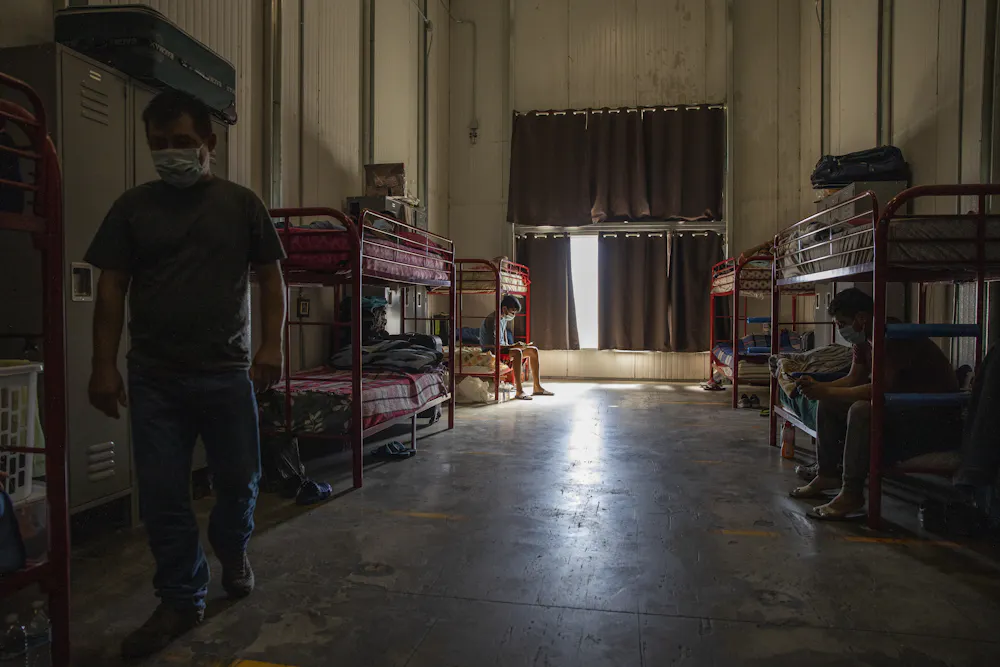
    July 25, 2025
  • Parliament’s Monsoon session: Both houses adjourned till July 28 amid protests by opposition

    Source: Government of India

    Source: Government of India (4)

    Both Houses of Parliament were adjourned on Friday till July 28 amid continued protests by opposition MPs demanding a discussion on the Special Intensive Revision (SIR) of voter rolls in Bihar. The Lok Sabha was adjourned twice – first at 11 a.m. and then for the day at 2 p.m. following relentless sloganeering in the well of the House. The Rajya Sabha was also adjourned at 2 p.m. and will now reconvene on Monday.

    Lok Sabha Chairperson Jagdambika Pal, presiding in the absence of Speaker Om Birla, appealed to opposition members to maintain decorum and allow the introduction of private members’ bills. He highlighted that over 200 MPs were scheduled to present their proposals, calling Friday an important day for legislative discussion. However, protests continued, leading to a complete halt in proceedings.

    Earlier in the day, Speaker Om Birla convened an all-party meeting to resolve the stalemate and emphasized the need for cooperation to allow the House to function. He also urged MPs to let the scheduled 16-hour debate on “Operation Sindoor” take place on July 28.

    In the Rajya Sabha, Union Agriculture Minister Shivraj Singh Chouhan’s remarks were interrupted by opposition MPs demanding a discussion under Rule 267 on the Bihar SIR. Deputy Chairman Harivansh Narayan Singh rejected the notices, calling out members for breaches of decorum.

    Meanwhile, actor-politician Kamal Haasan took oath as a Rajya Sabha MP in Tamil, along with other newly elected members from the DMK.

    Congress leaders, including Rahul Gandhi, Priyanka Gandhi, and Mallikarjun Kharge, staged protests outside the Parliament.

    Parliament has seen repeated disruptions since the Monsoon Session began on July 21, with little legislative business conducted so far.

    July 25, 2025
  • MIL-OSI Africa: The Economic Community of West African States (ECOWAS) Champions Women-Led Digital Trade in West Africa

    Source: APO


    .

    The Economic Community of West African States (ECOWAS), in collaboration with the United Nations Conference on Trade and Development (UNCTAD) and with the support of the Western Africa Regional Digital Integration Program (WARDIP) funded by World Bank, convened an eTrade for Women Joint Workshop in Lagos, on Friday July 17th, 2025, to spotlight and strengthen the role of women-led digital businesses in regional trade. This event was held as part of a broader regional agenda to build a more inclusive, connected, and digitally enabled West Africa.

    In his statement on behalf of Madame Massandjé TOURE-LITSE, Commissioner for Economic Affairs and Agriculture, Mr. Kolawole SOFOLA, Director of Trade at the ECOWAS Commission, welcomed participants and noted the event’s importance in advancing inclusive digital transformation. He highlighted that the ECOWAS E-Commerce Strategy, adopted by the ECOWAS Council of Ministers in July 2023, places women, youth, and small-scale producers at the centre of digital trade reforms to promote regional integration and inclusive development. Through platforms and dialogues such as the workshop, ECOWAS reaffirms its commitment to gender-responsive policymaking and sustainable digital trade development in West Africa.

    In her opening remarks, Madam Sonia NNAGOZIE, the representative of the United Nations Conference on Trade and Development (UNCTAD) highlighted the role of digital trade in unlocking new opportunities for women entrepreneurs across West Africa. She echoed the importance of the workshop in delivering actionable recommendations to improve women’s participation in digital trade. She went on to commend ECOWAS for leading the way in building an enabling digital ecosystem that supports women and appreciated the ongoing partnership between UNCTAD and ECOWAS.

    The workshop served as a platform for dialogue, policy coordination, and knowledge sharing. Participants discussed the structural and policy barriers women face in participating in the digital economy, and shared practical solutions and good practices that promote women’s digital empowerment.

    The event also showcased ECOWAS-led initiatives such as the ECOWAS Trade and Gender Action Plan, export readiness trainings, and platforms like the 50 Million African Women Speak (50MAWS) and the Business-to-Business matchmaking platform of the West Africa Competitiveness Observatory.

    The Workshop was attended by a cross-section of stakeholders including women entrepreneurs, representatives of Ministries responsible for trade in ECOWAS, and development partners.

    Distributed by APO Group on behalf of Economic Community of West African States (ECOWAS).

    MIL OSI Africa –

    July 25, 2025
  • MIL-OSI Africa: The Economic Community of West African States (ECOWAS) Launches Regional E-Commerce Committee to Accelerate Digital Trade Integration

    Source: APO


    .

    The Economic Community of West African States (ECOWAS) has officially launched the Regional E-Commerce Committee, marking another milestone in the implementation of the ECOWAS Regional E-Commerce Strategy (2023–2027) on Wednesday July 16th, 2025, in Lagos, Nigeria. The launch was immediately followed by the Committee’s first meeting, which brought together representatives from Member States and Community institutions.

    In his opening remarks during the launch ceremony, Dr. Tony Luka Elumelu, the Acting Director of Private Sector, ECOWAS Commission highlighted the private sector as both a key driver and beneficiary of digital transformation. He stressed the significance of e-commerce in unlocking opportunities under African Continental Free Trade Agreement and called for robust implementation of digital reforms. He described the establishment of the Regional E-Commerce Committee as pivotal to fostering private-sector-led digital economies.

    Madam Sally Koroma, the representative of the Ministry of Trade and Industry of the Republic of Sierra Leone and Chair of the Meeting emphasized the potential of e-commerce to boost inclusive growth. She highlighted the importance of harmonized regulations, secure infrastructure, digital literacy, and tailored financing to unlock the full benefits of digital trade. She commended the ECOWAS E-Commerce Strategy as critical to addressing these barriers and called for collective action among Member States, development partners, and the private sector to move from ambition to implementation, and build an inclusive, gender-responsive digital economy.

    In his goodwill message, Mr. Pedro Manuel Moreno, Deputy Secretary-General of the United Nations Trade and Development (UNCTAD) congratulated ECOWAS on its 50th anniversary, marking five decades of regional cooperation. He celebrated the adoption of the ECOWAS Regional E-Commerce Strategy and highlighted the role of digitalisation in realizing ECOWAS Vision 2050. He reaffirmed UNCTAD’s commitment to support digital reform, encourage inclusive digital ecosystems, and advance women’s economic empowerment within the region. He closed with a call to action to make e-commerce a driver of prosperity, innovation, and regional unity.

    In the keynote address, on behalf of Madame Massandjé TOURE-LITSE, Commissioner for Economic Affairs and Agriculture, Mr. Kolawole SOFOLA, Director of Trade of the ECOWAS Commission, underscored the significance of the launch of the Regional E-Commerce Committee during the 50th Anniversary celebrations of ECOWAS, noting the progress that had been made in advancing regional integration and the opportunities that lay ahead through digitalisation. He emphasized that the Committee would serve as a platform for implementing strategic goals, aligning policies, and accelerating digital trade across borders.

    Mr. Sofola called for continued collaboration across all stakeholders to realise the Strategy’s vision of an inclusive and sustainable digital future for West Africa. Finally, he declared the ECOWAS Regional E-Commerce Committee launched.

    The newly established Committee is a central feature of the governance framework outlined in the ECOWAS E-Commerce Strategy, which was adopted by the ECOWAS Council of Ministers in July 2023. It is designed to steer the implementation of digital trade reforms, foster inter-institutional coordination, and promote inclusive participation across the region, particularly of women, youth, and MSMEs.

    The launch and first meeting were attended by representatives of the Ministries responsible for Trade from ECOWAS Member States and the internal working group on e-commerce, consisting of key directorates and agencies of the ECOWAS Commission. Prior to the launch, the internal working group on e-commerce received a training on the e-Trade Reform Tracker, a tool for monitoring implementation of the E-Commerce Strategy. Both activities were supported by the UNCTAD and the Western Africa Regional Digital Integration Program (WARDIP) funded by World Bank.

    The meeting considered the overview of the ECOWAS E-Commerce Strategy, continental and regional digital initiatives as well as key initiatives from Member States in advancing e-commerce. The meeting concluded with the adoption of the terms of reference for the Committee and a call for continued collaboration among ECOWAS Member States to promote implementation of the E-Commerce Strategy.

    Distributed by APO Group on behalf of Economic Community of West African States (ECOWAS).

    MIL OSI Africa –

    July 25, 2025
  • Sealing the Deal: How the India–UK FTA redefines global trade dynamics

    Source: Government of India

    Source: Government of India (4)

    The India–UK Free Trade Agreement (FTA), signed on July 24, 2025, marks a historic milestone in bilateral relations, transforming the economic landscape between two influential democracies with shared historical ties. At its core, this agreement aims to double the volume of trade between the two nations to $120 billion by 2030, signalling a shift in strategic and economic alignment in a post-Brexit global order. This comprehensive trade pact not only strengthens commercial ties but also deepens diplomatic and development-oriented collaboration across sectors. The agreement is ambitious in scope, eliminating tariffs on 99% of Indian exports to the United Kingdom covering almost 100% of trade value while India reciprocates by reducing tariffs on 90% of UK goods, with 85% becoming duty-free within a decade. The FTA is expected to boost India’s annual exports by $5 billion and create over one million jobs within five years, catalysing both industrial growth and employment in labour-intensive and technology-oriented sectors.

    India’s principal gain lies in its sweeping access to the UK market for sectors where it has a strong comparative advantage. Labour-intensive industries textiles and clothing, leather and footwear, processed food, gems and jewellery, and marine exports stand to benefit immediately from duty-free treatment. The UK has agreed to eliminate tariffs that previously ranged from 4% to as high as 70% on many Indian goods. For example, the processed food sector, which was earlier subject to duties of up to 70%, now enjoys zero-duty access on 99.7% of tariff lines. This development is monumental for rural India, where the agri-processing ecosystem is vital for both livelihood generation and export earnings.

    India’s textile and apparel industry, a major source of employment and a vital segment of its exports, is among the biggest beneficiaries. Previously subject to duties of up to 10–12% in the UK, Indian textiles now enjoy duty-free access. This policy move levels the playing field for Indian exporters against rivals such as Bangladesh and Vietnam, enhancing the competitiveness of cotton, synthetic fabrics, and finished garments. With projected gains of $5 billion in textile exports alone, this sector is poised for accelerated growth, enhanced investments, and large-scale job creation, especially in states like Gujarat, Maharashtra, and Tamil Nadu.

    Equally significant is the liberalisation of leather and footwear exports. These products, which were earlier taxed up to 16%, now enter the UK market duty-free. This shift supports the expansion of India’s footwear and leather goods industry key employment-generating sectors largely dominated by SMEs and artisanal clusters. The FTA is likely to generate substantial growth opportunities for exporters in Uttar Pradesh, West Bengal, and Tamil Nadu, giving a much-needed fillip to these traditionally under-capitalised industries.

    In the high-value gems and jewellery sector, which contributes significantly to India’s export basket, the FTA brings immediate benefits. Duties of up to 4% on diamonds, gold, and silver ornaments have now been abolished. With duty-free access to a discerning and high-spending UK consumer base, Indian jewellery exporters are expected to see a surge in orders. The improved price competitiveness will also draw investment into India’s precious stones and jewellery sector, especially in Mumbai, Surat, and Jaipur, reinforcing India’s position as a global jewellery hub.

    The agreement also opens new frontiers for engineering goods, auto components, mechanical machinery, and organic chemicals. Tariffs in these segments, previously ranging from 4% to 14%, have been brought down to zero, strengthening India’s manufacturing ecosystem. The UK has also agreed to slash tariffs on automobiles from over 100% to just 10%, albeit under a quota system. This will allow Indian auto parts and engine manufacturers to increase their exports significantly, supporting India’s ‘Make in India’ agenda and integrating more deeply into global supply chains.

    India’s marine products sector particularly shrimp and frozen prawn exports gains a significant boost. Tariffs of up to 20% have been brought to zero, opening a $5.4 billion UK market. The removal of import duties will enhance price competitiveness for Indian seafood in the UK and directly benefit coastal communities and fishermen in Kerala, Andhra Pradesh, and Odisha. This measure also aligns with India’s broader objective of revitalising traditional sectors and expanding their global reach.

    In agriculture and processed foods, the FTA proves to be a game-changer. With tariff-free access on 95% of agricultural products including spices, mango pulp, pulses, and tea India’s agri-exports are projected to grow by 20% within three years. This liberalisation directly benefits farmers and small agro-industrial units, integrating them into international markets. Importantly, India has retained full protection for sensitive sectors like dairy, poultry, apples, vegetables, cooking oils, and oats. By refusing tariff concessions in these areas, the agreement ensures that India’s small and marginal farmers are not displaced by foreign competition.

    The India–UK FTA also provides significant advantages in high-tech sectors. Indian electronics exports smartphones, optical fibre cables, inverters, and electronic components now enjoy zero-duty access to the UK. The inclusion of streamlined customs processes and provisions on digital trade further lowers entry barriers, particularly for SMEs venturing into cross-border e-commerce. This has strong implications for India’s fast-growing technology manufacturing ecosystem and supports the expansion of Indian firms into high-value global markets.

    One of the most transformative features of the agreement is its support for the mobility of Indian professionals and skilled workers. The FTA includes provisions to facilitate temporary movement for Indian professionals such as IT engineers, architects, nurses, financial consultants, and even niche cultural workers such as yoga instructors and chefs. Up to 1,800 Indian professionals in these categories will be allowed to work in the UK temporarily. These mobility concessions expand India’s soft power and human capital exports, aligning with the government’s strategy to promote services-led growth.

    Additionally, the Double Contribution Convention (DCC) clause in the FTA exempts Indian workers from making social security contributions in the UK for a period of three years. This is expected to benefit over 75,000 Indian workers currently residing in the UK by significantly reducing their financial burden and enhancing the attractiveness of temporary employment opportunities in Britain. This provision is particularly impactful for the IT/ITeS sector, financial services professionals, and other knowledge economy workers.

    In tandem with these trade and labour mobility benefits, the UK’s offer also includes 99.3% tariff elimination for animal products, 100% duty elimination for marine products, and full liberalisation of key sectors such as chemicals, electrical machinery, plastics, base metals, headgear, ceramics, glass, and clocks. Across all categories, the agreement promises enhanced market access, easier customs procedures, and a simplified regulatory environment each element helping Indian exporters reduce transaction costs and achieve scale.

    Strategically, the FTA supports India’s broader development agenda. It reinforces the objectives of ‘Make in India’, the Production Linked Incentive (PLI) Scheme, and the goal of integrating Indian enterprises particularly MSMEs into global supply chains. The liberalised trade framework incentivises higher production volumes, improved quality standards, and adherence to international compliance norms, all of which contribute to India’s export dynamism. At the same time, by insulating sensitive sectors from duty concessions, the government has safeguarded domestic food security, protected vulnerable producer groups, and upheld rural economic stability.

    The India–UK FTA also carries strong geopolitical undertones. For post-Brexit Britain, deepening trade relations with India a rising economic power is a strategic imperative. For India, the agreement allows diversification of export markets at a time when supply chain realignments are underway globally, particularly due to tensions with China and economic uncertainties in Europe. The FTA offers a resilient and rules-based alternative route to prosperity for both partners, anchored in democratic values and mutual respect.

    The India–UK Free Trade Agreement of 2025 is a landmark pact with far-reaching consequences for trade, employment, mobility, and strategic cooperation. By unlocking duty-free access across vast sectors, protecting domestic interests, and enabling professional mobility, it serves as a blueprint for future FTAs India may sign with other developed economies. The deal is comprehensive, development-oriented, and forward-looking positioning India for a new era of global economic leadership and strengthening its strategic partnership with the United Kingdom in a rapidly evolving world order.

    In conclusion the India–UK Free Trade Agreement (FTA) could serve as a significant catalyst in shaping India’s ongoing and future trade negotiations with the United States and the European Union. As a comprehensive and balanced agreement with a G7 nation, the UK FTA strengthens India’s credibility as a serious and capable negotiator on the global stage. The successful inclusion of sensitive sectors, labour mobility, digital trade provisions, and extensive tariff liberalisation sets a precedent that India can leverage in its stalled or complex discussions with the U.S. and EU. For the United States, which has been engaged in hectic negotiations with India on Bi-lateral Trade Agreement, the Indo-UK FTA could act as a catalyst and a template for further negotiations on a prospective BTA.  Similarly, the European Union has also been in talks with India to clinch a FTA by the end of FY26 and the UK deal demonstrates India’s willingness to offer concessions while protecting key domestic interests. This FTA could thus help bridge trust deficits, unlock political momentum, and create negotiating templates for market access, investment protection, and digital standards. Ultimately, the India–UK FTA could become a benchmark, enhancing India’s bargaining position in global trade diplomacy.

    (Navroop Singh is a New Delhi-based IP attorney and geopolitical analyst)

    July 25, 2025
  • MIL-OSI Russia: Summer Internship in STB Format

    Translation. Region: Russian Federal

    Source: People’s Republic of China in Russian – People’s Republic of China in Russian –

    An important disclaimer is at the bottom of this article.

    Source: People’s Republic of China – State Council News

    On July 21, Huang Yi, a student at China Agricultural University (CAU), operates an agricultural drone to carry out precision fertilization of corn at the Science and Technology Backyard (STB) experimental field in Lishu County, Siping City, Jilin Province. She explained that creating a precision fertilization scenario using a drone involves several steps, including collecting spectral data and dividing into cells for trajectory planning. After data processing, flexible adjustments are also required based on actual soil moisture. During the summer holidays, Huang Yi and her classmates will be busy working in the fields, learning about agricultural technology and helping farmers reduce costs and increase yields. China Agricultural University, Jilin Agricultural University, and Lishu County government jointly developed the STB in 2009. And for more than ten years now, many students studying in agricultural specialties have come here to conduct field research, experiments and popularize advanced agricultural technologies.

    Zhao Gang (center), chairman of Xinyuan Professional Agricultural Production Cooperative, talks to students about the current growth status of corn at the STB experimental field in Lishu County, Siping City, Jilin Province, July 21. Photo: Xinhua News Agency/Zhang Nan

    Huang Yi, a student at China Agricultural University, adjusts the parameters of an agricultural drone at an STB experimental field in Lishu County, Siping City, Jilin Province, July 21. Photo: Xinhua News Agency/Zhang Nan

    An agrodron applies fertilizer to corn with high precision at an STB experimental field in Lishu County, Siping City, Jilin Province, July 21 (photo by drone). Photo: Xinhua News Agency/Zhang Nan

    Huang Yi, a student at China Agricultural University, operates an agricultural drone to carry out precision fertilization of corn at an STB experimental field in Lishu County, Siping City, Jilin Province, July 21. Photo: Xinhua News Agency/Zhang Nan

    An agrodron applies fertilizer to corn with high precision at an STB experimental field in Lishu County, Siping City, Jilin Province, July 21 (photo by drone). Photo: Xinhua News Agency/Zhang Nan

    Please note: This information is raw content obtained directly from the source of the information. It is an accurate report of what the source claims and does not necessarily reflect the position of MIL-OSI or its clients.

    .

    MIL OSI Russia News –

    July 25, 2025
  • MIL-OSI Africa: Benin: African Development Bank Approves Over $30 Million to Protect Farmers from Climate Shocks and Food Insecurity

    Source: APO

    The Board of Directors of the African Development Bank Group  (www.AfDB.org) has approved $30.25 million in financing for a groundbreaking climate protection and agricultural sector resilience program in Benin. Thanks to this approval, Beninese farmers, particularly those in northern Benin, will no longer have to fear losing their entire harvest during devastating droughts or sudden floods.

    This initiative will protect 150,000 smallholder farmers against climate shocks in a country where agriculture employs seven out of ten people but remains at the mercy of an increasingly unpredictable climate. The situation is particularly critical in the departments of Alibori and Atakora, where one in four farmers suffers from food insecurity, well above the national average.

    These northern regions face a double burden of climate challenges and spillover effects from Sahel instability, creating additional pressures through forced displacement and border closures with Niger. Climate projections indicate alarming future risks, with cotton production and maize yields expected to drop by 22% and 6.3% respectively, with potential economic losses estimated at approximately 201 billion CFA francs.

    “This investment represents our commitment to strengthening climate resilience in Benin’s agricultural sector while responding to the urgent needs of vulnerable farming communities,” said Robert Masumbuko, African Development Bank Country Representative in Benin. “By introducing innovative risk management tools and strengthening local capacities, we are helping farmers adapt to climate change while preventing conflicts and promoting social cohesion in fragile border areas.”

    The project strengthens the Beninese government’s efforts to establish agricultural insurance, whose pilot phase is managed by Benin’s National Fund for Agricultural Development (FNDA).

    It introduces innovative climate risk transfer mechanisms, including sovereign insurance coverage against droughts and floods via the African Risk Capacity, and agricultural micro- insurance for smallholders. These tools will improve farmers’ risk profiles with financial institutions, facilitating better access to credit and investment opportunities.

    Beyond insurance mechanisms, the initiative will strengthen institutional capacities for climate disaster management, deploy early warning systems with agrometeorological equipment, and promote climate-smart agricultural practices. The program specifically targets 30% youth participation and ensures 30% female representation among the 150,000 direct beneficiaries. Furthermore, special attention is given to social cohesion activities to support peaceful integration of displaced populations in host communities.

    The financing comes from multiple sources: $20 million from the “prevention” envelope of the Transition Support Facility, $5 million from the African Development Fund, $3 million from the ADRiFi multi-donor trust fund, and approximately $2.44 million in national counterpart contributions for insurance premiums.

    The project aligns with Benin’s National Development Plan 2018-2025 and its National Adaptation Plan 2022-2027, supporting the country’s agricultural transformation objectives while strengthening climate change resilience through innovative instruments such as insurance. Strategic partnerships with the World Food Programme, the World Bank, and bilateral donors such as Swiss and Luxembourg cooperations ensure comprehensive support for sustainable agricultural development, including the establishment of agricultural insurance in Benin.

    For Benin’s farming families, this financing represents hope for protected harvests, stable incomes, and a safer future for their children. For northern Benin communities, this project is a guarantee of stability and social cohesion in a strategic region of West Africa, and finally, for the Beninese state, the project ensures financial resilience against increasingly recurrent disaster risks.

    The African Development Bank Group remains committed to supporting Africa’s agricultural transformation through innovative climate adaptation solutions that protect vulnerable communities while promoting sustainable development and regional stability.

    Distributed by APO Group on behalf of African Development Bank Group (AfDB).

    Media Contact:
    Natalie Nkembuh
    Communication and External Relations Department
    media@afdb.org

    About the African Development Bank Group:
    The African Development Bank Group is Africa’s leading development finance institution. It comprises three distinct entities: the African Development Bank (AfDB), the African Development Fund (ADF) and the Nigeria Trust Fund (NTF). Represented in 41 African countries, with an external office in Japan, the Bank contributes to the economic development and social progress of its 54 regional member countries. For more information: www.AfDB.org

    Media files

    .

    MIL OSI Africa –

    July 25, 2025
  • PM Modi shares article highlighting benefits of India-UK trade deal

    Source: Government of India

    Source: Government of India (4)

    Prime Minister Narendra Modi on Friday shared an article highlighting the wide-ranging benefits of the landmark India-UK Comprehensive Economic and Trade Agreement (CETA), calling it a transformative step for various sections of the Indian economy.

    Reiterating Commerce Minister Piyush Goyal’s remarks, the Prime Minister’s Office (PMO) said on X:

    “Union Minister Shri @PiyushGoyal explains how the landmark India–UK Comprehensive Economic and Trade Agreement will empower Indian farmers, fishermen, artisans, and small businesses, while ensuring quality products at better prices for everyday consumers.”

    In his post on X, Goyal described the trade agreement as a “stellar example of how New India does business.” He noted that under the leadership of PM Modi, the deal would provide a significant boost to market access for Indian products and services, enhance competitiveness, and create jobs across sectors.

    Goyal added that the CETA will empower key contributors to the Indian economy—including farmers, fisherfolk, MSMEs, artisans, and service professionals—by opening new opportunities in the UK market. 

    https://x.com/PiyushGoyal/status/1948588543422394553

    Prime Minister Modi concluded a successful visit to the United Kingdom on Thursday, where he held talks with British Prime Minister Keir Starmer at Chequers, the official country residence of the UK Prime Minister.

    During the meeting, both leaders welcomed the signing of the India-UK Comprehensive Economic and Trade Agreement (CETA), which is poised to boost bilateral trade, attract investment, and generate employment opportunities in both countries.

    July 25, 2025
  • MIL-OSI Australia: Lowy Institute keynote speech – Navigating Australia’s Trading Future

    Source: Australian Attorney General’s Agencies

    I begin by acknowledging the traditional custodians of the land on which we gather today, and pay my respects to their elders past, present and emerging.

    Good afternoon everyone and thank you to the Lowy Institute and Executive Director, Dr Michael Fullilove, for the opportunity to speak today.

    Australia is a trading nation.

    From the first known trading networks between indigenous Australians in northern Australia and the Makasar of Indonesia; to the Australian wool which helped clothe the world in the early 20th century; to the energy and mineral resources that have helped societies across the globe develop their economies.

    For centuries, we have relied on our ability to export as we have built the robust and modern economy from which we all benefit today.

    However, until recently, most Australians did not have cause to pay much attention to international trade.

    But that has changed in recent years.

    The imposition of trade impediments by the Chinese Government on $20 billion worth of Australian exports highlighted the risk of putting all your eggs in one basket.

    Upon my appointment as Minister for Trade and Tourism in 2022, working alongside Prime Minister Albanese and Minister for Foreign Affairs, Senator Wong, we worked calmly and methodically to resolve these blockages for Australian businesses.

    Our patient and calibrated approach to stabilising the bilateral relationship with China – without compromising our core interests and values – was vital in achieving the removal of these impediments.

    This means that our world class wine, beef, lobster and many other products are now back on the tables of Chinese consumers, benefiting Australian businesses and local jobs.

    This turnaround could not have been achieved without personal engagement – I have now met my Chinese counterpart, Commerce Minister Wang Wentou, ten times.

    Our government has also taken steps to deepen our economic ties with our nearest neighbours and increase opportunities with new partners further abroad.

    We have worked hard to strengthen our relationships in Southeast Asia, boosting two-way trade and investment with our closest region and reached Australia’s first free trade agreement in the Middle East, when we signed the Australian-UAE agreement late last year.

    I look forward to visiting Abu Dhabi again soon to turbo-charge business and investment.

    Getting our products into the UAE is like getting it into the Woolies warehouse, if you can get it there, you can then get it to all the surrounding countries in the Middle East.

    I am proud of what our Government has achieved in the past three years, with solid foundations laid for continuing the work of building stronger and deeper trading relationships with international partners.

    The diversification of our trade networks will open new opportunities for Australian exporters to ship their goods to the world and bring down the cost of living for Australians.

    Of course, diversification doesn’t mean selling less to our largest trading partners, it means selling more to new partners.

    As the Treasurer laid out in his recent address to the National Press Club, the Albanese Labor Government has organised its economic policy for the second term around three priorities:

    • productivity;
    • economic resilience; and
    • budget sustainability.

    Trade and investment support all three of these priorities.

    Trade drives productivity through competitive innovation, spurred by global competition.

    Trade enhances economic resilience by diversifying markets and supply chains.

    And, trade contributes to budget sustainability by increasing revenues through exports and economic growth.

    Nearly a third of Australia’s economic output is supported by trade.

    One in four Australian jobs relate to trade.

    And foreign investment provides the capital to build for the future, and access to global talent, new ideas, best practices and cutting-edge technologies.

    Business craves certainty to enable long-term investment and planning.

    For the past eight decades that certainty has been based on the institutions forged from the wreckage of World War Two – from trade agreements that have allowed the free flow of resources and capital, and the rules based order which has allowed for an even playing field, ushering in an unprecedented period of global economic growth.

    But, these institutions and norms we worked so hard to build are being questioned and the rules we wrote are being challenged.

    One of the chief designers of the global trading system, the United States, is now questioning the benefits of open, rules-based trade.

    The Trump Administration is seeking to expand domestic manufacturing and influence the policies of trading partners.

    Australia is a medium-sized open economy that is highly integrated with the global economy.

    We rely on being able to send our produce, resources and human capital to the world to sustain the high standard of living which we enjoy today.

    What we risk seeing is a shift from a system based on shared prosperity and interdependence to one based solely on power and size.

    We cannot risk a return to the ‘law of the jungle’.

    If our trading partners’ growth slows, without doubt we will suffer.

    The costs to consumers and businesses of a global economic slowdown will be felt for generations, and the shockwaves of inflation will worsen.

    Even before the imposition of tariffs by the current US Administration, several other forces have been reshaping global trade for some time.

    Firstly, heightened geostrategic competition is increasing the intersection of national security and economic prosperity, made more complex by the rapidly evolving technology that is enabling both extraordinary new growth and adding to the global competition.

    Secondly, the widespread use of industrial policy to support key sectors as nations seek to rebuild industrial bases and sovereign manufacturing capability and ensure technological dominance.

    And thirdly, the transition towards net zero emissions.

    These forces demand a more strategic, coordinated approach to trade policy.

    An approach that balances openness with resilience and long-term competitiveness.

    In 2025, we’re no longer in a “set and forget” world.

    We can no longer afford to take the rules that underpin a stable trading system for granted.

    So, how will the Albanese Labor Government navigate these challenges to best position Australia in a turbulent global economy?

    We will be guided by five key principles.

    The first principle is that free and open markets are essential to Australia’s prosperity.

    Imposing tariffs of our own would drive up the costs for Australian families and businesses.

    This position was backed up by the Productivity Commission in its most recent Trade and Assistance Review released earlier this month.

    Our markets will remain open, and we will stand by our trade agreements. In fact, we will make them even stronger.

    Our second principle is that world trade should be governed by rules and not by power alone.

    We will always stand up for Australian industry and Australian jobs.

    By fighting for a level playing field for our businesses and workers.

    And by providing the right support to ensure our exporters are not locked out of the opportunities we have fought hard for.

    The third principle is that of cooperation.

    We have and will continue to take a good faith approach to trade negotiations – which means engaging with a genuine desire to achieve mutually beneficial outcomes and uphold the rules-based order which has benefited so many.

    The fourth principle is that we will not leave those affected behind – Australian businesses, workers or the broader community.

    As the Prime Minister has said, no one held back, no one left behind.

    We will work hard to ensure that the benefits of trade are shared widely, which is why the Albanese Government is putting so much effort into inclusive trade policies, including our First Nations trade agenda.

    That agenda has already had some big wins – a new international treaty recognising First Nations’ traditional knowledge, and a chapter specifically relating to first nations trade in our UAE agreement, which is the first time this has happened in any Australian trade agreement.

    The final principle is that we will not compromise our fundamental values and interests.

    Like the Pharmaceutical Benefits Scheme, and our biosecurity system.

    To be clear, the announcement yesterday of the outcome of the technical assessment of beef from the United States is the culmination of a decade of science and risk-based import assessments and evaluations.

    Australia is the land of the ‘’fair go’, we value social justice, fairness, inclusion and equality.

    Programs like the PBS, which are at the heart of the health and wellbeing of our country, will never be up for negotiation under an Albanese Labor Government.

    And while we believe in free and fair trade, we will not trade away parts of our core identity.

    With these principles in mind, our government will continue to advance a trade policy which delivers for all Australians.

    During the election campaign we committed to initiatives that would provide support to businesses impacted by protectionist trade measures.

    This included strengthening our anti-dumping regime to help create a level playing field by addressing unfair trade.

    In addition, we put $50 million dollars on the table to work closely with key industry peak bodies, supporting businesses to find and access new market opportunities and we will provide $1 billion in zero interest loans to firms.

    We also committed to establishing a Strategic Reserve for critical minerals so we can make sure Australia can respond to trade and supply disruptions from a position of strength with our key partners.

    And we will put Australian businesses at the front of the queue for government procurement and contracts.

    This is in addition to implementing our Southeast Asia Economic Strategy2040 and our Roadmap for Economic Engagement with India.

    And by backing local manufacturing through the Future Made in Australia policy, we will continue to invest in the skills, technology and renewable energy to make more things here, creating jobs and opportunities for Australians.

    Of course, our ability to compete abroad depends on how productive we are at home.

    Which is why the Government has such an ambitious domestic productivity reform agenda.

    And that agenda depends, in turn, on the quality of our trade and investment connections to the world.

    As I alluded to earlier in my remarks, trade diversification will continue to be a key focus.

    We are fortunate to already have a strong network of 18 free trade agreements with 30 partners, covering almost 80 per cent of the value of our two-way trade.

    But there is unfinished business.

    I am committed to concluding a deal with the European Union, the missing piece in the puzzle of Australia’s network of FTAs, with a market of over 450 million consumers.

    Having met recently with my European counterpart I know there is a genuine desire to reach an outcome.

    But it will require a Team Australia approach both internationally and domestically with stakeholders, including business and farmers.

    And I am committed to expanding our trade deal with India, the world’s most populous nation with a rapidly growing middle class.

    Just these two new agreements bring in almost 2 billion new consumers for Australian products.

    The good news is that my Indian counterpart, Piyush Goyal, and I have a shared vision to boost two-way trade and investment.

    There is new energy in regional trade agreements.

    We are here to work with the region to back this trend.

    As Chair of the CPTPP in 2025, Australia is seeking to expand the membership and deepen its high standard rules.

    And closer to home, in the Pacific region, I want to ensure the gains from trade are spread throughout our neighbourhood.

    Many Pacific island partners tell us they want to participate more fully in global supply chains. I want our friends like Fiji and PNG to be part of our regional trading network that has worked so well for us.

    One of the key ingredients in development and poverty alleviation in Southeast Asia has been a story of opening up to trade.

    That’s why so many of our neighbours are backing regionalism in trade as a response to the current turbulence.

    Because backing these norms of rules and openness backs our region’s strength and vitality.

    We will leverage the G20, OECD and APEC to build support for continued openness around the world, acting as a calm and considered voice for trade across the world.

    Underpinning these bilateral and regional deals is the World Trade Organization, through which most global trade still flows according to its rules.

    Our message to the world is simple: we will continue to respect the rules and be a partner you can count on.

    Shaping the rules of the road is in our DNA.

    We were a founding member of the General Agreement on Tariffs and Trade in 1948 and played a major role in the Uruguay Round negotiations which led to the creation of the WTO.

    Now we face a major challenge in global trade – a time when Australia can play its part as a calm and considered international partner, leveraging our relationships to support free and fair trade.

    The meeting of the world’s trade ministers in Cameroon in March next year must tackle the big issues of WTO reform – how we make decisions, make new rules, and enforce those rules.

    We have got to bring new agreements like the one we have helped create on E-commerce, into the WTO rulebook.

    We must also make progress on agriculture, where there has been a tilted playing field for far too long.

    Australian businesses, workers and consumers are on the front line of this new era of global trade policy.

    That is why we will back business with real, practical support to assist Australian exporters to seize the new opportunities created by our trade deals.

    The Government is committed to genuine consultation – to ensure that our approach both reflects our community’s experience and meets our nation’s expectations.

    Taking an economy wide approach has allowed us to navigate these last few months of tariff disruption successfully.

    It is only with that same approach that we can navigate through the period of uncertainty ahead.

    And ensure that Australia isn’t just a passive witness to our circumstances – but instead shapes them – as we have at key points before in our history.

    The new trading landscape we face is difficult, and challenging.

    But we have to have the courage of our convictions.

    We know that open, rules-based trade and investment works.

    An outward looking trade and investment policy is central to this Government’s ambitions for our economy.

    From our earliest days, Australia has always been a trading nation.

    Our businesses, our people and our communities benefit from it.

    And we will continue to be a successful trading nation if we can both lift our performance at home and shape our circumstances abroad.

    With a genuine Team Australia approach, I am confident we are up to that task.

    Thank you.

    MIL OSI News –

    July 25, 2025
  • MIL-OSI USA: National Capital Region Members of Congress Release a Joint Statement on the Trump Administration’s Plan to Relocate USDA Agencies

    US Senate News:

    Source: United States Senator for Virginia Tim Kaine

    WASHINGTON, D.C. – Today, the U.S. Department of Agriculture announced a reorganization of the department that would shut down several facilities in the National Capital Region and relocate thousands of employees across the country. U.S. Senators Tim Kaine (D-VA), Chris Van Hollen (D-MD), Angela Alsobrooks (D-MD), and Mark Warner (D-VA), and Representatives Suhas Subramanyam (D-VA-10), Donald S. Beyer, Jr. (D-VA-08), Sarah Elfreth (D-MD-03), Glenn Ivey (D-MD-4), Steny Hoyer (D-MD-05), Jamie Raskin (D-MD-8), Robert C. “Bobby” Scott (D-VA-03), and Eugene Vindman (D-VA-07) released the following statement:

    “This is a betrayal of American farmers, and an attack on the federal workforce that will severely damage services that the American people depend on. We are disappointed but not surprised that the Trump administration is continuing its attacks on the federal workforce, this time through wasting taxpayer dollars to relocate key USDA facilities. Let us be clear: these haphazard, unlawful relocations do not save taxpayer dollars or improve agency efficiency. We’ve seen this tactic before, and we know that it only results in brain drain, crushed morale, and cuts to vital programs American farmers depend on. We will continue to stand up for the dedicated federal workers who provide critical services to our nation as they navigate these relocations, mass firings, and the administration’s continued attacks on the civil service.”

    During the first Trump administration, the Department of Agriculture (USDA) relocated both the Economic Research Service (ERS) and the National Institute of Food and Agriculture (NIFA) from Washington, DC to Kansas City, MO. A GAO study of these relocations found that these relocations had significant impacts on both agencies’ staffing and productivity, including:

    • The loss of over a third of each agency’s permanent full-time staff following the announcement of the relocation in 2018.
    • A significant loss of experience, with staff with more than two years of experience declining from 83% of both agencies’ combined workforces in 2018 to 27% in 2021.
    • Declines in productivity, with ERS issuing fewer key reports and NIFA taking over a month longer to process and fund competitive grants in 2019.

    GAO also found that USDA did not follow many leading practices for agency relocations, including a failure to consult with its employees at any point during the process and the exclusion of several key variables, including employee attrition, in its economic analysis to support the relocations. Both agencies have made positive improvements in these areas under the Biden administration, but the damage has already been done and many experienced, dedicated federal workers were essentially removed from their jobs.

    In March 2025, the members introduced the COST of Relocations Act, led by Congressman Suhas Subramanyam (D-VA-10) and Senator Chris Van Hollen (D-MD), to fight back against President Trump’s relentless effort to relocate federal agencies and decimate their workforces. The legislation would require a cost-benefit analysis to be submitted to Congress in order to ensure that any attempt to move federal agencies is appropriately analyzed to guarantee it is in the best interest of the taxpayer and the agency’s mission.

    MIL OSI USA News –

    July 25, 2025
  • MIL-OSI USA: SBA Opens Disaster Loan Outreach Center in Clayton

    Source: United States Small Business Administration

    SACRAMENTO, Calif. – The U.S. Small Business Administration (SBA) announced today the opening of a Disaster Loan Outreach Center (DLOC) in St. Louis County to assist small businesses, private nonprofit (PNP) organizations and residents affected by severe storms, straight-line winds, tornadoes and wildfires occurring March 14–15 and also for those affected by severe storms, straight-line winds, tornadoes and flooding occurring May 16.

    Beginning Friday, July 25, SBA customer service representatives will be on hand at the Disaster Loan Outreach Center in Clayton to answer questions and assist with the disaster loan application process. No appointment is necessary, walk-ins are welcome. Those who prefer to schedule an in-person appointment in advance can do so at appointment.sba.gov.

    The center’s hours of operation are as follows:

    ST. LOUIS COUNTY

    Disaster Loan Outreach Center

    Mid-County Branch Library

    7821 Maryland Ave.

    Clayton, MO  63105

    Opens at 9:00 a.m., Friday, July 25

    Mondays – Thursdays, 9:00 a.m. – 6:00 p.m.

    Fridays – Saturdays, 9:00 a.m. – 5:00 p.m.

    The following locations are also open and continue to serve survivors:

    THE INDEPENDENT CITY OF ST. LOUIS

    Business Recovery Center

    St. Louis Community College

    Harrison Education Center

    3140 Cass Ave., Rm. #104

    St. Louis, MO  63106

    Mondays – Fridays, 8:30 a.m. – 6:00 p.m.

    ST. LOUIS COUNTY

    Disaster Loan Outreach Center

    St. Louis County Library

    Florissant Vallet Branch

    Quiet Room

    195 S. New Florissant Rd.

    Florissant, MO  63031

    Mondays – Thursdays, 9:00 a.m. – 6:00 p.m.

    Fridays – Saturdays, 9:00 – 5:00 p.m.

    “When disasters strike, SBA’s Disaster Loan Outreach Centers perform an important role by assisting small businesses and their communities,” said Chris Stallings, associate administrator of the Office of Disaster Recovery and Resilience at the U.S. Small Business Administration. “At these centers, our SBA specialists help business owners and residents apply for disaster loans and learn about the full range of programs available to support their recovery.”

    Businesses and nonprofits are eligible to apply for business physical disaster loans and may borrow up to $2 million to repair or replace disaster-damaged or destroyed real estate, machinery and equipment, inventory, and other business assets.

    Homeowners and renters are eligible to apply for home and personal property loans and may borrow up to $100,000 to replace or repair personal property, such as clothing, furniture, cars, and appliances. Homeowners may apply for up to $500,000 to replace or repair their primary residence.

    Applicants may be eligible for a loan increase of up to 20% of their physical damages, as verified by the SBA, for mitigation purposes. Eligible mitigation improvements include insulating pipes, walls and attics, weather stripping doors and windows, and installing storm windows to help protect property and occupants from future disasters.

    The SBA’s Economic Injury Disaster Loan (EIDL) program is available to small businesses, small agricultural cooperatives, nurseries, and private nonprofit organizations impacted by financial losses directly related to these disasters. The SBA is unable to provide disaster loans to agricultural producers, farmers, or ranchers, except for small aquaculture enterprises.

    EIDLs are available for working capital needs caused by the disaster and are available even if the business or PNP did not suffer any physical damage. The loans may be used to pay fixed debts, payroll, accounts payable, and other bills not paid due to the disaster.

    For SBA declaration MO 21094 for the March storms, interest rates are as low as 4% for small businesses, 3.625% for nonprofits, and 2.75% for homeowners and renters with terms up to 30 years.

    For SBA declaration MO 21129 for the May storms, interest rates are as low as 4% for small businesses, 3.625% for nonprofits, and 2.813% for homeowners and renters with terms up to 30 years.

    Interest does not begin to accrue, and payments are not due until 12 months from the date of the first loan disbursement. The SBA determines eligibility and sets loan amounts and terms based on each applicant’s financial condition.

    To apply online, visit sba.gov/disaster. Applicants may also call SBA’s Customer Service Center at (800) 659-2955 or email disastercustomerservice@sba.gov for more information on SBA disaster assistance. For people who are deaf, hard of hearing, or have a speech disability, please dial 7-1-1 to access telecommunications relay services.

    Although the deadline to return applications for physical property damage due to the March storms has passed, there is a grace period of 60 days the SBA will accept applications beyond the July 22 deadline. The grace period will end on Sept. 20, 2025. The deadline to return economic injury applications is Feb. 23, 2026.

    The filing deadline to return applications for physical property damage due to the May storms is Aug. 11, 2025. The deadline to return economic injury applications is March 9, 2026.

    ###

    About the U.S. Small Business Administration

    The U.S. Small Business Administration helps power the American dream of business ownership. As the only go-to resource and voice for small businesses backed by the strength of the federal government, the SBA empowers entrepreneurs and small business owners with the resources and support they need to start, grow, expand their businesses, or recover from a declared disaster. It delivers services through an extensive network of SBA field offices and partnerships with public and private organizations. To learn more, visit www.sba.gov.

    MIL OSI USA News –

    July 25, 2025
  • MIL-OSI USA: SBA Relief Available to New Mexico Small Businesses, Private Nonprofits and Residents Affected by Severe Storms, Flooding and Landslides

    Source: United States Small Business Administration

    SACRAMENTO, Calif. – In response to a Presidential disaster declaration issued July 22, the U.S. Small Business Administration (SBA)announced the availability of low interest federal disaster loans to New Mexico small businesses, private nonprofit (PNP) organizations and residents affected by severe storms, flooding and landslides beginning June 23.

    The disaster declaration covers the New Mexico county of Lincoln which is eligible for both Physical damage loans and Economic Injury Disaster Loans (EIDLs) from the SBA. Small businesses and PNP organizations in the following adjacent counties are eligible to apply only for SBA EIDLs: Chaves, De Baca, Guadalupe, Otero, Sierra, Socorro and Torrance.

    Businesses and nonprofits are eligible to apply for business physical disaster loans and may borrow up to $2 million to repair or replace disaster-damaged or destroyed real estate, machinery and equipment, inventory, and other business assets.

    Homeowners and renters are eligible to apply for home and personal property loans and may borrow up to $100,000 to replace or repair personal property, such as clothing, furniture, cars, and appliances. Homeowners may apply for up to $500,000 to replace or repair their primary residence.

    Applicants may be eligible for a loan increase of up to 20% of their physical damage, as verified by the SBA, for mitigation purposes. Eligible mitigation improvements include insulating pipes, walls and attics, weather stripping doors and windows, and installing storm windows to help protect property and occupants from future disasters.

    SBA’s Economic Injury Disaster Loan (EIDL) program is available to eligible small businesses, small agricultural cooperatives, nurseries and PNPs including faith based impacted by financial losses directly related to this disaster. The SBA is unable to provide disaster loans to agricultural producers, farmers, or ranchers, except for aquaculture enterprises.

    EIDLs are for working capital needs caused by the disaster and are available even if the business or PNP did not suffer any physical damage. They may be used to pay fixed debts, payroll, accounts payable, and other bills not paid due to the disaster.

    “One distinct advantage of SBA’s disaster loan program is the opportunity to fund upgrades reducing the risk of future storm damage,” said Chris Stallings, associate administrator of the Office of Disaster Recovery and Resilience at the SBA. “I encourage businesses and homeowners to work with contractors and mitigation professionals to improve their storm readiness while taking advantage of SBA’s mitigation loans.”

    Interest rates can be as low as 4% for small businesses, 3.625% for PNPs and 2.813% for homeowners and renters with terms up to 30 years. Interest does not begin to accrue, and payments are not due until 12 months from the date of the first loan disbursement. The SBA sets loan amounts and terms based on each applicant’s financial condition.

    As soon as Federal-State Disaster Recovery Centers open throughout the affected area, SBA will provide one-on-one assistance to disaster loan applicants. Additional information and details on the location of disaster recovery centers is available by calling the SBA Customer Service Center at (800) 659-2955.

    To apply online, visit sba.gov/disaster. Applicants may also call SBA’s Customer Service Center at (800) 659-2955 or email disastercustomerservice@sba.gov for more information on SBA disaster assistance. For people who are deaf, hard of hearing, or have a speech disability, please dial 7-1-1 to access telecommunications relay services.

    ###

    About the U.S. Small Business Administration

    The U.S. Small Business Administration helps power the American dream of business ownership. As the only go-to resource and voice for small businesses backed by the strength of the federal government, the SBA empowers entrepreneurs and small business owners with the resources and support they need to start, grow, expand their businesses, or recover from a declared disaster. It delivers services through an extensive network of SBA field offices and partnerships with public and private organizations. To learn more, visit www.sba.gov.

    MIL OSI USA News –

    July 25, 2025
  • MIL-OSI USA: Ernst Makes Permanent Exclusions to Overreaching Obama-Era WOTUS Regulations

    US Senate News:

    Source: United States Senator Joni Ernst (R-IA)

    WASHINGTON – After recently scoring a major victory in her longstanding fight to overturn the harmful expansion of the “waters of the United States” (WOTUS) rule, U.S. Senator Joni Ernst (R-Iowa) is introducing legislation to prevent future overregulation. Her new bill would make permanent key exclusions clarifying that waste treatment systems, temporary streams from rain, and groundwater are not navigable waterways.
    The Clarifying Legal Exclusions Around Regulated (CLEAR) Waters Act excludes covered water features that do not interact with navigable waters from being regulated under WOTUS.
    “If you try and navigate a wastewater treatment pool, you will be up a creek without a paddle,” said Ernst. “WOTUS regulatory uncertainty has threatened the livelihoods of hardworking Iowa farmers, small businesses, and landowners for far too long, and I was thrilled to join EPA Administrator Zeldin in announcing that the Trump administration is revising this misguided and harmful regulatory expansion. After leading this fight for a decade, I am making it CLEAR that the federal government has no businesses regulating cooling ponds, municipal treatment plants, groundwater, and streams that only flow after rainfall under WOTUS.”
    “Senator Ernst continues to be a champion for Iowa’s farmers and businesses, and her CLEAR Waters Act is another example of her leadership,” said Mike Naig, Iowa Secretary of Agriculture. “This legislation will provide much-needed clarity and consistency when it comes to WOTUS, helping end the constant policy whiplash that changes with each new administration. It’s a commonsense approach that brings certainty to those who are working every day to responsibly manage our land and water.”
    “The CLEAR Waters Act would provide Iowa farmers regulatory certainty to ensure waste treatment systems are not treated as navigable waters,” said Brent Swart, Iowa Soybean Association President and farmer from Spencer, Iowa. “This commonsense exclusion allows farmers to continue being good stewards of the land without being overregulated.”
    “Thank you, Sen. Joni Ernst, for introducing the CLEAR Waters Act and leading on this issue, which is critical to the aggregates industry,” said Michele Stanley, National Stone, Sand & Gravel Association Interim CEO. “The definition of Waters of the United States (WOTUS) is often subject to change under different administrations. The CLEAR Waters Act will provide the clarity and certainty our association members have long sought by excluding waste treatment systems from WOTUS and Clean Water Act permitting programs. This exclusion has historically received bipartisan support from Republican and Democratic administrations. It was maintained under the definitions of WOTUS established by the past four administrations of Presidents Obama, Trump and Biden. Importantly, the bill codifies key parts of the Sackett decision.”
    Click here to view the bill text.
    Background:
    After leading the fight against Obama’s WOTUS overreach for years, Ernst and Environmental Protection Agency Administrator Zeldin recently announced a revision that adheres to the law, cuts red tape, and provides certainty for Iowans.
    During her first year in the Senate, Senator Ernst led an effort against the harmful WOTUS rule to protect Iowans from burdensome regulations. Her effort was passed by both the Senate and the House, but President Obama vetoed it.
    During Trump’s first term, Ernst commended his administration for successfully rolling back the harmful Obama-era WOTUS rule to help spur economic growth and called on Congress to codify a reasonable definition of WOTUS into law.
    After Biden doubled down on Obama’s government overreach, Ernst supported a bipartisan effort, worked in 2023 to stop Biden’s out-of-touch WOTUS rule that aimed to repeal the Trump administration’s Navigable Waters Protection Rule (NWPR), and applauded the Supreme Court’s ruling in Sackett v. EPA.

    MIL OSI USA News –

    July 25, 2025
  • MIL-OSI USA: Ernst Protects U.S. Farmland, Calls for Modernization for Farmers

    US Senate News:

    Source: United States Senator Joni Ernst (R-IA)

    WASHINGTON – U.S. Senator Joni Ernst (R-Iowa), a member of the Senate Agriculture Committee, is working to modernize outdated U.S. Department of Agriculture (USDA) systems that burden many farmers and leave farmland vulnerable to foreign adversaries.
    During the hearing, Ernst secured a commitment from Richard Fordyce, nominee for Undersecretary of Agriculture for Farm Production and Conservation, to update and digitize the process for producers when working with their local USDA offices. She also pointed out her oversight efforts and ongoing work to overhaul the outdated Agricultural Foreign Investment Disclosure Act (AFIDA) reporting system to better protect American farmland from malign foreign actors.

    Watch her full line of questioning here.
    “That same modernization is needed when it comes to how USDA tracks and monitors foreign land in the United States,” said Ernst.“The Agriculture Foreign Investment Disclosure Act – AFIDA – was signed into law in 1978, and it has been barely touched since then. Even today, foreign land purchases are reported on paper and staff must manually reenter each submission, a process that’s inefficient and prone to errors, and I’ve seen this firsthand…The recent commitments from Secretary Rollins to modernize the AFIDA reporting process is welcome news. It’s a much-needed step to protect our farmland from adversaries.”
    Background:
    Ernst understands that food security is national security. Her bipartisan FARMLAND Act will overhaul the current outdated system that has allowed China’s malign influence to threaten American security.
    Ernst confronted the Biden USDA about its lack of oversight of foreign involvement in American agricultural land and questioned officials to ensure they make updates to the AFIDA reporting process a priority.

    MIL OSI USA News –

    July 25, 2025
  • MIL-OSI USA: Schatz, Murphy Introduce New Legislation To Improve Wages, Operations Transparency For Rideshare Drivers, Delivery App Workers

    US Senate News:

    Source: United States Senator for Hawaii Brian Schatz

    WASHINGTON – U.S. Senators Brian Schatz (D-Hawai‘i) and Chris Murphy (D-Conn.) today introduced the Empowering App-Based Workers Act, new legislation to improve transparency on how app companies operate and help boost wages for rideshare drivers and delivery app workers.

    “Every day rideshare drivers and delivery app workers work long hours and travel many miles to make a living, often without knowing how much money they’ll make. Our bill would shed some light on how apps determine work assignments and pay, ensuring workers are treated and paid fairly,” said Senator Schatz.

    Millions of workers across multiple industries, report to work by turning on an app. These platforms collect data from both workers and consumers to shape working conditions, evaluate workers, and make work-related decisions, including decisions on how much to pay a worker, which workers get which assignments, and whether, when, or for how long a worker will be suspended or ‘deactivated.’ All this is done with systems that are not transparent to workers, consumers, or regulators, creating information imbalances that mask wage theft, discrimination, and price-gouging.

    The Empowering App-Based Workers Act would create a level playing field for workers managed by digital labor platforms by:

    • Requiring disclosure of electronic monitoring and automated decision systems uses, including how they are used to determine pay and other work decisions;
    • Providing itemized receipts to workers and consumers after every work assignment;
    • Providing workers receive weekly pay statements with relevant information on their compensation;
    • Ensuring rideshare workers receive at least 75 percent of the amount paid by consumers; and
    • Stopping platforms from using interfaces that contain unfair or deceptive information on compensation.

    “We applaud Senators Schatz and Murphy for listening to workers’ demands and introducing the Empowering App-Based Workers Act,” said Rebecca Dixon, President and CEO of NELP. “App-based workers have long sought better pay and greater accountability from corporations that use hidden algorithms to determine pay, work assignments, and discipline. This legislation is an important step forward in building a good-jobs economy where all workers have expansive rights and thrive in good jobs.”

    “Senator Schatz’s bill is a great first step toward protecting app-based workers from hidden fees, undue surveillance, and algorithms that violate their civil rights. It also creates mechanisms to hold Big Tech accountable when their greed harms workers,” said Jody Calemine, AFL-CIO Director of Advocacy.

    The bill is supported by the ACE Collaborative of New Virginia Majority, Action Center on Race and Economy, AFL-CIO, Athena, Center for Law and Social Policy, Color Of Change, Colorado Independent Drivers United, Connecticut Drivers United, Coworker, Data & Society, Drivers Union Washington/Teamsters Local 117, Economic Policy Institute, Fair Work Center, Groundwork Collaborative, Hawai‘i Workers Center, Los Deliveristas Unidos, Minnesota Uber/Lyft Drivers Association, Make the Road New Jersey, National Women’s Law Center, National Employment Law Project (NELP), New York Taxi Workers Alliance, New School Center for NYC Public Affairs, NLAN/GLOW, National Partnership for Women & Families, National Women’s Law Center Action Fund, Open Markets Institute, Portland Drivers United, Rideshare Drivers United, PowerSwith Action, Service Employees International Union (SEIU), Tech Equity Collaborative, Tennessee Drivers Union, The People’s Lobby, Towards Justice, United Food and Commercial Workers International Union, and Working Washington.

    The text of the bill is available here.

    MIL OSI USA News –

    July 25, 2025
  • MIL-OSI USA: Reps. Salinas and Ansari Lead 37 Colleagues in Demanding Secretary Rollins Reinstate the 2001 Roadless Rule

    Source: US Representative Andrea Salinas (OR-06)

    Washington, D.C. – Today, Congresswoman Andrea Salinas (OR-06), alongside Congresswoman Yassmin Ansari (AZ-03), led 37 of their colleagues in sending a letter to Secretary of Agriculture Brooke Rollins urging her to reverse the decision to fully rescind the 2001 Roadless Rule and to reinstate full roadless protections.

     Since its inception, the Roadless Rule has protected 58.5 million acres of forestland by preventing road construction and ensured consistent, dependable protections for these critical landscapes. Earlier this year, Reps. Salinas and Ansari, alongside Sens. Cantwell and Gallego, introduced legislation to enshrine the Roadless Rule into law.

    Click here or see below for the full letter:

    Dear Secretary Rollins,

    We write to express profound concern with your recent decision to fully rescind the 2001 Roadless Area Conservation Rule. This critical environmental safeguard ensures the protection of 58.5 million acres of our nation’s most pristine wild forestlands and provides durable climate benefits; protects watersheds that provide drinking water to millions of Americans; preserves critical habitats for threatened species; and supports recreation opportunities for American communities.

    In your announcement, you claimed that this rule is overly restrictive and limits our ability to protect forests from devastating fires. However, the Roadless Rule already includes commonsense provisions to allow road construction to protect public health and safety and timber harvests when needed to maintain healthy ecosystems and reduce wildfire risks. Moreover, evidence shows that roads actually increase the risk of fire. According to the U.S. Forest Service (USFS):

    “Building roads into inventoried roadless areas would likely increase the chance of human-caused fires due to the increased presence of people. Fire occurrence data indicates that prohibiting road construction and reconstruction in inventoried roadless areas would not cause an increase in the number of acres burned by wildland fires or in the number of large fires.”

    Additionally, recent analysis of wildfire data shows that fires are nearly four times as likely within 50 meters of roads as in roadless areas. Further, USFS has stated that “the agency rarely builds new roads to suppress fires.” It is simply untrue to assert that repealing the Roadless Rule will necessarily result in fewer or less damaging fires or that the USFS lacks the flexibility to respond effectively to these disasters. 

    This also represents a significant potential burden on USFS resources at a time when your Administration has pursued staff reductions and proposed spending cuts that threaten the agency’s ability to effectively carry out its mission. This Administration has already put more Americans at risk from wildfire as a result of dismantling the Forest Service. Rescinding the Roadless Rule will only exacerbate the wildfire crisis facing our western communities. Now is not the time to ask this critical agency to do more with less. 

    USFS already has an enormous backlog of maintenance needs for the existing 368,102-mile road system, which will cost $5,980,000,000 to eliminate. One of the many reasons the Roadless Rule was adopted 25 years ago was to stop the excessive and fiscally irresponsible road construction that was happening across our national forests at American taxpayer expense. Forcing the recission of this policy to allow more roads to be built is an irresponsible distraction and massive waste of taxpayer funding. 

    Beyond these realities, repeal is deeply unpopular. More than 1.6 million comments were submitted in favor of the Roadless Rule – more than any other rulemaking in our nation’s history at the time it was adopted– and the rule has survived decades of attacks. This is precisely because millions of Americans are clear-eyed about the value of these protected ecosystems. These include anglers and hunters, hikers, tribal communities, and so many more Americans who use and cherish our country’s incredible natural resources. That includes the outdoor recreation and tourism industry. A 2019 analysis of the economic values of roadless area conservation found that the recreational and passive uses of inventoried roadless areas yielded a total of nearly $9 billion in economic benefits each year  – benefits our country and forest-adjacent communities cannot afford to lose.

    The Roadless Rule keeps these wild ecosystems intact, sustaining critical habitats for threatened species such as native salmon populations that provide immense economic value in the Pacific Northwest and represent significant tribal cultural resources. In Alaska, the Tongass National Forest is the largest national forest, with 9 million acres of roadless areas and mature and old-growth rainforest, storing more than 1.5 billion metric tons of CO2-equivalent and sequestering 10 million metric tons a year. These forests protect clean drinking water for American communities, particularly rural communities which cannot afford to pay for drinking water infrastructure. They also serve as carbon sinks, making them an important tool in our work to address climate change, which agricultural producers depend on to sustain their businesses. 

    For over two decades, the Roadless Rule has served as dependable protection for some of our nation’s most valued public lands. We urge you to reverse course and retain full roadless protections for these 58.5 million acres.

    ###

    MIL OSI USA News –

    July 25, 2025
  • MIL-OSI Russia: Alexander Novak chaired a meeting of the subcommittee on increasing the sustainability of the agricultural engineering industry

    Translation. Region: Russian Federal

    Source: Ministry of Economic Development (Russia) – Ministry of Economic Development (Russia) –

    An important disclaimer is at the bottom of this article.

    Deputy Prime Minister Alexander Novak held a meeting of the subcommittee on increasing the stability of the financial sector and individual sectors of the economy. The situation in agricultural engineering and the work of individual systemically important organizations were discussed.

    The event was attended by the Minister of Economic Development Maxim Reshetnikov, the Minister of Agriculture Oksana Lut, the First Deputy Chairman of the State Duma Alexander Zhukov, the Deputy Chairman of the Federation Council Nikolai Zhuravlev, the President of the Russian Union of Industrialists and Entrepreneurs Alexander Shokhin, representatives of federal authorities, the Central Bank of Russia, heads and representatives of investment banks, development institutions, industry companies, and parliamentarians.

    The meeting participants reviewed the current situation in terms of production and sales of domestic agricultural machinery. It was noted that the measures to support the industry agreed upon at previous meetings of the subcommittee help maintain the sustainability of its work. These include preferential leasing, lending and subsidies, deferrals of payment of the recycling fee, and the possibility for farmers to purchase domestic machinery at discounts.

    In addition, the Russian Ministry of Agriculture is working on the issue of increasing the rate of subsidizing loans issued for the purchase of agricultural machinery. The participants of the meeting agreed that as demand for agricultural machinery stabilizes, and subsidizing loans are launched in the near future, there is currently no need to introduce additional measures to support the industry.

    Alexander Novak instructed the Ministry of Economic Development, the Ministry of Agriculture, and the Ministry of Industry and Trade to continue monitoring the situation in the agricultural engineering sector and to promptly propose solutions to ensure the development of the industry.

    The Deputy Prime Minister also instructed federal authorities to promptly monitor the situation at all systemically important enterprises to ensure their sustainable operation in the current economic conditions.

    “Previously adopted support measures are working successfully and have begun to produce a positive effect from implementation. We continue to monitor the situation, if necessary, we will fine-tune the current measures and return to the issue of developing new mechanisms,” emphasized Alexander Novak.

    Please note: This information is raw content obtained directly from the source of the information. It is an accurate report of what the source claims and does not necessarily reflect the position of MIL-OSI or its clients.

    .

    MIL OSI Russia News –

    July 25, 2025
  • MIL-OSI Russia: Dmitry Patrushev and Acting Governor of the Sverdlovsk Region Denis Pasler discussed issues of agriculture and ecology in the region

    Translation. Region: Russian Federal

    Source: Government of the Russian Federation – Government of the Russian Federation –

    An important disclaimer is at the bottom of this article.

    Dmitry Patrushev held a working meeting with the acting governor of the Sverdlovsk region Denis Pasler

    July 24, 2025

    Dmitry Patrushev held a working meeting with the acting governor of the Sverdlovsk region Denis Pasler

    July 24, 2025

    Dmitry Patrushev held a working meeting with the acting governor of the Sverdlovsk region Denis Pasler

    July 24, 2025

    Previous news Next news

    Dmitry Patrushev held a working meeting with the acting governor of the Sverdlovsk region Denis Pasler

    Deputy Prime Minister Dmitry Patrushev held a working meeting with Acting Governor of the Sverdlovsk Region Denis Pasler. The main topics were issues of development of the agro-industrial complex and ecology of the region.

    Denis Pasler reported on the sowing campaign that took place in the region. Regional farmers are cultivating over 760 thousand hectares of land. These are primarily spring crops, which occupy 470 thousand hectares. All work on this area was completed on time.

    Sverdlovsk Region is one of the country’s leaders in milk production, and annual and perennial forage grasses play a significant role here. The forage base for the cow population for the coming winter is currently being actively formed, which will allow not only to maintain, but also to increase milk production volumes.

    Dmitry Patrushev and Denis Pasler also discussed the results of the implementation of the national project “Ecology”. Sverdlovsk Region worked within the framework of projects to eliminate unauthorized landfills, create solid municipal waste disposal facilities, reduce emissions of pollutants into the atmosphere, clean water bodies and reforestation. More than 3.3 billion rubles were allocated from the federal budget for these purposes. Work will be continued within the framework of the national project “Ecological Well-Being”.

    Particular attention at the meeting was paid to the participation of the Sverdlovsk region in incident No. 58 “Organization of a system for handling municipal solid waste”, in particular the construction of waste handling infrastructure in the region, as well as a key complex for its processing.

    Dmitry Patrushev instructed the Russian Ecological Operator State Enterprise and the Sverdlovsk Region to step up work on creating eight waste management facilities. The Deputy Prime Minister particularly emphasized that the planned commissioning dates should not go beyond 2030.

    Please note: This information is raw content obtained directly from the source of the information. It is an accurate report of what the source claims and does not necessarily reflect the position of MIL-OSI or its clients.

    .

    MIL OSI Russia News –

    July 25, 2025
  • MIL-OSI USA: AG Brown files a lawsuit against Fidelity Information Services to protect the personal data of people who apply for or receive food assistance benefits

    Source: Washington State News

    SEATTLE – Attorney General Nick Brown today filed a breach of contract lawsuit against Fidelity Information Services (FIS) to block the company from illegally disclosing the private, personal data of more than one million Washington residents who receive or applied for food assistance benefits to the federal government for its deportation efforts.

    Since 2015, FIS has served as the contractor for Washington’s Department of Social and Health Services (DSHS) to deliver benefit payments to recipients. DSHS administers food assistance programs including the federally funded Supplemental Nutrition Assistance Program (SNAP) and the state-funded Food Assistance Program (FAP). FAP provides food benefits to people who would be eligible for SNAP but are excluded from the federal program because of their immigration status.

    “People who need food assistance for themselves and their families should be able to trust that their data will be protected and kept private,” Brown said. “If a contractor fails to uphold the terms they’ve agreed to, we will hold them accountable under the law.”

    Washington law requires that the information of public benefits applicants and recipients be protected from unauthorized disclosure or improper use. Additionally, the contract with FIS requires the company to get DSHS’s express written consent before disclosing this information and to follow DSHS policies and rules protecting recipients’ information.

    Nevertheless, FIS informed DSHS on May 9 that it intended to turn over the personal data of SNAP cardholders and data about transactions to the U.S. Department of Agriculture (USDA). That came in the wake of guidance from USDA incorrectly claiming it could use federal food benefits law to obtain SNAP data directly from contractors, rather than state agencies, to use for the Trump administration’s immigration enforcement efforts.

    DSHS told FIS on May 14 that the agency does not consent to the disclosure of confidential information to USDA, and FIS initially pledged that it would refrain from sharing the data until authorized. But since then, as USDA has continued its efforts to collect personal data of SNAP recipients, FIS failed to respond to repeated requests from DSHS asking for confirmation that it would not turn over any data without DSHS’s express consent.

    In the complaint, filed in Thurston County Superior Court, Brown argues that DSHS is entitled to a court order blocking FIS from disclosing confidential information to USDA and a declaration that unauthorized disclosure would constitute a breach of contract. The complaint also asks the court to determine that any unauthorized disclosure of confidential and personally identifiable information would violate the Washington Consumer Protection Act and the Washington Law Against Discrimination.

    Brown is asking the court to order FIS not to disclose any confidential information to any third party without the express written consent of DSHS.

    A copy of the complaint is available here.

    -30-

    Washington’s Attorney General serves the people and the state of Washington. As the state’s largest law firm, the Attorney General’s Office provides legal representation to every state agency, board, and commission in Washington. Additionally, the Office serves the people directly by enforcing consumer protection, civil rights, and environmental protection laws. The Office also prosecutes elder abuse, Medicaid fraud, and handles sexually violent predator cases in 38 of Washington’s 39 counties. Visit www.atg.wa.gov to learn more.

    Media Contact:

    Email: press@atg.wa.gov

    Phone: (360) 753-2727

    General contacts: Click here

    Media Resource Guide & Attorney General’s Office FAQ

    MIL OSI USA News –

    July 25, 2025
  • MIL-OSI: Landmark Bancorp, Inc. Announces Second Quarter 2025 Earnings per Share of $0.75 Declares Cash Dividend of $0.21 per Share

    Source: GlobeNewswire (MIL-OSI)

    Manhattan, KS, July 24, 2025 (GLOBE NEWSWIRE) — Landmark Bancorp, Inc. (“Landmark”; Nasdaq: LARK) reported diluted earnings per share of $0.75 for the second quarter of 2025, compared to $0.81 per share in the first quarter of 2025 and $0.52 per share in the same quarter of the prior year. Net earnings for the second quarter totaled $4.4 million, compared to $4.7 million in the prior quarter and $3.0 million in the second quarter of 2024. For the three months ended June 30, 2025, the return on average assets was 1.11%, the return on average equity was 12.25% and the efficiency ratio(1) was 62.8%.

    For the first six months of 2025, diluted earnings per share totaled $1.56 compared to $1.01 during the same period in 2024. Net earnings for the first six months of 2025 totaled $9.1 million, compared to $5.8 million in the first six months of 2024. For the six months ended June 30, 2025, the return on average assets was 1.16%, the return on average equity was 12.96%, and the efficiency ratio(1) was 63.4%.

    Second Quarter 2025 Performance Highlights

      ● Total gross loans increased in the second quarter 2025 by $42.9 million, an annualized increase of 16.0% over the prior quarter.
      ● The net interest margin improved 7 basis points to 3.83% compared to 3.76% in prior quarter and 3.25% in the second quarter of the prior year.
      ● Net interest income increased $564,000, or 4.3%, in the second quarter of 2025, and increased $2.7 million, or 24.7%, from the same quarter of the prior year.
      ● Deposits increased $23.4 million, or 1.9%, from the same quarter of the prior year, and declined $61.9 million from the prior quarter.
      ● Total assets increased $46.7 million, or 11.9% annualized, compared to the prior quarter.
      ● Credit quality remained stable with net charge-offs totaling $40,000 in the second quarter.
      ● Stockholders’ equity increased $5.7 million, and the ratio of equity to assets increased to 9.13% in the second quarter.
         

    In making this announcement, Abby Wendel, President and Chief Executive Officer of Landmark, commented, “I am pleased to report continued strong net earnings this quarter driven by growth in loans and net interest income. Loan demand remained strong in the second quarter of 2025, especially for commercial, commercial real estate and residential mortgage loans as total gross loans increased by $42.9 million or 16.0% annualized. Despite a decrease in total deposits in the second quarter, we have sustained year-over-year growth of $23.4 million, or 1.9%. The strong growth in our loan portfolio led to net interest income growth of 24.7% over the previous year and continued expansion in our net interest margin, which increased to 3.83%. Non-interest income increased by 8.0% this quarter compared to the prior quarter and expenses were well controlled. Credit quality remained solid overall with minimal net charge-offs. A provision for credit losses of $1.0 million was recorded this quarter to reflect the growth in loans and higher reserves against individually evaluated loans on non-accrual. Our strong performance is a direct result of the daily commitment and effort our associates put into making Landmark the top choice for both customers and investors.”

    Landmark’s Board of Directors declared a cash dividend of $0.21 per share, to be paid August 27, 2025, to common stockholders of record as of the close of business on August 13, 2025.

    Management will host a conference call to discuss the Company’s financial results at 10:00 a.m. (Central time) on Friday, July 25, 2025. Investors may participate via telephone by dialing (833) 470-1428 and using access code 703723. A replay of the call will be available through August 1, 2025, by dialing (855) 762-8306 and using access code 160217.

    (1) Non-GAAP financial measure. See the “Non-GAAP Financial Measures” section of this press release for a reconciliation. 

    Net Interest Income

    Net interest income in the second quarter of 2025 totaled $13.7 million representing an increase of $564,000, or 4.3%, compared to the previous quarter and an increase of $2.7 million, or 24.7%, in the same quarter of the prior year. The increase in net interest income this quarter was driven by higher interest income on loans and lower interest expense on deposits. The net interest margin increased to 3.83% during the second quarter from 3.76% during the prior quarter and 3.25% in the second quarter of the prior year. Compared to the previous quarter, interest income on loans increased $791,000 to $17.2 million, due to higher average balances combined with higher yields on loans. Average loan balances increased $33.3 million, while the average tax-equivalent yield on the loan portfolio increased 3 basis points to 6.37%. Interest on investment securities declined slightly due to lower balances, partially offset by higher earning rates. Compared to the first quarter of 2025, interest on deposits decreased $92,000, or 1.8%, due to lower rates and balances. Interest on other borrowed funds increased by $284,000, due to higher average balances. The average rate on interest-bearing deposits decreased 3 basis points to 2.14% while the average rate on other borrowed funds decreased 11 basis points to 4.98% in the second quarter of 2025.

    Non-Interest Income

    Non-interest income totaled $3.6 million for the second quarter of 2025, an increase of $268,000 from the previous quarter. The increase in non-interest income during the second quarter of 2025 was primarily due to increases of $178,000 in gains on sales of loans and $88,000 in fees and service charges.

    Non-Interest Expense

    During the second quarter of 2025, non-interest expense totaled $11.0 million, an increase of $200,000, or 1.9%, compared to the prior quarter. The increase in non-interest expense was primarily due to increases of $233,000 in data processing expense and $101,000 in other non-interest expense. The increase in data processing expense resulted from the implementation of additional services added and account growth, while the increase in other non-interest expense was primarily due to higher losses at our captive insurance subsidiary. Partially offsetting those increases was a decline in professional fees related to lower consulting and legal expenses during the quarter.

    Income Tax Expense

    Landmark recorded income tax expense of $944,000 in the second quarter of 2025 compared to $1.0 million in the first quarter of 2025. The effective tax rate was 17.7% in the second quarter of 2025 compared to 17.8% in the first quarter of 2025.

    Balance Sheet Highlights

    As of June 30, 2025, gross loans totaled $1.1 billion, an increase of $42.9 million, or 16.0% annualized since March 31, 2025. During the quarter, loan growth was primarily comprised of one-to-four family residential real estate (growth of $21.5 million), commercial (growth of $13.4 million) and commercial real estate (growth of $10.9 million). Investment securities available-for-sale decreased $3.6 million during the second quarter of 2025 mainly due to maturities. Pre-tax unrealized net losses on the investment securities portfolio decreased from $17.1 million at March 31, 2025, to $13.9 million at June 30, 2025, mainly due to lower market rates for these securities at June 30, 2025.

    Period end deposit balances decreased $61.9 million to $1.3 billion at June 30, 2025. The decline in deposits was driven by decreases in money market and checking accounts (decrease of $50.5 million), non-interest-bearing demand deposits (decrease of $16.5 million) and savings (decrease of $1.1 million), partially offset by an increase in certificates of deposit (increase of $6.2 million). The decrease in deposits was primarily driven by a decline in brokered deposits as well as lower core deposit balances at June 30, 2025. Total borrowings increased $105.9 million during the second quarter 2025 to fund asset growth and to offset lower deposit balances. At June 30, 2025, the loan to deposits ratio was 86.6% compared to 79.5% in the prior quarter.

    Stockholders’ equity increased to $148.4 million (book value of $25.66 per share) as of June 30, 2025, from $142.7 million (book value of $24.69 per share) as of March 31, 2025. The increase in stockholders’ equity was due mainly to a decrease in accumulated other comprehensive losses (lower unrealized net losses on investment securities) along with net earnings during the quarter. The ratio of equity to total assets increased to 9.13% on June 30, 2025, from 9.04% on March 31, 2025.

    The allowance for credit losses totaled $13.8 million, or 1.23% of total gross loans on June 30, 2025, compared to $12.8 million, or 1.19% of total gross loans on March 31, 2025. Net loan charge-offs totaled $40,000 in the second quarter of 2025, compared to $23,000 during the first quarter of 2025 and net recoveries of $52,000 in the second quarter of the prior year. A provision for credit losses on loans of $1.0 million was recorded in the second quarter of 2025 compared to no provision in the first quarter of 2025.

    Non-performing loans totaled $17.0 million, or 1.52% of gross loans, at June 30, 2025, compared to $13.3 million, or 1.24% of gross loans, at March 31, 2025. Loans 30-89 days delinquent totaled $4.3 million, or 0.39% of gross loans, as of June 30, 2025, compared to $10.0 million, or 0.93% of gross loans, as of March 31, 2025.

    About Landmark

    Landmark Bancorp, Inc., the holding company for Landmark National Bank, is listed on the Nasdaq Global Market under the symbol “LARK.” Headquartered in Manhattan, Kansas, Landmark National Bank is a community banking organization dedicated to providing quality financial and banking services. Landmark National Bank has 29 locations in 23 communities across Kansas: Manhattan (2), Auburn, Dodge City (2), Fort Scott (2), Garden City, Great Bend (2), Hoisington, Iola, Junction City, La Crosse, Lawrence (2), Lenexa, Louisburg, Mound City, Osage City, Osawatomie, Overland Park, Paola, Pittsburg, Prairie Village, Topeka (2), Wamego and Wellsville, Kansas. Visit www.banklandmark.com for more information.

    Contact:
    Mark A. Herpich
    Chief Financial Officer
    (785) 565-2000

    Special Note Concerning Forward-Looking Statements

    This press release may contain forward-looking statements within the meaning of the Private Securities Litigation Reform Act of 1995 with respect to the financial condition, results of operations, plans, objectives, future performance and business of Landmark. Forward-looking statements, which may be based upon beliefs, expectations and assumptions of our management and on information currently available to management, are generally identifiable by the use of words such as “believe,” “expect,” “anticipate,” “plan,” “intend,” “estimate,” “may,” “will,” “would,” “could,” “should” or other similar expressions. Additionally, all statements in this press release, including forward-looking statements, speak only as of the date they are made, and Landmark undertakes no obligation to update any statement in light of new information or future events. A number of factors, many of which are beyond our ability to control or predict, could cause actual results to differ materially from those in our forward-looking statements. These factors include, among others, the following: (i) the strength of the local, state, national and international economies and financial markets, including the effects of inflationary pressures and future monetary policies of the Federal Reserve in response thereto; (ii) effects on the U.S. economy resulting from the threat or implementation of new, or changes to, existing policies, regulations, regulatory and other governmental agencies and executive orders, including tariffs, immigration policy, regulatory and other governmental agencies, DEI and ESG initiatives, consumer protection, foreign policy and tax regulations; ; (iii) changes in interest rates and prepayment rates of our assets; (iv) increased competition in the financial services sector and the inability to attract new customers, including from non-bank competitors such as credit unions and “fintech” companies; (v) timely development and acceptance of new products and services; (vi) rapid and expensive technological changes implemented by us and other parties in the financial services industry, including third-party vendors, which may be more difficult to implement or more expensive than anticipated or which may have unforeseen consequence to us and our customers, including the development and implementation of tools incorporating artificial intelligence; (vii) our risk management framework; (viii) interruptions in information technology and telecommunications systems and third-party services; (ix) the economic effects of severe weather, natural disasters, widespread disease or pandemics, or other external events; (x) the loss of key executives or employees; (xi) changes in consumer spending; (xii) integration of acquired businesses; (xiii) the commencement, cost and outcome of litigation and other legal proceedings and regulatory actions against us or to which the Company may become subject; (xiv) changes in accounting policies and practices, such as the implementation of the current expected credit losses accounting standard; (xv) the economic impact of past and any future terrorist attacks, acts of war, including ongoing conflicts in the Middle East and the Russian invasion of Ukraine, or threats thereof, and the response of the United States to any such threats and attacks; (xvi) the ability to manage credit risk, forecast loan losses and maintain an adequate allowance for loan losses; (xvii) fluctuations in the value of securities held in our securities portfolio; (xviii) concentrations within our loan portfolio and large loans to certain borrowers (including commercial real estate loans); (xix) the concentration of large deposits from certain clients who have balances above current FDIC insurance limits and may withdraw deposits to diversify their exposure; (xx) the level of non-performing assets on our balance sheets; (xxi) the ability to raise additional capital; (xxii) the occurrence of fraudulent activity, breaches or failures of our or our third-party vendors’ information security controls or cybersecurity-related incidents, including as a result of sophisticated attacks using artificial intelligence and similar tools or as a result of insider fraud; (xxiii) declines in real estate values; (xxiv) the effects of fraud on the part of our employees, customers, vendors or counterparties; (xxv) the Company’s success at managing and responding to the risks involved in the foregoing items; and (xxvi) any other risks described in the “Risk Factors” sections of reports filed by Landmark with the Securities and Exchange Commission. These risks and uncertainties should be considered in evaluating forward-looking statements, and undue reliance should not be placed on such statements. Additional information concerning Landmark and its business, including additional risk factors that could materially affect Landmark’s financial results, is included in our filings with the Securities and Exchange Commission.

    LANDMARK BANCORP, INC. AND SUBSIDIARIES
    Consolidated Balance Sheets (unaudited)

        June 30,     March 31,     December 31,     September 30,     June 30,  
    (Dollars in thousands)   2025     2025     2024     2024     2024  
    Assets                              
    Cash and cash equivalents   $ 25,038     $ 21,881     $ 20,275     $ 21,211     $ 23,889  
    Interest-bearing deposits at other banks     3,463       3,973       4,110       4,363       4,881  
    Investment securities available-for-sale, at fair value:                                        
    U.S. treasury securities     51,624       58,424       64,458       83,753       89,325  
    Municipal obligations, tax exempt     100,802       101,812       107,128       112,126       114,047  
    Municipal obligations, taxable     75,037       70,614       71,715       75,129       74,588  
    Agency mortgage-backed securities     124,979       125,142       129,211       140,004       142,499  
    Total investment securities available-for-sale     352,442       355,992       372,512       411,012       420,459  
    Investment securities held-to-maturity     3,730       3,701       3,672       3,643       3,613  
    Bank stocks, at cost     10,946       6,225       6,618       7,894       9,647  
    Loans:                                        
    One-to-four family residential real estate     377,133       355,632       352,209       344,380       332,090  
    Construction and land     26,373       28,645       25,328       23,454       30,480  
    Commercial real estate     370,455       359,579       345,159       324,016       318,850  
    Commercial     204,303       190,881       192,325       181,652       178,876  
    Agriculture     100,348       101,808       100,562       91,986       84,523  
    Municipal     6,938       7,082       7,091       7,098       6,556  
    Consumer     32,234       31,297       29,679       29,263       29,200  
    Total gross loans     1,117,784       1,074,924       1,052,353       1,001,849       980,575  
    Net deferred loan (fees) costs and loans in process     (615 )     (426 )     (307 )     (63 )     (583 )
    Allowance for credit losses     (13,762 )     (12,802 )     (12,825 )     (11,544 )     (10,903 )
    Loans, net     1,103,407       1,061,696       1,039,221       990,242       969,089  
    Loans held for sale, at fair value     4,773       2,997       3,420       3,250       2,513  
    Bank owned life insurance     39,607       39,329       39,056       39,176       38,826  
    Premises and equipment, net     19,654       19,886       20,220       20,976       20,986  
    Goodwill     32,377       32,377       32,377       32,377       32,377  
    Other intangible assets, net     2,275       2,426       2,578       2,729       2,900  
    Mortgage servicing rights     3,082       3,045       3,061       3,041       2,997  
    Real estate owned, net     167       167       167       428       428  
    Other assets     23,904       24,894       26,855       23,309       28,149  
    Total assets   $ 1,624,865     $ 1,578,589     $ 1,574,142     $ 1,563,651     $ 1,560,754  
                                             
    Liabilities and Stockholders’ Equity                                        
    Liabilities:                                        
    Deposits:                                        
    Non-interest-bearing demand     351,993       368,480       351,595       360,188       360,631  
    Money market and checking     562,919       613,459       636,963       565,629       546,385  
    Savings     148,092       149,223       145,514       145,825       150,996  
    Certificates of deposit     210,897       204,660       194,694       203,860       192,470  
    Total deposits     1,273,901       1,335,822       1,328,766       1,275,502       1,250,482  
    FHLB and other borrowings     155,110       48,767       53,046       92,050       131,330  
    Subordinated debentures     21,651       21,651       21,651       21,651       21,651  
    Repurchase agreements     5,825       6,256       13,808       9,528       8,745  
    Accrued interest and other liabilities     20,002       23,442       20,656       25,229       20,292  
    Total liabilities     1,476,489       1,435,938       1,437,927       1,423,960       1,432,500  
    Stockholders’ equity:                                        
    Common stock     58       58       58       55       55  
    Additional paid-in capital     95,266       95,148       95,051       89,532       89,469  
    Retained earnings     63,612       60,422       56,934       60,549       57,774  
    Treasury stock, at cost     –       –       –       (396 )     (330 )
    Accumulated other comprehensive loss     (10,560 )     (12,977 )     (15,828 )     (10,049 )     (18,714 )
    Total stockholders’ equity     148,376       142,651       136,215       139,691       128,254  
    Total liabilities and stockholders’ equity   $ 1,624,865     $ 1,578,589     $ 1,574,142     $ 1,563,651     $ 1,560,754  


    LANDMARK BANCORP, INC. AND SUBSIDIARIES

    Consolidated Statements of Earnings (unaudited)

        Three months ended,     Six months ended,  
        June 30,     March 31,     June 30,     June 30,     June 30,  
    (Dollars in thousands, except per share amounts)   2025     2025     2024     2025     2024  
    Interest income:                                        
    Loans   $ 17,186     $ 16,395     $ 15,022     $ 33,581     $ 29,512  
    Investment securities:                                        
    Taxable     2,163       2,180       2,359       4,343       4,787  
    Tax-exempt     701       719       759       1,420       1,523  
    Interest-bearing deposits at banks     48       48       40       96       103  
    Total interest income     20,098       19,342       18,180       39,440       35,925  
    Interest expense:                                        
    Deposits     5,144       5,236       5,673       10,380       11,130  
    FHLB and other borrowings     861       565       1,027       1,426       2,049  
    Subordinated debentures     358       357       418       715       830  
    Repurchase agreements     52       65       88       117       195  
    Total interest expense     6,415       6,223       7,206       12,638       14,204  
    Net interest income     13,683       13,119       10,974       26,802       21,721  
    Provision for credit losses     1,000       –       –       1,000       300  
    Net interest income after provision for credit losses     12,683       13,119       10,974       25,802       21,421  
    Non-interest income:                                        
    Fees and service charges     2,476       2,388       2,691       4,864       5,152  
    Gains on sales of loans, net     740       562       648       1,302       1,160  
    Bank owned life insurance     278       272       248       550       493  
    Losses on sales of investment securities, net     –       (2 )     –       (2 )     –  
    Other     132       138       133       270       315  
    Total non-interest income     3,626       3,358       3,720       6,984       7,120  
    Non-interest expense:                                        
    Compensation and benefits     6,234       6,154       5,504       12,388       11,036  
    Occupancy and equipment     1,244       1,252       1,294       2,496       2,684  
    Data processing     629       396       492       1,025       973  
    Amortization of mortgage servicing rights and other intangibles     238       239       256       477       668  
    Professional fees     540       745       649       1,285       1,296  
    Valuation allowance on real estate held for sale     –       –       979       –       1,108  
    Other     2,076       1,975       1,921       4,051       3,881  
    Total non-interest expense     10,961       10,761       11,095       21,722       21,646  
    Earnings before income taxes     5,348       5,716       3,599       11,064       6,895  
    Income tax expense     944       1,015       587       1,959       1,105  
    Net earnings   $ 4,404     $ 4,701     $ 3,012     $ 9,105     $ 5,790  
                                             
    Net earnings per share (1)                                        
    Basic   $ 0.76     $ 0.81     $ 0.52     $ 1.58     $ 1.01  
    Diluted     0.75       0.81       0.52       1.56       1.01  
    Dividends per share (1)     0.21       0.21       0.20       0.42       0.40  
    Shares outstanding at end of period (1)     5,783,312       5,778,610       5,743,044       5,783,312       5,743,044  
    Weighted average common shares outstanding – basic (1)     5,782,555       5,777,593       5,745,310       5,780,930       5,744,381  
    Weighted average common shares outstanding – diluted (1)     5,840,923       5,814,650       5,748,053       5,827,844       5,748,332  
                                             
    Tax equivalent net interest income   $ 13,851     $ 13,291     $ 11,167     $ 27,142     $ 22,075  
                                             

    (1) Share and per share values at or for the periods ended June 30, 2024 have been adjusted to give effect to the 5% stock dividend paid during December 2024.


    LANDMARK BANCORP, INC. AND SUBSIDIARIES

    Select Ratios and Other Data (unaudited)

        As of or for the     As of or for the  
        three months ended,     six months ended,  
        June 30,     March 31,     June 30,     June 30,     June 30,  
    (Dollars in thousands, except per share amounts)   2025     2025     2024     2025     2024  
    Performance ratios:                                        
    Return on average assets (1)     1.11 %     1.21 %     0.78 %     1.16 %     0.75 %
    Return on average equity (1)     12.25 %     13.71 %     9.72 %     12.96 %     9.30 %
    Net interest margin (1)(2)     3.83 %     3.76 %     3.21 %     3.80 %     3.16 %
    Effective tax rate     17.7 %     17.8 %     16.3 %     17.7 %     16.0 %
    Efficiency ratio (3)     62.8 %     64.1 %     67.9 %     63.4 %     70.0 %
    Non-interest income to total income (3)     20.9 %     20.4 %     25.3 %     20.7 %     24.7 %
                                             
    Average balances:                                        
    Investment securities   $ 363,878     $ 377,845     $ 437,136     $ 370,823     $ 447,034  
    Loans     1,081,865       1,048,585       955,104       1,065,317       950,420  
    Assets     1,592,939       1,574,295       1,545,816       1,583,669       1,550,739  
    Interest-bearing deposits     965,214       979,787       936,237       972,460       935,827  
    FHLB and other borrowings     74,007       48,428       72,875       61,288       72,747  
    Subordinated debentures     21,651       21,651       21,651       21,651       21,651  
    Repurchase agreements     6,683       8,634       11,524       7,653       12,947  
    Stockholders’ equity   $ 144,151     $ 139,068     $ 124,624     $ 141,623     $ 125,235  
                                             
    Average tax equivalent yield/cost (1):                                        
    Investment securities     3.34 %     3.29 %     3.04 %     3.32 %     2.99 %
    Loans     6.37 %     6.34 %     6.33 %     6.36 %     6.25 %
    Total interest-bearing assets     5.60 %     5.53 %     5.29 %     5.56 %     5.20 %
    Interest-bearing deposits     2.14 %     2.17 %     2.44 %     2.15 %     2.39 %
    FHLB and other borrowings     4.67 %     4.73 %     5.67 %     4.69 %     5.66 %
    Subordinated debentures     6.63 %     6.69 %     7.76 %     6.66 %     7.71 %
    Repurchase agreements     3.12 %     3.05 %     3.07 %     3.08 %     3.03 %
    Total interest-bearing liabilities     2.41 %     2.38 %     2.78 %     2.40 %     2.74 %
                                             
    Capital ratios:                                        
    Equity to total assets     9.13 %     9.04 %     8.22 %                
    Tangible equity to tangible assets (3)     7.15 %     6.99 %     6.09 %                
    Book value per share   $ 25.66     $ 24.69     $ 22.33                  
    Tangible book value per share (3)   $ 19.66     $ 18.66     $ 16.19                  
                                             
    Rollforward of allowance for credit losses (loans):                                        
    Beginning balance   $ 12,802     $ 12,825     $ 10,851     $ 12,825     $ 10,608  
    Charge-offs     (103 )     (108 )     (119 )     (211 )     (260 )
    Recoveries     63       85       171       148       305  
    Provision for credit losses for loans     1,000       –       –       1,000       250  
    Ending balance   $ 13,762     $ 12,802     $ 10,903     $ 13,762     $ 10,903  
                                             
    Allowance for unfunded loan commitments   $ 150     $ 150     $ 300                  
                                             
    Non-performing assets:                                        
    Non-accrual loans   $ 16,984     $ 13,280     $ 5,007                  
    Accruing loans over 90 days past due     –       –       –                  
    Real estate owned     167       167       428                  
    Total non-performing assets   $ 17,151     $ 13,447     $ 5,435                  
                                             
    Loans 30-89 days delinquent   $ 4,321     $ 9,977     $ 1,872                  
                                             
    Other ratios:                                        
    Loans to deposits     86.62 %     79.48 %     77.50 %                
    Loans 30-89 days delinquent and still accruing to gross loans outstanding     0.39 %     0.93 %     0.19 %                
    Total non-performing loans to gross loans outstanding     1.52 %     1.24 %     0.51 %                
    Total non-performing assets to total assets     1.06 %     0.85 %     0.35 %                
    Allowance for credit losses to gross loans outstanding     1.23 %     1.19 %     1.11 %                
    Allowance for credit losses to total non-performing loans     81.03 %     96.40 %     217.76 %                
    Net loan charge-offs to average loans (1)     0.01 %     0.01 %     -0.02 %     0.01 %     -0.01 %
    (1 ) Information is annualized.
    (2 ) Net interest margin is presented on a fully tax equivalent basis, using a 21% federal tax rate.
    (3 ) Non-GAAP financial measures. See the “Non-GAAP Financial Measures” section of this press release for a reconciliation to the most comparable GAAP equivalent.
         

    LANDMARK BANCORP, INC. AND SUBSIDIARIES
    Non-GAAP Finacials Measures (unaudited)

        As of or for the     As of or for the  
        three months ended,     six months ended,  
        June 30,     March 31,     June 30,     June 30,     June 30,  
    (Dollars in thousands, except per share amounts)   2025     2025     2024     2025     2024  
                                   
    Non-GAAP financial ratio reconciliation:                                        
    Total non-interest expense   $ 10,961     $ 10,761     $ 11,095     $ 21,722     $ 21,646  
    Less: foreclosure and real estate owned expense     49       (50 )     39       (1 )     (11 )
    Less: amortization of other intangibles     (151 )     (152 )     (171 )     (303 )     (341 )
    Less: valuation allowance on real estate held for sale     –       –       (979 )     –       (1,108 )
    Adjusted non-interest expense (A)     10,859       10,559       9,984       21,418       20,186  
                                             
    Net interest income (B)     13,683       13,119       10,974       26,802       21,721  
                                             
    Non-interest income     3,626       3,358       3,720       6,984       7,120  
    Less: losses on sales of investment securities, net     –       2       –       2       –  
    Less: gains on sales of premises and equipment and foreclosed assets     (9 )     –       –       (9 )     9  
    Adjusted non-interest income (C)   $ 3,617     $ 3,360     $ 3,720     $ 6,977     $ 7,129  
                                             
    Efficiency ratio (A/(B+C))     62.8 %     64.1 %     67.9 %     63.4 %     70.0 %
    Non-interest income to total income (C/(B+C))     20.9 %     20.4 %     25.3 %     20.7 %     24.7 %
                                             
    Total stockholders’ equity   $ 148,376     $ 142,651     $ 128,254                  
    Less: goodwill and other intangible assets     (34,652 )     (34,803 )     (35,277 )                
    Tangible equity (D)   $ 113,724     $ 107,848     $ 92,977                  
                                             
    Total assets   $ 1,624,865     $ 1,578,589     $ 1,560,754                  
    Less: goodwill and other intangible assets     (34,652 )     (34,803 )     (35,277 )                
    Tangible assets (E)   $ 1,590,213     $ 1,543,786     $ 1,525,477                  
                                             
    Tangible equity to tangible assets (D/E)     7.15 %     6.99 %     6.09 %                
                                             
    Shares outstanding at end of period (F)     5,783,312       5,778,610       5,743,044                  
                                             
    Tangible book value per share (D/F)   $ 19.66     $ 18.66     $ 16.19                  

    The MIL Network –

    July 25, 2025
←Previous Page
1 … 5 6 7 8 9 … 308
Next Page→
NewzIntel.com

NewzIntel.com

MIL Open Source Intelligence

  • Blog
  • About
  • FAQs
  • Authors
  • Events
  • Shop
  • Patterns
  • Themes

Twenty Twenty-Five

Designed with WordPress