Category: Farming

  • MIL-OSI USA: Reps. Salinas and Panetta Reintroduce the Farmers Feeding America Act

    Source: US Representative Andrea Salinas (OR-06)

    Today, U.S. Representatives Andrea Salinas (OR-06) and Jimmy Panetta (CA-19) introduced the Farmers Feeding America Act, a bill that would help food banks meet demand and ensure families stay fed and healthy by expanding the U.S. Department of Agriculture’s (USDA) ability to purchase food directly from producers, including Oregon’s small family farms.

    Washington, DC – Today, U.S. Representatives Andrea Salinas (OR-06) and Jimmy Panetta (CA-19) introduced the Farmers Feeding America Act, a bill that would help food banks meet demand and ensure families stay fed and healthy by expanding the U.S. Department of Agriculture’s (USDA) ability to purchase food directly from producers, including Oregon’s small family farms.

    “The pandemic, lingering inflation, and the Trump Administration’s disastrous policies have all made it harder for working families to make ends meet in recent years, and food banks have struggled to keep up with record demand,” said Rep. Salinas. “Now, Republicans are trying to force through partisan legislation that would threaten food assistance for over 800,000 Oregonians. I voted against that bill, and I’m proud to introduce the Farmers Feeding America Act to expand The Emergency Food Assistance Program. This bill will ensure our local food banks are fully stocked, support local farmers, and help families put food on the table.”  

    “Many working families across my congressional district and throughout the country rely on food banks to put food on the table,” said Rep. Panetta.  “The Farmers Feeding America Act would strengthen working families, and by allowing the USDA to purchase food directly from local farmers for food banks, the bill would also bolster our communities.  At a time when there are politicians who want to cut these types of essential benefits, we are working hard to fight hunger by supporting agriculture and ensuring that working families have access to healthy food.”

    In 2023, 13.5 percent of Americans — or 18 million households — were food insecure. However, as higher prices continue to impact working families’ ability to afford food and basic necessities, local food banks are often unable to meet the need in their communities. Meanwhile, Republicans are pushing ahead with legislation to attack core nutrition benefits, taking food assistance away from at least 3 million Americans.

    The Farmers Feeding America Act would significantly increase funding for The Emergency Food Assistance Program (TEFAP). TEFAP provides commodities like fruits and vegetables, as well as monetary support, to food banks, food pantries, soup kitchens, shelters, and other types of emergency feeding organizations. In addition to serving individuals, TEFAP supports local agriculture by enabling USDA to purchase food directly from producers.

    Along with Reps. Salinas and Panetta, the legislation is cosponsored by Reps. Becca Balint (VT-AL), Salud Carbajal (CA-24), Troy Carter (LA-02), Emanuel Cleaver II (MO-05), Jim Costa (CA-21), Suzan DelBene (WA-01), Christopher Deluzio (PA-17), Cleo Fields (LA-06), Robert Garcia (CA-42), Raja Krishnamoorthi (IL-08), Mary Gay Scanlon (PA-05), Melanie Stansbury (NM-01), Marilyn Strickland (WA-10), Shri Thanedar (MI-13), Jill Tokuda (HI-02), Juan Vargas (CA-52). 

    The bill is also endorsed by the following organizations, in alphabetical order: Alliance to End Hunger, Door Dash, Feeding America, Marion Polk Food Share, Second Harvest of Santa Cruz County, Second Harvest of Silicon Valley. 

    “With food prices and food insecurity on the rise, this necessary investment will help struggling families put nutritious food on the table,” said Minerva Delgado, Director of Coalitions & Advocacy, Alliance to End Hunger.

    “In every community across the U.S., people are working hard to provide for themselves and their families. Yet in 2023, 47 million people—1 in 7 people—experienced food insecurity in the U.S., according to the USDA. The Emergency Food Assistance Program, or TEFAP, helps bridge the food gap for millions of families and individuals by moving nutritious foods from U.S. farmers to local food banks. But in recent years, TEFAP support has decreased as demand for food assistance has increased.  TEFAP and additional USDA foods received by the Feeding America network have dropped by more than 50% from 2020-2023—dropping from 3 billion pounds to less than 1.4 billion pounds per year. The Farmers Feeding America Act introduced by Reps. Andrea Salinas and Jimmy Panetta would strengthen TEFAP, a cornerstone of the charitable food system, and ensure equitable access to the program for noncontiguous states. We urge Congress to ease the strain on our nation’s food banks by including this crucial provision in the upcoming Farm Bill,” said Vince Hall, Chief Government Relations Officer, Feeding America.

    “Families and children are facing tough times right now. More than ever, our community needs the Farmers Feeding America Act to make sure children and families have the food they need to thrive,” said Rick Gaupo, President & CEO, Marion Polk Food Share.

    Second Harvest Santa Cruz County CEO Erica Padilla Chavez: “With food insecurity on the rise in our community and food prices continuing to climb, the need to support the Farmers Feeding America Act has never been more urgent.  It is critical that our federal government not only address hunger but also sustains our local agriculture – an essential part of both our economy and our hunger relief efforts.”

    Leslie Bacho, CEO, Second Harvest of Silicon Valley: “The Farmers Feeding America Act is a practical solution that bridges communities—connecting local farmers with families in need and strengthening our food system. In Silicon Valley, where the cost of living is among the highest in the nation and 1 in 6 of our neighbors turn to Second Harvest of Silicon Valley for food assistance, we see this urgent need firsthand every day. At a time when the need for food assistance touches every community, this legislation affirms a shared commitment to ensuring no one goes hungry. Investing in TEFAP is not just about feeding families; it’s about reinforcing the resilience and well-being of all our communities.”

    To read the full text of this legislation, click here

    ###

    MIL OSI USA News

  • MIL-OSI USA: Cotton Introduces Bill to Ban to Protect American Agriculture from Biothreats

    US Senate News:

    Source: United States Senator for Arkansas Tom Cotton

    FOR IMMEDIATE RELEASE
    Contact: Caroline Tabler or Patrick McCann (202) 224-2353
    June 5, 2025

    Cotton Introduces Bill to Ban to Protect American Agriculture from Biothreats

    Washington, D.C. — Senator Tom Cotton (R-Arkansas) today introduced the Biothreat Prevention Act, legislation that would ban federal funding for laboratories or research centers that have nationals from China, Russia, Iran, Cuba, Venezuela, or North Korea working on agricultural research.

    “Foreign terrorists that seek to poison and destroy America’s food supply should not have access to American labs and universities,” said Senator Cotton.

    Full text of the bill may be found here.

    MIL OSI USA News

  • MIL-OSI USA: Say Cheese, Partner

    US Senate News:

    Source: United States Senator for Texas John Cornyn

    Across Texas, ranches and dairy farms are churning out products with rich taste and character in every bite. National Dairy Month is the perfect time for Texans to explore the many delicious contributions of this industry to the Lone Star State.

    Dairy is playing an increasingly important role in Texas agriculture. The U.S. Department of Agriculture places Texas among the top five dairy-producing states in the country, with almost 300 dairies spread across the state. According to the Texas A&M AgriLife Extension Service, dairy production in Texas continues to grow and is valued at billions of dollars—that’s a lot of cheddar.

    The number of dairy cows in Texas has also grown over the past two years, even as the rest of the country has seen a decline. Texas now has an in-curd-ible 675,000 dairy cows chewing their cud in our state.  

    One of the nation’s most consumed dairy products is cheese, which has been in existence for centuries. While its exact origins remain unknown, most experts believe it was discovered accidentally—when milk was stored in vessels made from the stomachs of animals. An enzyme called rennet caused the milk to curdle and preserve itself. Over time, the art of cheesemaking spread across the globe and became part of many cultures, pun intended.

    Here in Texas, many cheesemakers use milk produced straight from their own herds. While dairy cows provide most of the milk, goats, sheep, and even water buffaloes also lend a hoof in creating the wide variety of cheeses made here.

    One of Texas’ most celebrated cheesemakers is Paula Lambert, who founded Dallas’ Mozzarella Company in 1982. Starting with fresh mozzarella, her company now produces more than 30 cheeses, most developed by Paula herself. She lived in Italy before returning to Texas in 1973. Opening a cheese factory in Deep Ellum near Downtown Dallas was her way of bringing the flavors she loved in Italy back home. As she says, “I had loved fresh mozzarella when I lived in Italy, and back home no one had even heard of an insalata caprese—a mozzarella and tomato salad—and I thought they oughta know about it.”

    Paula is considered a pioneer in American artisanal cheese. She has written cookbooks, and received honors such as the American Cheese Society Lifetime Achievement Award and the Grande Dame title from Les Dames d’Escoffier International. Some might say she is a “big cheese” in cheese!

    In Dublin, Texas, the Veldhuizen family runs a farmstead cheese operation less than 90 miles southwest of Fort Worth. Stuart Veldhuizen, along with four generations of his family, produces more than 60 wheels of cheese each week. Their cheeses age in a stone cave built by the family, maturing anywhere from two months to two years. Made from milk sourced from their own herd of cows and flock of sheep, their cheeses are crafted entirely on-site at the farm creamery. Together, they’ve made their dream of farmstead cheesemaking come true.

    Makers across Texas pour their heart into every wheel and wedge, delivering a taste that’s unmistakably Texan—and there’s a Texas cheese for everyone that’ll hit the spot.

    Behind every glass of milk, wedge of cheese, or scoop of ice cream, there’s a Texas story showing a dairy culture bursting with flavor and hard work in the Lone Star State. This National Dairy Month, celebrate with something local and pay homage (or in this case, fromage) to the farmers, ranchers, and producers shaping the future of Texas dairy.

    MIL OSI USA News

  • MIL-OSI USA: Hickenlooper, Colleagues Demand Analysis of Impact of Trump Admin’s Layoffs on Federal Water Programs

    US Senate News:

    Source: United States Senator for Colorado John Hickenlooper

    25% staff reduction at Bureau of Reclamation threatens dam safety, water delivery

    WASHINGTON – U.S. Senator John Hickenlooper joined seven of his Democratic colleagues on the Senate Energy and Natural Resources Committee to call on Department of the Interior (DOI) Acting Inspector General (IG) Caryl Brzymialkiewicz to evaluate the impact of the Trump administration’s layoffs at the Bureau of Reclamation (BOR) on key BOR programs, including delivering water and reliable electricity to millions of Americans.

    “Recent reductions in workforce significantly threaten BOR’s ability to safely and reliably deliver water to communities and farmers, keep waterways flowing for fish and wildlife across the western United States, and produce reliable electricity,” the senators wrote.

    The BOR is the largest wholesale water supplier in the United States and delivers trillions of gallons of water to more than 31 million people. The BOR also is the second-largest producer of hydroelectric power in the country. The facilities operated by BOR generate 40 million megawatt-hours of electricity each year.

    The BOR has reportedly lost around 25% of the agency’s work force –  approximately 1,400 public servants – since the Trump administration began illegally firing federal workers.

    The senators continued: “BOR needs experienced personnel with the necessary expertise to manage critical infrastructure. We are concerned that the Administration’s actions to gut the agency of qualified public servants could leave critical water infrastructure and communities vulnerable to operational disruptions.”

    The senators requested the IG evaluate whether recent workforce reductions at BOR inhibit the Bureau from carrying out its obligations.

    The full text of the letter is available HERE and below.

    Dear Acting Inspector General Brzymialkiewicz:

    We write to request that your office evaluate the extent to which workforce reductions at the Bureau of Reclamation (“Bureau” or “BOR”) prevent the agency from fulfilling its statutory mission and implementing relevant programs and activities authorized by Congress. The Bureau is the largest wholesaler of water in the United States—delivering trillions of gallons of water to more than 31 million people. The Bureau is also the second largest producer of hydroelectric power in the country. The facilities BOR operate generate 40 million megawatt-hours of electricity each year. However, recent reductions in workforce significantly threaten BOR’s ability to safely and reliably deliver water to communities and farmers, keep waterways flowing for fish and wildlife across the western United States, and produce reliable electricity.

    According to reports, BOR has lost 1,400 public servants since the administration began its assault on the federal workforce. The positions reportedly eliminated include mechanics, engineers, and fish biology specialists—personnel with considerable expertise. Through firings of probational workers, buyouts, early retirements, and other related actions, BOR has shrunk by 25 percent. This workforce reduction has lacked a coherent, mission- and safety- driven strategy and instead led to the departure of experienced personnel—some with over 20 years of experience—leaving the Bureau susceptible to operational disruptions.

    Rapid reductions to BOR’s workforce raise significant concerns about the Bureau’s ability to meet its core responsibilities, particularly inspecting dams and identifying threats to public safety. BOR manages over 450 dams throughout 17 western states. Previously, BOR’s dam safety program identified over 300 high and significant hazard dams at more than 200 facilities. The age and complex nature of dam systems necessitates having experienced staff trained in the operation of such systems. In fact, as your office identified in a September 2023 report, approximately 90 percent of BOR’s dams are more than 50 years old and “[a]ging dams increase the risk of dam failures.” BOR needs experienced personnel with the necessary expertise to manage critical infrastructure. We are concerned that the administration’s actions to gut the agency of qualified public servants could leave critical water infrastructure and communities vulnerable to operational disruptions.

    Your office is responsible for promoting “accountability, integrity, economy, efficiency, and effectiveness within” the DOI and identifying “ways to improve the DOI’s programs and operations by offering specific, actionable recommendations that lead to positive change.” We therefore urge you to evaluate whether recent workforce reductions at BOR inhibit the Bureau from carrying out its obligations.

    Thank you for your attention to this important matter.

    Sincerely,

    MIL OSI USA News

  • MIL-OSI USA: Sorensen Stands Up for Illinois Families as Republicans Push to Slash SNAP in House Agriculture Committee

    Source: United States House of Representatives – Congressman Eric Sorensen (IL-17)

    Congressman Eric Sorensen (IL-17) is preparing to defend access to food for working families, children, seniors, and veterans as the House Agriculture Committee meets to consider a Republican proposal to cut over $300 billion from critical programs. These cuts are expected to fall almost entirely on the Supplemental Nutrition Assistance Program (SNAP), which helps more than 42 million Americans—including over 16 million children—afford groceries.

    “I won’t stand by while House Republicans try to balance the budget by taking food away from the people I represent,” said Congressman Eric Sorensen. “Cutting SNAP by $290 billion isn’t about fiscal responsibility—it’s a reckless attack on our neighbors who are struggling to keep up with rising food prices.”

    In Illinois’ 17th District, 64,000 families rely on SNAP to help make ends meet. Local grocers, farmers markets, and food producers also depend on SNAP purchases to stay afloat contributing to the local economy while feeding their communities. In 2023, SNAP supported over $3.9 billion in purchases from small grocers and nearly $70 million in purchases from farmers and farmers markets across the country.

    Congressman Sorensen will speak out against these proposed cuts during today’s Agriculture Committee meeting, urging his colleagues to protect SNAP and defend the health and well-being of everyday Americans.

    You can view and download a video of Congressman Sorensen’s message to Illinois families during the Agriculture Committee hearing here. 
     

    MIL OSI USA News

  • MIL-OSI USA: Tuberville Speaks with VA Nominee on Preventing Veteran Suicide

    US Senate News:

    Source: United States Senator for Alabama Tommy Tuberville
    WASHINGTON – Yesterday, U.S. Senator Tommy Tuberville (R-AL) spoke with Cheryl Mason, President Trump’s nominee to be Veterans’ Affairs Inspector General during her nomination hearing at the Senate Committee on Veterans’ Affairs. They discussed the role the Inspector General’s office will have in combatting veteran suicide.
    Read Sen. Tuberville’s remarks below or on YouTube or Rumble.
    TUBERVILLE: “Thank you, Mr. Chairman.
    Ms. Mason, thank you for being here. The Office of Inspector General recently put out a report highlighting reports within the fiduciary program such as failures with training protocol. Can you commit to working with me and my staff to developing solutions to make the program work better for our most vulnerable veterans?”
    MASON: “Thank you, Senator Tuberville. Absolutely, I can commit to do that. I think that’s extremely important.”
    TUBERVILLE: “Thank you. The Inspector General has put out several reports highlighting failures with the suicide crisis line. How would you work with Secretary Collins to ensure these recommendations are implemented to support veterans and reduce suicide?”
    MASON: “Thank you for the question, Senator Tuberville. As we discussed in your office, […] suicide is very personal to me. I’ve had two suicides in my family, both were veterans. So, I take that very seriously. And I’ve looked at the IG reports and I’ve looked at the other things the Department is doing. And there are several activities going on now currently as a senior advisor or EEO. I’m looking at some of the suicide actions that are being taken [to do prevention awareness] in our partnerships, and I would continue to advise to do that.
    If confirmed as IG, I would continue to look at those actions, to include the grants on mental health and suicide that the Department has, make sure there’s appropriate oversight into that as well as what the crisis line is doing, ensure that they are properly staffed and have the right support and resources they need to answer those calls because those calls do save lives.”
    TUBERVILLE: “Thank you. When confirmed, what will be your first thing that you want to do as the new IG?”
    MASON: “Thank you, Senator, for that question. I think, you know, the first thing I want to do is really get a good assessment of the office. I want to make sure that the accountability is extremely important, and the integrity of that office is extremely important. And I have no reason to think that they don’t operate that way now. But [the] IG has to operate that way as independent and impartial. And so, I want to make sure that they, one, are operating that way in everything they do, but [two,] they also have the adequate resources. And then find out what their current investigations are [and] see where they are in those investigations. But right behind that is follow-up on those open, unimplemented recommendations and figure out […] how we bring those to close with the Department and with this Committee.”
    TUBERVILLE: “Thank you. I yield my time.”
    Senator Tommy Tuberville represents Alabama in the United States Senate and is a member of the Senate Armed Services, Agriculture, Veterans’ Affairs, HELP and Aging Committees.

    MIL OSI USA News

  • MIL-OSI USA: Tuberville, Justice Advance American Energy Dominance, Prioritize Consumer Choice

    US Senate News:

    Source: United States Senator for Alabama Tommy Tuberville
    WASHINGTON – U.S. Senator Tommy Tuberville (R-AL) joined U.S. Senator Jim Justice (R-WV) and Shelley Moore Capito (R-WV) in introducing the Energy Choice Act of 2025. The Biden administration and many blue states took energy freedom away from consumers by restricting specific sources of energy—effectively targeting natural gas and fossil fuels. This legislation would bar states and local governments from taking away consumer choice and work toward advancing President Trump’s vision of unleashing American energy. 
    “For four years, Joe Biden and woke Democrats took a sledgehammer to American energy production,” said Sen. Tuberville. “We need to rein-in blue states who caved to the climate-cult and imposed ridiculous regulations that are deeply unpopular with hardworking Americans. Thankfully, President Trump is working around the clock to unleash America’s energy potential. I’m proud to join my colleagues to support President Trump, restore American energy dominance, and preserve consumer choice.”
    “I am an energy guy from an energy-rich state. I know how important freedom of energy production is – which is why I’m proud to introduce Energy Choice Act of 2025. President Trump has stated the need to unleash American energy, and this bill helps facilitate just that. We have too great an energy crisis in this country, and we don’t have the luxury of picking the winners and losers when it comes to energy production. Americans ought to have the right to choose what is best for their energy needs,”said Sen. Justice.
    American Exploration and Production Council, American Gas Association, American Public Gas Association, Americans for Prosperity, Consumer Energy Alliance, Energy Marketers of America, GPA Midstream Association, GPSA Midstream Suppliers, Hearth, Patio & Barbecue Association, National Association of Home Builders, National Association of Oil and Energy Service Professionals, National Energy and Fuels Institute, National Propane Gas Association, Plumbing Heating Cooling Contractors – National Association, Pool & Hot Tub Alliance have endorsed the bill.
    U.S. Representative Nick Langworthy (R-NY-23) is leading the effort in the House of Representatives.
    Read full text of the bill here. 
    Senator Tommy Tuberville represents Alabama in the United States Senate and is a member of the Senate Armed Services, Agriculture, Veterans’ Affairs, HELP and Aging Committees.

    MIL OSI USA News

  • MIL-OSI USA: Tuberville Talks Recruiting, AI, and Quantum Computing with Top Army Officials at SASC Hearing

    US Senate News:

    Source: United States Senator for Alabama Tommy Tuberville
    WASHINGTON – Today, U.S. Senator Tommy Tuberville (R-AL) spoke with the Honorable Daniel Driscoll, Secretary of the Army, and General Randy George, Chief of Staff of the Army, during a Senate Armed Services Committee (SASC) hearing. Sen. Tuberville spoke with the top Army officials about the quality of recruits in the Army, ways to leverage Artificial Intelligence (AI), and Quantum Computing in the military.
    Read Sen. Tuberville’s remarks below or on YouTube or Rumble.
    ON RECRUITING REQUIREMENTS IN THE ARMY:
    TUBERVILLE: “Thank you. Good morning, gentlemen. Congratulations on your recruiting.
    I know how hard that is in my former profession, getting the right people. General, are we keeping our qualifications, discipline, values, and physical requirements when we recruit these people?”
    GEORGE: “I think we definitely are, Senator, and one of the things that we have been having discussions [on] is how we’re raising our standards because of what, you know, what we’re having [come] in and doing that. So, we’ve had fewer at the Future Soldier Prep Course. We’re gonna keep that as an option. We do have times where we have some really brilliant soldiers out there that maybe need to spend a couple of weeks getting in a little bit better shape to join our formation. And that’s what that’s for, but [we are] really pleased with the path that we’re on.”
    TUBERVILLE: “As long as we’re putting them through that, and they can handle it—”
    GEORGE: “Yep.”
    TUBERVILLE: “Again, I’ve been through that before. A lot of people need to get in better shape.”
    ON AI IN THE ARMY:
    TUBERVILLE: “In Secretary Hegseth’s memo directing the Army Transformation Initiative, it states that the Army will begin enabling AI driven Command and Control by 2027. Secretary Driscoll, how will the Army be using Artificial Intelligence to help decision making?”
    DRISCOLL: “Senator, we think of the Army as kind of two discrete functions when General George and I talk about it. One is like a large enterprise business that moves people and things across the country and the world. The other is hopefully an incredibly lethal killing machine and war fighting machine. And so, I think AI and Generative AI will meaningfully impact both spaces. The first thing we’re working on is creating a data layer that basically allows for our people and our things and our sensors to all communicate in near real time. On the war fighting function, once you can have that occur, you can layer-in Generative AI for things like fires targeting, or air and missile defense—it’s incredibly valuable. I would estimate that we’ll start to see that at scale in kind of 12-18 months. On the Army and enterprise business side, we’re incredibly optimistic. We have 200 plus enterprise systems right now that are oftentimes siloed. Oftentimes we’ve had software created just for us that we have to maintain that is decades out of date, and we think Generative AI will be able to help us with all sorts of tasks in the coming months. I’m excited to announce, or just give credit to the recruiting team, [that] they’ve onboarded a very common CRM—customer relationship management—tool called Salesforce. Generative AI can be applied to a lot of the things that we do as we recruit soldiers and bring them into the Army.”
    TUBERVILLE: “Thank you. You know, right outside the gate at Redstone Arsenal—Secretary, have you been there yet?”
    DRISCOLL: “Would you mind repeating that?”
    TUBERVILLE: “Have you been to Redstone Arsenal in Huntsville yet?”
    WICKER: “What state is that in?” 
    TUBERVILLE: “That’s in Alabama.”
    DRISCOLL: “I have.”
    ON QUANTUM COMPUTING: 
    TUBERVILLE: “Okay. If you haven’t, we need to get in there. And by the way, you’re making decisions and transforming our military. I’m good with that. You’re actually cutting some contracts and things in my state. If it helps [save taxpayer dollars], I’m all for it. And so, we’ll work with you as much as we can. 
    But right outside the gate at Redstone, a partnership between Davidson Technologies and D-Wave have completed the assembly of a quantum computer system that should be soon complete [with] its calibrations and readiness tests. Secretary, how can the Army leverage these new systems in successfully implementing its transformation and optimize the future the right way?”
    DRISCOLL: “Senator Slotkin and I were at a dinner a couple nights ago talking about quantum computing. And what quantum computing is going to be able to do to help our ability to process information as human beings is otherworldly. It [can be used for] something as simple as convoy routes for transportation all the way up to—you could probably start to plan out where should you put air and missile defense systems and how would they react in near real time to threats. And so, any sort of innovation like that we are completely supportive of.”
    TUBERVILLE: “Thank you. A lot of good things going on, especially with AI. I hope we all understand too that for AI and all the future big tech stuff, we’re gonna need energy, big time. China doubles our energy every three years that we have in this country. We’re way behind, and we can talk about all these technologies that we want. Unless we have energy, which is gonna be, should be, a national security threat, then we’re gonna have huge problems. If you agree with that, Secretary.”
    DRISCOLL: “Yes.”
    TUBERVILLE: “General?”
    GEORGE: “Yes, Senator. I do.”
    TUBERVILLE: “Yeah. I would hope we start talking about it a lot more. Make sure that, you know, with all these things we got coming down the pipe that we have the availability to number one, be able to build them and number two, have the energy to run all of our data centers and mega data centers in the future. Thank you, Mr. Chairman.”
    Senator Tommy Tuberville represents Alabama in the United States Senate and is a member of the Senate Armed Services, Agriculture, Veterans’ Affairs, HELP and Aging Committees.

    MIL OSI USA News

  • MIL-OSI Russia: Dmitry Patrushev and Kirov Region Governor Alexander Sokolov discussed agricultural development and regional environmental issues

    Translation. Region: Russian Federal

    Source: Government of the Russian Federation – An important disclaimer is at the bottom of this article.

    Deputy Prime Minister Dmitry Patrushev held a working meeting with Kirov Region Governor Alexander Sokolov. They discussed the development of the region’s agro-industrial complex, as well as the environmental agenda.

    The Kirov Region maintains its position in the ranking of regions – leaders in milk production volume, according to this indicator it is among the five largest in the Russian Federation. It constantly demonstrates growth. Last year, Kirov livestock breeders received almost 860 thousand tons of milk.

    The sowing campaign is coming to an end in the region. Spring crops have been sown on about 300 thousand hectares (more than 84% of the area). Dmitry Patrushev drew attention to the fact that farmers must be provided with all the necessary resources to carry out field work.

    The meeting also discussed issues of ecology and nature conservation. The Deputy Prime Minister noted that the Kirov Region is rich in forest resources and issues related to forest management are strategic for the socio-economic development of the region.

    Alexander Sokolov spoke about the development of the waste management system in the Kirov Region. By 2030, the region plans to create 10 solid municipal waste management infrastructure facilities. The most significant project for the region is the construction of the Central waste processing complex in the Slobodskoy District. The enterprise will become one of the elements of the smart waste collection system, its sorting and processing into raw materials for further production.

    The meeting summed up the results of the implementation of the national project “Ecology” in the region. In the Kirov region, six unauthorized dumps were eliminated, measures were taken to preserve forests and improve the system of handling solid municipal waste. Almost 3 billion rubles were allocated from the federal budget for these purposes.

    Within the framework of the new national project “Environmental Well-being”, which was launched this year, work in these areas will continue.

    Please note: This information is raw content directly from the source of the information. It is exactly what the source states and does not reflect the position of MIL-OSI or its clients.

    MIL OSI Russia News

  • MIL-OSI Canada: Detection of Dermo in oysters in Newfoundland and Labrador

    Source: Government of Canada News

    The Canadian Food Inspection Agency (CFIA) has confirmed the presence of Dermo (also known as Perkinsosis) in oyster samples collected in Notre Dame Bay, Newfoundland and Labrador. Dermo does not pose a risk to human health or food safety, but it can cause increased oyster mortality and decreased growth rates. This is the first confirmed case of Dermo in Newfoundland and Labrador.

    To limit the spread of the disease, the CFIA, Fisheries and Oceans Canada (DFO) and the Newfoundland and Labrador Department of Fisheries, Forestry and Agriculture are working together with stakeholders, provincial partners, and Indigenous communities to monitor the situation and take necessary action. These actions are part of the Government of Canada’s One Health approach to prepare for, detect, and manage animal diseases.

    In addition to existing robust protective measures and increased animal surveillance, the CFIA, DFO and the Newfoundland and Labrador Department of Fisheries, Forestry and Agriculture continue to conduct tracing activities and testing of oysters to gain insight into the presence of Dermo in the area. At this time, these response measures include:

    • applying movement controls to oysters in the area;
    • further investigating the potential source of the detection;
    • engaging scientists, producers and harvesters to continue to monitor mollusc health, including notifying CFIA or the Province of sick oysters or when decreased rates of growth or increased mortalities are observed; and
    • ensuring that information regarding detection and movement control information is available to producers.

    MIL OSI Canada News

  • MIL-OSI USA: Final of 14 Individuals Sentenced for Dog Fighting

    Source: US State of California

    Following a final sentencing hearing today, all 14 defendants convicted in a large-scale federal dog fighting case in Albany, Georgia, have been sentenced to a total of 343 months in prison for dog fighting and other charges.

    “Dog fighting is an odious form of organized crime, and it’s a magnet for other criminal activity,” said Acting Assistant Attorney General Adam Gustafson of the Justice Department’s Environment and Natural Resources Division. “The Justice Department and its local partners, such as the Seminole County, Georgia, Sheriff’s Office, will not tolerate this callous criminal activity.”

    “The brutality of dog fighting, combined with armed drug distribution, negatively affects our community,” said Acting U.S. Attorney C. Shanelle Booker for the Middle District of Georgia. “The collaboration among law enforcement agencies at every level during this investigation and prosecution was essential in bringing these defendants to justice and rescuing abused animals.”

    “The Office of Inspector General is committed to working with all of our law enforcement and prosecutorial partners in pursuing individuals who choose to participate in animal fighting activities and engage in violations involving animal welfare,” said Special Agent in Charge Miles Davis of the Department of Agriculture Office of Inspector General (USDA-OIG).

    Details of the total sentencings is below:

    • Donnametric Miller, of Donalsonville, Georgia – 100 months in prison;
    • Fredricus White, of Panama City, Florida – 35 months in prison
    • Christopher Travis Beaumont, of Panama City, Florida – 30 months in prison;
    • Marvin Pulley, of Donalsonville, Georgia – 30 months in prison;
    • Cornelious Johnson, of Panama City, Florida – 27 months in prison;
    • Terelle Ganzy, of Panama City, Florida – 24 months in prison;
    • Willie Russell, of Blakely, Georgia – 24 months in prison;
    • Brandon Baker, of Panama City, Florida – 20 months in prison;
    • Terrance Davis, of Pansey, Alabama – 20 months in prison;
    • Tamichael Elijah, of Donalsonville, Georgia – 18 months in prison;
    • Timothy Freeman, of Bainbridge, Georgia – time served (15 months in prison);
    • Herman Buggs Jr., of Donalsonville, Georgia – time served (two weeks in prison);
    • Rodrecus Kimble, of Donalsonville, Georgia – one year home confinement; and
    • Gary Hopkins, of Donalsonville, Georgia – six months home confinement.

    In addition to prison sentences, the court also imposed restitution for the costs of care of dogs rescued in this investigation. Under federal law, it is illegal to fight dogs in a venture that affects interstate commerce and to possess, train, transport, deliver, sell, purchase or receive dogs for fighting purposes.

    According to court documents filed in this case, defendants from three states all converged on a property in Donalsonville, Georgia, on April 24, 2022, where they held a large-scale dog fighting event. Law enforcement disrupted the event after a 911 call and rescued 27 dogs that night, including one found in the blood-soaked fighting pit with severe injuries who soon died. The participants used their cars to store injured dogs who had already been fought, as well as those whose handlers were awaiting their turn in the fighting pit. Law enforcement personnel also seized a distribution quantity of methamphetamine.

    Seized cell phones in this case contained evidence of some of the participants’ extensive participation in the dog fighting “industry,” including large group dog fighting text message chains, fight reports, and dog fighting videos and photos, including one of a dog who had been hung to death in a garage. Authorities seized and rescued 78 pit bull-type dogs altogether in this investigation, including 51 recovered during search warrants executed with arrest warrants this spring, sparing them from similar fates.

    The USDA-OIG and detectives with the Seminole County, Georgia, Sheriff’s Office investigated the case. Detectives with the Bay County, Florda, Sheriff’s Office also provided assistance.

    Senior Trial Attorney Ethan Eddy and Trial Attorney Leigh Rendé of ENRD’s Environmental Crimes Section are prosecuting the case with assistance from Criminal Chief Leah McEwen of the U.S. Attorney’s Office for the Middle District of Georgia. Assistant U.S. Attorney Michael Morrill and Paralegal Kristi Cote for the Middle District of Georgia handled a parallel civil forfeiture proceeding to ensure that the dogs did not have to be returned to the defendants. The Seized Canine Program of the U.S. Marshals Service cared for the rescued dogs pending legal process.

    MIL OSI USA News

  • MIL-OSI Security: Final of 14 Individuals Sentenced for Dog Fighting

    Source: United States Attorneys General 7

    Following a final sentencing hearing today, all 14 defendants convicted in a large-scale federal dog fighting case in Albany, Georgia, have been sentenced to a total of 343 months in prison for dog fighting and other charges.

    “Dog fighting is an odious form of organized crime, and it’s a magnet for other criminal activity,” said Acting Assistant Attorney General Adam Gustafson of the Justice Department’s Environment and Natural Resources Division. “The Justice Department and its local partners, such as the Seminole County, Georgia, Sheriff’s Office, will not tolerate this callous criminal activity.”

    “The brutality of dog fighting, combined with armed drug distribution, negatively affects our community,” said Acting U.S. Attorney C. Shanelle Booker for the Middle District of Georgia. “The collaboration among law enforcement agencies at every level during this investigation and prosecution was essential in bringing these defendants to justice and rescuing abused animals.”

    “The Office of Inspector General is committed to working with all of our law enforcement and prosecutorial partners in pursuing individuals who choose to participate in animal fighting activities and engage in violations involving animal welfare,” said Special Agent in Charge Miles Davis of the Department of Agriculture Office of Inspector General (USDA-OIG).

    Details of the total sentencings is below:

    • Donnametric Miller, of Donalsonville, Georgia – 100 months in prison;
    • Fredricus White, of Panama City, Florida – 35 months in prison
    • Christopher Travis Beaumont, of Panama City, Florida – 30 months in prison;
    • Marvin Pulley, of Donalsonville, Georgia – 30 months in prison;
    • Cornelious Johnson, of Panama City, Florida – 27 months in prison;
    • Terelle Ganzy, of Panama City, Florida – 24 months in prison;
    • Willie Russell, of Blakely, Georgia – 24 months in prison;
    • Brandon Baker, of Panama City, Florida – 20 months in prison;
    • Terrance Davis, of Pansey, Alabama – 20 months in prison;
    • Tamichael Elijah, of Donalsonville, Georgia – 18 months in prison;
    • Timothy Freeman, of Bainbridge, Georgia – time served (15 months in prison);
    • Herman Buggs Jr., of Donalsonville, Georgia – time served (two weeks in prison);
    • Rodrecus Kimble, of Donalsonville, Georgia – one year home confinement; and
    • Gary Hopkins, of Donalsonville, Georgia – six months home confinement.

    In addition to prison sentences, the court also imposed restitution for the costs of care of dogs rescued in this investigation. Under federal law, it is illegal to fight dogs in a venture that affects interstate commerce and to possess, train, transport, deliver, sell, purchase or receive dogs for fighting purposes.

    According to court documents filed in this case, defendants from three states all converged on a property in Donalsonville, Georgia, on April 24, 2022, where they held a large-scale dog fighting event. Law enforcement disrupted the event after a 911 call and rescued 27 dogs that night, including one found in the blood-soaked fighting pit with severe injuries who soon died. The participants used their cars to store injured dogs who had already been fought, as well as those whose handlers were awaiting their turn in the fighting pit. Law enforcement personnel also seized a distribution quantity of methamphetamine.

    Seized cell phones in this case contained evidence of some of the participants’ extensive participation in the dog fighting “industry,” including large group dog fighting text message chains, fight reports, and dog fighting videos and photos, including one of a dog who had been hung to death in a garage. Authorities seized and rescued 78 pit bull-type dogs altogether in this investigation, including 51 recovered during search warrants executed with arrest warrants this spring, sparing them from similar fates.

    The USDA-OIG and detectives with the Seminole County, Georgia, Sheriff’s Office investigated the case. Detectives with the Bay County, Florda, Sheriff’s Office also provided assistance.

    Senior Trial Attorney Ethan Eddy and Trial Attorney Leigh Rendé of ENRD’s Environmental Crimes Section are prosecuting the case with assistance from Criminal Chief Leah McEwen of the U.S. Attorney’s Office for the Middle District of Georgia. Assistant U.S. Attorney Michael Morrill and Paralegal Kristi Cote for the Middle District of Georgia handled a parallel civil forfeiture proceeding to ensure that the dogs did not have to be returned to the defendants. The Seized Canine Program of the U.S. Marshals Service cared for the rescued dogs pending legal process.

    MIL Security OSI

  • MIL-OSI USA: Cortez Masto Pushes for Strategic Grazing to Reduce Wildfire Risk

    US Senate News:

    Source: United States Senator for Nevada Cortez Masto

    Washington, D.C. – Today, U.S. Senator Catherine Cortez Masto (D-Nev.) introduced the Strategic Grazing to Reduce the Risk of Wildfire Act, which would direct the Department of the Interior (DOI) and the U.S. Forest Service (USFS) to collaborate with grazing allotment holders, States, Tribes, and local fire departments to create a strategy to use targeted grazing to manage hazardous fuels and reduce risks from wildfires.

    “As the West continues to face the threat of wildfires, it’s essential that we look for ways to protect our communities from devastation,” said Senator Cortez Masto. “This bill takes a wildfire prevention and mitigation strategy that’s been proven to work and puts it in place at the federal level. We must make sure there’s an overarching plan to combat these fires that have become all too frequent.”

    Lisa Levine, Director of the Nevada Rural Electric Association said, “We applaud Senator Cortez Masto for bringing forward this common-sense approach to reducing and mitigating wildfires. Nevada has a rich history of cattle grazing that this legislation utilizes for vegetation management. Delivering affordable electricity that is reliable and resilient is the mission of NREA members. Wildfires pose significant risks to communities and the power grid, preventative tools such as this are key to combatting them. That is why we strongly support this bill.” 

    David Cochran, Reno Fire Department Chief said, “Managing risk associated with wildfire is a collaborative effort that requires state, local, and federal agencies to work together to ensure the safety of communities in high-risk areas and protect the livelihoods of people who depend on public lands. Senator Cortez Masto’s Strategic Grazing to Reduce Risk of Wildfire Act would create a framework through which local fire departments, like the Reno Fire Department, can work with grazing allotment holders and federal land management agencies to strategically reduce hazardous fuels in areas likely to be affected by wildfire. Strategic grazing is a proven tool in the fight against wildfire and this legislation would help to promote its use.”

    Vinson Guthreau, Executive Director of the Nevada Association of Counties said, “The threat of wildfire in Nevada is ever present, and our Counties are on the front lines of responding to those disasters.  NACO’s statewide, 17 county membership appreciates this innovative wildfire mitigation approach to prevent fires before they start while also providing grazing opportunities to the agriculture industry which plays a significant role in our state’s economy.  We commend Senator Cortez Masto for bringing this beneficial and important legislation forward.”

    Martin Paris, Executive Director of the Nevada Cattlemen’s Association said, “Livestock grazing is a proven and cost-effective tool to reduce both the occurrence and severity of wildfires. It helps decrease hazardous fuel loads and prevent the spread of invasive annual grasses. The Nevada Cattlemen’s Association greatly appreciates Senator Cortez Masto for addressing the needs of livestock producers while helping to prevent the devastating impacts of wildfire on rangelands, wildlife, and urban areas alike.”

    Kaitlynn Glover, Executive Director of the Public Lands Council and National Cattlemen’s Beef Association Natural Resources said, “Ranchers and researchers alike know that grazing prevents wildfires. Not only is livestock grazing proven to reduce the risk of catastrophic wildfire, but grazing also reduces the intensity and speed of fire if one breaks out. Western ranchers stand ready to be partners with the federal government in reducing catastrophic wildfire, and Senator Cortez Masto’s strategic grazing legislation is welcomed by rural communities across the West that know all too well the threat that wildfire poses.”

    Historic drought conditions across the West have led to devastating fires that grow in scale and intensity every year. According to the National Interagency Fire Center, since 2015, wildfires have burned over 75 million acres across the West. In Nevada specifically, 8.8 million acres have burned in the past two decades, threatening people’s safety, homes, and livelihoods. They also pose tremendous risk to wildlife and the landscapes that serve as their habitats.

    Pilot programs across the United States, including some in Nevada, have shown that the use of strategic grazing can reduce hazardous fuels and slow the spread of a wildfire. The Strategic Grazing to Reduce the Risk of Wildfire Act directs federal agencies to consider the following in the development of the strategic grazing framework: 

    • Targeting specific high-risk areas for grazing – especially those near populated areas.
    • Using temporary grazing permits to reduce risks caused by annual grasses or invasive grasses like cheatgrass that burn easily and help fires spread more quickly.
    • Recommending the use of strategic grazing when providing technical assistance to communities and Tribes undertaking their own wildfire risk management projects.
    • Reimbursing States, local governments, Tribes, and local firefighting agencies who use strategic grazing on federal lands in coordination with federal land management agencies.

    Read the full bill here.

    Senator Cortez Masto has led efforts to support Nevada firefighters and combat the wildfire crisis in the West, securing billions in the Bipartisan Infrastructure Law and the Inflation Reduction Act to support wildfire risk reduction and new firefighting equipment. In November, she visited the burn scar of the Davis Fire and discussed key resources she’s delivered for wildfires fuels reduction in Northern Nevada. She also ensured all federal wildland firefighters – including many working in Nevada – got a significant pay raise in 2023 and helped designate the Sierra and Elko Fronts as Wildfire Crisis Strategy Landscapes for wildfire prevention efforts.

    MIL OSI USA News

  • MIL-OSI USA: Deluzio Celebrates $1 Million Federal Grant to Crafton Borough for New Sewer Infrastructure

    Source: US Congressman Chris Deluzio (PA)

    CARNEGIE, PA — Today, Congressman Chris Deluzio (PA-17) celebrated that $991,758 in Environmental Protection Agency (EPA) funds have been awarded to Crafton Borough. The grant will support the Broadhead Sewer Separation Project—a $7.4 million project that will separate the sanitary and stormwater sewer systems. This infrastructure improvement will prevent combined sewer overflows—when heavy rainfall overwhelms a sewer system and forces raw sewage into local waterways. It will improve water quality and public health in the Chartiers Creek and Ohio River watersheds.

    “Everyone should have peace of mind that the water in their local creeks and rivers is clean and safe,” said Congressman Deluzio. “But our outdated infrastructure can make that hard. This federal investment will support local construction jobs and help clean up Chartiers Creek and the Ohio River, keeping dangerous pollution from getting into our water and making us all safer and healthier. I thank former Congressman Conor Lamb for his work back in 2022 in the 117th Congress supporting this project.” 

    The project includes the installation of new storm sewer pipes, inlets, and manholes, and the reconstruction of streets, curbs, gutters, sidewalks, and handicap ramps. Project bid documents are currently being finalized

    “We are thrilled and deeply grateful to receive federal funding towards the Broadhead Ave Sewer Separation Project, which represents a crucial investment in protecting the health of our local waterways and the broader Allegheny County creek and river systems. This project will make a meaningful difference for our community’s environmental future, and we truly appreciate Congressman Deluzio’s unwavering support for Crafton and our entire region,” said John Oliverio, Crafton Borough Council President.  

    The funding was awarded by an act of Congress, the Fiscal Year 2023 Consolidated Appropriations Act, which allocated $1.47 billion for 715 water infrastructure projects administered through EPA’s community grants. The funding bill was signed into law in December of 2022, and the EPA has now completed its reviews and formally announced grant awardees.  

    The Trump Administration’s efforts to freeze funding and pause federal grants has created significant uncertainty for grantees, varying by agency and program. As of now, the courts have paused many of these freezes. However, Congressman Deluzio will continue to monitor these developments and fight to make sure this congressionally-authorized funding continues going to projects that make life better for Western Pennsylvanians. If you are the recipient of a federal grant and have been notified that this funding is no longer available to you or are experiencing other issues accessing your lawfully appropriated funds, please share your concerns with Congressman Deluzio’s office at PA17Grants@mail.house.gov.   

    ###

    MIL OSI USA News

  • MIL-OSI USA: Wasserman Schultz Leads Over Fifty House Democrats in Legal Defense of TPS for Venezuelans

    Source: United States House of Representatives – Representative Debbie Wasserman Schultz (FL-23)

    “The Executive Branch advances an interpretation of the TPS statute that, in essence, rewrites the statute to claim a power that Congress did not delegate,” said the Members in the brief’s introduction and summary. “Further, the Executive Branch asserts an interpretation of the TPS statute that leaves no role for the judiciary.”

    Washington, DC – Today, U.S. Representative Debbie Wasserman Schultz (FL-25) led 54 Democratic Members of Congress to support and defend Venezuelans from the Trump Administration’s baseless termination of Temporary Protected Status (TPS) by filing an amicus brief with the United States Court of Appeals for the Ninth Circuit in National TPS Alliance v. Noem.

    This filing follows the Supreme Court’s decision to allow Secretary of Homeland Security Kristi Noem to proceed with rapidly revoking the lawful status of Venezuelans while the case moves forward. Before its ruling, Wasserman Schultz led 48 Democrats in a similar brief to the Supreme Court. 

    “The Executive Branch advances an interpretation of the TPS statute that, in essence, rewrites the statute to claim a power that Congress did not delegate,” said the Members in the brief’s introduction and summary. “Further, the Executive Branch asserts an interpretation of the TPS statute that leaves no role for the judiciary.”

    The brief continues, “Amici, drawing on their experience and expertise as members of Congress, explain how these offered interpretations are incorrect and further explain that the TPS statute does not allow for vacatur…noting the long history of bipartisan Congressional support for temporary protected status for Venezuelans who fled dangerous conditions in their country, conditions that persist today.”

    Wasserman Schultz was joined by House Judiciary Committee Ranking Member Rep. Jamie Raskin (MD-8), House Committee on Homeland Security Ranking Member Rep. Bennie Thompson (MS-2), House Rules Committee Ranking Member Rep. James McGovern (MA-2), House Committee on Small Business Ranking Member Rep. Nydia Velazquez (NY-7), House Committee on Agriculture Ranking Member Rep. Jared Huffman (CA-2), Congressional Hispanic Caucus Chair Rep. Adriano Espaillat (NY-13), and House Progressive Caucus Chair Rep. Greg Casar (TX-35), as well as all Democratic Members of the Florida Congressional Delegation.

    Additional signers include Reps. Judy Chu (CA-28), Jerry Nadler (NY-12), Eleanor Holmes Norton (DC-00), John Larson(CT-01), Jan Schakowsky (IL-09), Kathy Castor (FL-14), Steve Cohen (TN-09), Henry C. (“Hank”) Johnson, Jr. (GA-04), Paul Tonko (NY-20), Frederica S. Wilson (FL-24), Dina Titus (NV-01), Emanuel Cleaver II (MO-05), Lois Frankel (FL-22), Juan Vargas (CA-52), Donald S. Beyer, Jr. (VA-08), J. Luis Correa (CA-46), Pramila Jayapal (WA-07), Darren Soto (FL-09), Robin L. Kelly(IL-02), Steven Horsford (NV-04), Veronica Escobar (TX-16), Lizzie Fletcher (TX-07), Jesús G. “Chuy” García (IL-04), Sylvia R. Garcia (TX-27), Alexandria Ocasio-Cortez (NY-14), Mary Gay Scanlon (PA-05), Rashida Tlaib (MI-12), Shontel Brown (OH-11), Troy Carter (LA-02), Nikema Williams(GA-05), Sheila Cherfilus-McCormick (FL-20), Maxwell Alejandro Frost (FL-10), Jasmine Crockett (TX-30), Robert Garcia (CA-42), Glenn Ivey (MD-04), Sydney Kamlager-Dove (CA-37), Summer L. Lee (PA-12), Jared Moskowitz (FL-23), Delia C. Ramirez (IL-03), Andrea Salinas (OR-06), Gabe Amo (RI-01), Janelle Bynum (OR-05), Sarah Elfreth (MD-03), Cleo Fields (LA-06), Dave Min (CA-47), and Luz Rivas(CA-29).

    Wasserman Schultz, who co-chairs the Venezuela Democracy Caucus, also recently partnered with Reps. Darren Soto(FL-9) and María Elvira Salazar (FL-27) to sponsor bipartisan legislation to reverse Trump’s termination of TPS for Venezuelans and redesignate protections. 

    The full amicus brief can be found here.

    ####

    MIL OSI USA News

  • MIL-OSI USA: Governor Hochul on “The Last Word With Lawrence O’Donnell”

    Source: US State of New York

    ast night, Governor Kathy Hochul was a guest on MSNBC’s “The Last Word with Lawrence O’Donnell.”

    AUDIO: The Governor’s interview is available in audio form here.

    A rush transcript of the Governor’s remarks is available below:

    Lawrence O’Donnell, MSNBC: Joining us now is Democratic Governor Kathy Hochul of New York. Governor, thank you very much for joining us.

    Governor Hochul: Great to see you again, Lawrence.

    Lawrence O’Donnell, MSNBC: I want to begin with this point about Congressman Michael Lawler. This used to be completely bipartisan in Congress. If you had a government office in your district, near your district — like Social Security — helpful to your community. The President, the administration of your party would never close that ever. Because you as a Republican or a Democrat with a Democratic president, if they were even thinking of it, if it was ever on a list, you’d get in there, you’d fight for it, you’d keep it open. That didn’t happen here.

    Governor Hochul: That shows how insignificant the members of Congress are. All the power has been ceded to the other end of Pennsylvania Avenue. It’s all in Donald Trump’s hands, and they’re sitting there on their hands silent, afraid to say a word, because he might help somebody in a primary against them. They’ve been paralyzed in action. And as a result, if one single person — Mike Lawler, Elise Stefanik, anybody else who thinks they’re running for higher office — any one of them had voted against this bill, it would’ve been dead.

    They did not look out for the rural hospitals in their districts that will close, the thousands of people thrown out of jobs in an area where it’s hard to get work in our red parts of our state, the most rural areas. I know them so well — my old district.

    Mike Lawler letting that Social Security office close — it serves seven counties. Now people have to travel over an hour and a half. Some have to go to Connecticut to get services. And if you’re walking into an office for social services — Social Security services — you’re usually an elderly person, can’t get around, you haven’t figured out how to use your computer, and you’re showing up in person and now you have to travel over an hour. Thank you, Mike Lawler. Thank you, Republican members of Congress. Because you clearly don’t give a damn about the people who put you in office.

    Lawrence O’Donnell, MSNBC: In Upstate New York — the areas we’re talking about now — the frequent hospitals are one of the very big employers. What do Medicaid cuts of this scale mean to those hospitals?

    Governor Hochul: Hospitals will lose $3 billion in the State of New York per year. We can’t help solve that problem. This is federal dollars that we need to have here. It is a major employer. Like I said, when I represented seven very rural counties in the reddest part of our state and Congress, I’d always wanted to see who the employers are when I went to visit. The hospital was always the largest, then sometimes it was the prisons, then it was county government. It took a long time to get a private employer because these were people who got their jobs, they worked hard, they struggle. It’s hard to recruit doctors, so they’re always living on the margin. So this basically says it’s not just going to close for Medicaid recipients, it’s going to close for everybody.

    When your kid gets sick and needs emergency care, your parents are having a heart attack, mom or dad are sick, you’re not going to have a hospital to get them to it. That’s how serious this is.

    Lawrence O’Donnell, MSNBC: The Medicaid is the single biggest payer for nursing homes, not just in New York State, but throughout the country, pays about 40 percent of the revenue to nursing homes. What does it mean for nursing homes?

    Governor Hochul: One hundred thousand people in the State of New York who are in nursing homes will lose their Medicaid coverage. Now, what are the options? If you’re in a nursing home, you’re usually in a difficult situation, right? Are you going back to your family’s couch, your grandchildren, going to live in their spare bedroom? It does not have a path forward.

    That’s why the insanity of this bill has to be stopped in the Senate. I never thought I’d be relying on the Republican Senate to bail out our country. But that just shows how desperate we’ve become, that we’re counting on them to do the right thing.

    Lawrence O’Donnell, MSNBC: And if there’s any changes in it — I mean, you used to work in the Congress, you know how it goes. If there’s any changes in it in the Senate, it goes back to the House. Mike Lawler gets another vote on this in the House. The pressure would be on the New York House Republicans, once again, if it goes back to the House.

    Governor Hochul: Well, even if he sees the light and all the constituents that are really unhappy with him right now, force him to change his vote, you’ll never walk away from that first one. You’ll never be able to walk away from that.

    Lawrence O’Donnell, MSNBC: This is all happening at the same time where Donald Trump is imposing tariffs that the Trade Court has said are all completely illegal. You’re a border state with Canada. You do an awful lot of trade across that border every single day that’s important for all of New York. What are the Trump tariffs doing to your state?

    Governor Hochul: The Trump tax is devastating for the State of New York. We have 450 miles of shared border. We’re basically neighbors. We don’t even think of them as a foreign country at all. And so we have a $50 billion trade balance, and what that means is it’s farmers who can’t export into Canada, New York, because they won’t accept our goods and nothing is coming our way because they can’t afford it.

    One farmer told me that it’s going to cost him $10,000 more a month. These people live on the margins. They have a bad crop. The chickens have to be killed because of bird flu. I mean, they’re always struggling and the cost of everything from aluminum to steel to the shavings that they get to put in the stalls because we get them from the trees in Canada — we have such a synergy with them.

    But it’s not just the crops and the business going back and forth and the trade of commodities, it’s also the tourism. Tourists are not coming over. They used to fill the stadium in Buffalo because Buffalo Bisons, they’re an affiliate of the Toronto Blue Jays. They usually see a third of the people going to Buffalo Bills games and hockey games and our small tourism towns up in the North country, Lake Placid and Saranac Lake, and Plattsburgh, Lake George.

    They’re all suffering now because the Canadians are saying not just this threat of tariffs, but the fact that you’re talking about taking over our country. It is so insulting to our Canadian friends. I understand it, but flights from Canada are down dramatically at JFK. They’re not coming to New York City, they’re not spending money, they’re not going to the shows, and the rest of the state is feeling the ripple effect. It is devastating.

    Lawrence O’Donnell, MSNBC: The Republican budget bill, they’re working on it now. You’ve already got a budget. You did your job on a budget much earlier than Washington as usual, I would say. You had to do the best you could with that budget, with the information you had at the time. Might this be a situation where you have to come back — if this Republican budget becomes law — come back and revisit the New York State Budget?

    Governor Hochul: We may have to do that, but what I want to talk about for one minute is my budget in contrast to what’s happening in Washington. When we talk about these tariffs, we’re talking about over $3,000 to $6,000 more in additional costs. Everything’s going to cost more, especially commodities from China.

    I’m focusing on affordability because I know New Yorkers are struggling. My own family used to live in a trailer park — clipped coupons, we bought our clothes at used clothing stores. So when I see parents, moms and dads today trying to make ends meet, I said, “The best thing I can do for them is to help lift them out of poverty or lift them out of their circumstances, put money back in their pockets.”

    I have $5,000 going back in the pockets of New York families with Child Tax Credit, Middle Class Tax Cut, and an inflation rebate, covering the cost of school lunches and breakfast for every family, and parents are so grateful. But I’m going to put that in this pocket, and the Trump tariffs are taking it out because everything’s going to cost more. So families feel like they just can’t get ahead.

    So we’ll come back if we have to deal with this. I expect we’ll come back in the fall, but we received $93 billion from the federal government. I can’t make that up. No state is going to make that up. So that’s the harsh situation that we’ll be seeing when cuts to everything.

    The largest cut to nutrition program that’s happening, Title One under education law means that schools in New York State that take care of our highest need kids will be cut. There’s no part of our state that will be untouched if that devastating bill becomes law. We must stop that.

    Lawrence O’Donnell, MSNBC: Governor Kathy Hochul, thank you very much for finding the time to come by and see us. Really appreciate it.

    Governor Hochul: Great to see you again.

    Lawrence O’Donnell, MSNBC: Thank you.

    MIL OSI USA News

  • MIL-OSI Canada: Crop Report for the Period May 27 to June 2, 2025

    Source: Government of Canada regional news

    Released on June 5, 2025

    Over the past week, seeding advanced considerably across the province and is now approaching the finish line. Seeding is 97 per cent complete, up from 88 per cent last week. This is similar to the five-year average of 95 per cent and 10-year average of 96 per cent. 

    The southwest, west-central and northeast are the furthest advanced at 99 per cent complete. The northwest is 98 per cent complete, followed closely by the southeast and east-central regions both at 95 per cent complete. 

    Provincially, seeding is complete or nearly complete for field peas, spring wheat, durum, barley, triticale, canola, lentils, mustard, flax and oats. Chickpeas, canary seed, soybeans and perennial forage are the furthest behind in seeding progress. 

    Rainfall was minimal throughout the province with most areas not reporting any. The highest rainfall was reported in the Eldon area at 11 millimetres (mm), followed by the Reno and Medstead areas both at nine mm. The Meadow Lake area received eight mm. 

    Topsoil moisture continued to decline this week. Cropland topsoil moisture is rated as one per cent surplus, 46 per cent adequate, 44 per cent short and nine per cent very short. Hayland topsoil moisture is reported at one per cent surplus, 38 per cent adequate, 45 per cent short and 16 per cent very short. Pasture topsoil moisture is one per cent surplus, 31 per cent adequate, 48 per cent short and 20 per cent very short. 

    Producers report mostly good crop emergence across the province with some reports of spotty emergence in later seeded crops. Of the crops that have emerged, the majority are reported in good to fair condition. For pulse crops, soybeans are rated in the best condition with 21 per cent rated excellent, 64 per cent good and 15 per cent fair. This is followed by lentils rated at seven per cent excellent, 72 per cent good and 20 per cent fair, as well as field peas rated at seven per cent excellent, 68 per cent good and 24 per cent fair. Chickpeas are rated at five per cent excellent, 81 per cent good and 14 per cent fair. 

    For cereal crops, durum is rated at nine per cent in excellent condition, 67 per cent good and 23 per cent fair, while oats are nine per cent excellent, 52 per cent good and 35 per cent fair. Spring wheat is rated at eight per cent in excellent condition, 60 per cent good and 29 per cent fair, followed by barley at seven per cent in excellent condition, 60 per cent good and 30 per cent fair. 

    Other cereal crops have also been rated as being in mostly good to fair condition. Winter wheat is rated at six per cent in excellent condition, 52 per cent good and 36 per cent fair; fall rye is four per cent excellent, 52 per cent good and 29 per cent fair; canary seed is 10 per cent in excellent condition, 61 per cent good and 27 per cent fair, and finally triticale is 62 per cent good and 33 per cent fair. 

    For oilseed crops, flax is rated at 12 per cent excellent, 62 per cent good and 24 per cent fair, followed by canola at seven per cent excellent condition, 50 per cent good and 35 per cent fair. Mustard is at two per cent excellent, 65 per cent good and 32 per cent fair.  

    There have been various causes of crop damage over the past week. Dry conditions, wind and heat were reported in various locations across the province, with minor crop damage overall. Minor crop damage from flea beetle, cutworm, grasshopper and wireworm pressure was reported with some producers taking control measures. Some minor damage from wildlife was also reported, and producers continue to monitor gopher populations across the province. 

    Producers have been busy with seeding and spraying when the weather permits, along with rock picking, land rolling and moving cattle out to pasture and branding. Producers are reminded to keep safety top of mind while working. For any crop or livestock questions, producers are encouraged to call the Agriculture Knowledge Centre, toll free at 1-866-457-2377.

    A complete, printable version of the Crop Report is available online: Download Crop Report.

    Follow the 2025 Crop Report on X/Twitter at @SKAgriculture.

    -30-

    For more information, contact:

    MIL OSI Canada News

  • MIL-OSI Canada: Prime Minister announces new parliamentary secretary team

    Source: Government of Canada – Prime Minister

    Today, the Prime Minister, Mark Carney, announced a new parliamentary secretary team focused on building Canada strong.

    Canadians elected this new government with a mandate to define a new economic and security relationship with the United States, to build a stronger economy, to bring down costs, and to keep our communities safe. Parliamentary secretaries will support their respective cabinet ministers and secretaries of state to deliver on this mandate.

    The new parliamentary secretary team is appointed as follows:

    • Karim Bardeesy becomes Parliamentary Secretary to the Minister of Industry
    • Jaime Battiste becomes Parliamentary Secretary to the Minister of Crown-Indigenous Relations
    • Rachel Bendayan becomes Parliamentary Secretary to the Prime Minister
    • Kody Blois becomes Parliamentary Secretary to the Prime Minister
    • Sean Casey becomes Parliamentary Secretary to the Minister of Veterans Affairs and Associate Minister of National Defence
    • Sophie Chatel becomes Parliamentary Secretary to the Minister of Agriculture and Agri-Food
    • Madeleine Chenette becomes Parliamentary Secretary to the Minister of Canadian Identity and Culture and Minister responsible for Official Languages and Parliamentary Secretary to the Secretary of State (Sport)
    • Maggie Chi becomes Parliamentary Secretary to the Minister of Health
    • Leslie Church becomes Parliamentary Secretary to the Secretaries of State for Labour, for Seniors, and for Children and Youth, and Parliamentary Secretary to the Minister of Jobs and Families (Persons with Disabilities)
    • Caroline Desrochers becomes Parliamentary Secretary to the Minister of Housing and Infrastructure
    • Ali Ehsassi becomes Parliamentary Secretary to the President of the King’s Privy Council for Canada and Minister responsible for Canada-U.S. Trade, Intergovernmental Affairs and One Canadian Economy (Canada-U.S. Trade)
    • Mona Fortier becomes Parliamentary Secretary to the Minister of Foreign Affairs
    • Peter Fragiskatos becomes Parliamentary Secretary to the Minister of Immigration, Refugees and Citizenship
    • Vince Gasparro becomes Parliamentary Secretary to the Secretary of State (Combatting Crime)
    • Wade Grant becomes Parliamentary Secretary to the Minister of Environment and Climate Change
    • Claude Guay becomes Parliamentary Secretary to the Minister of Energy and Natural Resources
    • Brendan Hanley becomes Parliamentary Secretary to the Minister of Northern and Arctic Affairs
    • Corey Hogan becomes Parliamentary Secretary to the Minister of Energy and Natural Resources
    • Anthony Housefather becomes Parliamentary Secretary to the Minister of Emergency Management and Community Resilience
    • Mike Kelloway becomes Parliamentary Secretary to the Minister of Transport and Internal Trade
    • Ernie Klassen becomes Parliamentary Secretary to the Minister of Fisheries
    • Annie Koutrakis becomes Parliamentary Secretary to the Minister of Jobs and Families
    • Kevin Lamoureux becomes Parliamentary Secretary to the Leader of the Government in the House of Commons
    • Patricia Lattanzio becomes Parliamentary Secretary to the Minister of Justice and Attorney General of Canada
    • Ginette Lavack becomes Parliamentary Secretary to the Minister of Indigenous Services
    • Carlos Leitao becomes Parliamentary Secretary to the Minister of Industry
    • Tim Louis becomes Parliamentary Secretary to the President of the King’s Privy Council for Canada and Minister responsible for Canada-U.S. Trade, Intergovernmental Affairs and One Canadian Economy (Intergovernmental Affairs and One Canadian Economy)
    • Jennifer McKelvie becomes Parliamentary Secretary to the Minister of Housing and Infrastructure
    • Marie-Gabrielle Ménard becomes Parliamentary Secretary to the Minister of Women and Gender Equality and Secretary of State (Small Business and Tourism)
    • David Myles becomes Parliamentary Secretary to the Minister of Canadian Identity and Culture and Minister responsible for Official Languages and Parliamentary Secretary to the Secretary of State (Nature)
    • Yasir Naqvi becomes Parliamentary Secretary to the Minister of International Trade and Parliamentary Secretary to the Secretary of State (International Development)
    • Taleeb Noormohamed becomes Parliamentary Secretary to the Minister of Artificial Intelligence and Digital Innovation
    • Rob Oliphant becomes Parliamentary Secretary to the Minister of Foreign Affairs
    • Tom Osborne becomes Parliamentary Secretary to the President of the Treasury Board
    • Jacques Ramsay becomes Parliamentary Secretary to the Minister of Public Safety
    • Pauline Rochefort becomes Parliamentary Secretary to the Secretary of State (Rural Development)
    • Sherry Romanado becomes Parliamentary Secretary to the Minister of National Defence
    • Jenna Sudds becomes Parliamentary Secretary to the Minister of Government Transformation, Public Works and Procurement and Parliamentary Secretary to the Secretary of State (Defence Procurement)
    • Ryan Turnbull becomes Parliamentary Secretary to the Minister of Finance and National Revenue and Parliamentary Secretary to the Secretary of State (Canada Revenue Agency and Financial Institutions)

    Prime Minister Carney also announced that Élisabeth Brière will serve as Deputy Chief Government Whip, and Arielle Kayabaga will serve as Deputy Leader of the Government in the House of Commons.

    Quote

    “Canada’s new parliamentary secretary team will deliver on the government’s mandate for change, working collaboratively with all parties in Parliament to build the strongest economy in the G7, advance a new security and economic partnership with the United States, and help Canadians get ahead.”

    Quick Fact

    • Parliamentary secretaries are chosen by the Prime Minister to assist ministers and secretaries of state.

    Associated Link

    MIL OSI Canada News

  • MIL-OSI Global: For both artists and scientists, slow looking allows surprising connections to surface

    Source: The Conversation – Canada – By Amanda Bongers, Assistant Professor, Chemistry Education Research, Queen’s University, Ontario

    Scientists need skills in visual analysis and critical thinking, but these skills aren’t being taught or practised nearly enough in our university classrooms.

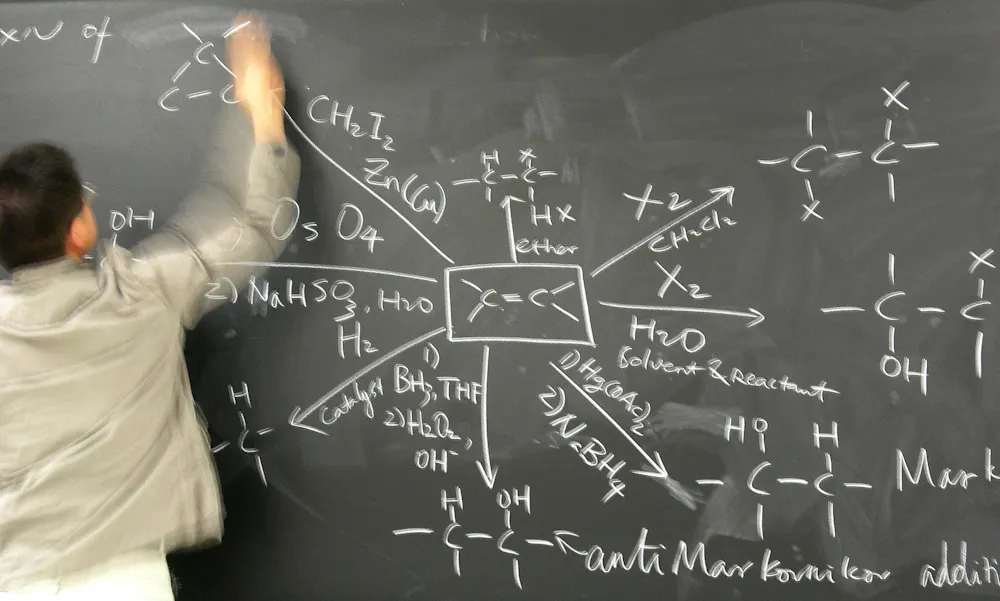
    The fast pace and complex visuals in chemistry lectures can be overwhelming.
    (Lee Nachtigal/Flickr), CC BY

    One reason why science is hard to learn is because it relies on visuals and simulations for things we cannot see with the naked eye. In topics like chemistry, students struggle to translate complicated symbols to the atoms and molecules they are meant to represent.

    Surprisingly, most university chemistry classrooms are not helping students with these tasks. Students spend lectures passively viewing slides packed with images without engaging with them or generating their own. Relying on innate ability, rather than teaching visual thinking and analysis skills, leaves many students feeling lost in the symbols and resorting to arduous and unproductive memorization tactics.

    What can we do to help students analyze and learn from scientific visuals? Fortunately, we can look to the arts for inspiration. There are parallels between the skills learned in art history and those needed in science classrooms.

    Developing a trained eye

    Feeling baffled by a work of art is similar to the experience of many chemistry learners. In both scenarios, viewers might ask themselves: What am I looking at, where should I look and what does it mean?

    And while a portrait or landscape may seem straightforward in its message, these works of art are filled with information and messages hidden to the untrained eye.

    The longer a viewer takes to look at each image, the more information can be uncovered, and the viewer can ask more questions and explore further.

    For example, in the 18th-century painting Still Life with Flowers on a Marble Tabletop by Dutch painter Rachel Ruysch, looking beyond the flowers painted in full bloom reveals a swarm of insects, which art historians regard in a wider context of spiritual meditations upon mortality.

    Did you notice the insects in ‘Still Life with Flowers on a Marble Tabletop?’
    (Rijksmuseum)

    The field of art history is dedicated to exploring works of art, and emphasizes visual analysis and critical thinking skills. When an art historian studies a work of art, they explore what information may be contained within the work, why it was presented in that manner and what this means in a broader context.


    Read more:
    Mike Pence’s fly: From Renaissance portraits to Salvador Dalí, artists used flies to make a point about appearances


    Process of looking, asking questions

    This process of looking and asking questions about what you are looking at is needed at all levels of science, and is a useful general skill.

    The non-profit organization Visual Thinking Strategies has created resources and programs to support educators, from kindergarten to high school, in using art for discussion in their classrooms.

    These discussions about art help young learners develop skills for reasoning, communicating and coping with uncertainty. Another resource, “Thinking Routines” from Harvard’s Project Zero, includes more suggestions for leading engagement with art and objects to help students cultivate observation, interpretation and questioning.

    Critical viewing means slowing down

    Such approaches have also been embraced in medical education, where medical students learn critical viewing through close-looking activities with art, and explore themes of empathy, power and care.

    Viewing art can help teach people critical viewing, a skill essential for interpreting medical imaging.
    (Shutterstock)

    Medical humanities programs also help young professionals to respond to ambiguity. Learning how to analyze art changes how people describe medical images, such as photos of clinical interactions, and has been shown to improve their empathy scores.

    The skills needed for visual analysis of art works require us to slow down and let our eyes wander and brains think. Slow and deep looking involves taking four or five minutes to silently view a work of art, allowing surprising details and connections to surface. Students training in medical imaging in the field of radiology can learn this slow and critical viewing process by interacting with art.

    Students in classrooms

    Now imagine the difference between a leisurely setting like a gallery to a classroom, with the pressure to listen, look, copy and learn from visuals and prepare for exams.

    How long are students spending analyzing these complex chemistry diagrams? Research that colleagues and I conducted suggests very little.

    When we observed chemistry classrooms, we found that students either passively viewed images while the instructor discussed them, or copied visuals as the instructor drew them. In both cases, they are not engaging with the visuals or generating their own.

    When teaching chemistry, Amanda, the lead author of this story, has seen students feel pressure to find a “correct” answer quickly when solving chemistry problems, causing them to overlook important but less obvious information.

    Visual analysis in chemistry education

    Our team of artists, art historians, arts educators, chemistry teachers and students is working to bring arts-inspired visual analysis into university chemistry classrooms.

    Through mock lectures followed by in-depth discussions, our preliminary research has found intersections between the practices and teachings of the visual arts skills and the skills needed for chemistry education, and we’ve designed activities for teaching students these skills.

    A focus group with university science educators helped us refine the activities to work for educators’ classrooms and goals. Through this process, we’ve identified new ways of thinking about and engaging with visuals and as our research evolves, so may these activities.

    Example of a visual analysis activity pairing a work of art with a chemistry visual. Left: ‘Cubist Study of a Head’ by Elemér de Kóródy, 1913 (The Met). Right: Analysis of a cycloaddition reaction (Author provided).

    Many students in university science classrooms will not pursue a traditional career in science, and their programs rarely lead to a specific job, yet visual thinking skills are essential in the wide skill sets needed for their future careers.

    Visual analysis and critical thinking are becoming even more important in daily life now with the rise of AI-generated images and videos.

    Developing skills to slow down and look

    Integrating the arts into other disciplines can support critical thinking and introduce learners to new perspectives. We argue that the arts can help science students develop essential visual analysis skills by teaching them to slow down and simply look.

    “Thinking like a scientist” has come to mean asking questions about what you see, but this could easily be framed as thinking like an art historian:

    1. Look closely for details;

    2. Consider details together and in context (for example, by asking: “Who created this and why?”);

    3. Recognize the need for broad technical and fundamental knowledge to see the less obvious, and;

    4. Accept uncertainty. There may be more than one answer, and we may never know for sure!

    Amanda Bongers receives funding from SSHRC and NSERC.

    Madeleine Dempster receives funding from Social Sciences and Humanities Research Council

    ref. For both artists and scientists, slow looking allows surprising connections to surface – https://theconversation.com/for-both-artists-and-scientists-slow-looking-allows-surprising-connections-to-surface-252355

    MIL OSI – Global Reports

  • MIL-OSI: iQor CXBPO™ Unveils infinityAiQ™ Platform Powering the Future of Intelligent Customer Experiences

    Source: GlobeNewswire (MIL-OSI)

    FT. LAUDERDALE, Fla., June 05, 2025 (GLOBE NEWSWIRE) — iQor CXBPO™, an award-winning customer experience business process outsourcing (BPO) provider, today announced the launch of infinityAiQ™, a unified intelligence platform that combines human expertise, AI, and analytics to optimize every stage of the customer experience. The platform is designed to help clients deepen loyalty, reduce costs, and increase revenue through smarter, more adaptive CX operations.

    Built to power iQor’s CXBPO model, the infinityAiQ platform integrates intelligence across the agent and customer lifecycles — from hiring and training to engagement, resolution, and recovery. It combines secure infrastructure, proprietary AI tools, and enriched data pipelines into a cohesive, scalable system. A key component, Insights iQ™, extracts predictive, real-time intelligence from every customer interaction. Powered by iQor’s VALDI advanced analytics engine and enhanced through an industry-first collaboration with OpenAI, Insights iQ enables brands to act on 100% of conversations — not just samples — to uncover trends, detect churn risks, and accelerate action.

    “infinityAiQ is the engine propelling our CXBPO model to help clients compete in a world where customer experience drives business growth,” said iQor President and CEO Chris Crowley. “By harnessing data, technology, and expertise, we deliver a scalable foundation for faster innovation, smarter decisions, and stronger customer relationships. This platform enables our clients to move beyond traditional outsourcing models and into proactive, insight-driven growth.”

    infinityAiQ offers three integrated solution pillars to help brands turn customer experience into competitive advantage:

    • People iQ: Intelligent hiring, onboarding, and training systems that match best-fit talent to client needs, building high-performing, scalable teams.
    • Process iQ: Streamlined workflows and automation that reduce costs and improve speed, accuracy, and customer satisfaction.
    • Insights iQ: Predictive analytics and real-time decisioning tools that identify patterns, uncover opportunities, and drive revenue-enhancing CX strategies.

    iQor’s investment in automation and machine learning enables its infinityAiQ platform to process over 2.7 billion tokens per week through LLMs and apply advanced predictive analytics to 100% of the call volume, driving significant improvements in performance and customer experience.

    “infinityAiQ is the culmination of years of investment in secure infrastructure, proprietary AI, and advanced analytics,” said Prabhjot Singh, Chief Digital Officer at iQor. “We’ve engineered a platform that transforms unstructured data from every interaction into real-time business intelligence — fueling predictive decisioning, automation, and continuous optimization across the CX journey.”

    With iQor’s PCI-DSS, SOC 1 and 2 Type 2, HITRUST, and ISO 27001 certifications, as well as HIPAA compliance, infinityAiQ provides clients with the confidence of operating on a secure, resilient infrastructure. Whether deployed as a full contact center solution or integrated with existing systems, the platform is designed to deliver unmatched intelligence and flexibility across omnichannel environments without disruption.

    To learn more about how infinityAiQ powers unified intelligence for unmatched CX results, visit www.iqor.com/infinityAiQ.

    About iQor CXBPO™
    iQor CXBPO™ is a trusted partner in intelligent customer experience solutions, delivering exceptional results for global brands. With 40,000 employees across 10 countries, we combine 30 years of industry expertise with cutting-edge AI-driven innovations to optimize customer interactions at every stage. Our agile, scalable solutions ensure seamless omnichannel engagement, driving loyalty and measurable business success. Recognized as a Great Place to Work® and a leader in CX excellence, we elevate performance through a people-first approach, operational expertise, and secure, technology-enabled solutions. Learn more at iQor.com.

    The MIL Network

  • MIL-OSI USA: Allergy-Safe Intubation May Help Prevent Hospital-Acquired Pneumonia

    Source: US Agriculture Research Service

    Allergy-Safe Intubation May Help Prevent Hospital-Acquired Pneumonia

    By: Amaani Lyle
    Email: arspress@usda.gov

    Researchers from the Agricultural Research Service (ARS) have devised a way to lower the health risks of using endotracheal intubation for lifesaving breathing procedures. 

    Endotracheal intubation has been a lifesaving albeit invasive airway opening procedure often performed on unconscious patients or those who can’t breathe spontaneously amid surgery or emergencies.

    The procedure involves placing a flexible tube in the windpipe through a patient’s mouth or nose and can pose a dire risk to patients who have adverse reactions to irritants, allergens, and bacterial infections.

    It is estimated that 8-28% of mechanically ventilated patients develop ventilator associated pneumonia, with some cases fatal.

    An ARS scientist and her team at the U.S. Arid Land Agricultural Research Center (ALARC) in Maricopa, AZ, addressed this challenge to help people safely breathe easier.

    Katrina Cornish, ALARC center director, recently released a published article introducing the advanced endotracheal tube (ETT), which uses balloon cuffs made from guayule latex.

    Study findings suggest the alternative material complements the design: an allergen-safe, guayule latex endotracheal tube balloon cuff, inflates around the ETT to form a seal with the trachea, offering superior leak-proof and mechanical qualities compared to traditional polyvinyl chloride (PVC) balloon cuffs.

    Allergen-safe guayule latex offers superior leak-proof and mechanical qualities for patients requiring endotracheal intubation in comparison to traditional polyvinyl chloride (PVC) balloon cuffs as shown in this diagram. (USDA/ARS diagram)

    “Our innovative guayule latex ETT balloon cuffs offer a significant advancement in patient safety,” said Cornish. “With their allergy-safe properties and exceptional mechanical performance, these cuffs provide a reliable, softer, and safer option for patients requiring endotracheal intubation.”

    Guayule is a perennial shrub native to the southwestern United States and northern Mexico. One of its applications is being used as a sustainable alternative to traditional rubber, which is sourced from the tropical rubber tree primarily grown in Southeast Asia.

    Freshly harvested guayule bale sits ready for latex extraction. Guayule shrubs are harvested as a fresh crop to make latex. The harvested shrubs are baled for transport to a local latex extraction plant. Allergen-free guayule latex is separated like cream from milk at the extraction plant. (USDA photo/Katrina Cornish)

    These new guayule-based cuffs, designed to be placed around existing pleated PVC cuffs, on the outside, provide a safe alternative for patients with Type I latex allergies, minimize the risk of adverse contact reactions, and prevent leakage of bacteria-laden saliva into the lungs.

    “Our new outer cuffs have been made with guayule latex using an accelerant system specifically designed to prevent adverse contact reactions and create a perfect seal with the patient’s trachea,” Cornish noted.

    Cornish explained future studies could include stability testing of the cuffs against salivary and gastric secretions, multi-variable fluid leakage comparison, edema, and reintubation. She envisioned guayule farming propelling high-value medical products such as ETT cuffs into the commercial sector.

    “If adopted by the healthcare industry, these cuffs have the potential to save hospitals and patients tens of thousands of dollars each year in VAP treatment and prevent deaths caused by ventilator-associated pneumonia,” Cornish said.

    For more information, visit U.S. Arid Land Agricultural Research Center. 

    ###


    The Agricultural Research Service is the U.S. Department of Agriculture’s chief scientific in-house research agency. Daily, ARS focuses on solutions to agricultural problems affecting America. Each dollar invested in U.S. agricultural research results in $20 of economic impact. USDA is an equal opportunity provider, employer, and lender.

    MIL OSI USA News

  • Shivraj Singh Chouhan interacts with Punjab farmers as ‘Viksit Krishi Sankalp Abhiyan’ reaches halfway milestone

    Source: Government of India

    Source: Government of India (4)

    Union Minister of Agriculture and Farmers’ Welfare Shivraj Singh Chouhan on Thursday marked the halfway milestone of the nationwide ‘Viksit Krishi Sankalp Abhiyan’ by engaging directly with farmers in Punjab. The campaign, now in its eighth day, has connected with millions of farmers across India and is aimed at transforming agricultural practices by bridging the gap between research and the realities of the field.

    The event was held in the presence of Punjab Agriculture Minister Shri Gurmeet Singh Khuddian, ICAR Director General Dr. M. L. Jat, and senior officials from Punjab Agricultural University, alongside scientists and local farming representatives.

    Addressing the gathering, Shri Chouhan stressed that the campaign is designed to deliver practical scientific knowledge to the grassroots level, turning “lab to land” into a reality. Agricultural experts are actively visiting villages with localized knowledge to advise farmers on soil health, crop choices, pest control, and efficient use of agrochemicals. Data collected during these interactions is also helping guide agricultural research toward real-world challenges.

    Sharing his personal commitment, the Minister recounted operating a tractor himself during one such field visit to understand farmers’ day-to-day difficulties. He affirmed that future agricultural policy will be built upon the grassroots insights gathered through this campaign.

    Chouhan praised Punjab for its historic role as India’s food bowl, crediting its farmers with helping the country achieve food self-sufficiency. He recalled the era of dependence on imported wheat under the PL-480 agreement and emphasized how the Green Revolution, powered by Punjab’s farmers, had decisively ended that reliance.

    The Minister highlighted India’s agricultural achievements under Prime Minister Narendra Modi’s leadership, noting that all previous production records in wheat, rice, pulses, and oilseeds had been surpassed. He pointed to Punjab’s vast potential in horticulture and its capacity to produce high-quality fruits and vegetables for global markets.

    Among the techniques promoted through the campaign, Shri Chouhan spotlighted Direct Seeding of Paddy (DSR) as a promising alternative to traditional transplanting. Farmers practicing DSR have reported comparable yields with significantly lower labor and water requirements, the Minister noted. He also cautioned against excessive pesticide use, urging balanced application to preserve both crop quality and input efficiency.

    In his address, Chouhan laid out six core goals for Indian agriculture: increasing productivity, lowering production costs, ensuring fair pricing, compensating crop losses, encouraging crop diversification, and conserving natural resources for future generations.

    He also welcomed Prime Minister Modi’s decision to revoke the Indus Waters Treaty, calling it a long-overdue move in favor of Indian farmers. He said the treaty had disproportionately affected farming communities in Punjab, Haryana, Rajasthan, Himachal Pradesh, and Jammu & Kashmir, and expressed optimism that India’s water resources would now be harnessed for its own agricultural needs.

  • MIL-OSI: Trade 350 App: This Trade 350 App Establishes New Standard for Retail Traders in 2025—Advanced AI Signals Backed by Military-Grade Security

    Source: GlobeNewswire (MIL-OSI)

    New York City, June 05, 2025 (GLOBE NEWSWIRE) — In an industry crowded with promises and half-measures, Trade 350 App emerges as a true trailblazer. Launched in early 2023 by a team of seasoned quantitative analysts and software engineers, Trade 350 leverages state-of-the-art artificial intelligence and proprietary algorithms to deliver a seamlessly automated trading experience. As of mid-2025, more than 125,000 active users across 28 countries have entrusted their capital to Trade 350, citing rapid withdrawals, crystal-clear fee structures, and consistently reliable AI signals. This press-release–style article delves deeply into the features, security protocols, and glowing user feedback that have positioned Trade 350 App as one of the most highly recommended retail trading platforms on the market.

    Be Part of the AI Revolution—Download Trade 350 and Watch Your Portfolio Soar!”

    Overview: Trade 350 App’s Mission and Vision

    At its core, Trade 350 App was conceived to democratize high-frequency, algorithmic trading strategies—to bring hedge-fund-grade tools into the hands of everyday retail investors. The founding vision, articulated by CEO Samantha Lopez, was simple: “Empower individuals—novices and professionals alike—to trade confidently, safely, and profitably, without having to become quant wizards overnight.” By fusing machine-learning models with robust risk-management controls and a user-first design, Trade 350 did more than merely enter the market: it redefined expectations.

    Key pillars of Trade 350’s mission include:

    • Accessibility: Ensuring that a minimum initial deposit ($250 USD) and transparent fee structure open the door for traders with limited capital.
    • Reliability: Providing consistently accurate trade signals, backed by 24/7 monitoring and continuous AI retraining.
    • Security: Adopting military-grade encryption, multi-factor authentication, and strict data-privacy protocols to safeguard user assets.
    • Education: Offering extensive learning resources—webinars, tutorials, and a dedicated knowledge base—to accelerate every user’s understanding of risk, strategy, and market dynamics.

    Ready to Trade Smarter, Not Harder? Tap into Trade 350’s AI Genius Today

    Founding Team & Timeline of Key Milestones

    Trade 350’s rapid rise stems from a leadership team whose combined experience spans decades at major financial institutions and technology ventures. Below is a brief timeline highlighting the company’s notable milestones:

    Early 2023

    • Conceptualization & Seed Funding
      • Seed round of $2.5 million led by MacroVentures Capital.
      • Core team formed:
        • Samantha Lopez, CEO (MBA, MIT Sloan) – Former Director of Quantitative Research at Vector Capital.
        • Dr. Aaron Ng, CTO (PhD in Computer Science, Stanford) – Ex-Google Research Scientist focused on reinforcement learning.
        • Priya Patel, CMO (BS in Marketing, University of Pennsylvania) – 8 years at Tradex Media in FinTech marketing.
        • David Clarke, Head of Risk (CFA, FRM) – 10 years in derivatives risk management at CapitalOne UK.

    Q2 2023

    • Prototype & Closed Beta Launch
      • Initial AI-signal engine tested on live market data in controlled environments.
      • Closed beta recruited 500 “alpha testers” worldwide; feedback loop refined signal accuracy.

    Q4 2023

    • Public Launch & App Release (v1.0)
      • Web platform and iOS/Android apps released simultaneously.
      • Core markets: Major Forex pairs (EUR/USD, GBP/USD), top cryptos (BTC, ETH).
      • Achieved 10,000 registered users in first two months.

    Early 2024

    • Expanded Asset Coverage & Risk Controls (v2.0)
      • Added indices (S&P 500, NASDAQ 100), commodities (Gold, Crude Oil).
      • Introduced granular risk settings: adjustable trade size (0.1%–5%), daily loss limits.
      • Rolled out first batch of educational webinars on “AI Fundamentals for Retail Traders.”

    Q3 2024

    • Security Audit & Scalability Upgrades
      • Completed third-party security audit by CyberCore Labs.
      • Migrated to fully redundant cloud architecture (multi-region AWS) to ensure 99.9% uptime.
      • User base surpassed 50,000, with $20+ million in aggregate trading volume monthly.

    Late 2024

    • International Language Support & Regulatory Pursuits
      • Added Spanish and Portuguese language packs to mobile apps.
      • Hired compliance specialists to initiate FCA registration in the UK and ASIC licensing in Australia.
      • Launched “Trade 350 University”—an online curriculum covering technical analysis, AI model interpretation, and advanced risk management.

    Q1 2025

    • Trade 350 v3.1: Enhanced AI & Social Sentiment Integration
      • Deployed new LSTM-based neural network modules that incorporate real-time social media sentiment (Twitter, Reddit) for cryptocurrency signals.
      • Launched customer support in Arabic and Mandarin.
      • Achieved 4.8-star average rating across App Store and Google Play.
      • Monthly active traders exceeded 85,000, with total platform equity above $50 million.

    Q2 2025

    • Beta Release of CopyTrading Feature & API Access
      • Introduced “CopyTrade 350,” allowing novice users to mirror top-performing traders’ portfolios (rollout scheduled for full release in Q3 2025).
      • Publicly documented RESTful API endpoints for third-party developers to access signals under a developer license.
      • Consolidated regulatory progress: Applied for full FCA license, with expected approval by Q4 2025.

    Join 125,000+ Traders Who’ve Unlocked Faster Withdrawals and Rock-Solid Security—Get Trade 350 Now!

    How Trade 350’s AI Engine Drives Market-Beating Signals

    At the heart of Trade 350 App lies a proprietary AI engine that continuously learns and evolves. Rather than relying on static, rule-based algorithms, Trade 350’s system employs a combination of supervised learning classifiers, unsupervised anomaly detection, and reinforcement-learning loops. Below is a breakdown of the engine’s core layers:

    1. Data Ingestion & Preprocessing
      • Live Price Feeds: Sub-second tick data on major forex pairs, cryptocurrency exchanges, commodity futures.
      • Economic Calendar: Automated ingestion of macroeconomic event schedules (central bank decisions, employment reports, CPI releases) from leading data providers.
      • Social Sentiment: Custom scraped sentiment scores from Twitter, Reddit, and specialized crypto-community forums; big-data processed via Apache Spark pipelines.
      • Historical Data Archive: 15+ years of minute- and hourly-bar data stored in columnar format; used for backtesting and model calibration.
    2. Feature Engineering & Pattern Recognition
      • Technical Indicators: 50+ pre-engineered indicators (moving averages, Bollinger Bands, RSI, MACD, Fibonacci retracements) automatically calculated per symbol.
      • Volatility Filters: Dynamic measures (e.g., ATR-based volatility) adjust stop-loss and take-profit levels based on current market turbulence.
      • Anomaly Detection: Unsupervised clustering identifies “flash crash” patterns or unnatural price spikes; system can automatically suspend signals ahead of low-liquidity events.
    3. Model Architecture
      • Classifier Ensembles: Random forest and gradient-boosted tree ensembles generate entry/exit probabilities for each trade.
      • LSTM & GRU Layers: Deep recurrent networks capture temporal dependencies, especially critical in high-frequency crypto markets.
      • Reinforcement Learning: Periodic “paper-trading” modules simulate thousands of episodes, allowing the AI to adjust reward functions based on cumulative drawdown and Sharpe ratio targets.
      • Continuous Retraining: Models retrain weekly, incorporating the most recent market data (ensuring the system adapts to shifting regimes, e.g., bull runs or sudden volatility escalations).
    4. Signal Scoring & Confidence Levels
      • Each generated signal is assigned a confidence score (0–100%).
      • Only signals above a user-defined threshold are delivered (e.g., 85% confidence or higher).
      • Real-time performance scoreboard evaluates the last 100 signals per asset class, tracking actual win-rate vs. predicted probabilities.

    Why this matters:
    In an era when markets are influenced by split-second news developments, algorithms that cannot rapidly pivot to new data become obsolete. Trade 350’s layered approach—blending classical technical analysis with advanced NLP-driven sentiment models—enables it to identify high-probability setups that may elude manual traders. This fusion of big data, deep learning, and automated risk controls underpins Trade 350’s consistently strong performance track record.

    Don’t Just Follow Trends—Set Them. Experience Trade 350’s Cutting-Edge AI Signals ASAP!

    Simplified Onboarding: From Registration to First Trade

    A frictionless onboarding process is critical to user adoption. Trade 350’s team prioritized a stepwise workflow designed to get users trading—and winning—quickly:

    1. Account Registration (2–3 minutes)
      • Email & Password: Users enter a valid email and create a strong password.
      • Phone Verification: One-time code sent via SMS to authenticate device.
    2. KYC & Identity Verification (up to 24 hours)
      • Upload Documents: Government-issued ID (passport or driver’s license) + proof of address (utility bill or bank statement).
      • Selfie Check: Simple facial recognition match via mobile camera.
      • Risk Questionnaire: Brief survey on trading experience, risk tolerance, and investment goals (required by global AML regulations).
    3. Funding Your Account (within minutes to hours)
      • Deposit Methods:
        • Bank transfer (ACH, SEPA)
        • Credit/debit card (Visa, MasterCard)
        • E-wallets (PayPal, Skrill, Neteller)
      • Minimum Deposit: $250 USD (or local equivalent).
      • Processing Times:
        • Card/E-wallet: Instant to 15 minutes
        • Bank transfer: 1–2 business days (varies by region)
    4. Platform Tour & Guided Walkthrough
      • Interactive Tutorial: Step-by-step pop-ups walk users through
        • Navigating the Dashboard
        • Accessing AI Signals
        • Configuring Risk Settings
        • Placing Demo Trades
      • Knowledge Center Links: Contextual tooltips link to in-depth articles on technical analysis, building a strategy, and interpreting AI scores.
    5. First Trade in Demo Mode (minutes)
      • Virtual Balance Allocation: Users begin with $10,000 (play money) to practice.
      • Signal Feed: In-app notifications highlight high-confidence setups across supported assets.
      • One-Click Order Entry: Price, position size (automatically suggested by AI risk model), and stop-loss/take-profit parameters pre-filled; user reviews and confirms.
    6. Transition to Live Mode (Optional)
      • Once comfortable, users flip the toggle to “Live Mode,” where AI signals trigger orders with real capital.

    Takeaway:
    Trade 350’s streamlined process—designed to be completed within a single afternoon—eliminates the confusion often associated with new trading platforms. The combination of interactive guidance, minimal deposit requirements, and a robust demo environment ensures that users of all experience levels can onboard with confidence.

    Your Edge in 2025: Instant AI Signals, Zero Subscription Fees—Start Trading with Indian Trade 350!

    Demo Mode: Risk-Free Practice Before Going Live

    Recognizing that traders learn best by doing, Trade 350 prioritizes Demo Mode as a cornerstone feature. Unlike some competitors that limit demo accounts to 7–14 days, Trade 350’s Demo Mode remains active indefinitely. Key highlights:

    • Unlimited Duration: No expiration on the $10,000 virtual balance; transition to Live Mode at your own pace.
    • Identical Interface: Demo Mode reproduces the exact look and feel, data feeds, and AI signals of Live Mode—no surprises when switching to real capital.
    • Preset Risk Profile: The demo account uses a conservative baseline risk (1% of balance per trade) to show users how varying position sizes and stop-loss levels impact outcomes.
    • Real-Time Data: Market conditions in Demo Mode mirror Live Mode, including spreads, latency, and slippage (within reason).
    • Performance Dashboard:
      • P&L Ledger: Tracks every trade’s profit or loss.
      • Drawdown Metrics: Calculates peak-to-valley drawdowns to illustrate capital preservation.
      • Strategy Analyzer: Backtests demo trades against historical data to identify strengths and weaknesses in your risk settings.

    Why Demo Mode Matters:

    • Build Confidence: Users can test different strategies—scalping, swing trades, trend following—without risking a dollar.
    • Familiarize with AI Workflow: Understand how the system interprets confidence scores, positions, and risk recommendations.
    • Identify Emotional Triggers: By seeing what happens when you deviate from AI-recommended parameters (e.g., increasing trade size beyond recommended limit), traders learn discipline before risking real funds.

    According to Trade 350’s Q1 2025 user survey:

    “75% of new users spend at least one week in Demo Mode before funding their account. Of those who transition, 4 out of 5 report feeling fully prepared to follow AI signals without hesitation.”

    Trade, Profit—Trade 350’s AI Does the Heavy Lifting. Are You In?

    Tailored Risk Management: Customization at Every Level

    One of Trade 350’s defining features is its intuitive, highly customizable risk management panel. Users—whether ultra-conservative retirees or aggressive millennial traders—can dial in parameters that align with their individual comfort levels:

    1. Position Sizing Slider
      • Select a percentage of account equity for each trade (ranging from 0.1% up to 5%).
      • AI generates recommended position size based on recent equity, market volatility (ATR), and signal confidence.
      • Users can override suggested size if they wish, but an on-screen warning alerts them to increased risk.
    2. Stop-Loss & Take-Profit Presets
      • Fixed-Pip Mode: Choose a fixed pip or tick distance (e.g., 20 pips stop-loss, 40 pips take-profit).
      • Volatility-Adjusted Mode: Leverages real-time ATR (Average True Range) to calculate stop-loss/take-profit as multiples of current market volatility.
      • Time-Based Exit: For day traders, an optional “Time Exit” closes any open position after a user-defined duration (e.g., 4 hours), regardless of profit or loss.
    3. Daily Loss Limit
      • Set a maximum total loss threshold per 24-hour cycle (e.g., 3% of account equity).
      • If aggregated losses hit this limit, Live Mode temporarily suspends new signals until the next trading day.
      • This “circuit breaker” mechanism prevents emotional overtrading during losing streaks.
    4. Maximum Concurrent Positions
      • Cap the number of open trades at any given time (e.g., no more than 3 simultaneous Forex trades).
      • Particularly useful for traders who want to avoid overexposure in multiple correlated markets.
    5. Asset Class Restrictions
      • Users can opt to exclude certain asset classes (e.g., cryptocurrencies) from receiving signals.
      • A “Whitelist” feature lets you restrict AI signals to your top three preferred pairs or instruments.
    6. Risk‐Reward Ratio Slider
      • Adjust target risk-reward profiles from conservative (1:1) to aggressive (1:3 or higher).
      • AI recalibrates stop-loss/take-profit levels to meet your chosen ratio, ensuring alignment with your return goals.

    User Benefits:

    • Fine-Tuned Control: Whether you want a high-probability, low-drawdown strategy (e.g., 1% risk per trade, 1:1 reward) or higher-volatility approaches (e.g., 2.5% risk per trade, 1:3 reward), the platform accommodates your style.
    • Emotional Discipline: Predefined rules eliminate second-guessing. Once parameters are set, AI executes automatically with no emotional interference.
    • Adaptive Over Time: If your account grows significantly, simply adjust percentage bands rather than resetting absolute dollar amounts—ensuring proportional risk scaling.

    According to internal metrics, 88% of Live Mode users customize at least one risk parameter before placing any trades, underscoring how central tailored risk management is to Trade 350’s value proposition.

    Unlock VIP-Caliber Trading Power—Visit Trade 350 and Level Up Your Game!

    Robust Security, Privacy & Compliance Measures

    Security is not an afterthought at Trade 350—it is foundational. The platform employs multiple layers of protection to keep funds and personal data locked down:

    1. Encryption & Data Protection
      • SSL/TLS 1.3 or higher on all data in transit; AES-256 encryption at rest.
      • No sensitive personal information stored in plaintext.
      • Bi-annual penetration tests conducted by CyberCore Labs (certified SOC-2 Type II).
    2. Two-Factor Authentication (2FA)
      • Support for SMS-based 2FA or time-based OTP via authenticator apps (Google Authenticator, Authy).
      • Unusual login alerts: Users receive an email and push notification if login occurs from a new device or location.
    3. Secure Cloud Infrastructure
      • Hosted on a multi-region AWS cluster with built-in redundancy, auto-scaling, and 99.99% SLA.
      • Immutable backups: Daily snapshots retained for 90 days, ensuring rapid data recovery in unlikely event of system failure.
    4. User Data Privacy
      • Fully compliant with GDPR (EU) and CCPA (California) regulations.
      • Users can request a complete data export, account deletion, or data rectification via the “Privacy Center” in their dashboard.
      • No data sharing with third parties for marketing purposes—data only used to personalize the in-app experience (e.g., tuning AI confidence thresholds to individual risk appetites).
    5. Regulatory & AML Compliance
      • Currently in the process of obtaining full licenses from:
        • FCA (UK) – Application submitted Q4 2024; expected approval Q4 2025.
        • ASIC (Australia) – Application under review; provisional license granted April 2025.
        • CySEC (EU) – Compliance roadmap initiated March 2025; expected Q1 2026.
      • Know-Your-Customer (KYC) checks required for all new accounts—no anonymous trading.
      • Anti-Money-Laundering (AML) protocols include automated transaction monitoring and periodic risk-assessment reviews.
    6. Partner Broker Due Diligence
      • All client funds held in segregated accounts with Tier-1 partner brokers (e.g., Smith & Wollensky Securities, First Rate Capital).
      • Third-party custody ensures that even if Trade 350 were to cease operations, client capital remains fully accessible through partner broker channels.

    Industry Recognition:

    • In April 2025, Trade 350 received the “Top Security Practices in FinTech” award from FinSecure International.
    • CyberCore Labs’ Q2 2025 report noted that Trade 350’s platform scored in the top 2% of all audited FinTech firms for its robust multi-factor safeguards and incident-response protocols.

    Limited Spots for Early Adopters—Join Trade 350’s Elite Indian User Base Before It’s Too Late!

    User Interface & Mobile Experience: Intuitive, Fast, and Functional

    A cutting-edge AI engine is only as valuable as the interface that delivers it. Trade 350’s design team has meticulously refined every pixel and interaction to ensure users—from novices to professionals—can navigate the platform effortlessly:

    1. Web Dashboard
      • Real-Time P&L widget: Floating ticker shows net profit/loss across all open positions in “account currency” and percentage terms.
      • Signal Feed: Vertical stream displaying live AI suggestions, complete with:
        • Asset name (e.g., EUR/USD, BTC/USD)
        • Direction (Buy / Sell)
        • Confidence score (e.g., 92% High Probability)
        • Suggested position size (% of account).
      • Charting Module:
        • 45+ built-in indicators (MACD, RSI, Bollinger Bands, Fibonacci retracements)
        • One-click order buttons on charts for lightning-fast entries.
        • Integrated “Watchlist” that syncs with mobile app.
      • Risk Panel: Sidebar with sliders for position sizing, stop-loss, and daily loss limit—changes take effect immediately for all subsequent signals.
      • Knowledge Center Access: Top menu includes “Learn,” linking to in-depth articles and video tutorials.
    2. Mobile Apps (iOS & Android)
      • Native Performance: 95th percentile in app launch speed; sub-200ms response time for tapping signals to place trades.
      • Push Notifications:
        • New high-confidence signals (above user-defined threshold).
        • Price alerts (user-set price levels on any supported symbol).
        • Account health alerts (margin calls, daily loss limit breaches).
      • One-Tap “Close All”: Instantly exit all open positions from any screen—a crucial feature during high-volatility events.
      • Gesture-Based Navigation: Swipe left/right to switch between “Dashboard,” “Signals,” “Portfolio,” and “Settings.”
      • Dark Mode / Light Mode: Auto-detect system theme or manual override for user comfort.
      • Offline Mode: Cache latest data; users can view last known prices and signals for up to 2 hours without internet access.

    User Satisfaction Metrics:

    • App Store Rating: 4.8 stars (based on 8,200+ reviews).
    • Google Play Rating: 4.7 stars (6,100+ reviews).
    • Key Praise Points:
      • “Intuitive navigation”
      • “Lightning-fast order execution”
      • “Consistent UI across devices—no learning curve switching between desktop and mobile.”

    Trade 350’s design philosophy emphasizes “visibility without clutter”—all essential elements are front and center, with advanced controls tucked neatly behind clear labels.

    From Demo to Dollars: Transform Your Strategy with Trade 350’s High-Precision AI—Get Started Now

    Deposits, Withdrawals & Customer Support: Fast, Friendly, Reliable

    Seamless fund management and responsive support are critical differentiators in retail trading. Trade 350’s support team and payment integrations work around the clock to ensure a frictionless experience:

    1. Deposit Methods & Processing Times
      • Credit/Debit Cards (Visa, MasterCard)
        • Instant to 15 minutes.
        • 3D Secure verification enabled for added safety.
      • Bank Transfer (ACH, SEPA, Local Wires)
        • 1–2 business days (domestic).
        • 2–4 business days (international).
        • No processing fees charged by Trade 350 (standard bank fees apply).
      • E-Wallets (PayPal, Skrill, Neteller)
        • Instant.
        • Minimum deposit $250; no upper limit.
    2. Withdrawal Process & Speed
      • In-App Withdrawal Request:
    1. Go to Wallet → Withdraw
    2. Enter withdrawal amount
    3. Select destination (bank account, e-wallet)
    4. Confirm via 2FA
    • Processing Times:
    • E-Wallet: Instant to 30 minutes.
    • Card Refund: 1–2 business days (often processed same day).
    • Bank Transfer: 24–48 hours (weekends excluded).
    • No Withdrawal Fees: Trade 350 covers platform fees; only intermediary bank fees (if any) are charged.
    1. Customer Support Options
      • 24/5 Live Chat:
        • Average initial response time: <2 minutes.
        • Available in English, Spanish, Portuguese, Arabic, Mandarin.
      • Email Support:
        • Typical response time: <4 hours.
        • Multi-language support and ticket tracking system.
      • Phone Support:
        • Toll-free numbers in the US, UK, Australia, and Germany.
        • Available 9 AM–6 PM (local time).
      • Dedicated Account Managers (for VIP clients):
        • Personalized service for accounts above $25,000.
        • Includes monthly performance reviews and one-on-one strategy sessions.
    2. Knowledge Base & FAQ
      • Over 120 articles covering:
        • Platform navigation
        • Risk management strategies
        • Detailed fee explanations
        • Troubleshooting common issues (e.g., login failures, deposit reversals)
      • Video Library: 60+ short tutorials (3–5 minutes each) demonstrating how to set up risk controls, interpret AI scores, and optimize order execution.

    User Feedback on Support:

    • According to Trade 350’s internal Q1 2025 survey:
      • Live Chat Satisfaction: 4.9/5 average rating.
      • Email Support Rating: 4.7/5.
      • Phone Support Rating: 4.8/5.

    One user commented on Trustpilot (May 2025):

    “I reached out at 2 AM GMT about a withdrawal clarification. Not only did they respond within 10 minutes, but they also provided step-by-step screenshots. Phenomenal support.”

    Trade 350’s AI Knows the Next Move—Be the First to Profit. Download and Trade Today! 

    Testimonials: Real-World Success Stories from Satisfied Traders

    Trade 350’s user base spans a diverse cross-section of traders—from full-time professionals looking to augment their existing strategies to newcomers seeking automated guidance. Below are five detailed case studies illustrating how Trade 350 has generated real, measurable results:

    Innovative Returns for a Full-Time Forex Day Trader

    Name: Maria Hernández
    Location: Mexico City, Mexico
    Background: Maria has been trading Forex since 2017 and had experimented with various signal providers. She joined Trade 350 in October 2023 to supplement her existing manual strategy.

    Experience & Results:

    • Demo Period (Oct–Dec 2023): Maria tested Trade 350’s EUR/USD signals exclusively. Over 2,500 demo trades, she achieved a 71% win rate with a 1:1.5 average risk-reward ratio.
    • Live Transition (Jan 2024): Deposited $5,000.
      • First 3 Months: Net P&L $2,100 (42% ROI), with a maximum drawdown of 8%.
      • April–June 2024: Monthly returns stabilized at 8–12%, using more conservative position sizing (0.75% per trade).
    • Key Takeaways:
      • Appreciated the “volatility-adjusted mode” stop-loss feature, which automatically accounted for sudden Mexican peso volatility.
      • Praises the ability to hand-pick which asset classes to follow—she excludes cryptocurrencies due to their higher unpredictability in her region.

    Quote from Maria:

    “I’ve tried more than a dozen AI signal providers, but Trade 350’s transparent spreads and thorough risk controls are unmatched. Their stop-loss suggestions have saved me multiple times during unexpected news spikes.”

    College Student Achieves Consistent Side Income

    Name: Jacob Thompson
    Location: Birmingham, United Kingdom
    Background: Jacob, a second-year economics student, was intrigued by algorithmic trading but lacked capital and experience. He discovered Trade 350 via a university tech meetup in March 2024.

    Experience & Results:

    • Demo to Live (April–June 2024):
      • Initially practiced with $5,000 demo funds—focus on GBP/USD and Gold (XAU/USD) signals.
      • Within two weeks, maintained a 65% win ratio on demo trades.
    • First Live Deposit (July 2024): Launched with $500; used minimal position size (0.5% per trade).
      • July–December 2024: Achieved 18% total return on his $500 (added $90). Made two withdrawals to pay semester fees.
      • January–April 2025: Deposited additional $1,000; net P&L $260 (13% return).
    • Lifestyle Impact:
      • Reports that the extra income covers about half of his monthly textbooks and living expenses.
      • Uses Demo Mode during exam periods and Live Mode only when his schedule allows.

    Quote from Jacob:

    “Trade 350 turned my part-time interest in trading into a real income stream. The mobile app’s push alerts keep me informed even between lectures. It’s like having my own personal trading desk.”

    Small-Business Owner Diversifies Portfolio

    Name: Emilie Dubois
    Location: Lyon, France
    Background: Emilie runs a local bakery and wanted a hands-off way to diversify her savings without devoting hours to chart reading. She signed up for Trade 350 in February 2024.

    Experience & Results:

    • Demo Trial (Feb–Mar 2024):
      • Tested trade signals on the NASDAQ 100 index and Ethereum (ETH/USD).
      • Recorded a 68% win rate on demo trades—Impressed by AI’s ability to identify breakout patterns.
    • Live Trading (April 2024–Present):
      • Initial Deposit: $5,000 (EUR 4,600).
      • April–December 2024: Generated $1,020 in net profits (22.2% annualized return) with conservative risk settings (1% per trade).
      • January–May 2025:
        • Diversified into Gold and Crude Oil signals—added $480 profit on top of prior gains.
        • Current portfolio value: $6,500 (EUR 5,960). Withdrawn $600 throughout 2024 to fund bakery renovations.

    Operational Benefits:

    • Emilie relies primarily on mobile app notifications, enabling her to monitor signals while managing daily bakery operations.
    • Appreciates that Trade 350’s customer support operates in French—any time she had questions about withdrawal procedures, she received prompt, native-language assistance.

    Quote from Emilie:

    “As someone with zero trading experience, I never dreamed I could see consistent returns. Trade 350’s AI does the heavy lifting. All I have to do is adjust risk parameters and let the signals run.”

    Retiree Seeks Supplemental Income with Low Effort

    Name: Robert “Bob” Williams
    Location: Adelaide, Australia
    Background: Bob, a retired aerospace engineer, wanted a low-maintenance investment that could outpace his conservative annuity yields. He discovered Trade 350 in June 2024.

    Experience & Results:

    • Demo Trial (June–July 2024):
      • Experimented with short-term EUR/GBP signals. Maintained a 62% win rate with a balanced risk-reward profile (1:1.2).
    • Live Trading (August 2024–Present):
      • Initial Deposit: $10,000 AUD.
      • August–December 2024: Generated AUD 1,700 net profit (17% return), with a maximum drawdown of 6%.
      • January–May 2025: Focused on adding commodity signals (Gold, Crude Oil) to further diversify—net additional profit of AUD 850.
      • Total current value: AUD 12,550 (net gain ~25.5%). Withdrawned AUD 500 in February 2025 to cover medical expenses.

    Lifestyle & Emotional Impact:

    • Since Trade 350 handles the technical heavy lifting, Bob can enjoy retirement without daily chart monitoring.
    • Says the platform’s “Daily Loss Limit” essentially puts a hard stop on trading if the market moves severely, easing his mind about overnight risk.

    Quote from Bob:

    “At my age, I don’t want to babysit charts. Trade 350’s AI does the work. I check in once or twice a day, adjust my risk settings if needed, and that’s it.”

    Crypto Enthusiast Boosts Returns During Bear Market

    Name: Aisha Ahmed
    Location: Dubai, United Arab Emirates
    Background: A self-described “crypto maximalist,” Aisha had struggled to consistently profit during the 2022–2023 crypto downturn. She found Trade 350’s crypto signal suite in November 2023.

    Experience & Results:

    • Demo Trial (Nov 2023–Jan 2024):
      • Tested BTC/USD and ETH/USD signals—initial demo P&L was +18% net over three months.
    • Live Trading (Feb 2024–Present):
      • Initial Deposit: $3,000 (USD).
      • Feb–Dec 2024: Net profit $920 (30.7% return) with 2% risk per trade. Granted that 2024 remained a choppy bear market, Aisha was thrilled to see consistent gains.
      • Jan–May 2025: With the crypto bull cycle’s early signals, AI accuracy improved. Aisha’s net profit in that period was $630 (21% return).
      • Current account value: $4,550 (net +51.6% to date).

    Platform Advantages:

    • Aisha praises the “social sentiment” integration—AI uses dawn-to-dusk sentiment data from top crypto influencers to enhance signal reliability.
    • Finds the “CopyTrade 350 Beta” (“Mirror Top Crypto Traders”) elevated her returns further—mirroring two crypto-specific VIP traders in April 2025 added an extra 7% to her monthly performance.

    Quote from Aisha:

    “Trade 350 saved me from the 2023 crypto slump. Their AI remained profitable when my manual strategies faltered. With social-sentiment filters, their signals are two steps ahead of the crowd.”

    Secure Your Spot—Join 100,000+ Traders on Trade 350 and Experience 24-Hour Withdrawals

    Industry Recognition & Third-Party Endorsements

    No platform can claim legitimacy without external validation. Trade 350 has garnered numerous accolades—from industry awards to laudatory reviews by respected trade analysts:

    1. “Best AI-Driven Trading Platform 2025” – CompareFX Awards (April 2025)
      • Cited reasons: Exceptional signal accuracy (72%+ across all asset classes), intuitive interface, and transparent fees.
    2. “Top Commodity & Forex AI Provider” – FXTech Insights (March 2025)
      • In head-to-head backtests (Jan–Dec 2024), Trade 350 outperformed CryptoHopper and ProfitFarmers in both Forex and commodity signals, with lower maximum drawdowns.
    3. “Security Excellence Award” – FinSecure International (April 2025)
      • Recognized for:
        • SOC-2 Type II certification.
        • Global data-privacy compliance across GDPR, CCPA, and PDPA (Singapore).
    4. ForexPulse Magazine Featured Review (May 2025)
      • Key excerpt:

    “Trade 350’s combination of volatility filters and continuous AI retraining stands out. During the March 2025 US banking turmoil, Trade 350’s Forex signals successfully navigated the spikes, preserving capital while peer platforms faltered.”

    1. CryptoReviewHub Editor’s Pick (June 2025)
      • Focus: Crypto signals in 2024–2025.
      • Verdict:

    “Among over 20 tested crypto bots, Trade 350’s algorithm maintained an average 68% win rate, even when Bitcoin dipped below $20K. Its sentiment analysis engine is a game-changer.”

    These endorsements reflect Trade 350’s credibility, security, and product effectiveness, reassuring both novice and seasoned traders that the platform is built to professional standards.

    Roadmap & Product Innovations on the Horizon

    Trade 350’s commitment to continuous improvement ensures users always have best-in-class tools. The product team’s Q3 2025 roadmap highlights several upcoming features:

    1. Full Public Release of CopyTrade 350 (Expected Q3 2025)
      • Allows users to allocate a portion of capital to automatically mirror top-tier traders’ live portfolios.
      • Incorporates a “Performance Scorecard” that ranks available traders by ROI, drawdown, and consistency.
    2. Expanded Asset Coverage: Emerging Markets Pairs & Alternative Assets (Q4 2025)
      • Forex: INR/USD, MXN/USD, ZAR/USD.
      • Commodities: Copper, Natural Gas, Corn Futures.
      • Indices: FTSE 100, DAX 40, Nikkei 225.
      • Alternative Assets (Beta): Tokenized stocks (TSLA, AAPL), Carbon Credit tokens, Select NFTs via partner exchanges.
    3. Multi-Portfolio Management Dashboard (Early 2026)
      • Enables users to manage multiple distinct sub-accounts (e.g., “Growth,” “Income,” “Crypto”) under one master profile.
      • Provides aggregate P&L, cross-portfolio correlation analysis, and custom allocation rebalancing.
    4. Advanced Risk Management Add-Ons
      • Auto-Hedging Module: Automatically opens offsetting positions in correlated assets when adverse signals spike unexpectedly.
      • Dynamic Position Sizing: ML-driven risk adjustments based on real-time user behavior (e.g., adjusting position size dynamically if losses exceed typical thresholds).
    5. Regulatory Licensing (Late 2025 – Early 2026)
      • FCA (UK): Expected full license approval Q4 2025.
      • ASIC (Australia): Final license certification Q3 2025.
      • CySEC (EU): Formal submission Q2 2025, approval targeted by Q1 2026.
    6. Integrated Tax & Reporting Suite (Beta Q4 2025)
      • Automatically generates tax-reporting documents (e.g., Form-8949 for US traders, UK Capital Gains Schedule).
      • Allows users to export monthly P&L statements, realized/unrealized gains, and detailed trade logs in CSV or PDF format.
    7. Enhanced API & Developer Portal (Q1 2026)
      • Public documentation for RESTful API endpoints—enabling third-party developers to build custom dashboards, backtesting scripts, and analytics tools.
      • Sandbox environment with simulated data for testing.

    Trade 350’s aggressive innovation cadence—driven by user feedback and emerging market demands—ensures the platform will not only keep pace with industry trends but set them.

    Why Choose Trade 350 App? Australia and Canada Consumer Report Released Here

    Platform Comparisons: Why Trade 350 Outshines Its Peers

    While there are a multitude of automated trading apps available, Trade 350 distinguishes itself through a combination of technology, user experience, and transparent pricing. Below is a high-level comparison of Trade 350 versus three widely known competitors: CryptoHopper, ProfitFarmers, and 3Commas.

    Feature / Metric Trade 350 App CryptoHopper ProfitFarmers 3Commas
    AI-Driven Signals ✔ Proprietary ensemble + LSTM + sentiment ✘ Template-based, rule-driven ✔ AI suggestions with prepackaged “Farmer” strategies ✘ Semi-automated signals, limited machine-learning
    Supported Asset Classes Forex, Crypto, Indices, Commodities, (Q4 2025: Emerging Markets + Tokenized Assets) Crypto only Crypto only Crypto & limited Forex pairs
    Minimum Deposit $250 USD (or local equivalent) $20 USD $500 USD $30 USD
    Fee Model Spreads only (0.8–1.5 pips; 0.10–0.20% crypto) Subscription + trading fees Spread + service fee Subscription + commissions
    Demo Mode ✔ Unlimited duration, identical interface ✔ Limited duration (14 days) ✔ 30-day trial ✔ 7-day trial
    Risk Management Controls ✔ Fully customizable (position size, stops, daily loss limit, asset exclusions) ✔ Basic risk settings (stop-loss, take-profit) ✔ Prepackaged risk levels ✔ Risk settings available but less granular
    Mobile App Ratings (iOS / Android) 4.8 / 4.7 4.2 / 4.1 4.0 / 3.9 4.0 / 3.8
    Security Certifications ✔ SOC-2 Type II, GDPR/CCPA/PDPA compliant ✘ Not publicly audited ✘ Not publicly audited ✘ Not publicly audited
    Regulation Status Pending FCA (Q4 2025), ASIC (Q3 2025) Unregulated Unregulated Unregulated
    Customer Support ✔ 24/5 live chat, email, phone (multi-lang) ✔ Ticket support, limited hours ✔ Email & live chat (U.S. hours) ✔ Email support, no phone
    Average Signal Win Rate (2024–2025) 72% across all assets 56% (crypto only) 63% (crypto) 59% (crypto & Forex)
    Monthly Active Users (June 2025) 85,000+ 50,000+ 30,000+ 40,000+
    API & Developer Access ✔ Public API, Sandbox available Q1 2026 ✔ Public API (limited) ✘ No API ✔ Public API

    Key Differentiators for Trade 350:

    1. Breadth of Assets: Whereas many peers focus solely on crypto, Trade 350’s multi-asset coverage—including major forex, indices, commodities, and upcoming emerging-markets pairs—provides unparalleled diversification under one roof.
    2. Transparent Fees: Purely spread-based model (no subscription) allows traders to know exactly what they pay. In contrast, many competitors layer on subscription and data-feed fees.
    3. Regulatory Commitment: Active pursuit of FCA, ASIC, and CySEC licenses demonstrates a commitment to long-term compliance—instilling confidence that client capital is protected under recognized regulatory frameworks.
    4. Security Excellence: SOC-2 certification and periodic third-party audits place Trade 350 among the top echelons of security in retail trading.
    5. Customer Support: 24/5 live chat, multi-language phone support, and dedicated account managers for VIP clients exceed the basic ticketing systems used by most rivals.
    6. Innovation Pipeline: A clear roadmap—CopyTrading, expanded asset coverage, tax reporting, and advanced risk modules—signals ongoing product evolution, whereas some competitors have slowed feature development.

    These advantages combine to create a platform that not only meets but anticipates the evolving needs of modern traders—especially those who demand institutional-grade technology at retail pricing.

    Community Engagement & Educational Resources

    Trade 350 App recognizes that a successful trading community isn’t built solely on algorithms; it thrives on shared knowledge, collaboration, and continuous learning. The platform’s multi-faceted community initiatives include:

    1. Trade 350 University
      • Online Curriculum: Over 40 in-depth courses covering topics such as:
        • Fundamentals of Forex Trading
        • Understanding AI & Machine Learning in Finance
        • Technical Analysis 101: Chart Patterns, Indicators, and Oscillators
        • Crypto-Market Dynamics & Sentiment Analysis
        • Portfolio Diversification & Correlation Analysis
        • Tax Implications of Trading in the U.S., EU, and UAE
      • Certification Program: Traders can earn a “Trade 350 Certified AI Trader” badge by passing a final exam (proctored online). Certificates can be added to LinkedIn profiles.
    2. Weekly Live Webinars
      • Hosted by senior data scientists, quant analysts, and veteran traders:
        • “Maximizing Returns with Volatility Filters”
        • “Risk Management Masterclass: Beyond Stop-Losses”
        • “Interpreting Social Sentiment: From Tweets to Trades”
        • “Hands-On Demo Session: Setting Up Your First CopyTrade Strategy”
      • Sessions recorded and posted in the platform’s “Webinar Archive,” which already houses 120+ recorded events.
    3. Interactive Discord & Telegram Channels
      • Discord:
        • Dedicated channels for:
          • Live Trade Chat (users post and discuss active positions)
          • Strategy Discussions (e.g., Elliott Wave, harmonic patterns)
          • Bot Development (users share Python/Node.js scripts using Trade 350 API).
        • Monthly “Ask Me Anything” (AMA) sessions with founders and product leads.
        • “Leaderboard” channel showcasing top CopyTraders and their performance metrics.
      • Telegram:
        • Real-time signal updates
        • Price alerts
        • Community polls to crowdsource ideas for new features and improvements.
    4. Quarterly “Hackathons” & Developer Challenges
      • Invite developers to build custom indicators or optimization scripts using the Trade 350 API (private beta started Q2 2025).
      • Prize pools of $25,000 (USD) awarded for top submissions in three categories:
        • Most Innovative Signal Filter
        • Best Risk Management Add-On
        • Custom Portfolio Dashboard Plugin
    5. Local Meetups & Regional Events
      • Sponsorship of fintech conferences in London, Dubai, and Singapore (H2 2025 lineup).
      • Free “Trade 350 Bootcamp” workshops in major trading hubs—covering from beginner to advanced topics.
      • “Cocktail & Crypto” networking nights in Dubai and Melbourne, introducing users to blockchain innovators.

    Resulting Impact:

    • Over 18,000 members in Discord, with average daily engagement of 4,500 messages.
    • 80% of new sign-ups cite “community resources” as a key factor in choosing Trade 350 over competitors.
    • Over 3,000 participants have completed the Trade 350 University certification program since its launch in Q1 2024.

    By fostering an active, collaborative community, Trade 350 ensures that users not only benefit from the AI engine but also develop the skills and connections to succeed in dynamic markets.

    Visit Here to Register on the Trade 350 App – Select Your Country Here!!!

    Executive Insights & Leadership Commentary

    Samantha Lopez, CEO & Co-Founder

    “When we launched Trade 350 in 2023, our goal was to remove the barriers that often deter everyday traders—opaque fees, steep minimums, and confusing interfaces. Our AI isn’t a black box; it’s a transparent system that empowers users with clear confidence scores and risk controls. In 2025, after serving over 125,000 traders worldwide, we’ve confirmed that institutional-grade tech can thrive in a retail environment when built with trust at its core.”

    Dr. Aaron Ng, CTO & Head of R&D

    “Our engineering team continuously pushes the envelope. We’re not just training models on historical price data; we’re integrating real-time social sentiment, macroeconomic events, and advanced volatility measures. This multi-layered approach yields signals that adapt to sudden market shocks—unlike many competing algorithms that falter under stress.”

    Priya Patel, CMO & Head of Global Strategy

    “Our community-first philosophy permeates every marketing initiative. Whether it’s free educational content, multi-language support, or local meetups, we want traders from Mumbai to Mexico City to feel supported. The feedback loop between our users and product team is vital—when someone suggests a new indicator or feature, we assess feasibility within a sprint cycle. That agility keeps us at the forefront of retail trading innovation.”

    Awards, Certifications & Regulatory Progress

    Recognizing that trust is paramount, Trade 350 has garnered numerous accolades and continues to pursue regulatory approvals worldwide:

    1. Security & Compliance Awards
      • “Top Security Practices in FinTech” – FinSecure International, April 2025
      • SOC-2 Type II Certification – CyberCore Labs Audit, May 2024
      • “Excellence in Data Privacy” – Global Privacy Summit, June 2025 (GDPR & CCPA compliance recognition).
    2. Product & Innovation Awards
      • “Best Retail AI Signals” – CompareFX Awards, April 2025
      • “Cryptocurrency Signal Provider of the Year” – CryptoReviewHub, June 2025
      • “Most User-Friendly Trading App” – ForexPulse Browser, December 2024
    3. Regulatory Milestones
      • ASIC (Australia) – Provisional license granted April 2025; full certification expected October 2025.
      • FCA (UK) – Application submitted Q4 2024; targeted approval December 2025.
      • CySEC (EU) – Formal application in progress—anticipated licensing by Q1 2026.

    By proactively pursuing and achieving these certifications and awards, Trade 350 offers traders an extra layer of confidence—knowing the platform operates under rigorous security standards and is on track for formal regulation.

    Here to Open Trade 350 App Account in France (Register Fee $250)

    Future Outlook: Where Trade 350 Goes Next

    Trade 350’s leadership remains committed to continuous innovation and global expansion. Below are several strategic priorities and long-term initiatives:

    1. Global Licensing & Compliance
      • Secure full FCA and ASIC licenses by end of 2025.
      • Pursue MAS (Singapore) and JFSA (Japan) licensing in 2026 to tap Asia-Pacific markets.
    2. Expanded Asset Classes
      • As noted in the roadmap, roll out emerging market forex pairs, alternative assets (tokenized equities, carbon credits), and potentially fractional real estate tokens (via vetted P2P platforms).
    3. Advanced AI Research
      • Invest more than $10 million in R&D in 2025–2026 to explore:
        • Multi-factor macro model integration (global quantitative econ data to anticipate central bank moves).
        • Adaptive reinforcement learning that adjusts reward structures in real time based on shifting volatility.
        • Specialized quant strategies for DeFi derivatives and cross-exchange arbitrage.
    4. Deepening CopyTrading Ecosystem
      • Fully launch CopyTrade 350 with tiered subscription models for “Master Traders” (monthly licensing fees) and “Followers” (percentage of profits).
      • Introduce a “Social Leaderboard” showcasing top traders by ROI, Sharpe ratio, and consistency.
    5. Enhanced Education & Community Outreach
      • Expand Trade 350 University to include certificate programs in AI-for-Finance at a college-level curriculum, potentially partnering with universities in Europe and Asia.
      • Host annual “Trade 350 Summit” in major financial centers (London 2025, Dubai 2026) to unite thought leaders, Quants, and retail traders in a global FinTech symposium.
    6. Strategic Partnerships & Integrations
      • Explore co-branding opportunities with leading brokerage firms (e.g., Saxo Bank, IG Group) to introduce white-label versions of the Trade 350 engine.
      • API partnerships with portfolio tracking services (e.g., CoinTracker, Kubera) for consolidated tax and portfolio management.

    Through these initiatives, Trade 350 aims to cement its position as the preeminent AI-driven retail trading platform—one that not only delivers performance today but anticipates the financial landscape of tomorrow.

    Explore the Official Platform

    How to Get Started: A Step-by-Step Guide

    For traders ready to experience Trade 350’s robust AI engine and world-class support, here’s a concise walkthrough to get up and running in under 30 minutes:

    1. Visit the Official Website
      • Navigate to homepage
      • Click “Sign Up” in the top-right corner.
    2. Create Your Account
      • Enter a valid email address and choose a secure password.
      • Confirm via email link.
    3. Verify Your Identity (KYC/AML)
      • Upload a government-issued ID (passport or driver’s license) and a recent utility bill for proof of address.
      • Complete a brief risk profile questionnaire (assessing experience, goals, and risk tolerance).
      • Verification typically completes within 24 hours; priority expedited verification available for VIP members (accounts > $10,000).
    4. Fund Your Account
      • Minimum deposit: $250 USD (or local equivalent).
      • Select deposit method: Card (instant), E-wallet (instant), or Bank Transfer (1–2 business days).
      • Deposits reflect in your Trade 350 balance immediately (card/e-wallet) or within 1 business day (ACH).
    5. Explore Demo Mode
      • Toggle to “Demo Mode” (found at the top of the dashboard).
      • Receive your $10,000 virtual balance.
      • Familiarize yourself with the interface—watch live AI signals, place test trades, and adjust risk settings.
      • Review performance analytics on the “Strategy Analyzer” tab.
    6. Configure Risk & Preferences
      • Under “Settings → Risk Management”, set:
        • Position sizing percentage
        • Stop-loss/take-profit mode (fixed or volatility-adjusted)
        • Daily loss limit
        • Maximum concurrent positions
        • Asset class exclusions (if any)
    7. Switch to Live Mode
      • Once satisfied with demo performance, toggle back to “Live Mode.”
      • Confirm your default risk parameters carry over.
      • AI signals instantly become live orders, executed with real capital.
    8. Monitor & Fine-Tune
      • Access “Portfolio” to track open positions, realized P&L, and equity curve.
      • Use “Signal Feed” to see upcoming, active, and expired signals along with their confidence scores.
      • Adjust risk parameters in real time as market conditions evolve.
    9. Leverage Educational Resources
      • Explore “Trade 350 University” for courses on AI fundamentals, technical analysis, and advanced risk management.
      • Join weekly live webinars and Q&A sessions with product experts.
      • Engage in Discord channels to share ideas, ask questions, and follow top CopyTraders (upon full release).
    10. Withdraw Profits Easily
      • Once you have net profits to withdraw, navigate to “Wallet → Withdraw.”
      • Enter desired withdrawal amount, select a withdrawal method (bank account or e-wallet), and confirm via 2FA.
      • Funds arrive within 24–48 hours (depending on the chosen method).

    Success Tips

    • Start Small: Even if you deposit more, consider using a conservative risk profile (e.g., 0.5% position size) for your first week to build confidence.
    • Stick to AI Recommendations: Resist the temptation to override stop-loss or position-size suggestions until you understand how the AI is calibrated.
    • Monitor Economic News: Although AI incorporates macro data, major geopolitical events (e.g., Fed rate decisions) can cause brief signal delays—being aware of such events helps you anticipate potential lag.

    With a streamlined onboarding and intuitive design, Trade 350 App ensures both novice and experienced traders can begin capitalizing on AI-powered trading in under an hour.

    Conclusion: Why Trade 350 Is the Smart Choice for 2025 Traders

    In a landscape rife with lofty claims and half-baked algorithms, Trade 350 App stands apart as a credible, secure, and innovation-driven platform that consistently delivers results. Here are the core reasons why Trade 350 merits serious consideration for anyone—from beginners seeking guided AI assistance to seasoned professionals looking to augment existing strategies:

    1. Cutting-Edge AI & Data Science
      • Ensemble models combined with deep neural networks deliver a 72%+ win rate across multiple asset classes.
      • Continuous retraining and integration of real-time social sentiment keep signals adaptive to market shifts.
    2. Transparent, Spread-Only Fee Model
      • No monthly or annual subscription fees.
      • Typical spreads on major pairs (0.8–1.2 pips) and crypto (0.10–0.20%) rank among the industry’s tightest.
      • Monthly “Spreads Audit Reports” verify real-time pricing aligns with published rates.
    3. Granular Risk Management
      • Fully customizable position sizing, stop-loss/take-profit modes, daily loss limits, and asset exclusions.
      • “Circuit Breaker” mechanism that automatically halts trading if daily losses exceed user-defined thresholds.
      • Ideal for traders of all risk tolerances: from 0.1% conservative apologists to 5% aggressive swing tacticians.
    4. Uncompromising Security & Compliance
      • SOC-2 Type II certification, full GDPR/CCPA compliance, encrypted data storage, and multi-factor authentication.
      • Segregated client funds held with Tier-1 partner brokers ensure capital remains safe even in worst-case scenarios.
      • Active pursuit of FCA, ASIC, and CySEC licenses underscores a commitment to best practices and regulatory transparency.
    5. Intuitive Interface Across Devices
      • Web dashboard and native mobile apps (iOS & Android) deliver consistent UX, lightning-fast execution, and customizable dashboards.
      • 4.8/4.7 star average ratings in App Store and Google Play highlight design excellence and user satisfaction.
    6. Outstanding Customer Support
      • 24/5 live chat with average response time under 2 minutes.
      • Multi-language phone and email support—English, Spanish, Portuguese, Arabic, Mandarin.
      • Dedicated account managers for VIP clients and personalized strategy consultations.
    7. Thriving Educational Ecosystem
      • Trade 350 University’s comprehensive curriculum, certification programs, and weekly webinars empower users to learn AI, technical analysis, and risk management.
      • Active Discord and Telegram communities connecting over 18,000 members, facilitating peer-to-peer learning and real-time discussion.
    8. Proven Track Record & Social Proof
      • 125,000+ active users generating $50+ million in daily combined volume.
      • Independent third-party reviews from CompareFX, ForexPulse, and CryptoReviewHub laud AI accuracy, fast withdrawals, and security measures.
      • Consistent 4.8/5 ratings across Trustpilot, App Store, and Google Play.
    9. Ambitious Roadmap & Future-Ready Vision
      • CopyTrading, expanded asset coverage (emerging markets, tokenized assets), tax reporting suite, and enhanced API slated for imminent release.
      • Ongoing licensing efforts with FCA (target Q4 2025), ASIC (Q3 2025), and CySEC (Q1 2026).
      • Strategic partnerships with major brokerages and fintech ecosystems planned for 2026 and beyond.

    In summary, Trade 350 App’s unwavering focus on technology, transparency, and user empowerment elevates it above the competition. Whether you’re trading from a dorm room in Birmingham or managing a family office in Dubai, Trade 350 offers an institutional-grade experience wrapped in a user-friendly package—backed by rigorous security, responsive support, and an active global community.

    Ready to get started?

    • Visit Official website today and register for your free account.
    • Activate Demo Mode to explore AI signals risk-free.
    • Fund with only $250 USD and experience the next frontier of retail trading—powered by Trade 350’s award-winning AI engine.

    Join the 125,000+ satisfied traders who have discovered Trade 350’s unmatched blend of performance, security, and simplicity. In 2025, make the intelligent choice: trade smarter, trade safer, and trade better with Trade 350 App.

    Contact:-
    Trade 350 App
    (713) 231-4768
    50 W 4th St, New York, NY 10012, USA
    info@cryptofinancetrack.com

    General Disclaimer:
    The content provided in this article is for informational and educational purposes only. It does not constitute financial, legal, or professional advice. Readers are advised to consult a certified financial advisor, licensed loan officer, or legal professional before making any financial decisions. The information presented may not apply to every individual circumstance and is not intended to substitute professional judgment or regulatory guidance. The information provided on this website does not constitute investment advice, financial advice, trading advice, or any other sort of advice and you should not treat any of the website’s content as such. We does not recommend that any cryptocurrency should be bought, sold, or held by you. Do conduct your own due diligence and consult your financial advisor before making any investment decisions.
    Trading Disclaimer:
    Trading cryptocurrencies carries a high level of risk, and may not be suitable for all investors. Before deciding to trade cryptocurrency you should carefully consider your investment objectives, level of experience, and risk appetite. The possibility exists that you could sustain a loss of some or all of your initial investment and therefore you should not invest money that you cannot afford to lose. You should be aware of all the risks associated with cryptocurrency trading, and seek advice from an independent financial advisor. ICO’s, IEO’s, STO’s and any other form of offering will not guarantee a return on your investment.
    HIGH RISK WARNING: Dealing or Trading FX, CFDs and Cryptocurrencies is highly speculative, carries a level of non-negligible risk and may not be suitable for all investors. You may lose some or all of your invested capital, therefore you should not speculate with capital that you cannot afford to lose. Please refer to the risk disclosure below. Trade 350 App does not gain or lose profits based on your activity and operates as a services company. Trade 350 App is not a financial services firm and is not eligible of providing financial advice. Therefore, Trade 350 App shall not be liable for any losses occurred via or in relation to this informational website.
    SITE RISK DISCLOSURE: Trade 350 App does not accept any liability for loss or damage as a result of reliance on the information contained within this website; this includes education material, price quotes and charts, and analysis. Please be aware of and seek professional advice for the risks associated with trading the financial markets; never invest more money than you can risk losing. The risks involved in FX, CFDs and Cryptocurrencies may not be suitable for all investors. Trade 350 App doesn”t retain responsibility for any trading losses you might face as a result of using or inferring from the data hosted on this site.
    LEGAL RESTRICTIONS: Without limiting the above mentioned provisions, you understand that laws regarding financial activities vary throughout the world, and it is your responsibility to make sure you properly comply with any law, regulation or guideline in your country of residence regarding the use of the Site. To avoid any doubt, the ability to access our Site does not necessarily mean that our Services and/or your activities through the Site are legal under the laws, regulations or directives relevant to your country of residence. It is against the law to solicit US individuals to buy and sell commodity options, even if they are called “prediction” contracts, unless they are listed for trading and traded on a CFTC-registered exchange unless legally exempt. The UK Financial Conduct Authority has issued a policy statement PS20/10, which prohibits the sale, promotion, and distribution of CFD on Crypto assets. It prohibits the dissemination of marketing materials relating to distribution of CFDs and other financial products based on
    Cryptocurrencies that addressed to UK residents. The provision of trading services involving any MiFID II financial instruments is prohibited in the EU, unless when authorized/licensed by the applicable authorities and/or regulator(s). Please note that we may receive advertising fees for users opted to open an account with our partner advertisers via advertisers websites. We have placed cookies on your computer to help improve your experience when visiting this website. You can change cookie settings on your computer at any time. Use of this website indicates your acceptance of this website. Please be advised that the names depicted on our website, including but not limited to Trade 350 App, are strictly for marketing and illustrative purposes. These names do not represent or imply the existence of specific entities, service providers, or any real-life individuals. Furthermore, the pictures and/or videos presented on our website are purely promotional in nature and feature professional actors. These actors are not actual users, clients, or traders, and their depictions should not be interpreted as endorsements or representations of real-life experiences. All content is intended solely for illustrative purposes and should not be construed as factual or as forming any legally binding relationship
    RISKS ASSOCIATED WITH FUTURES TRADING
    Futures transactions involve high risk. The amount of the initial margin is low compared to the value of the futures contract, so that transactions are “leveraged” or “geared”. A relatively small market movement has a proportionately larger impact on the funds that you have deposited or have to pay: this can work both for you and against you. You may experience the total loss of the initial margin funds as well as any additional funds deposited in the system. If the market develops in a way that is contrary to your position or if margins are increased, you may be asked to pay significant additional funds at short notice to maintain your position. In this case it may also happen that your broker account is in the red and you thus have to make payments beyond the initial investment.
    RISKS ASSOCIATED WITH ELECTRONIC TRADING
    Before you begin carrying out transactions with an electronic system, you should carefully review the rules and provisions of the stock exchange offering the system, or of the financial instruments listed that you intend to trade, as well as your broker’s conditions. Online trading has inherent risks due to system responses/reaction times and access times that may vary due to market conditions, system performance and other factors, and on which you have no influence. You should be aware of these additional risks in electronic trading before you carry out investment transactions.
    Affiliate Disclosure:
    This article may contain affiliate links. If a reader clicks on a link and completes an application or purchase, the publisher may receive a commission at no additional cost to the user. These commissions help support the publication and do not influence the editorial content, which is created independently and with the goal of delivering accurate and useful information.
    Accuracy Disclaimer:
    All information included in this article is presented in good faith and believed to be accurate at the time of writing. However, no representations or warranties are made regarding the completeness, accuracy, reliability, or timeliness of any information presented. Any reliance placed on such information is strictly at the reader’s own risk. The publisher does not accept responsibility for typographical errors, outdated information, or changes to products, terms, or policies after publication.
    Regulatory and Jurisdictional Disclaimer:
    Lending laws vary by jurisdiction, and not all services described in this article may be available in every state or region. It is the responsibility of the reader to understand and comply with local laws and regulations. The platforms mentioned are independently operated and are not controlled or endorsed by the publisher.
    Third-Party Liability Waiver:
    The publisher, its writers, editors, affiliates, and syndication partners shall not be held liable for any direct or indirect loss, damages, or legal claims arising from the use of this content or from reliance on any third-party services, platforms, or products mentioned herein. All loan agreements, terms, and disputes are strictly between the borrower and the lender or service provider.
    Syndication Partner Use:
    This content may be republished or syndicated by authorized partners under existing licensing or distribution arrangements. All syndication partners are free from liability regarding the editorial stance, financial suggestions, or any user outcome resulting from the reading or application of this content.

    Attachment

    The MIL Network

  • MIL-OSI USA: Welch Joins Colleagues for Spotlight Forum on Republicans’ Efforts to Gut Food Assistance for Over 41 Million Americans

    US Senate News:

    Source: United States Senator Peter Welch (D-Vermont)
    Nearly 65,000 Vermonters rely on SNAP benefits to feed their families
    WASHINGTON, D.C. — U.S. Senator Peter Welch (D-Vt.), Ranking Member of the Senate Agriculture Committee Subcommittee on Rural Development, Energy, and Credit, joined Senate Minority Leader Chuck Schumer (D-N.Y.), and Senators Ben Ray Luján (D-N.M.), Amy Klobuchar (D-Minn.), Lisa Blunt Rochester (D-Del.), Cory Booker (D-N.J.), Tim Kaine (D-Va.), Adam Schiff (D-Calif.), Jeff Merkley (D-Ore.), Alex Padilla (D-Calif.), Michael Bennet (D-Colo.), Mazie Hirono (D-Hawaii), Reverend Raphael Warnock (D-Ga.), and John Fetterman (D-Pa.) for a spotlight forum entitled “Hunger by Design – The GOP’s Assault on SNAP.”  
    The Senators examined Republicans’ efforts to gut the Supplemental Nutrition Assistance Program (SNAP), known as 3Squares in Vermont, which is a critical anti-hunger program that helps more than 41.6 million Americans—including over 65,000 Vermonters—put food on the table.  
    “In Vermont, and I’m sure this is true for my colleagues, I do not have people coming up to me saying ‘Peter, what are you doing to get my tax cut?’ They’re wondering about the SNAP benefits and meals for their family, they’re worried about health care. So, it’s a bad place we’re in and I’m glad that all of you are here helping us push back on this,” said Senator Welch. 
    In Vermont, nearly 9% of households experience food insecurity and 80,000 people face hunger, with almost 16,000 of them being children. Conservative estimates report that people facing hunger in Vermont need over $58 million per year to meet their needs. Instead, Republicans’ proposed budget would cut billions in food assistance for Vermonters facing food insecurity. 
    “There’s another aspect to this. There’s what happens to a person who’s depending on it, but then there’s what happens to the community. And this is true for Medicaid cuts as well as for SNAP benefits,” said Senator Welch. “You know, in Vermont, we had a discussion with all of our food shelf providers and farmers and [folks with] gardens—all those infrastructures have been built up with care over years. If that money gets taken away, then those organizations can’t stay in business. And it’s not as though a year from now, if things change, we just flip the switch and everything’s back in place.” 
    Watch Senator Welch’s full remarks below: 
    Last year, Vermonters enrolled in SNAP received an average of $184.48 per month, or $6.06 per day, in benefits. SNAP provides assistance to Vermonters from every walk of life, and last year SNAP beneficiaries in Vermont included: 57% of households with a person with a disability; 45% of households with older adults; 34% of households with children; and nearly 3,000 veterans.  
    SNAP is also vital to helping feed Vermont’s children. In 2024, SNAP provided benefits to over 20,000 children in Vermont and provided them with eligibility to receive school meals. In addition to boosting low wages, SNAP is an economic driver, providing vital food assistance to low-income Vermonters who are between jobs, have unpredictable schedules, or lack paid sick leave and other benefits. SNAP also provides a reliable revenue stream for small businesses, with 700 Vermont retailers redeeming over $135 million in benefits in 2023. 
    Senator Welch has been a leading advocate for protecting and expanding access to nutrition programs in the Senate. In May, Senator Welch hosted a press call with Senators Amy Klobuchar (D-Minn.), Ben Ray Luján (D-N.M.), Ron Wyden (D-Ore.), Jeff Merkley (D-Ore.), Oregon Governor Tina Kotek, and Hunger Free Vermont on Republicans’ efforts to gut SNAP.    Senator Welch also recently joined Senator Kirsten Gillibrand (D-N.Y.) in introducing the Improving Access to Nutrition Act of 2025, legislation to help more Americans access SNAP by lifting Republicans’ punitive time limits on SNAP eligibility requirements.  
    Watch a livestream of the spotlight forum here. 

    MIL OSI USA News

  • MIL-OSI Economics: Apple Arcade welcomes nine new games

    Source: Apple

    Headline: Apple Arcade welcomes nine new games

    June 5, 2025

    UPDATE

    Apple Arcade welcomes nine new games

    UNO: Arcade Edition is a new take on the global card game phenomenon, and Angry Birds Bounce is an exciting addition to the legendary mobile franchise

    Exciting new additions are expanding Apple Arcade’s dynamic catalog of more than 200 games, all without ads or in-app purchases. Today, a new take on Mattel’s classic card game UNO is available on the service with UNO: Arcade Edition. The game features three modes where fans can enjoy solo matches with classic UNO rules in Single Player, play with others in Quick Match, or turn up the heat in Custom Games that feature special twists like Wild Swap Hands and Color Showdown. Also released today are: WHAT THE CAR? for Apple Vision Pro, a spatial adaption of the 2024 D.I.C.E. Awards’ Mobile Game of the Year; physics-based racing game LEGO Hill Climb Adventures+; wholesome interactive adventure Lost in Play+; and hit 3D arcade game Helix Jump+.

    Next month, four fun games bring even more reason to jump in and play. Launching exclusively on Apple Arcade on July 3, Angry Birds Bounce is a new take on one of the most iconic mobile game series of all time with over 5 billion lifetime downloads. The new game blends Angry Birds’ classic slingshot gameplay with arcade-style brick-breaker mechanics, creating an all-new adventure full of chaotic charm and action-packed fun.

    “Angry Birds Bounce reinvents the classic Angry Birds formula with a vertical twist, refreshing the gameplay while staying true to the brand’s DNA,” said Bryan Cook, Angry Birds Bounce game lead at Rovio. “We are thrilled to bring this new experience exclusively to Apple Arcade, featuring the largest roster of Angry Birds characters ever, and we can’t wait to see our players’ reactions to this new title.”

    Three more popular games will also be added from the App Store on July 3: Kingdom Rush 5: Alliance TD+, the most recent entry in the acclaimed tower defense franchise; Suika Game+, a delightful fruit-merging puzzle game; and Crayola Scribble Scrubbie Pets+, which transforms Crayola’s favorite kids’ pet toys into digital companions.

    Angry Birds Bounce by Rovio
    Join Red, Chuck, Bomb, and the rest of the gang on a brand-new adventure. Angry Birds Bounce combines the classic charm of Angry Birds with an innovative arcade brick-breaker twist. When the pigs take over their islands, the birds must bounce back — literally — combining into powerful flocks and launching themselves to defeat an army of piggies and reclaim their home. With strategic rogue-lite gameplay, each level is a new challenge where players will master precision shots, unlock exciting power-ups, and build unique combos during each run.

    Kingdom Rush 5: Alliance TD+ by Ironhide Game Studio
    The latest game in the award-winning tower defense saga builds upon the lightning-paced and captivating gameplay of its predecessors, but raises the stakes with more power, chaos, and strategy than ever before. For the first time in the series, players can command two heroes in each stage. With 15 epic heroes to choose from, 17 unique towers, 32 upgradable characters, 22 detailed campaign stages, and over 40 types of enemies, Kingdom Rush 5: Alliance TD+ offers thrilling gameplay, the signature humor that fans love, and endless replay. The game includes all DLCs and is playable across iPhone, iPad, and Mac.

    Suika Game+ by XGIMI
    The viral puzzle game where players drop fruits into a box is coming to Apple Arcade. The goal of Suika Game – Aladdin X+ is to combine matching fruits into bigger creations, culminating into the ultimate fruit: a watermelon. The game’s energetic physics add a fun challenge. When dropping and merging bouncing fruits, players must strategically keep them from overflowing out of the box. They will compete with other players around the world and aim for the top of the daily, monthly, or all-time leaderboards.

    Crayola Scribble Scrubbie Pets+ by Red Games Co.
    Creativity meets responsibility as players immerse themselves in vibrant 3D worlds to color, care, and play with over 90 adorable digital pets. Inspired by the top-selling Crayola toy, this game lets young players nurture empathy and responsibility through interactive pet care activities like grooming, feeding, and washing, while also boosting attention and memory skills with detail-oriented play. With endless creative fun using digital Crayola art tools and imaginative journeys across colorful 3D environments, Crayola Scribble Scrubbie Pets+ transforms the traditional pet toy into an engaging digital experience.

    In addition to new games, players can also look forward to brand-new updates to their favorite Arcade games, playable across iPhone, iPad, Mac, Apple TV, and Apple Vision Pro.

    • Fruit Ninja Classic+ by Halfbrick Studios: On June 19, Bluey takes over Fruit Ninja Classic+ in this limited-time, Apple Arcade-exclusive crossover event. Featuring special Bluey-themed wands, wand powers, dojos, and many easter eggs, players of all ages will slice fruits and unlock exclusive rewards.
    • Bloons TD 6+ by Ninja Kiwi: On June 19, the popular tower defense game adds the all-new Desperado monkey tower, map, and legend.
    • WHAT THE CLASH? by Triband: On June 26, 50 new golf mini-games, cosmetics, missions, and achievements based on Triband’s other Arcade hit title, WHAT THE GOLF?, are introduced to the game.

    This month also brings updates to highly rated games like Sonic Dream Team, Crayola Create and Play+, Katamari Damacy Rolling LIVE, Tomb of the Mask+, Disney Dreamlight Valley Arcade Edition, Asphalt 8: Airborne+, and more.

    Pricing and Availability

    • Apple Arcade is available for $6.99 (U.S.) per month with a one-month free trial. Customers who purchase a new iPhone, iPad, Mac, or Apple TV receive three months of Apple Arcade for free.1
    • Apple Arcade is part of Apple One’s Individual ($19.95 U.S.), Family ($25.95 U.S.), and Premier ($37.95 U.S.) monthly plans, with a one-month free trial.2
    • Arcade Originals are playable across iPhone, iPad, Mac, Apple TV, and Apple Vision Pro. App Store Greats are available on iPhone, iPad, and Apple Vision Pro.
    • An Apple Arcade subscription gives a family of up to six unlimited access to all the games in its catalog.
    • Availability for the 200+ games across devices varies based on hardware and software compatibility. Some content may not be available in all areas.
    1. This offer is available to new subscribers only. One subscription covers one Family Sharing group. The offer is good for three months after eligible device activation. The plan automatically renews until cancelled. Restrictions and other terms apply.
    2. The Apple One free trial includes only services that are not currently used through a free trial or a subscription. The plan automatically renews after the trial until cancelled. Restrictions and other terms apply.

    Press Contacts

    Peter Nguyen

    Apple

    pete_nguyen@apple.com

    Jennifer Tam

    Apple

    jennifer_tam@apple.com

    Apple Media Helpline

    media.help@apple.com

    MIL OSI Economics

  • MIL-OSI NGOs: People killed by landmines in Deir ez-Zor Syria

    Source: Médecins Sans Frontières –

    Amsterdam/Deir ez-Zor – People returning to their war-torn homes and villages in Deir ez-Zor, eastern Syria, are being wounded or even killed after encountering unexploded devices. Between 28 May and 1 June, four incidents resulted in eight casualties, including the deaths of four children, highlighting the urgent need for the area to be cleared of explosive remnants of war and landmines. As Médecins Sans Frontières (MSF) teams supported the reopening of the emergency room at Deir ez-Zor National hospital in response to a high number of injuries caused by explosive devices, we call for the scale-up of landmine clearance, and for medical care in response to be bolstered.

    “Since 7 April, our teams working in the emergency room in Deir ez-Zor hospital have been seeing around one patient per day who has been wounded by explosions of landmines, unexploded ordnance, and booby traps,” says Will Edmond, MSF head of mission in Syria. “People have been injured mostly in the fields or on the road.”

    “Of the people who have arrived to our emergency room, nearly two-thirds have life-threatening or severe injuries, and nearly a quarter have traumatic amputations,” says Edmond. “Shockingly, two out of five of the people we’ve seen have been children.”

    Abdulrazzaq Mustafa Saeed, seen here with his mother, was injured while herding sheep in the desert area of the town of Al-Asharah in the Deir ez-Zor countryside. His right leg was amputated below the knee as a result. Syria, May 2025.
    Asmar Al-Bahir/MSF

    Years of armed conflict have destroyed critical infrastructure in Deir ez-Zor governorate, including healthcare facilities. Streets and fields across the governorate are contaminated with mines and explosive devices, making daily life hazardous for returnees and hampering rehabilitation efforts. MSF teams have already discovered four unexploded devices in health facilities we had planned to support, with more likely hidden underground.

    In Syria, Deir ez-Zor governorate has the highest number of recorded incidents with explosive remnants of war; in the five months to 6 May 2025, just over one-quarter – 26 per cent – of the 471 incidents recorded in the country occurred in Deir ez-Zor.

    Ahmad, a teenage boy from Hawaij, 50 kilometres southeast of Deir ez-Zor city, lost his right leg and part of his left foot while herding sheep in the desert.

    “I feel sad now because I can’t run anymore,” says Ahmad. “But I like playing marbles and riding a motorbike.”

    “He is not the only one from Hawaij,” his mother, Umm Mohammad, added. “The same thing happened to one of his friends, and to other people in the village.”

    Between 8 December 2024 and 14 May 2025, 91 children were killed and 289 injured in accidents involving explosive ordnance across the country, according to Mine Action Area of Responsibility. Many of these tragic cases involve children who come across mines while collecting truffles, herding sheep, or playing in contaminated areas.

    Ali Abd Khalaf, a former wheat farmer, also stepped on a landmine near Az-Zabari, close to Al-Mayadin.

    “Two months ago, I was travelling with my brother on our motorbike,” says Ali. “We decided to stop along the way, so I stepped off the motorbike, took just a few steps, and the explosion happened – I stepped on a landmine.”

    Ali received initial care in a private clinic and was later transported to Deir ez-Zor National hospital, where he underwent two surgeries and had his left leg amputated above the ankle.

    A view of Deir ez-Zor, which has suffered huge destruction throughout more than a decade of armed conflict. Syria, May 2025.
    Asmar Al-Bahir/MSF

    Patients have reported severe challenges in accessing healthcare. Most are forced to rely on expensive private transportation due to an overstretched ambulance network; as a result, many patients from remote towns do not return for follow-up care. Others speak of the high cost of private care.

    “We hurried Ali to a private clinic in Al-Mayadin, where we were required to pay an upfront fee of US$80 to initiate his treatment,” said Ali Abd Khalaf’s relatives. “Though it was a considerable amount, we paid it. Afterwards, we swiftly moved him to the hospital in Deir ez-Zor, where he received comprehensive medical care, free of charge.”

    Urgent funding is needed to support mine action organisations, to scale-up explosive device and landmine clearance, and improve mapping of contaminated areas. This is essential for people to safely return, rebuild their lives, and recover from conflict.

    We also urge the government of Syria, donors, and medical organisations to bolster emergency care capacity, referral systems, and blood banks. Supporting physical rehabilitation, mental health, and psychosocial services is crucial for helping survivors recover as fully as possible.

    Since the fall of the previous Syrian government in December 2024, MSF has been able to gain access to new areas, including Deir ez-Zor governorate where we support public health facilities. In Deir ez-Zor city, MSF is supporting the emergency department of Deir ez-Zor National hospital. In Al-Bukamal, MSF has opened an emergency room in collaboration with the Ministry of Health and is planning obstetric and newborn care services, while rehabilitating a medium-size hospital that will offer additional services.

    MSF was able to support the reopening of the emergency room at Deir ez-Zor National hospital on 7 April after needed rehabilitations were complete and the emergency room in Al-Bukamal on 28 May.

    MIL OSI NGO

  • MIL-OSI Global: How a postwar German literary classic helped eclipse painter Emil Nolde’s relationship to Nazism

    Source: The Conversation – France – By Ombline Damy, Doctorante en Littérature Générale et Comparée, Sciences Po

    Emil Nolde, _Red Clouds_, watercolour on handmade paper, 34.5 x 44.7 cm. Emil Nolde/Museo Nacional Thyssen-Bornemisza, Madrid, CC BY-NC-ND

    Paintings by German artist Emil Nolde (1867-1956) were recently on display at the Musée Picasso in Paris as part of an exhibition on what the Nazis classified as “degenerate art”. At first glance, his works fit perfectly, but recent research shows that Nolde’s relationship to Nazism is much more nuanced than the exhibition revealed.

    The German Lesson: a postwar literary classic

    While Nolde was one of the many victims of the Third Reich’s repressive responses to “degenerate art”, he was also one of Nazism’s great admirers. The immense popularity of The German Lesson (1968) by author Siegfried Lenz, however, greatly contributed to creating the legend of Nolde as a martyr of the Nazi regime.


    The cover of the French edition, which was on sale in the Musée Picasso bookstore, subtly echoes one of Nolde’s works, Hülltoft Farm, which hung in the exhibition.

    Set against the backdrop of Nazi policies on “degenerate art”, the novel is about a conflict between a father and son. It addresses in literary form the central postwar issue of Vergangenheitsbewältigung, a term referring to the individual and collective work of German society on coming to terms with its Nazi past.

    The German Lesson was met with huge success upon publication. Since then, it has become a classic of postwar German literature. Over 2 million copies have been sold across the world, and the novel has been translated into more than 20 languages. It is still studied in Germany as part of the national school curriculum. Adding to its popularity, the book was adapted for the screen in 1971 and in 2019. More than 50 years after its publication, The German Lesson continues to shape the way we think about Nazi Germany.

    Max Ludwig Nansen, a fictional painter turned martyr

    Set in Germany in the 1950s, the novel is told through the eyes of Siggi, a young man incarcerated in a prison for delinquent youths. Asked to pen an essay on the “joys of duty”, he dives into his memories of a childhood in Nazi Germany as the son of a police officer.

    He remembers that his father, Jens Ole Jepsen, was given an order to prevent his own childhood friend, Max Ludwig Nansen, from painting. As a sign of protest against the painting ban, Nansen created a secret collection of paintings titled “the invisible pictures”. Because he was young enough to appear innocent, Siggi was used by his father to spy on the painter.

    Siggi found himself torn between the two men, who related to duty in radically opposite ways. While Jepsen thought it his duty to follow the orders given to him, Nansen saw art as his only duty. Throughout the novel, Siggi becomes increasingly close to the painter, whom he sees as a hero, all the while distancing himself from his father, who in turn is perceived as a fanatic.

    The novel’s point of view, that of a child, demands of its reader that they complete Siggi’s omissions or partial understanding of the world around him with their adult knowledge. This deliberately allusive narrative style enables the author to elude the topic of Nazism – or at least to hint at it in a covert way, thus making the novel acceptable to a wide German audience at the time of its publication in 1968.

    Nevertheless, the book leaves little room for doubt on the themes it tackles. While Nazism is never explicitly named, the reader will inevitably recognize the Gestapo (the political police of the regime) when Siggi speaks of the “leather coats” who arrest Nansen. Readers will also identify the ban on painting issued to Nansen as a part of Nazi policies on “degenerate art”. And, what’s more, they will undoubtedly perceive the real person hiding behind the fictional character of Max Ludwig Nansen: Emil Nolde, born Hans Emil Nansen.


    A weekly e-mail in English featuring expertise from scholars and researchers. It provides an introduction to the diversity of research coming out of the continent and considers some of the key issues facing European countries. Get the newsletter!

    Emil Nolde, a real painter become legend

    Much like his fictional counterpart Max Ludwig Nansen, the painter Emil Nolde fell victim to Nazi policies aimed at artists identified as “degenerate”. More than 1,000 of his artworks were confiscated, some of which were integrated into the 1937 travelling exhibition on “degenerate art” orchestrated by the regime. Nolde was banned from the German art academy, and he was forbidden to sell and exhibit his work.

    A photograph of Nazi propagandist Joseph Goebbels’ visit to the exhibition titled Entartete Kunst (Degenerate Art) in Munich, 1937. At left, from top, two paintings by Emil Nolde: Christ and the Sinner (1926) and the Wise and the Foolish Virgins (1910), a painting that has disappeared.
    Wikimedia

    After the collapse of the Nazi regime, the tide turned for this “degenerate” artist. Postwar German society glorified him as a victim and opponent of Nazi politics, an image which Nolde carefully fostered. In his memoirs, he claimed to have been forbidden to paint by the regime, and to have created a series of “unpainted pictures” in a clandestine act of resistance.

    Countless exhibits on Nolde, in Germany and around the world, served to perpetuate the myth of a talented painter, fallen victim to the Nazi regime, who decided to fight back. His works even made it into the hallowed halls of the German chancellery. Helmut Schmidt, chancellor of the Federal Republic of Germany from 1974 to 1982, and Germany’s former chancellor Angela Merkel decorated their offices with his paintings.

    The popularity of The German Lesson, inspired by Nolde’s life, further solidified the myth – until the real Nolde and the fictional Nansen became fully inseparable in Germany’s collective imagination.

    Twilight of an idol

    Yet, the historical figure and the fictional character could not be more different. Research conducted for exhibits on Nolde in Frankfurt in 2014 and in Berlin in 2019 revealed the artist’s true relationship to Nazism to the wider public.

    Nolde was indeed forbidden from selling and exhibiting his works by the Nazi regime. But he was not forbidden from painting. The series of “unpainted pictures”, which he claimed to have created in secret, are in fact a collection of works put together after the war.

    What’s more, Nolde joined the Nazi Party as early as 1934. To make matters worse, he also hoped to become an official artist of the regime, and he was profoundly antisemitic. He was convinced that his work was the expression of a “German soul” – with all the racist undertones that such an affirmation suggests. He relentlessly tried to convince Goebbels and Hitler that his paintings, unlike those of “the Jews”, were not “degenerate”.

    Why, one might ask, did more than 70 years go by before the truth about Nolde came out?

    Yes, the myth built by Nolde himself and solidified by The German Lesson served to eclipse historical truth. Yet this seems to be only part of the story. In Nolde’s case, like in many others that involve facing a fraught national past, it looks like fiction was a great deal more attractive than truth.

    In Lenz’s book, the painter Nansen claims that “you will only start to see properly […] when you start creating what you need to see”. By seeing in Nolde the fictional character of Nansen, Germans created a myth they needed to overcome a painful past. A hero, who resisted Nazism. Beyond the myth, reality appears to be more complex.

    Ombline Damy received funding from la Fondation Nationale des Sciences Politiques (National Foundation of Political Sciences, or FNSP) for her thesis.

    ref. How a postwar German literary classic helped eclipse painter Emil Nolde’s relationship to Nazism – https://theconversation.com/how-a-postwar-german-literary-classic-helped-eclipse-painter-emil-noldes-relationship-to-nazism-258310

    MIL OSI – Global Reports

  • MIL-OSI Security: Newcomb Man Pleads Guilty to Knife Assault Outside Shiprock Grocery Store

    Source: US FBI

    ALBUQUERQUE – A Newcomb man pleaded guilty to assault resulting in serious injury following a violent knife assault outside a local grocery store.

    According to court records, on November 12, 2024, Josiah Bodie, 23, an enrolled member of the Navajo Nation, assaulted John Doe with a knife outside Basha’s Grocery Store in Shiprock, New Mexico. As a result of the assault, John Doe suffered serious bodily injury. 

    At sentencing, Bodie faces a maximum of 10 years in prison. Upon his release from prison, Bodie will be subject to up to five years of supervised release.

    U.S. Attorney Ryan Ellison and Philip Russell, Acting Special Agent in Charge of the Federal Bureau of Investigation’s Albuquerque Field Office, made the announcement today.

    The Farmington Resident Agency of the FBI Albuquerque Field Office investigated this case with the assistance of the Navajo Nation Police Department and the Navajo Nation Department of Criminal Investigations. Assistant U.S. Attorney Caitlin L. Dillon is prosecuting the case.

    MIL Security OSI

  • MIL-OSI Global: Cuts to school lunch and food bank funding mean less fresh produce for children and families

    Source: The Conversation – USA – By Marlene B. Schwartz, Professor of Human Development and Family Sciences, University of Connecticut

    For many American children, school lunches are their most nutritious meal of the day. SDI Productions/iStock via Getty Images Plus

    The U.S. government recently cut more than US$1 billion in funding to two long-running programs that helped schools and food banks feed children and families in need. The U.S. Department of Agriculture says the reductions are a “return to long-term, fiscally responsible initiatives.” But advocacy groups say the cuts will hurt millions of Americans.

    The reductions came just days before the release of the Trump administration’s Make America Healthy Again report, an analysis of the factors causing chronic disease in children. One of those factors, the report says, is poor diet.

    Dr. Marlene Schwartz, a professor of human development and family sciences and director of the Rudd Center for Food Policy & Health at the University of Connecticut, discusses why cutting the Local Food for Schools and the Local Food Purchase Assistance programs means less fresh food will be available to children and families – and could hurt local farmers and ranchers too.

    Dr. Marlene Schwartz discusses why these programs were cut.

    The Conversation has collaborated with SciLine to bring you highlights from the discussion, edited here for brevity and clarity.

    Could you explain the two programs that were cut?

    Marlene Schwartz: Most schools were eligible for Local Food for Schools, a $660 million program, which has now been cut. The funds for Local Food for Schools were on top of the reimbursement that schools get for meals and would have allowed them to buy more local, fresh food.

    The Local Food Purchase Assistance program was designed primarily for food banks. Again, the idea was to provide federal money, about $500 million, so food banks could buy from local farmers and support local agriculture. But that too was cut.

    How will these cuts affect families and schoolchildren?

    Schwartz: Many children eat two of their meals, five days a week, at school. During the 2022-2023 school year, about 28 million kids ate lunch at school. More than 14 million had breakfast there.

    Having fresh, local produce in the school cafeteria provides the opportunity to introduce children to more fruits and vegetables and teach them about the food grown in their own communities. Think about how powerful a lesson about nutrition and local agriculture can be when you not only hear and read about it but can taste it too.

    How will these cuts affect farmers and ranchers?

    Schwartz: When the funding was there, the farmers and ranchers knew they had guaranteed buyers for their products. So the loss of these funds, especially so quickly, will have a very negative effect on them. Suddenly, the buyers they counted on don’t have the money to buy from them.

    Food banks provide fresh foods as well as canned.
    RyanJLane/E+ via Getty Images

    How does nutritious food in schools impact kids?

    Schwartz: Both the National School Lunch Program and the School Breakfast Program are required to comply with the dietary guidelines for Americans, so they’ve always had nutrition standards. These guidelines are updated every five years to reflect the most recent science and public health needs.

    The regulations on school meal nutrition were strengthened significantly with the 2010 Healthy, Hunger-Free Kids Act. We’ve done a number of studies showing that because of these changes, healthier meals are available at schools, and children eat better. The U.S. Department of Agriculture also did a large national study that reported much the same.

    Another study looked at the nutritional quality of the food at school, from home and at restaurants. It found that school food was the healthiest of all. Many people were surprised by this, but when you think about it, schools are the only setting required to follow federal and state nutrition regulations – restaurants and grocery stores don’t have to do that.

    But getting kids to eat nutritious food can be a challenge.

    Schwartz: We’ve known for decades that American children are not eating enough fruits and vegetables. We know they’re eating too much added sugar, saturated fat and sodium.

    This is due in part to the millions of dollars food companies spend to entice children to eat more sugary cereals, sweetened beverages and fast food.

    I think the best nutrition education happens on your plate. By maximizing the quality of food served in schools, policymakers can influence the diets of millions of children every single day.

    How nutritious are the foods at food banks?

    Schwartz: Food banks often measure their success in terms of the pounds of food they distribute into a community. But families relying on the charitable food system often have a higher risk of diet-related illness – like high blood pressure or Type 2 diabetes – and many want healthier foods.

    In response, food banks, which nationwide serve about 50 million Americans, have made a concerted effort to improve the nutritional quality of their food. There’s now a system to help food banks consistently track the nutritional quality of what they provide.

    Watch the full interview to hear more.

    SciLine is a free service based at the American Association for the Advancement of Science, a nonprofit that helps journalists include scientific evidence and experts in their news stories.

    Marlene B. Schwartz receives funding from the USDA, National Institutes of Health, Centers for Disease Control, Robert Wood Johnson Foundation, Partnership for a Healthier America, and the CT State Department of Education.

    ref. Cuts to school lunch and food bank funding mean less fresh produce for children and families – https://theconversation.com/cuts-to-school-lunch-and-food-bank-funding-mean-less-fresh-produce-for-children-and-families-256772

    MIL OSI – Global Reports

  • MIL-OSI Economics: RBI imposes monetary penalty on The Adilabad District Co-operative Central Bank Ltd., Telangana

    Source: Reserve Bank of India

    The Reserve Bank of India (RBI) has, by an order dated June 4, 2025, imposed a monetary penalty of ₹1 lakh (Rupees One Lakh only) on The Adilabad District Co-operative Central Bank Ltd., Telangana (the bank) for contravention of provisions of Section 20 read with Section 56 of the Banking Regulation Act, 1949 (BR Act). This penalty has been imposed in exercise of powers conferred on RBI under the provisions of Section 47A(1)(c) read with Sections 46(4)(i) and 56 of the BR Act.

    The statutory inspection of the bank was conducted by National Bank for Agriculture and Rural Development (NABARD) with reference to its financial position as on March 31, 2024. Based on supervisory findings of contravention of statutory provisions and related correspondence in that regard, a notice was issued to the bank advising it to show cause as to why penalty should not be imposed on it for its failure to comply with the said provisions. After considering the bank’s reply to the notice and oral submissions made during the personal hearing, RBI found, inter alia, that the following charge against the bank was sustained, warranting imposition of monetary penalty:

    The bank had sanctioned loans to its directors.

    This action is based on deficiencies in statutory compliance and is not intended to pronounce upon the validity of any transaction or agreement entered into by the bank with its customers. Further, imposition of this monetary penalty is without prejudice to any other action that may be initiated by RBI against the bank.

    (Puneet Pancholy)  
    Chief General Manager

    Press Release: 2025-2026/486

    MIL OSI Economics