Category: Features

  • MIL-Evening Report: Surviving swamps on South Australia’s parched Fleurieu Peninsula are a lifeline to wildlife – and farmers

    Source: The Conversation (Au and NZ) – By Christopher Auricht, Visiting Research Fellow in Natural Resources Management, University of Adelaide

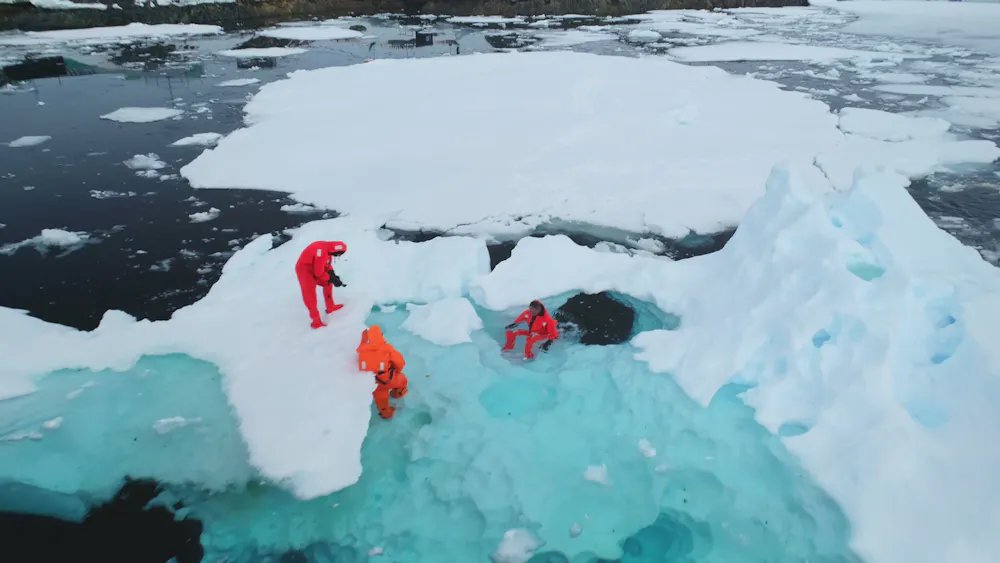
    Yundi Nature Conservancy, CC BY-NC-ND

    South Australia is famously the driest state on the driest inhabited continent.

    But even for South Australia, the current drought is extreme. Rainfall has been the lowest on record across large areas.

    When drought strikes and water sources dry up, life becomes hard for wildlife. In these conditions, perennial water sources become enormously valuable.

    Dotted across the drought-stricken Fleurieu Peninsula south of Adelaide are more than 850 swampy wetlands. When the landscape dries out, these swamps act as refuges. Animals, birds, insects and reptiles come from far and wide, drawn by permanent spring-fed water, good habitat, diverse plant species and cooler, more humid micro-climates. These swamps are vital habitat for the critically endangered Mount Lofty Ranges southern emu-wren.

    Drainage channels were cut through many of these swamps in the early days of settlement, in an effort to turn them into pasture. The Fleurieu swamps are now considered an endangered ecological community. More than 90% of the remaining swamps are located on private property.

    Keeping these swamps intact and restoring dried out wetlands comes with real benefits for farmers. Birds and insects seek refuge in the swamps, but feed on pest species on nearby farmland.

    As drought tightens its grip on South Australia, these swamps will only become more important to wildlife. Restoring these swamps by bringing back the water and restoring plants and pollinators could go some way to help.

    Important for nature – and humans

    The swamps of the Fleurieu are some of the most diverse and productive habitats on Earth. Many species of plants, birds, frogs, fish, insects, mammals and reptiles rely on them to survive.

    Before colonisation, swamps and wetlands covered large areas of the Fleurieu Peninsula. Three First Nations language groups lived in these areas on the central and eastern peninsula. The importance of these wetlands is recorded in the shared story of Tjilbruki, a Kaurna ancestor whose tears at the death of his nephew gave rise to six freshwater springs.

    Over the last 200 years, most of this region has been cleared for pasture, crops and vineyards. Only 4% of the swamps are conserved. They are now listed as a critically endangered ecological community. These swamps are still declining due to threats such as more human settlement, land clearance, water extraction and invasive species such as blackberries.

    Many were drained to make way for agriculture. We don’t fully know how many remain, as many are not well captured in current maps.

    But we know these wetlands are vital, not just for nature but for farmers too. Farmers would miss them if they were gone.

    We can see this most clearly during droughts. As the land gets drier and ephemeral water sources evaporate, ibises, eastern great egrets, white-faced herons and masked lapwings move into these swamps, seeking water. During the days, though, they spread out and feed on pasture pests such as grasshoppers and cockchafer beetle grubs.

    Similarly, these wetlands act as a haven for important insect pollinators and predators. Hoverflies and native bees help farmers by pollinating pasture legumes such as clover, while predators keep down the numbers of pest species.

    As adults, parasitic wasps rely on the nectar from swamp plants such as woolly teatree. But they lay their eggs on common pasture pests such as caterpillars and grubs. When their larvae hatch, they eat these pests. Carnivorous insects such as ladybirds and assassin bugs eat other insects which can trouble farmers.

    Ibises and other bird species base themselves in the swamps during drought, but fan out to eat insects which can trouble farmers.
    Yundi Nature Conservancy, CC BY-NC-ND

    Restoration is possible

    Swamps don’t have a great reputation. Throughout human history, they have been seen as sources of foul air and a haven for insects and disease. A common response was to dig channels to drain them.

    We now know much more about how important swamps and other wetlands for the natural world – and for humans. Wetlands naturally store water and carbon, tame floods and offer refuges during drought. Correcting these historic mistakes will take time.

    Wetlands are home to many species of plants, insects and animals.
    Yundi Nature Conservancy, CC BY-NC-ND

    Peatlands like these store huge volumes of carbon in their waterlogged soils. Our research estimated the carbon storage of a peat swamp at Yundi at more than 2,500 tonnes of carbon dioxide equivalent per hectare. The depth of carbon-rich organic peat was up to three metres in places. By contrast, a healthy woodland stores around 650 tonnes per hectare.

    This natural carbon sink will remain as long as the peat remains moist and annual increments from plant growth and decay add to the stock.

    When an agricultural drain is cut through a swamp, water gradually leaches out of the peat profile. Over time, enough water leaves to dry out the peat, beginning with the surface layer. This means long-stored carbon and methane can be released back to the atmosphere.

    Conserving remaining peatlands and restoring those already drained is essential if the climate goals of the Paris Agreement are to be achieved, according to the Food and Agriculture Organization.

    On the Fleurieu Peninsula, there’s huge potential to return water to the soils and expand these once-thriving wetlands.

    The good news? Community groups and farmers have already embarked on several restoration projects. Around 50 farmers in the region have formed the Fleurieu Swamp Restoration Network. To date, in cooperation with Yundi Nature Conservancy, 25 swamp restoration plans have been developed and 15 are under way. If successful, these will restore more than 100 hectares of swamp.

    Christopher Auricht is a director of environmental consultancy Auricht Projects Pty Ltd. He receives funding from both state and federal governments for wetland related consulting and research.

    ref. Surviving swamps on South Australia’s parched Fleurieu Peninsula are a lifeline to wildlife – and farmers – https://theconversation.com/surviving-swamps-on-south-australias-parched-fleurieu-peninsula-are-a-lifeline-to-wildlife-and-farmers-256238


    MIL OSI AnalysisEveningReport.nz

  • MIL-Evening Report: Fish driving cars and chimps doing maths: what teaching animals ‘irrelevant’ skills reveals about our own minds

    Source: The Conversation (Au and NZ) – By Scarlett Howard, Research Fellow, School of Biological Sciences, Monash University

    VixtorPhoto / Shutterstock

    Did you know goldfish can learn to drive cars? Have you heard bumblebees can learn to pull on a string? Would you believe some primates can perform calculations with Arabic numerals?

    These tasks seem completely irrelevant to these animals in their natural environment, so why are researchers interested in them?

    As someone who studies the intelligence of insects, much of my own research has been labelled as “ecologically irrelevant”.

    However, as I have argued in Trends in Cognitive Sciences, there are plenty of reasons to study this kind of animal intelligence.

    Finding relevance in irrelevance

    The study of animal intelligence often seeks to form a better understanding of the animal’s ecology. However, there are also many studies that aim to push the limits of animal cognition beyond what we would expect in their everyday life.

    This honeybee has been trained to find sugar water where there are an even number of shapes.

    Ecologically irrelevant research can help us understand the limits of animal intelligence and develop bio-inspired technology. It can also help us explore behavioural responses to environmental change, and advance our understanding of the evolution of intelligence.

    Understanding how animals respond to ecologically irrelevant tasks sheds light on how our own intelligence has evolved. We frequently use comparisons between humans and non-human primates to understand whether a cognitive capacity has evolved in modern humans, or if we observe similar abilities in other primates and animals.

    For example, children as young as 24 months old can find a hidden object in a room when its location is pointed out to them in a photograph. This ability is known as representational insight.

    Some chimpanzees can also pass this test. Do these results mean a chimpanzee has the same level of intelligence as a two-year-old child?

    Furthermore, this test may allow us to estimate when representational insight evolved. It may have been before humans and chimpanzees split into different lineages.

    Researchers trained goldfish to steer a tank on wheels.

    Imitating nature, comparing species

    Biologically inspired (bio-inspired) solutions to modern computing problems use technology based on biology. Some bio-inspired technologies can cope well with uncertainty by using brain-like computations to process and solve real-world problems. Many animals are considered models for bio-inspired technologies based on their vision, behaviour and movement.

    For example, the flight mechanics of dragonflies have been studied to build micro aerial vehicles. Since bio-inspired technology will undoubtedly be used in unnatural situations, it is useful to know how animals would respond in these same scenarios to build more accurate technology.

    Comparing the behaviour and intelligence of different species can pose a huge challenge to scientists. To enable accurate comparisons we need to have a task of equal difficulty for both species.

    If we use a task that animals perform regularly in their natural environments, we run the risk that one species may have an advantage from performing the task more frequently. However, if we use a task that neither animal is likely to ever need to perform, we can “level the playing field” for an accurate comparison.

    Animals must often adapt to new and unfamiliar situations. Environmental changes such as urbanisation, climate change, habitat loss and invasive species introductions cause animals to encounter new challenges that may have previously been ecologically irrelevant.

    A puzzle box may be seem irrelevant to many animals. However, cockatoos in Australia have learned how to open rubbish bins to forage. The cockatoos have then adapted to solve new puzzles as humans attempt to make bins harder to open.

    This “innovation arms race” between humans and cockatoos shows how an initially ecologically irrelevant task may become relevant to an animal.

    Does a true test of ecologically irrelevant intelligence exist?

    One major question is whether we have been able to create a truly ecologically irrelevant task for animals to complete.

    For example, bees have been trained to recognise images of human faces. This task may appear ecologically irrelevant to a bee.

    However, to the bee, an image of a human face may actually represent an unfamiliar but rewarding flower, particularly when the correct option is paired with a reward of sugar water, which imitates a flower’s nectar. Is this task relevant or irrelevant to a bee? The answer is: it depends.

    Many experiments provide food rewards. Therefore, animals may interpret these experiments as a foraging task, thus making even the most complex and arbitrary tasks during tests of intelligence still somewhat ecologically relevant to the animal. Other rewards for animals participating in experiments include shelter, social interactions, and play.

    While the task itself may appear ecologically irrelevant, the reward may be highly relevant to animals looking for food, mating opportunities, safety, or fun. This leads us to question if any task we give animals is completely bereft of ecological relevance.

    Scarlett Howard currently has funding from the Australian Research Council and the Hermon Slade Foundation.

    ref. Fish driving cars and chimps doing maths: what teaching animals ‘irrelevant’ skills reveals about our own minds – https://theconversation.com/fish-driving-cars-and-chimps-doing-maths-what-teaching-animals-irrelevant-skills-reveals-about-our-own-minds-253938

    MIL OSI AnalysisEveningReport.nz

  • MIL-Evening Report: Climate scientists are trusted globally, just not as much as other scientists – here’s why

    Source: The Conversation (Au and NZ) – By Omid Ghasemi, Research Associate in Behavioural Science at the Institute for Climate Risk & Response, UNSW Sydney

    I. Noyan Yilmaz, Shutterstock

    Societies increasingly rely on scientists to guide decisions in times of uncertainty, from pandemic outbreaks to the rise of artificial intelligence.

    Addressing climate change is no different. For governments wanting to introduce ambitious climate policies, public trust in climate scientists is pivotal, because it can determine whether voters support or resist those efforts.

    So do people trust climate scientists, and what affects levels of trust? Our new study shows climate scientists are less trusted than other types of scientists globally. But there are profound variations in this trust gap between countries, and within them.

    Finding ways to increase trust in climate scientists is crucial if the world is to implement effective policies to avert dangerous global warming.

    Low trust in climate scientists may hinder effective climate science communication and reduce public engagement with climate solutions.
    Mozgova, Shutterstock.

    Examining trust in science

    We collaborated with an international team of researchers to analyse data from one of the largest cross-national surveys of public attitudes toward science. The dataset includes responses from nearly 70,000 people across 68 countries. It offers a rare global snapshot of how people perceive scientists in general, and climate scientists in particular.

    Each of these people rated their trust in climate scientists on a five-point scale, with a five indicating very high trust and a one being not trusted at all.

    Trust in scientists more generally was assessed using a 12-item questionnaire that measured perceptions of expertise, integrity, benevolence and openness. The responses were averaged to create a composite trust score. Higher scores reflected higher levels of trust.

    We found trust in scientists was moderately strong worldwide, as it was above the midpoint of the scale (averaging 3.6 out of 5). But trust in climate scientists was slightly lower (averaging 3.5). The difference between the two scores is what we call the “trust gap”.

    In 43 of the 68 countries, the trust gap was statistically significant, with people reporting lower trust in climate scientists than in scientists in general.

    The size of the trust gap varied between countries. In Europe, Oceania (including Australia and New Zealand) and North America the gap tended to be smaller. Larger gaps emerged in parts of Latin America and Africa.

    The Democratic Republic of the Congo had the widest gap, with climate scientists trusted less than in any other country. This may reflect local concerns that global climate agendas — often supported by international scientists — prioritise resource extraction for foreign renewable energy demands over local interests. Such feelings may be particularly acute in regions where mining has brought limited community benefit.

    Six countries bucked the trend. Climate scientists were more trusted than scientists overall in China, Taiwan, South Korea, Egypt, Israel and Germany.

    In China and Germany, this may reflect strong investment in green energy, high levels of public support for climate action, and the visible role climate scientists play in shaping policy.

    What’s going on here?

    Not surprisingly, people with more positive views of science tended to express higher trust in scientists and even more so, climate scientists. But people with dim views of scientists were less trusting of climate scientists.

    Age also played a role. Older people tended to trust scientists more than younger people. But younger people were more likely to trust climate scientists.

    Climate scientists were generally less trusted than scientists regardless of gender. While men reported slightly lower trust in scientists than women did, the difference was not statistically significant.

    Among all the variables we examined, political orientation emerged as one of the strongest factors associated with trust in climate scientists. People with right-leaning or conservative views reported lower trust in climate scientists compared with those with more left-leaning or liberal views.

    However, the meaning of terms such as “liberal” and “conservative” can vary considerably between countries. For example, in Australia, the Liberal Party is politically right-leaning. But in the United States, “liberal” typically refers to left-leaning or progressive views. This variation makes cross-national comparisons complex and requires careful interpretation of results.

    As a particular person’s political orientation shifted further to the right, the trust gap between climate scientists and scientists widened.

    In 28 countries across the Americas, Europe and Oceania, right-leaning orientation was associated not only with lower trust in climate scientists than people who leaned to the left, but also with a larger gap between trust for scientists generally and trust for climate scientists.

    In a smaller subset of countries, particularly in parts of Asia, Africa and Eastern Europe, the pattern reversed – right-leaning individuals expressed greater trust in climate scientists than their left-leaning counterparts.

    These findings suggest it is not political orientation alone that drives public trust, but how climate issues are framed in political discourse. In many Western countries, public messaging around climate change — particularly from conservative parties and media — has cast doubt on the credibility of climate science. This politicisation, often amplified by vested interests such as fossil fuel lobbies, may help explain the erosion of trust among some conservative groups.

    Closing the trust gap

    Trust alone will not solve the climate crisis, but it plays a crucial role in shaping how societies respond to scientific guidance.

    Ambitious, evidence-based policies require public support to succeed. A persistent trust gap — no matter how small — can undermine that support and help explain why many governments continue to fall short of their climate targets.

    Closing the trust gap through transparent communication, inclusive public engagement, and consistent political leadership is essential for turning awareness into action.

    Omid Ghasemi receives funding from the Australian Academy of Science.

    Ben Newell receives funding from The Australian Research Council.

    ref. Climate scientists are trusted globally, just not as much as other scientists – here’s why – https://theconversation.com/climate-scientists-are-trusted-globally-just-not-as-much-as-other-scientists-heres-why-256441

    MIL OSI AnalysisEveningReport.nz

  • MIL-Evening Report: Joe Biden has advanced prostate cancer with a Gleason score of 9. What does this mean?

    Source: The Conversation (Au and NZ) – By Sarah Diepstraten, Senior Research Officer, Blood Cells and Blood Cancer Division, WEHI (Walter and Eliza Hall Institute of Medical Research)

    Former US President Joe Biden has been diagnosed with an aggressive form of prostate cancer that has already spread to his bones.

    A statement Biden’s office issued on Sunday revealed Biden was diagnosed after experiencing urinary issues.

    Biden’s office said his cancer has a Gleason score of nine out of ten. It also said his cancer “appears to be hormone-sensitive, which allows for effective management”.

    So what is a Gleason score? And what does it mean for a cancer to be hormone-sensitive?

    What is prostate cancer?

    Prostate cancer is any cancer that begins in the prostate, part of the male reproductive system. This small golf ball-sized gland is located below the bladder.

    The prostate is below the bladder.
    izunna/Shutterstock

    Prostate cancer is the second most common cancer in men worldwide. In Australia, one in six men will be diagnosed with prostate cancer by the age of 85.

    Some types of prostate cancer are low risk, grow very slowly, and may not require immediate treatment. Others are highly aggressive and can spread to other tissues and organs.

    What are the symptoms of prostate cancer?

    Early prostate cancers do not usually cause symptoms, and therefore can be difficult to detect.

    At later stages, prostate cancer symptoms can include frequent urination, pain and/or a weak stream while urinating, blood in urine/semen, back/pelvic pain, and weakness in the legs or feet.

    Advanced prostate cancer which has spread to bones can cause pain, fatigue and weight loss.


    Read more:
    How does cancer spread to other parts of the body?


    What is the Gleason score?

    The Gleason score is one way of measuring the aggressiveness of prostate cancers. It assists doctors in categorising prostate cancers into different groups and in selecting appropriate treatments for patients.

    To calculate the Gleason score, clinicians take multiple samples of the tumour, called biopsies. To obtain each sample, a small needle is inserted into the tumour and a sliver of tissue (usually around 12 millimetres long) is extracted for testing.

    Because the different regions of the tumour can have different cancer cells present, pathologists then pick two different sections of the tumour biopsy they think best represent the whole tumour.

    Then, they grade each of the two sections with a score from 1 to 5. Grade 1 means the cancer cells present look a lot like normal, healthy cells. Grade 5 means the cancer cells look very abnormal. To get a patient’s Gleason score, the two grades are added together.

    Patients with a Gleason score of 6 or less are considered low risk and may not require immediate treatment.

    A Gleason score of 8–10 indicates a highly aggressive prostate cancer that will likely grow quickly.

    In Australia, 67.9% of men at diagnosis have a Gleason score of 7 or less.

    It’s not the only tool

    The Gleason score is only one tool health-care professionals use to guide the diagnosis and treatment of patients.

    Other tools include blood tests for prostate-specific antigen (PSA, which is often elevated in prostate cancer patients), physical examinations (such as a digital rectal examination), and imaging of the tumour (such as via CT scans, MRI, or ultrasounds).

    While we don’t have all of the information about Biden’s diagnosis, a Gleason score of 9 indicates that his cancer is very aggressive.

    What is hormone-sensitive prostate cancer?

    Hormones are chemical signals made by various glands in our bodies. They are released into the bloodstream and can activate different processes in different cells and tissues.

    Hormones are very important for the normal functioning of our bodies, but some types of cancers also need hormones in order to grow.

    Prostate cancers that are “hormone-sensitive” need male sex hormones (also called androgens) to grow. Testosterone, which is primarily produced in the testicles, is an example of an androgen.

    How are hormone-sensitive cancers treated?

    Hormone therapies work either by reducing androgen levels, or by blocking the function of androgens. This can slow down or even kill hormone-sensitive prostate cancers, since they depend on androgens for their continued growth and survival.

    Androgen-deprivation therapy is usually the first hormone therapy those with prostate cancer will receive. It aims to reduce the levels of androgen produced by the testicles, either through surgical or chemical castration.

    Other types of hormone therapy, which can also be used in combination with androgen-deprivation therapy, include androgen-receptor blockers. These drugs bind to cell receptors, blocking the interaction between the androgens and the cancer cells. This means the cancer cells can’t access the androgens they need to grow.


    Read more:
    Every cancer is unique – why different cancers require different treatments, and how evolution drives drug resistance


    Of course, hormones are also necessary for normal bodily functions, meaning blocking them has side effects. Hormone therapies for prostate cancer commonly have side effects such as erectile dysfunction, weight gain, fatigue and osteoporosis, which causes bones to become weak and brittle.

    While hormone therapy may not be pleasant, it is an effective treatment option. Prostate cancers which become insensitive to hormone therapies are much more difficult to treat and generally considered incurable.

    Besides hormone therapy, prostate cancer may also be treated with surgery, radiotherapy and chemotherapy – it depends on the patient.

    In addition, many new treatments for prostate cancers are currently under investigation, including laser procedures to remove cancer cells and CAR T therapy, which involves transforming a patient’s own immune cells into cancer-fighting cells.

    For patients whose prostate cancer has spread to their bones, treatments are usually aimed at stopping the cancer from spreading further and reducing symptoms.

    Biden and his family are now said to be reviewing treatment options.

    Sarah Diepstraten receives funding from Cure Cancer Australia and My Room Children’s Cancer Charity.

    John (Eddie) La Marca receives funding from Cancer Council Victoria. He is affiliated with the Olivia Newton-John Cancer Research Institute and the Walter and Eliza Hall Institute of Medical Research.

    ref. Joe Biden has advanced prostate cancer with a Gleason score of 9. What does this mean? – https://theconversation.com/joe-biden-has-advanced-prostate-cancer-with-a-gleason-score-of-9-what-does-this-mean-256998

    MIL OSI AnalysisEveningReport.nz

  • MIL-Evening Report: Russia is labelling Oscar Jenkins a ‘mercenary’, not a prisoner of war. What’s the difference – and why does this matter?

    Source: The Conversation (Au and NZ) – By Shannon Bosch, Associate Professor (Law), Edith Cowan University

    Oscar Jenkins, a 33-year-old former teacher from Melbourne, was one of many foreigners who responded to Ukrainian President Volodymyr Zelensky’s call in 2022 for volunteers to join Ukraine’s armed forces to help repel Russia’s invasion.

    In early 2024, Jenkins joined Ukraine’s International Legion of Territorial Defence, which has attracted some 20,000 fighters from 50 countries since the war began. He had no previous military experience, but this wasn’t a requirement to join.

    In December, Jenkins was captured by Russian forces in Russian-occupied eastern Ukraine and accused of serving as a “mercenary” in Ukraine’s 66th Mechanised Brigade’s 402nd Rifle Battalion. He was tried in a Russian court and sentenced on May 16 to 13 years imprisonment in a maximum-security penal colony.

    When a foreigner volunteers to fight in a war, their legal status under international law can be complicated.

    Are they a soldier with the full authorisation of one of the warring parties to engage in hostilities? Or are they an illegal mercenary?

    And what happens if they are captured?

    Why legal status matters

    The answers to these questions have very real importance to the thousands of foreigners who have joined Ukraine’s International Legion since 2022.

    Russian authorities have classified all of Ukraine’s foreigner fighters as “mercenaries”. They’ve used this label to deny foreign fighters the status of “prisoner of war” (POW), with the requisite protections that come along with that under international humanitarian law.

    While foreigners are permitted under international law to enlist in the armed forces of a state for political or moral reasons, mercenaries have historically been outlawed due to their sole motivation being financial gain.

    International humanitarian law (the rules that govern war) define mercenaries as individuals who are not nationals or residents of a state engaged in war and are recruited to fight outside that state’s official armed forces.

    They are motivated solely by private gain (like money or promises of reward), often well in excess of what the traditional armed forces are paid. Mercenaries are essentially professional soldiers who sell their services to a state without any real ties to that country.

    Once a fighter is classified as a “mercenary”, they lose all the legal protections that are traditionally afforded lawful combatants.

    This includes prisoner of war status if they are captured and immunity from prosecution for fighting in a conflict. Prisoners of war are also entitled to humane treatment and access to food and medical care. And they cannot be subjected to sham trials or torture.

    According to my research, many of the foreign nationals who joined the International Legion were motivated by a desire to defend Ukraine against Russia’s aggression. They were sworn into Ukraine’s armed forces and paid the same as a Ukrainian soldier of equal rank.

    Once enlisted in the armed forces, they were immediately exempt from “mercenary” status, irrespective of their motivation for joining.

    As such, these foreign fighters should be entitled to the full range of protections guaranteed to members of Ukraine’s armed forces under the Geneva Conventions.

    Labelling lawful foreign members of the Ukrainian armed forces as “mercenaries”, and denying them their protections, is an abuse of international law.

    How can Australia protect its nationals?

    If an Australian enlists in Ukraine’s armed forces and is captured by Russian forces, there is a limited toolkit the Australian government can use to help him or her. However, it is not powerless.

    Through its embassy in Moscow, Australia can request access to detainees to assess their welfare while in prison. Russia can, however, decline this access. Details of a detainee’s capture may also be withheld.

    Australia can also apply diplomatic pressure to ensure humane treatment of prisoners and their full POW rights.

    This can be done by working with international bodies, such as the UN Working Group on Arbitrary Detention or organisations like the International Committee for the Red Cross (ICRC), which can request access to detainees.

    It appears the government is already doing some of these things. According to Foreign Minister Penny Wong, the government has been working with Ukraine and the ICRC to advocate for Jenkins’ welfare and release, and providing consular support to Jenkins’ family.

    Australia also has an obligation to warn its citizens they will likely face severe consequences if they travel to Ukraine to fight and are captured by Russian forces, given Russia’s misuse of the “mercenary” label.

    Through back-channel negotiations, Australia could also push Ukraine or its allies to include Australians being held by Russia in future prisoner swaps.

    In January of this year, Ukraine and Russia carried out such an exchange of 470 prisoners from both nations. And in talks last week in Turkey, both sides agreed to release another 1,000 prisoners on each side.

    Such exchanges have involved foreign fighters in the past. In 2022, 10 foreign citizens were included in a prisoner swap, including five Britons, two Americans, a Croatian, a Swede and a Moroccan. Several of them had been convicted of being mercenaries and sentenced to death after a Russian sham trial.

    There is no guarantee Jenkins would qualify for such an exchange, however, if Russia continues to classify him as a mercenary.

    Shannon Bosch does not work for, consult, own shares in or receive funding from any company or organisation that would benefit from this article, and has disclosed no relevant affiliations beyond their academic appointment.

    ref. Russia is labelling Oscar Jenkins a ‘mercenary’, not a prisoner of war. What’s the difference – and why does this matter? – https://theconversation.com/russia-is-labelling-oscar-jenkins-a-mercenary-not-a-prisoner-of-war-whats-the-difference-and-why-does-this-matter-256996

    MIL OSI AnalysisEveningReport.nz

  • MIL-Evening Report: Politics, protest and some seriously inappropriate songs: who gets censored at Eurovision, and who doesn’t?

    Source: The Conversation (Au and NZ) – By Catherine Strong, Associate Professor, Music Industry, RMIT University

    As always, Eurovision 2025 was full of glitter, costume reveals, divas, spectacle and, of course, controversy. From ongoing calls to ban Israel from participating, to one song that had to be edited since it was too inappropriate, here’s what you may have missed from this year’s contest.

    A milkshake meltdown

    For Australian viewers, the final may have been a bit of a letdown because, for the second year in a row, our contestant failed to get past the semis.

    Go-Jo’s Milkshake Man seemed like a strong offering, with its daft and suggestive lyrics, huge energy and oversized blender prop – but some weak vocals on the night left us in the cold.

    Other wacky entries of the uniquely Eurovision variety fared better, though. Sweden’s ode to saunas, Bara Bada Bastu, started the night as the favourite to win and ended high with a fourth placing, just behind Estonia’s rubbery-legged Tommy Cash, whose love song to coffee may have just been more relatable to voters.

    Serving what?

    More controversial was Miriana Conte’s song for Malta, originally titled Serving Kant, with kant being the Maltese word for singing. But this thinly disguised attempt to celebrate “serving cunt” was deemed inappropriate by the European Broadcasting Union, and reworked as simply Serving.

    This performance is part of a long Eurovision tradition of celebrating queer culture. Each year, multiple entries use LGBTQIA+ imagery, tropes and lyrics to celebrate the theme of being who you are.

    Last year’s event marked the first time two non-binary performers were featured in the contest. One of them, Switzerlans’s Nemo, won. As a side note, Nemo’s return performance this year may be one of the best things to ever grace the Eurovision stage.

    But it seems Malta’s cheeky play on the theme didn’t pay off, as it landed them in 17th place by the end of the voting.

    Other stand-out performances included Finland’s Erika Vikman, who outperformed a whole crop of big-voiced divas in sparkly body suits by riding a giant flaming microphone to the roof of the stadium during the, ahem, climax to Ich Komme (which translates to “I’m coming”).

    Less in your face, yet strangely compelling, were the women of Latvia’s folk band Tautumeitas. In their forest-nymph-axolotl (?) costumes, they delivered a flawless and gentle performance.

    A heated, close race to the top

    The winner was, as is often the case at Eurovision, a more serious song that showcased a high level of musicianship and vocal ability. Austria’s JJ performance of Wasted Love was stripped-back compared to most of the rivals.

    JJ took to the stage alone, using a completely black and white palette that stood out against the reds that dominated the rest of the night. The way he used his body onstage, and the dynamism of his soprano voice – moving from a conventional pop vocal style to a more operatic delivery – was compellingly dramatic, and was rewarded by the juries and public voters.

    It was a close race for the top spot however. I imagine the broadcasting union breathed a sigh of relief when Austria knocked Israel into second place at the last moment.

    Israel’s presence in the contest has been a source of division and conflict since the events of October 7. For two years there have been highly publicised calls to expel Israel from the competition, in light of the extreme atrocities and human rights abuses taking place on the ground in Gaza.


    Read more:
    1 in 5 Gazans face starvation. Can the law force Israel to act?


    Multiple pro-Palestinian rallies took to the streets in the host city, Basel, and protesters trying to disrupt the Israeli performance found their way into the arena during the rehearsals and final. While they did not make it into the broadcast, there were reports of audience members being removed, staff being hit with paint, and violent clashes with security and police.

    Beyond this, 70 ex-competitors and, separately, more than 4,000 Nordic music workers put their names on open letters protesting Israel’s inclusion in the contest. But these attempts failed, partly because the countries involved did not threaten to withdraw themselves if Israel participated (which was how Russia was expelled from the 2022 contest, in the wake of its invasion of Ukraine).

    What can we expect moving forward

    It’s worth considering what Israel’s inclusion in the contest does allow. In recently published work, my coauthors and I consider what it means to face up to some of the uglier aspects of music and music-making – and to sit with the discomfort, rather than ignore it.

    If Israel had been excluded, those calling for its exclusion may have achieved a sense that a certain wrong had been righted, and the Eurovision party could go on, free from worry.

    Yet the realities of events in Gaza would not have disappeared. Viewers at home would simply not have to think about them.

    Israel’s inclusion – and the opposition to it – forces us to ask what role, if any, cultural institutions can play in helping put a stop to what the International Court of Justice has said can plausibly be called a genocide.

    While the broadcasting union could perhaps put pressure on Israel with a ban, the fissures of Israel’s continued inclusion have shone a spotlight on other types of pressure and resistance – and the power music has in bringing people together for the explicit purpose of being political.

    Catherine Strong does not work for, consult, own shares in or receive funding from any company or organisation that would benefit from this article, and has disclosed no relevant affiliations beyond their academic appointment.

    ref. Politics, protest and some seriously inappropriate songs: who gets censored at Eurovision, and who doesn’t? – https://theconversation.com/politics-protest-and-some-seriously-inappropriate-songs-who-gets-censored-at-eurovision-and-who-doesnt-256447

    MIL OSI AnalysisEveningReport.nz

  • MIL-Evening Report: The re-emergence of polio in Papua New Guinea shows global eradication remains elusive

    Source: The Conversation (Au and NZ) – By Michael Toole, Associate Principal Research Fellow, Burnet Institute

    Last week the World Health Organisation (WHO) declared a polio outbreak in Papua New Guinea (PNG).

    The highly infectious virus was found in two healthy, polio-vaccinated children who were screened following detection of the virus during routine wastewater sampling in Lae, PNG’s second largest city. Wastewater samples are also positive in the capital Port Moresby, indicating the potential of spread around the country.

    The strain has been identified as circulating vaccine-derived poliovirus type 2, similar genetically to a strain circulating in Indonesia.

    So what does this mean? And what will happen now in PNG?

    First, what is polio?

    Polio, or poliomyelitis, is a highly contagious disease caused by the poliovirus. It primarily affects children.

    Most infections don’t cause significant symptoms and go largely unnoticed. But less than 1% of infections result in paralysis.

    Poliovirus is spread by person-to-person contact or the ingestion of contaminated virus from faeces. The virus multiplies in the gut of people who are infected, and they shed the virus in their stool for several weeks. In this way it can spread through a community, especially in areas with poor sanitation.

    A recent review also suggested a greater role for transmission via respiratory particles than we previously thought.

    Wild poliovirus (as distinct from vaccine-derived poliovirus, which we’ll discuss shortly) was a major public health issue prior to the rollout of vaccination in 1950s. This campaign led to the virtual elimination of the disease in rich countries such as Australia.

    Since the Global Polio Eradication Initiative was launched in 1988, cases have decreased by 99% globally. Wild poliovirus remains endemic only in Pakistan and Afghanistan.

    Polio is caused by the poliovirus.
    Kateryna Kon/Shutterstock

    Polio vaccines

    There are two types of vaccines – the oral polio vaccine and the inactivated polio vaccine.

    Delivered as two drops in the mouth at least four times in early childhood, the oral vaccine contains a live-attenuated (weakened) form of the poliovirus. It triggers a strong immune reaction in the gut that slows the replication of wild poliovirus, and reduces shedding in the stool, limiting transmission.

    The oral vaccine does carry a small risk of the weakened vaccine strain causing paralysis. This occurs in
    roughly one in 2.7 million doses of the oral vaccine administered, usually at the first dose.

    The inactivated polio vaccine (part of the routine immunisation program in Australia) contains an inactivated or dead form of the poliovirus, which is unable to cause polio in the recipient.

    Given as an injection, this vaccine stimulates the immune system to produce protective antibodies in the blood against poliovirus. Three doses of the inactivated vaccine are highly protective against developing symptoms and paralysis from polio.

    However, this vaccine is thought not to be as effective as the oral vaccine at preventing infection and shedding in the gut. Therefore, it doesn’t prevent transmission.

    What is vaccine-derived poliovirus?

    As the weakened poliovirus in the oral vaccine is still shed in the stool, it can spread in communities with poor sanitation. The vaccine strain can mutate to a form that can cause paralysis, like wild poliovirus. The result, circulating vaccine-derived poliovirus, is a problem particularly when polio immunisation rates are low.

    The risk of international spread of vaccine-derived poliovirus has been assessed as high by the WHO and United States Centers for Disease Control and Prevention. There were outbreaks in 39 countries in 2023–24.

    A novel oral polio vaccine, nOPV2, which is less likely to mutate, has been used in outbreaks of vaccine-derived poliovirus since 2021.

    Routine vaccination with the inactivated polio vaccine is key to preventing vaccine-derived poliovirus, and is recommended by WHO. The polio endgame will involve this transition from the oral vaccine to the inactivated vaccine.

    In 2019, all countries had introduced the inactivated vaccine. However uptake remains low because of a lack of resources and inadequate access to health services in poor countries.

    What happens now in PNG?

    The PNG government has responded swiftly to activate its polio emergency response plan, supported by partners including WHO, UNICEF and the Australian government.

    Notably, PNG’s vaccination rate is among the lowest in the world, with only about 50% of children born each year receiving the recommended childhood vaccines, including the oral polio vaccine. To induce herd immunity and prevent outbreaks of disease, coverage should be at least 95%.

    PNG was declared polio free in 2000. But there was an outbreak in 2018 of vaccine-derived polio type 1 with 26 cases across nine provinces. The outbreak was brought under control through supplementary rounds of vaccination, enhanced surveillance, and expanded communication and community engagement.

    There are many lessons to be learned from the successful response to the 2018 polio outbreak. These three pillars of the response remain relevant:

    • mass vaccination (using nOPV2)
    • enhanced surveillance for cases and wastewater sampling
    • communication (through traditional and social media) and localised community engagement.

    Further research will be crucial to understand where transmission is occurring and target the response accordingly. This includes the question of potential for spread between Indonesia and PNG – a neglected health security issue.

    How about the risk in Australia?

    While the risk of spread of polio in Australia is low, the virus does not respect borders, and we cannot become complacent.

    Australia’s overall coverage with the inactivated vaccine is close to 95% but there has been a concerning decline in childhood immunisation since the COVID pandemic. Australia must address this and maintain its polio wastewater monitoring system.

    Supporting PNG and working with other countries towards global polio eradication is the best way Australia can protect itself.

    This outbreak is a timely reminder that the last mile in the global eradication of polio remains elusive. As we emerge from a pandemic, the need for international cooperation, strengthening health systems and responding swiftly to health emergencies such as polio couldn’t be stronger.

    Michael Toole has received funding from the National Health and Medical Research Council.

    Suman Majumdar, through the Burnet Institute receives grant funding from the Victorian Government and the Australian Government via the National Health & Medical Research Council of Australia, the Medical Research Future Fund and the Department of Foreign Affairs and Trade.

    Fredrick Charles does not work for, consult, own shares in or receive funding from any company or organisation that would benefit from this article, and has disclosed no relevant affiliations beyond their academic appointment.

    ref. The re-emergence of polio in Papua New Guinea shows global eradication remains elusive – https://theconversation.com/the-re-emergence-of-polio-in-papua-new-guinea-shows-global-eradication-remains-elusive-256899

    MIL OSI AnalysisEveningReport.nz

  • MIL-Evening Report: An online travel company just collapsed. Here’s how to avoid being left stranded by an online deal

    Source: The Conversation (Au and NZ) – By Madalyn Scerri, Senior Lecturer in Tourism and Hospitality, Torrens University Australia

    Viacheslav Lopatin/Shutterstock

    Traveldream.com.au sold discounted holidays – curated hiking tours, boutique cruises and cultural getaways through a slick website and polished social media ads. But news emerged last week that the Melbourne-based travel company has collapsed into administration, leaving customers out of pocket by thousands of dollars, and in some cases, stranded overseas.

    What many didn’t know was that Traveldream hadn’t been formally accredited with the leading industry body since 2020. Its status under the Australian Travel Accreditation Scheme, run by the Australian Travel Industry Association, had been cancelled.

    To make matters worse, most travel insurance policies don’t cover insolvency, meaning many customers have no way to recover their losses.

    Australians are expected to spend over A$2 billion booking holidays online in 2024–25.

    Big name platforms such as Booking.com and Expedia account for about 60% of this activity. But many travellers are also turning to smaller or lesser-known providers offering flashy deals and lower prices, often with fewer safeguards.

    So, how can you protect yourself? Start with these five checks.

    1. Don’t be swayed by slick websites or social media ads

    It’s a common tactic, and one that’s hard to resist. You’re scrolling, you see a dreamy image, the price is tempting, and suddenly you’re halfway through checkout.

    But a polished ad doesn’t guarantee legitimacy.

    Travel-related scams are on the rise, especially involving online-only sellers.

    Ads on social media for idyllic vacations can be tempting, but check the fine print.
    Song_about_summer/Shutterstock

    Check for a verifiable business address, phone number and customer support. If the deal feels vague, under-priced or overly urgent, that’s a red flag.

    Look for independent reviews (on Trustpilot, Tripadvisor or Google), and check Scamwatch for known issues.

    2. Look at how the company engages with customers

    A company’s reputation isn’t just about what it promises: it’s built on how it responds to questions and complaints. Before booking, take a moment to see how the business interacts with customers online.

    Do they reply constructively to complaints? Do they offer updates or explanations when issues arise?

    Also notice the tone. Does it feel human and responsive, or generic and hands-off? That can suggest how they’ll treat you after the sale.

    Small signs can speak volumes. A page with thousands of followers but no visible engagement may indicate a paid audience – and a company that vanishes when things get difficult.

    3. Check if the company is accredited

    Another way to assess a travel company’s credibility is to check if it holds formal accreditation. This signals the company has met standards in financial security, customer service and dispute resolution.

    Search the Australian Travel Accreditation Scheme register at https://www.atas.com.au, or look for Quality Tourism Accreditation. For overseas providers, check for recognised local schemes.

    Accreditation offers extra reassurance, but it’s not the whole picture. Some large, reputable companies, such as Expedia, operate without it. If a company isn’t accredited, proceed with caution and focus on how bookings and payments are handled.

    4. Scrutinise policies carefully

    Before booking, check what happens if the provider goes bust, whether you can cancel or reschedule, and how your booking will be confirmed. Where possible, follow up directly with the hotel, airline or tour operator to make sure reservations are secured.

    Booking directly with a hotel or tour provider can ensure you are getting up-to-date availability.
    Media_Photos/Shutterstock

    It’s also important to understand what travel insurance does – and doesn’t – cover.

    Company insolvency is one of the most common exclusions. Unless a policy includes “end supplier failure” or a similar clause (most don’t), you may not be able to claim a refund. Always read the Product Disclosure Statement to check exactly where you stand.

    Another safeguard is to pay with protection in mind. Although conditions vary by provider, credit cards may offer chargebacks if the goods or services aren’t delivered.

    5. Book direct where feasible

    While accredited travel agencies can be helpful for complex itineraries, like overseas trips with multiple stops or bundled services, it’s often worth booking directly with the provider when making travel arrangements online, whether that’s a hotel, airline or tour company.

    Cutting out the intermediary can offer better value, including complimentary extras, flexible cancellation and full access to loyalty programs.

    Direct bookings usually reflect real-time availability and pricing, reducing the risk of outdated information. You’ll benefit from direct communication and confirmation, making it easier to customise or resolve issues.

    If something goes wrong, there’s also greater clarity about who’s responsible – offering stronger recourse under Australian Consumer Law.

    The bottom line?

    As more Australians book holidays online, it’s becoming harder to tell what’s trustworthy and what could leave you out of pocket.

    Traveldream’s collapse is a reminder. Even in the world of digital travel deals, it pays to ask: is this company built to last, not just until your trip departs, but until you return home?

    The authors do not work for, consult, own shares in or receive funding from any company or organisation that would benefit from this article, and have disclosed no relevant affiliations beyond their academic appointment.

    ref. An online travel company just collapsed. Here’s how to avoid being left stranded by an online deal – https://theconversation.com/an-online-travel-company-just-collapsed-heres-how-to-avoid-being-left-stranded-by-an-online-deal-256878

    MIL OSI AnalysisEveningReport.nz

  • MIL-Evening Report: Ambition is not a dirty word: female politicians and the ‘Lady Macbeth bias’

    Source: The Conversation (Au and NZ) – By Professor Rebekah Russell-Bennett, Associate Dean Research, Faculty of Business, Government and Law, University of Canberra

    When the new parliament convenes after the recent election, it will feature a rarity in Australian politics. Women will lead two significant political parties at the same time: the Liberal Party’s Sussan Ley and the Greens’ Larissa Waters.

    When female political leaders show ambition, they are often portrayed in the media as grasping, selfish and power-seeking. In other words, they are the embodiment of Shakespeare’s Lady Macbeth.

    The recent negative media coverage of Jacinta Nampijinpa Price’s move to the Liberal Party was reminiscent of the depiction of Julia Gillard when she became Labor leader. Price’s ambition reportedly made her selfish, while Gillard’s ambition was framed as a “moral wrong”.

    The pervasive misrepresentation of female politicians who display ambition can be thought of as “the Lady Macbeth bias”. This negative framing of ambition associates female politicians with ruthlessness and power at any cost. The prejudice reflects the central character theme in Shakespeare’s tragic play, Macbeth, of a woman whose scheming was her undoing.

    Lady Macbeth’s ambition is depicted as morally suspect and unnatural. This ambition leads to her demise.

    Highly gendered ambition

    With two new women leaders rising to the top and a record number of new female politicians in the 48th parliament, how will they be portrayed as their ambition plays out?

    The media representation of women who aspire to leadership typically depicts female ambition as a negative. This is a distraction from any objective criticism of the person. This kind of gendered approach to female politicians could be a deterrent for women who have political aspirations.

    There is a significant evidence base in academic literature that demonstrates ambition is a social construct that is highly gendered. Women politicians who show ambition are seen as unrelatable and unfeminine, while ambitious male politicians are described as visionary or strong.

    Take, for example, this recent article on Paul Keating, whose ambition is lauded, making him a “rare leader”. Let us not forgot that Keating became prime minister by challenging Bob Hawke.

    Compare the praise of Keating to the demonising of Gillard, who also challenged a sitting prime minister (Kevin Rudd) and you will see the opposite commentary. Ambition featured strongly in analysis of Gillard’s rise to power. Instead of praise for her ambition, she was often vilified, with her morality called into question.

    Rudd’s comment to her in 2010 typifies this perspective: “Julia, you’re a good person, why are you doing this?”

    The double bind

    So what is the outcome of this negative media portrayal of women in politics?

    Female politicians with ambition are perceived as less likeable and take a hit in popularity and electoral success. This phenomena has been termed the double bind, which is a paradox experienced by women leaders. To be viewed as competent, they need to display traits typically associated with men, such as ambition, competitiveness and drive. However, when they do, this in turn makes them appear not feminine enough.

    The result of this violation of gender stereotypes ranges from negative perceptions to backlash. Women can be overlooked for roles, receive less money and in the case of politics, face electoral retaliation.

    So like Lady Macbeth, ambitious leaders are punished for defying the natural order of femininity. A lose-lose situation.

    Normalise female ambition

    So what should be done? First the media need to take responsibility for the language used in headlines and stories about female politicians. A more androgynous approach to reporting on political leaders would go a long way to addressing this problem.

    Second, we the public need to decry the use of overused stereotypes in media coverage, such as the Lady Macbeth tropes, when our female leaders are critiqued. While politicians should be held to high standards of accountability, transparency and ethics, a gendered approach undermines this scrutiny and weakens our democratic system.

    Finally, we can limit “the Lady Macbeth bias” by showcasing ambitious female politicians across the political spectrum. When we normalise ambition in women, we break the association between ambition and masculinity. It is time to decouple leadership qualities from gendered stereotypes, not just for current female politicians but for the girls who are our future politicians.

    Shifting perceptions

    The Lady Macbeth theme of ambitious women being unnatural, morally bankrupt, ruthless and manipulative is a serious misrepresentation of female politicians.

    This negative portrayal is a barrier to women entering politics. Or surviving in politics.

    Politicians such as Ley, Waters and Price should be held to account, but not on gendered terms. We must stop treating female politicians as Lady Macbeth. If we do not, gender inequality in politics will prevail.

    That would be a sad future for all Australians.

    Rebekah Russell-Bennett is affiliated with the Liberal party

    ref. Ambition is not a dirty word: female politicians and the ‘Lady Macbeth bias’ – https://theconversation.com/ambition-is-not-a-dirty-word-female-politicians-and-the-lady-macbeth-bias-256681

    MIL OSI AnalysisEveningReport.nz

  • MIL-Evening Report: Why it’s time to delay tackling in junior sports until the age of 12

    Source: The Conversation (Au and NZ) – By Joel Garrett, Lecturer in Exercise Science and Physiology, Griffith University

    Paolo Bona/Shutterstock

    Many children across Australia have begun to play their favourite contact sports like rugby league, rugby union and Australian rules football.

    Many will be just starting out during their early years of primary school.

    Yet there are growing concerns these young athletes may be at heightened risk of sports-related concussions due to their more vulnerable developing brains.

    Our new opinion article, published in Sports Medicine, presents the case for delaying all full-contact tackling until the age of 12, based on the current body of evidence and ongoing debate in the field.

    Some see this as a necessary step to safeguard children’s brains. Others worry it might leave kids unprepared for more physical challenges as they grow.

    But children are not mini adults.

    Why age 12?

    Children have thinner cranial bones, proportionally larger heads and weaker neck muscles than adults, making them more vulnerable to rotational and linear forces during head impacts.


    Read more:
    A stronger neck can help young athletes reduce their risk of concussion


    Their neural pathways are still maturing, so repeated head knocks – referred to as “sub-concussive” impacts, which don’t produce obvious concussion symptoms – may pose greater risks for long-term brain development.

    Around the ages of eight to 12 is a sweet spot for children’s cognitive and motor development, as they make significant gains in physical fitness, motor coordination, body awareness and cognitive functions such as reaction time and decision-making.

    An eight-year-old, for instance, may struggle with the rapid judgements required to align their shoulder and brace their neck properly when tackling a moving player.

    However, by 12, many can execute these decisions with greater consistency.

    Aligning physical growth with cognitive readiness can allow young athletes to enter contact situations with a firmer grasp of safe techniques and the confidence to use them during games.

    Why this might be needed

    A common misconception is delaying full-body contact means not teaching it at all.

    Children should be gradually taught skills like body positioning, safe falling and correct shoulder placement before they are faced with high-intensity collisions.

    This means children get time to master core skills of the sport, such as catching, passing, kicking and tactics, free from the added demands of body-to-body contact.

    This dual focus on skill-based contact training and fundamental sport skills promotes a more holistic athlete development aligned with childhood development.

    Unsurprisingly, studies show non-contact versions of sports have fewer head impacts than those in full-contact leagues.

    Weight-based categories, such as those used in some junior rugby competitions, aim to lower injury risks by preventing physical mismatches. However, they don’t fully address poor technique or cognitive readiness.

    Many leagues across the world are modifying contact rules to reduce youth injuries, with ice hockey the best example.

    Some ice hockey competitions in North America raised the introduction of body checking (when players crash into each other with their hips or shoulders) to 13–14 years of age, resulting in significantly lower injury rates among younger players.

    Studies also found delaying body checking did not increase concussion risk in later years, supporting the idea that “later is safer”.

    The argument against

    Delaying full-body contact (such as tackling) in youth sport remains controversial.

    Some argue early contact fosters character and builds resilience and physical readiness despite the risk to a developing brain.

    But while early findings suggest delaying contact can reduce injuries, we still don’t have enough long-term studies to prove the full impact over time.

    Delaying tackling also poses a challenge, as modifying a sport’s contact rules is complex, and cultural resistance or limited coaching resources in community leagues can hinder change.

    Still, many believe that with appropriate formats, coach education and a phased introduction, it is possible to balance skill development with athlete safety.

    A way forward

    A potential way forward involves structured, progressive skill development, and gradually teaching young players how to give and receive contact, initially in controlled, low-intensity settings. The emphasis should be focused on safe falling, bracing, neck strengthening and correct head placement.

    Some experts also recommend a broader approach that makes safety part of everything in sport, including everything from how coaches teach to the rules of the game to the overall culture.

    By ensuring consistency across coaches, referees and administrators, this model helps reduce the risk of concussions.

    With a structured progression and strong safety culture, more children will be physically and cognitively prepared to participate in full-contact sports confidently, safely and with greater long-term enjoyment and retention.

    Growing evidence supports introducing contact in a developmentally appropriate way to improve safety.

    Earlier collisions may raise the risk of concussions without offering much benefit in the long run.

    A delayed approach, with progressive skill instruction, may be safer and allow children to develop core skills first.

    It’s a way to protect young brains and ensure every child can play confidently and safely once they transition to full-contact tackling, promoting long-term participation safely.

    Jonathon Headrick is affiliated with Exercise & Sports Science Australia (ESSA).

    Joel Garrett does not work for, consult, own shares in or receive funding from any company or organisation that would benefit from this article, and has disclosed no relevant affiliations beyond their academic appointment.

    ref. Why it’s time to delay tackling in junior sports until the age of 12 – https://theconversation.com/why-its-time-to-delay-tackling-in-junior-sports-until-the-age-of-12-256466

    MIL OSI AnalysisEveningReport.nz

  • MIL-Evening Report: What causes ADHD? What we know, don’t know and suspect

    Source: The Conversation (Au and NZ) – By Alison Poulton, Senior Lecturer, Brain Mind Centre Nepean, University of Sydney

    Sergey Novikov/Shutterstock

    Neurodevelopmental disorders are a diverse group of conditions that affect the brain from early development. They include attention-deficit hyperactivity disorder (ADHD), autism and learning disabilities, such as dyslexia.

    These conditions usually become more evident over time. This is because delays in the skills a child is expected to have developed at each age become more apparent.

    ADHD is the most common neurodevelopmental disorder. It affects around 8-10% of children and 2-5% of adults.

    ADHD affects a person’s efficiency at completing tasks (for example, because they get distracted) and their behaviour (such as losing things or struggling to pay attention).

    ADHD can affect all aspects of functioning including problems learning and maintaining friendships. If undiagnosed, the challenges are likely to persist and may lead to anxiety, depression and low self-esteem.

    How is it diagnosed?

    There is no specific genetic or brain abnormality that causes ADHD and no single reliable test to diagnose it.

    A formal diagnosis depends on whether a child shows at least six of the diagnostic criteria for inattention (at least five for adults) and/or at least six of the criteria for hyperactivity-impulsivity (at least five for adults). These have to persist for at least six months.

    The diagnostic criteria include:

    • difficulty concentrating (for example, trouble listening, poor attention to detail, not getting tasks finished)

    • hyperactivity (including fidgeting, feeling restless and running around, constantly chatting)

    • impulsivity (for example, interrupting conversations and games, difficulty waiting their turn).

    Not everyone with ADHD is hyperactive. For people with inattentive-type ADHD, their main difficulty is inattention, for example, concentrating consistently on everyday tasks that are not particularly interesting.

    If someone meets the criteria for hyperactivity-impulsivity and for inattention, they have combined-type ADHD.

    How reliable is diagnosis?

    One problem with these criteria is they’re not specific to ADHD. For example, difficulties concentrating can also be a symptom of depression.

    This is why it’s not enough to simply tick a symptom checklist. The formal diagnostic criteria emphasise these symptoms must interfere with daily functioning.

    The key question is: are ADHD symptoms causing day-to-day problems or holding this person back?

    What this means will vary from person to person, depending on what their everyday activities involve.

    For example, someone may struggle to concentrate at school but excel later on in a creative career such as photography, or in a high-intensity job with hard deadlines, such as journalism.

    It also means a person may only meet the full diagnostic criteria at certain stages of their life. Subthreshold ADHD – when someone meets some criteria but not enough for a diagnosis – can still cause significant difficulties.

    Gender differences

    Boys aged between four and 11 are up to four times more likely to be diagnosed with ADHD than girls.

    This may partly be because the diagnostic criteria are especially good at identifying hyperactive young boys. But they are not as effective for girls, particularly those who are not hyperactive or disruptive, or who try to hide their difficulties concentrating.

    Girls and women are likely to be diagnosed later and show more “internalising symptoms”, such as depression. However the rate of underdiagnosis in girls has been improving over the last four decades.

    The gender disparity also evens out with age. The female proportion of young adults diagnosed with ADHD is closer to half (38%).

    Adults may first notice symptoms of ADHD when managing significant life changes.
    Maria Svetlychnaja/Shutterstock

    What about genetics?

    There is also a strong genetic component. Heritability for ADHD is around 70–80%. This describes how much of the person-to-person differences in ADHD are due to genetics, rather than environmental influences.

    The more closely someone is related to a person with ADHD – in other words, the more genes they have in common – the more likely they are to have ADHD.

    However the genetics are complex. It’s not as simple as finding a gene or selection of genes “responsible” for ADHD.

    For example, early research linked ADHD to six genes that target neurotransmission (how the brain sends chemical signals). But the effect of each gene was small.

    ADHD is now understood to be a polygenic disorder, with thousands of common genetic variants involved.

    Each of these genes is capable of making a discrete but minuscule contribution to the overall expression of ADHD. Because these genes are common, the traits of ADHD are distributed throughout the population, with no clearly defined cut-off between those who do and do not have the condition.

    Within a family, the interaction between shared genetics and a shared environment (their household) make it difficult to study these separately.

    Does environment play a role?

    A supportive family can help a child with ADHD cope better with everyday tasks, as parents often adapt their parenting style to their child’s behaviour. This may mask the ADHD and delay diagnosis.

    But if one or both parents also has ADHD, this may affect their parenting style. It can be difficult to determine how much of that child’s behaviour is due to their inherited ADHD, and how much to the family environment and parenting.

    Studies have also shown children who are relatively young for their year when they start school have higher rates of treatment for ADHD. This points to their environment playing a role in when their ADHD is diagnosed, but not necessarily its cause.

    For more information about ADHD, as well as information about support groups, visit the ADHD foundation or ADHD Australia websites.

    Alison Poulton is a member of the Australasian ADHD Professionals Association and ADHD Australia. She has received personal fees and non-financial support from Shire/Takeda; and book royalties from Disruptive Publishing (ADHD Made Simple).

    ref. What causes ADHD? What we know, don’t know and suspect – https://theconversation.com/what-causes-adhd-what-we-know-dont-know-and-suspect-241119

    MIL OSI AnalysisEveningReport.nz

  • MIL-Evening Report: What does it mean to ‘accept’ or ‘reject’ all cookies, and which should I choose?

    Source: The Conversation (Au and NZ) – By Ahmed Ibrahim, Senior Lecturer, Computing and Security, Edith Cowan University

    Shutterstock/The Conversation

    It’s nearly impossible to use the internet without being asked about cookies. A typical pop-up will offer to either “accept all” or “reject all”. Sometimes, there may be a third option, or a link to further tweak your preferences.

    These pop-ups and banners are distracting, and your first reaction is likely to get them out of the way as soon as possible – perhaps by hitting that “accept all” button.

    But what are cookies, exactly? Why are we constantly asked about them, and what happens when we accept or reject them? As you will see, each choice comes with implications for your online privacy.

    What are cookies?

    Cookies are small files that web pages save to your device. They contain info meant to enhance the user experience, especially for frequently visited websites.

    This can include remembering your login information and preferred news categories or text size. Or they can help shopping sites suggest items based on your browsing history. Advertisers can track your browsing behaviour through cookies to show targeted ads.

    There are many types, but one way to categorise cookies is based on how long they stick around.

    Session cookies are only created temporarily – to track items in your shopping cart, for example. Once a browser session is inactive for a period of time or closed, these cookies are automatically deleted.

    Persistent cookies are stored for longer periods and can identify you – saving your login details so you can quickly access your email, for example. They have an expiry date ranging from days to years.

    What do the various cookie options mean?

    Pop-ups will usually inform you the website uses “essential cookies” necessary for it to function. You can’t opt out of these – and you wouldn’t want to. Otherwise, things like online shopping carts simply wouldn’t work.

    However, somewhere in the settings you will be given the choice to opt out of “non-essential cookies”. There are three types of these:

    • functional cookies, related to personalising your browsing experience (such as language or region selection)

    • analytics cookies, which provide statistical information about how visitors use the website, and

    • advertising cookies, which track information to build a profile of you and help show targeted advertisements.

    Advertising cookies are usually from third parties, which can then use them to track your browsing activities. A third party means the cookie can be accessed and shared across platforms and domains that are not the website you visited.

    Google Ads, for example, can track your online behaviour not only across multiple websites, but also multiple devices. This is because you may use Google services such as Google Search or YouTube logged in with your Google account on these devices.

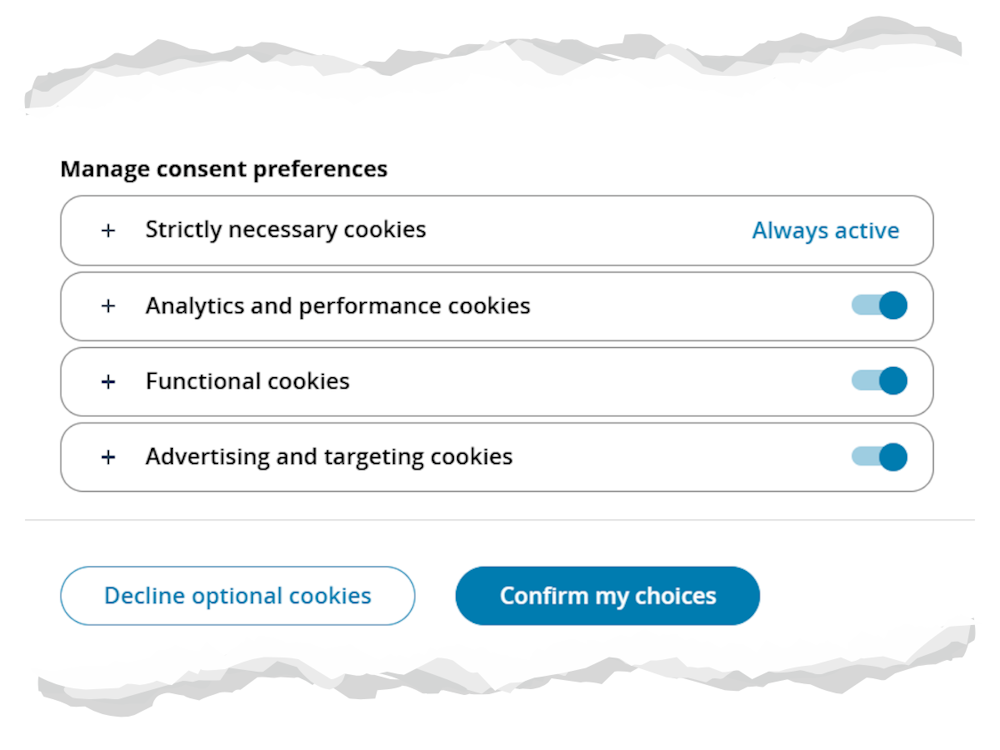
    An example of cookie preferences offered by a website.
    The Conversation

    Should I accept or reject cookies?

    Ultimately, the choice is up to you.

    When you choose “accept all,” you consent to the website using and storing all types of cookies and trackers.

    This provides a richer experience: all features of the website will be enabled, including ones awaiting your consent. For example, any ad slots on the website may be populated with personalised ads based on a profile the third-party cookies have been building of you.

    By contrast, choosing “reject all” or ignoring the banner will decline all cookies except those essential for website functionality. You won’t lose access to basic features, but personalised features and third-party content will be missing.

    The choice is recorded in a consent cookie, and you may be reminded in six to 12 months.

    Also, you can change your mind at any time, and update your preferences in “cookie settings”, usually located at the footer of the website. Some sites may refer to it as the cookie policy or embed these options in their privacy policy.

    How cookies relate to your privacy

    The reason cookie consent pop-ups are seemingly everywhere is thanks to a European Union privacy law that came into effect in 2018. Known as GDPR (General Data Protection Regulation), it provides strict regulations for how people’s personal data is handled online.

    These guidelines say that when cookies are used to identify users, they qualify as personal data and are therefore subject to the regulations. In practice, this means:

    • users must consent to cookies except the essential ones
    • users must be provided clear info about what data the cookie tracks
    • the consent must be stored and documented
    • users should still be able to use the service even if they don’t want to consent to certain cookies, and
    • users should be able to withdraw their consent easily.

    Since a lot of website traffic is international, many sites even outside the EU choose to follow GDPR guidelines to avoid running afoul of this privacy law.

    Better privacy controls

    Cookie pop-ups are tiresome, leading to “consent fatigue” – you just accept everything without considering the implications.

    This defeats the purpose of informed consent.

    There is another way to address your online privacy more robustly – Global Privacy Control (GPC). It’s a tech specification developed by a broad alliance of stakeholders (from web developers to civil rights organisations) that allows the browser to signal privacy preferences to websites, rather than requiring explicit choices on every site.

    GPC is not universally available, and it’s not a legal requirement – a number of browsers and plugins support it, but broader adoption may still take time.

    Meanwhile, if you’re worried you may have accidentally consented to cookies you don’t want, you can find an option in your browser settings to delete cookies and get back to a clean slate (be warned, this will log you out of everywhere). If you want to learn even more, the non-profit Electronic Frontier Foundation has a project called Cover Your Tracks.

    The authors do not work for, consult, own shares in or receive funding from any company or organisation that would benefit from this article, and have disclosed no relevant affiliations beyond their academic appointment.

    ref. What does it mean to ‘accept’ or ‘reject’ all cookies, and which should I choose? – https://theconversation.com/what-does-it-mean-to-accept-or-reject-all-cookies-and-which-should-i-choose-256219

    MIL OSI AnalysisEveningReport.nz

  • MIL-Evening Report: Something borrowed, something blue? Why the reign of the traditional wedding dress may be over

    Source: The Conversation (Au and NZ) – By Jye Marshall, Lecturer, Fashion Design, School of Design and Architecture, Swinburne University of Technology

    Wedding Rebellion Workshop, London Ellie Cooper/unsplash

    The family and friends are all gathered, wedding bells are ringing, and the bride walks down the aisle in her beautiful bubblegum pink wedding dress.

    Twenty years ago, this would have raised some eyebrows. But not so much now, as a growing number of women opt to buck the traditional bridal gown for more unique and colourful finery.

    The origins of the white wedding dress

    The white wedding gown tradition wasn’t cemented in the West until the 19th century. Before then, brides across Europe wore all manner of hues on their wedding day, including reds, blues, yellows, and even black (often in cases where the bride was mourning a close family member).

    Diggers wedding in Melbourne, 1869.
    ST Gill 1852/State Library of Victoria, Melbourne, CC BY-NC

    During the Victorian era (1837–1901), fashion trends were heavily influenced by the wealthy, and especially by the royal families. So it was Queen Victoria’s 1840 wedding that truly kicked off the white wedding gown trend.

    In a bridal context, the colour white often came to be associated with “purity” – symbolism that can be traced back to ancient Rome, where white was worn by brides and by “vestal virgins” – the priestesses who served in the cult of Vesta, the goddess of the hearth.

    In the decades following Queen Victoria’s wedding, we continued to see British royal brides adorned in shades of white, and particularly ivory, cementing what a traditional wedding dress should look like.

    Breaking the mould

    That said, this tradition might now be on its way out, reflecting broader shifts in societal attitudes towards marriage.

    Figures from the Australian Bureau of Statistics show a steady long-term decline in the percentage of people getting married – as well as an increase in the median marriage age for both men and women.

    Australia has also become increasingly multicultural. And with more multicultural marriages comes a unique blend of marriage traditions and colour palettes. For instance, in many Asian cultures, including Chinese and Vietnamese, it is customary to wear red due to its positive associations with luck, joy and happiness.

    Religious adherence also has a role to play in the overall aesthetic of modern weddings. A growing number of young Australians are identifying as non-religious, which means they’re less likely to partake in a church wedding with a puffy white tulle dress.

    Without religious protocols to follow, young couples are expressing their own youthful values at their weddings – and this often includes a more laid-back approach to dressing.

    The legalisation of same-sex marriage in 2017 has also prompted bridal stores to cater to a wider market by offering a greater variety of non-traditional colours and silhouettes.

    Meanwhile, social media and the rise of celebrity culture adds pressure to think outside the box.

    For decades, celebrities have been innovators delivering shock value on their special day. Back in 1954, Marilyn Monroe wore a dark brown suit to her second wedding with Joe DiMaggio. Some 15 years later, Audrey Hepburn got married in a pink Givenchy minidress.

    Today’s stars are following suit. In 2018, singer Mandy Moore donned a pink dress on her wedding day, while model Emily Ratijowsky chose a bright yellow Zara pantsuit.

    In Australia, designers have spent decades distancing themselves from the typical European influence to forge their own fashion identity. One such person, Akira Isogawa, helped develop the bridal landscape throughout the 1990s, by pushing the boundaries of the “traditional bride”.

    The Japanese-born designer brings his own flavour to bridal dresses by infusing them with Eastern elements such as different coloured silks, hand-embroidered motifs, unique beading and even woven fabric. He has also showcased his designs internationally, helping expand Australia’s fashion identity on a world stage.

    Impacts on the industry

    Despite the move away from traditional wedding gowns, bridal stores are expected to grow their revenue over the next few years. And the industry as a whole will likely continue to contribute to overconsumption by capitalising on the shift away from tradition.

    Many stores have changed their business model to cater for more women picking off-the-rack gowns due to financial pressures. According to one industry report, about 17% of brides in 2024 had a custom wedding dress made, compared to 75% purchasing a dress off-the rack, and 7% purchasing a second-hand dress.

    At the same time, a number of new fashion technologies are supporting the next generation of onshore manufacturing by allowing the creation of hyper-personalised dresses. In the future, it may be common for brides to co-design their off-the-rack wedding dress.

    Recycled and upcycled bridal dresses
    have been slow to gain popularity, despite growing pressure on the industry to be more sustainable.

    A broader cultural shift

    This may just be the tip of the iceberg of the non-traditional bridal movement. Australian weddings are starting to take their own shape, becoming less about formality and more about celebrating what couples value the most.

    While we won’t see every bride walking down the aisle in colours like fuchsia pink, we can expect to see more brides opt for softer pastels over shades of white.

    Ideally, the bridal industry would slow down in adopting new trends and instead focus on “localism” practices, wherein consumers are looped into the process of how their clothes are made. This would emphasise sustainability through local production and consumption, while also contributing to local fashion cultures.

    Jye Marshall is a member of The Australian Fashion Council and Ethical Clothing Australia Accreditation.

    ref. Something borrowed, something blue? Why the reign of the traditional wedding dress may be over – https://theconversation.com/something-borrowed-something-blue-why-the-reign-of-the-traditional-wedding-dress-may-be-over-254806

    MIL OSI AnalysisEveningReport.nz

  • MIL-Evening Report: Wine is still Australia’s most popular alcoholic drink – but many producers face an uncertain future

    Source: The Conversation (Au and NZ) – By Paul Chad, Honorary Fellow, Faculty of Business and Law, School of Business, University of Wollongong

    kwest/Shutterstock

    Australia has become world-famous for its wine, but the industry faces an uncertain future. Too many grapes grown amid falling consumer demand, an oversupply of budget wine, and an undersupply of premium wine are just some of the problems besetting the industry.

    There are still many small and medium-sized wineries across Australia. But the industry is dominated by a few large players, as well as “vertical integration” with ownership linkages between wineries and retailers.

    Just this month, a merger between global drinks giant Pernod Ricard’s Australian, New Zealand and Spanish wine brands and Accolade Wines (one of Australia’s largest winemakers) was completed, creating a new giant – Vinarchy – to be based in Adelaide with A$1.5 billion in annual revenue.

    This move will involve an estimated cull of up to 50 wine brands, which speaks to a broader story of growing concentration. Numerous Australian wine companies have come up for sale in recent years, and the industry is undergoing rationalisation.

    The current pressures will require an overall reduction in wine production, and a focus on premium over ordinary wines. Grape-growers and some smaller wineries are likely to be most affected.

    Still the top drop

    According to Wine Australia, the Australian wine industry currently has about 6,000 grape growers and 2,156 wineries. It employs 163,790 people (full- and part-time) and contributes $45 billion to the Australian economy each year.

    This large size shouldn’t come as too much of a surprise. Wine is the most popular alcoholic drink in Australia. But troubles have been brewing for the industry for years.

    Domestic wine consumption has been in steady decline, down 9% since 2016–17.

    This trend isn’t confined to Australia; it is global. The decline reflects cost-of-living pressures, growing health concerns about alcohol, and Gen Z questioning traditional drinking norms.

    Shifting tastes

    However, the picture is nuanced. Wine isn’t a staple product; it is a discretionary purchase. Prices in Australia can range from less than $5 to well over $1,000 per bottle, and palates vary significantly among consumers.

    Price is generally regarded as an indicator of quality. Wine selling in Australia in the “ordinary” price range of less than $15 per bottle is declining, but wine selling in the “premium” ($15 per bottle and above) price range is increasing.

    In the face of decreased global wine consumption, Australia’s shrinking domestic market has also been faced with a steady decline in wine exports. This is problematic for producers looking to exports to offset declines in domestic sales.

    A warm country

    These woes are impacting the wine industry in different ways at different points along the supply chain. Let’s start with grape-growing.

    The current challenge is for growers of “ordinary-quality” grapes in the shrinking marketplace. The Riverina and Riverland areas are the main grape-producing areas of Australia and achieve a low price per tonne.

    There is still high demand for “premium-quality” grapes but these are generally grown in select regions of Australia, typically with a cooler climate.

    Unsurprisingly, grapes from warm inland regions of Australia account for 72% of wine grape production, at an average price of $345 per tonne, whereas grapes from cool temperate regions achieve an average price of $1,531 per tonne.

    The future impacts of climate change need to be assessed, and are already playing into growers’ decisions. Cooler regions are becoming more highly sought after for grape-growing.

    Coupled with increased demand for premium grapes, this will make warm inland regions increasingly problematic. Unlike seasonally planted crops such as vegetables and grain, new grape vines require three years after planting before bearing decent levels of fruit. Farmers must determine the most appropriate long-term use of their land.

    Concerns about climate change are driving interest in cool regions – such as Tasmania’s Tamar Valley.
    Marcin Madry/Shutterstock

    The challenge of standing out

    Many of Australia’s 2,156 wineries are small-scale (typically privately owned). Other wineries are much larger, with extensive resources. Most consumers are largely unaware of most of these wineries – how many wine brands can you list?

    Such diversity already presents a challenge for various wineries trying to market themselves. Adding to this, a large number of Australian wine brands are owned by just a few large industry players, some with links to retailers via vertical integration.

    Retailers such as Endeavour Group (formerly part of Woolworths) and Coles own hundreds of wine brands. Some of these brands are marketed to look like independent wineries. Some commentators have even suggested a wine duopoly exists at the retail level.

    Standing out in a crowded market is a big challenge for small producers.
    Sirbouman/Shutterstock

    How can wineries survive?

    With the trend towards less consumption overall, and towards premium-quality wines instead of ordinary-quality wines, some wineries may need to shift their focus.

    On the challenges facing the industry, acclaimed Victorian winemaker Rick Kinzbrunner told me:

    We need a better balance of supply and demand and especially more emphasis on top quality wines at reasonable prices.

    Why this matters to you

    If you’re a wine drinker, current wine industry issues may seem irrelevant. But the ongoing oversupply of ordinary-quality wine for the near future offers plenty of price discounts.

    For consumers of premium wines, given current high demand, be wary: does what you’re getting quality-wise match the price? Some wines marketed at high prices don’t have the quality to match.

    Consumers may wish to increase direct contact with wineries (via cellar doors, websites and mailing lists) and independent retailers to expand their options.

    Winners and losers will emerge as inevitable industry change occurs.

    Paul Chad does not work for, consult, own shares in or receive funding from any company or organisation that would benefit from this article, and has disclosed no relevant affiliations beyond their academic appointment.

    ref. Wine is still Australia’s most popular alcoholic drink – but many producers face an uncertain future – https://theconversation.com/wine-is-still-australias-most-popular-alcoholic-drink-but-many-producers-face-an-uncertain-future-256320

    MIL OSI AnalysisEveningReport.nz

  • MIL-Evening Report: Why is southern Australia in drought – and when will it end?

    Source: The Conversation (Au and NZ) – By Chiara Holgate, Senior Research Fellow, ARC Centre of Excellence for Weather of the 21st Century, Australian National University

    Artic_photo/Shutterstock

    Swathes of South Australia, Victoria, Tasmania and Western Australia are in the grip of drought as they experience some of the lowest rainfall totals on record.

    Farmers are spending eye-watering amounts of money buying feed, or selling stock to stay afloat.

    Some towns are already on water restrictions. Those not connected to the mains water system are in a perilous situation. In the Adelaide Hills, water is being trucked in to fill empty rainwater tanks and dams.

    The story playing out across southern Australia could be a glimpse of what’s to come. Our recent research suggests southern Australia may experience longer and more intense droughts in the future, as the climate changes.

    Parts of South Australia, Victoria, Tasmania and Western Australia are experiencing serious rainfall deficiencies.
    Australian Bureau of Meteorology

    How bad is this drought?

    Parts of southern Australia have been experiencing drier than normal conditions for well over a year.

    Conditions on the ground are worsening as the drought continues.

    In Adelaide, the desalination plant has ramped up to maintain water supply. Similarly, Victoria’s desal plant has fired up for the first time since 2022 as dam levels fall.

    Farmers are facing some of the driest conditions in decades, and financial pressures are mounting.

    Nature, too, is struggling. Waterways, wetlands and deep pools have dried up, leading to fears for endangered fish, insects and many other species.

    Where has the rain gone?

    In a drought-prone country such as Australia, there’s an age-old question: why do the rains sometimes disappear?

    Our recent research shows Australian scientists are getting closer to answering this question.

    We now know Australian droughts develop when weather systems that lift and carry moisture from the ocean – to fall as heavy rain on land – disappear. When these weather systems return, the droughts break.

    These kinds of weather systems have been notably absent from southern Australia in recent months. Instead, slow-moving high-pressure systems, which typically bring warm and dry conditions, have been the standout feature across southern Australia.

    For Australia, the driest inhabited continent, heavy rains are what keep drought at bay. Last spring and summer, drought conditions were building in parts of Queensland and northern New South Wales. But then Tropical Cyclone Alfred brought heavy rains, dumping up to four times as much rain as these areas usually get in February and March.

    Similarly, heavy rains at the end of last year helped parts of northern and central WA avoid drought conditions.

    Unfortunately, western Victoria and southern SA have had no such luck.

    Drought is more likely to break if weather systems and climate drivers are favorable, such as the Indian Ocean Dipole (IOD) in its negative phase, the Madden-Julian Oscillation (MJO) in its wet phase, the El Niño–Southern Oscillation in its La Niña phase, the Interdecadal Pacific Oscillation (IPO) in its negative phase and the Southern Annular Mode (SAM) active. Background climate change can affect all of these drivers.
    Holgate et al 2025 Communications Earth & Environment, CC BY-NC-ND

    How long will the drought last?

    If farmers, water authorities and policymakers knew how much longer this drought would last, they could make clear plans. Keep or sell livestock? Impose water restrictions or wait?

    Unfortunately, drought timing is very hard to predict. As our research shows, the climate processes that bring weather systems laden with heavy rain are complex.

    But we do know heavy and persistent rain is needed to break the drought. And the current forecast shows there’s a decent chance of that as we head towards spring. Though forecasts can change, and those with skin in the game will have their eyes glued to next month’s update to the Bureau of Meteorology’s rainfall outlook.

    It also helps that we’re heading into what’s usually the rainier time of year. This means the odds of receiving decent rain are higher at this time of year than if we were heading into summer.

    Climate and water long-range forecast, issued 15 May 2025 (Bureau of Meteorology)

    Dry and drier

    Over the past few decades, southern Australia has become drier. Drying has been most pronounced during the cooler months, between April and October. Some parts of southern Australia have also become more drought-prone, with the number of months spent in drought increasing over this time.

    Maps of the current dry conditions across southern Australia closely follow the regions projected to experience longer and more frequent drought conditions in future.

    It’s too early to draw a clear line between climate change and this particular drought. But the weight of evidence shows southern droughts are likely to strike more often in the future. The Tinderbox Drought from 2017–19, for instance, was the first Australian drought to show a possible worsening from climate change.

    The good news? We now know more about how Australian droughts work. This means we can now be more confident in the direction of Australia’s water future than in past decades.

    We must urgently use this new knowledge to develop innovative solutions that will allow Australia to thrive in a climate of increasingly variable water availability. Solutions will involve setting sustainable limits on water use, introducing water recycling and improving efficiency, among other measures.

    Though solutions may look different in different parts of Australia, one thing rings true everywhere: we all need to make every drop count.

    Chiara Holgate receives funding from the Australian Research Council Centre of Excellence for the Weather of the 21st Century.

    Ailie Gallant receives funding from the Australian Research Council and the Department of Climate Change, Energy, the Environment and Water.

    ref. Why is southern Australia in drought – and when will it end? – https://theconversation.com/why-is-southern-australia-in-drought-and-when-will-it-end-256443

    MIL OSI AnalysisEveningReport.nz

  • MIL-Evening Report: More people are trying medicinal cannabis for chronic pain. But does it work?

    Source: The Conversation (Au and NZ) – By Suzanne Nielsen, Professor and Deputy Director, Monash Addiction Research Centre, Monash University

    PeopleImages.com – Yuri A/Shutterstock

    More Australians than ever are being prescribed medicinal cannabis.

    Medicinal cannabis refers to legally prescribed cannabis products. These are either the plant itself, or naturally occurring ingredients extracted from the plant. These ingredients, such as THC (tetrahydrocannabinol) and CBD (cannabidiol), are called cannabinoids. Some cannabinoids are also made in labs to act like the ones in the plant.

    Medicinal cannabis comes in different forms, such as oils, capsules, dried flower (used in a vaporiser), sprays and edible forms such as gummies.

    Since regulatory changes in 2016 made medicinal cannabis more accessible, Australia’s regulator has issued more than 700,000 approvals. (But approvals for medicinal cannabis don’t reflect the actual number of patients treated. One patient may have multiple approvals, and not all approved products are necessarily prescribed or supplied.)

    Around half of the approvals have been for chronic pain that isn’t caused by cancer.

    In Australia, chronic pain affects around one in five Australians aged 45 and over, with an enormous impact on people’s lives.

    So what does the current evidence tell us about the effectiveness of medicinal cannabis for chronic pain?

    What the evidence shows

    A 2021 review of 32 randomised controlled trials involving nearly 5,200 people with chronic pain, examined the effects of medicinal cannabis or cannabinoids. The study found a small improvements in pain and physical functioning compared with a placebo.

    A previous review found that to achieve a 30% reduction in pain for one person, 24 people would need to be treated with medicinal cannabis.

    The 2021 review also found small improvements in sleep, and no consistent benefits for other quality of life measures, consistent with previous reviews.

    This doesn’t mean medicinal cannabis doesn’t help anyone. But it suggests that, on average, the benefits are limited to a smaller number of people.

    Many pain specialists have questioned if the evidence for medicinal cannabis is sufficient to support its use for pain.

    The Faculty of Pain Medicine, the professional body dedicated to the training and education of specialist pain physicians, recommends medical cannabis should be limited to clinical trials.


    Read more:
    Medicinal cannabis to manage chronic pain? We don’t have evidence it works


    What does the regulator say?

    Guidance from Australia’s regulator, the Therapeutic Goods Administration (TGA), on medicinal cannabis for chronic non-cancer pain reflects these uncertainties.

    The TGA states there is limited evidence medicinal cannabis provides clinically significant pain relief for many pain conditions. Therefore, the potential benefits versus harms should be considered patient-by-patient.

    The TGA says medicinal cannabis should only be trialled when other standard therapies have been tried and did not provide enough pain relief.

    In terms of which type of medical cannabis product to use, due to concerns about the safety of inhaled cannabis, the TGA considers pharmaceutical-grade products (such as nabiximols or extracts containing THC and/or CBD) to be safer.

    Chronic pain affects around one in five Australians.
    Dusan Pektovic/Shutterstock

    What about people who say it helps?

    This evidence may feel at odds with the experiences of people who report relief from medicinal cannabis.

    In clinical practice, it’s common for individuals to respond differently based on their health conditions, beliefs and many other factors. What works well for one person may not work for another.

    Research helps us understand what outcomes are typical or expected for most people, but there is variation. Some people may find medicinal cannabis improves their pain, sleep or general well-being – especially if other treatments haven’t helped.

    What are the side effects and risks?

    Like any medicine, medicinal cannabis has potential side effects. These are usually mild to moderate, including drowsiness or sedation, dizziness, impaired concentration, a dry mouth, nausea and cognitive slowing.

    These side effects are often greater with higher-potency THC products. These are becoming more common on the Australian market. High-potency THC products represent more than half of approvals in 2025.

    In research studies, generally more people experience side effects than report benefits from medical cannabis.

    After using cannabis for a long time, some people need to take higher doses to get the same effect.
    Nuva Frames/Shutterstock

    Medical cannabis can also interact with other medications, especially those that cause drowsiness (such as opioids), medicines for mental illness, anti-epileptics, blood thinners and immunosuppressants.

    Even cannabidiol (CBD), which isn’t considered intoxicating like THC, has been linked to serious drug interactions.

    These risks are greater when cannabis is prescribed by a doctor who doesn’t regularly manage the patient’s chronic pain or isn’t in contact with their other health-care providers. Since medicinal cannabis is often prescribed through separate telehealth clinics, this fragmented care may increase the risk of harmful interactions.

    Another concern is developing cannabis use disorder (commonly understood as “addiction”). A 2024 study found one in four people using medical cannabis develop a cannabis use disorder. Withdrawal symptoms – such as irritability, sleep problems, or cravings – can occur with frequent and heavy use.

    For some people, tolerance can also develop with long-term use, meaning you need to take higher doses to get the same effect. This can increase the risk of developing a cannabis use disorder.

    How does it compare to other treatments?

    Like many medicines for chronic pain, the effectiveness of medicinal cannabis is modest, and is not recommended as a sole treatment.

    There’s good evidence that, for conditions like back pain, interventions such as exercise, cognitive behavioural therapy and pain self-management education can help and may have fewer risks than many medicines.

    But there are challenges with how accessible and affordable these treatments are for many Australians, especially outside major cities.

    So where does this leave patients?

    The growing use of medicinal cannabis for chronic pain reflects both a high burden of pain in the community and gaps in access to effective care. While some patients report benefits, the current evidence suggests these are likely to be small for most people, and must be weighed against the risks.

    If you are considering medicinal cannabis, it’s important to talk to your usual health-care provider, ideally one familiar with your full medical history, to help you decide the best approaches to help manage your pain.

    Suzanne Nielsen receives funding from the Australian National Health and Medical Research Council, alongside government and philanthropic organisations to conduct independent research.. She is the president-elect for the Australasian Professional Society on Alcohol and Other Drugs. She serves as a consultant for the World Health Organization. She has contributed to independent reviews of the evidence on medical cannabis for government organisations include Worksafe and the TGA.

    Myfanwy Graham receives funding from the Australian National Health and Medical Research Council, alongside government and university institutes. Myfanwy has served as a consultant for the UNODC, WHO and NASEM. She is an appointed member of the Therapeutic Goods Administration’s Medicinal Cannabis Expert Working Group. This article does not represent the views of the TGA or the Expert Working Group.

    ref. More people are trying medicinal cannabis for chronic pain. But does it work? – https://theconversation.com/more-people-are-trying-medicinal-cannabis-for-chronic-pain-but-does-it-work-256471

    MIL OSI AnalysisEveningReport.nz

  • MIL-Evening Report: 1 in 5 Gazans face starvation. Can the law force Israel to act?

    Source: The Conversation (Au and NZ) – By Donald Rothwell, Professor of International Law, Australian National University

    As Israel continues to pound Gaza with airstrikes, killing scores of people a day, the two-month ceasefire that brought a halt to the violence earlier this year feels like a distant memory.

    Israel’s overall military and political objective in Gaza hasn’t changed after 19 months of war: it is still seeking the absolute defeat of Hamas and return of the remaining Israeli hostages.

    But it is unclear how Hamas will ever be militarily defeated unless there is a complete and unconditional surrender and the laying down of all arms. This appears unlikely, despite the success of Israel’s so-called “decapitation strategy” targeting the Hamas leadership.

    And Hamas continues to hold an estimated that 57 Israeli hostages in Gaza, of which up to 24 are believed to still be alive. The group is insisting on guarantees that Israel will end the war before releasing any more hostages.

    An ongoing blockade for 18 years

    With negotiations at a stalemate, Israel has not only maintained its blockade of Gaza, but strengthened it.

    Israel first imposed a land, sea and air blockade of Gaza in 2007 after Hamas came to power. These restrictions have severely limited the movement of people and vehicles across the border, as well as the amount of food, medicine and other goods that have been permitted to go into and out of Gaza.

    These controls increased significantly after Hamas’ attacks on Israel on October 7, 2023. They’ve been maintained at heightened levels ever since.

    The January ceasefire temporarily increased the flow of food, medical aid and other support into Gaza. However, this came to an end in early March when Israeli Prime Minister Benjamin Netanyahu cut off aid again to pressure Hamas to extend the ceasefire and release more hostages. Hostilities resumed soon after.

    The United Nations’ humanitarian efforts in Gaza have now come to a “near-standstill”. On May 13, Tom Fletcher, the UN emergency relief coordinator, addressed the UN Security Council, stating:

    For more than 10 weeks, nothing has entered Gaza – no food, medicine, water or tents. […] Every single one of the 2.1 million Palestinians in the Gaza Strip face the risk of famine. One in five faces starvation.

    Israel denies there are food shortages in Gaza. It says it won’t permit any trucks to enter the strip until a new system is in place to prevent Hamas from siphoning supplies.

    International law is clear

    Both the 1949 Geneva Conventions and customary international law make clear:

    The use of starvation of the civilian population as a method of warfare is prohibited.

    In addition, the Rome Statute of the International Criminal Court (ICC) makes starvation of civilians a war crime.

    Under international humanitarian law, Fletcher noted, Israel has the responsibility to ensure aid reaches people in territory it occupies. However, Israel’s method of distributing aid, he said, “makes aid conditional on political and military aims” and “makes starvation a bargaining chip”.

    What have the courts found?

    International courts have not ignored Israel’s obligations on this front.

    In November 2024, the ICC issued arrest warrants for Hamas leader Mohammed Deif (one of the masterminds of the October 7 attack), in addition to Netanyahu and former Israeli Defence Minister Yoav Gallant.

    In relation Netanyahu and Gallant, the ICC’s pre-trial chamber found:

    there are reasonable grounds to believe that both individuals intentionally and knowingly deprived the civilian population in Gaza of objects indispensable to their survival, including food, water, and medicine and medical supplies.

    As Israel is not a party to the Rome Statute, there is no obligation on the government to act on the arrest warrants. Both men remain free to travel as long as they do not enter the territory of a Rome Statute party. (Even then, their arrest is not guaranteed.)

    The ICC warrants will remain in effect unless withdrawn by the court. The arrest in March of former Philippine President Rodrigo Duterte highlighted that while ICC investigations may take time, those accused of crimes can eventually be brought before the court to face justice.

    This is especially so if there is a change in political leadership in a country that allows an arrest to go ahead.

    Meanwhile, the International Court of Justice (ICJ) is hearing another case in which South Africa alleges Israel has committed genocide against the Palestinian population in Gaza.

    The case began with high-profile hearings last year when the court issued provisional measures, or orders, requiring Israel to refrain from engaging in any genocidal acts.

    The most recent of those orders, issued last May, called on Israel to immediately halt its offensive in Rafah (in southern Gaza) and maintain the opening of the Rafah border crossing with Egypt to allow “unhindered provision at scale of urgently needed basic services and humanitarian assistance”.

    These orders remain in effect. Yet, Rafah today is a “no-go zone” that Gazans have been ordered to evacuate. And Israel’s ongoing blockade of the strip and restrictions on aid and food entering the territory are clearly in defiance of the court.

    Late last month, the ICJ began hearings to form an opinion on Israel’s duties to allow aid to enter Gaza. Israel’s foreign minister, Gideon Saar, criticised the ICJ’s hearings as “another attempt to politicise and abuse the legal process in order to persecute Israel”.

    The court’s advisory opinion on this issue is not expected for several months. A final decision on South Africa’s broader case may take years.

    So, what can be done?

    Reflecting on the situation in Gaza, Fletcher observed at the UN:

    This degradation of international law is corrosive and infectious. It is undermining decades of progress on rules to protect civilians from inhumanity and the violent and lawless among us who act with impunity. Humanity, the law and reason must prevail.

    Yet, while the Security Council continues to have the situation in Gaza under review, it has proven incapable of acting decisively because of US support for Israel.

    The Biden Administration was prepared to use its veto power to block binding Security Council resolutions forcing Israel to respond to the humanitarian crisis. The Trump Administration would no doubt do the same.

    However, as Duterte’s arrest shows, international law sometimes does result in action. The finding by another UN body last week that Russia was responsible for the 2014 downing of Malaysia Airlines flight MH17 over Ukraine in 2014 is another case in point.

    As the Dutch foreign minister pointed out in that case, the finding sends a message that “states cannot violate international law with impunity”.

    Donald Rothwell receives funding from Australian Research Council

    ref. 1 in 5 Gazans face starvation. Can the law force Israel to act? – https://theconversation.com/1-in-5-gazans-face-starvation-can-the-law-force-israel-to-act-256695

    MIL OSI AnalysisEveningReport.nz

  • MIL-Evening Report: AI is moving fast. Climate policy provides valuable lessons for how to keep it in check

    Source: The Conversation (Au and NZ) – By Milica Stilinovic, PhD Candidate, School of Media and Communications; Managing Editor, Policy & Internet journal, University of Sydney

    cybermagician/Shutterstock

    Artificial intelligence (AI) might not have been created to enable new forms of sexual violence such as deepfake pornography. But that has been an unfortunate byproduct of the rapidly advancing technology.

    This is just one example of AI’s many unintended uses.

    AI’s intended uses are not without their own problems, including serious copyright concerns. But beyond this, there is much experimentation happening with the rapidly advancing technology. Models and code are shared, repurposed and remixed in public online spaces.

    These collaborative, loosely networked communities — what we call “underspheres” in our recently published paper in New Media & Society — are where users experiment with AI rather than simply consume it. These spaces are where generative AI is pushed into unpredictable and experimental directions. And they show why a new approach to regulating AI and mitigating its risks is urgently needed. Climate policy offers some useful lessons.

    A limited approach

    As AI advances, so do concerns about risk. Policymakers have responded quickly. For example, the European Union AI Act which came into force in 2024 classifies systems by risk: banning “unacceptable” ones, regulating “high-risk” uses, and requiring transparency for lower-risk tools.

    Other governments — including those of the United Kingdom, United States and China — are taking similar directions. However, their regulatory approaches differ in scope, stage of development, and enforcement.

    But these efforts share a limitation: they’re built around intended use, not the messy, creative and often unintended ways AI is actually being used — especially in fringe spaces.

    So, what risks can emerge from creative deviance in AI? And can risk-based frameworks handle technologies that are fluid, remixable and fast-moving?

    Sub communities within the larger Reddit platform often experiment with unintential uses of AI.
    Tada Images/Shutterstock

    Experimentation outside of regulation

    There are several online spaces where members of the undersphere gather. They include GitHub (a web-based platform for collaborative software development), Hugging Face (a platform that offers ready-to-use machine learning models, datasets, and tools for developers to easily build and launch AI apps) and subreddits (individual communities or forums within the larger Reddit platform).

    These environments encourage creative experimentation with generative AI outside regulated frameworks. This experimentation can include instructing models to avoid intended behaviours – or do the opposite. It can also include creating mashups or more powerful variations of generative AI by remixing software code that is made publicly available for anyone to view, use, modify and distribute.

    The potential harms of this experimentation are highlighted by the proliferation of deepfake pornography. So too are the limits of the current approach to regulation rapidly advancing technology such as AI.

    Deepfake technology wasn’t originally developed to create non-consensual pornographic videos and images. But this is ultimately what happened within subreddit communities, beginning in 2017. Deepfake pornography then quickly spread from this undersphere into the mainstream; a recent analysis of more than 95,000 deepfake videos online found 98% of them were deep fake pornography videos.

    It was not until 2019 – years after deepfake pornography first emerged – that attempts to regulate it began to emerge globally. But these attempts were too rigid to capture the new ways deepfake technology was being used by then to cause harm. What’s more, the regulatory efforts were sporadic and inconsistent between states. This impeded efforts to protect people – and democracies – from the impacts of deepfakes globally.

    This is why we need regulation that can march in step with emerging technologies and act quickly when unintended use prevails.

    Embracing uncertainty, complexity and change

    A way to look at AI governance is through the prism of climate change. Climate change is also the result of many interconnected systems interacting in ways we can’t fully control — and its impacts can only be understood with a degree of uncertainty.

    Over the past three decades, climate governance frameworks have evolved to confront this challenge: to manage complex, emerging, and often unpredictable risks. And although this framework has yet to demonstrate its ability to meaningfully reduce greenhouse gas emissions, it has succeeded in sustaining global attention over the years on emerging climate risks and their complex impacts.

    At the same time it has provided a forum where responsibilities and potential solutions can be publicly debated.

    A similar governance framework should also be adopted to manage the spread of AI. This framework should consider the interconnected risks caused by generative AI tools linking with social media platforms. It should also consider cascading risks, as content and code are reused and adapted. And it should consider systemic risks, such as declining public trust or polarised debate.

    Importantly, this framework must also involve diverse voices. Like climate change, generative AI won’t affect just one part of society — it will ripple through many. And the challenge is how to adapt with it.

    Applied to AI, climate change governance approaches could help promote preemptive action in the wake of unforeseen use (such as in the case of deepfake porn) before the issue becomes widespread.

    Over the past three decades, climate governance frameworks have evolved to manage complex, emerging, and often unpredictable risks.
    Alexandros Michailidis/Shutterstock

    Avoiding the pitfalls of climate governance

    While climate governance offers a useful model for adaptive, flexible regulation, it also brings important warnings that must be avoided.

    Climate politics has been mired by loopholes, competing interests and sluggish policymaking. From Australia’s shortcomings in implementing its renewable strategy, to policy reversals in Scotland and political gridlock in the United States, climate policy implementation has often been the proverbial wrench in the gears of environmental law.

    But, when it comes to AI governance, this all-too-familiar climate stalemate brings with it important lessons for the realm of AI governance.

    First, we need to find ways to align public oversight with self-regulation and transparency on the part of AI developers and suppliers.

    Second, we need to think about generative AI risks at a global scale. International cooperation and coordination are essential.

    Finally, we need to accept that AI development and experimentation will persist, and craft regulations that respond to this in order to keep our societies safe.

    Francesco Bailo has received funding from Meta and from Australia’s Department of Defence.

    Jonathon Hutchinson and Milica Stilinovic do not work for, consult, own shares in or receive funding from any company or organisation that would benefit from this article, and have disclosed no relevant affiliations beyond their academic appointment.

    ref. AI is moving fast. Climate policy provides valuable lessons for how to keep it in check – https://theconversation.com/ai-is-moving-fast-climate-policy-provides-valuable-lessons-for-how-to-keep-it-in-check-255624

    MIL OSI AnalysisEveningReport.nz

  • MIL-Evening Report: NZ Budget 2025: economic forecasting is notoriously difficult, but global uncertainty is making it harder

    Source: The Conversation (Au and NZ) – By Michael Ryan, Lecturer in Economics, University of Waikato

    Javier Ghersi/Getty Images

    This year’s budget will be one of the tightest in a decade, with the New Zealand government halving its operating allowance – the new money it has available to spend – from NZ$2.4 billion to $1.3 billion.

    The cut reflects weaker than expected growth owing to global economic turmoil. It also highlights just how difficult it is to predict what is going to happen when it comes to the economy.

    Economies are dynamic systems where relationships between variables shift. Even the current state of the economy is uncertain due to data revisions and lags in reporting.

    Despite this uncertainty, governments have to assume paths for revenue and expenditure to make meaningful plans.

    Based on the Pre-election Economic and Fiscal Update (PREFU 2023), the National Party announced plans to achieve an operating surplus in the year ending June 2027 during the 2023 election campaign.

    As forecasts changed, so did those plans. By the Half-Year Economic and Fiscal Update (HYEFU 2024), released in December 2024, the goal of an operating surplus had been pushed back to 2029.

    The table below shows the change in the 2027 forecasts for key economic indicators between the two fiscal updates.


    Nominal gross domestic product (GDP) measures the value of goods and services produced within a country during a specific period. It is a key determinant of tax revenue. Real GDP measures the volume of output of the New Zealand economy.

    Ultimately, the 2027 nominal GDP forecast at the half-year update was weaker than expected. This weakness was driven by lower than expected output, not by changes in prices.

    The 2027 forecast tax revenue fell even more sharply than the nominal GDP forecast. This was in part due to the government’s personal income tax cuts which have been costed at $3.7 billion a year.

    Finance Minister Nicola Willis has warned that the 2025 budget will be very tight, reflecting uncertainty in the global economy.
    Hagen Hopkins/Getty Images

    More changes afoot

    We’re likely to see further downward revisions in economic growth. The Treasury has already lowered its economic growth forecasts for 2025 and 2026, in part due to the expected impact of global tariffs.

    While the direct effects of the tariffs on New Zealand may be limited, the indirect effects – particularly through increased global economic uncertainty – are likely to be substantial.

    Research has shown that United States-based uncertainty spills over into the New Zealand economy by making firms more pessimistic about the future. This pessimism leads to firms delaying investment, ultimately reducing potential output in the future.

    Potential output is important as it represents the economy’s capacity to grow without generating inflation. Potential GDP is affected by productivity, which has also been weaker than expected and one of the reasons Treasury lowered its forecasts after the pre-election fiscal update.

    The lesson from all of this

    New Zealand is running a structural budget deficit. That means the government is spending more than it earns, even accounting for the fact that governments automatically spend more and tax less in economic downturns.

    These deficits add to government debt, which can limit future spending and taxation choices. High debt can also hamper the government’s ability to assist in counteracting the next downturn if the Reserve Bank’s official cash rate is already near zero.

    It can also limit the ability of the government to respond to external shocks such as disasters or extreme weather events. These concerns are possibly behind the government’s goal of returning to surplus by 2029.

    But there are counter-arguments. With pressing needs in many areas, some argue the government should be spending more now to boost productivity and growth. These contrasting views reflect a legitimate debate about values and priorities.

    Still, one point is clear: weaker than expected economic growth since the pre-election update has made the trade-offs between present and future fiscal choices more acute.

    The takeaway is that economic growth is essential for expanding the resources available to both households and governments. This is so they can spend money on things they deem important both now and in the future.

    A growing economy is not just about producing more for prestige – it’s about creating the economic and fiscal resources to improve lives both now and in the future.

    The authors do not work for, consult, own shares in or receive funding from any company or organisation that would benefit from this article, and have disclosed no relevant affiliations beyond their academic appointment.

    ref. NZ Budget 2025: economic forecasting is notoriously difficult, but global uncertainty is making it harder – https://theconversation.com/nz-budget-2025-economic-forecasting-is-notoriously-difficult-but-global-uncertainty-is-making-it-harder-256469

    MIL OSI AnalysisEveningReport.nz

  • MIL-Evening Report: ‘Manu jumping’: The physics behind making humongous splashes in the pool

    Source: The Conversation (Au and NZ) – By Pankaj Rohilla, Postdoctoral Fellow in Fluid Dynamics, Georgia Institute of Technology

    Maybe you’ve unknowingly tried to do a manu jump. Isabel Pavia/Moment via Getty Images

    Whether diving off docks, cannonballing into lakes or leaping off the high board, there’s nothing quite like the joy of jumping into water.

    Olympic divers turned this natural act into a sophisticated science, with the goal of making a splash as small as possible. But another sport looks for just the opposite: the extreme maximum splash, one as high, wide and loud as possible.

    Welcome to the world of “manu jumping.” Although not a familiar term in the United States, manu jumping is beloved throughout New Zealand. The sport originated in the Māori community, where popping a manu is a way of life. There, manu jumpers leap from bridges, wharves and diving platforms to make the giant splashes.

    The sport is playful yet competitive. At the Z Manu World Champs, you win based on the height and width of your splash. The current record: a splash more than 32 feet high (10 meters).

    The concept sounds simple, but like Olympic diving, it turns out there’s a science to manu jumping.

    In New Zealand, manu jumping is an obsession.

    The Worthington splash

    As fluid dynamicists, we study the way living organisms interact with fluids – for instance, how flamingos feed with their heads underwater,
    or how insects walk on water.

    So when we stumbled upon viral videos of manu jumping on TikTok and YouTube, our curiosity was triggered. We launched a scientific investigation into the art of making a splash.

    Our research was more than just fun and games. Optimizing how bodies enter fluids – whether those bodies are human, animal or mechanical – is an indispensable branch of science. Understanding the physics of water entry has implications for naval engineering, biomechanics and robotics.

    We discovered that creating the perfect manu splash isn’t just about jumping into the water. Instead, it’s about mastering aerial maneuvers, timing underwater movements and knowing exactly how to hit the surface.

    The microsecond the manu jumper hits the water is critical. Two splashes actually occur: The first, the crown splash, forms as the body breaks the surface. The next, the Worthington splash, is responsible for the powerful burst of water that shoots high into the air. Manu jumping is all about triggering and maximizing the Worthington splash.

    So we analyzed 75 YouTube videos of manu jumps. First, we noticed the technique: Jumpers land glutes first, with legs and torso scrunched up in a V-shaped posture.

    But the moment they go underwater, the divers roll back and kick out to straighten their bodies. This expands the air cavity, the space of air created in the water by the jump; then the cavity collapses, detaching itself from the body. This period of detachment is known as “pinch-off time” – when the collapse sends a jet of water shooting upward. All of this happens within a fraction of a second.

    The science behind making a big splash.

    Answers from Manubot

    We found that jumpers entered the water at a median V-angle of about 46 degrees. Intrigued, we recreated these movements in a lab aquarium, using 3D-printed, V-shaped projectiles to test different V-angles.

    The result? A 45-degree angle produced the fastest, tallest splashes, virtually matching what we observed in the human jumpers. V-angles greater than 45 degrees increased the risk of injury from landing flat on the back. We found it interesting that the jumpers very nearly hit the optimal angle largely through what appeared to be intuition and trial and error.

    Note how the splash of the V-shaped projectiles was highest at 45 degrees.

    Digging deeper, we then built Manubot, a robot that mimics human body movements during manu jumps. It’s able to switch from a V-shape to a straight posture underwater. This is how we learned the optimal timing to maximize splash size.

    For instance, for someone who’s 5-foot-7 and jumping from 1 meter, opening their body within 0.26 to 0.3 seconds of hitting the water resulted in the biggest splash. Open too soon or too late, and splash size is compromised.

    Here’s how the Manubot worked.

    One caveat: Humans are far more complex than any 3D-printed projectile or a Manubot. Factors such as weight distribution, flexibility and anatomical shape add nuance that our models can’t yet replicate.

    For now, though, our findings highlight a simple truth: Creating the perfect manu splash isn’t the result of luck. Instead, it relies on a carefully tuned symphony of aerial and underwater maneuvers. So the next time you see someone spray everyone in the pool with a gigantic jump, remember – there’s a beautiful science behind the splash.

    The authors do not work for, consult, own shares in or receive funding from any company or organization that would benefit from this article, and have disclosed no relevant affiliations beyond their academic appointment.

    ref. ‘Manu jumping’: The physics behind making humongous splashes in the pool – https://theconversation.com/manu-jumping-the-physics-behind-making-humongous-splashes-in-the-pool-255837

    MIL OSI AnalysisEveningReport.nz

  • MIL-Evening Report: Ben Roberts-Smith has lost an appeal in his long-running defamation case. Here’s why

    Source: The Conversation (Au and NZ) – By Rick Sarre, Emeritus Professor in Law and Criminal Justice, University of South Australia

    The full Federal Court has dismissed Ben Roberts-Smith’s appeal to have his defamation case loss overturned.

    It is important in seeking to understand this judgement to know the history of the case.

    In June 2023, Federal Court Justice Anthony Besanko handed down a 726-page judgement in the defamation case that Roberts-Smith, the most highly decorated serving member of the Australian Defence Force, had brought against Nine Entertainment news outlets.

    Reporters for the Sydney Morning Herald, the Canberra Times and The Age had alleged, in 2018, that Roberts-Smith, a patrol commander with the Australian Special Air Service Regiment, was a war criminal. They maintained he had murdered unarmed Afghan prisoners and civilians, and bullied fellow soldiers.

    These press reports were particularly galling to a man who had been awarded the Medal of Gallantry, the Victoria Cross, and a Commendation for Distinguished Service.

    He sued Nine Entertainment (then referred to as Fairfax Publications) and their investigative journalists.

    Submissions in the trial ended in July 2022 after 110 days of evidence. In the result, Justice Besanko determined that Nine Entertainment had not defamed Roberts-Smith. The judge found the reporting was capable of being deemed defamatory, but that most of the imputations were substantially true. That being the case, he upheld the defence of truth and contextual truth not only in relation to the allegations of murder, but also with respect to imputations regarding Roberts-Smith’s character.

    Roberts-Smith appealed to the full Federal Court. The appeal hearing ran for ten days in February 2024. Today, 15 months later, the appeal court consisting of Justices Nye Perram, Anna Katzmann and Geoffrey Kennett has dismissed his appeal.

    Because the case had national security implications, there is in place for a short period, a non-publication order over what is referred to as the “open court” reasons for judgement. The judges ordered that their reasons will not be available
    “until either the Commonwealth notifies the court and the parties that it has no objection to publication […] or 4pm on May 20, 2025, whichever is earlier”.

    In recent times it has become the practice of the Federal Court, in cases of public interest, to provide a summary to accompany the orders, available immediately. The summary provided to the public is not a complete statement of the conclusions reached. The only authoritative statement of the court’s reasons is that contained in the judgement that will be made available in due course.

    There are, however, a couple of matters that bear noting now.

    The first is that the appeal judges were unanimous in their support for the conclusions of the trial judge. In 2023, Justice Besanko made numerous adverse findings about the credibility of the evidence of Roberts-Smith, and the evidence of the witnesses whom he called on his behalf. Roberts-Smith sought to challenge all of those adverse findings and to point out errors in the trial judge’s findings. But it was to no avail.

    The appeal court’s summary states

    Having carefully considered all these matters, we are unanimously of the opinion that the evidence was sufficiently cogent to support the findings that the appellant murdered four Afghan men and to the extent that we have discerned error in the reasons of the primary judge, the errors were inconsequential. Accordingly, the appeal must be dismissed with costs.

    There is another, secondary matter arising from a side issue to the appeal, which bears mentioning here. When the draft judgement of the appeal court was close to completion, Roberts-Smith’s lawyers filed an application to lodge an amended notice of appeal. It referred to an audio recording that was sent anonymously to them in March this year. The recording purported to be a portion of a telephone conversation between investigative journalist Nick McKenzie and a witness whose identity is the subject of suppression orders.

    In this call, McKenzie was alleged to have admitted to using Roberts-Smith’s ex-wife as a source regarding her former husband’s legal strategy. Roberts-Smith’s lawyers said had they known of McKenzie’s alleged journalistic misconduct, they would have structured their arguments differently during the defamation trial.

    On the Federal Court website today, two judgements have been released in relation to the so-called McKenzie tape. The first gave the Roberts-Smith team a glimmer of hope. The appeal court judges determined that the application for them to hear the recording was, in fact, appropriate, and that the content was therefore admissible evidence in consideration of a new claim of miscarriage of justice.

    However, the second judgement extinguished any hope of this occurring. The appeal court judges concluded there was, in fact, no miscarriage of justice in not allowing the recording to be considered by a court.

    It’s been seven years since the allegations regarding Ben Roberts-Smith’s involvement in war crimes first surfaced. Roberts-Smith has indicated his intention to appeal to the High Court. This case may yet still have a way to run.

    The authors do not work for, consult, own shares in or receive funding from any company or organisation that would benefit from this article, and have disclosed no relevant affiliations beyond their academic appointment.

    ref. Ben Roberts-Smith has lost an appeal in his long-running defamation case. Here’s why – https://theconversation.com/ben-roberts-smith-has-lost-an-appeal-in-his-long-running-defamation-case-heres-why-223543

    MIL OSI AnalysisEveningReport.nz

  • MIL-Evening Report: With a new minister for early childhood education, what can the federal government do to make centres safer?

    Source: The Conversation (Au and NZ) – By Victoria Minson, Senior Lecturer in Early Childhood Education, Australian Catholic University

    This week, more reports emerged of horrific abuse of children at childcare centres.
    An ABC investigation reported young children had suffered burns and been verbally abused. In another case, a baby was repeatedly slapped by an early childhood educator.

    This follows claims of sexual abuse and neglect earlier this year.

    On Tuesday, we also saw the appointment of Victorian senator Jess Walsh as the new minister for early childhood education. As a former head of the union responsible for the sector, Walsh comes to the role with a thorough understanding of early education issues. She will also sit in cabinet.

    What does Walsh and the re-elected Albanese government need to do to better ensure children’s safety in early childhood education and care? Here are three ideas.


    Read more:
    Amid claims of abuse, neglect and poor standards, what is going wrong with childcare in Australia?


    1. Design safer centres

    One place to start is how centres are set up.

    “Safety by design” is a concept used in other sectors (such as online safety) and has its origins in crime prevention. It means planning spaces and systems to prevent harm before it happens. This could include changing the environment, routines or rules.

    For example, clear lines of sight in a room help educators watch children, and each other, more easily. Secure entrances ensure only authorised people can come into a centre.

    But safety isn’t just about buildings; it also depends on people. Educators need the right training to spot risks and signs of harm, and to act early.

    This means building their capability: not just knowing what to do, but feeling confident to speak up and raise concerns. This confidence needs to be encouraged by managers and leaders in centres – staff should be supported to speak openly.

    2. Conduct a thorough investigation

    Australia has a system to monitor quality standards in early childhood services via the Australian Children’s Education and Care Quality Authority or ACECQA. This body oversees a National Quality Framework.

    On Friday, National Children’s Commissioner Anne Hollonds said Australia needs to “urgently strengthen” regulatory frameworks.

    The recent reports of abuse and noncompliance certainly raise a series
    of questions: how could this happen? How could “trained professionals” think this treatment of children is OK?

    Multiple systemic failures could be the answer – meaning the mechanisms or processes in place to stop situations going from unacceptable to unfathomable, failed.

    A federally convened taskforce could investigate these breaches of child safety to identify risks and failures and prevent further cases of harm. Rather than yet another long inquiry, a taskforce could help get to the root of the problems and recommend solutions that can be implemented quickly.


    Read more:
    How can you tell if your child’s daycare is good quality?


    3. Boost the status of early childhood education

    Governments can also invest in the ongoing professionalisation of early childhood educators. They can do this by insisting on higher qualifications, pay, professional development and a strong ethical framework.

    In turn, this can enhance the ability of those in the sector to prevent and respond to abusive practices.

    Admittedly, the federal government has taken steps to increase requirements around qualifications and pay. But early childhood professionals continue to endure low status in the community.

    The people who work in early childhood services are not “babysitters” – they are trained educators. Early childhood education is also more than a means to increase productivity, by enabling parents to work. It provides education and care to children at a crucial time in their development.

    None of these perceptions help the sector or the service it provides. The whole community needs to understand the vital role it plays in our society – just like schools or hospitals.

    If Australians appreciate and value early childhood education, they can advocate for (or at least support) improvements and investments.

    A final word to parents

    It is understandable parents might find recent headlines about abuse and neglect in early childhood centres distressing. Keep in mind, 91% of early childhood services have been assessed as at least meeting national quality standards.

    If you have any concerns about your service, you can contact the regulatory authority in your state or territory.

    Victoria Minson is the Course Coordinator for the Bachelor of Early Childhood Education (Birth to Five Years) (Accelerated) at Australian Catholic University. The Victorian offering of the course has received funding from the Victorian government and Victorian Department of Education. Victoria also receives funding from the Australian Research Council.

    Daryl Higgins receives funding from the Australian Research Council, the National Health and Medical Research Council, and Australian Government and state/territory government departments.

    ref. With a new minister for early childhood education, what can the federal government do to make centres safer? – https://theconversation.com/with-a-new-minister-for-early-childhood-education-what-can-the-federal-government-do-to-make-centres-safer-256802

    MIL OSI AnalysisEveningReport.nz

  • MIL-Evening Report: Waste-to-energy in Australia: how it works, where new incinerators could go, and how they stack up

    Source: The Conversation (Au and NZ) – By Ali Abbas, Associate Dean (Research), University of Sydney

    Martin Mecnarowski, Shutterstock.

    Every year, Australia buries millions of tonnes of waste in landfills. But these sites are filling fast, recycling has its own limitations, and most waste export is banned. So councils and state governments are looking for alternatives.

    Several large-scale incinerators have been proposed, to turn municipal solid waste into electricity. One is already up and running in Perth’s outer suburbs.

    The A$1.5 billion Parkes Energy Recovery project planned for New South Wales would be Australia’s biggest. However, community backlash over potential health risks could put the plan in doubt.

    As chemical engineers, we recognise the potential benefits of this technology. Modern facilities operating around the world show these processes can be efficient, safe and environmentally controlled. However, minimal risk does not mean zero risk. Understanding both the benefits and challenges is crucial to address community concerns.

    What is waste-to-energy?

    Waste-to-energy, also known as energy-from-waste, can transform waste otherwise destined for landfill into electricity, heat or fuel.

    This does not replace recycling. Instead, it offers a solution for materials that are difficult or impossible to recycle. Care must be taken, however, to ensure waste-to-energy technologies complement rather than supplant recycling efforts.

    How does it work?

    There are three main types of waste-to-energy technologies:

    1. Thermal: use heat to generate steam, which spins turbines to create electricity. The heat can come from burning waste, producing carbon dioxide, water and ash. Alternatively, solid waste can be turned into gas (hydrogen and carbon monoxide). This process is known as gasification.

    2. Biological: use microorganisms to break down organic matter in the waste stream, producing biogas, mainly methane. This is then used for power or heat generation.

    3. Chemical: use processes such as pyrolysis or hydrothermal liquefaction to convert hard-to-recycle materials into fuels or chemicals. These can feed into industrial and manufacturing processes.

    What’s holding Australia back?

    When most Australians hear about making energy from waste, they think of
    old-fashioned incinerators. Those outdated facilities released smoke and toxins into the air.

    But modern incinerators use advanced air pollution control systems that capture harmful emissions.

    Some use static electricity to remove dust or smoke particles from the gas stream. Other pollution control systems include acid gas scrubbers, catalytic converters and fabric filters.

    This can cut emissions of fine particles by up to 99%.

    The volume of waste sent to landfill is also reduced by up to 90%. What remains includes incinerator bottom ash and fly ash. Often these can be reused in making concrete, pavement and other construction materials. But regulatory issues will need to be overcome before this can happen in Australia.

    Introducing the Parkes project

    The Parkes Energy Recovery project, announced in March, promises to process around 600,000 tonnes of waste a year. This should generate at least 60 megawatts of electricity – enough to power 80,000 homes.

    To receive development approval, the project must comply with stringent environmental and health standards. This includes preparing an Environmental Impact Statement and Human Health Risk Assessment. The NSW Environment Protection Authority may then issue an Environment Protection Licence. Such a licence requires ongoing monitoring and frequent audits.

    Extensive community consultation is underway.

    Other projects around Australia

    There are two waste-to-energy plants in Western Australia, one at Kwinana and another under construction at East Rockingham. A third plant has been given the go-ahead in Victoria, at Maryvale.

    Kwinana received its first delivery of waste in July 2024.

    Licences to build other major waste-to-energy facilities have been issued in Victoria. Various proposals are also being considered in New South Wales, Queensland and South Australia.

    Australia’s first standalone, large-scale waste-to-energy plant in WA | ABC News.

    Taking tips from overseas

    A shortage of landfill sites in cities across Europe and Asia originally promoted investment in waste-to-energy technology. These power plants are now commonplace in Germany, the Netherlands and Japan, substantially reducing reliance on landfill.

    The Amager Bakke plant in Copenhagen shows how such facilities can also enrich a community. This award-winning building doubles as a public recreation space, complete with a rooftop ski slope.

    In China, the proposed Shenzhen East Waste-to-Energy Plant could process 5,000 tonnes of waste a day. That works out to 1.8 million tonnes of waste a year, if run continuously.

    One of the world’s largest waste-to-energy plants is in Shenzhen, China (Dezeen)

    Waste-to-energy and the circular economy

    Waste-to-energy technology is useful in the transition to a circular economy. This is an economy where resources are continually cycled through the system and never wasted.

    Reusing, recycling and reducing waste must remain top priorities. Waste-to-energy technology should then be used as a last resort, extracting value from hard- or impossible-to-recycle materials.

    It’s certainly better than sending waste to landfill. When buried underground, waste can leach toxins into soil, ground and surface water. The potent greenhouse gas methane is also released when food rots in landfill.

    Over-reliance on waste-to-energy could supplant more sustainable circular recycling efforts. But incineration plants are being scaled back in Europe, as the focus shifts to reuse.

    Copenhagen’s power plant is also a ski slope (The Impossible Build)

    The case for waste-to-energy

    Despite its potential, waste-to-energy technology remains controversial in Australia. Some local communities remain concerned about emissions and potential long-term health risks. Environmental groups also question the potential effects on recycling rates.

    Nevertheless, growing awareness of the limitations of recycling, increasing landfill levies, bans on waste exports, and ambitious federal and state circular economy strategies are making waste-to-energy a more pragmatic option. Stringent regulation and community consultation will be necessary to get these projects off the ground.

    Responsible use of modern waste-to-energy technology can generate electricity and heat for homes with minimal emissions, and can extend benefits that serve local communities. It can also complement Australia’s renewable energy targets while taking a better approach to managing waste.

    Professor Ali Abbas is Associate Dean (Research) at the University of Sydney Faculty of Engineering. He is Australia’s Chief Circular Engineer (Circular Australia), and Founder and Executive Director Innovation at Scimita Group, a Deep Tech Innovation House working in sustainable technologies. He has previously advised government and industry on energy-from-waste and circular economy topics.

    Dominic Bui Viet is a Research Fellow at The University of Sydney in the Faculty of Engineering. He has previously received funding from a Cooperative Research Centre projects grant to conduct research into pyrolysis technologies for waste management.

    Eric Sanjaya is a Research Fellow at The University of Sydney, Faculty of Engineering. He has previously advised government and industry on energy-from-waste and circular economy topics

    ref. Waste-to-energy in Australia: how it works, where new incinerators could go, and how they stack up – https://theconversation.com/waste-to-energy-in-australia-how-it-works-where-new-incinerators-could-go-and-how-they-stack-up-254395

    MIL OSI AnalysisEveningReport.nz

  • MIL-Evening Report: The space race is being reshaped by geopolitics, offering opportunities for countries such as New Zealand

    Source: The Conversation (Au and NZ) – By Peter Zámborský, Senior Lecturer, Management & International Business, University of Auckland, Waipapa Taumata Rau

    NASA/Getty Imges

    The space economy is being reshaped — not just by innovation, but by geopolitics. What was once dominated by state space agencies, and more recently by private ventures, is evolving into a hybrid model in which government priorities and commercial capabilities are intertwined.

    The rise of protectionist policies, tariff wars, export controls and national security concerns is forcing space firms to adapt their strategies – and in many cases, to rethink where and how they operate.

    This offers countries such as New Zealand the opportunity to stand out in the new space race – becoming neutral ground with fewer trade and other regulatory barriers for the growth of the emerging hybrid space economy.

    Looking to space

    The New Zealand government plans to double the size of the space and advanced aviation sectors by 2030. Already, about 20,000 workers are employed in these sectors, generating US$1.8 billion in revenue.

    New Zealand’s flagship player in the space sector is Rocket Lab. Founded in 2006, the integrated space firm was listed on NASDAQ in 2021. By the end of 2024, the company was worth around US$8 billion.

    While its headquarters are in the United States, Rocket Lab also operates in Canada and keeps around 700 of its 2,000 global staff and its key launch site in New Zealand. Recently, it also announced the acquisition of a German optical communications supplier, Mynaric.

    Founded in New Zealand by Peter Beck, Rocket Lab is now headquartered in the United States with sites in Canada and elsewhere.
    Phil Walter/Getty Images

    Opportunities in US trade war

    Rocket Lab’s decision to engage in substantial foreign investment and diversify its operations across the US, New Zealand, Canada and Europe gives it flexibility in responding to the US-initiated trade war.

    The current and possible future US tariffs have created uncertainty for investors. Along with retaliatory measures by China and other nations, these developments have significant consequences for space firms.

    Companies in this field rely on globally sourced components (for example, semiconductors and electronic components) and materials such as steel and specialised fuel for their operations.

    Firms based in just one location can suffer from tariffs or retaliatory restrictions. But those with operations in several countries — especially in more neutral countries such as New Zealand and some Southeast Asian nations — may benefit from geopolitical tensions. Geostrategic diversification gives them more options, including less risky locations for operations, trade and investments in the space sector.

    A recent Deloitte report noted that companies in the space ecosystem may prefer to look for launch sites and satellite providers on neutral ground.

    Initiatives are already emerging in Indonesia and Malaysia to construct commercial spaceports and attract investment in satellite manufacturing.

    The benefits of being neutral

    The rising geopolitical tensions mean new space firms from relatively neutral countries such as New Zealand are increasingly aligning with national defence priorities. The emerging hybrid space economy is, in some ways, a response to this global power realignment.

    New Zealand has historically sought to balance strong trade ties with China, its largest trading partner, with security cooperation with the US as part of the Five Eyes intelligence alliance. But recent developments have prompted a reassessment.

    Notably, the presence of Chinese warships in the Tasman Sea and upheavals in the global security climate after Russia’s invasion of Ukraine has led to a review of New Zealand’s defence posture.

    The government is now aiming to double defence spending to 2% of GDP. The US military has held talks with New Zealand about launching more satellites from this country.

    Earlier this year, Rocket Lab also declared it was “ready to serve the Pentagon”. For example, it secured contracts worth about US$500 million to launch a satellite from New Zealand for BlackSky, a US-based space-based intelligence provider.

    Rocket Lab also became one of five launch companies invited to compete for missions under the US National Security Space Launch program. This program puts the most valuable military and spy satellites into orbit, worth up to US$6 billion of Pentagon contracts in the next few years.

    Tapping into foreign investment

    Nations’ increased needs for domestic space defence capabilities also create foreign investment opportunities. For example, Airbus will design and build a new military satellite system costing about US$170 million in the United Kingdom to improve real-time military imagery.

    Ongoing economic strife and possible military conflicts have important implications for the strategies of new space firms and the policies of nations seeking space investment.

    New space firms may redirect their investment to countries where their main customers are located (for example, the US or European Union) or to neutral countries less affected by geopolitical tensions (for example, New Zealand). This allows them to diversify and reduce exposure to tariffs and other restrictions.

    In New Zealand, this may mean more government investment not only by Rocket Lab, but also involvement by other industry players from the US, Japan or Europe.

    Commercial opportunities in the new space sector will remain. But the shape of the sector may move towards a more hybrid space, recognising both commercial and national security interests in times of economic war.

    The authors do not work for, consult, own shares in or receive funding from any company or organisation that would benefit from this article, and have disclosed no relevant affiliations beyond their academic appointment.

    ref. The space race is being reshaped by geopolitics, offering opportunities for countries such as New Zealand – https://theconversation.com/the-space-race-is-being-reshaped-by-geopolitics-offering-opportunities-for-countries-such-as-new-zealand-256773

    MIL OSI AnalysisEveningReport.nz

  • MIL-Evening Report: Why Anthony Albanese’s presence at Pope Leo’s inauguration is shrewd politics

    Source: The Conversation (Au and NZ) – By Darius von Guttner Sporzynski, Historian, Australian Catholic University

    When Prime Minister Anthony Albanese steps into St Peter’s Square for the inaugural Mass of Pope Leo XIV on Sunday, the optics will be far more than pious courtesy.

    For a day, the Vatican will temporarily be the world’s premier diplomatic stage. And a canny Australian leader can use such an occasion to advance domestic and foreign policy agendas simultaneously.

    Faith optics and domestic politics

    Albanese has lately spoken of “reconnecting” with his Catholic heritage. He called the election of the US-born pontiff “momentous” for believers and non-believers alike.

    In multicultural Australia, where roughly one in four citizens identifies as Catholic, Albanese’s trip to the Vatican allows him to reassure a core constituency that sometimes feels politically overlooked: Catholics.

    This signalling costs Albanese nothing. Yet, it helps to boost Labor’s broader narrative of inclusion and respect for faith communities.

    St Peter’s Square as a diplomatic crossroads

    The inaugural mass will also attract a rare concentration of global powerbrokers in one square kilometre. The head-of-state guest list is still fluid, but several confirmations make the trip worth Albanese’s while.

    Albanese’s most immediate objective will likely be to revive free-trade negotiations with the European Union, which broke down in 2023.

    The Australian has reported that Albanese hopes to bend the ear of European Commission President Ursula von der Leyen and European Council President António Costa.

    Albanese will also get a chance to meet Prince Edward, who will represent King Charles III, as well as his newly elected counterpart in Canada, Prime Minister Mark Carney.

    Ukrainian President Volodymyr Zelensky is also expected to attend after a week of overtures to the new pope concerning Kyiv’s quest for a just peace in its war with Russia.

    Speculation was swirling around the possibility of US President Donald Trump returning to Rome, fresh from his high-visibility appearance at Pope Francis’s funeral on April 26.

    But Vice President JD Vance will lead the US delegation, joined by Secretary of State Marco Rubio.

    For Albanese, a corridor encounter with Vance would allow him to set a personal tone before his expected visit to Washington later this year, without the media glare that accompanies an Oval Office photo-op.

    Why leaders flock to the Vatican

    Some commentators may frame the attendance of world leaders at the mass cynically: a chance to use a sacred event for their own political purposes.

    Yet, politicians have long been a fixture at papal events. Such participation is hardly exceptional. It reflects a centuries-old dynamic in which those with temporal political power seek moral sanction, and the papacy demonstrates its enduring capacity to convene the political order.

    Pope Francis’s inauguration in 2013 drew 31 heads of state and 132 official delegations from national governments or international organisations.

    And John Paul II’s funeral in 2005 assembled more than 80 sitting heads of state. It was one of the largest gatherings of leaders in modern history.

    Why does the Vatican exert such magnetic pull?

    First, it is a neutral micro-state whose moral authority can confer legitimacy on secular, political initiatives. Consider, for example, John Paul II’s role in Poland’s democratic revolution.

    Second, the Holy See’s diplomatic corps is the world’s oldest continuous foreign service. It boasts diplomatic relations with 184 states, including Palestine and Taiwan (one of a dozen states in the world to do so).

    Although every pontiff is first and foremost the universal pastor of the Catholic Church, the Lateran Treaty of 1929 also endowed him with full sovereignty over the territory of Vatican City.

    The pope’s head-of-state status is most visible at multilateral forums. In 2024, for instance, Pope Francis became the first pontiff to address a G7 summit, speaking in a special session on artificial intelligence.

    He also had a string of bilateral meetings on the sidelines with the leaders of the United States, Ukraine, France, Brazil, Turkey, Canada and India, among others.

    When a pope travels, host governments roll out the symbols of a state visit, though the Vatican insists on calling such trips “apostolic journeys”. Conversely, when foreign leaders come to Rome, they are received in the pope’s own apartments, not in a government palace. These meetings therefore take on a spiritual, as well as political, cast.

    In short, the pope moves with ease between being a shepherd and sovereign. His spiritual authority opens doors for dialogue, while his head-of-state status allows him to receive ambassadors, sign treaties and sit across the table from presidents and prime ministers.

    The result is a singular blend of moral voice and diplomatic reach unmatched in global affairs.

    Pragmatic statecraft under the colonnade

    For a middle-power such as Australia, dialogue between a prime minister and a pope can have a multiplier top-down effect. These discussions often echo across chancelleries in the Global South, especially in Catholic Latin America and the Philippines. These are both priority markets for Australian education and green-hydrogen exports.

    In Rome, Albanese can also affirm Australia’s commitment to multilateralism at a moment when Indo-Pacific tensions have nudged Canberra towards increased defence spending and an over-militarised image. The sacred stage permits a softer register: diplomacy as dialogue, not deterrence.

    When the incense clears on Sunday, most viewers will remember the pageantry: the fisherman’s ring (a gold signet ring cast for each new pope), the pallium (the white woollen band draped over the pope’s shoulders during mass), and the roar of 100,000 pilgrims.

    Yet, the quieter choreography in the diplomatic boxes may shape trade flows, security partnerships and refugee corridors for years.

    Albanese appears to have recognised this rare alchemy. Showing up in Rome is pragmatic statecraft, executed under Bernini’s colonnade. This is where religious and political figures have long mingled — and will continue to do so as long as popes and prime minister seize the moment.

    Darius von Guttner Sporzynski does not work for, consult, own shares in or receive funding from any company or organisation that would benefit from this article, and has disclosed no relevant affiliations beyond their academic appointment.

    ref. Why Anthony Albanese’s presence at Pope Leo’s inauguration is shrewd politics – https://theconversation.com/why-anthony-albaneses-presence-at-pope-leos-inauguration-is-shrewd-politics-256696

    MIL OSI AnalysisEveningReport.nz

  • MIL-Evening Report: Saudi Arabia has big AI ambitions. They could come at the cost of human rights

    Source: The Conversation (Au and NZ) – By Niusha Shafiabady, Associate Professor in Computational Intelligence, Australian Catholic University

    This week, on his tour of the Middle East, United States President Donald Trump unveiled a suite of new deals with Saudi Arabia.

    Trump claimed the deals were worth more than US$1 trillion (A$1.5 trillion). This is likely an overestimate. What’s less murky is that many of these deals involve the development of artificial intelligence (AI) technology.

    This news came shortly after Saudi Arabia’s Crown Prince and de facto ruler, Mohammed bin Salman, launched a new company known as Humain to develop and manage AI. The company is part of Saudi Arabia’s state-run investment firm, and is seeking to create powerful Arabic large language models. This would be significant for the more than 450 million people who speak Arabic around the world.

    These developments are part of Saudi Arabia’s vision to become a global AI hub, as it tries to diversify its economy away from oil.

    But as AI grows in Saudi Arabia, it could have consequences – including for human rights.

    An absolute monarchy

    Saudi Arabia is an absolute monarchy in which the unelected king holds total authority in the way the country is run. According to nonprofit organisation Freedom House, the country “restricts almost all political rights and civil liberties”.

    The country has been criticised by Human Rights Watch for human rights issues, including suppressing free speech and targeting government critics.

    In one extreme example, in October 2018, one of the government’s most vocal critics, Washington Post columnist Jamal Khashoggi, was assassinated at the Saudi consulate in Istanbul, Turkey. A 2021 US intelligence report concluded Mohammed bin Salman approved the assassination.

    Discrimination against women is another major human rights concern. These issues have led to serious concerns about overall freedoms in the country.

    Becoming a global AI hub

    Saudi Arabia is expanding its efforts to extend economic opportunities while positioning the country at the forefront of global AI innovation. According to the Global AI Index, the country’s public AI spending commitments significantly outrank those of the US and China, totalling more than $40 billion over the next decade.

    The newly-launched AI company, Humain, is at the centre of Saudi Arabia’s efforts to become a global AI hub.

    This week the company announced a partnership with NVIDIA, which develops special computer chips known as graphic processing units – or GPUs – for AI. NVIDIA will support the creation of AI data centres in Saudi Arabia by exporting “several hundred thousand” of its most advanced GPUs over the next five years.

    Humain will also deploy an AI platform developed by NVIDIA to enable industries to create digital twins. These are virtual replicas of physical environments that aim to enhance efficiency and sustainability.

    Alongside its partnership with NVIDIA, Humain also announced a new US$5 billion partnership with Amazon Web Services. This will help build a suite of AI infrastructure in Saudi Arabia.

    More broadly, Saudi Arabia is embedding AI into urban development. The technology is at the heart of its megacity development known as The Line. AI is also being deployed to streamline traffic systems and enhance energy efficiency.

    This is something the general public in Saudi Arabia support. For example, a 2022 survey by Ipsos found 76% of adults in Saudi Arabia believed that products and services using AI have more benefits than drawbacks. This compared to a global country average of 52%.

    Nonprofit organisation Freedom House says the monarchy that governs Saudi Arabia restricts almost all political rights and civil liberties.
    Chaudhary Umair Ahmad/Shutterstock

    A digital authoritarian tool

    Saudi Arabia already uses AI and other digital technologies to monitor citizens and control dissent.

    For example, the country reportedly used spyware on devices belonging to Jamal Khashoggi’s relatives in the lead up to his murder.

    The Line will also incorporate digital tracking systems of citizens. This has led some critics to describe it as a “surveillance city”.

    With the country’s track record in mind, the huge expansion of Saudi Arabia’s AI capabilities creates further opportunities for the regime to use the technology in ways that could be of concern.

    In a 2024 paper political scientist Nayera Mohamed Hamed Ibrahim described AI in Saudi Arabia as being a “digital authoritarian tool” which further entrenched the absolute power of the monarchy and its control over civilian life.

    The technology risks becoming an even more powerful digital authoritarian tool in Saudi Arabia as the country continues its march to becoming one of the world’s biggest developers of AI.

    Niusha Shafiabady does not work for, consult, own shares in or receive funding from any company or organisation that would benefit from this article, and has disclosed no relevant affiliations beyond their academic appointment.

    ref. Saudi Arabia has big AI ambitions. They could come at the cost of human rights – https://theconversation.com/saudi-arabia-has-big-ai-ambitions-they-could-come-at-the-cost-of-human-rights-256793

    MIL OSI AnalysisEveningReport.nz

  • MIL-Evening Report: You usually need more than a few drops of blood, saliva or urine to detect illnesses. Here’s why

    Source: The Conversation (Au and NZ) – By Amali Cooray, PhD Candidate in Genetic Engineering and Cancer, WEHI (Walter and Eliza Hall Institute of Medical Research)

    Lumen Photos/Shutterstock

    In the 2000s, biotech company Theranos promised to revolutionise blood testing. Founder Elizabeth Holmes claimed Theranos technology could perform hundreds of tests using just a finger-prick drop of blood. If true, their diagnostics would be faster, cheaper and more accessible.

    Theranos raised hundreds of millions of dollars from investors and was valued at more than US$9 billion in 2015.

    However, the technology never worked, leading to one of the biggest scandals in biotech history. Theranos was secretly using traditional machines to run many tests, then claiming the results came from its own (non-functional) device. Holmes was eventually convicted of fraud and sentenced to 11 years in prison.

    Today, a new startup, Haemanthus, claims to have developed a similar technology. Co-founded by Billy Evans (Holmes’ partner), this new company says it can detect and diagnose illnesses using tiny amounts of blood, urine, or even saliva.

    While technology has advanced since Theranos’ time, it’s important to consider these claims carefully.

    Clinicians and lab techs can currently detect many conditions with blood, and some with urine or saliva. These are an important tools in modern medicine. However, the volumes required are usually much greater than a few drops or a dab.

    What can blood detect?

    Blood circulates through all organs, transporting cells, nutrients, hormones and waste products. Blood tests collect several millilitres of blood from a vein and send this to a laboratory for analysis.

    Blood tests can check if a person has signs of infection or disease, to monitor organ function, or to show how a person is responding to medical treatment. Blood tests are widely used to monitor heart disease, diabetes, kidney disease, or deficiencies in iron or vitamins.

    A significant proportion of medical decisions are based on laboratory analysis of blood tests. Making them more affordable and accessible would have great benefits.

    What about urine?

    Urine is produced by the kidneys and contains waste filtered from the blood. The colour and composition of urine gives you a snapshot of any problems the body might be trying to fix.

    Urine analysis can detect urinary tract infections, kidney disorders, diabetes and liver diseases by measuring sugars, proteins and cells.

    Urine can detect some infections such as UTIs.
    AnaLysiSStudiO/Shutterstock

    As urine tests are non-invasive and easy to administer, they can be used to quickly screen for some conditions.

    However, factors such as how much you’ve had to drink and what you’ve eaten can influence urine composition, potentially affecting test results.

    Saliva can also be used for diagnoses

    Saliva is the clear, watery liquid produced by salivary glands in the mouth. It’s mostly water (around 99%), but also contains various substances such as hormones, antibodies, enzymes, DNA, RNA and metabolites.

    Saliva testing is already used in clinical settings to detect HIV antibodies, monitor levels of cortisol (a marker of stress) and to diagnose viral infections such as COVID.

    The potential of saliva as another non-invasive diagnostic tool is growing, especially as researchers identify more markers of disease that it can contain.

    However, saliva production varies between individuals. The composition of saliva can be impacted by what you eat and drink, the time of day, or even stress. These variations can limit how consistent and reliable saliva can be for making a diagnosis.

    But how much of it do you need?

    While diagnosing diseases using bodily fluids isn’t new, Haemanthus and other startups differentiate themselves by aiming (and claiming) to need only small amounts for multiple tests: a drop of blood, a swab of saliva, or a few milliliters of urine. This would mean faster, cheaper, more convenient tests that cause less discomfort.

    The promise of avoiding traditional blood tests is appealing.
    Ronald Rampsch/Shutterstock

    But there are physical limitations of small samples. Many diagnostic markers (called biomarkers) are only present in very low amounts in our body fluids.

    When the sample amount decreases, so do the amounts of the biomarkers, making it harder to detect them reliably. This is particularly true for biomarkers such as hormones, cancer markers, or early-stage disease indicators.

    What can you detect with a few drops?

    Of course, some conditions can be diagnosed using small samples, but generally only one condition is tested for with each small sample, unlike the claims of companies like Theranos.

    Finger-prick blood samples, for example, can monitor blood glucose levels of people with diabetes.

    Small urine samples can detect urinary tract infections, but not all types of infections at once.

    The specific biomarkers for these conditions can be reliably detectable in small amounts of fluid.

    To diagnose more complex conditions, or even unknown conditions, multiple tests may be required, each needing different sample preparations. This requires both volume and precision – two things tests with small sample volumes struggle to deliver.

    What happens next?

    While the idea of diagnosing illnesses with small fluid samples is promising, especially for remote or resource-limited settings, the science suggests we should be cautious.

    Most human diseases are complicated, and we usually need comprehensive testing approaches to diagnose them. Relying only on small fluid samples could lead to misdiagnosis, delayed treatments, or unnecessary interventions.

    Innovations in biosensor technology, machine learning algorithms and biomarker discovery continue to advance the field. And one day, fast and reliable small volume testing may be possible.

    However, a lot more peer-reviewed research and regulatory approvals will be essential to ensure patient safety and diagnostic accuracy.


    Read more:
    Worried about getting a blood test? 5 tips to make them easier (and still accurate)


    John (Eddie) La Marca receives funding from Cancer Council Victoria. He is affiliated with the Olivia Newton-John Cancer Research Institute and the Walter and Eliza Hall Institute of Medical Research.

    Sarah Diepstraten receives funding from Cure Cancer Australia and My Room Children’s Cancer Charity.

    Amali Cooray does not work for, consult, own shares in or receive funding from any company or organisation that would benefit from this article, and has disclosed no relevant affiliations beyond their academic appointment.

    ref. You usually need more than a few drops of blood, saliva or urine to detect illnesses. Here’s why – https://theconversation.com/you-usually-need-more-than-a-few-drops-of-blood-saliva-or-urine-to-detect-illnesses-heres-why-256562

    MIL OSI AnalysisEveningReport.nz

  • MIL-Evening Report: To boost the nation’s health, the government’s proposed food strategy must put people over profits

    Source: The Conversation (Au and NZ) – By Rachael Walshe, Post-doctoral Researcher, University of Canberra

    crbellette/sShutterstock

    On election night, a triumphant Anthony Albanese took to the stage brandishing a Medicare card as a symbol of the nation’s commitment to public healthcare.

    As the re-elected government gets to work on its promised national food security strategy “Feeding Australia”, it has a unique opportunity to build a strategic agenda as bold and transformative as Medicare.

    That agenda is investment in food as a public good – a recognition that a healthy food system is as important to the nation’s health and wellbeing as access to hospitals, bulk-billing doctors and subsidised medicines.

    Feeding Australia

    The new Labor government, with its large majority, has a once-in-a-generation chance to deliver meaningful change in our food system.

    It went into the election promising a new food security strategy, which Agriculture Minister Julie Collins says will improve supply chain resilience and and minimise price volatility at the checkout:

    Australia has an impressive record in agriculture, feeding millions of people both here and abroad, but we can’t afford to be complacent. The Albanese Labor government will protect and strengthen Australia’s food security for the benefit of our farmers and all Australians, as well as the trading partners that rely on our produce. When our food and supply chains are secure, it reduces financial strain on households, helping all Australians.

    Labor has tried this before. In 2013, the Gillard government’s short-lived National Food Plan was critcised for prioritising corporate interests over public health and sustainability.

    Repeating past mistakes will again risk putting corporate hunger first. The Feeding Australia strategy must prioritise the health of people, planet, and care for Country.

    Food for thought

    The food security strategy must address multiple, converging crises:

    • growing food poverty
    • worsening diet-related health
    • biosecurity threats
    • accelerating climate change
    • declining farmer viability
    • supermarket duopoly.

    Australia produces enough food to feed more than twice its population. Yet it struggles to feed its own people well.

    Foodbank Australia estimates one third of Australians now experience some form of food insecurity. A combination of market failures and policy inaction leaves us vulnerable to supply chain disruption and even greater food inequity.

    Biosecurity is also a challenge. The recent outbreak of bird flu means eggs – a basic pantry item – now cost 16.1% more than 2020.

    But it’s not only consumers who are suffering. One-third of vegetable growers are considering leaving agriculture in the next year, due to high costs and what growers’ group AUSVEG has called the “relentless squeeze” on margins.

    A business-as-usual approach will only reinforce the current state of Australia’s supermarket sector, which is among the most concentrated and profitable in the world. Accusations of price gouging and misleading pricing raise concerns for consumers, particularly during a cost-of-living crisis.

    As extreme climate events and biosecurity threats increase in frequency and intensity, the duopoly’s centralised supply chains have occasionally failed. After this year’s floods in Far North Queensland, supermarket shelves were empty once again.

    Empty shelves were a weekly occurance in Far North Queensland after the floods stopped rail and road transport.
    Photo by Mick Haupt on Unsplash

    Yet, independent grocers with shorter supply chains remained stocked – as they did during the Queensland floods in 2011.

    The food strategy must do more than offer a band-aid solution to fix an ailing food system.

    Community networks

    Local food networks have an important role to play in this process.

    They are collectives of people and organisations that are committed to creating food and farming systems that put health, equity, and sustainability first. They gather collective wisdom, mobilise public procurement to support local producers, and secure more democratic, health-oriented, and sustainable food system policies.

    Food networks are flourishing in North America, which has more than 300 active councils as of 2023. The Australian sector is not as mature, but is growing.

    Groups including the South Australian Urban Food Network, Tasmanian Food Security Council, Southern Harvest (NSW/ACT), and Farm 2 Fork Collective (Queensland), demonstrate growing capacity for citizen involvement in food policy and decision making. These networks encourage local initiatives such as community gardens, food hubs, and localised institutional procurement.

    New research points to how community-led food cooperatives can also help improve food security and healthier diets.

    These, and other examples, show the power of community in strengthening food system resilience and security. But they can’t do it alone. Communities need government support and investment.

    Future food

    The question of who feeds Australia – and how we are fed – matters to us all.

    The National Food Security Strategy is an opportunity to forge a more healthy food future. It can lay the foundations for a food and farming system that feeds us well for generations to come.

    Achieving this bold agenda will take an inclusive, participatory process that foregrounds First Nations’ voices and the lived experience of those at the sharp end of the cost-of-living crisis.

    Rachael Walshe works for Sustain: The Australian Food Network

    Kelly Donati is a co-founder and volunteer board director of Sustain: The Australian Food Network.

    Molly Fairweather works for Sustain: The Australian Food Network. She is also a member of Healthy Food Systems Australia (HFSA).

    Nick Rose is the co-founder and Executive Director of Sustain: the Australian Food Network. He is also a Senior Lecturer in the Bachelor of Food Studies at William Angliss Institute.

    Nick Rose was a Partner Investigator on an ARC project, Strengthening Food Governance at the Local Level (2019-2022).

    Sustain currently receives funding from a range of public sector organisations and philanthropic foundations with a shared mission for food system change, including VicHealth and Lord Mayor’s Charitable Organisation.

    ref. To boost the nation’s health, the government’s proposed food strategy must put people over profits – https://theconversation.com/to-boost-the-nations-health-the-governments-proposed-food-strategy-must-put-people-over-profits-256679

    MIL OSI AnalysisEveningReport.nz

  • MIL-Evening Report: Australian researchers use a quantum computer to simulate how real molecules behave

    Source: The Conversation (Au and NZ) – By Ivan Kassal, Professor of Chemical Physics, University of Sydney

    University of Sydney Nano Institute

    When a molecule absorbs light, it undergoes a whirlwind of quantum-mechanical transformations. Electrons jump between energy levels, atoms vibrate, and chemical bonds shift — all within millionths of a billionth of a second.

    These processes underpin everything from photosynthesis in plants and DNA damage from sunlight, to the operation of solar cells and light-powered cancer therapies.

    Yet despite their importance, chemical processes driven by light are difficult to simulate accurately. Traditional computers struggle, because it takes vast computational power to simulate this quantum behaviour.

    Quantum computers, by contrast, are themselves quantum systems — so quantum behaviour comes naturally. This makes quantum computers natural candidates for simulating chemistry.

    Until now, quantum devices have only been able to calculate unchanging things, such as the energies of molecules. Our study, published this week in the Journal of the American Chemical Society, demonstrates we can also model how those molecules change over time.

    We experimentally simulated how specific real molecules behave after absorbing light.

    Simulating reality with a single ion

    We used what is called a trapped-ion quantum computer. This works by manipulating individual atoms in a vacuum chamber, held in place with electromagnetic fields.

    Normally, quantum computers store information using quantum bits, or qubits. However, to simulate the behaviour of the molecules, we also used vibrations of the atoms in the computer called “bosonic modes”.

    This technique is called mixed qudit-boson simulation. It dramatically reduces how big a quantum computer you need to simulate a molecule.

    Using a new technique allows realistic simulations to be carried out with small quantum computers.
    Nicola Bailey

    We simulated the behaviour of three molecules absorbing light: allene, butatriene, and pyrazine. Each molecule features complex electronic and vibrational interactions after absorbing light, making them ideal test cases.

    Our simulation, which used a laser and a single atom in the quantum computer, slowed these processes down by a factor of 100 billion. In the real world, the interactions take femtoseconds, but our simulation of them played out in milliseconds – slow enough for us to see what happened.

    A million times more efficient

    What makes our experiment particularly significant is the size of the quantum computer we used.

    Performing the same simulation with a traditional quantum computer (without using bosonic modes) would require 11 qubits, and to carry out roughly 300,000 “entangling” operations without errors. This is well beyond the reach of current technology.

    By contrast, our approach accomplished the task by zapping a single trapped ion with a single laser pulse. We estimate our method is at least a million times more resource-efficient than standard quantum approaches.

    We also simulated “open-system” dynamics, where the molecule interacts with its environment. This is typically a much harder problem for classical computers.

    By injecting controlled noise into the ion’s environment, we replicated how real molecules lose energy. This showed environmental complexity can also be captured by quantum simulation.

    What’s next?

    This work is an important step forward for quantum chemistry. Even though current quantum computers are still limited in scale, our methods show that small, well-designed experiments can already tackle problems of real scientific interest.

    Simulating the real-world behaviour of atoms and molecules is a key goal of quantum chemistry. It will make it easier to understand the properties of different materials, and may accelerate breakthroughs in medicine, materials and energy.

    We believe that with a modest increase in scale — to perhaps 20 or 30 ions — quantum simulations could tackle chemical systems too complex for any classical supercomputer. That would open the door to rapid advances in drug development, clean energy, and our fundamental understanding of chemical processes that drive life itself.

    The authors declare no competing interests. The research was supported by the Sydney Horizon Fellowship program, the Wellcome Leap Quantum for Bio program, the Australian Research Council, the US Office of Naval Research Global, the US Army Research Office Laboratory for Physical Sciences, Lockheed Martin and the Sydney Quantum Academy.

    ref. Australian researchers use a quantum computer to simulate how real molecules behave – https://theconversation.com/australian-researchers-use-a-quantum-computer-to-simulate-how-real-molecules-behave-256870

    MIL OSI AnalysisEveningReport.nz

  • MIL-Evening Report: Some young trans people take sex hormones so their bodies better align with their gender. What are the benefits and risks?

    Source: The Conversation (Au and NZ) – By Cristyn Davies, Senior Research Fellow in the Specialty of Child and Adolescent Health, Faculty of Medicine and Health, University of Sydney

    romain-jorge/Shutterstock

    Triggered by hormonal changes in the brain and body, puberty marks a physical transformation. Oestrogen and testosterone – often called “sex hormones” – drive many familiar changes, such as breast development and periods or a deeper voice and facial hair.

    For most young people, the pubertal changes they experience align with their gender. However, for trans and gender diverse adolescents, these changes can be distressing and may lead to a sense of disconnection from their true sense of self.

    (We’ll use the term “trans” in this article to refer to transgender and gender diverse people.)

    Why do young trans people use sex hormones?

    To support trans adolescents, oestrogen and testosterone may be used to induce physical changes that better align with their gender.

    Oestrogen stimulates breast development, alters body fat distribution, results in softer skin, and reduces facial and body hair, creating a more feminine appearance.

    Testosterone deepens the voice, increases facial and body hair, promotes muscle growth and stops periods, creating a more masculine appearance.

    Hormones are just one means by which people can affirm their gender and only some trans adolescents seek sex hormone treatment. Other means include puberty suppression, changing your name, pronouns, hair, clothing and legal documents.

    When do trans people start sex hormones?

    Many trans people start taking sex hormones as adults.

    For those who start as adolescents, hormones are introduced when a young person is considered to have the intellectual and emotional maturity to make this decision.

    The starting age also varies depending on the person’s preferences, family support and barriers to accessing care. These barriers include long wait times, regional disparities, costs, legal or policy restrictions, and challenges navigating the health system, all of which make it harder to get timely, reliable care.

    Before starting hormone therapy, trans adolescents undergo comprehensive assessment and counselling with a team of mental health professionals and medical doctors who specialise in transgender health. This helps ensure young people understand the potential benefits, limitations, risks, and long-term implications of treatment.

    This process involves their family and is designed to provide time, support and space for shared, informed decision-making.

    A young trans man takes a walk
    Young trans people undergo comphrensive assessments and counselling before they start taking sex hormones.
    Sandra van der Steen/Shutterstock

    Treatment with sex hormones usually begins with low doses, after which adjustments are made over time under regular clinical monitoring.

    Subsequent physical changes occur gradually over several years, as is true for puberty, and some of these are irreversible. Breast growth or a deepened voice, for example, will persist if treatment is stopped.

    What are the benefits?

    The largest study to date followed 315 trans and gender diverse adolescents for two years after starting oestrogen or testosterone. It found a significant increase in how comfortable participants felt about their appearance. This was accompanied by significant improvements in life satisfaction and reductions in depression and anxiety.

    More recently, Australian youth mental health research centre Orygen conducted a review of the overall evidence. It reported sex hormone treatment for young trans people is associated with body image satisfaction and reduced psychological symptoms, including depression, anxiety and suicide attempts, thoughts and/or planning.

    An independent review of the evidence commissioned by NSW Health reported similar conclusions and found sex hormone therapy was associated with reduced gender dysphoria, which is the distress experienced when a person’s gender identity differs from their sex reported at birth.

    Together, these published outcomes are consistent with decades of clinical and lived experience that young trans people report feeling more at ease in their bodies, more confident in social settings, and more optimistic about their future after starting hormones.

    What about unwanted effects?

    Like all medical treatments, sex hormone therapy involves the potential for unwanted effects.

    Oestrogen, for example, can increase the risk of blood clots and breast cancer in the long-term, but the overall risk appears low.

    Testosterone can increase acne as well as the number of red blood cells the body produces. Too many red cells can make a person’s blood too thick and increase the likelihood of a stroke or heart attack. Monitoring red cell counts and adjusting the dose of testosterone helps reduce these risks.

    Oestrogen and testosterone can also affect the reproductive system. Oestrogen can stop sperm production and testosterone can stop the ovaries from releasing eggs, but neither treatment should be considered an effective form of contraception.

    Given the possibility that trans adolescents might wish to stay on hormone treatment long-term, they are usually offered fertility counselling before starting treatment. The option to freeze sperm or eggs exists, although access and affordability can be a challenge.

    One unwanted effect that has received a lot of attention relates to regret. There is fear adolescents who start hormone treatment will regret this decision later on.

    At this stage, the risk of regret among adolescents starting hormone therapy appears low. Harvard researchers recently followed a cohort of 1,050 adolescents who had received hormone therapy, and only one was noted to have expressed regret.

    However, the risk of regret is inherent to any medical treatment. Allowing adolescents the dignity of risk to make their own decisions respects their autonomy.

    Sex hormones have been used in trans adolescents since at least the 1980s, and so far the evidence suggests these treatments are safe and work well for those who receive them. Nonetheless, long-term research into their safety (and effectiveness) is ongoing and essential.

    What about consent?

    Past decisions of the Family Court of Australia established a requirement for both parents to provide consent for their trans adolescent to access hormonal treatments, treating this care as legally exceptional.

    However, a 2022 decision of the Queensland Supreme Court ruled an adolescent, who is under the age of 18 and has sufficient understanding and intelligence to consent for themselves, could consent to their own hormone treatment.

    Despite this, some gender clinics still require consent from both parents. If there’s a dispute between parents, the matter should be taken to court, to reach a resolution based on the adolescent’s best interests.

    Testosterone and oestrogen therapy are not new or experimental. They are grounded in decades of clinical practice and growing evidence. What is new is the public attention. We need to ensure policies and conversations are based on facts, not fear.

    The Conversation

    Cristyn Davies reports voluntarily being co-chair of the Human Rights Council of Australia; co-chair of the Child and Youth Special Interest Group for the Public Health Association of Australia; President of the Australian Association For Adolescent Health; an ambassador to Twenty10 Incorporating the Gay and Lesbian Counselling Service of New South Wales; and co-chair of the research committee for the Australian Professional Association for Trans Health.

    Blake Cavve is a senior research officer at The Kids Research Institute Australia and an adjunct researcher at The University of Western Australia, with ongoing research collaborations with the Child and Adolescent Health Service. Blake has recieved funding from the Perth Children’s Hospital Foundation and the Raine Medical Research Foundation. He is a member of the Australian Professional Association for Trans Health, and the World Professional Association for Transgender Health.

    Ken Pang is a Senior Principal Research Fellow at the Murdoch Children’s Research Insititute and a paediatrician at the Royal Children’s Hospital in Melbourne. He receives research funding from the Australian National Health and Medical Research Council and the Medical Research Future Fund. He is a member of the Australian Professional Association for Trans Health, the World Professional Association for Transgender Health, and the editorial board of the journal, Transgender Health.

    Michele O’Connell is paediatric endocrinologist at the Royal Children’s Hospital in Melbourne. She is a co-investigator on research studies funded by the Medical Research Future Fund and a member of the Australian Professional Association for Trans Health.

    Rachel Skinner receives funding from the National Health and Medical Research Council’s Medical Research Future Fund and the Australian Research Council for related research. She is an adolescent medicine paediatrician employed by the Sydney Children’s Hospitals Network and provides clinical care to trans young people. She has professional memberships with the Royal Australasian College of Physicians, the Australian Association of Adolescent Health, the Society of Adolescent Health and Medicine, the Australian Professional Association of Transgender Health and the World Professional Association of Transgender Health.

    ref. Some young trans people take sex hormones so their bodies better align with their gender. What are the benefits and risks? – https://theconversation.com/some-young-trans-people-take-sex-hormones-so-their-bodies-better-align-with-their-gender-what-are-the-benefits-and-risks-251254

    MIL OSI AnalysisEveningReport.nz