NewzIntel.com

    • Checkout Page
    • Contact Us
    • Default Redirect Page
    • Frontpage
    • Home-2
    • Home-3
    • Lost Password
    • Member Login
    • Member LogOut
    • Member TOS Page
    • My Account
    • NewzIntel Alert Control-Panel
    • NewzIntel Latest Reports
    • Post Views Counter
    • Privacy Policy
    • Public Individual Page
    • Register
    • Subscription Plan
    • Thank You Page

Category: Finance

  • MIL-OSI China: AIIB to host 10th annual meeting in Beijing

    Source: People’s Republic of China – State Council News

    The Asian Infrastructure Investment Bank (AIIB) will convene its 10th Annual Meeting of the Board of Governors in Beijing from June 24 to 26, with over 3,500 participants from nearly 100 countries and regions expected to attend, Vice President and Corporate Secretary Ludger Schuknecht announced at a recent media briefing.

    Founded in 2016, the Beijing-headquartered multilateral development bank has expanded from 57 to 110 members – representing 81% of the world’s population and 65% of global GDP – while maintaining highest credit ratings from three major rating institutions.

    The bank has approved $60 billion in financing across 318 projects, mobilizing over $200 billion in infrastructure investments.

    Apart from launching a series of events to celebrate a decade of impact, the meeting will convene members, partners, business leaders, and international organizations, as well as global experts from a variety of fields, to engage in discussions, collaborations, and forward-looking dialogue.

    With the theme of “Connecting for Development, Collaborating for Prosperity,” the event will address topics including interconnectivity and regional collaboration, green financing, private capital mobilization, digital transformation, and partnership building in its 17 public forums.

    MIL OSI China News –

    June 13, 2025
  • MIL-OSI: Bitget Sponsors The Inaugural Crypto Jazz Festival at Montreux

    Source: GlobeNewswire (MIL-OSI)

    VICTORIA, Seychelles, June 13, 2025 (GLOBE NEWSWIRE) — Bitget, the leading cryptocurrency exchange and Web3 company, is proud to announce its participation as main partner of the inaugural Crypto Jazz Festival, set to take place from July 9 to 12, 2025. This groundbreaking new event is an integral part of the globally renowned Montreux Jazz Festival, the world’s second-largest jazz festival, which annually draws over 250,000 attendees. Bitget’s participation represents a unique opportunity to bridge the innovative, and decentralized nature of cryptocurrencies with the rich heritage, artistic excellence, and global appeal of the Montreux Jazz Festival.

    Created in 1967 by Claude Nobs and directed by Mathieu Jaton since 2013, the Montreux Jazz Festival has consistently evolved, generating fantastic stories and legendary performances. Each year, the festival expands its offerings, introducing new experiences to keep pace with evolving trends and audience requests. This year marks the exciting launch of the Crypto Jazz Festival, opening its doors to over 25,000 crypto enthusiasts with completely free access, and featuring panels and special events that fuse pioneering technology with the vibrant pulse of live music.

    “On this first edition, we’re particularly excited to partner with Bitget,” said Yannick Fattebert, Co-Founder of the Crypto Jazz Festival. “Our vision for the Crypto Jazz Festival has always been to open up the world of jazz to new audiences, much like the promise of crypto is to open up finance for everyone. Together, we’re not just creating unforgettable melodies; we’re building bridges to a more inclusive and accessible future for all.”

    Bitget is proud to join this iconic celebration, forging a unique partnership that resonates with the festival’s spirit of pioneering vision and global community. Just as jazz pushes boundaries and evolves with each performance, the world of cryptocurrency is reshaping financial landscapes, offering new rhythms of possibility.

    “Montreux is more than just a festival; it’s a global gathering where music lovers connect, share experiences, and celebrate their shared passion,” said Vugar Usi Zade, COO of Bitget. “This sense of community mirrors the ethos of Bitget, where we strive to build a connected, informed, and empowered community of users who share a vision for a more open financial future. We believe that true value is created when people come together.”

    Bitget is leveraging this event to strengthen its bond with its community, offering several exclusive benefits to users. This includes the chance to win tickets to access exclusive concerts, allowing winners to choose from a wide array of renowned artists, including Lionel Richie, Diana Ross, and Raye. Additionally, Whale VIP tickets offering ultra-exclusive access, along with dinner passes and closing party accesses, are among the potential prizes. More information on this exciting initiative can be found here.

    About Bitget

    Established in 2018, Bitget is the world’s leading cryptocurrency exchange and Web3 company. It is serving over 100 million users in 150+ countries and regions. It aims to helping users trade smarter with its pioneering copy trading feature and other trading solutions. At the same time, it offers real-time access to Bitcoin price, Ethereum price, and other cryptocurrency prices.

    Formerly known as BitKeep, Bitget Wallet is a world-class multi-chain crypto wallet. It offers an array of comprehensive Web3 solutions and features, including wallet functionality, token swap, NFT Marketplace, DApp browser, and more.

    Bitget is at the forefront of driving crypto adoption through strategic partnerships, such as its role as the Official Crypto Partner of the World’s Top Football League, LALIGA, in EASTERN, SEA and LATAM markets, as well as a global partner of Turkish National athletes Buse Tosun Çavuşoğlu (Wrestling world champion), Samet Gümüş (Boxing gold medalist), and İlkin Aydın (Volleyball national team), to inspire the global community to embrace the future of cryptocurrency.

    For more information, visit: Website | Twitter | Telegram | LinkedIn | Discord | Bitget Wallet

    For media inquiries, please contact: media@bitget.com

    Risk Warning: Digital asset prices are subject to fluctuation and may experience significant volatility. Investors are advised to only allocate funds they can afford to lose. The value of any investment may be impacted, and there is a possibility that financial objectives may not be met, nor the principal investment recovered. Independent financial advice should always be sought, and personal financial experience and standing carefully considered. Past performance is not a reliable indicator of future results. Bitget accepts no liability for any potential losses incurred. Nothing contained herein should be construed as financial advice. For further information, please refer to our Terms of Use.

    A photo accompanying this announcement is available at https://www.globenewswire.com/NewsRoom/AttachmentNg/55aaf642-cb45-4fec-9776-f4670e05c3dd

    The MIL Network –

    June 13, 2025
  • MIL-OSI United Kingdom: Amanda Timberg and Darren Xiberras reappointed as Board Members of the National Citizen Service Trust

    Source: United Kingdom – Executive Government & Departments

    News story

    Amanda Timberg and Darren Xiberras reappointed as Board Members of the National Citizen Service Trust

    Amanda Timberg and Darren Xiberras have been reappointed by HM The King as Board Members to support with the orderly wind-down of the National Citizen Service Trust. Darren (as Chair) and Amanda (as member) play an important role on the Audit and Risk sub-Committee (ARC), which has an important role to play in the wind-down.

    Amanda Timberg

    Appointed for a 3 year term commencing 12th June 2025.

    Amanda has dedicated her career to improving access to opportunities through investing in people and communities. She has worked in various roles at Google over the last decade and is currently serving as the Director of Global Programs at Google.org. There, she leads initiatives like product contributions, employee giving, volunteering, and apprenticeships.

    Before Google, Amanda spent fifteen years in education charities in the UK and the US, including a decade as Executive Director at Teach First, working to develop and equip teachers and leaders to make an impact towards educational equity. 

    Amanda started her career teaching primary school in Compton, California and worked at both Teach For America and the Los Angeles Unified School District in southern California. She holds an MSc in Voluntary Sector Management from Bayes Business School.

    Darren Xiberras 

    Appointed for a 3 year term commencing 12th June 2025.

    Darren is currently Chief Financial Officer of Cardiff University and a member of the University Executive Board. He oversees all aspects of the University’s finances and financial performance. He is a Director of UMAL Limited which is a specialist provider of insurance services to the Higher and Further Education sectors.

    Prior to joining Cardiff University, Darren was Chief Finance Officer at the University of South Wales having joined them in 2019. Immediately before that, he held the same role for the education charity Teach First where he also oversaw the Human Resources (HR), property and IT functions.

    Prior to Teach First, Darren was Finance Director of ENGIE (formerly GDF Suez) UK’s £350m turnover public sector division, delivering property services to a multitude of blue-chip public sector clients across the UK.

    Darren has also been Director of Corporate Services for a national UK charity and held the role of Group Finance Director for an Alternative Investment Market (AIM) listed PLC delivering services to the public sector. He trained as an accountant with South Wales Electricity PLC.

    Darren has held several other voluntary roles for both charities and in Higher Education.

    Remuneration and Governance Code

    Board Members of the National Citizen Service Trust are not remunerated. This appointment has been made in accordance with the Cabinet Office’s Governance Code on Public Appointments. The appointments process is regulated by the Commissioner for Public Appointments.

    Under the Code, any significant political activity undertaken by an appointee in the last five years must be declared. This is defined as including holding office, public speaking, making a recordable donation, or candidature for election. Amanda Timberg and Darren Xiberras have not declared any significant political activity.

    Share this page

    The following links open in a new tab

    • Share on Facebook (opens in new tab)
    • Share on Twitter (opens in new tab)

    Updates to this page

    Published 13 June 2025

    MIL OSI United Kingdom –

    June 13, 2025
  • MIL-OSI: Himax Technologies, Inc. to Hold Annual General Meeting on August 13, 2025

    Source: GlobeNewswire (MIL-OSI)

    TAINAN, Taiwan, June 13, 2025 (GLOBE NEWSWIRE) — Himax Technologies, Inc. (Nasdaq: HIMX) (“Himax” or “Company”), a leading supplier and fabless manufacturer of display drivers and other semiconductor products, today announced that the Company will hold its Annual General Meeting (“AGM”) in Taiwan on August 13, 2025.

    Details of the Annual General Meeting are below:

    TIME and DATE: TAIWAN 9:30 a.m., August 13, 2025
       
    LOCATION: HIMAX FAB 2 – TAINAN CITY, TAIWAN
       

    Shareholders will vote to adopt the Company’s 2024 Audited Accounts and Financial Reports, re-elect Mr. Yan-Kuin Su as an Independent Director of the Company, amend and restate the Company’s Amended and Restated 2011 Long-Term Incentive Plan by the Amendment(s) extending its duration for additional five years to September 6, 2030, and transact any other business brought before the 2025 AGM. Copies of the Company’s Proxy Statement and 2011 Long-Term Incentive Plan Amended and Restated as of August 31st, 2016, 2nd Amended and Restated as of August 28th, 2019, 3rd Amended and Restated as of August 16th, 2022, and 4th Amended and Restated as of August 13rd, 2025 have been filed with the SEC.

    Additionally, a copy of Himax Technologies 2024 Annual Report has been posted on the Himax website for download. The Annual Report can be accessed at the following link: https://www.himax.com.tw/investors/financial-information/.

    For additional information and travel arrangements, please contact Company or investor relations representatives listed below.

    About Himax Technologies, Inc.

    Himax Technologies, Inc. (NASDAQ: HIMX) is a leading global fabless semiconductor solution provider dedicated to display imaging processing technologies. The Company’s display driver ICs and timing controllers have been adopted at scale across multiple industries worldwide including TVs, PC monitors, laptops, mobile phones, tablets, automotive, ePaper devices, industrial displays, among others. As the global market share leader in automotive display technology, the Company offers innovative and comprehensive automotive IC solutions, including traditional driver ICs, advanced in-cell Touch and Display Driver Integration (TDDI), local dimming timing controllers (Local Dimming Tcon), Large Touch and Display Driver Integration (LTDI) and OLED display technologies. Himax is also a pioneer in tinyML visual-AI and optical technology related fields. The Company’s industry-leading WiseEye™ Ultralow Power AI Sensing technology which incorporates Himax proprietary ultralow power AI processor, always-on CMOS image sensor, and CNN-based AI algorithm has been widely deployed in consumer electronics and AIoT related applications. Himax optics technologies, such as diffractive wafer level optics, LCoS microdisplays and 3D sensing solutions, are critical for facilitating emerging AR/VR/metaverse technologies. Additionally, Himax designs and provides touch controllers, OLED ICs, LED ICs, EPD ICs, power management ICs, and CMOS image sensors for diverse display application coverage. Founded in 2001 and headquartered in Tainan, Taiwan, Himax currently employs around 2,200 people from three Taiwan-based offices in Tainan, Hsinchu and Taipei and country offices in China, Korea, Japan, Germany, and the US. Himax has 2,603 patents granted and 389 patents pending approval worldwide as of March 31, 2025.

    http://www.himax.com.tw

    Forward Looking Statements

    Factors that could cause actual events or results to differ materially from those described in this conference call include, but are not limited to, the effect of the Covid-19 pandemic on the Company’s business; general business and economic conditions and the state of the semiconductor industry; market acceptance and competitiveness of the driver and non-driver products developed by the Company; demand for end-use applications products; reliance on a small group of principal customers; the uncertainty of continued success in technological innovations; our ability to develop and protect our intellectual property; pricing pressures including declines in average selling prices; changes in customer order patterns; changes in estimated full-year effective tax rate; shortage in supply of key components; changes in environmental laws and regulations; changes in export license regulated by Export Administration Regulations (EAR); exchange rate fluctuations; regulatory approvals for further investments in our subsidiaries; our ability to collect accounts receivable and manage inventory and other risks described from time to time in the Company’s SEC filings, including those risks identified in the section entitled “Risk Factors” in its Form 20-F for the year ended December 31, 2024 filed with the SEC, as may be amended.

    Company Contacts:
      
    Karen Tiao, Head of IR/PR
    Himax Technologies, Inc.
    Tel: +886-2-2370-3999
    Fax: +886-2-2314-0877
    Email: hx_ir@himax.com.tw
    www.himax.com.tw

    Mark Schwalenberg, Director
    Investor Relations – US Representative
    MZ North America
    Tel: +1-312-261-6430
    Email: HIMX@mzgroup.us 
    www.mzgroup.us

    The MIL Network –

    June 13, 2025
  • MIL-OSI Russia: Five minors died in a fire in a private house in the Moscow region of Russia

    Translation. Region: Russian Federal

    Source: People’s Republic of China in Russian – People’s Republic of China in Russian –

    Source: People’s Republic of China – State Council News

    Moscow, June 13 /Xinhua/ — Five minors died in a fire in a private house in the Moscow region, the Main Directorate of the Russian Emergencies Ministry for the Moscow Region reported on Friday on its Telegram channel.

    “A private residential building caught fire in the village of Kurovskoye in the Orekhovo-Zuevsky urban district. Before the rescuers arrived, a woman was hospitalized. Unfortunately, during the extinguishing, the bodies of children were found: a one-month-old, a one-year-old, 9, 11 and 17 years old,” the report says.

    Open fires have been extinguished on 72 square meters. 16 people and four units of equipment have been involved in extinguishing the fire. Investigators from the Russian Emergencies Ministry are working at the scene. The causes of the fire are being established. A criminal case has been opened into the deaths of the children. –0–

    MIL OSI Russia News –

    June 13, 2025
  • MIL-OSI: Formatting Correction: NBPE – Result of AGM

    Source: GlobeNewswire (MIL-OSI)

    Formatting correction: The numbering in the table of resolutions within the Result of AGM announcement released on the 12 June 2025 at 18:14 has been corrected to reflect the correct resolution numbers.  The results text remains unchanged and is reporoduced in full below.

    12 June 2025

    NB Private Equity Partners Limited (the “Company”) is pleased to announce that at the Annual General Meeting of its Class A Shareholders held at 1.45 p.m. on 12 June 2025, each of the Resolutions tabled were duly passed without amendment.

    All resolutions as set out in the Notice of AGM, of which resolutions 1-10 were proposed as ordinary resolutions and resolutions 11 and 12 were proposed as special resolutions, were voted on by way of a poll and the results were as follows:

    Resolution Votes For % votes cast Votes Against % votes cast Votes Withheld*
    1. To receive the Audited Financial Statements and Directors Report for the year ended 31 December 2024. 29,176,689 100% Nil Nil 28,512
    2. To approve the Directors Remuneration Report as set out in the Annual Report for the year ended 31 December 2024. 29,157,113 99.95% 14,774 0.05% 33,314
    3. To re-elect William Maltby as a Director of the Company. 28,884,679 99.01% 289,794 0.99% 30,726
    4. To re-elect Trudi Clark as a Director of the Company. 28,529,372 97.79% 645,101 2.21% 30,726
    5. To re-elect Wilken von Hodenberg as a Director of the Company. 28,907,148 99.08% 267,005 0.92% 31,046
    6. To re-elect Louisa Symington-Mills as a Director of the Company. 28,905,644 99.08% 268,098 0.92% 31,457
    7. To re-elect Pawan Dhir as a Director of the Company. 28,905,637 99.09% 265,967 0.91% 33,595
    8. That KPMG Channel Islands Limited be re-appointed as auditor of the Company. 26,983,892 92.49% 2,190,477 7.51% 30,832
    9. That the Directors may determine the remuneration of the auditors. 28,794,977 98.69% 381,712 1.31% 28,512
    10. That the interim dividend paid on 28 February 2025 of $0.47 per share be approved and ratified. 29,078,022 99.66% 98,614 0.34% 28,565
    11. That the Company be authorised in accordance with Section 315 of the Companies (Guernsey) Law, 2008 (as amended) to make market acquisitions of its ordinary shares in accordance with the terms set out in the Notice of Annual General Meeting. 29,060,885 99.6% 115,804 0.4% 28,512
    12. That the Directors be authorised to allot and issue (or sell from treasury) equity securities for cash, up to an aggregate amount not exceeding 9.99% of the Ordinary Shares in issue. 28,938,707 99.19% 237,715 0.81% 28,779

    * A vote withheld is not a vote in law and has not been counted in the votes for and against a resolution.

    Mr. John Falla retired from the Board upon the conclusion of the Annual General Meeting, and Mr. Dhir takes the role of the Audit Committee Chairman as set out in the Notice of Annual General Meeting.

    For further information, please contact:

    NBPE Investor Relations        +44 20 3214 9002
    Luke Mason        NBPrivateMarketsIR@nb.com

    Kaso Legg Communications        +44 (0)20 3882 6644

    Charles Gorman        nbpe@kl-communications.com
    Luke Dampier
    Charlotte Francis

    About NB Private Equity Partners Limited
    NBPE invests in direct private equity investments alongside market leading private equity firms globally. NB Alternatives Advisers LLC (the “Investment Manager”), an indirect wholly owned subsidiary of Neuberger Berman Group LLC, is responsible for sourcing, execution and management of NBPE. The vast majority of direct investments are made with no management fee / no carried interest payable to third-party GPs, offering greater fee efficiency than other listed private equity companies. NBPE seeks capital appreciation through growth in net asset value over time while paying a bi-annual dividend.

    LEI number: 213800UJH93NH8IOFQ77

    About Neuberger Berman

    Neuberger Berman is an employee-owned, private, independent investment manager founded in 1939 with over 2,800 employees in 26 countries. The firm manages $515 billion of equities, fixed income, private equity, real estate and hedge fund portfolios for global institutions, advisors and individuals. Neuberger Berman’s investment philosophy is founded on active management, fundamental research and engaged ownership. Neuberger Berman has been named by Pensions & Investments as the #1 or #2 Best Place to Work in Money Management for each of the last eleven years (firms with more than 1,000 employees). Visit www.nb.com for more information. Data as of March 31, 2025.

    The MIL Network –

    June 13, 2025
  • Air India crash: PM Modi visits Ahmedabad crash site, assesses damage, meets injured

    Source: Government of India

    Source: Government of India (4)

    Prime Minister Narendra Modi on Friday visited the site of the Air India crash in Ahmedabad, where the London-bound flight carrying 242 people went down a day earlier.

    The aircraft crashed minutes after takeoff from Sardar Vallabhbhai Patel International Airport, killing 241 people. Only one passenger – a British national of Indian origin – survived.

    “The scene of devastation is saddening,” PM Modi said in a post on X after reviewing the wreckage. “Met officials and teams working tirelessly in the aftermath. Our thoughts remain with those who lost their loved ones in this unimaginable tragedy.”

    After his visit to the crash site, the Prime Minister proceeded to Ahmedabad Civil Hospital, where he met the injured and offered support to grieving families. He also interacted with doctors and medical staff — including those who had been hurt in the crash — and reviewed the condition of patients receiving treatment.

    Later, the Prime Minister chaired a high-level review meeting in Ahmedabad, joined by Gujarat Chief Minister Bhupendra Patel, Union Civil Aviation Minister Ram Mohan Naidu Kinjarapu, State Home Minister Harsh Sanghavi, and other senior officials from both the Central and State governments.

    Flight AI-171, headed to London Gatwick, crashed into the hostel complex of BJ Medical College at 1:38 p.m. IST on Thursday, triggering a massive blaze and a large-scale emergency response.

    Union Home Minister Amit Shah visited the crash site on Thursday and later chaired a high-level meeting with Civil Aviation Minister Naidu, Gujarat Chief Minister Bhupendra Patel, and senior officials to review relief and rescue measures.

    Shah said DNA testing was underway to confirm the identities of the victims and assured that results would be delivered at the earliest by Gujarat’s Forensic Science Laboratory (FSL) and the National Forensic Sciences University (NFSU). DNA samples of family members arriving from abroad would be collected on arrival, he added.

    A formal investigation into the crash has been launched by the Aircraft Accident Investigation Bureau (AAIB) in accordance with international protocols under the International Civil Aviation Organization (ICAO), said Civil Aviation Minister Naidu. A high-level expert committee is also being formed to examine the incident and suggest safety improvements to prevent future tragedies.

    The United States National Transportation Safety Board (NTSB) announced it would send a team of investigators to India to assist the AAIB.

    “The NTSB will be leading a team of US investigators travelling to India to assist the Aircraft Accident Investigation Bureau with its investigation into the crash of an Air India Boeing 787 in Ahmedabad, India, Thursday,” the agency said, noting that all official updates would come from the Indian government under ICAO’s Annex 13 protocols.

    Rescue and Relief Operations Continue

    Rescue operations continued through the night as teams sifted through debris for missing aircraft parts.

    Parts of the plane’s fuselage were scattered around the smouldering building into which it crashed. The tail of the plane was stuck on top of the building.

    Air India CEO Campbell Wilson reached Ahmedabad early Friday. The airline said it had set up Friends & Relatives Assistance Centres at Ahmedabad, Mumbai, Delhi, and Gatwick airports to support the families of those on board.

    “These centres are facilitating the travel of family members to Ahmedabad,” Air India posted on X. Emergency contact numbers were also issued for those seeking information: 1800 5691 444 for calls from within India, and +91 8062779200 for international callers.

    The Tata Group, which took over Air India in 2022, announced a compensation of Rs 1 crore for the family of each deceased passenger.

    “Tata Group will provide Rs 1 crore to the families of each person who has lost their life in this tragedy. We will also cover the medical expenses of those injured and ensure that they receive all necessary care and support. Additionally, we will provide support in the building up of the B J Medical’s hostel,” Tata Sons Chairman N Chandrasekaran said on X.

    Earlier, Air India released a breakdown of the nationalities of those on board: 169 were Indian nationals, 53 British, seven Portuguese, and one Canadian.

    (With inputs from agencies)

    June 13, 2025
  • MIL-OSI Asia-Pac: President Lai meets delegation led by French National Assembly Taiwan Friendship Group Chair Marie-Noëlle Battistel

    Source: Republic of China Taiwan

    Details
    2025-06-05
    President Lai hosts state banquet for President Bernardo Arévalo of Republic of Guatemala  
    At noon on June 5, President Lai Ching-te hosted a state banquet at the Presidential Office for President Bernardo Arévalo of the Republic of Guatemala and his wife. In his remarks, President Lai noted that Taiwan and Guatemala have both undergone an arduous democratization process, and therefore, in face of the continuous expansion of authoritarian influence, must join hands in brotherhood and come together in solidarity to safeguard our hard-earned freedom and democracy. President Lai also expressed hope that both countries will work together and continue to deepen various exchanges and cooperation, taking a friendship that has lasted over 90 years to new heights. A translation of President Lai’s remarks follows: Once again, I would like to offer a warm welcome to President Arévalo and First Lady Lucrecia Peinado, who are leading this delegation to Taiwan. President Arévalo’s previous visit to Taiwan was 31 years ago. Back then, Taiwan did not have direct presidential elections, and the nation was continuing to make progress toward democratization. Today, 31 years later, Taiwan has conducted direct presidential elections eight times, with three transfers of power between political parties. On this visit, I am sure that President Arévalo will gain a deep appreciation for Taiwan’s free and democratic atmosphere.  Taiwan and Guatemala have both undergone an arduous democratization process. A little over 200 years ago, the people of Guatemala took a stand against colonial oppression, seeking national dignity and the freedom of its people. Eighty-one years ago, President Arévalo’s father, Juan José Arévalo, became Guatemala’s first democratically elected president, establishing an important foundation for subsequent democratic development.  Our two peoples have democracy in their blood. Both know the value of freedom and democracy and are willing to take a stand for those values. Therefore, in face of the continuous expansion of authoritarian influence, our two countries must join hands in brotherhood to respond to threats and challenges, and come together in solidarity to safeguard our hard-earned freedom and democracy. I hope that both countries will work together to continue to deepen various exchanges and cooperation, taking a friendship that has lasted over 90 years to new heights. I hope that on this visit, in addition to gaining a deeper understanding of Taiwan’s political, economic, and social development, President Arévalo can also reacquaint himself with the democratic vitality and cultural diversity of Taiwan by sampling various gourmet delicacies and once again experiencing the beauty of our scenery and warmth of our people. Guatemala is a very beautiful country. In the future, I hope to have a chance to personally experience that beauty, explore Mayan civilization, and savor local Guatemalan coffee. In closing, I wish the visiting delegation a smooth and successful trip, and beautiful, unforgettable memories. May President Arévalo enjoy the best of health, and may the diplomatic friendship between our two countries endure. President Arévalo then delivered remarks, stating that at different times and by different means, the people of Taiwan and Guatemala have relentlessly sought to defend freedom and democracy. We share the same expectations, he said, and are walking the right path amid today’s complex international circumstances.  President Arévalo stated that Taiwan and Guatemala are true democratic nations, where the government’s goal is to serve all the people. He noted that this is far from easy under current circumstances, as many authoritarian regimes use their long-term hold on power to safeguard the interests of select groups and neglect the wellbeing of the population as a whole. President Arévalo said that last week Guatemala commemorated the 40th anniversary of its constitution, which was enacted in 1985 and is Guatemala’s ultimate guide, setting the foundation for democracy and clearly outlining the path ahead. He said that over the past 40 years, Guatemala has continued to follow the democratic blueprint established by the constitution and end the civil war so that the nation could make the transition to real democracy. Although more than a few ambitious people have attempted to destroy that process from within, he noted, the people of Guatemala have never given up the pursuit of democracy as an ideal. President Arévalo stated that our two sides’ coming together here is due to such shared values as freedom and democracy as well as the idea of serving all the people. He underlined that the governments of both countries will continue to work hard and provide mutual support to smooth out each other’s path of democracy, freedom, and justice. President Arévalo emphasized that the government of Guatemala will always be Taiwan’s ally, and that he firmly believes Taiwan is Guatemala’s most reliable partner on the path of democracy and economic prosperity and development. The president said he hopes this visit will be the first step towards setting a new course for the governments and peoples of both countries. Also in attendance at the banquet were Guatemala Minister of Foreign Affairs Carlos Ramiro Martínez, Minister of the Economy Gabriela García, and Guatemala Ambassador Luis Raúl Estévez López.  

    Details
    2025-06-05
    President Lai welcomes President Bernardo Arévalo of Republic of Guatemala with military honors  
    On the morning of June 5, President Lai Ching-te welcomed with full military honors President Bernardo Arévalo of the Republic of Guatemala and his wife, who are leading a delegation of cabinet members visiting Taiwan for the first time, demonstrating the deep and enduring alliance between our nations. In remarks, President Lai noted that over the past few years, bilateral cooperation between Taiwan and Guatemala has grown closer and more diverse, and said that moving forward, based on a foundation of mutual assistance for mutual benefit, we will continue to promote programs in line with international trends, spurring prosperity and development in both our nations. The military honors ceremony began at 10:30 a.m. in the Entrance Hall of the Presidential Office. After a 21-gun salute and the playing of the two countries’ national anthems, President Lai and President Arévalo each delivered remarks. A translation of President Lai’s remarks follows: Today, President Arévalo and First Lady Lucrecia Peinado are leading a delegation of cabinet members visiting Taiwan for the first time, demonstrating the deep and enduring alliance between our nations. On behalf of the people and government of the Republic of China (Taiwan), I want to extend my sincerest welcome. Last year, our two countries celebrated the 90th anniversary of diplomatic ties, providing mutual support all along the way. Especially over the past few years, bilateral cooperation has grown closer and more diverse. We have a long record of remarkable results, whether in terms of medicine and public health, education and culture, technological cooperation, or economic and trade exchanges. Moving forward, based on a foundation of mutual assistance for mutual benefit, Taiwan and Guatemala will continue to promote programs in line with international trends. We will continue to strengthen exchange and cooperation for young people, as well as scholarship programs, and actively cultivate high-tech and information and communications technology industry talent, spurring prosperity and development in both our nations. Although separated by a great distance, the peoples of both countries are closely connected by their ideals and values. I am confident that with President Arévalo’s support, bilateral exchanges and cooperation will become closer and more diverse, beginning a very promising new chapter. I wish the visiting delegation a smooth and successful trip. President Arévalo then delivered remarks, saying that on behalf of the government and people of Guatemala, he is honored to visit the Republic of China (Taiwan), this beautiful nation, and to receive full military honors, which reflects the mutual respect between our two nations as well as our solid friendship. Especially as this state visit comes as we celebrate 90 years of formal diplomatic ties, he said, he has brought the foreign minister, economics minister, private secretary to the president, and social communication secretary as members of his delegation, in the hope of our ties embarking on a new chapter. President Arévalo said that Guatemala-Taiwan ties have in recent years been growing steadily on a foundation of mutual understanding and cooperation, making significant progress, and that our peoples have also cultivated sincere friendships and cooperative relationships across many fields. Our nations are especially promoting public health, education, agricultural technology, and infrastructure, he said, key fields which are conducive to economic and social development. He expressed his hope that on such good foundations of the past, we can further strengthen our bilateral ties for the future. President Arévalo stated that through this state visit they not only want to reaffirm the good bilateral ties between our nations, but that they also hope to define a trajectory for the future of our cooperation in the direction of expanding economic cooperation, building economic and trade alliances, and facilitating investment to foster a Taiwan-Guatemala relationship that benefits both peoples. He then expressed gratitude to the people of Taiwan for helping Guatemala over the past 90 years and reaffirmed the unwavering support of Guatemala for the Republic of China (Taiwan). On the occasion of this visit, he said, he hopes to extend a friendly hand to the people of Taiwan, adding that he looks forward to our nations continuing to take major steps forward on the road of mutual assistance and prosperity. Also in attendance at the welcome ceremony were Dean of the Diplomatic Corps and Saint Vincent and the Grenadines Ambassador Andrea Clare Bowman, and members of the foreign diplomatic corps in Taiwan.  

    Details
    2025-06-03
    President Lai confers decoration on President Hilda C. Heine of Republic of the Marshall Islands, hosts state banquet  
    At noon on June 3, President Lai Ching-te, accompanied by Vice President Bi-khim Hsiao, conferred a decoration upon President Hilda C. Heine of the Republic of the Marshall Islands, and hosted a state banquet for President Heine and her husband at the Presidential Office. In remarks, President Lai thanked President Heine for her commitment to deepening the diplomatic partnership between our nations and speaking up for Taiwan in the international arena. He also expressed hope for Taiwan and the Marshall Islands to work together to address various challenges through an even greater diversity of exchanges, and that together, we can contribute even more to peace, stability, and development throughout the Pacific region. At the decoration ceremony, President Lai personally conferred the Order of Brilliant Jade with Grand Cordon on President Heine before delivering remarks, a translation of which follows:  The Marshall Islands was the first Pacific ally that I visited after taking office as president. When I arrived there, I was immediately drawn to its beautiful scenery. And I received a very warm welcome from the local people. This gesture showed the profound friendship between our two nations. I was truly touched. I also remember trying your nation’s special Bob Whisky for the first time. The flavor was as unique and impressive as the landscape of the Marshall Islands.  In addition to welcoming our distinguished guests today, we also presented President Heine with the Order of Brilliant Jade with Grand Cordon. On behalf of the people of Taiwan, I want to thank President Heine for her commitment to deepening the diplomatic partnership between our nations, and for staunchly speaking up for Taiwan in the international arena. Both I and the people of Taiwan are profoundly grateful to President Heine for her friendship and support. Over the past few years, cooperation between Taiwan and the Marshall Islands has grown ever closer. And this visit by our distinguished guests will allow our two countries to further expand areas of bilateral exchange. I have always believed that only through mutual assistance and trust can two countries build a longstanding and steadfast partnership. I once again convey my sincere aspiration that Taiwan and the Marshall Islands work together to address various challenges through an even greater diversity of exchanges. Together, we can contribute even more to peace, stability, and development throughout the Pacific region. In closing, I want to thank President Heine and First Gentleman Thomas Kijiner, Jr. for leading this delegation to Taiwan, which deepens the foundations of our bilateral relationship. May our two nations enjoy a long and enduring friendship. President Heine then delivered remarks, stating that she felt especially privileged to receive the Order of Brilliant Jade with Grand Cordon of the Republic of China (Taiwan), and humbly accepted the honor with the utmost gratitude, humility, and deep responsibility. This is a deep responsibility, she said, because she understands that since its inception in 1933, this order has been bestowed upon a select few. She then thanked President Lai for this great honor. President Heine stated that the banquet was not just a celebration of our bilateral friendship, but a true reflection of the generosity of the Taiwan spirit and a testament to the enduring ties between our nations, founded on shared values and aspirations, including a respect for the rule of law, the preservation of human dignity, and a deep commitment to democracy. President Heine stated that the Taiwan-Marshall Islands partnership continues to evolve through practical cooperation and mutual support. In recent years, she said, our countries have worked hand in hand across a range of vital sectors, including the recent opening of the Majuro Hospital AI and Telehealth Center and the ongoing and successful Taiwan Health Center, various technical training and scholarship programs, and various climate change adaptation projects in renewable energy, coastal resilience, and sustainable agriculture.   President Heine emphasized that the Marshall Islands continues to be a proud and vocal supporter of Taiwan’s meaningful participation in the United Nations system and other international organizations. Taiwan’s exclusion from these platforms, she said, is not only unjust, but is bad for the world, and the global community needs Taiwan’s voice and expertise.  President Heine also expressed sincere appreciation to all of the Taiwanese friends who have contributed their efforts to deepening bilateral relations, including government officials, healthcare workers, teachers, engineers, and volunteers. The people of the Marshall Islands, she said, deeply appreciate and value everyone’s efforts and service. President Heine said that as we celebrate our partnership, let us look to the future with hope and determination, continue to work together, learn from one another, and support one another to champion a world where all nations can chart their own course based on peace and international law. Also attending the state banquet were Marshall Islands Council of Iroij Chairman Lanny Kabua, Minister of Foreign Affairs and Trade Kalani R. Kaneko, Minister of Finance David Paul, Nitijela Standing Committee on Foreign Affairs and Trade Chairperson Joe Bejang, and Charge d’Affaires a.i. Anjanette Davis-Anjel of the Embassy of the Republic of the Marshall Islands.  

    Details
    2025-06-03
    President Lai and President Hilda C. Heine of Marshall Islands hold bilateral talks and witness signing of agreements
    On the morning of June 3, President Lai Ching-te, accompanied by Vice President Bi-khim Hsiao, held bilateral talks with President Hilda C. Heine of the Republic of the Marshall Islands at the Presidential Office following a welcome ceremony with military honors for her and her husband. The leaders also jointly witnessed the signing of a letter of intent for sports exchanges and a memorandum of understanding regarding the Presidents’ Scholarship Fund. President Lai then presided over a launch ceremony for a loan program to purchase aircraft. In remarks, President Lai thanked the government and the Nitijela (parliament) of the Marshall Islands for their longstanding support for Taiwan’s international participation and for voicing staunch support for Taiwan at numerous international venues. President Lai said that Taiwan looks forward to continuing to deepen its diplomatic partnership with the Marshall Islands and build an even closer cooperative relationship across a range of fields, engaging in mutual assistance for mutual benefits and helping each other achieve joint and prosperous development to yield even greater well-being for our peoples. A translation of President Lai’s remarks follows: I once again warmly welcome President Heine, First Gentleman Thomas Kijiner, Jr., and our guests to Taiwan. During my visit to the Marshall Islands last year, I said that Taiwan and the Marshall Islands are truly a family. When Vice President Hsiao and I took office last year, President Heine led a delegation to Taiwan. It is now one year since our inauguration, and I am delighted to see President Heine once again, just as if I were seeing family arrive from afar. Through my visit to the Marshall Islands, I gained a profound sense of the friendship between the peoples of our two nations, well-demonstrated by bilateral exchanges in such areas as healthcare, agriculture, and education. And it is thanks to President Heine’s longstanding support for Taiwan that our countries have been able to further advance collaboration on even more issues, including women’s empowerment and climate change. In recent years, the geopolitical and economic landscape has changed rapidly. We look forward to Taiwan and the Marshall Islands continuing to deepen our partnership and build an even closer cooperative relationship. In just a few moments, President Heine and I will witness the signing of several documents, including a memorandum of understanding and a letter of intent, to expand bilateral cooperation in such fields as sports, education, and transportation. Taiwan will take concrete action to work with the Marshall Islands and advance mutual prosperity and development, writing a new chapter in our diplomatic partnership. I would also like to take this opportunity to express gratitude to the government and Nitijela of the Marshall Islands. In recent years, the Nitijela has passed annual resolutions backing Taiwan’s international participation, and President Heine and Marshallese cabinet members have been some of the strongest advocates for Taiwan’s international participation, voicing staunch support for Taiwan at numerous international venues. Building on the pillars of democracy, peace, and prosperity, Taiwan will continue to work with the Marshall Islands and other like-minded countries to deepen our partnerships, engage in mutual assistance for mutual benefits, and help one another achieve joint and prosperous development. I have every confidence that the combined efforts of our two nations will yield even greater well-being for our peoples and see us make even more contributions to the world. President Heine then delivered remarks, and began by conveying warm greetings of iokwe from the people and government of the Republic of the Marshall Islands to the people and government of the Republic of China (Taiwan). She said she was deeply honored to be in Taiwan for an official visit, and extended appreciation to President Lai and his government for their gracious invitation and warm welcome. President Heine stated that this year marks 27 years of diplomatic ties between our two nations, and that they are proud of this enduring friendship. This special and enduring relationship, she said, is grounded in our shared Austronesian heritage, and strengthened by mutual respect for each other’s democratic systems and our steadfast commitment to the core values of freedom, justice, and the rule of law. President Heine stated that Taiwan’s continued support has been invaluable to the people and national development of the Marshall Islands, particularly in the areas of health, education, agriculture, and climate change. She also expressed deep appreciation to Taiwan for providing Marshallese students with opportunities to study in Taiwan, and for the care extended to Marshallese who travel here for medical treatment. President Heine also announced that she would be presenting a copy of a resolution by the people and government of the Republic of the Marshall Islands reiterating their appreciation for the support provided by the people and government of the Republic of China (Taiwan), and calling on the United Nations to take immediate action to resolve the inappropriate exclusion of Taiwan’s 23 million people from the UN system. She added that she looked forward to the bilateral discussions later that day, and to continuing the important work that both countries carry out together. After the bilateral talks, President Lai and President Heine witnessed the signing of a letter of intent regarding sports exchanges and a memorandum of understanding regarding the Presidents’ Scholarship Fund by Minister of Foreign Affairs Lin Chia-lung (林佳龍) and Marshallese Minister of Foreign Affairs and Trade Kalani R. Kaneko. President Lai then presided over a launch ceremony for a loan program to purchase aircraft, marking the formal beginning of Taiwan-Marshall Islands air transport cooperation. The visiting delegation also included Council of Iroij Chairman Lanny Kabua, Minister of Finance David Paul, and Nitijela Standing Committee on Foreign Affairs and Trade Chair Joe Bejang. They were accompanied to the Presidential Office by Charge d’Affaires a.i. Anjanette Davis-Anjel of the Embassy of the Republic of the Marshall Islands.

    Details
    2025-06-03
    President Lai welcomes President Hilda C. Heine of Republic of the Marshall Islands with military honors  
    President Lai Ching-te welcomed President Hilda C. Heine of the Republic of the Marshall Islands and her husband on the morning of June 3 with full military honors. In remarks, President Lai thanked President Heine and the people and government of the Marshall Islands for demonstrating such high regard for our nations’ diplomatic ties. The president said that over our 27 years of diplomatic relations, our cooperation in healthcare, agriculture, fisheries, education and training, and climate change has yielded many positive results. And moving ahead, he said, Taiwan will continue to deepen collaboration across all domains for mutual prosperity and growth. The welcome ceremony began at 10:30 a.m. in the plaza fronting the Presidential Office. President Lai and President Heine each delivered remarks after a 21-gun salute, the playing of the two countries’ national anthems, and a review of the military honor guard. A translation of President Lai’s remarks follows: On behalf of the people and government of the Republic of China (Taiwan), it is a great pleasure to welcome President Heine, First Gentleman Thomas Kijiner, Jr., and their delegation with full military honors as they make this state visit to Taiwan. When I traveled to the Marshall Islands on a state visit last December, I was received with great warmth and courtesy. I once again thank President Heine and the people and government of the Marshall Islands for demonstrating such high regard for our nations’ diplomatic ties. Taiwan and the Marshall Islands share Austronesian cultural traditions, and we are like-minded friends. Throughout our 27 years of diplomatic relations, we have always engaged with each other in a spirit of reciprocal trust and mutual assistance. Our cooperation in healthcare, agriculture, fisheries, education and training, and climate change has yielded many positive results. This is President Heine’s first state visit to Taiwan since taking office for a second time. We look forward to engaging our esteemed guests in in-depth discussions on issues of common concern. And moving ahead, Taiwan will continue to deepen collaboration with the Marshall Islands across all domains for mutual prosperity and growth. In closing, I thank President Heine, First Gentleman Kijiner, and their entire delegation for visiting Taiwan. I wish you all a pleasant and successful trip.  A transcript of President Heine’s remarks follows: Your Excellency President Lai Ching-te, Vice President [Bi-khim] Hsiao, honorable members of the cabinet, ambassadors, distinguished guests, ladies and gentlemen: It is my pleasure to extend warm greetings of iokwe on behalf of the people and the government of the Republic of the Marshall Islands. I wish to also convey my appreciation to Your Excellency President Lai, for the hospitality and very warm welcome – kommol tata. This visit marks my seventh official state visit to this beautiful country. It’s a testament to my strong commitment to further deepening ties between the Republic of the Marshall Islands and the Republic of China (Taiwan). During this visit, I look forward to engaging in meaningful discussions with Your Excellency President Lai to further strengthen the bilateral relationship between our two nations and our peoples.  For over a quarter-century, Taiwan has been a strong ally and friend to the Marshall Islands. Our partnership has thrived across many sectors, including education, healthcare, infrastructure, and economic development. Through Taiwan’s generous support and collaboration, we have made significant progress in improving the lives of our people, empowering our communities, and fostering sustainable growth. The Marshall Islands deeply values our partnership with Taiwan and appreciates Taiwan’s support over the years. Despite our small size and limited voice on the global stage, the Marshall Islands deeply cherishes our friendship with Taiwan, and to that end, I wish to reaffirm my government’s commitment to Taiwan’s meaningful participation in the United Nations system. Taiwan has consistently demonstrated its commitment to the principles of democracy, human rights, and the rule of law. In light of current constraints in global affairs, it is now more urgent than ever that the international community of nations recognize the fundamental rights of the 23 million Taiwanese people and recognize Taiwan’s aspiration to engage fully in global affairs. It is with this in mind that I wish to reiterate to Your Excellency President Lai, the Taiwanese people, and the world that under my government, Marshall Islands will continue to acknowledge Taiwan’s contribution on the global stage and urge like-minded countries to advocate for Taiwan’s meaningful engagement in the international arena. In closing, may I once again extend our sincere appreciation to Your Excellency President Lai, the people and government of the Republic of China (Taiwan), for your warm welcome.  Also in attendance at the welcome ceremony were Charge d’Affaires a.i. Anjanette Davis-Anjel of the Embassy of the Republic of the Marshall Islands, Dean of the Diplomatic Corps and Saint Vincent and the Grenadines Ambassador Andrea Clare Bowman, and members of the foreign diplomatic corps in Taiwan.  

    Details
    2025-05-20
    President Lai interviewed by Nippon Television and Yomiuri TV
    In a recent interview on Nippon Television’s news zero program, President Lai Ching-te responded to questions from host Mr. Sakurai Sho and Yomiuri TV Shanghai Bureau Chief Watanabe Masayo on topics including reflections on his first year in office, cross-strait relations, China’s military threats, Taiwan-United States relations, and Taiwan-Japan relations. The interview was broadcast on the evening of May 19. During the interview, President Lai stated that China intends to change the world’s rules-based international order, and that if Taiwan were invaded, global supply chains would be disrupted. Therefore, he said, Taiwan will strengthen its national defense, prevent war by preparing for war, and achieve the goal of peace. The president also noted that Taiwan’s purpose for developing drones is based on national security and industrial needs, and that Taiwan hopes to collaborate with Japan. He then reiterated that China’s threats are an international problem, and expressed hope to work together with the US, Japan, and others in the global democratic community to prevent China from starting a war. Following is the text of the questions and the president’s responses: Q: How do you feel as you are about to round out your first year in office? President Lai: When I was young, I was determined to practice medicine and save lives. When I left medicine to go into politics, I was determined to transform Taiwan. And when I was sworn in as president on May 20 last year, I was determined to strengthen the nation. Time flies, and it has already been a year. Although the process has been very challenging, I am deeply honored to be a part of it. I am also profoundly grateful to our citizens for allowing me the opportunity to give back to our country. The future will certainly be full of more challenges, but I will do everything I can to unite the people and continue strengthening the nation. That is how I am feeling now. Q: We are now coming up on the 80th anniversary of the end of World War II, and over this period, we have often heard that conflict between Taiwan and the mainland is imminent. Do you personally believe that a cross-strait conflict could happen? President Lai: The international community is very much aware that China intends to replace the US and change the world’s rules-based international order, and annexing Taiwan is just the first step. So, as China’s military power grows stronger, some members of the international community are naturally on edge about whether a cross-strait conflict will break out. The international community must certainly do everything in its power to avoid a conflict in the Taiwan Strait; there is too great a cost. Besides causing direct disasters to both Taiwan and China, the impact on the global economy would be even greater, with estimated losses of US$10 trillion from war alone – that is roughly 10 percent of the global GDP. Additionally, 20 percent of global shipping passes through the Taiwan Strait and surrounding waters, so if a conflict breaks out in the strait, other countries including Japan and Korea would suffer a grave impact. For Japan and Korea, a quarter of external transit passes through the Taiwan Strait and surrounding waters, and a third of the various energy resources and minerals shipped back from other countries pass through said areas. If Taiwan were invaded, global supply chains would be disrupted, and therefore conflict in the Taiwan Strait must be avoided. Such a conflict is indeed avoidable. I am very thankful to Prime Minister of Japan Ishiba Shigeru and former Prime Ministers Abe Shinzo, Suga Yoshihide, and Kishida Fumio, as well as US President Donald Trump and former President Joe Biden, and the other G7 leaders, for continuing to emphasize at international venues that peace and stability across the Taiwan Strait are essential components for global security and prosperity. When everyone in the global democratic community works together, stacking up enough strength to make China’s objectives unattainable or to make the cost of invading Taiwan too high for it to bear, a conflict in the strait can naturally be avoided. Q: As you said, President Lai, maintaining peace and stability across the Taiwan Strait is also very important for other countries. How can war be avoided? What sort of countermeasures is Taiwan prepared to take to prevent war? President Lai: As Mr. Sakurai mentioned earlier, we are coming up on the 80th anniversary of the end of WWII. There are many lessons we can take from that war. First is that peace is priceless, and war has no winners. From the tragedies of WWII, there are lessons that humanity should learn. We must pursue peace, and not start wars blindly, as that would be a major disaster for humanity. In other words, we must be determined to safeguard peace. The second lesson is that we cannot be complacent toward authoritarian powers. If you give them an inch, they will take a mile. They will keep growing, and eventually, not only will peace be unattainable, but war will be inevitable. The third lesson is why WWII ended: It ended because different groups joined together in solidarity. Taiwan, Japan, and the Indo-Pacific region are all directly subjected to China’s threats, so we hope to be able to join together in cooperation. This is why we proposed the Four Pillars of Peace action plan. First, we will strengthen our national defense. Second, we will strengthen economic resilience. Third is standing shoulder to shoulder with the democratic community to demonstrate the strength of deterrence. Fourth is that as long as China treats Taiwan with parity and dignity, Taiwan is willing to conduct exchanges and cooperate with China, and seek peace and mutual prosperity. These four pillars can help us avoid war and achieve peace. That is to say, Taiwan hopes to achieve peace through strength, prevent war by preparing for war, keeping war from happening and pursuing the goal of peace. Q: Regarding drones, everyone knows that recently, Taiwan has been actively researching, developing, and introducing drones. Why do you need to actively research, develop, and introduce new drones at this time? President Lai: This is for two purposes. The first is to meet national security needs. The second is to meet industrial development needs. Because Taiwan, Japan, and the Philippines are all part of the first island chain, and we are all democratic nations, we cannot be like an authoritarian country like China, which has an unlimited national defense budget. In this kind of situation, island nations such as Taiwan, Japan, and the Philippines should leverage their own technologies to develop national defense methods that are asymmetric and utilize unmanned vehicles. In particular, from the Russo-Ukrainian War, we see that Ukraine has successfully utilized unmanned vehicles to protect itself and prevent Russia from unlimited invasion. In other words, the Russo-Ukrainian War has already proven the importance of drones. Therefore, the first purpose of developing drones is based on national security needs. Second, the world has already entered the era of smart technology. Whether generative, agentic, or physical, AI will continue to develop. In the future, cars and ships will also evolve into unmanned vehicles and unmanned boats, and there will be unmanned factories. Drones will even be able to assist with postal deliveries, or services like Uber, Uber Eats, and foodpanda, or agricultural irrigation and pesticide spraying. Therefore, in the future era of comprehensive smart technology, developing unmanned vehicles is a necessity. Taiwan, based on industrial needs, is actively planning the development of drones and unmanned vehicles. I would like to take this opportunity to express Taiwan’s hope to collaborate with Japan in the unmanned vehicle industry. Just as we do in the semiconductor industry, where Japan has raw materials, equipment, and technology, and Taiwan has wafer manufacturing, our two countries can cooperate. Japan is a technological power, and Taiwan also has significant technological strengths. If Taiwan and Japan work together, we will not only be able to safeguard peace and stability in the Taiwan Strait and security in the Indo-Pacific region, but it will also be very helpful for the industrial development of both countries. Q: The drones you just described probably include examples from the Russo-Ukrainian War. Taiwan and China are separated by the Taiwan Strait. Do our drones need to have cross-sea flight capabilities? President Lai: Taiwan does not intend to counterattack the mainland, and does not intend to invade any country. Taiwan’s drones are meant to protect our own nation and territory. Q: Former President Biden previously stated that US forces would assist Taiwan’s defense in the event of an attack. President Trump, however, has yet to clearly state that the US would help defend Taiwan. Do you think that in such an event, the US would help defend Taiwan? Or is Taiwan now trying to persuade the US? President Lai: Former President Biden and President Trump have answered questions from reporters. Although their responses were different, strong cooperation with Taiwan under the Biden administration has continued under the Trump administration; there has been no change. During President Trump’s first term, cooperation with Taiwan was broader and deeper compared to former President Barack Obama’s terms. After former President Biden took office, cooperation with Taiwan increased compared to President Trump’s first term. Now, during President Trump’s second term, cooperation with Taiwan is even greater than under former President Biden. Taiwan-US cooperation continues to grow stronger, and has not changed just because President Trump and former President Biden gave different responses to reporters. Furthermore, the Trump administration publicly stated that in the future, the US will shift its strategic focus from Europe to the Indo-Pacific. The US secretary of defense even publicly stated that the primary mission of the US is to prevent China from invading Taiwan, maintain stability in the Indo-Pacific, and thus maintain world peace. There is a saying in Taiwan that goes, “Help comes most to those who help themselves.” Before asking friends and allies for assistance in facing threats from China, Taiwan must first be determined and prepared to defend itself. This is Taiwan’s principle, and we are working in this direction, making all the necessary preparations to safeguard the nation. Q: I would like to ask you a question about Taiwan-Japan relations. After the Great East Japan Earthquake in 2011, you made an appeal to give Japan a great deal of assistance and care. In particular, you visited Sendai to offer condolences. Later, you also expressed condolences and concern after the earthquakes in Aomori and Kumamoto. What are your expectations for future Taiwan-Japan exchanges and development? President Lai: I come from Tainan, and my constituency is in Tainan. Tainan has very deep ties with Japan, and of course, Taiwan also has deep ties with Japan. However, among Taiwan’s 22 counties and cities, Tainan has the deepest relationship with Japan. I sincerely hope that both of you and your teams will have an opportunity to visit Tainan. I will introduce Tainan’s scenery, including architecture from the era of Japanese rule, Tainan’s cuisine, and unique aspects of Tainan society, and you can also see lifestyles and culture from the Showa era.  The Wushantou Reservoir in Tainan was completed by engineer Mr. Hatta Yoichi from Kanazawa, Japan and the team he led to Tainan after he graduated from then-Tokyo Imperial University. It has nearly a century of history and is still in use today. This reservoir, along with the 16,000-km-long Chianan Canal, transformed the 150,000-hectare Chianan Plain into Taiwan’s premier rice-growing area. It was that foundation in agriculture that enabled Taiwan to develop industry and the technology sector of today. The reservoir continues to supply water to Tainan Science Park. It is used by residents of Tainan, the agricultural sector, and industry, and even the technology sector in Xinshi Industrial Park, as well as Taiwan Semiconductor Manufacturing Company. Because of this, the people of Tainan are deeply grateful for Mr. Hatta and very friendly toward the people of Japan. A major earthquake, the largest in 50 years, struck Tainan on February 6, 2016, resulting in significant casualties. As mayor of Tainan at the time, I was extremely grateful to then-Prime Minister Abe, who sent five Japanese officials to the disaster site in Tainan the day after the earthquake. They were very thoughtful and asked what kind of assistance we needed from the Japanese government. They offered to provide help based on what we needed. I was deeply moved, as former Prime Minister Abe showed such care, going beyond the formality of just sending supplies that we may or may not have actually needed. Instead, the officials asked what we needed and then provided assistance based on those needs, which really moved me. Similarly, when the Great East Japan Earthquake of 2011 or the later Kumamoto earthquakes struck, the people of Tainan, under my leadership, naturally and dutifully expressed their support. Even earlier, when central Taiwan was hit by a major earthquake in 1999, Japan was the first country to deploy a rescue team to the disaster area. On February 6, 2018, after a major earthquake in Hualien, former Prime Minister Abe appeared in a video holding up a message of encouragement he had written in calligraphy saying “Remain strong, Taiwan.” All of Taiwan was deeply moved. Over the years, Taiwan and Japan have supported each other when earthquakes struck, and have forged bonds that are family-like, not just neighborly. This is truly valuable. In the future, I hope Taiwan and Japan can be like brothers, and that the peoples of Taiwan and Japan can treat one another like family. If Taiwan has a problem, then Japan has a problem; if Japan has a problem, then Taiwan has a problem. By caring for and helping each other, we can face various challenges and difficulties, and pursue a brighter future. Q: President Lai, you just used the phrase “If Taiwan has a problem, then Japan has a problem.” In the event that China attempts to invade Taiwan by force, what kind of response measures would you hope the US military and Japan’s Self-Defense Forces take? President Lai: As I just mentioned, annexing Taiwan is only China’s first step. Its ultimate objective is to change the rules-based international order. That being the case, China’s threats are an international problem. So, I would very much hope to work together with the US, Japan, and others in the global democratic community to prevent China from starting a war – prevention, after all, is more important than cure.

    MIL OSI Asia Pacific News –

    June 13, 2025
  • MIL-OSI: Temenos named best-selling core banking provider for 20th consecutive year by IBS Intelligence

    Source: GlobeNewswire (MIL-OSI)

    GRAND-LANCY, Switzerland, June 13, 2025 (GLOBE NEWSWIRE) — Temenos (SIX: TEMN), a global leader in banking technology, today announced it has been recognized as the #1 best-selling software provider in 13 categories in the IBSi Sales League Table (SLT) 2025.

    Temenos ranked #1 for core banking for the 20th consecutive year, while also topping the table for categories covering digital, payments, wealth and Islamic banking. The results highlight the breadth of Temenos’ leadership as the banking technology provider of choice across multiple product segments.

    The IBS Intelligence Annual Sales League Table is an annual benchmarking exercise, which is now in its 24th year and is based on the number of new customer contracts signed in a calendar year. The SLT is recognized as the barometer for financial technology providers’ sales performance across the banking industry.

    Jean-Pierre Brulard, CEO, Temenos, said: “I’m delighted to see Temenos top the rankings in 13 different categories in the IBSi Sales League Table, highlighting the strength and breadth of our market-leading capabilities. Being named the number one core banking software provider globally for 20 years in a row reflects both our customer-centric focus and relentless investment in innovation. As we continue to lead banking forward with the launch of game-changing Generative and Agentic AI capabilities, the advanced functionality, agility and scalability of our solutions makes Temenos a compelling choice for banks of all sizes around the world.”

    Temenos ranked #1 In the IBSi SLT 2025 across the following 13 categories:

    • Universal Banking – Core
    • Digital Banking and Channels
    • Payments – Retail
    • Private Banking and Wealth Management
    • Risk Management
    • Treasury and Risk Management
    • Digital Only Banks
    • Datawarehouse & BI
    • Islamic Banking – Universal Banking – Core
    • Islamic Banking – Risk Management
    • Islamic Banking – Payments – Retail
    • Islamic Banking – Wholesale Banking Treasury
    • Islamic Banking – Digital Banking and Channels

    With its market-leading core banking suite and best-in-class modular solutions, Temenos offers financial institutions choice, flexibility and a proven path to banking modernization – underpinned with cloud-native architecture, and embedded AI. Trusted by over 950 core banking clients and over 650 digital clients around the world, Temenos software can be deployed on-premises, in the cloud, or as SaaS.

    Investing around 20% of revenues in R&D, Temenos continues to enhance its capabilities. Recent innovations include the launch of a Gen AI Copilot to help financial institutions design, launch, test and optimize financial products faster, as well as an FCM AI Agent that can help banks significantly reduce false positives in sanctions screening.

    Nikhil Gokhale, Director – Research & Digital Properties at IBS Intelligence, commented: “The 2025 edition of the IBSi Sales League Table reflects the growing maturity of digital transformation across the global banking industry. With sustained investment in modern core platforms, intelligent digital channels, and real-time payments, banks are clearly prioritizing agility, scale, and customer experience. Temenos has once again demonstrated exceptional global leadership, with standout performance in Core, Digital, Payments, and Risk. On behalf of IBSi, I extend my congratulations to the Temenos team for consistently being at the forefront of innovation and execution. The SLT continues to serve as a trusted benchmark for momentum in banking technology worldwide.”

    Recognition in the IBSi SLT is the latest industry accolade for Temenos, which was also named a Leader in the 2024 IDC MarketScapes for Digital Core Banking Platforms in North America, EMEA and Asia Pacific and in the Forrester Wave™: Digital Banking Processing Platforms, Q4 2024.

    The MIL Network –

    June 13, 2025
  • MIL-OSI Security: Former State Correctional Officer Pleads Guilty To Planting Prison Contraband That He Then Pretended To Discover

    Source: Office of United States Attorneys

    SAN FRANCISCO – Avelino Ramirez, a former K-9 sergeant at California state correctional facilities, pleaded guilty in federal court today to one count of wire fraud in connection with a scheme to plant contraband that he would then discover.

    Ramirez, 52, of Vallejo, Calif., was indicted by a federal grand jury on Oct. 31, 2024.  According to his plea agreement, from approximately 2013 to September 2022, Ramirez worked as an Investigative Services Unit K-9 Officer with the California Department of Corrections and

    Rehabilitation at San Quentin State Prison.  In September 2022, he was promoted to K-9 sergeant and began working at the California Medical Facility in Vacaville, Calif., around November 2022.

    From October 2021 to February 2024, Ramirez engaged in a scheme to smuggle and then plant contraband in common areas of San Quentin State Prison and the California Medical Facility, which he would then pretend to discover.  Ramirez did so in order to hold himself out as a successful K-9 officer with the hope that it would help him obtain a promotion to K-9 sergeant.  The contraband items Ramirez planted included drugs, such as methamphetamine, marijuana, and cocaine; drug paraphernalia; tobacco; cell phones; and weapons.  At times, Ramirez mixed the narcotics he planted in the prisons with salt and/or sugar and mixed the marijuana he planted in the prisons with lawn trimmings.

    Ramirez also sought to inflate his salary by claiming overtime related to searches where contraband was recovered pursuant to his fraudulent scheme and writing reports of these false discoveries.  In total, Ramirez fraudulently obtained approximately $8,200 in overtime pay.

    United States Attorney Craig H. Missakian and FBI Special Agent in Charge Sanjay Virmani made the announcement.

    Ramirez is currently released on bond.  Ramirez’s sentencing hearing is scheduled for Sept. 18, 2025, at 1:30 p.m. before U.S. District Judge William H. Orrick.  Defendant faces a maximum statutory penalty of 20 years in prison and a $250,000 fine for the violation of 18 U.S.C. § 1343.  Any sentence will be imposed by the court after consideration of the U.S. Sentencing Guidelines and the federal statute governing the imposition of a sentence, 18 U.S.C. § 3553.

    Assistant U.S. Attorney Benjamin K. Kleinman is prosecuting the case with the assistance of Amala James and Lance Libatique.  The prosecution is the result of an investigation by the FBI.
     

    MIL Security OSI –

    June 13, 2025
  • MIL-OSI Africa: Uganda: Speaker cautions accounting officers on public resources


    Download logo

    The Speaker of Parliament, Anita Among, has called on accounting officers to ensure the prudent, efficient, and effective use of public resources in accordance the Public Finance Management Act, 2015.

    Speaker Among was speaking in Kololo where Parliament met to receive the national budget for the financial year 2025/2026 on Thursday, 12 June 2025.

    Among used the occasion to raise critical issues that emerged during Parliament’s budget scrutiny process and reaffirmed the House’s bipartisan commitment to national development.

    “Much as politics and contestation go hand in hand, when it comes to matters of national development, this Parliament puts Uganda first regardless of political affiliation,” she said.

    She emphasized several priority areas that require immediate attention such as strengthening oversight and implementation of wealth creation initiatives such as the Parish Development Model (PDM), Youth Livelihood Fund, Uganda Women Entrepreneurship Programme (UWEP), and Social Assistance Grant for Empowerment (SAGE).

    She also highlighted that enforcing implementation of high-impact projects under the fourth National Development Plan (NDP IV) to achieve the country’s strategic goals and enhancing budget discipline by compelling Accounting Officers to adhere strictly to approved budgets and work plans is crucial for Uganda’s progress.

    She established that there is a need to reduce supplementary budget requests by adhering to requirements of the Public Finance Management Act, which limits them to unavoidable, unforeseeable, and absorbable expenditures

    Among further noted that the FY2025/2026 budget was passed by Parliament on 15th May 2025, in compliance with Section 14 of the Public Finance Management Act and Parliament’s Rules of Procedure.

    She highlighted key milestones achieved in the budget process, including:

    ·         Approval of the National Budget Framework Paper (2025/2026 –2029/2030) on 30th January 2025.

    ·         Consideration of Ministerial Policy Statements between 9th and 16th April 2025.

    ·         Passage of seven revenue-related bills on 13th and 14th May 2025 to facilitate budget financing.

    She praised Parliament’s efficiency, attributing it to cooperation among the Legislature, Executive, Judiciary, and civil society.

    “Together, we met all legal and constitutional timelines and adequately scrutinized the budget,” she said.

    She urged continued civic engagement during the implementation and accountability phases, stressing the importance of public participation as a pillar of democracy and good governance.

    In a separate communication, the Speaker confirmed and named nine legislators who had switched from their original party.

    “We wish these Members well as they exercise their right to freedom of association, as enshrined in article 29 of the constitution,” she said.

    Distributed by APO Group on behalf of Parliament of the Republic of Uganda.

    MIL OSI Africa –

    June 13, 2025
  • MIL-OSI: Bpce: BPCE signs a Memorandum of Understanding to acquire novobanco, Portugal’s fourth-largest bank

    Source: GlobeNewswire (MIL-OSI)

    BPCE signs a Memorandum of Understanding to acquire novobanco, Portugal’s fourth-largest bank

    Paris, 06 13 2025

    Groupe BPCE, the second-largest bank in France1and the fourth-largest in Europe2, has signed a Memorandum of Understanding for the acquisition of a 75% equity interest in novobanco from the private equity firm Lone Star Funds. The transaction, representing a cash amount of approximately3€6.4bn (for 100% of the shares) and a multiple of around 9x annual earnings, is the biggest cross-border acquisition in the euro zone for more than 10 years.

    Following the creation of BPCE Equipment Solutions at the start of the year, this project marks a new key stage in the execution of the “Vision 2030” strategic plan, geared to developing and diversifying BPCE in France, Europe and the wider world. On completion of the transaction, Portugal would become the Group’s second-largest domestic retail market.

    Novobanco, a solid player in Portugal demonstrating exemplary growth in recent years

    Novobanco, Portugal’s fourth-largest bank4, has built up a solid franchise and holds market shares of c.9% with individual customers and c.14% with corporate clients. It has 1.7 million individual customers and manages a €17bn corporate loan book. With its 4,200 employees, novobanco operates through some 290 branches and an extensive network of external partners, while also offering a rich customer experience through its digital channels.

    In recent years, novobanco has become one of the most profitable banks in Europe, posting a cost-income ratio under 35% and a return on tangible equity (RoTE) exceeding 20%5. These results have been underpinned by the quality of novobanco’s teams, together with the engagement of its shareholders for the last eight years.

    BPCE, lasting engagement in Portugal, focused on financing the economy

    BPCE currently employs over 3,000 staff in Portugal, a figure testifying to its lasting engagement with the country. Since 2017, the opening of a multi-business center of expertise in Porto has deepened its local ties.

    By welcoming novobanco into the Group, alongside the Banque Populaire and Caisse d’Epargne banking networks, which already serve the French economy, BPCE would further strengthen its role as an important development partner for the Portuguese economy, recognized for its solid fundamentals and resilience. Through the transaction, BPCE intends to facilitate financing for local companies and individuals’ projects, while also expanding the range of services offered to Portuguese customers. BPCE will leverage all of its expertise to strengthen value creation in close collaboration with novobanco.

    Execution of the “Vision 2030” strategic plan

    The acquisition of novobanco would help diversify BPCE in two respects: geographically, via access to a dynamic economy, and in balance sheet terms, by increasing the proportion of variable rate loans on its balance sheet, thus improving its revenue profile. The acquisition would be a growth driver for the whole Group. It is perfectly consistent with BPCE’s “Vision 2030” strategy, underlining the Group’s determination to expand in France, Europe and the wider world through strategic investments that create lasting value. The transaction marks a new key stage in the Group’s European-scale growth, following the creation of BPCE Equipment Solutions in February 2025 and the ongoing project to create the leading European asset manager in partnership with Generali. On completion of the transaction, Groupe BPCE’s CET1 ratio would remain above 15%.

    Timing of the transaction

    BPCE is engaging in discussions with the Portuguese government and the Portuguese Banking Resolution Fund with a view to acquiring their equity interests in novobanco (11.5% and 13.5%, respectively), on identical terms.

    BPCE will proceed with the necessary consultations with employee representative bodies in order to sign the acquisition contract. The project is projected for completion in the first half of 2026.

    For Nicolas Namias, CEO of BPCE

    “BPCE is pleased to announce today the project to acquire novobanco in Portugal. Holding market shares of c.9% with individual customers and c.14% with corporate clients, novobanco possesses excellent fundamentals, strong growth potential and an already high level of profitability. Major player in local banking in France thanks to the Banque Populaire and Caisse d’Epargne banking networks, BPCE would become a retail banking player in Europe with the acquisition of novobanco and would actively participate in financing the Portuguese economy.

    A few months after the creation of BPCE Equipment Solutions, the projected transaction marks a new key stage in the execution of our Vision 2030 strategic plan, announced close to a year ago.

    The financial terms of the transaction reflect a disciplined and stringent valuation approach, as well as our confidence in novobanco’s ability to create value over time.

    BPCE’s executive managers and employees are all particularly enthusiastic about the prospect of welcoming novobanco, its management and its 4,200 employees, in order to write a new chapter of growth, innovation and performance in Europe together”. 

    About Groupe BPCE

    Groupe BPCE is the second-largest banking group in France and the fourth-largest in the euro zone in terms of capital. Through its 100,000 staff, the group serves 35 million customers – individuals, professionals, companies, investors and local government bodies – around the world. It operates in the retail banking and insurance fields in France via its two major networks, Banque Populaire and Caisse d’Epargne, along with Banque Palatine and Oney. It also pursues its activities worldwide with the asset & wealth management services provided by Natixis Investment Managers and the wholesale banking expertise of Natixis Corporate & Investment Banking. The Group’s financial strength is recognized by four credit rating agencies with the following senior preferred LT ratings: Moody’s (A1, stable outlook), Standard & Poor’s (A+, stable outlook), Fitch (A+, stable outlook) and R&I (A+, stable outlook).


    1 Ranking based on market share of outstanding loans for all non-financial customer segments (Banque de France 3Q24)
    2 Ranking in terms of capital (€73bn for BPCE)
        3 Estimated consideration as of December 2025
    4 Ranking in terms of balance-sheet size at end-2024
    5 In first-quarter 2025

    Attachment

    • 20250613_PR_BPCE_novobanco_GB

    The MIL Network –

    June 13, 2025
  • MIL-OSI Africa: Uganda: Govt Unveils Shs72.3 Trillion Budget to Drive Full Monetisation of Economy


    Download logo

    The Ministry of Finance Planning and Economic Development has unveiled a Shs72.136 trillion national budget for the 2025/2026 financial year, setting its sights on transforming every corner of the country into a hub of commercial activity.

    Presented by Finance Minister Matia Kasaija at the Kololo Ceremonial Grounds on Thursday, 12 June, 2025, the budget signals a strong shift towards full monetisation of Uganda’s economy, underpinned by commercial agriculture, industrialisation, digital transformation, and expanded access to markets.

    Speaking against the backdrop of a rapidly growing economy, Kasaija painted a picture of a Uganda ready to transition from resilience to acceleration.

    “The budget for next financial year, and over the medium term, is focused on people and wealth creation,” he said.

    Consequently, the theme of the financial year 2025/26 is: “Full Monetisation of Uganda’s Economy through Commercial Agriculture, Industrialisation, Expanding and Broadening Services, Digital Transformation and Market Access.’”

    The Shs72.3 trillion resource envelope represents one of the largest in Uganda’s history, with domestic revenue expected to contribute Shs37.2 trillion, roughly 60 percent of the total. The rest will be financed through borrowing and grants. The budget deficit is estimated at 7.6 percent of GDP.

    But Kasaija reassured Ugandans, stating that the government had a clear strategy to enhance domestic revenue mobilisation, widen the tax base, and strengthen tax administration.

    “Government plans to collect Shs37.2 trillion in domestic revenue next financial year,” he said, adding that focus would be placed on tackling smuggling, corruption at Uganda Revenue Authority (URA), and leveraging digital tools like the Electronic Fiscal Receipting and Invoicing System to plug leakages.

    Priority sectors such as health, education, agriculture, infrastructure, and tourism received large shares of the allocation.

    Healthcare emerged as a major beneficiary, with Shs5.87 trillion earmarked for next year. Kasaija detailed plans to functionalise Health Centre IVs, scale up e-health systems, and expand emergency medical services. He said the government had already delivered 20 digital X-ray machines and installed CT scanners in 14 out of 16 regional referral hospitals.

    “We are strengthening the National Ambulance and Emergency Care System,” he added.

    In education, the Minister allocated Shs5.04 trillion to support Universal Primary and Secondary Education, student loans, the construction of new seed schools, and improvements in teacher recruitment and digital inspections.

    Kasaija also confirmed the upcoming operationalisation of Bunyoro and Busoga universities, as well as continued investment in sports infrastructure ahead of African Champions Cup (CHAN) and African Cup of Nation (AFCON 2027).

    “In order to improve compliance with quality standards, Government digitised school inspections in all public schools and TVET institutions,” he said.

    Wealth creation programmes, a lifeline for millions of Ugandans received renewed commitment, with Shs2.43 trillion directed towards the Parish Development Model (PDM), Emyooga, the Uganda Development Bank (UDB), and other grassroots economic empowerment initiatives.

    Kasaija said the PDM alone would receive Shs .059 trillion in FY2025/2026, ensuring every parish continues to receive Shs100 million annually.

    “These investments are changing the lives of Ugandans by boosting household incomes, enhancing food security and creating employment opportunities,” he noted.

    He revealed that over 2.6 million Ugandans have already benefited from PDM funds, with investments spanning food crops, livestock, poultry, and microenterprises. To enhance efficiency and eliminate corruption, PDM operations have been fully digitised, using systems such as the WENDI and ZAIDI apps.

    On the industrial and agricultural front, the government committed Shs1.86 trillion to agro-industrialisation. This includes funding for agricultural research, irrigation schemes, fertilisers, extension services, and value addition. Kasaija highlighted the completion of 145 solar-powered irrigation schemes and the ongoing construction of 157 more.

    He singled out the Agricultural Credit Facility, now worth over Shs1 trillion in disbursements, as a key driver of agricultural transformation.

    “I have provided additional capital of Shs50 billion to the Agricultural Credit Facility next financial year, in addition to insurance that benefits all farmers including PDM beneficiaries.”

    Uganda’s industrial and energy ambitions were also prominently featured, with Kasaija announcing an allocation of Shs875.8 billion for mineral-based industrial development and oil and gas. The East African Crude Oil Pipeline is now 58 percent complete, and an agreement has been signed for the construction of a 60,000-barrel-per-day oil refinery. Once oil production starts in 2026, government expects annual revenues of US$1 to 2.5 billion.

    “Uganda currently saves up to US$72.8 million annually on fuel imports,” Kasaija said, citing the impact of the Uganda National Oil Company’s direct importation of petroleum products, which eliminated middlemen and reduced speculative pricing.

    Tourism, another pillar of the economy, was allocated Shs430 billion, with an additional Shs2.2 trillion indirectly supporting tourism infrastructure such as roads, ICT, and security.

    The government aims to position Uganda as a competitive MICE (Meetings, Incentives, Conferences, and Exhibitions) destination in Africa, following recent successes. “Uganda now ranks 7th in Africa in MICE tourism,” Kasaija stated.

    Even as he celebrated Uganda’s achievements, such as coffee exports surging past US$1.83 billion and tourism earnings reaching US$1.52 billion, Kasaija called on Ugandans to embrace value addition and export diversification.

    “While it took the country more than a century to reach US$1 billion in annual coffee export earnings, it has taken just one year to double these earnings,” he said. “I therefore implore Ugandans to grow more coffee and, most importantly, add value to our coffee before we export it.”

    AUDIO: Minister Kasaija

    Kasaija expressed confidence in the direction the country is taking. With projected economic growth of 7 percent in FY2025/2026 and a GDP per capita increase to US$1,324, Uganda is moving steadily towards middle-income status.

    “The necessary foundation has already been established, the speed of economic transformation is destined to be faster in the medium term.” Kasaija concluded.

    Distributed by APO Group on behalf of Parliament of the Republic of Uganda.

    MIL OSI Africa –

    June 13, 2025
  • Air India crash: PM Modi visits Ahmedabad crash site, calls it a scene of “devastation”

    Source: Government of India

    Source: Government of India (4)

    Prime Minister Narendra Modi on Friday visited the site of the Air India crash in Ahmedabad, where the London-bound flight carrying 242 people went down a day earlier.

    The aircraft crashed minutes after takeoff from Sardar Vallabhbhai Patel International Airport, killing 241 people. Only one passenger – a British national of Indian origin – survived.

    “The scene of devastation is saddening,” PM Modi said in a post on X after reviewing the wreckage. “Met officials and teams working tirelessly in the aftermath. Our thoughts remain with those who lost their loved ones in this unimaginable tragedy.”

    He was accompanied by Union Civil Aviation Minister Ram Mohan Naidu Kinjarapu, Gujarat State Home Minister Harsh Sanghavi, and other senior officials during the site inspection.

    Flight AI-171, headed to London Gatwick, crashed into the hostel complex of BJ Medical College at 1:38 p.m. IST on Thursday, triggering a massive blaze and a large-scale emergency response.

    Union Home Minister Amit Shah visited the crash site on Thursday and later chaired a high-level meeting with Civil Aviation Minister Naidu, Gujarat Chief Minister Bhupendra Patel, and senior officials to review relief and rescue measures.

    Shah said DNA testing was underway to confirm the identities of the victims and assured that results would be delivered at the earliest by Gujarat’s Forensic Science Laboratory (FSL) and the National Forensic Sciences University (NFSU). DNA samples of family members arriving from abroad would be collected on arrival, he added.

    A formal investigation into the crash has been launched by the Aircraft Accident Investigation Bureau (AAIB) in accordance with international protocols under the International Civil Aviation Organization (ICAO), said Civil Aviation Minister Naidu. A high-level expert committee is also being formed to examine the incident and suggest safety improvements to prevent future tragedies.

    The United States National Transportation Safety Board (NTSB) announced it would send a team of investigators to India to assist the AAIB.

    “The NTSB will be leading a team of US investigators travelling to India to assist the Aircraft Accident Investigation Bureau with its investigation into the crash of an Air India Boeing 787 in Ahmedabad, India, Thursday,” the agency said, noting that all official updates would come from the Indian government under ICAO’s Annex 13 protocols.

    Rescue and Relief Operations Continue

    Rescue operations continued through the night as teams sifted through debris for missing aircraft parts.

    Parts of the plane’s fuselage were scattered around the smouldering building into which it crashed. The tail of the plane was stuck on top of the building.

    Air India CEO Campbell Wilson reached Ahmedabad early Friday. The airline said it had set up Friends & Relatives Assistance Centres at Ahmedabad, Mumbai, Delhi, and Gatwick airports to support the families of those on board.

    “These centres are facilitating the travel of family members to Ahmedabad,” Air India posted on X. Emergency contact numbers were also issued for those seeking information: 1800 5691 444 for calls from within India, and +91 8062779200 for international callers.

    The Tata Group, which took over Air India in 2022, announced a compensation of Rs 1 crore for the family of each deceased passenger.

    “Tata Group will provide Rs 1 crore to the families of each person who has lost their life in this tragedy. We will also cover the medical expenses of those injured and ensure that they receive all necessary care and support. Additionally, we will provide support in the building up of the B J Medical’s hostel,” Tata Sons Chairman N Chandrasekaran said on X.

    Earlier, Air India released a breakdown of the nationalities of those on board: 169 were Indian nationals, 53 British, seven Portuguese, and one Canadian.

    (With inputs from agencies)

    June 13, 2025
  • MIL-OSI Asia-Pac: Maritime advisory body formed

    Source: Hong Kong Information Services

    The Government announced today that the Chief Executive has appointed a chairman and members to the Hong Kong Maritime & Port Development Board (HKMPDB) for a term of three years, effective from July 1.

    Moses Cheng has been named chairman, while the board’s other members are Angad Banga, Sabrina Chao, Bjorn Hojgaard, Wellington Koo, Timothy Lee, Edward Liu, Billy Mak, Alan Tung and Frankie Yick.

    The board also includes a number of ex-officio members, namely the Secretary for Transport & Logistics or an assigned representative, the Commissioner for Maritime & Port Development, the Director of Marine, the Director-General of Investment Promotion, and the Executive Director of the Hong Kong Trade Development Council.

    The Chief Executive announced in the 2024 Policy Address that the existing Hong Kong Maritime & Port Board would be reconstituted as the HKMPDB. Chaired by a non-official member and with other members largely coming from the maritime sector, this high-level advisory body is expected to assist the Government in formulating policies and long-term development strategies.

    The HKMPDB will be supported by dedicated staff and provided with additional funding to enhance its research capabilities, strengthen its Mainland and overseas promotional work, and step up manpower training, with a view to supporting the Government in policy implementation and promoting the sustainable development of Hong Kong’s maritime industry.

    Secretary for Transport & Logistics Mable Chan stressed that consolidating and enhancing Hong Kong’s status as an international maritime centre is a top priority for the Government, a strategic objective of the country, and particular importance for the city’s economic development.

    “The establishment of the HKMPDB is a key step in this institutional reform. It is hoped that the new board will adopt an innovative and change-embracing spirit in supporting the Government to lead the maritime and port industry to further leverage Hong Kong’s unique advantages and enhance the industry’s global competitiveness in the midst of geopolitical challenges.

    “Under the leadership of Mr Cheng, I am confident that board members will make valuable contributions to the work of the HKMPDB with their respective expertise and experience, and continue to advance side by side with the industry.”

    The Government added that four committees, namely the Port Development Committee, the Maritime Services Development Committee, the Promotion & External Relations Committee and the Manpower Development Committee will be formed under the HKMPDB to focus on specific areas of work. Appointments to these committees will be announced later this month.

    MIL OSI Asia Pacific News –

    June 13, 2025
  • MIL-OSI New Zealand: Ten arrested and charged after search warrants in Southland

    Source: New Zealand Police

    Attributable to Detective Senior Sergeant Greg Baird,

    Ten people have been arrested and are facing over 70 drug charges following a series of search warrants in Southland and Otago this week.

    Police seized approximately $16,000, ammunition, drugs, and other drug paraphernalia.

    The Southland and Otago Coastal Organised Crime teams executed the warrants as part of Operation Strata, targeting drug dealers with gang connections.

    There were 15 warrants in total, in Invercargill, Dunedin, Gore, Mataura, and other rural properties.

    The 10 people arrested face numerous serious charges, from supplying methamphetamine, MDMA, cocaine, LSD and cannabis, to possession of restricted weapons and ammunition.

    Investigations are ongoing and we expect to make more arrests, and file further charges, in coming days.

    Our message is clear – drug dealers are not welcome in our communities, and neither is the harm that comes with them.

    Police will continue our focus on disrupting the supply of drugs to our communities, and holding to account those suppliers who make money through the harm and suffering of others.

    Operation Strata involved over 30 staff from a number of Police groups across the Southern District and South Island, including the Te Waipounamu Gang Disruption Unit based in Christchurch.

    If you have any information about the supply of illicit drugs, please contact us through 105, either online or via phone.

    Information can also be reported to your local Police station, or anonymously through Crime Stoppers at 0800 555 111.

    We encourage anyone affected by drug addiction to seek help through Alcohol and Drug helpline on 0800 787 797, or free text 8681.

    ENDS

    Issued by Police Media Centre

    MIL OSI New Zealand News –

    June 13, 2025
  • Indian stock market opens in red as Israel-Iran tensions rise

    Source: Government of India

    Source: Government of India (4)

    Indian benchmark indices opened sharply lower on Friday as escalating tensions between Israel and Iran rattled investor sentiment. Heavy selling pressure was witnessed in auto, IT, financial services, and PSU bank stocks during early trade.

    At around 9:33 a.m., the Sensex was trading 896.50 points, or 1.10 per cent, lower at 80,795.44, while the Nifty fell 278.50 points, or 1.12 per cent, to 24,609.70.

    The Nifty Bank index dropped 633.80 points, or 1.13 per cent, to 55,448.75. The Nifty Midcap 100 declined by 603.90 points, or 1.03 per cent, to trade at 57,836.95, while the Nifty Smallcap 100 was down 192.75 points, or 1.04 per cent, at 18,272.30.

    Analysts warned that the economic fallout from Israel’s military action could be severe if hostilities with Iran persist. Israel has already declared that its operation could last several days.

    “The market impact will depend on the duration of the conflict. In the near term, investors are likely to adopt a risk-off approach. Sectors dependent on oil derivatives—such as aviation, paints, adhesives, and tyres—may face pressure. In contrast, oil producers like ONGC and Oil India could prove more resilient,” said Dr. V.K. Vijayakumar, Chief Investment Strategist at Geojit Financial Services.

    The Nifty had already closed over one per cent lower in the previous session amid signs of rising geopolitical tension in the Middle East. As of this morning, Israel has launched pre-emptive strikes on Iran, prompting a broad-based risk-off sentiment across global markets.

    “Technically, Wednesday’s ‘buyer rejection’ candle, which followed the bearish ‘upside gap two crows’ pattern earlier in the week, was a clear warning of caution building in the market,” noted Akshay Chinchalkar, Head of Research at Axis Securities.

    Among the top laggards in the Sensex pack were Tata Motors, L&T, PowerGrid, Kotak Mahindra Bank, SBI, Titan, and Infosys.

    Across Asian markets, indices in Hong Kong, Bangkok, Jakarta, Japan, Seoul, and China were all trading in the red.

    In the previous U.S. trading session, the Dow Jones closed at 42,967.62, up 101.85 points or 0.24 per cent. The S&P 500 gained 23.02 points or 0.38 per cent to end at 6,045.26, while the Nasdaq rose by 46.61 points or 0.24 per cent to close at 19,662.49.

    On the institutional front, Foreign Institutional Investors (FIIs) extended their selling for the second consecutive day, offloading equities worth ₹3,831.42 crore on June 12. Meanwhile, Domestic Institutional Investors (DIIs) bought equities worth ₹9,393.85 crore on the same day.

    — IANS

    June 13, 2025
  • MIL-OSI Global: What do we know about the Air India crash? How did one man survive? What now? An aviation safety expert explains

    Source: The Conversation – Global Perspectives – By Guido Carim Junior, Senior Lecturer in Aviation, Griffith University

    The back of Air India flight 171 after it crashed into a residential building in Ahmedabad. Sam Panthaky / AFP via Getty Images

    An Air India flight crashed shortly after takeoff from Ahmedabad in northwest India on Thursday afternoon local time, killing more than 260 people.

    The Boeing 787-8 Dreamliner, Flight AI171, was carrying 242 people bound for London. Only one passenger, a British man, survived.

    The plane crashed less than a minute after takeoff, coming down on top of a college hostel around 1.5 kilometres from the runway. Little is known so far about the cause of the incident.

    As an aviation safety expert, it is hard to avoid a sense of disbelief that an event such as this – involving one of the most advanced passenger jets in the world, built on the lessons of many earlier accidents – could happen in the 21st century.

    Trouble after takeoff

    Air crashes such as this one, in which a plane experiences trouble immediately after takeoff, are now extremely rare. They were more common in the past.

    In one infamous 1999 incident, 32 people died when LAPA Flight 3142 crashed during takeoff from Buenos Aires. During the accident investigation, it emerged that the Boeing 737’s wing flaps had not been in the right position for takeoff and the crew had ignored alarms from the plane’s internal warning system.

    The 2009 emergency landing of US Airways Flight 1549 on New York’s Hudson River also occurred shortly after takeoff. In that case, the problem was quite different: a collision with a flock of Canada geese shut down both engines, leading to a powerless aircraft.

    However, the aviation industry puts a lot of resources into learning from accidents so they don’t happen again. LAPA Flight 3142 led to recommended improvements in pilot training and flight procedures. The rules for engine design were changed after the “miracle on the Hudson”.

    So whatever caused the Air India crash, it may not be something we have seen before.

    How did one passenger survive?

    One passenger survived the crash. We don’t know exactly how.

    He was sitting in seat 11A, next to an emergency exit. Reports say the plane “broke in half”, and the passenger found himself in the front half while the rear caught fire. He then walked from the wreckage and was found by rescuers.

    Why did he survive when everybody else died? Research suggests that, in general, the seats at the back of the plane are the safest place to be in a crash – but this man was quite close to the front.

    Based on what we know so far, my expert opinion is that we have no better explanation than to call it luck or a miracle.

    Where to from here?

    We won’t have a clear idea of what happened until a full investigation has been carried out. Air crash investigations follow a protocol laid out by an International Civil Aviation Organization document called Annex 14.

    India’s Aircraft Accident Investigation Bureau will lead this investigation, putting together a team that will be assisted by representatives from the US National Transport Safety Bureau and the UK Air Accidents Investigation Branch, representing the countries of the plane’s manufacturer and passengers aboard.

    Rescuers sift through the wreckage of Flight AI171 in Ahmedabad.
    Sam Panthaky / AFP via Getty Images

    The team will conduct a forensic investigation of the crash site to make sense of what happened. Alongside material evidence found at the site, they will look at the data stored in the plane’s “black box”, which includes data from the flight recorder and cockpit voice recorder, to learn about what happened in the leadup to the crash.

    A slow, steady process

    Air crash investigations can take a long time. Typically a preliminary report will be published 3 to 6 months after the crash, followed by a final report a year or two later.

    The report will provide factual information on the cause of the accident and make recommendations. Depending on the cause, these might be changes to maintenance procedures, pilot and crew procedures, or even the design of parts of the aircraft.

    Indian authorities will then disseminate these recommendations to whoever needs them around the world. The process is slow, but it moves in the direction of safer air travel. Everyone will be waiting to find out and learn.

    In the meantime, it’s best to remember that we still don’t know what happened or why. Everyone wants answers, but speculation can do more harm than good.

    Guido Carim Junior does not work for, consult, own shares in or receive funding from any company or organisation that would benefit from this article, and has disclosed no relevant affiliations beyond their academic appointment.

    – ref. What do we know about the Air India crash? How did one man survive? What now? An aviation safety expert explains – https://theconversation.com/what-do-we-know-about-the-air-india-crash-how-did-one-man-survive-what-now-an-aviation-safety-expert-explains-258910

    MIL OSI – Global Reports –

    June 13, 2025
  • MIL-OSI Global: Speculation about the cause of Air India crash is rife. An aviation expert explains why it’s a problem

    Source: The Conversation – Global Perspectives – By Natasha Heap, Program Director for the Bachelor of Aviation, University of Southern Queensland

    It has only been a few hours since Air India flight AI171 crashed in Ahmedabad, killing more than 260 people, yet public speculation about the causes of the disaster is already rife.

    Parts of the media seem to be encouraging this. For example, earlier today I was contacted by an international news organisation for an interview about the tragedy. While I agreed, I cautioned that I could only say “it is too early to speculate”. They decided not to proceed with the interview. No reason was given, but perhaps it was my aversion to speculation.

    Of course, I want to know as much as anyone else what caused this disaster. But publicly speculating at such an early stage, when there is so little evidence available, is more than unhelpful. It is also harmful, as many examples throughout history have shown.

    Like an archaeological excavation

    Aviation accident investigations start as soon as first responders have extinguished the fires and completed the search for survivors – the first and foremost driver when responding to such a disaster – and have declared the site safe. The identification of the victims will then commence, completed by a different agency, parallel to the accident investigation.

    State authorities aren’t the only people involved. The aircraft manufacturer (in this case Boeing) will usually send representatives to assist the investigation, as can the home countries of victims. Investigators in the country where the accident occurred may also request assistance from countries with more experience in aviation accident investigation.

    An early step for investigators is finding the black boxes (flight data recorders and cockpit voice recorder) among the debris. These contain data about the flight itself, what the aircraft was doing, and what the pilots were saying.

    But a plane crash investigation involves much more than just finding the black box.

    An aviation accident investigation is akin to an archaeological excavation – methodical and painstaking. If the evidence is not collected and preserved for later analysis at the time, it will be irrevocably lost.

    In the case of Air India Flight 171 the scene is further complicated by the crash location – a building. It will take time for the aeroplane wreckage, victims and personal belongings to be sorted from the building debris. This must occur before the search for answers can commence.

    Investigators will also gather witness statements and any video of the event. Their analysis will be further informed by company documentation, training, and regulatory compliance information.

    Around 80% of aviation accidents are due to “human factors”.

    According to the International Civil Aviation Organisation human factors are:

    what we know about human beings including their abilities, characteristics, and limitations, the design of procedures and equipment people use, and the environment in which they function and the tasks they perform.

    It could take several years for the full forensic investigation into this disaster to run its full course. For example, the final report into the Sea World helicopter crash in Queensland, Australia, back in 2023, which claimed the lives of four people and injured nine others, was only released in April this year.

    A history of speculation – and vilification

    There is a long history of undue and harmful public speculation about the possible causes of a plane crash.

    For example, since the disappearance of Malaysia Airlines flight MH370 on March 8, 2014, speculation has swirled about whether chief pilot Zaharie Ahmad Shah was responsible for the disaster and the deaths of the other 238 people on board. This has deeply upset his sister, Sakinab Shah. In 2016, she told CNN she feels her brother is a “scapegoat” she must defend.

    Similarly, the pilots of the British Midlands accident near Kegworth in 1989, in which 47 people died, were also publicly vilified.

    The pilots, who survived the crash, were experienced but misidentified which engine had failed, and shut down the wrong one. They were widely criticised in the press for the error, tarnishing their reputations, losing their jobs, and no doubt causing more stress to their families. The investigation later revealed the pilots themselves had not received any simulator training as they transitioned to a newer variant of the aircraft they were flying.

    This shows how undue public speculation about an airline disaster can add to the distress of victims and their families.

    Respect the process

    No doubt pilots and aviation experts are speculating in private right now about the causes of this particular disaster. Cafes, pubs and crew rooms will be rife with discussions and opinions. It is human nature to want to know what happened.

    But to speculate in public won’t assist the investigative process. Nor will it help the families of the victims, or the first responders and investigators themselves, get through this horrible time.

    Investigators need to work without external pressures to ensure accurate findings. Respecting this process maintains integrity and supports the many people who are currently experiencing unimaginable grief.

    Natasha Heap does not work for, consult, own shares in or receive funding from any company or organisation that would benefit from this article, and has disclosed no relevant affiliations beyond their academic appointment.

    – ref. Speculation about the cause of Air India crash is rife. An aviation expert explains why it’s a problem – https://theconversation.com/speculation-about-the-cause-of-air-india-crash-is-rife-an-aviation-expert-explains-why-its-a-problem-258911

    MIL OSI – Global Reports –

    June 13, 2025
  • MIL-Evening Report: What do we know about the Air India crash? How did one man survive? What now? An aviation safety expert explains

    Source: The Conversation (Au and NZ) – By Guido Carim Junior, Senior Lecturer in Aviation, Griffith University

    The back of Air India flight 171 after it crashed into a residential building in Ahmedabad. Sam Panthaky / AFP via Getty Images

    An Air India flight crashed shortly after takeoff from Ahmedabad in northwest India on Thursday afternoon local time, killing more than 260 people.

    The Boeing 787-8 Dreamliner, Flight AI171, was carrying 242 people bound for London. Only one passenger, a British man, survived.

    The plane crashed less than a minute after takeoff, coming down on top of a college hostel around 1.5 kilometres from the runway. Little is known so far about the cause of the incident.

    As an aviation safety expert, it is hard to avoid a sense of disbelief that an event such as this – involving one of the most advanced passenger jets in the world, built on the lessons of many earlier accidents – could happen in the 21st century.

    Trouble after takeoff

    Air crashes such as this one, in which a plane experiences trouble immediately after takeoff, are now extremely rare. They were more common in the past.

    In one infamous 1999 incident, 32 people died when LAPA Flight 3142 crashed during takeoff from Buenos Aires. During the accident investigation, it emerged that the Boeing 737’s wing flaps had not been in the right position for takeoff and the crew had ignored alarms from the plane’s internal warning system.

    The 2009 emergency landing of US Airways Flight 1549 on New York’s Hudson River also occurred shortly after takeoff. In that case, the problem was quite different: a collision with a flock of Canada geese shut down both engines, leading to a powerless aircraft.

    However, the aviation industry puts a lot of resources into learning from accidents so they don’t happen again. LAPA Flight 3142 led to recommended improvements in pilot training and flight procedures. The rules for engine design were changed after the “miracle on the Hudson”.

    So whatever caused the Air India crash, it may not be something we have seen before.

    How did one passenger survive?

    One passenger survived the crash. We don’t know exactly how.

    He was sitting in seat 11A, next to an emergency exit. Reports say the plane “broke in half”, and the passenger found himself in the front half while the rear caught fire. He then walked from the wreckage and was found by rescuers.

    Why did he survive when everybody else died? Research suggests that, in general, the seats at the back of the plane are the safest place to be in a crash – but this man was quite close to the front.

    Based on what we know so far, my expert opinion is that we have no better explanation than to call it luck or a miracle.

    Where to from here?

    We won’t have a clear idea of what happened until a full investigation has been carried out. Air crash investigations follow a protocol laid out by an International Civil Aviation Organization document called Annex 14.

    India’s Aircraft Accident Investigation Bureau will lead this investigation, putting together a team that will be assisted by representatives from the US National Transport Safety Bureau and the UK Air Accidents Investigation Branch, representing the countries of the plane’s manufacturer and passengers aboard.

    Rescuers sift through the wreckage of Flight AI171 in Ahmedabad.
    Sam Panthaky / AFP via Getty Images

    The team will conduct a forensic investigation of the crash site to make sense of what happened. Alongside material evidence found at the site, they will look at the data stored in the plane’s “black box”, which includes data from the flight recorder and cockpit voice recorder, to learn about what happened in the leadup to the crash.

    A slow, steady process

    Air crash investigations can take a long time. Typically a preliminary report will be published 3 to 6 months after the crash, followed by a final report a year or two later.

    The report will provide factual information on the cause of the accident and make recommendations. Depending on the cause, these might be changes to maintenance procedures, pilot and crew procedures, or even the design of parts of the aircraft.

    Indian authorities will then disseminate these recommendations to whoever needs them around the world. The process is slow, but it moves in the direction of safer air travel. Everyone will be waiting to find out and learn.

    In the meantime, it’s best to remember that we still don’t know what happened or why. Everyone wants answers, but speculation can do more harm than good.

    Guido Carim Junior does not work for, consult, own shares in or receive funding from any company or organisation that would benefit from this article, and has disclosed no relevant affiliations beyond their academic appointment.

    – ref. What do we know about the Air India crash? How did one man survive? What now? An aviation safety expert explains – https://theconversation.com/what-do-we-know-about-the-air-india-crash-how-did-one-man-survive-what-now-an-aviation-safety-expert-explains-258910

    MIL OSI Analysis – EveningReport.nz –

    June 13, 2025
  • MIL-Evening Report: Speculation about the cause of Air India crash is rife. An aviation expert explains why it’s a problem

    Source: The Conversation (Au and NZ) – By Natasha Heap, Program Director for the Bachelor of Aviation, University of Southern Queensland

    It has only been a few hours since Air India flight AI171 crashed in Ahmedabad, killing more than 260 people, yet public speculation about the causes of the disaster is already rife.

    Parts of the media seem to be encouraging this. For example, earlier today I was contacted by an international news organisation for an interview about the tragedy. While I agreed, I cautioned that I could only say “it is too early to speculate”. They decided not to proceed with the interview. No reason was given, but perhaps it was my aversion to speculation.

    Of course, I want to know as much as anyone else what caused this disaster. But publicly speculating at such an early stage, when there is so little evidence available, is more than unhelpful. It is also harmful, as many examples throughout history have shown.

    Like an archaeological excavation

    Aviation accident investigations start as soon as first responders have extinguished the fires and completed the search for survivors – the first and foremost driver when responding to such a disaster – and have declared the site safe. The identification of the victims will then commence, completed by a different agency, parallel to the accident investigation.

    State authorities aren’t the only people involved. The aircraft manufacturer (in this case Boeing) will usually send representatives to assist the investigation, as can the home countries of victims. Investigators in the country where the accident occurred may also request assistance from countries with more experience in aviation accident investigation.

    An early step for investigators is finding the black boxes (flight data recorders and cockpit voice recorder) among the debris. These contain data about the flight itself, what the aircraft was doing, and what the pilots were saying.

    But a plane crash investigation involves much more than just finding the black box.

    An aviation accident investigation is akin to an archaeological excavation – methodical and painstaking. If the evidence is not collected and preserved for later analysis at the time, it will be irrevocably lost.

    In the case of Air India Flight 171 the scene is further complicated by the crash location – a building. It will take time for the aeroplane wreckage, victims and personal belongings to be sorted from the building debris. This must occur before the search for answers can commence.

    Investigators will also gather witness statements and any video of the event. Their analysis will be further informed by company documentation, training, and regulatory compliance information.

    Around 80% of aviation accidents are due to “human factors”.

    According to the International Civil Aviation Organisation human factors are:

    what we know about human beings including their abilities, characteristics, and limitations, the design of procedures and equipment people use, and the environment in which they function and the tasks they perform.

    It could take several years for the full forensic investigation into this disaster to run its full course. For example, the final report into the Sea World helicopter crash in Queensland, Australia, back in 2023, which claimed the lives of four people and injured nine others, was only released in April this year.

    A history of speculation – and vilification

    There is a long history of undue and harmful public speculation about the possible causes of a plane crash.

    For example, since the disappearance of Malaysia Airlines flight MH370 on March 8, 2014, speculation has swirled about whether chief pilot Zaharie Ahmad Shah was responsible for the disaster and the deaths of the other 238 people on board. This has deeply upset his sister, Sakinab Shah. In 2016, she told CNN she feels her brother is a “scapegoat” she must defend.

    Similarly, the pilots of the British Midlands accident near Kegworth in 1989, in which 47 people died, were also publicly vilified.

    The pilots, who survived the crash, were experienced but misidentified which engine had failed, and shut down the wrong one. They were widely criticised in the press for the error, tarnishing their reputations, losing their jobs, and no doubt causing more stress to their families. The investigation later revealed the pilots themselves had not received any simulator training as they transitioned to a newer variant of the aircraft they were flying.

    This shows how undue public speculation about an airline disaster can add to the distress of victims and their families.

    Respect the process

    No doubt pilots and aviation experts are speculating in private right now about the causes of this particular disaster. Cafes, pubs and crew rooms will be rife with discussions and opinions. It is human nature to want to know what happened.

    But to speculate in public won’t assist the investigative process. Nor will it help the families of the victims, or the first responders and investigators themselves, get through this horrible time.

    Investigators need to work without external pressures to ensure accurate findings. Respecting this process maintains integrity and supports the many people who are currently experiencing unimaginable grief.

    Natasha Heap does not work for, consult, own shares in or receive funding from any company or organisation that would benefit from this article, and has disclosed no relevant affiliations beyond their academic appointment.

    – ref. Speculation about the cause of Air India crash is rife. An aviation expert explains why it’s a problem – https://theconversation.com/speculation-about-the-cause-of-air-india-crash-is-rife-an-aviation-expert-explains-why-its-a-problem-258911

    MIL OSI Analysis – EveningReport.nz –

    June 13, 2025
  • MIL-OSI New Zealand: Joint Statement: By the Foreign Ministers of the Republic of Indonesia and New Zealand at the 12th Joint Ministerial Commission

    Source: New Zealand Government

    His Excellency Sugiono, Minister for Foreign Affairs of the Republic of Indonesia, and Rt Hon Winston Peters, Minister of Foreign Affairs of New Zealand, convened the 12th meeting of the Joint Ministerial Commission (JMC) on 13th June 2025 in Jakarta, Indonesia. 
    The Ministers welcomed meeting in person, underscoring the importance of regular consultations between themselves, Leaders and other Cabinet colleagues to strengthen the relationship in ways that deliver real benefits and advance shared values.
    The Ministers celebrated the cooperation between Indonesia and New Zealand under the Comprehensive Partnership agreed by Leaders in 2018, and the achievements under the 2025-2029 Plan of Action. 
    The Ministers committed to intensify cooperation across the seven pillars of the Comprehensive Partnership to strengthen bilateral ties and achieve the ambitious goals set out in the 2025-2029 Plan of Action.
     
    Reviewing the implementation of the first year of the Plan of Action 2025-2029, and way forward 

    “Friends for Good” Ties

    The Ministers acknowledged intensive recent engagement between the two countries, including Minister Peters’ attendance at President Prabowo’s inauguration in October 2024, and meetings between our Prime Minister and President, and Foreign Ministers at APEC in November 2024, as well as increased engagements by senior officials. 
    Both Ministers agreed to further increase two-way dialogue and acknowledged the importance of face-to-face engagement, and regular hosting of key relationship architecture meetings, in maintaining our “Friends for Good” ties.
    The Ministers agreed to encourage relevant stakeholders to bolster bilateral relations and cooperation, including through bilateral defence talks and the annual Senior Officials Meeting on Trade and Investment Framework.
    Both Ministers also noted the significant potential for promoting Parliamentary and civil society exchanges to further strengthen bilateral and people-to-people ties.
    Enhancing Trade and Economic Partnerships to Advance Growth of Both Economies
    The Ministers highlighted the importance of enhancing mutual prosperity and strengthening trade and economic connections. Ministers recalled the goal in the Plan of Action to grow two-way trade to NZ$6 billion by the end of 2029.  They highlighted the need for New Zealand and Indonesia to increase mutual cooperation in the face of global economic uncertainty.
    Both Ministers highlighted the importance of resolving non-tariff trade barriers to ensure trade continuity and growth. Ministers welcomed agreement of the Cooperation Arrangement on Halal Standards.  The Arrangement will facilitate the convenience, security, safety and certainty of halal food traded between our countries. Ministers noted the intent for New Zealand and Indonesia to work together to further support the Indonesian national program of food resilience and the Nutritious Meal programme.

    The Ministers noted the positive trend of New Zealand’s investment in Indonesia, and agreed to continue efforts to encourage investment flows.
    Ministers welcomed the year-round direct flights between Auckland and Bali and committed to continue to work towards unlocking the full potential of enhanced air connectivity to facilitate increased people-to-people, business and trade flows.
    Both Ministers reconfirmed the importance of a rules-based, free and open trade environment, with the World Trade Organisation at its core, as critical for the regional and global economy. The Ministers welcomed the implementation of the upgraded ASEAN-Australia-New Zealand Free Trade Area (AANZFTA), which entered into force in April 2025, and ongoing cooperation under the Regional Comprehensive Economic Partnership (RCEP).
    The Ministers acknowledged the process of Indonesia’s accession to the Organisation for Economic Co-operation and Development (OECD) and the Comprehensive and Progressive Agreement for Trans-Pacific Partnership (CPTPP) as an important step to foster economic integration, accelerate economic reform, and support mutual prosperity. 
    Both Ministers reaffirmed their nations’ commitment to preventing illegal money laundering and other illegal financing activities to enhance financial integrity and transparency and to further promote economic growth and development.
     
    Renewable Energy and Environment Cooperation 
    The Ministers highlighted the importance of renewable energy, including geothermal cooperation, which has been a significant part of the relationship since the 1970s and welcomed the renewed Partnership Arrangement in renewable energy and energy conservation signed in September 2024. 
    Ministers announced a further NZ$15 million investment in Phase 2 of the New Zealand-Maluku Access to Renewable Energy Support (NZMATES 2.0) programme to continue to improve access to reliable, renewable electricity for remote and small islands while building local industry service capacity.
    The Ministers acknowledged strong collaboration between the Indonesia and New Zealand geothermal industries, including under the Pūngao Ngawha (Panas Bumi) Indonesia-New Zealand Partnership Programme (PINZ), that provides access to New Zealand’s world-renowned technical and training capabilities, with the aim of assisting Indonesia to further accelerate the development of its geothermal energy sector and broader energy transition.
    The Ministers emphasised their shared commitment to adapting to and mitigating the impacts of climate change under the Paris Agreement and expressed willingness to expand climate related and environmental cooperation through comprehensive climate change dialogue that includes both mitigation and adaptation strategies.
     

    Education, Tourism, Science, Technology and Innovation, and People-to-People Cooperation

    Ministers welcomed the significant increase in the annual allocation of tertiary scholarships under the Manaaki New Zealand Scholarship Programme (MNZSP), from 45 to 70, for Indonesia for this year and the next two years, reflecting their mutual dedication to deepening people-to-people connections, strengthening capacity in renewable energy and public governance, and developing disadvantaged regions. 
    The Ministers welcomed the Arrangement on Education Cooperation to refresh areas of cooperation, including increased education and higher education policy dialogues to enhance education system development and resilience.
    The Ministers underscored the importance of enhancing people-to-people connections, particularly in education and tourism, as a bedrock of strong bilateral ties. Both Ministers welcomed the exchange of cultural missions and promotions to serve this purpose.
    Ministers welcomed further exchanges of officials’ level visits to New Zealand focused on good governance, public sector performance and integrity and other sectors to advance bilateral relations.
    The Ministers encouraged closer cooperation between Indonesia and New Zealand in supporting research collaboration as highlighted in the Arrangement on Education Cooperation.
     
    Development Cooperation 
    Both Ministers welcomed the past year’s implementation progress under the Statement of Partnership (SoP) 2025-2029 signed in July 2024 and reviewed in May 2025. The SoP has strengthened and elevated both the development relationship and mutual commitment to focus on development cooperation and other strategic issues and is strongly aligned with Indonesia’s national priorities in two areas: climate and economic resilience; and inclusive human development.
     
    Defence, Security, Cyber and Maritime Cooperation

    Ministers acknowledged New Zealand and Indonesia’s long-standing defence relationship and committed to continuing to strengthen these ties, including through regular Defence Ministers’ meetings. They welcomed the upcoming visit to Jakarta by New Zealand Navy ship HMNZS Te Kaha and the recent visit by the Chief of the Royal New Zealand Navy.
    The Ministers announced new funding towards ongoing cooperation on security issues through continued support for the Jakarta Centre for Law Enforcement Cooperation (JCLEC). The funding provided by New Zealand will enable the continued delivery of high-quality capacity building initiatives and collaboration between law enforcement agencies to combat transnational organised crime in the region. 
    The Ministers also reaffirmed their commitment to the Bali Process and welcomed progress against the Adelaide Strategy for Cooperation, which sets out the priority areas of cooperation for the Bali Process Working Groups. This includes an upcoming Joint Tabletop Exercise co-hosted by New Zealand, Indonesia, Australia and Viet Nam, through the Working Group on Disruption of Criminal Networks Involved in People Smuggling and Trafficking in Persons from 23 to 26 June 2025. 
    The Ministers agreed to continue to implement the refreshed cooperation arrangement on counter-terrorism, and identify opportunities for dialogue on preventing violent extremism. 
    Ministers highlighted the importance of active participation by our militaries in training activities, annual defence talks and joint exercises, including Exercise Super Garuda Shield.
     

    Regional and Multilateral Agenda

    The Ministers emphasised ASEAN’s central role in the dynamic regional architecture and their shared commitment to ongoing dialogue and cooperation through ASEAN-led mechanisms and processes, particularly the East Asia Summit (EAS), the ASEAN Regional Forum (ARF), and ASEAN Defence Ministers’ Meeting Plus (ADMM-Plus).
    The Ministers welcomed the ASEAN-New Zealand Joint Statement on the ASEAN Outlook on the Indo-Pacific in 2023 to maintain regional stability and to serve as a framework to strengthen bilateral relations to advance economic relations and maritime governance under international law.
    The Ministers welcomed the implementation of the ASEAN-New Zealand Plan of Action (POA) (2021-2025) and its substantial progress achieved across the four themes outlined in the POA – Peace, Prosperity, People, and Planet. They further welcomed activity throughout 2025 to commemorate 50 years of dialogue relations between New Zealand and ASEAN, including preparations under way for a Commemorative Summit in Malaysia in October. Minister Sugiono confirmed Indonesia’s support for New Zealand’s proposal to elevate the relationship to a Comprehensive Strategic Partnership, and noted the development of a new ASEAN-New Zealand Plan of Action (2026-2030) to guide future cooperation. 
    Ministers reaffirmed their shared commitment to maintaining and promoting security and stability in the South China Sea. Ministers underscored their strong support for freedom of navigation and overflight and unimpeded trade, and their unwavering support for the 1982 United Nations Convention on the Law of the Sea (UNCLOS). Ministers emphasised the need for the peaceful resolution of disputes in accordance with international law, particularly UNCLOS. In this regard, Ministers recalled the 2016 ruling of the South China Sea Arbitral Tribunal, constituted under UNCLOS. They underscored the importance of further progress towards an effective and substantive Code of Conduct that is consistent with international law, including the 1982 UNCLOS.
    Ministers expressed concern about the conflict and humanitarian crisis in Myanmar.  Ministers called on stakeholders and parties in Myanmar, in particular the armed forces and security forces concerned, to immediately cease violence, including the targeting of civilians, and to engage in inclusive dialogue. Ministers emphasised the importance of a peaceful, stable and unified Myanmar, affirmed their strong support for ASEAN-led efforts in line with the ASEAN Five-Point Consensus and encouraged the international community to work together in a pragmatic and constructive way to support peace and stability in Myanmar.
    The Ministers expressed concern about the dire humanitarian situation in Gaza and reiterated their calls for all parties to cease all hostilities; release all remaining hostages; facilitate the rapid, safe, unimpeded, and sustained delivery of humanitarian aid; adhere to international humanitarian law; and protect aid workers to enable their lifesaving work. Ministers reaffirmed their support for the implementation of a two-state solution consistent with international law and relevant United Nations resolutions.
    Ministers exchanged views on the war against Ukraine and reiterated support for efforts to achieve a comprehensive, just and lasting peace.  In that context, Ministers continued to reaffirm their respect for sovereignty, political independence and territorial integrity, and reiterated their call for compliance with the United Nations Charter and international law.
    The Ministers acknowledged the challenges to the multilateral system from shifting geopolitical dynamics, a tightly constrained financial environment and increasingly complex global risks. They reaffirmed their strong support for multilateralism and the international rules-based system, and acknowledged its important role in underpinning global stability, resilience and prosperity. The Ministers committed to collaborating on efforts to strengthen the multilateral system, increase inclusivity and transparency, and to safeguard and advance human rights, in order to support a system that is more responsive to today’s challenges. 

    Conclusion

    Ministers reviewed the implementation of the Plan of Action for 2025-2029 and discussed their common interest in advancing bilateral cooperation and delivering tangible outcomes.
    Both Ministers reaffirmed their commitment to utilise and advance the implementation of existing cooperation frameworks to deliver our shared interests. 
    Both Ministers were ready to explore more cooperation in the future to support both nations’ interests, as confirmation of their strong stance as Friends for Good.
    Minister Peters expressed his sincere gratitude to Minister Sugiono and the Indonesian Government for the warm welcome and hospitality accorded to him during the visit, and looked forward to hosting Minister Sugiono at the 13th JMC in New Zealand in 2026.

    MIL OSI New Zealand News –

    June 13, 2025
  • MIL-OSI USA: Crapo, Bessent Stress Need to Pass Tax Bill

    US Senate News:

    Source: United States Senator for Idaho Mike Crapo

    Washington, D.C.–At a U.S. Senate Finance Committee hearing with U.S. Treasury Secretary Scott Bessent, Chairman Mike Crapo (R-Idaho) emphasized that allowing the 2017 Trump tax cuts to expire would result in widespread job losses, reduced capital investment and a more-than $4 trillion tax hike on American families and businesses.  Secretary Bessent warned the consequences would be “cataclysmic for the economy if this is not extended and working Americans would bear the brunt.” 

    Secretary Bessent also explained that making the tax cuts permanent will spur increased business investment, job growth and wage increases. He and Chairman Crapo also discussed the bill’s impact on the economy, predicting that, in conjunction with the Trump economic agenda,  the legislation will propel economic growth.

    Click here to watch Senator Crapo’s opening statement and here or above to watch Crapo question Bessent.

    On the impact of allowing the Trump tax cuts to expire:

    Crapo: Nobody can deny that our top focus is to extend the TCJA.  Could you tell us for just a minute what would happen if Congress does not extend the 2017 tax code?

    Bessent: Senator, I believe it would be what is known in economics as a “sudden stop.”  It would be cataclysmic for the economy if this is not extended, and, as always, working Americans would bear the brunt.  There would be job losses, economic losses in markets, a substantial increase in our budget deficit due to a decrease in tax revenues.  It is unthinkable what would happen.

    On the importance of pro-growth tax reform:

    Crapo: Can you talk about the importance of the pro-growth tax provisions, the economic impact and some of the existing and new provisions will have on workers?

    Bessent: Making [TCJA] permanent will be an economic impetus to the U.S. economy as households and businesses have greater certainty.  I’ve met with numerous business leaders, and while they are confident that the bill will pass, without 100 percent surety, they are holding back on their capital expenditure plans. . . . In terms of households, TCJA  led to strong non-inflationary growth, as opposed to what we saw during the Biden years of substantial inflation.  The President’s proposals will benefit working Americans and the bottom 50 percent of wage earners.  So it is a unique combination that it will provide substantial business stimulus and it will provide substantial relief to the affordability crisis that has been generated over the past four years.

    Rebutting criticism that the “One Big Beautiful Bill” is a tax cut for billionaires:

    Crapo: Critics have called this bill a tax cut for billionaires, even when the data show that middle income families benefited the most from the Trump tax cuts and have the most to lose if they expire.  Can you tell us what the benefits of this legislation are for working families who are still recovering from the cost of record inflation under the previous Administration?

    Bessent: They will see substantial increases in their household income and, more importantly, they will see real wage growth as they did under TCJA, pre-COVID—when hourly workers did better than supervisory workers.  The bottom 50 percent of working Americans had household net worth increases that were substantially in excess of the top 10 percent and 1 percent household increases.

    MIL OSI USA News –

    June 13, 2025
  • MIL-OSI Asia-Pac: Government announces appointments to Hong Kong Maritime and Port Development Board

    Source: Hong Kong Government special administrative region

    The Government announced today (June 13) that the Chief Executive has appointed the Chairman and members to the Hong Kong Maritime and Port Development Board (HKMPDB). The appointments will be effective from July 1, 2025, for a term of three years.

    The Chief Executive announced in the 2024 Policy Address that the existing Hong Kong Maritime and Port Board (HKMPB) will be reconstituted into the HKMPDB. To be chaired by a non-official member and with other members largely from the maritime sector, this high-level advisory body will assist the Government in formulating policies and long-term development strategies. The HKMPDB will be underpinned by dedicated staff and provided with additional funding to enhance its research capabilities, strengthen its Mainland and overseas promotional work and step up manpower training, with a view to supporting the Government in policy implementation more effectively and promoting the sustainable development of Hong Kong’s maritime industry.

    The Secretary for Transport and Logistics, Ms Mable Chan said, “Consolidating and enhancing Hong Kong’s status as an international maritime centre is the top priority of the Government as well as the strategic objective of our country, hence particularly important for Hong Kong’s economic development. The establishment of the HKMPDB is a key step in this institutional reform. It is hoped that the new Board will adopt an innovative and change-embracing spirit in supporting the Government to lead the maritime and port industry to further leverage Hong Kong’s unique advantages and enhance the industry’s global competitiveness in the midst of geopolitical challenges. Under the leadership of Dr Moses Cheng, I am confident that Board members will make valuable contributions to the work of the HKMPDB with their respective expertise and experience, and continue to advance side by side with the industry.”

    Moreover, four committees will be formed under the HKMPDB to focus on specific areas of work, namely the Port Development Committee, the Maritime Services Development Committee, the Promotion and External Relations Committee and the Manpower Development Committee. The four committees will be formed by broad inclusion of industry stakeholders, including ad personam and institutional members. The appointments will be announced later this month.

    Ms Chan also expressed gratitude to the outgoing HKMPB members for their valuable contribution in the past, remarking that the substantive progress made in various areas of maritime and port development is a testimony to their dedicated effort.

    The terms of reference of the HKMPDB are at the Annex. The membership of the HKMPDB is as follows:

    Chairman
    ————
    Dr Moses Cheng Mo-chi

    Members
    ————
    Mr Angad Banga
    Ms Sabrina Chao Sih-ming
    Mr Bjorn Hojgaard
    Mr Wellington Koo Tse-hau
    Mr Timothy Lee Kwok-lam
    Mr Edward Liu Yang
    Dr Billy Mak Sui-choi
    Mr Alan Tung Lieh-sing
    Mr Frankie Yick Chi-ming

    Ex-officio Members
    ————
    Secretary for Transport and Logistics or representative
    Commissioner for Maritime and Port Development
    Director of Marine
    Director-General of Investment Promotion
    Executive Director of the Hong Kong Trade Development Council

    MIL OSI Asia Pacific News –

    June 13, 2025
  • MIL-OSI China: Local media report says 1 black box of crashed Air India plane found

    Source: People’s Republic of China – State Council News

    Aviation authorities have found one of the two black boxes of the Air India flight that crashed in the western Indian state of Gujarat, killing 241 on board, local newspaper Hindustan Times said.

    The London-bound flight crashed on Thursday afternoon shortly after takeoff from the Sardar Vallabhbhai Patel International Airport in Ahmedabad, about 17 km south of Gandhinagar, the capital city of Gujarat.

    “Of the two black boxes, the one in the rear of the aircraft has been located and safely guarded. The Directorate General of Civil Aviation will collect the equipment to analyse the recordings. The second black box, in the aircraft’s front portion, is yet to be found,” the newspaper quoting a source said.

    Black boxes are electronic data recorders in the aircraft. The bright orange or yellow rectangular boxes are designed to withstand high-speed crashes, explosions, fire and water pressure.

    Experts said the answer to what went wrong for Air India Flight 171 may lie in these small machines. It contains flight and cockpit recordings, and flight data, which can help investigators to understand the reason behind the plane crash. However, it takes days to analyse the data.

    The Boeing 787-8 Dreamliner had 169 Indian nationals, 53 British nationals, seven Portuguese nationals and one Canadian, apart from two pilots and 10 cabin crew members on board when it crashed at the premises of a medical college.

    Air India on Friday confirmed the crash killed 241 passengers on board, and the only survivor in the incident is being treated in a hospital.

    The Indian government’s Aircraft Accident Investigation Bureau has initiated a formal investigation into the crash.

    Boeing President and Chief Executive Officer Kelly Ortberg said he has spoken with Air India Chairman N Chandrasekaran following the crash and expressed readiness to support the investigation by Indian authorities.

    The 12-year-old Boeing 787-8 aircraft bearing number AI171 went down after takeoff at an altitude of 825 feet and crashed on the premises of B J Medical College, causing severe damage to the buildings.

    According to the Federation of All India Medical Associations Doctors Association, one person was killed, while at least five medical students and four relatives of resident doctors were reported missing, and 50 others were injured at the premises of B J Medical College. 

    MIL OSI China News –

    June 13, 2025
  • MIL-OSI Australia: Sexual assault – Ludmilla

    Source: Northern Territory Police and Fire Services

    NT Police Force are investigating an alleged sexual assault on a female over the age of 18 in Ludmilla overnight.

    About 12:15am, police received reports of a female that was allegedly sexually assaulted by a 32-year-old male known to her.

    Police responded but were unable to locate the alleged offender and he remains outstanding.

    St John Ambulance attended and conveyed the female to Royal Darwin Hospital for medical assessment.

    Investigations remain ongoing.

    MIL OSI News –

    June 13, 2025
  • MIL-OSI Australia: ACT Budget 2025-26: Joint funding for new Canberra Aquatic Centre and Convention & Entertainment Precinct

    Source: Northern Territory Police and Fire Services

    As part of ACT Government’s ‘One Government, One Voice’ program, we are transitioning this website across to our . You can access everything you need through this website while it’s happening.

    Released 13/06/2025 – Joint media release

    A landmark partnership between the ACT and Federal Labor Governments will deliver funding for a new Canberra Aquatic Centre and Canberra Convention and Entertainment Precinct.

    The joint funding will deliver design and construction of the aquatic centre at Commonwealth Park and the detailed design and procurement and construction ready status for a new Convention and Entertainment Precinct in the CBD.

    Together, these two projects represent the biggest investment in Canberra’s civic and cultural infrastructure in more than a generation.

    Labor is investing in infrastructure that our growing city needs: major projects that support economic growth, employment and liveability.

    The ACT and Federal Labor Governments have committed $200 million to begin delivering a new National Convention and Entertainment Precinct and a new Canberra Aquatic Centre in Civic. This includes $31.1 million for planning and detailed design work for the Convention and Entertainment Precinct, progressing it to construction readiness, and $68.9 million for the design and construction of a modern aquatic centre in Commonwealth Park. The Albanese Government’s $100 million investment will be matched by the ACT Government across this, and future, Territory Budgets.

    Canberra’s existing convention centre is at capacity and unable to meet future demand. A new, larger facility will allow Canberra to host more summits, conferences, entertainment and sporting events, supporting the ACT’s visitor economy and growing jobs in tourism, hospitality and construction.

    Chief Minister Andrew Barr said this investment demonstrates what can be achieved when the Territory and Federal Governments work together with a shared vision for Canberra’s future.

    “The new Canberra Aquatic Centre in Commonwealth Park, located next to the new light rail stops on Commonwealth Avenue, will provide a modern aquatic facility for the Territory and bring more people into the park,” the Chief Minister said.

    “It also unlocks the land needed to deliver the Convention and Entertainment Precinct, with a larger convention centre and an integrated 8,000 seat Entertainment Centre for live music, entertainment, and indoor sporting events.”

    “This precinct will enable Canberra’s place on the live music touring circuit and as a destination for business events, growing our economy and creating more jobs.

    “These investments reflect the ambition of the National Capital Investment Framework, developed in partnership with the Albanese Government. It sets out a clear, collaborative roadmap to deliver the infrastructure our national capital needs, now and into the future.”

    “We are proud to be working closely with the Federal Government to build infrastructure that will make Canberra a better place to live and to visit,” said the Chief Minister.

    The Government is also making major investments in Canberra’s arts and cultural life. The Budget includes support for the delivery of the new Canberra Lyric Theatre that will enhance the Canberra Theatre Centre and attract more productions and touring shows to the capital.

    Treasurer Chris Steel said the 2025–26 Budget reflects Labor’s priorities and values, with investments designed to meet both current needs and long-term goals.

    “This Budget continues to support the economic development of the city through investment in infrastructure fit for our national capital,” Mr Steel said.

    “These major city-shaping projects will stimulate economic growth, support major events and jobs, and help create a more vibrant city centre connected with mass-transit.”

    From transport to culture, from sport to economic development, Labor is delivering on our plan to build a better Canberra.

    – Statement ends –

    Andrew Barr, MLA | Chris Steel, MLA | Media Releases

    «ACT Government Media Releases | «Minister Media Releases

    MIL OSI News –

    June 13, 2025
  • MIL-OSI USA: Grassley Discusses Trade Deals, 45Z and Tax Cut Extensions with Treasury Secretary Bessent

    US Senate News:

    Source: United States Senator for Iowa Chuck Grassley

    WASHINGTON – During a Senate Finance Committee hearing today, Sen. Chuck Grassley (R-Iowa), a senior member and former chairman of the committee, questioned Department of the Treasury Secretary Scott Bessent about the importance of finalizing trade deals to provide certainty and the need for Treasury to work with Congress and farmer-led organizations to get 45Z regulations right for farmers. Grassley also talked about the importance of extending the 2017 Trump Tax Cuts for the middle-class and strengthening the pro-growth reforms that incentivize business investment.

    Video and excerpts from Grassley’s questions follow.

    [embedded content]

    VIDEO

    On Trade Certainty:

    “I’ve made clear that I support President Trump’s goals of getting better trade deals for U.S. producers. I’ve heard from many industries and businesses in Iowa. Each one of them [is] in a very unique position due to the tariffs, but all express one common concern – and that’s the need for certainty around trade.

    “I’ve spoken with several Trump administration officials and nominees about the importance of finalizing two or three deals to provide some certainty around trade. So, would you agree that trade deals need some certainty and that at the same time, provide fair market access for U.S. goods would benefit the economy and provide much needed markets?”

    On 45Z Regulations and Farmers:

    “The Senate Finance Committee has been working on what will soon be the 45Z Clean Fuels Production Tax Credit. Implementing this credit properly is important for the biofuels industry and especially for farmers.

    “The Biden administration failed to meaningfully address 45Z regulations. They put some out for comment, but not much beyond that. But the regulations it released for the 40B Sustainable Aviation Fuel (SAF) credit demonstrated that Treasury officials in that administration knew nothing about farming.  

    “Prior to issuing rules governing 45Z, we need everyone in the Trump administration to take some time to learn a thing or two about how farming works. So, this is kind of a question of working ahead, looking after the president signs this bill, and regulations are going to be written on 45Z. Would you be willing to work with congressional colleagues, farmer-led organizations and even this senator to make sure that we get regulations under 45Z that work for farmers?”

    Extending 2017 Trump Tax Cuts:

    “The 2017 tax law provided tax relief across all incomes with a focus on the middle-class. Just as important, the law included pro-growth reforms to incentivize business investment, boosting production and leading to higher wages.

    “A study published by the National Bureau of Economic Research found the 2017 law boosted investment 20 percent. What will making the 2017 tax law permanent mean in terms of economic growth, job creation and wage growth?”

    -30-?

    MIL OSI USA News –

    June 13, 2025
  • MIL-OSI USA: Warnock Demands Transparency from HHS Secretary Kennedy After Abruptly Firing Scientists from CDC’s Vaccine Safety Board

    US Senate News:

    Source: United States Senator Reverend Raphael Warnock – Georgia

    Warnock Demands Transparency from HHS Secretary Kennedy After Abruptly Firing Scientists from CDC’s Vaccine Safety Board

    Senators Reverend Warnock, Luján, and 20 Senators pressed HHS Secretary Kennedy about the sudden firing of every member of the ACIP

    The unprecedented action threatens the health of all Americans and hurts the legitimacy of the historically non-partisan board

    Senator Warnock voted against Secretary Kennedy to lead HHS, the agency that oversees the CDC, due to concerns over disturbing comments and long-held beliefs of Kennedy that would threaten health care costs, quality, and access for millions of Georgians and Americans

    Washington, D.C. – Today, U.S. Senator Reverend Raphael Warnock (D-GA) led 21 Senate colleagues in demanding answers from Health and Human Services (HHS) Secretary Robert F. Kennedy Jr. on his sudden decision to fire every member of the Centers for Disease Control and Prevention (CDC) Advisory Committee on Immunization Practices (ACIP). In a letter sent to Secretary Kennedy, Senators Warnock, Ben Ray Luján (D-NM), and 20 other Senate colleagues stressed the importance of protecting ACIP’s longstanding reputation as a trusted national authority on the use of vaccines to prevent and control disease.

    “This unprecedented action will strip Americans of the ability to make informed decisions about the benefits and risks of vaccinations – the complete opposite of ‘radical transparency’ and ‘good science’. We are troubled by your recent announcement to appoint several members to the committee who have a documented history of anti-vaccine ideology and peddling misinformation. We urge you to restore legitimacy to this historically non-partisan, science-based, and data driven committee and immediately reinstate the members of ACIP you have baselessly fired,” 
    the Senators said.

    “This decision appears to be a deliberate effort to repopulate the committee with anti-vaccine demagogues and continue pushing vaccine misinformation to the American people. According to the Kaiser Family Foundation, over 80 percent of parents with children under age 18 report that their children receive routine immunizations; however, a divide based on political ideology is growing. The reality is that most Americans trust the science behind vaccines – but through inaccurate information and politicization, you are eroding the trust in vaccines,” 
    the Senators continued.

    At the conclusion of the letter, the Senators pressed for greater transparency and emphasized the immediate risk Kennedy’s decision has on Americans’ public health.

    “Patient safety and transparency is at the heart of ACIP – Americans deserve the ability to make informed decisions about their health. You are stripping Americans of the freedom to choose by your recent appointments to the committee by centering anti-vaccine ideology. Therefore, we demand that you recuse your personal views on vaccines and restore the ACIP. We urge you to immediately reappoint the members of the committee that you fired and remove those that you have recently appointed that have a documented history of peddling misinformation or undermining vaccine confidence,” the Senators closed.

    Earlier this year, Senator Warnock voted against Secretary Kennedy to lead HHS, the agency that oversees the CDC, due to concerns over disturbing comments and long-held beliefs of Kennedy that would threaten health care costs, quality, and access for millions of Georgians and Americans. Since the CDC and its employees became a target of this administration, Senator Warnock has led several efforts defending their employment and the crucial role they play in keeping the nation safe. This includes joining them at a rally, delivering a floor speech opposing Secretary Kennedy’s nomination, demanding answers from administration nominees at Congressional hearings, and more.

    In addition to Senators Warnock and Luján, the letter was signed by U.S. Senators Lisa Blunt Rochester (D-DE), Dick Durbin (D-IL), Adam Schiff (D-CA), Martin Heinrich (D-NM), Tammy Duckworth (D-IL), Jacky Rosen (D-NV), Richard Blumenthal (D-CT), Angus King (I-ME), Peter Welch (D-VT), John Fetterman (D-PA), Brian Schatz (D-HI), Ruben Gallego (D-AZ), Kristen Gillibrand (D-NY), Jon Ossoff (D-GA), Mazie Hirono (D-HI), Angela Alsobrooks (D-MD), Gary Peters (D-MI), Andy Kim (D-NJ), Tina Smith (D-MN), and Jack Reed (D-RI).

    Read the full letter 
    HERE, and the text is below

    Dear Secretary Kennedy,

    We are deeply concerned by your decision to fire every member of the Centers for Disease Control and Prevention (CDC) Advisory Committee on Immunization Practices (ACIP). This unprecedented action will strip Americans of the ability to make informed decisions about the benefits and risks of vaccinations — the complete opposite of “radical transparency” and “good science”. We are troubled by your recent announcement to appoint several members to the committee who have a documented history of anti-vaccine ideology and peddling misinformation. We urge you to restore legitimacy to this historically non-partisan, science- based, and data-driven committee and immediately reinstate the members of ACIP you have baselessly fired.

    ACIP is a longstanding, trusted national source of science- and data-backed advice and guidance on the use of vaccines to prevent and control disease. Members that serve on this committee must undergo extensive vetting and disclose any conflicts of interest. Firing every member of the committee just before their next meeting scheduled for June 25-27 eliminates the advisory board’s ability to debate and make well-informed recommendations, putting American lives at risk. This reckless move is also happening as our nation faces the largest measles outbreak in over 30 years. 

    This decision appears to be a deliberate effort to repopulate the committee with anti-vaccine demagogues and continue pushing vaccine misinformation to the American people. According to the Kaiser Family Foundation, over 80 percent of parents with children under age 18 report that their children receive routine immunizations; however, a divide based on political ideology is growing. The reality is that most Americans trust the science behind vaccines — but through inaccurate information and politicization, you are eroding the trust in vaccines.

    This is just one action of many that the Department of Health and Human Services (HHS) has recently taken to undermine vaccine confidence in the United States. Just over two weeks ago, HHS reversed the CDC recommendations on COVID-19 vaccination. This decision was made without the consultation of ACIP or CDC, narrowing recommendations to exclude healthy pregnant people despite pregnancy increasing the risk for severe infection. Just a day later, HHS announced the termination of a contract with Moderna to develop a bird flu vaccine despite warnings of a future pandemic from infectious disease doctors and public health professionals. These deliberate efforts to sow doubt in the safety and efficacy of vaccines have real consequences — people will die.

    In addition to advising everyday Americans on their health decisions, ACIP recommendations also influence whether insurance will cover certain vaccines, making them accessible to insured Americans. Furthermore, ACIP determines the vaccine recommendations for the Vaccines for Children program, which ensures underinsured and uninsured children across the nation can access vaccines at no cost. Without these recommendations, vaccines will become out of reach for far too many Americans. These actions contradict your written responses to questions for the record from the Senate Finance Committee, in which you said “yes” in response to a question about your commitment to ensure there are no financial barriers to accessing safe and effective vaccines.

    Vaccines are safe and effective and have significantly reduced, and in some cases entirely eliminated, disease. With recent scientific advances in mRNA technology, vaccines are becoming easier and faster to produce in addressing today’s public health crises. It is critical that ACIP maintains its ability to develop science- and data-driven recommendations on vaccination without interference from anti-vaccine ideology.

    Patient safety and transparency is at the heart of ACIP — Americans deserve the ability to make informed decisions about their health. You are stripping Americans of the freedom to choose by your recent appointments to the committee by centering anti-vaccine ideology. Therefore, we demand that you recuse your personal views on vaccines and restore the ACIP. We urge you to immediately reappoint the members of the committee that you fired and remove those that you have recently appointed that have a documented history of peddling misinformation or undermining vaccine confidence.

    MIL OSI USA News –

    June 13, 2025
  • MIL-OSI Russia: Press Briefing Transcript: Julie Kozack, Director, Communications Department, June 12, 2025

    Source: IMF – News in Russian

    June 12, 2025

    SPEAKER:  Ms. Julie Kozack, Director of the Communications Department, IMF

    MS. KOZACK: Good morning, everyone, and welcome to this IMF Press Briefing. My name is Julie Kozak. I’m the Director of Communications at the IMF.  As usual, this press briefing will be embargoed until 11:00 a.m. Eastern Time in the United States.  And as usual, I will start with a few announcements, and then I’ll take your questions in person on WebEx and via the Press Center.  And I have quite a few announcements today, so please do bear with me. 

    On June 18th, the Managing Director will travel to Brussels, where she will hold bilateral meetings with officials.  On June 19th, she will travel to Luxembourg to present the Euro Area Annual Consultation at the Eurogroup meeting.  On June 20th, the Managing Director will be in Rome to speak at the Mattei Plan for Africa and the Global Gateway event, a joint effort with the African Continent.  This event is co-chaired by Italian Prime Minister Giorgia Meloni and European Commission President Ursula von der Leyen.  And from there, the Managing Director will travel to Japan from June 22nd to 24th.  During her visit, she will hold meetings with Japanese officials, members of the private sector, and other stakeholders. 

    Turning to other management travel.  First Deputy Managing Director Gita Gopinath will travel to Sri Lanka, Singapore, and Indonesia.  On June 16th, she will participate in the Sri Lanka Road to Recovery Conference, where she will deliver opening remarks.  And in all three countries, our FDMD will meet with officials and various stakeholders during this trip. 

    From June 24th through 26th, our Deputy Managing Director Bo Li will attend the World Economic Forum Annual Meeting of the New Champions in Tianjin, China.  DMD Li will participate in sessions on safeguarding growth engines and the role of digital assets in Global payment systems. 

    On June 30th, Deputy Managing Director Nigel Clarke will participate in the Finance for Development Conference and in Sevilla, Spain. 

    And with that, I will now open the floor to your questions.  For those of you who are connecting virtually, please do turn on both your camera and microphone when speaking.  All right, let’s open the floor.   

    QUESTIONER: I have two questions on Ukraine.  After meetings in Kyiv last month, the IMF mission emphasized the importance of Ukraine’s upcoming budget declaration for 2026-2028, which will determine the course of the fiscal framework and policies.  What are the Fund’s expectations, and does the IMF have any specific requirements or policy guidelines for this document?  And secondly, if I may, do you have data of the IMF Board — IMF support meetings to approve the aides review for Ukraine?     

    MS. KOZACK: Any other questions on Ukraine?                                          

    QUESTIONER: So, Ukraine has recently defaulted on its GDP-linked securities and, before that, failed to reach an agreement with creditors to restructure its part of its sovereign debt.  How concerned is IMF with these developments, and do you see any risks for the EFF repayments from Ukraine?  Thank you. 

    QUESTIONER: Some follow-up to your question.  IMF sources indicate that Ukraine transferred $171 million repayment to the Fund on June 9th, the first repayment on loans received post-February 2022.  Can you confirm this payment was received?  And how does the IMF view Ukraine’s emerging shift towards repayment on wartime financing?  Thank you. 

    MS. KOZACK: Let me take these questions for a moment, and I’ll remind you where we are on Ukraine.

    On May 28th, IMF staff and the Ukrainian authorities reached Staff–Level Agreement.  And this was for the Eighth Review of the EFF program.  Subject to approval by our Executive Board, Ukraine will have access to about U.S. $500 million, and that would bring total disbursements under the program to U.S. $10.6 billion.  The Board is scheduled to take place in the coming weeks, and we’ll provide more details as they become available.  I can also add that Ukraine’s economy has remained resilient.  Performance under the EFF has continued to be strong despite very challenging circumstances.  The authorities met all of their quantitative performance criteria and indicative targets, and progress does continue on the structural agenda in Ukraine.

    Now, with respect to the specific questions on the budget declaration, what I can provide there is that our view is that the 2026-2028 budget declaration will provide a strategic framework for fiscal policy for the remainder of the program over that period of time.  It will help focus the debate on key expenditure priorities, including recovery, reconstruction, defense, and social spending.  And it will also form the basis for discussion of the 2026 budget, which, of course, will also be an important milestone for Ukraine. 

    On the question regarding the debt, what I can say there is that we encourage the Ukrainian authorities and their creditors to continue to make progress toward reaching an agreement in line with the debt sustainability targets under the IMF’s program and the authority’s announced strategy.  So that’s sort of our broad view on the debt.  On the implications for completion of the review, as in all cases where a member country may have arrears to private creditors, staff will assess whether the requirements under the Fund’s lending into arrears policy are met.  In light of this, again, we encourage the authorities to continue to make good-faith efforts toward reaching an agreement in light of the debt sustainability targets. 

    And on your question about Ukraine’s payment to the Fund, what I can say is that, in general, we don’t comment on specific transactions of individual members.  What I can guide you to is that we do provide on our website detailed information on members’ repayments.  And this is made available on a monthly basis.  So, at the end of each month, if you look at the Ukraine page, you can see the transactions that were made.  And on a daily basis, we provide detail on member countries outstanding obligations to the IMF.  So that can give you a sense of how the overall obligations of Ukraine have evolved on a daily basis. 

    QUESTIONER: Can you give us an update on the relationship between the IMF and Senegal?  Where do things currently stand with misreporting and a new program?  This is my first question.  And the second one I have is the Fifth Review under the Policy Coordination concerning Rwanda.  The IMF stated that “Rwanda continues to demonstrate leadership in integrating climate consideration into macroeconomic policy and leveraging institutional reforms to mobilize climate finance.”  Now my question is, can you please tell us concretely what kind of institutional reforms have been implemented by Rwanda? 

    MS. KOZACK: So, before I answer this, are there any other questions on Senegal or Rwanda? I see none in the room. Anyone online want to come in on Senegal?  Okay, I don’t see anyone coming in, so let’s start with Senegal, and then we’ll move to Rwanda. 

    What I can say on Senegal is that we, the IMF and our team in particular, remained actively engaged with the Senegalese authorities, including during a visit to Dakar over March and April and further discussions during the Spring Meetings, which were held here in Washington in April.  We do continue to work with the authorities to address the complex misreporting case that is ongoing.  And addressing this complex case does require a rigorous and time-intensive process.

    I also want to take the opportunity to add that the IMF supports our member countries in a variety of ways, and it goes beyond just providing financing.  So, for example, in the case of Senegal, we are continuing to provide the authorities with technical assistance, including, for example, on our debt sustainability analysis that is tailored to low-income countries.  We’re working closely with the authorities on compiling government financial statistics.  This is being led by our Statistics Department.  We’re providing technical assistance on energy sector reform, public investment management, and revenue mobilization, and that, of course, is with support from our fiscal experts. 

    With respect to a new program.  We don’t have currently a fixed timeline for a new program, and we are awaiting the final audit outcome. 

    Now, turning to your question on Rwanda here.  What I can say, and maybe just to step back and remind everyone of where we are in Rwanda.  On June 4th, so just a few days ago, our Executive Board concluded the Fifth Review of Rwanda’s policy Coordination Instrument.  Rwanda’s economic growth remains among the strongest in Sub-Saharan Africa, and that’s despite rising pressures both on the fiscal side and the external side.  Rwanda, of course, we’re encouraging Rwanda to continue with a credible fiscal consolidation, strong domestic revenue mobilization, and a strong monetary policy. 

    With respect to your specific question, Rwanda successfully completed its Resilience and Sustainability Fund program, the RSF program, in December of 2024, six months ahead of the initial timetable.  And under this RSF, Rwanda did carry out a number of institutional reforms that were focused on green public financial management, climate public investment management, climate-related risk management for financial institutions, and disaster risk reduction.  So, these are some of the institutional reforms that Rwanda completed, which led us to make that statement about their leadership in this area. 

    I can also add that these reforms, along with some of the other reforms they’re having, they’re undertaking, such as a green taxonomy and the adoption of best practices in climate risk reporting by financial institutions.  The idea is that this together will help to close information gaps, improve transparency, and that hopefully will allow for a boost to private sector engagement in advancing Rwanda’s ambitious climate goals and its broader goals toward economic development and strong and sustainable growth. 

    QUESTIONER: Two questions on Syria.  The Fund said this week that Syria needs substantial international assistance for its recovery efforts.  Firstly, can you give us an estimation of how much economic assistance Syria will need?  And secondly, could you just let us know if there were any discussions around if a potential Article IV was discussed? 

    MS. KOZACK: Thank you. Any other questions on Syria?                   

    QUESTIONER: Just to know if there was any demand from the Syrian government for any kind of technical assistance from the IMF to help them recover, economically speaking?

    MS. KOZACK: Does anyone online want to come in on Syria? I don’t see anyone coming in. So let me step back again and give a sense of where we are on Syria.

    I think, as many of you know, an IMF staff team visited Syria from June 1st through 5th.  This was the first IMF visit to Syria since 2009.  The goal of the visit was to assess the economic and financial conditions in Syria, as well as to discuss with the authorities their economic policy, and also to ascertain the authorities ‘ capacity-building priorities, ultimately to support the recovery of the Syrian economy.  I think, as we’ve discussed here before, Syria faces enormous challenges following years of conflict that have caused immense human suffering, and it’s reduced the Syrian economy to a fraction of its former size. 

    At the IMF, we’re committed to supporting Syria in its efforts.  Based on the findings of the mission, IMF staff, in coordination with other partners, are developing a detailed roadmap for policy and capacity development priorities for key economic institutions.  And within the IMF’s mandate, this covers the Finance Ministry, the Central Bank, and the Statistics Agency.  So those would be the areas where we will be focusing in terms of the detailed roadmap on priorities, economic and capacity building priorities. 

    Syria, as noted, will need substantial international assistance.  We don’t yet have a precise estimate of that assistance.  But what I can say is this will also — it will not only require concessional financial support, but also substantial capacity development support for the country.  And that’s basically where we have left it with the Syrian authorities.  And, of course, we will continue to engage closely with them, and we are committed to helping them, supporting them on their recovery journey. 

    QUESTIONER: Is the date of the IMF mission to Argentina already said?  And based on that definition, when would the First Review of the agreement could take place?  And another one, in the last few days, the Argentina government has launched different mechanisms to try to increase the level of foreign exchange reserves.  Is the IMF worried that Argentina will not reach the target set in the agreement?  And could the IMF give Argentina a waiver on this?  Thank you very much. 

    MS. KOZACK: Okay, any other questions in the room on Argentina? I know we have several online.

    QUESTIONER: Thanks for taking my questions.  I would like to know how does the IMF evaluate the listed economy measures, particularly the issue of the measure to use undeclared dollars.  Thank you.

    QUESTIONER: My first question is about the reserve target for the new program with Argentina.  Central Bank is about $4 billion below the target set for June.  Also, some operations are expected that could increase their reserve stock.  Officials said on Monday evening that local currency bonds can now be purchased with U.S. dollar and that the minimum time requirement for foreign investors to hold onto some Argentina bonds will be eliminated.  The IMF is concerned that the Central Bank is not accumulating reserves touch foreign trade and is only receiving income touch debt.  Is the consensus with the authorities to postpone the Frist Review and allow time for Argentina to activate credit operation in order to close — to get closer to the target set for June, or Argentina should resort to a waiver?  And what is your view on the recent measures? 

    And that second question is about the possibility of an IMF mission arriving in Argentina in the coming weeks.  Is that possible?  Would it be a technical staff mission, or could the Managing Director or Deputy Executive Director also come?  Thank you very much. 

    QUESTIONER: So, the question is the same as (connection issue) First Review of the agreement signed in April (connection issue)

    QUESTIONER: -Is the IMF considering granting a waiver and also if they build up. 

    MS. KOZACK: You’ve broken up quite a bit, and now we’re not able to hear you, so we’ll try to get you back, or I think what I understood from your question is it’s broadly along the same lines as some of the other questions. What we can do is if you want to connect via the Press Center, I can read the question out loud. But what I’m going to do is move on.                      

    QUESTIONER:  Basically, echoing my colleague’s questions on the timing of the mission and whether an extension was granted to meet the reserve’s target, well, for the First Review generally.  And separately, Argentina has July 9th dollar debt payments, which will obviously affect reserves.  How will that payment and timing affect your calculus of the reserves target within the First Review?  Thank you.

    QUESTIONER: Well, yes, also echoing my colleague’s question regarding whether the timeline for the First Review, the end date remains this Friday, which was what it said on the Staff Report.  And also, there was a ruling lately, these past few days, against former President Cristina Kirchner.  I was wondering if that raises any concerns in the IMF regarding any political conflict or any subsequent economic impact. 

    MS. KOZACK: I think we’ve covered all the questions on Argentina. Anyone else on Argentina? Okay, very good.  So, let me try to give a response that tries to cover as many of these questions as I can.  So again, I’m just going to step back and provide where we are with Argentina. 

    So, on April 11th, the IMF’s Executive Board approved a new four-year EFF arrangement worth $20 billion for Argentina.  The initial disbursement was $12 billion, and the goal of the program was to support is to support Argentina’s transition to the next phase of state stabilization and reform.  The Milei administration’s policies continue to evolve and to deliver impressive results, as we have previously noted. 

    In this regard, we welcome the recent measures announced this week by the Central Bank and the Ministry of Finance as they represent another important step in efforts to consolidate disinflation, support the government’s financing strategy and to rebuild reserves and, more specifically, steps to strengthen the monetary framework and to improve liquidity management.  These are important to further reduce inflation and inflation expectations.  The Treasury’s successful reentry into capital markets and other actions to mobilize financing for Argentina are also expected to boost reserves, and stability overall for the country continues to be supported by the implementation of strong fiscal anchor in the country. 

    Our team continues to engage frequently and constructively with the Argentine authorities as part of the program’s First Review.  I can add that a technical mission will visit Buenos Aires in late June to assess progress on program targets and objectives and to also discuss the authority’s forward-looking reform agenda.  More broadly and despite the more challenging environment, the authorities, as I said, have continued to make very notable and impressive progress.  So, I will leave it at that. 

    Let’s go online for a bit, and then we’ll come — no, let’s go right here in the back.  You haven’t had a question, and you’re in the room.                             

    QUESTIONER: Given the recent escalation in global trade tensions and the effect of the tariffs, what is the IMF’s assessment of how these developments are affecting emerging economies?  And what policy recommendation does the IMF have for countries facing increased external pressures? 

    MS. KOZACK: Okay, let me answer — let me turn to this question on emerging markets, a very important constituency and part of our membership here at the IMF. So, let me start with where we were and what our assessment was as of April.

    In April, when we launched our World Economic Outlook, we projected growth in emerging and developing countries to slow from 4.3 percent in 2024 to 3.7 percent in 2025 and then to come back a little bit to 3.9 percent in 2026.  We did have at that time also significant downgrades for countries most affected by the trade measures, and that includes China, for example.  We have seen since then that there have been some positive surprises to growth in the first quarter for this group of countries, including China.  We have also seen recent reductions in some tariffs, and that represents kind of an upside risk to our forecast.  And, of course, we will be updating our forecast, including for this group of emerging and developing countries, as part of our July WEO update, and that will be released toward the end of July. 

    In terms of our recommendations, we recommend what we would call a multi-pronged policy response.  So first, to carefully calibrate monetary policy and also macroprudential or prudential policies to maintain stability in countries.  We also recommend for this group of countries, but for all of our members, to rebuild fiscal buffers to restore policy space to respond to, of course, future shocks that may occur.  For countries that may face particular disruptive pressures in the foreign currency, foreign exchange market, we would say that they could pursue targeted interventions if those instances are disruptive.  We also are encouraging again all of our countries to undertake the necessary reforms to no longer delay reforms associated with boosting productivity and longer-term growth. 

    I think maybe stepping back, we’ve been talking for quite some time in the IMF about a low growth, high debt environment.  And this, of course, applies to this group of countries as well.  So, dealing with the debt side, of course, is important through fiscal consolidation, but also, very importantly, boosting growth and productivity growth.  So, countries can also have a more prosperous society and also deal with some of their debt issues through stronger growth is also very important. 

    All right, let me go online, and then I’ll come back to the room.  Let’s see.  Online, I see a few hands up.                             

    QUESTIONER: My question is on Japanese tour conducted by Managing Director.  Could you give more details on how Japanese tour played this month?  For example, is there any chance for giving speeches or press conference and so on? 

    MS. KOZACK: So, as I said, the Managing Director will visit Japan later this month. Her visit will mostly entail meetings with government officials and also the business community as well as other stakeholders. She will have an opportunity to also do some outreach, and we can provide further details to you as her agenda becomes more concrete.  But she is very much looking forward to the visit.  Japan, as I think we’ve said before, is an important partner for the IMF.  And the Managing Director is very much looking forward to meeting with Japanese officials and talking more broadly to other stakeholders in Japan about the important partnership that the IMF has with Japan. 

    I see some other hands up online.  Unfortunately, I can’t see.  So, I think if you’re online and you have your hand up, just jump in. 

    QUESTIONER: You already referred to your own economic outlooks when you talked about emerging markets.  But I was — I wanted to ask you, does the IMF anticipate a similar growth downgrade as we’ve just seen for the World Bank this week and its economic assessment?  Because, of course, back in April, the cutoff point for your last report was just as Donald Trump was announcing the Liberation Day tariffs. 

    MS. KOZACK: Okay, so thank you for that. Any other questions on the global outlook? Okay, so let me take this one, and then we’ll come back to some other questions. 

    So, what I can say in terms of the forward-looking, I mean, first, I want to start by reiterating that we will release a revised set of projections in July as part of our regular WEO update.  What I can add is that since we released our World Economic Outlook, what we call the WEO, in April, we have seen some, you know, some data come in and some other developments.  So first, we have seen some trade deals that have lowered tariffs, notably between the U.S. and China, but also the U.S. and the UK, and at the same time, the U.S. has raised further tariffs on steel and aluminum imports.  So taken together, such announcements, combined with the April 9th pause on the high level of tariffs, these could support activity relative to the forecast that we had in April.  But nonetheless, we do have an outlook for the global economy that remains subject to heightened uncertainty, especially as trade negotiations continue. 

    I can also add that recent activity indicators reflect a complex economic landscape.  So, this is recent high-frequency data.  We have some outturns in the first quarter, which indicated a front-loading of activity ahead of the tariff announcements that took place in April.  And some high-frequency indicators also show some trade diversion and unwinding of that earlier front loading.  So, this is kind of the more recent indicators.  So, all of this creates kind of a complicated picture for us with some upside risk, some other developments, and we’ll take all of these developments together into account as we update our forecast toward the end of July in our WEO. 

    QUESTIONER: When you say support activity, do you mean there’s a chance it could be an improved outlook? 

    MS. KOZACK: So yes, by support activity, what we mean is that it’s kind of positive, it’s a little bit of a positive sign for economic activity. So that’s related, though, I would say, to the specific announcements. So, so just going back to say, the announcements of the trade deals that have lowered tariffs, particularly the ones between the U.S. and China and the U.S. and the UK, those could be supportive or a bit more positive for economic activity going forward.  But the overall picture is both complicated for the reasons that I mentioned. 

    We have some front loading in the first quarter.  Some of that seems perhaps to be unwinding in more recent indicators.  And we also, of course, have to remember that we are in an environment of very high uncertainty, and uncertainty, in general, tends to dampen economic activity. 

    So, the overall picture is quite complex.  And so, we will take all of these factors into account as we move forward with our forecast in July.  And, of course, between now and when we release our forecast later in July, we would expect that there will be further data releases.  And also, there is the possibility that there can be further announcements that we would have to take into account or further developments that we would have to take into account as well. 

    Let me just stay online for another minute.  I think I have one more hand up online or two hands online. 

    QUESTIONER: My question is about Egypt.  I was hoping to ask you if the Egyptian authorities have requested a waiver from the Fund for any of the requirements related to the Fifth Review of the country’s ongoing loan program and specifically if a waiver has been requested related to targets for divestment from state-owned assets.  And if you have any update on the timing of the Fifth Review, that would also be very helpful.  I know there were some suggestions that the Fifth Review could be combined with the Sixth Review, in which case we wouldn’t see it until September rather than the June date that had previously been talked about.  Thank you.

    MS. KOZACK: Anyone else on Egypt?

    QUESTIONER: My question is related to the previous one by my colleague.  She asked about the state-owned companies to be listed for IPOs or for private sectors to be having a bigger stake in the economy.  How the IMF evaluate the progress achieved by the Egyptian authorities during that?  And also, when the Fifth Review to be finished after the physical meetings happened in past May?  And what are the most recent progress achieved until now during this?  And also, I’d like to ask about how IMF evaluated the latest step by Egyptian government to give the Minister of Finance the right to issue sukuk in the guarantee of place in Red Sea as published in the last two days. 

    MS. KOZACK: Okay, thank you. Anyone else have questions on Egypt? So, on Egypt, as I think many of you know, an IMF team visited Cairo.  From May 6th to May 18th, the team held productive discussions with the Egyptian authorities on their economic and financial policies.  Discussions are continuing virtually to finalize agreement on remaining policies and reforms that could support the completion of the Fifth Review under the EFF. So again, discussions around the Fifth Review are continuing virtually. 

    As we have said here before, Egypt has made clear progress on its macroeconomic reform program with notable improvements in inflation and in the level of international reserves.  As Egypt’s macroeconomic stabilization is taking hold, it’s now the time for efforts to focus on accelerating and deepening reforms, including reducing the footprint of the state, leveling the playing field, and improving the business environment in Egypt. 

    What I can add is that in order to deliver on these objectives, particularly with respect to reducing the footprint of the state, leveling the playing field, et cetera, it’s important to decisively reduce the role of the public sector in the economy.  The implementation of the state ownership policy, as well as the asset divestment program in sectors where the state has committed to reduce its footprint, will be playing a critical role in strengthening the ability of Egypt’s private sector to contribute to growth and activity in the Egyptian economy, which will ultimately support improvements in livelihoods of the Egyptian people.  We remain committed to supporting Egypt in building economic resilience and fostering stronger private sector-led growth. 

    On some of the more specific questions related to Sukuk, I don’t have a response here, but we’ll come back to you bilaterally. 

    QUESTIONER: It’s a quick overall question.  Could you remind us the condition for a country to come under IMF supervision?  Does it require specifically a program, or can it come from the IMF itself?  Thank you very much. 

    MS. KOZACK: Can you clarify what you mean by IMF supervision? Just so I understand.

    QUESTIONER: To be perfectly honest, in the past few days, we had comments from the French government about the fact that it could become under IMF supervision.  I’m not very interested in specifically about France, but just in general overall how IMF comes to work with governments.  What are the conditions for the IMF to step in and come to help the government?  Thank you very much. 

    MS. KOZACK: Very good. So, let me maybe take this opportunity to step back and explain kind of the three big pillars of the work of the IMF.

    So, the first is policy advice, and this is done mainly through the Article IV consultation process.  The reason it’s called Article IV is because it’s in Article IV of our Articles of Agreement, and every member country of the IMF — so, we have 191 member countries — every member country commits when they join the IMF to participate in the Article IV consultation process.  So that applies to every member.  And that is a process that I know you here are very familiar with, where the IMF sends a team, and we conduct an assessment of the economy, and we provide policy advice to the country.  That’s done for all members. 

    Another leg or another pillar of what we do at the IMF is capacity development.  And for capacity development, this is at the request of the member.  So, this could be, you know, very specific advice on a specific area where our technical expert would go and do sort of a deep dive analysis and provide detailed policy recommendations.  But it’s really meant at building state capacity.  So often, this is done in areas such as revenue mobilization or public financial management, statistics, monetary policy frameworks, and debt management.  These are some of the areas where we would provide technical assistance to countries.  That’s at the request of the member. 

    And the same is true for our financial support.  So, for financial support, this is done again at the request of the member country.  The member would request financial support from the Fund, and then the Fund would then send a team and ultimately develop a program that reflects the commitments of the authorities.  But that program would need to be aimed at getting the country back on its feet.  In our technical language, it’s restoring medium-term viability for the country.  And that financing program has a balance between financial resources that the Fund provides and also policy measures taken by the part of the authorities.  But that, again, is at the request of the member country. 

    QUESTIONER: So, my question is about cryptocurrency and digital assets.  What is the IMF’s view right now on the daily use transactions by people, by governments, in paying and accumulating Bitcoin and other digital currencies?  What risks and opportunities do you see on behalf of the IMF and what shall be done on the governmental level to implement any additional safeguards requirements to make this like a daily routine operations?  Thank you. 

    MS. KOZACK: Okay, so I think on the broad topic of kind of crypto assets, what we can say is that they have gained popularity as an asset class. And also, what we see is that the underlying technology, which is a digital ledger that is shared, trusted, and programmable, is broadly viewed as highly valuable. And that technology may have broader societal benefits.  So, we do see crypto assets as a speculative asset as an asset class.  At the IMF, we generally don’t recommend crypto assets as legal or cryptocurrencies as legal tender.  We also do see that there are some potential risks that could arise from crypto assets.  These include risks to financial stability, to consumer and investor protection, and also to market integrity. 

    So, in order to balance, in a sense, the opportunities based on the technology and a new asset class with some of these risks, what we advise countries to do is to establish a robust policy framework to effectively mitigate some of the risks while allowing society to take advantage of the benefits or the opportunities that arise from this new technology. 

    QUESTIONER:  The Bank of Russia recently cut its key interest rate from 21 percent to 20 percent, marking its first easing move since September 2022.  From the IMF perspective, what are the implications of this monetary policy shift?  Thank you. 

    MS. KOZACK: So, on Russia, let me just step back a minute, and I’ll provide our overall assessment of the economy, and then I’ll get to your specific question.

    So, what we see in Russia is that last year, we saw the economy overheating, and now what we observe in Russia is a, is sharp slowdown of the economy, with growth slowing but inflation still relatively elevated.  Growth in 2025 is expected to slow to 1.5 percent based on our forecast from April, and this was compared to 4.3 percent in 2024.  And this reflects policy tightening, cyclical factors, and also lower oil prices. 

    Now, with respect to the action by the Central Bank, as you noted, the Central Bank indeed reduced the key policy rate from 21 percent to 20 percent for the first time.  This was the first reduction since September of 2022.  And the action taken by the Central Bank was in response to slowing growth, which I just mentioned, and also some easing of inflation pressures. 

    So, as I noted, inflation still remains high.  It was just under 10 percent in May.  But our forecast has inflation declining going forward.  So, we expect inflation to ease to 8.2 percent by the end of this year.  And we anticipate that inflation will turn to the target of 4 percent in the first half of 2027.  So that’s the IMF forecast.  So, the inflation challenge for Russia remains, and it’s appropriate.  Therefore, that monetary policy remains tight, and even with this cut, monetary policy is still tight. 

    I am going to now take the opportunity to read one question or some questions on Ghana and some questions on Sri Lanka, and then we’ll bring the Press Briefing to a close.  So, on Ghana, I have three questions.  The first one is about an update on when Ghana’s program will be presented to the Board following Staff–Level Agreement. 

    The second question is about the amended Energy Sector Levy Act to add GH₵1 per liter on petroleum products to defray the cost of fuel purchases for thermal plants.  Has the IMF taken note of this, and what’s its position on using taxes versus passing these costs through tariffs? 

    The third question on Ghana is whether the IMF is looking at the possibility of revising Ghana’s IMF program targets as the cedi’s sharp appreciation against the dollar has affected many variables that influence these targets set by the Fund? 

    So let me take a moment to just respond on Ghana.  So again, stepping back to where we are on Ghana.  On April 15th, the IMF staff and the Ghanaian authorities reached Staff–Level Agreement on the Fourth Review of Ghana’s Extended Credit Facility.  Upon approval by our Executive Board, Ghana would be scheduled to receive about U.S. $370 million, bringing total support under the ECF to $2.4 billion since May of 2023.  We anticipate bringing the review to our Board in early July, so in just a few weeks. 

    What I can add about the question about the cedi’s sharp appreciation is that you know, of course, as we look at a program, we look at all of these developments, including, of course, developments in the exchange rate.  And so, future program reviews will provide an opportunity for the team to carefully assess all of the evolving macroeconomic and financial conditions, including exchange rate movements, and to ensure that the program’s targets and objectives remain appropriate and achievable. 

    And on the fuel levy, what I can say is that this is a new measure that will help generate additional resources to tackle the challenges in Ghana’s energy sector, and it’s also going to bolster Ghana’s ability to deliver on the fiscal objectives under the program. 

    And I’m going to read one last set of questions on Sri Lanka, and then we will bring the Press briefing to a close.  So, we have a number of journalists asking about Sri Lanka.  So there’s — we’re consolidating the questions here.  So, these journalists are asking for updates on the IMF’s view on Sri Lanka’s progress in implementing cost recovery, electricity prices, and the automatic price adjustment system.  They’re asking about the date for the Executive Board’s consideration of the Fourth Review under the program. 

    And another question, has the government raised the issue of recent global shocks and possible further pressure on the economy and its ability to meet its reform program targets?  How do we rate the new government’s approach to corruption? 

    QUESTIONER: My question is, recently Sri Lankan president announced that the existing IMF program is likely (inaudible) that it will be the final program for the country as it tries to achieve financial independence.  What is the IMF’s view on this?  Is it achievable given the current situation in Sri Lanka?  And what is the progress on the IMF Board approval for the next review?  Thank you. 

    MS. KOZACK: All right, so again, just stepping back and reminding where we are on Sri Lanka.

    So, on April 25th, IMF staff and the Sri Lankan authorities reached Staff–Level Agreement on their fourth review of Sri Lanka’s economic reform program.  The program and Sri Lanka’s ambitious reform agenda continue to deliver commendable outcomes.  Performance under the program remains strong overall, and the government remains committed to program objectives.  Completion of the review is pending approval of the IMF’s Executive Board, and it is contingent on the completion of prior actions. 

    What I can add is that our IMF team, of course, is closely engaged with the authorities to assess the measures that were recently announced by the regulator on June 11th.  And these include a 15 percent increase in in electricity tariffs and the publication of a revised bulk supply transaction account guidelines for this.  So, these were two prior actions.  Once the review is completed by our Executive Board, Sri Lanka would have access to about $344 million in financing, and we will announce the Board date for Sri Lanka in due course. 

    With respect to some of the more specific questions on governance, what I can add is that in end-February, the government published an updated government action plan on governance reforms.  And this action plan included important commitments such as enacting a public procurement law, an asset recovery law, and other actions that are aligned with the recommendations that were included in the IMF’s Governance Diagnostic Report. 

    On the question about kind of the global situation and the impact on Sri Lanka, what I can say there is that, like for all countries in an environment of high uncertainty around policy and in general, high global uncertainty, this poses, of course, risks to an economy like Sri Lanka’s, as it does to many others.  If some of the risks associated with high global uncertainty were to materialize, the way we will approach this will be to work very closely with the authorities first to assess the impact of any downside risk that materializes, and then we will also work with the authorities to consider what are the appropriate policy responses within the contours of the program. And more broadly, for all countries, including Sri Lanka, it’s really critical for each country to sustain its own reform momentum.  Sustaining reform momentum, both with macroeconomic policy reforms and, importantly, some of the growth-enhancing reforms that we were talking about earlier, is critical for all countries in our membership, including Sri Lanka. 

    And on the question regarding the president’s remarks, I think there, what I can simply say is to repeat that, you know, Sri Lanka has made commendable progress, you know, in implementing some very difficult but much-needed reforms.  The effects — these efforts are really starting to bear fruit.  We see a remarkable rebound in growth following Sri Lanka’s crisis.  Inflation is low, international reserves are continuing to grow, revenue collection on the fiscal side is improving, and the debt restructuring process is nearly complete.  So, I think it’s really important to recognize, you know, the significant efforts that Sri Lanka has taken and also the tremendous progress that has been made.  Right now, of course, we are very much focused on the current EFF, and therefore, as I mentioned, it’s going to be critical for Sri Lanka to sustain the reform momentum through the remainder of this EFF program. 

    And with that, I am going to bring this Press Briefing to a close.  Let me thank you all for your participation today.  As a reminder, as usual, this briefing is embargoed until 11:00 A.M. Eastern Time in the United States.  A transcript will be made available later on IMF.org, and should you have any clarifications or additional queries, please reach out to my colleagues media@imf.org. This concludes our Press Briefing for today.  I wish everyone a wonderful day, and I do look forward to seeing you all next time.  Thank you very much. 

    *  *  *  *  *

    IMF Communications Department
    MEDIA RELATIONS

    PRESS OFFICER: Brian Walker

    Phone: +1 202 623-7100Email: MEDIA@IMF.org

    @IMFSpokesperson

    https://www.imf.org/en/News/Articles/2025/06/12/tr-061225-com-regular-press-briefing-june-12-2025

    MIL OSI
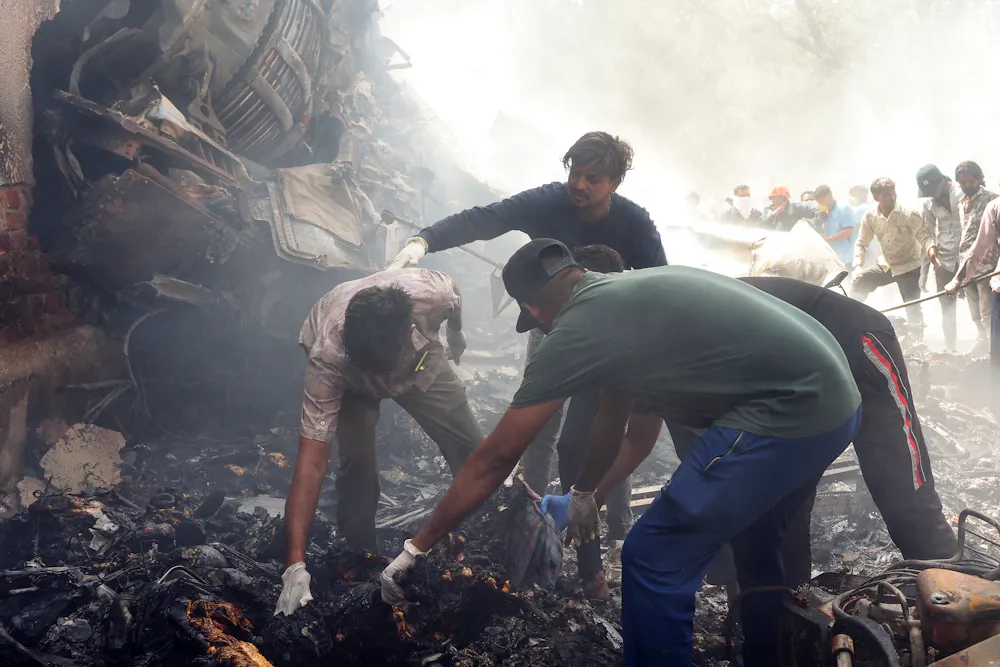
    MIL OSI Russia News –

    June 13, 2025
←Previous Page
1 … 232 233 234 235 236 … 1,007
Next Page→
NewzIntel.com

NewzIntel.com

MIL Open Source Intelligence

  • Blog
  • About
  • FAQs
  • Authors
  • Events
  • Shop
  • Patterns
  • Themes

Twenty Twenty-Five

Designed with WordPress