Category: Fisheries

  • MIL-OSI Submissions: Filipino sailors dock in Mexico … and help invent tequila?

    Source: The Conversation – USA (2) – By Stephen Acabado, Professor of Anthropology, University of California, Los Angeles

    Bottles of tequila now command premium prices in trendy bars. On Instagram, celebrity-backed brands of the agave-based Mexican spirit jostle for attention. And debates over cultural appropriation and agave sustainability swirl alongside booming tourism in Jalisco, the western Mexican state that serves as the world’s tequila distillation hub.

    But behind the spirit’s flash of marketing and growing popularity lies a rarely asked question: Where did the knowledge to distill agave come from in the first place?

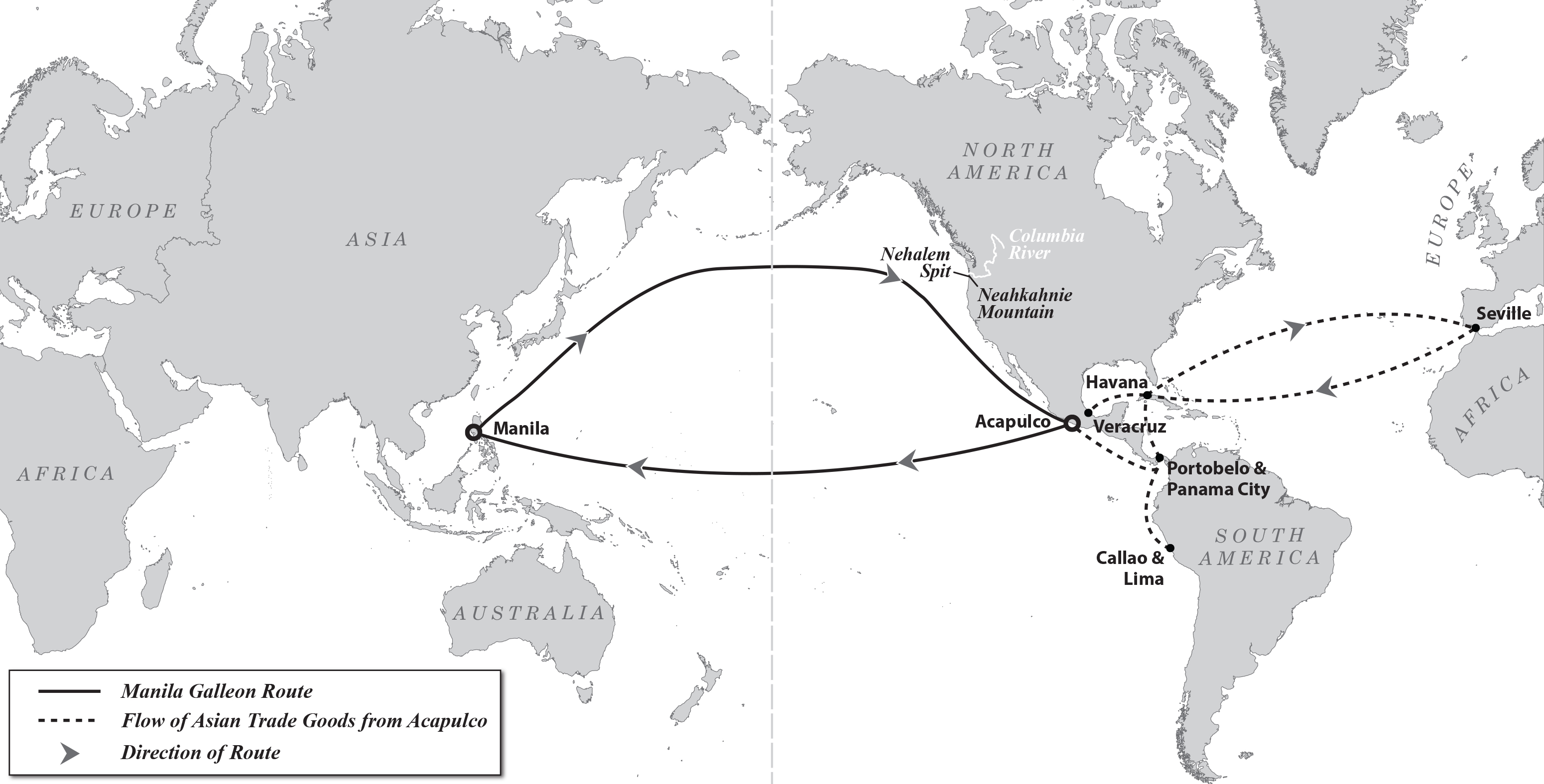
    In recent years, scholars studying how Indigenous communities responded to colonialism and global trade networks have begun to look more closely at the Pacific world. One key focus is the Manila-Acapulco galleon trade route, which linked Asia and the Americas for 250 years, from 1565 to 1815.

    The Manila-Acapulco galleon trade route.
    Jesse Nett/Oregon Encylopedia

    After Spain colonized the Philippines in 1565, Spanish galleons – towering, multidecked sailing ships – carried Chinese silk and Mexican silver across the ocean. But far more than goods traveled aboard those ships. They moved people, ideas and technologies.

    Among them was the craft of distillation.

    This overlooked connection may help explain how distilled agave spirits such as tequila came into being. While tequila is unmistakably a Mexican creation, the techniques used to produce it may owe something to Filipino sailors, who brought with them deep knowledge of transforming coconut sap into a potent spirit known as lambanog.

    3 competing theories

    For centuries, the rise of tequila has been credited to the Spanish. After the conquest of Mexico in the 16th century, colonizers introduced alembic stills, which are based on Moorish and Arabic technology. Unlike simple boiling, distillation requires managing heat and capturing purified vapor. These stills represented a major technological leap, allowing people to transform fermented drinks into distilled spirits.

    Agave, long used to make the fermented drink pulque, soon became the base for something new: tequila and mezcal.

    Colonial records, including the “Relaciones Geográficas,” a massive data-gathering project initiated by the Spanish Crown in the late 16th century, describe local Mesoamerican communities learning distillation from Spanish settlers. This version is well documented. But it assumes that technology moved in only one direction, from Europe to the Americas.

    A second idea suggests that Mesoamerican communities already had some understanding of vapor condensation. Archaeologists have found ceramic vessels in western Mexico that may have been used to capture steam. While distillation requires additional steps, this prior knowledge may have primed Indigenous groups to more readily adopt new techniques.

    As Mexican ethnobotanists Patricia Colunga-GarcíaMarín and Daniel Zizumbo-Villarreal have argued, “The adoption of distillation was likely not simply imposed, but creatively adapted to local knowledge systems.”

    A third perspective, which other researchers and I are exploring, traces a potential Filipino influence. The galleon trade brought thousands of Filipino sailors and laborers to Mexico, particularly along the Pacific coast. In places such as Guerrero, Colima and Jalisco, Filipino migrants introduced methods for fermenting and distilling coconut sap into lambanog, the coconut-based spirit.

    The stills they used, sometimes called Mongolian stills, were built with clay and bamboo and included a condensation bowl. Historian Pablo Guzman-Rivas has noted that these stills more closely resemble the earliest Mexican agave distillation setups than European alembics. He has also documented oral traditions in some coastal Mexican communities to link local distillation practices to their Filipino ancestors.

    The still on the left in Jalisco, Mexico, has similarities to the lambanog on the right from Infanta, Quezon, Philippines.
    Photo on left courtesy of Patricia Colunga-GarcíaMarín and Daniel Zizumbo-Villarreal; photo on right courtesy of Sherry Ann Angeles and Rading Coronacion, CC BY-SA

    Beyond the bottle

    Filipino influence extends beyond the distilling pot.

    In Colima and other Pacific port towns, traces of the Manila galleon trade ripple through daily life – in kitchens, cantinas and even in architecture. The word “palapa,” used in Mexico and Central America today to describe rustic thatched roofs, is exactly the same as the term for coconut fronds that’s primarily used in the Bicol Region of the Philippines.

    Filipino migrants in Mexico also shared knowledge of boatbuilding, fermentation and food preservation. Coconut vinegar, fish sauce and palm sugar-based condiments became part of Mexican cuisine. One of the most enduring legacies is tuba, the fermented coconut sap still popular in coastal areas of the Mexican state of Guerrero, where Filipino sailors once settled. Known locally by the same name, tuba is sold in markets and along roadsides, often enjoyed as a refreshing drink or as a cooking ingredient.

    A replica of a galleon, the Spanish trading ship that traversed the world’s oceans from the 16th century to the 18th century.
    Dennis Jarvis/flickr, CC BY-SA

    Exchange moved both ways. Filipino vessels carried corn, peanuts, sweet potatoes and cacao back across the Pacific, reshaping food in the Philippines. These exchanges took place under the shadow of colonialism and forced labor, but their legacies endure in language, in taste and even in the roofs over people’s heads.

    Technical knowledge rarely travels through official channels alone. It moves with cooks in ship galleys, with carpenters below deck, with laborers who desert ships to settle in unfamiliar ports. Sometimes it was a way to build a roof or preserve a flavor. Other times, it was a method for turning a fermented plant into a spirit that could keep for long voyages. And by the early 1600s, new types of distilled agave spirits were being made in Mexico.

    Tequila is unmistakably a product of Mexico. But it is also a product of movement. Whether Filipino migrants directly introduced distillation methods or whether they emerged from a mix of Indigenous experimentation and European tools, every time you sip tequila, you’re tasting an echo of those long ocean crossings from many centuries ago.

    Stephen Acabado receives funding from the Henry Luce Foundation and the National Science Foundation.

    ref. Filipino sailors dock in Mexico … and help invent tequila? – https://theconversation.com/filipino-sailors-dock-in-mexico-and-help-invent-tequila-258166

    MIL OSI

  • MIL-OSI United Kingdom: ‘Collar, tag, microchip, bag’ – pawsome advice for city dog owners!

    Source: City of Wolverhampton

    ‘Collar, tag, microchip, bag’ is the expression that City of Wolverhampton Council is asking everyone with a dog to keep in mind when they take their pooches out and about.

    The aim is to remind dog owners of their legal responsibilities including requirements under the city’s Public Spaces Protection Order (PSPO). The council also wants to encourage a cleaner, more comfortable environment for all residents.

    The first 2 reminders – ‘collar, tag’ – highlight the legal requirement for dogs to wear a collar with an ID tag when in a public place.

    The tag must include the owner’s name and address, and ideally, a phone number. This requirement applies even if the dog is microchipped.

    Wearing a collar and tag helps reunite lost dogs with their owners and ensures their safety. Dogs found roaming without a collar and tag in public may be seized and taken into care. The management of stray dogs cost tax payers around £170,000 during the last financial year.

    In 2024, the council handled around 350 strays and took them to kennels while trying to contact their owners. This is a substantial increase on 2020 when 170 strays were collected.

    ‘Microchip’ reminds owners that it is a legal requirement to microchip all dogs over 8 weeks old, and the microchip details must be registered on an authorised database. Breeders must also microchip puppies before they leave their premises.

    ‘Bag’ refers to the requirement under the council’s current PSPO. The order was updated in 2023 and requires anyone in control of a dog to carry a suitable means of removing dog faeces, such as a bag.

    Dog owners are also required to clean up after their pets and anyone not carrying bags or clearing up after their dog can be issued with a Fixed Penalty Notice.

    To help make sure residents are aware of their responsibilities, officers from the council’s environmental protection team will be out and about at community events and a social media campaign will run throughout the coming months.

    Councillor Bhupinder Gakhal, cabinet member for resident services at City of Wolverhampton Council, said: “We want to encourage all dog owners to follow the simple phrase help make our city clean and comfortable for everyone.

    “We know that the vast majority of dog owners are very responsible, but we still do see a lot of strays and, unfortunately, too many incidents where owners are not cleaning up after their pets.

    “This is unpleasant and can be very dangerous to health. It was also clear from the PSPO consultation that people agreed with the requirement to carry a means of disposing of their dog’s mess.

    “Therefore, I would encourage the city’s canine lovers to consider the handy checklist of ‘collar, tag microchip, bag’ and consider what they may need to tick off before going out with their pet.

    “We thank all dog owners for doing all they can to behave responsibly. You’re helping to make our city safer, cleaner and more comfortable for everyone.”

    To find out more about the campaign and the PSPO, please visit Responsible dog ownership.

    MIL OSI United Kingdom

  • Centre rolls out key strategies to ensure sustainability, competitiveness of coal sector

    Source: Government of India

    Source: Government of India (4)

    The central government has outlined a set of measures aimed at making the coal sector more sustainable and competitive, while aligning with global climate commitments. Despite the growing push towards renewables like solar and wind, coal continues to play a dominant role in India’s energy mix, meeting 55% of the country’s energy needs. With the world’s fifth-largest coal reserves, India is adopting a multi-pronged strategy to modernise the sector, enhance environmental compliance, and reduce dependence on imports.

    Greening and efficiency initiatives

    To reduce the ecological footprint of coal mining, Coal and Lignite PSUs have intensified reclamation and afforestation efforts around operational mines. Under various greening initiatives, plantations and bio-reclamation work are being carried out across mining sites.

    Coal PSUs are also adopting energy efficiency measures — such as replacing conventional lighting with LED systems, deploying energy-efficient appliances, using electric vehicles, and introducing energy-saving technologies like super fans and auto timers in street lighting.

    In a significant sustainability push, mine water is being treated and reused for purposes ranging from irrigation and community water supply to firefighting, underground sprinkling, and fish farming. Several MoUs have also been signed with state governments to expand treated mine water supply to local communities.

    Additionally, coal companies are making productive use of overburden (OB) — the soil and rock removed during mining. By extracting sand from OB for construction, PSUs have commissioned nine plants, including four OB processing and five OB to M-Sand plants. This move not only curbs river sand mining but also aids groundwater recharge and reduces environmental degradation.

    Shift towards cleaner technologies

    To reduce pollution and fuel consumption, coal PSUs have been upgrading transportation infrastructure under the First Mile Connectivity (FMC) projects. These projects focus on mechanized coal handling and transport systems, reducing reliance on diesel and cutting emissions.

    The sector is also deploying blast-free technologies such as Surface Miners, Continuous Miners, and Rippers to eliminate the need for drilling and blasting — significantly reducing dust and noise pollution.

    Meanwhile, coal companies are investing in clean energy alternatives, including renewable power projects and clean coal technologies like coal gasification and coal bed methane (CBM). Participation in the Green Credit Programme launched by the Ministry of Environment, Forest and Climate Change (MoEF&CC) further reflects the sector’s green commitment.

    Reducing coal iImports and boosting domestic production

    In a written reply to the Rajya Sabha, Union Coal and Mines Minister G. Kishan Reddy said coal imports have declined from 264.5 million tonnes (MT) in 2023–24 to 243.6 MT in 2024–25. This reduction comes in the backdrop of efforts to increase domestic coal output and reduce reliance on imports.

    Key measures include faster allocation of coal blocks, encouraging private participation, and streamlining approval processes. Public sector undertakings are also adopting digital solutions and advanced mining technologies to ramp up production.

    An Inter-Ministerial Committee (IMC) has been formed to promote coal import substitution. The IMC is working with import-based power plants to assess and address their coal needs using domestic supply channels. Some of these plants have already indicated their preferred suppliers from Coal India Limited’s (CIL) subsidiaries.

    Coal evacuation and transportation are being improved with the construction of new railway lines and expanded FMC projects, aimed at enhancing supply chain efficiency.

    With these integrated measures, the government aims to maintain coal’s competitiveness in India’s energy mix while advancing sustainability and reducing environmental impact.

  • MIL-OSI Russia: Government to improve rules for building crab boats

    Translation. Region: Russian Federal

    Source: Government of the Russian Federation – Government of the Russian Federation –

    An important disclaimer is at the bottom of this article.

    Document

    Resolution of July 17, 2025 No. 1075

    The government has amended the requirements for crab boat construction projects under the investment quota mechanism. After the agreement with the previous investor is terminated, new companies will be able to begin completing the vessels under the same conditions.

    The government has amended the requirements for projects to build crab vessels under the investment quota mechanism

    “The fishing shipbuilding industry is currently on the rise, including thanks to the deep modernization of production. The “keel quota” mechanism has restarted the process of creating a Russian fishing fleet. The amendments adopted by the Russian Government will allow us to quickly respond to changes in the situation and, in the event of shipbuilding companies or investors withdrawing from projects, without losing momentum, to involve other participants – for the successful and timely completion of the construction of new crab vessels,” said Deputy Prime Minister Dmitry Patrushev.

    The practice of recent years has shown that the existing regulatory framework made it difficult to complete the construction of crab vessels. If the agreements were terminated for any reason, then upon completion of construction it was impossible to ensure compliance with current requirements for industrial products and the conclusion of new investment contracts for the completion of such vessels. The discrepancy was identified during meetings in the format of incident No. 42 “Fishing vessels” chaired by Deputy Prime Minister Dmitry Patrushev. Thus, the changes introduced by the Government will allow new contracts to be concluded with investors for the freed up shares of the investment quota.

    Please note: This information is raw content obtained directly from the source of the information. It is an accurate report of what the source claims and does not necessarily reflect the position of MIL-OSI or its clients.

    .

    MIL OSI Russia News

  • MIL-OSI United Kingdom: Ofwat to be abolished in biggest overhaul of water since privatisation

    Source: United Kingdom – Government Statements

    Press release

    Ofwat to be abolished in biggest overhaul of water since privatisation

    Ofwat to be abolished and a new, single, powerful regulator to be established to cut water pollution in England’s rivers, lakes and seas, and protect families from massive bill hikes

    • Ofwat to be abolished and a new, single, powerful regulator to be established to cut water pollution in England’s rivers, lakes and seas, and protect families from massive bill hikes   

    • New regulator will take responsibility of water functions across Ofwat, Environment Agency, Natural England and Drinking Water Inspectorate, ending complexity that gets in the way of delivering for customers   

    • Government to fast track five recommendations from the Independent Water Commission in the Commons later today  

    Ofwat is to be replaced by one single water regulator responsible for the entire water system, the Government has announced today (Monday 21 July). 

    In the biggest overhaul of the water sector since privatisation, Ofwat will be abolished and its functions will be merged with water functions across the Environment Agency, Natural England and the Drinking Water Inspectorate to form a new single, powerful regulator. 

    In a speech at Kingfisher Wharf, the Secretary of State for the Environment, Steve Reed pledged to strengthen regulation, clean up the country’s s rivers and protect the public from soaring water bills. 

    There are currently four separate regulators responsible for the water industry, a complex, tangled system of confusion. It is a merry-go-round of regulators blaming each other for breaking this country’s water system.  

    Ofwat has failed customers, allowing water companies to mismanage billions of pounds of customer money while water companies paid out huge dividends and bonuses. 

    The Environment Secretary, Steve Reed said: 

    Our water industry is broken. That is why this Government will fix our broken regulatory system so the failures of the past never happen again.  

    The Government will abolish Ofwat. In the biggest overhaul of water regulation in a generation, we will bring water functions from four different regulators into one. 

    A single, powerful regulator responsible for the entire water sector will stand firmly on the side of customers, investors and the environment and prevent the abuses of the past.

     >It will provide the clarity and direction required for a strong partnership between Government, the sector and investors to attract billions of pounds of new investment.

    The creation of one powerful regulator will be responsible for the entire water sector restoring public faith and investor confidence in our water industry.  

    The current fragmented approach of four separate regulators splits up economic, environmental and drinking water regulation. This complex web of regulators has led to contradictory and competing priorities.  

    The reforms will ensure all regulation is in lock step to deliver for customers and the environment, bringing all water regulation under one roof. 

    The proposals will be consulted on this autumn and form the basis of a new Water Reform Bill.  

    This comes on the back of a bold, personal commitment from Environment Secretary, Steve Reed, to cut sewage pollution from water companies in half by 2030. Working to make our rivers the cleanest since records began, It is the most ambitious sewage target Government has ever set.   

    The Government has begun rebuilding the entire water network through one of the largest infrastructure projects in the country’s history. £104 billion is being invested to upgrade crumbling pipes and build sewage treatment works across the country, ensuring communities can once again take pride in their beaches, rivers and lakes. 

    These reforms build on decisive action taken by the Government over the past year to clean up England’s rivers, lakes and seas:  

    • Record investment: with £104 billion to upgrade crumbling pipes and build sewage treatment works across the country.  

    • Ringfence customers’ bills for upgrades: customer bills earmarked for investment must now be spent one new sewage pipes and treatment works – not spent on shareholder payments or bonuses.  

    • Reinvesting company fines into local projects: with over £100million being invested into local clean-up projects in communities.  

    • Largest budget for water regulation: the Environment Agency received a record £189 million to fund hundreds of enforcement officers to inspect and prosecute pollution water companies. 

    • Polluter Pays: we’ve changed the law so that regulators can recover the cost of enforcement activity, ensuring that the polluter pays. This builds on the increase in water company inspections, holding them to account.  
    • Banning wet wipes containing plastic: in England reducing microplastics in our waters. 

    • The Water (Special Measures) Act: banned unfair bonuses for ten polluting water bosses this year and threatened prison sentences for law-breaking executives.  

    The Secretary of State for the Environment will outline five recommendations that the Government will fast track in Parliament later today.  

    Alongside our creation of a new single regulator in England, we will work closely with Welsh government to devolve economic regulation of water to Wales. 

    ENDS 

    NOTES TO EDITORS 

    • During the transition to the new regulator, Ofwat will remain in place. The Government will work closely with the regulators and unions for a smooth transition.  

    • The UK government will work closely with the Welsh government to ensure these reforms protect customers and the environment in both England and Wales 

    • Once the new regulator is established, the Government will publish a comprehensive long-term statement so investors know exactly what standards they need to meet and what support they can expect. 

    • The Environment Agency and Natural England will retain their non-water remits and responsibilities.

    Updates to this page

    Published 21 July 2025

    MIL OSI United Kingdom

  • MIL-OSI Europe: Written question – Protecting traditional swordfish fisheries and providing support to fishers in this sector – E-002840/2025

    Source: European Parliament

    Question for written answer  E-002840/2025
    to the Commission
    Rule 144
    Aldo Patriciello (PfE)

    Traditional swordfish fishing has, since time immemorial, been a key asset for many coastal communities in the Mediterranean and is even more important to their Italian counterparts, as it is part and parcel both of their local identity and their cultural and economic heritage. However, this sector is in jeopardy owing to mounting regulatory restrictions, falling fish stocks, competition from industrial fisheries and the absence of targeted European policies.

    Small-scale fishers – whose sustainable techniques have been handed down from generation to generation – are operating in increasingly difficult circumstances which threaten their income and the survival of a traditional profession of great cultural significance.

    In the light of the above:

    • 1.Will the Commission recognise traditional swordfish fishing as being distinct from industrial fishing practices and protect the former by adopting specific quota management criteria?
    • 2.Is the Commission planning to enact economic and technical support measures to protect the livelihoods of small-scale fishers?
    • 3.Would it be willing to support local pilot projects and initiatives promoting traditional fishing as an example of a sustainable blue economy?

    Submitted: 11.7.2025

    Last updated: 21 July 2025

    MIL OSI Europe News

  • MIL-OSI Europe: Pope Leo XIV: “Profound sadness” for the “Israeli army attack” against the Gaza parish

    Source: Agenzia Fides – MIL OSI

    Sunday, 20 July 2025

    VaticanMedia

    Castel Gandolfo (Agenzia Fides) – “I express my profound sadness regarding last Thursday’s attack by the Israeli army on the Catholic Parish of the Holy Family in Gaza City”. Pope Leo expressed his clear and explicit words today, referring to the Israeli raid on the compound of the Latin Catholic Church dedicated to the Holy Family in the Gaza Strip.After the Angelus prayer, which he recited for the second time before the crowd gathered in Piazza della Libertà in Castel Gandolfo, Pope Leo clearly recalled those responsible for the tragedy, and also recalled the names of the three victims of the Israeli attack: Saad Issa Kostandi Salameh, Foumia Issa Latif Ayyad, and Najwa Ibrahim Latif Abu Daoud. “This act, unfortunately,” Pope Leo continued, “adds to the continuous military attacks against the civilian population and places of worship in Gaza.” The Pope once again called for an immediate halt to the barbarism of the war and for a peaceful resolution of the conflict. He appealed “to the international community to observe humanitarian law and to respect the obligation to protect civilians, as well as the prohibition of collective punishment, the indiscriminate use of force and the forced displacement of the population”.He also reaffirmed his closeness to “our beloved” Middle Eastern Christians: “I deeply sympathise,” the Bishop of Rome told them, “with your feeling that you can do little in the face of this grave situation. You are in the heart of the Pope and of the whole Church. Thank you for your witness of faith.”On Friday, July 18, as reported in the statement released by the Holy See Press Office, Israeli Prime Minister Benjamin Netanyahu had a telephone conversation with Pope Leo regarding “the military attack by the Israeli army” that struck the Church of the Holy Family in Gaza, killing three people and injuring others, including some seriously. On the Israeli side, this tragic event was presented as an “accident” or a “mistake.” That same Friday evening, in an interview with an Italian television channel, Cardinal Secretary of State Pietro Parolin also stated that “it’s legitimate to doubt that the raid on the church in Gaza was a ‘mistake’, rather than the result of “a desire to hit a Christian church knowing how much Christians are an element of moderation in the Middle East even in relations between Palestinians and Jews.” Therefore,” Cardinal Parolin added, “there would once again be a desire to eliminate any element that could help achieve at least a truce and then peace.”Today, in the brief catechesis delivered before the Angelus, Pope Leo (who had presided over the Eucharistic Concelebration in the Cathedral of Albano this morning) drew inspiration from the day’s liturgical readings to draw attention to the dynamics of hospitality: that practiced by Abraham and his wife Sarah toward the Lord, made present in the form of three mysterious strangers, and that reserved for Jesus by the sisters Martha and Mary.”Every time we accept the invitation to the Lord’s Supper and participate in the Eucharistic table,” Pope Leo recalled, “it is God himself who ‘comes to serve us.’ And yet, our God first knew how to be a guest, and today too he stands at our door and knocks.” The Pontiff focused in particular on the Gospel episode of the hospitality offered to Jesus by Mary and Martha, the former listening to the Lord’s words, the latter working hard to welcome him and complaining about her sister’s lack of cooperation. “Martha,” the Pontiff acknowledged, “is a generous person, but God calls her to something more beautiful than generosity itself. He calls her to come out of herself.” Only this—added the Bishop of Rome—”makes our life flourish: opening ourselves to something that distracts us from ourselves and at the same time fulfills us. At the moment when Martha complains because her sister has left her alone to serve, Mary seems to have lost all sense of time, won over by the word of Jesus. She is no less concrete than her sister, nor any less generous. However, she seized the opportunity.” (GV) (Agenzia Fides, 20/7/2025)
    Share:

    MIL OSI Europe News

  • MIL-OSI Russia: Scientists from NSU and Scientific and Technical Complex “Microsurgery of the Eye” are developing an autonomous AI assistant for visually impaired people

    Translation. Region: Russian Federal

    Source: Novosibirsk State University –

    An important disclaimer is at the bottom of this article.

    The basic model of an autonomous intelligent assistant for visually impaired and blind patients was presented to Deputy Prime Minister of the Russian Federation — Head of the Government Staff Dmitry Grigorenko during his visit to Novosibirsk State University. The device is being developed using large language models and artificial intelligence technologies.

    The idea of the development belongs to the Novosibirsk branch of the Federal State Autonomous Institution “National Medical Research Center “Microsurgery of the Eye” named after Academician S.N. Fedorov” of the Ministry of Health of the Russian Federation, which, together with scientists Research Center in the Field of Artificial Intelligence of NSU (NSU AI Center) creates a new device designed to make it easier for visually impaired and blind people to navigate in space using modern technologies.

    As noted by the director of the Novosibirsk branch of the Scientific and Technical Complex “Microsurgery of the Eye”, professor, doctor of medical sciences Valery Chernykh, today there are various approaches related to the possibility of giving a blind person a chance of functional orientation in the surrounding space, his adaptation and rehabilitation with the possibility of actively and independently living a full life.

    First of all, these are social and rehabilitation-educational programs that require quite large financial investments. In addition, over the past 20 years, scientists from various countries have been attempting to implant expensive and high-tech chips either into the retina or directly into the occipital part of the cerebral cortex, which is responsible for the function of vision. These are very complex and expensive operations with a high risk of complications and, unfortunately, with a fairly low percentage of effectiveness, since the results obtained do not last long. Several such operations have also been carried out in our country, the results of which cannot yet be considered satisfactory.

    — Considering the active development of technologies related to the capabilities of artificial intelligence, the idea was born to use the auditory analyzer of the brain for human orientation in space. When a person reads a book or listens to an audio recording, certain images of objects, etc. are formed in his brain. If a visually impaired or blind patient is given the opportunity to determine the distance to an object (doorway, window, vehicle), its size, etc. through the auditory analyzer, this will certainly help him in real life and adaptation in the social environment. Considering the previous successful experience of joint work, we decided to join forces with scientists from the Research Center for Artificial Intelligence of the Novosibirsk State University in order to create such a technology that should be autonomous and not use the Internet, — said Valery Chernykh.

    At the first stage, the developers create a prototype of the device and train the model in accordance with the tasks set, which is actively carried out by the formed working group, which includes scientists from the NSU AI Center and the Scientific and Technical Complex “Microsurgery of the Eye”.

    — We use large language models to help this category of patients analyze the surrounding space — to create a guide for them that could give a concentrated verbal description of all objects in front of the user. The principle of this system is simple: a video camera will “see” instead of a person, the information from which will be sent to a portable computer, which will convert it into text. Then the text description is converted by a voice assistant and sent directly to the patient through headphones. This message provides the basic information that the user needs to know to navigate in space, — explained Alexey Okunev, head of the project at the NSU AI Center.

    The device is developed using a multimodal language model, which allows it to already provide a fairly high-quality verbal description of surrounding rooms and objects. In the future, the user will be able to ask clarifying questions about the observed scene and receive detailed answers to them. This language model also perfectly recognizes texts, reads inscriptions, signs, obstacle warnings, etc.

    Currently, a basic model has been created, a prototype of the device will be ready by the end of 2025. This is a compact wearable system consisting of a single-board 16-core computer placed in a shoulder bag, a video camera (for example, GoPro) and headphones. The device will be equipped with a battery, and all elements will be connected by wireless communication channels. The user will hold the video camera in his hand and point it in the desired direction. The total weight of the device with the battery will be about 1 kg.

    According to the experts of the NSU Center for Information Technologies, it will take more than one year to develop the final product ready for replication, and now they are at the very start of the project. This concerns both the technical part and the training of artificial intelligence. After the prototype is created this year, long-term work will begin on setting up the device, setting modes, collecting a database and training AI.

    The developers plan to teach the AI to prioritize information delivery, highlighting from the entire video sequence the details that are most important for the visually impaired person to orient themselves in space and assess the surrounding environment depending on the situation. It is assumed that the device will have several operating modes: a movement mode for moving in space, a reading mode for working with text documents, etc.

    It will also be necessary to train a blind or visually impaired patient to work with the device in various modes and adapt it to new capabilities. As noted by the Scientific and Technical Complex “Microsurgery of the Eye”, at this stage, the work of not only ophthalmologists, but also specialists in the field of neurophysiology will be required. And the third task that will need to be solved is the need to create a specialized ophthalmological rehabilitation center to prepare blind patients directly for working with the device.

    “The creation of such a device is of interest in the ophthalmological community as an extremely relevant and necessary area, the implementation of which will enable blind patients to adapt to the environment, which is a socially significant project,” concluded Valery Chernykh.

    Please note: This information is raw content obtained directly from the source of the information. It is an accurate report of what the source claims and does not necessarily reflect the position of MIL-OSI or its clients.

    .

    MIL OSI Russia News

  • MIL-OSI Russia: Hunchun checkpoint becomes “golden corridor” for import of king crabs from Russia

    Translation. Region: Russian Federal

    Source: People’s Republic of China in Russian – People’s Republic of China in Russian –

    An important disclaimer is at the bottom of this article.

    Source: People’s Republic of China – State Council News

    BEIJING, July 21 (Xinhua) — Trucks loaded with king crabs and other seafood line up at the Hunchun port in northeast China’s Jilin Province in the height of summer to clear customs before entering China.

    Truck driver Chen Chen said he can transport up to four tons of king crabs at a time.

    According to the Zhongxinshe news agency, more than 1.5 million units of Kamchatka crabs from Russia are imported into China through the Hunchun checkpoint every year, which accounts for about 80 percent of the country’s total market. Hunchun has truly become a key gateway for China to import this seafood delicacy.

    With the continuous improvement of cross-border logistics and transportation efficiency in recent years, Russian-produced Kamchatka crabs have become part of the daily life of Chinese people.

    Over the past decade, Kamchatka crabs have been sold not only in northeast China, but also served on tables in major cities such as Beijing, Shanghai, Guangzhou and Shenzhen.

    To meet the high market demand, Hunchun City also focused on promoting the Northeast Asia Fresh Seafood Park project with a total investment of over 600 million yuan (about 83.6 million US dollars).

    The park will not only be used for temporary storage of imported seafood, but also to stimulate the development of processing trade to build an important hub for processing and distributing fresh seafood in northern China, said Liu Yansong, head of the park.

    Now tasting king crabs has become a tourist specialty of Hunchun.

    Previously, imported Russian king crabs had to be transported to China via Busan, a city in the southeast of the Republic of Korea. After Hunchun was approved as a specialized checkpoint for importing chilled seafood and edible aquatic animals, this “golden corridor” for importing king crabs into the country was opened. In addition, the Kamchatka-Zarubino-Hunchun route made the transportation of aquatic products between China and Russia more stable and uninterrupted.

    To ensure the freshness of imported seafood, Hunchun Customs has opened a “green channel” to provide inspection and release services by appointment all year round and around the clock, speeding up customs clearance.

    In recent years, Chinese consumers’ interest in Russian Kamchatka crabs has grown rapidly. According to the General Administration of Customs of China, the total value of China’s imports of live, fresh and frozen crabs from Russia exceeded US$1.14 billion last year, up 16.7 percent from the previous year. -0-

    Please note: This information is raw content obtained directly from the source of the information. It is an accurate report of what the source claims and does not necessarily reflect the position of MIL-OSI or its clients.

    .

    MIL OSI Russia News

  • MIL-OSI Africa: Ghana: President Mahama flags off work on second phase of Blekusu sea defence project

    Source: APO – Report:

    .

    President John Dramani Mahama was in Agavedzi on Saturday for a groundbreaking ceremony for the second phase of the Blekusu Coastal Protection Project.

    The project, a significant initiative that will protect lives and livelihoods in the Ketu South Municipality of the Volta Region, was met with palpable joy and deep gratitude from the chiefs and people of the Some and Aflao Traditional Areas, who gathered to witness the realisation of a long-awaited development.

    The ceremony saw an emotional outpouring of appreciation, as community members sang praises and danced, celebrating the President’s commitment to addressing their decades-long struggle against severe tidal erosion.

    Upon completion in four years, the project, which will protect an 8-kilometre stretch of coastline, is set to bring immense relief to the communities of Blekusu, Agavedzi, Salakope, Amutsinu, and Adina.

    Messrs Amandi Holding Limited is the contractor and will deliver 37 groins, extensive dune restoration, reinforced embankments, and other critical shoreline defence structures.

    President Mahama stated that the project is a comprehensive one that will extend beyond mere coastal protection.

    “Aside from the coastal protection works, government has incorporated vital development projects to enhance the lives of the people in the affected area,” he noted.

    These integrated initiatives include a modern fish market, cold storage and processing facilities for fisherfolk, dedicated spaces for fish drying and smoking, a car park, and a lorry station. Additionally, public sanitation facilities and a comprehensive waste collection system will be provided.

    “The sea has taken a lot from this community. It has taken land, it has taken livelihoods, and it has taken our peace of mind. But today, I stand here to say no more will the sea consume our land”, the President said.

    “We are here to reclaim what has been lost, to rebuild stronger, to offer our children a future where they are not forced to flee their homes because of rising tidal waves.”

    President Mahama added that the Blekusu Coastal Protection Project and other ongoing infrastructure developments reflect his government’s strong dedication to building a better Ghana.

    “This is not merely symbolic,” he asserted, “but a clear demonstration of what responsive leadership can do when it listens, when it cares, and when it acts.”

    Phase I of the project, covering 4.3 kilometres of coastal defence works, commenced in 2015 under the Presidency of Mahama to mitigate the serious threat of tidal erosion in Ketu South.

    While that phase offered significant relief, the President lamented, “Unfortunately, for nearly a decade after this, the second phase of the project stalled. Despite repeated appeals by residents, Members of Parliament, traditional authorities, and civil society, the project did not commence.”

    The President specifically referenced the devastating tidal waves that pounded the communities in 2017 and again in 2021, recalling the harrowing images.

    I can still picture the videos and photos showing the aftermath of these tidal waves,” he said, highlighting “the pain, the anxiety, the fear that was etched on the faces of our fellow citizens.”

    He reaffirmed the pledge he made earlier this year during his visit to the Volta Region, promising swift action.

    “And today, I am proud to say that this commitment is being fulfilled. Your cries have not been in vain. Your voices will no longer be ignored. Today is your day – a day of renewal and a day of reassurance.”

    President Mahama also announced progress on the West Africa Coastal Areas (WACA) Programme, designed to enhance coastal resilience across the sub-region.

    Currently awaiting approval, the WACA project is envisioned to extend coastal protection from where the Blekusu project ends, all the way to Aflao, securing Ghana’s vital 550-kilometre coastline, which supports countless livelihoods through fishing, trade, and tourism.

    – on behalf of The Presidency, Republic of Ghana.

    MIL OSI Africa

  • MIL-OSI Analysis: Is spinal cord stimulation safe? Does it work? Here’s what you need to know if you have back pain

    Source: The Conversation – Global Perspectives – By Caitlin Jones, Postdoctoral Research Associate in Musculoskeletal Health, University of Sydney

    AsiaVision/Getty

    Spinal cord stimulators are electrical devices that are surgically implanted in the body to treat long-term pain. They have a battery pack and leads that deliver electrical impulses directly to the spinal cord. The devices are thought to work by providing electrical impulses that interfere with how the brain senses pain.

    Spinal cord stimulators are mainly used to treat chronic back pain, especially when other less invasive treatments have not worked. They also aim to reduce people’s reliance on risky pain medicines. These include opioids, which research shows are ineffective and harmful for low-back pain.

    But research, including our own, shows spinal cord stimulators work no better than a placebo. And they can also carry risks.

    Do they work?

    In a 2023 Cochrane review, researchers reviewed data from 13 randomised controlled trials on low-back pain and found no benefits in the short and medium term. These international reviews draw together the most robust evidence to provide a detailed summary of what we know on a particular topic.

    Only one of the trials in the review tested efficacy in the longer term (six months). That trial found no benefits of spinal cord stimulation.

    An earlier Cochrane review looked at the evidence of spinal cord stimulation for chronic pain in general, including for neck pain. Reviewers looked at 15 randomised controlled trials and couldn’t be certain about its benefits, largely due to the quality and reliability of the available trials.

    Are there side effects?

    Aside from disappointing results for pain relief, there are risks and side effects to consider.

    We co-authored an analysis of 520 adverse events reported to Australia’s Therapeutic Goods Administration (TGA). We found 79% of reported events were rated as severe, with 13% life-threatening. The same research found 80% of events required surgery to correct.

    Our recent analysis in the Medical Journal of Australia looked at data from private health insurers. These cover 90% of spinal cord stimulation implants in Australia. Five major insurers, which covered 76% of privately insured people, contributed de-identified data.

    We found about one-quarter of people who had a spinal cord stimulator implanted needed corrective surgery afterwards. These surgeries occurred within a median of about 17 months. This indicates these surgeries are not routine or expected interventions, such as to replace batteries, which are meant to last five to ten years.

    Our previous research shows the sorts of reasons for corrective surgery. These include to replace a malfunctioning device, or the person was in more pain, had an infection, or a puncture of the delicate tissues covering the spinal cord.

    However, even our latest findings are likely to underestimate the risk of these devices.

    Sometimes the lead delivering the electrical current moves away from the spinal cord to elsewhere in the body. This requires surgery to reposition the lead, but does not necessarily require new hardware, such as a brand new lead. So this type of corrective surgery is not counted in the data from the private health insurance companies.

    How much does it cost?

    We found spinal cord stimulators cost about A$55,000 per patient, including the device, its insertion, and managing any associated additional surgeries.

    For people who only had a “trial” – where the leads are implanted temporarily but the battery pack remains outside the body – this cost was about $14,000 per patient.

    These figures do not include any out-of-pocket costs.

    What do regulators say about the devices?

    In 2022 the TGA began a review of spinal cord stimulators on the market because of safety and performance concerns.

    As a result, several devices were removed from the Australian Register of Therapeutic Goods – that is, they were banned from use in Australia, but existing stock could still be used.

    The rest of the devices had conditions imposed, such as the manufacturers being required to collect and report safety data to the TGA at regular time points.

    Should I do my own online research?

    Yes, but be careful. Unfortunately not all online information about spinal cord stimulators is correct.

    Look for sites independent of those who manufacture or implant these devices.

    Government agencies, health departments and universities that have no financial interests in this area may be a better option.

    The Cochrane Library is also a reliable and independent source for trustworthy health information.

    What shall I ask my doctor?

    The Australian health department provides useful advice for consumers about medical implants.

    It says medical implants “are considered higher-risk therapeutic goods, and the decision to get one should not be taken lightly”. It recommends asking your health professional these questions:

    • do I really need this medical implant?

    • what are the risks/benefits?

    • is the medical implant approved?

    • where can I get more information?

    • what happens if I experience an adverse event?

    What else could I do for my back pain?

    There are other treatment options that are effective and have fewer risks than spinal cord stimulation.

    For example, education about how to manage your pain yourself, exercise, cognitive behavioural therapy (a type of psychological therapy), and non-steroidal anti-inflammatory medicines (such as ibuprofen) all have solid evidence to back them. All offer benefits that are not outweighed by their potential risks.

    Australian research has shown other types of therapy – such as sensorimotor retraining and cognitive functional therapy – are also effective. You can discuss these and other options with your health professional.

    Spinal cord stimulation is a good example of a treatment that got ahead of the evidence. Although the devices have been around since the 1960s, we’ve only had reliable trials to test whether they work in recent years.

    Everyone wants to find ways to help people with chronic pain, but we must ensure medical care is grounded in reliable science.

    Christopher Maher holds a research fellowship funded by the National Health and Medical Research Council.

    Caitlin Jones does not work for, consult, own shares in or receive funding from any company or organisation that would benefit from this article, and has disclosed no relevant affiliations beyond their academic appointment.

    ref. Is spinal cord stimulation safe? Does it work? Here’s what you need to know if you have back pain – https://theconversation.com/is-spinal-cord-stimulation-safe-does-it-work-heres-what-you-need-to-know-if-you-have-back-pain-261364

    MIL OSI Analysis

  • MIL-Evening Report: Why has a bill to relax foreign investment rules had so little scrutiny?

    Source: The Conversation (Au and NZ) – By Jane Kelsey, Emeritus Professor of Law, University of Auckland, Waipapa Taumata Rau

    Getty Images

    While public attention has been focused on the domestic fast-track consenting process for infrastructure and mining, Associate Minister of Finance David Seymour has been pushing through another fast-track process – this time for foreign investment in New Zealand. But it has had almost no public scrutiny.

    If the Overseas Investment (National Interest Test and Other Matters) Amendment Bill becomes law, it could have far-reaching consequences. Public submissions on the bill close on July 23.

    A product of the ACT-National coalition agreement, the bill commits to amend the Overseas Investment Act 2005 “to limit ministerial decision making to national security concerns and make such decision making more timely”.

    There are valid concerns that piecemeal reforms to the current act have made it complex and unwieldy. But the new bill is equally convoluted and would significantly reduce effective scrutiny of foreign investments – especially in forestry.

    A three-step test

    Step one of a three-step process set out in the bill gives the regulator – the Overseas Investment Office which sits within Land Information NZ – 15 days to decide whether a proposed investment would be a risk to New Zealand’s “national interest”.

    If they don’t perceive a risk, or that initial assessment is not completed in time, the application is automatically approved.

    Transactions involving fisheries quotas and various land categories, or any other applications the regulator identifies, will require a “national interest” assessment under stage two.

    These would be assessed against a “ministerial letter” that sets out the government’s general policy and preferred approach to conducting the assessment, including any conditions on approvals.

    Other mandatory factors to be considered in the second stage include the act’s new “purpose” to increase economic opportunity through “timely consent” of less sensitive investments. The new test would allow scrutiny of the character and capability of the investor to be omitted altogether.

    If the regulator considers the national interest test is not met, or the transaction is “contrary to the national interest”, the minister of finance then makes a decision based on their assessment of those factors.

    Inadequate regulatory process

    Seymour has blamed the current screening regime for low volumes of foreign investment. But Treasury’s 2024 regulatory impact statement on the proposed changes to international investment screening acknowledges many other factors that influence investor decisions.

    Moreover, the Treasury statement acknowledges public views that foreign investment rules should “manage a wide range of risks” and “that there is inherent non-economic value in retaining domestic ownership of certain assets”.

    Treasury officials also recognised a range of other public concerns, including profits going offshore, loss of jobs, and foreign control of iconic businesses.

    The regulatory impact statement did not cover these factors because it was required to consider only the coalition commitment. The Treasury panel reported “notable limitations” on the bill’s quality assurance process.

    A fuller review was “infeasible” because it could not be completed in the time required, and would be broader than necessary to meet the coalition commitment to amend the act in the prescribed way.

    The requirement to implement the bill in this parliamentary term meant the options officials could consider, even within the scope of the coalition agreement, were further limited.

    Time constraints meant “users and key stakeholders have not been consulted”, according to the Treasury statement. Environmental and other risks would have to be managed through other regulations. There is no reference to te Tiriti o Waitangi or mana whenua engagement.

    Forestry ‘slash’ after Cyclone Gabrielle in 2023: no need to consider foreign investors’ track records.
    Getty Images

    No ‘benefit to NZ’ test

    While the bill largely retains a version of the current screening regime for residential and farm land, it removes existing forestry activities from that definition (but not new forestry on non-forest land). It also removes extraction of water for bottling, or other bulk extraction for human consumption, from special vetting.

    Where sensitive land (such as islands, coastal areas, conservation and wahi tapu land) is not residential or farm land, it would be removed from special screening rules currently applied for land.

    Repeal of the “special forestry test” – which in practice has seen most applications approved, albeit with conditions – means most forestry investments could be fast-tracked.

    There would no longer be a need to consider investors’ track records or apply a “benefit to New Zealand” test. Regulators may or may not be empowered to impose conditions such as replanting or cleaning up slash.

    The official documents don’t explain the rationale for this. But it looks like a win for Regional Development Minister Shane Jones, and was perhaps the price of NZ First’s support.

    It has potentially serious implications for forestry communities affected by climate-related disasters, however. Further weakening scrutiny and investment conditions risks intensifying the already devastating impacts of international forestry companies. Taxpayers and ratepayers pick up the costs while the companies can minimise their taxes and send profits offshore.

    Locked in forever?

    Finally, these changes could be locked in through New Zealand’s free trade agreements. Several such agreements say New Zealand’s investment regime cannot become more restrictive than the 2005 act and its regulations.

    A “ratchet clause” would lock in any further liberalisation through this bill, from which there is no going back.

    However, another annex in those free trade agreements could be interpreted as allowing some flexibility to alter the screening rules and criteria in the future. None of the official documents address this crucial question. As an academic expert in this area I am uncertain about the risk.

    But the lack of clarity underlines the problems exemplified in this bill. It is another example of coalition agreements bypassing democratic scrutiny and informed decision making. More public debate and broad analysis is needed on the bill and its implications.

    Jane Kelsey has received funding from the Marsden Fund for research related to New Zealand’s foreign investment regime and international agreements.

    ref. Why has a bill to relax foreign investment rules had so little scrutiny? – https://theconversation.com/why-has-a-bill-to-relax-foreign-investment-rules-had-so-little-scrutiny-261370

    MIL OSI AnalysisEveningReport.nz

  • MIL-OSI New Zealand: Work begins soon to raise flood-prone area near Te Karaka, SH2

    Source: New Zealand Transport Agency

    Work begins soon on a major flood resilience project – Hakanui Straight (formerly Nesbitt’s Dip) – on State Highway 2 near Te Karaka.

    The upgrade will see an 850 metres long flood-prone section of the highway raised by 3 metres, new drainage installed, the main culvert for Hakanui Stream replaced and safety barriers installed. 

    The work is being delivered by Transport Rebuild East Coast (TREC) and local contractor crews, and is one of two projects which have been added to the recovery programme funded by savings found from other projects. The second project will involve flood resilience on SH35 at Rototahe.

    TREC project manager Richard Bayley says the work will keep communities connected and freight moving and ensure a stronger, safer and more reliable route.

    Mr Bayley says in the past this stretch of road had to close during heavy weather events because the area is prone to flooding.

    “These closures create disruption for communities and the flow of freight, as well as causing safety risks for emergency services.

    “To reduce the risk of future flooding, we’re raising the highway and upgrading drainage, making it stronger, safer, and more reliable for everyday travel and emergency response.

    “The Hakanui Straight project spans a vital link for freight between the Bay of Plenty and the East Coast, and ensuring its resilience is essential for businesses, residents, and regional connectivity,” says Mr Bayley.

    The improvements being made are particularly significant for Te Karaka residents, who faced severe flooding during Cyclone Gabrielle when water breached the stopbanks of the Waipaoa River. In the early hours of 14 February 2023, around 500 residents evacuated to surrounding hills, watching as the floodwaters overtook their homes, workplaces, and marae. 

    Kaitiaki of Te Aitanga-a-Māhaki, Pimia Wehi, says working with TREC throughout the design process has been crucial in ensuring the upgrade meets the community’s needs. 

    “This is a huge step forward for Te Karaka, Puha, and Whatatutu. The devastation of Cyclone Gabrielle is still fresh in our minds as families lost their homes, businesses were destroyed, and many of us were stranded without communication for more than a day,” says Pimia Wehi. 

    “Seeing this work begin is a relief. It means our people will have better access to emergency routes and won’t have to face being completely cut off again.” 

    Mr Bayley says early enabling work, such as the site office establishment, fencing and services relocation, is expected to begin this week, weather permitting.

    “Road users aren’t likely to notice too much activity until the physical work begins, which is expected next month.

    “At that stage, short traffic delays are expected while crews carry out the upgrades. Traffic will be managed by closing the road shoulder during early works, followed by one lane closures with stop/go to maintain two-way traffic during major works with reduced speed limits along the work site.

    “Please drive to the conditions and be aware of the increased truck movements and trucks crossing the road.”

    About the name Hakanui Straight

    The project name is ‘Hakanui Straight’ but was formerly Nesbitt’s Dip. This is a change requested by hapū and Iwi representatives as the name reflects the area’s cultural and historical significance. The Hakanui Stream was important for local food gathering, mahinga kai, and as a travel route for waka.

    With the road being elevated to ensure safer and quicker evacuations during floods, ‘Straight’ (rather than ‘Dip’), embodies strength, directness, and a clear path forward.

    What’s changing at Hakanui Straight?

    • An 850-metre section of SH2 will be raised by approximately three metres to reduce flood risks and keep the road open in severe weather. 
    • The Hakanui Stream culvert will be upgraded with a larger, 1.8-metre-diameter structure to handle higher water volumes, prevent highway flooding and allow safe fish passage to protect local aquatic life.

    For more updates, visit the SH2 Tairāwhiti recovery project page 

    MIL OSI New Zealand News

  • MIL-OSI Australia: Six youths have been arrested for arson and police pursuit

    Source: New South Wales – News

    Six teenagers have been arrested after a pursuit through metropolitan Adelaide and the arson of an Aldinga Beach house this morning.

    About 12.50 am Monday 21 July Police and emergency services were called to a house at Pebble Court after reports of fire in the garage and house. Fortunately the occupants were not home at the time. MFS were quickly on scene and extinguished the blaze.

    When police arrived, they saw a Subaru station wagon leaving the street. Police recognised the car as a stolen vehicle which had been stolen from a Mitchell Park home last week. Police attempted to stop the car, with the driver refusing to pull over.

    The car was pursued by patrols along with the assistance from PolAir and Dog Operations Unit on South Road, along the Southern Expressway, through to the eastern suburbs before making its way to Two Wells where the tyres were successfully spiked by patrols at Port Wakefield Road and Mallala Road.

    Six youths ran from the car and were arrested on Artisan Road with the assistance of PD Duke without incident.

    The driver, a 17-year-old boy from Ottoway has been arrested for arson, illegal use, dangerous driving to escape pursuit

    Four 15-year-old boys have been arrested for arson and illegal use.

    One 16-year-old boy has been arrested for arson and illegal use.

    All six will appear in the Youth Court later today.

    MIL OSI News

  • MIL-Evening Report: Is spinal cord stimulation safe? Does it work? Here’s what you need to know if you have back pain

    Source: The Conversation (Au and NZ) – By Caitlin Jones, Postdoctoral Research Associate in Musculoskeletal Health, University of Sydney

    AsiaVision/Getty

    Spinal cord stimulators are electrical devices that are surgically implanted in the body to treat long-term pain. They have a battery pack and leads that deliver electrical impulses directly to the spinal cord. The devices are thought to work by providing electrical impulses that interfere with how the brain senses pain.

    Spinal cord stimulators are mainly used to treat chronic back pain, especially when other less invasive treatments have not worked. They also aim to reduce people’s reliance on risky pain medicines. These include opioids, which research shows are ineffective and harmful for low-back pain.

    But research, including our own, shows spinal cord stimulators work no better than a placebo. And they can also carry risks.

    Do they work?

    In a 2023 Cochrane review, researchers reviewed data from 13 randomised controlled trials on low-back pain and found no benefits in the short and medium term. These international reviews draw together the most robust evidence to provide a detailed summary of what we know on a particular topic.

    Only one of the trials in the review tested efficacy in the longer term (six months). That trial found no benefits of spinal cord stimulation.

    An earlier Cochrane review looked at the evidence of spinal cord stimulation for chronic pain in general, including for neck pain. Reviewers looked at 15 randomised controlled trials and couldn’t be certain about its benefits, largely due to the quality and reliability of the available trials.

    Are there side effects?

    Aside from disappointing results for pain relief, there are risks and side effects to consider.

    We co-authored an analysis of 520 adverse events reported to Australia’s Therapeutic Goods Administration (TGA). We found 79% of reported events were rated as severe, with 13% life-threatening. The same research found 80% of events required surgery to correct.

    Our recent analysis in the Medical Journal of Australia looked at data from private health insurers. These cover 90% of spinal cord stimulation implants in Australia. Five major insurers, which covered 76% of privately insured people, contributed de-identified data.

    We found about one-quarter of people who had a spinal cord stimulator implanted needed corrective surgery afterwards. These surgeries occurred within a median of about 17 months. This indicates these surgeries are not routine or expected interventions, such as to replace batteries, which are meant to last five to ten years.

    Our previous research shows the sorts of reasons for corrective surgery. These include to replace a malfunctioning device, or the person was in more pain, had an infection, or a puncture of the delicate tissues covering the spinal cord.

    However, even our latest findings are likely to underestimate the risk of these devices.

    Sometimes the lead delivering the electrical current moves away from the spinal cord to elsewhere in the body. This requires surgery to reposition the lead, but does not necessarily require new hardware, such as a brand new lead. So this type of corrective surgery is not counted in the data from the private health insurance companies.

    How much does it cost?

    We found spinal cord stimulators cost about A$55,000 per patient, including the device, its insertion, and managing any associated additional surgeries.

    For people who only had a “trial” – where the leads are implanted temporarily but the battery pack remains outside the body – this cost was about $14,000 per patient.

    These figures do not include any out-of-pocket costs.

    What do regulators say about the devices?

    In 2022 the TGA began a review of spinal cord stimulators on the market because of safety and performance concerns.

    As a result, several devices were removed from the Australian Register of Therapeutic Goods – that is, they were banned from use in Australia, but existing stock could still be used.

    The rest of the devices had conditions imposed, such as the manufacturers being required to collect and report safety data to the TGA at regular time points.

    Should I do my own online research?

    Yes, but be careful. Unfortunately not all online information about spinal cord stimulators is correct.

    Look for sites independent of those who manufacture or implant these devices.

    Government agencies, health departments and universities that have no financial interests in this area may be a better option.

    The Cochrane Library is also a reliable and independent source for trustworthy health information.

    What shall I ask my doctor?

    The Australian health department provides useful advice for consumers about medical implants.

    It says medical implants “are considered higher-risk therapeutic goods, and the decision to get one should not be taken lightly”. It recommends asking your health professional these questions:

    • do I really need this medical implant?

    • what are the risks/benefits?

    • is the medical implant approved?

    • where can I get more information?

    • what happens if I experience an adverse event?

    What else could I do for my back pain?

    There are other treatment options that are effective and have fewer risks than spinal cord stimulation.

    For example, education about how to manage your pain yourself, exercise, cognitive behavioural therapy (a type of psychological therapy), and non-steroidal anti-inflammatory medicines (such as ibuprofen) all have solid evidence to back them. All offer benefits that are not outweighed by their potential risks.

    Australian research has shown other types of therapy – such as sensorimotor retraining and cognitive functional therapy – are also effective. You can discuss these and other options with your health professional.

    Spinal cord stimulation is a good example of a treatment that got ahead of the evidence. Although the devices have been around since the 1960s, we’ve only had reliable trials to test whether they work in recent years.

    Everyone wants to find ways to help people with chronic pain, but we must ensure medical care is grounded in reliable science.

    Christopher Maher holds a research fellowship funded by the National Health and Medical Research Council.

    Caitlin Jones does not work for, consult, own shares in or receive funding from any company or organisation that would benefit from this article, and has disclosed no relevant affiliations beyond their academic appointment.

    ref. Is spinal cord stimulation safe? Does it work? Here’s what you need to know if you have back pain – https://theconversation.com/is-spinal-cord-stimulation-safe-does-it-work-heres-what-you-need-to-know-if-you-have-back-pain-261364

    MIL OSI AnalysisEveningReport.nz

  • MIL-OSI Africa: President Museveni Calls for Household Census in Kampala to Refine Parish Development Model (PDM) Budgeting

    Source: APO – Report:

    .

    President Yoweri Kaguta Museveni has directed local authorities in Kampala’s five divisions to establish accurate data on the number of households within their jurisdictions to help in the equitable allocation of funds under the Parish Development Model (PDM).

    The call was made on Saturday, July 19, 2025, during his visit to Kyambogo Complex Parish in Nakawa Division, where he met with PDM beneficiaries, including a standout success story, Ms. Mbabazi Lillian.

    The President emphasized the need for a data-driven approach to planning and budgeting for the PDM program, highlighting that the uniform allocation of UGX 100 million per parish annually is insufficient for urban centers with dense populations and high demand for financial support.

    “So, this is the kibalo (calculation) I want in the town: to know how many parishes and how many homesteads are in each parish so that when we plan, we shall give over one million, plus some additional funding, based on the number of homes in that parish,” said President Museveni.

    He noted that urban parishes, like those in Kampala, are experiencing overwhelming demand for PDM funds, and the current funding structure fails to cater effectively to the high number of eligible households.

    During the meeting, President Museveni who was accompanied by the First Lady and Minister of Education and Sports, Maama Janet Kataaha Museveni, also toured the poultry enterprise of Ms. Mbabazi, a PDM beneficiary who used her UGX 1 million funding to launch a successful poultry business.

    Mbabazi initially purchased 125 broiler chicks with UGX 350,000 and invested the remaining funds in feed and poultry housing. After a month, she sold the broilers for UGX 1.5 million and reinvested in a second round, earning UGX 2.6 million. Her success did not stop there. She later bought 250 more chicks at UGX 700,000 and sold them for UGX 3.2 million. Eventually, she transitioned into layer chicken farming for egg production, purchasing chicks at UGX 6,500 each. After three months, her hens began laying, and she now collects six trays of eggs daily.

    Standing beside her husband, Mr. Samuel Rukundo, Mbabazi expressed gratitude to the President and the government for initiating the PDM.

    “Now I have some achievement because I was badly off due to COVID-19. My children now go to school, and we’re doing well. I have UGX 3 million in savings and have also started a small juice and chips business,” she said.

    Despite her success, she voiced concern over her lack of permanent land, stating that her current residence is on Kyambogo University property, which restricts her expansion.

    Moved by her story, President Museveni congratulated Mbabazi for exemplifying the benefits of PDM when effectively implemented.

    He offered her UGX 10 million to scale up her poultry business and pledged to buy her two acres of land for permanent settlement and farming.

    “When I come here and see that Rukundo and Mbabazi have implemented one of the seven items under the four-acre model, then I feel very happy,” President Museveni stated.

    Additionally, the President extended UGX 10 million in cash to each PDM beneficiary from the Kyambogo complex parish.

    President Museveni used the opportunity to reflect on Uganda’s economic transformation journey since independence. He underscored the challenge of transitioning the population from subsistence farming to a money economy, citing that in the 1960s, only 4% of households were integrated into the monetary system.

    He explained that Uganda’s traditional economy revolved around “3 Cs and 3 Ts”—cotton, copper, coffee, tobacco, tea, and tourism. While some communities, particularly in Buganda and Northern Uganda, engaged in commercial farming, the majority remained in subsistence agriculture.

    “In my district, Ntungamo, there were six shops for Indians and Arabs. But we had land, banana plantations, and cows, just for home consumption. This has been our struggle,” President Museveni said.

    To reverse this, he initiated the four-acre model, a strategic framework advocating for diversified farming focusing on items such as coffee, fruits, pasture for dairy, food crops, and backyard enterprises such as poultry, piggery, or fish farming.

    “Those who listened have moved. Masaka focused on coffee and is doing well. Poultry and dairy are also transforming lives,” he remarked.

    President Museveni narrated the historical evolution of government-led wealth creation initiatives, from the Entandikwa program through LC structures to NAADS and eventually Operation Wealth Creation (OWC). While OWC saw a marked improvement in integrating Ugandans into the money economy, reaching 61% by 2020, President Museveni expressed discontent over reports of favoritism by UPDF officers.

    “I started hearing stories that the soldiers were “baali beegabira bokka” (giving to friends and relatives), spoiling the name of the UPDF. I told them, let the army get out. Let’s give money directly to people at their parishes. If they misuse it, God is there; he will deal with them,” the President said.

    He cited the success of Mbabazi as a vindication of the shift to direct disbursement of funds under the PDM.

    Highlighting the case of Kawempe Division, President Museveni noted that with 22 parishes each receiving UGX 100 million annually, a total of UGX 6.6 billion has been injected into approximately 7,000 households over the past three years.

    “This money, if used wisely, can transform lives. You don’t need a moneylender who charges UGX 400,000 per month, UGX 5.8 million a year. With PDM, you return UGX 1 million plus UGX 120,000 interest in two years,” H.E. Museveni explained, further urging beneficiaries to understand the revolving nature of PDM and not expect lump-sum access to the fund, emphasizing that with patience, all will benefit.

    President Museveni’s visit to Kyambogo marked one of the penultimate events of his nationwide PDM sensitization tour, which has seen him crisscross the country to evaluate impact, inspire uptake, and recalibrate the program’s delivery.

    The grand finale will be held on Sunday, July 20, 2025, at Kololo Independence Grounds in Kampala, where a mega rally is expected to draw thousands of Kampala residents.

    The event in Kyambogo was also attended by key government figures, including Government Chief Whip Hon. Hamson Denis Obua, National PDM Coordinator Hon. Denis Galabuzi Ssozi, KCCA Executive Director, Hajjat Sharifah Buzeki and her deputy Mr. Benon Kigenyi, Presidential Advisors Hajjat Sarah Kanyike and Hon. Florence Nakiwala Kiyingi, among others.

    – on behalf of State House Uganda.

    MIL OSI Africa

  • MIL-OSI Africa: Over a million applications received for SAPS learning programme 

    Source: Government of South Africa

    Sunday, July 20, 2025

    The South African Police Service (SAPS) has received more than a million applications for its 2025/2026 Basic Police Development Learning Programme (BPDLP).

    This as applications for the programme closed at midnight on Friday, 18 July 2025.

    In a statement on Saturday, the SAPS said a total 1 049 998 applications were received.

    “A total of 595 049 from female applicants were received with 454 949 submitted by male applicants,” said the SAPS.

    Gauteng topped the list of the provinces with the most applications at 267 031 followed by KwaZulu-Natal with 205 802. Limpopo had 115 877 applications followed by the Eastern Cape with 108 709 and Mpumalanga with 100 516.

    The Western Cape was the fifth highest with 86 496 followed by Free State with 73 214. North West applicants were 66 167 with the least applications received from the Northern Cape with 26 186.

    “[A total] 334 765 applicants are in possession of a NQF 6 (Diploma) and higher qualifications. The SAPS website will no longer receive applications, and the organisation wishes all young people well in this journey to join the service.”

    READ | SAPS eRecruitment portal receives numerous applications

    Those whose profiles meet the set requirements will be contacted within three months and due to the high volume of applications received, those who did not meet the requirements will unfortunately not be notified.

    The SAPS launched its much-anticipated e-Recruitment drive on 30 June with the deadline set for 18 July 2025.

    READ | SAPS launches long awaited e-Recruitment drive

    SAnews.gov.za 

    MIL OSI Africa

  • MIL-Evening Report: After yet another election, Tasmanians are left wondering what the point of it was

    Source: The Conversation (Au and NZ) – By Robert Hortle, Deputy Director, Tasmanian Policy Exchange, University of Tasmania

    When the results firmed up a few hours after polling closed on Saturday, many Tasmanians would have been wondering, “what was the point of all that?”.

    A state election only 16 months after the last one looks to have delivered a parliament with a broadly similar distribution of seats.


    Read more:
    Liberals easily win most seats at Tasmanian election, but Labor may form government


    The results

    By the time counting ceased last night, the ABC had the Liberals on 14 seats, Labor on nine, the Greens on five, and three confirmed independents.

    The ABC’s projections of the Tasmanian election, captured at 11:15am on July 20th.
    ABC News

    With 65.3% of the vote counted, four seats remained in doubt. There was a small positive swing to the Liberals (3.3%), while a swing against Labor of 3.1% has them on track for their worst primary vote in more than a hundred years. The final seats may not be confirmed for a couple of weeks.

    Love, Labor’s lost

    At this stage, it looks like Labor’s gambit – instigating the no confidence motion that led to this election – has utterly failed. The party will now need to engage in some sober self-reflection on two fronts.

    First, there is the one-dimensional strategy that brought on the election and allowed the Liberals to blame Labor – and leader Dean Winter in particular – for dragging Tasmanians to the polls again.

    Labor had hoped that targeting the no confidence motion specifically at Premier Jeremy Rockliff would encourage the conservative-leaning Liberal cabinet to turf out their moderate leader.

    It was a near thing. Rockliff’s rivals apparently had almost enough votes to depose him by the time the Governor called the election.

    But did anyone at Labor HQ plan for what would happen if their gamble failed and the Liberals held firm under Rockliff? As Labor’s woefully under-prepared campaign stumbled into motion, it seemed the answer was “no”.

    Second, there will be questions asked about that lacklustre campaign, just as there were in 2024. An opposition could not ask for more favourable conditions: an 11-year incumbent government suffering a string of high profile policy failures; a looming mountain of debt; and ongoing health, education, housing, cost of living and sustainability challenges.

    And yet, Labor suffered negative swings in every seat, and they are battling to match their 2024 result of 10 seats.

    Liberals and Greens hold firm

    The Liberals will be pleased with the result. In the face of the dire circumstances outlined above, they have secured a positive swing in their primary vote and may pick up one or (at an outside chance) two additional seats.

    It doesn’t seem like their pro-stadium stance lost them votes in the north – where the proposal is unpopular – in part because Labor denied themselves a point of difference by also supporting the stadium.

    Another important factor in the north was the recruitment of two former federal Liberal MPs in Bass and Braddon, who are both polling well so far. However, their success may come at the expense of sitting Liberal members.

    The Greens’ vote held steady, with a projected 0.2% increase in their primary vote. All of their MPs had been returned before the close of counting on Saturday night, and they will be hoping one more can scrape through in Braddon.

    The crossbench zoo

    As expected, ex-Labor MP David O’Byrne, centre-left Kristie Johnston, and maverick Northwester Craig Garland were all returned. Johnston and Garland, in particlar, seem to have strongly increased their vote shares.

    There will be at least one new independent, with anti-salmon farm advocate Peter George securing a very strong primary vote in Franklin off the back of his recent federal campaign.

    There is a chance that this broadly progressive crossbench will be joined by climate change denier and pro-gun rights candidate Carlo di Falco (Lyons) from the Shooters, Fishers and Farmers.

    Where to now?

    So how are the major party leaders approaching the looming period of wheeling and dealing? Who’s forming minority government?

    Rockliff was the first to address the tally room on election night. He boldly claimed that the voters had re-endorsed his Liberal government – based on their increased vote share – and said he will ask the Governor to recommission him as premier.

    However, with only 14 or 15 seats, it will be challenging for the Liberals to implement their agenda in a parliament featuring a crossbench that is, for the most part, solidly progressive and vehemently anti-stadium.

    The Greens’ leader, Rosalie Woodruff, also spoke and again extended an offer of cooperation to Labor.

    Finally, as election night drew to a close, Labor Leader Dean Winter stepped up to speak. His tonally confused speech began with a tribute to murdered Tasmanian Police Constable Keith Smith, then shifted to the need for a more collaborative approach to politics. Winter left things on a cliffhanger, essentially saying “let’s wait and see”.

    Observers in the room noted the speech was strikingly similar to that given by former leader Rebecca White following the 2024 election – shortly before she was replaced by Winter.

    Will Labor have a crack at forming government? There would be a few obstacles to this. First, Winter would have to negotiate support from the diverse crossbench, including the Greens, with whom he has previously vowed not to collaborate.

    He and Labor have ignored previous opportunities to seize government in this way, the most recent being just five weeks ago. A change in tack at this stage could be difficult to sell.

    And if Rockliff forges ahead with his stated plan, Labor and the crossbench would need to vote down a new Liberal minority government on the floor of parliament. Labor would need to be very certain of their ability to govern before doing this – or risk another election.

    So while all of the party leaders spoke of maturity and collaboration in their speeches, until actions match words, Tasmanians will be forced to watch the parliamentary shenanigans continue.

    Robert Hortle does not work for, consult, own shares in or receive funding from any company or organisation that would benefit from this article, and has disclosed no relevant affiliations beyond their academic appointment.

    ref. After yet another election, Tasmanians are left wondering what the point of it was – https://theconversation.com/after-yet-another-election-tasmanians-are-left-wondering-what-the-point-of-it-was-260505

    MIL OSI AnalysisEveningReport.nz

  • MIL-OSI United Kingdom: Reed: Government to cut sewage pollution in half by 2030

    Source: United Kingdom – Government Statements

    Press release

    Reed: Government to cut sewage pollution in half by 2030

    Sewage pollution from water companies will be cut in half by the end of the decade, the Environment Secretary Steve Reed will pledge today (Sunday 20 July).

    Sewage pollution from water companies will be cut in half by the end of the decade, the Environment Secretary Steve Reed will pledge today (Sunday 20 July). 

    Our rivers, lakes and seas will be the cleanest since records began, meaning millions of families will benefit from cleaner beaches and rivers.  

    For the first time the Government has made a pledge to cut sewage pollution with a clear target which they will be held accountable to.  

    The Government, in partnership with investors, has secured funding to rebuild the entire water network to clean up our rivers. 

    In one of the largest infrastructure projects in this country’s history, a record £104 billion is being invested to upgrade crumbling pipes and build new sewage treatment works cutting sewage pollution into rivers.  

    Over the past year, the Government has introduced a package of measures to slash pollution levels. Bills are now ringfenced to force companies to invest in upgrades and over £100 million of water fines are being spent on local clean-up projects.  

    The commitment comes as the Government vows “root and branch reform” to usher in a revolution in the water industry, ahead of the Independent Water Commission’s final report. 

    Environment Secretary Steve Reed said:  

    Families have watched their local rivers, coastlines and lakes suffer from record levels of pollution.  

    My pledge to you: the Government will halve sewage pollution from water companies by the end of the decade.

    One of the largest infrastructure projects in England’s history will clean up our rivers, lakes and seas for good.” 

     The Government has already taken decisive action to clean up England’s waterways.  

    • Record investment: with £104 billion to upgrade crumbling pipes and build sewage treatment works across the country.  
    • Ringfence customers’ bills for upgrades: customer bills earmarked for investment must now be spent on new sewage pipes and treatment works – not spent on shareholder payments or bonuses.  
    • Reinvesting company fines into local projects: with over £100million being invested into local clean-up projects in communities.  
    • Largest budget for water regulation: the Environment Agency received a record £189 million to fund hundreds of enforcement officers to inspect and prosecute polluting water companies. 
    • Polluter Pays: companies will now cover the cost of prosecutions and successful investigations into pollution incidents, enabling the regulator to hire more staff and pursue further enforcement activity.  
    • Banning wet wipes containing plastic in England: introducing legislation to reduce microplastics in our waters. 
    • The Water (Special Measures) Act: banned unfair bonuses for ten polluting water bosses this year and threatened prison sentences for law-breaking executives. 

    This package of measures will slash storm overflow spills by 50% by 2030 and halve phosphorus from treated wastewater by 2028. 

    Both contaminants choke our rivers, suffocate wildlife and destroy ecosystems. In 2024, sewage spilled into waterways for a record 3,614,428 hours.  

    Pollution levels were a decisive factor in the Government launching the Independent Water Commission last October – the largest review of the sector since privatisation.     

    Led by Sir Jon Cunliffe, the Commission’s final report will be published on Monday with recommendations on regulation, strategic frameworks and support for consumers. The Government will respond to the recommendations in Parliament on Monday.  

    FURTHER INFORMATION

    PLEDGE: 

    Environment Secretary Steve Reed’s pledge is based on:   

    • A 50% reduction in spills from storm overflows – an outlet from the public sewer that spills both sewage and rainwater into the environment – by 2030. 
    • A 50% reduction in the amount of phosphorus from water company treated wastewater entering our waterways by the end of January 2028. 
    • Work with devolved governments to ban wet wipes containing plastic across the UK. We will go further to tackle the issues caused by unflushables to reduce plastic and microplastic pollution, particularly in our waters. 
    • Continued work on pre-pipe measures, such as sustainable drainage systems (SuDS) which help to reduce pressure on the sewerage system.     
    • The start of trials by water companies of nature-based solutions, such as constructed wetlands, to investigate if they can be used in the treatment process to reduce harm.   

    STORM OVERFLOWS:     

    • There are around 14,500 storm overflows in England, which are designed to act as relief valves when the sewerage system is at risk of being overwhelmed, such as during heavy rain.    
    • The Government has required all storm overflows to have event duration monitors installed which provides information on sewage discharges. That information is published in near real time. Coverage reached 100% by the end of 2023.   
    • Today’s pledge is for a 50% cut in spills from storm overflows by the end of December 2029, based on a 2024 baseline.  
    • There was an average of 32 spills per storm overflow in 2024. 
    • The Storm Overflow Discharge Reduction Plan (SODRP) has set stringent targets on reducing spills, including a 75% reduction in discharging into High Priority Sites, such as chalk streams by 2035.    
    • The first progress report on delivery against the SODRP targets will be published later this year and then every five years.    
    • Around 10% of existing emergency storm overflows are currently subject to permit conditions requiring Event Duration Monitors (EDM), which monitor the frequency and duration of discharges during emergency events.  
    • EDM coverage is being expanded: We have instructed water companies to install monitors at 50% of emergency overflows by 2030, and 100% of emergency overflows by 2035. 

    PHOSPHORUS:    

    • Excessive phosphorus is the most common cause of water bodies in England not achieving good ecological status, and this nutrient is a by-product of the wastewater treatment process.    
    • Excessive phosphorus and nitrogen levels in the environment can result in algal blooms, which block sunlight and can release toxins that are poisonous to fish, mammals, and birds.    
    • There is an Environment Act statutory target to reduce phosphorus loadings from treated wastewater by 80% by 2038 against a 2020 baseline.    
    • There is an interim target in the Environmental Improvement Plan of 50% by the end of January 2028. This target is part of the EIP review.   
    • Water companies in England released 8,340 tonnes of phosphorus into waterways in the baseline year of 2020.   

    SUSTAINABLE DRAINAGE SYSTEMS (SuDS):   

    • The Government is working to ensure that sustainable drainage systems are implemented in new developments.   
    • Effective implementation of SuDS, including their adoption and maintenance, can reduce the impact of new developments on sewers by up to 87%.   

    NATURE-BASED SOLUTIONS (NbS):   

    • Nature-based solutions are increasingly being used to address water management challenges, such as flooding, drought and to treat discharges.    
    • Over the next five years, water companies will be running trials to see if they can work with natural processes and the ecosystem to reduce pollution, while also working to address leaks into the network.    
    • Constructed wetlands and wastewater treatment ponds can remove pollutants from wastewater and improve the quality before the treated water is released back into the environment.   

    DATA:   

    Updates to this page

    Published 19 July 2025

    MIL OSI United Kingdom

  • MIL-OSI: Bad Credit Loan Providers with Guaranteed Approval & No Credit Check: Why MoneyMutual Is the Last One Standing in 2025

    Source: GlobeNewswire (MIL-OSI)

    New York, July 19, 2025 (GLOBE NEWSWIRE) —

    Section 1: Intro – What Happened to Bad Credit Loan Platforms

    Over the past year, dozens of bad credit loan platforms have disappeared from the market. From sudden website shutdowns to regulatory crackdowns, borrowers searching for $500 loans with no credit check are finding fewer and fewer trustworthy options. At the same time, search interest in terms like “instant payday loans,” “no credit check direct lenders,” and “emergency loans for bad credit” has never been higher.

    In this landscape of growing need and shrinking supply, one platform has remained both active and credible: MoneyMutual. As of mid-2025, it’s one of the last remaining bad credit loan providers that still connects users with direct lenders through a secure, same-day matching process. Unlike many “fast cash” sites that vanished overnight or received consumer alerts, MoneyMutual continues to deliver access to emergency loans without requiring perfect credit or invasive documentation.

    The current demand stems from rising costs of living—emergency car repairs, out-of-pocket medical expenses, utility bill spikes, or simply needing to stretch cash between paydays. For millions of Americans, these aren’t rare events—they’re monthly realities. Unfortunately, most banks won’t touch applicants with a subprime credit score, and traditional payday lenders often add predatory terms.

    That’s why the role of a compliant, fast-response loan connector like MoneyMutual is more important than ever in 2025.

    Section 2: Why $500 Loans Dominate Financial Searches in 2025

    The search for $500 emergency loans has surged across Google Trends, social platforms like TikTok, and consumer finance forums over the past 12 months. While large personal loans still attract some interest, smaller, fast-access loans dominate search behavior because they solve the real crisis facing most Americans: covering a critical gap without bureaucratic red tape.

    In 2025, it’s no longer rare for everyday consumers to be living paycheck to paycheck—it’s the norm. Unexpected bills, rising childcare costs, and sudden auto repairs don’t wait for your credit score to improve. That’s why phrases like “$500 loan no credit check”, “bad credit payday loans guaranteed approval”, and “get cash same day” now appear in millions of monthly queries across the U.S.

    What makes $500 the magic number? It’s large enough to make a difference—covering groceries, power bills, copays, or rent gaps—but small enough that lenders can issue it quickly without extensive underwriting. It’s also a threshold where most borrowers still feel confident repaying the amount within weeks rather than months, avoiding long-term debt burdens.

    Financial influencers and credit education platforms increasingly reference the $500 loan range when discussing realistic options for consumers with poor credit. The term “fast loans for bad credit” has become a kind of shorthand for accessibility, and platforms like MoneyMutual are at the center of that ecosystem.

    Unlike traditional banks or payday storefronts that require paperwork, in-person visits, or rigid score minimums, MoneyMutual operates fully online—allowing qualified applicants to submit a secure form and match with multiple vetted lenders within minutes. This format is now the preferred method for people searching for the best bad credit loans in 2025.

    From same-day approval to transparent fee comparisons, the $500 loan sector reflects where the financial world is heading: instant, mobile-first, and built for speed—not legacy banking systems. And that’s exactly where MoneyMutual thrives.

    Section 3: How MoneyMutual Works for Bad Credit Borrowers

    For borrowers navigating financial stress, one of the biggest challenges is finding a platform that doesn’t punish them for having a low credit score. MoneyMutual has positioned itself as a rare solution in this space — offering fast, secure access to bad credit loans without demanding flawless credit histories or invasive paperwork.

    So how exactly does the process work in 2025?

    It starts with a simple online application. Applicants fill out a secure form on the MoneyMutual platform, entering basic details like income source, active checking account, employment status, and contact information. Unlike banks that run hard credit pulls or require months of account history, MoneyMutual’s form is designed to match real-life borrowers — especially those who may have been declined elsewhere.

    Once the form is submitted, the platform instantly connects users with pre-vetted direct lenders who specialize in no credit check or low-credit loan approvals. Within minutes, borrowers may receive multiple loan offers tailored to their profile, allowing them to compare APRs, repayment timelines, and fees side by side before signing anything.

    If the borrower accepts an offer, they’ll complete the final steps directly with the lender — often receiving same-day deposit into their checking account. This entire process can be completed on a smartphone, without stepping foot into a bank or payday storefront.

    Importantly, MoneyMutual is not a lender itself. Instead, it serves as a connector — a digital bridge between real consumers and a trusted network of loan providers. This keeps the platform compliant and gives users access to a broader selection of short-term loans for bad credit, including $500 loan options with guaranteed approval standards based on income, not FICO score.

    This model is especially appealing for people who’ve been burned by predatory lenders or rejected by traditional institutions. Where other platforms make the process difficult or ambiguous, MoneyMutual’s approach is transparent, mobile-first, and customer-friendly.

    As more Americans seek no credit check payday loans and best bad credit loan options, MoneyMutual’s structured process stands out for what it avoids: hidden fees, unclear terms, and dead-end applications. It’s not just about fast access—it’s about clarity, choice, and control.

    Visit the Official MoneyMutual Site

    Section 4: Why “Best Bad Credit Loans” Is a Misleading Search Term in 2025

    Every month, thousands of Americans search Google for phrases like “best bad credit loans” or “top payday loan providers for bad credit” — hoping to find the most trustworthy or lowest-cost option available. But by mid-2025, this search habit has become dangerously outdated.

    Here’s the truth: most of the “best” bad credit loan providers are no longer active, compliant, or accessible. Many of the companies previously ranking high in search results have either:

    • Shut down due to regulatory violations
    • Faced customer complaints about unclear terms
    • Removed “no credit check” language to avoid scrutiny
    • Or been quietly acquired and rebranded under less consumer-friendly terms

    So when borrowers type “best $500 loans for bad credit” into their browser, what they’re really doing is wading into a digital minefield — filled with outdated reviews, pay-to-play comparison sites, and listings that no longer reflect real-time availability.

    This is one reason MoneyMutual’s position stands out so clearly in 2025. It’s not promoted as the “#1 bad credit loan provider” — it simply remains one of the only credible platforms left with a proven track record, transparent process, and live lender matching system.

    The idea of a “best” lender also ignores a key reality in subprime lending: different borrowers qualify for different terms. There’s no one-size-fits-all provider. What matters more than any listicle or “top 10” chart is whether the platform works for your unique situation — low credit score, urgent need, self-employment income, or limited borrowing history.

    Another issue is the false promise embedded in search terms like “guaranteed approval no credit check”. No legitimate lender can fully guarantee approval without basic borrower verification — and any site that does make such promises often embeds hidden fees, balloon payments, or rollover traps in the fine print. That’s how so many borrowers fall into deeper debt cycles.

    MoneyMutual avoids this by:

    • Requiring only soft eligibility filters (income, checking account, age)
    • Offering multiple offers, not a single forced option
    • Ensuring users can compare rates, timelines, and fees before accepting
    • Using secure, encrypted technology for application data

    In today’s landscape, the “best bad credit loan” isn’t about flashiest marketing or boldest headline. It’s about finding a platform that actually delivers — without disappearing next month or leading you into a debt trap.

    That’s what makes MoneyMutual not just a standout option — but increasingly, the last one standing that still serves borrowers with transparency and intent.

    Section 5: What Borrowers Are Actually Searching For in 2025

    Behind every Google search like “bad credit loan providers near me” or “no credit check $500 loan,” there’s one driving force: urgency.

    Borrowers in 2025 aren’t just comparison shopping. They’re facing:

    • A shut-off notice for electricity
    • A car repair bill due today
    • A last-minute school expense
    • Or a medical co-pay they can’t ignore

    The modern search behavior reflects this shift. Search volume has spiked for “same-day $500 loan no credit check,” “instant approval payday loans bad credit,” and “fast cash no paperwork.” These aren’t just keywords — they’re digital SOS signals.

    But many borrowers hit a wall when they click into those results. Either the links are broken, the lenders have vanished, or the websites funnel users into long-form applications only to decline them at the end.

    Here’s what consumers are really seeking in 2025:

    • Simplicity: A form that takes less than 5 minutes
    • Speed: A decision within hours, not days
    • Transparency: Knowing the rate before committing
    • Security: No spam, no data leaks, no offshore lenders
    • Real Eligibility: Approval options even with a 500–580 credit score

    That’s where MoneyMutual delivers a meaningful distinction. It doesn’t promise “magic” or “instant guaranteed approval” — instead, it connects users to pre-vetted, U.S.-based direct lenders who offer a spectrum of real, compliant options.

    Unlike flashy payday shops, MoneyMutual is optimized for:

    • Mobile access (complete the process from any smartphone)
    • No in-person visits (ideal for remote or rural borrowers)
    • No hard credit pulls (your score won’t drop just for checking)
    • Same-day funding potential (depending on lender and bank timelines)

    It’s also tailored to match modern search behavior. If you searched:

    • “$500 loan bad credit direct lender”
    • “how to get payday loan with no job but income”
    • “loan without SSN or bank visit”

    …MoneyMutual’s lender network is one of the few still offering pathways for each case — assuming applicants meet the basic income and banking criteria.

    In short: borrowers today aren’t looking for a brand — they’re looking for a lifeline. MoneyMutual doesn’t get in the way with gimmicks. It delivers options. That’s why it keeps showing up across top search phrases in the personal finance emergency lending space — while others continue to fade out.

    Section 6: What a Legitimate Bad Credit Loan Offer Should Look Like

    In today’s saturated online lending market, separating legitimate bad credit loan options from aggressive traps has become essential for financially vulnerable Americans. With thousands of payday-style lenders competing for visibility, a growing number of applicants are asking a practical question: What does a safe, legitimate loan offer actually look like in 2025?

    Unfortunately, many borrowers first encounter misleading claims such as “guaranteed $500 loans with no checks and zero conditions.” These promises may sound attractive, but they often lead to high-fee rollovers, personal data exposure, or predatory repayment terms.

    The Red Flags to Avoid

    Here are some of the most common signs that a loan offer may not be legitimate:

    • Instant approval without income verification
      Real lenders conduct basic due diligence. Guaranteed approval with no verification is a hallmark of fraud.
    • No visible company information
      Transparent lenders disclose their business address, contact info, and terms clearly on their site.
    • Pushy tactics or one-click acceptances
      Borrowers should be able to compare offers, read terms, and ask questions before accepting any loan.
    • Hidden fees or unclear APR structure
      If the platform doesn’t disclose interest rates and repayment expectations in plain terms, the offer should be avoided.

    The Traits of a Safe, Vetted Loan Platform

    By contrast, a platform like MoneyMutual adheres to a predictable, structured process that prioritizes both borrower security and lender accountability. Here’s what that looks like:

    1. Clear Application Experience
    Applicants complete a straightforward online form requesting essential financial details. There are no uploads, hidden fields, or unusual requests.

    2. Side-by-Side Comparisons
    Once qualified, borrowers are presented with multiple lender offers — each showing key data points like APR, fees, repayment period, and total cost of the loan.

    3. No Hard Credit Pull at Application
    MoneyMutual’s network conducts soft inquiries to match borrowers with lenders, meaning the initial application won’t affect credit scores.

    4. Transparent, Plain-English Terms
    Borrowers know what they’re agreeing to. Repayment terms are disclosed clearly, with no fine print surprises or sudden penalties.

    5. Fast, Secure Delivery of Funds
    Approved loans are typically deposited within one business day — no physical paperwork, no long delays, and no unnecessary verification hurdles.

    6. Responsive Post-Approval Support
    Legitimate lenders provide real customer service through phone or email. Borrowers should never feel abandoned once a loan is accepted.

    Final Word on Safety in 2025 Lending

    Borrowers are advised to reject platforms that refuse to answer basic questions or conceal their fee structure behind vague approval promises. While search results are often filled with fast-cash messaging, the platforms that remain in operation long term — and in Google’s algorithmic favor — are those that prioritize borrower safety and regulatory compliance.

    In an era of financial stress and heightened online fraud, choosing a trusted network like MoneyMutual offers a rare combination of urgency and reliability.

    Section 7: The Breakdown — How MoneyMutual Compares to What’s Left

    Even in a crowded online search for “best payday loans” or “legit $500 loans for bad credit,” most platforms fail to meet even the most basic expectations for security, transparency, and borrower experience. As 2025 progresses, fewer platforms remain active — and even fewer are recommended by credible sources. The once-noisy field of lenders has thinned, and now consumers are left to compare a handful of players, most of whom fall short in key areas.

    That’s where MoneyMutual begins to stand apart. By aligning platform architecture, lender policies, and borrower expectations, it remains one of the last standing platforms still delivering real value to high-risk applicants without taking advantage of them.

    What Sets MoneyMutual Apart?

    1. No Hidden “Rollovers”
    Many competitors still operate with vague rollover clauses that trap borrowers in escalating cycles. MoneyMutual’s lender network eliminates this issue by requiring full transparency in repayment timelines and interest cost disclosures before any offer is accepted.

    2. True Lender Marketplace vs. Single Source
    While some platforms quietly funnel every applicant to a single direct lender, MoneyMutual offers a network of vetted lenders, giving users a side-by-side view of multiple loan options. This allows borrowers to choose the structure that best fits their needs — not just what’s offered.

    3. Better Fit for Bad Credit
    Many “no credit check” lenders still perform hard pulls or reject applicants at the last minute. MoneyMutual’s platform is designed from the ground up for applicants with damaged or limited credit histories, offering a smoother, less judgmental path to approval.

    4. Speed Without the Spam
    Borrowers are rightfully wary of sites that sell their information. Once you apply through many platforms, you’re flooded with emails, texts, and calls. MoneyMutual’s platform is specifically designed to prevent these kinds of intrusive follow-ups and ensures communications come only from the lender you choose.

    5. Educational Flow, Not Just Offers
    What many payday loan providers fail to provide is education. MoneyMutual’s platform offers access to helpful resources, so applicants understand repayment terms, budgeting strategies, and what to avoid after securing funds.

    The Fallout of Low-Quality Alternatives

    Many platforms that once claimed to offer fast $500 loans or “guaranteed approval with no credit check” have quietly disappeared. These shutdowns — whether voluntary or regulatory — reflect a broader industry crackdown on misleading practices and unclear terms.

    As a result, 2025 borrowers are now making clearer comparisons. When you contrast MoneyMutual’s process with most of what remains:

    • It’s easier to apply.
    • It’s faster to receive a decision.
    • It’s more secure and private.
    • And it’s far less likely to leave borrowers in worse financial shape.

    Final Comparison Snapshot

    Feature MoneyMutual Common Alternatives
    Lender Options Multiple offers presented One lender only
    Credit Sensitivity Built for bad credit Rejects many
    Repayment Terms Transparent, flexible Often hidden or unclear
    Application Process Fast, secure, guided Clunky, confusing
    Payout Speed Often within 24 hours Delays or no response
    Post-Approval Spam Limited to selected lender Aggressive marketing

    MoneyMutual’s endurance in this space is not an accident — it’s the result of a platform that prioritizes long-term trust over short-term lead generation. With predatory sites phasing out or being delisted by regulators, the landscape is clearer than ever: MoneyMutual remains one of the only stable, structured, and transparent bad credit loan platforms still operating in 2025.

    Section 8: Public Theme Summary – What Borrowers Are Really Asking Now

    As search volume for phrases like “best $500 loans for bad credit” and “legit payday loans with no credit check” continues to rise in 2025, borrowers aren’t just looking for access — they’re demanding answers. This shift toward educated loan decision-making is happening in real time across consumer forums, search engines, and trend reports. Below is a look at what’s driving that shift, how MoneyMutual fits into the picture, and what public sentiment reveals about the state of emergency lending in America.

    Common Positive Themes Emerging Around MoneyMutual

    1. Real Options Without Risky Language
    Borrowers are beginning to identify that platforms like MoneyMutual avoid overpromising. Instead of advertising “guaranteed approval” with bold claims, it gives users access to actual offers — fast. This resonates with audiences burned by sites that claimed fast loans and delivered rejection or worse, spam.

    2. Streamlined Applications That Actually Work
    One of the biggest positives repeatedly mentioned in online feedback is the straightforward process. While some platforms bury users in complex forms or require documentation uploads mid-process, MoneyMutual’s guided system is being praised for clarity, speed, and minimal friction.

    3. Comparisons That Help, Not Confuse
    Rather than pushing one lender with hidden terms, MoneyMutual’s marketplace model gives borrowers an opportunity to view their options. This helps consumers understand the differences between payday loans, installment loans, and short-term financial bridge products — all without needing to leave the platform.

    4. No Hard Credit Check Surprises
    Online discussions continue to highlight distrust of platforms that promise “no credit check” but then initiate hard pulls. MoneyMutual users appreciate that most lenders operate with soft inquiries only, and the platform sets these expectations clearly.

    Neutral or Cautious Conversations

    1. “Is It Legit?”
    This is still one of the most searched and asked questions about any loan platform. “Is MoneyMutual legit?” appears frequently in forums, Reddit threads, and financial Q&A sites. Fortunately, consumer watchdog sites and verified feedback often confirm that it is a real connection service — not a direct lender, but a middle step toward options.

    2. Concerns About Loan Terms
    As with any loan, borrowers want to know what they’re agreeing to. Some users report wishing they had read lender terms more closely, underscoring a growing interest in financial literacy alongside loan access. MoneyMutual has leaned into this trend by publishing more educational support materials for borrowers.

    3. High-Interest Awareness
    Though the platform connects borrowers with various lenders — some of whom offer higher-than-bank rates due to the applicant’s credit status — most conversations center on the need to compare APRs carefully. This is not framed as a platform flaw but as a necessary step for any consumer in this loan tier.

    Emerging Skepticism Around “Too-Good-to-Be-True” Alternatives

    Consumers are growing wary of competitors advertising offers like “$500 instantly, no credit, no fees, no documents.” Many have reported spam messages, delayed deposits, and even data breaches from applying on unverified websites. This is where MoneyMutual benefits from a credibility halo — often mentioned in the same threads as a “safer alternative” or “known name” among otherwise unreliable sources.

    Why This Matters in 2025
    The broader trend is clear: bad credit borrowers are no longer applying blindly. They’re comparing. They’re reading fine print. They’re cross-referencing lenders across sites, and they’re avoiding anything that feels too fast, too easy, or too aggressive.

    MoneyMutual’s value in this landscape isn’t just its fast application or wide lender network — it’s that it continues to meet the modern borrower where they are: informed, cautious, and ready to say no to options that don’t feel right.

    In Summary:

    • Borrowers are becoming more research-driven than ever.
    • Forums and feedback loops increasingly favor transparency over hype.
    • MoneyMutual is benefiting from this shift due to its structured, option-driven approach.
    • While no platform is immune from skepticism, those that emphasize clarity, security, and control are winning public trust.

    Section 9: Final Thoughts & Long-Term Role of MoneyMutual

    As the short-term lending market continues to evolve, one thing has become clear in 2025: the age of anonymous loan sites and questionable approval guarantees is fading. Borrowers are demanding more. More transparency. More safety. More clarity. And platforms that don’t adapt to these expectations are disappearing from the rankings — and from relevance.

    In that context, MoneyMutual has emerged not just as a loan connector, but as one of the last dependable structures left for borrowers with credit challenges who need fast, no-surprise funding.

    Why MoneyMutual Still Matters in 2025

    There’s a reason MoneyMutual has outlasted many of its competitors. While others have folded under regulatory scrutiny or lost trust through misleading practices, MoneyMutual has continued to evolve — embracing borrower needs, improving platform usability, and ensuring lender transparency.

    Borrowers who once only cared about “getting $500 now” are now looking for:

    • Safe online lending platforms with real reviews
    • Payday loan providers that don’t abuse hidden terms
    • Options that fit into a financial recovery strategy — not ones that derail it

    MoneyMutual’s continued focus on providing clear comparisons, fast access to real offers, and support for poor-credit applicants has helped it retain a dominant position in an increasingly cautious market.

    Visit the Official MoneyMutual Site

    What Borrowers Can Expect Going Forward

    Looking ahead, users can expect to see MoneyMutual expand its educational offerings, continue compliance enhancements, and remain highly ranked for terms related to:

    • Best payday loans for bad credit
    • Same-day loan approval with no credit check
    • $500 emergency loans with transparent terms
    • Safe online lenders in 2025

    But perhaps most important: the platform continues to function as a bridge, not a trap. By connecting applicants with vetted, legitimate lenders — and doing so through a secure, respectful interface — MoneyMutual empowers borrowers to make better choices in the face of financial urgency.

    The Final Verdict

    For borrowers navigating today’s uncertain economy — whether it’s due to job changes, inflation pressure, or medical debt — having a stable, vetted, and well-reviewed loan access point matters more than ever.

    And while many websites will continue to promise “instant approval” and “no questions asked” funding, MoneyMutual remains one of the very few platforms that backs up its visibility with functionality, security, and trust.

    In a sea of noise, MoneyMutual stands out for what it doesn’t do:

    • It doesn’t hide loan terms.
    • It doesn’t push one-size-fits-all solutions.
    • It doesn’t sacrifice user security for marketing reach.

    Instead, it delivers what borrowers truly need: real options, fast responses, and fewer reasons to worry about what comes next.

    Section 10: Contact Information, Reader FAQs & Final Compliance Statement

    How Can I Apply for a $500 Loan with No Credit Check?

    Simply visit the official MoneyMutual platform to begin your application. Borrowers complete a secure online form and are matched with vetted lenders who offer real-time decisions. The process is fast, requires no physical documents, and is designed for applicants with poor credit histories.

    Is MoneyMutual Legitimate for Bad Credit Loans in 2025?

    Yes. MoneyMutual has operated for over a decade, serving millions of users looking for trusted loan options, especially in times of financial stress. It connects borrowers to a network of lenders who provide transparent terms — no hidden fees, no misleading rollover clauses, and no gimmicks.

    Are the Loans from MoneyMutual Instant?

    While exact timing may vary by lender, most users receive a decision within minutes and funds as soon as the same business day. That makes it one of the most efficient platforms for emergency payday loans and bad credit borrowing in 2025.

    Additional Coverage

    Contact Information

    Final Disclaimer

    This article is intended for informational purposes only. It does not constitute financial advice, lending services, or endorsement of any specific loan provider. MoneyMutual is not a lender and does not make credit decisions. Loan availability, approval times, interest rates, and terms vary by lender and state. Always review any offer carefully before accepting. This release does not offer treatment, diagnosis, or any legal/medical guidance.

    The MIL Network

  • MIL-OSI: Bad Credit Loan Providers with Guaranteed Approval & No Credit Check: Why MoneyMutual Is the Last One Standing in 2025

    Source: GlobeNewswire (MIL-OSI)

    New York, July 19, 2025 (GLOBE NEWSWIRE) —

    Section 1: Intro – What Happened to Bad Credit Loan Platforms

    Over the past year, dozens of bad credit loan platforms have disappeared from the market. From sudden website shutdowns to regulatory crackdowns, borrowers searching for $500 loans with no credit check are finding fewer and fewer trustworthy options. At the same time, search interest in terms like “instant payday loans,” “no credit check direct lenders,” and “emergency loans for bad credit” has never been higher.

    In this landscape of growing need and shrinking supply, one platform has remained both active and credible: MoneyMutual. As of mid-2025, it’s one of the last remaining bad credit loan providers that still connects users with direct lenders through a secure, same-day matching process. Unlike many “fast cash” sites that vanished overnight or received consumer alerts, MoneyMutual continues to deliver access to emergency loans without requiring perfect credit or invasive documentation.

    The current demand stems from rising costs of living—emergency car repairs, out-of-pocket medical expenses, utility bill spikes, or simply needing to stretch cash between paydays. For millions of Americans, these aren’t rare events—they’re monthly realities. Unfortunately, most banks won’t touch applicants with a subprime credit score, and traditional payday lenders often add predatory terms.

    That’s why the role of a compliant, fast-response loan connector like MoneyMutual is more important than ever in 2025.

    Section 2: Why $500 Loans Dominate Financial Searches in 2025

    The search for $500 emergency loans has surged across Google Trends, social platforms like TikTok, and consumer finance forums over the past 12 months. While large personal loans still attract some interest, smaller, fast-access loans dominate search behavior because they solve the real crisis facing most Americans: covering a critical gap without bureaucratic red tape.

    In 2025, it’s no longer rare for everyday consumers to be living paycheck to paycheck—it’s the norm. Unexpected bills, rising childcare costs, and sudden auto repairs don’t wait for your credit score to improve. That’s why phrases like “$500 loan no credit check”, “bad credit payday loans guaranteed approval”, and “get cash same day” now appear in millions of monthly queries across the U.S.

    What makes $500 the magic number? It’s large enough to make a difference—covering groceries, power bills, copays, or rent gaps—but small enough that lenders can issue it quickly without extensive underwriting. It’s also a threshold where most borrowers still feel confident repaying the amount within weeks rather than months, avoiding long-term debt burdens.

    Financial influencers and credit education platforms increasingly reference the $500 loan range when discussing realistic options for consumers with poor credit. The term “fast loans for bad credit” has become a kind of shorthand for accessibility, and platforms like MoneyMutual are at the center of that ecosystem.

    Unlike traditional banks or payday storefronts that require paperwork, in-person visits, or rigid score minimums, MoneyMutual operates fully online—allowing qualified applicants to submit a secure form and match with multiple vetted lenders within minutes. This format is now the preferred method for people searching for the best bad credit loans in 2025.

    From same-day approval to transparent fee comparisons, the $500 loan sector reflects where the financial world is heading: instant, mobile-first, and built for speed—not legacy banking systems. And that’s exactly where MoneyMutual thrives.

    Section 3: How MoneyMutual Works for Bad Credit Borrowers

    For borrowers navigating financial stress, one of the biggest challenges is finding a platform that doesn’t punish them for having a low credit score. MoneyMutual has positioned itself as a rare solution in this space — offering fast, secure access to bad credit loans without demanding flawless credit histories or invasive paperwork.

    So how exactly does the process work in 2025?

    It starts with a simple online application. Applicants fill out a secure form on the MoneyMutual platform, entering basic details like income source, active checking account, employment status, and contact information. Unlike banks that run hard credit pulls or require months of account history, MoneyMutual’s form is designed to match real-life borrowers — especially those who may have been declined elsewhere.

    Once the form is submitted, the platform instantly connects users with pre-vetted direct lenders who specialize in no credit check or low-credit loan approvals. Within minutes, borrowers may receive multiple loan offers tailored to their profile, allowing them to compare APRs, repayment timelines, and fees side by side before signing anything.

    If the borrower accepts an offer, they’ll complete the final steps directly with the lender — often receiving same-day deposit into their checking account. This entire process can be completed on a smartphone, without stepping foot into a bank or payday storefront.

    Importantly, MoneyMutual is not a lender itself. Instead, it serves as a connector — a digital bridge between real consumers and a trusted network of loan providers. This keeps the platform compliant and gives users access to a broader selection of short-term loans for bad credit, including $500 loan options with guaranteed approval standards based on income, not FICO score.

    This model is especially appealing for people who’ve been burned by predatory lenders or rejected by traditional institutions. Where other platforms make the process difficult or ambiguous, MoneyMutual’s approach is transparent, mobile-first, and customer-friendly.

    As more Americans seek no credit check payday loans and best bad credit loan options, MoneyMutual’s structured process stands out for what it avoids: hidden fees, unclear terms, and dead-end applications. It’s not just about fast access—it’s about clarity, choice, and control.

    Visit the Official MoneyMutual Site

    Section 4: Why “Best Bad Credit Loans” Is a Misleading Search Term in 2025

    Every month, thousands of Americans search Google for phrases like “best bad credit loans” or “top payday loan providers for bad credit” — hoping to find the most trustworthy or lowest-cost option available. But by mid-2025, this search habit has become dangerously outdated.

    Here’s the truth: most of the “best” bad credit loan providers are no longer active, compliant, or accessible. Many of the companies previously ranking high in search results have either:

    • Shut down due to regulatory violations
    • Faced customer complaints about unclear terms
    • Removed “no credit check” language to avoid scrutiny
    • Or been quietly acquired and rebranded under less consumer-friendly terms

    So when borrowers type “best $500 loans for bad credit” into their browser, what they’re really doing is wading into a digital minefield — filled with outdated reviews, pay-to-play comparison sites, and listings that no longer reflect real-time availability.

    This is one reason MoneyMutual’s position stands out so clearly in 2025. It’s not promoted as the “#1 bad credit loan provider” — it simply remains one of the only credible platforms left with a proven track record, transparent process, and live lender matching system.

    The idea of a “best” lender also ignores a key reality in subprime lending: different borrowers qualify for different terms. There’s no one-size-fits-all provider. What matters more than any listicle or “top 10” chart is whether the platform works for your unique situation — low credit score, urgent need, self-employment income, or limited borrowing history.

    Another issue is the false promise embedded in search terms like “guaranteed approval no credit check”. No legitimate lender can fully guarantee approval without basic borrower verification — and any site that does make such promises often embeds hidden fees, balloon payments, or rollover traps in the fine print. That’s how so many borrowers fall into deeper debt cycles.

    MoneyMutual avoids this by:

    • Requiring only soft eligibility filters (income, checking account, age)
    • Offering multiple offers, not a single forced option
    • Ensuring users can compare rates, timelines, and fees before accepting
    • Using secure, encrypted technology for application data

    In today’s landscape, the “best bad credit loan” isn’t about flashiest marketing or boldest headline. It’s about finding a platform that actually delivers — without disappearing next month or leading you into a debt trap.

    That’s what makes MoneyMutual not just a standout option — but increasingly, the last one standing that still serves borrowers with transparency and intent.

    Section 5: What Borrowers Are Actually Searching For in 2025

    Behind every Google search like “bad credit loan providers near me” or “no credit check $500 loan,” there’s one driving force: urgency.

    Borrowers in 2025 aren’t just comparison shopping. They’re facing:

    • A shut-off notice for electricity
    • A car repair bill due today
    • A last-minute school expense
    • Or a medical co-pay they can’t ignore

    The modern search behavior reflects this shift. Search volume has spiked for “same-day $500 loan no credit check,” “instant approval payday loans bad credit,” and “fast cash no paperwork.” These aren’t just keywords — they’re digital SOS signals.

    But many borrowers hit a wall when they click into those results. Either the links are broken, the lenders have vanished, or the websites funnel users into long-form applications only to decline them at the end.

    Here’s what consumers are really seeking in 2025:

    • Simplicity: A form that takes less than 5 minutes
    • Speed: A decision within hours, not days
    • Transparency: Knowing the rate before committing
    • Security: No spam, no data leaks, no offshore lenders
    • Real Eligibility: Approval options even with a 500–580 credit score

    That’s where MoneyMutual delivers a meaningful distinction. It doesn’t promise “magic” or “instant guaranteed approval” — instead, it connects users to pre-vetted, U.S.-based direct lenders who offer a spectrum of real, compliant options.

    Unlike flashy payday shops, MoneyMutual is optimized for:

    • Mobile access (complete the process from any smartphone)
    • No in-person visits (ideal for remote or rural borrowers)
    • No hard credit pulls (your score won’t drop just for checking)
    • Same-day funding potential (depending on lender and bank timelines)

    It’s also tailored to match modern search behavior. If you searched:

    • “$500 loan bad credit direct lender”
    • “how to get payday loan with no job but income”
    • “loan without SSN or bank visit”

    …MoneyMutual’s lender network is one of the few still offering pathways for each case — assuming applicants meet the basic income and banking criteria.

    In short: borrowers today aren’t looking for a brand — they’re looking for a lifeline. MoneyMutual doesn’t get in the way with gimmicks. It delivers options. That’s why it keeps showing up across top search phrases in the personal finance emergency lending space — while others continue to fade out.

    Section 6: What a Legitimate Bad Credit Loan Offer Should Look Like

    In today’s saturated online lending market, separating legitimate bad credit loan options from aggressive traps has become essential for financially vulnerable Americans. With thousands of payday-style lenders competing for visibility, a growing number of applicants are asking a practical question: What does a safe, legitimate loan offer actually look like in 2025?

    Unfortunately, many borrowers first encounter misleading claims such as “guaranteed $500 loans with no checks and zero conditions.” These promises may sound attractive, but they often lead to high-fee rollovers, personal data exposure, or predatory repayment terms.

    The Red Flags to Avoid

    Here are some of the most common signs that a loan offer may not be legitimate:

    • Instant approval without income verification
      Real lenders conduct basic due diligence. Guaranteed approval with no verification is a hallmark of fraud.
    • No visible company information
      Transparent lenders disclose their business address, contact info, and terms clearly on their site.
    • Pushy tactics or one-click acceptances
      Borrowers should be able to compare offers, read terms, and ask questions before accepting any loan.
    • Hidden fees or unclear APR structure
      If the platform doesn’t disclose interest rates and repayment expectations in plain terms, the offer should be avoided.

    The Traits of a Safe, Vetted Loan Platform

    By contrast, a platform like MoneyMutual adheres to a predictable, structured process that prioritizes both borrower security and lender accountability. Here’s what that looks like:

    1. Clear Application Experience
    Applicants complete a straightforward online form requesting essential financial details. There are no uploads, hidden fields, or unusual requests.

    2. Side-by-Side Comparisons
    Once qualified, borrowers are presented with multiple lender offers — each showing key data points like APR, fees, repayment period, and total cost of the loan.

    3. No Hard Credit Pull at Application
    MoneyMutual’s network conducts soft inquiries to match borrowers with lenders, meaning the initial application won’t affect credit scores.

    4. Transparent, Plain-English Terms
    Borrowers know what they’re agreeing to. Repayment terms are disclosed clearly, with no fine print surprises or sudden penalties.

    5. Fast, Secure Delivery of Funds
    Approved loans are typically deposited within one business day — no physical paperwork, no long delays, and no unnecessary verification hurdles.

    6. Responsive Post-Approval Support
    Legitimate lenders provide real customer service through phone or email. Borrowers should never feel abandoned once a loan is accepted.

    Final Word on Safety in 2025 Lending

    Borrowers are advised to reject platforms that refuse to answer basic questions or conceal their fee structure behind vague approval promises. While search results are often filled with fast-cash messaging, the platforms that remain in operation long term — and in Google’s algorithmic favor — are those that prioritize borrower safety and regulatory compliance.

    In an era of financial stress and heightened online fraud, choosing a trusted network like MoneyMutual offers a rare combination of urgency and reliability.

    Section 7: The Breakdown — How MoneyMutual Compares to What’s Left

    Even in a crowded online search for “best payday loans” or “legit $500 loans for bad credit,” most platforms fail to meet even the most basic expectations for security, transparency, and borrower experience. As 2025 progresses, fewer platforms remain active — and even fewer are recommended by credible sources. The once-noisy field of lenders has thinned, and now consumers are left to compare a handful of players, most of whom fall short in key areas.

    That’s where MoneyMutual begins to stand apart. By aligning platform architecture, lender policies, and borrower expectations, it remains one of the last standing platforms still delivering real value to high-risk applicants without taking advantage of them.

    What Sets MoneyMutual Apart?

    1. No Hidden “Rollovers”
    Many competitors still operate with vague rollover clauses that trap borrowers in escalating cycles. MoneyMutual’s lender network eliminates this issue by requiring full transparency in repayment timelines and interest cost disclosures before any offer is accepted.

    2. True Lender Marketplace vs. Single Source
    While some platforms quietly funnel every applicant to a single direct lender, MoneyMutual offers a network of vetted lenders, giving users a side-by-side view of multiple loan options. This allows borrowers to choose the structure that best fits their needs — not just what’s offered.

    3. Better Fit for Bad Credit
    Many “no credit check” lenders still perform hard pulls or reject applicants at the last minute. MoneyMutual’s platform is designed from the ground up for applicants with damaged or limited credit histories, offering a smoother, less judgmental path to approval.

    4. Speed Without the Spam
    Borrowers are rightfully wary of sites that sell their information. Once you apply through many platforms, you’re flooded with emails, texts, and calls. MoneyMutual’s platform is specifically designed to prevent these kinds of intrusive follow-ups and ensures communications come only from the lender you choose.

    5. Educational Flow, Not Just Offers
    What many payday loan providers fail to provide is education. MoneyMutual’s platform offers access to helpful resources, so applicants understand repayment terms, budgeting strategies, and what to avoid after securing funds.

    The Fallout of Low-Quality Alternatives

    Many platforms that once claimed to offer fast $500 loans or “guaranteed approval with no credit check” have quietly disappeared. These shutdowns — whether voluntary or regulatory — reflect a broader industry crackdown on misleading practices and unclear terms.

    As a result, 2025 borrowers are now making clearer comparisons. When you contrast MoneyMutual’s process with most of what remains:

    • It’s easier to apply.
    • It’s faster to receive a decision.
    • It’s more secure and private.
    • And it’s far less likely to leave borrowers in worse financial shape.

    Final Comparison Snapshot

    Feature MoneyMutual Common Alternatives
    Lender Options Multiple offers presented One lender only
    Credit Sensitivity Built for bad credit Rejects many
    Repayment Terms Transparent, flexible Often hidden or unclear
    Application Process Fast, secure, guided Clunky, confusing
    Payout Speed Often within 24 hours Delays or no response
    Post-Approval Spam Limited to selected lender Aggressive marketing

    MoneyMutual’s endurance in this space is not an accident — it’s the result of a platform that prioritizes long-term trust over short-term lead generation. With predatory sites phasing out or being delisted by regulators, the landscape is clearer than ever: MoneyMutual remains one of the only stable, structured, and transparent bad credit loan platforms still operating in 2025.

    Section 8: Public Theme Summary – What Borrowers Are Really Asking Now

    As search volume for phrases like “best $500 loans for bad credit” and “legit payday loans with no credit check” continues to rise in 2025, borrowers aren’t just looking for access — they’re demanding answers. This shift toward educated loan decision-making is happening in real time across consumer forums, search engines, and trend reports. Below is a look at what’s driving that shift, how MoneyMutual fits into the picture, and what public sentiment reveals about the state of emergency lending in America.

    Common Positive Themes Emerging Around MoneyMutual

    1. Real Options Without Risky Language
    Borrowers are beginning to identify that platforms like MoneyMutual avoid overpromising. Instead of advertising “guaranteed approval” with bold claims, it gives users access to actual offers — fast. This resonates with audiences burned by sites that claimed fast loans and delivered rejection or worse, spam.

    2. Streamlined Applications That Actually Work
    One of the biggest positives repeatedly mentioned in online feedback is the straightforward process. While some platforms bury users in complex forms or require documentation uploads mid-process, MoneyMutual’s guided system is being praised for clarity, speed, and minimal friction.

    3. Comparisons That Help, Not Confuse
    Rather than pushing one lender with hidden terms, MoneyMutual’s marketplace model gives borrowers an opportunity to view their options. This helps consumers understand the differences between payday loans, installment loans, and short-term financial bridge products — all without needing to leave the platform.

    4. No Hard Credit Check Surprises
    Online discussions continue to highlight distrust of platforms that promise “no credit check” but then initiate hard pulls. MoneyMutual users appreciate that most lenders operate with soft inquiries only, and the platform sets these expectations clearly.

    Neutral or Cautious Conversations

    1. “Is It Legit?”
    This is still one of the most searched and asked questions about any loan platform. “Is MoneyMutual legit?” appears frequently in forums, Reddit threads, and financial Q&A sites. Fortunately, consumer watchdog sites and verified feedback often confirm that it is a real connection service — not a direct lender, but a middle step toward options.

    2. Concerns About Loan Terms
    As with any loan, borrowers want to know what they’re agreeing to. Some users report wishing they had read lender terms more closely, underscoring a growing interest in financial literacy alongside loan access. MoneyMutual has leaned into this trend by publishing more educational support materials for borrowers.

    3. High-Interest Awareness
    Though the platform connects borrowers with various lenders — some of whom offer higher-than-bank rates due to the applicant’s credit status — most conversations center on the need to compare APRs carefully. This is not framed as a platform flaw but as a necessary step for any consumer in this loan tier.

    Emerging Skepticism Around “Too-Good-to-Be-True” Alternatives

    Consumers are growing wary of competitors advertising offers like “$500 instantly, no credit, no fees, no documents.” Many have reported spam messages, delayed deposits, and even data breaches from applying on unverified websites. This is where MoneyMutual benefits from a credibility halo — often mentioned in the same threads as a “safer alternative” or “known name” among otherwise unreliable sources.

    Why This Matters in 2025
    The broader trend is clear: bad credit borrowers are no longer applying blindly. They’re comparing. They’re reading fine print. They’re cross-referencing lenders across sites, and they’re avoiding anything that feels too fast, too easy, or too aggressive.

    MoneyMutual’s value in this landscape isn’t just its fast application or wide lender network — it’s that it continues to meet the modern borrower where they are: informed, cautious, and ready to say no to options that don’t feel right.

    In Summary:

    • Borrowers are becoming more research-driven than ever.
    • Forums and feedback loops increasingly favor transparency over hype.
    • MoneyMutual is benefiting from this shift due to its structured, option-driven approach.
    • While no platform is immune from skepticism, those that emphasize clarity, security, and control are winning public trust.

    Section 9: Final Thoughts & Long-Term Role of MoneyMutual

    As the short-term lending market continues to evolve, one thing has become clear in 2025: the age of anonymous loan sites and questionable approval guarantees is fading. Borrowers are demanding more. More transparency. More safety. More clarity. And platforms that don’t adapt to these expectations are disappearing from the rankings — and from relevance.

    In that context, MoneyMutual has emerged not just as a loan connector, but as one of the last dependable structures left for borrowers with credit challenges who need fast, no-surprise funding.

    Why MoneyMutual Still Matters in 2025

    There’s a reason MoneyMutual has outlasted many of its competitors. While others have folded under regulatory scrutiny or lost trust through misleading practices, MoneyMutual has continued to evolve — embracing borrower needs, improving platform usability, and ensuring lender transparency.

    Borrowers who once only cared about “getting $500 now” are now looking for:

    • Safe online lending platforms with real reviews
    • Payday loan providers that don’t abuse hidden terms
    • Options that fit into a financial recovery strategy — not ones that derail it

    MoneyMutual’s continued focus on providing clear comparisons, fast access to real offers, and support for poor-credit applicants has helped it retain a dominant position in an increasingly cautious market.

    Visit the Official MoneyMutual Site

    What Borrowers Can Expect Going Forward

    Looking ahead, users can expect to see MoneyMutual expand its educational offerings, continue compliance enhancements, and remain highly ranked for terms related to:

    • Best payday loans for bad credit
    • Same-day loan approval with no credit check
    • $500 emergency loans with transparent terms
    • Safe online lenders in 2025

    But perhaps most important: the platform continues to function as a bridge, not a trap. By connecting applicants with vetted, legitimate lenders — and doing so through a secure, respectful interface — MoneyMutual empowers borrowers to make better choices in the face of financial urgency.

    The Final Verdict

    For borrowers navigating today’s uncertain economy — whether it’s due to job changes, inflation pressure, or medical debt — having a stable, vetted, and well-reviewed loan access point matters more than ever.

    And while many websites will continue to promise “instant approval” and “no questions asked” funding, MoneyMutual remains one of the very few platforms that backs up its visibility with functionality, security, and trust.

    In a sea of noise, MoneyMutual stands out for what it doesn’t do:

    • It doesn’t hide loan terms.
    • It doesn’t push one-size-fits-all solutions.
    • It doesn’t sacrifice user security for marketing reach.

    Instead, it delivers what borrowers truly need: real options, fast responses, and fewer reasons to worry about what comes next.

    Section 10: Contact Information, Reader FAQs & Final Compliance Statement

    How Can I Apply for a $500 Loan with No Credit Check?

    Simply visit the official MoneyMutual platform to begin your application. Borrowers complete a secure online form and are matched with vetted lenders who offer real-time decisions. The process is fast, requires no physical documents, and is designed for applicants with poor credit histories.

    Is MoneyMutual Legitimate for Bad Credit Loans in 2025?

    Yes. MoneyMutual has operated for over a decade, serving millions of users looking for trusted loan options, especially in times of financial stress. It connects borrowers to a network of lenders who provide transparent terms — no hidden fees, no misleading rollover clauses, and no gimmicks.

    Are the Loans from MoneyMutual Instant?

    While exact timing may vary by lender, most users receive a decision within minutes and funds as soon as the same business day. That makes it one of the most efficient platforms for emergency payday loans and bad credit borrowing in 2025.

    Additional Coverage

    Contact Information

    Final Disclaimer

    This article is intended for informational purposes only. It does not constitute financial advice, lending services, or endorsement of any specific loan provider. MoneyMutual is not a lender and does not make credit decisions. Loan availability, approval times, interest rates, and terms vary by lender and state. Always review any offer carefully before accepting. This release does not offer treatment, diagnosis, or any legal/medical guidance.

    The MIL Network

  • MIL-OSI USA: Murkowski Helps Advance First Four Spending Bills with Alaska Wins

    US Senate News:

    Source: United States Senator for Alaska Lisa Murkowski
    07.18.25
    Washington, DC – Yesterday, U.S. Senator Lisa Murkowski (R-AK), a senior member of the Appropriations Committee, voted to advance four bills for Fiscal Year 2026 (FY26) that contain significant investments for Alaska. The four appropriations bills that passed committee are for Agriculture, Rural Development, Food and Drug Administration, and Related Agencies (AG); Military Construction, Veterans Affairs, and Related Agencies (MilCon); Commerce, Justice, and Science and Related Agencies (CJS); and Legislative Branch (LEG). All were approved in committee, and will now advance to the Senate floor for consideration.
    “With crucial investments in affordable housing, infrastructure, public safety, and fisheries, we are addressing some of the most pressing challenges faced by Alaskans, and helping the sustainability and future of not only our communities, but our way of life. I am proud to fight for Alaskan priorities and ensure that our state’s needs are met,” said Senator Murkowski.
    HIGHLIGHTS FROM THE COMMERCE, JUSTICE, AND SCIENCE (CJS) APPROPRIATIONS BILL
    Supporting NOAA’s Mission in Alaska
    The National Oceanic and Atmospheric Administration (NOAA) is a vital partner for the state of Alaska, leveraging partnerships at federal, state, local, and Tribal levels. NOAA provides everything from real time weather forecasts to fisheries monitoring, so that our communities are safe and our way of life is sustainable. To that end, Senator Murkowski prioritized ensuring the agency had programmatic support from the CJS Appropriations Bill to further advance their core missions in Alaska.
    One of the largest wins included $75 million for NOAA to recapitalize vessels, so that the fleet can continue to provide state-of-the-art weather forecasts and fisheries monitoring. The budget also included a $1 million increase for the Integrated Ocean Observing System (IOOS) Regional Observations, which directly supports Alaska’s Ocean Observing System.
    Wins for NOAA Fisheries that will support sustainable seafood harvesting and conserving habitat:
    $10 million increase for Fisheries Surveys to support the historical levels of Alaska trawl surveys and exploring shifting fish stocks
    $3.125 million for the Bycatch Reduction Engineering Program (BREP), an increase of $250,000. This program was established to develop improved fishing practices and gear technologies in the effort of reducing bycatch.
    $4 million for the Fishery Survey Contingency Fund, which was established through the U.S. Treasury to compensate Alaska fishermen for economic losses.
    $5.5 million increase for Salmon Management Activities, which will be used to support the production of 42 million hatchery fish, to help increase the harvest for Tribal, commercial, and recreational fisheries.
    $41.5 million for the Pacific Salmon Treaty, a $500K increase from last fiscal year. This funding will go towards joint United States/Canada management of salmon fishing to prevent over-fishing and provide for optimum harvest
    $58.4 million for Observers and Training, including $2 million for the North Pacific Observer Program. These programs are essential for the conservation and management of fisheries in the Bering Sea, Aleutian Island, and Gulf of Alaska
    Wins for NOAA Weather & Climate Monitoring Systems
    $5 million increase for the National Data Buoy Center (NDBC). The NDBC is a network of monitoring infrastructure that collects and analyzes real-time data to ensure maritime safety.
    $10 million increase for Analyze, Forecast, and Support – includes language supporting tsunami detection and response systems relevant to Alaska.
    Advancing Connectivity in Alaska
    Senator Murkowski has set herself apart with her focus on broadband infrastructure in Alaska, shepherding record investment to the state through the Infrastructure Investment and Jobs Act (IIJA) of 2021. She continues to be a leader in the space, inserting report language in the Tribal Broadband Connectivity Program that acknowledges Alaska’s challenges with short construction seasons and logistics, laying the groundwork for future flexibility and support if needed. She also directed the National Telecommunications and Information Administration (NTIA) to consider supplemental funding that would ensure rural and remote Tribal projects are completed.
    Promoting Public Safety in Alaska
    Public safety in Alaska is always foremost on Senator Murkowski’s mind—particularly in our rural communities. She used the CJS bill as a vehicle for direct investment towards advancing that goal. The bill includes an increase in funding for the Tribal Youth Program, which does everything from improvements to the juvenile justice system, invest in alcohol and substance abuse prevention programs, and offer mental health services for Tribal youth. She was able to secure a 5% Tribal Set-Aside in the Crime Victims Fund along with strong report language that supports Tribal flexibility and streamlined access. The Senator also included increased funding for Special Tribal Criminal Jurisdiction, with language supporting Missing and Murdered Indigenous Women (MMIW) efforts and improved Department of Justice (DOJ) grant coordination for Native communities. Additionally, the bill follows up on the Government Accountability Office (GAO) report on MMIW with a directive for immediate reporting.
    Alaska faces some of the highest rates of sexual assault per capita of any state, and Senator Murkowski was intent on using the CJS bill to address this crisis. She approved an almost tripling of the Sexual Assault Forensic Exam Grants funding, which will support training and resources for forensic examination of sexual assault survivors. The Senator also included report language directing the Office for Victims of Crime/Office of Juvenile Justice and Delinquency Prevention to support Alaska-specific Child Advocacy Centers.
    The bill also includes funding increases for Transitional Housing Assistance, Underserved Populations Program, Regional Information Sharing Systems, and Veterans Treatment Courts.
    Investing in Arctic Research
    As the leading expert in Congress on Arctic policy and polar affairs, Senator Murkowski uses her position to advance American priorities in the North. The bill provides $9.1 billion, just $60 million below the last enacted level – preserving support for critical Arctic scientific research despite tight fiscal constraints. Arctic research remains a priority, with the National Science Foundation (NSF) playing a key role in supporting long-term monitoring, infrastructure development, and partnerships with Alaska-based institutions and Indigenous communities.
    In addition to broader programmatic funding to help Alaskans, Murkowski was able to secure investments in this bill that are specific to local 17 Alaska communities or entities, projects that have been requested and prioritized by local governments and organizations:
    Anchorage: $305,000 to support the Internet Crimes Against Children Task Force in Alaska so they can further advance their mission of catching child sexual predators
    Anchorage: $1.5 million for the University of Alaska Anchorage to acquire specialty equipment that will help propel the institution to be a leader in biotechnological innovation, leveraging Alaska’s Arctic environment
    Bethel: $70,000 for the purchase and installation of a new security system at the Bethel Police Department’s headquarters
    Cordova: $355,000 to update equipment for climate and ecosystem monitoring as part of a ten-year long study of the region
    Fairbanks: $1.5 million to develop drone-borne maritime lidar to count salmon.
    Statewide: $498,000 for the creation and deployment of a Mobile Sexual Assault Response Team (SART) that will provide coordinated care to survivors of sexual assault in rural communities where traditional, stationary services may not be readily available
    Southeast: $500,000 for Sealaska Heritage Institute to develop and implement a sustainable workforce development program to address growth in fisheries and ocean sciences in Southeast Alaska over the next ten years
    Ketchikan: $3 million to upgrade its radio communication system, which has been identified as an essential public safety need in the after-action plan following recent landslides to improve disaster response and community resilience
    Statewide: $2 million for the Alaska Fisheries Development Foundation to modernize and revitalize Alaska’s seafood industry by investing in processing innovation, workforce development, and infrastructure improvements.
    Statewide: $2.5 million for the North Pacific Research Board to investigate how ecosystem changes in the Northern Bering Sea influence species of commercial, ecological, and subsistence importance to inform local, state, and federal fisheries management
    Statewide: $1 million to help implement Next Generation 911, which will improve location accuracy and system resiliency for emergency call centers
    Statewide: $500,000 for the Bering Sea Fisherman’s Association to enable Tribes and Tribal organizations to participate as Cooperating Agencies in environmental analysis and management decisions made by federal agencies that affect subsistence resources.
    Statewide: $165,000 for the Alaska Ocean Observing System to purchase an Imaging Flow CytoBots (IFCBs) to continue monitoring for harmful algal blooms.
    Statewide: $1 million for Alaska Native Women’s Resource Center to support Tribes in implementing survivor-centered and trauma-informed programs in Tribal justice systems
    Statewide: $3.5 million for the Alaska Network on Domestic Violence and Sexual Assault (ANDVSA) to support their mission of serving survivors of gender-based violence
    Unalaska: $3.5 million for the Bristol Bay Science and Research Institute to genetically analyze chum salmon from the pollock fishery bycatch in the Bering Sea to determine when and where Western Alaska chum salmon are being caught
    Valdez: $5.5 million to replace obsolete and failed emergency services communication towers and equipment
    HIGHLIGHTS FROM THE AGRICULTURE, RURAL DEVELOPMENT, FOOD AND DRUG ADMINISTRATION, AND RELATED AGENCIES (AG) APPROPRIATIONS BILL
    Investments in housing and community development
    Affordable housing remains one of the most pressing challenges facing Alaska and our country. Senator Murkowski was intent on using the AG spending bill to address this challenge, particularly in rural communities where the cost of development remains prohibitively high. She supported $1.715 billion for the Rental Assistance Program, which will help low-income families around the country with for affordable rental housing in rural areas. She was able to secure $25 million for very low-income housing repair grants so that Alaskans can stay in their homes safely.
    Also included in the legislation was $1.25 billion for direct loans to improve critical infrastructure such as public safety buildings and community centers in rural communities.
    Updating Alaska’s clean water and utility infrastructure
    Senator Murkowski has made it her mission to ensure Alaska has the infrastructure to support daily life – no matter what community Alaskans’ call home. She was able to include $65 million for Rural Water and Waste Disposal Grants, and inserted report language that would prioritize Alaska Native communities. She also was able to secure $8 million for the High Energy Cost Grant Program, which assists energy providers in lowering energy costs for families with extremely high per-household energy costs.
    Bolstering food security and agriculture
    Senator Murkowski has been focused on bolstering Alaska’s food security for many years. She was able to secure a number of Alaska-specific wins, including:
    $5 million for Micro-Grants for Food Security, with report language prioritizing eligibility for reindeer herders, greenhouse growers, and hydroponic farmers
    $5 million for Alaska Native-Serving Institutions to promote equal access to education in rural Alaska and provide sustainable food and energy solutions for Alaska Native communities
    $3.5 million for the Geographically Disadvantaged Farmers and Ranchers Transportation Program, helping offset high freight costs for Alaskan producers
    $3 million for the FDPIR 638 Contracting Authority Pilot, with direction for the USDA to allow direct purchases of traditional foods directly from small indigenous producers
    $888.9 million for the Summer Food Service Program, with report language supporting the continued implementation of non-congregate meal service to ensure low-income students can eat while school is out
    $1.826 billion for Agricultural Research Service, with continued funding for research on cover crops and cereal grains for northern climates and permafrost regions
    In addition, the bill includes $80 million for The Emergency Food Assistance Program’s storage and distribution funding to ensure rural food banks can receive supplies; a $3 billion increase for Child Nutrition programs, including School Breakfast and School Lunch programs, and the Child and Adult Care Food Program, as well as a $603 million increase to fully fund Special Supplemental Nutrition Program for Women, Infants, and Children (WIC). The bill also directs USDA to work with states, tribes, and local stakeholders to use federal nutrition dollars for the direct purchase of foods from local and regional producers for the various food assistance programs.
    In addition to programmatic funding to help Alaskans, Murkowski was able to secure investments in this bill that are specific for 10 Alaska communities, projects that have been requested and prioritized by local governments and organizations:
    Bethel: $605,000 to establish a permanent Food Bank and Pantry in Bethel
    Eagle: $750,000 for the construction of a fire hall/public safety building for the local fire department and Emergency Medical Services team
    Houston: $1.95 million for the construction of Public Works Facility so preventive maintenance can be performed on equipment
    Kenai: $2.045 million for the installation of telecommunications infrastructure to improve emergency response times and enhance public communications
    Nunapitchuk: $55,000 to develop a Preliminary Investigation Feasibility Report whether the Native Village of Nunapitchuk can pursue a community-wide relocation project in the Nunavakanukakslak Lake-Johnson River Watershed
    Petersburg: $225,000 to purchase emergency response equipment for the local fire department
    Statewide: $4.2 million for Alaska Municipal League to purchase heavy equipment for several communities designed to conduct road improvements and maintain infrastructure in rural Alaska
    Statewide: $750,000 to expand veterinary care in rural Alaska to prevent zoonotic disease outbreaks in communities off the road system
    Whittier: $310,000 for the removal and abatement of asbestos hazards in community housing where 85% of the city’s residents live
    Wrangell: $2.438 million to rehabilitate Wrangell’s Public Safety Building and Emergency Operations Center
    HIGHLIGHTS FROM THE MILITARY CONSTRUCTION, VETERANS AFFAIRS, AND RELATED AGENCIES (MILCON) APPROPRIATIONS BILL
    Ensuring Alaska’s military bases are state-of-the-art facilities
    Senator Murkowski is committed to supporting servicemembers in Alaska to ensure they have access to up-to-date resources as they protect and defend our nation, but also bolster their personal well-being as they adapt to life in Alaska. She secured over $400 million in programmatic funding for a Joint Integrated Testing and Training Center (JITTC) at JBER for the Air Force, a base supply complex at JBER for the Air National Guard, and a barracks at Fort Wainwright for the Army.
    Supporting Alaska’s veterans
    Senator Murkowski was able to secure funding for the construction of State Extended Care Facilities and Veterans Cemeteries. She also secured report language directing the VA to focus on benefits eligibility education for veterans who lack a direct road connection to a VA facility. She also secured her annual bill language to allow for care-sharing agreements between Federally Qualified Health Centers in the State of Alaska and Indian Tribes and Tribal organizations which are party to the Alaska Native Health Compact with the Indian Health Service. She made certain that the VA received full funding for mental health programs, telehealth programs, women veteran gender-specific care programs, homelessness programs, and for the Office of Rural Health.
    In addition to programmatic funding, Murkowski was able to secure investments in this bill that are specific for 3 of Alaska military installations, projects that have been requested and prioritized by the Department of Defense:
    JBER: $45 million to complete the runway extension project for the Air Force.
    Eielson Air Force Base: $6.7 million to finish planning and designing of a new permanent party dormitory for the Air Force.
    Fort Wainwright: $7.7 million to begin the planning and designing of a new dining facility for the Army.
    HIGHLIGHTS FROM THE LEGISLATIVE BRANCH (LEG) APPROPRIATIONS BILL
    Senator Murkowski inserted report language in the Legislative Branch FY26 Appropriations Act that incentivizes the Senate Dining Room and food-service facilities in the Capitol to source domestic seafood products, including wild-caught Alaska salmon.

    MIL OSI USA News

  • MIL-OSI Security: Seagoville Man who Possessed Firearm while Consuming Hallucinogenic Mushrooms Sent to Federal Prison

    Source: Office of United States Attorneys

    A man who shot his roommate while under the influence of hallucinogenic mushrooms has been sent to federal prison, announced Acting United States Attorney for the Northern District of Texas Nancy E. Larson.

    Russell Alan Ragsdale, 25, has been in federal custody since his arrest on November 22, 2024.  On April 29, 2025, Ragsdale pled guilty to possession of a firearm by an unlawful user of a controlled substance.  On July 17, 2025, Senior United States District Judge Barbara M. G. Lynn sentenced Ragsdale to 66 months in federal prison followed by 3 years of supervised release.

    According to court documents, Ragsdale was arrested on Feb. 3, 2022, in Seagoville for the felony murder of his roommate.  At the time, Ragsdale told Seagoville law enforcement that his roommate attacked him, and he claimed he “shot him many times” in self-defense.  Officers recovered three firearms, including a 10mm Glock and an AR-15 rifle, and almost two grams of hallucinogenic mushrooms from the residence.  An analysis of Mr. Ragsdale’s phone showed a history of drug use dating back to November 2021, as well as evidence of purchasing and using hallucinogenic mushrooms on Feb. 2, 2022.  As part of his guilty plea, Ragsdale admitted that he was legally intoxicated from consuming hallucinogenic mushrooms when he possessed the 10mm Glock.

    During sentencing, Judge Lynn found that the defendant did not present sufficient evidence to support his self-defense claim. The Court also noted that the unfortunate death of the victim was the defendant’s own making.  Ragsdale remains in custody pending transfer to the Bureau of Prisons to serve his sentence.

    The Federal Bureau of Investigation’s Dallas Field Office and the Dallas Police Department conducted the investigation with the assistance of the Bureau of Alcohol, Tobacco, Firearms & Explosives’ Dallas Field Division, the Seagoville Police Department, and the Texas Department of Public Safety, which participated in the murder investigation.  Assistant U.S. Attorney Jongwoo Chung prosecuted the case.
     

    MIL Security OSI

  • MIL-OSI Canada: Step into Alberta’s natural beauty on Parks Day

    Two people canoe on a lake during a summer day in Kananaskis Country.

    From mountains to vast prairies, Alberta is home to captivating wild spaces offering countless opportunities to explore, enjoy and reconnect with nature. Whether it’s hiking, fishing, camping or hanging out by the beach, Alberta’s provincial parks and protected areas have an activity for everyone.

    Alberta’s parks offer more than beautiful landscapes – they play a key role in boosting physical health and mental well-being and are community spaces that encourage connection to each other and nature. Alberta Parks hosts special Parks Day events across the province, including family friendly activities, as well as educational programs that celebrate Alberta’s wildlife, environment and history.

    “I want to wish all Albertans a happy Parks Day! Parks Day gives us the opportunity to celebrate the incredible outdoor spaces that define our province – from the badlands to rugged backcountry trails, to the peaceful lakeside campgrounds. Parks are for people, and whether you are headed out to camp, fish or hike this weekend, Alberta Parks offers something for everyone to celebrate, recreate and enjoy nature.”

    Todd Loewen, Minister of Forestry and Parks

    Since 1990, Parks Day has been celebrated on the third Saturday in July to highlight the benefits of parks and natural spaces across Canada. In 2025, Alberta’s provincial parks system celebrates 95 years of protecting the province’s natural heritage, preserving critical habitats and providing a home to a diverse range of wildlife. Alberta Parks offers many activities for the whole family throughout the year, including guided tours, hikes and educational programs designed to provide fun for all ages.

    “Alberta’s provincial parks are where memories are made, families connect, and visitors from near and far come to experience the beauty and spirit of our province. As we celebrate Parks Day and 95 years of Alberta’s parks system, we recognize the vital role these natural spaces play in our well-being, our tourism economy and our connection to the land. TIAA is proud to join Albertans in honouring the places that inspire adventure, reflection, and community.”

    Darren Reeder, president and CEO, Tourism Industry Association of Alberta (TIAA)

    This year, Alberta’s government is engaging the public on the draft Plan for Parks. Albertans can participate in the online survey until July 26 to have their say in the future of our parks. Alberta’s government also launched a seniors’ discount on camping fees for Albertans at select campgrounds, opening the door to more low-cost outdoor adventures and opportunities to foster a deeper connection with nature. 

    Quick facts

    • Alberta’s provincial parks system contains 464 provincial parks and protected areas. 
    • Alberta recently established Gipsy Gordon Wildland Provincial Park, adding 150,000 hectares to the parks system.
    • Last year, 591,000 camper nights were booked at Alberta parks.
    • The Provincial Parks and Protected Areas Act was passed in 1930 and Alberta’s first park – Aspen Beach Provincial Park – was established in 1932. 

    Related information

    • Parks Day events
    • Plan for Parks engagement page

    MIL OSI Canada News

  • MIL-OSI USA: Bill to Support Maine’s Lobster Industry Clears Appropriations Committee

    US Senate News:

    Source: United States Senator for Maine Susan Collins
    Published: July 18, 2025

    Washington, D.C. – U.S. Senator Susan Collins, Chair of the Senate Appropriations Committee, announced that she advanced significant funding and key language to support Maine’s lobster industry in the Fiscal Year (FY) 2026 Commerce, Justice, Science, and Related Agencies (CJS) Appropriations bill. The bill, which was officially approved by the Senate Appropriations Committee yesterday, now awaits consideration by the full Senate and House.
    “This funding would support Maine’s lobster industry by improving the incomplete and imprecise science and research upon which the federal government relies. The flawed data being used to inform regulations has created unnecessary, burdensome requirements for Maine lobstermen and women,” said Senator Collins. “As the Chair of the Appropriations Committee, I will continue to advocate for this funding as the appropriations process moves forward.”
    Funding and legislative language advanced by Senator Collins:
    North Atlantic Right Whale: $30 million for the Atlantic States Marine Fisheries Commission for Right Whale related research and monitoring.
    Language is also included directing the National Oceanic and Atmospheric Administration (NOAA) to work with Canada to develop risk reduction measures that are comparable in effectiveness to U.S. measures.
    National Sea Grant Program: $80 million for the National Sea Grant Program. Earlier this year, the Department of Commerce announced that Maine Sea Grant was being defunded. At the urging of Senator Collins, Secretary of Commerce Howard Lutnick directed NOAA to renegotiate the terms and conditions of the work to be performed by Maine Sea Grant to ensure that it focuses on advancing Maine’s coastal economies, working waterfronts, and sustainable fisheries.
    American Lobster Research: $2 million for Gulf of Maine and Georges Bank American lobster research through Maine Sea Grant.
    $300,000 to support a cooperative research program to collect biological, fishery, and environmental data for American lobster and Jonah crab using modern technology on commercial fishing vessels.
    Language is also included that directs this research to be carried out through a partnership of state agencies, academia, and industry with a focus on “stock resilience in the face of environmental changes” and “topics necessary to respond to newly implemented or future modifications to the Atlantic Large Whale Take Reduction Plan.”
    Gray Zone: Report language directing NOAA to work with Canadian and state fisheries officials to develop a cooperative fisheries management plan in the Gray Zone.
    In addition, Senator Collins advanced more than $73 million for Congressionally Directed Spending projects in Maine through the CJS Appropriations bill. Of these projects, $1 million is included to expand the American Lobster Settlement Index collector survey at the University of Maine.
    This funding and language advanced through the Committee’s markup of the FY 2026 CJS appropriations bill—an important step that now allows the bill to be considered by the full Senate.

    MIL OSI USA News

  • MIL-OSI Canada: Federal, Provincial and Territorial Ministers of Agriculture meet to help strengthen the resilience and competitiveness of the sector

    Source: Government of Canada News

    July 18, 2025 – Ottawa, Ontario

    Yesterday, federal, provincial and territorial (FPT) Ministers of Agriculture met virtually to discuss ways to support a more resilient and competitive agriculture sector and food supply chains that make up Canada’s agri-food landscape. Ministers discussed possible measures to support the hard-working producers and processors across Canada to address the emerging challenges related to international trade and the potential opportunities that could be created by increased interprovincial trade.

    Ministers reiterated their commitment to enhancing the effectiveness of business risk management (BRM) programs. Due to the uncertain trade environment and unfavourable climate conditions in parts of the country, Ministers agreed to take the necessary steps to implement a package of enhancements to the AgriStability program. For the 2025 program year only, the compensation rate will be increased from 80% to 90% and the maximum payment limit will be increased from $3 million to $6 million. These changes are meant to help producers manage the risks they face. In addition, for AgriStability, starting in the 2026 program year, provinces and territories will have the option to use a new inventory valuation method for inventories destined to be used on-farm. Ministers agreed to seek the necessary approvals to include feed costs associated with rented pasture as an allowable expense in advance of the 2026 program year, report back on progress at the September annual meeting and to continue a review of AgriStability allowable expenses.

    FPT Ministers are working together to increase interprovincial trade of food. Ministers discussed a variety of options, including ways to remove barriers to internal food trade and identify new trade opportunities. Ministers also discussed enhanced client service support from the Canadian Food Inspection Agency (CFIA) for small to medium-sized businesses wishing to market food products across Canada under a federal food licence, increasing slaughter capacity where possible in regions with restricted access to services, and allowing interprovincial trade of low-risk manufactured foods without a federal licence. These ideas will be informed by the 2 ongoing pilots on meat trade and slaughter that are being accelerated. These initiatives aim to support business growth and improve market access, while maintaining Canada’s robust food safety system.

    FPT Ministers highlighted the critical importance of joint efforts across governments to maintain, expand and diversify international market access. In support of this work, Ministers discussed the federal Indo-Pacific Agriculture and Agri-Food Office and other resources in the region. Ministers also emphasized the importance of engaging with China at the highest level, to improve the overall trade relationship and to remove Chinese tariffs on Canadian agriculture and seafood products. Ministers also underscored the benefits of existing trade agreements and emphasized the importance of considering the impact of tariffs on businesses.

    The annual conference of FPT Ministers of Agriculture will take place in-person in Winnipeg, Manitoba September 7 to 9, 2025

    MIL OSI Canada News

  • MIL-OSI USA: Senator Peters Secures Funding to Strengthen Public Safety, Michigan Manufacturing, and Great Lakes Protections in Appropriations Bill

    US Senate News:

    Source: United States Senator for Michigan Gary Peters

    WASHINGTON, DC – U.S. Senator Gary Peters (MI) helped secure funding in the Fiscal Year 2026 Commerce, Justice, Science and Related Agencies Appropriations Act to fund Michigan priorities, high-impact local projects, and federal programs that support manufacturing, our environment and Great Lakes, public safety, law enforcement, and cutting-edge research.

    “This bipartisan legislation advances critical projects in Michigan and across the country,” said Senator Peters. “The bill makes needed investments to strengthen public safety, support local law enforcement, and boost Michigan’s economic competitiveness. It will also help safeguard our state’s precious natural resources and the Great Lakes for future generations. I’m proud to have helped secure this funding and will keep working to get it across the finish line.”

    Meanwhile, the House of Representatives is considering their own funding bills. The Senate and House will then need to reach an agreement on a final funding bill and have it pass both chambers before being sent to the President to be signed into law.

    The bill includes numerous measures led and supported by Peters, including:

    Strengthening Michigan’s Manufacturing Sector

    Preventing Illegal Trump Administration Cuts to Manufacturing Programs: The bill included language Senator Peters authored to prevent the Department of Commerce from unilaterally defunding or withdrawing contracts from Manufacturing Extension Partnership (MEP) Programs – like the Michigan Manufacturing Technology Center. The bill also includes $175 million for the MEP program despite the Trump Administration’s budget proposal to eliminate it. This program helps small and medium manufacturers grow their business, integrate advanced manufacturing techniques and technology, and works to strengthen our domestic manufacturing supply chain. For every dollar of federal investment, MEP generates $24.60 in new sales growth for manufacturers and $27.50 in new investment. This translates into $4.3 billion in new sales annually. In 2024, the Michigan Manufacturing Tech Center estimated they helped 584 businesses produce over $150 million in sales growth and over $100 million in investments. For every $1 of a company’s investment, the Center returns $18 in financial returns.

    Addressing Unfair Chinese Trade Practices: Peters secured language in the bill recognizing that non-allied nations like China are becoming large global exporters of electric vehicles and underscoring a concern that these electric vehicles will soon flood the U.S. market. Some Chinese motor vehicle producers are seeking to establish manufacturing plants in Mexico and other strategic locations to sidestep U.S. tariffs. Peters’ provision in the bill directs the U.S. Trade Representative (USTR), in consultation with other relevant departments and agencies, to examine non-allied nations’ non-market policies and practices related to electric vehicles, including policies that prevent U.S auto manufacturers from competing in their markets on a level playing field.

    USMCA: In the summer of 2026, the United States’ trade agreement with Mexico and Canada will undergo a mandatory review period. Peters secured language directing the Office of the United States Trade Representative to pursue changes to the agreement that will improve the agreement’s labor standards, prevent China from taking advantage of it, and onshore more manufacturing jobs throughout the United States, including Michigan.

    National Institute of Standards and Technology (NIST): The bill invests heavily in the National Institute of Standards and Technology. These resources will help NIST advance research in cutting-edge fields like carbon dioxide removal, artificial intelligence, quantum information science, and cybersecurity. NIST will also develop standards, tools, and tests to help ensure AI systems operate safely.

    Making Michigan Communities Safer

    PAWS Act: Peters secured $3 million in the Fiscal Year 2026?Agriculture, Rural Development, Food and Drug Administration, and Related Agencies Appropriations Act for the Emergency and Transitional Pet Shelter and Housing Assistance Grant Program, which was established by Peters’ Pet and Women Safety (PAWS) Act. The grant program, administered by the Department of Justice, provides emergency and transitional shelter options for domestic violence survivors with companion animals. Peters secured language in the Commerce, Justice, Science and Related Agencies Appropriations Act encouraging the Department of Justice to continue providing robust funding for grants under the program.

    Project Safe Neighborhood: Peters secured funding in the bill for the Project Safe Neighborhoods initiative – a nationwide law enforcement program that uses evidence-based and data-driven approaches to reduce violent crime. Last Congress, the Senate passed Peters’ bipartisan legislationto reauthorize the Project Safe Neighborhoods program.

    Promoting Community Policing in Oakland County: The bill includes $1 million to modernize Oakland County’s Courts and Law Enforcement Management Information Systems (CLEMIS), which will improve transparency of law enforcement activity and promote community policing.

    Improving Criminal Investigation in Van Buren County: Peters secured $576,000 in the bill for Van Buren County to support purchase of rapid-processing DNA technology, which will reduce a current backlog and enable crimes to be solved more efficiently.

    Purchasing New Patrol Vehicles in Kalamazoo: The bill includes $490,000 to help the City of Kalamazoo upgrade its public safety vehicles, which will allow personnel to respond to service calls safely and efficiently.

    Making Road Patrols Safer in Oakland County: The bill would provide $26,000 for the Oakland County Sherriff’s Office to purchase safety equipment for motorcycle patrol officers.

    Supporting Safe Traffic Stops in Warren: Peters secured $38,000 in the bill to help the City of Warren Police Department purchase new safety equipment to aid officers during traffic stops and investigations.

    Improving the Health of the Great Lakes: The bill includes $1,500,000 for the Great Lakes Commission to improve the health of the Great Lakes. Specifically, funding will help address water quality, nutrient pollution, harmful algal blooms, aquatic invasive species, and coastal management throughout the Great Lakes region.

    Upgrading Police Communications in Marquette: The bill would provide $264,000 for the City of Marquette to purchase new portable radios, which would improve emergency response for Marquette Police Department officers.

    Upgrading Aging Patrol Vehicle Fleet in Houghton: The bill includes $385,000 for the City of Houghton to purchase new police patrol vehicles, helping to improve emergency response throughout the region.

    Bolstering AI Research to Help Small and Medium Sized Manufacturers: Senator Peters secured $2,000,000 in this bill to support Michigan Tech’s research into and deployment of AI standards and practices that would help boost small and medium manufacturers in Michigan.

    Westland Police Technology Update: The bill also includes $100,000 to upgrade aging computer systems in police squad cars in Westland.

    Preventing Violence Against Women: The bill contains increased funding for the Office on Violence Against Women (OVW) and its lifesaving programs. Grants from OVW programs support training for police officers, state domestic violence and sexual assault coalitions, rape prevention programs, homicide reduction initiatives, domestic violence hotlines, women’s shelters, transitional housing, and rural support services. In addition, Peters secured language in the bill directing the Department of Justice to develop best practices, in consultation with Middle Eastern and North African (MENA) community-based organizations, for the investigation and prosecution of violence against MENA women.

    Improving Police-Community Relations: The bill provides funding for State and Local Law Enforcement Assistance and Community Oriented Policing Services (COPS) Office grant programs which aim to strengthen police-community relations.

    Addressing Substance Use Disorder in Our Communities: The bill provides significant funding to help our communities and first responders address substance use disorders, including opioids, and to address drug trafficking.

    Court Appointed Special Advocate (CASA) Program: Peters helped secure funding for the Court Appointed Special Advocates (CASA) program. This program is critical to thousands of abused or neglected children who have highly trained and extremely dedicated advocates appointed on their behalf, and to child victims who are still waiting for the presence of a consistent, caring adult to speak for their best interests in the courtroom and in the community. This funding will help improve outcomes for every abused and neglected child, as was the intention of Congress when it enacted the Victims of Child Abuse Act of 1990.

    Investing in Sustainable Solutions to Protect Michigan’s Environment, Natural Resources

    Great Lakes Environmental Research Laboratory: The bill provides funding for the Great Lakes Environmental Research Lab (GLERL), which studies the dynamic environments and ecosystems of the Great Lakes. The work produced and shared by GLERL informs local decisions for safe and sustainable resource management throughout the Great Lakes Basin. GLERL research also plays a crucial role in the work carried out by the Coast Guard’s Center of Expertise for Oil Spill Preparedness and Response in Sault Ste Marie. Peters secured language in the bill recognizing the importance of continued support for the work of the Great Lakes Center of Expertise for Oil Spill Preparedness and Response, which examines the impacts of oil spills in freshwater environments and develops effective responses. Peters-led efforts made the Great Lakes Center of Expertise a reality. Peters authored and passed legislation into law establishing the Great Lakes Center of Expertise in 2018, and then successfully secured $4.5 million in total to kick-start the initiative the following year. Peters then announced the Great Lakes Center of Expertise will be headquartered in two Michigan locations to maximize research and operational capabilities. As a member of the Appropriations Committee, Peters has continued to secure funding to support the Center’s work.

    Great Lakes Monitoring: The U.S. Integrated Ocean Observing System (IOOS) is the nation’s premier ocean, coasts, and Great Lakes observing program. The bill provides funding to fill critical gaps in our nation’s ocean and Great Lakes observation infrastructure. It will also ensure the availability of coastal data to inform management decisions on oil spill planning and response, navigation safety, fisheries management, and harmful algal blooms.

    Addressing Harmful Algal Blooms: The bill supports the National Ocean Service’s research on harmful algal blooms (HABs). This funding is vital to preserving the health of the Great Lakes, which provide drinking water to more than 40 million people; support a $16 billion recreational boating industry; and draw 37 million anglers, hunters, and bird watchers each year. HABs, which produce toxic or harmful effects on people and wildlife, have been reported in the Great Lakes and in every U.S. coastal state. According to NOAA, their occurrence may be on the rise.

    Coastal Zone Management Grants: This bill provides much-needed funding for NOAA’s Coastal Zone Management Program, which provides grants to states with approved coastal zone management plans for the protection, restoration, and enhancement of coastal zone areas, including those in the Great Lakes region. All eight Great Lakes states have active Coastal Zone Management programs committed to preserving the health of the Lakes and the $6 trillion regional economy they help sustain. This unique program is essential to the economic and ecological importance of our coastlines and Great Lakes shorelines while supporting state and local efforts to address critical management issues such as coastal hazards, habitat, and water quality.

    Marine Debris Program: The NOAA Marine Debris Program is a joint effort that supports national and international efforts to prevent, identify, and reduce the occurrence of marine debris. The program leverages resources from state and local agencies, tribes, non-governmental organizations, academia, and industry for innovative research, outreach, and education initiatives. This bill provides funding to allow this important work to continue.

    Improving the Census Process to Ensure Michigan Communities Are Accurately Represented

    Census Bureau: The bill provides funding for the U.S. Census Bureau, however, it provides less funding than is required to meet the needs of the upcoming 2030 decennial census. The census and other key federal surveys are tied to important outcomes for communities in Michigan and across the country, including federal resources for education, health care and infrastructure. The resources allocated by this bill will give the Census Bureau the tools it needs to prepare for the 2030 Census, produce critical economic data, and ensure the public can access high-quality data that keeps pace with the needs of our nation. This funding is essential to ensuring the Bureau does not fall behind on crucial preparations and can control long-term costs. The Senate Homeland Security and Governmental Affairs Committee, where Peters serves as Ranking Member, is responsible for conducting oversight of the Census Bureau. Peters previously convened a hearing in downtown Detroit to examine impacts of the 2020 Census on Michigan. Peters also convened a hearing in 2021 with senior federal officials to examine how lawmakers can work to improve operations at the Census Bureau. Peters has also pressed the Census Bureau to ensure it addresses 2020 Census undercounts and improves annual population data.

    Investing in Science, Innovation, and the STEM Workforce

    Michigan Technological University AI Program: Peters secured $2.5 million in funding from the Safe and Secure AI Manufacturing Implementation Program for Michigan Technological University to support research into and deployment of AI standards and practices to support small and medium manufacturers.

    National Aeronautics and Space Administration (NASA): The bill provides continued funding for key NASA science and STEM education programs that support cutting edge research and scholarships at Michigan’s Universities. The STEM education programs also strengthen our aerospace workforce pipeline. These programs were partially eliminated under the Trump Administration’s budget request.,

    Fully Fund the Artemis Space Mission: This bill includes full funding that Senator Peters’ championed for the Artemis Mission, which is set to take the United States back to the Moon as well as, eventually, to Mars. This mission was partially eliminated under the Trump budget proposal. The Artemis program is supported by Michigan Aerospace manufacturers and one of the astronauts participating in the upcoming Artemis III mission is a Michigander, Christina Koch.

    National Science Foundation: Senator Peters helped secure $9 billion in funding for the National Science Foundation. This level of funding avoids the catastrophic 55% cut proposed by the Trump Administration, which would have devastated U.S. scientific and STEM leadership, and harmed Michigan’s research institutions’ ability to continue to do cutting edge research.

    Implementation of Peters’ PROSWIFT Act: Peters secured funding for the pilot program Peters created through his Promoting Research and Observations of Space Weather to Improve the Forecasting of Tomorrow (PROSWIFT) Act. The program aims to strengthen our nation’s ability to predict severe space weather events and mitigate their harmful impacts on Earth – work being spearheaded at Michigan’s own Universities.

    Improving Access to Reentry: Peters secured language in the bill directing Residential Reentry Centers, where individuals often go between prison and full return to their communities, to better collect ID-related data. A 2022 Government Accountability Office (GAO) report found that opportunities exist to better assist incarcerated people with obtaining ID documents prior to release. Peters’ language requires an assessment from BOP regarding the feasibility of contracting with additional state DMVs to provide identification document services to qualifying individuals prior to release.

    National Marine Fisheries Services – Studying PFAS in Fish: The bill recognizes the threat posed by the concentration of PFAS detected in fish tissue. The bill directs NOAA to conduct fish tissue sampling and monitoring of PFAS to evaluate the impacts on aquatic health.

    MIL OSI USA News

  • MIL-OSI USA: NEWS: Sanders Calls for Fair Wages, Automation Protections for Fenway Park Workers

    US Senate News:

    Source: United States Senator for Vermont – Bernie Sanders
    BURLINGTON, Vt., July 18 — Sen. Bernie Sanders (I-Vt.), Ranking Member of the Senate Committee on Health, Education, Labor, and Pensions, wrote a letter to the owner of the Boston Red Sox and the CEO of the Red Sox’s concessioner, Aramark, calling on them to respect the dedication and sacrifice of Fenway Park workers by negotiating with them in good faith for living wages and protections from automation.
    “Attending a Red Sox game would not be the memorable experience that it is—and the Red Sox would not draw such crowds—if it were not for your workers. Unfortunately, it is my understanding that you have not been negotiating in good faith on their very reasonable demands for living wages and basic job protections from automation. In my view, that is not acceptable,” Sanders wrote. “I write to urge you to immediately bargain in good faith with UNITE HERE Local 26 and reach a fair union contract with the 1,000 workers employed by Aramark at Fenway Park and MGM Music Hall.” 
    This week, Sanders met with Fenway Park workers, some of whom had worked in the ballpark for decades. They shared with him how they are taking home less and less as their managers try to replace human workers with machines that reduce gratuities and diminish the experience for both fans and workers. In June, Fenway Park workers voted nearly unanimously to authorize a strike if Aramark does not bargain with workers in good faith. 
    “I recently spoke with a number of your workers and what they told me was heartbreaking. All of them told me how much they love working at Fenway Park and how much they have enjoyed the meaningful and lasting relationships that they have developed with your loyal-season ticket holders and fans for years, if not decades. But all of the workers I talked to were sick and tired of being underpaid, underappreciated and overworked,” Sanders continued. “Moreover, many of your workers told me that, as a result of Fenway’s aggressive move to self-service concession machines, jobs have been lost and tips have been cut in half. These machines are not only harming your workers, they are undermining the experience of attending a game at historic Fenway Park.”
    Sanders noted the economic success of both the sports franchise and the concessioner, which are valued in the billions of dollars and which make hundreds of millions of dollars in profits every year.  While many of the workers at Fenway struggle to pay the rent and put food on the table, Mr. Henry, the owner of the Red Sox, has seen his wealth more than double over the past five years from $2.6 billion to $5.5 billion. Since Mr. Henry acquired the Red Sox in 2002 for $380 million, the value of this team has gone up by more than $4.3 billion. Aramark made $262 million in profits last year and is worth over $11 billion.
    To Red Sox owner John Henry, Sanders wrote: “The Boston Red Sox are not a poor baseball team. They are not going broke… If you can afford to sign a $120 million three-year contract for your injured third baseman, you can afford to treat all of your hard-working and dedicated workers at Fenway Park with the dignity and the respect they deserve.”
    To Aramark CEO John Zillmer, Sanders wrote: “If Aramark can afford to pay you $18.7 million in compensation and provide nearly $100 million in dividends for your wealthy shareholders, it can afford to pay all of your workers a living wage and not threaten to take away their jobs and their income with faceless Mashgin touchscreen computers.”
    “Your workers have made years and sometimes decades worth of sacrifices to continue working at Fenway and serving Red Sox fans because they love their jobs and their community. It is not a radical idea to pay your workers a living wage and to treat all of them with respect, not contempt,” Sanders concluded. “[D]o the right thing. Treat all of your workers with the respect and the dignity they deserve. Sit down at the negotiating table with your union workers. Bargain in good faith. Sign a union contract that is fair and that is just.”
    Read the letter here.

    MIL OSI USA News

  • MIL-OSI USA: Sojourner Truth State Park Improvements Underway

    Source: US State of New York

    overnor Kathy Hochul today announced the groundbreaking for the buildout of major elements of Sojourner Truth State Park in Ulster County, including a new swimming facility and bathhouse pavilion. Funded in part by the Clean Water, Clean Air, and Green Jobs Environmental Bond Act, other highlights slated to be completed by summer of 2026 include a new park entrance, entry road, trails and restrooms for visitors, and staff maintenance and administrative buildings. Named in honor of the life and legacy of 19th century African American abolitionist and suffragist, Sojourner Truth, the new park reclaims more than 500 acres of Hudson River shoreline land shared by the City of Kingston and the Town of Ulster and advances New York State’s commitment to Bond Act investments in disadvantaged communities.

    “A lack of access to safe and convenient swimming opportunities has denied far too many New Yorkers the chance to get off line and get outside by engaging with the water and learning foundational water safety skills,” Governor Hochul said. “The buildout at Sojourner Truth State Park is a step in the right direction to effect real change for Hudson Valley communities. This time next year, Ulster County residents and visitors will be welcomed to Lake Sophia to beat the heat and enjoy all that Sojourner Truth State Park has to offer, with more exciting park amenities continuing to be unveiled through 2027.”

    On the western side of the park, spring-fed quarry lake waters will become a public swimming facility named in honor of Sojourner Truth’s daughter, Sophia — the first new swimming facility in the State Parks system in 20 years (previous was Sandy Island Beach in 2005). Aligning with Governor Hochul’s Statewide Investment in More Swimming (NY SWIMS) initiative that invests in expanding swimming access across the State, Lake Sophia will offer hundreds of swimmers the option to enjoy a more structured swimming experience within a 12,000-square-foot floating swim crib or in a more adventurous deep-swim area. The swim crib will provide a safe environment for those learning to swim or who would benefit from the comprehensive accessible design. An adjacent pavilion will include public restrooms and showers, a first aid station and lifeguard facilities.

    Other park improvements that will be completed by summer 2026 include a new convenient park entrance directly off of Route 32 in Kingston that will lead visitors to upgraded roadways, parking lots, and sitewide trails in the park. Restoration of existing historic structures that illustrate the manufacturing history of the park grounds will also be completed within this timeframe.

    Additional buildout throughout Sojourner Truth State Park completed by 2027 will include additional trails including a scenic overlook destination; a repurposed industrial site with public restrooms, designed to host outdoor community events; and installations to interpret the area’s Indigenous Lenape heritage, industrial history, geology and natural environment. The entire project was designed to minimize the footprint of the improvements, maximize accessibility, foster the re-establishment of native ecosystems in the post-industrial landscape, and improve recreational opportunities in disadvantaged communities.

    The $75.6 million dollar project is largely supported by $68.1 million in funding from the Clean Water, Clean Air, and Green Jobs Environmental Bond Act at a location ideal for conservation, revitalization, and recreational public use. An additional $7.5 million in funding is supported by New York Works funding.

    New York State Parks Commissioner Pro Tempore Randy Simons said, “State Parks is thrilled to be building our first new swimming facility in two decades, expanding access to outdoor recreation, and fostering lifelong community connections at Sojourner Truth State Park for a community that’s suffered significant disinvestment for too long. Under the leadership of Governor Hochul, the public-private partnership between State Parks and the Palisades Interstate Park Commission, with initial momentum from Scenic Hudson, is continuing to transform this former industrial site into a phenomenal regional landmark and tribute to the legacy of a revolutionary New Yorker.”

    New York State Department of Environmental Conservation Commissioner Amanda Lefton said, “With Governor Hochul’s leadership, the Clean Water, Clean Air and Green Jobs Environmental Bond Act continues to advance projects in disadvantaged communities that build healthier and more resilient communities and improve access to affordable outdoor recreation for all. The new swimming facility and upgrades to Sojourner Truth State Park will help Hudson Valley residents, particularly those in the city of Kingston, keep cool during extreme heat and connect to nature in this historically significant location. DEC is thrilled to join Governor Hochul in celebrating this major investment and getting more New Yorkers offline and outside.”

    Palisades Interstate Park Commission Executive Director Joshua Laird said, “Sojourner Truth State Park will be our first state park serving the Kingston community and beyond. The site’s beautiful, rugged landscape also offers fantastic views of the Hudson River and reveals a compelling story of the area’s history, from its earliest native inhabitants to the emergence of Sojourner Truth as an activist for abolition and women’s rights, and the later industries that produced brick and stone for a growing region. PIPC is thrilled to be a part of improving this remarkable site with our partners at New York State Parks and offers its thanks to Governor Hochul for supporting the park and the development of our first new swimming facility in many years.”

    State Senator Michelle Hinchey said, “Every community deserves access to the outdoors, and having a free local spot to swim is an important public resource for staying healthy, cooling off in the summer, and enjoying a good quality of life. It’s incredibly special that the first new swimming facility in New York’s State Parks system in 20 years is being built right here in Ulster County, at Sojourner Truth State Park—a space that represents equity and access for everyone in our community. I’m thrilled to support this project and thank Governor Hochul, State Parks, and all involved for investing in Ulster County.”

    Ulster County Executive Jen Metzger said, “These visionary recreational improvements to Sojourner Truth State Park, including the creation of a new natural swim area, will expand opportunities to connect with nature and beat the heat of a changing climate, especially for underserved communities in the City of Kingston and Town of Ulster. To be able to cool off and play safely in a stunning fresh-water quarry lake is truly a gift to our communities, and I thank Governor Hochul and the NYS Office of Parks, Recreation, and Historical Preservation for transformative investments that will benefit public health and community quality of life for generations to come.”

    Kingston Mayor Steve Noble said, “We are so fortunate to have the Sojourner Truth State Park right here in Kingston, which provides spectacular outdoor opportunities in our unique environment, and whose name honors one of our cherished local heroes. With these new amenities, we will truly have a world-class facility that will be a regional destination. I thank Governor Hochul for recognizing Kingston’s special natural resources and for championing this park, which will be enjoyed for generations to come.”

    Scenic Hudson President Ned Sullivan said, “Imagine the delight of dipping into the brisk water of a spring-fed quarry lake – surrounded by the natural beauty of upstate New York – for an inspiring swim on a hot summer day. We are grateful to Governor Hochul for spearheading the next phase of exciting improvements to Sojourner Truth State Park, continuing the transformation of a once-contaminated and abandoned industrial site into a vital resource and destination for the community and visitors. It’s an honor to partner with State Parks and the Palisades Interstate Park Commission, and we pledge our continued support.”

    The project builds on Governor Hochul’s efforts to encourage affordable outdoor recreation. The Fiscal Year 2026 Budget includes $200 million for State Parks to invest in and aid the ongoing transformation of New York’s flagship parks and support critical infrastructure projects throughout the park system. The Governor’s new Unplug and Play initiative also earmarks $100 million for construction and renovation of community centers through the Build Recreational Infrastructure for Communities, Kids and Seniors (NY BRICKS), $67.5 million for the Places for Learning, Activity and Youth Socialization (NY PLAYS) initiative helping New York communities construct new playgrounds and renovate existing playgrounds; and an additional $90 million for the continuation of the NY SWIMS initiative.

    NY SWIMS focuses on underserved communities and areas prone to extreme heat and reverses decades of disinvestment to ensure public parks offer new, state-of-the-art swimming facilities which can serve thousands of daily visitors. This project also advances the Bond Act’s goal of investing at least 35 percent of funding on disadvantaged communities (DACs) that shoulder a disproportionate burden of negative environmental outcomes such as pollution exposure and lack of access to open space.

    Nearly 50,000 people in racially and ethnically diverse communities live within five miles of Sojourner Truth State Park. About half the site is in a Low to Moderate Income area as defined by the U.S. Department of Housing and Urban Development (HUD), and 17.9 percent of the people in the location’s zip code are below the census-defined poverty level. It’s the second park named after a trailblazing Black woman.

    Sojourner Truth was born Isabella Baumfree (Bomefree), enslaved among Dutch people in Ulster County. A dynamic abolitionist, suffragist, and human rights advocate, she “walked away by day-light,” freeing herself from slavery one year before legal enslavement ended in New York. Her accomplishments and vital contributions to American history are recognized with the Ulster County park’s naming and the installation of a bronze statue at Walkway Over the Hudson State Historic Park, created by the sculptor Vinnie Bagwell. The elevation of her story is a key example of State Parks’ Our Whole History (OWH) initiative which seeks to reveal and share historically undertold stories of ordinary and extraordinary people across New York State.

    After Governor Hochul announced the park name at a groundbreaking in 2022, Scenic Hudson, the New York State Office of Parks, Recreation and Historic Preservation, and the Palisades Interstate Park Commission partnered to build a waterfront trail and 2,000-square-foot shaded community pavilion at Sojourner Truth State Park that was unveiled in 2023. Newly planted native trees, shrubs and grasses enhance the site’s ongoing recovery from its historic past as a hub for brick and cement manufacturing and provide new habitat for wildlife. The waterfront area contains bilingual interpretive signs about the river and the site’s history, bike racks, and seasonal toilet facilities.

    A paved, ADA-compliant River Pavilion Trail leads from the Hudson River Brickyard Trail/Empire State Trail to the waterfront, near the park’s northern entry. The trail features a small overlook area where visitors can rest while enjoying expansive views, including the Kingston-Rhinecliff bridge to the north. Another connector trail, longer and unpaved, leads to the Steep Rocks overlook and is currently being used by locals and visitors alike.

    The park’s new amenities were designed by Field Operations, LLC. The Construction Manager is Hudson Meridian Construction Group, LLC and General Contractors for the buildout include Buildings: Andron Construction Corporation, Site & Civil: A. Colarusso & Son, Inc., J&J Sass Electric, Inc., S&O Construction Services, Inc., all of whom were selected through a competitive bidding process.

    The New York State Office of Parks, Recreation and Historic Preservation oversees more than 250 parks, historic sites, recreational trails, golf courses, boat launches and more, which saw a record 88 million visits in 2024. For more information on any of these recreation areas, visit parks.ny.gov, download the free NY State Parks Explorer app or call 518.474.0456. Connect with us on Facebook, Instagram, X, LinkedIn, the OPRHP Blog or via the OPRHP Newsroom.

    Formed in 1900, PIPC is the nation’s first bi-state partnership established to protect and conserve natural lands. PIPC operates Palisades Interstate Park in New Jersey and the Palisades Region of the New York State Office of Parks, Recreation & Historic Preservation. PIPC’s early work helped inspire the emerging fields of environmental stewardship and education, pioneered the goal of exposing children to nature through its group campgrounds, and served as a model for the early growth of the national park system. The Commission’s maple and oak leaf logo represents the official state trees of New York and New Jersey.

    MIL OSI USA News

  • MIL-OSI Security: Drug dealing ‘gangster granny’ foiled by Met investigation

    Source: United Kingdom London Metropolitan Police

    A family run organised crime group orchestrated by a 65-year-old grandmother have been sentenced for drug-dealing across London and the UK, following an extensive investigation by the Metropolitan Police Service.

    Six women, a man and Deborah Mason, known as ‘Queen Bee’, were sentenced to a combined 106 years and six months’ imprisonment for their involvement in supplying nearly a tonne of cocaine over seven months at Woolwich Crown Court on Friday, 18 July.

    The group of couriers collected packages of imported cocaine and drove them all over London and the UK to locations as far as Bradford, Leicester, Birmingham, Bristol and Cardiff between April and November 2023.

    It is estimated each individual earned more than £1,000 a day.

    Deborah Mason, 65 (28.02.1960), of Crayford Road, Tufnell Park played the leading role in the prolific criminal enterprise. She was found guilty of conspiracy to supply Class A drugs at Woolwich Crown Court on Monday, 28 April and was sentenced at the same court to 20 years’ imprisonment on Friday, 18 July.

    The sentencing comes as part of the Met’s relentless efforts to target perpetrators of crimes using precision technology.

    Met Detective Constable Jack Kraushaar, who led the investigation, said:

    “This was a sophisticated operation which was extremely profitable for those involved.

    “Following months of work by the Met Police to relentlessly pursue these perpetrators, we were able to arrest and eventually convict them, preventing more drugs flooding streets across the UK which leads to violence, antisocial behaviour and misery for communities.

    “The group were sucked into criminality, selfishly attracted by the financial benefits of the drug-dealing to fund lavish lifestyles. They were unaware we were coming for them and this sentencing should act as a deterrent to those who think about committing this type of crime.”

    Robert Hutchinson, Specialist Prosecutor at the Crown Prosecution Service, said:

    “This was no ordinary family. Instead of nurturing and caring for her relatives, Deborah Mason recruited them to establish an extraordinarily profitable criminal enterprise that would ultimately put them all behind bars.

    “The CPS worked closely with the police from the earliest opportunity to make sure we had ample evidence to prosecute them for the full extent of their actions.

    “We reviewed thousands of messages and other digital evidence that not only revealed incriminating messages sent between them, but also a significant pattern of deleting messages, helping to prove that they all knew exactly what they were doing.”

    The investigation

    Acting on intelligence, Met officers used a wide range of investigative techniques including extensive call data and conventional surveillance to track Mason and her courier’s movements.

    The data received confirmed that on 20 April 2023, a hired car driven by Mason left her house on Crayford Road, Tufnell Park at 04:30hrs and arrived at Harwich Port at around 06:20hrs.

    After just 20 minutes at the port, to collect a shipment of cocaine, the car headed back.

    What followed were a number of trips made by Mason, as well as all other defendants to complete various drop offs and collections throughout the seven-month period.

    Met officers discovered that trips were made to Harwich Port regularly, as well as South London, Rotherham, Southend, Leicester, Walsall and various other locations across the country.

    The group used encrypted messaging site Signal to communicate. Officers trawled through thousands of messages following their arrests which further proved their criminal movements.

    The messages also showed that Mason was living an extravagant lifestyle with her profits, having bought a Gucci collar and lead worth £400 for her cat as well as lots of luxury outdoor garden items. The group booked various holidays and purchased luxury goods with their earnings.

    A number of hire cars and hotels were expensed as part of their spending.

    Sentencing

    Following the investigation, all but one of the group were arrested in May 2024. Anita Slaughter was later arrested in November 2024 after being identified from the messages.

    Following an 11-week trial at Woolwich Crown Court, Roseanne Mason, Chloe Hodgkin, Lillie Bright, Demi Bright and Anita Slaughter were all found guilty of conspiracy to supply Class A drugs on Monday, 28 April.

    Prior to her trial, Lillie Bright pleaded guilty to a separate offence of offering to supply Class A drugs, identified following a review of her mobile device.

    Tina Golding, Reggie Bright and Demi Kendall all pleaded guilty to conspiracy to supply Class A drugs at Woolwich Crown Court, prior to trial.

    Demi Kendall and Reggie Bright also pleaded guilty to a separate offence of possession with Intent to supply Class A drugs and possession of criminal property following seizures of cocaine and more than £15,000 cash during a search of their home address.

    On Friday, 18 July, the group were sentenced at Woolwich Crown Court.

    • Roseanne Mason, 29 (19.05.1996), of Grosvenor Avenue, Canonbury was sentenced to 11 years’ imprisonment.
    • Demi Bright, 30 (02.05.1995), of Samuel Peto Way, Ashford, Kent was sentenced to 11 years’ imprisonment.
    • Lillie Bright, 26 (04.04.1999), of Evergreen Way, Ashford, Kent was sentenced to 13 years’ imprisonment.
    • Reggie Bright, 24 (18.09.2000), of Frittenden Road, Staplehurst, Kent was sentenced to 15 years’ imprisonment.
    • Demi Kendall, 31 (15.05.1994), of Frittenden Road, Staplehurst, Kent was sentenced to 13 years and six months’ imprisonment.
    • Tina Golding, 66 (24.01.1959), of Beecholme Drive, Ashford, Kent was sentenced to 10 years’ imprisonment.
    • Anita Slaughter, 44 (22.08.1980), of Pearmain Way, Ashford, Kent was sentenced to 13 years’ imprisonment.

    Chloe Hodgkin, 23 (27.01.2002) of Abbots Walk, Wye, Kent will be sentenced at a date to be set.

    MIL Security OSI