Category: Fisheries

  • MIL-OSI USA: Maine Delegation Announces Maine Veterans Home Receives Reimbursement for Domiciliary Care

    Source: United States House of Representatives – Congressman Jared Golden (ME-02)

    WASHINGTON — U.S. Senators Susan Collins and Angus King, and Representatives Chellie Pingree and Jared Golden today announced that Maine Veterans’ Homes (MVH) has received full reimbursement due to them from the Department of Veterans Affairs (VA) for domiciliary care provided to veterans since 2021. In 2020, Congress passed legislation authorizing the VA to cover the costs of nursing home care provided by state veterans’ homes for veterans with early-stage dementia after it abruptly stopped covering these payments in 2019. Unfortunately, the VA delayed the required rulemaking by more than two years. This lag forced MVH to pay out-of-pocket for the care costing approximately $130,000 per month and over $3 million since 2019.

    “For decades, Maine Veterans’ Homes (MVH) has provided quality care to Maine veterans; working hard to make good on our nation’s promise to give back to those who served,” said Senators Collins and King and Representatives Pingree and Golden. “However, for years, MVH has faced financial strain due to the Department of Veterans Affairs (VA) delay in reimbursing it for nursing home care for veterans battling dementia, putting additional burdens on Maine veterans and their families. We are excited to share that MVH has finally received full reimbursement from the VA for this care — an important step that will ensure its doors can stay open, and our veterans can continue to access important care and support.”

    Domiciliary care was established by the VA after the Civil War as a type of assisted living that is provided to older veterans who are independently mobile, or semi-mobile and incapable of living alone. Over 115 MVH residents receive domiciliary care, 80 percent of whom are on Medicaid.

    The Veterans Health Care and Benefits Improvement Act, signed into law on January 5, 2021, authorized the VA to resume reimbursements for domiciliary care at state homes like MVH. Since then, the Maine Congressional delegation has continuously pushed the Department of Veterans Affairs (VA) to reimburse Maine Veterans’ Homes. In spring of 2023, the delegation introduced the Reimburse Veterans for Domiciliary Care Act, which would require the VA to restart payments for current care as mandated by law and retroactively provide MVH with the reimbursements for past care. Months later, the delegation received news the VA had agreed to resume reimbursing Maine Veterans’ Homes (MVH) for domiciliary care, but did not follow through on delivering the funds. After pressure from the Maine delegation, in September 2023 the VA announced a proposed rule that would retroactively reimburse MVH for the care they’ve provided back to January 2020. Last spring, the delegation wrote a letter to the former Department of Veterans Affairs (VA) Secretary Denis McDonough requested an update on the rule and in October 2024, the VA announced the finalized rule that would provide retroactive reimbursement for MVH.


    ###

    MIL OSI USA News

  • MIL-OSI Global: Providing farmworkers with health insurance is worth it for their employers − new research

    Source: The Conversation – USA – By John Lowrey, Assistant Professor of Supply Chain and Health Sciences, Northeastern University

    Farmworkers at Del Bosque Farms pick and pack melons on a mobile platform in Firebaugh, Calif., in July 2021. AP Photo/Terry Chea

    Agricultural employers who provide farmworkers with health insurance earn higher profits, even after accounting for the cost of that coverage. In addition, farmworkers who get health insurance through their employers are more productive and earn more money than those who do not.

    These are the key findings from our study published in the March 2025 issue of the American Journal of Agricultural Economics.

    To conduct this research, we crunched over three decades of data from the Labor Department’s National Agricultural Workers Survey. We focused on California, the nation’s largest producer of fruits, nuts and other labor-intensive agricultural products in the U.S., from 1989 to 2022.

    We determined that if 20% more farmworkers got health insurance coverage, they would have earned $23,063 a year in 2022, up from $22,482 if they did not. Their employers, meanwhile, would earn $7,303 in net profits per worker annually in this same scenario, versus $6,598.

    Why it matters

    Roughly half of California’s agricultural employers are facing labor shortages at a time when the average age of U.S. farmworkers is also rising.

    Some of them, including grape producers, are responding by investing more heavily in labor-saving equipment, which helps reduce the need for seasonal manual labor. However, automated harvesting isn’t yet a viable or affordable option for labor-intensive specialty crops such as melons and strawberries.

    Despite labor shortages, agricultural employers may be reluctant to increase total compensation for farmworkers. They may also be wary of providing additional benefits such as health insurance for two main reasons.

    First, seasonal workers are, by definition, transient, meaning that the employer who provides coverage may not necessarily be the same one who benefits from a healthier worker. Second, it costs an employer money but doesn’t necessarily benefit them in the future if the worker moves on.

    Most U.S. farmworkers are immigrants from Mexico or Central America. Roughly 42% are immigrants who are in the U.S. without legal authorization, down from 55% in the early 2000s.

    As the share of farmworkers who are unauthorized immigrants has declined, the share who are U.S. citizens – including those born here – has grown and now stands at about 39%.

    The low wages farmworkers earn offer little incentive for more U.S. citizens and permanent residents to take these jobs. These jobs might become more attractive if employers offered health care coverage to protect the health of the worker and their household.

    Farmworkers who lack legal authorization to be in the U.S. are not eligible for private health insurance policies, and many can’t enroll in Medicaid, a government-run health insurance program that’s primarily for low-income Americans and people with disabilities. Regardless, some employers do take steps to help them gain access to health care services. As of 2025, a large share of farmworkers remain uninsured, including many citizens and immigrants with legal status.

    Limited access to health care is an unfortunate reality for farmworkers, whose jobs are physically demanding and dangerous. In addition, farmworkers are paid at or near the minimum wage and are constantly searching for their next employment opportunity. This uncertainty causes high levels of stress, which can contribute to chronic health issues such as hypertension.

    What still isn’t known

    It is hard to estimate the effect of employer-provided health insurance on workers and employers, since labor market outcomes are a result of highly complex interactions.

    For example, wages, productivity and how long someone keeps their job are highly interdependent variables determined by the interaction between what workers seek and what employers offer. And wages do not always reflect a worker’s skills and abilities, as some people are more willing to accept a job with low pay if their compensation includes good benefits such as health insurance.

    The Research Brief is a short take about interesting academic work.

    The authors do not work for, consult, own shares in or receive funding from any company or organization that would benefit from this article, and have disclosed no relevant affiliations beyond their academic appointment.

    ref. Providing farmworkers with health insurance is worth it for their employers − new research – https://theconversation.com/providing-farmworkers-with-health-insurance-is-worth-it-for-their-employers-new-research-253200

    MIL OSI – Global Reports

  • MIL-OSI Global: Peru’s ancient irrigation systems turned deserts into farms because of the culture − without it, the systems failed

    Source: The Conversation – USA – By Ari Caramanica, Assistant Professor of Archaeology, Vanderbilt University

    A pre-Hispanic canal funnels water from mountains to farm fields. Ari Caramanica

    Seeing the north coast of Peru for the first time, you would be hard-pressed to believe it’s one of the driest deserts in the world.

    Parts of the region receive less than an inch of rain in an entire year. Yet, water and greenery are everywhere. This is the nation’s agro-industrial heartland, and, thanks to irrigation canals, almost every inch of the floodplain is blanketed in lucrative export crops, such as sugarcane, asparagus and blueberries.

    However, the apparent success of this system masks an underlying fragility.

    Water shortages have plagued the region for centuries, and now modern climate change combined with agro-industrial practices have further intensified droughts. In response, the Peruvian government has invested billions of dollars in irrigation infrastructure in recent years designed to deliver more water from a resource more than 100 miles away: glaciers in the Andes.

    But the Andean glaciers are disappearing as global temperatures rise. Peru has lost over half its glacier surface area since 1962. At the same time, floods often connected to wet El Niño years are increasing in both frequency and intensity. These floods often destroy or obstruct critical irrigation infrastructure.

    Andean glaciers are disappearing as global temperatures rise. Peru lost over half its glacier surface area in the past half-century.
    mmphoto/DigitalVision via Getty Images

    As an archaeologist investigating societal responses to environmental and climate disaster in Peru, I’m interested in unraveling the histories of complex systems to understand how to improve similar systems today. To understand the Peruvian heartland’s vulnerabilities, it helps to look to the deep past.

    Most of the modern canal network originally dates to pre-Hispanic times, more than 1400 years ago. However, evidence suggests that while the canal systems of the past may have looked similar to those of the present, they functioned in more efficient, flexible ways. The key to adapting to our present and future climate may lie in comprehending the knowledge systems of the past – not just the equipment, technology or infrastructure, but how people used it.

    An environment of extremes

    The north coast of Peru is an environment of extremes.

    In this desert, thousands of years ago, societies encountered many of the same challenges posed by the modern climate crisis: expanding drylands, water scarcity, vulnerable food production systems, and frequent, intense natural disasters.

    Yet, people not only occupied this area for millennia, they thrived in it. Moche and Chimu societies created sophisticated, complex political and religious institutions, art and technology, and one of the largest pyramidal structures in the Americas.

    Relief of fish adorn an adobe wall in the historic Tschudi Complex archaeological site at Chan Chan, the former capital of the Chimu empire in Peru.
    FabulousFabs/Flickr, CC BY-NC

    When the Spanish arrived on the desert north coast of Peru shortly after 1532 C.E., early chroniclers remarked on the verdant, green valleys across the region.

    The Spanish immediately recognized the importance of the canal network. They had used similar canal technology in Spain for centuries. So, they set about conscripting Indigenous labor and adapting the irrigation system to their goals.

    Just a few decades later, however, historic records describe sand dunes and scrublands invading the green valleys, water shortages, and in 1578 a massive El Niño flood that nearly ended the young colony.

    So how did the Indigenous operation of this landscape succeed, where the Spanish and the modern-day agro-industrial complex have repeatedly failed?

    Culture was crucial for ancient canal systems

    Ancient beliefs, behaviors and norms – what archaeologists call culture – were fundamentally integrated into technological solutions in this part of Peru in ancient times. Isolating and removing the tools from that knowledge made them less effective.

    Scientists, policymakers and stakeholders searching for models of sustainable agriculture and climate adaptations can look to the archaeological record. Successfully applying past practices to today’s challenges requires learning about the cultures that put those tools to work effectively for so long, so long ago.

    The pre-Hispanic societies of Peru developed agricultural principles around the realities of the desert, which included both dry seasons and flash floods.

    Large-scale irrigation infrastructure was combined with low-cost, easily modified canals. Aqueducts doubled as sediment traps to capture nutrients. Canal branches channeled both river water and floodwater. Even check-dams – small dams used to control high-energy floods – worked in multiple ways. Usually made of mounded cobble and gravel, they reduced the energy of flash floods, captured rich sediments and recharged the water table.

    A drone’s view of sugarcane fields shows a pre-Hispanic adobe aqueduct on the right and small feeder canals in the modern fields.
    Ari Caramanica

    The initial failures of the Spanish on the north coast exemplify the problem of trying to adopt technology without understanding the cultural insights behind it: While they may be identical in form, a Spanish canal isn’t a Moche canal.

    Spanish canals operated in a temperate climate and were managed by individual farmers who could maintain or increase their water flow. The Moche and Chimu canal was tied to a complex labor system that synchronized cleaning and maintenance and prioritized the efficient use of water. What’s more, Moche canals functioned in tandem with floodwater diversion canals, which activated during El Niño events to create niches of agricultural productivity amid disasters.

    A handmade gate on a modern canal in northern Peru doesn’t seem that different from ancient canals, but the pre-Hispanic canal systems were generally more conceptually complex and interconnected.
    Ari Caramanica

    Desert farming required flexibility and multifunctionality from its infrastructure. Achieving that often meant forgoing impermeable materials and permanent designs, which stands in stark contrast to the way modern-day water management works are constructed.

    Copying ancient practices without the culture

    Today, the Peruvian government is pushing forward with a decades-old, multibillion-dollar project to deliver water to the north coast from a glacier-fed river.

    The Chavimochic project promises a grand transformation, turning desert into productive farmland. But it may be sacrificing long-term resilience for short-term prosperity.

    The project feeds on the temporary abundance of glacial meltwater. This is creating a water boom as the ice melts, but it will inevitably be followed by a devastating water bust as the glaciers all but disappear, which scientists estimate could happen by the end of the 21st century.

    Farmers sell locally grown corn and other crops at a street market in Piura, Peru.
    Christian Ender/Getty Images

    Meanwhile, sustainable land management practices of past Indigenous inhabitants continue to support ecosystems hundreds and even thousands of years later. Studies show higher levels of biodiversity, crucial to ecosystem health, near archaeological sites.

    On the Peruvian north coast, pre-Hispanic infrastructure continues to capture floodwater during El Niño events. When their modern-day fields are flooded or destroyed by these events, farmers will sometimes move their crops to areas surrounding archaeological remains where their corn, squash and bean plants can tap into the trapped water and sediments and safely grow without the need for further irrigation.

    Critics might point out the difficulty of scaling up ancient technologies for global applications, find them rudimentary, or would prefer to appropriate the design without bothering with understanding “the cultural stuff.”

    But this framing misses the bigger point: What made these technologies effective was the cultural stuff. Not just the tools but how they were used by the societies operating them. As long as modern engineering solutions try to update ancient technologies without considering the cultures that made them function, these projects will struggle.

    Understanding the past matters

    Archaeologists have an important role to play in building a climate-resilient future, but any meaningful progress would benefit from a historical approach that considers multiple ways of understanding the environment, of operating an irrigation canal and of organizing an agriculture-based economy.

    That approach, in my view, begins with saving indigenous languages, where cultural logic is deeply embedded, as well as preserving archaeological and sacred sites, and creating partnerships built on trust with the people who have worked with the land and whose cultures have adapted their practices to the changing climate for thousands of years.

    Ari Caramanica receives funding from The National Endowment for the Humanities.

    ref. Peru’s ancient irrigation systems turned deserts into farms because of the culture − without it, the systems failed – https://theconversation.com/perus-ancient-irrigation-systems-turned-deserts-into-farms-because-of-the-culture-without-it-the-systems-failed-251199

    MIL OSI – Global Reports

  • MIL-Evening Report: Reality check: coral restoration won’t save the world’s reefs

    Source: The Conversation (Au and NZ) – By Corey J. A. Bradshaw, Matthew Flinders Professor of Global Ecology and Node Leader in the ARC Centre of Excellence for Indigenous and Environmental Histories and Futures, Flinders University

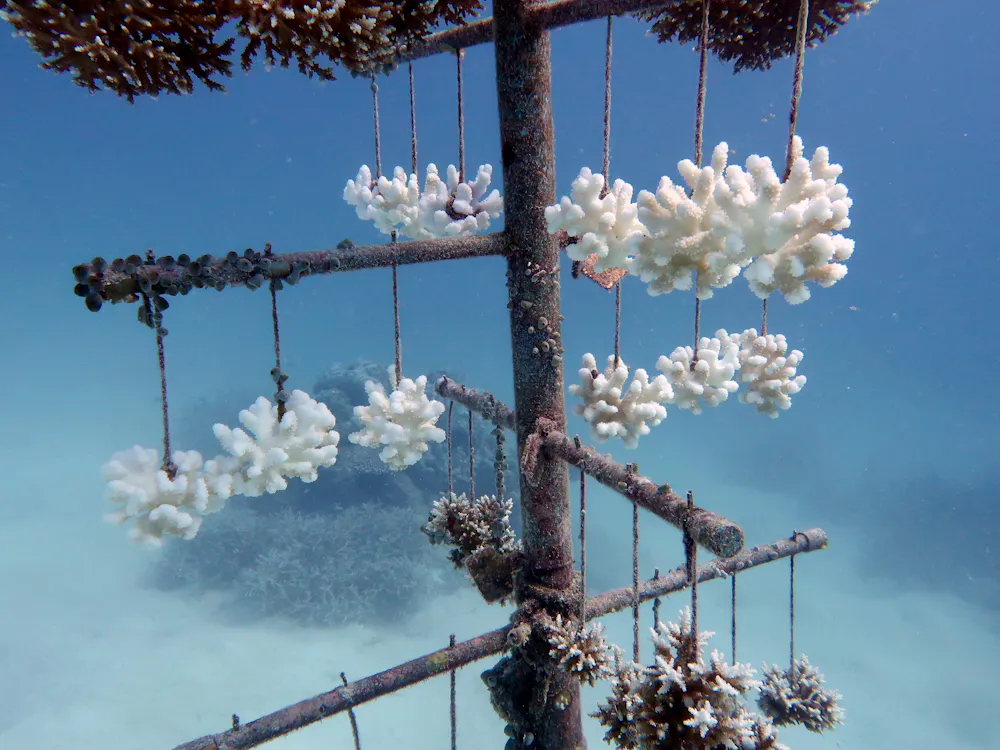
    A coral ‘rope’ nursery in the Maldives Luca Saponari/University of Milan, CC BY-ND

    Coral reefs are much more than just a pretty place to visit. They are among the world’s richest ecosystems, hosting about a third of all marine species.

    These reefs also directly benefit more than a billion people, providing livelihoods and food security, as well as protection from storms and coastal erosion.

    Without coral reefs, the world would be a much poorer place. So when corals die or become damaged, many people try to restore them. But the enormity of the task is growing as the climate keeps warming.

    In our new research, we examined the full extent of existing coral restoration projects worldwide. We looked at what drives their success or failure, and how much it would actually cost to restore what’s already been lost. Restoring the reefs we’ve already lost around the world could cost up to A$26 trillion.

    Bleached Acropora corals in the Maldives.
    Davide Seveso/University of Milan

    Global losses

    Sadly, coral reefs are suffering all over the world. Global warming and marine heatwaves are the main culprits. But overfishing and pollution make matters worse.

    When sea temperatures climb above the seasonal average for sustained periods, corals can become bleached. They lose colour as they expel their symbiotic algae when stressed, revealing the white skeleton underneath. Severe bleaching can kill coral.

    Coral bleaching and mass coral deaths are now commonplace. Last month, a massive warm-water plume bleached large areas of Ningaloo Reef on Australia’s northwest coast just as large sections of the northern Great Barrier Reef were bleaching on the northeast coast.

    Since early 2023, mass coral bleaching has occurred in throughout the tropics and parts of the Indian Ocean.

    Over the past 40 years, the extent of coral reefs has halved. As climate change continues, bleaching events and coral deaths will become more common. More than 90% of coral reefs are at risk of long-term degradation by the end of the century.

    Dead corals in the Maldives following a bleaching event.
    Simone Montano/University of Milan

    Direct intervention

    Coral reef restoration can take many forms, including removing coral-eating species such as parrot fish, transferring coral spawn, or even manipulating the local community of microbes to improve coral survival.

    But by far the most common type of restoration is “coral gardening”, where coral fragments grown in nurseries are transplanted back to the reef.

    The problem is scale. Coral restoration can only be done successfully at a small scale. Most projects only operate over several hundred or a few thousand square metres. Compare that with nearly 12,000 square km of loss and degradation between 2009 and 2018. Restoration projects come nowhere near the scale needed to offset losses from climate change and other threats.

    Conservationists work to garden coral and help preserve these unique life forms.

    Sky-high costs

    Coral restoration is expensive, ranging from around $10,000 to $226 million per hectare. The wide range reflects the variable costs of different techniques used, ease of access, and cost of labour. For example, coral gardening (coral fragments grown in nurseries transplanted back to the reef) is relatively cheap (median cost $558,000 per hectare) compared with seeding coral larvae (median $830,000 per hectare). Building artificial reefs can cost up to $226 million per hectare.

    We estimated it would cost more than $1.6 billion to restore just 10% of degraded coral areas globally. This is using the lowest cost per hectare and assuming all restoration projects are successful.

    Even our conservative estimate is four times more than the total investment in coral restoration over the past decade ($410 million).

    But it’s reasonable to use the highest cost per hectare, given high failure rates, the need to use several techniques at the same site, and the great expense of working on remote reefs. Restoring 10% of degraded coral areas globally, at $226 million a hectare, would cost more than $26 trillion – almost ten times Australia’s annual GDP.

    It is therefore financially impossible to tackle the ongoing loss of coral reefs with restoration, even if local projects can still provide some benefits.

    Rope nurseries nurture coral fragments until they’re ready to be planted out.
    Luca Saponari/University of Milan

    Location, location, location

    Our research also looked at what drives the choice of restoration sites. We found it depends mostly on how close a reef is to human settlements.

    By itself, this isn’t necessarily a bad thing. But we also found restoration actions were more likely to occur in reefs already degraded by human activity and with fewer coral species.

    This means we’re not necessarily targeting sites where restoration is most likely to succeed, or of greatest ecological importance.

    Another limitation is coral gardening normally involves only a few coral species – the easiest to rear and transplant. While this can still increase coral cover, it does not restore coral diversity to the extent necessary for healthy, resilient ecosystems.

    Measuring ‘success’

    Another sad reality is that more than a third of all coral restoration efforts fail. The reasons why can include poor planning, unproven technologies, insufficient monitoring, and subsequent heatwaves.

    Unfortunately, there’s no standard way to collect data or report on restoration projects. This makes it difficult – or impossible – to identify conditions leading to success, and reduces the pace of improvement.

    Succeed now, fail later

    Most coral transplants are monitored for less than 18 months. Even if they survive that period, there’s no guarantee they will last longer. The long-term success rate is unknown.

    When we examined the likelihood of extreme heat events immediately following restoration and in coming decades, we found most restored sites had already experienced severe bleaching shortly after restoration. It will be difficult to find locations that will be spared from future global warming.

    Sometimes the young coral is bleached before the restoration project is complete.
    Davide Seveso/University of Milan

    No substitute for climate action

    Coral restoration has the potential to be a valuable tool in certain circumstances: when it promotes community engagement and addresses local needs. But it is not yet – and might never be – feasible to scale up sufficiently to have meaningful long-term positive effects on coral reef ecosystems.

    This reality check should stimulate constructive debate about when and where restoration is worthwhile. Without stemming the pace and magnitude of climate change, we have little power to save coral reefs from massive losses over the coming century and beyond.

    Other conservation approaches such as establishing, maintaining and enforcing marine protected areas, and improving water quality, could improve the chance a coral restoration project will work. These efforts could also support local human communities with incentives for conservation.

    Reinforcing complementary strategies could therefore bolster ecosystem resilience, extending the reach and success of coral restoration projects.


    Read more:
    Coral restoration is a speculative, feel-good science that won’t save our reefs


    Corey J. A. Bradshaw receives funding from the Australian Research Council.

    Clelia Mulà receives funding from the Australian Institute of Marine Science.

    Giovanni Strona does not work for, consult, own shares in or receive funding from any company or organisation that would benefit from this article, and has disclosed no relevant affiliations beyond their academic appointment.

    ref. Reality check: coral restoration won’t save the world’s reefs – https://theconversation.com/reality-check-coral-restoration-wont-save-the-worlds-reefs-251055

    MIL OSI AnalysisEveningReport.nz

  • MIL-OSI Banking: Media Registration Opens for Ocean-Related Ministerial Meeting Singapore | 08 April 2025 Issued by the APEC Secretariat Media registration is now open for the 5th APEC Ocean-Related Ministerial Meeting (AOMM5) to be held in Busan, Republic of Korea, from 30 April to 1 May 2025.

    Source: APEC – Asia Pacific Economic Cooperation

    Media registration is now open for the 5th APEC Ocean-Related Ministerial Meeting (AOMM5) to be held in Busan, Republic of Korea, from 30 April to 1 May 2025.

    Under the theme of “Navigating our Blue Future—Connection, Innovation and Prosperity”, APEC ministers will convene to advance regional cooperation on ocean resilience, sustainable fisheries and economic development in the ocean and fisheries sector.

    The meeting will be chaired by Korea’s Minister of Oceans and Fisheries, Kang Do-Hyung at the Westin Busan Josun Hotel.

    This marks the first time APEC ministers have met to address ocean-related issues in more than a decade, with the last Ocean-Related Ministerial Meeting taking place in Xiamen, China in 2014.

    Read more: 2014 APEC Ocean-Related Ministerial Meeting Joint Statement

    Since then, APEC has continued to promote sustainable ocean and fisheries management, marine debris reduction and coastal resilience through various working groups and cross-fora collaboration. AOMM5 provides a renewed opportunity to accelerate regional action on ocean-related challenges that are critical to the well-being of coastal communities and the long-term prosperity of the Asia-Pacific.

    Key Media Opportunities:

    • Opening Session of AOMM5: Thursday, 1 May, 09:00-9:30 (KST)
    • Press Conference: Thursday, 1 May, 16:30–17:00 (KST)

    Media Accreditation:

    Media representatives wishing to cover the AOMM5 must be accredited in advance. To receive the media registration guidelines, please email [email protected] with the subject line: MEDIA [Economy name/organization name]. The deadline for media accreditation is 20 April 2025.

    A media lounge will be available to all registered media representative and will be located on the 2nd floor of The Westin Josun Busan on the following dates:

    • Wednesday, 30 April from 09:00–18:00 (KST)
    • Thursday, 1 May from 09:00–18:00 (KST)

    For more information please contact:
    [email protected]

    [email protected] 

    MIL OSI Global Banks

  • MIL-OSI USA: DHHL AWARDS NEARLY 100 TURNKEY HOMES IN WAIKAPŪ, MAUI

    Source: US State of Hawaii

    DHHL AWARDS NEARLY 100 TURNKEY HOMES IN WAIKAPŪ, MAUI

    Posted on Apr 7, 2025 in Featured, Latest Department News, Newsroom


    STATE OF HAWAIʻI

    KA MOKU ʻĀINA O HAWAIʻI 

    DEPARTMENT OF HAWAIIAN HOME LANDS

    KA ʻOIHANA ʻĀINA HOʻOPULAPULA HAWAIʻI

    JOSH GREEN, M.D.
    GOVERNOR

    KE KIAʻĀINA 

    KALI WATSON

    DIRECTOR

    KA LUNA HOʻOKELE 

    KATIE L. LAMBERT

    DEPUTY DIRECTOR

    KA HOPE LUNA HOʻOKELE

    DHHL AWARDS NEARLY 100 TURNKEY HOMES IN WAIKAPŪ, MAUI

    Development of Phase II to Start in May 2025; Families to Move In Early 2026


    Governor Josh Green, M.D., state and county leaders greet and congratulate Puʻuhona Phase II awardees.

    FOR IMMEDIATE RELEASE

    April 7, 2025

    KAHULUI, MAUI – Within the Pilina Building at the University of Hawaiʻi Maui College, tables decked with vibrant purple orchid lei lay at the ready, while the melodic sounds of leo kiʻekiʻe and the distinct chatter of excitement signaled the start of a transformational day for which many have waited decades.

    On Saturday, April 5, 2025, nearly 300 beneficiaries and their ʻohana eagerly awaited the Department of Hawaiian Home Lands’ (DHHL) Puʻuhona Phase II lot selection where 91 turnkey homes were awarded for Maui’s newest homestead community in Waikapū.

    “The wait for a home should never be measured in decades and these 91 families have endured against all odds,” said Governor Josh Green, M.D. “We have a responsibility to them, and to every Native Hawaiian on the waitlist to move faster, build smarter and deliver on the promise of the Hawaiian Homes Commission Act.”

    For almost four hours, applicants’ names were announced in the order they applied; starting with those from the late 1980s. As awardees took their places in line to select their lots, some considered the number of bedrooms they’d need for their growing families; others considered the lots’ locations.

    Regardless of their selection, everyone was grateful for a piece of land to call home.

    “This project is not just about building homes, it’s about rebuilding ancestral connections, creating opportunities, and empowering generations to thrive on the ʻāina,” said DHHL Director Kali Watson. “Prince Kūhiō’s vision was clear – to empower Native Hawaiians through land. Through the Hawaiian Homes Commission Act, he worked to return the lands to Native Hawaiians, fostering a sense of pride, identity, and belonging. We walk that same path today, guided by his vision.”

    The awarding of homes marks progress in the development of the department’s first Act 279 project. Act 279 allocated a historic $600 million in general funds to the DHHL in 2022 to specifically tackle its long-standing waitlist.

    In June of 2024, 52 homes were offered as part of Puʻuhona Phase I making it the first such award on the Valley Isle in 17 years. Phase I families are expected to move into their homes this summer.

    Construction on Phase II is set to begin in May of this year. The first homes are scheduled for completion in February 2026.

    Phase II offered 91 homes of two- to five bedrooms. Homes range in price from $411,422 to $699,000.

    Puʻuhona: Maui’s Newest Homestead Community

    Puʻuhona is the name of the first of four puʻu, or hills, that travel up to Hanaʻula, Waikapū’s highest peak. Named in likely reference to the native tree, hona was highly valued for the fibers found in its inner bark, which were used to craft rope and cordage for fishnets. The creation and intertwining of these materials represent the unity and growth of a community as individual strands come together to form a stronger bond.

    “Every day we strive to build balanced, resilient communities, and Puʻuhona is no exception,” said Dowling Company president and developer, Everett Dowling. “The needs of our Native Hawaiian community are at the forefront in the development of each homestead community, and we will continue to build until everyone on the waitlist has a house of their own.”

    The department acquired the roughly 47-acre parcel through a land transfer with the Dowling Company, Inc. in exchange for affordable housing credits from the county of Maui.

    Puʻuhona will comprise 137 turnkey homes and 24 improved vacant lots: each lot averaging 7,500 square feet in size. Groundwork on the project began in May 2023.

    More to Come on Maui

    The DHHL has six homestead projects in development on the island of Maui.

    This includes:

    • Honokōwai: 50 lots
    • Leialiʻi 1B: 181 lots
    • Wailuku single-family: 207 lots
    • Waiehu mauka: 404 lots
    • Kamalani: 400 lots
    • Kēōkea-Waiohuli: 404 lots

    “To our ‘ohana: please don’t lose hope. The department has more than 1,600 units coming to the island of Maui and we look forward to the opportunity to award leases later this year,” Watson added. “With the backing of Governor Green, our department will explore innovative ways to get our people into the homes they rightfully deserve.”

    To learn more about DHHL’s upcoming Maui projects, click here.

    Click here to download visuals, soundbites.

    B-ROLL (3:53)

    SOUNDBITES

    Tina Leikaha, Puʻuhona awardee, Kahului resident

    (:08 seconds)

    “I’m so excited, I was nervous, being patient, but when they called my name, I was like, oh my gosh, I just said chee hoo.” 

    (:12 seconds)

    “At least my kids can come home now, we have them in the mainland, some of them live in Vegas, Washington, Oregon, so now they can come home, whenever they like, we have a home for them.” 

    Sheldean Dudoit, Puʻuhona awardee, Makawao resident

    (:19 seconds)

    “I feel relieved now being able to call a place home, not only for me but for my kids, knowing that I’ve been through a lot of obstacles in my life but now I see the end and there’s the bright light at the end of the tunnel.”

    (:18 seconds)

    “I really thought like aww man, I was giving up hope, and my sister was like, no, you’re going to get something, you’re going to get something, just hang in there, so I just had to keep the faith, and it all paid off.”

    # # #


    About the Department of Hawaiian Home Lands:

    The Department of Hawaiian Home Lands carries out Prince Jonah Kūhiō  Kalanianaʻole’s vision of rehabilitating native Hawaiians by returning them to the land. Established by U.S. Congress in 1921 with the passage of the Hawaiian Homes Commission Act, the Hawaiian homesteading program run by DHHL includes management of more than 200,000 acres of land statewide with the specific purpose of developing and delivering homesteading.


    MIL OSI USA News

  • MIL-OSI Europe: Written question – Future of the common agricultural policy – E-001315/2025

    Source: European Parliament

    Question for written answer  E-001315/2025
    to the Commission
    Rule 144
    Mihai Tudose (S&D)

    The discussions at the Agriculture and Fisheries Council on 24 March reflected Member States’ concerns over the Vision for Agriculture and Food, published by the European Commission on 19 February.

    While I strongly support the idea of bureaucratic simplification promised by the Commission, I believe that this should not mean amalgamating completely different areas, and I am convinced, as Vice-President of the Committee on Security and Defence, that the increased funding needed to strengthen the EU’s defensive capacities must not come at the expense of food security and the sacrificing of EU citizens’ living standards, so would call on the Commission to answer the following questions:

    • 1.Does the Commission plan to maintain, in the period after 2027, an independent budget for the common agricultural policy of an amount at least equal to that of the current multiannual financial framework, based on the two pillars of direct aids and rural development funding?
    • 2.What is the Commission’s position on the requests made by representatives of Romania and other Member States to: a) include purchases of breeding animals among the expenditure eligible for EU funding; b) review the current rules so as to support the modernisation of fishing fleets?

    Submitted: 31.3.2025

    Last updated: 8 April 2025

    MIL OSI Europe News

  • MIL-OSI Asia-Pac: President Lai receives credentials from new Tuvalu Ambassador Lily Tangisia Faavae  

    Source: Republic of China Taiwan

    Details
    2025-03-28
    President Lai meets British Office Taipei Representative Ruth Bradley-Jones
    On the afternoon of March 28, President Lai Ching-te met with British Office Taipei Representative Ruth Bradley-Jones. In remarks, President Lai welcomed Representative Bradley-Jones as she takes up her post in Taiwan, and thanked the United Kingdom government and parliament for demonstrating staunch support for Taiwan. The president indicated that Taiwan and the UK enjoy close economic and trade ties, and our industries complement each other well, with great potential for collaboration in such fields as semiconductors, AI, unmanned vehicles, and medium- and low-orbit satellites. He stated that he looks forward to expanding exchanges with the UK across all domains so as to enhance democratic and economic resilience, jointly advancing the prosperous development of the Indo-Pacific region and economic security around the world. A translation of President Lai’s remarks follows: It is a pleasure to meet Representative Bradley-Jones here at the Presidential Office for this exchange. I understand that she has proactively called at many government agencies since taking up her post last month. On behalf of the people of Taiwan, I extend a warm welcome. Taiwan and the UK are partners that share the values of freedom and democracy. In recent years, our bilateral relations have continued to deepen. With the efforts of Representative Bradley-Jones and our respective governments, I look forward to the expansion of dialogue and cooperation between Taiwan and the UK. This will further elevate our bilateral ties. Especially in the face of expanding authoritarianism, the UK is not only playing an important role in crafting a unified European response; it is also demonstrating staunch support for Taiwan through various channels. For example, joint statements released after the Australia-UK ministerial consultations, as well as the G7 foreign ministers’ meeting, underlined a high level of concern for peace and stability across the Taiwan Strait. The UK government has publicly expressed support for Taiwan’s international participation on multiple occasions. And last November, the UK House of Commons passed a motion clearly asserting that United Nations General Assembly Resolution 2758 does not mention Taiwan. These actions attest to the UK’s belief in supporting democracy and peace, and have further solidified our countries’ friendship. I would like to convey my deepest gratitude to the UK government and parliament.  Currently, the UK is Taiwan’s fourth largest trading partner in Europe and second largest source of investment from Europe. We enjoy close economic and trade ties, and our industries complement each other well. There is also great potential for collaboration in such fields as semiconductors, AI, unmanned vehicles, and medium- and low-orbit satellites. We look forward to expanding exchanges with the UK across all domains so as to enhance democratic and economic resilience. We also hope the UK will continue to support Taiwan’s bid to join the Comprehensive and Progressive Agreement for Trans-Pacific Partnership so that together, we can work with more like-minded partners, jointly advancing the prosperous development of the Indo-Pacific region and economic security around the world. Once again, I welcome Representative Bradley-Jones to Taiwan and wish her all the best with her work. I anticipate that Taiwan-UK relations will continue to steadily advance through our joint efforts. Representative Bradley-Jones then delivered remarks, first saying in Mandarin that she is honored to meet with President Lai to discuss topics of mutual concern and jointly deepen Taiwan-UK relations, promoting mutual understanding, respect, and cooperation. She went on to say that she came to Taiwan last August to study Mandarin, and began her post as British Office Taipei representative in February this year, noting that every day she learns more about and gains a deeper understanding of Taiwan. Last year, she said, she visited Tainan and Wanli, and found Tainan’s wetlands and the scenery in Wanli very impressive. She added that she has also tried many different Taiwanese foods, and is looking forward to experiencing even more of Taiwan’s local culture and customs over the next four years. Continuing her remarks in English, Representative Bradley-Jones stated that since taking up her post, she has borne witness to the strength of the relationship between Taiwan and the UK and the potential for it to continue to grow. She said that on trade and investment, there is significant complementarity between Taiwan’s Five Trusted Industry Sectors and the UK’s Industrial Strategy, particularly in areas such as digital technologies, advanced manufacturing, and clean energy. Both governments are also together supporting Taiwan and UK businesses through our Enhanced Trade Partnership and annual trade talks, she said. Representative Bradley-Jones went on to say that on science and technology, Taiwan and the UK can and should do more together. She noted that the UK has the third largest tech sector in the world and is valued at over US$1.1 trillion, while Taiwan is the center of the semiconductor and AI hardware world. Given our complementary strengths, especially in areas such as semiconductors, space, and communications technology, she said, the UK has stepped up its level of activity in Taiwan, including by regularly hosting a UK Pavilion at SEMICON and funding 18 joint R&D programs through our new collaborative R&D fund, and looks forward to doing more together in the future.  In support of Taiwan’s whole-of-society resilience, the representative said, the UK is supporting valuable exchanges, co-hosting GCTF (Global Cooperation and Training Framework) workshops, sharing lessons on financial sector resilience, and reaching out to mayors and community leaders across Taiwan. From financial resilience to cyber resilience, she said, the UK’s public sector and private industries have plenty to share and learn. Representative Bradley-Jones stated that on people-to-people links, parliamentarians, civil society, and academics are continuing to deepen contact, and that she is particularly excited by a new smart parliament partnership agreed upon by the Taiwan Foundation for Democracy and the UK’s Westminster Foundation for Democracy, which aims to facilitate cross-party, cross-society, and cross-border exchanges on issues such as democratic governance, AI, inclusive policy-making, and public safety. The representative indicated that the examples she mentioned just scratch the surface of the full potential of the Taiwan-UK relationship. She said that the UK’s longstanding policy remains unchanged, and fundamentally, that is because we share a common set of values and interests. We are together focused on how to make our societies safer and more prosperous tomorrow than they are today, she said, and as like-minded democracies, innovative economies, and practical partners, the sincere and pragmatic cooperation between Taiwan and the UK is bringing material benefits to the prosperity and well-being of our people every day. 

    Details
    2025-03-21
    President Lai meets Alaska Governor Mike Dunleavy
    On the morning of March 21, President Lai Ching-te met with a delegation led by Alaska Governor Mike Dunleavy. In remarks, President Lai said that Alaska has long been an important trading partner of Taiwan, and that we have built a solid foundation for cooperation in such fields as energy, fisheries, and tourism. The president expressed hope that Taiwan and Alaska will have more frequent engagement and exchanges so that our relations can continue to grow to create prosperous development for both sides. A translation of President Lai’s remarks follows: On behalf of the people of Taiwan, I extend my sincerest welcome to our guests. This is Governor Dunleavy’s first visit to Taiwan, and last night, we both attended the Hsieh Nien Fan (謝年飯) banquet hosted by the American Chamber of Commerce in Taiwan. I am delighted to have this opportunity to meet with Governor Dunleavy today at the Presidential Office for further dialogue. Alaska has long been an important trading partner of Taiwan. Our sister-state relationship was established in 1988, and we have built a solid foundation for cooperation in such fields as energy, fisheries, and tourism. Currently, Taiwan is Alaska’s eighth largest export market and ninth largest source of imports. This goes to show just how close our trade and economic ties are and how much potential there is for further growth. As I said in my remarks at last night’s Hsieh Nien Fan banquet, Taiwan is interested in buying Alaskan natural gas. I am sure that Governor Dunleavy’s visit will help us explore even more opportunities for cooperation and continue to deepen Taiwan-United States relations. In the face of such challenges as expanding authoritarianism, climate change, and pandemics, we look forward to strengthening collaboration between Taiwan and the US. By drawing on our strengths, we can jointly build non-red supply chains to bolster our economic resilience and drive the advancement of global technology. I want to thank the US government for reiterating the importance it attaches to peace and stability across the Taiwan Strait and its opposition to any attempt to change the status quo by force or coercion. These statements backing Taiwan help in maintaining stability across the Taiwan Strait and in the Indo-Pacific region. Once again, I thank Governor Dunleavy for traveling such a long way to Taiwan. We hope to see more frequent engagement and exchanges between Taiwan and Alaska so that our relations can continue to grow, and we can create prosperous development for both sides. Governor Dunleavy then delivered remarks, saying that their trip to visit friends in Taiwan has been fantastic, thanking President Lai for the invitation to meet, and thanking all the staff. Governor Dunleavy said that as the pandemic was raging, the world went from “before COVID” to “after COVID.” Before COVID, he said, the world relied on a number of systems that were in place for decades after World War II involving supply chains, alliances, sources of energy, trading partners, and friends. He went on to say that as we go beyond COVID, we are reestablishing and reevaluating who our friends are, where we are going to get our energy, and who our trading partners are going to be. The governor said that we are creating a new world for the next 50 years with the new administration in Washington, and this is an opportunity for us to reevaluate and reinvest with our friends for the next 50 years in each other, our futures, and our security. Governor Dunleavy stated that one thing is for certain: that Taiwan is a friend of the US and a friend of Alaska, and has been for many, many decades. He said that it is their hope in this trip and subsequent trips to establish an even tighter bond among their friends in Taiwan, the US, and Alaska. The governor also said that we have much in common in that we are members of the Pacific family, are democracies, and believe in freedom, free speech, and capitalism. He indicated that he has much optimism for the future, and that as we reestablish relationships throughout the world, energy is going to be the key and the basis for our economic development, our national security, and our friendship. Governor Dunleavy said that he believes this trip is going to lay the groundwork for a fantastic future between Taiwan, Alaska, and the US, and that with President Lai’s support as well as the support of the US administration, we can work together to build even better relationships.

    Details
    2025-03-20
    President Lai attends AmCham Taiwan 2025 Hsieh Nien Fan
    On the evening of March 20, President Lai Ching-te attended the annual Hsieh Nien Fan (謝年飯) banquet hosted by the American Chamber of Commerce in Taiwan (AmCham Taiwan). In remarks, President Lai pointed out that the United States is now a major source of investment in Taiwan, adding that last year US investment accounted for 11.5 percent of total foreign investment in Taiwan. The president also pointed out that the US has become Taiwan’s largest investment destination, as Taiwan’s direct and indirect investment in the US accounted for more than 40 percent of its total outbound investment last year. President Lai expressed hope that AmCham will continue to offer support in quickly resolving the issue of double taxation, further enhancing the mutually beneficial Taiwan-US economic and trade partnership. He also emphasized that one essential element for our economic prosperity is maintaining security and stability, both regionally and globally. The president expressed his belief that, so long as we coordinate our efforts, we can achieve more in our respective defense industries and build non-red supply chains, advancing peace, stability, and prosperity. A transcript of President Lai’s remarks follows: I’m delighted to be here tonight. I want to wish everyone and their families a happy, healthy, and prosperous year ahead. For many years now, AmCham has acted as a bridge between Taiwan and the US. It not only advocates for Taiwan to various sectors in the US, but also offers advice for the development of Taiwan’s industries. So tonight, I would like to express my deepest gratitude to all our friends from the American business community. The 2025 Business Climate Survey, published by AmCham this January, demonstrates the confidence foreign businesses have in the Taiwan market. We are happy to see that over 80 percent of survey respondents reported stable or increased revenue last year, and around 80 percent expressed confidence in Taiwan’s economic prospects for the coming year. Moreover, 90 percent of businesses surveyed are planning to maintain or expand their investments in Taiwan. The positive developments in Taiwan made by our American friends here tonight, their outlook for the future, and their confidence in Taiwan, are further proof of Taiwan’s ideal environment for investment. The US is now a major source of investment in Taiwan. Last year, US investment accounted for 11.5 percent of total foreign investment in Taiwan. In 2023, Entegris opened a new manufacturing facility in Kaohsiung and Micron launched a new facility in Taichung. Last year, Google further solidified Taiwan as its biggest R&D hub outside of the US by opening a new office here. AMD, Nvidia, and major cloud computing companies from the US have also been choosing Taiwan to expand their presence. Over the past several years, the US has also become Taiwan’s largest investment destination. Taiwan’s direct and indirect investment in the US accounted for more than 40 percent of our total outbound investment last year. Four years ago, TSMC’s [Taiwan Semiconductor Manufacturing Company] investment in facilities in Arizona became the biggest FDI [foreign direct investment] in a greenfield project in US history. And this month, TSMC announced it would expand that investment, breaking another record and highlighting the enduring prosperity shared by Taiwan and the US. In addition to TSMC, Taiwan’s GlobalWafers has built a 12-inch silicon wafer factory in Texas, the biggest in the US. This will be followed by many other industries. These companies are confidently expanding their global presence across the Pacific and eastward into the Americas. The US is moving to reindustrialize its manufacturing industry and consolidate high-tech leadership, as it moves to become a global AI hub. In these efforts, Taiwan is an indispensable partner for the US. While the US is a leader in chip design, Taiwan’s semiconductor manufacturing plays an irreplaceable part in the supply chain. Adapting to the changing geopolitical landscape and the coming era of smart technology, Taiwan will continue to promote its Five Trusted Industry Sectors of semiconductors, AI, military, next-gen communications, and security and surveillance. This will drive the next stage in our economic development. A great time to invest in Taiwan is now. We will continue to better connect relevant government agencies and align with international standards to foster a friendlier investment environment. And I am confident that Taiwanese and American companies can leverage their respective high-tech expertise and invest in each other, boosting growth in industrial innovation and development for both our economies. At the same time, we hope to continue deepening Taiwan-US trade relations. Last year, Taiwan was the seventh largest trading partner of the US, up one spot from the previous year, and bilateral trade grew by 24.2 percent. Taiwan is going to expand procurement from the US of industrial and agricultural products, as well as natural gas. I am very happy to welcome Governor [Mike] Dunleavy of Alaska, who has specially come all the way to Taiwan. Alaska is a source of high-quality natural gas, and its relatively short distance from Taiwan facilitates transportation. So we are very interested in buying Alaskan natural gas because it can meet our needs and ensure our energy security. We hope that AmCham will continue to offer support in quickly resolving the issue of double taxation and removing tax barriers to bilateral investment and trade, further enhancing the mutually beneficial Taiwan-US economic and trade partnership. One essential element for our economic prosperity is maintaining security and stability, both regionally and globally. So we are grateful for the joint leaders’ statement issued by [US] President [Donald] Trump and Japan’s Prime Minister Ishiba Shigeru, in which they expressed their solid support for maintaining peace and stability across the Taiwan Strait. As we face growing authoritarianism, Taiwan will continue to uphold our values of freedom and democracy and will be a responsible actor in regional and global security. Currently, Taiwan’s defense budget stands at about 2.5 percent of GDP. Going forward, the government will prioritize special budget allocations to ensure that our defense budget exceeds 3 percent of GDP. At the same time, we will continue to reform national defense, further enhancing Taiwan’s self-defense capabilities. And we will advance our cooperation with the US and other democracies in upholding regional stability and prosperity. We also welcome continued Taiwan-US cooperation in the defense sector. I believe that, so long as we coordinate our efforts, we can achieve more in our respective defense industries and build non-red supply chains, advancing peace, stability, and prosperity. In closing, I look forward to seeing even greater achievements from Taiwan-US economic and trade cooperation. Thank you. After remarks, President Lai, AmCham Chairperson Dan Silver, American Institute in Taiwan Taipei Office Director Raymond Greene, and Governor Dunleavy raised their glasses in recognition of the strong Taiwan-US friendship.  

    Details
    2025-03-18
    President Lai meets Arizona Governor Katie Hobbs  
    On the afternoon of March 18, President Lai Ching-te met with a delegation led by Arizona Governor Katie Hobbs. In remarks, President Lai said that Taiwan and Arizona enjoy close economic and trade relations, and expressed hope that through our joint efforts, Arizona will become a shining example for Taiwan-United States high-tech collaboration and the creation of non-red supply chains. The president indicated that the next goal for Taiwan and the US is the signing of an agreement for the avoidance of double taxation, which would provide greater incentives for Taiwanese businesses to invest in the US, facilitate the establishment of more comprehensive industry clusters, and generate more job opportunities, representing a win-win outcome for Taiwan-US relations. A translation of President Lai’s remarks follows: I warmly welcome you all to the Presidential Office. Governor Hobbs previously visited Taiwan after taking office in 2023. Her leading a delegation to Taiwan once again demonstrates Arizona’s continued friendship and the importance Arizona attaches to Taiwan. For this, I express my sincerest gratitude, and I welcome you again. In recent years, ties between Taiwan and Arizona have continued to expand and progress. For example, Taiwan Semiconductor Manufacturing Company (TSMC)’s investment in Arizona is the largest greenfield investment in US history. This month, TSMC announced that it would increase its investment in the US by US$100 billion. It plans to build more semiconductor fabrication and research and development facilities in greater Phoenix, transforming the area into a US semiconductor hub. Due to our close industrial engagement, we now have more than 30,000 Taiwanese living in Arizona. I would like to thank Governor Hobbs for taking care of Taiwanese businesses and people. I believe that through our joint efforts, Arizona will become a shining example for Taiwan-US high-tech collaboration and the creation of non-red supply chains. Taiwan and Arizona also enjoy close economic and trade relations. Taiwan is Arizona’s eighth largest export market and fifth largest source of imports. Last December, the first agreement under the Taiwan-US Initiative on 21st-Century Trade officially came into effect. I believe this will help further deepen our trade and economic ties. At present, the next goal for Taiwan and the US is the signing of an agreement for the avoidance of double taxation. I hope that we can work together to achieve this goal as soon as possible. This would provide greater incentives for Taiwanese businesses to invest in the US, facilitate the establishment of more comprehensive local industry clusters, and generate more job opportunities, representing a win-win outcome. With Governor Hobbs’s support, we look forward to continuing to advance Taiwan-US relations and promoting further cooperation and exchanges between Taiwan and Arizona across all domains. I understand that during this visit, you have visited many important companies and exchanged opinions with government agencies on how to strengthen bilateral relations. These efforts all go toward building an even more solid foundation for future Taiwan-US cooperation. Once again, I thank you all for supporting Taiwan and welcome you to visit us often in the future. Governor Hobbs then delivered remarks, stating that under President Lai’s leadership, Taiwan continues to thrive as a global hub for technology, innovation, and advanced manufacturing. She said that she is proud to be back in Taiwan alongside her secretary of commerce, Sandra Watson, as part of a diplomatic and economic delegation from Arizona. Since arriving, she said, they’ve hit the ground running, meeting with key partners, businesses, and leaders, noting that the takeaway from their meetings has been incredibly positive, and that they underscore the strong and enduring partnership between Arizona and Taiwan. Adding that our partnership that is built on shared values, mutual cultural appreciation, and commitment to innovation and economic growth, Governor Hobbs indicated that Arizona and Taiwan’s partnership extends back decades, as Taiwanese fighter pilots have been training at Luke Air Force Base in Phoenix since 1996. She said that we have built a strong base of collaboration across many areas, including technology, workforce, and cultural exchange, and that Arizona is even slated to get its own Din Tai Fung (鼎泰豐), which she expressed she is very thrilled about. Governor Hobbs went on to say that Arizona’s relationship with Taiwan is anchored by its ongoing partnership with TSMC and many Taiwan-based companies in semiconductor and other industries, and that TSMC’s US$165 billion investment in Arizona will help power development of the world’s most advanced technology, such as AI, and promises to cement an unbreakable bond between our two economies.  She stated that as governor, she can say with confidence that her administration is fully committed to strengthening this relationship in every way possible, because when Arizona and Taiwan succeed, we all succeed. Lastly, Governor Hobbs once again expressed gratitude to President Lai and the people of Taiwan for their warm hospitality. She then invited President Lai to Arizona to continue their productive conversations and further strengthen ties between our people and our economies, adding that she knows there is no limit to what we can achieve together, and that she is looking forward to what is to come. The delegation was accompanied to the Presidential Office by American Institute in Taiwan Taipei Office Director Raymond Greene.

    Details
    2025-03-18
    President Lai meets 2025 Yushan Forum participants
    On the afternoon of March 18, President Lai Ching-te met with participants in the 2025 Yushan Forum. In remarks, President Lai thanked the guests for gathering here in Taiwan and discussing ways to enhance regional cooperation, demonstrating that our democratic allies and friends are standing together as we take on the challenges of a new world and a new era. The president reiterated that Taiwan will continue to engage with the world, and we welcome the world to come closer to Taiwan. He stated that Taiwan will continue to work with international partners to deepen cooperation, exchanges, and partnership in various domains and resist the expansion of authoritarianism. Together, the president emphasized, we can pursue regional peace and security and realize a new vision for a free and open, stable and prosperous Indo-Pacific. A translation of President Lai’s remarks follows: I would like to begin by thanking Anders Fogh Rasmussen, former prime minister of Denmark and chairman of the Alliance of Democracies Foundation, for inviting then-President Tsai Ing-wen to address the Copenhagen Democracy Summit via video over five consecutive years since 2020, and for inviting myself to give remarks via video last year. Those opportunities allowed Taiwan to share with the world our motivation for, and our work toward, safeguarding freedom and democracy. I would also like to thank Mr. Janez Janša, former prime minister of the Republic of Slovenia, who has visited Taiwan many times already, for actively elevating the cordial ties between Taiwan and Slovenia during his term as prime minister, helping expand friendship for Taiwan throughout Europe. Today’s guests have traveled a long way to show their strong backing for Taiwan. For this, I express my deepest gratitude. Yesterday was my first time attending the Yushan Forum as president. I saw political leaders and representatives gather here in Taiwan and discuss ways to enhance regional cooperation. The event demonstrated that our democratic allies and friends are standing together as we take on the challenges of a new world and a new era. It was truly moving. As I stated at the opening ceremony, Taiwan will continue to engage with the world, and we welcome the world to come closer to Taiwan. Our government will help guide Taiwanese small- and medium-sized enterprises as they expand into the international market and extend Taiwan’s economic power. I hope that during this visit, our guests will be able to explore more opportunities for cooperation in such fields as AI, smart healthcare, and advanced technologies, and join hands in contributing to the prosperity and development of our democratic allies and friends. Taiwan will continue to work with international partners, building upon the shared values of freedom and democracy, to deepen cooperation, exchanges, and partnership in various domains and resist the expansion of authoritarianism. Together, we can pursue regional peace and security and realize a new vision for a free and open, stable and prosperous Indo-Pacific. And I hope, with the assistance of our guests here today, that we can further strengthen the ties between Taiwan and Europe so that we can all take up the work of maintaining global peace and stability. Once again, I welcome our guests to Taiwan. I look forward to hearing your thoughts in a few moments. I also hope you will visit Taiwan often in the future and continue to experience our vibrant democratic society and culture. Chairman Rasmussen then delivered remarks, saying that it is a great pleasure to be back here in Taipei after meeting with President Lai in 2023. He then thanked President Lai for the Taiwanese hospitality on behalf of the Yushan Forum international visitors and participants, who represent four continents and very different political parties but who are united by one thing – the commitment to democracy. Chairman Rasmussen mentioned that over the past few days, they have met with members of the government, legislature, and civil society in Taiwan. He said that he is more convinced than ever that in a very uncertain world, Taiwan continues to stand as a beacon of democracy, from which people in Europe and in the rest of the world have a lot to learn. Over the past eight years, he has been proud to step up his engagement with Taiwan, he said, as he has always subscribed to the view that freedom must advance everywhere, or else it is in decline everywhere. Chairman Rasmussen noted that they have many interests in making sure Taiwan remains free and that we must always stand up for freedom when it is under assault by a dictator. This is why Ukraine’s fight is also everyone’s fight, he explained. He then praised Taiwan for all of the support it has given to Ukraine since Russia’s invasion and honored the two Taiwanese volunteer soldiers who gave their lives for freedom in Ukraine. Chairman Rasmussen remarked that Taiwan is a strong feature of the Copenhagen Democracy Summit that he convenes each year. His foundation, the Alliance of Democracies, has even been sanctioned by the Chinese government due to its support of Taiwan, he said, which is something he takes as a badge of honor. He added that this year’s Copenhagen Democracy Summit in May will be no different, as they plan to focus on the new world order, urgent measures to strengthen Europe’s military, and the situation in Ukraine. But as the United States pulls back from the transatlantic alliance and Europe focuses more on its own defense, he said, Europe should not retreat from the world. He added that to ensure European security, we need more Europe in the Indo-Pacific, and that is why he has been making the argument for more political and economic cooperation with Taiwan. Chairman Rasmussen praised President Lai’s recent decision to increase Taiwan’s national defense budget to more than 3 percent of GDP, adding that it is important that each nation does what it can for its own defense. The chairman once again thanked President Lai for meeting with them today and for the opportunity to visit Taiwan, a beacon of democracy and liberty in Asia. Also in attendance at the meeting were Chairman of the Czech Senate Committee on Foreign Affairs, Defence and Security Pavel Fischer; Member of the National Security Advisory Board to India’s National Security Council Anshuman Tripathi; former Minister of Foreign Affairs of Poland Anna Fotyga; former Minister of Health of Canada Tony Clement; and former Vice-Minister of Foreign Affairs of the Republic of Lithuania and current Secretary General of the Polish-based Community of Democracies Mantas Adomėnas.

    Details
    2025-04-06
    President Lai delivers remarks on US tariff policy response
    On April 6, President Lai Ching-te delivered recorded remarks regarding the impact of the 32 percent tariff that the United States government recently imposed on imports from Taiwan in the name of reciprocity. In his remarks, President Lai explained that the government will adopt five response strategies, including making every effort to improve reciprocal tariff rates through negotiations, adopting a support plan for affected domestic industries, adopting medium- and long-term economic development plans, forming new “Taiwan plus the US” arrangements, and launching industry listening tours. The president emphasized that as we face this latest challenge, the government and civil society will work hand in hand, and expressed hope that all parties, both ruling and opposition, will support the measures that the Executive Yuan will take to open up a broader path for Taiwan’s economy. A translation of President Lai’s remarks follows: My fellow citizens, good evening. The US government recently announced higher tariffs on countries around the world in the name of reciprocity, including imposing a 32 percent tariff on imports from Taiwan. This is bound to have a major impact on our nation. Various countries have already responded, and some have even adopted retaliatory measures. Tremendous changes in the global economy are expected. Taiwan is an export-led economy, and in facing future challenges there will inevitably be difficulties, so we must proceed carefully to turn danger into safety. During this time, I want to express gratitude to all sectors of society for providing valuable opinions, which the government regards highly, and will use as a reference to make policy decisions.  However, if we calmly and carefully analyze Taiwan’s trade with the US, we find that last year Taiwan’s exports to the US were valued at US$111.4 billion, accounting for 23.4 percent of total export value, with the other 75-plus percent of products sold worldwide to countries other than the US. Of products sold to the US, competitive ICT products and electronic components accounted for 65.4 percent. This shows that Taiwan’s economy does still have considerable resilience. As long as our response strategies are appropriate, and the public and private sectors join forces, we can reduce impacts. Please do not panic. To address the reciprocal tariffs by the US, Taiwan has no plans to adopt retaliatory tariffs. There will be no change in corporate investment commitments to the US, as long as they are consistent with national interests. But we must ensure the US clearly understands Taiwan’s contributions to US economic development. More importantly, we must actively seek to understand changes in the global economic situation, strengthen Taiwan-US industry cooperation, elevate the status of Taiwan industries in global supply chains, and with safeguarding the continued development of Taiwan’s economy as our goal, adopt the following five strategies to respond. Strategy one: Make every effort to improve reciprocal tariff rates through negotiations using the following five methods:  1. Taiwan has already formed a negotiation team led by Vice Premier Cheng Li-chiun (鄭麗君). The team includes members from the National Security Council, the Office of Trade Negotiations, and relevant Executive Yuan ministries and agencies, as well as academia and industry. Like the US-Mexico-Canada free trade agreement, negotiations on tariffs can start from Taiwan-US bilateral zero-tariff treatment. 2. To expand purchases from the US and thereby reduce the trade deficit, the Executive Yuan has already completed an inventory regarding large-scale procurement plans for agricultural, industrial, petroleum, and natural gas products, and the Ministry of National Defense has also proposed a military procurement list. All procurement plans will be actively pursued. 3. Expand investments in the US. Taiwan’s cumulative investment in the US already exceeds US$100 billion, creating approximately 400,000 jobs. In the future, in addition to increased investment in the US by Taiwan Semiconductor Manufacturing Company, other industries such as electronics, ICT, petrochemicals, and natural gas can all increase their US investments, deepening Taiwan-US industry cooperation. Taiwan’s government has helped form a “Taiwan investment in the US” team, and hopes that the US will reciprocate by forming a “US investment in Taiwan” team to bring about closer Taiwan-US trade cooperation, jointly creating a future economic golden age.  4. We must eliminate non-tariff barriers to trade. Non-tariff barriers are an indicator by which the US assesses whether a trading partner is trading fairly with the US. Therefore, we will proactively resolve longstanding non-tariff barriers so that negotiations can proceed more smoothly. 5. We must resolve two issues that have been matters of longstanding concern to the US. One regards high-tech export controls, and the other regards illegal transshipment of dumped goods, otherwise referred to as “origin washing.” Strategy two: We must adopt a plan for supporting our industries. For industries that will be affected by the tariffs, and especially traditional industries as well as micro-, small-, and medium-sized enterprises, we will provide timely and needed support and assistance. Premier Cho Jung-tai (卓榮泰) and his administrative team recently announced a package of 20 specific measures designed to address nine areas. Moving forward, the support we provide to different industries will depend on how they are affected by the tariffs, will take into account the particular features of each industry, and will help each industry innovate, upgrade, and transform. Strategy three: We must adopt medium- and long-term economic development plans. At this point in time, our government must simultaneously adopt new strategies for economic and industrial development. This is also the fundamental path to solutions for future economic challenges. The government will proactively cooperate with friends and allies, develop a diverse range of markets, and achieve closer integration of entities in the upper, middle, and lower reaches of industrial supply chains. This course of action will make Taiwan’s industrial ecosystem more complete, and will help Taiwanese industries upgrade and transform. We must also make good use of the competitive advantages we possess in such areas as semiconductor manufacturing, integrated chip design, ICT, and smart manufacturing to build Taiwan into an AI island, and promote relevant applications for food, clothing, housing, and transportation, as well as military, security and surveillance, next-generation communications, and the medical and health and wellness industries as we advance toward a smarter, more sustainable, and more prosperous new Taiwan. Strategy four: “Taiwan plus one,” i.e., new “Taiwan plus the US” arrangements: While staying firmly rooted in Taiwan, our enterprises are expanding their global presence and marketing worldwide. This has been our national economic development strategy, and the most important aspect is maintaining a solid base here in Taiwan. We absolutely must maintain a solid footing, and cannot allow the present strife to cause us to waver. Therefore, our government will incentivize investments, carry out deregulation, and continue to improve Taiwan’s investment climate by actively resolving problems involving access to water, electricity, land, human resources, and professional talent. This will enable corporations to stay in Taiwan and continue investing here. In addition, we must also help the overseas manufacturing facilities of offshore Taiwanese businesses to make necessary adjustments to support our “Taiwan plus one” policy, in that our national economic development strategy will be adjusted as follows: to stay firmly rooted in Taiwan while expanding our global presence, strengthening US ties, and marketing worldwide. We intend to make use of the new state of supply chains to strengthen cooperation between Taiwanese and US industries, and gain further access to US markets. Strategy five: Launch industry listening tours: All industrial firms, regardless of sector or size, will be affected to some degree once the US reciprocal tariffs go into effect. The administrative teams led by myself and Premier Cho will hear out industry concerns so that we can quickly resolve problems and make sure policies meet actual needs. My fellow citizens, over the past half-century and more, Taiwan has been through two energy crises, the Asian financial crisis, the global financial crisis, and pandemics. We have been able to not only withstand one test after another, but even turn crises into opportunities. The Taiwanese economy has emerged from these crises stronger and more resilient than ever. As we face this latest challenge, the government and civil society will work hand in hand, and I hope that all parties in the legislature, both ruling and opposition, will support the measures that the Executive Yuan will take to open up a broader path for Taiwan’s economy. Let us join together and give it our all. Thank you.

    MIL OSI Asia Pacific News

  • MIL-OSI Russia: “Active Citizens” will choose the best type of seafood for barbecue

    Translartion. Region: Russians Fedetion –

    Source: Moscow Government – Government of Moscow –

    In anticipation of the season of country trips and picnics, the Active Citizen project, together withDepartment of Trade and Services of the City of Moscow prepared special voteParticipants will choose which fish or seafood they think is best suited for outdoor cooking.

    Based on the results of the vote, the most popular skewered dish will become a signature dish at fish markets “Moscow is on the wave” and will be sold at a 10 percent discount from May 1 to May 11.

    There are six types of fish and seafood to choose from. Delicacies include Vannamei shrimp (royal shrimp), scallops, eel fillet in wine sauce and one of the most difficult shellfish to prepare – octopus. Those who prefer more familiar options may be attracted by squid, whose taste will be better revealed with a dressing of lemon juice and garlic, or trout fillet, which can be served with sour cream sauce and fresh herbs. Thanks to the voting, Muscovites will be able not only to buy their favorite product at an attractive price, but also to move away from traditional preferences, forming a new gastronomic trend for picnics.

    In addition, in the voting, participants will share what kind of shashlik they usually choose for cooking on the grill – chicken, meat, fish or vegetables.

    Registered users of the project with a standard or full account can join the voting.mos.ru portal. For participation, “active citizens” will receive points from the city’s loyalty program “Million Prizes”. In addition, theirwill be charged for purchases at fish markets “Moscow is on the wave”. To do this, when paying for goods, you need to show the cashier your personal QR code of the program participant. After that, 10 percent of the purchase price will be returned in city points. They can be used to receive goods and services from program partners or donated to charity.

    Fish markets “Moscow – on the wave” are full-fledged gastronomic spaces in the districts of Kosino-Ukhtomsky and Mitino. Their assortment includes more than 600 types of products from leading Russian manufacturers. Here you can try fresh seafood brought from the most fish-rich regions of the country, including Kamchatka and Primorsky Krai, Magadan, Murmansk and Leningrad regions, Crimea and Karelia. In addition, master classes and culinary shows are held at the markets.

    Project “Active Citizen” has been operating since 2014. During this time, more than seven million people have joined it, and more than seven thousand votes have been held. Every month, 30 to 40 decisions are implemented in the city. The project is being developed by the State Institution “New Management Technologies” and the capital Department of Information Technology.

    The creation, development and operation of the e-government infrastructure, including the provision of mass socially significant services, as well as other services in electronic form, corresponds to the objectives of the national project “Data Economy and Digital Transformation of the State” and the regional project of the city of Moscow “Digital Public Administration”.

    Please note: This information is raw content directly from the source of the information. It is exactly what the source states and does not reflect the position of MIL-OSI or its clients.

    Please Note; This Information is Raw Content Directly from the Information Source. It is access to What the Source Is Stating and Does Not Reflect

    https: //vv.mos.ru/nevs/ite/152301073/

    MIL OSI Russia News

  • MIL-OSI New Zealand: Urban resurfacing work coming for State Highway 1 Wellington City

    Source: New Zealand Transport Agency

    Drivers travelling on sections of State Highway 1 on Vivian Street and Kent Terrace can expect smoother journeys ahead, with resurfacing works planned next week.

    Three nights of work are planned for Sunday, 13 April, Tuesday, 15 April, and Wednesday, 16 April. Weather permitting, work crews will be on site between 9 pm and 4:30 am each night.

    Roxanne Hilliard, Wellington Alliance Manager, says these central city sections of State Highway 1 are heavily used.

    “Heavy traffic causes damage over time, and these areas need resurfacing. It will make travel  through the CBD smoother and safer for drivers.”

    Ms Hilliard says the aim is to get the work done as quickly as possible.

    “Work crews will work at night when traffic volumes are lower. Vivian Street and Kent Terrace are busy during the day, and we do not want to disrupt traffic in peak periods because of the delays this would cause.”

    She says the work will require altered lane layouts, a one-night closure of SH1/Vivian Street between Tory Street and Kent Terrace, and a two-night closure of the Kent Terrace/Pirie Street intersection.

    “Unfortunately, we cannot do this sort of work without affecting traffic. However, there are alternative routes on local roads drivers can use.”

    “People will still be able to get through the central city, they will just need to allow for a little more travel time,” Ms Hilliard says.

    Work crews will do their best to control noise and its impact on inner-city residents. Residents can expect to hear noise on nights when work is underway near their properties. We aim to complete the noisiest part of the work between 9 pm and 11 pm.

    Works Schedule and Detour Maps

    • Sunday, 13 April, 9 pm – 4:30 am
      • SH1/Vivian Street closed between Tory Street and Kent Terrace for resurfacing.
      • Traffic detour via Taranaki Street, Cable Street, Oriental Parade, and Kent Terrace.
    • Tuesday, 15 April, 9 pm – 4:30 am
      • Resurfacing the Vivian Street/Kent Terrace intersection and Kent Terrace approach to Basin Reserve
      • Altered lane layout for traffic
      • Vivian Street traffic wanting to turn right onto Kent Terrace will need to turn left and use Elizabeth Street turn-around (see map below).
      • No access to Pirie Street from Kent Terrace/Cambridge Terrace.
    • Works location:
    • Detour Route:
    • Wednesday, 16 April, 9 pm – 4:30 am
      • Resurfacing the Kent Terrace/Pirie Street intersection and Kent Terrace approach to Basin Reserve
      • Altered lane layout for traffic
      • No access to Pirie Street from Kent Terrace/Cambridge Terrace.
    • Works location:

    More Information

    MIL OSI New Zealand News

  • MIL-OSI New Zealand: Greenpeace Statement: Greenpeace corrects Federated Farmers’ impotent attack

    Source: Greenpeace

    In response to the “desperate bid” by Federated Farmers to curtail Greenpeace, the environmental heavyweight has issued a correction to the agri-industry lobby group’s “scurrilous complaint” made to the Charities Commission yesterday.
    Greenpeace Aotearoa spokesperson Niamh O’Flynn says, “It’s just another attempt to shut down dissent by Federated Farmers. The Feds are a lobby group for New Zealand’s biggest polluters, and this crack at peaceful protest is part of a global trend that we must not stand for.
    Greenpeace has faced polluters trying to shut us down for decades. Just like the French bombed the Rainbow Warrior 40 years ago to try to stop our opposition to nuclear testing in the Pacific, and the oil industry is currently trying to eliminate Greenpeace in the US, this is another, albeit impotent, attempt to curtail legitimate peaceful protest.”
    Greenpeace says that the Federated Farmers list of Greenpeace protests is far from comprehensive and omits dozens of examples of direct action that have played a key role in bringing about positive change in Aotearoa and beyond.
    O’Flynn says, “Greenpeace has a long history of taking direct action to highlight environmental injustices and stop polluting industries like Fonterra from harming the environment. Federated Farmers have curated a list of some of our most impactful actions – but they’ve left quite a few out and we want to set the record straight.”
    “Since the 1970s, Greenpeace has campaigned in Aotearoa and the Pacific to ensure that the environment is protected from harm by industries like nuclear weapons, fossil fuels, intensive dairy and commercial fishing that cause significant harm to our collective home. That means that sometimes we will put our bodies on the line to stop corporations from harming the planet.”
    “Importantly, many of our actions to highlight environmental injustice have led to changes that we pride ourselves on as a nation. The nuclear free campaigns of the 1970s and 80s led to New Zealand declaring itself nuclear free, and to the end of nuclear testing in the Pacific. The GE-free campaign led to New Zealand imposing a moratorium on GE crops. The campaign to end oil and gas exploration led to a ban on new offshore oil and gas exploration in Aotearoa. The campaign to stop the Ruataniwha Dam protected the rivers of the Hawke’s Bay from pollution from intensive dairy expansion, and prevented conservation land from being flooded to build a dam.
    “New Zealanders care deeply about nature and history shows that Greenpeace protests have protected that.. Our actions sit alongside long-fought legal battles, petitions, and mass protests and marches in the streets of New Zealand’s biggest cities.
    “We wanted to take this opportunity to reflect on our long history of actions that have succeeded in protecting nature from industries that seek to destroy it.”
    An expanded (but not comprehensive), list of key Greenpeace Aotearoa actions dating back to the 1970s is below.
    1970s:
    • In 1972, the Nuclear Campaign started with the first protest flotilla mobilisation to oppose and disrupt the French Government’s atmospheric nuclear weapons testing programme at Moruroa Atoll in Te Ao Maohi/French Polynesia. This was led by the boat (SV) Greenpeace III, previously named the Vega.
    • In 1973, a second, larger flotilla sailed to the Moruroa Atoll including the Vega. Sailing into the nuclear testing zone prevented the French from being able to detonate bombs.
    1980s:
    • In July 1985, the Greenpeace boat Rainbow Warrior was bombed in the Auckland Harbour following direct actions in the Pacific to oppose nuclear testing – including the evacuation of the people of Rongelap.
    • In September 1985, Greenpeace sent MV Greenpeace to protest against the French Government’s nuclear testing programme at Moruroa Atoll alongside a flotilla of New Zealand protest boats including SV Vega, SV Alliance, SV Varangian, and SV Breeze.
    1990s:
    • In 1995 Greenpeace once again sailed the Rainbow Warrior II into nuclear testing zones in Moruroa and Tahiti to protest the resumption of French nuclear testing.
    • In 1995, Greenpeace protested against CHOGM in Auckland over the impending execution of Ogoni environmental activist Ken Saro-Wiwa by the military regime that ruled Nigeria.
    • In 1997, Greenpeace activists blocked the Stratford gas-fired power station’s generators being unloaded in the Port of Taranaki
    • In 1998, during the SV Rainbow Warrior II tour, Greenpeace ‘unplugged’ Fletcher Challenge Energy’s seismic testing cabling in Taranaki.
    • During the 1990s, Greenpeace championed the creation of a 50 million square kilometre Southern Ocean Whale Sanctuary around the Antarctic continent and launched a series of anti-whaling expeditions into the Southern Ocean to expose and confront the Japanese Government’s bogus ‘scientific’ whaling fleet operating there.
    2000s:
    • In December 2000, Greenpeace activists stopped the production of genetically engineered feed at a Tegel plant in Takanini.
    • In 2002, activists in Auckland scaled a waste incineration facility chimney, capped it, and locked on to highlight dioxin pollution.
    • In August 2003, Greenpeace activists boarded a coal ship in Tauranga in opposition to coal mining.
    • In 2004, the SV Rainbow Warrior II‘s crew used inflatable boats to disrupt the NZ bottom trawler, Ocean Reward, to stop it destroying deep-sea life while fishing in international waters in the Tasman Sea. They delayed the fishing vessel from deploying its trawl net by attaching an inflatable life-raft to it, running the gauntlet of being shot at with compressed air guns and sprayed with high pressure fire hoses by the Ocean Reward’s crew.
    • In May 2004, Greenpeace activists locked on to the Auckland McDonalds distribution centre gates over McDonalds’ use of GE feed.
    • In February 2005, Greenpeace activists occupied the roof of the Marsden B power station.
    • In July 2006, Greenpeace activists locked on to a Chinese bottom trawling ship in the Port of Nelson to prevent the destruction caused by the bottom trawling industry to the seafloor.
    • In October 2008, Greenpeace activists in Tokoroa locked on to logging equipment to stop conversion to pasture for intensive agriculture.
    • In October 2009, Greenpeace activists locked on to a palm kernel shipment in Taranaki to protest links to rainforest destruction and climate change.
    • In November 2009, Greenpeace activists shut down a pit of a New Vale lignite coal mine, used by Fonterra to help fuel operations at its nearby Edendale dairy factory.
    2010s
    • In May 2010, Greenpeace activists locked on to a Fonterra coal power plant in Clandeboye
    • In February 2011, Greenpeace activists locked on to a ship carrying palm kernel in New Plymouth to protest the links to rainforest destruction and climate change.
    • Also in 2011, a flotilla of boats from around the North Island, including the Te Whanau a Apanui fishing vessel San Pietro, began a landmark at-sea protest against offshore oil surveying by oil giant Petrobras that lasted 42 days.
    • In 2012, Greenpeace activists occupied the oil drilling ship The Noble Discoverer in Port Taranaki and camped on its tower for 77 hours, to protest the environmental destruction caused by oil drilling.
    • In 2013, as part of the Oil Free Seas Flotilla, Greenpeace activists broke the newly introduced Anadarko Amendment by sailing into the exclusion zone to confront oil giant Anadarko at sea.
    • In September 2016, Greenpeace ‘returned to sender’ the site office at the Ruataniwha Dam construction site. The activists removed the site office from its location near the Makaroro River, and returned it to the regional council who were promoting the dam’s construction. After a long campaign to prevent this dam from being built, the Council pulled its funding for the dam and the land exchange required to construct it was declared unlawful by the Supreme Court.
    • In 2016, Greenpeace and people from around the country blockaded Sky City which was hosting the annual oil industry conference.
    • In 2016 Greenpeace activists locked on board the NIWA taxpayer-funded climate and ocean research boat which had been chartered by petroleum giant Chevron to survey for oil in New Zealand waters
    • In August 2017, Greenpeace protestors spent 12 hours locked inside irrigation pipes in a bid to slow the construction of the Central Plains Water Scheme
    • In September 2017, Greenpeace activists staged a ‘lightning’ occupation of a dam construction site in Canterbury after facing legal threats from a big irrigation company.
    • The Amazon Warrior Sea Protest in 2017, where Greenpeace’s Executive Director Russel Norman and two others jumped into the ocean in front of the Amazon Warrior to prevent seismic drilling.
    • In July 2018, Greenpeace protestors occupied the site of a proposed dairy expansion in Mackenzie Country and refused to leave.
    • The occupation of oil drilling support vessel the Skandi Atlantic at the port of Timaru in 2019, to prevent it from supporting oil giant OMV to search for oil off the coast of Taranaki
    • In 2019, Greenpeace activists alongside youth climate movement School Strike 4 Climate occupied the headquarters of OMV in Taranaki for several days over the role of the fossil fuel industry in fuelling the climate crisis.
    2020s:
    • In 2020, Greenpeace activists climbed the Fertiliser Association building and unfurled a giant banner calling for an end to the use of synthetic nitrogen fertiliser. Subsequently, the government introduced a cap on the amount of synthetic nitrogen fertiliser used on farms.
    • In 2021, Greenpeace activists took action against fishing company Talleys in Nelson, painting a message on the side of the ship to protest bottom trawling.
    • In 2022, Greenpeace activists deployed a 1500 square metre banner at the Kapuni Fertiliser factory, labelling synthetic nitrogen fertiliser ‘cancer fertiliser’.
    • In 2023, Greenpeace activists dropped banners inside the Parliament gallery to protest inaction on climate change.
    • In 2024, Greenpeace activists scaled Fonterra’s Te Rapa dairy factory in Hamilton and dropped a giant banner reading ‘Fonterra’s methane cooks the climate’, to protest the superheating methane gas produced by Fonterra’s oversized dairy herd.
    • Also in 2024, Greenpeace shut down the offices of Straterra – a mining lobbying firm who are working to advance seabed mining off the coast of Taranaki despite widespread community opposition. Two Greenpeace activists scaled the building while three others locked themselves inside the offices.
    • In November 2024, Greenpeace activists interrupted the AGM of Manuka Resources – the parent company of seabed mining company Trans-Tasman Resources who are attempting to mine the seabed off the coast of Taranaki.
    • In April 2025, Greenpeace activists shut down operations at a palm kernel storage facility in Port Taranaki for several hours, preventing a ship from offloading thirty thousand tonnes of palm kernel connected to the destruction of Indonesian rainforests.

    MIL OSI New Zealand News

  • MIL-OSI China: China to keep monitoring Japan’s Fukushima water release

    Source: China State Council Information Office

    China said on Monday that it found no abnormality in the activity concentration of hazardous elements such as tritium, cesium-134, cesium-137 and strontium-90 in seawater and marine life samples the country independently collected from waters nearby the Fukushima Daiichi nuclear power station.

    The samples were collected by domestic laboratories in late February under the framework of the International Atomic Energy Agency, according to a statement released by the China Atomic Energy Authority.

    “As China has repeatedly pointed out, a single test result showing no abnormalities does not guarantee that future tests will also be problem-free,” Foreign Ministry spokesman Lin Jian said on Monday, noting that China’s stance against Japan’s discharge of nuclear-contaminated water has never changed.

    “We will continue to work with the international community and relevant professional organizations, such as the IAEA, to urge Japan to earnestly fulfill its commitments and ensure that the ocean discharge is under international supervision,” Lin told reporters at a regular news briefing in Beijing.

    According to Lin, during the sixth China-Japan High-Level Economic Dialogue held in Tokyo last month, the Japanese side reaffirmed that it will accept long-term international monitoring of its discharge of nuclear-contaminated water and Beijing’s independent sampling and monitoring.

    It was based on Japan’s fulfillment of its commitment and the fact that no abnormality was found in the analysis that China’s General Administration of Customs held a technical exchange with the Japanese side in Beijing on March 12 regarding the safety of Japanese seafood, the spokesman said.

    “The Chinese government always puts its people above all else and is firmly committed to safeguarding the food safety of its people,” Lin said.

    China independently collected the samples in October last year and February, after the Japanese government unilaterally started discharging nuclear-contaminated water into the ocean on Aug 24, 2023.

    MIL OSI China News

  • MIL-Evening Report: ER Report: A Roundup of Significant Articles on EveningReport.nz for April 8, 2025

    ER Report: Here is a summary of significant articles published on EveningReport.nz on April 8, 2025.

    The latest update on NZ’s state of the environment is sobering – but there are glimmers of progress
    Source: The Conversation (Au and NZ) – By Christina McCabe, PhD Candidate in Interdisciplinary Ecology, University of Canterbury Shutterstock/synthetick If left unaddressed, many environmental changes in Aotearoa New Zealand could threaten livelihoods, health, quality of life and infrastructure for generations to come, according to the latest update on the state of the environment. The Ministry for the Environment and StatsNZ produce an environmental assessment every three years, collating data and trends on air quality, freshwater and marine environments, the land and climate. The latest report shows that long-term drivers of change – including international influences, economic demands and climate change

    ‘Never our intention to mock Jesus’ – Naked Samoans respond to backlash over controversial poster
    By Susana Suisuiki, RNZ Pacific journalist Pasifika comedy troupe Naked Samoans is facing a backlash from some members of the Pacific community over its promotional poster. In the image, which has now been taken down, the Naked Samoans depicted themselves as the 12 disciples surrounding Jesus, a parody of The Last Supper. Several Pasifika influencers condemned the image online, with one person labelling it “disrespectful”. However, Naked Samoan group member Oscar Kightley told RNZ Pacific Waves he did not anticipate the uproar. Oscar Kightley talking to RNZ Pacific Waves. The award-winning writer has addressed the backlash as they gear up

    Here’s who topped the rankings in this year’s scorecard for sustainable chocolate – and which confectionery giant refused to participate
    Source: The Conversation (Au and NZ) – By Stephanie Perkiss, Associate professor in accounting, University of Wollongong Jiri Hera/Shutterstock With the Easter weekend now around the corner, the sixth edition of the Global Chocolate Scorecard has just been released. This is an annual initiative produced by Be Slavery Free, in collaboration with two Australian universities and a wide range of consultants and sustainability interest groups. It ranks companies across the entire chocolate sector – from major multinational producers through to retailers – on a wide range of sustainability policies and practices. This year, there have been some improvements across the

    This Easter, check out which chocolate brands are most ethical
    Source: The Conversation (Au and NZ) – By Stephanie Perkiss, Associate professor in accounting, University of Wollongong Jiri Hera/Shutterstock With the Easter weekend now around the corner, the sixth edition of the Global Chocolate Scorecard has just been released. This is an annual initiative produced by Be Slavery Free, in collaboration with two Australian universities and a wide range of consultants and sustainability interest groups. It ranks companies across the entire chocolate sector – from major multinational producers through to retailers – on a wide range of sustainability policies and practices. This year, there have been some improvements across the

    Open letter to NZME board – don’t allow alt-right Canadian billionaire to take over NZ’s Fourth Estate
    NZME directors ‘have concerns’ about businessman Jim Grenon taking editorial control NZME’s directors have fired their own shots in the war for control of the media company, saying they have concerns about a takeover bid including the risk of businessman Jim Grenon taking editorial control. In a statement to the NZX, the board said it was delaying its annual shareholders meeting until June and opening up nominations of other directors. NZME . . . RNZ report on NZME’s directors “firing their own shots in the war for control of the media company”. Grenon, a New Zealand resident since 2012, bought

    Why are some cats more allergenic than others? It’s not their coat length
    Source: The Conversation (Au and NZ) – By Jazmine Skinner, Lecturer in Animal Science, University of Southern Queensland evrymmnt/Shutterstock Allergies can be debilitating for those who have them – even more so when the cause of the allergic reaction is a beloved pet. Second only to dust mites, the humble domestic house cat is one of the major causes of indoor allergens for people. But what is the actual source of the allergic response? And are certain breeds less allergenic than others? There are many myths and misconceptions related to cat allergens, so let’s debunk a few. Cats produce several

    Australia’s innovative new policies are designed to cut smoking rates – here are 6 ideas NZ could borrow
    Source: The Conversation (Au and NZ) – By Janet Hoek, Professor in Public Health, University of Otago Shutterstock/chayanuphol At the start of this month, when denicotinisation would have been due to come into effect in Aotearoa New Zealand (had the government not repealed smokefree laws), Australia introduced innovative smokefree policies to change the look, ingredients and packaging of tobacco products. New Zealand’s current goal is to reduce smoking prevalence to no more than 5% (and as close to zero as possible) among all population groups. However, realising this goal now seems very unlikely. Latest figures show 6.9% of the general

    Trump has Australia’s generic medicines in his sights. And no-one’s talking about it
    Source: The Conversation (Au and NZ) – By Deborah Gleeson, Associate Professor in Public Health, La Trobe University PeopleImages.com – Yuri A/Shutterstock While Australia was busy defending the Pharmaceutical Benefits Scheme against threats from the United States in recent weeks, another issue related to the supply and trade of medicines was flying under the radar. Buried on page 19 of the Trump’s administration’s allegations of barriers to trade was a single paragraph related to Australia’s access to generic medicines. These are cheaper alternatives to branded medicines that are no longer under patent. The US is concerned about how much notice

    New research shows digital technology is linked to reduced wellbeing in young kids. So what can parents do?
    Source: The Conversation (Au and NZ) – By Jacquelyn Harverson, PhD Candidate, School of Psychology, Deakin University Alex Segre/ Shutterstock Once upon a time, children fought for control of the remote to the sole family television. Now the choice of screen-based content available to kids seems endless. There are computers, tablets, phones and gaming consoles offering streaming services, online content and apps. Children also use devices at school, with digital literacy part of the Australian curriculum from the start of school. The speed and scale of this change has left parents, researchers and policymakers scrambling to catch up. And it

    3.5 million Australians experienced fraud last year. This could be avoided through 6 simple steps
    Source: The Conversation (Au and NZ) – By Gary Mortimer, Professor of Marketing and Consumer Behaviour, Queensland University of Technology Zigres/Shutterstock About 14% of Australians experienced personal fraud last year. Of these, 2.1 million experienced credit card fraud, 675,300 were caught in a scam, 255,000 had their identities stolen and 433,000 were impersonated online. According to the Australian Bureau of Statistics latest Personal Fraud Survey, between July 2023 and June 2024, Australians lost A$2.1 billion through credit card fraud. This was up almost 9% from the previous year. Even after reimbursements, the loss was still $477 million. These figures do

    What do medieval puzzles and the New York Times Connections have in common?
    Source: The Conversation (Au and NZ) – By Emma Knowles, Lecturer, Western Civilisation Program, Australian Catholic University Getty The New York Times Connections game asks players to categorise 16 words into four groups of four. For example, in one collection of 16, a category included “blow”, “cat”, “gold” and “sword”: these are all words that might come before “fish”. As described by puzzle editor Wyna Liu, completing the puzzle should feel “challenging and satisfying”. Players are encouraged to “think flexibly”. Liu says her job as puzzle designer is “to trick you”. Challenging word-based games are not a modern invention. In

    Selling your old laptop or phone? You might be handing over your data too
    Source: The Conversation (Au and NZ) – By Ritesh Chugh, Associate Professor, Information and Communications Technology, CQUniversity Australia berdiyandriy/Shutterstock You’re about to recycle your laptop or your phone, so you delete all your photos and personal files. Maybe you even reset the device to factory settings. You probably think your sensitive data is now safe. But there is more to be done: hackers may still be able to retrieve passwords, documents or bank details, even after a reset. In fact, 90% of second-hand laptops, hard drives and memory cards still contain recoverable data. This indicates that many consumers fail to

    MIL OSI AnalysisEveningReport.nz

  • MIL-OSI New Zealand: Four-month Kaikōura pāua season starts 1 May

    Source: New Zealand Government

    The Kaikōura pāua fishery will open to recreational pāua-gathering for a four-month season from 1 May, Oceans and Fisheries Minister Shane Jones says.

    “I’m very pleased to be able to open this treasured fishery for a longer season this year, which is possible due to the continuing recovery of the pāua stock.

    “This recovery is thanks to careful management, and the ongoing commitment by Kaikōura locals to their fishery.”

    The season will run until 31 August and, subject to ongoing discussion with the Kaikōura Marine Guardians, iwi, and the community, these dates will also apply for future seasons, giving people certainty about when the fishery will be open. 

    “The Kaikōura pāua population was heavily impacted by the 2016 Kaikoura earthquake, which caused significant damage to pāua habitat along the coastline,” Mr Jones says.

    “We have made major strides in the recovery of the pāua stock, and I’m committed to ensuring this continues, which is why I decided to increase the minimum legal size for recreationally caught pāua. 

    “The new size limit means people can take pāua only if they are 130mm or bigger. This will help improve the population by providing more time for pāua to spawn. This also aligns with a higher size limit implemented by commercial fishers.”

    The daily bag limit is three pāua per species from Marfells Beach to Conway River with a minimum size of 130mm for blackfoot pāua and 80mm for yellowfoot pāua. When gathering over multiple days, there is a maximum accumulation of two daily limits.

    Some areas remain closed including the Hikurangi marine reserve, Waiopuka (Wakatu Quay) rāhui, three mātaitai, and a taiāpure. The Oaro-Haumuri Taiāpure will be open for the season but has lower daily limits and a bigger minimum size.

    Fishery Officers will be checking catch to make sure all fishers are following the rules. More information can be found on MPI’s website.

    MIL OSI New Zealand News

  • MIL-OSI USA: Washington Delegation Honors WSU President Dr. Kirk Schulz

    Source: United States House of Representatives – Congressman Dan Newhouse (4th District of Washington)

    Headline: Washington Delegation Honors WSU President Dr. Kirk Schulz

    WASHINGTON, D.C. – Today, Members of the Washington Congressional Delegation congratulated Washington State University President Dr. Kirk Schulz on his outstanding tenure and retirement with a written statement in the Congressional Record. 

    The Congressional Record statement reads as follows:  

    Honoring the Legacy of Washington State University President Kirk Schulz 

    April 7, 2025

    Mr. Newhouse of Washington. Mister Speaker, I rise today, alongside my colleagues from Washington state, Representatives Suzan DelBene, Rick Larsen, Marie Gluesenkamp Perez, Michael Baumgartner, Emily Randall, Pramila Jayapal, Kim Schrier, Adam Smith, and Marilyn Strickland, to recognize and commend the distinguished tenure of Dr. Kirk Schulz as President of Washington State University (WSU). Since 2016, President Schulz has guided WSU through a period of immense growth, advancing research, student success, and statewide partnerships. As he prepares for retirement, we honor his leadership and dedication to higher education in Washington State.

    Under President Schulz’s tenure, WSU has strengthened its reputation as a world-class research institution, addressing critical challenges in agriculture, medicine, and clean energy. His efforts have ensured that students across our state have access to high-quality education, and his work with Washington’s congressional delegation has helped secure funding for key university initiatives.

    Each of Washington’s ten congressional districts has benefited from President Schulz’s leadership, reinforcing WSU’s role as an institution that serves all Washingtonians. I would like to highlight a few key impacts across the state:

    1st District: WSU has built strong partnerships with the region’s tech industry, working with companies in King and Snohomish counties to prepare students for careers in artificial intelligence, software development, and semiconductor manufacturing. These efforts ensure Washington remains at the forefront of technological advancement.

    2nd District: WSU’s agricultural extension programs in Northwest Washington have played a vital role in supporting farmers and sustaining fisheries in the region. WSU’s Everett campus provides entrepreneurs critical business management skills and trains engineers for the world-class aerospace and high-tech industries in Northwest Washington.

    3rd District: WSU Vancouver has expanded opportunities in STEM education, creating new pathways for students to enter high-demand fields like engineering and healthcare. By connecting with local industries and healthcare providers, WSU is strengthening Southwest Washington’s workforce and economic outlook.

    4th District: Home to some of the nation’s premier vineyards, Central Washington has benefited from WSU’s viticulture and enology programs. Through cutting-edge research and collaboration with winemakers, WSU has helped the region maintain its reputation as a world-class wine producer.

    5th District: WSU’s Pullman campus is a cornerstone of agricultural research, and the completion of the Agricultural Research Service (ARS) building has only strengthened that legacy. The facility provides farmers and food producers with critical innovations in crop science and food security, supporting one of Washington’s most essential industries.

    6th District: WSU researchers have been at the forefront of sustainable forestry and climate resilience efforts. Their work supports the health of Washington’s forests, which are vital for the economy, outdoor recreation, and the environment, ensuring these natural resources are protected for future generations.

    7th District: WSU’s collaborations with Seattle-area institutions have led to major advancements in medical research, including breakthroughs in cancer treatment and biomedical engineering. These efforts not only push the boundaries of science but also create opportunities for students to engage in life-changing research.

    8th District: With a focus on clean energy, WSU has led the way in developing innovative hydroelectric, wind, and solar power solutions. These advancements have benefited communities across the Cascades, helping Washington transition to a more sustainable energy future.

    9th District: The Elson S. Floyd College of Medicine has provided new opportunities for students from diverse backgrounds to enter the medical profession. By expanding access to healthcare education, WSU is addressing physician shortages and improving healthcare access across Washington.

    10th District: Military families near Joint Base Lewis-McChord have benefited from WSU’s extension programs, which provide educational support and workforce development opportunities. These initiatives ensure that service members and their families have access to the resources they need to succeed.

    Mister Speaker, as President Schulz concludes his tenure, we recognize his transformative impact on Washington State University and our communities. His leadership has strengthened WSU’s role as a center of innovation, education, and economic opportunity.

    I thank President Schulz for his years of service, and I look forward to seeing how WSU continues to grow and thrive in the years to come. 

    Members of the delegation personally congratulated Dr. Schulz on his retirement: 

    Rep. Susan DelBene (WA-01) said, As Dr. Schulz prepares for retirement after his impactful tenure at Washington State University, I want to recognize his contributions to the students, the faculty, and the entire community. Under Dr. Schulz, WSU has become a leader in research and innovation, forging partnerships with tech companies in Washington’s 1st Congressional District to equip students with the skills needed for careers in artificial intelligence and software development. His legacy as president will continue to inspire and benefit students for years to come.” 

    Rep. Rick Larsen (WA-02) said,During President Schulz’s tenure at Washington State University, tens of thousands of Cougars got a quality education and entered the workforce ready to succeed. Thank you President Schulz for your hard work, years of service and contributions to agriculture in Northwest Washington.” 

    Rep. Dan Newhouse (WA-04) said, “Under my friend President Schulz’s tenure, WSU has strengthened its reputation as a world-class research institution, addressing critical challenges in agriculture, medicine, and clean energy. His efforts have ensured that students have access to high-quality education, and his work with Washington’s congressional delegation has helped secure funding for key university initiatives.” 

    Rep. Emily Randall (WA-06) said, “President Schulz’s leadership can be felt across our entire community, as he has been a champion not just for education but for ensuring students have the resources they need to live and build their best lives. President Schulz and I worked closely together when I served as chair of the Higher Education and Workforce Committee in the Washington State Senate where I got to see first hand the care, intention, and passion he brought to this role — a legacy that will be hard to match.” 

    Rep. Pramila Jayapal (WA-07) said, “Thanks to President Schulz’s leadership, WSU’s students, faculty, and staff have played a significant role in groundbreaking innovations in the Seattle area and throughout our region, including supporting major advancements in medical research, cancer treatment, and biomedical engineering. There is no doubt that his partnership and leadership have positively impacted and inspired thousands of students across our district and our state. I wish him all the best as he enters retirement and this next chapter!” 

    Rep. Adam Smith (WA-09) said, “I appreciate the years of service of Washington State University President Kirk Schulz. Under his guidance, WSU has not only excelled as a world-class research institution but also expanded opportunities for students of diverse backgrounds and enabled student success. I wish him the best in his next chapter and look forward to seeing how his legacy continues to inspire WSU in the coming years.”

    Rep. Marilyn Strickland (WA-10) said, Land grant universities are special, and I thank President Schulz for his commitment to student success and expanding opportunities for all students. Because of Schulz’s leadership, WSU has made a positive impact in my district, and communities across the entire state.” 

    ###  

    MIL OSI USA News

  • MIL-OSI United Kingdom: Promoting Scottish business and expertise

    Source: Scottish Government

    Strengthening ties across Asia.

    Business Minister Richard Lochhead has begun a visit to China and Japan aimed at deepening economic, social and cultural ties and emphasising that Scotland is open for business.

    He will meet government representatives, potential investors and leading companies in both countries. The Minister will also explore opportunities for further collaboration between Scottish and Chinese academic institutions.

    China and Japan are increasingly important export markets for Scottish goods, with whisky and seafood exports to China tripling since 2005 and whisky exports to Japan up 7% last year, making it the seventh largest global market in terms of value.

    In Japan Mr Lochhead will support eight Scottish gaming companies aiming to capture a portion of Japan’s $50 billion market, backed by the Scottish Government’s business accelerator programme, Techscaler, as they meet potential customers and investors in Tokyo.

    He is also launching the first of three days of Scottish activity at Expo 2025 Osaka. The event will showcase Scotland’s gaming sector as well as consumer-focused businesses including distilleries, skincare companies and seafood specialists.

    Mr Lochhead said:

    “Scotland is open for business and China and Japan are vitally important markets for Scottish companies.

    “Over the next two weeks I will champion Scotland’s world class products, universities and technical expertise. I will also be promoting the many investment opportunities that our drive for Net Zero is delivering.

    “In an increasingly volatile global economy, it is even more important that we help Scottish companies access new markets and deepen existing trading relationships.”  

    Background

    The Minister is visiting China from 8-12 April and Japan from 12-18 April.

    Expo 2025 Osaka, Kansai takes place from 13 April to 13 October and is expected to attract about 28 million visitors and more than 150 participating countries.

    The Scottish Government and Scottish Enterprise are supporting the three events at the Expo, beginning with a focus on gaming and consumer industries on 17 April at the UK Pavilion. A list of Scottish companies attending is available on Scottish Development International’s website.  Further events focusing on the health and offshore wind industries take place in June and September

    In China, Mr Lochhead will celebrate the 20th anniversary of the Scottish Government Office which opened in 2005. It joined Scottish Enterprise’s international team, which established a presence in China in 2003.

    MIL OSI United Kingdom

  • MIL-OSI New Zealand: Tuna (eel) stranding at Te Waihora/Lake Ellesmere

    Source: Environment Canterbury Regional Council

    Thousands of tuna (eel) trying to migrate to the sea were stranded at Te Waihora/Lake Ellesmere last week, so we worked with Te Taumutu Rūnanga to clear the path for future migrations.

    Rūnanga  became aware of a large tuna migration, estimated to be 20 tonne, on Thursday night (3 April), and most tuna successfully made it to sea.

    Many tuna became stranded, and while this is very sad, this is a natural event that occurs every year.

    One of the natural triggers for tuna migration is the presence of seawater. On Thursday night seawater was washing from the sea into the lake, which likely triggered the urge to migrate.

    Check out Ngāi Tahu’s video about the tuna stranding on their Facebook page.

    About the tuna heke (eel migration)

    Tuna heke is the phrase used to describe mature eels that migrate to the sea to spawn. These migrating fish stop feeding and undergo many physiological changes to prepare for their journey.

    During the migration to the spawning grounds, they rely on stores of body fat to sustain them. By the time they spawn they are normally thin and die shortly after.

    In absence of a lake opening, they will follow any pathway and unfortunately can find themselves stranded and perish.

    The NIWA website has more information on tuna heke.

    Working together to help the tuna

    Tuna are an important taonga species for Ngāi Tahu and Te Taumutu Rūnanga. They are essential to the continuation of mahinga kai for Ngāi Tahu and the wider community at Te Waihora/Lake Ellesmere.

    At the request of Te Taumutu Rūnanga, we sent machinery to the site and started work on Sunday morning to lower the beach crest so that further waves of migrating tuna will have a shorter and less steep journey to the ocean.

    The earthworks to shorten the path for future migration are now complete and will last until shingle naturally washes into the area to fill it up again.

    In consultation with rūnanga representatives onsite, the decision was made to bury the deceased tuna. Tikanga (custom) and its application is determined by the hapū.

    Opening the lake

    Te Waihora is the largest lake in Waitaha/Canterbury and has no natural outlet to the sea. It was opened by generations of Ngāi Tahu before Pākehā arrival. The first written settler’s record of an artificial opening between the lake and sea was in 1852. It has been opened over 300 times since.

    The opening is governed by a National Water Conservation Order and a range of resource consents held jointly by Ngāi Tahu and us.

    However, many groups have an opportunity to share their views before a final decision is made.

    A full opening of the lake to the sea is very expensive and is a carefully considered process after consultation with a wide range of parties. The lake also naturally closes itself when shingle washes back into the cut and this can occur very quickly depending on sea conditions.

    Other work we’re doing in the area

    There is significant cultural and ecological long-term work being undertaken at Te Waihora/Lake Ellesmere to restore and rejuvenate the mana, mauri and ecosystem health of Te Waihora and its catchment.

    The programme works in partnership with Te Rūnanga o Ngāi Tahu, us, Selwyn District Council, Christchurch City Council and Department of Conservation (DOC) to improve water quality, mahinga kai and biodiversity values, such as through wetland and riparian restoration.

    Two significant projects in the programme are:

    1. The Whakaora Te Waikēkēwai project, led by Te Taumutu Rūnanga and co-managed with us, is restoring the mid-lower reaches of Te Waikēkēwai/Waikēkēwai Stream through riparian restoration, on-farm actions, and restoring a significant wetland for iwi.
    2. The Weed Strikeforce, which is delivered by DOC and co-funded by us, is restoring lakeshore wetlands at scale through targeted control of willows and woody weeds, fostering natural regeneration (Rejuvenating the mauri and ecosystem health of Te Waihora).

    MIL OSI New Zealand News

  • MIL-OSI United Nations: Remarks by Dr. Natalia Kanem, UNFPA Executive Director at the CPD58 High-Level Side Event: Improving Health and Well-being for Women and Newborns

    Source: United Nations Population Fund

    Excellencies,
    Esteemed delegates, 
    Dearest colleagues,
    Dear community leaders and young people,

    Greetings of peace, the noble pursuit of the United Nations and the fervent desire of every woman and girl that UNFPA serves in over 150 locations.

    We meet at a time when our shared mission of peace, human rights and development is more vital than ever; and where we count on people of goodwill like you for solidarity in forging a brighter future.

    As we face a world of unprecedented challenges, among the most profound is the continued injustice of women dying in pregnancy and childbirth, often from entirely preventable causes.

    How can it be, that in this day and age, each and every two minutes, a woman dies from complications in pregnancy or childbirth? And in places affected by conflict, maternal mortality more than doubles. 

    These are not just numbers; they are real lives.

    Let me tell you what I heard from Aicha, a young woman displaced from a traditional village in Cameroon after repeated flooding and then violence by armed groups. She confided: “I am so scared for the baby in my womb and for myself”.

    Pull back the curtain and behind every maternal death you will find a clinic that didn’t have essential medicines, a community without skilled midwives, and a crisis putting basic human care out of reach.

    With never-ending conflicts, growing economic uncertainty, and more frequent climate disasters, women’s health needs are surging – and that’s happening as resources and political will seem to be far less reliable.

    Yet we know that major progress is possible. Change happens when we mobilize the full weight of local communities joined by the international community. 

    Changed happened over the past 25 years, during which the world saw a remarkable 40 percent drop in global maternal mortality. 

    And while progress slowed more recently, there has been a 10 percent decline in maternal deaths since 2015. Let me emphasize that the most gains were made in the least developed countries. Progress is possible!

    Even with setbacks from Covid-19, we are beginning to get back on track in most countries.

    Three powerful examples stand out – Tanzania, Sierra Leone, and Nepal.

    Through impressive government leadership and strategic investments, Tanzania cut maternal mortality by 79 percent, Sierra Leone by 52 percent, and Nepal by one third.

    Seeing is believing. Tangible progress follows when countries prioritize women’s health. This means thousands of lives saved, mothers and their babies poised for a healthier future.

    Importantly, we have the tools to replicate this success. We have cost-effective, evidence-based strategies. We know what works.

    This is all good news. Yet let’s not rest on our laurels while steep funding cuts right now are forcing countries to roll back vital services for maternal, newborn and child health – putting fragile gains at risk.

    We need to go further and we certainly need to go faster.

    Native American wisdom tell us: We will be known forever for the tracks we leave.

    Now is the time to expand all of the proven interventions that we have at hand. Now is the time to ensure equitable access to quality care, especially for any woman who is poor, because she is the one too often left behind.

    Here is where the transformative power of midwives shines bright. 

    Midwives save lives!

    With proper investment in the midwifery profession, did you know that midwives could deliver up to 90 percent of essential sexual and reproductive health services? That includes vital antenatal, delivery, and postnatal care. 

    What’s more, every dollar poured into midwifery yields a 16-fold return in economic and social benefits. That’s an outstanding return on investment and a financially sustainable solution all around.

    • Midwifery care significantly reduces mother and newborn complications.
    • Midwives are leaders. They are embedded in communities, and therefore better able to reach remote and marginalized groups. That’s the path to bridging the inequalities that fuel maternal deaths.
    • Midwives provide holistic care that respects women’s preferences and minimizes medical interventions. They improve the overall experience of childbirth and are a trusted, stabilizing force within their communities.

    I tell you all of this so that you understand that we must act to end the global shortage of nearly one million midwives. 

    The largely female midwifery workforce, unfortunately, remains persistently under-recognized, under-utilized, and under-funded – despite all the overwhelming and longstanding evidence in support of the midwifery model of care.

    That is why UNFPA, with the International Confederation of Midwives (ICM), WHO, UNICEF and other terrific partners, are so proud to launch the Midwifery Accelerator. Thank goodness we now have a global blueprint and a fearless coalition to close the midwifery gap and hasten progress towards ending maternal and newborn deaths by 2030.

    Our unwavering promise is to educate, deploy, retain and empower midwives. Because every woman, everywhere deserves safe, respectful, quality care when she brings life into this world. And a strong, well-resourced midwifery workforce defines the pathway to success.

    You know, safe birth is no longer a technical challenge; rather it is a political choice. Governments hold the power to enact policies, allocate critical resources, and build robust health systems that protect and safeguard lives. 

    I urge Member States to prioritize and set measurable reproductive, maternal, and newborn health targets aligned with the Sustainable Development Goals (SDGs). UNFPA stands shoulder-to-shoulder with you in this critical endeavour.

    The survival and well-being of every woman and every newborn is no less than the foundation of strong families, resilient communities and prosperous societies.

    Again, we will be known forever for the tracks we leave.

    So let us galvanize our collective will and stand united in our complete, interconnected humanity.

    The status quo is done; it is over. Let us seize this moment for resolute action. Let us create a world where everyone has the opportunity to not just survive, but to thrive and flourish in their full potential.

    MIL OSI United Nations News

  • MIL-OSI New Zealand: Russel Norman – NZ’s Environment Report Card is Alarming – Greenpeace

    Source: Greenpeace

    The Government’s three-yearly environment report card, Our Environment 2025, documents the rapid and dramatic decline of nature in Aotearoa, Greenpeace says.
    “The report documents the alarming decline of nature in Aotearoa, driven by activities such as industrial dairying and fishing, and highlights the desperate need for strong Government regulation to protect nature from more harm”, says Dr. Russel Norman, Greenpeace Aotearoa Executive Director.
    “Here are a few of the lowlights: There is only a single species of indigenous bat that is NOT at risk of extinction; only a single species of frog NOT at risk of extinction; just 22% of birds are safe from extinction; over 2,000kg of protected corals pulled up by commercial fishing nets. And on and on the list goes.
    “We are in a biodiversity crash dive, driven by industrial exploitation combined with inadequate government regulation to protect nature.
    “The very foundations of life in Aotearoa – our food systems, our drinking water, and the wildlife we share the country with are on the brink. Native species and ecosystems are on the verge of collapse.
    “Successive governments have allowed profiteering corporations to pollute, exploit, and degrade the environment for decades. And now, everyday New Zealanders are paying the price – through unsafe drinking water, eroding land, unswimmable rivers, depleted fish numbers, and native wildlife that are slipping away. This crisis is political, it’s systemic, and it’s urgent.
    “We have had far too few regulations to protect nature and too much freedom to destroy it for profit.
    “At a time when we need bold action, the Luxon Government is opening the door for polluters to profit while nature collapses.
    “The Government needs to repeal the fast track act, and abandon the RMA reforms. These changes will only make the crisis worse – handing even more power to corporations to fast-track destruction and block environmental protections,” says Norman.
    Some lowlights from the report:
    Terrestrial (p.23-25)
    • Only 6% of indigenous reptile species are NOT threatened with extinction or at risk of becoming threatened with extinction. 72% of reptile species have declining populations.
    • Only 22% of indigenous terrestrial bird species are NOT threatened with extinction or at risk of becoming threatened with extinction. And 22% of species have declining populations.
    • Only 1 indigenous bat species (out of 5) is NOT threatened with extinction or at risk of becoming threatened with extinction. And only one species has an increasing population.
    • Only 1 indigenous frog species (out of 14) is NOT threatened with extinction or at risk of becoming threatened with extinction. 12 species have declining populations.
    • Native ecosystems continue to be destroyed – 88,000 hectares lost between 1996 and 2018.
    Freshwater
    • Half of all lakes are in poor health, contaminated by excess nutrients. Only a third of lakes are in good or very good health (pg. 31).
    • Most freshwater-dependent birds threatened with extinction or at risk of becoming threatened with extinction
    • 76% of freshwater fish are threatened with extinction or at risk of becoming threatened with 63% of fish populations in decline (37)
    • Half of freshwater monitoring sites failed to meet e.coli standard (ie fecal contamination)
    • Only 10% of our wetlands remain yet they continue to be drained and degraded for livestock farming (pg 34).
    • At least 48 percent of the river network is at least partially inaccessible to migratory fish, such as Tuna/eel though a further 36 percent has not yet been assessed and could be inaccessible (pg 36).
    • Nitrate contamination in groundwater is increasing in nearly half of monitored sites (47%) – pg 31
    • Severely polluted rivers found in intensive dairy regions – Canterbury, Waikato and Southland (see map pg 31)
    • 12% of groundwater monitoring sites failed nitrate drinking water standard (ie the 50 year old WHO standard that is very high compared with modern evidence)
    • 45% of entire river length unsafe for swimming, (even though much of this length is in the high country where industries have very little presence)
    Ocean
    • 91% of indigenous seabirds are threatened with extinction or at risk of becoming threatened (p.46).
    • 22 percent of indigenous marine mammal species (10 of 49) were threatened with extinction or at risk of becoming threatened (p.46).
    • Estimated 3,613 seabirds and 476 fur seals were caught in trawling and longline fisheries in one year (p.43)
    • 2,073 kilograms of protected coral were reported as caught in one year (p.43)
    • 12% of assessed fish stocks (19 of 152) were overfished or depleted in 2023, including some stock of black cardinalfish, orange roughy and scallops. FIve stocks had collapsed. (p.43)
    • 15 Hector’s dolphins deaths due to commercial bycatch in 2023-24 (up from usual 0-5 per year). (p.43)
    • Few biogenic habitats (like kelp forests, seagrass meadows and sponge gardens) are monitored in New Zealand, but most that are have experienced loss or damage. (p.48)
    Climate
    • Marine heatwaves have become more frequent, intense and longer-lasting, including. In 2022, New Zealand experienced a record number of marine heatwave days, and the two longest and most intense marine heatwaves on record in some locations. (pg 44)
    • Marine heatwaves have caused unusual fish migrations, severe bleaching and necrosis of sponges, large losses of farmed salmon and southern bull kelp (rimurapa), and likely contributed to the mass mortality of blue penguins (kororā) in the Bay of Plenty pg 65
    • In some areas sea level is expected to rise 20 to 30 centimetres by 2050 compared with 2005 levels. For many parts of the country, a 30-centimetre rise is a threshold for extreme flooding, above which a 100-year coastal storm becomes an annual event (pg 45)
    • In 2021, extreme rainfall events that caused flooding in Canterbury were 10 to 15 percent more intense because of climate change. Similarly, extreme weather and associated flooding on the West Coast in 2021 were nearly 10 percent more intense due to climate change (pg 62)
    • The frequency of extreme temperature events in New Zealand has increased two to threefold due to human influence since pre-industrial times (pg 62)
    • Total glacier ice volumes in New Zealand decreased 35 percent, and the rate of annual loss increased between 1978 and 2020 pg 64
    Other
    • Without changes to land-use, erosion rates are predicted to worsen with climate change. Sediment loads to waterways are expected to increase by up to 233% by 2090 (pg 18)
    • Almost half (49%) of soil at monitored sites is compacted (pg 19)
    • Emerging evidence is finding soils may be contaminated with microplastics (pg 20)
    • Microplastics are widespread throughout the marine environment, and they accumulate in animals as they move up the food chain. Found in many fish species eaten by humans and in green- lipped mussels. (p.42)
    • 67% of items counted in Litter Intelligence were plastic, hazardous plastic additives have been detected in debris in NZ beaches. (p.42)
    • In 2019, air pollution was a factor in 3,239 premature deaths,12,653 cases of childhood asthma 13,237 hospitalisations. Air pollution from motor vehicles was associated with 71 percent of these hospitalisations and 69 percent of premature deaths. (pg 68)
    • Premature deaths associated with NO2 exposure from motor vehicle emissions increased 28 percent, and hospitalisations increased 39 percent. (68)
    • Social costs resulting from the health impacts associated with air pollution were estimated at $15.3 billion for the year 2019, with 69 percent of these costs associated with air pollution from motor vehicles (pg 68)
    • As a result of climate change there is an increasing risk that insect-spread viruses like the Zika virus and dengue fever will be introduced from overseas and locally transmitted

    MIL OSI New Zealand News

  • MIL-OSI USA: Senators Moran, Rosen and Reps. Wasserman Schultz, Max Miller Introduce Fallen Servicemembers Religious Heritage Restoration Act

    Source: United States House of Representatives – Representative Debbie Wasserman Schultz (FL-23)

    “It is critical that Jewish Americans who served our nation in uniform and paid the ultimate price are able to be laid to rest honoring their religious heritage,” said Congresswoman Wasserman Schultz. “Unfortunately, due to the fog of war, there were hundreds of Jewish servicemembers who were improperly buried under Latin crosses in American Battle Monuments Commission cemeteries. This bill is an important step to allow more descendants of these brave Jewish servicemembers the resources needed to properly honor their loved one’s military service, life, and religious heritage.”

    Washington DC – Today, U.S. Senators Jerry Moran (R-KS), Jacky Rosen (D-NV) and U.S. Reps. Debbie Wasserman Schultz (FL-25) and Max Miller (OH-07) will file legislation to help ensure hundreds of fallen American-Jewish servicemembers are buried under military grave markers that represent their true religion and heritage. 

    “It is critical that Jewish Americans who served our nation in uniform and paid the ultimate price are able to be laid to rest honoring their religious heritage,” said Congresswoman Wasserman Schultz.  “Unfortunately, due to the fog of war, there were hundreds of Jewish servicemembers who were improperly buried under Latin crosses in American Battle Monuments Commission cemeteries. This bill is an important step to allow more descendants of these brave Jewish servicemembers the resources needed to properly honor their loved one’s military service, life, and religious heritage.”

    “Every American who puts on the uniform deserves to be remembered with dignity and respect. Many brave servicemembers made the ultimate sacrifice while defending freedom in World War I and World War II—but due to clerical errors or concerns for their safety during service, their religious identities were not properly recorded,” said Congressman Miller. “This bill is a meaningful step to correct those errors and ensure these heroes are laid to rest with the honor and dignity they deserve.”

    “We owe a debt we can never repay to those who have given their last full measure of devotion on behalf of our nation and the freedoms we cherish, religious liberty being chief among them,” said Senator Moran. “This legislation makes certain that the religious heritage of those who have died for our country, particularly Jewish-American servicemembers, is rightfully represented at their final resting places, providing their survivors with assurance that their loved one’s faith is being acknowledged and memorialized with accuracy.”

    “Our nation has a duty to fully honor the heroes who made the ultimate sacrifice to protect our freedoms,” said Senator Rosen. “I’m proud to join Senator Moran in introducing this bipartisan legislation to correct the headstones of servicemembers by ensuring that the religious affiliation of our fallen is properly and accurately recognized.”

    Due to the sheer scale of burials that occurred during World War I and II, hundreds of American-Jewish servicemembers killed in action were improperly buried under Latin Cross grave markers, rather than Stars of David. It is estimated that as many as 600 remain that way today.

    Clerical errors are to blame for many of the improper burials, but some are due to the fact that American-Jewish soldiers did not want to publicly display their faith on dog tags as they fought against Nazi Germany. 

    To replace a grave marker at American Battle Monuments Commission (ABMC) cemeteries, the next of kin must present the ABMC with evidence of the decedent’s religious heritage and submit a grave marker change request. However, without resources, this process can be difficult for families. This legislation would create the “Fallen Servicemembers Religious Heritage Restoration Program,” to award contracts to nonprofits to identify and research American-Jewish servicemembers buried in ABMC cemeteries under grave markers that do not represent the proper religion and heritage. It authorizes $500,000 per year for 10 years for the program.

    This bill is supported by Jewish Federations of North America, the Military Order of the Purple Heart, Gold Star Spouses of America, Jewish War Veterans, Veterans of Foreign Wars, the Aleph Institute, the Non Commissioned Officers Association (NCOA), Vietnam Veterans of America, the American Legion, and the Tragedy Assistance Program for Survivors (TAPS).

    “Congress found that approximately 900 American Jewish service members are inappropriately buried under Latin cross headstones in overseas U.S. military cemeteries,” said Nancy Springer, National Legislative Service Associate Director, of the Veterans of Foreign Wars of the United States. “To remedy this longstanding issue, the Veterans of Foreign Wars (VFW) supports the Fallen Servicemembers Religious Heritage Restoration Act to identify improperly marked graves, verify the religious heritage of the deceased, and enable descendants to request a replacement Star of David headstone. American Jewish service members who fought and died for our country deserve to have their heritage properly recognized and honored. The VFW applauds Chairman Moran and Senator Rosen for introducing this important legislation and calls for its swift passage.” 

    “The Tragedy Assistance Program for Survivors (TAPS) is proud to support the Fallen Servicemembers Religious Heritage Restoration Act,” said Bonnie Carroll, President and Founder of TAPS. “We appreciate Chairman Moran and Senator Rosen, and Representatives Wasserman Schultz and Miller for their steadfast commitment to recognizing and honoring the personal faith of those who gave all in service to our nation.” 

    “Gold Star Spouses of America strongly supports the establishment of the Fallen Servicemembers Religious Heritage Restoration Program. Ensuring that all servicemembers are honored according to their faith and heritage is a critical step in preserving their dignity and respecting the wishes of their families,” said Tamra Sipes, National President of Gold Star Spouses of America. “This bill would provide much-needed resources to correct historical oversights and honor the legacies of those who made the ultimate sacrifice.” 

    “A fallen service member has earned the right to have their personal faith properly preserved, this bill is critical to ensuring that is done,” said Robert Olivarez, National Commander of the Military Order of the Purple Heart.

    “The Vietnam Veterans of America strongly supports this honorable effort to restore the appropriate faith to our fallen service members markers,” said Jack McManus, National President of Vietnam Veterans of America. “This is owed to our fallen patriots and absolutely must be done.”  

    “The Non Commissioned Officers Association (NCOA) proudly stands in support of the Fallen Servicemembers Religious Heritage Restoration Act. This important legislation reaffirms the fundamental right of fallen service members to have their religious beliefs respectfully acknowledged in memorial displays and commemorative settings across the nation,” said Levi Sadr, Director of Government Affairs at the Non Commissioned Officers Association. “As an organization that represents the voice, service, and sacrifice of enlisted personnel past and present, we believe that honoring the faith traditions of those who have given their lives in service to our country is a matter of dignity, respect, and historical truth. The religious symbols and heritage reflected in many memorials are not only consistent with the personal beliefs of the fallen, but are also longstanding expressions of the values held by generations of service members.  This legislation safeguards those expressions from unnecessary censorship and ensures that the legacy of the fallen is preserved in a way that is meaningful to their families, communities, and fellow service members. It also protects the freedom of religious expression in a manner that is inclusive, respectful, and consistent with our Constitution.  The NCOA urges lawmakers to pass the Fallen Servicemembers Religious Heritage Restoration Act and to affirm the enduring principles of honor, remembrance, and religious liberty that this nation was built upon.” 

    “JWV fully endorses the Fallen Servicemembers Religious Heritage Restoration Program Act, legislation that creates a program within the American Battle Monuments Commission (ABMC) to recognize and identify Jewish servicemembers improperly buried in ABMC cemeteries,” said Jewish War Veterans National Commander Gary Ginsburg, USA (retired). “Congress must establish this meaningful $500,000 annual grant for ten years to ensure that Jewish servicemembers killed in action and currently buried under a Latin Cross will be properly buried under a Star of David grave marker.  Now is the time for Congress to act and provide proper recognition of these heroes’ religious and heritage significance. JWV commends Reps. Debbie Wasserman Schultz and Max Miller, and SVAC Chairman Jerry Moran, and Sen. Jacky Rosen for their leadership in introducing the legislation in the House and Senate.  We look forward to working with them on the swift enactment of this legislation and partnering with ABMC on awarding grants to nonprofit organizations.”

    “Nearly 11,000 Jewish American soldiers gave their lives during World War II, but many still haven’t received proper burials, laying under a Latin Cross rather than a Star of David. Jewish Federations proudly support this bill to fund the painstaking research in identifying American-Jewish soldiers improperly buried overseas,” said Karen Paikin Barall, Vice President, Government Relations for Jewish Federations of North America. “Whether they died for their country during the Battle or Normandy or the Battle of Manila, each deserves to rest under the marker that not only represents their religion, but their heritage.”

    ####

    MIL OSI USA News

  • MIL-OSI USA: Gov. Pillen Signs Letter to USDA Requesting Removal of Soda & Energy Drinks from SNAP Purchases

    Source: US State of Nebraska

    .powell@nebraska.gov”>jeff.powell@nebraska.gov

    Gov. Pillen Signs Letter to USDA Requesting Removal of Soda & Energy Drinks from SNAP Purchases


    LINCOLN, NE – Today, Governor Jim Pillen signed a letter of intent to Secretary Brooke Rollins of the U.S. Department of Agriculture (USDA), notifying her of Nebraska’s intent to pursue a Supplemental Nutrition Assistance Program (SNAP) waiver, removing soda and energy drinks from SNAP allowable purchases. Nebraska is the second state to submit such a waiver. 

    Gov. Pillen was joined by leadership from the Department of Health and Human Services; Dr. Eric Sherman, chief medical officer at the Charles Drew Health Center; Director of the Department of Agriculture Sherry Vinton; and Senator Brian Hardin, chairman of the Legislature’s Health and Human Services Committee. 

    “We are starving in the midst of plenty,” said Gov. Pillen. “We are surrounded by an endless number of food and beverage choices that contain numerous preservatives, carbohydrates and sugars, which can lead to obesity, high cholesterol, diabetes and other chronic diseases.”

    The SNAP program supports individuals and families with access to nutritious options to improve their health and well-being. However, SNAP currently allows the purchase of any food or beverage that has a nutritional label, regardless of its nutritional value. According to the USDA, soft drinks or soda are the most common SNAP purchase. Approximately 75,000 households or 152,000 individuals receive SNAP benefits in Nebraska. It is estimated 67,690 are youth. 

    Studies have shown children who drink high levels of soda are more likely to exhibit withdrawn behavior and attention problems. High levels of sugar can also lead to long-term effects such as type 2 diabetes, tooth decay, heart disease, and poor bone health. Caffeine found in energy drinks also has negative effects in children and youth, including increases in stress, anxiety, agitation, sleep disturbance, and high blood pressure, often leading to difficulties in learning and academic performance. 

    “Unfortunately, the obesity epidemic is only getting worse in the United States. The key to making health improvements is to encourage physical activity, healthy food and drink choices, and healthy eating behaviors,” said pediatric endocrinologist Dr. Eric Sherman, Chief Medical Officer of the Charles Drew Health Center in Omaha. “I appreciate Governor Pillen for his willingness to take this important step to promote health and wellness in Nebraska.” 

    “Protecting Nebraska’s children is a top priority for Governor Pillen,” said DHHS CEO Steve Corsi. “The decision to omit harmful drinks from SNAP purchases is an important step that will help children and families live healthy lives and have bright futures.”

    Once approved by the USDA, DHHS will partner with grocers and other stakeholders to implement a waiver that will ensure Nebraskans are able to maximize their SNAP dollars while accessing healthy options.

    “My team and I are ready to hit the ground running and collaborate with our partners as we develop the waiver and implementation plan that expands outreach efforts and supports participants in accessing tools and resources to make informed and healthy choices,” said Shannon Grotrian, director of the DHHS Office of Economic Assistance. 

    Speaking about soda in particular, Sen. Hardin noted that while enjoyable, it was questionable that soda could be characterized as a healthy product. 

    “We’re going to do something about that here in Nebraska and other states will be following us in that endeavor,” said Sen. Hardin. “It’s exciting to be part of something that helps people to live better and feel better.”

    (Left to right: Dr. Sherman, Director Vinton, CEO Corsi, Gov. Pillen, Sen. Hardin, Director Grotrian)

    Dr. Sherman, Charles Drew Health Center

    Senator Brian Hardin

    Gov. Pillen signs waiver letter request

    MIL OSI USA News

  • MIL-OSI USA: Reps. Pettersen, Jacobs Issue Statements on Speaker Johnson’s Deal Blocking Parental Proxy Voting Resolution

    Source: United States House of Representatives – Representative Brittany Pettersen (Colorado 7th District)

    WASHINGTON — U.S. Representatives Brittany Pettersen (D-CO) and Sara Jacobs (D-CA) issued the following statements after Speaker Mike Johnson struck a deal that effectively blocks their bipartisan resolution to allow proxy voting for new parents in Congress. The agreement would replace their proposed policy with a limited “pairing” system that maintains outdated practices and fails to provide real solutions for lawmakers who are new parents.

    Rep. Brittany Pettersen said: “We are so grateful to Rep. Anna Paulina Luna for championing this issue that matters deeply to us, and so many other families. Her partnership was essential in building broad bipartisan support from a majority of the House. When the Speaker refused to act, she continued working to make the House a more welcoming place for families. But the reality is — this outcome does not address the barriers we’ve fought so hard to overcome.

    “When Speaker Johnson refused to bring our resolution to the floor for a vote – regardless of how many Members supported it – we followed the rules and tried to force a vote by filing a discharge petition and received the necessary signatures to bring it forward. Instead of letting us vote, he has instead gone to historic lengths to kill our resolution and make sure the large majority of his Members don’t have a voice. Let’s be clear: these changes are not a win for us and Speaker Johnson has turned his back on moms and dads in Congress and working families.

    “I am deeply grateful for the outpouring of support from colleagues on both sides of the aisle and the women and moms across the nation. I know that you’re as disappointed as I am that we’re not changing the Rules in Congress to make it more likely that people like us have a seat at the table. But our fight is far from over. I promise I won’t stop working on behalf of moms, our families, and most importantly our kids.”

    Rep. Sara Jacobs said: “From the very beginning, our shared goal has been to support new parents so they can do their jobs and vote on behalf of their constituents while also taking care of themselves and their families. Unfortunately, this ‘deal’ falls short of that goal – silencing new parents and perpetuating the status quo and the notion that Congress is ineffective and obsolete. I won’t accept the way Congress has always done things, and the American people won’t either. We will keep pushing for innovative ways to support young people and parents in Congress – including by modernizing how we vote – even if it takes a Democratic majority to do so.”

    Background:

    In January, Pettersen introduced the bipartisan Proxy Voting for New Parents Resolution alongside Representatives Anna Paulina Luna (R-FL), Sara Jacobs (D-CA), and Mike Lawler (R-NY). After Republican Leadership refused to move forward with their bipartisan legislation, the Members used a rare procedural move called a discharge petition, collecting 218 signatures from a majority of the House.

    This procedural tool is used to bypass Leadership and force a vote on the floor. However, despite broad bipartisan support, Speaker Johnson went to extreme lengths to block the measure from advancing. The Members defeated Johnson’s attempts to kill the discharge petition last week, bringing legislative business to a halt. Still, Speaker Johnson continued to ignore House rules and refused to bring the resolution forward for a vote.

    This work is the latest in Pettersen’s continued efforts to make government more inclusive and accessible, especially for young families. During her time in the Colorado legislature, she was the first state lawmaker in Colorado history to take parental leave after giving birth to her son, Davis. Pettersen had to seek permission from Leadership and categorize her absence as a “chronic illness” in order to be paid while on leave. That’s why she brought legislation to change the outdated law and allow for paid parental leave for all future Colorado state lawmakers.

    MIL OSI USA News

  • MIL-Evening Report: What do medieval puzzles and the New York Times Connections have in common?

    Source: The Conversation (Au and NZ) – By Emma Knowles, Lecturer, Western Civilisation Program, Australian Catholic University

    Getty

    The New York Times Connections game asks players to categorise 16 words into four groups of four. For example, in one collection of 16, a category included “blow”, “cat”, “gold” and “sword”: these are all words that might come before “fish”.

    As described by puzzle editor Wyna Liu, completing the puzzle should feel “challenging and satisfying”. Players are encouraged to “think flexibly”. Liu says her job as puzzle designer is “to trick you”.

    Challenging word-based games are not a modern invention.

    In fact, in early medieval England, around the year 1000, there was also a strong appetite for word puzzles designed to entertain (and trick) avid players.

    Gaming in the Middle Ages

    Riddles were very popular in early medieval England.

    Many examples of riddles from this period are in Latin, but a collection of approximately 95 poems, written in Old English and found in a manuscript known as the Exeter Book are the earliest surviving vernacular collection of riddles in Western Europe.

    Compiled around the year 1000, The Exeter Book also includes a variety of poetic works with both religious and secular themes. This, and its location since 1072 in Exeter Cathedral Library, suggests it had a religious audience of monks.

    Take the shortest riddle in the Exeter collection, Riddle 69, included here in both its original Old English form and in translation, thanks to riddles scholar Megan Cavell, one of the creators of the website The Riddle Ages:

    Wundor wearð on wege; wæter wearð to bane.

    There was a wonder on the wave; water turned to bone.

    Early English riddles ask their audience to guess what the different clues point to, usually an object or animal. In Riddle 69, the audience is asked to identify what might be referred to through the metaphor of water turning to bone.

    The solution to this riddle is debated, but most suggestions have to do with ice: ice, icicle, iceberg and frozen pond.

    The Exeter Book is a 10th Century poetry anthology written in Old English.
    Per Se/Flickr, CC BY-SA

    The answer hangs on the various qualities that attach to the word bone: it is hard, difficult to break and can also be long, like an icicle.

    It’s possible to imagine bone and ice linked in a Connections category “things that are tough”.

    Most Old English riddles are a little more complex but still rely on the trickery that comes from word play, metaphor and ambiguity.

    One of the more surprising riddles in the Exeter collection (particularly when we consider the likely monastic audience) is Riddle 45:

    I heard that something was growing in the corner,
    swelling and sticking up, raising its roof.
    A proud bride grasped that boneless thing,
    with her hands. A lord’s daughter
    covered with a garment that bulging thing.

    A series of clues point to possible solutions. The answer will be something that rises, that needs physical touch to grow, and which is covered by cloth.

    The innocently playful solution to this riddle is dough – though it certainly puts another, more vulgar, solution in mind. This innuendo likely added to the entertainment and challenge of the original riddle, teasing its audience with a taboo answer.

    The Exeter Book Riddles does not come with answers. This is both a frustration and a reason for their longevity: modern audiences continue to grapple with possible solutions 1,000 years later.

    It is also possible that part of the entertainment for both medieval and modern audiences is their ambiguity. There are multiple plausible solutions.

    Culture is a game changer

    Part of what makes interpreting the Old English riddles so difficult for modern players is that word puzzles are shaped by the culture in which they were created.

    This cultural coding is obvious in Connections puzzles too. For example on January 3 2025 a category linked American slang words for a dollar, less familiar in other countries: buck, clam, single and smacker.

    Similarly, Old English riddles assume knowledge of aspects of life in early medieval England. For example, Riddle 26 requires an understanding of the processes by which an animal hide became a book.

    Some even rely on knowledge of runic characters to understand their solution; this was an alphabet that was used in England prior to the adoption of the Latin alphabet from the 7th century.

    To truly understand many riddles, you need to know the context in which they were written.
    Getty

    Old English riddles offer an excellent insight into not just the sorts of games and puzzles that entertained early medieval audiences, and continue to entertain us today, but also into domestic life in the period.

    In 1,000 years, Connections puzzles will be harder to guess because players will be unfamiliar with our current way of life. They will also be a type of relic into how minds and culture operated in the early 21st century.

    Emma Knowles does not work for, consult, own shares in or receive funding from any company or organisation that would benefit from this article, and has disclosed no relevant affiliations beyond their academic appointment.

    ref. What do medieval puzzles and the New York Times Connections have in common? – https://theconversation.com/what-do-medieval-puzzles-and-the-new-york-times-connections-have-in-common-250155

    MIL OSI AnalysisEveningReport.nz

  • MIL-OSI USA: ICYMI: U.S. Shouldn’t Depend on China for Critical Minerals

    US Senate News:

    Source: United States Senator for Idaho James E Risch

    BOISE, Idaho – Last week, U.S. Senator Jim Risch outlined the immediate steps Congress can take to strengthen America’s critical mineral supply and support President Trump’s pro-energy agenda in a new editorial published by Newsweek.

    To read the full OpEd, click here.

    U.S. Shouldn’t Depend on China for Rare Minerals

    Excerpts from the editorial:

    “The United States possesses vast reserves of critical minerals vital for our national security, industrial production, and everyday consumer goods. But stifling regulations and unnecessary red tape have made us reliant on foreign sources for minerals we can find at home—directly undermining our military readiness and economic security.

    “President Donald Trump‘s executive order on American mineral production provides a much-needed opportunity to reverse this troubling trajectory, better leverage our domestic natural resources, and achieve self-sufficiency.

    “[. . .]China’s recent decision to cut antimony supplies underscores the danger of this situation. Antimony is an indispensable ingredient in ammunition, fireproofing military equipment, nuclear systems, and much more. The U.S. has no domestic antimony source currently in production, despite having high-grade reserves waiting to be tapped. We have placed our security completely at the mercy of the Chinese government’s whims. But fortunately, we don’t have to look far to course correct.

    “Projects like the Stibnite Gold Project in my home state of Idaho can fulfill our domestic needs. With a 148-million-pound reserve of antimony, it stands as the largest source of the element outside of Beijing’s control. However, the grueling road to production—currently slated to start in 2028, 18 long years after the project started—illustrates how U.S. policy has left our nation vulnerable.

    “Antimony is not a singular example[. . .]We have neglected our own resources, allowing ourselves to depend on Communist China for strategic minerals readily available in our own backyard.”

    “[. . .]We, in Congress, must stand ready to support the vision President Trump has put forward to have a lasting impact. Now is the time to forge a comprehensive strategy that invests in domestic mining projects, revitalizes processing capacity, and restores the American industrial base as the envy of the world. We must make it clear that the United States is leading rather than following in the global race for critical minerals.

    MIL OSI USA News

  • MIL-OSI Australia: 60 new places to eat

    Source: Northern Territory Police and Fire Services


    In brief:

    • This story includes more than 60 new places to eat across Canberra.
    • Since this story was published, more eateries have opened. Find 35 (more) new places to eat.

    Canberra’s food scene gets better each year. 2024 is no exception, with a huge array of eateries opening in the last 12 months.

    Whether you’re on the lookout for a fresh new favourite in your neighbourhood, or prepared to venture across town, there are plenty of options to choose from.

    Central Canberra

    Mínima, Yarralumla

    The latest venture from the team behind Morks showcases Southeast Asian and Chinese cuisine. Grab takeaway noodles for lunch or dine-in from lunch. There’s a tasting menu or a la carte menu to choose from.

    Cafe Sosta, Yarralumla

    This Italian cafe is about as close to the water as you can get. Enjoy views of Lake Burley Griffin while you indulge in dishes like breakfast risotto, pistachio cream filled croissants or  fresh paninis.

    Lil Mama’s, Kingston

    Lil Mama’s is more than just a cafe, it’s a gathering spot for local creatives. That being said, you will find delicious sandwiches, bagels, coffee, matacha lattes, sweet treats and more to enjoy at this waterside spot.

    Petite Saigon, Canberra City

    Verity Lane Market has a new vendor offering fresh, authentic Vietnamese cuisine. You’ll find classics like Vietname bread rolls, rice noodle soup, rice/vermicelli diesh and rice paper rolls.

    Taco Boi, Braddon

    The latest addition to Canberra’s thriving Mexican food scene is serving up tacos, burgers and wings.  Vegans will love their plant-based chicken burger or cauliflower tacos. There are also options for pescetarians and carnivores, plus sides like waffle or shoestring fries, jalapeno poppers and mozarella fingers.

    Recess Coffee, Griffith

    From the great minds behind Ter and Barrio comes this suburban all-day dining destination. Recess roast their own beans, so you know the coffee is excellent. With sandwiches, pancakes, pasta dishes and sweet treats on the menu, there’s almost certainly something to cure your cravings.

    The Peacemaker Saloon, Braddon

    Mort Street’s latest addition is a western saloon-style bar. Visit for American Southwestern food, craft cocktails, whiskey and more.

    Good neighbours are invaluable. But a Good Neighbour serving up coffee, breakfast and lunch seven days a week? Worth its weight in gold. Try the strawberry matcha, shakshouka or chilli crab folded eggs.

    After a hiatus that lasted a few years, Crack Bakery is making a comeback. The team behind Pâtissez and Cartel are serving up their beloved pies as well as cookies. Orders can be made exclusively online with pickup at their kitchen at Canberra Airport.

    This freshly opened boutique wine bar on Lonsdale Street also serves food and cocktails. Think cheese platters, charcuterie boards, hearty mains and desserts. The menu also includes non-alcoholic options.

    Catbird’s menu is inspired by the fresh cuisine of sunny Southern California. There are breakfast burritos, sandwiches, salads, sweet things and coffee. There’s also a kid’s menu.

    Sweet tooths will love the range of flavours at this New York-inspired donut shop. There are filled options like Biscoff or lemon meringue, or traditional glazed donuts.

    Rakkas is a modern Turkish restaurant on the edge of Lake Burley Griffin. The menu includes flavourful authentic Turkish dishes like dips and Turkish bread, fried halloumi with honeycomb, chargrilled spatchcock and more.

    This Lebanese restaurant is perfect for casual family dining or group celebrations. The mains are perfect for sharing: choose from a grill platter, shawarma meta, a vegetarian mixed plate and more.

    If you’re a meat eater with a big appetite, you’ll love this Korean barbeque spot. Choose your proteins and sides and then barbeque right at the table. There are also rice and noodle dishes, soups and stews.

    Italian and Sons is a longstanding Canberra favourite. Their new focaccia bar is open from 11:30am to 2:30pm Wednesday to Friday and includes pillowy, fresh focaccia (with a gluten-free option, too!).

    Compa is Matt Moran’s foray into the Canberra dining scene. Steaks are the focus of the menu, accompanied by a fine selection of entrees, sides and desserts.

    &Sando is also a Matt Moran creation. It’s a sandwich bar that uses bread (and stocks pastry) from local bakery Under. Their sandwiches range includes elevated classics filled with fresh ingredients.

    This new café is run by Illy Coffee and the team behind Pizza Artigiana. Their pastry case is filled with sfogliatelle (an Italian pastry with a ricotta citrus filling), cannoli and croissants.

    Alia is the spot for family-style Greek dining. Bring a big appetite and choose from slow-cooked lamb gyros, lobster linguine, chicken souvlaki, and baklava cheesecake.

    Donuts, cookies and pastries abound at this Dickson dessert spot. Flavours range from the traditional (hot cinnamon and jam) to the unique (bubblegum, iced vovo and earl grey rose).

    No need to journey to Wamboin to visit Contentious Character Winery. Their new location in Fyshwick’s Dairy Road precinct offers wine tastings, coffee and dining options for breakfast, lunch and dinner (including tapas).

    Gourmet sandwiches are the main offering of this New York-style deli. There are also breakfast options including pancakes and a sausage or bacon and egg roll. Sandwiches come fresh or hot, with options like a schnitty roll, beef and pickle and tuna melt.

    Bada Bing has a retro charm that’s perfect for date nights or private dining. Dishes are designed to share and include antipasti, pizza, pasta and more.

    Kingston Foreshore’s newest spot is open for breakfast, lunch and takeaway. The menu includes a mushroom croissant, Turkish eggs, chicken porridge and a crab omelette.

    Pick up a coffee from Howie Espresso and don’t leave without one of their delicious grab-and-go options. Breakfast options include muesli and yoghurt, bircher muesli, chia breakfast bowls and muffins. Sandwiches, bagels, and wraps are on offer for lunch.

    The beloved Mexican food truck now has a permanent shop on Lonsdale Street. The menu boasts authentic Mexican flavours with items like tacos, empanadas and gorditas.

    Tangy, refreshing frozen yoghurt has arrived on Lonsdale Street. Moo Moo has a big range of frozen yoghurt flavours that can be customised with toppings and sauces.

    A third generation Thai eatery serving lunch on weekdays. Dishes are simple but flavourful and include chicken green curry, spicy pumpkin curry and pad thai.

    The Farrer location is a long-time favourite, and Fox and Bow has now arrived in the Inner South. Breakfast, brunch, lunch or just a coffee, everything on the menu is a winner.

    A post shared by Rosa’s at The Lawns (@rosascbr)

    Whether you’re after a pastry and a coffee or a pizza and a wine, this outdoor garden bar is sure to please. The food is delicious and the scenery is delightful.

    Not strictly new, but recently reopened. Milky Lane is back with its loaded burgers, crispy fried chicken and decadent desserts.

    Mediterranean food seems to be having a moment in Canberra, and Kivoto’s is another must-eat destination to add to your list. Pair flavourful Greek cuisine with a drop from their impressive wine list.

    Sample the flavours of Europe without leaving Canberra. This bistro in the Realm hotel precinct has a stunning interior with an outdoor terrace to match. Visit for lunch or dinner or try their high tea offering.

    Another new addition to the Realm precinct is Med, where Lebanese, Turkish and Greek cuisine collide. It’s a hit with carnivores and also offers vegan, vegetarian and gluten-free options.

    Wonderburger brings the vintage American diner experience to Canberra. There are 10 different burgers to choose from, plus hot dogs, fried chicken, chips, sides and soft serve.

    Fine dining aficionados will love this industrial-style restaurant. It has an ever-changing menu that showcases seasonal local produce.

    Visit Pialligo’s newest dining destination for farmhouse-style share plates. Enjoy produce from the farm as well as regional growers.

    Woden, Weston Creek and Molonglo

    Three Mills has locations spread across Canberra, and now Woden Valley residents and workers can get their fix. Enjoy coffee, pastries, freshly baked bread and more.

    Torrens shops is quickly becoming a foodie haven. Saint Elmo is a deli and coffee shop that sells freshly baked goods, a curated selection of meats and cheeses, fresh pasta and sauces.

    Two Before Ten is another Canberra favourite, and it has now landed in the Molonglo Valley. Visit for coffee, breakfast, brunch or lunch.

    Stop by the Spit Shack food truck at Weston Classic Car Wash for smokey barbeque fare. The menu includes rolls, buns, fries, hot dogs and more.

    Gungahlin

    Goodberry’s, Franklin

    Gungahlin residents can now get their fix of frozen custard concretes. Choose from one of the delicious flavours or mix it up with different sauces,  fudges, nuts, fruits, and toppings.

    The Bakehouse, Mitchell

    The Bakehouse has reopened under new management and their fresh menu is bursting with delicious options. Pick up a coffee or raspberry matcha latte and treat yourself to some comfort food.

    GoTato, Gungahlin

    Love potato? Whether you’re after a quick snack or a filling meal, GoTato offers crinkle cut chips, sweet potato fries, potato scallops, waffle fries, potato tots and hot dogs.

    The newest CocoNine restaurant is open for lunch and dinner every day except Tuesday. Get all your Thai favourites including salads, curries, noodles, stir fries and more. There is also a vegan section of the menu.

    If you can barely summon the energy to venture out for coffee in the morning, you’re in luck. Kickstart Espresso has opened a drive-thru coffee shop in Belconnen. In addition to your caffeine fix, you can also pick up smoothies, toasties, muffins and more.

    This suburban gem offers pick-up and delivery. Choose from traditional options and modern Aussie favourites (chooks and bacon pizza, anyone?).

    A new family-friendly pub from the team behind The Knox Made in Watson. They showcase local produce through their menu which includes breakfast, lunch, dinner and drinks.

    A modern takeaway shop with a menu that’s regularly updated. Past items have included crispy pork ribs, laksa, authentic mapo tofu, and Chinese sausage fried rice.

    This ramen bar has a plant-based menu that features tofu, Japanese sweet potato and seasonal vegetables. They also have an extensive menu of non-alcoholic drinks.

    This all-you-can-eat Korean buffet includes self-service bars for hotpot, cupbap, and fried rice, as well as other choices like ramen and noodles, and unlimited drinks.

    Open seven days a week, Aby Coffee Couse have coffee, muffins, pastries and sandwiches.

    Tuggeranong

    L’épi opened its Kambah store towards the end of last year, and it’s become a firm favourite of residents. They make fresh bread, pretzels, pastries, cakes and more.

    Brodburger is iconically Canberran, and it’s now easily available to southside residents. From traditional burgers to salmon, lamb, and veg, there’s something for everyone.

    Dine in or takeaway from Fricken Chicken in Tuggeranong. In addition to their famous fried chicken, they also have a children’s playground and coeliac safe fried chicken.

    Ureshii opened last year and has been satisfying Tuggeranong’s Japanese cravings. Tasty lunch bowls, sushi, udon noodle soup, gyoza and katsu chicken all feature on the menu.


    Get ACT news and events delivered straight to your inbox, sign up to our email newsletter:


    MIL OSI News

  • MIL-OSI USA: CEA Chairman Steve Miran Hudson Institute Event Remarks

    US Senate News:

    Source: The White House
    Today I’d like to discuss the United States’ provision of what economists call “global public goods,” for the entire world.  First, the United States provides a security umbrella which has created the greatest era of peace mankind has ever known.  Second, the U.S. provides the dollar and Treasury securities, reserve assets which make possible the global trading and financial system which has supported the greatest era of prosperity mankind has ever known. 
    Both of these are costly to us to provide.  On the defense side, our men and women in uniform take heroic risks to make our nation and the world safer, preserving our liberties generation after generation.  And we tax hardworking Americans mightily to finance global security.  On the financial side, the reserve function of the dollar has caused persistent currency distortions and contributed, along with other countries’ unfair barriers to trade, to unsustainable trade deficits.  These trade deficits have decimated our manufacturing sector and many working-class families and their communities, to facilitate non-Americans trading with each other.
    Let me clarify that by “reserve currency,” I mean all the international functions of the dollar—private savings and trade included.  I’ve often used the example that when private agents in two separate foreign countries trade with each other, it’s typically denominated in dollars because of America’s status as the reserve provider.  That trade entails savings housed in dollar securities, often Treasurys.  As a result of all this, Americans have been paying for peace and prosperity not just for themselves, but for non-Americans too.
    President Trump has made it clear that he will no longer stand for other nations free-riding on our blood, sweat, and tears, whether in national security or trade.  The Trump Administration has already, in its first hundred days, moved forcefully to reorient our defense and trading relationships to place Americans on fairer ground.  The President has promised to rebuild our broken industrial base and pursue trade terms that put American workers and businesses first.
    I’m an economist and not a military strategist, so I’ll dwell more on trade than on defense, but the two are deeply connected.  To see how it works, imagine two foreign nations, say China and Brazil, trading with each other.  Neither country has a currency that is trusted, liquid, and convertible, which makes trading with each other challenging.  However, because they can transact in U.S. dollars backed by U.S. Treasuries, they are able to trade freely with each other and prosper.  Such trade can only occur because of U.S. military might ensuring our financial stability and the credibility of our borrowing.  Our military and financial dominance cannot be taken for granted; and the Trump Administration is determined to preserve them.
    But our financial dominance comes at a cost.  While it is true that demand for dollars has kept our borrowing rates low, it has also kept currency markets distorted.  This process has placed undue burdens on our firms and workers, making their products and labor uncompetitive on the global stage, and forcing a decline of our manufacturing workforce by over a third since its peak1 and a reduction in our share of world manufacturing production of 40%.
    We need to be able to make things in this country, as we saw during Covid, when many of our supply chains could not survive without being reliant on our biggest adversary, China.  We clearly should not rely on our biggest adversary for equipment essential to keeping our population safe and secure.  Nor should our biggest adversary be allowed to benefit so much from an international security and financial architecture we finance.
    There are other unfortunate side effects of providing reserve assets.  Others may buy our assets to manipulate their own currency to keep their exports cheap.  In doing so, they end up pumping so much money into the U.S. economy that it fuels economic vulnerabilities and crises.  For example, in the years running up to the 2008 crash, China along with many foreign financial institutions, increased their holdings of U.S. mortgage debt, which helped fuel the housing bubble, forcing hundreds of billions of dollars of credit into the housing sector without regard as to whether the investments made sense.  China played a meaningful role creating the Global Financial Crisis.  It took almost a decade to recover, until President Trump got us back on track in his first term.
    In my view, to continue providing these twin global public goods, there needs to be improved burden-sharing at the global level.  If other nations want to benefit from the U.S. geopolitical and financial umbrella, then they need to pull their weight, and pay their fair share.  The costs cannot be solely borne by everyday Americans who have already given so much.
    The best outcome is one in which America continues to create global peace and prosperity and remain the reserve provider, and other countries not only participate in reaping the benefits, but they also participate in bearing the costs.  By improving burden sharing, we can enhance resilience, and preserve the global security and trading systems for many decades into the future.
    Moreover, it is critical not just for fairness, but for capacity.  We are under siege by hostile adversaries trying to erode our manufacturing and defense industrial base and disrupt our financial system; we will be able to provide neither defense nor reserve assets if our manufacturing capacity is hollowed out.  The President has been clear that the United States is committed to remaining the reserve provider, but that the system must be made fairer.  We need to rebuild our industries to project the strength needed to protect reserve status, and we need to be able to pay our bills to do so.
    What forms can that burden sharing take?  There are many options, here are a few ideas:
    First, other countries can accept tariffs on their exports to the United States without retaliation, providing revenue to the U.S. Treasury to finance public goods provision.  Critically, retaliation will exacerbate rather than improve the distribution of burdens and make it even more difficult for us to finance global public goods.
    Second, they can stop unfair and harmful trading practices by opening their markets and buying more from America;
    Third, they can boost defense spending and procurement from the U.S., buying more U.S.-made goods, and taking strain off our servicemembers and creating jobs here;
    Fourth, they can invest in and install factories in America.  They won’t face tariffs if they make their stuff in this country;
    Fifth, they could simply write checks to Treasury that help us finance global public goods.
    Tariffs deserve some extra attention.  Most economists and some investors dismiss tariffs as counterproductive at best and devastatingly harmful at worst.  They’re wrong. 
    One reason the economic consensus on tariffs is so wrong is because nearly all of the models that economists use to study international trade assume either no trade deficits at all, or assume that deficits are short-lived and quickly self-correct through currency adjustments.  According to standard models, trade deficits will cause the dollar to weaken, which reduces imports and boosts exports, eventually wiping out the trade deficit.  If that happens, tariffs may be unnecessary, because trade will balance itself over time and, in this view, intervening with tariffs can only make things worse.
    However, that view is at odds with reality.  The United States has run current account deficits now for five decades, and these have widened precipitously in recent years, going from about 2% of GDP in the first Trump Administration to a high of nearly 4% of GDP in the Biden Administration2.  And this has happened all while the dollar has appreciated, not depreciated!
    The long run is here, and the models are wrong.  One reason is that they fail to account for the U.S. provision of the global reserve currency.  Reserve status matters and, because demand for the dollar has been insatiable, it has been too strong for international flows to balance, even over five decades.
    More recent economic analyses3 allow for the possibility of persistent trade deficits that resist automatically rebalancing, which is more in line with reality in the U.S.  They show that by imposing tariffs against exporting countries, the U.S. can improve economic outcomes, raise revenues, and impose huge losses for the tariffed nation, even with full retaliation.
    In this sense, analysis of what economists call the “incidence” of tariffs indicates that a large share and burden of the tariffs are “paid for” by the country on which we’re applying the tariffs.  Countries that run large trade surpluses are pretty inflexible—they can’t find other sources of demand to substitute for America’s.  Instead, they have no choice but to export, and America is the largest consumer market in the world.  By contrast, America has plenty of substitution options: we can make stuff at home, or we can buy from countries that treat us fairly instead of from countries that take advantage of us.  This difference in leverage means that other countries end up bearing the cost of tariffs.
    In 2018-2019, China bore the cost of President Trump’s historic tariffs through a weaker currency, meaning their citizens became poorer, with less purchasing power on the global stage.  The tariff revenue, paid for by China, was used to finance President Trump’s tax cuts for American workers and firms.  This time around, tariffs will help pay for both tax cuts and deficit reduction.
    Lower taxes on Americans, financed in part by revenue provided from foreigners, will create economic growth, dynamism, and opportunity the likes of which our country has never seen, ushering in President Trump’s new Golden Age.  Deficit reduction will help lower Treasury rates, and with them mortgage rates and consumer credit card rates, stimulating an economic boom.
    It is important to note here that tariffs are not levied simply to collect revenues.  For example, the President’s reciprocal tariffs are designed to address tariff and non-tariff barriers and other forms of cheating like currency manipulation, dumping, and subsidies to gain unfair advantage.  Revenue is a nice side effect, and if it is used in part for lowering taxes, it can help turbo-charge competitiveness improvements that boost U.S. exports.
    Burden sharing can allow the United States to continue leading the free world for many decades.  It’s a must not only for fairness, but for feasibility.  If we don’t rebuild our manufacturing sector, we will be strained in providing the security we need for our safety and to underpin our financial markets.  The world can still have the American defense umbrella and trading system, but it’s got to start paying its fair share for them.  Thank you, and I am happy to take some questions.
    [1] https://fred.stlouisfed.org/series/MANEMP
    [2] https://data.worldbank.org/indicator/BN.CAB.XOKA.GD.ZS?locations=US
    [3] https://papers.ssrn.com/sol3/papers.cfm?abstract_id=5008591

    MIL OSI USA News

  • MIL-OSI Asia-Pac: Government Pushes for Saline Aquaculture Hubs in Haryana, Punjab, Rajasthan, and Uttar Pradesh; To Drive Employment and Livelihoods

    Source: Government of India

    Government Pushes for Saline Aquaculture Hubs in Haryana, Punjab, Rajasthan, and Uttar Pradesh; To Drive Employment and Livelihoods

    States Propose 5-Hectare Limit, Increased Subsidies, and National Committee to Boost Sustainable Shrimp Aquaculture

    Posted On: 07 APR 2025 6:13PM by PIB Delhi

    Union Secretary, Department of Fisheries (DoF), Ministry of Fisheries, Animal Husbandry and Dairying, Dr. Abhilaksh Likhi, visited ICAR-Central Institute of Fisheries Education (CIFE), Mumbai and chaired the Review meeting of the Saline Water Shrimp Aquaculture in the Sates of Haryana, Punjab, Rajasthan and Uttar Pradesh through Video Conference today in Mumbai. This meeting aimed to tap the potential of saline land resources for aquaculture, generating employment and livelihood opportunities. Shri Likhi interacted with farmers from Haryana, Punjab, Rajasthan, and Uttar Pradesh for insights and on ground challenges and gaps faced by them in saline water aquaculture. He also visited the Aquaculture Facilities & Ornamental Fisheries unit at ICAR- CIFE, Mumbai, on the sidelines of the Review Meeting on Saline Water Aquaculture. Shri Sagar Mehra, Joint Secretary, DoF, highlighted the progress made, key challenges faced, and ongoing initiatives under PMMSY and the Blue Revolution in Haryana, Punjab, Rajasthan, and Uttar Pradesh.

    State-Specific Updates on Saline Aquaculture and Shrimp Farming

    During the meeting, State Fisheries Officials provided updates on the status, progress, and key challenges in promoting inland saline and shrimp aquaculture. Uttar Pradesh highlighted the vast potential of inland saline aquaculture, covering 1.37 lakh hectares in districts such as Mathura, Agra, Hathras, and Raebareli, with significant initiatives supported under the Pradhan Mantri Matsya Sampada Yojana (PMMSY). Rajasthan reported growing momentum in shrimp farming in salt-affected districts like Churu and Ganganagar, with approximately 500 hectares dedicated to the cultivation of Penaeus vannamei, milkfish, and pearl spot. Additionally, a diagnostic lab has been established in Churu under PMMSY. Punjab shared its achievements in expanding shrimp farming in southwestern districts such as Sri Muktsar Sahib and Fazilka, bolstered by the Blue Revolution and PMMSY schemes. Notable developments include a 30-tonne cold storage and ice plant and a dedicated training centre. Haryana demonstrated significant progress in saline aquaculture, having achieved a production of 13,914 tons with an investment of ₹57.09 crore under PMMSY. Furthermore, ICAR-CIFE shared valuable best practices and technical insights to enhance the productivity and sustainability of saline water aquaculture.

    In the states of Haryana, Punjab, Rajasthan, and Uttar Pradesh, approximately 58,000 hectares of saline area has been identified, yet only around 2,608 hectares is currently being utilized. There is huge potential to convert these saline affected areas into aquaculture hubs. These saline-affected lands, often unsuitable for traditional agriculture, hold immense potential to be transformed from wastelands to wealth lands. India, being the second-largest producer of cultured shrimp globally, earns over 65% of its seafood export value from shrimp alone. Despite the country’s vast potential in brackish water and shrimp aquaculture particularly in saline-affected areas, inland saline aquaculture resources continue to remain significantly underutilized.

    Challenges Faced by Farmers in Saline Water Aquaculture

    In the review, farmers from Haryana, Punjab, Rajasthan, and Uttar Pradesh raised several challenges that are impacting the viability and sustainability of their saline water aquaculture operations. They highlighted issues of high setup costs, inadequate subsidy coverage, and the restrictive 2-hectare area limit for saline water aquaculture. Other significant concerns included fluctuating salinity levels, high land lease rates, reductions in subsidies, and the lack of locally available, high-quality seed. In addition, farmers pointed out the absence of proper marketing infrastructure, including markets and cold storage facilities, as well as rising input costs and low market prices for their products. These factors are contributing to low returns on investment, prompting farmers to seek increased support from the Department of Fisheries to overcome these obstacles and ensure the sustainability of their aquaculture practices.

    Proposals for Strengthening the Sector and Collaborative Efforts

    In response to these challenges, the states called for enhanced central support to strengthen the sector. Key proposals included raising the unit cost for aquaculture operations to ₹25 lakh, increasing the area limit from 2 hectares to 5 hectares, and enhancing subsidies for polythene lining. The establishment of an Integrated Aqua Park in Sirsa and improvements to marketing channels were also recommended to ensure better price realization and long-term sustainability. The Department of Fisheries emphasized the need for collaborative efforts between the states, ICAR, and other agencies to develop strategies for utilizing saline land resources more effectively for aquaculture. A focus was placed on organizing awareness campaigns with ICAR, State Fisheries Departments, and other stakeholders to promote shrimp consumption in northern India, gap analysis for development of potential clusters and expand cultivation area in the identified 25 districts of the four States. States were encouraged to leverage Krishi Vigyan Kendras (KVKs) to disseminate technical knowledge, identify new areas for saline aquaculture, and conduct outreach-based research. Furthermore, the meeting highlighted the need for a National Level Committee to review guidelines for shrimp culture in freshwater/inland farms and to prepare a roadmap for the sustainable development of saline aquaculture in northern Indian states. The states were also urged to formulate beneficiary-oriented action plans and communicate specific gaps to the Department for targeted central support in key areas such as marketing infrastructure, disease management, regulatory frameworks, research, and capacity building.

    ***

    Aditi Agrawal

    (Release ID: 2119832) Visitor Counter : 60

    MIL OSI Asia Pacific News

  • MIL-OSI USA: REPS LIEU, NORTON, BEYER AND ESPAILLAT REINTRODUCE BILL TO PROTECT PRIVACY OF U.S. CITIZENS CROSSING THE BORDER

    Source: United States House of Representatives – Congressman Ted Lieu (33 District of California)

    WASHINGTON – Today, Congressman Ted W. Lieu (D-Los Angeles County), Congresswoman Eleanor Holmes Norton (D-DC), Congressman Donald Beyer (D-VA) and Congressman Adriano Espaillat (D-NY) reintroduced the Protecting Data at the Border Act, which would require law enforcement to obtain a warrant before searching an American’s laptop and phone at a port of entry. The reintroduction comes on the heels of several high-profile stories of Customs and BorderPatrol agents searching travelers’ phones and electronics, denying them entry in some cases. These instances highlight the fact that even Americans can be subjected to warrantless searches at ports of entry. The bill was first introduced in the 116thCongress and has been reintroduced every Congress since.

    No American should have to give up their right to privacy just because they’re traveling,” said Rep. Lieu. “Americans have a constitutional right to privacy enshrined by the Fourth Amendment. Searching someone’s phone gives an agent access to everything from pictures to texts to bank accounts to location data to medical information.  The Founders could never imagine the information that a cellphone holds, but they had enough sense to safeguard us from unreasonable and invasive searches. Our bill serves to make clear that the government does not possess the right to indiscriminately search phones and laptops of Americans without due process and adequate cause.” 

    “Potential civil liberties violations at ports of entry have long been a concern, but with a lawless, authoritarian President allowing major intrusions into Americans’ privacy and personal data, there is heightened urgency for Congress to address this issue”” said Rep. Beyer. “The Protect Data at the Border Act would protect Americans’ constitutional rights and prevent unnecessary, invasive searches. Everyone should support this badly needed reform.” 

    “The Fourth Amendment protects Americans against unreasonable searches but unfortunately searches at the border fall under an exception that allows law enforcement to search electronic devices, even those of American citizens, without a warrant,” Rep. Norton said. “The Supreme Court has held that police generally need a warrant to search cell phones. Americans should enjoy this protection against warrantless search by American law enforcement at the border as well. My constituents have opened cases about this issue with my office, and as a former assistant legal director for the ACLU, I know the importance of strong defenses for our civil liberties, including protections against unreasonable searches.” 

    “The Protecting Data at the Border Act upholds the fundamental rights of Americans and will restrict the Trump administration’s unchecked power to rifle through the personal data of millions of Americans without due process,” said Rep. Espaillat. “We must uphold the Fourth Amendment and protect vulnerable communities against unreasonable searches and seizures. We will not tolerate the Trump administration’s dangerous precedent to compromise Americans’ privacy and stand united to ensure that no citizen should ever have to forfeit their constitutional rights simply because they are crossing a border.” 

     ###

    MIL OSI USA News

  • MIL-OSI Economics: Ninja Theory celebrates 11BAFTA Games Awards nominations for Senua’s Saga: Hellblade II

    Source: Microsoft

    Headline: Ninja Theory celebrates 11BAFTA Games Awards nominations for Senua’s Saga: Hellblade II

    But today, we wanted to shine a light on Senua’s Saga: Hellblade II, which picked up a staggering 11 nominations across a wide variety of categories, covering practically every element of the art of making games, and beyond. It’s a major moment for developer Ninja Theory (which previously picked up 9 nominations, winning in 5 categories, for Hellblade: Senua’s Sacrifice), a testament to the hard work and care that went into creating this singular experience.

    To celebrate this moment, we spoke to developers across the studio about the work that went into their nominated category, and what it means to see this recognition.

    [embedded content]

    Animation

    “The whole animation team was thrilled to be specifically recognised in the Animation category. We’re glad that all the hard work, love and specific vision for Senua’s Saga: Hellblade II has been received so well.

    “Our aim was to bring Senua, her cohort and adversaries to life as vividly as possible , whether it was the up-close nuance of an intimate moment between friends or life and death struggle against her deepest fears.”

    Guy Midgley, Ninja Animation Director

    Photo Credit: Gareth Dutton


    Artistic Achievement

    “The team at Ninja Theory has always had such a passion for taking the art to new places in our games, but to have the recognition from BAFTA is incredible and means so much to everyone here.

    “For Senua’s Saga we learnt so much on the journey, whether it was getting to grips with new features of UE5 and understanding how they could allow us to present our vision like never before, working with costume designers to build the real-life outfits for us to scan and understand their movements, or training how to fly professional drones so that we could capture meaningful data from the beauty of the Iceland landscape.”

    Mark Slater-Tunstill, Ninja VFX Director


    Audio Achievement

    “To bring to life the world, the reality of Senua through sound is a privilege, a journey that requires a strong vision and a certain bravery that leads to finding a unique voice.

    “Receiving this nomination brings a lot of joy to the whole Ninja audio team, who have worked tirelessly and with such craftsmanship to deliver an experience like no other.”

    David García Díaz, Ninja Audio Director

    Photo Credit: Gareth Dutton


    British Game

    “We’re very proud to receive a nomination for Best British Game and have Hellblade II sit alongside such a diverse and creative group of nominees in the category. Best British Game is a particularly special category for me, as I see it as a vehicle for inspiring the next generation of developers in my home country.

    “I like to think that there will be a kid out there somewhere that will see the wonderful games being created in the UK and it will spark in them a dream to one day feel the same pride that I do in receiving a BAFTA nomination of their own.”

    Dom Matthews, Ninja Studio Head

    Photo Credit: Gareth Dutton

    [embedded content]

    Game Beyond Entertainment

    “In Senua’s Saga, Ninja Theory have represented one of the most misunderstood of conditions with incredible skill, respect and sensitivity. Their depiction of psychosis was crafted with unerring attention to the underlying clinical neuroscience and, more importantly, to the personal experiences of those who have themselves carried the burden of psychosis.

    “Ninja Theory have told the story, and amplified the voice, of people who are frequently unheard or dismissed. It has been an enormous privilege to play a small part in their work and to observe the depth and range of its impact in challenging stigma.”

    Paul Fletcher, Bernard Wolfe Professor of Health Neuroscience, University of Cambridge

    Photo Credit: Gareth Dutton


    Music

    “To tell a story without words that connects the emotions with the listener, that is the quest of all the musicians involved in the creation of the soundtrack for the game.

    “At the core of it is the word ‘collaboration’: From Heilung, Ren and Arunka, the fantastic voices and talent of Helen and Abbi, plus our own composers here at Ninja. It’s an honour for us to receive this nomination for a work that is done with great passion and care.”

    David García Díaz, Ninja Audio Director

    Photo Credit: Gareth Dutton


    Narrative

    “Our heroine Senua faces down both inner and outer conflicts with persistence and strength of heart, and I feel fortunate to be part of the team sharing her unique perspective with the world.

    “Storytelling is always foremost in our minds with all of Ninja Theory’s games, and I’m deeply honoured and grateful that the team’s work in this area has been recognised by BAFTA with a nomination in the Narrative category.”

    Lara Derham, Writer and Stage Director

    Photo Credit: Gareth Dutton


    Performer in a Leading Role – Melina Juergens as Senua

    “I am deeply honored to be nominated at this year’s BAFTA Games Awards as ‘Performer in a Leading Role’ for my portrayal of Senua for the second time. It means the world to have my work as a performer recognized in such a meaningful way.

    “BAFTA Games Awards play a vital role in elevating gaming as an art form, putting it on the same cultural stage as film and television. Their commitment to celebrating creativity, storytelling, and innovation in games is incredible, and their charity work, supporting new talent and making the industry more accessible is truly inspiring.

    “In Senua’s Saga, we managed to push the performance tech further than ever before, which gave me the freedom to pour everything into my performance, knowing that every emotion and every little nuance would come through on screen. It was an incredible and rewarding experience.”

    Melina Juergens

    Photo Credit: Gareth Dutton

    [embedded content]

    Performer in a Supporting Role – Aldís Amah Hamilton as Ástríðr

    “It’s hard to put into words how much this nomination means to me and how grateful I am to everyone involved in creating this beautiful game, and for allowing me to be a part of that creation. Every step of the process has been an unforgettable experience. I’ve made dear friends, learned new skills, worked abroad for the first time, and taken part in making something meaningful. As a gamer from the age of 5, I couldn’t have imagined what my future would hold. And to receive this recognition for our work goes beyond what I could ever have dreamed of. Thank you dearly dear Ninjas and Xbox for giving me the honor of working with you.”

    Aldís Amah Hamilton

    Photo Credit: Thelma Arngrims


    Performer in a Supporting Role – Abbi Greenland and Helen Goalen as The Furies

    “We are delighted to be jointly nominated for our role as the Furies. Working on Senua’s Saga was a joy thanks to the brilliance of David García Díaz and his dream team.

    “We are a theatre company who work a lot with vocal improvisation and it was really exciting to collaborate with David in this way. It was fascinating for us to get an insight into how games are made. Everyone works so incredibly hard and it’s wonderful to see the team receiving such recognition for this.”

    Helen Goalen and Abbi Greenland


    Technical Achievement

    “It’s a great honour to receive a Technical Achievement BAFTA nomination for Hellblade II, alongside a shortlist of excellent and varied nominees. This nomination celebrates not just the technology itself, but the vision and perseverance of the entire team; it’s a testament to the detail, artistry and technical effort we poured into crafting Senua’s world and its inhabitants, as part of our dedication to pushing the boundaries of interactive storytelling. We’re immensely grateful to BAFTA for this acknowledgement, and it fuels our passion to continue creating experiences that aim to resonate on a profound level. Thank you.”

    Gavin Costello, Ninja Technical Director


    Congratulations to everyone at Ninja Theory for their work on Senua’s Saga: Hellblade II, and to all the recipients of BAFTA nominations this year.

    You can watch the BAFTA Games Awards live on Tuesday, April 8 at 11am Pacific / 2pm Eastern / 7pm UK via YouTube and Twitch.

    MIL OSI Economics

  • MIL-OSI Canada: Nova Scotia Welcomes Nordic Heads of Mission

    Source: Government of Canada regional news

    Nova Scotia is welcoming the five heads of mission representing Denmark, Finland, Iceland, Norway and Sweden in Canada, who are in Halifax together on a joint diplomatic visit beginning today, April 7.

    During the three-day visit, provincial ministers and other officials will meet with the Nordic region diplomats to explore opportunities to strengthen existing trade partnerships and exchange insights on shared priorities.

    For the Nordic countries, areas of special interest include the blue economy (sustainable use of ocean resources for economic growth); renewable energy and green solutions; healthcare and life sciences; technology and innovation; and trans-Atlantic security and defence. For Nova Scotia, this includes opportunities to increase its self-reliance and invest in critical minerals, wind resources and the seafood sector.

    “We’re thrilled to welcome the ambassadors from the Nordic region to talk about our shared goals and the mutual benefits of working together to protect citizens and strengthen trade opportunities,” said Barbara Adams, Nova Scotia’s Deputy Premier. “Nova Scotia is ready to do business, and we have a lot to offer. We’re excited to share the innovative work happening in Nova Scotia to harness our resources, promote Nova Scotia products and services and so much more.”

    Deputy Premier Adams, who is also Nova Scotia’s Minister responsible for Military Relations, will join the heads of mission for a visit at Canadian Forces Base Halifax. The diplomats’ itinerary also includes stops at the Centre for Ocean Ventures and Entrepreneurship in Dartmouth and the NATO DIANA Regional Office for North America in Halifax, as well as meetings with a half dozen provincial ministers.

    The officials began their visit today with a luncheon hosted by Lt.-Gov. Mike Savage. They will later participate in a panel discussion at Dalhousie University hosted by the Halifax chapter of the Canadian International Council. The event is open to the public.


    Quotes:

    “Nova Scotia and the Nordic region hold much in common. Our economies and the lives of our residents are intertwined with the ocean; we are investing significantly in technology and infrastructure to power our increasingly green and digital economies; and we are hotbeds of innovation, advanced research and culture. On behalf of all five Nordic heads of mission, we very much look forward to our first joint visit to Nova Scotia and to deepening our relations as trans-Atlantic partners.”
    Hlynur Guðjónsson, Ambassador of Iceland to Canada


    Quick Facts:

    • the Nordic region includes five sovereign states – Denmark, Finland, Iceland, Norway, Sweden – and the self-governing territories of the Faroe Islands, Greenland and Åland
    • visiting heads of mission include Hanna-Leena Korteniemi, Ambassador of Finland to Canada; Signe Burgstaller, Ambassador of Sweden to Canada; Hlynur Guðjónsson, Ambassador of Iceland to Canada; Nikolaj Harris, Ambassador of Denmark to Canada; Trygve Bendiksby, Head of Mission, Royal Norwegian Embassy in Ottawa
    • meetings are scheduled with Growth and Development Minister Colton LeBlanc, Addictions and Mental Health Minister Brian Comer, Fisheries and Aquaculture Minister Kent Smith, Cyber Security and Digital Solutions Minister Jill Balser, Natural Resources Minister Tory Rushton and Environment and Climate Change Minister Timothy Halman
    • as declared in the Nordic Council of Ministers’ Agenda 2030, the Nordic region has a vision to become the most sustainable and integrated region in the world by 2030
    • the Nordic Council of Ministers is supporting the visit

    Additional Resources:

    News release – Premier Promotes Nova Scotia in Denmark: https://news.novascotia.ca/en/2025/04/04/premier-promotes-nova-scotia-denmark

    More information on the public panel with the heads of mission is available at: https://events.dal.ca/event/4409-jmeucecic-public-panel-conversation-with-the-nordic-amb

    Nordic Co-operation – the Nordic Council of Ministers and the Nordic Council: https://www.norden.org/en


    Other than cropping, Province of Nova Scotia photos are not to be altered in any way

    MIL OSI Canada News