Category: Germany

  • MIL-OSI Translation: Prime Minister to attend ASEAN Summit and 25th Meeting of Contact Group on Ukraine’s Defence

    MIL OSI Translation. Canadian French to English –

    Source: Prime Minister of Canada – in French

    Prime Minister Justin Trudeau today announced that he will participate in the ASEAN Summit in Vientiane, Laos, and the 25th meeting of the Ukraine Defence Contact Group at Ramstein Air Base in Germany.

    For nearly half a century, Canada and the Association of Southeast Asian Nations (ASEAN) have worked in partnership to promote peace, prosperity, and progress. As we create well-paying jobs, fight climate change, and grow our economies, Canada and ASEAN are working together to improve the lives of people in the Indo-Pacific region and beyond.

    At the Summit, to be held on October 10-11, 2024, Prime Minister Trudeau will underscore Canada and ASEAN’s longstanding commitment to building a fairer and more prosperous future for people on both sides of the Pacific. As work continues toward a Canada-ASEAN free trade agreement, the Prime Minister will highlight progress made under the ASEAN-Canada Strategic Partnership and emphasize the importance of long-term sustainable growth that focuses on the well-being of all, empowers women and girls, and is anchored in the clean energy transition.

    ASEAN is one of the fastest-growing economic regions in the world. That is why Canada is working to increase trade and investment with ASEAN and to put Canadians at the forefront of this immense opportunity. Together, ASEAN member states were Canada’s fourth-largest merchandise trading partner in 2023, with increased progress in agriculture, agri-food, and people-to-people digital trade. Indeed, increased trade and investment fosters jobs, innovation, and growth.

    As part of theCanada’s Indo-Pacific Strategy, Prime Minister Trudeau will also meet with ASEAN partners at the ASEAN-Canada Special Summit to strengthen collaboration and effectively support prosperity and stability across the region. The Prime Minister will also highlight Canada’s constructive role in addressing new and emerging challenges to peace and security, including malicious cyber activity and cybercrime threats.

    This visit will mark the first official visit by a Canadian Prime Minister to Laos. As Canada and Laos celebrate 50 years of bilateral relations this year, Prime Minister Trudeau will seek to advance shared interests and further strengthen ties between our two countries.

    The Prime Minister will then participate in the 25th meeting of the Contact Group on the Defense of Ukraine, which will take place at the US air base in Ramstein, Germany, on October 12, 2024.

    At the meeting, which will be hosted by United States President Joe Biden, international leaders will reaffirm global solidarity with Ukraine as it defends itself against Russia’s unjustifiable war of aggression. Building on progress made at the NATO Summit in Washington DC, United States of America, earlier this year, Prime Minister Trudeau will emphasize the importance of maintaining international support for Ukraine and finding a just and lasting peace for Ukrainians.

    The Prime Minister will also highlight the importance of addressing Ukraine’s immediate defence and security needs, including providing the country with military equipment, security assistance and training, and economic support. He will also highlight Canada’s commitment to Ukraine’s long-term security, as demonstrated by theCanada-Ukraine Security Cooperation Agreement, which was concluded earlier this year.

    Canada will continue to work closely with its international partners to support Ukraine and Ukrainians in their struggle for freedom, independence and democracy.

    Quote

    “To meet common challenges, we need to find common solutions, and the ASEAN Summit and the Ukraine Defence Contact Group are helping us do just that. Whether it’s fighting climate change, creating good-paying jobs or strengthening democracy, Canada is playing a leading role in creating a better, safer and more just future for people around the world.”

    Highlights

    ASEAN is a regional intergovernmental organization with 10 member states. Its objectives are to: Accelerate economic growth, social progress and cultural development. Promote regional peace and stability, and respect for justice and the rule of law. Enhance regional collaboration in a range of economic, social, cultural, technical, scientific and administrative fields. The ASEAN region as a whole is Canada’s fourth largest trading partner. In 2023, bilateral trade reached more than $38.8 billion. Last year, Canada and ASEAN launched a Strategic Partnership to strengthen collaboration in strategic areas of mutual interest, including peace and security, and economic and socio-cultural cooperation. Canada became an ASEAN Dialogue Partner in 1977 and is one of 11 partners to have achieved this designation. Dialogue partners engage with ASEAN on political and security issues, regional integration, economic interests, interfaith dialogue, transnational crime and counter-terrorism, disaster risk reduction, and other areas. Other dialogue partners include Australia, China, the European Union, India, Japan, New Zealand, the Republic of Korea, Russia, the United Kingdom, and the United States. Canada’s Indo-Pacific Strategy advances and defends Canada’s interests, helping to build a more secure, prosperous, inclusive, and sustainable region, and protects Canada’s national and economic security at home and abroad. The Ukraine Defense Contact Group was established by the U.S. Secretary of Defense in April 2022 to enable Allies and partners to synchronize donations, consult, and coordinate military assistance to Ukraine, while strengthening the capabilities of the Ukrainian Armed Forces. The Ukraine Defense Contact Group, which meets monthly at the ministerial level, now includes representatives from more than 50 countries. Since the launch of theOperation UNIFIER, the Canadian Armed Forces (CAF) has trained more than 43,000 members of the Ukrainian Armed Forces. Canada announced an extension of the mission until March 2026, so that the CAF can continue to meet Ukraine’s training needs. Since 2022, Canada has provided more than $19.5 billion to support Ukraine in a variety of ways, including more than $12.4 billion in financial assistance, which allows the Ukrainian government to continue to function, including providing essential government services and pensions to Ukrainians. Other assistance includes more than $4.5 billion in military aid and military equipment donations, $358.2 million in humanitarian assistance, $442 million in development assistance, and more than $210 million in security and stabilization programming. According to expert estimates, since Russia’s full-scale invasion of Ukraine in February 2022, thousands of Ukrainian children have been deported, forcibly transferred or relocated from the territory of Ukraine to the temporarily occupied territories, and to Russia, in order to erase their identities. To date, hundreds of children have been repatriated to Ukraine and reunited with their families. Since 2014, Canada has imposed sanctions on more than 3,000 individuals and entities in Russia, Belarus, Moldova and Ukraine for their complicity in violating Ukraine’s sovereignty and territorial integrity and their gross and systematic violations of human rights. Many of these sanctions have been implemented in coordination with Canada’s partners.

    Related links

    EDITOR’S NOTE: This article is a translation. Apologies should the grammar and/or sentence structure not be perfect.

    MIL Translation OSI

  • MIL-OSI Canada: Prime Minister to participate in ASEAN Summit and the 25th meeting of the Ukraine Defense Contact Group

    Source: Government of Canada – Prime Minister

    The Prime Minister, Justin Trudeau, today announced that he will participate in the ASEAN Summit in Vientiane, Laos, and the 25th meeting of the Ukraine Defense Contact Group at the U.S. air base in Ramstein, Germany. 

    For almost half a century, Canada and the Association of Southeast Asian Nations (ASEAN) have been partners in promoting peace, prosperity, and progress. As we create good-paying jobs, fight climate change, and grow our economies, Canada and ASEAN stand united to make life better for people in the Indo-Pacific region and beyond.

    At the Summit, from October 10 to 11, 2024, Prime Minister Trudeau will highlight Canada and ASEAN’s long-standing commitment toward building a fairer, more prosperous future for people on both sides of the Pacific. As work toward a Canada-ASEAN free trade agreement continues, the Prime Minister will note progress on last year’s ASEAN-Canada Strategic Partnership and underscore the importance of sustainable long-term growth that works for everyone, empowers women and girls, and is anchored in the clean energy transition.

    ASEAN is one of the world’s fastest growing economic regions. That’s why Canada is increasing trade and investment with ASEAN and putting Canadians at the forefront of this immense opportunity. As a group, ASEAN member states represented Canada’s fourth largest merchandise trading partner in 2023, with increased progress in agriculture, agrifood, and digital trade between our peoples. Greater trade and investment mean more jobs, more innovation, and more growth.

    Building on Canada’s Indo-Pacific Strategy, Prime Minister Trudeau will also meet with ASEAN partners at the ASEAN-Canada Special Summit to enhance collaboration so we can effectively support prosperity and stability throughout the region. He will emphasize Canada’s constructive role in addressing new and emerging challenges to peace and security, including malicious cyber activity and threats from cybercrime.

    This visit will mark the first official visit of a Canadian Prime Minister to Laos. As Canada and Laos celebrate 50 years of bilateral relations this year, Prime Minister Trudeau will work to advance shared interests and forge even stronger ties between our two countries.

    The Prime Minister will then participate in the 25th meeting of the Ukraine Defense Contact Group at the U.S. air base in Ramstein, Germany, on October 12, 2024.

    Hosted by the President of the United States of America, Joe Biden, leaders from the international community will reaffirm global solidarity with Ukraine as it defends itself against Russia’s unjustifiable war of aggression. Building on the progress made at the NATO Summit in Washington, D.C., United States of America, earlier this year, Prime Minister Trudeau will emphasize the importance of sustained international support for Ukraine and a just and lasting peace for Ukrainians.

    The Prime Minister will highlight the importance of addressing Ukraine’s immediate defence and security needs, including the provision of military equipment, security assistance and training, and economic support. He will also highlight Canada’s commitment to Ukraine’s long-term security, as evidenced by the Agreement on security cooperation between Canada and Ukraine, which was concluded earlier this year. 

    Canada will continue to work closely with its international partners to support Ukraine and Ukrainians as they continue to fight for their freedom, independence, and democracy.

    Quote

    “Shared challenges require shared solutions – that’s what the ASEAN Summit and the Ukraine Defense Contact Group are all about. Whether it’s fighting climate change, creating good-paying jobs, or strengthening democracy, Canada is playing a leadership role in creating a better, safer, and fairer future for people across the world.”

    Quick Facts

    • ASEAN is a regional intergovernmental organization comprising 10 member states. The objectives of ASEAN are to:
      • Speed up economic growth, social progress, and cultural development.
      • Promote regional peace and stability and respect for justice and the rule of law.
      • Increase collaboration across a range of economic, social, cultural, technical, scientific, and administrative spheres.
    • Together, ASEAN as a regional bloc represents Canada’s fourth-largest trading partner, with over $38.8 billion in bilateral trade in 2023.
    • Last year, Canada and ASEAN launched a strategic partnership for further collaboration in strategic areas of mutual interest, including peace and security and economic and socio-cultural co-operation.
    • Canada became an ASEAN dialogue partner in 1977 and is one of 11 partners with this designation.
    • ASEAN Dialogue Partners co-operate on political and security issues, regional integration, economic interests, inter-faith dialogue, transnational crime and counterterrorism, disaster risk reduction, and other areas. Other Dialogue Partners include: Australia, China, the European Union, India, Japan, New Zealand, the Republic of Korea, Russia, the United Kingdom, and the United States of America.
    • Canada’s Indo-Pacific Strategy advances and defends Canada’s interests by supporting a more secure, prosperous, inclusive, and sustainable Indo-Pacific region while protecting Canada’s national and economic security at home and abroad.
    • The Ukraine Defense Contact Group (UDCG) was created by the United States Secretary of Defense in April 2022 to allow Allies and partners to synchronize donations to Ukraine, consult and co-ordinate military assistance, and build up the capabilities of the Armed Forces of Ukraine (AFU). Convening monthly at the ministerial level, the UDCG now brings together more than 50 countries.
    • Since the launch of Operation UNIFIER, the Canadian Armed Forces (CAF) has trained more than 43,000 members of the AFU. Canada has announced the extension of this mission until March 2026 so the CAF can continue to respond to Ukraine’s training needs.
    • Since 2022, Canada has committed over $19.5 billion in multifaceted support to Ukraine. This includes over $12.4 billion in financial assistance, which has helped the Ukrainian government to continue to operate, including by delivering essential government services and pensions to Ukrainians. Other assistance includes over $4.5 billion in military aid and equipment donations, $358.2 million in humanitarian assistance, $442 million in development assistance, and over $210 million in security and stabilization programming.
    • Experts estimate that since Russia’s full-scale invasion of Ukraine in February 2022, thousands of Ukrainian children have been deported, forcibly transferred, or otherwise displaced from Ukraine to temporarily occupied territories and to Russia, for the purpose of erasing their Ukrainian identity. To date, hundreds of children have been returned to Ukraine and reunited with their families.
    • Since 2014, Canada has imposed sanctions on more than 3,000 individuals and entities in Russia, Belarus, Moldova, and Ukraine for their complicity in the violation of Ukraine’s sovereignty and territorial integrity as well as gross and systematic human rights violations. Many of these sanctions have been implemented in co-ordination with Canada’s partners.

    Associated Links

    MIL OSI Canada News

  • MIL-OSI Global: Gen Z knowledge about the Holocaust matters for ongoing reconciliation with a troubled history

    Source: The Conversation – Canada – By Regan Lipes, Extended Sessional Instructor, English and Comparative Literature, MacEwan University

    Since last Oct. 7, the world has seen mass death catalyzed by terrorist attacks in Israel, Israel’s mission to recover hostages still being detained and retaliation in Gaza — and now a long-dreaded war erupting through the Middle East.

    As a scholar of Jewish and Holocaust literature, in the past year following Oct. 7, I have been aware that how students engage with the history of the Holocaust has been impacted.

    Eighty thousand Israelis remain displaced from their homes in the north. Over 40,000 Palestinians have now been killed in Gaza, and and following a United Nations expert accusing Israel of acts of genocide, UN delegates have amplified calls for an immediate ceasefire.

    Others assert Israel’s actions are a defensive response. While all Israeli citizens have been affected by violence in Israel, Israel is a Jewish state, and the kind of violence and hate directed at Israel is being felt by Jews globally. For many Jews the Oct. 7 attacks themselves resonated hauntingly of Kristallnacht, with the Jewish people again put in a position of needing to defend their right to exist.


    Read more:
    Holocaust comparisons are overused — but in the case of Hamas’ Oct. 7 attack on Israel they may reflect more than just the emotional response of a traumatized people


    The definition of genocide acknowledged in the international Genocide Convention drew on the term coined by Polish-born lawyer Raphael Lemkin who fled persecution of the meticulously orchestrated genocide against European Jewry during the Second World War.

    Globally, we are seeing a time of re-aligning geopolitics, including both the Global South and West becoming increasingly aware of pro-Palestinian perspectives. Many Gen Zs have been quick to rally against Zionism.

    At the same time, Holocaust denialism, antisemitic hate acts and terrorist threats have accompanied a rise in anti-Israel sentiment — with frightening effects on Jews globally, sometimes fanned by propagandists seeking to exploit and augment conflict and polarization.

    Even before events of the past year, as the 1940s recede in time, fewer and fewer Gen Zs have identified themselves as feeling knowledgeable about the Holocaust. The way knowledge is transmitted must adapt with the times.

    Memory through time

    In 2019 I was the faculty fellow for a partnership between the Auschwitz Jewish Center and the Museum of Jewish Heritage (MJH). As a scholar I have had the benefit of meeting with Holocaust survivors to learn about their experiences.

    During my fellowship, the ongoing question rattling in my brain was how to safeguard the lived testimonies of survivors as their numbers dwindle.

    When I teach literature of the Holocaust and second-generation efforts to preserve memory, I have noticed students’ limited knowledge of the Holocaust when I do an informal poll of what they know already. Many students admit an awareness limited exclusively to Hollywood films.

    Six-part documentary

    Director Joe Berlinger’s recent documentary Hitler and the Nazis: Evil on Trial is conscious of deficits in Gen Z education and seeks to remedy this.

    ‘Hitler and the Nazis: Evil on Trial,’ documentary by Joe Berlinger.

    Berlinger’s six-part Netflix documentary takes a unique approach to examining and exploring Hitler’s rise to power and the lasting global impact.

    He frames this analysis by using the writings and broadcasts of journalist and foreign corespondent William L. Shirer, who authored the iconic The Rise and Fall of the Third Reich (1960), in concert with narration from Shirer’s granddaughter, Deirdre van Dyk.

    Within the context of her grandfather’s historically significant coverage of the European political landscape throughout the 1930s and 40s, van Dyk is able to offer insights regarding how Shirer spoke about this period going beyond his public writings.

    Preserving history

    On an online discussion panel organized by the MJH in July 2024, Berlinger acknowledged the plethora of documentaries examining the Second World War, but explained that this work is a targeted effort to preserve history while connecting and resonating with Gen Z viewers.

    Van Dyk’s participation plays a key role in bridging the present with the lived experience of Shirer, a witness of Nazi corruption and totalitarianism.

    Similarly second- and third-generation Holocaust survivors are instrumental in ensuring that their parents and grandparents’ suffering and trauma can be used to caution current learners who will be the politicians, jurists and educators of the future about dangers of antisemitism.

    Online discussion with director Joe Berlinger with Museum of Jewish Heritage.

    Alberta initiative

    An initiative in Alberta, the Second Voices Project is working to help Gen Z students understand the Holocaust in a way that feels authentic and less like distant history.

    The initiative, with the support of the Government of Alberta, uses video testimony given by survivors, and pairs this with discussion, commentary and observations provided by their children and grandchildren.

    Robert Jackson, chief counsel of the International Military Tribunal (IMT) at Nuremberg, noted in his opening statement at the Nuremberg Trial in 1945:

    “The wrongs which we seek to condemn and punish have been so calculated, so malignant and so devastating that civilization cannot tolerate their being ignored because it cannot survive their being repeated.”

    Jackson’s remarks now seem prophetic as society reexamines how best to impart this vital knowledge.

    Increased consciousness

    When the Second Voices Project travels to secondary and post-secondary institutions it is with the hope that seeds for increased tolerance and social consciousness be planted.

    ‘The Pages In Between’ by Erin Einhorn.
    (Simon and Schuster)

    During the winter 2024 semester, in a Jewish literature course I taught, I saw the Second Voices Project in action. The course sees students examine the search for resolution in untenable situations, with reporter Erin Einhorn’s The Pages In Between.

    They grapple with depictions of trauma and extreme loss in Cynthia Ozick’s short story The Shawl and examine how American-born Jews negotiated feelings of misplaced guilt following learning about the extent of the Holocaust.

    Accompanied by a Holocaust education specialist from the Jewish Federation of Edmonton, my students met second-generation survivor and retired physician Dr. Francie Cyngiser.

    Cyngiser’s parents survived the Nazi concentration camps, and she brought her father, Sidney Cyngiser’s, recorded Shoah Foundation testimony, narrated by her son and nephew, to my class.

    Sidney Cyngiser was dedicated to combating Holocaust denial by sharing his story. Instead of simply watching a video of Cyngiser testifying, the documentary was contextualized for students by inter-generational survivors not much younger than their parents.

    Addressing trauma fatigue

    Although Berlinger’s viewers cannot speak directly with van Dyk the way my students did with Dr. Cyngiser, his documentary is an important innovation to engage Gen Z learners.

    To appeal to this targeted viewership, the Shirer family consented to use AI voice approximations of William Shirer’s writings to help narrate Berlinger’s documentary. Although original recordings from his news broadcasts also feature prominently, many of his diaries, smuggled out of Nazi Germany at great risk, needed vocalization for the film.

    By adapting, Holocaust educators can also combat trauma fatigue which can impair capacity for awareness, recognition and response. In Germany, where Holocaust education is mandatory, feelings of frustration over inherited guilt for the Holocaust can breed apathy and resentment.

    Both pro-Zionist and Zionist-critical Jews have highlighted that such sentiments are dangerous in the current global climate.

    Apathy fails to serve any humanitarian function and dangerously anaesthetises all sides to the pain of others.


    Read more:
    Middle East student dialogue: As an expert in deep conflict, what I’ve learned about making conversation possible


    The German term Vergangenheitsbewältigung describes the process of ongoing reconciliation with a troubled history. The past is a reality that humanity as whole must contend with, but a lack of understanding is fertile ground for denial, revisionism and antisemitism.

    I cannot help but wonder if greater awareness of Holocaust history, and political and cultural histories of how to safeguard human rights, would promote more tolerance and compassion universally.

    Regan Lipes does not work for, consult, own shares in or receive funding from any company or organisation that would benefit from this article, and has disclosed no relevant affiliations beyond their academic appointment.

    ref. Gen Z knowledge about the Holocaust matters for ongoing reconciliation with a troubled history – https://theconversation.com/gen-z-knowledge-about-the-holocaust-matters-for-ongoing-reconciliation-with-a-troubled-history-235296

    MIL OSI – Global Reports

  • MIL-OSI China: Chinese hospital promotes heart disease treatment without radiation

    Source: China State Council Information Office 2

    A Chinese hospital specializing in cardiovascular care has widely applied a radiation-free percutaneous intervention method in its treatment of heart disease.
    The treatment, introduced by Fuwai Hospital under the Chinese Academy of Medical Sciences (CAMS), is guided by ultrasound images and involves sending the treatment instruments from the peripheral blood into the heart in a minimally invasive manner.
    This method avoids the use of surgery and radiation, and even allows patients to remain awake during the treatment process.
    Pregnant women, allergy sufferers and cancer patients can also receive this treatment, and the technical difficulty has been reduced as expensive imported large devices are not required, according to the hospital.
    This procedure is expected to enhance the capacity of primary medical services and make effective heart disease treatment available to outpatients. Therefore, access to heart disease treatment in countries and regions with limited medical resources will be improved.
    This form of heart treatment has received funding from the United Nations.
    Thus far, Fuwai Hospital has invented more than 17 new treatments to deal with different types of cardiovascular diseases such as congenital heart disease, valvular disease and arrhythmia — achieving 65 patents.
    In addition, the hospital has also developed a series of therapeutic instruments and equipment, including an ultrasonic catheter and a surgical robot. Of these items, 23 are available both in China and abroad.
    Medical teams from the hospital have been invited to conduct surgeries and introduce Chinese treatment solutions in more than 30 countries, including France, Germany, Canada, Russia and Kenya. 

    MIL OSI China News

  • MIL-OSI Europe: Written question – Unequal treatment of non-resident and resident workers as regards the possibility to telework – E-001836/2024

    Source: European Parliament

    Question for written answer  E-001836/2024
    to the Commission
    Rule 144
    Pascal Arimont (PPE)

    In accordance with its service agreement, a German health insurance fund with an office near the German-Belgian border allows all its employees, upon request, to telework part-time on a regular basis – provided that they meet certain criteria, which include residing in Germany.

    As the health insurance fund only allows regular part-time teleworking from homes in Germany, one employee, a cross-border worker who is a Belgian national and resident, has had her teleworking request denied.

    Although, as the employer, the health insurance fund acknowledges this unequal treatment of its employees, it justifies its decision by saying that the burden of the red tape and checks involved in connection with the possibly applicable legal provisions in force abroad – as well as the associated costs – would be disproportionate to the potentially small number of teleworking employees residing abroad.

    • 1.Is this form of discrimination between resident and non-resident workers compatible with the principle of equal treatment in the workplace?
    • 2.In the Commission’s view, does such discrimination against the cross-border workers of a health insurance fund constitute indirect discrimination on the grounds of nationality by that fund as the employer, given that cross-border workers are usually not from the local area?

    Submitted: 26.9.2024

    Last updated: 3 October 2024

    MIL OSI Europe News

  • MIL-Evening Report: XEC is now in Australia. Here’s what we know about this hybrid COVID variant

    Source: The Conversation (Au and NZ) – By Lara Herrero, Research Leader in Virology and Infectious Disease, Griffith University

    Kateryna Kon/Shutterstock

    Over the nearly five years since COVID first emerged, you’d be forgiven if you’ve lost track of the number of new variants we’ve seen. Some have had a bigger impact than others, but virologists have documented thousands.

    The latest variant to make headlines is called XEC. This omicron subvariant has been reported predominantly in the northern hemisphere, but it has now been detected in Australia too.

    So what do we know about XEC?

    Is COVID still a thing?

    People are now testing for COVID less and reporting it less. Enthusiasm to track the virus is generally waning.

    Nonetheless, Australia is still collecting and reporting COVID data. Although the number of cases is likely to be much higher than the number documented (around 275,000 so far this year), we can still get some idea of when we’re seeing significant waves, compared to periods of lower activity.

    Australia saw its last COVID peak in June 2024. Since then cases have been on the decline.

    But SARS-CoV-2, the virus that causes COVID, is definitely still around.

    Which variants are circulating now?

    The main COVID variants circulating currently around the world include BA.2.86, JN.1, KP.2, KP.3 and XEC. These are all descendants of omicron.

    The XEC variant was first detected in Italy in May 2024. The World Health Organization (WHO) designated it as a variant “under monitoring” in September.

    Since its detection, XEC has spread to more than 27 countries across Europe, North America and Asia. As of mid-September, the highest numbers of cases have been identified in countries including the United States, Germany, France, the United Kingdom and Denmark.

    XEC is currently making up around 20% of cases in Germany, 12% in the UK and around 6% in the US.

    The virus behind COVID continues to evolve.
    Photo by Centre for Ageing Better/Pexels

    Although XEC remains a minority variant globally, it appears to have a growth advantage over other circulating variants. We don’t know why yet, but reports suggest it may be able to spread more easily than other variants.

    For this reason, it’s predicted XEC could become the dominant variant worldwide in the coming months.

    How about in Australia?

    The most recent Australian Respiratory Surveillance Report noted there has been an increasing proportion of XEC sequenced recently.

    In Australia, 329 SARS-CoV-2 sequences collected from August 26 to September 22 have been uploaded to AusTrakka, Australia’s national genomics surveillance platform for COVID.

    The majority of sequences (301 out of 329, or 91.5%) were sub-lineages of JN.1, including KP.2 (17 out of 301) and KP.3 (236 out of 301). The remaining 8.5% (28 out of 329) were recombinants consisting of one or more omicron sub-lineages, including XEC.

    Estimates based on data from GISAID, an international repository of viral sequences, suggests XEC is making up around 5% of cases in Australia, or 16 of 314 samples sequenced.

    Queensland reported the highest rates in the past 30 days (8%, or eight of 96 sequences), followed by South Australia (5%, or five out of 93), Victoria (5%, or one of 20) and New South Wales (3%, or two of 71). WA recorded zero sequences out of 34. No data were available for other states and territories.

    What do we know about XEC? What is a recombinant?

    The XEC variant is believed to be a recombinant descendant of two previously identified omicron subvariants, KS.1.1 and KP.3.3. Recombinant variants form when two different variants infect a host at the same time, which allows the viruses to switch genetic information. This leads to the emergence of a new variant with characteristics from both “parent” lineages.

    KS.1.1 is one of the group commonly known as “FLiRTvariants, while, KP.3.3 is one of the “FLuQE” variants. Both of these variant groups have contributed to recent surges in COVID infections around the world.

    The WHO’s naming conventions for new COVID variants often use a combination of letters to denote new variants, particularly those that arise from recombination events among existing lineages. The “X” typically indicates a recombinant variant (as with XBB, for example), while the letters following it identify specific lineages.

    We know very little so far about XEC’s characteristics specifically, and how it differs from other variants. But there’s no evidence to suggest symptoms will be more severe than with earlier versions of the virus.

    What we do know is what mutations this variant has. In the S gene that encodes for the spike protein we can find a T22N mutation (inherited from KS.1.1) as well as Q493E (from KP.3.3) and other mutations
    known to the omicron lineage.

    Will vaccines still work well against XEC?

    The most recent surveillance data doesn’t show any significant increase in COVID hospitalisations. This suggests the current vaccines still provide effective protection against severe outcomes from circulating variants.

    As the virus continues to mutate, vaccine companies will continue to update their vaccines. Both Pfizer and Moderna have updated vaccines to target the JN.1 variant, which is a parent strain of the FLiRT variants and therefore should protect against XEC.

    However, Australia is still waiting to hear which vaccines may become available to the public and when.

    In the meantime, omicron-based vaccines such as the the current XBB.1.5 spikevax (Moderna) or COMIRNATY (Pfizer) are still likely to provide good protection from XEC.

    It’s hard to predict how XEC will behave in Australia as we head into summer. We’ll need more research to understand more about this variant as it spreads. But given XEC was first detected in Europe during the northern hemisphere’s summer months, this suggests XEC might be well suited to spreading in warmer weather.

    Lara Herrero receives funding from NHMRC.

    ref. XEC is now in Australia. Here’s what we know about this hybrid COVID variant – https://theconversation.com/xec-is-now-in-australia-heres-what-we-know-about-this-hybrid-covid-variant-239292

    MIL OSI AnalysisEveningReport.nz

  • MIL-OSI Translation: Trip to Berlin as part of the Global Dialogue.

    MIL OSI Translation. Government of the Republic of France statements from French to English –

    President Emmanuel Macron visited Berlin this Wednesday for the Berlin Global Dialogue.

    During this new trip to Germany, the 4th since the beginning of the year, the Head of State spoke with Olaf Scholz, Chancellor of the Federal Republic of Germany, with whom he discussed issues related to the European agenda and international news.

    On the site of the European School of Management and Technology, which is hosting this second edition of the Berlin Global Dialogue, the President of the Republic spoke with stakeholders in artificial intelligence following up on the work initiated at the Fraunhofer Institute during the state visit to Germany last May.

    He also spoke in plenary session on the challenges of European competitiveness and the place of the European Union in a multipolar world.

    Review your speech:

    EDITOR’S NOTE: This article is a translation. Apologies should the grammar and/or sentence structure not be perfect.

    MIL Translation OSI

  • MIL-Evening Report: Is big tech harming society? To find out, we need research – but it’s being manipulated by big tech itself

    Source: The Conversation (Au and NZ) – By Timothy Graham, Associate Professor in Digital Media, Queensland University of Technology

    AlexandraPopova/Shutterstock

    For almost a decade, researchers have been gathering evidence that the social media platform Facebook disproportionately amplifies low-quality content and misinformation.

    So it was something of a surprise when in 2023 the journal Science published a study that found Facebook’s algorithms were not major drivers of misinformation during the 2020 United States election.

    This study was funded by Facebook’s parent company, Meta. Several Meta employees were also part of the authorship team. It attracted extensive media coverage. It was also celebrated by Meta’s president of global affairs, Nick Clegg, who said it showed the company’s algorithms have “no detectable impact on polarisation, political attitudes or beliefs”.

    But the findings have recently been thrown into doubt by a team of researchers led by Chhandak Bagch from the University of Massachusetts Amherst. In an eLetter also published in Science, they argue the results were likely due to Facebook tinkering with the algorithm while the study was being conducted.

    In a response eLetter, the authors of the original study acknowledge their results “might have been different” if Facebook had changed its algorithm in a different way. But they insist their results still hold true.

    The whole debacle highlights the problems caused by big tech funding and facilitating research into their own products. It also highlights the crucial need for greater independent oversight of social media platforms.

    Merchants of doubt

    Big tech has started investing heavily in academic research into its products. It has also been investing heavily in universities more generally. For example, Meta and its chief Mark Zuckerberg have collectively donated hundreds of millions of dollars to more than 100 colleges and universities across the United States.

    This is similar to what big tobacco once did.

    In the mid-1950s, cigarette companies launched a coordinated campaign to manufacture doubt about the growing body of evidence which linked smoking with a number of serious health issues, such as cancer. It was not about falsifying or manipulating research explicitly, but selectively funding studies and bringing to attention inconclusive results.

    This helped foster a narrative that there was no definitive proof smoking causes cancer. In turn, this enabled tobacco companies to keep up a public image of responsibility and “goodwill” well into the 1990s.

    Big tobacco ran a campaign to manufacture doubt about the health effects of smoking.
    Ralf Liebhold/Shutterstock

    A positive spin

    The Meta-funded study published in Science in 2023 claimed Facebook’s news feed algorithm reduced user exposure to untrustworthy news content. The authors said “Meta did not have the right to prepublication approval”, but acknowledged that The Facebook Open Research and Transparency team “provided substantial support in executing the overall project”.

    The study used an experimental design where participants – Facebook users – were randomly allocated into a control group or treatment group.

    The control group continued to use Facebook’s algorithmic news feed, while the treatment group was given a news feed with content presented in reverse chronological order. The study sought to compare the effects of these two types of news feeds on users’ exposure to potentially false and misleading information from untrustworthy news sources.

    The experiment was robust and well designed. But during the short time it was conducted, Meta changed its news feed algorithm to boost more reliable news content. In doing so, it changed the control condition of the experiment.

    The reduction in exposure to misinformation reported in the original study was likely due to the algorithmic changes. But these changes were temporary: a few months later in March 2021, Meta reverted the news feed algorithm back to the original.

    In a statement to Science about the controversy, Meta said it made the changes clear to researchers at the time, and that it stands by Clegg’s statements about the findings in the paper.

    Unprecedented power

    In downplaying the role of algorithmic content curation for issues such as misinformation and political polarisation, the study became a beacon for sowing doubt and uncertainty about the harmful influence of social media algorithms.

    To be clear, I am not suggesting the researchers who conducted the original 2023 study misled the public. The real problem is that social media companies not only control researchers’ access to data, but can also manipulate their systems in a way that affects the findings of the studies they fund.

    What’s more, social media companies have the power to promote certain studies on the very platform the studies are about. In turn, this helps shape public opinion. It can create a scenario where scepticism and doubt about the impacts of algorithms can become normalised – or where people simply start to tune out.

    This kind of power is unprecedented. Even big tobacco could not control the public’s perception of itself so directly.

    All of this underscores why platforms should be mandated to provide both large-scale data access and real-time updates about changes to their algorithmic systems.

    When platforms control access to the “product”, they also control the science around its impacts. Ultimately, these self-research funding models allow platforms to put profit before people – and divert attention away from the need for more transparency and independent oversight.

    Timothy Graham receives funding from the Australian Research Council (ARC) for his Discovery Early Career Researcher Award, ‘Combatting Coordinated Inauthentic Behaviour on Social Media’. He also receives ARC funding for the Discovery Project, ‘Understanding and combatting “Dark Political Communication”‘ (2024–2027).

    ref. Is big tech harming society? To find out, we need research – but it’s being manipulated by big tech itself – https://theconversation.com/is-big-tech-harming-society-to-find-out-we-need-research-but-its-being-manipulated-by-big-tech-itself-240110

    MIL OSI AnalysisEveningReport.nz

  • MIL-OSI Asia-Pac: Cabinet approves India to Join International Energy Efficiency Hub by signing the Letter of Intent

    Source: Government of India (2)

    Cabinet approves India to Join International Energy Efficiency Hub by signing the Letter of Intent

    Decision will help India gain access to an exclusive 16 nation group sharing strategic energy practices and innovative solutions

    Posted On: 03 OCT 2024 8:25PM by PIB Delhi

    The Union Cabinet chaired by the Prime Minister Shri Narendra Modi has approved the signing of ‘Letter of Intent’ thus enabling India to join the ‘Energy Efficiency Hub’.

     India will join the International Energy Efficiency Hub (Hub), a global platform dedicated to fostering collaboration and promoting energy efficiency worldwide. This move solidifies India’s commitment to sustainable development and aligns with its efforts to reduce greenhouse gas emissions.

     Established in 2020 as the successor to the International Partnership for Energy Efficiency Cooperation (IPEEC), in which India was a member, the Hub brings together governments, international organizations, and private sector entities to share knowledge, best practices, and innovative solutions. By joining the Hub, India will gain access to a vast network of experts and resources, enabling it to enhance its domestic energy efficiency initiatives. As of July, 2024, sixteen countries (Argentina, Australia, Brazil, Canada, China, Denmark, European Commission, France, Germany, Japan, Korea, Luxembourg, Russia, Saudi Arabia, United States and United Kingdom) have joined the Hub.

     As a member of the Hub, India will benefit from opportunities for collaboration with other member states, sharing its own expertise and learning from international best practices. The country will also contribute to global efforts to address climate change by promoting energy-efficient technologies and practices.

     Bureau of Energy Efficiency (BEE), the statutory agency, has been designated as the implementing agency for the Hub on behalf of India. BEE will play a crucial role in facilitating India’s participation in the Hub’s activities and ensuring that India’s contributions align with its national energy efficiency goals.

     By joining the Hub, India is taking a significant step towards more sustainable future. The country’s participation in this global platform will help to accelerate the transition to a low-carbon economy and improve energy security.

     *****

    MJPS/BM

    (Release ID: 2061655) Visitor Counter : 8

    MIL OSI Asia Pacific News

  • MIL-OSI USA: US Department of Labor enters agreement with Siemens Healthcare Diagnostics to resolve alleged gender pay discrimination at Delaware facility

    Source: US Department of Labor

    NEWARK, DE – The U.S. Department of Labor announced that its Office of Federal Contract Compliance Programs has entered into a conciliation agreement with Siemens Healthcare Diagnostics Inc. to resolve alleged pay discrimination against female employees at its manufacturing facility in Newark. 

    A routine OFCCP compliance review found that, beginning Jan. 1, 2020, the employer paid females in system engineer roles less than male counterparts in similar positions at the laboratory diagnostics manufacturing center. Such action violates Executive Order 11246, which prohibits federal contractors from discriminating in employment decisions based on race, color, religion, sex, sexual orientation, gender identity or national origin.

    In addition to paying eight female system engineers $57,200 in back wages and interest, Siemens Healthcare Diagnostics made $24,821 in salary adjustments for three women. The company also agreed to review its compensation practices and policies and train managers to ensure future compliance. 

    “Our conciliation agreement with Siemens reflects the U.S. Department of Labor’s continued efforts to bridge gender wage gaps and hold federal contractors accountable when they fail to comply with the law,” said Office of Federal Contract Compliance Programs Regional Director Samuel B. Maiden in Philadelphia.

    Siemens Healthcare Diagnostics Inc. is contracted by the National Institutes of Health and employs about 1,300 workers in Newark. Since 2020, the company has held at least $882 million in federal contracts with numerous federal agencies including the National Institute of Health and the Department of Defense.

    Siemens Healthcare Diagnostics Inc. is a wholly owned subsidiary of Siemens Medical Solutions USA Inc. in Malvern, Pennsylvania. Siemens Medical Solutions USA Inc. is the holding company of Siemens Healthineers AG’s U.S., based in Germany. 

    In addition to Executive Order 11246, OFCCP enforces Section 503 of the Rehabilitation Act of 1973 and the Vietnam Era Veterans’ Readjustment Assistance Act of 1974These laws, as amended, prohibit federal contractors and subcontractors from discrimination in employment because of disability or status as a protected veteran.

    MIL OSI USA News

  • MIL-OSI Global: ‘Carbon contracts for difference’ are not a silver bullet for climate action

    Source: The Conversation – Canada – By Daniel Rosenbloom, Assistant Professor and Rosamond Ivey Research Chair in Sustainability Transitions, Carleton University

    Canadian federal climate policies and investments look increasingly fragile. Could ‘carbon contracts for difference’ help ensure the survival of long-term climate action in Canada? (Shutterstock)

    With the end of the supply-and-confidence agreement and plummeting support for the Liberals, Canada’s climate policy mix is becoming increasingly unstable with the future of everything from investment tax credits to carbon pricing seemingly in flux.

    Given this uncertainty, some industrial emitters have stated they will refrain from making final investment decisions for major emission reducing projects until they receive certain guarantees. Their rationale is that the potential reversal of any climate policy risks the return on investment for their proposed projects.

    Experts have pointed to an obscure mechanism known as a carbon contracts for difference (CCfDs) as an opportunity to allay such concerns.


    Read more:
    Emotions may matter more than facts in shaping individual support for renewable energy, new study shows


    Carbon contracts for difference

    CCfDs are contractual agreements designed to provide price stability for projects that reduce emissions. Under CCfDs, a government entity guarantees a fixed price for the emissions reductions achieved by an industrial project based on established climate policy (for example, the existing or future carbon price).

    If the market price for those reductions falls below this fixed price, the government pays the difference to the project proponents. If the market price exceeds the fixed price, the excess is paid back to the government.

    This type of mechanism is used by a number of governments around the world, including the United Kingdom, and some experts have suggested that a “broad-based contracts for difference program is the key to unlocking billions of dollars of investment in industrial decarbonization.”

    The elegance and deceptive simplicity of this instrument has made it a policy winner in the eyes of many.

    The Canada Growth Fund has allocated up to $7 billion for the issuance of CCfDs to unlock decarbonization projects. In theory, using a CCfD agreement gives an industry partner price stability on investment while the government gets to advance its goals of large emissions reducing projects. Seemingly, a win-win.

    However, growing interdisciplinary research suggests that CCfDs may not always be the obvious win many assume they are.

    Feedback

    There is a long-held understanding in political science that policies produce important feedback patterns that can either reinforce or erode their durability. For example, the social security program in the United States has created a significant voting bloc of beneficiaries that makes it difficult for policymakers to propose cuts to the program.

    Bridging these insights with transition perspectives, my research indicates that harnessing these positive feedbacks can play an important role in building durable climate action.


    Read more:
    What does the end of the Liberal-NDP agreement mean for Canadians?


    In Germany, scholars have found that incentives for new renewable energy (such as in the form of tariffs) helped build coalitions around alternative energy innovations. These coalitions in turn placed pressure upon leaders to ensure continued policy support. Similarly, scholars have shown that industrial policies that support alternative energy innovations and their networks can create positive feedbacks for the climate policy mix.

    Translating these insights to the broad-based use of CCfDs reveals that this instrument risks undermining positive feedbacks or encouraging industrial decarbonization projects with limited ability to contribute to a long-term transition to net-zero.

    Not a perfect solution

    There are three main issues with a CCfD-based approach.

    First, as CCfDs protect the recipient’s bottom line, they are not necessarily incentivized to support existing climate policy. Some experts suggest that a way around this issue is to set the guaranteed price for carbon below the genuine carbon pricing policy. However, it is unclear how low such a discounted price would need to be to maintain positive feedbacks, or if the proposed difference would be sufficient to motivate final investment decisions.

    Second, providing CCfDs for certain emissions reduction projects (such as carbon capture and storage) may inadvertently support industries that have an interest in reversing the direction of climate policy. This focus on opportunities that extend current systems or deliver least-cost emissions reductions reflects a common tendency in policymaking to misunderstand the climate crisis as simply a market failure, and not an issue requiring whole systems change.


    Read more:
    Why do we need a Net Zero Economy Authority? And how can it fulfil its promise?


    Third, the time required to issue CCfDs on a case-by-case basis may actually encourage industrial actors to hold off on making final investment decisions until they receive a guarantee, delaying action further.

    What this shows is that while CCfDs may have a targeted role to play in advancing critical emission reduction projects (such as those that unlock systems change in key sectors), policymakers should be wary of relying too heavily on this instrument.

    A more strategic approach is needed that involves charting pathways between where sectors are now and long-term desirable net-zero outcomes — an approach that is being actively advanced by Canada’s Transition Accelerator. A strategic approach would focus support on industries willing to hitch their carts to the future of the climate policy mix and defend climate action no matter who is in office.

    As the Ivey Research Chair in Sustainability Transitions, Daniel Rosenbloom would like to acknowledge the generous support of the Ivey Foundation. Rosenbloom is also a Steering Group member of the Sustainability Transitions Research Network, which is a scholarly network working toward the advancement of transition scholarship.

    ref. ‘Carbon contracts for difference’ are not a silver bullet for climate action – https://theconversation.com/carbon-contracts-for-difference-are-not-a-silver-bullet-for-climate-action-237437

    MIL OSI – Global Reports

  • MIL-OSI China: G7 voices concern over ‘deteriorating situation’ in Mideast

    Source: China State Council Information Office

    Group of Seven (G7) leaders on Thursday voiced “deep concern” over the “deteriorating situation” in the Middle East.

    The “dangerous cycle of attacks and retaliation risks fuelling uncontrollable escalation in the Middle East, which is in no one’s interest. Therefore, we call on all regional players to act responsibly and with restraint,” said a G7 statement released by 10 Downing Street.

    The statement said G7 leaders had discussed “coordinated efforts and actions” to avoid further escalation of conflict in the region, without specifying details.

    “We also reiterate our call for an immediate ceasefire in Gaza, the unconditional release of all hostages, a significant and sustained increase in the flow of humanitarian assistance, and an end to the conflict,” it said.

    As to the recent escalating conflicts between Israel and Hezbollah in Lebanon, leaders of the seven biggest developed countries urged all actors to protect civilian populations, saying they are committed to providing humanitarian assistance to address the urgent needs of civilians in Lebanon.

    In the statement, they stressed “the importance of the United Nations in resolving armed conflict and mitigating the humanitarian impact in the Middle East,” saying that “we are committed to reinforcing our support to the mission, pursuant to applicable UN resolutions.”

    The G7 comprises the United States, Britain, Canada, Italy, France, Germany and Japan.

    Also on Thursday, Lebanese Health Minister Firas Abiad reported that a total of 1,974 people have been killed, including 127 children and 261 women, since the onset of the Hezbollah-Israeli conflict in October last year. The World Health Organization said on the same day that 28 healthcare workers were killed in the past 24 hours in Lebanon amid escalating hostilities.

    MIL OSI China News

  • MIL-OSI Translation: Government of Canada passes legislation to seize massive opportunity of offshore wind energy for Nova Scotia and Newfoundland and Labrador

    MIL OSI Translation. Canadian French to English –

    Source: Government of Canada – in French 1

    Press release

    October 3, 2024 Ottawa, Ontario Natural Resources Canada

    The offshore renewable energy sector offers exceptional economic opportunities for Canada, with the offshore wind market alone expected to attract $1 trillion in investment by 2040. Canada is working in partnership with Nova Scotia and Newfoundland and Labrador to seize these unprecedented economic opportunities and create jobs in Atlantic Canada.

    Bill C-49, An Act to amend the Canada–Newfoundland and Labrador Atlantic Accord Implementation Act and the Canada–Nova Scotia Offshore Petroleum Resources Accord Implementation Act, received Royal Assent today. Developed in collaboration with the governments of Nova Scotia and Newfoundland and Labrador, this legislation will help unlock the enormous potential of offshore renewable energy to create thousands of jobs, while attracting billions of dollars in investment and opening new economic opportunities in Nova Scotia and Newfoundland and Labrador.

    By harnessing the extraordinary wind resources found off the Atlantic coast, Canada will be able to establish itself as a leading supplier of clean energy, including clean hydrogen that countries like Germany are looking to purchase, while continuing to decarbonize its electricity grids. This legislation will help advance the priorities established through the regional energy and resource tables. Nova Scotia and Newfoundland and Labrador, particularly to seize the opportunities presented by clean energy.

    The Government of Canada is working with the governments of Nova Scotia and Newfoundland and Labrador to develop offshore renewable energy resources, enabling the provinces to build on their strengths and accelerate the growth of the offshore wind sector in a responsible and safe manner. Nova Scotia has already passed similar legislation; Newfoundland and Labrador is expected to follow suit in the coming weeks.

    Canadian businesses and workers are well positioned to take advantage of the immense economic opportunity that clean energy represents in Atlantic Canada and beyond. This new legislation underscores Canada’s commitment to ensuring prosperity, unlocking new opportunities in the clean energy sector, growing the economy, creating thousands of jobs, and strengthening environmental protection in Canada.

    Quotes

    “The adoption of the bill C-49“This legislation allows Atlantic Canada to take advantage of the unprecedented economic opportunities presented by offshore renewable energy. This new legislation will strengthen the economy, create thousands of jobs and attract billions of dollars in investment to Nova Scotia and Newfoundland and Labrador. None of this would have been possible without the close collaboration of Newfoundland and Labrador and Nova Scotia Premiers Andrew Furey and Tim Houston and Atlantic Canadian Parliamentarians, who advocated for this project and stood up for the interests of the citizens of both provinces.”

    The Honourable Jonathan WilkinsonMinister of Energy and Natural Resources

    “This new legislation will play an important role in achieving Nova Scotia’s offshore wind goals. There are many investors interested in harnessing our wind energy and producing clean energy for green hydrogen and other uses. With Bill C-49 now passed, along with our similar provincial legislation, we are well positioned to grow our offshore wind sector in collaboration with our federal partners, starting with our first call for proposals next year.”

    The Honourable Tory Rushton, Minister of Natural Resources and Renewable Energy for Nova Scotia

    “This new legislation ensures that the necessary measures are in place to unlock opportunities in the offshore renewable energy sector; provides a financial regime that will ensure maximum economic return to Newfoundland and Labrador; and facilitates joint management of the offshore area while leveraging the Canada-Newfoundland and Labrador Offshore Petroleum Board’s extensive expertise in managing offshore projects.”

    The Honourable Andrew Parsons, Minister of Industry, Energy and Technology for Newfoundland and Labrador

    “It was an honour to sponsor a bill of such economic and environmental importance to my province. I look forward to seeing the positive impact of this new legislation, which opens up unprecedented opportunities for Newfoundland and Labrador, Nova Scotia and all of Canada.”

    The Honourable Iris G. PettenSenator, Newfoundland and Labrador

    Quick Facts

    This law establishes a common regulatory and management framework for the exploitation of offshore renewable energy.

    The adoption of Bill C-49 amends the laws implementing the agreements. The new law:

    provides a framework for the development of offshore renewable energy; changes the name of the Canada–Nova Scotia Offshore Petroleum Board to the Canada–Nova Scotia Offshore Energy Regulator; changes the name of the Canada–Newfoundland and Labrador Offshore Petroleum Board to the Canada–Newfoundland and Labrador Offshore Energy Regulator; expands the mandates of both bodies to include the regulation of offshore renewable energy projects; better aligns the implementing legislation with the Impact Assessment Act; provides tools to support the Government of Canada’s marine conservation agenda; and modernizes the land tenure provisions of the agreement implementing legislation as they relate to offshore petroleum development.

    Related links

    Contact persons

    Natural Resources CanadaMedia Relations343-292-6100media@nrcan-rncan.gc.ca

    Cindy CaturaoPress SecretaryOffice of the Minister of Energy and Natural Resources613-795-5638cindy.caturao@nrcan-rncan.gc.ca

    Follow us on LinkedIn

    EDITOR’S NOTE: This article is a translation. Apologies should the grammar and/or sentence structure not be perfect.

    MIL Translation OSI

  • MIL-OSI Canada: Government of Canada Passes Legislation to Seize the Enormous Economic Opportunity Offshore Wind Presents for Nova Scotia and Newfoundland and Labrador

    Source: Government of Canada News

    News release

    October 3, 2024                                                             Ottawa, Ontario             Natural Resources Canada

    The offshore renewable energy sector presents a generational economic opportunity for Canada, with the global offshore wind market alone forecast to attract one trillion dollars in investment by 2040. Canada, in partnership with Nova Scotia and Newfoundland and Labrador, is working to seize this unprecedented economic opportunity and create jobs for Atlantic Canadians.

    Today, Bill C-49: An Act to amend the Canada-Newfoundland and Labrador Atlantic Accord Implementation Act and the Canada-Nova Scotia Offshore Petroleum Resources Accord Implementation Act, received Royal Assent. Developed in partnership with the Government of Nova Scotia and the Government of Newfoundland and Labrador, this legislation will help unlock the enormous potential of offshore renewable energy, to generate thousands of jobs while attracting billions in investment and creating new economic opportunities in Nova Scotia and Newfoundland and Labrador.

    By harnessing the world-class wind resources in the Atlantic offshore, we are positioning Canada as the leading supplier of clean energy, including the clean hydrogen countries like Germany are looking to buy, while continuing to decarbonize our electricity grids here at home. This legislation advances the priorities identified through the Regional Energy and Resource Tables in Nova Scotia and Newfoundland and Labrador, including seizing the opportunity clean energy presents.

    The Government of Canada is working with the Governments of Nova Scotia and Newfoundland and Labrador to develop offshore renewable energy resources, enabling the provinces to capitalize on their existing strengths and accelerate offshore wind development safely and responsibly. Nova Scotia has already adopted mirror legislation, with Newfoundland and Labrador expected to do the same in the coming weeks.

    Canadian workers and businesses are well positioned to seize the enormous economic opportunity clean energy presents, in Atlantic Canada and beyond. Today’s legislation underscores Canada’s commitment to deliver prosperity, create new clean energy opportunities, strengthen the economy, create thousands of jobs and better protect Canada’s environment.

    Quotes

    “Bill C-49 enables Atlantic Canada to seize the generational economic opportunity presented by offshore renewable energy. It will strengthen the economy, enable the creation of thousands of jobs and attract billions in investments in Nova Scotia and Newfoundland and Labrador. These opportunities would not have been possible without the close collaboration of the Premiers of Newfoundland and Labrador and Nova Scotia, Andrew Furey and Tim Houston, and Atlantic Canada’s Members of Parliament, who fought and delivered for the people of Nova Scotia and Newfoundland and Labrador.” 

    The Honourable Jonathan Wilkinson
    Minister of Energy and Natural Resources

    “Bill C-49 is important to Nova Scotia meeting its offshore wind targets. Investors are lining up to harness our wind power and produce clean energy for green hydrogen and other uses. Now that this bill has passed, along with our own provincial mirror legislation, we are well on our way to developing our offshore wind industry hand in hand with our federal partners, starting with issuing our first call for bids next year.”


    The Honourable Tory Rushton
    Minister of Natural Resources and Renewables, Government of Nova Scotia

    “Bill C-49 ensures the necessary measures are in place to support offshore renewable energy opportunities; allows for a fiscal regime that provides the maximum economic returns to Newfoundland and Labrador; and furthers joint management of the offshore area while building upon the extensive expertise the C-NLOPB has in managing offshore projects.”

    The Honourable Andrew Parsons, KC
    Minister of Industry, Energy and Technology, Government of Newfoundland and Labrador

    “I was honoured to sponsor a bill of such significant economic and environmental importance to my province. I look forward to seeing the positive impacts of Bill C-49, as this historic bill presents a generational opportunity for Newfoundland and Labrador, Nova Scotia and Canada as a whole.”

    The Honourable Iris G. Petten, Senator for Newfoundland and Labrador,

    Senate of Canada

    Quick facts

    • This legislation establishes a joint management regulatory framework for offshore renewable energy development

    • Bill-49 includes amendments to the Accord Acts that:

      • establish the framework to develop offshore renewable energy;
      • change the Canada-Nova Scotia Offshore Petroleum Board’s name to the Canada-Nova Scotia Offshore Energy Regulator (CNSOER);
      • change the Canada-Newfoundland and Labrador Offshore Petroleum Board’s name to the Canada-Newfoundland and Labrador Offshore Energy Regulator (C-NLOER);
      • expand the mandates of the CNSOER and the C-NLOER to include the regulation of offshore renewable energy projects;
      • improve alignment between the Accord Acts and the Impact Assessment Act (IAA);
      • provide tools to support the Government of Canada’s marine conservation agenda; and
      • modernize the land tenure regime for offshore petroleum development.

    Associated links

    Contacts

    Natural Resources Canada
    Media Relations
    343-292-6100
    media@nrcan-rncan.gc.ca

    Cindy Caturao
    Press Secretary
    Office of the Minister of Energy and Natural Resources
    613-795-5638
    cindy.caturao@nrcan-rncan.gc.ca

    Follow us on LinkedIn

    MIL OSI Canada News

  • MIL-OSI Economics: Scam Information and Event Management

    Source: Securelist – Kaspersky

    Headline: Scam Information and Event Management

    While trying to deliver malware on victims’ devices and stay on them as long as they can, sometimes attackers are using quite unusual techniques. In a recent campaign starting in 2022, unknown malicious actors have been trying to mine cryptocurrency on victims’ devices without user consent; they’ve used large amounts of resources for distribution, but what’s more, used multiple unusual vectors for defense evasion and persistence. One of these vectors was abusing the open-source SIEM “Wazuh” agent.

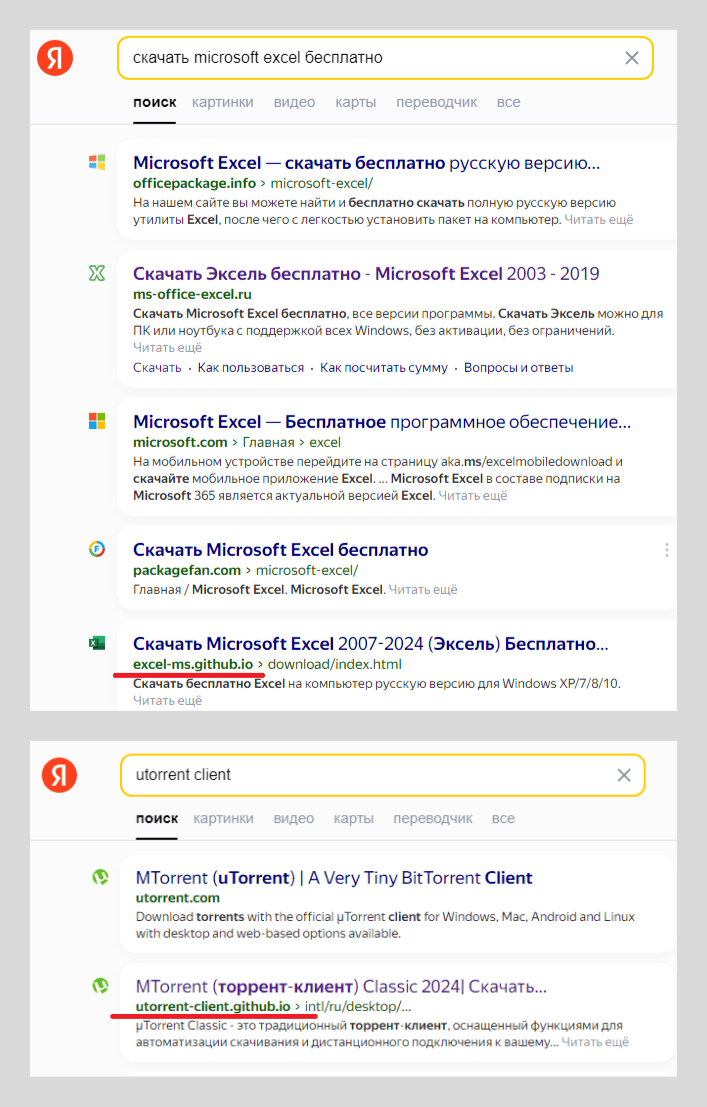
    We are quite sure that this campaign was a global one, but in this article, we’ll focus on an infection chain that, according to our telemetry, was targeting mainly Russian-speaking users. The attackers distributed the malicious files using websites for downloading popular software (uTorrent, Microsoft Office, Minecraft, etc.) for free. These websites were shown to users in the top search results in Yandex. Malware was also distributed through Telegram channels targeted at crypto investors and in descriptions and comments on YouTube videos about cryptocurrency, cheats and gambling.

    Infection

    The attackers were advertising their websites in Yandex search results. Users would see these malicious sites in the top results when searching for resources freely distributing popular software like uTorrent, MS Excel, MS Word, Minecraft, Discord and so on.

    Links to malicious websites in Yandex search results

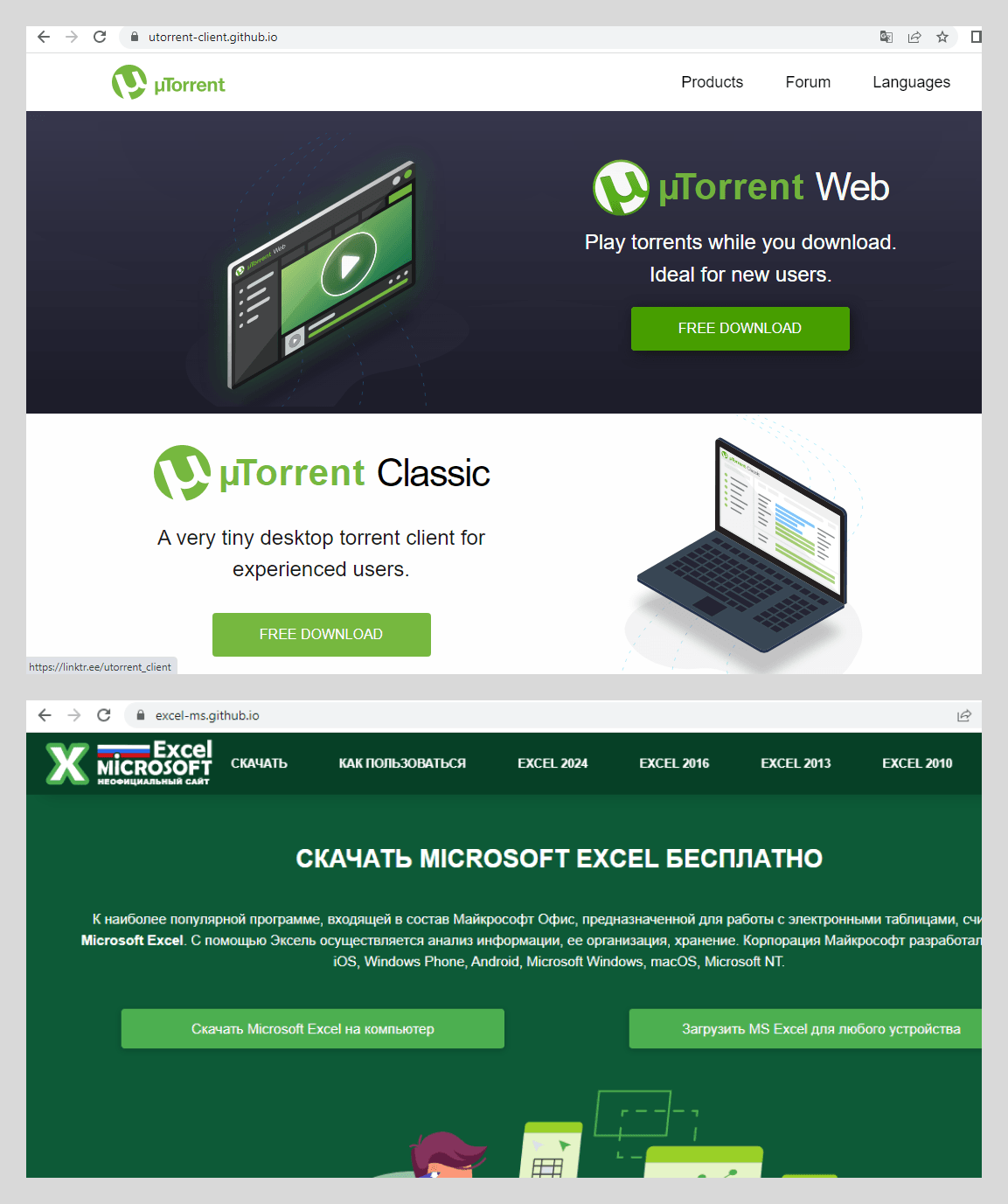
    The frontend of these websites is a copy of either the official software website or a known piracy website distributing this kind of software:

    Malicious websites

    The attackers are running multiple Telegram channels distributing the malware in question. These channels are most definitely targeted at cryptocurrency owners or cheating gamers: they are offered to download specific software that presumably might be of interest to them. To prevent anyone trying to disclose information about these channels and the fraudulent activity of their creators, the administrators disabled message forwarding, screenshots, and previews of these channels in the Telegram web-version.

    Malware in the attackers’ Telegram channel

    Even more, the malware was also distributed via YouTube. The attackers uploaded numerous videos in English from multiple accounts which were presumably stolen. It’s also possible that the video content was downloaded from other YouTube channels and reuploaded without the authors’ consent. In the video description and in the top comment the attackers left links to their resources and instructions on how to launch the malware. Some of these links redirected users immediately to malicious websites, while others led to the aforementioned Telegram channels. We have also seen links to known IP logging websites, allowing the malicious actors to collect the IP addresses of anyone who follows the link and gets redirected to the malware-carrying website.

    Examples of videos with malicious links in their description or comments

    Comment with a link to a malicious Telegram channel

    Persistence and defense evasion

    After visiting the attackers’ website or channel, users might download a ZIP file being falsely advertised as popular software. Inside the archive is an MSI file and a TXT file with a password required for installation. There are also instructions on how to install the software, in which the attackers recommend disabling any installed antivirus and Windows Defender beforehand. In many cases, the instructions and the password are also provided on the websites and channels from which the user downloaded the malicious archive.

    Content of text file

    When launched, the MSI file asks for the password from the TXT file, which is one of the first countermeasures against sandbox analysis. If the user specifies the right password, the CustomAction field value of the MSI file is executed — this is effectively a VB script. This script launches a BAT file which extracts the next element of the attack chain from an encrypted archive. The first step is to escalate privileges by adding another BAT file to autorun, granting SYSTEM privileges for a single execution. After that, the system reboots.

    CustomAction field value in the MSI file

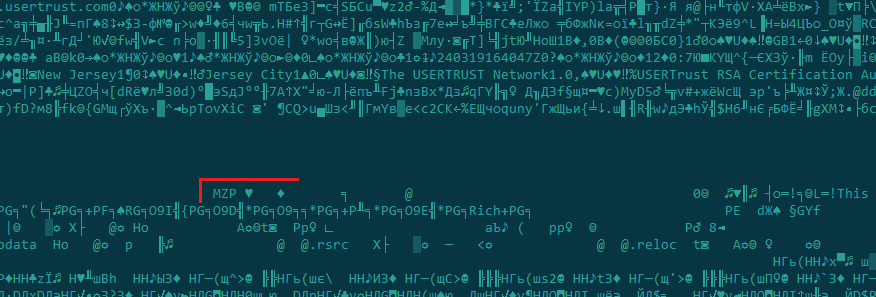
    The BAT file from autorun extracts the encrypted RAR archive and runs the “start” command with two DLL files as arguments — these were previously extracted from the archive. One of these files is a legitimate AutoIt interpreter and the second is a legitimate dynamic library with a valid digital signature. The malicious payload is an A3X script which was compiled into an EXE file and injected right inside the second DLL file signature.

    Malicious payload hidden inside a legit dynamic library signature

    This technique is interesting for two reasons. First, the A3X script is added to the signature in such a way that its validity remains intact and the whole file is still considered as signed, even with the payload. Such a malicious addition is almost impossible to detect without file content analysis. Second, the AutoIt interpreter has an interesting way of reading files that were specified in its launch argument. The file is scanned for a specific AutoIt signature which is present only in compiled scripts, and all other contents of the file are ignored. This behavior allows the attackers to hide their malicious payload anywhere in the file where it won’t be harmful for the container itself.

    Signature at the beginning of the A3X script

    Placing malicious payloads in an arbitrary section of a file is not new. Such techniques have been used not only with AutoIt, but with other platforms too. But what makes this attack stand out is the bypass of signature verification, making it possible for the payload-bearing file to seem legitimate.

    File with payload successfully bypasses signature verification

    If the “start” command failed, the BAT file removes the entire directory with the installed files, including itself. Otherwise, the malicious A3X implant is launched, which checks all active processes in attempt to find anything related to debugging or anti-malware products. If anything is found, the script immediately exits, as you can see in the snippet of deobfuscated code below.

    Security process name check by malicious implant

    The compiled A3X script contains multiple FileInstall function calls. This function takes two arguments: a path to the file that will be installed, and its destination path. Before compilation, this call just copies the file from its source path to its destination, but during the compilation the interpreter stores the files for installation right inside the compiled script.

    The resulting file contains not only the executable code itself, but also additional malicious files which will be installed directly from the implant. These files are required for persistence and to execute the next steps of the infection chain. The files are installed to the following paths:

    For persistence purposes, the directories containing the installed files have system, hidden and read-only attributes. In addition, using the icacls utility, the implant forbids all users across all domains to remove these folders, change their permissions, own them, add any files or subdirectories, write to them any attributes (including extended ones), or remove files from them.

    Files are copied to directories with unusual names for a reason. For example, the folder name “Classic.{BB64F8A7-BEE7-4E1A-AB8D-7D8273F7FDB6}” is treated specially by Windows Shell: Explorer will find the GUID in its name and treat it as a link — in this case to the Action Center. As a result, the user will not be able to view the contents of the directory.

    Malicious directory in Explorer

    After installing all the necessary files, the implant establishes persistence using WMI by creating filters which are activated by common events — common enough to guarantee filter activation. For each created filter, a polling frequency is specified. When a filter is activated, a specific command is executed using the __FilterToConsumerBinding class.

    • Once every three minutes, the netcat utility masked as StartMenuExperienceHost.exe is launched with the C&C address of the attackers (sportjump[.]ru) and “-e cmd.exe” as its arguments. It is then used as a reverse shell by the attackers.
    • Once every five to ten minutes, files named “nun.bat” are executed. They are copies of the same file which starts the next step of the infection chain. The attackers created two copies to increase the chance of malware execution, but if there are no outages, both of them are launched.
    • Once every fifteen minutes, the next step of the infection chain is launched directly via the “start” command.

    All these methods are used again for a better persistence by launching the “insta.bat” file right before the end of the A3X implant execution.

    Launch of the netcat utility

    Persistence is established not only through WMI; the implant also directly starts netcat, the “nun.bat” files, and the “start” command. After that, it also abuses the registry keys “Image File Execution Options”, “Debugger” and “MonitorProcess” with the same goals.

    One of the most interesting things about some variants of the malware is the download and use of the Wazuh SIEM agent for remote access and telemetry harvesting. To ensure that the attackers can execute any arbitrary command on the victim’s device, during the agent installation, the “remote_commands” option is set.

    Installation and launch of the Wazuh agent

    The first stage of the A3X implant collects the following information: computer name, username, OS version and architecture, CPU name, data about the GPU and installed AV software. All this information along with the current time is sent to a special Telegram bot chat controlled by the attackers. We’ve also seen some of the malware variants sending a screenshot of the user’s desktop or installing a malicious browser extension, which may replace cryptocurrency wallets in the clipboard.

    Malicious browser extension

    The next stage of the infection chain consists of two DLL files, that use the same technique as the first stage: a legitimate AutoIt interpreter and another A3X implant, located in the signature of the legitimate dynamic library. This implant is the final payload in the malware variant described here. It injects into a newly created explorer.exe process memory an open-source miner named SilentCryptoMiner, which contains the URL of the attacker’s mining configuration. This configuration specifies the cryptocurrency to be mined, the wallet, and so on. In the analyzed variants, we could see that the attackers mostly use anonymous cryptocurrencies like Monero or Zephyr.

    Example of the miner configuration

    Aside from its main purpose of generating cryptocurrency, SilentCryptoMiner can also hide its own activity from the processes specified in the “stealth-targets” argument and stop processes from the “kill-targets” process names list.

    Attack geography

    Most of the attacks with this infection chain targeted Russian users (87.63%). After that, the other top ten countries with the highest number of users affected by these attacks were Belarus, India, Uzbekistan, Kazakhstan, Germany, Algeria, Czech Republic, Mozambique, and Turkey.

    TOP 10 countries where users were affected by the described infection chain, June — August 2024 (download)

    Conclusion

    The attack described in this article vividly illustrates the fact that even mass campaigns can be quite complex and open up a wide range of opportunities for attackers. As a result of the multistage infection chain, the attackers can establish persistence in users’ systems in multiple ways, gaining full access. Even though the main goal of the attackers is to make profit by stealthily mining cryptocurrency, some variants of the malware can perform additional malicious activity, such as replacing cryptocurrency wallets in the clipboard and taking screenshots. The most interesting action in this attack was the implementation of unusual techniques like using an SIEM agent as backdoor, adding the malicious payload to a legitimate digital signature, and hiding directories containing malicious files.

    It’s important to mention that the websites, videos, and Telegram channels created by the attackers primarily target users seeking free versions of popular software or videogame cheats. This audience makes an easy target for the attackers because they are open to installing unofficial software from obscure sources and disabling security measures.

    Our products detect this malware with the following names:

    • HEUR:Trojan-Dropper.OLE2.Agent.gen
    • HEUR:Trojan.BAT.Agent.gen
    • HEUR:Trojan.VBS.Agent.gen
    • Trojan.Script.AutoIt.ak
    • Trojan.BAT.Agent.cix
    • Trojan.BAT.Miner.id
    • HEUR:Trojan.Multi.Agent.gen
    • PDM:Trojan.Win32.Generic

    MITRE ATT&CK Matrix

    Tactic Technique ID Technique
    Resource Development T1608.006 Stage Capabilities: SEO Poisoning
    T1608.001 Stage Capabilities: Upload Malware
    Execution T1204.001 User Execution: Malicious Link
    T1204.002 User Execution: Malicious File
    T1059.010 Command and Scripting Interpreter: AutoHotKey & AutoIT
    T1059.003 Command and Scripting Interpreter: Windows Command Shell
    T1059.005 Command and Scripting Interpreter: Visual Basic
    Persistence T1546.012 Event Triggered Execution: Image File Execution Options Injection
    T1546.003 Event Triggered Execution: Windows Management Instrumentation Event Subscription
    Privilege Escalation T1053.005 Scheduled Task/Job: Scheduled Task
    Defense Evasion T1055 Process Injection
    T1562.001 Impair Defenses: Disable or Modify Tools
    T1497 Virtualization/Sandbox Evasion
    T1027.009 Obfuscated Files or Information: Embedded Payloads
    T1027.010 Obfuscated Files or Information: Command Obfuscation
    T1036.008 Masquerading: Masquerade File Type
    T1564.001 Hide Artifacts: Hidden Files and Directories
    Discovery T1518.001 Software Discovery: Security Software Discovery
    T1033 System Owner/User Discovery
    T1082 System Information Discovery
    T1497 Virtualization/Sandbox Evasion
    Collection T1113 Screen Capture
    Impact T1496 Resource Hijacking
    Exfiltration T1041 Exfiltration Over C2 Channel

    Indicators of compromise

    Hashes
    b5b323679524d52e4c058b1a3dd8dee7
    4efa8ca01d7c566ff1b72f4ebf57cf2c
    10f888a9aa8082651adeff4790675fd5
    30dd26075a5ca7a4861e9214a99d0495
    60efc41c30fd9ab438e88c6011df5c38
    961fa114e9eb92016977940f7c97cdd9
    1457e18b453d8cefc34047e1b0fbf76f
    284418b6a9c70cc30ef14df3a87c24da
    5788631016d8bc495f4f2614f9a7bbe0
    a9bc00e5e8a17df95bd5b8c289a12b31
    a9bd813679517c846dcf36454baa6170
    a99f3f8736d7d3001aa5eb6202123948
    a802ce130be6546b76d4b54f72d14645
    ae9e83d1031462cb5e58b4525036670c
    b25f9490f6d80f9de5a9c02cc344f9f9
    cffc70e4fb7363024fcc3590755fa846
    e9154a7613a8f8baf67ec3b696c9cb12
    f213f94729b294c01a0df21800c4e395
    2e68f4438ce59c868af01b535c98060d
    839471243f9c4a294c42fabf636f7cad
    4b0d76262dd82985d330b02190a880c0
    1a5d955be79046a3288b869e44e87404
    f8342fd3e32dcf9832dff3e923ef530b
    20b6ac10f657963245940c9bcd25a346
    33c7c22e33e134ec3ddfc6be8ee1f1ee
    2e4146c1a93c0bfe0f4e9ea53b8da7ee
    827eca9ec457f3c5180f602832f44955
    e3b6142df6a7c73a99736082fbae2fa6
    4bdcbc7ec1929d9b1ebcc4d01d605b05
    0da6e1036ca5d8231ee94a4db8c48728
    098872e9e39bd4cd0e4debd4b397b555
    0305f8a9dee464f56023411e7b0924df
    be8b6452aa874904f116f9b7cdfe343b
    6c0416f719ceca15f9e9c4f210c64fb0
    25b90fa3b21875157c6f33b7e1b6e8d7
    14b7429205955056f1763553f82fe244

    URL-addresses
    excel-ms.github[.]io/Windows/MS-Excel.zip
    utorrent-client.github[.]io
    gta-5rp.github[.]io/Windows/GTArp.zip
    mssg[.]me/eahcu
    linktr[.]ee/excel_ms
    linktr[.]ee/utorrent_client
    nyaera[.]ru/wp-includes/uploads/art/utorrent.zip
    nyaera[.]ru/wp-includes/uploads/My/MS-Excel.zip
    github[.]com/lidiyakamalova89/www/raw/main/Ver.1.4.1.zip
    raw.githubusercontent[.]com/lidiyakamalova89/www/main/Ver.1.4.1.zip
    raw.githubusercontent[.]com/radominator7204/dsz/main/Install.zip
    sportjump[.]ru
    gamesjumpers[.]com
    gamejump[.]site
    alljump[.]ru
    pastebin[.]com/raw/F87y7zJV
    pastebin[.]com/raw/uU34Qunt
    rentry[.]co/mi9fomgo/raw

    MIL OSI Economics

  • MIL-OSI Europe: Written question – Bluetongue: aid to livestock farmers and EU coordination measures – E-001819/2024

    Source: European Parliament

    Question for written answer  E-001819/2024
    to the Commission
    Rule 144
    Marion Maréchal (ECR)

    Since autumn 2023, European livestock farms, most notably in France, Belgium, the Netherlands, the Czech Republic, Germany, Luxembourg and Italy, have been battling a new and aggressive wave of bluetongue. This disease, which mostly affects ruminants (cattle, sheep and goats, etc.), has caused around 23 000 sheep and 36 000 cattle to die in Belgium[1]. Meanwhile, in France, 1 929 outbreaks are currently recorded by state services.

    Although the Belgian Minister for Agriculture, Anne-Catherine Dalcq, said on 23 September 2024 that she had activated all EU levers, the lack of coordination between the Member States (late initiation of vaccination campaigns) has contributed to the epizootic disease spreading.

    In view of the above:

    • 1.What EU levers have actually been activated by the agriculture ministers of the countries concerned?
    • 2.Has the Commission examined the shortcomings in coordination between Member States that caused the delay in taking prevention and protection measures?
    • 3.Will it mobilise the Common Agricultural Policy (CAP) crisis reserve to support farmers that are struggling, and will it maintain all CAP support, despite the decrease in livestock populations?

    Submitted: 25.9.2024

    • [1] Figures from the Belgian Federal Ministry of Agriculture communicated on 19 September 2024 during the plenary session of the Chamber.
    Last updated: 4 October 2024

    MIL OSI Europe News

  • MIL-OSI Europe: Written question – Banning chick culling in the EU – E-001843/2024

    Source: European Parliament

    Question for written answer  E-001843/2024
    to the Commission
    Rule 144
    Pascal Arimont (PPE)

    Each year, 330 million day-old male chicks are killed in the EU directly after hatching because they can neither lay eggs nor provide enough meat. This widespread practice not only causes considerable suffering, but also contravenes Article 13 of the Treaty on the Functioning of the European Union, which recognises animals as sentient beings. Some Member States, such as France and Germany, have prohibited this practice. In-ovo sexing technologies are available on the market to determine the sex of the embryo at limited cost. They work before day 13 of incubation, in line with the latest scientific evidence on pain perception, which shows that embryonic pain sensitivity starts from day 13 of incubation.

    • 1.Will the new Commission’s proposals for new regulations on the welfare of farmed animals include a ban on chick culling, with the implementation of in-ovo sexing before day 13 of incubation, in the egg sector, thus harmonising EU legislation and avoiding a distortion of competition?
    • 2.If so, when does the Commission plan to publish the draft of this new legislation?

    Submitted: 26.9.2024

    Last updated: 4 October 2024

    MIL OSI Europe News

  • MIL-OSI Translation: Joint Statement on the 2024 Global Ransomware Initiative

    MIL OSI Translation. Canadian French to English –

    Source: Government of Canada – in French 1

    Today, Canada met with 67 other members at the 4th annual Initiative to Combat Ransomware Summit in Washington DC to enhance international cooperation in this area.

    The 68 members of the international Initiative to Combat Ransomware (ILR)—Albania, Argentina, Australia, Austria, Bahrain, Belgium, Brazil, Bulgaria, Cameroon, Canada, Chad, Colombia, Costa Rica, Council of Europe, Croatia, Czech Republic, Denmark, Dominican Republic, ECOWAS, Egypt, Estonia, European Union, Finland, France, Germany, Greece, Global Cyber Expertise Forum, Hungary, India, INTERPOL, Ireland, Israel, Italy, Japan, Jordan, Kenya, Lithuania, Mexico, Morocco, Netherlands, New Zealand, Nigeria, Norway, Organization of American States, Papua New Guinea, Philippines, Poland, Portugal, Republic of Korea, Republic of Moldova, Romania, Rwanda, Sierra Leone, Singapore, Slovakia, Slovenia, South Africa, Spain, Sri Lanka, Sweden, Switzerland, Ukraine, United Arab Emirates, United Kingdom, United States, Uruguay, Vanuatu, and Vietnam—met in Washington, DC from September 30 to October 3 2024 for the fourth ILR gathering. Members who participated in previous editions welcomed Argentina, Bahrain, Cameroon, Chad, the Council of Europe, Denmark, the Economic Community of West African States (ECOWAS), Finland, the Global Forum on Cyber Expertise, Hungary, Morocco, the Organization of American States, the Philippines, the Republic of Moldova, Slovenia, Sri Lanka, Vanuatu and Vietnam as new ILR members.

    During the fourth ILR gathering, members reaffirmed their shared commitment to building collective resilience against ransomware, supporting members if they encounter a ransomware attack, pursuing actors responsible for ransomware attacks and not allowing these actors to operate in their jurisdictions, combating the use of virtual assets as part of the ransomware business model, working with the private sector to advise and support ILR members, and forging international partnerships so that we are collectively better equipped to combat the ransomware scourge.

    Over the past year, this coalition has grown and continues to build on commitments made at the third ILR gathering in 2023. The United States launched a new ILR Member Fund to strengthen members’ cybersecurity capabilities through rapid assistance following a cyberattack as well as targeted support to improve cybersecurity response skills, policies, and procedures.

    Under the Strategic Pillar, led by Singapore and the UK, efforts have been underway to strengthen resilience against ransomware attacks and leverage the ecosystem to disrupt the criminal ransomware industry. These efforts aim to strengthen the operating model that underpins the ransomware ecosystem by focusing work on secure software and labelling, methods to prevent the use of virtual assets as part of the ransomware operating model, policies to reduce ransom payments, increased and improved reporting, cyber insurance, and a playbook to guide businesses on how to prepare for, respond to, and recover from a ransomware attack. It is worth noting that ILR members and insurance bodies have endorsed guidelines to assist organisations that have been hit by a ransomware attack. The guidelines highlight the important role that cyber insurance can play in building resilience to cyberattacks and highlight actions that organizations should consider during an incident. In addition, pillar leaders hosted a tabletop exercise to help members identify gaps in their processes, learn best practices, and develop effective responses to ransomware attacks against the healthcare sector.

    Under the Diplomacy and Capacity Building pillar, led by Germany and Nigeria, ILR partnerships were expanded with the addition of 18 new members to the coalition and members’ capacity building assets and needs were established. To foster collaboration, build new partnerships, and recruit new members to the Initiative, ILR members hosted regional events throughout the year.

    Led by Australia and Lithuania, the Ransomware Working Group (RWWG) has focused its efforts on building resilience against malicious cyberattacks through international cooperation. As co-chairs of the RWWG, Lithuania and Australia developed governance principles for intelligence sharing and improved members’ integration into intelligence sharing platforms led by Lithuania and Belgium, as well as Israel and the United Arab Emirates. These platforms will enable members to easily share threat intelligence and indicators of compromise. As part of a project led by INTERPOL and Australia, a comparative report was produced to analyse ransomware responses and remediation across ILR member jurisdictions. Australia launched an ILR website and portal to facilitate the exchange of information and best practices, foster collaboration, and provide a mechanism for the ILR community to request assistance when members are victims of a ransomware attack. The LRWG Co-Chairs called on members to behave responsibly in cyberspace by encouraging them to hold malicious actors accountable and deny them safe haven using all cyber diplomacy and law enforcement tools at their disposal.

    Canada has established a new public-private sector advisory council to advise and support ILR members in the fight against ransomware. This advisory council will promote effective information sharing, build trust through clear expectations and people-to-people collaboration, and develop best practices to overcome practical barriers.

    ILR also hosted a first-ever event exploring the use of artificial intelligence (AI) to combat ransomware attacks. Topics discussed included using AI to track threat actor usage and software security, scenario planning for ransomware attacks on the healthcare industry, and tools like digital watermarking to counter disinformation.

    Through the annual ILR gathering, hard work, and regional meetings that take place between gatherings, we are committed to working together at the strategic and operational levels to combat ransomware threats and hold the perpetrators of these malicious attacks accountable. The ILR continues to advocate for responsible behavior in cyberspace and encourage members to report malicious acts. We remain committed to using all appropriate tools to achieve these goals and jointly commit to the following actions in support of this mission.

    Media RelationsPublic Safety Canada613-991-0657media@ps-sp.gc.ca

    EDITOR’S NOTE: This article is a translation. Apologies should the grammar and/or sentence structure not be perfect.

    MIL Translation OSI

  • MIL-OSI Canada: International Counter Ransomware Initiative 2024 Joint Statement

    Source: Government of Canada News

    Today, Canada met with 67 other members of the International Counter Ransomware Initiative (CRI) in Washington D.C for the fourth annual CRI Summit to improve international cooperation in combatting ransomware.

    The 68 members of the International Counter Ransomware Initiative (CRI)—Albania, Argentina,  Australia, Austria, Bahrain, Belgium, Brazil, Bulgaria, Cameroon, Canada, Chad, Colombia, Costa Rica, the Council of Europe, Croatia, the Czech Republic, Denmark, the Dominican Republic, the ECOWAS Commission, Egypt, Estonia, the European Union, Finland, France, Germany, Greece, the Global Forum on Cyber Expertise, Hungary, India, INTERPOL, Ireland, Israel, Italy, Japan, Jordan, Kenya, Lithuania, Mexico, Morocco, the Netherlands, New Zealand, Nigeria, Norway, the Organization of American States, Papua New Guinea, the Philippines, Poland, Portugal, the Republic of Korea, the Republic of Moldova, Romania, Rwanda, Sierra Leone, Singapore, Slovakia, Slovenia, South Africa, Spain, Sri Lanka, Sweden, Switzerland, Ukraine, the United Arab Emirates, the United Kingdom, the United States, Uruguay, Vanuatu, and Vietnam—met in Washington, D.C. from September 30 – October 3, 2024 for the Fourth CRI Gathering. Previously participating members welcomed Argentina, Bahrain, Cameroon, Chad, the Council of Europe, Denmark, the ECOWAS Commission, Finland, the Global Forum on Cyber Expertise, Hungary, Morocco, the Organization of American States, the Philippines, the Republic of Moldova, Slovenia, Sri Lanka, Vanuatu, and Vietnam as new CRI members.

    During the Fourth CRI Gathering, members reaffirmed our joint commitment to develop collective resilience to ransomware, support members if they are faced with a ransomware attack, pursue the actors responsible for ransomware attacks and not allow safe haven for these actors to operate within our jurisdictions, counter the use of virtual assets as part of the ransomware business model, partner with the private sector to advise and support CRI members, and forge international partnerships so we are collectively better equipped to counter the scourge of ransomware.

    Over the past year, this coalition has grown and continues to build upon the commitments made at the Third CRI Gathering in 2023. The United States launched a new fund for CRI members to strengthen members’ cybersecurity capabilities through both rapid assistance in the wake of a cyber attack, as well as targeted support to improve cybersecurity skills, policies, and response procedures.

    The Policy Pillar, led by Singapore and the United Kingdom, spearheaded efforts to build resilience against ransomware attacks and leverage the ecosystem to disrupt the ransomware criminal industry. These efforts seek to undercut the business model that underpins the ransomware ecosystem by driving forward work on secure software and labeling, methods to counter the use of virtual assets as part of the ransomware business model, policies to reduce ransom payments, increase and improve reporting, cyber insurance, and a playbook to guide businesses on how to prepare for, deal with, and recover from a ransomware attack. Of note, CRI members and insurance bodies have endorsed guidance to help organizations experiencing a ransomware attack. The guidance underscores the important role cyber insurance can play in helping to build resilience to cyber attacks and highlights actions organizations should explore during an incident. In addition, the Pillar held a table-top-exercise to assist members in identifying gaps in their processes, learning best practices and supporting members develop effective responses to ransomware attacks on the healthcare sector.

    The Diplomacy and Capacity Building Pillar, led by Germany and Nigeria, expanded the CRI’s partnerships with the addition of 18 new members to the coalition and mapped out the capacity building assets and needs of members. To foster collaboration, forge new partnerships, and recruit new members into the Initiative, CRI members hosted regional events throughout the year.

    Under the leadership of Australia and Lithuania, the ICRTF focused its work on building resilience against malicious cyber attacks through international cooperation. Lithuania and Australia, as ICRTF co-chairs, worked to develop governance for information sharing and increase onboarding of members to the information sharing platforms led by Lithuania and Belgium as well as Israel and UAE. These platforms will allow members to easily share threat information and indicators of compromise. In a project led by INTERPOL and Australia, a comparative report was produced analyzing Ransomware Interventions and Remediation in CRI members’ jurisdictions. Australia launched a website and member portal so CRI members can easily share information and best practices, foster collaboration, and use as a mechanism to request assistance from the CRI community when experiencing a ransomware attack. The ICRTF co-chairs presented a statement for members to join that calls for responsible behavior in cyberspace and encourages members to hold malicious actors accountable and deny them safe haven using all of the cyber diplomacy and law enforcement tools at their disposal.

    Canada established a new Public-Private Sector Advisory Panel to advise and support CRI members in combating ransomware. This advisory panel will catalyze effective information sharing, build trust through clear expectations and person to person collaboration, and develop best practices to navigate practical hurdles.

    The Initiative also hosted its first-ever event dedicated to examining the use of AI to counter ransomware attacks. Topics of discussion included the use of AI to track threat actor use, AI for Software Security, scenario planning around ransomware attacks on the healthcare industry, and tools such as watermarking to counter disinformation.

    Through the Initiative’s annual gathering as well as the dedicated work and regional meetings occurring between each meeting, we commit to working together at both a policy and operational level to counter ransomware threats and hold perpetrators of these malicious attacks accountable. CRI continues to call for responsible behavior in cyberspace and encourage members to call out malicious acts, and we remain committed to using all appropriate tools to achieve these goals, and are jointly committed to the following actions in support of this mission.

    MIL OSI Canada News

  • MIL-OSI: Apollo to Provide €1 Billion Capital Solution to Vonovia in Third Transaction

    Source: GlobeNewswire (MIL-OSI)

    NEW YORK, Oct. 02, 2024 (GLOBE NEWSWIRE) — Apollo (NYSE: APO) today announced that it has entered into an agreement for Apollo affiliates and other long term investors to provide c. €1 billion to acquire a minority stake in one of Vonovia’s affiliates. This commitment follows two previous €1 billion transactions between Vonovia and Apollo in 2023, related to Vonovia’s real estate portfolios in Southwest Germany and Northern Germany. The latest agreement brings Apollo affiliates and funds total arranged commitments to Vonovia entities to €3 billion.

    Apollo Partner Jamshid Ehsani said, “Apollo is very pleased to further expand our partnership with Vonovia and assist Germany’s largest residential real estate company in reaching its strategic objectives. It is yet another example of Apollo’s ability to commit its capital resources and provide bespoke, scaled solutions to our closest corporate relationships around the world. This investment marks our third transaction with Vonovia and underscores Apollo’s role as an ongoing trusted partner to some of the largest global corporations.”

    Since 2020, under its High Grade Capital Solutions strategy Apollo has originated nearly $100 billion of bespoke capital solutions for leading companies such as Intel, Sony, Air France, AB InBev and more. Apollo believes it is uniquely positioned to serve the needs of large high quality corporates and retirement services companies, given the firm’s structuring, investment and syndication capabilities and scaled capital base.

    Latham & Watkins LLP and Paul, Weiss, Rifkind, Wharton & Garrison LLP are serving as legal counsel to Apollo, while Apollo Capital Solution is providing structuring and syndication services in connection with the transaction. Deutsche Bank is acting as exclusive financial advisor to Vonovia, and Freshfields Bruckhaus Deringer is serving as legal counsel to Vonovia.

    About Apollo

    Apollo is a high-growth, global alternative asset manager. In our asset management business, we seek to provide our clients excess return at every point along the risk-reward spectrum from investment grade to private equity with a focus on three investing strategies: yield, hybrid, and equity. For more than three decades, our investing expertise across our fully integrated platform has served the financial return needs of our clients and provided businesses with innovative capital solutions for growth. Through Athene, our retirement services business, we specialize in helping clients achieve financial security by providing a suite of retirement savings products and acting as a solutions provider to institutions. Our patient, creative, and knowledgeable approach to investing aligns our clients, businesses we invest in, our employees, and the communities we impact, to expand opportunity and achieve positive outcomes. As of June 30, 2024, Apollo had approximately $696 billion of assets under management. To learn more, please visit http://www.apollo.com.

    Apollo Contacts

    Noah Gunn
    Global Head of Investor Relations
    Apollo Global Management, Inc.
    (212) 822-0540
    IR@apollo.com

    Joanna Rose
    Global Head of Corporate Communications
    Apollo Global Management, Inc.
    (212) 822-0491
    Communications@apollo.com

    The MIL Network

  • MIL-OSI Asia-Pac: 17th India-Germany Military Cooperation Sub Group Meeting held in Berlin

    Source: Government of India (2)

    Posted On: 02 OCT 2024 7:08PM by PIB Delhi

    The 17th edition of the India-Germany Military Cooperation Sub Group (MCSG) meeting was held from 01-02 Oct 24 at Berlin, Germany. Discussions focused on new initiatives to further enhance the scope of bilateral military cooperation and to strengthen ongoing defence engagements across the spectrum. The meeting was conducted in a friendly, warm, and cordial atmosphere.

    The MCSG is a forum established to boost defence cooperation between both nations through regular talks at the strategic and operational levels between Headquarters, Integrated Defence Staff, and the Department of International Cooperation Armed Forces, Germany. The meeting was co-chaired from the Indian side by the Deputy Assistant Chief of Integrated Defence Staff for International Defence Cooperation and the Deputy Director, the Department of International Cooperation, Armed Forces Office from the German side.

    ***

    VK/SR/Anand

    (Release ID: 2061205) Visitor Counter : 68

    MIL OSI Asia Pacific News

  • MIL-OSI Europe: Answer to a written question – Unlawful ban of ‘Compact’ magazine and Nancy Faeser’s restricting of press freedom in the Federal Republic of Germany – P-001603/2024(ASW)

    Source: European Parliament

    The Commission does not comment on specific individual cases falling within Member States’ competence. If they consider that national measures infringe their rights, citizens and businesses can resort to the competent national authorities.

    Safeguarding media freedom and pluralism, as enshrined in the EU Charter of Fundamental Rights[1], has been at the heart of the Commission’s efforts to uphold democracy and the rule of law in the EU.

    The European Media Freedom Act (EMFA)[2] sets out a reinforced framework for media service providers. Article 4(1) of the EMFA, which will apply as of 8 February 2025, establishes that media service providers shall have the right to exercise their economic activities freely in the internal market, subject only to restrictions in line with EU law.

    Recital 16 clarifies that such restrictions may derive from measures applied by national public authorities in compliance with EU law.

    The EMFA also introduces a targeted set of rules requiring Member States to respect the editorial freedom and independence of media service providers and to refrain from interfering in core aspects of their activities, such as editorial decisions, journalistic sources, and communications.

    Nonetheless, the EMFA also provides for derogations which allow Member States to take such measures when certain substantial and procedural conditions are fulfilled.

    As part of its annual Rule of Law Report[3], the Commission assesses the situation regarding media freedom and pluralism in all Member States, including Germany.

    The chapter on Germany describes the well-established federal legal framework guaranteeing media freedom and pluralism, based on multiple levels of safeguards and oversight[4].

    • [1] https://commission.europa.eu/aid-development-cooperation-fundamental-rights/your-rights-eu/eu-charter-fundamental-rights_en
    • [2] https://commission.europa.eu/strategy-and-policy/priorities-2019-2024/new-push-european-democracy/protecting-democracy/european-media-freedom-act_en
    • [3] https://commission.europa.eu/document/download/27db4143-58b4-4b61-a021-a215940e19d0_en?filename=1_1_58120_communication_rol_en.pdf
    • [4] https://commission.europa.eu/document/download/3d1a2f80-5989-4364-a9e6-d925d4a1c900_en?filename=16_1_58059_coun_chap_germany_en.pdf

    MIL OSI Europe News

  • MIL-OSI Europe: Written question – Germany: travel document control measures and (non-)enforcement of the Pact on Migration and Asylum – E-001796/2024

    Source: European Parliament

    Question for written answer  E-001796/2024
    to the Commission
    Rule 144
    Konstantinos Arvanitis (The Left)

    Very recently, Germany implemented new measures, in principle for six months, for control of travel documents along its land borders, including the borders with Schengen countries (France, Belgium, the Netherlands, Luxembourg, Denmark).

    In addition, according to official statements, the German government is planning, in the near future, to step up asylum rejections, urgent returns to the EU countries of first entry, and deportations to third countries.

    The implementation of such practices amounts to:

    a) de facto suspension of the Schengen rules on the pretext of exceptional circumstances, although there is no emergency situation and, quite obviously, in terms of migration flows, there has been no recent change in international developments that would raise the issue of force majeure or emergency circumstances;

    b) direct political and practical undermining of the very recent new Union rules on migration and asylum which, as stated by the Commission itself, constitute a ‘comprehensive approach that aims at strengthening and integrating key Union policies on migration, asylum, border management and integration’ and ‘allow the EU to address complex issues in a decisive and resourceful manner’[1];

    c) unacceptable indifference and lack of solidarity towards the Member States of first reception, particularly Greece.

    In the light of this,

    • 1.Do the above measures lie within the bounds of Union legality and cohesion?
    • 2.Do the ‘decisiveness’ and ‘resourcefulness’ of the new pact give Member States, in effect, the power to dissolve it?

    Submitted: 24.9.2024

    • [1] https://home-affairs.ec.europa.eu/policies/migration-and-asylum/pact-migration-and-asylum_el?prefLang=el

    MIL OSI Europe News

  • MIL-OSI Europe: Written question – Protection of wild animals during the harvest season – E-001798/2024

    Source: European Parliament

    Question for written answer  E-001798/2024
    to the Commission
    Rule 144
    Sebastian Everding (The Left), Anja Hazekamp (The Left), Krzysztof Śmiszek (S&D), Lukas Sieper (NI), Per Clausen (The Left), Tilly Metz (Verts/ALE), Maria Noichl (S&D), Petras Auštrevičius (Renew), Rasmus Nordqvist (Verts/ALE), Cristina Guarda (Verts/ALE), Dario Tamburrano (The Left), Jussi Saramo (The Left), Emma Fourreau (The Left), Jonas Sjöstedt (The Left)

    During the harvest season, wild animals are often seriously injured by combine harvesters, especially by the cutting unit[1]. The resulting mutilation can lead to an agonising death[2].

    This is not only a problem of species protection or animal welfare, but also requires action from a health-policy perspective, as it can result in contamination of the crop. These risks to food and feed production must be minimised, which can be ensured by using thermal drones.

    • 1.What long-term strategy does the Commission envisage to protect wild animals during the harvest season and thus also ensure consumer protection?
    • 2.What concrete measures does the Commission plan to undertake to raise awareness across the EU of the problem of wild animal mutilation[3], to promote mesures to prevent it, to reduce regulatory barriers for technical solutions and to provide funding?
    • 3.Does the Commission plan to recommend or mandate that Member States establish thermal drone programmes to protect wild animals?

    Submitted: 24.9.2024

    • [1] Roe deer fawns have no flight reflex, their only form of protection is to crouch down motionless.
    • [2] In Germany alone, around 90 000 fawns die in this way every year.
    • [3] This particularly concerns fawns, but other wild animals are also affected.
    Last updated: 2 October 2024

    MIL OSI Europe News

  • MIL-OSI Economics: Isabel Schnabel: Escaping stagnation: towards a stronger euro area

    Source: European Central Bank

    Speech by Isabel Schnabel, Member of the Executive Board of the ECB, at a lecture in memory of Walter Eucken

    Freiburg, 2 October 2024

    The euro area economy is stagnating. Over the past two years, real GDP has expanded, on average, by only 0.1% per quarter. Surveys among firms indicate that growth is likely to remain subdued during the second half of this year.

    Weak growth reflects, to a large extent, the exceptional shocks that hit the euro area economy in recent years, most notably the pandemic and Russia’s invasion of Ukraine.[1]

    Another reason is the tightening of monetary policy. From late 2021 to the end of 2023, bank lending rates for house purchases by households increased from 1.3% to 4%, and those for corporate loans from 1.4% to 5.3%. Such levels had not been seen in more than a decade.

    Dampening growth in aggregate demand was needed to restore price stability.

    In 2021, when the euro area economy reopened in the pandemic and the economy’s supply capacity was still severely constrained, real private consumption rose by more than 8% in just two quarters. When we began to raise our key policy rates in July 2022, households and firms started to spend less and save more, thereby bringing supply and demand closer into balance.

    Yet, although the peak impact of monetary tightening is likely to be behind us and real incomes are rising as inflation falls and wages increase, growth remains shallow. Over the past 18 months, the recovery has repeatedly been weaker than anticipated.

    Aggregate growth figures mask, however, significant heterogeneity across euro area economies. Since interest rates started to rise, growth has become increasingly uneven (Slide 2).

    In some Member States, such as Malta, Spain and Portugal, output has expanded measurably. In Malta, for example, annual real GDP growth has averaged 6% since 2022. In Spain and Portugal, real activity has grown by nearly 4% annually.

    In fact, much of the euro area’s dismal growth performance since we started raising our key policy rates can be attributed to a small group of countries, including Germany, Finland and Estonia.

    If one were to plot growth in the euro area excluding Germany, for example, activity in the currency area would have been remarkably resilient in the face of the sharpest monetary policy tightening in decades and a war raging at the EU’s doorstep. Only a few advanced economies, most notably the United States, have expanded at a faster pace during this period (Slide 3).

    Monetary policy unlikely to be the key driver of heterogeneity

    Monetary policy has probably been one factor contributing to heterogeneity in the euro area. An economy such as Germany’s, which is centred around a strong manufacturing base, is likely to be more sensitive to changes in interest rates than more service-oriented economies.

    Three observations suggest, however, that monetary policy is unlikely to be the key driver of heterogeneity.

    First, output in Germany had started to stagnate well before the rise in interest rates. At the end of 2021, real GDP was only 1% above its level four years earlier, against increases of 4.9% for the euro area excluding Germany and even 10% in the United States over the same period.

    In other words, the growth gap was widening already well before we started tightening monetary policy.

    Second, we observe significant heterogeneity even in parts of economic activity that are more sensitive to changes in interest rates. In Germany, industrial production (excluding construction) is 10% lower today than it was before market interest rates started to rise in late 2021 – a considerably larger loss than that seen in most other economies (Slide 4, left-hand side).

    This contrast becomes even starker when one considers the production of capital goods, which tend to be the most interest-rate sensitive.

    Over the past two and a half years, the slowdown in the production of capital goods started earlier and was more pronounced in Germany than in other major euro area economies. Today, capital goods production in Germany is 3% lower than at the end of 2021. By contrast, it remained nearly 17% higher in the Netherlands over the same period (Slide 4, right-hand side).

    Third, German households have, on aggregate, so far benefited from the rise in interest rates.

    Since the end of 2021, their net interest income has increased sharply, as they shifted their savings into time deposits offering higher returns, while interest rates on long-running, fixed-rate mortgages remained low (Slide 5).

    By contrast, the widespread prevalence of flexible-rate mortgages in Spain has led to a notable increase in interest payments that has more than offset the rise in income gained from higher interest rates on savings.

    That is, the transmission of monetary policy through some channels, such as the mortgage channel, is likely to have been weaker, not stronger, in Germany than in other countries.

    Resilient growth in the south of the euro area

    To understand the main drivers behind the heterogeneity, it is necessary to look at both the countries that have grown faster than what might have been expected considering tight policy and those that have been underperforming.

    Let me focus first on the more dynamic regions of the euro area.

    In many cases, trade played an important role. In Spain, for example, net exports contributed, on average, around 0.4 percentage points to growth every quarter over the past two and a half years.

    This is a notable increase from the period preceding the pandemic (Slide 6, left-hand side). The same broad pattern can be observed in Italy and Portugal.

    A strong recovery in tourism after the pandemic has been a key factor supporting the rise in exports in these economies. But trade is not the whole story.

    Labour market developments played an equally important role. Greece is the most remarkable case. Unemployment fell from 13.7% in early 2022 to 9.9% in July this year, a level not seen since the global financial crisis (Slide 6, right-hand side).

    We observe similar improvements in labour markets across the south of the euro area. In Italy, for example, the number of people in employment has expanded by more than one million since 2022, measurably supporting private consumption and confidence.

    Finally, in some countries fiscal policy remained more accommodative than in others. In Italy, the government deficit last year was 7.2%, compared with 2.6% in Germany.

    Funds allocated under the Next Generation EU programme provided further impetus to growth and employment. In 2022 and 2023, 37% of the funds were allocated to the five fastest-growing countries although their share in the euro area’s economy accounted for only 13%.

    All in all, in large parts of the single currency area, the impact of tighter monetary policy was weakened by a combination of looser fiscal policy and a shift in consumption towards services. In addition, some of these economies have gone some way towards becoming more resilient through structural reforms after the sovereign debt crisis, which helps explain their overperformance.

    While some countries will need to adjust government spending to be in line with the new European fiscal rules, the gradual dialling back of monetary policy restraint since June, together with the continued rise in real incomes, is likely to support growth further over the medium term.

    Structural headwinds in export-oriented countries

    The gradual moderation in the degree of monetary policy restriction will also support growth in those parts of the euro area that have stagnated in recent years. Construction activity, for example, has contracted by 12% since 2022 in Finland and by nearly 7% in Germany.

    While rising costs for equipment and raw materials contributed measurably to the drag in construction, the recent decline in mortgage rates is already translating into rising demand for housing.

    A less restrictive policy stance may help reduce risks of negative growth spillovers from the core to the periphery. However, monetary policy is no panacea.

    Germany, in particular, is currently facing strong headwinds that will not be resolved by lower interest rates alone. Its business model is built on export-driven growth, focusing on the high-end segment of traditional manufacturing industries.

    From 2000 to 2015, Germany’s current account turned from a deficit of 1.8% of GDP to a surplus of 8.6% – an unparalleled surge among advanced economies (Slide 7, left-hand side). As a result, net exports accounted for almost one-third of growth over this period.

    But on average since 2016, net exports have no longer been contributing to growth, with Germany losing export market shares at a concerning pace (Slide 7, right-hand side). And with domestic demand not stepping up, the German economy has been growing by just 1% on average per year over this period.

    Of course, this needs to be seen in the context of the series of shocks in recent years. Germany’s growth outcomes were better than feared considering the sheer size of the energy shock. The swift reduction in gas consumption and the rapid switch to alternative energy sources in response to the sudden loss of access to Russian gas have demonstrated the adaptability of the German economy.[2]

    And yet, Germany is facing deep-seated challenges.

    In fact, the perils of relying on exports as a primary source of growth have long been known.

    In the two decades up to the pandemic, euro area exporters – and German firms in particular – benefited from exceptionally strong growth in some key markets, especially in China, where a real estate boom fuelled demand for goods exports from the euro area, particularly for capital goods.[3]

    ECB staff analysis shows that euro area firms would have lost export market shares at a much faster pace if it had not been for such geographical and sectoral effects, which largely offset parallel losses in price competitiveness related to higher energy and labour costs as well as weaker productivity growth (Slide 8, panel a).

    But since the pandemic, competitiveness effects have started to dominate as the special factors boosting euro area exports have slowed, explaining the sizeable drop in export market shares (Slide 8, panel b).[4]

    Export-led growth model may need adjustment

    Part of the weakness in exports is likely to be cyclical, reflecting the lagged effects of global monetary policy tightening and the weakness in China.

    But there is a risk that the pre-pandemic export-oriented growth model will face more permanent headwinds and require adjustment, for three main reasons.

    First, the nature of globalisation is changing. Geoeconomic fragmentation is intensifying, with global trade measures increasing sharply, especially for critical raw materials – the production of which is often concentrated in just a few countries.

    As such, the times when globalisation was boosting trade and growth may be behind us. There is evidence that geopolitics is increasingly hampering trade and that firms progressively seek to diversify their supply of strategic goods by sourcing them from producers in geopolitically aligned countries.[5]

    Given that euro area firms are more deeply integrated into global value chains than many of their competitors, fragmentation could hurt the euro area economy more than others.[6]

    Second, the energy shock was a major driver behind the decline in euro area market shares.

    Unlike past oil price shocks, which affected firms across the globe, Russia’s invasion of Ukraine and the resulting sharp spike in gas prices, was a massive competitiveness shock for the euro area, as the input costs of domestic exporters rose sharply relative to those of their competitors.

    As a result, the exports of energy-intensive sectors decreased strongly, accounting for almost the entire decline in total exports in 2023 (Slide 9, left-hand side).[7]

    ECB staff analysis shows that, at the peak of the European gas crisis, the average impact on euro area export market shares was a decline of 7%, with energy-intensive industries experiencing losses of more than 15% in export market shares (Slide 9, right-hand side).

    Although energy costs have fallen from their peak, they remain almost four times as high as in the United States (Slide 10, left-hand side). Energy will therefore likely remain a drag on euro area price competitiveness.

    Third, competition is changing.

    Two decades ago, Chinese firms specialised mainly in the production of low-value goods, such as clothing, footwear or plastic. Today, China is increasingly building up large production capacities in high-value-added industries, such as the automotive and specialised machinery sectors.

    China moving up in the value chain is not only directly dampening demand for euro area goods – it is also turning China into a fierce competitor in third markets.

    This is particularly visible in Germany and Italy, which over the past two decades have seen a steady increase in the number of sectors in which these economies and China have a revealed comparative advantage – meaning they export more in these sectors than the global average (Slide 10, right-hand side).

    With Chinese and euro area firms increasingly competing in similar export markets, China’s significant gains in price competitiveness vis-à-vis the euro area are weighing on euro area exports.

    Since 2021, China has accounted for the entire appreciation in real effective exchange rate of the euro based on producer prices (Slide 11, left-hand side). While euro area producer prices have increased significantly, Chinese producer prices have remained remarkably stable over the past four years (Slide 11, right-hand side).

    On the one hand, this is the result of generous state subsidies that are significantly higher than in most other advanced and major emerging market economies (Slide 12, left-hand side).[8]

    On the other hand, rising overcapacities are weighing on Chinese export prices.[9] The automotive sector is a case in point. China is making significant upfront investments in production and transport to boost its export capacity.

    Orders for new shipping vessels are projected to raise the number of electric vehicles available for exports by 1.7 million annually by 2026 (Slide 12, right-hand side). To put this in perspective, the total number of electric vehicles sold across the EU in 2023 was 2.5 million.

    Need for a reform agenda putting innovation and entrepreneurship first

    Europe, and Germany in particular, needs to adapt to this new environment. At a time when global economic relationships are becoming more uncertain, Europe needs to regain its competitiveness to protect its standard of living and social values.

    Past efforts to regain competitiveness were not without shortcomings. Policies aimed at reducing wage costs, for example, often came with significant economic hardship and social costs.

    Today, the focus needs to be a different one. Europe should put innovation and entrepreneurship at the heart of its agenda.

    In his recent report, Mario Draghi presents a candid and unsparing diagnosis of the state of the euro area economy and makes many useful proposals.[10]

    Some of those proposals are unlikely to find broad support among political leaders. But it would be wrong to reduce the report to a call for more joint borrowing, which in any case should only be discussed after evaluating the experience with the Recovery and Resilience Facility.

    In fact, many reforms that can foster European competitiveness do not need significant upfront investment, nor do they require changes to the EU Treaty.

    Let me highlight three areas that I consider most promising.

    Creating a European Silicon Valley

    First, Europe needs to facilitate the birth and growth of innovative start-ups.

    Since 2000, productivity per hour worked has increased by just 0.8% per year on average – only half the growth seen in the United States (Slide 13). European firms’ failure to reap the efficiency gains brought about by information and communication technologies is one of the root causes.[11]

    Europe is not short on innovation potential. But its regulatory framework and the lack of deep capital markets make it difficult for young firms to thrive.

    Over the past decade, European start-ups have raised funds equivalent to just 0.3% of GDP from venture capital investments, less than a third of the figure for the United States.[12] Banks do not have the risk-bearing capacity to fill this void, and this would not change even if we managed to revive securitisation in the euro area.

    Today, many promising start-ups shift their operations overseas because of a lack of risk capital. In 2022, 58 founders of “unicorns” in the United States – start-ups that went on to be valued over USD 1 billion – had been born in the euro area.

    If Europe wants to retain such potential, it needs to make private equity investments more attractive, including by removing the “debt bias” in national tax systems.

    Better mobilisation of capital is one way to foster innovation. Strengthening the Single Market, fostering competition and cutting red tape is another.

    The European economy remains segmented along national borders, torn between different rules and legal systems. This makes it difficult for young firms to grow into sufficient size and form innovation clusters, so that new ideas and technologies can spread faster and allow them to compete in an environment where “the winner takes most”.

    The Single Market is Europe’s most effective tool to mobilise economies of scale and to enable the creation of a European Silicon Valley. However, the level of European integration remains disappointingly low – especially in services, which amount to around 67% of the EU’s GDP. Intra-EU trade in services accounts for only about 15% of GDP, compared with close to 50% for goods.

    To a significant extent, this reflects regulatory and administrative barriers to doing business in the euro area that hold back competition and thus innovation.

    Green innovation as an engine of growth

    Second, Europe needs to leverage the green transition.

    Making the European economies more sustainable is not a choice. Weather-related disasters are becoming more frequent and more severe, which requires urgent action to reduce carbon emissions and adapt to the growing impact of climate change.

    Embracing the green transition comes with costs for society. Relative price changes are often most painful for those who can least afford it. But the green transition also offers the potential to unlock economic opportunities, especially for those moving first.

    This is the spirit of the Porter hypothesis – the view that environmental measures can be an important driver of innovation.[13] Although controversial, there is ample evidence in favour of the Porter hypothesis.

    Consider the automotive industry.

    Euro area car producers have lost export market share over the past few years (Slide 14, left-hand side). But these losses were largely confined to the combustion engine segment – in the electric car industry, euro area firms made considerable gains, also by developing hybrid technologies early.

    These gains were made possible by significant investments in research and development. According to the most recent data, automotive companies in the euro area still boasted the world’s largest investments in research and development in 2022, about twice as much as the United States and China.

    The green industry, including low-emission car production, is the only innovative sector where the EU is currently leading in terms of the number of patents (Slide 14, right-hand side).

    Technological leadership also allowed euro area firms to raise their export prices on motor vehicles more than others, benefiting from a relatively price-inelastic demand (Slide 15, left-hand side).[14] As a result, gross value added was typically more resilient than industrial production, as firms moved into higher-margin activities (Slide 15, right-hand side).

    In other words, Europe has invested more than other countries in being a frontrunner in the green transition. Now is not the time to backtrack. Europe needs to continue investing in green technologies and innovations to turn the green transition into an engine of growth.

    The sooner Europe decarbonises its energy consumption, the faster it will reduce its dependency on foreign suppliers and regain price competitiveness, because the marginal cost of renewable energies is practically zero.

    This is all the more important in times of the artificial intelligence revolution, which will significantly increase the demand for energy. At the same time, the adoption of new energy sources, such as hydrogen, may require a transition phase during which not all hydrogen can be generated from renewable energies.

    Managing the green transition requires both private and public investments. To foster this process, a mission-oriented industrial policy may be needed that strategically focuses on achieving the green transition through coordinated efforts and thus reduces uncertainty.[15]

    For example, last year France introduced new criteria for granting subsidies to purchase electric vehicles, which privilege supply chains that are entirely green. As China’s electric vehicle industry relies heavily on coal-generated electricity, these criteria implicitly favour European production.[16]

    Significant private and public investments are also needed to upgrade Europe’s electricity grid and to build new infrastructure, such as pipelines or networks of fuel stations for hydrogen, and these investments need to happen soon if Europe wants to be a leader in new technologies.

    The scale of these investments may require new financing ideas. Their costs, and the uncertainty about future payoffs, are often so large that they may not break even over conventional investment horizons.

    So, in some cases the resulting risks cannot be borne by entrepreneurs alone, making public-private partnerships a viable option to internalise the externalities arising from climate change. In some cases, this could include exploring options of granting state guarantees as a way for governments to incentivise private firms to invest in green infrastructure and technologies.

    Higher labour participation and immigration are indispensable to address labour scarcity

    Third, Europe needs to address labour scarcity.

    Longer life expectancy and declining fertility will lead to a sharp drop in the euro area’s working-age population and a significant increase in the old-age dependency ratio. These developments are most concerning in Italy, where the share in the total population of those aged between 15 and 64 is projected to fall from about 63% today to 55% by 2050 (Slide 16, left-hand side).

    Over the past ten years, these strains have partly been cushioned by immigration. But as the baby boomer generation is retiring and migration is expected to moderate, the drag on growth coming from an ageing population is likely to be significant.

    New research suggests that, over the next two decades, demographic change may lower annual per capita output growth by more than one percentage point in Italy and by 0.8 percentage points in Germany.[17]

    This comes at a time when a considerable share of firms across the euro area are already reporting acute shortages of labour limiting their business (Slide 16, right-hand side). Despite declining somewhat recently, this share has never been higher than in recent years.

    Labour scarcity cuts across society. In many countries, thousands of teacher vacancies are not filled, especially for STEM subjects. There are chronic staff shortages in hospitals and nursing homes.

    And all countries are facing a lack of skilled workers in specialised industries. These shortages are likely to dramatically increase as demographic change proceeds and cannot be offset by rising productivity alone.

    Europe should therefore do four things to address labour scarcity.

    First, it should further increase labour force participation. Significant progress has been made in recent decades, especially by bringing more women and older workers into the labour force. But participation rates remain below those in some other advanced economies.

    Second, resources need to be allocated more efficiently. The public sector has played an important role in explaining total employment growth over the past few years.[18] The health crisis in particular has made some of these developments necessary. But the larger the public sector becomes, the less human capital is available for private firms to expand their productive businesses.

    Third, Europe needs to strengthen education. In many euro area countries, a significant share of adults – in some cases more than a third – have not completed upper secondary school. Supporting education will not only unlock the benefits of new technologies. It will also work against demographic headwinds, as higher levels of education tend to lead to higher labour market participation.[19]

    Last, Europe needs to attract foreign workers. Solutions are needed for how to make immigration socially acceptable and how to promote the flow of workers across the single currency area.

    Conclusion

    Let me conclude.

    In recent years, growth in the euro area has become increasingly uneven. While monetary policy may have contributed to rising heterogeneity, it is not the main driver. Rather, structural headwinds are holding back growth in some countries more than in others.

    We cannot ignore the headwinds to growth. With signs of softening labour demand and further progress in disinflation, a sustainable fall of inflation back to our 2% target in a timely manner is becoming more likely, despite still elevated services inflation and strong wage growth.

    At the same time, monetary policy cannot resolve structural issues.

    European governments have a historic responsibility to turn the current challenges into opportunities. Europe has demonstrated in the past that it can adjust and rebound when faced with adversity.

    Escaping stagnation requires forceful action at both national and European level. It requires putting innovation and entrepreneurship first by promoting competition and business dynamism.

    This means strengthening the Single Market, improving access to private equity capital and reducing burdensome bureaucracy. It means leveraging the green transition to advance innovation and regain price competitiveness. And it means putting in place policies that incentivise labour participation and preserve a skilled workforce through immigration and education.

    In all these ways, we can make the euro area stronger.

    Thank you.

    MIL OSI Economics

  • MIL-OSI Translation: Interview with Olaf Scholz, Chancellor of the Federal Republic of Germany.

    MIL OSI Translation. Government of the Republic of France statements from French to English –

    The President of the Republic met with Olaf Scholz, Chancellor of the Federal Republic of Germany, on Wednesday 2 October 2024, during his trip to Germany to participate in the Berlin Global Dialogue. The two leaders prepared the main issues of the next European Council on 17 and 18 October:

    – European competitiveness, based on the findings made by Mr Mario Draghi in his recent report and in line with the joint Franco-German contribution adopted in Meseberg last May;

    – effective protection of the EU’s external borders, in particular through the implementation of the European Pact on Asylum and Migration and the strengthening of cooperation with third countries to improve returns and readmissions;

    – continued European Union support for Ukraine in the face of Russian military aggression, for as long and as intensely as necessary, as Russian strikes on civilian infrastructure intensify and winter approaches;

    – the call for military de-escalation in the Middle East, condemning in the strongest terms Iran’s strikes against Israel on 1 October, and asking all parties to exercise the greatest restraint to avoid a regional conflagration. The President of the Republic and the German Chancellor agreed to remain in close contact to work towards peace and security for all in the Middle East.

    EDITOR’S NOTE: This article is a translation. Apologies should the grammar and/or sentence structure not be perfect.

    MIL Translation OSI

  • MIL-OSI Translation: 79th General Assembly of the United Nations in New York.

    MIL OSI Translation. Government of the Republic of France statements from French to English –

    Mr. President of the General Assembly, Ladies and Gentlemen Heads of State and Government, Ladies and Gentlemen Ministers, Ladies and Gentlemen Ambassadors.

    I speak here on behalf of a country that will never forget what nations are capable of when they are united: freedom. France has just paid tribute this year to the peoples of America, Europe, Africa, Asia and Oceania who allowed it to free itself from Nazi control eight decades ago. Progress and peace.

    Liberated, France founded with these peoples a community of free and sovereign States, capable of committing to each other and agreeing on the essentials.

    Hope, like the one we have seen again recently during the Olympic and Paralympic Games, welcomed this summer by France in the beauty, enthusiasm and harmony of peoples.

    Yet, despite this jubilation, the Olympic truce, unanimously desired here, has remained a dead letter. Yet, the danger of empty words and powerless diplomacy are there before us every day. Yet, our organization is facing the greatest convergence of crises that it has probably known after these eight decades of existence. The feeling of a loss of control is growing in the face of wars, climate change, increasing inequalities, injustices. And every day humanity seems to fragment more while circumstances would require finding common, strong, effective responses.

    To restore to these two words, united nations, their powers of hope, we must find ourselves, as before, on an essential foundation. And this is what I would like to say a few words about.

    First and foremost, we must restore the terms of trust and respect between peoples, and I see them fading in the debates that are ours. To do this, we must indeed show equal attention to those who are suffering.

    I mentioned it here two years ago, warding off the possibility of a double standard, one life equals one life. The protection of civilians is an imperative standard and must remain our compass, even as we celebrate this year the 75th anniversary of the Geneva Conventions. Let us not allow the idea to take hold, for a single moment, that the dead in Ukraine are those in the north, that the dead in Gaza are those in the south, and that the deaths in the conflicts in Sudan, in the Great Lakes region, or in Burma, are those of consciences that, too alone, would be outraged by them.

    Regaining control and restoring this trust therefore implies seeking peace everywhere, accepting no difference whenever the dignity of human life is at stake, accepting no difference whenever the territorial integrity, the sovereignty of States is at stake. These conflicts today call into question our very capacity to enforce our United Nations Charter. And when I see some people wanting to propose peace by asking for capitulation, I am surprised that anyone can even support such an idea.

    I would like to reiterate here how essential the protection of civilians, of all humanitarian workers, of all those who work for our common values is in each of these conflicts.

    Then, we must provide a common response to the major challenges of the two wars affecting Europe and the Middle East. Russia is, in fact, waging a war of territorial conquest in Ukraine, in defiance of the most fundamental principles of international life. It is guilty of serious breaches of law, ethics and even honour. Nothing in what it is doing corresponds to the common interest of nations, nor to the special responsibilities it assumes in this organisation. The fate of Ukraine involves peace and security in Europe and in the world. Because who will still be able to believe themselves protected from their strongest, most violent and most greedy neighbours if we let Russia prevail as if nothing had happened? Nobody.

    It is therefore in our common interest, the common interest of nations, that Ukraine be restored to its legitimate rights as soon as possible and that a just and lasting peace be built. France will continue to do everything in its power to ensure that Ukraine holds firm, gets out of danger and obtains justice. It will continue to provide it with the equipment essential to its defense and, with its closest allies and partners, France will support the remarkable resistance of the Ukrainian people and will commit to ensuring that they obtain lasting security. Let us seek peace. France will know how to join forces with all sincere partners to build a solid peace for Ukraine and for Europe.

    I know that for many of you, the essential is elsewhere; in the all too long list of forgotten wars, unjust victories, poorly negotiated resolutions or sometimes never implemented. I have not forgotten any of them, even if I cannot mention them all here. President TSHISEKEDI preceded me at this podium a few moments ago and the situation in the Great Lakes — I will come back to it with him, and President KAGAME in a few days — concerns us. And in Armenia, Mr. Prime Minister, alongside which France stands firmly in the face of pressure from Azerbaijan and the territories, the international community must be there to ensure that peace negotiations succeed and that internationally recognized borders are preserved.

    But I know that for many of you, the essential thing, beyond these wars, is also today, and it is for us too, in Gaza, where the destiny of the Palestinian people is present, and weighs on each of our debates.

    On this complex subject, I would like to reiterate with the greatest clarity France’s position since day one. We firmly condemn the terrible and unprecedented terrorist attack decided and carried out by Hamas against Israel on October 7. Terrorism is unacceptable, whatever the causes, and we mourn the victims of the Hamas attack on October 7, including 48 French citizens. I extend my thoughts of compassion and friendship to all the families who are living in pain after losing children, parents and friends on October 7. We also solemnly and once again ask that the hostages be released. Among them, several of our French compatriots remain. And I would like to salute the efforts of the United States of America, Egypt and Qatar to achieve this. This remains a priority for all of us.

    Israel, faced with this terrorist attack, has the legitimate right to protect its people and to deprive Hamas of the means to attack it again. And none of us would have suffered the blows received on October 7 without drawing consequences. However, the war that Israel is waging in Gaza has lasted too long. The tens of thousands of Palestinian civilian victims have no justification, no explanation. Too many innocents have died, and we also mourn them. And these deaths are also a scandal for humanity and a dangerous source of hatred, of resentment that threatens and will threaten the security of all, including that of Israel tomorrow.

    This war must therefore end and a ceasefire must be declared as soon as possible, at the same time as the hostages are released and humanitarian aid arrives massively in Gaza. We have held this position since October 2023, pushing for resolutions with many of you holding the first humanitarian conference for Gaza in November in Paris. Today, it is a question of political will in view of the destruction of Hamas’ military capabilities. It is imperative that a new phase begins in Gaza, that the weapons fall silent, that humanitarian workers return, and that civilian populations are finally protected. France will participate in any initiative that will save lives and ensure the security of all. The deployment of an international mission must pave the way for the implementation of the two-state solution. It is up to the United Nations Security Council to decide on this matter and it is also necessary that the necessary measures be taken without further delay to preserve the link between Gaza and the West Bank, to restore the Palestinian Authority to its functions and to ensure the reconstruction of the territory and simply make life possible again.

    France will commit to ensuring that everything is done so that the Palestinians finally have a State living side by side with Israel. The conditions for a just and lasting peace are known. The path to it remains to be paved. It must be as short as possible. France will therefore draw the consequences of its commitment to the two-State solution and will renew its action so that it finally comes about for the benefit of the people, to meet their legitimate aspirations, to bring about a Palestinian State, to give all the necessary guarantees to Israel for its security, to build reciprocal recognitions and common security guarantees for all in the region. We will work on this over the coming weeks with Israelis and Palestinians, as with all our regional and international partners.

    In the immediate future, as we speak, the main risk is that of escalation. My fraternal thoughts go to Lebanon and the Lebanese people. For too long, Hezbollah has been taking the unbearable risk of dragging Lebanon into war. Israel, for its part, cannot, without consequences, extend its operations to Lebanon. France demands that everyone respect their obligations along the Blue Line. We will therefore act to bring about an essential diplomatic path in order to spare the civilian populations and prevent a regional explosion. There must not, there cannot be, a war in Lebanon.

    This is why we strongly call on Israel to stop the escalation in Lebanon and on Hezbollah to stop firing at Israel. We strongly call on all those who provide them with the means to stop doing so. We have asked that the Security Council meet today for this purpose, and I welcome this. And the French minister will be visiting Lebanon this weekend.

    It is the same unity that we must demonstrate in the face of the major regional challenges and the global challenges that are ours. Because beyond the conflicts that we are experiencing and that I have just mentioned, we must together continue to ensure respect for each other’s sovereignty, to build regional and international solutions to the challenges. This is the whole meaning of the relationship that we want with Africa, a new partnership, and this is what we have been working to do for two years. France has done a lot in recent years for the African continent, it has done a lot in recent decades, but particularly in the Sahel, where the French armies have successfully fought terrorism, side by side with their regional and international partners.

    However, the military coups in the region have led us to draw legitimate conclusions. But Europe and Africa have a common destiny before them, which requires a broad partnership. A partnership of peace and security that requires renewing its terms: more training, more equipment, more mutual respect. A partnership also based on the economy, energy, sport, culture, and memory.

    This is what we have patiently built in recent years with Benin, Senegal, Cameroon, Algeria, Morocco and many other countries and will continue to implement. It is the same philosophy that, for 6 years now, has led us to build an unprecedented partnership with the Indo-Pacific, where France aims to contribute to respect for international law, without which there can be no prosperity.

    In this region, which has experienced exceptional growth in recent decades, some are tempted to break the rules, or even impose their will by force. France is proposing an alternative, not to replace anyone, but to give the states of the region the possibility of choosing their partner, project by project.

    The French territories of the Indo-Pacific have unique expertise in the fight against climate change, the protection of biodiversity, the development of clean energy and the fight against transnational threats. Our vocation in this regard in the region is to cooperate more with everyone, in their environment. As you have understood, this partnership logic is one that aims to build new balances, to reject the fragmentation of the world or old grammars, but to seek, in mutual respect, to build paths to stability and peace.

    Beyond that, the challenge that is ours, struck by the conflicts that I mentioned just now, would be to lose the thread of our multilateral agenda, to lose the effectiveness to which we are attached. And after having experienced the pandemic, which had reminded us, with such force, of the importance of some of these common challenges, to forget that we must continue this thread. I deeply believe that effective multilateralism has never been more necessary than today and must lead to results in terms of development and the fight against inequalities in education, health, climate and biodiversity and technology. On each of these pillars, we need unity. And we need, here too, to do everything to avoid the divide between the North and the South. This is exactly the philosophy that we have developed in the Paris Pact for People and the Planet that more than 60 States have now joined.

    First, make sure that we never force a state to choose between its objectives. Why would northern states lecture southern states by explaining to them that they should respect the climate and therefore give up economic opportunities? They should do what some of them, in the north, did not do 20, 30 or 40 years ago. This is unacceptable and inaudible. We must therefore build an agenda that allows us to move forward at the same time in the fight against inequalities and economic development for education, climate and biodiversity and global health.

    Then, solutions must be made and based on proposals from the States themselves. This is what we have, for example, started to build with our partnerships for just energy transitions. Not to have a single solution for all or lessons given from our capitals where, in a way, we come to inspect countries and ask them to all follow the same recipe. There is a unique path for each country. This is the key to sovereignty.

    And then, there needs to be a financial shock, public and additional private leverage. This is what allowed us, 3 years ago, to work towards increasing the IMF’s special drawing rights and to obtain the effective reallocation of nearly 100 billion in special drawing rights to the benefit of the countries that need them most, particularly in Africa. A silent but essential revolution.

    This is also why, with the strength of this pact, and we were with several of the members just now, under the effective authority of President Macky SALL and with the assistance of the United Nations, the OECD and the organizations concerned, we want to continue this cycle of reforms and carry out a profound reform of the multilateral banks of our financial institutions.

    We launched this common finance objective, bringing together development banks from all over the world, including those whose agendas are not aligned. We must work on this common finance agenda to be able to meet the objectives that I mentioned. And we must, together, I hope in the coming months, fundamentally reform the World Bank and the International Monetary Fund, first to renew their members, these institutions having been designed at a time when so many of you here were not independent.

    Its capital structure must be renewed to give it more strength. The World Bank and the International Monetary Fund were designed, thought out, and calibrated at a time when the challenges were not the same, when the global economy was not of this size, and when demographics were completely different. We must lift the absurd taboos. Blockages sometimes imposed by the largest that prevent others from handing over money for fear of being diluted. We must give these institutions the capacity to act to finance the projects that the countries of the South need. And this reform is imperative for our collective credibility.

    I say this to the richest states and to those who, alongside France, are around the table. Decide not to do it and you will see an alternative order emerge in the years to come. Others will come who do not have your agenda. Decide not to do it and you will be condemned, accused of cynicism and perhaps not wrongly.

    This reform of financial multilateralism is essential to meet these challenges. We must also continue our climate and biodiversity agenda. The upcoming COPs are important meetings and France will play its full role, in particular by organizing with Costa Rica for the United Nations an important meeting for the oceans.

    Nice, in fact, in June 2025 will host the United Nations Ocean Conference and we will continue our work in doing so. And I hope that many of you will be able to ratify in this regard the achievements of recent months, in particular the Treaty on the Protection of the High Seas, which is essential. And we are also continuing to make progress on the issue of water, which is so essential, with the new One Planet Summit on Water alongside Kazakhstan and Saudi Arabia. I will not list here all the necessary, essential subjects.

    But I also want to remind you how much Artificial Intelligence requires that within our framework, all the States present here coordinate. We need to encourage innovation. We need to ensure that the innovation of Artificial Intelligence will be accessible to all countries and peoples of the planet and that it does not fuel new fractures and new inequalities. But we need all of this to develop within an ethical, democratic framework, thought out by the peoples of the planet.

    We cannot let a few people, especially private players, who are today at the forefront of these innovations, think for us and for our peoples about the future of these innovations. This is why France will organize the next Action Summit for Artificial Intelligence in February 2025.

    But you have understood, the objective is to build this common framework and I welcome the work that has been conducted and coordinated by the Secretary-General and the Global Digital Compact, built with the best experts, which fully supports this philosophy in which we subscribe.

    To conclude my remarks, ladies and gentlemen, and aware that I have forgotten so many difficult situations, from Venezuela to the heart of Africa, via so many Oceanian tensions, I would like to conclude by talking about our Institutions.

    I hear many voices being raised to say that, basically, the United Nations should be thrown in the trash; it is no longer of any use; you see, we are not managing to resolve conflicts.

    Let us have constructive impatience in this matter. Let us have impatience, I have it with you, we cannot be satisfied with not knowing how to resolve things. But let us be clear, those responsible are there. As long as we have a Security Council that is blocked, I would say, reciprocally according to the interests of each party, we will have difficulty moving forward.

    Is there a better system? I don’t think so. So let’s just make these United Nations more effective, first by perhaps making them more representative. That is why France, and I repeat here, is in favor of the Security Council being expanded.

    Germany, Japan, India and Brazil should be permanent members, as well as two countries that Africa would designate to represent it. New elected members should also be admitted.

    But reforming the composition of the Security Council would not be enough on its own to restore its effectiveness. And I therefore hope that this reform will also make it possible to change working methods, to limit the right of veto in the event of mass crime and to focus on operational decisions that are necessary to maintain international peace and security. This is what we must have the courage and audacity to do and that we must carry forward with the current permanent members.

    Nearly 25 years after the Millennium Summit, the time has come to regain efficiency in order to act more effectively on the ground with States and civil society. And beyond the United Nations, we must open a new era in each of our multilateral institutions, as I have just mentioned.

    These, ladies and gentlemen, are the few words that I wanted to have here before you today. At a serious moment in our international order, where so many conflicts seem unresolved, I want to say that France will continue to try to take this demanding path, faithful to its values, which rejects the simplifications of the moment and which will continue to fight for the simple principles that have always driven us: human dignity, respect for the principles of the charter, and which, beyond conflicts and current events, aims to continue to build with you a fairer and more effective international order. This will be our voice, always unique, alongside our friends, our allies. But also free sometimes to say no, sometimes to reject the cynicism of the moment or the obvious that is not.

    Thank you for your attention.

    EDITOR’S NOTE: This article is a translation. Apologies should the grammar and/or sentence structure not be perfect.

    MIL Translation OSI

  • MIL-OSI Canada: Prime Minister Justin Trudeau speaks with caretaker Prime Minister of Lebanon Najib Mikati

    Source: Government of Canada – Prime Minister

    Today, Prime Minister Justin Trudeau spoke with the caretaker Prime Minister of Lebanon, Najib Mikati, about the ongoing situation in the Middle East.

    Prime Minister Trudeau expressed concern over the devastating effects of recent events on civilians in Lebanon, recognizing the hundreds killed in airstrikes, and he emphasized the urgent need for de-escalation to preserve unity. The people of Lebanon deserve to live in peace and security and should not bear the consequences of actions by Hezbollah, a terrorist organization. Prime Minister Trudeau also underscored the impact on the families of Canadians who have been affected, especially those who have been killed or injured.

    The two leaders discussed efforts underway to support de-escalation across the region, including for an immediate ceasefire. Prime Minister Trudeau reiterated that Canada is committed to continue working with the international community to help advance peace in the region, as underscored by our call for an immediate 21-day ceasefire across the Lebanon-Israel border. The Prime Minister expressed his support for a diplomatic settlement consistent with United Nations Security Council Resolution 1701, as well as for the implementation of United Nations Security Council Resolution 2735 regarding a ceasefire in Gaza.

    The leaders expressed their shared concerns over the worsening humanitarian situation resulting from the conflict. They agreed on the importance of adhering to international humanitarian law, ensuring humanitarian access to the affected areas, preserving the safety and security of civilian infrastructure, and protecting civilians. Prime Minister Trudeau reaffirmed Canada’s commitment to humanitarian support in Lebanon through the recent announcement of $10 million in funding for humanitarian assistance to address the urgent needs of civilians in Lebanon.

    Prime Minister Trudeau and caretaker Prime Minister Mikati highlighted the strong people-to-people ties between Canada and Lebanon and the ongoing contributions of Lebanese Canadians to Canada’s national fabric. They agreed to remain in close contact as the situation continues to evolve.

    Associated Links

    MIL OSI Canada News

  • MIL-OSI: Visible Tank Vape and Silky-Smooth Vapor: iHit Pro Ceramic Heating Technology Featured at InterTabac, Highlighting Unique Advantages with Partners

    Source: GlobeNewswire (MIL-OSI)

    DORTMUND, Germany, Sept. 29, 2024 (GLOBE NEWSWIRE) — iHit’s atomization technology collaborated with several brand partners to showcase products utilizing the iHit Solo and iHit Pro ceramic coil heating solutions at the InterTabac in Germany.

    The display received praise from European distributors and partners, who marveled at the “remarkable advancements of ceramic coil technology. The sweetness and aroma retention of e-liquids is on par with that of mesh cotton coils. Coupled with the unique, refined vapor produced by ceramic coil, this will change end-users’ expectations for their vaping experience in the future.”

    The iHit ceramic coil heating solutions offer several key experiential advantages:

    1. Long Lifespan: This advanced ceramic heating technology provides a longer lifespan and is a healthier, safer option. The high-density heating mesh heating film used in the iHit ceramic coils allows it to withstand higher temperatures than mesh cotton coils, effectively reducing the release of harmful substances to nearly 0%.

    2. Silky Vapor: The ceramic heating base produces a silky-smooth vapor, enhancing the overall quality of the vaping experience. Vaping a quality E-cigarette can be compared to savoring fine wine, with its complex layers of aroma and texture that are reminiscent of a high-quality red wine, as opposed to the overly sweet and artificial flavors typical of carbonated drinks.

    This technology offers market consumers an authentic and enhanced vaping experience at the same cost. Some clients have noted that after European users grow accustomed to the flavor provided by the ceramic coil, they often struggle to revert to the taste of mesh cotton coils.

    3. Visible Tank: Ceramic coil technology attains a 95% e-liquid utilization rate, leading to a fully visible E-liquid tank that epitomizes the principle of “safe visibility” in vaping. This design not only boosts user satisfaction but also supports a stylish and contemporary look to the device.

    iHit Solo:
    – Type: Single Ceramic Coil Solution
    – Pod Capacity: < 10ML Pod Kit / 2 -12 mL Disposable
    – Power Range: 5.5 – 11W
    – TPM: 7 – 13 mg/puff
    – Nicotine Delivery: Evenly released with every puff
    – Advantages: Fully atomized for excellent flavor reproduction, ensuring a healthier and delicate vaping experience.

    iHit Pro:
    – Type: World’s Smallest Ceramic Coil with Twin-Mesh Heating Film Solution
    – Pod Capacity: Open Pod System
    – Power Range: 13/18W
    – TPM: 13 mg/puff
    – Advantages: Small size with high power burst & switchable power modes. Elevated TPM release, providing a robust and flavorful vaping experience.

    iHit is an innovative heating integration technology launched by SMISS, and shares the same vision: Leading the global intelligent atomization manufacturing and accelerate the world’s shift to healthy life.

    Hit Every Puff!

    Contact: support@ihitglobal.com
    Website: http://www.ihitglobal.com

    A photo accompanying this announcement is available at:
    https://www.globenewswire.com/NewsRoom/AttachmentNg/516061bc-c18d-4f03-bf01-32102506542c

    The MIL Network

  • MIL-OSI China: German carmakers eye increased, deeper NEV cooperation with China

    Source: China State Council Information Office 3

    German carmakers have expressed optimism about cooperation with China in the new energy vehicle (NEV) industry when speaking at the 2024 World New Energy Vehicle Congress which concluded Sunday in Haikou, capital of south China’s Hainan Province, with China’s NEV market continuing to boom.

    Jochen Goller, a member of the board of management of BMW AG, credited the success of China’s NEV market to supportive government policies, suitable regulations and technological innovations.

    Goller emphasized BMW’s commitment to keeping the market open and expressed hopes of having more Chinese battery manufacturers in Europe.

    Oliver Blume, chairman of the board of management of Volkswagen AG, noted that this year marks a significant milestone as Volkswagen celebrates 40 years in the Chinese market.

    “Over the past four decades, we have taken great pride from having become an integral part of Chinese life and in shaping the development of the Chinese automotive industry,” Blume said, while highlighting that the foundation of Volkswagen’s success lies in its strong partnerships — particularly with Chinese EV companies like SAIC and FAW.

    Blume added that China has emerged as “the epicenter of the automotive industry’s future,” while Volkswagen is committed to being an even more integral part of the local industry ecosystem.

    “We have significantly enhanced our local research and development capacities and concluded partnerships with local original equipment manufacturers and technology leaders in the fields of software, autonomous driving and batteries,” he explained.

    In April, Volkswagen announced an investment of 2.5 billion euros (about 2.79 billion U.S. dollars) in expanding its production and innovation hub in the city of Hefei in east China — to increase its pace of innovation in the country.

    The company also committed to accelerating the production of two Volkswagen-brand smart electric vehicles, which are currently under joint development with Chinese manufacturer Xpeng.

    China’s production and sales of NEVs continued to maintain fast growth, with the NEV market share steadily increasing in the domestic market.

    Data from the China Association of Automobile Manufacturers revealed that in the first eight months of 2024, NEV production had reached about 7.01 million units, rising 29 percent year on year, while sales during this period stood at around 7.04 million units — growing by 30.9 percent from a year earlier.

    Wan Gang, chairman of the China Association for Science and Technology, said that expanding bilateral trade cooperation and investment, along with increasingly close industrial and supply chain collaboration between the Chinese and German automotive industries, have become vital for the high-quality development of the global automotive sector.

    “In the future, we hope that the automotive industries of China and Germany will embrace development and reform, jointly promoting the further advancement of the NEV industry to contribute to global low-carbon transformation and sustainable development,” Wan added.

    MIL OSI China News