Source: The Conversation – UK – By Heejung Chung, Director of the King’s Global Institute for Women’s Leadership, Professor of Work and Employment, King’s College London
It’s a difficult period for the feminist movement. Space has opened up in public life for people who argue, very loudly, that efforts to level the playing field for women have come at the expense of men.
Many political parties don’t merely neglect women’s interests – they put anti-feminism at the forefront of their agenda. There are strong powers at play, pitting women against men.
The question, then, is what can be done? Here are three starting points.
1. End the ‘backlash’ narrative
Anyone interested in equality needs to fight back against those pushing a narrative that claims misogyny and backlash against feminism is inevitable or the norm. It is in fact only a small fraction of the population who feel this way. Most young men support women’s rights.
For example, a survey my colleagues and I ran in 2024 found that 16% of young men in the UK aged 16-29 believe that feminism has done more harm than good, but more than double that number (36%) think it has done more good to the world. Similarly, 36% of young men say feminism has not gone far enough, while only 18% think it has gone too far.
Humans are social animals. We are influenced by what we perceive as the accepted norm. This is why it is vital to challenge the idea that figures like the self-styled misogynist influencer Andrew Tate represent a majority viewpoint.
This narrative is not only misleading but also politically motivated. Under the Donald Trump administration, there is political gain to be made when tech oligarchs such as Mark Zuckerberg call for more “masculine energy” in organisations or society.
There are financial gains to be made for media outlets desperate for engagement in a clickbait economy. The prevalence of content that promotes anti-feminist worldviews risks shifting attitudes over time, as people often conform to what they believe is the dominant social norm.
To counteract this, we must consistently highlight that the majority of people support social justice and gender equality. Most people believe in the goals of feminism, and want greater freedom for both men and women. The real norm is not regressive attitudes, but progress.
2. Acknowledge men’s grievances
Having said that, we must also acknowledge that a significant proportion of young men feel frustrated and disillusioned, and that this is a genuine issue. In a recent YouGov survey, a quarter of young men said they support Tate.
However, they do so despite his misogynistic views, not because of them. They are drawn to his rhetoric about masculinity. This highlights a broader issue – the awkward positioning of young men in the evolving conversations around equality and diversity.
For decades, campaigns have rightly encouraged girls to pursue their ambitions, break away from being squeezed into traditionally female roles, break into traditionally male-dominated spaces, and redefine gender norms. Just look at the number of girls taking STEM subjects in A-levels and how well they are doing, or how girl’s football has exploded.
However, we have not done the same for boys. Boys are not doing traditional “girl” subjects, nor are they engaging in traditionally girl spheres like netball or ballet.
In effect, society has embraced the “masculinisation” of women but has not equally shattered the barriers to enable the “feminisation” of men. Feminism was always intended to be about the liberation of all genders, yet we have neglected the other half of the equation – enabling boys to move beyond rigid masculinity.
To truly advance gender equality, we must create space for compassionate masculinities to be valued. Boys need to be empowered to explore identities beyond the traditional mould of “being a man”.
This includes embracing traits and roles historically coded as feminine – such as caregiving and emotional openness – without stigma. Only by expanding the possibilities for all genders can we achieve true equality.
3. Counter populist exploitation
Finally, the rise of populist movements across the world is partly attributable to economic inequality. Young people today are less likely to own their own house, many are also earning less than their parents.
This may feel particularly pronounced for young men who once benefited from a system that privileged them – many of whom saw their fathers hold wealth and power. For them, equality can feel like a zero-sum game, where gains for others mean losses for them.
Populist politicians and media exploit this frustration, directing young men’s grievances away from the real source of economic inequality – the extreme concentration of wealth among the richest, and exploitative labour market systems – and instead blaming women, migrants and other marginalised groups.
Gender equality and economic social justice are deeply interconnected. We need to show that the challenges we face, and the causes of the problems we face are also shared. Likewise, the solutions to those problems benefit men and well as women.
Male role models are everywhere: we can choose who to elevate. Shutterstock
Many of the things feminist groups have been long arguing for, such as well-paid parental leave for both parents, directly benefit men. Better leave for fathers helps them and children as well as supporting mothers’ employment and the wellbeing of the entire family and community.
In other words, what we want is not very dissimilar. We need to be able to share that our utopian vision of feminist futures is a place where both women and men would also want to live. The equal society we dream of is one in which men will thrive as well.
Finally, we need better male role models. There are a wide range of masculinities that are compassionate, brave, support communities and protect the most vulnerable. We not only know they are possible but see them existing in the world in the men we know.
We need to put greater efforts in to stop the problematic narrative of manhood that is being spread on social media algorithms and hack and flood these channels with more positive visions of the world.
The next stage of feminist activism is going to be challenging. We therefore need all genders to come together to fight the good fight with us. Are you ready? Don’t be afraid. I guarantee, you will also love the future it will bring us.
Heejung Chung receives funding from the Productivity Institute, Norwegian Research Council, the European Commission, Nuffield Foundation, and the Ministry of Education of the Republic of Korea and the National Research Foundation of Korea(NRF-2023S1A5A2A03083567). She is the Director of the King’s Global Institute for Women’s Leadership which receives funding from a wide range of philantrophic foundations and individuals. She has previously received funding from the TUC, Government Equalities Office, NORFACE, ESRC, European Commission and others. She is currently an academic advisory board member of the NGO Working Families.
Parks and other green spaces are vital for life in a city, providing places to exercise, relax or meet friends. But for many women, these spaces can feel unwelcoming and unsafe. Concerns about personal safety can create significant barriers for women and girls, reducing their access to the benefits these spaces can provide.
A 2022 survey revealed that four out of five of women in Britain feel unsafe in parks after dark, compared to two out of five men. Although women feel safer during the day, they are still three times more likely than men to feel unsafe (one in six women compared to one in 20 men).
Public spaces are often designed with male users as the norm, overlooking the specific needs of women and girls and other vulnerable groups. For example, common recreational facilities in parks often include games areas, skateparks and BMX tracks, all traditionally considered male interests.
One study found that men are five times more likely to use basketball courts, four times more likely to use exercise areas, and almost 20 times more likely to use skateparks compared to women and girls. This results in girls feeling unwelcome and unaccommodated, avoiding spaces that do not cater to their essential needs, or are dominated by men and boys.
Safety work
Women often engage in what researchers call safety work. This is the hidden mental and physical effort needed to navigate public spaces in the threat of male violence and harassment. This can take the form of avoidance, where women bypass parks entirely, or at certain times. After dark or when alone, women often elect, to take longer routes to avoid parks, even if going through them is the most direct and efficient route.
Women are more likely to feel unsafe and more likely to change their behaviour as a result. In 2022, a survey revealed revealed that 37% of women and 24% of men reported avoiding quiet places, such as parks, after dark due to safety concerns. Generally speaking, men face fewer safety related inhibitions and use parks more frequently in their daily routines.
Women also engage in hidden safety work to access the benefits of parks. They preemptively plan their visits, considering time of day, busyness of the space and location. Once in the park, they are hyperaware of their environment, assessing social situations and monitoring unfamiliar men for potential threats. These strategies highlight the extra mental load women carry simply to use public spaces.
Research suggests that women are significantly more likely than men to experience “dysfunctional worry”, when worry and precautionary behaviour negatively impacts their quality of life and wellbeing.
What makes parks feel unsafe?
We have conducted research into what makes parks feel safe and unsafe for women. We found that it is a mix of things, from the immediate social and physical features of environments to broader patriarchal structures, misogyny and fear of men.
A few examples highlighted in our research and other studies show what features make parks feel (un)safe:
Factors like socioeconomic status, race, disability and age can exacerbate the experience of feeling unsafe for some people. And people in marginalised communities are already more likely to live near small, unsafe poorly maintained parks and further away from larger and higher quality green spaces. These combined factors are the subject of an innovative new study we are leading to ensure parks meet the needs of different users.
Features like exercise equipment and skateparks may not be welcoming to all users. Macrovector/Shutterstock
Urban planners and policymakers must prioritise, and actively incorporate women’s safety in park design and management. Community engagement with women from different backgrounds is essential for creating safe and inclusive parks and green spaces.
Initiatives like the Safer Parks Guidance, which one of us (Anna Barker) produced with Keep Britain Tidy, Make Space for Girls and West Yorkshire Combined Authority, aims to improve perceptions of safety by incorporating better lighting, open sight lines, regular maintenance and inclusive programming.
Simply having a park nearby is not enough – they must be welcoming and safe for all.
Anna Barker receives funding from Mayor of West Yorkshire via the Home Office Safer Streets Fund and the Economic and Social Research Council. She is affiliated with University of Leeds and a Trustee of Love Leeds Parks.
Jennie Gray receives funding from the Economic and Social Research Council. She is affiliated with the University of Leeds.
Vikki Houlden receives funding from the Economic and Social Research Council, and the Medical Research Council. She is affiliated with the Univesity of Leeds.
Rhodopsin kinase – GRK1 – is a GRK found in the retina of your eyes.Priyanka Naik, CC BY-ND
Each cell in your body relies on precise communication with other cells to function properly. At the center of this process are the molecular switches that turn communication signals in the body on and off. These molecules are key players in health and disease. One such molecular switch is G protein-coupled receptor kinases, or GRKs for short.
Their involvement in a broad range of diseases makes GRKs an attractive drug target. Around 30% to 40% of all drugs currently on the market focus on these proteins. However, designing drugs that selectively target specific GRKs is a difficult task. Because they are structurally similar to each other and to other proteins, molecules binding to one GRK might also bind to many other enzymes and cause unwanted side effects.
A better understanding of how GRKs interact with their targets can help researchers develop better drugs. So my work in the Tesmer Lab at Purdue University focuses on uncovering more information on the structure of GRKs.
What do G protein-coupled receptor kinases look like?
What researchers know about the structure of GRKs has advanced significantly over the past two decades, revealing the intricate mechanisms by which they function.
The ability to physically look at proteins is highly useful for drug development. Seeing a protein’s structure is like looking at a jigsaw puzzle – you can find the missing piece by knowing its shape. Similarly, knowing a protein’s shape helps scientists design molecules that fit perfectly into it, making drugs more effective.
GRKs consist of several modules, or domains, that serve a particular purpose. Together, these modules assemble into a structure resembling a Pac-Man with a ponytail.
The kinase domain – the Pac-Man – is the catalytic center where the protein does its main job: adding a phosphate group to its target to control its activity. It has two subdomains – one small and one large lobe – connected by a hinge that can open and close. Like Pac-Man, this domain closes around reactants and reopens to release products.
The three domains of GRKs resemble a Pac-Man with a ponytail. Shown here is GRK2. Priyanka Naik, CC BY-ND
The RH domain – the ponytail – stabilizes the kinase domain. It guides and docks the GRK to its target protein.
Humans have seven GRKs, each specialized for different tissues and functions, and each unique in structure. Some regulate vision, while others affect your brain, kidney and immune functions, among others. Their structural differences dictate how they interact with their targets, and understanding these distinctions is key to designing drugs that can selectively target each one.
In 2003, researchers in the lab where I work uncovered the first known structure of a GRK – specifically, GRK2, which is involved in heart functions and cell proliferation – by using a technique called macromolecular crystallography. This involved bombarding a GRK2 sample with X-rays and tracing where they bounce off to determine where each atom of the protein is located.
Current state of GRK research
By determining how the three modules of GRK2 are arranged and where its target molecules would bind, my colleagues and I can design drugs that strongly interact with GRK2.
GRK2 with Paxil bound to its active site. Priyanka Naik, CC BY-ND
For example, in 2012, one of my colleagues discovered that the antidepressant Paxil could inhibit GRK2. To build on this discovery, our team designed drugs with similar shapes to Paxil to identify ones that effectively and selectively inhibit GRK2. The goal was to develop treatments that could target GRK2-related diseases such as heart failure and breast cancer without interfering with other proteins, thereby minimizing side effects.
After determining what Paxil looks like when bound to GRK2, we designed a series of derivative compounds that better fit into GRK2’s active site – the missing jigsaw puzzle pieces. Some of these compounds were able to better block GRK2 compared with Paxil, improving the ability of heart muscle cells to contract. While the research is still in its early stages, our findings suggest that these compounds could potentially be used to treat heart failure.
An important missing piece of the story is what GRK2 looks like when bound to its primary target in the cells. These protein complexes are highly shape-shifting, making traditional imaging methods very difficult.
However, recent advances in imaging have made it possible to determine the structure of these molecules. Cryogenic electron microscopy, or cryo-EM, flash-freezes proteins and bombards them with electrons to capture their structure. These studies have thus far revealed what GRK1 and GRK2 look like when bound to two different target proteins, offering critical insights into how they work.
Cryo-EM was the subject of the 2017 Nobel Prize in chemistry.
My work focuses on uncovering how GRK2 function is different from GRK1. These proteins play different physiological roles – GRK1 primarily regulates vision, while GRK2 is involved in heart function and cell proliferation. Identifying structural differences in different GRKs will help researchers design drugs that only target the GRK of interest, thus preventing side effects.
By combining cutting-edge imaging techniques with decades of research, scientists in my lab and others hope to one day unlock the full therapeutic potential of GRKs, offering pinpointed treatments for a wide range of diseases.
Priyanka Naik receives funding from Purdue University. The Tesmer Lab, discussed here, is funded by Purdue Institute for Cancer Research, National Institutes of Health and the Walther Cancer Foundation.
If you are starting your career today, you will hopefully see evidence of how far gender equality has come at work. You may have experienced little gender difference in educational attainment, see plenty of women leading companies, and be aware of legal protections and policies to combat gender discrimination in pay and promotions. Your office may even put on events to mark International Women’s Day.
But, as I have found in my research, this overall progress can mask gender inequalities that still exist in the workplace. Many young professionals will be surprised that gender pay and pension gaps still exist, that women are still overlooked for leadership opportunities, and that sexism is still rife in many workplaces.
So, what do you do if you encounter gender inequality at work? If you aren’t a manager or executive, it might feel like there isn’t much you can do to change your workplace culture. But here are a few practical steps you can take today to promote gender equality at work.
1. Develop your gender bias radar
The first thing you can do is learn to spot gender bias. It is often difficult to tell where gender inequalities might be at play. Did you not get this promotion or that career-accelerating project because you are a woman, or because you haven’t demonstrated the right skills?
You might want to ask your manager for feedback on how the decision was made, and note if any of the reasons given have to do with gendered traits – such as being seen as “aggressive” rather than “assertive”, or that you do not “fit in” with a team. These might be indicators that gender is relevant here.
Ready to make a change? The Quarter Life Glow-up is a new, six-week newsletter course from The Conversation’s UK and Canada editions.
Every week, we’ll bring you research-backed advice and tools to help improve your relationships, your career, your free time and your mental health – no supplements or skincare required. Sign up here to start your glow-up at any time.
It can be useful to discuss with your colleagues what their experience of getting a promotion has been. Beyond that, you might want to compare salaries with your colleagues of different genders to see if there are any patterns. In some cases, gender might not be at play at all.
It is also helpful to notice wider patterns in your workplace. How many women are in leadership positions or given opportunities to chair committees? Who is asked to take care of “office housework”, such as organising leaving dos or taking notes in meetings? Are sexist comments frequent, and how are they dealt with?
2. Call out gender biases
Research shows that making stereotypes visible is central to overcoming them. For example, you might spot that Sarah’s contribution to a meeting is ignored but then Tom repeats the same thought – and suddenly, it is seen as a fantastic idea.
In such a situation, you can comment that Sarah had made that great point beforehand. In this way, the potential gender bias is called out and can be addressed. If the gender bias persists, you may want to keep a record of such incidents, get input from your colleagues, and ultimately raise the issue with your line manager or HR.
If the behaviour is more overt, such as misogynistic comments or sexual harassment, it may be even more important to keep a detailed record of evidence and seek support from HR.
3. Enlist allies
If you are the most junior person in the room, calling out bias might not always be a realistic option. In such cases, you can enlist others – both women and men – to support gender equality.
Let’s say you were not able to praise Sarah’s suggestion in the meeting itself. What you can do is find someone to address this gender bias on your behalf. For example, you could ask the chair of the meeting to bring it up next time that Sarah makes a great contribution.
These may feel like small incidents, but drawing attention to them repeatedly will reduce gender inequality the long run.
Becoming an advocate for gender equality means actively supporting and encouraging gender-inclusive practices at work. This can mean attending events or workshops on gender equality, but it can also mean suggesting new policies and practices that might improve gender equality.
Both men and women can be advocates for gender-inclusive workplaces. While women are often seen as natural supporters for gender equality, men can be effective change-makers too. If you are a man, discuss gender equality with others or attend gender equality-focused events. If you are woman, bring up the topic with men or invite them to events where gender equality is being discussed.
Role models are important in the workplace because they allow us to see our possible selves in the future. However, very often we limit ourselves when it comes to gender – women look for women as role models, and men often only pick other men.
Finding a range of role models – and acting as a role model yourself – can help make workplaces more equal by challenging stereotypes and creating opportunities for diverse individuals.
Pick a variety of different role models and specify what you appreciate in them – the more specific the better. You do not need to look for perfection. Instead, look for what practices you admire in them.
Elisabeth Kelan does not work for, consult, own shares in or receive funding from any company or organisation that would benefit from this article, and has disclosed no relevant affiliations beyond their academic appointment.
The UK could be poised to cut billions of pounds from its welfare spend as the Treasury takes the view that there is less room for manoeuvre in the finances than hoped. Only last October, Chancellor Rachel Reeves believed she had almost £10 billion of so-called “fiscal headroom”, essentially a buffer in her budget if the economy changed. But things have changed very quickly for Reeves.
Welfare spending in the UK is around £50 billion a year – and predicted to rise to more than £75 billion by 2030. Regardless of other pressures, the government had already been expressing concern about the size of the bill, even attempting to make a “moral case” for ensuring people who can work are doing so.
But none of this gets around the fact that the UK has been dubbed the “sick man of Europe”. The rise in health-related economic inactivity since COVID – people leaving the workforce because they’re too ill – has certainly attracted widespread political attention. Some commentators have recently challenged the narrative however, pointing to differences in how economic activity is measured in other countries.
We have researched the reasons why British workers leave their jobs after their health declines. When deciding whether to make cuts, the government should try to understand what is really happening with the health of the UK workforce.
The overall picture is stark. More working-age people have a diagnosed major health problem than ever before and numbers are due to rise by 500,000 by 2030. Improvements in life expectancy have stalled and regional differences in health are large and growing.
Almost one in four working-age people are classed as disabled, a diverse and growing minority. Meanwhile mental ill health rates are rising, particularly among young people.
Poor work quality is one of the things that is harming health in many ways. Long hours, shift work and work-related stress all take their toll.
These problems are not unique to the UK. Other countries are grappling with similar issues but have been quicker to respond, including with high-quality occupational health systems and specific legislation around work-related “psychosocial risks”.
These are factors like workloads, long hours, a lack of autonomy and support at work and workplace harassment. The UK has been slower to grasp the nettle and act.
Our recent study explored why British workers quit their jobs following a decline in their health. We surveyed 1,117 business leaders, reviewed occupational health approaches and studied the employment journeys of 9,169 workers aged 16-60 over a four-year period.
We found that nearly one in ten employees (9%) who experienced a decline in their health left their job within four years. Critically, nearly half of these exits were in the first 12 months, suggesting that once sick pay entitlements run out, people who have not recovered may face little choice but to quit and enter the welfare system.
Workers grappling with multiple health challenges face even greater risks. Those with three or more conditions are 5.6 times more likely to quit work than their healthier peers. And those with poor mental health are almost twice as likely to leave.
The role of healthy ‘job design’
Our study found that workers without flexibility were four times more likely to leave after their health declined. And for those with low levels of control in their job, the risk was 3.7 times higher.
A previous study found that people in insecure work, for example through a temporary or zero-hours contract, become workless at higher rates when their health deteriorates.
Despite the fact that job design can determine whether people stay in work, in the UK it has largely been left to employers to decide the types of jobs and protections they offer. This hands-off approach to workforce health is what sets the UK apart – and not in a good way.
In the Netherlands, employers carry the financial burden for statutory sick pay for up to 104 weeks. This has motivated them to help people return to work by adapting their jobs. In Australia, employers have to implement return-to-work programmes, assisted by regional coordinators.
Our survey of UK business leaders revealed that while 64% recognise the economic impact of poor employee health, only 48% offer flexible working arrangements. And just 37% provide occupational health services. They acknowledged several workplace factors that exacerbate problems, such as excessive workloads (75%), long working hours (73%) and a lack of breaks (74%).
But implementation of preventive measures is low. Only 36% assess mental health risks and 37% adjust workloads to ensure they are manageable.
The state pension age is set to rise to 67 by 2028 and potentially to 71 by 2050, meaning more people may have to work for longer. Yet, as people live and work longer they are also becoming sicker.
In this context there is an urgent need to promote healthy, sustainable work. This means achieving living and working conditions that can be sustained across a lifetime. It requires a joined-up employment and welfare system that supports people to take breaks when they need to, such as for health-related and caregiving needs.
Practical measures include raising statutory sick pay and ensuring working time protections and flexible work rights mean everyone has a healthy work-life balance.
Government must also legislate to ensure that employers take steps to address known work-related causes of ill health.
The UK government’s Get Britain Working agenda aims to support inactive people, including those with long-term illnesses, back into suitable work. And the employment rights bill should strengthen worker protections. But these changes will take time. Cutting welfare now will affect hundreds of thousands of people who are out of work on health grounds, and do not have a viable alternative.
Britain’s welfare bill is not about sudden mass exits from the workforce but rather a steady drip of workers leaving, compounded by insufficient protections and workplace insecurity. With a growing population of older workers and rising health challenges, guaranteeing good-quality work is no longer optional for the UK — it is essential.
Alice Martin works for the Work Foundation, an independent UK think tank focused on overcoming labour market inequalities and improving working lives.
Stavroula Leka is Professor of Organisations, Work & Health and Director of the Centre for Organisational Health and Well-being at Lancaster University. She is also the President of the European Academy of Occupational Health Psychology.
Stavroula’s research is currently funded by the Institution of Occupational Safety & Health, ESRC, and the European Commission.
Women and girls are disproportionately affected by the climate crisis. They are more likely to suffer health consequences as a result of floods, droughts, heatwaves, air pollution, wildfires and other environmental disasters.
At the same time, women also tend to be responsible for securing food, water and energy for the rest of their families. When extreme weather makes these resources scarce, their lives and livelihoods are at risk.
Despite all of this, women are alarmingly underrepresented in climate change and environmental reporting. A global analysis by the non-profit Media Diversity Institute found that only one in four sources quoted in online news stories about climate change, published between 2017 and 2021, were women. That means the stories being told about climate change are mostly through the eyes and experiences of men.
I study how the media covers environmental issues in authoritarian countries like Iran and throughout the Middle East and North Africa, one of the world’s most climate-vulnerable regions, which faces extreme heat, water shortages and sand and dust storms.
As part of research for my recently completed PhD, I have found that women are rarely quoted as sources in news about climate change and environmental degradation, and those that do speak up are often threatened.
Not enough women ‘on record’
Finding sources in authoritarian countries is already difficult, but finding women who are willing to share their testimonies with journalists is even harder.
In Iran, environmental issues are highly politicised. Discussing water shortages or air pollution can be interpreted as criticism of the government. Anyone speaking to a journalist can expect intimidation, arrest or even death. Naturally, many sources hesitate to talk. But for women, the barriers are even greater.
In 2024, I reported on a heatwave in Iran where temperatures exceeded 50°C in some provinces. Through “off-the-record” conversations, I learned that the extreme heat was causing women to suffer heatstroke, menstrual problems, even miscarriages.
Yet, when I analysed the media coverage, there was little mention of this. Most articles focused on how the government had to shut down schools and offices.
I reached out to women in different parts of Iran, including mothers, students and medical professionals. Some spoke to me anonymously, but even women in leadership positions within the government or environment sector wouldn’t talk for fear of a reaction from the state intelligence apparatus.
This is a pattern I’ve seen throughout my research and reporting. If women cannot safely speak out, their struggles remain invisible.
Though, there is some imbalance in media coverage of women too. For example, Swedish activist Greta Thunberg has been recognised in media consumed mostly in wealthier countries in Europe, North America and Australasia (what is often called the global north). But in Asia, Africa and Latin America (often called the global south) where climate change is hitting hardest, I have found women leading environmental movements rarely get the same level of attention.
This is despite the fact there are numerous women environmental leaders in this part of the world. In Iran, wildlife and conservation activists Niloufar Bayani and Sepideh Kashani were imprisoned and tortured for over six years after being falsely accused of espionage by the intelligence arm of the Islamic revolutionary guard corps.
Their work was dedicated to protecting Iran’s environment, particularly the critically endangered Asiatic cheetah, highlighting the risks faced by those advocating for conservation under repressive regimes. Bayani wrote a manifesto about the climate crisis and educated women in Tehran’s notorious Evin prison in 2023, when she was still serving a decade-long sentence.
Another woman, Juliet Kabera of Rwanda, is an advocate for banning plastic bags and single-use plastics and attended global treaty negotiations to tackle plastic waste and cut global production. These women, and their work and sacrifices, are often missing from media coverage about the environment.
My PhD research on environmental reporting in the Middle East and North Africa, which echoes other work in this area, found that women are often depicted as victims of climate disasters rather than experts, leaders or solution-makers. Women in the global north are more frequently included in discussions about climate policy, activism or research, than their counterparts in the global south.
When the media misses the perspectives of women living through crises, we miss their ideas and experience. As a result, environmental policies may not reflect the breadth of the problem, or address the needs of those who are most affected.
If women are more impacted by climate change and are leading the fight, why aren’t they also leading the conversation in the media?
Sanam Mahoozi does not work for, consult, own shares in or receive funding from any company or organisation that would benefit from this article, and has disclosed no relevant affiliations beyond their academic appointment.
International Women’s Day is the perfect time to celebrate how far we’ve come in transforming the lives of women and girls around the world.
Historically, women have faced subjugation and limited freedom, with societal expectations confining us to marriage and child-rearing. In the UK, the suffragette movement in the early 20th century was a pivotal moment in the fight for women’s rights. The efforts of activists like Emmeline Pankhurst and the Women’s Social and Political Union (WSPU), along with parallel movements worldwide, laid the ground for future advancements.
Fast forward to the 21st century and increased access to education and healthcare has shattered the notion of women as passive, opening up a world of new opportunities. Here are eight examples of social changes that have made the world a more equitable place for women in their 20s and 30s than things were for our mothers.
No one’s 20s and 30s look the same. You might be saving for a mortgage or just struggling to pay rent. You could be swiping dating apps, or trying to understand childcare. No matter your current challenges, our Quarter Life series has articles to share in the group chat, or just to remind you that you’re not alone.
In the 1960s, career options for women were generally limited to roles like domestic servants, teachers, nurses or dressmakers.
Thanks to decades of relentless advocacy and progress, today, women are breaking barriers across all industries. Although challenges still exist, we can now find roles in traditionally male-dominated fields such as technology, engineering and finance.
Policies supporting work-life balance and combating discrimination are more prevalent. And the rise of remote work and flexible schedules allow many women to more effectively balance their careers with their personal lives.
2. We are experiencing an education revolution
Women’s education was limited in the 1960s by societal norms that prioritised marriage over academic achievement. Young women often left school early, and few could pursue higher education.
Today, the education landscape has transformed dramatically, offering more opportunities for women to pursue higher education and specialised training. Scholarships and grants, as well as online education platforms have made education more accessible and affordable.
In the UK, diverse family structures, including single parenthood, cohabitation and LGBTQ+ partnerships are now recognised by the law. This means we have the freedom to make choices in our relationships based on our own needs and desires.
4. We have gained control over our reproductive choices
Reproductive rights were severely limited in the 1960s. Most women had little access to birth control and limited knowledge about family planning.
Today we have greater control over our reproductive choices, supported by legal rights and medical advances. Increased access to contraception and comprehensive reproductive health services are empowering us to make informed decisions.
The social and cultural landscape has undergone a seismic shift, empowering women like never before.
Movements such as #MeToo (a social campaign against sexual abuse and harassment, empowering survivors to share their experiences), and Time’s Up (a movement founded in 2018 by celebrities that aimed to support victims of workplace sexual harassment and advocate for gender equality), have shattered the silence on gender inequality and harassment.
Oprah Winfrey’s Golden Globes speech marked an important moment in the Time’s Up movement.
6. We have gained legal rights and political influence
More women are now lawyers, judges and lawmakers, leading to more equitable laws and policies addressing workplace discrimination, domestic violence and reproductive rights. As of 2024, women make up over 50% of law firm associates and more than 40% of the nation’s lawyers. In the 1980s women comprised only about 8% of the legal profession.
Our political influence has also grown. Today, women occupy more significant positions in government globally than ever before , from local councils to prime ministers and presidents. Our voices are now crucial in shaping policies and representing diverse perspectives.
7. We are making strides internationally
Worldwide, between 2012 and 2020, the proportion of girls completing lower secondary school rose from 69% to 77%, while the proportion completing upper secondary school rose from 49% to 59%.
The adolescent birth rate has fallen globally from 51 to 42 births per 1,000 girls aged 15-19 since 2012. Meanwhile, the proportion of young women married as children has declined globally from 23% to 19% over the past decade.
And the proportion of girls aged 15-19 who have undergone female genital mutilation in countries where it is highly concentrated has decreased from 41% to 34% over the past decade.
The fight continues
Despite significant progress, many outdated and oppressive laws against women persist globally. In conflict zones, women often bear the brunt of brutality, and the continuing refugee crisis puts thousands of women and girls at risk of sex trafficking and exploitation.
Education also remains a critical issue. Nearly 30% of girls worldwide still do not complete lower secondary school, and around 48% do not complete upper secondary school. And in the least developed countries, adolescent birth rates remain alarmingly high at 94 births per 1,000 girls aged 15-19. The barriers to accessing effective contraceptives include cost, stigma, lack of accurate information and limited decision-making autonomy.
We’ve made incredible strides in advancing women’s rights, but these setbacks remind us that the fight isn’t over. We must continue to advocate and take action to ensure equality and protection for all women, not just on International Women’s Day, but all year round.
Hind Elhinnawy does not work for, consult, own shares in or receive funding from any company or organisation that would benefit from this article, and has disclosed no relevant affiliations beyond their academic appointment.
Source: The Conversation – UK – By Patrick E. Shea, Senior Lecturer in International Relations and Global Governance, University of Glasgow
The US vice-president, J.D. Vance, recently told Fox News that “the very best security guarantee” to prevent Russia from invading Ukraine again was “to give Americans economic upside in the future of Ukraine”.
The implication is that the much-debated minerals deal, in which an investment fund managed by Kyiv and Washington would receive revenue from Ukraine’s natural resources, would create American economic interests in Ukraine. American security interests, it is suggested, could soon follow.
Vance’s comments came with the deal hanging in the balance. A meeting at the White House on February 28, where the deal was expected to be signed, turned into a shouting match between Vance, the US president, Donald Trump, and his Ukrainian counterpart, Volodymyr Zelensky.
Zelensky has since attempted to patch up relations with the Trump administration, announcing that he is ready to sign the deal at “any time and in any convenient format”. And Vance, when asked whether an agreement was still on the table, said Trump “is still committed” to reaching a deal.
Having access to Ukrainian minerals is an important opportunity for America’s missile system electronics and electric vehicle industries. Ukraine is, for example, home to around one-third of all European lithium deposits, the key component in batteries.
This access is particularly important now that China, which currently accounts for a high proportion of certain US mineral imports, has imposed a ban on exporting rare minerals to the US in retaliation for Trump’s tariff policies.
But, while Ukraine’s minerals are tempting to the US and other world powers, a deal with Trump won’t help Ukraine’s security situation.
Trump’s approach has two main flaws. First, research shows that investment typically follows security commitments, not the other way around. Investors seek markets that are stable and protected, rather than hoping their investments create those conditions.
Previous US presidents have touted similar strategies without success. President William Howard Taft (1857-1930) championed “dollar diplomacy” in the early 20th century, promising that American investments would create stability across Latin America by “substituting dollars for bullets”.
The reality proved quite different. Throughout this period, the US frequently used military force to protect oil interests in Latin America. But, because these interventions focused on extraction sites rather than defending entire countries, instability continued elsewhere in the region.
Trump’s “America first” mantra suggests a similar pattern of defending American assets, and not necessarily the countries in which the assets reside.
Second, the overall US commitment to protect American assets abroad is uncertain. The US has, since the end of the cold war, been selective about when and how it uses military force to protect overseas assets.
Since 1991, the US military has intervened to protect American property in only four documented instances: Haiti in 2004, Lebanon in 2006, Egypt in 2011 and Yemen in 2012. These cases involved embassies and other smaller properties during periods of civil unrest, rather than defending economic interests.
Recent presidents, including Trump, have been reluctant to use force to protect threatened American investments. US agribusiness giant Cargill, for example, had to close its operations in Ukraine’s eastern Donetsk region following Russia’s invasion in 2014.
Building state capacity
That said, economic relations with America can indeed bolster a partner state’s security. But my own research shows that this is largely through indirect channels, rather than the threat of military intervention.
For example, US government departments, such as the US patent and trademark office, provide comprehensive training to partner states. Programmes involve training judges, police officers, prosecutors and policymakers to enforce intellectual property protections, administer land registries, combat counterfeiting and develop legal frameworks that protect investments.
This capacity building not only helps American investors in these countries, but also improves the partner state’s overall capacity. More effective and capable bureaucracies are better able to manage and finance their military capabilities.
Following Russia’s 2014 invasion of Ukraine, the US launched the agriculture and rural development support program. The initiative aimed to develop Ukraine’s institutional capacity for managing property rights and attracting diverse investments.
The US Treasury brought in loan advisory firm First Financial Network to help Ukraine navigate its financial crisis after the invasion, while simultaneously building frameworks for foreign investment.
By 2020, this partnership facilitated US investment firm Allrise Capital’s purchase of Odessa’s Chornomorets football stadium. This deal was described by John Morris, the president of First Financial Network, as demonstrating Ukraine’s ability “to sell assets to the international community”.
These efforts did not deter Russia’s full-scale invasion in 2022. But they helped the Ukrainian government implement several administrative reforms in the years leading up to the invasion, including more efficient tax collection and professionalisation of civil servants. The government was better prepared for war than it would otherwise have been.
If the US wants to enhance Ukraine’s security through economic means, the Trump administration would need to make two drastic changes.
First, it would need to reinstate programmes that promote American investment abroad. After assuming office, Trump froze and began dismantling the United States Agency for International Development (USAid). The agency’s capacity-building efforts have security consequences.
Second, for the US to have both an economic and security impact, Trump needs to reassure America’s allies. Assurances are not Trump’s speciality. On February 26, for example, Trump declined to say whether the US would defend Taiwan if it was attacked by China.
Unless Trump changes how he operates on the international stage, the economics of the mineral deal will not help Ukraine’s security situation.
Patrick E. Shea does not work for, consult, own shares in or receive funding from any company or organisation that would benefit from this article, and has disclosed no relevant affiliations beyond their academic appointment.
In a musical number, Lisa of Blackpink, Doja Cat and Raye sang the Bond theme songs “Live and Let Die,” “Diamonds Are Forever” and “Skyfall,” respectively. No Bond films had been nominated for an award, and none of these singers has a connection to the Bond franchise, though they did all recently collaborate on the single “Born Again.”
The strange exercise felt less like a celebration and more like a big flashing question mark for a screen icon whose future has never felt more uncertain.
Since the shocking news dropped on Feb. 20, 2025, that Jeff Bezos’ Amazon MGM Studios would assume creative control over the James Bond film franchise, commentators and fans have wondered why.
Why would the Broccoli family, which has long held the rights to Bond movies through their company, EON, cede control of the film series to a tech partner they’ve been at odds with?
A second reason could be Amazon’s impatience with EON. In December 2024, The Wall Street Journal reported that Barbara Broccoli balked when Amazon Studios executive Jennifer Salke proposed several Bond spinoff projects, including a Bond series with a female lead, for Prime Video. Perhaps frustrated with the stalemate, Amazon may have made Wilson and Broccoli an offer they couldn’t refuse to get them out of the way and get production of Bond content rolling.
The speculation is certainly intriguing. But a more central question shouldn’t be overlooked: the “what.”
What, precisely, has Amazon MGM acquired? And what can it actually do with the Bond story?
Long before “Star Wars” launched in 1976 and the Marvel Cinematic Universe launched in 2008, Bond relied on a range of mediums to tell its story.
The Bond franchise began in 1953, not with a film but with a novel, Ian Fleming’s “Casino Royale.” One year later, “Casino Royale” was adapted for American TV as a live anthology show. Four years after that, in 1958, a popular Bond comic strip made its debut.
It was only in 1962, with “Dr. No,” starring Sean Connery, that the now-iconic film series began.
Here’s what’s crucial: With its new deal, Amazon MGM has a controlling stake only in the rights that EON holds. EON has licensed the right to produce future films and TV shows from Fleming since 1961. EON secured worldwide merchandising rights in 1964 and production rights to video games in the early 1990s.
Other 007 media – the literary, comic and audio series – are managed by the Fleming Estate and Ian Fleming Publications.
EON produced most of the James Bond films, such as 1969’s ‘On Her Majesty’s Secret Service.’ EON/United Artists
The James Bond media franchise is what I call a shared rights and licensing network.
No one company controls all of the Bond rights, and no one company produces all of Bond media. Though this arrangement is a complicated one, the sharing and licensing of rights has allowed Bond to emerge as a lucrative and fecund product line. According to my calculations, it now boasts over 330 original stories in 72 years of media production.
In other words, Bond is much more than the 25 films released by EON.
James Bond’s many lives
Until now, rights sharing and licensing have ensured that the Bond franchise remains creatively distinct from “Star Wars” and Marvel.
The companies that produce these series – LucasFilm and Marvel Studios – are owned by The Walt Disney Company. With their rights pooled under one corporate entity that also oversees all production, “Star Wars” and Marvel have been able to drive toward high levels of creative consistency and unity among their stories. Across films, TV, comics and video games, “Star Wars” and Marvel aspire to what media specialists call “transmedia storytelling.”
By sharing rights, the Bond franchise has arrived at a very different type of storytelling, one that fragments the story and multiplies the James Bonds to be experienced across distinct media. The effect isn’t transmedia storytelling, or even a Marvel-style multiverse. In Bond, characters can’t cross over to alternate realities and meet other versions of themselves.
James Bond exists in many different worlds and leads many different lives.
The James Bond in Ian Fleming’s novels has a biography that differs from the version of Bond who appears in other media. Jim/flickr, CC BY-NC-SA
To name a few: There’s the Bond of Fleming’s 1950s and 1960s novels, who loses his first love, Vesper Lynd, and hunts down her killers, who are members of SMERSH, the assassination arm of Soviet intelligence agencies. Fleming’s Bond also lives on in the novels of Kingsley Amis and John Gardner, which were published in the 1970s and 1980s.
There’s EON’s silver screen Bond, who, from 1962 to 2002, never falls in love with Vesper, but loses his wife, Tracy di Vicenzo, to the crime syndicate SPECTRE and remains scarred by the loss. And in the modern era, there’s the Bond who appears in author Samantha Weinberg’s “Moneypenny Diaries.” Published from 2005 to 2008, the series depicts a version of Bond who has retired to a small Scottish isle with his lover, MI6’s Miss Moneypenny.
The effect of Bond’s shared structure is what I dub “threaded storytelling.” The novels present various versions of Bond’s life, at different points in history. The film series creates two of its own. The comic series offers yet more lives of 007.
Each version of Bond runs alongside the others in the market, focusing on a Bond character who exists only within his unique story world. This gives fans an unpredictable, ever-expanding canon of stories to follow and even compare, like one grand spot-the-difference game in time.
If it goes through, Amazon MGM will have a strong property on its hands. Over the decades, EON has reinforced certain elements to the character and the story: James Bond is a debonair hitman. MI6 chief M gives him high-stakes missions. MI6 armorer Q fits him with the latest gadgets. And Bond lives large, enjoying beautiful women, fine dining, Savile Row fashions and Omega timepieces.
Yet some fans fear that Amazon MGM will develop “woke” storylines. Others foresee the product being diluted with countless streaming spinoff series.
To me, the more intriguing possibility is whether Amazon will try to create a more unified Bond universe, akin to the Marvel Cinematic Universe. Yes, the Fleming Estate will continue to manage the novels, comics and radio. But with creative control over EON’s rights, Amazon MGM could, in theory, develop an elaborate transmedia strategy never before explored in this franchise.
A relaunched film series, perhaps serving as Amazon MGM’s “mothership,” would feed into satellite series in video games and streaming shows. These games and shows, in turn, would tie into and expand the universe of the films.
Were that to happen, the Bond franchise would truly enter a new phase and risk losing much of the creative flexibility it’s possessed in the past.
Colin Burnett does not work for, consult, own shares in or receive funding from any company or organization that would benefit from this article, and has disclosed no relevant affiliations beyond their academic appointment.
In the nearly 75 years since then, it has lost over 60% of its population, becoming the defining example of a postindustrial city in decline.
Chronic population loss creates a significant mismatch in the housing market. An ongoing reduction in the demand for housing leads to an oversupply of vacant properties. Vacant properties can quickly deteriorate due to neglect, arson, vandalism and crime.
Shuttered and repossessed homes line the streets of a middle-class neighborhood on the East side of Detroit. Charles Ommanney via Getty Images
Rehabilitating abandoned and neglected properties is often not possible. It can take just a few years for vacant homes to transition from being habitable to blighted. What should policymakers do with the growing unwanted inventory?
One option is to do nothing and wait for real estate developers to clean up the parcels and hopefully rebuild.
As a group of economistswho studymunicipal finance of cities experiencing population decline, we took a deep look at the success of razing blighted properties in Detroit.
Detroit removes thousands of blighted homes
Between 2014 and 2019, the city demolished 20,800 blighted properties through the Detroit Demolition Program. The heaviest concentration of demolitions occurred in the lowest-valued areas of the city such as the Brightmoor, Burbank and Midwest neighborhoods.
Location of demolitions and property sales prices in Detroit from 2009 to 2019. The heaviest concentration of demolitions occurred in the lowest-valued areas of the city, as shown in red and orange. Alvayay Torrejón, Paredes, Skidmore (2023), CC BY-NC-ND
From 2014 to 2019, many of the demolitions were funded by the federal government’s Hardest Hit Fund. The goals of the fund are to help reduce homeowner foreclosures and stabilize neighborhoods. This fund spent US$52 million tearing down homes in Detroit.
As with any government intervention, it is critical to evaluate costs and benefits so leaders can be sure they are implementing the most effective revitalization strategy.
From the perspective of city finances, the success of razing a property can be assessed in two ways.
First, does it increase the value of nearby properties? A study that two of us published in 2017 answered this question in the affirmative: Tearing down an abandoned building in Detroit does increase the value of nearby properties by a small amount: $162.
Second, how do changes in the value of those nearby properties affect Detroit’s property tax revenue? If property values increase, property taxes increase too, so it is possible to calculate how long it takes for the city to recoup its costs. On average, demolishing a blighted structure in Detroit costs $21,556.
In the case of Detroit during the period examined, our research shows the benefits of the program in terms of increased property values are limited and do not fully cover the demolition costs.
Even if you optimistically assume the benefits of demolition extend to properties as far as about 2½ blocks away, the increase in property tax revenue generated from the demolition is too small to cover demolition costs.
To understand why, imagine drawing a circle around the razed property with a radius of about 0.125 miles, which is how we defined 2½ city blocks, and then examining the change in property value and tax revenue of the properties within the circle. While removing a blighted property is a win in many other ways, it doesn’t have much effect on neighboring home values.
Our findings indicate that vacant lots also have a negative effect on the property values of surrounding homes. For example, for homes within 2½ city blocks, the net effect of a demolition without redevelopment is an increase in neighboring home prices of $162. In this case, it would take 50 years for money collected via property taxes to equal the costs of demolition. It’s hard to say what happens if the lot is redeveloped because so few are.
If you measure the effect using smaller rings around the razed property, full cost recovery times get even longer.
However, additional property taxes to cover demolition costs may further put the city at competitive disadvantage in the region, nationally and globally. Detroit already has among the highest property taxes in the country.
Allowing the state to foot the bill would keep property taxes affordable, but support for such programs is mixed in the state Capitol in Lansing due to resource constraints and the fact that other Michigan cities such as Flint have also struggled with declines in population.
Lessons learned from Detroit’s razing
Detroit and other postindustrial American cities such as Cleveland, Ohio, and Gary, Indiana, have experienced population declines in recent decades, but these challenges are by no means exclusively a United States phenomenon.
Throughout history, cities such as Rome have experienced enormous drops in population. Paris lost population in medieval times. Some ancient cities such as Carthage and Petra have been fully abandoned.
That means lessons learned from Detroit may be helpful to policymakers in other places. Many leaders in Detroit did not imagine that the population would decline over decades, and they didn’t plan for that happening.
Other cities have an opportunity to prepare. They can start by diversifying their economies and city revenue streams so that government has the funding to step in and ensure that quality of life is maintained as population shrinks.
Mark Skidmore receives funding from the Lincoln Institute of Land Policy.
Camila Alvayay-Torrejon receives funding from Lincoln Institute of Land Policy.
Dusan Paredes Araya receives funding from Lincoln Institute of Land Policy.
Source: The Conversation – USA – By Prakash Nagarkatti, Professor of Pathology, Microbiology and Immunology, University of South Carolina
Protesters on the University of Illinois Chicago campus raise concerns over funding cuts for medical research on Feb. 19, 2025.Scott Olson via Getty Images
On March 5, a U.S. district judge in Boston issued a nationwide injunction blocking the administration from implementing the proposed cuts to NIH funding, arguing that the planned cuts were unlawful. However, the White House will almost certainly appeal.
We are a husband-and-wife team of immunologists who have been funded by the NIH for several decades. We believe our research has led to a better understanding of inflammatory and autoimmune diseases. In addition, one of us (Prakash Nagarkatti) served as vice president for research at the University of South Carolina for over a decade, managing all NIH grants awarded to the university.
While we believe such cuts will be detrimental to the entire country, they will disproportionately hurt states that traditionally have received very low levels of NIH funding, the majority of which are red states that supported Trump’s election to a second term. This is because such states lack resources to develop advanced research infrastructure necessary to compete nationally for NIH funding.
Several Republican senators have vocally opposed the funding cuts, including Susan Collins of Maine, who said they “would be devastating, stopping vital biomedical research and leading to the loss of jobs.”
Support for cancer, Alzheimer’s research
NIH funding is crucial for advancing biomedical research, improving public health and fostering innovation. It has a broad impact on different facets of society.
The agency funds biomedical research leading to the development of vaccines or new drugs to prevent and treat infectious diseases and clinical disorders. The NIH played a crucial role in funding research on pandemics and global health crises caused by HIV/AIDS and COVID-19.
Similarly, the NIH supports research in other focused areas, such as Alzheimer’s disease, through the establishment of specialized research centers.
The NIH also supports Small Business Innovation Research and Small Business Technology Transfer opportunities. These programs stimulate technological innovation by funding small businesses to commercialize new research ideas.
Moreover, the agency provides funding to train the next generation of biomedical scientists, clinicians and public health professionals. Thus, the NIH awards create jobs at universities, biotechnology companies and related industries. Together, such NIH programs promote local and national economies.
Therefore, any cuts to the agency’s budget will have far-reaching and significant consequences on health outcomes and the economy.
How the NIH funding process works – and how the cuts will affect research.
Caps on indirect costs
When the NIH awards grants, it is divided into two separate categories: the direct costs, which include expenses that are necessary to pursue the proposed work and that are provided to the scientists, and the indirect costs. These cover expenses such as maintenance of lab space, utilities, grant management, federal regulatory compliance, security and other miscellaneous needs. These funds are provided directly to the institution.
Indirect costs are negotiated between the institution and the federal agency and expressed as a percentage of the direct costs. Because each institution has unique operational expenses, the indirect cost rates vary from 30% to 70%.
The new policy rolled out by the NIH capped the indirect costs for all institutions at a fixed rate of 15%. In 2023, NIH spent $35 billion to support research at various institutions, of which $9 billion was used to cover indirect costs. Thus, NIH estimates it could save $4 billion by capping indirect costs at 15%.
Inside an NIH lab in Bethesda, Md., where researchers work on treatments and cures for disease, including cancer. Saul Loeb/AFP via Getty Images
How red states get hurt the most
There is a significant geographic disparity in NIH funding that most people are unaware of. There are 27 states in the U.S. that receive 94% of NIH funding, while the other 23 states receive only 6%. Moreover, the NIH funding received by the 23 states has remained relatively unchanged for the past 20 years.
There are many reasons why the latter states are less competitive. These include: lack of large medical centers, hospitals and research-intensive universities; thin and more rural populations; less robust economies; and lack of cutting-edge research infrastructure driven by less investment by the states in research and development.
It is for these reasons that Congress in 1993 authorized the NIH to start a new program called the Institutional Development Award, or IDeA, to support the 23 states plus Puerto Rico that have traditionally received low levels of NIH funding. Such states are commonly called IDeA states and contain predominantly rural and medically underserved communities.
These awards, which constitute less than 1% of the total NIH budget, are expected to help these states grow their research infrastructure and make them more competitive nationally.
The IDeA states are: Alaska, Arkansas, Delaware, Hawaii, Idaho, Kansas, Kentucky, Louisiana, Maine, Mississippi, Montana, Nebraska, Nevada, New Hampshire, New Mexico, North Dakota, Oklahoma, Rhode Island, South Carolina, South Dakota, Vermont, West Virginia, and Wyoming, plus Puerto Rico. All the states but Delaware, Hawaii, Maine, New Hampshire, New Mexico, Rhode Island and Vermont voted for Trump in the 2024 election.
Indirect costs pay for cutting-edge technologies
Indirect costs, in addition to supporting the management of specific grants, are also helpful in promoting the institutions’ research infrastructure.
The indirect costs help purchase and upgrade state-of-the-art research equipment and technologies. They help institutions develop high-performance computing facilities that are critical for research missions and provide access to journals and books through the library facilities. These costs also renovate old labs and help create new cutting-edge facilities such as germ-free facilities for microbiome research.
Thus, the indirect costs are critical for IDeA states that have limited resources such as state support for pursuing research.
According to the Higher Education Research and Development Survey, in 2023, non-IDeA states like California invested $548 million and New York over $303 million in R&D. In contrast, IDeA states Kentucky and West Virginia invested $49 million and $15 million, respectively, in R&D.
Such data clearly demonstrates how challenging it would be for IDeA states to face cuts in NIH funding and advance research infrastructure.
In our view, it is critical that all states have access to NIH research funding to enable the states to solve the unique challenges they face, such as environmental issues and population health disparities.
For example, biomedical scientists and clinicians trained by NIH grants are addressing locally relevant issues such as coal workers’ pneumoconiosis, commonly known as black lung disease, which occurs when coal dust is inhaled. This is an occupational hazard linked to the coal industry in West Virginia and Kentucky.
Similarly, Hawaii, with its tropical climate, has mosquitoes that can carry dengue virus, so dengue infection can pose a unique health and economic problem for this state when compared with the others in the U.S.
Training the biomedical workforce and physicians in IDeA states also helps with retaining health providers in the state to further address these local challenges and prevents brain-drain to other non-IDeA states.
IDeA states heavily rely on NIH funds to pursue and advance their research capabilities and address local and general health challenges. For such states, already struggling to receive NIH funding, reducing indirect costs would further exacerbate their disadvantages, increasing the risk of falling behind in medical research, patient care and regional economic growth.
President Donald Trump launched his second term with a series of executive orders, asserting his authority more decisively than in 2017. His moves, shaped directly by unfiltered public opinion, align – for now – with what many Americans want. Pollsters are tracking this public sentiment in real time.
A pollster – of which I am one – measures and analyzes public opinion, serving as an interpreter between those who govern and those who are governed. While the horse race poll during elections is the most visible aspect of our work, our role is much broader.
Pollsters wear multiple hats, ensuring accuracy while also advising decision-makers on how to communicate with the public and to anticipate shifts in sentiment. At its core, polling is both an analytical and interpretive discipline. Pollsters do more than measure public opinion — they amplify the public’s voice, ensuring that leaders understand the concerns of those they represent.
Because truth reveals itself on Election Day, a pollster’s credibility is always at stake. If the industry collectively misses the mark, public trust erodes, and confidence in the democratic system itself is called into question.
2024 polls: A mixed verdict
How did pollsters perform in 2024? The answer depends on perspective.
From an analytical standpoint, the broad story that pollsters told was correct. Americans were frustrated by inflation and the cost of living, unable to reconcile their financial struggles with the Biden administration’s assurances that the economy was strong. Polls also revealed deep disillusionment with the political system, with many believing it was rigged against them. Trump successfully positioned himself as the champion of this discontent.
Statistically, the industry performed well by international standards. A 2018 Nature Human Behavior study analyzing 30,000 polls from 351 elections in 45 countries since 1942 found the average polling error to be about 2 percentage points. In 2024, national and swing-state polls outperformed this historical benchmark.
In the 2024 presidential race between Kamala Harris and Donald Trump, the political right claimed that polls systematically underestimated Trump, while the left accused pollsters of falsely portraying the race as close. Scott Olson/Getty Images; Bill Pugliano/Getty Images
Compared with the last 17 presidential elections, polling in 2024 was more accurate than in eight, roughly on par with five and worse than four. A postmortem will reveal areas for improvement, but from a technical standpoint, the numbers fell well within the 2-percentage-point standard mentioned above.
Yet, despite statistical accuracy, public perception tells a different story. The gap between what pollsters measure and how the public interprets their work continues to widen.
Facing a trust crisis
Many Americans across the political spectrum viewed pollsters as unreliable, if not outright deceptive, in 2024.
Journalist and Trump biographer Michael Wolff even declared: “One of the lessons from this campaign, as it should have been from prior campaigns, is, kill all the pollsters.” His sentiment, while extreme, reflected a broader frustration.
A deeper issue is that pollsters are increasingly seen as part of an establishment that no longer represents the public. Pollsters are now lumped in with politicians and the media, being trusted by only 21% of Americans, according to an Ipsos poll, where I serve as head of polling. This climate of distrust means that even minor polling errors are interpreted as signs of bias.
Yes, pollsters underestimated Trump in 2016, 2020 and again in 2024. These errors have clear methodological explanations: Some Trump voters were hard to reach, others were reluctant to disclose their preferences, and flawed turnout models assumed lower Republican participation.
While such methodological challenges are common in any scientific field, polling faces an added burden – its results are immediately tested in high-stakes elections. But to many, getting it wrong three times in a row suggests not error, but intent.
Trust, once lost, is difficult to regain.
Illusion of precision
This credibility problem is compounded by the rise of probabilistic forecasting – an approach that, while mathematically sound, often creates misleading narratives.
For two decades, these poll-based probability models have dominated election coverage. Forecasters like Nate Silver have shaped public expectations about such metrics.
Probabilities describe what might happen – but they fail to explain why events unfold as they do. This lack of diagnostic power makes probability-based forecasts feel both vague and misleading. They provide an illusion of precision while obscuring critical data trends.
Consider Silver’s 2024 forecast, which gave Harris and Trump each a 50% chance of winning. The final result – Trump 49.8%, Harris 48.2% – fell within the expected range of outcomes. Yet to the public, a 50/50 probability implied total uncertainty, masking underlying factors that pointed to Trump’s advantage.
Other indicators consistently suggested Trump had the upper hand, such as weak Biden approval ratings, belief that the country was on the wrong track, and the strength of candidates on the main issue, inflation.
Polling is just one tool. The industry has other ways to tell a more nuanced story. But the overreliance on poll-based probabilities – by both analysts and the media – has narrowed the focus, limiting our ability to contextualize broader electoral dynamics.
Put differently, pollsters failed to set the correct expectations for 2024.
To rebuild public trust, perception matters as much as accuracy.
When polling errors consistently lean in one direction, many assume bias rather than statistical uncertainty. Addressing this requires both technical precision and clear storytelling.
Polls do more than predict winners. They reveal shifts in public sentiment, offering insight into how and why opinions change.
Yet accuracy alone no longer suffices. While the 2024 polls performed within historical norms, public expectations have raised the bar for what qualifies as accurate polling. In a polarized climate, even small perceived failures fuel distrust.
Meeting this challenge means refining polling methods – in particular, ensuring that pollsters are vigilant in capturing a representative sample of Americans.
But pollsters are more than election forecasters; they are interpreters of public sentiment. The overreliance on the horse race poll has narrowed the field’s impact. Polling must be framed within the broader context of political and social change, making sense of uncertainty rather than just quantifying future likelihoods.
Election surprises stem from incomplete narratives. Precision matters, but a pollster’s job is ultimately about understanding and communicating what drives public opinion.
Restoring trust will require embracing this broader role with clarity and conviction. The polling industry’s problem isn’t just about data – it’s about narrative failure.
If pollsters get the story right, the future shouldn’t surprise. This requires more than just methodological adjustments – it demands a fundamental shift in how pollsters communicate their findings to the public.
Clifford Young does not work for, consult, own shares in or receive funding from any company or organization that would benefit from this article, and has disclosed no relevant affiliations beyond their academic appointment.
Not all news sources are created equal.Noah Berger/AP Images
Political spin is nothing new, and identifying reliable news and information can be hard to do during any presidency. But the return of Donald Trump to the White House has reignited debates over truth, accountability and the role of media in a deeply divided America.
Misinformation is an umbrella term that covers all kinds of false and misleading content, and there is lots of it out there.
To stay informed while also arming yourself against misinformation, it’s crucial to practice what I call good “news hygiene” by developing strong news literacy skills.
Algorithmic recommendation engines that power everything from X to YouTube can even contribute to a slow-burn destabilization of American society by shoving consumers into partisan echo chambers that increase polarization and erode social trust.
Rather than passively consuming whatever appears in your feeds – allowing brain rot to set in – actively seek out a variety of sources to inform you about current events. The news shouldn’t just tell you what you want to hear.
And spread the word. People who simply understand that algorithms filter information are more likely to take steps to combat misinformation.
2. Understand the economics of corporate news
Media outlets operate within economic systems that shape their priorities.
For-profit newsrooms, which produce the bulk of news consumed in the U.S., rely heavily on advertising revenue, which can reduce the quality of news and create a commercial bias. Places such as ABC, CNN and FOX, as well as local network TV affiliates, can still do good work, but their business model helps to explain sensational horse-race election coverage and false-balance reporting that leaves room for doubt on established facts about climate change and vaccines.
Nonprofit newsrooms and public media provide alternatives that generally prioritize public interest over profit. And if you have the budget, paying for quality journalism with a subscription can help credible outlets survive.
Traditional journalism has never been perfect, but the collapse of the news business is unquestionably bad for democracy. Countries with better funding for public media tend to have stronger democracies, and compared with other rich nations, the U.S. spends almost nothing on public service broadcasting.
3. Focus on source evaluation and verification
Particularly with AI-generated content on the rise, source evaluation and verification are essential skills. Here are some ways to identify trustworthy journalism:
Quality of evidence: Are claims verified with support from a variety of informed individuals and perspectives?
Transparency about sources: Is the reporter clear about where their information came from and who shared it?
Adherence to ethical guidelines: Does the outlet follow the basic journalistic principles of accuracy and independence?
Corrections: Does the outlet correct its errors and follow up on incomplete reporting?
Be cautious with content that lacks the author’s name, relies heavily on anonymous sources – or uses no sources at all – or is published by outlets with a clear ideological agenda. These aren’t immediate disqualifiers – some credible news magazines such as The Economist have no bylines, for example, and some sources legitimately need anonymity for protection – but watch out for news operations that routinely engage in these practices and obscure their motive for doing so.
A good online verification practice is called “lateral reading.” That’s when you open new browser tabs to verify claims you see on news sites and social media. Ask: Is anyone else covering this, and have they reached similar conclusions?
4. Examine your emotional reactions
One of the hallmarks of misinformation is its ability to provoke strong emotional responses, whether outrage, fear or validation.
These reactions, research shows, can cloud judgment and make people more susceptible to false or misleading information. The primitive brains of humans are wired to reject information that challenges our beliefs and to accept information we like, a phenomenon known as confirmation bias.
When encountering content that sparks an emotional reaction, ask yourself: Who benefits from this narrative? What evidence supports it? Is this information informative or manipulative?
If the answers make you suspicious, investigate further before acting or sharing.
5. Guard against propaganda
Everyone in politics works to shape narratives in order to gain support for their agenda. It’s called spin.
Meanwhile, he amplifies information and people who support his political causes. This is called propaganda.
Understanding the mechanics of propaganda – its use of repetition, emotional appeal, scapegoating, scare tactics and unrealistic promises – can help inoculate people against its influence.
6. Stay engaged
Democracy relies on an informed and active citizenry to hold accountable their government and the officials who work in it as well as other powerful players in society. Yet the sheer volume of misinformation and bad news these days can feel overwhelming.
Rather than tuning out – what scholars call “news avoidance” – you can practice critical consumption of news.
Read deeply, look beyond headlines and short video clips, question the framing of stories, and encourage discussions about the role of media in society. Share reliable information with your friends and colleagues, and model good news hygiene for others.
Correcting misinformation is notoriously hard, so if someone you know shares it, start a dialogue by asking – privately and gently – where they heard it and whether they think it’s really true.
Finally, set goals for your consumption. What are your information needs at any given moment, and where can you meet that need? Some experts say 30 minutes a day is enough. Don’t waste your time on garbage.
Practicing good news hygiene isn’t just about protecting ourselves – it’s about fostering a media environment that supports democracy and informed participation.
Seth Ashley does not work for, consult, own shares in or receive funding from any company or organization that would benefit from this article, and has disclosed no relevant affiliations beyond their academic appointment.
Source: The Conversation – USA – By Joseph Patrick Kelly, Professor of Literature and Director of Irish and Irish American Studies, College of Charleston
Donald Trump is the third U.S. president to pardon a large group of insurrectionists. His clemency toward those convicted of crimes related to the Jan. 6, 2021, insurrection – including seditious conspiracy and assaults on police officers – was different in key ways from the two previous efforts, by Andrew Johnson in 1868 and Ulysses S. Grant in 1873.
But they share the apparent hope that their pardons would herald periods of national harmony. As historians of the period after the Civil War, we know that for Johnson and Grant, that’s not what happened.
Further, as a Southerner, he wanted to maintain the social conventions and economic structure of the South by replacing enslavement with economic bondage. This economic bondage, called sharecropping, was a system by which tenant farmers rented land from large landowners. Tenants rarely cleared enough to pay their costs and fell into debt. In effect, Johnson sought to restore the nation to how it was before the Civil War, though without legalized slavery – and sought every avenue available to thwart the plans of the Radical Republicans who controlled both houses of Congress to create full racial equality.
Johnson signed an amnesty that gave a blanket pardon to all former Confederate soldiers. However, he required formerly high-ranking Confederate officials to individually seek pardons for their involvement in the rebellion. These officials faced permanent disfranchisement and could not hold federal office if they did not seek a pardon.
When Congress was in recess, Johnson vetoed two bills that had been passed: one to help find homes for formerly enslaved people who could no longer live on the property of their enslavers, and the other to define U.S. citizenship and ensure equal protection of the laws for Black people as well as white people.
Johnson also told Southern states not to ratify the 14th Amendment, whose purpose was to enshrine both citizenship and equal protection in the Constitution.
In 1986, the Ku Klux Klan marched through the streets of Pulaski, Tenn., to protest the national celebration of Martin Luther King Jr.’s birthday. AP Photo/Mark Humphrey
The rise of the KKK
Nathan Bedford Forrest was not covered by Johnson’s general amnesty. As a former Confederate general, he had to apply for a personal presidential pardon, which Johnson granted on July 17, 1868. Two months later, Forrest represented Tennessee at the Democratic Party’s national convention in New York City.
After his pardon, Forrest perfected a rhetorical technique for his extremism. His biographer Court Carney described it as a multistep process, starting with, “Say something exaggerated and inflammatory that plays well with supporters.” Then, deny saying it “to maintain a semblance of professional decorum.” Then, blur the threats with “crowd pleasing humor.” It proved an effective way of threatening violence while being able to deny responsibility for any violence that occurred.
Nathan Bedford Forrest, center, in a Confederate uniform, joins a caricature of an Irish immigrant, left, and Democratic Party chairman August Belmont in trampling the rights of a Black Union veteran, depicted lying on the ground. Thomas Nast, Harper’s Weekly, 1868.
Under Forrest’s leadership, membership in the violent, racist Ku Klux Klan spread almost everywhere in the South. Records are sketchy, so it’s impossible to say how many people were lynched, but the Equal Justice Initiative has documented 2,000 lynchings of Black Americans during Reconstruction. Black women and girls were often raped by klansmen or members of its successor militias.
It’s also not possible to say how many pardoned ex-Confederates participated in the lynchings. But the violence was so widespread that just about everyone, North and South, thought the political violence was a resumption of the Civil War.
In the Piedmont of the Carolinas, klan violence amounted to a shadow government of white nationalists. Grant ordered the U.S. Army to apprehend the klansmen, and a newly minted Department of Justice prosecuted the insurrectionists for violating civil rights guaranteed by the 14th and 15th amendments. After several trials that proved to be what the federal judiciary’s official history calls “dramatic spectacles,” federal judges handed down conviction after conviction.
The federal government’s decisive action allowed for a relatively free presidential election in 1872. Black voters helped Grant win in eight Southern states, contributing to his landslide victory.
But after his reelection, Grant appointed a new attorney general, who dropped the pending klan cases. Grant also pardoned klansmen who had already been convicted of crimes.
Grant hoped his gesture would encourage Southerners to accept the nation’s new birth of freedom.
It didn’t. The pardons told former Confederates that they were winning.
John Christopher Winsmith, an ex-Confederate who embraced racial equality and whose father had been killed by the KKK, wrote to Grant in 1873, “A few trials and convictions in the U.S. Courts, and then the pardoning of the criminals” had emboldened what he called “the hideous monster – Ku Kluxism.”
And a new gang arose, too: the Red Shirts, who began to murder Black people openly, not even in secret as the klan did. Two of the Red Shirts were later elected to the U.S. Senate.
The federal government took no substantive action against this for a century, until the 20th century’s Civil Rights Movement sparked change. And it wasn’t until 2022 that Congress passed an anti-lynching bill.
I was for several years a volunteer with the Charleston County (SC) Democratic Party.
David Cason does not work for, consult, own shares in or receive funding from any company or organization that would benefit from this article, and has disclosed no relevant affiliations beyond their academic appointment.
Source: The Conversation – USA – By Paulo Carvão, Senior Fellow, Mossavar-Rahmani Center for Business and Government, Harvard Kennedy School
One of President Donald Trump’s first executive orders in his second term called for developing an AI action plan.Photo by Anna Moneymaker/Getty Images
Imagine a not-too-distant future where you let an intelligent robot manage your finances. It knows everything about you. It follows your moves, analyzes markets, adapts to your goals and invests faster and smarter than you can. Your investments soar. But then one day, you wake up to a nightmare: Your savings have been transferred to a rogue state, and they’re gone.
You seek remedies and justice but find none. Who’s to blame? The robot’s developer? The artificial intelligence company behind the robot’s “brain”? The bank that approved the transactions? Lawsuits fly, fingers point, and your lawyer searches for precedents, but finds none. Meanwhile, you’ve lost everything.
This is not the doomsday scenario of human extinction that some people in the AI field have warned could arise from the technology. It is a more realistic one and, in some cases, already present. AI systems are already making life-altering decisions for many people, in areas ranging from education to hiring and law enforcement. Health insurance companies have used AI tools to determine whether to cover patients’ medical procedures. People have been arrested based on faulty matches by facial recognition algorithms.
By bringing government and industry together to develop policy solutions, it is possible to reduce these risks and future ones. I am a former IBM executive with decades of experience in digital transformation and AI. I now focus on tech policy as a senior fellow at Harvard Kennedy School’s Mossavar-Rahmani Center for Business and Government. I also advise tech startups and invest in venture capital.
Drawing from this experience, my team spent a year researching a way forward for AI governance. We conducted interviews with 49 tech industry leaders and members of Congress, and analyzed 150 AI-related bills introduced in the last session of Congress. We used this data to develop a model for AI governance that fosters innovation while also offering protections against harms, like a rogue AI draining your life savings.
Striking a balance
The increasing use of AI in all aspects of people’s lives raises a new set of questions to which history has few answers. At the same time, the urgency to address how it should be governed is growing. Policymakers appear to be paralyzed, debating whether to let innovation flourish without controls or risk slowing progress. However, I believe that the binary choice between regulation and innovation is a false one.
Instead, it’s possible to chart a different approach that can help guide innovation in a direction that adheres to existing laws and societal norms without stifling creativity, competition and entrepreneurship.
Bloomberg Intelligence analyst Tamlin Bason explains the regulatory landscape and the need for a balanced approach to AI governance.
The U.S. has consistently demonstrated its ability to drive economic growth. The American tech innovation system is rooted in entrepreneurial spirit, public and private investment, an open market and legal protections for intellectual property and trade secrets. From the early days of the Industrial Revolution to the rise of the internet and modern digital technologies, the U.S. has maintained its leadership by balancing economic incentives with strategic policy interventions.
In January 2025, President Donald Trump issued an executive order calling for the development of an AI action plan for America. My team and I have developed an AI governance model that can underpin an action plan.
A new governance model
Previous presidential administrations have waded into AI governance, including the Biden administration’s since-recindedexecutive order. There has also been an increasing number of regulations concerning AI passed at the state level. But the U.S. has mostly avoided imposing regulations on AI. This hands-off approach stems in part from a disconnect between Congress and industry, with each doubting the other’s understanding of the technologies requiring governance.
The industry is divided into distinct camps, with smaller companies allowing tech giants to lead governance discussions. Other contributing factors include ideological resistance to regulation, geopolitical concerns and insufficient coalition-building that have marked past technology policymaking efforts. Yet, our study showed that both parties in Congress favor a uniquely American approach to governance.
Congress agrees on extending American leadership, addressing AI’s infrastructure needs and focusing on specific uses of the technology – instead of trying to regulate the technology itself. How to do it? My team’s findings led us to develop the Dynamic Governance Model, a policy-agnostic and nonregulatory method that can be applied to different industries and uses of the technology. It starts with a legislative or executive body setting a policy goal and consists of three subsequent steps:
Establish a public-private partnership in which public and private sector experts work together to identify standards for evaluating the policy goal. This approach combines industry leaders’ technical expertise and innovation focus with policymakers’ agenda of protecting the public interest through oversight and accountability. By integrating these complementary roles, governance can evolve together with technological developments.
Create an ecosystem for audit and compliance mechanisms. This market-based approach builds on the standards from the previous step and executes technical audits and compliance reviews. Setting voluntary standards and measuring against them is good, but it can fall short without real oversight. Private sector auditing firms can provide oversight so long as those auditors meet fixed ethical and professional standards.
Set up accountability and liability for AI systems. This step outlines the responsibilities that a company must bear if its products harm people or fail to meet standards. Effective enforcement requires coordinated efforts across institutions. Congress can establish legislative foundations, including liability criteria and sector-specific regulations. It can also create mechanisms for ongoing oversight or rely on existing government agencies for enforcement. Courts will interpret statutes and resolve conflicts, setting precedents. Judicial rulings will clarify ambiguous areas and contribute to a sturdier framework.
Benefits of balance
I believe that this approach offers a balanced path forward, fostering public trust while allowing innovation to thrive. In contrast to conventional regulatory methods that impose blanket restrictions on industry, like the one adopted by the European Union, our model:
is incremental, integrating learning at each step.
draws on the existing approaches used in the U.S. for driving public policy, such as competition law, existing regulations and civil litigation.
can contribute to the development of new laws without imposing excessive burdens on companies.
draws on past voluntary commitments and industry standards, and encourages trust between the public and private sectors.
The U.S. has long led the world in technological growth and innovation. Pursuing a public-private partnership approach to AI governance should enable policymakers and industry leaders to advance their goals while balancing innovation with transparency and responsibility. We believe that our governance model is aligned with the Trump administration’s goal of removing barriers for industry but also supports the public’s desire for guardrails.
Carvão advises tech startups and invests in venture capital.
Source: The Conversation – USA – By Benjamin Jensen, Professor of Strategic Studies at the Marine Corps University School of Advanced Warfighting; Scholar-in-Residence, American University School of International Service
War is a numbers game. Each side involved must marshal the supplies, troops and firepower needed to sustain the fight, thwart advancing armies and, hopefully, prevail.
But it’s also a game of uncertainty.
For the past three years, Ukraine’s military planners have had to approach every battle with a series of cold calculations: How much ammunition is left? How many air defense interceptors can be fired today, without running short tomorrow? Do we have the men and equipment needed to advance or hold position?
But now, with U.S. military assistance on hold and European support constrained by economic realities, that uncertainty is growing.
As an expert on warfare, I know this isn’t just a logistical problem; it’s a strategic one. When commanders can’t predict their future resource base, they are forced to take fewer risks, prioritize defense over offense and hedge against worst-case scenarios.
In war, uncertainty doesn’t just limit options. It shapes the entire battlefield and fate of nations.
Trump orders a pause
On March 3, 2025, President Donald Trump announced a suspension to all U.S. military aid to Ukraine. It followed a fractious Oval Office meeting between the U.S. president and Volodymyr Zelenskyy, after which Trump declared the Ukrainian leader “not ready for peace.”
Two days later, Central Intelligence Agency Director John Ratcliffe announced Washington was also pausing all intelligence sharing and ordered key allies such as the United Kingdom to limit the information they give Kyiv.
National security adviser Michael Waltz has linked the pause to ongoing U.S.-Ukrainian negotiations, stating that weapons supplies and intelligence sharing will resume once Ukraine agrees to a date for peace talks with Russia.
U.S. President Donald Trump and Ukrainian President Volodymyr Zelenskyy argue in the Oval Office on Feb. 28, 2025. Andrew Harnik/Getty Images
While the level of support is debated – it is often skewed by how one calculates equipment donations using presidential drawdown authority, through which the president can dip into the Department of Defense’s inventory – the U.S. has undoubtedly delivered critical weapons systems and a wide range of ammunition.
Though this assistance has decreased U.S. military stockpiles, it has helped Washington invest in its domestic defense industry and expand weapons production.
In addition, while Europe is starting to increase its own defense expenditures, EU members are stuck with flat economic growth and limits on how much they can borrow to invest in their own militaries, much less Ukraine.
This makes the U.S. a critical partner for Ukraine for at least another two years while Europe expands its military capacity.
These conditions affect the design of Ukraine’s military campaigns. Planners in Kyiv have to balance predictions about the enemy’s strengths and possible courses of action with assessments of their own resources.
This war ledger helps evaluate where to attack and where to defend.
Uncertainty skews such calculation. The less certain a military command is about its resource base, the more precarious bold military maneuvers become.
It is through this fog of uncertainty that any pause in assistance shapes the course of the war in Ukraine and the bargaining leverage of all parties at the negotiating table.
A new uncertain world
The White House has indicated that the pause in military aid and intelligence sharing will be lifted once a date for peace talks is set.
But even if U.S. weapons and intel begin to flow again, Ukrainian generals will have to fight the duration of the war under the knowledge that its greatest backer is willing to turn off the taps when it suits them.
And the consequences of this new uncertain world will be felt on the battlefield.
Ukraine now faces a brutal trade-off: stretch limited resources to maintain an active defense across the front, or consolidate forces, cede ground and absorb the political costs of trading space for time.
Material supply has shaped operational tempo over the course of the war. When Moscow expects Kyiv to be low on ammunition, it presses the attack. In fact, key Russian gains in eastern Ukraine in 2024 coincided with periods of critical supply shortages.
Russia used its advantage in artillery shells, which at times saw Moscow firing 20 artillery shells to every Ukrainian artillery shell fired, and air superiority to make advances north and west of the strategic city of Avdiivka.
Looking to the front lines in 2025, Russia could use any pause in supplies to support its ongoing offensive operations that stretch from Kherson in southern Ukraine to Kharkiv in the north and efforts to dislodge Ukrainian units in the Russian Kursk region.
This means Ukraine will have to decide where to hold the line and where to conduct a series of delaying actions designed to wear down Russian forces.
Trading space for time is an old military tactic, but it produces tremendous political costs when the terrain is your sovereign territory.
As such, the military logic of delaying actions creates political risks in Ukraine – sapping civilian morale and undermining support for the government’s war management.
A horrible choice
This dilemma will drive where and how Ukraine weights its efforts on the battlefield.
First, long-range strike operations against Russia will become increasingly less attractive. Every drone that hits an oil refinery in Russia is one less warhead stopping a Russian breakthrough in the Donbas or counterattack in Kursk. Ukraine will have to reduce the complexity of its defensive campaign and fall back along lines deeper within its own territory.
Second, Russia doesn’t fight just on the battlefield – it uses a coercive air campaign to gain leverage at the negotiating table. With U.S. military aid on hold, Moscow has a prime opportunity to escalate its strikes on Ukrainian cities and infrastructure, forcing Kyiv into painful choices about whether to defend its front lines or its political center of gravity.
From Vietnam to Ukraine, airpower has historically been a key bargaining tool in negotiations.
President Richard Nixon bombed North Vietnam to force concessions. Russia may now do the same to Ukraine.
Seen in this light, Russia could intensify its missile and drone campaign against Ukrainian cities and infrastructure – both to weaken defenses and to apply psychological and economic pressure. And because Kyiv relies on Western assistance, including intelligence and systems such as U.S.-built Patriot surface-to-air missiles to defend its skies, this coercive campaign could become effective.
As a result, Ukraine could be faced with a horrible choice. It may have to concentrate dwindling air defenses around either key military assets required to defend the front or its political center of gravity in Kyiv. Interception rates of Russian drones and missiles could drop, leading to either opportunities for a Russian breakout along the front or increased civilian deaths that put domestic pressure on Ukrainian negotiators.
Uncertainty reigns supreme
The real problem for Ukraine going forward is that even if the U.S. resumes support and intelligence sharing, the damage is done.
Uncertainty, once introduced, is hard to remove. It increases the likelihood that Ukraine’s leaders will stockpile munitions to reduce the risk of future pauses, rather than use them to take the fight to Russia.
And with battlefield decision-making now limited, Ukraine’s military strategists will increasingly look toward the least worst option to hold the line until a lasting peace is negotiated.
Benjamin Jensen does not work for, consult, own shares in or receive funding from any company or organization that would benefit from this article, and has disclosed no relevant affiliations beyond their academic appointment.
Source: The Conversation – Africa – By Danny Bradlow, Professor/Senior Research Fellow, Centre for Advancement of Scholarship, University of Pretoria
South Africa took over the presidency of the G20 at the end of 2024. Since then the world has become a more complex, unpredictable and dangerous place. The most powerful state in the world, the US, seems intent on undermining the existing order that it created and on demonstrating its power over weaker nations. Other influential countries are turning inward.
These developments raise concerns about how well mechanisms for global cooperation, such as the G20, can continue to operate, particularly those that work on the basis of consensual decision making. Danny Bradlow sets out how the G20 works, and what’s at stake.
What’s the G20’s purpose?
The G20 is a forum in which the largest economies in the world meet regularly to discuss, and attempt to address, the most urgent international economic and political challenges. The group, which includes both rich and developing countries, accounts for about 67% of the world’s population, 85% of global GDP, and 75% of global trade.
The G20, in fact, is a misnomer. The actual number of G20 participants in any given year far exceeds the 19 states and 2 international entities (the European Union and the African Union) that are its permanent members. Each year they are joined by a number of invited “guests”. While there are some countries, for example Spain and the Netherlands, that are considered “permanent” G20 guests, the full list of guests is determined by the chair of the G20 for that year. This year, South Africa has invited 13 countries, including Denmark, Egypt, Finland, Singapore and the United Arab Emirates. They are joined by 24 invited international organisations such as the International Monetary Fund, the World Bank and the United Nations and eight African regional organisations, among others.
The G20 should be understood as a process rather than a set of discrete events. Its apex is the annual leaders’ summit at which the participating heads of state and government seek to agree on a communiqué setting out their agreements on key issues. These agreements are non-binding and each of the participating states usually will implement most but not all the agreed points.
The communiqué is the outcome of a two track process: a finance track, consisting of representatives of the finance ministries and central banks in the participating counties, and a “sherpa” track that deals with more political issues. In total these two tracks will involve over 100 meetings of technical level officials and policymakers.
Most of the work in each track is done by working groups. The finance track has seven working groups dealing with issues ranging from the global economy and international financial governance to financial inclusion and the financing of infrastructure. The sherpa track has 15 working groups dealing with issues ranging from development and agriculture to health, the digital economy, and education.
The agenda for the working group meetings is based on issues notes prepared by the G20 presidency. The issues notes will discuss both unfinished business from prior years and any new issues that the president adds to the G20 agenda.
The working group chairs report on the outcomes of these meetings to the ministerial meetings in their track. These reports will first be discussed in meetings of the deputies to the ministers. The deputies will seek to narrow areas of disagreement and sharpen the issues for discussion so that when they are presented at the ministerial meeting the chances of reaching agreement are maximised.
The agreements reached at each of these ministerial meetings, assuming all participants agree, will be expressed in a carefully negotiated and drafted communiqué. If the participants cannot agree, the minister chairing the meeting will provide a chair’s summary of the meeting. These documents will then inform the communiqué that will be released at the end of the G20 summit. This final communiqué represents the formal joint decision of the participating heads of state and government.
The G20 process is supplemented by the work of 13 engagement groups representing, for example, business, labour, youth, think tanks, women and civil society in the G20 countries. These groups look for ways to influence the outcomes of the G20 process.
What is the G20 troika and how does it operate?
The G20 does not have a permanent secretariat. Instead, the G20 president is responsible for organising and chairing the more than 100 meetings that take place during the year. The G20 has decided that this burden should be supported by a “troika”, consisting of the past, present and future presidents of the G20. This year the troika consists of Brazil, the past chair; South Africa, the current chair; and the US, the future chair.
The role of the troika varies depending on the identity of the current chair and how assertive it wishes to be in driving the G20 process. It will also be influenced by how active the other two members of the troika wish to be.
The troika helps ensure some continuity from one G20 year to another. This is important because there is a significant carryover of issues on the G20 agenda from one year to the next. The troika therefore creates the potential for the G20 president to focus on the issues of most interest to it over a three year period rather than just for one year.
The G20 was first brought together during the Asian financial crisis in the 1990s. At that time, it was limited to a forum in which ministers of finance and central bank governors could meet to discuss the most important international economic and financial issues, such as the Asian financial crisis.
The G20 was elevated to the level of heads of state and government at the time of the 2008 global financial crisis.
The G20 tends to work well as a cooperative forum when the world is confronting an economic crisis. Thus, the G20 was a critical forum in which countries could discuss and agree on coordinating actions to deal with the global financial crisis in 2008-9.
It has performed less well when confronted with other types of crises. For example, it was found wanting in dealing with the COVID pandemic.
It has also proven to be less effective, although not necessarily totally ineffective, when there is no crisis. So, for example, the G20 has been useful in helping address relatively technical issues such as developing international standards on particular financial regulatory issues or improving the functioning of multilateral development banks. On other more political issues, for example climate, food security, and funding the UN’s sustainable development goals, it has been less effective.
There’s one less obvious, but nevertheless important, benefit. The G20 offers officials from participating countries the chance to interact with their counterparts from other G20 countries. As a result, they come to know and understand each other better, which helps foster cooperation between states on issues of common interest. It also ensures that when appropriate, these officials know whom to contact in other countries and this may help mitigate the risk of misunderstanding and conflict.
These crisis management and other benefits would be lost if the G20 were to stop functioning. And there is currently no alternative to the G20 in the sense of a forum where the leading states in the world, which may differ on many important issues, can meet on a relatively informal basis to discuss issues of mutual interest. Importantly, the withdrawal of one G20 state, even the most powerful, should not prevent the remaining participants from using the G20 to promote international cooperation on key global challenges.
In this way it can help manage the risk of conflict in a complex global environment.
Danny Bradlow, in addition to his position at the University of Pretoria, is working as a G20 senior advisor to the South African Institute of International Affairs and is co-chair of the T20 Taskforce on Financing of Sustainable Development.
It’s a cold winter morning in the bleak and bare arable fields of the East Anglian fens. At the edge of a field, a scientist dips a long pole into a ditch. So, what is a climate researcher doing here?
We are measuring greenhouse gas emissions from ditches and canals by collecting samples of ditch water and analysing them in the laboratory. We also use floating chambers – a low-tech creation (sometimes coupled with high-tech sensors) made of a plastic bucket and noodle-shaped swimming floats that sit on top of the water and collect the gases emitted from it.
As freshwater biogeochemists, we investigate how elements like carbon and nitrogen are cycled through freshwater ecosystems such as rivers, lakes and ponds. We study how human-induced pressures including eutrophication – when excess nutrients cause algal blooms that deplete oxygen – and climate change affect these cycles.
Unlike many other scientists, we have a fondness for ditches and canals (we’ll call them all ditches from now on), which don’t tend to receive a lot of attention in the freshwater research world.
Researchers have previously calculated that ditches emit up to 3% of the total global methane emissions from human activities. In our new study, we find they also emit a lot of CO₂ and nitrous oxide.
In fact, when comparing the same surface area, ditches emit more CO₂ and nitrous oxide than ponds, lakes and reservoirs – probably due to the high nutrient inputs that go into ditches.
Using a rough approximation of the global surface area of ditches, we estimate that including ditches would increase global freshwater CO₂ emissions by up to 1% and nitrous oxide emissions by up to 9%.
These percentages might seem small, but they add up. When accounting for all three greenhouse gases, the world’s ditches emit 333Tg CO₂e (teragrams of CO₂ equivalents – a common unit to express the total climate impact of all greenhouse gases). This is nearly equivalent to the UK’s total greenhouse gas emissions in 2023 (379Tg CO₂e).
For this study, we collaborated with ditch experts from the UK, Netherlands, Denmark, Australia and China. We collected existing data of greenhouse gas emissions from 119 ditches in 23 different countries, across all major climate zones.
We estimated that global ditches cover about 5,353,000 hectares – about 22% of the UK’s total land area, or the whole of Costa Rica. However, researchers still don’t definitively know the global extent of ditches – they may actually cover a much larger area.
They also transport water for irrigating crops. Some are built to create desirable waterfront properties. Bigger canals play a role in shipping and transportation, while roadside ditches serve to redistribute storm water runoff.
The global length of ditches is unknown but very large. In many European countries, the total ditch length rivals that of their streams and rivers. The Netherlands has 300,000km of ditches criss-crossing agricultural land. In Finland, networks of forestry drains total around 1 million km.
Ditches can emit large amounts of greenhouse gases (CO₂, methane and nitrous oxide) that contribute to global warming and climate change. Ditches often contain stagnant water and are commonly found in agricultural and urban landscapes, which means they can receive high nutrient inputs from agricultural runoff containing manure and fertilisers, and from stormwater runoff containing lawn fertilisers, pet and yard waste.
This creates the low-oxygen, high-nutrient conditions ideal for the production of greenhouse gases – especially methane and nitrous oxide, whose global warming potentials are much higher than CO₂. Given their extent, ditches therefore make a notable contribution to freshwater greenhouse gas budgets in many countries throughout the world.
Fence, plant and dredge
By considering ditches when reporting their annual greenhouse gas emissions, nations can build a more accurate picture of the problem. Proper quantification can also help researchers target ways to reduce greenhouse gas emissions from ditches. For example, stronger legislation can limit the use of fertilisers and manure near ditches.
In Australia, installing fences to prevent cattle from entering farm dams has reduced methane emissions from dams by half. A similar strategy could be applied to ditches to minimise the amount of nutrient-rich manure flowing into them.
Planting more trees along ditch banks could help take up some of the nutrients and lower water temperature through shading, which also reduces greenhouse gas production. Dredging ditches can remove nutrient-rich sediments, while aerating ditch water can make conditions less ideal for the production of methane.
So, solutions do exist – but they’ll only be employed and scaled up once the significance of emissions from ditches is quantified and more widely recognised.
Don’t have time to read about climate change as much as you’d like?
Teresa Silverthorn has received funding for ditch research from from Defra, the Environment Agency, and EPSRC (UK research councils).
Mike Peacock has received funding for ditch research from Defra, the Environment Agency, NERC and EPSRC (UK research councils), and Formas and VR (Swedish research councils).
American rugby player Ilona Maher has risen to global fame. Not just because of her athletic ability (though that is remarkable, winning an Olympic bronze in 2024 in the USA rugby sevens team, and now signing a professional contract with England’s Bristol Bears), but because of what she represents.
Maher received widespread attention during the Paris Olympics as she shared her journey to sporting success and acceptance on TikTok. It’s a streak she’s continued with a recent turn on the US reality contest Dancing With the Stars, in which she finished second.
Now in Bristol to play 15-a-side rugby in preparation for the 2025 World Cup, Maher’s popularity (she has 3.4 million followers on Tiktok, more than any other rugby player in the world, of any gender) signals a generational shift. One that is increasingly rejecting outdated notions of femininity, fragility and women’s place in sport.
On Dancing with the Stars, Maher reversed conventional gender roles by lifting her partner during routines. After the show, she spoke candidly about the financial challenges of being a professional athlete in women’s rugby. She highlighted how lack of investment in the sport has forced her to find additional ways to sustain her career, such as participating in the dance show.
Maher lifted her partner on Dancing with the Stars.
Breaking barriers
This rebellion against gender norms is both personal and political. Sport has long been a site of this struggle for women.
Participation itself was once radical, as women had to fight just to step onto the field. When American runner Bobbi Gibb broke the rules to run the Boston Marathon in 1966, it was a subversive act that sparked backlash. She ran without permission, having been told women weren’t capable enough, and completed the race easily.
In our new book, Open Play: The Case for Feminist Sport, we explain how women who excelled in physically demanding sports were often vilified for threatening the traditional gender norms that placed them in passive or nurturing roles, rather than active, competitive ones.
Athletes who showed strength, endurance and skill in these domains challenged deeply ingrained stereotypes of women as physically inferior and fragile. As a result, they faced intense scrutiny, both socially and publicly. Their achievements were often dismissed as anomalies, and they were frequently subject to sexist criticism, questioning their femininity or even whether they were “real” women at all.
Maher, too, has faced this misogynistic criticism, with online trolls questioning her gender identity. She has spoken openly about the shame she felt as a child, growing up in a body which defied traditional expectations of femininity that are defined by smallness. Yet by confronting these prejudices, she offers the world a new example of what a woman’s body – and a woman’s power – can look like and do.
Feminism and sport
Feminism has historically focused on achieving equality in social, political and economic realms. Yet thinkers like Mary Wollstonecraft recognised early on that physicality was central to maintaining men’s dominance. Wollstonecraft argued in 1792 that women’s perceived physical inferiority wasn’t natural, but a product of their subjugation.
Sport has since become a pivotal arena for challenging the myth of feminine fragility, which persists in part because of the supposedly objective proof that men outperform women in many physical feats. But Wollstonecraft’s insights remain relevant: men and women still do not compete on equal terms. Women’s sports receive a fraction of the funding, resources and cultural support of men’s.
And the inequalities extend far beyond economic and cultural support. Women are often discouraged from participating in sport, and shamed if they excel.
We argue that the segregation of women’s sport, often framed as necessary to “protect female athletes”, actually perpetuates inequality. Around the world, women are still barred from competing against men no matter how exceptional they are, while men retain access to the best facilities, funding and opportunities.
In our book, we argue that this structural segregation reinforces the myth of women’s inferiority while denying women and other athletes with marginalised gender identities the chance to push boundaries and showcase their full potential. Ending this segregation would challenge the narrative of feminine fragility and open the best of sport to everyone.
We believe that Maher embodies this challenge. Her fans see in her a bold rejection of outdated gender stereotypes and a celebration of what women can achieve when given the chance. But her visibility also threatens those invested in maintaining traditional hierarchies. The backlash she faces is a reminder of how high the stakes are.
Sheree Bekker is Co-Director of the Feminist Sport Lab. She is also affiliated with the UK Collaborating Centre on Injury and Illness Prevention in Sport, an International Olympic Committee Research Centre.
Stephen Mumford is Co-Director of the Feminist Sport Lab.
It has been a little over a decade since 270 female students were kidnapped from a school in Chibok, Nigeria by the extremist armed group Boko Haram. While, many of the girls escaped, were rescued or were released in exchanges, many others remain missing or feared dead.
The mass kidnapping shocked many around the world, and spurred efforts to raise awareness with the hashtag #BringBackOurGirls coming to symbolize public outrage.
Women’s activism in recent decades has relied on and taken up digital technology in varied and complex ways. With an ability to reach millions across the world in a short time span, social media has arguably provided an unprecedented means for solidarity and activism.
However, the hashtag exemplifies the less often-recognized risks and detriments of relying on social media to promote and attain gender equity and social justice. The theme of this year’s International Women’s Day, #AccelerateAction, provides an opportunity to look back on #BringBackOurGirls and question the efficacy of using social media to achieve gender parity.
Mobilizing #BringBackOurGirls
Women have often found ways of mobilizing even when political space is restricted. In Africa, for example, the history of colonialism has shaped the postcolonial political landscape and incontrovertibly influenced how social justice movements are organized.
Despite obstacles and challenges, particularly from governments, women in Africa have organized in significant ways to fight for their rights, including playing crucial roles in the struggles for economic and political independence across the continent.
While some movements are formally organized, others, like #BringBackOurGirls, have been issue-based. As sociology professor Temitope Oriola writes, they “reflect the role contemporary, women-led social movements in Africa play in reshaping institutional and non-institutional actions, beliefs and practices.”
The 2014 #BringBackOurGirls campaign in Nigeria brought together people from diverse backgrounds to demand action against Boko Haram.
This transnational movement was anchored in a notion of freedom from injustice, particularly amid gender-based violence, human rights violations and systemic government failure. The movement was also informed by shared lived experiences and the use of digital media, which inspired international solidarity
However, the #BringBackOurGirls movement raised several issues around identity, particularly in terms of western saviourism. As literary theorist and feminist critic Gayatri Chakravorty Spivak writes in her oft-quoted phrase: “White men are saving brown women from brown men.”
Race and gender were especially important identity markers for some in the West lending their support to the cause. In addition, the role of Islamophobia as another factor cannot be discounted.
The limits of hashtag feminism
There is of course immense value when activists across the world join forces to combat injustice, but we cannot ignore the tendency of some in the Global North to portray women in the Global South as permanent victims. As migration researcher Heaven Crawley puts it:
“Women from the Global South are typically understood and represented through a neo-imperial frame as disempowered, helpless ‘victims’ or as ‘Exotic Others’ who need to be rescued from their ‘backward’ cultures.”
Examining the hashtag #BringBackOurGirls (emphasis ours) brings the complexity and contradictions of online social justice activism to the forefront.
On the one hand, it unequivocally brought a sense of urgency in returning the girls to their families. It also brought worldwide attention to a terrorist organization that operates across borders (in Chad, Cameroon, Niger and Nigeria) and threatens the stability and sovereignty of several nations, not to mention the African continent.
The #BringBackOurGirls movement was successful in calling on the Nigerian government to take action, and in garnering attention globally. However, the momentum faded overtime.
However, we argue that social media, which functions on algorithms and user engagement (likes, views, purchases, for example), cannot do what legal and policy change can do — bring about real, meaningful socioeconomic and political improvements for women.
Even when supporting a wide range of people and communities, social justice campaigns cannot overcome the exploitative and capitalist (not to mention white male ownership) underpinnings of social media. Movements like #BringBackOurGirls are vulnerable to losing audience interest, and while at their peak, can be co-opted by corporations to boost revenues.
The simplicity and superficiality of hashtags neither readily lend themselves to feminist causes nor were they designed to be feminist tools. According to the International Women’s Day official website, “it will take until 2158…to reach full gender parity.” Such parity will not come about through hashtags, whether its #BringBackOurGirls, #MeToo or even #AccelerateAction.
Social change is possible, however, by building solidarity through active grassroots organizing, community outreach, protesting against unfair policies and systems, and sharing knowledge that crosses borders and cultures.
The authors do not work for, consult, own shares in or receive funding from any company or organisation that would benefit from this article, and have disclosed no relevant affiliations beyond their academic appointment.
It’s true Ukraine is the weaker party in the enduring conflict with Russia, but that doesn’t mean it has to surrender its freedom, territory and wealth to foreign invaders. Even if Trump’s deal turns out to be a con job, the Ukrainian people can still defeat Russia, and they can do it without America’s help.
If the absolute worst should happen, Ukrainian fighters could choose to play a different hand: insurgency.
Insurgents often hold the advantage
I have studied asymmetric wars around the world for 20 years, and insurgency is the ultimate death trap for foreign powers that invade weaker countries. Insurgencies reverse the asymmetry of conventional wars: the weaker player has the battlefield advantage, while the stronger party slowly bleeds out and goes bankrupt.
This is not a scenario that anyone in Ukraine wants, but if Trump and Russia’s Vladimir Putin refuse to deal fairly with Zelenskyy, they may unwittingly unleash this hell upon the world.
If it turns out the peace deal is a scam, Ukrainian fighters could be forced to switch from conventional to irregular warfare.
How?
First, as Russia rapidly advances, Ukrainian fighters would disband regular armed forces and form covert, decentralized militia units. They would hide all military and cash assets, and blend into local communities. Civilian clothes only.
From the outside, it would look like the defending military has dissolved and given up. The invaders will foolishly believe they have achieved total victory.
Insurgents do this to lure the enemy deeper into their territory and stretch them thin. They let them put up their “Mission Accomplished” banners. They go to the invader’s victory celebrations and applaud them. They ensure their invaders feel comfortable, and that overconfidence makes them lazy and careless.
Within six months, they know how the enemy takes his morning coffee, and they have a perfect record of the critical supply lines feeding the invader’s army. They also join the enemy’s puppet security forces, using this as an opportunity to gather intelligence and plan raids. The first phase is all about reconnaissance and infiltration.
Time is the great advantage of the insurgent. Smart insurgents measure their success over the course of decades, not months. The fact is, counterinsurgency operations are exponentially more expensive than the cost of waging a successful insurgency, and so the longer insurgents can embroil the invader in their trap, the more the invader goes bankrupt.
Insurgents allow invaders to spend tens of billions of dollars on pipelines and mining projects, and then they spend a few thousand dollars to blow up those investments. Or they co-opt those projects, tax them and use the revenue to destroy other enemy assets. Disorder is much easier to sow than order.
Conventional wars also typically have higher military casualties than insurgencies, so pivoting to irregular warfare will likely reduce soldiers’ casualty rates.
Holding a front line is a much bloodier business than blowing up a gas pipeline or supply convoy. Effective hit-and-run attacks are designed to keep insurgents alive, allowing them to blend back into civilian communities unnoticed.
Unfortunately, because insurgents must blend into civilian populations to be effective, invaders typically retaliate by striking civilians targets, which may increase casualties. Russia would most certainly attack Ukrainian civilians, just as it is doing in the conventional war.
The Ukrainian landscape is comprised of expansive plains, forests and mountains in the west. Although it lacks jungles, a Ukrainian insurgency could deploy a combination of urban insurgency and guerrilla war tactics, using its vast rural territory to evade capture.
Ukraine’s territorial advantages and military capacity would make it very hard for Russia to successfully repress an insurgency like it did in Chechnya.
Nobody in their right mind would want to live in this grim and miserable future scenario. To avoid this calamity, Trump and Putin must realize that a Ukrainian insurgency could disembowel Russian power and destabilize Europe for decades. Unless they deal fairly with Zelenskyy today, they are gambling with European security, and playing a game where nobody wins.
Aisha Ahmad receives funding from the Social Sciences and Humanities Research Council of Canada.
Pippa flops by the Aga oven chewing on a stick. At just 12 weeks old, this labrador retriever puppy looks cute but clueless. But when she hears the word “biscuit”, her entire demeanour changes. Ears pricked, she’s immediately at her owner’s feet, gazing adoringly, sitting, even woofing on command.
We led a study to find out how genes have such a significant influence on why humans (and dogs) become overweight. It was their reputation for greediness that led us to focus on labrador retrievers. Genes are responsible for 40%-70% of human obesity – the rest is related to life experience.
We extracted DNA from samples of saliva sent in by interested pet owners. More than ten years after the first dog slobber arrived in the post, the results of our study are striking: dogs don’t just share a home with their human owners, they share obesity genes too. Each of the top five genes that increased the risk of weight gain in labradors were also implicated in human obesity.
Such crossover is not astonishing; both dogs and humans evolved to deal with cycles of food glut and famine. Both have brain mechanisms that drive hunger and satiety to ensure food intake meets our daily energy requirements.
And although we often think of fat as a problem, it does make sense to have some – it is an energy reserve to draw upon in times when food is scarce. Genes influence those mechanisms, but how?
The answer lies in the highly selective nature of dog breeding. A side effect of dog breeding is that it is remarkably straightforward to identify the genes which cause traits – even those like obesity, which come from the net effect of lots of changes along our DNA.
As a vet, I know obesity is a real problem for many of my patients, so we study dogs both for their own sake and as a “model” of human disease.
The genes we found were most important in determining obesity in labradors were not frontrunners in genetic studies of obesity in people. Rather, they were also-rans, with a minor impact on human weight gain.
Normally they wouldn’t interest us, but the dog results told us they can have a big effect on body weight and made them worth investigating. That was true of our top labrador obesity gene, DENND1B. Dogs who carried the problem version of this gene had around 8% more body fat, but the effect in humans is only subtle.
It turns out that DENND1B has a previously unrecognised role in the brain’s regulation of body weight, for dogs and humans. Leptin is a hormone produced from fat cells in the body. More fat, more leptin.
It acts in the brain by activating “melanocortin receptors” to reduce hunger and increase energy use. The system drives food intake in times of starvation and reduces it when the body has good energy reserves.
We showed DENND1B is produced alongside melanocortin receptors in the brain and alters signalling by them.
There is a lot we still need to learn about DENND1B, but this was a great start, especially since it is notoriously difficult to go from finding a genetic association to providing a molecular link to how the gene is acting in the body. Although not the target of the latest wave of anti-obesity drugs, there are obesity medicines which target melanocortin receptors, so there is real value in understanding the nuances of that brain pathway.
As well as learning about DENND1B function, we also scored dogs in the study as having a high or low obesity risk relating to a larger number of genetic changes. We used a questionnaire asking owners to put a number on their dogs’ appetite, their activity levels and the degree to which their owners limited what they got to eat.
This told us that the genetic risk was largely down to increased appetite – our high-risk dogs were more likely to pester their owners for food, scavenge for scraps, and would eat pretty much anything.
Genes making staying slim harder
Low-risk dogs in our study were all slim or only marginally overweight. But their owners don’t get the credit – this group tended to stay at a healthy weight even if owners didn’t pay much attention to how they regulated their dogs’ diet and exercise.
High-risk dogs can be kept slim, but it is much harder work. These owners need to be vigilant at all times to ensure their chow-hounds don’t get opportunities to snack and must steel themselves to resist the “big, brown eye treatment” that is such an effective way to beg for food.
The same is true in people. If you are unlucky enough to get genes that make you prone to obesity, they manifest in greater appetites, making it harder to resist overindulging. Slim people aren’t morally superior – they just don’t need to exert as much willpower to stay at a healthy weight.
So should we try to get rid of these obesity genes? Certainly not, and the reason why brings us back to Pippa, fixated on her treat. The guide dogs in our study had a higher genetic risk than pet labradors.
Since they are the elite performers of the canine world, this maybe gives us a clue as to why greediness has become hard-wired into the labrador genome. “I love these dogs,” says owner Chris, “Because they’re so easy to train – they’ll do anything for a biscuit.”
Eleanor Raffan receives funding from the Wellcome Trust, Royal Society, Dogs Trust and Morris Animal Foundation.
Source: The Conversation – UK – By Joanna Baker, Postdoctoral Researcher in Evolutionary Biology, University of Reading
It’s not just size that matters. The speed of evolution can affect a species’ cancer prevalence too. Eric Isselee/Shutterstock
A longstanding scientific belief about a link between cancer prevalence and animal body size has tested for the first time in our new study ranging across hundreds of animal species.
If larger animals have more cells, and cancer comes from cells going rogue, then the largest animals on earth – like elephants and whales – should be riddled with tumours. Yet, for decades, there has been little evidence to support this idea.
Many species seem to defy this expectation entirely. For example, budgies are notorious among pet owners for being prone to renal cancer despite weighing only 35g. Yet cancer only accounts for around 2% of mortality among roe deer (up to 35kg).
Peto’s paradox is that bigger, longer-lived species should have higher cancer prevalence, yet they don’t seem to. Back in 1977, Professor Sir Richard Peto noted that, on a cell-by-cell basis, mice seem to have much higher susceptibility to cancer than humans. This has led to speculation that larger species must have evolved natural cancer defences.
Several examples of these cancer defences have since been identified. For example, Asian elephants, a species with notably low cancer prevalence, have over 20 copies of a tumour suppressor gene (TP53) compared to our own lone copy. However, scientists are yet to find broader evidence across a range of animal species.
Our new study challenges Peto’s paradox. We used a recently compiled dataset of cancer prevalence in over 260 species of amphibians, birds, mammals and reptiles from wildlife institutions. Then, using powerful modern statistical techniques, we compared cancer prevalence between the animals.
Large species have a much greater risk of getting cancer (solid line), but faster evolution rates reduce that risk (dashed line). Jo Baker and George Butler, CC BY-NC-ND
We found that larger species do, in fact, have more cancer compared to smaller ones. This holds across all four major vertebrate groups, meaning that the traditional interpretation of Peto’s paradox doesn’t hold up. But the story doesn’t end there.
At first look, our findings seemed to be at odds with another long-standing scientific idea. Cope’s rule is that evolution has repeatedly favoured larger body sizes, because of advantages like improved predation and resilience. But why would natural selection drive species towards a trait that carries an inherent risk of cancer?
The answer lies in how quickly body size evolves. We found that birds and mammals which reached large sizes more rapidly have reduced cancer prevalence. For example, the common dolphin, Delphinus delphis evolved to reach its large body size – along with most other whales and dolphins (referred to as cetaceans) about three times faster than other mammals. However, cetaceans tend to have less cancer than expected.
Larger species face higher cancer risks but those that reached that size rapidly evolved mechanisms for mitigating it, such as lower mutation rates or enhanced DNA repair mechanisms. So rather than contradicting Cope’s rule, our findings refine it.
Larger bodies often evolve, but not as quickly in groups where the burden of cancer is higher. This means that the threat of cancer may have shaped the pace of evolution.
Humans evolved to our current body size relatively rapidly. Based on this, we would expect humans and bats to have similar cancer prevalence, because we evolved at a much, much faster rate. However, it is important to note that our results can’t explain the actual prevalence of cancer in humans. Nor is that an easy statistic to estimate.
Human cancer is a complicated story to unravel, with a plethora of types and many factors affecting its prevalence. For example, many humans not only have access to modern medicine but also varied lifestyles that affect cancer risk. For this reason, we did not include humans in our analysis.
Fighting cancer
Understanding how species naturally evolve cancer defences has important implications for human medicine. The naked mole rat, for example, is studied for its exceptionally low cancer prevalence in the hopes of uncovering new ways to prevent or treat cancer in humans. Only a few cancer cases have ever been observed in captive mole rats so, the exact mechanisms of their cancer resistance remain mostly a mystery.
At the same time, our findings raise new questions. Although birds and mammals that evolved quickly seem to have stronger anti-cancer mechanisms, amphibians and reptiles didn’t show the same pattern. Larger species had higher cancer prevalence regardless of how quickly they evolved. This could be due to differences in their regenerative abilities. Some amphibians, like salamanders, can regenerate entire limbs – a process that involves lots of cell division, which cancer could exploit.
Putting cancer into an evolutionary context allowed us to reveal that its prevalence does increase with body size. Studying this evolutionary arms race may unlock new insights into how nature fights cancer – and how we might do the same.
George Butler receives funding from the Prostate Cancer Foundation and the US Department of Defense CDMRP/PCRP (HT9425-23-1-0157).
Joanna Baker does not work for, consult, own shares in or receive funding from any company or organisation that would benefit from this article, and has disclosed no relevant affiliations beyond their academic appointment.
Source: The Conversation – UK – By Charlotte Ireland, Associate Researcher, Department of English, University of Birmingham
In the first three Bridget Jones films, the eponymous chaotic heroine has been on a seemingly endless quest to not be single. We have watched her secure, lose and secure again the heart of buttoned-up human rights lawyer Mark Darcy. Sadly, the cycle must continue and in the newest and last instalment, Mad About the Boy, she loses him all over again.
The brand of romantic comedy Bridget Jones belongs to, which came about in the late 90s and early 2000s, thrives on the chaos of single life, not “smug married” life. Bridget works best when she is self-deprecating, single and searching.
Helen Fielding’s Bridget Jones’s Diary (1996) has been, and continues to be, described as the “urtext” of chick lit — a defining novel from which others in the genre descend.
In chick lit, characters are often navigating the ebbs and flows of contemporary female experience, negotiating the challenges of juggling personal autonomy, career, family, friendship and love.
The new film cleaves closely to these tried and tested tropes of the genre. And, in a twist, the film’s writers have killed off Mark Darcy. Fielding’s novel Mad About the Boy (2013) is set several years after Darcy’s death, which occurs when he’s on a humanitarian mission in Sudan.
Looking for something good? Cut through the noise with a carefully curated selection of the latest releases, live events and exhibitions, straight to your inbox every fortnight, on Fridays. Sign up here.
Bridget isn’t the first 2000s romantic lead to lose her great love. Fans of Sex and the City watched Carrie Bradshaw lose Big, the man she had pursued with equally wavering success across the show’s six seasons, in its reboot And Just Like That.
While it may be frustrating that the writers felt that they couldn’t tell a story about Bridget or Carrie without making them single, the exploration of dating, friendships and careers has matured in these new instalments. Age, widowhood and a changing dating landscape have introduced alternative narratives – grief, dating with children, across ages and online.
Totally new romantic prospects
Divorce is a familiar theme in chick lit. It can be seen in Jojo Moyes’ Someone Else’s Shoes (2023), Marian Keyes’ Again, Rachel (2022) and even Candace Bushnell’s Is There Still Sex in the City? (2019). Given how frequently divorce appears in chick lit, it’s worth asking: why did Darcy and Big have to die?
Studies show that 60% of people going through a divorce may be open to reconciliation. For Bridget and Carrie, divorce would have left the romantic door open.
Also, as the path of reconciliation has been tread so many times with these men, there are only so many stories left to tell. New romantic interests would bring new dynamics, new issues to explore and more uncertainty for fans.
Bridget Jones and Sex in the City were pioneering. They featured honest and open discussion of being single in your 30s. They depicted candid portrayals of female sexuality, including discussions about self-pleasure. They showed Bridget and Carrie navigating complex relationships, difficult careers and friendships in a way many hadn’t seen at the time.
Stories of divorce and marriage are common in chick lit. So death, widowhood and middle-age allow the writers of Bridget Jones and And Just Like That to tread new ground for the same audiences in a way they did when they first came out.
Dating through grief and at an older age
Widowed dating brings avoidance, awkwardness and guilt. Bridget and Carrie initially claim they will never have sex again, feeling out of place in the dating world. Yet, there is a palpable sense of interest that makes them go back on this pronouncement quickly.
Guilt follows their first post-widowhood dates, as they sense their late husbands watching: Carrie through flickering lights, Bridget through an owl.
Carrie is told she must date again to give her readers a “glimmer of hope” (and sell more books). Similarly, Mad About the Boy critiques the stigma surrounding older single women.
Chapter 2, the UK’s only dating app for widowers and widows, found a lack of resources on widowed dating so surveyed over 500 people across the UK who had lost a partner. They found, on average, widows and widowers started dating two years and seven months after their loss. Nearly 50% felt some form of guilt (or as though they were “replacing” or “cheating” on their deceased partner), while only 7% didn’t find it difficult.
Bridget Jones, once a relatable 30-something dater, now reflects the realities of such widowed dating in midlife. Bringing these experiences to a popular, entertaining format sparks conversations about grief, love, and second chances – challenging stigmas while acknowledging the complexities of moving forward.
The consistency of friendships
What remains constant in both Bridget and Carrie’s lives is friendship, which studies have found becomes even more vital after loss.
In Mad About the Boy, Bridget’s friends “surrounded [her] like a womb” after Darcy’s death. In And Just Like That, Miranda comforts Carrie in bed, rubbing her back just as Big once did.
These friendships aren’t just supportive — they’re essential to the heroines’ survival and happiness. The message is clear: romantic love may fade, but true friendships endure.
Charlotte Ireland does not work for, consult, own shares in or receive funding from any company or organisation that would benefit from this article, and has disclosed no relevant affiliations beyond their academic appointment.
Sleep isn’t just a luxury, it’s a vital process that helps our bodies repair and
rejuvenate. Researchers have started to uncover how the quality and timing of sleep can affect more than just how rested we feel – it might also affect the very blueprint of our cells: our DNA.
A new study from Canada found that melatonin, a hormone known for its role in regulating sleep, might help reverse some of the DNA damage caused by years of poor sleep.
Melatonin is produced by the pineal gland in our brains when darkness
falls. It signals to our bodies that it’s time to wind down and prepare for sleep.
Beyond its sleep-inducing properties, melatonin is also a powerful antioxidant.
Antioxidants help protect our cells from oxidative stress – a condition in which an imbalance between free radicals and antioxidants can damage important cellular
components, including DNA. Oxidative DNA damage is thought to contribute to the development of diseases, such as cancer.
Their disrupted sleep cycles can lead to a reduced ability to repair oxidative DNA damage, which might, over time, increase their risk of developing serious health issues.
What the research shows
In the Canadian study, 40 participants who regularly worked night shifts were given either a 3mg melatonin supplement or a placebo before their daytime sleep. The researchers then measured the repair of oxidative DNA damage by analysing levels of a marker known as 8-hydroxy-2′-deoxyguanosine (8-OH-dG) in urine samples. Higher levels of this marker indicate better DNA repair activity because damaged DNA is being successfully removed from cells.
The study found that during the period of daytime sleep, participants who took
melatonin showed an 80% increase in urinary 8-OH-dG compared to those who took
the placebo. This result, although described as “borderline statistically significant”, suggests that melatonin may boost the body’s natural DNA repair mechanisms when the sleep schedule is disrupted. However, during subsequent night shifts – when melatonin levels naturally fall – the effect was not observed.
These findings are consistent with earlier research indicating that melatonin not only has antioxidant properties but may also boost specific genes involved in the repair process. Melatonin, then, appears to help the body recognise and get rid of damaged segments of DNA, potentially reducing the long-term risks associated with accumulated cellular damage.
Enhanced repair
When headlines claim that melatonin supplements “reverse DNA damage”, it’s
important to understand what that really means.
The study does not suggest that melatonin completely erases years of accumulated DNA damage. Instead, it points to melatonin’s potential to enhance the body’s repair capacity. For people who have suffered from years of poor sleep – whether due to night shifts, insomnia or lifestyle factors – melatonin might help mitigate further damage by improving the efficiency of the body’s natural repair processes.
While the idea of reversing DNA damage is certainly appealing, more research is needed. The study was relatively small, and its participants were exclusively night shift workers – a group with unique challenges regarding sleep and circadian rhythms, the body’s natural 24-hour cycle that controls sleep, wakefulness and eating.
Larger trials, exploring different doses and long-term use, will be crucial to determine whether melatonin supplementation can have a broader application for those who don’t get enough sleep.
What does this mean for you?
The research adds an interesting piece to the puzzle of how sleep and overall health are interconnected. Melatonin supplements are already widely used to help regulate sleep patterns and combat jet lag, but are only available on prescription in the UK.
This new evidence suggests that their benefits might extend beyond just helping you
fall asleep – they could also play a role in maintaining the health of your DNA.
While melatonin supplements might not completely “reverse” years of DNA damage
from poor sleep, they do appear to boost the body’s natural repair processes – a
hopeful sign that improved sleep quality, aided by melatonin, could be a key element in our quest for better health.
That said, melatonin is not a magic bullet. A healthy lifestyle, including good sleep hygiene, balanced nutrition and regular exercise, remains essential for protecting your cells from damage.
Timothy Hearn does not work for, consult, own shares in or receive funding from any company or organisation that would benefit from this article, and has disclosed no relevant affiliations beyond their academic appointment.
This article was first published in The Conversation UK’s World Affairs Briefing email newsletter. Sign up to receive weekly analysis of the latest developments in international relations, direct to your inbox.
It has not been a good week for relations between the US and Ukraine. After a meeting in the Oval Office between the two countries’ presidents descended into acrimony before the eyes of the world, the minerals deal that Donald Trump had said would be the first step towards a ceasefire with Russia was temporarily called off.
Ukraine’s president, Volodymyr Zelensky has since tried to salvage the relationship, announcing that he is ready to sign the minerals deal at “any time and in any convenient format”. Trump, on the other hand, has continued to fume. He took to his Truth Social media platform on March 3 to slam Zelensky’s remarks to reporters that the end to the war “is still very, very far away”.
“This is the worst statement that could have been made by Zelensky, and America will not put up with it for much longer,” Trump wrote. “This guy doesn’t want there to be peace as long as he has America’s backing.”
The following day, Trump paused US military aid to Ukraine. And he has now suspended intelligence sharing, cutting off the flow of information that has been critical to Ukraine’s ability to hit strategic targets inside Russia.
Sign up to receive our weekly World Affairs Briefing newsletter from The Conversation UK. Every Thursday we’ll bring you expert analysis of the big stories in international relations.
According to Stefan Wolff and Tetyana Malyarenko, who are both regular contributors to our coverage of the war in Ukraine, neither of these two moves will have an immediate game-changing effect on the war. But, in their view, they do increase pressure on Ukraine to accept whatever peace deal Trump will ultimately make with Putin.
Trump’s manoeuvring poses not only a threat to Ukraine, but the rest of Europe too. As Wolff and Malyarenko report, European nations are now scrambling to strengthen their own security. Following Friday’s White House showdown, the EU revealed plans to mobilise an additional €800 billion (£670 million) for European defence. European leaders were reportedly close to agreeing a deal for this plan as this newsletter was being written.
The challenges Europe faces on the way to becoming strategically independent from the US are enormous, write Wolff and Malyarenko. But a stronger, and more independent Europe, will be crucial for the war in Ukraine moving forward – particularly as the effects of the US aid suspension hit.
As Veronika Poniscjakova of the University of Portsmouth writes, the battlefield advantage in Ukraine is now overwhelmingly with Russia. The Russian military is putting intense pressure on Ukrainian troops in the Kherson oblast in the south of the country.
According to Poniscjakova, Russian forces are now reportedly attempting to cross the Dnipro river, which would allow them a clear run at the strategically important port city of Kherson. Reporting from the frontlines has described Russian assaults on Dnipro crossings as “suicide missions” that are involving heavy Russian casualties.
Since returning to the White House, Trump has echoed some of Putin’s favourite claims. He has stated that Ukraine does not have any cards to play, is unwilling to do a peace deal and has to give up land to Russia.
In the view of Natasha Lindstaedt, a professor in the Department of Government at the University of Essex, Trump’s support for Putin threatens security worldwide. It plays perfectly into the hands of China, she writes, which could now be emboldened to expedite its plan to annex Taiwan.
All of this, Lindstaedt says, will make the US more vulnerable. In her view, the US is more secure and prosperous when it is working in partnership with its allies to ensure security, stability, free trade and investment. “If the US were to even reduce its security commitments to Nato by 50%, estimates suggest trade with members would fall by US$450 billion,” Lindstaedt says.
Back in the Oval Office, Friday’s meeting was undoubtedly a major setback for Zelensky. He left the meeting publicly weakened, with Trump telling him to “come back when you’re ready for peace”.
But Zelensky is not the first leader to walk out of a face-to-face meeting with their tail between their legs. In this piece, Marcus Holmes of the William & Mary Global Research Institute and Nicholas John Wheeler of the University of Birmingham draw a historical parallel in a 1961 summit between the then US president, John F. Kennedy, and the Soviet premier, Nikita Khrushchev, in Vienna.
At that time, Kennedy admitted that Khrushchev “beat the hell out of me”, leaving him convinced that tensions with the Soviet Union would escalate. “It’s going to be a cold winter,” he remarked afterwards.
But, as Holmes and Wheeler write, there was one crucial difference: Kennedy and Khrushchev’s bruising exchange happened behind closed doors. Zelensky was forced to experience his own Vienna moment in front of the world. This, they say, could make it even harder for Zelensky to recover politically.
The art of the deal
At no point in the meeting did Trump and Vance seek a resolution to their disagreement with Zelensky or attempt to find common ground. Holmes and Wheeler call this a “domination ritual” – designed to make clear that Ukraine is in no position to set terms.
In this piece, Andrea Caputo, a professor of strategy & negotiation at the University of Lincoln, breaks down Trump’s negotiation style. Unlike typical US negotiators who are thought to avoid emotional expression, Trump uses anger and confrontation to dominate discussions and control narratives.
He frames negotiations in zero-sum terms, where every deal must have a clear winner and loser. This, Caputo says, reinforces his public image as a strong leader.
Caputo argues that Zelensky should have structured negotiations around US economic interests rather than western unity or moral imperatives. Otherwise, he is speaking a negotiation language that Trump doesn’t understand.
In the high-stakes arena of international security, Caputo says that understanding your counterpart’s negotiation style isn’t just good practice – it may be essential for survival.
Volunteering is a popular way for people to give something back to society. Whether it’s joining a tree-planting group, or helping out at a charity shop, spending time contributing to a cause is something valued by almost a billion people across the world.
Some businesses have picked up on this in a positive way, by allowing staff to take paid time away from their jobs to volunteer. And research suggests that doing so makes those firms more attractive employers, with happier employees.
But in a surprising new trend, some non-profit organisations have started charging companies for access to their volunteering programmes.
Usually this “pay-to-volunteer” approach involves non-profits setting a fee for companies to send groups of employees to lend a hand. And although there are no official statistics available about how widespread this is, we found plenty of examples in the UK, the US and Australia.
For instance, one Australian non-profit organisation we looked at charges businesses AU$600 (£302) for three employees to volunteer for a day stacking shelves and serving customers in a food bank.
Another charges AU$1200 (£605) for up to ten volunteering employees to pack grocery boxes, and a similar fee for up to five people to distribute food to communities in a minibus. A third invoices AU$130 (£65) per person for a shift making meals for people who struggle to afford food.
This kind of arrangement could redefine the traditional relationship between corporations and charitable organisations. So why switch to such a potentially disruptive model?
Our research on some Australian examples suggests that it come down to how much a particular non-profit organisation prioritises the transactional value of volunteering arrangements with businesses.
They might argue that charging a fee generates revenue, which helps to cover the costs of running volunteer programmes, as well as funding the organisation itself. They may also believe that any fees can be justified by the numerous benefits volunteering can bring to the companies which choose to pay them. These include enhanced employee morale and engagement, as well as the associated effects on the company’s image and reputation.
By contrast, the non-profits who reject the idea of charging companies tend to be more interested in the symbolic value of volunteering. They would argue that a cost to access volunteering contradicts the selfless spirit of the whole exercise.
Valuable volunteers
For our research into the trend, we focused on the “food rescue” sector – non-profits dedicated to distributing usable but surplus and unsold food to those in need. One of the non-profit executives we spoke to stressed that volunteering should be “time given at no cost”.
He added: “I just think the people who are charging organisations to come in to their operations are short-sighted and completely missing the point.
“The opportunity is to build a relationship [with a business] and then understand where the best value can be driven from that relationship. It is not presenting an invoice as people walk out the door.”
Others raised concerns that the “pay to help” model creates a two-tier system which depends entirely on a firm’s financial capacity. This could alienate and exclude smaller businesses unable to meet these costs.
We also heard concerns voiced about implications for the future of the volunteering sector as a whole. If paying to volunteer becomes widespread, will it increase or reduce the overall volunteer base?
Another manager we spoke to said the idea of paying to volunteer risked undermining the experience of corporate volunteering, as fees might bring unhelpful expectations. Would knowing that their volunteering activity was being paid for lead to some employees expecting privileges or certain outcomes for example, altering the dynamic between them and the people they are supposed to be helping?
It was also suggested that non-profits might feel obliged to ensure the satisfaction of their fee-paying corporate volunteers, to the detriment of the charitable work they are doing.
There are implications for non-paying volunteers too. The presence of volunteers whose employers are paying for them to be there might diminish the meaning of volunteering work more generally.
So without fully engaging with these questions, non-profits should approach this new model of charging for volunteers with caution. Introducing a financial component may dampen employees’ enthusiasm and lead to companies reducing their volunteering projects. It could even change people’s overall perception of non-profits more generally, affecting the support – and donations – they may rely upon.
Dr.Jianwen ZHENG does not work for, consult, own shares in or receive funding from any company or organization that would benefit from this article, and has disclosed no relevant affiliations beyond their academic appointment.
Xiaoyan Liang does not work for, consult, own shares in or receive funding from any company or organisation that would benefit from this article, and has disclosed no relevant affiliations beyond their academic appointment.
The global illicit drugs trade is estimated to be worth at least half a trillion US dollars each year. Drugs such as cocaine, methamphetamine and heroin generate large revenues all along their supply chains, from where the products (and precursor materials) are grown or made – principally Colombia and Bolivia, China, Afghanistan, and the “golden triangle” of Myanmar, Laos and Thailand – to wherever the finished drugs are consumed.
Earnings in the illicit drug trade are variable. Few people will make the kind of money that once put the Mexican former cartel boss Joaquín “El Chapo” Guzmán on the Forbes list of global billionaires. But while drug “kingpins” are the industry’s biggest individual earners, they do not hold the majority of the drug money that is generated throughout the global supply chain.
Despite their frequent glamorisation in film and TV portrayals, drug cartels are basically international logistics companies. They work with distributors in different countries who deliver the drugs to regional wholesalers, who in turn supply the local retailers (dealers) who sell drugs to individuals.
Everyone along the supply chain takes their cut, with most people making much more modest incomes than the millionaire drug traffickers of narcocorrido lore. In our interviews with illicit drug entrepreneurs in the US and UK, we routinely spoke to sellers whose incomes ranged from pocket money to providing a moderately comfortable life.
Illicit drug use is damaging large parts of the world socially, politically and environmentally. Patterns of supply and demand are changing rapidly. In our longform series Addicted, leading experts bring you the latest insights on drug use and production as we ask: is it time to declare a planetary emergency?
Around 70% to 80% of the overall revenue generated by illicit drugs is shared among the many wholesale and street-level dealers in destination countries such as the UK and US, where the price per gram is at its highest. How this money moves and is used to sustain the illicit drug trade should be an important part of any worthwhile counter-narcotics strategy. But it rarely is.
Professional money launderers
The people and organisations responsible for laundering drug revenues – that is, transforming them into untraceable money that can easily be spent, or into assets that can be held or sold – often exist under the radar of law enforcement and the media.
Yet the ways illicit drug money is laundered are hardly a mystery. Techniques include wire transfers to offshore bank accounts, investments in shell companies or deposits in cash businesses, and buying foreign currencies or (to a small extent) cryptocurrencies. In addition, the straightforward physical transportation of cash across national borders is an often-used method known as a “bulk cash transfer”.
The largest players in the illicit drugs industry, such as international cartels, national distributors and large-scale wholesalers, often use professional money launderers – some of whom have seemingly reputable jobs in the financial sector. In one recent case, US financial regulators fined TD Bank US$3 billion (£2.4 billion) – a record penalty for a bank – for facilitating the laundering of millions of dollars of drug cartel money.
Over six years, more than 90% of the bank’s transactions went unmonitored, enabling “three money laundering networks to collectively transfer more than US$670 million through TD Bank accounts”. Then-US attorney general Merrick Garland commented: “By making its services convenient for criminals, [TD Bank] became one.”
Video: CBC News.
Some money laundering networks are as global as the drug supply chains they service. In June 2024, the US Department of Justice’s (DoJ) multi-year “Operation Fortune Runner” investigation saw LA-based associates of Mexico’s Sinaloa drug cartel charged with conspiring with money-laundering groups linked to a Chinese underground banking network. According to the IRS’s head of criminal investigation, Guy Ficco:
Drug traffickers generate immense amounts of cash through their illicit operations. This case is a prime example of Chinese money launderers working hand-in-hand with drug traffickers to try to legitimise profits generated by drug activities.
According to the DoJ, “many wealthy Chinese nationals” barred from transferring large amounts to the US by the Chinese government’s capital flight restrictions seek informal alternatives to the conventional banking system – including via schemes to launder illicit drug money. The DoJ explained how this works:
The China-based investor contacts an individual who has US dollars available to sell in the United States. This seller of US dollars provides identifying information for a bank account in China, with instructions for the investor to deposit Chinese currency (renminbi) in that account. Once the owner of the account sees the deposit, an equivalent amount of US dollars is released to the buyer in the United States.
Professional launderers are both creating and exploiting vulnerabilities in the global financial system. Such corruption allows suspicious transactions to occur without proper checks or oversight. This not only reduces transparency in the financial system but erodes public trust in it.
How cartels launder their money
International drug cartels and national wholesalers have a smaller markup on their transactions, compared with retailers. But because they are responsible for moving enormous quantities of illicit drugs, they still generate millions of dollars worth of revenue.
The most prolific known drug distributors in US history, Margarito Flores Jr and his twin brother Pedro, delivered billions of dollars worth of cocaine, heroin and methamphetamines to their US and Canadian wholesale clients between 1998 and 2009. They were working for Guzmán and Ismeal “El Mayo” Zambada García, then leaders of the Sinaloa cartel, as well as the Mexican Beltrán Leyva brothers whose cartel bore their surname.
Today, Margarito Flores Jr trains law enforcement across the US in the methods he and his brother used to traffic drugs and run their business. In January 2015, both men were sentenced to 14 years for drug trafficking – Margarito Flores Jr would later reach out to one of this article’s authors (R.V. Gundur) after reading his book, Trying to Make It: The Enterprises, Gangs, and People of the American Drug Trade, which includes a comprehensive account of the Flores crew’s activities.
In a subsequent interview, he told us: “My brother and I estimate that, if we added up all of the money we sent back to Mexico over the decade we sold drugs, it was probably more than US$3.5 billion.”
García Luna, who was Mexico’s highest-ranking law enforcement official from 2006 to 2012, was sentenced to nearly 40 years in prison in October 2024 after being found guilty of taking millions of dollars in bribes from the Sinaloa cartel, as well as enabling the trafficking of more than a million kilograms of cocaine into the US. Flores explained to us:
It’s important to understand that corruption impacts people at all levels of government. Our payoffs included local police and other people in the community, up to higher-positioned people in government. Lots of that money ended up funding the violent conflicts between cartels.
While there has been widespread coverage of cartel drug money being laundered through high-profile businesses and banks such as Wachovia and HSBC, Flores suggested that “the money involved in the drug trade is a lot more than anybody really can understand”. The reason for this, he said, is that it’s very hard to track the flow of hard cash via lorries, boats, planes and even drones. Flores told us:
It’s a misconception that everyone who makes a lot of money in drugs or other illegal business makes an effort to launder their money. My brother and I held much of what we earned in cash. We knew the government could eventually take everything [else].
In our study of money laundering strategies used by people involved in the illicit drug trade in the UK and US, we found that street dealers do not typically undertake sophisticated laundering processes. Rather, they spend their cash on food and other routine living expenses. One independent UK drug dealer, whose experience was typical of many, used the money earned from his cocaine sales to buy groceries and pay bills for himself and his daughter.
Spending money, even small amounts, gained through illegal activities is a money laundering offence – albeit one that is seldom prosecuted. As a result, these everyday activities that return illicit drug money to the legal economy are not well accounted for – even though the street value of drugs drives global market value estimates.
Business-savvy street dealers can earn gross revenues that approach the earnings of high-paid white-collar workers. But they must disguise their earnings’ origins before they can spend them, of course, and various tactics are used to do this.
Some dealers solicit close friends or family members to act as “strawmen”. These are people willing to put assets paid for by illicit drug money – such as cars, properties or even businesses – in their names on behalf of the dealer. Idris Elba’s character Stringer Bell in HBO’s The Wire was an accurate portrayal of someone investing in legal enterprises using illicit drug money.
A guide to Stringer Bell’s character in The Wire. Video: Just an Observation.
These strategies occur wherever illegal enterprise exists, and have done for well over a century. In the US, we interviewed wholesalers who had used family members to own houses and other properties on their behalf. This is done to mitigate against the risk of asset forfeiture should they be convicted of a crime. If an illicit enterprise can create a plausible beneficial owner who is not involved in crime, then the asset is harder to seize. This is why the Donald Trump administration’s recent suspension of beneficial owner oversight is problematic from a drug enforcement perspective.
In liberal democracies, governments cannot investigate someone’s finances simply because they are related to criminals. The dirty money that is put into their accounts can also be disguised as legitimate income making it difficult to identify, although thorough investigations may uncover it.
In the UK, we also talked to successful drug retailers who had set up local businesses in their own names. The EU’s law enforcement agency, Europol, has reported similar activities throughout Europe.
Legal businesses are a common – and often hard-to-detect – vehicle to launder drug money. Bars, clubs, gyms, and hair, nail and tanning salons can be readily set up with drug money, as large cash infusions to establish a business are often not well scrutinised. These businesses are comparatively easy to run with significant cash flows, providing suitable cover for dirty money.
For example, a beauty salon, especially one that offers high-value boutique services, could easily incorporate drug revenue into its financial accounts by reporting sales that do not occur. Tanning salons can be set up with little expense since they require only sunbeds and the rental of a property.
Along with bars, clubs and salons, construction companies and restaurants stand out as other cash-intensive businesses with high volumes of transactions – characteristics that make good fronts for laundering money.
It’s hard to spot a ‘dirty’ business
There is no surefire way to tell whether a business is a laundering front. While some may look like enterprises struggling to stay afloat, others develop into viable operations that eventually no longer need dirty money to sustain them.
Some drug dealers incorporate laundering practices within their legitimate jobs. Tradespeople such as electricians or plumbers, for example, can launder money by generating invoices for fake jobs, then reporting the income on their tax returns.
In both the UK and US, tax authorities are not charged with evaluating the veracity of the funds reported, and are generally satisfied once tax is paid. In other words, they generally trust declared income as proof of legal business activity. Moreover, they, along with the police, lack the resources to investigate these businesses for money laundering.
Through their legal businesses, many drug dealers pay significant taxes on their illegal revenue, and thus contribute to the economy.
Paying income tax effectively renders this income laundered. It can be invested and used to set up other businesses, or to purchase cars and properties without suspicion. It can also bolster credit ratings, and improve access to legal financial services such as bank loans.
Many small-time drug dealers start legal businesses in order to exit the illicit drug trade. We interviewed one cocaine dealer who had used his drug money to set up a retail electronics store; once it was successful, he stopped dealing. Similarly, the person behind a semi-legitimate nitrous oxide enterprise used his proceeds to set up a legitimate alcohol delivery service.
Through self-laundering, these modest drug dealers transform their proceeds of crime into spendable cash – and may eventually leave criminality behind altogether.
The (losing) battle against laundered money
Across the world, anti-money laundering efforts against organised criminal gangs are notoriously ineffective.
The Financial Action Task Force (FATF) – an intergovernmental organisation formed in 1999 to combat money laundering and the financing of terrorism – assesses financial regulators’ anti-money laundering controls all over the world. Countries designated as a risk that require monitoring are placed on the task force’s “grey list”, while severe, high-risk countries go on its “black list”. Being put on these lists can result in a withdrawal of international investment and implementation of sanctions by other countries.
Although developing countries have often scored badly in their assessments, there has been some progress. While Kenya remained on the grey list in 2024, for example, it was found to have strengthened its measures to tackle both money laundering and terrorist financing. In the same year, though, Lebanon was added to the grey list over concerns on both counts.
Often lost in the criminal financing narrative is the role of bulk cash transfers. Even in a world that is moving to cashless transactions, cash generally remains the primary currency of both the illicit drug trade and corruption.
The biggest and most successful drug traffickers have significant cash reserves which are used to pay workers, replace drugs that are lost or seized, accrue assets, and bribe key officials.
Reflecting on his former illicit enterprise, Margarito Flores observed: “For every kilo of cocaine or heroin or methamphetamine we sold in the US, at least a kilo of cash went back to Mexico.” For deals in Europe, Flores said: “Given the markup the further away you trade, the amount of cash sent back could be even higher – I would estimate it to be a kilo and a half.”
Flores described the ineptitude of law enforcement in policing cash that was leaving the US:
No matter how careful we were, my brother and I lost a handful of loads of drugs heading north [from Mexico into the US]. Heading south was different: we just had the money put on tractor trailers and had it driven it across the border. We never lost a dollar. That’s where politicians don’t pay enough attention. That cash lets traffickers keep doing business.
Focus on the money as well as the drugs
So long as demand for illicit drugs exists, the industry will continue – and the revenue it generates will be laundered.
We believe that to curb the drugs trade, enforcement strategies need to go beyond simply capturing drugs and focus much more on capturing the money. Governments should go after reserves held not only by drug cartels but high-level distributors, such as those who replaced the Flores twins, and also wholesalers. People like these – comparatively high earners in destination countries – are the backbone of the illicit drugs trade.
Transnational law enforcement should prioritise detecting and seizing bulk cash transfers. These high-volume proceeds underwrite the wellbeing of drug trafficking organisations. Digital tools, such as machine learning and artificial intelligence, can be developed to create new techniques to track and trace suspicious transactions, although they alone won’t solve all laundering problems.
Corruption of officials also remains a problem. Governments need to ensure their officials are well paid and sufficiently monitored in their roles – be they working in government, border control, banks, police departments or prisons. Unfortunately, the US has shirked its leadership in global anti-corruption efforts with the recent halting of the enforcement of the Foreign Corrupt Practices Act, which bans the bribing of foreign officials.
Anti-money laundering efforts need to be consistently supported and required. Lamentably, the US has undermined its anti-money laundering toolkit by suspending the enforcement of beneficial ownership information reporting requirements. Establishing beneficial ownership helps financial institutions to identify parties that are hiding their financial interests, which can be an indication of money laundering or other criminal activity.
Similarly, foreign investment in producer countries can strengthen their capacity to counter laundering by supporting intelligence infrastructure and improved training. Recent cuts to USAid and the reduction of US State Department efforts in these areas is another indication that the US will no longer lead in these domains.
As cash businesses provide an easy mechanism for cleaning money, moving to a cashless society that uses digital transactions may help ensure that money is traceable. At the same time, cryptomarkets provide a minor, but potentially increasing, pathway to hiding dirty money digitally.
Ultimately, we should recognise the decades-long “war on drugs” for what it is: a policy costing trillions of dollars that combined mass incarceration with insufficient public health investment, and which has harmed the very communities the illicit drug trade affects the most. It is a difficult balance, but the pathway forward needs to reorient the objectives regarding drugs: invest in people, then go after the money that keeps the cartels, distributors and wholesalers afloat.
To hear about new Insights articles, join the hundreds of thousands of people who value The Conversation’s evidence-based news. Subscribe to our newsletter.
Mark Berry received funding from the Dawes Trust for a prestigious PhD scholarship to undertake work that informs the contents of this article.
R.V. Gundur received funding from the Economic and Social Research Council to undertake work that informs the contents of this article. He is also a professional member of the International Compliance Association.
The authors wish to thank Margarito Flores Jr (kingpintoeducator.com) for his help with this article.
We found declines in just about every region of the continental U.S. and across almost all butterfly species.
Overall, nearly one-third of the 342 butterfly species we were able to study declined by more than half. Twenty-two species fell by more than 90%. Only nine actually increased in numbers.
West Coast lady butterflies range across the western U.S., but their numbers have dropped by 80% in two decades. Renee Las Vegas/Wikimedia Commons, CC BY
Some species’ numbers are dropping faster than others. The West Coast lady, a fairly widespread species across the western U.S., dropped by 80% in 20 years. Given everything we know about its biology, it should be doing fine – it has a wide range and feeds on a variety of plants. Yet, its numbers are absolutely tanking across its range.
Why care about butterflies?
Butterflies are beautiful. They inspire people, from art to literature and poetry. They deserve to exist simply for the sake of existing. They are also important for ecosystem function.
Butterflies are pollinators, picking up pollen on their legs and bodies as they feed on nectar from one flower and carrying it to the next. In their caterpillar stage, they also play an important role as herbivores, keeping plant growth in check.
A pipevine swallowtail caterpillar munches on leaves at Brookside Gardens in Wheaton, Md. Herbivores help keep plant growth in check. Judy Gallagher/Wikimedia Commons, CC BY
Butterflies can also serve as an indicator species that can warn of threats and trends in other insects. Because humans are fond of butterflies, it’s easy to get volunteers to participate in surveys to count them.
The annual North American Butterfly Association Fourth of July Count is an example and one we used in the analysis. The same kind of nationwide monitoring by amateur naturalists doesn’t exist for less charismatic insects such as walking sticks.
What’s causing butterflies to decline?
Butterfly populations can decline for a number of reasons. Habitat loss, insecticides, rising temperatures and drying landscapes can all harm these fragile insects.
A study published in 2024 found that a change in insecticide use was a major factor in driving butterfly declines in the Midwest over 17 years. The authors, many of whom were also part of the current study, noted that the drop coincided with a shift to using seeds with prophylactic insecticides, rather than only spraying crops after an infestation.
The Southwest saw the greatest drops in butterfly abundance of any region. As that region heats up and dries out, the changing climate may be driving some of the butterfly decline there. Butterflies have a high surface-to-volume ratio – they don’t hold much moisture – so they can easily become desiccated in dry conditions. Drought can also harm the plants that butterflies rely on.
Only the Pacific Northwest didn’t lose butterfly population on average. This trend was largely driven by an irruptive species, meaning one with extremely high abundance in some years – the California tortoiseshell. When this species was excluded from the analyses, trends in the Pacific Northwest were similar to other regions.
The California tortoiseshell butterfly can look like wood when its wings are closed, but they’re a soft orange on the other side. Walter Siegmund/Wikimedia Commons, CC BY-SA
When we looked at each species by its historical range, we found something else interesting.
Many species suffered their highest losses at the southern ends of their ranges, while the northern losses generally weren’t as severe. While we could not link drivers to trends directly, the reason for this pattern might involve climate change, or greater exposure to agriculture with insecticides in southern areas, or it may be a combination of many stressors.
There is hope for populations to recover
Some butterfly species can have multiple generations per year, and depending on the environmental conditions, the number of generations can vary between years.
This gives me a bit of hope when it comes to butterfly conservation. Because they have such short generation times, even small conservation steps can make a big difference and we can see populations bounce back.
The Karner blue is an example. It’s a small, endangered butterfly that depends on oak savannas and pine barren ecosystems. These habitats are uncommon and require management, especially prescribed burning, to maintain. With restoration efforts, one Karner blue population in the Albany Pine Bush Preserve in New York rebounded from a few hundred individuals in the early 1990s to thousands of butterflies.
Similar management and restoration efforts could help other rare and declining butterflies to recover.
What you can do to help butterflies recover
The magnitude and rate of biodiversity loss in the world right now can make one feel helpless. But while national and international efforts are needed to address the crisis, you can also take small actions that can have quick benefits, starting in your own backyard.
Butterflies love wildflowers, and planting native wildflowers can benefit many butterfly species. The Xerces Society for Invertebrate Conservation has guides recommending which native species are best to plant in which parts of the country. Letting grass grow can help, even if it’s just a strip of grass and wildflowers a couple of feet wide at the back of the yard.
A patch of wildflowers and grasses can become a butterfly garden, like this one in Townsend, Tenn. Chris Light, CC BY-SA
Supporting policies that benefit conservation can also help. In some states, insects aren’t considered wildlife, so state wildlife agencies have their hands tied when it comes to working on butterfly conservation. But those laws could be changed.
The federal Endangered Species Act can also help. The law mandates that the government maintain habitat for listed species. The U.S. Fish and Wildlife Service in December 2024 recommended listing the monarch butterfly as a threatened species. With the new study, we now have population trends for more than half of all U.S. butterfly species, including many that likely should be considered for listing.
With so many species needing help, it can be difficult to know where to start. But the new data can help concentrate conservation efforts on those species at the highest risk.
I believe this study should be a wake-up call about the need to better protect butterflies and other insects – “the little things that run the world.”
Eliza Grames receives funding from the National Science Foundation (DEB 2225092).
We found declines in just about every region of the continental U.S. and across almost all butterfly species.
Overall, nearly one-third of the 342 butterfly species we were able to study declined by more than half. Twenty-two species fell by more than 90%. Only nine actually increased in numbers.
West Coast lady butterflies range across the western U.S., but their numbers have dropped by 80% in two decades. Renee Las Vegas/Wikimedia Commons, CC BY
Some species’ numbers are dropping faster than others. The West Coast lady, a fairly widespread species across the western U.S., dropped by 80% in 20 years. Given everything we know about its biology, it should be doing fine – it has a wide range and feeds on a variety of plants. Yet, its numbers are absolutely tanking across its range.
Why care about butterflies?
Butterflies are beautiful. They inspire people, from art to literature and poetry. They deserve to exist simply for the sake of existing. They are also important for ecosystem function.
They’re pollinators, picking up pollen on their legs and bodies as they feed on nectar from one flower and carrying it to the next. In their caterpillar stage, they also play an important role as herbivores, keeping plant growth in check.
A pipevine swallowtail caterpillar munches on leaves at Brookside Gardens in Wheaton, Md. Herbivores help keep plant growth in check. Judy Gallagher/Wikimedia Commons, CC BY
Butterflies can also serve as an indicator species that can warn of threats and trends in other insects. Because humans are fond of butterflies, it’s easy to get volunteers to participate in surveys to count them.
ck
The annual North American Butterfly Association Fourth of July Count is an example and one we used in the analysis. The same kind of nationwide monitoring by amateur naturalists doesn’t exist for less charismatic insects such as walking sticks.
What’s causing butterflies to decline?
Butterfly populations can decline for a number of reasons. Habitat loss, insecticides, rising temperatures and drying landscapes can all harm these fragile insects.
A study published in 2024 found that a change in insecticide use was a major factor in driving butterfly declines in the Midwest over 17 years. The authors, many of whom were also part of the current study, noted that the drop coincided with a shift to using seeds with prophylactic insecticides, rather than only spraying crops after an infestation.
The Southwest saw the greatest drops in butterfly abundance of any region. As that region heats up and dries out, the changing climate may be driving some of the butterfly decline there. Butterflies have a high surface-to-volume ratio – they don’t hold much moisture – so they can easily become desiccated in dry conditions. Drought can also harm the plants that butterflies rely on.
Only the Pacific Northwest didn’t lose butterfly population on average. This trend was largely driven by an irruptive species, meaning one with extremely high abundance in some years – the California tortoiseshell. When this species was excluded from the analyses, trends in the Pacific Northwest were similar to other regions.
The California tortoiseshell butterfly can look like wood when its wings are closed, but they’re a soft orange on the other side. Walter Siegmund/Wikimedia Commons, CC BY-SA
When we looked at each species by its historical range, we found something else interesting.
Many species suffered their highest losses at the southern ends of their ranges, while the northern losses generally weren’t as severe. While we could not link drivers to trends directly, the reason for this pattern might involve climate change, or greater exposure to agriculture with insecticides in southern areas, or it may be a combination of many stressors.
There is hope for populations to recover
Some butterfly species can have multiple generations per year, and depending on the environmental conditions, the number of generations can vary between years.
This gives me a bit of hope when it comes to butterfly conservation. Because they have such short generation times, even small conservation steps can make a big difference and we can see populations bounce back.
The Karner blue is an example. It’s a small, endangered butterfly that depends on oak savannas and pine barren ecosystems. These habitats are uncommon and require management, especially prescribed burning, to maintain. With restoration efforts, one Karner blue population in the Albany Pine Bush Preserve in New York rebounded from a few hundred individuals in the early 1990s to thousands of butterflies.
Similar management and restoration efforts could help other rare and declining butterflies to recover.
What you can do to help butterflies recover
The magnitude and rate of biodiversity loss in the world right now can make one feel helpless. But while national and international efforts are needed to address the crisis, you can also take small actions that can have quick benefits, starting in your own backyard.
Butterflies love wildflowers, and planting native wildflowers can benefit many butterfly species. The Xerces Society for Invertebrate Conservation has guides recommending which native species are best to plant in which parts of the country. Letting grass grow can help, even if it’s just a strip of grass and wildflowers a couple of feet wide at the back of the yard.
A patch of wildflowers and grasses can become a butterfly garden, like this one in Townsend, Tenn. Chris Light, CC BY-SA
Supporting policies that benefit conservation can also help. In some states, insects aren’t considered wildlife, so state wildlife agencies have their hands tied when it comes to working on butterfly conservation. But those laws could be changed.
The federal Endangered Species Act can also help. The law mandates that the government maintain habitat for listed species. The U.S. Fish and Wildlife Service in December 2024 recommended listing the monarch butterfly as a threatened species. With the new study, we now have population trends for more than half of all U.S. butterfly species, including many that likely should be considered for listing.
With so many species needing help, it can be difficult to know where to start. But the new data can help concentrate conservation efforts on those species at the highest risk.
I believe this study should be a wake-up call about the need to better protect butterflies and other insects – “the little things that run the world.”
Eliza Grames receives funding from the National Science Foundation (DEB 2225092).


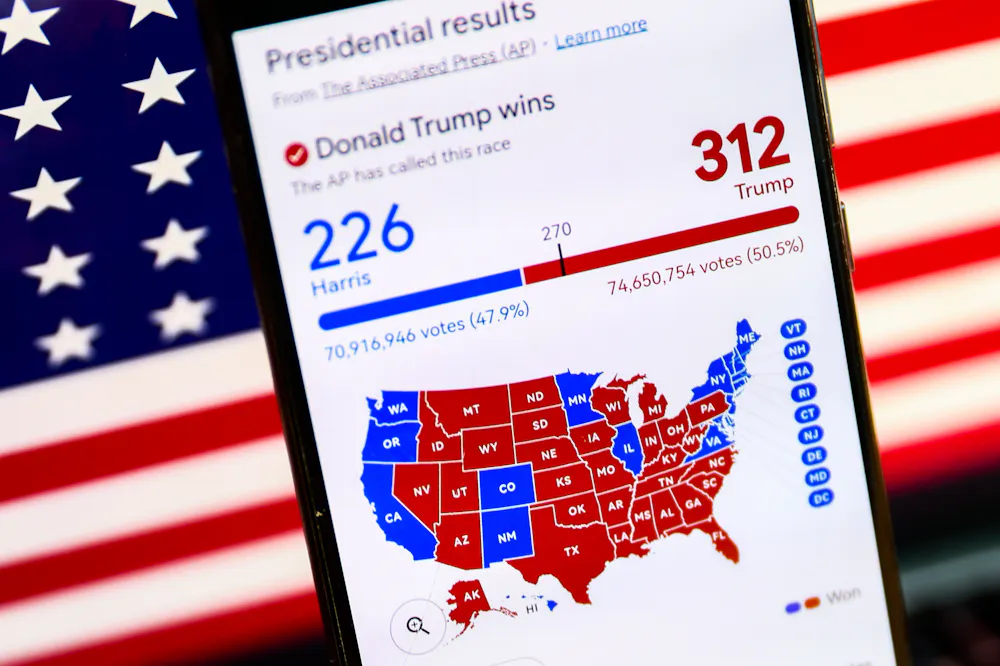


.jpg)


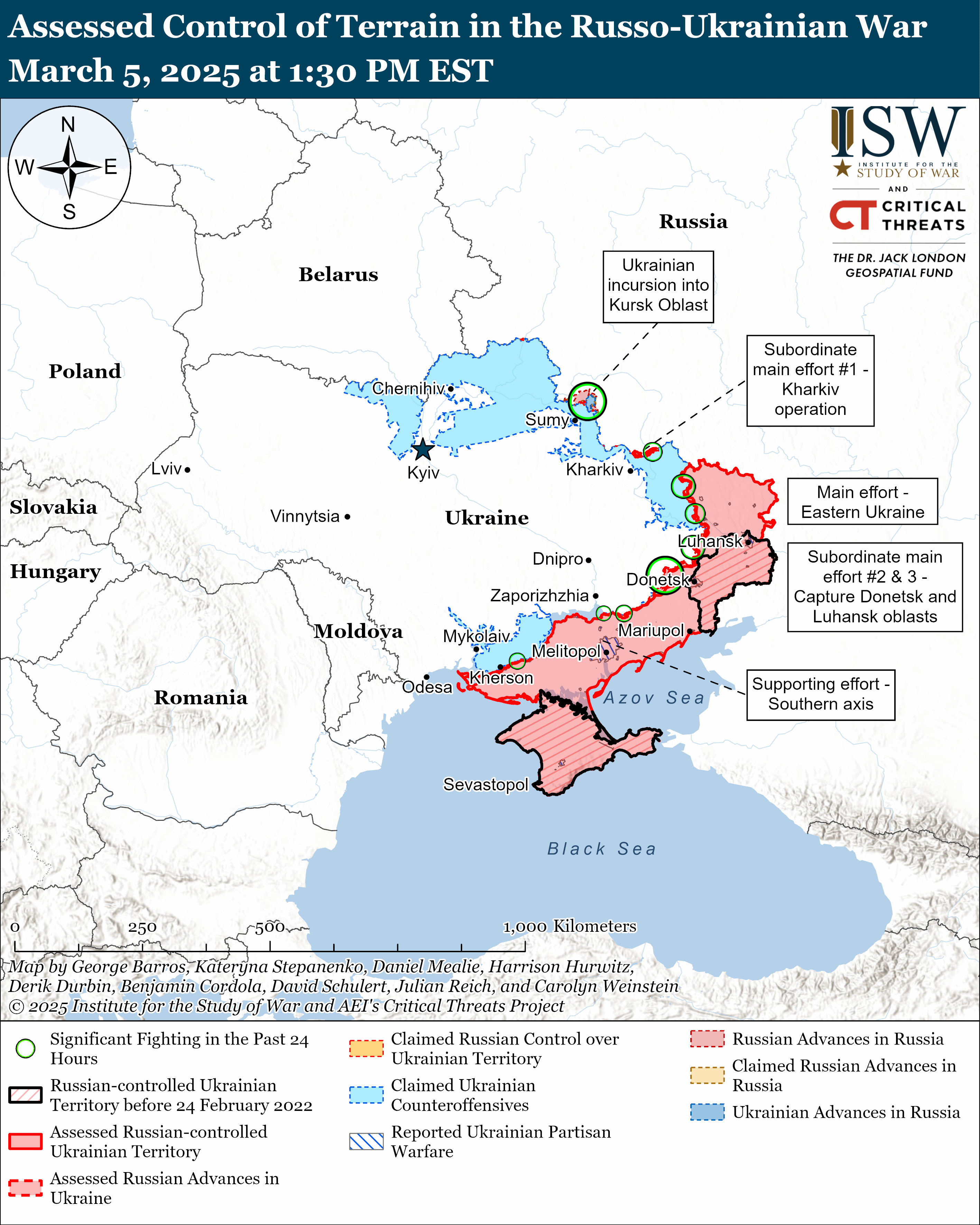

.jpg)


