Category: Global

  • MIL-OSI Global: How Trump’s second term might affect the market and your finances

    Source: The Conversation – USA – By Art Durnev, Distinguished Chair in Finance, Professor of Finance, University of Richmond

    Ever since Donald Trump returned to the White House in January, stock market expectations have been volatile – driven in part by a healthy dose of motivated reasoning.

    At first, markets surged on hopes of lower taxes and deregulation. But this enthusiasm soon faded as announcements about tariffs and stricter immigration policies dampened sentiment. Underscoring that point, on March 3, the Dow Jones Industrial Average fell more than 600 points after Trump said that tariffs he had been threatening for weeks would indeed be imposed on Canada and Mexico the following day.

    In all of these cases, investors weren’t just reacting to economic fundamentals. They were projecting their own assumptions onto them, helping shape market reality.

    Financial forecasting is notoriously tricky, and it’s not easy to separate meaningful data from mere “noise.” But it’s still worth asking: Are American investors ready for a new period of economic and financial turbulence? Will Trump fuel another Wall Street rally? Or will uncertainty drag markets down?

    As an economics expert with two decades of experience studying politics and finance, I believe that presidential rhetoric and policies can create uncertainty – and that uncertainty affects the market. Specifically, stock prices tend to rise when companies expect higher profitability and fall when uncertainty outweighs the gains.

    Trump’s dramatic policy shifts are already sending mixed signals to the markets. And what happens in the next four years could reshape America’s financial future. Today, more than 60% of Americans are tied to the stock market through retirement and investment accounts, which means the repercussions will go far beyond Wall Street.

    How do presidents affect the stock market?

    Presidential elections have a well-documented impact on financial markets.

    Stocks tend to rally in the weeks leading up to the vote, but risk jumps by about 15% as investors brace for uncertainty. This uncertainty hits some companies harder than others, especially those in politically sensitive industries. Businesses that spend big on lobbying and companies affected by trade or climate policies suffer the most.

    Many analysts, particularly those in business or finance, may assume that stock markets would do better under Republican administrations, as their purportedly pro-business, market-friendly policies are bound to improve returns. But history suggests otherwise: Over the past 70 years, markets have delivered 9% higher returns under Democratic than Republican presidencies.

    Does that mean Democrats are better at managing the economy? Not necessarily. Research suggests that timing is key. Democrats tend to take office during economic downturns, inheriting markets that are primed for recovery – essentially, to use the parlance of markets, they “buy low.” Following the 2008 financial crisis, for instance, the stock market saw significant gains as the economy gradually recovered under the Obama administration.

    Republicans, on the other hand, often inherit strong economies with limited upside, as they tend to assume office during periods of economic growth. This leaves less room for gains, especially when the market is already stable.

    Trump, uncertainty and the markets

    Markets love stability and predictability. Yet when political shifts introduce volatility, investor confidence – and ultimately stock valuations – can be shaken. Fewer privately held businesses are willing to go public during election years, for example. This suggests that political uncertainty constrains business decisions. Companies that rely heavily on government contracts and international trade are especially susceptible to this effect.

    Trump’s policies have already created significant uncertainty, which directly impacts market stability and performance. The recent announcements of tariffs on goods from Canada, Mexico and China led to big market swings, particularly in industries reliant on global supply chains such as tech and manufacturing. Trump temporarily postponed the new tariffs on Mexico and Canada, but the new tariffs on China went into effect as planned – an inconsistency that itself worsened uncertainty. If Trump continues down this path, U.S. companies relying on international trade will be faced with greater uncertainty in an already volatile market.

    Immigration is another area in which Trump’s policies could cause uncertainty. Any moves that target illegal immigration or limit foreign workers are likely to hurt industries such as agriculture and tech that rely heavily on workers from abroad. Though some sectors may see benefits from reduced competition, the overall impact on the economy could be to increase market unpredictability.

    Besides the president’s policy agenda, another big factor influencing the stock market is the unpredictability of Trump’s statements and actions. A single social media post can send shock waves through industries such as tech, pharma and defense. Similarly, unexpected shifts in policy can lead to rapid stock price declines.

    With the beginning of the second Trump term, many Americans – especially those nearing retirement age – are watching closely as the president’s policy agenda takes shape. What it all means for their lives, and how it will affect investments, market stability and broader economic trends, is an open question.

    But for investors weighing risk and reward, understanding the interplay between uncertainty, economic policy and market dynamics is essential. A second Trump term has the potential for significant shifts – not just for Wall Street but for the economy as a whole.

    Art Durnev does not work for, consult, own shares in or receive funding from any company or organization that would benefit from this article, and has disclosed no relevant affiliations beyond their academic appointment.

    ref. How Trump’s second term might affect the market and your finances – https://theconversation.com/how-trumps-second-term-might-affect-the-market-and-your-finances-248519

    MIL OSI – Global Reports

  • MIL-OSI Global: Chairman of the Joint Chiefs advises the president on use of America’s military power

    Source: The Conversation – USA – By Dwight Stirling, Lecturer in Law, University of Southern California

    In February 2025, Air Force Gen. Charles Q. Brown, center, was fired as chairman of the Joint Chiefs of Staff by President Donald Trump. Chip Somodevilla/Getty Images

    The dismissal of Gen. Charles Q. Brown as chairman of the Joint Chiefs of Staff was startling, if not unexpected, at the beginning of President Donald Trump’s second term.

    Trump had appointed Brown to lead the Air Force in 2020, and in 2023, former President Joe Biden elevated him to the chairmanship. Both Trump and Defense Secretary Pete Hegseth had signaled that Brown’s ouster was a key part of their overhaul of the Department of Defense, one of several firings of senior officials associated with the Biden administration.

    Retired Lt. Gen. Dan Caine has been named as President Donald Trump’s pick for chairman of the Joint Chiefs of Staff.
    U.S. Air Force via AP

    To replace Brown, Trump has nominated Dan Caine, a retired Air Force general. The abrupt firing of a respected incumbent in favor of a replacement within Trump’s orbit has triggered concerns about politicizing the military.

    The controversy has brought attention to the vital, yet not widely understood, role of the chairman of the Joint Chiefs of Staff. What exactly does the chairman do? What powers does he or she have? How has the job changed over time? And what makes someone effective in the role?

    The president’s principal military adviser

    The chairman is the United States’ highest-ranking military officer. A four-star general or admiral who reports directly to the president, the chairman presides over the Joint Chiefs of Staff, a council comprised of senior members of the Army, Navy, Air Force, Marine Corps, Space Force and the National Guard.

    The chairman’s job is to distill the collective wisdom of the council and then advise the president on the best use of the nation’s military force.

    While outranking all other military personnel, the chairman possesses no command authority. An adviser rather than a decision-maker, the chairman helps the president understand the armed forces’ options and capabilities during military crises. Operating outside the chain of command, which runs from the president to the defense secretary to combatant commanders, the chairman’s power stems not from leading troops in battle, but from having the ear of the leader of the free world.

    Defense Secretary Louis A. Johnson swears in General of the Army Omar N. Bradley as the nation’s first chairman of the Joint Chiefs of Staff, Aug. 16, 1949.
    U.S. Department of Defense

    Created in 1949, the chairman position was designed to solve a quintessentially American problem. In a nation where civilian control over the military is a first principle, what is the best way for presidents to receive the considered wisdom of the military forces they command?

    Since George Washington’s time, this problem has vexed Congress, the branch of government the Constitution designates “to make rules for … land and naval forces.”

    If military officials have too much sway in the White House, the president can veer toward authoritarianism, seeing troops and tanks as the answer to matters better solved politically.

    But if the officer corps’ voice is too weak, complex battlefield operations – and the strategic planning that precedes it – are likely to be botched, as happened in Vietnam.

    Tension with the service secretaries

    In its original form, the chairman position was little more than a first among equals. Devoid of a staff, the position’s day-to-day power was outstripped by the civilian secretaries heading each military branch, more firmly entrenched leaders who were heavily invested in the existing divisions.

    From what had become a centuries-old bureaucratic turf war, the Army and Navy secretaries knew how to “divvy things up,” as a 1985 Senate report put it. Relentless infighting undermined the chairman’s ability to get all the players on the same page and could lead to a disaster like the the 1983 bombing of the Marine barracks in Beirut by militants.

    Adm. William Crowe was the 11th chairman of the Joint Chiefs of Staff, serving in that post from 1985 to 1989.
    U.S. Navy

    In an interview about the failures in the aftermath of the Beirut attack, Adm. William Crowe, the chairman at the time, said: “I could only operate through the Army, Navy, Air Force and Marine component commanders, who stood between me and the forces in the field. Component commanders reported to their own service chiefs … and could use this channel to outflank the unified commander.”

    The Goldwater-Nichols Act, passed in 1986, strengthened the chairman’s position significantly. The law said it aimed “to improve the military advice provided to the President” and more efficiently use military resources. The chairman received the coveted responsibility of personally advising the president and defense secretary on military matters. In practical terms, the chairman became the third-most important military figure, behind only the two officials he advised.

    For their part, the service secretaries were relegated to the less prestigious role of training and equipping their respective troops. Their determination to preserve an antiquated model of military administration made them less relevant in an era of “jointness” and unified commands.

    Army Gen. Colin Powell, center, served as chairman of the Joint Chiefs of Staff from 1989 to 1993, and later served as secretary of state.
    Wally McNamee/CORBIS/Corbis via Getty Images

    The qualities of an effective chairman

    Immense in scale and scope, the chairman position by law must be held by a four-star officer with a significant amount of prior seasoning, including experience in one or more of the senior-most positions of the military. This requirement can be waived when it is in the “national interest” to do so, a provision Trump invoked when nominating Caine.

    Broad experience helps chairmen identify counterproductive gamesmanship. In the buildup to the Gulf War, the Air Force chief of staff publicly bragged about the superior effectiveness of air power. Army Gen. Colin Powell, the chairman at the time, responded by advising Defense Secretary Dick Cheney to immediately fire the Air Force chief. Keen to such maneuvers, Powell wanted to send a message that the days of inter-service rivalries and airing of grievances were over: Only a unified mindset would be tolerated.

    Frank, apolitical guidance is also important. The chairman’s four-year term is intentionally staggered against the president’s term so that a single chairman advises two presidents. Adm. Mike Mullen was appointed by President George W. Bush and then worked under President Barack Obama for nearly three years. Gen. Joseph Dunford, an Obama appointee, counseled Trump at the start of his first term.

    Trump broke from this tradition by dismissing Brown less than two years into the term to which President Joe Biden appointed him. He selected Caine, a general whom Trump said told him the Islamic State group could be “totally finished in one week.”

    The new chairman’s challenge will be to balance his independent judgment against telling the president what he wants to hear.

    Dwight Stirling does not work for, consult, own shares in or receive funding from any company or organization that would benefit from this article, and has disclosed no relevant affiliations beyond their academic appointment.

    ref. Chairman of the Joint Chiefs advises the president on use of America’s military power – https://theconversation.com/chairman-of-the-joint-chiefs-advises-the-president-on-use-of-americas-military-power-251108

    MIL OSI – Global Reports

  • MIL-OSI Global: Pepfar funding to fight HIV/Aids has saved 26 million lives since 2003: how cutting it will hurt Africa

    Source: The Conversation – Africa – By Eric Friedman, Researcher, Georgetown University

    The US President’s Emergency Plan for AIDS Relief has been a cornerstone of global HIV/Aids prevention, care and treatment for over two decades. Pepfar has enjoyed broad bipartisan support in the US, but its future is now uncertain. Public health scholars Eric A. Friedman, Sarah A. Wetter and Lawrence O. Gostin explain Pepfar’s history and impacts, as well as what may lie ahead.

    The early years

    Many people today have forgotten the sheer devastation that the Aids pandemic wrought on the African continent, first spreading widely in east Africa in the 1980s. By the end of the 20th century, life expectancy in the region had decreased from 64 to 47 years.

    Millions of children were infected and many grew up as orphans, with HIV taking the life of one or both of their parents. Children, especially girls, were taken out of school to nurse sick relatives or because school fees were unaffordable.

    Underfunded health systems were near collapse, as were the economies of many African countries.

    Infection rates in several countries on the continent topped 30% of their adult populations.

    These devastating figures persisted despite the discovery of highly effective antiretroviral therapies in the 1990s. These drugs rapidly became widely available in rich countries, beginning in 1996, leading to an 84% decline in death rates over four years.

    But cost kept the drugs out of reach for African countries.

    Only about 100,000 of the 20 million people infected with HIV in Africa were accessing drug treatment in 2003.

    The turnaround

    A major breakthrough came when US president George W Bush proposed a bold global initiative, Pepfar, in his 2003 State of the Union Address. Pepfar would dedicate US$15 billion over five years with the goals of preventing 7 million new infections, treating 2 million people, and caring for another 10 million infected with HIV or orphaned by the disease.

    By 2005, more than 800,000 people were being treated for HIV in Africa – an eightfold increase from only two years prior. Under Pepfar, the costs of antiretroviral treatment per person per year in low- and middle-income countries fell from US$1,200 in 2003 to just US$58 in 2023.

    Pepfar maintained bipartisan support throughout both Democratic and Republican-led administrations and Congresses. Through 2018, it had been reauthorised three times, each for five years.

    The programme has lived up to its promise. The investment of over US$110 billion since being launched has been transformative, with sub-Saharan Africa benefiting the most.

    Globally, Pepfar has saved 26 million lives and prevented nearly 8 million babies from being born with HIV. In 2024, more than 20 million people were receiving HIV treatment through Pepfar, which was also supporting well over 6 million orphans, vulnerable children and their caregivers, and enabled nearly 84 million people to be tested for HIV that year.

    Its importance extends beyond Aids. The programme directly supports more than 340,000 health workers, a tremendous contribution in Africa especially, given severe health worker shortages in much of the continent.

    Pepfar-supported health services integrate HIV services with tuberculosis care, treatment and prevention. And since 2019, Pepfar has been part of a partnership for screening and treating women with HIV for cervical cancer, focused on 12 high-burden countries in sub-Saharan Africa.

    But the past two years have been ones of political discord and major disruption.

    Troubles begin

    The trouble began in May 2023, with Pepfar due for a five-year reauthorisation.

    A key member of Congress, along with organisations against abortion, raised concerns that Pepfar was supporting abortions, even though there was no such evidence at the time. In fact, by law Pepfar is prohibited from supporting abortions.

    House Republicans sought to include abortion restrictions in the Pepfar reauthorisation. But Congress passed a reauthorisation bill without abortion provisions in March 2024, to last until 25 March 2025.

    Ever since then, the threats posed to a five-year Pepfar reauthorisation have grown.

    The Trump effect

    In January, Pepfar reported to Congress that its own investigators had found that four nurses in Mozambique had used Pepfar funding to perform abortions (which are legal in Mozambique), 21 in all. Pepfar officials froze funds to the four nurses and required staff to attest to understanding that they were prohibited from providing abortion as part of US-funded health services.

    Days later Pepfar, along with most other US foreign assistance programmes, suffered a severe blow. President Donald Trump signed an executive order pausing all further disbursements and new obligations of foreign assistance funds for 90 days, pending a sweeping review.

    Four days later, secretary of state Marco Rubio issued a directive that went even further, also requiring organisations to stop work, even those that had already received funds needed to operate.

    By 27 January, virtually all US foreign assistance programmes had come to a halt, including Pepfar programmes.

    Following an outcry, Rubio issued a waiver for lifesaving humanitarian assistance on 28 January. With confusion over what was covered, including whether the waiver encompassed HIV medicines, he issued another waiver on 1 February, covering Pepfar treatment and care programmes, including prevention of and treatment for TB and other opportunistic infections, as well as prevention of mother-to-child transmission programmes.

    But organisations receiving US foreign assistance funds needed to get individual approval to resume, and the administration had put much of USAid’s staff on administrative leave. USAid (along with the US Centers for Disease Control and Prevention) has a central role in administering Pepfar. Many others, including contractors embedded in USAid operations, have been furloughed or fired.

    Very few people existed to process requests to resume work. Furthermore, USAid’s payment system appeared not to be working.

    The decisions of the Trump administration are being challenged in court in the US on the grounds that they are illegal and unconstitutional because they are usurping Congress’s power to determine how the US government spends funds, among other violations of the law.

    Nonetheless, as of this writing, despite a court order to resume funding, it remains entirely frozen, and most programmes are still shut down. The day after the court ordered the government to pay nearly US$2 billion it owes organisations for work already done, the administration revealed that it had terminated the vast majority of foreign assistance awards, including some for Pepfar. Details have not been made public. Meanwhile, the US Supreme Court put a short-term pause on the lower court’s order to immediately pay the money already owed.

    The impact

    The impact has been immediate. People on HIV treatment could not pick up additional medicine, leading to treatment interruption. Pepfar-funded health services had to turn away patients. Health workers supported by Pepfar, among them 40,000 in Kenya, could no longer be paid.

    Many organisations that relied on Pepfar funds also had to lay off staff. Community groups have been affected and many have suspended their services entirely.

    It remains unclear what the future holds – how severe the cuts will be, and to what programmes. In the near term, much depends on the courts and whether the administration implements court orders, as it has yet to do. In the longer term, Congress could seek to resume Pepfar to its former strength, though this would mean acting against the administration’s wishes. Even then, it is not clear whether the administration would spend the money allocated, and the damage already done to Pepfar programmes and trust in the US government will not be repaired quickly.

    Pepfar is currently funded at US$7.5 billion annually. It accounts for over 10% of all US foreign assistance and over half of US global health assistance.

    The separate Pepfar waiver suggests the deepest support for Pepfar is for HIV treatment programmes, as well as others meant to be protected under the waiver. Barring vast cuts to foreign assistance and Pepfar, these programmes are most likely to be at least spared, though the administration has terminated even some grants that had been covered by the waiver.

    Other Pepfar programmes, particularly with respect to HIV prevention, are most vulnerable.

    Rethinking priorities

    The vulnerability of different African countries to Pepfar cuts varies widely. Some fund most of their own HIV programmes. South Africa’s HIV programmes are 74% domestically funded, with the balance coming from Pepfar (17%) and the Global Fund (7%).

    But Pepfar funding accounts for about 90% of all HIV funding in Tanzania and Côte d’Ivoire, and more than half of HIV medicines purchased for the Democratic Republic of Congo, Mozambique and Zambia are purchased by the US.

    If there are significant Pepfar funding cuts, it is doubtful that other wealthy countries will be able to compensate. And because the US, through Pepfar, is the largest contributor to the Global Fund, it is unlikely that the Global Fund could fill the gap either.

    Under these circumstances, unless countries increase their domestic HIV spending, the dramatic progress in combating HIV/Aids in Africa could begin to become undone.
    The conversation in Africa must focus on ending reliance on foreign assistance and developing resilient financing mechanisms to continue the fight to end Aids.

    Lawrence O. Gostin is Director of the WHO Collaborating Center on Global Health Law

    Eric Friedman and Sarah Wetter do not work for, consult, own shares in or receive funding from any company or organisation that would benefit from this article, and have disclosed no relevant affiliations beyond their academic appointment.

    ref. Pepfar funding to fight HIV/Aids has saved 26 million lives since 2003: how cutting it will hurt Africa – https://theconversation.com/pepfar-funding-to-fight-hiv-aids-has-saved-26-million-lives-since-2003-how-cutting-it-will-hurt-africa-250413

    MIL OSI – Global Reports

  • MIL-Evening Report: ‘Back off AUKUS’, Greens MP Tuiono warns NZ in wake of Trump row

    Asia Pacific Report

    The Green Party has called on Prime Minister Christopher Luxon to rule out Aotearoa New Zealand joining the AUKUS military technical pact in any capacity following the row over Ukraine in the White House over the weekend.

    President Donald Trump’s “appalling treatment” of his Ukrainian counterpart Volodymyr Zelenskyy was a “clear warning that we must avoid AUKUS at all costs”, said Green Party foreign affairs and Pacific issues spokesperson Teanau Tuiono.

    “Aotearoa must stand on an independent and principled approach to foreign affairs and use that as a platform to promote peace.”

    US President Donald Trump has paused all military aid for Ukraine after the “disastrous” Oval Office meeting with President Zelenskyy in another unpopular foreign affairs move that has been widely condemned by European leaders.

    Oleksandr Merezhko, the chair of Ukraine’s Parliamentary Foreign Affairs Committee, declared that Trump appeared to be trying to push Kyiv to capitulate on Russia’s terms.

    He was quoted as saying that the aid pause was worse than the 1938 Munich Agreement that allowed Nazi Germany to annex part of Czechoslovakia.

    ‘Danger of Trump leadership’
    Tuiono, who is the Green Party’s first tagata moana MP, said: “What we saw in the White House at the weekend laid bare the volatility and danger of the Trump leadership — nothing good can come from deepening our links to this administration.

    “Christopher Luxon should read the room and rule out joining any part of the AUKUS framework.”

    Tuiono said New Zealand should steer clear of AUKUS regardless of who was in the White House “but Trump’s transactional and hyper-aggressive foreign policy makes the case to stay out stronger than ever”.

    “Our country must not join a campaign that is escalating tensions in the Pacific and talking up the prospects of a war which the people of our region firmly oppose.

    “Advocating for, and working towards, peaceful solutions to the world’s conflicts must be an absolute priority for our country,” Tuiono said.

    Five Eyes network ‘out of control’
    Meanwhile, in the 1News weekly television current affairs programme Q&A, former Prime Minister Helen Clark challenged New Zealand’s continued involvement in the Five Eyes intelligence network, describing it as “out of control”.

    Her comments reflected growing concern by traditional allies and partners of the US over President Trump’s handling of long-standing relationships.

    Clark said the Five Eyes had strayed beyond its original brief of being merely a coordinating group for intelligence agencies in the US, Canada, UK, Australia, and New Zealand.

    “There’s been some talk in the media that Trump might want to evict Canada from it . . . Please could we follow?” she said.

    “I mean, really, the problem with Five Eyes now has become a basis for policy positioning on all sorts of things.

    “And to see it now as the basis for joint statements, finance minister meetings, this has got a bit out of control.”

    MIL OSI AnalysisEveningReport.nz

  • MIL-OSI Global: Life after school for young South Africans: six insights into what lies ahead

    Source: The Conversation – Africa – By Gabrielle Wills, Senior researcher at Research on Socio-Economic Policy, Stellenbosch University

    Matric exams are a crucial moment in a young person’s educational journey. Fani Mahuntsi/Gallo Images via Getty Images

    At the dawn of democracy in 1994, South Africa faced a sobering reality. Fewer than a third of 25- to 34-year-olds had achieved at least a matric (12 years of schooling completed) or equivalent qualification.

    Thirty years on, the proportion of individuals in this age group that had completed their schooling had almost doubled to 57%. This figure will be further bolstered by the record-breaking results in the National Senior Certificate (matric) examinations in recent years. South Africa’s school completion rates are now high and comparable to other middle-income countries.

    But this good news is tempered by very high youth unemployment and a faltering economy. What are the prospects for young South Africans once they’ve matriculated?

    I have aimed to answer this question in my new study. By using the Quarterly Labour Force Survey – a nationally representative, household-based sample survey – and other data sources, I have developed six insights that tell us what the post-matric landscape is like today. For the purposes of the study I defined recent matriculants as 15-24-year-olds with 12 years of completed schooling.

    This study highlights how increasingly larger proportions of recent matriculants find they have limited opportunities. The rising number of youth leaving school with a matric, especially in recent years, is not being met with enough opportunities beyond school, whether in work or in post-school education and training.

    Conditions in South Africa’s labour market must improve and further expansion in quality post-school education and training is required for the country to realise the benefits of rising educational attainment and progress for national development.

    1. Less chance of employment

    The graph below illustrates a brutal truth: ten years ago finding a job was easier for matriculants than it will be for the matric class who finished school in 2024. Between 2014 and 2018 about 4 of every 10 recent matriculants who were economically active (including discouraged work seekers) were employed. By the start of 2024 this figure was closer to 3 of every 10.

    Percent of South African youth employed by qualification level.
    Dr Gabrielle Wills, CC BY-NC-ND

    The likelihood of youth with a matric having a job at the start of 2024 roughly resembled the chances of youth without a matric having a job eight to ten years ago.

    With more learners progressing to matric, especially due to more lenient progression policy during and just after the COVID-19 pandemic, changes in the composition of the matric group could be driving some of the declines in this group’s employment prospects. But there has been a deterioration in the labour market for all youth over the past decade. Employment prospects have even declined for youth with a post-school qualification.

    2. Not in employment, education or training

    Proportionally fewer recent matriculants are going on to work or further study.

    Before the COVID-19 pandemic (2014-2019), around 44%-45% of recent matriculants were classified as “not in employment, education or training” (NEET). The NEET rate among recent matriculants peaked at 55% in early 2022 and remained high at 49.8% at the start of 2024.

    Stated differently, one of every two recent matriculants was not engaged in work or studies in the first quarter of last year. That’s 1.78 million individuals. Coupled with the rising numbers of youth getting a matric, this implies that the number of recent matriculants who were not working or studying rose by half a million from the start of 2015 to the start of 2024.

    Among all 15-24-year-olds, the NEET rate rose from 32% in the first quarter of 2014 to 35% in the first quarter of 2024. Even larger increases in the NEET rate occurred among 25-34-year-olds, rising from 45% to 52% over the same period.

    This is a worry. But it doesn’t mean the matric qualification has no value.

    3. A matric still provides an advantage

    In early 2024, nearly half of matriculants aged 15-24 were classified as not in employment, education or training. Almost 8 out of 10 of their peers who had dropped out of school were NEET. In short, you’re still more likely to get a job or further your studies with a matric certificate than without one.

    4. A hard road

    The road to opportunity beyond school is harder than it was a decade ago.

    Among NEET matriculants aged 15-24 at the start of 2014, 27% searched for work for more than a year. By early 2024, this figure had risen to 32%.

    It’s even worse for 25-34-year-old NEETs who hold a matric qualification. The percentage searching for work for over a year rose from 37% at the start of 2014 to 50% in early 2024.

    The longer young people remain disconnected from employment, education or training, the greater the toll on their mental health. NEET status is associated with worse mental health, particularly among young men.

    5. Post-school education and training

    The government has made ambitious plans to expand opportunities for young people to study further. But enrolments in post-school education and training are not growing sufficiently to match the rising tide in school completion or to absorb youth who cannot find jobs. And, with projected declines in real per student spending on post-school education as South Africa tries to address escalating national debt servicing costs, this situation is unlikely to improve anytime soon.

    The country is not keeping pace with tertiary enrolment rates in other developing nations like Brazil, Indonesia or China. For instance, 2021 estimates from the World Bank identify South Africa’s tertiary enrolment rate at 25%, compared to 41% in Indonesia, 57% in Brazil and 67% in China.

    6. Location matters

    Where someone lives in South Africa influences their chances for upward mobility. These inequalities are reflected in varying youth NEET rates across provinces. For instance, a third of recent matriculants in the Western Cape were not in employment, education or training in 2023/2024. That figure more than doubles in the North West province to 67%.

    How to help

    Two things are needed: improving labour market conditions and expanding post-school education and training opportunities.

    This is unlikely without improved economic growth.

    All of this may sound hopeless. But there are things that ordinary South Africans can do, too:

    • keep encouraging young people in your orbit to complete their schooling

    • where possible, spur them on to obtain a post-school qualification

    • use your social networks to connect youth to work experience opportunities, and help with CVs, referral letters and references.

    Young people must also adopt a practical, pragmatic and entrepreneurial mindset. They need to seize every opportunity available to them, whether in the labour market or post-school education.

    Gabrielle Wills is a senior researcher with Research on Socio-Economic Policy at Stellenbosch University. This research for the COVID-Generation project was made possible by financial support from Allan and Gill Gray Philanthropies. The findings and conclusions contained within are those of the authors and do not necessarily reflect positions or policies of Allan & Gill Gray Philanthropies.

    ref. Life after school for young South Africans: six insights into what lies ahead – https://theconversation.com/life-after-school-for-young-south-africans-six-insights-into-what-lies-ahead-249031

    MIL OSI – Global Reports

  • MIL-Evening Report: ‘Our film won an Oscar. But here in West Bank’s Masafer Yatta we’re still being erased.’

    AMY GOODMAN: And the Oscars were held Sunday evening. History was made in the best documentary category.

    SAMUEL L. JACKSON: And the Oscar goes to ‘No Other Land’.

    AMY GOODMAN: The Palestinian-Israeli film No Other Land won for best documentary. The film follows the struggles of Palestinians in the occupied West Bank community of Masafer Yatta to stay on their land amidst violent attacks by Israeli settlers aimed at expelling them. The film was made by a team of Palestinian-Israeli filmmakers, including the Palestinian journalist Basel Adra, who lives in Masafer Yatta, and the Israeli journalist Yuval Abraham. 

    Both filmmakers — Palestinian activist and journalist Basel Adra, who lives in Masafer Yatta, and Israeli journalist Yuval Abraham — spoke at the ceremony. Adra became the first Palestinian filmmaker to win an Oscar.

    BASEL ADRA: Thank you to the Academy for the award. It’s such a big honor for the four of us and everybody who supported us for this documentary.

    About two months ago, I became a father. And my hope to my daughter, that she will not have to live the same life I am living now, always fearing — always — always fearing settlers’ violence, home demolitions and forceful displacements that my community, Masafer Yatta, is living and facing every day under the Israeli occupation.

    ‘No Other Land’ reflects the harsh reality that we have been enduring for decades and still resist as we call on the world to take serious actions to stop the injustice and to stop the ethnic cleansing of Palestinian people.

    YUVAL ABRAHAM: We made this — we made this film, Palestinians and Israelis, because together our voices are stronger.

    We see each other — the atrocious destruction of Gaza and its people, which must end; the Israeli hostages brutally taken in the crime of October 7th, which must be freed.

    When I look at Basel, I see my brother. But we are unequal. We live in a regime where I am free under civilian law and Basel is under military laws that destroy his life and he cannot control.

    There is a different path: a political solution without ethnic supremacy, with national rights for both of our people. And I have to say, as I am here: The foreign policy in this country is helping to block this path.

    And, you know, why? Can’t you see that we are intertwined, that my people can be truly safe if Basel’s people are truly free and safe? There is another way.

    It’s not too late for life, for the living. There is no other way. Thank you.


    Israeli and Palestinian documentary ‘No Other Land’ wins Oscar. Video: Democracy Now!

    Article by AsiaPacificReport.nz

    MIL OSI AnalysisEveningReport.nz

  • MIL-Evening Report: NZ must protest Israel’s latest ‘weasel out’ war crime cutting humanitarian aid, says PSNA

    Asia Pacific Report

    One of the leading Palestinian solidarity groups in Aotearoa New Zealand has demanded that the government condemn Israel’s cutting off of all humanitarian aid to Gaza.

    Israel announced its latest “humanitarian outrage” against the Palestinian people of Gaza as it tries to renegotiate the three-phased ceasefire agreement it signed with Hamas in January.

    “Israel is trying to weasel its way out of the agreement because it doesn’t want to negotiate stage two which requires it to withdraw its troops from Gaza,” said Palestine Solidarity Network Aotearoa (PSNA) co-national chair John Minto.

    “Israel signed the ceasefire agreement and it must be forced to follow it through,” he said in a statement today.

    “Cutting off humanitarian aid is a blatant war crime and New Zealand must say so without equivocation.

    “Our government has been complicit with Israeli war crimes for the past 16 months and has previously refused to condemn Israel’s use of humanitarian aid as a weapon of war.

    “It’s time we got off our knees and stood up for international law and United Nations resolutions.”

    Violation of Geneva Conventions
    Meanwhile, a Democrat senator, Peter Welch (vermont), yesterday joined the global condemnation of the Israeli “weaponisation” of humanitarian aid.

    In a brief post on X, responding to Israel blocking the entry of all goods and supplies into Gaza, Senator Peter Welch, a Democrat from Vermont, simply said:

    In a brief message on X, Senator Welch said: “This is a violation of the Geneva Conventions.”

    UN Secretary-General Antonio Guterres has hailed the launch of the Berlin Initiative led by former peace negotiators Yossi Beilin and Hiba Husseini.

    In a statement, Guterres said the world must end this terrible war and lay the foundations for lasting peace, “one that ensures security for Israel, dignity and self-determination for the Palestinian people, and stability for the entire region”.

    This required a clear political framework for Gaza’s recovery and reconstruction, he said.

    “It requires immediate and irreversible steps towards a two-State solution — with Gaza and the West Bank, including East Jerusalem, unified under a legitimate Palestinian authority, accepted and supported by the Palestinian people.

    “And it requires putting an end to occupation, settlement expansion and threats of annexation.”

    MIL OSI AnalysisEveningReport.nz

  • MIL-OSI Global: How satellites and AI help firefighters battle wildfires today

    Source: The Conversation – USA – By John W. Daily, Research Professor in Thermo Fluid Sciences, University of Colorado Boulder

    The wind and terrain can quickly change how a fire, like this one near Los Angeles in January 2025, behaves. AP Photo/Marcio Jose Sanchez

    When wildfires break out, fire crews count on fire-spotting technology and computer models to help them understand the rapidly changing environment.

    That technology has evolved over the years, yet some techniques are very similar to those used over 100 years ago.

    I have spent several decades studying combustion, including wildfire behavior and the technology used to track fires and predict where wildfires might turn. Here’s a quick tour of the key technologies used today.

    Spotting fires faster

    First, the fire must be discovered.

    Often wildfires are reported by people seeing smoke. That hasn’t changed, but other ways fires are spotted have evolved.

    In the early part of the 20th century, the newly established U.S. Forest Service built fire lookout towers around the country. The towers were topped by cabins with windows on all four walls and provided living space for the fire lookouts. The system was motivated by the Great Fire of 1910 that burned 3 million acres in Washington, Idaho and Montana and killed 87 people.

    Before satellites, fire crews watched for smoke from fire towers across the national forests.
    K. D. Swan, U.S. Forest Service

    Today, cameras watch over many high-risk areas. California has more than 1,100 cameras watching for signs of smoke. Artificial intelligence systems continuously analyze the images to provide data for firefighters to quickly respond. AI is a way to train a computer program to recognize repetitive patterns: smoke plumes in the case of fire.

    NOAA satellites paired with AI data analysis also generate alerts but over a wider area. They can detect heat signatures, map fire perimeters and burned areas, and track smoke and pollutants to assess air quality and health risks.

    Forecasting fire behavior

    Once a fire is spotted, one immediate task for firefighting teams is to estimate how the fire is going to behave so they can deploy their limited firefighting resources most effectively.

    Fire managers have seen many fires and have a sense of the risks their regions face. Today, they also have computer simulations that combine data about the terrain, the materials burning and the weather to help predict how a fire is likely to spread.

    Fuel models

    Fuel models are based on the ecosystem involved, using fire history and laboratory testing. In Southern California, for example, much of the wildland fuel is chaparral, a type of shrubland with dense, rocky soil and highly flammable plants in a Mediterranean climate. Chaparral is one of the fastest-burning fuel types, and fires can spread quickly in that terrain.

    For human-made structures, things are a bit more complex. The materials a house is made of – if it has wood siding, for example – and the environment around it, such as how close it is to trees or wooden fences, play an important role in how likely it is to burn and how it burns.

    How scientists study fire behavior in a lab.

    Weather and terrain

    Terrain is also important because it influences local winds and because fire tends to run faster uphill than down. Terrain data is well known thanks to satellite imagery and can easily be incorporated into computer codes.

    Weather plays another critical role in fire behavior. Fires need oxygen to burn, and the windier it is, the more oxygen is available to the fire. High winds also tend to generate embers from burning vegetation that can be blown up to 5 miles in the highest winds, starting spot fires that can quickly spread.

    Today, large computer simulations can forecast the weather. There are global models that cover the entire Earth and local models that cover smaller areas but with better resolution that provides greater detail.

    Both provide real-time data on the weather for creating fire behavior simulations.

    Modeling how flames spread

    Flame-spread models can then estimate the likely movement of a fire.

    Scientists build these models by studying past fires and conducting laboratory experiments, combined with mathematical models that incorporate the physics of fire. With local terrain, fuel and real-time weather information, these simulations can help fire managers predict a fire’s likely behavior.

    Examples of how computer modeling can forecast a fire’s spread. American Physical Society.

    Advanced modeling can account for fuel details such as ground-level plant growth and tree canopies, including amount of cover, tree height and tree density. These models can estimate when a fire will reach the tree canopy and how that will affect the fire’s spread.

    Forecasting helps, but wind can change fast

    All these tools are made available to firefighters in computer applications and can help fire crews as they respond to wildfires.

    However, wind can rapidly change speed or direction, and new fires can start in unexpected places, meaning fire managers know they have to be prepared for many possible scenarios – not just the likely outcomes they see on their computer screens.

    Ultimately, during a fire, firefighting strategy is based on human judgment informed by experience, as well as science and technology.

    John W. Daily receives funding from the Department of Defense for wildland fire research. He is affiliated with the Combustion Institute and the American Institute of Aeronautics and Astronautics. He is a Fellow of both organizations.

    ref. How satellites and AI help firefighters battle wildfires today – https://theconversation.com/how-satellites-and-ai-help-firefighters-battle-wildfires-today-248420

    MIL OSI – Global Reports

  • MIL-OSI Global: Rain on wildfire burn scars can trigger destructive debris flows − a geologist explains how

    Source: The Conversation – USA – By Jen Pierce, Professor of Geosciences, Boise State University

    A debris flow channel in a severely burned watershed in Idaho. Amirhossein Montazeri/Boise State University, CC BY-ND

    As the Los Angeles area cleaning up from devastating wildfires, city officials and emergency managers are worried about what could come next.

    Rain on burned hillslopes can trigger dangerous floods and debris flows. Those debris flows can move with the speed of a freight train, picking up or destroying anything in their path. They can move tons of sediment during a single storm, as Montecito, just up the coast from Los Angeles, saw in 2018.

    What causes debris flows, sometimes called mudflows, and why are they so common and dangerous after a fire? I am a geologist whose research focuses on pyrogeomorphology, which is how fire affects the land. Here’s what we know.

    How debris flows begin

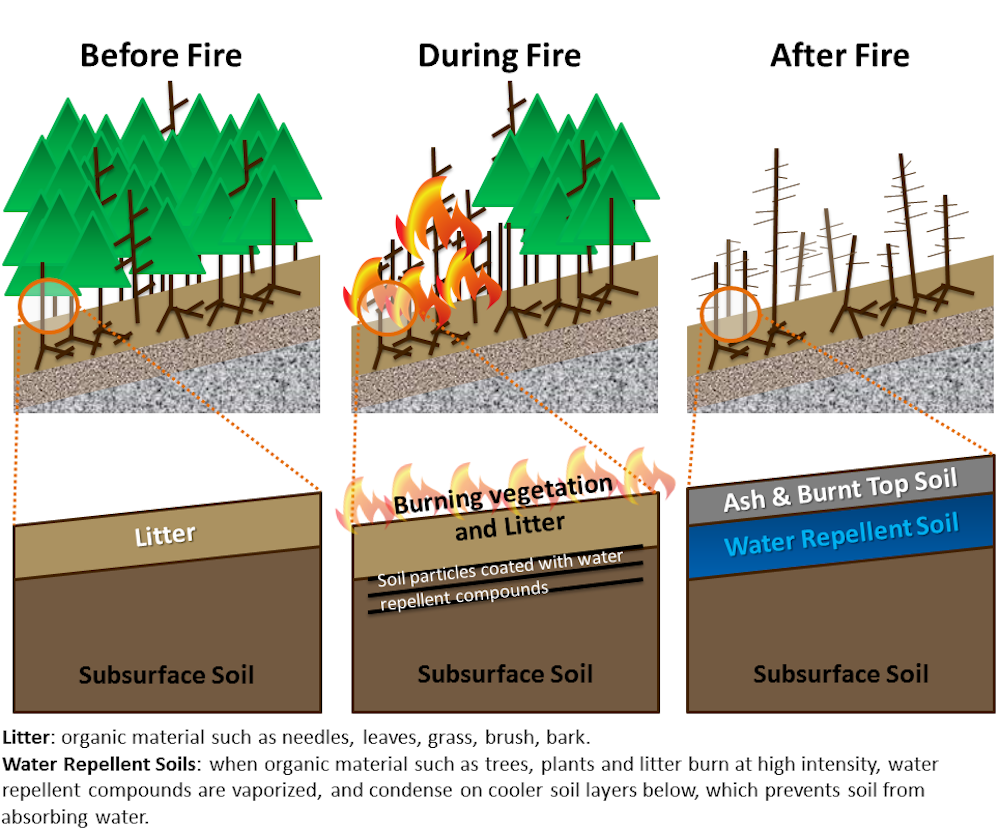
    When severe fires burn hillslopes, the high heat from the fires, sometimes exceeding 1,000 degrees Fahrenheit (538 degrees Celsius), completely destroys trees, shrubs, grass and structures, leaving behind a moonscape of gray ash. Not only that, the heat of the fire actually burns and damages the soil, creating a water-repellent, or hydrophobic, layer.

    What once was a vegetated hillslope, with leaves and trees to intercept rain and spongy soils to absorb water, is transformed into a barren landscape covered with ash, and burned soil where water cannot soak in.

    Illustrations show how fire can change the soil and landscape.
    National Weather Service

    When rain does fall on a burned area like this, water mixes with the ash, rocks and sediment to form a slurry. This slurry of debris then pours downhill in small gullies called rills, which then converge to form bigger and bigger rills, creating a torrent of sediment, water and debris rushing downhill. All this debris and water can transform small streams and usually dry gullies into a danger zone.

    Because the concentration of sediment is so high, especially when there is a large amount of ash and clay, debris flows behave more like a slurry of wet cement than a normal stream. This fluid can pick up and move large boulders, cars, trees and other debris rapidly downhill.

    A firefighter walks through knee-deep mud while checking for victims after a debris flow hit Montecito, Calif., in January 2018.
    Wally Skalij/Los Angeles Times via Getty Images

    In January 2018, a few weeks after the Thomas fire burned through the hills above Montecito, a storm triggered debris flows that killed 23 people and damaged at least 400 homes.

    What controls size and timing of debris flows

    The geography of the land, burn severity, storm intensity and soil characteristics all play important roles in if, when and where debris flows occur.

    Fire and debris flow scientists with the U.S. Geological Survey use these variables to create models to predict the likelihood and possible hazards from postfire debris flows. They are already developing maps to help residents, emergency managers and city officials prepare and predict postfire debris flows in 2025 burn areas in Los Angeles.

    The U.S. Geological Survey modeled debris flow risks after the Palisades Fire near Los Angeles. The map shows some of the highest-risk areas if hit by 15 minutes of rain falling at just under 1 inch (24 millimeters) per hour.
    USGS

    Some of the triggers of debris flows are literally part of the landscape.

    For example, the slope angle in a watershed and the amount of clay in the soil are important. Watersheds with gentle slopes – generally less than about 23 degrees – and a lack of clay and silt-sized particles are unlikely to produce debris flows.

    Other key factors that contribute to postfire debris flows relate to the proportion of the watershed that is severely burned and the intensity and duration of the rainstorm event.

    Early important research in the field of pyrogeomorphology demonstrated that while large, intense storms are more likely to cause large, intense debris flows, even small rainstorms can produce debris flows in burned areas.

    Debris flows are becoming more common

    A whopping 21.8 million Americans live within 3 miles of where a fire burned during the past two decades, and that population more than doubled from 2000 to 2019. A recent study from central and northern California indicates that nearly all the observed increases in area burned by wildfires in recent decades are due to human-caused climate change.

    The warming climate is also increasing the likelihood of more extreme downpours. The amount of moisture the atmosphere can hold increases by about 7% per degree Celsius of warming, leading to more intense downpours, particularly from ocean storms. In California, scientists project increases in rainfall intensity of 18% will result in an overall 110% increase in the probability of major debris flows.

    Jon Frye, of Santa Barbara Public Works, shows what happened in the January 2018 Montecito debris flow and why the risks to downslope communities would continue for several years. Source: County of Santa Barbara, 2018.

    Studies using models of fire, climate and erosion rates estimate that the amount of sediment flowing downhill after fires will increase by more than 10% in nine out of every 10 watersheds in the western U.S.

    Even without rain, debris on fire-damaged slopes can be unstable. A small slide in Pacific Palisades shortly after a fire burned through the area split a home in two. A phenomenon called “dry ravel” is a dominant form of hillslope erosion following wildfires in chaparral environments in Southern California

    Preparing for debris flow risks

    Research on charcoal pieces from ancient debris flows has shown fires and erosion have shaped Earth’s landscape for at least thousands of years. However, the rising risk of wildfires near populated areas and the potential for increasingly intense downpours mean a greater risk of damaging and potentially deadly debris flows.

    As their populations expand, community planners need to be aware of those risks and prepare.

    This article, originally published Jan. 23, 2025, has been updated with a flash flood watch issued.

    Jen Pierce receives funding from the National Science Foundation and is the chair of the Quaternary Geology and Geomorphology division of the Geological Society of America.

    ref. Rain on wildfire burn scars can trigger destructive debris flows − a geologist explains how – https://theconversation.com/rain-on-wildfire-burn-scars-can-trigger-destructive-debris-flows-a-geologist-explains-how-247770

    MIL OSI – Global Reports

  • MIL-OSI Global: How to sustain international order in an ‘America First’ world

    Source: The Conversation – Canada – By Daniel Manulak, Postdoctoral Fellow, History, University of Toronto

    The United States is abandoning its traditional role as the anchor of the liberal world order — a set of norms, rules, customs and international institutions designed to maintain global stability and foster peaceful interchange between states.

    From announcing its intention to withdraw from the World Health Organization (WHO) and the United Nations Human Rights Council to threatening allies — including Canada — with annexation and damaging tariffs, U.S. President Donald Trump has launched an assault on the liberal world order that upholds the post-1945 international system.

    Under these circumstances, it’s more urgent than ever that Canada clarifies its vision in world affairs and accepts its responsibility to sustain the rules-based global order. By looking into the past, we can see what Canada can do in the present.


    Read more:
    Like dictators before him, Trump threatens international peace and security


    How Canada made a difference

    The U.S. isn’t the only country with a vested interest in maintaining the liberal international order — even if it has been the only nation with the will and capacity to serve as its safeguard.

    Canada was also present at the creation of the UN in 1945. They, too, played a fundamental part in the development of its specialized agencies — such as the WHO and the International Civil Aviation Organization.

    In fact, Canada has been an engaged member of the international community. The country played a leading role in establishing the UN Emergency Force during the Suez Crisis, fighting apartheid in South Africa and building a coalition to ban anti-personnel land mines in the 1990s, to name a few examples.

    Canada has done so because it’s been in the best interest of the country. A liberal, rules-based international order is a framework in which Canada can make a meaningful difference in global affairs disproportionate to its limited size and capabilities.

    It also makes for a more prosperous, stable and peaceful world. One where norms, rules and institutions constrain aggressive or malevolent world leaders and facilitates co-operation on global problems.

    But what can lessons from the past offer Canada in sustaining global order in an “America First” world. This is a policy espoused by the Trump administration that is focused inwards. It approaches international affairs as a transactional, zero-sum game.

    Learning from the past

    First, Canada is at its most effective when Canadians act in unison towards a common goal.

    During the Ethiopian famine in the 1980s, Canadians of all stripes and levels of government worked in tandem to organize a truly national response to alleviate the humanitarian crisis. Regular citizens contributed more than $30 million — potentially saving over 700,000 people from starvation.

    This domestic political consensus also provided the requisite support for the federal government to co-ordinate an international famine relief effort. This was despite the resistance of Canada’s major allies in the U.S. and the U.K., due to the Marxist orientation of the Ethiopian government.

    Granted, few international causes offer such grounds for unity. Political polarization has only made this type of unity more difficult. And yet, as recent events (such as Trump’s threat to coerce Canada into becoming the 51st state) make clear, Canadians are willing to put aside their differences and rally together when there’s a coherent vision for the country rooted in its values and aspirations.

    Second, Canada needs to work closely with like-minded states through multilateral institutions — such as the United Nations and the Commonwealth. Under Brian Mulroney’s Progressive Conservative government, Canada relied on its membership in nearly every major international association to build and maintain the global coalition against South African apartheid.


    Read more:
    Brian Mulroney’s tough stand against apartheid is one of his most important legacies


    Australia, India, Zambia and Zimbabwe emerged as key partners. Such efforts entailed both political and economic costs. But there was a reason why one of Nelson Mandela’s first visits following his release from prison in 1990 was to Canada.

    By redoubling its engagement in international organizations, Canada can punch above its weight in world affairs and shape global priorities. It also provides a counter to the influence of the United States in Canadian foreign policy.

    Third, the U.S. is more than its president. Canada can still cultivate ties with Americans beyond the White House. Returning to the Mulroney government, Ottawa’s efforts to persuade the Ronald Reagan administration to negotiate restrictions on emissions resulting in acid rain were unsuccessful.

    Nonetheless, by lobbying congressional leaders in impacted states and partnering with environmental non-governmental organizations, Canada and the U.S. eventually agreed to the 1991 Air Quality Agreement.

    Surviving hostile administrations

    Canada should also be realistic about the degree to which it can diversify its economic and diplomatic relationships outside of the U.S.

    In the early 1970s, President Richard Nixon imposed a 10 per cent surcharge on Canadian imports. Then, just as it is now, Ottawa looked for alternative markets to offset Canada’s dependency on the Americans. These initiatives ultimately failed to materialize — but the surcharge was rescinded. Canada-U.S. relations ultimately survived the Nixon administration.

    Similarly, while Trump has offered a stark reminder that Canada needs to take an active role in sustaining the rules-based international order on which it depends, the ties that bind the two countries together are deeper and longer-lasting than any one administration or government.

    Even so, with a world in chaos, Canada needs to step up to defend international norms and institutions. It has done so in the past and can do so again — provided it develops a coherent foreign policy strategy moving forward.

    Daniel Manulak receives funding from the Social Sciences and Humanities Research Council of Canada.

    ref. How to sustain international order in an ‘America First’ world – https://theconversation.com/how-to-sustain-international-order-in-an-america-first-world-248364

    MIL OSI – Global Reports

  • MIL-OSI Global: Why has bisexual identity doubled in one European city – and what does it tell us about global trends?

    Source: The Conversation – UK – By Willi Zhang, Postdoctoral Researcher, Department of Global Public Health, Karolinska Institutet

    Shutterstock/Anna55555

    Bisexuality has long been the subject of distinct forms of stigma compared to other sexual identities. People who identify as bisexual can be dismissed as “confused”, “indecisive” or as passing through a “transitional stage”. These stigmas circulate both among heterosexual and LGBTQ+ people.

    But as social acceptance of diverse sexual identities continues to grow in many countries, more people are identifying as bisexual. My research in Stockholm reflects this trend.

    With colleagues, I analysed data from over 75,000 participants in Stockholm, aged 16 and above between 2010 and 2021. Over this 12-year period, bisexual identity increased from 1.6% in 2010 to 2.5% in 2014, and by 2021 had doubled to 3.1%. In comparison, homosexual identity rose slightly from 1.7% to 2%.

    This means that bisexual people have been the largest self-identifying sexual minority group in Stockholm since 2014.

    Younger generations were more likely to identify as bisexual. Among those born between the mid-1990s and early 2010s, known as generation Z, 9.4% identified as bisexual in 2021, up from 6.2% in 2014. Among millennials, born between the early 1980s and mid-1990s, 4.6% identified as bisexual in 2021, a slight decrease from 5.1% in 2014. Meanwhile, the proportion of generation X, born between 1965 and 1980, who identified as bisexual fell from 2.1% in 2014 to 1.8% in 2021.

    A similar trend has been seen in the US. Over the past 15 years, the bisexual population has steadily grown and has been the largest sexual minority since 2016. By 2020, 3.1% of US adults identified as bisexual. This increased to 4.4% by 2023.

    Bisexual identity was, again, more common among younger generations. Among generation Z, 12% identified as bisexual in 2020, rising to 15% in 2023. Millennials saw a slight increase from 5% in 2020 to 6% in 2023. For generation X, it stayed at 2% in both years.

    What could be driving the rise?

    These generational differences suggest a shift in how people understand and define their sexual identities. There are several likely reasons for this. In recent decades, many countries have made significant progress in legal recognition and protections for LGBTQ+ people.

    In Sweden, anti-discrimination and hate crime laws were progressively introduced from the late 1980s through the 2010s. During this period, gender-neutral marriage legislation was adopted in 2009.

    Meanwhile, public support for same-sex marriage rose from 71% in 2006 to 90% in 2015. Since then, between 94% and 98% of Swedes have agreed that “gay, lesbian, and bisexual people should have the same rights as heterosexual people”.

    Greater visibility of LGBTQ+ people in media and public life may also have played a role. Seeing people of diverse sexual identities featured in posts, stories, and shows, and as public figures, helps normalise these identities. They also provide relatable examples that can inspire others to feel more confident in being themselves.

    The younger generation is leading the charge on celebrating sexual diversity.
    Shutterstock

    For example, pride parades have become influential cultural events in many countries. They create space for celebration and connection, both within the LGBTQ+ community and in society at large. They also contribute to greater visibility and public awareness.

    Together, these legal and social changes, along with shifting cultural norms, have helped create safer and more supportive environments for LGBTQ+ people. Younger generations are likely experiencing greater social freedom to explore and express their sexual identities.

    As more people feel safe and accepted in identifying as LGBTQ+, society becomes more inclusive and diverse. This, in turn, can encourage others to embrace their sexual identities openly, creating a positive cycle of acceptance and visibility.

    This momentum suggests that the number of people who identify as LGBTQ+, particularly bisexual people, will likely continue to grow in the near future, especially in societies with stronger legal protections and social acceptance.

    Looking ahead, as our understanding of sexuality continues to evolve, this growing visibility and awareness may suggest the potential for a society that becomes increasingly diverse and accepting.

    Willi Zhang is affiliated with Region Stockholm.

    ref. Why has bisexual identity doubled in one European city – and what does it tell us about global trends? – https://theconversation.com/why-has-bisexual-identity-doubled-in-one-european-city-and-what-does-it-tell-us-about-global-trends-248200

    MIL OSI – Global Reports

  • MIL-OSI Global: Out-of-balance bacteria is linked to multiple sclerosis − the ratio can predict severity of disease

    Source: The Conversation – USA – By Ashutosh Mangalam, Associate Professor of Pathology, University of Iowa

    The myelin sheaths insulating neurons are damaged in multiple sclerosis. Steve Gschmeissner/Science Photo Library/Brand X Pictures via Getty Images

    Multiple sclerosis is a disease that results when the immune system mistakenly attacks the brain and spinal cord. It affects nearly one million people in the U.S. and over 2.8 million worldwide. While genetics play a role in the risk of developing multiple sclerosis, environmental factors such as diet, infectious disease and gut health are major contributors.

    The environment plays a key role in determining who develops multiple sclerosis, and this is evident from twin studies. Among identical twins who share 100% of their genes, one twin has a roughly 25% chance of developing MS if the other twin has the disease. For fraternal twins who share 50% of their genes, this rate drops to around 2%.

    Scientists have long suspected that gut bacteria may influence a person’s risk of developing multiple sclerosis. But studies so far have had inconsistent findings.

    To address these inconsistencies, my colleagues and I used what researchers call a bedside-to-bench-to-bedside approach: starting with samples from patients with multiple sclerosis, conducting lab experiments on these samples, then confirming our findings in patients.

    In our newly published research, we found that the ratio of two bacteria in the gut can predict multiple sclerosis severity in patients, highlighting the importance of the microbiome and gut health in this disease.

    Akkermansia is commonly found in the human gut microbiome.
    Zhang et al/Microbial Biotechnology, CC BY-SA

    Bedside to bench

    First, we analyzed the chemical and bacterial gut composition of patients with multiple sclerosis, confirming that they had gut inflammation and different types of gut bacteria compared with people without multiple sclerosis.

    Specifically, we showed that a group of bacteria called Blautia was more common in multiple sclerosis patients, while Prevotella, a bacterial species consistently linked to a healthy gut, was found in lower amounts.

    In a separate experiment in mice, we observed that the balance between two gut bacteria, Bifidobacterium and Akkermansia, was critical in distinguishing mice with or without multiple sclerosis-like disease. Mice with multiple sclerosis-like symptoms had increased levels of Akkermansia and decreased levels of Bifidobacterium in their stool or gut lining.

    Bench to bedside

    To explore this further, we treated mice with antibiotics to remove all their gut bacteria. Then, we gave either Blautia, which was higher in multiple sclerosis patients; Prevotella, which was more common in healthy patients; or a control bacteria, Phocaeicola, which is found in patients with and without multiple sclerosis. We found that mice with Blautia developed more gut inflammation and worse multiple sclerosis-like symptoms.

    Even before symptoms appeared, these mice had low levels of Bifidobacterium and high levels of Akkermansia. This suggested that an imbalance between these two bacteria might not just be a sign of disease, but could actually predict how severe it will be.

    We then examined whether this same imbalance appeared in people. We measured the ratio of Bifidobacterium adolescentis and Akkermansia muciniphila in samples from multiple sclerosis patients in Iowa and participants in a study spanning the U.S., Latin America and Europe.

    Our findings were consistent: Patients with multiple sclerosis had a lower ratio of Bifidobacterium to Akkermansia. This imbalance was not only linked to having multiple sclerosis but also with worse disability, making it a stronger predictor of disease severity than any single type of bacteria alone.

    Bifidobacterium both produces and consumes mucin, a glycoprotein that protects the gut lining.
    Paola Mattarelli and Monica Modesto/Katz Lab via Flickr, CC BY-NC

    How ‘good’ bacteria can become harmful

    One of the most interesting findings from our study was that normally beneficial bacteria can turn harmful in multiple sclerosis. Akkermansia is usually considered a helpful bacterium, but it became problematic in patients with multiple sclerosis.

    A previous study in mice showed a similar pattern: Mice with severe disease had a lower Bifidobacterium-to-Akkermansia ratio. In that study, mice fed a diet rich in phytoestrogens – chemicals structurally similar to human estrogen that need to be broken down by bacteria for beneficial health effects – developed milder disease than those on a diet without phytoestrogens. Previously we have shown that people with multiple sclerosis lack gut bacteria that can metabolize phytoestrogen.

    Although the precise mechanisms behind the link between the Bifidobacterium-to- Akkermansia ratio and multiple sclerosis is unknown, researchers have a theory. Both types of bacteria consume mucin, a substance that protects the gut lining. However, Bifidobacterium both eats and produces mucin, while Akkermansia only consumes it. When Bifidobacterium levels drop, such as during inflammation, Akkermansia overconsumes mucin and weakens the gut lining. This process can trigger more inflammation and potentially contribute to the progression of multiple sclerosis.

    Our finding that the Bifidobacterium-to-Akkermansia ratio may be a key marker for multiple sclerosis severity could help improve diagnosis and treatment. It also highlights how losing beneficial gut bacteria can allow other gut bacteria to become harmful, though it is unclear whether changing levels of certain microbes can affect multiple sclerosis.

    While more research can help clarify the link between the gut microbiome and multiple sclerosis, these findings offer a promising new direction for understanding and treating this disease.

    Ashutosh Mangalam received funding from the NIH/NIAID, VA, and the University of Iowa. He holds a patent licensed to Evelo Biosciences by Mayo Clinic on a technology using Prevotella histicola to treat autoimmune diseases. No funds or products from this patent were used in this study.

    ref. Out-of-balance bacteria is linked to multiple sclerosis − the ratio can predict severity of disease – https://theconversation.com/out-of-balance-bacteria-is-linked-to-multiple-sclerosis-the-ratio-can-predict-severity-of-disease-251020

    MIL OSI – Global Reports

  • MIL-OSI Global: Why you should check for ‘Irish pinky toe’ – and what to do if you have one

    Source: The Conversation – UK – By Lauren Connell, Podiatrist & Doctoral Researcher, University of Galway

    staras/Shutterstock

    Does your small toe hide beneath the next its next-door neighbour? Although there isn’t scientific evidence this condition known as “Irish pinky toe” is more common in Ireland, it’s a popular idea that it’s a genetic trait among some people with Celtic heritage. And as podiatrists in Ireland, it is certainly something we see every day.

    An Irish pinky toe may look unusual, cause pain or increase your chances of losing it altogether. Added pressure on the toe or toenail can also cause corns, calluses, thickened toenails and even ulcers that may lead to amputation.

    If you’ve ever thought, “What is wrong with that little toe?” or “Why don’t I have a nail on that toe?” then here’s why you might need to take extra care to avoid potential wounds – and even amputation – in future. Fortunately, toe amputations are a relatively rare occurrence but can be offered if the toe continues to cause pain after all other treatments have been tried or if there is infection or gangrene.

    Because an Irish pinky toe sits under the one beside it and often rotates, this can cause pressure on the neighbouring toe. If two bones or joints are pressed close together, this may cause the skin to thicken and result in a corn.

    This might also happen if the little toenail irritates the skin and, if the nail is long or sharp, this might pierce the skin and cause a wound or an infection.

    The little toe and toenail may also rub up against the lining of your shoes, leading to painful friction blisters or shoes that wear out quickly. Wellington boots may be ideal for music festivals and the rainy Irish weather but don’t tend to fit very well, causing the foot to slide about inside.

    Repeated friction or trauma may even damage the nail matrix, the part that makes nail, attached to the bone. This could lead to permanent thickening of the nail, that may become unsightly and cause pain.

    The “Irish pinky toenail” is similar. This is when the toenail may split in two or an extra nail-like skin lesion develops. Sometimes, it may look like you have two nails, a condition described by podiatrists as a petaloid nail or a Lister’s or Durlacher corn. It’s difficult to determine how common petaloid nails are because they’re underdiagnosed and rarely reported.

    What can I do?

    Whatever your heritage, show your pinky toes some love and avoid future problems by trying to avoid tight footwear, especially boots with a firm toe, such as steel toe caps, court shoes, or any shoe with an unforgiving fabric such as a patent finish.

    Some people might throw on any old socks in the morning but ill-fitting socks can contribute to problem foot health – socks that do not stretch, or have heavy seams, may increase the pressure on your pinky toes. Pain or problems may be caused by the toe itself or, perhaps, a sock seam, rigid fabric or the style of shoe. It’s worth investing in high quality, breathable fabrics for socks, such as cotton or bamboo.

    If you have to wear specific safety footwear for your job, such as in farming and construction, you may find higher quality, thicker socks are better than boots with thick fabrics in the toe, that will wear down over time. Perhaps also consider investing in a silicone-lined toe sleeve, which acts like a hat for your toes and protects them from the pressure of footwear.

    Alternatively, it’s possible “prop the toe” by making custom supports. We do this by creating a silicone device which lifts the toe off the ground, separates tight toes or improves the toes position, to avoid future problems. For existing corns, callus or wounds, it’s best to get a trained specialist who can remove excess nail or skin painlessly with a blade to reduce discomfort.

    Irish pinky toes don’t always always cause pain, but if they do, there are ways to reduce it, one step at a time.

    Lauren Connell is the owner of L.A Podiatry.

    Benjamin Bullen does not work for, consult, own shares in or receive funding from any company or organisation that would benefit from this article, and has disclosed no relevant affiliations beyond their academic appointment.

    ref. Why you should check for ‘Irish pinky toe’ – and what to do if you have one – https://theconversation.com/why-you-should-check-for-irish-pinky-toe-and-what-to-do-if-you-have-one-250800

    MIL OSI – Global Reports

  • MIL-OSI Global: AI could supercharge human collective intelligence in everything from disaster relief to medical research

    Source: The Conversation – UK – By Hao Cui, Research Fellow in AI-Enhanced Collective Intelligence, Trinity College Dublin

    Top tech team: surgeons operating with help frm artificial intelligence. Have a nice day Photo

    Imagine a large city recovering from a devastating hurricane. Roads are flooded, the power is down, and local authorities are overwhelmed. Emergency responders are doing their best, but the chaos is massive.

    AI-controlled drones survey the damage from above, while intelligent systems process satellite images and data from sensors on the ground and air to identify which neighbourhoods are most vulnerable.

    Meanwhile, AI-equipped robots are deployed to deliver food, water and medical supplies into areas that human responders can’t reach. Emergency teams, guided and coordinated by AI and the insights it produces, are able to prioritise their efforts, sending rescue squads where they’re needed most.

    This is no longer the realm of science fiction. In a recent paper published in the journal Patterns, we argue that it’s an emerging and inevitable reality.

    Collective intelligence is the shared intelligence of a group or groups of people working together. Different groups of people with diverse skills, such as firefighters and drone operators, for instance, work together to generate better ideas and solutions. AI can enhance this human collective intelligence, and transform how we approach large-scale crises. It’s a form of what’s called hybrid collective intelligence.

    Instead of simply relying on human intuition or traditional tools, experts can use AI to process vast amounts of data, identify patterns and make predictions. By enhancing human decision-making, AI systems offer faster and more accurate insights – whether in medical research, disaster response, or environmental protection.

    AI can do this, by for example, processing large datasets and uncovering insights that would take much longer for humans to identify. AI can also get involved in physical tasks. In manufacturing, AI-powered robots can automate assembly lines, helping improve efficiency and reduce downtime.

    Equally crucial is information exchange, where AI enhances the flow of information, helping human teams coordinate more effectively and make data-driven decisions faster. Finally, AI can act as social catalysts to facilitate more effective collaboration within human teams or even help build hybrid teams of humans and machines working alongside one another.

    AI-driven improvements to all these different aspects can make the entire, interconnected system more adaptive and intelligent.

    We’re already seeing the impact of AI-enhanced collective intelligence. In disaster response, AI systems already analyse satellite imagery and sensor data, generating risk assessments that help human responders to prioritise rescue efforts and allocate resources efficiently.

    In healthcare, AI already helps doctors make faster and more accurate diagnoses by analysing large patient datasets. Medical teams refine AI recommendations with their expertise, ensuring the best possible treatment plans. Robots equipped with AI can assist surgeons in performing delicate tasks, allowing for greater precision.

    In media, AI curates and verifies news from global sources, assisting journalists in fact-checking and uncovering misinformation. This collaboration can strengthen the accuracy and reliability of information in an era of digital media. However, AI can also drive the dissemination of fake news and disinformation. These include deep fake videos of, for example, politicians, which have the potential to affect elections.

    In the public sector, AI-powered policy simulations help governments anticipate the impacts of regulations. Crowd-sourced citizen feedback, combined with AI analysis, can give a sense of the public mood.

    Environmental protection is another area benefiting from AI-enhanced collective intelligence. AI systems can analyse patterns data on pollution, deforestation, and wildlife movements, guiding human efforts to address environmental challenges more effectively.

    As we can see, AI-enhanced collective intelligence is already here, transforming how we approach some of the world’s toughest problems. The key is to recognise that AI is a collaborator, not a competitor. When we combine human creativity, intuition, and ethics with AI’s data processing power, the possibilities for what we can be achieved are substantial.

    As we look towards the future, AI’s potential becomes even more exciting. From addressing global health challenges like pandemic prevention to developing solutions to the climate crisis, AI will be at the forefront of tackling issues once thought insurmountable. But this potential comes with responsibility.

    It’s up to us to guide how this collaboration evolves, ensuring that AI is used responsibly and ethically in ways that enhance human capabilities rather than diminish them. We must engage in shaping policies and frameworks that promote transparency, fairness and inclusivity through a new sociology of humans and machines.

    Collaboration across industries, governments, and communities will be crucial to unlocking AI’s full potential. Together, we can build a future where AI not only augments human intelligence but also helps solve the challenges of tomorrow, creating a more equitable, sustainable, and prosperous world for all.

    Hao Cui receives funding from the Research Ireland.

    Taha Yasseri does not work for, consult, own shares in or receive funding from any company or organisation that would benefit from this article, and has disclosed no relevant affiliations beyond their academic appointment.

    ref. AI could supercharge human collective intelligence in everything from disaster relief to medical research – https://theconversation.com/ai-could-supercharge-human-collective-intelligence-in-everything-from-disaster-relief-to-medical-research-249437

    MIL OSI – Global Reports

  • MIL-OSI Global: One Flew Over The Cuckoo’s Nest: 50 years on Jack Nicholson’s greatest performance is as fresh as ever

    Source: The Conversation – UK – By Daniel O’Brien, Lecturer, Department of Literature Film and Theatre Studies, University of Essex

    Director Miloš Forman’s masterpiece, One Flew Over the Cuckoo’s Nest, turns 50 this year. Despite this milestone, it remains a fresh and timeless piece of cinema from the New Hollywood movement.

    Combining iconic performances and universal themes of individualism versus the establishment, Forman’s film is perhaps Jack Nicholson’s greatest performance. He plays Randle Patrick McMurphy, a charismatic convict feigning mental illness in order to serve his sentence at a psychiatric hospital and avoid prison labour.

    Here, he becomes an unlikely leader to the ward’s patients, helping them to discover self-belief and confidence. He also attempts to steer them away from the regime of the cold and oppressive nurse, Mildred Ratched, brilliantly played by Louise Fletcher. Fletcher’s performance earned her an Oscar for best actress (along with best actor for Nicholson, and three other wins for best picture, director and adapted screenplay).

    The trailer for One Flew Over The Cuckoo’s Nest.

    Forman’s film achieves the seemingly impossible by having the audience root for a morally corrupt character (McMurphy’s convictions include statutory rape). This detail is mentioned just once, early in the film, and is seemingly forgotten in order to reorient him as an unlikely saviour, rather than unsavoury character. Nicholson’s magnetism certainly helps.

    Scenes of the anti-hero warmly bonding with his fellow male patients are in stark contrast to the bureaucratic iciness of Ratched, who coldly controls the men of the asylum.

    The hospital ward becomes the metaphorical arena for a battle between individual and establishment. The timeliness of this story – and of the problematic treatment of mental health patients – is one of the reasons the film remains so timeless.

    Another is the significant role that games play in bringing the group of outsiders together.

    The magic circle

    Johan Huizinga was one of the first cultural theorists to analytically consider the role of games, describing play as a type of “magic circle”.

    This was because it marked out a separate space from the rest of the world. Examples of this term can range from the football pitch to the card table or even a stage, where an audience gather to watch a play, rarely crossing the invisible line.

    Huizinga’s term carved out a separate area purely for those players involved in the act of play. In One Flew Over the Cuckoo’s Nest, McMurphy galvanises his fellow patients through play, teaching them a range of games from blackjack to basketball. He introduces some of them to baseball through his endeavour to watch the World Series on television, forbidden by Ratchet’s ward policy.

    Games and play in One Flew Over The Cuckoo’s Nest. By Daniel O’Brien.

    As he opens these magical circles to his ward-mates, so the confidence of his peers grows, animated with joy and camaraderie. The strict bureaucratic rules from Ratched are filtered with rules from games. McMurphy becomes a reluctant leader, initialling conning the men, but then desperately trying to help them live.

    Another moment of play occurs when McMurphy dupes his way into taking the patients out on a fishing trip. He impersonates a doctor and passes the patients off as his colleagues.

    In the fishing boat scene, one of the most optimistic within the film (and the only one that takes place away from the hospital grounds), the patients come together like a family. McMurphy is the metaphorical father, teaching them how to bait a hook.

    The film circumvents this obvious opportunity for McMurphy’s escape. He instead chooses to offer a form of escape to his companions, enabling them to see what freedom and independence looks like, if only for an afternoon.


    Looking for something good? Cut through the noise with a carefully curated selection of the latest releases, live events and exhibitions, straight to your inbox every fortnight, on Fridays. Sign up here.


    Play of course is also a central factor in McMurphy’s presence at the hospital from the beginning. It’s left uncertain whether or not he is simulating mental illness in order to avoid a tougher sentence.

    Viewers are reminded of this pretence after McMurphy is forced to undergo electroshock therapy. He returns to the ward acting as though he is now cognitively impaired, before flashing the classic Nicholson grin, which lights him up (to paraphrase McMurphy himself) like a pinball machine.

    His play is often weaponised as an attack on Ratched and her rules – or perhaps even on her entire gender. McMurphy’s deck of erotic playing cards is often presented at moments of play to remind us of his unbridled sexuality and ambiguous morality.

    But of course, this film isn’t just about McMurphy or Ratched. It’s an ensemble film, beautifully performed by outstanding actors, including Will Sampson, Christopher Lloyd, Brad Dourif and Danny DeVito.

    The film has been parodied many times, from The Simpsons to British sitcom Spaced, reminding viewers over many years of its cultural significance. In 2008 one of its original stars, DeVito, parodied the film in his sitcom, It’s Always Sunny in Philadelphia.

    Fifty years on, One Flew Over the Cuckoo’s Nest has lost none of its power. So find a copy and hit play for a rewatch; its still as fresh as a new pack of Juicy Fruit.

    Daniel O’Brien does not work for, consult, own shares in or receive funding from any company or organisation that would benefit from this article, and has disclosed no relevant affiliations beyond their academic appointment.

    ref. One Flew Over The Cuckoo’s Nest: 50 years on Jack Nicholson’s greatest performance is as fresh as ever – https://theconversation.com/one-flew-over-the-cuckoos-nest-50-years-on-jack-nicholsons-greatest-performance-is-as-fresh-as-ever-250306

    MIL OSI – Global Reports

  • MIL-OSI Global: The female explorers who braved the wilderness but were overlooked by the history books

    Source: The Conversation – UK – By Sarah Lonsdale, Senior Lecturer in Journalism, City St George’s, University of London

    Ferryland lighthouse near Labrador in the Canadian Arctic, an area mapped by Mina Hubbard in 1905. Nagel Photography

    In the summer of 1905, a young Canadian widow, Mina Hubbard, set out on an expedition to map the northeastern corner of Labrador, from Lake Melville up to Ungava Bay, an inlet of the Arctic Ocean. It was an unusual challenge for a former nurse who had left school at 16.

    Her husband, Leonidas Hubbard, had died in this same harsh environment two years earlier. Mina, 35, intended to complete his work.

    Although she faced physical dangers on the 600-mile journey – starvation, bears, freezing rivers and rapids – her greatest antagonists were the reporters and editors of the male-dominated outdoors press of early 20th-century north America.

    The popular Outing magazine, for whom Leonidas Hubbard had written, was the most excoriating. Its editor, Caspar Whitney, thundered in an editorial that “the widow” should not be in the wilderness, let alone speak about it.

    The wild was no place for a white woman, especially one accompanied by First Nation (Native American) guides. This was not long after she had given an interview to another paper.

    Mina Hubbard in northern Labrador.

    Other newspapers described her as a grief-stricken hysteric. This was the only explanation they could find for her decision to go on such a long and arduous journey. When she was 300 miles into her expedition, having found the source of the Naskaupi River, the New York Times reported on its front page that she had given up, beaten back by hardship and privations.

    New York Times.
    CC BY-NC-ND

    Instead the paper claimed that a man, an explorer called Dillon Wallace who was also in northern Labrador, was “pushing forward beyond any white man’s previous track”. In fact, Hubbard had neither given up, nor had Wallace caught up with her. She would reach Ungava Bay several weeks before his party. But it fitted the dominant narrative of the time: that the wilderness was no place for a woman.

    I explore the idea of what the wild is, and of its being a gendered space, in my new book, Wildly Different: How Five Women Reclaimed Nature in a Man’s World. From ancient myths such as Ulysses or Gilgamesh, to the present where research shows that women face harassment and othering even on remote Antarctic bases, the wild has for centuries been a site of heroic male adventuring and rugged exploration.

    Studies show that even in modern hunting societies, while women tend forest plots and hunt small game near the village or camp, it is the men who go away, often for many days, to hunt for big game and status.

    Myths from across the world have told listeners and readers that women who stray beyond the city wall, village paling or encampment are either supernatural, monsters, or have been banished for perceived sins against society.

    In the Greek myth of Polyphonte, the young girl who refuses to follow the correct gender role to become a wife and mother, and wants instead to hunt in the forest, is treated to a terrible punishment from the gods. She is tricked into falling in love with a bear-turned-man and gives birth to two bestial children. She and her sons are then transformed into flesh-eating birds.

    In a more recent echo of the media coverage of Mina Hubbard’s journey, in Kenya in the 1980s and 1990s, the environmental activist Wangari Maathai was attacked and belittled. She even had a curse put on her for planting trees in forests earmarked for development by the country’s then president, Daniel arap Moi, and for challenging Moi’s plans to build a skyscraper in one of Nairobi’s last green spaces.

    At the height of Maathai’s confrontation with President Moi, the Daily Nation newspaper repeated criticism of both Maathai and her Green Belt Movement organisation. Headlines included: “MPs condemn Prof Maathai” and “MPs want Maathai movement banned”. Her crime? Wanting to slow disastrous desertification and soil erosion, and to empower rural women by planting 30 million trees.

    When British mountaineer Alison Hargreaves was killed in the Himalayas in 1995, reporting focused on her being a mother and wife. Historical newspaper records I found during my research roundly accused her of abandoning her primary role of caring for her children.

    The Sunday Times called her “A mother obsessed”, while the Independent led with the headline, “Dangerous ambition of a woman on the peaks”. The Daily Telegraph headline read, “A wife driven to high challenges”. Readers’ letters were even more critical, branding her as selfish and irresponsible.

    A novelty nail file

    Women who have received neutral or positive coverage for their work have tended to have novelty value, or had accomplished a feat so extraordinary that their being a woman was part of the narrative.


    CC BY-SA

    The entomologist Evelyn Cheesman spent decades collecting insects on Pacific islands, from the Galapagos to New Guinea. Her work led to support for a biological dividing line between different ecosystems in the New Hebrides to be named Cheesman’s Line, and her contribution to science was a great novelty for the newspaper press.

    Her months-long, arduous expedition to Papua New Guinea in the early 1930s earned her the headline in the now defunct UK News Chronicle, “Woman collects 42,000 insects”.

    After Cheesman published her memoir in 1957, detailing four decades of exploration, the headline in the newspaper Reynolds News announced: “Woman trapped in giant spider’s web”. The sub-head simply statesd, “saved by her nail file”.

    More broadly, my research disappointingly concludes that over 100 years on, women explorers and scientific fieldworkers are still represented as unusual or out of place in the wild. These media narratives are dangerous as they feed into social attitudes that put women at risk and cause them to change their behaviour outdoors by avoiding isolated places, especially beyond daylight hours, for example.

    Studies show that women (and black and hispanic) hikers in the US are more afraid of being attacked by men than by bears or other wild animals. Women’s outdoor groups, and campaigners such as Woman with Altitude and the Tough Girl podcast are working hard to counter this narrative, encouraging women to enjoy the beauties and discoveries still to be made in the world’s most rugged and remote places.


    Don’t have time to read about climate change as much as you’d like?

    Get a weekly roundup in your inbox instead. Every Wednesday, The Conversation’s environment editor writes Imagine, a short email that goes a little deeper into just one climate issue. Join the 40,000+ readers who’ve subscribed so far.


    Sarah Lonsdale’s book is published by Manchester University Press. Both she and MUP will receive income from sales of the book.

    ref. The female explorers who braved the wilderness but were overlooked by the history books – https://theconversation.com/the-female-explorers-who-braved-the-wilderness-but-were-overlooked-by-the-history-books-249742

    MIL OSI – Global Reports

  • MIL-OSI Global: How gas keeps the UK’s electricity bills so high – despite lots of cheap wind power

    Source: The Conversation – UK – By Michael Tamvakis, Professor of Commodity Economics and Finance, City St George’s, University of London

    The UK has become a world leader in offshore wind power. iweta0077 / shutterstock

    Gas and electricity bills will rise again for millions of UK households on April 1, when the latest energy price cap takes effect. A typical household will pay £111 more per year.

    Though prices have fallen somewhat since their peak in 2022, bills are still considerably higher than they have been historically. That’s despite the construction over the past decade of vast wind farms in the North Sea – which, once built, provide electricity for very little extra cost.

    So what explains the UK’s pricey gas and electricity?

    Since the 1990s, the UK has been dependent on natural gas in more ways than one. In 2023 (the most recent year for which we have full statistics), gas accounted for 33% of the UK’s energy and almost as much of the electricity it generated. That year, wind contributed 29% to generation and solar an additional 5%, which is of some significance.

    As nearly all households are connected to mains gas, most energy bills reflect the global price of gas.

    The UK has to compete with demand for gas from other markets, especially, but not exclusively, the EU. The higher the demand, the higher the price. Before the Ukrainian crisis, many EU economies, especially Germany, were able to source abundant gas through pipelines from Russia.

    The UK, like other big European countries such as Spain, Italy and France, was able to meet some of its gas supply via pipelines (from Norway in the case of the UK), but also in the form of more expensive liquefied natural gas (LNG) from as far afield as Qatar, Algeria, West Africa and, more recently, the US.

    Since the Russian invasion of Ukraine in early 2022, the flow of pipeline gas has almost entirely stopped. Germany and western EU countries have to compete with everyone else to source their gas from Norway or international LNG markets. A few countries on the eastern side of the EU, such as Austria and Hungary, are still sourcing their gas from Russia but face western criticism for that continued dependence.

    This all matters to UK consumers because most of a household’s average energy bill reflects the vagaries of the international gas market. A relatively harsh winter in Europe means they have purchased more gas and paid more for it. In a global market the UK consumer will have to pay this price as well. Even a harsh winter in Japan means that more LNG is directed there, increasing prices for UK and EU consumers.

    We can’t suddenly turn on the wind

    Even the growth in renewables, especially wind power, does not offer protection against the vagaries of the global gas markets. It is well known that wind energy is intermittent and therefore difficult to forecast and base generation plans on.

    Wind energy is what people in the electricity industry call “non-dispatchable”. Because electricity is a universal good, which we expect to have whenever we ask for it, the national grid needs to be able to balance the randomness of wind generation with the immediate response of a reliable, quick-start, “dispatchable” source of generation. Gas fits the bill.

    As a result, expensive gas which is called on to make up for the loss of wind or solar generation, ends up setting the electricity price (called the “system price”) most days. Other countries experience something similar. Germany, for instance, generates just 15% of its electricity from gas (albeit with a further 25% from coal) and gets a higher proportion from renewables (28% wind and 12% solar). Yet it still has to use gas frequently to balance the electrical system, with the same effect as in the UK.

    Ultimately, the more variable renewable electricity we inject into the system, the more we need to plan for, and invest in, infrastructure that can support it. That means a smarter grid, fewer grid bottlenecks within the UK, more and bigger interconnections to other European countries and battery solutions which can store electricity both for short periods (minutes and hours) and for days and even weeks.

    Putting all these elements in place is a Herculean task. Gas fills the gap, but in a way which is more expensive (for now) and continues emitting greenhouse gases, albeit at half the rate that coal did.


    Don’t have time to read about climate change as much as you’d like?

    Get a weekly roundup in your inbox instead. Every Wednesday, The Conversation’s environment editor writes Imagine, a short email that goes a little deeper into just one climate issue. Join the 40,000+ readers who’ve subscribed so far.


    Michael Tamvakis does not work for, consult, own shares in or receive funding from any company or organisation that would benefit from this article, and has disclosed no relevant affiliations beyond their academic appointment.

    ref. How gas keeps the UK’s electricity bills so high – despite lots of cheap wind power – https://theconversation.com/how-gas-keeps-the-uks-electricity-bills-so-high-despite-lots-of-cheap-wind-power-251136

    MIL OSI – Global Reports

  • MIL-OSI Global: How Trump’s spat with Zelensky threatens the security of the world – including the US

    Source: The Conversation – Global Perspectives – By Natasha Lindstaedt, Professor in the Department of Government, University of Essex

    After the catastrophic press conference on February 28 between Ukrainian president Volodymyr Zelensky and US president Donald Trump, it is clear that there has been a global realignment.

    What the press conference revealed was that Trump’s position is a lot closer to Russian president Vladmir Putin than long-time US ally Ukraine, and also that other US allies cannot count on Washington to promote the global world order.

    The extraordinary spectacle ended with Trump and vice-president J.D. Vance shouting at Zelensky, telling him he wasn’t thankful for US aid. Since then, the expected mineral deal between Ukraine and the US has been called off – at least for now.

    There was already a wake-up call for European allies about how reliable the US might be during Trump’s first term when he launched his “American first” policy. This included chastising Nato member countries for not paying enough, and characterising Europe as free-riding on US security guarantees.

    While this sparked alarm among some European leaders over how to ensure that the continent becomes less dependent on the US, Europeans are now scrambling to respond to Trump 2.0’s much more extreme version of America first. After the press conference, European Union foreign minister Kaja Kallas declared: “Today it became clear that the free world needs a new leader. It’s up to us, Europeans, to take this challenge.”

    Trump’s relationship with Russia

    To some extent Europe was caught off guard because it was hard to imagine that a US president would swing US support behind Russia, especially after Russia’s unlawful invasion of Ukraine in 2022. But Trump has turned the page on challenging Russian aggression, and does not seem to see Putin’s ambitions as a threat to global security.

    Instead in the press conference – as in previous statements – Trump has echoed some of Putin’s talking points, such as Ukraine not having any cards to play, being unwilling to do a peace deal, and having to give up land to Russia.

    Trump also refused to say that Putin started the war, and even claimed that peace could have been possible early on in the war had Zelensky wanted peace. Trump even repeatedly opined that both Putin and Trump were brothers of sorts — victims of the same investigation of Russian interference in the 2016 US election.

    The press conference also revealed that the security guarantees that Zelensky pushed Trump to confirm were secondary at best. Trump remained vague and offered no details, possibly because he has no intention of the US providing any security to Ukraine.

    The aim may have been to goad Zelensky – just weeks ago on Fox News Trump stated that he did not know if Ukrainians would one day become Russian. Meanwhile, Trump’s claim that Ukraine did not have any cards to play is unhelpful to highlight if you are trying to negotiate a great deal for one of your allies.

    What Trump seemed to forget is that Ukraine once had a lot of cards — holding the third largest nuclear arsenal in the world with 1,900 strategic warheads, 176 intercontinental ballistic missiles and 44 strategic bombers. Ukraine was coaxed into returning all of its nuclear warheads in exchange for security assurances from Russia and the west, in a 1994 agreement known as the Budapest Memorandum.

    But while this memorandum might mean little to the current US president, allies around the world can see how quickly a US leader can forget their country’s commitments. The message that Trump is sending now is that every country must fight for themselves. All interactions are transactional, and economic interests trump the genuine security needs of allies.


    Read more:
    Raised voices and angry scenes at the White House as Trump clashes with Zelensky over the ‘minerals deal’


    This plays perfectly into China’s hands. To China, Trump has signalled that he primarily cares about the tariff issue. In addition, he could implement higher tariffs on the US’s biggest trading partners (and allies), Canada, the EU and Mexico, than on China.

    The symbolism of the unsigned mineral deal with Ukraine and the capitulation to Russia’s territorial interests in Ukraine should be music to the ears of China’s president, Xi Jinping.

    What it means for China

    China has inundated Taiwan with a propaganda campaign that says the self-governing island is part of China. Part of the campaign focuses on the notion that if China were to invade, the US would abandon Taiwan, citing the withdrawal from Afghanistan in 2021 as evidence of this.

    The US’s abrupt abandonment of Ukraine adds fuel to this fire. Xi could be emboldened to execute his plan of uniting Taiwan by 2049, if not earlier, which could have disastrous consequences for the global economy.

    European leaders met with President Zelensky after the Trump press conference.

    Taiwan produces 90% of the world’s most advanced semiconductors needed for artificial intelligence and quantum computing, and has a market share of 68%.

    An invasion could lead to a block on global access to semiconductors, causing shortages of all sorts of tech, a possible stock market crash and a fall in trade between Taiwan and western economies. This could cost around US$10 trillion (£7.9 trillion), equal to 10% of global GDP.

    Additionally, for countries such as South Korea and Japan that have been persuaded to not embark on nuclear programmes, the US U-turn sows doubt about its commitment to provide a nuclear shield to its Pacific allies. This could prompt these countries to reverse policies of nonproliferation.

    What happens to Nato?

    Nato has been traditionally led by a US general, but it’s not even clear that the US will remain in the alliance. In the past few weeks Europe has been forced to hold a series of emergency meetings to try to rise to the various global challenges – with or without the US as a key partner.

    All of this makes the US more vulnerable as well. The US is more secure and prosperous when it is part of a long-term alliance, working in partnership with its allies to ensure security, stability, free trade and investment. If the US were to even reduce its security commitments to Nato by 50%, estimates suggest trade with members would fall by US$450 billion.

    The alliance system has been a backbone of US security since 1949. The cost to Nato’s credibility and to defending its borders if Ukraine loses the war would be trillions, not billions, of dollars.

    With Trump appearing desperate to do a deal on Putin’s terms with no concessions, Russia will become much stronger as a result. In spite of the fact that more than 95,000 Russians have died, it’s likely that Russia will act even more boldly, becoming a more attractive ally to US adversaries.

    Trump’s support for Putin not only encourages a hostile nuclear power on the doorstep of the US’s top Nato allies, but also suggests that the US cannot be counted on in future.

    Natasha Lindstaedt does not work for, consult, own shares in or receive funding from any company or organisation that would benefit from this article, and has disclosed no relevant affiliations beyond their academic appointment.

    ref. How Trump’s spat with Zelensky threatens the security of the world – including the US – https://theconversation.com/how-trumps-spat-with-zelensky-threatens-the-security-of-the-world-including-the-us-251229

    MIL OSI – Global Reports

  • MIL-OSI Global: The overlooked bond: Why mental health professionals should ask questions about pets

    Source: The Conversation – Canada – By Renata Roma, Postdoctoral Fellow, University of Saskatchewan

    Pets increasingly play a central role in people’s lives. Mental health professionals who overlook this may be missing an opportunity to understand an important aspect of their clients’experience. (Shutterstock)

    Pets have become an integral part of people’s lives, with some having stronger bonds with their pets than with their siblings and other family members. Some feel more empathy toward animals than toward humans.

    According to a survey, for nearly 90 per cent of Canadians, pets are considered not only family members, but also an essential source of emotional support.

    As researchers interested in the psychology of human-animal relationships, we believe that given these findings, it is imperative to understand how the relationship with pets shapes people’s routines, their self-perceptions, emotional states and ability to cope.

    Asking pet-related questions can be particularly relevant for mental health professionals seeking a deeper understanding of clients’ family dynamics. Exploring the role of pets in a client’s life can offer valuable insights into factors shaping their well-being.

    Client-centred approach: What if pets are part of the story?

    Using a client-centred approach, mental health professionals should understand and validate clients’ perspectives. The goal is to work with clients to understand what shapes their experiences, worldview, strengths and support systems.

    Asking pet-related questions can be particularly relevant for mental health professionals seeking a deeper understanding of clients’ family dynamics.
    (Shutterstock)

    More specifically, during intake sessions and assessments, the focus should be on being attuned to the client’s needs. Professionals who overlook the central role pets play in people’s lives risk missing an opportunity to understand an important aspect of their clients’ experience. Shifting this perspective can lead to deeper insight into clients’ emotional states and behaviours, ultimately leading to more tailored and effective treatment.

    The benefits of such holistic framework can be invaluable. Researchers have found pet-related questions can not only reduce anxiety, but also improve communication and rapport. These questions also allow professionals to access clinically relevant information that can guide their therapeutic approach.

    Unlocking deeper insights in therapy

    There are several specific ways that pet-related questions can influence the direction of therapeutic interventions.

    1) Help clients feel more comfortable:

    Asking pet-related questions can provide a sense of familiarity and comfort. This, in turn, strengthens the therapeutic alliance and creates an inviting atmosphere. For example, many couples treat their pets as children. Among younger generations, there is often a preference for pets over children.

    For these clients, neglecting this important aspect of their lives may negatively impact the therapeutic relationship. By asking pet-related questions, professionals can help clients to feel valued and seen. This inclusive approach acknowledges an essential part of their social system and open space for them to talk about how their pets shape their identity.

    Among younger generations there is often a preference for pets over children.
    (Shutterstock)

    2) Create trust:

    In general, building rapport with clients can create a foundation of trust. This makes it easier for them to share difficult and personal information. Discussing the dynamic between a client and their pet can help them feel more comfortable addressing sensitive topics. Nearly 90 per cent of women experiencing domestic violence report mistreatment of their pets.

    Children who are victims of domestic violence often share stories of their pets being mistreated. These clients usually feel more comfortable addressing violence against their pets before they address violence against themselves.

    3) Offer insights on the client’s strengths and resources:

    Pets can provide support in several ways. For some people, spending time with their pets during moments of stress can alleviate feelings of anxiety and loneliness.

    For others, the presence of a pet facilitates engaging in social and physical activities. Also, the bond with the pet can increase feelings of belonging and reduce self-harm behaviours. By understanding the role pets play in the client’s life, clinicians gain insight into their coping strategies and available resources. This helps inform more tailored clinical interventions.

    4) Offer insight into a client’s broader challenges:

    Pets can have a positive impact on emotional attachment. However, strong attachment to pets may sometimes be associated with increased psychological stress and trust issues. Others may experience worry and guilt when their health issues affect their ability to provide care for their pets, which can worsen their psychological distress.

    Additionally, the ways clients approach and resolve issues related to their pets can provide insight into their problem-solving abilities. Exploring these areas with clients can highlight target areas for therapy.

    5) Help to identify sources of stress:

    The relationship with pets is complex, and can fluctuate. Pets with behavioural or health issues may create significant social barriers, reducing social interactions and heightening negative emotions in owners. Also, the inability to afford veterinary care can undermine a person’s well-being. These situations can be associated with anxiety and caregiver burden. Therefore, the dynamics they share with their pets can directly influence the issues presented in therapy.

    In such scenarios, not asking about clients’ relationship with their pets may cause professionals to overlook crucial aspects of clients’ overall well-being. This can result in missing important insights into clients’ strengths and challenges.

    Not asking about clients’ relationship with their pets, may cause professionals to overlook crucial aspects of clients’ overall well-being.
    (Shutterstock)

    The missing piece

    Pet-related questions are not just a trivial detail. The structure of families has evolved. As we work toward more holistic and empathetic therapeutic approaches, exploring the presence of pets in people’s lives is a critical step to fostering an environment of acceptance, openness and trust.

    By exploring this bond, mental health professionals can strengthen therapeutic alliances. They would also learn about essential aspects of a client’s emotional life, their strengths and challenges.

    Simple questions like: “do you have a pet at home?” and “how would you describe the role of your pet in your life?” can help strengthen connections with clients. These questions create opportunities for deeper engagement. They also promote a practice that is client-centred, inclusive and aligned with the evolving configurations of families.

    The authors do not work for, consult, own shares in or receive funding from any company or organisation that would benefit from this article, and have disclosed no relevant affiliations beyond their academic appointment.

    ref. The overlooked bond: Why mental health professionals should ask questions about pets – https://theconversation.com/the-overlooked-bond-why-mental-health-professionals-should-ask-questions-about-pets-250702

    MIL OSI – Global Reports

  • MIL-OSI Global: How businesses and consumers can protect themselves against digital supply chain disruptions

    Source: The Conversation – Canada – By Raymond A. Patterson, Professor, Area Chair, Business Technology Management, Haskayne School of Business, University of Calgary

    Digital supply chain disruptions are particularly problematic because they can have immediate global effects and can’t rely on inventory as a buffer. (Shutterstock)

    Digital supply chain disruptions are becoming increasingly common, with a recent notable increase in cyberattacks and supplier errors.

    A significant incident in July 2024 saw a flawed security upgrade by CrowdStrike impact 8.5 million Windows computers. The fallout impacted various industries, including airlines, hospitals and 911 services. This led to the cancellation of 2,800 flights and delays for 11,000 more.

    Threats surrounding the looming trade war between Canada and the United States are also threatening the digital supply chain. The digital supply chain encompasses many goods and services, including video streaming platforms, software, digital content, video games, e-books, online storage, education and training content, and food delivery services.

    According to a McKinsey report from October 2024, companies seem to be easing up on efforts to strengthen supply chain resilience, even as disruptions continue to occur. The survey found “considerable gaps in the ability of organizations to identify and mitigate supply chain risks, with few new initiatives aimed at addressing those weaknesses.”

    Digital supply chain disruptions are particularly problematic because they can have immediate global effects. Unlike physical supply chains, digital suppliers can’t rely on inventory as a buffer. As is clear from major industry disruptions to the digital supply chain, organizations often lack feasible alternatives for their digital suppliers — there is no plan B.

    However, the resilience of digital supply chains is given little attention, despite its critical role in the global economy.

    Risks of sharing digital suppliers

    Our recent research explored how businesses’ choice of digital supplier — either the same as their competitors or different ones — impacts competition and vulnerability to supply chain disruptions.

    Using an economic model, we analyzed how disruptions at a service provider impacted a firm’s customer demand and, in turn, how the firm managed service provider risks.

    We found that when companies rely on the same digital suppliers, they also share risks. In contrast, choosing alternative suppliers can help mitigate those risks. However, businesses often mimic their competitors and share suppliers — a strategy that is not always wise.

    Disruptions to digital supply chains are inevitable, and the effects of these disruptions, particularly on consumer demand, are often underestimated. These disruptions can spread rapidly, without giving companies enough time to react. Cyberattacks or service losses at a single supplier can take multiple businesses offline at once.

    Issues like privacy breaches and service disruptions can even cause customers to change their buying habits. While a disruption at one firm may lead consumers to switch to competitors, broader industry disruptions can diminish overall trust and demand.

    Companies with complementary products should consider using different digital suppliers to mitigate the compounded negative effects of any disruption.

    Additionally, advanced technologies like AI are transforming industries such as customer support and health care, meaning digital supply chain disruptions are also more likely. Automation can also exacerbate this risk.

    Addressing supply chain risks

    Canadians have many concerns about online privacy and security, and business leaders face challenges addressing these concerns moving forward.

    Addressing these concerns is difficult due to several factors, including rapidly changing technology, expanding opportunities for attacks, high costs to address privacy and security, and lack of employee awareness, among others.

    Our research leads to a number of suggestions for companies, industry coalitions, governmental regulators and consumers. For businesses, building resilience against digital supply chain disruptions and supplier outages requires strategic partnerships. Companies must consider how inevitable disruptions will affect not only their customer demand, but also how competitors’ disruptions could affect them, and vice versa.

    For industry coalitions and governmental regulators, understanding the ripple effects of shared digital supply chain risks can help determine whether supply chains should be shared or separated. Industry-specific needs may differ and change over time, which could justify breaking up digital service monopolies to increase supplier diversity or, in some cases, maintaining them.

    Consumers should also be aware of the potential for a digital supply chain disruptions. If an industry-wide outage occurs, having a workaround plan can be essential. For example, when purchasing services that can’t be physically stored, like airline tickets, it’s wise to plan for unexpected disruptions. Booking a flight a day earlier than necessary or allowing extra time to return home can provide a buffer against system-wide failures.

    Breaches of online privacy and service disruptions caused by unforeseen events, bad actors and foreign governments can cause customers to alter their buying habits and negatively impact Canadian competitiveness.

    With Canadians expressing grave concerns over online privacy and security, everyone must recognize the importance of preparing for and mitigating these risks.

    Raymond A. Patterson currently receives funding from the Haskayne School of Business and the National Cybersecurity Consortium (NCC). Previous funding has been obtained from a variety of private and public sources.

    Erik Rolland, Hooman Hidaji, and Lisa Yeo do not work for, consult, own shares in or receive funding from any company or organisation that would benefit from this article, and have disclosed no relevant affiliations beyond their academic appointment.

    ref. How businesses and consumers can protect themselves against digital supply chain disruptions – https://theconversation.com/how-businesses-and-consumers-can-protect-themselves-against-digital-supply-chain-disruptions-250009

    MIL OSI – Global Reports

  • MIL-OSI Global: Trump tariffs have sparked a ‘Buy Canadian’ surge, but keeping the trend alive faces hurdles

    Source: The Conversation – Canada – By Melise Panetta, Lecturer of Marketing in the Lazaridis School of Business and Economics, Wilfrid Laurier University

    Escalating trade tensions between Canada and the United States have ignited a new wave of Canadian patriotism, with consumers consciously choosing made-in-Canada products as an act of economic self-preservation and national pride.

    U.S. President Donald Trump is expected to impose tariffs on most Canadian and Mexican goods on March 4, after a month-long delay. This, along with Trump’s calls to make Canada the 51st U.S. state, has prompted Canadians to rally around the so-called “Buy Canadian” movement.

    Recent research indicates a significant number of Canadians are now showing a strong preference for domestic products, with many willing to modify their purchasing behaviours. One recent poll revealed 42 per cent of Canadians polled will “absolutely do everything” to avoid purchasing U.S. products. Eighty-eight per cent said they would buy a product promoted as “made in Canada.”

    Another poll found that 56 per cent of Canadians said they would stop buying a certain product altogether if there is no Canadian-made alternative.

    While the “buy local” movement has deeper roots, often resurfacing during periods of economic tensions, the current surge stems from a desire to support homegrown brands and manufacturers they see as reflecting their values.

    Buy Canadian movement challenges

    While the Buy Canadian movement is gaining traction, actually sustaining it comes with notable challenges. Some experts caution that reducing reliance on U.S. imports is a gradual process contingent on consistent consumer commitment.

    Two primary barriers stand in the way of this sustained change: the higher costs of Canadian-made goods, particularly during the ongoing cost-of-living crisis, and the difficulty consumers face in identifying domestically produced items.

    Addressing these two issues is crucial for the long-term viability of the Buy Canadian movement.

    CBC News segment about the Buy Canadian movement.

    Buying Canadian can be pricey

    The first primary obstacle facing the Buy Canadian movement is the price disparity between domestic goods and their imported counterparts.

    Canadian domestic goods often come with a higher price tag due to production costs, economies of scale, transportation and other economic factors. These factors make it difficult for local manufacturers to compete with cheaper foreign alternatives.

    The ongoing cost-of-living crisis, which is driving up prices for goods and services across various sectors, is further intensifying the challenge. One of the biggest household expenses, the cost of groceries, remain particularly high, having jumped by 7.8 per cent in 2023 — its highest level in nearly 40 years.

    Higher prices across almost all sectors has resulted in 71 per cent of Canadians naming the cost of living as a top domestic concern, making it the leading news story in the country in 2024.

    While many consumers express a desire to support local businesses even if they are pricier, the reality of higher costs could make it difficult for consumers to consistently choose domestic products over more affordable foreign alternatives.

    Is it really ‘Made in Canada’?

    The second major obstacle for the Buy Canadian movement lies in confusion over product labels. For many Canadians, identifying which products are truly Canadian versus imported alternatives can be a challenging task.

    A recent poll found that 42 per cent of Canadians believe grocery food products are made in Canada, while the actual number of products fully made in Canada is closer to 10 per cent.

    Compounding matters further, understanding country of origin labelling can also be challenging. Labels such as “Made in Canada” and “Product of Canada” have specific definitions.

    Made in Canada” means the last substantial transformation of the good or service occurs in Canada but may contain up to 49 per cent imported ingredients, while “Product of Canada” means all, or nearly all, significant parts and processing are Canadian.

    This nuanced labelling and similarity in wording can lead to confusion, making it difficult for consumers to make informed choices.

    Building on the Buy Canadian momentum

    Canadian businesses and retailers have been responding to growing consumer demand for domestic products with concrete marketing strategies. For instance, Loblaw Companies, Canada’s largest food retailer, has committed to “doubling down on securing food grown and made” locally.

    Grocery stores are also making it easier for consumers to identify local products. Several grocery chains have revamped their in-store displays by using shelf tags, stickers and end-of-aisle signage to clearly identify Canadian-made food items.

    Retailers and brands are increasingly spotlighting domestic brands by rolling out targeted pricing deals. Major grocery chains have begun offering significant price reductions and exclusive promotions on items branded as “Made in Canada.”

    Additionally, Canadians are flocking to websites such as Madeinca.ca, which aim to demystify country of origin and labelling so shoppers can distinguish domestic products from imports.

    Although maintaining this momentum may be challenging, consumers are eager to showcase their patriotism at the check-out. With businesses and policymakers actively improving product transparency and addressing cost concerns, the Buy Canadian movement is poised to gain further traction. After all, nothing embodies unity quite like a little patriotic shopping, the Canadian way.

    Melise Panetta does not work for, consult, own shares in or receive funding from any company or organisation that would benefit from this article, and has disclosed no relevant affiliations beyond their academic appointment.

    ref. Trump tariffs have sparked a ‘Buy Canadian’ surge, but keeping the trend alive faces hurdles – https://theconversation.com/trump-tariffs-have-sparked-a-buy-canadian-surge-but-keeping-the-trend-alive-faces-hurdles-250245

    MIL OSI – Global Reports

  • MIL-OSI Global: How rebellion against moralizing has become a surprising rallying point for the political right

    Source: The Conversation – Canada – By Alexis Shotwell, Professor, Department of Sociology & Anthropology, Carleton University

    A couple of weeks before the astonishing Feb. 28 White House Oval Office meeting that saw United States President Donald Trump and Vice President JD Vance scold Ukraine’s leader, Vance told European leaders at the Munich Security Conference: “If American democracy can survive 10 years of Greta Thunberg’s scolding, you guys can survive a few months of Elon Musk.”

    Vance was responding — with humour, he said — to pushback over Elon Musk’s vocal support for Germany’s far-right parties, expressed on X in a livestream event and in a December 2024 German newspaper op-ed.

    Newsweek reported that the administration of Germany’s lower house of parliament “is investigating whether Musk’s support for the AfD on the platform where he has 210 million followers could constitute an illegal party donation.”

    Are Musk’s actions, which some allege are interference, comparable to a young woman’s moralizing?

    It might seem odd to equate the richest person in the world supporting far-right political parties with an eco-activist saying politicians should address climate change. However, there is a long history of people seeing scolding as one of the worst things we can do.

    Our research has been concerned with how “purity politics” shape people’s attempts to live ethical lives, and what it means to reason about ecological catastrophe. We are writing a book about how rebellion against moralizing has become a surprising rallying point for the political right, and how to think about moralizing more broadly.


    Read more:
    How Trump’s compulsion to dominate sabotages dealmaking, undermines democracy and threatens global stability


    Rage against moralizing

    Whereas conservatives used to be defenders of morals, they now rage against moralizing, seeing “wokism” as a threat to freedom. Religious conservatives used to position themselves as bastions of morality. But research shows secular societies do not behave less morally as a whole than religious ones.

    Philosopher Judith Butler argues that while Trump displays a “shameless sadism”
    we are seeing his supporters revel in his rejection of moral repression.

    The rejection of moralizing seems to be creating a terrain in which many on the right feel liberated by the current turn against “wokism.” But even on the left, some now worry about too much moralism in what is called “cancel culture.”


    Read more:
    Cancel culture looks a lot like old-fashioned church discipline


    How did moralizing come to this? Could understanding this help us navigate political deadlocks? The history of philosophy has some surprising suggestions here.

    Traditionalism, scolding

    First: there are some dangers in moralizing. One is a kind of traditionalism, which shows up in the creation of moral panics about transgender people, street gangs, abortion, immigrants and so on.

    Another is if someone scolds: “you should take the bus rather than driving” — but the bus doesn’t run to your neighbourhood. Moralizing like this is just posturing. Maybe it makes the driver feel bad, but it doesn’t create more public transit.

    Still, many of us have strong ethical convictions, and we try to live according to what we believe is right or wrong. Even if we judge someone else for the way they are living or behaving, we might hesitate to say something directly. Having personal ethics is socially acceptable; telling others what to do turns us into a scold. Why?

    Our stance

    The word “ethos” in ancient Greek means something like “posture” or “standing.” Aristotle saw ethos as marking our credibility, our character; we enact our ethics only in a shared world. Contemporary ethical approaches often focus on the personal side of this, setting an example without pushing values on others.

    Aristotle saw ‘ethos’ as marking our character.
    (Shutterstock)

    The related word “moral” comes from the Latin mores, usually understood as naming shared customs. Ancient Roman philosopher Cicero used the term moralis to translate ethos, (ἠθική) from Greek. “Morals” were regarded as “the common consent of all living together, constituted from shared traditions,” to quote the influential definition of Roman scholar Marcus Terentius Varro.

    This “common consent” did not claim to apply to everyone. As late as the 16th century, philosophers such as Michel de Montaigne, Cardano or Agrippa of Nettesheim developed a comparative study of various customs and value systems known as “scienta moralis.”

    Moral philosophers discussed different inclinations and life-ways of people without postulating one superior norm that would govern everyone. There was a Christian strand of moral theology that saw morality as a universal principle, but even after the era of 16th-century Reformation in the western church, it was not primarily about condemnation and judgement. Rather, this branch of “humanist” moral inquiry examined how people create and maintain shared norms in a pluralistic society.

    This changed with ideas that we could have a universally applicable moral science, governed by reason. Philosophers like Immanuel Kant helped formulate this idea. If we think of morality as a law everyone can be subjected to, it makes sense that people rebel against it.

    Channeling opponents of moralizing

    When Vance characterised Thunberg as “scolding,” he unwittingly channelled opponents of moralizing, such as philosopher Friedrich Nietzsche.

    Nietzsche once defined his philosophical project as a “declaration of war against morals and moralists.” For him and the thinkers he inspired, moralizing is conceived as a negative emotion motivated by resentment and envy.


    Read more:
    Stephen Bannon’s world: Dangerous minds in dangerous times


    Nietzsche’s almost total rejection of morals can be understood as one of the many roots of the contemporary hesitation (though this idea is debated). No one wants to be denigrated by being seen as one of the sheep who unquestioningly embraces a herd mentality.

    In this context, paradoxically, moralizing — scolding — has come to mean that anyone who says they think something is bad, or should be otherwise, is oppressing the people they criticize.

    ‘Scolding’ people in power

    When we look at the extraordinary difference in power between Musk and Thunberg, this definition of moralizing begins to seem a little weird. Is scolding so dangerous to people in power?

    For people interested in pushing back against authoritarianism, maybe we should hope that it is. We can look to the earlier ideal of morality as forging “common consent” for direction here.

    In the philosophical sense, addressing our “mores” suggests moving towards a collective re-evaluation of how people want to live. Saying “no, I do not agree with this” can perhaps express our character in a way that shapes our shared world.

    Moralizing could then be the process of building new customs. It would be about building morale and seeing hope and agency in these admittedly dire times. Moralizing with others, rather than at them, could help people move beyond feeling immobilized and cynical.

    Studies about “bystander intervention” usually focus on the ways that people go along with things they think are wrong. Research does suggest our moral actions are shaped by the people around us, but this also means moral courage is contagious.

    Standing up for something allows other people to also express their moral convictions. It can be a testament about hope or agency and could be more powerful than we think.

    It is perhaps the fear of this powerful potential that is the core of truth in Vance’s otherwise absurd equation.

    Perhaps this signals the true threat moralizing poses to the status quo — the possibility that there is a better way to live together in a shared world.

    The authors do not work for, consult, own shares in or receive funding from any company or organisation that would benefit from this article, and have disclosed no relevant affiliations beyond their academic appointment.

    ref. How rebellion against moralizing has become a surprising rallying point for the political right – https://theconversation.com/how-rebellion-against-moralizing-has-become-a-surprising-rallying-point-for-the-political-right-250549

    MIL OSI – Global Reports

  • MIL-OSI Global: Nigeria’s 2025 budget has major flaws and won’t ease economic burden

    Source: The Conversation – Africa – By Stephen Onyeiwu, Professor of Economics & Business, Allegheny College

    There are doubts as to whether Nigerian president Bola Tinubu’s N54.99 trillion (US$36.6 billion) 2025 budget will lay a solid foundation for addressing some of the country’s current economic challenges.

    Economist Stephen Onyeiwu unpacks these challenges and sets out why the 2025 budget won’t change Nigeria’s economic landscape (though it has some silver linings).

    What are Nigeria’s four biggest economic challenges?

    Firstly, Nigeria’s economy has grown at a subdued average rate of about 3% for the past three years.

    Though comparable to global economic growth, this rate of growth is insufficient to create jobs and alleviate poverty. The official unemployment rate is 4.3%.

    Only 15% of those employed, however, are in the formal sector as wage earners. About 93% of Nigerians are engaged in informal sector activities. They’re doing low-income and vulnerable jobs, with no social protection.

    Secondly, Nigerians are struggling with a high cost of living. Inflation has remained high for three years, as have interest rates.

    The exchange rate has been elevated and volatile. The result has been rising food, fuel and housing costs.

    Thirdly, the country has not been able to attract enough foreign investment to generate high-paying jobs in the formal sector. Foreign direct investment to Nigeria has been declining. It fell from US$8.6 billion in 2009 to US$1.8 billion in 2023.

    Reasons for the decline are the high cost of doing business in Nigeria, insecurity, poor infrastructure and macroeconomic instability.

    Fourthly, poverty rates are high. This is due to unemployment and the lack of safety nets. The poverty rate rose from 33.2% in 2020 to 47.2% in 2024. The number of poor people is expected to increase by 13 million in 2025, largely due to inflation.

    Will the 2025 budget help?

    There are a number of serious flaws in it which suggest it won’t.

    Tinubu said the 2025 budget “was designed to ensure macro-economic stability, poverty reduction, promoting economic stability, developing human capital and addressing insecurity.”

    But the allocation of funds does not reflect these priorities. The allocations to personnel and overheads far exceed allocations to capital expenditures – things that build the economy’s productive capacity.

    A key challenge for Nigeria is how to shift resources from consumption to production. The 2025 budget reinforces the longstanding consumerist nature of the economy.

    China spends about 45% of GDP on capital formation. This has spurred and sustained the country’s high growth rates for decades. Nigeria’s allocation to capital expenditure in the 2025 budget is about 19%.

    In his budget speech the president said his administration’s goal was to

    “get our manufacturing sector humming again and ultimately increase the competitiveness of our economy.”

    But the federal ministries that should be driving this effort – industry and education – weren’t allocated enough for capital expenditure.

    Nor did the budget prioritise things that would ease the economic burden of Nigerians.

    A big chunk of the budget (about 35.4%) goes to servicing debt. Indeed, about 65% of the 2025 budget will finance debt repayment, personnel costs and overheads.

    Another concern is that the government intends to borrow N9.22 trillion (US$6.2 billion) to finance the budget, higher than the N7.83 trillion (US$5.2 billion) borrowed in the previous year.

    Borrowing to finance a budget increases the interest rate and makes private-sector borrowing costly. Businesses can’t access funds that would enable them to invest and boost economic growth, reduce inflation, create jobs and alleviate poverty.

    Are there any silver linings?

    There are some.

    It is commendable that the Federal Ministry of Communications & the Digital Economy was allocated about N450 billion (US$300 million) for capital expenditure, compared to just N33 billion (US$22 million) for recurrent expenditure. The administration is signalling its commitment to building capacity in the IT sector. This is important because Nigeria needs to promote a knowledge-based economy that would diversify away from hydrocarbons.

    Another encouraging aspect of the budget is that the ratio of budget deficit to GDP (3.89%) is lower than the average 5% prior to 2024. Although the administration will borrow to cover the deficit, it’s borrowing less than before relative to GDP. This signals an intention to be more financially prudent than previous administrations, assuming it won’t resort to supplementary budgets.

    What needs to happen now?

    The 2025 budget is anything but pro-poor. Most of its provisions benefit the elites, contractors and public employees.

    Much will be used to pay politicians and their aides at the National Assembly and workers in the government ministries and agencies.

    Money allocated to capital expenditure will be used to pay contractors for government projects.

    Nigerians in the informal sector will not feel a direct impact. There should have been more proactive measures to address unemployment and poverty.

    Sustainable development requires a strong rural economy. While the manufacturing and services sectors are critical for structural transformation and job creation, they can’t develop without a vibrant agricultural sector.

    Strengthening the rural economy of Nigeria requires raising the productivity of farmers so that they can supply food to urban workers at affordable prices. This helps keep inflation and wage rates low.

    Raising the productivity of rural people raises their incomes and alleviates poverty.

    Higher rural incomes increase farmers’ purchasing power, leading to an increase in the demand for goods and services produced in the manufacturing sector. When rural people earn more, there’s less reason to migrate to urban areas.

    Less migration implies less pressure on urban social services, the labour market and the informal sector.

    More funds need to be allocated to sectors and activities that raise the productive capacity of the economy. This will involve reducing governance costs and using the savings to boost food production, agro-processing and manufacturing.

    The key to stabilising the Nigerian economy is massive food production, which will reduce food inflation. Coupled with agro-processing, food production will boost exports, reduce food imports and strengthen the value of the naira.

    A stronger naira will reduce inflation and interest rates.

    In conclusion, the 2025 budget does not solve Nigeria’s endless cycle of deficits and debts. Neither does it lay the foundation for structural transformation, economic diversification, sustainable economic growth, employment generation and poverty alleviation.

    It will leave the economic landscape unchanged.

    Stephen Onyeiwu does not work for, consult, own shares in or receive funding from any company or organisation that would benefit from this article, and has disclosed no relevant affiliations beyond their academic appointment.

    ref. Nigeria’s 2025 budget has major flaws and won’t ease economic burden – https://theconversation.com/nigerias-2025-budget-has-major-flaws-and-wont-ease-economic-burden-250713

    MIL OSI – Global Reports

  • MIL-OSI Global: When did our ancestors start to eat meat regularly? Fossilised teeth get us closer to the answer

    Source: The Conversation – Africa – By Tina Lüdecke, Leader of the Emmy Noether Group for Hominin Meat Consumption (HoMeCo), Max Planck Institute For Chemistry

    Goodboy Picture Company/Getty Images

    For decades, scientists have been learning more about the diets of early hominins, particularly their reliance on plants. Yet we still don’t know when these ancestors of humans started eating meat.

    This is a frustrating gap in our understanding of human evolution. We think regular meat consumption was one of the main drivers of brain growth and evolution in hominins, because animal products are calorie-dense and easier to digest than unprocessed plant foods. They also contain all the essential amino acids and are rich in biologically important nutrients, minerals and vitamins.

    What we do know is that by the time our genus, Homo, emerged over two million years ago, hominins were regularly eating meat. This is clear from their increased reliance at this point on stone tools to butcher and process meat products. We’ve also found fossil bones with cut marks that indicate butchering.

    But that doesn’t explain when and where regular meat eating started and which species of our ancestors made that crucial shift.

    Now, thanks to fossilised tooth enamel, we’re a step closer to an answer. In a study with several other co-authors, we measured nitrogen isotopes in the enamel from fossilised teeth belonging to the hominin genus Australopithecus, discovered in South Africa’s Sterkfontein Caves. This is one of the oldest known human ancestor species.

    Atoms of the same element can have different versions, called isotopes, which have the same number of protons but different numbers of neutrons. This makes them slightly heavier or lighter but chemically similar. For example, nitrogen has two stable isotopes: nitrogen-14 (¹⁴N) and nitrogen-15 (¹⁵N). These occur naturally, but their ratio varies in nature. In food webs, nitrogen isotopes become enriched as you move up the chain, meaning predators have higher ¹⁴N/¹⁵N ratios than herbivores.

    Identifying these isotopes is a way to reconstruct ancient diets and ecosystems, helping scientists understand how past environments shaped the survival of species – including early humans.

    We also tested the isotopic signature of animals that lived in the ecosystem at the same time. We saw that the isotopic signature of Australopithecus was low – similar to that of herbivores.

    Our findings suggest that these ape-like, small-brained early hominins were eating mostly plants. There was little to no evidence of meat consumption. They may have snacked on the occasional egg or insect but they were not regularly hunting large mammals like Neanderthals did millions of years later.

    A toothy approach

    One of us (Dr Lüdecke) began working with fossilised tooth enamel during her PhD. The focus was on measuring stable carbon isotopes in the enamel as a way to uncover the plant-based part of an extant or extinct animal’s diet.

    This approach reveals whether a species relied on lush, leafy plants or hardy, grass-like vegetation in African savanna ecosystems. But there was always that small, unsatisfying sentence in the discussion section of her academic papers: “This dataset cannot inform about the meat portion of the diet.”

    Then inspiration struck. The co-authors of the latest study, Alfredo Martínez-García and Daniel Sigman, had developed a method with their teams to measure nitrogen isotopes in marine microfossils – tiny creatures that, like fossilised tooth enamel, contain almost no organic material.


    Read more:
    The study of tiny fossils reminds us that museums are key to advancing science


    We wondered whether the same technique could work for ancient teeth and finally provide a date marker for early hominins’ meat eating behaviour.

    We started small by testing the method on rodent tooth enamel from animals with controlled diets in a specialised feeding experiment. It worked. From there, we moved on to the enamel of wild mammals from museum collections and other animals that had lived naturally in African ecosystems.

    When these results aligned with what we expected in terms of their known diets, we knew we had a reliable tool. After more laboratory testing, method tweaking and checking, we felt ready to analyse the fossilised tooth enamel of non-primate fauna found in one of the oldest fossil-bearing deposits of South Africa’s Sterkfontein Caves. This deposit, Member 4, formed about 3.4 million years ago, during the Late Pliocene period.

    Again, these analyses gave us the expected results: it was clear at the isotopic level whether we were dealing with the teeth of a herbivore or a carnivore.

    Then we finally sampled seven Australopithecus molars from Member 4 to uncover whether these ancient hominins, which lived and died around the Sterkfontein Caves about 3.4 million years ago, were sinking their teeth into meat or sticking to a largely vegetarian menu.

    By comparing the nitrogen isotope ratios of these early hominins with those of other animals from the same ecosystem – like antelopes, monkeys and carnivores – we found that the isotopic signature of Australopithecus was low, similar to that of herbivores.

    Future plans

    This discovery is just the beginning. We’re now expanding our research to other fossil sites across Africa and Asia, hoping to answer bigger questions. When did meat truly enter the hominin diet? Which species of hominins through our evolution consumed meat? Did the behaviour emerge several times and did it coincide with the rise of larger brains, or marked changes in behaviour, like new stone tool technology? And what does this mean for how we understand the evolutionary path that led to our species?

    Tina Lüdecke receives funding from the German Research Foundation Emmy Noether Fellowship (LU 2199/2-1). She is affiliated with the Emmy Noether Group for Hominin Meat Consumption, Max Planck Institute for Chemistry (Mainz, Germany) and the Evolutionary Studies Institute, University of the Witwatersrand (Johannesburg, South Africa).

    Sterkfontein fieldwork is supported by South African governmental platforms DSI-NRF and NRF African Origins Platform, and long-term project and student support from GENUS and PAST.

    ref. When did our ancestors start to eat meat regularly? Fossilised teeth get us closer to the answer – https://theconversation.com/when-did-our-ancestors-start-to-eat-meat-regularly-fossilised-teeth-get-us-closer-to-the-answer-249737

    MIL OSI – Global Reports

  • MIL-OSI Global: A Palestinian-Israeli film just won an Oscar − so why is it so hard to see?

    Source: The Conversation – USA – By Drew Paul, Associate Professor of Arabic, University of Tennessee

    Left to right: Basel Adra, Rachel Szor, Hamdan Ballal and Yuval Abraham pose with their Oscars for ‘No Other Land’ at the 2025 Academy Awards. Maya Dehlin Spach/Getty Images

    For many low-budget, independent films, an Oscar win is a golden ticket.

    The publicity can translate into theatrical releases or rereleases, along with more on-demand rentals and sales.

    However, for “No Other Land,” a Palestinian-Israeli film that just won best documentary feature at the 2025 Academy Awards, this exposure may not translate into commercial success in the U.S. That’s because the film has been unable to find a company to distribute it in America.

    “No Other Land” chronicles the efforts of Palestinian townspeople to combat an Israeli plan to demolish their villages in the West Bank and use the area as a military training ground. It was directed by four Palestinian and Israeli activists and journalists: Basel Adra, who is a resident of the area facing demolition, Yuval Abraham, Hamdan Ballal and Rachel Szor. While the filmmakers have organized screenings in a number of U.S. cities, the lack of a national distributor makes a broader release unlikely.

    Film distributors are a crucial but often unseen link in the chain that allows a film to reach cinemas and people’s living rooms. In recent years it has become more common for controversial award-winning films to run into issues finding a distributor. Palestinian films have encountered additional barriers.

    As a scholar of Arabic who has written about Palestinian cinema, I’m disheartened by the difficulties “No Other Land” has faced. But I’m not surprised.

    The role of film distributors

    Distributors are often invisible to moviegoers. But without one, it can be difficult for a film to find an audience.

    Distributors typically acquire rights to a film for a specific country or set of countries. They then market films to movie theaters, cinema chains and streaming platforms. As compensation, distributors receive a percentage of the revenue generated by theatrical and home releases.

    The film “Soundtrack to a Coup D’Etat,” another finalist for best documentary, shows how this process typically works. It premiered at the Sundance Film Festival in January 2024 and was acquired for distribution just a few months later by Kino Lorber, a major U.S.-based distributor of independent films.

    The inability to find a distributor is not itself noteworthy. No film is entitled to distribution, and most films by newer or unknown directors face long odds.

    However, it is unusual for a film like “No Other Land,” which has garnered critical acclaim and has been recognized at various film festivals and award shows. Some have pegged it as a favorite to win best documentary at the Academy Awards. And “No Other Land” has been able to find distributors in Europe, where it’s easily accessible on multiple streaming platforms.

    So why can’t “No Other Land” find a distributor in the U.S.?

    There are a couple of factors at play.

    Shying away from controversy

    In recent years, film critics have noticed a trend: Documentaries on controversial topics have faced distribution difficulties. These include a film about a campaign by Amazon workers to unionize and a documentary about Adam Kinzinger, one of the few Republican congresspeople to vote to impeach Donald Trump in 2021.

    The Israeli-Palestinian conflict, of course, has long stirred controversy. But the release of “No Other Land” comes at a time when the issue is particularly salient. The Hamas attacks of Oct. 7, 2023, and the ensuing Israeli bombardment and invasion of the Gaza Strip have become a polarizing issue in U.S. domestic politics, reflected in the campus protests and crackdowns in 2024. The filmmakers’ critical comments about the Israeli occupation of Palestine have also garnered backlash in Germany.

    Locals attend a screening of ‘No Other Land’ in the village of A-Tuwani in the West Bank on March 14, 2024.
    Yahel Gazit/Middle East Images/AFP via Getty Images

    Yet the fact that this conflict has been in the news since October 2023 should also heighten audience interest in a film such as “No Other Land” – and, therefore, lead to increased sales, the metric that distributors care about the most.

    Indeed, an earlier film that also documents Palestinian protests against Israeli land expropriation, “5 Broken Cameras,” was a finalist for best documentary at the 2013 Academy Awards. It was able to find a U.S. distributor. However, it had the support of a major European Union documentary development program called Greenhouse. The support of an organization like Greenhouse, which had ties to numerous production and distribution companies in Europe and the U.S., can facilitate the process of finding a distributor.

    By contrast, “No Other Land,” although it has a Norwegian co-producer and received some funding from organizations in Europe and the U.S., was made primarily by a grassroots filmmaking collective.

    Stages for protest

    While distribution challenges may be recent, controversies surrounding Palestinian films are nothing new.

    Many of them stem from the fact that the system of film festivals, awards and distribution is primarily based on a movie’s nation of origin. Since there is no sovereign Palestinian state – and many countries and organizations have not recognized the state of Palestine – the question of how to categorize Palestinian films has been hard to resolve.

    In 2002, The Academy of Motion Picture Arts and Sciences rejected the first ever Palestinian film submitted to the best foreign language film category – Elia Suleiman’s “Divine Intervention” – because Palestine was not recognized as a country by the United Nations. The rules were changed for the following year’s awards ceremony.

    In 2021, the cast of the film “Let It Be Morning,” which had an Israeli director but primarily Palestinian actors, boycotted the Cannes Film Festival in protest of the film’s categorization as an Israeli film rather than a Palestinian one.

    Film festivals and other cultural venues have also become places to make statements about the Israeli-Palestinian conflict and engage in protest. For example, at the Cannes Film Festival in 2017, the right-wing Israeli culture minister wore a controversial – and meme-worthy – dress that featured the Jerusalem skyline in support of Israeli claims of sovereignty over the holy city, despite the unresolved status of Jerusalem under international law.

    Israeli Culture Minister Miri Regev wears a dress featuring the old city of Jerusalem during the Cannes Film Festival in 2017.
    Antonin Thuillier/AFP via Getty Images

    At the 2024 Academy Awards, a number of attendees, including Billie Eilish, Mark Ruffalo and Mahershala Ali, wore red pins in support of a ceasefire in Gaza, and pro-Palestine protesters delayed the start of the ceremonies.

    As he accepted his award, “No Other Land” director Yuval Abraham called out “the foreign policy” of the U.S. for “helping to block” a path to peace.

    Even though a film like “No Other Land” addresses a topic of clear interest to many Americans, I wonder if the quest to find a U.S. distributor just got even harder.

    This article has been updated to clarify that the film was a collaborative effort between Palestinian and Israeli filmmakers. It has also been updated to reflect the film’s win at the 2025 Academy Awards.

    Drew Paul does not work for, consult, own shares in or receive funding from any company or organization that would benefit from this article, and has disclosed no relevant affiliations beyond their academic appointment.

    ref. A Palestinian-Israeli film just won an Oscar − so why is it so hard to see? – https://theconversation.com/a-palestinian-israeli-film-just-won-an-oscar-so-why-is-it-so-hard-to-see-249233

    MIL OSI – Global Reports

  • MIL-OSI Global: How Holocaust films are changing as we lose the survivor generation

    Source: The Conversation – UK – By Barry Langford, Professor of Film Studies, Royal Holloway University of London

    The Holocaust is fast receding from living memory. Some 300 Auschwitz survivors were present at the 70th anniversary commemorations of the camp’s liberation in 2015. This year, just 50 attended, all of whom were children in 1945.

    Even before this generation began to pass on, researchers of the Holocaust had begun to study the ways that memory of these events have been shaped, manipulated, or indeed fabricated. Film scholar Alison Landsberg’s influential concept of “prosthetic memory” focused attention on the ways in which film, literature and other art forms can supplement or even substitute for the experiences of those who lived through historical events.

    Approaching the moment when such supplements must become the sole means for future generations to understand the Holocaust, it seems no accident that half a dozen films released in 2023 and 2024 made Holocaust memory – and its complexities – an explicit element of their narratives.

    Three of these films incorporate scenes filmed on location in Poland at former Nazi death camps. Perhaps the most unexpected example is The Zone of Interest (2023). A brief documentary sequence filmed at the modern-day Auschwitz museum concludes director Jonathan Glazer’s meticulous (though highly stylised) recreation of the idyllic domestic life of camp commandant Rudolf Höss and his family.


    Read more:
    The Zone of Interest: new Holocaust film powerfully lays bare the mechanisms of genocide


    It’s the only sequence that crosses the otherwise impermeable boundary separating the Höss family compound from the camp itself. It might be interpreted as a kind of reality check for the audience – a reminder that yes, this all did really happen. But that seems an improbably ingenuous stance for so intelligent a filmmaker.

    More plausibly, the sequence is a reflexive extension of the film’s interrogation of the strategies by which atrocity can be held at arm’s length, or “managed”.

    Höss (Christian Friedel) and his wife Hedwig (Sandra Hüller) manage this by fabricating a “perfect” bourgeois home, while ignoring the constant soundtrack of barked orders, shots and screams from the other side of their garden wall.

    As we watch them, we are naturally appalled and repelled by their callous dissociation. Yet in the contemporary Auschwitz sequence, Glazer asks whether modern habits of Holocaust “consumption” don’t risk an all-too-similar disavowal.


    Looking for something good? Cut through the noise with a carefully curated selection of the latest releases, live events and exhibitions, straight to your inbox every fortnight, on Fridays. Sign up here.


    In the museum sequence we see Polish cleaners at work, wiping down the glass of the vitrines in which the infamous heaps of shoes and human hair are displayed, and mopping the floor of the Auschwitz I gas chamber (itself a postwar reconstruction).

    This site of unimaginable violence is now a museum where the material evidence of mass murder is carefully preserved and curated for tourists. Perhaps not altogether unlike a historical recreation such as The Zone of Interest.

    ‘Managing’ Holocaust memory

    Tourists are the protagonists of Treasure (2024), directed by Julia von Heinz, and A Real Pain (2024), written and directed by Jesse Eisenberg.

    These films centre on survivors and their descendants travelling to modern Poland, ostensibly to commemorate their destroyed families. But it seems that, perhaps inevitably, more pressing and immediate personal issues override these acts of remembrance.


    Read more:
    A Real Pain is a subtle but powerful exploration of remembrance culture and personal trauma


    A Real Pain, for example, centres on two cousins, dutiful family man David (Eisenberg) and mercurial, possibly bipolar Benji (Kieran Culkin). The pair join a “Holocaust tour” in honour of their late grandmother, a Polish-Jewish survivor, including a visit to Maidanek.

    Clip from A Real Pain.

    Dutifully and sombrely, the cousins view the barracks, the gas chamber and the vast pile of human ashes. Afterwards, however, only Benji lapses into inconsolable sobs. Is his grief an authentic reaction to the horror, a mark of his greater emotional connection? Is it histrionically excessive, performative attention-seeking? Or is it that the unfathomable tragedy of European Jewry allows Benji to access his own private agony.

    If it’s the latter, is such an appropriation of the Holocaust somehow an “illegitimate” response? According to whom? Eisenberg’s deft traumedy leaves it up to us to decide.

    Yet more ambiguous is the epilogue to Brady Corbett’s acclaimed The Brutalist (2024). The film retrospectively interprets the professional career of its protagonist, fictitious Hungarian-Jewish architect and Holocaust survivor László Tóth (Adrian Brody) as a response to the tragedy.


    Read more:
    The Brutalist: an architect’s take on a film about one man’s journey to realise his visionary building


    Addressing the 1980 Venice Biennale, Tóth’s daughter declares that through his creations her father worked through the trauma of his experiences in the camps. A Holocaust memorial is among the designs briefly glimpsed in the display of Tóth’s work.

    The trailer for The Brutalist.

    The scene aptly captures the ways in which public discourses around the Holocaust crystallised from the 1980s onward.

    In the immediate postwar period, as The Brutalist shows, the Holocaust was a rarely discussed, even shameful, topic outside of survivor communities. But with the onset of postmodernism, the Holocaust came increasingly to be understood as the defining episode in 20th-century European history, more even than the second world war itself.

    The meanings of trauma

    As all these films show, the ways that the Holocaust is commemorated today are far uncontested. For example, One Life (2023), the biopic of British rescuer Nicholas Winton, straightforwardly endorses mainstream assumptions about the value of remembrance.


    Read more:
    What One Life gets wrong about Nicholas Winton and the Kindertransport story


    By contrast, in the documentary The Commandant’s Shadow (2024), Holocaust survivor Anita Lasker-Wallfisch is almost dismissive of what she clearly sees as her daughter’s superfluous preoccupation with a past trauma best forgotten.

    The Brutalist is more ambiguous still. At one level, traumatic memory may help explain Tóth’s difficult character and relationships in the preceding three hours of the film. Yet at the same time, almost nothing in his words or actions hitherto has suggested the Holocaust is his predominant focus. Nor does Tóth make this claim himself. Stricken mute following a stroke, he can only listen as his daughter offers this account of his work.

    Is it true? Or is it imposing a neat, culturally approved meaning onto the complexities of a messy, damaged life?

    Together, these films make a strong case that in the “post-testimony” era, we must not only keep remembering the Holocaust, but reflect constantly on how and why we do so.

    Barry Langford does not work for, consult, own shares in or receive funding from any company or organisation that would benefit from this article, and has disclosed no relevant affiliations beyond their academic appointment.

    ref. How Holocaust films are changing as we lose the survivor generation – https://theconversation.com/how-holocaust-films-are-changing-as-we-lose-the-survivor-generation-250687

    MIL OSI – Global Reports

  • MIL-OSI Global: How Jeff Bezos brought the Washington Post’s global reputation into question

    Source: The Conversation – UK – By Colleen Murrell, Full Professor in Journalism, Dublin City University

    The Washington Post still conjures up, for some, the promise of fiercely independent investigative journalism that can unseat a corrupt president. In what became one of the biggest stories of the 20th century, Richard Nixon (1969-74) was forced to resign the presidency in 1974, halfway through his second term, following an investigation by Post reporters Carl Bernstein and Bob Woodward.

    After months of work the reporting team linked Nixon and his campaign staff to illegal donations, and to the bugging and sabotage of political opponents including a break-in at the offices of the Democratic National Committee in the Watergate building, Washington DC. Their work won a Pulitzer prize.

    This kicked off decades of investigative journalism and breaking stories that has cemented the Post’s global reputation.

    So the recent memo by billionaire owner of the Post, Jeff Bezos, declaring that the newspaper’s opinion section will now be restricted to pieces supporting “personal liberties and free markets” (and not opposing viewpoints) came as a shock not only to loyal liberal readers and to some journalists, but also to those who see the Post as a bastion of media freedom. Bezos said on X that differing opinions can be “left to be published by others”.

    The decision by Bezos prompted the opinion editor David Shipley to resign and Elon Musk to tweet “Bravo, @JeffBezos!” The paper’s newly appointed economics reporter Jeff Stein also took to X to respond to Bezos’s tweeted memo by calling it a “massive encroachment” by his new boss.

    He added: “I still have not felt encroachment on my journalism on the news side of coverage, but if Bezos tries interfering with the news side I will be quitting immediately and letting you know.” Some sources suggest that the Post has lost 75,000 digital subscribers since the decision was announced.

    The trailer for the film All the President’s Men, based on reporting from the Washington Post.

    To many the Post’s reputation was already becoming tarnished. Bezos rocked his readership back in October 2024 when he refused to endorse a candidate in the presidential election for the first time in 36 years.

    According to the paper the decision led to 250,000 readers cancelling their subscriptions. Woodward and Bernstein said the decision “ignores the Washington Post’s own overwhelming reportorial evidence on the threat Donald Trump poses to democracy”.

    And so it came as no surprise at Trump’s inauguration that Bezos could be seen seated prominently beside his fellow tech billionaires Meta’s Mark Zuckerberg, X’s Elon Musk and Google’s Sundar Pichai.

    But is all lost? The Washington Post has always had its share of bold and outspoken reporters and commentators and, on Friday, Post columist Dana Milbank wrote a strongly worded opinion piece in which he said that readers were worried that Bezos’s words, “are cover for a plan to turn this into a MAGA-Friendly outlet”.

    He added: “If we as a newspaper, and as a country, are to defend [Bezos’s] twin pillars, then we must redouble our fight against the single greatest threat to ‘personal liberties and free markets’ today: Donald Trump.”

    Jeff Bezos brings in new rules on what can and cannot be published in the Washington Post’s opinion pages.

    Has this latest move by Bezos simply made clear an editorial position which is ordinarily inferred but not made explicit? Will reporters be free to conduct investigations into Amazon’s work practices while at the same time extolling free market objectives? As yet no one knows for sure.

    Coverage changes?

    In January the newspaper’s Pulitzer prize-winning cartoonist, Ann Telnaes, resigned after the Post refused to publish a satirical cartoon of a group of tech and media billionaires (that included Bezos and Meta boss Mark Zuckerberg) laying bags of cash before a statue of Trump.

    Telnaes described the refusal to publish as “dangerous for a free press”. Ironically it was David Shipley who claimed at the time that he had decided against publication due to “repetition”, rather than because the cartoon mocked Bezos.

    Nevertheless, Post reporters have continued to focus national coverage on the wide-ranging effects of Trump’s executive orders, the sacking of senior military leaders and Doge’s culling of resources and jobs in the public sector. Neither has it escaped the new administration’s changes to media access.

    On February 7 the Department of Defense announced the Post would be removed from its office in the Pentagon’s “Correspondents Corridor” along with CNN, plus the New York Times, NPR and NBC which were evicted earlier to make room for pro-Trump media organisations.

    The Post today

    In 2024, the Post took home three Pulitzer prizes for journalism, including one for David E. Hoffman “for a compelling and well-researched series on new technologies and the tactics authoritarian regimes use to repress dissent in the digital age, and how they can be fought”.

    The past few years have been financially bruising for the paper and in 2023 the paper announced it had lost US$77 million (£69 million). In its latest round of cuts in January this year it laid off 100 employees.

    Back when Bezos took over the paper in August 2013 the New York Times quoted a fellow tech entrepreneur, Redfin CEO Glenn Kelman, as saying in a now prophetic line: “It used to be that in Silicon Valley we just built the platforms and someone else wrote the content. But that is changing. The lines have been blurred for a long time, and this is just another step in that process.”

    Twelve years on the “broligarchy” may not be writing the content, but is it restricting it? In these uneasy times in Washington there appears to be a growing erosion of press freedom as the new administration moves to limit access to the White House for mainstream media such as the Associated Press in favour of pro-Trump media.

    Whether the Post will come down on the side of press freedom or is banking on an eventual post-Trump bump to stem its declining sales is unclear.

    Colleen Murrell received funding from Irish regulator Coimisiún na Meán (2021-4) for research for the annual Reuters Digital News Report Ireland.

    ref. How Jeff Bezos brought the Washington Post’s global reputation into question – https://theconversation.com/how-jeff-bezos-brought-the-washington-posts-global-reputation-into-question-251172

    MIL OSI – Global Reports

  • MIL-OSI Global: Trump and Zelensky: when face-to-face diplomacy goes wrong it can be disastrous – especially if the whole world is watching

    Source: The Conversation – UK – By Marcus Holmes, Professor of Government; Faculty Affiliate, Global Research Institute, William & Mary

    When it is poorly executed, face-to-face diplomacy reinforces hostility, erodes relationships and makes diplomatic successes even harder. That is exactly what happened during the now notorious White House meeting on February 28 between the US president, Donald Trump, the vice-president, J.D. Vance, and the Ukrainian president, Volodymyr Zelensky.

    Instead of a productive diplomatic exchange, the meeting descended into a highly unusual public spectacle.

    Instead of culminating in the signing of a deal that would offer Ukraine some measure of security, the meeting left Zelensky shaken and isolated, and US support for Ukraine looking even more uncertain than it had done before. The Russian president, Vladimir Putin, meanwhile, was handed a clear political win.

    When leaders meet in person, it is possible for them to gain a deeper understanding of each other’s intentions, constraints and red lines – things that don’t always come through in official statements or diplomatic cables. This kind of direct engagement has historically played a key role in defusing tensions, clarifying positions and opening the door to future negotiations.

    The best example was in the Reagan-Gorbachev summits of the second half of the 1980s. This handful of meetings between the two leaders deepened their personal relationship, playing a key role in ending the cold war.

    Diplomatic meetings, particularly high-stakes ones, should serve at least one of three purposes. First, they should be opportunities for each side to clarify its intentions, priorities and bottom lines – even if no agreement is reached.

    There might be openings for future engagement, keeping diplomacy alive. And, at the very least, face-to-face diplomacy should enable parties to prevent escalation or any deterioration in relationships.

    By these measures, the meeting between Trump and Zelensky was a failure. Rather than probing positions and potential paths forward for ending the war in Ukraine, Trump and Vance used the meeting to publicly berate and belittle Zelensky.

    “Have you said thank you once?” Vance demanded, framing Ukraine’s survival as a matter of gratitude rather than strategic interest. Meanwhile Trump bluntly told Zelenskyy, “You’re not winning this”, dismissing Ukraine’s resilience and reinforcing doubt about the war effort.

    He went on to belittle the Ukrainian president further, saying, “You’ve talked too much” – a deliberate move to undercut Zelensky’s standing in the moment.

    These were not the words of partners working toward a resolution or seeking common ground. This was a power play, an example of what some have termed a “domination ritual” – designed to make clear that Ukraine is in no position to set terms.

    Zelensky is not the first leader to walk out of a face-to-face meeting with a brutally clear sense of the reality ahead. A historical parallel comes from a summit in 1961 between the then US president, John F. Kennedy, and the Soviet premier, Nikita Khrushchev, in Vienna.

    US president John F. Kennedy meets with Soviet leader, Nikita Khrushchev, in June 1961, just prior to the Vienna summit.
    CIA/Wikimedia Commons

    Kennedy later admitted that Khrushchev “beat the hell out of me”, leaving him convinced that tensions with the Soviet Union would escalate. “It’s going to be a cold winter,” he remarked afterwards.

    Sure enough, within months the two superpowers were embroiled in a crisis over Berlin, and then a year later, Khrushchev tested Kennedy’s resolve by deploying medium-range ballistic missiles to Cuba, triggering the most dangerous confrontation of the nuclear age so far.

    But there was a crucial difference: Kennedy and Khrushchev’s bruising exchange happened behind closed doors. Zelensky was forced to experience his own Vienna moment in front of the cameras. Trump and Vance ensured that their disdain for Ukraine’s position was publicly performed, making it even harder for Zelensky to recover politically – both at home and abroad.

    The diplomatic fallout: a gift to Russia

    Meetings like this don’t just shape the dynamics in the room – they send signals to allies, adversaries and the international system. And in this case, the biggest winner was Putin.

    This was a propaganda victory for the Russians, which will have given the Kremlin the encouragement that Ukraine is losing support from its most powerful western backer.

    For Ukraine, this was a major strategic setback. Zelensky desperately needed reassurances about a US security guarantee – instead, he left the meeting publicly weakened, making his already difficult job far harder in Kyiv and across Europe.

    But it was also incredibly damaging for US diplomacy. America’s credibility as a reliable ally has taken an enormous hit at a time when its reliability was already being questioned by its friends in Europe and Asia. If the US treats a wartime partner, what message does that send to other allies who might someday need Washington’s support?

    Face-to-face diplomacy still matters

    Interpersonal meetings, especially ones that are broadcast to the world, shape relationships in ways that extend far beyond policy. They can build – or erode –trust, define power dynamics and send signals that can strengthen or weaken alliances.

    Kennedy left Vienna shaken, but at least he left with clarity about Khrushchev’s view of him. Zelensky, too, now understands the new reality of US support. But unlike Kennedy, he was humiliated on live television, which will make it harder to rebuild relationships.

    Face-to-face diplomacy is one of the most powerful tools world leaders have – when used correctly. But it only works when they use it to solve problems rather than, as we saw with Trump and Vance, perform for the cameras.

    What happened in the Oval Office was not diplomacy – it was a spectacle. And the world took notice.

    The authors do not work for, consult, own shares in or receive funding from any company or organisation that would benefit from this article, and have disclosed no relevant affiliations beyond their academic appointment.

    ref. Trump and Zelensky: when face-to-face diplomacy goes wrong it can be disastrous – especially if the whole world is watching – https://theconversation.com/trump-and-zelensky-when-face-to-face-diplomacy-goes-wrong-it-can-be-disastrous-especially-if-the-whole-world-is-watching-251277

    MIL OSI – Global Reports

  • MIL-OSI Global: Who’s my dad? In South Africa that’s a complex question – report tracks the rise of ‘social fathers’

    Source: The Conversation – Africa – By Wessel Van Den Berg, Research fellow, Stellenbosch University

    The State of South Africa’s Fathers 2024 report is published by the new Tataokhona project at Stellenbosch University. The project focuses on research and interventions related to fathers and fatherhood. This is the third edition of this report, and offers valuable insights into the evolving realities of fatherhood in South Africa. Co-authors Wessel van den Berg, Mandisa Malinga, Kopano Ratele and
    Tawanda Makusha explain why it’s critical to examine the changing role of men in families.

    What were some of the key findings of the report?

    The report presents data from the General Household Survey 2023 and a survey of adult caregivers in South Africa, also done in 2023.

    One of the key findings is that 76% of children in South Africa live with an adult male in the household. This is often overlooked when the media and researchers focus on children’s co-residence with fathers.

    However, fewer children live with their biological fathers than with other men. The percentage of children who live with their biological fathers has dropped from 45.3% in 1996 to 35% in 2023.

    This decline is linked to broader societal factors, including economic instability, migration patterns, and shifts in traditional family structures.

    Never have so few children been recorded as living with their biological fathers, nor have so many lived with other men like uncles, grandfathers, older brothers or mothers’ new partners.

    As researchers, policymakers and other development practitioners, we need to explore the contribution men make in their families, biological or otherwise.

    The case studies and contributions from authors across the country underscore that while physical presence is important, the quality of engagement between the father figure and child is even more crucial.

    Encouraging positive father-child relationships through legal, workplace and social policy changes could help mitigate the known effects of not living together.

    What did the survey reveal about who provides for children?

    Traditionally, fatherhood has been closely linked to financial provision. However, economic hardships and shifting gender roles are reshaping this expectation.

    Co-residence goes down as income goes down. Many fathers, particularly those facing unemployment or economic hardship, struggle to maintain active participation in their children’s lives.

    Many fathers are also forced to migrate to find work.

    Those men who cannot provide do not see any other role for themselves in children’s lives, and so they disengage.

    Data from the State of the World’s Fathers 2023 survey showed that in South Africa 85% of women financially supported their biological children, compared to 80% of men. Most children are supported by both parents, but mothers bear a higher financial burden than fathers.

    Women are also more likely than men to provide for non-biological children (50% vs 44%).

    These figures highlight the growing financial responsibilities shouldered by women and the need to redefine fatherhood beyond economic provision.

    The increasing financial burden on women also reveals deep-seated inequalities in wage distribution and employment opportunities.

    Many fathers who wish to support their children financially face obstacles such as unemployment and precarious work conditions.

    While some men have adapted by taking on caregiving roles, society still puts pressure on them to prioritise financial contribution over direct caregiving.

    This paradox creates stress and identity struggles for many fathers. It reinforces the need for supportive policies like paid parental leave and father-focused caregiving initiatives.


    Read more:
    Men say they are spending more time on household chores, and would like to do more – survey of 17 countries


    What does the survey tell us about ‘social fathers’?

    With only a minority of children living with their biological fathers, social fathers – men who provide care despite not being biologically related to the child – have become increasingly significant. The State of the World’s Fathers 2023 survey found for example that of the men who care for children whom they had not biologically fathered, 51.1% of the men played with the children, 50.2% provided financial support, and 40.2% read books with them.

    The report emphasises that 40% of children reside with men who are not their biological fathers, a trend that has grown since 1996. We believe these men can and should be encouraged to step into the role of social fathers. They include grandfathers, uncles, stepfathers, teachers and community leaders who contribute to children’s emotional and material well-being.

    However, social fathers lack legal recognition and support in South Africa. This makes it harder for them to access resources that could help them provide better care.

    Policymakers and community organisations must recognise and formalise the contributions of social fathers to ensure children receive consistent and supportive care.

    What happens now?

    Many men struggle to find their place in a rapidly evolving society where gender expectations are no longer fixed.

    The rise of feminism and women’s empowerment has rightly expanded opportunities for women, but has left a gap in guiding men towards constructive ways of engaging with these changes.


    Read more:
    Unpaid care work still falls on women: seven steps that could shift the balance


    Additionally, it remains true that more women than men are unemployed. This is primarily due to societal expectations that women should be homemakers or primary caregivers.

    Policies that recognise diverse forms of fatherhood will be essential in fostering positive father-child relationships for future generations.

    Wessel Van Den Berg works for Equimundo: Center for Masculinities and Social Justice.

    Kopano Ratele is a member of the Psychological Society of South Africa.

    Mandisa Malinga has previously received research funding from the National Research Foundation of South Africa.

    Tawanda Makusha is affiliated with the University of KwaZulu-Natal

    ref. Who’s my dad? In South Africa that’s a complex question – report tracks the rise of ‘social fathers’ – https://theconversation.com/whos-my-dad-in-south-africa-thats-a-complex-question-report-tracks-the-rise-of-social-fathers-249763

    MIL OSI – Global Reports

  • MIL-OSI Global: We need to switch to heat pumps fast – but can they overcome this problem?

    Source: The Conversation – UK – By Jack Marley, Environment + Energy Editor, UK edition

    StockMediaSeller/Shutterstock

    People in the UK need to adopt heat pumps and electric vehicles as fast as they once embraced refrigerators, mobile phones and internet connection according to a new report by the Climate Change Committee (CCC).

    This government watchdog says the next 15 years will be critical for decarbonising the UK, one of the world’s largest (and earliest) carbon polluters. Eighty-seven percent of its climate-heating emissions must be eliminated by 2040 to keep the country on track for net zero emissions by mid-century, per the report. The majority (60%) of these cuts are expected to come via a single source: electricity.


    This roundup of The Conversation’s climate coverage comes from our award-winning weekly climate action newsletter. Every Wednesday, The Conversation’s environment editor writes Imagine, a short email that goes a little deeper into just one climate issue. Join the 40,000+ readers who’ve subscribed.


    Out of possible alternatives to a fossil fuelled economy, electrification has emerged as the favoured solution of experts at the CCC.

    Ran Boydell, an associate professor in sustainable development at Heriot-Watt University, agrees. “Home boilers will very soon move into the realm of nostalgia,” he says.


    Read more:
    UK ban on boilers in new homes rules out hydrogen as a heating source


    The reason why heat pumps are increasingly touted as the future of home heating – and not retooled boilers that burn hydrogen instead of methane – is efficiency.

    Boydell points out that green hydrogen fuel is made using electricity from solar and wind farms. We could eliminate emissions a lot quicker, he argues, if that electricity went directly to heat pumps instead.

    Electricity can be turned into a fuel – or power appliances directly.
    Piyaset/Shutterstock

    “This is because you end up with only two-thirds of the energy in the hydrogen that you started with from the electricity,” he says.

    Likewise, battery-powered vehicles have an advantage that has allowed them to race ahead of hydrogen fuel cells to comprise almost a fifth of all new vehicles sold in the UK in 2024.

    “An electric vehicle can be recharged wherever there is access to a plug socket,” say Tom Stacey and Chris Ivory, supply chain experts at Anglia Ruskin University. “The infrastructure that exists to support hydrogen vehicles is limited in comparison and will require extensive investment to introduce.”


    Read more:
    The days of the hydrogen car are already over


    If the route to zero emissions is largely settled, we need to travel it quickly.

    Electric dreams

    One of the fastest energy transitions in history occurred over a decade in South Korea, according to energy system researchers James Price and Steve Pye (UCL). Between 1977 and 1987, the generation of electricity from oil in the east Asian country collapsed – from roughly 7 million gigawatt-hours to nearly 7,000 – and was replaced with, among other sources, nuclear power.

    There are historic analogues for the rapid shift necessary to arrest climate change. But a zero-carbon power sector, which the UK government aims to achieve by 2030, is just the start.


    Read more:
    For developing world to quit coal, rich countries must eliminate oil and gas faster – new study


    “Wind and solar, which provide more than 28% of the UK’s electricity, will soon overtake gas as the main generation source as more wind farms come online,” say energy system modeller Andrew Crossland and engineer Jon Gluyas, both of Durham University.

    “But successive governments have failed to achieve the same result in homes and communities where so much high-carbon gas is burned, despite their decarbonisation being critical to net zero.”


    Read more:
    Is Britain on track for a zero-carbon power sector in six years?


    Crossland and Gluyas note that solar panels, batteries and heat pumps can be installed “in days” to rapidly cut emissions, and that doing so would create “skilled jobs across the country”. As things stand, however, it would also present a severe challenge to the grid.

    Mechanical engineer Florimond Gueniat of Birmingham City University predicts that converting UK transport to battery power wholesale would require expanding grid capacity by 46% – the equivalent of erecting 5,800 skyscraper-sized wind turbines. And that’s even accounting for the greater efficiency of electric vehicles, which waste less of the energy we put into them compared with oil-powered cars.


    Read more:
    Switching to electric vehicles will push the power grid to the brink


    A massive upgrade to the electricity network is needed, and ordinary people have a part to play. Charging cars could serve as batteries that grid operators draw from during a supply pinch. The same goes for the power generated by solar panels on top of houses.

    “Such policies in Germany have … already offset 10% of the national demand,” says Gueniat.

    Getting to net zero requires the public’s involvement. But some of the CCC’s advice may be difficult to swallow. Not least the implication that people will have to eat 35% less meat and dairy in 2050 compared with 2019.


    Read more:
    The UK must make big changes to its diets, farming and land use to hit net zero – official climate advisers


    So are people ready for a world that runs on electrons alone? Aimee Ambrose, a professor of energy policy at Sheffield Hallam University, thinks heat pumps will struggle to compete with the inviting warmth of wood stoves and coal fires. Over three years she spoke with hundreds of people in the UK, Finland, Sweden and Romania and found strong attachments to high-carbon fuels even among people committed to solving climate change.

    The allure of the wood stove is hard to ignore.
    Jaromir Chalabala/Shutterstock


    Read more:
    Heat pumps have a cosiness problem


    Human behaviour is the most difficult variable for experts who study climate change to model. There will certainly be drawbacks to abandoning fossil fuelled conveniences at breakneck speed. Yet, there are bound to be benefits too – some of which might only materialise once we get going.

    In mid-April 2020, while much of humanity was under some form of lockdown to halt the spread of COVID-19, atmospheric chemist Paul Monks of the University of Leicester was marvelling at the sudden drop in air pollution, which kills millions of people each year and is predominantly caused by burning coal, oil and gas.

    “If there is something positive to take from this terrible crisis, it could be that it’s offered a taste of the air we might breathe in a low-carbon future,” he said.


    Read more:
    Coronavirus: lockdown’s effect on air pollution provides rare glimpse of low-carbon future


    ref. We need to switch to heat pumps fast – but can they overcome this problem? – https://theconversation.com/we-need-to-switch-to-heat-pumps-fast-but-can-they-overcome-this-problem-249658

    MIL OSI – Global Reports