A little over two decades ago, addressing Nigeria’s HIV crisis topped U.S. President George W. Bush’s priorities. Africa’s most populous nation had 3.5 million HIV cases, and the disease threatened to destabilize the region and ultimately compromise U.S. interests. These interests included securing access to Nigeria’s substantial oil reserves, maintaining regional military stability and protecting trade partnerships worth billions.
While living in Nigeria for my work as a medical anthropologist, I witnessed PEPFAR’s rollout and saw firsthand how the powerful therapies it provided transformed Nigerian lives. The women I worked with told me they could finally put aside the fears of death or abandonment that had consumed their days. Instead, they could focus on a newly expanded horizon of possibilities: building careers, finding love, having healthy children.
Now, however, a serious threat to preventing and treating HIV worldwide looms. The Trump administration’s decision to substantially restrict access to a vital HIV prevention tool – PEPFAR-funded preexposure prophylaxis, or PrEP – would cut off ongoing treatment for millions of people and block future access for countless others who need this protection.
The Trump administration aims to cut HIV prevention funding.
The timing is devastating: Scientists recently made a major advance in HIV prevention. Named the 2024 Breakthrough of the Year by the journal Science, the drug lenacapavir offers six months of HIV protection with one injection. Unlike previous PrEP options that required daily pills, which created significant barriers to consistent access and adherence, this twice-yearly injection dramatically simplifies prevention.
By undermining access to a treatment that has been essential to reducing HIV rates, the Trump administration’s new restrictions threaten to derail two decades of bipartisan investment in eliminating HIV globally. The consequences extend well beyond individual lives.
Afterlife of aid
“Some people that have it, they choose to be wicked and just spread it all around,” confided Elizabeth, a woman I interviewed during my time in Nigeria. I am using a pseudonym to protect her privacy. “They say, ‘Somebody gave it to me, so I am going to spread it too.’ But if they know that they can live positively with the virus, it would reduce their evil thoughts.”
Elizabeth’s words reveal a concerning dynamic: When hope for treatment disappears, a dangerous desperation can take its place. Patients who feel abandoned by health care systems might lose motivation to protect others from HIV. They may also stop seeking medical care, abandon prevention measures and turn away from future aid.
Cultural anthropologists use the phrase “the afterlife of aid” to describe what happens after global aid programs are withdrawn or drastically reduced. Communities are left not just without resources but with a lasting sense of betrayal that undermines their willingness to seek help, creating cycles of skepticism that can persist for generations.
Treatment as hope
In my fieldwork, I’ve witnessed how managing life with the virus involves far more than taking medications. It requires carefully navigating personal relationships, family obligations, cultural expectations and hopes for the future.
Many of the women I worked with had contracted HIV from their husbands or boyfriends. Some even suspected their partners’ positive status but were unable to protect themselves. Before these medications, women – both HIV positive and HIV negative – had to choose between risking rejection or risking transmission.
The welfare of entire families depends on access to HIV medication. Here, a woman who is the sole provider of several children takes antiretroviral treatment. Saurabh Das/AP Photo
Elizabeth and David’s story illustrates these challenges. They had been together for more than a year when David proposed. “When I sensed he was serious about marriage, I knew I had to tell him my status,” Elizabeth told me during one of our many conversations. Though initially shocked, he remained committed to their relationship.
Elizabeth had maintained a decade of careful adherence to her HIV treatment, but the couple still struggled with consistent condom use. David described using condoms as akin to “eating candy with the wrapper still on it.” He also was eager to have a baby. While PrEP had greatly reduced transmission risk, it placed the full burden of protecting her husband on Elizabeth.
The path Elizabeth navigated highlights how Nigerian cultural expectations complicated their situation. When proving one’s fertility is often considered essential to establishing gender identity, the pressure to have sex without protection created additional tension. Moreover, Elizabeth’s need to balance her own health needs with her husband’s desires reflected the delicate negotiation many Nigerian women face between personal well-being and marriage.
As Elizabeth prepared for the birth of their child, she expressed both joy and anxiety: “I have to stay healthy for both of them now.”
Politicizing global health
Previous interruptions in aid foreshadow what’s at stake when shifts in U.S. political priorities compromise global health funding.
Consider the global spike in maternal and child mortality when President Ronald Reagan instituted the Mexico City Policy, often referred to as the “global gag rule.” It blocked U.S. funding to all international nongovernmental organizations that provided or even referred abortion services.
This policy has been repeatedly implemented by Republican administrations – including those of George H.W. Bush, George W. Bush and Donald Trump during his first term – and subsequently rescinded by Democratic presidents, creating a disruptive cycle of funding uncertainty. Among these affected organizations are recipients of PEPFAR funds.
The human cost of this policy pendulum is measurable and significant. Researchers have found that when this law is enacted, nations across the globe suffer increased death rates for newborns and mothers as well as jumps in HIV cases. In countries heavily dependent on U.S. aid, the Mexico City Policy has resulted in approximately 80 additional child deaths and nine additional maternal deaths per 100,000 live births annually and about one additional HIV infection per 10,000 uninfected people.
My research in Nigeria also reveals the fragile progress that now hangs in the balance. Before treatments arrived, HIV ravaged Nigerian communities. In 2001, nearly 6% of the population had HIV, totaling around 3.5 million people. The Hausa language reflected this trauma: Terms for AIDS also meant “lifeless body” and “nearby grave.”
Following the rollout of HIV treatments, Nigeria’s cases dropped dramatically – by 2010, prevalence had fallen to 4.1%. Declines continued steadily as treatment access expanded from 360,000 people in 2010 to over 1 million by 2018. This progress was heavily dependent on international support, with PEPFAR and other global donors providing over 80% of the US$6.2 billion spent fighting HIV in Nigeria between 2005 to 2018.
What’s at stake isn’t just increasing HIV rates. The Trump administration’s reductions in foreign aid threaten to unravel over two decades of U.S. investment in global security and economic growth.
Public health crises rarely stay contained within national boundaries. When health systems fail in West Africa, diseases can quickly spread overseas and require costly emergency responses. The 2014 Ebola outbreak demonstrated this reality, when cases reached America and prompted a $5.4 billion emergency response. Similarly, the 2009 H1N1 influenza pandemic, which infected around 60 million Americans, showed how quickly infectious diseases circle the globe when surveillance and containment systems are inadequate.
Inconsistent aid, in turn, undermines American global leadership and creates openings for competing powers to establish their influence. China has actively exploited these gaps, establishing bilateral trade with Africa reaching $295 billion in 2024. While the U.S. reduced its global health engagement during previous administrations, China expanded its global health diplomacy, partnering on issues ranging from infectious disease prevention and control to health emergency response and health technology innovation.
Meanwhile, restrictions in PrEP access risk recreating the same impossible choices women faced at the advent of the epidemic: choosing between disclosing their status and risking abandonment; accepting unprotected sex and risking transmission, or refusing unprotected sex and risking violence or loss of economic support.
I believe the result is a far less safe world where preventable suffering continues, hard-won progress unravels and the promise of an AIDS-free generation remains unfulfilled.
Kathryn Rhine has received funding from the National Endowment for the Humanities, the Andrew W. Mellon Foundation, the Wenner Gren Foundation, the American Philosophical Society, the West African Research Association, the American Council of Learned Societies, Fulbright programs, the National Science Foundation, and the National Security Education Program. These views are her own and not those of her institution.
Are planets in the solar system that are closer to the Sun older than the ones further away? – Gavriel, age 10, Paducah, Kentucky
A cloud of collapsing gas created our Sun, the first thing to form in our solar system. This happened about 4½ billion years ago.
Then the planets began to emerge, as the billions of particles of gas and dust left over from the Sun’s formation became a flattened disk.
Known as a protoplanetary disk, it was enormous and surrounded the Sun for billions of miles. Within the disk, the gas and dust particles started to collide, solidify and stick together, like snowflakes clumping together to form snowballs.
As the particles clung together, the microscopic grains became pebble-size objects and then grew and grew. Some became rocks the size of baseballs, others the size of a house, and a few as big as a planet.
This process, called accretion, is how everything in the solar system – planets, moons, comets and asteroids – came into being.
When the Sun was still forming and the protoplanetary disk was making planets, there was a distance from the Sun where it was cold enough for ice to gather. That place, the ice line – sometimes called the snow line – was in what’s now the asteroid belt, which is between Mars and Jupiter.
Today, of course, ice is found on almost every planet, even on Mercury. But back then, only the young protoplanets beyond the ice line were cold enough to have it. The ice, gas and dust, slamming into each other for millions of years, accumulated into enormous bodies that ultimately became giant planets – Jupiter, Saturn, Uranus and Neptune.
While all this was happening, the smaller planets inside the ice line were forming too. But with less raw material to work with, Mercury, Venus, Earth and Mars took much longer.
Today, it’s believed that Jupiter and Saturn, the largest planets, were the first to fully form, both within a few million years. Uranus and Neptune were next, within 10 million years. The inner planets, including Earth, took at least 100 million years, maybe more.
To put it another way, the four planets closest to the Sun are the youngest; the two planets farthest out, the next youngest; and the two in between, the oldest. The difference in age between the youngest and oldest planets is perhaps 90 million years.
That sounds like an enormous age difference, but in space, 90 million years isn’t really that long – less than 1% of the total time the universe has been around. One way to consider it: Think of Earth as a little sister with a big brother, Jupiter, who’s 2 or 3 years older.
Soon after formation the giant worlds began to migrate, moving inward toward the Sun or outward away from the Sun, before finally settling into their final orbits.
For instance, Neptune migrated outward, switching places with Uranus, and pushed a lot of the small, icy bodies into the Kuiper Belt, a place in the outer solar system that’s home to dwarf planets Pluto, Eris and Makemake and millions of comets.
Meanwhile, Jupiter moved inward, and its massive gravity forced some forming planets into the Sun, where they disintegrated. Along the way, Jupiter flung some smaller rocks out of the solar system altogether; the rest went to the asteroid belt.
But most critically, as Jupiter settled into its own orbit, it moved all of the forming objects and likely finalized the location of the remaining inner planets, including Earth.
All of Jupiter’s tugging helped put our planet in the so-called “Goldilocks zone,” a place just the right distance from the Sun, where Earth could have liquid water on its surface and the right temperature for life to evolve. If Jupiter hadn’t formed the way it did, it’s entirely possible life would not have ignited on Earth – and we would not be here today.
Hello, curious kids! Do you have a question you’d like an expert to answer? Ask an adult to send your question to CuriousKidsUS@theconversation.com. Please tell us your name, age and the city where you live.
And since curiosity has no age limit – adults, let us know what you’re wondering, too. We won’t be able to answer every question, but we will do our best.
Lucas Brefka receives funding from a NASA Exoplanet Research Program grant.
Christopher Palma does not work for, consult, own shares in or receive funding from any company or organization that would benefit from this article, and has disclosed no relevant affiliations beyond their academic appointment.
On April 14, 2025, Blue Origin launched six women – Aisha Bowe, Amanda Nguyễn, Gayle King, Katy Perry, Kerianne Flynn and Lauren Sánchez – on a suborbital journey to the edge of space.
The headlines called it a historic moment for women in space. But as a tourism educator, I paused – not because I questioned their experience, but because I questioned the language. Were they astronauts or space tourists? The distinction matters – not just for accuracy, but for understanding how experience, symbolism and motivation shape travel today.
In tourism studies, my colleagues and I often ask what motivates travel and makes it a meaningful experience. These women crossed a boundary by leaving Earth’s surface. But they also stepped into a controversy about a symbolic one: the blurred line between astronaut and tourist, between scientific achievement and curated experience.
This flight wasn’t just about the altitude they flew to – it was about what it meant. As commercial space travel becomes more accessible to civilians, more people are joining spaceflights not as scientists or mission specialists, but as invited guests or paying participants. The line between astronaut and space tourist is becoming increasingly blurred.
Blue Origin’s NS-31 flight brought six women to the edge of space.
In my own work, I explore how travelers find meaning in the way their journeys are framed. A tourism studies perspective can help unpack how experiences like the Blue Origin flight are designed, marketed and ultimately understood by travelers and the tourism industry.
So, were these passengers astronauts? Not in the traditional sense. They weren’t selected through NASA’s rigorous training protocols, nor were they conducting research or exploration in orbit.
Instead, they belong to a new category: space tourists. These are participants in a crafted, symbolic journey that reflects how commercial spaceflight is redefining what it means to go to space.
Space tourism as a niche market
Space tourism has its origins in 1986 with the launch of the Mir space station, which later became the first orbital platform to host nonprofessional astronauts. In the 1990s and early 2000s, Mir and its successor, the International Space Station, welcomed a handful of privately funded civilian guests – most notably U.S. businessman Dennis Tito in 2001, often cited as the first space tourist.
Space tourism has since evolved into a niche market selling brief encounters to the edge of Earth’s atmosphere. While passengers on the NS-31 flight did not purchase their seats, the experience mirrors those sold by commercial space tourism providers such as Virgin Galactic.
Like other forms of niche tourism – wellness retreats, heritage trails or extreme adventures – space travel appeals to those drawn to novelty, exclusivity and status, regardless of whether they purchased the ticket.
These suborbital flights may last just minutes, but they offer something far more lasting: prestige, personal storytelling and the feeling of participating in something rare. Space tourism sells the experience of being somewhere few have visited, not the destination itself. For many, even a 10-minute flight can fulfill a deeply personal milestone.
Tourist motivation and space tourism’s evolution
The push-and-pull theory in tourism studies helps explain why people might want to pursue space travel. Push factors – internal desires such as curiosity, an urge to escape or an eagerness to gain fame – spark interest. Pull factors – external elements such as wishing to see the view of Earth from above or experience the sensation of weightlessness – enhance the appeal.
Space tourism taps into both. It’s fueled by the internal drive to do something extraordinary and the external attraction of a highly choreographed, emotional experience.
Participants in space tourism wear branded jumpsuits with the company’s logo, pose for photos and talk to the media about their experience. AP Photo/Tony Gutierrez
These flights are often branded – not necessarily with flashy logos, but through storytelling and design choices that make the experience feel iconic. For example, while the New Shepard rocket the women traveled in doesn’t carry a separate emblem, it features the company’s name, Blue Origin, in bold letters along the side. Passengers wear personalized flight suits, pose for preflight photos and receive mission patches or certificates, all designed to echo the rituals of professional space missions.
What’s being sold is an “astronaut-for-a-day” experience: emotionally powerful, visually compelling and rich with symbolism. But under tourism classifications, these travelers are space tourists – participants in a curated, short-duration excursion.
Representation and marketing experience
The image from the Blue Origin flight of six women boarding a rocket was framed as a symbolic victory – a girl-power moment designed for visibility and celebration – but it was also carefully curated.
This wasn’t the first time women entered space. Since its inception, NASA has selected 61 women as astronaut candidates, many of them making groundbreaking contributions to space science and exploration. Sally Ride, Mae Jemison, Christina Koch and Jessica Meir not only entered space – they trained as astronauts and contributed significantly to science, engineering and long-duration missions. Their journeys marked historic achievements in space exploration rather than curated moments in tourism.
Recognizing their legacy is important as commercial spaceflight creates new kinds of unique, tailored experiences, ones shaped more by media performance than by scientific milestones.
The Blue Origin flight was not a scientific mission but rather was framed as a symbolic event. In tourism, companies, marketers and media outlets often create these performances to maximize their visibility. SpaceX has taken a similar approach with its Inspiration4 mission, turning a private orbital flight into a global media event complete with a Netflix documentary and emotional storytelling.
The Blue Origin flight sold a feeling of progress while blending the roles between astronaut and guest. For Blue Origin, the symbolic value was significant. By launching the first all-female crew into suborbital space, the company was able to claim a historic milestone – one that aligned them with inclusion – without the cost, complexity or risk associated with a scientific mission. In doing so, they generated enormous media attention.
Tourism education and media literacy
In today’s world, space travel is all about the story that gets told about the flight. From curated visuals to social media posts and press coverage, much of the experience’s meaning is shaped by marketing and media.
Understanding that process matters – not just for scholars or industry insiders, but for members of the public, who follow these trips through the narratives produced by the companies’ marketing teams and media outlets.
Another theory in tourism studies describes how destinations evolve over time – from exploration, to development, to mass adoption. Many forms of tourism begin in an exploration phase, accessible only to the wealthy or well connected. For example, the Grand Tour of Europe was once a rite of passage for aristocrats. Its legacy helped shape and develop modern travel.
As more people travel to a destination over time, it moves through the tourism area life cycle. During the early exploration phase, the destination has only a few tourists. Coba56/Wikimedia Commons
Right now, space tourism is in the exploration stage. It’s expensive, exclusive and available only to a few. There’s limited infrastructure to support it, and companies are still experimenting with what the experience should look like. This isn’t mass tourism yet, it’s more like a high-profile playground for early adopters, drawing media attention and curiosity with every launch.
Advances in technology, economic shifts and changing cultural norms can increase access to unique destinations that start as out of bounds to a majority of tourists. Space tourism could be the next to evolve this way in the tourism industry. How it’s framed now – who gets to go, how the participants are labeled and how their stories are told – will set the tone moving forward. Understanding these trips helps people see how society packages and sells an inspirational experience long before most people can afford to join the journey.
Betsy Pudliner is affiliated with International Council of Hotel, Restaurant and Institutional Educators.
Source: The Conversation – UK – By Nicolas Forsans, Professor of Management and Co-director of the Centre for Latin American & Caribbean Studies, University of Essex
Latin America is undergoing one of its most profound human rights crises in decades. The region’s civic space is shrinking rapidly, from mass surveillance and arbitrary arrests to political repression, enforced disappearances and impunity for state violence.
The 2025 State of the World’s Human Rights report, released by Amnesty International, lays bare the magnitude of the challenge. Seven countries – Haiti, Nicaragua, Venezuela, Mexico, Colombia, Cuba and El Salvador – are at the epicentre of this authoritarian surge.
Donald Trump’s return to the White House in January has only deepened the problem. In a separate report published in the same week, Amnesty argues that Trump’s nationalist rhetoric and policy reversals have emboldened strongman leaders. These have undercut international accountability and accelerated rights violations across the hemisphere.
Here are the countries where the assault on human rights is being felt most acutely.
Nowhere has the collapse in human rights been more visible than in Haiti. By the end of 2024, more than 700,000 people – half of them children – had been internally displaced due to spiralling gang violence and state failure.
Criminal organisations routinely engaged in killings, sexual violence and attacks on hospitals and schools. A December 2024 massacre in Cité Soleil, a densely populated part of the Haitian capital Port-au-Prince, saw at least 207 people executed by the Wharf Jérémie gang.
The justice system has all but ceased to function. Meanwhile, deportations of Haitians from the US and neighbouring Dominican Republic has surged.
According to Amnesty, nearly 200,000 people were returned without due process in 2024 alone. Trump’s crackdown on migration, framed as necessary for border security, has accelerated these mass removals.
2. Nicaragua
Nicaragua’s president, Daniel Ortega, has refined authoritarianism into an efficient machine of repression. More than 5,000 civil society groups, private universities and media outlets have been closed since 2018. This included 1,500 from January to September 2024 alone.
Over 400 critics have been stripped of nationality since 2023 and dozens of journalists have been forcibly disappeared or jailed. The legal status of hundreds of evangelical groups has also been revoked.
In 2024, the government criminalised dissent to the point where entire sectors of civil society have vanished. Indigenous communities, meanwhile, faced displacement and armed attacks from pro-government militias, with little international response.
3. Venezuela
Venezuela remains mired in repression. A presidential election in July 2024, which was stolen by Nicolás Maduro, was followed by the arbitrary detention and torture of protesters – including children. Independent journalists were arrested and NGOs threatened with closure.
Many Venezuelans subsequently fled the country. Persecutions and despair at the election results saw 20,000 people migrate northwards through the jungle of the Darién Gap in September 2024 alone, a 70% increase on the previous month.
In reality, the numbers are probably much higher. A poll following the election indicated that 43% of those remaining in the country were considering emigrating, but official data has not been made available. More than 7.8 million citizens have left Venezuela over the past ten years, with around 28 million people still residing there.
In June 2023, the International Criminal Court resumed its investigation into the Maduro regime for alleged crimes against humanity. But Venezuela’s government continues to obstruct justice. With Trump’s administration disinterested in multilateral mechanisms, efforts to restore democracy face steeper odds.
4. Mexico
Mexico’s public security has become dangerously militarised. A constitutional amendment in September 2024, a few days before the end of the Andrés Manuel López Obrador administration, placed the National Guard under military control. This has enabled widespread abuses including extrajudicial killings. Nine human rights defenders and four journalists were killed in 2024 alone.
López Obrador’s administration undermined press freedom at home. It also failed to protect those seeking asylum. And with Trump back in office, deportations from the US to Mexico have increased. Returnees are often placed at risk of cartel violence and exploitation.
5. Colombia
Colombia suffered Latin America’s longest running insurgency, lasting over 50 years. Despite the country’s robust institutional frameworks, peace remains elusive. In 2024, over 195,000 people were forcibly confined by armed groups, and landmines continue to endanger more than 600,000 civilians.
Child recruitment, sexual violence and targeted killings of former combatants from the Revolutionary Armed Forces of Colombia (Farc) rebel group have surged. Meanwhile, progress on implementing the 2016 peace accord remains slow.
Investigations into military-perpetrated extrajudicial killings are ongoing, but face budgetary constraints and political pushback. Trump’s withdrawal of US support for transitional justice mechanisms has further weakened international backing for Colombia’s fragile reconciliation efforts.
The Cuban authorities are continuing to suppress dissent through arbitrary arrests, enforced disappearances and censorship. Over 100 people were arrested for protesting in 2024, with many forced into self-incriminating video confessions. Independent media and activists were subject to constant surveillance and harassment.
Amid economic collapse, more than 18% of the population has fled the island in two years. These mass migrations often result in perilous journeys and widespread family separations. The economic crisis has been exacerbated by US sanctions reimposed and intensified under Trump.
7. El Salvador
President Nayib Bukele’s model of mass incarceration continues to attract global attention. Nearly 84,000 people have been arrested since 2022 under a state of emergency that suspends basic rights and legal guarantees.
Surveillance, arbitrary detentions and public humiliation of detainees have become routine. Trump’s vocal admiration of Bukele’s “tough on crime” stance has lent international legitimacy to this dangerous approach.
Trump’s return to the White House has intensified human rights setbacks across Latin America. His withdrawal from human rights and climate agreements has emboldened authoritarian regimes to suppress dissent and accelerate policies to exploit resources without fear of US pressure or accountability.
Latin American migrants in the US have also faced a resurgence of mass deportations. Rhetoric portraying migrants as criminals has fuelled xenophobia and enabled sweeping immigration raids and policy rollbacks. Sanctuary cities like Chicago have been targeted and legal protections for undocumented residents eroded.
Latin America’s current trajectory suggests a drift not just toward repression, but a normalisation of state violence. While local resistance remains strong, particularly among grassroots activists and civil society, international solidarity has been weakened by geopolitical shifts.
The region risks cementing a new era of authoritarian resilience – one in which the defence of human rights is not just dangerous but futile.
Nicolas Forsans does not work for, consult, own shares in or receive funding from any company or organisation that would benefit from this article, and has disclosed no relevant affiliations beyond their academic appointment.
Source: The Conversation – UK – By Stuart J. Turnbull-Dugarte, Associate Professor in Quantitative Political Science, University of Southampton
The Conservative party is in existential crisis over the electoral threat posed by Reform UK. But a recent experiment shows that not only is the new rightwing party usurping the old guard in the polls – it’s also eclipsing the Tories on the dating market.
In recent local elections, Reform took control of ten councils in England, adding 677 councillors. The Conservatives, meanwhile, lost 674 councillors and control of 16 councils.
Over on the love market, a recent study I co-authored shows people were more likely to swipe right (“like” or indicate interest) for a Reform voter than a Tory. While Reform voters had a 39% chance of a match, Conservatives had 35%.
The parties of the left and centre had the highest match rates overall, with Labour supporters having a 52% chance of a match, Greens on 51% and Liberal Democrats on 49%.
Get your news from actual experts, straight to your inbox.Sign up to our daily newsletter to receive all The Conversation UK’s latest coverage of news and research, from politics and business to the arts and sciences.
These results come from a behavioural experiment involving 2,000 people in Britain. We asked participants to evaluate online dating profiles to see how politics shapes a person’s chances of getting a match.
Participants were shown AI-generated dating profiles — over 20,000 in total — and asked to swipe left (“dislike”) or right (“like”). The profiles varied randomly across characteristics like looks, ethnicity, job, hobbies and, most importantly, political affiliation.
Some profiles expressed support for mainstream parties — Labour, Conservatives, Greens, Lib Dems as well as rightwing newcomer, Reform UK.
What really stood out in the experiment was how much dating preferences followed political lines. People weren’t necessarily put off by more extreme views – but they were more likely to reject someone from the opposite side of the political spectrum.
The politics of dating polarises. Conservative voters would rather date someone further to their right (Reform) and Labour voters would rather date someone further to their left (the Greens) than cross the Labour-Conservative divide in the centre.
While people tend to prefer partners who vote for the same party as them, they also prefer partners who belong to the same left and right “camp”.
You up? You Lib Dem? Shutterstock/r.classen
Dating preferences were heavily split along the left-right divide, with leftwing voters 37% more likely to reject someone on the right than vice-versa. This explains, in part, why rightwing people are less popular on dating apps overall, compared with leftwing people.
Given that the population of dating app users tends to be younger (and therefore less rightwing), the politics penalty is skewed against rightwing folks. In effect, the “number of fish in the sea” willing to date them is smaller than the number they themselves are willing to date.
Men and women reacted largely in a similar way. There’s often talk of a gender divide in rightwing support – particularly among younger people. But we found no evidence that women were any more or less likely than men to swipe left on Reform UK supporters.
So, the Conservatives are not only at risk of electoral annihilation thanks to the Reform threat. They’re also denying their supporters dates. In a dating world shaped more by political alignment than ideological distance, the chances of success depend less on what someone believes — and more on which side they’re on.
Stuart J. Turnbull-Dugarte receives funding from the British Academy.
Source: The Conversation – UK – By Kalle Hirvonen, Senior Research Fellow, International Food Policy Research Insitute; Research Fellow, UNU-WIDER, United Nations University
As global temperatures rise and climate-related disasters become more frequent, the need to adapt is rapidly increasing. That need for adaptation – from adjusting farming practices to diversifying livelihoods and strengthening infrastructure – is most acute in vulnerable low- and middle-income countries such as Bangladesh, Ethiopia, Haiti and Vietnam.
Despite contributing a negligible share of historical global greenhouse gas emissions, these countries are facing the brunt of climate change. Yet as the demand for long-term resilience grows, international aid priorities are shifting in the opposite direction.
Over the past three years, several major rich countries have substantially cut their development aid budgets. Remaining funds have been redirected towards emergency relief.
This shift could undermine the climate finance commitments made by wealthy countries to mobilise US$300 billion (£228 billion) a year for climate action in the most vulnerable low- and middle-income countries by 2035.
Get your news from actual experts, straight to your inbox.Sign up to our daily newsletter to receive all The Conversation UK’s latest coverage of news and research, from politics and business to the arts and sciences.
Emergency aid, while vital for saving lives during crises such as droughts and floods, is reactive by nature. It arrives only after disaster has struck, often with a substantial delay.
By contrast, climate adaptation is proactive. It focuses on anticipating future risks and helping communities prepare for changing environments.
A key part of this is supporting transitions away from sectors like crop agriculture that are particularly vulnerable to climate-related shocks. In some cases, adapting to a changing climate may also require helping families move safely — turning relocation into a choice rather than a last resort.
In Ethiopia, one of the world’s most drought-prone countries, a US government-funded food security programme aimed to strengthen resilience by offering livelihood training, organising savings groups and providing a US$200 lump sum to poor rural households. Research shows that this programme improved food security and protected assets during periods of drought.
Livestock farming in the Somali region of Ethiopia which was severely affected by droughts in 2011. Malini Morzaria/EUECHO, CC BY-NC-ND
In Nicaragua, families who received cash transfers alongside vocational training or investment grants were better protected against drought shocks than those relying on cash alone. These households could supplement farming with other income sources. This made them less vulnerable to drought-related losses and helped stabilise their earnings throughout the year.
These schemes are known as “cash-plus programmes”. They help create the conditions for households to adapt and thrive. But when climate and environmental shocks overwhelm the resilience of local communities, relocation may still become the only viable option.
That’s why proactive adaptation efforts need to be scaled up and broadened — not only to meet immediate needs but to support longer-term transitions. This includes investing in sustainable livelihoods through diversified income sources, skills training and, when necessary, enabling safe and voluntary relocation.
Some pilot interventions that supported seasonal rural-to-urban migration have shown what’s possible. In Bangladesh, a small migration subsidy of just US$8.50 helped the participating poor farm households affected by seasonal famine cover travel costs.
Migration for temporary work increased by 22%, and families back home experienced improvements in food security. With even modest support, people were able to access job opportunities in cities and strengthen their resilience.
Programmes that make it easier for people to choose to move from rural areas to cities could help families move with dignity rather than in desperation. However, scaling up such initiatives successfully remains a challenge, requiring strong political commitment and effective governance.
Climate relocation
Without proactive planning and support, migration often happens out of necessity rather than choice. This kind of displacement typically occurs within national borders rather than across continents — contrary to popular narratives.
In fact, 59% of the world’s forcibly displaced population live within their own country. By the end of 2023, a record 75.9 million people across 116 countries were internally displaced — a 51% increase over the previous five years, driven in part by climate change.
History provides sobering lessons about relocation triggered by environmental collapse. In the 1930s, a severe drought and dust storms struck the Great Plains in the US, creating the “dust bowl”. This devastated farmland and forced millions of people to leave their homes, as economic hardship became widespread and the land so degraded that crops wouldn’t grow.
Today, similar patterns loom as droughts, floods and rising seas threaten livelihoods around the world. Small island states such as Tuvalu face existential threats from rising sea levels, with entire communities at risk of being displaced.
These mounting threats underscore a hard truth: the window for effective climate adaptation is rapidly closing. As climate disruptions intensify, the case for long-term investment in resilience has never been clearer. Without proactive adaptation, the cycle of crisis and response will only deepen.
Societies can adapt, but doing so takes foresight, investment and courage. In the face of escalating climate risks, bold, forward-looking policies are not a luxury — they are a necessity. By supporting longer-term strategies, rich-country governments and aid charities can enable vulnerable communities to withstand, adapt and, when necessary, move with dignity.
Don’t have time to read about climate change as much as you’d like?
Kalle Hirvonen’s recent and ongoing research has been funded by the CGIAR Trust Fund (https://www.cgiar.org/funders/), the United States Agency for International Development (USAID), the U.S. National Institutes of Health (NIH) and the Ministry for Foreign Affairs of Finland.
Olli-Pekka Kuusela does not work for, consult, own shares in or receive funding from any company or organisation that would benefit from this article, and has disclosed no relevant affiliations beyond their academic appointment.
Source: The Conversation – UK – By Kiera Vaclavik, Professor of Children’s Literature & Childhood Culture, Queen Mary University of London
On a visit to the British Library in London to research this piece, I was preceded by a woman with a lilac-coloured tote featuring a mischievous-looking girl with a severe top knot and black dress. I instantly recognised the distinctive outline of Tove Jansson’s Little My, one of the many brilliant characters of the Moominverse.
A committed researcher, I summoned up the courage to ask about the bag and the woman carrying it. Anna – visiting the library to work on her fairy tale novel – immediately told all about her hold-all. About how she felt a connection with “fiery and independent” Little My specifically and Moomins generally. About how they took her back to her Swedish childhood, when she would hand-knit the distinctive rotund creatures. I had clearly hit the jackpot with Anna – Moomin owner, wearer and maker, all in one.
Anna had bought the bag in Sweden, but you don’t have to go to the Scandinavian birthplace of the Moomins to buy into their world. Anna could have gone to the Moomin emporium 30 minutes’ walk away in Covent Garden, or just shopped online.
This is part of a series of articles celebrating the 80th anniversary of the Moomins. Want to celebrate their birthday with us? Join The Conversation and a group of experts on May 23 in Bradford for a screening of Moomins on the Riviera and a discussion of the refugee experience in Tove Jansson’s work. Click here for more information and tickets.
The products span interior décor, clothing and accessories, ceramics and much, much more. Driven in part by the extension into media that includes video games and TV, Moomins can be found on everything from planes to pencils. It’s very possible to eat, sleep, wear, play Moomin – to immerse yourself entirely in the Moomin world.
It’s all very typical of the 21st-century media and entertainment asset landscape. And yet, as Moomin aficionados know full well, none of it is new. There has been Moomin merch for as long as there have been Moomins.
Their creator Tove Jansson took an active role in the development of the Moomin industry. Part of her training had been in illustrations for advertising and when the books and comic strips took off, she herself provided images for a drinks manufacturer selling themed whortleberry juice and other libations. Jansson also designed a board game and supported and oversaw the development of several products and lines, taking immense care over their quality and details.
The scale of the operation soon became overwhelming and Jansson became increasingly frustrated and resentful of the demands on her creative time. One of her characters, Snufkin, is bemused by why people “liked to have things” (Finn Family Moomintroll, 1948) and the books have a certain anti-consumerist bent. From this perspective, the vast Moomin industry today goes against the spirit of the works.
And yet. The same book in which Snufkin spoke this way is also a book (whose Finnish original title is The Hobgoblin’s Hat) full to the brim with … things. And those things are invested with immense fascination and power. As the Snork character points out “a top hat is always somewhat extraordinary, of course”.
Jansson herself had a strong impulse to work with others to extend and flesh out her creations, releasing them from the confines of the books. She was actively involved in early stage adaptations, crafting sets and costumes, and later became absorbed in the long-term creation of a Moominhouse diorama (and series of associated tableaux) with partner Tuulikki Pietilä and physician friend Pentti Eistola.
Making her creations tangible and tactile was clearly a huge draw for this sculptor’s daughter. One of the most striking features of the Moomins on paper is their smooth rotundity – they’re almost begging to be made into three dimensions.
So much for the creator. But what of Moomin consumers? People around the world have clearly long wanted to feel closer to the Moomin world, and to buy into it. But why? The reasons are both aesthetic and affective. As for the Swedish-born writer I encountered at the British Library, the Moomins are often keyed into the nostalgia and innocence of childhood. And, as with Anna’s sense of kinship with Little My, people often feel an instinctive affiliation with one or more of the Moomin’s vast and varied cast.
The books also encapsulate and convey a whole host of associations (or “values” in brand speak) which people identify with, want to share and display. Some of these are relatively banal (though fundamental) and apparent elsewhere – things like friendship, warmth, family and acceptance.
But there are also features quite specific to Moomins and to Jansson herself: a relish of life and sensuous experience, gender fluidity, space for both light and dark, for wanderlust and the joy of cocooning at home. All of this is conveyed in words and images of exceptional quality and distinction.
The whimsy is delivered with distinctive Scandinavian style and flair: a clean, pared-back aesthetic and sharp lines accompanied by a rich and bold colour palette. Who wouldn’t want to wear a hand-painted silk AALTO dress by Finnish designer Tuomas Merikoski that transposes the lush greens of one of the later Moomin books, The Dangerous Journey?
Eight decades after their first publication, Moomins continue to be highly covetable and to catalyse creativity. As with Anna’s Little My tote, they are set to accompany and assist many more generations of writers and creatives in their imaginative endeavours.
Kiera Vaclavik does not work for, consult, own shares in or receive funding from any company or organisation that would benefit from this article, and has disclosed no relevant affiliations beyond their academic appointment.
Ali Kazak: born Haifa, 1947; died May 17 2025, Thailand
By Helen Musa in Canberra
Former Palestinian diplomat and long-time Canberra identity Ali Kazak died on Saturday en route to Palestine.
Sources at the Canberra Islamic Centre report that he was recovering from heart surgery and died during a stopover in Thailand.
Kazak was born in Haifa in 1947 and grew up in Syria as a Palestinian refugee. He and his mother were separated from his father when Israel was created in 1948 and Kazak was only reunited with his father in 1993.
In 1968, while at Damascus University, Kazak had been invited to join the Palestine National Liberation Movement (Fateh) and joined its political wing.
He migrated to Australia in 1970 where he became the founder, publisher and co-editor of the Australian newspaper, Free Palestine, also authoring among many books, The Jerusalem Question and Australia and the Arabs.
Kazak was the driving force behind the establishment in 1981 of the Palestine Human Rights Campaign and was appointed by the PLO executive committee as the PLO’s representative to Australia, NZ and the Pacific region.
In 1982, he established the Palestine Information Office, which was recognised by the Australian government in 1989 as the office of the Palestine Liberation Organisation, and then further recognised in 1994 as the General Palestinian Delegation.
As Palestinian Ambassador, Kazak initiated the establishment of the NSW State and Australian Federal Parliamentary Friends of Palestine, as well as the Victorian, South Australian and NZ Parliamentary Friends of Palestine.
Always a passionate advocate, in 1986 he became the first person to call for adjudication by the Australian Press Council of stereotyped reporting of Palestinians.
After retiring from diplomacy, he became the managing director of the consultancy company Southern Link International, but continued to comment on Palestinian affairs and Gaza.
Senior environment editor Anna Turns with BBC radio producer Jo LoosemoreCC BY-NC-ND
After a long drive to Godrevy lighthouse near St Ives in Cornwall, the wind is blowing and the waves are crashing. I’m here with BBC radio producer Jo Loosemore, on a roadtrip to meet some of the marine scientists researching how ocean health is vital to our future.
As we squeeze between crevices in the cliffs to shelter from the elements at Godrevy beach, I interview Ed Gasson, a glaciologist at the University of Exeter. His story is full of surprises.
Jo Loosemore with Anna Turns on Godrevy beach. Ed Gasson, CC BY-NC-ND
This corner of north Cornwall is one I have visited many times, usually on bright, sunny days during weekend getaways or family holidays. I’ve gazed at the lighthouse, enjoyed spotting seals on the rocks beneath, and sat with both icecream and binoculars in hand on the benches by the coast path.
But I had never looked closely at these cliffs below, until now. And I could never have guessed that this coastline had any connections to the ice age, the Antarctic or sea-level rise.
In a collaboration between The Conversation and BBC South West, Secrets of the Sea is a new series that showcases local stories with global significance. World experts based across Devon and Cornwall are at the forefront of marine research into seaweeds and seagrass, seabed restoration and offshore shellfish farming.
Prepping to record inside the National Maritime Museum of Cornwall. Jo Loosemore, CC BY-NC-ND
From the rocky foreshore in Torquay to the mussel-covered pontoons of Plymouth harbour, I’ve been speaking to scientists about their work, their passions and the potential for our oceans to hold the key to climate resilience. Healthier seas mean our planet will be much better able to weather the stormy seas of the climate crisis.
Each of the six radio programmes and accompanying articles delves into a different aspect of our oceans. Through 19th-century archives, in tiny test tubes on a lab bench, or inside a walk-in fridge full of marine fungi, this series explores creative ways to study ocean health. So, join me on BBC Sounds and here at The Conversation to go beneath the waves with a sense of wonder – and optimism.
Listen to a mini-series of four short episodes on BBC Radio Devon from May 20-23 here. The full six-part series will air weekly from May 23 at 8.30pm on BBC Radio Devon and BBC Radio Cornwall.
Local science, global stories.
In collaboration with the BBC, Anna Turns travels around the West Country coastline to meet ocean experts making exciting discoveries beneath the waves.
This article is part of a series, Secrets of the Sea, exploring how marine scientists are developing climate solutions.
The pressure of decarbonising industrial sectors is weighing on workers.
The UK’s Labour government seeks a low-carbon and homegrown energy supply by 2030. The scale and pace of this transformation is unprecedented in the country’s power sector, and will involve building twice as much transmission infrastructure (pylons, cables, substations) in the next five years as was built over the last decade.
Much of the workforce will be drawn from the construction sector, which employs 2.3 million people. Construction forms the dominant supply chain to the 17 major infrastructure projects involved in an overhaul of the electricity grid that will connect new wind farms in the North Sea and northern Scotland to homes and businesses across Great Britain.
The workers “on the tools” who will carry out much of this transformation are struggling. The latest analysis from the Office for National Statistics suggests that the suicide risk of construction workers is three times higher than the male national average. Scholars of construction project management have identified a toxic workplace culture in the industry, citing aggressive market competition and demanding performance metrics.
Get your news from actual experts, straight to your inbox.Sign up to our daily newsletter to receive all The Conversation UK’s latest coverage of news and research, from politics and business to the arts and sciences.
This is a problem that is largely being ignored. When planners at the National Energy System Operator assessed the UK’s capacity to build a clean power sector by 2030, they considered the absolute number of workers needed, the skills required and how employment is changing in the sector.
Their assessment failed to consider the broader implications for workforce mental health and wellbeing of such a quick and comprehensive upgrade – but it is people who are going through a rapid transition, not just infrastructure.
Construction workers already endure long hours and stress due to tight deadlines. A rapid transition to green power will substantially increase their workload, unless managed carefully.
Our report, published July 2024, looked into wellbeing and suicide in the construction industry. We concluded that the UK government, major infrastructure owners such as National Grid and their supply chain partners who provide specialist design and construction services, must work together to solve this problem.
Major infrastructure owners offer mental health services, such as confidential counselling, legal advice and financial guidance, to help their own employees manage personal or work-related issues. But most workers on the tools are not directly employed by these owners. Most are self-employed, or hired by construction firms, of which 99% are small- and medium-sized enterprises.
More than 96% of construction firms have fewer than 15 employees. Smaller suppliers of specialist trade skills, like electrical and mechanical installation, have fewer employment protections and more compressed schedules, and are even less likely to have the capacity to provide these services.
Some infrastructure owners and big construction companies extend their health and wellbeing services to these smaller suppliers. However, in an industry that is dominated by competitive tendering, which favours suppliers that keep costs low, it is no surprise that uptake has been low.
Owners of infrastructure assets like electricity pylons and substations can drive workplace improvements by adopting procurement models that prioritise suppliers that are offering measures to improve worker wellbeing.
Research from one of us (Jing Xu) and fellow project management expert Yanga Wu, has shown that the top-down prescriptive approach traditionally applied to health and safety in construction does not work for wellbeing. This requires a bottom-up approach, that makes it easy for workers to tell managers what they are struggling with and what they think would help.
The construction sector also faces a shortage of workers and skills required for the green transition. The industry training board forecasts that the industry must attract the equivalent of 50,300 extra workers a year to meet expected levels of work over the next five years.
In the power sector, however, there is the additional complication of an ageing workforce, as well as differences in employment conditions between permanent and contract staff. Key expertise is at risk of being lost with retirements. Older workers often face additional pressure, not only to meet performance targets but also to compensate for gaps in expertise, and all within a fast-paced environment.
To improve mental health and wellbeing among a diverse workforce requires engaging with workers directly and ensuring their voices are heard. This involves more than upgrading technical skills. Research to better understand how organisations can care for their workforce in the context of increasing pressures due to achieving net zero is also vital.
Further research and collaboration with infrastructure owners and major construction contractors could help manage the risks and provide valuable insights for other sectors that will need to follow suit, such as heating, transport and agriculture.
It is imperative to consider what a transition means: the technical transition of replacing outmoded technology, as well as the social transition, which prioritises not only skills but workplace mental health. Without a focus on both policy and people, clean power will not be delivered.
Don’t have time to read about climate change as much as you’d like?
Source: The Conversation – Global Perspectives – By Sarah Diepstraten, Senior Research Officer, Blood Cells and Blood Cancer Division, WEHI (Walter and Eliza Hall Institute of Medical Research)
Former US President Joe Biden has been diagnosed with an aggressive form of prostate cancer that has already spread to his bones.
Biden’s office said his cancer has a Gleason score of nine out of ten. It also said his cancer “appears to be hormone-sensitive, which allows for effective management”.
So what is a Gleason score? And what does it mean for a cancer to be hormone-sensitive?
What is prostate cancer?
Prostate cancer is any cancer that begins in the prostate, part of the male reproductive system. This small golf ball-sized gland is located below the bladder.
Prostate cancer is the second most common cancer in men worldwide. In Australia, one in six men will be diagnosed with prostate cancer by the age of 85.
Some types of prostate cancer are low risk, grow very slowly, and may not require immediate treatment. Others are highly aggressive and can spread to other tissues and organs.
What are the symptoms of prostate cancer?
Early prostate cancers do not usually cause symptoms, and therefore can be difficult to detect.
At later stages, prostate cancer symptoms can include frequent urination, pain and/or a weak stream while urinating, blood in urine/semen, back/pelvic pain, and weakness in the legs or feet.
Advanced prostate cancer which has spread to bones can cause pain, fatigue and weight loss.
The Gleason score is one way of measuring the aggressiveness of prostate cancers. It assists doctors in categorising prostate cancers into different groups and in selecting appropriate treatments for patients.
Because the different regions of the tumour can have different cancer cells present, pathologists then pick two different sections of the tumour biopsy they think best represent the whole tumour.
Then, they grade each of the two sections with a score from 1 to 5. Grade 1 means the cancer cells present look a lot like normal, healthy cells. Grade 5 means the cancer cells look very abnormal. To get a patient’s Gleason score, the two grades are added together.
Patients with a Gleason score of 6 or less are considered low risk and may not require immediate treatment.
A Gleason score of 8–10 indicates a highly aggressive prostate cancer that will likely grow quickly.
The Gleason score is only one tool health-care professionals use to guide the diagnosis and treatment of patients.
Other tools include blood tests for prostate-specific antigen (PSA, which is often elevated in prostate cancer patients), physical examinations (such as a digital rectal examination), and imaging of the tumour (such as via CT scans, MRI, or ultrasounds).
While we don’t have all of the information about Biden’s diagnosis, a Gleason score of 9 indicates that his cancer is very aggressive.
What is hormone-sensitive prostate cancer?
Hormones are chemical signals made by various glands in our bodies. They are released into the bloodstream and can activate different processes in different cells and tissues.
Hormones are very important for the normal functioning of our bodies, but some types of cancers also need hormones in order to grow.
Prostate cancers that are “hormone-sensitive” need male sex hormones (also called androgens) to grow. Testosterone, which is primarily produced in the testicles, is an example of an androgen.
How are hormone-sensitive cancers treated?
Hormone therapies work either by reducing androgen levels, or by blocking the function of androgens. This can slow down or even kill hormone-sensitive prostate cancers, since they depend on androgens for their continued growth and survival.
Androgen-deprivation therapy is usually the first hormone therapy those with prostate cancer will receive. It aims to reduce the levels of androgen produced by the testicles, either through surgical or chemical castration.
Other types of hormone therapy, which can also be used in combination with androgen-deprivation therapy, include androgen-receptor blockers. These drugs bind to cell receptors, blocking the interaction between the androgens and the cancer cells. This means the cancer cells can’t access the androgens they need to grow.
Of course, hormones are also necessary for normal bodily functions, meaning blocking them has side effects. Hormone therapies for prostate cancer commonly have side effects such as erectile dysfunction, weight gain, fatigue and osteoporosis, which causes bones to become weak and brittle.
While hormone therapy may not be pleasant, it is an effective treatment option. Prostate cancers which become insensitive to hormone therapies are much more difficult to treat and generally considered incurable.
Besides hormone therapy, prostate cancer may also be treated with surgery, radiotherapy and chemotherapy – it depends on the patient.
In addition, many new treatments for prostate cancers are currently under investigation, including laser procedures to remove cancer cells and CAR T therapy, which involves transforming a patient’s own immune cells into cancer-fighting cells.
Biden and his family are now said to be reviewing treatment options.
Sarah Diepstraten receives funding from Cure Cancer Australia and My Room Children’s Cancer Charity.
John (Eddie) La Marca receives funding from Cancer Council Victoria. He is affiliated with the Olivia Newton-John Cancer Research Institute and the Walter and Eliza Hall Institute of Medical Research.
So do people trust climate scientists, and what affects levels of trust? Our new study shows climate scientists are less trusted than other types of scientists globally. But there are profound variations in this trust gap between countries, and within them.
Finding ways to increase trust in climate scientists is crucial if the world is to implement effective policies to avert dangerous global warming.
Low trust in climate scientists may hinder effective climate science communication and reduce public engagement with climate solutions. Mozgova, Shutterstock.
Examining trust in science
We collaborated with an international team of researchers to analyse data from one of the largest cross-national surveys of public attitudes toward science. The dataset includes responses from nearly 70,000 people across 68 countries. It offers a rare global snapshot of how people perceive scientists in general, and climate scientists in particular.
Each of these people rated their trust in climate scientists on a five-point scale, with a five indicating very high trust and a one being not trusted at all.
Trust in scientists more generally was assessed using a 12-item questionnaire that measured perceptions of expertise, integrity, benevolence and openness. The responses were averaged to create a composite trust score. Higher scores reflected higher levels of trust.
We found trust in scientists was moderately strong worldwide, as it was above the midpoint of the scale (averaging 3.6 out of 5). But trust in climate scientists was slightly lower (averaging 3.5). The difference between the two scores is what we call the “trust gap”.
In 43 of the 68 countries, the trust gap was statistically significant, with people reporting lower trust in climate scientists than in scientists in general.
The size of the trust gap varied between countries. In Europe, Oceania (including Australia and New Zealand) and North America the gap tended to be smaller. Larger gaps emerged in parts of Latin America and Africa.
The Democratic Republic of the Congo had the widest gap, with climate scientists trusted less than in any other country. This may reflect local concerns that global climate agendas — often supported by international scientists — prioritise resource extraction for foreign renewable energy demands over local interests. Such feelings may be particularly acute in regions where mining has brought limited community benefit.
Six countries bucked the trend. Climate scientists were more trusted than scientists overall in China, Taiwan, South Korea, Egypt, Israel and Germany.
In China and Germany, this may reflect strong investment in green energy, high levels of public support for climate action, and the visible role climate scientists play in shaping policy.
What’s going on here?
Not surprisingly, people with more positive views of science tended to express higher trust in scientists and even more so, climate scientists. But people with dim views of scientists were less trusting of climate scientists.
Age also played a role. Older people tended to trust scientists more than younger people. But younger people were more likely to trust climate scientists.
Climate scientists were generally less trusted than scientists regardless of gender. While men reported slightly lower trust in scientists than women did, the difference was not statistically significant.
Among all the variables we examined, political orientation emerged as one of the strongest factors associated with trust in climate scientists. People with right-leaning or conservative views reported lower trust in climate scientists compared with those with more left-leaning or liberal views.
However, the meaning of terms such as “liberal” and “conservative” can vary considerably between countries. For example, in Australia, the Liberal Party is politically right-leaning. But in the United States, “liberal” typically refers to left-leaning or progressive views. This variation makes cross-national comparisons complex and requires careful interpretation of results.
As a particular person’s political orientation shifted further to the right, the trust gap between climate scientists and scientists widened.
In 28 countries across the Americas, Europe and Oceania, right-leaning orientation was associated not only with lower trust in climate scientists than people who leaned to the left, but also with a larger gap between trust for scientists generally and trust for climate scientists.
In a smaller subset of countries, particularly in parts of Asia, Africa and Eastern Europe, the pattern reversed – right-leaning individuals expressed greater trust in climate scientists than their left-leaning counterparts.
These findings suggest it is not political orientation alone that drives public trust, but how climate issues are framed in political discourse. In many Western countries, public messaging around climate change — particularly from conservative parties and media — has cast doubt on the credibility of climate science. This politicisation, often amplified by vested interests such as fossil fuel lobbies, may help explain the erosion of trust among some conservative groups.
Closing the trust gap
Trust alone will not solve the climate crisis, but it plays a crucial role in shaping how societies respond to scientific guidance.
Ambitious, evidence-based policies require public support to succeed. A persistent trust gap — no matter how small — can undermine that support and help explain why many governments continue to fall short of their climate targets.
The highly infectious virus was found in two healthy, polio-vaccinated children who were screened following detection of the virus during routine wastewater sampling in Lae, PNG’s second largest city. Wastewater samples are also positive in the capital Port Moresby, indicating the potential of spread around the country.
The strain has been identified as circulating vaccine-derived poliovirus type 2, similar genetically to a strain circulating in Indonesia.
So what does this mean? And what will happen now in PNG?
First, what is polio?
Polio, or poliomyelitis, is a highly contagious disease caused by the poliovirus. It primarily affects children.
Most infections don’t cause significant symptoms and go largely unnoticed. But less than 1% of infections result in paralysis.
Poliovirus is spread by person-to-person contact or the ingestion of contaminated virus from faeces. The virus multiplies in the gut of people who are infected, and they shed the virus in their stool for several weeks. In this way it can spread through a community, especially in areas with poor sanitation.
A recent review also suggested a greater role for transmission via respiratory particles than we previously thought.
Wild poliovirus (as distinct from vaccine-derived poliovirus, which we’ll discuss shortly) was a major public health issue prior to the rollout of vaccination in 1950s. This campaign led to the virtual elimination of the disease in rich countries such as Australia.
There are two types of vaccines – the oral polio vaccine and the inactivated polio vaccine.
Delivered as two drops in the mouth at least four times in early childhood, the oral vaccine contains a live-attenuated (weakened) form of the poliovirus. It triggers a strong immune reaction in the gut that slows the replication of wild poliovirus, and reduces shedding in the stool, limiting transmission.
The oral vaccine does carry a small risk of the weakened vaccine strain causing paralysis. This occurs in
roughly one in 2.7 million doses of the oral vaccine administered, usually at the first dose.
The inactivated polio vaccine (part of the routine immunisation program in Australia) contains an inactivated or dead form of the poliovirus, which is unable to cause polio in the recipient.
Given as an injection, this vaccine stimulates the immune system to produce protective antibodies in the blood against poliovirus. Three doses of the inactivated vaccine are highly protective against developing symptoms and paralysis from polio.
As the weakened poliovirus in the oral vaccine is still shed in the stool, it can spread in communities with poor sanitation. The vaccine strain can mutate to a form that can cause paralysis, like wild poliovirus. The result, circulating vaccine-derived poliovirus, is a problem particularly when polio immunisation rates are low.
The risk of international spread of vaccine-derived poliovirus has been assessed as high by the WHO and United States Centers for Disease Control and Prevention. There were outbreaks in 39 countries in 2023–24.
A novel oral polio vaccine, nOPV2, which is less likely to mutate, has been used in outbreaks of vaccine-derived poliovirus since 2021.
In 2019, all countries had introduced the inactivated vaccine. However uptake remains low because of a lack of resources and inadequate access to health services in poor countries.
What happens now in PNG?
The PNG government has responded swiftly to activate its polio emergency response plan, supported by partners including WHO, UNICEF and the Australian government.
Notably, PNG’s vaccination rate is among the lowest in the world, with only about 50% of children born each year receiving the recommended childhood vaccines, including the oral polio vaccine. To induce herd immunity and prevent outbreaks of disease, coverage should be at least 95%.
PNG was declared polio free in 2000. But there was an outbreak in 2018 of vaccine-derived polio type 1 with 26 cases across nine provinces. The outbreak was brought under control through supplementary rounds of vaccination, enhanced surveillance, and expanded communication and community engagement.
There are many lessons to be learned from the successful response to the 2018 polio outbreak. These three pillars of the response remain relevant:
mass vaccination (using nOPV2)
enhanced surveillance for cases and wastewater sampling
communication (through traditional and social media) and localised community engagement.
Further research will be crucial to understand where transmission is occurring and target the response accordingly. This includes the question of potential for spread between Indonesia and PNG – a neglected health security issue.
How about the risk in Australia?
While the risk of spread of polio in Australia is low, the virus does not respect borders, and we cannot become complacent.
Supporting PNG and working with other countries towards global polio eradication is the best way Australia can protect itself.
This outbreak is a timely reminder that the last mile in the global eradication of polio remains elusive. As we emerge from a pandemic, the need for international cooperation, strengthening health systems and responding swiftly to health emergencies such as polio couldn’t be stronger.
Michael Toole has received funding from the National Health and Medical Research Council.
Suman Majumdar, through the Burnet Institute receives grant funding from the Victorian Government and the Australian Government via the National Health & Medical Research Council of Australia, the Medical Research Future Fund and the Department of Foreign Affairs and Trade.
Fredrick Charles does not work for, consult, own shares in or receive funding from any company or organisation that would benefit from this article, and has disclosed no relevant affiliations beyond their academic appointment.
It’s nearly impossible to use the internet without being asked about cookies. A typical pop-up will offer to either “accept all” or “reject all”. Sometimes, there may be a third option, or a link to further tweak your preferences.
These pop-ups and banners are distracting, and your first reaction is likely to get them out of the way as soon as possible – perhaps by hitting that “accept all” button.
But what are cookies, exactly? Why are we constantly asked about them, and what happens when we accept or reject them? As you will see, each choice comes with implications for your online privacy.
What are cookies?
Cookies are small files that web pages save to your device. They contain info meant to enhance the user experience, especially for frequently visited websites.
This can include remembering your login information and preferred news categories or text size. Or they can help shopping sites suggest items based on your browsing history. Advertisers can track your browsing behaviour through cookies to show targeted ads.
There are many types, but one way to categorise cookies is based on how long they stick around.
Session cookies are only created temporarily – to track items in your shopping cart, for example. Once a browser session is inactive for a period of time or closed, these cookies are automatically deleted.
Persistent cookies are stored for longer periods and can identify you – saving your login details so you can quickly access your email, for example. They have an expiry date ranging from days to years.
What do the various cookie options mean?
Pop-ups will usually inform you the website uses “essential cookies” necessary for it to function. You can’t opt out of these – and you wouldn’t want to. Otherwise, things like online shopping carts simply wouldn’t work.
However, somewhere in the settings you will be given the choice to opt out of “non-essential cookies”. There are three types of these:
functional cookies, related to personalising your browsing experience (such as language or region selection)
analytics cookies, which provide statistical information about how visitors use the website, and
advertising cookies, which track information to build a profile of you and help show targeted advertisements.
Advertising cookies are usually from third parties, which can then use them to track your browsing activities. A third party means the cookie can be accessed and shared across platforms and domains that are not the website you visited.
Google Ads, for example, can track your online behaviour not only across multiple websites, but also multiple devices. This is because you may use Google services such as Google Search or YouTube logged in with your Google account on these devices.
An example of cookie preferences offered by a website. The Conversation
Should I accept or reject cookies?
Ultimately, the choice is up to you.
When you choose “accept all,” you consent to the website using and storing all types of cookies and trackers.
This provides a richer experience: all features of the website will be enabled, including ones awaiting your consent. For example, any ad slots on the website may be populated with personalised ads based on a profile the third-party cookies have been building of you.
By contrast, choosing “reject all” or ignoring the banner will decline all cookies except those essential for website functionality. You won’t lose access to basic features, but personalised features and third-party content will be missing.
The choice is recorded in a consent cookie, and you may be reminded in six to 12 months.
Also, you can change your mind at any time, and update your preferences in “cookie settings”, usually located at the footer of the website. Some sites may refer to it as the cookie policy or embed these options in their privacy policy.
How cookies relate to your privacy
The reason cookie consent pop-ups are seemingly everywhere is thanks to a European Union privacy law that came into effect in 2018. Known as GDPR (General Data Protection Regulation), it provides strict regulations for how people’s personal data is handled online.
These guidelines say that when cookies are used to identify users, they qualify as personal data and are therefore subject to the regulations. In practice, this means:
users must consent to cookies except the essential ones
users must be provided clear info about what data the cookie tracks
the consent must be stored and documented
users should still be able to use the service even if they don’t want to consent to certain cookies, and
users should be able to withdraw their consent easily.
Since a lot of website traffic is international, many sites even outside the EU choose to follow GDPR guidelines to avoid running afoul of this privacy law.
Better privacy controls
Cookie pop-ups are tiresome, leading to “consent fatigue” – you just accept everything without considering the implications.
This defeats the purpose of informed consent.
There is another way to address your online privacy more robustly – Global Privacy Control (GPC). It’s a tech specification developed by a broad alliance of stakeholders (from web developers to civil rights organisations) that allows the browser to signal privacy preferences to websites, rather than requiring explicit choices on every site.
Meanwhile, if you’re worried you may have accidentally consented to cookies you don’t want, you can find an option in your browser settings to delete cookies and get back to a clean slate (be warned, this will log you out of everywhere). If you want to learn even more, the non-profit Electronic Frontier Foundation has a project called Cover Your Tracks.
The authors do not work for, consult, own shares in or receive funding from any company or organisation that would benefit from this article, and have disclosed no relevant affiliations beyond their academic appointment.
This story discusses graphic details of slavery, sexual abuse and violence
Pacific children as young as six are being adopted overseas and being made to work as house slaves, suffering threats, beatings and rape.
Kris Teikamata — a social worker at a community agency — spoke about the harrowing cases she encountered in her work, from 2019 to 2024, with children who had escaped their abusers in Auckland and Wellington.
“They’re incredibly traumatised because it’s years and years and years of physical abuse, physical labour and and a lot of the time, sexual abuse, either by the siblings or other family members,” she said.
“They were definitely threatened, they were definitely coerced and they had no freedom.
“When I met each girl, [by then] 17, 18, 19 years old, it was like meeting a 50-year-old. The light had gone out of their eyes. They were just really withdrawn and shut down.”
In one case a church minister raped his adopted daughter and got her pregnant.
Teikamata and her team helped 10 Samoan teenagers who had managed to escape their homes, and slavery — two boys and eight girls — with health, housing and counselling. She fears they are the tip of the iceberg, and that many remain under lock and key.
“They were brought over as a child or a teenager, sometimes they knew the family in Samoa, sometimes they didn’t — they had promised them a better life over here, an education and citizenship.
Social worker Kris Teikamata . . . “They were brought over as a child or a teenager, sometimes they knew the family in Samoa, sometimes they didn’t .” Image: RNZ Pacific
“When they arrived they would generally always be put into slavery. They would have to get up at 5, 6 in the morning, start cleaning, start breakfast, do the washing, then go to school and then after school again do cleaning and dinner and the chores — and do that everyday until a certain age, until they were workable.
“Then they were sent out to factories in Auckland or Wellington and their bank account was taken away from them and their Eftpos card. They were given $20 a week.
“From the age of 16 they were put to work. And they were also not allowed to have a phone — most of them had no contact with family back in Samoa.”
‘A thousand kids a year… and it’s still going on’ Nothing stopped the abusive families from being able to adopt again and they did, she said.
A recent briefing to ministers reiterated that New Zealanders with criminal histories or significant child welfare records have used overseas courts to approve adoptions, which were recognised under New Zealand law without further checks.
“When I delved more into it, I just found out that it was a very easy process to adopt from Samoa,” she said.
“There’s no checks, it’s a very easy process. So about a thousand kids [a year] are today being adopted from Samoa. It’s such a high number — whereas other countries have checks or very robust systems. And it’s still going on.”
As children, they could not play with friends and all of their movements were controlled.
Oranga Tamariki uplifted younger children, who were sometimes siblings of older children who had escaped.
“The ones that I met had escaped and found a friend or were homeless or had reached out to the police.”
Loving families When they were reunited with their birth parents on video calls, it was clear they came from loving families who had been deceived, she said.
While some adoptive parents faced court for assault, only one has been prosecuted for trafficking.
Government, police and Oranga Tamariki were aware and in talks with the Samoan government, she said.
Adoption Action member and researcher Anne Else said several opportunities to overhaul the 70-year-old Adoption Act had been thwarted, and the whole legislation needed ripping up.
“The entire law needs to be redone, it dates back to 1955 for goodness sake,” she said.
“But there’s a big difference between understanding how badly and urgently the law needs changing and actually getting it done.
“Oranga Tamariki are trying, I know, to work with for example Tonga to try and make sure that their law is a bit more conformant with ours, and ensure there are more checks done to avoid these exploitative cases.”
Sold for adoption Children from other countries had been sold for adoption, she said, and the adoption rules depended on which country they came from. Even the Hague Convention, which is supposed to provide safeguards between countries, was no guarantee.
Immigration minister Erica Stanford said other ministers were looking at what could be done to crack down on trafficking through international adoption.
“If there are non-genuine adoptions and and potential trafficking, we need to get on top of that,” she sad.
“It falls outside of the legislation that I am responsible for, but there are other ministers who have it on their radars because we’re all worried about it. I’ve read a recent report on it and it was pretty horrifying. So it is being looked at.”
A meeting was held between New Zealand and Samoan authorities in March. A summary of discussions said it focused on aligning policies, information sharing, and “culturally grounded frameworks” that uphold the rights, identity, and wellbeing of children, following earlier work in 2018 and 2021.
This article is republished under a community partnership agreement with RNZ.
Neurodevelopmental disorders are a diverse group of conditions that affect the brain from early development. They include attention-deficit hyperactivity disorder (ADHD), autism and learning disabilities, such as dyslexia.
These conditions usually become more evident over time. This is because delays in the skills a child is expected to have developed at each age become more apparent.
ADHD affects a person’s efficiency at completing tasks (for example, because they get distracted) and their behaviour (such as losing things or struggling to pay attention).
ADHD can affect all aspects of functioning including problems learning and maintaining friendships. If undiagnosed, the challenges are likely to persist and may lead to anxiety, depression and low self-esteem.
How is it diagnosed?
There is no specific genetic or brain abnormality that causes ADHD and no single reliable test to diagnose it.
A formal diagnosis depends on whether a child shows at least six of the diagnostic criteria for inattention (at least five for adults) and/or at least six of the criteria for hyperactivity-impulsivity (at least five for adults). These have to persist for at least six months.
The diagnostic criteria include:
difficulty concentrating (for example, trouble listening, poor attention to detail, not getting tasks finished)
hyperactivity (including fidgeting, feeling restless and running around, constantly chatting)
impulsivity (for example, interrupting conversations and games, difficulty waiting their turn).
Not everyone with ADHD is hyperactive. For people with inattentive-type ADHD, their main difficulty is inattention, for example, concentrating consistently on everyday tasks that are not particularly interesting.
If someone meets the criteria for hyperactivity-impulsivity and for inattention, they have combined-type ADHD.
How reliable is diagnosis?
One problem with these criteria is they’re not specific to ADHD. For example, difficulties concentrating can also be a symptom of depression.
This is why it’s not enough to simply tick a symptom checklist. The formal diagnostic criteria emphasise these symptoms must interfere with daily functioning.
The key question is: are ADHD symptoms causing day-to-day problems or holding this person back?
What this means will vary from person to person, depending on what their everyday activities involve.
For example, someone may struggle to concentrate at school but excel later on in a creative career such as photography, or in a high-intensity job with hard deadlines, such as journalism.
It also means a person may only meet the full diagnostic criteria at certain stages of their life. Subthreshold ADHD – when someone meets some criteria but not enough for a diagnosis – can still cause significant difficulties.
Gender differences
Boys aged between four and 11 are up to four times more likely to be diagnosed with ADHD than girls.
Girls and women are likely to be diagnosed later and show more “internalising symptoms”, such as depression. However the rate of underdiagnosis in girls has been improving over the last four decades.
The gender disparity also evens out with age. The female proportion of young adults diagnosed with ADHD is closer to half (38%).
There is also a strong genetic component. Heritability for ADHD is around 70–80%. This describes how much of the person-to-person differences in ADHD are due to genetics, rather than environmental influences.
The more closely someone is related to a person with ADHD – in other words, the more genes they have in common – the more likely they are to have ADHD.
However the genetics are complex. It’s not as simple as finding a gene or selection of genes “responsible” for ADHD.
For example, early research linked ADHD to six genes that target neurotransmission (how the brain sends chemical signals). But the effect of each gene was small.
ADHD is now understood to be a polygenic disorder, with thousands of common genetic variants involved.
Each of these genes is capable of making a discrete but minuscule contribution to the overall expression of ADHD. Because these genes are common, the traits of ADHD are distributed throughout the population, with no clearly defined cut-off between those who do and do not have the condition.
Within a family, the interaction between shared genetics and a shared environment (their household) make it difficult to study these separately.
Does environment play a role?
A supportive family can help a child with ADHD cope better with everyday tasks, as parents often adapt their parenting style to their child’s behaviour. This may mask the ADHD and delay diagnosis.
But if one or both parents also has ADHD, this may affect their parenting style. It can be difficult to determine how much of that child’s behaviour is due to their inherited ADHD, and how much to the family environment and parenting.
Studies have also shown children who are relatively young for their year when they start school have higher rates of treatment for ADHD. This points to their environment playing a role in when their ADHD is diagnosed, but not necessarily its cause.
Alison Poulton is a member of the Australasian ADHD Professionals Association and ADHD Australia. She has received personal fees and non-financial support from Shire/Takeda; and book royalties from Disruptive Publishing (ADHD Made Simple).
Australia has launched the world’s first UN Police Peacekeeping Training course tailored specifically for the Pacific region.
The five-week programme, hosted by the Australian Federal Police (AFP), is underway at the state-of-the-art Pacific Policing Development and Coordination Hub in Pinkenba, Brisbane.
AFP said “a landmark step” was developed in partnership with the United Nations, and brings together 100 police officers for training.
AFP Deputy Commissioner Lesa Gale said the programme was the result of a long-standing, productive relationship between Australia and the United Nations.
Gale said it was launched in response to growing regional ambitions to contribute more actively to international peacekeeping efforts.
Participating nations are Federated States of Micronesia, Fiji, Kiribati, Nauru, Samoa, Solomon Islands, Timor-Leste, Tonga, Tuvalu, and Vanuatu.
“This course supports your enduring contribution and commitment to UN missions in supporting global peace and security efforts,” AFP Northern Command acting assistant commissioner Caroline Taylor said.
Pacific Command commander Phillippa Connel said the AFP had been in peacekeeping for more than four decades “and it is wonderful to be asked to undertake what is a first for the United Nations”.
This article is republished under a community partnership agreement with RNZ.
Millions of people in Lagos live in slums. Slums typically have poor housing infrastructure and sanitation, and limited access to education, health facilities and clean drinking water.
These challenges make the people who live in slums vulnerable to health crises, high illiteracy rates and poor standards of living.
A central element of the city authorities’ efforts to address the issue has been to evict people. Over the past decade, more than 50,000 people have been evicted from their homes in Lagos slums.
Despite their efforts to contribute to national productivity, these low-income communities are often marginalised and denied access to basic public amenities and a dignified living environment. Instead of addressing their needs, policy and development priorities tend to focus on displacing them. Thereafter, provisions are made for affluent groups, replacing informal settlements with high-rise buildings.
Sadly, survivors of forced eviction usually move to other slum communities as they cannot afford the high cost of living in the city. This shows that forced eviction is not a solution to slum proliferation.
I argue that if Lagos wants to solve the problems faced by the city’s vast population of slum dwellers, it should focus on six things. These are:
community-led regeneration processes
communal engagement
upgrading communities without displacement
obeying court orders
inclusivity in regeneration
adequate compensation to the displaced.
This would help restore trust that the city has all its people’s interests at heart, not just those of the super rich.
Forced evictions are seen as benefiting the rich
In March 2025, a demolition exercise was carried out in the Otumara slum, displacing over 10,000 residents at short notice.
Despite a 2017 Lagos State High Court ruling which condemned forced evictions carried out without due consultation, they have continued.
Mid-April 2025, the Lagos State government revealed plans to regenerate the Otumara slum. Lagos State Urban Renewal Agency (Lasura) then met with community leaders and other stakeholders to discuss how it would be done. That step should have been taken before the demolition.
The idea behind the meeting was to ensure inclusiveness and reduce any challenge to the project. Lasura assured the community representatives of a fair hearing throughout the implementation process. They were told the benefits of the regeneration would extend to the entire community.
As a development economist who has carried out a number of studies on urban vulnerability and inclusion, I’ve found that slum dwellers don’t always trust the government. This lack of trust stems from experiences other slum dwellers have had.
Urban regeneration does not always favour slum dwellers. So government interventions are not seen as a genuine effort to improve their living conditions, but as a mechanism to displace them to make way for the elite.
Survivors of forced eviction usually move to other slum communities as they can’t afford to live in the city.
The attainment of Lagos as a “fair shared city” has been proposed by the Fabulous Urban Foundation in partnership with Heinrich Böll Foundation. These organisations advocate urban inclusiveness and community-driven initiatives. They envision Lagos as an inclusive place where everyone (irrespective of social class or status) has equitable access to amenities and decision-making processes.
The pattern of forced displacement under the guise of urban regeneration, without adequate compensation or resettlement, contradicts the principle of fairness.
Development plans in Lagos follow western ideas and keep widening the gap between the rich and the poor, as amenities are often developed to be accessible by the middle and upper classes.
To include residents of slums marked for regeneration, a more proactive approach would be:
Continuous communal engagement, to reaffirm that government and other stakeholders are committed to including all residents.
Community-led redesign and regeneration processes. Slum conditions are deplorable and dehumanising, but evicting residents to make way for the high class is unacceptable. The redesign should aim to favour the community.
Abiding by court rulings which warn against forced eviction. Lagos courts have often ruled against forced evictions, especially when carried out without due process or resettlement arrangements. The Lagos State government ought to uphold human rights by ceasing all forced eviction procedures, as they are unlawful.
Upgrading instead of displacement. Regeneration within existing settlements should be encouraged where feasible, so that livelihoods and social cohesion are not disrupted.
Regeneration should include all income groups. It should not only focus on physical infrastructure, but also social and economic issues. It would make affordable housing and basic amenities available for all income groups.
Adequate compensation. Where relocation cannot be avoided, a resettlement plan must be in place that will ensure fair treatment and avoid disruption to livelihood.
Oluwaseyi Omowunmi Popogbe does not work for, consult, own shares in or receive funding from any company or organisation that would benefit from this article, and has disclosed no relevant affiliations beyond their academic appointment.
Women receive food aid in Somalia. Terrorism creates food disruptions, undermining production systems and supply routes.Tobin Jones/Wikimedia Commons
Over the last decade, there has been growing international focus on the role of food in conflict, particularly in Africa. The continent has seen an increase in jihadist terrorism in several regions.
Terrorism generates food disruptions. It undermines production systems and supply routes.
At the same time, growing food shortages intensify tensions and competition over essential resources at the margins of vulnerable societies. This increases the risk of mobilisation into violence.
We show how food is not only a driver or victim of violence. It is also central to how terrorist groups fight, govern and survive.
Terrorists use food as a tool to challenge national authorities and increase their followers. In parallel, they exploit food insecurity to control communities and confront counter-terrorism forces, pushing the state out of contested areas.
This has major implications. The use of food as a weapon worsens humanitarian conditions. It causes the displacement of people in vulnerable settings. As a result, it sets in motion dangerous mechanisms of instability that can even undermine militants themselves, reducing their resources and operational capabilities.
State responses need to address these challenges and promote more comprehensive approaches to counter terrorism.
Weaponising supplies
Since the late 2000s, Boko Haram and Al-Shabaab have engaged African security forces in a strenuous fight. Both groups have sought to overthrow local governments and establish their power.
These areas have witnessed historical frictions between the population and government authorities. Local communities have lamented socioeconomic marginalisation, shortages of essential resources and high levels of unemployment.
Both Boko Haram and Al-Shabaab have sought to capitalise on inequalities to gain appeal among aggrieved populations, seeking to replace the state in the delivery of essential resources.
Boko Haram militants have reportedly provided supplies, such as biscuits, rice and spaghetti, to marginalised villages. As a Borno State resident put it, the militants have shown “love and concern” while addressing local needs.
Al-Shabaab has resorted to similar practices to win the hearts and minds of southern Somalis and enlarge its pool of recruits. The group has supplied struggling communities with meals and goods, and promoted local agricultural activities.
In parallel to these activities, both terrorist groups have adopted more aggressive measures to counter the advance of anti-terrorism forces. They have used food denial to punish civilian insubordination and cooperation with the state, relying on starvation tactics.
Likewise, Al-Shabaab has interrupted trade routes. It has destroyed food imports to isolate southern Somali villages controlled by security forces and deprive them of popular support. During Somalia’s 2011–2012 famine, Al-Shabaab militants blocked humanitarian agencies. This was aimed at preventing the distribution of food aid to curb western influence in territories under their control.
The repercussions
The use of food as a weapon has had major repercussions in Borno State and southern Somalia. It is a primary cause of the deterioration of food security in these regions over the last 15 years.
Attacks on food resources and infrastructure have disrupted supply routes. They have pushed people to abandon their crops and pastures. This has decreased the production and availability of essential goods.
As a result, humanitarian conditions have worsened, local economies have weakened and displacement flows have intensified.
This has had detrimental effects for Boko Haram and Al-Shabaab, depriving militants of key assets to sustain their activities and attract new recruits.
The two terrorist groups have become victims of the emergencies they have helped generate. They have increasingly struggled to supply nourishment for their troops and supporters. Consequently, they have witnessed a growing number of defections motivated by unsustainable conditions.
Reports highlight increasing cases of jihadists surrendering to security forces while requesting food.
To address these challenges, Boko Haram and Al-Shabaab have intensified raids on villages, looting goods and livestock.
However, growing frictions with the population have undermined the groups’ operational capabilities, even opening up new fronts of resistance.
Boko Haram has been forced to transfer part of its resources and operations to the Lake Chad area. The group has intensified incursions to capture food in Nigeria’s neighbouring countries.
In Somalia, tensions with farming and pastoralist communities have led to the creation of militias mobilising against Al-Shabaab.
What next
The relocation of Boko Haram’s operations and the mobilisation of communities against Al-Shabaab have not eradicated the terrorist threat. However, these events further highlight food as a crucial factor shaping insurgencies.
African and international authorities need to tackle the dynamics of food weaponisation. They need to refine their approach to enhance local resilience, addressing the inequalities that insurgents exploit.
The authors do not work for, consult, own shares in or receive funding from any company or organisation that would benefit from this article, and have disclosed no relevant affiliations beyond their academic appointment.
In sport, the margin between success and failure is often measured in milliseconds. It could be a cricketer adjusting their foot positioning, a runner refining their sprint start or a footballer perfecting their passing.
This is where motion capture comes in – among the many approaches being used for athletic performance and movement analysis.
Conventional motion capture tracks a person’s movements by using sensors or reflective markers linked to cameras. This provides data that helps sport scientists analyse how to improve an athlete’s performance, personalise their training programme and prevent possible injury.
But for decades, motion capture in sport has been done using cumbersome suits and complex camera systems. These technologies offer high precision, but have remained out of reach for many because of their cost, technical demands and rigid laboratory constraints.
As sport evolves, so too must the technology that analyses it. The way we measure human movement is experiencing a major transformation. Markerless motion capture (enabled by artificial intelligence, computer vision, depth sensors and multiple-camera systems) is set to revolutionise sports performance analysis.
As a health and sports scientist with a focus on data, innovation and technology, I co-authored a study on markerless motion capture in sports and exercise. We reviewed and compared various motion capture options so that users can choose what system is best for their needs and budgets.
This matters because markerless motion capture provides a practical alternative that’s accessible, scalable and adaptable to real-world settings. It’s a shift that promises to transform how athletes train, how they move, how injuries are assessed and how coaches refine performance.
The problem with traditional motion capture
Marker-based motion capture has long been considered the gold standard for analysing movement. Various systems use optoelectronic (devices that emit or detect light) tracking. They’ve provided researchers and coaches with precise three-dimensional (3D) data on joint angles, movement efficiency and biomechanical load. But these systems come with challenges.
Firstly, the need for reflective markers placed on the body introduces variability. Even slight misplacements can compromise data accuracy.
Secondly, these systems are largely confined to laboratory environments. While they work well for controlled studies, they can’t always capture the dynamics of real-world sports performance.
Thirdly, the cost of such setups, often reaching tens of thousands of dollars, limits their use to elite teams and well-funded research labs. This financial barrier places the technology out of reach for grassroots sport, where talent development is crucial.
The rise of markerless motion capture
Markerless motion capture, driven by deep learning and computer vision, allows movement to be tracked directly from video footage, without requiring physical markers. Models such as OpenPose, TensorFlow Pose Estimate and MeTRAbs can now identify and analyse human joint positions in 3D, all from a single video feed.
This approach has profound implications. It means that coaches can capture real-time movement data from training sessions without interrupting the natural flow of play. Athletes can analyse their technique with nothing more than a smartphone camera. It opens the door for motion capture to move beyond the lab and onto the field, the court or the gym floor.
Where markerless motion capture works best
The ability to track movement in real-world environments makes markerless motion capture particularly valuable in high-speed and dynamic sports.
In football, tracking player movement during passing drills can inform tactical decisions. In sprinting, coaches can analyse stride length and ground contact time without disrupting training sessions. In baseball and cricket, batting mechanics can be assessed without requiring players to wear cumbersome tracking suits or markers.
Beyond performance analysis, the implications for injury management and rehabilitation are just as compelling.
By integrating markerless motion capture into injury rehabilitation programmes, physiotherapists can monitor movement deficiencies in real time. A player recovering from an anterior cruciate ligament injury, for example, can have their gait and knee valgus angles monitored remotely. This reduces the need for repeated clinic visits.
Barriers
Despite its potential, markerless motion capture is not without its challenges. While deep learning models are improving, they still struggle with occlusion: where body parts become temporarily hidden from view. Variations in lighting, camera angles and player body types can affect tracking accuracy too.
To improve robustness across diverse sports settings, these issues need ongoing refinement in pose estimation algorithms. (These are computer vision techniques used to locate and track key points of the body on a person in a video.)
Another key limitation is validation. Traditional motion capture systems have been extensively tested for accuracy, but markerless models are still undergoing further validation in sport-specific contexts.
Ensuring consistency and reliability will be crucial in convincing elite teams to transition away from marker-based setups.
A future without markers?
The question remains: will markerless motion capture completely disrupt and replace traditional systems? The reality is likely to be more nuanced.
While marker-based motion capture will retain its place in highly controlled research settings, markerless alternatives will dominate practical, field-based applications. The accessibility, ease of use and real-time capabilities of markerless systems make them a game-changer.
As AI models become more sophisticated and sensor technology advances, the precision of markerless systems will continue to improve. The future of motion capture lies not in replacing one method with another, but in integrating multiple approaches to create a seamless, scalable and accurate framework for movement analysis.
It’s no longer a question of whether markerless motion capture will take over, but when. And as the technology matures, the benefits for coaches, athletes and scientists alike will only continue to grow. It’s set to play an integral role in shaping the next generation of athletic performance and movement analysis.
Habib Noorbhai does not work for, consult, own shares in or receive funding from any company or organisation that would benefit from this article, and has disclosed no relevant affiliations beyond their academic appointment.
About 2000 New Zealand protesters marched through the heart of Auckland city today chanting “no justice, no peace” and many other calls as they demanded an immediate ceasefire in Gaza and an end to the Israeli atrocities in its brutal war on the besieged Palestinian enclave.
For more than 73 days, Israel has blocked all food, water, and medicine from entering Gaza, creating a man-made crisis with the Strip on the brink of a devastating famine.
Israel’s attacks killed more than 150 and wounded 450 in a day in a new barrage of attacks that aid workers described as “Gaza is bleeding before our eyes”.
in Auckland, several Palestinian and other speakers spoke of the anguish and distress of the global Gaza community in the face of Western indifference to the suffering in a rally before the march marking the 77th anniversary of the Nakba — the “Palestinian catastrophe”.
“There are cracks opening up all around the world that haven’t been there for 77 years,” said Palestine Solidarity Network Aotearoa (PSNA) co-chair John Minto in an inspired speech to the protesters.
“We’ve got politicians in Britain speaking out for the first time. Some conservative politician got standing up the other day saying, ‘I supported Israel right or wrong for 20 years, and I was wrong.’
‘The world is coming right’ “Yet a lot of the world has been wrong for 77 years, but the world is coming right. We are on the right side of history, give us a big round of applause.”
Minto was highly critical of the public broadcasters, Television New Zealand and Radio New Zealand, saying they relied too heavily on a narrow range of Western sources whose credibility had been challenged and eroded over the past 19 months.
PSNA co-chair John Minto . . . .capturing an image of the march up Auckland’s Queen Street in protest over the Israeli genocide in Gaza. Image: APR
He also condemned their “proximity” news value, blaming it for news editors’ lapse of judgment on news values because Israelis “spoke English”.
Minto told the crowd that that they should be monitoring Al Jazeera for a more balanced and nuanced coverage of the war on Palestine.
His comments echoed a similar theme of a speech at the Fickling Centre in Three Kings on Thursday night and protesters followed up by picketing the NZ Voyager Media Awards last night with a light show of killed Gazan journalists beamed on the hotel venue.
Protesters at the NZ Voyager Media Awards protesting last night against unbalanced media coverage of Israel’s genocide in Gaza. Image: Achmat Eesau/PSNA
About 230 Gazan journalists have been killed in the war so far, many of them allegedly targeted by the Israeli forces.
Minto said he could not remember a previous time when a New Zealand government had remained silent in the face of industrial-scale killing of civilians anywhere in the world.
“We have livestreamed genocide happening and we have our government refusing to condemn any of Israel’s war crimes,” he said.
NZ ‘refusing to condemn war crimes’ “Yet we’ve got everybody in the leadership of this government having condemned every act of Palestinian resistance yet refused to condemn the war crimes, refused to condemn the bombing of civilians, and refused to condemn the mass starvation of 2.3 million people.
“What a bunch of depraved bastards run this country. Shame on all of them.”
Palestinian speaker Samer Almalalha . . . “Everything we were told about international law and human rights is bullshit.” A golden key symbolising the right of return for Palestinians is in the background. Image: APR
Palestinian speaker Samer Almalalha spoke of the 1948 Nakba and the injustices against his people.
“Everything we were told about international law and human rights is bullshit. The only rights you have are the ones you take,” he said.
“So today we won’t stand here to plead, we are here to remind you of what happened to us. We are here to take what is ours. Today, and every day, we fight for a free Palestine.”
Nakba survivor Ghazi Dassouki . . . a harrowing story about a massacre village. Image: Bruce King survivor
and he told a harrowing story from his homeland. As a 14-year-old boy, he and his family were driven out of Palestine during the Nakba.
He described “waking up to to the smell of gunpowder” — his home was close to the Deir Yassin massacre on April 9, 1948, when Zionist militias attacked the village killing 107 people, including women and children.
‘Palestine will be free – and so will we’ Green Party co-leader Chlöe Swarbrick said: “What we stand for is truth, justice, peace and love.
“Palestine will be free and, in turn, so will we.”
Israel has blocked all food, water, and medicine from entering Gaza, creating a man-made crisis, with the integrated food security agency IPC warning that famine could be declared any time between now and September, reports Al Jazeera.
The head of the UN Children’s Fund, Catherine Russell, said the world should be shocked by the killing of 45 children in Israeli air strikes in just two days.
Instead, the slaughter of children in Gaza is “largely met with indifference”.
“More than 1 million children in Gaza are at risk of starvation. They are deprived of food, water and medicine,” Russell wrote in a post on social media.
“Nowhere is safe for children in Gaza,” she said.
“This horror must stop.”
“The coloniser lied” . . . a placard in today’s Palestine rally in Auckland. Image: APR
Famine worst level of hunger Famine is the worst level of hunger, where people face severe food shortages, widespread malnutrition, and high levels of death due to starvation.
According to the UN’s criteria, famine is declared when:
At least 20 percent (one-fifth) of households face extreme food shortages;
More than 30 percent of children suffer from acute malnutrition; and
At least two out of every 10,000 people or four out of every 10,000 children die each day from starvation or hunger-related causes.
Famine is not just about hunger; it is the worst humanitarian emergency, indicating a complete collapse of access to food, water and the systems necessary for survival.
According to the World Health Organisation (WHO), since Israel’s complete blockade began on March 2, at least 57 children have died from the effects of malnutrition.
“Stop Genocide in Gaza” . . . the start of the rally with PSNA co-chair Maher Nazzal on the right. Image: APR
The pressure of decarbonising industrial sectors is weighing on workers.
The UK’s Labour government seeks a low-carbon and homegrown energy supply by 2030. The scale and pace of this transformation is unprecedented in the country’s power sector, and will involve building twice as much transmission infrastructure (pylons, cables, substations) in the next five years as was built over the last decade.
Much of the workforce will be drawn from the construction sector, which employs 2.3 million people. Construction forms the dominant supply chain to the 17 major infrastructure projects involved in an overhaul of the electricity grid that will connect new wind farms in the North Sea and northern Scotland to homes and businesses across Great Britain.
The workers “on the tools” who will carry out much of this transformation are struggling. The latest analysis from the Office for National Statistics suggests that the suicide risk of construction workers is three times higher than the male national average. Scholars of construction project management have identified a toxic workplace culture in the industry, citing aggressive market competition and demanding performance metrics.
Get your news from actual experts, straight to your inbox.Sign up to our daily newsletter to receive all The Conversation UK’s latest coverage of news and research, from politics and business to the arts and sciences.
This is a problem that is largely being ignored. When planners at the National Energy System Operator assessed the UK’s capacity to build a clean power sector by 2030, they considered the absolute number of workers needed, the skills required and how employment is changing in the sector.
Their assessment failed to consider the broader implications for workforce mental health and wellbeing of such a quick and comprehensive upgrade – but it is people who are going through a rapid transition, not just infrastructure.
Construction workers already endure long hours and stress due to tight deadlines. A rapid transition to green power will substantially increase their workload, unless managed carefully.
Our report, published July 2024, looked into wellbeing and suicide in the construction industry. We concluded that the UK government, major infrastructure owners such as National Grid and their supply chain partners who provide specialist design and construction services, must work together to solve this problem.
Major infrastructure owners offer mental health services, such as confidential counselling, legal advice and financial guidance, to help their own employees manage personal or work-related issues. But most workers on the tools are not directly employed by these owners. Most are self-employed, or hired by construction firms, of which 99% are small- and medium-sized enterprises.
More than 96% of construction firms have fewer than 15 employees. Smaller suppliers of specialist trade skills, like electrical and mechanical installation, have fewer employment protections and more compressed schedules, and are even less likely to have the capacity to provide these services.
Some infrastructure owners and big construction companies extend their health and wellbeing services to these smaller suppliers. However, in an industry that is dominated by competitive tendering, which favours suppliers that keep costs low, it is no surprise that uptake has been low.
Owners of infrastructure assets like electricity pylons and substations can drive workplace improvements by adopting procurement models that prioritise suppliers that are offering measures to improve worker wellbeing.
Research from one of us (Jing Xu) and fellow project management expert Yanga Wu, has shown that the top-down prescriptive approach traditionally applied to health and safety in construction does not work for wellbeing. This requires a bottom-up approach, that makes it easy for workers to tell managers what they are struggling with and what they think would help.
The construction sector also faces a shortage of workers and skills required for the green transition. The industry training board forecasts that the industry must attract the equivalent of 50,300 extra workers a year to meet expected levels of work over the next five years.
In the power sector, however, there is the additional complication of an ageing workforce, as well as differences in employment conditions between permanent and contract staff. Key expertise is at risk of being lost with retirements. Older workers often face additional pressure, not only to meet performance targets but also to compensate for gaps in expertise, and all within a fast-paced environment.
To improve mental health and wellbeing among a diverse workforce requires engaging with workers directly and ensuring their voices are heard. This involves more than upgrading technical skills. Research to better understand how organisations can care for their workforce in the context of increasing pressures due to achieving net zero is also vital.
Further research and collaboration with infrastructure owners and major construction contractors could help manage the risks and provide valuable insights for other sectors that will need to follow suit, such as heating, transport and agriculture.
It is imperative to consider what a transition means: the technical transition of replacing outmoded technology, as well as the social transition, which prioritises not only skills but workplace mental health. Without a focus on both policy and people, clean power will not be delivered.
Don’t have time to read about climate change as much as you’d like?
US President Donald Trump’s visit to Arab states in the Middle East this week generated plenty of multibillion-dollar deals. He said more than US$1 trillion (A$1.5 trillion) worth of deals had been signed with Saudi Arabia alone, though the real total is likely much lower than that.
Qatar also placed an order for 210 Boeing aircraft, a deal worth a reported US$96 billion (A$149 billion). Trump will no doubt present these transactions as a major success for US industry.
The trip also helped counter concerns about US disengagement from the Middle East. For more than a decade, local elites have viewed Washington’s attention as shifting away from the region.
This trip was a reaffirmation of the importance of the Middle East – in particular the Gulf region – to US foreign policy. This is an important signal to send to Middle Eastern leaders who are dealing with competing interests from China and, to a lesser extent, Russia.
And from a political standpoint, Trump’s lifting of sanctions on Syria and meeting with the former rebel, now president, Ahmed al-Sharaa was very significant – both symbolically and practically.
Until recently, al-Sharaa was listed by the United States as a terrorist with a US$10 million (A$15 million) bounty on his head. However, when his forces removed dictator Bashar al-Assad from power in December, he was cautiously welcomed by many in the international community.
The US had invested considerable resources in removing Assad from power, so his fall was cause for celebration, even if it came at the hands of forces the US had deemed terrorists.
This rapid turn-around is dizzying. In practice, the removal of sanctions on Syria opens the doors to foreign investment in the reconstruction of the country following a long civil war.
It also offers an opportunity for Saudi Arabia and Qatar, as well as Turkey, to expand their influence in Syria at the expense of Iran.
For a leader who styles himself a deal-maker, these can all be considered successful outcomes from a three-day trip.
However, Trump avoided wading into the far more delicate diplomatic and political negotiations needed to end Israel’s war against Hamas in Gaza and find common ground with Iran on its nuclear program.
No solution in sight for the Palestinians
Trump skirted the ongoing tragedy in Gaza and offered no plans for a diplomatic solution to the war, which drags on with no end in sight.
The president did note his desire to see a normalisation of relations between Arab states and Israel, without acknowledging the key stumbling block.
While Saudi Arabia and United Arab Emirates have no love for Hamas, the Gaza war and the misery inflicted on the Palestinians have made it impossible for them to overlook the issue. They cannot simply leapfrog Gaza to normalise relations with Israel.
In his first term, Trump hoped the Palestinian issue could be pushed aside to achieve normalisation of relations between Arab states and Israel. This was partially achieved with the Abraham Accords, which saw the UAE and three other Muslim-majority nations normalise relations with Israel.
Trump no doubt believed the Israel-Hamas ceasefire agreed to just before his inauguration would stick – he promised as much during the US election campaign.
But after Israel unilaterally broke the ceasefire in March, vowing to press on with its indiscriminate bombing of Gaza, he’s learned the hard way the Palestinian question cannot easily be solved or brushed under the carpet.
The Palestinian aspiration for statehood needs to be addressed as an indispensable step towards a lasting peace and regional stability.
It was telling that Trump did not stop in Israel this week. One former Israeli diplomat says it’s a sign Israeli Prime Minister Benjamin Netanyahu has lost his leverage with Trump.
There’s nothing that Netanyahu has that Trump wants, needs or [that he] can give him, as opposed to, say, the Saudis, the Qataris, [or] the Emiratis.
More harsh rhetoric for Iran
Trump also had no new details or initiatives to announce on the Iran nuclear talks, beyond his desire to “make a deal” and his repeat of past threats.
At least four rounds of talks have been held between Iran and the United States since early April. While both sides are positive about the prospects, the US administration seems divided on the intended outcome.
The US Middle East special envoy Steve Witkoff and Secretary of State Marco Rubio have called for the complete dismantling of Iran’s capacity to enrich uranium as a sure safeguard against the potential weaponisation of the nuclear program.
Trump himself, however, has been less categorical. Though he has called for the “total dismantlement” of Iran’s nuclear program, he has also said he’s undecided if Iran should be allowed to continue a civilian enrichment program.
Iran’s capacity to enrich uranium, albeit under international monitoring, is a red line for the authorities in Tehran – they won’t give this up.
The gap between Iran and the US appears to have widened this week following Trump’s attack on Iran as the “most destructive force” in the Middle East. The Iranian foreign minister, Abbas Araghchi called Trump’s remarks “pure deception”, and pointed to US support for Israel as the source of instability in the region.
None of this has advanced the prospects of a nuclear deal. And though his visit to Saudi Arabia, Qatar and the UAE was marked by pomp and ceremony, he’ll leave no closer to solving two protracted challenges than when he arrived.
Shahram Akbarzadeh receives funding from Australian Research Council. He is affiliated with the Middle East Council on Global Affairs, a non-profit research centre in Doha, Qatar.
Source: The Conversation – USA – By Matthew Bunn, Professor of the Practice of Energy, National Security, and Foreign Policy, Harvard Kennedy School
President Barack Obama presents the Presidential Medal of Freedom to Richard Garwin at the White House on Nov. 22, 2016.AP Photo/Andrew Harnik
Richard Garwin, who died on May 13, 2025, at the age of 97, was sometimes called “the most influential scientist you’ve never heard of.” He got his Ph.D. in physics at 21 under Enrico Fermi – a Nobel Prize winner and friend of Einstein’s – who called Garwin “the only true genius” he’d ever met.
A polymath curious about almost everything, he was one of the few people elected to the National Academy of Sciences, the National Academy of Engineering and the National Academy of Medicine for pathbreaking contributions in all of those fields. He held 47 patents and published over 500 scientific papers. A giant trove of his papers and talks can be found in the Garwin Archive at the Federation of American Scientists.
Garwin was best known for having done the engineering design for the first-ever thermonuclear explosion, turning the Teller-Ulam idea of triggering a fusion reaction with radiation pressure into a working hydrogen bomb – one with roughly 700 times the power of the Hiroshima bomb. He did that over the summer when he was 23. Over the decades that followed, he contributed to countless other military advances, including inventing key technology that enabled reconnaissance satellites.
Arms control advocate
Yet Garwin was also a longtime advocate of nuclear arms control and ultimately of nuclear disarmament. Working on nuclear deterrence and arms control, now at the Harvard Kennedy School of Government, I got to know Garwin as a tireless and effective participant in dialogues with scientists and current or former officials in Russia, China, India and elsewhere, making the case for steps to limit nuclear weapons and reduce their dangers.
The deep respect that top Russian and Chinese nuclear weapons scientists had for him was palpable – even though he was often blunt in telling them where he thought their arguments were wrong. Once, at a workshop in Beijing, after listening to the leader of China’s program to develop nuclear “breeder” reactors lay out his program, Garwin started his remarks by saying, “This is a poorly designed breeder program that will fail” – and then laying out why he thought that was the case.
Because nongovernment experts have a freedom to explore ideas that government negotiators lack, these kinds of dialogues played a key role in developing the concepts that led to nuclear arms control agreements and, I would argue, contributed to ending the Cold War. As an example, one committee team that included Garwin helped convince Chinese weapons scientists that their country had no more need for nuclear tests and should sign the Comprehensive Test Ban Treaty – which it did soon after the discussion.
Only weeks before his death, he and I and others participated in a Zoom meeting with Russian nuclear weapons experts discussing what initial steps should be taken if U.S.-Russian political relations improved enough for them to resume discussions of nuclear restraint and risk reduction.
Garwin’s mind seemed to be interested in everything at once – and he had a wry sense of humor that could enliven a dry meeting. When I was directing a National Academies study about dealing with the plutonium from dismantled nuclear weapons after the Cold War, he would send an email with a penetrating insight on some issue in the study, followed by an equally long query about the parking arrangements for the meeting.
We put him in charge of assessing all the especially strange options for dealing with the plutonium. Once, while diagramming on a chalkboard the option of diluting the plutonium in the ocean, he drew the ship that would be doing the work and then began drawing many smaller vessels. Someone asked him what those were, and he said: “Oh, those are the Greenpeace boats.”
Science, technology and policy
Garwin’s unbelievable energies focused on three broad areas: fundamental science, new technologies and advising the government.
In fundamental science, he made major contributions to the detection and study of gravitational waves, and he helped to discover what physicists call parity violation in the weak nuclear force – a discovery that was one of the building blocks for what is now the standard model of the fundamental forces of the universe.
In new technologies, beyond weapons and satellites, he played a key role in the invention of touch screens, magnetic resonance imaging, laser printers and the GPS technology that enables us all to get directions on our cellphones. He was a researcher at IBM from 1952 to 1993.
Garwin advised the government on panels ranging from the President’s Science Advisory Committee, to the JASON panel of high-level defense advisers, to leading the State Department’s Arms Control and Nonproliferation Advisory Board (now called the International Security Advisory Board). He made major contributions to thinking about problems ranging from antisubmarine warfare to missile defense. He was a pungent critic of the “Star Wars” missile defense program launched in the Reagan administration, pointing out the wide range of ways enemies could defeat it more cheaply. His range was remarkable: He was called on to offer ideas for capping the blowout of the Deepwater Horizon oil rig and on managing the COVID-19 pandemic.
His curiosity was not limited to important matters. Once, as I was sitting next to him waiting for a meeting to start, he told me that if you took a Superball – a small, extremely elastic rubber ball – and bounced it diagonally on the floor so that it bounced up onto the bottom of the table, it would bounce back onto the same spot on the floor and back into your hand. I said I didn’t believe it for a minute – surely it would keep bouncing forward until it got to the other side of the table. He gave me an explanation I didn’t fully understand, involving energy of forward motion being converted to torque, and then converted into energy of backward motion.
When I got home, I received an express package from him containing an article he’d written in the American Journal of Physics, titled “Kinematics of an Ultraelastic Rough Ball,” with pages of equations explaining how this worked. The first figure in the paper is a stick-figure drawing of bouncing such a ball, with a footnote: “This was first demonstrated to me by L. W. Alverez using a Wham-O Super Ball.” Luis Alverez was a Nobel Prize winner in physics.
An oral history interview with Richard ‘Dick’ Garwin.
An honored life
Garwin’s brilliance was obvious to all who encountered him and won him wide recognition. In addition to election to all three national academies, he was awarded the National Medal of Science in 2002 by President George W. Bush. In 2016, President Barack Obama awarded him the Presidential Medal of Freedom.
Amid all this activity, Garwin was a family man. His marriage to his beloved wife, Lois, lasted over 70 years, until her death in 2018. They have three children, five grandchildren and one great-grandchild.
The advances Garwin contributed to have enhanced our understanding of the universe and benefited millions of people around the world. And as dark as nuclear dangers may seem today, the world is further from the nuclear brink than it would have been if Richard Garwin had never been born.
Matthew Bunn is a member of the National Academies Committee on International Security and Arms Control and a board member of the Arms Control Association. He is a member of the Academic Alliance of the United States Strategic Command and a consultant to Oak Ridge National Laboratory.
“Am I with the right person?” Most of us have probably asked ourselves this question at least once in our life. I certainly have.
To help you out, your friends might ask: “Well, do you love them?” Then you go home and the conversation goes around in your head. “Yes, I love them!” you tell yourself. But how can you be sure? Are you ready to spend your whole life with just one partner?
The stomach flip you may have just had when reading the words “your whole life” is the emotion known as anguish – the overwhelming fear you feel when confronted with a big choice. I have felt anguish myself in this situation – and the philosophy of existentialism really helped me to make sense of it.
But let’s start from the beginning: why do we feel anguish? It arises from uncertainty – in our example, from the choice between staying with the person you’re with for a lifetime, or breaking up.
Anguish is the result of a conflict between two values that we equally cherish: in this case, love and freedom. It is painful because we want both options but can only have one, as they pull us in opposite directions.
Looking for something good? Cut through the noise with a carefully curated selection of the latest releases, live events and exhibitions, straight to your inbox every fortnight, on Fridays. Sign up here.
What we like more than freedom is certainty. Suppose I happen to possess a formula that will tell you with absolute certainty what is the best course of action for every decision you have to make in your life. You would feel no more anguish, and would have no doubt that the decision you made is the best one.
Would you want this formula? If the answer is yes, you have just admitted that certainty matters more to you than freedom.
People who conceive of themselves as being independent might think they want freedom more, and refuse my formula. They may even claim that they don’t mind feeling anguish. But chances are they’re yet to be faced with the biggest decisions a human being can encounter.
These people haven’t experienced freedom to the extent that it induces real anguish. After all, anguish is a clear sign of discomfort (which can even be felt physically) – and if we didn’t want certainty, we wouldn’t feel it in the first place.
Can anguish be overcome?
The French philosopher Jean-Paul Sartre (1905-1980) said that anguish can’t be overcome. But there’s reason to disagree.
First, you need to understand that anguish is an intrinsic feature of life. Accept this, and you will be a little less scared by it.
What you also have to accept is that no one has the formula I described earlier. This may seem trivial, but when a big decision looms over us, sure enough we long for certainty and this formula. There is usually no objective “ideal” course of action, though.
Of course, we may have the illusion that we made the “right” or “wrong” choice in a certain situation. But that is narrative fallacy – meaning that in reality, we simply don’t know what would have happened had we made another decision.
Then comes the hard part. It takes courage to choose what you think is right for you. You should take comfort, though, in the fact that no one usually knows what’s most right for you better than yourself.
Insightful suggestions from good friends or families just uncover information that was already within you. No one sincerely accepts other people’s values if they weren’t theirs in some way already.
Study yourself, establish what beliefs you cherish over others, and start from there. If your choices are the consequences of your deepest beliefs, they are less likely to feel wrong or uncertain. Release the demand for certainty, and you’ll have neutralised anguish.
Luca Costa receives funding from the Arts and Humanities Research Council (AHRC).
When a downburst’s winds hit the ground, they shoot out horizontally in all directions, sometimes with enough force to shatter windows and overturn vehicles.
These winds behave in complicated ways, particularly in cities, as our latest research shows. Downburst winds can deflect off tall buildings, increasing the pressure on neighboring buildings’ windows and walls. The result can blow out glass and chip off facade. Even buildings designed to survive hurricanes can suffer major damage in a downburst.
As engineers, we study downbursts with the goal of designing buildings, components such as solar panels and windows, and infrastructure such as power lines that can stand up to that powerful force. To do this, informed by field measurements, we create our own powerful downbursts using a hurricane simulator known as the Wall of Wind at Florida International University.
An illustration of how the winds of a downburst fan out in open space. In a city with tall buildings, the wind can deflect off buildings, causing damage in unexpected ways. NASA/Wikimedia Commons
What is a downburst?
Downbursts can be as destructive as tornadoes, but their winds develop in a very different way.
A downburst forms when a thunderstorm pulls cooler, heavier air down from high in the atmosphere. As this rain-cooled air rushes downward, it gains speed. Once it slams into the ground, it has nowhere to go but outward, sending strong winds in all horizontal directions.
Dust in the air shows the curling rotation of a downburst’s winds. NOAA
The wind speed in a downburst can reach over 150 miles per hour. That’s the strength of a Category 4 hurricane and strong enough to knock down trees and power lines, damage buildings and flip vehicles.
These winds also rotate, but not in the same way tornadoes do. Downburst winds are typically considered straight-line winds, but they rotate around a horizontal axis as the wind curls upward after hitting the ground. Tornadoes, in contrast, spin around a vertical axis.
Powerful storm systems known as derechos are often made up of multiple downburst clusters, each containing many smaller downbursts, sometimes called microbursts.
Recreating Houston’s downburst in a warehouse
On May 16, 2024, a derecho hit Houston with a downburst that was so strong, it blew out windows in several high-rise buildings that had been built to survive Category 4 hurricanes. The winds also pried off chunks of buildings’ facades.
Two months later, Hurricane Beryl hit Houston with similar wind speeds, yet it left minimal damage to the downtown buildings.
When a downburst hit downtown Houston on May 16, 2024, it shattered windows on some sides of buildings but not others, and not always in the line of the storm. The damage offered clues to how downbursts interact with tall buildings. Cécile Clocheret/AFP via Getty Images
To understand how a downburst like this can be so much more destructive – and what cities and building designers can do about it – we simulated both the Houston downburst winds and Hurricane Beryl’s winds in the Wall of Wind.
The test facility is equipped with a dozen jet fans, each almost as tall as the workers who run them and powerful enough to simulate a Category 5 hurricane. Our team used these fans to recreate powerful downburst winds that hit horizontally with the maximum wind speeds near ground level. Then, we put several models of buildings to the test to see how roofs, windows, facades and the structures of power lines reacted under that force.
How the Wall of Wind’s fans mimic a downburst’s horizontal force.
In the Houston derecho, a downburst hit downtown with 100 mph winds. It cracked some lower windows, likely with blowing debris, but it also caused widespread unexpected damage midway up some of the buildings.
The Chevron Building Auditorium actually suffered the most damage on a side that wasn’t directly in the line of the storm but was facing another tall building. That left some intriguing questions. It suggested that the way the buildings channel the wind may have created a strong suction that blew out windows midway up the tower. Another burning question is whether building design codes are outdated when it comes to how well their cladding can stand up to these localized winds.
Using the Wall of Wind, we were able to test those pressures on models of the Houston buildings and see how downburst winds increased the pressured on a tall building model with excessive forces near the ground level.
The ability to simulate these winds is important for improving engineers’ understanding of the differences in how downbursts and other wind events exert force on buildings. The results ultimately inform building standards to help create more resilient and better-protected communities.
Building better power lines
Big storms, like downbursts, can also take down power lines.
Power lines extend hundreds of miles between cities and states, making them more susceptible to a hit from a localized severe storm, such as a downburst. If one of the towers falls, it can cause a chain reaction, like dominoes falling one after another. That can knock out power for large numbers of people.
The derecho that hit Houston with a downburst also crumpled transmission towers in Texas. AP Photo/David J. Phillip
Low-rise and mid-rise buildings are also vulnerable to downbursts, but the effects are less well understood. Downburst winds are most intense between 10 and 300 feet above the ground, meaning the roofs and walls of some low-rises can be hit with intense horizontal wind.
Recent building codes have offered design guidelines to help ensure these buildings can withstand tornadoes. However, the way downbursts rotate in a short time around a building or a community of buildings puts pressure on the walls and the roof in different ways. Similar to straight-line winds, we expect high suction on the roof. Due to their short duration, varying wind direction and intense wind speed, downbursts may also cause excessive vibrations and varying pressure distribution on the roof components.
How microbursts form.
We’re now testing downburst damage to low- and mid-rise buildings to better understand the risks and help highlight changes that can make buildings more resilient.
As populations grow, cities are adding more buildings. At the same time, powerful storms are becoming more frequent and more intense. Understanding the effects of different types of storms will help engineers construct high-rises, low-rises and power lines that are better able to withstand extreme weather.
Amal Elawady receives funding from the National Science Foundation.
Fahim Ahmed, Mohamed Eissa, and Omar Metwally do not work for, consult, own shares in or receive funding from any company or organization that would benefit from this article, and have disclosed no relevant affiliations beyond their academic appointment.
This article was first published in our newsletter Something Good. If you’d like to receive fortnightly recommendations from experts on the best films, TV, books, plays and exhibitions, sign up to get Something Good delivered direct to your inbox.
Just under a week to go till our much-anticipated Moomin event in Bradford, celebrating 80 years of Tove Jansson’s magical creatures that inspire so much affection and nostalgia in generations of readers who have found solace and delight in her Moominvalley tales.
On Friday May 23, we are hosting a film event in conjunction with Cine Spotlights at Bradford’s National Museum of Science and Media. We’ll celebrate this special anniversary with a screening of Moomins on the Riviera, followed by a Q&A with our very own panel of Conversation Moominologists.
Jansson’s first book, The Moomins and the Great Flood, was published in 1945, telling the story of a family of “Moomintrolls” who become refugees after a flood washes away their home. Written at the end of the second world war when millions of people were displaced, it reflects the struggles of rebuilding lives after disaster. After the screening, we will be discussing the theme of refugee experiences in Jansson’s work with four Conversation authors.
This is a particularly apt discussion to be having in Bradford, designated a City of Sanctuary and also the site of one of four Moomin art installations around the country. Basel Zaraa’s work is an immersive, multi-sensory installation that creates a lush world within a refugee tent, inviting audiences to imagine life beyond occupation and exile.
We’d love to see you there, so come along and join in the discussion.
The fall of a giant
First, there was the furore surrounding the revision of the language in his children’s books. Now, a play examining the extent of Roald Dahl’s anti-semitism has transferred to London’s West End. It explores the fallout from Dahl’s 1983 review of God Cried, a photographic book about Israel’s siege of West Beirut.
In the play’s blend of fact and fiction, the very real controversy arises from an interview Dahl gave to The New Statesman shortly afterwards. Many Jewish (and non-Jewish) people objected to it as strongly anti-semitic, while others saw it as justified criticism of Israel’s actions. In the play, this is meshed with a fictitious situation where Jewish staff from Dahl’s publishers visit him at home to help counteract the backlash.
But there is so much more to this fascinating play, which features an extraordinary performance from American actor John Lithgow. It engages with issues around language – how it is interpreted and how meaning is formed – as well as misogyny, racism, and the idea of genius being excused its sins. And it returns to the ever-open wound of cancel culture, and the way children’s literature has become a political hot potato.
Giant is at London’s Harold Pinter Theatre until August 2 2025.
With echoes of the theme of refugee experience in our Moomin event, Madeleine Thien’s new novel is an astonishingly original and deeply philosophical work that blends historical and speculative fiction.
Exploring issues of migration, the refugee crisis and cultural conflict, The Book of Records centres around the tale of a young girl called Lina and her ill father who flee to a strange otherworldly enclave called The Sea, where Lina feels the pain of separation from her mother and brother. She endures here for years, finding succour in three books from The Great Voyagers encyclopedia series, each of which represents a famous (real) philosopher through which she learns about exile and survival.
As our reviewer Manjeet Ridon explains, The Book of Records is “a sobering meditation on the human condition in times of crises”. A book to savour and reflect upon in a world that is distressed by the rising tide of refugees, but seems unable or unwilling to do anything about it.
Climate fact and fiction
For 70 years, David Attenborough has shaped how we see the natural world through his memorable nature documentaries. From the BBC’s groundbreaking Zoo Quest in 1954 to Life on Earth in the late 1970s and the spectacular Blue Planet in the 2000s, Attenborough, with his quietly compelling voice, has brought viewers the glory and wonder of the natural world. In doing so, he pioneered a nature documentary style that is accessible, educational and entertaining.
But now, at the age of 99, Attenborough’s latest film, Ocean, brings a change of tone: one of serious urgency as the world seemingly fails to get to grips with the climate change crisis.
As our reviewers Neil Gostling and Sam Illingworth explain, after a lifetime of gentle narration, Attenborough now speaks unflinchingly of the scale of the crisis and the need to act, combining stunning imagery with a stark assessment of the health of our oceans. From the horrific destruction wreaked by bottom trawling to plastic consumption and pollution, Attenborough doesn’t pull his punches on the moral and existential imperative to restore the balance of our oceans. As the great man puts it: “If we save the sea, we save our world.”
Ocean is on at select cinemas now
This week saw the announcement of the inaugural Climate Fiction Prize, which has been won by the Nigerian writer Abi Daré’s And So I Roar.
A poignant follow-up to her debut novel, The Girl with the Louding Voice, Daré follows the stories of Tia, an environmental activist, and Adunni, the Nigerian teenager from her debut, who has escaped child marriage and domestic abuse for shelter under Tia’s care in Lagos.
Daré masterfully explores how environmental crises collide with domestic pressures and abuse, revealing how women who exist in poverty disproportionately shoulder the burden of climate change. But it also celebrates solidarity across class, ethnicity and generational divides, standing as a powerful testament to female courage and resilience.
Mexican beauty influencer Valeria Marquez was shot dead during a TikTok livestream.@V___marquez / Instagram
Valeria Marquez, a beauty influencer, was shot dead by a man on May 14 while live streaming on TikTok at her beauty salon in the Mexican city of Guadalajara. The authorities are investigating the case as a suspected femicide, where women or girls are killed on account of their gender.
The killing of Marquez is part of a gender-based violence epidemic that has gripped Latin America for decades. The threat of such violence there is so severe that in 2020, as the world battled COVID, the UN secretary-general, António Guterres, called it a “shadow pandemic”.
The situation in Mexico is especially alarming. A 2021 report by Amnesty International found that at least ten women or girls are murdered in the country every day. The report added that the authorities have largely proved unwilling to take action to stop the killing.
On the surface, Mexico has made significant strides in improving gender equality. Claudia Sheinbaum Pardo became the first woman to be elected as Mexico’s president in 2024. There are also several female governors heading powerful Mexican provinces, and female political leadership can be found in great numbers in regional and municipal bodies.
Get your news from actual experts, straight to your inbox.Sign up to our daily newsletter to receive all The Conversation UK’s latest coverage of news and research, from politics and business to the arts and sciences.
But despite the visible presence of women in public life, parts of Mexican society remain deeply sexist. Researchers see the prevalence of machismo, a culture that encourages an extreme sense of masculine pride, as having facilitated male dominance over women.
Femicide in Mexico became particularly rife in the 1990s. The introduction of the North American free trade agreement saw many factories producing goods for export set up near Mexico’s border with the US. These factories are known as maquiladoras.
The emergence of maquiladoras created low-skilled job opportunities. And a generation of women sought economic freedom by working in the factories. By 2006, more than half of the workers at maquiladoras were women, largely the result of their comparatively low wage demands.
While this culture shift allowed women greater economic autonomy, it also created deep resentment from some men. A spate of murders were carried out in the Mexican border city Ciudad Juárez in the 1990s, which claimed the lives of roughly 400 women.
Research has established a connection between female employment in the maquiladoras and the consequent rise in femicide in Mexican border towns. Many of the women killed in Ciudad Juárez worked in the maquiladoras.
Some people also point to the fact that the culture of male chauvinism in Mexico – and throughout Latin America more broadly – is pervasive.
When the Mexican government in 2020 established a hotline to report issues of domestic abuse and violence against women in the country, it was flooded by tens of thousands of reports. But when journalists asked the then president, Andrés Manuel López Obrador, about this figure he brushed it aside: “90% of those calls that you’re referring to are fake.”
Culture of impunity
Gender-based violence in Mexico and in large parts of Latin America does not exist solely because of the culture of extreme masculinity. It also thrives because of institutional failure to bring the perpetrators to justice.
There are robust laws and regulations to protect women against abuse in Latin America. The inter-American convention on the prevention, punishment and eradication of violence against women, signed in the Brazilian city of Belém in 1994, is a good example.
It was adopted by all countries in Latin America and the Caribbean, formalising violence against women as a violation of their human rights. However, despite the presence of this legal framework, there has not been a corresponding decline in rates of femicide.
Criminal impunity is one of the greatest hindrances to addressing the issue of femicide throughout the region. In Mexico, for example, more than 90% of all crimes go unsolved. And in Brazil, many cases of violence against women go unreported.
When they are reported, the victims and their families often face obstacles in the judicial system. Despite a 39% increase in the number of femicide cases in Brazil from 2019 to 2020, the sentencing for this crime only increased by 24%.
According to a World Bank report from 2023, there is an institutional complicity in perpetrating violence against women in Honduras. The report alleges that the country’s national police force “turn a blind eye to the soaring number of femicides”.
Similarly, according to Diana Portal, of the ombudsman’s office in Peru, femicide in the country is spiralling out of control because the negligent state machinery is incapable of addressing the issue. Consequently, criminals feel they can “rape, disappear or kill a woman without consequence”.
Latin America and the Caribbean has never had a dearth of female public figures. The region has had more than a dozen female leaders as of 2025. Argentina, Brazil and Chile have recently had female heads of state, while Peru, Honduras, Nicaragua and Mexico currently have female presidents. Mexico’s patron saint, Virgen de Guadalupe, is also a woman.
However, the presence of these high-profile figures in public life has not deterred sections of society from targeting women with violence.
Incensed by the culture of impunity and male chauvinism that perpetuates femicide in Latin America, the late Pope Francis denounced the practice. In a visit to Peru in 2018, he said violence against women cannot be treated as “normal”. “It is not right for us to look the other way and let the dignity of so many women, especially young women, be trampled upon.”
Unfortunately, despite the moral homily contained in his message, Latin America has been utterly incapable of addressing this subculture of gender violence.
Amalendu Misra is a recipient of Nuffield Foundation and British Academy fellowships.
Source: The Conversation – UK – By Cassie Brummitt, Assistant Professor in Film and Television Studies, University of Nottingham
Sinners, a blues-soaked horror film set in 1930s Mississippi, was preemptively tagged by many film industry insiders as an inevitable flop. But it became a word-of-mouth sleeper hit that continues to draw huge audiences globally, weeks after its release.
On its opening weekend, premium screening formats such as in Imax cinemas accounted for 45% of the film’s ticket sales. Indeed, Imax technology has been central to the marketing of Sinners.
Trailers declared that the film was “shot with Imax cameras” and its cast and crew have discussed their experiences working with this technology in interviews. Director Ryan Coogler even takes us to film school in a ten-minute video where he talks about his love of physical film reels, explaining the differences between seeing Sinners in different aspect ratios – particularly Imax.
Imax is both a filmmaking format and a viewing technology. Imax cameras use large physical film reels and are very unwieldy due to their size, so they’re a rare filmmaking method and are usually only associated with big-budget directors such as Christopher Nolan.
This article is part of our State of the Arts series. These articles tackle the challenges of the arts and heritage industry – and celebrate the wins, too.
Sinners was shot using Imax cameras as well as an Ultra Panavision 70 camera. These cameras shoot in a completely different aspect ratio to normal films. The result is a much shallower depth of field and greater image resolution that allowed Coogler and cinematographer Autumn Durald Arkapaw to best “tell the story with the flat horizon of the Mississippi landscape.”
Imax cinema screens are specially designed to display this immersive, high-quality format. But what many people don’t know is that there are different kinds of Imax.
“True” Imax requires massive screens that use a specific aspect ratio (1:43:1) and special film projectors capable of playing the extra-large film reels. There are only two auditoriums in the UK that fit this description – the British Film Institute’s Imax in Waterloo and the Ronson Theatre Imax screen in the Science Museum – and both are in London.
The kind of Imax you’re likely to have experienced in your local cinema uses digital projectors, and often the screens will vary in size – though they are still bigger than average.
Regardless, the ongoing popularity of high-quality formats like Imax is a result of audiences increasingly seeking out the cinema for immersive, “premium” screening experiences.
The draw of Imax in offering a spectacular, high-intensity experience is a big part of why it was central to Sinners’ marketing campaign. Media academic Leora Hadas, in her book Authorship as Promotional Discourse in the Screen Industries, claims today’s movie marketing is largely about giving a film a distinct identity that makes it feel different among the overwhelming number of entertainment options we can choose from.
It makes total sense to play on Imax’s reputation for quality and spectacle in promoting a prestige film like Sinners. But I think it’s also trying to tell us something even more significant about the value of the cinema space for watching films.
The rise of streaming services has led to many changes in audience viewing habits. We can now access a wide range of content for a monthly subscription equal to the cost of a single cinema ticket.
The traditional model the film industry is built on – where a film’s success is judged by how much money it makes in cinemas – is increasingly precarious. This has caused much anxiety for film studios and cinemas alike, as more and more films are released straight to streaming platforms. Netflix CEO Ted Sarandos even said recently that making films for the cinema is an “outdated concept”.
Crucially, Imax is a technology that can only be experienced in cinemas. After Sinners opened to an explosive US$58 million (£43 million) at the box office globally, Coogler penned an open letter thanking cinema audiences, saying it was “always a film that we wanted to make for audiences in theaters … to entertain you, and move you in the way only cinema can”.
This letter makes his stance on the value of cinema very clear: “I believe in cinema. I believe in the theatrical experience. I believe it is a necessary pillar of society.”
Coogler’s efforts to promote the “theatrical experience” can encourage us all to celebrate the cinema as a space for entertainment, immersion and art. Clearly, his message has resonated: the BFI Imax screen in London has brought Sinners back due to popular demand.
But the film’s marketing strategy also reveals the underlying vulnerability of an industry fighting to survive in an era of competition from streaming services. Imax technology contributes to Sinners’ identity as a prestige film, but it also creates a narrative around the value of preserving the cinema.
Cassie Brummitt does not work for, consult, own shares in or receive funding from any company or organisation that would benefit from this article, and has disclosed no relevant affiliations beyond their academic appointment.
Source: The Conversation – UK – By Edward Armston-Sheret, IHR Fellow, School of Advanced Study, University of London
By July 1858, the English explorer John Hanning Speke had been in Africa for 18 months. His eyes and body were weakened by fever, and he still hadn’t found what he set out to discover – the source of the River Nile.
Squinting through the heat on July 30, however, he spotted a body of water, about four miles away, surrounded by grass and jungle. At first, he could see only a small creek, flanked by lush fertile land used for growing crops and grazing by local people. But he pressed onward, dragging a reluctant donkey through jungle and over dried-up streams.
It wasn’t until August 3 that he could comprehend the full size of the lake. After winding up a gradual hill near Mwanza, located in the north of modern-day Tanzania, Speke was finally able to see a “vast expanse” of “pale-blue” water. He gazed on the lake’s islands and could see the outline of hills in the distance. Speke was arrested by the “peaceful beauty” of the scene. At the same time he was excited – he was convinced that this lake was what he’d been looking for. He was right. The Nile is the lake’s only outlet, and the huge body of water – now known as Lake Victoria – is the world’s second-largest freshwater lake.
Lack of time and money prevented Speke from travelling any further, so he came to understand the lake’s size by speaking to local people. As he didn’t speak any African languages, such conversations had to be translated multiple times. Thankfully, he had Sidi Mubarak Bombay to help him, a key figure in the expedition, who spoke both Hindi (which Speke could understand) and Swahili.
Despite another multi-year expedition from Zanzibar travelling inland to the area, in his own lifetime, Speke struggled to prove his claims. That’s because he only saw part of the lake and was unable to follow the river that flowed out of it the whole way to the coast. He died in 1864 from self-inflicted wounds sustained during a strange shooting incident, shortly before speaking at a debate about the source of the Nile.
But at least he is remembered by history. Bombay and the hundreds of African men and women who made his journey possible have since been largely forgotten. Such people did most of the hard work of exploration, building camps, navigating, cooking food and caring for Speke when he was sick.
The Insights section is committed to high-quality longform journalism. Our editors work with academics from many different backgrounds who are tackling a wide range of societal and scientific challenges.
They are not the only ones. As a researcher specialising in the history of geography, I’ve spent almost eight years examining Victorian and Edwardian exploration and learned about the lives and experiences of African and Asian explorers, including Bombay. They included men and women who were formerly enslaved and were either forced into the work, or paid a pittance. Some of the women were forced into sexual relationships and marriages. Many were killed or badly injured in floggings at the hands of their brutal “masters” keen to administer punishment for perceived transgressions.
Their names should be in the pantheon of exploration, but all too often they are either ignored or misrepresented within the historical record. These are just some of their stories.
The illness and suffering Speke endured left a lasting mark on his body. Though he claimed to have fully recovered, his fellow British explorer on the expedition, the eccentric Richard F. Burton, argued in his book The Lake Regions of Central Africa (1860) that Speke had sustained brain damage from sun stroke. In reality, he might have been showing the after effects of malaria and hearing loss. At one stage, a beetle had crawled into his ear, leaving him deaf for a month.
Even so, Speke led a further expedition to Africa to try to prove once and for all that he had “discovered” the source of the Nile.
He also published two books on his journeys. In the front of one, he used an etching of himself (based on a painting) standing before Lake Victoria. A copy of this painting still hangs in the headquarters of the Royal Geographical Society in South Kensington, London.
The image depicts Speke as a heroic and masculine figure. What we don’t see are the men and women who did the hard work of bringing Speke to the lake in the first place.
Sidi Mubarak Bombay was one of the most important figures within Speke’s expeditions. From Speke’s book about the expedition, which included a short biography of Bombay, we know he was born in 1820 near the modern border of Tanzania and Mozambique. His mother died when he was young, yet he remembered life in his village as one of “happy contentment” until, at the age of 12, when he was captured and enslaved by Swahili-speaking merchants.
He was then marched to the coast in chains before being sold at a slave market in Zanzibar. The man who bought him then transported him to India. Eventually, his owner died, and Bombay was freed. He returned to East Africa and enlisted in the Sultan of Zanzibar’s army. There, he met Speke and joined the East African Expedition in February 1857 and was paid five silver dollars a month.
The appointment changed Bombay’s life. The expedition was led by Burton, who had become famous for travelling to Mecca and Medina disguised as a Muslim pilgrim. Bombay became a key member of the expeditionary party.
Not only did he translate both Burton and Speke’s orders, but he also negotiated with local leaders for food, shelter and safe passage through their territory and cared for the explorers when they were sick. Bombay developed an active interest in the expedition’s work. In his book, Speke wrote that “by long practice, he has become a great geographer”.
When Speke returned to Zanzibar in 1860 for his next expedition, Bombay was one of the first men he recruited. He stayed with the expedition on its multi-year journey from Zanzibar to Cairo. Bombay went on to work for other European explorers, including Henry Morton Stanley who searched for the “lost” explorer David Livingstone, and Verney Lovett Cameron, who sought to investigate the lakes and rivers of Africa.
With Lovett Cameron, Bombay crossed equatorial Africa from coast to coast, completing much of the journey on foot. Even Victorian geographers recognised Bombay’s contribution, and he eventually received an award and pension from the Royal Geographical Society.
Anonymous labour and explorers’ violence
Bombay was a remarkable man. But Speke’s explorations also depended on many people we know far less about.
Both of Speke’s journeys to Lake Victoria were huge undertakings, involving hundreds of people. Much of the hard work was carried out by Nyamwezi porters from the central region of modern-day Tanzania. These men often worked on the pre-existing trade routes that connected the lake regions to the east African coast.
They carried the explorers’ supplies, basic equipment, trade goods and food. Explorers’ accounts often describe these people in racially offensive ways. Even so, their private letters also show their reliance on them.
An image from Speke’s book Journal of the Discovery of the Source of the Nile, illustrated by James Grant, showing ‘Speke’s faithfuls’. Wiki Commons
On his journey to Lake Victoria, Speke struggled to recruit enough porters and complained: “I cannot move independently of the natives, and now the natives are not to be got for love or money [sic]. This alone has detained me here four whole months doing nothing.”
Alongside the porters, Speke also employed Swahili-speaking men from Zanzibar. These men often had their origins in East Africa and had often been enslaved in childhood. In his published account, Speke portrayed them in terms that drew on colonial tropes about childlike Africans.
In one letter to the British consul in Zanzibar, sent on December 12 1860, he was more positive, saying that such men do “all the work and do it as an enlightened and disciplined people”. These contrasting assessments perhaps reflect Speke’s varying mood. However, the different way he wrote in public might also be part of an effort to emphasise the difficulty of the journey and his leadership qualities.
Yet explorers sometimes struggled to maintain control over the parties they led. One problem was the fact that, once away from the coast and the power of the Zanazibari state, expedition members could easily slip away. Understandably, porters were more likely to leave an expedition when conditions became bad and food scarce.
Violent punishments were also a common feature of expeditions in this region. The explorers did not invent them – such punishments were also used by Arabic or Swahili-speaking merchants travelling in the area – but they showed little hesitation in using them. In his book on their 1856-59 expedition, Burton boasted that the expedition’s porters referred to him as “the wicked white man”.
Porters referred to Richard F. Burton as ‘the wicked white man’. Hulton Archive
On Speke’s second expedition to Lake Victoria, his Scottish companion Grant described how one man “roared for mercy” when he was flogged 150 times after stealing cloth to buy food. In a letter to the Royal Geographical Society on February 17 1861, Speke wrote that this was the maximum number of lashes he would give out “for fear of mortal consequences”.
Later expeditions, such as those led by the Welsh-American explorer Henry Morton Stanley were even more violent.
During the Emin Pasha Relief Expedition (1887-89), Stanley decided to divide the party, leaving a “rear column” behind. Conditions in this group soon deteriorated, due to food shortages and disease. The column’s leader, the explorer Major Edmund Bartlott, carried out a string of violent punishments. One Sudanese porter was executed, while a Zanzibari man was flogged so many times that he died of the injuries.
Bartlott was only stopped from carrying out further acts of violence when he was killed by an African man fearful that he was about to attack his wife.
Women and girls on African expeditions
When Speke’s final expedition arrived in Cairo in 1863, having travelled from Zanzibar, the party also contained four young women who were photographed there. Their presence shows that African women often formed part of explorers’ expeditionary parties.
Sometimes the women joined voluntarily, often as the partners of porters. Others were enslaved women and girls purchased by other expedition members. One of the girls photographed in Cairo was named Kahala. Along with an older girl named Meri, she had been “given” to Speke by the queen mother of the African Kingdom of Buganda during Speke’s extended stay in the country.
Women and girls in Speke’s party in Cairo, from his Journal of the Discovery of the Source of the Nile, 1863. CC BY-SA
Speke’s relationship with Meri took a remarkable turn. In an unpublished draft of his book, now held at the National Library of Scotland, he described her as “18 years or so” and “in the prime of youth and beauty”.
The manuscript also implies that their relationship had a sexual dimension, although it’s unclear if this was consensual. On April 12 1862, Speke claimed that he spent the night “taming the silent shrew” – alluding to a play by William Shakespeare in which a husband torments his strong-willed wife into submission. Even in his highly edited published account, Speke described himself as a “henpecked husband”.
His account then described the breakdown of their relationship in early May 1862. The breakup, Speke wrote in the unpublished draft of his book, “nearly drove my judgement from me” and left him with a “nearly broken … heart.” After this, Meri apparently showed “neither love, nor attachment for me”, suggesting she had shown some before this.
Speke eventually “gave” the younger girl, Kahala, to Bomaby because “she preferred playing with dirty little children to behaving like a young lady”. At first, Kahala was unhappy about this transfer and tried to run away. But she was soon found and returned to the party. She then stayed with the expedition to Cairo and travelled with Bombay when he returned to Zanzibar.
It was not unusual for women to try to join expeditionary parties. Explorers often had concerns about the presence of unmarried women within their ranks. For instance, in his book To The Central African Lakes and Back (1881) Joseph Thomson, who led an expedition to the Lake Regions of central Africa between 1878 and 1880, reported finding a woman in the expedition’s camp who was trying to reach the coast.
On the advice of the expedition’s experienced African headman James Chuma (who, like Bombay, became involved in multiple expeditions), Thomson forced the woman to marry one of the expedition’s porters. The woman does not seem to have been happy with this arrangement. While she stayed with the expedition for a while, she slipped away when they neared the coast.
We only know the names of a small fraction of the women involved in such expeditions. Grant wrote a book on their journey that gives further details about women in the party.
In it he noted that several of the porters travelled alongside female partners who were “generally carrying a child each on their backs, a small stool … on their heads, and inveterately smoking during the march. They would prepare some savoury dish of herbs for their men on getting into camp, where they lived in bell-shaped erections made with boughs of trees”.
Such passages give us only a tantalising glimpse of these women. We’re left without a detailed knowledge of their names or lives. But we do know that they contributed to these expeditions in important ways.
Isabella Bird and Ito
More well known are the stories of the growing number of British women who became explorers in the Victorian era. Foremost among them was Isabella Bird.
Isabella Bird wearing Manchurian clothing from a journey through China. New York Public Library
Born in 1831 to an upper-middle class family and less than 5ft tall, Bird did not begin her career as an explorer until middle age. She was also disabled. At the age of 18, Bird had a “fibrous tumour” removed from the base of her spine and afterwards lived with chronic back pain. She travelled, often on horseback, to every continent of the world except Antarctica. Bird was also one of the first women admitted to the then all-male Royal Geographical Society in 1892.
Bird’s gender and disability shaped how she travelled. Unable to walk for long distances, she often rode cross-saddle, rather than the more traditionally feminine side-saddle, which she found painful. In some places, she faced specific hostility because she was a woman.
Yet, in other ways, Bird’s journeys had shared similarities with those made by men. Like them, she often depended on local people during her journeys. When she travelled through Japan in 1878, she relied on the services of an 18-year-old Japanese man named Itō Tsurukichi. He played a vital role in her journey across the country, arranging much of her travel, translating conversation with local people and explaining what she was looking at.
In Bird’s published accounts, her descriptions of Tsurukichi are often laced with racial prejudice. She often referred to him as a “boy” and was disparaging about his physical appearance. Her perspective on him did soften a little, however, as their journey continued. She was impressed by his qualities as a translator and the fact that he was continually trying to improve his linguistic skills.
Tsurukichi’s essential role was also illustrated when Bird attended a Japanese wedding to which he was not invited. She complained that it was like being “deprived of the use of one of her senses”.
Bird’s account also raises questions of who the leader of their journey through Japan was. “I am trying to manage him, because I saw that he meant to manage me,” she wrote in her book Unbeaten Tracks in Japan (1880). Bird also reported an incident where a Japanese boy thought “that Ito was a monkey-player, ie. the keeper of a monkey theatre, I a big ape, and the poles of my bed the scaffolding of the stage!”
Bird viewed the child’s misunderstanding as amusing, but it does suggest that some outsiders thought Tsurukichi was leading the party. He was clearly a skilled guide and translator, and he went on to become one of the foremost tour guides in Japan, taking numerous western travellers around the country.
Like Burton and Speke, Bird often depended on guides on her journeys. Sometimes, she led much larger groups. In such situations, others cooked her food, packed her tent, and translated conversations with local people.
When she travelled in China in the 1890s, Bird was carried across much of the country in an open chair on the shoulders of three separate groups of chair-bearers. She often didn’t record the names of the men who did such work and only described their labour in quite general terms – though she did photograph some of them and her chair.
However little men like Bombay and Tsurukichi are remembered, it is at least possible to recover their names.
Scott and Antarctica – exploration in an unpopulated land
In the early 20th century, the exploration of Antarctica was a thoroughly masculine affair. Some women did apply to join Antarctic expeditions, such as those led by Ernest Shackleton, but their applications were turned down. Antarctic expeditions were also less ethnically diverse than those in the Arctic. In the north, explorers often relied on the skills and labour of Indigenous people. There were also Black explorers, including Matthew Henson, an African-American man who claimed to be one of the first men to stand on the North Pole.
Antarctica presented a unique challenge: it is unpopulated, and when British explorers made their first attempts to explore its interior in the early 20th century, they had no idea what to expect.
In contrast to diverse expeditions elsewhere in the world, Antarctic expeditions were comparatively homogenous undertakings. British expeditions, led by Robert Falcon Scott and Shackleton, mostly employed white men from within the British empire. Sledging journeys in Antarctica were quite egalitarian compared with expeditions in Africa and Asia. Sledging often required upper and middle-class officers and scientists to work collaboratively with working class sailors, who often pulled sledges forward by sheer force of muscle.
Shackleton, Scott and Edward Wilson before their march south during the Discovery expedition in 1902. Sledges visible in the background. National Library of New Zealand
On the British National Antarctic Expedition, Scott completed a long sledge journey to the Polar Plateau with stoker William Lashly and petty officer Edgar Evans. The men cooked, ate, slept and laboured together. Scott, an officer, found the experience revealing, learning much about the working-class men’s experiences in the Royal Navy. Antarctic explorers were more willing to acknowledge the manual labour that made their expeditions possible than Burton, Speke or Bird, partly because this work was done by white men.
Some working-class sailors – such as Edgar Evans, Tom Crean, or William Lashly – did achieve a certain degree of celebrity. But others figures are overlooked. On Scott’s expedition he employed two men from within the Russian empire to help care for and train the expedition’s ponies and huskies: Dmitrii Girev and Anton Omelchenko. Apsley Cherry-Garrard, the expedition’s assistant zoologist, noted that they “were brought originally to look after the ponies and dogs on their way from Siberia to New Zealand. But they proved such good fellows and so useful that we were very glad to take them on the strength of the landing party”.
Girev, from the far east of Russia specialised in looking after the expedition’s Siberian huskies, while Omelchenko, born in Ukraine, specialised in caring for the ponies who would haul Scott’s supplies towards the South Pole. They therefore played a vital role in the expedition. In their accounts, Scott and Cherry-Garrard referred to these adult men using the infantilising term “boys” – thereby stripping them of their status as full and equal members of the expeditionary party.
Even among the British expedition members, there were still significant disparities in how labour on polar expeditions was rewarded or reported. Working-class men, mostly sailors drawn from the Royal Navy, did much of the hard, unglamorous work. They were also paid much less than officers and scientists.
On Scott’s two Antarctic expeditions, much of the day-to-day work at base camp – such as cooking, cleaning, and collecting ice to melt into drinking water – was carried out by working-class sailors.
On his final expedition, the explorers spent the winter in a small hut on Ross Island. One man, Thomas Clissold, worked as the expedition’s cook. Frederick Hooper, a steward who joined the shore party, swept the floor in the morning, set the table, washed crockery and generally tidied things. “I think it is a good thing that in these matters the officers need not wait on themselves,” Scott commented in his diary. “It gives long unbroken days of scientific work and must, therefore, be an economy of brain in the long run.”
He had adopted a similar approach on his first expedition, which left some sailors frustrated. “We don’t have any idea of what has been done in the scientific work, as they don’t give us any information,” James Duncan, a Scottish shipwright on the British National Antarctic Expedition (1901-1904) complained in his diary. “It’s rather hard on the lower deck hands.”
Even memorials to Antarctic explorers perpetuate many of the heroic myths of exploration. If you walk around London today, you might stumble on the statue of Scott in Waterloo Place or one of Shackleton outside the headquarters of the Royal Geographical Society in South Kensington. Such statues embody much of what we often get wrong about exploration, depicting explorers as solitary. Expeditions were collective projects, and many of the people involved haven’t had their contributions fully recognised.
In many parts of the world, expeditions were large, diverse undertakings. Yet many of the people who did most of the work have been forgotten. My research seeks to put them in the spotlight and recover something of their lives and experiences.
Expeditions are extreme situations in which human bodies are pushed to (and sometimes beyond) their limits. Because of this, they vividly illustrate the various ways humans depend on each other – for care, food, shelter, transport and companionship. Today, human societies are more complex and interdependent than ever. Though often in less extreme or dramatic ways, like explorers, we all depend on other people for survival.
To hear about new Insights articles, join the hundreds of thousands of people who value The Conversation’s evidence-based news. Subscribe to our newsletter.
Edward Armston-Sheret has received funding from the Institute of Historical Research (via the Alan Pearsall Fellowship in Naval and Maritime History), the Royal Historical Society, The Royal Geographical Society, and the Arts and Humanities Research Council (via the Techne Doctoral Training Partnership).


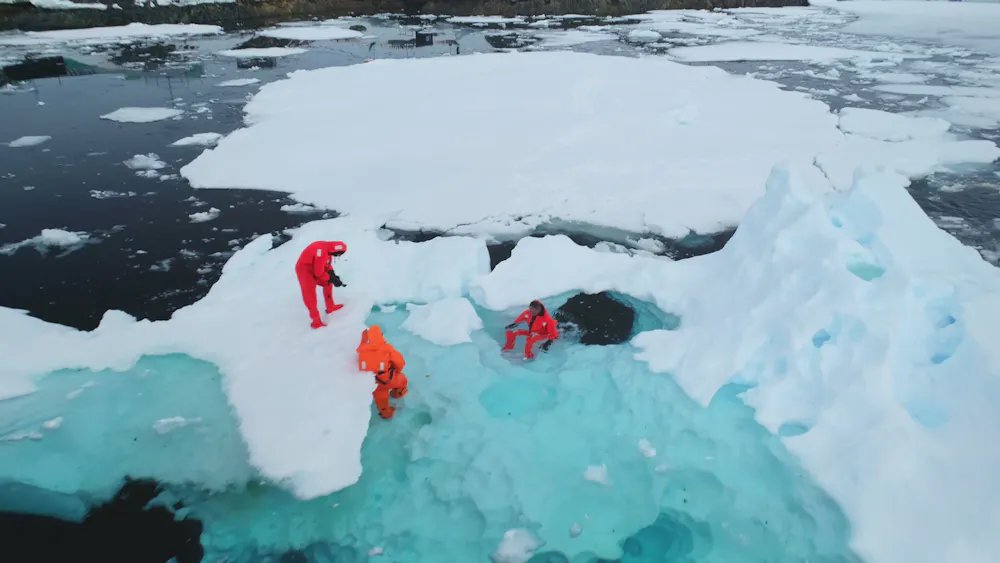



_RMG_F8616_(cropped).jpg)


.jpg)


