Category: Health

  • MIL-OSI Translation: ASIA/SOUTH KOREA – “Resurrection”: The spiritual legacy of missionary John Lee Tae-seok in a film

    MIL OSI Translation. Region: Italy –

    Source: The Holy See in Italian

    Friday, September 27, 2024

    Rome (Agenzia Fides) – “Certain realities can only be seen with eyes cleansed by tears.” These words spoken by Pope Francis during the meeting with young Filipinos in Manila well represent the key to understanding the documentary film “Resurrection” which on Saturday 28 September 2024, at 11 am, will be screened in the Aula Pio XI of the Pontifical Lateran University to close the Korean Culture Week, an event organized by the Embassy of the Republic of Korea to the Holy See to celebrate the day of the “Foundation of Korea” which is celebrated every year on 3 October. The feature film collects what is the spiritual legacy of Fr. John Lee Tae-seok, a Korean Salesian missionary who carried out his pastoral and professional activity (he was already qualified as a doctor when he became a Salesian, ed.) for almost a decade, from 2001 to 2009, in the community of Tonj, in today’s South Sudan. In Africa he devoted himself to such intense pastoral activity that he profoundly influenced the lives of the people he helped. Those people at the time were children or young people. Today they are adults and some, following his example, have wanted to follow in his footsteps, retracing his steps not only in their profession, but also in their training, some even studying medicine at his own university. And they are precisely them, students of the Faculty of Medicine at the University of Busan, in South Korea, the protagonists of this film by director Goo Soo Hwan, the same director of the famous film also dedicated to Don Lee and entitled “Don’t cry for me, Sudan”, which was an extraordinary success in his homeland (it was also screened in the Vatican in December 2011). “Resurrection” can be defined as the sequel to “Don’t cry for me, Sudan”: the new cinematic work by Goo Soo Hwan, in fact, starts from the death of Don Lee, which occurred in 2010. Those who tell the story of those moments are his students, young people who fell into despair at the news of his passing. A desperation that did not last long: they soon realized that their task was to continue, albeit in different ways, his mission. Here lies the key to understanding the entire film: in South Sudanese culture, crying in public is a cause for embarrassment, but the students cannot hold back their tears when they think of their teacher. And by sharing the love he had given them, the tears soon give way to joy and today the gratitude towards Don Lee shines through in the gestures of his students. “Certain realities can only be seen with eyes cleansed of tears”. The director is keen to point out that the film is not just a story of the path that the missionary’s students have undertaken to become doctors: “They have become people who give: what matters here is how they are living their lives. And they are living exactly the life of their ‘father’. They have shown me what happiness is and what authority really is”. “I wanted to know if the students’ tears had changed them. Well, their lives have changed a lot!”, adds the director, known for his critical and harsh interventions, who has over 30 years of experience as an investigative journalist. (FB) (Agenzia Fides 27/9/2024)

    The poster of the movie “Resurrection”

    Share:

    EDITOR’S NOTE: This article is a translation. Apologies should the grammar and/or sentence structure not be perfect.

    MIL Translation OSI

  • MIL-OSI United Kingdom: MHRA approves first medicine for rare immune disease APDS

    Source: United Kingdom – Executive Government & Departments

    The Medicines and Healthcare products Regulatory Agency (MHRA) has today approved leniolisib phosphate (Joenja) to treat a rare immune disease known as activated phosphoinositide 3-kinase delta syndrome or APDS in adults and adolescents aged 12-years-old and older who weigh 45kg or more. 

    APDS is an inherited disorder where the patient is unable to fight infections because the immune system (the body’s natural defences) does not work properly.

    The main symptoms usually occur in the first two years of life and include repeated lung infections and a failure to grow and develop normally.

    APDS is a long-term debilitating and life-threatening condition due to repeated lung infections that can lead to bronchiectasis (enlargement and inflammation of part of the airways). Patients with APDS are more prone to develop blood cell cancers, like lymphoma.

    The recommended dose is 1 tablet twice daily, approximately 12 hours apart in adults and adolescents from 12 years weighing 45 kg or more.

    This is also the first time the MHRA has approved a new medicine following an approval by the US Food and Drug Administration FDA. This is because the medicine was approved via a fast-track approval process for medicines, known as the International Recognition Procedure (IRP).

    This allows the MHRA to consider the expertise and decision-making of trusted regulatory partners for the benefit of UK patients. In this case, the regulatory partner was the FDA. As a sovereign regulator, the MHRA retains ultimate authority to accept or reject applications submitted under the IRP, ensuring that all medicines meet safety, quality and effectiveness standards to be licensed in the UK.

    The MHRA considered the assessment made by the US regulator as part of its own review, facilitating a rapid approval process.

    Julian Beach, MHRA Interim Executive Director of Healthcare Quality and Access, said:

    We are focused on providing UK patients access to safe and effective medicines in the shortest possible time.

    Approval of leniolisib through the IRP means we have facilitated access for people suffering from this serious disease to an effective medicine to fight infections and reduce symptoms of the disease. 

    This approval means the appropriate regulatory standards of safety, quality and effectivenessof this new medicine have been met.

    As with all medicines, we will keep its safety under close review. 

    The MHRA’s approval of the medicine is supported by evidence from a placebo-controlled study, carried out over 12-weeks. This study was blind and randomised. Thirty-one adult and paediatric patients participated.

    During the study, 21 patients received 70 mg of leniolisib and 10 received placebo twice daily. The co‑primary efficacy endpoints were improvement in the reduction in the size of lymph nodes and the normalisation of immunophenotype.

    By day 85 of the study, patients taking leniolisib saw a reduction in lymph node size and a correction of the underlying immune defect.

    As with any medicine, the MHRA will keep the safety and effectiveness of leniolisib under close review. 

    A full list of all side effects reported with this medicine are available in the patient information leaflet or from the product information published on the MHRA website

    If a patient experiences any side effects, they should talk to their doctor, pharmacist, or nurse. This includes any possible side effects not listed in the product information leaflets.

    Anyone who suspects they are having a side effect from this medicine is encouraged to talk to their doctor, pharmacist or nurse and report it directly to the MHRA’s Yellow Card scheme.

    ENDS

    Notes to editors  

    • The marketing authorisation was granted for leniolisib (Joenja) on 26 September 2024 to Pharming Technologies B.V via the International Recognition Procedure.
    • The IRP is open to applicants that have already received an authorisation for the same product from one of MHRA’s specified trusted regulators. These are the regulatory authorities from Australia, Canada, the European Union, Japan, Switzerland, Singapore and the United States.
    • Applications under the International Recognition Procedure (IRP) can be received via the MHRA website. Time horizons for authorisations are set at 60 to 110 days – considerably shorter than the current 150-day time horizon for applications. To further streamline the IRP application process, the MHRA launched an ‘Eligibility Checker’ tool on 20 November 2023.
    • More information can be found in the Summary of Product Characteristics and Patient Information leaflets which will be published on the MHRA Products website within 7 days of approval.
    • The MHRA is an executive agency of the Department of Health and Social Care.
    • The Medicines and Healthcare products Regulatory Agency (MHRA) is responsible for regulating all medicines and medical devices in the UK by ensuring they work and are acceptably safe.  All our work is underpinned by robust and fact-based judgements to ensure that the benefits justify any risks.
    • For media enquiries, please contact the newscentre@mhra.gov.uk, or call on 020 3080 7651.

    Updates to this page

    Published 27 September 2024

    MIL OSI United Kingdom

  • MIL-OSI USA: UConn Releases Annual Safety Reports

    Source: US State of Connecticut

    UConn is releasing two reports detailing its response to reports of criminal activity, sexual violence, serious on-campus injuries, and other issues it monitors to ensure the safety of its campus communities.

    The first, the Clery Annual Security and Fire Safety Report, is required from all U.S. universities that receive federal financial aid funds. It includes data about certain crimes identified by the Clery Act, including violations of the Violence Against Women Act; arrests and disciplinary referrals for drug and alcohol violations; and hate crimes reported on property that UConn owns or controls, and on public property within or immediately adjacent to campus.

    It also includes a comprehensive overview of safety policies and prevention programs available to UConn’s campus communities. It is compiled by the UConn Division of University Safety.

    The second report, compiled by UConn’s Office of Institutional Equity (OIE), is a state-mandated annual overview in which all Connecticut colleges and universities outline their policies and data on sexual assault, stalking, and intimate partner violence.

    It captures a wider range of data in those categories than the Clery report because the data collected is not limited to incidents reported to have occurred on UConn property, and because it includes incidents reported even in the absence of a UConn connection.

    Some categories listed in the Clery and OIE reports might appear to capture data about the same kinds of crimes and incidents, including some regarding sexual assault and related crimes.

    However, the numbers will differ between the two reports because of the differences in how the incidents are defined, and the locations for which incidents must be captured.

    In addition, some categories listed in the Clery reports and federally required Uniform Crime Reports (UCR) – from which crime rates are calculated – might appear to reflect the same kinds of crimes and incidents. However, the Clery and UCR numbers will also differ because they use different metrics on the populations and places for what is included in each report’s calculations.

    Importantly, some figures involving sexual assault and related crimes may differ because the University prioritizes the wishes of the complainant in whether that person wants an investigation to be pursued. That helps them regain a sense of agency over their circumstances and is part of the process to help them make the journey to survivor.

    The Clery report also includes an appendix with additional data required under Connecticut Public Act 21-184, which directs colleges and universities to report accidents on their campuses that result in serious injuries or deaths.

    It is similar to the proposed federal COREY Act (College Operational Reporting of Emergencies Involving Teens and Young Adults), named for Corey Hausman, a Connecticut native who died of a head injury shortly after a skateboarding accident on his campus as a freshman at the University of Colorado.

    2023 Clery Annual Security and Fire Safety Report

    UConn is posting the report for calendar year 2023 on its website and distributing the link electronically in compliance with federal and state law, and in the interest of informing all enrolled students, faculty, and staff on this important subject.

    The Clery data includes reports from complainants made directly to UConn Police, along with information that comes to the attention of campus officials beyond law enforcement.
    Those officials, known as “campus security authorities,” comprise more than 1,200 people who regularly interact with students in their roles as resident assistants, coaches, faculty advisers, and other on-campus authorities.

    The university has significantly increased training for those officials so that they better understand what they are legally required to report and the proper way to do so. In the case of sexual violence crimes, UConn’s Clery numbers reflect a large amount of input from campus security authorities, along with significant outreach services university-wide to encourage reporting of this traditionally underreported crime.

    Of the eight sexual assaults reported at Storrs in calendar year 2023 – the same number as in 2022 – police received six reports directly from individuals. The rest were reported by campus security authorities, including Residential Life and Student Affairs, to be included in the Clery report.

    UConn takes an expansive view on what is included in the data by counting all sexual assault reports received in a given year, regardless of the level of detail known to the university; regardless of when the assault is reported to have occurred; and even when the report comes from a third party in the absence of a complainant.

    This is an important part of UConn’s commitment to creating and maintaining a campus free from all forms of sexual harassment, sexual violence, relationship violence, and stalking.

    Under a University policy, nearly all UConn employees are “responsible employees” to report sexual assault. Because that policy is specific to UConn and other institutions might take different approaches, comparisons are difficult to make against other universities whose policies are not as robust and whose reporting requirements are not as stringent.

    The University provides information online for all individuals impacted by sexual assault to receive support and file reports, including through its website on sexual violence, relationship violence, and stalking awareness.

    It also launched the UConn InForm site (inform.uconn.edu) to simplify and streamline reporting processes, offering an avenue through which students, faculty, staff and others can more easily locate and use the University’s many resources to report concerns and find support.

    This year’s Clery report reflects a decrease in the number of reports of fondling to three reported to UConn Police in 2023, compared to 11 in the previous year.

    Twelve motor vehicle thefts were reported in 2023 on campus, of which 11 were scooters. Those numbers are similar to 2022 figures, which showed 12 thefts that included nine scooters.

    UConn’s 2023 Clery report also captures data on reports of domestic violence, which is defined differently in Connecticut than in many other states. The 2023 figure of nine events reported is up from seven in 2022.

    Before June 2019, Connecticut’s domestic violence laws afforded protection to any people who lived together, including college roommates in non-romantic relationships, but the law was changed to include two exemptions.

    The first exception clarified that platonic roommates are not subject to mandatory arrest when they are attending higher education and live on campus or in off-campus housing that is owned, managed, or operated by the institution.

    The second exception extends to platonic roommates anywhere who are making payments pursuant to a written or oral rental agreement, also excluding them from mandatory arrest.
    The secondary exception would apply to sororities or fraternities who are owned and operated by individual organizations.

    However, roommates who are in a dating relationship, married, formerly married, related by blood or by marriage, or who have a child in common are still subject to the family violence mandatory arrest laws.

    In reviewing Clery data, it is also vital to understand that the ways in which domestic violence is defined and application of the applicable laws vary from state to state, making comparisons to other states’ institutions invalid.

    For instance, UConn’s domestic violence reporting process captures figures for the number of victims, not the number of incidents. Therefore, if two people involved in one incident both report it separately, the same incident appears twice in the data as two separate offenses if both individuals are the victim of a crime. One overall event can generate two or more statistics.

    University officials promote awareness of UConn’s bystander intervention programs, which help increase awareness of sexual violence on campus and empower students to be effective, proactive bystanders.

    One such program, Protect Our Pack, is presented to all incoming first-year and transfer students at the Storrs and regional campuses during fall orientation as students settle in for the new academic year.

    In addition, UConn Police also offers many initiatives tackling difficult conversations about stalking, intimate partner violence, consent, and effective communications. The programs are offered throughout the year to students at all academic levels.

    Under a state law that went into effect in 2021, UConn’s Clery report includes an appendix reporting serious accidental injuries or deaths that it can identify on its campuses for 2023.

    Those incidents can include, but are not limited to, injuries or deaths that resulted from vehicle collisions, and in which pedestrians were hurt or killed while walking, jogging, bicycling, skateboarding, and similar activities.

    The data must also include injuries and deaths from on-campus slips and/or falls such as tripping at ground level or falling from heights, including off bunk beds; alcohol or drug overdoses; choking or drowning; and other accidental incidents. The UConn Division of University Safety quantifies such incidents by reviewing reports from its police and fire/EMS records, Student Health & Wellness, and other sources.

    UConn also proactively included information this year for the first time that explains the University’s Bias Reporting system and reflects its numbers for the past three years.

    Although none of the incidents met the threshold to be criminally prosecutable as a hate crime, UConn encourages members of its community to report incidents they believe exhibit bias based on race, ethnicity, ancestry, religion, national origin, sexual orientation, gender identity or expression, age, a past or present history of mental disorders, or physical, mental, and intellectual disabilities.

    By encouraging members of the community to report these incidents under the bias protocol, the University can better provide support to people and groups who are affected, and to determine if those who exhibited the behavior – if they can be identified – violated the Student Code of Conduct.

    2023 UConn OIE Report Pursuant to State Statute Section 10a-55m

    In addition to the annual federally mandated Clery report, UConn also submits a yearly report to the General Assembly specifically on sexual violence policies and data.

    Figures in this report exceed those in the Clery data because it captures all incidents disclosed to UConn, regardless of on or off-campus location or the year in which they are reported to have occurred.

    It also includes information on prevention, awareness, and risk reduction programs and campaigns provided in the community throughout the year. This year’s report outlines more than 500 such initiatives, constituting a 23% increase in education and prevention programs.

    The 2023 OIE report indicates that OIE received 118 reports of sexual assault, of which 68 were reported to have occurred during 2023. The University’s definition of sexual assault is broad and can include incidents such as unwanted touching (sexual contact) along with more physically invasive offenses categorized in criminal law.

    The sexual assault disclosure numbers also include reports of incidents from many years ago, including childhood abuse – all of which helps the university provide appropriate, compassionate, and trauma-informed services to students and employees if and whenever they choose to share their experience with the University.

    Among the 118 reports of sexual assault logged in the newest report, 42 of the respondents were identified as being connected to UConn; three of the reports came in anonymously or confidentially; and in nine cases, the complainant chose to participate in a University investigation.

    Those who report an incident can request a University investigation at a later time should they wish, not only at the time they make a report.

    The University takes steps to follow the wishes of the complainant whenever possible and does not investigate unless that individual wants the University to do so. Only in limited circumstances will the University proceed with an investigation against a complainant’s wishes.

    Factors considered within this determination include the age of the complainant, whether there is evidence of a pattern of misconduct, the severity of the misconduct, and whether there is a safety risk to the complainant or the campus community.

    In matters where an investigation does not occur, the University may still take responsive or preventative actions, such as meetings with the alleged respondent and/or additional training and prevention work with impacted communities.

    UConn’s OIE report for 2023 also includes 48 reported incidents of stalking, of which 44 were reported to have occurred in 2023. In 28 of the stalking cases, the respondent was identified as being connected to UConn.

    None of the complainants chose to participate in a university investigation at the time of making the report, but they all retain the right to request an investigation later if they wish.

    A total of 66 cases of intimate partner violence (IPV) were reported, including 63 reported to have occurred in 2023. In 15 of the intimate partner violence cases, the respondent was identified as being connected to UConn; and in one of those cases, the complainant chose to participate in a University investigation.

    As with other categories, those who reported intimate partner violence but chose not to participate in a University investigation can still request one later if they wish.

    In addition to providing data, the OIE report outlined 510 awareness and prevention programs and campaigns during the year. They include the “Protect Our Pack” bystander intervention training provided at new student orientation; UConn’s Violence Against Women Prevention Program (VAWPP) Consent 201 courses; the widespread training provided to employees; and many others.

    In addition to Storrs-specific brochures and programs, the University provides programs and publications tailored to the regional campus communities and UConn Health.

    MIL OSI USA News

  • MIL-OSI USA: UConn at the UN

    Source: US State of Connecticut

    Three UConn student leaders recently traveled to United Nations (UN) Headquarters in New York City to participate in international discussions on the future of multilateralism and international cooperation. The event covered topics including sustainable development, international science cooperation, science diplomacy, and other urgent global solutions, as part of the Summit of the Future Action Days.

    “Attending the Summit of the Future at the United Nations was an inspiring and insightful experience that deepened my passion for environmental science and international relations,” says Eliana Raes ’25 (CAHNR), an environmental science major concentrating in global change. “I’m grateful for the opportunity to see how young voices are driving global sustainability efforts and shaping a brighter future for all!”

    The Action Days were part of the Summit of the Future, a world gathering to agree and launch the Pact for the Future. The Pact for the Future is a landmark, forward-looking global declaration meant to address sustainable development; international peace and security; science and technology; youth and future generations; and transforming global governance.

    Last week, countries gathered in New York to adopt the Pact, as well as to push progress on the Pact’s priorities and other urgent global issues through meetings of the UN General Assembly. UConn support for the student to attend was provided by the Office of Global Affairs, the College of Agriculture, Health and Natural Resources (CAHNR), and the College of Liberal Arts and Sciences (CLAS).

    “Attending the Summit of the Future Action Days […] allowed me to acquire a different perspective of how we should combat our world’s issues, especially related to the environment and sustainability. All the speakers and panelists were so knowledgeable and contributed to such thought-provoking conversations,” says Judith Otunnu ’27 (CLAS), also an environmental sciences major.

    While at the Summit, the students joined discussions with stakeholders from around the world on important issues central to UConn’s mission, as well as CAHNR’s strategic vision, particularly around the themes of a Sustainable Future for All, the Sustainable Development Goals (SDGs), strategic foresight, and research synthesis, sharing, and support.

    “It was inspiring to personally witness the work that can happen when people get together with such ambitious goals. It was especially energizing to be part of the work that the UN is doing to include youth in decision making on climate action,” says Alice Sztabinski ’27 (CAHNR), an environmental sciences and art major.

    “As a campus community, we are incredibly proud of these students, both as individuals and for the way they represented UConn on the world stage at a pivotal moment for international cooperation on science and sustainable development,” says Meg Boyle, assistant professor in residence in the Department of Natural Resources and the Environment.

    This work relates to CAHNR’s Strategic Vision area focused Fostering Sustainable Landscapes.

    Follow UConn CAHNR on social media

    MIL OSI USA News

  • MIL-OSI Video: Secretary Blinken hosts a Ministerial of the Foreign Ministry Channel meeting – 9:00 AM

    Source: United States of America – Department of State (video statements)

    Secretary of State Antony J. Blinken hosts a Ministerial of the Foreign Ministry Channel for Global Health Security in New York City, New York, on September 27, 2024.
    ———-
    Under the leadership of the President and Secretary of State, the U.S. Department of State leads America’s foreign policy through diplomacy, advocacy, and assistance by advancing the interests of the American people, their safety and economic prosperity. On behalf of the American people we promote and demonstrate democratic values and advance a free, peaceful, and prosperous world.

    The Secretary of State, appointed by the President with the advice and consent of the Senate, is the President’s chief foreign affairs adviser. The Secretary carries out the President’s foreign policies through the State Department, which includes the Foreign Service, Civil Service and U.S. Agency for International Development.

    Get updates from the U.S. Department of State at www.state.gov and on social media!
    Facebook: https://www.facebook.com/statedept
    Twitter: https://twitter.com/StateDept
    Instagram: https://www.instagram.com/statedept
    Flickr: https://flickr.com/photos/statephotos/

    Subscribe to the State Department Blog: https://www.state.gov/blogs
    Watch on-demand State Department videos: https://video.state.gov/
    Subscribe to The Week at State e-newsletter: http://ow.ly/diiN30ro7Cw

    State Department website: https://www.state.gov/
    Careers website: https://careers.state.gov/
    White House website: https://www.whitehouse.gov/
    Terms of Use: https://state.gov/tou

    #StateDepartment #DepartmentofState #Diplomacy

    https://www.youtube.com/watch?v=cH4DzmJXBAQ

    MIL OSI Video

  • MIL-OSI United Kingdom: More Changing Places

    Source: City of Sunderland

    New Changing Places toilets are opening across Sunderland helping to make sports, leisure, libraries and parks more accessible for people with disabilities.

    The venues and work programme for the toilets were backed by the City Council and the full list of more than a dozen Sunderland facilities is at: Changing Places Toilets (changing-places.org)

    All the toilets are designed for people with disabilities and complex needs who require extra facilities that are not offered by standard accessible toilets. Changing Places toilets are bigger with room for one or two carers, and include equipment and support that is needed by people who may have limited mobility, such as a hoist, privacy screens and an adult-sized changing bench.

    Sunderland City Council’s Deputy Leader and Cabinet Member for Health, Wellbeing and Safer Communities, Councillor Kelly Chequer said: “Getting the funding, completing the fitting-out work, plus of course opening and registering the toilets has all been very important work.

    “The new facilities show how much we as a City Council are determined to have opportunities and access for all. Changing Places aligns to our ongoing plans for a healthier, vibrant city and to make public venues more accessible to all our residents and visitors. I know how these are greatly welcomed and appreciated.”

    Money came from the national Changing Places funding programme that granted £330,000 for the works. The new facilities are at:

    • Herrington Country Park
    • Hetton Community Pool and Wellness Centre (Everyone Active)
    • Houghton Sports and Wellness Centre (Everyone Active)
    • Raich Carter (Everyone Active)
    • Roker Park
    • Silksworth Community Pool Tennis and Wellness Centre (Everyone Active)
    • Washington Library and Customer Service Centre

    A facility at the Elemore Park Garden and Visitor Centre was also completed last year.

    Everyone Active’s contract manager, Ian Bradgate, said: “We aim to serve people across the local community and want to ensure everyone feels welcome and included at our centres. These accessible toilets will ensure those with disabilities and complex needs who require extra facilities are fully catered for.”

    It’s been estimated that there are around quarter of a million people in the UK who cannot use standard accessible toilets.

    Cllr Chequer added: “Changing Places is about opening up more public places for children or adults with complex needs who need carer support, appropriate equipment and more space. Standard accessible toilets cannot meet these needs and were designed for people who can use them independently. As we increase the number of Changing Places toilets, we are living up to its name and bringing very positive change to places all across our city.”

    Karen Hoe, MDUK Changing Places Manager, said: “Changing Places toilets are life-changing facilities required by over a quarter of a million people in the UK – not including their family carers. The new Changing Places toilets in Sunderland will make a huge difference to disabled people and their families and will mean that they can enjoy all that the venues and area has to offer.”

    MIL OSI United Kingdom

  • MIL-OSI Asia-Pac: CHP investigates case of human infection of rat Hepatitis E virus

    Source: Hong Kong Government special administrative region

    CHP investigates case of human infection of rat Hepatitis E virus
    CHP investigates case of human infection of rat Hepatitis E virus
    *****************************************************************

         The Centre for Health Protection (CHP) of the Department of Health today (September 27) said that it is investigating a case of human infection of rat Hepatitis E virus (HEV) and urged members of the public to be vigilant against Hepatitis E infection and to strictly observe good personal, food and environmental hygiene. If the public developed compatible symptoms, they should consult a doctor early.     The case involves a 61-year-old woman with underlying illnesses and immunosuppression. She had dark urine since early September and was found to have a persistently deranged liver function during her follow-up consultation in Union Hospital. Her blood sample tested positive for rat HEV upon laboratory testing. The patient is now in stable condition.     The CHP’s epidemiological investigations revealed that the patient resides in Hung Hom. She claimed that she did not have direct contact with rodents or rats, and had no travel history during the incubation period, indicating that this is a locally acquired infection. The CHP does not rule out the possibility that the patient may have been indirectly exposed to places or food contaminated by rodents or their excreta during the incubation period, leading to the infection.     Investigating personnel of the CHP and the Food and Environmental Hygiene Department (FEHD) conducted a site visit to the place where the patient lives to inspect the rodent infestation and environmental hygiene. Some traces of rodents were found during the inspection. The property management of the patient’s residence will set up thermal imaging cameras at the concerned places to conduct rodent activity survey. The Pest Control Advisory Section of the FEHD will carry out rodent control measures as appropriate and necessary. The CHP’s investigation is still ongoing.     Possible routes of transmission of rat HEV to humans include ingestion of food or water contaminated by rodents or their excreta, exposure to environments or objects contaminated by rodents or their excreta and direct contact with rodents or their excreta. The usual HEV causing human infection is transmitted mainly through the faecal-oral route.     To prevent Hepatitis E infection, members of the public should maintain good personal, food and environmental hygiene. For example, they should wash hands thoroughly before eating, store food properly or in the refrigerator, not leave food at room temperature for a long time, and use 1:99 diluted household bleach for general household cleaning and disinfection as household detergent may not be able to kill HEV. High-risk individuals, such as elderly persons with a major underlying illness (especially those who have undergone organ transplantation), pregnant women, patients with chronic liver disease and patients with Glucose-6-Phosphate Dehydrogenase Deficiency (also known as G6PD Deficiency), who are infected with HEV may develop a serious illness, so they should exercise extra caution.     The Five Keys to Food Safety should be adopted when handling food, i.e. Choose (choose safe raw materials), Clean (keep hands and utensils clean), Separate (separate raw and cooked food), Cook (cook thoroughly) and Safe Temperature (keep food at a safe temperature), to prevent food-borne diseases. 

    Drink only boiled water from the mains or bottled drinks from reliable sources.
    Avoid drinks with ice of unknown origin.
    Purchase fresh food from hygienic and reliable sources. Do not patronise illegal hawkers.
    Clean and wash food thoroughly. Cook food, especially seafood (e.g. shellfish), pork and pig offal, thoroughly before consumption. Avoid raw food or undercooked food.
    Slice raw meat and offal into thin strips to allow thorough cooking, especially during hotpot or congee cooking.
    For sliced pig liver, depending on the thickness and quantity, boil at 100 degrees Celsius or stir-fry in a hot skillet/wok for at least three to five minutes.
    Heating to an internal temperature of 90 degrees C for 90 seconds is required for cooking of molluscan shellfish. If possible, remove the shells before cooking as they impede heat penetration. Otherwise, boil at 100 degrees C until their shells open; boil for a further three to five minutes afterwards. Discard any shellfish that do not open during cooking.
    For meat and offal, make sure that juices are clear, not red, and blood is not visible when cutting the cooked meat and offal.
    When having hotpot, use separate chopsticks and utensils for handling raw and cooked foods to prevent cross-contamination.

              ???In general, rodents (such as rats) can transmit multiple diseases to humans directly and indirectly. The public are advised to adopt the following measures:     

    Eliminate sources of food and nesting places for rodents in the living environment. Store food in covered containers and handle pet food properly to prevent it from becoming food for rodents;
    Store all refuse and food remnants in dustbins with well-fitted covers. Dustbins must be emptied at least once a day;
    Keep premises, especially refuse rooms and stairways, clean. Avoid accumulation of articles;
    Inspect all flower beds and pavements for rodent infestation regularly; and
    Avoid the high-risk activities below to reduce rodent contact:

         – Avoid rodent contact and places dirtied with rodent excreta;     – Avoid handling rodents with bare hands;     – Wash hands with liquid soap and water immediately after handling animals, and disinfect contaminated areas; and     – If a wound appears, clean the broken skin immediately and cover it properly with waterproof adhesive dressings.

     
    Ends/Friday, September 27, 2024Issued at HKT 20:10

    NNNN

    MIL OSI Asia Pacific News

  • MIL-OSI USA: Dr. Leslie Loew Named 2025 Biophysical Society Fellow

    Source: US State of Connecticut

    The Biophysical Society announced Leslie M. Loew, R.D. Berlin Center for Cell Analysis and Modeling, University of Connecticut School of Medicine, is named a 2025 Biophysical Society Fellow for inventing fluorescent sensors of membrane potential and leadership in the development of computational cell biology.

    The Biophysical Society, founded in 1958, is a professional, scientific society established to lead an innovative global community working at the interface of the physical and life sciences, across all levels of complexity, and to foster the dissemination of that knowledge.

    The Society promotes growth in this expanding field through its Annual Meeting, publications, and outreach activities. Its 7,000 members are located throughout the world, where they teach and conduct research in colleges, universities, laboratories, government agencies, and industry.

    This award honors the Society’s distinguished members who have demonstrated excellence in science and contributed to the expansion of the field of biophysics. The Fellows will be honored at the Biophysical Society’s 69th Annual Meeting, being held in Los Angeles, California from February 15-19, 2025.

    “The Biophysical Society Annual Meeting is where I discuss science every year and its flagship publication, The Biophysical Journal, is where I send most of my scientific papers. So I am truly honored to receive this recognition by my peers in the BPS,” says Loew.

    Loew is Professor of Cell Biology, Boehringer-Ingelheim Chair in Cell Science and University of Connecticut Board of Trustees Distinguished Professor at the UConn School of Medicine. Throughout his career his work has focused on quantitative mechanistic investigation of cell and tissue biology. He is known for inventing biophysical methods to investigate these systems, including both microscope imaging technologies and fluorescent sensors. Loew pioneered the synthesis of fluorescent dyes to probe the electrical activity of cells and tissue. For the last 25 years he has been leading the UConn team that develops the “Virtual Cell”, comprehensive software to model and simulate cell biology with 26,000 registered users worldwide.

    During his 40 year career at UConn he has been awarded research grants amounting to approximately $70M. He established the Richard D. Berlin Center for Cell Analysis and Modeling (CCAM) in 1994 to consolidate research in new optical, photonic, image processing and computational techniques for the investigation of the behavior of living cells.

    MIL OSI USA News

  • MIL-OSI United Kingdom: Countdown to Christmas begins as Wolverhampton light switch on dates announced

    Source: City of Wolverhampton

    There will be fun for all the family at a series of events across the city, starting with the city centre switch on in Queen Square on Saturday 16 November.

    The festivities start at 3pm with a funfair, real reindeer, face painting, food and drink and much more! Get set for a full afternoon of entertainment that you won’t want to miss with the lights switch on as the finale.

    The Grinch and Cindy Lou will be there entertaining the crowds throughout the event before X Factor and musical theatre star Niki Colwell and Jake Nelson Music take to the stage performing an array of songs.

    They will then be joined by the Mayor of Wolverhampton, Councillor Linda Leach, and Father Christmas to switch on the lights at 6pm.

    The city centre fun is not the only festive celebration in Wolverhampton – Christmas lights will also be switched on at Wednesfield, Tettenhall, Bilston and Bantock House with Father Christmas and the Mayor of Wolverhampton doing the honours, plus entertainment from local artists and Wolverhampton’s very own Dicky Dodd.  

    Councillor Chris Burden, Cabinet Member for City Development, Jobs and Skills said: “It’s been another fantastic year of events in the city, and the Christmas lights is a great way to end what has been a busy events season.

    “Thousands of families year on year attend our light switch ons to mark the start of the countdown to Christmas – they are great free events for all the family.”

    Wolverhampton based not for profit Health Cash Plan provider Paycare –which gives policy holders the chance to claim back up to 100% of what they spend on healthcare, as well as access to an online GP app, support helpline and discounts on everyday spending – have been announced as headline sponsor for the five events.

    Anna Bamford, Paycare Marketing Manager, said: “We’re delighted to support such a wonderful set of festive events, bringing together our wonderful communities to share in the light and cheer of the holiday season!

    “Paycare are on a mission to make our communities happier and healthier, so we are delighted to be sponsoring the Christmas lights that bring so much pleasure and joy to the city and surrounding areas.”

    The full list of switch on events is as follows:

    • Saturday 16 November: Wolverhampton City Centre, Queen Square – event 3pm to 7pm, lights switch on at 6pm
    • Thursday 21 November: Wednesfield, High Street – event 4.30pm to 7pm, lights switch on at 6.30pm 
    • Friday 22 November: Bilston, Church Street – event 4.30pm to 7pm, lights switch on at 6.30pm  
    • Saturday 23 November: Tettenhall, Upper Green – event 4.30pm to 7pm, lights switch on at 6.30pm  
    • Sunday 24 November: Bantock House, Finchfield Road – event 4.30pm to 7pm, lights switch on at 6.30pm  

    To find out more about Christmas in the City of Wolverhampton, including details on local artists performing at each of the switch on events, visit Christmas in Wolverhampton.

    MIL OSI United Kingdom

  • MIL-OSI USA: CMS Announces Resources and Flexibilities to Assist with the Public Health Emergency in the State of Florida

    Source: US Department of Health and Human Services

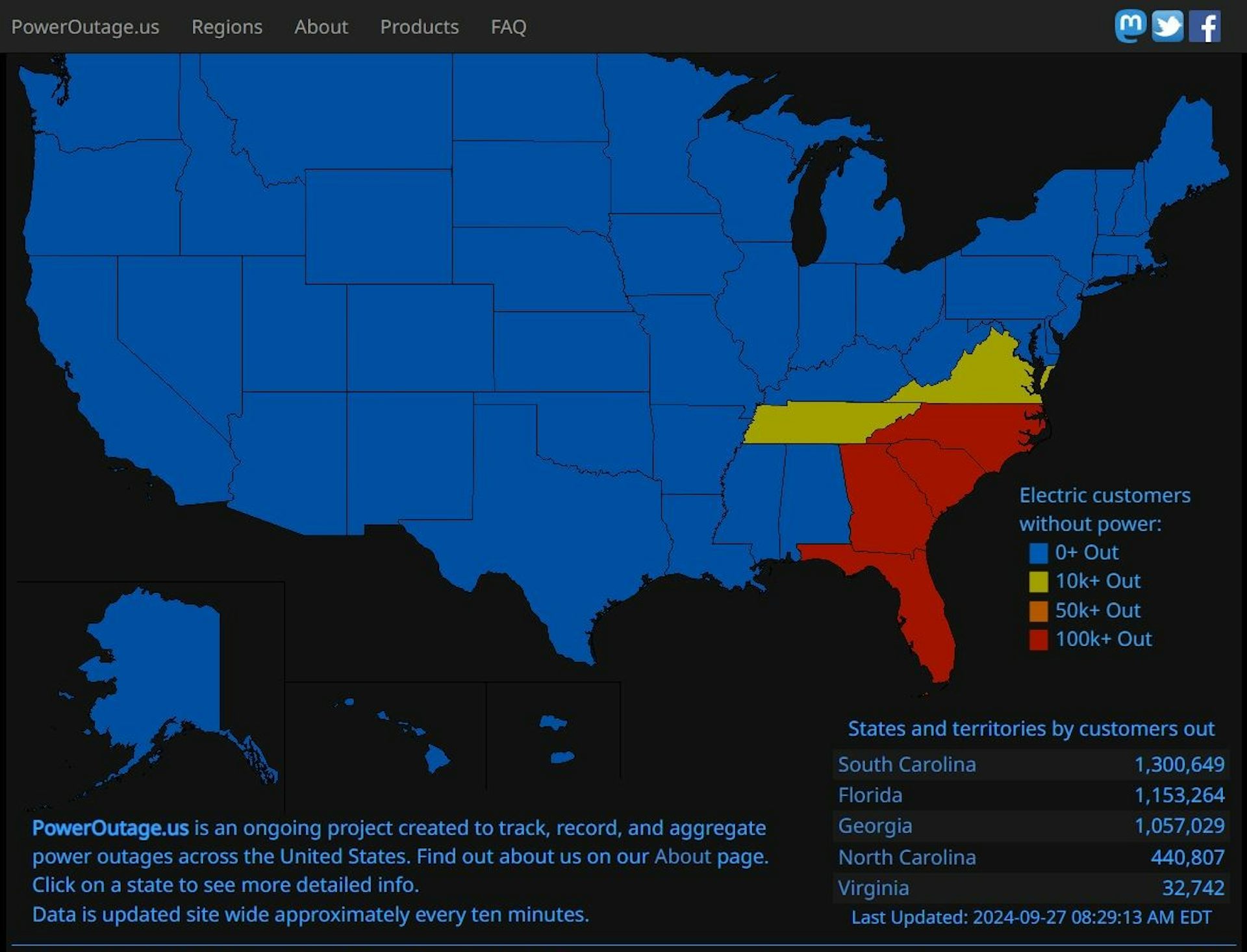
    The Centers for Medicare & Medicaid Services (CMS) announced today additional resources and flexibilities available in response to Hurricane Helene in Florida. CMS is working closely with the state of Florida to put these flexibilities in place to ensure those affected by this natural disaster have access to the care they need – when they need it most.

    MIL OSI USA News

  • MIL-OSI Europe: ASIA/SOUTH KOREA – Documentary on the spiritual legacy of missionary John Lee Tae-seok

    Source: Agenzia Fides – MIL OSI

    Friday, 27 September 2024

    Rome (Agenzia Fides) – “Certain realities of life can only be seen with eyes washed by tears”. These words of Pope Francis during the meeting with young people in Manila are the key to understanding the documentary entitled “Risurrection” which will be screened on Saturday 28 September 2024 at 11 a.m. in the Pius XI Hall of the Pontifical Lateran University at the end of the Week of Korean Culture, a series of events organized by the Embassy of Korea to the Holy See to celebrate the “Day of the Foundation of Korea” which falls every year on October 3.The documentary shows the spiritual legacy of Father John Lee Tae-seok, a Korean Salesian who worked as a missionary and doctor in the community of Tonj in what is now South Sudan for almost a decade, from 2001 to 2009 (he was already a doctor when he became a Salesian, ed.). In Africa, he had a profound impact on the lives of the people he accompanied. At the time, these people were children or teenagers. Today they are adults, and some have followed his example and wanted to follow in his footsteps, not only in their profession as doctors, but also in their medical training, some even studying medicine at his university in Korea.And it is precisely these students from the Faculty of Medicine at Busan University in South Korea who are the protagonists of the film by Korean director Goo Soo Hwan, who also directed the famous film “Don’t cry for me, Sudan”, also dedicated to Father Lee and which was an extraordinary success in his own country (it was also shown at the Vatican in December 2011).”Risurrection” can be described as a sequel to “Don’t cry for me, Sudan”. Goo Soo Hwan’s new work begins after the death of Father Lee in 2010. These sad moments are narrated by his students, young people who were plunged into despair by the news of his death. A despair that did not last long, however: they soon realized that their task was to continue his mission, albeit in different ways.This is the key to the whole film: in South Sudanese culture, it is embarrassing to cry in public, but the students cannot hold back their tears when they think of their teacher. And it is precisely by sharing with him the love he gave them that tears soon give way to joy, and today gratitude towards Father Lee shines through in the gestures of his students. “Certain realities of life can only be seen with eyes washed clean by tears.”The director is keen to stress that the film does not only show the path of the missionary’s students to the profession of doctor: “They have become people who give: it is about how they live their lives. And they live exactly the life of their ‘spiritual father’. They showed me what happiness is and what authority really means.” “I wanted to know if the tears had changed the students. Well, their lives have changed a lot,” adds the director, who also has more than 30 years of experience as an investigative journalist. (F.B.) (Agenzia Fides, 27/9/2024)

    Share:

    MIL OSI Europe News

  • MIL-OSI USA: VA awards $4.3M in cooperative agreements to states, territories to help understand and prevent Veteran suicide

    Source: US Department of Veterans Affairs

    Skip to content

    WASHINGTON — Today, the U.S. Department of Veterans Affairs announced it will award more than $4.3 million in cooperative agreements to states and territories to help fund and provide technical assistance to suicide mortality review committees, which aim to identify and characterize local suicide deaths to better inform Veteran suicide prevention strategies.

    This fiscal year’s cooperative agreements will support 10 states and two territories in establishing local understanding of Veteran suicide, identifying populations or locations of special concern, and informing data-informed suicide prevention strategies for Veterans. These awards advance VA’s National Strategy for Preventing Veteran Suicide, the Biden-Harris Administration’s strategy to reduce military and Veteran suicide, and the newly published National Strategy for Suicide Prevention Federal Action Plan.

    “It is our responsibility to be at the forefront of researching the drivers of Veteran suicide, all with the goal of ensuring no Veteran is lost to suicide,” said Under Secretary for Health Shereef Elnahal, M.D. “We are working with our intergovernmental partners to establish suicide mortality review committees, which will tailor our efforts to the unique and diverse needs of all Veterans.”

    These agreements help advance President Biden’s Unity Agenda for the nation and are part of VA’s broader efforts to prevent Veteran suicide, and contribute to the objectives of the Governor’s and Mayor’s Challenges to Prevent Suicide Among Service Members, Veterans, and their Families — an effort between VA and the Substance Abuse and Mental Health Services Administration to create enhanced suicide prevention action plans across 50 states and five U.S. territories. This month, VA awarded another $52.5 million in grants to community organizations implementing tailored suicide prevention programs and services for Veterans and their families. VA has also launched a new webpage with resources for suicide loss survivors. VA intends to award up to an additional $10 million through the Suicide Mortality Review Cooperative Agreements program in FY 2025. Learn more about the program and the Governor’s Challenge.

    If you’re a Veteran in crisis or concerned about one, contact the Veterans Crisis Line to receive 24/7 confidential support. You don’t have to be enrolled in VA benefits or health care to connect. To reach responders, Dial 988 then Press 1, chat online at VeteransCrisisLine.net/Chat, or text 838255.

    Reporters and media outlets with questions or comments should contact the Office of Media Relations at vapublicaffairs@va.gov

    Veterans with questions about their health care and benefits (including GI Bill). Questions, updates and documents can be submitted online.

    Contact us online through Ask VA

    Veterans can also use our chatbot to get information about VA benefits and services. The chatbot won’t connect you with a person, but it can show you where to go on VA.gov to find answers to some common questions.

    Learn about our chatbot and ask a question

    Subscribe today to receive these news releases in your inbox.

    Page load link

    Go to Top

    MIL OSI USA News

  • MIL-OSI Canada: Government of Canada supports health sciences SMEs to create new health technologies

    Source: Government of Canada News (2)

    News release

    Government of Canada invests in specialized programming to benefit 75 SMEs in southern Ontario’s health sciences sector 

    September 27, 2024 – Hamilton, Ontario

    Canada’s health sciences innovation sector continues to lead on developing innovative ideas and products that will lead to a better and healthier future. The Government of Canada is supporting businesses and organizations in this vital sector with the support they need to drive impactful health solutions for Canadians.

    Yesterday, the Honourable Filomena Tassi, Minister responsible for the Federal Economic Development Agency for Southern Ontario (FedDev Ontario), attended the 14th annual LiONS LAIR hosted by Innovation Factory.  More than 400 members of the Hamilton Life Sciences ecosystem gathered to celebrate innovation in the Hamilton-Halton region.

    While at the event, Minister Tassi announced a Government of Canada investment of over $5 million for Innovation Factory in collaboration with the Synapse Life Sciences Consortium to support the continued delivery of the Southern Ontario Pharmaceutical and Health Innovation Ecosystem (SOPHIE) program, which opened for applications yesterday. The program will assist up to 75 health sciences SMEs in southern Ontario as they commercialize their products and scale their businesses. Participating businesses will have access to mentorship and advisory services, seed funding, and new partnerships. This critical work will help accelerate their product development, and anchor health sciences companies here in southern Ontario.

    This project aligns with the Government of Canada’s priority to support emerging growth opportunities in this important sector. Innovators and organizations that create healthcare technologies are helping to keep Canadians healthy while strengthening Canada’s health sciences sector and creating new job opportunities for Canadians.

    Quotes

    “Innovation Factory is undertaking critical work that will support 75 SMEs expand and grow their businesses, all while helping to anchor health sciences companies here in Canada. The investment made today demonstrates the Government of Canada’s dedication to supporting innovators in health sciences and moving towards a healthier future for Canadians.”
    – The Honourable Filomena Tassi, Minister responsible for the Federal Economic Development Agency for Southern Ontario 

    “The renewal of funding for Innovation Factory’s SOPHIE program is a testament to the remarkable impact it has had on Ontario’s health sciences sector over the past few years. This continued support from the Government of Canada enables us to build on this success, driving further innovation, job creation, and global competitiveness in the health sciences industry. We are excited to see SOPHIE continue to transform the landscape for health science entrepreneurs and strengthen Ontario’s position as a leading hub for health innovation.”
    – David Carter, CEO of Innovation Factory

    Quick facts

    • Innovation Factory is a not-for-profit business accelerator, serving as the catalyst for technology innovation in the Brant, Halton, Hamilton and Norfolk regions since 2010. 

    • Innovation Factory provides business services, training, mentorship, and strategic connections to drive market adoption, leverage intellectual property, and increase revenues, investment, and jobs. Innovators can also access sector-specific resources including exclusive smart transportation test environments and data; and a formal health science and health innovation ecosystem.

    • FedDev Ontario previously provided Innovation Factory with an investment of $7 million to deliver the first intake of the SOPHIE program. To date, through SOPHIE, 166 innovative Ontario-based health science start-up and scaling companies in the health, medical device, and pharmaceutical sectors, received support to develop and commercialize new products and services.

    • Since 2015, the Government of Canada, through FedDev Ontario, has invested over $237 million in 58 life science projects, supporting over 7,700 jobs.

    Associated links

    Contacts

    Edward Hutchinson
    Press Secretary
    Office of the Minister responsible for the Federal Economic Development Agency for Southern Ontario
    Edward.Hutchinson@feddevontario.gc.ca

    FedDev Ontario Media Relations
    media@feddevontario.gc.ca

    Stay Connected:

    FedDev-Ontario.Canada.ca

    Follow us XInstagramLinkedIn, Facebook

    Subscribe to FedDev Ontario’s Southern Ontario Spotlight newsletter, featuring economic development news and updates from across the region.

    MIL OSI Canada News

  • MIL-OSI Russia: Moscow radiologists processed 13 million studies using artificial intelligence

    MILES AXLE Translation. Region: Russian Federation –

    Source: Center for Diagnostics and Telemedicine of the Moscow Department of Health (DZM)

    The use of artificial intelligence (AI) has significantly improved the processing of medical imaging results in Moscow: since 2020, radiologists have analyzed more than 13 million studies. According to Anastasia Rakova, Deputy Mayor of Moscow for Social Development, the integration of AI technologies has changed the process of detecting diseases.

    “Today, disease diagnostics, including diagnostic radiology, largely depend on the use of artificial intelligence,” Rakova explained. The services introduced in 2020 played an important role in the analysis of medical images, and since 2023 they have been included in the CME tariff for mammography as a second opinion. “In addition, since May 2024, AI has been operating in an experimental mode to autonomously determine norms for fluorography and chest X-ray.” To date, AI has helped doctors analyze more than 13 million radiation studies, increasing the accuracy of diagnostics and making it more accessible to citizens.

    AI-powered services have not only accelerated the processing of large volumes of data, but also increased the accuracy of diagnostics, especially in the early stages of diseases, making it more accessible to citizens. AI-powered diagnostic tools can detect signs of 38 different diseases, including lung and breast cancer, pneumonia, osteoporosis of the spine, and herniated discs. Moreover, comprehensive AI services can detect up to 12 pathologies on a single medical image.

    “Integrated solutions based on artificial intelligence are very useful for radiologists,” says Yuri Vasiliev, senior consultant in radiology at the Moscow Department of Health, general director of the Center for Diagnostics and Telemedicine at the Moscow Department of Health. “These services allow radiologists to detect signs of several pathologies simultaneously in one image, which allows for early detection of diseases and timely monitoring of patients’ condition.”

    The development of artificial intelligence services in Moscow is part of an ongoing experiment to introduce computer vision technologies into medicine, launched by the Moscow Department of Social Development together with the Center for Diagnostics and Telemedicine with the support of the city’s Department of Information Technology.

    The use of digital technologies and artificial intelligence to improve the quality of life of city residents is in line with the goals of the national program “Digital Economy of the Russian Federation” and the capital’s regional project “Digital Public Administration”.

    EDITOR’S NOTE: This article is a translation. Apologies should the grammar and or sentence structure not be perfect.

    MIL OSI Russia News

  • MIL-OSI United Kingdom: Making Sheffield fairer and healthier – launch of 10-year plan Making Sheffield fairer and healthier – launch of 10-year plan The city now has … 27 September 2024

    Source: City of Sheffield

    Making Sheffield fairer and healthier – launch of 10-year plan

    The city now has a 10-year plan to create a fairer and healthier Sheffield.

    The Fair and Healthy Sheffield Plan, launched this week at The Sheffield Joint Health and Wellbeing Board, intends to close the unfair gaps in length and quality of life by prioritising improvements to the health and wellbeing of those who need it the most first.

    The plan highlights the need for ‘brave and compassionate leadership’, recognises that good health and wellbeing depends on many aspects of people’s lives and emphasises how important it is for people to know how they can be part of making the changes that they want to see.

    The Sheffield City Goals show that fairness and health really matter to Sheffield as a city and that the current situation is not fair. Some people in Sheffield die younger and have worse health than others for many reasons including the impact of racism and discrimination, living in poverty, not getting a good education, having low-paying and insecure jobs, living in poor housing, the accessibility of quality food, the support from family and friends, what their local area is like, and how easy it is to access health and social care.

    Greg Fell, Director of Public Health and Integrated Commissioning for Sheffield, said: “People consistently tell me how important good health is to them and we know that the unfair gaps we have here don’t have to exist. We can do something about it.

    “Everyone in the city needs to do things differently to make Sheffield fairer and heathier. There’s plenty to do, working together across sectors and with communities. Greater and fairer investment in creating health and wellbeing and preventing illness is needed and of course, being on top of the data we hold, keeping it up to date, measuring and reporting back on the changing Sheffield picture over time is how we will really make progress and keep on track. It’s essential we get this right and that we review constantly based on our learning and people’s feedback.

    “All of this will help us to create a different future, and we must do it together.”

    The Sheffield Joint Health and Wellbeing Board is made up of organisations from across Sheffield, working together to make Sheffield fairer and healthier. These include Sheffield City Council, the NHS, Healthwatch, the University of Sheffield, Sheffield Hallam University, the Voluntary and Community sector, and South Yorkshire Police. Every member is an equal partner as everyone brings an important point of view.

    Councillor Angela Argenzio, Co-Chair of The Sheffield Joint Health and Wellbeing Board and Chair of the Adult Health and Social Care Policy Committee at Sheffield City Council, said: “Now that we have approved this plan today, we can act on the commitments set out in the plan. The main message from all of us is that we must do what needs to be done together. We will only be successful if we take this approach. Already there is excellent work taking place in our communities and we must build on that using the ‘building blocks’ talked about at the Board meeting yesterday.

    “I urge people to get involved with the work of the Board, it’s there for you to attend and engage with it and we know that doing things together will mean that we do things much better.

    “Constant feedback is required. We’re asking you to tell us what we’re doing well, what isn’t so good and what changes you would like to see. We intend to update the priorities in the plan every three years, and you can help us do that properly.

    “We want to be responsive and highlight the opportunities that there are for you to be part of making a difference in your life, family, or your community. Please talk with us about what matters to you so that you can have a healthier life and if you have lived experiences about any aspect of health and wellbeing and what that means to you, come to the Board and talk with us.”

    Helen Sims, Chief Executive of Voluntary Action Sheffield, said: “In the community and voluntary sector, we work with communities by listening to people and making sure that people with the greatest barriers to health are empowered to build care and support around them. People working together in communities through social action are so powerful. It’s incredible what people can achieve when they have a common belief and goal and opportunity to participate in creating good health.

    “This plan will hopefully make it easier for our communities to connect with the Board so that it can support them in different ways and connect them with others who are working towards similar goals. At VAS, we will be working with voluntary sector partners out in our communities, to talk about this plan and the City Goals so that people understand the city’s current and future challenges. We’ll invite their feedback and comments and discuss at the Board, and welcome greater participation of people directly at Board meetings to talk about their experiences, concerns, and action.”

    Zak McMurray, Co-Chair of The Sheffield Joint Health and Wellbeing Board and Sheffield place Medical Director within the South Yorkshire Integrated Care Board, said: “I welcome the approach outlined in this new 10-year plan. Creating better health in our neighbourhoods and communities is key and we must do it together. Creating and improving our health is something we need to do as individuals as far as we can and to do that in conjunction where needed with those who can support our health, such as GPs, health services and prevention services.

    “We must shift our focus from being done ‘to’ when it comes to health and instead focus on creating health ‘with’ others, our communities, our health providers. It’s a two-way thing. That said, how services are set up and run affects the unfair gaps in health and wellbeing between different groups of people, and that’s where the health organisations in the city must work hard to make it as easy as possible for those who need NHS and social care services to access them.”

    The Fair and Healthy Sheffield Plan and information about The Sheffield Joint Health and Wellbeing Board meetings and events is at https://health-wellbeing.sheffield.gov.uk

    MIL OSI United Kingdom

  • MIL-OSI Translation: Government of Canada supports health sciences SMEs to create new health technologies

    MIL OSI Translation. Canadian French to English –

    Source: Government of Canada – in French

    Press release

    Government of Canada invests in specialized program that will help 75 southern Ontario health sciences SMEs

    September 27, 2024 – Hamilton, Ontario

    Canada’s health sciences innovation sector continues to play a leading role in developing innovative ideas and products that will support a better, healthier future. The Government of Canada is providing businesses and organizations in this vital sector with the support they need to deliver effective health solutions for Canadians.

    Yesterday, the Honourable Filomena Tassi, Minister responsible for the Federal Economic Development Agency for Southern Ontario (FedDev Ontario), attended the 14th edition of the LiONS LAIR presentation competition organized by Innovation Factory. More than 400 members of Hamilton’s life sciences ecosystem came together to celebrate innovation in the Hamilton-Halton region.

    At the event, Minister Tassi announced a Government of Canada investment of over $5 million to enable Innovation Factory, in collaboration with the Synapse Life Sciences Consortium, to support the continued delivery of the Southern Ontario Pharmaceutical and Health Innovation Ecosystem (SOPHIE) program, the period for receiving applications launched yesterday. The program will help up to 75 southern Ontario SMEs commercialize their products and scale their operations. Participating companies will have access to mentoring and advisory services, seed funding and new partnerships. This critical work will help accelerate their product development and anchor health sciences companies in southern Ontario.

    This project aligns with the Government of Canada’s priority to support new growth opportunities in this important sector. Innovators and organizations that create health care technologies help protect the health of Canadians, while strengthening Canada’s health sciences sector and creating new job opportunities in Canada.

    Quotes

    “Innovation Factory is undertaking important work that will support the expansion and development of 75 SMEs, while helping to anchor health sciences companies here in Canada. Today’s investment demonstrates the Government of Canada’s commitment to supporting health sciences innovators and ensuring a healthier future for Canadians.” – The Honourable Filomena Tassi, Minister responsible for the Federal Economic Development Agency for Southern Ontario

    “The renewal of funding for Innovation Factory’s SOPHIE program is a testament to the remarkable impact it has had on Ontario’s health sciences sector over the past several years. This continued support from the Government of Canada allows us to build on that success, fostering innovation, job creation and the global competitiveness of the health sciences industry. We look forward to seeing SOPHIE continue to transform the landscape for health sciences entrepreneurs and strengthen Ontario’s position as a hub for health innovation.” – David Carter, President and CEO, Innovation Factory

    Quick Facts

    Innovation Factory is a non-profit business accelerator that has been acting as a catalyst for technological innovation in the Brant, Halton, Hamilton and Norfolk regions since 2010.

    Innovation Factory provides business services, training, mentoring and strategic relationships to drive market adoption, leverage intellectual property and increase revenue, investment and jobs. Innovators can also access sector-specific resources, including smart transportation data and testing environments, as well as a formal health and health sciences innovation ecosystem.

    FedDev Ontario previously provided an investment of $7 million to Innovation Factory to implement the first call for applications for the SOPHIE program. To date, through SOPHIE, 166 innovative Ontario health sciences start-ups and scale-up companies in the health, medical device and pharmaceutical sectors have received support to develop and commercialize new products and services.

    Applications for the SOPHIE program are currently being accepted. Additional details regarding the program and the application process are available on the SOPHIE website.Innovation Factory

    Since 2015, the Government of Canada, through FedDev Ontario, has invested more than $237 million in 58 projects in the life sciences sector, supporting more than 7,700 jobs.

    Related links

    Contact persons

    Edward HutchinsonPress SecretaryOffice of the Minister responsible for the Federal Economic Development Agency for Southern OntarioEdward.hutchinson@feddevontario.gc.ca

    FedDev Ontario Media Relationsmedia@feddevontario.gc.ca

    Stay connected:

    FedDev-Ontario.Canada.ca

    Follow us on X, Instagram, LinkedIn, Facebook

    Subscribe to the FedDev Ontario newsletter, Southern Ontario Economic News, which features news and updates on economic development in the region.

    EDITOR’S NOTE: This article is a translation. Apologies should the grammar and/or sentence structure not be perfect.

    MIL Translation OSI

  • MIL-OSI Russia: Digest

    MILES AXLE Translation. Region: Russian Federation –

    Source: State University of Management – Official website of the State –

    Last week, a representative delegation of the rector’s office of the State University of Management made a working trip to the southern regions of Russia, visiting Rostov-on-Don and the Donetsk People’s Republic. Meanwhile, our experts turned their attention to the increase in pensions, fines for dangerous driving and car prices after October 1. Also, the curious reader is invited to read about emotional intelligence, cash flow gap, principles of the Scrum management methodology, methods of counteracting high inflation and find out in which countries of the world it is the lowest.

    — Director of the Institute of Economics and Finance of the State University of Management Galina Sorokina recalled the increase in pensions for Russians over 80 years old from October 1. “This form of social support for long-livers is important, since with age, more funds are needed for medicines and help with the household, especially since people over 80 in Russia make up about 3.6% of the total population,” the expert noted. — Also, from October 1, military pensions will be indexed, which Galina Sorokina also reminds about. She listed the categories of citizens who are considered military pensioners: former military personnel, persons who served in the Internal Affairs Directorate, the State Fire Service, the National Guard and other categories, including family members of deceased military personnel. — Galina Sorokina also told what the minimum wage will be in 2025. “The amount of the subsistence minimum depends on the region and the population group – the working-age population, children and pensioners. Regions can also set their own minimum wage, which, however, should not be lower than the Russian average,” explains the economist.

    — Associate Professor of the Department of Economic Policy and Economic Measurements of the Institute of Economics and Finance of the State University of Management Maxim Chirkov appreciated the initiative to pay Russian pensioners the 13th pension. “From my point of view, such an initiative is quite realistic. Although inflation remains quite high, it has begun to decline. Therefore, increasing the incomes of pensioners becomes a top priority, since they are often the most vulnerable part of Russian society,” the economist said. 
    — Maxim Chirkov also explained why in Russia they want to limit online installment payments. “If these restrictions are not in place, it turns out that the established institutions that are supposed to limit citizens’ risks, including credit risks, may turn out to be useless and the risks will increase,” the expert explained. 
    — Maxim Chirkov also outlined the relationship between inflation and public sector salaries. “The Russian economy is growing sharply in the areas of IT, finance, manufacturing, including manufacturing, and others. Under these conditions, civil servants may leave their jobs to take high-paying jobs. Therefore, it is necessary to raise salaries for public sector employees and compare them not with inflation, but with the growth of the average salary in the country,” explained Maxim Chirkov. 
    — In addition, Maxim Chirkov commented on Putin’s statement about working on the creation of a BRICS payment circuit. “The creation of such a system is a logical continuation of the move away from the dollar, financial systems and organizations that have centers in Western countries. Of course, an analogue of SWIFT will be created, that is, a system of interbank transfers, payment systems for individuals using plastic cards,” Chirkov said. 

    — Head of the Department of World Economy and International Economic Relations at the State University of Management Evgeny Smirnov made assumptions about the purposes of the proposed visit of IMF representatives to Russia. “Considering that the IMF is considered a “pro-Western” organization, the visit may also be connected with an attempt to obtain data on the net income Russia receives from participation in international trade by publishing statistics on the external sector,” the expert suspects.

    — Director of the Russian Center for Socio-Economic and Political Research of China at the State University of Management Fanis Sharipov commented on the Moscow BRICS Forum and Symposium on Public Administration. The expert noted that the BRICS association is committed to supporting sustainable development and mutually beneficial cooperation. “The West does not agree to give up its positions. But the world is entering a new era of global economic relations, where the role of the East and the South is growing,” said Fanis Sharipov.

    — Associate Professor of the Department of Institutional Economics of the State University of Management Svetlana Sazanova named the countries with the lowest inflation over the past year. These are China (-0.1%), Switzerland (1.6%), Saudi Arabia (2%), Spain (2.6%), and the Netherlands (3%). “Creeping inflation, within 10%, even has a stimulating effect on the economy, because producers, as a rule, perceive such price increases as increased demand for their products and, in response, increase their production,” the economist notes. — Svetlana Sazanova also explained the reasons for the growth of the Russian economy. In general, economic growth in Russia in 2024 cannot be considered to be caused only by defense orders and an increase in the money supply in the hands of the population. It is also caused by its structural restructuring: an increase in the share of the manufacturing industry and related industries,” the expert is convinced. — Svetlana Sazanova and Associate Professor of the Department of Institutional Economics of the State University of Management Konstantin Andrianov discussed what awaits the United States as a result of the growth of the national debt. “The issue of solving the national debt problem will be postponed until the next president. At the moment, the US debt is about 120% of GDP, which significantly limits the possibilities for stimulating the economy with the help of budget and tax policy,” noted Svetlana Sazanova. “Countries have begun to withdraw their foreign exchange reserves and gold from American depositories, which could lead to a collapse of the dollar exchange rate. The scale of this fall is difficult to predict, but it could be multiple,” said Konstantin Andrianov.

    — Associate Professor of the Department of Institutional Economics of the State University of Management and expert of the Central Bank of the Russian Federation Konstantin Andrianov discussed possible changes in exchange rates after the lifting of sanctions. “At the moment, it is impossible to predict the exact value of the dollar after the sanctions are lifted. We don’t even know when these sanctions will be lifted. Sanctions are in the hands of countries guided by anti-Russian policies, and their political elites are gripped by Russophobia,” the expert said. 
    — Konstantin Andrianov also named the reasons and methods of countering high inflation in Russia. “Since mid-summer, the exchange rate of our national currency has fallen by 7% against the dollar and euro, and by 8% against the yuan, although nothing negative has happened in the economy. This significantly affects the level of inflation; for stable prices we need a stable ruble,” the economist said. 
    — In addition, Konstantin Andrianov assessed the extension of sanctions against the Moscow Exchange. “If the ruble has successfully withstood the sanctions against the Moscow Exchange adopted in June of this year, then it is unlikely that anything else from the outside can become more or less a serious threat for it,” the expert is sure. 
    — Konstantin Andrianov and Deputy Director of the IFE GUM Valeria Ivanova also predicted changes in the euro exchange rate in the event of some countries leaving the EU. “A sharp collapse in the exchange rate is possible due to the loss of investor confidence in the euro as a stable currency. Also, a sharp collapse is possible, especially if the exit of these countries becomes a signal for others, which will lead to a chain reaction,” noted Valeria Ivanova. Konstantin Andrianov notes that the situation in the eurozone remains extremely unstable. Against the background of the refusal of Germany and other EU countries from Russian energy resources, macroeconomic problems began to intensify in many European countries, including France and Italy. 

    — Associate Professor of the Department of Transport Complex Management at the State University of Management Artem Merenkov warned about the increase in prices for cars from October 1. “There is a stock of cars at old prices. That is, this will definitely not be a momentary adjustment. Nevertheless, we can say that a price increase of 5-10% is possible before the end of the year,” the expert believes. — Artem Merenkov also assessed the State Duma’s decision to increase the fine for dangerous driving to 5,000 rubles from October 1. “Whether it will help or not is a matter of time and a combination of actions. Such measures work in a complex. If we look at the data from the State Traffic Safety Inspectorate, we will see that the number of accidents on the roads is decreasing, that is, systematic work definitely yields results,” the specialist said.

    — Professor of the Department of Accounting, Auditing and Taxation of the State University of Management Olga Ageeva told how to determine the profit and loss of a business. “The amount of net profit for the period indicates the same growth in the company’s net assets. In turn, net loss is associated with their decrease by the same amount. And as is known, net assets are what will remain to the owners in the event of liquidation of the enterprise,” the expert noted.

    — Associate Professor of the Department of Economic Policy and Economic Measurements of the State University of Management Natalia Kazantseva reported on the crisis in the area of family mortgages. “The funds allocated from the state budget to support family mortgages have almost been exhausted. Many banks have already stopped accepting orders for their registration, the remaining limits are not enough for its rapid development. This means that the real estate market will have to survive in the current market conditions, where the price of housing is determined by its laws,” the expert noted. — Natalia Kazantseva also spoke about what a cash gap is and how to avoid it. “Daily monitoring of cash balances at the beginning of the day, receipts and expenses will help to avoid a cash gap, this advice is especially relevant for small and medium-sized enterprises. It is important to use electronic document management and negotiate with suppliers, apply installment and deferment tools,” the economist advises.

    — Candidate of Psychological Sciences, Associate Professor of the State University of Management Svetlana Grishaeva commented on the State Duma initiative to ban childfree propaganda. “Childfree propaganda forms attitudes towards childlessness, the less such propaganda and such movements there are, the more likely it is that attitudes towards childlessness will decrease. Children and teenagers are easily influenced by something new, so movements like childfree have imitators and followers,” the psychologist said. — Svetlana Grishaeva also explained in detail what emotional intelligence is. “It is the ability to understand the emotions of other people and the ability to control your feelings. But to control is not the same as not to experience, so you should not think that a low-emotional person has a high level of EI, because emotions are our helpers in many situations,” the expert noted.

    — Senior lecturer of the HR department of the State University of Management Ekaterina Illarionova spoke about the principles of the Scrum management methodology. “The peculiarity of Scrum is that the team works on only one product. This is more expensive than the typical assignment of one specialist to several projects, but this is a story from the series about the stingy who pays twice,” the expert says.

    — Vladimir Popov, Associate Professor of the Department of Private Law at the State University of Management, commented on the new fine from the Ministry of Transport for carrying foreign objects while driving. The Associate Professor believes that this could create problems for drivers. “After all, if a driver eats or drinks while driving, he is also distracted, which increases the likelihood of an accident, but I do not propose banning such behavior yet,” the expert noted.

    — Doctor of Political Sciences, Professor of the State University of Management Viktor Titov discusses the possibilities of reconciliation between Iran and Israel. “Firstly, a very strong argument “for” a partial easing of the Iranian-Israeli confrontation is the fatigue of Israeli society: both from the war that began in October 2023 and from the long-term, virtually permanent confrontation with the Islamic world,” the expert believes.

    These are the topics covered by the experts of the State University of Management this week. Conclusions later, and now let’s run to the anniversary final of the State University of Management KVN League!

    Subscribe to the TG channel “Our GUU” Date of publication: 09/27/2024

    Ростов-на-Дону и Донецкую Народную Республику….” data-yashareImage=”https://guu.ru/wp-content/uploads/photo_2023-03-04_01-46-02.jpg” data-yashareLink=”https://guu.ru/%d0%b4%d0%b0%d0%b9%d0%b4%d0%b6%d0%b5%d1%81%d1%82-%d0%b3%d1%83%d1%83%d0%b3%d0%be%d0%b2%d0%be%d1%80%d0%b8%d1%82-%d0%b2-%d0%be%d0%b6%d0%b8%d0%b4%d0%b0%d0%bd%d0%b8%d0%b8-1-%d0%be%d0%ba%d1%82%d1%8f%d0%b1/”>

    Please note: This information is raw content directly from the source of the information. It is exactly what the source states and does not reflect the position of MIL-OSI or its clients.

    Please note; This information is raw content directly from the information source. It is accurate to what the source is stating and does not reflect the position of MIL-OSI or its clients.

    Digest

    EDITOR’S NOTE: This article is a translation. Apologies should the grammar and or sentence structure not be perfect.

    MIL OSI Russia News

  • MIL-OSI Video: Secretary Blinken hosted a Ministerial of the Foreign Ministry Channel for Global Health Security

    Source: United States of America – Department of State (video statements)

    Secretary of State Antony J. Blinken hosted a Ministerial of the Foreign Ministry Channel for Global Health Security in New York City, New York, on September 27, 2024.

    ———-
    Under the leadership of the President and Secretary of State, the U.S. Department of State leads America’s foreign policy through diplomacy, advocacy, and assistance by advancing the interests of the American people, their safety and economic prosperity. On behalf of the American people we promote and demonstrate democratic values and advance a free, peaceful, and prosperous world.

    The Secretary of State, appointed by the President with the advice and consent of the Senate, is the President’s chief foreign affairs adviser. The Secretary carries out the President’s foreign policies through the State Department, which includes the Foreign Service, Civil Service and U.S. Agency for International Development.

    Get updates from the U.S. Department of State at www.state.gov and on social media!
    Facebook: https://www.facebook.com/statedept
    Twitter: https://twitter.com/StateDept
    Instagram: https://www.instagram.com/statedept
    Flickr: https://flickr.com/photos/statephotos/

    Subscribe to the State Department Blog: https://www.state.gov/blogs
    Watch on-demand State Department videos: https://video.state.gov/
    Subscribe to The Week at State e-newsletter: http://ow.ly/diiN30ro7Cw

    State Department website: https://www.state.gov/
    Careers website: https://careers.state.gov/
    White House website: https://www.whitehouse.gov/

    https://www.youtube.com/watch?v=iu-7g9ITF0o

    MIL OSI Video

  • MIL-OSI USA: Annual Wildlife Oral Rabies Vaccination Program Begins Oct. 4 to Help Protect North Carolinians and Their Pets

    Source: US State of North Carolina

    Headline: Annual Wildlife Oral Rabies Vaccination Program Begins Oct. 4 to Help Protect North Carolinians and Their Pets

    Annual Wildlife Oral Rabies Vaccination Program Begins Oct. 4 to Help Protect North Carolinians and Their Pets
    hejones1

    The North Carolina Department of Health and Human Services is working in partnership with the U.S. Department of Agriculture’s Wildlife Services to prevent and eliminate the spread of rabies. Beginning next week, Wildlife Services will be distributing the annual oral rabies vaccine for wild raccoons in Western North Carolina. 

    To ensure the public can safely enjoy the outdoors, NCDHHS and Wildlife Services are using the latest science and technology to vaccinate the raccoon population. Starting Oct. 4, baits containing the oral rabies vaccine will be distributed by both aerial operations and by vehicles in Alleghany, Ashe, Buncombe, Cherokee, Clay, Graham, Haywood, Henderson, Jackson, Madison, Macon, Mitchell, Swain, Transylvania, Wilkes and Yancey counties.  

    “We encourage people to maintain safe distances from wild animals and ensure their pets are vaccinated against rabies,” said NCDHHS State Public Health Veterinarian Emily Herring, DVM. “Through both the oral rabies vaccination program and the vigilance of pet owners, we can work to prevent the spread of this deadly infection.”

    The baits — consisting of a sachet or plastic packet — contain an oral vaccine that vaccinates animals against the rabies virus when consumed. To attract raccoons, the packets are sprinkled with a fishmeal coating or encased inside hard fishmeal–polymer blocks about the size of a matchbox. When the raccoon bites into a bait, the vaccine packet is punctured, allowing the vaccine to enter the animal’s mouth, stimulating the raccoon’s immune system to produce antibodies to fight the disease. This protects the animal from becoming infected with rabies. 

    Intact baits will not harm people, pets or wildlife. The following precautions have been issued by USDA Wildlife Services if you or your pets encounter a bait: 

    • If you or your pet find a bait, leave it where you found it unless it is on your lawn, driveway or other area unlikely to attract raccoons in which case you can move the bait to an area of thicker cover where raccoons are more likely to find it and pets are less likely to encounter it. 
    • Wear gloves or use a towel when you pick up bait. While there is no harm in touching undamaged baits, they have a strong fishmeal smell.  
    • Eating the baits won’t harm your pet but consuming several baits might temporarily upset your pet’s stomach. 
    • Do not try to remove an oral rabies vaccine packet from your pet’s mouth, as you could be bitten. 
    • Instruct children to leave baits alone. If a bait is ingested by a child or adult, call 1-866-4-USDA-WS (1-866-487-3297). NCDHHS has never received a report of a human ingesting a bait packet.
    • Wash your hands thoroughly with soap and water if there is any chance the vaccine packet has ruptured.
    • A warning label on each bait advises people not to touch the bait and contains the rabies information line telephone number.
    • Broken or ruptured baits are ineffective and should be disposed of by using gloves to place the bait in a bag and then into a regular trash bin. Anyone who comes in contact with the bait’s liquid vaccine should thoroughly wash their hands using soap and water and call the phone number listed on the bait or their local health department for further instructions and referral. 

    Sept. 28 is World Rabies Day, which aims to raise awareness about this viral disease. In North Carolina rabies is most commonly found in wild animals, which poses a threat to both people and their domestic animals that may encounter wildlife. This disease is almost always fatal in mammals, including people, once symptoms develop. Increasing the number of vaccinated animals in the population helps establish a buffer to stop the spread of the disease to other wildlife, pets and people.

    While the oral rabies vaccine is safe for domestic dogs and cats, it is only approved for use in vaccinating wildlife. Annual rabies vaccinations for your pets should be administered by a veterinarian. In North Carolina, domestic pets must be vaccinated against rabies by four months of age and routinely thereafter in accordance with state law. 

    Wildlife Services appreciates the assistance of the public by reporting strange acting animals to local animal control offices or to Wildlife Services toll-free at 1-866-4-USDA-WS (1-866-487-3297). 

    The distribution of these vaccines is expected to be completed by late October, depending on weather and other extenuating factors. Once the vaccines have been distributed, Wildlife Services will continue to monitor the status of raccoons and locations of rabies-positive animals. The most current positive raccoon rabies cases have been located along the eastern edge of the vaccination zone.  

    Information about the National Rabies Management Program can be found on the USDA website.  

    For additional general information on rabies, visit the CDC rabies webpage. 

    El Departamento de Salud y Servicios Humanos de Carolina del Norte está trabajando con los Servicios de Vida Silvestre (Wildlife Services en inglés) del Departamento de Agricultura de Estados Unidos para ayudar a prevenir la propagación de la rabia. A partir de la próxima semana, los Servicios de Flora y Fauna Silvestre distribuirán una vacuna oral contra la rabia para mapaches libres en el oeste de Carolina del Norte.

    Para garantizar que el público pueda disfrutar del aire libre de manera segura, el Departamento de Salud y Servicios Humanos de Carolina del Norte (NCDHHS, por sus siglas en inglés) y los Servicios de Vida Silvestre están utilizando la última ciencia y tecnología para vacunar a la población de mapaches. A partir del 4 de octubre , los cebos que contienen la vacuna oral contra la rabia serán distribuidos por operaciones aéreas y por vehículos en los condados de Alleghany, Ashe, Buncombe, Cherokee, Clay, Graham, Haywood, Henderson, Jackson, Madison, Macon, Mitchell, Swain, Transilvania, Wilkes y Yancey.

    “Motivamos a las personas a mantener distancias seguras de los animales salvajes y garantizar que sus mascotas estén vacunadas contra la rabia”, dijo la veterinaria de Salud Pública estatal del NCDHHS, Emily Herring, DVM. “A través del programa de vacunación oral contra la rabia y la vigilancia de los dueños de mascotas, podemos trabajar para prevenir la propagación de esta infección mortal”.

    Los cebos, que consisten en un sobre o un paquete de plástico, contienen una vacuna oral que vacuna a los animales contra el virus de la rabia cuando se consumen. Para atraer a los mapaches, los paquetes se espolvorean con un recubrimiento de harina de pescado o se encierran dentro de bloques duros de polímero de harina de pescado del tamaño de una caja de fósforos. Cuando el mapache muerde un cebo, el paquete de vacunas se perfora, permitiendo que la vacuna entre en la boca del animal, estimulando el sistema inmunológico del mapache para producir anticuerpos para combatir la enfermedad. Esto protege al animal de infectarse con la rabia.

    Los cebos intactos no dañarán a las personas, las mascotas o la vida silvestre. Los Servicios de Vida Silvestre del Departamento de Agricultura de los Estados Unidos han emitido las siguientes precauciones si usted o sus mascotas encuentran un cebo:

    • Si usted o su mascota encuentran un cebo, déjelo donde lo encontró a menos que esté en su césped, camino de entrada u otra área donde es poco probable que atraiga a los mapaches, en cuyo caso puede mover el cebo a un área de cobertura más gruesa donde es más probable que los mapaches lo encuentren y es menos probable que las mascotas lo encuentren.
    • Use guantes o use una toalla cuando recoja el cebo. Si bien no hay nada malo en tocar cebos intactos, tienen un fuerte olor a harina de pescado.
    • Comer los cebos no dañará a su mascota, pero consumir varios cebos podría afectar temporalmente el estómago de su mascota.
    • No intente quitar un paquete de vacuna oral contra la rabia de la boca de su mascota, ya que podría ser mordido.
    • Indique a los niños que dejen los cebos en paz. Si un niño o un adulto ingiere un cebo, llame al 1-866-4-USDA-WS (1-866-487-3297). El NCDHHS nunca ha recibido un informe de un ser humano que ingiera un paquete de cebo.
    • Lávese bien las manos con agua y jabón si hay alguna posibilidad de que el paquete de vacunas se haya roto.
    • Una etiqueta de advertencia en cada cebo aconseja a las personas que no toquen el cebo y contiene el número de teléfono de la línea de información sobre la rabia.
    • Los cebos rotos o perforados son ineficaces y deben desecharse usando guantes para colocar el cebo en una bolsa y luego en un bote de basura regular. Cualquier persona que entre en contacto con la vacuna líquida del cebo debe lavarse bien las manos con agua y jabón y llamar al número de teléfono que figura en el cebo o a su departamento de salud local para obtener más instrucciones y referencias.

    El 28 de septiembre es el Día Mundial de la Rabia, cuyo objetivo es concientizar sobre esta enfermedad viral. En Carolina del Norte, la rabia se encuentra con mayor frecuencia en animales salvajes, lo que representa una amenaza tanto para las personas como para sus animales domésticos que pueden encontrarse con la vida silvestre. Esta enfermedad casi siempre es mortal en los mamíferos, incluidas las personas, una vez que se desarrollan los síntomas. El aumento del número de animales vacunados en la población ayuda a establecer una barrera para detener la propagación de la enfermedad a otras especies silvestres, mascotas y personas.

    Si bien la vacuna oral contra la rabia es segura para perros y gatos domésticos, solo está aprobada para su uso en la vacunación de la vida silvestre. Las vacunas anuales contra la rabia para sus mascotas deben ser administradas por un veterinario. En Carolina del Norte, las mascotas domésticas deben vacunarse contra la rabia a los cuatro meses de edad y de forma rutinaria a partir de entonces de acuerdo con la ley estatal.

    Los Servicios de Vida Silvestre agradecen la asistencia del público al informar sobre animales de comportamiento extraño a las oficinas locales de control de animales o al número gratuito de los Servicios de Vida Silvestre al 1-866-4-USDA-WS (1-866-487-3297).

    Se espera que la distribución de estas vacunas se complete a fines de octubre, dependiendo del clima y otros factores atenuantes. Una vez que se hayan distribuido las vacunas, los Servicios de Vida Silvestre continuarán monitoreando el estado de los mapaches y las ubicaciones de los casos de animales positivos para la rabia. Los casos positivos más actuales de rabia del mapache se han localizado a lo largo del borde del este de la zona de vacunación.

    Puede encontrar información sobre el Programa Nacional de Manejo de la Rabia en el sitio web del Departamento de Agricultura de los Estados Unidos (USDA, por sus siglas en inglés).

    Para obtener información general adicional sobre la rabia, visite la página web de los CDC sobre la rabia.

    Sep 27, 2024

    MIL OSI USA News

  • MIL-OSI USA: Rep. Stansbury Fights Back Against Fentanyl

    Source: United States House of Representatives – Representative Melanie Stansbury (N.M.-01)

    WASHINGTON D.C. —Congresswoman Melanie Stansbury (N.M.-01) introduced the Stop the Opioid Pill Presser and Fentanyl Act (STOPP Fentanyl Act) to commercially disrupt global criminal networks and suppliers of illicit drugs like fentanyl.

    “The devastating impact of the fentanyl crisis is deeply personal for me. Sadly, like millions of Americans, this epidemic has touched my life with the death of a close friend,” said Rep. Melanie Stansbury (NM-01). “Drug traffickers and suppliers adapt quickly, and so should we. Our focus must remain on criminals who pour fentanyl into our streets through tablets and counterfeit pills. Regulating pill presses stops this process at the start – another step in protecting Americans.”

    Office of National Drug Control Policy (ONDCP) has identified the need to deny illicit synthetic drug producers’ access to pill presses, die molds, encapsulating machines, and other counterfeit pill manufacturing materials.

    Tablets and counterfeit pills containing fentanyl have become more common, and people who consume them may not know that they include fentanyl or other dangerous substances.

    Congresswoman Stansbury’s legislation targets the production of these fake pills by requiring those who manufacture or distribute pill tableting or encapsulating machines and their critical parts to “serialize” their machinery, keep records of all relevant transactions, and report those transactions to the Attorney General by creating a national registry to track the movement of these pill tableting or encapsulating machines and their critical parts in the stream of commerce.

    Those who violate the serialization, record-keeping, reporting, or registry requirements will be subject to penalties.

    Original co-sponsors include: Assistant Leader Joe Neguse (CO-02), Ranking Member Raul Grijalva (AZ-07), Rep. Annie Kuster (NH-02), Rep. Steven Horsford (NV-04), Rep. Chris Pappas (NH-01), Rep. Angie Craig (MN-02), Rep. Wiley Nickel (NC-13), Rep. Andrea Salinas (OR-06), and Rep. Brittany Petterson (Co-07). 

    “Too many in Southern Arizona have been impacted by the scourge of fentanyl. This legislation will help with the regulation of pill presses and make it harder for fentanyl traffickers to push illegal drugs on American streets,” said Rep. Raul Grijalva (AZ-01). “I’m proud to support this common-sense safety legislation.”

    “Illicit, counterfeit pills containing fentanyl continue to pose a deadly threat to our communities. I have had countless conversations with law enforcement about the growing threat as well as heard from families who share heartbreaking stories about the toll these counterfeit pills are taking on their loved ones,” said Congressman Chris Pappas (NH-01). “This legislation would put common sense regulations in place to monitor pill press machines, stop them from getting into the hands of bad actors, and combat deadly pills from being put onto our streets. I want to thank Congresswoman Stansbury for introducing this important bill, and I remain committed to working across the aisle to do all we can to keep our communities safe, support the work of law enforcement, and bring traffickers and operators of illegal pill press operations to justice.”

    “I’m proud to cosponsor the Stop Opioid Pill Press Act, a critical step in cracking down on the manufacturing of counterfeit pills containing fentanyl,” said Rep. Wiley Nickel (NC-13). “I’ll continue to raise awareness about this deadly epidemic and will keep up the fight to secure our southern border and stop the flow of these dangerous drugs into our communities.”

    “Regulating pill presses and disrupting the production of counterfeit pills will help stem the flow of dangerous synthetic substances like fentanyl, ultimately preventing overdoses and saving lives,” said Rep. Brittany Pettersen (CO-07). “Addressing this public health crisis has been my top priority in Congress, and this legislation marks an important step towards holding cartels accountable.”

    A copy of the bill text, videos, and photos from the press event can be found here.

    Facts about fake prescription pills laced with fentanyl:  

    • The Drug Enforcement Agency (DEA) seized more than 80 million fentanyl-laced fake pills and nearly 12,000 pounds of fentanyl powder in 2023.  
    • Those seizures are equivalent to more than 390 million lethal doses of fentanyl. 
    • Laboratory testing indicates 7 out of every 10 pills seized by DEA contain a lethal dose of fentanyl. 
    • The Centers for Disease Control (CDC) found fentanyl seizures more than quadrupled between 2017 and 2023.  
    • Almost half the fentanyl seized in 2023 were in fake pill form. 

    ### 

    MIL OSI USA News

  • MIL-OSI: Results for the Period Ended 30 June 2024

    Source: GlobeNewswire (MIL-OSI)

    Octopus Future Generations VCT plc

    Results for the Period Ended 30 June 2024

    Octopus Future Generations VCT plc (‘Future Generations VCT’ or the ‘Company’) is backing businesses that aim to address society’s biggest challenges, providing an opportunity for investors to share in the growth of ambitious, purpose‑driven companies.

    The Company is managed by Octopus AIF Management Limited (the ‘Manager’), who has delegated investment management to Octopus Investments Limited (‘Octopus’ or ‘Portfolio Manager’) via its investment team Octopus Ventures.

    The Company today announces the unaudited financial report for the twelve months ended 30 June 2024.

    Chair’s statement

    Highlights

    • £46.1m in total net assets
    • 86.8p Net Asset Value (NAV) per share
    • 36 portfolio companies 

    I am pleased to present the unaudited financial report and accounts for the Company for the twelve months to 30 June 2024.

    I would like to welcome all new shareholders to the Company. Future Generations VCT invests in exciting early-stage companies which aspire to address current environmental and societal issues.

    The NAV per share at 30 June 2024 was 86.8p, which represents a net decrease of 6.9p per share from 31 December 2023, the latest released NAV. In the twelve months to 30 June 2024, we utilised £8.3 million of our cash resources, including £7.2 million which was invested into 13 new portfolio companies. The cash balance of £17.5 million as at 30 June 2024 represents 37.8% of net assets at that date. The loss made in the period to 30 June 2024 was £4.0 million. This decline is mainly caused by the downward movements in some portfolio company valuations. It is reflective of some company specific performance challenges and the difficult funding conditions in the early stage space. Given the Company is still a new VCT, many of its portfolio companies are at the beginning of their journey and will likely require further funding to succeed, so it is to be expected to see under performance or even failures before any growth in value of companies which are ultimately successful.

    Fundraise
    On 31 January 2024 we launched a new offer to raise up to £15 million, and to date we have raised £3.2 million. The offer will close for new applications on 27 January 2025, or earlier at the Board’s discretion. We would like to take this opportunity to thank all shareholders for their continued support.

    As investors will be aware, the intention is to invest in businesses which meet one of three key themes, which we believe demonstrate good investment prospects as well as having the potential to transform the world we live in for the better.

    VCT qualification
    I am pleased to report that in April 2024, the Company met the requirement for 80% of the Company’s funds to be invested in VCT qualifying holdings by 1 July 2024 (for funds raised up to 30 June 2022). The remainder will be invested in permitted non-VCT qualifying investments or cash.

    In November 2023, a ten-year extension was announced to the ‘sunset clause’ (a retirement date for the VCT scheme), meaning VCT tax reliefs will be available until 5 April 2035. This extension passed through Parliament in February 2024 and on 3 September the Treasury brought into effect the extension through The Finance Act 2024.

    Principal risks and uncertainties
    The Board continues to review the risk environment in which the Company operates on a regular basis. The principal risks as described on pages 32 to 34 of the Annual Report for the year ended 30 June 2023 remain, however there is increased exposure to investment performance and loss of key people These will be reported on in detail in the annual report to 31 December 2024.

    Change to year end
    In 2023, the Board reviewed and approved a proposal to move the Company’s year-end from 30 June to 31 December. This change is largely being driven by operational efficiency gains by aligning year-end periods with other funds with which the Company co-invests. As a result, shareholders will receive an annual report for 31 December 2024 covering an extended 18-month period. After this, the normal cadence of reporting will resume.

    Board of Directors
    As announced in our half-yearly report to 31 December 2023, Ajay Chowdhury was appointed as an independent Non-Executive Director on 1 March 2024. Ajay is a serial entrepreneur, venture capitalist and author, and recently retired from his role as senior partner at the Boston Consulting Group. We look forward to benefitting from his wealth of experience in the early-stage venture ecosystem.

    AGM
    The AGM will take place on 10 December 2024 from 10:00am and will be held at the offices of Octopus Investments Limited, 33 Holborn, London, EC1N 2HT. Full details of the business to be conducted at the AGM are given in the Notice of AGM.

    Shareholders’ views are important, and the Board encourages shareholders to vote on the resolutions within the Notice of AGM using the proxy form, or electronically at www.investorcentre.co.uk/eproxy. The Board has carefully considered the business to be approved at the AGM and recommends shareholders to vote in favour of all the resolutions being proposed, as the Board will be doing.

    Outlook
    The decline in the NAV is disappointing, with some of the portfolio companies struggling to scale, secure customer wins and successfully fundraise meaning they are not achieving the milestones set at the time the Company invested. With companies not able to prove their business models, we will unfortunately see companies fail. The Board is mindful that it is not an unusual outcome for a Company at this stage of its investment life cycle, with any failures likely preceding valuation growth which is expected once the portfolio matures. While the Company continues to add to its portfolio, there is also currently a greater concentration of value in fewer companies, so performance will be more sensitive to valuation movements in the underlying holdings than if the portfolio was larger.

    The decline has been amplified by challenging global economic conditions which have characterised the last few years particularly impacting on growth and early-stage businesses. We are hopeful that there are signs of recovery on the horizon, with the Bank of England cutting interest rates for the first time since 2020 and the conclusion of the UK General Election bringing more political certainty and stability. The exit environment is also starting to show signs of recovery, with Initial Public Offerings (IPOs) having their strongest start to the year since the peak of 2021, bringing renewed optimism in the market1. Together, this gives us some confidence that the challenging environment our portfolio companies are operating in will start to improve, and with diversification across the three investment themes, it should mean the Company is well positioned to generate long-term value for shareholders.

    I would like to conclude by thanking both my Board colleagues and the Octopus team on behalf of all shareholders for their hard work. The Board’s long-term view of early-stage venture capital remains positive, and I am looking forward to seeing what the remainder of the year brings for your Company.

    Helen Sinclair
    Chair
    27 September 2024

    1 Pitchbook, European Venture Report Q2 2024 https://pitchbook.com/news/reports/q2-2024-european-venture-report#:~:text=Our%20Q2%202024%20European%20Venture,most%2Dactive%20vertical%20after%20SaaS.

    Portfolio Manager’s review

    Focus on Future Generations VCT’s investments
    Below is a breakdown of the 36 investments held as at 30 June 2024, showing the proportion and value of the portfolio in each investment theme:

    Proportion by number of portfolio companies in each theme
    Revitalising healthcare: 50%
    Empowering people: 31%
    Building a sustainable planet: 19%

    Value of the portfolio in each theme
    Revitalising healthcare: £12.3m
    Empowering people: £10.4m
    Building a sustainable planet: £5.9m

    Overview of investments
    The Company completed 7 new investments in the six months to 30 June 2024 (comprising a total of £5.2 million) and 2 further investments after the reporting date totalling £0.5 million. More information on three of these businesses can be found below:

    A selection of our completed investments

    Empowering people
    Swiipr
    Swiipr has developed a digital payments platform specifically for the airline industry. The platform enables airlines to instantly compensate passengers in cases of disrupted or cancelled flights, using virtual or pre-paid cards. Swiipr aims to streamline payment processing for airlines and improve the reimbursement experience for affected passengers.

    Building a sustainable planet
    Drift
    Drift Energy is designing sailing vessels and the routing algorithms required to capture deep water wind energy and convert it into onboard hydrogen gas. This would then be transported back to shore using a fully integrated desalination, electrolysis and storage system.

    Revitalising healthcare
    Manual
    Manual is looking to become the go-to global platform to increase healthy lifespan and build a series of direct-to-consumer health brands for high importance, non-critical areas of health. To achieve this, it will provide easy to access advice and medical support for diagnosis, custom treatment plans and holistic care to induce long-term behaviour change.

    Top ten investments

    Portfolio company Cost Valuation at
    30 June 2024
    Investment theme
    1. Perk Finance, S.L. (t/a* Cobee) £2.6m £3.7m Empowering people
    2. HelloSelf Limited £2.6m £2.6m Revitalising healthcare
    3. Neat SAS £0.8m £2.2m Building a sustainable planet
    4. Infinitopes Ltd £1.6m £1.6m Revitalising healthcare
    5. TYTN Ltd (t/a TitanML) £0.5m £1.5m Building a sustainable planet
    6. Mr & Mrs Oliver Ltd (t/a Skin + Me) £1.0m £1.4m Revitalising healthcare
    7. Apheris AI GmbH £1.2m £1.2m Empowering people
    8. Remofirst, Inc. £1.2m £1.2m Empowering people
    9. Intrinsic Semiconductor Technologies Ltd £0.9m £1.0m Empowering people
    10. Inflow Holdings Inc. £1.0m £1.0m Revitalising healthcare

    * Trading as
      

    Portfolio engagement – D&I and carbon emission measurement
    As part of our strategy, we require portfolio companies to put in place a Diversity and Inclusion policy (D&I) and an Anti-Harassment policy. We also engage with each company to help them understand their greenhouse gas emissions and support them to take action to minimise them. You can see how we are progressing with these goals below, as at the date of this report:

    D&I policy status
    Policy in place: 36
    In progress: 0

    Engaged in monitoring 2023 greenhouse gas emissions
    Signed up: 12
    Introduced: 22
    In progress: 2

    Focus on performance
    The NAV of 86.8p per share at 30 June 2024 represents a decrease of 6.9p per share versus a NAV of 93.7p per share as at 31 December 2023. The decline in valuation over the six-month period has been driven by the downward valuation movements across 13 companies which saw a collective decrease in valuation of £6.5 million. The businesses that contributed most significantly to this were Tympa Health, Pear Bio and Elo Health. In the six months, the Company further invested into Tympa Health as this was the committed second tranche of the original investment case from 2023. During the investment period, Tympa Health over-invested in growth and has now had to make significant cost cuts and changes to senior management whilst running a fundraise process. It has successfully secured an external lead investor, but at a reduced valuation and the Company now sits behind a large preference stack, meaning that other investors get paid back first before the Company would see any returns. Pear Bio has also had to significantly reduced its cash burn but has limited runway and needs to further fundraise, so the valuation has been reduced to reflect this risk. Elo Health has struggled to find a market fit and execute on the investment thesis, so to extend its cash runway it has had to raise an investment round at a reduced valuation. These three valuation movements account for 87.6% of the total decline in the six months.

    Octopus Ventures believes that some of the companies which have seen decreased valuations in the year have the potential to overcome the issues they face and get their growth plans back on track. Octopus Ventures will continue to work with them to help them realise their ambitions. In some cases, if a company is achieving
    its performance milestones, the support offered could include further funding, to ensure a business has the capital it needs to execute on its strategy.

    Conversely, 6 companies saw an increase in valuation in the period, delivering a collective increase in valuation of £2.9 million. These valuation increases reflect businesses which have successfully concluded further funding rounds, grown revenues or met certain important milestones. Notable strong performers in the portfolio include Neat and TitanML, both of which have shown impressive capital efficient growth. These strong performers demonstrate that there are opportunities available for companies to scale.

    At this early stage of the Company’s life cycle, it is to be anticipated that failures will likely precede valuation growth, which takes longer as the portfolio companies have to achieve their agreed milestones and mature.

    The gain on Future Generation’s uninvested cash reserves was £0.9 million in the twelve months to 30 June 2024 (31 December 2023: gain of £0.5 million), driven by returns on money market funds. The Board’s objective for these investments is to generate sufficient returns through the cycle to cover costs, at limited risk to capital.

    Outlook
    We are pleased to report the Company’s first disposal as it was agreed that Cobee (an employee benefits and engagement platform) will be acquired by Pluxee Group as part of its strategic growth plan. The transaction is subject to approval by the Spanish regulatory authorities over the coming months, so we look forward to reporting further after completion has taken place. The transaction is a great result for the Company at such an early point in its investment lifecycle and a good proof point of the investment strategy.

    The decline in NAV over the six-month period is disappointing but attributable to both the stage of the Company and the headwinds the portfolio companies have been facing. We continue to closely monitor the portfolio to ensure support and resources are being directed in the most impactful way, both through Octopus-appointed non-executive directors or monitors on the Boards and our in-house People and Talent team. This team works directly with the portfolio company management teams, offering training and recruitment support to ensure the best talent pool is being explored to help drive success in this more challenging climate.

    We are excited to have the opportunity to continue to scale the Company, support its ambition to make the world a better place for future generations, and hope to deliver attractive returns to shareholders.

    Directors’ responsibilities statement

    The Directors confirm that to the best of their knowledge:

    • the financial statements for the twelve months ended 30 June 2024 have been prepared in accordance with ‘Financial Reporting Standard 104: Interim Financial Reporting’ issued by the Financial Reporting Council;
    • the financial statements give a true and fair view of the assets, liabilities, financial position and profit or loss of the Company;
    • the report includes a fair review of the information required by the Financial Conduct Authority Disclosure Guidance and Transparency Rules, being:
      • we have disclosed an indication of the important events that have occurred during the twelve months of the period and their impact on the set of financial statements;
      • we have disclosed a description of the principal risks and uncertainties for the remaining six months of the period; and
      • we have disclosed a description of related party transactions that have taken place in the twelve months of the current financial period, that may have materially affected the financial position or performance of the Company during that period and any changes in the related party transactions described in the last annual report that could do so.

    By order of the Board

    Helen Sinclair
    Chair
    27 September 2024

    Income statement

      Unaudited Unaudited Audited
      Twelve months to 30 June 2024 Six months to 31 December 2023 Year to 30 June 2023
      Revenue Capital Total Revenue Capital Total Revenue Capital Total
      £’000 £’000 £’000 £’000 £’000 £’000 £’000 £’000 £’000
    Net loss on valuation of fixed asset
    investments
    (3,495) (3,495) (136) (136) (6) (6)
    Investment management fees (238) (712) (950) (117) (350) (467) (174) (522) (696)
    Investment income 973 973 515 515 424 424
    Other expenses (535) (535) (246) (246) (500) (500)
    Profit/ (loss) before tax 200 (4,207) (4,007) 152 (486) (334) (250) (528) (778)
    Tax
    Profit/ (loss) after tax 200 (4,207) (4,007) 152 (486) (334) (250) (528) (778)
    Earnings per share – basic and diluted 0.4p (8.4)p (8.0)p 0.3p (1.0)p (0.7)p (0.6)p (1.3)p (1.9)p
    • The ‘Total’ column of this statement is the profit and loss account of Future Generations VCT; the supplementary revenue return and capital return columns have been prepared under guidance published by the Association of Investment Companies.
    • All revenue and capital items in the above statement derive from continuing operations.
    • Future Generations VCT has only one class of business and derives its income from investments made in shares and securities and from bank and money market funds. Future Generations VCT has no other comprehensive income for the period.

    The accompanying notes form an integral part of the financial statements.

    Balance sheet

      Unaudited Unaudited Audited
      As at 30 June 2024 As at 31 December 2023 As at 30 June 2023
      £’000 £’000 £’000 £’000 £’000 £’000
    Fixed asset investments   28,566   26,729   24,895
    Current assets:            
    Applications cash* 153   100   370  
    Debtors 212   240   379  
    Cash at bank 192   107   152  
    Money market funds 17,265   19,998   20,140  
        17,822   20,445   21,041
    Creditors: amounts falling due within one year (256)   (177)   (518)  
    Net current assets   17,566   20,268   20,523
                 
    Net assets   46,132   46,997   45,418
                 
    Share capital   53   50   48
    Share premium   51,177   48,372   46,461
    Capital reserve realised   (1,352)   (990)   (640)
    Capital reserve unrealised   (3,492)   (133)   3
    Revenue reserve   (254)   (302)   (454)
    Total equity shareholders’ funds   46,132   46,997   45,418
    Net asset value per share   86.8p   93.7p   94.3p

    * Cash received from investors but not yet allotted.

    The accompanying notes form an integral part of the financial statements.

    The statements were approved by the Directors and authorised for issue on 27 September 2024 and are signed on their behalf by:

    Helen Sinclair
    Chair
    Company Number: 13750143

    Statement of changes in equity

      Share capital £’000 Share premium £’000 Capital reserve realised
    £’000
    Capital reserve unrealised
    £’000
    Revenue reserve
    £’000
    Total
    £’000
    As at 1 July 2023 48 46,461 (640) 3 (454) 45,418
    Comprehensive income for the year:            
    Management fees allocated as capital expenditure (712) (712)
    Net loss on fair value of fixed asset investments (3,495) (3,495)
    Profit after tax 200 200
    Total comprehensive income for the year (712) (3,495) 200 (4,007)
    Contributions by and distributions to owners:            
    Shares issued 5 4,814 4,819
    Share issue costs (98) (98)
    Total contributions by and distributions to owners 5 4,716 4,721
    Balance as at 30 June 2024 53 51,177 (1,352) (3,492) (254) 46,132

    The accompanying notes form an integral part of the financial statements.

      Share capital £’000 Share premium £’000 Capital reserve realised
    £’000
    Capital reserve unrealised
    £’000
    Revenue reserve
    £’000
    Total
    £’000
    As at 1 July 2023 48 46,461 (640) 3 (454) 45,418
    Comprehensive income for the year:            
    Management fees allocated as capital expenditure (350) (350)
    Net loss on fair value of fixed asset investments (136) (136)
    Profit after tax 152 152
    Total comprehensive income for the year (350) (136) 152 (334)
    Contributions by and distributions to owners:            
    Shares issued 2 1,971 1,973
    Share issue costs (60) (60)
    Total contributions by and distributions to owners 2 1,911 1,913
    Balance as at 31 December 2023 50 48,372 (990) (133) (302) 46,997

    The accompanying notes form an integral part of the financial statements.

      Share capital £’000 Share premium £’000 Capital reserve realised
    £’000
    Capital reserve unrealised
    £’000
    Revenue reserve
    £’000
    Total
    £’000
    As at 1 July 2022 33 31,572 (118) 9 (204) 31,292
    Comprehensive income for the year:            
    Management fees allocated as capital expenditure (522) (522)
    Net loss on fair value of fixed asset investments (6) (6)
    Loss after tax (250) (250)
    Total comprehensive income for the year (522) (6) (250) (778)
    Contributions by and distributions to owners:            
    Shares issued 15 15,164 15,179
    Share issue costs (275) (275)
    Total contributions by and distributions to owners 15 14,889 14,904
    Balance as at 30 June 2023 48 46,461 (640) 3 (454) 45,418

    The accompanying notes form an integral part of the financial statements.

    Cash flow statement

      Unaudited Unaudited Audited
      Twelve months to Six months
    to
    Year
    to
      30 June 31 December 30 June
      2024 2023 2023
      £’000 £’000 £’000
    Cash flows from operating activities      
    Loss before tax (4,007) (334) (778)
    Loss on valuation of fixed asset investments 3,495 136 6
    Decrease/(increase) in debtors 167 138 (103)
    Decrease in creditors (45) (71) (325)
    Outflow from operating activities (390) (131) (1,200)
    Cash flows from investing activities      
    Purchase of fixed asset investments (7,166) (1,970) (23,238)
    Outflow from investing activities (7,166) (1,970) (23,238)
    Cash flows from financing activities      
    Application account inflow 4,602 1,685 13,634
    Application account outflow
    Proceed from share issues
    (4,819)
    4,819
    (1,955)
    1,955
    (15,179)
    15,179
    Share issue costs (98) (41) (275)
    Inflow from financing activities 4,504 1,644 13,359
    Decrease in cash and cash equivalents (3,052) (456) (11,079)
    Opening cash and cash equivalents 20,662 20,662 31,741
    Closing cash and cash equivalents 17,610 20,206 20,662
    Cash and cash equivalents comprise      
    Money Market Funds 17,265 19,998 20,140
    Cash at Bank
    Applications cash
    192
    153
    107
            100
    152
    370
    Closing cash and cash equivalents 17,610 20,205 20,662

    The accompanying notes form an integral part of the financial statements.

    Condensed notes to the financial report

    1. Basis of preparation
    The unaudited results which cover the twelve months to 30 June 2024 have been prepared in accordance with the Financial Reporting Council’s (FRC) Financial Reporting Standard 104 Interim Financial Reporting (January 2022) and the Statement of Recommended Practice (SORP) for Investment Companies re-issued by the Association of Investment Companies in July 2022.

    The Directors consider it appropriate to adopt the going concern basis of accounting. The Directors have not identified any material uncertainties to the Company’s ability to continue to adopt the going concern basis over a period of at least twelve months from the date of approval of the financial statements. In reaching this conclusion, the Directors have taken into account the potential impact on the economy including inflation and the recession.

    The principal accounting policies have remained unchanged from those set out in the Company’s 2023 Annual Report and Accounts.

    2. Publication of non-statutory accounts
    The unaudited financial report for the twelve months ended 30 June 2024 does not constitute Statutory Accounts within the meaning of s.415 of the Companies Act 2006 and has not been delivered to the Registrar of Companies. The comparative figures for the year ended 30 June 2023 have been extracted from the audited financial statements for that year, which have been delivered to the Registrar of Companies. The independent auditor’s report on those financial statements, in accordance with Chapter 3, Part 16 of the Companies Act 2006, was unqualified. This financial report has not been reviewed by the Company’s auditor.

    3. Earnings per share
    The loss per share is based on 50,107,452 Ordinary shares (30 June 2023: 40,987,288, 31 December 2023: 48,725,532) being the weighted average number of shares in issue during the period. There are no potentially dilutive capital instruments in issue and so no diluted returns per share figures are relevant. The basic and diluted earnings per share are therefore identical.

    4. Net asset value per share

      30 June 2024 31 December 2023 30 June 2023
    Net assets (£’000) 46,132 46,997 45,418
    Shares in issue 53,160,670 50,165,822 48,138,337
    Net asset value per share (p) 86.8 93.7 94.3

    5. Allotments
    During the twelve months to 30 June 2024, 5,022,333 shares were issued at a weighted average price of 95.2p (30 June 2023: 15,569,169 shares at a weighted average price of 98.6p, 31 December 2023: 2,027,485 shares at a weighted average price of 97.3p per share).

    6. Transactions with the Manager and Portfolio Manager
    Future Generations VCT is classified as a full-scope Alternative Investment Fund (AIF) under the Alternative Investment Fund Management Directive (the ‘AIFM Directive’). Future Generations VCT has appointed Octopus AIF Management Limited to provide the services of an Alternative Investment Fund Manager (AIFM) of a full scope AIF. In accordance with its power to do so under AIFMD, Octopus AIF Management Limited has delegated portfolio management to Octopus Investments Limited, whilst retaining the obligations of a risk manager.

    Future Generations VCT paid Octopus AIF Management Limited £950,000 in the period as a management fee (30 June 2023: £696,000, 31 December 2023: £467,000). The annual management charge (AMC) is based on 2% of Future Generations VCT’s NAV. The AMC is payable quarterly in advance and calculated using the latest published NAV of Future Generations VCT and the number of shares in issue at each quarter end. Once the quarter has ended, an adjustment will be made if the NAV at the end of the current quarter is calculated and which differs from the NAV as at the end of the previous quarter.

    Octopus also provides Non-Investment Services to Future Generations VCT, payable quarterly in advance. The fee is 0.3% of Future Generations VCT’s NAV, calculated at quarterly intervals. The Non-Investment Services Agreement (NISA) fee is calculated using the latest published NAV of Future Generations VCT and the number of shares in issue at each quarter end. As with the AMC, an adjustment will be made once the quarter has ended if the NAV at the end of the current quarter is calculated and which differs from the NAV as at the end of the previous quarter. During the period £143,000 was paid to Octopus for Non-Investment Services (30 June 2023: £122,000, 31 December 2023: £70,000).

    In addition, Octopus is entitled to performance-related incentive fees, subject to Future Generations VCT’s total return at year end exceeding the total return at the previous year end when an incentive fee was paid or 97p if the first incentive fee has not yet been paid (the ‘Excess’), equal to 20% of the Excess. Future Generations VCT’s total return at year end exceeded the total return at the previous year end when an incentive fee was paid or 97p if the first incentive fee has not yet been paid (the ‘Excess’), equal to 20% of the Excess. No performance fee will be paid prior to the financial period ending 30 June 2025, dividends (paid or declared) being equal to or greater than 10p per Ordinary share and the total return exceeding 120p.

    The cap relating to Future Generations VCT’s total expense ratio, that is the regular, recurring costs of Future Generations VCT expressed as a percentage of its NAV, above which Octopus have agreed to pay, is 3.0%, and is calculated in accordance with the AIC Guidelines.

    7. Related party transactions
    Several members of the Octopus investment team hold non-executive directorships as part of their monitoring roles in Future Generations VCT’s portfolio companies, but they have no controlling interests in those companies.

    Emma Davies, a former Non-Executive Director of Future Generations VCT, previously held the role of co-CEO of Octopus Ventures. On 24 March 2023, Emma Davies ceased to be employed by Octopus Capital Limited and therefore she is no longer considered a related party. Emma retired as a Non-Executive Director of Future Generations VCT on 31 March 2024.

    No dividends have been paid to the Directors of Future Generations VCT.

    8. Voting rights and equity management
    The following table shows the percentage voting rights held by Future Generations VCT in each of the top ten investments, on a fully diluted basis.


    Investments

    30 June 2024
    % voting rights held by
    Future Generations VCT
    Perk Finance, S.L. t/a Cobee 2.8%
    HelloSelf Limited 4.1%
    Neat SAS 3.2%
    Infinitopes Ltd 4.4%
    TYTN Ltd (t/a TitanML) 4.2%
    Mr & Mrs Oliver Ltd (t/a Skin + Me) 0.6%
    Apheris AI GmbH 3.2%
    Remofirst, Inc. 1.4%
    Intrinsic Semiconductor Technologies Ltd 5.1%
    Inflow Holdings Inc. 1.9%

    9. Post balance sheet events
    The following events occurred between the balance sheet date and the signing of this financial report:
    ● 2 new investments completed totalling £0.5 million.
      

    10. Financial Report
    The unaudited results which cover the twelve months to 30 June 2024 will shortly be available to view at https://octopusinvestments.com/our-products/venture-capital-trusts/octopus-future-generations-vct/ . 
    A copy of the report will be submitted to the National Storage Mechanism and will shortly be available for inspection at: https://data.fca.org.uk/#/nsm/nationalstoragemechanism

    For further information please contact:

    Rachel Peat  
    Octopus Company Secretarial Services Limited
    Tel: +44 (0)80 0316 2067

    LEI: 213800AL71Z7N2O58N66

    The MIL Network

  • MIL-OSI USA: VIDEO: Hickenlooper Chairs Senate Hearing on Training Workers on AI

    US Senate News:

    Source: United States Senator for Colorado John Hickenlooper
    Hickenlooper: “Now is the time to make sure every worker has access to the professional development training that they need to succeed”
    WASHINGTON – Today, U.S. Senator John Hickenlooper chaired a hearing of the Senate Health, Education, Labor and Pension Committee’s Subcommittee on Employment and Workplace Safety on how artificial intelligence (AI) skills training can prepare workers to compete in the modern job market and leverage AI tools in the workplace.
    “AI-literacy training is going to help empower employers to choose the safest applications for their workforce, and make sure workers can give well-informed feedback about their experiences with AI,” said Hickenlooper in the hearing. “We know that having a well-trained and informed workforce is key, is really essential, to making sure that AI is used responsibly and that both workers and businesses can reap the full benefits of the tools.”

    Hickenlooper was joined by Ranking Member Mike Braun; Dr. Karin Kimbrough, Chief Economist at LinkedIn; Alex Kotran, Chief Executive Officer of aiEDU; Ken Meyer, Senior Director of Human Resources of Ryan Health; and Denzel Wilson, Grassroots Program Manager at Seed AI. 

    During the hearing, Hickenlooper and the other senators asked witnesses about how businesses of all sizes were implementing AI in their operations and what AI trainings and skills American workers would benefit from. 
    “As AI technologies and training programs change over time, we’ll need everyone – our union partners, employers, nonprofits, everyone – to make sure we get this right and we set ourselves up for success,” said Hickenlooper in the hearing.
    Last year, Hickenlooper chaired a Subcommittee on Employment and Workplace Safety hearing to explore how to best ensure workers are trained and empowered for the widespread integration of AI in the workplace and to discuss helpful ways for companies and workers to prepare to leverage AI in their workflows. Hickenlooper also chaired a Senate hearing on how to increase transparency in AI technologies for consumers, identify uses of AI that are beneficial or “high risk,” and evaluate the potential impact of policies designed to increase trustworthiness in the transformational technology.
    For a full video of Hickenlooper’s opening remarks, click HERE.
    Full text of Hickenlooper’s opening remarks below:
    “Last year, this subcommittee heard from witnesses on the potential benefits of AI to our economy, but concluded that those benefits will only become a reality if we have a well-trained workforce.
    “Since then, AI has only continued to explode with innovation, and has remained at the forefront of conversations for both employers and workers as new applications of AI continue to transform the workplace. 
    “Unlike most previous technologies, like all previous technologies, previous technologies like personal computers or cell phones, they initially had substantial barriers that limited consumer access. AI has already achieved wide access. 
    “AI-powered applications are being used by students and workers and business owners all across the country.
    “By some estimates, more than 60% of companies are exploring how to integrate some form of generative AI technology even as we speak.
    “Additionally, some workers already have their own subscriptions to AI applications and are using them to enhance their work, to accelerate their projects.
    “Bottom line: AI clearly does have the potential to change how we all work.
    “While some tasks may become more automated, the majority of jobs will use processes that employ, in some form, a collaboration between AI and human-run systems.
    “Despite the clear interest in AI technologies from employers and workers alike, we have more work to do to create widely available AI literacy training opportunities to put everyone on an even playing field. 
    “The rapidly-changing landscape in AI technologies is making some employees and even some industries hesitant to invest in comprehensive training opportunities. They’re not sure if what they’re training will be useful and remain relevant in a relatively short period of time.
    “But we know that having a well-trained and informed workforce is key, is really essential, to making sure that AI is used responsibly and that both workers and businesses can reap the full benefits of the tools. 
    “For example, human talent is needed to evaluate outputs generated by AI for accuracy, or to tailor AI-generated concepts into customized solutions that support their customers.
    “AI literacy should also include an emphasis on methods to help workers identify AI-generated content versus human-generated content.
    “AI-literacy training is going to help empower employers to choose the safest applications for their workforce, and make sure workers can give well-informed feedback about their experiences with AI. 
    “I think we’ve read the room. Now is the time to make sure every worker has access to the professional development training that they need to succeed.
    “That’s why earlier this year I introduced the Lifelong Learning Act with Senators Budd and Peters to make sure we can appropriately invest in training opportunities for current and future workers.
    “Senator Braun and I have also been working together to make sure the Department of Labor, as well as other agencies, understand the urgent need for these programs and need to address the safety factors connected to that urgent need. 
    “During today’s hearing, we’ll hear from panelists from various sectors and communities, who are providing or benefiting AI-literacy training opportunities.
    “As AI technologies and training programs change over time, we’ll need everyone – our union partners, employers, nonprofits, everyone – to make sure we get this right and we set ourselves up for success.”

    MIL OSI USA News

  • MIL-OSI USA: Scalise Sends Letter to Colleagues Touting Republican Wins in 118th Congress

    Source: United States House of Representatives – Congressman Steve Scalise (1st District of Louisiana)

    WASHINGTON, D.C.— Today, House Majority Leader Steve Scalise (R-La.) sent the following letter to his colleagues as we head into the October district work period:

    Dear Colleagues,
     
    It’s hard to believe, but only two years ago the Democrats were signing their deceptively named “Inflation Reduction Act” into law. That capped four years of unified Democrat control of Washington, where they jammed their radical agenda through Congress, spending $10 trillion and causing runaway inflation the American people still struggle with today.
     
    Thankfully, in November 2022, the American people had enough of the destruction caused by the Democrats’ radical agenda and voted us into a narrow House majority. House Republicans were a small beacon of hope in an otherwise desolate Washington landscape controlled by the Democrat Party, their army of bureaucrats, and a media propaganda machine.
     
    It’s been a David versus Goliath fight over the last 21 months of our House majority, and I’m so proud to fight alongside all of you. As we head into the final stretch before this pivotal election, we have a lot to be proud of and important accomplishments we can talk about at home.
     
    While we do not control the Senate or White House, we should be encouraged by the fact that we, as House Republicans, unified around an ambitious agenda that addressed the real concerns American families face every day. From inflation and energy costs to historic illegal immigration and crime to national security and holding those in power accountable, we put on full display the contrast of our vision for the country versus the vision of chaos and economic distress of radical Democrats. Here are some of the highlights:
     
    H.R. 1, the 
    Lower Energy Costs Act:
    Our conference fought back against the Biden-Harris Administration’s war on American energy by passing the 
    Lower Energy Costs Act to cut burdensome red tape and boost energy production here at home, instead of relying on hostile foreign dictators that put our energy security at risk. In addition to making America energy independent again, H.R. 1 lowers costs for families who are struggling every day thanks to skyrocketing prices at the gas pump, in the grocery store, and elsewhere.
     
    H.R. 2, the 
    Secure the Border Act:
    It’s no secret that, even in larger Republican majorities, we have historically struggled to unify around one comprehensive border bill. It was an uphill battle that required painstaking deliberations with all members of our diverse conference. The result was the most comprehensive border security bill in history, H.R. 2, the 
    Secure the Border Act, to address the worst border crisis in history. Over 8.2 million illegal immigrants have entered the U.S. and more than 2 million gotaways under President Biden and “Border Czar” V.P. Harris’ open border policies, which cost American lives every day, like Laken Riley, Jocelyn Nungaray, and Rachel Morin. H.R. 2 increases the number of border patrol agents, resumes construction of the border wall, ends catch-and-release, reinstates ‘Remain in Mexico’, cracks down on the flow of fentanyl, and keeps our communities safe.
     
    H.R. 5, the 
    Parents Bill of Rights:
     When the Administration and school boards tried to silence parents and remove them from their child’s education while using taxpayer dollars to promote woke agendas in classrooms, House Republicans stood up for parents’ right to be involved in their child’s education by passing H.R. 5, the 
    Parents Bill of Rights Act. Parents have the right to transparency when it comes to their child’s education, to know how their taxpayer dollars are being used by schools, and to express their concerns to school boards without being silenced by the federal government.
     
    H.R. 7521, the 
    Protecting Americans from Foreign Adversary Controlled Applications Act:
    TikTok, which is controlled by ByteDance and tied to the Chinese Communist Party, poses a significant national security threat to the United States by allowing the CCP to spy on Americans and dictate what we see. House Republicans passed H.R. 7521, the 
    Protecting Americans from Foreign Adversary Controlled Applications Act, and placed the choice in TikTok’s hands: either they can sever their ties with the CCP or no longer be available in the United States. The Senate and President Biden followed our lead, signing our TikTok bill into law.
     
    Standing with Our Ally Israel:
    After the horrific attack of October 7th, House Republicans stood by our commitment to provide Israel with the tools it needs to defend itself and defeat terror. We passed H.R. 6126, the 
    Israel Security Supplemental Appropriations Act, to quickly provide additional military equipment for our ally Israel, and in the face of Biden-Harris Administration efforts to pressure Israel by withholding critical weapons, we passed H.R. 8369, the Israel Security Assistance Support Act, to force the delivery of congressionally approved military aid. We have also taken on Iran and its terrorist proxies like Hezbollah, Hamas, and the Houthis through legislation like H.R. 5961, the No Funds for Iranian Terrorism Act, to freeze the Biden-Harris Administration’s $6 billion payday for Iran, H.R. 6046, the Standing Against Houthi Aggression Act, and H.R. 340, the Hamas International Financing Prevention Act.
     
    Taking on the Chinese Communist Party:
    The Chinese Communist Party (CCP) poses a generational threat to America, and dealing with it requires working across committee jurisdictions to develop a comprehensive approach. Since beginning this Congress with the establishment of the China Select Committee, that is exactly what we have done, culminating in this month’s China Week. We passed H.R. 9456, the 
    Protecting American Agriculture from Foreign Adversaries Act, to prevent foreign adversaries from gaining control of our American farmland, H.R. 1398, the Protect America’s Innovation and Economic Security from CCP Act, to defend American research and intellectual property, and H.R. 8333, the BIOSECURE Act, to kick the CCP out of our biotechnology supply chains, among many other strong bills.
     
    H.R. 277, the 
    REINS Act of 2023:
    Under the Biden-Harris Administration, federal agencies continue to expand their authority by assuming the powers of the legislative and judicial branches, allowing unelected and unaccountable bureaucrats to make laws behind closed doors that will have serious impacts on the American way-of-life. House Republicans stepped up to rein in executive overreach by passing H.R. 277, the 
    REINS Act of 2023, which requires congressional approval before major rules can take effect. 
      
    Ending the COVID National and Public Health Emergencies:
    Long after schools reopened and the majority of workers returned to the office, President Biden delayed terminating the COVID-19 national and public health emergencies because he didn’t want to give up the powers it gave his Administration. The National Emergencies Act was never intended to give the president unlimited authority over the American people’s lives – we passed H.J. Res. 7 and H.R. 382, the 
    Pandemic is Over Act, to end the COVID national and public health emergencies and get America back to normal.
     
    H.R. 8281, the 
    SAVE Act:
    With the over 8.2 million illegal immigrants that have come across our southern border thanks to President Biden and Vice President Harris’ open border policies, it is vital we shore up our election security and ensure that only American citizens are voting in American elections. House Republicans came together in strong support of H.R. 8281, the 
    SAVE Act
    , which would require individuals to provide proof of citizenship when registering to vote in federal elections.
     
    H.J. Res 26:
    Last year, Washington, D.C. tried to implement Democrats’ soft-on-crime policies, including weakening criminal penalties for violent offenses, such as carjacking, robberies, and burglary. To keep our nation’s capital safe, House Republicans passed H.J. Res. 29 to reverse the D.C. Council’s misguided crime bill, which all present Republicans voted for and more than 170 Democrats voted against. Thanks to our work in forcing this issue, President Biden eventually caved, and the measure passed the Senate and was signed into law.
     
    H.R. 7024, the 
    Tax Relief for American Families and Workers Act of 2024:
    In 2017, under President Trump’s leadership, Republicans passed the 
    Tax Cuts and Jobs Act, a pro-family, pro-worker, and pro-growth tax reform package. Because of constraints associated with reconciliation, some temporary provisions of TCJA have begun to expire, and substantially more will expire at the end of 2025. House Republicans are working to support American families and the economy by extending expiring provisions of TCJA. This Congress, we passed H.R. 7024, the Tax Relief for American Families and Workers Act of 2024, which allows working families to keep more of their paycheck and also restores important tax incentivizes that drive investment in the American economy.
     
    Digital Assets:
    Despite hostility from the Biden-Harris Administration, the digital asset ecosystem continues to grow. To foster continued growth by providing regulatory certainty and appropriate consumer protections, House Republicans passed three trailblazing bills in the digital asset space: H.J. Res. 109, a congressional resolution of disapproval against the SEC’s misguided “Staff Accounting Bulletin No. 121”; H.R. 4763, the 
    Financial Innovation and Technology for the 21st Century Act; and, H.R. 5403, the CBDC Anti-Surveillance State Act. Taken together, these bills set a clear path for the future of digital assets and their regulation.
     
    H.R. 26, the 
    Born-Alive Abortion Survivors Protection Act:
    To protect the sanctity of life, House Republicans passed H.R. 26, the 
    Born-Alive Abortion Survivors Protection Act, which secures medical protections for babies that survive an attempted abortion. This comes after four years of Democrats refusing to hold a vote on the life-saving legislation. Newborn babies deserve protection and care regardless of the circumstances under which they are born – this should not be a partisan issue, but common sense and basic morality.
     
    Attempted Assassinations of President Trump:
    The House quickly acted after the attempted assassination of President Donald Trump on July 13th in Butler, Pennsylvania, and formed a task force to investigate the series of failures by the U.S. Secret Service that day. The Task Force is also investigating the subsequent assassination attempt that occurred on September 15th in Florida, as it works to deliver answers to the American people and ensure their choice of president is never again threatened by a deranged, radical individual.
     
    Antisemitism on Campuses:
    After Hamas’ horrific October 7th attacks on Israel, and the subsequent military actions taken by Israel to defend itself, the U.S. has seen a disturbing uptick in antisemitism on college campuses. Led by the Committee on Education and the Workforce, House Republicans discovered a troubling culture on campuses, where administrators fail to implement protections for Jewish students and even mock Jewish students, and has demanded answers from these universities about student safety and funding of pro-Hamas groups and propaganda. As a result, the presidents of Harvard, the University of Pennsylvania, and Columbia resigned in disgrace.
     
    The Biden-Harris Border Crisis Report:
    The Committee on Homeland Security released a report exposing the many ways the Biden-Harris Administration knowingly and intentionally undermined U.S. border security to create the crisis we currently see at the border. The report revealed that even before taking office, the Administration was warned by experienced border security professionals about the dangers of their plan to open our borders and dismantle our border security. The Biden-Harris border crisis was not some inevitable phenomenon – it was directly caused by the actions taken by President Biden, Vice President Harris, and Homeland Security Secretary Mayorkas. Earlier this year, House Republicans impeached Homeland Security Secretary Alejandro Mayorkas for violating border security laws enacted by Congress and threatening the safety of the American people – unfortunately, Senate Democrats refuse to hold him accountable for his failures.
     
    The Biden-Harris Failed Afghanistan Withdrawal Report:
    The Foreign Affairs Committee’s investigation into the Biden-Harris Administration’s catastrophic withdrawal from Afghanistan revealed that the Administration disregarded the advice of military and security professionals, ignored the facts on the ground, and indulged in wishful thinking and endless deliberation that left American troops and diplomats in-country dangerously exposed – ultimately resulting in the tragic and unnecessary deaths of 13 U.S. servicemembers. This week, House Republicans passed legislation to condemn key figures and officials in the Administration, including President Biden, Vice President Harris, National Security Advisor Jake Sullivan, National Security Communications Advisor John Kirby, State Department Secretary Antony Blinken, and others, for their part in this historic disaster.
     
    President Biden’s Influence Peddling and Classified Documents:
    On December 13, 2023, the House voted to formalize the impeachment inquiry into President Biden allowing the Oversight, Judiciary, and Ways and Means Committees to continue developing compelling evidence revealing how President Biden knew, was involved, and benefited directly from his family’s influence peddling schemes. The committees took key actions to bring in significant witnesses, including Hunter Biden and James Biden, both of whom had lied during their appearances, and the committees sent criminal referrals to the Department of Justice recommending they be charged with making false statements.
     
    In February, the House Oversight and Judiciary Committees subpoenaed Attorney General Merrick Garland for records, including transcripts, notes, video, and audio files, related to Special Counsel Robert Hur’s investigation of President Biden’s willful mishandling of classified information, after Hur declined to recommend charges against Biden citing his memory problems. A.G. Garland refused to produce the audio recordings of Special Counsel Hur’s interviews with President Biden and his ghostwriter, and on June 12, 2024, House Republicans voted to hold A.G. Garland in contempt for failing to comply with the subpoena. On July 2, 2024, the House Judiciary Committee filed a lawsuit in D.C. federal court to obtain these recordings. We remain committed to obtaining this critically important evidence in our investigation into Biden’s mishandling of classified documents.
     
    Regulatory Burdens:
    In the wake of the Supreme Court overruling 
    Chevron, to assure the Biden-Harris Administration respects the limits placed on its authority, our House committees sent oversight letters to nearly every agency in the Executive branch requesting information on legislative rules, agency adjudications, enforcement actions, and agency guidance documents. Additionally, the House Oversight Committee issued a thorough report on the Biden-Harris Administration’s regulatory overreach
    , concluding that it has imposed an estimated $1.7 trillion in regulatory costs, with EPA counting for $1.3 trillion.
     
    This Congress hasn’t been easy, but nothing worth fighting for is. The future of our country is at stake, and it is critical that we make our case across the country of what we’ve accomplished so far and how much more we have left to do to save our country from the chaos and destruction that we have seen under the Biden-Harris Administration and their far-left partners in Congress. We are a team, and I am proud of all of you for the work you have done to help us keep our promises and unite to fulfill the agenda we set out to achieve on behalf of the American people. It’s an honor to serve as your Majority Leader.
     
    -Steve

    MIL OSI USA News

  • MIL-OSI USA: Funding for Farms to Address Impacts of Climate Change

    Source: US State of New York

    As world leaders gather in New York during Climate Week NYC 2024, Governor Kathy Hochul today highlighted the State’s nation-leading climate efforts, including awarding a record level of funding—more than $33 million—to farms through the Climate Resilient Farming Grant Program. Funded projects aim to help New York’s farmers reduce greenhouse gas emissions, protect water, ensure soil health, and increase on-farm resiliency to the effects of a changing climate. Altogether, the projects are estimated to reduce greenhouse gases by 120,000 metric tons of carbon dioxide equivalent per year – the equivalent of removing 28,560 gasoline powered vehicles from the road for one year. This is nearly double the impact of the previous round of the program. Funding for the program was included in the New York State FY 2025 Enacted Budget as part of the State’s aggressive climate agenda and is supported by additional federal funds through a USDA Climate Smart Commodities grant.

    “New York State is leading the nation in the fight against climate change, and our record investment in the Climate Resilient Farming Program is just one part of my administration’s ambitious efforts to protect our ecosystems and create the green future all New Yorkers deserve,” Governor Hochul said. “This program gives farmers the resources they need to mitigate their impact on the environment, prepare for and respond to whatever weather events the future holds, and continue their critical work contributing to our local economies.

    Led by county Soil and Water Conservation Districts (SWCD), a total of 70 projects will be implemented on 184 farms across New York State. They are supported through $16.14 million in State funding, plus an additional $17 million in federal funds. Of the 70 awarded projects, 39 involve a new farm participant, illustrating the growing reach and impact of the program.

    SWCDs were awarded the grants on behalf of farmers in one of six tracks:

    • Track 1A: Livestock Management: Alternative Waste Management and Precision Feed Management (New York State funds)
    • Track 1B: Manure Storage Cover and Methane Capture Projects (federal funds)
    • Track 2: Adaptation and Resiliency (New York State funds)
    • Track 3A: Healthy Soils NY (systems and Best Management Practices that support soil health and agroforestry (New York State funds)
    • Track 3B: Soil Health Systems (federal funds)
    • Track 4: Agricultural Forestry Management (for carbon sequestration) (New York State funds)

    The Climate Resilient Farming Grant Program follows the State’s Agricultural Environmental Management planning framework and is led and implemented by county SWCDs. County SWCDs work with farms and communities to conserve natural resources and address pressing environmental challenges and opportunities. SWCDs in the following regions were awarded grants through Round 8 of the program:

    • Capital Region: $3,152,885 awarded to work with 11 farms
    • Central New York: $8,241,829 awarded to work with 36 farms
    • Finger Lakes: $12,948,325 awarded to work with 67 farms
    • Long Island: $118,763 awarded to work with four farms
    • Mid-Hudson: $166,400 awarded to work with five farms
    • Mohawk Valley: $608,797 awarded to work with five farms
    • North Country: $3,439,282 awarded to work with 20 farms
    • Southern Tier: $2,827,378 awarded to work with 19 farms
    • Western New York: $1,655,677 awarded to work with 12 farms

    In total, the awarded farms are projected to implement 98,000 acres of cover crops, 23 acres of riparian buffers, and nine manure storage cover and flares systems – the most in a single round, which will provide the largest estimated greenhouse gas emission reduction for a single practice for the program to date. For a complete list and descriptions of projects awarded, please visit the Department of Agriculture and Markets’ website.

    State Agriculture Commissioner Richard A. Ball said, “Farmers care deeply for the health and vitality of New York’s working landscapes. Working in partnership with county Soil and Water Conservation Districts across the state, our farmers are committed to producing food in a way that reduces their environmental footprint and protects our natural resources at the same time. With this record-setting level of funding, we are expanding our reach to even more farms across the State, helping New York State to continue to lead the nation in combating climate change and ensuring a healthy, thriving environment for all.”

    New York State Department of Environmental Conservation Interim Commissioner Sean Mahar said, “With $33 million in new funding announced today, New York’s farmers will be able to better prepare for the impacts of extreme weather events resulting from climate change and reduce operational impacts to the environment, like choosing equipment that helps reduce greenhouse gas emissions and implementing projects to better support soil health and water quality after extreme weather. DEC applauds Governor Hochul and our partners at the Department of Agriculture and Markets for supporting New York farms and advancing sustainable practices to improve the health and resiliency of our agricultural ecosystems and communities with record investments and complementary initiatives like investments through the Clean Water, Clean Air and Green Jobs Environmental Bond Act.”

    New York Farm Bureau President David Fisher said, “Farmers are natural stewards of the environment. We welcome investments in sustainability, especially those investments that help farmers protect the land that is their livelihood. The Climate Resilient Funding Program creates a pathway for farmers to reduce greenhouse gases and take proactive measures in planning for extreme weather conditions.”

    Assemblywoman Donna Lupardo said, “For nearly a decade, the Climate Resilient Farming Program has helped farmers address the impacts of climate change through proven techniques and practices. I’m pleased that this record-level round of funding is reaching so many new participants across the state. Thank you to the Governor, our federal partners, and my colleagues for their continued support for this program and to the Soil and Water Conservation Districts for their dedicated service.”

    Assemblymember Deborah Glick said, “As fresh water sources become scarcer nationwide, sustainable farming has become even more important for New York and the entire US. Thank you to Governor Hochul for on-going support to farms and addressing climate change through the Climate Resilient Farming Grant Program. This program increases sustainability efforts and lowers greenhouse gas emissions while protecting water and soil health through projects led by county Soil and Water Conservation Districts,” said Assemblymember Deborah Glick, Chair of the Environmental Conservation Committee, “This year’s projects will nearly double the reduction in greenhouse gas emissions while abating nutrient pollution and harmful algal blooms, protecting drinking water, and supporting our farmers and New York farms.”

    State Senator Pete Harckham said, “Our farms are facing the consequences of the climate crisis every day. The Climate Resilient Farming Grant program is vital to their efforts to build soil health, protect our environment, and ensure a sustainable local food supply. I’m particularly proud of the Healthy Soil NY program, which promotes a cohesive, scientifically rigorous soil protection strategy. It was true then and true now. With continued support, we can empower New York farmers to lead the way in resilient, climate friendly agriculture.”

    Senator Michelle Hinchey said, “When we say farmers are on the frontlines of the Climate Crisis, we mean their ability to grow our food is directly tied to the environment around them—how healthy the soil is, the weather conditions, and the effects of a changing climate. Their work and our food supply depend on a stable and thriving ecosystem, and as a state, we have a major stake in this process. The Climate Resilient Farming Grant Program is one of the key initiatives where the state can deliver direct support to our farms, helping scale proven sustainability measures and put New York in the best position to protect our food supply for the future. I’m proud to help champion this vital program and congratulate all the awarded projects supporting farms across New York State, including in Columbia and Ulster counties!”

    New York State Soil and Water Conservation Committee Chair Dale Stein said, “Thanks to the partnership between the State and the County Soil and Water Conservation Districts, we have seen great progress in the use of Best Management Practices on our farms to mitigate the impacts of climate change and to help our farmers be better prepared for the increasing number of severe weather events we are all experiencing. Now, with the help of federal funds, our Districts are able to expand their reach even further and welcome even more farms into the program.”

    Launched in 2015, the Climate Resilient Farming Program supports the State’s agricultural sector in meeting its goals to reduce greenhouse gas emissions and increase carbon sequestration on working lands under the State’s Climate Leadership and Community Protection Act. So far, through the program, with expert technical support provided by county SWCDs, 580 farms have been able to implement changes that are contributing to a reduced environmental footprint and increased resiliency to the effects of a changing climate. Round 8 of the program provides $16.14 million in state funding for these projects, consistent with $16 million in Round 7 and a significant increase from $8 million in Round 6.

    Governor Hochul’s Commitment to Soil and Water Conservation Districts

    Under the Governor’s leadership, the Fiscal Year 2025 Budget provides $81.8 million through the Environmental Protection Fund, up $4 million from last year, for agricultural programs and initiatives, such as the Climate Resilient Farming grant program, that are helping farms to implement environmentally sustainable practices and combat climate change. This includes capital investments Soil and Water Conservation Districts oversee, such as supporting dairy farmers to implement projects that enhance manure management systems that sequester carbon and conserve manure nutrients applied to fields and soil to benefit water quality and reduce greenhouse gas emissions. It also includes recent funding in the Eastern Finger Lakes Watershed that galvanizes implementation of the plans and programs to address on-the-ground actions necessary to abate nutrient pollution and harmful algal blooms (HABs), prevent runoff, protect drinking water, and support local farmers.

    New York State’s Nation-Leading Climate Plan 

    New York State’s climate agenda calls for an orderly and just transition that creates family-sustaining jobs, continues to foster a green economy across all sectors and ensures that a minimum of 35 percent, with a goal of 40 percent, of the benefits of clean energy investments are directed to disadvantaged communities. Guided by some of the nation’s most aggressive climate and clean energy initiatives, New York is advancing a suite of efforts – including the New York Cap-and-Invest program (NYCI) and other complementary policies – to reduce greenhouse gas emissions 40 percent by 2030 and 85 percent by 2050 from 1990 levels. New York is also on a path toward a zero-emission electricity sector by 2040, including 70 percent renewable energy generation by 2030, and economy-wide carbon neutrality by mid-century. A cornerstone of this transition is New York’s unprecedented clean energy investments, including more than $28 billion in 61 large-scale renewable and transmission projects across the State, $6.8 billion to reduce building emissions, $3.3 billion to scale up solar, nearly $3 billion for clean transportation initiatives and over $2 billion in NY Green Bank commitments. These and other investments are supporting more than 170,000 jobs in New York’s clean energy sector as of 2022 and over 3,000 percent growth in the distributed solar sector since 2011. To reduce greenhouse gas emissions and improve air quality, New York also adopted zero-emission vehicle regulations, including requiring all new passenger cars and light-duty trucks sold in the State be zero emission by 2035. Partnerships are continuing to advance New York’s climate action with more than 400 registered and more than 150 certified Climate Smart Communities, over 500 Clean Energy Communities, and the State’s largest community air monitoring initiative in 10 disadvantaged communities across the State to help target air pollution and combat climate change.

    MIL OSI USA News

  • MIL-OSI Global: Hurricane Helene power outages leave over 3 million in the dark – history shows poorer areas often wait longest for electricity to be restored

    Source: The Conversation – USA – By Chuanyi Ji, Associate Professor of Engineering, Georgia Institute of Technology

    Strong winds from Hurricane Helene, one of the most powerful storms to hit the Southeast, flooded roads and cut power in multiple states. AP Photo/Mike Carlson

    Hurricane Helene left more than 3 million homes and businesses in the dark across Florida, Georgia and the Carolinas after hitting Florida’s Big Bend region as a powerful Category 4 storm late on Sept. 26, 2024. As Helene’s rains moved inland, officials warned that fixing downed utility lines and restoring power would take several days in some areas.

    Electricity is essential to just about everyone – rich and poor, old and young. Yet, when severe storms strike, socioeconomically disadvantaged communities often wait longest to recover.

    That isn’t just a perception.

    We analyzed data from over 15 million consumers in 588 U.S. counties who lost power when hurricanes made landfall between January 2017 and October 2020. The results show that poorer communities did indeed wait longer for the lights to go back on.

    A 10 percentile drop in socioeconomic status in the Centers for Disease Control and Prevention’s social vulnerability index was associated with a 6.1% longer outage on average. This corresponds to waiting an extra 170 minutes on average for power to be restored, and sometimes much longer.

    The top map shows the total duration of power outages over eight storms by county. The lower map is a comparison with socioeconomic status taken into account, showing that counties with lower average socioeconomic status have longer outages than expected.
    Ganz et al, 2023, PNAS Nexus

    Implications for policy and utilities

    One likely reason for this disparity is written into utilities’ standard storm recovery policies. Often, these polices prioritize critical infrastructure first when restoring power after an outage, then large commercial and industrial customers. They next seek to recover as many households as they can as quickly as possible.

    While this approach may seem procedurally fair, these recovery routines appear to have an unintended effect of often making vulnerable communities wait longer for electricity to be restored. One reason may be that these communities are farther from critical infrastructure, or they may be predominantly in older neighborhoods where power infrastructure requires more significant repairs.

    Commercial areas are often higher on the priority list for faster power recovery in an outage. This store was still closed for several days during Texas’ widespread outages in 2021.
    Montinique Monroe/Getty Images

    The upshot is that households that are already at greater risk from severe weather – whether due to being in flood-prone areas or in vulnerable buildings – and those who are least likely to have insurance or other resources to help them recover are also likely to face the longest storm-caused power outages. Long outages can mean refrigerated food goes bad, no running water and delays in repairing damage, including delays in running fans to dry out water damage and avoid mold.

    Our study spanned 108 service regions, including investor-owned utilities, cooperatives and public utilities. The differential impact on poorer communities did not line up with any particular storm, region or individual utility. We also found no correlation with race, ethnicity or housing type. Only average socioeconomic level stood out.

    How to make power recovery less biased

    There are ways to improve power recovery times for everyone, beyond the necessary work of improving the stability of power distribution.

    Policymakers and utilities can start by reexamining power restoration practices and power infrastructure maintenance, such as replacing aging utility poles and trimming trees, with disadvantaged communities in mind.

    Power providers already have granular data on power usage and grid performance in their service regions. They can begin experimenting with alternative recovery routines that consider the vulnerability of their customers in ways that do not substantially affect average recovery duration.

    People in some Fort Myers, Fla., neighborhoods still lacked water and electricity more than a week after Hurricane Ian in 2022.
    Montinique Monroe/Getty Images

    For socioeconomically vulnerable regions that are likely to experience long outages because of their locations and possibly the aging energy infrastructure, utilities and policymakers can proactively ensure that households are well prepared to evacuate or have access to backup sources of power.

    For example, the U.S. Department of Energy announced in October 2023 that it would invest in developing dozens of resilience hubs and microgrids to help supply local power to key buildings within communities when the wider grid goes down. Louisiana plans several of these hubs, using solar and large-scale batteries, in or near disadvantaged communities.

    Policymakers and utilities can also invest in broader energy infrastructure and renewable energy in these vulnerable communities. The U.S. Department of Energy’s Justice40 program directs that 40% of the benefit from certain federal energy, transportation and housing investments benefit disadvantaged communities. That may help residents who need public help the most.

    Severe weather events are becoming more common as global temperatures rise. That increases the need for better planning and approaches that don’t leave low-income residents in the dark.

    Chenghao Duan, a Ph.D. student at Georgia Tech, also contributed to this article. This is an update to an article originally published on Feb. 7, 2024.

    The authors do not work for, consult, own shares in or receive funding from any company or organization that would benefit from this article, and have disclosed no relevant affiliations beyond their academic appointment.

    ref. Hurricane Helene power outages leave over 3 million in the dark – history shows poorer areas often wait longest for electricity to be restored – https://theconversation.com/hurricane-helene-power-outages-leave-over-3-million-in-the-dark-history-shows-poorer-areas-often-wait-longest-for-electricity-to-be-restored-240001

    MIL OSI – Global Reports

  • MIL-OSI USA: Underwood and Shaheen Introduce Legislation to Permanently Lower Health Care Costs

    Source: United States House of Representatives – Congresswoman Lauren Underwood (IL-14)

    WASHINGTON – This week, Representative Lauren Underwood (IL-14) and Senator Jeanne Shaheen (D-NH) introduced H.R.9774, the Health Care Affordability Act of 2024, critical legislation that would permanently lower the cost of health care premiums for families across the country.

    Underwood first introduced the Health Care Affordability Act in 2019. A short-term version of the bill was signed into law as a part of the American Rescue Plan and extended in the Inflation Reduction Act.

    As a result, families of four are saving an average of $2,400 on their annual premiums for Marketplace plans. The savings have led to a record breaking and historic expansion of health care coverage, with 50 million Americans now enrolled in marketplace plans. Four in five Americans can now find health coverage for $10 a month because of the Health Care Affordability Act.

    “The Health Care Affordability Act has led to an historic expansion in coverage, putting quality, affordable health care within reach for millions of people,” said Underwood. “This legislation works, and Congress must build on the historic progress we have made by making these savings permanent.”

    “For years, the ACA enhanced premium tax credits have significantly lowered costs and increased access to health insurance for families in New Hampshire and across the country. But let’s be very clear: if Congress fails to act before these tax credits expire, tens of millions of Americans will suffer a substantial increase in health care costs and millions of individuals could lose their health insurance entirely,” said Senator Shaheen. “It’s time to extend these highly effective tax credits to keep costs from skyrocketing and ensure health care is within reach for every American, and I’m proud that our Health Care Affordability Act does just that.”

    As a registered nurse, Underwood came to Congress to expand access to high-quality, affordable health care for every American. The Health Care Affordability Act lowers health care premiums by making tax credits for Marketplace plans more generous and available to more Americans.

    The Health Care Affordability Act of 2024 includes technical edits to ensure that no household pays above 8.5% of their incomes towards their health care premiums. 

    The Health Care Affordability Act is endorsed by the following organizations: Unidos US, National Partnership for Women and Families, National Association for the Advancement of Colored People (NAACP), Keep Americans Covered, Protect Our Care, Leukemia & Lymphoma Society, Center for American Progress, United States of Care, Young Invincibles, Families USA, American Heart Association, National Bleeding Disorders Foundation, National Health Council, Epilepsy Foundation, Hemophilia Federation of America, American Kidney Fund, The AIDS Institute, American Lung Association, American Cancer Society Cancer Action Network, Susan G. Komen, Cystic Fibrosis Foundation, Third Way, Community Catalyst, Alliance of Community Health Plans, National Organization for Rare Disorders, Asthma and Allergy Foundation of America, WomenHeart, CancerCare, Crohn’s & Colitis Foundation, National Alliance on Mental Illness (NAMI), Federation of American Hospitals.

    ###

    MIL OSI USA News

  • MIL-OSI USA: Rep. Sewell Recognizes Ms. Brenda Phillips-Hong Ahead of Annual ‘Sistah Strut’ Walk to Fight Breast Cancer

    Source: United States House of Representatives – Congresswoman Terri Sewell (AL-07)

    Washington D.C. – U.S. Rep. Terri Sewell (AL-07) spoke on the House Floor to recognize the work of Ms. Brenda Phillips-Hong, breast cancer survivor and founder of Brenda’s Brown Bosom Buddies (BBBB) in Birmingham, Alabama. The organization is dedicated to the support, education, and early detection of breast cancer for minority, low-income, and underserved women and men. BBBB’s annual “Sistah Strut” walk to fight breast cancer will take place Saturday, September 28th at Legion Field.

    Watch it on YouTube here. 

    Rep. SewellMr. Speaker, I rise to recognize the exemplary and extraordinary work of Ms. Brenda Phillips-Hong, the founder of Brenda’s Brown Bosom Buddies in Birmingham, Alabama, ahead of her annual ‘Sistah Strut’ walk to fight breast cancer. 

    A survivor herself, Ms. Brenda’s organization is dedicated to supporting, educating, and advocating on behalf of breast cancer for minority, low-income, and underserved women and men. Not only does it provide a support system for patients, her organization also helps to connect them to transportation to and from treatments.

    Ms. Brenda’s work has changed countless lives in Birmingham and in Jefferson County, particularly for Black women who are 40% more likely to die from breast cancer than white women. We are so grateful that she has decided to turn her pain into purpose and use her own story to make a difference in the lives of so many.

    As we prepare to observe Breast Cancer Awareness Month in October, let us remember that early detection is our best protection.

    I ask my colleagues to join me in recognizing the amazing work of breast cancer survivor and community leader Ms. Brenda Phillips-Hong. May this year’s Sistah Strut walk be the best one ever. 

    Thank you, and I yield back. 

    ###

    MIL OSI USA News

  • MIL-OSI USA: Warren, Blackburn Renew Bipartisan Push to Honor Women that Volunteered in World War II

    US Senate News:

    Source: United States Senator for Massachusetts – Elizabeth Warren
    September 27, 2024
    Despite social stigmas and adverse public opinion, hundreds of thousands of women enlisted in volunteer services to contribute to war efforts
    Text of Resolution (PDF)
    Washington, D.C. – Senators Elizabeth Warren (D-Mass.) and Marsha Blackburn (R-TN), along with Senate Majority Whip Dick Durbin (D-Ill.) and Senators Chris Van Hollen (D-Md.), Thom Tillis (R-N.C.), Ron Wyden (D-Ore.), Mike Braun (R-Ind.), Jon Ossoff (D-Ga.), and Ted Cruz (R-Texas) reintroduced the Women Accepted for Voluntary Emergency Service (WAVES) resolution to honor the women who served in the Navy during World War II.
    After World War I, laws limited women to the role of nurses during war. The Navy Women’s Reserve Act, signed by President Franklin D. Roosevelt in July 1942, reversed this law and established WAVES, allowing women to volunteer in support of war efforts. Women were then recruited to perform military assignments, including training thousands of aspiring male naval aviators, gunners, and navigators. 
    More than 400,000 women served our country in military capacities in World War II. In fact, women accounted for about 2.5% of the Navy, including almost 80,000 officers and enlisted personnel during the program’s peak.
    “Hundreds of thousands of women helped us win World War II through their service,” said Senator Warren, “Their contributions should not be forgotten, and we should honor their legacy and perseverance.”
    Senator Warren has long been a leader in efforts to honor and fight for women servicemembers and veterans:
    In May 2023, Senator Elizabeth Warren led colleagues in reintroducing the U.S. Cadet Nurse Corps Service Recognition Act, a bill honoring women who served in the U.S. Cadet Nurse Corps during WWII with honorary veteran status.
    In July 2022, Senators Elizabeth Warren and Mazie Hirono (D-Hawaii) led 23 of their colleagues in a letter to the Department of Veterans Affairs (VA), calling on the VA to take immediate administrative action to offer abortions and all abortion-related services to veterans and eligible dependents.
    In October 2021, Senators Elizabeth Warren and Marsha Blackburn (R-Tenn.) announced a bipartisan resolution to honor and commend the women who served the United States in the Navy’s Women Accepted for Volunteer Emergency Service (WAVES) during World War II. 
    In April 2021, Senators Elizabeth Warren, Susan Collins, Angus King, and Steve Daines today re-introduced the U.S. Cadet Nurse Corps Service Recognition Act, a bill to honor women who served in the U.S. Cadet Nurse Corps during WWII with honorary veteran status.
    In April 2021, Senator Elizabeth Warren led a bipartisan group of 7 senators to introduce a resolution designating April 18, 2021 as Military Retiree Appreciation Day to commemorate the life-long service of military retirees.
    In November 2019, Senator Elizabeth Warren led colleagues in introducing the Senate companion to a House resolution urging the U.S. Postal Service to issue a commemorative postage stamp series honoring women veterans of the Armed Forces and calling for the Citizens’ Stamp Advisory Committee to recommend to the Postmaster General that such a stamp series be issued.
    In April 2019, Senators Elizabeth Warren, Susan Collins, Angus King, and Steve Daines re-introduced the U.S. Cadet Nurse Corps Service Recognition Act, a bill to honor women who served in the U.S. Cadet Nurse Corps during WWII with honorary veteran status. The bill would recognize former Cadet Nurses’ service to our country and provide them with honorable discharges, ribbon and medal privileges, and certain burial privileges.
    In December 2018,Senators Elizabeth Warren, Susan Collins (R-Maine), Angus King (I-Maine), and Steve Daines (R-Mont.) introduced the U.S Cadet Nurse Corps Service Recognition Act, a bill to honor women who served in the U.S. Cadet Nurse Corps during WWII with honorary veteran status.

    MIL OSI USA News