Category: India

  • MIL-OSI Europe: Audiences

    Source: The Holy See

    Audiences, 01.07.2025

    This morning, the Holy Father Leo XIV received in audience:
    – Archbishop Odelir José Magri, M.C.C.J., of Chapecó, Brazil;
    – Archbishop Gil Antônio Moreira of Juiz de Fora, Brazil;
    – Archbishop Gilberto Alfredo Vizcarra Mori, S.J., of Trujillo, Peru;
    – Bishop Giovanni d’Ercole, F.D.P., emeritus of Ascoli Piceno, Italy;
    – His Eminence Cardinal Pedro Ricardo Barreto Jimeno, S.J., emeritus of Huancayo, Peru, president of the Ecclesial Conference of Amazonia (CEAMA);
    – His Eminence Cardinal Jaime Spengler, O.F.M., archbishop of Porto Alegre, Brazil, president of the Latin American Episcopal Conference (CELAM), with: His Eminence Cardinal Filipe Neri António Sebastião do Rosário Ferrão, archbishop of Goa and Damão, India, president of the Federation of Asian Bishops’ Conferences (FABC); His Eminence Cardinal Fridolin Ambongo Besungu, O.F.M. Cap., archbishop of Kinshasa, Democratic Republic of the Congo, president of the Symposium of Episcopal Conferences of Africa and Madagascar (SECAM); Bishop Lizardo Estrada Herrara, O.S.A., titular of Ausuccura, auxiliary of Cuzco, Peru, secretary general of CELAM; Msgr. Josef Sayer:
    – His Eminence Cardinal Blase Joseph Cupich, archbishop of Chicago, United States of America;
    – Members of the Ordinary Synod of Bishops of the Syriac Patriarchal Church of Antioch.

    MIL OSI Europe News

  • MIL-OSI Europe: Audiences

    Source: The Holy See

    Audiences, 01.07.2025

    This morning, the Holy Father Leo XIV received in audience:
    – Archbishop Odelir José Magri, M.C.C.J., of Chapecó, Brazil;
    – Archbishop Gil Antônio Moreira of Juiz de Fora, Brazil;
    – Archbishop Gilberto Alfredo Vizcarra Mori, S.J., of Trujillo, Peru;
    – Bishop Giovanni d’Ercole, F.D.P., emeritus of Ascoli Piceno, Italy;
    – His Eminence Cardinal Pedro Ricardo Barreto Jimeno, S.J., emeritus of Huancayo, Peru, president of the Ecclesial Conference of Amazonia (CEAMA);
    – His Eminence Cardinal Jaime Spengler, O.F.M., archbishop of Porto Alegre, Brazil, president of the Latin American Episcopal Conference (CELAM), with: His Eminence Cardinal Filipe Neri António Sebastião do Rosário Ferrão, archbishop of Goa and Damão, India, president of the Federation of Asian Bishops’ Conferences (FABC); His Eminence Cardinal Fridolin Ambongo Besungu, O.F.M. Cap., archbishop of Kinshasa, Democratic Republic of the Congo, president of the Symposium of Episcopal Conferences of Africa and Madagascar (SECAM); Bishop Lizardo Estrada Herrara, O.S.A., titular of Ausuccura, auxiliary of Cuzco, Peru, secretary general of CELAM; Msgr. Josef Sayer:
    – His Eminence Cardinal Blase Joseph Cupich, archbishop of Chicago, United States of America;
    – Members of the Ordinary Synod of Bishops of the Syriac Patriarchal Church of Antioch.

    MIL OSI Europe News

  • MIL-OSI Russia: Six killed, several injured in Indian factory blast

    Translation. Region: Russian Federal

    Source: People’s Republic of China in Russian – People’s Republic of China in Russian –

    Source: People’s Republic of China – State Council News

    NEW DELHI, July 1 (Xinhua) — At least six people, including two women, were killed and several others injured in a powerful blast at a fireworks factory in India’s southern Tamil Nadu state, local police said by telephone.

    The blast, which led to a massive fire, took place at a factory in a village in Virudunagar district. Bodies of six people have been recovered so far and the injured have been admitted to a local hospital.

    The rescue operation is ongoing. The cause of the explosion is being investigated. –0–

    MIL OSI Russia News

  • MIL-OSI Submissions: How pterosaurs learned to fly: scientists have been looking in the wrong place to solve this mystery

    Source: The Conversation – Global Perspectives – By Davide Foffa, Research Fellow in Palaeobiology, University of Birmingham

    Ever since the first fragments of pterosaur bone surfaced nearly 250 years ago, palaeontologists have puzzled over one question: how did these close cousins of land-bound dinosaurs take to the air and evolve powered flight? The first flying vertebrates seemed to appear on the geological stage fully formed, leaving almost no trace of their first tentative steps into the air.

    Taken at face value, the fossil record implies that pterosaurs suddenly originated in the later part of the Triassic period (around 215 million years ago), close to the equator on the northern super-continent Pangaea. They then spread quickly between the Triassic and the Jurassic periods, about 10 million years later, in the wake of a mass extinction that was most likely caused by massive volcanic activity.

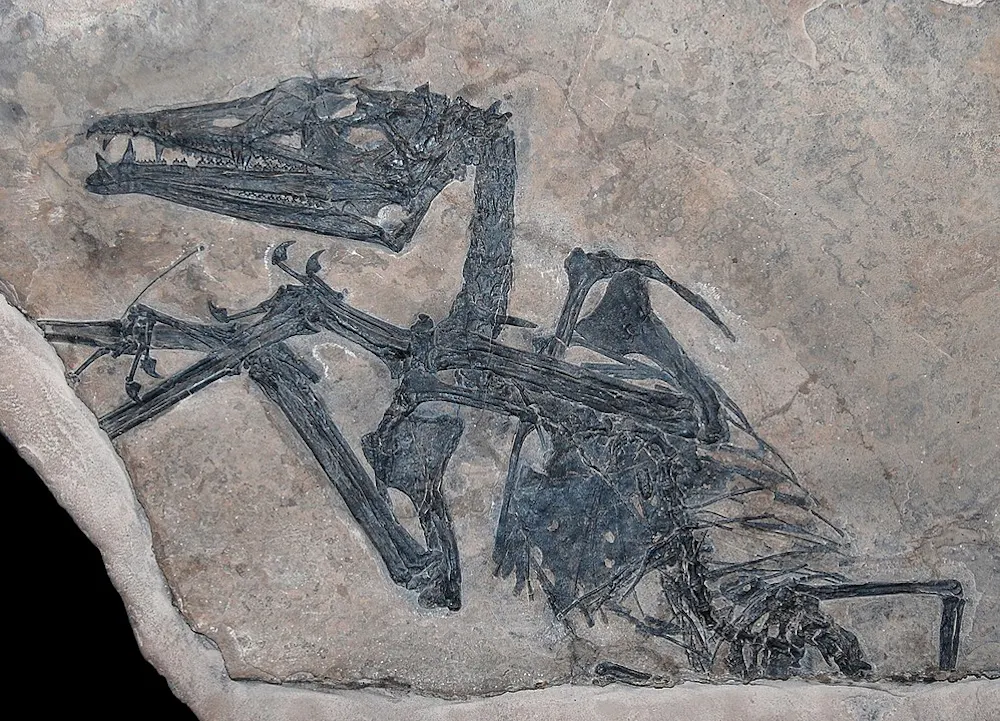
    Most of the handful of Triassic specimens come from narrow seams of dark shale in Italy and Austria, with other fragments discovered in Greenland, Argentina and the southwestern US. These skeletons appear fully adapted for flight, with a hyper-elongated fourth finger supporting membrane-wings. Yet older rocks show no trace of intermediate gliders or other transitional forms that you might expect as evidence of pterosaurs’ evolution over time.

    There are two classic competing explanations for this. The literal reading says pterosaurs evolved elsewhere and did not reach those regions where most have been discovered until very late in the Triassic period, by which time they were already adept flyers. The sceptical reading notes that pterosaurs’ wafer-thin, hollow bones could easily vanish from the fossil record, dissolve, get crushed or simply be overlooked, creating this false gap.

    Eudimorphodon ranzii fossil from Bergamo in 1973 is one of many pterosaur discoveries from southern Europe.
    Wikimedia, CC BY-SA

    For decades, the debate stalled as a result of too few fossils or too many missing rocks. This impasse began to change in 2020, when scientists identified the closest relatives of pterosaurs in a group of smallish upright reptiles called lagerpetids.

    From comparing many anatomical traits across different species, the researchers established that pterosaurs and lagerpetids shared many similarities including their skulls, skeletons and inner ears. While this discovery did not bring any “missing link” to the table, it showed what the ancestor of pterosaurs would have looked like: a rat-to-dog-sized creature that lived on land and in trees.

    This brought new evidence about when pterosaurs may have originated. Pterosaurs and lagerpetids like Scleromochlus, a small land-dwelling reptile, diverged at some point after the end-Permian mass extinction. It occurred some 250 million years ago, 35 million years before the first pterosaur appearance in the fossil record.

    Scleromochlus is one of the lagerpetids, the closest known relatives to the pterosaurs.
    Gabriel Ugueto

    Pterosaurs and their closest kin did not share the same habitats, however. Our new study, featuring new fossil maps, shows that soon after lagerpetids appeared (in southern Pangaea), they spread across wide areas, including harsh deserts, that many other groups were unable to get past. Lagerpetids lived both in these deserts and in humid floodplains.

    They tolerated hotter, drier settings better than any early pterosaur, implying that they had evolved to cope with extreme temperatures. Pterosaurs, by contrast, were more restricted. Their earliest fossils cluster in the river and lake beds of the Chinle and Dockum basins (southwest US) and in moist coastal belts fringing the northern arm of the Tethys Sea, a huge area that occupied today’s Alps.

    Scientists have inferred from analysing a combination of fossil distributions, rock features and climate simulations that pterosaurs lived in areas that were warm but not scorching. The rainfall would have been comparable to today’s tropical forests rather than inland deserts.

    This suggests that the earliest flying dinosaurs may have lived in tree canopies, using foliage both for take-off and to protect themselves from predators and heat. As a result of this confined habitat, the distances that they flew may have been quite limited.

    Changing climates

    We were then able to add a fresh dimension to the story using a method called ecological niche modelling. This is routinely used in modern conservation to project where endangered animals and plants might live as the climate gets hotter. By applying this approach to later Triassic temperatures, rainfall and coastlines, we asked where early pterosaurs lived, regardless of whether they’ve shown up there in the fossil record.

    Many celebrated fossil sites in Europe emerge as poor pterosaur habitat until very late in the Triassic period: they were simply too hot, too dry or otherwise inhospitable before the Carnian age, around 235 million years ago. The fact that no specimens have been discovered there that are more than about 215 million years old may be because the climate conditions were still unsuitable or simply because we don’t have the right type of rocks preserved of that age.

    In contrast, parts of the south-western US, Morocco, India, Brazil, Tanzania and southern China seem to have offered welcoming environments several million years earlier than the age of our oldest discoveries. This rewrites the search map. If pterosaurs could have thrived in those regions much more than 215 million years ago, but we have not found them there, the problem may again lie not with biology but with geology: the right rocks have not been explored, or they preserve fragile fossils only under exceptional conditions.

    Our study flags a dozen geological formations, from rivers with fine sediment deposits to lake beds, as potential prime targets for the next breakthrough discovery. They include the Timezgadiouine beds of Morocco, the Guanling Formation of south-west China and, in South America, several layers of rock from the Carnian age, such as the Santa Maria Formation, Chañares Formation and Ischigualasto Formation.

    Pterosaurs were initially confined to tropical treetops near the equator. When global climates shifted and forested corridors opened, pterosaurs’ wings catapulted them into every corner of the planet and ultimately carried them through one of Earth’s greatest extinctions. What began as a tale of missing fossils has become a textbook example of how climate, ecology and evolutionary science have come together to illuminate a fragmentary history that has intrigued paleontologists for over two centuries.

    Davide Foffa is funded by Marie Skłodowska-Curie Actions: Individual (Global) Fellowship (H2020-MSCA-IF-2020; No.101022550), and by the Royal Commission for the Exhibition of 1851–Science Fellowship

    Alfio Alessandro Chiarenza receives funding from The Royal Society (Newton International Fellowship NIFR1231802)

    Emma Dunne does not work for, consult, own shares in or receive funding from any company or organisation that would benefit from this article, and has disclosed no relevant affiliations beyond their academic appointment.

    ref. How pterosaurs learned to fly: scientists have been looking in the wrong place to solve this mystery – https://theconversation.com/how-pterosaurs-learned-to-fly-scientists-have-been-looking-in-the-wrong-place-to-solve-this-mystery-259063

    MIL OSI

  • MIL-OSI Submissions: Air India crash in Ahmedabad sends reverberations to Canadian families of Air India Flight 182

    Source: The Conversation – Canada – By Chandrima Chakraborty, Professor, English and Cultural Studies; Director, Centre for Global Peace, Justice and Health, McMaster University

    The June 12 Air India crash in Ahmedabad, Gujarat, India, with 230 passengers and 12 crew members aboard is sending deep reverberations through a group of Canadians who know all too well the shock, grief and horror of losing loved ones in hauntingly similar circumstances.

    They are the families of those killed in the bombing of Air India Flight 182 en route from Canada to India 40 years ago this month.

    I work closely with these families as a researcher and advocate. I began interviewing these families in 2014 and have witnessed firsthand their pain, advocacy and emotional turmoil of living in the shadow of a historical event.

    As reports of the Ahmedabad crash came in, the WhatsApp account of the Air India Flight 182 families immediately flooded with expressions of shock, concern, sympathy and memories triggered by the latest incident.

    On June 23, 1985, Flight 182 was brought down by terrorist bombs created and planted on Canadian soil. The devastating mid-air explosion occurred over the Atlantic Ocean near Ireland. It killed all 329 passengers and crew, including 268 Canadians. The crew and most of the passengers were of Indian origin.

    Investigations into the causes of the crash of Air India Flight 171, en route to London’s Gatwick airport, shortly after take-off are still underway. At least 279 people died in the crash, which also impacted people on the ground.

    Acknowledging losses as significant

    A recent public conference at McMaster University commemorated the 40th anniversary of Flight 182, bringing together Indian and Canadian families, researchers, creative artists and community members.

    Book cover for ‘Remembering Air India The Art of Public Mourning,’ edited by Chandrima Chakraborty, Amber Dean and Angela Failler.
    University of Alberta Press

    The conference dealt with critical themes, including the challenge of Flight 182 families recovering from their losses within a climate of broad indifference among their fellow Canadians.

    Regardless of what may have caused the more recent crash in western India, these Canadian families know the shock and loss that a new set of victims’ families are facing, and how important it is to support them.

    Hopefully, the home countries of last week’s crash victims — most of them Indian and British citizens, with at least one Canadian reported to have been aboard — will regard their deaths as significant losses. If so, this would be unlike what the 1985 victims’ families experienced in Canada.

    A little-mourned Canadian tragedy

    In Canada, we have a national day to remember on June 23, 1985. The bombing has been called a Canadian tragedy in a public inquiry report.

    Yet according to a 2023 Angus Reid poll, “nine out of 10 Canadians say they have little or no knowledge of the worst single instance of the mass killing of their fellow citizens.” That essentially means the bombing has yet to penetrate the consciousness of everyday Canadians or evoke shared grief or public mourning.

    The families continue to carry the torch of remembrance as they organize annual memorial vigils every June 23. Few others attend. Many victims’ relatives have died since 1985. Some spouses, siblings or parents are now in their 80s, wondering why the bombing is still not widely discussed in schools or in public discourse.

    The grinding and unsatisfying criminal proceedings, the belated public inquiry and the welcome but lukewarm apology by the Canadian government 25 years after the fact have all contributed to the failure of this tragedy to adhere more solidly to the Canadian consciousness. In fact, many continue to deny the Canadian significance of Flight 182 and view the bombing as a foreign event.

    A torch of remembrance

    At last month’s conference, my research team launched the Air India Flight 182 archive to counter this collective amnesia and lack of acknowledgement.

    Canadian archival consultant and writer Laura Millar has said that archives act as “touchstones to memory” and can aid the process of transforming individual memories into collective remembering. Adopting NYU professor Carol Gilligan’s ethics of care for the archive, we have been consulting with families to find ways to share their grief with the public.

    The Flight 182 memory archive — both physical and digital — serves as a repository for artefacts, first-person narratives, memorabilia and creative works related to the tragedy produced by family members. Family donations of artefacts such as dance videos and pilot wings redirect notions of archives away from a documental deposit. Hopefully, they can move the public to learn and care for the impacts of the Flight 182 bombing.

    The archive is a publicly accessible record of the tragedy, where scholars and everyday citizens can learn about the victims and their families.

    Since the past involves both the present and the future, the archive will enable a meaningful recognition of marginalized voices and histories. It can offer a form of memory justice for those who would otherwise be forgotten by sustaining memory from generation to generation.

    While the archive articulates the demand from families that the bombing of Flight 182 and its aftermath be incorporated into Canadian national consciousness, establishing this archive alone will not be enough to elevate the memory of Flight 182 to the place it deserves.

    But at least it establishes a rich, permanent academic and personal legacy for the community of mourners, and for the Canadian and global public to find it, use it and learn from its many lessons.

    Families of those on board the 1985 flight are preparing to commemorate the 40th anniversary of the terror bombing of Flight 182 that has devastated their lives.

    As we learn more about the tragic Air India Flight 171 crash on June 12, the lessons of Flight 182 will hopefully prevent a new set of families from feeling the pain of indifference on top of the unimaginable agony of loss they’re already experiencing.

    Chandrima Chakraborty receives funding from the Social Sciences and Humanities Research Council of Canada.

    ref. Air India crash in Ahmedabad sends reverberations to Canadian families of Air India Flight 182 – https://theconversation.com/air-india-crash-in-ahmedabad-sends-reverberations-to-canadian-families-of-air-india-flight-182-258991

    MIL OSI

  • MIL-OSI Submissions: Decolonizing history and social studies curricula has a long way to go in Canada

    Source: The Conversation – Canada – By Sara Karn, Postdoctoral Fellow, Department of History, McMaster University

    In June 2015, 10 years ago, the Truth and Reconciliation Commission of Canada (TRC) called for curriculum on Indigenous histories and contemporary contributions to Canada to foster intercultural understanding, empathy and respect. This was the focus of calls to action Nos. 62 to 65.

    As education scholars, we are part of a project supported by the Social Sciences and Humanities Research Council called Thinking Historically for Canada’s Future. This project involves researchers, educators and partner organizations from across Canada, including Indigenous and non-Indigenous team members.

    As part of this work, we examined Canadian history and social studies curricula in elementary, middle and secondary schools with the aim of understanding how they address — and may better address in future — the need for decolonization.

    We found that although steps have been made towards decolonizing history curricula in Canada, there is still a long way to go. These curricula must do far more to challenge dominant narratives, prompt students to critically reflect on their identities and value Indigenous world views.


    Read more:
    Looking for Indigenous history? ‘Shekon Neechie’ website recentres Indigenous perspectives


    Reimagining curriculum

    As white settler scholars and educators, we acknowledge our responsibility to unlearn colonial ways of being and learn how to further decolonization in Canada.

    In approaching this study, we began by listening to Indigenous scholars, such as Cree scholar Dwayne Donald. Donald and other scholars call for reimagining curriculum through unlearning colonialism and renewing relationships.


    Read more:
    Leaked Alberta school curriculum in urgent need of guidance from Indigenous wisdom teachings


    The late Arapaho education scholar Michael Marker suggested that in history education, renewing relations involves learning from Indigenous understandings of the past, situated within local meanings of time and place.

    History, social studies curricula

    Curricula across Canada have been updated in the last 10 years to include teaching about treaties, Indian Residential Schools and the cultures, perspectives and experiences of Indigenous Peoples over time.

    Thanks primarily to the work of Indigenous scholars and educators, including Donald, Marker, Mi’kmaw educator Marie Battiste, Anishinaabe scholar Nicole Bell and others, some public school educators are attentive to land-based learning and the importance of oral history.

    But these teachings are, for the most part, ad hoc and not supported by provincial curriculum mandates.

    Our study revealed that most provincial history curricula are still focused on colonial narratives that centre settler histories and emphasize “progress” over time. Curricula are largely inattentive to critical understandings of white settler power and to Indigenous ways of knowing and being.

    Notably, we do not include the three territories in this statement. Most of the territorial history curricula have been co-created with local Indigenous communities, and stand out with regard to decolonization.

    For example, in Nunavut’s Grade 5 curriculum, the importance of local knowledge tied to the land is highlighted throughout. There are learning expectations related to survival skills and ecological knowledge.

    Members of our broader research team are dedicated to analyzing curricula in Nunavut, the Northwest Territories and the Yukon. Their work may offer approaches to be adapted for other educational contexts.

    Dominant narratives

    In contrast, we found that provincial curricula often reinforce dominant historical narratives, especially surrounding colonialism. Some documents use the term “the history,” implying a singular history of Canada (for example, Manitoba’s Grade 6 curriculum).

    Historical content, examples and guiding questions are predominantly written from a Euro-western perspective, while minimizing racialized identities and community histories. In particular, curricula often ignore illustrations of Indigenous agency and experience.


    Read more:
    Moving beyond Black history month towards inclusive histories in Québec secondary schools


    Most curricula primarily situate Indigenous Peoples in the past, without substantial consideration for present-day implications of settler colonialism, as well as Indigenous agency and experiences today.

    For example, in British Columbia’s Grade 4 curriculum, there are lengthy discussions of the harms of colonization in the past. Yet, there is no mention of the ongoing impacts of settler colonialism or the need to engage in decolonization today.

    To disrupt these dominant narratives, we recommend that history curricula should critically discuss the ongoing impacts of settler colonialism, while centring stories of Indigenous resistance and survival over time.

    Identity and privilege

    There are also missed opportunities within history curricula when it comes to critical discussions around identity, including systemic marginalization or privilege.

    Who we are informs how we understand history, but curricula largely does not prompt student reflection in these ways, including around treaty relationships.

    In Saskatchewan’s Grade 5 curriculum, students are expected to explain what treaties are and “affirm that all Saskatchewan residents are Treaty people.”

    However, there is no mention of students considering how their own backgrounds, identities, values and experiences shape their understandings of and responsibilities for treaties. Yet these discussions are essential for engaging students in considering the legacies of colonialism and how they may act to redress those legacies.

    A key learning outcome could involve students becoming more aware of how their own personal and community histories inform their historical understandings and reconciliation commitments.

    Indigenous ways of knowing and being

    History curricula generally ignore Indigenous ways of knowing and being. Most curricula are inattentive to Indigenous oral traditions, conceptions of time, local contexts and relationships with other species and the environment.

    Instead, these documents reflect Euro-western, settler colonial worldviews and educational values. For example, history curricula overwhelmingly ignore local meanings of time and place, while failing to encourage opportunities for land-based and experiential learning.

    In Prince Edward Island’s Grade 12 curriculum, the documents expect that students will “demonstrate an understanding of the interactions among people, places and the environment.” While this may seem promising, environmental histories in this curriculum and others uphold capitalist world views by focusing on resource extraction and economic progress.

    To disrupt settler colonial relationships with the land and empower youth as environmental stewards, we support reframing history curricula in ways that are attentive to Indigenous ways of knowing the past and relations with other people, beings and the land.

    Ways forward

    Schools have been, and continue to be, harmful spaces for many Indigenous communities, and various aspects of our schooling beg questions about how well-served both Indigenous and non-Indigenous students are for meeting current and future challenges.

    If, as a society, we accept the premise that the transformation of current curricular expectations is possible for schools, then more substantive engagement is required in working toward decolonization.

    Decolonizing curricula is a long-term, challenging process that requires consideration of many things: who sits on curriculum writing teams; the resources allocated to supporting curricular reform; broader school or board-wide policies; and ways of teaching that support reconciliation.

    We encourage history curriculum writing teams to take up these recommendations as part of a broader commitment to reconciliation.

    While not exhaustive, recommendations for curricular reform are a critical step in the future redesign of history curricula. The goal is a history education committed to listening and learning from Indigenous communities to build more inclusive national stories of the past, and into the future.

    This is a corrected version of a story originally published June 17, 2025. The earlier story said Michael Marker was from the Lummi Nation instead of saying he was an Arapaho scholar.

    Sara Karn receives funding from the Social Sciences and Humanities Research Council (SSHRC).

    Kristina R. Llewellyn receives funding from the Social Sciences and Humanities Research Council (SSHRC).

    Penney Clark receives funding from the Social Sciences and Humanities Research Council of Canada (SSHRC).

    ref. Decolonizing history and social studies curricula has a long way to go in Canada – https://theconversation.com/decolonizing-history-and-social-studies-curricula-has-a-long-way-to-go-in-canada-253679
    MIL OSI

  • MIL-OSI Submissions: Black holes spew out powerful jets that span millions of light-years – we’re trying to understand their whole life cycle

    Source: The Conversation – Africa (2) – By Gourab Giri, Postdoctoral researcher, University of Pretoria

    An artistic representation of what a giant cosmic jet the size of the distance between the Milky Way and Andromeda could look like. Author provided, CC BY-SA

    There is a supermassive black hole at the centre of nearly every big galaxy – including ours, the Milky Way (it’s called Sagittarius A*). Supermassive black holes are the densest objects in the universe, with masses reaching billions of times that of the Sun.

    Sometimes a galaxy’s supermassive black hole “wakes up” due to a sudden influx of gas and dust, most likely supplied from a neighbouring galaxy. It begins eating up lots of nearby gas and dust. This isn’t a calm, slow or passive process. As the black hole pulls in material, the material gets superheated on a scale of millions of degrees, far hotter than the surface temperature of our Sun, and is ejected from the galaxy at near-light speeds. This creates powerful jets that look like fountains in the cosmos.

    The accelerated high-speed plasma matter prompts these “fountains” to emit radio signals that can only be detected by very powerful radio telescopes. This gives them their name: radio galaxies. While black holes are common, radio galaxies are not. Only between 10% and 20% of all galaxies exhibit this phenomenon.

    Giant radio galaxies are even less common. They account for only 5% of all radio galaxies and take their name from the fact that they reach enormous distances. Some radio galaxies’ jets reach nearly 16 million light-years. (That’s almost six times the distance between the Milky Way and the Andromeda galaxy.) The largest jet discovered spans nearly 22 million light-years across.


    Read more:
    South African telescope discovers a giant galaxy that’s 32 times bigger than Earth’s


    But how do these structures cover such enormous distances? To find out, I led a study in which we used modern supercomputers to develop models that simulated behaviour of giant cosmic jets within a mock universe, constructed on the basis of fundamental physical laws governing the cosmos.

    This allowed us to observe how radio jets propagate over hundreds of millions of years – a process impossible to track directly in the real universe. These sophisticated simulations provide deeper insights into the life cycle of radio galaxies, highlighting the differences between their early, compact stages and their later, expansive forms.

    Understanding the evolution of radio galaxies helps us unravel the broader processes that shape the universe.

    Supercomputing

    Cutting-edge technology was key to this study.

    Sensitive observations from world-class radio telescopes like South Africa’s MeerKAT and LOFAR in the Netherlands have recently led to several discoveries of cosmic fountains.


    Read more:
    MeerKAT: the South African radio telescope that’s transformed our understanding of the cosmos


    However, modelling their origins has been challenging. Tracking events over millions of years is impossible in real-time.

    That’s where supercomputers come in. These high-performance computing systems are designed to process massive amounts of data. They can perform complex simulations at incredible speeds. In this study, their power was crucial for modelling the evolution of giant radio jets over millions of years.

    The necessary supercomputing power was provided by South Africa’s Inter-University Institute for Data Astronomy, a network comprising the University of Pretoria, the University of Cape Town and the University of the Western Cape.

    Our universe is governed by fundamental forces like gravity, which can be described through mathematical formulas. These formulas, essentially numbers, are fed into supercomputers to create a simulated “mock universe” that follows the same physical laws as the real cosmos. This allows scientists to experiment with how jets from supermassive black holes evolve over time. With their immense processing power, supercomputers can simulate millions of years of cosmic jet evolution in just a month.

    Key takeaways

    Gravity is the dominant force in the universe, pulling heavier matter and dragging nearby lighter matter. If gravity were the only force at play, the universe might have collapsed by now. Yet we see galaxies, galaxy clusters and even life itself thriving. We suspect that these cosmic fountains play a key role in solving the mystery of how this happens.

    By releasing thermal and mechanical energy, they heat up the surrounding collapsing gas, counteracting gravity and maintaining a balance that sustains cosmic structures.

    Our models also shed light on why some radio galaxies’ jets bend sharply, forming an “X” shape in radio waves instead of following a straight trajectory, and revealed the conditions under which giant fountains can continue growing even in dense cosmic environments (that is, in a galaxy cluster).

    The study also suggests that giant radio galaxies may be statistically more common than previously believed. There are potentially thousands of undiscovered giant cosmic fountains. Thanks to world-class telescopes like MeerKAT and LOFAR – and the power of supercomputers – there’s plenty more to explore as we try to understand our universe.

    The research on which this article is based required extensive collaboration with an international team, including Jacinta Delhaize from the University of Cape Town, Joydeep Bagchi from Christ University, India, and DJ Saikia from the Inter-University Centre for Astronomy and Astrophysics in India. Essential contributions by Kshitij Thorat and Roger Deane from the University of Pretoria also played a crucial role in shaping the study.

    Gourab Giri does not work for, consult, own shares in or receive funding from any company or organisation that would benefit from this article, and has disclosed no relevant affiliations beyond their academic appointment.

    ref. Black holes spew out powerful jets that span millions of light-years – we’re trying to understand their whole life cycle – https://theconversation.com/black-holes-spew-out-powerful-jets-that-span-millions-of-light-years-were-trying-to-understand-their-whole-life-cycle-250073

    MIL OSI

  • MIL-OSI Submissions: The first fossil thrips in Africa: this tiny insect pest met its end in a volcanic lake 90 million years ago

    Source: The Conversation – Africa (2) – By Sandiso Mnguni, Honorary Research Associate, University of the Witwatersrand

    The fossil thrips discovered in the Orapa Diamond Mine. Dr Sandiso Mnguni, CC BY-NC-ND

    Thrips are tiny insects – their sizes range between 0.5mm and 15mm in length and many are shorter than 5mm. But the damage they cause to crops is anything but small. A 2021 research paper found that in Indonesia “the damage to red chilli plants caused by thrips infestation ranges now from 20% to 80%”. In India, various thrips infestations in the late 2010s and early 2020s “damaged 40%-85% of chilli pepper crops in Karnataka, Andhra Pradesh and Telangana”.

    In Africa, a number of thrips species feed on sugarcane and have been known to damage nearly 30% of the crop in a single hectare of a farm. High rates of destruction have been recorded in Tanzania and Uganda on onion and tomato crops.

    Now it’s emerged that thrips are hardly new to the African continent and the southern hemisphere more broadly. South Africa’s first and only Black palaeoentomologist, Sandiso Mnguni, who studies fossil insects, recently described a fossil thrips from Orapa Diamond Mine in Botswana that’s more than 90 million years old. He discussed his unique fossil find with The Conversation Africa.

    What are thrips and how do they cause damage?

    Thrips, also known as thunderflies, thunderbugs or thunderblights, are small, slender and fragile insects. They can be identified by their typically narrow, strap-like, fringed and feathery wings. Over time, they have also evolved distinctive asymmetrical rasping-sucking mouthparts consisting of a labrum, labium, maxillary stylets and left mandible. Most species use these to feed primarily on fungi. Some feed on plants and eat the tender parts of certain crops like sugarcane, tomatoes, pepper, onions, avocado, legumes and citrus fruits, focusing on the buds, flowers and young leaves.

    This, along with their habit of accidentally distributing fungal spores while feeding or hunting, makes them destructive crop pests. They tend to feed as a group in large numbers, causing distinctive silver or bronze scarring on the surfaces of stems or leaves.

    However, not all thrips are harmful. A small fraction of the 6,500 species that have already been described so far are pollinators of flowering plants; and a handful are predators or natural enemies of moths and other smaller animals such as mites.

    Larva, pupa and adult Weeping fig thrips (Gynaikothrips uzeli)
    fcafotodigital

    Tell us about the fossil thrips you’ve discovered

    This is the first time that a fossil thrips has been recorded anywhere in Africa – or the entire southern hemisphere.

    The Orapa Diamond Mine in Botswana is one of the most important fossil deposits on the continent. It’s about 90 million years old, dating back to the Cretaceous period.


    Read more:
    Fossil beetles found in a Botswana diamond mine help us to reconstruct the distant past


    The deposit is situated 960 metres above sea level in the Kalahari Desert, about 250km due west of Francistown in Botswana, and 824km away from Johannesburg in South Africa. It was first discovered in 1967 and started producing carat diamonds in 1971.

    Roughly 90 million years go, steam and gas caused a double eruption of diamondiferous kimberlites. These are vertical, deep-source volcanic pipes that form when magma rapidly rises from the Earth’s mantle, carrying diamonds and other minerals up to the surface. They create a distinctive rock formation that gets studied by geologists. This explosive volcanic eruption formed a deep crater lake at the centre of the mine.

    Mining excavations during the 1980s and earlier uncovered and exposed fine-grained sedimentary rocks containing well preserved fossil plants and insects. These have already been studied by many researchers in the past. At the time, geology and palaeontology researchers from what was then the Bernard Price Institute, which has since been renamed the Evolutionary Studies Institute, at the University of the Witwatersrand in Johannesburg, were invited to collect the fossil material.

    Although some of the material has been studied in the past, the fossil thrips hadn’t yet been put under the microscope. And that’s just what we did. By using its body characteristics and comparing it to living thrips, we can say for sure that it’s a thrips. But we didn’t give it a formal scientific name because it doesn’t have enough characteristics to classify it at the species level and describe it either as a new species or one that still exists today.

    We think that the thrips either flew into the palaeolake that was formed by the volcanic eruption or was transported there through grass from a bird’s nest.

    Why is this useful to know?

    This discovery sheds light on the biodiversity and biogeography of thrips and many other groups of insects during a time when we know flowering plants that heavily relied on insect pollination were rapidly diversifying. This plant-insect reciprocal interaction goes back to the Devonian period, a time when there was a large super-continent called Gondwana. That’s when the first land plants evolved and dominated the Earth, and inadvertently led to many groups of insects, including thrips, diversifying to keep up with drastic changes in their preferred plant diets and habitats due to the dramatic environmental and climatic changes.


    Read more:
    Fossil insects help to reconstruct the past: how I ended up studying them (and you can too)


    The fossil find also contributes to a more accurate documentation of life on Earth during the Cretaceous and helps scientists in reconstructing the past environment and climate in Botswana.

    Hopefully there are more fossil insects waiting to be discovered in Botswana and elsewhere in Africa, to keep improving our picture of this long-ago world, and preserve the heritage of our continent.

    Sandiso Mnguni receives funding from the GENUS: DSTI-NRF Centre of Excellence in Palaeosciences (Grant 86073). He is affiliated with the Agricultural Research Council Plant Health and Protection (ARC-PHP) and the Sophumelela Youth Development Programme (SYDP).

    ref. The first fossil thrips in Africa: this tiny insect pest met its end in a volcanic lake 90 million years ago – https://theconversation.com/the-first-fossil-thrips-in-africa-this-tiny-insect-pest-met-its-end-in-a-volcanic-lake-90-million-years-ago-249077

    MIL OSI

  • Navy rescues 14 Indian crew members from burning vessel in Arabian Sea

    Source: Government of India

    Source: Government of India (4)

    The Indian Navy successfully rescued 14 Indian crew members from a Palau-flagged oil tanker, MT Yi Cheng 6, after a major fire broke out in its engine room. According to the Ministry of Defence, when the distress call was received, the tanker was near Fujairah, UAE in the North Arabian Sea.

    Responding to a distress call, received early Sunday morning, Indian Naval ship INS Tabar, which was on a mission-based deployment, rushed to the site located approximately 80 nautical miles east of Fujairah.

    Upon arrival, the crew of INS Tabar immediately established contact with the vessel’s master and began firefighting operations. Seven crew members were promptly evacuated to safety, while the remaining crew stayed onboard to assist in containing the blaze. No injuries were reported.

    A six-member Indian Navy firefighting and damage control team, equipped with specialized gear, was deployed to combat the fire. Their efforts were later bolstered by 13 more Navy personnel. Together with the ship’s crew, they managed to bring the fire under control and confine it to the engine room.

    The Navy continues to monitor the situation, with INS Tabar remaining on station to provide further assistance if required.

    This successful operation underscores the Indian Navy’s rapid response capabilities and its continued commitment to maritime safety and humanitarian efforts in the Indian Ocean Region.

  • From Ghana to Brazil: PM Modi’s tour to cement South-South cooperation

    Source: Government of India

    Source: Government of India (4)

    Prime Minister Narendra Modi is set to embark on a five-nation tour on Tuesday covering Ghana, Trinidad and Tobago, Argentina, Brazil and Namibia, marking an important push to strengthen India’s ties with Africa, Latin America and the Caribbean.

    First Indian PM visit to Ghana in three decades

    Prime Minister Modi will begin his tour with an official visit to Ghana on July 2 and 3- the first visit by an Indian Prime Minister to the West African nation in 30 years.

    The Ministry of External Affairs (MEA) said the visit holds special significance as Ghana’s President John Dramani Mahama recently assumed office after a decisive electoral victory. PM Modi and President Mahama, who share a history of engagement since the India-Africa Forum Summit in 2015, will discuss ways to deepen bilateral ties.

    Key areas on the agenda include agriculture, defence cooperation, critical minerals, and a possible vaccine hub to serve West Africa. India’s capacity-building initiatives like the ITEC programme have long contributed to Ghana’s human resource development. Officials expect the two sides to sign MoUs in areas such as traditional medicine, standards and cultural exchange.

    Trinidad and Tobago: marking 180 years of Indian arrival

    From July 3 to 4, PM Modi will visit Trinidad and Tobago, marking the first bilateral visit by an Indian Prime Minister since 1999. The visit coincides with the 180th anniversary of the arrival of Indian immigrants to the island nation, which hosts one of the largest Indian-origin communities in the Caribbean.

    In Port of Spain, PM Modi will hold wide-ranging discussions with President Christine Carla Kangaloo, and Prime Minister Kamala Prasad Bisessar, both of whom are of Indian origin. Talks will cover cooperation in pharmaceuticals, renewable energy, digital public infrastructure, agriculture, disaster resilience, education and culture.

    Highlighting the shared heritage, PM Modi will address a joint session of the Trinidad and Tobago Parliament and interact with the vibrant Indian diaspora.

    Argentina visit: tapping new opportunities

    PM Modi’s next stop will be Argentina on July 4 and 5 – the first standalone bilateral visit by an Indian PM to Argentina in nearly six decades.

    Officials said the visit is timely as Argentina pursues major economic reforms and offers new avenues for partnership. PM Modi will hold talks with President Javier Milei, focusing on boosting cooperation in defence manufacturing, digital technology, telemedicine, mining and renewable energy.

    Argentina’s vast reserves of lithium, copper and rare earths align with India’s push for secure and sustainable critical mineral supplies. India’s KABIL has already secured mining concessions in Argentina this year. Discussions will also cover food security, green energy, infrastructure, science and technology.

    Brazil: BRICS summit and bilateral talks

    PM Modi will then travel to Brazil to attend the 17th BRICS Summit in Rio de Janeiro on July 6 and 7. The theme for this year’s summit — “Strengthening Global South Cooperation for Inclusive and Sustainable Governance” — aligns with India’s foreign policy priorities.

    Leaders will deliberate on reforming global governance, peace and security, climate change and artificial intelligence. India expects key outcomes including a Leaders’ Declaration and frameworks for climate finance and socially determined diseases.

    On July 8, PM Modi will pay a state visit to Brasilia for bilateral talks with President Luiz Inácio Lula da Silva. India and Brazil will review trade ties, currently valued at $12.2 billion, and aim to push the target to $20 billion. Cooperation in oil and gas, renewable energy, critical minerals, defence, agriculture, traditional medicine, and digital public infrastructure are expected to feature prominently.

    Namibia: energy, minerals, digital pay on radar

    PM Modi will conclude his tour with a landmark visit to Namibia on July 9- the first by an Indian Prime Minister in 27 years.

    India has long supported Namibia’s independence struggle and has maintained strong economic ties. Trade stands at around $600 million, with Indian investments of nearly $800 million, mostly in minerals like zinc and diamonds.

    During the visit, PM Modi will hold bilateral talks with President Netumbo Nandi-Ndaitwah and address Namibia’s Parliament. A key highlight will be a technology agreement enabling unified payment interoperability between the two countries — deepening fintech and digital cooperation.

    Namibia’s reserves of uranium, copper, cobalt and rare earths, and recent oil discoveries make it an attractive partner as India diversifies its energy and mineral supplies. The Cheetah translocation project from Namibia to India’s Kuno National Park remains a symbol of trust and collaboration.

  • MIL-OSI Russia: Death toll from Indian chemical plant blast rises to 35

    Translation. Region: Russian Federal

    Source: People’s Republic of China in Russian – People’s Republic of China in Russian –

    Source: People’s Republic of China – State Council News

    NEW DELHI, July 1 (Xinhua) — At least 35 people were killed and more than 30 injured in a powerful blast at a chemical plant in India’s southern Telangana state, local authorities said on Tuesday.

    The death toll rose after more bodies were found buried in the rubble during a rescue operation overnight.

    The blast occurred at around 9:48 am local time on Monday in the Pashamilaram industrial area, located about 48 km northwest of Hyderabad, the state capital.

    According to police, there were about 150 workers at the plant at the time of the explosion, 90 of whom were in the affected area.

    The cause of the explosion has not yet been revealed. Initially, it was assumed that the reactor had exploded. However, officials later denied this claim. –0–

    MIL OSI Russia News

  • MIL-OSI Banking: Samsung Semiconductor India Research launches ‘Samsung Skill Development Center’ at the Government Polytechnic KGF

    Source: Samsung


    Samsung Semiconductor India Research (SSIR) today inaugurated its first “Samsung Skill Development Center” at the Government Polytechnic in Kolar Gold Fields (KGF), Karnataka. As part of its Corporate Social Responsibility (CSR) initiative, SSIR has supported the development of five cutting-edge laboratories aimed at fostering hands-on learning in Artificial Intelligence/Machine Learning (AI/ML), Cybersecurity, Automation, Robotics, and Core Engineering disciplines.
     
    The initiative aligns with Samsung’s commitment to empower youth in remote parts of the country to become catalysts of change and future innovation, while nurturing a passion for engineering and innovation amongst students from all backgrounds. Through this association, Samsung is dedicated to empowering young minds, improving the quality of education, and fostering a nationwide culture of scientific curiosity and innovation.
     
    The five newly inaugurated Labs have facilities equipped with modern tools. This will further enable an ecosystem of innovation for students to thrive and help them develop industry-capable skills as part of their learning curriculum. Under a multidisciplinary approach, students will be provided practical experience.


    Balajee Sowrirajan, EVP & MD, SSIR, said, “This initiative marks a pivotal step in enabling a hands-on experience for students in rural Karnataka. We fully support the Government of India’s mission on skill development and are committed to bridging the digital divide. By empowering students with knowledge in AI, IoT, and other emerging technologies, we aim to create limitless opportunities and secure India’s place in the global digital economy.”
     
    The inauguration ceremony was graced by Dr. Roopkala M Shashidhar, Chairperson, Karnataka State Handicrafts Development Corporation; Smt. Manjushree N, Commissioner, Department of Collegiate and Technical Education; Smt. Geethanjali S, Principal, Government Polytechnic KGF, along with over 500 students, faculty, and dignitaries from Samsung and the Government of Karnataka.
     
    This initiative builds on SSIR’s earlier collaboration under the Samsung Innovation Campus (SIC), through which the company partnered with the Government of Karnataka to provide AI and IoT training to over 1,000 students and teachers across 37 polytechnic colleges. The SIC initiative included infrastructure support, hands-on kits, and curriculum-based training modules designed to strengthen foundational tech capabilities across the state.


    MIL OSI Global Banks

  • Active monsoon to persist across north, central, and east India; heavy rainfall forecast in multiple states

    Source: Government of India

    Source: Government of India (4)

    The India Meteorological Department (IMD) on Tuesday said that active monsoon conditions are likely to continue across many parts of northwest, central, and east India over the next six to seven days. The forecast indicates widespread rainfall activity, with extremely heavy rainfall – measuring 20 cm or more – very likely at isolated locations in Madhya Pradesh, west Uttar Pradesh, and east Rajasthan today and tomorrow.

    According to the IMD, very heavy rainfall is also expected in Himachal Pradesh today and tomorrow, and again from July 5 to 7. Uttarakhand is likely to receive heavy showers tomorrow, while Punjab and Haryana are forecast to receive significant rainfall on July 6 and 7. Uttar Pradesh may experience very heavy rainfall today and tomorrow, and East Rajasthan is likely to be affected from July 1 to 4. Madhya Pradesh will see another spell of heavy rain tomorrow and again from July 5 to 7.

    Further east, Jharkhand is expected to receive heavy rain today, while Odisha will see rainfall activity between July 1 and 3. Along the western coast, the Konkan and Goa regions, Madhya Maharashtra, and the Gujarat region are also in line for sustained heavy rainfall. In the Northeast, Arunachal Pradesh, Assam and Meghalaya, as well as Nagaland, Manipur, Mizoram, and Tripura are likely to witness widespread heavy showers from July 1 to 7.

    Weather forecast for Delhi-NCR

    In Delhi-NCR, the weather is expected to remain wet and cloudy over the coming days.

    Today, the sky is expected to be partly cloudy with very light to light rain accompanied by thunder and lightning. Maximum temperatures are forecast to remain between 32°C and 34°C, which is 3 to 5 degrees below normal. Surface winds will predominantly be from the east at speeds of less than 15 kmph in the afternoon, decreasing to 10–15 kmph during the evening and night.

    Tomorrow, the region will continue to experience similar weather, with maximum and minimum temperatures ranging from 33°C to 35°C and 25°C to 27°C respectively. These readings will remain 1 to 4 degrees below normal. Winds will come from the southwest at under 10 kmph during the morning and weaken further in the afternoon before slightly increasing during the evening.

    For July 3, partly cloudy skies with light rain and thunderstorms are forecast, with temperatures expected to hover between 32°C and 34°C for the maximum and 26°C to 28°C for the minimum. Winds will shift from the south in the morning to southeast in the afternoon, reaching up to 20 kmph before decreasing again in the evening.

    On July 4, similar conditions will prevail, with temperatures ranging from 31°C to 33°C and minimums between 26°C and 28°C. The maximum temperature is expected to be 4 to 6 degrees below normal. Winds will shift throughout the day—from north-northeast in the morning to southeast in the afternoon, and finally to the south during the evening, remaining light throughout.

  • Multiple cloudbursts in Himachal Pradesh’s Mandi; Shimla-Sunni-Karsog highway blocked after heavy rain

    Source: Government of India

    Source: Government of India (4)

    Multiple cloudbursts and torrential rain continued across Himachal Pradesh on Monday, resulting in flash floods. One of the worst-hit routes is the Shimla-Sunni-Karsog highway, which has been completely blocked near Devidhar, about 35 kilometres from the state capital Shimla, stranding dozens of vehicles and commuters.

    Long queues of vehicles were seen piling up on both sides of the landslide site.

    Some people went missing in multiple cloudbursts overnight in Karsog division in Mandi district.

    The cloudbursts triggered flash floods that washed away many houses.

    At least 41 people have been rescued by the district administration and the State Disaster Response Force (SDRF).

    According to reports, 10 houses and a bridge were swept away by floods in Kuklah. In Mandi district, the 16-MW Patikari Hydro-Electric Power Project has also been washed away.

    The run-of-the-river power project is built on the Bakhli Khad, a left-bank tributary of the Beas river.

    Owing to the heavy inflow of water, 150,000 cusecs of water have been released from the Pandoh Dam.

    The situation turned critical as the downpour in the Beas upper catchment led to a sharp increase in inflow at Pandoh Dam.

    Locals and tourists have been strictly warned to stay away from the riverbanks.

    The 126-MW Larji Hydro Electric Project in Kullu also saw an abnormal rise in water discharge.

    Owing to heavy rain, Mandi District Magistrate Apoorv Devgan ordered the closure of all schools and educational institutions in the district on Tuesday as a precautionary step.

    On Monday, a five-storey building collapsed in the suburbs of Shimla city. However, no lives were lost, as residents had vacated the building.

    The state suffered a loss of Rs 75.69 crore till Monday due to torrential rain that has occurred across the state in the past 10 days.

    As per the Revenue Department, the state has witnessed 23 deaths as a result of flash floods, cloudbursts, drowning, etc, from June 20 to June 30. Also, 259 link roads across the state remain closed, while 614 distribution transformers and 144 water supply schemes across the state remain disrupted.

    (With inputs from agencies)

  • Rajasthan records 128% excess rainfall than normal in June

    Source: Government of India

    Source: Government of India (4)

    Rajasthan has recorded 128 per cent more rainfall than normal during June in the ongoing monsoon season, the weather department officials said on Tuesday.

    According to the Meteorological Department, heavy showers have filled ponds and dams across the state much earlier than usual. The rainfall has been particularly abundant in eastern Rajasthan, which received 160 per cent more than average, while western Rajasthan saw a 79 per cent increase.

    As a result, rivers and seasonal drains are flowing strongly, and water levels in many dams have risen significantly. In the Kota division, several smaller dams are already filled to capacity, while major reservoirs like Bisalpur, Parvati, and Mahi Bajaj Sagar have also received a healthy inflow.

    The Water Resources Department reports that Rajasthan’s dams currently hold 50.45 per cent of their total storage capacity – a significant jump from 32.53 per cent on the same date last year.

    Notably, 90 previously dry dams have started receiving water. Dams in the Jaipur division are at 37.05 per cent capacity. Historical data shows that over the past decade, eastern Rajasthan has consistently received more rainfall during the monsoon season compared to the west.

    The average annual rainfall for the state stands at 421.96 mm. According to the data, the highest rainfall of 747.24 mm was recorded in the last ten years in 2019, while the lowest rainfall was 506.28 mm in the year 2015. In the year 2024, 662.87 mm of rain was recorded. Meanwhile, Jaipur Meteorological Centre has warned of a low-pressure area over the northwest Bay of Bengal and adjoining West Bengal, which is expected to influence Rajasthan’s weather over the coming week.

    This system is likely to bring moderate to heavy rainfall to over 27 districts, offering much-needed respite from heat and humidity. Authorities have urged caution in areas likely to receive heavy rain, including Dausa, Dholpur, Karauli, and Sawai Madhopur. Rainfall is also expected to intensify in Ajmer, Alwar, Jaipur, Kota, Bharatpur, and Udaipur.

    (IANS)

  • MIL-OSI Video: Small Business Champions Awards 2025

    Source: World Trade Organization – WTO (video statements)

    On 27 June, the Informal Working Group on Micro, Small and Medium-sized Enterprises (MSMEs) marked MSME Day, announcing two new Small Business Champions: SilaiWali (India) and NetZero Pallets (Viet Nam).

    https://www.youtube.com/watch?v=LqmZ59VjqfU

    MIL OSI Video

  • Thai court suspends PM from duty pending case seeking her dismissal

    Source: Government of India

    Source: Government of India (4)

    Thailand’s Constitutional Court on Tuesday suspended Prime Minister Paetongtarn Shinawatra from duty pending a case seeking her dismissal, adding to mounting pressure on a government under fire on multiple fronts.

    The court in a statement said it had accepted a petition from 36 senators that accuses Paetongtarn of dishonesty and breaching ethnical standards in violation of the constitution over the leak of a politically sensitive telephone conversation with Cambodia’s influential former leader Hun Sen.

    The government is expected to be led by a deputy prime minister in a caretaker capacity while the court decides the case against Paetongtarn, who will remain in the cabinet as the new culture minister following a reshuffle. The government did not immediately respond to a request for comment on her suspension.

    The leaked call with the veteran Cambodian politician triggered domestic outrage and has left Paetongtarn’s coalition with a razer-thin majority, with a key party abandoning the alliance and expected to soon seek a no confidence vote in parliament, as protest groups demand the premier resigns.

    During a June 15 call intended to defuse escalating border tensions with Cambodia, Paetongtarn, 38, kowtowed before Hun Sen and criticised a Thai army commander, a red line in a country where the military has significant clout. She has apologised and said her remarks were a negotiating tactic.

    FAMILY CRISIS

    Paetongtarn’s battles after only 10 months in power underline the declining strength of the Pheu Thai Party, the populist juggernaut of the billionaire Shinawatra dynasty that has dominated Thai elections since 2001, enduring military coups and court rulings that have toppled multiple governments and prime ministers.

    It has been a baptism of fire for political novice Paetongtarn, who thrust into power as Thailand’s youngest premier and replacement for Srettha Thavisin, who was dismissed by the Constitutional Court for violating ethics by appointing a minister who was once jailed.

    Paetongtarn’s government has also been struggling to revive a stuttering economy and her popularity has declined sharply, with a June 19-25 opinion poll released at the weekend showing her approval rating sinking to 9.2% from 30.9% in March.

    Paetongtarn is not alone in her troubles, with influential father Thaksin Shinawatra, the driving force behind her government, facing legal hurdles of his own in two different courts this month.

    Divisive tycoon Thaksin, according to his lawyer, appeared at his first hearing at Bangkok’s Criminal Court on Tuesday on charges he insulted Thailand’s powerful monarchy, a serious offence punishable by up to 15 years in prison if found guilty. Thaksin denies the allegations and has repeatedly pledged allegiance to the crown.

    The case stems from a 2015 media interview Thaksin gave while in self-imposed exile, from which he returned in 2023 after 15 years abroad to serve a prison sentence for conflicts of interest and abuse of power.

    Thaksin, 75, dodged jail and spent six months in hospital detention on medical grounds before being released on parole in February last year. The Supreme Court will this month scrutinise that hospital stay and could potentially send him back to jail.

    (Reuters)

  • EAM Jaishankar gives firsthand account on Trump’s claims on ceasefire

    Source: Government of India

    Source: Government of India (4)

    External Affairs Minister S. Jaishankar on Monday clarified India’s stand and response on U.S. President Donald Trump’s claim that he used trade to force India and Pakistan to agree to a ceasefire during the escalation following India’s Operation Sindoor in May.

    Speaking at a fireside chat with Newsweek CEO Dev Pragad, Jaishankar recounted the sequence of events, asserting that there was no linkage between trade negotiations and ceasefire talks. “I can tell you that I was in the room when U.S. Vice President J.D. Vance spoke to Prime Minister Modi on the night of May 9, saying that the Pakistanis would launch a very massive assault on India,” he said.

    He emphasized that no trade-related leverage was discussed during that call. “We did not accept certain things, and the Prime Minister was impervious to what the Pakistanis were threatening to do,” Jaishankar noted. “On the contrary, he (PM Modi) indicated that there would be a response from us.”

    Jaishankar confirmed that Pakistan did indeed launch a massive attack that night, to which India responded swiftly. The following morning, U.S. Secretary of State Marco Rubio contacted him to inform that Pakistan was ready to talk. Later that day, Pakistan’s Director General of Military Operations, Major General Kashif Abdullah, directly contacted his Indian counterpart, Lieutenant General Rajiv Ghai, to request a ceasefire.

    “I can only share what I personally experienced,” Jaishankar stated.

    (With inputs from IANS)

  • ‘Digital India, a people’s movement’: PM Modi charts roadmap for next decade

    Source: Government of India

    Source: Government of India (4)

    Prime Minister Narendra Modi on Tuesday lauded the completion of ten years of the Digital India initiative, describing it as a journey that has transformed governance, empowered citizens, and positioned India as a global leader in digital technology.

    In a post on X, the Prime Minister said, “Today is a historic day as we mark #10YearsOfDigitalIndia! Ten years ago, Digital India began as an initiative to transform our nation into a digitally empowered and technologically advanced society. A decade later, we stand witness to a journey that has touched countless lives and ushered in a new era of empowerment.”

    Launched in 2015, the Digital India mission sought to bridge the country’s vast digital divide and make technology accessible to every citizen. Reflecting on the initiative’s impact, PM Modi said that India’s progress is visible not only in “data and dashboards” but also in the daily lives of 140 crore Indians.

    “While decades were spent doubting the ability of Indians to use technology, we changed this approach and trusted the ability of Indians to use technology,” PM Modi said in an article shared on LinkedIn.

    Expanding Access and Inclusion

    In 2014, India had about 25 crore internet connections. That figure has now grown to over 97 crore, with high-speed internet reaching remote villages and forward military outposts alike. The Prime Minister pointed out that over 42 lakh kilometres of Optical Fibre Cable now connect the country, equivalent to eleven times the distance between Earth and the Moon.

    The success of India’s real-time digital payments system, UPI, has also been a highlight. UPI now handles over 100 billion transactions a year, accounting for nearly half of all real-time digital payments worldwide.

    Through Direct Benefit Transfers (DBT), the government has directly transferred over ₹44 lakh crore to citizens, saving nearly ₹3.48 lakh crore by eliminating middlemen. Schemes like SVAMITVA have issued more than 2.4 crore property cards and mapped over 6.4 lakh villages, providing land ownership security to millions.

    Driving Entrepreneurship and Innovation

    Highlighting the impact on small businesses and entrepreneurs, PM Modi noted that initiatives like ONDC (Open Network for Digital Commerce) and GeM (Government E-Marketplace) have expanded opportunities for millions. ONDC recently crossed 200 million transactions, while GeM has surpassed ₹1 lakh crore GMV in just 50 days.

    “From Banarasi weavers to bamboo artisans in Nagaland, sellers are now reaching customers nationwide, without middlemen or digital monopolies,” the Prime Minister added.

    PM Modi also underlined India’s emergence as a global leader in Digital Public Infrastructure, citing examples like Aadhaar, CoWIN, DigiLocker, and FASTag. He said these platforms are now studied and adopted in other countries, with India launching a Global DPI Repository during its G20 Presidency.

    Looking Ahead

    Calling for greater innovation in the coming decade, the Prime Minister said India is moving from “digital governance to global digital leadership, from India-first to India-for-the-world.”

    He urged the country’s innovators and entrepreneurs to build technology that “unites, includes, and uplifts,” adding, “Let us build what empowers. Let us solve what truly matters.”

    The Prime Minister’s remarks come as India continues to scale its presence in emerging fields like artificial intelligence and digital commerce, supported by initiatives such as the $1.2 billion India AI Mission and new Centres of Excellence across the country.

    “Digital India has not remained a mere government program, it has become a people’s movement,” PM Modi said, reaffirming the initiative’s central role in building an Aatmanirbhar Bharat.


  • Death toll in Telangana pharma unit blast rises to 35

    Source: Government of India

    Source: Government of India (4)

    The death toll from the explosion at a chemical factory in Telangana’s Sangareddy district rose to 35 on Tuesday, with officials saying that the number may increase as search and rescue operations continue.

    The blast occurred on Monday at Sigachi Industries Limited’s pharmaceutical facility, located about 50 km from Hyderabad. The impact of the explosion caused a three-storey building to collapse, triggering a massive fire.

    At the time of the incident, 108 workers were present at the factory. Thirty-five workers were injured in the explosion, with 11 reported to be in critical condition. More than 15 fire engines were deployed to contain the blaze.

    Most of the victims were migrant workers from Bihar, Uttar Pradesh, and Odisha.

    Prime Minister Narendra Modi expressed deep sorrow over the loss of lives and announced an ex-gratia of Rs 2 lakh each for the families of the deceased and Rs 50,000 for those injured, from the Prime Minister’s National Relief Fund.

    Union Home Minister Amit Shah also expressed grief and said the National Disaster Response Force (NDRF) team was immediately deployed and is assisting in the ongoing rescue operations along with local authorities.

    “Saddened by the tragic accident in a chemical factory in Sangareddy, Telangana. The NDRF team rushed to the spot immediately and is continuing the rescue operation along with the local administration,” Shah said in a post on X.

    According to Y Nagi Reddy, Director General of Telangana State Disaster Response and Fire Services, the explosion took place during the air handling and drying of microcrystalline cellulose, citing inputs from industrial experts.

    The state government has set up a high-powered committee to investigate the incident. The panel includes the Chief Secretary, Special Chief Secretary (Disaster Management), Principal Secretary (Labour), Principal Secretary (Health), and Additional DGP (Fire Services).

    The Chief Minister’s Office said the committee will also provide recommendations to prevent such industrial disasters in the future.

    (With inputs from agencies)

  • Trump suggests DOGE look at Musk’s companies to save money

    Source: Government of India

    Source: Government of India (4)

    U.S. President Donald Trump suggested on Tuesday that his efficiency department should take a look at the subsidies that Tesla CEO Elon Musk’s companies have received in order to save the federal government “BIG” money.

    Trump’s comments come after billionaire Elon Musk renewed his criticism on Monday of Trump’s sweeping tax-cut and spending bill, vowing to unseat lawmakers who backed it after campaigning on limiting government spending.

    “Elon may get more subsidy than any human being in history, by far, and without subsidies, Elon would probably have to close up shop and head back home to South Africa. No more Rocket launches, Satellites, or Electric Car Production, and our Country would save a FORTUNE. Perhaps we should have DOGE take a good, hard, look at this? BIG MONEY TO BE SAVED!!!,” Trump said in a post on Truth Social.

    In response to Trump’s post, Musk, in his own social media platform X, said “I am literally saying CUT IT ALL. Now.”

    After weeks of relative silence following a feud with Trump over the legislation, Musk rejoined the debate on Saturday as the Senate took up the package, calling it “utterly insane and destructive” in a post on social media platform X.

    On Monday, he ramped up his criticism, saying lawmakers who had campaigned on cutting spending but backed the bill “should hang their heads in shame!”

    “And they will lose their primary next year if it is the last thing I do on this Earth,” Musk said.

    The Tesla and SpaceX CEO called again for a new political party, saying the bill’s massive spending indicated “that we live in a one-party country – the PORKY PIG PARTY!!”

    “Time for a new political party that actually cares about the people,” he wrote.

    Musk’s criticism of the bill has caused a rift in his relationship with Trump, marking a dramatic shift after the tech billionaire spent nearly $300 million on Trump’s re-election campaign and led the administration’s controversial Department of Government Efficiency (DOGE), a federal cost-cutting initiative.

    Musk, the world’s richest man, has argued that the legislation would greatly increase the national debt and erase the savings he says he has achieved through DOGE.

    It remains unclear how much sway Musk has over Congress or what effect his opinions might have on the bill’s passage. But Republicans have expressed concern that his on-again, off-again feud with Trump could hurt their chances to protect their majority in the 2026 midterm congressional elections.

    The rift has also led to volatility for Tesla, with shares of the company seeing wild price swings that erased approximately $150 billion of its market value, though it has since recovered.

    – Reuters

  • MIL-OSI: Over half of sports fans are turning to AI or gen AI for more personalized content

    Source: GlobeNewswire (MIL-OSI)

    Press contact:
    Elsa Estager Bergerou
    Tel: +33 6 59 62 55 13
    Email: elsa.estager-bergerou@capgemini.com

    Over half of sports fans are turning to AI or gen AI for more personalized content

    • AI has overtaken traditional search engines as the main source for sports information, with 67% of fans wanting all sports data aggregated in one place.
    • Digital insights are filling gaps in the live sports experience, with nearly 70% of fans seeking stats related to team, players and playing conditions primarily pre-match and during breaks.
    • Spectators want balance between tech innovation and authenticity, with almost three out of five fans worrying that too much technology could impact the thrill of live sport.

    Paris, July 1, 2025 – The Capgemini Research Institute today released its latest report, “Beyond the game: The new era of AI-powered sports engagement”, revealing how AI and generative AI (gen AI) are reshaping the global fan experience. As AI-powered tools become the primary gateway for sports content and data, fans still seek the thrill of authentic, in-person moments, therefore highlighting the need to strike a balance between the digital and physical worlds of sport.

    AI and gen AI power the next era of fan engagement
    AI is redefining how fans interact with sports. Over half (54%) of them now use AI or gen AI tools as their main source of information with 59% trusting content generated by these technologies. From personalized match summaries to real-time highlights reels, fans increasingly expect AI and gen AI to aggregate all sports-related content – 67% want a single, streamlined platform where they can discover information aggregated from websites, search engines and social media.

    However, personalization and interactivity are key to ensuring a genuine and authentic fan experience. While the report finds fans are returning to stadiums since the pandemic, with 37% already having attended live matches this year, AI is transforming how fans engage with sports overall. The technology is delivering tailored updates that enhance their experience of the game, with stats and facts about their favorite teams, fixtures, and players.

    Indeed, 64% of fans want AI to provide updates customized to their preferences, a similar number want to compete against well-known players in a virtual space during live games, and 58% would like to replay matches using ‘what-if’ scenarios. Just over a quarter (27%) are even willing to pay a premium for these AI-driven, interactive experiences. For instance, Tour de France fans can now play and follow their Fantasy team in real time, vote and elect the most combative rider of the day or even experience the race from inside an official fans car.

    The true power of AI in sports, and especially gen AI, lies in its ability to transform how fans connect with the game, with athletes, and with each other,” explained Pascal Brier, Chief Innovation Officer at Capgemini and Member of the Group Executive Committee. “As technology evolves, unlocking new ways for fans to curate their own unique experience, will be a blend of real-time data with immersive, interactive opportunities. The challenge is to ensure that these innovations deepen the emotional connections that make sport so powerful for passionate supporters, while preserving the authenticity and integrity that defines the spirit of the game.”

    Balancing innovation with responsibility and the thrill of live sports
    Sports fans today are hungry for data but the report shows their digital engagement peaks before matches and during breaks, rather than during the live play itself. Nearly 70% of fans want access to player metrics and live match data, using these insights to enrich their understanding when the action pauses. By meeting fans’ appetite for insights at these key moments, data enriches the overall viewing experience while keeping the thrill of live sports intact.

    While digital innovation is widely embraced, nearly 60% of sports fans are concerned that too much technology could dampen the excitement of attending events, and over half fear it could diminish their overall enjoyment of the game or match. This highlights the importance of finding the right balance – leveraging technology to elevate the fan experience while preserving what makes live sports so uniquely compelling.

    The report finds that there is a lack of awareness about data privacy aspects of AI-powered sports viewing tools.
    For example, whereas about half of Gen Y and Gen Z fans are aware of the various kinds of data collected and explicitly consent to its storage, this is true for only 38% and 36% of baby boomers, respectively.

    There are also concerns about misinformation, as two-thirds of fans admit being worried that the spread of unverified content on AI or gen AI platforms could increase the risk of athletes being targeted or harassed by disgruntled supporters. What’s more, 57% of fans are concerned about the generation of false content resulting in the spread of misinformation about players or sports teams.

    Stadiums invest in tech to meet rising fan expectations
    The report finds that stadium operators are investing in apps and smart technologies to create smoother, more immersive experiences for digital-native audiences. Over half of attendees say ticketing, scheduling, and real-time apps enhance their stadium experience, while facial recognition entry and digital navigation are also valued.

    Download the full report here.

    Report methodology
    The Capgemini Research Institute surveyed f 12,017 sports fans across 11 countries, in March and April 2025: Australia, Brazil, Canada, France, Germany, Italy, Japan, Spain, Sweden, the UK, and the US. The research explored fan behaviors, attitudes, and expectations around AI, gen AI, and digital innovations in sports.

    About Capgemini
    Capgemini is a global business and technology transformation partner, helping organizations to accelerate their dual transition to a digital and sustainable world, while creating tangible impact for enterprises and society. It is a responsible and diverse group of 340,000 team members in more than 50 countries. With its strong over 55-year heritage, Capgemini is trusted by its clients to unlock the value of technology to address the entire breadth of their business needs. It delivers end-to-end services and solutions leveraging strengths from strategy and design to engineering, all fueled by its market leading capabilities in AI, generative AI, cloud and data, combined with its deep industry expertise and partner ecosystem. The Group reported 2024 global revenues of €22.1 billion.

    Get The Future You Want | www.capgemini.com

    About the Capgemini Research Institute
    The Capgemini Research Institute is Capgemini’s in-house think-tank on all things digital. The Institute publishes research on the impact of digital technologies on large traditional businesses. The team draws on the worldwide network of Capgemini experts and works closely with academic and technology partners. The Institute has dedicated research centers in India, Singapore, the United Kingdom and the United States. It was ranked #1 in the world for the quality of its research by independent analysts for six consecutive times – an industry first.

    Visit us at https://www.capgemini.com/researchinstitute/

    Attachment

    The MIL Network

  • MIL-Evening Report: ‘I’m going to send letters’: the deadline for Trump’s ‘reciprocal’ trade tariffs is looming

    Source: The Conversation (Au and NZ) – By Peter Draper, Professor, and Executive Director: Institute for International Trade, and Director of the Jean Monnet Centre of Trade and Environment, University of Adelaide

    Brendan Smialowski/AFP via Getty Images

    US President Donald Trump’s 90-day pause on implementing so-called “reciprocal” tariffs on some 180 trading partners ends on July 8.

    How are countries responding to the threat, and will the tariffs be re-applied from July 9?

    What the US thinks ‘reciprocal’ means

    The United States is demanding four things from all trading partners, while offering little in return. So these negotiations are anything but “reciprocal”.

    The main demand is to rebalance bilateral goods trade between the US and other countries. Nations with trade surpluses – meaning they export a greater value of goods than they import from the US – will be encouraged to import more from the US and/or export less to it.

    The US is also pushing countries to eliminate a range of “non-tariff barriers” that may affect US export competitiveness. These barriers are drawn from the United States Trade Representative’s (USTR) March 2025 report and include a variety of perceived “unfair” practices, from value-added taxes (such as the Goods and Services Tax) to biosecurity standards such as those Australia applies to agricultural imports.

    In a nod to the “tech bros”, (alleged) restrictions on digital trade services, such as Australia’s media bargaining code, and digital service taxes must be removed, along with taxes on the tech giants. On Monday, Canada dropped a new digital service tax on firms such as Google and Meta after Trump suspended trade talks.

    Amazon founder Jeff Bezos, Google CEO Sundar Pichai and Tesla CEO Elon Musk at President Trump’s inauguration ceremony.
    Saul Loeb/Pool/AFP via Getty Image

    Countries must also agree to reduce reliance on inputs from China in any exports to the United States. That means companies that moved manufacturing from China to countries such as Vietnam during President Trump’s first term trade wars will face challenges in sourcing input components from China.

    Put together, this is a difficult package for any government to accept without securing something in return.

    Who holds the cards?

    Trump has been fond of saying the United States holds “all the cards” in trade negotiations.

    It’s not known precisely how many countries are negotiating bilateral deals with Washington. Between 10 and 18 countries are priority “targets”, or to use an early, colourful phrase, were targeted as the “Dirty 15”.

    Category 1 likely comprises many more countries than those in the US’s naughty corner. These countries were saddled with large reciprocal tariffs despite the tariff formula’s evident shortcomings. To paraphrase Trump, these countries don’t hold the cards and have limited negotiating power.

    They have no choice but to make concessions. The smarter ones will take the opportunity to make reforms and blame the bully in Washington. Mostly these are developing countries, some with high dependency on the US market, including the poorest such as Bangladesh, Cambodia, and Lesotho.

    To make matters worse, they must keep one eye on China for fear of retribution in case Beijing perceives any promises to reduce dependence on Chinese inputs would compromise Chinese interests.

    Category 2 consists of countries that “hold cards”, or have some degree of leverage. Some, such as Canada, Japan, India and the EU, will secure limited US concessions although they may resort to retaliation to force this outcome. From discussions with our government and academic sources, Japan and India likely won’t retaliate, but Canada has previously and the EU likely will.

    Australia’s Prime Minister Anthony Albanese initially said he would not negotiate and has repeated US reciprocal tariffs “are not the act of a friend”.

    However, the Australian government is wisely looking to bolster its negotiation cards, such as creating a critical minerals strategic reserve.


    Read more:
    Plans to stockpile critical minerals will help Australia weather global uncertainty – and encourage smaller miners


    No doubt policy makers are also reminding the US of their favourable access to Australia’s military infrastructure which could be essential to any US-China military confrontation.

    China is category 3.

    The Chinese government is determined not to kowtow to Washington as they did in Trump’s first term. The so-called “Phase 1 deal” was signed but instantly forgotten in Beijing.

    Beijing has several cards, notably dominance of processed critical minerals and their derivative products, particularly magnets, and the US’s lack of short-term alternative supply options.

    After China expanded export controls on rare earths and critical minerals, shortages hit the auto industry around the world and Ford was forced to idle plants.

    What happens next?

    Kevin Hassett, director of the National Economic Council, suggested on Friday more deals may be signed before July 8. But Trump is likely to undermine and/or negate them as his transactional whims change.

    The British, after announcing their US deal that included relatively favourable automotive and steel export market access, watched in horror as Trump doubled tariffs on steel imports to 50%, and reimposed the 25% tariff on the UK.

    The UK government was reminded this US administration cannot be trusted. That is why countries negotiate binding trade treaties governed by domestic and international laws.

    Many countries are waiting on the outcomes from various US court battles testing whether the president or Congress should have the power to impose unilateral tariffs. After all, if there is a chance the Supreme Court rules Trump cannot change tariffs by decree, then why negotiate with a serially untrustworthy partner?

    The Japanese government, for example, recently announced it is pausing negotiations after the US demanded increased defence spending.

    ‘I’m going to send letters’

    Trump on Sunday suggested he would simply send letters to foreign nations setting a tariff rate. “I’m going to send letters, that’s the end of the trade deal,” he said.

    That does not bode well for countries negotiating in good faith. It’s likely tariffs will be reimposed and bilateral negotiations will drag on to September or beyond as Treasury Secretary Scott Bessent has said.

    After all, even the US government has limited bandwidth to process so many simultaneous negotiations. Category 2 trading partners will increasingly test their own political limits. And the rest of the world is hoping for a favourable Supreme Court ruling that may, like the character Godot in the play Waiting for Godot, never come.

    Nathan Gray receives funding from the Department of Foreign Affairs and Trade.

    Kumuthini Sivathas and Peter Draper do not work for, consult, own shares in or receive funding from any company or organisation that would benefit from this article, and have disclosed no relevant affiliations beyond their academic appointment.

    ref. ‘I’m going to send letters’: the deadline for Trump’s ‘reciprocal’ trade tariffs is looming – https://theconversation.com/im-going-to-send-letters-the-deadline-for-trumps-reciprocal-trade-tariffs-is-looming-259983

    MIL OSI AnalysisEveningReport.nz

  • MIL-Evening Report: ‘I’m going to send letters’: the deadline for Trump’s ‘reciprocal’ trade tariffs is looming

    Source: The Conversation (Au and NZ) – By Peter Draper, Professor, and Executive Director: Institute for International Trade, and Director of the Jean Monnet Centre of Trade and Environment, University of Adelaide

    Brendan Smialowski/AFP via Getty Images

    US President Donald Trump’s 90-day pause on implementing so-called “reciprocal” tariffs on some 180 trading partners ends on July 8.

    How are countries responding to the threat, and will the tariffs be re-applied from July 9?

    What the US thinks ‘reciprocal’ means

    The United States is demanding four things from all trading partners, while offering little in return. So these negotiations are anything but “reciprocal”.

    The main demand is to rebalance bilateral goods trade between the US and other countries. Nations with trade surpluses – meaning they export a greater value of goods than they import from the US – will be encouraged to import more from the US and/or export less to it.

    The US is also pushing countries to eliminate a range of “non-tariff barriers” that may affect US export competitiveness. These barriers are drawn from the United States Trade Representative’s (USTR) March 2025 report and include a variety of perceived “unfair” practices, from value-added taxes (such as the Goods and Services Tax) to biosecurity standards such as those Australia applies to agricultural imports.

    In a nod to the “tech bros”, (alleged) restrictions on digital trade services, such as Australia’s media bargaining code, and digital service taxes must be removed, along with taxes on the tech giants. On Monday, Canada dropped a new digital service tax on firms such as Google and Meta after Trump suspended trade talks.

    Amazon founder Jeff Bezos, Google CEO Sundar Pichai and Tesla CEO Elon Musk at President Trump’s inauguration ceremony.
    Saul Loeb/Pool/AFP via Getty Image

    Countries must also agree to reduce reliance on inputs from China in any exports to the United States. That means companies that moved manufacturing from China to countries such as Vietnam during President Trump’s first term trade wars will face challenges in sourcing input components from China.

    Put together, this is a difficult package for any government to accept without securing something in return.

    Who holds the cards?

    Trump has been fond of saying the United States holds “all the cards” in trade negotiations.

    It’s not known precisely how many countries are negotiating bilateral deals with Washington. Between 10 and 18 countries are priority “targets”, or to use an early, colourful phrase, were targeted as the “Dirty 15”.

    Category 1 likely comprises many more countries than those in the US’s naughty corner. These countries were saddled with large reciprocal tariffs despite the tariff formula’s evident shortcomings. To paraphrase Trump, these countries don’t hold the cards and have limited negotiating power.

    They have no choice but to make concessions. The smarter ones will take the opportunity to make reforms and blame the bully in Washington. Mostly these are developing countries, some with high dependency on the US market, including the poorest such as Bangladesh, Cambodia, and Lesotho.

    To make matters worse, they must keep one eye on China for fear of retribution in case Beijing perceives any promises to reduce dependence on Chinese inputs would compromise Chinese interests.

    Category 2 consists of countries that “hold cards”, or have some degree of leverage. Some, such as Canada, Japan, India and the EU, will secure limited US concessions although they may resort to retaliation to force this outcome. From discussions with our government and academic sources, Japan and India likely won’t retaliate, but Canada has previously and the EU likely will.

    Australia’s Prime Minister Anthony Albanese initially said he would not negotiate and has repeated US reciprocal tariffs “are not the act of a friend”.

    However, the Australian government is wisely looking to bolster its negotiation cards, such as creating a critical minerals strategic reserve.


    Read more:
    Plans to stockpile critical minerals will help Australia weather global uncertainty – and encourage smaller miners


    No doubt policy makers are also reminding the US of their favourable access to Australia’s military infrastructure which could be essential to any US-China military confrontation.

    China is category 3.

    The Chinese government is determined not to kowtow to Washington as they did in Trump’s first term. The so-called “Phase 1 deal” was signed but instantly forgotten in Beijing.

    Beijing has several cards, notably dominance of processed critical minerals and their derivative products, particularly magnets, and the US’s lack of short-term alternative supply options.

    After China expanded export controls on rare earths and critical minerals, shortages hit the auto industry around the world and Ford was forced to idle plants.

    What happens next?

    Kevin Hassett, director of the National Economic Council, suggested on Friday more deals may be signed before July 8. But Trump is likely to undermine and/or negate them as his transactional whims change.

    The British, after announcing their US deal that included relatively favourable automotive and steel export market access, watched in horror as Trump doubled tariffs on steel imports to 50%, and reimposed the 25% tariff on the UK.

    The UK government was reminded this US administration cannot be trusted. That is why countries negotiate binding trade treaties governed by domestic and international laws.

    Many countries are waiting on the outcomes from various US court battles testing whether the president or Congress should have the power to impose unilateral tariffs. After all, if there is a chance the Supreme Court rules Trump cannot change tariffs by decree, then why negotiate with a serially untrustworthy partner?

    The Japanese government, for example, recently announced it is pausing negotiations after the US demanded increased defence spending.

    ‘I’m going to send letters’

    Trump on Sunday suggested he would simply send letters to foreign nations setting a tariff rate. “I’m going to send letters, that’s the end of the trade deal,” he said.

    That does not bode well for countries negotiating in good faith. It’s likely tariffs will be reimposed and bilateral negotiations will drag on to September or beyond as Treasury Secretary Scott Bessent has said.

    After all, even the US government has limited bandwidth to process so many simultaneous negotiations. Category 2 trading partners will increasingly test their own political limits. And the rest of the world is hoping for a favourable Supreme Court ruling that may, like the character Godot in the play Waiting for Godot, never come.

    Nathan Gray receives funding from the Department of Foreign Affairs and Trade.

    Kumuthini Sivathas and Peter Draper do not work for, consult, own shares in or receive funding from any company or organisation that would benefit from this article, and have disclosed no relevant affiliations beyond their academic appointment.

    ref. ‘I’m going to send letters’: the deadline for Trump’s ‘reciprocal’ trade tariffs is looming – https://theconversation.com/im-going-to-send-letters-the-deadline-for-trumps-reciprocal-trade-tariffs-is-looming-259983

    MIL OSI AnalysisEveningReport.nz

  • PM Modi extends birthday wishes to former Vice-President Venkaiah Naidu

    Source: Government of India

    Source: Government of India (4)

    Prime Minister Narendra Modi on Tuesday extended greetings to former Vice-President M. Venkaiah Naidu on the occasion of his 76th birthday, lauding his decades-long contribution to public service and nation-building.

    In a post on X, PM Modi said, “Best wishes to our former Vice President M. Venkaiah Naidu Garu on his birthday. I’ve had the good fortune of working together with Venkaiah Garu for many years. His commitment to public service and empowering the downtrodden is exemplary. Praying for his long and healthy life.”

    Born on July 1, 1949, Naidu served as India’s 13th Vice-President from 2017 to 2022. Prior to this, he held several key portfolios, including Minister for Housing and Urban Poverty Alleviation, Urban Development, and Information and Broadcasting in the Union Cabinet.

    Union Home Minister Amit Shah also greeted the former Vice-President, describing his political journey as an inspiration for young leaders. “Warm birthday greetings to Shri @MVenkaiahNaidu Ji. Rising from the grassroots to the office of the Vice President, your journey serving the nation and voicing the marginalised is an inspiration for young leaders. Praying to God for your continued good health and long life,” Shah posted on X.

    Andhra Pradesh Chief Minister N. Chandrababu Naidu wished Venkaiah Naidu in a post in Telugu, describing him as a remarkable leader whose dedication to public service has earned him a special place in national politics. He noted Naidu’s long journey from a student leader to holding one of the country’s highest constitutional posts.

    “I sincerely wish that Shri Venkaiah Naidu celebrates many more birthdays like this and continues to serve the public even more,” Chandrababu Naidu said.

  • India hosts first-ever ASEAN–India Cruise Dialogue in Chennai to boost maritime cooperation and tourism

    Source: Government of India

    Source: Government of India (4)

    Union Minister for Ports, Shipping & Waterways Sarbananda Sonowal inaugurated the first-ever ASEAN–India Cruise Dialogue in Chennai on Monday, marking a significant milestone in maritime cooperation between India and Southeast Asian nations.

    Held aboard the MV Empress at Chennai Port, the dialogue brought together over 30 delegates from all ten ASEAN countries, along with Timor Leste, to explore ways to enhance cruise connectivity, promote sustainable tourism, and strengthen cultural and economic ties across the Indo-Pacific region.

    Sonowal emphasized India’s vision to professionalise 5,000 km of navigable waterways and boost cruise passenger traffic to one million annually by 2029 under the Sagarmala initiative. He also outlined plans for an integrated cruise network linking Indian and ASEAN ports, aligned with the Viksit Bharat 2047 and ASEAN Community Vision 2045.

    “Together, we want to develop a sustainable cruise circuit among culturally vibrant coastal regions of India and ASEAN, transforming the region into the hub of cruise tourism for the Global South,” the Minister said.

    The two-day dialogue includes thematic sessions on investment and cruise tourist circuits, and will continue in Mamallapuram, a UNESCO World Heritage Site. Delegates will visit historic temples and monuments, highlighting India’s rich coastal tourism potential.

    Minister of State Shantanu Thakur highlighted ASEAN’s central role in India’s Act East Policy and reiterated India’s commitment to revitalising centuries-old maritime ties through cruise tourism and the blue economy.

    The event also saw participation from senior government officials and industry leaders. The Indian government envisions making the ASEAN–India Cruise Dialogue a recurring platform for advancing regional cruise tourism and maritime cooperation.

  • Centre launches BhashaSetu challenge to develop Real-Time Language Tech

    Source: Government of India

    Source: Government of India (4)

    The centre on Monday launched the WAVEX Startup Challenge 2025, inviting startups from across the country to develop an AI-based real-time multilingual translation solution under its flagship accelerator programme, WaveX.

    The challenge, titled ‘BhashaSetu – Real-Time Language Tech for Bharat’, seeks to encourage the creation of innovative tools that can handle translation, transliteration, and voice localisation in real time across at least 12 major Indian languages. Officials said the initiative aims to foster inclusive and accessible communication technologies that are sensitive to India’s linguistic diversity.

    There is no minimum eligibility criterion for participation, allowing startups at any stage of development to apply. Startups have been encouraged to build scalable and cost-effective solutions, leveraging open-source or low-cost artificial intelligence models. Proprietary models may also be considered, provided they remain affordable for wide-scale deployment.

    The winning team will receive incubation support under the WaveX Accelerator, which will include mentorship, workspace, and development assistance until the solution is fully developed and deployed. Registrations opened on June 30 and will close on July 22. Interested startups may submit their proposals through the official WaveX portal.

    WaveX was launched under the Ministry’s WAVES initiative to promote innovation in the media, entertainment, and language technology sectors. At the WAVES Summit held in Mumbai this May, over 30 startups pitched their ideas directly to government representatives, investors, and industry leaders.

    Officials said that WaveX will continue to support promising startups through hackathons, incubation, mentorship, and opportunities for integration with national platforms.

    Startups can register for the challenge at: https://wavex.wavesbazaar.com

  • India, Bhutan hold Development Cooperation Talks in New Delhi

    Source: Government of India

    Source: Government of India (4)

    Development Cooperation Talks between India and Bhutan were held in New Delhi on Monday, the Ministry of External Affairs (MEA) said in a statement.

    The discussions focused on reviewing the entire spectrum of the India-Bhutan development partnership. Both sides reaffirmed their commitment to strengthening mutual cooperation across key sectors.

    The Indian delegation was led by Secretary (West) in the MEA, Tanmaya Lal, while the Bhutanese side was headed by Foreign Secretary Aum Pema Choden.

    The talks focused on reviewing the full spectrum of the India-Bhutan development partnership, with both sides reaffirming their commitment to advancing mutual cooperation across key sectors. India has pledged support of ₹10,000 crore for Bhutan’s 13th Five Year Plan (2024–2029), covering Project Tied Assistance (PTA), High Impact Community Development Projects (HICDP), the Economic Stimulus Programme (ESP), and budgetary support through Programme Grants.

    Both sides reviewed ongoing initiatives, including 61 PTA projects worth ₹4,958 crore and 283 HICDPs amounting to ₹417 crore, currently at various stages of implementation. Revisions to PTA allocations were discussed in response to Bhutan’s evolving development priorities. India has also disbursed ₹750 crore for the ESP and ₹100 crore as Programme Grant.

    Bhutan presented the second tranche of PTA proposals under the 13th FYP, with 10 new projects worth ₹1,113 crore receiving joint approval. These initiatives span sectors such as healthcare, connectivity, urban infrastructure, and livestock.

    India reiterated its commitment to working closely with the Bhutan government in line with the shared vision of the Bhutan King and Prime Minister of India.

    The next round of Development Cooperation Talks will be held in Thimphu at a mutually convenient date.

  • India, Bhutan hold Development Cooperation Talks in New Delhi

    Source: Government of India

    Source: Government of India (4)

    Development Cooperation Talks between India and Bhutan were held in New Delhi on Monday, the Ministry of External Affairs (MEA) said in a statement.

    The discussions focused on reviewing the entire spectrum of the India-Bhutan development partnership. Both sides reaffirmed their commitment to strengthening mutual cooperation across key sectors.

    The Indian delegation was led by Secretary (West) in the MEA, Tanmaya Lal, while the Bhutanese side was headed by Foreign Secretary Aum Pema Choden.

    The talks focused on reviewing the full spectrum of the India-Bhutan development partnership, with both sides reaffirming their commitment to advancing mutual cooperation across key sectors. India has pledged support of ₹10,000 crore for Bhutan’s 13th Five Year Plan (2024–2029), covering Project Tied Assistance (PTA), High Impact Community Development Projects (HICDP), the Economic Stimulus Programme (ESP), and budgetary support through Programme Grants.

    Both sides reviewed ongoing initiatives, including 61 PTA projects worth ₹4,958 crore and 283 HICDPs amounting to ₹417 crore, currently at various stages of implementation. Revisions to PTA allocations were discussed in response to Bhutan’s evolving development priorities. India has also disbursed ₹750 crore for the ESP and ₹100 crore as Programme Grant.

    Bhutan presented the second tranche of PTA proposals under the 13th FYP, with 10 new projects worth ₹1,113 crore receiving joint approval. These initiatives span sectors such as healthcare, connectivity, urban infrastructure, and livestock.

    India reiterated its commitment to working closely with the Bhutan government in line with the shared vision of the Bhutan King and Prime Minister of India.

    The next round of Development Cooperation Talks will be held in Thimphu at a mutually convenient date.

  • Union Minister HD Kumaraswamy Inaugurates NMDC and MECON International Offices in Dubai

    Source: Government of India

    Source: Government of India (4)

    Union Minister HD Kumaraswamy, Minister of Steel and Heavy Industries, led a high-level delegation to Dubai where he formally inaugurated the international offices of two major Indian public sector enterprises, NMDC Limited and MECON Limited, on June 30, 2025, marking a significant milestone in India’s expanding global industrial presence in the Middle East.

    The inauguration ceremony was attended by distinguished dignitaries including Ambassador of India to the UAE Sunjay Sudhir, Consul General of India Dubai Satish Kumar Sivan, Joint Secretary Ministry of Steel Vinod Kumar Tripathi, Chairman and Managing Director of NMDC Amitava Mukherjee, Chairman and Managing Director of SAIL Amarendu Prakash, Director Finance MECON, and other senior representatives from the Ministry of Steel, Embassy of India UAE, and the Indian Consulate in Dubai.

    NMDC’s new Dubai office represents a strategic expansion of India’s largest iron ore producer into international markets, designed to unlock new trade partnerships, enhance raw material security, and strengthen India’s self-reliance while boosting global competitiveness in the minerals sector. The Dubai office will serve as a strategic hub for NMDC, actively tracking developments in the mineral sectors across the MENA region, Africa, and Australia, including regulatory changes and government policies. It will focus on scouting mineral assets, conducting technical due diligence, and facilitating engagements with government bodies, business partners, and research institutions.

    Speaking on the occasion, Amitava Mukherjee, Chairman and Managing Director of NMDC, said, “Dubai represents a gateway to global opportunity. With this new office, NMDC is poised to redefine the mining landscape. With our expansion we are revolutionizing our approach to mineral development, securing India’s position as a leader in the mining industry, driving innovation in resource utilization.”

    The office will provide real-time market intelligence and timely decision support, enabling NMDC’s leadership to respond swiftly to global opportunities while building a reliable network for confidential insights on peer companies and exploring collaborations in Mining Equipment and Technology Services. As part of its global mineral diversification strategy, NMDC has been actively evaluating acquisition opportunities across 10 strategic mineral assets globally and exploring critical mineral block acquisitions in Africa, Australia and South America to strengthen its presence in the global critical mineral value chain.

    MECON Limited’s Dubai office inauguration follows the same strategic vision, with the engineering consultancy firm poised to expand India’s footprint in infrastructure and industrial consultancy across the Middle East and beyond. The establishment marks a significant step in showcasing India’s engineering expertise on the global stage, particularly in sectors including engineering, oil and gas, mining, and steel manufacturing. MECON is a frontline design, engineering, consultancy and contracting organisation under the Ministry of Steel, rendering the entire gamut of services from concept to commissioning for more than six decades for setting up projects in metals and mining, power, oil and gas, infrastructure and defense and strategic projects.

    The inauguration of MECON’s Dubai office represents a significant step forward in the company’s journey towards building global footprints for Indian engineering excellence with the unwavering support of the Ministry of Steel. MECON provides one-stop solutions for engineering projects with a workforce of over 800 engineers and experts from more than 30 different engineering disciplines. The company is positioned to explore mutual opportunities, deliver world-class services and contribute to the region’s growth.

    During his visit, the minister also engaged in productive discussions with leading CEOs and Managing Directors of major Indian-origin companies operating in the UAE. The interactions underscored the diplomatic significance of the industrial collaboration initiative, with discussions centered on strengthening industrial cooperation, advancing India-UAE economic ties, and creating new pathways for growth in steel, heavy industries, and strategic investments.

    NMDC Limited, formerly National Mineral Development Corporation, is India’s largest iron ore producer and exporter, founded in 1958 as a fully government-owned entity under the Ministry of Steel. The company produces more than 45 million tonnes annually and operates mines in Bailadila, Chhattisgarh, and Donimalai, Karnataka, while maintaining its position as one of India’s most profitable public sector enterprises involved in the exploration of iron ore, rock, gypsum, magnesite, diamond, tin, tungsten, graphite, and coal.

    MECON Limited, formerly known as Metallurgical & Engineering Consultants India Limited, is a central public sector undertaking under the Ministry of Steel established in 1959. The company provides design, engineering, and consultancy services for heavy industry including ferrous and non-ferrous metals, oil and gas, power, and infrastructure sectors, offering comprehensive services ranging from project conceptualization to implementation, including consultancy, design and engineering, procurement of plant and equipment, inspection, construction, project management, and turnkey project execution for both greenfield and brownfield industrial projects.