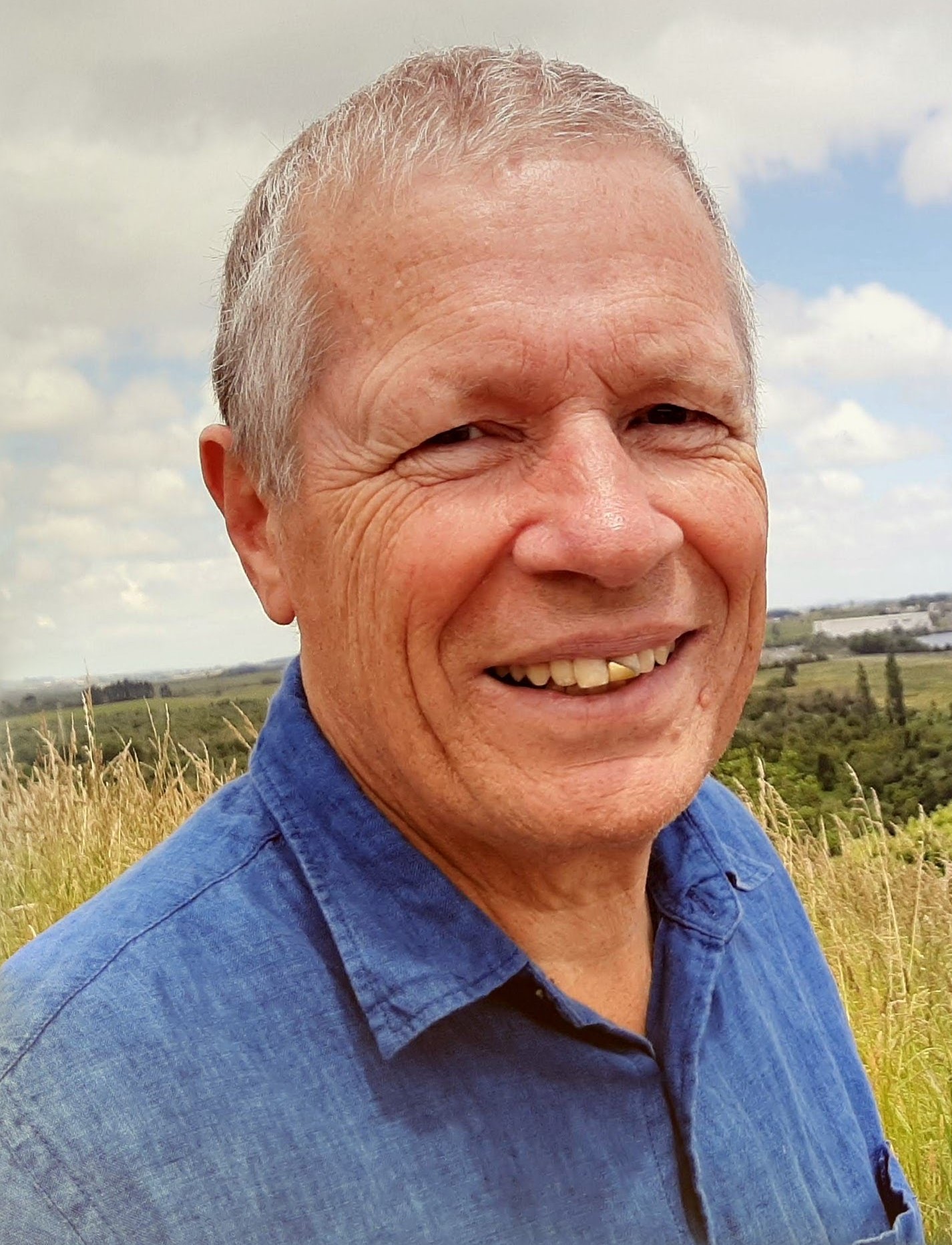
Fiji’s Minister for Defence and Veteran Affairs is facing a backlash after announcing that he was undertaking a multi-country, six-week “official travel overseas” to visit Fijian peacekeepers in the Middle East.
Pio Tikoduadua’s supporters say he should “disregard critics” for his commitment to Fijian peacekeepers, which “highlights a profound dedication to duty and leadership”.
However, those who oppose the 42-day trip say it is “a waste of time”, and that there are other pressing priorities, such as health and infrastructure upgrades, where taxpayers money should be directed.
Tikoduadua has had to defend his travel, saying that the travel cost was “tightly managed”.
He said that, while he accepts that public officials must always be answerable to the people they serve, “I will not remain silent when cheap shots are taken at the dignity of our troops, or when assumptions are passed off as fact.”
“Let me speak plainly: I am not travelling abroad for a vacation,” he said in a statement.
“I am going to stand shoulder-to-shoulder with our men and women in uniform — Fijians who serve in some of the harshest, most dangerous corners of the world, far away from home and family, under the blue flag of the United Nations and the red, white and blue of our own.
‘I know what that means’ Tikoduadua, a former soldier and peacekeeper, said, “I know what that means [to wear the Fiji Military Forces uniform].”
“I marched under the same sun, carried the same weight, and endured the same silence of being away from home during moments that mattered most.
“This trip spans multiple countries because our troops are spread across multiple missions — UNDOF in the Golan Heights, UNTSO in Jerusalem and Tiberias, and the MFO in Sinai. I will not pick and choose which deployments are ‘worth the airfare’. They all are.”
He added the trip was not about photo opportunities, but about fulfilling his duty of care — to hear peacekeepers’ concerns directly.
“To suggest that a Zoom call can replace that responsibility is not just naïve — it is offensive.”
However, the opposition Labour Party has called it “unbelievably absurd”.
“Six weeks is a long, long time for a highly paid minister to be away from his duties at home,” the party said in a statement.
Standing ‘shoulder to shoulder’ “To make it worse, [Tikoduadua] adds that he is . . . ‘not going on a vacation but to stand shoulder to shoulder with our men and women in uniform’.
“Minister, it’s going to cost the taxpayer thousands to send you on this junket as we see it.”
Tikoduadua confirmed that he is set to receive standard overseas per diem as set by government policy, “just like any public servant representing the country abroad”.
“That allowance covers meals, local transport, and incidentals-not luxury. There is no ‘bonus’, no inflated figure, and certainly no special payout on top of my salary.
As a cabinet minister, the Defence Minister is entitled to business class travel and travel insurance for official meetings. He is also entitled to overseas travelling allowance — UNDP subsistence allowance plus 50 percent, according to the Parliamentary Remunerations Act 2014.
Tikoduadua said that he had heard those who had raised concerns in good faith.
“To those who prefer outrage over facts, and politics over patriotism — I suggest you speak to the families of the soldiers I will be visiting,” he said.
“Ask them if their sons and daughters are worth the minister’s time and presence. Then tell me whether staying behind would have been the right thing to do.”
Responding to criticism on his official Facebook page, Tikoduadua said: “I do not travel to take advantage of taxpayers. I travel because my job demands it.”
His travel ends on May 25.
This article is republished under a community partnership agreement with RNZ.
A Palestinian advocacy group has called on NZ Prime Minister Christopher Luxon and Foreign Minister Winston Peters to take a firm stand for international law and human rights by following the Maldives with a ban on visiting Israelis.
Maher Nazzal, chair of the Palestine Forum of New Zealand, said in an open letter sent to both NZ politicians that the “decisive decision” by the Maldives reflected a “growing international demand for accountability and justice”.
He said such a measure would serve as a “peaceful protest against the ongoing violence” with more than 51,000 people — mostly women and children — being killed and more than 116,000 wounded by Israel’s brutal 18-month war on Gaza.
Since Israel broke the ceasefire on March 18, at least 1630 people have been killed — including at least 500 children — and at least 4302 people have been wounded.
The open letter said:
Dear Prime Minister Luxon and Minister Peters,
I am writing to express deep concern over the ongoing humanitarian crisis in Gaza and to urge the New Zealand government to take a firm stand in support of international law and human rights.
Palestinian Forum of New Zealand chair Maher Nazzal at an Auckland pro-Palestinian rally . . . “New Zealand has a proud history of advocating for human rights and upholding international law.” Image: Asia Pacific Report
The Maldives has recently announced a ban on Israeli passport holders entering their country, citing solidarity with the Palestinian people and condemnation of the ongoing conflict in Gaza.
This decisive action reflects a growing international demand for accountability and justice.
New Zealand has a proud history of advocating for human rights and upholding international law. In line with this tradition, I respectfully request that the New Zealand government consider implementing a temporary suspension on the entry of Israeli passport holders. Such a measure would serve as a peaceful protest against the ongoing violence and a call for an immediate ceasefire and the protection of civilian lives.
I understand the complexities involved in international relations and the importance of maintaining diplomatic channels. However, taking a stand against actions that result in significant civilian casualties and potential violations of international law is imperative.
I appreciate your attention to this matter and urge you to consider this request seriously. New Zealand’s voice can contribute meaningfully to the global call for peace and justice.
Sincerely, Maher Nazzal Chair Palestine Forum of New Zealand
JUST IN: 🇲🇻🇮🇱 Maldives President officially signs the law banning Israelis from entering the country. pic.twitter.com/rKRnlEw6WK
President Mohamed Muizzu signed the legislation after it was passed on Monday by the People’s Majlis, the Maldivian parliament.
Muizzu’s cabinet initially decided to ban all Israeli passport holders from the idyllic island nation in June 2024 until Israel stopped its attacks on Palestine, but progress on the legislation stalled.
A bill was presented in May 2024 in the Maldivian parliament by Meekail Ahmed Naseem, a lawmaker from the main opposition, the Maldivian Democratic Party, which sought to amend the country’s Immigration Act.
The cabinet then decided to change the country’s laws to ban Israeli passport holders, including dual citizens. After several amendments, it passed this week, more than 300 days later.
“The ratification reflects the government’s firm stance in response to the continuing atrocities and ongoing acts of genocide committed by Israel against the Palestinian people,” Muizzu’s office said in a statement.
Gaza’s Health Ministry said on Sunday that at least 1,613 Palestinians had been killed since 18 March, when a ceasefire collapsed, taking the overall death toll since Israel’s war on Gaza began in October 2023 to 50,983.
The ban went into immediate effect.
“The Maldives reaffirms its resolute solidarity with the Palestinian cause,” the statement added.
Last year, in response to talk of a ban, Israel’s Foreign Ministry advised its citizens against travelling to the country.
The Maldives, a popular tourist destination, has a population of more than 525,000 and about 11,000 Israeli tourists visited there in 2023 before the Israeli war on Gaza began.
Israel says President Donald Trump green lit a scorched-earth bombing of Gaza that wiped out entire families and killed dozens of infants and other children.
The US-backed Israeli government resumed its intense genocidal attacks on Gaza early yesterday morning, unleashing a massive wave of indiscriminate military strikes across the Strip and killing more than 410 people, including scores of children and women, according to local health officials.
The massacre resulted in one of the largest single-day death tolls of the past 17 months, and also killed several members of Gaza’s government and a member of Hamas’s political bureau.
The Trump administration said it was briefed ahead of the strikes, which began at approximately 2 am local time, and that the US fully supported Israel’s attacks.
“The sky was filled with drones, quadcopters, helicopters, F-16 and F-35 warplanes. The firing from the tanks and vehicles didn’t stop,” said Abubaker Abed, a contributing journalist for Drop Site News who reports from Deir al-Balah, Gaza.
“I didn’t sleep last night. I had a pang in my heart that something awful would happen. At 2 am, I tried to close my eyes. Once it happened, four explosions shook my home. The sky turned red and became heavily shrouded with plumes of smoke.”
Abubaker said Israel’s attacks began with four strikes in Deir al-Balah.
“Mothers’ wails and children’s screams echoed painfully in my ears. They struck a house near us. I didn’t know who to call. I couldn’t feel my knees. I was shivering with fear, and my family were harshly awakened,” he said.
‘My mother couldn’t breathe’ “My mother couldn’t take a breath. My father searched around for me. We gathered in the middle of our home, knowing our end may be near. That’s the same feeling we have had for the 16 months of intense bombings and attacks.
“The nightmare has chased us again.”
The Israeli attacks pummeled cities across Gaza — from Rafah and Khan Younis in the south to Deir al-Balah in the center, and Gaza City in the north, where Israel carried out some of the heaviest bombing in areas already reduced to an apocalyptic landscape.
Since the “ceasefire” took effect in January, more than half a million Palestinians returned to the north and many of them have been living in makeshift shelters or on the rubble of their former homes.
Hospitals that already suffer from catastrophic damage from 16 months of relentless Israeli attacks and a dire lack of medical supplies struggled to handle the influx of wounded people, and local authorities issued an emergency call for blood donations.
Late Tuesday morning, Dr Abdul-Qader Weshah, a senior emergency doctor at Al-Awda Hospital in Al-Nuseirat camp in central Gaza, described the situation.
“We’ve just received another influx of injuries following a nearby strike. We’ve dealt with them. We are just preparing ourselves for more casualties as more bombings are expected to happen,” he told Drop Site News.
‘Horrified . . . awoke to screams’ “Since the morning, we were horrified and awoke to the screams and pain of people. We’ve been treating many people, children and women in particular.”
Weshah said they have had to transfer some of the wounded to other hospitals because of a lack of medical supplies.
“We don’t have the means. Gaza’s hospitals are devoid of everything. Here at the hospital, we lack everything, including basic necessities like disinfectants and gauze. We don’t have enough beds for the casualties.
We don’t have the capacity to treat the wounded. X-ray devices, magnetic resonance imaging, and simple things like stitches are not available. The hospital is in an unprecedented state of chaos.
“The number of medical crews is not enough. Overwhelmed with injuries, we’re horrified and we don’t know why we are speaking to the world.
“We’re working with less than the bare minimum in our hands. We need doctors, devices and supplies, and circumstances to do our job.”
Al-Shifa hospital director Muhammad Abu Salmiya told Al Jazeera Arabic: “Every minute, a wounded person dies due to a lack of resources.”
The Indonesia Hospital morgue in Beit Lahia, Gaza on March 18, 2025. Image: Abdalhkem Abu Riash/Anadolu
Rising death toll Dr Zaher Al-Wahidi, the Director of the Information Unit at the Ministry of Health in Gaza, told Drop Site Tuesday afternoon that 174 children and 89 women were killed in the Israeli attacks. [Editors: Latest figures are 404 killed, including many children, and the toll is expected to rise as many are still buried beneath rubble.]
Local health officials and witnesses said that the death toll was expected to rise dramatically because dozens of people are believed to be buried under the rubble of the structures where they were sleeping when the bombing began.
“We can hear the voices of the victims under the rubble, but we can’t save them,” said a medical official at Al-Shifa Hospital in Gaza City.
Video posted on social media by Palestinians inside Gaza portrayed unspeakable scenes of the lifeless bodies of infants and small children killed in the bombings.
Zinh Dahdooh, a dental student from Gaza City, posted an audio recording she said was of her neighbours screaming as their shelter was bombed, trapping them in the destruction.
“Tonight, they bombed our neighbors,” she wrote on the social media site X. “They kept screaming until they died, and no ambulance came for them. How long are we supposed to live in this fear? How long!”
According to local health officials, many strikes hit buildings or homes housing multiple generations of families.
‘Wiped out six families’ “Israel in its strikes has wiped out at least six families. One in my hometown. The others are from Khan Younis, Rafah, and Gaza City. Some families have lost five or 10 members. Others have lost around 20,” Abubaker reported.
“We talk about families killed from the children to the old. The Gharghoon family was bombed today in Rafah. The strikes have killed the father and his two daughters. Their mom and grandparents along with their uncles and aunts were also murdered, erasing the entire family from the civil registry.
“We are talking about the erasure of entire families. Among Israel’s attacks in Deir al-Balah, Israel bombed the homes of the Mesmeh, Daher, and Sloot families.
“More than 10 people, including seven women, from the Sloot family were killed, wiping them out entirely. The same has happened to the Abu-Teer, Barhoom, and other families.
“This is extermination by design. This is genocide.”
On Tuesday, Palestinian Islamic Jihad confirmed that “Abu Hamza,” the spokesman of its military wing, Al Quds Brigades, had been killed along with his wife and other family members.
A hellish scene Israeli officials said they had been given a “green light” by President Donald Trump to resume heavy bombing of Gaza because of Hamas’s refusal to obey Trump’s directive to release all Israeli captives immediately.
“All those who seek to terrorise not just Israel but also the United States of America, will see a price to pay,” White House spokesperson Karoline Leavitt said on Fox News.
“All hell will break loose.”
Prime Minister Benjamin Netanyahu released a statement asserting that “Israel will, from now on, act against Hamas with increasing military strength”.
Israeli media reported that the decision to resume heavy strikes against Gaza was made a week ago and was not in response to any imminent threat posed by Hamas.
Israel, which has repeatedly violated the ceasefire that went into effect January 19, has sought to create new terms in a transparent effort to justify blowing up the deal entirely.
“This is unconscionable,” said Muhannad Hadi, the UN Humanitarian Coordinator for the Occupied Palestinian Territories.
“A cease-fire must be reinstated immediately. People in Gaza have endured unimaginable suffering.”
Compounding the crisis in Gaza’s hospitals, Israel recently began blocking the entry of international medical workers to the Strip at unprecedented rates as part of a sweeping new policy that severely limits the number of aid organisations Israel will permit to operate in Gaza.
Plumes of smoke from central Gaza just as Israel began its heavy bombing on Monday night. Image: Abubaker Abed/Drop Site News
Editor’s note: Due to the ongoing Israeli attacks, Abubaker Abed relayed his reporting and eyewitness account to Jeremy Scahill by phone and text messages. This article is republished from Drop Site News under Creative Commons.
The issue is no longer a hypothetical one. US President Donald Trump will not explicitly suggest death camps, but he has already consented to Israel’s continuing a war that is not a war but rather a barbaric assault on a desolate stretch of land. From there, the road to annihilation is short, and Israel will not bat an eye. Trump approved it.
COMMENTARY:By Gideon Levy
And what if US President Donald Trump suggested setting up death camps for the inhabitants of the Gaza Strip? What would happen then?
Israel would respond exactly as it did to his transfer ideas, with ecstasy on the right and indifference in the centrist camp.
Opposition leader Yair Lapid would announce that he would go to Washington to present a “complementary plan”, like he offered to do with regard to the transfer plan.
Benny Gantz would say that the plan shows “creative thinking, is original and interesting.” Bezalel Smotrich, with his messianic frame of mind, would say, “God has done wonders for us and we rejoice.” Benjamin Netanyahu would rise in public opinion polls.
The issue is no longer a hypothetical one. Trump will not explicitly suggest death camps, but he has already consented to Israel’s continuing a war that is not a war but rather a barbaric assault on a desolate stretch of land. From there, the road to annihilation is short, and Israel will not bat an eye. Trump approved it.
After all, no one In Israel rose up to tell the president of the United States “thank you for your ideas, but Israel will never support the expulsion of the Gaza Strip’s Palestinians.”
Hence, why be confident that if Trump suggested annihilating anyone refusing to evacuate Gaza, Israel would not cooperate with him? Just as Trump exposed the transfer sentiment beating in the heart of almost every Israeli, aimed at solving the problem “once and for all,” he may yet expose a darker element, the sentiment of “it’s us or them.”
A whitewasher of crimes It’s no coincidence that a shady character like Trump has become a guide for Israel. He is exactly what we wanted and dreamed about: a whitewasher of crimes. He may well turn out to be the American president who caused the most damage ever inflicted on Israel.
There were presidents who were tight-fisted with aid, others who were sour on Israel, who even threatened it. There has never been a president who has set out to destroy the last vestiges of Israel’s morality.
From here on, anything Trump approves will become Israel’s gold standard.
Trump is now pushing Israel into resuming its attacks on the Gaza Strip, setting impossible terms for Hamas: All the hostages must be returned before Saturday noon, not a minute later, like the mafia does. And if only three hostages are returned, as was agreed upon? The gates of hell will open.
They won’t open only in Gaza, which has already been transformed into hell. They will open in Israel too. Israel will lose its last restraints. Trump gave his permission.
But Trump will be gone one day. He may lose interest before that, and Israel will be left with the damage he wrought, damage inflicted by a criminal, leper state.
No public diplomacy or friends will be able to save it if it follows the path of its new ethical oracle. No accusations of antisemitism will silence the world’s shock if Israel embarks on another round of combat in the enclave.
A new campaign must begin One cannot overstate the intensity of the damage. The renewal of attacks on Gaza, with the permission and under the authority of the American administration, must be blocked in Israel. Along with the desperate campaign for returning the hostages, a new campaign must begin, against Trump and his outlandish ideas.
However, not only is there no one who can lead such a campaign, there is also no one who could initiate it. The only battles being waged here now, for the hostages and for the removal of Netanyahu, are important, but they cannot remain the only ones.
The resumption of the “war” is the greatest disaster now facing us, heralding genocide, with no more argument about definitions.
After all, what would a “war” look like now, other than an assault on tens of thousands of refugees who have nothing left? What will the halting of humanitarian aid, fuel and medicine and water mean if not genocide?
We may discover that the first 16 months of the war were only a starter, the first 50,000 deaths only a prelude.
Ask almost any Israeli and he will say that Trump is a friend of Israel, but Trump is actually Israel’s most dangerous enemy now. Hamas and Hezbollah will never destroy it like he will.
Gideon Levy is a Ha’aretz columnist and a member of the newspaper’s editorial board. He joined Ha’aretz in 1982, and spent four years as the newspaper’s deputy editor. He is the author of the weekly Twilight Zone feature, which covers the Israeli occupation in the West Bank and Gaza over the last 25 years, as well as the writer of political editorials for the newspaper. Levy visited New Zealand in 2017.
As Benjamin Netanyahu threatens to resume war, Hamas outlines widespread Israeli ceasefire violations in document sent to the mediators.
By Jeremy Scahill and Sharif Abdel Kouddous of Dropsite News
Hamas officials submitted a two-page report to mediators yesterday listing a wide range of Israeli violations of the Gaza ceasefire since the agreement went into effect on January 19 — including the killing of civilians, repeated ground and air incursions, the beating and humiliation of Palestinian captives during their release and the deportation of some without their consent, and the denial of humanitarian aid.
Drop Site News obtained a copy of the report delivered to mediators from Qatar and Egypt.
“Hamas is committed to the ceasefire agreement if the occupation is committed to the agreement,” Hamas said in a statement.
“We confirm that the occupation is the party that did not abide by its commitments, and it bears responsibility for any complications or delays.”
The move comes in response to accusations by US President Donald Trump and Israeli Prime Minister Benjamin Netanyahu that Hamas had violated the agreement, threatening a full resumption of the war — yet it was Israel’s nearly daily breaches of the deal that prompted Hamas to announce it would postpone the next release of Israeli captives.
On Monday, Abu Obeida, the spokesperson for the Al Qassam Brigades, Hamas’s military wing, announced the next planned release of three Israeli captives, scheduled for Saturday, would be “postponed indefinitely”.
Abu Obeida cited “delays in allowing displaced Palestinians to return to northern Gaza, targeting them with airstrikes and gunfire across various areas of the Strip, and failing to facilitate the entry of humanitarian aid as agreed”.
Israel violating ceasefire agreement Hamas issued a statement soon afterwards reiterating that Israel was violating the agreement by blocking aid, attacking civilians, and restricting movement in Gaza, and warning that the next release of captives would be postponed until it complied.
“By issuing this statement five full days ahead of the scheduled prisoner handover, Hamas aims to grant mediators sufficient time to pressure the occupation to fulfill its obligations,” the statement said.
Three Israeli officials and two mediators speaking anonymously to The New York Times confirmed that Israel had not fulfilled its obligations to send humanitarian aid into Gaza. This fact was mentioned in the 9th paragraph of the Times story.
In response, President Trump, on Monday told reporters that the ceasefire should be cancelled if Hamas did not release all the remaining captives it was holding in Gaza by midday Saturday, warning “all hell is going to break out”.
Yesterday, Israeli Prime Minister Benjamin Netanyahu doubled down on Trump’s comments.
“If Hamas does not return our hostages by Saturday noon,” Netanyahu said in a video statement, “the ceasefire will end, and the IDF will return to intense fighting until Hamas is finally defeated.”
Netanyahu reportedly ordered the military to add more troops in and around Gaza to prepare for “every scenario” if the captives were not released.
It was not immediately clear if he was referring to the three Israelis originally scheduled for release Saturday, all remaining captives, or all living Israelis slated for release in Phase 1.
Document submitted to mediators The two-page document submitted by Hamas to mediators yesterday divided the violations into five separate categories: Field Violations, Prisoners, Humanitarian Aid, Denial of Essential Supplies, and Political Violations.
Israel has repeatedly violated the ceasefire deal since it came into effect, targeting Palestinians in Gaza on an almost daily basis. The document outlines 269 “field violations” by the Israeli military, including the killing of 26 Palestinians and the wounding of 59 others.
Page 1 of the Hamas report of ceasefire violations by Israel. Image: Hamas screenshot APR/DDN
The number of people killed appears to be a dramatic undercount compared to the official toll documented by the Ministry of Health in Gaza.
The report also lists repeated ground incursions into Gaza beyond the designated buffer zone, particularly in the Philadelphi corridor — the 14km strip of land that runs along the border of Egypt.
These incursions “were accompanied by gunfire and resulted in the deaths of citizens and the demolition of homes,” the report said.
It also accused Israeli authorities of subjecting Palestinian captives to beatings and humiliation during their release, forcibly deporting released captives to Gaza without their coordination or consent, preventing families of deported prisoners from leaving the West Bank to join them, and delaying prisoner releases by several hours.
The report also says that fewer than 25 fuel trucks per day have been allowed into Gaza, which is half of the allotted 50 fuel trucks per day, as outlined in the deal. The entry of commercial fuel was blocked entirely, the report says, again in violation of the agreement.
Only 53,000 tents allowed Just over 53,000 tents were allowed into Gaza, the reports says, out of the 200,000 allotted and no mobile housing units out of the 60,000 agreed on.
Heavy machinery for the removal of massive amounts of debris and retrieval of bodies was similarly blocked, with only four machines allowed in.
Israel also blocked the entry of supplies to repair and operate the power plant and electrical grid, the report said.
No medical supplies, ambulances have been allowed in and no equipment for civil defense teams. Meanwhile banks were not allowed to receive cash to replenish a severe currency shortage.
The report ends on “Political Violations” criticising statements by the “Israeli Prime Minister and ministers openly calling for the expulsion of Gaza’s population, sending a clear message that the occupation does not wish to honour the agreement and aims to implement Trump’s plan to displace Gaza’s residents”.
It also criticises the “deliberate delay” in starting the negotiations on Phase 2 of the ceasefire and “the introduction of impossible conditions.”
A summary of the Israeli ceasefire violations. Image: QudsNews
I watched US President Donald Trump’s joint press conference with Israeli Prime Minister Benjamin Netanyahu last week in utter disbelief. Not that the idea, or indeed the practice, of ethnic cleansing of Palestine is new.
But at that press conference the mask has fallen. Recently, fascism has been on the march everywhere, but that press conference seemed to herald an age of naked fascism.
So the Palestinians have just been “unlucky” for decades.
“Their lives have been made hell.” Thank God for grammar’s indirect speech. Their lives have been made hell. We do not know who made their lives hell. Nothing to see here.
Trump says of Gaza: “We’ll own it and be responsible for dismantling all of the dangerous unexploded bombs and other weapons on the site, level the site, and get rid of the destroyed buildings — level it out and create an economic development that will supply unlimited numbers of jobs and housing for the people of the area . . . ”
I wonder who are those lucky “people of the area” he has in mind, once those “unlucky” Palestinians have been “transferred” out of their homeland.
Trump speaks of transforming Gaza into a magnificent “Riviera of the Middle East”. Obviously, the starved amputees of Gaza do not fit his image of the classy people he wants to see in the Riviera he wants to build, on stolen Palestinian land.
No ethnic cleansing questions After the press conference, I did not hear a single question about ethnic cleansing, genocide, occupation or international law.
Under the new fascist leaders, just like under the old ones, those words have become old-fashioned and are to be expunged from the lexicon.
The difference has never been more striking between the meek who officially hold the title “journalist” and the brave who actually work to hold the powerful to account.
Now, more than ever, independent journalists are a threatened species. We should treasure them, support them and protest every attempt to silence them.
Gaza is now the prototype. We can forget international laws and international organisations. We have the bombs. You do as we wish or you will be obliterated.
Who now dares say that the forced transfer of a population by an occupying power is a war crime under the Geneva Convention? But then again, Trump and Netanyahu are not really talking about “forced transfer”. They are talking about “voluntary transfer”.
Once the remaining Israeli hostages have been freed, and water and food have been cut off again, those unlucky Palestinians will climb voluntarily onto the buses waiting to transport them to happiness and prosperity in Egypt and Jordan.
Or to whatever other client state Trump manages to threaten or bribe.
Can the International Criminal Court (ICC) command a shred of respect when Netanyahu is sharing the podium with Trump? Or indeed when Trump is at the podium?
Dismantling the international order Recently, fascist leaders have been dismantling the international order by accusing its organisations and officials of being “antisemitic” or “working with terrorists”. Tomorrow they will defund and delegitimise these organisations without the need for an excuse.
I listen to Trump speak of combatting antisemitism and deporting Hamas sympathisers and I hear, “We will combat anti-Israel views and we will deport those who protest Israel’s crimes.
“And we will continue to conflate antisemitism and anti-Israel’s views in order to silence pro-Palestinian voices.”
I watch Trump and Netanyahu, the former reading the thoughts of a real estate developer turned into a president’s speech and the latter grinning like a Cheshire cat — and I am gripped by fear. Not just for the Palestinians, but for all humanity.
If we think fascism is only coming for people on a distant shore, we ought to think again.
I watch Netanyahu repeating lies that investigative journalists have spent months debunking. Why would he care? The truth about his lies will not make it to mainstream media and the consciousness of the majority of people.
Hamas suspends the release of Gaza captives, accusing Israel of violating the ceasefire by continuing to kill Palestinians and blocking humanitarian aid.
Lies taking hold, enduring And the more he repeats those lies, the more they take hold and endure.
I wonder how our political leaders will spin our allies’ new, illegal and immoral plans. For years, they have clung to the mantra of the two-state solution while Israel continued to make every effort to render this solution unfeasible.
What will they say now? With what weasel words will they stay on the same page as our friends in the US and Israel?
Netanyhu praises Trump for thinking outside the box. Here is an idea that Israel has spent billions on arms and propaganda to persuade people that it is dangerously outside the box.
Instead of asking Egypt and Jordan to take the Palestinians, why not make Israel end the occupation and give Palestinians equal rights in their own homeland?
Sawsan Madina is former head of Australia’s SBS Television. This article was first published by John Menadue’s public policy journal Pearls and Irritations and is republished with permission.
One of the key early leaders of a national Palestinian solidarity network in Aotearoa New Zealand today praised the “heroic” resilience and sacrifice of the people of Gaza in the face of Israel’s ruthless attempt to destroy the besieged enclave of more than 2 million people.
Speaking at the first solidarity rally in Auckland Tāmaki Makaurau since the fragile ceasefire came into force last Sunday, Janfrie Wakim of the Palestine Solidarity Network Aotearoa (PSNA) also paid tribute to New Zealand protesters who have supported the Palestine cause for the 68th week.
“Thank you all for coming to this rally — the first since 7 October 2023 when no bombs are dropping on Gaza,” she declared.
“The ceasefire in Gaza is fragile but let’s celebrate the success of the resistance, the resilience, and the fortitude — the sumud [steadfastness] — of the heroic Palestinian people.”
Wakim was formerly a member of Palestine Human Rights Campaign (PHRC) in Auckland which began in the 1970s. This was later absorbed into the nationwide movement PSNA at a conference in 2013.
“Israel has failed,” she continued. “It has not achieved its aims — in the longest war [15 weeks] in its history — even with $40 billion in aid from the United States.
“It has failed to depopulate the north of Gaza, it has a crumbling economy, and 1 million Israelis [out if 9 million] have left already.”
Wakim said that the resistance and success in defeating Israel’s “deadly objectives” had come at a “terrible cost”.
“We mourn those with families here and in Gaza and now in the West Bank who made the ultimate sacrifice with their lives — 47,000 people killed, 18,000 of them children, thousands unaccounted for in the rubble and over 100,000 injured.
Grieving for journalists, humanitarian workers “We grieve for but salute the journalists and the humanitarian workers who have been murdered serving humanity.”
Janfrie Wakim speaking at today’s Palestine rally in Tamaki Makaurau. Video: APR
She said the genocide had been enabled by the wealthiest countries in the world and the Western media — “including our own with few exceptions”.
“Without its lies, its deflections, its failure to report the agonising reality of Palestinians suffering, Israel would not have been able to commit its atrocities,” Wakim said.
“And now while we celebrate the ceasefire there’s been an escalation on the West Bank — air strikes, drones, snipers, ethnic cleansing in Jenin with homes and infrastructure being demolished.
“Checkpoints have doubled to over 900 — sealing off communities. And still the Palestinians resist.
“And we must too. Solidarity. Unity of purpose is all important. Bury egos. Let humanity triumph.”
Palestinian liberation advocate Janfrie Wakim . . . “Without its lies, its deflections, its failure to report the agonising reality of Palestinians suffering, Israel could not have been able to commit its atrocities.” Image: David Robie/APR
90-year-old supporter During her short speech, Wakim introduced to the crowd the first Palestinian she had met in New Zealand, Ghazi Dassouki, who is now aged 90.
She met him at a Continuing Education seminar at the University of Auckland in 1986 that addressed the topic of “The Palestine Question”. It shocked the establishment of the time with Zionist complaints and intimidation of staff which prevented any similar academic event until 2006.
Wakim called for justice for the Palestinians.
“Freedom from occupation. Liberation from apartheid. And peace at last after 76 years of subjugation and oppression by Israel and its allies,” she said
She called on supporters to listen to what was being suggested for local action — “do what suits your situation and energy. Our task is to persist, as Howard Zinn put it”.
“When we organise with one another, when we get involved, when we stand up and speak out together, we can create a power no government can suppress,” she said.
“We don’t have to engage in grand, heroic actions to participate in the process of change. Small acts, when multiplied by millions of people, can transform the world.”
Introduced to the Auckland protest crowd today . . . Ghazi Dassouki, who is now aged 90.
As a symbol for peace and justice in Palestine, slices of water melon and dates were handed out to the crowd.
Calls to block NZ visits by IDF soldiers Among many nationwide rallies across Aotearoa New Zealand this weekend, were many calls for the government to suspend entry to the country from soldiers in the Israeli Defence Forces (IDF).
“New Zealand should not be providing rest and recreation for Israeli soldiers fresh from the genocide in Gaza,” said PSNA national chair John Minto.
“We wouldn’t allow Russian soldiers to come here for rest and recreation from the invasion of Ukraine so why would we accept soldiers from the genocidal, apartheid state of Israel?”
As well as the working holiday visa, since 2019 Israelis have been able to enter New Zealand for three months without needing a visa at all.
This visa-waiver is used by Israeli soldiers for “rest and recreation” from the genocide in Gaza.
Minto stressed that IDF soldiers had killed at least 47,000 Palestinians — 70 percent of them women and children.
“All these red flags for genocide have been visible for months but the government is still giving the green light to those involved in war crimes to enter New Zealand,” Minto said.
Last month, PSNA again wrote to the government asking for the suspension of travel to New Zealand for all Israeli soldiers and reservists.
Meanwhile, 200 Palestinian prisoners held in Israeli jails have been set free under the terms of the Gaza ceasefire deal between Israel and Hamas. Seventy of them will be deported to countries in the region, reports Al Jazeera.
Masses of people have congregated in Ramallah, celebrating the return of the released Palestinian prisoners.
A huge crowd waved Palestinian flags, shouted slogans and captured the joyful scene with their phones and live footage shows.
The release came after Palestinian fighters earlier handed over four female Israeli soldiers who had been held in Gaza to the International Red Cross in Palestine Square.
The smiling and waving soldiers appeared to be in good health and were in high spirits.
UN President Donald Trump’s idea of mass expulsion of Palestinians in Gaza to Jordan and Egypt has been dismissed by analysts as unaccepable “ethnic cleansing” and rejected by the governments of both neigbouring countries.
Middle East analyst Mouin Rabbani, a nonresident research fellow at the Middle East Council on Global Affairs and commentator specialising in Palestinian affairs and the Arab-Israeli conflict, said the US and Israel would “fail” over such a plan.
President Trump’s suggestion had been to “clean out” Gaza and move 1.5 million Palestinians to Jordan and Egypt.
“Even if [President Trump] applies pressure on Jordan and Egypt, I think their leaderships will recognise the price of going along with Trump is going to be much greater than the price of resisting him — in terms of the survival of their leaderships for participating in something like this,” Rabbani told Al Jazeera, referring to Trump’s plan as “ethnic cleansing”.
The rebuttals to the Trump idea came as Gaza experienced an historic day with jubilant scenes as tens of thousands of Palestinians crossed the so-called Netzarim Corridor to return home in the north showing their determination to survive under the 15-month onslaught by Israel’s military.
Al Jazeera journalist Tamer al-Misshal said it was a “significant and historic moment” for the Palestinians.
“It’s the first time since 1948 those who have been forced out of their homes and land managed to get back — despite the destruction and despite the genocide,” he said.
He quoted one Palestinian man who returned as saying he would erect a tent on his destroyed home, “which is much better than being forcibly displaced from Gaza”.
Al-Misshal noted Hamas recently said 18 more Israeli captives were alive and would be returned each Saturday in exchange for Palestinian prisoners over the next few weeks.
He said the next main step was to get the Rafah land crossing opened so aid could flow and thousands of badly wounded Palestinians could get medical treatment abroad.
‘Blanket refusal’
Analyst Mouin Rabbani . . . “Israel is not going to succeed in ethnically cleansing the Gaza Strip after a war.” Image: Middle East Council on Global Affairs
Analyst Mouin Rabbani told Al Jazeera about the Trump displacement idea: “This isn’t going to happen because Israel is not going to succeed in ethnically cleansing the Gaza Strip after a war, after having failed to do so during a war.”
When former US Secretary of State Antony Blinken went on a tour of Arab states to promote this idea late last year, he had been met with a “blanket refusal”, Rabbani added.
Meanwhile, in Tel Aviv Prime Minister Benjamin Netanyahu was feeling the heat from his coalition partners over the ceasefire deal who view the Israeli leader as succumbing to US demands, the analyst said.
“I think there’s a kind of a mix of personal, political and ideological factors at play,” Rabbani said.
“Day of victory” . . . How Al Jazeera reported the return of Palestinians to north Gaza today. Image: AJ screenshot APR
“But ultimately, I think the key relationship to look at here is not that between Netanyahu and his coalition partners, or between Israelis and Palestinians, but between Washington and Israel — because Washington is the one calling the shots, and Israel has no choice but to comply.”
A senior Hamas official, Basem Naim, has described the “return” day as “the most important day in the current history of this conflict”.
He said that Israel was “for the first time” obliged to allow Palestinians to return to their houses after being forced “by the resistance”, in a similar way that it was “forced to release” Palestinian prisoners.
Al Jazeera’s Hani Mahmoud reporting on the “Day of Return” for Palestinians going back to north Gaza. Image: AJ screenshot APR
‘Very symbolic day’ in conflict “This is, I think, a very symbolic day,” he said. “This is a very important day in how to approach this conflict with the Israelis, which language they understand.”
Naim also reaffirmed Hamas’s commitment to the ceasefire agreement and said the group was “ready to do the maximum to give this deal a chance to succeed”.
He also accused Netanyahu and the Israeli government of playing “dirty games” in a bid to “sabotage the deal”.
It “rejected any infringement on those inalienable rights, whether by settlement or annexation of land, or by the depopulation of that land of its people through displacement, encouraged transfer or the uprooting of Palestinians from their land, whether temporarily or long-term.”
The 1948 Nakba . . . more than 750,000 Palestinians were forced to leave their homeland and become exiles in neighbouring states and in Gaza. Many dream of their UN-recognised right to return. Image: Wikipedia
New York prosecutors have charged Luigi Mangione with “murder as an act of terrorism” in his alleged shooting of health insurance CEO Brian Thompson earlier this month.
The report contains testimony from Israeli troops that civilians are being murdered in Gaza and are then being retroactively designated as terrorists to justify their execution.
“People need to know what this war really looks like, what serious acts some commanders and fighters are committing inside Gaza. They need to know the inhuman scenes we’re witnessing,” an Israeli commander who returned from the Netzarim corridor sayshttps://t.co/2y6ONxREy8
“We’re killing civilians there who are then counted as terrorists,” a recently discharged officer told Haaretz.
These two stories together say so much about the way the label “terrorist” is used under the US-centralised power umbrella.
The guy who shot the health insurance CEO is a terrorist, but the people systematically slaughtering civilians in Gaza are not terrorists. The people fighting against those who are slaughtering the civilians are terrorists, and noncombatants are being categorized as belonging to this terrorist organisation in order to justify killing them. The al-Qaeda affiliates in Syria were terrorists, but now they’re a US puppet regime so soon they won’t be terrorists — but they need to be designated terrorists for a little while longer because the claim that Syria is crawling with terrorists is Israel’s justification for its recent land grabs there. The Uyghur militant group ETIM used to be a terrorist group, but now they’re not a terrorist group because they can be used to help carve up Syria and maybe fight China later on. The IRGC is a military wing of a sovereign nation, but it counts as a terrorist group because of vibes or something.
Is that clear enough?
Really the label “terrorist” is nothing more than a tool of imperial narrative control which gets moved around based on whether or not someone’s use of violence is deemed legitimate by the managers of the empire. Because Mangione’s alleged crime has ignited a public interest in class warfare, the label “terrorism” is being used to frame it as an especially heinous act of evil against an innocent member of the public.
The empire’s favourite trick is to begin the historical record at the moment its enemies retaliate against its abuses. Oh no, a health insurance CEO was victimised by an evil act of terrorism. Oh no, Israel was just innocently minding its own business when it was viciously attacked by Hamas. Oh no, Iran attacked Israel completely out of the blue and now Israel must retaliate. Oh no, Russia just launched an entirely unprovoked war on Ukraine.
Everything that led up to the unauthorised act of violence is erased from the record, because all of the violence, provocation and abuse which gave rise to the unauthorised act of violence were authorized by the empire. Authorised aggression doesn’t count as aggression.
Whoever controls the narrative controls the world. If you control the narrative you can control not only when the historical record of violence begins but what kinds of violence qualify as violence. Killing people by depriving them of healthcare because denying healthcare services is how your company increases its profit margins? That’s not violence. Inflicting tyranny and abuse upon a deliberately marginalised ethnic group in an apartheid state? That’s not violence. Violence is when you respond to those forceful aggressions with forceful aggressions of your own.
If we are to become a healthy society, we’re going to have to stop allowing some forms of violence, aggression and abuse to be redacted from the official records while others are listed and condemned. Those who care about truth and justice account for all forms of violence, aggression and abuse, not only those which inconvenience the rich and powerful.
It is an act of aggression to do things which sicken and impoverish others in order to advance your own wealth.
It is an act of aggression to pollute the biosphere we all depend on for survival in order to increase your profit margins.
It is an act of aggression to use your wealth to manipulate your nation’s politics in ways which exacerbate inequality and injustice.
It is an act of aggression to maintain an apartheid state which cannot exist without nonstop violence.
It is an act of aggression to surround the earth with military bases and encircle nations which disobey your dictates.
It is an act of aggression to try to rule the world using military violence, proxy conflicts, staged coups, threats, starvation sanctions, and financial and economic coercion.
These are all acts of aggression, and any retaliation against them will never be an unprovoked attack. As we move into the future while these abuses exacerbate, it’s going to become very important to maintain an acute awareness of this.
NERMEEN SHAIKH: Israel’s deadly siege on northern Gaza has entered a 30th day. Early week, the World Health Organisation managed to deliver some medical supplies to the Kamal Adwan Hospital, but on Thursday, Israeli fighter jets bombed the hospital’s third floor, where the supplies were being stored.
Al Jazeera reports Israeli forces are continuing to shell Beit Lahia, the scene of multiple massacres last week. On Wednesday, an Israeli attack on a market in Beit Lahia killed at least 10 Palestinians. Earlier in the week, Israel struck a five-story residential building, killing at least 93 people, including 25 children.
Meanwhile, at the United Nations, the UN Special Rapporteur on the Occupied Palestinian Territory, Francesca Albanese, has released a major report accusing Israel of committing genocide.
Albanese concludes that Israel’s war on Gaza is part of a campaign of, “long-term intentional, systematic, state-organised forced displacement and replacement of the Palestinians” . The report is titled Genocide as Colonial Erasure.
AMY GOODMAN: Francesca Albanese is now facing intensifying personal attacks from Israeli and US officials. She was set to brief Congress earlier last week, but the briefing was cancelled. On Tuesday, the US Ambassador to the United Nations, Linda Thomas-Greenfield, wrote on social media, “As UN Special Rapporteur Albanese visits New York, I want to reiterate the US belief she is unfit for her role. The United Nations should not tolerate antisemitism from a UN-affiliated official hired to promote human rights.”
On Wednesday, Francesca Albanese spoke at the United Nations and responded to the US attacks.
FRANCESCA ALBANESE: I have the same shock that you have, looking at how the United States is behaving in this context, in the context of the genocide that is unfolding in Gaza. I’m not — I’m not surprised that they attack anyone who speaks to the facts that are, frankly, on our watch in Gaza. And they do that so brutally because they feel called out, because it’s not that it’s that the United States is simply an observer. The United States is being an enabler in what Israel has been doing.
AMY GOODMAN: That was UN Special Rapporteur Francesca Albanese speaking at the United Nations on Wednesday. She joins us here in our studio.
Welcome back to Democracy Now! Thanks so much for joining us.
Well, before we get you to further respond to what the US and Israel is saying, can you lay out the findings of your report?
Colonial Erasure’: UN expert Francesca Albanese on Israel’s “intent to destroy” Gaza Video: Democracy Now!
FRANCESCA ALBANESE: Absolutely. First of all, thank you for having me.
I have to say that this report is the second I write on — and I present to the United Nations on the topic of genocide. And it has been very reluctantly that I’ve taken on the responsibility to be the chronicler of — the chronicler of an unfolding genocide in Gaza.
In March this year, I concluded that there were reasonable grounds to believe that Israel had committed at least three acts of genocide in Gaza, like killing members of the protected group, Palestinians; inflicting severe bodily and mental harm; and creating conditions of life that would lead to the destruction of the group. And the reason why I identified these were not just war crimes and crimes against humanity is because I identified an intent to destroy.
And I understand that even in this country, people are quite confused about what is genocidal intent, because it’s not a motive. One can have many motives to commit a crime. And I understand genocide is a very insidious one, and it’s difficult to identify what’s a motive. But this is not about the motives. The intent to commit genocide is the determination to destroy, which is fully evident in — especially in the Gaza Strip, as I identified in — as argued in March already.
The reason why I continue to write about genocide — and, in fact, this report walks on the heels of the previous one — is in order to better explain the intent, especially state intent, because there is another misunderstanding that there should be a trial of the alleged perpetrators in order to have — to attribute responsibility to a state.
No, because not only you have had acts committed that should have been prevented by the — in a rule of law, in a proclaimed rule of law system like Israel, where there is the government, the Parliament, the judiciary, working as checks and balances, genocide has not only been not prevented, [it] has been enabled through the various organs of the state.
And I explain what has happened as of October 7, which has provided the opportunity to escalate violence, to build on the rage and on the fury of many Israelis, turning the soldiers into willful executioners, is that there was already a plan, hatred.
I mean, the Palestinians, like Ilan Pappé says, are victims not of war, but of a political ideology that has been unleashed. Palestinians have always been an unwanted encumbrance in the Israeli mindset, because they are an obstacle both as an identity and as legal status to the realisation of Greater Israel as a state for Jewish Israelis only.
NERMEEN SHAIKH:So, we’ll go back to — because I do want to ask about the Israeli state institutions that you name and the branches of the Israeli state that have been involved in forming this state’s intent. But if you could elaborate on the point that you make, the difference between intent and motive, and in particular what you say in the report about how it’s critical to determine genocidal intent, “by way of inference”?
You know, that’s a different phrasing than one has heard in all of this conversation about genocide so far. If you explain what you mean by that and what such a determination makes possible? So, rather than just looking at genocidal intent in other forms, what it means to infer genocidal intent?
FRANCESCA ALBANESE: So, first of all, what constitutes genocide is established by Article II of the Genocide Convention, which creates a twofold obligation for member states, to prevent genocide so genocide doesn’t have to complete itself. When there is a manifestation of intent, even genocidal intent, there is already an obligation to intervene, because a crime is unfolding.
And then there is an obligation to punish. How the jurisprudence, especially after Rwanda and after former Yugoslavia, there have been cases both for criminal proceedings, where individual perpetrators have been investigated and tried, and [the] responsibility of the state, litigated before the International Court of Justice. This is how the jurisprudence on genocide has developed.
And the intent has been further elaborated upon what the Genocide Convention says. And while it might be difficult to have direct intent, meaning to have — it’s difficult but not impossible, in fact, to have a state official say, “Yes, let’s go and destroy everyone” — although I do believe that there is direct intent in this genocide in Gaza.
But the court also established that genocide can be inferred from the scale of the attack on the people, the nature of the attack, the general conduct. And what it says is that normally there should be a holistic approach in order to identify intent, which is exactly what I’ve done.
And indeed, this is why I proposed in this report what I called the triple lens approach. We need to look at the conduct, like the totality of the conduct, instead of studying with a microscope each and every crime. We need to look at the whole, against the totality of the people, the Palestinians as such, in the totality of the land, that Israel has slated as its own by divine design.
NERMEEN SHAIKH: No, absolutely. And then, if you could — the other precedent you’ve just spoken about — of course, Rwanda and former Yugoslavia — another case that you cite in the International Court of Justice is The Gambia v. Myanmar. So, how is that comparable to what we see happening in Gaza? Why is that a relevant example and different from both Rwanda and former Yugoslavia?
FRANCESCA ALBANESE: Let me tell you what I see as the major differences in the case of Israel, because it’s a very complex discussion. But in all four cases, there is a toxic combination of hatred, ideological hatred, which has informed political doctrines. And this is true in all the various contexts we are mentioning. The other common element is that there is [a] combination of crimes. Like, forced displacement is not an act of genocide per se, but the jurisprudence says that it can contribute to corroborate the intent.
But, again, mass killing or mass destruction of property, torture and other crimes against a person, which translate into an infliction of physical and mental harm to the group, not individuals as such, but individuals as part of the group, these are common elements to all genocides.
What I find characteristic in this one is, first of all, this is not — I mean, the state of Israel is not Myanmar and is not Rwanda 30 years ago. This is not war-torn former Yugoslavia. This is a state which has a separation of powers, different organs, as I said, checks and balances. And let me give you a specific example, because you asked me to comment on the state functions.
In January this year, the International Court of Justice issued a set of preliminary measures in the context of its identification, before even looking at the merits of the case initiated by South Africa for Israel’s breach, alleged breach, of the Genocide Convention, which identified the plausibility of risk for the rights protected — of the rights of the Palestinians protected under the Genocide Convention, which means plausibility — it’s semantics, but it’s plausibility that genocide might be committed against the Palestinians in Gaza.
And the provisional measures included an obligation to investigate and prosecute the various cases of incitement, genocidal incitement, that the court had already identified. And it mentions leaders, senior leaders, of the Israeli state. Has there been any investigation? Has there been any prosecution?
But I’m telling you more. The genocidal statements didn’t resonate as shocking in the Israeli public, not only because there was rage, an enormous rage and animosity, of course. I mean, this is understandable, that the facts of October 7 were brutal and traumatized the people.
But at the same time, hatred against the Palestinians and hate speech, it’s not something that started on October 7. I do remember, and I do remember the shock I felt because no one was reacting, and years ago, there were Israeli ministers talking of — freely, of killing, justifying the killing of Palestinians’ mothers and children because they would turn into terrorists.
AMY GOODMAN: Francesca Albanese, talk about the title of your report, Genocide as Colonial Erasure.
FRANCESCA ALBANESE: This is another element which I think — and, in fact, it’s the most important, where we see the difference between this genocide and others, because there is a settler-colonial component. And again, if you look at what the International Court of Justice in July this year concluded, when it decided that the — when it found that Israel’s 57 years of occupation in Gaza, the West Bank and East Jerusalem is unlawful and needs to be withdrawn totally and unconditionally, as rapidly as possibly, which the General Assembly says by September 2025.
The court said that it amounts to — that the colonies amount to — have led to a process of annexation and racial segregation and apartheid. And these are the features of settler colonialism, the taking of the land, the taking of the resources, displacing the local population and replacing it. This has been a feature.
Now, it is in this context that we need to analyse what is happening today. And by the way, don’t believe, don’t listen only to Francesca Albanese. Listen to what these Israeli leaders and ministers are saying — reoccupying Gaza, retaking Gaza, recolonising Gaza, reconquesting Gaza. This is what they are saying.
And there are settlers on expeditions, not only to Gaza but also to Lebanon. So, this is why I say that the main difference, the main feature of this genocide, apart all the horrible aspects of it, is that this is the first settler-colonial genocide to be ever litigated before a court, an international court.
And this is why coming to this country, which is a country birthed from a genocide, when I meet the Native Americans, for example, I feel the pain of these people. And I say if we manage to build on the intersectionality of Indigenous struggle, the cry for justice behind this case for Palestine will resonate even louder, because it will somewhat be an act of atonement from the settler-colonial endeavor, which has sprouted out of Europe, toward Indigenous peoples. So there is a lot of symbolism behind it.
NERMEEN SHAIKH:And, you know, the analogy — first of all, you talked about the case brought by South Africa, so what they share, apart from South Africa and Israel-Palestine, is both the fact that they were colonial-settler states, as well as the fact that apartheid has been established as having occurred in both places.
Now, in the case of South Africa, it was a decision that was taken by the United Nations at the time of apartheid, was unseating South Africa from the General Assembly. There have been calls now to do the same with Israel. So, if you could — if you could comment on that?
And then, I just want to quote another short sentence from your report, in which you say, “As the world watches the first live-streamed settler-colonial genocide, only justice can heal the wounds that political expedience has allowed to fester.” So, if you could talk about the International Court of Justice’s case in that context, what role you think they can play, South Africa’s case, in resolving or addressing — seeing and addressing this wound?
FRANCESCA ALBANESE: First of all, let me unpack the question of the unseating Israel, because this is one of the recommendations I made in my report. Under Article 6 of the UN Charter, a member state can be suspended of its credentials or its membership by the General Assembly upon recommendation of the UN Security Council. And the first criticism I got is that we cannot do that, because every states commit international law violations. Absolutely. Absolutely.
But there are two striking features here. First, Israel is quite unique in maintaining an unlawful occupation, which has deemed such by — in at least one full occasion, but again, there was already a case brought before the ICJ in 2004, so there have been two ICJ advisory opinions.
There is a pending case for genocide. There has been the violations of hundreds of resolutions by the — on Israel — over occupied Palestinian territory, by the Security Council, the General Assembly, the Human Rights Council, and steady violation of international humanitarian law, human rights law, the Apartheid Convention, the Genocide Convention. So this is quite unique.
But all the more, this year alone, Israel has conducted an attack, an unprecedented attack, against the United Nations. It has attacked physically, through artillery, weapons, bombs, UN premises. Seventy percent of UNRWA offices and UNRWA buildings, clinics, distribution centers have been hit and shelled by the Israeli army.
Two hundred and thirty UN staff members have been killed by Israel in Gaza alone. UN peacekeepers in Lebanon have been attacked. And this doesn’t even take into account the smear, the defamation against senior UN officials, the declaration of the secretary-general as persona non grata, the referring to the General Assembly as a “cloak of antisemites”.
Again, this has mounted to a level — the hubris against the United Nations and international law has been unchecked and unbounded forever, but now, especially after the Knesset passed a law outlawing UNRWA, declaring UNRWA a terrorist organisation, and therefore disabling it from its capacity to deliver aid and assistance especially in Gaza and the West Bank and East Jerusalem, this is the nail in the coffin of the UN Charter.
And it can also contribute to that sense of colonial erasure, because here it’s not just at stake the function of a UN body — and UNRWA is a subsidiary body of the General Assembly, so it’s even more serious. But there is the capacity of UNRWA to deliver humanitarian aid in a desperate situation, and also the fact that UNRWA is seen by Israel as the symbol of Palestinian identity, especially the Palestinian refugees. So there is an attempt to erase Palestinianness, including by hitting UNRWA.
AMY GOODMAN: I want to ask you about your trip here, as we begin to wrap up. The US Ambassador to the United Nations, Linda Thomas-Greenfield, quoted on — tweeted on Tuesday, “As UN Special Rapporteur Albanese visits New York, I want to reiterate the US belief she is unfit for her role. The United Nations should not tolerate antisemitism from a UN-affiliated official hired to promote human rights.” If you can further address their charge of antisemitism against you?
FRANCESCA ALBANESE: Yeah.
AMY GOODMAN: And talk about what happened. You were supposed to come to Congress and speak and brief them, but that was cancelled this week.
FRANCESCA ALBANESE: Yes, it was canceled. But let me — first of all, I’m very embarrassed to read this, because a senior US official who writes this, I mean, it shows a little bit of desperation. I’m sorry, but, you know, I’m very candid.
And let me unpack my antisemitism for the audience. So, what I’ve been accused of — the reason why I’ve been accused of antisemitism — is because I’ve allegedly compared the Jews to the Nazis. Never done. Never done.
What I’ve said, what I’ve done is saying, and I keep on saying, that history is repeating itself. I’ve never done such a comparison where I draw the parallel. It’s on the behaviour of member states who have the legal and moral obligation to prevent atrocities, including an unfolding genocide.
In the past, they have done nothing — nothing — until the end of the Second World War, to prevent the genocide of the Jews and the Roma and Sinti. And they’ve done nothing to prevent the genocide of the Bosnians.
And they’ve done nothing to prevent the genocide of the Rwandans. And they are doing the same today. This is where I insist that now, compared to when there was the Holocaust, now we have a human rights framework that should prevent this. The Genocide Convention to prevent this. So, this is one of the points.
The second point, — which leads to portray me as an antisemite, which is really offensive — is that I’ve said that October 7 was not — I’ve contested, I’ve challenged the argument that October 7 was an antisemitic attack. October 7 was a crime, was heinous. And again, I’ve condemned the acts that were directed against the Israeli civilians, and expressed solidarity with the victims, with the families. I’ve been in contact with the families of the hostages.
But I’ve also said the hatred that led that attack, that prompted that attack, to the extent it hit civilians, not the military, but it was prompted not by the fact that the Israelis are Jews, but the fact that the Israelis — I mean, the Israelis are part of that endeavor that has kept the Palestinians in a cage for 17 years and, before, under martial law for 37 years. And Palestinians have tried — it’s true they have used violence, but before violence, they have tried dialogue. They have tried collaboration. They have tried a number of means to access justice, and they have gone nowhere.
I can — I mean, let me relate just this case, because last year I worked with children. And someone who was 17 years old before October 7 last year had never set foot out of Gaza. This is the reality. And I spoke with children while I was writing my report on “unchilding”, the experience of Palestinians under Israeli occupation. And one of them — I mean, there were these two girls fighting, because one of them had been able to go to Israel and the West Bank because she had cancer and could be treated, and the other was jealous, because, she said, “At least she was sick, and she could go, she could travel. I’ve never seen the mountains.”
And again, this doesn’t justify violence, but, please, please, put things in context. And even Israeli scholars have said claiming that October 7 was prompted by antisemitism is a way to decontextualize history and to deresponsibilise Israel.
I condemn Israel not because it’s a Jewish state. It’s not about that, but because it’s in breach of international law through and through. And were the majority of Israelis Buddhists, Christians, atheists, it would be the same. I would be as vocal as I am now.
NERMEEN SHAIKH: Francesca, just one last question, and we only have a minute. Your recent book, J’Accuse, you take the title, of course, from the letter Émile Zola wrote during the Dreyfus Affair to the French president. You came under severe criticism for the choice of that title. Could you explain why you chose it and what it means in this context?
FRANCESCA ALBANESE: Absolutely. I have the sense that whatever I say comes under scrutiny and criticism. But J’Accuse is — first of all, it’s the title that was proposed by the editor, the publisher. And I was against it until October 7.
When I saw the narrative, the dehumanization of the Palestinians after October 7, and what it was legitimising, I said, “This is the title. We need to use it,” because I draw the parallel between what is happening to the Palestinians and what has happened to other groups, particularly the Jewish people in Europe.
I say the Holocaust was not just about the concentration camps. The Holocaust was a culmination of centuries of discrimination, and the previous decades had led the Jewish people in Europe to be kicked out of jobs, professions, to be treated like subhumans, as animals. And it’s this dehumanisation that we need to look at in the face today, in the eyes today, and recognise as leading to atrocity crimes.
AMY GOODMAN: We want to thank you for being with us, Francesca Albanese, UN Special Rapporteur on the Occupied Palestinian Territory.
A co-founder of a national Palestinian solidarity network in Aotearoa New Zealand today praised the “heroic” resilience and sacrifice of the people of Gaza in the face of Israel’s ruthless attempt to destroy the besieged enclave of more than 2 million people.
Speaking at the first solidarity rally in Auckland Tāmaki Makaurau since the fragile ceasefire came into force last Sunday, Janfrie Wakim of the Palestine Solidarity Network Aotearoa (PSNA) also paid tribute to New Zealand protesters who have supported the Palestine cause for the 68th week.
“Thank you all for coming to this rally — the first since 7 October 2023 when no bombs are dropping on Gaza,” she declared.
“The ceasefire in Gaza is fragile but let’s celebrate the success of the resistance, the resilience, and the fortitude — the sumud [steadfastness] — of the heroic Palestinian people.
“Israel has failed. It has not achieved its aims — in the longest war [15 weeks] in its history — even with $40 billion in aid from the United States. It has failed to depopulate the north of Gaza, it has a crumbling economy, and 1 million Israelis [out if 9 million] have left already.”
Wakim said that the resistance and success in defeating Israel’s “deadly objectives” had come at a “terrible cost”.
“We mourn those with families here and in Gaza and now in the West Bank who made the ultimate sacrifice with their lives — 47,000 people killed, 18,000 of them children, thousands unaccounted for in the rubble and over 100,000 injured.
Grieving for journalists, humanitarian workers “We grieve for but salute the journalists and the humanitarian workers who have been murdered serving humanity.”
Janfrie Wakim speaking at today’s Palestine rally in Tamaki Makaurau. Video: APR
She said the genocide had been enabled by the wealthiest countries in the world and the Western media — “including our own with few exceptions”.
“Without its lies, its deflections, its failure to report the agonising reality of Palestinians suffering, Israel would not have been able to commit its atrocities,” Wakim said.
“And now while we celebrate the ceasefire there’s been an escalation on the West Bank — air strikes, drones, snipers, ethnic cleansing in Jenin with homes and infrastructure being demolished.
“Checkpoints have doubled to over 900 — sealing off communities. And still the Palestinians resist.
“And we must too. Solidarity. Unity of purpose is all important. Bury egos. Let humanity triumph.”
Palestinian liberation advocate Janfrie Wakim . . . “Without its lies, its deflections, its failure to report the agonising reality of Palestinians suffering, Israel could not have been able to commit its atrocities.” Image: David Robie/APR
90-year-old supporter During her short speech, Wakim introduced to the crowd the first Palestinian she had met in New Zealand, Ghazi Dassouki, who is now aged 90.
She met him at a Continuing Education seminar at the University of Auckland in 1986 that addressed the topic of “The Palestine Question”. It shocked the establishment of the time with Zionist complaints and intimidation of staff which prevented any similar academic event until 2006.
Wakim called for justice for the Palestinians.
“Freedom from occupation. Liberation from apartheid. And peace at last after 76 years of subjugation and oppression by Israel and its allies,” she said
She called on supporters to listen to what was being suggested for local action — “do what suits your situation and energy. Our task is to persist, as Howard Zinn put it”.
“When we organise with one another, when we get involved, when we stand up and speak out together, we can create a power no government can suppress,” she said.
“We don’t have to engage in grand, heroic actions to participate in the process of change. Small acts, when multiplied by millions of people, can transform the world.”
Introduced to the Auckland protest crowd today . . . Ghazi Dassouki, who is now aged 90.
As a symbol for peace and justice in Palestine, slices of water melon and dates were handed out to the crowd.
Calls to block NZ visits by IDF soldiers Among many nationwide rallies across Aotearoa New Zealand this weekend, were many calls for the government to suspend entry to the country from soldiers in the Israeli Defence Forces (IDF).
“New Zealand should not be providing rest and recreation for Israeli soldiers fresh from the genocide in Gaza,” said PSNA national chair John Minto.
“We wouldn’t allow Russian soldiers to come here for rest and recreation from the invasion of Ukraine so why would we accept soldiers from the genocidal, apartheid state of Israel?”
As well as the working holiday visa, since 2019 Israelis have been able to enter New Zealand for three months without needing a visa at all.
This visa-waiver is used by Israeli soldiers for “rest and recreation” from the genocide in Gaza.
Minto stressed that IDF soldiers had killed at least 47,000 Palestinians — 70 percent of them women and children.
“All these red flags for genocide have been visible for months but the government is still giving the green light to those involved in war crimes to enter New Zealand,” Minto said.
Last month, PSNA again wrote to the government asking for the suspension of travel to New Zealand for all Israeli soldiers and reservists.
Meanwhile, 200 Palestinian prisoners held in Israeli jails have been set free under the terms of the Gaza ceasefire deal between Israel and Hamas. Seventy of them will be deported to countries in the region, reports Al Jazeera.
Masses of people have congregated in Ramallah, celebrating the return of the released Palestinian prisoners.
A huge crowd waved Palestinian flags, shouted slogans and captured the joyful scene with their phones and live footage shows.
The release came after Palestinian fighters earlier handed over four female Israeli soldiers who had been held in Gaza to the International Red Cross in Palestine Square.
The smiling and waving soldiers appeared to be in good health and were in high spirits.
A View from Afar – In this episode of A View From Afar political scientist Paul Buchanan and host Selwyn Manning analyse how the state of Israel has gone rogue, attacking United Nations peacekeepers in southern Lebanon. At this juncture it is clear this is an intentional attack.
Over the past week Israel Defense Force troops have repeatedly attacked UN peacekeepers who were authorised and deployed to the region by the United Nations Security Council.
Also last week; the Government of Israel issued a statement notifying the United Nations Secretary General that he was now banned from Israel and was persona non grata. Within a day of that statement, IDF troops had fired on UN peacekeeping positions in Southern Lebanon.
Since then, the IDF has continued operations that threaten the UN’s presence. And Israel’s prime minister Benjamin Netanyahu has now issued a directive to the UN peacekeeping force to withdraw from the area north of its borders in Southern Lebanon.
Also, despite the United States Biden Administration cautioning Israel on its attacks on UN personnel, overnight New Zealand time, the United States has deployed 100 US troops on the ground in Israel to operate missile defence systems.
Paul and Selwyn consider:
Why Israel has begun to attack United Nations peacekeepers in the region?
Why has the United States deepened its involvement in Israel’s so-called defence?
What of Hezbollah, Hamas; are their attacks on Israel a defence or an attacking offensive?
What of Iran, what is its position and will it engage in a full-scale war with Israel and what are the consequences should it do so?
INTERACTION WHILE LIVE:
Paul and Selwyn encourage their live audience to interact while they are live with questions and comments.
RECOGNITION: The MIL Network’s podcast A View from Afar was Nominated as a Top Defence Security Podcast by Threat.Technology – a London-based cyber security news publication. Threat.Technology placed A View from Afar at 9th in its 20 Best Defence Security Podcasts of 2021 category.
You can follow A View from Afar via our affiliate syndicators.
Keith Rankin, trained as an economic historian, is a retired lecturer in Economics and Statistics. He lives in Auckland, New Zealand.
Esteemed Israeli intellectual Shlomo Sand published The Invention of the Jewish People in 2008 with a new edition in 2020. He sees the popular concept of peoples – popular in the late 19th century (when we were obsessed with ‘race’) and again in the last decade or so when we have renewed that obsession with race (calling it ‘ethnicity’) – as quite problematic. Cultures and languages are real of course; but we prefer to imagine ‘peoples’ in terms of shared ancestry. Thus, the Jewish People are commonly seen as the biblical descendants of Isaac, son of Abraham; with special reference to the classical Kingdom of David (Judea and classical Israel) that existed in the Levant about 3000 years ago.
There is a real problem, in that the Jewish People are commonly considered to be both an ethnicity and a religious faith. We don’t conflate these two identity markers with respect to other ‘peoples’. Simon Schama – a renowned New York based Jewish historian – introduces his television series The Story of the Jews by showing clearly that Judaism is a faith only, and not an ethnicity. Shlomo Sand notes, in his introduction to the 2020 edition, that most of the Jewish population in the year Zero CE (when Jesus Christ was a young child) were comparatively recent converts, and that the people who have lived continuously in the Levant – eg the Palestinians – will have more biblical Israeli ancestry than have the modern Jewish population.
I would like to infuse this discussion with some simple ancestral numeracy.
3,000 years ago represents about 120 generations, taking us back to our 118-times-great-grandparents. If we go back that many generations, then all people alive and dead today have precisely 1,329,227,995,784,915,872,903,807,060,280,344,576 places in our family tree for that generation; approximately a billion octillion places.
The global population in 1,000 BCE is believed to be about 50 million. That means, on average, each living person in that year features 2.66 octillion (let’s say 3 octillion) times on each of our family trees. Now of course some ancient people will feature more than others. Each Palestinian today probably features each ancient Israeli about 150 octillion times in their family tree (assuming an ancient Israeli population of less than one million). Whereas, based on Shlomo Sand’s research, each person who identifies as a Jew probably has each ancient Israeli only 15 octillion times in their 118-times-gg-parent family tree slots. Modern Palestinians are almost certainly about ten times more infused with the blood of the sons and daughters of Isaac than are the present soldiers of the Israel Defence Force (and of the ‘freedom fighters’ of Haganah and Irgun who preceded today’s IDF).
So, what are these people fighting each other over? Land. Liberal-democracy is based on the sanctity of private property, including land. Many people identifying as Israelis are living on land dubiously acquired from people identifying as Palestinian; with the descendants of the previous occupants of those lands living (and dying) today in ‘refugee camps’ in Gaza, Judea, Samaria, and Lebanon.
Why cannot these Levantine people just settle with each other, create a post-apartheid liberal secular state in which all races and religions are constitutionally equal, and compensate the descendants of the dispossessed for the loss of their land? And not further dispossess Palestinians of their land.
The time for ‘peoples’ pushing narratives about ‘other peoples’ being ‘human animals’ is truly well past; there never was a time that such narratives were appropriate. Almost more shameful is the way that too many influential people in the ‘liberal democratic west’ buy into these grotesque Israeli narratives, and don’t register concern at the suppression of narratives counter to the ‘Israel-says’ version of the news.
*******
Keith Rankin (keith at rankin dot nz), trained as an economic historian, is a retired lecturer in Economics and Statistics. He lives in Auckland, New Zealand.
Podcast: A View From Afar with Paul G. Buchanan and Selwyn Manning.
In this episode of A View from Afar political scientist and former Pentagon Analyst, Paul G. Buchanan and journalist Selwyn Manning discuss: The Murky World of Israel’s Booby-Trapped Pagers and Walkie-Talkies.
Paul and Selwyn reveal Israel’s long-form planning that led to it sabotaging hand-held communication devices that Hezbollah used to communicate with.
This episode’s questions include:
Who was behind the manufacturing of the booby-trapped devices?
How long has Israel been planning last week’s attack – an attack that saw thousands injured and many killed in Lebanon after Israel remotely pulled the virtual-pin and exploded the devices indiscriminantly?
And why now? Presumably the devices were also programmed to be tracked. So why did Israel decide to abandon tracking Hezbollah and to attack?
Was it to cause chaos among its enemies in a preemptive move immediately prior to its widespread bombing and targeting of communities in Lebanon?
And what of international law? Has Israel gone so far beyond the Rubicon with Gaza that it senses international law no longer applies to Israel?
And, finally, has the United Nations abandoned its right to protect principles, its peacemaking and peacekeeping responsibilities in favour of aid, development and an overly bureaucratic institution?
INTERACTION WHILE LIVE:
Paul and Selwyn encourage their live audience to interact while they are live with questions and comments.
RECOGNITION: The MIL Network’s podcast A View from Afar was Nominated as a Top Defence Security Podcast by Threat.Technology – a London-based cyber security news publication. Threat.Technology placed A View from Afar at 9th in its 20 Best Defence Security Podcasts of 2021 category.
You can follow A View from Afar via our affiliate syndicators.
The LIVE Recording of A View from Afar podcast will begin today at 12:45pm September 23, 2024 (NZST) which is Sunday evening, 8:45pm (USEDT).
In this episode of A View from Afar political scientist and former Pentagon Analyst, Paul G. Buchanan and journalist Selwyn Manning will discuss: The Murky World of Israel’s Booby-Trapped Pagers and Walkie-Talkies.
Today, Paul and Selwyn will reveal Israel’s long-form planning that led to it sabotaging hand-held communication devices that Hezbollah used to communicate with.
This episode’s questions will include:
Who was behind the manufacturing of the booby-trapped devices?
How long has Israel been planning last week’s attack – an attack that saw thousands injured and many killed in Lebanon after Israel remotely pulled the virtual-pin and exploded the devices indiscriminantly?
And why now? Presumably the devices were also programmed to be tracked. So why did Israel decide to abandon tracking Hezbollah and to attack?
Was it to cause chaos among its enemies in a preemptive move immediately prior to its widespread bombing and targeting of communities in Lebanon?
And what of international law? Has Israel gone so far beyond the Rubicon with Gaza that it senses international law no longer applies to Israel?
And, finally, has the United Nations abandoned its right to protect principles, its peacemaking and peacekeeping responsibilities in favour of aid, development and an overly bureaucratic institution?
Live Audience: Remember, if you are joining us live via the social media platforms, feel free to comment as we can include your comments and questions in this programme.
INTERACTION WHILE LIVE:
Paul and Selwyn encourage their live audience to interact while they are live with questions and comments.
RECOGNITION: The MIL Network’s podcast A View from Afar was Nominated as a Top Defence Security Podcast by Threat.Technology – a London-based cyber security news publication. Threat.Technology placed A View from Afar at 9th in its 20 Best Defence Security Podcasts of 2021 category.
You can follow A View from Afar via our affiliate syndicators.