NewzIntel.com

    • Checkout Page
    • Contact Us
    • Default Redirect Page
    • Frontpage
    • Home-2
    • Home-3
    • Lost Password
    • Member Login
    • Member LogOut
    • Member TOS Page
    • My Account
    • NewzIntel Alert Control-Panel
    • NewzIntel Latest Reports
    • Post Views Counter
    • Privacy Policy
    • Public Individual Page
    • Register
    • Subscription Plan
    • Thank You Page

Category: KB

  • MIL-OSI Russia: Great Wall Museum Opens in Northern China

    Translation. Region: Russian Federal

    Source: People’s Republic of China in Russian –

    Source: People’s Republic of China – State Council News

    SHIJIAZHUANG, June 16 (Xinhua) — The Great Wall Museum in Shanhaiguan District of Qinhuangdao City, north China’s Hebei Province, opened to the public on Sunday.

    The first state class museum, which occupies an area of 7 hectares and has an area of buildings constructed on its territory of 30 thousand square meters, has 5 permanent exhibition halls and 3 temporary ones.

    This museum exhibits over 11 thousand units/sets/ of cultural monuments. The museum is a modern, multifunctional center where events are held to protect and exhibit cultural heritage, conduct training and research in this area, and conduct leisure and immersive programs.

    Exhibitions currently held on the museum grounds focus on the history and culture of the Great Wall of China, Shanhaiguan’s role as a section of the Great Wall, and armor and weapons from various ancient periods.

    Deputy Director of the museum Guo Ying noted that the museum, which sees its mission as preserving and promoting the rich history and culture of the Great Wall of China, aims to make the legacy of the Great Wall accessible to people in China and beyond through cultural programs, academic cooperation and digital exhibitions.

    The Great Wall of China, which stretches from west to east along the winding mountain ranges of Northern China, was continuously built for more than 2,000 years – from the Spring and Autumn period /770-221 BC/ to the reign of the Ming Dynasty /1368-1644/. The sections of this wonder of the world that have survived to this day have a total length of more than 21 thousand km.

    China’s Ministry of Culture and Tourism has ordered authorities in 15 regions through which the Great Wall passes to draw up specific plans for the construction of a national cultural and recreation park themed after the Great Wall, in accordance with local conditions.

    Hebei Province plans to build the future park based on four sections of the Great Wall of China, including the Shanhaiguan Pass.

    MIL OSI Russia News –

    June 16, 2025
  • MIL-OSI Russia: Exclusive: China-Central Asia Cooperation Mechanism Demonstrates Its High Potential – Political Scientist from Kyrgyzstan

    Translation. Region: Russian Federal

    Source: People’s Republic of China in Russian – People’s Republic of China in Russian –

    Source: People’s Republic of China – State Council News

    BISHKEK, June 16 (Xinhua) — The China-Central Asia cooperation mechanism has demonstrated its high potential. And the upcoming summit to be held in Astana, Kazakhstan, will give new impetus to achieving practical results, political scientist and director of the Institute of World Politics of Kyrgyzstan Sheradil Baktygulov said in an exclusive interview with Xinhua.

    Sh. Baktygulov noted that the political will of the leaders of China and the Central Asian countries plays a key role in the sustainable development and continuous strengthening of the China-Central Asia cooperation mechanism. And the personal participation of the leaders of the countries underlines the mutual respect and desire to deepen the partnership between the countries participating in this mechanism.

    According to him, this approach allows for the coordination of countries’ positions on key contemporary issues, strengthening trust between them, and also forming a unified approach to regional security and development.

    In May 2023, the first China-Central Asia summit was held in the Chinese city of Xi’an. The political scientist noted that since then, the platform has demonstrated its high potential. For example, it has managed to strengthen ties in the economic, political and security spheres, creating the basis for deeper integration in the future. China’s investment in the digital economy and logistics of the region has expanded.

    “The China-Central Asia platform demonstrates the ability of Central Asian states to pursue a consolidated policy, and also shows the major role of China as a key development partner in Eurasia,” the expert believes.

    Speaking about the achievements of the mechanism, Sh. Baktygulov noted the deepening of political trust and dialogue between the countries, the holding of high-level meetings, and the intensification of coordination on issues of ensuring security and regional stability.

    In addition, according to him, there is an increase in trade between Central Asian countries and China, the construction of the China-Kyrgyzstan-Uzbekistan railway is accelerating, transport corridors are actively developing, the number of scholarships for students studying at Chinese universities is increasing, and exchanges in tourism, science and technology are expanding.

    “Therefore, there is growing confidence that the China-Central Asia summit in Astana will expand the horizons of cooperation between our countries and give new impetus to achieving practical results for the benefit of the region’s population,” the political scientist said.

    Touching upon the topic of cooperation between China and Central Asian countries, he noted that in recent years there has been a sharp increase in the number of joint projects, and, most importantly, there has been a qualitative leap in business cooperation in the economy, trade and energy. New transport and logistics corridors, infrastructure projects have also appeared, and visa-free regimes are being introduced.

    “Such interconnectedness is an excellent illustration of the fact that our countries strive to complement each other in order to obtain the greatest practical benefit from cooperation,” emphasized Sh. Baktygulov, believing that the “China-Central Asia” mechanism promotes mutual learning and strengthening of ties between peoples, and also shows an example of how it is possible and necessary to develop humanitarian and cultural cooperation in the context of a diversity of cultures and civilizations.

    Sh. Baktygulov also praised China’s significant progress in recent years, in particular, economic growth, infrastructure development and improvement of the population’s standard of living. In his opinion, behind these and other achievements are the painstaking work of millions of people, wise decisions and their consistent implementation, the country’s inexhaustible potential and the far-sighted leadership of the Communist Party of China.

    “The main contours of China’s national development have already been outlined. This is deepening reforms and opening up. Much attention is also paid to the active development of high-quality productive forces, strengthening innovative capabilities in science and technology, promoting green development and building a harmonious society,” the expert concluded. –0–

    MIL OSI Russia News –

    June 16, 2025
  • MIL-OSI Asia-Pac: SCST to visit Shanghai

    Source: Hong Kong Government special administrative region

    The Secretary for Culture, Sports and Tourism, Miss Rosanna Law, will depart for Shanghai tomorrow morning (June 17), where she has been invited by the West Kowloon Cultural District Authority to officiate at the opening ceremony and dinner of WestK Shanghai Week 2025.
     
    During her stay in Shanghai, Miss Law will also visit local tourism and cultural facilities and meet with relevant officials.
     
    Miss Law will return to Hong Kong at night on June 18 (Wednesday). During her absence, the Under Secretary for Culture, Sports and Tourism, Mr Raistlin Lau, will be the Acting Secretary for Culture, Sports and Tourism.

    MIL OSI Asia Pacific News –

    June 16, 2025
  • MIL-OSI United Kingdom: Dstl announces Orpheus satellite mission contract

    Source: United Kingdom – Executive Government & Departments

    News story

    Dstl announces Orpheus satellite mission contract

    The Orpheus satellite mission will carry a suite of payloads to measure the effects of space weather.

    The Defence Science and Technology Laboratory (Dstl) has awarded the £5.15 million satellite contract for the Orpheus space domain awareness mission to Astroscale UK.

    This will be a successor to the Prometheus-2 and CIRCE missions that were lost aboard the Virgin Orbit launch in 2023. Orpheus is a collaborative effort between UK industry, government and academia–as well as international government partners in Canada and the US. Launch is anticipated to be in 2027.

    Astroscale UK is working with subcontractor Open Cosmos Limited who will design and build 2 near identical cubesats that Astroscale UK will operate for the mission. The satellites will fly in formation in Low Earth, Sun Synchronous Orbit to observe and collect critical data using in-situ and remote sensing techniques.

    Dstl Chief Executive, Dr Paul Hollinshead, said:

    “Changes in space weather can have a critical impact on satellites which provide navigation aids, telecommunications and data transmission. Sustained investment in space research in collaboration with our international partners strengthens the security of UK interests in space.”

    Orpheus will host a suite of Space Domain Awareness (SDA) payloads. These payloads will include a Hyperspectral Imaging (HSI) payload on each spacecraft and an array of payloads to characterise the ionosphere (the ionised portion of Earth’s upper atmosphere) from several UK and international partners.

    HSI payload

    The 2 HSI payloads, supplied by Dragonfly Aerospace, will capture image data to support SDA and Intelligence, Surveillance and Reconnaissance (ISR) scientific experiments and measurements of land-based, littoral and ice over water targets.

    Used in a lead-trail configuration in a near-polar earth sun-synchronous orbit, the 2 HSI payloads will allow for the detection and identification of materials and targets of interest based on their spectral signatures.

    Dragonfly Aerospace, South Africa and Defence Research and Development Canada (DRDC), Canada.

    The satellites will carry the following payloads to measure the effects of space weather:

    Triple Tiny Ionospheric Photometers (Tri-TIP)

    Characterises the ionosphere through observation of UV wavelengths on the night-side of the Earth, using two payloads with multiple different view angles to allow multi-point sampling. US Naval Research Laboratory, US.

    TOPside ionosphere Computer Assisted Tomography (TOPCAT II)

    Derives total electron content of the propagation medium from differential phase of received GPS signals. University of Bath, UK.

    Wind Ion Neutral Composition Suite (WINCS)

    Provide in-situ observations of ions and neutrals (density, temperature and winds/drifts). US Naval Research Laboratory, US.

    Radiation Monitor (RadMon)

    Comprised of a particle detector, dose rate monitor and total dose monitor. Surrey Satellite Technology Ltd, UK.

    The suite of payloads carried on Orpheus will generate observations enabling a greater understanding of the driving processes of geophysical phenomena in the ionosphere-thermosphere system, distributed across a wide range of latitudes.

    Understanding the characteristics of the dynamic ionosphere is vital for a range of both civil and defence applications such as:

    • GNSS
    • communications
    • sensing technology
    • space sustainability

    This fully funded project will run for 3 years and will conclude in 2028. It will cover the complete lifecycle of the mission, from design through to launch, operations and disposal.

    Orpheus is Astroscale UK’s first defence mission and demonstrates how the defence industry is a conduit for small and medium enterprises to super charge their growth through defence activities.

    In the short-term, Orpheus will enable Astroscale to retain 10 direct jobs, in addition to a further 17 jobs for platform partner Open Cosmos and the wider UK supply chain.

    Find out more about Dstl’s space capability and how to work with us.

    Share this page

    The following links open in a new tab

    • Share on Facebook (opens in new tab)
    • Share on Twitter (opens in new tab)

    Updates to this page

    Published 16 June 2025

    MIL OSI United Kingdom –

    June 16, 2025
  • MIL-OSI Australia: Police officer killed on frontline duties

    Source: New South Wales Community and Justice

    Police officer killed on frontline duties

    Monday, 16 June 2025 – 4:33 pm.

    Tasmania Police is mourning the tragic loss of one of its own following a critical incident in North Motton earlier today.
    Commissioner Donna Adams said a police officer was allegedly shot by a member of the public when attending a private residence on frontline duties.
    “Shortly after 11am, police officers attended a residential property on Allison Road, North Motton to execute a court-issued warrant to repossess the residence,” she said,
    “As police approached the house, our officer was allegedly shot by the resident.”
    “He was critically injured in the incident and died at the scene.”
    “This is absolutely devastating, and we are doing everything we can to support those involved and affected.”
    The fallen officer’s family has asked that he is not yet identified publicly.
    “He was a respected and committed officer who has served the community with dedication for 25 years, and his loss will be deeply felt across our policing family and the wider community.”
    “My heart goes out to his wife and family today. We will be supporting them in every way we can during this incredibly difficult time.”
    A crime scene has been established and Allison Road remains closed between Walkers Road, Preston Road, and Saltmarshs Road while investigations continue.
    There is no ongoing threat to the public, but community members are asked to avoid the area.
    Commissioner Adams confirmed that the incident is being thoroughly investigated.
    “Officer safety is my highest priority, and this incident is a stark reminder of the risks our officers face every day,” she said.
    “We will review every aspect of this response, and if changes need to be made, they will be made.”
    Wellbeing support is being provided to all officers and individuals affected by the incident.
    “We are doing everything we can to support our officer’s colleagues and family, who are understandably devastated.”
    “While no other police were physically injured, the emotional impact is profound.”
    The alleged offender is in custody and has not yet been formally charged. Further updates will be provided when appropriate.
    Tasmania Police urges anyone with information that may assist the investigation to come forward.

    MIL OSI News –

    June 16, 2025
  • MIL-OSI: Quadien SA: Approval of all resolutions by the combined Shareholders’ meeting of 13 June 2025

    Source: GlobeNewswire (MIL-OSI)

    Paris, 16 June 2025

    The combined Annual General Meeting of Quadient (Euronext Paris: QDT) was held on 13 June 2025 under the chairmanship of Mr. Didier Lamouche. All resolutions submitted to a vote were duly approved, with an attendance rate of 75.08% (quorum for ordinary and extraordinary resolutions).

    The meeting was broadcast live on the Company’s website.

    The Annual General Meeting approved the renewal of the three-year terms of directorship of Mrs. Nathalie Wright and Mr. Didier Lamouche. The Annual General Meeting also approved the appointment of a new Director, Mrs. Delphine Segura Vaylet, for a three-year term.

    Following the Annual General Meeting, at a meeting held on the same day, the Board of Directors decided to renew Mr. Lamouche as Chairman of the Board of Directors and decided on the composition of the Board’s committees as follows:

    • Appointments, Remuneration and Sustainability Committee: Mrs. Wright (chair), Mr. Troksa and Mrs. Segura Vaylet;
    • Audit and Risks Committee: Mrs. Boulet-Supau (chair), Mr. Courteille and Mrs. Wright;
    • Strategy Committee: Mr.  Troksa (chair), Mr.  Courteille, Bpifrance Investissement (represented by Mr. Blot), and Mrs. Segura Vaylet. 

    The Annual General Meeting approved the resolutions concerning the remuneration for fiscal year 2024 and the remuneration policy for fiscal year 2025 for the Chairman of the Board of Directors, the Chief Executive Officer and all directors.

    The Annual General Meeting also approved the appointment of KPMG S.A. as the statutory auditor.

    The Annual General Meeting also renewed all delegations of authority and financial authorizations granted to the Board of Directors.

    The Annual General Meeting also approved the payment of a cash dividend of 0.70 euro per share. The dividend will be paid in a single instalment on 6 August 2025.

    Consolidated voting results as well as the presentation shown during the Annual General Meeting will be available on the Company’s Investor Relations website (https://invest.quadient.com/en/annual-general-meetings).

    Agenda

    On 24 September 2025, Quadient will release its first-half 2025 results.

    About Quadient®
    Quadient is a global automation platform powering secure and sustainable business connections through digital and physical channels. Quadient supports businesses of all sizes in their digital transformation and growth journey, unlocking operational efficiency and creating meaningful customer experiences. Listed in compartment B of Euronext Paris (QDT) and part of the CAC® Mid & Small and EnterNext® Tech 40 indices, Quadient shares are eligible for PEA-PME investing.

    For more information about Quadient, visit https://invest.quadient.com/en/

    Contacts

    Attachment

    The MIL Network –

    June 16, 2025
  • MIL-OSI: Quadien SA: Approval of all resolutions by the combined Shareholders’ meeting of 13 June 2025

    Source: GlobeNewswire (MIL-OSI)

    Paris, 16 June 2025

    The combined Annual General Meeting of Quadient (Euronext Paris: QDT) was held on 13 June 2025 under the chairmanship of Mr. Didier Lamouche. All resolutions submitted to a vote were duly approved, with an attendance rate of 75.08% (quorum for ordinary and extraordinary resolutions).

    The meeting was broadcast live on the Company’s website.

    The Annual General Meeting approved the renewal of the three-year terms of directorship of Mrs. Nathalie Wright and Mr. Didier Lamouche. The Annual General Meeting also approved the appointment of a new Director, Mrs. Delphine Segura Vaylet, for a three-year term.

    Following the Annual General Meeting, at a meeting held on the same day, the Board of Directors decided to renew Mr. Lamouche as Chairman of the Board of Directors and decided on the composition of the Board’s committees as follows:

    • Appointments, Remuneration and Sustainability Committee: Mrs. Wright (chair), Mr. Troksa and Mrs. Segura Vaylet;
    • Audit and Risks Committee: Mrs. Boulet-Supau (chair), Mr. Courteille and Mrs. Wright;
    • Strategy Committee: Mr.  Troksa (chair), Mr.  Courteille, Bpifrance Investissement (represented by Mr. Blot), and Mrs. Segura Vaylet. 

    The Annual General Meeting approved the resolutions concerning the remuneration for fiscal year 2024 and the remuneration policy for fiscal year 2025 for the Chairman of the Board of Directors, the Chief Executive Officer and all directors.

    The Annual General Meeting also approved the appointment of KPMG S.A. as the statutory auditor.

    The Annual General Meeting also renewed all delegations of authority and financial authorizations granted to the Board of Directors.

    The Annual General Meeting also approved the payment of a cash dividend of 0.70 euro per share. The dividend will be paid in a single instalment on 6 August 2025.

    Consolidated voting results as well as the presentation shown during the Annual General Meeting will be available on the Company’s Investor Relations website (https://invest.quadient.com/en/annual-general-meetings).

    Agenda

    On 24 September 2025, Quadient will release its first-half 2025 results.

    About Quadient®
    Quadient is a global automation platform powering secure and sustainable business connections through digital and physical channels. Quadient supports businesses of all sizes in their digital transformation and growth journey, unlocking operational efficiency and creating meaningful customer experiences. Listed in compartment B of Euronext Paris (QDT) and part of the CAC® Mid & Small and EnterNext® Tech 40 indices, Quadient shares are eligible for PEA-PME investing.

    For more information about Quadient, visit https://invest.quadient.com/en/

    Contacts

    Attachment

    The MIL Network –

    June 16, 2025
  • MIL-Evening Report: Iran war: from the Middle East to America, history shows you cannot assassinate your way to peace

    Source: The Conversation (Au and NZ) – By Matt Fitzpatrick, Professor in International History, Flinders University

    In the late 1960s, the prevailing opinion among Israeli Shin Bet intelligence officers was that the key to defeating the Palestinian Liberation Organisation was to assassinate its then-leader Yasser Arafat.

    The elimination of Arafat, the Shin Bet commander Yehuda Arbel wrote in his diary, was “a precondition to finding a solution to the Palestinian problem.”

    For other, even more radical Israelis – such as the ultra-nationalist assassin Yigal Amir – the answer lay elsewhere. They sought the assassination of Israeli leaders such as Yitzak Rabin who wanted peace with the Palestinians.

    Despite Rabin’s long personal history as a famed and often ruthless military commander in the 1948 and 1967 Arab-Israeli Wars, Amir stalked and shot Rabin dead in 1995. He believed Rabin had betrayed Israel by signing the Oslo Accords peace deal with Arafat.

    It’s been 20 years since Arafat died as possibly the victim of polonium poisoning, and 30 years after the shooting of Rabin. Peace between Israelis and the Palestinians has never been further away.

    What Amnesty International and a United Nations Special Committee have called genocidal attacks on Palestinians in Gaza have spilled over into Israeli attacks on the prominent leaders of its enemies in Lebanon and, most recently, Iran.

    Since its attacks on Iran began on Friday, Israel has killed numerous military and intelligence leaders, including Iran’s intelligence chief, Mohammad Kazemi; the chief of the armed forces, Mohammad Bagheri; and the commander of the Islamic Revolutionary Guard Corps, Hossein Salami. At least nine Iranian nuclear scientists have also been killed.

    Israel’s Prime Minister Benjamin Netanyahu reportedly said:

    We got their chief intelligence officer and his deputy in Tehran.

    Iran, predictably, has responded with deadly missile attacks on Israel.

    Far from having solved the issue of Middle East peace, assassinations continue to pour oil on the flames.

    A long history of extra-judicial killings

    Israeli journalist Ronen Bergman’s book Rise and Kill First argues assassinations have long sat at the heart of Israeli politics.

    In the past 75 years, there have been more than 2,700 assassination operations undertaken by Israel. These have, in Bergman’s words, attempted to “stop history” and bypass “statesmanship and political discourse”.

    This normalisation of assassinations has been codified in the Israeli expression of “mowing the grass”. This is, as historian Nadim Rouhana has shown, a metaphor for a politics of constant assassination. Enemy “leadership and military facilities must regularly be hit in order to keep them weak.”

    The point is not to solve the underlying political questions at issue. Instead, this approach aims to sow fear, dissent and confusion among enemies.

    Thousands of assassination operations have not, however, proved sufficient to resolve the long-running conflict between Israel, its neighbours and the Palestinians. The tactic itself is surely overdue for retirement.

    Targeted assassinations elsewhere

    Israel has been far from alone in this strategy of assassination and killing.

    Former US President Barack Obama oversaw the extra-judicial killing of Osama Bin Laden, for instance.

    After what Amnesty International and Human Rights Watch denounced as a flawed trial, former US President George W. Bush welcomed the hanging of Iraqi leader Saddam Hussein as “an important milestone on Iraq’s course to becoming a democracy”.

    Current US President Donald Trump oversaw the assassination of Iran’s leader of clandestine military operations, Qassem Soleimani, in 2020.

    More recently, however, Trump appears to have baulked at granting Netanyahu permission to kill Iran’s Supreme Leader Ayatollah Ali Khamenei.

    And it’s worth noting the US Department of Justice last year brought charges against an Iranian man who said he’d been tasked with killing Trump.

    Elsewhere, in Vladimir Putin’s Russia, it’s common for senior political and media opponents to be shot in the streets. Frequently they also “fall” out of high windows, are killed in plane crashes or succumb to mystery “illnesses”.

    A poor record

    Extra-judicial killings, however, have a poor record as a mechanism for solving political problems.

    Cutting off the hydra’s head has generally led to its often immediate replacement by another equally or more ideologically committed person, as has already happened in Iran. Perhaps they too await the next round of “mowing the grass”.

    But as the latest Israeli strikes in Iran and elsewhere show, solving the underlying issue is rarely the point.

    In situations where finding a lasting negotiated settlement would mean painful concessions or strategic risks, assassinations prove simply too tempting. They circumvent the difficulties and complexities of diplomacy while avoiding the need to concede power or territory.

    As many have concluded, however, assassinations have never killed resistance. They have never killed the ideas and experiences that give birth to resistance in the first place.

    Nor have they offered lasting security to those who have ordered the lethal strike.

    Enduring security requires that, at some point, someone grasp the nettle and look to the underlying issues.

    The alternative is the continuation of the brutal pattern of strike and counter-strike for generations to come.

    The Conversation

    Matt Fitzpatrick receives funding from the Australian Research Council.

    – ref. Iran war: from the Middle East to America, history shows you cannot assassinate your way to peace – https://theconversation.com/iran-war-from-the-middle-east-to-america-history-shows-you-cannot-assassinate-your-way-to-peace-259038

    MIL OSI Analysis – EveningReport.nz –

    June 16, 2025
  • MIL-Evening Report: How does Israel’s famous air defence work? It’s not just the ‘Iron Dome’

    Source: The Conversation (Au and NZ) – By James Dwyer, Lecturer, School of Social Sciences, University of Tasmania

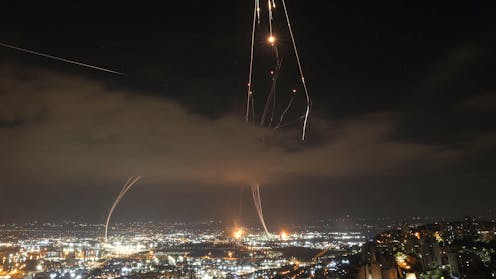
    Israeli defence systems intercept Iranian missiles over the city of Haifa Ahmad Gharabli / AFP via Getty Images

    Late last week, Israel began a wave of attacks on Iran under the banner of Operation Rising Lion, with the stated goal of crippling the Islamic republic’s nuclear program and long-range strike capabilities. At the outset, Israel claimed Iran would soon be able to build nine nuclear weapons, a situation Israel regarded as completely unacceptable.

    Following Israeli strikes against Iranian nuclear facilities, and targeted assassinations of Iranian nuclear scientists and key members of the Iranian armed forces, Iran retaliated with a large barrage of ballistic missiles and drones against Tel Aviv and Jerusalem. The first wave consisted of some 200 ballistic missiles and 200 drones.

    The conflict continues to escalate, with population centres increasingly being targeted. Israel’s missile defence systems (including the vaunted Iron Dome) have so far staved off most of Iran’s attacks, but the future is uncertain.

    Ballistic missiles and how to stop them

    Iran possesses a large arsenal of ballistic missiles and long-range drones, alongside other long-range weapons such as cruise missiles. Ballistic missiles travel on a largely fixed path steered by gravity, while cruise missiles can adjust their course as they fly.

    Iran is approximately 1,000km from Israel, so the current strikes mostly involve what are classified as medium-range ballistic missiles, alongside long-range drones. It is not clear exactly what type of missile Iran has used in its latest strikes, but the country has several including the Fattah-1 and Emad.

    It is very difficult to defend against ballistic missiles. There is not much time between launch and impact, and they come down at very high speed. The longer the missile’s range, the faster and higher it flies.

    An incoming missile presents a small, fast-moving target – and defenders may have little time to react.

    Israel’s missile defence and the Iron Dome

    Israel possesses arguably one of the most effective, battle-tested air defence systems in service today. The system is often described in the media as the “Iron Dome”, but this is not quite correct.

    Israel’s defences have several layers, each designed to address threats coming from different ranges.

    Iron Dome is just one of these layers: a short range, anti-artillery defence system, designed to intercept short-range artillery shells and rockets.

    In essence, Iron Dome consists of a network of radar emitters, command and control facilities, and the interceptors (special surface-to-air missiles). The radar quickly detects incoming threats, the command and control elements decide which are most pressing, and the interceptors are sent to destroy the incoming shells or rockets.

    Ballistic defence systems

    The other layers of Israel’s defence system include David’s Sling, and the Arrow 2 and Arrow 3 interceptors. These are specifically designed to engage longer-range ballistic missiles, both within the atmosphere and at very high altitudes above it (known as exoatmospheric interception).

    Spectacular footage has been captured of what are likely exoatmospheric interceptions taking place during this latest conflict, demonstrating Israel’s capacity to engage longer-range missiles.

    The US military has comparable missile defence systems. The US Army has the Patriot PAC-3 (comparable to David’s Sling) and THAAD (comparable to Arrow 2), while the US Navy has the Aegis and the SM-3 (comparable to Arrow 3) and the SM-6 (comparable again to Arrow 2).

    The US deployed Aegis-equipped warships to support Israel’s defence against missile attacks in 2024, and appears to be preparing to do the same now.

    Iran possesses some air defence systems such as the Russian S300 which has some (very limited) ballistic missile defence capabilities, but only against shorter range (and thus slower) ballistic missiles. Further, Israel has been focusing on degrading Iran’s air defences, so it is not clear how many are still operational.

    Iran has been focusing on developing technology such as maneuverable warheads, which are harder to defend against. However, it is not clear whether these are yet operational and in Iranian service.

    Can missile defences last forever?

    Missile defences are finite. The defender is always limited by the number of interceptors it possesses.

    The attacker is also limited by the number of missiles it possesses. However, the defender must often assign multiple interceptors to each attacking missile, in case the first misses or otherwise fails.

    The attacker will plan for some losses to interceptors (or mechanical failures) and send what it determines to be enough missiles for at least some to penetrate the defences.

    When it comes to ballistic missiles, the advantage lies with the attacker. Ballistic missiles can carry large explosive payloads (or even nuclear warheads), so even a handful of missiles “leaking” past defensive systems can still wreak significant damage.

    What now?

    Israel’s missile defences are unlikely to stop working completely. However, as attacks deplete its stocks of interceptors, the system may become less effective.

    As the conflict continues, it may become a race to see who runs out of weapons first. Will it be Iran’s stocks of ballistic missiles and drones, or the interceptors and anti-air munitions of Israel, the US and any other supporters?

    It is impossible to say who would prevail in such a race of stockpile attrition. Some reports suggest Iran has fired approximately 1,000 ballistic missiles of an estimated 3,000. However, this still leaves it with an enormous stockpile to use, and it is unclear how fast Iran can make new missiles to replenish its resources.

    But we should hope it doesn’t come to that. Beyond the tit-for-tat exchange of missiles, the latest conflict between Israel and Iran risks escalating. If it is not resolved soon, and if the US is drawn into the conflict more directly, we may see broader conflict in the Middle East.

    The Conversation

    James Dwyer does not work for, consult, own shares in or receive funding from any company or organisation that would benefit from this article, and has disclosed no relevant affiliations beyond their academic appointment.

    – ref. How does Israel’s famous air defence work? It’s not just the ‘Iron Dome’ – https://theconversation.com/how-does-israels-famous-air-defence-work-its-not-just-the-iron-dome-259029

    MIL OSI Analysis – EveningReport.nz –

    June 16, 2025
  • MIL-OSI China: Xi leaves for 2nd China-Central Asia Summit

    Source: China State Council Information Office

    Xi leaves for 2nd China-Central Asia Summit

    Xinhua | June 16, 2025

    Chinese President Xi Jinping left Beijing on Monday for the second China-Central Asia Summit in Astana at the invitation of President of the Republic of Kazakhstan Kassym-Jomart Tokayev.

    Xi’s entourage includes Cai Qi, a member of the Standing Committee of the Political Bureau of the Communist Party of China (CPC) Central Committee and director of the General Office of the CPC Central Committee, and Wang Yi, a member of the Political Bureau of the CPC Central Committee and foreign minister. 

    MIL OSI China News –

    June 16, 2025
  • MIL-OSI China: China’s home prices continue to ease in May

    Source: People’s Republic of China – State Council News

    China’s home prices in 70 large and medium-sized cities continued the downward trend in May, though the pace of decline slowed, the National Bureau of Statistics (NBS) said Monday.

    “In May, home prices in 70 major cities continued to fall on a yearly basis, but the pace of decline further eased,” said NBS statistician Wang Zhonghua. 

    MIL OSI China News –

    June 16, 2025
  • MIL-OSI China: China’s industrial output up 5.8% in May

    Source: People’s Republic of China – State Council News

    China’s value-added industrial output expanded 5.8 percent year on year in May, official data showed on Monday.

    The manufacturing sector saw its value-added output climb 6.2 percent year on year last month, with that of equipment manufacturing and high-tech manufacturing up by 9 percent and 8.6 percent, respectively, according to the National Bureau of Statistics.

    In the first five months of this year, the country’s industrial output gained 6.3 percent compared to a year ago, the data showed.

    The industrial output is used to measure the activity of large enterprises each with an annual main business turnover of at least 20 million yuan (about 2.79 million U.S. dollars).

    MIL OSI China News –

    June 16, 2025
  • MIL-OSI China: Russell wins F1 Canadian GP as Norris-Piastri clash shakes up title fight

    Source: People’s Republic of China – State Council News

    George Russell claimed Mercedes’ first win of the season with a commanding drive from pole position in Montreal, but the biggest drama came behind as McLaren teammates and title rivals Lando Norris and Oscar Piastri collided late in the race.

    The contact occurred on lap 67 of 70 as Norris attempted to overtake Piastri for fourth. The Briton misjudged a move on the pit straight and ran into the back of the Australian’s car.

    Mercedes’s British driver George Russell competes during the qualifying session of the Formula One Canadian Grand Prix 2025 at the Circuit Gilles Villeneuve in Montreal, Canada, June 14, 2025. (Photo by Song Haiyuan/Xinhua)

    Norris retired on the spot with front suspension damage, while Piastri continued to finish fourth behind Russell, Red Bull’s Max Verstappen and the second Mercedes of Kimi Antonelli. The race ended under the safety car.

    Norris immediately took full responsibility over team radio: “It’s all my bad, all my fault. Unlucky, sorry. Stupid from me.”

    The incident, reminiscent of Lewis Hamilton and Jenson Button’s infamous clash at the same point in 2011, dealt a blow to Norris’ title challenge. Piastri’s points lead over his teammate now stands at 22 points, with Verstappen a further 21 points behind.

    Until the clash, Norris had run a good race from seventh on the grid on an inverted tyre strategy. Having gained on Piastri, the Briton surprised his teammate on lap 66 with a pass into the hairpin, but Piastri regained the position with a cut-back down the straight.

    As Norris aimed to slingshot past on the pit straight, he ran out of room and his front wing broke against the rear of Piastri’s car.

    While McLaren were left to rue the first clash between their two drivers this season, Russell delivered a composed and clinical performance out front.

    Having taken a surprise pole position in Saturday’s qualifying session, he converted it into victory with a strong start and controlled the pace throughout the afternoon. Despite closing the gap in the closing laps, Verstappen never truly threatened.

    Mercedes, however, may face a post-race protest from Red Bull, who allege Russell drove erratically under the safety car.

    Behind them, 18-year-old Antonelli secured his maiden F1 podium in just his tenth Grand Prix. The Italian overtook Piastri for third on the opening lap and showed maturity in defending the final podium place before Norris’ crash neutralized the race.

    Ferrari endured a frustrating day. Charles Leclerc finished a distant fifth after publicly questioning the team’s strategy to make two pit stops instead of just one. Teammate Hamilton finished a low-key sixth, although the Briton’s pace was affected by an early collision with a groundhog, which damaged his floor and cost him some downforce.

    Fernando Alonso continued Aston Martin’s mini-revival with a solid seventh place, followed by Nico Hulkenberg’s Sauber in eighth. Esteban Ocon secured ninth for Haas, and Carlos Sainz took the final point after executing a well-managed one-stop strategy.

    The 11th round of the 2025 Formula 1 season is the Austrian Grand Prix at the Red Bull Ring, where Russell won last year after Norris and Verstappen clashed while battling for the lead. 

    MIL OSI China News –

    June 16, 2025
  • MIL-OSI China: PSG thrash Atletico Madrid 4-0 to kick off Club World Cup campaign

    Source: People’s Republic of China – State Council News

    Recently crowned Champions League winners Paris Saint-Germain opened their Club World Cup campaign with a commanding 4-0 victory over Atletico Madrid at the Rose Bowl in Pasadena on Sunday.

    The French side dominated the first half, and although Atletico improved slightly after the break, they created just one clear chance – which they missed – before PSG sealed the win in the closing minutes.

    “We had the objective of making history this season, but this is a new chapter,” PSG coach Luis Enrique said after the match.

    Paris Saint-Germain was without Ousmane Dembele and Bradley Barcola for the match, which kicked off under searing heat in a stadium with virtually no shade. Despite the absences, the European champions controlled the game from the start.

    Khvicha Kvaratskhelia posed a constant threat down the left and forced Atletico goalkeeper Jan Oblak into an early save before Fabian Ruiz broke the deadlock in the 19th minute.

    PSG had controlled possession in the opening stages, and Ruiz put justice to the scoreline with a low strike from the edge of the area that gave Oblak no chance.

    There was a nervous moment for PSG when Giuliano Simeone went down after tangling with Nuno Mendes. Mendes could have been in trouble as the last defender if a foul had been given, but the referee opted to play on.

    Desire Doue and Kvaratskhelia both had further chances as PSG varied the tempo against an Atletico side that struggled with the heat and pace.

    Antoine Griezmann had Atletico’s only chance of the first half in stoppage time, but after PSG failed to clear a rare attack, he fired straight at Gianluigi Donnarumma. The PSG keeper launched a rapid counterattack that ended with Vitinha doubling the lead, curling home a shot after being left unmarked.

    Atletico brought on Koke for Samuel Lino at halftime and looked to push forward, but PSG continued to threaten. Kvaratskhelia nearly added a third with a curling effort that Oblak tipped onto the bar.

    Julian Alvarez found the net for Atletico in the 57th minute, but the goal was disallowed for a clear prior foul by Koke. Their hopes of a comeback faded further when Clement Lenglet was sent off for a second yellow card – the first for a bad challenge, and the second for protesting a perceived foul on Oblak.

    Substitute Alexander Sorloth squandered a golden opportunity with 10 minutes remaining, firing over from four yards with the goal wide open. PSG then made it 3-0 in the 87th minute as Senny Mayulu turned and scored after Atletico failed to clear a cross.

    There was still time for a fourth, with Kang-In Lee converting a penalty in stoppage time after Robin le Normand handled a shot inside the box.

    “The club is hungry, the fans are hungry, the players and the team are hungry, and that’s a good feeling. We have the same objective as in other competitions, which is to go as far as possible and try to win it,” Enrique said.

    “The team competed, despite the tough defeat, and a 4-0 scoreline. We’re obliged to get good results in the other games now,” Atletico coach Diego Simeone said. 

    MIL OSI China News –

    June 16, 2025
  • Police forces being modernized under the leadership of PM Modi: Amit Shah

    Source: Government of India

    Source: Government of India (4)

    Union Home Minister and Minister of Cooperation Amit Shah on Sunday handed over appointment letters to 60,244 newly recruited Civil Police Constables of the Uttar Pradesh Police during a grand ceremony held in Lucknow. Uttar Pradesh Chief Minister Yogi Adityanath and other senior dignitaries were also present on the occasion.

    Describing the recruitment as historic, Shah said the new recruits would become an integral part of India’s largest police force. He praised the Yogi Adityanath-led government for restoring law and order in the state, noting that the recruitment process was conducted with complete transparency — free from bribery, political influence, or caste considerations. Of the selected candidates, over 12,000 are women.

    Shah highlighted that modernization of the police force has accelerated under Prime Minister Narendra Modi’s leadership and said the new recruits would carry forward the vision of a secure and developed Uttar Pradesh. He called on the youth to serve with the values of “security, service, and sensitivity.”

    Referring to recent legal reforms, the Home Minister said the implementation of the new criminal codes — Bharatiya Nyaya Sanhita, Bharatiya Nagarik Suraksha Sanhita, and Bharatiya Sakshya Adhiniyam — would ensure faster justice, with a target of verdicts within three years from FIR to the Supreme Court.

    He also praised Uttar Pradesh’s transformation from a riot-prone state to one governed by law and order. “Goons and mafias should fear the police, while the poor, Dalits, and backward classes should see them as protectors,” Shah asserted.

    Highlighting achievements of the Modi government over the past 11 years, Shah cited the upliftment of 25 crore people from poverty, significant infrastructure development, and enhanced national security — including responses to terrorist attacks and India’s advancements in space and technology.

    Shah concluded by urging the new recruits to uphold justice and contribute to the goal of making India a developed nation by 2047.

    June 16, 2025
  • MIL-OSI Banking: BSTDB Hosts the Heads of Internal Audit Annual Meeting

    Source: Black Sea Trade and Development Bank

    Press Release | 16-Jun-2025

    Internal Audit Leaders Convene in Thessaloniki to Discuss ESG, AI, and Evolving Governance Standards

    The Black Sea Trade and Development Bank (BSTDB) hosted the Annual Meeting of the Heads of Internal Audit (HOIA) on 12–13 June 2025. The two-day event, held under the theme “Empowering Accountability and Resilience,” brought together internal audit leaders from over 40 international financial institutions, United Nations agencies, European bodies, and global alliances.

    Participants addressed a wide range of critical topics shaping the future of the profession—from ESG integration and fraud risk management to artificial intelligence, generative technologies, and internal audit quality standards.

    In his opening statement, BSTDB President Dr. Serhat Köksal underlined that “the role of internal audit is one of the critical functions, given the current challenging international setting, including geopolitical tensions, economic volatility, technological disruption, and urgent climate imperatives.”  He stressed that International Financial Institutions (IFIs) have an increased responsibility to drive in these factors into their governance frameworks because of their wide-reaching impact on communities, the environment, and global development.

    Delivering the keynote,  Anthony J. Pugliese, President and CEO of the Institute of Internal Auditors, emphasized the systemic, fast-evolving and interconnected nature of today’s risk landscape. Emphasis was placed on the expanding role of internal audit- transforming from traditional oversight to providing strategic guidance in enterprise risk management. He highlighted the dual impact of technology as both a disruptive and an enabler and introduced the principles of responsible AI governance. He concluded by outlining key priorities for strengthening the future of the profession, emphasizing culture, synergies and resilience as the foundations for long term sustainability.

    Pavlos Pavlides, Director of Internal Audit at BSTDB and host of the Meeting, stressed the importance of sound governance, vigilance, and integrity in delivering on institutional mandates. He called for strengthening collaboration among internal audit functions across international organisations to increase collective impact, knowledge-sharing, and professional development.

    The Meeting concluded with a shared commitment to advancing the internal audit profession as a cornerstone of good governance, resilience, and institutional excellence.


    The Black Sea Trade and Development Bank (BSTDB) is an international financial institution established by Albania, Armenia, Azerbaijan, Bulgaria, Georgia, Greece, Moldova, Romania, Russia, Türkiye, and Ukraine. The BSTDB headquarters are in Thessaloniki, Greece. BSTDB supports economic development and regional cooperation by providing loans, credit lines, equity and guarantees for projects and trade financing in the public and private sectors in its member countries. The authorized capital of the Bank is EUR 3.45 billion. For information on BSTDB, visit www.bstdb.org.


    Contact: Haroula Christodoulou

    : @BSTDB

    MIL OSI Global Banks –

    June 16, 2025
  • MIL-OSI New Zealand: Crown manager appointed to drive delivery of New Dunedin Hospital

    Source: New Zealand Government

    Health Minister Simeon Brown has today announced the appointment of a Crown manager to oversee the delivery of the New Dunedin Hospital Inpatient Building, reinforcing the Government’s commitment to ensuring the project is delivered successfully.

    “In late January, I confirmed the Government’s commitment to building the New Dunedin Hospital on the former Cadbury site – providing certainty to the people of Dunedin and the wider Otago and Southland regions,” Mr Brown says.

    “As part of that commitment, we are putting strong leadership in place to drive the next stage of this project. I’m pleased to announce the appointment of Evan Davies as Crown manager for the inpatient building project.”

    Mr Davies will lead the delivery of the inpatient facility, including confirming the procurement approach and finalising the construction contract. He will work closely with Health New Zealand to ensure alignment with the broader New Dunedin Hospital programme. It will also enable Health New Zealand to focus on the many other infrastructure work programmes currently underway.

    “Mr Davies brings over 30 years of senior leadership experience and a proven track record in delivering large-scale infrastructure projects, particularly in the health sector.

    “His appointment reflects the importance of this project to the Government. I’m confident he will bring the capability, oversight, and momentum needed to see it through.

    “This Government has committed a record $1.88 billion to the New Dunedin Hospital, making it the largest health infrastructure investment in New Zealand’s history.

    “That level of investment reflects our commitment to providing a modern, fit-for-purpose hospital that meets the needs of future generations.

    “This step will help ensure the project remains on track, and that we deliver a world-class facility providing timely, high-quality care in Dunedin,” Mr Brown says.

    MIL OSI New Zealand News –

    June 16, 2025
  • MIL-Evening Report: The historic High Seas Treaty is almost reality. Here’s what it would mean for ocean conservation

    Source: The Conversation (Au and NZ) – By Sarah Lothian, Senior Lecturer in Maritime Law and Academic Barrister, University of Wollongong

    J Nel/Shutterstock

    The high seas are set to gain a greater level of protection when a long-sought after treaty finally enters into force.

    For almost 20 years, nations have debated the need for the High Seas Treaty, intended to protect marine life in the high seas and the international seabed. These marine areas together account for nearly two-thirds of the world’s ocean and harbour a rich array of unique species and ecosystems. The treaty is formally known as the Biodiversity Beyond National Jurisdiction Agreement.

    Many hoped last week’s United Nations Oceans Conference would result in enough nations ratifying the treaty to bring it into force. As of today, 50 states of the 60 required have done so, while another 19 have promised to do so by the year’s end. A greater level of protection for our high seas is well and truly in sight.

    By United Nations standards, this is a cracking pace. The treaty-making process itself can take years, particularly as states need to incorporate the treaty into their domestic laws. This speaks to the urgency of the moment. Researchers and authorities have warned that the world’s oceans are now in deep trouble, threatened by climate change effects, overfishing, plastic pollution and other human-caused issues.

    Once the treaty enters into force, nations can begin to propose high seas marine protected areas, which could limit fishing and other activities. The question then will be how to police these marine protected areas.

    How did we get here?

    In June 2023, the High Seas Treaty was adopted by consensus at the UN Headquarters in New York. It was a long time coming.

    For decades, nations argued and negotiated over what this treaty might look like. How could the marine genetic resources of this global commons be shared fairly and equitably? How could protected areas be designated and managed? What was eventually thrashed out was a comprehensive international legal framework able to better protect and safeguard the rich and diverse web of life inhabiting the deep sea.

    Getting to this point was a real achievement.

    But for this treaty to enter into force, 60 countries have to ratify it. This means their governments must consent to be legally bound by the terms of the treaty.

    While Australia has pledged to ratify the treaty, it is still working through the ratification and domestic legal process. On a positive note, Environment Minister Murray Watt has indicated this will happen before the end of the year.

    What will the treaty actually do?

    At present, the high seas are regulated by a patchwork of global, regional and sectoral frameworks, instruments and bodies. However, none of these have a core mandate of protecting the biodiversity of the oceans.

    In 1982, the Law of the Sea Convention was adopted, giving every coastal nation rights over the waters extending to 200 nautical miles (370 kilometres) from their coastline.

    Once you are past this, you’re in the high seas – the swathes of ocean not controlled by any one nation.

    If and when it comes into effect, the High Seas Treaty would give the world a way to set up large marine protected areas in the high seas. It would also apply to the international seabed – the seabed, subsoils and ocean floor lying beyond the continental shelf of a coastal state.

    Any new protected areas would likely have restrictions on activities such as fishing and shipping. But this will need to be done in consultation with relevant international bodies such as the International Maritime Organisation and regional fisheries management organisations.

    The treaty would go a long way to reaching key conservation goals set under the 2022 Kunming-Montreal Biodiversity Pact, which calls for protection of at least 30% of the world’s marine and coastal habitats by 2030.

    The treaty also sets up a mechanism for the sharing of benefits from marine genetic resources, financial and otherwise. Bacteria living in deep-sea ecosystems have attracted much scientific and commercial attention for potential use in medical research or pharmaceutical, cosmetics and food industries. Genetic resources from sea sponges have given rise to antiviral drugs targeting COVID and HIV as well as anti-cancer drugs.

    These resources were a major sticking point during the long negotiations.

    Many coastal countries lack the ability to participate in high seas research. As a result, they can miss out on these and other benefits. The High Seas Treaty recognises this and sets up a strong framework for capacity-building, technology transfer and technical assistance for developing nations.

    As nations fish out their territorial waters, some send fishing boats into the unregulated high seas.
    Richard Whitcombe/Shutterstock

    When will the oceans get a reprieve?

    Once the 60th nation ratifies the High Seas Treaty, it will enter into force 120 days later. This date could be as soon as May 1 next year, if the threshold is reached on January 1.

    Once this happens, this will be the date upon which the treaty gains legal force, meaning nations will have to comply with its obligations.

    That doesn’t mean huge new marine parks will come into being. There’s still much work to do to hash out the mechanics of how the treaty would actually work, how it would be overseen and how it would work with the International Seabed Authority which oversees deep-sea mining and the Antarctic Treaty System, among others. Negotiators face more work ahead to solve these outstanding issues before the real work can begin.

    That’s not to diminish this achievement. The progress on this treaty has been very hard won. Once it’s in effect, it will make a concrete difference.

    Sarah Lothian does not work for, consult, own shares in or receive funding from any company or organisation that would benefit from this article, and has disclosed no relevant affiliations beyond their academic appointment.

    – ref. The historic High Seas Treaty is almost reality. Here’s what it would mean for ocean conservation – https://theconversation.com/the-historic-high-seas-treaty-is-almost-reality-heres-what-it-would-mean-for-ocean-conservation-258710

    MIL OSI Analysis – EveningReport.nz –

    June 16, 2025
  • MIL-Evening Report: The Australian government has launched a new strategy to boost vaccination rates. Will it work?

    Source: The Conversation (Au and NZ) – By Jessica Kaufman, Research Fellow, Vaccine Uptake Group, Murdoch Children’s Research Institute

    South_agency/Getty Images

    Last week, the Australian government announced a new National Immunisation Strategy for 2025–30. This strategy sets out the government’s priorities for improving vaccine uptake for children, adolescents and adults over the next five years.

    It comes at an important moment. Childhood vaccination coverage has been declining consistently since 2020.

    So what are the key goals of this new strategy, and will it be able to reverse the drop in vaccination rates among Australian children?

    Declining vaccination coverage since the pandemic

    While overall vaccination coverage remains high by global standards – at 92% for one-year-olds – this is down from a high of nearly 95% in 2020. The reasons for the drop include access challenges and concerns among some parents about vaccine safety and effectiveness.

    Many children are missing out on timely vaccines that prevent diseases such as whooping cough and meningitis. Aboriginal and Torres Strait Islander children, who also have lower vaccination coverage rates at one and two years old, bear a disproportionate burden of these diseases.

    And it’s not just children missing out. Among adolescents, HPV coverage at age 15 has dropped by 5% in girls (down to 81%) and 7% in boys (down to 78%) since 2020.

    Influenza vaccination coverage has declined year on year since 2022 and remains at very low levels. Coverage in 2024 was 62% for people aged 65 and older, and under 30% for the rest of the population.

    Across six key priority areas, the new immunisation strategy seeks to reduce vaccine hesitancy and improve access to vaccinations, particularly in priority groups such as Aboriginal and Torres Strait Islander communities. A few key points stood out to us.

    The National Immunisation Strategy has six key priority areas.
    CC BY

    1. Emphasis on trust and community engagement

    We need to strengthen trust in vaccines and the people and systems that deliver them because low levels of trust are associated with vaccine scepticism and refusal. Even though Australians’ trust in childhood vaccines is generally high, there have been some bumps in recent years.

    The pandemic left some people with lingering questions and misperceptions about vaccines, supercharged by misinformation and increasing political polarisation of vaccination.

    The strategy rightly emphasises the need to engage with communities and build trust in vaccination and the health system.

    However, relationships with communities can’t be stood up at a moment’s notice – they take time and effort to sustain. State and federal governments invested in these relationships with diverse communities during the COVID vaccine rollout, but many of these initiatives have since been dissolved due to lack of sustained funding and commitment.

    Recently, there have been positive indications some governments are reinvesting in these efforts. Hopefully this strategy will encourage more to do the same.

    2. Addressing equity and access

    Too often government leaders and media headlines blame individual laziness or hesitancy for our uptake problems, failing to acknowledge the very real problems with service convenience and access that are also present.

    The strategy makes clear that the government and immunisation service providers should make vaccination accessible and equitable. As a part of this commitment, it highlights the importance of ensuring all health-care professionals who are able to deliver vaccines are being utilised to their full potential.

    Pharmacists are specifically mentioned, but there is no reference to the largest group of immunisation providers: nurses. They should be better recognised and we need reform to enable nurses to vaccinate more independently.

    3. Recognising the importance of data

    When vaccination rates are low, it’s essential to know why. This comes from both talking with communities and collecting robust data.

    We are part of the National Vaccination Insights project, which carries out yearly monitoring using surveys and interviews with the public to better understand the drivers of vaccine uptake.

    The strategy proposes a live dashboard of vaccine uptake data, which would be valuable, but we also encourage the addition of social and behavioural data. The dashboard should also report rates of vaccination in pregnancy. This information is newly available, thanks to the recent addition of a field to record pregnancy status in the Australian Immunisation Register.

    4. Commitment to consider vaccine injury compensation

    Maintaining trust in vaccination means being able to acknowledge when vaccines can very occasionally cause harm. People tend to be more confident in vaccines when you tell them what to expect, what the common minor side effects are, as well as the rare serious ones.

    When those rare serious side effects become a reality for a handful of people, they may have to take time off work, incur medical expenses, and very occasionally, manage long-term complications. So it’s essential these people are financially compensated by government.

    We had such a compensation scheme during the pandemic for COVID vaccines, but this ended in September 2024. We welcome the government’s plan to explore whether establishing a compensation scheme is feasible for all vaccines on the national program.

    A comprehensive no-fault vaccine injury compensation scheme is overdue and, with thoughtful and consultative planning, would make our already robust vaccination system more trustworthy.

    Where to from here?

    The new national immunisation strategy is comprehensive and informed by evidence. But its impact will ultimately come down to its funding and implementation, which are not described in this document. Finalising these key plans and putting them into action must happen soon to arrest declining vaccination coverage and keep people well protected from serious diseases.

    Jessica Kaufman receives funding from the NHMRC, MRFF, Australian government, Victorian government, and UNICEF. She is a member of the Collaboration on Social Science and Immunisation (COSSI).

    Julie Leask receives funding from NHMRC, WHO, US CDC, NSW Ministry of Health. She received funding from Sanofi for travel to an overseas meeting in 2024.

    – ref. The Australian government has launched a new strategy to boost vaccination rates. Will it work? – https://theconversation.com/the-australian-government-has-launched-a-new-strategy-to-boost-vaccination-rates-will-it-work-258808

    MIL OSI Analysis – EveningReport.nz –

    June 16, 2025
  • Dr. P. K. Mishra reviews relief and rescue operations following Ahmedabad plane crash

    Source: Government of India

    Source: Government of India (4)

    Dr P. K. Mishra, Principal Secretary to the Prime Minister, visited Ahmedabad on Sunday to oversee ongoing relief and rescue operations following the tragic plane crash near B.J. Medical College in Meghani Nagar. His visit followed directives issued by PM Modi, emphasising swift action, a thorough investigation, and support for the victims and their families.

    Dr Mishra conducted an on-site review of the crash location, where he was briefed by senior officials from the state government, the Aircraft Accident Investigation Bureau (AAIB), and the Airports Authority of India (AAI). Authorities outlined the timeline of the incident and the immediate response measures undertaken.

    During his visit to Civil Hospital, Ahmedabad, Dr Mishra met injured passengers and extended his condolences to the families of the deceased. He instructed officials to ensure that bereaved families are given full assistance in a seamless manner.

    Later, Dr Mishra visited the Forensic Science Laboratory (FSL) in Gandhinagar, where he reviewed the DNA sampling process. Stressing the need for both accuracy and urgency, he directed forensic teams to expedite the identification of victims while ensuring scientific rigour.

    Chairing a high-level meeting at Circuit House, Ahmedabad, Dr. Mishra reviewed investigation and relief efforts with senior officials from the centre, the state, AAIB, and AAI. The AAIB has launched a detailed probe into the crash.

    Since the aircraft involved was US-manufactured, the US National Transportation Safety Board (NTSB) is also conducting a parallel investigation under international protocols.

    Dr Mishra reaffirmed Prime Minister Modi’s commitment to ensuring a coordinated and compassionate response, with all necessary resources deployed to support victims and their families. He was accompanied by senior PMO officials, including Tarun Kapoor, Advisor to the Prime Minister, and Mangesh Ghildiyal, Deputy Secretary, PMO.

    June 16, 2025
  • MIL-OSI Asia-Pac: “M” Mark status awarded to Volleyball Nations League Hong Kong 2025 presented by China Life (Overseas)

    Source: Hong Kong Government special administrative region

    “M” Mark status awarded to Volleyball Nations League Hong Kong 2025 presented by China Life (Overseas) 
    The Major Sports Events Committee (MSEC) has awarded “M” Mark status to the Volleyball Nations League (VNL) Hong Kong 2025 presented by China Life (Overseas), scheduled to take place from June 18 to 22 at Kai Tak Arena.
     
    The Chairman of the MSEC, Mr Wilfred Ng, said today (June 16), “The competition has moved to Kai Tak Arena, which is the first international volleyball event held at Kai Tak Sports Park. The VNL Hong Kong features elite teams from around the world. It not only promotes the development of volleyball in Hong Kong but also attracts overseas visitors to come to Hong Kong and stimulates the development of the hospitality, retail, and catering sectors, thereby further solidifying Hong Kong’s status as a centre for major international sports events.”
     
    The “M” Mark System aims to encourage and help local National Sports Associations and private or non-government organisations to organise more major international sports events and nurture them into sustainable undertakings. Sports events meeting the assessment criteria will be considered for “M” Mark status by the MSEC. Funding support will also be provided to some events.
     
    For details of “M” Mark events, please visit www.mevents.org.hkIssued at HKT 14:00

    NNNN

    CategoriesMIL-OSI

    MIL OSI Asia Pacific News –

    June 16, 2025
  • MIL-OSI Australia: Small business pool calculations

    Source: New places to play in Gungahlin

    Small business depreciation pool

    If you choose to use the simplified depreciation rules, any depreciating assets for which you can’t claim an immediate deduction under instant asset write-off or temporary full expensing, are allocated to a small business depreciation pool.

    This includes assets that:

    • cost the same as, or more than, the instant asset write-off limit amount.
    • you held before you used the simplified depreciation rules (other than excluded assets).

    You claim:

    • a 15% deduction for these assets in the year they are allocated to the pool (regardless of when the asset was purchased during the year).

    For certain new assets of $150,000 or more first held from 12 March 2020 to 7:30 pm AEDT 6 October 2020, you can use an accelerated depreciation rate of 57.5% under Backing business investment – accelerated depreciation when you first add them to the pool.

    Low pool value – instant asset write-off

    If the balance of the small business pool (after applying the following adjustments) is less than the instant asset write-off limit, you can immediately write off the entire pool balance and claim the amount as a deduction. However, for income years ending between 7:30 pm AEDT on 6 October 2020 and 30 June 2023, you deduct the entire balance of the small business pool (there is no limit for that period).

    These steps show what you need to do when using a small business pool:

    1. Start with the opening balance for the current year.
    2. Add the business portion of the adjustable value of assets you acquired and started to use in the current year.
    3. Add the business portion of cost additions to the pool in the current year.
    4. Subtract the business portion of proceeds (including insurance payouts) of any assets disposed of in the current year.

    Example 1: pool balance under the instant asset write-off limit

    Having purchased a car for $18,000 on 2 August 2023, Brendan estimates that it is used 50% for business purposes. As the cost of the car is under the relevant instant asset write-off limit (that is $20,000), Brendan writes it off in the year that it was first used or installed ready for use. His deduction is $9,000 as he only claims for the proportion the asset is used in earning income.

    If the purchase price of the car was $28,000 and Brendan estimated the car would be used 50% in his business, he would place $14,000 for the car in his small business pool and depreciate 15% in the first year. The asset is still placed in the small business pool because the cost of the asset before determining the business portion exceeded the relevant instant asset limit.

    End of example

    Example 2: simplified depreciation – small business pool for 2018–19 income year

    Loretta bought a trailer for her event management business on 1 December 2018 for $15,000 and a second larger trailer on 2 February 2019 for $28,000. She also sold an old trailer that was previously in her small business pool for $8,000. Loretta had an opening pool balance of $100,000 from the previous year.

    Loretta will:

    • immediately write-off the cost of the first $15,000 trailer (as it is under the $20,000 instant asset write-off limit which applied at the time she purchased and started to use the trailer)
    • calculate her depreciation deduction for pool assets by
      • adding the cost of the $28,000 larger trailer to her small business pool (as it is over the $25,000 limit which applied at the time she purchased and started to use the larger trailer).
      • deduct the $8,000 received from the sale of the old trailer from her small business pool.

    Table 1: Calculation of small business pool balance for 2018–19 income year.

    Table 1: Calculation of small business pool balance for 2018–19 income year.

    Calculation item

    Pool balance

    Depreciation claim

    Closing pool balance from previous year

    $100,000

    n/a

    Opening pool balance for current year

    $100,000

    n/a

    Add: New asset purchase

    $28,000

    n/a

    Subtotal

    $128,000

    n/a

    Less: Proceeds of asset sale or disposal

    −$8,000

    n/a

    Subtotal

    $120,000

    n/a

    Pool deduction claim (30% of $100,000)

    −$30,000

    $30,000

    Subtotal

    $90,000

    n/a

    New asset deduction claim (15% of $28,000)

    −$4,200

    $4,200

    Total depreciation for current year

    n/a

    $34,200

    Closing pool balance for current year

    $85,800

    n/a

    Opening pool balance for next year

    $85,800

    n/a

    Loretta’s depreciation claim for the 2018–19 income year is:

    • deduction for instant asset write-off: $15,000
    • deduction for small business pool: $34,200.

    Loretta’s closing pool balance for the year is $85,800. This will be her opening pool balance for next year.

    Figures exclude GST.

    End of example

    Example 3: simplified depreciation – small business pool for 2019–20 income year

    Loretta bought a new car to use for her business on 15 January 2020 for $33,000. The car was delivered on 31 January 2020. Loretta can’t immediately write off the cost of the car as the limit was $30,000 at the time she started to use the car. She needs to allocate the car to her small business pool.

    Loretta’s 2019–20 income year ends 30 June 2020. Calculation of small business pool balance for 2019–20 income year.

    Table 2: Calculation of small business pool balance

    Calculation item

    Pool balance

    Depreciation claim

    Closing pool balance from previous year

    $85,800

    n/a

    Opening pool balance for current year

    $85,800

    n/a

    Add: New asset purchase – car

    $33,000

    n/a

    Subtotal

    $118,800

    n/a

    Before applying the depreciation deductions, the balance of the pool at the end of income year is $118,800. From 12 March 2020, the instant asset write-off limit increased to $150,000. As the balance of the pool is less than the limit at the end of the income year, Loretta will write off the entire pool balance in her 2019–20 income tax return.

    Loretta’s closing pool balance for the year is $0.

    Figures exclude GST.

    End of example

    Calculating pool events

    These steps show what you need to do when using a small business pool.

    Step 1: Work out your opening balance

    If you’ve been using the simplified depreciation rules, the opening balance of your small business pool for the current year is the closing balance from the previous year.

    For the year in which you first start using these rules you need to work out the opening balance of the small business pool. To do this you need to work out:

    • the value of your assets (adjustable value) – that is, the cost of each asset (excluding any GST paid if you’re registered for GST), including improvements, less how much it has depreciated since you first started using it, regardless of whether the use was private or business
    • the proportion used to earn assessable income (taxable purpose proportion) – that is, the estimated percentage of use of the asset in earning assessable income (as against private use).

    For each asset, the amount you include in the small business pool is:

    Adjustable value × taxable purpose proportion

    Example 4: calculating the opening balance

    Before using the simplified depreciation rules, Fiona held the following depreciating assets that she used in her business in 2014. All of these needed to be placed into her small business pool. She calculated the amount to include as follows:

    • a station wagon with an opening adjustable value of $38,000 (which Fiona estimated she uses 70% of the time in her business), for which she calculated the amount to include in the pool as $38,000 × 70% = $26,600
    • a computer with an opening adjustable value of $3,000 (which Fiona estimates she used 70% of the time in her business), for which she calculated the amount to include in the pool as $3,000 × 70% = $2,100
    • a refrigerated cabinet with an opening adjustable value of $1,500 (which Fiona used solely for the business), for which she calculated the amount to include in the pool as $1,500 × 100% = $1,500.

    These assets were allocated to the small business pool, with an opening balance of $30,200.

    As they were depreciating assets used in the business in a previous income year, they were included in the opening pool balance and depreciated at a rate of 30% of the taxable purpose proportion of their adjustable value.

    End of example

    Step 2: New assets and cost additions

    Add any new or second-hand assets you acquired during the current income year at a cost equal to or above the instant asset write-off limit, and any cost addition amounts to existing assets.

    Cost addition amounts are:

    • amounts you’ve spent on improving the assets
      • the improvement amounts added to the pool need to have the same taxable purpose proportion applied as that applied to the asset
      • if you made the improvements to the asset in the same income year that you acquired it, the amount simply becomes part of the original cost of the asset
      • improvement costs that are under the instant asset write-off limit are immediately written-off if they apply to an asset that had been written-off in a previous year, with any further improvements placed into the small business pool
    • costs incurred when disposing of, or permanently ceasing to use, an asset (including advertising and commission costs or the costs of demolishing the asset).

    Note: You don’t add to your small business pool:

    • assets that you purchased and first used, or had installed ready for use, for a taxable purpose between 7:30 pm AEDT 6 October 2020 and 30 June 2023. You can claim an immediate deduction for the business cost of these assets
    • the cost of improvements made from 7:30 pm AEDT on 6 October 2020 to 30 June 2023 to an asset that you have written off under the simplified depreciation rules (including instant asset write-off) in an earlier income year, provided you have not previously claimed improvement costs to the asset. You can claim an immediate deduction for the business portion of the improvement cost and no limit applies. Any later improvements are added to the small business pool.

    Example 5: improving your assets

    You purchased a car for $15,000 that you estimate is used 50% in your business in the last income year and claimed $7,500 as an instant asset write-off deduction.

    This year you added a tow ball to the car for $300 so you can use a trailer to move around stock in your business. You instantly write-off the tow ball as it falls under the instant asset write-off limit, but you can only claim $150 (50%), as the claim is limited to the proportion of the original asset that is used in earning assessable income.

    End of example

    Step 3: Asset sales and disposals

    If you’ve sold or ceased to use an asset in the current income year, you need to reduce your pool balance by the asset’s termination value multiplied by the taxable use proportion.

    The termination value could be money you received from selling an asset (including by way of trade-in), or the insurance payout you received as the result of its loss or destruction.

    If you used the asset 100% for business, reduce the pool balance by the whole termination value.

    If the asset had a portion of private use, reduce the pool balance using the following formula:

    Termination value × Taxable purpose proportion

    If the value of the small business pool is less than the instant asset write-off limit after you’ve made adjustments for any acquisitions, sales or disposals, and before calculating any depreciation deductions for the pool as a whole, the whole small business pool balance must be written-off in that year.

    You deduct the balance of the small business pool at the end of an income year ending between 6 October 2020 and 30 June 2023. The pool’s closing balance for the income year is zero after full expensing.

    If you’re transferring assets to another entity as part of a business restructure, you may be entitled to rollover relief, under which you don’t subtract the termination values of the depreciating assets from the closing balance of the small business pool.

    Assessable income adjustment

    If you’ve sold or disposed of an asset, you may also need to include an amount in your assessable income to allow for any excess between what you receive for the asset over what you’ve claimed as a depreciation deduction – as follows:

    • If you sell or otherwise dispose of an asset that has previously been fully written off, you also need to include its termination value multiplied by its taxable purpose proportion in your assessable income.
    • If you sell or otherwise dispose of an asset that formed part of a low pool value that has been previously written-off, you need to subtract the taxable purpose proportion of the asset’s termination value in calculating the closing pool balance. If the balance (after acquisitions, cost additions and this adjustment) results in a negative amount, this amount must be included in your assessable income, and the pool’s closing balance becomes zero.
    • If you sell or otherwise dispose of an asset that has not been fully written-off, you subtract the taxable purpose proportion of the proceeds of the disposal from the pool balance, and if the result after acquisitions and cost additions is
      • equal to or more than the instant asset write-off limit, the amount is the pool’s closing balance
      • less than the instant asset write-off limit but more than zero, the amount is claimed as a deduction and the closing balance becomes zero
      • negative, the amount less than zero is included in your assessable income.

    Note: You deduct the balance of the small business pool at the end of an income year ending between 6 October 2020 and 30 June 2023. The pool’s closing balance for the income year is zero after full expensing.

    You don’t incur a capital gains liability for the disposal of a depreciating asset that you’ve depreciated under the simplified depreciation rules.

    Example 6: disposing assets

    During the 2023–24 income year, Fiona disposes of the following assets:

    • Her old refrigerated cabinet, sold for $1,000 on 1 April 2024 with the full amount included in her small business pool as this asset was used solely in her business.
    • Her station wagon, traded in for $10,000 on a new delivery van on 1 May 2024 – the station wagon was used 70% for business purposes, so the formula she uses is the termination value by the taxable purpose proportion ($10,000 × 70% = $7,000).

    Fiona must reduce the closing pool balance for the 2023–24 income year by $8,000 as a result of the sale of these assets.

    End of example

    Asset disposal where business use has changed

    If you dispose of an asset and there has been a change in how much it was used in your business during the time it was in your small business pool, you must also adjust the taxable purpose proportion of the asset’s termination value. You work out the average proportion (taxable purpose proportion) you used the asset in your business during the income years in which the asset was in the pool.

    Example 7: adjusting the value of a disposed asset

    Maria added her car to the pool in 2016–17 and used it 60% for business. She increased her business use of her car from 75% to 90% in the 2018–19 income year. She sold her car for $3,000 at the start of the 2019–20 income year.

    Maria must average the estimate of her business use of the car for the year in which it was allocated to the pool and the next 3 years, as follows:

    • 60% (2016–17 original estimate) business use
    • 75% (2017–18 estimate) business use
    • 90% (2018–19 estimate) business use
    • 90% (2019–20, no change from previous year) business use.

    The average for business use is 79% = (60% + 75% + 90% + 90%) ÷ 4.

    The taxable purpose proportion of the car’s termination value is the termination value by the average business use:

    $3,000 × 79% = $2,370.

    Maria reduces the closing pool balance for the disposal of the car by $2,370.

    End of example

    Step 4: Work out your deduction

    If the balance of the pool before calculating your deduction for the year is below the instant asset write-off limit, the pool is written off immediately (see Step 3: Asset sales and disposals).

    If not, your deduction for simplified depreciation may include amounts for the following:

    Existing assets

    After calculating your opening pool balance in step one, work out your pool deduction using the following formula:

    Opening pool balance × 30% (pool rate)

    Newly acquired pooled assets (including second-hand assets)

    Assets that have been acquired during the year and added to the small business pool are depreciated at 15%. This applies regardless of when during the year you acquired the asset.

    Work out the deduction as:

    Taxable purpose proportion × Adjustable value × 15%

    Note: Assets that are immediately written-off don’t form part of your small business pool.

    Example 8: calculating pool deductions

    During the period from 1 December 2014 to 12 May 2015 when the instant asset write-off limit was $1,000 Fiona acquired the following assets:

    • a photocopier/fax, acquired in December 2014, which she estimates was used 90% of the time in her business, so the value is calculated as $7,700 × 90% = $6,930
    • a new refrigerated cabinet to replace the old one, acquired on 1 April 2015 at a cost of $9,000, to be used exclusively in the business, so the value is calculated as $9,000 × 100% = $9,000
    • a delivery van, acquired on 1 May 2015 at a cost of $20,000, which she estimates will be used 70% of the time in her business, so the value is calculated as $20,000 × 70% = $14,000.
    Table 3: Newly acquired assets

    Asset

    Adjustable value ($)

    % used in the business

    Amount added to pool ($)

    Photocopier/fax

    7,700

    90

    6,930

    New refrigerated cabinet

    9,000

    100

    9,000

    Delivery van

    20,000

    70

    14,000

    Total of pooled assets added during the year

    n/a

    n/a

    $29,930

    If Fiona acquired and started to use the above assets in the 2016–17 or 2017–18 income years, or between 1 July 2018 and 28 January 2019 when the instant asset limit increased to $20,000, the business use portion of the:

    • photocopier/fax and refrigerator are immediately written off
    • van is moved to the small business pool.

    If Fiona acquired and started to use the above assets from 29 January 2019, when the instant asset limit increased to $25,000 then all of the business use portion of assets could be immediately written off.

    End of example

    Cost addition amounts

    If you made improvements to an asset allocated to your small business pool in an earlier income year, or you have costs associated with the disposal of an asset (see Step 3: Asset sales and disposals) you:

    • apply the taxable purpose proportion of the existing asset to the improvement or disposal cost
    • deduct the cost of improving the asset in the year the improvement is made, at the rate of 15%.

    Step 5: Work out the closing pool balance

    The closing pool balance takes into account any:

    • pooled assets you installed or first used during the year
    • pooled assets you disposed of during the year
    • improvements you made, or cost addition amounts you incurred, in the current year to assets you held or installed ready to use in an earlier year
    • deductions allowed for pooled assets.

    Use the following worksheet to work out the closing pool balance at the end of each income year. The calculations will also need to consider the taxable purpose proportion of the assets.

    Table 4: Closing pool balance worksheet

    Worksheet item

    Value ($)

    Indicator

    Opening pool balance for the year

    $

    A

    Plus

    Adjustable value of new assets that you first used, or installed ready to use, during the year (not including assets immediately written-off)

    $

    B

    Plus

    Any cost addition amounts including improvements you made to assets in the pool during the year

    $

    C

    Less

    Taxable purpose proportion of the termination value of any pooled assets you disposed of (including assets that were sold) during the year

    $

    D

    Subtotal (A + B + C − D)

    $

    E

    Less

    Deduction allowed for assets you held at the start of the year

    $

    F

    Less

    Deduction allowed for new assets you first used during the year

    $

    G

    Less

    Deduction allowed for cost addition amounts including improvements you made to the pooled assets during the year

    $

    H

    Closing pool balance for the year (E − F − G − H)

    $

    Nil

    Example 9: calculating closing pool balance

    Table 5: Fiona works out her closing pool balance for the year as follows:

    Worksheet item

    Value ($)

    Indicator

    Opening pool balance for the year

    $30,200

    A

    Plus

    Newly acquired pooled assets. This does not include assets immediately written-off

    $29,930

    B

    Plus

    Cost addition amounts

    $350

    C

    Less

    Disposals

    $8,000

    D

    Subtotal (A + B + C − D)

    $52,480

    E

    Less

    Deduction for pooled assets opening balance

    $9,060

    F

    Less

    Deduction allowed for pooled assets you first used during the year

    $4,490

    G

    Less

    Deduction for cost addition amounts

    $53

    H

    Closing pool balance for the year (E – F – G – H)

    $38,877

    Nil

    End of example

    Opening pool balance

    The opening pool balance for an income year is the closing pool balance from the previous income year, except where you either:

    • changed the extent you use a pooled asset in your business
    • have assets that you started to use, or hold ready to use, since last choosing to use these rules.

    Adjusting for these circumstances will ensure that your pool deduction is based on the correct estimate of the value of all your assets and the taxable use proportion.

    MIL OSI News –

    June 16, 2025
  • MIL-OSI: 34/2025・Trifork Group: Weekly report on share buyback

    Source: GlobeNewswire (MIL-OSI)

    Company announcement no. 34 / 2025
    Schindellegi, Switzerland – 16 June 2025

    Trifork Group: Weekly report on share buyback

    On 28 February 2025, Trifork initiated a share buyback program in accordance with Regulation No. 596/2014 of the European Parliament and Council of 16 April 2014 (MAR) and Commission Delegated Regulation (EU) 2016/1052, (Safe Harbour regulation). The share buyback program runs from 4 March 2025 up to and including no later than 30 June 2025. For details, please see company announcement no. 7 of 28 February 2025.

    Under the share buyback program, Trifork will purchase shares for up to a total of DKK 14.92 million (approximately EUR 2 million). Prior to the launch of the share buyback, Trifork held 256,329 treasury shares, corresponding to 1.3% of the share capital. Under the program, the following transactions have been made:

            Number of shares        Average purchase price (DKK)        Transaction value (DKK)
    Total beginning 106,074 87.65 9,297,085
    9 June 2025     Market closed
    10 June 2025 1,385 93.67 129,733
    11 June 2025 1,700 93.92 159,664
    12 June 2025 1,900 96.94 184,186
    13 June 2025 1,900 98.40 186,960
    Accumulated 112,959 88.15 9,957,628

    A detailed overview of the daily transactions can be found here: https://investor.trifork.com/trifork-shares/

    Since the share buyback program was started on 4 March 2025, the total number of repurchased shares is 112,959 at a total amount of DKK 9,957,628.
    On 25 March, 25 April and 23 May 2025, 4,370 shares acquired through the share buyback program were utilized for the Executive Management’s monthly fixed salary, representing a change from cash payment to payment partly in shares (refer to company announcement no. 1 of 21 January 2025). On 1 April 2025, 19,943 shares acquired through the share buyback program were utilized to serve the RSU plan of Executive Management and certain employees.

    With the transactions stated above, Trifork holds a total of 344,975 treasury shares, corresponding to 1.7%. The total number of registered shares in Trifork is 19,744,899. Adjusted for treasury shares, the number of outstanding shares is 19,399,924.

    Investor and media contact
    Frederik Svanholm, Group Investment Director, frsv@trifork.com, +41 79 357 73 17

    About Trifork
    Trifork (Nasdaq Copenhagen: TRIFOR) is a pioneering global technology company, empowering enterprise and public sector customers with innovative digital products and solutions. With 1,215 professionals across 71 business units in 16 countries, Trifork specializes in designing, building, and operating advanced software across sectors such as public administration, healthcare, manufacturing, logistics, energy, financial services, retail, and real estate. The Group’s R&D arm, Trifork Labs, drives innovation by investing in and developing synergistic, high-potential technology companies. Learn more at trifork.com.

    Attachment

    • CA_34_25_Buyback

    The MIL Network –

    June 16, 2025
  • MIL-OSI: Falcon Oil & Gas Ltd. – Another Stellar IP30 Flow Test Result in the Beetaloo

    Source: GlobeNewswire (MIL-OSI)

    Falcon Oil & Gas Ltd (“Falcon”).

    Another Stellar IP30 Flow Test Result in the Beetaloo

    16 June 2025 – Falcon Oil & Gas Ltd. (TSXV: FO, AIM: FOG) is pleased to announce that Shenandoah S2-2H ST1 (“SS-2H ST1”) achieved an average 30-day initial production (“IP30”) flow rate of 7.2 million cubic feet per day (“MMcf/d”) over 1,671-metres (5,483-foot) across a 35 stage stimulated length within the Amungee Member B-Shale in the Beetaloo Sub-basin, Northern Territory, Australia, making it the highest IP30 result in the Beetaloo to date.

    Points to note:

    • The normalized flow rate of 13.2 MMcf/d over an extrapolated 10,000-foot horizontal section is in-line with the average of more than 11,000 wells in the Marcellus Shale dry gas area on production over a 12-month period. The results demonstrate the commercial deliverability of gas from the Amungee Member B-Shale in the Australian East Coast gas market that typically sells at a premium to Henry Hub in the United States and under long term CPI-linked contracts.
    • The exit rate trajectory continues a steady, low-declining curve at 6.7 MMcf/d (normalized at 12.2 MMcf/d per 10,000-feet) with a flowing wellhead pressure of ~910 psi. The steady state decline curve on SS-2H ST1 is consistent with that achieved from the Shenandoah South 1H well (“SS-1H”).
    • For further details on the SS-2H ST1 flow test including a table, and charts please refer to Appendix A.

    Development activity

    • The Shenandoah South drilling campaign is planned to commence in July 2025, targeting up to three 10,000-foot horizontal wells and completed with up to 60 stimulation stages from the SS2 well pad. As previously announced, Falcon Oil & Gas Australia Limited (“Falcon Australia”) has opted to reduce its participating interest in the three wells to 0%.
    • Once completed, the five wells on the SS2 pad are planned to be tied into the Sturt Plateau Compression Facility (“SPCF”) to feed into a 40 MMcf/d take-or-pay Gas Sales Agreement (“GSA”) with the Northern Territory Government. Production remains on track to commence in mid-2026, subject to standard regulatory and stakeholder approvals and favourable weather conditions.
    • The Shenandoah South 4H (“SS-4H”) well is planned to be completed and flow tested by the end of 2025, with the remaining wells drilled in the 2025 campaign to be completed during 1H 2026.
    • Completion of the remaining four wells will incorporate lessons from the SS-1H and SS-2H ST1 wells.
    • The five wells are expected to deliver the required 40 MMcf/d volume under a binding take-or-pay agreement with the Northern Territory Government.

    Philip O’Quigley, CEO of Falcon commented:

    “The IP30 flow rate results announced today of 7.2 MMcf/d, are truly stellar and marks another major data point in the Beetaloo Sub-basin again demonstrating that it compares to the best shale wells in the United States. Not only did the results exceed Falcon’s pre-drill commercial threshold of a normalised flow rate of 3 MMcf/d per 1,000 metres but had similar flow rates and pressures to SS-1H and SS-2H ST1, which all point towards the significant resource potential of the Beetaloo.

    Falcon looks forward to the planned completion and testing of SS-4H by the end of 2025 and also to observing the results from the next three wells of the Shenandoah South drilling program and the additional milestones they will establish.

    As further results become available, we look forward to updating the market further”

    Ends.

    CONTACT DETAILS:

    Falcon Oil & Gas Ltd.          +353 1 676 8702
    Philip O’Quigley, CEO +353 87 814 7042
    Anne Flynn, CFO +353 1 676 9162
     
    Cavendish Capital Markets Limited (NOMAD & Broker)
    Neil McDonald / Adam Rae +44 131 220 9771


    This announcement has been reviewed by Dr. Gábor Bada, Falcon Oil & Gas Ltd’s Technical Advisor. Dr. Bada obtained his geology degree at the Eötvös L. University in Budapest, Hungary and his PhD at the Vrije Universiteit Amsterdam, the Netherlands. He is a member of AAPG.

    About Falcon Oil & Gas Ltd.
    Falcon Oil & Gas Ltd is an international oil & gas company engaged in the exploration and development of unconventional oil and gas assets, with the current portfolio focused in Australia. Falcon Oil & Gas Ltd is incorporated in British Columbia, Canada and headquartered in Dublin, Ireland.

    Falcon Oil & Gas Australia Limited is a c. 98% subsidiary of Falcon Oil & Gas Ltd.

    For further information on Falcon Oil & Gas Ltd. Please visit www.falconoilandgas.com

    About Beetaloo Joint Venture (EP 76, 98 and 117)   

    Company Interest
    Falcon Oil & Gas Australia Limited (Falcon Australia) 22.5%
    Tamboran (B2) Pty Limited (“Tamboran”) 77.5%
    Total 100.0%

    Shenandoah South Pilot Project -2 Drilling Space Units – 46,080 acres1

    Company Interest
    Falcon Oil & Gas Australia Limited (Falcon Australia) 5.0%
    Tamboran (B2) Pty Limited 95.0%
    Total 100.0%

    1Subject to the completion of SS–4H wells on the Shenandoah South pad 2.

    About Tamboran (B2) Pty Limited
    Tamboran (B1) Pty Limited (“Tamboran B1”) is the 100% holder of Tamboran (B2) Pty Limited, with Tamboran B1 being a 50:50 joint venture between Tamboran Resources Corporation and Daly Waters Energy, LP.

    Tamboran Resources Corporation is a natural gas company listed on the NYSE (TBN) and ASX (TBN). Tamboran is focused on playing a constructive role in the global energy transition towards a lower carbon future, by developing the significant low CO2 gas resource within the Beetaloo Sub-basin through cutting-edge drilling and completion design technology as well as management’s experience in successfully commercialising unconventional shale in North America.

    Bryan Sheffield of Daly Waters Energy, LP is a highly successful investor and has made significant returns in the US unconventional energy sector in the past. He was Founder of Parsley Energy Inc. (“PE”), an independent unconventional oil and gas producer in the Permian Basin, Texas and previously served as its Chairman and CEO. PE was acquired for over US$7 billion by Pioneer Natural Resources Company.

    Appendix A – SS-2H ST1 Flow Test Details

    Note to reader: Please refer to the PDF attachment included at the end of this press release for further details including a table and charts related to the SS-2H ST1 flow test results

    Advisory regarding forward-looking statements
    Certain information in this press release may constitute forward-looking information. Any statements that are contained in this news release that are not statements of historical fact may be deemed to be forward-looking information. Forward-looking information typically contains statements with words such as “may”, “will”, “should”, “expect”, “intend”, “plan”, “anticipate”, “believe”, “estimate”, “projects”, “dependent”, “consider” “potential”, “scheduled”, “forecast”, “anticipated”, “outlook”, “budget”, “hope”, “suggest”, “support” “planned”, “approximately”, “potential” or the negative of those terms or similar words suggesting future outcomes. In particular, forward-looking information in this press release includes, details on the IP30 flow test results of SS-2H ST1 including assumptions that the results are in line with average of more than 11,000 wells in the Marcellus Shale dry gas area on production over a 12-month period and that they demonstrate the commercial deliverability of gas from the Amungee Member B-Shale in the Australian East Coast gas market that typically sells at a premium to Henry Hub in the United States and under long term CPI-linked contracts; consistency of the results of SS-2H ST1 with SS-1H; details on the planned three well drilling campaign including the plan to commence in July 2025 and to continue into 1H 2026; the plan to tie the wells to the SPCF under a GSA with the Northern Territory Government in mid-2026; the plan that SS-4H will be completed and flow tested by the end of 2025; the five wells drilled are expected to deliver the required 40 MMcf/d under a GSA with the Northern Territory Government;

    This information is based on current expectations that are subject to significant risks and uncertainties that are difficult to predict. The risks, assumptions and other factors that could influence actual results include risks associated with fluctuations in market prices for shale gas; risks related to the exploration, development and production of shale gas reserves; general economic, market and business conditions; substantial capital requirements; uncertainties inherent in estimating quantities of reserves and resources; extent of, and cost of compliance with, government laws and regulations and the effect of changes in such laws and regulations; the need to obtain regulatory approvals before development commences; environmental risks and hazards and the cost of compliance with environmental regulations; aboriginal claims; inherent risks and hazards with operations such as mechanical or pipe failure, cratering and other dangerous conditions; potential cost overruns, drilling wells is speculative, often involving significant costs that may be more than estimated and may not result in any discoveries; variations in foreign exchange rates; competition for capital, equipment, new leases, pipeline capacity and skilled personnel; the failure of the holder of licenses, leases and permits to meet requirements of such; changes in royalty regimes; failure to accurately estimate abandonment and reclamation costs; inaccurate estimates and assumptions by management and/or their joint venture partners; effectiveness of internal controls; the potential lack of available drilling equipment; failure to obtain or keep key personnel; title deficiencies; geo-political risks; and risk of litigation.

    Readers are cautioned that the foregoing list of important factors is not exhaustive and that these factors and risks are difficult to predict. Actual results might differ materially from results suggested in any forward-looking statements. Falcon assumes no obligation to update the forward-looking statements, or to update the reasons why actual results could differ from those reflected in the forward-looking statements unless and until required by securities laws applicable to Falcon. Additional information identifying risks and uncertainties is contained in Falcon’s filings with the Canadian securities regulators, which filings are available at www.sedarplus.com, including under “Risk Factors” in the Annual Information Form.

    Any references in this news release to initial production rates are useful in confirming the presence of hydrocarbons; however, such rates are not determinative of the rates at which such wells will continue production and decline thereafter and are not necessarily indicative of long-term performance or ultimate recovery. While encouraging, readers are cautioned not to place reliance on such rates in calculating the aggregate production for Falcon. Such rates are based on field estimates and may be based on limited data available at this time.

    Neither the TSX Venture Exchange nor its Regulation Services Provider (as that term is defined in the policies of the TSX Venture Exchange) accepts responsibility for the adequacy or accuracy of this release.

    The information communicated within this announcement is deemed to constitute inside information as stipulated under the Market Abuse Regulations (EU) No 596/2014 which is part of UK law by virtue of the European Union (Withdrawal) Act 2018. Upon publication of this announcement, this inside information is now considered to be in the public domain.

    Attachment

    • 061625 Final Falcon Press Release – SS-2H ST1 IP30 v2

    The MIL Network –

    June 16, 2025
  • MIL-OSI: Falcon Oil & Gas Ltd. – Another Stellar IP30 Flow Test Result in the Beetaloo

    Source: GlobeNewswire (MIL-OSI)

    Falcon Oil & Gas Ltd (“Falcon”).

    Another Stellar IP30 Flow Test Result in the Beetaloo

    16 June 2025 – Falcon Oil & Gas Ltd. (TSXV: FO, AIM: FOG) is pleased to announce that Shenandoah S2-2H ST1 (“SS-2H ST1”) achieved an average 30-day initial production (“IP30”) flow rate of 7.2 million cubic feet per day (“MMcf/d”) over 1,671-metres (5,483-foot) across a 35 stage stimulated length within the Amungee Member B-Shale in the Beetaloo Sub-basin, Northern Territory, Australia, making it the highest IP30 result in the Beetaloo to date.

    Points to note:

    • The normalized flow rate of 13.2 MMcf/d over an extrapolated 10,000-foot horizontal section is in-line with the average of more than 11,000 wells in the Marcellus Shale dry gas area on production over a 12-month period. The results demonstrate the commercial deliverability of gas from the Amungee Member B-Shale in the Australian East Coast gas market that typically sells at a premium to Henry Hub in the United States and under long term CPI-linked contracts.
    • The exit rate trajectory continues a steady, low-declining curve at 6.7 MMcf/d (normalized at 12.2 MMcf/d per 10,000-feet) with a flowing wellhead pressure of ~910 psi. The steady state decline curve on SS-2H ST1 is consistent with that achieved from the Shenandoah South 1H well (“SS-1H”).
    • For further details on the SS-2H ST1 flow test including a table, and charts please refer to Appendix A.

    Development activity

    • The Shenandoah South drilling campaign is planned to commence in July 2025, targeting up to three 10,000-foot horizontal wells and completed with up to 60 stimulation stages from the SS2 well pad. As previously announced, Falcon Oil & Gas Australia Limited (“Falcon Australia”) has opted to reduce its participating interest in the three wells to 0%.
    • Once completed, the five wells on the SS2 pad are planned to be tied into the Sturt Plateau Compression Facility (“SPCF”) to feed into a 40 MMcf/d take-or-pay Gas Sales Agreement (“GSA”) with the Northern Territory Government. Production remains on track to commence in mid-2026, subject to standard regulatory and stakeholder approvals and favourable weather conditions.
    • The Shenandoah South 4H (“SS-4H”) well is planned to be completed and flow tested by the end of 2025, with the remaining wells drilled in the 2025 campaign to be completed during 1H 2026.
    • Completion of the remaining four wells will incorporate lessons from the SS-1H and SS-2H ST1 wells.
    • The five wells are expected to deliver the required 40 MMcf/d volume under a binding take-or-pay agreement with the Northern Territory Government.

    Philip O’Quigley, CEO of Falcon commented:

    “The IP30 flow rate results announced today of 7.2 MMcf/d, are truly stellar and marks another major data point in the Beetaloo Sub-basin again demonstrating that it compares to the best shale wells in the United States. Not only did the results exceed Falcon’s pre-drill commercial threshold of a normalised flow rate of 3 MMcf/d per 1,000 metres but had similar flow rates and pressures to SS-1H and SS-2H ST1, which all point towards the significant resource potential of the Beetaloo.

    Falcon looks forward to the planned completion and testing of SS-4H by the end of 2025 and also to observing the results from the next three wells of the Shenandoah South drilling program and the additional milestones they will establish.

    As further results become available, we look forward to updating the market further”

    Ends.

    CONTACT DETAILS:

    Falcon Oil & Gas Ltd.          +353 1 676 8702
    Philip O’Quigley, CEO +353 87 814 7042
    Anne Flynn, CFO +353 1 676 9162
     
    Cavendish Capital Markets Limited (NOMAD & Broker)
    Neil McDonald / Adam Rae +44 131 220 9771


    This announcement has been reviewed by Dr. Gábor Bada, Falcon Oil & Gas Ltd’s Technical Advisor. Dr. Bada obtained his geology degree at the Eötvös L. University in Budapest, Hungary and his PhD at the Vrije Universiteit Amsterdam, the Netherlands. He is a member of AAPG.

    About Falcon Oil & Gas Ltd.
    Falcon Oil & Gas Ltd is an international oil & gas company engaged in the exploration and development of unconventional oil and gas assets, with the current portfolio focused in Australia. Falcon Oil & Gas Ltd is incorporated in British Columbia, Canada and headquartered in Dublin, Ireland.

    Falcon Oil & Gas Australia Limited is a c. 98% subsidiary of Falcon Oil & Gas Ltd.

    For further information on Falcon Oil & Gas Ltd. Please visit www.falconoilandgas.com

    About Beetaloo Joint Venture (EP 76, 98 and 117)   

    Company Interest
    Falcon Oil & Gas Australia Limited (Falcon Australia) 22.5%
    Tamboran (B2) Pty Limited (“Tamboran”) 77.5%
    Total 100.0%

    Shenandoah South Pilot Project -2 Drilling Space Units – 46,080 acres1

    Company Interest
    Falcon Oil & Gas Australia Limited (Falcon Australia) 5.0%
    Tamboran (B2) Pty Limited 95.0%
    Total 100.0%

    1Subject to the completion of SS–4H wells on the Shenandoah South pad 2.

    About Tamboran (B2) Pty Limited
    Tamboran (B1) Pty Limited (“Tamboran B1”) is the 100% holder of Tamboran (B2) Pty Limited, with Tamboran B1 being a 50:50 joint venture between Tamboran Resources Corporation and Daly Waters Energy, LP.

    Tamboran Resources Corporation is a natural gas company listed on the NYSE (TBN) and ASX (TBN). Tamboran is focused on playing a constructive role in the global energy transition towards a lower carbon future, by developing the significant low CO2 gas resource within the Beetaloo Sub-basin through cutting-edge drilling and completion design technology as well as management’s experience in successfully commercialising unconventional shale in North America.

    Bryan Sheffield of Daly Waters Energy, LP is a highly successful investor and has made significant returns in the US unconventional energy sector in the past. He was Founder of Parsley Energy Inc. (“PE”), an independent unconventional oil and gas producer in the Permian Basin, Texas and previously served as its Chairman and CEO. PE was acquired for over US$7 billion by Pioneer Natural Resources Company.

    Appendix A – SS-2H ST1 Flow Test Details

    Note to reader: Please refer to the PDF attachment included at the end of this press release for further details including a table and charts related to the SS-2H ST1 flow test results

    Advisory regarding forward-looking statements
    Certain information in this press release may constitute forward-looking information. Any statements that are contained in this news release that are not statements of historical fact may be deemed to be forward-looking information. Forward-looking information typically contains statements with words such as “may”, “will”, “should”, “expect”, “intend”, “plan”, “anticipate”, “believe”, “estimate”, “projects”, “dependent”, “consider” “potential”, “scheduled”, “forecast”, “anticipated”, “outlook”, “budget”, “hope”, “suggest”, “support” “planned”, “approximately”, “potential” or the negative of those terms or similar words suggesting future outcomes. In particular, forward-looking information in this press release includes, details on the IP30 flow test results of SS-2H ST1 including assumptions that the results are in line with average of more than 11,000 wells in the Marcellus Shale dry gas area on production over a 12-month period and that they demonstrate the commercial deliverability of gas from the Amungee Member B-Shale in the Australian East Coast gas market that typically sells at a premium to Henry Hub in the United States and under long term CPI-linked contracts; consistency of the results of SS-2H ST1 with SS-1H; details on the planned three well drilling campaign including the plan to commence in July 2025 and to continue into 1H 2026; the plan to tie the wells to the SPCF under a GSA with the Northern Territory Government in mid-2026; the plan that SS-4H will be completed and flow tested by the end of 2025; the five wells drilled are expected to deliver the required 40 MMcf/d under a GSA with the Northern Territory Government;

    This information is based on current expectations that are subject to significant risks and uncertainties that are difficult to predict. The risks, assumptions and other factors that could influence actual results include risks associated with fluctuations in market prices for shale gas; risks related to the exploration, development and production of shale gas reserves; general economic, market and business conditions; substantial capital requirements; uncertainties inherent in estimating quantities of reserves and resources; extent of, and cost of compliance with, government laws and regulations and the effect of changes in such laws and regulations; the need to obtain regulatory approvals before development commences; environmental risks and hazards and the cost of compliance with environmental regulations; aboriginal claims; inherent risks and hazards with operations such as mechanical or pipe failure, cratering and other dangerous conditions; potential cost overruns, drilling wells is speculative, often involving significant costs that may be more than estimated and may not result in any discoveries; variations in foreign exchange rates; competition for capital, equipment, new leases, pipeline capacity and skilled personnel; the failure of the holder of licenses, leases and permits to meet requirements of such; changes in royalty regimes; failure to accurately estimate abandonment and reclamation costs; inaccurate estimates and assumptions by management and/or their joint venture partners; effectiveness of internal controls; the potential lack of available drilling equipment; failure to obtain or keep key personnel; title deficiencies; geo-political risks; and risk of litigation.

    Readers are cautioned that the foregoing list of important factors is not exhaustive and that these factors and risks are difficult to predict. Actual results might differ materially from results suggested in any forward-looking statements. Falcon assumes no obligation to update the forward-looking statements, or to update the reasons why actual results could differ from those reflected in the forward-looking statements unless and until required by securities laws applicable to Falcon. Additional information identifying risks and uncertainties is contained in Falcon’s filings with the Canadian securities regulators, which filings are available at www.sedarplus.com, including under “Risk Factors” in the Annual Information Form.

    Any references in this news release to initial production rates are useful in confirming the presence of hydrocarbons; however, such rates are not determinative of the rates at which such wells will continue production and decline thereafter and are not necessarily indicative of long-term performance or ultimate recovery. While encouraging, readers are cautioned not to place reliance on such rates in calculating the aggregate production for Falcon. Such rates are based on field estimates and may be based on limited data available at this time.

    Neither the TSX Venture Exchange nor its Regulation Services Provider (as that term is defined in the policies of the TSX Venture Exchange) accepts responsibility for the adequacy or accuracy of this release.

    The information communicated within this announcement is deemed to constitute inside information as stipulated under the Market Abuse Regulations (EU) No 596/2014 which is part of UK law by virtue of the European Union (Withdrawal) Act 2018. Upon publication of this announcement, this inside information is now considered to be in the public domain.

    Attachment

    • 061625 Final Falcon Press Release – SS-2H ST1 IP30 v2

    The MIL Network –

    June 16, 2025
  • MIL-OSI: New Paybis OTC Desk And Wallets To Simplify Crypto Payments

    Source: GlobeNewswire (MIL-OSI)

    London, UK, June 16, 2025 (GLOBE NEWSWIRE) —  Paybis, a global fiat-to-crypto gateway, is rolling out a secure and efficient OTC desk and crypto wallet to meet growing business demand for digital assets.

    With crypto acceptance growing close to 50% year-on-year among merchants, the OTC desk simplifies on- and off-ramping digital assets for businesses. An increasing number of enterprises are holding Bitcoin, Ethereum, and stablecoins on balance sheets for treasury purposes, with fintechs and startups using the secure Paybis business wallet to store, swap, send, receive and pay in cryptocurrency.

    Both OTC desk and the wallet ensure seamless transactions at competitive fees, featuring a solution available around the world, complete with 24/7 customer support.

    Responding to the crypto custody provider market nearly doubling (84%) in the next 5 years, Paybis has developed a full service platform to remove complexity from the process and give companies a smooth, secure experience.

    From settling invoices to managing treasury assets, the tools are built to handle real-world business needs without the usual crypto learning curve.

    Paybis Co-Founder and CBDO, Konstantins Vasilenko, commented: “88% of merchants report increased revenue after accepting crypto payments. Our OTC and business wallet solutions are helping businesses attract more web2 customers and tokenize their assets securely.”

    Paybis is licensed both in the EU (VASP) and the US (FinCEN) and tackles critical issues present in today’s crypto market. Some of these issues include complex UI, slow and low-quality customer support, slow onboarding and compliance times, weak security, limited geographic coverage, and the lack of support for fiat currencies.

    The solutions simplify processes like onboarding, KYC, and transaction handling and also support local payment rails in over 25 fiat currencies with no FX fees. They include tiered pricing to accommodate businesses at every stage of growth.

    A key feature is Paybis’ streamlined onboarding, which drastically cuts down wait times. Thanks to an entirely in-house, end-to-end verification process, businesses can get started in under 24 hours — without the endless back-and-forth often seen in compliance workflows. Once onboarded, clients have full, unrestricted access to their funds, including instant deposits and withdrawals, giving them total control over how and when they move money.

    The platform also supports a wide range of fiat currencies and payment methods, helping businesses tap into local markets while operating globally. With fast settlement, competitive rates, and an intuitive dashboard, Paybis’ new B2B suite makes integrating crypto into operations less of a technical headache — and more of a strategic advantage.

    About Paybis

    Paybis is a global crypto platform with 11 years of experience, providing solutions for both individuals and businesses to buy, sell, and transfer digital currencies. Our services range from on/off-ramp solutions to OTC desk, B2B payments, and more. Operating globally with millions of customers across the US, UK, and Europe, we ensure full compliance with local regulations. Trusted by the world’s leading businesses over 5 million users, Paybis makes crypto transactions effortless, secure, and accessible worldwide.

    The company also operates in 141 countries globally, including 38 US states, providing crypto transaction services to the majority of the world’s population. Its reach extends over five continents, connecting diverse regions, enabling financial inclusion to over 1.4 billion unbanked people, and offering an easy-to-use solution that outperforms traditional banking solutions, all while maintaining regulatory compliance in each jurisdiction.

    The MIL Network –

    June 16, 2025
  • MIL-OSI: Miscellaneous

    Source: GlobeNewswire (MIL-OSI)

    DIVERSIFIED ENERGY COMPANY PLC
    (the “Company”) 

    Q4 2024 Dividend Exchange Rate  

    BIRMINGHAM, Ala. , June 16, 2025 (GLOBE NEWSWIRE) — Diversified Energy Company PLC (LSE:DEC, NYSE:DEC) announced on April 9, 2025 a dividend in respect of the fourth quarter ended December 31, 2024 in the amount of 29 cents per share (the “Q4 2024 Dividend”.)  The Company will pay the Q4 2024 Dividend on June 30, 2025 to those shareholders on the register on May 30, 2025. 

    The Company announces that shareholders who have elected to receive their dividends in GBP sterling will receive an equivalent dividend payment of 21.254 pence per share, based on the June 12, 2025 exchange rate of GBP 0.73288 =US $1.00.

    For further information, please contact:

    About Diversified Energy Company PLC

    Diversified is a leading publicly traded energy company focused on natural gas and liquids production, transport, marketing, and well retirement. Through our unique differentiated strategy, we acquire existing, long-life assets and invest in them to improve environmental and operational performance until retiring those assets in a safe and environmentally secure manner. Recognized by ratings agencies and organizations for our sustainability leadership, this solutions-oriented, stewardship approach makes Diversified the Right Company at the Right Time to responsibly produce energy, deliver reliable free cash flow, and generate shareholder value.

    The MIL Network –

    June 16, 2025
  • MIL-OSI: Miscellaneous

    Source: GlobeNewswire (MIL-OSI)

    DIVERSIFIED ENERGY COMPANY PLC
    (the “Company”) 

    Q4 2024 Dividend Exchange Rate  

    BIRMINGHAM, Ala. , June 16, 2025 (GLOBE NEWSWIRE) — Diversified Energy Company PLC (LSE:DEC, NYSE:DEC) announced on April 9, 2025 a dividend in respect of the fourth quarter ended December 31, 2024 in the amount of 29 cents per share (the “Q4 2024 Dividend”.)  The Company will pay the Q4 2024 Dividend on June 30, 2025 to those shareholders on the register on May 30, 2025. 

    The Company announces that shareholders who have elected to receive their dividends in GBP sterling will receive an equivalent dividend payment of 21.254 pence per share, based on the June 12, 2025 exchange rate of GBP 0.73288 =US $1.00.

    For further information, please contact:

    About Diversified Energy Company PLC

    Diversified is a leading publicly traded energy company focused on natural gas and liquids production, transport, marketing, and well retirement. Through our unique differentiated strategy, we acquire existing, long-life assets and invest in them to improve environmental and operational performance until retiring those assets in a safe and environmentally secure manner. Recognized by ratings agencies and organizations for our sustainability leadership, this solutions-oriented, stewardship approach makes Diversified the Right Company at the Right Time to responsibly produce energy, deliver reliable free cash flow, and generate shareholder value.

    The MIL Network –

    June 16, 2025
  • MIL-OSI Video: All Hands on Deck for the Energy Transition

    Source: World Economic Forum (video statements)

    With the global targets of tripling renewable energy and doubling energy efficiency by 2030 fast approaching, it is critical to accelerate the implementation, build political momentum and monitor progress.

    How can countries and industries close this gap and what tools are at their disposal?

    This is the full audio from a session at the Annual Meeting 2025 in Davos. Watch it here: https://www.weforum.org/meetings/world-economic-forum-annual-meeting-2025/sessions/all-hands-on-deck-for-the-energy-transition/ Episode page with transcript: https://www.weforum.org/podcasts/agenda-dialogues/episodes/all-hands-on-deck-for-the-energy-transition

    Speakers: 

    Ève Bazaiba Masudi, Minister of State, Minister of Environment, Ministry of Environment of the Democratic Republic of the Congo

    Ursula von der Leyen, President of the European Commission, European Commission

    Fatih Birol, Executive Director, International Energy Agency

    Morten Wierod ,Chief Executive Officer, ABB

    Dina Ercilia Boluarte, President of Peru, Office of the President of Peru

    Mirek Dušek, Managing Director, Chief Business Officer and Head of Global Programming, World Economic Forum

    Gurdeep Singh, Chairman and Managing Director, NTPC

    Lars Rebien Sorensen, Chairman of the Board of Directors, Novo Nordisk Foundation


    Check out all our podcasts on wef.ch/podcasts (http://wef.ch/podcasts) : 

    YouTube: (https://www.youtube.com/@wef/podcasts) – https://www.youtube.com/@wef/podcasts

    Radio Davos (https://www.weforum.org/podcasts/radio-davos) – subscribe (https://pod.link/1504682164) : https://pod.link/1504682164

    Meet the Leader (https://www.weforum.org/podcasts/meet-the-leader) – subscribe (https://pod.link/1534915560) : https://pod.link/1534915560

    Agenda Dialogues (https://www.weforum.org/podcasts/agenda-dialogues) – subscribe (https://pod.link/1574956552) : https://pod.link/1574956552

    Join the World Economic Forum Podcast Club (https://www.facebook.com/groups/wefpodcastclub) : https://www.facebook.com/groups/wefpodcastclub


    https://www.youtube.com/watch?v=kw-MGcLzZeM

    MIL OSI Video –

    June 16, 2025
  • Indian stock market opens in green, defies geopolitical tensions

    Source: Government of India

    Source: Government of India (4)

    Indian equity indices opened in the green on Monday despite rising tensions in the Middle East, with early trade showing no signs of panic among investors.

    As of 9:21 a.m., the Sensex was up by 265.05 points or 0.33 per cent at 81,396.52, while the Nifty rose by 93.40 points or 0.38 per cent to reach 24,812.

    Buying interest was observed in both the midcap and smallcap segments. The Nifty Midcap 100 index rose by 65.45 points or 0.11 per cent to 58,292.50, while the Nifty Smallcap 100 index gained 17.15 points or 0.09 per cent to reach 18,391.95.

    According to analysts, the ongoing Israel-Iran conflict has introduced uncertainty and a risk-off sentiment in global markets.

    “The safe-haven demand is keeping gold firm, but the dollar continues to remain weak. Interestingly, there is no panic in equity markets,” said V.K. Vijayakumar, Chief Investment Strategist at Geojit Financial Services.

    Markets, he noted, will face severe pressure only if Iran closes the Strait of Hormuz, triggering a sharp spike in crude prices. However, he added that this currently appears to be a low-probability scenario.

    On the sectoral front, IT, financial services, pharma, FMCG, metal, energy, infrastructure, and public sector enterprises (PSEs) emerged as major gainers. On the other hand, auto, PSU banks, metal, and realty stocks witnessed some profit-booking.

    Within the Sensex pack, top gainers included Power Grid, UltraTech Cement, L&T, HCL Tech, Asian Paints, Bharti Airtel, TCS, Infosys, NTPC, and Tech Mahindra. Among the major losers were Tata Motors, Axis Bank, Kotak Mahindra Bank, Sun Pharma, M&M, SBI, and Maruti Suzuki.

    Given the current environment of heightened volatility and geopolitical uncertainty, market experts are advising traders to adopt a cautious approach, particularly with leveraged positions.

    “Partial profit-booking during rallies and the use of tight trailing stop-losses is recommended,” said Aakash Shah of Choice Broking.

    Asian markets were trading mixed. Tokyo, Shanghai, Seoul, and Jakarta were in the green, while Bangkok and Hong Kong were trading in the red. On Friday, US markets closed in negative territory.

    From an institutional standpoint, foreign institutional investors (FIIs) were net sellers on June 13, offloading equities worth ₹1,263 crore. Meanwhile, domestic institutional investors (DIIs) remained net buyers, purchasing equities worth ₹3,041 crore.

    Analysts believe the prevailing trend of steady retail participation and sustained fund inflows into mutual funds will keep valuations elevated over the long term. Consequently, they suggest that long-term investors consider using this risk-off phase to accumulate relatively undervalued stocks, particularly in the financial sector.

    — IANS

    June 16, 2025
←Previous Page
1 … 1,387 1,388 1,389 1,390 1,391 … 5,912
Next Page→
NewzIntel.com

NewzIntel.com

MIL Open Source Intelligence

  • Blog
  • About
  • FAQs
  • Authors
  • Events
  • Shop
  • Patterns
  • Themes

Twenty Twenty-Five

Designed with WordPress