Category: KB

  • MIL-OSI Global: Peace in Sudan: what it’s going to take

    Source: The Conversation – Africa – By Mulugeta G Berhe, Senior Fellow, World Peace Foundation, Fletcher School of Law and Diplomacy at Tufts, Tufts University

    Sudan, which included South Sudan up to 2011, has never known peace and stability since independence in 1956. The country’s instability stems from the absence of democratic rule; failure to manage its diversity; military coups; civil wars; and its fragmented and bloated security sector.

    Numerous political processes to mediate the peaceful resolution of conflicts started in the first decade of independence and continue today. None of these have delivered anything. The earliest peace efforts – in 1965 – sought to internally resolve the country’s north-south divide, which eventually triggered Africa’s longest civil war.

    Since then, there have been at least a dozen attempts driven by local or external actors to resolve political crises. Among them were:

    • the 1972 Addis Ababa Agreement that ended the first civil war, mediated by Ethiopian emperor Haile Selassie

    • a 1988 agreement to silence the guns, made by John Garang of the Sudan People’s Liberation Movement and Mohamed Osman al-Mirghani of the Democratic Unionist Party

    • the 2019 Khartoum Declaration, mediated by the US, Saudi Arabia, the United Arab Emirates and Britain, which provided a road map for the transition of Sudan into an elected and democratic government.

    More recent talks have centred on the war that broke out in April 2023 pitting the Sudan Armed Forces against the Rapid Support Forces, a powerful paramilitary group. The two protagonists and various civilian groups have been called to Jeddah, Cairo, Bahrain, Djibouti, Addis Ababa, Geneva, Ankara and other locations for talks under different auspices and with different formats. Multilateral organisations like the UN, AU, Intergovernmental Authority on Development (IGAD) and League of Arab states have been engaged directly or through their support in some of the mediation efforts.

    I have two decades of research and practice in conflict prevention, management and resolution with a focus on east Africa and the Horn. It’s my view that mediation processes in Sudan are destined to fail for three main reasons. The first is the lack of an accurate definition of the problems of Sudan, and a lack of broader direction of its resolution and areas of consensus. The second is lack of agreement on who should get everyone together to discuss and resolve it. Finally, the lack of public participation.

    What’s missing

    Sudan needs to find the right formula to manage its diverse political, economic and cultural interests under a viable state. It must bring peace, democracy, justice and genuine reconciliation among Sudanese.

    The most robust attempt to define the problem was the process convened in the years of 2009-2012 by the African Union High-Level Implementation Panel led by the former president of South Africa, Thabo Mbeki, in his capacity as a Special Envoy of the AU PSC. The panel’s final report defined the problems of Sudan as:

    • diversity management (differences between groups based on religion and on socioeconomic power)

    • absence of a viable state that values peace, democracy, justice and reconciliation

    • lack of a consultative forum or process for all Sudanese to contribute to important issues.

    The panel report suggested that the Sudanese needed to arrive at a consensus through inclusive consultation. This has never taken place.

    The second overriding problem is related to the architecture of mediation processes. Before South Sudan’s secession, Sudan shared a border with nine African countries. Even after the south left, Sudan remains a huge nation linking regions, and located at the strategic maritime route of the Red Sea.

    Sudanese conflicts have been entangled in multiple regional and international cross-cutting interests. Outside actors have had various agendas: stability, counter-terrorism, and humanitarian action.

    The existence of multiple interests by itself is an asset towards peace making in Sudan. But failure to coordinate them properly has been generating competing processes. This gives the Sudanese parties a chance to “shop for forums”, enabling them to procrastinate and avoid real engagement.

    Key steps to effective Sudanese mediation

    The key task of a mediator is assisting the Sudanese to define the problems of Sudan correctly, arrive at a consensus on it, and agree on a mechanism to resolve it.

    Defining the problem and building consensus: Any mediation process begins with conflict parties defining the problem and developing the options for their resolution. The parties should have confidence in the neutrality of the mediator.

    At this stage, the conflict parties are usually not represented by the top decision makers but by second level players with the expertise to develop options for decision making. This is because decision makers typically do not want to take positions from which they cannot backtrack.

    Understanding this is important in creating a coordination mechanism for external stakeholders.

    Neutral arbiter: The lead mediator needs to demonstrate neutrality to the conflicting parties as much as possible. Given the conditions in Sudan, a multilateral organisation such as the UN is most suited for the task. The UN has the ultimate responsibility. The AU, the Arab League and IGAD can also be engaged in support of the mediation by using their leverages on the conflicting parties. The choice of focal point must be accessible to all parties and perceived as neutral.

    Foreign power influence: Creating the right mix of incentives for the warring protagonists is vital. This is a task for the external powerbrokers, which have the leverage on the warring parties. The protagonists will make decisions framed by their security, political and economic interests in the wider region.

    But they may also be influenced by the fact that the humanitarian cataclysm in Sudan will have an impact on their interests. And failure to prevent that disaster will damage their reputations.

    The US can use its relationships with the UAE, Saudi Arabia, Egypt and other external powerbrokers so that they refrain from supporting one or the other actor. The front-line states can use their influence on the warring parties to encourage them to work for peace.

    The UN, the African Union, IGAD, and the League of Arab States are the sources for any international legitimacy to the parties. The Sudanese actors will need to respond positively to the demands of these institutions in search of international legitimacy given that the institutions act in a complementary manner.

    With the right architecture for peacemaking, a peace process can be achieved in Sudan.

    Mulugeta G Berhe consults to the World Peace Foundation and has been consulting the UN DPPA MSU until December 31st 2024.

    ref. Peace in Sudan: what it’s going to take – https://theconversation.com/peace-in-sudan-what-its-going-to-take-248328

    MIL OSI – Global Reports

  • MIL-OSI Global: 5 Super Bowl commercials that deserve places in the advertising hall of shame

    Source: The Conversation – USA – By Matthew Pittman, Associate Professor of Advertising and Public Relations, University of Tennessee

    A true advertising face-plant happens when a commercial is both tone-deaf and completely forgettable. spxChrome/iStock via Getty Images

    What makes something a flop?

    Not the kind of flop that Kansas City Chiefs quarterback Patrick Mahomes is prone to do, but a flop in the world of advertising?

    Brands airing Super Bowl ads have a lot riding on their investments – roughly US$7 million for a 30-second spot for the 2025 big game. So there’s a lot of pressure to get things right.

    In my advertising classes, I often tell students that a commercial that’s controversial or disliked in the moment shouldn’t necessarily be considered a failure. In fact, enragement drives engagement. So if one of the goals of advertising is to keep the brand top of mind for consumers, a hated Super Bowl ad still accomplishes at least one goal. Think of the now-infamous Pepsi ad where Kendall Jenner “solves racism” with a can of Pepsi. Or all those raunchy GoDaddy ads that everyone rolled their eyes at, but the company kept running, year after year.

    Instead, a true advertising face-plant is an ad that’s both tone-deaf and completely forgettable – so dull, off-putting or confusing that when a brand completely switches up its strategy, you almost don’t remember the massive blunder that compelled it to change course in the first place. Almost.

    So with this definition in mind, here are my submissions for five of the biggest Super Bowl advertising flops.

    1. General Motors, 2007

    Should viewers care about a ‘depressed’ robot?

    A GM robot gets so depressed after getting fired that it jumps off a bridge to end its own existence.

    How endearing.

    The ad for the then-struggling automaker, which aired during Super Bowl 41 between the Indianapolis Colts and Chicago Bears, features a robot that struggles with depression and existential angst after learning its services are no longer needed on the assembly line.

    The robot questions its meaning and purpose and tries to combine dark humor and social commentary about the monotony of work and the inevitability of technological progress. But it ends up missing the mark for a few reasons.

    Suicide is pretty bleak for a Super Bowl spot, and mental health, in general, is a sensitive topic. There was little effort made to connect the spot to core GM brand values, which include inspiring “passion and loyalty” and “serving and improving communities.”

    Furthermore, the idea of robots having human emotions can be off-putting for many consumers – particularly at a time when many automotive and factory workers in the U.S. were rightly concerned about robots taking their jobs.

    2. Groupon, 2011

    The bizarre ad wasn’t funny and didn’t make much sense, either.

    Sometimes I try to imagine the meetings at ad agencies where ideas for clients are batted around:

    “We need to promote this new app that lets families get products like smoothies at slightly discounted prices.”

    “OK, how about this: It starts as a Tibetan tourism ad. Then it takes a dark turn and suggests that Tibet is about to be wiped off the map. That’s when our client’s product gets introduced: We tell viewers that before Tibetan culture goes extinct, they should try fish curry, like these 200 people in Chicago who saved $15 at a Himalayan restaurant using Groupon.”

    “Excuse me?”

    “Oh – and let’s have the narrator be a white guy with long sideburns.”

    I have no idea how this one avoided the cutting-room floor.

    3. Nationwide Insurance, 2015

    Another death on the docket.

    The insurance company used a strange mix of heartbreak and guilt-tripping to try to entice viewers to buy its policies during Super Bowl 49.

    The ad features a young boy narrating in a somber tone, listing all of the milestones he’ll miss because he’s dead: learning to ride a bike, travel the world, get married.

    The twist is that the cause of his death is an accident. That’s where Nationwide comes in: They offer life insurance to help offset tragedies. But wait – insurance doesn’t prevent tragedies. It merely provides compensation to “replace” what you lost. Both the morbid tone and twist were bizarre.

    Exploiting tragedies in advertisements is generally not going to win people over. I can’t imagine how it would feel to be a parent who’s lost a child and see this TV ad.

    4. Audi, 2020

    Everything everywhere all at once.

    Can a “Game of Thrones” star join forces with Disney while highlighting the importance of sustainability to create an ad for … Audi?

    In the minute-long spot, Masie Williams, who plays Arya Stark on “Game of Thrones,” belts out the lyrics to “Let It Go,” the hit single from Disney’s “Frozen.” As she drives, pedestrians join her in song. At the end of the ad, Audi announces that they are finally making an electric car.

    The ad seems to be about “letting go” of fossil fuel dependence – the gas sign yells it, car dealership yells it, mechanics yell it – almost two decades after the first major electric car hit the market.

    Was it meant to be empowering? Funny? Inspirational? It tried to do a little bit of everything, leaving viewers grasping and gasping. Not to mention the song “Let It Go” had come out seven years prior, which made the whole production seem even more dated.

    5. Just For Feet, 1999

    A company-cratering advertisement.

    Close your eyes.

    Imagine an ad that’s racist and confusing.

    Imagine an ad in which the main character is disappointed to receive the product being advertised.

    Imagine an ad so bad that the company sues the agency responsible for the ad because it destroyed their reputation and bankrupted them.

    Ladies and gentlemen, I give you Just For Feet’s “Kenyan Runner” Super Bowl ad.

    The ad depicts a barefoot Kenyan runner sprinting across a rugged landscape as a group of white men in military SUVs tracks him down as if on a hunting expedition.

    After they eventually catch him, they forcibly drug him by offering a mysterious beverage. The runner drinks it, collapses and wakes up to find that he is now wearing a pair of Just For Feet sneakers. He looks confused and distressed, as if he’d been violated.

    Bizarre and unsettling, indeed. Just For Feet filed for bankruptcy less than a year later.

    Matthew Pittman does not work for, consult, own shares in or receive funding from any company or organization that would benefit from this article, and has disclosed no relevant affiliations beyond their academic appointment.

    ref. 5 Super Bowl commercials that deserve places in the advertising hall of shame – https://theconversation.com/5-super-bowl-commercials-that-deserve-places-in-the-advertising-hall-of-shame-247756

    MIL OSI – Global Reports

  • MIL-OSI Global: Religious freedom is routinely curbed in Central Asia – but you won’t often see it making international news

    Source: The Conversation – USA – By Eric Freedman, Professor of Journalism and Chair, Knight Center for Environmental Journalism, Michigan State University

    A majority of citizens in Central Asian countries practice Islam, but Muslims still face restrictions on religious expression. AP Photo/Theodore Kaye

    Freedom of worship is tenuous around the globe. The Pew Research Center’s latest annual report found “high” or “very high” levels of government constraints on religion in 59 of the 198 countries and territories it analyzed – a new record. When Pew began releasing reports on the issue in 2007, just 40 countries’ restrictions on religion were classified that way.

    And trampling of religious practices is a taboo subject for domestic news media in many, if not most, of such countries.

    As a journalism professor, I’ve studied international press practices and obstacles to fair, balanced, ethical and independent reporting for more than two decades. Much of my work is about press rights in “repressitarian” countries, meaning repressive in human rights practices and authoritarian in governance. I see overlaps among a range of human rights abuses – of freedom of expression, of religion, of political affiliation – and how the absence of press freedom shields those abuses from public scrutiny.

    The latest study I did with my undergraduate research assistant, Eleanor Pugh, examined how one news organization, Forum 18, covers constraints on religion in the five post-Soviet countries of remote but strategically important Central Asia. Based in Norway, the independent site is named after Article 18 of the Universal Declaration of Human Rights, which recognizes a fundamental right to “freedom of thought, conscience and religion.”

    Forum 18 appears to be the only news outlet that specializes in coverage of the rights of diverse faiths across the former Soviet Union. Its journalism demonstrates the challenges media outlets have in covering and influencing treatment of religious affiliations and observances in the region.

    Taboo topic

    The five countries of Central Asia – Turkmenistan, Tajikistan, Kazakhstan, Kyrgyzstan and Uzbekistan – pursue harsh policies and practices that frequently curtail freedom of faith. This is especially true for minority religions and sects, but even for practitioners of Islam, the region’s predominant faith. All are rated “Not Free” in the 2024 annual report on global political rights and civil liberties issued by Freedom House, a democracy advocacy group based in Washington.

    Government tactics include censorship and seizure of religious materials, trumped-up charges and prison terms for believers, prohibiting schoolchildren from wearing hijabs or attending worship services, and imprisoning Jehovah’s Witnesses who refuse compulsory military service. One recent law in Kyrgyzstan, which took effect Feb. 1, 2025, prohibits faith communities with fewer than 500 adult members and bans unregistered religious activities or places of worship.

    International news outlets generally devote little attention to religious freedom almost anywhere around the world, except for large-scale tragedies such as the repression of Muslim Uyghurs in western China and the genocidal suppression of Muslim Rohingya in Myanmar.

    Foreign journalists find it tough, sometimes impossible, to report on religious issues from inside authoritarian countries.

    Peter Leonard, the former Central Asia editor of the news outlet Eurasianet, told me in March 2024 that officials’ willingness to even talk with international journalists varies from country to country. At best, journalists are “greeted with a little bit of suspicion” in a capital city, while in rural areas and villages they “can expect to be booted out or harassed,” he said, adding, “Religion is a minefield area.”

    Ethnic Russian Kyrgyz citizens wait for a Sunday service at the Church of Archistrategos of God Mikhail – Archangel Michael of God Orthodox Church – in Osh, Kyrgyzstan, in 2010.
    AP Photo/Alexander Zemlianichenko

    When limits on worship do make domestic news, they’re often presented as part of a fight against “terrorism” – a common way authoritarian regimes masquerade crackdowns on religious freedoms.

    Darkhan Umirbekov, an editor at Radio Fee Europe/Radio Liberty, told me that in Kazakhstan – where most media are owned, controlled or financially dependent on the regime and its allies – most such coverage is “in the context of extremism,” as when “security forces detain members of a religious sect or group.”

    Protecting sources

    We chose to study Forum 18 because its reporting follows traditional journalistic values such as fairness and balance, seeking comments and information from government and nongovernmental sources. One of the outlet’s key underlying motives, however, is advocacy in support of religious freedom.

    Although founded by a group of Christians, its coverage spans a wide spectrum of faiths. Recent topics included police raids on Jehovah’s Witnesses meetings in Kyrgyzstan, threats to punish a Muslim actor in Kazakhstan for quoting from the Quran in a video about Islam posted on Instagram, and the demolition of a mosque and Baptist church in Uzbekistan.

    Our analysis, which we presented at a 2024 conference of the Association for Education in Journalism and Mass Communication, found that almost two-thirds of Central Asian stories in 2023 focused on broad topics such as fines, government policies and jail terms for believers. The remainder focused on one-off events such as particular arrests, raids or seizures of religious books.

    We also found that nonofficial news sources – frequently anonymous – outnumber named sources. Many of the site’s reporters’ sources have been developed over the years from the ranks of religious leaders, human rights activists, dissidents and legal scholars. Some live in the region, and others in exile.

    In light of the serious risk of retaliation, it is unsurprising that so many sources require anonymity. While their identities are known to reporters and editors, their names are not disclosed to audiences for protection from threats, attacks and intimidation. Sometimes these sources are described generically, such as “one Protestant” or “independent religious expert” or “local resident.”

    Forum 18 editor and co-founder Felix Corley told me in an interview: “What we’re concerned about is people that we talk to, that we don’t land them in trouble, so we have to be very careful to do everything we can to avoid endangering anyone by clumsy behavior on our part.”

    In addition, the site’s stories detail names and titles of officials responsible for anti-faith policies and practices – among them prosecutors, judges and agency heads, most of whom refuse to comment or even respond to media inquiries.

    Astana Grand Mosque in Kazakhstan, the largest mosque in Central Asia.
    Aytac Unal/Anadolu via Getty Images

    Small but significant

    Forum 18’s audience is primarily outside the region. It includes Central Asians living abroad, human rights activists, nongovernmental organizations, foreign governments, faith leaders and other news organizations that may cite or re-report its stories.

    For example, a 2019 U.S. State Department human rights report on Uzbekistan makes references to a Forum 18 story on the torture of a “prisoner of conscience” incarcerated for meeting with fellow Muslims and participating in religious activities without government permission.

    Religious freedom advocates hope such coverage can inform and influence world opinion. Reporting abroad can spotlight otherwise-unaccountable officials, especially when censorship, self-censorship and threats of prosecution preclude domestic media from reporting.

    Realistically, we recognize that external media coverage is unlikely to prompt meaningful protections of religious freedom in authoritarian countries.

    Even so, such journalism may be seen as a step – albeit a small, symbolic one – toward holding individuals, governments, social groups and other enablers accountable for violations of a fundamental human right.

    Eric Freedman does not work for, consult, own shares in or receive funding from any company or organization that would benefit from this article, and has disclosed no relevant affiliations beyond their academic appointment.

    ref. Religious freedom is routinely curbed in Central Asia – but you won’t often see it making international news – https://theconversation.com/religious-freedom-is-routinely-curbed-in-central-asia-but-you-wont-often-see-it-making-international-news-248740

    MIL OSI – Global Reports

  • MIL-OSI Global: AI datasets have human values blind spots − new research

    Source: The Conversation – USA – By Ike Obi, Ph.D. student in Computer and Information Technology, Purdue University

    Not all human values come through equally in training AIs. RerF/iStock via Getty Images

    My colleagues and I at Purdue University have uncovered a significant imbalance in the human values embedded in AI systems. The systems were predominantly oriented toward information and utility values and less toward prosocial, well-being and civic values.

    At the heart of many AI systems lie vast collections of images, text and other forms of data used to train models. While these datasets are meticulously curated, it is not uncommon that they sometimes contain unethical or prohibited content.

    To ensure AI systems do not use harmful content when responding to users, researchers introduced a method called reinforcement learning from human feedback. Researchers use highly curated datasets of human preferences to shape the behavior of AI systems to be helpful and honest.

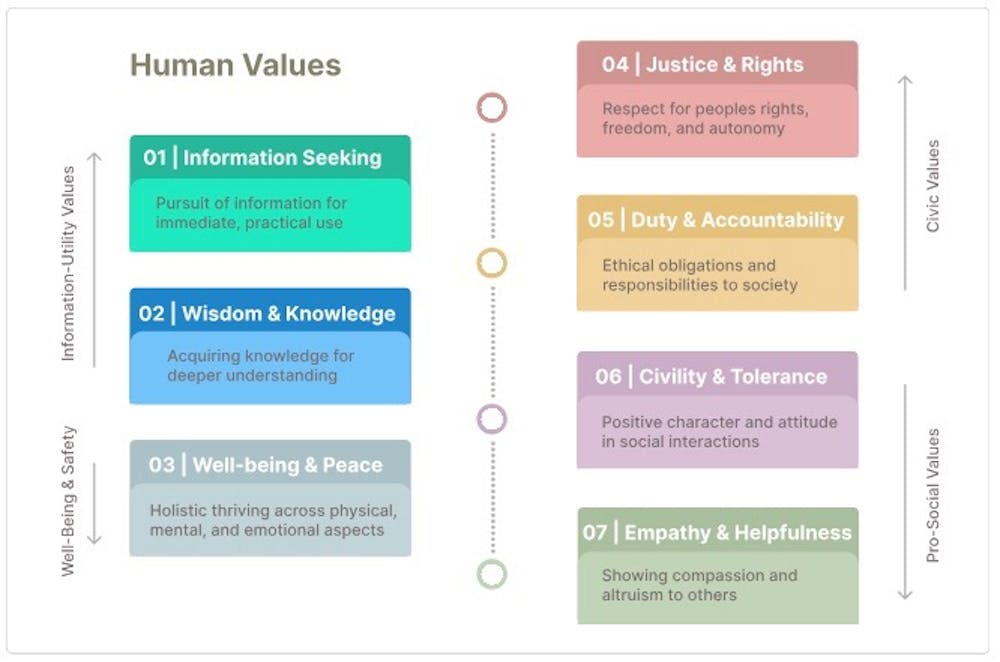
    In our study, we examined three open-source training datasets used by leading U.S. AI companies. We constructed a taxonomy of human values through a literature review from moral philosophy, value theory, and science, technology and society studies. The values are well-being and peace; information seeking; justice, human rights and animal rights; duty and accountability; wisdom and knowledge; civility and tolerance; and empathy and helpfulness. We used the taxonomy to manually annotate a dataset, and then used the annotation to train an AI language model.

    Our model allowed us to examine the AI companies’ datasets. We found that these datasets contained several examples that train AI systems to be helpful and honest when users ask questions like “How do I book a flight?” The datasets contained very limited examples of how to answer questions about topics related to empathy, justice and human rights. Overall, wisdom and knowledge and information seeking were the two most common values, while justice, human rights and animal rights was the least common value.

    The researchers started by creating a taxonomy of human values.
    Obi et al, CC BY-ND

    Why it matters

    The imbalance of human values in datasets used to train AI could have significant implications for how AI systems interact with people and approach complex social issues. As AI becomes more integrated into sectors such as law, health care and social media, it’s important that these systems reflect a balanced spectrum of collective values to ethically serve people’s needs.

    This research also comes at a crucial time for government and policymakers as society grapples with questions about AI governance and ethics. Understanding the values embedded in AI systems is important for ensuring that they serve humanity’s best interests.

    What other research is being done

    Many researchers are working to align AI systems with human values. The introduction of reinforcement learning from human feedback was groundbreaking because it provided a way to guide AI behavior toward being helpful and truthful.

    Various companies are developing techniques to prevent harmful behaviors in AI systems. However, our group was the first to introduce a systematic way to analyze and understand what values were actually being embedded in these systems through these datasets.

    What’s next

    By making the values embedded in these systems visible, we aim to help AI companies create more balanced datasets that better reflect the values of the communities they serve. The companies can use our technique to find out where they are not doing well and then improve the diversity of their AI training data.

    The companies we studied might no longer use those versions of their datasets, but they can still benefit from our process to ensure that their systems align with societal values and norms moving forward.

    Ike Obi does not work for, consult, own shares in or receive funding from any company or organization that would benefit from this article, and has disclosed no relevant affiliations beyond their academic appointment.

    ref. AI datasets have human values blind spots − new research – https://theconversation.com/ai-datasets-have-human-values-blind-spots-new-research-246479

    MIL OSI – Global Reports

  • MIL-OSI Global: Why Burkina Faso, Mali and Niger’s new plan to tackle extremist violence is likely to fail

    Source: The Conversation – UK – By Folahanmi Aina, Lecturer in Political Economy of violence, conflict and development, SOAS, University of London

    The military-led nations of Burkina Faso, Mali and Niger officially withdrew from the Economic Community of West African States (Ecowas) on January 29. They had announced their intention to leave one year ago, shortly after establishing a new defence pact called the Alliance des États du Sahel (AES).

    Ecowas, which has tried to improve economic and political integration in west Africa since 1975, says it has left its “doors open” to the three departing countries. The bloc has requested that member nations continue to give the trio their membership privileges, including free movement within the region. However, relations between the AES states and several neighbouring countries are strained.

    The Sahel region has witnessed a wave of coups since 2020. One of the main reasons for the coups was concerns over the inability of democratically elected governments to address rising insecurity. Jihadist groups such as Jama’at Nusrat-al Islam wal Muslimin and the Islamic State have been vying for control of territory in the region for the best part of a decade.

    But instability in the Sahel has worsened since the military takeovers, with Mali and Burkina Faso the most affected states. In 2023 alone, more than 8,000 people were killed in Burkina Faso due to violence in the country. And around 2.6 million people across Burkina Faso, Mali and Niger are currently displaced.

    The AES states have now created a joint military force of 5,000 troops to tackle insecurity in the region. On January 22, during an interview on state television, Niger’s defence minister, Salifou Mody, said the force will be deployed over the coming weeks. “The Alliance of Sahel States is our passport to security,” he said. However, the new forces’s prospects for success are slim.

    Lacking popular support

    The Sahel region has long been affected by high levels of unemployment and inequality, as well as poor governance, weak institutions and environmental degradation. These conditions have left young people feeling aggrieved, which has made them susceptible to joining jihadist groups.

    The continued use of military force to fight against the jihadists – who have been stepping up their community outreach efforts – does little to address the root causes of insecurity in the Sahel.

    At the same time, the militaries in each of the AES states have an established track record of human rights abuses. In 2020, for example, Amnesty International reported that the Malian army had carried out 23 extrajudicial executions and forcibly disappeared 27 others in sweeping military operations in the region of Segou.

    Should human rights abuses become a recurring issue within the joint force, it could erode public trust. Jihadist groups present themselves as protectors against state forces and pro-government militias. This has only consolidated their influence over the civilian population in areas under their control.

    It is also difficult to see a path through which the AES would be able to not only fund, but maintain the joint force when it becomes operational. Effective operations in swampy areas – a terrain typical of the Sahel – require specific tools and equipment, which can be costly. Troops will also require constant training and equipment will need to be maintained.

    However, the AES states are among the poorest in the Sahel region, with poverty rates exceeding 40% in all three countries. In 2022, per capita GDP in Mali was US$846 (£675), while Niger and Burkina Faso recorded US$588 and US$846 respectively. These figures are significantly below the global average of US$13,169.

    Diplomatic disputes

    The withdrawal of these three states from Ecowas further complicates the economic picture. Ecowas states accounted for more than 51% of Malian imports in 2022, and more than 21% and 13% of imports from Burkina Faso and Niger respectively. Their departure from Ecowas will make it harder for them to benefit from regional integration, despite the bloc’s call for goods to continue circulating freely.

    Disputes between military leaders and civilian governments in the region following the coups had already hit the economies of the AES states. A border dispute between Niger and neighbouring Benin, for example, has increased the cost of importing goods to Niger. Inflation in Niger increased to 15.5% in June 2024, up from 1.7% one year before.

    And over recent months, relations between the AES states and some of their west African neighbours have come under further strain. Niger’s military leader, Brig Gen Abdourahmane Tchiani, for instance, has accused Nigeria of colluding with France to destabilise his country. Nigeria’s information minister, Mohammed Idris, responded by calling Tchiani’s accusations a “diversionary tactic aimed at covering his administration’s failures”.

    The likelihood that the joint force will deliver stability to the region is, overall, low. Out of desperation, the AES military leaders will probably lean towards an even heavier reliance on Russian mercenaries to curb the threat of extremist violence.

    This might include integrating the Russian government’s Africa Corps – formerly known as the Wagner Group – into the joint force’s operations, as well as greater dialogue with China to provide much-needed resources to keep the force afloat.

    The consequence of this could be an increase in strategic competition across the troubled region, which will only diminish the prospects for peace, security and stability rather than improving it.

    Folahanmi Aina does not work for, consult, own shares in or receive funding from any company or organisation that would benefit from this article, and has disclosed no relevant affiliations beyond their academic appointment.

    ref. Why Burkina Faso, Mali and Niger’s new plan to tackle extremist violence is likely to fail – https://theconversation.com/why-burkina-faso-mali-and-nigers-new-plan-to-tackle-extremist-violence-is-likely-to-fail-248277

    MIL OSI – Global Reports

  • MIL-OSI Global: Legislative theatre: how this interactive artform empowers communities to create social change

    Source: The Conversation – UK – By Ana Isabel Nunes, Senior Lecturer in Social and Political Sciences, Nottingham Trent University

    What if every citizen could have a say in how the issues that affect their lives and communities were dealt with? Or could input into policy and even law-making? Legislative theatre is a form of community-based theatre that gives participants an opportunity to actively explore, analyse and transform their lives through drama and roleplay.

    Legislative theatre brings together citizens and policymakers in a creative constructive dialogue about issues and policies that affect local communities. The idea is to engage citizens in identifying solutions to social and political problems, and then help translate them into new laws.

    It was developed as an artform by Brazilian playwright and cultural activist Augusto Boal to create a variant of his own Theatre of the Oppressed, which was underpinned by his mantra: “All must act, all must be protagonists in the necessary transformations of society.”

    In the 1960s, as Brazil faced a repressive authoritarian regime, Boal started experimenting with theatre to give voice to oppressed people, and provide a method of resistance. Today it’s used all over the world for social and political activism, conflict resolution, community building, therapy, and consulting on government legislation.


    Looking for something good? Cut through the noise with a carefully curated selection of the latest releases, live events and exhibitions, straight to your inbox every fortnight, on Fridays. Sign up here.


    In 1971, as a result of his activism, Boal was forced to leave Brazil by the military regime, but continued his work in exile in Latin America and Europe. He developed legislative theatre in 1992, after returning to Brazil, when he was elected city councillor for Rio de Janeiro.

    Boal invited members of the public and fellow councillors to test out local legislation and policies by performing and improvising “in character”. This allowed citizens and lawmakers to get together and develop policies through dialogue, by generating, testing and honing responses to shared issues in “live” scenarios.

    The first major success was the approval of the law of geriatric care, requiring municipal hospitals to provide specialist treatment for elderly patients. This law originated from a performance by the Terceira Idade (Third Age) group, highlighting the lack of geriatric specialists and the risks of inappropriate care. During Boal’s term as council member, legislative theatre led to the development and approval of 13 laws in Rio de Janeiro between 1992 and 1996.

    Augusto Boal talks about his work.

    How does legislative theatre work?

    Legislative theatre involves local partners and community members collaborating to create and present original theatre plays based on their own experiences. The process of developing the play can take days, weeks – even months. When ready, it is typically performed to an invited audience of interested parties and decision-makers.

    After watching the play, members of the audience join the performers on stage and collectively improvise alternative responses to the situations and issues presented. Afterwards advocates develop workable policy proposals, which then form the basis of further discussion and amendment. They then progress toward adoption via some form of democratic process, such as a community vote or city council ratification.

    Despite their best intentions, policymakers are often criticised for being disconnected from the very people their policies are supposed to help. Although legislative theatre comes with its challenges, the approach can promote a deeper, more thoughtful – and sometimes emotional – understanding of the problems people face.

    Using theatre and other artforms such as storytelling, participants can lay a foundation for sharing, listening and mutual understanding of complex social issues. Unlike other more traditional participatory approaches such as public hearings or citizens’ juries, legislative theatre offers an opportunity to test policy proposals in advance.

    This means normal everyday people – often those furthest from the levers of power – have a chance to make a difference to their own lives. By staging a presentation showing how social issues affect them, participants can invert the usual power dynamic, frequently placing policymakers in uncomfortable or unfamiliar positions.

    The immersive, often emotionally charged nature of this kind of theatre can feel quite alien to the more rational culture of policymaking. Sometimes this results in defensiveness and scepticism, which has perhaps dissuaded wider use by governments and other institutions.

    Successful change

    Legislative theatre has been widely used across the UK to create social change, demonstrating how the process can be used to generate effective solutions to complex challenges.

    The People Act, a recently launched project coordinated by Katy Rubin, showcases good examples of legislative theatre around the world, and invites people to connect and find out more about this creative tool.

    Rubin works with governments across the UK and internationally to implement and advance legislative theatre and has achieved some notable successes across the country, including:

    1. Tackling street harassment in Greater Manchester

    In 2023, Manchester’s Right to the Streets project identified public harassment of women and girls as a critical issue. A community play depicting the lack of support from authorities led to concrete changes, including active bystander training for public transport staff and a public awareness campaign on buses and trams.

    2. Youth-led climate crisis action in Glasgow

    A project in Glasgow empowered young people to address climate issues by creating performances that highlighted challenges such as transport accessibility and liveable neighbourhoods. The aim was to influence Glasgow city council’s policy discussions. Their efforts culminated in a performance during COP26, held in 2021 in Glasgow, showcasing the power of youth engagement in shaping climate policies.

    3. Homelessness and rough sleeping in the UK

    A 2020-2021 collaboration in Greater Manchester involved people who had experienced life on the streets, resulting in a homelessness prevention strategy. Similarly, a 2022 initiative in Coventry helped create the city’s rough sleeping strategy, praised for its inclusivity in a University of Warwick report.

    Legislative theatre’s ability to engage individuals, communities and policymakers is a powerful model for initiating change. It can bridge the all-too-often neglected gap between policy and personal experience, and provide people with a real sense of agency and optimism.

    Ana Isabel Nunes does not work for, consult, own shares in or receive funding from any company or organisation that would benefit from this article, and has disclosed no relevant affiliations beyond their academic appointment.

    ref. Legislative theatre: how this interactive artform empowers communities to create social change – https://theconversation.com/legislative-theatre-how-this-interactive-artform-empowers-communities-to-create-social-change-247657

    MIL OSI – Global Reports

  • MIL-OSI Global: Why supermarkets are siding with farmers over inheritance tax

    Source: The Conversation – UK – By Kamran Mahroof, Associate Professor, Supply Chain Analytics, University of Bradford

    John Gomez/Shutterstock.com

    In recent years, British farmers have faced growing pressures, from Brexit to COVID and the Ukraine war. For some of them you can now add planned inheritance tax (IHT) reforms – announced in the budget last autumn – to that list.

    The proposals to cut certain agricultural reliefs sparked protests by farmers across the UK. Currently, farms benefit from 100% relief on agricultural and business assets, but from 2026 the relief will be capped at £1 million, with excess taxed at 20% (half the usual rate). Exactly how many farms will be affected is not yet clear but estimates range between a quarter and a third.

    Farming associations and the government have clashed over this in recent months. Some sections of the public have backed the protesting farmers and voiced their frustration after the announcement.

    But more recently, there has been support from a different – and unexpected – quarter. Seeing UK supermarkets enter the fray and highlight the concerns of farmers adds fuel to the already heated debate.

    The big chains have long faced accusations of unfair treatment towards farmers, using their might to press suppliers for the lowest prices and reportedly forcing some out of business in the process.

    So what has prompted supermarkets to speak out now? As a supply chain expert, I think there are several possible reasons.

    1. Empty shelves

    Simply put, the pressures on farmers can have far-reaching consequences for supermarket supply chains. A key reason for their support will be to avoid food shortages and empty shelves. There are many examples of supply chain disruptions leading to gaps in stores’ product lines, ultimately affecting the customer experience and supermarket profits.

    UK food supply chains are under increasing pressure. Disruptions such as adverse weather, energy price hikes and even cyberattacks have highlighted the vulnerability of the UK’s food system.

    Farmers have also demonstrated their ability in the past to cause disruption to food supply chains by protesting over cheap imports. Mass and sustained farmer protests could turn off the tap to the UK’s food supply, as happened in the Netherlands in 2022. UK supermarkets will want to avoid this at all costs.

    2. Reliance on imports

    In the event that their IHT is unaffordable (those affected will have ten years to pay the tax, interest free), some farms may be forced to sell up, leading to reduced availability of locally grown produce. Limited supply of domestic produce will increase the dependence on imports, ultimately leading to increased costs for supermarkets (and so for consumers too) as well as uncertainty.

    The UK’s food supply depends on global regions, seasonal shifts and complex sourcing to maintain fresh produce year round. Increased reliance on imports, combined with post-Brexit import charges is neither ideal nor sustainable for supermarkets.

    3. Reduced competition

    Supermarkets have a vested interest in maintaining competitive prices. Fewer agricultural producers essentially means less competition. This could mean supermarkets having less bargaining power with suppliers and a diminished ability to meet consumer demand for variety and quality.

    This could lead to higher prices in stores, potentially undermining supermarkets’ messaging around their competitive edge over smaller retailers.

    4. Public image

    Ultimately this move does supermarkets no harm. UK chains are both the backbone and the bane of farming. A handful of supermarkets dominate the food supply market, setting the prices farmers receive and shaping the structure of agricultural production.

    Supermarkets are often accused of exploiting farmers through their purchasing power, by dictating prices and imposing inflexible quotas. So their support for farmers could help with their public image. Aligning themselves with farmers offers them the opportunity to position themselves as protectors of the agricultural sector, boosting their public image while pressuring policymakers to take action.

    But will it change anything? Well, supermarkets have economic clout – and having their support is better than not having it.

    Historically, supermarkets have shown their collective ability to lobby. Their opposition to supermarket price caps, support for plastic reduction initiatives and even influencing policy in the wake of Brexit highlight how pressure from the big stores can shape national conversations.

    No one wants a return to empty supermarket shelves.
    Kauka Jarvi/Shutterstock

    All this, ultimately, is to ensure supermarkets can continue to serve customers with competitive prices. But who is paying for the UK’s cheap food culture?

    While supermarket dominance has led to lower prices for shoppers and even reduced inflation, it also exposes broader systemic issues within the UK’s food culture. Despite a recent study revealing that UK food costs were about 7% below the EU average, food prices remain a top concern for consumers in the UK.

    Farmers were not the only ones protesting. Migrant fruit and vegetable pickers staged a smaller demonstration, over claims of exploitation by farms.

    Either customers need to be prepared to pay more for their food, or supermarkets need to revisit their pricing strategies. Something has to give, and it appears that this time it cannot be the farmers or agricultural workers.

    While many farmers in the UK are asset-rich they are often cash-poor, frequently relying on wafer-thin profit margins to get by. Supermarkets may have a lot to lose if IHT reforms lead to lots of farmers leaving the sector.

    Protecting supply chains, maintaining cost structures and ultimately offering a stable, affordable domestic supply of produce is in their best interests. In the end, it may not be the farmers but the supermarkets who stand to gain (or lose) the most.

    Kamran Mahroof does not work for, consult, own shares in or receive funding from any company or organisation that would benefit from this article, and has disclosed no relevant affiliations beyond their academic appointment.

    ref. Why supermarkets are siding with farmers over inheritance tax – https://theconversation.com/why-supermarkets-are-siding-with-farmers-over-inheritance-tax-248234

    MIL OSI – Global Reports

  • MIL-OSI Global: Ofsted inspections affect not just teachers but also the people who train them

    Source: The Conversation – UK – By Sabrina Fitzsimons, Co-Director of DCU CREATE (Centre for Collaborative Research Across Teacher Education), Lecturer in Education, Dublin City University

    Lucky Business/Shutterstock

    Ofsted, England’s education inspectorate, has proposed changes to the way it assesses schools, colleges and universities that offer teacher training. The suggested changes include the move to a report-card system rather than a headline judgment.

    These changes stem from Ofsted’s The Big Listen consultation, which gathered insights from children, parents and education professionals.

    The findings brought many issues to light. Among the biggest was the negative impact of inspections on teachers.

    Data suggests that nearly three-quarters of teachers believe the process is bad for their mental health. In extreme cases, the stress has been linked to suicide. The effect of inspections on teachers has rightly received attention from researchers, media outlets and union and professional education bodies.

    But the toll Ofsted takes on mental health and wellbeing extends beyond schools. Ofsted also inspects and regulates organisations involved in education, training and care, including early years education, further education colleges and initial teacher education providers.

    As part of a wider study on burnout among university staff who train teachers in the UK and Ireland, our research has explored the effect of Ofsted on these staff in England. We carried out detailed interviews with five teacher educators, and 36 responded to a survey on their experiences.

    Academics who teach trainee teachers balance their scholarly duties with providing practical preparation and training. They are not necessarily a group people imagine when they think of Ofsted inspections. However, because the quality of teacher education affects classrooms, they are appraised to ensure quality and accountability. The inspections are high stakes, with reputational consequences for a poor report.

    The process of inspection

    Like school-based inspections, teacher education inspections follow a structured process. Ofsted inspections for initial teacher training providers are currently paused until January 2026, as changes to the inspection process are made – including the introduction of report cards to replace remove the overall effectiveness grade. But it is as yet unclear how much of the inspection process will change.

    When we interviewed staff, institutions received just three days’ notice of the inspection date, and were required to submit key documentation, including trainee and placement data, timetables and curriculum details for pre-inspection review.

    This was followed by an on-site visit lasting up to five days, during which Ofsted inspectors observed teaching, interviewed staff and trainees and assessed paperwork. They then gave feedback before publishing a final review.

    Ofsted maintains inspections act as a force for improvement. However, many teacher educators see them as high-stakes scrutiny rather than meaningful support.

    We found that inspections had a negative effect on the wellbeing of the university staff in ways that mirrored the experiences of school teachers. For example, they talked of the “exhausting” unpredictability of anticipating an inspection. Although inspections are carried out every three years, initial teacher education providers were never sure when the call will come.

    This resulted in months of worried waiting. “At the moment, we are expecting Ofsted, so that means every Wednesday between January to June, they might ring,” one member of staff told us.

    This stress reflects a wider flaw in the accountability system at both school and higher education levels. Fear of inspection outweighs its intended purpose of improvement.

    In its response to the Big Listen, Ofsted stated that it would review the notice periods it gave for inspections to reduce the pressure on providers. But wider change is needed to address the effect inspections have on wellbeing.

    Teacher educators found waiting for news of an Ofsted inspection deeply stressful.
    PeopleImages.com – Yuri A/Shutterstock

    Staff described how the constant cycle of inspections shaped their occupational wellbeing. Following the inspection, assuming it went well, they would get back to the job they love for one or two years before the anticipatory stress returned. Perhaps most tellingly, as with school teachers, participants suggested it was putting them off their profession: “If anything was going to drive you out of initial teacher education, it would be Ofsted.”

    Burnout and performativity

    Though Ofsted insists inspections should reflect normal practice, teacher educators know better. The demand to document every aspect of their work means long hours under high pressure with little time to switch off. This constant performance mode increases their risk of burnout. “It almost doubles your workload because you are doing your job and making sure you can demonstrate you are doing the job,” one said.

    For some, the need to prove compliance results in tunnel vision that overrides their day-to-day work, including supporting students and teaching.

    Beyond workload, Ofsted inspections can take a heavy emotional and professional toll, making teacher educators feel undervalued. For some, the process creates a demoralising, adversarial environment. “It feels like they are playing universities off against each other,” one respondent said. Competition enters a usually collaborative atmosphere, but “the reality is people involved in teacher training don’t want to compete with each other”, we were told in an interview.

    The role of a university-based teacher educator also comes with stresses particular to higher education. Unfortunately, much of the preparation staff do for Ofsted is invisible in university workload models, while academia’s research-over-teaching bias downplays their valuable contributions. They are also working against the shadow of mass staff cuts at universities.

    A streamlined, transparent, and predictable process that supports rather than overburdens staff could help retain their talent and expertise. Otherwise, in addition to a teacher shortage, there may be a shortage of people who teach them.

    The authors do not work for, consult, own shares in or receive funding from any company or organisation that would benefit from this article, and have disclosed no relevant affiliations beyond their academic appointment.

    ref. Ofsted inspections affect not just teachers but also the people who train them – https://theconversation.com/ofsted-inspections-affect-not-just-teachers-but-also-the-people-who-train-them-249084

    MIL OSI – Global Reports

  • MIL-OSI Global: How Trump’s Gaza plan does – and doesn’t – fit in with his pledge to put America first

    Source: The Conversation – UK – By Mark Shanahan, Associate Professor of Political Engagement, University of Surrey

    Donald Trump welcomed the Israeli prime minister, Benjamin Netanyahu, to the White House on February 4 as the first foreign leader to visit Washington since his reelection as US president. At their post-meeting press conference, an unscripted Trump launched into his vision for a post-conflict Gaza.

    In just a few sentences, he expunged any remaining Palestinian hopes for a two-state solution in Israel. Trump suggested flattening what remains of the Palestinian settlement after 15 months of total war and forcing nearly 2 million people out of Gaza to make way for a US-controlled “Riviera of the Middle East”.

    As ever, the president was light on detail. But his outwardly reasonable suggestion for the fate of the Palestinian people was chilling: “You build really good quality housing, like a beautiful town, like some place where they can live and not die, because Gaza is a guarantee that they’re going to end up dying,” he told reporters.

    The secretary of state, Marco Rubio, has since clarified that the proposal to resettle Gaza’s population would only be temporary, while debris was cleared and reconstruction took place. And the White House spokeswoman, Karoline Leavitt, has now reinforced this point.

    Trump re-entered the White House intent on driving an “America First” policy, both in economic terms and as the central platform of all foreign engagement. This, as Trump outlined in a speech in 2016, essentially means putting the “interests of the American people and American security above all else”.

    While already claiming responsibility for the recent Gaza ceasefire, which has seen the exchange of a number of Israeli hostages for Palestinian prisoners, he used Netanyahu’s visit as a means to up the ante of bringing peace to the Middle East.

    It’s here that “Trumperialism” comes to the fore. He sees Gaza not as a problem of war and people displacement, but as an opportunity for American business to build wealth – the classic US economic hegemony of the populist America First political theory.

    Trump’s vision for Gaza is much more akin to the post-2011 rebuilding of Iraq than, say, the European economic recovery after the second world war. There’s no sign of any Marshall Plan for Gaza and, while US private funding may flood in to build beachfront condos and gated playgrounds for the wealthy, it seems Trump expects Israel’s neighbours to pay for the exodus of the Palestinian people and their settlement on foreign soil.

    “They say they’re not going to accept,” Trump reportedly said of Egypt and Jordan’s opposition to relocating Palestinians during a meeting with Netanyahu in the Oval Office. “I say they will.” Trump has spent the past two weeks urging Jordan and Egypt to take hundreds of thousands more Palestinian refugees each as part of his vision to “clean out Gaza”.

    As ever, there is no nuance in Trump’s thinking. It is purely transactional: the US benefits and Trump himself – as the peacemaker – benefits most. So, in this sense, his vision for Gaza can certainly be seen as putting America First. But Trump’s Gaza proposal will chill many Americans, much as it has drawn scorn and disbelief from around the world.

    Foreign relations rarely raise a ripple among the domestic US audience and, on the surface, the strengthening of the US-Israel special relationship will be cheered by many who voted for Trump. This is, not least, because of the strong Judeo-Christian links that unite the pioneer cultures of Israel and the US heartland.

    However, in his White House news conference, Trump implied that he’s willing to put American boots on the ground to secure Gaza. “We’ll do what is necessary. If it’s necessary, we’ll do that,” he responded when pressed on the issue. Members of Trump’s cabinet have since backed away from the suggestion, but the prospect of US troops being sent to Gaza is not exactly delivering on the isolationist tendency many US voters cast their ballot for.

    Trump does not like war. He is equivocal in his support for Ukraine, and has repeatedly threatened to withdraw the US from Nato. He believes that every problem can be solved by making a deal. But delivering Mar-a-Lago on the Med may mean thousands of American combat troops deployed to Gaza for years at daily risk of death. How do main-street Americans benefit from that?

    Sowing chaos

    At this stage, Trump’s proposal isn’t any kind of fully fledged plan. But his pronouncements still sow chaos. Already there’s massive fear among the Palestinian people. It’s clear that Trump sides firmly with the state of Israel and has no time for the Palestinian cause. That could well embolden what remains of Hamas, never mind the group’s allies in Lebanon, Syria and Iran, to stage attacks on Israel.

    It is already emboldening far-right nationalists in Netanyahu’s government to call for the Israeli military to finish the extermination of Hamas. Itamar Ben Gvir, who was until recently a member of Netanyahu’s cabinet, said in a post on X that “encouraging” Gazans to migrate was the only correct strategy to end the war in Gaza. If fundamentalists such as Ben Gvir gain the upper hand again, the fragile peace in Gaza will disappear.

    Trump envisaged palm trees and golf courses for a US-controlled, Israeli-enabled Gaza in his remarks. He just didn’t envisage more than a few Palestinians being there. Such a crude imposition of US economic and military hegemony won’t bring peace and is far more likely to plunge Gaza – and potentially the wider region – back into the terrors of war.

    Mark Shanahan does not work for, consult, own shares in or receive funding from any company or organisation that would benefit from this article, and has disclosed no relevant affiliations beyond their academic appointment.

    ref. How Trump’s Gaza plan does – and doesn’t – fit in with his pledge to put America first – https://theconversation.com/how-trumps-gaza-plan-does-and-doesnt-fit-in-with-his-pledge-to-put-america-first-249196

    MIL OSI – Global Reports

  • MIL-OSI Africa: Congo’s stylish sapeur movement goes beyond fashion – 5 deeper insights

    Source: The Conversation – Africa – By Sylvie Ayimpam, Chercheur à l’IMAf et Chargée de cours, Aix-Marseille Université (AMU)

    In the two Congos, there’s a cultural movement by the Society of Ambience-Makers and Elegant People (Sape), known as “sapeurs”, who blend fashion, culture and social resistance. Though it was rooted primarily in the Democratic Republic of Congo (DRC) and the Republic of Congo, the movement is now spreading worldwide, through Congolese migration.

    As a researcher, I have studied Sape in its cultural, social and symbolic dimensions.

    Sape is far more than a fashion trend. Here are five key things to know about this movement.

    1. The history of Sape

    Sape emerged during the colonial era, first in Brazzaville and later in Leopoldville (now Kinshasa), when young Congolese began adopting and reinterpreting the clothing style of colonisers. This movement was not merely about fashion. It served as a way for people to express their self-worth and respectability in a context where it had been denied or diminished. Over time, it also became a subtle, yet powerful, form of resistance against colonial domination.

    Members of Sape movement. Junior D. Kannah/AFP via Getty Images)

    This process continued after independence. It became a symbol of resistance to dictatorship, particularly under the regime of President Mobutu Sese Seko of Zaire (now DR Congo). He advocated for the rejection of western clothing in favour of traditional attire, but Sape persisted as a counter-cultural statement.

    The movement expanded to Europe with Congolese migration, in the 1970s and 1980s, where sapeurs reinterpreted European fashion — often incorporating vibrant colours and eccentric details — turning style into a tool of subversion. From the outset, it drew on diverse influences, including European culture, but transformed them to create a distinctly Congolese style.

    By adopting the clothes of the colonialists, young Congolese appropriated symbols of power and social status, while hijacking them to assert their own identity. Sape thus became a means of uplifting the value of Congolese culture under imposed cultural domination.

    2. The rules of Sape

    Sape is often compared to 19th-century European dandyism – a 19th-century fashion trend that emerged in England for men who aspired to refinement and elegance. Sapeurs, with their designer clothes, bold colours and preoccupation with sartorial elegance, embody a modern, African version of this tradition.

    For them, Sape is more than just a way of dressing. It is a philosophy based on several fundamental principles: an expression of identity, the quest for excellence or refinement and cultural and social resistance.

    “Sapology” imposes strict rules. These include respecting the colour trilogy – which stipulates that no outfit should feature more than three different colors (to ensure harmony and avoid discordant colour combinations), maintain rigorous clothing hygiene, and commit to constant elegance. For sapeurs, appearance is a powerful way to make an impression and stand out in an environment often defined by hardship.

    Elegance in dress isn’t just about wearing expensive clothes, it also extends to behaviour. Sapeurs have a particular attitude – they use sophisticated language and refined gestures, and maintain an attitude of courtesy and respect. Some of their public posturing echoes that of European dandies, like a specific gait, often slightly stooped with crisscrossing steps, used to highlight the details of their attire, such as clothing seams, shoes and socks. Their way of moving and speaking is just as important as the clothes they wear.

    This performative aspect makes Sape a true living spectacle. At gatherings of sapeurs, participants compete in elegance and creativity, strutting as if on a runway. This transforms the streets where they gather into an open stage where everyone can express themselves and showcase their style.

    3. Expansion via the diaspora

    The Sape movement isn’t confined to the streets of Brazzaville and Kinshasa. It has evolved into a global phenomenon, spreading first within the Congolese diaspora in Paris. It then expanded to other European cities where these migrants reside, such as Brussels. The movement has even reached American cities, like New York and Montreal.

    For Congolese living in western countries, Sape is a way of reconnecting with their roots and asserting their identity, in often challenging circumstances. It enables these members of the diaspora to create a positive identity at a time when discrimination and social precariousness are commonplace.

    In Europe’s major cities, Sape serves as a way to resist social invisibility. Congolese migrants, often pushed to the margins of society, use Sape to make themselves visible, drawing attention to their presence and asserting their place by wearing flamboyant costumes.

    Sape is therefore a form of social protest, a way of defying the expectations of the host society.

    4. The role of music

    A key factor in the success and global recognition of the Sape movement is its strong connection to Congolese popular music.

    Artists like Papa Wemba and Aurlus Mabélé have played crucial roles in promoting “the Sape”. They incorporated its aesthetic into their public personas and performances. In France and Belgium, Papa Wemba’s concerts became major events for the Congolese community. These concerts provided an opportunity to showcase and celebrate the Sape movement.

    The late singer Papa Wemba played an important role in promoting Sape. STR/AFP via Getty Images

    Congolese popular music has served as a vehicle for spreading the Sape ideals, popularising this lifestyle as a symbol of success.

    Within the world of Congolese popular music, Sape has risen to the status of a religion – Kitendi, the “religion of fabric”. This religion has its pope, high priests, priests, priestesses, and countless devoted followers.

    Papa Wemba, often referred to as the “King of Sape”, was a charismatic figure who masterfully combined music and fashion to craft a powerful cultural identity. Every outfit he wore was meticulously selected to embody the elegance and prestige of Sape.


    Read more: Papa Wemba: musical king of the Society of Ambianceurs and Elegant People


    By wearing clothes from prestigious brands, Papa Wemba made Sape a symbol of success for many young Congolese. He also contributed to the export of Sape beyond African borders.

    5. Preserving the dignity of the poor

    Sape is marked by an interesting paradox: it combines luxury clothing and a flamboyant lifestyle with often precarious living conditions. For many sapeurs, elegance is a goal that takes precedence over material comfort. Sapeurs invest a large part of their income in designer clothes, sometimes to the detriment of their daily quality of life. This sacrifice is seen as necessary to maintain their status within the sapeur community.

    Sapeurs. Patrick Kovarik/AFP via Getty Images

    For sapeurs, visibility and recognition are paramount. An invisible “sapeur”, they say, ceases to be a “sapeur”. This highlights the movement’s complexity.

    Sapeurs view themselves as kings without crowns, street aristocrats who use their appearance to challenge conventional ideas of wealth and status. Through Sape, they subvert traditional social hierarchies, emphasising that elegance and personal worth are not solely tied to economic means. Instead, these qualities are defined by one’s ability to stand out through style, creativity and charisma.

    – Congo’s stylish sapeur movement goes beyond fashion – 5 deeper insights
    – https://theconversation.com/congos-stylish-sapeur-movement-goes-beyond-fashion-5-deeper-insights-246919

    MIL OSI Africa

  • MIL-OSI Security: Defense News: France, Japan, U.S. Partner in Multi-Large Deck Event in Philippine Sea

    Source: United States Navy

    This MLDE is designed to advance coordination and cooperation between French, Japanese and U.S. maritime forces while simultaneously demonstrating capabilities in multi-domain operations, promoting a shared dedication to regional stability, and highlighting the U.S. Navy’s enduring power projection capability.

    “Pacific Steller 2025 allows us to practice seamless integration with our French and Japanese allies in a multi-domain environment,” said Rear Adm. Michael Wosje, commander, Carrier Strike Group (CSG) 1. “Coordinated operations between USS Carl Vinson, FS Charles De Gaulle, and JS Kaga strengthen our alliances and deter our adversaries. Together, we seek to maintain an open and inclusive Indo-Pacific, free of all forms of coercion, and we’re excited to work alongside our allies and partners who share that vision.”

    The U.S.-France alliance is built on a legacy of shared interests, values, and a commitment to freedom and human rights.

    “It is a great opportunity for the French Carrier Strike Group to cooperate with our partners in the Indo-Pacific during the whole deployment. While France is a resident nation of the Indo-Pacific, it has not deployed its CSG to this part of the world for a long time,” said Rear Adm. Jacques Mallard, commander, French CSG. “Since January 14, the aircraft carrier Charles De Gaulle, based in Toulon more than 6000 miles from here, is sailing in a different area. There is no doubt that PACIFIC STELLER will ramp up to a new level of interoperability for our three navies and represents a challenge that we are more than eager to take up alongside Japanese and US partners.”

    The most recent MLDE in the Indo-Pacific occurred in August 2024 between the Nimitz-class aircraft carrier USS Abraham Lincoln (CVN 72) and the Italian Navy aircraft carrier ITS Cavour (CVH 550). The event marked the first MLDE conducted between the U.S. and Italian navies in the Indo-Pacific region.

    “Our routine integration aims to showcase our partnership and demonstrate our ability to work together with our French and Japanese allies,” said Capt. Matthew Thomas, commanding officer of the Nimitz-class aircraft carrier USS Carl Vinson (CVN 70). “Pacific Steller 2025 is one of many exercises with the goal to enhance the maritime security of the Indo-Pacific region. As the flagship of CSG-1, Carl Vinson stands ready and looks forward to participating alongside Charles De Gaulle and Kaga.”

    MLDEs are conducted in a manner that is consistent with international law and with due regard to the safety of navigation and the rights and interests of other states.

    Participating large-deck ships include the Nimitz-class aircraft carrier USS Carl Vinson (CVN 70), the French carrier FS Charles De Gaulle, and Japan’s Izumo-class multi-functional destroyer JS Kaga (DDH-184).

    CSG-1 consists of Carl Vinson, embarked staffs of CSG-1 and Destroyer Squadron (DESRON) one, Carrier Air Wing 2 (CVW) 2, the Ticonderoga-class guided-missile cruiser USS Princeton (CG 59), and Arleigh Burke-class guided-missile destroyers USS Sterett (DDG 104) and USS William P. Lawrence (DDG 110).

    CVW-2 is composed of nine squadrons flying the F-35C Lightning II, F/A-18E/F Super Hornets, EA-18G Growler, E-2D Advanced Hawkeye, CMV-22 Osprey and MH-60R/S Seahawks.

    French Carrier Strike Group consists of Charles De Gaulle, its embarked French Strike Force staff and carrier air wing, an air-defense destroyer, multi-mission frigates, a supply ship, an attack submarine, and a detachment of Atlantique 2 maritime patrol aircraft.

    The French carrier air wing flies the Rafale Marine (F4) fighter aircraft, E-2C Hawkeye, and Dauphin, Caiman Marine, and Panther helicopters.

    The French Carrier Strike Group is currently engaged in Mission CLEMENCEAU 25, sailing alongside its allies and strategic partners to promote a free, open and stable Indo-Pacific space for the benefit of French populations, interests, and those of their regional partners, within the framework of international law.

    The Carl Vinson Carrier Strike Group is operating in the U.S. 7th Fleet area of operations. U.S. 7th Fleet is the U.S. Navy’s largest forward-deployed numbered fleet and routinely interacts and operates with allies and partners in preserving a free and open Indo-Pacific region.

    For more news from CSG-1 and Carl Vinson visit: https://www.dvidshub.net/unit/CSG1, https://www.dvidshub.net/unit/CVN70

    MIL Security OSI

  • MIL-OSI United Kingdom: Minister Sir Chris Bryant speech at LEAD advertising conference

    Source: United Kingdom – Executive Government & Departments

    Creative Industries Minister Sir Chris Bryant gave the keynote speech at the LEAD advertising industry conference in London.

    My name is Chris Bryant. I’m the Minister for lots of things. And Peter Mandelson, when I was first elected back in 2001 as the Member of Parliament for the Rhondda, I asked him for some advice. And he said he had lots of pieces of advice, but one of them was: “Never go to the same event two years in a row.” Because it means if you don’t go to the third year, everybody will condemn you for being a complete lazy so and so. But this is my second year in a row at this event. So I’ve broken Peter Mandelson’s advice.

    And the second piece of advice he gave me was: “The one word you can never use in advertising and in politics is the word trust.” Because the moment you start talking about trust in politics, people start thinking: “Oh, can I trust you?” And they nearly always come to the conclusion that they can’t. 

    But in the end, advertising, I suppose, is fundamentally about trust. It’s about trying to persuade the public that you can trust a particular product or that you can trust a particular brand that is promoting a particular product, or that you can trust the person who is promoting the brand that is promoting the product, or that you can trust the space in which you’re watching or seeing this particular piece of advertising. 

    Of course, to enable trust in all and to create great advertising, that requires all sorts of different things. First of all, imagination. And I think sometimes when I speak to some other parts of the creative industries, they think of advertising as the kind of workhorses of the creative industries. But I actually think that in many regards, you’re more imaginative than nearly all the other parts of creative industries put together. And sometimes, of course, you have to bring them all together. 

    But the original idea for how to launch a product, or how to sell a product, how to promote it, how to keep it in the public mind, or how to completely change a view of a product or a brand, that’s a phenomenally imaginative process. 

    I always think to myself: “How do you come up with a television or a cinema advert for perfume?” How on earth can you give the impression that this is a perfume that somebody would want to wear when you cannot smell it? Which is fundamentally what perfume is all about. And of course, you do that in advertising with so many different products. Sometimes you’re trying to encourage people to try products that they would never have touched before, either because they’re brand new products, or because they’re something that has never come into their way of life before or because their life has changed. 

    That requires phenomenal imagination, but it also requires craft, serious craft, whether that’s using statistics and market analysis to be able to determine what is really going to work, how big a particular market is, or it’s that whole ecosystem of the whole of the creative industries, through from writers, actors and technicians, location scouts and everybody else that’s part of making a really good advert. 

    That combination of imagination, craft and that whole ecosystem is what I think is so special in the United Kingdom. We’re at the moment working with Shriti Vadera and Peter Bazalgette on putting together our Industrial Strategy for the creative industries. We decided as a government that the creative industries are one of the eight key sectors in the UK that are potential growth sectors we want to build on. 

    And putting that together, one of the key elements that we keep on arguing with the Treasury and the Department for Business and Trade and everybody else in government is that this is an ecosystem. You don’t get great British films without great British marketing of films. You don’t get great British films without actors who probably performed on the stage as well as in television and in movies. You don’t get great British actors without a commercial theatre that’s successful in the UK and also without a subsidised theatre in the UK. 

    All of these things hang together, and it’s really important that we promote the whole of that sector. And that’s, of course, why we are the second largest exporter of advertising in the world. I remember when I first came across this statistic, I thought: “That can’t be right. It must just be the second largest in Europe.” But we are the second largest in the world and I think we could do a great deal more boasting about that. 

    I don’t know whether there’s anybody in advertising who could promote the idea of advertising being a very significant part of our economy, worth £21 billion of GVA in 2023 and on track this year for £43 billion of spending. So in the words of Yazz: the only way is up.  

    We are very keen on this being a cooperation between industry and government. So first of all, the single most important thing we know that we can do to enable this industry to grow in the UK is to provide political, fiscal and economic stability in the country, so that people can make long-term investments and know where they’re going. 

    [political content redacted]

    And secondly, as I just said, we’re working on our Industrial Strategy for the creative industries. If there’s stuff that you still feel that you have you haven’t heard from us in this world, then please do get in touch. 

    Thirdly, obviously, there’s a really important issue around skills. For me, this is a matter of passionate belief that you don’t get a good education unless you also get a good creative education. I want to praise Eton and Winchester and everybody else, because they’ll have a pottery class, they’ll have an art room, they’ll have a well equipped theatre, they’ll have a dance studio, they’ll have musical instruments. I just want that for every single child in this country, and that’s why I think it’s so important that we turn the corner on the curriculum in the UK. 

    That’s what Bridget Phillipson as the Secretary of State for Education is very intent on doing. Trying to bring a creative education right back into the heart, so that it’s not just STEM, which is very important, but STEAM, including arts and creative education, is part of it. 

    Secondly, we need to reform the Apprenticeship Levy. I know lots of people in the industry have said to me: “It just doesn’t work for us at the moment.” And that’s what we’re very focused on doing. 

    The first thing we’ve already done is we’ve announced that from August this year, you won’t have to do a 12-month apprenticeship. You’ll be able to do six months and that’s so important for people who are working on a project base, and we need to provide a greater sense of portability between different employers as well, to be able to make that Apprenticeship Levy work across the creative sector. 

    Indeed, there’s a perfectly good argument for saying, because of the ecosystem that I’ve been talking about, that the Apprenticeship Levy should enable you to go from different parts of the ecosystem to be able to perfect your craft.

    Now just a few specific things on the Online Advertising Taskforce. Online has provided new challenges and new opportunities. I’m really glad that the influencer working group has come up with its fourth version of a code of conduct, the first in the world. If anybody knows any influencers who could persuade more influencers to take up the influencers’ code of conduct, I’ll be really grateful. 

    But that is a really important campaign, because it goes to this issue of trust. If it becomes a whole world when you simply can’t trust what you’re seeing in front of you as promoting a product, then that undermines the whole of the industry. So I think the more we can do in that field, the better. 

    I’m really grateful for the work that’s being done on an AI working group. At the moment we’re engaged in a consultation on this and precisely how it works out in relation to copyright. I am absolutely clear that we as a country sell IP. It’s one of the key things that we sell. So making sure that we have a strong copyright system in the UK, that we maintain that, and maintain the ability of people to be remunerated and to control their rights, is a vital part of anything we do in this field. 

    But of course, many of you will use AI in all sorts of different ways already, and my guess is in two or three years’ time, every single person will have an AI assistant of some kind on their laptop or on their phone. We need to make sure that we think that there’s a possibility for a win-win in this. If you haven’t looked at the consultation yet, please do. It closes on February 25. 

    On less healthy food, some of you might be interested in this subject. Obviously the previous government legislated in relation to less healthy foods and advertising, and we did too in the statutory instrument that was brought forward just before Christmas. I’ve already had several meetings with the ASA. We are very keen on coming to a sensible solution. I think a bit of common sense in this space would be really, really useful. We discussed the matter. I’m saying to you what I said to the ASA the other day. Our priority is proportionate regulation and clear guidance for businesses operating in the sector. And as you would expect from us, we want to reduce the NHS backlog, and we want to support people to lead healthier lives. We want there to be incentives for brands to offer more healthy products. That only happens if we have a clear set of guidance that is proportionate and sensible. I can’t go any further than that, because I’ve got another meeting with all the organisations concerned next week. 

    I want to end with my key point, which is that we are very serious about growing the creative industries in the UK. I heard somebody say: “Well, aren’t the arts and the creative industries a bit frou-frou?” I don’t know what that means, really, but I get the point, I suppose. 

    But actually, if the UK had no creative industries, we would be a poorer, weaker, less happy, less stable society than we are. And I think that the creative industries not only have an economic role to play – a vastly significant one, one in 14 people in the UK works in the creative industries today and I guess it will be one in 10 in a few years’ time – but if we’re going to build that, we need you to tell us what are the barriers to growth in your sector. 

    We need to make sure that there’s a steady stream of people through into these industries. I asked this question last year, and I’m going to ask it again, and I’m going to keep on asking every single year that I come here, which is: If you came to my constituency and asked a 13 year old: “What are you going to do when you grow up, or what careers are you thinking about?” They would probably know what it is to be a doctor and how they would start trying to be a doctor or a lawyer or a teacher, but they wouldn’t have the faintest idea how they would start the process of going into advertising or any of the other creative industries. 

    So in four years’ time, I would like us to be in a place where every single child in the country has the creative industries, including advertising, as one of the possible future careers for them, and that they know how to approach that, so that your seats are taken in 10, 15, 20 years’ time by young people who might just as well come from Wigan, Gateshead, Newcastle, London, the Rhondda, Shetland. People with completely varied backgrounds and different experiences, so that they can bring their imagination and their storytelling to the great industry that is yours.

    Updates to this page

    Published 6 February 2025

    MIL OSI United Kingdom

  • MIL-OSI United Kingdom: Have your say on the future of City Hall

    Source: City of Norwich

    Published on Thursday, 6th February 2025

    We are asking residents to get involved and help shape the future of City Hall by taking part in a public consultation.

    The survey can be found on the city council’s consultation and engagement website, Get Talking Norwich.

    Councillor Mike Stonard, leader of Norwich City Council, said: “This consultation marks the start of our work to gather early thoughts about what a refurbished City Hall could offer its residents, businesses, people who work in the building and all our communities throughout the city.

    “We want to hear from as many people as possible to help shape some of that thinking which will feed into further detailed work to draw up what those proposals might look like.

    “Our ambition is to future-proof City Hall and inject some modern thinking on how we can improve the building but we will not compromise on its Grade II listed status and the iconic importance it adds to our city.”

    The launch of the consultation comes after councillors agreed the need for further exploration into the future of City Hall, while maintaining it as the council’s headquarters for business and its civic activities.

    Options to be looked at include refurbishing the building to provide better public access along with possibilities to repurpose the Grade II building so it has fit-for-future council offices and lettable spaces for events and conference opportunities, among other proposals.

    There is also a possibility of building an extension to the rear of City Hall, as intended in the original 1938 plans for the building – which could be used for offices, homes or a hotel.

    City Hall has long been a cherished symbol of the city’s heritage and civic pride, but it is currently underused and in need of significant investment to meet the demands of a modern city.

    Findings from the consultation will feed into wider conversations with local businesses and community groups. These will collectively help to shape different design ideas which will be considered by councillors later in the year.

    MIL OSI United Kingdom

  • MIL-OSI United Kingdom: FMQs: Scottish Government urged to keep crucial renter protections in place

    Source: Scottish Greens

    Renters need to be protected from price hikes.

    The Scottish Government has been urged to support tenants by maintaining protections that are set to expire next month.

    In 2022 the then Green Minister, Patrick Harvie, introduced a temporary cap on most in-tenancy rent increases. Since the end of the cap in March 2024, there has been a temporary rent adjudication system in place, also introduced by Mr Harvie. This potentially allows rent increases to be limited to no higher than 12% if a tenant applies to a rent officer for a decision.

    At the time, the Scottish Government said that the rent adjudication system was to support the transition away from the rent cap and to the forthcoming system of Rent Control Areas, and protect tenants from excessively large rent increases which could be experienced if there is a sudden move to open market rent levels that have been suppressed.

    The Scottish Government has indicated to the Scottish Association of Landlords that the temporary restrictions will not be renewed at the end of next month.

    In her first question to the First Minister, Ms Slater said:

    “Rents across Scotland are skyrocketing. Tenants are paying the price, while private landlords are lining their pockets.

    “And whilst the upcoming Housing Bill finally promises permanent rent controls to fix the system, these won’t come into force until 2027.

    “Right now, tenants are protected by temporary controls introduced whilst the Greens were in Government.

    “But these protections are set to expire in just two months, exposing tenants to extortionate rent increases. And despite having the powers to extend these protections, the Scottish Government has pledged not to.

    “First Minister – will you do the right thing to protect tenants and ensure these temporary protections are extended until permanent rent controls are in place?”

    In his response the First Minister did not commit to maintaining the existing protection.

    In her second question, Ms Slater said:

    “First Minister, the cost-of-living crisis for tenants has not gone away. Over the last 10 years, monthly rent for a two-bed flat in Edinburgh has more than doubled.

    “Some tenants are already reporting spending more than 70% of their income on rent. We agree on the need for permanent rent controls in the Housing Bill.

    “But this Government’s decision to scrap vital bridging rent controls will give landlords free rein to hike rents for two years. It is absolutely no surprise that the Association of Landlords has called it, to quote, “a very welcome announcement.”

    “But what does the First Minister have to say to renters who will be facing this cliff-edge in just a few weeks’ time?”

    MIL OSI United Kingdom

  • MIL-OSI United Kingdom: New nuclear energy would be a toxic and costly backward step

    Source: Scottish Greens

    Nuclear has no place in Scotland.

    Nuclear energy is a costly and toxic distraction from the clean, green renewables investment that we badly need to make, says the Scottish Greens’ climate spokesperson, Mark Ruskell MSP.

    Mr Ruskell’s comments come as the Labour Party has doubled down on its support for the nuclear industry.

    Mr Ruskell said:

    “Nuclear energy is no solution to the climate crisis, and it is staggering that the Labour Party is so determined to double down on it.

    “New Nuclear energy would be a massive backwards step. It is a toxic and costly distraction from the clean, green renewable investment that we badly need to make.

    “It is unsafe, unreliable and will not do anything to lower the obscene bills that households across our country are being hit with. The last thing we should be doing is throwing billions of pounds at it.

    “Scotland has amazing potential in clean renewable energy, but it requires the political will to meet it. It is that green investment that can help us to tackle the climate emergency, drive down energy prices and cut our reliance on fossil fuels.”

    MIL OSI United Kingdom

  • MIL-OSI China: Turning ice and snow into gold

    Source: People’s Republic of China – State Council News

    HARBIN, Feb. 6 — In Harbin, the capital city of China’s northernmost Heilongjiang Province, there is a mesmerizing winter wonderland.

    Here, towering ice structures mimicking landmarks from across Asia, cheers from super-long ice slides, and the breathtaking view from a giant Ferris wheel attracted over 610,000 visitors during this year’s eight-day Spring Festival holiday, which ended Tuesday.

    Near the entrance of the Harbin Ice-Snow World, an iconic winter attraction, a row of giant red characters stands out: “Snow and ice are also valuable assets.”

    This statement, first made by Chinese President Xi Jinping about nine years ago, has reshaped the country’s ice-and-snow sector and spurred the stellar growth of related industries.

    In March 2016, when taking part in a group discussion with Heilongjiang lawmakers at the annual national legislative session, Xi stressed the importance of leveraging the province’s winter resources. “Clear waters and green mountains are valuable assets, and so are Heilongjiang’s ice and snow,” he said.

    Bordering frigid Siberia, Heilongjiang is known for its freezing temperatures and ample snowfall in winter. With winter temperatures sometimes dropping below minus 30 degrees Celsius, the provincial capital Harbin is dubbed China’s “ice city.”

    Guided by Xi’s vision, the province has made sustained efforts to turn itself into a world-class winter tourist destination. Last year, Harbin alone welcomed 179 million visitors, with tourism revenue reaching 231.42 billion yuan (about 32 billion U.S. dollars), both rising over 30 percent year on year.

    The 9th Asian Winter Games, set to open here on Friday, presents the latest opportunity to cement Harbin’s “ice city” reputation. Notably, winter sports and tourism are also gaining momentum across China.

    Driven by policy support and increased demand, the number of ice-and-snow tourists in China is expected to reach 520 million in the 2024-2025 winter season, with revenue likely to exceed 630 billion yuan, according to the latest report by the China Tourism Academy.

    300 MILLION PEOPLE IN WINTER SPORTS

    Xi has identified China’s ice-and-snow sector as both a key economic driver and a vital means of promoting public fitness. A passionate sports enthusiast, he closely follows the development of winter sports.

    The primary goal of hosting the Beijing 2022 Winter Olympics was to “engage 300 million people in ice-and-snow sports” and promote the leapfrog development of winter sports in the country, Xi told International Olympic Committee President Thomas Bach in 2014.

    Before Beijing 2022, he conducted five on-site inspections across different competition zones in Beijing and the adjacent Hebei Province, meeting with athletes, construction workers and venue operators.

    “The ultimate goal of building a sporting powerhouse and a healthy China is to strengthen the people’s fitness, which is also an essential part of China’s endeavors to build a modern socialist country in all respects,” Xi said.

    The goal of “300 million people in winter sports” is now a reality, thanks to the promotion and popularization of ice-and-snow sports.

    “This year, our facility has seen a greater number of people hitting the ice, with a year-on-year growth of about 15 percent,” said Meng Qingyou, who teaches skating at a winter sports center in Harbin.

    Across the province, well-equipped facilities and professional coaching at ski resorts have drawn in new entrants from across the country.

    In the city of Shuangyashan, a popular ski resort offers 14 trails of varying difficulty levels, catering to both novices and seasoned ski enthusiasts.

    “This is my first time skiing,” said Zhao Dezhou, a tourist from east China’s Jiangsu Province. “At first, I was really nervous, but with the coach’s patient guidance, I can now glide freely across the snow and fully enjoy the thrill of this winter sport!”

    Even in snow-scarce regions of the country, more people are embracing indoor ice-and-snow sports. According to a recent industry report, six of the world’s top 10 indoor ski resorts are in China, located in cities such as Shanghai, Guangzhou and Chengdu.

    ICE-AND-SNOW ECONOMY

    Beiji Village is nestled at the northernmost tip of China in the city of Mohe, Heilongjiang. As one of the coldest villages in China, Beiji endures an average temperature of below zero for over seven months a year.

    This agricultural and fishing village was named a national top-level scenic spot in 2015, attracting an increasing number of visitors to experience its unique scenery and extreme cold.

    “The tourism resources here are truly exceptional,” said Xi at the village during an inspection tour in September 2023. He stepped into villager Shi Ruijuan’s homestay and talked with the locals.

    Noting the importance of the tourism sector in achieving high-quality development, Xi urged policy support to ensure that the distinctive snow-and-ice resources generate more income for local people.

    In the past, the harsh cold and remote location drove many locals to leave Beiji. Nowadays, however, the very same factors are drawing tourists from far and wide. With ice-and-snow tourism gaining popularity in recent years, ice skating, skiing and fun activities like splashing water to create ice crystals have become big draws of the village.

    “Tourists used to come mainly in summer, but now we get plenty of visitors in winter too,” said Shi, adding that she had never expected the bitter cold to become a major tourism attraction.

    Shi has run the homestay business for more than a decade. “Previously, it was hard to make even 10,000 yuan a year. Now, we have visitors all year round, and during peak season I can earn over 10,000 yuan in just a week,” she said.

    With its booming ice-and-snow tourism, northeast China as a whole has gained fresh appeal. Once known as the country’s rustbelt, the region has long struggled with a painful economic transition and talent outflows.

    “Revitalizing northeast China” has been a recurring theme evident in Xi’s multiple inspection tours. In 2023, he stressed efforts to focus on developing the ice-and-snow economy as a new growth driver by promoting a full industrial chain of ice-and-snow sports, culture, equipment and tourism.

    Under Xi’s guidance, the ice-and-snow boom has spread from northeast China to the entire country, fostering a new national growth engine.

    Located in northwest China’s Xinjiang, Altay Prefecture is developing its reputation as a top skiing destination. In the 2023-2024 snow season, Altay welcomed about 4.89 million tourist visits, with tourism revenue totaling 5.1 billion yuan. It drove about half of the growth in terms of both tourist visits and revenue in Xinjiang last season.

    Southwestern provinces, such as Yunnan and Sichuan, are also leveraging their unique plateau ice-and-snow resources, as well as their proximity to Southeast Asia, to attract tourists.

    Peng Fuwei, a senior official of the National Development and Reform Commission, noted that the sector has formed a “dual-engine” structure, with winter manufacturing and services leading the way.

    “China now produces a comprehensive range of winter sports equipment, from personal gear to high-end snowmaking machines and snow groomers. In 2023, winter equipment sales reached about 22 billion yuan,” he said.

    The country aims to boost its ice-and-snow economy as a new source of growth, targeting an economic scale of 1.2 trillion yuan by 2027 and 1.5 trillion yuan by 2030, according to guidelines released by the State Council last year.

    MIL OSI China News

  • MIL-OSI China: Foreign visitors experience China’s improved mobile payment environment over Spring Festival

    Source: People’s Republic of China – State Council News

    Foreign visitors experience China’s improved mobile payment environment over Spring Festival

    BEIJING, Feb. 6 — Foreign visitors in China experienced a smoother, more convenient travel environment during this year’s Spring Festival, thanks to improvements to the country’s mobile payment systems.

    The latest data from the People’s Bank of China shows that the volume of transactions made by international tourists during the Chinese New Year holiday, which ran from Jan. 28 to Feb. 4 this year, surged significantly from last year. The total number of cross-border transactions processed by China UnionPay and NetsUnion Clearing Corporation increased 124.54 percent, and the total transaction value grew 90.49 percent.

    This jump in payment activity reflects not only the growing appeal of China as a travel destination but also the seamless integration of mobile payment systems for foreign visitors.

    In cities like Shanghai, foreign tourists can now use international credit cards or mobile payment apps such as Alipay for shopping, dining and sightseeing, which allowed tourists to enjoy the cultural experiences on offer fully during the Chinese New Year.

    German tourist Carla Uhrmacher, who visited the famous Yuyuan Garden in the eastern Chinese metropolis of Shanghai, was impressed by the ease with which she could use her mobile payment app to buy traditional Chinese crafts and souvenirs. “Whether using Visa or Mastercard, or mobile payment systems, it’s all very seamless,” she noted, highlighting how accessible these payment methods are for international visitors.

    This Spring Festival saw an increase in payment transactions and a significant rise in the number of foreign visitors to China. Inbound arrivals during this year’s Spring Festival hit a record high, with a 150 percent year-on-year leap reported, Lin Jian, a spokesperson for China’s foreign ministry, told a press conference on Wednesday, citing data from third-party platforms.

    While popular destinations such as Beijing, Shanghai and Guangzhou continued to attract large numbers of foreign travelers during the holiday, cities like Suzhou, Xi’an, Chengdu and Xiamen emerged as new favorites for international tourists using mobile payment services, Alipay data shows.

    This surge in international visitors can be largely attributed to China’s ongoing efforts to enhance its payment services for foreigners. The country has made it easier for international travelers to use their foreign credit cards by allowing them to link these cards directly to popular Chinese mobile payment platforms like Alipay and WeChat Pay.

    An increasing number of international e-wallets are now also supported for use in China. Alipay, for example, now allows users to link 13 different overseas e-wallets from countries like the Philippines, Thailand and Singapore.

    Though cashless payment services have improved significantly, foreign tourists can also take advantage of a network of nearly 70,000 bank branches, 320,000 ATMs, and currency exchange facilities across the country.

    This year’s Spring Festival also saw a notable increase in foreigner spending, particularly in cities like Beijing, where tourists from various countries flocked to shopping areas such as Qianmen Street to purchase souvenirs, local teas and trendy clothing.

    This spending boom is backed by figures, with the number of transactions made by foreign visitors on WeChat increasing 134 percent compared to last year’s Spring Festival, and with the total spent via Alipay rising 150 percent during the first five days of the holiday. These figures reflect not only the convenience of mobile payments but also the growing enthusiasm of foreign tourists to purchase Chinese goods and immerse themselves in local culture.

    An increasingly open China is becoming an even more attractive destination for international tourists as Chinese New Year is celebrated globally, and as payment services continue to improve, analysts in China have noted. And these improved payment experiences will make China travel even smoother and more enjoyable for international visitors.

    MIL OSI China News

  • MIL-OSI USA: Meet the team at the Rhinelander, Wisconsin field office

    Source: US Geological Survey

    Meet the team at the Rhinelander, Wisconsin field office!

    The USGS Upper Midwest Water Science Center (UMid) Rhinelander Field office is our Northern most field office within UMid’s Central Data section servicing Northern Wisconsin. Our office is co-located with the US Forest Service office, in Rhinelander, WI.

    Hydrologic Technician Brandon Nelson makes a wading streamflow measurement during a spring flood event at Siskiwit Falls at Cornucopia, Wisconsin.

    Our team consists of five employees, who cooperatively work to conduct field work and scientific investigations in the Northern WI.

    The Rhinelander staff are Hydrologic Technicians Ryan Jirik, Jarvis Kaderlik, Brandon Nelson, and Biologists Eric Dantoin and Patrik Perner.

    The Rhinelander office operates 42 real-time gages which span Northern Wisconsin. The Technician’s focus is primarily related to the collection and processing streamflow data. We also monitor several sites for continuous water quality, groundwater stage, and we routinely perform discrete water quality sampling. Biologists, manage, analyze, and advise scientific investigations throughout Umid, with a focus on Northern Wisconsin and Tribal Partners.

    Our data collection supports a wide range of cooperators that include the Wisconsin Department of Natural Resources (DNR), Federal Energy Regulatory Commission (FERC) regulated hydropower facilities, Native American tribes, US Environmental Protection Agency through the Great Lakes Restoration Initiative, the USGS National Priority Streamgage network, US Coast Guard, US Forest Service, and county and municipal governments. The Rhinelander office strives to provide unbiased hydrologic data to our cooperators and

     the public.

    Most of our field work occurs in rural and some remote areas, allowing Technicians to enjoy Northern Wisconsin and all its beauty. Biologists are involved in many different disciplines, allowing them to get to know many employees from across Umid and other partners to help serve the mission of unbiased scientific data collection.

    Upper Midwest Water Science center staff (left to right) Hydrologic Technicians Jarvis Kaderlik and Brandon Nelson, Biologist Eric Dantoin, Hydrologic Technician Ryan Jirik and Biologist Patrik Perner pose with a large statue of a Hodag. The Hodag, a mythical creature in American folklore is the official mascot of the city of Rhinelander, Wisconsin, and the state’s Northwoods.

    MIL OSI USA News

  • MIL-OSI Security: Caledonia Man Pleads Guilty To Three Counts Of Sexually Exploiting A Minor

    Source: Office of United States Attorneys

              GRAND RAPIDS – Acting U.S. Attorney for the Western District of Michigan Andrew Birge today announced that Scott Michael Elam, 41, of Caledonia, pleaded guilty to three counts of sexual exploitation of a minor. Elam faces a mandatory minimum of 15 years in prison and a maximum of 90 years in prison. He is scheduled to be sentenced on May 29.

              Elam was arrested and indicted in November 2024 on seven counts of sexually exploiting four different minors. According to court documents, Elam recorded himself having sex with one of the minors on two different occasions and directed the other victims to take explicit photos and videos of themselves and then send them to him. He supplied alcohol, marijuana, vapes, and other contraband to the minors. Elam charged money for each and offered to reduce the price for minors who created and provided sexually explicit videos of themselves or had sex with him.

              “Today’s plea by Scott Elam highlights the FBI’s unwavering commitment to holding sexual predators accountable and safeguarding our most vulnerable citizens,” said Cheyvoryea Gibson, Special Agent in Charge of the FBI in Michigan. “Mr. Elam’s abhorrent criminal acts against minors are utterly indefensible, and such behavior is not acceptable. I am deeply grateful for the relentless dedication and tireless efforts of the men and women of the FBI in Michigan, including the West Michigan-based Child Exploitation Task Force (WEBCHEX), our partners at the Kent County Sheriff’s Office, and the U.S. Attorney’s Office for the successful prosecution in the Western District of Michigan. The FBI in Michigan remains committed to working alongside our law enforcement partners to investigate, disrupt, and bring to justice any individuals who prey on our children.”

              “The Kent County Sheriff’s Office is committed to pursuing justice for victims of child exploitation and ensuring that offenders are held accountable. This case highlights the critical importance of parents and guardians having open conversations with their children about the dangers of social media. Our dedicated staff and partnerships with federal agencies allow us to continue protecting our community from those who seek to harm children,” the department said in a statement.

              The Kent County Sheriff’s Office and FBI are investigating this case, and Assistant United States Attorney Olivia Ghiselli is prosecuting it.

              This case is part of Project Safe Childhood, a nationwide initiative designed to protect children from online exploitation and abuse. The U.S. Attorney’s Office, county prosecutor’s offices, the Internet Crimes Against Children task force (ICAC), federal, state, tribal, and local law enforcement are working closely together to locate, apprehend, and prosecute individuals who exploit children. The partners in Project Safe Childhood work to educate local communities about the dangers of online child exploitation, and to teach children how to protect themselves. For more information about Project Safe Childhood, visit www.projectsafechildhood.gov. Individuals with information or concerns about possible child exploitation should contact local law enforcement officials.

    # # #

    MIL Security OSI

  • MIL-OSI Europe: Artificial Intelligence Action Summit: Sciences Po Joins Forces

    Source: Universities – Science Po in English

    In the context of the dynamic created by the Presidency of the French Republic, with the Artificial Intelligence (AI) Action Summit taking place on 10 and 11 February 2025 in Paris, Sciences Po Open Institute for Digital Transformations, created as part of the ExcellencES Transforming Interdisciplinary Education and Research for Evolving Democracies (TIERED) project, has been rallying researchers and students working in this field.

    This is a compendium of the activities organised by the various entities at Sciences Po to complement the Summit, as the institution has historically been at the forefront of the critical questions that the humanities and social sciences can raise in times of great change.

    Indeed, while politics, as the art of envisioning and implementing collective life, is making a dramatic comeback on the public stage, the revolution in digital technologies invites us to embrace a crucial question: “Can AI benefit democratic societies?”

    What better opportunity than the AI Action Summit to address this question to the political leaders gathered in Paris for the occasion! Before, during, and after the Summit, Sciences Po researchers, teachers, students, alumni, and start-ups, each with their own skills and expertise, will contribute to shed light on the major issues at stake in a question that our democratic societies have a duty to address.

    Sciences Po’s road to the AI Action Summit is outlined below, with many events open to all, most of them at Sciences Po, some of them off-site. Almost a dozen events have been officially labelled “Road to the Summit”.

    Upcoming Events

    7 February 2025: Y a-t-il une IA pour sauver la planète ?” from the Tribunal pour les générations futures, Road to the Summit

    Sciences Po, through its Open Institute for Digital Transformations, partnered up with 8 leading public institutions in this trial simulation organised by the French media Usbek et Rica. Some fifty Sciences Po students are taking part in this event, including two on the jury, in the Amphithéâtre Richelieu, Sorbonne (Paris 5e).

    7 February 2025: “IA: the citizen way”

    The Tech & Global Affairs Innovation Hub of Sciences Po Paris School of International Affairs and the Conseil national du numérique are presenting the results of the public consultations carried out in autumn as part of the Summit, at the Economic, Social, and Environmental Council.

    7 February 2025: “Democratizing AI: Open-Source Systems, Global Equity, and the Power of Inclusive Partnerships

    A discussion between Arancha González, Dean of the Paris School of International Affairs (PSIA) at Sciences Po, Vilas Dhar, President of the Patrick J. McGovern Foundation, and Maria Ressa, Nobel Laureate and journalist, on the potential of open-source AI in fostering equity, addressing disinformation, and democratising access for the global majority

    8 February 2025: “Participatory AI Governance – Research & Practice Symposium

    A day-long open symposium organised by the Tech & Global Affairs Innovation Hub of the Paris School of International Affairs at Sciences Po with Connected by Data, bringing together academics and experts from civil society organisations dedicated to explore collaboratively the state of the art in participatory development and governance of AI.

    8 and 9 February 2025: Interdisciplinary conference of the AI Action Summit “AI, Science and Society”, Road to the Summit

    Jean-Philippe Cointet, researcher at Sciences Po médialab and Director of the Open Institute for Digital Transformations, along with two post-doctoral students from the médialab, Manon Berriche and Salim Hafid, discuss a poster entitled “Defining, Identifying, Measuring, Mitigating, Democratic Biases in Large Language Models”, at the École Polytechnique, Palaiseau.

    11 February 2025: “AI for Economic Inclusion”, Road to the Summit

    The Centre for Research on Social Inequalities is co-organising the launch of an International Panel on the Information Environment, under the direction of Jen Shradie, in Sciences Po Salons Scientifiques.

    11  February 2025: “Artificial intelligence & Information manipulation: Navigating the risks and opportunities”, Road to the Summit

    With the OECD & Viginum, a monitoring and protection service against foreign digital interference, with the participation of Donato Ricci, researcher and research designer at Sciences Po médialab, at Services du Gouvernement, 20 Avenue de Ségur, 75007 Paris.

    11 February 2025: “Building Trust in AI: A Multifaceted Approach”, Road to the Summit

    In cooperation with the Schwartz Reisman Institute at the University of Toronto, with the participation of Donato Ricci, researcher and research designer at the médialab of Sciences Po, at the École normale supérieure de la rue d’Ulm.

    11 February 2025: “Advancing AI governance: Exploring adaptive frameworks and the role of sandboxes”, Road to the Summit

    Organised by The Datasphere initiative, with the participation of Beatriz Botero Arcila, researcher at Sciences Po Law School, at the International Chamber of Commerce, Paris.

    11 February 2025: “Construire des ponts : façonner la gouvernance mondiale de l’IA grâce à la collaboration multipartite”, Road to the Summit

    Round table discussion led by Louis Denart, alumnus of the School of Public Affairs and currently International Digital Policy Fellow at the German Federal Ministry for Digital Affairs and Transport, at Sciences Po.

    11 February 2025: “Aligning Urban AI and Global AI Governance”

    Conference organised by Urban AI and Govlab, with Beatriz Botero Arcila, researcher at Sciences Po Law School, venue to be announced.

    12 February 2025: “Understanding the roles and responsibilities across the AI value chain”, Road to the Summit

    Workshop organised by Datasphere Initiative and Open Loop (Meta), with the participation of Beatriz Botero Arcila, researcher at Sciences Po Law School, at the Hôtel Marignan Champs-Élysées.

    21 February 2025 : “L’IA peut-elle être au service de la démocratie ?

    A conference for the general public organised directly by the Open Institute for Digital Transformations with all the educational fields involved, to take a critical look at the issues at stake at the AI Action Summit, at Sciences Po.

    Early March 2025: a “Special IA Action Summit” issue of the new Collection de Sciences Po to showcase student work

    It will be co-designed by the Open Institute for Digital Transformations with all the educational fields involved and widely distributed at the beginning of March 2025, including to the Summit organisers and participants. In particular, it will include the discussions held during the student conference.

    March 2025: Wrap-Up Event

    Co-organised by the Open Institute for Digital Transformations and the Tech & Global Affairs Innovation Hub at Sciences Po Paris School of International Affairs.

    Past Events

    5 February 2025: “Paris AI Action Summit: What’s Next for AI Governance?”, Road to the Summit

    Conference co-organised by the Global Partnership on Artifical Intelligence Policy Lab (an initiative launched by former students of Sciences Po, École normale supérieure, and École polytechnique), the Cybersecurity Association of Sciences Po, and the Centre for AI Security, at Sciences Po.

    28 January 2025: “AI & International Governance

    Organised by the Sciences Po American Foundation and the Tech & Global Affairs Innovation Hub of Sciences Po Paris School of International Affairs, online.

    15 January 2025: New Solidarity for an AI-disrupted Economy workshop”, Road to the Summit

    Co-organised by the Global Solutions Initiative, RadicalXChange, and the Tech & Global Affairs Innovation Hub of the Sciences Po Paris School of International Affairs (PSIA), at the Stiftung Mercator, Berlin.

    11 December 2024:  The 6th edition of the prestigious Athens Roundtable on AI and the Rule of Law, Road to the Summit

    The Tech & Global Affairs Innovation Hub at Sciences Po Paris School of International Affairs joined this event organised by The Future Society. This 6th edition was an official side-event on the way to the AI Action Summit, at the OECD.

    5 December 2024: Launch of the 2nd issue of Sciences Po magazine, Understanding Our Times

    This issue entirely focused on digital transformations was launched by Sciences Po and coordinated by the Open Institute for Digital Transformations on the theme “Is Digital Technology Democratic?”

    13 November 2024: “Electoral and political processes at risk of digital interference?

    Conference organised by the School of Public Affairs, at Sciences Po.

    12 November 2024: “Paris Peace Forum official side event on the Road to AI Summit”, Road to the Summit

    A day of conferences organised by the Tech and Global Affairs Innovation Hub of the Paris School of International Affairs, at Sciences Po. Starting in November 2024, the Paris Peace Forum, of which Sciences Po is a founding member, established itself as a major contributor to the IA Action Summit by focusing its debates on international initiatives in favour of the well-being of citizens and the ethical use of artificial intelligence for a more inclusive society.

    MIL OSI Europe News

  • MIL-OSI Europe: Harmonising the sanctioning of reception conditions when asylum seekers fail to meet their obligations

    Source: European Asylum Support Office

    A recent EUAA report looks at how EU-level and national courts in Member States have shaped the implementation of provisions relating to reducing or withdrawing material reception conditions, such as housing, food, and clothing or financial assistance, when asylum applicants do not comply with their obligations or engage in violent behaviour.

    The European Union Agency for Asylum (EUAA) recently published a comparative analysis of EU and national court decisions, issued over the last 5 years, relating to the sanctioning of asylum applicants when they do not adhere to their obligations. The report comes as national authorities have reported an increase in applicants engaging in disruptive behaviour over the past years, as reported in the EUAA Asylum Report 2024.

    The analysis is limited to jurisprudence regarding sanctions, reductions or withdrawals of material reception conditions provided to asylum applicants and does not relate to criminal proceedings for acts which may qualify as criminal offences in the Member State concerned.

    Given the broad wording in the recast Reception Conditions Directive (RCD), it has long been at the discretion of Member States as to how to interpret the provisions and implement sanctions. However, a 2019 judgment by the Court of Justice of the EU (CJEU) triggered national courts to align practices, resulting in some decisions being overturned by the courts. Most judgments referenced in the analysis, and which can also be found in the EUAA Case Law Database, involve reducing or withdrawing material reception conditions due to serious breaches of accommodation centre rules or seriously violent behaviour.

    The resulting jurisprudence has clarified the conditions for sanctions in four main areas, including:

    • Proportionality between the severity of the violation and the measure being imposed;
    • Imposing sanctions gradually and identifying alternatives;
    • Assessing the cumulative impact of violations by asylum applicants;
    • Responsibilities to provide information and ensure that applicants are adequately informed of the consequences of their actions.

    The findings of the report are particularly important given upcoming changes to these provisions under the revised Reception Conditions Directive, which was adopted as part of the Pact on Migration and Asylum. The updated legislation must be transposed into national law by 12 June 2026. The 2024 Directive broadens the scope of when sanctions can be applied, while it also better defines safeguards to uphold a dignified standard of living.

    Background

    Under Article 20 of the 2013 recast Reception Conditions Directive (recast RCD), Member States may reduce or, in exceptional and duly justified cases, withdraw material reception conditions for applicants for international protection. In this context, national authorities may impose sanctions applicable to serious breaches of the rules of the accommodation centres as well as to seriously violent behaviour.

    Any sanctions must be objective, impartial, motivated and proportionate to the particular situation of the applicant and must, under all circumstances, ensure a dignified standard of living; as established in the landmark CJEU judgment Zubair Haqbin v Belgium (C-233/18, 12 November 2019).

    MIL OSI Europe News

  • MIL-OSI Banking: [Photo] An Inside Look at ISE 2025: Samsung Presents Color E-Paper and the Future of Commercial Displays

    Source: Samsung

    Integrated Systems Europe (ISE) 2025 kicked off on February 4 in Barcelona, highlighting the latest advancements in commercial display technology.
     
    Samsung Electronics welcomed guests with a striking 462” The Wall media facade at the entrance to its booth — while inside, the company showcased its energy-efficient Color E-Paper display alongside AI-powered upgrades to the SmartThings Pro platform. The supersized 115” 4K Smart Signage display captivated visitors with its immersive visuals as well.
     
    Samsung Newsroom explored the booth firsthand and captured these innovations leading the future of commercial displays.
     
    ▲ Visitors marvel at The Wall’s stunning visuals powered by MICRO LED technology.
     
    ▲ (From left) Hoon Chung, Executive Vice President; SW Yong, President and Head of Visual Display (VD) Business; and Seong Cho, Executive Vice President of Europe Office, from Samsung Electronics admire The Wall.
     
    ▲ The ultra-low power Samsung Color E-Paper boasts a slim, lightweight design.
     
    ▲ Visitors examine Samsung VXT, a comprehensive cloud-based content management solution (CMS) platform.
     
    ▲ Visitors crowd around the SmartThings Pro wall to see how the B2B management platform has expanded to include enterprise-grade IoT devices.
     
    ▲ Visitors interact with the Google Cast feature newly added to Samsung’s 2025 hotel TV lineup.
     
    ▲ SW Yong, President and Head of Visual Display (VD) Business at Samsung Electronics, tries out the 2025 Interactive Display equipped with Samsung AI Assistant.
     
    ▲ The 115” (16:9) 4K Smart Signage display boasts an ultra-large screen optimized for office spaces, retail stores and other business environments.
     
    ▲ A visitor observes the 105” (21:9) 5K Smart Signage display‘s various innovative features that make it the perfect option for video conferences.

    MIL OSI Global Banks

  • MIL-OSI United Kingdom: Time to act on UK’s expiring trade remedy measures

    Source: United Kingdom – Government Statements

    Some UK anti-dumping and anti-subsidy measures will expire in 2026. Affected UK producers can apply for an expiry review if they want the measures to be kept.

    In 2026, some anti-dumping and countervailing trade remedy measures that currently defend UK businesses from unfair trading practices will expire. The window for affected domestic producers to apply for an expiry review has now opened.

    The period for industry to request an expiry review for the measures listed below runs from January 2025 to end October 2025. We are already contacting the industries affected by the measures, but producers should be ready to consider now if they will request an expiry review to TRA.

    The measures that expire in January 2026 cover the following goods:

    • Welded steel tubes and pipes
    • Rainbow trout
    • Biodiesel
    • Glass fibre
    • Wire rods

    UK producers of these goods that believe the expiry of these measures could lead to a resurgence of dumping or subsidisation that would cause injury to their industry can apply for an expiry review. To complete the application process, producers will need to provide sufficient evidence that allowing the measures to lapse would be likely to result in continued or recurring harm to their business.

    Requests for expiry reviews for the measures listed above must be submitted between January and October 2025. Interested UK producers should consider if they need to act now to ask the TRA to investigate if there is a case for extending the measure.

    If a request is not submitted between January to October 2025 for these measures, this would result in the relevant measure expiring automatically in January 2026 and potentially leave domestic producers vulnerable to imports at unfair prices.

    The TRA ‘s Pre-Application Office offers support in explaining the review process, reviewing submitted information, and checking draft applications and requests for reviews. The TRA operates as an independent body, so it cannot source information or complete applications on behalf of industry members.

    For those looking to understand the expiry review process further, comprehensive guidance is available online. This resource is designed to help UK producers understand the necessary steps to submit a successful application and ensure that their interests are adequately protected in the face of potentially unfair trading practices.

    All UK producers who have a current trade remedy measure protecting their goods can keep up to date with the expiry date of their measure and when the expiry window opens using the Trade Remedies Service. The TRA will publish information on other measures that will expire as the expiry window approaches, specifying the deadlines when producers must submit any request for an expiry review.

    The UK’s steel safeguard measure which covers certain steel products also ends in summer 2026. Unlike anti-dumping and anti-subsidy measures, it cannot be renewed or extended. Any relevant UK producers who would like to know more about the options available to protect their industry should contact the TRA’s Pre-Application Office.

    Email: Contact@traderemedies.gov.uk

    Expiry notices for measures expiring in January 2026:

    Welded tubes and pipes: Welded Tubes and Pipes from Belarus, China and Russia – Trade Remedies Service – GOV.UK

    Rainbow trout: Rainbow Trout from Turkey – Trade Remedies Service – GOV.UK

    Biodiesel AS: Biodiesel from United States and Canada – Trade Remedies Service – GOV.UK

    Biodiesel AD: Biodiesel from United States and Canada – Trade Remedies Service – GOV.UK

    Glass fibre AD: Continuous Glass fibre from China – Trade Remedies Service – GOV.UK

    Gass fibre AS: Continuous Glass fibre from China – Trade Remedies Service – GOV.UK

    Wire rod: Wire Rod from China – Trade Remedies Service – GOV.UK

    Updates to this page

    Published 6 February 2025

    MIL OSI United Kingdom

  • MIL-OSI United Nations: Gaza: 10,000 aid trucks reached enclave since ceasefire began

    Source: United Nations 4

    Humanitarian Aid

    The humanitarian community’s plan to flood Gaza with lifesaving aid passed an important milestone on Thursday with the news that more than 10,000 relief lorries have entered the enclave since the ceasefire began on 19 January.

    Announcing the development, the UN’s top aid official, Tom Fletcher, said that the trucks contained lifesaving food, medicine, and tents – all desperately needed by Gazans after more than 15 months of constant Israeli bombardment.

    The UN emergency relief chief’s comments came as he prepared to join an aid convoy crossing into northern Gaza.

    In recent days, he has held “practical discussions” with the Israeli authorities in Tel Aviv and Jerusalem “to keep lifesaving UN aid moving into Gaza at scale”. This includes COGAT – the Israeli body responsible for approving requests to deliver aid into Gaza and the West Bank – and the Israel Foreign Ministry.

    Clearing rubble to live

    According to the UN aid coordination office, OCHA, more than half a million people have returned to north Gaza since the ceasefire began. Needs for food, water, sanitation, healthcare and tents are enormous, with some returning to former homes with shovels to clear the rubble, according to the UN Children’s Fund, UNICEF.

    In an update, the UN World Health Organization (WHO), said that it had received 63 trucks of medical supplies from aid partners to replenish its three warehouses in Gaza.

    In addition, more than 100 sick and injured patients have also been evacuated to Egypt for urgent medical treatment since the temporary ceasefire came into effect, while OCHA noted that primary and secondary health services are being provided throughout the Strip.

    Five ambulances entered Gaza to strengthen emergency response capacity on Tuesday, OCHA said in an update.

    Food production boosted

    The UN aid coordination agency noted that across Gaza, 22 bakeries supported by the World Food Programme (WFP) are now operational.

    The WFP has also provided nutrient supplements to more than 80,000 children and pregnant or breastfeeding women across Gaza, since the ceasefire took effect and UNICEF has continued distributing nutrition support for infants.

    Humanitarian partners have screened more than 30,000 children under the age of five for malnutrition since the ceasefire took effect. Of those screened, 1,150 cases of acute malnutrition have been identified, including 230 cases of severe acute malnutrition,” OCHA said.

    In addition, the UN Food and Agriculture Organization (FAO) distributed nearly 100 metric tons of animal feed to support herders in Deir al Balah and Khan Younis, benefiting hundreds of people working in the agricultural sector.

    To sustain learning activities across the Strip, education partners have established three new temporary learning spaces yesterday in Gaza, Rafah and Khan Younis governorates, benefiting 200 school-aged children.

    Ceasefire push 

    The aid build-up came as the Secretary-General on Wednesday pushed for a permanent ceasefire in Gaza and the release of all remaining hostages in the enclave, while strongly rejecting the suggestion that Gazans should be resettled outside their homeland.

    “In the search for solutions, we must not make the problem worse. It is vital to stay true to the bedrock of international law. It is essential to avoid any form of ethnic cleansing,” Guterres told  the UN Committee on the Exercise of the Inalienable Rights of the Palestinian People, which met to set out its programme of work for the year. “We must reaffirm the two-State solution,” he said.

    Underlining the Secretary-General’s comments, the UN High Commissioner for human rights, Volker Türk, said that “any deportation or forced transfer of persons without legal basis is strictly forbidden”.

    MIL OSI United Nations News

  • MIL-OSI USA: AFN Broadcasts Super Bowl LIX to U.S. Military Audiences Worldwide

    Source: United States Department of Defense

    The Defense Media Activity (DMA) and the American Forces Network (AFN) invite overseas audiences to enjoy the military network’s full-day coverage of America’s most watched sporting event, the Super Bowl, beginning this Sunday, February 9. 

    With the generous support of the National Football League (NFL), AFN will air Super Bowl LIX, featuring the Kansas City Chiefs and the Philadelphia Eagles, live on its global television and radio services for U.S. military audiences serving around the world and at sea.

    AFN will live-stream the Super Bowl on its video streaming platform, AFN Now®. The game will also be available as video-on-demand shortly after the live broadcast.

    AFN Super Bowl events and pregame coverage begin Sunday, Feb. 9, at 9 a.m., Central European Time (CET), and at 5 p.m., Japan/Korea Time (JKT), all on AFN|sports.

    AFN live coverage of Super Bowl LIX begins Monday, Feb. 10, at 12:30 a.m., CET, and 8:30 a.m., JKT, on AFN|sports.

    AFN radio will provide extensive live and pre-game coverage on AFN Fans, available on your satellite decoder, and streaming on AFN Go.

    Viewers are invited to have fun and interact during the game using #SB59AFN and #SuperBowlAFN on Twitter, Instagram, and Facebook.

    AFN|sports will repeat the Super Bowl on Feb. 10, in Europe, at 11 a.m. and 7 p.m., CET.  In Japan/Korea, Feb. 10, at 7 p.m., JKT, and again, Feb. 11, at 3 a.m., JKT.

    For overseas military audiences who may have missed the 2025 NFC and AFC Championship Games, AFN will also rebroadcast the Washington Commanders vs. Philadelphia Eagles and the Buffalo Bills vs. Kansas City Chiefs games on Saturday, Feb. 8, starting at 9 a.m., CET, and 5 p.m., JKT. 

    The AFN|family channel will be airing an annual family favorite, Puppy Bowl XXI, Feb. 10, at 4 p.m., CET/JKT.  Returning for its 21st year, the beloved Puppy Bowl is TV’s original and longest running call-to-adoption event.  Puppy players from Team Ruff and Team Fluff take to the Puppy Bowl stadium to win the “Lombarky” trophy.

    AFN audiences are encouraged to prepare for the Super Bowl by downloading the AFN Now app ahead of the game and registering so they can enjoy the experience from kick off to the trophy presentation.  The AFN Now app is available from the Google Play or Apple App store and is available to service members, families, and retirees living overseas.  It is available on Google and Apple devices, Amazon Fire, Roku, and select smart TVs with app functionality. 

    It is recommended that those who have AFN Now get ready for the big game by ensuring it is up to date with the latest version.

    Since launching two years ago, AFN Now has proven to be highly innovative and has seen record-breaking growth. The military streaming service now has more than 100,000 subscribers worldwide and has seen over one million hours watched.  AFN Now continues to be popular with military audiences worldwide for its extensive content and flexible viewing schedules.  Sports enthusiasts say they appreciate the option of watching live events or at their convenience as video-on-demand.

    The AFN Now app is free to download and provides audiences with convenient access to their favorite AFN entertainment, news, and sports programming.  The app is easy to download, and users can register at https://afn-now.myafn.mil/.  The AFN Now Help Desk is manned around the clock to provide support. They can be reached at DMA.AFNnow.Help@mail.mil.

    For a full listing of all Super Bowl themed shows airing on AFN TV, go to “MyAFN” for television schedules, which is located at https://myafn.dodmedia.osd.mil. Or, for any additional questions, please contact the American Forces Network at dma.march.afn.list.affrel@mail.mil.

    AFN’s broadcast of Super Bowl LIX builds on its eight decades of service to U.S. forces worldwide, dating back to 1943, and further underscores the military network’s dedication to its motto, “We Bring You Home.”

    MIL OSI USA News

  • MIL-OSI Europe: More electric recharging points to be set up under EU alternative fuels initiative

    Source: European Union 2

    The EU is allocating nearly €422 million to 39 projects that will deploy alternative fuels supply infrastructure along the trans-European transport network (TEN-T), contributing to decarbonisation. These projects have been selected under the first cut-off deadline of the 2024-2025 Alternative Fuels Infrastructure Facility (AFIF) of the Connecting Europe Facility (CEF), the EU funding programme supporting European transport infrastructure.

    With this selection, the AFIF will support approximately 2,500 electric recharging points for light-duty vehicles and 2,400 for heavy-duty vehicles along the European TEN-T road network, 35 hydrogen refuelling stations for cars, trucks and buses, the electrification of ground handling services in 8 airports, the greening of 9 ports and 2 ammonia and methanol bunkering facilities. 

    Next steps

    Following EU Member States’ approval of the selected projects on 4 February 2025, the European Commission will adopt the award decision in the coming months, after which the results will become definitive. The European Climate, Infrastructure and Environment Executive Agency (CINEA) has started the preparation of the grant agreements with the beneficiaries of successful projects.

    Background

    The second phase of the AFIF (2024-2025) was launched on 29 February 2024 with a total budget of €1 billion: €780 million under the general envelope and €220 million under the cohesion envelope. Its goal is to support objectives set out in the Regulation for the deployment of alternative fuels infrastructure (AFIR) regarding publicly accessible electric recharging pools and hydrogen refuelling stations across the EU’s main transport corridors and hubs, as well as the objectives set in the ReFuelEU aviation and the FuelEU maritime regulations. 

    The call for proposals covers the roll-out of alternative fuels supply infrastructure for road, maritime, inland waterway and air transport. It supports recharging stations, hydrogen refuelling stations, electricity supply and ammonia and methanol bunkering facilities.

    The call remains open for applications and the next cut-off deadline is 11 June 2025.

    For more information

    MIL OSI Europe News

  • MIL-OSI: WISeSat.Space Announces New 2025 Satellite Launches with Post-Quantum-Ready Technology

    Source: GlobeNewswire (MIL-OSI)

    WISeSat.Space Announces New 2025 Satellite Launches with Post-Quantum-Ready Technology

    Next launch will include SEALCOIN PoC to Enable Decentralized Satellite-IoT M2M Transactions Using Hedera DLT

    Geneva, Switzerland – February 6, 2025 – WISeKey International Holding (“WISeKey” or the “Company”) (NASDAQ: WKEY; SIX: WIHN), a leading global cybersecurity, AI, and IoT company, today announced that its subsidiary, WISeSat has released the satellite launches schedule for 2025, marking a major advancement in secure satellite-based IoT communications.

    The next confirmed launch is scheduled for June 2025 with SpaceX, deploying next-generation WISeSat satellites designed with post-quantum-ready security to protect against future cyber threats, followed by another one in October and a third one in December. This launch series serves as a proof of concept, integrating WISeKey’s trusted Root of Trust with SEALSQ’s cutting-edge Post-Quantum Chips, ensuring unmatched cybersecurity resilience in an evolving digital landscape. These satellites also incorporate incremental technology derived from the SEALSQ quantum roadmap, leveraging innovations from SEALSQ’s partner and startup investment program to enhance security, performance, and efficiency.

    The WISeSat constellation continues to expand, offering real-time, ultra-secure connectivity for IoT devices across industries worldwide. In response to the escalating cyber risks posed by quantum computing advancements, WISeSat reinforces WISeKey’s commitment to pioneering a resilient cybersecurity infrastructure.

    Carlos Moreira, Founder and CEO of WISeKey, emphasized the importance of this initiative noted, “These new launches represent a major step forward in securing IoT communications for the future. By integrating SEALSQ’s Post-Quantum Chips with WISeKey’s trusted Root of Trust, we are ensuring that WISeSat remains a leader in satellite cybersecurity. Our goal is to provide a quantum-resistant, globally connected IoT ecosystem that meets the security challenges of tomorrow.”

    As the satellite IoT communications division of WISeKey, WISeSat was established to meet the growing demand for secure, real-time IoT connectivity across critical industries, including logistics, agriculture, energy, and infrastructure management. WISeSat was established as part of WISeKey’s broader strategy to provide security in the era of quantum computing. Traditional IoT networks face increasing vulnerabilities, and WISeSat addresses these risks by delivering a global, satellite-based solution that combines secure connectivity with post-quantum cryptographic protection.

    Building on the success of its prior missions, WISeKey is preparing multiple WISeSat deployments throughout 2025, which will:

    • Expand the WISeSat satellite network to increase coverage, bandwidth, and redundancy.
    • Integrate AI-driven analytics for enhanced security monitoring and real-time data processing.
    • Develop hybrid terrestrial-satellite solutions to ensure seamless, ultra-secure IoT connectivity.

    WISeSat.Space AG is at the forefront of secure IoT connectivity and climate change monitoring, leveraging advanced satellite technology to deliver cost-effective, secure global communications. The WISeSat constellation supports key applications such as environmental monitoring, disaster management, and sustainable development. By integrating satellite-generated data with advanced climate models, WISeSat plays a crucial role in improving environmental intelligence and developing strategies to combat climate change.

    As the cyber and environmental landscapes continue to evolve, initiatives like WISeSat’s IoT satellite constellation will be critical in shaping a more resilient, secure, and sustainable future. With multiple launches planned for 2025, including the next confirmed mission with SpaceX in June, WISeKey remains at the forefront of securing the IoT ecosystem through space-based technology, leading the way toward a quantum-secure digital world.

    The June launch will include a PoC that will demonstrate SEALCOIN’s groundbreaking potential to facilitate decentralized space transactions in the growing Internet of Things (IoT) ecosystem. Leveraging the SEALCOIN platform, the PoC will enable satellite-initiated transactions to IoT devices without human intervention. The tokens, based on Hedera Decentralized Ledger Technology (DLT), ensure secure, transparent, and tamper-proof exchanges, driving the creation of a scalable Transactional IoT (t-IoT) infrastructure.

    In June, SEALSQ will launch a Proof of Concept (PoC) showcasing SEALCOIN’s transformative potential in decentralized space transactions within the expanding Internet of Things (IoT) ecosystem.

    • The PoC will enable satellite-initiated transactions with IoT devices without human intervention, establishing a seamless, autonomous data and value exchange mechanism.
    • SEALCOIN tokens, built on Hedera’s Decentralized Ledger Technology (DLT), ensure secure, transparent, and tamper-proof transactions.
    • This initiative will pave the way for a scalable Transactional IoT (t-IoT) infrastructure, enhancing efficiency and security in space-based IoT communications.

    This breakthrough aims to redefine machine-to-machine (M2M) transactions in sectors like smart cities, logistics, and remote sensing, opening new possibilities for secure, decentralized IoT applications beyond Earth.

    About WISeKey

    WISeKey International Holding Ltd (“WISeKey”, SIX: WIHN; Nasdaq: WKEY) is a global leader in cybersecurity, digital identity, and IoT solutions platform. It operates as a Swiss-based holding company through several operational subsidiaries, each dedicated to specific aspects of its technology portfolio. The subsidiaries include (i) SEALSQ Corp (Nasdaq: LAES), which focuses on semiconductors, PKI, and post-quantum technology products, (ii) WISeKey SA which specializes in RoT and PKI solutions for secure authentication and identification in IoT, Blockchain, and AI, (iii) WISeSat AG which focuses on space technology for secure satellite communication, specifically for IoT applications, (iv) WISe.ART Corp which focuses on trusted blockchain NFTs and operates the WISe.ART marketplace for secure NFT transactions, and (v) SEALCOIN AG which focuses on decentralized physical internet with DePIN technology and house the development of the SEALCOIN platform.

    Each subsidiary contributes to WISeKey’s mission of securing the internet while focusing on their respective areas of research and expertise. Their technologies seamlessly integrate into the comprehensive WISeKey platform. WISeKey secures digital identity ecosystems for individuals and objects using Blockchain, AI, and IoT technologies. With over 1.6 billion microchips deployed across various IoT sectors, WISeKey plays a vital role in securing the Internet of Everything. The company’s semiconductors generate valuable Big Data that, when analyzed with AI, enable predictive equipment failure prevention. Trusted by the OISTE/WISeKey cryptographic Root of Trust, WISeKey provides secure authentication and identification for IoT, Blockchain, and AI applications. The WISeKey Root of Trust ensures the integrity of online transactions between objects and people. For more information on WISeKey’s strategic direction and its subsidiary companies, please visit www.wisekey.com.

    Disclaimer
    This communication expressly or implicitly contains certain forward-looking statements concerning WISeKey International Holding Ltd and its business. Such statements involve certain known and unknown risks, uncertainties and other factors, which could cause the actual results, financial condition, performance or achievements of WISeKey International Holding Ltd to be materially different from any future results, performance or achievements expressed or implied by such forward-looking statements. WISeKey International Holding Ltd is providing this communication as of this date and does not undertake to update any forward-looking statements contained herein as a result of new information, future events or otherwise.

    This press release does not constitute an offer to sell, or a solicitation of an offer to buy, any securities, and it does not constitute an offering prospectus within the meaning of the Swiss Financial Services Act (“FinSA”), the FinSa’s predecessor legislation or advertising within the meaning of the FinSA. Investors must rely on their own evaluation of WISeKey and its securities, including the merits and risks involved. Nothing contained herein is, or shall be relied on as, a promise or representation as to the future performance of WISeKey.

    Press and Investor Contacts

    WISeKey International Holding Ltd
    Company Contact: Carlos Moreira
    Chairman & CEO
    Tel: +41 22 594 3000
    info@wisekey.com 
    WISeKey Investor Relations (US) 
    The Equity Group Inc.
    Lena Cati
    Tel: +1 212 836-9611
    lcati@equityny.com

    The MIL Network

  • MIL-OSI: LPL Financial Welcomes Jackson/Roskelley Wealth Advisors

    Source: GlobeNewswire (MIL-OSI)

    SAN DIEGO, Feb. 06, 2025 (GLOBE NEWSWIRE) — LPL Financial LLC announced today that financial advisors Jared Roskelley, CFP®, and Kyle Robertson, CFP®, of Jackson/Roskelley Wealth Advisors have joined LPL Financial’s broker-dealer, Registered Investment Advisor (RIA) and custodial platforms. They reported serving approximately $345 million in advisory, brokerage and retirement plan assets* and join LPL from Ameriprise.

    Based in Scottsdale, Ariz., Jackson/Roskelley Wealth Advisors was founded on the principles of integrity, insight and independence. Founder Bob Jackson started the firm in 1994, bringing Roskelley on board as a shareholder in 2006 after the two struck up a friendship during coursework for CFP® certification. Roskelley later became president and CEO, allowing Jackson to successfully transition into retirement. Robertson joined the practice in 2015 and now serves as managing director and represents the third generation of ownership for Jackson/Roskelley Wealth Advisors.

    “We offer investment strategies, financial planning and goals-based advice to help clients feel more confident about their financial future,” said Roskelley, who learned early on about the complexities of finance from his father, a tax and insurance specialist. “We focus on the comprehensive nature of financial planning to integrate investments, risk tolerance, estate planning and tax strategies into a singular, personalized plan for each client.”

    Looking to get back to their true independent roots, the advisors turned to LPL for the next chapter of their business.

    “From Day One, we’ve always valued independence and entrepreneurship,” Roskelley said. “By moving to LPL we have more control of our destiny and the power to do what’s in our clients’ best interests. We appreciate that LPL does not offer proprietary investment products, and we also believe clients will benefit from LPL’s industry-leading, integrated technology that allows them to access all their account information with a single login.”

    Staying involved in the community is a priority for both advisors. Roskelley is in the Boy Scouts of America Scoutmaster Hall of Fame (Mesa District) and previously served as director of programming for the Financial Planning Association of Greater Phoenix. Robertson is also active in his community, serving as president of his school’s parent-teacher organization and athletic committee while also coaching multiple youth sports leagues.

    Scott Posner, LPL Executive Vice President, Business Development, said, “We welcome Jared and Kyle to the LPL community. LPL is committed to delivering innovative capabilities and strategic resources that make it easier for advisors to manage their practices, accelerate their business and build long-term value with their clients. We look forward to supporting Jackson/Roskelley Wealth Advisors for years to come.”

    Related

    Advisors, learn how LPL Financial can help take your business to the next level.

    About LPL Financial

    LPL Financial Holdings Inc. (Nasdaq: LPLA) is among the fastest growing wealth management firms in the U.S. As a leader in the financial advisor-mediated marketplace, LPL supports more than 29,000 financial advisors and the wealth management practices of 1,200 financial institutions, servicing and custodying approximately $1.7 trillion in brokerage and advisory assets on behalf of 6 million Americans. The firm provides a wide range of advisor affiliation models, investment solutions, fintech tools and practice management services, ensuring that advisors and institutions have the flexibility to choose the business model, services, and technology resources they need to run thriving businesses. For further information about LPL, please visit www.lpl.com.

    Securities and advisory services offered through LPL Financial (LPL), a registered investment advisor and broker dealer, member FINRA/SIPC. LPL Financial and its affiliated companies provide financial services only from the United States. Jackson/Roskelley Wealth Advisors and LPL are separate entities.

    Throughout this communication, the terms “financial advisors” and “advisors” are used to refer to registered representatives and/or investment advisor representatives affiliated with LPL Financial.

    We routinely disclose information that may be important to shareholders in the “Investor Relations” or “Press Releases” section of our website.

    *Value approximated as reported to LPL

    Media Contact: 
    Media.relations@LPLFinancial.com 
    (704) 996-1840

    Tracking #688390

    The MIL Network

  • MIL-OSI: RentRedi Named to HousingWire’s Tech100 List

    Source: GlobeNewswire (MIL-OSI)

    NEW YORK, Feb. 06, 2025 (GLOBE NEWSWIRE) —  RentRedi, the fastest-growing all-in-one property management software that makes renting easy for both landlords and renters, has been named to HousingWire’s 2025 Tech100 Real Estate list. The award recognizes RentRedi as one of the most innovative and impactful companies transforming the real estate industry by driving efficiency and accessibility to the renting process, and reshaping how landlords and real estate investors operate and serve their tenants.

    “We are honored to be endorsed as a top technology in real estate by HousingWire,” said RentRedi Co-founder and CEO Ryan Barone. “This award validates RentRedi’s efforts to provide convenience and ease of use, helping real estate investors grow their rental businesses by removing the time constraints and geographic barriers of property management for landlords, while also improving the lives of their tenants.”

    RentRedi’s comprehensive online and mobile app enables landlords to manage their properties remotely from anywhere in the world using their phone or any mobile or desktop computer by automating everything that goes into managing a rental property, from listings, tenant screening, and lease signing to rent collection, 24/7 maintenance coordination, and accounting. Landlords who use RentRedi have more time to spend on high value activities such as nurturing tenant relationships, investing in home improvement projects, and scouting new investment opportunities to grow their rental businesses.

    Scaling with RentRedi not only requires less effort, but also less cost, because RentRedi offers unique flat pricing subscriptions that do not increase as investors scale their portfolios. Landlords can add an unlimited number of properties, units, tenants, and users to their account with no increase to their subscription rate. Other perks and benefits, specifically accelerated 2-day funding and same-day settlements, are also included in RentRedi’s flat rate pricing and do not require a premium subscription—an industry-first feature.

    Although RentRedi caters to independent landlords, it was initially conceived as a tenant app, and many features continue to be specifically designed with tenants in mind. For example, RentRedi offers a Credit Boost feature that enables tenants (or their landlords) to report on-time payments to all three credit bureaus so that they can boost their credit scores. RentRedi also offers tenants the option to set up automatic payments, purchase renters insurance, and take advantage of special perks and discounts to hundreds of local and national companies from groceries and home decor to storage and pet insurance.

    “Technology is at the core of progress in the housing industry,” said Clayton Collins, CEO of HW Media. “The companies recognized in this year’s Tech100 awards are leading innovation and delivering real-world impact to drive faster and more efficient processes.”

    RentRedi’s impact on the rental industry is proven and backed by data. According to data collected between January 2020 and August 2024, units with at least one tenant using RentRedi’s autopay feature reported on-time rent payments 99% of the time. The success of RentRedi’s tenant screening feature has also been quantified, showing that tenants who underwent tenant screening via the RentRedi platform paid rent on time about 90% of the time.

    Furthermore, RentRedi data shows that landlords are likely to see a 13% jump in on-time rent payments when using the RentRedi Credit Boost feature. Rental units with tenants who have “poor” to “fair” credit scores (in the 300-669 range) yield on-time rent payments at a rate of 93% when using the credit-boosting feature.

    Now in its 6th year, HousingWire’s Tech100 Real Estate program provides a trusted resource for real estate professionals, showcasing the industry’s top technology providers. The award recognizes companies like RentRedi that are solving real-world challenges, delivering cutting-edge solutions, and helping real estate professionals navigate an evolving market.

    About RentRedi

    RentRedi offers an award-winning, comprehensive property management platform that simplifies the renting process for landlords and renters by automating and streamlining processes. Landlords can quickly grow their rental businesses by using RentRedi’s all-in-one web and mobile app to collect rent, list and market vacancies, find and screen tenants, sign leases, and manage maintenance and accounting. Tenants enjoy the convenience and benefits of RentRedi’s easy-to-use mobile app that allows them to pay rent, set up auto-pay, build credit by reporting rent payments to all three major credit bureaus, prequalify and sign leases, and submit 24/7 maintenance requests.

    Founded in 2016, RentRedi is VC-backed and a proven leader in the PropTech market. The company ranks No. 180 on the Inc. 5000 list and No. 12 on the Inc. 5000 Regionals list. It was also named an Inc. Power Partner in 2023 and 2024, and to Fast Company’s Next Big Things in Tech list in 2024, and to HousingWire’s Tech100 list in 2025. To date, RentRedi has more than $28 billion in assets under management with nearly 200,000 landlords and tenants using the platform. The company partners with technology leaders such as Zillow, TransUnion, Experian, Equifax, Realtor.com, Lessen, Thumbtack, Plaid, and Stripe to create the best customer experience possible. For more information visit RentRedi.com.

    A photo accompanying this announcement is available at https://www.globenewswire.com/NewsRoom/AttachmentNg/50e1b104-a11f-4848-936e-9bfb0a383b29

    The MIL Network