Source: United States Senator Joni Ernst (R-IA)
WASHINGTON – In her latest fight to prioritize taxpayers in Washington, U.S. Senator Joni Ernst (R-Iowa) is addressing growing concerns about mismanagement within the Supplemental Nutrition Assistance Program (SNAP), which is supposed to help feed hungry families, but sloppy state administration of the program is costing taxpayers nearly $1 billion per month.
As a member of the Senate Agriculture Committee, Ernst is introducing the Snap Back Inaccurate SNAP Payments Act to strengthen the integrity of this important program by identifying all errors, recollecting overpayments, and holding states with high payment inaccuracies accountable.
“Bureaucratic blunders are leaving billions of dollars on the table as Americans are starved to keep up with the ever-growing $36 trillion debt,” said Ernst. “SNAP plays an essential role in helping feed families, that’s why we need to strengthen its integrity by holding states accountable for growing error rates, implementing a zero-tolerance policy, and snapping back overpayments.”
Congressman Randy Feenstra (R-Iowa) is introducing companion legislation in the House of Representatives.
“The American people elected President Trump and Republican majorities in Congress to cut waste from government and get our budget under control. With over $36 trillion in debt and counting, we have no time to waste to pinpoint every possible area to save taxpayer dollars and hold bureaucrats accountable,” said Feenstra. “One sector that needs serious reform is the SNAP program. Every month, taxpayers shell out about $1 billion in SNAP overpayments, which is absolutely ridiculous and must change. That’s why Senator Ernst and I introduced legislation to strengthen the integrity of the SNAP program by establishing a zero-tolerance policy on benefit overpayments. As members of our respective DOGE caucuses, we will continue to fight for fiscal sanity, government efficiency, and a balanced budget.”
Most SNAP payment errors are made in the form of “overpayments,” or benefits paid either to ineligible recipients or to eligible households above what is allowed by law. In 2023, there were approximately $10.73 billion in overpayments. However, the true cost is unknown because errors totaling $54 or less are excluded.
Ernst’s Snap Back Inaccurate SNAP Payments Act could reduce spending by nearly $91 billion over the next decade by:
Directing states to recollect SNAP overpayments, so each household only receives exactly what they are eligible for;
Requiring states to pay back what they owe;
Holding states accountable for payment error rates to incentivize better management of funds; and
Improving the accuracy of SNAP payment error rates by requiring all errors to be reported.
Background:
As chair of the Senate DOGE Caucus, Senator Ernst unveiled a $2 trillion plan, featuring the Snap Back Inaccurate SNAP Payments Act, to cut down federal spending, save taxpayer dollars, and downsize the government – in addition to her telework report that exposed an absent federal workforce.
Her playbook has already racked up a win with the announcement of the sale of the Wilbur J. Cohen building, a 1.2 million square foot monument to waste, where just 72 of 3,341 workers were showing up to work.
In September 2023, Ernst highlighted that instead of giving billions in benefits to those who don’t qualify or doubling payments for others already being served, we should give a seat at the table to families who do qualify but are going without while they wait in line.
Source: United States Senator for Wyoming John Barrasso
“Lee knows that innovation, not government intervention, is the best solution to lower prices, to grow the economy, and to protect our environment…He is the right nominee to lead the EPA.”
WASHINGTON, D.C. – U.S. Senator John Barrasso (R-Wyo.), Senate Majority Whip, today spoke on the Senate floor calling for the quick confirmation of Lee Zeldin, President Donald J. Trump’s nominee for Administrator of the Environmental Protection Agency (EPA).
Click HERE to watch Senator Barrasso’s remarks.
Sen. Barrasso’s remarks as prepared:
“I strongly support Congressman Lee Zeldin to be the Administrator of the Environmental Protection Agency.
“We are blessed in America with enormous natural resources.
“I support using our resources responsibly. I support sensible environmental stewardship. Americans deserve clean water and clean air. They deserve good jobs and economic strength.
“Environmental protection and economic growth should go hand-in-hand. They are not mutually exclusive.
“As head of the EPA, Lee will return the agency to its original missionof protecting America’s air, water, and land – without, as he puts it, ‘suffocating the economy.’
“Nearly two weeks ago, the Senate Committee on Environment and Public Works held a hearing on Lee. As the former Chairman of the Committee, I was honored to introduce him.
“Lee is highly qualified. His support is bipartisan.
“Lee is a lifelong public servant. He is a seasoned lawyer with a sharp legal mind. He has over 20 years of military service. He currently serves as a Lieutenant Colonel in the Army Reserves.
“Lee also served 8 years in Congress. As a representative from New York,he worked to strengthen our economy and protect his district’s unique ecosystem. He worked across party lines to do so.
“For the last four years, the so-called experts at the Environmental Protection Agency went on a reckless regulatory rampage.
“They saddled American families and businesses with higher costs and heavy-handed restrictions. They bowed to climate extremism and ignored common sense.
“In 2024, the EPA introduced one of the most expensive regulations in American history – the electric vehicle mandate.
“The EV Mandate was left-wing lunacy at its worst.
“According to the Competitive Enterprise Institute, its total cost of compliance is $760 billion. To put that in perspective, the cost of this one regulation is nearly equal to the price tag of 8 years of regulations under President Barack Obama.
“The EV mandate would also cost hundreds of thousands of jobs.
“Americans rejected the EV Mandate and other costly climate policies in November. President Trump revoked the EV Mandate on his first day in office.
“Here in the Senate, repealing the Biden EV subsidies is one of my top priorities. These subsidies are estimated to cost more than $393 billion.
“Americans should not have their tax dollars pay for vehicles thatmost Americans don’t want, can’t afford, and don’t work for them or their families. Americans should not be dependent on Communist China like we are today with electric vehicles.
“Lee Zeldin will continue President Trump’s mission to roll back punishing, political regulations.
“The EPA does important work in states and local communities.
“Lee will be a fantastic partner to my home state of Wyoming.
“He will not impose one-size-fits-all mandates on American consumers and businesses. Instead, he will cut red tape. We will see a new wave of creativity and innovation.
“Lee knows that innovation, not government intervention, is the best solution to lower prices, to grow the economy, and to protect our environment.
“Many Americans are confident that Lee will right the ship and restore balance at the EPA.
“One of those organizations is the National Association of Clean Water Agencies.
“In a letter to the Committee, the Association said that Lee has ‘shown a willingness to engage with a broad spectrum of stakeholders to address pressing issues.’
“Lee also impressed our colleagues here in the Senate. This is what my Democrat colleague from Arizona said about Lee: ‘He’s a qualified candidate for this job.’
“I share America’s confidence in Lee.
“Through three hours of tough questions, Lee Zeldin proved he is well-qualified.
“He showed he is committed to strong environmental protection and energy production.
“He is the right nominee to lead the EPA. The Senate should confirm him quickly.”
Staff at Angau Memorial Hospital in Lae, Papua New Guinea, celebrate the installation of the new brachytherapy machine used to treat gynaecological and other cancers. (Photo: Angau Memorial Hospital)
After nearly a decade of inactivity, Papua New Guinea’s only radiotherapy machine re-started operations six months ago with support from the IAEA, giving renewed hope to thousands of cancer patients in the country.
This month, radiation medicine services at Angau Memorial Hospital received a boost with the start of brachytherapy, a critical procedure in the treatment of cervical cancer.
“This milestone represents a significant advancement in our cervical cancer treatment capabilities, offering more precise and localized therapy options to improve patient outcomes,” said Athula Kumara, medical physics expert at Angau Memorial Hospital, the facility that received the IAEA support.
Located in the city of Lae, Papua New Guinea’s shipping hub in the north, Angau is the country’s second largest hospital, catering for 675 000 people in the Morobe Province and serving as a regional referral hospital for 1.9 million residents.
The improved service is important as cancer remains a major public health issue in the country, with a burden of over 12 000 new cases and more than 7000 deaths every year, according to 2022 IARC figures. Breast, cervix uteri, as well as lip and oral cancers are the most frequent among women.
Brachytherapy is a form of internal radiotherapy in which sealed radioactive sources are placed inside or near a tumour, delivering high doses of radiation directly to the cancer while sparing surrounding healthy tissues. The procedure is a key component of radiation treatment for gynaecological cancers, but it can also be used to treat prostate, breast, soft tissue sarcomas, some head and neck tumours, and skin cancers.
The brachytherapy equipment was installed in late 2024 at Angau and started services this month. The first patient, a woman with cervical cancer, underwent external beam radiotherapy last year and is now receiving brachytherapy treatment as a boost.
The installation of the brachytherapy machine follows previous IAEA assistance in re-establishing radiotherapy at Angau. Services were discontinued in 2016, severely limiting options for cancer patients in the country. Many were referred abroad, but few could afford it. “Some travelled to Manila for treatment, but these cases were rare due to the high cost of travel and treatment,” Kumara said.
In 2023, an imPACT review carried out by the IAEA in collaboration with the World Health Organization (WHO) and the International Agency for Research on Cancer (IARC) recommended to urgently reestablish radiotherapy services in the country.
Through its technical cooperation and human health programmes, the IAEA supported the hospital in replacing the radiotherapy machine’s radioactive source and provided advice on the acquisition of the new brachytherapy unit. Radiotherapy started again in mid-August 2024, and Angau has since been treating around 50 patients per month on average, with hundreds more registered for treatment. “Treatment has been very successful, and we have seen many patients recover significantly after undergoing therapy,” Kumara added.
A key pre-requisite for the upgrade in radiation medicine has been training medical physicists. “These highly specialized health professionals ensure optimal equipment performance and maintain high-quality, safe treatment procedures,” said Daniel Berger, medical physicist in the IAEA’s Division of Human Health who led recent technical missions to build local capacity in the country. “Their expertise enables precise dosimetry, planning and dose delivery while ensuring equipment and clinical processes meet international standards for effective patient care,” he explained.
Medical physicists also provide technical guidance for infrastructure improvements, collaborating closely with regulatory authorities to licence and deploy nuclear and radiation medicine equipment. “Their work ensures that radiotherapy services can meet the growing demand for cancer care, ultimately helping to improve patient outcomes and advance healthcare standards,” Berger added.
Radiotherapy is one of the main pillars of cancer treatment, along with surgery and chemotherapy. In 2022, the IAEA launched the Rays of Hope initiative to support countries in increasing access to this life-saving treatment. Since becoming a Member State in 2012, Papua New Guinea has received IAEA support to strengthen radiation safety, including for the management of radiation sources for medical use, and to build the required capacity to expand cancer diagnosis and treatment.
While progress has been made in advancing cancer care, Kumara highlights that early diagnosis and treatment provision remain a challenge. “Patients arrive at very late stages of their cancer, often with extensive masses. By the time they seek treatment, the cancer has already spread, making it more difficult to achieve optimal outcomes,” he said. “One of our key goals moving forward is to increase awareness, particularly in remote areas where access to healthcare is limited.”
Cervical cancer is the fourth most common cancer in women globally, with around 660 000 new cases in 2022. About 94 per cent of the 350 000 deaths caused by cervical cancer in the same year occurred in low- and middle-income countries, driven by inequalities in access to vaccination against the human papillomavirus (HPV), responsible for 95 per cent of all cervical cancers, as well as screening and treatment services.
In many countries, January is Cervical Cancer Awareness Month, supporting efforts to promote HPV vaccination for prevention and early diagnosis and treatment of precancers, which greatly improve prospects for cure.
A key theme among the discussions was the need for increased investment in digital infrastructure and capacity building, and for the establishment of regulatory frameworks related to e-commerce. Members highlighted the challenges facing developing economies and least developed countries, such as limited broadband connectivity, digital skills gaps and outdated legislation.
Members stressed the need for resilient information and communications technology (ICT) and payment systems that enable e-commerce transactions. Members also underscored the importance of digital rules, such as the Information Technology Agreement and the e-commerce moratorium, in facilitating international investment and digital connectivity.
The role of the WTO was identified as crucial in providing opportunities for discussions and collaboration among members and external stakeholders. Members proposed organizing dedicated matchmaking sessions to connect developing economies and LDCs with available support. Additionally, members expressed interest in partnering with other international organizations such as the Organisation for Economic Cooperation and Development, International Trade Centre and the International Telecommunication Union to provide technical assistance and capacity-building programmes.
Members also saw value in organizing regional peer-to-peer learning events and thematic workshops involving external stakeholders as part of the work programme on the digital divide.
Members shared information on national efforts to close the digital divide. Initiatives include support for regional studies on the digital economy, and online systems to reduce business operational costs and to foster inclusive digital ecosystems. Other examples include programmes focused on developing digital skills and digital infrastructure, efforts to expand internet access in underserved regions, promoting secure internet access and digital literacy, improving internet and mobile networks, and developing digital literacy and skills among women and vulnerable groups.
Ambassador Richard Brown of Jamaica, the facilitator of the e-commerce work programme, said: “The matter of availability and access to digital infrastructure is very necessary, but not sufficient, to create the fundamental conditions for e-commerce to grow. We know there are other factors that we need to contemplate in that conversation.” The next dedicated discussion on 17 February will address the legal and regulatory frameworks needed, with a focus on consumer protection, privacy and data protection, as well as cyber security, he noted.
Headline: Thales partners with the State of Georgia Department of Driver Services to enhance citizen experience
Share this article
Thales Enrollment Kiosks for credential issuance help the U.S. Georgia Department of Driver Services (DDS) improve their customer experience by making common services more accessible and reducing wait times in their Customer Service Center (CSC).
Citizens in Georgia may currently access DDS services (licenses renewal, change of address etc.) at 30 kiosks in 23 locations, with more kiosks expected throughout 2025.
Featuring a user-friendly touch-screen interface and automatic height adjustment, these Kiosks provide a quick and easy experience for all citizens. Thales is the industry leader in this field, having implemented over 1,700 enrollment kiosks worldwide, applying a “security by design” approach.
Through a partnership with the Georgia Department of Driver Services (DDS), Thales has successfully deployed inclusively designedenrollment kiosksfor credential issuance at Georgia DDS Customer Service Centers locations. This user-friendly solution is designed to enhance the customer experience and free up staff time, bringing a new level of efficiency and convenience to DDS centers across the state.
The Thales Enrollment Kiosks offer Georgia citizens a safe and convenient new option for a variety of DDS services, including license renewals, obtaining driving history reports, and change of address transactions. The 30 kiosks are strategically placed across the state at 23 high volume CSC locations, providing Georgians with a quick, easy, and hassle-free way to manage their licensing needs.
“The introduction of Thales Enrollment Kiosks for credential issuance has significantly enhanced the customer experience at the Georgia Department of Driver Services. The implementation of this technology has improved staffing efficiencies, enabling our team to focus on providing personalized assistance where it’s most needed. Overall, the Thales Kiosks have been a game-changer for both our customers and our staff.” – Spencer R. Moore, Commissioner for Georgia Department of Driver Services.
Georgia DDS has already seen improvements to their operational efficiency for driver services by using these new self-service kiosks, further enhancing the customer experience. With Thales Kiosk implementations, a single Georgia DDS staff member can simultaneously manage multiple kiosks, enabling DDS staff to provide customized support and manage more complex inquiries, ultimately providing a higher quality of service for their citizens.
“We are thrilled to partner with the Georgia Department of Driver Services to introduce our advanced Self-Service Kiosks,” says Tyson Moler, Vice President for Thales Identity and Biometric Solutions in North America. “These Kiosks represent a significant leap forward in delivering secure, fast, efficient, and convenient services to the citizens of Georgia. By streamlining routine transactions, we are also helping Georgia DDS optimize their resources and focus on delivering exceptional customer service.”
Headline: Eyedea’s AI-powered visual recognition software protected and monetized by Thales Sentinel Platform
Share this article
Thales Sentinel protects Eyedea technologies based on artificial intelligence and machine learning, assuring customers that software is secure, trusted and validated
Enables Eyedea to scale revenue streams and focus on technology innovation
Thalestoday announced a collaboration with the visual recognition technology company Eyedea, enabling the company to deploy and protect its AI-powered and machine learning visual recognition software for customers around the world using Thales Sentinel, the world’s leading software monetization and protection platform.
With high-profile, security-conscious customers including international and national police organisations such as Interpol, Europol and the Czech Police, Eyedea was originally established in 2006 by a research group from the Czech Technical University in Prague’s Centre for Machine Perception.
The company offers AI visual recognition software that can classify things such as vehicle make and models, number plates, train carriage numbers and more, from CCTV footage. From standard traffic cameras, their technology recognises activities such as distracted drivers, unfastened or fastened seatbelts, and counts passengers for use in environments like carpool lanes. In addition, Eyedea’s technology can make human factors and vehicle license plates unidentifiable in image data, ensuring compliance with GDPR and other local data protection laws.
“We’re very proud of the long-standing relationship we’ve built with Eyedea. Thales Sentinel has been able to offer IP protection and flexible packaging as their AI-based software has grown to support hundreds of public and private customers worldwide. We look forward to continuing to work together as Eyedea further innovates and evolves its AI technology,”commented Damien Bullot, Vice President Software Monetization at Thales.
“Thales Sentinel is essential for us to go-to-market in a secure and assured way. Our customers need to be able to trust that access to our software is safeguarded, while we need to protect our IP and manage the active deployments we have. Thales Sentinel does a fantastic job of handling both, and our long-standing partnership with them allows us to scale our revenue streams, and focus more of our time on technology innovation, as time goes on,” saidMartin Urban, CEO at Eyedea.
Eyedea’s customers use its AI recognition software by embedding it into existing hardware and software they’re using. This is delivered via software development kits (SDKs) supplied by Eyedea, alongside a Thales Sentinel license on a hardware key. The combination of the hardware key along with the SDK not only provides assurance to customers that their access to the software is safeguarded, but also that the team at Eyedea can be sure there’s no unauthorised use or tampering of their software.
The Sentinel Envelope secures the software from breaches, and the Sentinel Licensing further enables Eyedea to offer varying packaging tiers based on customer requirements. This includes the flexibility to offer customers a free three-month trial which expires based on time or volume of usage, which customers can then opt to purchase as a one-year license.
About Thales
Thales (Euronext Paris: HO) is a global leader in advanced technologies specialized in three business domains: Defence & Security, Aeronautics & Space, and Cyber & Digital.
It develops products and solutions that help make the world safer, greener and more inclusive.
The Group invests close to €4 billion a year in Research & Development, particularly in key innovation areas such as AI, cybersecurity, quantum technologies, cloud technologies and 6G.
Thales has close to 81,000 employees in 68 countries. In 2023, the Group generated sales of €18.4 billion.
Headline: U.S. Coast Guard awards Verizon Business $66 million Enterprise Infrastructure Solutions task order
WASHINGTON, D.C. – The U.S. Coast Guard has awarded Verizon Business an 8-year Enterprise Infrastructure Solutions (EIS) task order worth up to $66 million over the life of the contract. Under this agreement, Verizon will provide Wi-Fi, phone, data, and other services to the U.S. Coast Guard’s C5I (Command, Control, Communication, Computer, Cyber, and Intelligence) office.
Verizon will be partnering with the Coast Guard to phase out end-of-life TDM services, implementing solutions like a cellular-based POTS replacement for essential voice communications. This includes offering Contact Center as a Service (CCaaS), delivering secure IL-4 (Impact Level 4) software-based solutions for Coast Guard call centers.
“The U.S. Coast Guard task order is yet another example of the strong relationship Verizon enjoys with a number of federal agencies, to include the Department of Homeland Security (DHS), the Department of Defense (DoD), the Department of Veterans Affairs and more” said Michael Adams, associate vice president for federal civilian services at Verizon. “The trust placed in Verizon by the federal government is indicative of the reliability and security of our enterprise solutions.”
While the base task order spans 12 months, it may extend up to an eight-year period of performance. Verizon will deliver EIS services, including internet protocol service (IPS), broadband internet service (BIS), internet protocol voice service (IPVS), toll-free service, managed network services, managed security services, contact center services, and related equipment.
Verizon has earned the trust of the U.S. Armed Forces through a number of contract wins, including a 10-year, $2.67 billion multiple award contract with the U.S. Navy, a $1 billion DoD engagement to overhaul the Pentagon’s network, and a $78 million digital modernization contract with Naval District Washington.
For more information on Verizon’s work across the public sector, visit our website.
The start of the school year means some parents will asking a big question: is it time for a child’s first phone?
Safety concerns, particularly around travel to and from school, or being home after school without a parent, often drive this decision. There can also be huge social pressure if many of a child’s friends have a phone.
But it doesn’t have to be inevitable. How can you tell if your child is ready for a smartphone? What are the alternatives? And how do you set achievable, healthy boundaries if your child does get a phone?
Why a phone is a big decision
Many parents will be aware of the concerns about children’s wellbeing around technology, including potential harms to mental health, if they are exposed to inappropriate content, bullying or simply use the phone too much.
Having a phone can pose risks to your child if they are not ready for it. Body Stock/ Shutterstock
How do you know if your child is ready for a phone?
Appropriate phone ownership does not necessarily depend on a child’s age but on a child’s readiness and family circumstances.
Recent studies show children who receive phones based on readiness rather than age show better long-term digital habits. These include managing the constant distraction of phones and good judgement around the content they regularly browse and engage with.
You can look at a child’s child’s readiness for a phone in several ways:
how responsible are they with the technology they already use?
do they follow family guidelines around screen time?
how willing are they to discuss their online experiences with you? Do they come to you if there is a problem or something they don’t understand?
do they have a basic understanding of digital privacy and security?
what’s their decision-making like offline? What are they like with family, friends and other responsibilities?
Non-phone options
If you decide yes, your child is ready, they don’t necessarily have to go straight to a smartphone with all the bells, whistles and apps.
For basic safety requirements, such as travel to school, a smartwatch or basic phone can allow your child to receive and make calls and texts, but without accessing the internet.
If you want to prioritise social connection (so a child isn’t left out with friends), you could might start with a shared family tablet featuring supervised messaging apps. This allows children to maintain friendships within set boundaries.
Instead of a smart phone for your child you could start with a smart watch. NADKI/ Shutterstock
How to manage the transition to a phone
As children demonstrate growing independence and digital maturity, they can progress to restricted smartphones with parental controls, gradually earning more privileges through demonstrated responsibility.
Or your child you have a smartphone with regular “check ins”. Here parents and the child discuss and review common challenges such as managing notifications, apps the child is permitted to use and where the phone can be used.
This approach acknowledges full smartphone access isn’t an immediate necessity but rather the final stage in a thoughtful digital progression.
Research indicates families who implement this graduated approach report fewer conflicts around technology as well as better long-term digital habits in their children.
The key lies in matching technology access to genuine needs rather than perceived social pressure, while maintaining clear boundaries and open communication.
3 vital ‘new phone’ conversations to have
Even though many schools now have phone restrictions during school hours, planning for healthy use outside of school is extremely important.
There are three vital “new phone” conversations to have with your child, to make sure things get off to the right start.
1. Friend requests: these can be over the top and often overwhelm children and parents. You do not have to say yes to all of them. Decide how to manage the continuous stream of requests and how to cull unnecessary contacts.
2. Screen time: there will likely be a “screentime spike” when your child gets their own device. This is exacerbated by the constant temptation to just zone out and browse content. Decide together on workable “no-tech” times and zones in the home. For example, no phones in the car and no phones after 9pm, or restrictions on browsable content such as YouTube or Tiktok. Parents can assist children to use in-built screentime features in the phone that shut down such apps during restriction times.
3. Notifications: because of multiple group chats and new friends, there will be never-ending pings and notifications. This will encourage even more screen time, sometimes well into the night. Go into the phone settings with your child and together decide which notifications to turn off (ideally, most of them). This will mean children have fewer distractions and more sleep, and the entire household will be more peaceful.
Joanne Orlando receives funding from eSafety Commissioner.
Source: The Conversation (Au and NZ) – By Darcy Watchorn, Threatened Species Biologist, Wildlife Conservation & Science Department, Zoos Victoria, and Visiting Scholar, School of Life & Environmental Science, Deakin University
Darcy Watchorn
It’s a cold, drizzly night in a forest west of Melbourne. I’m sitting on a damp log, clutching a thermos of lukewarm tea and watching a koala snooze on a branch above me. Suddenly, it lifts its head. I sit up straight, pen poised to record what happens. But the koala simply yawns and resumes the blob position. I sigh and take another sip of tea.
Why am I doing this? To research the social behaviour of koalas and hopefully learn more about what they do at night, when they are most active.
After many nights, and many sips of tea, I witness something truly unexpected: male koalas engaging in affectionate behaviours with each other, such as play and grooming. I was shocked. Adult koalas are normally solitary, so observations such as this are exceedingly rare.
My new research paper presents these findings. It provides the most detailed account of these behaviours to date, and offers a unique glimpse into how social dynamics between koalas may change when they are forced to live in close quarters.
An adult female koala (right) and her very large joey (left) on a tree in Cape Otway, Victoria Darcy Watchorn
Why are these behaviours so surprising?
Most animals exhibit some type of social behaviour. These can include mating, vocalising to communicate, or defending their territory. But some highly social, group-living animals – such as wolves, primates and dolphins – will also display friendly and peaceful acts between individuals, such as grooming each other and playing.
These are known as “affiliative” behaviours, and they are key to social relationships between animals, and to maintaining complex social hierarchies.
Adult koalas, though, are generally solitary (except, obviously, when mating). They are usually widely spread over an area and rarely come face-to-face, instead interacting over long distances by vocalising and leaving their scent.
And when male koalas do physically interact, it is usually a violent affair. More than once, I’ve seen male koalas scratched and bloodied — missing chunks of fur and even a claw — after fighting with a rival male.
That’s why my observations of affection between young male koalas were so surprising.
What I saw after dark
Over three painstaking weeks, I studied a koala population in the woodlands of Cape Otway, southern Victoria. Each night, I went out between 9pm and 2am to track and observe the males. I used a red-light spotlight to avoid disturbing them. If I saw something interesting, I filmed it. You can watch the video below.
After two weeks, I observed three males engaging in unexpected “affiliative” behaviours. They were grooming each other, sniffing each other’s genitals and vocalising to each other in soft, high-pitched calls, similar to the sounds baby koalas make.
They also appeared to be playing. They would gently — but perhaps provocatively — bite one another on the arm and ear, a bit like cheeky puppies do.
These interactions weren’t brief, either. I watched the koalas for two hours before finally giving in to sleep. When I went back at lunchtime the next day, they were still at it.
What’s behind these affectionate behaviours?
This type of social interaction between wild koalas had only been observed once before, more than 30 years ago, in a high-density koala population on French Island off Victoria.
Like that earlier observation, the koalas I recorded were young adult males, roughly aged between three and five years. Hormonal activity can surge at this life stage, leading to an increase in social behaviours such as play and boldness.
But if the affectionate behaviours were solely the result of teenage hormones, you’d expect it to be observed more often in many koalas in this age group. But that’s not the case.
Instead, these behaviours are most likely a result of the large koala populations.
Typically, fewer than two koalas are found per hectare. At Cape Otway, there were 15 koalas per hectare. This number can reach up to 20 in parts of South Australia and Victoria.
This high density means the home ranges of koalas are more likely to overlap and their interactions will be more frequent. It also means competition for food, space and mates can be especially high.
So young males might use affectionate behaviours — such as grooming and playing — to reduce conflict and manage stress. It may help individuals become familiar with their neighbours, establish hierarchies and avoid aggressive encounters.
Genetics may also play a role. Like many high-density koala populations, this population had low genetic diversity, meaning there was a high degree of relatedness among individuals.
The causes of low genetic diversity in high-density koala populations are complex. The species was almost hunted to extinction. This meant a vastly reduced number of koalas could pass on their genes to the next generation. To make matters worse, habitat destruction can prevent koalas from dispersing over a wide area.
Koalas are listed as endangered in New South Wales, Queensland and the ACT. But high-density koala populations, such as the one I observed in Cape Otway, also present major conservation challenges.
Too many koalas feeding in an area puts pressure on preferred tree species. This can result in mass tree death, and habitat loss for koalas and other species. In some cases, koalas can starve.
Unfortunately, there are no quick and easy solutions to this issue. Moving koalas from crowded areas to places where they are endangered often isn’t possible, due to differences in climate and the unique gut bacteria koalas need for their local food trees.
Other interventions, such as fertility control, can be effective. But this takes many years of intensive effort and significant funding, making it vulnerable to budget cuts and shifting priorities.
Some experts say culling could be used to control koala numbers and conserve the surrounding habitat, as it is for kangaroos. However, this is likely to draw widespread public opposition.
These complex challenges offer an unexpected silver lining, however. As my experience shows, high-density koala populations provide unique opportunities to observe rare social behaviours in this iconic species. All you need is curiosity, a big cup of tea, and patience.
Darcy Watchorn works for Zoos Victoria, a not-for-profit zoo-based conservation organisation. He is a member of the Ecological Society of Australia, the Australian Mammal Society, and the Society for Conservation Biology.
A golden bandicoot (_Isoodon auratus_)Colleen Sims/Department of Biodiversity, Conservation and Attractions, CC BY-SA
Before species go extinct, their populations often shrink and become isolated. Healthy populations tend to have a large gene pool with many genetic variants circulating. But the path to extinction erodes genetic diversity, because a species’ gene pool shrinks as the population declines. Losing genetic diversity limits the ability of populations to adapt to threats such as disease and climate change.
So, what is the state of genetic diversity in animals, plants, fungi and algae worldwide? And how could focusing on this crucial level of biodiversity help build resilience in the face of global change? We explore these questions in our new study, published today in Nature.
Our team of 57 scientists from 20 countries trawled through more than 80,000 scientific articles across three decades to summarise evidence of genetic change in populations in 141 countries.
Alarmingly, we found genetic diversity is being lost globally across many species, especially birds and mammals. This loss was most severe in studies reporting changes in habitat, new diseases, natural disasters, and human activities such as hunting or logging.
But there’s hope. Our study suggests conservation strategies can help maintain or even increase genetic diversity.
Isolated populations of the endangered Scandinavian arctic fox (Vulpes lagopus) have become inbred. Jonatan Pie, Unsplash
What is genetic diversity and why does it matter?
At the core of every cell lies a copy of the instruction manual for living things. This is the genetic code, made up of DNA molecules. But its sequence varies enormously, separating a moth from a tree from a bacterium. Even within a species, we see distinct genetic differences between individuals. These genetic differences contribute to differences in their traits, which is why we get individuals who are taller or shorter, faster or slower, bolder or more cautious.
This genetic diversity stems from mutations. Often, these mutations are not helpful. But at times, they can enable populations to adapt to change.
For example, golden kelp (Ecklonia radiata) likes colder water. But in a population, some individuals will have mutations suited for warm water. When a devastating marine heatwave hit the West Australian coast in 2011, individuals with warm-water mutations were more likely to survive and reproduce. This genetic diversity enabled the kelp population to adapt to the warmer conditions.
This is why genetic diversity is so important – it gives species more resilience in a rapidly changing world. This priority has been recognised in Australia’s Strategy for Nature, and in goals and targets discussed at the United Nations biodiversity summit COP16.
How can we safeguard or restore genetic diversity for threatened species?
To answer this question, we used a technique called meta-analysis to look for patterns. From more than 80,000 published articles, we identified 882 studies which measured changes in genetic diversity over time. These studies came from right around the globe and across the entire “tree of life”.
They show there are many ways to conserve genetic diversity. Here are five promising strategies to help keep species resilient.
Scientists from 20 countries came together to read thousands of papers and collect data on genetic diversity during in-person and online workshops. Robyn Shaw
Action 1: Adding individuals
Adding individuals to an existing population is known as supplementation. Our research found supplementation was the only action linked to a significant increase in genetic diversity, especially in birds.
Supplementation can help reduce the harmful effects of inbreeding, which is common in small, isolated populations. For example, conservationists working to safeguard New Zealand’s South Island robins (Petroica australis) moved female birds between isolated islands. The offspring of parents from different islands had stronger immune systems, higher survival rates, and improved reproductive health compared to their inbred counterparts.
Supplementation is key for boosting genetic diversity, improving population health and building resilience.
Action 2: Population control
Doing the opposite – removing individuals – can actually improve outcomes for the population as a whole in some circumstances, by, for instance, reducing competition.
But genetic diversity results varied a lot in studies using population control. So how can this strategy be used effectively?
In one case, conservationists in the United States used population control of coaster brook trout (Salvelinus fontinalis) in a hatchery to prevent any single family from breeding too much. This meant multiple genetic lineages were maintained, increasing genetic diversity.
Action 3: Restoration
Ecosystem restoration can include planting trees, rehabilitating wetlands or restoring natural patterns of fire and water. We found genetic diversity was often maintained over time when ecological restoration was used.
Restoration efforts, alongside supplementation, are important to the survival of the greater prairie-chicken (Tympanuchus cupido), which had lost much habitat. Researchers report restoring and expanding suitable habitat is proving crucial to sustain genetic diversity and achieving long-term recovery.
Found in the US and Canada, greater prairie-chickens are known for their courtship dance. Danita Delimont/Shutterstock
Action 4: Control of other species
Feral, pest or overabundant species can outcompete, eat, or graze on species under threat. Controlling these species was linked to maintenance of genetic diversity in the studies we analysed overall.
For example, control of red fox numbers helped the Arctic fox(Vulpes lagopu) recover in Sweden. The technique reduced competition over resources such as food while new foxes from Norway were added to the wild population. Inbreeding was reduced, and survival improved.
Action 5: Conservation introductions and reintroductions
Establishing new populations at new sites is known as a conservation introduction, while a reintroduction means restoring populations where they previously existed.
We found mixed results for genetic diversity when these actions were reported. So, what factors contribute to success?
In Western Australia, a large number of golden bandicoots (Isoodon auratus) from a robust island population were reintroduced to three sites. After six generations, genetic diversity at these sites remained similar to the original source population. Success came from careful planning to ensure the new populations had a large gene pool to start from.
Overall, our study revealed many cases of genetic diversity loss. But we also found evidence that conservation action – especially supplementation – can improve the genetic health of a species.
Researchers, conservation managers and volunteers helped grow seedlings and establish new populations of the critically endangered feather-leaved banksia near Albany in Western Australia. David Coates
What can you do?
Supporting genetic diversity can be done at home.
If you have a garden, you can plant native species to support habitat connectivity.
Growing heirloom vegetables and rare fruit trees, or breeding heritage chooks can maintain genetic diversity in our food system.
Join community or botanic garden groups, or work with conservation groups to improve habitat or bolster numbers of threatened species.
While enjoying nature, avoid accidentally moving plants, seeds, or soil to new areas to reduce the spread of pests and diseases.
These small actions add up, helping to safeguard biodiversity at all levels – including genetic diversity.
Robyn Shaw was supported during the study by funding from the Australian Research Council. The project workshop was sponsored by the European Cooperation in Science and Technology Action ‘Genomic Biodiversity Knowledge for Resilient Ecosystems’. She is a member of the Coalition for Conservation Genetics and the IUCN Conservation Genetics Specialist Group.
Catherine Grueber’s research into the conservation genetics of threatened species receives funding from the Australian Research Council and the University of Sydney (Robinson Fellowship). She is a member of the Coalition for Conservation Genetics, and the IUCN Conservation Genetics Specialist Group.
Katherine Farquharson was supported during the study by funding from the Australian Research Council Centre of Excellence for Innovations in Peptide and Protein Science. She is affiliated with Koala Conservation Australia.
Source: The Conversation (Au and NZ) – By Karin Hammarberg, Adjunct Senior Research Fellow, Global and Women’s Health, School of Public Health & Preventive Medicine, Monash University
Every now and then we see media reports about celebrities in their mid 40s having surprise pregnancies. Or you might hear stories like these from friends or relatives, or see them on TV.
Menopause signals the end of a woman’s reproductive years and happens naturally between age 45 and 55 (the average is 51). After 12 months with no periods, a woman is considered postmenopausal.
While the chance of pregnancy is very low in the years leading up to menopause – the so called menopausal transition or perimenopause – the chance is not zero.
So, what do we know about the chance of conceiving naturally after age 45? And what are the risks?
Is there a spike in fertility before menopause?
The hormonal changes that accompany perimenopause cause changes to the menstrual cycle pattern, and some have suggested there can be a “surge” in fertility at perimenopause. But there’s no evidence this exists.
In the years leading up to menopause, a woman’s periods often become irregular, and she might have some of the common symptoms of menopause such as hot flushes and night sweats.
This might lead women to think they have hit menopause and can’t get pregnant anymore. But while pregnancy in a woman in her mid 40s is significantly less likely compared to a woman in her 20s or 30s, it’s still possible.
The stats for natural pregnancies after age 45
Although women in their mid- to late 40s sometimes have “miracle babies”, the chance of pregnancy is minimal in the five to ten years leading up to menopause.
The monthly chance of pregnancy in a woman aged 30 is about 20%. By age 40 it’s less than 5% and by age 45 the chance is negligible.
We don’t know exactly how many women become pregnant in their mid to late 40s, as many pregnancies at this age miscarry. The risk of miscarriage increases from 10% in women in their 20s to more than 50% in women aged 45 years or older. Also, for personal or medical reasons some pregnancies are terminated.
According to a review of demographic data on age when women had their final birth across several countries, the median age was 38.6 years. But the range of ages reported for last birth in the reviewed studies showed a small proportion of women give birth after age 45.
Having had many children before seems to increase the odds of giving birth after age 45. A study of 209 women in Israel who had conceived spontaneously and given birth after age 45 found 81% had already had six or more deliveries and almost half had had 11 or more previous deliveries.
There’s no reliable data on how common births after age 45 are in Australia. The most recent report on births in Australia show that about 5% of babies are born to women aged 40 years or older.
However, most of those were likely born to women aged between 40 and 45. Also, the data includes women who conceive with assisted reproductive technologies, including with the use of donor eggs. For women in their 40s, using eggs donated by a younger woman significantly increases their chance of having a baby with IVF.
What to be aware of if you experience a late unexpected pregnancy
A surprise pregnancy late in life often comes as a shock and deciding what to do can be difficult.
Depending on their personal circumstances, some women decide to terminate the pregnancy. Contrary to the stereotype that abortions are most common among very young women, women aged 40–44 are more likely to have an abortion than women aged 15–19.
This may in part be explained by the fact older women are up to ten times more likely to have a fetus with chromosomal abnormalities.
There are some extra risks involved in pregnancy when the mother is older. More than half of pregnancies in women aged 45 and older end in miscarriage and some are terminated if prenatal testing shows the fetus has the wrong number of chromosomes.
This is because at that age, most eggs have chromosomal abnormalities. For example, the risk of having a pregnancy affected by Down syndrome is one in 86 at age 40 compared to one in 1,250 at age 20.
Apart from the increased risk of chromosomal abnormalities, advanced maternal age also increases the risk of stillbirth, fetal growth restriction (when the unborn baby doesn’t grow properly), preterm birth, pre-eclampsia, gestational diabetes and caesarean section.
However, it’s important to remember that since the overall risk of all these things is small, even with an increase, the risk is still small and most babies born to older mothers are born healthy.
Multiple births are also more common in older women than in younger women. This is because older women are more likely to release more than one egg if and when they ovulate.
A study of all births in England and Wales found women aged 45 and over were the most likely to have a multiple birth.
The risks of babies being born prematurely and having health complications are higher in twin than singleton pregnancies, and the risks are highest in women of advanced maternal age.
What if you want to become pregnant in your 40s?
If you’re keen to avoid pregnancy during perimenopause, it’s recommended you use contraception.
But if you want to get pregnant in your 40s, there are some things you can do to boost your chance of conceiving and having a healthy baby.
If you get good news, talking to a doctor about what to expect and how to best manage a pregnancy in your 40s can help you be prepared and will allow you to get personalised advice based on your health and circumstances.
Karin Hammarberg does not work for, consult, own shares in or receive funding from any company or organisation that would benefit from this article, and has disclosed no relevant affiliations beyond their academic appointment.
Democracies worldwide are suffering from legitimacy problems. This is reflected in low levels of public trust in key political institutions, the polarisation of politics, and the erosion of public confidence in the capacity of governments to address societal concerns.
According to the 2024 Edelman Trust Barometer, only 50% of people worldwide trust their government, and the tally is even lower in many developed countries such as the United States and United Kingdom. A study by the Pew Research Center found only 20% of Americans trust their national government to do what is right “just about always” or “most of the time”.
Citizens almost everywhere view their elected officials and public institutions with suspicion. They believe decisions are made to serve special interests rather than the common good. This culture of discontentment is leading to reduced civic engagement, increased polarisation, the rise of identity politics, and a general sense of disillusionment with the political process. It has also sparked an upsurge in speculation as to whether democracy is dying, in recession or crisis.
The findings of the New Democratic Audit of Australia have just been published. They provide a timely and comprehensive evaluation of the current state of Australian democratic life.
The audit promises to bridge significant gaps in our understanding of Australia’s democracy.
A team of leading academics from universities in every state and territory deploys an audit approach to assess the democratic performance of federal, state and territory-level political institutions. It then examines how they have enabled or undermined Australian political life.
For instance, the monopoly of Australian governance by Coalition and Labor parties has only just begun to adjust to growing disillusionment with the two-party system.
To date, Australia has successfully avoided both rancorous populist politics (as in the US) and serious governance decline (as in the UK). However, the Voice to Parliament referendum and continued pandering to regressive immigration policies suggests populism could well be on the rise.
So what did the New Democratic Audit find?
Democracy under stress
1. Declining public trust in government. Trust in Australian political institutions is in decline. Only 30% of Australians report trust in government officials, according to the Australian Election Study.
The main concerns driving the decline in trust are lack of transparency in decision-making, perceptions of public sector inefficiency, political corruption, and the disconnection between politicians and citizens. Australians also express concerns about poor communication of policies. Furthermore, they believe governments have failed to deliver solutions to pressing issues such as the cost of living, wage stagnation and climate action.
A significant proportion of the population believes the country has become more divided. Major sources of division are the perception of the rich and powerful as a major dividing force (72%), followed by hostile foreign governments (69%), journalists (51%), and government leaders (49%).
2. Strong public satisfaction with democracy. Despite low trust in government, the 2024 World Values Survey shows that support for democratic values in Australia — such as free and fair elections, the rule of law, and representative democracy — remains strong. There is also a growing emphasis post-pandemic on the need for governments to address long-term challenges such as climate change and income inequality.
3. Australia is viewed internationally as a leading liberal democracy. Despite the challenges, Australia is assessed in most global rankings as one of the leading liberal democracies, with continuous economic growth, a strong federal system, and competitive elections. Its institutions have generally performed well, even in the face of global challenges such as the COVID pandemic. Australia is classed as one of only 24 “full democracies”.
4. The “protective power of democracy” is under pressure. The audit emphasises economist Amartya Sen’s concept of the “protective power of democracy as critical to achieving high quality democratic governance”. This relies on four components: electoral integrity, participatory opportunities, liberal values and good democratic governance.
5. Electoral integrity. Australia’s elections are free and fair, thanks to an independent election commission. However, concerns about government advertising and political donations undermine the fairness of elections, giving incumbent governments an advantage.
6. Public participation. Australia performs poorly in facilitating citizen participation beyond voting. Opportunities for civil society engagement, through localism, citizen juries or assemblies, are limited. Parliaments at various levels are not adequately representative in terms of gender and ethnicity, and regional policy concerns are often ignored.
7. Liberal values. Australia has made improvements in protecting civil rights, especially concerning LGBTQ+ issues and gender equality. But there remain significant gaps in protecting the rights of the most vulnerable groups, including Indigenous communities, differently abled people, and refugees. Australia lacks a comprehensive charter of human rights, and there are ongoing issues with the erosion of civil liberties.
8. Good democratic governance. This component refers to the instrumental importance of governments being responsible and accountable, responsive to the needs of the citizenry in service terms, and free from corruption. This is where the performance or supply of government matters most.
The audit finds Australia’s institutions are generally effective and adaptive, as seen in responses to the bushfires and the COVID pandemic. However, the federal government wields disproportionate power, which undermines traditional checks and balances. Public perception of corruption in politics and the public sector is also a growing public concern.
Reimagining Australian democracy
The audit concludes that Australia remains a full democracy, but faces critical challenges that require reflection and reinvention.
To renew its democracy, Australia must make its system of government more representative, accountable and responsive to the needs of citizens. There is a need for a stronger focus on integrity in politics, ensuring governments act transparently, empathetically and in ways that deliver tangible outcomes for the public. Public dissatisfaction with political corruption, inefficiency and a lack of responsiveness must be addressed to restore trust in political institutions.
While Australia continues to be a leading democracy, it faces pressing challenges that could undermine the sustainability of its democratic institutions if not addressed. The audit calls for a period of democratic reinvention, with an emphasis on improving governance to better serve citizens and maintain public trust in democracy.
The New Democratic Audit is free for download at: https://press.lse.ac.uk/site/books/e/10.31389/lsepress.ada/
Mark Evans has received funding and in-kind support to complete democratic audits in the United Kingdom (Joseph Rowntree Charitable Trust) and Australia (Museum of Australian Democracy at Old Parliament House, Canberra).
In October 2020, a van-sized robotic spacecraft briefly touched down on the surface of Bennu, a 525-metre-wide asteroid 320 million kilometres from Earth.
As part of NASA’s OSIRIS-REx mission, the spacecraft not only spent two years orbiting and imaging the asteroid, it also collected a precious sample of dust and small rocks from Bennu’s rubbly surface.
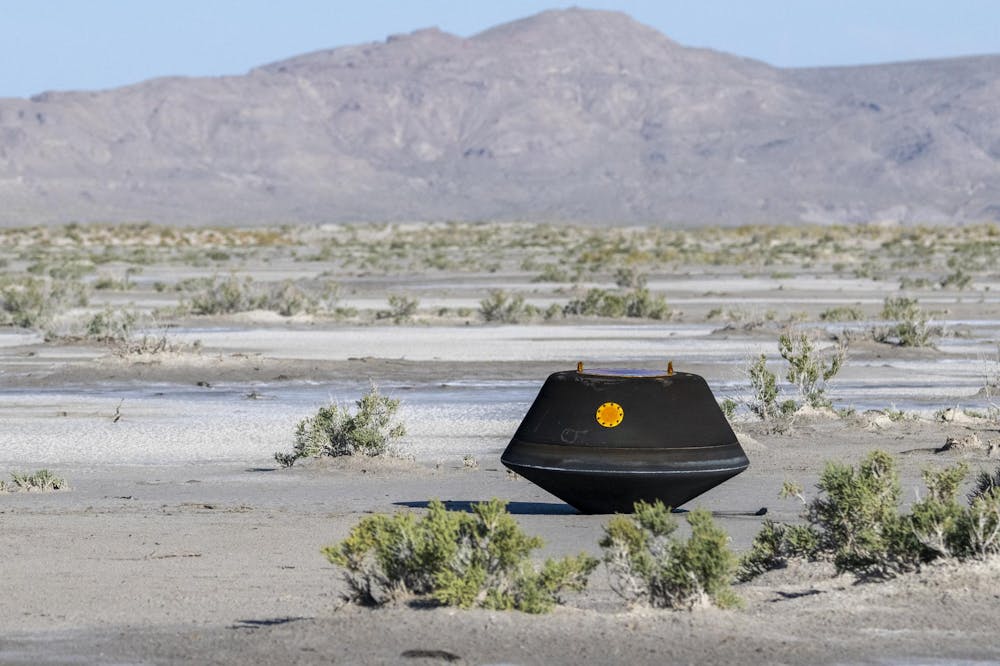
In September 2023, a capsule containing the pristine asteroid sample returned to Earth, landing in the Utah desert in the United States.
Since then, an international team of scientists – of which we are members – have been busy studying the roughly 120 grams of material collected from Bennu.
Our findings are revealed in two new papers published in Nature and Nature Astronomy today. They indicate that water may have once been present on Bennu’s parent body, and offer new insights into the chemistry of the early Solar System.
Pristine remnants of rocks from deep time
Asteroids are fragmentary remnants of pre-existing parent bodies from early in our Solar System’s history that have since been destroyed by collisions with other objects. They orbit the Sun and come in many different shapes, sizes and chemical compositions.
Asteroid Bennu was targeted for the OSIRIS-REx mission because remote sensing observations from Earth indicated it as a B-type asteroid. These asteroids are rich in carbon and hydrated clay minerals, possibly sharing similarities to the most primitive group of meteorites on Earth, known as carbonaceous chondrites.
Unlike meteorite samples, samples collected from asteroids have not been physically or chemically modified by Earth’s atmosphere and biosphere. This allows us to tackle key questions about the evolution of the early Solar System, planet formation, and the ingredients for life.
Another aim of the OSIRIS-REx mission is to link findings from samples in the laboratory to those from remote sensing techniques. This helps us corroborate astronomical observations of asteroids to improve our surveys of the Solar System.
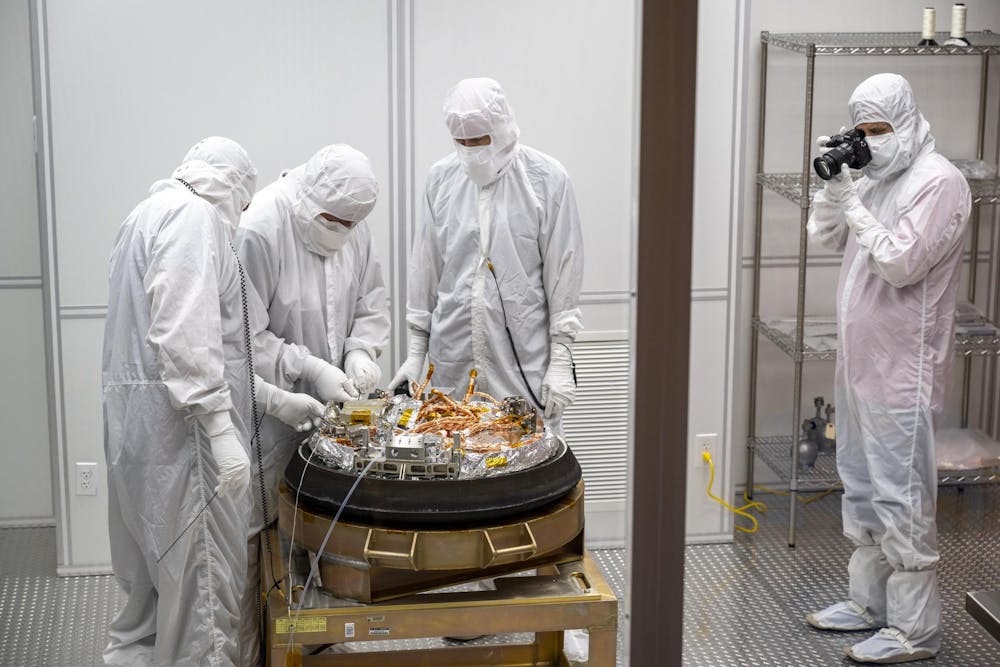
Curation teams process the sample return capsule from NASA’s OSIRIS-REx mission in a cleanroom. Keegan Barber/NASA
Tiny crystals of salt minerals
To prevent contamination, the sealed capsule containing the sample was stored and handled in a huge glass box when it was returned to Earth. This tank had rubber gloves feeding into it from the side so scientists could handle the samples without directly touching them. It had also been purged with nitrogen to keep out moisture and oxygen from Earth’s atmosphere.
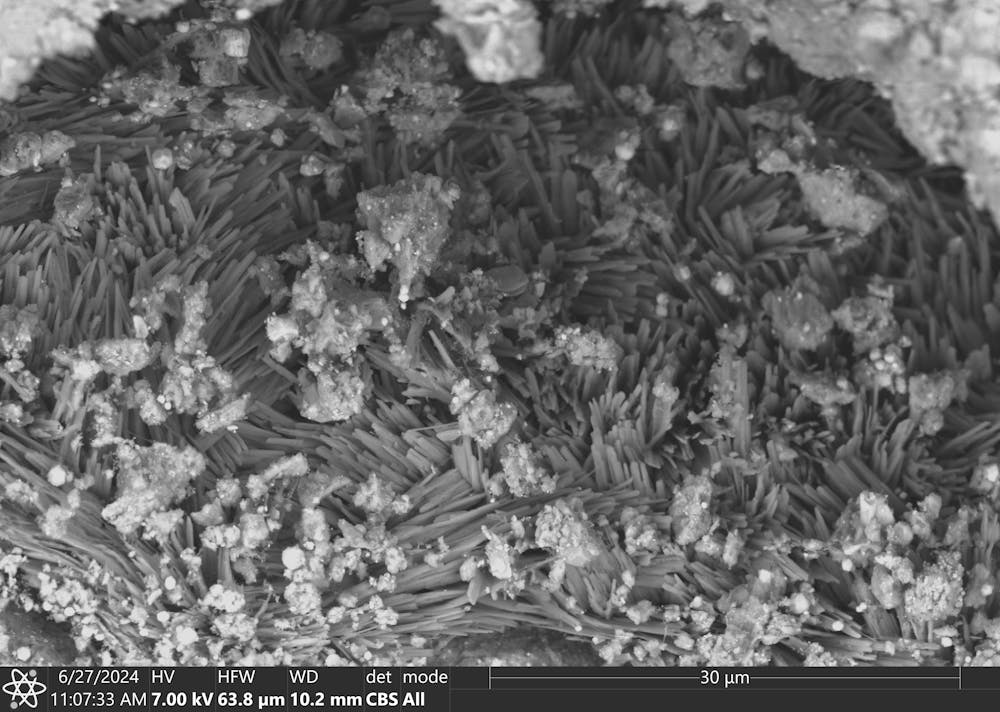
When we analysed the interior of Bennu’s dust particles, we were surprised to find tiny crystals of the salt minerals known as halite and sylvite.
This was a breakthrough discovery.
Halite is extremely rare in meteorites. It has only been found in three out of hundreds of thousands of known meteorites on Earth. We also know that halite is highly soluble. It can degrade quickly when exposed to air or water on Earth.
Other members of the OSIRIS-REx sample analysis team identified a variety of other salt minerals in the Bennu sample. These included sodium carbonates, phosphates, sulphates and fluorides.
These minerals can form by the evaporation of brines – similar to deposits that form in Earth’s salt lakes.
By comparing these results with the chemical makeup of salt lakes on Earth, a picture began to emerge of brines evaporating on the parent body of asteroid Bennu, leaving behind salts as evidence.
Tiny crystals of several minerals including sodium carbonate (pictured here) were found in samples of the asteroid Bennu. Timothy McCoy/Smithsonian
A variety of organic compounds
This discovery provides a new insight into water activity during the earliest times in our Solar System. But the presence of salt minerals is significant for another reason.
On Earth, these minerals are a catalyst for the formation of organic compounds such as nucleobases and nucleosides – the prebiotic building blocks of terrestrial biology.
And indeed, in a separate analysis of the Bennu sample, other colleagues on the OSIRIS-REx mission identified a wide variety of organic compounds present on the carbon- and nitrogen-rich asteroid.
These compounds include 14 of the 20 amino acids we also find in Earth’s biological processes. They also include several amino acids that are absent in known biology, ammonia, and all five nucleobases found in RNA and DNA.
Even though no life was detected on Bennu, the two new studies show that a briny, carbon-rich environment on Bennu’s parent body was suitable for assembling the building blocks of life.
In September 2023, a capsule containing the pristine sample from Bennu returned to Earth, landing in the Utah desert in the United States. Keegan Barber/NASA
Ongoing investigations
The findings from returned samples of asteroid Bennu may provide researchers insight into what happens on distant icy bodies in our Solar System.
Some of these bodies include Saturn’s moon Enceladus and the dwarf planet Ceres in the asteroid belt between Mars and Jupiter.
Both Enceladus and Ceres have subsurface brine oceans. Could they possibly harbour life?
We are continuing to investigate Bennu using the pristine samples collected back in 2020. We are currently researching the timing of the Bennu parent body breakup event and looking for evidence of impacts recorded by various minerals in the samples.
The authors of this article acknowledge the contribution of the following people to the research at Curtin University: Fred Jourdan, Steven Reddy, David Saxey, Celia Mayers, and Xiao Sun, as well as the entire OSIRIS-REx team.
William Rickard receives funding from the Australian Research Council, Australia Government
Nick Timms and Phil Bland do not work for, consult, own shares in or receive funding from any company or organisation that would benefit from this article, and have disclosed no relevant affiliations beyond their academic appointment.
300 protestors detained since November have alleged beatings and torture
‘We believe that Saba Skhvitaridze’s prosecution is politically motivated. He should be released, and his torture allegations must be effectively investigated’ – Denis Krivosheev
On 28 January, the Tbilisi City Court extended the pre-trial detention in a high-security prison of Saba Skhvitaridze, an activist accused by police of using violence against law enforcement during ongoing pro-European protests on 5 December 2024.
For several hours after his initial detention, Saba Skhvitaridze was denied access to his legal counsel and was allegedly subjected to torture to extract a confession. Independent medical examinations confirmed injuries consistent with his torture allegations, yet there has been no indication that the authorities have conducted an effective investigation into his claims. Saba Skhvitaridze faces a potential sentence of up to 11 years.
During his remand hearing, the court ordered members of public to leave the courtroom before delivering its decision – a measure largely unprecedented for protest-related trials in Georgia.
Denis Krivosheev, Amnesty International’s Eastern Europe and Central Asia Deputy Director, said:
“The Georgian authorities arrested and reportedly subjected Saba Skhvitaridze to torture and other ill-treatment for participation in anti-government protests and have now extended his detention in a hearing concluded behind closed doors.
“We believe that Saba Skhvitaridze’s prosecution is politically motivated. He should be released, and his torture allegations must be effectively investigated.
“If there is sufficient admissible evidence to prosecute him, he should receive a fair trial in an open court hearing. Saba Skhvitaridze’s case is just one of many – hundreds of others face injustice and reprisals in relation to the recent protests in Georgia.”
Police violence against protestors
Police have detained several hundred protesters in Georgia during the latest wave of protest ongoing since 29 November 2024, with more than 300 of those detained alleging beatings and torture and other ill-treatment in detention.
Reacting to the extension of pre-trial detention for Saba Skhvitaridze, a protester who has alleged being tortured by the police, Denis Krivosheev, Amnesty International’s Eastern Europe and Central Asia Deputy Director, said:
“The Georgian authorities arrested and reportedly subjected Saba Skhvitaridze to torture and other ill-treatment for participation in anti-government protests and have now extended his detention in a hearing concluded behind closed doors. We believe that Saba Skhvitaridze’s prosecution is politically motivated, and he should be released, and his torture allegations must be effectively investigated.”
We believe that Saba Skhvitaridze’s prosecution is politically motivated, and he should be released, and his torture allegations must be effectively investigated
Denis Krivosheev, Amnesty International’s Eastern Europe and Central Asia Deputy Director
“If there is sufficient admissible evidence to prosecute him, he should receive a fair trial in an open court hearing. Saba Skhvitaridze’s case is just one of many – hundreds of others face injustice and reprisals in relation to the recent protests in Georgia.”
Background
On 28 January, the Tbilisi City Court extended the pre-trial detention in a high-security prison of Saba Skhvitaridze, an activist accused by police of using violence against law enforcement during ongoing pro-European protests on 5 December 2024. During his remand hearing, the court ordered members of public to leave the courtroom before delivering its decision – a measure largely unprecedented for protest-related trials in Georgia.
For several hours after his initial detention, Saba Skhvitaridze was denied access to his legal counsel and was allegedly subjected to torture to extract a confession. Independent medical examinations confirmed injuries consistent with his torture allegations, yet there has been no indication that the authorities have conducted an effective investigation into his claims. Saba Skhvitaridze faces a potential sentence of up to 11 years.
‘Justyna Wydrzyńska is thought to be the first human rights activist in Europe to be prosecuted for providing abortion pills. She must be the last’ – Monica Costa Riba
Ahead of tomorrow’s appeal hearing of Justyna Wydrzyńska, an activist convicted in 2023 for helping a woman in an abusive relationship access a safe abortion, Monica Costa Riba, Amnesty International’s Women’s Rights Senior Campaigner, said:
“Justyna Wydrzyńska should have never been prosecuted, let alone convicted – no one should be criminalised for helping pregnant people access essential health care.
“Her prosecution exposed the lengths that the Polish authorities will go to in order to shut down legitimate activism and curtail the ability of women and girls to exercise their reproductive rights. Her unjust conviction must be overturned and the dangerous precedent it sets, reversed.
“Justyna Wydrzyńska is thought to be the first human rights activist in Europe to be prosecuted for providing abortion pills. She must be the last.”
Helping a woman in need
In 2020 Justyna Wydrzyńska – a doula and one of the founders of the civil society organisation Abortion Dream Team – helped a pregnant woman who said she had been suffering from domestic violence to access abortion pills.
On 22 November 2021, she was charged with “helping with an abortion” and “possession of medicines without authorisation for the purpose of introducing them into the market”.
In March 2023, she was convicted of abetting an abortion and was sentenced to eight months of community service.
Poland has one of the most restrictive abortion laws in Europe. Abortion is only legal when the health or the life of the pregnant person is at risk or when the pregnancy is the result of rape or incest. Performing your own abortion or possession of abortion pills for a self-managed abortion is not a crime under Polish law, but any person or doctor who helps pregnant people with an abortion outside the two permitted grounds in the law may face up to three years in prison.
Earlier this afternoon, there was a serious incident at the Halifax Infirmary emergency department. The threat has been contained, and police are on-site.
Staff are also on-site to support patients and staff who witnessed this upsetting incident.
I can’t provide details of an ongoing investigation, but I want everyone involved to know that I am thinking of them at this difficult time. I also want to reassure our healthcare and support staff at the Infirmary and across the province that we will continue working with our healthcare and union partners to make workplaces as safe as possible.
I want to commend the staff for their quick response in an incredibly difficult situation. I will be in close touch with Nova Scotia Health for updates as they become available.
ATLANTA (January 29, 2025) — Sen. Greg Dolezal (R–Cumming) has been reappointed by Majority Whip Sen. Randy Robertson (R–Cataula) to serve as Chief Deputy Whip for the 2025-2026 Biennium.
“I am honored to have been renamed Chief Deputy Whip for the 2025-2026 Biennium,” said Sen. Dolezal. “I thank Majority Whip Robertson and my colleagues for their trust as we continue to uphold the conservative principles that define our great state. I am committed to ensuring that our caucus remains unified and effective as we advance the values our constituents elected us to defend.”
“Sen. Dolezal has consistently demonstrated exceptional leadership, fierce dedication and strong commitment to our party’s values,” said Sen. Robertson. “His unwavering work ethic makes him the ideal choice to serve as Chief Deputy Whip. I am confident that his dedication to the Georgia Senate and its Republican values will continue to serve our caucus and the people of Georgia well.”
Sen. Dolezal has served in the Georgia Senate since 2018. He will also serve as the Chairman of the Senate Committee on Transportation and Vice Chairman of Appropriations. Sen. Dolezal will serve as a member of the Senate Committees on Regulated Industries and Utilities, Rules, and Assignments and as an Ex-Officio member of the Senate Committees for Education and Youth, Finance, Judiciary, and Reapportionment and Redistricting.
# # # #
Sen. Greg Dolezal serves as Chairman of the Senate Committee on Transportation. He represents the 27th Senate District, which includes a large part of Forsyth County. He may be reached by phone at (404) 656-7127 or via email at Greg.Dolezal@senate.ga.gov.
For all media inquiries, please reach out toSenatePressInquiries@senate.ga.gov.
It is primarily the responsibility of Member States[1] to lay down the conditions for the conduct of elections and their authorities are the main responsible for elections oversight.
The Commission supports democratic processes with non-legislative tools, such as the European cooperation network on elections[2], sharing information on election-related incidents in cybersecurity networks and by coordinating response, if necessary.
The European External Action Service’s tools against foreign information manipulation and interference, with a focus on third countries, include reinforcing detection, awareness-raising efforts[3], information sharing[4], diplomatic measures[5] and collective responses with international partners such as the G7.
As a legislative tool, the Digital Services Act[6] obliges providers of very large online platforms and search engines to assess and mitigate risks to electoral processes, while respecting freedom of expression.
The Commission started non-compliance proceedings against Meta, X and TikTok in this regard.[7] If infringements are proven, these may result in fines of up to 6% of global turnover.
The regulation on transparency and targeting of political advertising[8] will strengthen public accountability and efforts to counter election interference.
The Code of Practice on Disinformation[9] also aims to protect elections including with its Rapid Response System in which signatories[10] commit to exchange swiftly information on content presenting threats to electoral integrity.
Experience using these instruments and the report on the conduct of the 2024 elections to the European Parliament, will contribute to the European Democracy Shield[11].
[1] Subject to the principles laid down in Articles 2 and 10 of the Treaty on EU.
[3] Such as the website EUvsDisinfo, https://euvsdisinfo.eu/
[4] Such as the EU Rapid Alert System, https://www.eeas.europa.eu/eeas/factsheet-eu-rapid-alert-system_en
[5] Such as sanctions, https://ec.europa.eu/commission/presscorner/detail/en/ip_22_1490
[6] Regulation (EU) 2022/2065 of the European Parliament and of the Council of 19 October 2022 on a Single Market for Digital Services and amending Directive 2000/31/EC (Digital Services Act), OJ L 277, 27.10.2022, p. 1-102.
[8] Regulation (EU) 2024/900 o f the European Parliament and of the Council of 13 March 2024 on the transparency and targeting of political advertising, OJ L, 2024/900, 20.3.2024.
Between 24 and 28 February 2025, IMCO Members are going to visit Washington DC. The main aim of this visit is to strengthen the transatlantic cooperation on key policy IMCO areas while obtaining feedback from U.S. stakeholders on the implementation and impact of major EU legislation, including the Digital Services Act (DSA), Digital Markets Act (DMA), EU AI Act, Cyber Resilience Act (CRA), Data Act, and Political Advertising Regulation.
The visit will also address shared challenges in digital innovation, cybersecurity, AI, and fair competition, while informing IMCO’s parliamentary oversight and future legislative priorities.
The first standing committee of the European Parliament on Public Health was constituted as fully-fledged Committee on 29 January 2025.
Adam Jarubas (EPP, PL) was elected as the inaugural Chair of the European Parliament newly established Committee on Public Health. MEPs also elected Tilly Metz (Greens/EFA, LU) as the Committee’s First Vice-Chair, with Ms Stine BOSSE (RENEW, DK), Ms Romana JERKOVIĆ (S&D, HR) and Mr Emmanouil FRAGKOS (ECR, EL) chosen to serve as Second-, Third- and Fourth Vice-Chairs respectively.
Together with Mr Jarubas, they form the new committee’s decision-making bureau.
Source: Switzerland – Department of Foreign Affairs in English
At its 29 January 2025 meeting, the Federal Council was informed about how the cuts to development cooperation decided on by Parliament will be implemented. In late December, Parliament made cuts of CHF 110 million to the 2025 budget and CHF 321 million to the 2026–28 financial plan for bilateral and multilateral development cooperation. The cuts do not affect humanitarian aid, peace promotion or support for Ukraine.
Today U.S. Senator Josh Hawley (R-Mo.) re-introduced his Protecting Our Kids from Child Abuse Act, legislation that would allow those who were harmed by gender-transition procedures as minors to bring lawsuits against the participating individuals and entities. Yesterday, President Trump issued an Executive Order that expressly calls for this legislation.
“Our children should no longer suffer from irreversible and dangerous child mutilation procedures, which the Biden administration enabled and promoted,” said Senator Hawley. “I welcome President Trump’s strong action to reverse this child abuse and look forward to working with his administration to advance legislation that protects our kids.”
Yesterday, the White House issued an Executive Order on “Protecting Children from Chemical and Surgical Mutilation,” which reverses federal support for the gender mutilation industry that has targeted children. Among other provisions, this order directs the Attorney General to work with Congress on legislation that establishes a private right of action—with a lengthy statute of limitations—for children who were harmed by gender-transition procedures. Senator Hawley’s bill would do just that.
The Protecting Our Kids from Child Abuse Act would:
Create a private right of action for individuals who were harmed by a gender-transition procedure performed on them when they were minors.
The following individuals and entities would be liable for damages: a pediatric gender clinic where the procedure was performed; a medical practitioner who performed the procedure or was employed by the clinic; and a university or hospital that is affiliated with the clinic.
Prohibit federal funding to any pediatric gender clinic, to any university or hospital that is affiliated with a pediatric gender clinic, and for any gender-transition procedure performed on minors.
Read full text here.
Ahead of the first Senate vote to advance Lee Zeldin as Environmental Protection Agency (EPA) Administrator, U.S. Senator Josh Hawley (R-Mo.) secured Zeldin’s commitment to visit and clean up the West Lake Landfill Superfund site in Bridgeton, Missouri.
“For years, the EPA has dragged their feet and refused to clean up the West Lake Landfill. And Missourians have been left to suffer. I was happy to hear Lee Zeldin commit to changing the failed status quo, if confirmed as EPA Administrator,” said Senator Hawley. “He’s committed to visiting the West Lake Landfill site, to finally start cleanup – and get it finished. This is a tremendous step in the right direction. And now we must pass RECA.”
BACKGROUND
The West Lake Landfill Superfund site contains radioactive contamination dating back from the Manhattan project. In the 1960s, the federal government hired a company to dispose of this waste, which originated from a processing facility in St. Louis, but the waste was placed in the landfill in 1973 without proper remediation. The EPA has jurisdiction over the site.
Senator Hawley’s proposal to expand and reauthorize the RECA program passed the Senate twice, with strong bipartisan support. Last week, Senator Hawley reintroduced his proposal to give nuclear radiation victims compensation.
Source: United States Senator for Wyoming Cynthia Lummis
January 29, 2025
Washington, D.C.— U.S. Senator Cynthia Lummis (R-WY) joined Senator Bill Cassidy (R-LA) to introduce the Educational Choice for Children Act, a bipartisan bill to expand education freedom and student opportunity. It offers a charitable donation incentive for individuals and businesses to fund scholarships for K-12 public and private education expenses.
“This National School Choice Week, I am reaffirming my commitment to educational freedom and equal opportunity for all American children,” said Lummis. “A child’s zip code should not dictate their quality of education, and I am proud to cosponsor this legislation ensuring Wyoming’s future leaders, regardless of their educational needs, are set up for success.”
The Educational Choice for Children Act would:
Provide a non-refundable federal tax credit to individuals and corporations making charitable donations to Scholarship Granting Organizations (SGOs). The Treasury Department would administer these credits with a total annual cap of $10 billion, allocated on a first-come, first-served basis.
Use a limited government approach with respect to federalism, thus avoiding mandates on states, localities, and school districts.
Ensure that faith-based educational institutions would be included.
A copy of the bill can be found here.
Source: United States Senator Peter Welch (D-Vermont)
WASHINGTON, D.C. – In the Senate Judiciary Committee today, U.S. Senator Peter Welch (D-Vt.) voted against advancing Pamela Bondi’s nomination to be the next Attorney General of the United States. In remarks following his vote, Senator Welch cited Ms. Bondi’s evasion on questions about the 2020 presidential election and concerns about her willingness to stand up against the President to preserve an independent Department of Justice. He called on his colleagues in the United States Senate to fulfill their role in serving as a check and balance to President Trump’s illegal power grabs.
“I would like to think that Pam Bondi would have the ability to stand up because she is qualified, she is engaging, but I was very disturbed on the question from Senator Hirono: ’Who won the election?’ And she couldn’t answer it. It was the Trump-permissible answer: that President Biden is the President, but could not say that he won the election. That bodes poorly,” said Senator Welch. “That is the reason for my no vote. But this raises a question that I think we as the United States Senate have to ask ourselves in view of the nine days of the reckless conduct and the illegal conduct of the President. Will we fulfill our Constitutional role as a separate and independent branch of government to maintain the principle of separation of powers and checks and balances? Our founders knew that would be needed. What they didn’t know is whether those who served in this position as United States Senators would meet the challenge when the check and balance was needed.”
Watch video of his remarks below:
Read his remarks in the Senate Judiciary Committee below:
“Pam Bondi is qualified. She has done outstanding work as an Attorney General, both as a County Prosecutor and as the Florida Attorney General, and I actually quite admire the grit that she had to take on a challenging statewide campaign to become Attorney General.
“Number two, she had very good testimony from Republicans and Democrats about her managerial style, and when I met with her, she was very engaging and responsive to the concerns I have about criminal justice. She is qualified.
“The question that we face as a Senate is: What kind of Department of Justice will we have? There has been a bipartisan recognition of the importance of independence at the Department of Justice. Will we have a Department of Justice that is independent, or will we have a Department of Justice that, in the words of President Trump, is ‘my’ Department of Justice, where I have the right to do anything I want to do.
“There is no question about where President Trump is going. Nine days into the President’s administration, he is on a rampage — a rampage of reckless conduct and illegal conduct. The reckless conduct, of course, are these horrible pardons. People who grabbed the shields that police were using to defend themselves and then started battering police with them, stomping them, kicking them, spitting on them, and then these folks who are pardoned, they get out and they say they want to come back here, and they want those who certified the election of the president to be hanged. We have people who are pardoned, who are wanted for soliciting sex with a minor. Those pardons are so disrespectful to the men and women of law enforcement. It is absolutely despicable in my view.
“But then the illegal conduct: The President says that he can do what he wants to do, regardless of the law.
“One of the laws that I am so proud of is something, Mr. Chairman, you authored and it’s the Inspector Generals. And he fired them all, despite the specific provision in the law that you wisely included, that there be a 30-day notice. Illegal. Clearly illegal. He did the same thing at the National Labor Relations Board.
“There are specific statutory, legislative responsibilities if you want to remove a person. Just blew by it. Illegal. Then, of course, the shocking announcement about impoundment. Absolutely illegal, interfering with the Constitutional right of the Article I branch of Congress to be the appropriator of funds. And what he is doing is illegal.
“Then TikTok—we passed a law in Congress—bipartisan—that it has to comply or be sold. The president picks and chooses and says, ‘No, we are not applying the law.’ Illegal.
“At the Justice Department, before the new AG is even there, the President has installed his personal lawyers. His personal lawyers. And they started doing dirty work, firing career prosecutors.
“There is no mystery here about what the president is going to insist upon. It’s that the DOJ will be ‘my’ law firm. That’s what it is. And there is no question because, if past is prologue, goodbye to Attorney General Barr, goodbye to Attorney General Sessions when they didn’t comply with the demands of an overbearing president.
“Now, I would like to think that Pam Bondi would have the ability to stand up because she is qualified, she is engaging, but I was very disturbed on the question from Senator Hirono: ’Who won the election?’ And she couldn’t answer it.
“It was the Trump-permissible answer that ‘President Biden is the President,’ but could not say that he won the election. That bodes poorly.
“That is the reason for my no vote. But this raises a question I think we as the United States Senate have to ask ourselves – in view of the nine days of the reckless conduct and the illegal conduct of the President: Will we fulfill our constitutional role as a separate and independent branch of government to maintain the principle of separation of powers and checks and balances? Our founders knew that would be needed. What they didn’t know is whether those who served in this position as United States Senators would meet the challenge when the check and balance was needed.”
Watch Senator Welch’s questioning of Ms. Bondi during her confirmation hearing, as well as legal and ethics experts and former colleagues.
The Prime Minister Shri Narendra Modi today attended the Beating Retreat Ceremony.
The Prime Minister posted on X :
“Attended the majestic Beating Retreat Ceremony, an awe-inspiring display of tradition and the spirit of our forces. Here are some glimpses.”
Attended the majestic Beating Retreat Ceremony, an awe-inspiring display of tradition and the spirit of our forces. Here are some glimpses. pic.twitter.com/jV2GYotatW
Today, Delhi’s average Air Quality Index (AQI) has been on an increasing trend since morning and breached the 350 mark as the AQI for the day clocked 365 today as per the Daily AQI Bulletin provided by the Central Pollution Control Board (CPCB). In wake of deteriorating air quality of Delhi, the Sub-Committee on the Graded Response Action Plan (GRAP) of the Commission for Air Quality Management in NCR and Adjoining Areas called on a meeting today to review the air quality scenario and forecasts for meteorological conditions and air quality index made available by IMD/IITM.
Noting an increasing trend in AQI levels of Delhi, the CAQM Sub-Committee on GRAP in its today’s meeting observed as under:
The AQI of Delhi which was recorded as 276 on 28.01.2025, exhibited a sharp increasing trend and has been recorded 365 at 4:00 PM on 29.01.2025 owing to variable direction/calm winds, smoggy situation, low mixing height & ventilation coefficient for dispersion of pollutants. The forecast from IMD/ IITM suggests similar situations to persist in coming days.
Keeping in view the prevailing trend of air quality, and in an effort to prevent further deterioration of air quality in the region, the Sub-Committee today has taken the call to invoke all actions as envisaged under Stage-III of the extant schedule of GRAP, with immediate effect, in the entire NCR. This is in addition to the actions under Stages I & II of the extant schedule of GRAP already in-force in NCR. Various agencies responsible for implementing measures under GRAP including Pollution Control Boards (PCBs) of NCR and DPCC have also been addressed to ensure strict implementation of actions under Stage-III of the extant schedule of GRAP in addition to actions under Stages I & II of GRAP during this period.
A 9-point action plan as per Stage-III of the extant schedule of GRAP is applicable with immediate effect in the entire NCR. This 9-point action plan includes steps to be implemented/ ensured by different agencies including Pollution Control Boards of NCR and DPCC. These steps are:
Construction & Demolition activities:
(i) Enforce strict restrictions on the following categories of dust generating/ air pollution causing C&D activities in the entire NCR:
Earthwork for excavation and filling including boring & drilling works.
Piling works.
All demolition works.
Laying of sewer line, water line, drainage and electric cabling etc. by open trench system.
Brick / masonry works.
Operation of RMC batching plant.
Major welding and gas-cutting operations. Minor welding activities for MEP works (Mechanical, Electrical and Plumbing) to be, however, permitted.
Painting, polishing and varnishing works etc.
Cement, Plaster / other coatings, except for minor indoor repairs/ maintenance.
Cutting / grinding and fixing of tiles, stones and other flooring materials, except for minor indoor repairs/ maintenance.
Road construction activities and major repairs.
Transfer, loading / unloading of dust generating materials like cement, fly-ash, bricks, sand, murram, pebbles, crushed stone etc. anywhere within / outside the project sites.
Movement of vehicles carrying construction materials on unpaved roads.
Any transportation of demolition waste.
(ii) All construction related activities, other than those listed under 1(i) above, which are relatively less polluting / less dust generating shall be permitted to be continued in the NCR, subject to strict compliance of the C&D Waste Management Rules, dust prevention/ control norms including compliance with the directions of the Commission issued from time to time.
(iii) All C&D related activities, including those under 1(i) above, shall be continued to be permitted only for the following categories of projects, however subject to strict compliance of the C&D Waste Management Rules, dust prevention/ control norms including compliance with the directions of the Commission issued from time to time:
Projects for Railway services and stations
Projects for Metro Rail Services and stations
Airports and Inter State Bus Terminals
National security/ defence related activities/ projects of national importance
Hospitals/ health care facilities
Linear public projects such as highways, roads, flyovers, over bridges, power transmission/ distribution, pipelines, tele-communication services etc.
Sanitation projects like sewage treatment plants and water supply projects etc.
Ancillary activities, specific to and supplementing the above project categories.
Close down operations of stone crushers in the entire NCR.
Close down all mining and associated activities in the entire NCR.
NCR State Govts. / GNCTD to impose strict restrictions on plying of BS III petrol and BS IV diesel LMVs (4 wheelers) in Delhi and in the districts of Gurugram, Faridabad, Ghaziabad and Gautam Budh Nagar.
Note: Persons with Disabilities shall be permitted to ply BS – III Petrol / BS – IV Diesel LMVs, provided that these are specifically adopted for them and are run only for their personal use.
GNCTD to impose strict restrictions on plying of Delhi – registered Diesel operated Medium Goods Vehicles (MGVs) to BS-IV standards or below, in Delhi, except those vehicles carrying essential commodities / providing essential services.
GNCTD to not permit BS-IV and below diesel operated LCVs (goods carriers) registered outside Delhi, to enter Delhi, except those carrying essential commodities / providing essential services.
(i) State Govts. in the NCR and the GNCTD to mandatorily conduct classes in schools for children up to class V in a “Hybrid” mode i.e., both in physical and online mode (wherever online mode is feasible) in the territorial jurisdiction of the NCT of Delhi and in the districts of Gurugram, Faridabad, Ghaziabad and Gautam Buddh Nagar.
(ii) The NCR State Governments may also consider conducting classes for students up to Class V in a “Hybrid” mode as above in other areas in NCR.
Note: The option to exercise the online mode of education, wherever available, shall vest with the students and their guardians.
(i) GNCTD and NCR State Governments to stagger timings for public offices and municipal bodies in the National Capital Territory of Delhi and the districts of Gurugram, Faridabad, Ghaziabad and Gautam Buddh Nagar.
(ii) State Governments may take a decision to stagger timings for public offices and municipal bodies in other areas of NCR.
Central Government may take a decision on staggering of timings of Central Government offices in Delhi–NCR.
Further, CAQM urges the citizens of NCR to cooperate in implementing GRAP and follow the steps mentioned in the Citizen Charter under GRAP. In addition to steps under Citizen Charter of Stages I & II, citizens are advised to:
Walk or use cycles for small distances.
Choose a cleaner commute. Share a ride to work or use public transport.
People, whose positions allow working from home, may work from home.
Do not use coal and wood for heating purpose.
Individual house owners may also provide electric heaters to security/ other staff employed by them to avoid open burning of bio-mass/ wood/ MSW.
Combine errands and reduce trips.
Complete details of the extant schedule of GRAP are available on the Commission’s website and can be accessed via https://caqm.nic.in
Crores of Devotees take the holy Dip at Sangam during the second Amrit Snan of Mahakumbh 2025 on Mauni Amavasya Akhadas break historic tradition of performing the first dip at the Sangam, by offering other Devotees to take the Amrit Snan before them
Extensive arrangements in place by Mela Administration to ensure Smooth Conduct of the Amrit Snan
At the Mahakumbh, Foreign Devotees experience an extraordinary glimpse of India’s rich cultural heritage by taking the Holy dip in the Ganges
Posted On: 29 JAN 2025 9:02PM by PIB Delhi
On the auspicious occasion of Mauni Amavasya, the second Amrit Snan of the Mahakumbh 2025 was undertaken today. Crores of devotees took the second Amrit Snan at the eternal and pure Triveni Sangam in Prayagraj. The Mahakumbh is not only a symbol of faith, belief, and devotion but also an extraordinary example of unity, equality, and cultural diversity. Along with Indians, a large number of foreign devotees also took the holy dip at the Triveni Sangam and witnessed India’s rich cultural heritage.
This was the first time that the Saints, Naga Sannyasis, and Akhadas broke the historic tradition of performing their first dip at the Sangam. In light of the circumstances, the Akhadas postponed their Brahma Muhurat Amrit Snan and allowed the devotees to take the first dip. Mahant Ravindra Puri, the president of the Akhil Bhartiya Akhada Parishad, mentioned that by unanimous decision, all Akhadas agreed to first allow devotees to take the Amrit Snan considering the situation. Once the situation normalized, the Akhadas followed their grand Amrit Snan tradition symbolically.
On this second Amrit Snan day, the Shankaracharyas of the three Peeths of India also took a dip at the Triveni Sangam. The Shankaracharyas urged devotees to maintain restraint. Jagatguru Shankaracharya Swami Vidhu Shekhar Bharti Ji of Shringeri Sharada Peeth, Jagatguru Shankaracharya Swami Sadanand Saraswati Ji of Dwarka Sharada Peeth, and Shankaracharya Swami Avimukteshwaranand Saraswati Ji of Jyotish Peeth took the holy dip at the Triveni Sangam on this day. The Shankaracharyas performed the dip with full religious rituals, offering blessings for the welfare of the Nation.
To ensure the smooth completion of the Amrit Snan, the Kumbh Mela administration made extensive arrangements. Unprecedented security measures were implemented across the entire Mela area, with both state police and central paramilitary forces deployed in large numbers. The administration also took all necessary measures to ensure the safety of the devotees. Additionally, the Ganga Seva Doots were deployed on the ghats, playing a crucial role in maintaining the cleanliness of the river. These Ganga Seva Doots immediately removed flowers and other offerings from the river, ensuring the cleanliness of the Ganga and Yamuna. Along with the Mela administration, the local administration, police, sanitation workers, volunteers, boatmen, and various government departments from both Central and State governments contributed in the arrangements.
The Mahakumbh 2025 has also been successful in promoting India’s cultural heritage on the international stage. The Kumbh Mela administration made all necessary arrangements to ensure the event’s safety and success. The popularity of the Mahakumbh and its cultural heritage are being recognized globally. Foreign devotees visiting the Maha Kumbh were deeply impressed by Indian culture, and alongside their holy dip in the Ganga, they experienced India’s religious and cultural traditions.
The Maha Kumbh 2025 is a symbol of faith, unity, and diversity. This event not only highlights India but is also spreading the greatness of Indian culture to the entire world. The Mahakumbh Mela is not just religiously significant but also symbolizes social and cultural unity.
Government Approves Mutual Credit Guarantee Scheme to Strengthen MSME Manufacturing Sector, fulfilling the budget announcement of 2024-25 Loans upto Rs. 100 crore for purchase of Plant and Machinery / Equipment are eligible for guarantee coverage giving a boost to manufacturing sector
Scheme offers 60% guarantee coverage to Member Lending Institutions (MLIs*) for credit facility upto Rs.100 crore sanctioned to eligible MSMEs
Posted On: 29 JAN 2025 8:35PM by PIB Delhi
GoI has approved introduction of Mutual Credit Guarantee Scheme for MSMEs (MCGS- MSME) for providing 60% guarantee coverage by National Credit Guarantee Trustee Company Limited (NCGTC) to Member Lending Institutions (MLIs*) for credit facility upto Rs.100 crore sanctioned to eligible MSMEs under MCGS-MSME for purchase of equipment / machinery.
Salient Features of The Scheme
Borrower should be an MSME with valid Udyam Registration Number;
Loan amount guaranteed shall not exceed Rs.100 crore
Project Cost could be of higher amounts also
Minimum cost of equipment /machinery is 75% of project cost
Loan upto Rs.50 crore under the Scheme shall have repayment period of upto 8 years with upto 2 years moratorium period on principal instalments. For loans above Rs.50 crore, higher repayment schedule and moratorium period on principal instalments can be considered.
Upfront (initial) contribution of 5% of the loan amount shall be deposited at the time of application of guarantee cover
Annual Guarantee Fee on loan under the Scheme shall be Nil during the year of sanction. During the next 3 years, it shall be 1.5% p.a. of loan outstanding as on March 31 of previous year. Thereafter, Annual Guarantee Fee shall be 1% p.a. of loan outstanding as on March 31 of previous year
The Scheme will be applicable to all loans sanctioned under MCGS-MSME during the period of 4 years from the date of issue of operational guidelines of the scheme or till cumulative guarantee of Rs. 7 lakh crore are issued, whichever is earlier.
Major Impact
Manufacturing sector currently comprises 17% of the nation’s GDP and over 27.3 million workers. Hon’ble Prime Minister’s has given a call for ‘Make in India, Make for the World’ and has signalled that India is ready and keen to increase the share of manufacturing to 25% of GDP. The Mutual Credit Guarantee Scheme for MSMEs (MCGS-MSME) is expected to facilitate the availability of credit for purchase of Plant and Machinery / Equipment by MSMEs and give a major boost to manufacturing and thereby to Make in India.
Background
Global supply chains are realigning. India is emerging as an alternative supply source given its raw materials, low labour costs, growing manufacturing knowhow, and entrepreneurial ability. One of the major costs involved in manufacturing is the fixed cost of Plant and Machinery (P&M)/ Equipment’s. With availability of credit to expand the installed capacity of manufacturing units, it can be expected that the manufacturing will grow at a faster pace. Also, the need for a credit guarantee scheme for the manufacturing units, particularly for the enterprises in the medium category has been raised by industry associations from time to time. So, to give a boost to manufacturing by facilitating the availability of credit for purchase of Plant and Machinery / Equipment, ‘Mutual Credit Guarantee Scheme for MSMEs (MCGS-MSME) is being introduced. The scheme will facilitate collateral free loans by banks and financial institutions to MSMEs who are in need of debt capital for their expansion and growth.
*MLIs – All Scheduled Commercial Banks (SCBs), Non-Banking Financial Companies (NBFCs) and All India Financial institutions (AIFIs), who register with NCGTC under the Scheme.