NewzIntel.com

    • Checkout Page
    • Contact Us
    • Default Redirect Page
    • Frontpage
    • Home-2
    • Home-3
    • Lost Password
    • Member Login
    • Member LogOut
    • Member TOS Page
    • My Account
    • NewzIntel Alert Control-Panel
    • NewzIntel Latest Reports
    • Post Views Counter
    • Privacy Policy
    • Public Individual Page
    • Register
    • Subscription Plan
    • Thank You Page

Category: KB

  • MIL-OSI Economics: Thales’s Naval DRAKON solution enhances interoperability and secure connectivity for naval forces

    Source: Thales Group

    Headline: Thales’s Naval DRAKON solution enhances interoperability and secure connectivity for naval forces

    04 Nov 2024

    Share this article

    • With the return of high-intensity conflicts and an increasingly complex threat environment, naval forces must be prepared to take part in allied operations involving the coordinated deployment of multiple platform types including surface ships, submarines, aircraft and unmanned platforms.
    • Thales has developed Naval DRAKON to meet these new requirements, providing a cybersecure, interoperable connectivity solution for deployed forces by tying together multiple communication systems (military and commercial satcoms, VLF/LF, HF, V/UHF, etc.).
    • The new solution enables naval forces to control their electromagnetic footprint at sea and adapt communications to the operational tempo of the mission by prioritising data rate, discretion, resilience or low latency.
    @Thales

    “With Naval DRAKON, Thales is opening a new chapter in naval communications by guaranteeing secure, seamless communications for all the platforms deployed on collaborative combat operations, whatever the circumstances,” said Alexandre Bottero, Vice President, Networks and Infrastructure Systems, Thales.

    With the growing number of platform types deployed (allied naval formations, unmanned surface vessels, unmanned air systems, etc.), the broad array of communication systems available and the multitude of threats (missiles, torpedoes, drones, etc.), naval force coordination is becoming increasingly complex.

    Naval DRAKON was specifically developed to provide high-data-rate, robust and secure communications between naval vessels, airborne sensors and command centres. It is designed around an open architecture to support all the latest and most advanced communications technologies such as wideband HF (HF XL), ultra-compact multi-orbit satcom terminals, high-data-rate LOS radio and software-defined V/UHF.

    This sea-proven solution enables naval forces to control their electromagnetic footprint at sea and adapt communications to the operational tempo of the mission by prioritising data rate, discretion, resilience or low latency.

    Naval DRAKON is the naval version of Thales’s DRAKON solution for land forces, which was presented at Eurosatory in June 2024, and draws on the same operational expertise and proven capabilities.

    Naval DRAKON: integrated connectivity management for collaborative naval combat operations ©Thales” id=”image-4614590f-5154-4c21-9110-0a39ef6080f1″ data-id=”4614590f-5154-4c21-9110-0a39ef6080f1″ data-original=”https://cdn.uc.assets.prezly.com/4614590f-5154-4c21-9110-0a39ef6080f1/-/inline/no/A4+DRAKON+FRESQUE.png” data-mfp-src=”https://cdn.uc.assets.prezly.com/4614590f-5154-4c21-9110-0a39ef6080f1/-/resize/1200x/-/format/auto/” alt=”Naval DRAKON: integrated connectivity management for collaborative naval combat operations ©Thales”/>
    Naval DRAKON: integrated connectivity management for collaborative naval combat operations ©Thales

    Thales is a recognised leader in critical systems integration, working with more than 20 naval shipyards around the world and equipping more than 400 naval platforms, including about 100 submarines, over the last 40 years. Earlier this year, the Jacques Chevallier, the first of France’s new fleet replenishment tankers, completed a deployment of several months equipped with the COMTICS voice distribution system and the PARTNER-C communications management system.

    The other fleet replenishment tankers in the Jacques Chevallier class, as well as the FDI defence and intervention frigates for France and Greece and the UK Royal Navy’s T31 frigates, will be the first vessels to be equipped with this new, scalable solution, which will support advanced functionalities such as spectrum management, decision support, flow management, cybersecurity management and smart maintenance.

    Naval DRAKON will tie together all these services and functionalities to provide a fully integrated solution for naval forces.

    About Thales

    Thales (Euronext Paris: HO) is a global technology leader serving the Defence & Security, Aerospace & Space and Cybersecurity & Digital Identity markets.

    The Group develops products and solutions that help make the world safer, greener and more inclusive.

    Thales invests close to €4 billion a year in Research & Development, particularly in key areas such as AI, cybersecurity, quantum technologies, cloud technologies and 6G.

    Thales has 81,000 employees in 68 countries. In 2023, the Group generated sales of €18.4 billion.

    MIL OSI Economics –

    January 26, 2025
  • MIL-OSI Economics: Thales AI developments enhance operational performance of maritime mine countermeasures

    Source: Thales Group

    Headline: Thales AI developments enhance operational performance of maritime mine countermeasures

    04 Nov 2024

    Share this article

    • At the Euronaval exhibition at Paris Nord Villepinte from 4-7 November, Thales is showcasing recent advances in mine countermeasures with a presentation of its latest AI technologies implemented in the Pathmaster solution.
    • AI has a key role to play in the detection, classification, identification and neutralisation of maritime mines. With Thales’s Mi-Map sonar analysis application, sonar data can be processed up to four times faster than with conventional tools, making it possible to locate underwater mines with greater precision than ever before.
    • Thales’s Pathmaster solution draws on the latest research by cortAIx, the Group’s accelerator for trusted, cybersafe AI.
    @Thales

    At Euronaval (4-7 November 2024), Thales is showcasing recent advances in artificial intelligence with a presentation of its Pathmaster solution, which uses AI to detect and classify maritime mines with unprecedented precision for neutralisation by autonomous underwater vehicles.

    Maritime mines at any depth represent a low-cost, persistent threat to naval operations and compromise the safety of maritime shipping, which accounts for 90% of international trade. According to the latest estimates, several million maritime mines are now deployed worldwide, with particularly high densities in areas affected by major military conflicts or geopolitical tensions. As well as damaging marine ecosystems, they create a significant financial burden because of the need to re-route ships and protect shipping lanes.

    “With the proliferation and growing sophistication of maritime mines, advanced data gathering and analytics capabilities have an increasingly important role to play in countering this global threat. Autonomous mine countermeasures systems implementing artificial intelligence algorithms are now capable of processing data more efficiently and at lower cost than ever before while protecting human operators from the dangers of maritime minefields. Thales’s trusted AI augments the capabilities of its Pathmaster solution to significantly improve sonar data analysis and provide operators with valuable decision support during critical phases of their missions,” said Gwendoline Blandin-Roger, Vice President, Underwater Systems, Thales.

    Pathmaster uses AI to support the key tasks of mine detection and classification, while the Mi-Map application enables operators to analyse high-resolution sonar data covering hundreds of square kilometres, either in real time or after the mission, with greater efficiency than ever before. AI algorithms analyse sonar images to detect and classify potential mines much more accurately and over significantly larger areas. Thales’s Mi-Map solution is up to four times faster than conventional sonar data analysis tools as well as reducing the cognitive load on operators.

    Thales’s AI-augmented Pathmaster system has been proven in comprehensive sea trials conducted for the Franco-British MMCM programme and was certified in 2024 to the International Maritime Organization’s degree 3 autonomy by the Naval Authority Group within the UK MoD’s Defence, Equipment and Support (DE&S) organisation.

    AI at Thales

    Thales is a major player in trusted, cybersafe, transparent, explainable and ethical AI for armed forces, aircraft manufacturers and critical infrastructure providers. The Group employs over 600 engineers specialising in AI and around 100 doctoral candidates are conducting their AI research with Thales. Organised within Thales’s AI accelerator for research (AI Lab), systems, including decision support systems, (AI Factory) and sensors, including sonar, radar, radios and optronics, (AI Sensors), these experts are helping to incorporate AI into over 100 of Thales’s products and services. Thales’s AI capabilities draw on the most advanced sensor and system technologies to address the full spectrum of user requirements in the defence, aviation, space, cybersecurity and digital identity industries. Trusted AI is designed to meet the specific security and sovereignty needs of Thales’s customers. It brings greater efficiency to data analysis and decision support and speeds up the detection, identification and classification of objects of interest and target scenes, while taking account of specific constraints such as cybersecurity, embeddability and frugality in critical environments.

    In 2023, the Group was Europe’s top patent applicant in the field of AI for mission-critical systems. Also in 2023, the Group’s Friendly Hacker Unit demonstrated its credentials at the CAID challenge (Conference on Artificial Intelligence for Defence) organised by the French defence procurement agency (DGA), which involved finding AI training data even when it had been deleted from the system to preserve confidentiality.

    About Thales

    Thales (Euronext Paris: HO) is a global technology leader serving the Defence & Security, Aerospace & Space and Cybersecurity & Digital Identity markets.

    The Group develops products and solutions that help make the world safer, greener and more inclusive.

    Thales invests close to €4 billion a year in Research & Development, particularly in key areas such as AI, cybersecurity, quantum technologies, cloud technologies and 6G.

    Thales has 81,000 employees in 68 countries. In 2023, the Group generated sales of €18.4 billion.

    MIL OSI Economics –

    January 26, 2025
  • MIL-OSI Economics: Thales introduces CoastShield, a coastal surveillance system solution enabling nations to ensure coastal protection and safe maritime operations

    Source: Thales Group

    Headline: Thales introduces CoastShield, a coastal surveillance system solution enabling nations to ensure coastal protection and safe maritime operations

    04 Nov 2024

    Share this article

    • CoastShield is a modular and scalable advanced coastal surveillance system, designed to monitor and detect coastal activities in real-time, from the shore to the open sea, as well as the lower-altitude airspace.
    • Thanks to Artificial Intelligence (AI), CoastShield provides a better situational awareness picture and allows the operators to take their decision faster and more accurately.
    • Integrating various cutting-edge sensors, such as the CoastWatcher radar, this system provides constant monitoring, up to 100 nautical miles, regardless of the weather conditions.
    @Thales

    The maritime environment is marked by increasing challenges. Vast coastlines, dynamic maritime activities and increasing threats concealed amidst traditional civil maritime activities all contribute to the complex nature of coastal surveillance. These complexities make it essential to have reliable systems in place to avoid critical gaps that put coastlines, maritime activities and national safety and security at risk, including critical infrastructures such as windfarms. Enhancing coastal surveillance with a system capable of detecting and analysing this complex environment and the abnormal behaviours that can become threats is crucial. Thales stands out with its expertise in this field and its CoastShield offering.

    This system combines a series of complementary advanced sensors, providing early detection and tracking of even the smallest targets. It integrates all data from subsystems simultaneously and in real-time, from the surface sea level to the lower-altitude airspace, from 12 to 100 nautical miles, giving unparalleled maritime situation awareness. This helps support coastguards and maritime authorities in detecting and responding to threats sooner, faster and more effectively, reinforcing collaborative decision-making between civil and military entities.

    It includes the long-range CoastWatcher coastal surveillance radar, offering exceptional performance even in the most challenging conditions. The CoastWatcher also includes an Automatic Identification System (AIS) receiver, which transmits large volumes of data collected to the Control Centre. Other means include radio systems, long-range electro-optical sensors, as well as a video management system that allows for the management of streams, such as camera selection and recording. Drones (UAVs), Sonobuoy, along with complementary tactical means such as satellites and other requested sensors, can be easily integrated thanks to the modular and scalable nature of the system.The maritime Control Centre then merges all data collected from the various sensors to provide a comprehensive and up–to-date global maritime picture. Its open architecture also allows the integration of other data from Forces headquarters. Equipped with a user-friendly interface, the Control Centre can be combined with Artificial Intelligence capabilities to simplify the large amount of complex data into actionable insights, and accelerate the classification process needed by decision-makers to make informed decisions in critical situations.

    “With CoastShield, Thales ensures a nationwide coastal surveillance solution with early detection of the full threat spectrum, based on a smart set of sensors and its unique experience in Artificial Intelligence,” said Lionel de Castellane, Vice-President for Coastal and Civils Radars, Thales. “This launch marks a significant step in our commitment to support nations in protecting coastlines and off-shore critical assets, and reinforcing sovereignty.”

    About Thales

    Thales (Euronext Paris: HO) is a global technology leader serving the Defence & Security, Aerospace & Space and Cybersecurity & Digital Identity markets.

    The Group develops products and solutions that help make the world safer, greener and more inclusive.

    Thales invests close to €4 billion a year in Research & Development, particularly in key areas such as AI, cybersecurity, quantum technologies, cloud technologies and 6G.

    Thales has 81,000 employees in 68 countries. In 2023, the Group generated sales of €18.4 billion.

    MIL OSI Economics –

    January 26, 2025
  • MIL-OSI Economics: OEUK news OEUK responds to Autumn Budget 30 October 2024

    Source: Offshore Energy UK

    Headline: OEUK news

    OEUK responds to Autumn Budget

    30 October 2024

    Photo caption: OEUK CEO David Whitehouse. Credit: Offshore Energies UK.

    The leading trade body for the UK offshore energy sector has responded to today’s Autumn Budget.

    Confirming changes to the Energy Profits Levy, the Chancellor said she has sought to ensure the UK oil and gas industry can protect jobs and support domestic energy security. She confirmed that while the government will increase and extend the energy profits levy on oil and gas production to a headline rate of 78% and remove the associated investment allowance, the 100% first-year capital allowance and the decarbonisation allowance will be retained. The Chancellor also confirmed that the EPL will fall away in March 2030 unless the Energy Security Investment Mechanism is triggered before then.

    OEUK said there is different path which generates more economic value and enables a homegrown transition towards the country’s climate goals by anchoring the sector’s world class supply chain and supporting over 200,000 UK-wide jobs.

    The Chancellor today reconfirmed support for GB Energy and funding for carbon capture and storage and hydrogen projects across the UK.

    David Whitehouse, CEO Offshore Energies UK comments:

    “Today we heard the Chancellor recognise the role of the oil and gas sector to support high quality jobs and strengthen the UK’s energy security. We welcome that and the meetings and dialogue which have taken place between industry and the new government.

    “While the government will increase and extend the Energy profits levy on oil and gas production to a headline rate of 78% and remove the associated investment allowance, the 100% first-year allowance and the decarbonisation allowance will be retained. The Chancellor also confirmed that the EPL will fall away in March 2030.

    “However, with an increase in tax despite commodity prices at recent lows, there is no hiding that this is a difficult day for the sector.

    “Oil and gas companies, our world class supply chain and our highly skilled people will support the energy transition. We will not be successful without them.

    “It’s why there is a different path for this industry which can deliver the energy future we all agree on. With industry and government working in partnership we can protect the North Sea as a national economic asset. It can and should serve as an engine to realise UK economic growth and climate goals.

    “We welcome that the government will consult in early 2025 on how the oil and gas tax regime can encourage investment and respond to changes in the oil price. We also note the consultation on end use emissions for oil and gas projects.

    “That’s why we are calling for a homegrown energy transition – making the most of our whole homegrown sector – from oil, gas, wind, hydrogen to carbon capture projects with fair and competitive stable policies that keep jobs, skills and capital in the UK.”

    Notes to editors:

    1. Issued by the communications team, OEUK. Contact [email protected].
    2. OEUK is campaigning for a homegrown energy transition that makes the most of the UK’s people and industrial strengths to be a secure, sustainable and skilled future. Download a copy of OEUK’s industry manifesto here.

    Did you know?

    • 154,000 jobs are directly or indirectly related to offshore energy.
    • 120,000 of these are directly or indirectly supported by oil and gas projects. When induced jobs are included this increases to over 200,000.
    • Spend in the UK’s offshore energy sector could total £450bn by 2040.
    • The existing supply chain built through experience supporting the oil and gas sector has the capability to service 84%, 80% and 58% of our CCS, Hydrogen, and Floating offshore wind sectors, respectively.
    • Moving to net zero will require more than £1 trillion of investment across the UK economy.
    • The offshore energy sector is ready to spend £450bn on projects in the next 15 years under the right investment conditions.
    • The UK imports around 40% of its energy needs. UK energy production is at the lowest it has ever been.
    • The UK gets three-quarters of its total energy from oil and gas. Domestic production is equivalent to around half these needs.
    • Over 24 million homes rely on gas boilers for heating. 1.5 million more homes rely on heating oil.
    • Over 30% of UK electricity is supplied by gas power stations
    • 38 million UK vehicles run on petrol or diesel.

    Share this article

    MIL OSI Economics –

    January 26, 2025
  • MIL-OSI China: Announcement on Open Market Operations No.217 [2024]

    Source: Peoples Bank of China

    Announcement on Open Market Operations No.217 [2024]

    (Open Market Operations Office, November 4, 2024)

    In order to keep liquidity adequate at a reasonable level in the banking system, the People’s Bank of China conducted reverse repo operations in the amount of RMB17.3 billion through quantity bidding at a fixed interest rate on November 4, 2024.

    Details of the Reverse Repo Operations

    Maturity

    Volume

    Rate

    7 days

    RMB17.3 billion

    1.50%

    Date of last update Nov. 29 2018

    2024年11月04日

    MIL OSI China News –

    January 26, 2025
  • MIL-OSI United Kingdom: Council pledge to improve public transport means more buses on the road

    Source: City of Stoke-on-Trent

    Published: Monday, 4th November 2024

    Seven new bus routes have been introduced in Stoke-on-Trent to make it easier for residents to get around the city.

    Some of the additional services are completely new and some are existing routes which will now run into the evenings and at weekends. They are in addition to the service improvements which were introduced by the city council in May.

    The new routes are:

    • Service 6A (Blythe Bridge – Meir Park – Meir – Longton – City Centre) – additional early morning buses on weekdays, operated by First Potteries.
    • Service 9A (Tunstall – Mill Hill – Bradeley – City Centre) – a new service operating every 30 minutes during the daytime Monday to Saturday, operated by D&G Bus, starting on 11 November. 
    • Service 11 (Longton – Stoke – Newcastle) – later evening buses on the Longton to Newcastle section of route on Mondays to Saturdays, operated by D&G Bus.
    • Service 19/19A (City Centre – Sneyd Green) – new routes serving Cobridge Health Centre, providing a direct link along Leek New Road to and from the Sneyd Green area, operated by Stanton’s of Stoke.
    • Service 21 (City Centre – Stoke – Trentham) – new hourly Sunday service operated by First Potteries.
    • Service 22 (Longton – Blurton – Trentham – Royal Stoke University Hospital – Newcastle) – a new hourly Sunday service, operated by First Potteries, and further buses operating later into the evenings on Mondays to Saturdays, operated by D&G Bus.
    • Service 43 (City Centre – Milton – Baddeley Green) – new hourly Sunday service operated by First Potteries.

    Councillor Finlay Gordon-McCusker, cabinet member for transport, infrastructure and regeneration, said: “Improving the city’s transport links is a key priority for Stoke-on-Trent City Council and is part of our wider vision of creating a healthier, wealthier and greener city for all.

    “Now we want to build on our commitment to improving public transport in the city by putting on even more new services which will make it easier for residents to get to work, college, their jobs and our city centre.”

    Cllr Gordon-McCusker added: “Earlier this year, we announced new routes which run more frequently and operate at the weekends. We also recently helped to introduce routes like the number 42 bus in Norton after listening to residents who say they have been cut off for many years.

    “We want to see these services continue for as long as possible, so I encourage all residents across the city to make use of our buses and ensure that these routes are sustainable for the long term.”

    David Brookes, managing director of D&G Bus, said: “The bus operators of Stoke-on-Trent, in collaboration with the city council, have worked together as part of the Enhanced Partnership to introduce these new routes, funded through the Bus Service Improvement Plan.

    “The partnership has been a tremendous success, and we are proud to have been part of it. The introduction of these routes, alongside the Affordable Fares scheme and other improvements, such as enhanced bus stop infrastructure, are all positive outcomes from the partnership that will further elevate and improve public transport in Stoke-on-Trent.”

    The new bus routes are part of the city council’s Bus Service Enhancement Scheme, part of the wider Bus Service Improvement Plan (BSIP) which is being funded by £31.6 million from the Department for Transport (DfT).

    Already, BSIP has seen the launch of the incredibly successful Affordable Fares scheme, which offers discounted bus tickets to adults and young people, and improvements to more than 180 bus stops around the city.

    The next phase of the Bus Service Enhancement Scheme will see a tender produced for more new bus routes in the city, including proposals for daytime buses to the Middleport area and later, evening buses for Abbey Hulton, Blurton, Chell and Norton.

    MIL OSI United Kingdom –

    January 26, 2025
  • MIL-OSI United Kingdom: Satellite deal signed for advanced military tech

    Source: United Kingdom – Executive Government & Departments 3

    New Juno satellite to support military operations will be designed and built in the UK.

    Artist impression of Juno

    Armed forces personnel are to have access to the latest space technology for military operations, following a deal signed for a new satellite.

    The £40 million project with Surrey Satellite Technology Ltd will support around 200 skilled jobs, boosting the UK’s space sector and helping to grow the economy.

    Named Juno, the satellite will be able to capture daytime images of the Earth’s surface, strengthening the UK’s Intelligence, Surveillance, and Reconnaissance (ISR) capabilities. Expected to launch in 2027, Juno will have advanced imagery sensors, building on the capabilities of Tyche, UK Space Command’s first satellite which successfully launched in August this year.

    Both satellites form part of the Ministry of Defence’s space-based Intelligence, Surveillance, and Reconnaissance programme, which will deliver a constellation of satellites and supporting ground systems by 2031.

    These satellites will support military operations, for instance by monitoring adversary activities, and also contribute to other government tasks, including natural disaster monitoring, the development of mapping information, environmental monitoring and tracking the impact of climate change around the world.   

    Minister for Defence Procurement and Industry Maria Eagle said: 

    “The contract for Juno shows the UK’s commitment to grow one of the most innovative and attractive space economies in the world and keep our competitive edge in space science and technology. 

    “Juno will not only support Armed Forces personnel deployed globally, but also support highly skilled jobs, delivering on the government’s growth mission.” 

    Air Chief Marshal Sir Rich Knighton said:

    “With Tyche in space, and Juno now on contract, UK Space Command’s ISTARI programme is making great strides, showcasing innovation and collaboration across government and industry.

    “With these Earth Observation satellites on orbit, UK Space Command and defence will be better equipped to conduct all-domain military operations and deliver assured space-based intelligence, surveillance, and reconnaissance to the joint force and our allies.”

    The contract for Juno was awarded via competitive procurement to Surrey Satellite Technology Ltd (SSTL), the same company that manufactured Tyche. 

    SSTL employs around 400 engineers, technicians and support staff across its two sites in Guildford, Surrey, and Bordon, Hampshire. With around half of these employees expected to work on the project, Juno will play a key part in securing critical UK skills in the growing global space sector. The project will also help inform the procurement strategy for future space capability requirements.

    Andrew Cawthorne, Managing Director, SSTL, said:

    “We’re incredibly proud that the Ministry of Defence has again placed its trust in SSTL to deliver the UK’s next sovereign intelligence, surveillance, and reconnaissance spacecraft.

    “Juno will offer a step change in imaging capability over Tyche, SSTL’s demonstrator spacecraft which launched in August and is now being operated for UK Space Command. We look forward to continuing our successful relationship with UK Space Command, DE&S, and Dstl, and playing a leading role in delivering the UK Defence Space Strategy.”

    Paul Russell, Space team leader at DE&S said:

    “Placing contracts and managing delivery of a new generation of UK military capabilities for use in a complex and critical environment takes incredible focus and collaborative working with our defence and industry partners. These efforts are key in ensuring the UK Armed Forces have access to the surveillance and intelligence information they need to maintain a competitive edge.”

    Share this page

    The following links open in a new tab

    • Share on Facebook (opens in new tab)
    • Share on Twitter (opens in new tab)

    Updates to this page

    Published 4 November 2024

    MIL OSI United Kingdom –

    January 26, 2025
  • MIL-OSI: Form 8.3 – [ECKOH PLC – 01 11 2024] – (CGWL)

    Source: GlobeNewswire (MIL-OSI)

    FORM 8.3

    PUBLIC OPENING POSITION DISCLOSURE/DEALING DISCLOSURE BY
    A PERSON WITH INTERESTS IN RELEVANT SECURITIES REPRESENTING 1% OR MORE
    Rule 8.3 of the Takeover Code (the “Code”)

    1.        KEY INFORMATION

    (a)   Full name of discloser: CANACCORD GENUITY WEALTH LIMITED (for Discretionary clients)
    (b)   Owner or controller of interests and short positions disclosed, if different from 1(a):
            The naming of nominee or vehicle companies is insufficient. For a trust, the trustee(s), settlor and beneficiaries must be named.
    N/A
    (c)   Name of offeror/offeree in relation to whose relevant securities this form relates:
            Use a separate form for each offeror/offeree
    ECKOH PLC
    (d)   If an exempt fund manager connected with an offeror/offeree, state this and specify identity of offeror/offeree: N/A
    (e)   Date position held/dealing undertaken:
            For an opening position disclosure, state the latest practicable date prior to the disclosure
    01 NOVEMBER 2024
    (f)   In addition to the company in 1(c) above, is the discloser making disclosures in respect of any other party to the offer?
            If it is a cash offer or possible cash offer, state “N/A”
    N/A

    2.        POSITIONS OF THE PERSON MAKING THE DISCLOSURE

    If there are positions or rights to subscribe to disclose in more than one class of relevant securities of the offeror or offeree named in 1(c), copy table 2(a) or (b) (as appropriate) for each additional class of relevant security.

    (a)      Interests and short positions in the relevant securities of the offeror or offeree to which the disclosure relates following the dealing (if any)

    Class of relevant security: 10p ORDINARY
      Interests Short positions
    Number % Number %
    (1)   Relevant securities owned and/or controlled: 19,886,513 6.8014    
    (2)   Cash-settled derivatives:        
    (3)   Stock-settled derivatives (including options) and agreements to purchase/sell:        
    TOTAL: 19,886,513 6.8014    

    NOTE: 12,060 shares were transferred out on 01/11/2024 by a discretionary client.

    All interests and all short positions should be disclosed.

    Details of any open stock-settled derivative positions (including traded options), or agreements to purchase or sell relevant securities, should be given on a Supplemental Form 8 (Open Positions).

    (b)      Rights to subscribe for new securities (including directors’ and other employee options)

    Class of relevant security in relation to which subscription right exists:  
    Details, including nature of the rights concerned and relevant percentages:  

    3.        DEALINGS (IF ANY) BY THE PERSON MAKING THE DISCLOSURE

    Where there have been dealings in more than one class of relevant securities of the offeror or offeree named in 1(c), copy table 3(a), (b), (c) or (d) (as appropriate) for each additional class of relevant security dealt in.

    The currency of all prices and other monetary amounts should be stated.

    (a)        Purchases and sales

    Class of relevant security Purchase/sale Number of securities Price per unit
    10p ORDINARY SALE 47,788 52.755p

    (b)        Cash-settled derivative transactions

    Class of relevant security Product description
    e.g. CFD
    Nature of dealing
    e.g. opening/closing a long/short position, increasing/reducing a long/short position
    Number of reference securities Price per unit
    NONE        

    (c)        Stock-settled derivative transactions (including options)

    (i)        Writing, selling, purchasing or varying

    Class of relevant security Product description e.g. call option Writing, purchasing, selling, varying etc. Number of securities to which option relates Exercise price per unit Type
    e.g. American, European etc.
    Expiry date Option money paid/ received per unit
    NONE              

    (ii)        Exercise

    Class of relevant security Product description
    e.g. call option
    Exercising/ exercised against Number of securities Exercise price per unit

    (d)        Other dealings (including subscribing for new securities)

    Class of relevant security Nature of dealing
    e.g. subscription, conversion
    Details Price per unit (if applicable)
    NONE      

    4.        OTHER INFORMATION

    (a)        Indemnity and other dealing arrangements

    Details of any indemnity or option arrangement, or any agreement or understanding, formal or informal, relating to relevant securities which may be an inducement to deal or refrain from dealing entered into by the person making the disclosure and any party to the offer or any person acting in concert with a party to the offer:
    Irrevocable commitments and letters of intent should not be included. If there are no such agreements, arrangements or understandings, state “none”

    NONE

    (b)        Agreements, arrangements or understandings relating to options or derivatives

    Details of any agreement, arrangement or understanding, formal or informal, between the person making the disclosure and any other person relating to:
    (i)   the voting rights of any relevant securities under any option; or
    (ii)   the voting rights or future acquisition or disposal of any relevant securities to which any derivative is referenced:
    If there are no such agreements, arrangements or understandings, state “none”

    NONE

    (c)        Attachments

    Is a Supplemental Form 8 (Open Positions) attached? NO
    Date of disclosure: 04 NOVEMBER 2024
    Contact name: MARK ELLIOTT
    Telephone number: 01253 376539

    Public disclosures under Rule 8 of the Code must be made to a Regulatory Information Service.

    The Panel’s Market Surveillance Unit is available for consultation in relation to the Code’s disclosure requirements on +44 (0)20 7638 0129.

    The Code can be viewed on the Panel’s website at www.thetakeoverpanel.org.uk.

    The MIL Network –

    January 26, 2025
  • MIL-OSI Economics: RBI imposes monetary penalty on Sahyog Urban Co-operative Bank Ltd., Udgir, Maharashtra

    Source: Reserve Bank of India

    The Reserve Bank of India (RBl) has, by an order dated October 21, 2024, imposed a monetary penalty of ₹1.50 lakh (Rupees One Lakh Fifty Thousand only) on Sahyog Urban Co-operative Bank Ltd., Udgir, Maharashtra (the bank), for contravention of the provisions of section 26A read with section 56 of the Banking Regulation Act, 1949 (BR Act). This penalty has been imposed in exercise of powers vested in RBI, conferred under section 47A(1)(c) read with sections 46(4)(i) and 56 of the BR Act.

    The statutory inspection of the bank was conducted by RBI with reference to its financial position as on March 31, 2023. Based on supervisory findings of non-compliance with statutory provision and related correspondence in that regard, a notice was issued to the bank advising it to show cause as to why penalty should not be imposed on it for its failure to comply with the said provision of the BR Act. After considering the bank’s reply to the notice and oral submissions made by it during the personal hearing, RBI found, inter alia, that the following charge against the bank was sustained, warranting imposition of monetary penalty:

    The bank had not transferred the eligible amount to the Depositor Education and Awareness Fund within the prescribed time.

    This action is based on deficiencies in regulatory compliance and is not intended to pronounce upon the validity of any transaction or agreement entered into by the bank with its customers. Further, imposition of this monetary penalty is without prejudice to any other action that may be initiated by RBI against the bank.

    (Puneet Pancholy)  
    Chief General Manager

    Press Release: 2024-2025/1423

    MIL OSI Economics –

    January 26, 2025
  • MIL-OSI NGOs: Write for Rights: Amnesty launches annual letter-writing campaign to help people imprisoned for speaking truth to power

    Source: Amnesty International –

    Amnesty International launches flagship Write for Rights campaign to help people facing human rights abuses around the world

    Millions of letters and emails will be sent to support these individuals and urge authorities to end injustices

    ‘Sending a letter or email might seem like a small act, but when sent in their thousands they can change lives: those in power are forced to take notice’ – Sacha Deshmukh

    Amnesty International is calling on people across the UK to take part in its flagship letter writing campaign, Write for Rights, in support of individuals from around the world who have been persecuted, jailed, or face human rights abuses for standing up for their rights.

    This year, Write for Rights will support nine individuals who are suffering abuses, including:

    Ana da Silva Miguel, also known as Neth Nahara, was arrested in August last year after broadcasting a video on TikTok criticising President João Lourenço. The next day, Angola’s first stage court convicted her of an “outrage against the state, its symbols and bodies”. She was sentenced to six months in prison and fined one million kwanza (approximately $1,200). Last September, Angola’s second stage court extended Neth’s sentence to two years, following an appeal by the public prosecutor. During her imprisonment, authorities denied Neth her daily HIV medication for eight months, which severely impacted her health.

    Oqba Hashad, an Egyptian business student, has been arbitrarily detained for nearly five years without trial solely because of his brother’s human rights activism. Despite a court order for his release, he remains detained in horrific conditions, including being denied a proper prosthetic leg. Prison authorities have interrogated Oqba on multiple occasions about his brother’s activism and contact with his family. Egypt, as a state party to the Convention on the Rights of Persons with Disabilities, must ensure detainees with disabilities are provided reasonable accommodation and health services.

    Professor Şebnem Korur Fincancı, head of the Turkish Medical Association, faces more than seven years in prison because of her human rights work. Professor Fincancı is a prominent human rights defender, anti-torture advocate and forensic medicine expert. In October 2022, she was arrested and put in pre-trial detention. A criminal investigation was launched against her after she called for an independent investigation into allegations that Turkish armed forces might have used chemical weapons in Kurdistan Region of Iraq in comments during a live TV interview. Professor Fincancı was later convicted of trumped-up charges of “making propaganda for a terrorist organisation”. She is currently awaiting the result of an appeal, but also faces additional charges linked to her human rights work.

    Sacha Deshmukh, Chief Executive of Amnesty International UK, said:

    “The people we have focused on this year are all imprisoned because the governments of their countries value power over free speech. By joining this campaign, people in the UK – and indeed around the world – can help improve their chances of getting justice.

    “Sending a letter or email might seem like a small act, but when sent in their thousands they can change lives: those in power are forced to take notice. 

    “Amnesty’s Write for Rights campaign helps to protect the lives of persecuted people every year. We hope to see people across the country getting involved to make as much noise as possible about the injustices these human rights defenders are facing.”

    Amnesty International’s Write for Rights campaign goes back to the roots of the organisation, which was founded in 1961, with early campaigners writing letters of support to those affected by human rights abuses, as well as letters of concern to governments around the world.

    Successes from previous Write for Rights campaigns:

    Human rights defender Rita Karasartova was arrested in 2022 along with 26 others for opposing a new border agreement that gave control of a freshwater reservoir to Uzbekistan. She was initially detained for organising ‘mass disorder’ and later charged with attempting to ‘violently overthrow the Government’, which carries a potential 15-year sentence. Rita and at least 21 others were acquitted on 14 June this year: a significant victory for justice and human rights in Kyrgyzstan, even though the prosecutor has filed an appeal against the ruling.

    She subsequently expressed her gratitude for the countless letters she received from Amnesty supporters during the campaign, emphasising that each one gave her immense hope and strength, reinforcing her belief in the power of solidarity.

    In 2021, Amnesty campaigned for Egyptian human rights lawyer Mohamed Baker, who received a presidential pardon in July last year and was released from prison the following day. He is now safely reunited with his loved ones.

    Cecillia Chimbiri and Joanah Mamombe were acquitted by the Zimbabwean High Court in July 2023 of communicating falsehoods and obstructing the course of justice. The two – together with Netsai Marova, who did not face trial as she is out of the country – were arrested and abducted in May 2020 following a protest on the Government’s failure to provide social protection during the Covid 19 pandemic. Amnesty campaigned for them during the 2022 Write for Rights campaign.

    MIL OSI NGO –

    January 26, 2025
  • MIL-OSI Global: The evolutionary benefits of being forgetful

    Source: The Conversation – UK – By Sven Vanneste, Professor of Clinical Neuroscience, Trinity College Dublin

    Don’t despair! Asier Romero

    Forgetting is part of our daily lives. You may walk into a room only to forget why you went in there – or perhaps someone says hi on the street and you can’t remember their name.

    But why do we forget things? Is it simply a sign of memory impairment, or are there benefits?

    One of the earliest findings in this area highlighted that forgetting can occur simply because the average person’s memories fade away. This comes from 19th century German psychologist Hermann Ebbinghaus, whose “forgetting curve” showed how most people forget the details of new information quite rapidly, but this tapers off over time. More recently, this has been replicated by neuroscientists.

    The forgetting curve:


    Cloud Assess

    Forgetting can also serve functional purposes, however. Our brains are bombarded with information constantly. If we were to remember every detail, it would become increasingly difficult to retain the important information.

    One of the ways that we avoid this is by not paying sufficient attention in the first place. Nobel prize winner Eric Kandel, and a host of subsequent research, suggest that memories are formed when the connections (synapses) between the cells in the brain (the neurons) are strengthened.

    Paying attention to something can strengthen those connections and sustain that memory. This same mechanism enables us to forget all the irrelevant details that we encounter each day. So although people show increased signs of being distracted as they age, and memory-related disorders such as Alzheimer’s disease are associated with attention impairments, we all need to be able to forget all the unimportant details in order to create memories.

    Handling new information

    Recalling a memory can sometimes also lead to it changing for the purposes of coping with new information. Suppose your daily commute involves driving the same route every day. You probably have a strong memory for this route, with the underlying brain connections strengthened by each journey.

    But suppose one Monday, one of your usual roads is closed, and there’s a new route for the next three weeks. Your memory for the journey needs to be flexible enough to incorporate this new information. One way in which the brain does this is by weakening some of the memory connections, while strengthening new additional connections to remember the new route.

    Ever reach the office and barely even remember driving there?
    Twinster Photo

    Clearly, an inability to update our memories would have significant negative consequences. Consider PTSD (post-traumatic stress disorder), where an inability to update or forget a traumatic memory means an individual is perpetually triggered by reminders in their environment.

    From an evolutionary standpoint, forgetting old memories in response to new information is undoubtedly beneficial. Our hunter-gatherer ancestors might have repeatedly visited a safe water hole, only to one day discover a rival settlement, or a bear with newborn cubs there. Their brains had to be able to update the memory to label this location as no longer safe. Failure to do so would have been a threat to their survival.

    Reactivating memories

    Sometimes, forgetting may not be due to memory loss, but to changes in our ability to access memories. Rodent research has demonstrated how forgotten memories can be remembered (or reactivated) by supporting the synaptic connections mentioned above.

    Rodents were taught to associate something neutral (like a bell ringing) with something unpleasant (like a mild shock to the foot). After several repetitions, the rodents formed a “fear memory” where hearing the bell made them react as though they expected a shock. The researchers were able to isolate the neuronal connections which were activated by pairing the bell and the shock, in the part of the brain known as the amygdala.

    They then wondered if artificially activating these neurons would make the rodents act as if they expected their foot to be shocked even if there was no bell and no shock. They did this using a technique called optogenetic stimulation, which involves using light and genetic engineering, and showed that it was indeed possible to activate (and subsequently inactivate) such memories.

    One way that this might be relevant to humans is through a type of transient forgetting which might not be due to memory loss. Return to the earlier example where you see someone in the street and can’t remember their name. Perhaps you believe you know the first letter, and you’ll get the name in a moment. This is known as the tip-of-the-tongue phenomenon.

    When this was originally studied by American psychologists Roger Brown and David McNeill in the 1960s, they reported that people’s ability to identify aspects of the missing word was better than chance. This suggested that the information was not fully forgotten.

    ‘It’ll come back to me.’
    Kyttan

    One theory is that the phenomenon occurs as a result of weakened connections in memory between the words and their meanings, reflecting difficulty in remembering the desired information.

    However, another possibility is that the phenomenon might serve as a signal to the individual that the information is not forgotten, only currently inaccessible.

    This might explain why it occurs more frequently as people age and become more knowledgeable, meaning their brains have to sort through more information to remember something. The tip of the tongue phenomenon might be their brain’s means of letting them know that the desired information is not forgotten, and that perseverance may lead to successful remembering.

    In sum, we may forget information for a host of reasons. Because we weren’t paying attention or because information decays over time. We may forget in order to update memories. And sometimes forgotten information is not permanently lost, but rather inaccessible. All these forms of forgetting help our brain to function efficiently, and have supported our survival over many generations.

    This is certainly not to minimise the negative outcomes caused by people becoming very forgetful (for example, through Alzheimer’s disease). Nonetheless, forgetting has its evolutionary advantages. We only hope that you’ve found this article sufficiently interesting that you won’t forget its contents in a hurry.

    The authors do not work for, consult, own shares in or receive funding from any company or organisation that would benefit from this article, and have disclosed no relevant affiliations beyond their academic appointment.

    – ref. The evolutionary benefits of being forgetful – https://theconversation.com/the-evolutionary-benefits-of-being-forgetful-242629

    MIL OSI – Global Reports –

    January 26, 2025
  • MIL-OSI Global: Maia Sandu’s victory in second round of Moldovan election show’s limits to Moscow’s meddling

    Source: The Conversation – UK – By Stefan Wolff, Professor of International Security, University of Birmingham

    Following a campaign marred by widespread and credible allegations of massive interference by Russia and pro-Russian proxies, Moldova’s incumbent president, Maia Sandu, has won another term in the second round of presidential elections.

    According to preliminary results published by the country’s central electoral commission on November 3, Sandu beat her second-round challenger, Alexandr Stoianoglo, with 55% of the vote and on a higher turnout than in the first round of elections on October 20.

    There were more than 180,000 votes between the incumbent and her challenger. In a country with an electorate of just over three million people, this is a significant margin, especially when compared with the razor-thin yes vote in the EU referendum that was on the same day as the first round of the presidential election two weeks ago. In that election, Sandu came first with 42%, compared to Staionoglo’s 26%, but in the EU poll, just 10,000 votes separated the yes and the no votes.

    Sandu, who campaigned on a strongly pro-European platform, prevailed despite pro-Russian interference and fearmongering and a campaign by Stoianoglo that emphasised the importance of good relations with both Moscow and Brussels.

    Moldova’s election result will certainly have come as a relief not only to Sandu and her supporters but also to Moldova’s western partners. It is the first time that a popularly elected president has won a second term in the tiny landlocked former Soviet satellite. The country borders Romania and Ukraine and has a small but significant Russian breakaway region, Transnistria, as a constant reminder of Moscow’s influence in the region.

    Moldova’s election presents a clear difference to the Georgian parliamentary election results on October 26, which saw an openly pro-Russian Georgian Dream party win an election considered as neither particularly free nor fair, in results that the Georgia’s opposition-aligned president and western pollsters allege have been rigged.

    Sandu’s win, by contrast, demonstrates both the appeal of the idea of a European future and the limits of Russian interference. Yet the understandable enthusiasm about the result in Moldova also needs to be tempered by a more careful analysis of some of the deeply entrenched societal cleavages that the elections have all but confirmed and the difficulties that lie ahead.

    Deep divisions

    Sandu’s win overall looks impressive. But she did not win the vote in Moldova itself, where Stoianoglo beat her by some 30,000 votes. What saved Sandu, like the EU referendum, was the strong support for her among voters in the diaspora, where she captured almost five times as many votes as Stoianoglo.

    Just over 270,000 votes (83%) of the votes cast by Moldovans living abroad, predominantly in western Europe and north America, saw her comfortably across the finishing line. There may be good reasons not to distinguish between votes from inside and outside Moldova – but the optics are not good.

    Nor can the overall margin of Sandu’s victory gloss over the fact that her supporters inside the country are predominantly concentrated in the capital and the centre of the country. In the capital Chisinau, in the centre of Moldova, Sandu won with 57%, representing almost one-third of her total vote inside the country. In the north and south of the country, Stoianoglo generally took the largest vote share.

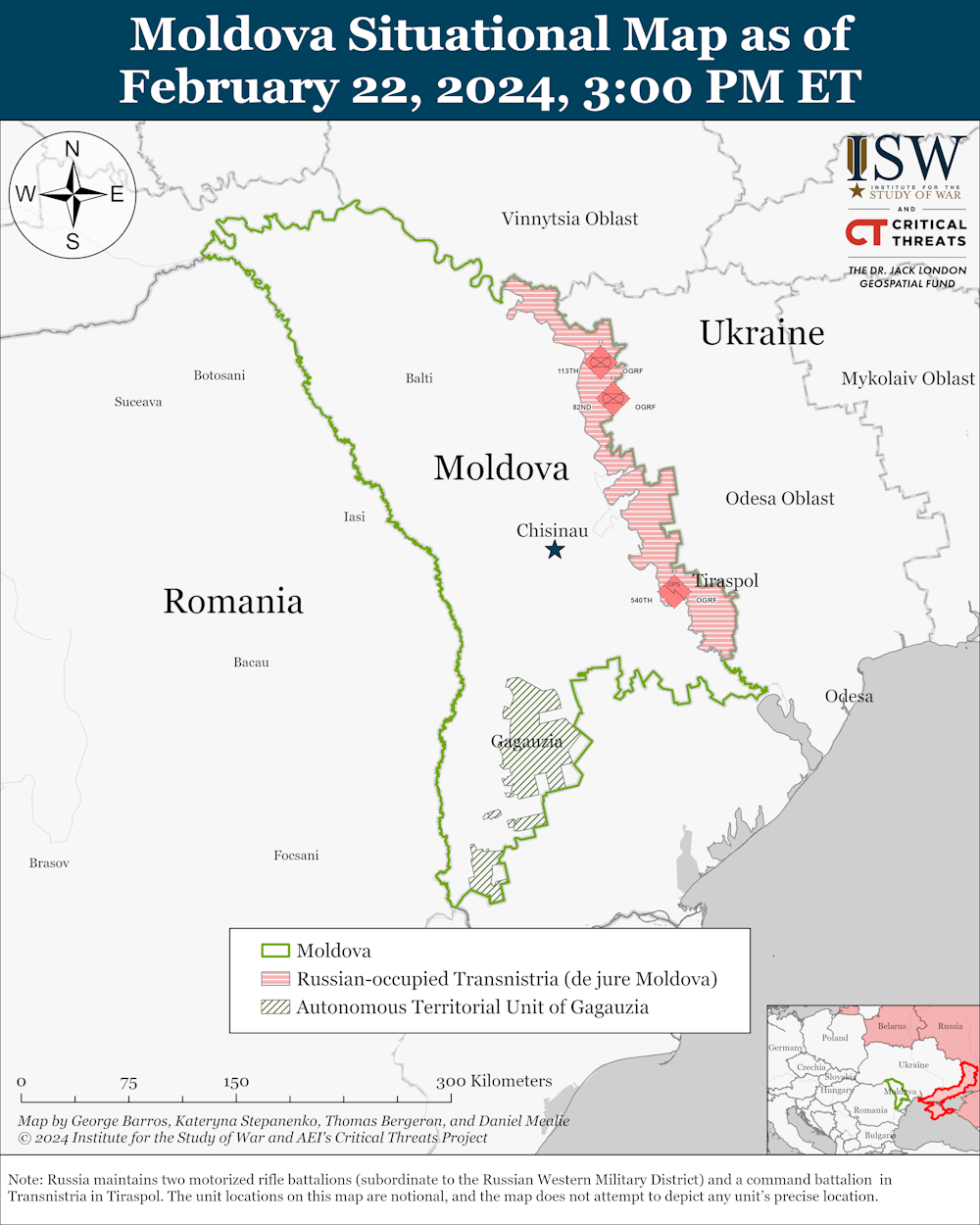
    In the country’s second-largest city, Balti in the north, he won 70% of the vote, compared to Sandu’s 30%. In the southern autonomous region of Gagauzia, a hotbed of pro-Russian, anti-European activism, Sandu obtained less than 3%. In Transnistria, Sandu came away with just 20% of the vote.

    Map of Moldova showing the breakaway regions of Transnistria and Gaugazia.
    Institute for the Study of War

    These results are not surprising, given the outcome of the first round of the elections. But they represent fall in support for Sandu compared to in 2020, when she beat the then incumbent, socialist party leader Igor Dodon. Four years ago, Sandu obtained over 250,000 votes more than Dodon, winning almost 58% of the total vote. While she took the overwhelming share of the diaspora vote then as well, she also bested Dodon in most constituencies in the south.

    Dodon campaigned for Stoianoglo in this election, but much of the challenger’s support was very probably due to a massive pro-Russian interference campaign that capitalised on many Moldovans’ fears and frustrations. Pro-Moscow messages aimed to capitalise on fears about being dragged into Russia’s war against Ukraine.

    But there was also frustration with a government that has made little progress on much needed anti-corruption reforms and presided over a serious cost-of-living crisis in the aftermath of the Covid-19 pandemic and made worse by the war on Moldova’s eastern neighbour. Sandu’s party, the Party of Action and Solidarity (PAS) won a commanding majority in the 2021 elections – so failures of the government are seen as failures of Sandu and her agenda.

    Challenges ahead

    That Sandu won the presidency again, and against these odds, demonstrates her resilience. But it can’t be taken for granted that her party will similarly prevail in parliamentary elections due by the autumn of 2025. She may well be forced into a difficult cohabitation with a potentially socialist-led government next year. In a parliamentary democracy, in which the powers of the government by far exceed those of the president, this could significantly slow down Moldova’s EU accession negotiations.

    But there are also some silver linings on the horizon. That Sandu won clearly demonstrates the limits of Russian interference. There is a core part of the Moldovan electorate that cannot be swayed by Russian misinformation or vote buying. This is a basis on which Sandu and PAS can build.

    Perhaps more importantly, Sandu and Stoianoglo both sent conciliatory signals on election eve. Stoianoglo emphasised the importance of respecting the outcome of the democratic process and expressed the hope that Moldovans would now move beyond hatred and division. Sandu acknowledged the concerns of those who had not voted for her and promised to serve as the president of all Moldovans and to work for the country’s further development.

    If they both stay true to their word, Moldova may finally break with a past of repeated political crises and economic stagnation.

    Stefan Wolff is a past recipient of grant funding from the Natural Environment Research Council of the UK, the United States Institute of Peace, the Economic and Social Research Council of the UK, the British Academy, the NATO Science for Peace Programme, the EU Framework Programmes 6 and 7 and Horizon 2020, as well as the EU’s Jean Monnet Programme. He is a Trustee and Honorary Treasurer of the Political Studies Association of the UK and a Senior Research Fellow at the Foreign Policy Centre in London.

    – ref. Maia Sandu’s victory in second round of Moldovan election show’s limits to Moscow’s meddling – https://theconversation.com/maia-sandus-victory-in-second-round-of-moldovan-election-shows-limits-to-moscows-meddling-242796

    MIL OSI – Global Reports –

    January 26, 2025
  • MIL-OSI Global: Divination in early modern Britain sought signs in swine, the stars and scripture

    Source: The Conversation – UK – By Martha McGill, Historian of Supernatural Beliefs, University of Warwick

    The Fortune-Teller by Caravaggio (1595-8). Louvre Museum

    In the late 1740s, Samuel Meadwell arrived in London. A “raw country fellow” from Northamptonshire, he had come to work as a distiller’s apprentice and hoped to make his fortune.

    When a pair of women told him there was “something very particular in [his] face”, he was intrigued. They introduced him to a widow called Mary Smith, who allegedly practised “the art of astrology, before very great people, princes, and the like”. She persuaded Meadwell to wrap all his money in a handkerchief with two peppercorns, some salt and a little mould. After waiting three hours, she explained, he would discover a great fortune.

    Meadwell discovered only that his money had been replaced with scraps of metal. Smith was deported for fraud, while Meadwell learned a lesson about city life. He bemoaned his naivety – but he was not alone in believing in the power of astrologers, or the potential for magical methods to reveal weighty secrets.

    In early modern Britain (1500-1750), divination was widespread. People consulted diviners to find stolen goods, learn about the next harvest, or scrutinise their marriage fortunes. Sometimes they wanted to know what diseases or disasters loomed, and several nobles exhibited an unwholesome interest in the monarch’s date of demise.

    The sex of unborn children was another topic of speculation: when Anne Boleyn gave birth to the future Elizabeth I in 1533, she disappointed not only Henry VIII, but also a whole host of “astrologers, sorcerers, and sorceresses” who had assured the couple that a male heir was forthcoming.

    Diviners came from across the social spectrum. Learned astrologers could command audiences with kings and queens. Most people, however, relied on the services of a local cunning-man or woman.

    There were also so-called “Egyptian” fortunetellers who roamed the country reading palms. These travellers probably did not have African origins. A hostile 1673 work claimed that they were “great pretenders” who sought to dupe “the ignorant” by associating themselves with Egyptians, “a people heretofore very famous for astronomy, natural magic, [and] the art of divination”.

    The authorities did not approve. In 1530, an act passed by Henry VIII’s parliament sought to expel “Egyptians” from the country, complaining that they conned people using “great, subtle, and crafty means” such as fortunetelling.

    Underpinning many divinatory methods was the belief that God’s divine plan was encoded in the patterns of the natural world. Palmistry relied on interpreting the marks God had traced on the body. Astrologers, meanwhile, focused on the movements of the planets.

    Between 1658 and 1664, a woman called Sarah Jinner published almanacks containing astrological readings for the forthcoming year. She ranged from predicting “desperate and unreconciliable wars” to cautioning women that: “We find Mercury in Pisces retrograde in the 6th House, [which] denoteth that servants will generally be cross, vexatious, and intolerable, especially maidservants.”

    Meeting a Swine. From Dr Solman’s translation of Aristotle’s Golden Cabinet of Secrets (c. 1690).

    The behaviour of animals was also considered portentous. A pamphlet from circa 1690 declared that “to meet a swine the first thing in a morning, carrying straw in its mouth, denotes a maid, or widow, shall soon be married, and very fruitful in children”. On the other hand, magpies flying around you signified “much strife and brawling in marriage”.

    When a great murmuration of starlings was spied battling in the air above Cork in 1621, people whispered that it signified divine anger. Eight months later the city was devastated by a fire.

    Other divination practices relied on chance. Cheap pamphlets outlined ways of divining with dice, the idea being that God determined the outcome. Another practice was to open a Bible randomly and consult the first passage that caught the eye. Bibles could alternatively be used to catch thieves. The usual method was to insert a key into the Bible, recite the names of the suspects, and wait for the Bible or the key to move.

    A similar technique involved suspending a sieve from a pair of shears. The sieve would rotate when a thief’s name was mentioned.

    Divination and the authorities

    These practices were viewed with suspicion by the ecclesiastical and secular authorities, especially after the 16th-century Reformation.

    Divination by the sieve and shears in Cornelius Agrippa, De Occulta Philosophia (1567).
    Opera Omnia

    A Welsh scholar warned in 1711 that using the Bible as an “instrument of prognostication” was “the greatest insult that anyone can give to the scriptures”. Church courts punished people for the “devilry” of divining with a sieve and shears.

    Most dangerous of all was divination by consulting spirits. The Scottish cunning-man Andrew Man claimed to have an angelic adviser, Christsonday, who told him whether upcoming years would be good or bad. He was also in a sexual relationship with the Fairy Queen, who had promised to teach him to “know all things”. Leading local figures concluded that Man had really been cavorting with devils. He was tried for witchcraft, and executed in 1598.

    In general, however, cunning-folk enjoyed good standing within their communities. Currents of scepticism flowed faster during the 18th-century Enlightenment. A 1762 work expressed a common view when it blamed belief in divination on the “ignorance and darkness” that “covered the minds of mankind”. But divinatory practices were themselves a quest for enlightenment, and the prospect of unravelling the mysteries of the future has remained compelling up to the present day.


    Looking for something good? Cut through the noise with a carefully curated selection of the latest releases, live events and exhibitions, straight to your inbox every fortnight, on Fridays. Sign up here.


    Martha McGill receives funding from the British Academy.

    – ref. Divination in early modern Britain sought signs in swine, the stars and scripture – https://theconversation.com/divination-in-early-modern-britain-sought-signs-in-swine-the-stars-and-scripture-241825

    MIL OSI – Global Reports –

    January 26, 2025
  • MIL-OSI Global: Cop16: the world’s largest meeting to save nature has ended with no clear path ahead

    Source: The Conversation – UK – By Harriet Bulkeley, Professor of Geography, Durham University

    Increasing rights for Indigenous people and local communities was one of the few steps forward at Cop16. Philipp Montenegro, CC BY-NC-ND

    Progress at the UN’s biodiversity summit, Cop16, in Cali, Columbia, has been slow. Frustratingly so.

    There were high hopes that the Colombian hosts could coordinate action between developed and developing countries towards reaching the landmark global biodiversity agreement reached in Montreal, Canada at Cop15 two years ago. But after two weeks and one long night, negotiations ended abruptly. Many delegates had to leave to catch flights home with key issues unresolved.

    This conference started with alarming news that the latest edition of the red list – the official record of threatened species – shows that more than one third of tree species face extinction in the wild. That’s more than the number of threatened birds, mammals, reptiles and amphibians combined.

    Urging negotiators to recognise the seriousness of this nature crisis, Colombia’s president Gustavo Petro warned they were facing “the battle for life”.

    There was certainly no shortage of people seeking solutions.

    In the heart of the city, Cop16’s green zone hosted vibrant music, film screenings, indigenous arts and crafts. Local people, businesses and conference delegates discussed creative and collaborative ways to address the nature crisis.

    Over in the blue zone, the official conference space, there was a notable increase in the diversity of communities participating across side events and pavilions. The links between biodiversity and human health were highlighted. So too was the importance of nature for water and food security.

    In his opening video message, UN secretary general Antonio Guterres urged countries gathered to “engage all of society” as “la Cop de la gente” (a Cop of the people).

    So protests from Indigenous people and local communities were particularly powerful. Including greater recognition for these groups in the final decisions from the meeting was a rare sign of progress. A new fund to ensure that these groups would receive a share of the profits from the commercial use of digital sequence information – genetic information from native plants and animals – was another victory.

    A new set of principles developed by the UK government to prioritise gender issues in conservation and ensure fair access to the benefits biodiversity action for all marginalised groups received widespread support.

    The focus on economic resilience was more prominent than ever, with two days dedicated to business and finance. In 2018, only 300 businesses attended Cop14 in Egypt. In Cali, this number was 3,000.

    Delegates assemble for the negotiations at Cop16​.
    Philipp Montenegro, CC BY-NC-ND

    Private investors, pension funds, the insurance industry and public banks stressed the importance of creating robust measures of biodiversity improvement. Business sectors focused on transition plans that could support fair and transparent means of reporting progress. The nature tech sector is growing too, with start-ups expected to attract up to $2 billion (£1.5 billion) in investments by the end of 2024.

    Back in the negotiating halls, delegates faced an uphill struggle. Only 44 out of 196 national plans to protect biodiversity have been updated to reflect the new targets. So, it’s no surprise that a gap is widening between current reality and the ambitious set of 23 targets which governments must reach by 2030. While countries agreed to a progress review in 2026, no consensus was reached on the indicators to be used. Progress was painfully slow.

    Negotiators debated how the global agreement on biodiversity should interact with its sister conventions on climate and desertification. Further discussions next year might identify how this could work but this probably won’t lead to drastic change. Some countries, including India and Russia, still seemed unwilling to accept the critical risks posed to nature and society of exceeding the 1.5°C global target for climate change.

    Many developing nations were concerned that greater integration between the climate crisis and biodiversity would lead to “double counting” of funding with the danger that developed countries could backtrack on their promises to support dedicated action on nature. Others, including the EU, argued that action to conserve and restore nature was an essential part of tackling all environmental and societal global challenges.

    The deadlock between these positions continued for days. In the final hours of Cop16, negotiators reached a compromise that sets out a more integrated pathway for bringing action on climate and nature together. While the effects of climate change directly exacerbate biodiversity loss, restoring nature can be a powerful tool in the fight to mitigate the climate crisis and benefit biodiversity. Nature-based solutions – measures like restoring peatlands and wetlands, planting trees and mangroves – help build that resilience.

    Heads of state and ministers joining at the midpoint of the meeting pointed out the need to ensure that nature is protected both for its own sake and for the communities that depend on healthy ecosystems for their livelihood and wellbeing.

    But at the end of a long final night, these words were not accompanied by concrete plans for action or the financial commitments about how nature protection should be paid for that many at Cop16 were hoping for.

    Whole of society, all of government?

    The global biodiversity agreement set in 2022 called for a whole of society approach to address the nature crisis. Cop16 certainly delivered. From local communities to huge businesses, there was a spirit of rolling up sleeves and putting investment and innovation to work using nature-based solutions to restore and conserve biodiversity.

    One of many packed side-events which bought the ‘whole of society’ together at Cop16.
    Philipp Montenegro, CC BY-NC-ND

    The same energy and commitment was clear from many of the local and sub-national governments assembled at Cop16. The first gathering of Mayors for Nature demonstrated significant commitment to action.

    Leaders from California and Quebec set the tone by investing in large-scale programmes, with Quebec not only committing to fund their own biodiversity action but also contributing to the global biodiversity fund – the first regional government to do so.

    But national governments struggled to move forward. The complexity of addressing biodiversity and its necessary interactions with sectors such as agriculture, transport and mining, as well as concerns over historic injustices between developing and developed countries, was perhaps too much for Cop16 to resolve.

    The risk is that, as governments navigate these challenges, the private sector could accelerate action without scrutiny. I worry that the lack of policy coordination could deter investors and slow the pace of action that local communities and regional governments want to make. Rather than waiting for global consensus, groups can catalyse change while holding each other accountable to make swift progress to save nature.


    Don’t have time to read about climate change as much as you’d like?

    Get a weekly roundup in your inbox instead. Every Wednesday, The Conversation’s environment editor writes Imagine, a short email that goes a little deeper into just one climate issue. Join the 40,000+ readers who’ve subscribed so far.


    Harriet Bulkeley receives funding from the European Commission and currently serves as an advisor to the UK Department of Environment, Food and Rural Affairs.

    – ref. Cop16: the world’s largest meeting to save nature has ended with no clear path ahead – https://theconversation.com/cop16-the-worlds-largest-meeting-to-save-nature-has-ended-with-no-clear-path-ahead-242160

    MIL OSI – Global Reports –

    January 26, 2025
  • MIL-OSI Global: Lebanon peace deal: Israel-Hezbollah agreement needs to be guaranteed by the Lebanese armed forces

    Source: The Conversation – UK – By Vanessa Newby, Assistant Professor, Institute of Security and Global Affairs, Leiden University

    After a month of heavy bombardment, and despite continuing its military campaign and clearing border villages in south Lebanon, Israel is reportedly indirectly negotiating a peace deal with Hezbollah leaders. The terms of a ceasefire require the full implementation of UN resolution 1701, with a presence of around 10,000 Lebanese armed forces (LAF) soldiers stationed along the “blue line” which divides Israel from Lebanon and the Golan Heights. But making 1701 work has always proved a challenge.

    There can be no doubt that since its inception in 2006, resolution 1701 has never been fully implemented in south Lebanon. Adopted unanimously in 2006, the purpose of the resolution was to end hostilities between Hezbollah and Israel, with the UN security council calling for a permanent ceasefire.

    A key objective of 1701 is to ensure the area south of the Litani River in south Lebanon is free from any weapons other than those of the Lebanese state and the United Nations Interim Force in Lebanon (Unifil)

    It is on this issue that Unifil has received the most opprobrium. International observers and politicians have criticised Unifil’s inability to locate and remove Hezbollah’s weapons. The IDF blames Unifil for failing to prevent the rearmament of Hezbollah and for allegedly not doing enough to prevent Hezbollah attacks on Israel.

    Conversely, in Lebanon, Hezbollah supporters rebuke Unifil for failing to prevent six IDF invasions over half a century. This, they argue, makes Hezbollah’s presence on the blue line essential.

    But the question of why resolution 1701 was not fully implemented is not a simple one. Multiple actors are involved, of which one key player is the LAF. A large part of fulfilling resolution 1701 means ensuring that LAF are deployed in southern Lebanon as the only legitimate provider of force representing the Lebanese government. Understanding their role and the constraints they face is an important part of the puzzle.

    Prior to the outbreak of the Lebanese civil war in 1975, south Lebanon was sparsely populated and regarded as strategically unimportant. When civil war broke out, political and operational factors meant the LAF could not deploy to the south.

    These factors included the defection of LAF officers to sectarian militia and a lack of sufficient resources. The influence of neighbouring Syria and the heavy presence of militia groups, plus the occupation of the “zone of security” in south Lebanon by the IDF and its proxy militia the South Lebanon Army complicated matters.

    After the 2006 war, LAF became an important official party to resolution 1701 and Unifil worked closely with them to fulfil three main objectives: first, to assist with their re-introduction into the area of operations; second, to improve their operational capabilities; and third, to seek international funding for the LAF to improve their technical capabilities.

    Hunting for Hezbollah

    Unifil is mandated to assist LAF in taking steps towards the establishment of an area free from armed personnel between the blue line and the Litani River.

    Map of sourthern Lebanon showing the blue line which covers the Lebanese-Israeli border and extends to cover the Lebanese-Golan Heights border.
    Striving2767, CC BY-NC-SA

    Until recently LAF and Unifil often conducted joint patrols to search for unexploded ordinance and unauthorised weapons. If Unifil independently discovered an illegal weapons cache, it would notify the LAF, which handled the weapons’ recovery.

    This approach helped Unifil sidestep confrontations with the local population, on whose support they depend to patrol safely and execute the mandate. But while this policy was supportive of the goals of 1701, ultimately it proved ineffective.

    There were a number of reasons for this. First, the LAF faces legal restrictions on entering private property. If it suspects illegal weapons are stored on private land, the LAF needs a court order to enter the property. This takes time, which gives the owner of the property the opportunity to remove the weapons. To fully implement 1701, this legal barrier would need to be removed.

    The LAF also has to walk a political tightrope between different political factions in Beirut, and is also sensitive to the need for local support in the south. While LAF is undoubtedly popular in Lebanon, many in the south are Shia Muslims with strong loyalties to Hezbollah and the Amal movement (a Shia militia which now operates as a political party in Lebanon). These groups offer both a degree of security and material help in the form of social services.

    While conducting field research in southern Lebanon from 2012 to 2018, I discovered that civilians in the region understand that it is difficult for LAF to hunt aggressively for weapons. This is because they need to retain a working relationship with Hezbollah which – with its allies – constitutes the political majority in Beirut. Ridding south Lebanon of Hezbollah weapons will require political cover from Beirut.

    Another problem the LAF has faced is getting hold of modern weaponry due to Israeli opposition, despite the LAF enjoying strong international support. Israel’s “qualitative military edge” strategy, supported by the US, means that it campaigns internationally against any of its border states obtaining weapons deemed to pose a threat to its security. This has on occasion prevented LAF from accepting essential defensive equipment, such as armoured vehicles and air defence systems, from its European friends.

    Preventing LAF from getting defensive equipment contradicts the EU and US stated goal of strengthening LAF. It also supports Hezbollah’s claim that it can only hand over national security to LAF when it is properly equipped to defend Lebanon. A civilian I interviewed in south Lebanon in 2013 summed up the paradox: “We would prefer that the international community made a decision to allow the military to be armed properly, and then we don’t need the resistance.”

    Ultimately the political and legal tightrope the LAF walks in Lebanon is deeply implicated in why resolution 1701 has never been fully implemented. Neither a national army nor a peacekeeping force are capable of enforcing a Hezbollah withdrawal in the absence of political and legal agreement in Beirut, or local support in south Lebanon.

    Any calls for the full implementation of 1701 will require the unqualified support of all parties to 1701. This is not just those involved in the conflict – Israel, Hezbollah and the Lebanese government – but also various international stakeholders including the US, EU and all countries with UN peacekeepers in Lebanon. It will be a delicate balance.

    Vanessa Newby does not work for, consult, own shares in or receive funding from any company or organisation that would benefit from this article, and has disclosed no relevant affiliations beyond their academic appointment.

    – ref. Lebanon peace deal: Israel-Hezbollah agreement needs to be guaranteed by the Lebanese armed forces – https://theconversation.com/lebanon-peace-deal-israel-hezbollah-agreement-needs-to-be-guaranteed-by-the-lebanese-armed-forces-241930

    MIL OSI – Global Reports –

    January 26, 2025
  • MIL-OSI Asia-Pac: Director of Health views arrangements for Seasonal Influenza Vaccination School Outreach (with photos)

    Source: Hong Kong Government special administrative region

         The Director of Health, Dr Ronald Lam, and the Controller of the Centre for Health Protection (CHP) of the Department of Health (DH), Dr Edwin Tsui, visited Hong Kong Young Women’s Christian Association Tai Hon Fan Nursery School this morning (November 4) to view the implementation of the school outreach seasonal influenza vaccination (SIV) service and appealed to parents to arrange early SIV for their children with a view to having better protection in the coming influenza season in winter.     It is the first time for the school to choose to provide both injectable inactivated influenza vaccines (IIV) and live attenuated influenza vaccines (i.e. nasal vaccines) (LAIV) as the hybrid mode. Forty-two pupils received SIV during the vaccination activity. The DH procured and delivered the vaccines in advance, while a Public-Private-Partnership Team visited the school today to provide vaccination to the schoolchildren.     “To boost the SIV coverage rate among schoolchildren, modified arrangements have been made under the SIV School Outreach Programme (SIVSOP) this year. Kindergartens and child care centres can choose to provide both IIV and LAIV at the same or different outreach vaccination activities. We are delighted with the smooth outreach vaccination service under the new arrangements. According to local experience, school outreach can double the rate of receiving SIV, effectively strengthening the immunity barrier of schoolchildren. We look forward to continuous and full support from schools and parents, as home-school co-operation has been of vital importance in enhancing vaccination coverage,” Dr Lam said.     Dr Tsui added that SIV is one of the most effective means to prevent seasonal influenza and its complications, as well as greatly reducing hospitalisation and death. For schoolchildren, it can also reduce absenteeism and is beneficial for their personal health and learning. As the weather becomes cool, and with reference to previous surveillance data, the CHP expects that activity of COVID-19 and seasonal influenza may increase at the end of the year, and more school outbreaks will be reported. The CHP has noticed that some schools still have not arranged SIV outreach activities. We strongly urge schools that have yet to enrol in the SIV outreach programme to arrange SIV outreach activities as soon as possible to protect students and reduce the chance of influenza outbreaks in schools. For eligible children not receiving SIV through school outreach activities, parents should arrange vaccination for their children at clinics of private doctors enrolled in the Vaccination Subsidy Scheme.     Dr Lam stressed that all persons aged 6 months or above, except those with known contraindications, are recommended to receive SIV for personal and family protection. As of October 27, the vaccination coverage rate for children aged 6 months to under 2 years was at a low level of about 8.4 per cent. To strengthen vaccination services and boost the SIV coverage rate among children aged 6 months to under 2 years, the DH’s Maternal and Child Health Centres (MCHCs) are open to all children aged 6 months to under 2 years for SIV this year. Children aged 6 months to under 2 years can receive SIV services at any MCHCs when they are attending appointments. Parents may also book an appointment for their children to receive vaccinations at designated MCHCs via the online booking system: booking.covidvaccine.gov.hk/forms/sivfhs/index.jsp. Parents are advised to arrange SIV for their children as early as possible to protect health of their children. In addition, co-infection of COVID-19 and influenza is possible, and high-risk individuals should receive booster COVID-19 vaccine at appropriate times.     Under the SIVSOP, secondary schools, primary schools, kindergartens, and child care centres can arrange outreach vaccination teams to provide free SIVs to schoolchildren. The DH will provide vaccines to participating schools and subsidy of $105 per dose to doctors.           In addition, schools can also invite doctors to arrange outreach services for injectable IIV and/or nasal LAIV on their campuses under the Vaccination Subsidy Scheme School Outreach. Participating schools can select a doctor and make arrangements for the outreach activity, including the type of vaccine provided. The Government will provide a subsidy of $260 per dose to the doctor. In addition to schoolchildren, other individuals such as school staff and students’ parents can also receive SIVs during the outreach vaccination activity.     At present, around 890 kindergartens and child care centres (81 per cent), 620 primary schools (93 per cent) and 410 secondary schools (80 per cent) have joined the SIV School Outreach Programmes. As of October 27, 2024, around 640 schools have completed the first dose vaccination, and more than 145 400 students have received SIV under School Outreach Programmes.           “The DH has always maintained close liaison with our partners. Through concerted efforts from the education sector, healthcare sector, parents and other stakeholders, a total of about 204 100 doses of SIV have been administered for children aged 6 months to 18 years under various SIV programmes, accounting for 22.3 per cent of overall vaccination coverage rate. We urge early childhood educators to join hands in appealing the parents to arrange for their children to participate in SIV, and at the same time to play their part in educating parents on the importance of vaccination to encourage more young school children to get vaccinated. With increased vaccination coverage, the protection for children could be strengthened,” Dr Lam said.     As of October 27, about 331 800 doses of seasonal influenza vaccines had been administered via the Government Vaccination Programme and 496 600 doses via the Vaccination Subsidy Scheme. Together with 126 900 doses via the SIVSOP, a total of 955 300 doses of SIV have been administered through various programmes.     For the latest information, please refer to the CHP’s influenza page and Vaccination Schemes page.     

    MIL OSI Asia Pacific News –

    January 26, 2025
  • MIL-OSI Economics: RBI imposes monetary penalty on The Jambusar People’s Co-operative Bank Ltd., Dist. Bharuch, Gujarat

    Source: Reserve Bank of India

    The Reserve Bank of India (RBI) has, by an order dated October 28, 2024, imposed a monetary penalty of ₹10,000/- (Rupees Ten Thousand only) on The Jambusar People’s Co-operative Bank Ltd., Bharuch, Gujarat (the bank) for non-compliance with certain directions issued by RBI on ‘Membership of Credit Information Companies (CICs) by Co-operative Banks’. This penalty has been imposed in exercise of powers conferred on RBI under section 25 of the Credit Information Companies (Regulation) Act, 2005.

    The statutory inspection of the bank was conducted by RBI with reference to its financial position as on March 31, 2023. Based on supervisory findings of non-compliance with RBI directions and related correspondence in that regard, a notice was issued to the bank advising it to show cause as to why penalty should not be imposed on it for its failure to comply with the said directions. After considering the bank’s reply to the notice and oral submissions made by it during the personal hearing, RBI found, inter alia, that the following charge against the bank was sustained, warranting imposition of monetary penalty:

    The bank failed to submit data to any of the CICs.

    This action is based on the deficiencies in regulatory compliance and is not intended to pronounce upon the validity of any transaction or agreement entered into by the bank with its customers. Further, imposition of monetary penalty is without prejudice to any other action that may be initiated by RBI against the bank.

    (Puneet Pancholy)  
    Chief General Manager

    Press Release: 2024-2025/1424

    MIL OSI Economics –

    January 26, 2025
  • MIL-OSI Economics: RBI imposes monetary penalty on The Rander People’s Co-operative Bank Ltd., Surat, Gujarat

    Source: Reserve Bank of India

    The Reserve Bank of India (RBI) has, by an order dated October 28, 2024, imposed a monetary penalty of ₹1.50 lakh (Rupees One Lakh Fifty Thousand only) on The Rander People’s Co-operative Bank Ltd., Surat, Gujarat (the bank) for contravention of provisions of section 26A read with section 56 of the Banking Regulation Act, 1949 (BR Act) and non-compliance with certain directions issued by RBI on ‘Know Your Customer (KYC)’. This penalty has been imposed in exercise of powers vested in RBI, conferred under the provisions of section 47A(1)(c) read with sections 46(4)(i) and 56 of the BR Act.

    The statutory inspection of the bank was conducted by RBI with reference to its financial position as on March 31, 2023. Based on supervisory findings of contravention of statutory provision / non-compliance with RBI directions and related correspondence in that regard, a notice was issued to the bank advising it to show cause as to why penalty should not be imposed on it for its failure to comply with the said provisions of BR Act and RBI directions. After considering the bank’s reply to the notice and oral submissions made by it during the personal hearing, RBI found, inter alia, that the following charges against the bank were sustained, warranting imposition of monetary penalty:

    The bank had not:

    1. transferred eligible amounts to the Depositor Education and Awareness Fund within the prescribed period;

    2. carried out risk-based updation of KYC of its customers; and

    3. put in place a system of periodic review of risk categorisation of accounts at least once in six months.

    This action is based on deficiencies in regulatory compliance and is not intended to pronounce upon the validity of any transaction or agreement entered into by the bank with its customers. Further, imposition of this monetary penalty is without prejudice to any other action that may be initiated by RBI against the bank.

    (Puneet Pancholy)  
    Chief General Manager

    Press Release: 2024-2025/1425

    MIL OSI Economics –

    January 26, 2025
  • MIL-OSI NGOs: Türkiye: Proposed ‘agents of influence’ law is attack on civil society and must be rejected   

    Source: Amnesty International –

    Türkiye’s parliament must reject the draft amendment to the country’s ‘espionage’ laws which, if passed, would significantly threaten the ability of civil society organizations to operate freely within the country, said more than 80 organizations ahead of an expected vote in parliament. Scores of other organizations issued similar statements, calling on the legislators to reject the proposal.  

    If passed, this law would represent a significant threat to the ability of civil society to operate freely within the country 

    If approved, the new article – publicly referred to as the “agents of influence” law – would amend the penal code and criminalize unspecified “acts” that are “in line with the strategic interests or instructions of a foreign state or organization against the security or domestic or foreign political interests of the State in line with the strategic interests or instructions of a foreign state or organization.”

    “If passed, this law would represent a significant threat to the ability of civil society to operate freely within the country,” the civil society organizations said in a joint statement.

    The signatories point at the fact that the draft law fails the test of legal certainty and foreseeability, a fundamental tenet of law – meaning that articles of law must be understandable and predictable by the relevant people; individuals must be able to foresee which acts or omissions will make them criminally liable and what punishment will be applied for the act or omission committed.

    The proposed legislative package, passed by the Parliamentary Justice Commission on 23 October, is expected to be voted on by members of the Turkish Parliament in the coming days. 

    The draft law threatens to criminalize legitimate activities such as the documentation of human rights violations by state or non-state actors, imposing heavy penalties including lengthy prison terms for anyone found to have breached the same. If these so-called offenses are committed during “wartime” or in relation to the “state’s preparation for or war activities or military operations”, the penalty could be between eight to 12 years imprisonment.  

    If the provision is adopted, the rights to freedom of expression of all, including seeking and receiving information, would be also at risk of being violated

    “We are also concerned that the proposed law fails to set out clear criteria for what specific acts constitute a criminal offence without adequate safeguards or effective remedies against potential abuses of the law,” said the organizations. 

    “Arbitrary interpretation of broadly worded, vague laws are used to target and prosecute human rights defenders, journalists, lawyers and many other civil society organizations in Türkiye. If the provision is adopted, the rights to freedom of expression of all, including seeking and receiving information, would be also at risk of being violated. It would create a chilling effect on important human rights work, and potentially impede their activities.” 

    Background 

    The legislative package proposes to add a new penalty, Article 339/A “Committing offenses against the security or political interests of the state” under the seventh section, “Crimes Against State Secrets and Espionage,” of the Turkish Penal Code (Law No. 5237).  

    Terminology in the proposed article is vulnerable to abuse. For example, “strategic interests,” “instructions,” “organization,” and “domestic or foreign political interests of the State” are overly broad and vague. Ill-defined or overly broad laws can be susceptible to arbitrary application and abuse, thus risk being instrumentalized to target people that the state authorities consider dissenting or criminalize the legitimate activities of civil society organizations, such as those documenting human rights violations in the country.  

    The proposed article is in violation of international human rights law and standards as well as Türkiye’s Constitution and national laws as it threatens freedom of expression and violates the principle of legality which includes the principle of foreseeability, a fundamental concept of criminal law. 

    As well as the signatories to this statement, numerous other organizations have published their own statements including the Association of Civil Society Development Center (see here), the Women’s Platform for Equality (see here), the Third Sector Foundation of Turkiye (see here), the International Press Institute (see here), the Committee to Protect Journalists (see here), Human Rights Watch (see  here), journalism organisations, trade unions and others (see here).

    For more information, please contact [email protected] in London or [email protected] in Istanbul  

    The number of signatories to the joint statement is increasingly daily. A copy of the statement is being sent to all Turkish MPs.

    SIGNATORIES
    1. About Life Foundation (YADA) 
    2. AG-DA Gender Equality Solidarity Network 
    3. Ali İsmail Korkmaz Foundation 
    4. Altyazı Cinema Association 
    5. Amnesty International Türkiye 
    6. Ankara Initiative for Freedom of Thought 
    7. Ankara Solidarity Academy 
    8. Another School is Possible Association 
    9. Association for Monitoring Equal Rights 
    10. Batman Bar Association 
    11. Bodrum Women’s Solidarity Association 
    12. Center for Spatial Justice 
    13. Citizen’s Initiative 
    14. Citizens’ Assembly 
    15. DEMOS Research Association 
    16. Dersim Bar Association 
    17. Diyarbakır Bar Association 
    18. Families of LGBTs in İstanbul 
    19. Free Colors Association 
    20. GALADER-Ankara Rainbow Families Association 
    21. Green Thought Association 
    22. Hakkari Bar Association 
    23. Human Rights Agenda Association 
    24. Human Rights Association 
    25. Human Rights Association Ankara Branch LGBTI+ Commission 
    26. Human Rights Association Istanbul Branch 
    27. Human Rights Foundation of Türkiye 
    28. Izmir Women’s Solidarity Association 
    29. Kaos GL Association 
    30. Katre Women’s Counceling and Solidarity Association 
    31. Kirkayak Culture – Migration and Cultural Studies Center 
    32. Kuşadası Caferli Beautification and Solidarity Association 
    33. Lambdaistanbul LGBT Solidarity Association 
    34. Lawyers for Freedom Association 
    35. Leader Women Association 
    36. Life Memory Freedom Association 
    37. Mardin Bar Association 
    38. Marmaris Public Assembly 
    39. May 17 Association 
    40. Media and Law Studies Association 
    41. Merdiven Social Initiative and Development Association 
    42. Migration Monitoring Association 
    43. Muamma LGBTI+ Education Research and Solidarity Association 
    44. Muğla Environment Platform 
    45. Murat Çekiç Association 
    46. Muş Bar Association 
    47. Natural Life Association 
    48. Nonviolence Education and Research Center 
    49. P24 Independent Journalism Platform 
    50. Press, Publishing, Communication, and Postal Workers’ Union 
    51. Pride Istanbul 
    52. Progressive Journalists Association 
    53. Red Umbrella Sexual Health and Human Rights Association 
    54. Rights Initiative Association 
    55. Romani Godi – Association for Roma Memory Studies 
    56. Rosa Women’s Association 
    57. SES Equality and Solidarity Association 
    58. Siirt Bar Association 
    59. Social Policy, Gender Identity and Sexual Orientation Studies Association 
    60. Support for Improvement in Social and Economic Living Association 
    61. Şanlıurfa Bar Association 
    62. Şırnak Bar Association 
    63. Tarlabaşı Community Support Association 
    64. The Civil Society in the Penal System Association 
    65. The Confederation of Public Employees’ Trade Unions 
    66. Trans Pride Istanbul 
    67. Truth Justice Memory Center 
    68. Turkish Handicap Association 
    69. Türkiye Human Rights Litigation Support Project 
    70. Türkiye Journalists’ Union 
    71. Türkiye Press, Publishing, and Printing Employees’ Union 
    72. University Queer Studies and LGBTI+ Solidarity Association 
    73. Van Bar Association 
    74. Velvele 
    75. Women for Women’s Human Rights Association 
    76. Women’s Culture, Arts, and Literature Association 
    77. Women’s Solidarity Foundation 
    78. Women’s Time Association 
    79. Young Thought Institute 
    80. Youth Organizations Forum 
    81. Yuva Association  

    MIL OSI NGO –

    January 26, 2025
  • MIL-OSI Banking: RBI imposes monetary penalty on Mehmadabad Urban People’s Co-operative Bank Ltd., Mehmadabad, Dist. Kheda, Gujarat

    Source: Reserve Bank of India

    The Reserve Bank of India (RBI) has, by an order dated October 28, 2024, imposed a monetary penalty of ₹60,000/- (Rupees Sixty Thousand only) on Mehmadabad Urban People’s Co-operative Bank Ltd., Mehmadabad, Dist. Kheda, Gujarat (the bank) for non-compliance with certain directions issued by RBI on ‘Membership of Credit Information Companies (CICs) by Co-operative Banks’ and ‘Know Your Customer (KYC)’. This penalty has been imposed in exercise of powers conferred in RBI under section 47A(1)(c) read with sections 46(4)(i) and 56 of the Banking Regulation Act, 1949 and section 25 of the Credit Information Companies (Regulation) Act, 2005.

    The statutory inspection of the bank was conducted by RBI with reference to its financial position as on March 31, 2023. Based on supervisory findings of non-compliance with RBI directions and related correspondence in that regard, a notice was issued to the bank advising it to show cause as to why penalty should not be imposed on it for its failure to comply with the said directions. After considering the bank’s reply to the notice and oral submissions made during the personal hearing, RBI found, inter alia, that the following charges against the bank were sustained, warranting imposition of monetary penalty:

    The bank had failed to:

    1. submit data to three CICs and submitted incomplete data to one CIC; and

    2. carry out periodic review of risk categorisation of accounts at least once in six months.

    This action is based on deficiencies in regulatory compliance and is not intended to pronounce upon the validity of any transaction or agreement entered into by the bank with its customers. Further, imposition of this monetary penalty is without prejudice to any other action that may be initiated by RBI against the bank.

    (Puneet Pancholy)  
    Chief General Manager

    Press Release: 2024-2025/1426

    MIL OSI Global Banks –

    January 26, 2025
  • MIL-OSI Asia-Pac: Public alerted to false claim

    Source: Hong Kong Information Services

    The Department of Health today alerted the public to a false claim from an unknown organisation alleging that it is assisting in the Government’s admission of qualified non-locally trained dentists to practise in Hong Kong.

    The department stressed that it has not authorised any organisation to assist with recruiting non-locally trained dentists to practise in Hong Kong, adding that the claim is false and suspected of being misleading.

    The organisation claimed that it was assisting the Government to admit qualified non-locally trained dentists to practise in Hong Kong as introduced under the Dentists Registration (Amendment) Ordinance 2024.

    In addition, the organisation untruthfully alleged that there was a specific quota set on the number of dentists, as well as on the number of years of experience and target age range.

    The department emphasised that applications for its recruitment of non-locally trained dentists already closed on September 23 this year, and it is going through the established recruitment procedures.

    Members of the public are urged not to fall for any claim of assisting the Government to recruit non-locally trained dentists to practise in Hong Kong, and they should not provide personal information to any suspicious people. Anyone who has fallen for such fraud should contact Police.

    MIL OSI Asia Pacific News –

    January 26, 2025
  • MIL-OSI China: China’s import expo attracts record-breaking participating countries, exhibitors

    Source: People’s Republic of China – State Council News

    SHANGHAI, Nov. 4 — On Tuesday morning, the Chinese commercial hub of Shanghai will once again assume its role as the host for the newest edition of the globe’s first national-level exposition dedicated to imports.

    Now, the China International Import Expo (CIIE) stands as a telling example of China’s steadfast opening up and an unmissable opportunity for foreign enterprises to tap into the Chinese market.

    Despite challenges and uncertainties in the global economic landscape, over the past seven years, CIIE has steadily grown.

    The first six editions of CIIE have generated a total intended transaction amount exceeding 420 billion U.S. dollars. Additionally, over 1,130 foreign enterprises and investment promotion organizations have conducted targeted connections across the country.

    This year, the business exhibition will be held at the National Exhibition and Convention Center (Shanghai), covering more than 360,000 square meters — equivalent to 50 standard soccer fields — and hosting 3,496 exhibitors from 129 countries and regions.

    Both the number of participating countries and exhibitors have surpassed previous records.

    Notably, 297 exhibitors from Fortune Global 500 companies and industry leaders will attend, marking a historic high. Among all participants, 186 enterprises and institutions have achieved full attendance across all seven editions of the expo.

    Besides, this year’s event is also commanding the attention of global journalism. More than 400 media outlets are participating in the coverage of this event, including 220 foreign media organizations.

    China’s vast market has become one of the most attractive destinations for global players, with the CIIE serving as the “golden gateway” to this opportunity.

    For the CIIE frequenter of Japanese cosmetics giant Shiseido, the event serves as a second-to-none magnet.

    “Over the past years of participating in CIIE, we have seen firsthand just how influential the expo can be for our business,” said Toshinobu Umetsu, president and CEO of Shiseido China.

    According to the company, visitors will be able to see over 30 new product debuts from 12 different brands in their portfolio.

    Umetsu described the expo as a boon for their growth in China’s thriving market, noting that many new skincare technologies, brands, and products have gained substantial attention and recognition from consumers after being featured at CIIE.

    “CIIE successfully transformed our ‘exhibits’ to ‘products,’” Umetsu added.

    Seizing the opportunity, new participants are eager to try their luck. Among the trendsetters is Canadian sportswear magnate Lululemon.

    “A digital innovation here is leading the world, quite frankly, in terms of adoption and opportunities,” said Calvin McDonald, CEO of Lululemon during an interview with Xinhua.

    Impressed by the market’s speed, agility and resilience, McDonald said the opportunity to move fast and accomplish big initiatives in the market is incredibly exciting, seeing CIIE as a precious opportunity to bring awareness to the brand.

    “In the dynamic and healthy market, we are learning not just how we drive and see success here,” he said, adding that what Lululemon learned from the Chinese mainland consumers and innovation can help their business in other markets as well.

    After years of development, the CIIE has become a symbol of China’s new development pattern, a platform for high-level opening-up, and an international public good shared by the world.

    At its third plenum, the 20th Central Committee of the Communist Party of China renewed the country’s commitment to the basic state policy of opening to the outside world and continuing to promote reform through opening up.

    Serving as another fine example, China removed all market access restrictions for foreign investors in the manufacturing sector on Nov. 1, a landmark move made by the world’s second-largest economy as it opens its doors wider.

    “Reflecting on the past six editions of the CIIE, ‘high-level opening up’ has been a consistent theme. The expo has continually showcased an image of an ‘open China’ that shares opportunities and future with the world,” said Wu Zhengping, deputy director general of the CIIE Bureau.

    MIL OSI China News –

    January 26, 2025
  • MIL-OSI Europe: VATICAN/ANGELUS – All Saints Day: “How much hidden saintliness there is in the Church!”

    Source: Agenzia Fides – MIL OSI

    VATICAN/ANGELUS – All Saints Day: “How much hidden saintliness there is in the Church!”Vatican City (Agenzia Fides) – The Beatitudes are “the Christian’s identity card” and “the way to holiness”. This was stated by Pope Francis during the Angelus prayer on the Solemnity of All Saints Day.Referring to the Gospel of the day, the Pope recalled that holiness is both “a gift from God” and “our response to God”.“It is a gift from God because, as Saint Paul says, it is He who sanctifies. With His grace, He heals us and frees us from all that prevents us from loving as He loves us, as Blessed Carlo Acutis used to say, there may always be ‘less of me to make room for God’”, stressed the Bishop of Rome, adding that God “offers us His holiness, but He does not impose it. He leaves us the freedom to engage in his plans”.All this, Pope Francis continued, “we see all of this in the life of the saints, even in our time”. In this context, the Pope recalled Saint Maximilian Kolbe, Saint Teresa of Calcutta and Saint Oscar Romero: “We we can make a list of many saints, many of them: those we venerate on the altars and others, that I like to call the saints “next door”, the everyday ones, hidden, who go forward in their daily Christian life”.“How much hidden saintliness there is in the Church!” said the Pope. “We recognize so many brothers and sisters formed by the Beatitudes: poor, meek, merciful, hungry and thirsty for justice, workers for peace. They are people “filled with God”, incapable of remaining indifferent to the needs of their neighbour; they are witnesses of shining paths, possible for us too”.After the Angelus, the Pope’s thoughts turned to the Holy Land and he warned: “War is always a defeat, always! And it is ignoble, because it is the triumph of the lie, of falsehood.” He recalled the suffering of the innocent: “I think of the 153 women and children massacred in Gaza in recent days,” said the Pope, who described the war not only as a triumph of lies, but also of falsehood, because “they seek the greatest self-interest and the greatest damage to the enemy, trampling on human lives, the environment, the infrastructure, everything; and all of this is disguised with lies,” said the Pope. He again called for prayer: “Let us pray for tormented Ukraine, let us pray for Palestine, Israel, Lebanon, Myanmar, Sudan, and for all the peoples who are suffering because of war.” Pope Francis also expressed his “closeness to the people of Chad, in particular the families of the victims of the grave terrorist attack a few days ago, as well as those who have been affected by floods. And in the face of these environmental disasters, let us pray for the populations of the Iberian Peninsula, especially the Valencian community: for the deceased and their loved ones, and for all the damaged families. May the Lord sustain those who are suffering, and those who are bringing relief”.Finally, thinking of tomorrow, Saturday 2 November, the day on which the deceased are commemorated, Pope Francis recalled: “Those who can, go in these days to pray at the tomb of your own loved ones. Let us not forget: the Eucharist is the greatest and most effective prayer for the soul of the departed”. (FB) (Agenzia Fides, 1/11/2024)
    Share:

    MIL OSI Europe News –

    January 26, 2025
  • MIL-OSI China: China leverages fiscal toolbox to consolidate economic growth

    Source: People’s Republic of China – State Council News

    BEIJING, Nov. 4 — China has appropriately enhanced the intensity of the proactive fiscal policy so far this year, utilizing a combination of policy tools, including ultra-long special treasury bonds and tax and fee reductions to promote its sustained economic recovery.

    The country has leveraged the multiplier effect of government spending to support development in key areas.

    Some 700 billion yuan (about 98.31 billion U.S. dollars) in the central government budget has been earmarked for investment this year, with the focus on supporting scientific and technological innovation, new infrastructure and carbon reduction, and improving people’s livelihoods, according to the Ministry of Finance (MOF).

    The special-purpose bonds for local governments to be issued this year stand at a record 3.9 trillion yuan. In the first three quarters, the MOF said that 3.6 trillion yuan of bonds had been issued to support over 30,000 projects.

    Some 700 billion yuan of funds raised via the ultra-long special treasury bonds have been allocated to support the implementation of major national strategies and build up security capacity in key areas.

    To promote steady consumption growth, China introduced a large-scale equipment upgrade and consumer goods trade-in program in March this year and stepped up policy support in July with a fund injection of 300 billion yuan via ultra-long special treasury bonds.

    Since its launch, the trade-in program for automobiles and home appliances has achieved positive results. It is set to help further spur consumer spending and consolidate the country’s ongoing economic recovery, according to the Ministry of Commerce (MOC).

    As of Oct. 24, the MOC had received 1.57 million applications for scrappage incentives and 1.26 million applications for automobile replacement subsidies.

    The trade-in policy has revitalized consumer demand, propelled the development of new quality productive forces, promoted the green transformation of relevant industries, and injected strong impetus into consolidating the upward economic trajectory, said Li Gang, an official with the MOC.

    China has also optimized preferential tax and fee policies to boost the vitality of market entities.

    In the first eight months of the year, tax and fee cuts and tax rebates in support of scientific and technological innovation and the development of the manufacturing industry exceeded 1.8 trillion yuan, according to MOF.

    Minister of Finance Lan Fo’an told a press conference last month that China will introduce a package of targeted incremental fiscal policy measures in the near future to boost the economy.

    The package includes increasing the debt ceiling on a relatively large scale in a lump sum to replace existing hidden debts of local governments and help defuse their debt risks.

    Calling it “the strongest debt alleviation measure introduced in recent years,” Lan said the move is “undoubtedly a timely policy rain.”

    “It will greatly reduce the pressure on local governments to dissolve debts, free up more resources for economic development, and boost the confidence of business entities,” the minister said.

    MIL OSI China News –

    January 26, 2025
  • MIL-OSI Europe: ASIA/AZERBAIJAN – COP29 in Baku and major international meetings for economic and geopolitical issues

    Source: Agenzia Fides – MIL OSI

    by Cosimo GrazianiBaku (Agenzia Fides) – From 11 to 22 November the annual Conference of the Parties (COP) of the United Nations Framework Convention on Climate Change will take place, in its 29th edition. This year the conference will take place in Baku (Azerbaijan), a country whose economy and development are based on the exploitation of hydrocarbons.It is not the first time that the COP has been organized by an oil or gas producer: last year it was the turn of the United Arab Emirates, and in 2012 it was Qatar. But this and other aspects of the host country, combined with the current political situation around the world, make this year’s conference a particularly important event, not only in terms of environmental issues.The COP29 discussions will focus on revising the collective objectives in terms of their financing. The aim is to formulate new economic targets to help developing countries adapt and mitigate the effects of climate change. The starting point is the commitment made by developed countries, historically responsible for the majority of CO2 emissions, had made way back in 2009, that is, to allocate 100 billion dollars per year. In the current situation, that annual figure is no longer sufficient and will necessarily have to be raised.It remains to be seen whether it will be objectively achieved, since the previously set threshold of $100 billion per year has never been reached.Another important topic on the agenda is the revision of Article 6 of the Paris Agreement, which regulates emissions trading between states.In terms of organizing the Conference, Azerbaijan has been coordinating in recent years with the United Arab Emirates and Brazil, the next organizer of the COP, in order to link the agenda as much as possible with the past and the future.As part of this year’s activities, Azerbaijani organizers have launched a number of environmental initiatives in parallel with the negotiations surrounding the event. These include the creation of a platform for dialogue between private individuals, government bodies and non-governmental organizations to help developing countries prepare and submit their Biennial Transparency Reports (BTRs), which all countries must submit from this year onwards, to document the measures they have taken to combat climate change.However, there is a serious risk that environmental issues will be pushed into the background and overshadowed by issues affecting the host country itself.Two issues in particular are at the heart of the criticism levelled at Baku in the run-up to the conference: the weight of hydrocarbons in the national economy and the profile of the political regime.The state-owned Azerbaijani hydrocarbon company Socar will increase gas production in the coming years to fulfill contracts with European countries, for which Azerbaijan is the country that has replaced Russia in supplying energy sources. It is therefore questionable to what extent the country can really contribute to an effective climate agreement and whether critical voices can really be heard at the conference. The COP29 regulations, meanwhile, contain a provision in Article 16 requiring compliance with the laws of the Republic of Azerbaijan, which may be intended to silence critical voices. The Azerbaijani government, meanwhile, responded to such interpretations by stressing that foreign interference in the proceedings of the conference would not be accepted. However, the participation of representatives of non-governmental organizations is a cornerstone of the conference negotiations, and restricting their presence could affect the decision-making process and the final outcome.Even more important is the possible entanglement of the COP with sensitive foreign policy issues. For months, Baku has been sending the message that it is seeking a “peace COP” in clear connection with the crisis between Armenia and Azerbaijan, even if the explicit references so far concern crises in Europe and the Middle East. (Agenzia Fides, 4/11/2024)
    Share:

    MIL OSI Europe News –

    January 26, 2025
  • MIL-OSI Europe: ASIA/INDIA – Indian edition of the encyclical ‘Dilexit nos’ presented, which inspires compassion

    Source: Agenzia Fides – MIL OSI

    New Delhi (Agenzia Fides) – The Indian edition of Pope Francis’ new encyclical “Dilexit Nos”, published on October 24, aims to bring the message of Christ closer to Catholics in India and “enrich the spiritual journey of the faithful thanks to the focus on the universal and intimate nature of divine love”, said the General Secretariat of the Indian Bishops’ Conference during the presentation of the encyclical, which has already been translated and published by the in-house publishing house, so that the Indian faithful “can appreciate its spiritual benefits and can be inspired with joy in their lives”.At the presentation, which took place yesterday, November 3, in New Delhi, the Secretary General of the Bishops’ Conference and Archbishop of Delhi, Anil Joseph Thomas Couto, also reminded the faithful of the 350th anniversary of the apparition of the Sacred Heart of Jesus to Saint Margaret Mary Alacoque, an event still celebrated by the Catholic Church today as a testimony to Christ’s perennial love for humanity. “The encyclical,” he stressed, “invites the baptized to immerse themselves in the heart of Christ, which Pope Francis describes as the incarnation of the tangible and transforming nature of God’s love, a love deeply rooted in the realities of daily life, both in moments of hardship and struggle and in those of silent contemplation.” Indian Christians, he hoped, “can draw inspiration from the heart of Christ.” The Archbishop also underlined the special importance of the message of Pope Francis’ encyclical for India: this message touches “the diverse social and cultural landscape of the country and nourishes a spirituality marked by mercy and compassion,” he said.An example of a person who has witnessed the merciful love of the Sacred Heart of Jesus throughout her life in India is Sister Marienie of the Congregation of the Apostolic Carmel (founded in India in 1870), who died of cancer in Kerala last October 21 at the age of 58. The nun, who was very devoted to the Sacred Heart, had become the ‘Amma’ (mother) of hundreds of mostly Muslim women in the Malappuram district of Kerala and dedicated herself to their social development, education, professional, human and spiritual support. The nun had been in charge of the ‘Fatimagiri Social Service Centre’ since 2010. She helped the women in the villages in their daily lives, both in emergency situations (after floods or natural disasters) and with regular educational programs that significantly improved the lives of women and their families. The Bishop of Calicut, Varghese Chakkalackal, remembered her as “a consecrated woman who, filled with the love that emanates from the Sacred Heart of Jesus, touched people with her love and brought compassion and healing to everyone she served”. (PA) (Agenzia Fides, 4/11/2024)
    Share:

    MIL OSI Europe News –

    January 26, 2025
  • MIL-OSI Europe: AFRICA/NIGERIA – President of the Catholic Bishops’ Conference: “The explosion of crimes in Nigeria is related to the spread of drugs among young people”

    Source: Agenzia Fides – MIL OSI

    Abuja (Agenzia Fides) – “Our young people are excessive consumers of hard drugs and do all kinds of unimaginable things. They arm themselves, steal and kidnap fellow citizens. How can we explain that today people are being killed senselessly, as if human life were not precious and inalienable?”, said Lucius Iwejuru Ugorji, Metropolitan Archbishop of Owerri and President of the Catholic Bishops’ Conference of Nigeria (CBCN). According to the archbishop, the “explosion of crime in Nigeria is linked to the spread of drugs among young people”, pointing to the consumption of hard drugs as a key factor in criminal acts that seriously endanger peaceful coexistence in the country.The prelate recalled the Biafra conflict, expressing his concern: “It seems that we are suffering more than during the 30-month war between Nigeria and Biafra, caused by the sheer greed of our leaders,” referring to the civil war that took place between 1967 and 1970. Msgr. Ugorji also questioned the origin of the violence, stating that “if these horrible things had not been caused by the use of hard drugs, what would we have attributed these actions to?”. He also stressed that “the perpetrators of these crimes come from our communities. They do not come from nowhere. They are not really unknown gunmen, as they are often described.”According to the 2018 UNODC report ‘Drug use in Nigeria’, which was the first large-scale national survey on drug use in Nigeria, one in seven people (aged 15 to 64) has used drugs in the past year. In addition, one in five people who have used drugs in the past year suffer from drug-related disorders.Also, according to the UNODC, drug use is behind many crimes such as theft, burglary, prostitution and shoplifting. There are also crimes directly related to drug trafficking. Gangs and criminal networks involved in drug trafficking resort to bribery, intimidation and murder to protect their business. Violence associated with drug trafficking further increases the crime rate, helping to perpetuate lawlessness and insecurity.The spread of drugs among young people is also encouraged by videos of local rappers praising their use.Despite the measures taken by the Nigerian authorities to combat the phenomenon, in 2021 the number of Nigerians who are regular drug users was at least 14 million according to the Nigerian National Drug Law Enforcement Agency. Among the most popular substances, especially among young people, are cannabis, cocaine, heroin, diazepam, tramadol, amphetamines and codeine.In Nigeria, a bill is being considered to sentence drug traffickers to the death penalty, which is provoking strong reactions from lawyers and human rights defenders, who consider it unnecessary and inhumane (the current law provides for up to life imprisonment for the most serious cases of drug trafficking). (L.M.) (Agenzia Fides, 4/11/2024)
    Share:

    MIL OSI Europe News –

    January 26, 2025
  • MIL-OSI Europe: Statement by Sweden at the 34th International Conference of the Red Cross and Red Crescent

    Source: Government of Sweden

    Thank you Chair,

    We align ourselves with the statement made by the European Union.

    As we commemorate the 75th anniversary of the Geneva Conventions, the need to reaffirm the vital rules and principles enshrined in these conventions and their continued relevance is, sadly, more acute than ever. 

    The ICRC’s Challenges report paints a partly gloomy picture. It reminds us of the need to continuously reaffirm our support for international humanitarian law and the central imperative of protecting civilians, who too often have to pay the highest price in situations of war. 

    As also pointed out in the Challenges report, new technologies present both opportunities and risks. IHL is as relevant here as in other areas. International law, including international humanitarian law, applies in cyberspace, as it does elsewhere. 

    Lack of respect for International Humanitarian Law – increasingly as a deliberate strategy of war – continues to be the single most important challenge for protecting people in armed conflict. Respect for these rules must be improved. Accountability is key to ensure compliance, but also to prevent and deter future violations. The work to strengthen the compliance and implementation of International Humanitarian Law therefore requires effective measures to ensure accountability.

    To ensure the effective protection of all civilians under IHL we must acknowledge that different groups are affected in different ways. All persons, including women and men, girls and boys, experience armed conflicts differently. Sweden welcomes that the resolutions include clear gender perspectives. Recognizing the distinct needs, vulnerabilities and capacities is essential for both a fair and effective implementation of international humanitarian law and for delivering humanitarian assistance to those in greatest need. This includes investing in women’s leadership in emergency response.

    We must also acknowledge the importance of integrating a climate perspective, not least in our work with disaster risk reduction and anticipatory action.

    We support the mandate of the ICRC and express our gratitude for their invaluable work., Serving as the guardian of International Humanitarian Law and acting as a neutral intermediary, the ICRC continues to play a pivotal role in current conflicts. We also commend the IFRC, and the national societies for their essential and locally led efforts in prevention, protection, and humanitarian assistance.

    MIL OSI Europe News –

    January 26, 2025
  • MIL-OSI Global: Paddington gets a British passport – but the Home Office treats real refugees very differently

    Source: The Conversation – UK – By Katie Tonkiss, Senior Lecturer in Sociology and Policy, Aston University

    Chris Dorney/Shutterstock

    To say that Paddington Bear is a beloved British icon would be something of an understatement. The Peruvian bear, who arrived at Paddington station with nothing but his suitcase, a love of marmalade sandwiches and a luggage tag reading “please look after this bear”, was created by Michael Bond in the 1958 classic A Bear Called Paddington.

    Bond went on to write 29 Paddington books, and the bear has appeared in TV adaptations for nearly 50 years. The 2014 Paddington film was launched to much acclaim, leading to a sequel in 2017. Paddington even appeared with Queen Elizabeth II during the Platinum Jubilee celebrations in 2022, cementing his status as a quintessential symbol of British identity.

    In the third film, premiering November 8, Paddington will visit Peru in search of his dear Aunt Lucy. As part of the marketing campaign for the new film, the UK Home Office has granted Paddington his own British passport.


    What can Paddington Bear’s citizenship journey teach our leaders?

    Join The Conversation UK and migration experts in London on November 16 for a screening of Paddington Peru and a discussion on migration, citizenship and belonging.

    Click here for more information and tickets.


    “We wrote to the Home Office asking if we could get a replica, and they actually issued Paddington with an official passport,” one of the film’s producers said. “You wouldn’t think the Home Office would have a sense of humour, but under official observations, they’ve listed him as Bear.”

    Arriving from Peru in need of help, Paddington is often afforded the status of refugee-in-chief – even immortalised in Banksy artwork. Bond was inspired by Jewish refugees arriving in the UK from Europe during the second world war when he created the character.

    In being granted British citizenship, Paddington has fared far better than most people arriving in the UK in need of help. Under the current system, asylum seekers must navigate a complex process, often over many years, in which they are disbelieved, excluded and stigmatised. A third of all people seeking asylum in the UK are refused at their initial application.

    Should they manage to be granted refugee status, after five years they may apply for indefinite leave to remain. Should that be granted, after another year they may apply for citizenship status. For this to be granted, the applicant must be able to prove language skills, have passed the “life in the UK” test and be shown to be of “good character”.

    Giving Paddington a passport is an unsettling display of double standards from the same Home Office that has overseen the hostile environment and other harsh asylum policies. The Home Office has made conditions in the UK as difficult as possible for people settling from overseas and has subjected people arriving in the UK to seek asylum – much like Paddington – to delays, detention, destitution and deportation.

    In its treatment of the Windrush generation, the Home Office has deported people who have legally lived and worked all their lives in the UK – and has failed to compensate victims. For the Home Office then to issue a passport to a fictional character as a publicity stunt is, to put it mildly, problematic.


    Read more:
    Through its immigration policies, the UK government decides whose families are ‘legitimate’


    The ‘deserving’ migrant

    At the same time, the whole episode is a very clear reflection of how access to British citizenship really works. Access to British citizenship for people arriving in need of safety depends on proving yourself to be deserving of refugee status, and then of citizenship status.

    Research has shown that people tend to see child refugees (like those who inspired Bond to create Paddington) as the most deserving of help. Paddington has also shown himself to integrate into the British way of life, sipping tea and eating marmalade sandwiches in a cosy duffel coat and wellies.

    This supposedly deserving refugee contrasts against those seen as undeserving – most often men of colour who are seen as “invading” in “swarms”. Until recently, anyone who arrived in the UK on a boat (as Paddington did) to claim asylum would be at risk of being sent to Rwanda to have their claims processed. Keir Starmer has indicated his openness to similar offshoring deals.

    The stunt also highlights how valuable a commodity British citizenship has become. While people from the Windrush generation and their descendants worked and paid taxes in the UK all their lives, only to be told that they weren’t really British, citizenship is far easier to acquire for those on investor visas, which require a £2 million investment in the UK.

    The citizenship acquisition process itself is also expensive, costing upwards of £5,000 per application. While most refugees will struggle to get British citizenship, for Paddington it came relatively easily as an investment in the UK film industry.

    I won’t begrudge Paddington his passport. He’s waited long enough for the security and stability of a status denied to so many non-citizens around the world. However, this stunt has highlighted both the double standards of a hostile Home Office attempting to create the illusion of benevolence, and the realities of a citizenship acquisition process which continually fails the vulnerable.

    Katie Tonkiss receives funding from the Economic and Social Research Council.

    – ref. Paddington gets a British passport – but the Home Office treats real refugees very differently – https://theconversation.com/paddington-gets-a-british-passport-but-the-home-office-treats-real-refugees-very-differently-241988

    MIL OSI – Global Reports –

    January 26, 2025
  • MIL-OSI: Bitget Wallet Lite Hits 6 Million Users in Days, Now The Largest Telegram Wallet

    Source: GlobeNewswire (MIL-OSI)

    VICTORIA, Seychelles, Nov. 04, 2024 (GLOBE NEWSWIRE) — Bitget Wallet, a leading non-custodial Web3 wallet, has launched Bitget Wallet Lite, a multi-chain wallet integrated into Telegram, offering users a seamless, secure way to purchase, manage, and transfer crypto assets directly within the messaging app. Since its soft launch on October 28th, Bitget Wallet Lite has attracted over 6 million users, becoming one of the fastest-growing Web3 wallets on Telegram.

    Supporting over 100 blockchains, including Solana, TRON, TON, and EVM chains, Bitget Wallet Lite enables rapid cross-chain transactions for streamlined asset management. Users can purchase BTC, ETH, USDT, and hundreds of other cryptos with over 40 fiat currencies directly in the wallet. With a one-click setup — no recovery phrases needed — the wallet seamlessly connects to users’ Telegram accounts for easy access across devices. Users can effortlessly send and receive crypto among their Telegram contacts, view their transaction history for transparent asset tracking, and interact with DApps directly from the wallet, unlocking new opportunities to explore and earn within the decentralized ecosystem.

    Bitget Wallet Lite is a non-custodial wallet that prioritizes security and user control, giving users full ownership over their assets. The wallet combines multiple layers of encryption with Telegram’s security infrastructure, ensuring that no third parties can access a user’s recovery phrases without authorization. This approach securely stores mnemonic phrases in the cloud, integrating Telegram’s safeguards with advanced encryption methods.

    “Our early success with Bitget Wallet Lite is a result of a comprehensive strategy to engage Telegram communities directly,” shared Alvin Kan, COO of Bitget Wallet. “Through an early-user rewards campaign on Telegram, we created urgency for users to experience the best opportunities Bitget Wallet Lite offers. Collaborations with popular mini-apps like Tomarket also expanded our reach, while our referral program fostered rapid, community-driven growth by rewarding users for sharing the experience with others. Together, these initiatives have built substantial momentum for Bitget Wallet Lite.”

    Currently in its early version, Bitget Wallet Lite plans to introduce features such as token swaps, wallet imports, and unique rewards like airdrops, red envelopes, and mystery boxes. Bitget Wallet Lite has also partnered with Morph, a fully permissionless EVM Layer 2, marking its first major ecosystem collaboration. This partnership allows all Morph projects to integrate with the wallet, offering developers essential resources to launch and scale for the mass market.

    As multi-chain DApp features improve, Bitget Wallet Lite will fully replicate the ecosystem of the Bitget Wallet app, allowing users to connect to tens of thousands of DApps and integrate seamlessly with Telegram Mini-Apps through the OmniConnect protocol. The upgraded OmniConnect SDK version 2.0 offers a secure and intuitive multi-chain integration that creates opportunities for developers to incorporate wallets into mini-apps, facilitating encrypted transactions while generating new revenue streams, enabling them to focus on building high-quality applications.

    With over 40 million users, Bitget Wallet is the most downloaded Web3 wallet, dedicated to driving Web3 adoption. The launch of Bitget Wallet Lite is a key step toward comprehensive coverage, allowing one billion Telegram users to engage with the multi-chain ecosystem and easing their transition from Web2 to Web3. This year, Bitget Wallet’s integration with Telegram and the TON ecosystem has spurred substantial growth and innovation, including enhanced login methods for MPC keyless wallets via Telegram, extending MPC technology to the TON mainnet, and introducing Telegram trading bots for instant trades and the OmniConnect SDK for seamless connections between Telegram mini-apps and over 500 blockchains.

    Looking ahead, Bitget Wallet plans to launch a Telegram mini-app support program, including an ecosystem fund with technology and marketing support to empower developers in enhancing the overall Web3 user experience. Alvin Kan, COO of Bitget Wallet, stated, “Our goal is to onboard the next billion users into Web3. Bitget Wallet Lite simplifies crypto management within Telegram and reflects our commitment to continuous innovation that empowers financial freedom for everyone.”

    Experience Bitget Wallet Lite: https://t.me/BitgetWallet_TGBot

    About Bitget Wallet

    Bitget Wallet is the home of Web3, uniting endless possibilities in one non-custodial wallet. With over 40 million users, it offers comprehensive on-chain services, including asset management, instant swaps, rewards, staking, trading tools, live market data, a DApp browser, and an NFT marketplace. Designed for everyone from beginners to advanced traders, it supports mnemonic, MPC, and AA wallet options. With connections to over 100 blockchains, 20,000+ DApps, and 500,000+ tokens, Bitget Wallet enables seamless multi-chain trading across hundreds of DEXs and cross-chain bridges, along with a $300 million protection fund for your digital assets.

    Experience Bitget Wallet Lite to start your Web3 journey.

    For more information, visit: Twitter | Telegram | Instagram | YouTube | LinkedIn | TikTok | Discord

    A photo accompanying this announcement is available at https://www.globenewswire.com/NewsRoom/AttachmentNg/4f13c7ca-002d-4e36-b839-0b11c94fcd0a

    The MIL Network –

    January 26, 2025
←Previous Page
1 … 4,920 4,921 4,922 4,923 4,924 … 5,912
Next Page→
NewzIntel.com

NewzIntel.com

MIL Open Source Intelligence

  • Blog
  • About
  • FAQs
  • Authors
  • Events
  • Shop
  • Patterns
  • Themes

Twenty Twenty-Five

Designed with WordPress