Category: KB

  • MIL-OSI Russia: In the flagship offices of My Documents, Muscovites can consult with tax service specialists

    MILES AXLE Translation. Region: Russian Federation –

    Source: Moscow Government – Government of Moscow –

    In the flagship offices of “My Documents” you can consult with specialists of the Federal Tax Service. Muscovites are told about the possibility of receiving benefits on property taxes for individuals, as well as about debt or overpayment. Employees of the mobile office of the tax service show how to work in the “Personal Account of the Taxpayer” service and help fill out the declaration on form 3-NDFL.

    Consultations are held until November 28. You can contact specialists from 12:00 to 20:00, except for the government service centers in Kommunarka and Moskovsky, which are open from 10:00 to 18:00.

    Working hours of mobile tax service offices:

    — October 17 — the flagship office of “My Documents” in the Central Administrative District (Afimall City shopping and entertainment center, Presnenskaya Embankment, Building 2 (first floor);

    — October 22 and 24 — the flagship office of “My Documents” in the South-West Administrative District (TRC “Spektr”, Novoyasenevsky Prospekt, Building 1 (third floor);

    — October 29 and 31 — the flagship office of “My Documents” in the Southern Administrative District (Columbus shopping center, Kirovogradskaya street, building 13a (third floor);

    — November 5 and 7 — the flagship office of “My Documents” in the Eastern Administrative District (TC “Shchelkovsky”, Shchelkovskoye Shosse, Building 75 (fourth floor);

    — November 12 and 14 — the flagship office of “My Documents” in the South-East Administrative District (TC “Gorod”, Ryazansky Prospekt, Building 2, Building 3 (first floor);

    — November 19 and 26 — the flagship office of “My Documents” in the Northern Administrative District (Metropolis shopping center, Leningradskoe shosse, building 16a, building 8 (minus first floor);

    — November 26 and 28 — the flagship office of “My Documents” in the North-West Administrative Okrug (Kaleidoscope shopping center, Skhodnenskaya street, building 56 (fourth floor);

    — November 18 — the Kommunarka district government services center (Aleksandry Monakhovoy Street, building 23);

    — November 20 — Moskovsky government services center (Filimonkovsky district, Moskovsky, 3rd microdistrict, building 21).

    Please note: This information is raw content directly from the source of the information. It is exactly what the source states and does not reflect the position of MIL-OSI or its clients.

    Please note; This information is raw content directly from the information source. It is accurate to what the source is stating and does not reflect the position of MIL-OSI or its clients.

    http://vvv.mos.ru/nevs/item/145221073/

    MIL OSI Russia News

  • MIL-OSI Russia: Unnecessary things for recycling: the information project “Ekotochki Moskvy” has opened in the capital

    MILES AXLE Translation. Region: Russian Federation –

    Source: Moscow Government – Government of Moscow –

    A new environmental project has been launched on the mos.ru portal “Ecopoints of Moscow”, aimed at developing a separate waste collection system. Its main goals are to popularize eco-habits and create a convenient map of collection points for unwanted items, where city residents can easily find the nearest collection point for different types of secondary raw materials.

    The Moscow government helps businesses that strive to reduce waste generation and involve them in secondary circulation. Stolichny Department of Nature Management and Environmental Protection acts as an aggregator of the partner network of collection points, confirms the transfer of recyclable materials for further useful use and provides partners with places to open new collection points. The project partners are responsible for these sites.

    The map now contains addresses more than 200 collection points clothing, textiles and accessories with a detailed description of their location, work schedule and other necessary information. It is planned to constantly increase the number of eco-points and expand the list of collected recyclable materials. In particular, the next points on the map will be collection points for car tires, and then batteries.

    “Proper disposal of things that have served their time is an important step towards creating an environmentally friendly metropolis. We strive to make this practice accessible and understandable to all city residents. By participating in the “Ecopoints of Moscow” project, each of us gets the opportunity to make a significant contribution to preserving the environment. In the new project, the Moscow Government will provide maximum support to organizations that are ready to ensure proper handling of all types of secondary raw materials,” said

    Yulia Urozhaeva, head of the capital’s Department of Nature Management and Environmental Protection.

    All eco-points participating in the project have a special sign with a QR code for easy access to the page, which provides detailed information on separate collection and collection points. All collected unnecessary items will be sent for recycling, charity or sale to specialized stores, which will help support social and environmental programs and help develop clothing recycling infrastructure throughout Russia.

    Legal entities and individual entrepreneurs with a transparent system for collecting and recycling recyclable materials can join the Moscow Ecopoints.

    Which organizations have already joined the project?

    The Vtoroe Dykhanie (Second Breath) charity fund collects unwanted clothing through its own containers, partner stores, and home removal services. There are over 700 collection points in Russia, over 300 of which are in Moscow. Every month, the fund collects over 120 tons of clothing, which is sorted. Items in good condition are sent to charity and sold to second-hand stores, and the rest are recycled into rags and regenerated fiber.

    The autonomous non-profit organization Ecosystem is implementing the project “It’s easy to hand over things”. More than 70 containers have been installed in the capital, and the Ecotaxi service is also available for taking things out of the house. You can hand over clothes, shoes, accessories, toys and dishes. Every month, the organization collects and sorts up to 50 tons of things. Things in good condition are sent to charity or for sale, and those unsuitable for use are sent for recycling.

    The “Grateful Wardrobe” project is a social eco-project implemented by the charity foundation “S Miru po nitke” and OOO “Ekotekstil”. There are more than 100 containers in Moscow, and there is also a service for address removal. The project collects 45-60 tons of clothes every month, which are sorted in a warehouse in the Moscow region. Clothes in good condition are donated to charity or sold to second-hand stores. Unusable items are sent for recycling or used to produce RDF fuel.

    Please note: This information is raw content directly from the source of the information. It is exactly what the source states and does not reflect the position of MIL-OSI or its clients.

    Please note; This information is raw content directly from the information source. It is accurate to what the source is stating and does not reflect the position of MIL-OSI or its clients.

    http://vvv.mos.ru/nevs/item/145287073/

    MIL OSI Russia News

  • MIL-OSI Economics: The Wall Elevates Art and Technology at Venice Biennale

    Source: Samsung

    Samsung Electronics added a new dimension to cinematic storytelling with The Wall Micro LED display at this year’s world famous Venice Biennale Art Festival.
     
    At the festival, The Wall Micro LED is showcasing director Marco Perego’s latest film Dovecote, starring Zoë Saldaña. Dovecote is a poignant film about a woman’s emotional journey as she leaves the prison and the deep bonds she formed with fellow inmates.
     
    The screenings, scheduled until the close of the festival on November 24, take place in a unique setting at the Vatican’s official pavilion located in the Giudecca women’s prison. This venue adds layers of emotional depth to the film as it is also where the piece was filmed, heightening the themes of freedom, belonging and resilience.
     
    ▲ The Giudecca Women’s Prison, the filming location and venue for the screening of Dovecote
     
     
    Unparalleled Visual Artistry With The Wall
    Renowned for its celebration of artistic expression, the Venice Biennale became a stage for technological innovation with Samsung Electronics’ involvement this year. Perego’s Dovecote demanded a display capable of capturing its emotional intricacies, including the strong bonds formed between the inmates and the isolation they endure. The superior color accuracy and contrast of The Wall made it the ideal choice.


    The collaboration between Perego and Samsung was a natural fit. Samsung Electronics provided advanced display technology and technical support from installation to execution, ensuring the visual depth intended by the director.
     
     
    Groundbreaking Micro LED Technology Elevates Visual Art to New Heights
    Samsung Electronics’ cutting-edge Micro LED technology was selected to showcase Perego’s Dovecote. The Wall’s 1.2mm pixel pitch IWA model was chosen for its ability to immerse viewers in the film’s delicate visual nuances.
     
    ▲ Film director Marco Perego viewing a screening of Dovecote
     
    With Samsung’s The Wall, Perego was able to realize his artistic vision, presenting his film with the superior display needed to convey the precise hues and contrasts achieved during the color grading process. The immersive experience enabled by Samsung’s display technology was key to the film’s success in captivating artists, curators and art enthusiasts worldwide.
     
    “The most important thing after you finish a film is how you show this film,” said Perego, following the premiere on August 17. “Thanks to the collaboration with Samsung, we were capable of really bringing out the right color and the right contrast to achieve the emotional impact I envisioned for the film.”
     
    The Wall’s Micro LED technology delivers deep blacks and amazing contrast, intensifying the emotional weight of each scene while fully immersing viewers in the film’s themes and the performances of Saldaña and the cast.
     
    ▲ Samsung Electronics team alongside director Marco Perego and actor Zoë Saldaña
     
    This collaboration stemmed from Samsung’s long-standing relationships with Hollywood industry professionals, including previous work with the Cinema LED Onyx. Originally shot at 23.98 frames per second in cinema color spaces, the teams worked together to seamlessly integrate Dovecote‘s cinematic elements with The Wall’s advanced display technology, pushing the boundaries of traditional screens.
     
    “The Wall’s Micro LED technology resulted in a collaboration that delivered a screening with all of the elements great for the art industry,” said Paul Maloney, Head of Hardware Tech Consulting, Europe Display Office, Samsung Electronics. “For Samsung, it has been an honor to have supported Marco Perego’s film and achieve the artistic vision he had imagined.”
     
    ▲ Director Marco Perego with Paul Maloney, Head of Hardware Tech Consulting, Europe Display Office, Samsung Electronics during the Dovecote screening
     
    “We are incredibly proud to contribute to this unique project,” said Ben Holmes, Director of Display Marketing, Europe Display Office, Samsung Electronics. “The Wall’s superior picture quality, coupled with its ability to bring out the minute details and vibrant colors, perfectly aligned with Marco Perego’s vision of creating an immersive experience to draw viewers into the themes of the film.”
     
     
    Empowering Creators with Cutting-Edge Display Technology
    Samsung continues to push the boundaries of display technology with The Wall, empowering creators in film and art. The Wall for Virtual Production (IVC model) is another prime example that enables companies and producers to innovate their productions. The ultra-large LED walls are created for virtual content, which seamlessly integrates real-time visual effects to reduce production time and costs.
     
    Samsung’s The Wall displays have been utilized by artists worldwide to bring their creative visions to life. For example, contemporary Korean art leader, the late Park Seo-Bo, showcased his masterpiece on The Wall All-in-One (IAB model) 146-inch 4K screen at New York’s Rockefeller Center.
     
    ▲ Park Seo-Bo’s “Écriture” series, digitally rendered on The Wall’s 146-inch 4K screen, at the “Origin, Emergence, Return” exhibition, Rockefeller Center, New York.
     
    Likewise, Dutch-American audiovisual artist 0010×0010 used The Wall All-in-One during an exhibition in Bangkok, Thailand, to explore the convergence of digital and physical worlds. These are just a few examples of how The Wall is helping to redefine the boundaries of modern art.
     
    Samsung Electronics’ participation at the 60th Venice Biennale is more than just a milestone in its support of the arts; it is a testament to the future of art and technology converging. By continuing to push the limits of display technology, Samsung opens new possibilities for creators across the globe, allowing them to tell their stories with unparalleled visual depth and clarity.

    MIL OSI Economics

  • MIL-OSI Economics: Media Release: Net zero goals a step closer with Moomba CCS project milestone – Australian Energy Producers

    Source: Australian Petroleum Production & Exploration Association

    Headline: Media Release: Net zero goals a step closer with Moomba CCS project milestone – Australian Energy Producers

    First injection and full ramp up at the Moomba carbon capture and storage (CCS) project marks a major milestone for Australia’s rollout of this crucial net zero technology.

    Australian Energy Producers Chief Executive Samantha McCulloch said the Santos and Beach Energy Moomba joint venture demonstrates the Australian oil and gas sector is driving progress to net zero, deploying proven technologies to cut emissions today.

    “At Moomba, Santos has proven what the industry has long known – that CCS is real and it works. It’s a first for onshore in Australia,” she said.

    “Australia is now host to two of the largest CO2 storage projects in the world, with Moomba and Chevron’s Gorgon project storing emissions equivalent to taking one million cars off the road each year.”

    Around the world, there are more than 50 large-scale CCS projects in operation, with a further 550 under development.

    “This global momentum for CCS is essential for achieving climate goals, with the International Energy Agency, the Intergovernmental Panel on Climate Change and CSIRO all clear that there is no pathway to net zero without CCS,” Ms McCulloch said.

    “CCS is particularly important for manufacturing, because without it industries like fertiliser and chemical production, iron and steel, and cement, will find it harder and more expensive to reach net zero.”

    In Australia, between two and 20 Moomba-scale CCS projects need to be built each year between now and 2050 to reach net zero, according to the Net Zero Australia study. 

    “Australia has a comparative advantage in CCS, with world class geology, industry experience, and strong links with regional trading partners looking to collaborate on CCS,” Ms McCulloch said.

    “Scaling up CCS is an opportunity not just to reduce emissions but to create new jobs and attract new investment.”

    However, CCS continues to be kept on the sidelines of energy and climate policies in Australia.

    “Australia is increasingly out of step with the rest of the world in failing to provide meaningful policy support for this critical technology,” Ms McCulloch said.

    “If Australia is going to reach net zero, while managing cost of living pressures for Australian households and businesses, we need to take a technology-neutral, least-cost approach to emissions reductions, and this includes CCS.”

    MIL OSI Economics

  • MIL-OSI Australia: Australia’s largest charity kitchen opens its doors in Melbourne

    Source: Australian Ministers for Regional Development

    Today food rescue and relief charity FareShare officially opens the doors of its new kitchen at South Audley Street, Abbotsford, in Melbourne’s inner north east.

    The state-of-the-art facility will serve as Australia’s largest charity kitchen, and will see rescued, donated and homegrown food transformed into millions of delicious, healthy meals to support the dignity and wellbeing of Australians experiencing hardship.

    The Allan Labor Government contributed $2.2 million to the project which upgraded key equipment to expand packing and chilling capacity. 

    The Albanese Labor Government committed $2 million to the $8.16 million project, which significantly upgraded the kitchen. Nearly $4 million was raised by philanthropic funding to make up the remaining funds toward the project.

    With a kitchen area that has been expanded by 35 per cent, FareShare is now able to produce a staggering additional 500,000 meals every year.

    In addition to the new kitchen facilities, the site’s warehouse has more than doubled in size, to enable the storage of larger quantities of rescued food, as well as keeping the vegetables and herbs grown at FareShare’s kitchen gardens fresh.

    There are also new offices, banks of ovens, cool rooms, wash areas, store rooms, a forklift area, laundry and cleaners’ areas, bin rooms, toilets and parking spaces.

    FareShare’s meals for people experiencing food insecurity are given away free to frontline charities such as soup vans, homeless shelters, women’s refuges, First Nations organisations and groups providing disaster relief.

    Quotes attributable to Minister for Infrastructure, Transport, Regional Development and Local Government Catherine King:

    “There are plenty of people here in Melbourne and across Australia, who are suffering hardship and finding it difficult to afford meals.

    “It’s wonderful to see the significantly upgraded facilities here at the Fareshare Abbotsford Charity Kitchen now open, which will be able to dish up 4,000 free meals a day, to more than 400 charities that will assist in distributing the food to those in hardship.

    “The upgraded facilities will also allow for meal production for frontline charities to be upscaled in times of natural disasters should this be needed.”

    Quotes attributable to Victorian Minister for Carers and Volunteers Ros Spence:

    “FareShare’s efforts provide a lifeline for people doing it tough and we’re proud to support their work day in and day out to support those who need a helping hand, contributing to stronger, more connected communities.”

    “No Victorian family should have to worry about putting food on the table, which is why we’ve invested more than $56 million since 2020 to strengthen support, including for six regional food relief hubs.”

    Quotes attributable to Federal Member for Macnamara Josh Burns:

    “As well as the essential service this will provide in feeding the hungry in our city, these new facilities will improve outcomes for social amenity and cohesion, health and wellbeing for those in need.

    “This project will make a real difference to many right across our city – by helping people at the ground level of hardship get a good feed.”

    Quotes attributable to Federal Member for Higgins Michelle Ananda-Rajah:

    “The Australian Government understands that many people are facing tough times, even in our country’s largest cities. That’s why we’ve helped fund this expanded facility, which will now be able to provide many more meals for the charities it assists.

    “What a great outcome to now have the Fareshare Abbotsford Charity Kitchen working at greater capacity, to support even more people in our city who are experiencing hardship.”

    Quote attributable to State Member for Northern Metropolitan Enver Erdogan

    “We’re proud to support food relief operations like this one in Abbotsford, rescuing food from going to waste and – with the champion efforts of a team of volunteers – feeding thousands of hungry people.”

    Quotes attributable to SecondBite | FareShare CEO Daniel Moorfield:

    “The new facility couldn’t come at a better time to support the growing needs of Australians as they do it tough in the cost-of-living crisis.

    “This facility would not have been possible without the support of the Australian and Victorian governments, and our many dedicated supporters – both financial and in kind.

    “We would love to thank each and every one of them, who came together to make this happen.

    “It is only with their help that we are officially opening our doors today and producing more meals than ever before.”

    MIL OSI News

  • MIL-OSI Australia: A million new jobs under Labor

    Source: Australian Treasurer

    Under the Albanese Government, more Australians are working, earning more and keeping more of what they earn, with today’s ABS Labour Force figures showing well over a million jobs (1,039,300) have now been created since Labor came to office in 2022.

    This is the first and only time any government of any political persuasion has overseen the creation of a million new jobs in a single parliamentary term.

    This is a remarkable achievement, in the context of a slowing economy and a labour market that is expected to soften.

    Today’s result means the Albanese Government continues to oversee the largest increase in employment in a single parliamentary term in Australia’s history.

    In September, 64,100 jobs were created – 51,600 of which were full‑time positions.

    It’s also encouraging to note that the labour force participation rate continued to increase over the month, rising by 0.1 percentage points in September, to stand at a record high of 67.2 per cent.

    That equates to an additional 54,900 people entering the labour force over the month.

    Importantly, the female participation rate increased to a record high of 63.2 per cent, equating to an additional 23,100 women entering the labour force.

    Strong jobs growth was recorded across most Australian states and territories in September with employment now at a record high in five jurisdictions.

    Particularly positive results were recorded in New South Wales (with employment up by 23,100 or 0.5 per cent), followed by Victoria (up by 21,700 or 0.6 per cent) and Western Australia (up 8,300 or 0.5 per cent).

    Helping all Australians find work and delivering higher wages is one of the best ways we can support households with current cost‑of‑living pressures.

    The average full‑time worker is now earning $159 extra per week since the Albanese Government was elected. And the average full‑time worker is also receiving a tax cut of $44 per week because of the Government’s cost‑of‑living tax cuts.

    But while the Albanese Labor Government is focused on supporting more well‑paid, secure jobs, Peter Dutton and the Coalition have promised to cut wages and working conditions if they’re elected.

    Just this week, Shadow Finance Minister Jane Hume told Sky News the Coalition will “definitely consider” a request to allow medium sized businesses to unfairly dismiss their workers, without repercussions.

    This is on top of earlier promises from Peter Dutton to cut labour hire workers’ pay and scrap the rights of casual workers and the Right to Disconnect, forcing Australians into more unpaid overtime.

    At a time when many Australians are doing it tough, Peter Dutton and the Coalition will make things worse.

    We’re all about more people working, earning more and keeping more of what they earn and this shows we’re making good progress.

    Peter Dutton and the Coalition want you to work longer for less.

    Quotes attributable to Prime Minister Anthony Albanese

    “Today’s data shows that one million new jobs have been created since our election, and that our Government has helped more Australians than ever into secure, well‑paid jobs – earning more and keeping more of what they earn.

    “This is the most jobs ever created in a parliamentary term in Australian history.

    “The majority of our one million new jobs are full‑time, around half are for women and the gender pay gap is at a record low.

    Quotes attributable to Treasurer Jim Chalmers

    “More than a million new jobs in one parliamentary term is a pretty remarkable achievement in a slowing economy, and it means more new jobs have been created on our watch than any other government at any time.

    “This is the first and only time any government of any political persuasion has overseen the creation of a million new jobs in a single parliamentary term.

    “It’s a tribute to Australian workers and employers and it justifies the responsible way we’re managing the economy.”

    Quotes attributable to Minister for Employment and Workplace Relations Murray Watt

    “This is a great result that is helping more Australians deal with cost of living pressures.

    “There’s nothing more important than having a well‑paid job, so that you can pay your bills, and that’s what the Albanese Government is delivering.

    “In contrast, Peter Dutton has promised to make life harder for people, by cutting wages and conditions and making it easier to get the sack.”

    MIL OSI News

  • MIL-OSI: Nokia Corporation Interim Report for Q3 2024

    Source: GlobeNewswire (MIL-OSI)

    Nokia Corporation
    Interim Report
    17 October 2024 at 08:00 EEST

    Nokia Corporation Interim Report for Q3 2024

    Strong gross margin improvement amidst ongoing market weakness

    • Q3 net sales declined 7% y-o-y in constant currency (-8% reported) as growth in Network Infrastructure and Nokia Technologies was offset by decline in Mobile Networks primarily in India and a divestment in Cloud and Network Services.
    • Order intake remained strong in Network Infrastructure, while the sales recovery continues to be slower than expected.
    • Comparable gross margin in Q3 increased by 490bps y-o-y to 45.7% (reported increased 500bps to 45.2%), with improvements across business groups, particularly in Mobile Networks.
    • Q3 comparable operating margin increased 160bps y-o-y to 10.5% (reported up 70bps to 5.7%), mainly due to higher gross margin, continued cost control and a benefit from the reversal of loss allowances for certain trade receivables.
    • Q3 comparable diluted EPS for the period of EUR 0.06; reported diluted EPS for the period of EUR 0.03.
    • Q3 free cash flow of EUR 0.6 billion, net cash balance EUR 5.5 billion.
    • Continued to make significant progress with cost savings program, EUR 500 million run-rate of gross savings actioned.
    • Nokia’s full year 2024 outlook is unchanged. Nokia currently expects comparable operating profit of between EUR 2.3 billion and 2.9 billion and free cash flow conversion from comparable operating profit of between 30% and 60%.

    This is a summary of the Nokia Corporation Interim Report for Q3 2024 published today. Nokia only publishes a summary of its financial reports in stock exchange releases. The summary focuses on Nokia Group’s financial information as well as on Nokia’s outlook. The detailed, segment-level discussion will be available in the complete financial report hosted at http://www.nokia.com/financials. A video interview summarizing the key points of our Q3 results will also be published on the website. Investors should not solely rely on summaries of Nokia’s financial reports and should also review the complete reports with tables.

    PEKKA LUNDMARK, PRESIDENT AND CEO, ON Q3 2024 RESULTS

    As I reflect on our performance in the third quarter, I am optimistic we are now turning the corner in many parts of our business, even if some continue to experience market weakness. Among the key highlights was a return to net sales growth in Network Infrastructure with Fixed Networks growing 9% in constant currency and IP Networks growing 6%. Order intake in Network Infrastructure continued to be robust with strong year-on-year growth and a growing order backlog. Additionally, we delivered a significant improvement in our gross margin at the group level and cash generation remained strong with EUR 621 million free cash flow in the quarter.

    There are reasons for optimism across our portfolio. We expect a significant acceleration in growth in Q4 in Network Infrastructure and see a number of structural demand trends supporting our future growth. In Mobile Networks, although market dynamics are more challenging, we have secured several important deals in the quarter, remain confident in our competitive position and are improving our gross margin. In Cloud and Network Services we are seeing excellent momentum in 5G Core along with strong progress in network automation, cloudification and enabling network APIs. Nokia Technologies continues to benefit from greater stability following the conclusion of its smart-phone renewal cycle and is making good progress expanding into the new growth areas.

    Across Nokia we are investing to create new growth opportunities outside of our traditional communications service provider market. We see a significant opportunity to expand our presence in the data center market and are investing to broaden our product portfolio in IP Networks to better address this. Our pending acquisition of Infinera will also bolster our Optical Networks exposure to this market and accelerate our growth opportunities. Additionally, we see a compelling new long-term opportunity in bringing 5G technology to the defense market and we continue to invest in private wireless networks where we are the clear market leader.

    Regarding our financial performance in Q3, our net sales declined by 7% in the quarter in constant currency. Three quarters of the decline was driven by India due to a strong year-ago quarter. Importantly we delivered a significant improvement in comparable gross margin which expanded 490 basis points from the year-ago period to reach 45.7%. This was driven by a combination of improved product mix, regional mix and actions to reduce product cost. Despite continued intense competition, we remain disciplined on price while still winning deals as we remain focused on improving the profitability of our business. We also progressed our cost reduction efforts contributing to a solid improvement of 160 basis points in our comparable operating margin on a year-on-year basis.

    Regarding full year 2024, our comparable operating profit outlook remains EUR 2.3 to 2.9 billion and we are currently tracking within the bottom-half of the range. The net sales recovery is happening slower than we expected previously, however, this is being partially offset by an improving gross margin and quick action on cost. We expect to be at the high end of our free cash flow target of 30% to 60% conversion from comparable operating profit.

    FINANCIAL RESULTS

    EUR million (except for EPS in EUR) Q3’24 Q3’23 YoY change Constant currency YoY change Q1-Q3’24 Q1-Q3’23 YoY change Constant currency YoY change
    Reported results                
    Net sales 4 326 4 709 (8)% (7)% 13 236 15 722 (16)% (15)%
    Gross margin % 45.2% 40.2% 500bps   46.1% 39.4% 670bps  
    Research and development expenses (1 116) (1 067) 5%   (3 376) (3 197) 6%  
    Selling, general and administrative expenses (692) (697) (1)%   (2 101) (2 104) 0%  
    Operating profit 246 237 4%   1 082 1 127 (4)%  
    Operating margin % 5.7% 5.0% 70bps   8.2% 7.2% 100bps  
    Profit from continuing operations 145 130 12%   965 700 38%  
    Profit/(loss) from discontinued operations 31 3 933%   (494) 11    
    Profit for the period 175 133 32%   471 711 (34)%  
    EPS for the period, diluted 0.03 0.02 50%   0.08 0.13 (38)%  
    Net cash and interest-bearing financial investments 5 460 2 960 84%   5 460 2 960 84%  
    Comparable results                
    Net sales 4 326 4 709 (8)% (7)% 13 236 15 722 (16)% (15)%
    Gross margin % 45.7% 40.8% 490bps   47.0% 39.9% 710bps  
    Research and development expenses (1 029) (1 024) 0%   (3 169) (3 119) 2%  
    Selling, general and administrative expenses (591) (594) (1)%   (1 785) (1 833) (3)%  
    Operating profit 454 418 9%   1 477 1 507 (2)%  
    Operating margin % 10.5% 8.9% 160bps   11.2% 9.6% 160bps  
    Profit for the period 358 293 22%   1 198 1 035 16%  
    EPS for the period, diluted 0.06 0.05 20%   0.21 0.18 17%  
    ROIC(1) 10.4% 11.9% (150)bps   10.4% 11.9% (150)bps  

    1 Comparable ROIC = Comparable operating profit after tax, last four quarters / invested capital, average of last five quarters’ ending balances. Refer to the Alternative performance measures section in Nokia Corporation Interim Report for Q3 2024 for details.

    Business group results Network
    Infrastructure
    Mobile
    Networks
    Cloud and Network Services Nokia
    Technologies
    Group Common and Other
    EUR million Q3’24 Q3’23 Q3’24 Q3’23 Q3’24 Q3’23 Q3’24 Q3’23 Q3’24 Q3’23
    Net sales 1 525 1 534 1 747 2 157 702 742 352 258 3 22
    YoY change (1)%   (19)%   (5)%   36%   (86)%  
    Constant currency YoY change 1%   (17)%   (4)%   35%   (86)%  
    Gross margin % 42.1% 40.5% 39.8% 34.8% 40.9% 39.1% 100.0% 100.0%    
    Operating profit/(loss) 180 165 92 99 65 36 242 181 (126) (62)
    Operating margin % 11.8% 10.8% 5.3% 4.6% 9.3% 4.9% 68.8% 70.2%    

    SHAREHOLDER DISTRIBUTION

    Dividend

    Under the authorization by the Annual General Meeting held on 3 April 2024, the Board of Directors may resolve on the distribution of an aggregate maximum of EUR 0.13 per share to be paid in respect of financial year 2023. The authorization will be used to distribute dividend and/or assets from the reserve for invested unrestricted equity in four installments during the authorization period, in connection with the quarterly results, unless the Board decides otherwise for a justified reason.

    On 17 October 2024, the Board resolved to distribute a dividend of EUR 0.03 per share. The dividend record date is 22 October 2024 and the dividend will be paid on 31 October 2024. The actual dividend payment date outside Finland will be determined by the practices of the intermediary banks transferring the dividend payments.

    Following this announced distribution, the Board’s remaining distribution authorization is a maximum of EUR 0.03 per share.

    Share buyback program

    In January 2024, Nokia’s Board of Directors initiated a share buyback program to repurchase shares to return up to EUR 600 million of cash to shareholders in tranches over a period of two years. The share buyback execution started on 20 March 2024. On 19 July 2024, Nokia’s Board of Directors decided to accelerate the timeframe for the share buyback program with the aim of completing the full EUR 600 million program by the end of this year instead of the initial two year timeframe.

    On 27 June 2024, Nokia announced its intention to acquire Infinera in a transaction that valued Infinera at US$1.7 billion equity value with up to 30% of the consideration to be paid in Nokia American depositary shares (“ADSs”), depending on the elections of Infinera shareholders. Nokia’s Board of Directors is committed to repurchase additional shares on top of the on-going EUR 600 million program to offset the dilution from the transaction to Nokia shareholders.

    Under the share buyback program, by 30 September 2024, Nokia had repurchased 84 295 899 of its own shares at an average price per share of approximately EUR 3.48.

    OUTLOOK

      Full Year 2024
    Comparable operating profit(1) EUR 2.3 billion to EUR 2.9 billion
    Free cash flow(1) 30% to 60% conversion from comparable operating profit

    1Please refer to Alternative performance measures section in Nokia Corporation Interim Report for Q3 2024 for a full explanation of how these terms are defined.

    The outlook, long-term targets and all of the underlying outlook assumptions described below are forward-looking statements subject to a number of risks and uncertainties as described or referred to in the Risk Factors section later in this release. Along with Nokia’s official outlook targets provided above, below are outlook assumptions by business group that support the group level outlook.

      Nokia business group assumptions (full year 2024)
      Net sales growth (constant currency) Operating margin
    Network Infrastructure -6% to -3% (update) 10.0% to 12.0% (update)
    Mobile Networks -22% to -19% (update) 5.0% to 7.0% (update)
    Cloud and Network Services -7% to -4% (update) 6.0% to 8.0% (update)

    Nokia provides the following approximate outlook assumptions for additional items concerning 2024:

      Full year 2024 Comment
    Nokia Technologies operating profit at least
    EUR 1.4 billion
    Nokia expects cash generation in Nokia Technologies to be EUR 700 million below operating profit in 2024 due to prepayments received in 2023. From 2025 onwards Nokia expects greater alignment between cash generation and operating profit in Nokia Technologies.
    Group Common and Other operating expenses EUR 350 million This includes central function costs which are expected to be largely stable at approximately EUR 200 million and an increase in investment in long-term research to approximately EUR 150 million.
    Comparable financial income and expenses Positive EUR 75 to EUR 125 million  
    Comparable income tax rate ~25%  
    Cash outflows related to income taxes EUR 450 million  
    Capital Expenditures EUR 450 million (update)  

    2026 TARGETS

    Nokia’s current targets for its existing perimeter of the business for 2026 are outlined below. This does not consider pending acquisitions. The Network Infrastructure operating margin assumption below considers Submarine Networks being treated as a discontinued operation. Nokia sees further opportunities to increase margins beyond 2026 and believes an operating margin of 14% remains achievable over the longer term.
    Net sales
    Grow faster than the market
    Comparable operating margin(1) ≥ 13%
    Free cash flow(1) 55% to 85% conversion from comparable operating profit

    1 Please refer to Alternative performance measures section in Nokia Corporation Interim Report for Q3 2024 for a full explanation of how these terms are defined.

    The comparable operating margin target for Nokia group is built on the following assumptions by business group for 2026:

    Network Infrastructure 13 – 16% operating margin
    Mobile Networks 6 – 9% operating margin
    Cloud and Network Services 7 – 10% operating margin
    Nokia Technologies Operating profit more than EUR 1.1 billion
    Group common and other Approximately EUR 300 million of operating expenses

    RISK FACTORS

    Nokia and its businesses are exposed to a number of risks and uncertainties which include but are not limited to:

    • Competitive intensity, which is expected to continue at a high level as some competitors seek to take share;
    • Changes in customer network investments related to their ability to monetize the network;
    • Our ability to ensure competitiveness of our product roadmaps and costs through additional R&D investments;
    • Our ability to procure certain standard components and the costs thereof, such as semiconductors;
    • Disturbance in the global supply chain;
    • Impact of inflation, increased global macro-uncertainty, major currency fluctuations and higher interest rates;
    • Potential economic impact and disruption of global pandemics;
    • War or other geopolitical conflicts, disruptions and potential costs thereof;
    • Other macroeconomic, industry and competitive developments;
    • Timing and value of new, renewed and existing patent licensing agreements with licensees;
    • Results in brand and technology licensing; costs to protect and enforce our intellectual property rights; on-going litigation with respect to licensing and regulatory landscape for patent licensing;
    • The outcomes of on-going and potential disputes and litigation;
    • Our ability to execute, complete and realize the expected benefits from our ongoing transactions;
    • Timing of completions and acceptances of certain projects;
    • Our product and regional mix;
    • Uncertainty in forecasting income tax expenses and cash outflows, over the long-term, as they are also subject to possible changes due to business mix, the timing of patent licensing cash flow and changes in tax legislation, including potential tax reforms in various countries and OECD initiatives;
    • Our ability to utilize our Finnish deferred tax assets and their recognition on our balance sheet;
    • Our ability to meet our sustainability and other ESG targets, including our targets relating to greenhouse gas emissions;as well the risk factors specified under Forward-looking statements of this release, and our 2023 annual report on Form 20-F published on 29 February 2024 under Operating and financial review and prospects-Risk factors.

    FORWARD-LOOKING STATEMENTS

    Certain statements herein that are not historical facts are forward-looking statements. These forward-looking statements reflect Nokia’s current expectations and views of future developments and include statements regarding: A) expectations, plans, benefits or outlook related to our strategies, projects, programs, product launches, growth management, licenses, sustainability and other ESG targets, operational key performance indicators and decisions on market exits; B) expectations, plans or benefits related to future performance of our businesses (including the expected impact, timing and duration of potential global pandemics, geopolitical conflicts and the general or regional macroeconomic conditions on our businesses, our supply chain, the timing of market changes or turning points in demand and our customers’ businesses) and any future dividends and other distributions of profit; C) expectations and targets regarding financial performance and results of operations, including market share, prices, net sales, income, margins, cash flows, cost savings, the timing of receivables, operating expenses, provisions, impairments, taxes, currency exchange rates, hedging, investment funds, inflation, product cost reductions, competitiveness, revenue generation in any specific region, and licensing income and payments; D) ability to execute, expectations, plans or benefits related to our ongoing transactions and changes in organizational structure and operating model; E) impact on revenue with respect to litigation/renewal discussions; and F) any statements preceded by or including “continue”, “believe”, “envisage”, “expect”, “aim”, “will”, “target”, “may”, “would”, “see”, “plan” or similar expressions. These forward-looking statements are subject to a number of risks and uncertainties, many of which are beyond our control, which could cause our actual results to differ materially from such statements. These statements are based on management’s best assumptions and beliefs in light of the information currently available to them. These forward-looking statements are only predictions based upon our current expectations and views of future events and developments and are subject to risks and uncertainties that are difficult to predict because they relate to events and depend on circumstances that will occur in the future. Factors, including risks and uncertainties that could cause these differences, include those risks and uncertainties identified in the Risk Factors above.

    ANALYST WEBCAST

    • Nokia’s webcast will begin on 17 October 2024 at 11.30 a.m. Finnish time (EEST). The webcast will last approximately 60 minutes.
    • The webcast will be a presentation followed by a Q&A session. Presentation slides will be available for download at http://www.nokia.com/financials.
    • A link to the webcast will be available at http://www.nokia.com/financials.
    • Media representatives can listen in via the link, or alternatively call +1-412-317-5619.

    FINANCIAL CALENDAR

    • Nokia plans to publish its fourth quarter and full year 2024 results on 30 January 2025.

    About Nokia

    At Nokia, we create technology that helps the world act together.

    As a B2B technology innovation leader, we are pioneering networks that sense, think and act by leveraging our work across mobile, fixed and cloud networks. In addition, we create value with intellectual property and long-term research, led by the award-winning Nokia Bell Labs.

    Service providers, enterprises and partners worldwide trust Nokia to deliver secure, reliable and sustainable networks today – and work with us to create the digital services and applications of the future.

    Inquiries:

    Nokia
    Communications
    Phone: +358 10 448 4900
    Email:press.services@nokia.com
    Maria Vaismaa, Global Head of External Communications

    Nokia
    Investor Relations
    Phone: +358 4080 3 4080
    Email:investor.relations@nokia.com

    Attachment

    The MIL Network

  • MIL-OSI: LHV Group Financial Calendar for 2025

    Source: GlobeNewswire (MIL-OSI)

    AS LHV Group has decided the company’s Financial Calendar for the 2025 financial year.

    In 2025 LHV Group plans to disclose information and organise the Annual General Meeting of shareholders according to the following schedule:

    11.02.2025 Q4 2024 and unaudited full year results
    13.02.2025 Disclosure of Financial Plan
    18.02.2025 January results
    04.03.2025 Audited results for 2024
    12.03.2025 February results
    26.03.2025 Annual General Meeting
    08.04.2025 Ex-dividend date (ex-date)
    22.04.2025 Q1 interim results
    13.05.2025 April results
    17.06.2025 May results
    22.07.2025 Q2 interim results
    12.08.2025 July results
    16.09.2025 August results
    21.10.2025 Q3 interim results
    18.11.2025 October results
    16.12.2025 November results

    LHV Group is the largest domestic financial group and capital provider in Estonia. The LHV Group’s key subsidiaries are LHV Pank, LHV Varahaldus, LHV Kindlustus, and LHV Bank Limited. The Group employs over 1,100 people. As at the end of August, LHV’s banking services are used by 441,000 clients, the pension funds managed by LHV have 118,000 active clients, and LHV Kindlustus protects a total of 168,000 clients. LHV Bank Limited, a subsidiary of the Group, holds a banking licence in the United Kingdom and provides banking services to international financial technology companies, as well as loans to small and medium-sized enterprises.

    Priit Rum
    Communication Manager
    Phone: +372 502 0786
    Email: priit.rum@lhv.ee

    The MIL Network

  • MIL-OSI Security: Expeditionary Medical Forces provide care for partner nation, raises health security and capabilities

    Source: United States Navy (Medical)

    TEGUCIGALPA, Honduras –Expeditionary Medical Facility (EMF) Kilo personnel partnered with Joint Task Force-Bravo (JTF) for a Global Health Engagement (GHE) at Hospital Escuela in Tegucigalpa, Honduras, Sept. 14-28, 2024.

    Bringing with them an array of medicine and equipment, EMF Kilo’s 11-person team worked alongside Hospital Escuela medical staff treating and performing surgical procedures on patients with oncologic or orthopedic traumatic injuries.

    “During our time there we were able to complete 50 surgical cases, with 13 of those cases utilizing consumables donated from Naval Medical Center Camp Lejeune or from Joint Task Force-Bravo, which is the local military organization that we are working in conjunction with here,” said Cmdr. Louis Lewandowski, EMF Kilo team lead and orthopedic surgeon.

    JTF-Bravo has supported operations in Honduras for more than 20 years; this is the first Global Health Engagement that EMF Kilo has provided support for in Tegucigalpa, Honduras.

    “The entirety of the surgical procedures has been performed working very much shoulder-to-shoulder with the residents from the partner nation hospital, hospital Escuela, and that integration has been a key component in the ability to execute these cases,” said Lewandowski. “Many times, with some of the more complex cases, their hospital staff attending and facilitating both the exchanging of ideas and concepts was very much a two-way street in execution.”

    Hospital Corpsman Third Class Marylyn Masmela, EMF Kilo’s surgical technologist, said the team planned for the lack of resources and worked closely with the local hospital to identify the caseload and the supplies required to meet that mission, but some challenges arose.

    “From a tech standpoint it was a little tough getting used to their sets because they were very different from ours,” Masmela said. “But everyone was very helpful with getting everything that we needed and were able to coordinate as best as they could.”

    As JTF-Bravo and EMF Kilo worked alongside Honduran medical professionals, providing orthopedic trauma capabilities to an underserviced population, the teams were able to build upon shared knowledge for future joint operations while raising Honduras’ overall health security and capability.

    “The benefit [to the host nation] came from having our surgical technologist, our anesthesiologists, our nurses come to support evolutions that their surgical teams were already doing. It provided the hospital a little bit more opportunity to expand the number of rooms they were running in order to facilitate the cases,” said Lewandowski. “We’ve been able to both help them provide care, but also learned a lot from their experiences and how they are able to provide the best care they can with the tools that they have in a resource constrained environment.”

    EMF Kilo donated the remaining consumables brought along for the mission back to Hospital Escuela.

    Dr. Ery Martinez with Hospital Escuela shared his heartfelt appreciation, thanking HM3 and the group in general upon their departure. “Thank you for sharing your knowledge, time, and unconditional support for our hospital. [You] have strengthened ties between our counties and have shown the true meaning of solidarity and commitment.”

    EMF Kilo was formally established in 2023 with U.S. Navy Captain Darryl Arfsten taking command. EMF Kilo is the readiness platform of Navy Medicine Readiness and Training Command Camp Lejeune and is comprised of approximately 400 personnel ready to deploy field hospital capabilities during humanitarian or combat missions.

    MIL Security OSI

  • MIL-OSI Security: USS San Diego Holds Change of Command Ceremony in Sasebo, Japan

    Source: United States Navy Pacific Fleet 1

    by Lt. Bridget Wiseman

    03 October 2024

    Capt. Timothy R. Carter relieved Capt. David W. Walton as commanding officer of amphibious transport dock ship USS San Diego (LPD 22) during a change of command ceremony held in the ship’s well deck, Oct. 03.

    RDML. Christopher Stone, served as the guest speaker and presiding officer for the event, during which he presented Walton with a Legion of Merit for his time aboard San Diego.

    “Captain Walton, while serving as commanding officer of San Diego, imbued in his team the concepts of how we fight. He tirelessly fostered a culture of excellence that built capable warfighters, warfighters who are ready and will make a significant impact in Seventh Fleet, operating alongside our Allies and partners in ensuring a free and open Indo-Pacific. D.J., as we wish you fair winds and following seas, I want to congratulate you on a job well done”.

    Walton led San Diego through a challenging Maintenance, Basic, and Advanced Phase. After finishing an extended dry-docking selected restricted availability (SRA), Walton led the ship and her crew through a 47-week Basic Phase while managing four major scheduled and emergent repair availabilities – testing, managing and training many significant modernizations to the ship’s propulsion and electrical plant and combat system suite.
    Most notably, Walton led the ship in the historical NASA URT-11 mission where, for the first time, the Department of Defense and NASA completed a full recovery simulation with the Artemis II Flight Crew. This was in preparation for the Artemis II crewed mission that will send four astronauts in Orion beyond the Moon for the first time. He continued his tour accomplishing the successful homeport shift of San Diego from her namesake city of San Diego, Calf. to Sasebo Japan. He spoke of the crew’s greatest achievements and his proudest memories while on San Diego.

    “Leading the men and women of USS San Diego has been the highest honor of my naval career. Over the past couple of years we have faced challenges and celebrated victories. Whether it was completing the SRA, excelling throughout the Basic Phase, working NASA, or most recently conducting a flawless home port change, I have always been proud to witness the unwavering dedication, professionalism, and resilience displayed by every Sailor aboard this ship.”

    Walton concluded his remarks by reading his orders, followed by Carter reading his own orders and addressing the crew for the first time as San Diego’s commanding officer.

    “Captain Walton, your leadership and dedication have set a high standard, and it’s an honor to follow in your footsteps. To the crew of USS San Diego (LPD 22), I assume command today with great pride and humility. I understand the responsibility of this role, and I am committed to leading with integrity, respect, and a relentless focus on our mission.”

    Captain Carter served as Battle Watch Captain and Maritime Homeland Defense Planner (N35) on the staff of U.S. Fleet Forces Command. Current Operations Director and Future Operations Director at Commander Fifth Fleet. He served as Military Deputy for Deputy Assistance Secretary of Defense for Platform Weapon Portfolio Management at the Pentagon. He is a graduate of the Naval Postgraduate School in Monterey, California, where he obtained a Master of Science in Information System Technology and completed his Joint Professional Military Education Phase I. He is a graduate of the National War College in Washington, D.C. where he obtained a Master of Science in National Security Strategy.

    Walton will report to OPNAV N95 as the Expeditionary Warfare Readiness Director at the Pentagon in Arlington, Virginia.

    For more news from USS San Diego, visit https://www.surfpac.navy.mil/lpd22/
    On Facebook, visit http://www.facebook.com/LPD22

    MIL Security OSI

  • MIL-OSI China: Chinese automakers push forward with growth plans

    Source: China State Council Information Office

    People visit the pavilion of Chinese carmaker BYD at the 2024 Paris Motor Show during the media day in Paris, France, Oct. 14, 2024. [Photo/Xinhua]

    Chinese automakers are pushing forward with their development plans despite protectionist tariff threats from the European Union.

    Nine leading Chinese brands, including BYD, Xpeng, and Leapmotor, showcased new electric vehicle (EV) models at the 2024 Paris Motor Show, highlighting their technological advancements and determination to grow.

    Among the key unveilings was Leapmotor’s global debut of its B10 model, a compact electric SUV that will be manufactured in Poland for European consumers.

    Zhu Jiangming, founder of Leapmotor, outlined the B10’s advanced features, which include Advanced Driver Assistance Systems, a customizable digital cockpit, and intelligent driving capabilities. He also noted the company’s collaboration with the Stellantis team for chassis tuning, aiming to meet the preferences of younger consumers seeking innovation and quality.

    “The debut highlights Leapmotor’s rapid growth in Europe, with over 200 dealers already established across 13 markets, aiming to reach 500 sales points by 2025,” Leapmotor revealed.

    Stellantis CEO Carlos Tavares commended Leapmotor’s rapid growth and its in-house R&D capabilities, highlighting that the Leapmotor joint venture will promote affordable EVs globally and reshape Europe’s EV market.

    China’s Dongfeng Liuzhou Motor Co., Ltd. showcased four new energy vehicles: the flagship luxury Forthing V9 MPV, the pure electric sedan Forthing S7, the pure-electric SUV Friday and the hybrid MPV U-Tour.

    General Manager Lin Changbo emphasized the company’s portfolio of over 21,000 active patents, highlighting the commitment to enhancing global competitiveness and fostering collaboration with industry partners.

    Xpeng Motors introduced its AI-powered P7+ sedan, which it described as the “world’s first AI car.”

    Currently, the automotive industry is benefiting from two major advantages: intelligence and electrification, He Xiaopeng, chairman and CEO of Xpeng, told Xinhua in an exclusive interview.

    He stressed that as a member of China’s emerging car manufacturing forces, the company will continue to invest in R&D and deliver innovative intelligent technology to the European market.

    BYD unveiled its mid-sized electric SUV, the Sealion 7, and introduced its luxury Yangwang U8 SUV to the French market. Executive Vice President Li Ke told Frankfurter Allgemeine Sonntagszeitung newspaper that the company plans to start vehicle production in Hungary by late 2025, further cementing its position as a major Chinese player in Europe’s EV market.

    MIL OSI China News

  • MIL-OSI China: ASML loses title as Europe’s most valued tech firm

    Source: China State Council Information Office

    Dutch semiconductor equipment manufacturer ASML saw a steep drop in its stock price for a second consecutive day on Wednesday, following a sharp fall on Tuesday.

    The slide came after the company released its third-quarter 2024 financial results a day early, revealing a sharp decrease in orders.

    ASML reported that third-quarter orders totaled approximately 2.6 billion euros (about 2.8 billion U.S. dollars), less than half of the 5.6 billion euros from the previous quarter. This disappointing performance triggered a major sell-off on Tuesday, causing ASML’s stock to plummet by nearly 124 euros, a 15.6 percent drop by the market’s close.

    The downward momentum continued into Wednesday, with shares falling an additional 5.1 percent, ending the day at 633.9 euros.

    Over the two days, ASML saw more than 60 billion euros in market value erased, leading to the loss of its status as the most valuable tech company in Europe. German software giant SAP SE has now claimed that title, with a market capitalization of approximately 259 billion euros. (1 euro = 1.09 U.S. dollars)

    MIL OSI China News

  • MIL-OSI China: China to introduce incremental policies to prop up property sector

    Source: China State Council Information Office

    China will introduce a slew of incremental measures to stabilize the property sector, Ni Hong, minister of housing and urban-rural development, told a press conference on Thursday.

    The government will step up support for urban village and dilapidated housing renovation projects, Ni said, adding that China will complete the renovation of an additional 1 million such housing units by providing monetary compensation to residents.

    The minister stressed all eligible real estate projects will be included in the “white list” mechanism and that their reasonable financing needs will be met through loans.

    As of Oct. 16, loans approved for the “white list” real estate projects have reached 2.23 trillion yuan (about 313.11 billion U.S. dollars), Xiao Yuanqi, deputy head of the National Financial Regulatory Administration, said at the press conference.

    It is expected that by the end of this year, the approved loan amount for “white list” projects will double to over 4 trillion yuan, Xiao said.

    Under the “white list” mechanism launched in late January, local authorities are recommending that financial institutions provide financial support to eligible real estate projects.

    The mechanism is part of China’s efforts to stabilize the sector weighed by debt problems and boost confidence in an industry that accounts for nearly 6 percent of the country’s GDP.

    MIL OSI China News

  • MIL-OSI China: Hong Kong to build int’l gold trading center

    Source: China State Council Information Office

    Hong Kong will take advantage of its strength in gold import and export to build itself into an international gold trading center, John Lee, chief executive of the Hong Kong Special Administrative Region (HKSAR), said while delivering his third policy address Wednesday.

    Noting that Hong Kong ranks among the world’s largest import and export markets for gold by volume, Lee said that the current complexity in geopolitics underscores Hong Kong’s edge in security and stability, and hence an attractive location for investors for gold storage, spurring relevant activities such as gold trading, settlement, and delivery.

    “This will spur development of the related industry chain, ranging from investment transactions, derivatives, insurance, storage, to trading and logistic services,” Lee said.

    The HKSAR government will promote the development of world-class gold storage facilities, facilitating the storage and delivery of spot gold by users and investors in Hong Kong, and driving demand for related services such as collateral and loan businesses, opening up new growth areas of the financial sector, Lee said.

    The financial services and the treasury bureau of the HKSAR government will set up a working group to take forward the establishment of the international gold trading center, Lee said, adding that this will include, among other things, strengthening the trading mechanism and regulatory framework, promoting application of cutting-edge financial technology, and actively exploring with the mainland authorities on the inclusion of gold-related products in the mutual market access program.

    The international gold trading center was part of the measures Lee announced Wednesday to strengthen Hong Kong’s status as a global financial center. Among other measures, Hong Kong will deepen mutual market access and enrich offshore renminbi (RMB) business to reinforce its status as the world’s largest offshore renminbi business hub.

    Hong Kong will strive to provide more RMB-denominated investment product, including seeking support from the Ministry of Finance for boosting the size and frequency of issuing RMB sovereign bonds, and launching offshore RMB sovereign bond futures as soon as possible, Lee said.

    It will also actively liaise with the mainland authorities to expand the bond connect as appropriate, Lee said.

    MIL OSI China News

  • MIL-OSI China: Clean energy growth to peak fossil fuels demand by 2030: IEA

    Source: China State Council Information Office

    Clean energy growth and shifts in the global economy are poised to slow energy demand growth, bringing the world to a pivotal point where demand for fossil fuels will peak by 2030, the International Energy Agency (IEA) said on Wednesday.

    In its World Energy Outlook 2024, the IEA emphasized that the clean energy growth is strong enough to meet the global increase in energy demand post-2030, entirely through renewable sources.

    The IEA points out that an electrified, renewables-dominated energy system is far more efficient than traditional fossil fuel-based systems where much energy is lost as waste heat.

    In 2023 alone, more than 560 gigawatts (GW) of new renewable energy capacity was added globally, with investments in clean energy projects nearing 2 trillion U.S. dollars annually – almost twice the amount being spent on new fossil fuel supply.

    The report praised China’s contribution, noting that the country accounted for 60 percent of the new global renewable capacity in 2023. By the early 2030s, China’s solar PV generation is expected to surpass the current electricity demand of the entire United States.

    Looking ahead, the IEA predicts that electricity demand will continue to grow rapidly, outpacing overall energy demand and marking a shift toward a more electrified global energy system.

    However, despite this transition, liquefied natural gas (LNG) demand is expected to grow at a rate of over 2.5 percent annually through 2035, an upward revision from last year’s outlook and faster than the rise in overall gas demand.

    The IEA also forecasts an easing of oil market pressures, with spare crude production capacity set to rise to 8 million barrels per day by 2030.

    IEA Executive Director Fatih Birol noted that this potential surplus in oil and gas, dependent on geopolitical developments, could lead to a very different energy world than the one experienced during the recent global energy crisis.

    MIL OSI China News

  • MIL-OSI United Nations: Secretary-General’s message on the International Day for the Eradication of Poverty: “Ending social and institutional maltreatment: acting together for just, peaceful and inclusive societies” [scroll down for French version]

    Source: United Nations secretary general

    Poverty is a global plague, affecting hundreds of millions of people around the world.

    But poverty is not inevitable. It is the direct result of the choices that societies and governments make — or fail to make.

    This year’s theme reminds us that people mired in poverty contend with societal discrimination and systemic barriers that make it more difficult to access vital services and support.

    Ending global poverty — and achieving the Sustainable Development Goals — requires governments shaping institutions and systems that put people first. 

    It demands that we prioritize investments in decent work, learning opportunities and social protection that offer ladders out of poverty.

    And it calls on us to fully implement the new Pact for the Future by supporting an SDG Stimulus and reforming the global financial architecture to help developing countries invest in their people.

    Eradicating poverty is an essential foundation for humane, dignified societies that leave no one behind.

    On this important day, let’s re-commit to making poverty history.

    *****
    La pauvreté est un fléau mondial qui touche des centaines de millions de personnes à travers la planète.

    Toutefois, elle n’est pas une fatalité. Elle résulte directement des choix que font, ou ne font pas, les sociétés et les États.

    Le thème de cette année nous rappelle que les personnes en proie à la pauvreté sont confrontées à des discriminations sociétales et à des obstacles systémiques qui les empêchent d’accéder à l’aide et aux services essentiels.

    Pour éliminer la pauvreté dans le monde et atteindre les objectifs de développement durable, il faut que les États se dotent d’institutions et de systèmes qui placent les gens au cœur de leur action.

    Il convient d’investir en premier lieu dans le travail décent, l’apprentissage et la protection sociale, véritables marchepieds pour sortir de la pauvreté.

    Il convient enfin de mettre pleinement en œuvre le nouveau Pacte pour l’avenir, en soutenant le plan de relance des objectifs de développement durable et en réformant l’architecture financière internationale afin d’aider les pays en développement à investir dans leur population.

    L’éradication de la pauvreté est indispensable à l’édification de sociétés humaines et dignes où personne n’est laissé de côté.

    En ce jour important, redisons notre détermination à faire de la pauvreté une histoire ancienne.

    MIL OSI United Nations News

  • MIL-OSI: Viridien Announces its Q3 Financial Results on Thursday 31st October 2024, after Market Close    

    Source: GlobeNewswire (MIL-OSI)

    Paris, France – October 17th, 2024

    Viridien, formerly CGG, will announce its third quarter 2024 financial results on Thursday, October 31st, after market close.

    • The press release and the presentation will be made available on our website http://www.viridiengroup.com at 5:45 pm (CET)
    • An English language analysts conference call is scheduled the same day at 6.00 pm (CET)

    Participants should register for the call here to receive a dial-in number and code or participate in the live webcast from here.

    A replay of the conference call will be made available the day after for a period of 12 months in audio format on the Company’s website http://www.viridiengroup.com.

    About Viridien (formerly CGG):

    Viridien (http://www.viridiengroup.com) is an advanced technology, digital and Earth data company that pushes the boundaries of science for a more prosperous and sustainable future. With our ingenuity, drive and deep curiosity we discover new insights, innovations, and solutions that efficiently and responsibly resolve complex natural resource, digital, energy transition and infrastructure challenges. Viridien employs around 3,500 people worldwide and is listed as VIRI on the Euronext Paris SA (ISIN: FR001400PVN6).

    Contacts

    Attachment

    The MIL Network

  • MIL-Evening Report: Severe thunderstorms are sweeping through southern Australia. But what makes a thunderstorm ‘severe’?

    Source: The Conversation (Au and NZ) – By Andrew Brown, Research Fellow in Climate Science, The University of Melbourne

    Jamestorm/Shutterstock

    Clusters of severe thunderstorms are expected to strike Australia’s southern regions over Thursday and Friday.

    The Bureau of Meteorology has issued severe weather warnings and forecasts related to these unusually widespread stormy conditions as they move through South Australia today and into Victoria.

    As of October 17th, there’s a risk of severe thunderstorms for parts of central and southern Australia.

    Some areas have already experienced golf ball-sized hail and intense winds.

    While we might not always think of thunderstorms as a threat, severe storms can be surprisingly damaging. The enormous Sydney thunderstorm of 1999 dropped an estimated 500,000 tonnes of hail, causing widespread damage to cars and roofs. At the time, it was the most expensive natural disaster on record, overtaken only by the unprecedented 2022 floods across eastern Australia – which were themselves partly caused by severe thunderstorms in addition to other weather systems.

    When severe thunderstorms bring torrential rain, they can often trigger flash flooding. This is because extreme rain from thunderstorms usually falls over a relatively short time – less than an hour or two in many cases. Lightning can also pose a threat.

    In recent years, severe thunderstorms have also shown they can damage the power grid. In 2016, huge rotating supercell storms brought intense winds and at least seven tornadoes to South Australia, toppling transmission towers and causing a statewide blackout. Smaller thunderstorms caused major outages in Victoria in February this year after taking down six towers.

    But what makes a thunderstorm “severe”?

    The ingredients for a storm

    What triggers thunderstorms? Climate scientists and meteorologists often talk about the ingredients necessary for thunderstorms.

    To make a normal thunderstorm, you need to have a lot of moisture in the air. Then you need vertical instability in the atmosphere, meaning relatively warm moist air near the surface and very cold air above. You also need a mechanism to lift warmer surface air up to a level where the atmospheric instability can be released.

    For a severe thunderstorm, you need all those ingredients and usually one more: vertical wind shear. This means that wind speeds and direction differ with height. For example, you might have strong northerly winds down low, and strong southerly winds up higher.

    Vertical wind shear can make a run-of-the-mill thunderstorm much more intense, in a range of ways. For instance, wind shear can help warm updrafts stay separate from cold downdrafts and rainfall, which can help make the storm last longer.

    If a thunderstorm has large hail, damaging wind gusts or could trigger a tornado or flash flooding, this makes it a severe thunderstorm, according to Bureau of Meteorology classification.

    You might have also heard of supercell storms. These are convective thunderstorms, characterised by strong, rotating updrafts that last for a long time.

    Forecasters can predict the potential for severe thunderstorms several days out by looking for moisture-laden air and winds. But predicting exactly where and when they might pop up is extremely challenging.

    Severe storms can bring lightning, hail, intense winds and rain. Pictured: a previous thunderstorm over Perth’s northern suburbs.
    cephotoclub/Shutterstock

    What’s unusual about these storms?

    The storms this week are unusually widespread, with thunderstorms possible from Kalbarri in central Western Australia down through Esperance, across into South Australia, into Victoria and up through New South Wales and southern Queensland.

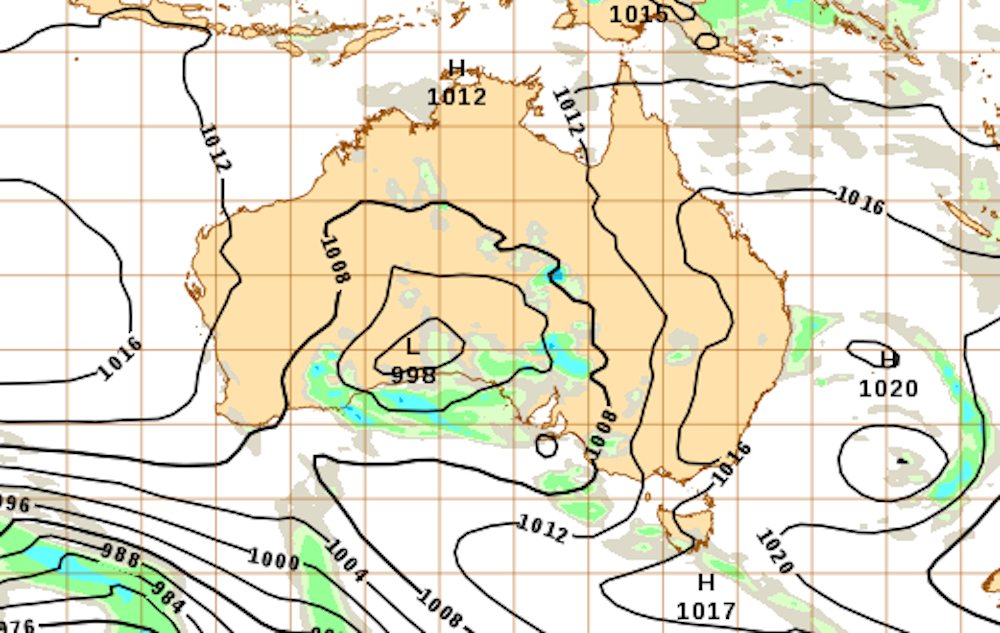
    These conditions are due to a large-scale low pressure system moving west to east.

    As this large low pressure system moves east, it brings thunderstorms. This map shows the low pressure system on October 16th.
    Bureau of Meteorology, CC BY-NC-ND

    Ahead of the arrival of this low pressure system, winds from the north are bringing down moisture and instability and priming the system for thunderstorms. When air near the low pressure system begins to rise, energy from the warm, moisture-laden and unstable air can be released. This includes energy release due to condensation of water vapour. These rising air currents can travel several kilometres up into the atmosphere, even reaching the top of the troposphere, 10–15km up.

    Severe thunderstorms in southern Australia are more likely in spring and summer. That’s because there’s plenty of moisture available from the tropics and the warm oceans around Australia, while low pressure systems and cold fronts can still emerge from the cold oceans to our south.

    Thunderstorms, tornadoes and fire

    Severe thunderstorms can also pack a hidden punch. They can trigger tornadoes in extreme cases.

    In August, severe thunderstorms hit northern Victoria and triggered a tornado, a destructive whirling column of air that damaged houses and farms in the high country.

    This surprised many people. It’s generally known that Australia has tropical cyclones in the north, intense tropical storms coming in off the sea, but not as well known to have tornadoes.

    In fact, Australia does get tornadoes – an estimated 30–80 each year. In 2013, a total of 69 known tornadoes caused almost 150 injuries. Many of these tornadoes spin out of supercells.

    In Australia’s hotter months, many fires burn around the country. Thunderstorms can make fires worse by bringing strong, warm northerly winds, often with rapid variations in speed and direction that can increase the rate of spread of a fire.

    Firefighters and first responders dread these conditions. Australia’s most deadly bushfire was Black Saturday in 2009, which killed 173 people. One reason it was so dangerous was its suddenness. Intense northerly winds brought down powerlines and started fires, which were quickly whipped into intense firestorms, including thunderstorms generated in the fire plumes.

    Will climate change bring more severe storms?

    As the world heats up, more water is evaporating off warm sea surfaces and hanging in the air as water vapour. This means there’s more of this ingredient necessary to fuel severe thunderstorms and more intense rain from thunderstorms.

    What we don’t know for certain yet is how prevailing air currents over Australia are changing. This could shift moisture to different regions, or affect other thunderstorm ingredients like vertical wind shear, instability, and lifting mechanisms. If circulation patterns do change, we could see severe storms develop in new areas, or different times of the year.


    Read more:
    We can’t say yet if grid-breaking thunderstorms are getting worse – but we shouldn’t wait to find out


    Andrew Brown receives funding from the ARC Centre of Excellence for 21st Century Weather.

    Andrew Dowdy receives funding from University of Melbourne, including through the Centre of Excellence for Climate Extremes and the Melbourne Energy Institute.

    ref. Severe thunderstorms are sweeping through southern Australia. But what makes a thunderstorm ‘severe’? – https://theconversation.com/severe-thunderstorms-are-sweeping-through-southern-australia-but-what-makes-a-thunderstorm-severe-241555

    MIL OSI AnalysisEveningReport.nz

  • MIL-OSI: Sampo plc’s share buybacks 16 October 2024

    Source: GlobeNewswire (MIL-OSI)

    Sampo plc, stock exchange release, 17 October 2024 at 8:30 am EEST

    Sampo plc’s share buybacks 16 October 2024

    On 16 October 2024, Sampo plc (business code 0142213-3, LEI 743700UF3RL386WIDA22) has acquired its own A shares (ISIN code FI4000552500) as follows:                

    Sampo plc’s share buybacks Aggregated daily volume (in number of shares) Daily weighted average price of the purchased shares* Market (MIC Code)
      3,733 41.55 AQEU        
      33,816 41.56 CEUX
      546 41.51 TQEX
      52,682 41.58 XHEL
    TOTAL 90,777 41.57  

    *rounded to two decimals                

    On 17 June 2024, Sampo announced a share buyback programme of up to a maximum of EUR 400 million in compliance with the Market Abuse Regulation (EU) 596/2014 (MAR) and the Commission Delegated Regulation (EU) 2016/1052. On 16 September 2024, the Board of Directors of Sampo plc resolved to increase the share buyback programme to EUR 475 million. The programme, which started on 18 June 2024, is based on the authorisation granted by Sampo’s Annual General Meeting on 25 April 2024.

    After the disclosed transactions, the company owns in total 8,772,593 Sampo A shares representing 1.60 per cent of the total number of shares in Sampo plc, taking the issuance of shares on 16 September 2024 into account.

    Details of each transaction are included as an appendix of this announcement.

    On behalf of Sampo plc,
    Morgan Stanley

    For further information, please contact:

    Sami Taipalus
    Head of Investor Relations
    tel. +358 10 516 0030

    Distribution:
    Nasdaq Helsinki
    Nasdaq Stockholm
    Nasdaq Copenhagen
    London Stock Exchange
    The principal media
    FIN-FSA
    DEN-FSA
    http://www.sampo.com

    Attachment

    The MIL Network

  • MIL-OSI: Unable to get its cosmetics plant project financed, Global Bioenergies is now focusing all its efforts on SAF opportunities

    Source: GlobeNewswire (MIL-OSI)

    PRESS RELEASE

    Unable to get its cosmetics plant project financed, Global Bioenergies is now focusing all its efforts on SAF opportunities

    Evry, 17 October 2024 – 07:30 a.m.: After several months of efforts, the Company has been unable to find investors for its 2,500-ton plant dedicated to the cosmetics market, in a highly unfavorable context for the financing of first-of-a-kind projects. The Company is now devoting all its energy to applying its technology to the production of Sustainable Aviation Fuel (“SAF”), with a model of industrial partnerships.

    Samuel Dubruque, Chief Financial Officer of Global Bioenergies, commented: “Despite all our efforts over the last few months, and with the conviction that we have presented the most mature case possible, we are now coming to the conclusion that our plant project will not reach final investment decision. Like all first-of-a-kinds, this project necessarily involves risks at various levels. The prospect of a significant return on investment linked to the cosmetics market should have been a sufficient counterbalance, allowing us to convince private investors to commit to the project, but we must realize that this is not the case in the current political, economic and financial context. Today, infrastructure investors limit themselves to less risky industrial replica projects1, and to projects more directly focused on energy markets.”

    Marc Delcourt, co-founder and Chief Executive Officer, added: “Global Bioenergies regrets that this project is not moving forward, and draws the necessary conclusions: the Company will therefore not be carrying out any plant projects of its own in the short or medium term, and will be focusing all its efforts on a partnership model. The intrinsic value of the process developed by Global Bioenergies is not diminished by the non-realization of this first industrial project designed to meet the needs of the niche cosmetics market. Our main ambition remains to produce much larger volumes of SAF, in order to reduce the carbon footprint of the aviation sector and fight global warming, now an absolute priority. To achieve this, the technology partnership approach is the most appropriate.”

    As a reminder, the Company’s process is one of only a dozen solutions to have obtained ASTM certification. The SAF market is currently in the start-up phase, and will really accelerate in 2030, when the European mandate increases to 6% (i.e. around 3 million tons/year) and production in the United States reaches the “Grand Challenge” target of 3 billion gallons per year (i.e. 9 million tons/year)2. The Company still aims to contribute to achieving these 2030 objectives on both sides of the Atlantic. Alongside this future large-scale SAF production, the Company intends to continue serving niche markets, in particular cosmetics.

    About GLOBAL BIOENERGIES

    As a committed player in the fight against global warming, Global Bioenergies has developed a unique process to produce SAF and e-SAF from renewable resources, thereby meeting the challenges of decarbonising air transport. Its technology is one of the very few solutions already certified by ASTM. Its products also meet the high standards of the cosmetics industry, and L’Oréal is its largest shareholder with a 13.5% stake. Global Bioenergies is listed on Euronext Growth in Paris (FR0011052257 – ALGBE).

    Contacts


    1 Réussir le passage à l’échelle des cleantech en France (website-files.com) – Cleantech for France (in French
    2 Sustainable Aviation Fuel Market Outlook – June 2024, SkyNRG

    Attachment

    The MIL Network

  • MIL-OSI Asia-Pac: President Lai meets delegation led by Reporters Without Borders Director General Thibaut Bruttin

    Source: Republic of China Taiwan

    President Lai meets delegation led by Reporters Without Borders Director General Thibaut Bruttin
    President Lai meets delegation led by Reporters Without Borders Director General Thibaut Bruttin
    2024-10-16

    On the afternoon of October 16, President Lai Ching-te met with a delegation led by Thibaut Bruttin, director general of Reporters Without Borders (RSF). In remarks, President Lai mentioned that today, Taiwan is not just a center for press freedom in Asia, but also a hub for international press throughout the Asia-Pacific region. The president said that Taiwan stands on the frontline of the defense of democracy, determined to do all we can to safeguard the values of freedom and democracy. He also said that Taiwan hopes to pursue an even more active role in the international community as we work alongside RSF and global democratic partners to champion press freedom and sustainable democracy.
    A translation of President Lai’s remarks follows:
    I warmly welcome RSF Director General Bruttin, who is visiting for the first time since taking on the role in July. Seven years ago, RSF established its first Asia bureau in Taipei. We have been honored to work with you all and contribute even more toward press freedom in Asia.
    Taiwan is a freedom-loving democratic country. The spirit of freedom and democracy is in our DNA. And in recent years, our efforts have been recognized by the international community. We have received top rankings for Asia in various democracy indexes and evaluations of freedom. This year, Taiwan ranked first in Asia and rose to 27th in the world in the RSF World Press Freedom Index. This was our best performance ever.
    Thanks to our liberal press environment, more and more international media outlets have been stationing personnel here in Taiwan each year. Today, Taiwan is not just a center for press freedom in Asia, but also a hub for international press throughout the Asia-Pacific region. Taiwan stands on the frontline of the defense of democracy, determined to do all we can to safeguard the values of freedom and democracy.
    Of all the world’s nations, Taiwan is the most seriously targeted by foreign disinformation. Over the past few years, our government has striven to develop a more robust cybersecurity network. Taiwanese NGOs have also worked on policies designed to combat disinformation. And now we have established the Whole-of-Society Defense Resilience Committee directly under the Office of the President. By combining the strengths of the government and civil society, we aim to bolster our nation’s resilience in response to such challenges as disinformation and cyberattacks.
    Facing a torrent of disinformation and the expansion of authoritarianism, Taiwan needs the world and the world needs Taiwan. We hope to strengthen cooperation and exchanges with other countries. Together, we can support the democratic umbrella and jointly safeguard our free and democratic way of life. Moving forward, Taiwan hopes to pursue an even more active role in the international community as we work alongside RSF and global democratic partners to champion press freedom and sustainable democracy.
    Director General Bruttin then delivered remarks, indicating that it has been seven years since RSF chose Taiwan as the place to build a presence in Asia, and saying that they were right to do so in that the information provided by media in Taiwan is among the freest and more pluralistic, and that RSF stands with the media communities that are free, independent, and pluralistic.
    Director General Bruttin noted that Taiwan is number one in terms of press freedom in Asia and 27th globally, saying this is an achievement that proves how important it is to sustain the efforts of civil society and encourage it through public policies that are in line with international principles.
    The director general went on to say that there are several dimensions we could underline as a way forward for collaboration. First, he said, it is important to continue sustaining and leading the effort to have an end to the digital chaos, as the information that is spread on social media and on tech platforms is not always trustworthy or reliable, and we need to engage strongly to have policies that protect the public. Director General Bruttin said this is not just for journalism, but also for the general public, because it’s their right to know. The second point, he said, is that we need to encourage self-regulation and also protect the public through regulations that enable the media to thrive and develop. He emphasized that they believe there are ways to reform the media landscape in order to strengthen its accuracy and its ability to report with the ethical and deontological guidelines we need. Therefore, he said, we also need to strengthen the public service media in order to have a media landscape that restores the trust of the public.
    The final point, Director General Bruttin stated, is about the need to expose propaganda and foreign interference in the media sphere, saying we need to not only chase and expose the disinformation campaigns that might be going on, but also understand the strategy and geopolitics of propaganda to understand the actors, budgets, and people behind it. It’s a phenomenon that can affect Taiwan, he indicated, but also a global phenomenon, and collectively, we need to do more altogether. Director General Bruttin closed his remarks by saying Taiwanese people can be really bold in fostering democracy, so he and the delegation are very confident about the seven years ahead.

    MIL OSI Asia Pacific News

  • MIL-Evening Report: Loss of an idol: response to Liam Payne’s death highlights the power of childhood and music

    Source: The Conversation (Au and NZ) – By Liz Giuffre, Senior Lecturer in Communication, University of Technology Sydney

    Former One Direction band member and solo artist Liam Payne has been found dead outside a hotel in Buenos Aires, media reports have confirmed. Payne was just 31 years old – a loved friend and father.

    Alongside his former One Direction band mates Niall Horan, Harry Styles, Louis Tomlinson and Zayn Malik, Payne had a huge influence on popular culture in his home country of the United Kingdom and internationally.

    The group formed in 2010 on the British talent show X Factor and stayed together for about five years before officially splitting in 2016. Throughout this time, Payne remained a valuable member of the band and a clear talent in his own right.

    Although each member auditioned seperately, they were eventually hand-picked by Simon Cowell to form a group.

    After the split (and a brief hiatus from music-making), Payne continued to release music periodically as both a songwriter and collaborator. He most recently released the single Teardrops in March, ahead of an anticipated second solo album.

    News of Payne’s death has led to an outpouring of tributes. Like many young people thrust into stardom seemingly overnight, his life wasn’t without controversy. But the response to his death by fans and industry colleagues alike is proof of the impact he had.

    The making of a pop supergroup

    While One Direction may have not been together for as long as other globally successful acts, their influence far exceeded bands that have been together for decades. They released five studio records – and broke many more, including six Guinness World Records. And even though they didn’t make it to their 10th anniversary together, they had still sold some 70 million records by 2020.

    In the years since the split, fans continued to gather, listen and celebrate – with the most recent anniversary (14 years) seeing fan-led events held in Australia and the rest of the world.

    It’s easy to dismiss pop music and its influence, especially in the face of what feel like increasingly dire global circumstances. But pop, like many other forms of entertainment, provides a practical way for people to gain momentary pleasure and comfort.

    It also provides connection with others – and relief from politics and other daily pressures. For example, one of One Direction’s biggest hits, That’s What Makes You Beautiful, sought to empower young people who might otherwise be overwhelmed by negative messaging.

    Within a year of their debut, the group was met with massive crowds of fans almost everywhere they want.

    One Direction has been compared to The Beatles in terms of their influence on young people – and female and queer fans in particular.

    The impact on fans when their idol dies

    The loss of life, especially a young person’s life, is always a tragedy.

    For some young fans, this might be the first person they “know” who has died. While it may not be the same as losing a family member or close friend, the feeling of loss is significant. Young fans will need support. And in 2024, many will find this support through social platforms and online forums.

    I still remember the impact the deaths of stars such as Kurt Cobain and Jeff Buckley had on people like me who were teenagers in the 1990s. These were artists I admired and listened to – and whose art I relied on during times of pleasure and pain.

    A similar pang was felt when artists such as George Michael, Aretha Franklin and David Bowie died, albeit later in my life and theirs.

    The experience of losing a music idol is in many ways a universal one. People whose art we attach to our own life experiences become inseparable from our lives. And when they die, it can feel like those experiences are over too.

    After news of Payne’s death broke, hundreds of fans took to the streets of Palermo in Buenos Aires, where Payne had been visiting. They held a vigil, cried and consoled one another in front of the Casa Sur hotel where Payne had been staying.

    One fan, 25-year-old Yamila Zacarias, probably spoke for many when she said:

    He meant a lot to me because the band came into my life at this time when you’re trying to be a part of something, and being a One Direction fan became that something for me.

    Lifelong fandom and memories

    There’s a stereotype of “fans” as hordes of screaming girls, which can really take away from the depth of fandom.

    Anyone at any stage of life can be a fan of just about anything. And the best thing about fandom is that it can, and often does, allow lots of different types of people an outlet for connection throughout their lives.

    Many fans have left comments on old music videos.
    YouTube/screenshot

    The death of US actress Betty White in 2021, as sad as it was, brought people across generations and walks of life together. And not just those who knew her personally, but those who had connected with each other through their love of her work. It reminded me of my own family, including my Nan and Dad, now gone, and the laughs we’d share as we watched her.

    As more details and tributes to Payne’s life and death emerge, the fans will have each other to lean on. If you yourself know someone who is a fan of Payne or One Direction, even reaching out to just acknowledge that person’s grief and experience is important. It says to them, “what you love is valid, and so are you”.

    If this article has raised issues for you, or if you’re concerned about someone you know, call Lifeline on 13 11 14.

    Liz Giuffre does not work for, consult, own shares in or receive funding from any company or organisation that would benefit from this article, and has disclosed no relevant affiliations beyond their academic appointment.

    ref. Loss of an idol: response to Liam Payne’s death highlights the power of childhood and music – https://theconversation.com/loss-of-an-idol-response-to-liam-paynes-death-highlights-the-power-of-childhood-and-music-241554

    MIL OSI AnalysisEveningReport.nz

  • MIL-OSI Africa: Secretary-General’s message on the International Day for the Eradication of Poverty: “Ending social and institutional maltreatment: acting together for just, peaceful and inclusive societies” [scroll down for French version]

    Source: United Nations – English

    overty is a global plague, affecting hundreds of millions of people around the world.

    But poverty is not inevitable. It is the direct result of the choices that societies and governments make — or fail to make.

    This year’s theme reminds us that people mired in poverty contend with societal discrimination and systemic barriers that make it more difficult to access vital services and support.

    Ending global poverty — and achieving the Sustainable Development Goals — requires governments shaping institutions and systems that put people first. 

    It demands that we prioritize investments in decent work, learning opportunities and social protection that offer ladders out of poverty.

    And it calls on us to fully implement the new Pact for the Future by supporting an SDG Stimulus and reforming the global financial architecture to help developing countries invest in their people.

    Eradicating poverty is an essential foundation for humane, dignified societies that leave no one behind.

    On this important day, let’s re-commit to making poverty history.

    *****
    La pauvreté est un fléau mondial qui touche des centaines de millions de personnes à travers la planète.

    Toutefois, elle n’est pas une fatalité. Elle résulte directement des choix que font, ou ne font pas, les sociétés et les États.

    Le thème de cette année nous rappelle que les personnes en proie à la pauvreté sont confrontées à des discriminations sociétales et à des obstacles systémiques qui les empêchent d’accéder à l’aide et aux services essentiels.

    Pour éliminer la pauvreté dans le monde et atteindre les objectifs de développement durable, il faut que les États se dotent d’institutions et de systèmes qui placent les gens au cœur de leur action.

    Il convient d’investir en premier lieu dans le travail décent, l’apprentissage et la protection sociale, véritables marchepieds pour sortir de la pauvreté.

    Il convient enfin de mettre pleinement en œuvre le nouveau Pacte pour l’avenir, en soutenant le plan de relance des objectifs de développement durable et en réformant l’architecture financière internationale afin d’aider les pays en développement à investir dans leur population.

    L’éradication de la pauvreté est indispensable à l’édification de sociétés humaines et dignes où personne n’est laissé de côté.

    En ce jour important, redisons notre détermination à faire de la pauvreté une histoire ancienne.

    MIL OSI Africa

  • MIL-OSI New Zealand: Release: Further uncertainty for Kiwirail as jobs set to go

    Source: New Zealand Labour Party

    KiwiRail offering voluntary redundancy to all its staff is hugely concerning given the future of New Zealand’s rail system is under threat.

    KiwiRail employs 4,500 people and has staff in more than 50 towns and cities across the country.

    “These are skilled workers who contribute a lot to the New Zealand economy and make sure freight and passengers move around safely,” Labour’s state-owned enterprises spokesperson Arena Williams said.

    “It was revealed last week that more than 50 roles at the Interislander ferries were going, and now we hear all staff are going to be offered redundancy as of Monday.

    “I am especially concerned about the timing of this. There is already huge uncertainty around the future of the essential rail connection across the Cook Strait, following Nicola Willis’ decision to cancel the rail-enabled ferries.

    “Labour had a plan for new ferries, because the current ones will need significant maintenance to serve their critical role in connecting the North and South Islands.  

    “Cutting maintenance and engineering jobs, when you have no plan for new ferries and are relying on the old ones, is adding fuel to the fire and will only mean ferries that break down more often and put passenger and crew safety at risk.

    “Freight companies are worried too. They are unsure if their journeys will go ahead, and there is growing concern about stock arriving on time, safely.

    “A year on, there is still no plan from the government to replace the ageing ferries and even less certainty for staff and the public,” Arena Williams said.


    Stay in the loop by signing up to our mailing list and following us on FacebookInstagram, and X.

    MIL OSI New Zealand News

  • MIL-OSI United Kingdom: expert reaction to study looking at Ozempic as treatment for opioid and alcohol addiction

    Source: United Kingdom – Executive Government & Departments

    A study published in Addiction looks at the use of GLP-1 receptor agonists (Ozempic) for opioid and alcohol addiction. 

    Prof Matt Field, Professor of Psychology, University of Sheffield, said:

    “This study suggests that patients with heroin or alcohol addiction who are prescribed Ozempic (typically for diabetes or obesity) are less likely to be hospitalized for heroin overdose or alcohol intoxication, respectively. The findings add to those from other studies, particularly animal research, which suggest that this and similar drugs might one day be prescribed to help people with addiction.

    “A note of caution is that the outcomes are very extreme instances of substance intoxication.  Those outcomes are very different from the outcomes used when researchers test new treatments for addiction, in which case we might look at whether the treatment helps people to stop taking the substance altogether (complete abstinence), or if it helps people to reduce the amount of substance they consume, or how often they consume it. Those things could not be measured in this study. This leaves open the possibility that while Ozempic may (for reasons currently unknown) prevent people from taking so much alcohol or heroin that they overdose and end up in hospital, it may not actually help them to reduce their substance use, or to abstain altogether. Indeed, one of the trials referred to in the paper (Klausen et al., 2022) reported that a similar medication “did not reduce the number of heavy drinking days compared with placebo”.”

    The Association Between Glucose-dependent Insulinotropic Polypeptide and/or Glucagon-like Peptide-1 Receptor Agonist Prescriptions and Substance-Related Outcomes in Patients with Opioid and Alcohol Use Disorders: A Real-World Data Analysis’ by Qeadan F, et al. was published in Addiction at 06:01 UK time on Thursday 17th October.

    DOI: 10.1111/add.16679

    Declared interests:

    Prof Matt Field: “I have no conflicts of interest to declare.”

    MIL OSI United Kingdom

  • MIL-OSI Russia: Commuter trains will start running on winter schedule from October 27

    MILES AXLE Translation. Region: Russian Federation –

    Source: Moscow Government – Government of Moscow –

    From October 27, trains of the Central Suburban Passenger Company (CPPK) will switch to the winter schedule. The changes will affect the Paveletsky, Savelovsky, Kazansky, Kaluzhsky and Nizhny Novgorod directions, as well as the Big Ring of the Moscow Railway.

    The schedule adjustment is traditionally carried out jointly with the Moscow Railway twice a year. This is due to the beginning and end of the dacha season. In the spring, passengers often go out of town, and in the fall, the demand for such trips decreases, so for the autumn-winter period, “dacha” trains will be temporarily removed from the schedule.

    Paveletsky direction and the Big Ring of Moscow Railway

    On the Paveletsky direction and the Big Ring of the Moscow Railway, the following trains will be cancelled:

    — No. 6991 and 6993 Paveletsky Station – Yaganovo;

    — No. 6992 and 6994 Yaganovo — Paveletsky Station;

    – No. 6875/6975 Bekasovo-1 – Detkovo – Mikhnevo;

    — No. 6393 Paveletsky railway station — Mikhnevo;

    — No. 6394 Mikhnevo — Paveletsky Station;

    — No. 6181 Paveletsky Station – Kashira;

    — No. 6182 Kashira — Paveletsky Station.

    On weekends, other trains will run there:

    — No. 6391 Paveletsky railway station — Mikhnevo;

    — No. 6392 Mikhnevo — Paveletsky Station;

    – No. 6904 Yaganovo – Mikhnevo;

    – No. 6873/6973 Bekasovo-1 – Detkovo – Yaganovo;

    — No. 6683 Paveletsky Station – Domodedovo;

    — No. 6682 Domodedovo — Paveletsky Station.

    Savelovskoye and Kazanskoye directions

    Three weekend electric trains will be cancelled on the Savelovsky direction: trains No. 6354v Savelovsky Station – Savelovo, No. 6363v Savelovo – Savelovsky Station and No. 6921v Lobnya – Savelovsky Station.

    On the Kazan direction, two trains will be cancelled on weekends: electric trains No. 6016v Golutvin — Ryazan-1 and No. 6007v Ryazan-1 — Golutvin. On Sundays, electric trains No. 6366v Voskresensk — Yegoryevsk-2 and No. 6365v Yegoryevsk-2 — Voskresensk will not run. On Saturdays, starting November 2, trains No. 7193v Kurovskaya — Kazansky Station, No. 7194v Kazansky Station — Cherusti and No. 7687 Cherusti — Kurovskaya will be removed from the schedule.

    In addition, train #7051 from Ryazan-2 to Kazansky Station, which runs on Sundays, has been cancelled since October 6. New routes #6009 Ryazan-1 to Rybnoye and #6018 Rybnoye to Ryazan-1 have been organized on the Kazan direction on weekends.

    Kaluga and Nizhny Novgorod directions

    On the Kaluga and Nizhny Novgorod directions, weekend trains No. 6383 Kyiv Station – Maloyaroslavets, No. 6384 Maloyaroslavets – Kyiv Station, No. 6773 and 6775 Ferzikovo – Kaluga-1, as well as No. 6772 and 6776 Kaluga-1 – Ferzikovo will be removed from the schedule. At the same time, six-car electric trains No. 6157/6158 and 6107/6108 Kyiv Station – Kaluga-1 will be assigned daily.

    Since September 28, trains No. 7083/7084 Ploshchad Trekh Vokzalov — Vladimir, No. 7703/7704 Vladimir — Ploshchad Trekh Vokzalov and No. 7103/7104 Zheleznodorozhnaya — Ploshchad Trekh Vokzalov, which ran on Saturdays, have been cancelled.

    You can check the train schedule on the official website the transport company and in the mobile application “TsPPK schedule and tickets”.

    Please note: This information is raw content directly from the source of the information. It is exactly what the source states and does not reflect the position of MIL-OSI or its clients.

    Please note; This information is raw content directly from the information source. It is accurate to what the source is stating and does not reflect the position of MIL-OSI or its clients.

    http://vvv.mos.ru/nevs/item/145316073/

    MIL OSI Russia News

  • MIL-OSI Economics: Asian Development Bank and Kazakhstan: Fact Sheet

    Source: Asia Development Bank

    As of 31 December 2023, ADB has committed 131 public sector loans, grants, and technical assistance totaling $6 billion to Kazakhstan. ADB’s current sovereign portfolio in Kazakhstan includes 3 loans worth $452.2 million. In addition, ADB has committed $865 million nonsovereign financing for 38 transactions.

    Updated yearly, this ADB Fact Sheet provides concise information on ADB’s operations in the country and contact information.

    MIL OSI Economics

  • MIL-OSI Economics: Panasonic HD secures SBTi verification for 2050 Net-Zero Emissions Target

    Source: Panasonic

    Headline: Panasonic HD secures SBTi verification for 2050 Net-Zero Emissions Target

    Osaka, Japan, October 17, 2024 – Panasonic Holdings Corporation (Panasonic HD) announced today that the Science Based Targets initiative(*1), a global body driving ambitious corporate climate action, has verified the company’s greenhouse gas (GHG) 2050 reduction target as a “Net-Zero Science-Based Target.”
    The SBTi promotes science-based GHG reduction targets for companies, aiming to limit global temperature rise to 1.5°C above pre-industrial levels. Its certification standards for short-term (2030) so-called “1.5°C Targets” and long-term (2050) “Net-Zero Targets” have become the global benchmark for corporate climate goals aligned with the Paris Agreement.
    In May 2023, Panasonic HD received SBTi approval for its 1.5°C Target. Now, the company has secured verification from the body for its Net-Zero Target after submitting detailed plans to achieve net-zero emissions by 2050, in line with SBTi guidelines.
    Panasonic HD’s Net-Zero Target commits to reducing GHG emissions across the company’s entire value chain. This includes scope 1 emissions from the company’s own activities, as well as scopes 2 and 3 emissions, from indirect activities, by at least 90% by FY2050 compared to FY2019 levels. The company pledges to neutralize the remaining 10% through proprietary carbon removal technologies.
    SBTi verification validates that a company’s GHG reduction targets are appropriately set, enhancing stakeholder trust in its climate action efforts. Globally, 1,138 companies have received Net-Zero Target certification, including 52 in Japan(*2).
    Panasonic HD remains committed to achieving net-zero emissions across its value chain and contributing to GHG reductions in society, driving impact toward achieving a decarbonized world.

    MIL OSI Economics

  • MIL-OSI Economics: RBI to conduct Overnight Variable Rate Reverse Repo (VRRR) auction under LAF on October 17, 2024

    Source: Reserve Bank of India

    On a review of the current and evolving liquidity conditions, it has been decided to conduct a Variable Rate Reverse Repo (VRRR) auction on October 17, 2024, Thursday, as under:

    Sl. No. Notified Amount
    (₹ crore)
    Tenor
    (day)
    Window Timing Date of Reversal
    1 75,000 1 12:00 Noon to 12:30 PM October 18, 2024
    (Friday)

    2. The operational guidelines for the auction as given in the Reserve Bank’s Press Release 2019-2020/1947 dated February 13, 2020 will remain the same.

    (Puneet Pancholy)  
    Chief General Manager

    Press Release: 2024-2025/1313

    MIL OSI Economics

  • MIL-OSI Security: Charges unveiled in ongoing effort to de-anonymise DDoS group Anonymous Sudan

    Source: Europol

    Europol coordinated the European dimension of the investigation, working closely with law enforcement agencies across Europe to identify victims and suspects, ensuring swift action in multiple jurisdictions.Victims of the attacks include sensitive government and critical infrastructure targets around the world, including the U.S. Department of Justice, the U.S. Department of Defense, the Federal Bureau of Investigation, the U.S. State Department…

    MIL Security OSI