Source: United Kingdom – Executive Government & Departments
A new online system for forms submitted to the OISC has been launched.
We have today (Monday 14 October) launched a new online system for forms submitted to the OISC.
The new system will make it easier to apply for registration. It will also assist registered organisations in applying for continued registration, adding new advisers, changing levels and paying registration fees.
Our new forms are interactive, user-friendly, and structured in the same style as other government forms.
Immigration Services Commissioner, John Tuckett, said:
“The introduction of our new online forms system will make the registration process more straightforward and user-friendly.
“It will save our registered advisers valuable time, allowing them to focus on their essential work of supporting advice seekers, providing them with high-quality, reliable advice.”
The introduction of the new system allows:
card payments to be made
applicants to register on a mobile phone
applicants to save and return to their application at a later date or time
advisers to edit their details, giving them more control over the information that is displayed
Anyone using the forms will need to register for a One Login account, as with other government platforms.
The new online forms can be accessed via the OISC portal.
The Reserve Bank of India (RBl) has, by an order dated October 03, 2024, imposed a monetary penalty of ₹14.00 lakh (Rupees Fourteen Lakh only) on Arunachal Pradesh Rural Bank (the bank), for non-compliance with certain directions issued by RBI on ‘Strengthening of Prudential Norms- Provisioning Asset Classification and Exposure Limit’ and ‘Know Your Customer (KYC)‘. This penalty has been imposed in exercise of powers vested in RBI, conferred under the provisions of section 47A(1)(c) read with sections 46(4)(i) and 51(1) of the Banking Regulation Act, 1949.
The statutory inspection of the bank was conducted by National Bank for Agriculture and Rural Development (NABARD) with reference to its financial position as on March 31, 2023. Based on supervisory findings of non-compliance with RBI directions and related correspondence in that regard, a notice was issued to the bank advising it to show cause as to why penalty should not be imposed on it for its failure to comply with the said directions.
After considering the bank’s reply to the notice and oral submissions made during the personal hearing, RBI found, inter alia, that the following charges against the bank were sustained, warranting imposition of monetary penalty:
The bank had:
failed to classify certain loan accounts as non-performing assets (NPA) resulting into divergence in asset classification of loan accounts; and
allotted multiple Unique Customer Identification Code (UCIC) to its individual customers.
This action is based on deficiencies in regulatory compliance and is not intended to pronounce upon the validity of any transaction or agreement entered into by the bank with its customers. Further, imposition of this monetary penalty is without prejudice to any other action that may be initiated by RBI against the bank.
The Reserve Bank of India (RBl) has, by an order dated October 07, 2024, imposed a monetary penalty of ₹50,000/- (Rupees Fifty Thousand only) on The Urban Co-operative Bank Limited, Dharangaon, Maharashtra (the bank), for non-compliance with the specific directions issued by RBI under Supervisory Action Framework (SAF). This penalty has been imposed in exercise of powers vested in RBI, conferred under the provisions of section 47A(1)(c) read with sections 46(4)(i) and 56 of the Banking Regulation Act, 1949.
The statutory inspection of the bank was conducted by RBI with reference to its financial position as on March 31, 2023. Based on supervisory findings of non-compliance with RBI instructions issued under SAF and related correspondence in that regard, a notice was issued to the bank advising it to show cause as to why penalty should not be imposed on it for its failure to comply with the said directions.
After considering the bank’s reply to the notice and oral submissions made by it during the personal hearing, RBI found, inter alia, that the following charge against the bank was sustained, warranting imposition of monetary penalty:
The bank had incurred capital expenditure without prior approval of RBI in violation of the directions issued under SAF.
This action is based on deficiencies in regulatory compliance and is not intended to pronounce upon the validity of any transaction or agreement entered into by the bank with its customers. Further, imposition of this monetary penalty is without prejudice to any other action that may be initiated by RBI against the bank.
The Reserve Bank of India (RBl) has, by an order dated October 03, 2024, imposed a monetary penalty of ₹2.75 lakh (Rupees Two Lakh Seventy Five Thousand only) on Jilla Sahakari Kendriya Bank Maryadit, Bhind, Madhya Pradesh (the bank) for contravention of the provisions of section 26A read with section 56 of the Banking Regulation Act, 1949 (BR Act) and non-compliance with certain directions issued by RBI on ‘Membership of Credit Information Companies (CICs) by Co-operative Banks’. This penalty has been imposed in exercise of powers conferred on RBI under the provisions of section 47A(1)(c) read with sections 46(4)(i) and 56 of the BR Act and section 25 of the Credit Information Companies (Regulation) Act, 2005.
The statutory inspection of the bank was conducted by the National Bank for Agriculture and Rural Development (NABARD) with reference to its financial position as on March 31, 2023. Based on supervisory findings of non-compliance with statutory provisions / RBI directions and related correspondence in that regard, a notice was issued to the bank advising it to show cause as to why penalty should not be imposed on it for its failure to comply with the said provisions/directions.
After considering the bank’s reply to the notice, oral submissions made during the personal hearing and examination of additional submissions made by it, RBI found, inter alia, that the following charges against the bank were sustained, warranting imposition of monetary penalty:
The bank had:
failed to transfer eligible unclaimed deposit amounts to the Depositor Education and Awareness Fund within the prescribed period; and
failed to submit credit information of its borrowers to any of the four CICs.
This action is based on deficiencies in regulatory compliance and is not intended to pronounce upon the validity of any transaction or agreement entered into by the bank with its customers. Further, imposition of this monetary penalty is without prejudice to any other action that may be initiated by RBI against the bank.
Source: Organization for Security and Co-operation in Europe – OSCE
Headline: Greater support for Roma women’s organisations needed to address multiple inequalities, ODIHR says
Carmen Gheorghe, representing E-Romnja attending an event dedicated to support Roma women organization, held by the OSCE Office for Democratic Institutions and Human Rights (ODIHR) during the Warsaw Human Dimension Conference last week. (OSCE) Photo details
More tailored support is needed for Roma women’s civil society organizations and activists, participants said at an event organized by the OSCE Office for Democratic Institutions and Human Rights (ODIHR) during the Warsaw Human Dimension Conference last week.
“Defending the human rights of Roma women is a collective responsibility, and it should not fall on the shoulders of Roma women’s activists only,” said Tea Jaliashvili, ODIHR Director’s Alternate/First Deputy Director. “Striving towards prosperous societies means embracing diversity and equality in all its forms and supporting those in need.”
Roma women’s civil society plays a crucial role in ensuring respect for the rights of Roma women, which are often violated by intersectional forms of discrimination. Limited funding and a long-standing lack of assistance hinder Roma women from achieving their full potential, leading to their ongoing exclusion.
“The deteriorating socio-economic climate and political challenges are making the work of civil society ever more difficult. And Roma feminist advocates struggle with additional barriers, from cultural bias to sexism, racism and classism,” said Carmen Gheorghe, representing E-Romnja, a Roma feminist non-profit organization.
The event brought together Roma women advocates and representatives, as well as delegations of OSCE states, to discuss the key challenges facing Roma and Sinti women in the OSCE region and the organizations advocating for their needs.
“Introducing intersectionality in the legal work of our organization led to better support for Roma women,” said Ðorđe Jovanović on behalf of the European Roma Rights Centre. “We need both mainstream human rights groups and women’s organizations as allies to be able to tackle the full range of disparities experienced by Roma women.”
During the event, participants called upon governments across the OSCE region to provide systemic support as well as putting legal and policy measures in place to support Roma women. Increased funding is essential, along with opportunities for collaboration, training, and empowerment. Particular focus should be paid to Roma women at higher risk of marginalisation and exploitation, such as women with disabilities, displaced people, youth, and the elderly.
ODIHR’s mandate to improve the situation of Roma and Sinti also includes tailored support for Roma and Sinti women. ODIHR will continue this by strengthening partnerships with OSCE states and civil society to ensure better protection of the rights of Roma women.
In December 2023, ODIHR published its five-yearly report on progress made by OSCE states towards Roma inclusion and the challenges that remain. The report describes the lack of adequate support in fulfilling the socio-economic and political rights of Roma and Sinti women, and recommends more targeted measures to tackle intersectional inequalities.
Source: People’s Republic of China – State Council News
Xi says China willing to jointly promote high-quality Belt and Road cooperation with Indonesia
BEIJING, Oct. 14 — Chinese President Xi Jinping said Monday that China is willing to work with Indonesia to jointly promote high-quality Belt and Road cooperation, ensure the sustainable operation of the Jakarta-Bandung High-Speed Railway, and create more highlights of cooperation to better benefit the people of both countries.
Xi made the remarks during his phone talks with Indonesian President Joko Widodo.
Source: People’s Republic of China – State Council News
BEIJING, Oct. 14 — China will increase support for innovative small and medium-sized enterprises (SMEs) and unicorn companies to foster new quality productive forces and help enterprises expand markets and unleash vitality, the Ministry of Industry and Information Technology (MIIT) said Monday.
So far, China has cultivated about 141,000 innovative SMEs that use specialized, sophisticated technologies to produce novel or unique products, including 14,600 “little giant” firms, Wang Jiangping, vice minister of industry and information technology told a press conference.
These companies have played an important role in promoting new industrialization and developing new quality productive forces, Wang said, adding that the MIIT will work with relevant departments to roll out mechanisms to promote the development of such SMEs and boost the high-quality growth of the enterprises.
Wang noted that further efforts will be made to support the digital transformation and financing of the companies. For “little giant” firms — which refer to the novel elites of SMEs that are engaged in manufacturing, specialize in a niche market and boast cutting-edge technologies — China will use the central government budget to support them in achieving new technological breakthroughs, developing new products and strengthening the industrial chain to boost their scientific and technological innovation.
China has seen a growing number of unicorn companies in recent years, with over half of last year’s new unicorns emerging in rapidly developing technology sectors like new energy, artificial intelligence and semiconductors, according to the ministry.
The MIIT has vowed to support the listing, mergers and acquisitions, and restructuring of unicorn firms and promote the growth of such companies in future industries such as the brain-computer interface and 6G sectors. It has also vowed support for such firms to integrate into the global innovation network and enhance innovation cooperation.
In the fourth quarter of this year, China will launch specific measures to promote consumption and domestic demand in order to help enterprises expand the market and unleash vitality, the vice minister said.
It will promote investment in the projects of technical transformation and upgrading as well as equipment renewal, and accelerate the issuance of re-loans worth 150 billion yuan (about 21.21 billion U.S. dollars) to support such projects.
To expand consumption, China will promote electric bicycle trade-ins and increase promotion efforts for new energy vehicles, Wang said, adding that it will also help develop sectors such as the low-altitude economy and smart manufacturing to create new engines for economic growth.
Smartphones, batteries and satellites all require critical minerals like cobalt, niobium and tin. As society increasingly relies on these minerals to create a more sustainable energy economy, demand may soon outpace available supply.
To potentially help boost national supply of critical minerals, which are crucial to both the economy and national security, Dustin Trail and Rachel Glade, professors at the University of Rochester, are collaborating on a U.S. National Science Foundation-supported project to find novel ways to identify undiscovered critical mineral reservoirs.
“With just a scoop of sand from a river basin, we can sample all the surface rocks and see if any of them came from critical mineral-enriched sources,” Trail said. Quartz carries tiny amounts of critical minerals inside, which could be used to fingerprint whether each quartz grain found in a riverbed originally came from a critical mineral-rich rock or not.
In addition to studying the minerals themselves, the team will also study how mineral grains move in rivers and drainage basins. Glade will collect hundreds of rocks, drill into the rocks to add a radio frequency identification tracker, put them back in the stream and then see how far they travel. These data points will go into a mathematical model to help predict how minerals’ shape and size affect how they move in river basins, with the goal of using these quantities to predict travel distance, and therefore origin, of the sediments.
The team is focusing efforts on sites around Rochester, New York, but could see following a similar approach in areas that are more remote and difficult to explore, such as Alaska.
Source: Africa Press Organisation – English (2) – Report:
ABIDJAN, Ivory Coast, October 14, 2024/APO Group/ —
The Board of Directors of the African Development Bank Group (www.AfDB.org) has approved grants of $34,796,402.40 to enhance resilience and adaptation to climate disaster risks for vulnerable communities in Malawi and Zimbabwe.
Under the Bank Group’s Africa Disaster Risk Financing (ADRiFi) initiative, the Mitigating Fragility through the Africa Disaster Risk Financing Programme in Southern Africa Project will bolster institutional capacity for climate risk preparedness and management; increase financial protection against climate disaster risks through sovereign climate disaster risk transfer; and promote the adoption of index-based crop insurance to mitigate against drought and other production risks at the micro-level.
Malawi and Zimbabwe face significant climate hazards, such as droughts, tropical cyclones, and flooding, but lack adequate mechanisms for climate risk management and adaptation. Both countries are particularly vulnerable to such climate shocks as drought, flooding and tropical cyclones, which contribute to their fragility. Strengthening disaster risk management, improving early warning systems, and enhancing institutional arrangements are crucial for effective preparedness and resilience in these countries.
Under the project, insurance payouts will provide timely and adequate financial protection to mitigate losses incurred from climate-related disasters, safeguarding households, and businesses from falling into poverty or bankruptcy. Climate risk insurance is expected to lead to behavioural changes among beneficiaries, such as increased investment in climate-resilient livelihoods or savings for future insurance premiums. This project will build on the successes of the ADRiFi program and the valuable contributions from our partners, which have significantly enhanced the financial resilience of both Malawi and Zimbabwe. Notably, during the El Niño-induced drought season of 2024/2025, African Risk Capacity, the Bank’s partner on ADRiFi, disbursed over $45 million to support farmers affected by the drought. This funding has provided crucial food assistance and recovery interventions, helping communities to rebuild and thrive in the face of adversity.
The project is aligned to the Bank’s High 5 Priorities, especially Feed Africa and Improve the Quality of Life of Africans. It also aligns with the Bank’s 10-year strategy (2024-2033) and will contribute to the Bank’s Country Strategy for Malawi which focusses on supporting economic diversification through investments in agriculture infrastructure and value chains.
Source: United Kingdom UK House of Lords (video statements)
The national £2 bus fare cap was in the spotlight this week as members raised concerns ahead of its scheduled end on 31 December 2024. Topics raised included the need for better co-ordination between buses and railways, and reliable transport for young people to access jobs and education.
Cast of Road Safe Road Show along with Alderman Mark Baxter, Chairperson of PCSP along with PCSP and PSNI staff
Over 700 pupils from a number of schools across the Craigavon area recently attended the award winning PSNI Roadsafe Roadshow, which was held at Craigavon Civic and Conference Centre.
Organised by the PSNI and supported by Armagh, Banbridge and Craigavon Policing and Community Safety Partnership (PCSP), students heard the hard-hitting message that making one mistake whilst driving on the roads can ultimately end in a fatality.
The event centred around ‘Craig’ – a typical young driver who has just passed his driving test, has bought a new car and is excited to pick up his girlfriend. He is 17 years old, a show-off, cheeky and over-confident.
The roadshow then followed the story of Craig’s car crash and all that happened next, including the lives of those affected by the collision.
Young people heard the real-life stories from a police officer, a paramedic, a fire fighter, a hospital consultant and two others who have had their lives changed forever, due to a car accident.
“This award-winning road show was a very sobering event that I have no doubt has left a permanent impact on the young people who attended, and will hopefully influence their future driving behaviour,” commented the Lord Mayor of Armagh City, Banbridge and Craigavon, Councillor Sarah Duffy.
“To hear from real people who have lived through horrendous experiences was a hard listen – but so important, as they conveyed the reality of life for those who have been affected by a car accident.”
Alderman Mark Baxter, Chair of the PCSP, agreed. “This event was hugely impactful and very hard hitting and really gave young people an idea of how not concentrating while behind the wheel can have catastrophic repercussions.”
“It really brought home the reality of road deaths to the young audience and I know it has certainly given them a lot to think about when it is their turn to take to the road.”
Exercise is great for improving heart health. But the thought of hitting the gym or going for a jog might put some people off from doing it. And, if you have a heart condition already, such dynamic exercises may not be safe to do.
The good news is, you don’t necessarily need to do a vigorous workout to see heart benefits. You can even improve your heart health by holding still and trying really hard not to move.
Normally, to build strength and force, our muscles need to change length throughout a movement. Squats and bicep curls are good examples of exercises that cause the muscle to change length throughout the movement.
But isometric training involves simply contracting your muscles, which generates force without needing to move your joints. The harder a muscle is contracted, the more forceful it becomes (and the more forceful a muscle is, the more powerfully we can perform a movement).
If you add weight to an isometric exercise, it causes the muscle to contract even harder. A wall sit and a plank are examples of isometric contractions.
Isometric exercises are associated with a high degree of “neural recruitment”, because of the need to maintain the contraction. This means these exercises are good at engaging specialised neurons in our brain and spinal cord, which play an important role in all the movements we do – both voluntary and involuntary. The greater this level of neural activation, the more muscle fibres are recruited – and the more force generated. As a result, this can lead to strength gains.
Isometric exercises have long been of interest to strength and power athletes as a means of preparing their muscles to generate high forces by activating them. But research also shows isometric exercises are beneficial for other areas of our health – including reducing hypertension and promoting better blood flow.
There are a couple reasons why isometric exercises are so good for the heart.
When a muscle is contracted, it expands its size. This causes it to compress the blood vessels supplying this muscle, reducing blood flow and raising the blood pressure in our arteries – a mechanism known as the “pressor reflex”.
Then, once the contraction is relaxed, a sudden surge of blood flows into the blood vessels and muscle. This influx of blood brings more oxygen and (crucially) nitric oxide into the blood vessels – causing them to widen. This in turn reduces blood pressure. Over time, this action will reduce stiffness of the arteries, which may lower blood pressure.
When blood flow is reduced during an isometric movement, it also reduces the amount of available oxygen that cells need to function. This triggers the release of metabolites, such as hydrogen ions and lactate, which stimulate the sympathetic nervous system – which controls our “fight of flight” response. In the short term, this leads to an increase in blood pressure.
But when an isometric exercise is done repeatedly over many weeks, there’s a reduction in sympathetic nervous system activity. This means blood pressure is lowered and there’s less strain on the cardiovascular system – which makes these exercises good for the heart.
Isometric exercises may be even more beneficial for heart health than other types of cardiovascular exercise. A study which compared the benefits of isometric exercise versus high-intensity interval training found isometrics led to significantly greater reductions in resting blood pressure over the study period of between two and 12 weeks.
How to use isometric exercise
If you want to use isometric training to reduce blood pressure, it’s recommended that you should do any isometric contraction for two minutes at around 30-50% of your maximum effort. This is enough to trigger physiological improvements.
You can start by doing this four times a day, three-to-five times per week – focusing on the same exercise. As you progress, you can start to vary the exercises you do, add weights to the exercise, or add in more than one isometric exercise.
Some good isometric exercises to begin with include a static squat, a wall sit or a plank. Even during these small bouts of exercise, your heart rate, breathing and arterial pressure will all increase – the same responses that occur during more conventional whole-body exercises, such as cycling and running.
The beneficial improvements in blood pressure start to manifest around 4-10 weeks after starting isometric training – though this depends on a person’s health and fitness levels when starting out.
Isometric training appears to be a simple, low-intensity mode of exercise that offers big benefits for cardiovascular health – all while requiring little time commitment compared with other workouts.
Dan Gordon, Professor of Exercise Physiology, Anglia Ruskin University; Chloe French, PhD Candidate in Sport and Exercise Science, Anglia Ruskin University, and Ruby Cain, PhD Candidate, Anglia Ruskin University
Through millions in coveted grants, the National Institutes of Health (NIH) and the Bill and Melinda Gates Foundation are recognizing how impactful Thanh Nguyen’s research is to the field of biomedical engineering.
Nguyen, an associate professor of mechanical engineering and biomedical engineering, has already established himself as one of the top-funded researchers at UConn. The NIH is adding to that success by awarding Nguyen four R01 grants totaling more than $9.5 million, with $7.5 million going to UConn researchers.
His research is the interface of biomedicine, material engineering, and the use of nano- and microtechnology. Nguyen has made strides on multiple fronts, with multi-disciplinary projects dedicated to helping heal helping people with diverse afflictions.
“We are always motivated by medical problems that have a high impact on human health,” says Nguyen.
R01 grants are highly competitive, awarded to research and development projects that live up to the NIH’s mission to improve health, extend life, and reduce illness and disability.
For Nguyen, his collaborators, and students, the grants present an opportunity to improve technology to help bones and cartilage to heal. He is also working to develop improved methods to deliver lifesaving vaccines and antibodies to worldwide populations.
Assistant professor Thanh Nguyen supports numerous postdoctoral and Ph.D. students in his biomedical engineering laboratory.
Two of the grants are brand new, providing $2.1 million and $1.5 million toward respective projects. On the former, Nguyen is the primary investigator on a project to stimulate and accelerate healing defects to the longest bones in the body, such as the femur and tibia.
“Bones in most parts of the body can regenerate themselves, but when you get a long and large bone injury, the body needs help to regenerate,” Nguyen says.
Significant long bone injuries are often treated with growth factors or stem cells to stimulate healing. However, the techniques often include serious side effects that can impair patients.
Nguyen and his team are working to minimize the danger through the application of safe biomaterials as an electrically active scaffold over a bone defect. The scaffold would be biodegradable and able to produce electrical charges, stimulating bone repair.
Concurrently, Nguyen is working with fellow researchers to provide needed antibodies to breastfeeding infants with HIV. Globally, more than 130,000 babies are infected with HIV annually, and certain antibodies have shown to be effective against the virus.
The second new R01 grant will fund the development microneedle technology to deliver multi-potent antibodies which can last a long time in the baby body to sustain the immune protection against infectious HIV virus. Currently, multiple injections are required, and the antibodies must be stored at cold temperatures. The process is expensive and burdensome.
Nguyen says microneedle patches would greatly simplify the process and reduce the cost of cold-chain storage. Along with the collaborators in Eastern Virginia Medical School (EVMS), Nguyen’s research would investigate the effectiveness of the anti-HIV patches in small animals and large animals like monkeys.
Nguyen says the treatment is applied similar to a nicotine patch, painlessly delivering the antibodies into the recipient. Ultimately, the patches will be tested in pediatric patients who have a high risk of HIV infection as a result of breastfeeding from HIV-infected mothers.
Besides these two grants, he received a $2.16 million grant to research how his invented biodegradable ultrasound technology can increase the effectiveness of chemotherapy in brain cancer patients.
The fourth grant, for nearly $2 million, investigates how tissue-scaffolding made of his lab’s invented biodegradable electrically active polymer can regrow cartilage, as successfully performed on rabbits. The treatment could be a game changer for osteoarthritis patients whose cartilage in body parts such as the knee has deteriorated through injury or aging.
Beyond the NIH, Nguyen has received significant support through the Bill and Melinda Gates Foundation in a $2.6 million project as the PI on development of a microneedle array patch capable of delivering multiple human vaccines at once.
In late September, the Gates Foundation awarded Nguyen another $4 million for his work on the microneedle patch. Nguyen and his team are working to scale up production of the patch, which can deliver multiple vaccines at ones. This includes vaccines or antibodies to fight diphtheria, tetanus, pertussis, HIV, and polio.
Once almost eradicated, polio continues to affect populations in developing countries, with the most cases reported in Afghanistan and neighboring Pakistan. Nguyen hopes the microneedle patch will make new progress in the effort to eliminate the threat of polio once and for all.
Now with $6.6 million in Gates Foundation funding, Nguyen is pleased to be able to expand his team, including offer more opportunities to undergraduate and postgraduate students.
Together, his prolific research funding has brought a total amount of $25 million funding to UConn since 2016 when he started as an assistant professor, a testament to the impact of his research.
“I am very grateful to the NIH and the Gates Foundation for the opportunity to pursue vaccination and biomedical engineering research at UConn,” Nguyen says.
Nguyen’s breakthroughs have led to numerous awards, more than 20 issued and pending patents, and an induction into the U.S. National Academy of Inventors. He is also a reputable mentor, adviser and collaborator, with his work currently supporting more than 21 people, including 11 post-doctoral and 10 Ph.D. students in his biomedical engineering lab.
While he has been successful as a fundraiser, Nguyen says it has taken many years and widespread publication to achieve his level of support. He backs his proposals through innovative ideas, significant problems to address and extensive scientific data, utilizing the resources at his disposal.
“We keep working and producing high quality research published in well-known scientific journals,” he says. “That has helped create a successful and impactful research program.”
The Frame is available for purchase at MoMA Design Store at store.moma.org, Samsung.com and other select retailers.
The Introduction of Highlights from MoMA’s Collection follows the Samsung Art Store’s relationships with world-class museums including The Metropolitan Museum of Art and Musée d’Orsay, and the release of several collections this year featuring René Magritte, Jean-Michel Basquiat and over 40 Marimekko artworks. Samsung remains committed to being the premier destination for experiencing a wide breadth of high-quality digital art.
Source: Hong Kong Government special administrative region
A fire broke out at a public cargo working area on Hoi Fai Road, Yau Ma Tei, at 5.06pm today (October 14) and was upgraded to No. 3 alarm at 6pm. The fire was surrounded at 8.03pm.
Firemen are using two fire boat monitors, three jets and mobilising three breathing apparatus teams to fight the blaze.
Source: Hong Kong Government special administrative region
​The Secretary for Home and Youth Affairs, Miss Alice Mak, met with the Deputy Secretary of the Jiangsu Provincial Committee of the Communist Youth League of China and the President of the Jiangsu Youth Federation, Mr Xiong Jun, today (October 14) to exchange views on promoting youth exchanges between Jiangsu and Hong Kong. The Under Secretary for Home and Youth Affairs, Mr Clarence Leung, and the Commissioner for Youth, Mr Eric Chan, also attended the meeting.
Miss Mak welcomed Mr Xiong and his delegation to Hong Kong. She said that the Jiangsu Youth Federation is an important partner of the Home and Youth Affairs Bureau (HYAB) and a Memorandum of Understanding was signed by both parties last October to deepen the co-operation in youth development. Over the past year, both parties have achieved significant progress in various areas such as youth exchange and internship, innovation and entrepreneurship, etc.
The HYAB has actively organised various exchange and internship activities in the Mainland and adopted a multi-pronged approach in enhancing Hong Kong youth’s understanding of the country, so as to help them integrate into the overall development of the country. In particular, the Funding Scheme for Youth Internship in the Mainland and the Funding Scheme for Youth Exchange in the Mainland include various youth exchange and internship projects that cover Jiangsu.
Miss Mak looks forward to continued co-operation with Jiangsu on strengthening youth development and exchanges, with a view to providing more opportunities for Hong Kong youth to gain first-hand experience and understand the national affairs.
The Education Bureau and the Constitutional & Mainland Affairs Bureau’s Guangdong-Hong Kong-Macao Greater Bay Area (GBA) Development Office organised an itinerary design competition under Mainland Exchange Programmes for Students, encouraging secondary students to design routes for Mainland exchanges covering the GBA cities as destinations.
The competition’s kick-off ceremony and briefing session was held today as part of the celebrations for the 15th anniversary of the founding of the “Passing on the Torch” National Education Activity Series Platform.
Officiating guests included Under Secretary for Education Sze Chun-fai, Commissioner for the Development of the Guangdong-Hong Kong-Macao Greater Bay Area Maisie Chan and Youth Department of the Liaison Office of the Central People’s Government in the Hong Kong Special Administrative Region Second-level Inspector Zhang Guolai.
Speaking at the ceremony, Mr Sze said that the platform has been strongly supported by the Central People’s Government Offices in Hong Kong and eminent individuals from various sectors in the city since its establishment in 2009, enabling smooth progress in all areas of work.
Mr Sze said under the leadership of various Executive Chairpersons, more than 550,000 primary and secondary students have benefited over the years. Mainland exchange programmes for primary and secondary students have covered 22 provinces, four autonomous regions and four municipalities.
He also thanked the GBA Development Office for co-organising the competition with the bureau, providing students with more opportunities to understand the history, culture and development opportunities of the GBA, which will widen their horizons and foster their sense of national identity.
Secondary students will participate in the competition on a team basis. Each team should submit a proposal on such themes as root-tracing/remembrance of origins, innovation/aerospace technology, and intangible cultural heritage. The proposal should include an itinerary for a student exchange lasting one to three days in the GBA cities.
The champion itineraries will be turned into actual trips and the winning teams will be fully subsidised to join the trips as an award.
Completed proposals should be submitted by December 20.
“Taiwan independence” is incompatible with peace across the Taiwan Strait, and the provocations of “Taiwan independence” separatist forces will inevitably be countered, a Chinese foreign ministry spokesperson said on Monday.
The Eastern Theater Command of the Chinese People’s Liberation Army (PLA) on Monday organized its troops of army, navy, air force and rocket force to conduct “Joint Sword-2024B” drills in the Taiwan Strait and the north, south and east of the island of Taiwan.
In response to a related query, spokesperson Mao Ning told a press briefing that China has always been committed to maintaining regional peace and stability, which is evident to countries in the region. Taiwan is an integral part of China’s territory, and the Taiwan question is China’s internal affair, which brooks no outside interference, Mao stressed.
If the United States truly cares about peace and stability in the Taiwan Strait and prosperity of the region, it should abide by the one-China principle and the provisions of the three China-U.S. joint communiques, earnestly act on its leaders’ commitment to not supporting “Taiwan independence,” stop arming Taiwan, and stop sending any wrong signals to separatist forces of “Taiwan independence,” Mao said.
China and Vietnam agreed to strengthen defense and security cooperation, said a joint statement issued on Monday during Chinese Premier Li Qiang’s official visit to Vietnam at the invitation of his Vietnamese counterpart Pham Minh Chinh.
In the statement, China and Vietnam considered defense and security cooperation as one of the important pillars of China-Vietnam relations.
The two sides agreed to further strengthen exchanges between the two militaries at various levels, better leverage such channels as friendly defense exchanges in border areas, defense and security consultations, and defense ministry hotlines.
They also agreed to further deepen border defense cooperation, and continue to carry out joint patrols in the Beibu Gulf and mutual visits of warships among other activities, it said.
The two sides agreed to strengthen information exchanges and experience-sharing on fighting external interference and secession and preventing “color revolutions.”
China welcomes Vietnam to hold trade promotion activities within its borders, and Vietnam supports China’s efforts to join the Comprehensive and Progressive Agreement for Trans-Pacific Partnership (CPTPP) on the basis of meeting standards and procedures, according to a joint statement issued on Monday.
The statement, issued during Chinese Premier Li Qiang’s official visit to Vietnam at the invitation of Vietnamese Prime Minister Pham Minh Chinh, said that China welcomes Vietnam to hold trade promotion activities within its borders and will promote the early signing of the protocol on the export of peppers, passion fruit, raw bird’s nests and edible bird’s nests to China.
China will work actively to facilitate the entry of Vietnamese agricultural products like citrus fruits, avocados, sugar apples, wax apples, plant-derived Chinese medicinal materials, buffalo meat, beef, pork, and livestock and poultry meat products, the statement said.
It added that Vietnam actively welcomes the participation of China’s Hong Kong Special Administrative Region in the Regional Comprehensive Economic Partnership.
The Royal Swedish Academy of Sciences decided on Monday to award the 2024 Sveriges Riksbank Prize in Economic Sciences in Memory of Alfred Nobel to Daron Acemoglu, Simon Johnson, and James A. Robinson.
This trio, consisting of Acemoglu and Johnson from the Massachusetts Institute of Technology (MIT), and Robinson from the University of Chicago, has been honored “for studies of how institutions are formed and affect prosperity.”
Jakob Svensson, chair of the Committee for the Prize in Economic Sciences, stated that the laureates have demonstrated the importance of societal institutions in achieving the goal of reducing income differences between countries.
The laureates’ research contributes to the understanding that “societies with a poor rule of law and institutions that exploit the population do not generate growth or change for the better,” the committee stated in a press release.
Daron Acemoglu was born in 1967 in Istanbul, Türkiye. He earned his PhD in 1992 from the London School of Economics and Political Science and is currently a professor at the Massachusetts Institute of Technology in Cambridge, the United States. Simon Johnson, born in 1963 in Sheffield, the United Kingdom, received his PhD in 1989 from MIT and is also a professor there. James A. Robinson, born in 1960, obtained his PhD in 1993 from Yale University and is a professor at the University of Chicago, IL, USA.
The prize includes 11 million Swedish Krona (approximately 1 million U.S. dollars). Established in 1968 by Sweden’s central bank Sveriges Riksbank, the prize has been awarded since 1969 by the Royal Swedish Academy of Sciences, which selects the laureates in economic sciences.
The Prime Minister, Justin Trudeau, today issued the following statement on Thanksgiving:
“Today, Canadians across the country will gather to celebrate Thanksgiving – a time to reflect, share meals with friends and family, and give thanks for all of life’s blessings.
“As we celebrate the harvest season, we have much to be thankful for: our hardworking farmers and food banks who work to ensure Canadians have access to nutritious food; our health care workers who are there for us in times of need; and the members of the Canadian Armed Forces who keep us safe. We also give thanks to the volunteers in our communities, whose acts of kindness exemplify what it means to be Canadian. Whether lending a hand to a neighbour or creating opportunities to bring people together, their contributions make Canada the country we proudly call home.
“As we give thanks for all we have, let’s commit to making Canada even better. Let’s work to make our communities more vibrant, dynamic, and inclusive. Together, we can break down barriers and create more opportunities for everyone. Let’s keep building a future where every generation has a fair shot – regardless of who you are, where you come from, how you pray, or who you love.
“On behalf of the Government of Canada, I wish you all a happy and healthy Thanksgiving.”
MILES AXLE Translation. Region: Russian Federation –
Source: State University of Management – Official website of the State –
The Institute of Marketing of the State University of Management took part in raising funds to help the SVO, which were donated to the Charitable Foundation “Revival of the Native Land”, created by the industrial partner of the State University of Management, the Production Association “FORENERGO”.
The Revival of the Native Land Foundation is an initiative aimed at supporting and restoring our territories, preserving cultural heritage and developing local communities. With the start of the special operation in Ukraine, one of the priority areas of the foundation’s work has become supporting military personnel and their families.
The choice of this particular fund is not accidental. The founder of the fund is the industrial partner of the Institute of Marketing – PO FORENERGO. The fund has been operating for over 10 years and has proven in practice that its true mission is to help people and develop regions.
All funds raised will be used to support military personnel and residents of the new territories.
Subscribe to the TG channel “Our GUU” Date of publication: 10/14/2024
Please note: This information is raw content directly from the source of the information. It is exactly what the source states and does not reflect the position of MIL-OSI or its clients.
Please note; This information is raw content directly from the information source. It is accurate to what the source is stating and does not reflect the position of MIL-OSI or its clients.
More than 50 representatives from local technology businesses and organisations attended the launch of the Lancaster district’s new Local Full Fibre Network to find out more about its benefits and how it will help to turbocharge the local economy.
Councillor Tim Hamilton-Cox presenting at the launch of the Local Full Fibre Network
Led by Lancaster City Council and Cooperative Network Infrastructure (CNI), the project is seeing the installation of a new optical fibre network that will provide a fibre spine of gigabit broadband capability to connect Lancaster, Morecambe and Heysham.
The spine will significantly cut the costs of establishing a connection to fibre telecommunication for the district’s thriving digital businesses, opening up opportunities and promoting the development of the local digital ecosystem to attract investment.
There are also long-term benefits for the council, including significant financial savings and the ability to transform its services though innovation, along with ‘future-proofing’ connectivity to its sites and assets.
The council and CNI have worked with local companies such as Caton Road-based TNP and rural broadband pioneer B4RN to develop and install the network, many of whom attended a special launch event on Thursday (October 10).
Councillor Tim Hamilton-Cox, cabinet member with responsibility for finance and resources, said: “For any business to be able to compete in this day and age, access to fast fibre broadband is a must and I am delighted that the council has been able to work with CNI and local suppliers to develop this new infrastructure.
“Other public bodies will also be able to benefit and satisfy the ever-increasing demand for bandwidth in the provision of public services, including the NHS, police and schools. The launch heard from the NHS in Greater Manchester on how a fibre network had saved money and improved data security and accessibility.
“I also want to express my gratitude to Blackpool Borough Council for sharing the very considerable experience and expertise of Tony Doyle, their ICT manager. He has already achieved a similar roll-out of fibre infrastructure across Blackpool and Tony has been integral to design and delivery of the fibre spine across Lancaster district.”
Tony Doyle, who is also chair of CNI, added: “It’s been a privilege to work with Lancaster’s forward-thinking team, committed to being at the forefront of the digital revolution and addressing sustainability challenges.
“Together, the new fibre network and soon-to-come sustainable data centre provide a strong foundation for future growth, helping to transform public services and businesses. I’m excited to see how these assets will drive innovation in the local and regional economy.”
The next steps in the project are to provide a state-of-the-art hyper-green data centre facility centre at Salt Ayre Leisure Centre, which will further enhance the network and provide the infrastructure needed to realise the benefits of new technologies for the council, businesses and the wider public sector.
The number of research studies published globally has risen exponentially in the past decades. AP Photo/Frank Augstein, file
Millions of scientific papers are published globally every year. These papers in science, technology, engineering, mathematics and medicine present discoveries that range from the mundane to the profound.
He warned that the world would soon deplete its resources and talent pool for research. He imagined this would lead to a decline in new discoveries and potential crises in medicine, technology and the economy. At the time, scholars widely accepted his prediction of an impending slowdown in scientific progress.
Faulty predictions
In fact, science has spectacularly defied Price’s dire forecast. Instead of stagnation, the world now experiences “global mega-science” – a vast, ever-growing network of scientific discovery. This explosion of scientific production made Price’s prediction of collapse perhaps the most stunningly incorrect forecast in the study of science.
Unfortunately, Price died in 1983, too early to realize his mistake.
So, what explains the world’s sustained and dramatically increasing capacity for scientific research?
Factors such as economic growth, warfare, space races and geopolitical competition have undoubtedly spurred research capacity. But these factors alone cannot account for the immense scale of today’s scientific enterprise.
The education revolution: Science’s secret engine
In many ways, the world’s scientific capacity has been built upon the educational aspirations of young adults pursuing higher education.
Funding from higher education supports a large part of the modern scientific enterprise. AP Photo/Paul Sancya
Over the past 125 years, increasing demand for and access to higher education has sparked a global education revolution. Now, more than two-fifths of the world’s young people ages 19-23, although with huge regional differences, are enrolled in higher education. This revolution is the engine driving scientific research capacity.
External research funding is still essential for specialized equipment, supplies and additional support for research time. But the day-to-day research capacity of universities, especially academics working in teams, forms the foundation of global scientific progress.
Even the most generous national science and commercial research and development budgets cannot fully sustain the basic infrastructure and staffing needed for ongoing scientific discovery.
The past few decades have also seen a surge in global scientific collaborations. These arrangements leverage diverse talent from around the world to enhance the quality of research.
International collaborations have led to millions of co-authored papers. International research partnerships were relatively rare before 1980, accounting for just over 7,000 papers, or about 2% of the global output that year. But by 2010 that number had surged to 440,000 papers, meaning 22% of the world’s scientific publications resulted from international collaborations.
This growth, building on the “collaboration dividend,” continues today and has been shown to produce the highest-impact research.
Universities tend to share academic goals with other universities and have wide networks and a culture of openness, which makes these collaborations relatively easy.
Today, universities also play a key role in international supercollaborations involving teams of hundreds or even thousands of scientists. In these huge collaborations, researchers can tackle major questions they wouldn’t be able to in smaller groups with fewer resources.
Supercollaborations have facilitated breakthroughs in understanding the intricate physics of the universe and the synthesis of evolution and genetics that scientists in a single country could never achieve alone.
The IceCube collaboration, a prime example of a global megacollaboration, has made big strides in understanding neutrinos, which are ghostly particles from space that pass through Earth. Martin Wolf, IceCube/NSF
The role of global hubs
Hubs made up of universities from around the world have made scientific research thoroughly global. The first of these global hubs, consisting of dozens of North American research universities, began in the 1970s. They expanded to Europe in the 1980s and most recently to Southeast Asia.
Scientists at these universities have often transcended geopolitical boundaries, with Iranian researchers publishing papers with Americans, Germans collaborating with Russians and Ukrainians, and Chinese scientists working with their Japanese and Korean counterparts.
The COVID-19 pandemic clearly demonstrated the immense scale of international collaboration in global megascience. Within just six months of the start of the pandemic, the world’s scientists had already published 23,000 scientific studies on the virus. These studies contributed to the rapid development of effective vaccines.
With universities’ expanding global networks, the collaborations can spread through key research hubs to every part of the world.
Is global megascience sustainable?
But despite the impressive growth of scientific output, this brand of highly collaborative and transnational megascience does face challenges.
On the one hand, birthrates in many countries that produce a lot of science are declining. On the other, many youth around the world, particularly those in low-income countries, have less access to higher education, although there is some recent progress in the Global South.
Sustaining these global collaborations and this high rate of scientific output will mean expanding access to higher education. That’s because the funds from higher education subsidize research costs, and higher education trains the next generation of scientists.
De Solla Price couldn’t have predicted how integral universities would be in driving global science. For better or worse, the future of scientific production is linked to the future of these institutions.
David Baker receives funding from the U.S. National Science Foundation, U.S. National Institutes of Health, Fulbright, FNR
Luxembourg, and the Qatar Nation Research Fund.
Justin J.W. Powell has received funding for research on higher education and science from Germany’s BMBF, DFG, and VolkswagenStiftung; Luxembourg’s FNR; and Qatar’s QNRF.
The United States is the only democracy in the world where a presidential candidate can get the most popular votes and still lose the election. Thanks to the Electoral College, that has happened five times in the country’s history. The most recent examples are from 2000, when Al Gore won the popular vote but George W. Bush won the Electoral College after a U.S. Supreme Court ruling, and 2016, when Hillary Clinton got more votes nationwide than Donald Trump but lost in the Electoral College.
As a scholar of presidential democracies around the world, I have studied how countries have used electoral colleges. None have been satisfied with the results. And except for the U.S., all have found other ways to choose their leaders.
The Holy Roman Empire had seven electors: Three were members of the Catholic Church and four were significant members of the nobility. This image depicts, from left, the archbishop of Cologne, the archbishop of Mainz, the archbishop of Trier, the count palatine of the Rhine, the duke of Saxony, the margrave of Brandenburg and the king of Bohemia. Codex Balduini Trevirorum, c. 1340, Landeshauptarchiv Koblenz via Wikimedia Commons
The origins of the US Electoral College
The Holy Roman Empire was a loose confederation of territories that existed in central Europe from 962 to 1806. The emperor was not chosen by heredity, like most other monarchies. Instead, emperors were chosen by electors, who represented both secular and religious interests.
As of 1356, there were seven electors: Four were hereditary nobles and three were chosen by the Catholic Church. By 1803, the total number of electors had increased to 10. Three years later, the empire fell.
When the Founding Fathers were drafting the U.S. Constitution in 1787, the initial draft proposal called for the “National Executive,” which we now call the president, to be elected by the “National Legislature,” which we now call Congress. However, Virginia delegate George Mason viewed “making the Executive the mere creature of the Legislature as a violation of the fundamental principle of good Government,” and so the idea was rejected.
For 21 days, the founders debated how to elect the president, and they held more than 30 separate votes on the topic – more than for any other issue they discussed. Eventually, the complicated solution that they agreed to was an early version of the electoral college system that exists today, a method where neither Congress nor the people directly elect the president. Instead, each state gets a number of electoral votes corresponding to the number of members of the U.S. House and Senate it is apportioned. When the states’ electoral votes are tallied, the candidate with the majority wins.
After just two elections, in 1796 and 1800, problems with this system had become obvious. Chief among them was that electoral votes were cast only for president. The person who got the most electoral votes became president, and the person who came in second place – usually their leading opponent – became vice president. The current process of electing the president and vice president on a single ticket but with separate electoral votes was adopted in 1804 with the passage of the 12th Amendment.
Some other questions about how the Electoral College system should work were clarified by federal laws through the years, including in 1887 and 1948.
After the the U.S. Constitution went into effect, the idea of using an electoral college to indirectly elect a president spread to other republics.
For example, in the Americas, Colombia adopted an electoral college in 1821. Chile adopted one in 1828. Argentina adopted one in 1853.
In Europe, Finland adopted an electoral college to elect its president in 1925, and France adopted an electoral college in 1958.
Over time, however, these countries changed their minds. All of them abandoned their electoral colleges and switched to directly electing their presidents by votes of the people. Colombia did so in 1910, Chile in 1925, France in 1965, Finland in 1994, and Argentina in 1995.
There is an effort underway in the U.S. to replace the Electoral College. It may not even require amending the Constitution.
The National Popular Vote Interstate Compact, currently agreed to by 17 U.S. states, including small states such as Delaware and big ones such as California, as well as the District of Columbia, is an agreement to award all of their electoral votes to whichever presidential candidate gets the most votes nationwide. It would take effect once enough states sign on that they would represent the 270-vote majority of electoral votes. The current list reaches 209 electoral votes.
A key problem with the interstate compact is that in races with more than two candidates, it could lead to situations where the winner of the election did not get a majority of the popular vote, but rather more than half of all voters chose someone else.
When Argentina, Chile, Colombia, Finland and France got rid of their electoral colleges, they did not replace them with a direct popular vote in which the person with the most votes wins. Instead, they all adopted a version of runoff voting. In those systems, winners are declared only when they receive support from more than half of those who cast ballots.
Notably, neither the U.S. Electoral College nor the interstate compact that seeks to replace it are systems that ensure that presidents are supported by a majority of voters.
Joshua Holzer does not work for, consult, own shares in or receive funding from any company or organization that would benefit from this article, and has disclosed no relevant affiliations beyond their academic appointment.
Many of those appraisals are based on examples of people who tried to establish communism. Communists have launched revolutions in many places including Russia and China. In five countries – China, North Korea, Laos, Cuba and Vietnam – communist parties control the current governments. The economic and political systems in those countries are not fully communist, but some might be working to transition from capitalism to communism.
In part because the U.S. has difficult relationships with these countries, many Americans have negative views of communists and communism. To evaluate those countries and to decide your own opinions about communism in general, it is important to first be clear about what the principles of communism are.
Communists believe that people should share wealth so that no one is too poor, no one is too rich, and everyone has enough to survive and have a good life.
A communist might be a member of a Communist party, which is a political party, or a member of a group of people who want to play a role in government.
The opening of the 2014 convention of the Communist Party of the United States of America.
In communism, people work together to produce and distribute the things they need to live, such as food, clothing and entertainment. That does not mean that everything is shared at all times.
In a communist society, individuals might still live in their own homes and have their own food, clothing and personal items such as televisions and cellphones. However, the places where these items were produced, such as factories and farms, would be owned by everyone.
Similarly, a person might still create artistic products such as works of literature or craftsmanship on their own. The goal would not be to make money, though, but instead to share for everyone to enjoy.
Communists support some form of collective ownership. Ownership by everyone would ensure that all members of society have equal rights to the products from the factories and farms because they would all be part owners of the enterprises.
In such a society, everyone would also have equal political rights and would participate in governance together. Theoretically, communism should entail some form of democracy.
Throughout history, there have been many different views on what communism is, how it should be organized and how it might be achieved. The most famous theories about communism are probably the ones that were developed by a German philosopher named Karl Marx. His ideas are often called Marxism.
Marx studied history and observed that the way people produced goods and services was closely related to who held power. For example, in farming societies, those who owned the land had more power than those who did not.
Marx also noticed that people with less power had often risen up, usually violently, to overthrow the powerful people. He called this concept class struggle. He believed this process was how societies developed from one system of government and economy to another. He claimed that class struggle led societies through a progression toward greater efficiency in the production of goods and services, higher levels of technology and wider distribution of social and political power.
When Marx was alive in the 1800s, an economic and political system called capitalism had developed in many countries. In capitalist societies, the economy centered on factories. Factory owners had significant political and economic influence.
Marx observed that in countries such as Germany, England and the United States, factory owners hired laborers who worked long hours producing goods such as shirts or tables. While the factory owners sold these products at high prices, they paid the workers very little. As a result, the factory owners became richer, while many workers struggled to afford the goods they produced or even to provide food for their families.
Marx believed that this inequality would eventually lead to a worker uprising. During their revolution, Marx predicted, the workers would seize control of the factories, begin running them more fairly, and this would lead to a new political system, known as socialism.
Where does socialism fit in?
A campaign poster from 1976, spotlighting the candidates from the Communist Party of the United States of America. Library of Congress
Of course, if the workers staged a revolution, the factory owners would fight back. Marx thought that, immediately after the revolution, the workers would first need to create a strong government to prevent the owners from reestablishing capitalism. During that phase, which Marx called socialism, the workers would run the government while they continued moving away from capitalism and trying to create a more equal society.
Marx thought people would eventually see that socialism was much better than capitalism because socialism would end exploitation while still allowing a society to continue moving toward better economic and political practices, but without inequality. Once that happened, a government would no longer be necessary.
The society would become communist. There would still be governance, but not a government that was separated from the people. Rather, in a communist society, the people would govern together, and everyone would do some of the work and receive what they needed.
There are Communist parties in many places, and many are currently working to move their countries toward communism. At this time, no country has yet made the transition to full communism, but many people still hope that transition will happen somewhere, sometime. Those people are communists. Communists are optimistic that humans can one day create a more fair and equal society.
Hello, curious kids! Do you have a question you’d like an expert to answer? Ask an adult to send your question to CuriousKidsUS@theconversation.com. Please tell us your name, age and the city where you live.
And since curiosity has no age limit – adults, let us know what you’re wondering, too. We won’t be able to answer every question, but we will do our best.
Aminda Smith does not work for, consult, own shares in or receive funding from any company or organization that would benefit from this article, and has disclosed no relevant affiliations beyond their academic appointment.
Amy Lieberman, a politics and society editor at The Conversation U.S., spoke with Boris Heersink, a scholar of voters’ behavior after a natural disaster, to better understand if and how the recent hurricanes could shift the results of the 2024 presidential election.
How can hurricanes create complications ahead of an election?
A massive hurricane disrupts people’s lives in many important ways, including affecting people’s personal safety and where they can live. Ahead of an election, there are a lot of practical limitations about how an election can be executed – like if a person can still receive mail-in ballots at home or elsewhere, or if it is possible to still vote in person at their polling location if that building was destroyed or damaged.
Another issue is whether people who have just lived through a natural disaster and will likely be dealing with the aftermath for weeks to come are focused on politics right now. Some might sit out the election because they simply have more important things to worry about.
Beyond practical concerns, how else can a natural disaster influence an election?
The other side of the equation, which is what political scientists like myself are mostly focusing on, is whether people take the fact that a natural disaster happened into consideration when they vote.
Two scholars, Christopher Achen and Larry Bartels, have argued that sometimes voters are not great at figuring out how to incorporate bad things that happened to them into a voting position. In some cases, it is entirely fair to hold an elected official responsible for bad outcomes that affect people’s lives. But at other moments, bad things can happen to us without that being the fault of an incumbent president or governor. And voters should ideally be able to balance out these different types of bad things – those it is fair to punish elected officials for, and those for which it isn’t fair to hold them responsible.
After all, a devastating hurricane is terrible, but it is not Kamala Harris’ fault that it happened. But Achen and Bartels argue that voters frequently still punish elected officials for random bad events like this.
Their most famous example is the consequences of a series of shark attacks off the New Jersey coast in the summer of 1916. As a result of those attacks, the New Jersey tourism industry saw a major decline. While these findings are still being debated, Achen and Bartels argue that Jersey shore voters subsequently voted against Woodrow Wilson in the 1916 presidential election at a higher rate than they would have had the shark attacks not happened. They argue that voters did this even though Wilson had no involvement in the shark attacks.
Kamala Harris visits a Hurricane Helene donation drop-off site for emergency supplies in Charlotte, N.C., on Oct. 5, 2024. Mario Tama/Getty Images
How else do voters consider bad events when they vote?
Scholars like John Gasper and Andrew Reeves argue that voters mostly care whether elected officials respond appropriately to a disaster. So, if the president does a good job reacting, voters do not actually punish them at all in the next election. However, voters can punish elected officials if they feel like the response is not correct.
The fact that Hurricane Katrina hit Louisiana in 2005 was not the fault of then-President George W. Bush. But the perceived slowness of the government response is something a voter could have held him responsible for.
How do voters’ political affiliations affect where and how they lay the blame?
We looked at both the effects of Superstorm Sandy on the 2012 presidential election and natural disasters’ impact on elections more broadly from 1972 through 2004. One core finding is that when presidents reject state officials’ disaster declaration requests, they lose votes in affected counties – but only if those counties were already more supportive of the opposite party.
If there is a strong positive government response, the incumbent president or their party can actually gain votes or lose voters affected by a disaster. So, Republicans affected by the hurricanes could become more inclined to vote against Harris if they feel like they are not getting the help they need. But it could also help Harris if affected Democrats feel like they are getting enough aid.
The major takeaway is that if the government responds really effectively to a natural disaster or other emergency, there is not a huge electoral penalty – and there could even be a small reward.
That is not irrelevant in a close election. If Republicans in affected areas in North Carolina feel the government response has been poor and it inspires them to turn out in higher numbers to punish Harris, that could matter. But if they feel like the response has been adequate, research suggests either no real effect on their support for Harris – or possibly even an increase in Harris voters.
Donald Trump speaks with owners of a furniture store that was damaged during Hurricane Helene on Sept. 30, 2024, in Valdosta, Ga. Michael M. Santiago/Getty Images
How much influence can a politician have on people assessing a government response?
So, the question now is whether voters affected by these hurricanes will respond based on their actual lived experiences, or how they are told they are living their experience.
Boris Heersink receives funding from the Russell Sage Foundation.
Source: The Conversation – USA – By Joseph Patrick Kelly, Professor of Literature and Director of Irish and Irish American Studies, College of Charleston
Supporters gather at a campaign rally for Donald Trump in Butler, Pa., on Oct. 5, 2024.Jeff Swensen/Getty Images
Lying about Black people is nothing new in political campaigning.
Despite the thorough debunking of false rumors that Haitian immigrants were eating cats and dogs in Springfield, Ohio, former President Donald Trump and his GOP allies insist on repeating the lies.
While many political observers believe that these lies have, as The New York Times columnist Lydia Polgreen described, finally “crossed a truly unacceptable line,” in fact, white politicians have told brazen, fearmongering, racist lies about Black people for over the past 100 years.
One of the more notorious lies occurred in 1908 in another Springfield, this one in Illinois. As a historian who studies the impact of racism on democracy, it’s my belief that what happened there and in other cities helps to clarify what Trump and Vance are trying to do in Springfield, Ohio, today.
Lying when everyone knows you’re lying seems to be the point.
New target, old message
Springfield, Illinois, Abraham Lincoln’s home town, was, in 1908, a working-class city of just under 50,000 people – about the same size as its modern counterpart in Ohio.
Because of the city’s manufacturing industries, Springfield was also an attractive place to live and work for Black men and women escaping the social oppression of the Deep South.
The Black population of Springfield had been growing by about 4% annually, and by 1908, roughly 2,500 Black people were living there to work in the city’s manufacturing plants. As the wealth of some Black families rose, so too did racist fears among whites that Black migrants were taking their jobs.
Rumors spread through false newspaper reports among white residents that a Black man had raped a white woman.
As the story went, a Black man broke through the screen door of a modest house in a white neighborhood. He supposedly dragged a 21-year-old white woman by her throat into the backyard, where he raped her. Or so the woman said.
A couple of weeks after the incident, the woman admitted she lied. There was no Black man. There was no rape. But by then, telling the truth was too late. The rumor had triggered a wave of anti-Black violence.
William English Walling, a white, liberal journalist from Kentucky, reported that Springfield’s white folks launched “deadly assaults on every negro they could lay their hands on, to sack and plunder their houses and stores, and to burn and murder.”
For two days, the violence raged, while white “prosperous businessmen looked on” in complicit approval, Walling wrote. Several blocks in Black neighborhoods were burned, and at least eight Black men were killed.
One of the men killed was William K. Donnegan. The 84-year-old died after his white attackers slit his throat and then hanged him with a clothesline from a tree near his home.
As a dozen different rioters told Walling: “Why, the n—–s came to think they were as good as we are!”
Telling the truth about racist tropes
At the turn of the 19th century, racial tensions were most often expressed in sexual terms – Black men having sex with white women.
That sexual anxiety was part of what cultural historians call a “master narrative,” a symbolic story that dramatizes white nationalism and the belief that citizenship and its benefits were preserved for one racial group at the expense of all others.
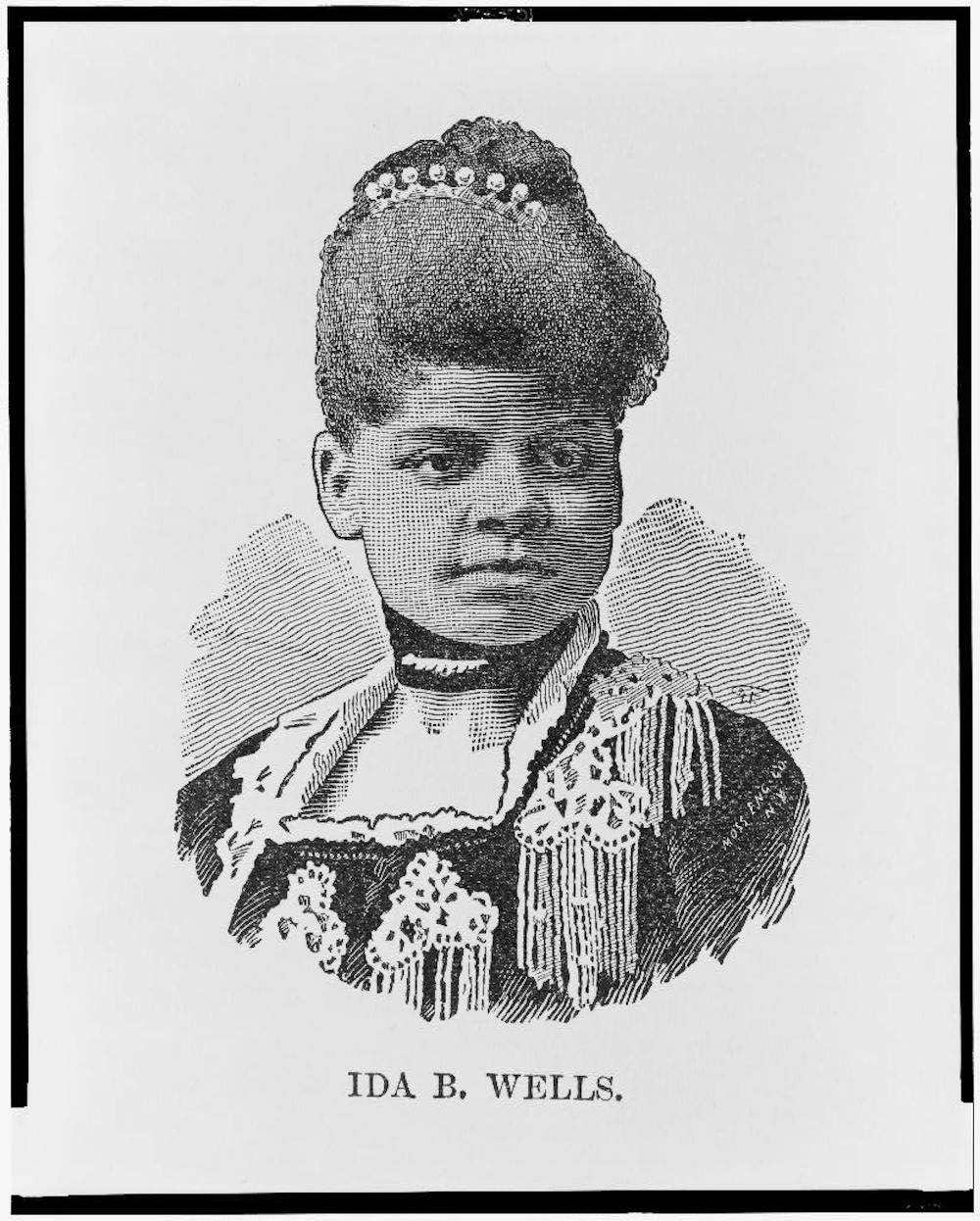
One of the first to debunk this rape fantasy was Ida B. Wells, the Black editor and owner of the weekly “Memphis Free Press.”
In 1892, a white mob lynched one of her good friends, Thomas Moss, and two others associated with his cooperative Peoples’ Grocery store. The Appeal Avalanche, a white Memphis newspaper, wrote that the lynching “was done decently and in order.”
In her May 21, 1892, editorial about Moss’ death, Wells told a different story about “the same old racket – the new alarm about raping a white woman.”
Wells explained that she worried that people who lived outside of the Deep South might believe the lies about Black people.
“Nobody in this section of the country,” she wrote, not even the demagogues spreading rumors, “believe the old thread bare lie that Negro men rape white women.”
Political fearmongering
What happened in Wilmington, North Carolina, in 1898 was based on a deliberate, cynical election strategy of lies.
At the turn of the 20th century, North Carolina’s disaffected, poor working-class white Populists joined forces with Black Republicans to form what were known as the Fusionists.
In Wilmington, then the largest city in North Carolina, the Fusionists were able to vote out the white-nationalist Democratic Party in the early 1890s and became a symbol of hope for a democratic South and racial equality.
They also became a target for Democrats seeking to regain power and restore white nationalism.
The spark came in the summer of 1898 when Rebecca Felton, the wife of a Georgia congressman and a leading women’s rights advocate, gave an address to Georgia’s Agricultural Society on Aug. 11 that sought to protect the virtue of white women.
“If it needs lynching,” she said, “to protect a woman’s dearest possession from the ravening of beasts – then I say lynch; a thousand times a week if necessary.”
In response, Alexander Manly, the Black editor of The Daily Record, in Wilmington, followed the lead of Ida B. Wells and attacked the myths of Black men. Manly pointed out in his August 1898 editorial that poor white women “are not any more particular in the matter of clandestine meetings with colored men than are the white men with colored women.”
Democrats bent on stoking racial fears circulated Manly’s editorial throughout North Carolina before the November 1898 elections, decrying the “Outrageous Attack on White Women!” by “the scurrilous negro editor.”
If that wasn’t enough to stir up North Carolina Democrats, party officials sent the Red Shirts, their white nationalist militia, to Wilmington to overthrow the city’s biracial government, install all white officials and restore white rule.
To that end, a white mob destroyed Manly’s newspaper office, chased him and other Black leaders into exile, rampaged through Black neighborhoods and killed an untold number of Black men.
It was a white nationalist coup d’etat.
The great white protector
In his modern-day attempt to divide working-class white people from working-class Black people, Vance has urged his supporters to ignore “the crybabies” in the mainstream media.
“Keep the cat memes flowing!” he posted on X.
An estimated 67 million people watched the U.S. presidential debate on ABC and heard Trump angrily proclaim: “They’re eating the dogs. They’re eating the cats. They’re eating … the pets of the people that live there.”
Once again, the old narrative is resurrected.
Joseph Kelly is not affiliated with any political party. In the past, he has been a volunteer with the Charleston County (SC) Democratic Party.