Source: United States House of Representatives – Representative Byron Donalds (R-FL)
UPDATE: Hurricane Milton Emergency Resources And Declarations – As of 1:00 PM
Washington, October 8, 2024
NAPLES, Fla. – Tomorrow, Hurricane Milton is projected to make landfall on the Gulf Coast of Florida as a major hurricane.
The office of Congressman Byron Donalds is closely monitoring Hurricane Milton and is actively coordinating storm preparations alongside federal, state, and local partners. The Congressman and his team stand ready to support our Southwest Florida community and ensure all necessary resources are available. Please see below for the latest emergency resources and declarations:
Southwest Florida Formal Evacuation Declarations:
Southwest Florida Shelters Open To Public:
Collier County General Population Shelters (OPENING AT 4:00 PM):
Collier County Special Needs Shelter (OPENING AT 2:00 PM):
Palmetto Ridge High School (Pet-Friendly) – 1655 Victory Lane
NOTE: For Registered Special Needs Clients and Caregivers.
Lee County (OPEN NOW):
Emergency Hotlines:
Local Government Operations:
School Closures:
Live Cameras:
Southwest Florida International Airport (RSW) Operations:
State of Florida – Uber Partnership:
Attention Residents of Fort Myers Beach:
LeeTran bus routes to Fort Myers Beach as currently SUSPENDED.
Lee County Utilities have SUSPENDED water service to Fort Myers Beach.
24 Hour General Curfew will go into effect at 10:00 PM TONIGHT.
Your Hurricane Re-entry Pass must be TEAL – Old passes will not work.
Once the storm passes, if you need assistance with re-entry, beginning at 7:00am on Thursday morning staff will be at two locations to hand out passes:
Town Staff will be located at re-entry points to check for re-entry passes – If you do not have one, you will not be allowed on Island.
Source: United States House of Representatives – Congressman Keith Self (Texas 3rd)
Today, Congressman Keith Self introduced the Federal Program Integrity and Fraud Prevention Act of 2024, aimed at preventing individuals convicted of defrauding the government from engaging in business with federal agencies. This bill would protect taxpayer dollars by barring those convicted of felonies, specifically related to fraud against the government, from participating in federal contracts, grants, and financial assistance programs.
“It is outrageous that bureaucrats in Washington D.C. continue to do business with individuals who defrauded our own government,” said Congressman Keith Self. “This commonsense legislation is a critical step in eradicating corruption from federal programs. We owe it to the American people to ensure that their hard-earned tax dollars are managed responsibly.”
The UK government has serious ambition when it comes to solving England’s housing crisis. Shortly after the 2024 general election, it pledged to build 1.5 million new homes over the next five years.
It’s a big plan which could help improve the quality of life of millions of people. But is such an ambitious target plausible? Or has the government created a rod for its own back, and embarked on an economic mission that is doomed to failure?
For, at the heart of this mission is a political desire to shape the direction of the economy. And to succeed, this desire needs to be matched with a clear understanding of the economic reality at the heart of the UK’s housing crisis – a reality that is all about affordability.
To be successful, housing policies aimed at helping those on lower incomes need to address this head on. But the government’s emphasis so far has been on “zoning” (allowing houses to be built on land which was previously protected), or speeding up the planning process and tackling nimbyism. All of these factors are distractions from the main and simple point – that too many people simply cannot afford to buy, or even rent, a decent home.
And while there has been some suggestion that a bigger proportion of new housing projects need to be affordable, details have been scant.
Instead, most of the talk has been about “greybelt zones”, where planning permission will be granted more easily and quickly to create new opportunities for house building. But it is far from clear this will help to bring down – or even stabilise – the costs of housing.
Obtaining planning permission is a small fraction of that total cost. And when these permissions are granted, the value of land rises. The landowner makes money, but the hopeful future house buyer or tenant gains nothing, other than the fact there are extra houses on the market.
Imposing a requirement for higher proportions of affordable housing from building companies might be the single most effective thing the government can do. However, those companies may then increase their margins on the larger houses they plan to sell. And higher prices for bigger homes raises demand – and then prices – for smaller ones.
If the government wants to tackle the affordability issue by increasing supply, it should note that just over half the costs of new housing are down to expensive construction. The use of modern pre-fabricated methods to help reduce those costs is still relatively low in the UK.
Sweden uses this approach for over 80% of its new house building, and a faster switch (with government persuasion) to more affordable building methods in the UK could be beneficial.
More new towns have also been promised. They’re not a bad idea, but building them takes a very long time, so any contribution they make to the housing crisis will take years (decades even) to be seen.
Local knowledge
The government has already announced a series of house-building targets for local areas as part of its five-year plan. But this adds a further complication, in a classic example of regional planning being done from Westminster instead of locally. How do they know that these houses will be built where people actually want to live?
For a good sense of where people do want to live, the government could immediately turn to housing associations – private, non-profit making organisations that already provide low-cost housing to millions. There might be some mileage in seeking to boost their stock by encouraging – and even underwriting – further borrowing by them.
Typically, housing associations charge significantly lower rents as they are not focused on making a return for shareholders, and their long-term stability attracts lower borrowing costs. If the government’s promised increase in the UK’s housing stock leads to an expansion in the housing association sector, this could make a meaningful contribution to limiting the rents paid by those on lower incomes – and enhancing the potential for them to eventually buy a genuinely affordable home.
But for many others, the biggest hurdle over the coming years will be mortgage rates. Even if interest rates come down gradually over the next five years, this is unlikely to make much difference to those who cannot afford a mortgage. And it won’t happen quickly enough to conjure up 1.5 million new homeowners in five years.
It seems doubtful then, that the government will reach its target, however laudible. But if it is to stand a chance, it needs to be thoughtful in its economics. Merely setting targets and expressing frustration when they are not met – as they are unlikely to be – is not enough.
Paul Anand owns shares in Taylor Wimpey, Persimmon, Barratt Development and Rathbones Global Opportunity Fund.
He is a professor at the Open University and research associate at Oxford University.
Social media giant accused of designing app to be addictive to young users
SEATTLE — Attorney General Bob Ferguson announced today that he is suing TikTok for putting profits before the well-being of millions of its most vulnerable users by creating a platform that is addictive to youth. Ferguson’s lawsuit is part of a nationwide bipartisan effort, with 13 other attorneys general filing their own similar lawsuits.
Specifically, Ferguson’s lawsuit filed in King County Superior Court accuses TikTok of violating the state Consumer Protection Act by targeting youth with features that encourage compulsive and excessive use to get them hooked on the platform. It asserts the social media giant deployed misleading public statements about TikTok’s safety and content moderation practices despite internal research showing the risks to young users.
A significant portion of the complaint relies on material that TikTok asserts is confidential and has not yet been disclosed. Ferguson is requesting the court unseal that information.
Research shows that excessive social media use by children and adolescents correlates with increased poor mental health outcomes. That’s especially true for young girls.
Ferguson asserts that TikTok’s protections for young users are inadequate, despite its public claims of providing a safe, well-moderated experience for them.
“I am one of the millions of parents across Washington who knows firsthand the hold TikTok and other social media apps have on kids,” Ferguson said. “TikTok is deceiving young people and their parents when it claims to look out for the safety of young users. Platforms like TikTok must be reformed and we know they are unwilling to do so on their own. I will not stop fighting to protect our kids and their mental health.”
The latest lawsuit against TikTok comes nearly a year after Ferguson filed another, similar lawsuit against Meta, the parent company of Instagram and Facebook, along with a bipartisan group of attorneys general. The federal lawsuit accuses Meta of intentionally targeting youth with harmful features designed to get them hooked for life all while publicly downplaying the risks to maximize profits.
Like Meta, TikTok’s business model relies on maximizing user engagement. To keep young users coming back to the platform, TikTok designs its algorithms to figure out what types of videos they like and push more of those types of videos to them. TikTok’s “infinite scroll” and autoplay features increase the likelihood that users will stay on the app for an excessive amount of time, which is harmful to youth.
In short, TikTok intentionally targets youth to keep them on the platform as long as possible without regard for their safety. At the same time, TikTok downplays the risks for its young users. These tactics contradict the company’s public-facing claims that it puts user safety first.
TikTok intentionally created an addictive platform
TikTok — one of the most widely used social media apps among teens — created a platform that is addictive to youth. At the same time, TikTok misrepresents to parents and kids that its platform has sufficient safeguards to protect them when it does not.
TikTok employs an arsenal of harmful, addictive-by-design features specifically targeted and tailored to exploiting, manipulating and capitalizing on young users’ still developing brains, the lawsuit asserts.
One of those features is “endless” or “infinite” scrolling. Endless scrolling compels young users to spend more time on TikTok by making it difficult for them to disengage, stripping away any natural stopping point or opportunity to turn to a new activity. TikTok claims that its screen time limit for teens mitigates the effects of features like endless scroll, but the limit is not a hard stop. Teens can click through TikTok’s take-a-break reminders and even disable them entirely.
TikTok also employs push notifications to prolong the time youth spend on the app. The notifications create a sense that youth are missing out on new activity on TikTok.
TikTok allowed under-13 users to bypass age gate
Starting in 2019, TikTok split its platform into two levels, a “Kids Mode” and a “full” experience. “Kids Mode” restricts content young users can access, and bars them from uploading content. They also have no access to direct messages and cannot comment on other posts, in addition to other restrictions.
TikTok uses “age gating” — or screening a user based on their birth date — to prevent underage users from accessing the platform’s full experience.
However, TikTok knows that many children bypass the age gate, if it’s used at all. TikTok’s age gate depends on children reporting their age. While the age gate may sometimes effectively filter some users under age 13 into “Kids Mode,” TikTok knows that under-13 users are incentivized to and routinely supply a false date of birth to access the full TikTok experience.
The Pew Research Center reported last year that 63% of all Americans age 13 to 17 used TikTok, and most teenagers in the U.S. report using TikTok daily. According to the research, 17% of teens say that they are on TikTok “almost constantly.”
In 2020, The New York Times reported that more than one-third of TikTok’s 49 million daily users in the United States were 14 or younger.
Investigation background
This lawsuit is the result of a bipartisan, nationwide investigation by state attorneys general that began in 2021. Ferguson joined a bipartisan multistate lawsuit against Meta last year that came out of the same investigation.
Other attorneys general filing their own individual lawsuits this week include: California, New York, Illinois, Kentucky, Louisiana, Massachusetts, Mississippi, North Carolina, New Jersey, Oregon, South Carolina, Vermont and the District of Columbia. Eight other states filed individual lawsuits earlier in the investigation. Those include: Arkansas, Iowa, Indiana, Kansas, Nevada, New Hampshire, Nebraska and Utah.
The attorneys general are seeking to stop TikTok’s unlawful practices and to force TikTok to implement reforms. Those reforms include strengthening its screen time limiting features for youth, eliminating or placing limits on endless scrolling and improving its “age gating,” or age verification, practices.
Ferguson is also seeking civil penalties of up to $12,500 per violation, after enhancements, under the Washington Consumer Protection Act.
Assistant Attorneys General Joe Kanada, Kelsey Burazin, Daniel Allen and Will O’Connor, Paralegals Allison Cleveland, Matt Hehemann, Keri Snider, Jen Killoren and Anne Wallig are handling the case for Washington.
Social media impacts on youth mental health
Experts, including the U.S. Surgeon General, agree that excessive social media use by children and adolescents correlates with physical and psychological harms such as higher rates of depression, anxiety and attention deficit disorders. It can also lead to eating disorders, suicidal thoughts and body dysmorphia.
Social media use can disrupt activities that are essential for health, like sleep and physical activity, depending on the amount of time children spend online.
According to the Surgeon General, recent research shows that adolescents who spend more than three hours per day on social media face double the risk of experiencing poor mental health outcomes, such as symptoms of depression and anxiety.
Social media may perpetuate body dissatisfaction, disordered eating behaviors, social comparison and low self-esteem, especially among adolescent girls. One-third or more of girls aged 11-15 say they feel “addicted” to certain social media platforms and over half of teenagers report that it would be hard to give up social media.
Ferguson’s lawsuit against Meta
In October 2023, Ferguson and a bipartisan coalition of 42 attorneys general filed lawsuits accusing Meta, the parent company of the social media platforms Facebook and Instagram, of knowingly targeting youth — calling them a “valuable, but untapped” market — with harmful features designed to get them hooked for life to maximize profits.
The federal lawsuit also alleges that Meta knew young users, including those under 13, were active on the platforms and knowingly collected data from those users without parental consent.
The states’ case against Meta is currently being litigated in the Northern District of California.
-30-
Washington’s Attorney General serves the people and the state of Washington. As the state’s largest law firm, the Attorney General’s Office provides legal representation to every state agency, board, and commission in Washington. Additionally, the Office serves the people directly by enforcing consumer protection, civil rights, and environmental protection laws. The Office also prosecutes elder abuse, Medicaid fraud, and handles sexually violent predator cases in 38 of Washington’s 39 counties. Visit http://www.atg.wa.govto learn more.
NEW YORK, Oct. 08, 2024 (GLOBE NEWSWIRE) — Krane Funds Advisors, LLC (“KraneShares”), a global asset management firm known for its innovative exchange-traded funds (ETFs), today announced the launch of the KraneShares Man Buyout Beta Index ETF (Ticker: BUYO) on the New York Stock Exchange.
BUYO seeks to track the performance of the Man Buyout Beta Index, which is designed to apply the key return drivers of PE/buyout funds to public equities. The fund employs a systematic approach to select a portfolio of small to mid-cap stocks from the Russell 2500 Index, targeting industries favored by PE firms and companies that are similar in size and display similar company-specific characteristics as those in traditional PE funds. The BUYO ETF targets companies with the following characteristics:
Belong to sectors favored by PE funds, including Information Technology, Consumer Discretionary, Industrials, and Health Care
Filters for companies with characteristics favored by PE funds, including strong free cash flow yield, higher operating margins, cash discipline (lower CapEx, ability to repay debt), and top-line growth among dozens of other signals
As a starting point, the Russell 2500 Index without filtering holdings for PE-like return drivers is already highly correlated to the Preqin Private Equity ex-Venture Capital Index, with a 75.3% historical total return correlation since 2008.1 BUYO is designed to potentially have an even greater correlation and deliver a return profile similar to that of traditional buyout funds longer term.
“BUYO offers investors a unique way to access companies with characteristics that private equity firms find attractive, but with the liquidity and transparency of an ETF,” said Kevin Orr, Managing Director and Head of Strategic Partnerships at KraneShares. “By leveraging Man Group’s research and expertise on buyout target attributes, BUYO aims to capture the potential value creation associated with private equity strategies while remaining fully invested in public equities.”
“Our research indicates that many of the same methodologies that buyout funds use to target private takeover candidates can be applied to the public equity market to achieve similar results,” said John Lidington, who is a Co-Portfolio Manager covering liquid private equity at Man Numeric, which is acting as sub-advisor to BUYO. “We developed the approach underlying the Man Buyout Beta Index to provide an opportunity to harness the key return drivers powering PE funds, which are typically expensive and have historically been difficult to access for many investors. The approach helps identify potentially undervalued companies that in many cases may become public to private takeout targets in the future.”
Major endowments typically allocate 20-40% of their portfolios to private equity, with some top institutions like Ivy League Universities reaching as high as 36.7% of their total investment.2 However, historically, there have been high barriers to entry to traditional PE funds, such as long placement and lockup periods and high investment minimums and fees.
“We believe BUYO offers a compelling solution for various investor profiles,” said Jonathan Shelon, Chief Operating Officer of KraneShares. “BUYO may be appropriate for institutional investors seeking potential liquid beta to the PE buyout asset class while awaiting placement in traditional PE funds. It may also be attractive to investors seeking highly correlated liquid alternative exposure to the PE market or investors looking to diversify their portfolios by implementing a more endowment-like asset allocation that includes a healthy weighting to PE-like strategies.”
“We are excited to combine Man Numeric’s investment expertise – by acting as a sub-advisor to BUYO – with KraneShares’ ETF product development, marketing, and distribution capabilities,” said Gregory Bond, CEO of Man Numeric.
KraneShares will host a webinar with John Lidington introducing the KraneShares Man Buyout Beta ETF (Ticker: BUYO) on Tuesday, November 12, 2024. Investors interested in attending the webinar can register here.
About Man Group
Man Group is a global alternative investment management firm focused on pursuing outperformance for sophisticated clients via our Systematic, Discretionary and Solutions offerings. Powered by talent and advanced technology, our single and multi-manager investment strategies are underpinned by deep research and span public and private markets, across all major asset classes, with a significant focus on alternatives. Man Group takes a partnership approach to working with clients, establishing deep connections and creating tailored solutions to meet their investment goals and those of the millions of retirees and savers they represent. Headquartered in London, we manage $178.2 billion* and operate across multiple offices globally. Man Group plc is listed on the London Stock Exchange under the ticker EMG.LN and is a constituent of the FTSE 250 Index. Further information can be found at http://www.man.com.
*As of 30 June 2024
About KraneShares
KraneShares is a specialist investment manager focused on China, Climate, and Alternatives. KraneShares seeks to provide innovative, high-conviction, and first-to-market strategies based on the firm and its partners’ deep investing knowledge. KraneShares identifies and delivers groundbreaking capital market opportunities and believes investors should have cost-effective and transparent tools for attaining exposure to various asset classes. The firm was founded in 2013 and serves institutions and financial professionals globally. The firm is a signatory of the United Nations-supported Principles for Responsible Investment (UN PRI).
Citations:
Source: Preqin Ltd and analysis by Man Group as of 8/31/2024, correlation calculated from 1/1/2008 to 3/31/2024.
Data from the National Association of Independent Colleges and Universities, “What a Tough Private Equity Environment Could Mean for University Endowments,” as of 7/17/2024.
Definitions:
Beta: Beta measures an investment’s volatility relative to the market and is used to quantify its risk. It’s calculated as the slope of a security’s returns regressed against a benchmark market index.
Index Definitions:
Preqin Private Equity ex-Venture Capital Index: The Preqin Private Equity ex-Venture Capital Index represents the returns on committed capital in private equity partnerships. It includes the amount of money invested in these partnerships and the returns that outstanding commitments would generate if invested risk-free.
Carefully consider the Funds’ investment objectives, risk factors, charges and expenses before investing. This and additional information can be found in the Funds’ full and summary prospectus, which may be obtained by visiting:https://kraneshares.com/buyo/. Read the prospectus carefully before investing.
Risk Disclosures:
Investing involves risk, including possible loss of principal. There can be no assurance that a Fund will achieve its stated objectives. Indices are unmanaged and do not include the effect of fees. One cannot invest directly in an index.
This information should not be relied upon as research, investment advice, or a recommendation regarding any products, strategies, or any security in particular. This material is strictly for illustrative, educational, or informational purposes and is subject to change. Certain content represents an assessment of the market environment at a specific time and is not intended to be a forecast of future events or a guarantee of future results; material is as of the dates noted and is subject to change without notice.
The Underlying Index uses Numeric models in its methodology, which depend on various data sources that may be inaccurate or incomplete, rendering the models potentially unreliable. Historical market data may not predict future price movements, and unusual market events can lead to unexpected outcomes. Models may also have hidden biases and could incur losses if actual events diverge from their assumptions. Additionally, performance may be affected by software issues or programming errors. While the Underlying Index aims to reflect private equity performance and risk like private equity buyout funds, there is no guarantee that public equities will achieve this exposure or that the models will effectively provide it.
The Fund may invest in derivatives, which are often more volatile than other investments and may magnify the Fund’s gains or losses. A derivative (i.e., futures/forward contracts, swaps, and options) is a contract that derives its value from the performance of an underlying asset. The primary risk of derivatives is that changes in the asset’s market value and the derivative may not be proportionate, and some derivatives can have the potential for unlimited losses. Derivatives are also subject to liquidity and counterparty risk. The Fund is subject to liquidity risk, meaning that certain investments may become difficult to purchase or sell at a reasonable time and price. If a transaction for these securities is large, it may not be possible to initiate, which may cause the Fund to suffer losses. Counterparty risk is the risk of loss in the event that the counterparty to an agreement fails to make required payments or otherwise comply with the terms of the derivative.
The Fund is new and does not yet have a significant number of shares outstanding. If the Fund does not grow in size, it will be at greater risk than larger funds of wider bid-ask spreads for its shares, trading at a greater premium or discount to NAV, liquidation and/or a trading halt. Narrowly focused investments typically exhibit higher volatility. The Fund’s assets are expected to be concentrated in a sector, industry, market, or group of concentrations to the extent that the Underlying Index has such concentrations. The securities or futures in that concentration could react similarly to market developments. Thus, the Fund is subject to loss due to adverse occurrences that affect that concentration. In addition to the normal risks associated with investing, investments in smaller companies typically exhibit higher volatility. BUYO is non-diversified.
ETF shares are bought and sold on an exchange at market price (not NAV) and are not individually redeemed from the Fund. However, shares may be redeemed at NAV directly by certain authorized broker-dealers (Authorized Participants) in very large creation/redemption units. The returns shown do not represent the returns you would receive if you traded shares at other times. Shares may trade at a premium or discount to their NAV in the secondary market. Brokerage commissions will reduce returns. Beginning 12/23/2020, market price returns are based on the official closing price of an ETF share or, if the official closing price isn’t available, the midpoint between the national best bid and national best offer (“NBBO”) as of the time the ETF calculates the current NAV per share. Prior to that date, market price returns were based on the midpoint between the Bid and Ask price. NAVs are calculated using prices as of 4:00 PM Eastern Time.
The KraneShares ETFs and KFA Funds ETFs are distributed by SEI Investments Distribution Company (SIDCO), 1 Freedom Valley Drive, Oaks, PA 19456, which is not affiliated with Krane Funds Advisors, LLC, the Investment Adviser for the Funds, or any sub-advisers for the Funds.
On Aug. 18, 2024, pursuant to Sec. 46.1 of the Police Act, ASIRT was directed to investigate a Calgary Police Service officer-involved shooting in Calgary.
The executive director’s full report can be accessed online.
ASIRT’s mandate is to effectively, independently and objectively investigate incidents involving Alberta’s police that have resulted in serious injury or death to any person, as well as serious or sensitive allegations of police misconduct.
This release is distributed by the Government of Alberta on behalf of the Alberta Serious Incident Response Team.
Source: US National Republican Congressional Committee
The following text contains opinion that is not, or not necessarily, that of MIL-OSI –
October 8, 2024
Extreme Democrat Christina Bohannan has been called out AGAIN for blatantly lying about Congresswoman Mariannette Miller-Meeks’ position on abortion. First, on WQAD, KCCI and KCRG.
Now, the Wall Street Journal Editorial Board fact-checked Democrats like Bohannan, calling the ads “fiction.”
“This is embarrassing for Christina Bohannan and her D.C. Democrat friends. The only thing they can do is lie, but their lies aren’t sticking because Iowans know Congresswoman Miller-Meeks is a strong advocate for Iowa.”— NRCC Spokesman Mike Marinella
An 81-year-old woman from Tracadie, N.B., has died following a single-vehicle crash in Hacheyville, N.B.
On October 7, 2024, at approximately 2 p.m., members of the Tracadie RCMP detachment responded to a report of a single-vehicle crash on Route 135 in Hacheyville. An 81-year-old woman, who was a passenger in the vehicle, died at the scene as a result of her injuries. The driver, and only other occupant of the vehicle, was transported to hospital with what is believed to be minor injuries.
The crash is believed to have occurred when the vehicle lost control, drove into the ditch, and struck a culvert.
Members of the Saint-Isidore and Paquetville Fire Departments, and Ambulance New Brunswick attended the scene. A member of the New Brunswick Coroner’s office and an RCMP Collision Reconstructionist are assisting with the ongoing investigation.
The New Brunswick RCMP’s Internet Child Exploitation (ICE) Unit has charged a 39-year-old man from Saint John, N.B., with possession of child pornography, and transmitting child pornography.
The investigation began in May 2023 when police received information from RCMP’s National Child Exploitation Crime Centre.
On November 2, 2023, members of the ICE Unit, along with the Saint John Police force and the RCMP’s Digital Forensic Services executed a search warrant at a residence in Saint John as part of the investigation. Police seized several electronic devices and a 39-year-old man was arrested at the scene. He was later released on conditions pending a future court appearance.
On October 4, 2024, 39-year-old Jimmy Davis was charged with possession of child pornography and transmitting child pornography. He is scheduled to appear back in court on November 13, 2024.
The New Brunswick RCMP’s Internet Child Exploitation Unit includes members from the Saint John Police Force and the Kennebecasis Regional Police Force.
If you are a victim, or have any information related to similar crimes, please contact your local police. If you have information that may assist an investigation and would like to remain anonymous, please contact Crime Stoppers at 1-800-222-TIPS (8477), by downloading the secure P3 Mobile App, or by Secure Web Tips athttp://www.crimenb.ca.
TOPEKA – Governor Laura Kelly announced today that a virtual, on-demand meeting is now available for Kansans who want to provide input on water issues in the state. The virtual meeting is part of a second round of local consult meetings to gather input on strategies to implement the 2022 Kansas Water Plan.
“These local consult meetings are critical to finding and implementing sustainable solutions to address our state’s water concerns,” Governor Laura Kelly said. “By hearing directly from Kansans, we can make further progress on the goals of the 2022 Kansas Water Plan.”
The recent in-person and new virtual meetings build on the first round of local consult meetings held this summer, as well as Regional Advisory Committee meetings. The virtual meeting mirrors the content from the eight in-person meetings held across the state in September.
The virtual meeting is available here. The content is offered on demand, so people can participate at any time they’d like.
Through the virtual meeting, Kansans will have the opportunity to provide feedback on:
Updated investment scenarios based on feedback heard in round one;
What criteria are most important as investment strategies are evaluated to achieve the Plan’s long-term goals around aquifers, reservoirs, and water quality;
Setting objectives and identifying what Kansans think are reasonable actions to achieve them; and
Preferred revenue sources to meet the objectives.
The meeting will be available online until Nov. 8. Input collected from the virtual meeting will be summarized alongside the input gathered from the more than 500 people who attended the in-person meetings held in September.
Click here for more information about the Water Plan implementation effort and materials from both the first and second rounds of local consult meetings.
The local consult meetings are being held by the Kansas Water Office, Kansas Department of Agriculture, and Kansas Department of Health and Environment.
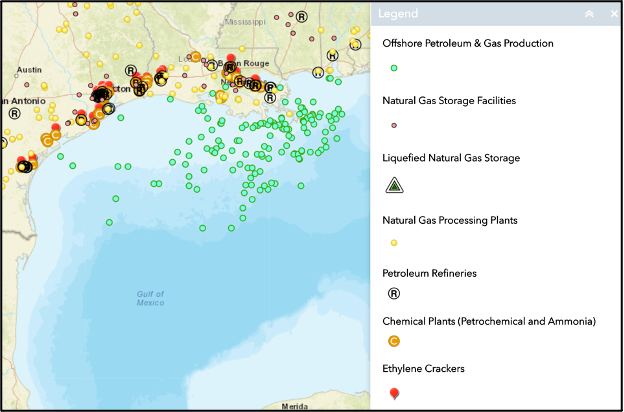
Data source: U.S. Energy Information Administration, Winter Fuels Outlook
As we explain in our October 2024 Winter Fuels Outlook, we expect that most U.S. households are likely to spend about the same or less on energy than they did last winter, depending on a household’s main space heating fuel and the region where they live. We expect that lower prices this winter will be offset by colder temperatures, resulting in relatively little change in expenditures.
Tomorrow, EIA Administrator Joe DeCarolis will present our Winter Fuels Outlook forecasts during a webinar, and a panel of EIA experts will answer questions from attendees. This event is open to the public, but you must register.
Because weather is a significant source of uncertainty in our forecast, the Winter Fuels Outlook includes two side cases where all U.S. regions are either 10% colder or 10% warmer than the base forecast.
The Winter Fuels Outlook explains our expectations for residential energy consumption, prices, and expenditures for the upcoming winter season as well as our analysis of market conditions for the four most common residential space heating fuels: natural gas, electricity, propane, and heating oil.
Energy consumption and expenditures depend on the size and energy efficiency of individual homes, their heating equipment and operating conditions, and weather. Differences in the housing populations (such as geographic distribution and size) across fuels complicate direct comparisons. For these reasons, readers should not assume that switching to another fuel with lower average energy expenditures—as presented in this report—would necessarily result in less spending for their household.
Winter Fuels Outlook webinar details Date: October 9 Time: 11:00 a.m.–11:45 a.m. eastern time Venue: Microsoft Teams Registration: Open to the public, but registration is required
Throughout the life cycles of missions, Goddard engineer Noosha Haghani has championed problem-solving and decision-making to get to flight-ready projects. Name: Noosha HaghaniTitle: Plankton Aerosol Clouds and Ecosystem (PACE) Deputy Mission Systems EngineerFormal Job Classification: Electrical engineerOrganization: Engineering and Technology Directorate, Mission Systems Engineering Branch (Code 599)
What do you do and what is most interesting about your role here at Goddard? As the PACE deputy mission systems engineer, we solve problems every day, all day long. An advantage I have is that I have been on this project from the beginning. Why did you become an engineer? What is your educational background? I was always very good at math and science. Both of my parents are engineers. I loved building with Legos and solving puzzles. Becoming an engineer was a natural progression for me. I have a BS in electrical engineering and a master’s in reliability engineering from the University of Maryland, College Park. I had completed all my course work for my Ph.D. as well but never finished due to family obligations. How did you come to Goddard? As a freshman in college, I interned at Goddard. After graduation, I worked in industry for a few years. In 2002, I returned to Goddard because I realized that what we do at Goddard is so much more unique and exciting to me. My mother also works at Goddard as a software engineer, so I am a second-generation Goddard employee. Early on in my career, my mother and I met for lunch occasionally. Now I am just too busy to even schedule lunch. Describe the advantages you have in understanding a system which you have worked on from the original design through build and testing? I came to the PACE project as the architect of an avionics system called MUSTANG, a set of hardware electronics that performs the function of the avionics of the mission including command and data handling, power, attitude control, and more. As the MUSTANG lead, I proposed an architecture for the PACE spacecraft which the PACE manager accepted, so MUSTANG is the core architecture for the PACE spacecraft. I led the team in building the initial hardware and then moved into my current systems engineering role. Knowing the history of a project is an advantage in that it teaches me how the system works. Understanding the rationale of the decision making we made over the years helps me to better appreciate why we built the system way we did. How would you describe your problem-solving techniques? A problem always manifests as some incorrect reading or some failure in a test, which I refer to as evidence of the problem. Problem solving is basically looking at the evidence and figuring out what is causing the problem. You go through certain paths to determine if your theory matches the evidence. It requires a certain level of understanding of the system we have built. There are many components to the observatory including hardware and software that could be implicated. We compartmentalize the problem and try to figure out the root cause systematically. Sometimes we must do more testing to get the problem to recreate itself and provide more evidence. As a team lead, how do you create and assign an investigation plan? As a leader, I divide up the responsibilities of the troubleshooting investigation. We are a very large team. Each individual has different roles and responsibilities. I am the second-highest ranking technical authority for the mission, so I can be leading several groups of people on any given day, depending on the issue. The evidence presented to us for the problem will usually implicate a few subsystems. We pull in the leads for these subsystems and associated personnel and we discuss the problem. We brainstorm. We decide on investigation and mitigation strategies. We then ask the Integration and Test team to help carry out our investigation plan. As a systems engineer, how do you lead individuals who do not report to you or through your chain of command? I am responsible for the technical integrity of the mission. As a systems engineer, these individuals do not work for me. They themselves answer to a line manager who is not in my chain of command. I lead them through influencing them. I use leadership personality and mutual respect to guide the team and convince them that the method we have chosen to solve the problem is the best method. Because I have a long history with the project, and was with this system from the drawing board, I generally understand how the system works. This helps me guide the team to finding the root cause of any problem. How do you lead your team to reach consensus? Everything is a team effort. We would be no where without the team. I want to give full credit to all the teams. You must respect members of your team, and each team member must respect you as a leader. I first try to gather and learn as much as possible about the work, what it takes to do the work, understanding the technical aspects of the work and basically understanding the technical requirements of the hardware. I know a little about all the subsystems, but I rely on my subsystem team leads who are the subject matter experts. The decision on how to build the system falls on the Systems Team. The subject matter experts provide several options and define risks associated with each. We then make a decision based on the best technical solution for the project that falls within the cost/schedule and risk posture. If my subject matter experts and I do not agree, we go back and forth and work together as a team to come to a consensus on how to proceed. Often we all ask many questions to help guide out path. The team is built on mutual respect and good communication. When we finally reach a decision, almost everyone agrees because of our collaboration, negotiation and sometimes compromise. What is your favorite saying? Better is the enemy of good enough. You must balance perfectionism with reality. How do you balance perfectionism with reality to make a decision? Goddard has a lot of perfectionists. I am not a perfectionist, but I have high expectations. Goddard has a lot of conservatism, but conservatism alone will not bring a project to fruition. There is a level of idealism in design that says that you can always improve on a design. Perfection is idealistic. You can analyze something on paper forever. Ultimately, even though I am responsible for the technical aspects only, we still as a mission must maintain cost and schedule. We could improve a design forever but that would take time and money away from other projects. We need to know when we have built something that is good enough, although maybe not perfect. In the end, something on paper is great, but building and testing hardware is fundamental in order to proceed. Occasionally the decisions we make take some calculated risk. We do not always have all the facts and furthermore we do not always have the time to wait for all the facts. We must at some point make a decision based on the data we have. Ultimately a team lead has to make a judgement call. The answer is not in doing bare minimum or cutting corners to get the job done, but rather realizing what level of effort is the right amount to move forward. Why is the ability to make a decision one of your best leadership qualities? There is a certain level of skill in being able to make a decision. If you do not make a decision, at some point that inability to make a decision becomes a decision. You have lost time and nothing gets built. My team knows that if they come to me, I will give them a path forward to execute. No one likes to be stuck in limbo, running in circles. A lot of people in a project want direction so that they can go forward and implement that decision. The systems team must be able to make decisions so that the team can end up with a finished, launchable project. One of my main jobs is to access risk. Is it risky to move on? Or do I need to investigate further? We have a day-by-day risk assessment decision making process which decides whether or not we will move on with the activities of that day. As an informal mentor, what is the most important advice you give? Do not give up. Everything will eventually all click together. What do you like most about your job? I love problem solving. I thrive in organized chaos. Every day we push forward, complete tasks. Every day is a reward because we are progressing towards our launch date. Who inspires you? The team inspires me. They make me want to come to work every day and do a little bit better. My job is very stressful. I work a lot of hours. What motivates me to continue is that there are other people doing the same thing, they are amazing. I respect each of them so much. What do you do for fun? I like to go to the gym and I love watching my son play sports. I enjoy travel and I love getting immersed in a city of a different country. By Elizabeth M. JarrellNASA’s Goddard Space Flight Center, Greenbelt, Md.
Conversations With Goddard is a collection of Q&A profiles highlighting the breadth and depth of NASA’s Goddard Space Flight Center’s talented and diverse workforce. The Conversations have been published twice a month on average since May 2011. Read past editions on Goddard’s “Our People” webpage.
Medicare beneficiaries who are overweight or who have the medical condition of obesity are more likely to have worse health outcomes and higher health care expenditures than beneficiaries in the healthy weight category. Among adults enrolled in randomized controlled trials, treatment with certain anti-obesity medications (AOMs) has been shown to lead to significant weight loss and improved health when recipients use the drugs consistently and at the prescribed time intervals. Those drugs include glucagon-like peptide 1 (GLP-1) receptor agonists, which were originally approved to treat diabetes.
The Medicare program covers some obesity-related services, including screening, behavioral counseling, and bariatric surgery (a procedure performed on the stomach or intestines to induce weight loss). It is prohibited by law from covering medications for weight management as part of the standard prescription drug benefit. Medicare covers GLP-1-based products only for beneficiaries who use them for medically accepted indications other than weight management. Currently, those accepted indications are diabetes and cardiovascular disease. Policymakers have introduced legislation to authorize Medicare to cover those medications more broadly.
In this report, the Congressional Budget Office estimates the budgetary effects of an illustrative policy that would authorize Medicare to cover AOMs starting in January 2026. The policy would apply to all beneficiaries with obesity, as well as certain beneficiaries who are classified as overweight. Adoption of such a policy would have these effects, in CBO’s estimation:
Federal Budgetary Cost. Authorizing coverage of AOMs in Medicare would increase federal spending, on net, by about $35 billion from 2026 to 2034. Total direct federal costs of covering AOMs would increase from $1.6 billion in 2026 to $7.1 billion in 2034. Relative to the direct costs of the medications, total savings from beneficiaries’ improved health would be small—less than $50 million in 2026 and rising to $1.0 billion in 2034.
Cost and Savings per User. Weight loss is associated with reductions in health-related spending per user that are less than the estimated federal cost per user of covering AOMs throughout the 2026–2034 period. Per AOM user, the average direct federal cost would be roughly $5,600 in 2026, decreasing to $4,300 in 2034. And average offsetting federal savings would be about $50 in 2026, reaching $650 in 2034.
Eligibility and Take-up. Over 12.5 million Medicare beneficiaries would newly qualify for AOMs in 2026 under the illustrative policy; 0.3 million, or 2 percent of the newly eligible population, would use an AOM in 2026. Despite growth in Medicare enrollment from 2026 to 2034, the number of newly qualified beneficiaries would fall to 11.9 million in 2034 as those drugs were approved to treat additional conditions under current law. In that year, about 1.6 million (or 14 percent) of the newly eligible beneficiaries would use an AOM.
Beyond 2034, the policy’s net federal costs to the Medicare program would probably be lower on a per-user basis than in the first decade for two reasons. CBO expects that the cost of the drugs will fall over time and that the savings from improved health will grow over time. Nevertheless, the policy would still increase federal spending between 2026 and 2044.
The budgetary effects of authorizing AOM coverage in Medicare are highly uncertain. Estimates of costs and take-up rates are sensitive to the rapidly evolving evidence on the eligibility, use, price, and clinical benefits associated with those medications. Those factors are also sensitive to the scope of the policy, including who in the Medicare population would become eligible for treatment with AOMs.
Source: US National Republican Congressional Committee
The following text contains opinion that is not, or not necessarily, that of MIL-OSI –
October 8, 2024
Yadira Caraveo has been called out AGAIN for blatantly lying about Gabe Evans’ position on abortion. First, CBS Colorado fact-checked Caraveo’s abortion claims, calling it “misleading.”
Now, the
“This is embarrassing for Yadira Caraveo and her D.C. Democrat friends. The only thing they can do is lie, but their lies aren’t sticking because Coloradans know Gabe Evans will be a bipartisan advocate for Colorado’s 8th district.” — NRCC Spokeswoman Delanie Bomar
The federal budget deficit was $1.8 trillion in fiscal year 2024, the Congressional Budget Office estimates. The estimated deficit for 2024 was $139 billion more than the shortfall recorded during fiscal year 2023. Revenues increased by an estimated $479 billion (or 11 percent). Revenues in all major categories, but notably individual income taxes, were greater than they were in fiscal year 2023. Outlays rose by an estimated $617 billion (or 10 percent). The largest increase in outlays was for education ($308 billion). Net outlays for interest on the public debt rose by $240 billion to total $950 billion.
The deficit that CBO now estimates for 2024 is $81 billion (or 4 percent) smaller than the shortfall estimated in its most recent baseline projections, which were published in June. Revenues and outlays alike were within 1 percent of those projections. Revenues were slightly higher and outlays slightly lower, which contributed to a smaller deficit than CBO had projected.
Outlays in fiscal years 2023 and 2024 were affected because October 1 (the first day of fiscal years 2023 and 2024, respectively) fell on a weekend. As a result, certain payments were shifted into the prior fiscal year—$63 billion from 2023 into 2022 and $72 billion from 2024 into 2023. If not for those shifts, the deficit in 2024 would have been 13 percent larger—instead of 8 percent larger—than it was in 2023.
Last year’s deficit of $1.7 trillion would have been larger if not for the recording of budgetary effects related to the Supreme Court’s decision to overturn a plan the Administration announced in 2022 to cancel many borrowers’ outstanding student loans. If those effects, and the effects of timing shifts, were excluded for fiscal year 2023, the deficit for that year would have been $2.0 trillion instead of $1.7 trillion. Thus, without the savings related to the unwinding of the proposed debt cancellation (and excluding the effects of timing shifts), CBO estimates that the federal deficit would have been lower by $110 billion in 2024 than it was in 2023.
Source: US National Republican Congressional Committee
The following text contains opinion that is not, or not necessarily, that of MIL-OSI –
October 8, 2024
A new column in the Washington Post shows how Democrats’ and Curtis Hertel’s abortion lies about Tom Barrett are failing to resonate with voters in the key House battleground race in MI-07.
This comes after the Wall Street Journal editorial board called out the DCCC for lying about Republicans’ position on abortion, saying “Democrats aren’t even attempting to be honest about abortion this year… This from the party that claims to be the protector of women’s health. The next time you see an abortion ad from a Democrat, assume it’s not telling the truth.”
Read more from the Washington Post here or see excerpts below.
Warning signs for Democrats in a Michigan bellwether The Washington Post James Hohmann October 8, 2024
BRIGHTON, Mich. — What if abortion is not the galvanizing issue on Election Day that Democrats are expecting? What I heard in Michigan last weekend made me wonder. Here in the 7th District, a congressional bellwether carried by Donald Trump in 2016 and Joe Biden in 2020, many voters just don’t prioritize the right to choose nearly as much as they did two years ago.
The 7th, which stretches from suburban Detroit to the capital of Lansing in central Michigan, hasn’t been easy for either party. Rep. Elissa Slotkin (D) won reelection here in 2022 by five points after clobbering her opponent, Tom Barrett, with commercials highlighting his stance as “100% pro-life — no exceptions.” A former Army helicopter pilot, Barrett never stopped running after the midterms. With Slotkin seeking the open U.S. Senate seat, Barrett now faces Curtis Hertel, a former colleague in the state Senate and aide to Gov. Gretchen Whitmer (D). It’s one of the most expensive races in the country — and one of the closest.
[…] But after Hertel delivered a pep talk to 16 volunteers at a party field office here last Saturday afternoon, state Rep. Jennifer Conlin (D) told the group that she had just returned from knocking on doors and expressed amazement at how much less abortion comes up than when she won two years ago in the aftermath of Dobbs.
That’s largely because many Michiganders feel a woman’s right to choose was guaranteed after voters overwhelmingly passed a state ballot referendum in 2022 to enshrine a right to the procedure in the state constitution. Certainly, these days, local Republicans call the issue settled, and that’s making it harder for Democrats to appeal to the multitudes of center-right women who crossed over to vote for Slotkin, Whitmer and the abortion initiative in 2022.
While Harris is winning college-educated women by large margins, there’s growing anxiety among top Democratic operatives that enthusiasm about voting for her has gotten shakier across the three blue-wall states that present her clearest path to the presidency: Michigan, Wisconsin and Pennsylvania. Slotkin recently told donors that her polling has Harris “underwater” in this state where 16 electoral votes are up for grabs. Trump has also been making incremental inroads with traditional Democratic constituencies, including Arab Americans and Black men, which could make the difference in a race as tight as this.
[…] In this environment, Barrett, 43, knows better than to say much. In an interview after marching in a parade with his daughter, he promised not to support any national ban that would overturn his state’s constitutional protections. If elected, he says, he would fight to protect the Hyde Amendment, so taxpayers don’t fund abortions, and champion incentives for women, including tax credits, to give up babies for adoption instead of aborting them. That’s been GOP boilerplate for 40 years.
Barrett says his biggest question going into the final month is whether pollsters are accounting for less-likely-to-vote Trump voters in Michigan whom they missed ahead of the 2016 and 2020 elections. If they are, he stands to come out ahead. Certainly, Barrett benefits from being better known than he was two years ago.
Republicans harbor no illusions about winning a college town like East Lansing, but they’re trying to minimize their losses after Slotkin carried 67 percent of the county that includes Michigan State in 2022. The House campaign launched Spartans4Barrett for campus outreach, and Trump is also doing more aggressive collegiate outreach than four or eight years ago.
[…] Afterward, several sorority sisters lined up to take selfies in front of the Trump bus. Abortion didn’t come up.
Source: US National Republican Congressional Committee
The following text contains opinion that is not, or not necessarily, that of MIL-OSI –
October 8, 2024
Missy Cotter Smasal has been called out AGAIN for blatantly lying about Congresswoman Jen Kiggans’ position on abortion. First, 13NewsNow fact-checked Smasal’s abortion claims, calling them “FALSE.”
Now, the
“This is embarrassing for Missy Cotter Smasal and her D.C. Democrat friends. The only thing they can do is lie, but their lies aren’t sticking because Virginians know Congresswoman Kiggans is a bipartisan advocate for Hampton Roads.”— NRCC Spokeswoman Delanie Bomar
The Army Mission – our purpose – remains constant: To deploy, fight and win our nation’s wars by providing ready, prompt & sustained land dominance by Army forces across the full spectrum of conflict as part of the joint force.
Interested in joining the U.S. Army?
Visit: spr.ly/6001igl5L
Headline: Halo Studios: New name, new engine, new games, new philosophy
Studio Head Pierre Hintze defines this less like a clean break, and more like the turning of a page:
“If you really break Halo down, there have been two very distinct chapters. Chapter 1 – Bungie. Chapter 2 – 343 Industries. Now, I think we have an audience which is hungry for more. So we’re not just going to try improve the efficiency of development, but change the recipe of how we make Halo games. So, we start a new chapter today.”
The First Step
Switching from the studio’s proprietary Slipspace Engine to Unreal is a key part of that change. Previously, 343 Industries needed a large portion of its staff simply to develop and upkeep the engine its games ran on. “We believe that the consumption habits of gamers have changed – the expectations of how fast their content is available,” says Hintze. “On Halo Infinite, we were developing a tech stack that was supposed to set us up for the future, and games at the same time.”
As gaming evolves, and players increasingly point out how long it takes to see new games from their favorite series, the team at Halo Studios felt the need to react. As COO Elizabeth van Wyck puts it:
“The way we made Halo games before doesn’t necessarily work as well for the way we want to make games for the future. So part of the conversation we had was about how we help the team focus on making games, versus making the tools and the engines.”
Alongside the wider changes to how the studio is set up (which you can read more about below), adopting Unreal means Halo Studios is more able to create games with a focus that can satisfy fans – even setting up multiple teams to create different games simultaneously. But Unreal also comes with in-built benefits that would have taken years of work to replicate with Slipspace:
“Respectfully, some components of Slipspace are almost 25 years old,” explains Studio Art Director, Chris Matthews. “Although 343 were developing it continuously, there are aspects of Unreal that Epic has been developing for some time, which are unavailable to us in Slipspace – and would have taken huge amounts of time and resources to try and replicate.
“One of the primary things we’re interested in is growing and expanding our world so players have more to interact with and more to experience. Nanite and Lumen [Unreal’s rendering and lighting technologies] offer us an opportunity to do that in a way that the industry hasn’t seen before. As artists, it’s incredibly exciting to do that work.”
There’s another in-built benefit – Unreal is familiar to huge parts of the wider gaming industry. Where developers would have to spend time learning how to use Slipspace when joining 343, Halo Studios’ adoption of the industry-leading engine makes it a far smoother process to bring in new talent (and the studio is indeed hiring for its new projects now):
“It’s not just about how long it takes to bring a game to market, but how long it takes for us to update the game, bring new content to players, adapt to what we’re seeing our players want,” says Van Wyck. “Part of that is [in how we build the game], but another part is the recruiting. How long does it take to ramp somebody up to be able to actually create assets that show up in your game?”
With the move to Unreal, the on-ramp is shorter, the experience is there, and the series can grow far more quickly and organically than ever before.
Forging Ahead
Of course, Halo Studios needed to be confident in the switch to Unreal – this isn’t a decision taken lightly. The team had to be sure that the first Halo games to come out of a non-Slipspace engine would look, feel, and sound right. The team began experimenting, and it resulted in a research project known as Project Foundry – the source for all the new clips we saw today.
“When we decided to do Foundry, it wasn’t, at that point, in our plan,” says Van Wyck. “But we needed to pause and – ‘validate’ is not the right word, but educate and understand what our capability is, and assess it, so we actually know we’re on the right path.
“We’ve intentionally been really quiet up to this point, but I think [today] is about just sharing where we are, what our priorities are as a studio, and where the team is. We’re really proud of what came out of Foundry.”
So what does Foundry represent? The team is clear that this is not a new game – but nor is it a traditional tech demo. It isn’t just an exploration of what’s possible with this engine – it’s a true reflection of what would be required for a new Halo game using Unreal, and a training tool for how to get there. Foundry has been made with the same rigor, process, and fidelity as a shipped game would be.
“Where this type of work’s been done historically, across the industry, it can contain a lot of smoke and mirrors,” explains Matthews. “It sometimes leads players down paths where they believe it’s going to be one thing, and then something else happens. The ethos of Foundry is vigorously the opposite of that.
“Everything we’ve made is built to the kind of standards that we need to build for the future of our games. We were very intentional about not stepping into tech demo territory. We built things that we truly believe in, and the content that we’ve built – or at least a good percentage of it – could travel anywhere inside our games in the future if we so desire it.”
Hintze goes further: “It’s fair to say that our intent is that the majority of what we showcased in Foundry is expected to be in projects which we are building, or future projects.”
And what we’ve seen of Foundry promises incredible things. Named after the Foundry within Halo’s lore – the central forge of the megastructure used to create the Halo Rings themselves – the project saw the team set out to create three distinct biomes in the style of Halo. The goal was, as Matthews puts it, to make something old, something new, and something truly alien.
For something old, we see a biome inspired by the Pacific Northwest – a staple of the series – but in dramatic new form. Waterfalls crash over mountains, a running creek becomes the site of a tableau pitching the Chief against two Covenant Elites, and the team pushed Unreal to include as much foliage as technically possible.
For something new, we see the Coldlands location, a region locked in a deep freeze, with snowdrifts covering plateaus, and ice reflecting what’s above and refracting what’s below. And for something alien, we see the Blightlands, a brand new take on a Halo location – a world consumed by the parasitic Flood. The express purpose of the Blightlands was to see how this new-look Halo team could push the world itself farther than previous Halo games – the results speak for themselves.
Even the familiar looks new in Foundry. The Chief’s armor has been modelled with extreme care, down to individual panels on his combat gloves. An Elite’s energy sword now feels less like a solid object and more reflective of the name – a crackling swoosh of dangerous energy. The aim wasn’t just to push the studio, but the engine itself – Foundry is designed to do things that we haven’t seen in games using Unreal across the industry, Halo began its life as a graphical showcase for the original Xbox – the goal is to make that so again.
Halo Studios has worked closely with Unreal’s creators, Epic Games, to ensure they can reach that lofty goal.
“Halo is such an incredible franchise and it’s awesome to see Halo Studios already pushing the boundaries of Unreal Engine 5,” said Bill Clifford, Vice President and General Manager of Unreal Engine at Epic Games. “We’re honored to support the Halo team in realizing their creative visions through Unreal Engine. Project Foundry’s work demonstrates how they can bring Halo to life with beautifully detailed, uncompromised worlds.”
Of course, the soul of Halo isn’t just in how it looks, but how it feels – the intrinsic dance of its combat, the thud of the weapons, and the sense that you’re inhabiting the Master Chief’s armor. While Foundry may be a primarily visual project, Halo Studios is deeply invested in retaining the essence of what players love about Halo:
“I think it’s pretty well known that [switching engine] has been a topic that the studio has thought about for a long, long time,” says Van Wyck. “[The release of] Unreal Engine 5 was when we felt like we could make Halo games that respect and reflect the true soul of Halo while also being able to build games that can deliver on the scale and ambition of content that players want.”
“The spirit of Halo is more than just the visuals,” agrees Matthews. “It’s the lore. It’s the physics. Playing as the Chief, you’re this huge tank of a soldier – it’s the way that he moves, he feels. We’re all really obsessed about what our players love about Halo. We’re constantly listening to this feedback – and that’s at the core of any initiative like Foundry, or any intention that the studio has about how we move forwards.”
“We’re thinking about the intangibles,” Hintze adds. “The interaction with the Master Chief, or your Spartan, or the enemies. We are very careful about the decisions we’re making in that space – down to the precision and authenticity of the weapons, the authenticity of the animations. There are a list of nuances which we use to verify that we’re on track.”
Beyond the Visor
So, let’s talk about what’s coming beyond Foundry. As you might expect, the team isn’t talking about exactly what those new games will be right now – we’re at the beginning of this new chapter, not the final stages, and it’s fair to say that a new Halo game isn’t imminent. Halo Infinite will still be supported through the Slipspace Engine – you can expect more Operations, and updates to its Forge mode. In esports, Year 4 of the Halo Championship Series, using HaloInfinite, has just been announced. But in the background, the next steps for Halo will be taken.
The quietness is by design. Hintze makes clear that the priority right now is on doing the work, not simply talking about it:
“One of the things I really wanted to get away from was the continued teasing out of possibilities and ‘must-haves’. We should do more and say less. For me, I really think it is important that we continue the posture which we have right now when it comes to our franchise – the level of humility, the level of servitude towards Halo fans.
“We should talk about things when we have things to talk about, at scale. Today, it’s the first step – we’re showing Foundry because it feels right to do so – we want to explain our plans to Halo fans, and attract new, passionate developers to our team. The next step will be talking about the games themselves.”
What is clear is that, yes, it’s Halo games – plural – in development right now. Where Halo Infinite saw practically the entire studio focused on a single, evolving project, Halo Studios has recalibrated:
“We had a disproportionate focus on trying to create the conditions to be successful in servicing Halo Infinite,” says Hintze. “[But switching to Unreal] allows us to put all the focus on making multiple new experiences at the highest quality possible.”
A major part of this shift has been in reorganizing the structure of Halo Studios as a whole, in order to give development teams what they need to make something new.
“At the end of the day, if we build the games that our players want to play, that’s how we’ll be successful,” explains Van Wyck. “That’s what should motivate what we build. That’s also what this structure has done – we want the people that are day-in-day-out making the games to be the ones to make the decisions on the games.”
The team will also be seeking more input from outside the studio on those decisions:
“We’re seeking earlier and earlier, wider and wider feedback from our players,” she continues. “We started that with The Master Chief Collection, and carried that on with Halo Infinite, and we want to do it even more for our next projects. At the end of the day, it’s not just how do we evaluate, it’s how do our players evaluate it?”
343 Industries was founded to create Halo games but the impression I get is that, in its new incarnation as Halo Studios, the studio has been retooled to put the focus entirely on that goal – without distraction, without impediment, to create better games with players’ hopes and wishes at the heart of the endeavor.
“You asked why we consider this as a new chapter,” says Hintze. “We want a singular focus. Everyone is in this place is here to make the best possible Halo games.”
Headline: 4 foundational ways that AI is transforming government
Of the many ways you might measure the potential value of AI on governments, one statistic jumps out. According to Gartner®, 2027 spend on AI software by use case, digital government services, is projected to reach USD41.8 billion in 2027. That tops all other industry sectors, with banking coming in second at USD28.2 billion.1 This represents a significant shift in priorities, as governments recognize the potential of AI to enhance public sector efficiency, transparency, and citizen engagement.
As Microsoft’s global government lead, I am inspired that so many agencies and organizations are not hedging their bets with AI, as was sometimes the case with prior waves (cloud computing and the rise of mobility come to mind). Instead, many governments are taking thoughtful early steps to explore AI and invest in early innovation.
Microsoft for Government
Achieve your mission with Microsoft.
How AI is transforming government IT
At Microsoft for Government, our job is to help governments make the most of their AI investments with best-in-class solutions that are tailored to their unique needs and brought to life through our global network of technology partners. Since the advent of generative AI in late 2022, we have worked closely with a wide array of agencies and organizations to develop targeted use cases designed to improve everything from citizen services to cybersecurity.
This level of innovation is even more impressive considering the unique pressures facing governments. Leaders must deliver results within constrained budgets and limited resources, respond to shifts in societies and workforces, and protect some of the most heavily cyber-attacked data and systems in the world.
Here’s a brief look at four essential areas where AI is helping to empower customers and reshape the impact of government around the world.
1. Delivering personalized experiences
Unproductive interactions with automated call centers and outdated websites are the bane of many constituents’ relationships with their government agencies. Well-intended at the core, too many of these services fail to connect with constituents, recognize their needs, and deliver useful information in a timely way.
Generative AI is revolutionizing these resources with self-service portals and contact centers that provide modern, user-friendly digital experiences. The combination of natural language processing (which enables machines to understand and generate human language), and semantic search (which goes beyond simple keyword matching to comprehend the meaning of a query) makes it possible to readily create chatbots and agents that interact smoothly with people and reason over vast amounts of data to instantly provide solutions.
An amazing example is a chatbot in India called Jugalbandi, built on Microsoft Azure OpenAI Service. Jugalbandi has bridged the nation’s vast linguistic divide by understanding spoken and typed questions, then responding in the user’s local language, all on widely used mobile devices. By covering 10 of India’s 22 official languages and 171 government programs (so far), it makes important information more accessible and reduces cost and friction for constituents and employees alike.
2. Empowering the government workforce
Ensuring that employees can focus on meaningful work is key to government success. In public service, many people are motivated by the opportunity to help others and solve important societal challenges. When subpar technology solutions create inefficiencies and cause unintended problems, productivity and morale suffer.
Government workers, like employees everywhere, welcome services and solutions that reduce friction, keep them connected, and make them more productive. Solutions that use generative AI’s unique predictive analytics and forecasting capabilities can help employees improve their decision-making and overall efficiency.
In the United Arab Emirates, the Dubai Electricity and Water Authority (DEWA) DWEA) built a new Business Requirement Document Generator using Microsoft Azure AI Services that enables employees to enter minimal information and easily generate important documents. Trained on 500 billion parameters, it proactively suggests required information and fills in gaps and other important information. What used to take one week can now be done in one day, including reviews. Complementing the solution, the Authority also boosted productivity by adopting Microsoft 365 Copilot, which is proving invaluable in helping employees to work faster and effectively, notably on research tasks.
3. Modernizing government operations
In many organizations and agencies, the journey to cloud computing has been hindered by important considerations unique to government, including cost, security, and a reliance on legacy systems which are often regarded as so critical that they can’t be modernized, despite being slow, complex, and vulnerable. As cloud and AI solutions become more mature and available, however, the barriers to modernization are dropping, while the price of inaction only rises.
Generative AI’s code generation capabilities (which empower non-developers to readily create AI applications) make it possible to manage critical workloads in the cloud, while gaining new benefits in flexibility, scalability, and resilience across agencies. This can unlock critical data stuck in silos and drive better decision-making for officials who, for example, can make more informed decisions on proposed legislation. Likewise, for citizens, it can turn the process of obtaining a building permit into a productive interaction with a helpful virtual agent, rather than a gauntlet of arcane rules and regulatory snags.
When Gamle Oslo realized that a district manager needed to log into 25 different systems to find relevant data for the city’s kindergarten services, they decided to build a unified data platform using Microsoft Fabric. The solution collects and analyzes all of the district’s data on housing, employment, health care, and public services, which had formerly been disconnected. Unified data with Fabric has improved many processes and opened the door to new benefits and insights, including setting the stage for new AI innovation.
4. Securing data and protecting resources
More than any other industry sector, governments are prime targets for cyberattacks. According to Microsoft’s Digital Defense Report for 2023, 53% of attacks worldwide focused on government organizations and critical infrastructure2. Over the last 18 months, public sector organizations have seen a 150% increase in cyberattacks3 due to the combination of escalating geo-political conflicts and increasing financial motivations.
This dangerous threat landscape urgently requires governments to improve their ability to safeguard critical systems, enhance data protection, and maintain compliance with a host of regulations. Making the challenge even more difficult for governments is the growing demand for skilled cybersecurity staff. Worldwide, there is a shortage of 4 million cybersecurity professionals4, and the problem can be worse for governments, who often struggle to attract and retain talent.
Cloud and AI technology can help level the cybersecurity playing field in a number of important ways. First, the Microsoft Cloud platform provides built-in security and resilience, reflecting our commitment to making security and compliance our top priority. Also, our comprehensive security offerings help an organization craft its own strategy using end-to-end products and tools. And finally, Microsoft Copilot for Security uses generative AI to empower security analysts to rapidly assess an organization’s security posture and create actionable insights and solutions at much greater speed than current approaches.
When the Dominican Republic’s National Cybersecurity Center (CNCS) recognized increases in both frequency and sophistication of cyberattacks, they responded by modernizing the government’s information system and in national critical infrastructure. Their comprehensive approach included adopting a variety of Microsoft solutions to monitor, analyze, manage, and respond to cyber threat cases across the country. The benefits of modern cybersecurity were soon evident, as the event correlation system running on Microsoft Sentinel established relationships between indicators of compromise four times faster than earlier approaches.
See AI in government for yourself
Beyond these transformational benefits, the explosion of AI innovation in government is also advancing the move to modern cloud and data platforms, which is not only essential for enabling AI but also delivers broader benefits in efficiency, productivity, and security.
The insights and examples shared here only just scratch the surface of what our customers are creating and learning. We’re discovering new and amazing things on a daily basis, and we invite you to become engaged.
To see for yourself and learn more:
Attend the Microsoft AI Tour—a free, one-day event with experts, industry leaders, and peers to explore how AI can drive growth and create lasting value. Events are happening worldwide through March 2025.
Visit us at Smart City Expo World Congress in Barcelona, Spain, November 5–7, 2024. I will present on the topic of “Next-Gen Tech Leading the New Urban Era,” and other Microsoft for Government sessions will be presented by Kathleen Mitford, Kirk Arthur, Jeremy Goldberg, Doug Priest, and Hannah Prior.
To discover how the city of Madrid is innovating to become a smarter, more sustainable city, download the new SmartCitiesWorld City Profile. And for a discussion of the new profile, including a new AI-driven virtual assistant, register for a SmartCitiesWorld webinar on October 22, 2024.
Sources:
1Gartner, Compare AI Software Spending in the Government Industry, 2023-2027, By Daniel Snyder, James Ingham, Inna Agamirzian, 27 March 2024. GARTNER is a registered trademark and service mark of Gartner, Inc. and/or its affiliates in the U.S. and internationally and is used herein with permission. All rights reserved.
Didier Ongena leads Microsoft’s Worldwide Public Sector Government team, focused on helping customers realize transformational impact through technology. He and his team help customers address global challenges such as sustainability, mobility, the energy crisis, healthcare, education, and more. They are eager to add value to government agencies worldwide.
Source: United States Senator for Virginia Tim Kaine
WASHINGTON, D.C. – Today, U.S. Senators Mark R. Warner and Tim Kaine, a member of the Senate Health, Education, Labor and Pensions (HELP) Committee, both D-VA, announced $2,225,710 in federal funding for education programs based in Alexandria, Richmond, and Harrisonburg to train behavioral health professionals to address substance use disorders, students’ mental health, and racial disparities in access to mental health treatment. The funding is being allocated by Substance Abuse and Mental Health Services Administration (SAMHSA) within the U.S. Department of Health and Human Services (HHS), for which the senators have consistently supported robust and continued funding.
“Helping those who struggle with behavioral health needs starts with adequately funding programs to recruit, educate, and train the first responders and behavioral health professionals who will be on the front lines,” said the senators. “This over-$2.2 million in grant funding will help us do that, and we will continue to do all that we can to bring resources to Virginia to support the mental health of our communities.”
The funding will be allocated as follows:
$1,924,595 to the Alexandria-based Foundation for The Advancement of Human Systems via the Minority Fellowship Program to recruit, train and support master’s- and doctoral-level students in behavioral health care professions to address services disparities for racial and ethnic minority populations.
$199,939 to Virginia Commonwealth University in Richmond to recruit and train first responders in rural areas on how to provide trauma-informed, recovery-based care for people with substance use disorders (SUD), and co-occurring substance use and mental health disorders (COD), in emergency situations.
$101,716 to Eastern Mennonite University in Harrisonburg to strengthen mental health services for college students, including increasing protective factors that promote mental health, as well as reducing risk factors for suicide.
Warner and Kaine have long advocated for federally-funded resources for Virginians who struggle with mental and behavioral health issues. In September 2024, Warner and Kaine announced $3.5 million in federal funding to expand mental health and substance abuse disorder services at community health centers. In August 2023, Warner and Kaine announced $1.4 million in federal funding for the Virginia Department of Behavioral Health and Developmental Services to expand access to mental health care in Virginia. In December 2022, Warner and Kaine announced $1 million in federal funding from SAMHSA to expand the 988 Suicide & Crisis Hotline in Virginia.
In northern Gaza, Palestine, Israeli evacuation orders and strikes are forcing people to flee south.
The bombing and evacuations of neighbourhoods in the north are making the area unliveable, with no supplies entering the area for a week.
We call on Israel to stop issuing evacuation orders and immediately allow in humanitarian aid.
Israeli evacuation orders for parts of northern Gaza, Palestine, issued on 7 October, are pushing tens of thousands of people to immediately flee south as the area is targeted by airstrikes and a ground offensive. In this latest forced mass displacement, residents of Beit Hanoun, Jabalia and Beit Lahia have been urged to move south to the overcrowded, so-called humanitarian zone between Al-Mawasi and Deir Al-Balah, where one million people are already living in inhumane conditions. The zone also remains unsafe for civilians and aid workers, as Israeli forces continue to repeatedly strike the area.
These forced mass evacuations of homes and bombing of neighbourhoods by the Israeli forces are turning the north of Gaza into an unliveable wasteland, effectively emptying out the whole north of the Strip of Palestinian life. To make matters worse, no humanitarian supplies have been allowed to enter the area since 1 October.
Médecins Sans Frontières (MSF) calls on the Israeli forces to halt evacuation orders, which are causing the forced displacement of people, and to ensure the protection of civilians. They must also allow desperately needed humanitarian supplies to enter the north as a matter of extreme urgency.
“All of a sudden, I was told that we had to move from the north,” says Mahmoud, an MSF watchman, who left Jabalia at night to find refuge at the MSF guest house in Gaza City. “We left our home in despair, under bombs, missiles and artillery. It was very, very difficult. I would prefer to die than to be displaced to the south; my home is here, and I do not want to leave.”
Israeli forces also called for the evacuation of the three main hospitals in northern Gaza, namely Indonesian, Kamal Adwan and Al-Awda hospitals. These are operating at minimal capacity and have a total of 317 patients still hospitalised, with around 80 people in intensive care and unable to move, according to the Ministry of Health. These three medical facilities, as well as those that remain partially functional across the Strip, must be protected at all costs.
The MSF clinic in Gaza City received 255 patients on Sunday and Monday alone, as options for people to access medical care shrink by the day. For some people, accessing the few existing health facilities is impossible; our teams have received reports of wounded people who have died as they were unable to seek medical care.
Among those facing evacuation orders in the north are seven MSF staff who managed to find shelter in Gaza City. Five others remain blocked in Jabalia, where the Israeli forces are on the ground carrying out attacks.
“The latest move to forcefully and violently push thousands of people from northern Gaza to the south is turning the north into a lifeless desert, while aggravating the situation in the south, where more than one million people have already been squeezed into a small portion of the Gaza Strip and live in deplorable conditions,” says Sarah Vuylsteke, MSF project coordinator in Gaza.
“Access to water, healthcare, and safety is already almost non-existent, and the thought of more people fitting into this space is impossible to imagine,” says Vuylsteke. “People have been subjected to endless displacement and relentless bombing for the past 12 months. Enough is enough, this must stop now.”
While the Israeli authorities have recently declared a minimal expansion of the so-called humanitarian zone, the area remains subject to evacuation orders and is unsafe due to regular Israeli bombardment. Many people living in the zone are suffering from skin diseases and respiratory infections because of the dire conditions. The situation is even more worrying with the approach of winter and the cold temperatures that people will be exposed to.
Israeli forces must urgently halt evacuation orders in the north of Gaza. The relentless killing of people in Gaza must stop now, and an immediate and sustained ceasefire must be implemented.
You could also be interested in
Gaza-Israel war
Israel and allies must bring year-long war in Gaza to an end
Press Release3 Oct 2024
Photo Story
Jenin after nine days of military incursion
18 Sep 2024
Photo Story
Palestine
Access to medical care at risk in West Bank as Israeli incursions intensify
Source: United States Senator for Virginia Tim Kaine
WASHINGTON, D.C. – Today, U.S. Senators Mark R. Warner and Tim Kaine (both D-VA) announced $11,692,000 in federal funding to protect young children and their families from hazardous lead poisoning in their homes. The sale of lead-based paint is banned in the United States, but many older homes still have the old paint on walls, which can become dangerous as it peels and chips. Young children are most susceptible to lead poisoning and can face long-term developmental delays if exposed. This funding, courtesy of the U.S. Department of Housing and Urban Development (HUD) Lead Hazard Reduction Grant Program, will be used to identify and control lead-based paint hazards in Virginia’s older housing units.
“Lead poisoning can have negative long-term health impacts for those exposed,” the senators said. “This funding will help to protect children and families by identifying and mitigating the presence of dangerous lead-based paint.”
This funding is broken down as follows:
The Commonwealth of Virginia will receive $6,692,000 in funding to update older housing and improve community health. This funding will be distributed across Virginia;
The City of Roanoke will receive $5,000,000 in funding to update older housing and improve community health.
Warner and Kaine been vocal about the need for safe, affordable housing for Virginians. Earlier this year, the senators announced over $55 million in federal funding for improvements to affordable housing across the Commonwealth.
On August 19-20, 53 educators from a diverse set of learning contexts (libraries, K-12 classrooms, 4-H afterschool clubs, outdoor education centers, and more) gathered in Orono, Maine for the Learning Ecosystems Northeast (LENE) biannual Connect, Reflect, & Plan Connected Learning Ecosystems (CLEs) Gathering. These gatherings are meant to foster meaningful connections and collaborations and shared knowledge and confidence building amongst educators within the LENE network.
NASA Science Activation’s Learning Ecosystems Northeast (LENE) is a network of education partners across the Northeastern United States, led by the Gulf of Maine Research Institute. These partners are dedicated to creating and linking communities of in and out of school educators, Connected Learning Ecosystems (CLEs), who are committed to empowering the next generation of climate stewards.
The focus of this gathering was to provide educators the time, experiences, connections, and space to explore ways they can prepare the youth and communities they work with to build resilience in the face of climate change. Educators participated in sessions around local asset mapping, climate mental health, positive youth development, building STEM skills through games and fieldwork, and planning forward around coastal flooding and sea level rise. Each session was followed by time to debrief, reflect, and plan both in their regional CLEs as well as with statewide partners. The value of NASA assets and connection to local issues was woven throughout many experiences during this gathering. LENE’s CLE Resource Drive has a growing list of phenomena-based NASA assets that has been curated based on the interests of their network over time. The Global Learning and Observations to Benefit the Environment (GLOBE) program’s GLOBE Observer tree height app was part of the Ash Protection community science protocol and many NASA assets enhance the educator-guided planning forward experience guide that youth practice the difficult, real-life conversations about theconsequences of sea level rise as they think about ways they can plan for a resilient future in the face of rising seas and coastal flooding.
Sara King from the Rural Aspirations Project (Hancock/Midcoast CLE) had this to say: “Before I first joined the CLE, I viewed STEM professionals to be separate from myself for the most part because I did not feel very confident in my abilities in all parts of STEM. I feel more comfortable with data and technology, engineering, and science practices now.”
One educator said that their highlight from the gathering was, “[o]pportunities to meet with other teachers and educators and librarians to share ideas about how we can pool our resources and reach more students.” These educators left with draft learning projects ready for refinement and review, renewed dedication and motivation for the school year, and new perspectives to lead them into continued conversations and partnership with their CLE peers as they meet throughout the year.
Learn more about Learning Ecosystem Northeast’s efforts to empower the next generation of environmental stewards at https://www.learningecosystemsnortheast.org. The Learning Ecosystems Northeast project is supported by NASA under cooperative agreement award number NNX16AB94A and is part of NASA’s Science Activation Portfolio. Learn more about how Science Activation connects NASA science experts, real content, and experiences with community leaders to do science in ways that activate minds and promote deeper understanding of our world and beyond: https://science.nasa.gov/learn
The August 2024 Connect, Reflect & Plan Connected Learning Ecosystem Gathering crew (educators and project partners from across Maine and even one California partner).
The Justice Department today sued Fitness International LLC, also called LA Fitness, for discriminating against people with disabilities at its gym and fitness clubs. LA Fitness is the largest chain of owner-operated gym and fitness clubs in the United States, with nearly 700 locations across the country.
The lawsuit, filed in the U.S. District Court for the Central District of California, alleges LA Fitness violated the Americans with Disabilities Act (ADA), which prohibits public accommodations, including gym and fitness clubs, from discriminating against people with disabilities. The ADA requires LA Fitness to give people with disabilities equal access to LA Fitness’ services and facilities, remove architectural barriers to make its facilities accessible to people with disabilities and maintain accessible features. The ADA also prohibits LA Fitness from charging extra fees to people with disabilities.
Yet, as the department’s lawsuit alleges, LA Fitness gym and fitness clubs have many barriers that prevent LA Fitness members with disabilities from accessing the clubs or using the clubs’ pools and fitness equipment. Common barriers include broken pool lifts and broken elevators. Sometimes, these issues left people with mobility disabilities unable to get into clubs or pools at all. Other times, people with disabilities have gotten stuck dangling over the water on broken pool lifts, have had to call LA Fitness staff to help them get in and out of pools or have had to crawl out of pools. Even after members with disabilities complained about these issues, LA Fitness did not fix them for long periods of time.
“Access to physical fitness activity is crucial for promoting the health and well-being of all Americans, including those with disabilities,” said Assistant Attorney General Kristen Clarke of the Justice Department’s Civil Rights Division. “For over 30 years, the ADA has prohibited gyms and fitness clubs like LA Fitness from denying patrons with disabilities the opportunity to use and enjoy facilities enjoyed by patrons without disabilities. Through this lawsuit, the Justice Department seeks to eliminate LA Fitness’s discriminatory barriers and ensure that people with disabilities have equal access to fully participate at their local LA Fitness gym and fitness clubs.”
“Ensuring accessibility is key to safeguarding civil rights for all Americans,” said U.S. Attorney Martin Estrada for the Central District of California. “Our office is committed to ensuring that people with disabilities have access to public accommodations by enforcing the protections afforded by the Americans with Disabilities Act. When we support those with disabilities, our entire community benefits.”
Through the lawsuit, the department asks the court to stop LA Fitness from discriminating against people with disabilities, including by requiring LA Fitness to make its facilities and equipment accessible. The department also seeks monetary damages for people harmed by LA Fitness’ discrimination. This includes people who were directly harmed by LA Fitness’ barriers to access and broken equipment, as well people who need help to use LA Fitness’ clubs and were charged extra fees to have a friend, nurse or personal assistant help them use LA Fitness facilities.
If you or someone you know had trouble accessing an LA Fitness gym or fitness club because of a disability, including due to a broken pool lift or elevator, or if you were charged an extra fee to have someone help you access LA Fitness’ equipment, please call 1-888-392-5417 (toll-free), or email Claims.LAFitness@usdoj.gov. For more information on the ADA, please call the department’s toll-free ADA Information Line at 1-800-514-0301 (TDD 800-514-0383) or visit www.ada.gov. For more information on the Civil Rights Division, please visit www.justice.gov/crt.
Source: United States House of Representatives – Congressman Jerrold Nadler (10th District of New York)
New York, NY – Today, Representatives Jerrold Nadler, Hakeem Jeffries, Jamaal Bowman, Yvette Clarke, Dan Goldman, Tim Kennedy, Gregory Meeks, Grace Meng, Joe Morelle, Alexandria Ocasio-Cortez, Pat Ryan, Tom Suozzi, Paul Tonko, Ritchie Torres, and Nydia Velázquez issued the following statement:
“As Democratic Members of Congress, we believe in the freedom to peacefully assemble and protest as a fundamental right of our great nation. Each day, we work tirelessly to uphold this freedom for all Americans.
“However, when protests become violent, with actions that cross the line into acts of vandalism, they are no longer protests; they become crimes. These acts of intimidation are unacceptable and will not be tolerated.
“Over the past month, the office of Congressman Adriano Espaillat has been attacked and vandalized several times. This targeted vandalism puts constituents and congressional staffers alike in harm’s way, disrupting congressional operations and social services that constituents depend on.
“The latest outrageous vandalism occurred on a day of solemn reflection to mark one year since Hamas terrorists attacked Israel, murdering 1,200 civilians, including over 40 American citizens, and taking 251 hostages, including 12 Americans.
“Our delegation stands united in publicly condemning acts of violence, harassment, and intimidation. Together, we will keep working to ensure all perpetrators of such targeted acts against Congressman Espaillat, or any congressional office for that matter, are held accountable and prosecuted to the fullest extent of the law.”
###
FOR IMMEDIATE RELEASE: October 8, 2024
CONTACT: Matt Jansen (202) 494-1278
New York, NY – Today, Representatives Jerrold Nadler, Hakeem Jeffries, Jamaal Bowman, Yvette Clarke, Dan Goldman, Tim Kennedy, Gregory Meeks, Grace Meng, Joe Morelle, Alexandria Ocasio-Cortez, Pat Ryan, Tom Suozzi, Paul Tonko, Ritchie Torres, and Nydia Velázquez issued the following statement:
“As Democratic Members of Congress, we believe in the freedom to peacefully assemble and protest as a fundamental right of our great nation. Each day, we work tirelessly to uphold this freedom for all Americans.
“However, when protests become violent, with actions that cross the line into acts of vandalism, they are no longer protests; they become crimes. These acts of intimidation are unacceptable and will not be tolerated.
“Over the past month, the office of Congressman Adriano Espaillat has been attacked and vandalized several times. This targeted vandalism puts constituents and congressional staffers alike in harm’s way, disrupting congressional operations and social services that constituents depend on.
“The latest outrageous vandalism occurred on a day of solemn reflection to mark one year since Hamas terrorists attacked Israel, murdering 1,200 civilians, including over 40 American citizens, and taking 251 hostages, including 12 Americans.
“Our delegation stands united in publicly condemning acts of violence, harassment, and intimidation. Together, we will keep working to ensure all perpetrators of such targeted acts against Congressman Espaillat, or any congressional office for that matter, are held accountable and prosecuted to the fullest extent of the law.”
###
U.S. Representative Jerrold Nadler represents New York’s 12th Congressional District, which includes parts of Manhattan, and serves as the Ranking Member of the House Judiciary Committee.
Source: United States House of Representatives – Congresswoman Chellie Pingree (1st District of Maine)
Maine First District Congresswoman Chellie Pingree today praised the Biden-Harris Administration and the Environmental Protection Agency (EPA) for their final rule requiring states to identify and replace lead pipes within 10 years—a provision Pingree has long pushed for. The Lead and Copper Rule Improvements (LCRI) also require more rigorous testing of drinking water and a lower threshold requiring communities to take action to protect people from lead exposure in water. In addition, the final rule improves communication within communities so that families are better informed about the risk of lead in drinking water, the location of lead pipes, and plans for replacing them.
Alongside the Lead and Copper Rule Improvements, EPA is announcing $2.6 billion in newly available funding to improve drinking-water infrastructure, including $24.9 million in Maine. Made possible through the landmark Bipartisan Infrastructure Law, the federal funding will flow through the Drinking Water State Revolving Funds (DWSRFs) and will support lead-pipe replacement and other inventory projects in Maine. Communities may also apply directly for an additional $35 million in competitive grant funding for reducing lead in drinking water.
“I’m thrilled that the Biden Administration is delivering on its promise to improve our country’s drinking water and safeguard the American people from dangerous exposure to lead and other harmful contaminants,” Pingree said. “All Americans deserve access to clean, safe, reliable drinking water. Nearly 40 years after lead pipes were banned in the U.S., we’re finally taking the necessary steps to ensure that all outdated systems and pipes are replaced—including right here in Maine. This $24.9 million in funding will help communities across our state make much-needed needed investments to modernize their drinking-water infrastructure. Once again, the transformative Bipartisan Infrastructure Law is delivering real, tangible benefits to the people of Maine—and citizens across the country.”
“We’ve known for decades that lead exposure has serious long-term impacts for children’s health. And yet, millions of lead service lines are still delivering drinking water to homes,” said EPA Administrator Michael S. Regan. “President Biden is putting an end to this generational public health problem. With the Lead and Copper Rule Improvements and historic investments in lead pipe replacement, the Biden-Harris Administration is fulfilling its commitment that no community, regardless of race, geography, or wealth, should have to worry about lead-contaminated water in their homes.”
The Bipartisan Infrastructure Law provides $50 billion to support upgrades to the nation’s drinking water and wastewater infrastructure. This includes $15 billion over five years dedicated to lead service line replacement and $11.7 billion of general Drinking Water State Revolving Funds that can also be used for lead service line replacement.
Pingree, who serves as Ranking Member of the House Appropriations Interior and Environment Subcommittee, which oversees the EPA, has long pushed for a strong final rule requiring drinking water systems across the country to identify and replace lead pipes. In September, she and her Congressional colleagues called on the White House Office of Management and Budget to expedite its review of the Biden Administration’s proposed Lead and Copper Rule Improvements rule, which would lower the lead action level to better protect human health and require water systems to replace old and deteriorating lead pipes within a decade.
Across Maine and the U.S., communities face threats to their drinking water from a number of contaminants, including lead, arsenic, nitrates, volatile organic compounds, PFAS, and others. EPA estimates that up to 9 million homes are served through legacy lead pipes across the country, many of which are in lower-income communities and communities of color, creating disproportionate lead exposure burden for these families.
This Congress, Pingree reintroduced her bipartisan, bicameral Healthy Drinking Water Affordability Act, or the Healthy H2O Act, to provide grants for water testing and treatment technology directly to individuals and nonprofits in rural communities.
October 8, 2024 – Ottawa, Ontario – Agriculture and Agri-Food Canada
Today, at the 2024 Animal Health Canada Forum, Francis Drouin, Parliamentary Secretary to the Minister of Agriculture and Agri-Food, on behalf of the Honourable Lawrence MacAulay, Minister of Agriculture and Agri-Food, announced up to $13,343,409 over 5 years to Animal Health Canada (AHC) for three projects through the AgriAssurance Program – National Industry Association component, an initiative under the Sustainable Canadian Agricultural Partnership.
This investment aims to enhance animal health and welfare, while safeguarding Canadians, through improvements to disease surveillance, emergency management, and animal care standards.
AHC will receive up to $3,534,174 to expand its animal health surveillance networks and shift the Canadian Animal Health Surveillance System to a One Health approach. AHC aims to minimize the economic, health, and welfare impacts of potential disease outbreaks in Canadian livestock by improving disease surveillance and information sharing.
AHC will also receive up to $5,000,000 for a second project aimed at improving emergency management practices. Project activities include developing comprehensive emergency plans, training industry staff and producers across Canada, conducting educational workshops, and testing industry preparedness.
Finally, AHC will receive up to $4,809,235 to update, amend, and review several Codes of Practice. These Codes are nationally developed guidelines for the care and handling of animals, which help guarantee high standards of animal welfare. AHC will also ensure awareness of the changes to the Codes throughout the sector.
Animal health and disease management are a priority for the Government of Canada. These efforts aim to strengthen sector resilience, confirm Canada’s high standards of animal care, and ensure the health and safety of Canadians.
A One Health system is an approach to disease management and prevention that recognizes the interconnection between human, animal, and environmental health. It promotes collaboration across multiple sectors and disciplines to ensure the well-being of all.
The Canadian Animal Health Surveillance System is a distinct division of AHC that is dedicated to promoting a coordinated, national surveillance system through partner engagement and information sharing.
Updates to the Codes of Practice will be made through the National Farm Animal Care Council (NFACC), a distinct division of AHC.
Enhanced emergency management practices aim to build sector resilience and protect Canada’s agricultural resources through comprehensive planning and training.
AHC previously received over $6 million in funding under the Canadian Agricultural Partnership.
Animal Health Canada (AHC) is a national organization that brings together industry, federal, provincial, and territorial partners to provide guidance on a cohesive, functional, and responsive farmed animal health and welfare system in Canada.
The AgriAssurance Program – National Industry Association Component, under the Sustainable Canadian Agricultural Partnership, provides funding for national-level projects to help industry develop, verify, and integrate assurance systems to address market and regulatory requirements and to enable industry to make credible, meaningful, and verifiable claims about the health, safety, and quality of Canadian agriculture products.
The Sustainable Canadian Agricultural Partnership is a $3.5-billion, 5-year agreement (April 1, 2023 to March 31, 2028), between the federal, provincial, and territorial governments to strengthen the competitiveness, innovation, and resiliency of Canada’s agriculture, agri‐food, and agri‐based products sector.
Annie Cullinan Director of Communications Office of the Minister of Agriculture and Agri-Food annie.cullinan@agr.gc.ca
Milton, expected to make landfall as a major hurricane late on Oct. 9, is bearing down on boat and spa factories along Florida’s west-central coast, along with the rubber, plastics and fiberglass manufacturers that supply them. Many of these facilities use tens of thousands of registered contaminants each year, including toluene, styrene and other chemicals known to have adverse effects on the central nervous system with prolonged exposure.
Farther inland, hundreds more manufacturers that use and house hazardous chemicals onsite lie along the Interstate 4 and Interstate 75 corridors and their feeder roads. And many are in the path of the storm’s intense winds and heavy rainfall.
In disasters like these, the industrial damage can unfold over days, and residents may not hear about releases of toxic chemicals into water or the air until days or weeks later, if they find out at all.
Yet pollution releases are common.
After Hurricane Ian broadsided Florida’s western coast in 2022, runoff that included hazardous materials from damaged storage tanks and local fertilizer mining facilities, in addition to millions of gallons of wastewater, was visible from space, spilling across the coastal wetlands into the Gulf of Mexico. A year earlier, Hurricane Ida triggered more than 2,000 reported chemical spills.
Many types of toxic material can spread, settle and change the long-term health and environmental safety of surrounding communities – often with little notice to residents. Our team of environmentalsociologists and anthropologists has mapped hazardous industrial sites across the country and paired them with hurricanes’ projected impact maps to help communities hold nearby facilities accountable.
Major polluters on Gulf Coast at high risk”
The risks from industrial facilities are most obvious along the U.S. Gulf Coast, where many major petrochemical complexes are clustered in harm’s way. These refineries, factories and storage facilities are often built along rivers or bays for easy shipping access.
But those rivers can also bring storm surge flooding that can raise the ocean by several feet during hurricanes. The storm surge from Helene was over 10 feet above ground level in Florida’s Big Bend and over 6 feet in Tampa Bay. With Milton, forecasters warning of a 10- to 15-foot storm surge at Tampa Bay.
A boom surrounds flooded railcars to try to contain leaks at a chemical plant in Braithwaite, La., after Hurricane Isaac in 2012. AP Photo/David J. Phillip
A recent study found evidence of two to three times more pollution releases during hurricanes in the Gulf of Mexico than during normal weather from 2005 to 2020.
The effects of these pollution releases fall disproportionately on low-income communities and people of color, further exacerbating environmental health risks.
Why residents may not hear about toxic releases
The statistics are disconcerting, yet they get little attention. That is because hazardous releases remain largely invisible due to limited disclosure requirements and scant public information. Even emergency responders often don’t know exactly which hazardous chemicals they are facing in emergency situations.
These risk management plans outline “worst-case” scenarios and are supposed to be publicly accessible. But, in reality, we and others have found them difficult to access, heavily redacted and housed in federal reading rooms with limited access. The reason local officials and national scientific review panels often give for the secrecy is to protect the facilities from terrorist attack.
Oil storage tanks and industrial facilities line the Houston Ship Channel, which is vulnerable to storm surge from Gulf of Mexico hurricanes. AP Photo/David J. Phillip
Adding to this opacity is the fact that many states – including those along the Gulf – suspend restrictions on pollution releases during emergency declarations. Meanwhile, real-time incident notifications from the National Response Center – the federal government’s repository for all chemical discharges into the environment – typically lag by a week or more,
We believe this limited public information on rising chemical threats from our changing climate should be front-page news every hurricane season. Communities should be aware of the risks of hosting vulnerable industrial infrastructure, particularly as rising global temperatures increase the risk of extreme downpours and powerful hurricanes.
Mapping the risks nationwide to raise awareness
To help communities understand their risks, our team at Rice University’s new Center for Coastal Futures and Adaptive Resilience investigates how industrial communities in flood-prone areas nationwide can better adapt to such threats, socially as well as technologically.
Our interactive map shows where elevated future flood risks threaten to inundate major polluters that we identify using the EPA’s Toxic Release Inventory.
The U.S. has several hot spots with clusters of flood-prone polluters. Houston’s Ship Channel, Chicago’s waterfront steel industries and the harbors at Los Angeles and New York/New Jersey are among the biggest.
Three of the biggest hot spots, where large numbers of industrial facilities with toxic materials face elevated future flood risks, are in the Northeast, the northwestern Gulf Coast and the southern end of the Great Lakes. Rice University Center for Coastal Futures and Adaptive Resilience, CC BY-ND
But, as Helene revealed, there can also be great concern in less obvious spots. Inland, particularly in the mountains, runoff can quickly turn normally tame rivers into fast-rising torrents. The French Broad River at Asheville, North Carolina, rose about 12 feet in 12 hours during Helene and set a new flood stage record.
When hurricanes and tropical storms are headed for the U.S., our interactive maps show where major polluters are located in the storm’s projected cone of impact. The maps identify hazardous flood-prone facilities down to the address, anywhere in the country.
Knowledge is the first step
Knowing where these sites are located is only the first step. Often, it’s up to communities themselves, many of them already overexposed and historically underserved, to raise concerns and demand strategies for mitigating the health, economic and environmental risks that industrial sites at risk of flooding and other damage can pose.
These discussions can’t wait until a disaster is on the way. By knowing where these risks may be, communities can take steps now to build a safer future.
This article, originally published Sept. 30, has been updated with Hurricane Milton.
James R. Elliott receives funding from the National Science Foundation and the National Renewable Energy Lab.
Dominic Boyer receives funding from the National Science Foundation, NOAA and Texas Sea Grant.