Category: Machine Learning

  • MIL-OSI: Axi Select Celebrates Top Milestone: Trader Secures $1,000,000 in Capital Funding

    Source: GlobeNewswire (MIL-OSI)

    SYDNEY, Feb. 20, 2025 (GLOBE NEWSWIRE) — Axi, a leading global provider of online trading services, has proudly announced that trader Francisco Quesada Godines has reached the top milestone in its innovative capital allocation program, Axi Select, securing $1million in capital funding. This incredible achievement is a testament to the broker’s commitment to provide its Axi Select traders with a real opportunity to maximise their trading potential.

    According to Greg Rubin, Head of Axi Select, “Francisco, has demonstrated exceptional talent and commitment to the program. This milestone extends far beyond receiving $1million in funding. It not only highlights what traders can achieve when they trade consistently and can seize market opportunities to their advantage, but it also underscores the power of an all-inclusive, trader-centric program designed to unlock traders’ full potential.

    We are incredibly excited for this milestone–a testament to the hard work and dedication of our traders” said Rajesh Yohannan, CEO of Axi, as he shares his pride in their unique program. “When we launched Axi Select in 2023, our aim was clear: we wanted to change the narrative by creating a model that meets traders’ demands; when traders are free from upfront costs, restrictive trading conditions, and other barriers, they can focus exclusively on sharpening their trading performance. Indeed, our experience over the past year has demonstrated that, when a program is geared towards harnessing traders’ full potential, they can achieve remarkable results.

    Axi Select offers ambitious traders a pathway to access capital funding up to $1,000,000 USD and earn up to 90% of their profits, as well as the advantage to join the program with zero registration or monthly fees*. Moreover, Axi Select uses a Standard or a Pro live account, unrestrictive trading conditions, and a suite of tools to nurture traders’ success and growth.

    *Standard trading fees apply.

    The Axi Select program is only available to clients of AxiTrader Limited. CFDs carry a high risk of investment loss. In our dealings with you, we will act as a principal counterparty to all of your positions. This content is not available to AU, NZ, EU and UK residents. For more information, refer to our Terms of Service.

    For more information contact : mediaenquiries@axi.com

    A photo accompanying this announcement is available at https://www.globenewswire.com/NewsRoom/AttachmentNg/e3372dba-9460-4833-8180-ff68d3c17652

    The MIL Network

  • MIL-OSI: UnitedLex Bolsters European Footprint with Key Strategic Hires in IP and Legal Ops

    Source: GlobeNewswire (MIL-OSI)

    NEW YORK, Feb. 20, 2025 (GLOBE NEWSWIRE) — UnitedLex, a leading tech-enabled legal services company specializing in litigation, intellectual property, contracts, legal operations, and incident response, has strengthened its presence in Europe with the addition of two key hires in its London office: Thanasi Marinides as Vice President of IP Services and Solutions and Nicholas Robinson Cronjager as Vice President of Business Development, Legal Solutions.

    These appointments underscore UnitedLex’s continued investment in EMEA markets, expanding its ability to deliver high-impact, tech-enabled legal services that help clients mitigate risk, drive revenue, and optimize business investment.

    Marinides brings nearly 20 years of experience helping corporations and law firms optimize processes, reduce costs, and enhance the value of their intellectual property. As the founder of AI patent licensing platform Cintian, he is a recognized thought leader in AI’s impact on legal workflows, advising multinational clients on IP operations and monetization. Previously, he served as Regional Director, EMEA, at CPA Global and Sales and Marketing Director at Novagraaf, where he supported corporate development and built teams to support IP services. At UnitedLex, Marinides will lead initiatives to improve client outcomes through innovative, collaborative solutions.

    Robinson Cronjager, a recognized leader in legal technology, cybersecurity, and AI solutions, joins UnitedLex as Vice President of Business Development, Legal Solutions, with a focus on driving strategic initiatives and solutions across litigation, contracts, outside counsel management, insider risk, and legal operations. Prior to joining UnitedLex, he was Global Director of Legal Solutions at SessionGuardian, where he led global go-to-market strategy. He has also held EMEA leadership and solutions roles at Onit, Thomson Reuters and Mitratech, driving new client growth, securing major enterprise clients and delivering complex legal solutions across the UK, Europe, and Middle East.

    Their arrivals follow the recent addition of Lesley Hobbs as Director of Client Account Management in the company’s London office. Widely regarded as one of the leading client relationship professionals in both the APAC and UK in-house legal community, Hobbs will be instrumental in expanding UnitedLex’s relationships with corporate legal teams and driving client engagement in the region.

    “The expansion of our European team with these key hires reflects our deep commitment to client service and forming lasting partnerships that help clients tackle today’s legal challenges with confidence,” said Raj Boer, Chief Client Officer at UnitedLex. “Thanasi, Nicholas, and Lesley bring exceptional expertise and leadership that will not only strengthen our capabilities but also enhance the way we collaborate with clients—delivering innovative solutions that drive meaningful business impact.”

    UnitedLex continues to enhance its global capabilities through strategic hires and collaborative solutions that achieve value and drive momentum—empowering legal teams to deliver bottom-line growth.

    About UnitedLex
    UnitedLex is the preeminent business partner for legal delivering services that achieve value and drive growth for corporate legal departments and law firms in the areas of litigation and investigations, intellectual property, legal operations, and incident response.

    Founded in 2006, we co-create solutions that mitigate risk, drive revenue, and optimize business investment—transforming the legal function into a catalyst for success. Our team of 3,000+ legal and business professionals, data analysts, technologists, and engineers supports our clients from operational centers around the world.

    Press Inquiries:
    Susan Hammann
    Director, Strategic Communications
    press@unitedlex.com

    The MIL Network

  • MIL-OSI: cBrain reports EBT of 32% and raises payout ratio to 20%

    Source: GlobeNewswire (MIL-OSI)


    Company Announcement no. 03/2025

    cBrain reports EBT of 32% and raises payout ratio to 20%

    Copenhagen, February 20, 2025

    cBrain (NASDAQ: CBRAIN) reports revenue grew by +12% to DKK 268m in 2024, up from DKK 239m in 2023, aligning with the expected revenue growth range of 12-13%.

    Software revenue is 78% of total revenue, while implementation and support services account for 22% of total revenue. Software subscriptions, the majority based on long-term contracts with Danish government customers, account for more than 50 % of the total revenue.

    Earnings before tax (EBT) grew to DKK 86m in 2024, up from DKK 81m in 2023, thereby reaching an EBT margin of 32%. EBT is therefore at the expected EBT margin of 30-32%.

    Due to faster-than-expected global industry changes as well as market uncertainties in the US and Germany, cBrain has held back some of the planned market investments in 2024. This has resulted in costs being lower than expected.

    The results show a strong positive cash flow from operating activities. This enables an increase in dividends and investments in the growth of the company and at the same time reduces long-term loans on cBrain-owned buildings.

    cBrain does not have a share buyback program. However, due to solid earnings, cBrain proposes to raise dividends to DKK 0,64 per share (2023: DKK 0,28 per share) corresponding to a payout ratio of approx. 20% of profit for the year.

    Executing the growth plan
    In 2022, cBrain announced its 2023-2025 growth plan with the goal of consolidating the business model and preparing for long-term growth by positioning itself as a supplier of climate software for government and developing a partner model.

    During the past two years, cBrain has executed this plan and during 2023 and 2024, cBrain has grown, initiated partnerships, and delivered solid results, growing revenue by +42% and growing EBT by +76%.

    The growth plan assumes that government organizations over time will switch from relying on custom-built solutions and best-of-breed architectures to using standard software. The government IT industry is massive and dominated by large suppliers who benefit from consultancy fees and billable hours. This creates significant entry barriers as the classic vendors defend their business, and the growth plan therefore anticipates a long and slow transition to standard software.

    The COTS for government seem to emerge faster than anticipated
    Contrary to these assumptions, cBrain now sees indications that industry shifts toward standard software and platforms are occurring faster than anticipated. Fueled by a lack of skilled IT resources and a growing demand for fast delivery, cBrain sees a rapidly emerging IT industry, referred to as Commercial Off-The-Shelf (COTS) for government. For cBrain, this presents new strategic opportunities.

    COTS for government, leveraging new technologies and platforms such as the F2 Digital Platform, enables digital transformation at higher speed and lower costs that outperform traditional IT modernization.

    For example, cBrain delivered a complete end-to-end digital platform for two new Danish ministries within just three weeks during the autumn of 2024, and in 2025 cBrain has just announced a third new Danish ministry, following a similar fast-track implementation schedule. Traditionally, projects of this nature take years and often fail. The Danish ministerial cases thereby exemplify the power of the COTS for government approach.

    cBrain has a first-mover advantage
    The long-term cBrain growth strategy is founded on a vision and a business case to provide standard software for government. Over the past 15 years, cBrain has invested more than 450,000 hours in developing the F2 platform. Danish ministries and a total of more than 75 Danish authorities use F2 as their digital platform. Internationally cBrain has delivered F2 for government organizations across five continents.

    With a solid first-mover advantage and a strong customer base, cBrain is well-positioned to become a leading international software provider of COTS for government solutions.

    During the year 2024, the accelerated market shift and the power of the COTS for government approaches have opened new opportunities for cBrain. This is exemplified by the recent collaboration between cBrain and UNDP in Africa to support the UNDP Digital Offer for Africa strategy, and larger orders in Romania helping to modernize traditional mainframe-type solutions.

    Reiterating the international growth strategy
    The faster-than-expected market shift, with government looking toward IT modernization and digitization based on the alternative COTS for government approach, clearly represents an incredibly positive development for cBrain.

    cBrain wants to fully take advantage of this, and a solid business with strong cash flow and earnings offer strategic flexibility. Consequently, cBrain is now reiterating and potentially adjusting its international growth strategy.

    This includes evaluating organizational readiness, as well as market and product development strategies, to leverage and maximize the benefits of accelerated industry changes. With the goal of being an internationally leading vendor in the emerging COTS for government industry, cBrain will execute several changes to the growth plan during the spring of 2025.

    Driving international expansion
    With the current Danish customer base, cBrain has a strong home market position. Internationally this is an important reference position, and cBrain intends to maintain and develop a strong position on the Danish market.

    However, to be a leader in the COTS for government industry and fully deploy the potential of the new emerging industry, cBrain will direct more resources into its international business.

    cBrain has built its international business based on organic growth, building the business by addressing international customers directly or in collaboration with local partners. This strategy is maintained, but with an increased focus on working with international partners.

    As of today, over one-third of the total revenue is export. cBrain is currently reiterating and potentially adjusting its international growth strategy with a goal, that within a few years, the international revenue will be significantly larger than the Danish revenue.

    Lifting the business
    During the past two years, cBrain has built a pipeline of potential customers, which are significantly larger than the average Danish customer. This includes projects in Germany and the US, as well as projects in the Emirates, India, Kenya, and Romania.

    For cBrain to be a leader in the COTS for government industry, it is key to building an international business. Backed by a solid financial position, cBrain is therefore shifting a focus to international opportunities. This shift involves changes across the cBrain internal organization, from marketing and sales to delivery and R&D.

    cBrain announced the growth plan in 2022 with an ambition to reach a revenue of 350 million in the year 2025. cBrain continues to execute its growth plan. However, reaching the revenue ambition requires winning and delivering some of the large international contracts cBrain is currently working on.

    cBrain guides continued growth in revenue and solid earnings for 2025
    With limited visibility, cBrain forecasts expected revenue growth in 2025 of 10-15% and earnings before tax (EBT) of 18-23%.

    The earnings forecast is based on solid market development investments into international growth, across the African region, USA, Germany, and India, as well as investments into developing the F2-for-Partners concept.

    Best regards

    Per Tejs Knudsen, CEO

    Inquiries regarding this Company Announcement may be directed to 

    Ejvind Jørgensen, CFO & Head of Investor Relations, cBrain A/S, ir@cbrain.com, +45 2594 4973

    Attachments

    The MIL Network

  • MIL-OSI: BE Semiconductor Industries N.V. Announces Q4-24 and Full Year 2024 Results

    Source: GlobeNewswire (MIL-OSI)

    Q4-24 Revenue of € 153.4 Million and Net Income of € 59.3 Million. Operating Results Within Prior Guidance

    FY-24 Revenue of € 607.5 Million and Net Income of € 182.0 Million Up 4.9% and 2.8%, Respectively, vs. FY-23. Orders of € 586.7 Million Up 7.0% vs. FY-23

    Proposed Dividend of € 2.18 per Share for Fiscal 2024. 95% Pay-Out Ratio

    DUIVEN, the Netherlands, Feb. 20, 2025 (GLOBE NEWSWIRE) — BE Semiconductor Industries N.V. (the “Company” or “Besi”) (Euronext Amsterdam: BESI; OTC markets: BESIY), a leading manufacturer of assembly equipment for the semiconductor industry, today announced its results for the fourth quarter and year ended December 31, 2024.

    Key Highlights Q4-24

    • Revenue of € 153.4 million down 2.0% vs. Q3-24 and 3.9% vs. Q4-23 primarily due to lower demand for automotive applications partially offset by increased hybrid bonding shipments
    • Orders of € 121.9 million down 19.7% vs. Q3-24 and 26.7% vs. Q4-23 due primarily to decreased bookings for high performance computing and mainstream assembly applications
    • Gross margin of 64.0% decreased by 0.7 points vs. Q3-24 and 1.1 points vs. Q4-23 primarily due to adverse net forex influences
    • Net income of € 59.3 million increased 26.7% vs. Q3-24 and 8.0% vs. Q4-23 due to € 18.2 million of net tax benefits realized. As a result, net margin rose to 38.6% vs. 29.9% in Q3-24 and 34.4% in Q4-23
    • Cash and deposits of € 672.3 million at year-end increased 62.6% versus year-end 2023. Net cash of € 143.8 million increased € 33.1 million (29.9%) vs. Q3-24 and € 30.8 million (27.3%) vs. Q4-23

    Key Highlights FY 2024

    • Revenue of € 607.5 million increased 4.9% vs. 2023 principally due to higher demand by computing end-user markets, particularly for hybrid bonding and photonics applications, partially offset by weakness in mobile, automotive and Chinese end-user markets
    • Orders of € 586.7 million rose 7.0% due to strength in 2.5D and 3D AI-related applications
    • Gross margin of 65.2% rose by 0.3 points due to more favorable advanced packaging product mix
    • Net income of € 182.0 million grew 2.8% as higher revenue, gross margin and net tax benefits were partially offset by higher R&D spending and share-based compensation expense. Besi’s net margin decreased slightly to 30.0% vs. 30.6% in 2023
    • Proposed dividend of € 2.18 per share. Represents pay-out ratio of 95%

    Q1-25 Outlook

    • Revenue expected to decrease 0-10% vs. the € 153.4 million reported in Q4-24
    • Gross margin expected to range between 63-65% vs. the 64.0% realized in Q4-24
    • Operating expenses expected to grow 10-20% vs. the € 47.6 million reported in Q4-24
    (€ millions, except EPS) Q4-2024   Q3-2024   Δ Q4-2023  

    Δ

    FY-2024   FY-2023   Δ
    Revenue 153.4   156.6   -2.0 % 159.6   -3.9 % 607.5   578.9   +4.9 %
    Orders 121.9   151.8   -19.7 % 166.4   -26.7 % 586.7   548.3   +7.0 %
    Gross Margin 64.0%   64.7%   -0.7   65.1%   -1.1   65.2%   64.9%   +0.3  
    Operating Income 50.6   55.1   -8.2 % 66.1   -23.4 % 195.6   213.4   -8.3 %
    EBITDA 58.0   62.4   -7.1 % 72.7   -20.2 % 224.2   239.1   -6.2 %
    Net Income* 59.3   46.8   +26.7 % 54.9   +8.0 % 182.0   177.1   +2.8 %
    Net Margin* 38.6%   29.9%   +8.7   34.4%   +4.2   30.0%   30.6%   -0.6  
    EPS (basic) 0.75   0.59   +27.1 % 0.71   +5.6 % 2.31   2.28   +1.3 %
    EPS (diluted) 0.74   0.59   +25.4 % 0.68   +8.8 % 2.30   2.23   +3.1 %
    Net Cash and Deposits 143.8   110.7   +29.9 % 113.0   +27.3 % 143.8   113.0   +27.3 %

    * Includes net tax benefit of € 18.2 million in Q4-24 versus a tax charge of € 2.3 million in Q4-23.

    Richard W. Blickman, President and Chief Executive Officer of Besi, commented:

    “Besi’s business development in 2024 reflected contrasting growth trends for AI and mainstream assembly equipment markets. For the year, revenue grew by approximately 5% to reach € 607.5 million due to significantly higher demand by computing end-user markets, particularly for AI-related hybrid bonding and photonics applications. Similarly, orders of € 586.7 million increased by 7.0%. As a result, orders for AI applications grew to represent approximately 50% of our total orders in 2024. Strong order growth from computing end-user markets this year was partly offset by unfavorable market conditions for mainstream applications related to an industry downturn more than two years in duration.

    “We continue to navigate an extended downturn at industry leading levels of profitability. Besi achieved gross, operating and net margins of 65.2%, 32.2% and 30.0%, respectively, in 2024. Gross margins increased slightly versus 2023 due to a more favorable advanced packaging product mix which were partially offset by unfavorable net forex effects, particularly in the second half of the year. Net income rose 2.8% versus 2023 primarily due to higher revenue and gross margins realized and a net tax benefit of € 18.2 million. Such favorable influences were partially offset by a significant increase in development spending and higher share-based compensation expense. Given profits earned in 2024 and our solid liquidity position, we will propose a cash dividend of € 2.18 per share for approval at Besi’s 2025 AGM which represents a pay-out ratio relative to net income of 95%.

    “Investments in Besi’s future growth continued in 2024 as reflected in higher development spending and a planned expansion of our advanced packaging production capacity in 2025. We increased R&D spending by 31.7% this year to offer customers leading edge assembly solutions for next generation 2.5D and 3D architectures. In addition, progress continued on our hybrid bonding agenda as revenue approximately tripled versus 2023 and orders more than doubled. In addition, adoption increased from nine to fifteen customers. During Q4-24, some notable hybrid bonding bookings included a first order from a Japanese semiconductor producer focused on 2nm advanced logic semiconductors and from a Korean IDM for advanced logic applications.

    “Besi’s fourth quarter results were adversely affected by ongoing weakness in mainstream assembly markets, seasonal influences and lower demand for hybrid bonding and photonics applications as customers digested capacity added in 2024. Revenue of € 153.4 million was down 2.0% vs. Q3-24 and 3.9% vs. Q4-23 primarily due to lower demand for automotive applications partially offset by increased hybrid bonding shipments. Orders of € 121.9 million decreased by 19.7% vs. Q3-24 and 26.7% vs. Q4-23 due to lower bookings for hybrid bonding, photonics and mainstream assembly applications. Hybrid bonding and photonics orders have fluctuated on a quarterly basis due to the timing by customers of new device introductions and related capacity additions for these emerging applications. Our operating income in Q4-24 decreased by 8.2% versus Q3-24 primarily due to lower revenue and a 0.7 point gross margin decrease from adverse forex movements. Q4-24 net income of € 59.3 million increased 26.7% vs. Q3-24 and 8.0% vs. Q4-23 due to net tax benefits realized from an upward revaluation of deferred tax assets.

    “We enter the year 2025 with cautious optimism based on strong momentum in our advanced die placement solutions for AI applications partially offset by ongoing weakness in mainstream automotive, smart phone, industrial and Chinese end-user markets. We believe that the pace of innovation is increasing as the pandemic and generative AI have accelerated society’s move to a digital world with AI technology adoption increasing significantly in our daily lives. We believe that the commercial viability of hybrid bonding process technology has now been confirmed by some of the industry’s leading players and research institutes. Significant incremental adoption is anticipated to occur over the next three years as the technology is increasingly used in HBM 4/5 memory stacks, ASIC logic devices, silicon photonics, co-packaged optics and consumer mobile/computing applications. As such, we estimate that hybrid bonding adoption and deployment is still in its very early stages.

    “The timing and trajectory of a new mainstream assembly upturn is difficult to predict at present. The assembly market still suffers from post-pandemic excess capacity which has taken more than two years to approach equilibrium levels. Semiconductor unit growth and capacity utilization rates have improved since 2022 but at a less rapid rate than previously anticipated by analysts. That being said, we believe it likely that a mainstream assembly recovery will begin in the second half of 2025. Its trajectory will depend on demand trends in each of our end markets and the ultimate course of global trade restrictions. For Q1-25, we forecast that revenue will decrease by 0-10% versus Q4-24 and for gross margins to remain in a range of 63-65% based on our projected product mix. Aggregate operating expenses are forecast to rise 10-20% versus Q4-24 primarily due to higher strategic consulting costs.”

    Share Repurchase Activity

    During the quarter, Besi repurchased approximately 0.2 million of its ordinary shares at an average price of € 112.84 per share or a total of € 22.4 million. For the year, Besi repurchased approximately 0.6 million shares at an average price of € 125.53 per share for a total of € 79.8 million. At year end, Besi held approximately 1.8 million shares in treasury equal to 2.3% of its shares outstanding.

    Investor and media conference call
    A conference call and webcast for investors and media will be held today at 4:00 pm CET (10:00 am EST). To register for the conference call and/or to access the audio webcast and webinar slides, please visit www.besi.com.
    Important Dates

    • Publication Annual Report 2024
    • Publication Q1 results
    • Annual General Meeting of Shareholders
    • Publication Q2/semi-annual results
    • Publication Q3/nine-month results
    • Publication Q4/full year results
    February 28, 2025

    April 23, 2025

    April 23, 2025

    July 24, 2025

    October 23, 2025

    February 2026

    Dividend Information*

    • Proposed ex-dividend date
    • Proposed record date
    • Proposed payment of 2024 dividend
    April 25, 2025

    April 28, 2025

    Starting May 2, 2025

    * Subject to approval at Besi’s AGM on April 23, 2025 

    Basis of Presentation

    The accompanying Consolidated Financial Statements have been prepared in accordance with International Financial Reporting Standards (“IFRS”) as adopted by the European Union. Reference is made to the Summary of Significant Accounting Policies to the Notes to the Consolidated Financial Statements as included in our 2024 Annual Report, which will be available on www.besi.com as of February 28, 2025.

    Contacts
    Richard W. Blickman, President & CEO
    Andrea Kopp-Battaglia, Senior Vice President Finance        
    Claudia Vissers, Executive Secretary/IR coordinator
    Edmond Franco, VP Corporate Development/US IR coordinator
    Tel. (31) 26 319 4500                
    investor.relations@besi.com   

    About Besi
    Besi is a leading manufacturer of assembly equipment supplying a broad portfolio of advanced packaging solutions to the semiconductor and electronics industries. We offer customers high levels of accuracy, reliability and throughput at a lower cost of ownership with a principal focus on wafer level and substrate assembly solutions. Customers are primarily leading semiconductor manufacturers, foundries, assembly subcontractors and electronics and industrial companies. Besi’s ordinary shares are listed on Euronext Amsterdam (symbol: BESI). Its Level 1 ADRs are listed on the OTC markets (symbol: BESIY) and its headquarters are located in Duiven, the Netherlands. For more information, please visit our website at www.besi.com.

    Statement of Compliance
    The accounting policies applied in the condensed consolidated financial statements included in this press release are the same as those applied in the Annual Report 2024 and were authorized for issuance by the Board of Management and Supervisory Board on February 19, 2025. In accordance with Article 393, Title 9, Book 2 of the Netherlands Civil Code, EY Accountants BV has issued an unqualified auditor’s opinion on the Annual Report 2024. The Annual Report 2024 will be published on our website on February 28, 2025 and proposed for adoption by the Annual General Meeting on April 23, 2025. The condensed financial statements included in this press release have been prepared in accordance with IFRS Accounting Standards, as adopted by the European Union but do not include all of the information required for a complete set of IFRS financial statements.

    Caution Concerning Forward-Looking Statements

    This press release contains statements about management’s future expectations, plans and prospects of our business that constitute forward-looking statements, which are found in various places throughout the press release, including, but not limited to, statements relating to expectations of orders, net sales, product shipments, expenses, timing of purchases of assembly equipment by customers, gross margins, operating results and capital expenditures. The use of words such as “anticipate”, “estimate”, “expect”, “can”, “intend”, “believes”, “may”, “plan”, “predict”, “project”, “forecast”, “will”, “would”, and similar expressions are intended to identify forward-looking statements, although not all forward-looking statements contain these identifying words. The financial guidance set forth under the heading “Outlook” contains such forward-looking statements. While these forward-looking statements represent our judgments and expectations concerning the development of our business, a number of risks, uncertainties and other important factors could cause actual developments and results to differ materially from those contained in forward-looking statements, including any inability to maintain continued demand for our products; failure of anticipated orders to materialize or postponement or cancellation of orders, generally without charges; the volatility in the demand for semiconductors and our products and services; the extent and duration of the COVID-19 and other global pandemics and the associated adverse impacts on the global economy, financial markets, global supply chains and our operations as well as those of our customers and suppliers; failure to develop new and enhanced products and introduce them at competitive price levels; failure to adequately decrease costs and expenses as revenues decline; loss of significant customers, including through industry consolidation or the emergence of industry alliances; lengthening of the sales cycle; acts of terrorism and violence; disruption or failure of our information technology systems; consolidation activity and industry alliances in the semiconductor industry that may result in further increased customer concentration, inability to forecast demand and inventory levels for our products; the integrity of product pricing and protection of our intellectual property in foreign jurisdictions; risks, such as changes in trade regulations, conflict minerals regulations, currency fluctuations, political instability and war, associated with substantial foreign customers, suppliers and foreign manufacturing operations, particularly to the extent occurring in the Asia Pacific region where we have a substantial portion of our production facilities; potential instability in foreign capital markets; the risk of failure to successfully manage our diverse operations; any inability to attract and retain skilled personnel, including as a result of restrictions on immigration, travel or the availability of visas for skilled technology workers; those additional risk factors set forth in Besi’s annual report for the year ended December 31, 2024 and other key factors that could adversely affect our businesses and financial performance contained in our filings and reports, including our statutory consolidated statements. We expressly disclaim any obligation to update or alter our forward-looking statements whether as a result of new information, future events or otherwise.

    Consolidated Statements of Operations
    (€ thousands, except share and per share data) Three Months Ended
    December 31,
    (unaudited)
    Year Ended
    December 31,
    (audited)
      2024   2023 2024 2023
             
    Revenue 153,413   159,635 607,473 578,862
    Cost of sales 55,253   55,700 211,529 203,074
             
    Gross profit 98,160   103,935 395,944 375,788
             
    Selling, general and administrative expenses 28,575   24,277 126,048 105,956
    Research and development         expenses 19,009   13,533 74,305 56,440
             
    Total operating expenses 47,584   37,810 200,353 162,396
             
    Operating income 50,576   66,125 195,591 213,392
             
    Financial expense, net 3,877   729 7,071 5,703
             
    Income before taxes 46,699   65,396 188,520 207,689
             
    Income tax expense (benefit) (12,595 ) 10,501 6,528 30,605
             
    Net income 59,294   54,895 181,992 177,084
             
    Net income per share – basic 0.75   0.71 2.31 2.28
    Net income per share – diluted 0.74   0.68 2.30 2.23
               
    Number of shares used in computing per share amounts:
    – basic
    – diluted 1
    79,402,192
    81,628,947
      77,070,082
    82,091,299
    78,877,471
    81,889,907
    77,508,722
    82,800,279
     1) The calculation of diluted income per share assumes the exercise of equity settled share based payments and the conversion of all Convertible Notes outstanding     
               
    Consolidated Balance Sheets
    (€ thousands) December
    31, 2024
    (audited)
    September 30, 2024
    (unaudited)
    June
    30, 2024
    (unaudited)
    March
    31, 2024
    (unaudited)
    December
    31, 2023
    (audited)
    ASSETS          
               
    Cash and cash equivalents 342,319 307,448 127,234 232,053 188,477
    Deposits 330,000 330,000 130,000 215,000 225,000
    Trade receivables 181,862 169,266 174,601 150,192 143,218
    Inventories 103,285 104,103 99,291 99,384 92,505
    Other current assets 40,927 44,731 36,346 34,756 39,092
               
    Total current assets 998,393 955,548 567,472 731,385 688,292
               
    Property, plant and equipment 44,773 44,220 43,571 41,328 37,516
    Right of use assets 15,726 16,419 16,821 16,901 18,242
    Goodwill 46,010 45,278 45,710 45,613 45,402
    Other intangible assets 96,677 94,855 92,627 90,241 93,668
    Deferred tax assets 31,567 8,610 9,517 11,444 12,217
    Other non-current assets 1,330 1,316 1,239 1,252 1,216
               
    Total non-current assets 236,083 210,698 209,485 206,779 208,261
               
    Total assets 1,234,476 1,166,246 776,957 938,164 896,553


    Bank overdraft 776
    Current portion of long-term debt 2,042 2,241 3,033 984 3,144
    Trade payables 52,630 49,211 51,620 52,382 46,889
    Other current liabilities 111,531 87,739 73,023 100,606 87,200
               
    Total current liabilities 166,979 139,191 127,676 153,972 137,233
               
    Long-term debt 525,653 524,527 179,801 265,142 297,353
    Lease liabilities 12,350 13,033 13,448 13,625 14,924
    Deferred tax liabilities 10,320 11,619 10,396 12,136 12,959
    Other non-current liabilities 17,910 12,449 11,352 12,914 12,671
               
    Total non-current liabilities 566,233 561,628 214,997 303,817 337,907
               
    Total equity 501,264 465,427 434,284 480,375 421,413
               
    Total liabilities and equity 1,234,476 1,166,246 776,957 938,164 896,553
    Consolidated Cash Flow Statements
    (€ thousands) Three Months Ended
    December 31,
    (unaudited)
    Year Ended
    December 31,
    (audited)
      2024   2023   2024   2023  
             
    Cash flows from operating activities:        
    Income before income tax 46,699   65,396   188,520   207,689  
             
    Depreciation and amortization 7,420   6,577   28,601   25,732  
    Share based payment expense 2,851   2,807   30,067   19,107  
    Financial expense, net 3,877   729   7,071   5,703  
             
    Changes in working capital 4,819   (24,238 ) (39,095 ) (26,819 )
    Interest (paid) received 1,965   1,647   9,183   4,722  
    Income tax (paid) received (3,751 ) 386   (23,264 ) (27,562 )
             
    Net cash provided by operating activities 63,880   53,304   201,083   208,572  
             
    Cash flows from investing activities:        
    Capital expenditures (1,074 ) (1,451 ) (12,039 ) (6,899 )
    Capitalized development expenses (5,447 ) (5,780 ) (19,437 ) (21,121 )
    Repayments of (investments in) deposits   (39,659 ) (105,000 ) (44,927 )
             
    Net cash provided by (used in) investing activities (6,521 ) (46,890 ) (136,476 ) (72,947 )
             
    Cash flows from financing activities:        
    Proceeds from bank lines of credit 776     776    
    Proceeds from notes     350,000    
    Transaction costs related to notes                 (29 )   (6,424 )  
    Payments of lease liabilities (1,128 ) (1,100 ) (4,314 ) (4,307 )
    Purchase of treasury shares (22,415 ) (23,123 ) (79,833 ) (213,387 )
    Dividends paid to shareholders     (171,534 ) (222,109 )
             
    Net cash used in financing activities (22,796 ) (24,223 ) 88,671   (439,803 )
             
    Net increase (decrease) in cash and cash equivalents

    34,563


    (17,809

    )

    153,278


    (304,178

    )

    Effect of changes in exchange rates on cash and
    cash equivalents

    308


    1,261


    564


    969

     
    Cash and cash equivalents at beginning of the
    period

    307,448


    205,025


    188,477


    491,686


    Cash and cash equivalents at end of the period 342,319   188,477   342,319   188,477  
    Supplemental Information (unaudited)
    (€ millions, unless stated otherwise)
                                     
    REVENUE Q4-2024 Q3-2024 Q2-2024 Q1-2024 Q4-2023 Q3-2023 Q2-2023 Q1-2023
                                     
    Per geography:                                
    China 42.8   28 % 45.5   29 % 57.5   38 % 58.5   40 % 62.0   39 % 40.8   33 % 64.9   40 % 37.6   28 %
    Asia Pacific (excl. China) 53.5   35 % 51.6   33 % 54.1   36 % 43.6   30 % 57.9   36 % 42.3   34 % 59.2   36 % 58.2   44 %
    EU / USA / Other 57.1   37 % 59.5   38 % 39.6   26 % 44.2   30 % 39.7   25 % 40.2   33 % 38.4   24 % 37.6   28 %
                                                     
    Total 153.4   100 % 156.6   100 % 151.2   100 % 146.3   100 % 159.6   100 % 123.3   100 % 162.5   100 % 133.4   100 %
                                     
    ORDERS Q4-2024 Q3-2024 Q2-2024 Q1-2024 Q4-2023 Q3-2023 Q2-2023 Q1-2023
                                     
    Per geography:                                
    China 40.4   33 % 45.4   30 % 43.3   23 % 51.1   40 % 71.1   43 % 46.0   36 % 51.4   46 % 35.5   25 %
    Asia Pacific (excl. China) 38.8   32 % 69.3   46 % 72.0   39 % 45.0   35 % 36.6   22 % 40.9   32 % 33.2   29 % 71.3   50 %
    EU / USA / Other 42.7   35 % 37.1   24 % 69.9   38 % 31.6   25 % 58.7   35 % 40.4   32 % 28.0   25 % 35.2   25 %
                                                     
    Total 121.9   100 % 151.8   100 % 185.2   100 % 127.7   100 % 166.4   100 % 127.3   100 % 112.6   100 % 142.0   100 %
                                     
    Per customer type:                                
    IDM 61.2   50 % 84.5   56 % 122.4   66 % 53.5   42 % 82.7   50 % 70.5   55 % 60.5   54 % 74.0   52 %
    Foundries/Subcontractors* 60.7   50 % 67.3   44 % 62.8   34 % 74.2   58 % 83.7   50 % 56.8   45 % 52.1   46 % 68.0   48 %
                                                     
    Total 121.9   100 % 151.8   100 % 185.2   100 % 127.7   100 % 166.4   100 % 127.3   100 % 112.6   100 % 142.0   100 %
    * Includes foundries as of financial year 2024                                
                                     
    HEADCOUNT Dec 31, 2024 Sep 30, 2024 Jun 30, 2024 Mar 31, 2024 Dec 31, 2023 Sep 30, 2023 Jun 30, 2023 Mar 31, 2023
                                     
    Fixed staff (FTE) 1,812   93 % 1,807   87 % 1,783   86 % 1,760   88 % 1,736   93 % 1,725   87 % 1,689   86 % 1,682   84 %
    Temporary staff (FTE) 134   7 % 271   13 % 279   14 % 236   12 % 134   7 % 248   13 % 279   14 % 312   16 %
                                                     
    Total 1,946   100 % 2,078   100 % 2,062   100 % 1,996   100 % 1,870   100 % 1,973   100 % 1,968   100 % 1,994   100 %
                                     
    OTHER FINANCIAL DATA Q4-2024 Q3-2024 Q2-2024 Q1-2024 Q4-2023 Q3-2023 Q2-2023 Q1-2023
                                     
    Gross profit 98.2   64.0 % 101.2   64.7 % 98.3   65.0 % 98.3   67.2 % 103.9   65.1 % 79.6   64.6 % 106.6   65.6 % 85.7   64.2 %
                                     
                                     
    Selling, general and admin expenses:                                
    As reported 28.6   18.6 % 27.3   17.4 % 30.5   20.2 % 39.6   27.1 % 24.3   15.2 % 23.3   18.9 % 29.4   18.1 % 29.0   21.7 %
    Share-based compensation expense -2.9   -1.8 % (3.4 ) -2.1 % (6.9 ) -4.6 % (16.9 ) -11.6 % (2.8 ) -1.7 % (1.6 ) -1.3 % (5.5 ) -3.4 % (9.3 ) -7.0 %
                                                     
    SG&A expenses as adjusted 25.7   16.8 % 23.9   15.3 % 23.6   15.6 % 22.7   15.5 % 21.5   13.5 % 21.7   17.6 % 23.9   14.7 % 19.7   14.8 %
                                     
                                     
    Research and development expenses:                                
    As reported 19.0   12.4 % 18.9   12.1 % 18.5   12.2 % 17.9   12.2 % 13.5   8.5 % 13.6   11.0 % 14.3   8.8 % 15.0   11.2 %
    Capitalization of R&D charges 5.4   3.5 % 4.4   2.8 % 4.9   3.2 % 4.7   3.2 % 5.7   3.6 % 4.7   3.8 % 5.3   3.3 % 5.4   4.0 %
    Amortization of intangibles -3.9   -2.5 % (3.9 ) -2.5 % (3.6 ) -2.3 % (3.6 ) -2.4 % (3.3 ) -2.1 % (3.3 ) -2.6 % (3.5 ) -2.2 % (3.5 ) -2.6 %
                                                     
    R&D expenses as adjusted 20.5   13.4 % 19.4   12.4 % 19.8   13.1 % 19.0   13.0 % 15.9   10.0 % 15.0   12.2 % 16.1   9.9 % 16.9   12.7 %
                                     
                                     
    Financial expense (income), net:                                
    Interest income -5.1     (5.2 )   (3.0 )   (4.0 )   (3.6 )   (2.9 )   (3.1 )   (2.6 )  
    Interest expense 6.1     5.7     2.1     2.8     3.0     2.8     2.9     2.9    
    Net cost of hedging 2.0     1.9     1.4     1.6     1.7     1.7     2.0     1.6    
    Foreign exchange effects, net 0.9     (0.8 )   0.5     0.2     (0.4 )   0.2     (0.1 )   (0.4 )  
                                                     
    Total 3.9     1.6     1.0     0.6     0.7     1.8     1.7     1.5    
                                     
    Gross cash 672.3     637.4     257.2     447.1     413.5     391.2     378.3     644.9    
                                     
                                     
    Operating income (as % of net sales) 50.6   33.0 % 55.1   35.2 % 49.3   32.6 % 40.7   27.8 % 66.1   41.4 % 42.7   34.6 % 62.9   38.7 % 41.7   31.3 %
                                     
    EBITDA (as % of net sales) 58.0   37.8 % 62.4   39.8 % 56.2   37.2 % 47.5   32.5 % 72.7   45.6 % 48.9   39.7 % 69.3   42.6 % 48.2   36.1 %
                                     
    Net income (as % of net sales) 59.3   38.6 % 46.8   29.9 % 41.9   27.7 % 34.0   23.2 % 54.9   34.4 % 35.0   28.4 % 52.6   32.4 % 34.5   25.9 %
                                     
    Effective tax rate -27.0 %   12.6 %   13.0 %   15.3 %   16.1 %   14.4 %   14.0 %   14.0 %  
                                     
                                     
    Income per share                                
    Basic 0.75     0.59     0.53     0.44     0.71     0.45     0.68     0.44    
    Diluted 0.74     0.59     0.53     0.44     0.68     0.45     0.66     0.44    
                                     
    Average shares outstanding (basic) 79,402,192

          79,630,787       79,281,533       77,181,326       77,070,082       77,374,933       77,634,197       77,946,873      
                                     
    Shares repurchased                                
    Amount 22.4     27.8     14.8     14.8     23.1     45.5     66.9     77.7    
    Number of shares 198,450

          230,807       105,042       101,049       226,572       447,829       761,937       1,120,327      
                                     

    The MIL Network

  • MIL-OSI China: Key firms settle in Shijingshan to boost high-tech growth

    Source: China State Council Information Office 2

    Shijingshan district in Beijing recently held an industrial development promotion conference. During the event, key enterprises in areas such as artificial intelligence and industrial internet signed agreements to settle in the district. 
    Among the 10 enterprises that signed agreements are innovative small and medium-sized enterprises focusing on cloud computing and information security, as well as high-tech enterprises involved in electronic equipment, new drug research, smart security, and data security. These companies are expected to drive the development of high-tech industries and enhance the industrial chain in Shijingshan district.
    The conference also recognized 20 companies for their outstanding contributions to the regional economy in 2024, 10 fastest-growing companies, and 10 companies with the most growth potential. 
    Chen Wei, co-founder and vice president of Yuanshan Zhineng, a company recognized as one of the 10 with the most growth potential, said that since moving into Shijingshan in 2023, his company has achieved rapid growth in the intelligent industry. He attributed this success to the district’s efforts in optimizing the business environment and providing better support for companies.
    Chang Wei, secretary of the CPC Shijingshan District Committee, spoke on the district’s focus on upgrading traditional industries, expanding emerging industries, and cultivating future industries to foster high-quality development. Looking forward, the district will continue to refine policies, improve resource allocation, and optimize service for enterprises, he said.

    MIL OSI China News

  • MIL-OSI: cBrain intends to take lead in COTS for government industry

    Source: GlobeNewswire (MIL-OSI)

    Company Announcement no. 02/2025

    cBrain intends to take lead in COTS for government industry

    Copenhagen, February 20, 2025

    cBrain (NASDAQ: CBRAIN) revenue grew by +12% to DKK 268m in 2024, up from DKK 239m in 2023. Earnings before tax (EBT) grew to DKK 86m in 2024, up from DKK 81m in 2023, thereby reaching an EBT margin of 32%.

    Results are in line with expectations, forecasting a revenue growth range of 12-13% and EBT margin of 30-32%.

    Strong positive cash flow from operating activities enables an increase in dividends, investments in the growth of the company, and it reduces long-term loans on cBrain-owned buildings.

    cBrain does not have a share buyback program. However, due to solid earnings, cBrain proposes to raise dividends to DKK 0,64 per share (2023: DKK 0,28 per share) corresponding to a payout ratio of approx. 20% of profit for the year.

    Fueled by a lack of skilled IT resources and a growing demand for fast delivery, cBrain sees a rapidly emerging IT industry, referred to as Commercial Off-The-Shelf (COTS) for government. COTS for government, leveraging new technologies and platforms such as the F2 Digital Platform, enables digital transformation at higher speed and lower costs that outperform traditional IT modernization.

    For cBrain the accelerated market shift represents new strategic opportunities. cBrain wants to fully take advantage of this, and cBrain is therefore currently in the process of evaluating and potentially adjusting its international growth strategy.

    With the goal of being an internationally leading vendor in the emerging COTS for government industry, the strategy process includes evaluating organizational readiness, market and product development strategies.

    As a result of the strategy process, cBrain expects to implement a number of changes to the growth plan during the spring of 2025. Consequently, cBrain forecasts expected revenue growth in 2025 of 10-15% and earnings before tax (EBT) of 18-23%.

    The revenue forecast takes into account that e.g. developing new channel strategies may shortly delay revenue. The earnings forecast is based on significantly increased investments into international growth, across the African region, USA, Germany, and India, as well as increased investments into developing the F2-for-Partners concept.

    Best regards

    Per Tejs Knudsen, CEO

    Inquiries regarding this Company Announcement may be directed to 

    Ejvind Jørgensen, CFO & Head of Investor Relations, cBrain A/S, ir@cbrain.com, +45 2594 4973

    Attachment

    The MIL Network

  • MIL-OSI Economics: Managed detection and response in 2024

    Source: Securelist – Kaspersky

    Headline: Managed detection and response in 2024

    Kaspersky Managed Detection and Response service (MDR) provides round-the-clock monitoring and threat detection, based on Kaspersky technologies and expertise. The annual MDR analyst report presents insights based on the analysis of incidents detected by Kaspersky’s SOC team. It sheds light on the most prevalent attacker tactics, techniques, and tools, as well as the characteristics of identified incidents and their distribution across regions and industry sectors among MDR customers.
    This report answers key questions, including:

    • Who are the potential attackers?
    • What methods are they using today?
    • How can their activities be effectively detected?

    Security incident statistics for 2024

    In 2024, the MDR infrastructure received and processed on average 15,000 telemetry events per host every day, generating security alerts as a result. Around 26% of these alerts were processed by machine learning algorithms and the rest were analyzed by the SOC team. On average, more than two high-severity incidents were detected daily. MDR customers were informed about all identified incidents via the MDR portal.

    Geography of MDR customers

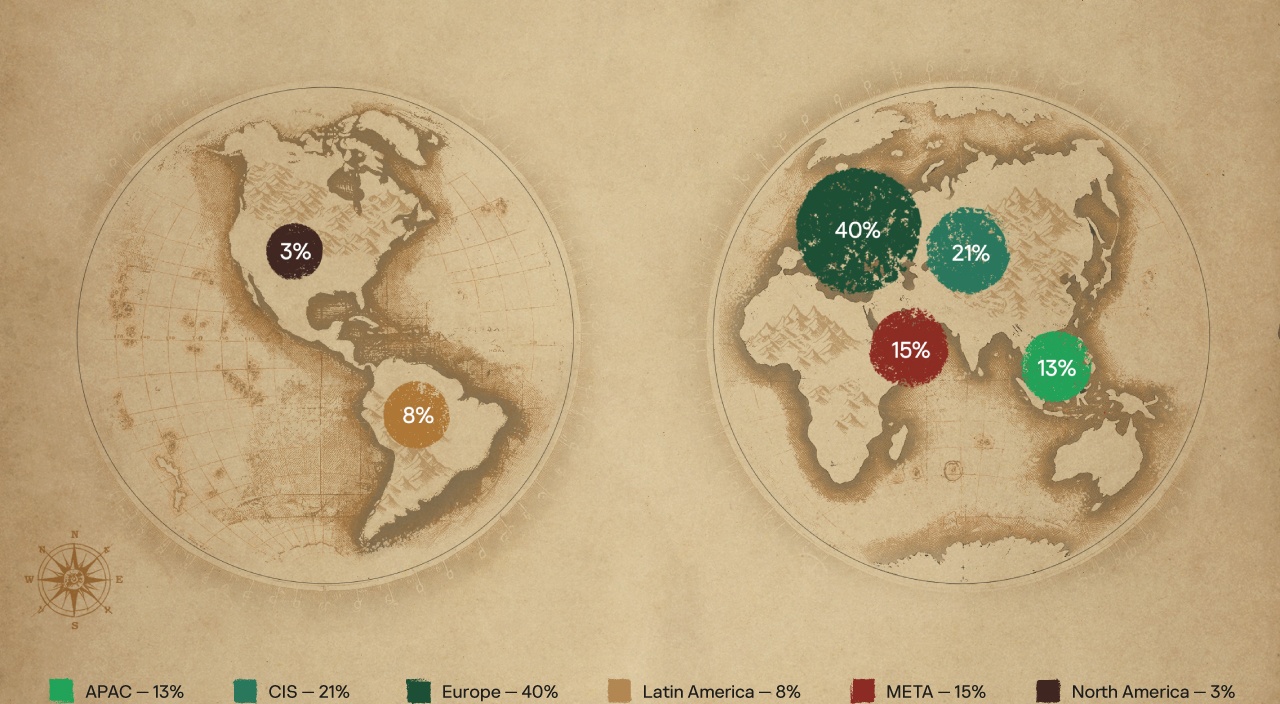
    Kaspersky MDR customers span the globe, giving us a comprehensive and objective view of regional attack behaviors and tactics. The largest concentration of customers is in Europe, the CIS, and the META regions.

    Kaspersky MDR customers by region

    Distribution of incidents by industry

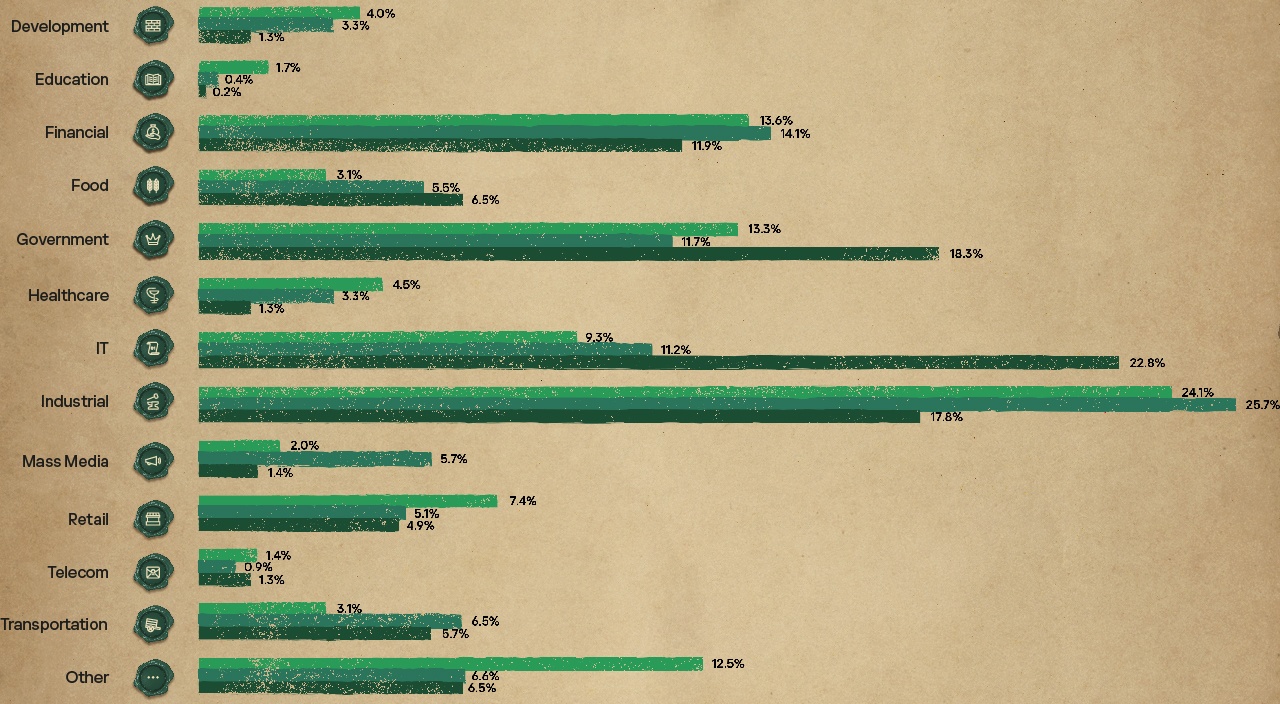
    In 2024, the MDR team observed the highest number of incidents in the industrial (25.7%), financial (14.1%), and government (11.7%) sectors. However, if we consider only high-severity incidents, the distribution is somewhat different: 22.8% in IT, 18.3% in government, 17.8% in industrial, and 11.9% in the financial sector.

    The most attacked industries

    General observations and recommendations

    In 2024, we observed the following trends in the incidents detected by our SOC team:

    • High-severity incidents decreased, but complexity increased. The number of high-severity incidents decreased by 34% compared to 2023. However, the mean time to investigate and report these incidents increased by 48%, indicating a rise in the average complexity of attacks. This is supported by the fact that the vast majority of triggered detection rules and IoAs were from specialized XDR tools. This marks a shift from previous years, where OS log-based detection played a significant role. Given this trend, specialized tools like XDR are essential for effectively detecting and investigating modern threats.
    • Human-driven targeted attacks are increasing. Human-driven targeted attacks accounted for 43% of high-severity incidents – 74% more than in 2023 and 43% more than in 2022. Despite advances in automated detection tools, motivated attackers continue to find ways to bypass them. To counter such threats, human-driven solutions like Managed Detection and Response are critical. For organizations with in-house security operations teams, internal processes and technologies must be equipped to handle the modern threat landscape. Comprehensive SOC consulting services can help achieve this.
    • Attackers often return after a successful breach. The statistics consistently show that attackers often return after a successful attack. This is especially evident in the government sector, where attackers aim to persist in the system long-term for espionage purposes. In such cases, combining an XDR-equipped in-house SOC or outsourced MDR with regular Compromise Assessments is an effective way to detect and investigate incidents that may be missed by existing security measures.
    • Living off the Land techniques remain prevalent. Attackers often use Living off the Land (LotL) methods in infrastructures lacking proper system configuration controls. A significant number of incidents are linked to unauthorized changes, such as adding accounts to privileged groups or weakening secure configurations. To minimize false positives in these scenarios, effective configuration management and formal procedures for implementing changes and managing access are crucial.
    • User Execution and Phishing remain top threats. User Execution and Phishing techniques ranked again in the top three threats, with nearly 5% of high-severity incidents involving successful social engineering. Users are still the weakest link, making Security Awareness training an important focus for corporate information security planning.

    To explore these and other trends in detail, download full report (PDF).

    MIL OSI Economics

  • MIL-OSI: IDEX Biometrics receives IDEX Pay order for VISA biometric cards in MEA

    Source: GlobeNewswire (MIL-OSI)

    Oslo, Norway – 20 February 2025 – A leading smart card technology, security and ID company based in MEA (Middle-East & Africa) has placed a production order of 10,000 units with IDEX Biometrics. The order supports Visa biometric bank card programs in one of the fastest growing payment markets in the region, and marks the first Visa program in market on the IDEX Pay biometric technology solution. The IDEX Biometrics partner serves over 500 banks, governments, and corporations worldwide.

    ‘The innovation pace of our card manufacturing partners in bringing biometric smart cards to market is accelerating; certifications allow them to move to industrialized production and commercialization. Ultimately bringing more secure payments, access and identity control to more consumers around the world’, comments Catharina Eklof, Chief Executive Office at IDEX Biometrics.

    For further information contact:
    Marianne Bøe, Head of Investor Relations, +47 91800186
    Kristian Flaten, CFO, +47 95092322
    E-mail:ir@idexbiometrics.com

    About IDEX Biometrics
    IDEX Biometrics ASA (OSE: IDEX) is a global technology leader in fingerprint biometrics, offering authentication solutions across payments, access control, and digital identity. The company’s solutions provide convenience, security, peace of mind, and seamless user experiences worldwide. Built on patented and proprietary sensor technologies, integrated circuit designs, and software, IDEX Biometrics’ biometric solutions target card-based applications for payments and digital authentication. As an industry enabler, the company partners with leading card manufacturers and technology companies to bring its solutions to market.

    For more information, please visit www.idexbiometrics.com.

    Trademark Statement
    IDEX, IDEX Biometrics and the IDEX logo are trademarks owned by IDEX Biometrics ASA. All other brands or product names are the property of their respective holders.

    About this notice:
    This notice was issued by Marianne Bøe, Head of Investor Relations, on 20 February 2025 at 08:30 CET on behalf of IDEX Biometrics ASA.

    The MIL Network

  • MIL-OSI Economics: Air India and Lufthansa Group announce significant expansion of codeshare partnership: ~60 additional routes across 12 Indian and 26 European cities

    Source: Lufthansa Group

    Air India and Lufthansa Group have agreed to build on their longstanding codeshare partnership, which sees Air India enter into a new codeshare agreement with Austrian Airlines, as well as expand the existing codeshare agreements between Air India, Lufthansa, and Swiss International Air Lines (SWISS).

    The expanded partnership significantly boosts flight options and connectivity for travellers between the Indian Subcontinent and Europe with the addition of close to 60 codeshare routes operated by the four airlines across 12 Indian and 26 European cities.

    The expanded agreements increase the total number of codeshare routes between Air India, Lufthansa and SWISS from 55 to nearly 100. Additionally, the new agreement between Air India and Austrian Airlines adds 26 codeshare routes. This provides greater choice, convenience, and seamless experiences to travellers from both regions.

    Customers of Lufthansa Group will now be able to connect to Air India’s domestic services to or from 15 points within India, namely Ahmedabad, Amritsar, Bengaluru, Bhubaneswar, Chennai, Delhi, Goa Mopa, Goa Dabolim, Hyderabad, Indore, Kochi, Kolkata, Mumbai, Pune, and Thiruvananthapuram. Additionally, Lufthansa Group carriers will add their respective designator codes to Air India’s international services to 3 destinations from Delhi and Mumbai: Kathmandu, Melbourne, and Sydney.

    Additionally, flights currently operated by Air India and Lufthansa Group carriers between India and Germany or Switzerland will be covered under the expanded codeshare partnership. For example, customers who wish to fly between Delhi and Frankfurt will now have three daily flight options each way with ‘LH’ flight numbers, including two flights operated by Air India and one flight operated by Lufthansa.

    Reciprocally, Air India will now offer its customers a total of 26 destinations across Europe and 3 destinations in the Americas beyond its gateways in Europe (Frankfurt, Vienna, and Zurich), with the ‘AI’ designator code placed on the following services operated by airlines in the Lufthansa Group, including Austrian Airlines for the first time:

    Lufthansa
    Between Frankfurt and: Amsterdam, Barcelona, Berlin, Bremen, Brussels, Copenhagen, Dresden, Düsseldorf, Dublin, Geneva, Hamburg, Hannover, Luxembourg, Lyon, Manchester, Marseille, Munich, Nice, Nuremberg, Oslo, Prague, Riga, Rio de Janeiro, São Paulo, Stockholm, Stuttgart, Toulouse, Valencia, Washington D.C.

    SWISS
    Between Zurich and: Amsterdam, Barcelona, Berlin, Bremen, Brussels, Copenhagen, Dresden, Düsseldorf, Dublin, Geneva, Hamburg, Hannover, Luxembourg, Manchester, Marseille, Munich, Nice, Oslo, Prague, Stockholm, Stuttgart, Valencia.

    Austrian Airlines
    Between Vienna and: Amsterdam, Barcelona, Berlin, Bremen, Brussels, Copenhagen, Düsseldorf, Geneva, Hamburg, Hannover, Lyon, Manchester, Marseille, Munich, Nice, Oslo, Prague, Stockholm, Stuttgart, Valencia.

    Both airlines plan to progressively include other destinations in their network to the codeshare arrangements.

    Air India and the three Lufthansa Group carriers are members of Star Alliance. Frequent flyers will continue to earn and redeem points/miles on all four airlines, while elite status holders of Air India’s Maharaja Club and Lufthansa Group’s Miles & More programmes will benefit from Star Alliance Gold benefits including priority services, extra baggage allowance, and airport lounge access across the world. 

    According to Lufthansa Group Chief Commercial Officer, Dieter Vranckx: We are thrilled to strengthen our partnership with Air India and elevate the travel experience for our joint customers. By further enhancing our cooperation, we will increase the travel options between Europe and India and offer our passengers improved access to additional destinations. Lufthansa Group remains committed to India, and we are excited about the possibilities and potential the country and Air India as a partner have to offer”.

    Nipun Aggarwal, Chief Commercial Officer, Air India, said: “Our goal is to enable our customers to travel from any corner of the world to another via Air India and its partner airlines. The expansion of our partnership with Lufthansa Group is a step in that direction, and we are pleased to take this long-standing relationship to the next level. With this renewed partnership, our customers will have access to more destinations and greater flexibility to travel across Europe on Lufthansa Group carriers. It also gives us the opportunity to serve Lufthansa Group customers, with warmth and quintessential Indian hospitality, aboard Air India flights. We look forward to continue working closely with our Star Alliance partners in making the world feel like a smaller place.”

    Subject to regulatory approvals, the codeshare flights will be progressively made available for sale through the airlines’ respective booking channels.

    ABOUT LUFTHANSA GROUP:

    The Lufthansa Group is an aviation group with operations worldwide. With 100,000+ employees, Lufthansa Group generated revenue of €35.4bn in the financial year 2023. Our largest business segment is Passenger Airlines while other key business segments include Logistics and Maintenance, Repair and Overhaul (MRO). Other companies and Group functions such as IT companies and Lufthansa Aviation Training form complimentary components of the Group. All airlines and business segments play leading roles in their respective markets.

    ABOUT AIR INDIA GROUP:

    The Air India group – comprising of full-service global airline Air India and low-cost regional carrier Air India Express – is spearheading a new era of Indian aviation. The Air India story began in 1932 when JRD Tata piloted the airline’s inaugural flight and opened the skies for aviation in India. Today, Air India group employs more than 30,000 people, operates over 300 aircraft and carries customers to 55 domestic and 48 international destinations across five continents.

    Returning to the Tata Sons in 2022 following 70 years under Government ownership, Air India group is in the midst of a five-year transformation program, Vihaan.AI. As part of the transformation, Air India placed the then largest-ever order for 470 new aircraft in 2023. In 2024, sister airlines Air Asia India and Vistara were successfully merged into Air India Express and Air India respectively, and the Airline opened South Asia’s largest aviation training academy.

    A new flying school is scheduled to open in 2025, and construction of a greenfield maintenance base, to be operational in 2026, is underway. In addition to receiving new aircraft, all existing aircraft are progressively undergoing a full interior refit.

    With transformation underway across all facets of the business and India’s rich legacy of hospitality, Air India is committed to being a world class global airline with an Indian heart.

    MIL OSI Economics

  • MIL-OSI China: Alibaba Cloud launches first data center in Mexico

    Source: China State Council Information Office

    Alibaba Cloud, the cloud computing arm of Chinese tech giant Alibaba Group, announced the launch of its first data center in Mexico on Wednesday, as the company aims to expand its reach in the global cloud market.

    The new digital infrastructure will provide cloud computing services to businesses and developers across Latin America, underscoring Alibaba Cloud’s commitment to accelerating Mexico’s digital transformation and fostering innovation throughout the region.

    With the addition of this new data center, Alibaba Cloud’s global infrastructure now spans 87 availability zones across 29 regions.

    Selina Yuan, president of international business at Alibaba Cloud Intelligence said, “We are not only bringing cloud technology to support local businesses, but also building an inclusive and thriving ecosystem in Mexico together with local partners, developers and customers to foster innovation, collaboration and sustainable growth across Latin America.”

    Yuan added that by leveraging Alibaba Cloud’s global network, Mexican companies can tap into other markets, especially those in Asia.

    The Mexico facility was launched six days after Alibaba Cloud announced that it will commence operations at its second data center in Thailand to meet the country’s growing demand for cloud services and support generative artificial intelligence applications.

    MIL OSI China News

  • MIL-OSI China: Tourism industry piggybacks on DeepSeek’s AI prowess, creating new opportunities

    Source: China State Council Information Office

    People who used to spend hours juggling ticketing apps and tourism websites to arrange a travel itinerary can now type a simple description of their plans into an AI platform — such as the latest release from DeepSeek — and their work is done.

    On Jan. 20, roughly a week before this year’s Spring Festival, Chinese AI startup DeepSeek released its latest open-source model R1, which boasts a technological breakthrough in leveraging pure deep learning methods to allow AI to spontaneously emerge with reasoning capabilities.

    With its top-class performance and cost-effectiveness, the DeepSeek-R1 has not only stirred up the tech world, but also gone viral among people from various sectors. Since its launch, the model has also become a new favorite for many travelers to generate their travel plans.

    Take Xi’an, one of China’s most popular travel destinations, as an example. Inputting “a five-day tour to dive deep into historical sites, specialties and folk culture in Xi’an” into DeepSeek-R1 will yield a detailed travel plan instantly, including daily schedules, as well as suitable times and modes of transport to visit every scenic spot and dining choice along the way.

    Zhang Yu, who visited Xi’an with the aid of DeepSeek earlier this month, shared the novel experience with local media. “DeepSeek proved my worries — that unexpected things might ruin the AI-generated travel plan — were completely unnecessary. The trip was so well-planned that I managed to visit all the sites smoothly and seamlessly, and enjoyed every moment of it.”

    Zhao Xinyue, a university student who has posted many Xi’an travel vlogs on the Xiaohongshu lifestyle-sharing platform, echoed Zhang’s view.

    “As a person who cares so much about details, I found that travel plans generated by DeepSeek did a very good job with all the specifics. They not only recommended popular tourist attractions but also presented distinctive niche sites to enrich my travel experience. DeepSeek can also adjust travel plans based on real-time weather and crowd-flow data, which is very helpful,” Zhao said.

    During this year’s Spring Festival, traditionally a bustling holiday season for travel and consumption, cities including Nanjing, Zhanjiang and Weifang kicked off an experiment to generate tourism promotions with DeepSeek on social media. Based on AI-generated content, these posts have introduced local scenic areas, cuisines and cultural heritage to potential travelers, gaining huge traction online.

    “During the early stage of trialing DeepSeek to create content, we found the AI-generated answers were more intelligent and efficiently presented than we expected. It’s helpful for us when we’re writing,” said a social media staff worker promoting culture and tourism of Shaanxi Province.

    DeepSeek also brings new momentum and increased productivity to tourism enterprises. Recently, Chinese online travel platform Mafengwo announced that it has upgraded its smart travel services in Guizhou Province by connecting them with the DeepSeek model.

    Simulating the logical thought process of human beings, the platform factors in various user demands and how different tourist sites correlate, and it also coordinates times, traffic and the physical condition of travelers.

    “This deep integration with DeepSeek not only provides more accurate and personalized services for tourists through AI, but also mirrors the tourism industry’s transformation from traditional algorithm-based recommendations to interpretable, traceable, intelligent decision-making,” according to Mafengwo’s AI project manager. “This has ushered in a new chapter of smart tourism.”

    MIL OSI China News

  • MIL-OSI: ING to redeem Perpetual Capital Securities

    Source: GlobeNewswire (MIL-OSI)

    ING to redeem Perpetual Capital Securities

    ING announced today it will redeem USD 1,250 million of 6.500% Perpetual Additional Tier 1 Contingent Convertible Capital Securities (the “Perpetual Capital Securities”) on the call date of 16 April 2025, in line with ING’s goal to continuously optimise its capital structure.

    The Perpetual Capital Securities (CUSIP 456837AF0/ISIN US456837AF06) will be redeemed in full in accordance with their terms, with payment to be made on 16 April 2025. The redemption price will be the principal amount of the Perpetual Capital Securities. Accrued and unpaid interest due on the redemption date will be paid in the usual manner to holders of record as of 15 April 2025. The paying agent for the Perpetual Capital Securities is The Bank of New York Mellon, London Branch 160 Queen Victoria Street London EC4V 4LA United Kingdom.

    Any future decisions by ING as to whether it will exercise (or cause to be exercised) calls in respect of debt securities will be made on an economic basis, taking into account the interests of all stakeholders. Other factors that ING will consider include prevailing market conditions, regulatory approval and capital requirements.

    Note for editors

    For more on ING, please visit www.ing.com. Frequent news updates can be found in the Newsroom or via X @ING_news feed. Photos of ING operations, buildings and its executives are available for download at Flickr.

    ING PROFILE
    ING is a global financial institution with a strong European base, offering banking services through its operating company ING Bank. The purpose of ING Bank is: empowering people to stay a step ahead in life and in business. ING Bank’s more than 60,000 employees offer retail and wholesale banking services to customers in over 40 countries.

    ING Group shares are listed on the exchanges of Amsterdam (INGA NA, INGA.AS), Brussels and on the New York Stock Exchange (ADRs: ING US, ING.N).

    ING aims to put sustainability at the heart of what we do. Our policies and actions are assessed by independent research and ratings providers, which give updates on them annually. ING’s ESG rating by MSCI was reconfirmed by MSCI as ‘AA’ in August 2024 for the fifth year. As of December 2023, in Sustainalytics’ view, ING’s management of ESG material risk is ‘Strong’. Our current ESG Risk Rating, is 17.2 (Low Risk). ING Group shares are also included in major sustainability and ESG index products of leading providers. Here are some examples: Euronext, STOXX, Morningstar and FTSE Russell. Society is transitioning to a low-carbon economy. So are our clients, and so is ING. We finance a lot of sustainable activities, but we still finance more that’s not. Follow our progress on ing.com/climate.

    Important legal information

    Elements of this press release contain or may contain information about ING Groep N.V. and/ or ING Bank N.V. within the meaning of Article 7(1) to (4) of EU Regulation No 596/2014 (‘Market Abuse Regulation’).

    ING Group’s annual accounts are prepared in accordance with International Financial Reporting Standards as adopted by the European Union (‘IFRS- EU’). In preparing the financial information in this document, except as described otherwise, the same accounting principles are applied as in the 2023 ING Group consolidated annual accounts. All figures in this document are unaudited. Small differences are possible in the tables due to rounding.

    Certain of the statements contained herein are not historical facts, including, without limitation, certain statements made of future expectations and other forward-looking statements that are based on management’s current views and assumptions and involve known and unknown risks and uncertainties that could cause actual results, performance or events to differ materially from those expressed or implied in such statements. Actual results, performance or events may differ materially from those in such statements due to a number of factors, including, without limitation: (1) changes in general economic conditions and customer behaviour, in particular economic conditions in ING’s core markets, including changes affecting currency exchange rates and the regional and global economic impact of the invasion of Russia into Ukraine and related international response measures (2) changes affecting interest rate levels (3) any default of a major market participant and related market disruption (4) changes in performance of financial markets, including in Europe and developing markets (5) fiscal uncertainty in Europe and the United States (6) discontinuation of or changes in ‘benchmark’ indices (7) inflation and deflation in our principal markets (8) changes in conditions in the credit and capital markets generally, including changes in borrower and counterparty creditworthiness (9) failures of banks falling under the scope of state compensation schemes (10) non-compliance with or changes in laws and regulations, including those concerning financial services, financial economic crimes and tax laws, and the interpretation and application thereof (11) geopolitical risks, political instabilities and policies and actions of governmental and regulatory authorities, including in connection with the invasion of Russia into Ukraine and the related international response measures (12) legal and regulatory risks in certain countries with less developed legal and regulatory frameworks (13) prudential supervision and regulations, including in relation to stress tests and regulatory restrictions on dividends and distributions (also among members of the group) (14) ING’s ability to meet minimum capital and other prudential regulatory requirements (15) changes in regulation of US commodities and derivatives businesses of ING and its customers (16) application of bank recovery and resolution regimes, including write down and conversion powers in relation to our securities (17) outcome of current and future litigation, enforcement proceedings, investigations or other regulatory actions, including claims by customers or stakeholders who feel misled or treated unfairly, and other conduct issues (18) changes in tax laws and regulations and risks of non-compliance or investigation in connection with tax laws, including FATCA (19) operational and IT risks, such as system disruptions or failures, breaches of security, cyber-attacks, human error, changes in operational practices or inadequate controls including in respect of third parties with which we do business and including any risks as a result of incomplete, inaccurate, or otherwise flawed outputs from the algorithms and data sets utilized in artificial intelligence (20) risks and challenges related to cybercrime including the effects of cyberattacks and changes in legislation and regulation related to cybersecurity and data privacy, including such risks and challenges as a consequence of the use of emerging technologies, such as advanced forms of artificial intelligence and quantum computing (21) changes in general competitive factors, including ability to increase or maintain market share (22) inability to protect our intellectual property and infringement claims by third parties (23) inability of counterparties to meet financial obligations or ability to enforce rights against such counterparties (24) changes in credit ratings (25) business, operational, regulatory, reputation, transition and other risks and challenges in connection with climate change and ESG-related matters, including data gathering and reporting (26) inability to attract and retain key personnel (27) future liabilities under defined benefit retirement plans (28) failure to manage business risks, including in connection with use of models, use of derivatives, or maintaining appropriate policies and guidelines (29) changes in capital and credit markets, including interbank funding, as well as customer deposits, which provide the liquidity and capital required to fund our operations, and (30) the other risks and uncertainties detailed in the most recent annual report of ING Groep N.V. (including the Risk Factors contained therein) and ING’s more recent disclosures, including press releases, which are available on www.ING.com.

    This document may contain ESG-related material that has been prepared by ING on the basis of publicly available information, internally developed data and other third-party sources believed to be reliable. ING has not sought to independently verify information obtained from public and third-party sources and makes no representations or warranties as to accuracy, completeness, reasonableness or reliability of such information.

    Materiality, as used in the context of ESG, is distinct from, and should not be confused with, such term as defined in the Market Abuse Regulation or as defined for Securities and Exchange Commission (‘SEC’) reporting purposes. Any issues identified as material for purposes of ESG in this document are therefore not necessarily material as defined in the Market Abuse Regulation or for SEC reporting purposes. In addition, there is currently no single, globally recognized set of accepted definitions in assessing whether activities are “green” or “sustainable.” Without limiting any of the statements contained herein, we make no representation or warranty as to whether any of our securities constitutes a green or sustainable security or conforms to present or future investor expectations or objectives for green or sustainable investing. For information on characteristics of a security, use of proceeds, a description of applicable project(s) and/or any other relevant information, please reference the offering documents for such security.

    This document may contain inactive textual addresses to internet websites operated by us and third parties. Reference to such websites is made for information purposes only, and information found at such websites is not incorporated by reference into this document. ING does not make any representation or warranty with respect to the accuracy or completeness of, or take any responsibility for, any information found at any websites operated by third parties. ING specifically disclaims any liability with respect to any information found at websites operated by third parties. ING cannot guarantee that websites operated by third parties remain available following the publication of this document, or that any information found at such websites will not change following the filing of this document. Many of those factors are beyond ING’s control.

    Any forward-looking statements made by or on behalf of ING speak only as of the date they are made, and ING assumes no obligation to publicly update or revise any forward-looking statements, whether as a result of new information or for any other reason.

    This document does not constitute an offer to sell, or a solicitation of an offer to purchase, any securities in the United States or any other jurisdiction.

    Attachment

    The MIL Network

  • MIL-OSI: Viridien and Matnex partner to accelerate AI-powered materials discovery

    Source: GlobeNewswire (MIL-OSI)

    Paris, France – February 20, 2025

    Viridien, an advanced technology and digital company, and Materials Nexus Ltd. (trading as Matnex), a leader in AI-driven materials discovery, are partnering to rapidly scale Matnex’s computational capacity for the discovery and production of groundbreaking materials.

    The partnership between Viridien and Matnex reflects a shared goal to accelerate innovation and reduce the environmental impact of technologies critical to the net-zero transition in areas such as energy generation, energy storage, transport and sustainable computing.

    This expansion of computational resources, powered by Viridien’s Outcome-as-a-Service model, represents a paradigm shift in materials discovery. By leveraging AI/HPC and optimization expertise, Viridien will industrialize Matnex’s innovation pipeline. This partnership is set to deliver the highest throughput of new material discoveries globally, unlocking unprecedented commercial opportunities and industry-wide transformation.

    Dr. Jonathan Bean, CEO of Matnex, said: “This project marks a major leap forward in materials science. By harnessing AI at this scale, we can tackle complex challenges that have previously been beyond reach. This partnership with Viridien provides us with computational power that is not only unrivalled but transformative for the field of materials discovery.”

    Chris Page, EVP, New Business Development, Viridien, said: “This agreement is another exciting example of how Viridien’s HPC & Cloud Solutions teams are collaborating with high HPC baseload scientific companies to achieve faster, more accurate results with lower and more predictable R&D and operating costs enabling them to accelerate scientific discoveries and push innovative products to the market more quickly and economically. We are particularly delighted to be supporting Matnex’s research into next-generation materials for the HPC industry. This fits well with our corporate commitment to help catalyze technology innovations for a more sustainable future for society.”

    About Viridien:

    Viridien (www.viridiengroup.com) is an advanced technology, digital and Earth data company that pushes the boundaries of science for a more prosperous and sustainable future. With our ingenuity, drive and deep curiosity we discover new insights, innovations, and solutions that efficiently and responsibly resolve complex natural resource, digital, energy transition and infrastructure challenges. Viridien employs around 3,500 people worldwide and is listed as VIRI on the Euronext Paris SA (ISIN: FR001400PVN6).

    Contacts

    Attachment

    The MIL Network

  • MIL-OSI: CLIQ Reports Full Year 2024 Results

    Source: GlobeNewswire (MIL-OSI)

    • Tougher market conditions: €243m sales (-26%) and €21m EBITDA (-58%)
    • Transformation programme: €11m special items on EBITDA level
    • -€4.75 EPS resulting from -€28m net loss (-188%)
    • €12m net cash position per year-end vs. €16m at end of 2023
    • Share buyback programme successfully completed and €0.04 dividend per share proposed
    • 2025 outlook: €180-220m sales, €10-15m EBITDA, €50-75m customer acquisition costs

    DÜSSELDORF, 20 February 2025 – The CLIQ Group publishes today its audited 2024 financial statements. The Annual Report 2024 is available on the Group’s website at https://cliqdigital.com/investors/financialreporting.

    Performance

    in millions of € FY
    2024
    FY
    2023
    Δ   4Q
    2024
    4Q
    2023
    Δ
    North America 168 197 -15%   34 54 -37%
    Europe 52 109 -52%   9 25 -64%
    Latin America 14 13 10%   4 3 11%
    ROW 9 8 20%   1 5 -29%
    Sales 243 326 -26%   48 84 -43%
    Expected average LTV1 (in €) 77 85 -10%   70 87 -19%
    Total CAC2 -75 -135 -45%   -11 -35 -68%
    EBITDA (before special items3) 21 50 -58%   5 12 -59%
    EBITDA margin3 9% 15%     10% 14%  
    Profit/loss for the period -28 32 -187%   -29 7 n/a
    EPS (basic, in €) -4.75 4.90 n/a   -4.99 1.07 n/a
    • Sales: In 2024, Group sales declined by 26% year-on-year to €243 million (2023: €326 million) mainly due to less customers. 97% of Group sales in 2024 were generated with bundled-content services and in line with the Management decision to focus on profitability, revenue in North America declined by 15% and in Europe by 52% in 2024. In Latin America and in the region Rest of the World, sales increased by 10% and 20%. However, the quarter-on-quarter Group sales decrease decelerated notably from -21% in 3Q 2024 to -11% in the fourth quarter.
    • Total customer acquisition costs: The total customer acquisition costs in 2024 amounted to €75 million (2023: €135 million). The 45% lower total customer acquisition costs reflected the Group’s decision to strategically increase its focus on profitability and the subsequent lowering of the target cost per acquisition (CPA).
    • EBITDA: In 2024, EBITDA before special items decreased by 58% to €21 million (2023: €50 million) and the corresponding EBITDA margin was accordingly lower at 9% (2023: 15%) predominantly as a result of the lower sales development and despite reduced cost of sales and operating expenses. Reported EBITDA amounted to €10 million and included therein were €11 million special items relating mostly to the Group’s transformation programme “Fit For Future”. The reported EBITDA margin was 4%.
    • Loss for the period: In 2024, the result for the year amounted to a loss of €28 million (2023: €32 million profit). Resulting from the annual impairment test performed on the goodwill, CLIQ corrected its goodwill and recognised an impairment loss of €27 million. This goodwill impairment was primarily attributable to the challenging market conditions going forward as well as to the significant decline in 2024 in the Group’s market value as determined by the stock market capitalisation.
    • Earnings per share: In 2024, the loss per share (basic EPS) was -€4.75 (2023: €4.90) and the diluted loss (EPS) totalled -€4.71 (2023: €4.82).
    • Cash flow: In 2024, the operating free cash flow decreased to €3.4 million (2023: €19 million). The cash inflow from operating activities during 2024 amounted to €9 million (2023: €30 million) and the decrease was mainly due to the drop in sales and margin contraction. The 2024 cash outflow from investing activities was €5 million (2023: €12 million) and largely related to payments for licensed content as well as for investments in platform and technical developments. The cash flow from financing activities during 2024 was an outflow of €7 million (2023: €13 million) and included €5.5 million cash outflow for the share buyback programme and €0.3 million dividend distribution.
    • Liquidity: Due to the lower operating free cash flow, the net cash position decreased to €12 million at the year-end close (31/12/2023: €16 million).

    Operational indicators

    • Lifetime value of a customer: In 2024, the expected average lifetime value of a customer (LTV) was down 10% to €77 (2023: €85). The year-on-year decrease was due to the higher churn rates against 2023 resulting from new customer care tools in place at the card scheme companies, which consequently resulted in shorter average customer loyalty durations.
    • Customers: The number of unique paying customers for the Group’s bundled- and single-content streaming services decreased to 0.7 million per 31 December 2024 (31/12/2023: 1.2 million). The decrease resulted from the Group’s stronger focus on profitability than on sales growth. Whereby the CPA was brought more in line with the lower expected average lifetime value (LTV) of the customers, which led to less new customer acquisitions.
    • Lifetime value of Customer Base: As at 31 December 2024, the lifetime value of the customer base (LTVCB) dropped by €70 million to €94 million compared to prior year-end (31/12/2023: €164 million). The lower LTVCB was the result of the decrease in the number of customers as well as the lower expected average lifetime value of a customer. The LTVCB represents the expected sales to be generated from paying customers as at reporting date over their estimated individual remaining lifetime.

    Capital return

    CLIQ successfully completed its share buyback programme ahead of schedule on 3 January 2025 and acquired in total nearly 647k own shares for just under €5.5 million at an average price of around €8.50 per share. As part of its capital return strategy, CLIQ’s Management Board decides on a yearly basis to what extent and how capital will be returned to shareholders. Despite the poor operating performance, CLIQ’s Management Board and Supervisory Board propose to distribute a dividend for the financial year 2024 of €0.04 per share.

    Outlook

    In 2025, CLIQ expects to generate an EBITDA of between €10 and 15 million on the back of Group sales expected to range between €180 and 220 million and after €50 to 75 million total customer acquisition costs forecast.

    Management Board statement

    CLIQ and our shareholders faced significant challenges in 2024 as our business encountered tougher market conditions and our new sales growth initiatives advanced more slowly than anticipated,” said CEO Luc Voncken. “While market conditions in 2025 remain uncertain, we have strengthened our business foundations and must now move forward with a renewed entrepreneurial spirit and a clear vision to seize the growth opportunities ahead.

    Earnings call

    A live audio webcast conducted in English will be held today at 2.00 p.m. CET with presentations from Luc Voncken, CEO, and Ben Bos, member of the Management Board.

    Questions submitted before 12.00 p.m. CET via email to investors@cliqdigital.com will be answered after the presentations.

    Please click on the link below to register for this webcast:

    https://cliqdigital.zoom.us/webinar/register/WN_UManLyZkSvyaKCEkPZeQmg

    ZOOM details will be sent to you via email post registration and a replay of the webcast will be available shortly after the call at: https://cliqdigital.com/investors/financials/financial-reporting.

    Contacts

    Investor Relations:
    Sebastian McCoskrie, s.mccoskrie@cliqdigital.com, +49 151 52043659

    Media Relations:
    Daniela Münster, daniela.muenster@h-advisors.global, +49 174 3358111

    Financial calendar

    Annual General Meeting 2025 Friday 11 April 2025
    Financial report 1Q 2025 & earnings call Thursday 8 May 2025
    Half-year financial report 2025 & earnings call Thursday 7 August 2025
    Financial report 3Q/9M 2025 and earnings call Thursday 6 November 2025

    About CLIQ

    The CLIQ Group is a data-driven online performance marketing company that sells bundled subscription-based digital products to consumers worldwide. The Group licenses content from partners, bundles it to digital products, and sells them via performance marketing. CLIQ is expert in turning consumer interest into sales by monetising online traffic using an omnichannel approach.

    The Group operated in 40 countries and employed 132 staff from 33 different nationalities as at 31 December 2024. The company is headquartered in Düsseldorf and has offices in Amsterdam and Paris. CLIQ Digital is listed in the Scale segment of the Frankfurt Stock Exchange (ISIN: DE000A35JS40, GSIN/WKN: A35JS4) and is a constituent of the MSCI World Micro Cap Index.

    Visit our website https://cliqdigital.com/investors. Here you will find all publications and further information about CLIQ. You can also follow us on LinkedIn.


    1 Lifetime value of a customer
    2 Customer acquisition costs
    3 2024 numbers are before special items

    The MIL Network

  • MIL-OSI: Bitget Wallet Maximizes Pi Airdrop Utility with Full Mainnet Support

    Source: GlobeNewswire (MIL-OSI)

    VICTORIA, Seychelles, Feb. 20, 2025 (GLOBE NEWSWIRE) — Bitget Wallet, a leading Web3 non-custodial wallet, has announced full support for the Pi airdrop as its mainnet launches on February 20 at 8:00 (UTC), 2025. As one of the first multi-chain wallets to integrate Pi’s mainnet, Bitget Wallet offers a secure platform for users to claim, store, and swap Pi tokens, ensuring seamless participation in its expanding ecosystem.

    Pi Network (PI) is a cryptocurrency project focused on accessibility, allowing users to mine tokens directly from their mobile devices without expensive hardware. Pi Network has attracted over 100 million participants with its mobile-first mining model, highlighting the potential of community-driven adoption. Its mainnet launch represents a pivotal transition from a closed system to an open blockchain infrastructure, where the viability of Pi’s ecosystem will be tested through real-world use cases and network scalability.

    Beyond simple transactions, Pi tokens can be used for peer-to-peer transfers, payments in merchant marketplaces, and staking for network security and governance. These functions provide practical applications for users looking to maximize the value of their Pi holdings. However, as Pi transitions to an open blockchain, its mainnet launch will serve as the first real test of whether these utilities can be fully realized at scale. The success of Pi’s ecosystem will depend on how well it supports active transactions, sustainable incentives, and broader adoption beyond speculation.

    Bitget Wallet enhances Pi holders’ ability to utilize their tokens efficiently. Users can securely store and trade Pi, stake tokens for passive income, and make real-world payments. The wallet’s low transaction fees, instant swaps with no slippage, and ability to trade without mainnet gas fees create a seamless user experience. Additionally, Bitget Wallet’s bank-grade security, including multi-signature cold storage and 2FA verification, ensures asset protection. Multi-chain support allows users to swap Pi across networks, including Solana, BSC, Ethereum and more.

    To drive adoption, Bitget Wallet is launching dedicated campaigns to enhance liquidity and encourage broader participation. As part of its initiatives, Bitget Wallet will host an X Space AMA session “PI Launches: What’s Next for PI?“, inviting the community to discuss Pi’s future while offering users a chance to win rewards. Participants who drop screenshots of their Pi holdings in Bitget Wallet will be eligible to share a $314 USDT prize pool. With Pi’s momentum continuing to grow, Bitget Wallet is positioning itself as the go-to platform for Pi holders looking to maximize their assets and expand their onchain activities.

    “Pi Network’s mainnet launch is a defining moment—not just for Pi, but for the broader Web3 movement,” said Alvin Kan, COO of Bitget Wallet. “While its limited market supply and strong network effects may drive early interest, its long-term success will depend on real-world utility beyond speculation. The challenge is building an ecosystem where users hold, transact, and find lasting value. At Bitget Wallet, we are committed to equipping users with the right tools to navigate this evolving landscape.”

    For more details, please visit Bitget Wallet blog.

    About Bitget Wallet
    Bitget Wallet is the home of Web3, uniting endless possibilities in one non-custodial wallet. With over 60 million users, it offers comprehensive onchain services, including asset management, instant swaps, rewards, staking, trading tools, live market data, a DApp browser, an NFT marketplace and crypto payment. Supporting over 100 blockchains, 20,000+ DApps, and 500,000+ tokens, Bitget Wallet enables seamless multi-chain trading across hundreds of DEXs and cross-chain bridges, along with a $300+ million protection fund to ensure safety of users’ assets. Experience Bitget Wallet Lite to start a Web3 journey.

    For more information, visit: XTelegramInstagramYouTubeLinkedInTikTokDiscordFacebook
    For media inquiries, please contact media.web3@bitget.com

    The MIL Network

  • MIL-OSI: Aegon reports second half year 2024 results

    Source: GlobeNewswire (MIL-OSI)

    The Hague – February 20, 2025. Please click here to access all 2H 2024 results related documents. 

    2H 2024 IFRS results

    • Net profit of EUR 741 million as operating result and benefit from the a.s.r. stake are partly offset by restructuring charges and net impairments in the US
    • Operating result of EUR 776 million, up 14% compared with the second half of 2023, reflecting improved experience variance in the US and business growth in the US and asset management
    • Shareholders’ equity per share of EUR 4.53, increases by 13% compared with June 30, 2024, while contractual service margin per share after estimated tax adjustment increases by 5% to EUR 4.38. Valuation equity per share – the sum of these components – grew by 9% to EUR 8.91

    2H 2024 capital generation, cash and capital management

    • Operating capital generation before holding funding and operating expenses remained broadly stable at EUR 658 million compared with the second half of 2023. Aegon meets its increased guidance of EUR 1.2 billion for 2024
    • Capital ratios of Aegon’s main units remain above their respective operating levels and Cash Capital at Holding at EUR 1.7 billion per year-end 2024. EUR 200 million share buyback completed in December
    • Free cash flow of EUR 385 million, which includes capital distributions from a.s.r. Full-year free cash flow of EUR 759 million meets guidance of more than EUR 700 million
    • 2024 final dividend of EUR 0.19 per common share proposed, an increase of 19% compared with 2023 final dividend

    Lard Friese, Aegon CEO, commented:  
    In 2024, we continued to make good progress with our transformation and are on track to meet the 2025 targets we laid out at our 2023 Capital Markets Day (CMD). We will provide an update on our strategy and new group targets at our next CMD on December 10, 2025, in London. Looking back on the year, I am proud of what the teams achieved, and I am grateful for their hard work.

    We have delivered on both our increased guidance for operating capital generation (OCG) of EUR 1.2 billion, and on our free cash flow guidance of more than EUR 700 million for 2024. Our main business units remained well capitalized, and we have generated a full year IFRS operating result of EUR 1.5 billion. Our valuation equity per share, which is a measure of shareholder value, increased by 12% to EUR 8.91.

    We continued to execute our strategy to grow our businesses and improve the service we offer to customers. This included the roll-out of a new brand identity across our fully owned units that facilitates improved digital customer experiences. Taking a closer look at our commercial performance in 2024: in the Americas, we strengthened our distribution capabilities as World Financial Group (WFG) grew its number of licensed agents to over 86,000, up 17% compared with the prior year. This contributed to the 22% increase in the operating result of Transamerica’s distribution segment, which reached USD 191 million. Transamerica generated Individual Life sales of USD 473 million, slightly down compared with 2023. The Retirement Plans business experienced outflows but the mid-sized Retirement Plans business continued to grow with strong written plan sales and USD 557 million of net deposits. Throughout the year, we also continued to implement management actions to reduce our exposure to Financial Assets. This included achieving the goals of our program to purchase universal life policies from institutional owners earlier than anticipated.

    In the United Kingdom, we are executing the strategy we presented at our June 2024 Teach-In. Our UK Workplace platform performed strongly, with net deposits amounting to GBP 3.7 billion in 2024, due to the onboarding of new schemes and higher regular contributions from existing schemes. While outflows continued in our UK Adviser platform, we are executing our strategy to return the platform to growth by 2028 that includes targeting the top 500 financial adviser firms.

    2024 saw our Asset Management business return to growth, with third-party net deposits in Global Platforms and net deposits in Strategic Partnerships combined totaling around EUR 14 billion. This was driven by consecutive net deposits at both businesses during each quarter of 2024.

    Our International business saw 15% lower new life sales, mainly driven by pricing actions in China to reflect lower interest rates. At the same time, its value of new business grew by 18%, driven by Brazil and Spain & Portugal, underscoring our focus on profitable growth.

    Over the year, we remained disciplined in our management of capital. During the first half of 2024, we completed the EUR 1.535 billion share buyback program. In the second half, we completed a EUR 200 million share buyback program and announced a new EUR 150 million share buyback program, which began in January 2025.

    On the basis of our 2024 performance, we today propose a final dividend of 19 eurocents per share. This will result in a total dividend paid for the full-year 2024 of 35 eurocents, up 17% compared with 2023, and means we are on our way to achieve our target of around 40 eurocents per share over 2025.

    Additional information 
    Presentation
    The conference call presentation is available on aegon.com.

    Supplements
    Aegon’s second half 2024 Financial Supplement and other supplementary documents are available on aegon.com.

    Webcast and conference call including Q&A
    The webcast and conference call starts at 9:00 am CET. The audio webcast can be followed on aegon.com. To join the conference call and/or participate in the Q&A, you will need to register via the following registration link. Directly after registration you will see your personal pin on the confirmation screen, and you will also receive an email with the call details and your personal pin to enter the conference call. The link becomes active 15 minutes prior to the scheduled start time. To avoid any unforeseen connection issues, it is recommended to make use of the “Call me” option. Approximately two hours after the conference call, a replay will be available on aegon.com. 

    Click to join
    With “Call me”, there’s no need to dial-in. Simply click the following registration link and select the option “Call me”.
    Enter your information and you will be called back to directly join the conference. The link becomes active 15 minutes prior to the scheduled start time. Should you wish not to use the “Click to join” function, dial-in numbers are also available. For passcode: you will receive a personal pin upon registration.

    Dial-in numbers for conference call:
    United States: +1 864 991 4103 (local)
    United Kingdom: +44 808 175 1536 (toll-free)
    The Netherlands: +31 800 745 8377 (toll-free); or +31 970 102 86838 (toll)

    Financial calendar 2025
    First quarter 2025 trading update – May 16, 2025
    Annual General Meeting – June 12, 2025
    Second half 2025 results – August 21, 2025
    Third quarter 2025 trading update – November 13, 2025
    Capital Markets Day – December 10, 2025

    About Aegon
    Aegon is an international financial services holding company. Aegon’s ambition is to build leading businesses that offer their customers investment, protection, and retirement solutions. Aegon’s portfolio of businesses includes fully owned businesses in the United States and United Kingdom, and a global asset manager. Aegon also creates value by combining its international expertise with strong local partners via insurance joint ventures in Spain & Portugal, China, and Brazil, and via asset management partnerships in France and China. In addition, Aegon owns a Bermuda-based life insurer and generates value via a strategic shareholding in a market leading Dutch insurance and pensions company.

    Aegon’s purpose of helping people live their best lives runs through all its activities. As a leading global investor and employer, Aegon seeks to have a positive impact by addressing critical environmental and societal issues, with a focus on climate change and inclusion & diversity. Aegon is headquartered in The Hague, the Netherlands, domiciled in Bermuda, and listed on Euronext Amsterdam and the New York Stock Exchange. More information can be found at aegon.com. More information can be found at aegon.com.

    Contacts

    Media relations Investor relations
    Richard Mackillican Yves Cormier
    +31(0) 6 27411546 +31(0) 70 344 8028
    richard.mackillican@aegon.com yves.cormier@aegon.com
       

    Local currencies and constant currency exchange rates
    This document contains certain information about Aegon’s results, financial condition and revenue generating investments presented in USD for the Americas and in GBP for the United Kingdom, because those businesses operate and are managed primarily in those currencies. Certain comparative information presented on a constant currency basis eliminates the effects of changes in currency exchange rates. None of this information is a substitute for or superior to financial information about Aegon presented in EUR, which is the currency of Aegon’s primary financial statements.

    Forward-looking statements
    The statements contained in this document that are not historical facts are forward-looking statements as defined in the US Private Securities Litigation Reform Act of 1995. The following are words that identify such forward-looking statements: aim, believe, estimate, target, intend, may, expect, anticipate, predict, project, counting on, plan, continue, want, forecast, goal, should, would, could, is confident, will, and similar expressions as they relate to Aegon. These statements may contain information about financial prospects, economic conditions and trends and involve risks and uncertainties. In addition, any statements that refer to sustainability, environmental and social targets, commitments, goals, efforts and expectations and other events or circumstances that are partially dependent on future events are forward-looking statements. These statements are not guarantees of future performance and involve risks, uncertainties and assumptions that are difficult to predict. Aegon undertakes no obligation, and expressly disclaims any duty, to publicly update or revise any forward-looking statements. Readers are cautioned not to place undue reliance on these forward-looking statements, which merely reflect company expectations at the time of writing. Actual results may differ materially and adversely from expectations conveyed in forward-looking statements due to changes caused by various risks and uncertainties. Such risks and uncertainties include but are not limited to the following:

    • Unexpected delays, difficulties, and expenses in executing against Aegon’s environmental, climate, diversity and inclusion or other “ESG” targets, goals and commitments, and changes in laws or regulations affecting us, such as changes in data privacy, environmental, health and safety laws;
    • Changes in general economic and/or governmental conditions, particularly in Bermuda, the United States, the Netherlands and the United Kingdom;
    • Civil unrest, (geo-) political tensions, military action or other instability in a country or geographic region;
    • Changes in the performance of financial markets, including emerging markets, such as with regard to:         
      • The frequency and severity of defaults by issuers in Aegon’s fixed income investment portfolios;
      • The effects of corporate bankruptcies and/or accounting restatements on the financial markets and the resulting decline in the value of equity and debt securities Aegon holds;
      • The effects of declining creditworthiness of certain public sector securities and the resulting decline in the value of government exposure that Aegon holds;
      • The impact from volatility in credit, equity, and interest rates;
    • Changes in the performance of Aegon’s investment portfolio and decline in ratings of Aegon’s counterparties;
    • Lowering of one or more of Aegon’s debt ratings issued by recognized rating organizations and the adverse impact such action may have on Aegon’s ability to raise capital and on its liquidity and financial condition;
    • Lowering of one or more of insurer financial strength ratings of Aegon’s insurance subsidiaries and the adverse impact such action may have on the written premium, policy retention, profitability and liquidity of its insurance subsidiaries;
    • The effect of applicable Bermuda solvency requirements, the European Union’s Solvency II requirements, and applicable equivalent solvency requirements and other regulations in other jurisdictions affecting the capital Aegon is required to maintain;
    • Changes in the European Commissions’ or European regulator’s position on the equivalence of the supervisory regime for insurance and reinsurance undertakings in force in Bermuda;
    • Changes affecting interest rate levels and low or rapidly changing interest rate levels;
    • Changes affecting currency exchange rates, in particular the EUR/USD and EUR/GBP exchange rates;
    • Changes affecting inflation levels, particularly in the United States, the Netherlands and the United Kingdom;
    • Changes in the availability of, and costs associated with, liquidity sources such as bank and capital markets funding, as well as conditions in the credit markets in general such as changes in borrower and counterparty creditworthiness;
    • Increasing levels of competition, particularly in the United States, the Netherlands, the United Kingdom and emerging markets;
    • Catastrophic events, either manmade or by nature, including by way of example acts of God, acts of terrorism, acts of war and pandemics, could result in material losses and significantly interrupt Aegon’s business;
    • The frequency and severity of insured loss events;
    • Changes affecting longevity, mortality, morbidity, persistence and other factors that may impact the profitability of Aegon’s insurance products and management of derivatives;
    • Aegon’s projected results are highly sensitive to complex mathematical models of financial markets, mortality, longevity, and other dynamic systems subject to shocks and unpredictable volatility. Should assumptions to these models later prove incorrect, or should errors in those models escape the controls in place to detect them, future performance will vary from projected results;
    • Reinsurers to whom Aegon has ceded significant underwriting risks may fail to meet their obligations;
    • Changes in customer behavior and public opinion in general related to, among other things, the type of products Aegon sells, including legal, regulatory or commercial necessity to meet changing customer expectations;
    • Customer responsiveness to both new products and distribution channels;
    • Third-party information used by us may prove to be inaccurate and change over time as methodologies and data availability and quality continue to evolve impacting our results and disclosures;
    • As Aegon’s operations support complex transactions and are highly dependent on the proper functioning of information technology, operational risks such as system disruptions or failures, security or data privacy breaches, cyberattacks, human error, failure to safeguard personally identifiable information, changes in operational practices or inadequate controls including with respect to third parties with which Aegon does business, may disrupt Aegon’s business, damage its reputation and adversely affect its results of operations, financial condition and cash flows, and Aegon may be unable to adopt to and apply new technologies;
    • The impact of acquisitions and divestitures, restructurings, product withdrawals and other unusual items, including Aegon’s ability to complete, or obtain regulatory approval for, acquisitions and divestitures, integrate acquisitions, and realize anticipated results, and its ability to separate businesses as part of divestitures;
    • Aegon’s failure to achieve anticipated levels of earnings or operational efficiencies, as well as other management initiatives related to cost savings, Cash Capital at Holding, gross financial leverage and free cash flow;
    • Changes in the policies of central banks and/or governments;
    • Litigation or regulatory action that could require Aegon to pay significant damages or change the way Aegon does business;
    • Competitive, legal, regulatory, or tax changes that affect profitability, the distribution cost of or demand for Aegon’s products;
    • Consequences of an actual or potential break-up of the European Monetary Union in whole or in part, or further consequences of the exit of the United Kingdom from the European Union and potential consequences if other European Union countries leave the European Union;
    • Changes in laws and regulations, or the interpretation thereof by regulators and courts, including as a result of comprehensive reform or shifts away from multilateral approaches to regulation of global or national operations, particularly regarding those laws and regulations related to ESG matters, those affecting Aegon’s operations’ ability to hire and retain key personnel, taxation of Aegon companies, the products Aegon sells, the attractiveness of certain products to its consumers and Aegon’s intellectual property;
    • Regulatory changes relating to the pensions, investment, insurance industries and enforcing adjustments in the jurisdictions in which Aegon operates;
    • Standard setting initiatives of supranational standard setting bodies such as the Financial Stability Board and the International Association of Insurance Supervisors or changes to such standards that may have an impact on regional (such as EU), national or US federal or state level financial regulation or the application thereof to Aegon, including the designation of Aegon by the Financial Stability Board as a Global Systemically Important Insurer (G-SII);
    • Changes in accounting regulations and policies or a change by Aegon in applying such regulations and policies, voluntarily or otherwise, which may affect Aegon’s reported results, shareholders’ equity or regulatory capital adequacy levels;
    • Changes in ESG standards and requirements, including assumptions, methodology and materiality, or a change by Aegon in applying such standards and requirements, voluntarily or otherwise, may affect Aegon’s ability to meet evolving standards and requirements, or Aegon’s ability to meet its sustainability and ESG-related goals, or related public expectations, which may also negatively affect Aegon’s reputation or the reputation of its board of directors or its management; and
    • Other risks and uncertainties identified in the Form 20-F and in other documents filed or to be filed by Aegon with the SEC.
    • Reliance on third-party information in certain of Aegon’s disclosures, which may change over time as methodologies and data availability and quality continue to evolve. These factors, as well as any inaccuracies in third-party information used by Aegon, including in estimates or assumptions, may cause results to differ materially and adversely from statements, estimates, and beliefs made by Aegon or third-parties. Moreover, Aegon’s disclosures based on any standards may change due to revisions in framework requirements, availability of information, changes in its business or applicable governmental policies, or other factors, some of which may be beyond Aegon’s control. Additionally, Aegon’s discussion of various ESG and other sustainability issues in this document or in other locations, including on our corporate website, may be informed by the interests of various stakeholders, as well as various ESG standards, frameworks, and regulations (including for the measurement and assessment of underlying data). As such, our disclosures on such issues, including climate-related disclosures, may include information that is not necessarily “material” under US securities laws for SEC reporting purposes, even if we use words such as “material” or “materiality” in relation to those statements. ESG expectations continue to evolve, often quickly, including for matters outside of our control; our disclosures are inherently dependent on the methodology (including any related assumptions or estimates) and data used, and there can be no guarantee that such disclosures will necessarily reflect or be consistent with the preferred practices or interpretations of particular stakeholders, either currently or in future. 

    This document contains information that qualifies, or may qualify, as inside information within the meaning of Article 7(1) of the EU Market Abuse Regulation (596/2014). Further details of potential risks and uncertainties affecting Aegon are described in its filings with the Netherlands Authority for the Financial Markets and the US Securities and Exchange Commission, including the 2023 Integrated Annual Report. These forward-looking statements speak only as of the date of this document. Except as required by any applicable law or regulation, Aegon expressly disclaims any obligation or undertaking to release publicly any updates or revisions to any forward-looking statements contained herein to reflect any change in Aegon’s expectations with regard thereto or any change in events, conditions or circumstances on which any such statement is based.

    WORLD FINANCIAL GROUP (WFG):
    WFG CONSISTS OF:
    IN THE UNITED STATES, WORLD FINANCIAL GROUP INSURANCE AGENCY, LLC (IN CALIFORNIA, DOING BUSINESS AS WORLD FINANCIAL INSURANCE AGENCY, LLC), WORLD FINANCIAL GROUP INSURANCE AGENCY OF HAWAII, INC., WORLD FINANCIAL GROUP INSURANCE AGENCY OF MASSACHUSETTS, INC., AND / OR WFG INSURANCE AGENCY OF PUERTO RICO, INC. (COLLECTIVELY WFGIA), WHICH OFFER INSURANCE AND ANNUITY PRODUCTS.
    IN THE UNITED STATES, TRANSAMERICA FINANCIAL ADVISORS, INC. IS A FULL-SERVICE, FULLY LICENSED, INDEPENDENT BROKER-DEALER AND REGISTERED INVESTMENT ADVISOR. TRANSAMERICA FINANCIAL ADVISORS, INC. (TFA), MEMBER  FINRA, MSRB, SIPC , AND REGISTERED INVESTMENT ADVISOR, OFFERS SECURITIES AND INVESTMENT ADVISORY SERVICES.
    IN CANADA, WORLD FINANCIAL GROUP INSURANCE AGENCY OF CANADA INC. (WFGIAC), WHICH OFFERS LIFE INSURANCE AND SEGREGATED FUNDS. WFG SECURITIES INC. (WFGS), WHICH OFFERS MUTUAL FUNDS.
    WFGIAC AND WFGS ARE AFFILIATED COMPANIES.

    Attachment

    The MIL Network

  • MIL-OSI Security: Maj. Gen. Gavin Gardner Visits COMLOG WESTPAC, Feb. 4, 2025 [Image 1 of 3]

    Source: United States Navy (Logistics Group Western Pacific)

    Issued by: on


    SINGAPORE (Feb. 4, 2025) U.S. Navy Rear Adm. Todd F. Cimicata, center, Commander, Logistics Group Western Pacific/Task Force 73 (COMLOG WESTPAC/CTF 73), and Capt. John-Paul Tamez, left, Deputy Commander, COMLOG WESTPAC, meet with U.S. Army Maj. Gen. Gavin Gardner, third from right, 8th Theater Sustainment Command, and staff during a scheduled visit to Sembawang Naval Installation, Feb. 4, 2025. COMLOG WESTPAC supports deployed surface units and aircraft carriers, along with regional partners, to facilitate patrols in the South China Sea, participation in naval exercises and responses to natural disasters. (U.S. Navy photo by Mass Communication Specialist 1st Class Jomark A. Almazan/Released)

    Date Taken: 02.03.2025
    Date Posted: 02.19.2025 23:42
    Photo ID: 8877659
    VIRIN: 250204-N-DB724-1015
    Resolution: 8231×5487
    Size: 4.51 MB
    Location: SG

    Web Views: 0
    Downloads: 0

    PUBLIC DOMAIN  

    MIL Security OSI

  • MIL-OSI Australia: Sky News Regional Breakfast

    Source: Australian Ministers 1

    ORTENZIA BORRE: The Regional Aviation Association of Australia is asking the government to consider regional airline operators during the sale process. Regional airlines, which are competitors to Rex, including Sharp Airlines, are concerned about the proposal where the government purchases Rex. Regional Aviation Association Chief Executive, Rob Walker says Rex has competition on 21 of its 46 routes, claiming the number of operators will reduce further if the government is subsidising the airline. And joining me live now on this and more is Regional Development Minister, Kristy McBain. Kristy, thank you for your time this morning. Now, do you share the same concern about the government stepping in to purchase the airline as the regional aviation Association does? 

    KRISTY MCBAIN: What is really important is you’ve got a government that backs regional aviation. What we’ve said from day one is that we want to see the administration process go through in its entirety. What we want to see is a private buyer come through. We’ve made sure that there are incentives in place for that to take place, including the fact that the use it or lose it process for Sydney airport slots doesn’t automatically go into recession. We’ve extended that out to 2026. Those are the things that are important to buyers. What we’ve said is we would be a buyer of last resort. We’re not stepping in now. We’re not substituting the administration process. It’s still got a way to run, and the administrator is keen to work with the private market on it. 

    BORRE: Now, ASIO boss Mike Burgess has revealed there have been multiple attempts by foreign countries to harm Australians, and that the rest of the decade could be even more dangerous. So what does the Albanese Government need to do now before the election to ensure our safety? 

    MCBAIN: What we say consistently is that we have confidence in our security and intelligence agencies. They do a fabulous job. As Mike Burgess has outlined, they’re doing this all whilst keeping Australians safe. Once a year he gives a speech about the things that are happening across our nation and across the world. Without that, Australians would be none the wiser that these things are taking place in the background. We continue to provide all the resources that our security and intelligence agencies need to do their job and keep Australians safe. What we want to make really clear is that we consider it a form of abuse for anyone to harass us, and we continually monitoring this. Harassment of Australians, individuals or businesses is not on. We have full faith that our security agencies will take the appropriate steps they need to. 

    BORRE: Now you’re in Goulburn today as part of the $100 million Community Energy Upgrades Fund. Today, $50 million will be delivered to about 58 local governments in grants for energy upgrades. Talk us through this initiative and how it’s going to benefit Australians. 

    MCBAIN: The Community Energy Upgrade Fund is something that councils have been calling for across the country. They want some help to lower the fixed costs that they have, which in turn helps lower rates for individuals across the country. We’ve supported councils from Geelong in Victoria to Aurukun in Queensland, to the Shire of Flinders Ranges in South Australia. Projects like making community pools fully electric, making sure that there are solar panels and batteries on community libraries, fast car charging stations across our communities to encourage more people to come and visit, or to be able to use electric cars within our community. A really important fund, delivering some cost savings for councils across the country. Round two will be open very soon and we encourage councils to continue to put forward their projects and apply to this fund. 

    BORRE: Kristy McBain, always a pleasure. Thank you for your time this morning. 

    MCBAIN: Good to be with you.

    MIL OSI News

  • MIL-Evening Report: US backing for Pacific disinformation media course casualty of Trump aid ‘freeze’

    Pacific Media Watch

    A New Zealand-based community education provider, Dark Times Academy, has had a US Embassy grant to deliver a course teaching Pacific Islands journalists about disinformation terminated after the new Trump administration took office.

    The new US administration requested a list of course participants and to review the programme material amid controversy over a “freeze” on federal aid policies.

    The course presentation team refused and the contract was terminated by “mutual agreement” — but the eight-week Pacific workshop is going ahead anyway from next week.

    Dark Times Academy’s co-founder Mandy Henk . . . “A Bit Sus”, an evidence-based peer-reviewed series of classes on disinfiormation for Pacific media. Image: Newsroom

    “As far as I can tell, the current foreign policy priorities of the US government seem to involve terrorising the people of Gaza, annexing Canada, invading Greenland, and bullying Panama,” said Dark Times Academy co-founder Mandy Henk.

    “We felt confident that a review of our materials would not find them to be aligned with those priorities.”

    The course, called “A Bit Sus”, is an evidence-based peer-reviewed series of classes that teach key professions the skills needed to identify and counter disinformation and misinformation in their particular field.

    The classes focus on “prebunking”, lateral reading, and how technology, including generative AI, influences disinformation.

    Awarded competitive funds
    Dark Times Academy was originally awarded the funds to run the programme through a public competitive grant offered by the US Embassy in New Zealand in 2023 under the previous US administration.

    The US Embassy grant was focused on strengthening the capacity of Pacific media to identify and counter disinformation. While funded by the US, the course was to be a completely independent programme overseen by Dark Times Academy and its academic consultants.

    Co-founder Henk was preparing to deliver the education programme to a group of Pacific Island journalists and media professionals, but received a request from the US Embassy in New Zealand to review the course materials to “ensure they are in line with US foreign policy priorities”.

    Henk said she and the other course presenters refused to allow US government officials to review the course material for this purpose.

    She said the US Embassy had also requested a “list of registered participants for the online classes,” which Dark Times Academy also declined to provide as compliance would have violated the New Zealand Privacy Act 2020.

    Henk said the refusal to provide the course materials for review led immediately to further discussions with the US Embassy in New Zealand that ultimately resulted in the termination of the grant “by mutual agreement”.

    However, she said Dark Times Academy would still go ahead with running the course for the Pacific Island journalists who had signed up so far, starting on February 26.

    Continuing the programme
    “The Dark Times Academy team fully intends to continue to bring the ‘A Bit Sus’ programme and other classes to the Pacific region and New Zealand, even without the support of the US government,” Henk said.

    “As noted when we first announced this course, the Pacific Islands have experienced accelerated growth in digital connectivity over the past few years thanks to new submarine cable networks and satellite technology.

    “Alongside this, the region has also seen a surge in harmful rumours and disinformation that is increasingly disrupting the ability to share accurate and truthful information across Pacific communities.

    “This course will help participants from the media recognise common tactics used by disinformation agents and support them to deploy proven educational and communications techniques.

    “By taking a skills-based approach to countering disinformation, our programme can help to spread the techniques needed to mitigate the risks posed by digital technologies,” Henk said.

    Especially valuable for journalists
    Dark Times Academy co-founder Byron Clark said the course would be especially valuable for journalists in the Pacific region given the recent shifts in global politics and the current state of the planet.

    Dark Times Academy co-founder and author Byron Clark . . . “We saw the devastating impacts of disinformation in the Pacific region during the measles outbreak in Samoa.” Image: APR

    “We saw the devastating impacts of disinformation in the Pacific region during the measles outbreak in Samoa, for example,” said Clark, author of the best-selling book Fear: New Zealand’s Underworld of Hostile Extremists.

    “With Pacific Island states bearing the brunt of climate change, as well as being caught between a geopolitical stoush between China and the West, a course like this one is timely.”

    Henk said the “A Bit Sus” programme used a “high-touch teaching model” that combined the current best evidence on how to counter disinformation with a “learner-focused pedagogy that combines discussion, activities, and a project”.

    Past classes led to the creation of the New Zealand version of the “Euphorigen Investigation” escape room, a board game, and a card game.

    These materials remain in use across New Zealand schools and community learning centres.

    MIL OSI AnalysisEveningReport.nz

  • MIL-Evening Report: The ASIO threat assessment is a dark outlook for Australia’s security. Are our laws up to the task?

    Source: The Conversation (Au and NZ) – By Sarah Kendall, Adjunct Research Fellow, The University of Queensland

    Shutterstock

    This week, ASIO chief Mike Burgess delivered his sixth Annual Threat Assessment.

    His approach this time was unprecedented. Instead of focusing on past and present threats, Burgess declassified parts of ASIO’s assessment for the future, warning us about Australia’s security outlook to 2030.

    Over the next five years, ASIO is expecting “an unprecedented number of challenges, and an unprecedented cumulative level of potential harm”, Burgess warned. At the same time, the threat environment will become more diverse.

    Espionage and foreign interference are already at extreme levels, but are anticipated to intensify. Sabotage is expected to pose an increasing threat. Politically motivated violence and communal violence will also remain an elevated concern.

    What does this mean for our criminal laws? Are they robust enough to protect us from the growing and diversifying threat of espionage, sabotage and foreign interference? Or will they need bolstering?

    What are the threats?

    Espionage, or spying, involves the theft of information. Burgess has warned that both our enemies and our friends will seek to steal information from us.

    This includes information about our military capabilities and alliances, such as AUKUS.

    Instead of using traditional spies to gather this information, Burgess expects greater use of proxies.

    These proxies could be unwittingly involved in the espionage efforts of a foreign country – such as private investigators. Or they could know exactly what they’re doing.

    Foreign interference involves covertly shaping decision-making to the advantage of a foreign power. Burgess has warned that foreign governments are monitoring, intimidating and coercing Australians and diaspora communities, including engaging in coerced repatriations.

    He also expects that foreign interference may be used to undermine community support for AUKUS.

    Concerningly, ASIO has disrupted plots by foreign countries to physically harm (or even kill) people living in Australia. This includes activists, journalists and ordinary citizens – all critics of certain foreign governments.

    Both espionage and foreign interference will be enabled by advances in technology, including artificial intelligence (AI), deep fakes and large online pools of personal data.

    Sabotage involves deliberately destroying or damaging infrastructure.

    Russia has been engaging in diverse acts of sabotage in Europe, aiming to erode support for Ukraine and damage cohesion. These attacks include arson against various types of infrastructure (including defence and munitions facilities), jamming civil aviation GPS systems, and disrupting railways.

    While Burgess warned that the risk of similar attacks against Australia is increasing (including attacks against infrastructure arising out of AUKUS), cyber-enabled sabotage will be of more concern. At the moment, foreign governments are exploring and exploiting Australia’s critical infrastructure networks to map systems and maintain access in the future.

    As with espionage, Burgess expects criminal proxies to be used more frequently to engage in sabotage. This includes state-sponsored or state-supported terrorist groups.

    Are our laws ready to deal with this?

    With the espionage, sabotage and foreign interference threat growing and diversifying over the next five years, you’d be right to ask whether our criminal laws are robust enough to stand up to the challenge.

    For the most part, they are.

    All the laws apply to conduct that occurs “in the real world” and online. The laws also apply to any foreign country, including our friends, as well as terrorist organisations.

    In addition to foreign countries, the laws apply to conduct on behalf of a foreign country, including where the conduct is directed, funded or supervised by the foreign country or a person acting on its behalf. This means the laws would apply to proxies hired to engage in espionage or sabotage.

    Our sabotage laws are broad enough to cover the explorations of critical infrastructure networks currently being undertaken. An act of sabotage does not have to be committed to be an offence under these laws.

    Our foreign interference laws would cover coerced repatriations. While plots to harm Australians may also fall within these offences, a number of other offences also exist for harming or killing Australian citizens or residents.

    Room for improvement

    Our espionage, sabotage and foreign interference laws certainly are “world-leading”. However, there are some drawbacks.

    For example, the laws are yet to grapple with the rise of AI and its use to gather information for espionage or generate mis- or disinformation for foreign interference.

    While the laws have broad extraterritorial reach – they apply to conduct that occurs within or outside Australia – the practicalities of enforcing the laws when offenders are located overseas is a big barrier.

    But in today’s digital age where espionage, sabotage and foreign interference can be conducted online from the safety of a foreign country and therefore beyond the reach of Australia’s criminal law, we need more than a robust legal response.

    As Burgess stressed, these issues “require whole of government, whole of community, whole of society responses […] national security is truly national security: everybody’s business”.

    We all need to be aware of the risks and what we – as individuals, employees, researchers and business owners – can do to mitigate them.

    This article was written in Sarah Kendall’s personal capacity as an Adjunct Research Fellow at the University of Queensland School of Law. It does not reflect the views of the Queensland Law Reform Commission or the Queensland Government.

    ref. The ASIO threat assessment is a dark outlook for Australia’s security. Are our laws up to the task? – https://theconversation.com/the-asio-threat-assessment-is-a-dark-outlook-for-australias-security-are-our-laws-up-to-the-task-250372

    MIL OSI AnalysisEveningReport.nz

  • MIL-OSI USA News: Fact Sheet: President Donald J. Trump Ends Taxpayer Subsidization of Open Borders

    Source: The White House

    PRESERVING FEDERAL BENEFITS FOR AMERICAN CITIZENS: Today, President Donald J. Trump signed an Executive Order to ensure taxpayer resources are not used to incentivize or support illegal immigration.

    • The Order directs Federal departments and agencies to identify all federally funded programs currently providing financial benefits to illegal aliens and take corrective action.
    • It ensures that Federal funds to states and localities will not be used to support “sanctuary” policies or assist illegal immigration.
    • It mandates improvements in eligibility verification to prevent benefits from going to individuals unlawfully present in the United States.
    • President Trump is committed to safeguarding Federal public benefits for American citizens who are truly in need, including individuals with disabilities and veterans.

    TAXPAYERS ARE FOOTING THE BILL FOR ILLEGAL IMMIGRATION: With this Executive Order, President Trump is ensuring taxpayer resources are used to protect the interests of American citizens, not illegal aliens.

    • The surge in illegal immigration, enabled by the previous Administration, is siphoning dollars and essential services from American citizens while state and local budgets grow increasingly strained.
    • Under current welfare laws, specifically the Personal Responsibility and Work Opportunity Reconciliation Act of 1996 (PRWORA), illegal aliens are generally barred from welfare programs. But if they’re granted parole, they are classified as “qualified aliens” and become eligible for various welfare programs on a sliding scale, with full eligibility granted within five years.
    • According to the Center for Immigration Studies (CIS), providing welfare to one million illegal aliens could cost American taxpayers an additional $3 billion annually.
    • The U.S. House Homeland Security Committee estimated that taxpayers could pay as much as $451 billion to care for illegal aliens and gotaways that have entered the United States unlawfully since January 2021.
    • The Federation for American Immigration Reform (FAIR) calculated that American taxpayers spend at least $182 billion annually to cover the costs incurred by the presence of 20 million illegal aliens and their children, which includes $66.5 billion in Federal expenses plus an additional $115.6 billion in state and local expenses.
    • The Congressional Budget Office (CBO) estimated that the Biden Administration’s open borders agenda, which sought to provide Medicaid-funded emergency services to illegal aliens, has cost Federal and state taxpayers more than $16.2 billion.
    • The Biden Administration gave billions in taxpayer dollars to left-wing groups that facilitated mass illegal migration and provided legal services to challenge deportation orders.
    • In addition, since 2021, more than $1 billion has been allocated through the Federal Emergency Management Agency (FEMA) to illegal aliens.

    SECURING THE BORDER AND PUTTING AMERICANS FIRST: President Trump has delivered on his promise to secure the border and prioritize the needs of American citizens, taking immediate action to put an end to the previous Administration’s border crisis. Since taking office, President Trump has:

    • Declared a national emergency at the southern border.
    • Deployed additional personnel to the border, including members of the Armed Forces and the National Guard.
    • Restarted border wall construction.
    • Designated international cartels and other criminal organizations – such as MS-13 and Tren de Aragua – as Foreign Terrorist Organizations and Specially Designated Global Terrorists.
    • Suspended the entry of aliens into the U.S.
    • Called for enhanced vetting and screening of aliens.
    • Required the identification of countries that warrant a partial or full suspension on the admission of nationals.
    • Restarted the detention and removal of aliens who are in violation of Federal law.
    • Directed the Administration to resume the Migrant Protection Protocols – also known as “Remain in Mexico” – as soon as practicable.
    • Ended the use of the CBP One app.
    • Terminated all categorical parole programs, such as the “Processes for Cubans, Haitians, Nicaraguans, and Venezuelans,” that are contrary to President Trump’s immigration agenda.
    • Ended automatic citizenship for children of illegal aliens.
    • Paused the operation of the U.S. Refugee Admissions Program (USRAP).
    • Ended catch-and-release policies.
    • Revoked Biden’s disastrous executive actions that essentially opened our southern border.
    • Detained the most dangerous illegal criminal aliens in Guantanamo Bay.  

    MIL OSI USA News

  • MIL-Evening Report: Two in five scientists in our survey reported harassment and intimidation. Often, the perpetrators are inside the institution

    Source: The Conversation (Au and NZ) – By Robert Hales, Director, Centre for Sustainable Enterprise, Griffith University

    Roman Samborskyi/Shutterstock

    The goal of science is to uncover truths and create new knowledge. But this is not always welcome. Increasingly, scientific findings are being attacked or downplayed. And scientists themselves face intimidation or harassment.

    In our global study of more than 2,000 scientists across six areas of science, two-fifths (41%) of respondents had, as a result of their work, been harassed or intimidated at least once over a five-year period.

    Intimidation efforts included online abuse, physical threats, and threats to budgets or employment. Harassment, while personal, could be meted out by superiors, colleagues or outsiders. Some scientists felt their leaders had thrown them under the bus to protect the institution’s reputation.

    Who’s doing the intimidation? Strikingly, a majority of cases of intimidation and harassment actually came from inside the institution for most fields. That is, it was perpetrated by senior colleagues or managers. But for climate scientists, most intimidation efforts came from outside.

    Intimidation of scientists doesn’t happen in a vacuum. In recent years, there has been a rise in populist leaders who pour scorn on “elites” and evidence. Scientific issues are increasingly politicised. Disinformation is rampant. This atmosphere adds to the pressure faced by scientists, especially those working in politically sensitive areas such as climate science or COVID.

    Harassment and intimidation can silence or isolate scientists.
    Hayk_Shalunts/Shutterstock

    What did we find?

    We used an online database of scientists to find and contact experts publishing in six fields: climate science, medical health, humanities and social science, food and plant science, astronomy, and other STEM areas.

    More than 2,000 responded to our survey on whether they had experienced various types of intimidation or harassment. We asked respondents for more detail on the perpetrators, what triggered the incident, and what effect it had on them.

    Many respondents had a clear view as to what the intimidation or harassment was meant to do. The motivations of perpetrators varied greatly. But the most common reasons were to damage their reputation, to stop them from publishing certain types of research, or to “put me in my place”.

    Specific fields of science were more prone to harassment and intimidation – in particular climate science, and humanities and social science.

    Among those scientists who had been intimidated, climate scientists reported online abuse three times more often than astronomers. Climate science is politically charged, because climate change is clearly linked to pollution from some of the world’s largest industries – oil, gas and coal. Astronomy is not. Half of the climate scientist respondents experiencing intimidation saw the bad behaviour as a way to discourage them from undertaking specific research and speaking about it.

    Researchers from humanities and social sciences faced similar levels of online abuse to climate scientists.

    When it came to personal harassment, there was a clear gender dimension. Among those who reported experiencing harassment, female scientists were more than four times more likely to report “unwelcome or inappropriate behaviour of a sexual nature” than their male counterparts. Women were affected almost twice as much as men by non-sexual forms of personal harassment.

    Our findings follow earlier research finding similar rates of intimidation. For instance, a 2021 survey of 321 scientists working on COVID-19 found 15% had received death threats and 22% received threats of sexual violence.

    Intimidation and harassment are damaging

    The consequences of intimidation are profound and far-reaching. Many scientists told us the experience had caused lasting damage, whether to wellbeing, career prospects or research activities.

    More than 40% of those affected said their career prospects had worsened following incidents of harassment. Just over a third (34%) reported a decline in their desire to work in science. Scientists who experienced intimidation often cut back their collaboration with colleagues (35%), leaving them more isolated.

    Many of our respondents described flow-on effects such as decreased access to funding (35% of respondents) and less public communication from their institution about their work (23%).

    Scientists targeted with multiple types of harassment reported very damaging effects, from difficulty finding their next job to poor mental health.

    Intimidation slows progress

    Intimidation and harassment have a chilling effect on science. This, in turn, could hinder progress on crucial issues such as climate change, public health and technological advancements.

    The disproportionate impact on women and researchers in politically sensitive fields threatens to undermine diversity and inclusivity in science.

    Without targeted interventions, women in science may continue to suffer disproportionate levels of harassment and intimidation. This will have long-term implications for gender diversity in scientific leadership and the direction of research in various fields.

    In the United States, the Trump administration’s withdrawals from the Paris climate agreement and the World Health Organization are likely to further embolden anti-science movements. Many American scientific institutions are engaged in anticipatory obedience of the Trump administration’s demands that diversity and anti-discrimination programs be abolished, or climate change stop being mentioned. Many even go beyond what is explicitly sought.

    Female scientists are targeted in different ways.
    PeopleImages.com – Yuri A/Shutterstock

    What can be done?

    Science and academia is often seen as a bastion of free inquiry and open discussion. One of our most surprising findings was how common intimidation was within scientific institutions.

    The key to beating intimidation is organisational support and clear strategies, not obedience. These include:

    • genuine commitment to institutional policies protecting scientists from both internal and external intimidation

    • formal, well-resourced support systems for researchers facing harassment or pressure (not the HR office)

    • programs to increase public understanding of the scientific process to build trust and resilience to misinformation

    • boosting international collaboration between scientists and policymakers to ensure resilience against country-specific efforts to undermine science

    • educating the public on the importance of scientific independence and of fostering respectful dialogue around contentious topics.

    As populist movements gain traction in many countries, scientists working on controversial issues will face heightened scrutiny – and potentially more intimidation.

    Climate science is likely to remain a particularly contested field. As the damage wrought by climate change becomes more and more apparent, it will get even more contentious.

    Over the last few centuries, science has produced breakthroughs in many areas. But the integrity of science is not guaranteed. Harassment and intimidation from both inside and outside institutions has a very real effect on scientists.

    The future of evidence-based decision-making and ability to tackle global challenges depends on fostering an environment where scientists can work free from fear and undue pressure.

    Robert Hale receives funding from the Australian Research Council.

    David Peetz undertook research over many years with occasional financial support from governments from both sides of politics, employers and unions. He has been and is involved in several Australian Research Council-funded projects, including this one.

    Ian Lowe was president of the Australian Conservation Foundation from 2004 to 2014.

    Carolyn Troup and Georgina Murray do not work for, consult, own shares in or receive funding from any company or organisation that would benefit from this article, and have disclosed no relevant affiliations beyond their academic appointment.

    ref. Two in five scientists in our survey reported harassment and intimidation. Often, the perpetrators are inside the institution – https://theconversation.com/two-in-five-scientists-in-our-survey-reported-harassment-and-intimidation-often-the-perpetrators-are-inside-the-institution-248013

    MIL OSI AnalysisEveningReport.nz

  • MIL-Evening Report: NZ has long suffered from low productivity. A simple fix is keeping workers happy

    Source: The Conversation (Au and NZ) – By Dougal Sutherland, Clinical Psychologist, Te Herenga Waka — Victoria University of Wellington

    bbernard/Shutterstock

    The low-productivity bogeyman has long haunted New Zealand, with people working longer hours for lower output than other comparable countries. The country is now one of the least productive in the OECD.

    At its most basic level, productivity measures how much output can be produced with a set of inputs. The inputs can be the work of staff, as well as technical innovation, research and development and automation to encourage more efficient processes.

    Prime Minister Christopher Luxon has committed to resolving this persistent productivity crisis with science sector reforms and overseas investment.

    But after decades of lagging behind the rest of the world, a growing body of research shows the answer could lie in greater support for workers’ mental health.

    Linking productivity and mental health

    For many, increasing productivity equates to people working “harder” for longer hours – the implication being that if only we “pulled finger” and “knuckled down” the country’s productivity would magically increase.

    Instead, could the answer to our productivity crisis be in improving the psychological functioning and mental health of our workforce?

    There is a substantial body of evidence showing poor mental health is related to poor productivity. Recent New Zealand data show workers with the poorest mental health lost more than three times the number of productive workdays annually (71 days) than those with the highest mental health (19 days).

    Poor mental health can take a toll in the form of time away from work (absenteeism), loss of focus, and emotional exhaustion (presenteeism).

    Conversely, measures taken by employers to improve the mental health of workers show a strong positive relationship with increased productivity.

    Data from more than 1,600 publicly listed companies in the United States found employee wellbeing predicts higher company valuations, return on assets, gross profits and stock market performance.

    Of those interventions used to improve mental health and productivity at work, the most promising appear to target leadership capability, health screening and psycho-socially healthy working environments.

    One of the more notable initiatives happened in our own backyard. Andrew Barnes from Perpetual Guardian has been a vocal proponent of four-day work week.

    This doesn’t mean packing a 40-hour week into four days instead of five. Rather, its central tenet is reducing the working week (usually to 32 hours), keeping workers’ salaries at 100%, and continuing productivity at 100% (at least) of its existing level.

    Results from a pilot with 61 companies in the United Kingdom show an average increase of 36% per annum in revenue for participating businesses, with over 90% of UK businesses that have trialled the programme choosing to continue with it.

    Similarly positive results came from a widespread trial of a shorter working week (at full pay) in Iceland, involving 1% of the working population, including office workers, teachers, and healthcare workers.

    The four-day work week trial in Iceland has been heralded as a success.
    Canadastock/Shutterstock

    More than a ‘nice-to-have’

    But despite the need to improve productivity and the growing business case for improving employee wellbeing, demand for organisational mental health services has dipped.

    Anecdotally, organisations involved in supporting the mental health of New Zealand workplaces have reported a decrease in demand, with many businesses and government agencies citing budget constraints as a major barrier to investing in this area.

    This is likely a sign of the economic times, with more than three-quarters of New Zealand business leaders citing economic uncertainty as a key threat to their organisation in 2025.

    To some, providing psychological support to workplaces may appear frivolous at worst, and a “nice-to-have” at best. Understanding the mechanisms by which these interventions can boost productivity may help dispel these doubts.

    If we consider some of the core symptoms of poor mental health at work – namely exhaustion, reduced focus and greater sickness absence – it’s easy to see how improving workers’ mental health can improve the productivity of a business.

    Maintaining workers

    The idea of sustainable labour practices isn’t new or radical, nor is it just another attempt to load businesses with extra responsibility for worker mental health.

    It is a way to enable people to work more efficiently in the time they have, and to keep them in their jobs for longer. In turn, this improves overall company performance and, crucially, improves population health.

    For many businesses, people are their biggest asset. Ensuring your biggest asset is functioning well is as essential to enhancing productivity as regular maintenance and capital expenditure on physical machinery and buildings.

    Like any business strategy worth its while, it’s not always easy. But there is too much at stake not to get it right.

    Dougal Sutherland is an Honorary Teaching Fellow at Te Herenga Waka. He is also Principal Psychologist at Umbrella Wellbeing.

    Dr Amanda Wallis from Umbrella Wellbeing contributed to this article

    ref. NZ has long suffered from low productivity. A simple fix is keeping workers happy – https://theconversation.com/nz-has-long-suffered-from-low-productivity-a-simple-fix-is-keeping-workers-happy-248752

    MIL OSI AnalysisEveningReport.nz

  • MIL-OSI USA: National Energy Dominance Council Paves Way for Unleashing American Energy

    US Senate News:

    Source: The White House
    Last week, President Donald J. Trump established the National Energy Dominance Council — a cornerstone in the Trump Administration’s pursuit of unleashing American energy. Led by Secretary of the Interior Doug Burgum and Secretary of Energy Chris Wright, the Council will play a key role in the Trump Administration’s work to lower energy prices, meet the rising demand for affordable energy, strengthen economic security, and ensure the American energy industry is best positioned as a global leader over the next century.
    The move was hailed by lawmakers, workers, and industry:
    House Committee on Energy and Commerce Chair Brett Guthrie (R-KY): “Energy security is national security. By utilizing our domestic energy resources to create baseload power, we can lower prices, secure our grid, and provide the energy needed to grow manufacturing, heat our homes, and fill our gas tanks. The creation of this council under the leadership of Secretary Wright and Secretary Burgum is a strong step toward securing our energy future, and ensuring we have the resources necessary to meet the demands that AI will place on our grid. President Trump is continuing to fulfill his promise to the American people to return our nation to energy dominance, and I look forward to working together to achieve that goal.”
    American Exploration and Production Council: “Our nation is stronger, more secure, and more prosperous when America is the world leader in energy production, and AXPC applauds the Trump administration’s recognition that a whole of government approach is necessary to address the challenges related to American energy dominance. Sound energy policy across agencies will support our ability to meet rising national and global demand for affordable, reliable energy. We will continue to work with Congress and the Trump administration and the new National Energy Dominance Council on sensible, durable policies that allow American energy companies to continue to innovate and produce the energy America needs.”
    North America’s Building Trades Unions: “North America’s Building Trades Unions look forward to engaging with the National Energy Dominance Council recently established by the White House. This effort, chaired by Secretary of the Interior Doug Burgum and vice-chaired by Secretary of Energy Chris Wright, comes at a critical moment for our nation. As our country’s energy demands continue to rise and we work to meet the needs of artificial intelligence, confront rising adversarial powers, and provide our citizenry with stable and affordable energy, we at NABTU are ready to meet the moment. The men and women of the Building Trades have built the existing energy infrastructure of this nation and are eager to partner with this Council to provide the highly skilled workforce necessary to advance America’s all-of-the-above energy strategy and bring about the next generation of expanded, domestic and affordable power supply.”
    National Rural Electric Cooperative Association CEO Jim Matheson: “We are thrilled that President Trump has established the National Energy Dominance Council to tackle some of the biggest energy policy challenges facing our nation. Electricity demand is skyrocketing, yet due to bad policy decisions, always-available baseload power is being forced to retire before it can be reliably replaced. As a result, much of the country faces an increased risk of energy shortfalls over the next decade. Under the leadership of Chairman Doug Burgum and Vice Chairman Chris Wright, the Council is perfectly positioned to address the growing threats to reliable and affordable power. We believe the Executive Order’s focus on improving key processes, including those for permitting, producing and distributing American energy, is exactly the right place to start.”
    United Association of Union Plumbers and Pipefitters General President Mark McManus: “The men and women of the United Association are the best trained and most highly skilled craftspeople in the energy industry, and for generations we have built the critical infrastructure that delivers affordable domestic energy to our homes and businesses across the nation. We are now poised to deliver the next generation of energy production at this critical point in our nation’s history, but all too often government red tape and environmental activist groups stand in the way of these good paying and family-sustaining jobs. We look forward to working with President Trump and the new National Energy Dominance Council to cut government red tape and modernize our permitting processes to boost domestic production of critical energy like oil, gas, hydrogen, carbon capture, and nuclear, and to reduce our dependence on foreign sources of energy.”
    Power The Future Executive Director Daniel Turner: “The National Energy Dominance Council is a long-overdue course correction that prioritizes American energy workers, revitalizes domestic production, and ensures affordability for families. The NEDC has the opportunity to right the many wrongs of the Biden administration’s failures by working alongside the private sector to create policies that increase production, drive down costs, and protect the environment. By cutting through burdensome regulations and anti-energy mandates, the NEDC will unleash America’s full energy potential and pave the way for an era of prosperity, affordability, and innovation.”
    National Association of Manufacturers President Jay Timmons: “President Trump is moving quickly to unleash America’s full energy potential by establishing the National Energy Dominance Council, setting America up to lead on energy and secure our energy independence. This action demonstrates President Trump and his administration’s commitment to ensuring manufacturers have the energy they need to drive economic growth. […] The National Energy Dominance Council, under the leadership of Interior Secretary Burgum and Energy Secretary Wright, will help power the future of manufacturing in America because when manufacturing wins, America wins.”
    Competitive Enterprise Institute Senior Fellow Marlo Lewis: “This is welcome news. Unlike the previous administration, which increased US reliance on oil imports from OPEC and critical minerals from China by rigging domestic markets against reliable energy from fossil fuels, President Trump seeks to emancipate all sources of reliable American energy to compete in domestic and overseas markets. The president also seeks to accelerate the permitting of new energy infrastructure, including the power plants needed to support hundreds of new data centers and US leadership in artificial intelligence. President Trump is correct that clearing away impediments to America’s global leadership in energy production and exports will lower energy prices, enhance US economic security, create millions of new well-paying jobs, and strengthen US competitiveness in advanced technologies such as AI.”
    Growth Energy: “#ICYMI last week @POTUS established the National Energy Dominance Council, noting that #biofuels ‘reduce our dependency on foreign imports, and grow our economy’ – #ethanol producers are ready to deliver for American consumers and the president’s priorities!”
    Small Business and Entrepreneurship Council: “The National Energy Dominance Council is greatly needed to promptly reduce onerous barriers and rules that work against an abundant energy supply. Rather than federal government agencies finding ways to expand their regulatory turf and stymie the energy sector, the Council is tasked with reducing outdated red tape and moving with speed on recommendations and action, which will facilitate the significant investment needed for big projects. A modern regulatory system and commitment to U.S. energy supremacy will generate quality jobs, economic vibrancy and growth, and innovations that will yield efficiencies and cleaner energy. As both energy consumers and as significant players in the U.S. energy sector, small businesses will greatly benefit. SBE Council thanks President Trump for prioritizing this critical sector and for his commitment to more affordable, reliable and abundant energy for America.”
    Americans for Prosperity: “Coupled with earlier Executive Orders signed by President Trump, with this Order, the current administration is well on its way in laying the groundwork for a future where energy abundance can become a reality.  Americans for Prosperity applauds President Trump’s actions in this Executive Order and anticipates a bright future for energy production in this country.”

    MIL OSI USA News

  • MIL-OSI USA: Klobuchar Urges Action at Senate Judiciary Hearing on Children’s Safety Online

    US Senate News:

    Source: United States Senator Amy Klobuchar (D-Minn)

    WASHINGTON — U.S. Senator Amy Klobuchar (D-MN), Ranking Member of the Senate Judiciary Subcommittee on Privacy, Technology, and the Law, today delivered the following opening statement at the Judiciary Committee hearing on Children’s Safety in the Digital Era: Strengthening Protections and Addressing Legal Gaps.

    A transcript of Klobuchar’s full opening statement is available below and a video can be downloaded here. 

    Senator Klobuchar: Thank you so much, Mr. Chairman, and I am truly looking forward to working with Senator Blackburn on this important Subcommittee. As many of you know, Senator Lee and I chaired the Antitrust Subcommittee for a long time, but I actually think this situation right now, with the possibility of moving on these bills, is going to be a very positive development.

    As Senator Blackburn just pointed out, despite the strong support that we have had from Senator Durbin and Senator Grassley and Senator Graham when he chaired this Committee, or was the ranking on this Committee, we’ve just continued to run into roadblocks to passing these laws, and it’s getting absolutely absurd.

    Senator Grassley is well aware of the antitrust tech bill that he and I lead, that hundreds and hundreds of millions of dollars are spent against it in TV ads, and despite the fact that the companies, FAANG [Facebook, Amazon, Apple, Netflix, and Google] as we call them, have agreed in other countries to some of these consumer protections that did not happen in America.

    I think that this piece of it—whether it’s Instagram’s promotion of content that encourages eating disorders, frightening rise of non-consensual AI-generated pornographic deep fakes, or the tragic stories of kids losing their lives to fentanyl-laced pills—will most likely be leading the way as we continue to push our antitrust and privacy and news bills.

    Just this month, this committee heard from Bridgette Norring of Hastings, Minnesota. Her son, Devin, was struggling with migraines, and bought what he thought was a Percocet over Snapchat to deal with the pain. But it really wasn’t a Percocet, it was a fake pill laced with fentanyl. And with that one pill, as we say, “one pill kills,” he died at age 19.

    For too long, the companies have turned a blind eye when young children joined their platforms; used algorithms that pushed harmful content—they have done that; and provided a venue for dealers to sell deadly drugs like fentanyl.

    We know that social media also increases the risk of mental illness, addiction, exploitation, and even suicide among kids. I will never forget the testimony of the FBI Director telling us that in just one year, I believe it was 2023, over 20 kids had committed suicide just because of the pornography and the images that had been put out there when they were innocently sending a picture to who they thought was a girlfriend or a boyfriend.

    That’s why this committee has taken this on on a bipartisan basis, and I am hopeful that this hearing will be the beginning of actually passing these bills into law.

    Representative Guffey, you and I met through Senator Cruz, and the bill that he and I have, the TAKE IT DOWN Act. We have an additional bill that Senator Cornyn and I have that’s really important, that’s passed through this committee, the SHIELD Act. And as you know all too well, the threat of dissemination alone can be tragic, especially for kids. We need to enact the Kids Online Safety Act, which, thanks to Senators Blumenthal and Blackburn, [has] passed the Senate on a 91-3 vote. As we know, some of these are stalled out in the House.

    We need to get the federal rules of the road in place for safeguarding our data. According to a recent study, social media platforms generated $11 billion in revenue in 2022 from advertising directed at kids and teenagers, including $2 billion in ad profits derived from users age 12 and under.

    I am supportive, as was mentioned by Senator Durbin, of the legislation that he and Senator Graham and Hawley and many others have to open the courtroom doors to those harmed by social media by making those reforms to Section 230. That legislation was enacted long before any of this was going on.

    And somehow, with respect to other industries, we’ve been able to make smart decisions to put more safety rules in place. Just ask those passengers that were on that flight that flipped upside down in Toronto, who were in those seats that were the result of safety rules that were put in place. And yet, when it comes to this, we just put up our hands and say, “no, they’re lobbying against us,” or “they have too [much] money,” or “we like some of the people that work there.” And we do nothing.

    And by doing nothing, instead of reaching some reasonable accommodations of settlements or things we can do on legislation, we just let them run wild at the expense of our kids’ lives. Thank you.

    MIL OSI USA News

  • MIL-OSI New Zealand: Multi-sensory artwork Waimahara brings Auckland Pride Festival to a reflective close 

    Source: Auckland Council

    On Saturday 1 March the 2025 Auckland Pride Festival will conclude, completing the city’s month-long celebrations in a thoughtful, restful and reflective way.

    Hāmiora Bailey, Auckland Pride’s Executive Director, explains that Auckland Pride 2025 was shaped to give visibility to the history and healing of our people across the whole community.

    “We wanted it to be grounded in the arts, carry cultural relevance in both te ao Māori and Takatāpuitanga and be truly generational.

    “Building on that intention, our closing event shifts away from the traditional Pride March and Pride Party. It reflects on the strength within our communities and galvanises our shared vision of queer liberation and social justice.

    “I can’t imagine a better place for us to round out our festival than Waimahara. It’s fitting for our festival as this multi-sensory artwork in the underpass is a hinge between the Arts Quarter and Myers Park. Both places are significant for us,” Hāmiora says.

    Headliners for the Auckland Pride closing event Nia and Nganeko with Pride Auckland Executive Director Hāmiora Bailey at Waimahara in Myers Park.

    Read about artist Graham Tipene (Ngāti Whātua, Ngāti Kahu, Ngāti Hine, Ngāti Hāua, Ngāti Manu), the technology team at IION and the composers behind Waimahara and view video of the artwork at Our Auckland. 

    Councillor Richard Hills says Auckland Council is committed to supporting our rainbow communities in Tāmaki Makaurau. He is thrilled to see Myers Park playing a part.

    “We are pleased Auckland Pride has chosen this venue. We are very proud of Waimahara and this is the first time we’ll see the upgraded part of the park as an outdoor amphitheatre.

    “Auckland Council is delighted to support this celebration of our rainbow and Takatāpui communities, bringing performance, thought leadership, storytelling and reflection all together in one place,” says Councillor Hills.    

    He explains that the artwork is designed to deepen visitors’ connection with this place.

    Waimahara describes the memory of water, specifically Te Waihorotiu the stream flowing from Myers Park through the underpass and down to the Waitematā Harbour.

    “Like the stream, this artwork is alive. It responds to our presence through changing light patterns and sound as we enter the underpass. Two waiata have been composed especially for people to sing into the sensor and activate the artwork further,” he says.

    The lyrics and the tune, with a ‘how to’ video, can be found via a QR code on-site. Or watch the ‘how to’ video here

    Waimahara in Myers Park.

    Sharing the same name as the artwork the closing event for Auckland Pride, WAIMAHARA, begins in Aotea Square. A short hīkoi then makes its way into the underpass experiencing the ambient light and sound effects of Waimahara, and further into Myers Park.

    There will be pockets of performance by talented Māori artists Nganeko and Nia, panel discussions, letter writing and picnics.

    For detailed times and full schedule visit Auckland Pride.

    Auckland Pride 2025 is supported by Auckland Council and the city centre targeted rate. Read more about Auckland Council’s commitment to supporting the region’s rainbow communities.

    [embedded content]

    MIL OSI New Zealand News

  • MIL-OSI USA: Ernst Works with USDA to Fight HPAI, Protect Iowa Poultry Farmers

    US Senate News:

    Source: United States Senator Joni Ernst (R-IA)
    WASHINGTON – Senators Joni Ernst (R-Iowa) and John Fetterman (D-Pa.), members of the Senate Agriculture Committee, are working closely with the United States Department of Agriculture (USDA) to provide a roadmap and enhance the agency’s response to the ongoing outbreak of highly pathogenic avian influenza (HPAI). They led their colleagues in sending a bipartisan, bicameral letter to the USDA outlining solutions they can collaborate on as the administration responds to the outbreak.  
    “The United States is now entering the fourth year of an outbreak of HPAI that has devastated farms, required the depopulation of more than 136 million birds on commercial poultry operations, and infected a small but growing number of farm workers. A new urgency is required from the USDA to address the evolving situation,” the lawmakers wrote. “We stand ready to work with you as you provide leadership on this vitally important issue, the largest animal health outbreak that the department has ever dealt with.”
    “It’s crucial to highlight the impact of avian influenza (HPAI) on Iowa’s turkey farmers. The 260,800 turkeys lost in 2024 and the current outbreak in 2025 emphasize the ongoing threat this virus poses to the Iowa turkey industry. Senator Ernst’s leadership in bringing attention to this issue is vital. A stronger focus on H5Nx vaccinations could help reduce the risk and spread of HPAI, giving farmers more tools to prevent and manage outbreaks. This kind of action will be key to safeguarding the livelihoods of farmers and the broader agricultural economy in Iowa,” said Gretta Irwin, Executive Director, Iowa Turkey Federation.
    “Poultry and egg farmers across Iowa are working diligently to navigate the challenges posed by highly pathogenic avian influenza (HPAI), but they can’t face this growing problem alone. We applaud Senator Ernst for her continued leadership in ensuring producers have the tools they need to slow the spread of HPAI. She has been a steadfast partner in protecting the livelihoods of our farmers and safeguarding our food supply throughout this ongoing outbreak,” said Dr. Craig Rowles, North Central Poultry Association President and Bruce Dooyema, Iowa Egg Council President.
    In the letter, the senators proposed:
    A forward-looking strategy for vaccination in affected laying hens and turkeys;
    Outreach to partners overseas to protect and maintain international trade;
    The establishment of an HPAI Strategic Initiative to engage with industry experts and develop methods for prevention and response;
    Support for states using the USDA’s National Milk Testing Strategy;
    Ensuring auditors are both in place and qualified to carry out biosecurity assessments; and
    Revising indemnity rates for laying hens and pullets to accurately compensate impacted producers.
    Read the full letter here, which was supported by Senators Chuck Grassley (R-Iowa), Amy Klobuchar (D-Minn.), John Cornyn (R-Texas), Tina Smith (D-Minn.), Thom Tillis (R-N.C.), Mark R. Warner (D-Va.), Ted Budd (R-N.C.), Raphael Warnock (D-Ga.), Todd Young (R-Ind.), Jon Ossoff (D-Ga.), Bernie Moreno (R-Ohio), Roger Marshall (R-Kan.), David McCormick (R-Pa.), Jerry Moran (R-Kan.), and led by Congressman Randy Feenstra (R-Iowa) in the House.
    Background:
    Ernst has long been a champion of foreign animal disease prevention and preparedness efforts including the bipartisan Animal Disease and Disaster Prevention, Surveillance, and Rapid Response Act and her Beagle Brigade Act, which was recently signed into law.
    Following the increase in HPAI outbreaks in both Iowa poultry flocks and dairy herds, she has also worked to hold federal agencies accountable to provide public and state agencies with coordinated, up-to-date, and accurate information on the spread of HPAI.

    MIL OSI USA News

  • MIL-OSI USA: Warner, Colleagues Urge Trump Administration to Fight Avian Flu Outbreak

    US Senate News:

    Source: United States Senator for Commonwealth of Virginia Mark R Warner

    WASHINGTON – U.S. Sen. Mark R. Warner (D-VA) joined a bipartisan group of colleagues in writing to U.S. Secretary of Agriculture Brooke Rollins, urging the administration to explore all available mitigation and prevention options to address the ongoing outbreak of highly pathogenic avian influenza (HPAI).

    “The United States is now entering the fourth year of an outbreak of HPAI that has devastated farms, required the depopulation of more than 136 million birds on commercial poultry operations, and infected a small but growing number of farm workers. A new urgency is required from the USDA to address the evolving situation,” the lawmakers wrote. “We stand ready to work with you as you provide leadership on this vitally important issue, the largest animal health outbreak that the department has ever dealt with.”

    “The ongoing HPAI outbreak continues to wreak havoc on turkey producers across the country, underscoring the need for decisive action and proactive solutions. We appreciate Senator Warner joining his Senate colleagues in urging USDA to explore every available tool to mitigate this threat. A comprehensive strategy — including global coordination on a vaccination strategy to ensure minimal trade impact — is critical to protecting poultry health, stabilizing our industry and ensuring consumers have access to safe, affordable turkey products for years to come,” said Leslee Oden, President and CEO, National Turkey Federation.

    In the letter, the senators proposed:

    • A forward-looking strategy for vaccination in affected laying hens and turkeys;
    • Outreach to partners overseas to protect and maintain international trade;
    • The establishment of an HPAI Strategic Initiative to engage with industry experts and develop methods for prevention and response;
    • Support for states using the USDA’s National Milk Testing Strategy;
    • Ensuring auditors are both in place and qualified to carry out biosecurity assessments; and
    • Revising indemnity rates for laying hens and pullets to accurately compensate impacted producers.

    In addition to Sen. Warner, the letter was signed by Sens. Joni Ernst (R-IA), John Fetterman (D-PA), Chuck Grassley (R-IA), Amy Klobuchar (D-MN), John Cornyn (R-TX), Tina Smith (D-MN), Thom Tillis (R-NC), Tedd Budd (R-NC), Raphael Warnock (D-GA), Todd Young (R-IN), Jon Ossoff (D-GA), Bernie Moreno (R-OH), Roger Marshall (R-KS), David McCormick (R-PA), and Jerry Moran (R-KS).

    A copy of the letter is available here.

    MIL OSI USA News

  • MIL-OSI China: Egyptian, Chinese firms ink protocol to build Egypt’s 1st ultrasound device factory

    Source: People’s Republic of China – State Council News

    Egyptian, Chinese firms ink protocol to build Egypt’s 1st ultrasound device factory

    CAIRO, Feb. 19 — Egyptian company Tatweer Medical Industries and Chinese medical devices and solutions supplier Mindray signed Wednesday a cooperation protocol to set up Egypt’s first ultrasound device manufacturing plant, the Egyptian Ministry of Health and Population said in a statement.

    Egypt’s Deputy Prime Minister and Minister of Health and Population Khaled Abdel-Ghaffar, who attended the signing ceremony, stressed the protocol’s importance “in bolstering local medical industries, meeting the needs of the Egyptian health sector of advanced medical equipment, achieving self-sufficiency, and reducing import dependency,” read the statement.

    The minister said that the first locally made devices will be manufactured and launched in April and that the factory is expected to produce 2,500 devices annually.

    He noted the ministry will offer all necessary facilitations to ensure the success of the project, attract investment in Egypt’s health sector, and encourage global companies to transfer medical device manufacturing technology to Egypt, according to the statement.

    MIL OSI China News

  • MIL-OSI USA: Murray Blasts Trump and Musk Decimating HHS, Risking Americans’ Health and Livelihoods

    US Senate News:

    Source: United States Senator for Washington State Patty Murray

    ICYMI: Murray releases fact sheet detailing how mass layoffs jeopardize essential services Americans rely on

    Washington, D.C. – Today, U.S. Senator Patty Murray (D-WA), Vice Chair of the Senate Appropriations Committee and a senior member and former chair of the Senate Committee on Health, Education, Labor, and Pensions (HELP), responded to the Trump administration’s mass firings of dedicated workers across the Department of Health and Human Services (HHS) and its many subagencies. Thousands of HHS employees on their “probationary” period–i.e. those hired or promoted within the last 1-2 years–have already been fired, and more are expected to be in the coming days and weeks.

    ADMINISTRATION FOR CHILDREN AND FAMILIES (ACF)

    ACF is responsible for administering a variety of programs to help children and families thrive–including the primary federal child care grant program, Head Start, and Low Income Energy Assistance Program (LIHEAP), among many others. 

    Over the weekend, dozens of ACF staff were reportedly fired–including roughly 20% of the staff at both the Office of Head Start and Office of Child Care, which process grants supporting communities across the country, conduct oversight of those grants, and provide technical assistance to grantees.

    “It is outrageous that at the same time the child care crisis is holding back parents and hurting our entire economy, Trump is indiscriminately firing the workers who help child care and Head Start centers keep their doors open and ensure kids in their care are safe. You know what doesn’t help parents find and afford child care? Firing the people who help make sure there are more quality, affordable options in every part of the country,” said Senator Murray. “Trump and Elon are making child care more expensive and hard to get for working parents while they focus on passing massive tax cuts for themselves and other billionaires.”

    ADMINISTRATION FOR STRATEGIC PREPAREDNESS AND RESPONSE (ASPR)

    ASPR leads our country’s medical and public health preparedness for, response to, and recovery from disasters and public health emergencies–coordinating planning and response for when fires erupt, pathogens like COVID or bird flu emerge, and so much more.

    After claiming that employees working in emergency preparedness would be exempt from mass firings,  Trump and Musk began firing employees at ASPR this weekend.

    “We know all too well just how serious pandemic threats can get and what happens when we are not ready. It is painfully clear we need to be more prepared for public health threats, but Trump is undermining this agency and leaving us less prepared—even as the bird flu presents significant risks to our country. Firing ASPR staff puts our economy and our families in serious danger,” said Senator Murray.

    CENTERS FOR DISEASE CONTROL AND PREVENTION (CDC)

    CDC is charged with protecting the American people from health threats.

    Nonetheless, Trump and Musk have already fired hundreds of CDC employees, including staff responsible for monitoring public health threats and for addressing lab safety failures.

    “CDC is the backbone of our public health system–and on the frontlines of outbreaks and health threats across the nation. Trump’s decision to fire hardworking public health experts will make our communities less safe and less prepared to respond quickly and effectively when diseases put lives in danger. We are seeing right now how threats like measles, tuberculosis, and bird flu can spread without strong, trusted public health agencies—and Trump is all but ensuring these challenges will get more dangerous and more deadly,” said Senator Murray.

    CENTERS FOR MEDICARE AND MEDICAID SERVICES (CMS)

    CMS helps ensure over 100 million Americans have access to health insurance by overseeing Medicare, Medicaid, the Children’s Health Insurance Program (CHIP), and Affordable Care Act marketplaces. 

    The agency has long been understaffed and under resourced–and Trump and Musk have already begun indiscriminate firings at CMS. This includes staff responsible for inspecting nursing homes to ensure that families can have peace of mind that their loved ones are appropriately cared for–and at least 80 employees reportedly cut from the agency’s Center for Consumer Information and Insurance Oversight, which oversees the Affordable Care Act and protects Americans from surprise medical bills. Staff have also been fired from the CMS Innovation Center working on improving maternal health outcomes and more. 

    “Firing the people who help Americans get quality, affordable health care and who help ensure long-term care facilities are safe is as stupid as it is heartless. These firings aren’t some abstraction–they’ll hurt people who need help getting their kid covered or who should be able to trust the nursing home their mom lives in is safe,” said Senator Murray.

    FOOD AND DRUG ADMINISTRATION (FDA)

    The FDA is charged with protecting Americans’ health by ensuring the safety and effectiveness of medicines, biologics, and medical devices–and regulating food, cosmetics, tobacco products, and more. 

    Hundreds of layoffs have been reported at the FDA, which will jeopardize the agency’s ability to fulfill its critical mission. These include layoffs of staff responsible for reviewing medical device products, which could delay new products hitting the market.

    “From inspecting food to ensuring drugs are safe and effective to preventing food shortages and so much more, Americans depend on the FDA’s work every time they sit down for a meal or pick up a prescription. Sweeping layoffs will materially undermine this important work, leaving babies at higher risk of consuming contaminated formula, leaving patients waiting longer for lifesaving drugs to be reviewed and approved, and leaving our entire food supply more exposed to shortages, contaminants, or worse,” said Senator Murray.

    HEALTH RESOURCES AND SERVICES ADMINISTRATION (HRSA)

    HRSA is charged with improving access to care for vulnerable and underserved populations. The agency runs critical programs to bolster the nation’s health workforce, improve maternal and child health, support high-quality care in Community Health Centers and Ryan White HIV/AIDS clinics, address rural health needs, and more.

    Trump’s layoffs severely impact HRSA’s ability to deliver on these critical health care programs for communities nationwide. The layoffs reportedly include significant cuts to the staff hired specifically to support the modernization of the nation’s organ transplant system. Congress has worked in a bipartisan manner to strengthen this initiative by providing additional funding to address longstanding system issues and ultimately ensure that more organs are available for transplant. These layoffs will set back this lifesaving work for the 100,000 Americans waiting on an organ transplant.

    “HRSA builds the health workforce and helps connect people in every part of the country to the essential health services they need–from routine checkups to maternal care to HIV prevention and so much more. Indiscriminately firing these staff risks putting critical health services out of reach for so many Americans, and it is extremely troubling that staff charged with modernizing our nation’s organ transplant network, which has faced longstanding issues, have been fired,” said Senator Murray.

    NATIONAL INSTITUTES OF HEALTH (NIH)

    NIH is the nation’s premier medical research agency. Each year, NIH supports biomedical research that produces life-changing and, in many cases, lifesaving treatments and cures.

    Over 1,100 NIH employees have already been fired by Trump and Musk, including more than 130 employees at the National Cancer Institute and nearly 20% of the workforce at the National Institute on Aging, which funds Alzheimer’s disease research. This includes the Acting Director of the Center for Alzheimer’s and Related Dementias (CARD), alongside a number of senior scientists and principal investigators at CARD—leaving early career scientists and trainees without principal investigators guiding their work. Additional senior leaders at NIH are expected to be fired soon.

    The Trump administration is also continuing to hold up NIH funding, and its illegal and indiscriminate indirect cost rate change would create a massive funding shortfall for lifesaving research that patients and families are counting on. An estimated $1 billion in lifesaving research funding has already been prevented from going out the door to institutions in every state since January 20.

    “Trump isn’t just firing the scientists who put us on the cutting edge of biomedical research, he is taking the best hopes for patients desperately counting on new cures and treatments and throwing them in the shredder. Ousting top scientists and leaders at NIH–people who’ve spent decades gaining expertise and working to discover medical breakthroughs–does nothing to help patients searching for treatments that could save their lives. These firings create chaos–and dangerously set back NIH’s lifesaving work. Washington state is a hub for this work, and I’m already hearing from people in my state about how research into cancer, Alzheimer’s disease, diabetes, heart disease, and so many other deadly conditions will be upended by Trump’s NIH cuts and these reckless–and heartless–layoffs. This is not just going to delay research—it will halt clinical trials in their tracks, cut patients off from care, and hollow out our medical research enterprise in ways that will echo for years to come,” said Senator Murray.

    SUBSTANCE ABUSE AND MENTAL HEALTH SERVICES ADMINISTRATION (SAMHSA)

    SAMHSA is charged with improving services and support available to people across the country for substance use disorder and mental health. The agency plays a leading role in tackling the fentanyl and opioid crisis, and it oversees the 988 Lifeline. Nonetheless, Trump and Musk have also begun laying off dozens of SAMHSA employees.

    “After years of bipartisan work, we are just starting to make progress getting opioid overdose deaths to trend down nationally—and now Trump is jeopardizing that progress by firing employees at the agency responsible for much of this work. Trump’s decision to fire these workers undermines the work happening on the ground in our communities to improve and save lives,” said Senator Murray.

    MIL OSI USA News