Category: Middle East

  • MIL-OSI Security: Defense News: CTF153 and USS Stout ‘Ready Together’ for Red Sea Maritime Security

    Source: United States Navy

    The destroyer and its crew provided direct support to the Australian-led multinational task force during January and February, keeping watch for illicit activities including piracy, smuggling and narcotics trafficking.

    While on patrol, crew members practiced skills needed to safely visit, board and search vessels, and to legally seize illicit materials being smuggled through the vital waterway.

    The training came as CTF153 refocused on its core maritime security mission after responsibility for Operation Prosperity Guardian—the international response to attacks on merchant shipping by Houthi terrorists—was transferred from CMF to U.S. Navy Destroyer Squadron 50 (DESRON 50).

    Commander CTF 153, Royal Australian Navy Capt. Jorge McKee praised the Stout commanding officer and crew for the teamwork with his staff ashore.

    “While our task force team ashore closely monitor the Red Sea for any activity requiring closer investigation by ships at sea, the crew of Stout are keeping their skills sharp and ready,” Captain McKee said. “It is an honor to work with USS Stout, as it is named in honor of U.S. Navy Rear Adm. Herald F. Stout, who served alongside Australians in the Second World War.”

    Established in 2022, CTF 153 is one of five task forces under CMF. Its mission is to deter and impede illicit non-state actors in the Red Sea, Bab al-Mandab and Gulf of Aden.

    CTF153’s area of responsibility includes some of the world’s most important shipping lanes, connecting the Mediterranean Sea with the Indian Ocean and the greater Middle East region.

    Combined Maritime Forces, a 46-nation naval partnership headquartered in Bahrain, is the world’s largest multinational naval partnership. It is committed to upholding the rules-based international order at sea, promoting security, stability and prosperity across approximately 3.2 million square miles of international waters, including crucial shipping lanes.

    MIL Security OSI

  • MIL-OSI Security: Defense News: USS Stockdale returns home after seven-month deployment to 5th Fleet and 7th Fleet

    Source: United States Navy

    Stockdale departed San Diego on an independent deployment to U.S. 5th Fleet to conduct operations in support of regional stability, July 24, 2024. They joined the USS Abraham Lincoln Carrier Strike Group (ABECSG) August to November 2024 and remained in 5th Fleet following the departure of the ABECSG.

    “The crew of Stockdale displayed immeasurable courage and unwavering dedication while serving in some of the most complex naval combat operations since World War II,” said Cmdr. Lauren Johnson, commanding officer, Stockdale. “This has been a historical deployment, and the crew answered every challenge with strength and resilience. Driven by their determination, professionalism, and training, Team 007 demonstrated that we remain the most lethal destroyer in the Navy. I could not be more proud of every crew member and our families at home who supported us along the way.”

    While in 5th Fleet, Stockdale successfully repelled multiple Iranian-backed Houthi attacks during transits of the Bab el-Mandeb strait and escort operations of U.S.-flagged vessels in the Gulf of Aden. During these engagements, Stockdale successfully engaged and defeated one-way attack uncrewed aerial systems (UAS), anti-ship ballistic missiles and anti-ship cruise missiles. Stockdale received no damage and no personnel were hurt. Stockdale and her crew were well prepared, trained, and supported, to defend the ship.

    Stockdale deployed to the U.S. Central Command (CENTCOM) area of responsibility to bolster U.S. military force posture in the Middle East and deter regional escalation to promote security, stability and prosperity throughout the region. While in 5th Fleet, Stockdale worked alongside the Abraham Lincoln Carrier Strike Group and CENTCOM joint forces to support global maritime security operations.

    Stockdale held bilateral partnership meetings to reinforce regional stability and capability. Stockdale made a port call in Safaga, Egypt, where Johnson met with Egyptian Red Sea Naval Base leadership, and subsequently participated in an at-sea sailing exercise with Egyptian Navy corvette ENS Abu Qir (F941) to increase interoperability. In the Republic of Maldives, Stockdale hosted the Chief of Defense Force for the Maldives National Defense Force and other leadership during an onboard reception and dinner. Both events reinforced U.S. commitment to its international network of partners to further enhance free and open seas.

    Throughout deployment, Stockdale, with an air wing detachment from Helicopter Maritime Strike Squadron (HSM) 71, traveled over 44,000 nautical miles, conducted 12 replenishments-at-sea, 28 sea and anchor details, and HSM 71 conducted over 650 hours of rotary air wing hours and achieved an air-to-air kill of an Iranian-backed Houthi one-way attack UAS. Stockdale was recognized as Destroyer Squadron 21’s recipient of the 2024 Battle Effectiveness Award, and the Sailors were awarded the Combat Action Ribbon for their actions in 5th Fleet.

    Stockdale was led by their commanding officer, Cmdr. Lauren Johnson, executive officers Cmdr. Jacob Beckelhymer and Cmdr. Carissa Moore, and Command Master Chief Gomer Turiano.

    As an integral part of U.S. Pacific Fleet, Commander, U.S. 3rd Fleet operates naval forces in the Indo-Pacific and provides the realistic and relevant training to ensure the readiness necessary to execute the U.S. Navy’s timeless role across the full spectrum of military operations. U.S. 3rd Fleet works together with our allies and partners to advance freedom of navigation, the rule of law, and other principles that underpin security for the Indo-Pacific region.

    MIL Security OSI

  • MIL-OSI USA: Monday Morning Wins: Historic Investment, Border Security

    US Senate News:

    Source: The White House
    There’s nothing better than starting the week with a pair of major victories for the American people — all made possible by the leadership of President Donald J. Trump.
    Apple’s $500 billion investment: Apple CEO Tim Cook announced today that the company will invest $500 billion in the United States over the next four years amid President Trump’s tariffs push. The historic venture, which comes following Cook’s meeting with President Trump last week, will result in 20,000 new U.S.-based jobs and was immediately hailed as a “landmark” step in bringing back U.S. manufacturing.
    It’s another watershed moment in President Trump’s commitment to usher in the new Golden Age of America. In just over a month, President Trump has announced a $500 billion private sector investment for the largest artificial intelligence infrastructure project in history, a commitment by Saudi Arabia to invest $600 billion in the U.S. over the next four years, a $20 billion investment by DAMAC Properties to build new U.S.-based data centers, a pledge by Taiwan to boost U.S.-based investment, and a major investment by Nippon Steel. Mercedes-Benz also announced plans to “grow” its vehicle production in the U.S.
    Illegal immigrants turn around: New reporting says would-be illegal border crossers have “given up” and are returning to their own countries — citing the Trump Administration’s unprecedented crackdown on illegal immigration, including the shutdown of the “CBP One” app, as the driving factor.
    It’s a victory for national security after four years of open borders. In President Trump’s first month back in office, illegal border crossings hit lows not seen in decades — down 94% over last year, while interior arrests are up 134%.
    Promises made, promises kept.

    MIL OSI USA News

  • MIL-OSI Security: USS Thomas Hudner (DDG 116) Deploys to Fourth Fleet

    Source: United States SOUTHERN COMMAND

    Thomas Hudner will deploy to the U.S. Southern Command Area of Responsibility (USSOUTHCOM AOR) to support bilateral and multinational maritime operations with partners in the region and conduct Theater Security Cooperation (TSC) port visits.

    “The crew of the USS Thomas Hudner is proud to answer the call for presence in USSOUTHCOM AOR,” said Cmdr. Cameron Ingram, USS Thomas Hudner Commanding Officer. “Our Team is ready to ensure maritime freedom of action in the Caribbean, protect our interests throughout the region and strengthen maritime partnerships.”

    Thomas Hudner returned to Mayport, Florida after an eight-month deployment to the U.S. Naval Forces Europe – Africa area of operations, Jan. 4, 2024. Thomas Hudner was assigned to the Gerald R. Ford Carrier Strike Group (CSG). During the deployment, Thomas Hudner served as an air defense unit for the strike group off the coast of Israel, and worked closely with Allies and Partners on a variety of missions. Additionally, Thomas Hudner led a Surface Action Group comprised of Allied and Partner nations in the English Channel, designed to flex advanced Surface Warfare and Subsurface Warfare tactics.

    U.S. 4th Fleet employs maritime forces in cooperative maritime security operations in order to maintain access, enhance interoperability, and build enduring partnerships that foster regional security in the USSOUTHCOM AOR.

    USSOUTHCOM AOR encompasses 31 countries and 16 dependencies and areas of special sovereignty, including the land mass of Latin America south of Mexico, waters adjacent to Central and South America, and the Caribbean Sea. The region represents about one-sixth of the landmass of the world assigned to regional unified commands.

    U.S. Fleet Forces Command is responsible for manning, training, equipping, and providing combat-ready forces forward to numbered fleets and combatant commanders around the globe.

    MIL Security OSI

  • MIL-OSI Global: Why justice for Ukraine must be at the forefront of peace negotiations

    Source: The Conversation – Canada – By Oleksa Drachewych, Assistant Professor in History, Western University

    On Feb. 18, representatives from Russia and the United States met in Saudi Arabia to determine if peace in Ukraine is possible. Ukrainian representatives were not invited.

    U.S. Secretary of State Marco Rubio said on social media that the meeting was a step in developing an “enduring peace” between Russia and Ukraine. Russian President Vladimir Putin claimed in a media interview that the meeting was “very positive” and confirmed the true meaning of the talks was to start normalising relations between Russia and the U.S.

    Although U.S. President Donald Trump has claimed “the Russians want to see the war end,” Russian officials remain committed to their war aims. Russian foreign minister Sergei Lavrov announced before the meetings that Russia would not return Ukrainian territory. After, he stated that should a peace deal be brokered, any peacekeeping forces could not come from NATO nations. The latter statement stunted growing European efforts to develop a security guarantee for Ukraine should a ceasefire be reached.

    Keith Kellogg, U.S. envoy for Kyiv and Moscow, said after his Feb. 20 meeting with Ukrainian president Volodymyr Zelenskyy that the U.S. is aligned with the nation — and that any end to the war with Russia should ensure there is no “next war”. Yet White House officials do not seem to have Ukraine’s best interest in mind in negotiating a potential resolution to the war.

    For instance, U.S. Secretary of Defense Pete Hegseth announced on Feb. 12 that the U.S. government doesn’t believe NATO membership for Ukraine “is a realistic outcome of a negotiated settlement.” He added that Ukraine would need to accept territorial concessions to Russia.

    Trump has also increasingly parroted Russian narratives — such as claiming that Ukraine started the war. He has also delegitimized Zelenskyy by claiming he is a “dictator” who refuses to hold elections — despite the nation’s constitution stating elections cannot legally be held under martial law.

    Trump also continues to demand 50 per cent of Ukraine’s natural resources to repay the United States for previous military and financial support. This has led to a deterioration in Ukrainian-U.S. relations at a time where Russian-U.S. relations appear to be improving.


    Read more:
    Ukraine’s natural resources are at centre stage in the ongoing war, and will likely remain there


    European leaders have responded with frustration. Zelenskyy has made his position clear that any negotiation must include Ukraine at the table. Ukraine would not accept an imposed peace.

    Any attempt at negotiating a lasting peace between the two nations must include accountability for Russian crimes.

    The realities of Russia’s invasion

    American overtures for peace have often referred to “stopping the millions of deaths” in Russia’s war in Ukraine. While on the surface this goal is admirable, it oversimplifies the realities of what the last three years of war have done to Ukraine. Namely, Russian forces have committed extensive war crimes and atrocity in Ukraine.

    Russian forces barrage Ukraine with drone strikes and terror bombing — including targeting civilians. Even as negotiations were happening in Saudi Arabia, Russian drones struck Odesa, injuring four civilians. This was the latest in a long line of such attacks. International Criminal Court (ICC) arrest warrants are out for Russian military leaders on just this issue.

    The Ukrainian government has confirmed over 19,500 Ukrainian children have been abducted by Russian forces. But in July 2023, Russian officials claimed they had over 700,000 Ukrainian children in Russian territory.

    Investigative reporting confirms the Russian government is assimilating these children — forcing them to stop speaking Ukrainian and raising them with a Russian identity. These actions have also led to ICC arrest warrants for Putin and Maria Lvova-Belova, Russia’s Children’s Rights Commissioner who oversees the program. Russia’s actions violate the UN Genocide Convention.

    Widespread sexual assault by Russian forces has been documented against Ukrainian men and women. Torture chambers have also been found in liberated cities. Russian forces committed mass murder in multiple Ukrainian cities — underscored by the discovery of mass graves in Bucha, Izium and Lyman.

    Mariupol, once a city of over 400,000 has been reduced to a population of 120,000 as of 2023. This showcases the devastation caused by Russian forces. Russia has also started seizing buildings to give to Russian settlers to further Russify the city.

    The realities under Russian occupation are only partially known. The Russian government has demanded Ukrainians living under occupation forfeit their Ukrainian identification documents and obtain Russian passports. In schools, Russia has fully implemented its nationalistic curriculum, which includes “anti-Ukrainian propaganda” aimed at assimilating Ukrainian children.

    Against international law, forcible Russification of the Ukrainian people has become a common feature of Russian occupation during this war.

    Ukraine’s fight for justice

    Ukraine continues to fight against Russian occupation. While it’s honourable to want to stop the deaths caused by fighting, the Russian regime’s actions in Ukrainian territory must be remembered too.

    This is why justice is just as important as resolution. While it’s unlikely Russian officials will find themselves before the ICC, there must be some form of accountability for Russian crimes against Ukraine if peace is negotiated. While present frontlines may dictate where Ukraine may be forced to cede territory or freeze conflict, the realities of Russian aggression cannot be ignored.

    Here, history offers a guide for what shouldn’t be done this time when brokering a peace deal.


    Read more:
    How Russia’s fixation on the Second World War helps explain its Ukraine invasion


    During the Second World War, Soviet forces committed extensive war crimes and atrocities. Yet the Soviet Union never faced a reckoning for those acts. Russian officials remember this. As a result, Putin feels empowered to commit similar atrocities in Ukraine — believing Russia, just as the Soviet Union, won’t face any consequences.

    For any possibility of lasting peace, accountability and justice for Russian war crimes must be at the forefront of negotiations. Otherwise, Russia will have learned it can act with impunity — threatening the likelihood of enduring peace for Ukraine.

    Oleksa Drachewych does not work for, consult, own shares in or receive funding from any company or organisation that would benefit from this article, and has disclosed no relevant affiliations beyond their academic appointment.

    ref. Why justice for Ukraine must be at the forefront of peace negotiations – https://theconversation.com/why-justice-for-ukraine-must-be-at-the-forefront-of-peace-negotiations-250208

    MIL OSI – Global Reports

  • MIL-OSI United Kingdom: UN Human Rights Council 58: UK statement for the annual High-Level Segment

    Source: United Kingdom – Executive Government & Departments

    Speech

    UN Human Rights Council 58: UK statement for the annual High-Level Segment

    UK statement at the annual High-Level Segment of the Human Rights Council. Delivered by Lord Collins, FCDO Minister for Africa, UN, Commonwealth & Human Rights.

    Mr Vice President,

    I stand here not just as a life-long trade unionist but also as a Minister of an internationalist Labour government committed to human rights and the rule of law.

    We have gathered today against the backdrop of an increasingly volatile and uncertain world. Conflicts and geopolitical tensions are robbing people across the world of their most basic rights.

    That’s why the United Kingdom backs Ukraine’s right to choose its own future. That’s why the ceasefire in Gaza must be fully implemented. We want to see an end to the conflict, with every hostage released and vital aid reaching Gaza, leading to a credible process towards a two-state solution.

    That’s why we welcome the Syrian interim authorities’ efforts to build a more inclusive future for all Syrians. It’s why we welcome Bangladesh engaging with the High Commissioner as it addresses past crimes and future aspirations. 

    It’s why we are heartbroken by the suffering in Sudan and commend the DRC for bringing the appalling situation in the East of their country to this Council just two weeks ago.

    That’s why we are urging China to implement the recommendations of the United Nations High Commissioner’s Xinjiang assessment and respect the Joint Declaration on Hong Kong.

    Against this worsening global climate, the United Kingdom is determined to champion equal and inalienable rights for all. So I’m proud that the United Kingdom is standing for election to the Council for the 2026 to 2028 term. 

    Throughout its many terms on the Council, the United Kingdom has always put respect and partnership at the heart of our approach. And we promise to collaborate in the same spirit once again. If elected, we pledge to defend civic space and fundamental freedoms, supporting civil society organisations and human rights defenders.

    We pledge to champion equal rights for all, by standing up for the rights of women and girls and LGBT+ people whose hard-won rights and freedoms are being so cruelly undermined, and by promoting women’s economic empowerment. And we will do all we can to uphold the rule of law. Because human rights and the rule of law are the basic building blocks of sustainable economic growth, stable societies, and humane migration policies.

    We will prioritise human rights and governance principles, including the use of new technologies and responding to modern slavery.

    But the United Kingdom is under no illusion that we can do all this alone. We cannot. That’s why we need your support. And if we have the honour of serving on the Council, we will prioritise practical action to achieve our shared human rights goals and change people’s lives for the better.

    Ultimately, it is only by building genuine, respectful partnerships that we can work together to defend the freedoms we all hold so dear.

    Updates to this page

    Published 24 February 2025

    MIL OSI United Kingdom

  • MIL-OSI Global: German election: the results explained as Friedrich Merz comes out swinging for Europe

    Source: The Conversation – UK – By Ed Turner, Reader in Politics, Co-Director, Aston Centre for Europe, Aston University

    Friedrich Merz, the presumptive chancellor of Germany, has confirmed he will seek a coalition with the social democratic SPD after the Christian Democrats (CDU/CSU) won the February 23 election, topping the poll with 28.5%. Although the SPD has gone from winning the last election to a record low result of 16.4% of the vote, it remains the only credible coalition partner for presumptive chancellor and CDU leader Friedrich Merz.

    Among Merz’s first acts was a bold statement that his first priority is “to strengthen Europe as quickly as possible so that, step by step, we can really achieve independence from the USA”.

    Things might have looked different for Merz. Had a small party, (the Sahra Wagenknecht Alliance, or BSW) won just 0.03% less of the vote, Merz would have needed to find a third coalition partner. That would have most likely meant trying to work with the Greens. This would have been a much more difficult circle to square for the centre right and an option that would have come with a far greater risk of early government collapse, if a deal could even have been reached in the first place.

    The far right Alternative for Germany (AfD) had a record result, coming second with a 20.8% share of the vote. Mainstream parties including the CDU/CSU have ruled out any sort of deal with the far right, which the AfD will now be viewing as an opportunity. A further period of CDU/CSU-SPD government at a time of economic challenges will leave the party feeling it has a good opportunity to capitalise on discontent and grow further.

    The 2025 election saw a record low vote share for the CDU/CSU and SPD. It’s notable that none of the leaders of the one-time Volksparteien (“people’s parties” – with a cross-class, cross-society appeal) were popular. Merz fared best among them but on a scale of -5 to +5 for popularity, he achieved an average of precisely 0.

    Worse still was the situation of the centre-right FDP, which crashed out of the parliament on a grand scale, getting just 4.3%, down 7.1 points. Its leader, Christian Lindner, who had brought about the downfall of the previous “traffic light” coalition between his own party, the SPD and the Greens, announced his retirement from politics. The Greens, with a respectable result (11.6%, down 3.1 points), will prepare for a spell in opposition.

    The election shows a country disunited, a long way from being at ease with itself. Observers are immediately struck by the difference between eastern and western Germany. In the east, the far right Alternative for Germany (AfD) came first in all five states (excluding Berlin, which is a mix of east and west). In the west, with some exceptions, the CDU/CSU was dominant.


    Read more:
    These maps of support for Germany’s far-right AfD lay bare the depth of the urban-rural divide


    It has been evident for some time that concerns about migration as well as a feeling of being treated as second class citizens is driving up support for the far right in the east. Now, opposition to military support for Ukraine and general pessimism are also playing into the trend.

    Age proved another very significant divide. Among those aged 18 to 24, the Left party got 25%, ahead of the AfD (21%). The CDU/CSU took just 13% and the SPD 12% . Among the over 60s, the picture is reversed. The CDU/CSU took 37% and the SPD 23%, while the AfD took 15% and the Left just 5%.

    The Left’s success, at least among the young, was the one big surprise of the election. After a torrid period which saw the departure of leading figure Sahra Wagenknecht and her followers to form a separate party, the Left looked unlikely to meet the 5% vote share threshold needed to enter parliament until very recently. An internal split over Israel and Gaza was also causing difficulties.

    However, the Left profited from the polarisation caused by Friedrich Merz’s decision to press ahead with a vote on hardline policies towards asylum seekers, including more border checks and turning away irregular migrants without processing an asylum claim. A savvy social media campaign spearheaded by the party’s youthful joint parliamentary leader Heidi Reichinnek also helped.

    Meanwhile, the BSW took just 4.97% of the national vote and will therefore not have any seats in parliament. It is however worth noting that the BSW’s popularity was also extremely uneven across the country and another example of geographical division. While it tanked nationally, its anti-migration, “anti-woke” and pro-welfare policies, mixed with its criticism of support for Ukraine, was a more popular offering in the east with results around the 10% mark, double the national average.

    What now for Europe?

    The SPD has claimed it will not enter government at any price. It has hinted it will put any coalition proposals to a vote among party members as a way of trying to exercise leverage over Merz. But, in truth, the party has nowhere else to go. There is no alternative to a CDU/CSU-SPD coalition apart from early elections or a fundamental rethink of the former’s approach to the AfD. Neither is an attractive prospect.

    All parties are also acutely aware of the tremendous pressure from other European countries for Germany to get its act together in the context of US president Trump’s assertiveness and the need to support Ukraine. But there are huge challenges to address on the domestic front. Merz has pledged tax cuts and higher defence expenditure, but there is no clarity at all how these will be paid for. Drastic reductions in welfare and other social expenditure would likely be a “no go” area for the SPD. An option might be to loosen Germany’s “debt brake” – constitutional restrictions on government borrowing. This is something Merz has been reluctant to do, but he has hinted he might consider it in the aftermath of the vote. This fundamental reform would need a two-thirds majority in both chambers of parliament, and if extra funds were only for defence, it is possible the Left and the AfD would combine to defeat it.

    So Germany’s election gives us a paradox: in some ways the outcome is rather familiar, with an old-school Christian democrat leading a coalition with the SPD, another party with a long track record in government – and indeed with some prospect of German leadership in Europe. But it is also a deeply uncertain result. Germany is a country facing huge challenges: sluggish growth, war in Europe and a US president questioning key tenets of the post-war transatlantic relationship. It’s not clear how to put together a governing coalition that can agree on how to face these challenges, and which can satisfy a starkly divided electorate. Turbulent times, in the country and across the continent, may well be ahead.

    Ed Turner receives funding from the German Academic Exchange Service (DAAD) and the Friedrich Ebert Foundation.

    ref. German election: the results explained as Friedrich Merz comes out swinging for Europe – https://theconversation.com/german-election-the-results-explained-as-friedrich-merz-comes-out-swinging-for-europe-250690

    MIL OSI – Global Reports

  • MIL-OSI Europe: Minister puts emphasis on safeguarding human rights and international system in address to UN Human Rights Council

    Source: Government of Iceland

    Foreign Minister Þorgerður Katrín Gunnarsdóttir today delivered her address to the 58th session of the United Nations Human Rights Council. In her speech, Foreign Minister Gunnarsdóttir emphasized the need to safeguard the United Nations and the international system established after World War II. That the values that the world’s nations agreed to respect were being severely undermined, and she particularly criticized Russia’s illegal, all-out invasion of Ukraine, on the day when leaders have gathered in Kiev to express support for Ukraine exactly three years after the invasion began.

    The Foreign Minister also addressed gender equality, women´s rights and the rights of LGBTQIA+ people in her address to the Human Rights Council, but a strong undercurrent is now working to undermine the achievements that have been made in recent years.

    “For me, the starting point is a simple truth: no person should have to live in fear of persecution and violence. This continues to apply if the persecution is based on a person´s sexual orientation or gender identity. And we will not hesitate to stand up on their behalf here in this venue, amplifying the voices of those who fight for their rights. Because we are all born free and equal,” said Þorgerður Katrín.

    The 58th session of the Human Rights Council is the first since Iceland became a member of the Council, following elections at the United Nations General Assembly in October. The Foreign Minister noted that eighty years have passed this year since the founding of the United Nations and that it is important to recall the important values that were laid down at the beginning. Of course, the United Nations had not always been able to live up to hopes and expectations. “The Israeli warfare in Gaza for fifteen months following the Hamas terrorist attack on 7 October 2023 is only the latest testament of the failure of our system to address urgent crises. And yet that complex problem now seems more divisive than ever, the talk of removal of people from Gaza being only the latest example of the crossroads we now find ourselves at,” she said, noting further: “There is only one way to meet these challenges. We must redouble our efforts, recommit ourselves to principles laid out in the UN Charter. It may prove difficult. It may require sacrifices – for sure it will require sacrifices since, after all, the world is a different place than it was in 1945, and the United Nations must reflect those changes through reform and renewal.”

    During her visit to Geneva, the Minister of Foreign Affairs will also deliver an address on behalf of the Nordic and Baltic countries (NB8) at an event commemorating the third anniversary of Russia’s full-scale invasion of Ukraine today, and will also deliver an address on behalf of the same countries at an event commemorating the 30th anniversary of the Beijing World Conference on Women. She will also meet with Volker Türk, UN High Commissioner for Human Rights, Mirjana Spoljaric Egger, President of the International Committee of the Red Cross, Dr. Ngozi Okonjo-Iweala, Director-General of the World Trade Organization, and will hold several bilateral ministerial meetings.

    An overview of Iceland’s key priorities can be found here and on this website dedicated to Iceland’s membership of the United Nations Human Rights Council. 

    Iceland joined the UN Human Rights Council on 1 January 2025 along with seventeen other states from all regions of the world. Iceland previously served on the Council for half a term in 2018-2019, filling the seat vacated by the United States in June 2018.

    MIL OSI Europe News

  • MIL-OSI United Nations: IOM Urges Long-Term Funding and Partnerships to Tackle Global Displacement at Riyadh Forum

    Source: International Organization for Migration (IOM)

    Riyadh, 24 February 2025 – International Organization for Migration (IOM) Director General Amy Pope underscored at the 4th Riyadh International Humanitarian Forum (RIHF) the need for strengthening partnerships and collaboration as key to delivering solutions to the world’s deteriorating displacement crises.

    “With record numbers of people displaced around the world – and many millions more at risk of becoming so – the international community must develop comprehensive and sustainable approaches, bringing together our efforts across humanitarian response, development initiatives and peacebuilding,” DG Pope said. “This forum is an important and timely opportunity for us to work together towards this goal, keeping the needs of displaced people at the center of our response.”

    The numbers of people already internally displaced globally have reached a record level of about 76 million. Displacement crises have become more protracted, lasting between 10 years to 26 years on average.

    DG Pope emphasized the need for replacing short-term funding with long-term financing for government-led, development-oriented solutions to displacement in close collaboration with multilateral development banks.

    During the event, DG Pope is participating in two key panels, and she will be meeting with senior Saudi government officials on the sidelines, including with His Highness Prince Abdulaziz bin Saud bin Naif bin Abdulaziz Al Saud, Minister of Interior and Dr Abdullah Al Rabeeah, Supervisor General King Salman Humanitarian Aid and Relief Centre.

    DG Pope will also meet with Dr. Muhammed Sueliman Al Jazeer, Chairperson of Islamic Development Bank, Ambassador Tariq Ali Bakheet, Assistant Secretary General of Organisation of Islamic Cooperation (OIC) and senior officials from the UN and philanthropy organisations.

    “The Riyadh forum is a testament to Saudi Arabia’s leading humanitarian role and is an important platform to address the challenging humanitarian situation globally at this moment,” said IOM’s Regional Director for the Middle East and North Africa Othman Belbeisi. “IOM will continue to strengthen its collaboration with the kingdom and King Salman Humanitarian Aid and Relief Centre to drive solutions to displacement crises.” 

    Discussion at RIHF, whose theme this year is “Navigating the Future of Humanitarian Response”, will focus on exploring innovative approaches to humanitarian aid, the role of technology in crisis response, and the challenges posed by climate change, conflict, and displacement.

    The forum, which takes place in the Kingdom of Saudi Arabia on 24-25 February, is organized by King Salman Humanitarian Aid and Relief Centre (KSrelief) and attended by humanitarian leaders, donors, practitioners, researchers, and others.

    For more information, please contact:

    In Cairo: Joe Lowry, jlowry@iom.int

    In Geneva: Kennedy Okoth kokoth@iom.int


    MIL OSI United Nations News

  • MIL-OSI: Silynxcom Announces Successful Delivery of Enhanced Systems with Innovative New Tactical Communication Capability to Elite IDF Special Forces Unit

    Source: GlobeNewswire (MIL-OSI)

    Successful field validation of Silynxcom’s enhanced tactical communication systems by elite special forces unit marks significant milestone as the Company enhances its offering; initial customer interest in the new feature demonstrates potential market demand, following exceptional positive feedback from operational use

    Netanya, Israel, Feb. 24, 2025 (GLOBE NEWSWIRE) — Silynxcom Ltd. (NYSE American: SYNX) (“Silynxcom” or the “Company”), a manufacturer and developer of ruggedized tactical communication headset devices, today announced the successful delivery of advanced tactical communication systems to an elite special forces unit of the Israel Defense Forces (“IDF”). This delivery includes an innovative secure communication capability as part of a paid pilot program, marking a significant advancement in the Company’s tactical communications technology.

    The delivered systems, for which the Company has already received payment, showcases  Silynxcom’s latest innovation, a new secure communication capability seamlessly integrated into the Company’s proven tactical communication platform. This enhancement enables advanced communication capabilities that are critical for sensitive operational environments. The systems have already been used by the elite special forces unit in the field, generating strong positive feedback based on their operational effectiveness and performance.

    “This delivery, which includes our innovative new tactical communication capability as a paid pilot, represents a significant milestone in Silynxcom’s growth trajectory,” said Nir Klein, Chief Executive Officer of Silynxcom. “We believe that the positive feedback from actual field deployment by this elite special forces unit validates the substantial operational value and market potential that this new feature adds to our existing platform.”

    The successful operational validation has already generated multiple queries from international military and law enforcement organizations and the Company is actively exploring how to satisfy the new demand for the enhanced system.

    About Silynxcom Ltd.

    Silynxcom Ltd. develops, manufactures, markets, and sells ruggedized tactical communication headset devices as well as other communication accessories, all of which have been field-tested and combat-proven. The Company’s in-ear headset devices, or In-Ear Headsets, are used in combat, the battlefield, riot control, demonstrations, weapons training courses, and on the factory floor. The In-Ear Headsets seamlessly integrate with third party manufacturers of professional-grade ruggedized radios that are used by soldiers in combat or by police officers in leading military and law enforcements units. The Company’s In-Ear Headsets also fit tightly into the protective gear to enable users to speak and hear clearly and precisely while they are protected from the hazardous sounds of combat, riots or dangerous situations. The sleek, lightweight, In-Ear Headsets include active sound protection to eliminate unsafe sounds, while maintaining ambient environmental awareness, giving their customers 360° situational awareness. The Company works closely with its customers and seek to improve the functionality and quality of the Company’s products based on actual feedback from soldiers and police officers “in the field.” The Company sells its In-Ear Headsets and communication accessories directly to military forces, police and other law enforcement units. The Company also deals with specialized networks of local distributors in each locale in which it operates and has developed key strategic partnerships with radio equipment manufacturers.

    Forward-Looking Statements

    This press release contains “forward-looking statements” within the meaning of the “safe harbor” provisions of the Private Securities Litigation Reform Act of 1995 and other federal securities laws and are subject to substantial risks and uncertainties. Forward-looking statements contained in this press release may be identified by the use of words such as “anticipate,” “believe,” “contemplate,” “could,” “estimate,” “expect,” “intend,” “seek,” “may,” “might,” “plan,” “potential,” “predict,” “project,” “target,” “aim,” “should,” “will” “would,” or the negative of these words or other similar expressions, although not all forward-looking statements contain these words. For example, the Company uses forward-looking statements when it discusses: the belief that the delivered technology enables advanced communication capabilities that are critical for sensitive operational environments; that the delivery of these systems represents a significant milestone in the Company’s growth trajectory; the belief that positive feedback for these systems validate the substantial operational value and market potential of the systems; and the prospective exploration of satisfying new demand for the enhanced system. Further, certain forward-looking statements are based on assumptions as to future events that may not prove to be accurate. These and other risks and uncertainties are described more fully in the section titled “Risk Factors” in the Company’s Annual Report on Form 20-F for the year ended December 31, 2023 filed with the U.S. Securities and Exchange Commission (the “SEC”) on April 30, 2024, and other documents filed with or furnished to the SEC which are available on the SEC’s website, www.sec.gov. The Company cautions you not to place undue reliance on any forward-looking statements, which speak only as of the date they are made. The Company undertakes no obligation to update these statements for revisions or changes after the date of this release, except as required by law.

    Capital Markets & IR Contact

    ARX | Capital Market Advisors
    North American Equities Desk
    ir@silynxcom.com

    The MIL Network

  • MIL-OSI Global: Why religion is fundamental to addressing climate change

    Source: The Conversation – UK – By Hanane Benadi, Research Officer, Religion and Global Society, London School of Economics and Political Science

    “There is no time for imagination, religious or otherwise. We need to act now!” an irritated scientist told me during a workshop on climate change and religion in 2024. Contrary to the tone of his comment, this scientist was not dismissing religion as being marginal to tackling climate change, but his underlying assumption rang clear: religion, while undoubtedly a necessary part of the solution, is only useful if it works alongside rational science.

    Research by me and my colleagues suggests that framing religion and science as totally separate entities is unhelpful in advancing a global response to climate change.

    In 2022 and 2023, I spent four months conducting fieldwork in Egypt, living and interacting with Muslim and Christian communities in Cairo and Alexandria. As a salient reminder of the ongoing climate crisis, my research took place over the summer, when temperatures reached more than 45°C.

    These heatwaves were a part of everyday discussions, but I didn’t hear only scientific jargon used to refer to these phenomena. Often, religion was the language used to make sense of the heat.

    As an Anglican priest in Alexandria told me, members of his congregation understood these heatwaves as manifestations of climate change, but at the same time asked him: “What is God is trying to tell us? Is this a sign of his anger? What should we do?” In other words, while scientific knowledge was used to explain the extreme heat, religion gave it meaning.

    Building a global response to the climate crisis requires us to learn about the many ways people make sense of climate change and learn to live with its consequences. And for most of the world’s population, a purely scientific framing is unhelpful.

    Science v religion?

    The long-perceived tension between religion and science seems to be reappearing today as we confront climate change. The scientist’s reaction to my work is one example of this, which left me wondering: what role is religion playing in tackling climate change globally? And how often is it framed as a field outside of science?

    Unfortunately, the approach adopted on the global climate stage seems to perpetuate a hierarchy of knowledge that implies that science trumps social and cultural influences such as religion and ethics. It is telling that the UN’s Intergovernmental Panel on Climate Change, the preeminent global body on climate policy, still relies heavily on hard science in presenting its findings, despite efforts in its latest reports to highlight the role of social sciences and humanities, including religion, can play.

    With my team from the LSE Religion and Global Society research unit, I ran a climate change and religion workshop in Cairo with Muslim and Christian female and male faith leaders. Many of the 30 participants explained they felt frustrated that the climate science lens dominates.

    One member of a faith-based organisation told me during an interview after the workshop that: “We are often approached by western organisations and research institutions to collaborate. However, when we ask about the nature of these collaborations, it is often reduced to our logo and a couple of statements that tell people that they should care about climate change.”

    Rather than taking religion seriously on its own terms, climate science often shapes what kind of role religion should play in communicating climate change. This is a problem.

    Science meets religion

    Our current work with female scientists in Egypt is teaching us that in many non-western countries, such as Egypt, the religious and the scientific cannot be as easily untangled as some might like to think.

    I asked an Egyptian scientist who has been working on water management for the last 30 years how she sees the future of water in her country. She began her response with a verse from the Quran before turning to a scientific explanation of what that entails.

    While much of her work is informed by scientific models of reason that underpin the Egyptian state’s nationalist development projects, she can hold together scientific and religious ethical modes of reasoning. Bringing an understanding of this overlap to international climate policy is critical for creating global solidarity around this issue.

    Fortunately, things are changing. Through initiatives such as the UN Environment Programme’s Faith for Earth Coalition and the faith pavilion at recent UN climate summits, religious groups are becoming more prevalent and active on the global climate stage.

    But efforts to seek collaborations between scientists and faith communities are not good enough. We need to resist the urge to see religion as a mere vehicle for convincing most of the global population for whom religion gives meaning to life. The only way we can do that is for scientists and faith leaders to start laying the groundwork for new ways of thinking together.

    As Russian author Leo Tolstoy once wrote, “Science is meaningless because it has no answer to the only questions that matter to us: ‘What should we do and how shall we live?‘” The climate crisis demands new ways of thinking, new ways of perceiving reality, and religion is fundamental to achieving that.


    Don’t have time to read about climate change as much as you’d like?

    Get a weekly roundup in your inbox instead. Every Wednesday, The Conversation’s environment editor writes Imagine, a short email that goes a little deeper into just one climate issue. Join the 40,000+ readers who’ve subscribed so far.


    Hanane Benadi receives funding from British Academy.

    Hanane Benadi is a Research Officer at the London School of Economics

    ref. Why religion is fundamental to addressing climate change – https://theconversation.com/why-religion-is-fundamental-to-addressing-climate-change-248074

    MIL OSI – Global Reports

  • MIL-OSI United Kingdom: UK announces largest sanctions package against Russia since 2022

    Source: United Kingdom – Executive Government & Departments

    Press release

    UK announces largest sanctions package against Russia since 2022

    Three years on from President Putin’s full-scale invasion of Ukraine, the UK has today imposed over 100 new sanctions directly targeting those who continue to aid the invasion.

    • 107 new sanctions announced as UK unleashes our largest sanctions package since the early days of the invasion. 

    • Milestone package targets Russian military supply chains, revenues fuelling Putin’s illegal war, and Kleptocrats driving profits for the Kremlin. 

    • Strengthening Ukraine’s hand will help to build a secure and prosperous Europe and UK – a foundation of the government’s Plan for Change.

    Today’s measures will target funds going into Putin’s war chest and propping up Russia’s kleptocratic system.   

    As the Prime Minister said last week, we are facing a once in a generation moment for the collective security of our continent.  The UK is working with our Allies to put Ukraine in the best position to achieve peace through strength. Today’s action is a further step towards this.  

    The sanctions will also target Russia’s military machine, entities in third countries who support it and the fragile supply networks that it relies on.   

    Targets include:  

    • Producers and suppliers of machine tools, electronics and dual-use goods for Russia’s military, including microprocessors used in weapons systems. These are based in a range of third countries including Central Asian states, Turkey, Thailand, India and China, which is the largest supplier of critical goods for Russia’s military.  

    • North Korean Defence Minister No Kwang Chol and other North Korean generals and senior officials complicit in deploying over 11,000 DPRK forces to Russia. Putin is using DPRK forces as cannon fodder; DPRK has suffered over 4,000 casualties.  

    • 13 Russian targets, including LLC Grant-Trade, its owner Marat Mustafaev and his sister Dinara Mustafaeva, who have used the company to funnel advanced European technology into Russia to support its illegal war.  

    For the first time, we are also using new powers to target foreign financial institutions supporting Russia’s war machine.  We are sanctioning the Kyrgyzstan-based OJSC Keremet Bank, disrupting Russia’s use of the international financial system to support its war efforts.

    Foreign Secretary, David Lammy said:

    Today’s action, the largest in almost three years, underscores the UK’s commitment to Ukraine.    

    Every military supply line disrupted, every rouble blocked, and every enabler of Putin’s aggression exposed is a step towards a just and lasting peace, and towards security and prosperity in the UK as a part of this government’s Plan for Change. 

    Lasting peace will only be achieved through strength. That is why we are focused on putting Ukraine in the strongest possible position.      

    As the world marks the grim milestone of Putin’s full-scale invasion entering its fourth year, we cannot and will not turn our backs on Ukraine in their fight for our shared security.

    Keeping the country safe is the Government’s first priority and an integral part of the Prime Minister’s Plan for Change. Sanctions against Russia’s military machine and the revenues fuelling it will improve the chances of a just and lasting peace in Ukraine, which will benefit security and prosperity in the UK.  

    The new sanctions will put further pressure on Putin’s energy revenues, the most vital source of funding for his illegal invasion. They include specification of another 40 ‘shadow fleet’ ships carrying Russian oil. These vessels have collectively carried more than $5 billion worth of Russian oil and oil products in the last six months alone. The specifications bring the total number of oil tankers sanctioned by the UK to 133 – the highest of any nation in Europe.  

    Finally, we are sanctioning 14 ‘New Kleptocrats’, some of whom are fronting up strategic sectors of Russia’s economy.  Among them are Roman Trotsenko, one of the wealthiest men in Russia, worth £2.2 billion.  

    After three years of the full-scale invasion, Ukrainians continue to defend their country and way of life with ingenuity and courage. They have shown that with the right support they can defend themselves against Russian aggression. Today’s action will strengthen Ukraine’s hand at a critical time in their fight for our shared security.

    Background

    Updates to this page

    Published 24 February 2025

    MIL OSI United Kingdom

  • MIL-OSI Europe: President Meloni meets with the President of the United Arab Emirates

    Source: Government of Italy (English)

    24 Febbraio 2025

    The President of the Council of Ministers, Giorgia Meloni, met with the President of the United Arab Emirates, Sheikh Mohamed bin Zayed Al Nahyan, at Palazzo Chigi today. President Meloni later delivered a speech at the Italy-UAE Business Forum at the Hotel Parco dei Principi in Rome.

    MIL OSI Europe News

  • MIL-OSI Europe: After three years of war, the Netherlands continues to support Ukraine

    Source: Government of the Netherlands

    On 24 February 2022 Russia launched its full-scale invasion of Ukraine. For three years the Ukrainian people have been fighting for their lives and for their liberty. This article explains why supporting Ukraine remains important – to the whole of Europe.

    Enlarge image
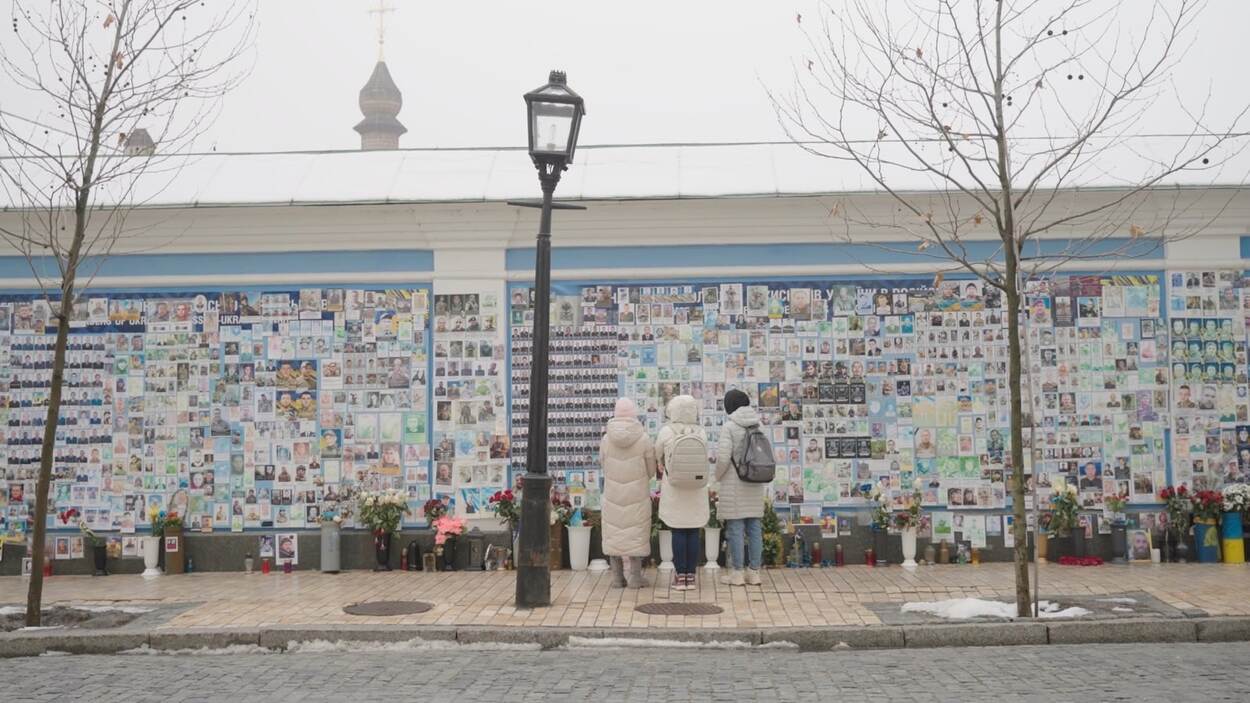
    Wall of Remembrance of the Fallen for Ukraine, in the center of Kyiv.

    Why the Netherlands continues to support Ukraine:

    For the Ukrainian people

    Russia has caused devastation to the daily lives of millions of Ukrainians. Many Ukrainian towns and villages have been completely destroyed. In the areas occupied by Russia, Ukrainians have suffered violence at the hands of Russian soldiers. They have been murdered, tortured and raped. Ukrainian children have also been abducted. With international support, Ukrainians have been defending their country for three years.

    Russia started the war. And Russia could end it at any time.

    For the security of Europe as a whole

    Russia’s aggression is about more than Ukraine. President Putin has spoken publicly about a conflict with ‘the West’. And Russia is stepping up its efforts to undermine European countries. This includes cyberattacks, sabotage, election interference and spreading fake news.

    In other words: by defending itself against Russia, Ukraine is fighting for the security of Europe as a whole. That’s another reason why it’s important to support Ukraine. A Russian victory in Ukraine will not bring an end to the danger. And the costs for Europe will end up being much higher. Europe may have to deal with even more Russian cyberattacks or other kinds of attacks. And with more Ukrainian refugees who are unable to return home.

    For a world in which aggression is not rewarded

    A Russian victory would have consequences for the whole world. It would send a signal to Russia and to China, North Korea and Iran that aggression will be rewarded. And that brute strength is more important than international rules and agreements. That could lead to even more wars.

    Peace through strength, not war through weakness.

    Ukraine must be able to defend itself. And Russia must be made to pay a high price for its aggression. That is why the government is continuing to provide unwavering support to Ukraine. To help secure a positive outcome to the war, based on the idea of: achieving peace by showing strength, not risking further war by showing weakness.

    Dutch support for Ukraine

    The Netherlands continues to support Ukraine. It is for example providing:

    • Military supportequipment, such as munitions, F-16 aircraft and anti-aircraft systems. The Netherlands is also providing training to Ukrainian military personnel.
    • Sanctions against Russia: the sanctions imposed by EU member states are hurting the Russian economy. That makes it harder and more expensive for Russia to keep the war going.
    • Justice for Ukraine: working to ensure that war crimes do not go unpunished and that people who have suffered damage, loss or injury in the war receive compensation.
    • Reconstruction: support to repair damage where it is most needed: water mains, roads, hospitals and the electrical grid. This support is crucial so that Ukraine can continue to function.
    • Humanitarian aid: helping international, Dutch and Ukrainian organisations to provide emergency goods, ensure the availability of drinking water, medicine and food, provide protection, and assist civilian victims.
    • Protection of Ukrainian cultural heritage: Russia is deliberately attacking cultural targets in Ukraine, in an attempt to erase Ukraine’s culture and identity. The Netherlands is supporting Ukraine in the protection of its cultural heritage.
    • Other support: the Netherlands is also helping Ukraine by providing support in areas like healthcare, psychosocial care for victims, agriculture and cybersecurity.

    MIL OSI Europe News

  • MIL-OSI Economics: Thales and Qatar Airways Sign Memorandum of Understanding to Develop Local Service Hub in Doha

    Source: Thales Group

    Headline: Thales and Qatar Airways Sign Memorandum of Understanding to Develop Local Service Hub in Doha

    Thales, a global technology leader in the defence, aerospace, cybersecurity and digital solutions markets, and Qatar Airways, voted the World’s Best Airline by Skytrax in 2024, have today signed a memorandum of understanding (MOU) to establish a dedicated Inflight Entertainment (IFE) service and maintenance center based in Doha, Qatar.

    The mission of a local Thales facility is to provide rapid access to comprehensive services such as repair, spare distribution, technical assistance and line maintenance for the full range of Thales IFE products.

    ©Qatar Airways

    This will drive Qatar Airways’ operational excellence and support the airline’s ambitious growth plans to serve a large quantity of aircraft. In line with Qatar Vision 2030, this partnership will contribute to the growth of the aerospace and MRO (Maintenance, Repair and Operations) ecosystem and bring high-skilled jobs to the country.

    This MOU builds on a strong and long-standing relationship between the two companies. Over the years, Thales has been Qatar Airways’ trusted IFE provider for several aircraft platforms, including their Boeing 787-8 Dreamliner, A350 and A380 aircraft. This partnership was recently expanded to include Qatar Airways’ new A321 NX fleet, which will be equipped with Thales’ award-winning FlytEDGE cloud-native IFE solution.

    Qatar Airways Chief MRO Officer, Mr Ali Al Saadi said: “We are pleased to see the progression of our work with Thales. It is vitally important that we continue to explore new ways to ensure our technology and capabilities are at the cutting edge of modern aviation, and I am confident that our partnership with Thales will enable this to happen.”

    Thomas Got, Vice President, Aviation Global Services at Thales said:, “Our partnership with Qatar Airways is growing stronger. This MOU underscores our shared commitment to even greater operational excellence and lays the groundwork for developing a local service hub and expertise in Doha, to support the airline’s future growth ambitions.”

    MIL OSI Economics

  • MIL-OSI NGOs: UK: David Lammy must ramp up pressure on Egypt to release Alaa Abd El-Fattah at UN Human Rights Council

    Source: Amnesty International –

    58th session of the UN Human Rights Council begins today  

    25 human rights organisations have written to the UK Foreign Secretary urging a ‘strong stand’ for Abd El-Fattah

    British national Abd El-Fattah has still not been released after serving an unjust 5-year prison sentence

    His 68-year-old mother has been on hunger strike for over 4 months in a desperate appeal for her son

    The UK must use the UN Human Rights Council (HRC) as an opportunity to lead calls for the release of British national and human rights defender Alaa Abd el-Fattah, a coalition of 25 organisations have said, in a letter sent to UK Foreign Secretary David Lammy this week.

    The letter which was organised by FairSquare and signed by 25 leading human rights organisations including Amnesty International, the Committee to Protect Journalists, Reporters Without Borders, the Egyptian Front for Human Rights and PEN International – urges the UK Foreign Secretary to make a “strong stand” by leading on a joint statement at the HRC, calling for the urgent release of Abd el-Fattah.

    In the letter, the organisations note how the HRC offers an opportunity for states to “make a strong statement condemning Egypt’s ongoing repression”, adding that the Egyptian authorities continue to “crush dissent and stifle civil society, arbitrarily arresting thousands in recent years, including journalists, opposition politicians…and peaceful protesters”. 

    In urging the Foreign Secretary to make a stand for Abd el-Fattah’s release, the organisations say:

    “We remain deeply concerned that Alaa Abd el-Fattah still has not been released after completing his unjust five year prison term in September 2024, particularly given the terrible and urgent risk to the life and health of his 68-year-old mother Laila Soueif, who has been on hunger strike since then.

    “We believe that a UK-led joint statement at the Council would send a powerful message about the importance of Alaa’s emblematic case, and the necessity for Egypt to resolve this immediately, by releasing him so that he can be reunited with his son.”

    The 58th session of the UN Human Rights Council will take place in Geneva from Monday 24 February to Tuesday 4 March.

    MIL OSI NGO

  • MIL-OSI New Zealand: Deputy PM visit harnesses huge interest in NZ in the Gulf

    Source: New Zealand Government

    Deputy Prime Minister Winston Peters has completed a successful visit to the Gulf region today, focused on building economic growth opportunities and conducting strategic foreign policy discussions. 

    “The Gulf is an exciting, fast-developing region with much promise for New Zealand,” Mr Peters says. 

    “We chose to come to the Gulf at this time to help harness the huge attention for New Zealand generated by Kiwi athletes Joseph Parker and James McDonald. 

    “New Zealand as a trade-dependent country can and should be doing more to attract investment and collaboration with the Gulf, building on the high-quality trade agreements we have in place. 

    “We have focused on generating investment and collaboration in areas as diverse as our racing and meat sectors and via work in Antarctica and the Pacific,” Mr Peters says 

    “Our discussions over the past few days have enabled us to explore commercial opportunities for New Zealand businesses and hear on-the-ground perspectives about some of the world’s most pressing and fast-moving foreign policy challenges.” 

    Minister Peters held formal discussions with the Foreign Ministers of United Arab Emirates and Saudi Arabia, HH Sheikh Abdullah bin Zayed bin Sultan Al Nahyan and HH Prince Faisal bin Farhan al Saud, as well as with Adel al Jubeir, Saudi Arabia’s Minister of State for Foreign Affairs. 

    “The United Arab Emirates and Saudi Arabia are both serious and highly influential actors in the Middle East and globally, whose societies are rapidly transforming. 

    “Whether it’s on Gaza, Ukraine, US/Russia relations, defence spending or myriad other regional and global issues, Saudi Arabia and the UAE are influential, pragmatic and engaged players – and New Zealand benefits from working with and talking to them closely.” 

    While in UAE, Mr Peters witnessed the signing of a cooperation arrangement between Antarctica NZ and the Emirates Polar Programme and while in Saudi Arabia announced the reinvigoration of negotiations towards a Double Taxation Agreement. 

    While in Saudi Arabia, he also paid respects during Founding Day commemorations, witnessed Kiwi boxer Joseph Parker’s knockout victory over Martin Bakole and attended the 2025 Saudi Cup – the world’s richest horse race meeting, at which Kiwi jockey James McDonald was runner-up. 

    Mr Peters’ visits were the first by a New Zealand Foreign Minister to Saudi Arabia since 2017 and to UAE since 2021.   

    Minister Peters leaves the Middle East today for North Asia, for programmes in China, Mongolia and South Korea.

    MIL OSI New Zealand News

  • MIL-OSI United Kingdom: Appointment of Lord-Lieutenant for Stirling and Falkirk: 24 February 2025

    Source: United Kingdom – Executive Government & Departments

    Press release

    Appointment of Lord-Lieutenant for Stirling and Falkirk: 24 February 2025

    The King has been pleased to appoint Colonel Charles Wallace DL as His Lord-Lieutenant for Stirling and Falkirk.

    The King has been pleased to appoint Colonel Charles Wallace DL as His Lord-Lieutenant for Stirling and Falkirk, to succeed Alan Simpson CVO, OBE, FRSE following his retirement on 15th February 2025.

    Background

    Charles Wallace spent 35 years in the Army serving across the world from the Falkland Islands to Brunei and Hong Kong; and from India and Nepal to North America. He was on operational service in Northern Ireland, with the UN in the Former Yugoslavia (Bosnia, Serbia and Croatia), in Iraq and Afghanistan where, as the Chief Planner in Helmand Province, he was awarded the US Bronze Star.

    Charles was the Scottish Veterans Commissioner from September 2018 to March 2022. Deeply committed to addressing the challenges that individuals and their families face after military service, he sought innovative and novel approaches to highlight the impressive talent this group of people bring to our society.  He has been the Chairman of the Scottish Veterans Fund Panel and of the Highland and Lowland Brigades Club as well as the Vice Chairman (Army) for the Highland Reserve Forces and Cadets Association.  He remains a trustee on the Royal Company of Archers Charitable Trust.

    He is currently the Secretary to the King’s Body Guard for Scotland, the Royal Company of Archers.  As Secretary, he was instrumental in orchestrating over 390 Archers across 21 different duties during the period of Mourning and State Funeral for the late Queen Elizabeth II in Scotland and London in 2022 and for the Coronation of King Charles III in 2023.

    Updates to this page

    Published 24 February 2025

    MIL OSI United Kingdom

  • MIL-OSI United Nations: WFP and KSrelief renew shared commitment to fight hunger

    Source: World Food Programme

    Photo Credit: KSrelief. WFP Executive Director Cindy McCain and H.E. Dr. Abdullah bin Abdulaziz al Rabeeah, Royal Court Advisor and Supervisor General of KSrelief sign Joint Cooperation Program (JCP) at the 4th Riyadh International Humanitarian Forum (RIHF), Riyadh, Saudi Arabia.

    RIYADH – As 343 million people around the globe face acute hunger, the World Food Programme (WFP) and King Salman Humanitarian Aid and Relief Centre (KSrelief) have renewed their commitment to boost humanitarian aid and relief efforts globally – bolstering the longstanding alliance between the UN agency and the Kingdom of Saudi Arabia to bring hope and alleviate food insecurity around the world.

    The Joint Cooperation Program (JCP), signed by KSrelief and WFP during the 4th Riyadh International Humanitarian Forum (RIHF), spans five years and is built on a multi-faceted approach to address humanitarian challenges in emergencies, capacity building, disaster risk reduction and logistics.   

    “The Kingdom of Saudi Arabia’s humanitarian support plays a valuable role in WFP’s efforts to stop hunger and malnutrition in their tracks. As we look to the future, we are pleased to reaffirm our shared commitment to strengthening and expanding this partnership to reach even more people in need,” said WFP Executive Director Cindy McCain.

    Over the decades, a strong partnership has developed between WFP and the Kingdom of Saudi Arabia, whose commitment to humanitarian efforts has been represented by KSrelief since its inception in 2015. 

    “We are very pleased to sign this joint cooperation program with our valued partner the World Food Programme to alleviate food insecurity and combat malnutrition through our shared efforts. WFP and KSrelief will continue to strengthen our partnership and continue our work to save and improve the lives of those in need around the world”, said H.E. Dr. Abdullah bin Abdulaziz al Rabeeah, Royal Court Advisor and Supervisor General of KSrelief.

    Over the past two decades, the Kingdom of Saudi Arabia has contributed US$ 2.2 billion to support WFP in the fight against hunger, reaching people in 31 countries. Building on this strong foundation, the partnership continues to expand its reach with a current project portfolio including over US$ 68 million in ongoing humanitarian and development projects.

    Alongside cash contributions, the Kingdom’s annual contribution of 4,000 metric tons of dates, totaling more than 100,000 metric tons over the years, has enhanced joint programmes in the field. Dates are a vital source of nutrition and cultural significance for many communities in urgent need. 

    The dates donated by the Kingdom of Saudi Arabia have helped ensure that children in schools, refugees in camps, and other groups on the frontlines of hunger receive essential nutrients. This gift has impacted many lives and is a symbol of compassion and partnership.
     

    #          #          #

    MIL OSI United Nations News

  • MIL-OSI Europe: Statement by the OSCE Troika to mark the start of the fourth year of Russia’s full-scale war against Ukraine

    Source: Organization for Security and Co-operation in Europe – OSCE

    Headline: Statement by the OSCE Troika to mark the start of the fourth year of Russia’s full-scale war against Ukraine

    HELSINKI/VALLETTA/BERN, 24 February 2025 – Today, the OSCE Troika – Chairperson-in-Office of the OSCE and Foreign Minister of Finland Elina Valtonen, Deputy Prime Minister and Minister for Foreign Affairs and Tourism of Malta Ian Borg, and Federal Councillor and Head of the Federal Department of Foreign Affairs of Switzerland Ignazio Cassis – made the following statement:
    “Today, as we mark the start of the fourth year of Russia’s full-scale war against Ukraine, the OSCE Troika calls on Russia to end its war of aggression, and to respect its commitments under international law, including those enshrined in the UN Charter and, notably, the Helsinki Final Act, as we mark its fiftieth anniversary.
    The war must end in a comprehensive, just and lasting peace based on international law and in full respect for Ukraine’s independence, sovereignty and territorial integrity. The OSCE Chairperson-in-Office, Minister for Foreign Affairs of Finland Elina Valtonen, stated: ‘There can be no negotiations on Ukraine without Ukraine. As Ukraine’s future is an intrinsic element of European security, Europe must be included in negotiations. The OSCE is well-equipped to contribute to European security and a just and lasting peace for Ukraine and our continent.’
    Defending the Helsinki Principles agreed 50 years ago is more important than ever. Russia’s war of aggression is a grave violation of the Helsinki Principles, most notably the inviolability of frontiers, refraining from the use of force, territorial integrity and respect for the rights inherent in sovereignty. These principles form the bedrock of European security and are the foundation for our work in the OSCE.
    As stated by Deputy Prime Minister and Minister for Foreign Affairs and Tourism of Malta Ian Borg: ‘What we do for peace today will help determine whether we live in war tomorrow.’ Only full compliance with the OSCE’s principles and commitments, to which we all fully agreed, can pave the way for a just and lasting peace. Federal Councillor and Head of the Federal Department of Foreign Affairs of Switzerland Ignazio Cassis stressed: ‘We have proven that we can tackle global challenges and find solutions, even when divisions seem stronger than unity.’
    In the face of Russia’s war of aggression, supporting Ukraine’s territorial integrity, sovereignty and independence will remain an OSCE priority. We admire the courage and resilience of the Ukrainian people and call on Russia to immediately and unconditionally withdraw its armed forces and military equipment from the entire territory of Ukraine within its internationally recognized borders. We are deeply concerned about the military co-operation between the Democratic People’s Republic of Korea, Iran and Russia as it escalates the war, adds to its global consequences and prolongs the suffering of Ukrainian people.
    We will continue to explore ways to expand our work on the return of children forcibly transferred and deported by Russia and the release of civilian detainees. We commend the crucial work of the International Coalition for the Return of Ukrainian Children to strengthen international coordination and action in this regard. We also look forward to the swift implementation of the OSCE Extra-Budgetary project on enhancing co-ordinated and analytical approaches to investigating serious crimes, particularly related to missing children.
    We mourn the innocent lives lost as a result of Russia’s war against Ukraine. The suffering of the people in Ukraine must stop. We condemn all actions aimed at inflicting death, devastation, and trauma on civilians in violation of international humanitarian law, including attacks on critical infrastructure and other civilian targets. International humanitarian law and human rights must be strictly respected.
    As shown in several reports by the OSCE Moscow Mechanism missions of experts, we highlight the important role of the OSCE in holding accountable those responsible for violations of human rights and international humanitarian law, including the execution and torture of prisoners of war and civilian detainees and the attacks on Ukrainian civilian infrastructure and civilians. We must ensure that there is no impunity for crimes committed in and against Ukraine, including war crimes and the crime of aggression committed against Ukraine. We support the active use of the OSCE tools to ensure accountability and commend ODIHR’s work in promoting accountability by monitoring and documenting human rights violations.
    We emphasize the important work of the Chairperson-in-Office’s Special Representative – Project Co-ordinator and the OSCE’s Extra-Budgetary Support Programme for Ukraine (SPU). The SPU is a strong and clear political signal of our continued steadfast support for Ukraine and its people. It demonstrates how we can answer to Ukraine’s needs and priorities created by the war in a creative and efficient way.
    In closing, we demand the immediate release of three OSCE officials – Vadym Golda, Maksym Petrov and Dmytro Shabanov – who remain in detention in Donetsk and Luhansk in violation of the principles and commitments made by all the participating States of our Organization.”

    MIL OSI Europe News

  • MIL-OSI United Nations: World’s ‘warmongers’ must stop, starting with Ukraine, UN chief tells Human Rights Council

    Source: United Nations 2

    Human Rights

    With no end to numerous protracted conflicts – not least in Ukraine, three years to the day since the full-scale Russian invasion – UN chief António Guterres on Monday scorned the world’s “warmongers” for trampling on people’s most fundamental rights.

    On the opening day of the Human Rights Council in Geneva, Secretary-General rounded on “warmongers who thumb their nose at international law, international humanitarian law and the UN Charter”.

    “One by one, human rights are being suffocated,” Mr. Guterres insisted, singling out the “autocrats crushing opposition because they fear what a truly empowered people would do”, amid “wars and violence that strip populations of their right to food, water and education”.

    And amid growing intolerance towards many of society’s most vulnerable and marginalized people – from indigenous peoples, to migrants, refugees, the LGBTQI+ community and persons with disabilities – the UN Secretary-General also criticized the voices of “division and anger” for whom human rights threaten their quest for “power, profit and control.”

    Echoing the UN chief’s concerns that human rights are “being pummelled hard”  today, putting at risk 80 years of multilateral cooperation embodied by Organizations, UN human rights chief Volker Türk warned that the international system “is going through a tectonic shift, and the human rights edifice we have built up so painstakingly over decades has never been under so much strain”.

    Beyond Ukraine, where Russian attacks have created “wanton destruction”, Mr. Türk told the Council’s Member States that the suffering borne by Gazans and Israelis since the Hamas-led attacks that sparked the war in October 2023 had been “unbearable”.

    The UN rights chief also repeated his call for an independent probe into grave violations of international law “committed by Israel in the course of its attacks across Gaza, and by Hamas and other Palestinian armed groups”.

    Mr. Türk also condemned as “completely unacceptable” any suggestion that people can be forced from their land – amid proposals floated by the United States that Gazans should be resettled outside the devastated Strip.

    MIL OSI United Nations News

  • MIL-OSI Economics: The GitVenom campaign: cryptocurrency theft using GitHub

    Source: Securelist – Kaspersky

    Headline: The GitVenom campaign: cryptocurrency theft using GitHub

    In our modern world, it’s difficult to underestimate the impact that open-source code has on software development. Over the years, the global community has managed to publish a tremendous number of projects with freely accessible code that can be viewed and enhanced by anyone on the planet. Very frequently, code published on the Internet serves as a source of inspiration for software developers – whenever they need to implement a project feature, they often check whether the code they need is already available online. This way, they avoid reinventing the wheel and thus save their precious time.

    With more and more open-source projects being published, both state-sponsored actors and cybercriminals started using freely available code as a lure to infect their targets. Of course, this trend shows no sign of slowing down as evidenced by a currently active campaign aimed at GitHub users that we dubbed GitVenom.

    Promise-filled yet fake projects

    Over the course of the GitVenom campaign, the threat actors behind it have created hundreds of repositories on GitHub that contain fake projects with malicious code – for example, an automation instrument for interacting with Instagram accounts, a Telegram bot allowing to manage Bitcoin wallets, and a hacking tool for the video game Valorant.

    Clearly, in designing these fake projects, the actors went to great lengths to make the repositories appear legitimate to potential targets. For instance, the malicious repositories we discovered contained well-designed README.md files, possibly generated using AI tools. We observed these files to contain information about the projects, as well as instructions on how to compile their code.

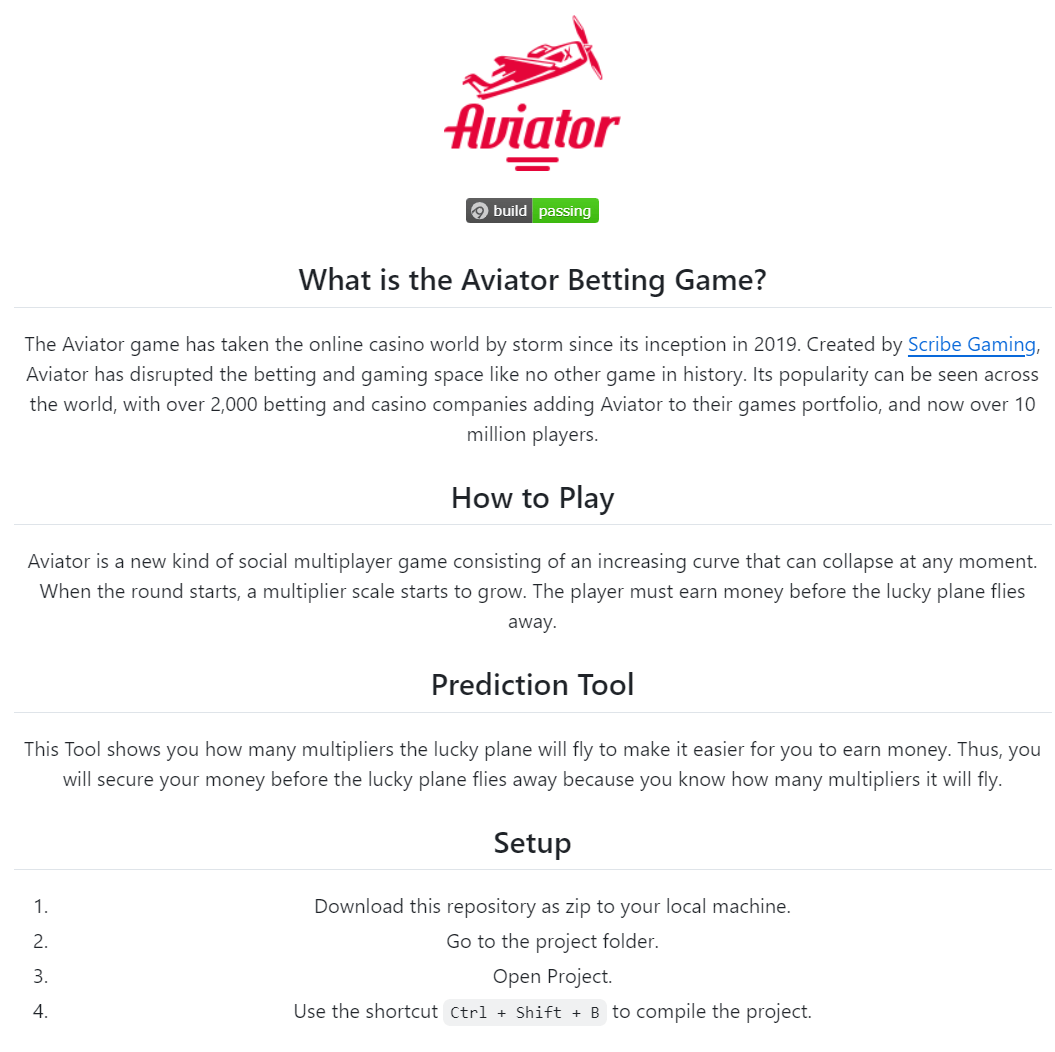
    Snippets of README.md pages with descriptions of fake projects

    In addition to that, the attackers added multiple tags to their repositories, as well as artificially inflated the number of commits made to them. To do that, they placed a timestamp file in these repositories, which was updated every few minutes:

    Example structure of a malicious repository

    Malicious code implanted in many ways

    While analyzing repositories created over the course of the GitVenom campaign, we noted that the fake projects we found were written in multiple programming languages – specifically Python, JavaScript, C, C++ and C#. As may be expected, these projects did not implement the features discussed in the README.md file, and their code mostly performed meaningless actions. At the same time, each of the projects was infected with malicious code, with its placement depending on the programming language used.

    For instance, the attackers placed malicious code in Python-based projects by inserting a long line in one of the project files. This line consisted of about 2,000 tab characters, followed by the following code, responsible for decrypting and executing a Python script:

    In the case of projects coded in JavaScript, the attackers created a malicious function inside them, which was in turn invoked from the main file of the project. Below is an example of such a function:

    Example of a malicious function placed in JavaScript-based projects. It decodes a script from Base64 and executes it.

    As for repositories containing C, C++ and C# code, the attackers decided to hide a malicious batch script inside Visual Studio project files, configuring it to execute at project build time:

    Snippet from a malicious Visual Studio project file. It contains a PreBuildEvent attribute, which instructs the payload to execute at project build time.

    Further payloads deployed

    While coded in different programming languages, the malicious payloads stored inside the fake projects had the same goal – download further malicious components from an attacker-controlled GitHub repository (URL at the time of research: hxxps://github[.]com/Dipo17/battle) and execute them. These components were as follows:

    • A Node.js stealer that collects information such as saved credentials, cryptocurrency wallet data and browsing history, packs it into a .7z archive and uploads it to the attackers via Telegram.

    Structure of the archive which the stealer sends to the attackers

    • The open-source AsyncRAT implant (C2 server address: 68.81[.]155);
    • The open-source Quasar backdoor (C2 server address: same as above)
    • A clipboard hijacker, which searches the clipboard contents for cryptocurrency wallet addresses and replaces them with attacker-controlled ones. Notably, the attacker-controlled Bitcoin wallet ( ID: bc1qtxlz2m6r[...]yspzt) received a lump sum of about 5 BTC (approximately 485,000 USD at the time of research) in November 2024.

    Impact of the campaign

    While investigating malicious repositories related to the GitVenom campaign, we found several fake projects published two years ago. Given that the attackers have been luring victims with these projects for several years, the infection vector is likely quite efficient. In fact, based on our telemetry, infection attempts related to GitVenom have been observed worldwide, with the highest number of them being in Russia, Brazil and Turkey. We expect these attempts to continue in the future, possibly with small changes in the TTPs.

    Blindly running code from GitHub can be detrimental

    As code-sharing platforms such as GitHub are used by millions of developers worldwide, threat actors will certainly continue using fake software as an infection lure. For that reason, it is crucial to handle processing of third-party code very carefully. Before attempting to run such code or integrate it into an existing project, it is paramount to thoroughly check what actions it performs. This way, it will be very easy to spot fake projects and prevent malicious code placed in them from being used to compromise the development environment.

    Reference hashes for infected repository archives

    63739e000601afde38570bfb9c8ba589 (06d0d13a4ce73775cf94a4a4f2314490de1d5b9af12db8ba9b01cd14222a2756)

    3684907e595cd04bf30b27d21580a7c6 (bd44a831ecf463756e106668ac877c6b66a2c0b954d13d6f311800e75e9c6678)

    MIL OSI Economics

  • MIL-OSI Africa: Secretary-General’s Remarks to the Human Rights Council [as delivered]

    Source: United Nations – English

    Scroll down for all-English and all-French versions]

    Mr. President of the General Assembly, Mr. President of the Human Rights Council, High Commissioner,
    Excellencies, ladies and gentlemen,

    We begin this session under the weight of a grim milestone — the third anniversary of Russia’s invasion of Ukraine, in violation of the UN charter.

    More than 12,600 civilians killed, with many more injured.

    Entire communities reduced to rubble.

    Hospitals and schools destroyed.

    We must spare no effort to bring an end to this conflict, and to achieve a just and lasting peace in line with the UN Charter, international law and General Assembly resolutions.

    Conflicts like the war in Ukraine exact a heavy toll.

    A toll on people. 

    A toll on fundamental principles like territorial integrity, sovereignty and the rule of law.

    And a toll on the vital business of this Council.

    Without respect for human rights — civil, cultural, economic, political and social — sustainable peace is a pipedream.

    And like this Council, human rights shine a light in the darkest places.

    Through your work, and the work of the High Commissioner’s Office around the world, you’re supporting brave human rights defenders risking persecution, detention and even death.

    You’re working with governments, civil society and others to strengthen action on human rights.

    And you’re supporting investigations and accountability.

    Five years ago, we launched our Call to Action for Human Rights, embedding human rights across the work of the United Nations around the world in close cooperation with our partners.

    I will continue supporting this important work, and the High Commissioner’s Office, as we fight for human rights everywhere.
    Excellencies,

    We have our work cut out for us. 

    Human rights are the oxygen of humanity.

    But one by one, human rights are being suffocated.  

    By autocrats, crushing opposition because they fear what a truly empowered people would do. 

    By a patriarchy that keeps girls out of school, and women at arm’s length from basic rights.

    By wars and violence that strip populations of their right to food, water and education.

    By warmongers who thumb their nose at international law, international humanitarian law and the UN Charter.  

    Human rights are being suffocated by the climate crisis.

    And by a morally bankrupt global financial system that too often obstructs the path to greater equality and sustainable development.

    By runaway technologies like Artificial Intelligence that hold great promise, but also the ability to violate human rights at the touch of a button.

    By growing intolerance against entire groups — from Indigenous peoples, to migrants and refugees, to the LGBTQI+ community, to persons with disabilities.  
    And by voices of division and anger who view human rights not as a boon to humanity, but as a barrier to the power, profit and control they seek.

    In short — human rights are on the ropes and being pummeled hard.

    This represents a direct threat to all of the hard-won mechanisms and systems established over the last 80 years to protect and advance human rights. 

    But as the recently adopted Pact for the Future reminds us, human rights are, in fact, a source of solutions.

    The Pact provides a playbook on how we can win the fight for human rights on several fronts.   

    First — human rights through peace and peace through human rights.

    Conflicts inflict human rights violations on a massive scale.

    In the Occupied Palestinian Territory, violations of human rights have skyrocketed since the horrific Hamas attacks of October 7 and the intolerable levels of death and destruction in Gaza.

    And I am gravely concerned by the rising violence in the occupied West Bank by Israeli settlers and other violations, as well as calls for annexation. We are witnessing a precarious ceasefire. We must avoid at all costs a resumption of hostilities. The people in Gaza have already suffered too much.

    It’s time for a permanent ceasefire, the dignified release of all remaining hostages, irreversible progress towards a two-State solution, an end to the occupation, and the establishment of an independent Palestinian State, with Gaza as an integral part.

    In Sudan, bloodshed, displacement and famine are engulfing the country.  

    The warring parties must take immediate action to protect civilians, uphold human rights, cease hostilities and forge peace.

    And domestic and international human rights monitoring and investigation mechanisms should be permitted to document what is happening on the ground.

    In the Democratic Republic of the Congo, we see a deadly whirlwind of violence and horrifying human rights abuses, amplified by the recent M23 offensive, supported by the Rwandan Defense Forces.  
    As more cities fall, the risk of a regional war rises. 
     
    It’s time to silence the guns. 
     
    It’s time for diplomacy and dialogue. 
     
    The recent joint summit in Tanzania offered a way forward with a renewed call for an immediate ceasefire.

    The sovereignty and territorial integrity of the DRC must be respected.

    The Congolese people deserve peace.

    In the Sahel, I call for a renewed regional dialogue to protect citizens from terrorism and systemic violations of human rights, and to create the conditions for sustainable development. 

    In Myanmar, the situation has grown far worse in the four years since the military seized power and arbitrarily detained members of the democratically elected government.

    We need greater cooperation to bring an end to the hostilities and forge a path towards an inclusive democratic transition and a return to civilian rule, allowing for the safe return of the Rohingya refugees.

    And in Haiti, we are seeing massive human rights violations — including more than a million people displaced, and children facing a horrific increase in sexual violence and recruitment into gangs.

    In the coming days, I will put forward proposals to the United Nations Security Council for greater stability and security for the people of Haiti — namely through an effective UN assistance mechanism to support the Multilateral Security Support mission, the national police and Haitian authorities.

    A durable solution requires a political process — led and owned by the Haitian people — that restores democratic institutions through elections.

    The Pact for the Future calls for peace processes and approaches rooted in the Universal Declaration of Human Rights, international law and the UN Charter.

    It proposes specific actions to prioritize conflict prevention, mediation, resolution and peacebuilding.

    And it includes a commitment to tackle the root causes of conflict, which are so often enmeshed in denials of basic human needs and rights.  

    Second — the Pact for the Future advances human rights through development.

    The Sustainable Development Goals and human rights are fundamentally intertwined.

    They represent real human needs — health, food, water, education, decent work and social protection.

    With less than one-fifth of the Goals on track, the Pact calls for a massive acceleration through an SDG Stimulus, reforming the global financial architecture, and taking meaningful action for countries drowning in debt.

    This must include focused action to conquer the most widespread human rights abuse in history — inequality for women and girls.

    The Pact calls for investing in battling all forms of discrimination and violence against women and girls, and ensuring their meaningful participation and leadership across all walks of life.
    And along with the Declaration on Future Generations, the Pact calls for supporting the rights and futures of young people through decent work, removing barriers for youth participation, and enhancing training.

    And the Global Digital Compact calls on nations to champion young innovators, nurture entrepreneurial spirit, and equip the next generation with digital literacy and skills.
    Third — the Pact for the Future recognizes that the rule of law and human rights go hand-in-hand.

    The rule of law, when founded on human rights, is an essential pillar of protection.

    It shields the most vulnerable.

    It’s the first line of defense against crime and corruption.

    It supports fair, just and inclusive economies and societies.

    It holds perpetrators of human rights atrocities to account.

    It enables civic space for people to make their voices heard — and for journalists to carry out their essential work, free from interference or threats.

    And it reaffirms the world’s commitment to equal access to justice, good governance, and transparent and accountable institutions.   

    Quatrièmement, réaliser les droits humains grâce à l’action climatique.

    L’année dernière a été la plus chaude jamais enregistrée, et vient couronner la décennie la plus chaude jamais enregistrée.

    La hausse des températures, la fonte des glaciers et le réchauffement des océans ne peuvent mener qu’au désastre.

    Inondations, sécheresses, tempêtes meurtrières, famine, déplacements massifs : notre guerre contre la nature est aussi une guerre contre les droits humains.

    Nous devons prendre un autre chemin.

    Je salue les nombreux États Membres qui reconnaissent légalement le droit à un environnement sain, et j’appelle tous les pays à faire de même.

    Les gouvernements doivent tenir leur promesse d’élaborer cette année de nouveaux plans d’action nationaux pour le climat couvrant l’ensemble de l’économie, et ce bien avant la COP 30 qui se tiendra au Brésil.

    Ces plans doivent limiter la hausse de la température mondiale à 1,5 degré, notamment en accélérant la transition énergétique mondiale.

    Nous avons également besoin d’une augmentation massive des financements pour l’action climatique dans les pays en développement, afin de s’adapter au réchauffement de la planète, de réduire les émissions et d’accélérer la révolution des énergies renouvelables, qui offre d’énormes possibilités économiques.

    Nous devons nous opposer aux campagnes mensongères menées par de nombreux acteurs de l’industrie des combustibles fossiles et à ceux qui la font vivre et s’en rendent complices…

    Tout comme nous devons protéger et défendre les personnes qui sont en première ligne de la lutte pour une justice climatique.

    Et cinquièmement, réaliser les droits humains grâce à une gouvernance renforcée et améliorée des technologies.

    À l’heure où des technologies en rapide mutation s’immiscent dans tous les aspects de notre vie, je m’inquiète des risques qu’elles représentent pour les droits humains.

    Dans le meilleur des cas, les médias sociaux sont un lieu de rencontre où l’on peut échanger des idées et débattre avec respect.

    Mais ils peuvent aussi devenir un théâtre de confrontations enflammées et d’une ignorance flagrante.

    Un lieu où les poisons que sont la mésinformation, la désinformation, le racisme, la misogynie et les discours de haine sont non seulement tolérés, mais, bien souvent, encouragés.

    La violence verbale en ligne peut facilement se transformer en violence physique dans le monde réel.

    Les reculs récents en matière de vérification des faits et de modération de contenu sur les réseaux sociaux rouvrent grand la porte à plus de haine, plus de menaces et plus de violence.

    Que l’on ne s’y trompe pas.

    Ces reculs entraîneront une diminution de la liberté d’expression, et non une amplification – car les gens craignent de plus en plus de s’exprimer sur ces plateformes.

    Dans le même temps, la grande promesse de l’intelligence artificielle s’accompagne d’un risque insondable qui met en péril l’autonomie, l’identité et le contrôle humains – jusqu’aux droits humains.

    Face à ces menaces, le Pacte numérique mondial rassemble le monde entier pour veiller à ce que les droits humains ne soient pas sacrifiés sur l’autel de la technologie.

    Il s’agit notamment de collaborer avec les entreprises numériques et les décideurs politiques pour étendre le respect des droits humains à tous les recoins du cyberespace, en mettant notamment l’accent sur l’intégrité de l’information sur toutes les plateformes numériques.

    Les Principes mondiaux pour l’intégrité de l’information que j’ai lancés l’année dernière viendront étayer et orienter les efforts que nous déploierons en vue de créer un écosystème de l’information plus humain.

    Le Pacte numérique mondial comprend également le premier accord universel sur la gouvernance de l’intelligence artificielle qui donne voix au chapitre à tous les pays, ainsi que des engagements en matière de renforcement des capacités, visant à ce que tous les pays et toutes les personnes bénéficient du potentiel de l’intelligence artificielle.

    Pour cela, il faut investir dans l’accès à l’Internet à un prix abordable, dans les formations au numérique et dans les infrastructures ;

    Aider les pays en développement à utiliser l’intelligence artificielle pour développer les petites entreprises, améliorer les services publics et connecter les communautés à de nouveaux marchés.

    Et mettre les droits humains au centre des systèmes fondés sur l’intelligence artificielle.

    Les décisions du Pacte – d’établir un Groupe scientifique international indépendant et un Dialogue mondial régulier garantissant la participation de tous les pays dans l’élaboration de l’avenir de l’intelligence artificielle – constituent des avancées importantes. Il faut les concrétiser.

    Excellences,

    Mesdames et Messieurs,

    Nous pouvons mettre fin à l’asphyxie des droits humains en donnant vie au Pacte pour l’avenir et aux travaux de ce Conseil.

    Attelons-nous à cette tâche – ensemble. Nous n’avons pas un instant à perdre.

    Et je vous remercie.

    [all-English version]

    Mr. President of the General Assembly, Mr. President of the Human Rights Council, High Commissioner,
    Excellencies, ladies and gentlemen,

    We begin this session under the weight of a grim milestone — the third anniversary of Russia’s invasion of Ukraine, in violation of the UN charter.

    More than 12,600 civilians killed, with many more injured.

    Entire communities reduced to rubble.

    Hospitals and schools destroyed.

    We must spare no effort to bring an end to this conflict, and to achieve a just and lasting peace in line with the UN Charter, international law and General Assembly resolutions.

    Conflicts like the war in Ukraine exact a heavy toll.

    A toll on people. 

    A toll on fundamental principles like territorial integrity, sovereignty and the rule of law.

    And a toll on the vital business of this Council.

    Without respect for human rights — civil, cultural, economic, political and social — sustainable peace is a pipedream.

    And like this Council, human rights shine a light in the darkest places.

    Through your work, and the work of the High Commissioner’s Office around the world, you’re supporting brave human rights defenders risking persecution, detention and even death.

    You’re working with governments, civil society and others to strengthen action on human rights.

    And you’re supporting investigations and accountability.

    Five years ago, we launched our Call to Action for Human Rights, embedding human rights across the work of the United Nations around the world in close cooperation with our partners.

    I will continue supporting this important work, and the High Commissioner’s Office, as we fight for human rights everywhere.
    Excellencies,

    We have our work cut out for us. 

    Human rights are the oxygen of humanity.

    But one by one, human rights are being suffocated.  

    By autocrats, crushing opposition because they fear what a truly empowered people would do. 

    By a patriarchy that keeps girls out of school, and women at arm’s length from basic rights.

    By wars and violence that strip populations of their right to food, water and education.

    By warmongers who thumb their nose at international law, international humanitarian law and the UN Charter.  

    Human rights are being suffocated by the climate crisis.

    And by a morally bankrupt global financial system that too often obstructs the path to greater equality and sustainable development.

    By runaway technologies like Artificial Intelligence that hold great promise, but also the ability to violate human rights at the touch of a button.

    By growing intolerance against entire groups — from Indigenous peoples, to migrants and refugees, to the LGBTQI+ community, to persons with disabilities.  
    And by voices of division and anger who view human rights not as a boon to humanity, but as a barrier to the power, profit and control they seek.

    In short — human rights are on the ropes and being pummeled hard.

    This represents a direct threat to all of the hard-won mechanisms and systems established over the last 80 years to protect and advance human rights. 

    But as the recently adopted Pact for the Future reminds us, human rights are, in fact, a source of solutions.

    The Pact provides a playbook on how we can win the fight for human rights on several fronts.   

    First — human rights through peace and peace through human rights.

    Conflicts inflict human rights violations on a massive scale.

    In the Occupied Palestinian Territory, violations of human rights have skyrocketed since the horrific Hamas attacks of October 7 and the intolerable levels of death and destruction in Gaza.

    And I am gravely concerned by the rising violence in the occupied West Bank by Israeli settlers and other violations, as well as calls for annexation. We are witnessing a precarious ceasefire. We must avoid at all costs a resumption of hostilities. The people in Gaza have already suffered too much.

    It’s time for a permanent ceasefire, the dignified release of all remaining hostages, irreversible progress towards a two-State solution, an end to the occupation, and the establishment of an independent Palestinian State, with Gaza as an integral part.

    In Sudan, bloodshed, displacement and famine are engulfing the country.  

    The warring parties must take immediate action to protect civilians, uphold human rights, cease hostilities and forge peace.

    And domestic and international human rights monitoring and investigation mechanisms should be permitted to document what is happening on the ground.

    In the Democratic Republic of the Congo, we see a deadly whirlwind of violence and horrifying human rights abuses, amplified by the recent M23 offensive, supported by the Rwandan Defense Forces.  
    As more cities fall, the risk of a regional war rises. 
     
    It’s time to silence the guns. 
     
    It’s time for diplomacy and dialogue. 
     
    The recent joint summit in Tanzania offered a way forward with a renewed call for an immediate ceasefire.

    The sovereignty and territorial integrity of the DRC must be respected.

    The Congolese people deserve peace.

    In the Sahel, I call for a renewed regional dialogue to protect citizens from terrorism and systemic violations of human rights, and to create the conditions for sustainable development. 

    In Myanmar, the situation has grown far worse in the four years since the military seized power and arbitrarily detained members of the democratically elected government.

    We need greater cooperation to bring an end to the hostilities and forge a path towards an inclusive democratic transition and a return to civilian rule, allowing for the safe return of the Rohingya refugees.

    And in Haiti, we are seeing massive human rights violations — including more than a million people displaced, and children facing a horrific increase in sexual violence and recruitment into gangs.

    In the coming days, I will put forward proposals to the United Nations Security Council for greater stability and security for the people of Haiti — namely through an effective UN assistance mechanism to support the Multilateral Security Support mission, the national police and Haitian authorities.

    A durable solution requires a political process — led and owned by the Haitian people — that restores democratic institutions through elections.

    The Pact for the Future calls for peace processes and approaches rooted in the Universal Declaration of Human Rights, international law and the UN Charter.

    It proposes specific actions to prioritize conflict prevention, mediation, resolution and peacebuilding.

    And it includes a commitment to tackle the root causes of conflict, which are so often enmeshed in denials of basic human needs and rights.  

    Second — the Pact for the Future advances human rights through development.

    The Sustainable Development Goals and human rights are fundamentally intertwined.

    They represent real human needs — health, food, water, education, decent work and social protection.

    With less than one-fifth of the Goals on track, the Pact calls for a massive acceleration through an SDG Stimulus, reforming the global financial architecture, and taking meaningful action for countries drowning in debt.

    This must include focused action to conquer the most widespread human rights abuse in history — inequality for women and girls.

    The Pact calls for investing in battling all forms of discrimination and violence against women and girls, and ensuring their meaningful participation and leadership across all walks of life.
    And along with the Declaration on Future Generations, the Pact calls for supporting the rights and futures of young people through decent work, removing barriers for youth participation, and enhancing training.

    And the Global Digital Compact calls on nations to champion young innovators, nurture entrepreneurial spirit, and equip the next generation with digital literacy and skills.
    Third — the Pact for the Future recognizes that the rule of law and human rights go hand-in-hand.

    The rule of law, when founded on human rights, is an essential pillar of protection.

    It shields the most vulnerable.

    It’s the first line of defense against crime and corruption.

    It supports fair, just and inclusive economies and societies.

    It holds perpetrators of human rights atrocities to account.

    It enables civic space for people to make their voices heard — and for journalists to carry out their essential work, free from interference or threats.

    And it reaffirms the world’s commitment to equal access to justice, good governance, and transparent and accountable institutions.

    Fourth — human rights through climate action.   

    Last year was the hottest on record — capping the hottest decade on record.

    Rising heat, melting glaciers and hotter oceans are a recipe for disaster.  

    Floods, droughts, deadly storms, hunger, mass displacement — our war on nature is also a war on human rights.

    We must choose a different path.

    I salute the many Member States who legally recognize the right to a healthy environment — and I call on all countries to do the same.

    Governments must keep their promise to produce new, economy-wide national climate action plans this year, well ahead of COP30 in Brazil.

    Those plans must limit the rise in global temperature to 1.5 degrees — including by accelerating the global energy transition.   

    We also need a surge in finance for climate action in developing countries, to adapt to global heating, slash emissions and accelerate the renewables revolution, which represents a massive economic opportunity.  

    We must stand up to the misleading campaign of many in the fossil fuel industry and its enablers who are aiding and abetting this madness, while also protecting and defending those on the front lines of climate justice.

    And fifth — human rights through stronger, better governance of technology.

    As fast-moving technologies expand into every aspect of our lives, I am deeply concerned about human rights being undermined.

    At its best, social media is a meeting ground for people to exchange ideas and spark respectful debate.

    But it can also be an arena of fiery combat and blatant ignorance.

    A place where the poisons of misinformation, disinformation, racism, misogyny and hate speech are not only tolerated — but often encouraged.

    Verbal violence online can easily spill into physical violence in real life. 

    Recent rollbacks on social media fact-checking and content moderation are re-opening the floodgates to more hate, more threats, and more violence.

    Make no mistake.

    These rollbacks will lead to less free speech, not more, as people become increasingly fearful to engage on these platforms.

    Meanwhile, the great promise of Artificial Intelligence is matched by limitless peril to undermine human autonomy, human identity, human control — and yes, human rights.

    In the face of these threats, the Global Digital Compact brings the world together to ensure that human rights are not sacrificed on the altar of technology.

    This includes working with digital companies and policymakers to extend human rights to every corner of cyberspace — including a new focus on information integrity across digital platforms.

    The Global Principles for Information Integrity I launched last year will support and inform this work as we push for a more humane information ecosystem.

    The Global Digital Compact also includes the first universal agreement on the governance of AI that brings every country to the table and commitments on capacity-building, so all countries and people benefit from AI’s potential.

    By investing in affordable internet, digital literacy, and infrastructure.

    By helping developing countries use AI to grow small businesses, improve public services, and connect communities to new markets.

    And by placing human rights at the centre of AI-driven systems.

    The Pact’s decisions to create an Independent International Scientific Panel on AI and an ongoing Global Dialogue that ensure all countries have a voice in shaping its future are important steps forward. We must implement them.

    Excellencies, ladies and gentlemen,

    We can help end the suffocation of human rights by breathing life into the Pact for the Future and the work of this Council. 

    Let’s do that together. We don’t have a moment to lose.

    And I thank you.

    [all-French translation]

    L’ouverture de la présente session coïncide avec un sinistre jalon : le troisième anniversaire de l’invasion de l’Ukraine par la Russie, en violation de la Charte des Nations Unies.

    Plus de 12 600 civils ont été tués et bien plus encore ont été blessés.

    Des communautés entières ont été anéanties.

    Des hôpitaux et des écoles ne sont plus que décombres.

    Nous ne devons ménager aucun effort pour mettre un terme à ce conflit et parvenir à une paix juste et durable, conformément à la Charte des Nations Unies, au droit international et aux résolutions de l’Assemblée générale.

    Les conflits comme la guerre en Ukraine prélèvent un lourd tribut.

    Ils déciment les populations.

    Ils érodent les principes fondamentaux que sont l’intégrité territoriale, la souveraineté et l’état de droit.

    Ils sapent les activités vitales de ce Conseil.

    Sans le respect des droits humains – qu’ils soient civils, culturels, économiques, politiques ou sociaux – la paix durable n’est qu’une chimère.

    Et comme ce Conseil, les droits humains sont une source de lumière dans l’obscurité la plus profonde.

    Grâce à vos travaux et à ceux que le Haut-Commissariat mène dans le monde entier, vous soutenez les défenseurs et défenseuses des droits humains qui, avec courage, risquent la persécution, la détention et même la mort.

    Vous travaillez avec les gouvernements, la société civile et d’autres acteurs pour renforcer l’action en faveur des droits humains.

    Et vous apportez votre soutien aux mécanismes d’enquête et d’établissement des responsabilités.

    Il y a cinq ans, nous avons lancé notre appel à l’action en faveur des droits humains, l’objectif étant d’intégrer les droits humains dans toutes les activités des Nations Unies menées à travers le monde, en étroite collaboration avec nos partenaires.

    Je continuerai d’apporter mon appui à ces travaux importants, ainsi qu’au Haut-Commissariat, dans notre lutte pour les droits humains partout dans le monde.

    Excellences,

    Nous avons du pain sur la planche.

    Les droits humains sont l’oxygène de l’humanité.

    Mais ils sont asphyxiés, les uns après les autres.

    Par les autocrates, qui écrasent l’opposition parce qu’ils craignent ce dont serait capable un peuple ayant pleinement les moyens d’agir.

    Par le patriarcat, qui empêche les filles d’aller à l’école et les femmes de jouir de leurs droits fondamentaux.

    Par les guerres et la violence, qui privent les populations de leur droit à l’alimentation, à l’eau, et à l’éducation.

    Par les bellicistes, qui se rient du droit international, du droit international humanitaire et de la Charte des Nations Unies.

    Les droits humains sont asphyxiés par la crise climatique.

    Par un système financier mondial en faillite morale, qui fait trop souvent obstacle à une plus grande égalité et au développement durable.

    Par des technologies incontrôlables comme l’intelligence artificielle, qui suscitent de grands espoirs mais recèlent aussi la capacité de violer les droits humains en un seul clic.

    Par une intolérance croissante à l’égard de groupes entiers, qu’il s’agisse des peuples autochtones, des migrants et réfugiés, de la communauté LGBTQI+, ou encore des personnes handicapées.

    Et par les discours de ceux qui, prêchant la division et la colère, considèrent les droits humains non pas comme un bienfait pour l’humanité, mais comme un obstacle au pouvoir, au profit et au contrôle qu’ils convoitent.

    En bref, les droits humains, sous le coup d’attaques vicieuses, sont dans leurs derniers retranchements.

    Cette situation représente une menace directe pour tous les mécanismes et systèmes établis de haute lutte au cours des 80 dernières années pour protéger et faire progresser les droits humains.

    Or, comme le rappelle le Pacte pour l’avenir adopté récemment, les droits humains sont, en fait, une source de solutions.

    Le Pacte définit les mesures que nous pouvons prendre pour gagner le combat pour les droits humains sur plusieurs fronts.

    Premièrement, réaliser les droits humains grâce à la paix et instaurer la paix grâce aux droits humains.

    Les conflits infligent des violations massives des droits humains.

    Dans le Territoire palestinien occupé, les violations des droits humains ont connu une hausse vertigineuse depuis les horribles attaques perpétrées par le Hamas le 7 octobre, et les niveaux intolérables de mort et de destruction à Gaza.

    Je suis gravement préoccupé par la montée des violences et des autres violations commises en Cisjordanie occupée par les colons israéliens, ainsi que par les appels à l’annexion. Nous assistons à un cessez-le-feu précaire. Nous devons éviter à tout prix une reprise des hostilités. La population de Gaza a déjà trop souffert.

    Il est temps d’instaurer un cessez-le-feu permanent, de libérer tous les otages restants, de réaliser des progrès irréversibles vers la solution des deux États, la fin l’occupation, et la création d’un État palestinien indépendant, dont Gaza ferait partie intégrante.

    Au Soudan, les bains de sang, les déplacements de population et la famine ravagent le pays.

    Les parties en conflit doivent prendre immédiatement des mesures pour protéger les civils, défendre les droits humains, cesser les hostilités et instaurer la paix.

    Les mécanismes nationaux et internationaux de surveillance et d’enquête en matière de droits humains devraient être autorisés à documenter ce qui se déroule sur le terrain.

    En République démocratique du Congo, nous sommes témoins d’un tourbillon mortel de violences et d’atroces violations des droits humains, amplifié par la récente offensive du M23, soutenue par les forces de défense rwandaises.

    Plus les villes tombent, plus le risque d’une guerre régionale augmente. 

    Il est temps de faire taire les armes.

    L’heure est à la diplomatie et au dialogue.

    Le récent sommet conjoint qui s’est tenu en Tanzanie a ouvert la voie en renouvelant l’appel à un cessez-le-feu immédiat.

    La souveraineté et l’intégrité territoriale de la RDC doivent être respectées.

    Le peuple congolais mérite la paix.

    Au Sahel, j’appelle à la reprise du dialogue régional afin de protéger les citoyens du terrorisme et des violations systémiques des droits humains et de créer les conditions du développement durable.

    Au Myanmar, la situation s’est considérablement aggravée au cours des quatre années qui se sont écoulées depuis que les militaires ont pris le pouvoir et détenu arbitrairement des membres du gouvernement démocratiquement élu.

    Il nous faut resserrer la coopération pour mettre fin aux hostilités et ouvrir la voie à une transition démocratique inclusive et au retour à un régime civil, permettant le retour en toute sécurité des réfugiés rohingyas.

    En Haïti, nous constatons des violations massives des droits humains : plus d’un million de personnes ont été déplacées et les enfants sont en proie à une augmentation effroyable des violences sexuelles et de l’enrôlement dans les gangs.

    Dans les jours à venir, je présenterai au Conseil de sécurité des Nations unies des propositions pour renforcer la stabilité et la sécurité du peuple haïtien, notamment par le biais d’un mécanisme d’assistance efficace des Nations unies destiné à soutenir la Mission multilatérale de soutien à la sécurité, à la police nationale et aux autorités haïtiennes.

    Une solution durable nécessite un processus politique – mené et pris en charge par le peuple haïtien – qui rétablisse les institutions démocratiques à travers des élections.

    Le Pacte pour l’avenir demande la mise en place de processus et de démarches pour la paix ancrés dans la Déclaration universelle des droits de l’Homme, le droit international et la Charte des Nations Unies.

    Le Pacte pour l’avenir appelle à des processus et des approches de paix fondés sur la Déclaration universelle des droits de l’homme, le droit international et la Charte des Nations unies.

    Il propose des mesures précises visant à privilégier la prévention des conflits, la médiation, le règlement des conflits et la consolidation de la paix.

    Il énonce également l’engagement pris de s’attaquer aux causes profondes des conflits, qui sont bien souvent liées au déni des besoins et des droits humains fondamentaux.

    Deuxièmement, le Pacte pour l’avenir fait progresser les droits humains grâce au développement.

    Les objectifs de développement durable et les droits humains sont intrinsèquement liés.

    Ils représentent des besoins humains réels : la santé, l’alimentation, l’eau, l’éducation, le travail décent et la protection sociale.

    Alors que moins d’un cinquième des objectifs sont en passe d’être réalisés, le Pacte appelle à une accélération massive des progrès grâce au plan de relance des objectifs de développement durable, à la réforme de
    l’architecture financière mondiale et à la prise de mesures réfléchies pour les pays qui croulent sous la dette.

    Il s’agit donc, notamment, de mener une action ciblée pour vaincre la violation des droits humains la plus répandue dans l’histoire : l’inégalité pour les femmes et les filles.

    Le Pacte appelle à investir pour lutter contre toutes les formes de discrimination et de violence à l’égard des femmes et des filles et pour permettre à celles-ci de participer véritablement à tous les domaines de la vie et d’y jouer un rôle moteur.

    Avec la Déclaration sur les générations futures, le Pacte appelle à défendre les droits et l’avenir des jeunes en promouvant le travail décent, en éliminant les obstacles à la participation des jeunes et en améliorant la formation.

    Le Pacte numérique mondial appelle tous les pays à soutenir les jeunes innovateurs, à cultiver l’esprit entrepreneurial et à doter la prochaine génération des connaissances et compétences numériques nécessaires.

    Troisièmement, le Pacte pour l’avenir établit que l’état de droit et les droits humains vont de pair.

    L’état de droit, lorsqu’il est fondé sur les droits humains, est un pilier essentiel de la protection.

    Il protège les plus vulnérables.

    C’est la première ligne de défense contre la criminalité et la corruption.

    Il favorise des économies et des sociétés équitables, justes et inclusives.

    Il oblige les auteurs d’atrocités commises en violation des droits humains à rendre compte de leurs actes.

    Il offre aux individus un espace civique où faire entendre leur voix et permet aux journalistes d’accomplir leur travail essentiel, à l’abri des ingérences et des menaces.

    Et il réaffirme l’engagement du monde en faveur de l’égalité d’accès à la justice, de la bonne gouvernance et d’institutions transparentes et responsables.

    Quatrièmement, réaliser les droits humains grâce à l’action climatique.

    L’année dernière a été la plus chaude jamais enregistrée, et vient couronner la décennie la plus chaude jamais enregistrée.

    La hausse des températures, la fonte des glaciers et le réchauffement des océans ne peuvent mener qu’au désastre.

    Inondations, sécheresses, tempêtes meurtrières, famine, déplacements massifs : notre guerre contre la nature est aussi une guerre contre les droits humains.

    Nous devons prendre un autre chemin.

    Je salue les nombreux États Membres qui reconnaissent légalement le droit à un environnement sain, et j’appelle tous les pays à faire de même.

    Les gouvernements doivent tenir leur promesse d’élaborer cette année de nouveaux plans d’action nationaux pour le climat couvrant l’ensemble de l’économie, et ce bien avant la COP 30 qui se tiendra au Brésil.

    Ces plans doivent limiter la hausse de la température mondiale à 1,5 degré, notamment en accélérant la transition énergétique mondiale.

    Nous avons également besoin d’une augmentation massive des financements pour l’action climatique dans les pays en développement, afin de s’adapter au réchauffement de la planète, de réduire les émissions et d’accélérer la révolution des énergies renouvelables, qui offre d’énormes possibilités économiques.

    Nous devons nous opposer aux campagnes mensongères menées par de nombreux acteurs de l’industrie des combustibles fossiles et à ceux qui la font vivre et s’en rendent complices…

    Tout comme nous devons protéger et défendre les personnes qui sont en première ligne de la lutte pour une justice climatique.

    Et cinquièmement, réaliser les droits humains grâce à une gouvernance renforcée et améliorée des technologies.

    À l’heure où des technologies en rapide mutation s’immiscent dans tous les aspects de notre vie, je m’inquiète des risques qu’elles représentent pour les droits humains.

    Dans le meilleur des cas, les médias sociaux sont un lieu de rencontre où l’on peut échanger des idées et débattre avec respect.

    Mais ils peuvent aussi devenir un théâtre de confrontations enflammées et d’une ignorance flagrante.

    Un lieu où les poisons que sont la mésinformation, la désinformation, le racisme, la misogynie et les discours de haine sont non seulement tolérés, mais, bien souvent, encouragés.

    La violence verbale en ligne peut facilement se transformer en violence physique dans le monde réel.

    Les reculs récents en matière de vérification des faits et de modération de contenu sur les réseaux sociaux rouvrent grand la porte à plus de haine, plus de menaces et plus de violence.

    Que l’on ne s’y trompe pas.

    Ces reculs entraîneront une diminution de la liberté d’expression, et non une amplification – car les gens craignent de plus en plus de s’exprimer sur ces plateformes.

    Dans le même temps, la grande promesse de l’intelligence artificielle s’accompagne d’un risque insondable qui met en péril l’autonomie, l’identité et le contrôle humains – jusqu’aux droits humains.

    Face à ces menaces, le Pacte numérique mondial rassemble le monde entier pour veiller à ce que les droits humains ne soient pas sacrifiés sur l’autel de la technologie.

    Il s’agit notamment de collaborer avec les entreprises numériques et les décideurs politiques pour étendre le respect des droits humains à tous les recoins du cyberespace, en mettant notamment l’accent sur l’intégrité de l’information sur toutes les plateformes numériques.

    Les Principes mondiaux pour l’intégrité de l’information que j’ai lancés l’année dernière viendront étayer et orienter les efforts que nous déploierons en vue de créer un écosystème de l’information plus humain.

    Le Pacte numérique mondial comprend également le premier accord universel sur la gouvernance de l’intelligence artificielle qui donne voix au chapitre à tous les pays, ainsi que des engagements en matière de renforcement des capacités, visant à ce que tous les pays et toutes les personnes bénéficient du potentiel de l’intelligence artificielle.

    Pour cela, il faut investir dans l’accès à Internet à un prix abordable, dans les formations au numérique et dans les infrastructures ;

    Aider les pays en développement à utiliser l’intelligence artificielle pour développer les petites entreprises, améliorer les services publics et connecter les communautés à de nouveaux marchés.

    Et mettre les droits humains au centre des systèmes fondés sur l’intelligence artificielle.

    Les décisions du Pacte – d’établir un Groupe scientifique international indépendant et un Dialogue mondial régulier garantissant la participation de tous les pays dans l’élaboration de l’avenir de l’intelligence artificielle – constituent des avancées importantes. Il faut les concrétiser.

    Excellences, Mesdames et Messieurs,

    Nous pouvons mettre fin à l’asphyxie des droits humains en donnant vie au Pacte pour l’avenir et aux travaux de ce Conseil.

    Attelons-nous à cette tâche – ensemble. Nous n’avons pas un instant à perdre.

    Et je vous remercie.

    MIL OSI Africa

  • MIL-OSI United Nations: Secretary-General’s Remarks to the Human Rights Council [as delivered]

    Source: United Nations secretary general

    [Scroll down for all-English and all-French versions]

    Mr. President of the General Assembly, Mr. President of the Human Rights Council, High Commissioner,
    Excellencies, ladies and gentlemen,

    We begin this session under the weight of a grim milestone — the third anniversary of Russia’s invasion of Ukraine, in violation of the UN charter.

    More than 12,600 civilians killed, with many more injured.

    Entire communities reduced to rubble.

    Hospitals and schools destroyed.

    We must spare no effort to bring an end to this conflict, and to achieve a just and lasting peace in line with the UN Charter, international law and General Assembly resolutions.

    Conflicts like the war in Ukraine exact a heavy toll.

    A toll on people. 

    A toll on fundamental principles like territorial integrity, sovereignty and the rule of law.

    And a toll on the vital business of this Council.

    Without respect for human rights — civil, cultural, economic, political and social — sustainable peace is a pipedream.

    And like this Council, human rights shine a light in the darkest places.

    Through your work, and the work of the High Commissioner’s Office around the world, you’re supporting brave human rights defenders risking persecution, detention and even death.

    You’re working with governments, civil society and others to strengthen action on human rights.

    And you’re supporting investigations and accountability.

    Five years ago, we launched our Call to Action for Human Rights, embedding human rights across the work of the United Nations around the world in close cooperation with our partners.

    I will continue supporting this important work, and the High Commissioner’s Office, as we fight for human rights everywhere.
    Excellencies,

    We have our work cut out for us. 

    Human rights are the oxygen of humanity.

    But one by one, human rights are being suffocated.  

    By autocrats, crushing opposition because they fear what a truly empowered people would do. 

    By a patriarchy that keeps girls out of school, and women at arm’s length from basic rights.

    By wars and violence that strip populations of their right to food, water and education.

    By warmongers who thumb their nose at international law, international humanitarian law and the UN Charter.  

    Human rights are being suffocated by the climate crisis.

    And by a morally bankrupt global financial system that too often obstructs the path to greater equality and sustainable development.

    By runaway technologies like Artificial Intelligence that hold great promise, but also the ability to violate human rights at the touch of a button.

    By growing intolerance against entire groups — from Indigenous peoples, to migrants and refugees, to the LGBTQI+ community, to persons with disabilities.  
    And by voices of division and anger who view human rights not as a boon to humanity, but as a barrier to the power, profit and control they seek.

    In short — human rights are on the ropes and being pummeled hard.

    This represents a direct threat to all of the hard-won mechanisms and systems established over the last 80 years to protect and advance human rights. 

    But as the recently adopted Pact for the Future reminds us, human rights are, in fact, a source of solutions.

    The Pact provides a playbook on how we can win the fight for human rights on several fronts.   

    First — human rights through peace and peace through human rights.

    Conflicts inflict human rights violations on a massive scale.

    In the Occupied Palestinian Territory, violations of human rights have skyrocketed since the horrific Hamas attacks of October 7 and the intolerable levels of death and destruction in Gaza.

    And I am gravely concerned by the rising violence in the occupied West Bank by Israeli settlers and other violations, as well as calls for annexation. We are witnessing a precarious ceasefire. We must avoid at all costs a resumption of hostilities. The people in Gaza have already suffered too much.

    It’s time for a permanent ceasefire, the dignified release of all remaining hostages, irreversible progress towards a two-State solution, an end to the occupation, and the establishment of an independent Palestinian State, with Gaza as an integral part.

    In Sudan, bloodshed, displacement and famine are engulfing the country.  

    The warring parties must take immediate action to protect civilians, uphold human rights, cease hostilities and forge peace.

    And domestic and international human rights monitoring and investigation mechanisms should be permitted to document what is happening on the ground.

    In the Democratic Republic of the Congo, we see a deadly whirlwind of violence and horrifying human rights abuses, amplified by the recent M23 offensive, supported by the Rwandan Defense Forces.  
    As more cities fall, the risk of a regional war rises. 
     
    It’s time to silence the guns. 
     
    It’s time for diplomacy and dialogue. 
     
    The recent joint summit in Tanzania offered a way forward with a renewed call for an immediate ceasefire.

    The sovereignty and territorial integrity of the DRC must be respected.

    The Congolese people deserve peace.

    In the Sahel, I call for a renewed regional dialogue to protect citizens from terrorism and systemic violations of human rights, and to create the conditions for sustainable development. 

    In Myanmar, the situation has grown far worse in the four years since the military seized power and arbitrarily detained members of the democratically elected government.

    We need greater cooperation to bring an end to the hostilities and forge a path towards an inclusive democratic transition and a return to civilian rule, allowing for the safe return of the Rohingya refugees.

    And in Haiti, we are seeing massive human rights violations — including more than a million people displaced, and children facing a horrific increase in sexual violence and recruitment into gangs.

    In the coming days, I will put forward proposals to the United Nations Security Council for greater stability and security for the people of Haiti — namely through an effective UN assistance mechanism to support the Multilateral Security Support mission, the national police and Haitian authorities.

    A durable solution requires a political process — led and owned by the Haitian people — that restores democratic institutions through elections.

    The Pact for the Future calls for peace processes and approaches rooted in the Universal Declaration of Human Rights, international law and the UN Charter.

    It proposes specific actions to prioritize conflict prevention, mediation, resolution and peacebuilding.

    And it includes a commitment to tackle the root causes of conflict, which are so often enmeshed in denials of basic human needs and rights.  

    Second — the Pact for the Future advances human rights through development.

    The Sustainable Development Goals and human rights are fundamentally intertwined.

    They represent real human needs — health, food, water, education, decent work and social protection.

    With less than one-fifth of the Goals on track, the Pact calls for a massive acceleration through an SDG Stimulus, reforming the global financial architecture, and taking meaningful action for countries drowning in debt.

    This must include focused action to conquer the most widespread human rights abuse in history — inequality for women and girls.

    The Pact calls for investing in battling all forms of discrimination and violence against women and girls, and ensuring their meaningful participation and leadership across all walks of life.
    And along with the Declaration on Future Generations, the Pact calls for supporting the rights and futures of young people through decent work, removing barriers for youth participation, and enhancing training.

    And the Global Digital Compact calls on nations to champion young innovators, nurture entrepreneurial spirit, and equip the next generation with digital literacy and skills.
    Third — the Pact for the Future recognizes that the rule of law and human rights go hand-in-hand.

    The rule of law, when founded on human rights, is an essential pillar of protection.

    It shields the most vulnerable.

    It’s the first line of defense against crime and corruption.

    It supports fair, just and inclusive economies and societies.

    It holds perpetrators of human rights atrocities to account.

    It enables civic space for people to make their voices heard — and for journalists to carry out their essential work, free from interference or threats.

    And it reaffirms the world’s commitment to equal access to justice, good governance, and transparent and accountable institutions.   

    Quatrièmement, réaliser les droits humains grâce à l’action climatique.

    L’année dernière a été la plus chaude jamais enregistrée, et vient couronner la décennie la plus chaude jamais enregistrée.

    La hausse des températures, la fonte des glaciers et le réchauffement des océans ne peuvent mener qu’au désastre.

    Inondations, sécheresses, tempêtes meurtrières, famine, déplacements massifs : notre guerre contre la nature est aussi une guerre contre les droits humains.

    Nous devons prendre un autre chemin.

    Je salue les nombreux États Membres qui reconnaissent légalement le droit à un environnement sain, et j’appelle tous les pays à faire de même.

    Les gouvernements doivent tenir leur promesse d’élaborer cette année de nouveaux plans d’action nationaux pour le climat couvrant l’ensemble de l’économie, et ce bien avant la COP 30 qui se tiendra au Brésil.

    Ces plans doivent limiter la hausse de la température mondiale à 1,5 degré, notamment en accélérant la transition énergétique mondiale.

    Nous avons également besoin d’une augmentation massive des financements pour l’action climatique dans les pays en développement, afin de s’adapter au réchauffement de la planète, de réduire les émissions et d’accélérer la révolution des énergies renouvelables, qui offre d’énormes possibilités économiques.

    Nous devons nous opposer aux campagnes mensongères menées par de nombreux acteurs de l’industrie des combustibles fossiles et à ceux qui la font vivre et s’en rendent complices…

    Tout comme nous devons protéger et défendre les personnes qui sont en première ligne de la lutte pour une justice climatique.

    Et cinquièmement, réaliser les droits humains grâce à une gouvernance renforcée et améliorée des technologies.

    À l’heure où des technologies en rapide mutation s’immiscent dans tous les aspects de notre vie, je m’inquiète des risques qu’elles représentent pour les droits humains.

    Dans le meilleur des cas, les médias sociaux sont un lieu de rencontre où l’on peut échanger des idées et débattre avec respect.

    Mais ils peuvent aussi devenir un théâtre de confrontations enflammées et d’une ignorance flagrante.

    Un lieu où les poisons que sont la mésinformation, la désinformation, le racisme, la misogynie et les discours de haine sont non seulement tolérés, mais, bien souvent, encouragés.

    La violence verbale en ligne peut facilement se transformer en violence physique dans le monde réel.

    Les reculs récents en matière de vérification des faits et de modération de contenu sur les réseaux sociaux rouvrent grand la porte à plus de haine, plus de menaces et plus de violence.

    Que l’on ne s’y trompe pas.

    Ces reculs entraîneront une diminution de la liberté d’expression, et non une amplification – car les gens craignent de plus en plus de s’exprimer sur ces plateformes.

    Dans le même temps, la grande promesse de l’intelligence artificielle s’accompagne d’un risque insondable qui met en péril l’autonomie, l’identité et le contrôle humains – jusqu’aux droits humains.

    Face à ces menaces, le Pacte numérique mondial rassemble le monde entier pour veiller à ce que les droits humains ne soient pas sacrifiés sur l’autel de la technologie.

    Il s’agit notamment de collaborer avec les entreprises numériques et les décideurs politiques pour étendre le respect des droits humains à tous les recoins du cyberespace, en mettant notamment l’accent sur l’intégrité de l’information sur toutes les plateformes numériques.

    Les Principes mondiaux pour l’intégrité de l’information que j’ai lancés l’année dernière viendront étayer et orienter les efforts que nous déploierons en vue de créer un écosystème de l’information plus humain.

    Le Pacte numérique mondial comprend également le premier accord universel sur la gouvernance de l’intelligence artificielle qui donne voix au chapitre à tous les pays, ainsi que des engagements en matière de renforcement des capacités, visant à ce que tous les pays et toutes les personnes bénéficient du potentiel de l’intelligence artificielle.

    Pour cela, il faut investir dans l’accès à l’Internet à un prix abordable, dans les formations au numérique et dans les infrastructures ;

    Aider les pays en développement à utiliser l’intelligence artificielle pour développer les petites entreprises, améliorer les services publics et connecter les communautés à de nouveaux marchés.

    Et mettre les droits humains au centre des systèmes fondés sur l’intelligence artificielle.

    Les décisions du Pacte – d’établir un Groupe scientifique international indépendant et un Dialogue mondial régulier garantissant la participation de tous les pays dans l’élaboration de l’avenir de l’intelligence artificielle – constituent des avancées importantes. Il faut les concrétiser.

    Excellences,

    Mesdames et Messieurs,

    Nous pouvons mettre fin à l’asphyxie des droits humains en donnant vie au Pacte pour l’avenir et aux travaux de ce Conseil.

    Attelons-nous à cette tâche – ensemble. Nous n’avons pas un instant à perdre.

    Et je vous remercie.

    [all-English version]

    Mr. President of the General Assembly, Mr. President of the Human Rights Council, High Commissioner,
    Excellencies, ladies and gentlemen,

    We begin this session under the weight of a grim milestone — the third anniversary of Russia’s invasion of Ukraine, in violation of the UN charter.

    More than 12,600 civilians killed, with many more injured.

    Entire communities reduced to rubble.

    Hospitals and schools destroyed.

    We must spare no effort to bring an end to this conflict, and to achieve a just and lasting peace in line with the UN Charter, international law and General Assembly resolutions.

    Conflicts like the war in Ukraine exact a heavy toll.

    A toll on people. 

    A toll on fundamental principles like territorial integrity, sovereignty and the rule of law.

    And a toll on the vital business of this Council.

    Without respect for human rights — civil, cultural, economic, political and social — sustainable peace is a pipedream.

    And like this Council, human rights shine a light in the darkest places.

    Through your work, and the work of the High Commissioner’s Office around the world, you’re supporting brave human rights defenders risking persecution, detention and even death.

    You’re working with governments, civil society and others to strengthen action on human rights.

    And you’re supporting investigations and accountability.

    Five years ago, we launched our Call to Action for Human Rights, embedding human rights across the work of the United Nations around the world in close cooperation with our partners.

    I will continue supporting this important work, and the High Commissioner’s Office, as we fight for human rights everywhere.
    Excellencies,

    We have our work cut out for us. 

    Human rights are the oxygen of humanity.

    But one by one, human rights are being suffocated.  

    By autocrats, crushing opposition because they fear what a truly empowered people would do. 

    By a patriarchy that keeps girls out of school, and women at arm’s length from basic rights.

    By wars and violence that strip populations of their right to food, water and education.

    By warmongers who thumb their nose at international law, international humanitarian law and the UN Charter.  

    Human rights are being suffocated by the climate crisis.

    And by a morally bankrupt global financial system that too often obstructs the path to greater equality and sustainable development.

    By runaway technologies like Artificial Intelligence that hold great promise, but also the ability to violate human rights at the touch of a button.

    By growing intolerance against entire groups — from Indigenous peoples, to migrants and refugees, to the LGBTQI+ community, to persons with disabilities.  
    And by voices of division and anger who view human rights not as a boon to humanity, but as a barrier to the power, profit and control they seek.

    In short — human rights are on the ropes and being pummeled hard.

    This represents a direct threat to all of the hard-won mechanisms and systems established over the last 80 years to protect and advance human rights. 

    But as the recently adopted Pact for the Future reminds us, human rights are, in fact, a source of solutions.

    The Pact provides a playbook on how we can win the fight for human rights on several fronts.   

    First — human rights through peace and peace through human rights.

    Conflicts inflict human rights violations on a massive scale.

    In the Occupied Palestinian Territory, violations of human rights have skyrocketed since the horrific Hamas attacks of October 7 and the intolerable levels of death and destruction in Gaza.

    And I am gravely concerned by the rising violence in the occupied West Bank by Israeli settlers and other violations, as well as calls for annexation. We are witnessing a precarious ceasefire. We must avoid at all costs a resumption of hostilities. The people in Gaza have already suffered too much.

    It’s time for a permanent ceasefire, the dignified release of all remaining hostages, irreversible progress towards a two-State solution, an end to the occupation, and the establishment of an independent Palestinian State, with Gaza as an integral part.

    In Sudan, bloodshed, displacement and famine are engulfing the country.  

    The warring parties must take immediate action to protect civilians, uphold human rights, cease hostilities and forge peace.

    And domestic and international human rights monitoring and investigation mechanisms should be permitted to document what is happening on the ground.

    In the Democratic Republic of the Congo, we see a deadly whirlwind of violence and horrifying human rights abuses, amplified by the recent M23 offensive, supported by the Rwandan Defense Forces.  
    As more cities fall, the risk of a regional war rises. 
     
    It’s time to silence the guns. 
     
    It’s time for diplomacy and dialogue. 
     
    The recent joint summit in Tanzania offered a way forward with a renewed call for an immediate ceasefire.

    The sovereignty and territorial integrity of the DRC must be respected.

    The Congolese people deserve peace.

    In the Sahel, I call for a renewed regional dialogue to protect citizens from terrorism and systemic violations of human rights, and to create the conditions for sustainable development. 

    In Myanmar, the situation has grown far worse in the four years since the military seized power and arbitrarily detained members of the democratically elected government.

    We need greater cooperation to bring an end to the hostilities and forge a path towards an inclusive democratic transition and a return to civilian rule, allowing for the safe return of the Rohingya refugees.

    And in Haiti, we are seeing massive human rights violations — including more than a million people displaced, and children facing a horrific increase in sexual violence and recruitment into gangs.

    In the coming days, I will put forward proposals to the United Nations Security Council for greater stability and security for the people of Haiti — namely through an effective UN assistance mechanism to support the Multilateral Security Support mission, the national police and Haitian authorities.

    A durable solution requires a political process — led and owned by the Haitian people — that restores democratic institutions through elections.

    The Pact for the Future calls for peace processes and approaches rooted in the Universal Declaration of Human Rights, international law and the UN Charter.

    It proposes specific actions to prioritize conflict prevention, mediation, resolution and peacebuilding.

    And it includes a commitment to tackle the root causes of conflict, which are so often enmeshed in denials of basic human needs and rights.  

    Second — the Pact for the Future advances human rights through development.

    The Sustainable Development Goals and human rights are fundamentally intertwined.

    They represent real human needs — health, food, water, education, decent work and social protection.

    With less than one-fifth of the Goals on track, the Pact calls for a massive acceleration through an SDG Stimulus, reforming the global financial architecture, and taking meaningful action for countries drowning in debt.

    This must include focused action to conquer the most widespread human rights abuse in history — inequality for women and girls.

    The Pact calls for investing in battling all forms of discrimination and violence against women and girls, and ensuring their meaningful participation and leadership across all walks of life.
    And along with the Declaration on Future Generations, the Pact calls for supporting the rights and futures of young people through decent work, removing barriers for youth participation, and enhancing training.

    And the Global Digital Compact calls on nations to champion young innovators, nurture entrepreneurial spirit, and equip the next generation with digital literacy and skills.
    Third — the Pact for the Future recognizes that the rule of law and human rights go hand-in-hand.

    The rule of law, when founded on human rights, is an essential pillar of protection.

    It shields the most vulnerable.

    It’s the first line of defense against crime and corruption.

    It supports fair, just and inclusive economies and societies.

    It holds perpetrators of human rights atrocities to account.

    It enables civic space for people to make their voices heard — and for journalists to carry out their essential work, free from interference or threats.

    And it reaffirms the world’s commitment to equal access to justice, good governance, and transparent and accountable institutions.

    Fourth — human rights through climate action.   

    Last year was the hottest on record — capping the hottest decade on record.

    Rising heat, melting glaciers and hotter oceans are a recipe for disaster.  

    Floods, droughts, deadly storms, hunger, mass displacement — our war on nature is also a war on human rights.

    We must choose a different path.

    I salute the many Member States who legally recognize the right to a healthy environment — and I call on all countries to do the same.

    Governments must keep their promise to produce new, economy-wide national climate action plans this year, well ahead of COP30 in Brazil.

    Those plans must limit the rise in global temperature to 1.5 degrees — including by accelerating the global energy transition.   

    We also need a surge in finance for climate action in developing countries, to adapt to global heating, slash emissions and accelerate the renewables revolution, which represents a massive economic opportunity.  

    We must stand up to the misleading campaign of many in the fossil fuel industry and its enablers who are aiding and abetting this madness, while also protecting and defending those on the front lines of climate justice.

    And fifth — human rights through stronger, better governance of technology.

    As fast-moving technologies expand into every aspect of our lives, I am deeply concerned about human rights being undermined.

    At its best, social media is a meeting ground for people to exchange ideas and spark respectful debate.

    But it can also be an arena of fiery combat and blatant ignorance.

    A place where the poisons of misinformation, disinformation, racism, misogyny and hate speech are not only tolerated — but often encouraged.

    Verbal violence online can easily spill into physical violence in real life. 

    Recent rollbacks on social media fact-checking and content moderation are re-opening the floodgates to more hate, more threats, and more violence.

    Make no mistake.

    These rollbacks will lead to less free speech, not more, as people become increasingly fearful to engage on these platforms.

    Meanwhile, the great promise of Artificial Intelligence is matched by limitless peril to undermine human autonomy, human identity, human control — and yes, human rights.

    In the face of these threats, the Global Digital Compact brings the world together to ensure that human rights are not sacrificed on the altar of technology.

    This includes working with digital companies and policymakers to extend human rights to every corner of cyberspace — including a new focus on information integrity across digital platforms.

    The Global Principles for Information Integrity I launched last year will support and inform this work as we push for a more humane information ecosystem.

    The Global Digital Compact also includes the first universal agreement on the governance of AI that brings every country to the table and commitments on capacity-building, so all countries and people benefit from AI’s potential.

    By investing in affordable internet, digital literacy, and infrastructure.

    By helping developing countries use AI to grow small businesses, improve public services, and connect communities to new markets.

    And by placing human rights at the centre of AI-driven systems.

    The Pact’s decisions to create an Independent International Scientific Panel on AI and an ongoing Global Dialogue that ensure all countries have a voice in shaping its future are important steps forward. We must implement them.

    Excellencies, ladies and gentlemen,

    We can help end the suffocation of human rights by breathing life into the Pact for the Future and the work of this Council. 

    Let’s do that together. We don’t have a moment to lose.

    And I thank you.

    [all-French translation]

    L’ouverture de la présente session coïncide avec un sinistre jalon : le troisième anniversaire de l’invasion de l’Ukraine par la Russie, en violation de la Charte des Nations Unies.

    Plus de 12 600 civils ont été tués et bien plus encore ont été blessés.

    Des communautés entières ont été anéanties.

    Des hôpitaux et des écoles ne sont plus que décombres.

    Nous ne devons ménager aucun effort pour mettre un terme à ce conflit et parvenir à une paix juste et durable, conformément à la Charte des Nations Unies, au droit international et aux résolutions de l’Assemblée générale.

    Les conflits comme la guerre en Ukraine prélèvent un lourd tribut.

    Ils déciment les populations.

    Ils érodent les principes fondamentaux que sont l’intégrité territoriale, la souveraineté et l’état de droit.

    Ils sapent les activités vitales de ce Conseil.

    Sans le respect des droits humains – qu’ils soient civils, culturels, économiques, politiques ou sociaux – la paix durable n’est qu’une chimère.

    Et comme ce Conseil, les droits humains sont une source de lumière dans l’obscurité la plus profonde.

    Grâce à vos travaux et à ceux que le Haut-Commissariat mène dans le monde entier, vous soutenez les défenseurs et défenseuses des droits humains qui, avec courage, risquent la persécution, la détention et même la mort.

    Vous travaillez avec les gouvernements, la société civile et d’autres acteurs pour renforcer l’action en faveur des droits humains.

    Et vous apportez votre soutien aux mécanismes d’enquête et d’établissement des responsabilités.

    Il y a cinq ans, nous avons lancé notre appel à l’action en faveur des droits humains, l’objectif étant d’intégrer les droits humains dans toutes les activités des Nations Unies menées à travers le monde, en étroite collaboration avec nos partenaires.

    Je continuerai d’apporter mon appui à ces travaux importants, ainsi qu’au Haut-Commissariat, dans notre lutte pour les droits humains partout dans le monde.

    Excellences,

    Nous avons du pain sur la planche.

    Les droits humains sont l’oxygène de l’humanité.

    Mais ils sont asphyxiés, les uns après les autres.

    Par les autocrates, qui écrasent l’opposition parce qu’ils craignent ce dont serait capable un peuple ayant pleinement les moyens d’agir.

    Par le patriarcat, qui empêche les filles d’aller à l’école et les femmes de jouir de leurs droits fondamentaux.

    Par les guerres et la violence, qui privent les populations de leur droit à l’alimentation, à l’eau, et à l’éducation.

    Par les bellicistes, qui se rient du droit international, du droit international humanitaire et de la Charte des Nations Unies.

    Les droits humains sont asphyxiés par la crise climatique.

    Par un système financier mondial en faillite morale, qui fait trop souvent obstacle à une plus grande égalité et au développement durable.

    Par des technologies incontrôlables comme l’intelligence artificielle, qui suscitent de grands espoirs mais recèlent aussi la capacité de violer les droits humains en un seul clic.

    Par une intolérance croissante à l’égard de groupes entiers, qu’il s’agisse des peuples autochtones, des migrants et réfugiés, de la communauté LGBTQI+, ou encore des personnes handicapées.

    Et par les discours de ceux qui, prêchant la division et la colère, considèrent les droits humains non pas comme un bienfait pour l’humanité, mais comme un obstacle au pouvoir, au profit et au contrôle qu’ils convoitent.

    En bref, les droits humains, sous le coup d’attaques vicieuses, sont dans leurs derniers retranchements.

    Cette situation représente une menace directe pour tous les mécanismes et systèmes établis de haute lutte au cours des 80 dernières années pour protéger et faire progresser les droits humains.

    Or, comme le rappelle le Pacte pour l’avenir adopté récemment, les droits humains sont, en fait, une source de solutions.

    Le Pacte définit les mesures que nous pouvons prendre pour gagner le combat pour les droits humains sur plusieurs fronts.

    Premièrement, réaliser les droits humains grâce à la paix et instaurer la paix grâce aux droits humains.

    Les conflits infligent des violations massives des droits humains.

    Dans le Territoire palestinien occupé, les violations des droits humains ont connu une hausse vertigineuse depuis les horribles attaques perpétrées par le Hamas le 7 octobre, et les niveaux intolérables de mort et de destruction à Gaza.

    Je suis gravement préoccupé par la montée des violences et des autres violations commises en Cisjordanie occupée par les colons israéliens, ainsi que par les appels à l’annexion. Nous assistons à un cessez-le-feu précaire. Nous devons éviter à tout prix une reprise des hostilités. La population de Gaza a déjà trop souffert.

    Il est temps d’instaurer un cessez-le-feu permanent, de libérer tous les otages restants, de réaliser des progrès irréversibles vers la solution des deux États, la fin l’occupation, et la création d’un État palestinien indépendant, dont Gaza ferait partie intégrante.

    Au Soudan, les bains de sang, les déplacements de population et la famine ravagent le pays.

    Les parties en conflit doivent prendre immédiatement des mesures pour protéger les civils, défendre les droits humains, cesser les hostilités et instaurer la paix.

    Les mécanismes nationaux et internationaux de surveillance et d’enquête en matière de droits humains devraient être autorisés à documenter ce qui se déroule sur le terrain.

    En République démocratique du Congo, nous sommes témoins d’un tourbillon mortel de violences et d’atroces violations des droits humains, amplifié par la récente offensive du M23, soutenue par les forces de défense rwandaises.

    Plus les villes tombent, plus le risque d’une guerre régionale augmente. 

    Il est temps de faire taire les armes.

    L’heure est à la diplomatie et au dialogue.

    Le récent sommet conjoint qui s’est tenu en Tanzanie a ouvert la voie en renouvelant l’appel à un cessez-le-feu immédiat.

    La souveraineté et l’intégrité territoriale de la RDC doivent être respectées.

    Le peuple congolais mérite la paix.

    Au Sahel, j’appelle à la reprise du dialogue régional afin de protéger les citoyens du terrorisme et des violations systémiques des droits humains et de créer les conditions du développement durable.

    Au Myanmar, la situation s’est considérablement aggravée au cours des quatre années qui se sont écoulées depuis que les militaires ont pris le pouvoir et détenu arbitrairement des membres du gouvernement démocratiquement élu.

    Il nous faut resserrer la coopération pour mettre fin aux hostilités et ouvrir la voie à une transition démocratique inclusive et au retour à un régime civil, permettant le retour en toute sécurité des réfugiés rohingyas.

    En Haïti, nous constatons des violations massives des droits humains : plus d’un million de personnes ont été déplacées et les enfants sont en proie à une augmentation effroyable des violences sexuelles et de l’enrôlement dans les gangs.

    Dans les jours à venir, je présenterai au Conseil de sécurité des Nations unies des propositions pour renforcer la stabilité et la sécurité du peuple haïtien, notamment par le biais d’un mécanisme d’assistance efficace des Nations unies destiné à soutenir la Mission multilatérale de soutien à la sécurité, à la police nationale et aux autorités haïtiennes.

    Une solution durable nécessite un processus politique – mené et pris en charge par le peuple haïtien – qui rétablisse les institutions démocratiques à travers des élections.

    Le Pacte pour l’avenir demande la mise en place de processus et de démarches pour la paix ancrés dans la Déclaration universelle des droits de l’Homme, le droit international et la Charte des Nations Unies.

    Le Pacte pour l’avenir appelle à des processus et des approches de paix fondés sur la Déclaration universelle des droits de l’homme, le droit international et la Charte des Nations unies.

    Il propose des mesures précises visant à privilégier la prévention des conflits, la médiation, le règlement des conflits et la consolidation de la paix.

    Il énonce également l’engagement pris de s’attaquer aux causes profondes des conflits, qui sont bien souvent liées au déni des besoins et des droits humains fondamentaux.

    Deuxièmement, le Pacte pour l’avenir fait progresser les droits humains grâce au développement.

    Les objectifs de développement durable et les droits humains sont intrinsèquement liés.

    Ils représentent des besoins humains réels : la santé, l’alimentation, l’eau, l’éducation, le travail décent et la protection sociale.

    Alors que moins d’un cinquième des objectifs sont en passe d’être réalisés, le Pacte appelle à une accélération massive des progrès grâce au plan de relance des objectifs de développement durable, à la réforme de
    l’architecture financière mondiale et à la prise de mesures réfléchies pour les pays qui croulent sous la dette.

    Il s’agit donc, notamment, de mener une action ciblée pour vaincre la violation des droits humains la plus répandue dans l’histoire : l’inégalité pour les femmes et les filles.

    Le Pacte appelle à investir pour lutter contre toutes les formes de discrimination et de violence à l’égard des femmes et des filles et pour permettre à celles-ci de participer véritablement à tous les domaines de la vie et d’y jouer un rôle moteur.

    Avec la Déclaration sur les générations futures, le Pacte appelle à défendre les droits et l’avenir des jeunes en promouvant le travail décent, en éliminant les obstacles à la participation des jeunes et en améliorant la formation.

    Le Pacte numérique mondial appelle tous les pays à soutenir les jeunes innovateurs, à cultiver l’esprit entrepreneurial et à doter la prochaine génération des connaissances et compétences numériques nécessaires.

    Troisièmement, le Pacte pour l’avenir établit que l’état de droit et les droits humains vont de pair.

    L’état de droit, lorsqu’il est fondé sur les droits humains, est un pilier essentiel de la protection.

    Il protège les plus vulnérables.

    C’est la première ligne de défense contre la criminalité et la corruption.

    Il favorise des économies et des sociétés équitables, justes et inclusives.

    Il oblige les auteurs d’atrocités commises en violation des droits humains à rendre compte de leurs actes.

    Il offre aux individus un espace civique où faire entendre leur voix et permet aux journalistes d’accomplir leur travail essentiel, à l’abri des ingérences et des menaces.

    Et il réaffirme l’engagement du monde en faveur de l’égalité d’accès à la justice, de la bonne gouvernance et d’institutions transparentes et responsables.

    Quatrièmement, réaliser les droits humains grâce à l’action climatique.

    L’année dernière a été la plus chaude jamais enregistrée, et vient couronner la décennie la plus chaude jamais enregistrée.

    La hausse des températures, la fonte des glaciers et le réchauffement des océans ne peuvent mener qu’au désastre.

    Inondations, sécheresses, tempêtes meurtrières, famine, déplacements massifs : notre guerre contre la nature est aussi une guerre contre les droits humains.

    Nous devons prendre un autre chemin.

    Je salue les nombreux États Membres qui reconnaissent légalement le droit à un environnement sain, et j’appelle tous les pays à faire de même.

    Les gouvernements doivent tenir leur promesse d’élaborer cette année de nouveaux plans d’action nationaux pour le climat couvrant l’ensemble de l’économie, et ce bien avant la COP 30 qui se tiendra au Brésil.

    Ces plans doivent limiter la hausse de la température mondiale à 1,5 degré, notamment en accélérant la transition énergétique mondiale.

    Nous avons également besoin d’une augmentation massive des financements pour l’action climatique dans les pays en développement, afin de s’adapter au réchauffement de la planète, de réduire les émissions et d’accélérer la révolution des énergies renouvelables, qui offre d’énormes possibilités économiques.

    Nous devons nous opposer aux campagnes mensongères menées par de nombreux acteurs de l’industrie des combustibles fossiles et à ceux qui la font vivre et s’en rendent complices…

    Tout comme nous devons protéger et défendre les personnes qui sont en première ligne de la lutte pour une justice climatique.

    Et cinquièmement, réaliser les droits humains grâce à une gouvernance renforcée et améliorée des technologies.

    À l’heure où des technologies en rapide mutation s’immiscent dans tous les aspects de notre vie, je m’inquiète des risques qu’elles représentent pour les droits humains.

    Dans le meilleur des cas, les médias sociaux sont un lieu de rencontre où l’on peut échanger des idées et débattre avec respect.

    Mais ils peuvent aussi devenir un théâtre de confrontations enflammées et d’une ignorance flagrante.

    Un lieu où les poisons que sont la mésinformation, la désinformation, le racisme, la misogynie et les discours de haine sont non seulement tolérés, mais, bien souvent, encouragés.

    La violence verbale en ligne peut facilement se transformer en violence physique dans le monde réel.

    Les reculs récents en matière de vérification des faits et de modération de contenu sur les réseaux sociaux rouvrent grand la porte à plus de haine, plus de menaces et plus de violence.

    Que l’on ne s’y trompe pas.

    Ces reculs entraîneront une diminution de la liberté d’expression, et non une amplification – car les gens craignent de plus en plus de s’exprimer sur ces plateformes.

    Dans le même temps, la grande promesse de l’intelligence artificielle s’accompagne d’un risque insondable qui met en péril l’autonomie, l’identité et le contrôle humains – jusqu’aux droits humains.

    Face à ces menaces, le Pacte numérique mondial rassemble le monde entier pour veiller à ce que les droits humains ne soient pas sacrifiés sur l’autel de la technologie.

    Il s’agit notamment de collaborer avec les entreprises numériques et les décideurs politiques pour étendre le respect des droits humains à tous les recoins du cyberespace, en mettant notamment l’accent sur l’intégrité de l’information sur toutes les plateformes numériques.

    Les Principes mondiaux pour l’intégrité de l’information que j’ai lancés l’année dernière viendront étayer et orienter les efforts que nous déploierons en vue de créer un écosystème de l’information plus humain.

    Le Pacte numérique mondial comprend également le premier accord universel sur la gouvernance de l’intelligence artificielle qui donne voix au chapitre à tous les pays, ainsi que des engagements en matière de renforcement des capacités, visant à ce que tous les pays et toutes les personnes bénéficient du potentiel de l’intelligence artificielle.

    Pour cela, il faut investir dans l’accès à Internet à un prix abordable, dans les formations au numérique et dans les infrastructures ;

    Aider les pays en développement à utiliser l’intelligence artificielle pour développer les petites entreprises, améliorer les services publics et connecter les communautés à de nouveaux marchés.

    Et mettre les droits humains au centre des systèmes fondés sur l’intelligence artificielle.

    Les décisions du Pacte – d’établir un Groupe scientifique international indépendant et un Dialogue mondial régulier garantissant la participation de tous les pays dans l’élaboration de l’avenir de l’intelligence artificielle – constituent des avancées importantes. Il faut les concrétiser.

    Excellences, Mesdames et Messieurs,

    Nous pouvons mettre fin à l’asphyxie des droits humains en donnant vie au Pacte pour l’avenir et aux travaux de ce Conseil.

    Attelons-nous à cette tâche – ensemble. Nous n’avons pas un instant à perdre.

    Et je vous remercie.

    MIL OSI United Nations News

  • MIL-OSI Australia: Interview – ABC Afternoon Briefing with Tom Lowrey

    Source: Australian Ministers for Education

    TOM LOWREY, HOST: Now, while the government wants to run on its support for Medicare, some in the Opposition have criticised the way the government is selling its pledge as a rerun of Medi-scare. To discuss this and more, let’s bring in the Youth Minister, Anne Aly. Minister, thanks for joining Afternoon Briefing and thanks for bearing through some technical difficulties too.

    MINISTER ANNE ALY: That’s ok. It’s just another day.

    LOWREY: And we’re already hearing GPs saying this is welcome, this Medicare pledge, but it doesn’t mean they’re about to start bulk billing. Their costs are simply too high. What would you say to them?

    ALY: Look, I think that the overwhelming evidence that we’ve seen, and I know that the Health Minister, Mark Butler, has done extensive consultations on this, is that this is good policy, it’s welcome policy, and first and foremost it’s about ensuring that all Australians have access to the healthcare they need and they don’t put off seeing a doctor because of the cost of seeing a doctor. And secondly, it’s about getting Medicare back on track to what its original purpose is, is that you should have access to the services you need, the health services you need, not based on your credit card. So, all the information that we’ve got is that this is good policy and that we’re confident that it will be taken up by the majority of bulk billing clinics or of practitioners, sorry, practitioner clinics by 2030.

    LOWREY: Yeah, we’ve been told to expect 90 per cent bulk billing by 2030. Is that figure a commitment from Labor or is it a hope?

    ALY: I think it’s based on projections of and – projections of what the uptake would be. These are really good incentives for practitioners and practices to bulk bill beyond what they already bulk bill, which is people on a concession card, for children and for pensioners and low-income families. This is to ensure that every Australian, regardless of what their bank balance is, has access to the medical services that they need. So, those projections are based on a level of confidence that this is the kind of incentive that will make a difference to practitioners and practices.

    LOWREY: Anne Aly, your home state of WA is in the midst of a state election campaign. We saw both campaigns launch their campaigns over the weekend. Are you worried that voters in WA might be happy to back Roger Cook, who seems like a reasonably popular Premier, but willing to back Peter Dutton when the federal election rolls around?

    ALY: Well, there’s always this kind of talk, and there’s two schools of thought. One is that the state election impacts on the federal election, and the other one is that, you know, Australians are discerning enough voters to make a difference between the two. And, you know, both are true to some extent and in their own ways. Look, I think that West Australians know that Labor, both federally and state, is good for them. We’ve got a strong economy here in WA, we’ve got low unemployment, we’ve got a state government that has really managed the budget well. We’ve got really strong infrastructure. And you know, we’ve got a Federal Government in Labor that has worked closely with the WA Government in the interests of Western Australia and a Prime Minister in Anthony Albanese who has made WA a focus. He’s been to Australia more times than I can, to Western Australia more times than I can count. I think it’s about 30 times or getting up to 30 times now, and has demonstrated to West Australians that he’s not just eastern states focused.

    LOWREY: Labor in WA at a state level. Is it something of a high watermark? Of course, the Former Premier Mark McGowan knocked the Liberals down. So, I think, is it six lower house seats in that state? Are you concerned the Liberals might take some momentum federally, even out of a close defeat in WA? They don’t necessarily need to win this election; they just need to come somewhat close.

    ALY: Well, the Liberals have a long way to go to, to take, take government here in Western Australia. I think they have to win something like 20 seats. So, it’s impossible to see them doing that, to be quite frank. You know, I think the extent to which they will claw back some of the seats that they lost at the last election will be seen over as the WA election continues. But I think also the West Australian Liberals have shown that they’re just really not ready to govern to be honest. They’ve had a whole lot of different scandals with one of the, with some of the, the people that they’ve pre-selected. They’ve had a challenge from Basil Zempilas against Libby Mettam, and I don’t think they’ve demonstrated to the West Australian people that they are in a position to govern and that they’re ready to govern.

    LOWREY: I just want to touch on your portfolio area of child care quickly and early childhood education. Is there more to come from Labor on child care ahead of the election or the Activity Test changes we saw past Parliament in the past few weeks it for Labor ahead of that poll?

    ALY: Well, I’ll just say it wasn’t just the Activity Test. The Activity Test, yes, did pass Parliament and for your viewers, the Activity Test was introduced by the Liberal Government in 2018. And the purpose of it, the stated purpose of it, was to incentivise women, in particular, to return to work. We know that that didn’t happen, and rather, what the Activity Test did was lock out children, and particularly children who would benefit the most from early childhood education and care, lock them out of the system. The Liberal and Coalition voted against our changes to the Activity Test, which demonstrates where they sit in terms of those transformational benefits of early childhood education and care, but also in terms of cost-of-living relief, because removing the Activity Test would benefit around 70,000 families with real cost-of-living relief. But that’s not the only thing that we’re doing. We’ve also got a building education fund, Building Early Education Fund. That’s a billion dollars that we’re putting towards building the services that families and children need, particularly in areas where there are no services. So, outer suburban, rural and regional and in vulnerable communities. This is all part of the big package, of course, starting with bringing down the cost of early childhood education, raising the wages of early childhood educators and getting more early childhood educators in to ensure kind of a stable workforce as a foundation and all working towards our vision of an early childhood education and care sector that is universal, and that recognises that this is an essential service that families and parents rely on.

    LOWREY: And before I let you go, I just want to touch on some of what we’ve seen in the Middle East over the past few days. Israel has been heavily critical of a ceremony Hamas put on as it returned the bodies of four Israeli hostages late last week. What did you make of those images, and how concerned are you about the ceasefire holding?

    ALY: I’m really concerned. I think what this demonstrates, what we know, is that it is particularly fragile. The ceasefire is particularly fragile. Peace is over there is particularly fragile. What we want to see is this first phase of the ceasefire to run smoothly and continue and then transition into the second phase of the ceasefire with a goal towards everlasting peace through a two-state solution. That’s Australia’s position. We’ve always supported a ceasefire, so of course, we are keen to see that the conditions of the ceasefire continue to be met and that that ceasefire can transition to the second phase. So, it is concerning. It is concerning that there are, I guess, challenges to the ceasefire continuing, but again, underscoring the fragility of it.

    LOWREY: Anne Aly, thanks so much for joining the Afternoon Briefing.

    ALY: Thank you.
     

    MIL OSI News

  • MIL-OSI Europe: VATICAN/ANGELUS – The Pope hospitalized at the Gemelli Hospital asks for prayers and carries the pain of the world in his heart

    Source: Agenzia Fides – MIL OSI

    Sunday, 23 February 2025

    Vatican City (Agenzia Fides) – Pope Francis is hospitalized at the Gemelli hospital in Rome with the diagnosis of bilateral pneumonia. The medical bulletin released yesterday evening, Saturday 22 February, spoke of a “reserved prognosis” and reported the respiratory crisis the Pontiff had experienced early in the morning. Prayers have been raised to heaven from all over the world for the health of the Successor of Peter. And he, in the words of his ordinary magisterium that he continues to spread from his hospital bed, invites us to pray and implore divine mercy for all the multitudes tormented by wars and violence in all parts of the world.In the text prepared for the Angelus and released at midday by the Holy See Press Office at the request of the Pontiff himself, the Bishop of Rome, referring to the conflict in Ukraine, defines tomorrow’s date – which marks exactly three years since the beginning of that war – as “a painful and shameful occasion for the whole of humanity!”. And while he renews his “closeness to the martyred Ukrainian people”, the Pope invites us to “pray and remember the victims of all armed conflicts, and to pray for the gift of peace in Palestine, Israel and throughout the Middle East, Myanmar, Kivu and Sudan”.The Pontiff, in the released text, also refers to his health conditions: “I am confidently continuing my hospitalization at the Gemelli Hospital, carrying on with the necessary treatment; and rest is also part of the therapy! I sincerely thank the doctors and health workers of this hospital for the attention they are showing me and the dedication with which they carry out their service among the sick”. Pope Francis also thanks those who have written to him in recent days: “I I have been particularly struck by the letters and drawings from children. Thank you for this closeness, and for the prayers of comfort I have received from all over the world! I entrust you all to the intercession of Mary, and I ask you to pray for me”.In the text of the Angelus, Pope Francis also addressed the permanent deacons who have gathered in Rome in recent days to celebrate the Jubilee together, by crossing the Holy Door of the Vatican Basilica. “You,” wrote Pope Francis in the text prepared for the Angelus, “dedicate yourselves to the Word and to the service of charity; you carry out your ministry in the Church with words and deeds, bringing God’s love and mercy to everyone. I urge you to continue your apostolate with joy and – as today’s Gospel suggests – to be a sign of a love that embraces everyone, that transforms evil into goodness and engenders a fraternal world. Do not be afraid to risk love!”.This morning, the deacons who had come to Rome from all over the world for their Jubilee pilgrimage took part in the Holy Mass in St. Peter’s Basilica, presided over by Archbishop Rino Fisichella, Pro-Prefect of the Dicastery for Evangelization (Section for Fundamental Questions of Evangelization in the World). During the liturgical celebration, 23 new permanent deacons from different countries were ordained, and Archbishop Fisichella also read the text of the homily prepared for the occasion by Pope Francis. A homily in which the Bishop of Rome, inspired by the readings of the liturgy of the day, wove his reflections starting from the experience of “gratuity”, “a term certainly appreciated by you deacons, gathered here for the celebration of the Jubilee” according to the words of the Pontiff. The Bishop of Rome invited the deacons to pause “on this fundamental dimension of Christian life and of your ministry”, showing how only gratuity represents the source of forgiveness, selfless service and communion that characterize every authentic diaconal vocation. (F.B.) (Agenzia Fides, 23/2/2025)
    Share:

    MIL OSI Europe News

  • MIL-OSI: Cyber A.I. Group Announces Significant Expansion of Acquisition Pipeline Supporting Company’s Global Buy-and-Build Strategy

    Source: GlobeNewswire (MIL-OSI)

    MIAMI and NEW YORK and PARIS, Feb. 24, 2025 (GLOBE NEWSWIRE) — Cyber A.I. Group, Inc. (“CyberAI” or the “Company”), an emerging growth Cybersecurity, Artificial Intelligence and IT services company engaged in the proactive acquisition of a broad spectrum of Cybersecurity service providers on an international basis, announced today that it has significantly increased its pool of potential acquisitions on a global basis. The announcement was made by Walter Hughes, Chief Executive Officer of Cyber A.I. Group.

    “As an emerging international company committed to significant growth through a highly proactive M&A process, the expansion of our pool of potential targets supports our ability to ultimately identify the best and most synergistic acquisitions,” noted Mr. Hughes. “Demonstrated by our recent announcements, we are positioning CyberAI to become a major player in the global Cybersecurity industry, scaling our operations in key markets worldwide. We believe our recent additions underscore our commitment for a truly international footprint as our pipeline continues to expand.”

    “Focused on global reach and leveraging the capital markets to accelerate our M&A strategy, CyberAI is targeting $100 million in annualized revenue over the next twelve to eighteen months,” added Darren Minton, Cyber A.I. Group’s Vice Chairman and President. “The addition of potential strategic international acquisitions, particularly in the UK, will support the Company’s international focus when it lists on the Main Board of the London Stock Exchange, after reaching the necessary annualized threshold requirements. It should be understood, of course, that CyberAI’s management will ultimately acquire only the best of the best of the prospective acquisition targets.”

    The expanded pipeline now represents over 300 acquisition targets across the following locations:

    • United States: 265
    • United Kingdom: 27
    • Europe: 42
    • Israel: 18

    Mr. Hughes concluded, “While there is no assurance that each of these acquisitions will be completed, the pure size of the pipeline creates an enormous prospective opportunity for CyberAI. Management conducts exhaustive due diligence and highly disciplined financial analysis prior to entering into a definitive agreement. Targets need to be committed to technology innovation, demonstrate significant growth and want to be part of a larger organization on the path to public ownership.”

    It is anticipated that New York-based ThinkEquity LLC, an investment bank specializing in public and private capital raises, will provide principal financing for the acquisitions. On October 18, 2024, CyberAI announced the execution of an investment banking agreement with ThinkEquity in support of CyberAI’s M&A strategy. For more information, please visit: www.think-equity.com.

    About Cyber A.I. Group

    Cyber A.I. Group, Inc. (“CyberAI”) is an international company engaged in the acquisition and management of worldwide Cybersecurity and IT services firms. CyberAI is pursuing a highly proactive “Buy & Build” strategy to rapidly expand operations internationally by acquiring a broad spectrum of IT services companies and repositioning them to address fast-growing market needs for Cybersecurity and Artificial Intelligence markets. The Company has developed an active pipeline of 300+ perspective acquisitions which are in various stages of analysis. The Company’s initial target is to acquire multiple companies representing aggregate revenues annualizing $100 million. CyberAI’s business model is focused on the acquisition and consolidation of IT services worldwide with proven ability in broad conventional technology services with strong cash flow and enhance performance through A.I.-driven Cybersecurity initiatives. This emphasis on conventional companies with strong revenues and EBITDA distinguishes CyberAI from the explosion of A.I. startups that may be pinning their future on a single technological breakthrough which may never materialize. This “Buy & Build” strategy provides CyberAI with the maximum flexibility for diversification and risk management for moving into new fields and addressing fast moving market opportunities. For additional information, please visit: cyberaigroup.io.

    A photo accompanying this announcement is available at https://www.globenewswire.com/NewsRoom/AttachmentNg/49a8e0a7-5585-4e85-9e76-58ffd3961a6f

    The MIL Network

  • MIL-OSI: Nokia and ACES-NH deploy 25G PON-based neutral host fiber network to enhance broadband connectivity across Saudi Arabia #MWC25

    Source: GlobeNewswire (MIL-OSI)

    Press Release
    Nokia and ACES-NH deploy 25G PON-based neutral host fiber network to enhance broadband connectivity across Saudi Arabia #MWC25

    • ACES-NH first to deploy a 25G PON-based neutral host fiber network in Saudi Arabia, providing service providers across the region with access to high-speed connectivity to operators, residential, enterprise and SMEs users.
    • Nokia’s Altiplano network automation solution will enable ACES-NH to streamline operations, lower costs and enhance internet service delivery.
    • Nokia is the only vendor that supports all next-generation PON options, including 10G, 25G, 50G, and future 100G PON technologies.

    24 February 2025
    Riyadh, Saudi Arabia – Nokia today announced that ACES-NH successfully deployed Saudi Arabia’s first-ever 25G PON-based neutral host network, marking a significant milestone in the country’s fiber evolution. Built on Nokia’s fiber technology, the new network enables multiple service providers to leverage a unified infrastructure, minimizing redundancy and driving enhanced connectivity to bolster Saudi Arabia’s Vision 2030.

    The neutral host model allows multiple service providers to share a high-performance fiber broadband network, improving efficiency and reducing infrastructure duplication. As the leading supplier of 25G PON technology, Nokia equips ACES-NH with a future-ready fiber platform, supporting evolving use cases — from residential broadband and enterprise connectivity to smart city services and industrial applications.

    ACES-NH’ open access network, powered by Nokia’s Altiplano Access Controller, leverages automation to streamline operations. The initial deployment comprises Optical Line Terminals (OLTs) and Optical Network Terminals (ONTs), laying the groundwork for future nationwide expansion and extended use cases for enterprises.

    Based on the Quillion chipset, Nokia’s 25G PON fiber broadband solution enables ACES-NH to deliver high-speed data and low latency for next-generation applications. This advancement ensures that businesses, small and medium enterprises, and consumers can enjoy seamless connectivity for cloud gaming, enterprise networking, and next-generation digital experiences.

    “Together with Nokia, we are proud to deliver Saudi Arabia’s first 25G PON-based neutral host network. This deployment transforms fiber connectivity in the Kingdom, giving multiple service providers secure, high-speed access over a shared infrastructure and reinforcing ACES-NH’ leadership in neutral host solutions.” said Dr. Luai Hasnawi, Chief of Fixed Network at ACES-NH.

    “This milestone marks a major shift toward “Fiber for Everything”. With 25G PON, infrastructure providers like ACES-NH can address residential, enterprise, and mobile transport needs on a single network, reducing costs and accelerating digital innovation across Saudi Arabia,” added Kamal Ballout, Head of Middle East and Africa Enterprise and Partners, Network Infrastructure at Nokia.

    Multimedia, technical information and related news 
    Product page: Nokia 25G PON
    Product page: Nokia Altiplano Access Controller
    Web page: Fiber for Everything

    About Nokia
    At Nokia, we create technology that helps the world act together.

    As a B2B technology innovation leader, we are pioneering networks that sense, think and act by leveraging our work across mobile, fixed and cloud networks. In addition, we create value with intellectual property and long-term research, led by the award-winning Nokia Bell Labs, which is celebrating 100 years of innovation. 

    With truly open architectures that seamlessly integrate into any ecosystem, our high-performance networks create new opportunities for monetization and scale. Service providers, enterprises and partners worldwide trust Nokia to deliver secure, reliable, and sustainable networks today – and work with us to create the digital services and applications of the future.

    Media inquiries
    Nokia Middle East & Africa Communications
    Email: cordia.so@nokia.com

    Nokia Press Office
    Email: Press.Services@nokia.com

    Follow us on social media
    LinkedIn X Instagram Facebook YouTube

    The MIL Network

  • MIL-OSI China: Israel launches new airstrike in Lebanon

    Source: China State Council Information Office

    Israel’s military said on Sunday evening it launched a new wave of airstrikes in southern Lebanon, targeting Hezbollah sites despite a ceasefire agreement.

    In a statement, the military said it struck infrastructure containing weapons, where “Hezbollah activity was identified.”

    It accused Hezbollah of conducting military operations in southern Lebanon in violation of agreements between Israel and Lebanon.

    Lebanon’s state-run National News Agency (NNA) reported that “the Israeli enemy launched two drone strikes on Wadi Zibqin in the western sector of southern Lebanon.”

    The agency added that the Israeli forces also dropped flares over the Al-Dar area, located in the central sector of the southern border region.

    Earlier in the day, according to the NNA, Israeli warplanes carried out several airstrikes in eastern and southern Lebanon.

    A Syrian girl was injured in the strikes and has been sent to the Lebanese-Italian Hospital for treatment, according to the NNA.

    Also on Sunday, Israel released photos and videos of the assassination of Hezbollah’s former leader, Hassan Nasrallah, on Sept. 27, 2024. Aerial strike footage showed multiple bombs hitting an underground bunker in Beirut’s southern suburbs where Nasrallah was staying.

    The videos were released as thousands in Beirut attended Nasrallah’s funeral the same day.

    During the ceremony, Israeli warplanes patrolled the skies over Beirut, Israeli Defense Minister Israel Katz said.

    “The Israeli Air Force jets currently flying over Beirut during Hassan Nasrallah’s funeral are sending a clear message: Whoever threatens to destroy Israel and attacks Israel — this will be their fate,” Katz said.

    MIL OSI China News

  • MIL-OSI China: Israel bolsters military readiness near Gaza

    Source: China State Council Information Office

    Israel has stepped up military readiness near Gaza, the military said on Sunday, after Hamas accused it of attempting to evade its obligations under a ceasefire agreement.

    The decision was made “following a situational assessment,” an Israeli military spokesperson said, adding that the forces were enhancing “military readiness and operational preparedness” in the Gaza border area.

    There were no changes to home front guidelines.

    Earlier on Sunday, Israel announced a delay in the release of 620 Palestinian detainees who were set to be freed under the truce agreement. Their release was part of the final phase of a hostage-prisoner exchange agreement after Hamas freed six Israeli hostages on Saturday.

    Hamas Political Bureau member Izzat al-Rishq accused Israeli Prime Minister Benjamin Netanyahu of “deliberately obstructing the agreement” and violating its terms, saying the move underscored Israel’s “unreliability in fulfilling its commitments.” He called on mediators and the international community to pressure Israel to release the prisoners without delay.

    The fragile three-phase ceasefire agreement took effect on Jan. 19, pausing 15 months of fighting between Hamas and Israel that has devastated Gaza.

    MIL OSI China News