Combined Maritime Forces’ (CMF) Combined Task Force (CTF) 153 handed over responsibility for Operation Prosperity Guardian, the presence and information-sharing mission to counter unlawful Houthi attacks on maritime shipping in the Red Sea region, to Destroyer Squadron (DESRON) 50, Feb. 1.
DESRON 50, the surface warfare task force under U.S. Naval Forces Central Command, will continue OPG’s commitment to freedom of navigation and the free flow of commerce in the Southern Red Sea, Bab al-Mandab, and Western Gulf of Aden.
“CMF’s CTF-153 has done a spectacular job leading OPG and I thank all of the members who committed to this important mission,” said Vice Adm. George Wikoff, commander of CMF. “There will be no change to the important role OPG contributes to regional maritime security.”
“DESRON 50 brings immediate continuity to the mission,” Wikoff said.
More than 20 nations participated in OPG, providing ships, personnel, and information support since the focused operation was announced in December 2023. Wikoff said CMF personnel who participated in OPG, “performed their duties with exceptional professionalism.”
The Joint Maritime Information Center, established in February 2024 as part of OPG’s information sharing mission, will expand its role within the CMF as an authoritative information source for regional maritime reporting.
“Through dialogue and building close relationships with industry and with CMF, JMIC continues to provide real-time information to enable informed decisions, contributing to overall domain awareness,” said Capt. Lee Stuart, JMIC Director.
Combined Maritime Forces, a 46-nation naval partnership, is headquartered in Bahrain and is the world’s largest multinational naval partnership, committed to upholding the rules-based international order at sea. It promotes security, stability and prosperity across approximately 3.2 million square miles of international waters, encompassing some of the world’s most important shipping lanes.
BNP PARIBAS ANNOUNCES THE IMPLEMENTATION OF A SEMI-ANNNUAL INTERIM DIVIDEND PAYMENTSTARTING IN 2025
PRESS RELEASE
Paris, 4 February 2025
On 3 February 2025, BNP Paribas’ Board of Directors, chaired by Jean Lemierre, approved the principle of a semi-annual interim dividend starting in the 2025 financial year, which would be paid out in late September.
Each interim dividend will amount to 50% of the net earnings per share of the first half-year, in accordance with BNP Paribas’ cash payout distribution policy.
The first interim dividend related to the 2025 financial statements would be paid on 30 September 2025 and calculated on the basis of 50% of the net earnings per share of the first half of 2025.
As a result of the introduction of a semi-annual interim dividend payment, the return to the shareholder in 2025 will comprise:
(i) the full dividend paid out in cash on 2024 earnings, subject to approval by the General Meeting of shareholders planned on 13 May 2025;
(ii) the share buyback programme set out in the Group distribution policy for the 2024 financial year subject to the usual conditions, including European Central Bank authorisation; and
(iii) the interim dividend on 2025 financial year, which would be decided by the Board of Directors in an amount calculated and paid based on the aforementioned description.
About BNP Paribas BNP Paribas is the European Union’s leading bank and key player in international banking. It operates in 63 countries and has nearly 183,000 employees, including more than 145,000 in Europe. The Group has key positions in its three main fields of activity: Commercial, Personal Banking & Services for the Group’s commercial & personal banking and several specialised businesses including BNP Paribas Personal Finance and Arval; Investment & Protection Services for savings, investment and protection solutions; and Corporate & Institutional Banking, focused on corporate and institutional clients. Based on its strong diversified and integrated model, the Group helps all its clients (individuals, community associations, entrepreneurs, SMEs, corporates and institutional clients) to realise their projects through solutions spanning financing, investment, savings and protection insurance. In Europe, BNP Paribas has four domestic markets: Belgium, France, Italy and Luxembourg. The Group is rolling out its integrated commercial & personal banking model across several Mediterranean countries, Turkey, and Eastern Europe. As a key player in international banking, the Group has leading platforms and business lines in Europe, a strong presence in the Americas as well as a solid and fast-growing business in Asia-Pacific. BNP Paribas has implemented a Corporate Social Responsibility approach in all its activities, enabling it to contribute to the construction of a sustainable future, while ensuring the Group’s performance and stability.
PANAMA CITY, Feb. 03, 2025 (GLOBE NEWSWIRE) — CALGO, a DeFi aggregator and investment platform, has officially launched, offering users a simplified way to access and manage decentralized finance (DeFi) investments. By integrating multiple DeFi protocols into one streamlined platform, CALGO seeks to address the complexity often associated with DeFi, providing a more accessible entry point for both novice and experienced investors.
The platform leverages artificial intelligence (AI) to optimize investment performance. Its AI-driven system analyzes market trends in real time, automatically adjusting users’ investment allocations across various DeFi protocols to maximize returns. Unlike traditional DeFi platforms requiring manual intervention, CALGO offers an automated, hands-off approach, making it easier for users to generate passive income.
CALGO Logo
“CALGO is built to eliminate the barriers that often prevent investors from fully benefiting from DeFi opportunities,” said CALGO’s representative. “By combining ease of use, investment optimization, and a strong focus on security, we’re making decentralized finance more approachable without compromising safety.”
Enhanced Security and Investor Protection
Recognizing the importance of security in the DeFi space, CALGO has obtained ISO 27001 certification, demonstrating its commitment to stringent cybersecurity standards. This certification ensures user funds and sensitive information are protected from potential threats.
In addition, CALGO has joined the Cyprus Investor Compensation Fund (ICF), which provides added financial protection for investors. This participation underscores the platform’s commitment to safeguarding users from market risks and potential losses.
Introducing the Validator System in 2025
CALGO is also preparing to launch a Validator system by Q2 2025. This feature will evaluate DeFi products based on performance, security, and profitability, providing users with key insights before making investment decisions. The Validator system aims to enhance transparency and help investors navigate the DeFi space with greater confidence.
With its comprehensive approach to DeFi investments, CALGO offers users a platform that balances ease of use, optimized returns, and robust security measures. As the DeFi market continues to grow, CALGO is poised to play a key role in bridging the gap between traditional investors and blockchain-based finance.
Independent Allegra Spender spearheaded a condemnation of antisemitism by federal parliament – but the debate was mired in partisanship.
The opposition tried to prevent the government bringing on the Spender motion in the House of Representatives, because it said it wanted something stronger and would not be able to amend the motion.
Coalition speakers repeatedly used the debate to attack the government for not, in its view, doing enough to combat antisemitism, particularly after the pro-Palestine demonstration at the Opera House in the wake of the Hamas atrocities of October 7 2023.
Eventually the Spender motion was passed without dissent. It said the House:
deplores the appalling and unacceptable rise in antisemitism across Australia – including violent attacks on synagogues, schools, homes, and childcare centres
unequivocally condemns antisemitism in all its forms and
resolves that all parliamentarians will work constructively together to combat the scourge of antisemitism in Australia.
Opposition Leader Peter Dutton said Spender had agreed to delete words in an earlier version that would have condemned “all similar hatred directed to any groups in our community”.
“The member agreed to that form of words being struck out because we don’t think that was necessary. And we also think it is inexplicable to try and mount the argument that this sort of hatred and this sort of racism and this sort of antisemitism is being conveyed against any other pocket of the Australian community.”
Dutton said the opposition had voted against the government bringing on the motion “because it stopped us from moving amendments […] which would have strengthened the motion and provided stronger support to the community.”
Spender said combating antisemitism was not just a matter of laws but also of culture.
“We must lead by example. The message from our parliament today must be unambiguous. We will not stand for hate. We will not stand for abuse.
“We will not abide intimidation. We will not tolerate the terrorising of any part of our community. We are united against antisemitism. Words must be backed by action, but words matter, particularly those of the parliament.”
Spender will seek to strengthen the anti-hate bill currently being considered by the parliament.
The motion was seconded by Jewish Labor MP Josh Burns, who said: “the last six months have been like no other I’ve experienced in this country. And my grandparents came to this country looking for a safe haven for the Jewish people. And over the last six months, we’ve seen cars set alight. We’ve seen synagogues burnt down. We’ve seen Jewish homes and businesses marked. And we have seen childcare centres being burnt down.”
Anthony Albanese said: “We know that antisemitism has given dark shadows across generations. I say to Jewish Australians, live proudly, stand tall, you belong here and Australia stands with you.”
Former Minister for Indigenous Australians, Linda Burney, accused a previous Coalition speaker, Andrew Wallace, who criticised the government, of being “corrosive” on “an issue where we should be coming together”.
In the Senate, crossbencher Jacqui Lambie moved the same motion as Spender. The opposition unsuccessfully tried to amend it to embrace mandatory sentencing. A member from independent Lidia Thorpe was also defeated and the motion was passed on the voices.
Michelle Grattan does not work for, consult, own shares in or receive funding from any company or organisation that would benefit from this article, and has disclosed no relevant affiliations beyond their academic appointment.
A source from the political bureau of Hamas said on Monday that the movement is ready to engage in indirect negotiations with Israel to implement the second phase of the ceasefire and a potential prisoner-for-hostage exchange.
The source, speaking on condition of anonymity, said, “Hamas has fulfilled all the terms of the agreement and is ready to start indirect negotiations with Israel to finalize the second phase, which aims to ease the suffering of our people.”
Under the three-phase ceasefire agreement reached between Israel and Hamas last month, negotiations on implementing the second phase were to begin before the 16th day of phase one, which falls on Monday.
However, Israeli Prime Minister Benjamin Netanyahu traveled to Washington on Sunday to meet with U.S. President Donald Trump. Media reports indicated that Netanyahu decided to delay sending a negotiation team to Qatar for talks on the second phase until after his meeting with Trump.
Since the truce took effect on Jan. 19, Hamas has released 18 hostages in exchange for Israel freeing hundreds of Palestinians from its prisons.
Two people who have fought on opposing sides of the decades-old conflict between Palestinians and Israel have come to together through “grieving and crying” to discuss how Israeli Jews and Palestinians can live side by side in peace.
Given the brutality of the recent conflict in Gaza between Hamas and Israel, it has become increasingly difficult to imagine a durable peace. Yet, that remains the aim of a remarkable grassroots organization called Combatants for Peace.
The organization, which has been nominated for two Nobel Peace Prizes, is made up of Israelis and Palestinians who once embraced violence but have since turned to peace and dialogue as the only solution to healing the wounds of both communities.
Several of the members of Combatants for Peace were invited to UN Headquarters at the end of January by the UN Office of Rule of Law and Security Institutions, including Mai Shahin and Elik Elhanan.
Ms. Shahin, a Palestinian peace activist and therapist with over 12 years of experience on conflict resolution, fought against Israel in the Second Intifada, a major uprising of Palestinians in the occupied territories which begin in the year 2000.
Elik Elhanan is a teacher at City College of New York. In the late 1990s, he served in an Israeli Special Forces unit. In 1997, his 14-year-old sister was killed in Jerusalem by a suicide bomber.
During their visit, they shared their stories with Conor Lennon from UN News, who started by asking them if dialogue between the members of Combatants for Peace has become more difficult, given the intensity of the conflict between Israelis and Palestinians.
This interview has been edited for clarity and length.
Soundcloud
Mai Shaheen: Even though there might be disagreements, dialogue has been one way of solving and ending the occupation for many years, so it is normal for me to be sitting with another human being who just happens to be Israeli Jewish.
Elik Elhanan: Combatants for Peace has been around for a while. The 7 October 2023 attacks and the subsequent violence and crimes against humanity in Gaza tested our mettle. But it wasn’t our first test of this sort.
We’ve been trying to find a way to communicate and dialogue since 2005. There is no absence of conflict, but we try to live with it and around it. Over the last 20 years, this has become my community. These are my brothers and sisters. These are my peers. These are the people I go to when I need advice. And these are the people I go to when I need support.
I trust Mai and I trust the other Palestinian members. We’re grieving for two communities and fighting for two communities. As a result of our long engagement together, this feels natural.
UN News: But have the conversations between Combatants for Peace in the two communities changed since 7 October?
Mai Shaheen: For us it was very clear, even on the day itself, that we had to meet. Now more than ever. Actually, the work we had been doing for so many years came to fruition on 7 October. We soon began discussing how to bring everything we have learned and worked for, and how to walk our talk in front of the Israeli and Palestinian community. There were many conversations and meetings, a lot of grieving and a lot of crying.
A car filled with belongings heads back to Rafah, in the southern Gaza Strip.
Non-violent dialogue has been one of the most crucial strategies that we have been using in Combatants for Peace. We don’t just talk about politics; we connect deeply with each other and allow the pain and the grieving to come.
As Palestinians, we held the space for the Israeli activists who were going from one funeral to another. They needed to come with their frustration, anger, pain and grief. And we understood that this is the time to show our communities that nonviolent resistance is actually the only way for both of us to live together as equals.
Elik Elhanan: I was in New York during the events of 7 October, and I was terrified for both communities. My family comes from the kibbutzim in the South. I know people in Gaza. Many of our members have families and friends in Gaza and we could feel that the Israeli reprisals would be insane and disproportionate and criminal. It was terrible.
I held on to one hope, that the Combatants for Peace would survive. As I said, this is not our first test, but it’s the worst, and there were many moments where we thought that the organization would not survive this level of atrocities.
It was the ability of members, usually from the Palestinian side, to stretch out a hand that saved the movement. So, even in this darkest of moments, a sliver of hope remains.
I lost my sister in 1997 to a Hamas suicide bombing. I am familiar with this side of the conflict, and I am familiar with being the aggressor of this conflict. I could never find a place of forgiveness for my actions and a place for my grief in Israeli society.
However, my Palestinian friends in Combatants for Peace were able to give me this space, and the fear of losing it was the worst fear I have ever experienced. And the joy that is still around is definitely what gives me hope in the everyday.
UN News: Can you remember if there was a particular moment when you decided that violence was not the answer?
Elik Elhanan: Ther was not a specific moment. It took time and patience and there were a lot of pangs along the way. After the murder of my sister, when I was in the midst of all the rage and pain, members of my unit and my commanding officer visited me. They didn’t have anything to say, any vision except more death, more killing.
I remember very clearly officers from my unit telling me to get over it quickly and come back to the unit. “You’ll feel like a whole person again. We’re going out to Lebanon. You’ll get even”. The Palestinians who killed my sister are from the area of Nablus. How is fighting Hezbollah in Lebanon going to alleviate my pain or redeem her death? What is this vision of a world completely dominated by senseless violence?
That transactional violence depressed me more than I can explain. I was in a violent and angry sort of depression for many years until during the Second Intifada. As a young student in Paris, I met Palestinian students and we started working together, and protesting against the violence. We insisted that dialogue and peace negotiations based on equality and justice are not dead. It’s in this moment that something opened up in me.
Mai Shaheen: 13 years ago I was fortunate to meet a community of Palestinians and Israelis who had the vision and the dream to live together. That was my first time meeting normal Israelis who are not military, who are not investigating me or terrorizing me at checkpoints.
I started reflecting on my own story and realized that, even when I chose violent resistance, my intention was not to kill. We have never had anything against the Jewish people or the Jewish nation. We are against occupation. We are against oppression. We are against the separation wall and the checkpoints. Our Israeli partners are saying the same.
Children and their families wait in Al Nuseirat, in the central Gaza Strip, for the green light to begin their journey back home to Gaza City and the northern areas, after 15 months of displacement.
UN News: Is the political class in Israel and Palestine listening to what you’re saying?
Mai Shaheen: We had a big solidarity campaign in August, and we were joined by members of from the Knesset. We hope to have more changemakers in politics.
Elik Elhanan: I should point out that the politicians that support us in the Israeli system are from the very far left of the political map. These are the Jewish and Palestinian members of the Communist Party and the coalition around it. Unfortunately, in mainstream Israeli political system, we have a lot of silent support, but few of them have the courage to support us openly and vocally.
I think that is because they believe we, as Israelis, need more unity, strength and togetherness. I think what we need is a principled opposition. We can see that in the popular reaction to our work both in Israel and in Palestine, and I hope that politicians both in Israel and around the world will follow.
UN News: The idea of a two-state solution, an Israeli and Palestinian state existing peacefully side by side, has been the United Nations position for decades. Is it still possible?
Mai Shaheen: The real solution is everybody living freely on one land, like in America or Europe, with Christians, Jews, Muslims, Buddhists, non-believers all living together freely and respectfully.
Elik Elhanan: Reality changes and perspective changes. In Combatants for Peace, we began building a joint political language for Israelis and Palestinians to function together in a single political system. This experience has changed me. I like sharing my political landscape with Palestinians, with their experience and their intelligence and their particular understanding of history and politics.
We don’t have a position paper on this subject. That is a job for others, possibly people in this building. We are here to say that the solution is through negotiation, and a peace process, not through violence, war, ethnic cleansing and genocide.
Source: United States Senator for Massachusetts – Elizabeth Warren
February 03, 2025
“Donald Trump and his billionaire buddies are determined to take over this government to make it work better for themselves and worse for everyone else.”
“[T]his is not business as usual…We are living a nightmare created by Donald Trump and Elon Musk, and we need to wake up.”
Video of Press Conference (YouTube)
Washington, D.C. – U.S. Senator Elizabeth Warren (D-Mass.), Ranking Member of the Senate Committee on Banking, Housing, and Urban Affairs (BHUA), delivered remarks on the danger of Elon Musk having access to the federal government’s critical payment systems, which includes the sensitive personal information of millions of Americans.
Transcript: Press Conference – Democrats Sound Alarm Over Musk Forcing Way into Highly Sensitive Central Government Payment System February 3, 2025 As Delivered
Senator Elizabeth Warren: I want to be clear about what’s going on here.
The system that makes sure that your granddad gets his Social Security check. The system that makes sure your mom’s doctor gets a Medicare payment to cover her medical appointment. And the system that makes sure you get the tax refund you’re owed, has been taken over by Elon Musk. And every organization from your state government that uses federal money on that bridge project to the local Head Start that takes care of little kids while their mommies and daddies go to work is now at the mercy of Elon Musk. Maybe you get paid, or maybe you don’t—because now it appears that all of us work for Elon Musk.
Elon just grabbed the controls of that whole payment system, demanding the power to turn it on for his friends or turn it off for anyone he doesn’t like. One guy deciding who gets paid and who doesn’t. It is not the law, but it is the reality.
Now, there’s a second problem here. It’s not just payments from the federal government that are now in Elon’s control. Elon and his handful of friends now have full access to your personal and financial information that’s in the system. Your payment history. Your social security number. Your bank account numbers. Elon now has the power to suck out all that information for his own use. Now, whether it’s to boost his finances or expand his political power, it is all up to Elon.
And there’s a third problem. In order for this handful of programmers to gain access to our $6 trillion payment system, we don’t know what safeguards were pulled down. Are the gates wide open now for hackers from China, from North Korea, from Iran, from Russia? Heck, who knows what black hat hackers all around the world are finding out about each one of us and copying that information for their own criminal uses.
Donald Trump and his billionaire buddies are determined to take over this government to make it work better for themselves and worse for everyone else. And this is just the start. As we gear up for the tax fight, it will become even clearer that Trump will open the doors for billionaires and giant corporations to find more ways to loot the government at your expense. Meanwhile, everyone else pays more for groceries, more for housing, more for prescription drugs, and more for healthcare.
When unelected billionaires start ransacking our government offices, this is not business as usual. Nope. Nothing is normal. We are living a nightmare created by Donald Trump and Elon Musk, and we need to wake up. We need to use every tool we have to fight back, and in the Senate, we can start by saying NO to dangerous Trump nominees like Tulsi Gabbard or Russ Vought.
Today, Prime Minister Justin Trudeau spoke with His Majesty King Abdullah II bin Al-Hussein of Jordan about the situation in the Middle East.
Prime Minister Trudeau and His Majesty King Abdullah II welcomed the recent ceasefire agreement between Hamas and Israel, the continued release of hostages, and the flow of humanitarian aid into Gaza.
The leaders spoke of the ongoing instability in the West Bank and, in discussing the humanitarian crisis in Gaza, the Prime Minister thanked the King for his continued leadership in improving Palestinians’ access to aid. He also highlighted Canada’s recent commitment to providing $50 million in funding for humanitarian assistance to address the acute needs of Palestinians in both Gaza and the West Bank.
The two leaders discussed the situation in Syria, following the end of the Assad regime in December. The Prime Minister welcomed Jordan’s role in providing assistance to Syria. He also emphasized Canada’s commitment to supporting the immediate delivery of humanitarian assistance in Syria and the development of a stable and inclusive government for the people of Syria. The leaders expressed their shared support for an inclusive Syrian-led political governance structure for the country.
Prime Minister Trudeau and His Majesty King Abdullah II reaffirmed the strong partnership between Canada and Jordan and agreed to remain in close contact as the situation continues to evolve.
Today, Prime Minister Justin Trudeau spoke with the President of Lebanon, Joseph Aoun, about the ongoing situation in the Middle East.
Prime Minister Trudeau congratulated President Aoun on his recent election, noting it is a moment of hope and opportunity for Lebanon and its people. The two leaders discussed the importance of respecting the ceasefire along Lebanon’s southern border and of supporting the Lebanese Armed Forces.
The leaders underscored that the people of Lebanon deserve to live in peace and security. Prime Minister Trudeau reiterated that Canada will always stand with the Lebanese people.
The Prime Minister and the President highlighted the close co-operation and the strong people-to-people ties between Canada and Lebanon. They agreed that their shared values and priorities will carry forward this relationship in the years to come.
Oslo, Norway – 3 February 2025 – A delay in tariffs on Mexico imports does little to ease the pain for US shippers still facing a 10% hike on tariffs from China in addition to massive increases in ocean container freight rates due to conflict in the Red Sea.
Latest data from Xeneta – the ocean and air freight intelligence platform – shows average spot rates from China stand at USD 4 816 per FEU (40ft container) to the US West Coast and USD 6 264 per FEU in to the US East Coast.
This is an increase of 196% and 157% respectively since the escalation of conflict in the Red Sea in December 2023 and is in addition to tariffs on all China imports coming into effect on 4 February.
Peter Sand, Xeneta Chief Analyst, said: “US Shippers are being hit by wave after wave of disruption and spiralling costs to import goods.
“They have already faced massive increases in ocean container freight costs due to conflict in the Red Sea and now they are hit with a 10% hike in tariffs on imports from China.
“You struggle to see how a business can absorb these costs without increasing prices for the end consumer. Given more than 40% of total containerized imports into the US come direct from China, that is a lot of businesses and a lot of consumers who will be affected.
“A delay in tariffs on Mexico is welcome news but it does nothing to ease concerns over the re-igniting of the US-China trade war, which represents risk at a different order of magnitude.”
Sand added that shippers have very few options available to deal with the tariff threat.
He said: “When Trump announced tariffs on China back in 2018, there was a period of time in which shippers could rush as many imports as possible and build up stock inventories before they came into effect.
“This time Trump has imposed tariffs almost immediately so if shippers haven’t taken action by now, it’s already too late. Shippers may well look at shifting supply chains out of China into nations such as India or South East Asia, but this takes time, financial investment and deep understanding of market data and intelligence.
“The ceasefire between Israel and Hamas raised the prospect of a better year for shippers in 2025 if a large scale return of container ships to the Red Sea sees freight rates fall. Trump’s latest move has dented those hopes because any gains a shipper makes through lower freight rates will be more than offset by a 10% increase in tariffs.
“If China retaliates and we enter another escalating trade war, an already very bad situation will get even worse for US importers.”
About Xeneta
Xeneta is the leading ocean and air freight rate benchmarking and market analytics platform transforming the shipping and logistics industry. Xeneta’s powerful reporting and analytics platform provides liner-shipping stakeholders the data they need to understand current and historical market behavior—reporting live on market average and low/high movements for both short and long-term contracts. Xeneta’s data is comprised of +500 million contracted container and air freight rates and covers over 160,000 global ocean trade routes and over 58,000 airport-airport connections. Xeneta is a privately held company with headquarters in Oslo, Norway and regional offices in New Jersey, US and Hamburg. To learn more, please visit www.xeneta.com
Today, Prime Minister Justin Trudeau spoke with the Amir of Qatar, His Highness Sheikh Tamim Bin Hamad Al Thani.
Prime Minister Trudeau welcomed the announcement last month regarding a ceasefire and hostage release agreement between Israel and Hamas, which Qatar took a leading role in negotiating. He thanked the Amir for Qatar’s leadership in mediating this deal and for its efforts toward facilitating a path toward peace and stability in the region. The Prime Minister also took the opportunity to thank the Amir on behalf of Canada for Qatar’s critical work in negotiating for the safe release of Mr. David Lavery from Afghanistan.
The leaders discussed areas of common interest and the strong bilateral relations between Canada and Qatar. They underscored the importance of working together to advance dialogue and peace across the Middle East, particularly considering the ongoing developments in Lebanon, Gaza, and Syria.
Prime Minister Trudeau highlighted Canada’s latest efforts in the region, including the recently announced $50 million in humanitarian assistance for Syria. The leaders discussed the Amir’s visit to Syria last week and the urgent humanitarian and development work required, noting their shared support for an inclusive Syrian-led political governance structure.
The leaders reflected on the excellent bilateral relationship between Canada and Qatar and agreed to remain in contact.
For Canada, the tariffs on Canadian products will significantly affect Canada’s competitiveness in the U.S. market by driving up prices. Such tariffs could pose serious challenges for various sectors in Canada, given the country’s heavy reliance on the U.S. economy.
Effects on different sectors
The impact of U.S. tariffs on Canadian prices is likely to differ across sectors and products, depending on their reliance on the U.S. market.
Sectors with a higher dependence on U.S. trade are likely to experience more severe disruptions. If the tariffs make certain products uncompetitive, Canadian producers may struggle to secure alternative markets in the short term.
In the agricultural and forestry sector, wood and paper products, along with cereals, are among Canada’s largest exports to the U.S., with the U.S. accounting for 86 to 96 per cent of these exports, according to data from the World Integrated Trade Solution.
When examining the impact on different products, it’s not only the value of trade that matters, but also the share of trade. The share of trade indicates how reliant Canada is on the U.S. compared to other markets.
A high trade share with the U.S. suggests a product is particularly vulnerable to trade disruptions, as Canada depends heavily on the U.S. market for that product. Conversely, a lower share indicates that Canada has diversified suppliers, which reduces its dependence on the U.S.
For instance, in 2023, Canada’s top exports to the U.S. included vehicles and parts, nuclear machinery and plastics, according to data from the World Integrated Trade Solution. The U.S. accounted for 93 per cent of vehicle and parts exports, 82 per cent of nuclear machinery exports, and 91 per cent of plastics exports.
This data highlights Canada’s extreme dependence on the U.S. market, making these industries within the manufacturing sector highly susceptible to the tariff. This could harm jobs in the manufacturing sector, which is vital to employment in Canada, providing jobs for over 1.8 million people.
Canada’s reliance on the U.S. is also evident in imports. In 2023, vehicle imports totalled US$92 billion, with the U.S. accounting for 58 per cent of that amount.
The dependence is also evident in the agri-food and forestry sector, where Canada heavily relies on U.S. imports. This suggests that retaliatory tariffs on agricultural goods from the U.S. could have a substantial impact on food prices in Canada.
Prime Minister Justin Trudeau says this includes immediate tariffs on $30 billion worth of goods as of Tuesday, followed by further tariffs on $125 billion worth of American products in 21 days’ time to “allow Canadian companies and supply chains to seek to find alternatives.”
This will include tariffs on “everyday items such as American beer, wine and bourbon, fruits and fruit juices, including orange juice, along with vegetables, perfume, clothing and shoes,” and also on major consumer products like household appliances, furniture and sports equipment, and materials like lumber and plastics.
Given Canada’s significant dependence on U.S. imports, the retaliatory tariffs will raise the cost of American goods entering the country, further driving up consumer prices and exacerbating inflation.
In its latest policy rate announcement, the Bank of Canada warned of the severe economic consequences of Trump’s tariffs, highlighting their potential to reverse the current downward trend in inflation.
What should Canada do now?
Canada must extend its economic diplomacy efforts beyond the Trump administration, engaging with the U.S. Congress and Senate to advocate for the reconsideration of tariffs on Canadian goods. The Canadian government should persist in leveraging this channel to push for a reversal of the tariffs. This kind of broader negotiation remains the most effective approach to mitigating trade tensions and ensuring stable economic relations with the U.S.
At the same time, Canada must reduce dependence on the U.S. market by adopting a comprehensive export diversification strategy. While the U.S. remains a convenient and accessible trade partner, expanding into emerging and developing markets would help mitigate risks and create more stable long-term trade opportunities.
One effective way to achieve export diversification is by expanding free trade agreements (FTAs) with emerging and developing economies. Currently, Canada has 15 FTAs covering about 51 countries, but there is room for expansion. However, signing FTAs alone is insufficient; Canada must ensure these agreements translate into tangible trade growth with partner countries.
International politics is increasingly shaping global trade, making it imperative for Canada to proactively manage diplomatic and trade relations. In recent years, tensions have emerged with key partners such as China, India and Saudi Arabia. These countries could all become potential markets for Canadian products. Given that China is Canada’s second-largest export destination, there is significant potential to expand trade ties.
Canada stands at a critical juncture in its trade relationship with the U.S. While diplomatic efforts remain essential to averting harmful tariffs, they cannot be the country’s only line of defence.
Boosting productivity is one of the most effective ways for Canada to improve its competitiveness in global markets. Canadian producers should prioritize innovation and the adoption of advanced technologies to enhance efficiency and maintain a competitive edge, particularly as they seek to expand beyond the U.S.
In response to potential U.S. tariffs, the Canadian government should implement a bailout strategy to provide short-term relief and mitigate revenue losses to firms that will be mostly affected. Additionally, Canada should leverage its embassies and consulates worldwide to promote exports and help affected firms identify and access new market opportunities.
By doing this, Canada can position itself as a more self-reliant and competitive player in the global economy — one less vulnerable to shifting U.S. policies.
Sylvanus Kwaku Afesorgbor receives funding from the OMAFRA and the USDA. He is affiliated with the Centre for Trade Analysis and Development (CeTAD Africa).
Naduni Uduwe Welage and Promesse Essolema do not work for, consult, own shares in or receive funding from any company or organisation that would benefit from this article, and have disclosed no relevant affiliations beyond their academic appointment.
The UN Special Envoy for Syria said on Monday that Syrians across the political spectrum share a deep conviction that the country’s political transition must succeed.
Geir Pedersen stressed that protection for all Syrian minorities and a fully inclusive process is essential to shaping its future.
“[He] was deeply struck by the shared conviction among all the Syrians he met that the success of Syria’s political transition is essential, and it cannot afford to fail,” said a statement issued by his office.
“At the cornerstone of this, as he consistently heard from all Syrians he met, is the need for all Syrians to be genuinely protected, and for all Syrians to be fully included in shaping the future,” it added.
Diverse range of meetings
During his visit, Mr. Pedersen held multiple meetings with caretaker Foreign Minister Asaad al-Shibani, following earlier talks with caretaker leader Ahmed al-Sharaa on 20 January. Mr. al-Sharaa, a former leader of Hayat Tahrir al-Sham (HTS), was named the country’s transitional president last week.
The Special Envoy welcomed assurances given by the caretaker leadership – both publicly and in direct discussions – that the all Syrians will have a stake in the future State and that it will be built on inclusive and credible foundations.
“In this regard, he sensed a genuine convergence between the expectations of Syrians, commitments of the caretaker authorities, and key principles of Security Council resolution 2254,” the statement said.
Adopted in December 2015, resolution 2254 outlines a roadmap for a Syrian-led political transition, including constitutional reforms, and free and fair elections under UN supervision.
He met leaders from civil society, different religious faiths, and NGOs, expressing gratitude to all those who shared their different perspectives.
Continuing engagement
Mr. Pedersen said he appreciated the commitment he received of close cooperation and consultation with the United Nations on all steps of a Syrian-led and Syrian-owned transition.
According to the statement, he is looking forward to working positively with caretaker authorities and following developments on the ground. He will continue to update the Secretary-General and the Security Council.
Source: United Nations General Assembly and Security Council
The Security Council’s February programme of work will feature a signature event on practising multilateralism and reforming and improving global governance, its President for the month announced at a Headquarters press conference today.
“As the world enters a very turbulent period, the open debate aims to encourage countries to revisit the original aspirations of the [United Nations],” said Fu Cong of China, which has assumed the rotating presidency of the 15-nation organ. This high-level meeting, scheduled for 18 February, will be chaired by his country’s Foreign Minister, Wang Yi, he said, encouraging foreign ministers and senior officials of other countries to attend.
The Middle East will remain a priority on the Council’s agenda this month, he said, noting briefings on the Palestinian issue, Syria and Yemen. The Gaza situation remains fragile, and the Council needs to ensure full implementation of the ceasefire agreement and unhindered humanitarian access. Also highlighting reports of the Israel Defense Forces’ military attacks on Sunday, 2 February, against residential blocks in Jenin, he said the Council is considering a possible meeting to address this.
It will also pay close attention to the challenges facing United Nations Relief and Works Agency for Palestine Refugees in the Near East (UNRWA), he added. On Syria, he said, the Council’s focus is on supporting that country in maintaining unity, restoring stability and starting a credible and inclusive political transition.
Turning to Africa, he noted that the situation in eastern Democratic Republic of the Congo “is deteriorating rapidly which could further jeopardize peace and security of the region”. The Council’s actions must be conducive to the cessation of hostilities and easing of tensions there. The programme of work for February also includes briefings on UN missions in South Sudan, Libya and the Central African Republic, as well as the situation in Sudan, he said. Pointing to the volatile security and humanitarian situations in many countries on the continent, he said, as President, “China will work with other Council members, the A3 [Council members representing African countries] in particular, to promote dialogue and consultation and seek political solutions on African issues.”
The Council will also consider the Secretary-General’s semi-annual report on the threat posed by Islamic State in Iraq and the Levant (ISIL/Da’esh), he said, describing it as an opportunity to further coordinate counter-terrorism efforts. It will also conduct its annual dialogue with the peacekeeping police, and will hold consultations on the Security Council Committee pursuant to resolution 1718 (2006), regarding sanctions relating to the Democratic People’s Republic of Korea. China will “encourage Council members to consult with each other to enhance trust and bridge differences”, he said, noting that the presidency will invite civil society representatives to participate in relevant meetings and keep in close contact with the media.
In the ensuing conversation with correspondents, Ambassador Fu elaborated on the open debate on multilateralism, noting the increasing calls in the international community, particularly among the Global South countries, for reforming the global governance system. Rather than “dismantling the existing system or reinventing the wheel”, the aim is to build a more equitable system that addresses the global governance deficit, he said. He also stressed the need to enhance the Council’s ability to respond to crises, adding that “solidarity and cooperation are being replaced by division and confrontation”, as a result of which, the Council has been unable to discharge its responsibilities. The core of the diplomatic mission is to build bridges, he said, adding that the Council must return to the path of multilateralism.
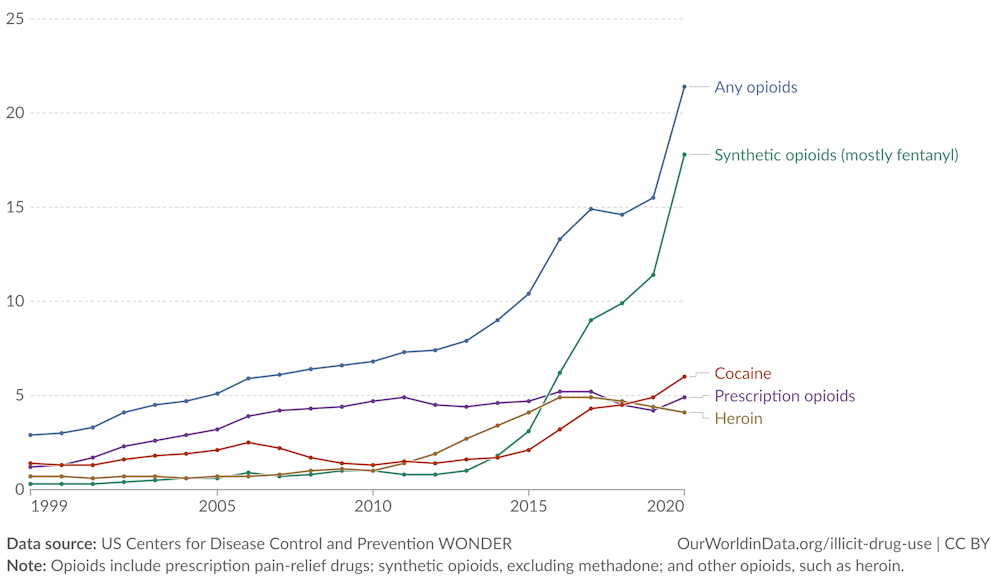
Mr. Fu took several questions concerning the new United States President Donald J. Trump’s “America First” policy, its impact on the United Nations, as well as the 10 per cent tariffs he recently imposed on Chinese goods. His country considers the tariff increases unwarranted, he said, and will file a complaint to the World Trade Organization (WTO). “There is no winner in a trade war,” he emphasised, and noting that the excuse for raising tariffs is fentanyl, he said China has stringent regulations on that and related substances. The United States should look at its own problems, including the “demand side of fentanyl”, he advised.
China and the United States have much in common, he said, adding that it is essential they cooperate on global issues such as climate change and terrorism. Further, as the two biggest financial contributors “within this house”, he said both countries have similar concerns about improving the efficiency of the United Nations. All these offer avenues of cooperation, he said.
He also took a question on United States’ claims that China has influence over the Panama Canal and surrounding areas, and the subsequent statement by Panama’s President about leaving the Belt and Road initiative. Such an action would be regrettable, he said, stressing that his country has not participated or interfered in the management or operation of the Canal. The Panama Belt and Road initiative is an economic platform to enable Global South countries to cooperate with each other, he said, adding that the “smear campaign launched by the US and other Western countries on this initiative is totally groundless”.
Regarding competition with the United States on artificial intelligence (AI) he noted that the Chinese AI tool DeepSeek has caused “some commotion or panic in certain quarters” and encouraged the correspondents to use it to write their news reports. Technological restrictions do not work, he said, adding: “Never ever underestimate the ingenuity of Chinese scientists and engineers.” The world must ensure the benefits of artificial intelligence are available to all countries and there are guardrails to prevent it from being misused, he said, noting that his country put forward the Assembly resolution concerning cooperation on this matter.
Responding to various questions concerning the conflict in the Democratic Republic of the Congo, he said a ceasefire is a priority — the 23 March Movement (M23) and Rwandan troops must withdraw from the territories they occupied. Encouraging Rwanda and the Democratic Republic of the Congo to engage in peace talks, he noted that one Council member has floated the idea of a resolution on this topic, which his country will support in its national and presidential capacity. The territorial integrity of the Democratic Republic of the Congo must be protected, he said, calling on parties to respond to mediation efforts.
On meetings concerning Ukraine, he noted proposals from Member States to mark the upcoming 25 February anniversary of the beginning of the conflict in that country. China is obliged to make proper arrangements according to rules of procedures, he said, adding that it is also crucial to highlight that conflict’s ramifications on the food and energy security, as well as maritime transportation.
Source: Council on Hemispheric Affairs – Analysis-Reportage
By John Perry and Roger D. Harris
Migration, Drugs, and Tariffs.
With Donald Trump as the new US president, pundits are speculating about how US policy towards Latin America might change.
In this article, we look at some of the speculation, then address three specific instances of how the US’s policy priorities may be viewed from a progressive, Latin American perspective. This leads us to a wider argument: that the way these issues are dealt with is symptomatic of Washington’s paramount objective of sustaining the US’s hegemonic position. In this overriding preoccupation, its policy towards Latin America is only one element, of course, but always of significance because the US hegemon still treats the region as its “backyard.”
First, some examples of what the pundits are saying. In Foreign Affairs, Brian Winter argues that Trump’s return signals a shift away from Biden’s neglect of the region. “The reason is straightforward,” he says. “Trump’s top domestic priorities of cracking down on unauthorized immigration, stopping the smuggling of fentanyl and other illicit drugs, and reducing the influx of Chinese goods into the United States all depend heavily on policy toward Latin America.”
Ryan Berg, who is with the thinktank, Center for Strategic and International Studies, funded by the US defense industry, is also hopeful. Trump will “focus U.S. policy more intently on the Western Hemisphere,” he argues, “and in so doing, also shore up its own security and prosperity at home.”
According to blogger James Bosworth, Biden’s “benign neglect” could be replaced by an “aggressive Monroe Doctrine – deportations, tariff wars, militaristic security policies, demands of fealty towards the US, and a rejection of China.” However, notwithstanding the attention of Trump’s Secretary of State, Marco Rubio, Bosworth thinks there is still a good chance of policy lapsing into benign neglect as the new administration focuses elsewhere.
The wrong end of the telescope
What these and similar analyses share is a concern with problems of importance to the US, including domestic ones, and how they might be tackled by shifts in policy towards Latin America. They view the region from the end of a US-mounted telescope.
Trump’s approach may be the more brazen “America first!,” but the basic stance is much the same as these pundits. The different scenarios will be worked out in Washington, with Latin America’s future seen as shaped by how it handles US policy changes over which it has little influence. Analyses by these supposed experts are constrained by their adopting the same one-dimensional perspective as Washington’s, instead of questioning it.
Here’s one example. The word “neglect” is superficial because it hides the immense involvement of the US in Latin America even when it is “neglecting” it: from deep commercial ties to a massive military presence. It is also superficial because, in a real sense, the US constantly neglects the problems that concern most Latin Americans: low wages, inequality, being safe in the streets, the damaging effects of climate change, and many more. “Neglect” would be seen very differently on the streets of a Latin American city than it is inside the Washington beltway.
Who has the “drug problem”?
The vacuum in US thinking is nowhere more apparent than in responses to the drug problem. Trump threatens to declare Mexican drug cartels to be terrorist organizations and to invade Mexico to attack them.
But, as academic Carlos Pérez-Ricart told El Pais: “This is a problem that does not originate in Mexico. The source, the demand, and the vectors are not Mexican. It is them.” Mexican President Claudia Sheinbaum also points out that it is consumption in the US that drives drug production and trafficking in Mexico.
Trump could easily make the same mistake as his predecessor Clinton did two decades ago. Back then, billions were poured into “Plan Colombia” but still failed to solve the “drug problem,” while vastly augmenting violence and human rights violations in the target country.
A foretaste of what might happen, if Trump carries out his threat, occurred last July, when Biden’s administration captured Ismael “El Mayo” Zambada. That caused an all-out war between cartels in the Mexican state of Sinaloa.
Sheinbaum rightly turns questions about drug production and consumption back onto the US. Rhetorically, she asks: “Do you believe that fentanyl is not manufactured in the United States?…. Where are the drug cartels in the United States that distribute fentanyl in US cities? Where does the money from the sale of that fentanyl go in the United States?”
If Trump launches a war on cartels, he will not be the first US president to the treat drug consumption as a foreign issue rather than a concomitantly domestic one.
Where does the “migration problem” originate?
Trump is also not the first president to be obsessed by migration. Like drugs, it is seen as a problem to be solved by the countries where the migrants originate, while both the “push” and “pull” factors under US control receive less attention.
Exploitation of migrant labor, complex asylum procedures, and schemes such as “humanitarian parole” to encourage migration are downplayed as reasons. Biden intensified US sanctions on various Latin American countries, which have been shown conclusively to provoke massive emigration. Meanwhile Trump threatens to do the same.
Many Latin American countries have been made unsafe by crime linked to drugs or other problems in which the US is implicated. About 392,000 Mexicans were displaced as a result of conflict in 2023 alone, their problem aggravated by the massive, often illegal, export of firearms from the US to Mexico.
Costa Rica, historically a safe country, had a record 880 homicides in 2023, many of which were related to drug trafficking. In Brazil and other countries, US-trained security forces contribute directly to the violence, rather than reducing it.
Mass deportations from the US, promised by Trump, could worsen these problems, as happened in El Salvador in the late 1990s. They would also affect remittances sent home by migrant workers, exacerbating regional poverty. The threatened use of tariffs on exports to the US could also have serious consequences if Latin America does not stand up to Trump’s threats. Economist Michael Hudson argues that countries will have to jointly retaliate by refusing to pay dollar-based debts to bond holders if export earnings from the US are summarily cut.
China in the US “backyard”
Trump also joins the Washington consensus in its preoccupation with China’s influence in Latin America. Monica de Bolle is with the Peterson Institute for International Economics, a thinktank partly funded by Pentagon contractors. She told the BBC: “You have got the backyard of America engaging directly with China. That’s going to be problematic.”
Recently retired US Southern Command general, Laura Richardson, was probably the most senior frequent visitor on Washington’s behalf to Latin American capitals, during the Biden administration. She accused China of “playing the ‘long game’ with its development of dual-use sites and facilities throughout the region, “adding that those sites could serve as “points of future multi-domain access for the PLA [People’s Liberation Army] and strategic naval chokepoints.”
As Foreign Affairspoints out, Latin America’s trade with China has “exploded” from $18 billion in 2002 to $480 billion in 2023. China is also investing in huge infrastructure projects, and seemingly its only political condition is a preference for a country to recognize China diplomatically (not Taiwan). Even here, China is not absolute as with Guatemala, Haiti, and Paraguay, which still recognize Taiwan. China still has direct investments in those holdouts, though relatively more modest than with regional countries that fully embrace its one-China policy.
Peru, currently a close US ally, has a new, Chinese-funded megaport at Chancay, opened in November by President Xi Jinping himself. Even right-wing Argentinian president Milei said of China, “They do not demand anything [in return].”
What does the US offer instead? While Antony Blinken proudly displayed old railcars that were gifted to Peru, the reality is that most US “aid” to Latin America is either aimed at “promoting democracy” (i.e. Washington’s political agenda) or is conditional or exploitative in other ways.
The BBC cites “seasoned observers” who believe that Washington is paying the price for “years of indifference” towards the region’s needs. Where the US sees a loss of strategic influence to China and to a lesser extent to Russia, Iran, and others, Latin American countries see opportunities for development and economic progress.
Remember the Monroe Doctrine
Those calling for a more “benign” policy are forgetting that, in the two centuries since President James Monroe announced the “doctrine,” later given his name, US policy towards Latin America has been aggressively self-interested.
Its troops have intervened thousands of times in the region and have occupied its countries on numerous occasions. Just since World War II, there have been around 50 significant interventions or coup attempts, beginning with Guatemala in 1954. The US has 76 military bases across the region, while other major powers like China and Russia have none.
The doctrine is very much alive. In Foreign Affairs, Brian Winter warns: “Many Republicans perceive these linkages [with China], and the growing Chinese presence in Latin America more broadly, as unacceptable violations of the Monroe Doctrine, the 201-year-old edict that the Western Hemisphere should be free of interference from outside powers.”
Bosworth adds that Trump wants Latin America to decisively choose a side in the US vs China scrimmage, not merely underplay the role of China in the hemisphere. Any country courting Trump, he suggests, “needs to show some anti-China vibes.”
Will Freeman is with the Council on Foreign Relations, whose major sponsors are also Pentagon contractors. He thinks that a new Monroe Doctrine and what he calls Trump’s “hardball” diplomacy may partially work, but only with northern Latin America countries, which are more dependent on US trade and other links.
Trump has two imperatives: while one is stifling China’s influence (e.g. by taking possession of the Panama Canal), another is gaining control of mineral resources (a reason for his wanting to acquire Greenland). The desire for mineral resources is not new, either. General Richardson gave an interview in 2023 to another defense-industry-funded thinktank in which she strongly insinuated that Latin American minerals rightly belong to the US.
Maintaining hegemonic power against the threat of multipolarity
Neoconservative Charles Krauthammer, writing 20 years ago for yet another thinktank funded by the defense industry, openly endorsed the US’s status as the dominant hegemonic power and decried multilateralism, at least when not in US interests. “Multipolarity, yes, when there is no alternative,” he said. “But not when there is. Not when we have the unique imbalance of power that we enjoy today.”
Norwegian commentator Glen Diesen, writing in 2024, contends that the US is still fighting a battle – although perhaps now a losing one – against multipolarity and to retain its predominant status. Trump’s “America first!” is merely a more blatant expression of sentiments held by his other presidential predecessors for clinging on to Washington’s contested hegemony.
The irony of Biden’s presidency was that his pursuit of the Ukraine war has led to warmer relations between his two rivals, Russia and China. In this context, the growth of BRICS has been fostered – an explicitly multipolar, non-hegemonic partnership. As Glen Diesen says, “The war intensified the global decoupling from the West.”
Other steps to maintain US hegemony – its support for Israel’s genocide in Gaza, the regime-change operation in Syria and the breakdown of order in Haiti – suggest that, in Washington’s view, according to Diesen, “chaos is the only alternative to US global dominance.” Time and again, Yankee “beneficence” has meant ruination, not development.
These have further strengthened desires in the global south for alternatives to US dominance, not least in Latin America. Many of its countries (especially those vulnerable to tightening US sanctions) now want to follow the alternative of BRICS.
Unsurprisingly, Trump has been highly critical of this perceived erosion of hegemonic power on Biden’s watch. Thomas Fazi argues in UnHerd that this is realism on Trump’s part; he knows the Ukraine war cannot be conclusively won, and that China’s power is difficult to contain. Accordingly, this is leading to a “recalibrating of US priorities toward a more manageable ‘continental’ strategy — a new Monroe Doctrine — aimed at reasserting full hegemony over what it deems to be its natural sphere of influence, the Americas and the northern Atlantic,” stretching from Greenland and the Arctic to Tierra del Fuego and Antarctica.
The pundits may not agree on quite what Trump’s approach towards Latin America will be, but they concur with Winter’s judgment that the region “is about to become a priority for US foreign policy.” His appointment of Marco Rubio is a signal of this. The new secretary of state is a hawk, just like Blinken, but one with a dangerous focus on Latin America.
However, the mere fact that such pundits hark back to the Monroe Doctrine indicates that this is only, so to speak, old wine in new bottles. Even in the recent past, an aggressive application of the 201-year-old Monroe Doctrine has never seen a hiatus.
Recall US-backed coups that deposed Honduran President Manuel Zelaya (2009) and Bolivian Evo Morales (2019), plus the failed coup against Daniel Ortega in Nicaragua (2018), along with the parliamentary coup that ousted Paraguayan Fernando Lugo (2012). To these, US-backed regime change by “lawfare” included Dilma Rousseff in Brazil (2016) and Pedro Castillo in Peru (2023). Currently presidential elections have simply been suspended in Haiti and Peru with US backing.
Even if Trump is more blatant than his predecessors in making clear that his policymaking is based entirely on what he perceives to be US interests, rather than those of Latin Americans, this is not new.
As commentator Caitlin Johnstone points out, the main difference between Trump and his predecessors is that he “makes the US empire much more transparent and unhidden.” From the other end of the political spectrum, a former John McCain adviser echoes the same assessment: “there will likely be far more continuity between the two administrations than meets the eye.”
Regardless, Latin America will continue to struggle to set its own destiny, patchily and with setbacks, and this will likely draw it away from the hegemon, whatever the US does.
Nicaragua-based John Perry is with the Nicaragua Solidarity Coalition and writes for the London Review of Books, FAIR, and CovertAction.
The Committee on the Elimination of Discrimination against Women this morning opened its ninetieth session, hearing a statement from Andrea Ori, Chief of the Groups in Focus Section of the Human Rights Treaties Branch of the Office of the High Commissioner for Human Rights, and hearing the solemn declarations of eight newly elected Committee Members. The Committee also adopted its agenda for the session, during which it will review the reports of Belize, Belarus, Congo, Democratic Republic of the Congo (exceptional report), Liechtenstein, Luxembourg, Nepal and Sri Lanka.
Opening the session, Mr. Ori congratulated the eight new members of the Committee who officially assumed their duties today and congratulated the four Committee Members who were re-elected for the term 2025–2028. This year marked the commemoration of the thirtieth anniversary of the Beijing Declaration and Platform for Action, which was unanimously adopted by 189 States in September 1995 at the Fourth United Nations World Conference on Women held in Beijing. The Beijing Declaration and Platform for Action laid out a vision for ensuring women’s human rights and achieving gender equality around the world.
However, Mr. Ori said, despite considerable progress on gender equality in the past 30 years, the world was still far from achieving this vision. Approximately one in three women globally experienced physical and/or sexual violence during their lifetime. Sexual violence against women and girls was used as a tactic of war in numerous conflicts. Gender parity in decision-making remained a distant goal, with only 26 per cent of parliamentarians in the world being women. At the upcoming fifty-ninth session of the Human Rights Council, the President of the Council would convene the annual high-level panel discussion on human rights mainstreaming under the theme “Thirtieth anniversary of the Beijing Declaration and Platform for Action”, supported by the Office of the High Commissioner for Human Rights, United Nations Women and other agencies. Mr. Ori wished the Committee a successful and productive session.
Ana Peláez Narváez, Chairperson of the Committee, said that, since the last session, the number of States parties that had ratified the Convention had remained at 189. The number of States parties that had accepted the amendment to article 20, paragraph 1 of the Convention concerning the meeting time of the Committee remained at 81. Since the last session, Cook Islands, Fiji, Ireland, Kenya, Mexico, Romania, Solomon Islands, Togo and Tuvalu had submitted their periodic reports to the Committee.
The following eight new Committee Members made their solemn declaration: Hamida Al-Shukairi (Oman), Violet Eudine Barriteau (Barbados), Nada Moustafa Fathi Draz (Egypt), Mu Hong (China), Madina Jarbussynova (Kazakhstan), Jelena Pia-Comella (Andorra), Erika Schläppi (Switzerland), and Patsilí Toledo Vasquez (Chile).
In a private meeting following the opening, the Committee will elect a new Chair and Bureau for the Committee.
The Committee adopted the agenda and programme of work of the session, and the Chair and Committee Experts then discussed the activities they had undertaken since the last session.
Brenda Akia, on behalf of Natasha Stott Despoja, Committee Rapporteur on follow-up to concluding observations, briefed the Committee on the status of the follow-up reports received in response to the Committee’s concluding observations.
The Committee on the Elimination of Discrimination against Women’s ninetieth session is being held from 3 to 21 February. All documents relating to the Committee’s work, including reports submitted by States parties, can be found on the session’s webpage. Meeting summary releases can be found here. The webcast of the Committee’s public meetings can be accessed via the UN Web TV webpage.
The Committee will next meet in public at 3 p.m. this afternoon with representatives of national human rights institutions and non-governmental organizations and the Working Group on business and human rights.
Opening Statementby the Representative of the Secretary-General
ANDREA ORI, Chief of the Groups in Focus Section of the Human Rights Treaties Branch of the Office of the High Commissioner for Human Rights, congratulated the eight new members of the Committee who officially assumed their duties today: Hamida Al-Shukairi (Oman), Violet Eudine Barriteau (Barbados), Nada Moustafa Fathi Draz (Egypt), Mu Hong (China), Madina Jarbussynova (Kazakhstan), Jelena Pia-Comella (Andorra), Erika Schläppi (Switzerland), and Patsilí Toledo Vasquez (Chile). He also congratulated the four Committee Members who were re-elected for the term 2025–2028: Corinne Dettmeijer-Vermeulen (Netherlands), Nahla Haidar El Addal (Lebanon), Bandana Rana (Nepal), and Natasha Stott Despoja (Australia).
Mr. Ori said this year marked the commemoration of the thirtieth anniversary of the Beijing Declaration and Platform for Action, which was unanimously adopted by 189 States in September 1995 at the Fourth United Nations World Conference on Women held in Beijing. The Beijing Declaration and Platform for Action laid out a vision for ensuring women’s human rights and achieving gender equality around the world. However, despite considerable progress on gender equality in the past 30 years, the world was still far from achieving this vision.
Approximately one in three women globally experienced physical and/or sexual violence during their lifetime. Sexual violence against women and girls was used as a tactic of war in numerous conflicts. Gender parity in decision-making remained a distant goal, with only 26 per cent of parliamentarians in the world being women. In economic life, women occupied only 28.2 per cent of management positions. About 800 women and girls still died every day from preventable causes related to pregnancy and childbirth.
Moreover, the world was witnessing a backlash against women’s human rights and gender equality, especially against women’s sexual and reproductive health rights, with an increase in attacks against abortion providers, shrinking civic space for women human rights defenders, and reduced funding. In that context, Mr. Ori welcomed the Committee’s timely work on a new general recommendation on gender stereotypes, which would be kicked off with the half-day of general discussion on gender stereotypes on 17 February from 3 to 6 pm. The thirtieth anniversary of the Beijing Declaration and Platform for Action presented a key opportunity to renew the commitments made by Member States to ensure women’s rights and achieve gender equality.
At the upcoming fifty-ninth session of the Human Rights Council, the President of the Council would convene the annual high-level panel discussion on human rights mainstreaming under the theme “Thirtieth anniversary of the Beijing Declaration and Platform for Action”, supported by the Office of the High Commissioner for Human Rights, United Nations Women and other agencies. The panel, to be held on 24 February, would be opened by the High Commissioner for Human Rights, Volker Türk, and possibly the Secretary-General, António Guterres, and would discuss progress and challenges in protecting women’s rights and gender equality. Committee expert Nahal Haidar would be one of the panellists. Together with United Nations Women, the Office was also planning a side event during the session which would focus on the pushback against women’s rights and gender equality in the context of humanitarian action.
Mr. Ori said last year had been particularly challenging, due to the liquidity crisis which had hampered and continued to hamper the Committee’s work. The Office was doing its utmost to ensure that the Committee and other treaty bodies could implement their mandates, however, all indications pointed to a continuation of the difficult liquidity situation for the foreseeable future. The treaty body strengthening process had reached a key moment, with the adoption of the biennial resolution on the treaty body system by the General Assembly in December 2024. On Human Rights Day last year, the Geneva Human Rights Platform, in cooperation with the Office and the Directorate of International Law of the Swiss Federal Department of Foreign Affairs, organised an informal meeting of the Chairs and the Committees’ focal points on working methods, which explored the latest developments concerning the treaty body system and sought to identify possible ways to improve the harmonisation of procedures. Mr. Ori said the Office of the High Commissioner would continue to work alongside the Chairs and all the treaty body experts to strengthen the system. He concluded by wishing the Committee a successful and productive session
Statements by Committee Experts
ANA PELÁEZ NARVÁEZ, Committee Chairperson, called on the eight newly elected members to make their solemn declarations to the Committee. She also congratulated those who had been re-elected.
The Committee then adopted its agenda and programme of work for the session.
Ms. Peláez Narváez said that since the last session, the number of States parties that had ratified the Convention had remained at 189. The number of States parties that had accepted the amendment to article 20, paragraph 1 of the Convention concerning the meeting time of the Committee remained at 81. She was pleased to inform that since the last session, Cook Islands, Fiji, Ireland, Kenya, Mexico, Romania, Solomon Islands, Togo and Tuvalu had submitted their periodic reports to the Committee. Since making the simplified reporting procedure the default procedure for States parties’ reporting to the Committee, 13 States parties had indicated that they wished to opt out and maintain the traditional reporting procedure.
The Chair and Committee Experts then discussed the activities they had undertaken since the last session.
Ms. Peláez Narváez said as the pre-sessional Working Group for the ninetieth session was cancelled due to the ongoing liquidity situation of the United Nations, there was no report of the pre-sessional Working Group to be presented. The Committee had subsequently decided to consider the pending reports from the following States parties at this ninetieth session: Belize, Belarus, Congo, Democratic Republic of the Congo (exceptional report), Liechtenstein, Luxembourg, Nepal and Sri Lanka.
BRENDA AKIA, Alternate Rapporteur on follow-up to concluding observations, speaking on behalf of NATASHA STOTT DESPOJA, Committee Rapporteur, briefed the Committee on the status of the follow-up reports received in response to the Committee’s concluding observations. She said that at the end of the eighty-ninth session, follow-up letters outlining the outcome of assessments of follow-up reports were sent to Bolivia, Türkiye, South Africa, Morocco and Azerbaijan. Reminder letters were sent to Mongolia, Namibia, Portugal and the United Arab Emirates. For the present session, the Committee had received follow-up reports from Belgium, Gambia, Sweden and Switzerland, all received on time; and from Portugal, received with more than five months’ delay.
________
CEDAW.25.001E
Produced by the United Nations Information Service in Geneva for use of the information media; not an official record.
English and French versions of our releases are different as they are the product of two separate coverage teams that work independently.
Press conference by Jean-Pierre Lacroix, Under-Secretary-General for Peace Operations, on the Middle East and the Democratic Republic of the Congo.
———————————
The Under-Secretary-General for Peace Operations Jean-Pierre Lacroix said, the fall of the Assad government in Syria and the “entry, presence and activities” of the Israel Defence Forces (IDF) in the area of separation, “has made it particularly challenging” for the United Nations Disengagement Observer Force (UNDOF) and the Observer Group Golan (OGG).
Briefing journalists in New York upon visiting Syria and Israel, Lacroix said, “I obviously reiterated our concern about the presence of the IDF in the area of separation. It’s clearly a violation of the 1974 agreement between Israel and Syria. I also indicated that UNDOF had received a number of complaints from the local inhabitants of particularly in the centre of the area of operations. And we, expressed the importance of addressing these concerns.”
He said he had conveyed a message to both the Israeli government and Syria’s caretaker government, “to fully facilitate UNDOF’s mandated activities, including inspections in the respective, areas of limitation that are adjacent to the area of separation, ensure freedom of movement to UN personnel.”
Turning to the DRC, Lacroix said, “the situation remains tense and volatile, with occasional shooting continuing within the city.”
He said the UN Mission in the country’s (MONUSCO’s) positions “were again resupplied, which is critically important because in those positions, we do not only have MONUSCO personnel, but we have also, significant number of people basically, who have been seeking shelter in those bases.”
The airport’s runways, the peacekeeping Chief noted, “is currently not operable” as it has “sustained significant damages in the recent fighting, and we cannot use it for now.”
Lacroix underlined that “MONUSCO bases are under stress, but also in some cases, they have been under threat in terms of, you know, the presence of, disarmed FRDC soldiers. And I want to really again call for the respect, the full respect, of the inviolability of our UN premises.”
He said, “we are concerned not only as far as the eastern DRC is concerned, but this has if you look at the past, some of this has the potential of triggering a wider regional conflict and therefore it is of the utmost important that all diplomatic efforts should be geared to avoiding this and bringing about this decision of hostilities.”
Lacroix said, the rebel group M23 and the Rwanda Defence Force (RDF) militias “are about 60km, north of, Bukavu; seem to be moving quite fast. There is an airport, in the vicinity of where they are, I think, a few kilometres south, which is Kavumu.”
He noted that Secretary-General António Guterres has spoken to Rwandan President Paul Kagame as well as Congolese President Félix Tshisekedi emphasising the importance of the protection of civilians and the safety and security of UN personnel.
He said, I think, “the protection of respect to the safety and security of UN personnel, is an international obligation for all member states. And that applies to Rwanda, that applies to all.”
Humanitarian organizations in Goma continue to assess the impact of the crisis, including the widespread looting of warehouses and the offices of aid organizations.
The World Health Organization and partners conducted an assessment with the Government between 26 to 29 January and reported that 700 people have been killed and 2,800 people injured and that are receiving treatment in health facilities. These numbers are expected to rise as more information becomes available.
In Goma itself, access to safe drinking water remains cut off, forcing people to rely on untreated water from Lake Kivu. Without urgent action, OCHA cautions that the risk of waterborne disease outbreaks will just continue to increase.
For its part, the International Organization for Migration says today that several displacement sites, including on the outskirts of Goma – where over 300,000 have been displaced have been partially or completely emptied.
Union Minister of Coal & Mines, Shri G. Kishan Reddy, will hold a strategic meeting tomorrow with Saudi Arabia’s Minister of Industry and Mineral Resources, Mr. Bandar bin Ibrahim Alkhorayef, in New Delhi. The high-level discussion will focus on enhancing cooperation in the critical minerals sector and exploring new investment opportunities between the two nations.
The meeting comes after the Union Minister’s recent participation in the Ministerial Round Table at the Future Minerals Forum 2025 in Riyadh, where he highlighted India’s commitment to securing critical minerals essential for Energy Transition & clean energy systems. He also invited global investors to explore India’s growing mining sector and held extensive discussions with ministers from Brazil, Italy, and Morocco to foster economic and technical cooperation.
This engagement gains added significance following the Cabinet’s recent approval of the National Critical Minerals Mission (NCMM). Key discussions will center on fostering resilient mineral supply chains, investment in value-added processing, and technological collaborations to strengthen India-Saudi ties in the mineral resources sector.
This strategic meeting underscores India’s proactive approach to developing international partnerships in the minerals domain, reaffirming its growing role as a global player in sustainable mineral development.
Source: Hong Kong Government special administrative region
Police will implement special traffic arrangements on Hong Kong Island, Kowloon West and New Territories South to facilitate the Hong Kong Marathon 2025 on February 9 (Sunday).
Hong Kong Island —————-
A. Road closure and traffic diversions
The following will be implemented by phases on February 9 until the roads are safe for reopening, except for vehicles with permit:
Phase I (from 1.15am to about 10.30am)
Road closure
Eastbound Central-Wan Chai Bypass Tunnel between Wan Chai and Island Eastern Corridor (IEC) will be closed, eastbound Central-Wan Chai Bypass Tunnel between Central and Wan Chai will be reopened at about 1.30pm.
Traffic diversions
Traffic along eastbound Connaught Road West flyover heading for eastbound Central-Wan Chai Bypass Tunnel, eastbound IEC and Eastern Harbour Crossing will be diverted via eastbound Connaught Road West at-grade, eastbound Connaught Road Central at-grade, Man Kat Street, Connaught Road Central, Gloucester Road, Victoria Park Road, Gordon Road, Electric Road and Java Road.
Phase II (from 1.15am to about 1.30pm)
Road closure
– Eastbound Connaught Road West flyover between Shing Sai Road and Rumsey Street; – Man Po Street; – Yiu Sing Street; – Eastbound Lung Wo Road; – The slip road from Connaught Road West flyover to Man Po Street; – The slip road from Connaught Road West flyover to eastbound Central-Wan Chai Bypass Tunnel; – The slip road from Man Kat Street to the exit at Wan Chai on eastbound Central-Wan Chai Bypass Tunnel; – Eastbound Central-Wan Chai Bypass Tunnel between Central and Wan Chai; – The exit at Expo Drive on eastbound Central-Wan Chai Bypass Tunnel; – Expo Drive; – Expo Drive Central between westside Expo Drive and eastside Expo Drive; – Southbound Expo Drive East; and – Northbound Expo Drive East between Expo Drive and the northern cul-de-sac.
Traffic diversions
– Traffic along northbound Hill Road flyover will be diverted via eastbound Connaught Road West at-grade; – Traffic along eastbound Shing Sai Road will be diverted via eastbound Connaught Road West; – Traffic along Lung Wo Road cannot turn to westbound Yiu Sing Street; – Traffic along Man Yiu Street cannot turn left to eastbound Lung Wo Road; and – Traffic along Man Yiu Street cannot turn left to eastbound Yiu Sing Street.
Phase III (from 1.30am to about 10.30am)
Road closure
– Eastbound IEC between Victoria Park Road eastbound and Tung Hei Road slip road; and – The slip roads of Hing Fat Street, Man Hong Street and Taikoo Wan Road leading to eastbound IEC.
Phase IV (from 1.30am to about 11.30am)
Road closure
– Westbound IEC between Tung Hei Road slip road and westbound Victoria Park Road; – The slip roads of Nam On Street, Chai Wan Road, Tai Hong Street, Oi Shun Road, Hong On Street, Taikoo Wan Road, westbound King’s Road junction with Healthy Street Central, Tong Shui Road and Wharf Road leading to westbound IEC; – The slip roads leading from the exit of Eastern Harbour Crossing to westbound IEC. The section up between the exit of Eastern Harbour Crossing and the down ramp slip road leading to Man Hong Street will be reopened at about 10.30am; – Westbound Oi Shun Road between Oi Tak Road and Tai On Street; – Westbound Central-Wan Chai Bypass Tunnel between IEC and Wan Chai; and – The slip road leading from Tsing Fung Street vehicular flyover and Hing Fat Street to westbound Central-Wan Chai Bypass Tunnel.
Traffic diversions
– Traffic along eastbound Victoria Park Road and Hing Fat Street heading for eastbound IEC and Eastern Harbour Crossing will be diverted via Gordon Road, Electric Road and Java Road; – Traffic along Java Road and Man Hong Street heading for eastbound IEC and Eastern Harbour Crossing will be diverted via King’s Road; – Traffic along Taikoo Wan Road heading for eastbound IEC will be diverted via King’s Road and Shau Kei Wan Road; – Traffic along Java Road and eastbound King’s Road can access Eastern Harbour Crossing via Hong On Street; – Traffic from the exit of Eastern Harbour Crossing heading for eastbound IEC will be diverted via Tai On Street and Shau Kei Wan Road; – Traffic along westbound IEC will be diverted via Nam On Lane and Shau Kei Wan Road; – Traffic along Nam On Lane and Nam Hong Street heading for westbound IEC will be diverted via westbound Nam On Street, Sun Sing Street and Shau Kei Wan Road; – Traffic along Chai Wan Road heading for westbound IEC will be diverted via Shau Kei Wan Road; – Traffic diverted to westbound Shau Kei Wan Road can access Eastern Harbour Crossing via Tai Ning Street, Sai Wan Ho Street and Tai Hong Street; – Traffic along Tai Hong Street will only be allowed for access to Eastern Harbour Crossing and Lei King Wan. Traffic heading for westbound IEC will be diverted via Tai Hong Street, Hong Cheung Street, Tai On Street and Shau Kei Wan Road; – Traffic along westbound Oi Shun Road heading for westbound IEC will be diverted via Oi Tak Street, Oi Kan Road, Tai On Street and Oi Shun Street; – Traffic along Hong On Street will only be allowed for access to and from Eastern Harbour Crossing. Traffic heading for westbound IEC will be diverted via westbound Hong On Street and King’s Road. Except for vehicles heading for Eastern Harbour Crossing, traffic along Hong Yue Street will be diverted via westbound Hong On Street; – Traffic along Taikoo Wan Road slip road heading for westbound IEC will be diverted via Taikoo Shing Road and King’s Road; – Traffic from the exit of Eastern Harbour Crossing heading for westbound IEC will be diverted via Man Hong Street and King’s Road (until 4am); – Traffic on the slip road at the junction of westbound King’s Road and Healthy Street Central heading for westbound IEC will be diverted via westbound King’s Road; – Traffic on the slip road at the junction of westbound King’s Road and Tong Shui Road heading for westbound IEC will be diverted via westbound King’s Road; – Traffic along Tong Shui Road heading for westbound IEC will be diverted via Java Road, Kam Hong Street and King’s Road; – Traffic along Wharf Road slip road heading for westbound IEC will be diverted via westbound Wharf Road, North Point Road, Java Road, Tong Shui Road and King’s Road; and – Traffic along Tsing Fung Street vehicular flyover and northbound Hing Fat Street heading for the slip road of westbound Central-Wan Chai Bypass Tunnel will be diverted via the remaining lanes on Victoria Park Road.
Phase V (from 3am to about 8.30am)
Road closure
– Eastbound Harbour Road between Harbour Drive and Tonnochy Road; and – Northbound Tonnochy Road between Hung Hing Road and Harbour Road.
Traffic diversions
– Traffic along northbound Tonnochy Road flyover will be diverted via westbound Harbour Road; – Traffic along eastbound Harbour Road will be diverted via northbound Fleming Road; and – Traffic leaving from car parks along eastbound Harbour Road will be diverted via westbound Harbour Road.
Phase VI (from 3am to about 1.30pm)
Road closure
– Man Kwong Street; – Man Fai Street; – The slip road between Rumsey Street and Man Kwong Street; – Southbound Man Yiu Street between Man Kwong Street and Lung Wo Road; and – Northbound Man Yiu Street between Man Po Street and Man Kwong Street.
Traffic diversions
– Traffic along eastbound Chung Kong Road will be diverted via Connaught Road Central; – Traffic along eastbound Connaught Road Central cannot turn left to Man Kwong Street; and – Traffic along northbound Man Yiu Street will be diverted via westbound Finance Street.
Phase VII (from 3am to about 2pm)
Road closure
– Eastbound Hung Hing Road between Expo Drive East and Wan Shing Street; – Westbound Hung Hing Road between Wan Shing Street and Tonnochy Road; – The fast lane of eastbound Harbour Road between Harbour Drive and Tonnochy Road; – The fast lane of northbound Tonnochy Road between Hung Hing Road and Harbour Road; – Southbound Tonnochy Road between Harbour Road and Gloucester Road; – Marsh Road flyover between Hung Hing Road and Lockhart Road; – Northbound Marsh Road between Hung Hing Road and Gloucester Road; – Eastbound Lockhart Road between Marsh Road and Percival Street; – Southbound Percival Street between Lockhart Road and Hennessy Road; – Percival Street (except the middle lane) between Jaffe Road and Lockhart Road; – Southbound Canal Road East between Lockhart Road and Jaffe Road; – Northbound Canal Road West between Lockhart Road and Jaffe Road; – Southbound Marsh Road between Lockhart Road and Jaffe Road; – Marsh Road between Hennessy Road and Lockhart Road; – Eastbound Hennessy Road between Percival Street and Yee Wo Street; – Eastbound Yee Wo Street; – Sugar Street; – Southbound Gloucester Road between Great George Street and Causeway Road. Access to the southbound Tai Hang Road flyover is allowed after 10.45am; and – Northbound Gloucester Road between the U-turn slip road beneath Tai Hang Road flyover and Great George Street.
Traffic diversions
– Traffic along northbound Fleming Road cannot turn right to eastbound Hung Hing Road and will be diverted via southbound Fleming Road or westbound Lung Wo Road; – Traffic along northbound Wan Shing Street must turn right to Hung Hing Road flyover; – Traffic along northbound Marsh Road will be diverted via Gloucester Road service road or turn to southbound Marsh Road for access to Jaffe Road; – Traffic along eastbound Lockhart Road will be diverted via northbound Marsh Road at grade; – Traffic along eastbound Jaffe Road will be diverted via northbound Percival Street; – Traffic along southbound Percival Street will be diverted via eastbound Lockhart Road; – Traffic along eastbound Hennessy Road cannot turn left to Marsh Road; – Traffic along Tin Lok Lane cannot go straight to northbound Marsh Road, and must turn left or right to Hennessy Road; – Traffic along eastbound Hennessy Road heading for Causeway Road will be diverted via southbound Percival Street, Leighton Road, Pennington Street and eastbound Yee Wo Street; – Traffic along eastbound Yee Wo Street cannot turn left to Sugar Street; – Traffic along Great George Street heading for southbound Gloucester Road will be diverted via southbound Tai Hang Road floyover; and – Traffic along southbound Victoria Park Road flyover will be diverted via Gloucester Road service road. Access to southbound Tai Hang Road flyover is allowed after 10.45am.
Phase VIII (from 3.45am to about 9am)
Road closure
– Hing Fat Street between Causeway Road and Victoria Park Road; – Electric Road between Yacht Street and Park Towers; – Lau Li Street between Hing Fat Street and Electric Road; and – Tsing Fung Street between Hing Fat Street and Electric Road.
Traffic diversions
– Traffic along eastbound Causeway Road heading for Hing Fat Street will be diverted via eastbound King’s Road; – Traffic along westbound King’s Road heading for Hing Fat Street will be diverted via westbound Causeway Road; – Traffic along southbound Electric Road must turn left to Yacht Street (except for access to Park Towers); – Traffic leaving the Park Towers car park will be diverted via Electric Road and Yacht Street; – Traffic on Electric Road heading for Tsing Fung Street will be diverted via Yacht Street; and – Traffic along southbound Hing Fat Street must turn left to eastbound Gordon Road.
Phase IX (from 4am to about 10.45am)
Road closure
– Part of the traffic lanes of westbound Victoria Park Road between the down ramp of westbound IEC and westbound Gloucester Road, except the slow lane leading to Gloucester Road service road and the second slow lane leading to westbound Gloucester Road; and – The flyover leading from northbound Gloucester Road to westbound Gloucester Road.
Traffic diversions
– Traffic along Tsing Fung Street flyover will be diverted via the remaining lanes of westbound Victoria Park Road; and – Traffic along northbound Gloucester Road flyover heading for westbound Gloucester Road will be diverted via Gloucester Road service road.
B. Pedestrian precincts
The commencement time of the following pedestrian precincts will be postponed to 3pm on February 9, or when the major roads on Hong Kong Island are reopened:
– Pedestrian precinct at Lockhart Road between Cannon Street and East Point Road; – East Point Road pedestrian precinct; and – Pedestrian precinct at Great George Street between East Point Road and Paterson Street.
C. Suspension of parking spaces
– 29 parking spaces in Hing Fat Street public car park (metered parking spaces No. 1619 to 1629 and 1641 to 1644) will be suspended from 3pm to 10pm on February 8; – All parking spaces in Hing Fat Street public car park will be suspended from 10pm on February 8 to 3pm of the following day, except for disabled parking spaces; and – The parking spaces at the following locations will be suspended from 00.01am to 3pm on February 9: – Pick-up/drop-off areas at Expo Drive East; – Coach parking spaces at Expo Drive; – Disabled parking spaces at Jaffe Road between Percival Street and Cannon Street; – Motorcycle parking spaces at Marsh Road between Lockhart Road and Hennessy Road; – Disabled parking spaces at Gloucester Road near Sugar; – Rumsey Street near Rumsey Street Multi-Storey Car Park; – Westbound Yiu Sing Street between Lung Wo Road and Man Yiu Street; – Goods vehicles parking spaces at westbound Man Kwong Street near Central Ferry Pier No. 3; – Goods vehicles parking spaces at westbound Man Kwong Street near Central Ferry Pier No. 8; – Disabled parking spaces outside Central Ferry Pier No. 4 and Central Ferry Pier No. 5; – Motorcycle parking spaces outside Central Ferry Pier No. 6 and Central Ferry Pier No. 7; and – Wan Shing Street opposite to Wanchai Station Building.
Kowloon ——-
A. Road closure and traffic diversions
The following will be implemented by phases on February 9, until the roads are safe for reopening, except for vehicles with permit:
Phase I (from 00.45am to about 1.15pm)
Road closure
– Southbound West Kowloon Highway between Mei Ching Road Roundabout and Western Harbour Crossing; – The slip road leading from northbound Lin Cheung Road near Civil Aid Service Headquarters to southbound West Kowloon Highway; – The slip road leading from northbound Nga Cheung Road elevated road to southbound West Kowloon Highway; – The slip road leading from westbound Jordan Road flyover to southbound Western Harbour Crossing; – The slip road leading from southbound Lin Cheung Road near Yau Ma Tei Interchange to southbound West Kowloon Highway; and – The slow lane of northbound Lin Cheung Road lowest level underpass between Austin Road West underpass and exit of Lin Cheung Road.
Traffic diversions
– Traffic along northbound Lin Cheung Road cannot turn to the slip road leading from northbound Lin Cheung Road near Civil Aid Service Headquarters to southbound West Kowloon Highway; – Traffic along southbound Lin Cheung Road will be diverted to the slip road heading to Tsim Sha Tsui; and – Traffic along eastbound Mei Ching Road cannot turn to the slip road leading from southbound Lin Cheung Road to southbound West Kowloon Highway.
Phase II (from 1am to about 9am)
Road closure
– Eastbound Salisbury Road between Star Ferry Pier and Canton Road; and – Westbound Salisbury Road between Star Ferry Pier and Kowloon Park Drive.
Traffic diversions
Traffic along westbound Salisbury Road will be diverted via northbound Kowloon Park Drive.
Phase III (from 1.40am to about 10am)
Road closure
– Northbound Nathan Road between Austin Road and Salisbury Road; – Southbound Nathan Road between Kimberley Road and Middle Road; – Westbound Kimberley Road between Nathan Road and Carnarvon Road; – Westbound Granville Road between Nathan Road and Carnarvon Road; – Eastbound Cameron Road between Nathan Road and Cameron Lane; – Humphreys Avenue; – Westbound Carnarvon Road between Nathan Road and Bristol Avenue; – Mody Road between Nathan Road and Bristol Avenue; – Haiphong Road between Lock Road and Nathan Road; – Peking Road between Lock Road and Nathan Road; – Middle Road between Hankow Road and Nathan Road; and – Westbound Salisbury Road Underpass.
Traffic diversions
– Traffic along southbound Nathan Road will be diverted to eastbound Kimberley Road; – Traffic along Salisbury Road cannot turn to northbound Nathan Road; – Traffic along northbound Carnarvon Road cannot turn left to westbound Granville Road and westbound Kimberley Road; – Traffic along eastbound Haiphong Road will be diverted to southbound Lock Road; and – Traffic along westbound Salisbury Road cannot enter westbound Salisbury Road Underpass near Chatham Road South.
Phase IV (from 2.30am to about 10.45am)
Road closure
– The slip road leading from eastbound Lai Po Road to southbound Lin Cheung Road; – The slip road leading from westbound Tsing Sha Highway to southbound Lin Cheung Road; – Southbound Lin Cheung Road between Lai Po Road and Hoi Fai Road; – Southbound Lin Cheung Road between Tonkin Street West and Yau Ma Tei Interchange; and – Westbound Yen Chow Street West between Sham Mong Road and Lin Cheung Road.
Traffic diversions
– Traffic along eastbound Lai Po Road cannot turn left to the slip road heading to southbound Lin Cheung Road; – Traffic along westbound Tsing Sha Highway will be diverted to the slip road leading from southbound Lin Cheung Road heading to Cheung Sha Wan; – Traffic along eastbound Tonkin Street West cannot turn right to southbound Lin Cheung Road heading to Yau Ma Tei; – Traffic along southbound Lin Cheung Road will be diverted to the slip road leading from southbound Lin Cheung Road to Sham Shui Po (near Tonkin Street West); – Traffic along westbound Tonkin Street West cannot turn left to southbound Lin Cheung Road; – Traffic along northbound Sham Mong Road cannot turn left to westbound Yen Chow Street West; – Traffic along southbound Sham Mong Road cannot turn right to westbound Yen Chow Street West; and – Traffic along westbound Yen Chow Street West cannot turn to the slip road leading to southbound Lin Cheung Road.
Phase V (from 3.30am to about 10.30am)
Road closure
– Westbound Argyle Street between Nathan Road and Tong Mi Road, except the following lanes: – The first lane of westbound Argyle Street between Portland Street and Shanghai Street; – The first lane of westbound Argyle Street between Reclamation Street and Tong Mi Road; and – The fifth lane of westbound Argyle Street between Shanghai Street and Reclamation Street. – Westbound Cherry Street between Tong Mi Road and Lin Cheung Road, except the following lanes: – The first lane of westbound Cherry Street between Tong Mi Road and Hoi Wang Road; and – The third and fourth lanes of westbound Cherry Street between Hoi Wang Road and Cherry Street Underpass. – Southbound Lin Cheung Road between Hoi Fai Road Roundabout and southbound West Kowloon Highway; – Southbound Hong Lok Street between Argyle Street and Fife Street; and – Northbound Hoi Wang Road between Hoi Ting Road and Cherry Street.
Traffic diversions
– Traffic along westbound Argyle Street must turn to southbound or northbound Nathan Road; – Traffic along the first lane of westbound Argyle Street must turn left to southbound Shanghai Street; – Traffic along southbound Shanghai Street must turn right to the fifth lane of westbound Argyle Street; – Traffic along the first lane of westbound Argyle Street must turn left to southbound Tong Mi Road; – Traffic along southbound Tong Mi Road must turn left to eastbound Argyle Street; – Traffic along northbound Reclamation Street must turn left to the first lane of westbound Argyle Street; – Traffic along northbound Tong Mi Road must turn left to westbound Cherry Street; – Traffic along westbound Cherry Street must turn left to southbound Hoi Wang Road; – Traffic along eastbound Hoi Ting Road cannot turn left to northbound Hoi Wang Road; – Traffic along westbound Hoi Ting Road cannot turn right to northbound Hoi Wang Road; – Traffic along northbound Hoi Wang Road must turn left to westbound Hoi Ting Road; – Traffic along southbound Tai Kok Tsui Road cannot go straight to southbound Hoi Wang Road; – Traffic along westbound Cherry Street cannot turn to southbound Lin Cheung Road; – Traffic along westbound Hoi Fai Road cannot turn left to southbound Lin Cheung Road; – Traffic along Hoi Fai Road Roundabout cannot turn to southbound Lin Cheung Road; – Traffic along southbound Hong Lok Street must turn right to westbound Fife Street; – Traffic along southbound Tong Mi Road must turn left to eastbound Bute Street; – Traffic along eastbound Anchor Street must go straight to eastbound Mong Kok Road; and – Traffic along southbound Oak Street must turn left to eastbound Anchor Street.
Phase VI (from 3.45am to about 9.15am)
Road closure
– The fast lane of northbound Kowloon Park Drive between Peking Road and Middle Road; – Ashley Road; – Hankow Road; – Lock Road; – Haiphong Road between Canton Road and Lock Road; – Ichang Street; – Peking Road between Kowloon Park Drive and Lock Road; – Middle Road between Kowloon Park Drive and Hankow Road; – Southbound Nathan Road between Salisbury Road and Middle Road; and – Middle Road between Nathan Road and Salisbury Road.
Traffic diversions
– Traffic along southbound Canton Road cannot turn left to eastbound Haiphong Road; – Traffic along eastbound Salisbury Road cannot turn left to northbound Hankow Road and northbound Middle Road; and – Traffic along northbound Kowloon Park Drive cannot turn right to eastbound Peking Road.
Phase VII (from 4.15am to about 10am)
Road closure
– Southbound Nathan Road between Gascoigne Road and Kimberley Road; – Northbound Nathan Road between Austin Road and Argyle Street; – Eastbound Kimberley Road between Nathan Road and Carnarvon Road; – Eastbound Austin Road between Pilkem Street and Cox’s Road; – Westbound Austin Road between Cox’s Road and Nathan Road; – Hillwood Road; – Pine Tree Hill Road; – Tak Shing Street between Nathan Road and Tak Hing Street; – Tak Hing Street; – Bowring Street between Pilkem Street and Nathan Road; – Westbound Jordan Road between Cox’s Road and Pilkem Street; – Eastbound Jordan Road between Parkes Street and Chi Wo Street; – Chi Wo Street between Gascoigne Road and Nanking Street; – Ning Po Street between Parkes Street and Chi Wo Street; – Mau Lam Street; – Eastbound Pak Hoi Street between Woosung Street and Nathan Road; – Westbound Pak Hoi Street between Chi Wo Street and Nathan Road; – Kansu Street between Nathan Road and Temple Street; – Westbound Gascoigne Road between Jordan Road and Nathan Road; – Public Square Street between Nathan Road and Arthur Street; – Wing Sing Lane between Arthur Street and Nathan Road; – Man Ming Lane between Nathan Road and Arthur Street; – Eastbound Waterloo Road between Portland Street and Nathan Road; – Hamilton Street between Portland Street and Nathan Road; – Dundas Street between Portland Street and Nathan Road; and – Changsha Street between Portland Street and Nathan Road.
Traffic diversions
– Traffic along northbound Carnarvon Road must turn right to eastbound Kimberley Road; – Traffic along westbound Austin Road must turn right to northbound Cox’s Road; – Traffic along eastbound Austin Road must turn left to northbound Pilkem Street; – Traffic along southbound Cox’s Road must turn left to eastbound Austin Road; – Traffic along northbound Cox’s Road must turn right to eastbound Jordan Road; – Traffic along northbound Pilkem Street cannot turn right to eastbound Bowring Street; – Traffic along westbound Jordan Road must turn left to southbound Cox’s Road; – Traffic along eastbound Jordan Road must turn left to northbound Parkes Street; – Traffic along northbound Parkes Street cannot turn right to eastbound Ning Po Street; – Traffic along eastbound Pak Hoi Street must turn right to southbound Woosung Street; – Traffic along southbound Woosung Street cannot turn left to Pak Hoi Street; – Traffic along westbound Gascoigne Road must turn left to southbound Cox’s Road; – Traffic along southbound Queen Elizabeth Hospital Road cannot turn right to westbound Gascoigne Road; – Traffic along southbound Nathan Road must turn left to eastbound Gascoigne Road; – Arthur Street between Public Square Street and Wing Sing Lane will be re-routed one-way southbound; – Traffic along Arthur Street must turn right to westbound Public Square Street; – Traffic along southbound Arthur Street cannot turn left to eastbound Wing Sing Lane; – Traffic along westbound Waterloo Road must turn left to southbound Nathan Road; – Traffic along eastbound Waterloo Road must turn left to Portland Street; – Traffic along eastbound Hamilton Street must turn left to northbound Portland Street; – Traffic along northbound Portland Street cannot turn right to eastbound Hamilton Street; – Traffic along eastbound Dundas Street must turn left to northbound Portland Street; – Traffic along northbound Portland Street cannot turn right to eastbound Dundas Street; and – Traffic along northbound Portland Street cannot turn right to eastbound Changsha Street.
B. Suspension of on-street parking spaces
– The on-street parking spaces at Kimberley Road between Carnarvon Road and Observatory Road will be suspended from 00.01am to 10am on February 9; and – The on-street parking spaces at Arthur Street between Wing Sing Lane and Public Square Street will be suspended from 00.01am to 10am on February 9.
C. Temporary closure of Western Harbour Crossing (Hong Kong bound tube)
The Hong Kong bound tube of the Western Harbour Crossing will be closed from 00.45am to about 1.15pm on February 9, or until the reopening of all connecting roads after the marathon. The Kowloon bound tube will maintain open to normal traffic.
New Territories —————
The following will be implemented by phases between February 8 and 9, until the roads are safe for reopening, except for vehicles with permit:
Phase I (from 11.30pm on February 8 to 1.15pm of the following day)
The slip road leading from Tuen Mun Road to southbound Ting Kau Bridge will be closed.
Phase II (from 11.45pm on February 8 to 1.15pm of the following day)
Road closure
– Southbound carriageways of Tsing Kwai Highway, Cheung Tsing Tunnel, Cheung Tsing Highway and Ting Kau Bridge; – All exits from Lantau Link to southbound Cheung Tsing Highway; – The slip road leading from Tsing Yi South Bridge, Kwai Chung Road and Tsuen Wan Road to southbound Tsing Kwai Highway; – Eastbound carriageways of Tsing Sha Highway between the access road of Cheung Tsing Tunnel and West Kowloon Highway, Stonecutters Bridge and Nam Wan Tunnel; – The slip road leading from Tsing Yi Hong Wan Road to eastbound Stonecutters Bridge; – The slip road leading from Container Port Road South to eastbound Tsing Sha Highway (Ngong Shuen Chau Viaduct); – The slip road from Mei Ching Road leading to southbound West Kowloon Highway, except for vehicles leaving Container Port via Roundabout 6 to Mei Ching Road and Tsing Kwai Highway (New Territories bound); – The North West Tsing Yi Interchange U-turn slip road leading from eastbound Tsing Yi North Coastal Road to westbound Tsing Yi North Coastal Road; and – The slip road leading from southbound Cheung Tsing Highway to Tsing Yi Road West.
Traffic diversions
– Traffic from Lantau to Kowloon will be diverted via North West Tsing Yi Interchange, Tsing Yi North Coastal Road, Tsing Tsuen Road, Tsuen Wan Road, Kwai Chung Road, Cheung Sha Wan Road and Lai Chi Kok Road; – Traffic from Ma Wan to Kowloon will be diverted via North West Tsing Yi Interchange, Tsing Yi North Coastal Road, Tsing Tsuen Road, Tsuen Wan Road, Kwai Chung Road, Cheung Sha Wan Road and Lai Chi Kok Road; – Traffic from Tuen Mun Road and Tai Lam Tunnel intending to use Ting Kau Bridge to go to the Airport, Lantau and Ma Wan will be diverted via Tuen Mun Road, Tsuen Wan Road, Tsuen Tsing Interchange, Tsing Tsuen Road, Tsing Yi North Coastal Road and the slip road leading to Lantau Link before reaching Lantau Link (airport bound); – Traffic from Tuen Mun Road and Tai Lam Tunnel intending to use Ting Kau Bridge to go to Kowloon will be diverted via Tuen Mun Road, Tsuen Wan Road, Kwai Chung Road, Cheung Sha Wan Road and Lai Chi Kok Road; – Traffic from Tsing Yi South intending to use Tsing Sha Highway to go to Kowloon will be diverted via Tsing Yi Road, Kwai Tsing Road, Kwai Tsing Interchange, Tsuen Wan Road, Kwai Chung Road, Cheung Sha Wan Road and Lai Chi Kok Road; and – Traffic from Kwai Chung Container Port intending to use Tsing Sha Highway to go to Kowloon will be diverted via Container Port Road South, Hing Wah Street West and Lai Po Road.
The above measures will not affect traffic from Kowloon or New Territories East via Route 3 or Route 8 to destinations including the Airport, Lantau, Ma Wan and New Territories West.
All vehicles parked illegally during the implementation of the above special traffic arrangements will be towed away without prior warning, and may be subject to multiple ticketing.
Depending on the actual traffic and crowd conditions, appropriate traffic arrangements and crowd safety management measures will be implemented. Members of the public are advised to use public transport to visit the above areas and exercise tolerance and patience, and to take heed of instructions of the Police on site.
The Delegation will hold an exchange of views on the current situation in Jordan and the EU-Jordan relations with :
Ambassador Pierre-Christophe CHATZISAVAS, Head of the EU Delegation in Jordan
Ms Željana ZOVKO, Chief Observer of the EU Election Observation Mission to the parliamentary election in Jordan and Mr Andreas SCHIEDER, Chair of the EP Election Observation Delegation
Priority question for written answer P-000285/2025 to the Vice-President of the Commission / High Representative of the Union for Foreign Affairs and Security Policy Rule 144 Nikolas Farantouris (The Left)
According to the Commission’s official programme[1], Kaja Kallas, Vice-President of the Commission/High Representative of the EU for Foreign Affairs and Security Policy, will visit Türkiye on Friday 24 January and will hold meetings with Hakan Fidan, the Turkish Foreign Minister, and Numan Kurtulmuş, Speaker of the Turkish National Assembly. In view of Türkiye’s continuous challenges to and violations of the sovereign rights of Greece and Cyprus, the signing of the illegal agreement between Türkiye and Libya that violates the International Law of the Sea and the statements by the Turkish Government[2] (despite the subsequent denials[3]) concerning advanced negotiations on the signing of another memorandum of understanding with the Syrian transitional regime for the designation of an Exclusive Economic Zone (EEΖ) between the two countries:
1.Does the VP/HR intend to put as a matter of urgency to the Turkish Government the necessary precondition of full respect for the International Law of the Sea and the sovereign rights of Greece and Cyprus?
2.Does she intend to stress, once more, the invalidity of the agreement between Türkiye and Libya that violates the International Law of the Sea and the sovereign rights of Greece and Cyprus?
3.Does the VP/HR plan to ask for explanations for Türkiye’s threats against Greece regarding Greece’s compliance with its obligation to complete its maritime spatial planning under Directive 2014/89/ΕU[4]?
Question for written answer E-000173/2025 to the Commission Rule 144 Moritz Körner (Renew)
The Commission is asked to answer the following questions separately:
1.Does the Commission know how many employees of the UN Relief and Works Agency for Palestine Refugees in the Near East (UNRWA) have been involved in terrorist acts since 1 January 2021? If so, how many? If not, why not?
2.Does the Commission know how many UNRWA employees are currently members of a terrorist organisation? If so, how many? If not, why not?
3.Does the Commission know how many UNRWA employees have been members of a terrorist organisation? If so, how many? If not, why not?
Question for written answer E-000350/2025 to the Commission Rule 144 Gaetano Pedulla’ (The Left), Pasquale Tridico (The Left), Danilo Della Valle (The Left), Per Clausen (The Left), Pernando Barrena Arza (The Left), Sebastian Everding (The Left)
UN report S/2024/65, investigations by non-governmental organisations (Human Rights Watch, Refugees International, Amnesty International) and articles by journalists in many authoritative media sources, such as the New York Times, put forward allegations implicating the United Arab Emirates (UAE) in supporting the Rapid Support Forces in Sudan. In particular, the UAE is alleged to be implicated in weapons trafficking, inter alia using French technology, despite UN warnings.
1.Can the Commission clarify its assessment of the UAE’s role in this conflict with particular reference to the latter’s involvement with a group accused of human rights abuses and atrocities against civilians?
2.What diplomatic efforts is the Commission currently pursuing to address and deter any support by the UAE for armed groups in Sudan, including as regards working with international partners to address this worrying support and ensure accountability?
3.Is the Commission prepared to consider sanctions or other policy measures against any individuals or entities within the UAE that are found to be complicit in supporting Sudanese armed groups responsible for documented abuses?
Question for written answer E-000338/2025 to the Vice-President of the Commission / High Representative of the Union for Foreign Affairs and Security Policy Rule 144 Emmanouil Kefalogiannis (PPE)
The Turkish President, speaking on Saturday at the 8th regular provincial congress of the ruling Democracy [sic] and Development Party (AKP) in the city of Eskişehir, referred to the “borders of his heart” and questioned the sovereignty of two EU member states, Greece and Cyprus, stating that, “If one border of Eskişehir is Thessaloniki, the other is Crimea. If one border is Samarkand, the other is Northern Cyprus”.
These statements – beyond exaggerating neo-Ottoman grandeur – undermine peace and security in the Southeastern Mediterranean, international law and international conventions.
In light of the above:
1.What is the Commission’s evaluation of the provocative statements of the Turkish President, which conceal markedly revisionist tendencies and undermine stability and security in the Southeastern Mediterranean?
2.What actions does the Commission intend to take against Türkiye, an accession state, for the Turkish President’s unacceptable remarks?
Question for written answer E-000342/2025 to the Commission Rule 144 Nikolaos Anadiotis (NI)
On 15 January 2025, in a speech to the Turkish Parliament, de facto co-ruler of Türkiye Devlet Bahçeli, leader of the Nationalist Movement Party, which provides support to the Erdoğan government, once again made unacceptable and provocative statements against Greece. Referring to the Aegean Dodecanese Islands, he emphasised that he considers them Turkish, saying, verbatim, ‘If we have to go to war, it will be a celebration for us. We are told by God to sacrifice our lives many times for national values’[1].
At the same time, Turkish ‘analysts’ on CNN Turk are presenting maps on which all the Aegean islands are shown in the colours of Türkiye, clamouring, ‘we will fight!’ and ‘we will do what has to be done and go and take them!’ They also show the range of missiles extending to mainland Greece. Türkiye considers itself to have achieved victory in Syria and appears insatiable and undaunted by a war against Greece and EU territories, preparing its public opinion accordingly.
In light of the above, does the Commission intend to manage the issue by immediately cutting off funding to Türkiye altogether?
It has taken decades for some to accept the devastating effects of climate change on our planet. Despite scientific evidence that was available years ago, many people were reluctant to make the connection between increasing use of fossil fuels, rising global temperatures and devastating weather events.
A key reason for this reluctance is the dislocation of cause and effect, both in time and geography. And here there are clear parallels with another deadly human activity that is causing increasing levels of suffering across the planet: the production, trafficking and consumption of illicit drugs. Here are some troubling “highlights” from the UN’s latest World Drugs Report:
Cocaine production is reaching record highs, with production climbing in Latin America coupled with drug use and markets expanding in Europe, Africa and Asia.
Synthetic drugs are also inflicting great harm on people and communities, caused by an increase in methamphetamine trafficking in south-west Asia, the near and Middle East and south-eastern Europe, and fentanyl overdoses in North America.
Meanwhile, the opium ban imposed by the de facto authorities in Afghanistan is having a significant impact on farmers’ livelihoods and incomes, necessitating a sustainable humanitarian response.
The report notes how organised criminal groups are “exploiting instability and gaps in the rule of law” to expand their trafficking operations, “while damaging fragile ecosystems and perpetuating other forms of organised crime such as human trafficking”.
Illicit drug use is damaging large parts of the world socially, politically and environmentally. Patterns of supply and demand are changing rapidly. In our new longform series Addicted, leading drug experts bring you the latest insights on drug use and production as we ask: is it time to declare a planetary emergency?
At every stage of the process of producing drugs such as cocaine, there are not only societal impacts but environmental ones too. An example of the interconnected relationship between climate change and drugs is demonstrated in the use of land.
Demand for cocaine has grown rapidly across many western countries, and meeting this can only be met by changing how land is used. Forests are cleared in South America to make way for growing coca plants. The refinement of coca into cocaine involves toxic chemicals that pollute the soil and nearby watercourses. This in turn compromises those living in these areas as access to clean water and fertile land is reduced.
Until this is reversed, these local communities will not be able to cultivate the land to earn an income or rely on water sources to live. And each year, some of their number will add to the hundreds of thousands of people around the world who die, directly or indirectly, as a result of illicit drug use.
People in the world with drug use disorders (1990-2021)
Having spent most of my career researching the human toll of drug use at almost every stage of the supply and consumption chain, I believe a complete shift in the way we think about the world’s drug problem is required.
We already have many years of evidence of the ways that drugs – both natural and (increasingly) synthetic – are destabilising countries’ legal and political institutions, devastating entire communities, and destroying millions of lives. My question is, as with climate change, why are we so slow to recognise the existential threat that drug use poses to humanity?
The disconnect between users and producers
For decades, problems with drugs have been viewed as a mainly western issue, affecting Europe, North America and Australasia in terms of drug taking. This perception was fostered in part by US president Richard Nixon’s “war on drugs” announcement in June 1971, when he declared drug abuse to be “public enemy number one”.
This western-centric focus has come at a cost – we still have little data and information about drug use and problems in Africa, for example. But we are beginning to see how far drugs and their associated devastation has reached beyond traditional western borders.
Illicit drug use has increased by 20% over the past decade, only partly due to population growth. Almost 300 million people are estimated to consume illicit drugs regularly, with the three most popular being cannabis (228 million users), opioids (60 million) and cocaine (23 million). According to the UN report:
The range of drugs available to consumers has expanded, making patterns of use increasingly complex and polydrug use a common feature in most drug markets. One in 81 people (64 million) worldwide were suffering from a drug use disorder in 2022, an increase of 3% compared with 2018.
There are multiple harmful consequences of drug use. The largest global burden of disease continues to be attributed to opioids, use of which appears to have remained stable at the global level since 2019, in contrast to other drugs.
In the same way that climate change has threatened whole populations, so too have drugs. Yet many of us remain disconnected from how they are produced and distributed – and the misery they cause throughout the supply chain, all over the world.
The production of cocaine, for example, is associated with violence and exploitation at every stage of the manufacturing process. Death threats to farmers and unwilling traffickers have all increased in parallel with the growing demand for cocaine in the US and Europe.
Global drug use disorder deaths by substance (2000-21):
Organised crime groups not only supply and distribute drugs but also trade in people, whether for the commercial sex trade or other forms of modern slavery. This makes sense as the infrastructure and contacts to move drugs are similar to those used to move humans across borders and even continents. Yet many cocaine users are oblivious – wilfully or otherwise – of the violence associated with how this drug is supplied to them. As the UK National Crime Agency points out:
Reducing demand is another critical factor in reducing the supply of illegal drugs. Many people see recreational drug use as a victimless crime. The reality is that the production of illegal drugs for western markets has a devastating impact in source countries in terms of violence, exploitation of vulnerable and indigenous people and environmental destruction.
While some of the suffering associated with the production of drugs like cocaine makes the headlines, it’s often overshadowed by the glamorisation of criminal drug gangs in films and on TV. To the extent that people worry about the impact of drugs, it’s usually focused on those in our immediate communities, such as people dependent on heroin who are sleeping rough and vulnerable to exploitation. But there have already been other victims before the drug reaches our streets.
Shifts in the global supply chain
Tracking heroin routes demonstrates the way that drug supply is an international effort which affects every community on its journey, from the Afghan farmer to officials who are bribed so the drug can cross borders or be let through ports without being seized, to the person injecting or smoking the finished product.
Much of Europe’s heroin is produced in Afghanistan by small farming operations growing opium, which is then transformed into the drug. Most Afghan farmers are simply surviving growing the crop, and don’t reap significant wealth from their harvest. It is those supplying and distributing the opium as heroin who can make serious money from it.
Meanwhile, following the return of the Taliban to power in Afghanistan in August 2021, those farmers’ livelihoods have faced a new threat.
The Taliban is ideologically opposed to the production of opium. Soon after assuming control, its leaders issued a decree banning farmers from growing opium. They have enforced this by destroying crops when farmers have ignored the ban – although there is still believed to be a significant stockpile of heroin in the country, meaning that as yet, there has not been a big impact on supply to Europe and the UK. But this could change amid the emergence of more deadly synthetic alternatives, including nitazenes and other new synthetic opioids.
Heroin trafficking flows based on reported seizures (2019-22):
Either way, the drug gangs who traffic heroin won’t worry about the opium farmers’ wellbeing. As so often happens with changes in the availability of illicit drugs, when there is a shortage, these groups prove adaptable and nimble at providing alternatives quickly.
While gathering intelligence about organised crime gangs is difficult and potentially dangerous, the European Union Drugs Agency (EUDA) has provided some insights about who these groups are and how they operate. The Netherlands remains an important hub for the distribution of heroin, with several Dutch criminal groups involved in importing and distributing heroin from Afghanistan.
But others are involved too: the EUDA’s intelligence shows that criminal networks with members from Kurdish background are central to the wholesale supply and have control over many parts of the supply chain. These professional, well-organised groups have established legal businesses throughout the route of supply that facilitate their illicit activities – largely along the Balkan route with hubs in Europe.
Intermediate & final recipients of heroin shipments (2019-22):
Unlike these organised crime gangs, governments and law enforcement appear to respond to emerging threats slowly and lack the flexibility and ingenuity that the gangs repeatedly demonstrate.
As drug detection techniques have improved, organised crime has shown how inventive it can be. Taking advantage of the COVID-19 pandemic, dealers used consignments of surgical masks to conceal large quantities of cocaine being trafficked to China and Hong Kong from South America.
And as western markets for cocaine become saturated, organised crime gangs have exploited new markets in Asia, where cocaine seizures, a proxy for use of cocaine, have increased. But the shifting landscape is also reflected in changes in consumption, with use of the synthetic stimulant methamphetamine growing rapidly in Asia – reflected in record levels of seizures in the region in 2023.
For the organised crime gangs, production and supply of synthetic drugs is in many ways easier, as it is not reliant on an agricultural crop in the way that heroin and cocaine are and can be manufactured locally. This reduces the distribution logistics and distance needed for an effective supply chain. According to the UN Office on Drugs and Crime, organised crime gangs are exploiting gaps in law enforcement and state governance to both traffic large volumes of drugs and expand their production in the region.
Where there is destabilisation, there is opportunity for those who seek to profit from drug addiction. In Syria, Russia and Ukraine, war has made some people very rich.
Syria and Russia: the new drug hotspots
The wars in Syria and Ukraine bear testament to the way drugs provide solutions to people who are experiencing the worst of times – and to governments that are ready to exploit evolving situations.
As the war in Syria progressed, the Bashar Al-Assad regime actively developed a strategy to dominate the captagon market in the Middle East and North Africa. First produced in the 1960s in Germany to treat conditions such as attention deficit disorders and narcolepsy and other conditions, captagon is a stimulant that staves off hunger and sleep, making it ideal for military use – particularly in countries where food supplies are inconsistent. It has been referred to as the “drug of jihad” used by Islamic fighters in the region.
As the war progressed in Syria, the country and its leader became increasingly isolated, its economy crashed creating the perfect conditions to develop the trade in captagon. Rather than drug production leading to the collapse of law and order, it was the other way round.
Isolated by the west and with a historically strained relationship with its neighbours including Saudi Arabia, the Assad regime – under the guidance, reportedly, of Assad’s brother Maher al-Assad– ruthlessly positioned itself as the world’s main producer and distributor of this drug, then used this position to leverage its influence and try to reintegrate into the Arab world.
Video by TRT World.
Captagon also provided much-needed revenue for the Assad regime. The drug was estimated to be worth US$5.7 billion annually to the Syrian economy – at a time when western governments have placed severe sanctions on the country, restricting its ability to raise revenue. Saudi Arabia was one of the main countries being supplied captagon by Syria. Until the fall of Assad, it was the senior leadership in Syria that controlled the supply and distribution of the drug – giving rise to the label “the world’s largest narco state”.
The Assad government achieved this position by making captagon good value – a viable alternative to alcohol in terms of price and for those who don’t drink. Exploiting many of its own citizens, the regime encouraged individuals and businesses to participate in manufacturing and distributing the drug.
The fall of Assad and his hurried escape to Russia left the rebel fighters to pick up vast hauls of captagon and other drug ingredients. “We found a large number of devices that were stuffed with packages of captagon pills meant to be smuggled out of the country. It’s a huge quantity,” one fighter belonging to the Hayat Tahrir al-Sham (HTS) group told the Guardian. What this will do to drug production and supply in the region is unclear.
While the latest UN World Drug Report highlights “a rapid increase in both the scale and sophistication of drug trafficking operations in the region over the past decade”, it goes on to highlight that “one of the most striking changes worldwide in drug trafficking and drug use over the past decade has taken place in Central Asia, Transcaucasia [Armenia, Azerbaijan and Georgia] and eastern Europe”, where there has been a shift “away from opiates, mostly originating in Afghanistan – towards the use of synthetic stimulants, notably cathinones … There is hardly any other region where cathinones play such a significant role.”
This is part of “a groundbreaking shift in the global drug trade, pioneered in Russia and now spreading globally,” according to the Global Initiative Against Transnational Organized Crime. This shift is changing the nature of drug sales, using “darknet markets and cryptocurrency for anonymous transactions, allowing buyers to retrieve drugs from hidden physical locations or ‘dead drops’, rather than direct exchanges.”
The rise of Russia’s dead drop drug trade stems from several unique national factors: restrictive anti-drug policies, strained western trade relations, and a strong technological foundation. Enabled by these conditions, the dead drop model has reshaped how drugs are distributed in Russia.
Drug transactions now involve no face-to-face interactions; instead, orders are placed online, paid for with cryptocurrency, and retrieved from secret locations across cities within hours. This system, offering convenience and anonymity, has seen synthetic drugs – especially synthetic cathinones like mephedrone – overtake traditional imported substances like cocaine and heroin in Russia … These potent synthetic drugs are cheap, easy to manufacture, and readily distributed through Russia’s vast delivery networks.
The report notes that this shift in drug distribution has been accompanied by rising levels of violence including punishment beatings, and a public health crisis.
Podcast by the Global Initiative Against Transnational Organized Crime.
Yet officially, there is very little reliable data about drug use in Russia. Under the premiership of Vladimir Putin, Russia has no sympathy with those who are dependent, viewing them as weak and without value. And its invasion of Ukraine three years ago has had ramifications for Ukraine’s users too.
Prior to the war, Ukraine had demonstrated an increasingly progressive policy towards those who had problems with drugs, establishing treatment centers and encouraging access to treatment. Since Russia invaded Ukraine in February 2022, this strategy has been severely set back, with many people who need access to substitute treatments such as methadone unable to secure consistent supply of these drugs.
Another global blind spot is China, where, like Russia, little is known about the extent or type of problems that drugs are causing. Both regimes are ideologically opposed to recreational or problem drug use and, as far as we know, there is no state-funded rehabilitation provided in either country; the approach is to criminalise people rather than offer health-based interventions.
We shouldn’t be too critical as many western countries, including the UK, also need to pivot from a criminal approach to drug problems towards a health-focused one. Portugal made such a policy change several years ago, recognising that people who develop problems with drugs such as dependency need help rather than punishment.
This radical shift in thinking has made a significant change to the way those using drugs are treated, in the main offered help and specialist support rather than being arrested and sent to jail, only to be released and then repeat the same cycle of drug use, arrest and prison.
The evidence of this policy change is impressive: not only have drug-related deaths fallen, but population-level drug use is among the lowest in Europe. Nowhere is this policy shift more urgent than the US.
North America: epicentre of the opioid crisis
In the US, the synthetic opioids fentanyl and oxycodone have contributed to more than 100,000 fatal overdoses each year since 2021. While there are signs this deaths toll is at last beginning to fall, the harm and pain of addiction and overdose affects every strata of American society – as shown in moving portrayals of America’s opioid crisis such as Painkiller and Dopesick. Most fatalities are caused by respiratory depression where breathing is significantly slowed or stops altogether.
Official trailer for Painkiller (Netflix)
Fentanyl is an analgesic drug that is 50-100 times more potent than heroin or morphine. Where China used to be the principal manufacturer and supplier of fentanyl to the US, Mexico is now the primary source. In December 2024, Mexican authorities announced “the largest mass seizure of fentanyl pills ever made” – amounting to more than 20 million doses of fentanyl pills worth nearly US$400 million. The pills were found in Mexico’s Sinaloa state, home of the Sinaloa drug cartel and a hub of fentanyl production,
“This is what makes us rich,” one fentanyl cook recently told the New York Times. He was scathing about the idea that Donald Trump would be able to stamp out the supply of fentanyl from Mexico to the US by threatening Mexico’s government with tariffs. “Drug trafficking is the main economy here.”
However, the introduction of synthetic opioids to the US came not via organised crime but through a deliberate strategy of the pharmaceutical industry. Upon launching its prescription opioid painkiller OxyContin (a brand name for oxycodone) in 1996, Perdue Pharma, owned by the Sackler family, devised a plan to increase prescriptions of the drug by incentivizing and rewarding doctors to give these drugs to their patients. On a business level, this was a success; on a human level, it has been a disaster.
As patients quickly developed tolerance to drugs such as OxyContin, they had to take higher doses to avoid withdrawal symptoms or the positive feelings it gave them. Taking more of these opiates increases the risk of accidental overdose, many of which proved to be fatal. It has also driven those dependent on drugs to the black market, and into the hands of organised drug gangs, as they seek the drugs in greater quantities.
Dependency on fentanyl and other opioids is all-consuming. When not using these drugs, people are entirely focused on ensuring sufficient supply of the next dose. This includes funding supply which can take people to places they thought they would never be, for example breaking the law, shoplifting or getting involved in commercial sex to make enough money to buy drugs.
Synthetic opiates like OxyContin and fentanyl have proved to be classless, ageless and sex blind. The first-hand experience of addiction and fatalities have radically altered the way many Americans think about drugs and the problems they cause. Canada, too, is suffering a major crisis.
Compounding this tragedy is the failure of the state to provide interventions and treatment that could have reduced fatal and non-fatal overdoses. It is only now that evidence-based interventions are beginning to be made widely available, such as access to Naloxone – a drug that can reverse the effects of opiates and potentially save a life.
Of course, it isn’t just hospitals and health professionals that are challenged by the results of widespread use of opioids, but public services like the police and fire service. In some areas of the US, there have been so many daily overdoses that every service was called on to try and deal with it. Local mayors have made it a priority to train police and fire personnel to be trained as first responders, such is the scale of the problem.
But it is not just in North America that we see the failure of politicians and the state to act when faced with growing problems with drugs. In the UK, where record numbers are dying because of using drugs such as heroin, the government has not invested in overdose prevention strategies. At a time when fatal overdoses increase year on year, budgets for specialist treatment have been reduced. It remains to be seen what the recently elected Labour government will do, if anything, to tackle the tragic rise in drug related fatalities.
What connects both examples from the US and UK is the attitude and perception of drug use many of us have. Drug use and the heavy use of prescription painkillers is still heavily stigmatised. Many of us still view this as something individuals bring on themselves or have a choice about.
So, if we don’t care about what happens to people who develop problems with drugs, why should our elected representatives? In part, it is our bigotry that is enabling the lack of timely intervention, despite us possessing the knowledge and evidence of how drug harms can be minimised.
Latin America: breakdown of the rule of law
Under the last Conservative government, the UK Home Office asserted that people who used cocaine recreationally are supporting violence not only in the UK but in the countries that produce its raw ingredients. It’s not clear if this has made any difference to those using cocaine in the UK – personally, I doubt many people consider or are aware of how cocaine is produced or its provenance.
Perhaps if those using cocaine, mainly in western countries, realised the extent of violence and suffering that cocaine manufacture causes they might think again. Latin America has suffered enormously, with few countries there not touched in some way by the violence and breakdown of law associated with drug production and supply. According to the latest UN World Drugs Report:
Global cocaine supply reached a record high in 2022, with more than 2,700 tons of cocaine produced that year, 20% more than in the previous year … The impact of increased cocaine trafficking has been felt in Ecuador in particular, which has seen a wave of lethal violence in recent years linked to both local and transnational crime groups, most notably from Mexico and the Balkan countries.
Cocaine seizures and homicide rates increased five-fold between 2019 and 2022 in Ecuador, with the highest such rates reported in the coastal areas used for trafficking the drug to major destination markets in North America and Europe.
Cocaine trafficking flows based on reported seizures (2019-22):
As with opium production in Afghanistan, it is small-scale farmers in Colombia, Peru and Bolivia that grow the coca plant that will be turned into cocaine. Like their Afghan counterparts, they grow coca as it is more profitable than alternatives such as coffee. While it may be profitable in the short term, there are greater costs to them and their society.
Cocaine production brings with it violence as those further up the drug production chain try to control its trade. Few parts of these societies are unscathed, from bribing local politicians through to whole regions that are controlled by organised crime. Keeping control means that the use of firearms and violence increases. Against this backdrop, it is unsurprising that basic health and social services suffer.
So, while a coca grower may have more money, every other aspect of their life is negatively impacted. Whether it is regional or state institutions, both are compromised by the drug trade and those that control it. While this may not lead to the total collapse of law and order, it does create injustice and distorts the rule of law in many areas of Latin America and the Caribbean, where competition between gangs has also resulted in an increase in homicides.
The impact is on all sectors of society, now and into the future. For example, while historically the role of women has been largely underrepresented in research and drug policy, the UN report recognises that this is changing:
As women increasingly participate in economic activities, the role that women play in the drug phenomenon may become increasingly important. For example, a shift away from plant-based drug production may affect many women in rural households involved in opium poppy and coca bush cultivation.
The UN also identifies the specific risk to young people and the drugs trade, highlighting:
Long-term efforts to dismantle drug economies must provide socioeconomic opportunities and alternatives, which go beyond merely replacing illicit crops or incomes and instead address the root structural causes behind illicit crop cultivation, such as poverty, underdevelopment, and insecurity. They must also target the factors driving the recruitment of young people into the drug trade, who are at particular risk of synthetic drug use.
Meanwhile, demand for treatment in Europe due to problems with cocaine has risen significantly in recent years, since 2011 there has been an 80% increase in treatment presentations. This reflects the growing number of people using cocaine and the rise in purity of the drug.
Amid what may seem to be a story of unrelenting despair and hopelessness, there are local initiatives and even a few state-wide policies that provide optimism that change is possible.
In my roles both as clinician and scientist, I’ve often been amazed by how ingenious people can be when faced with the apparently impossible. For example, the way some people use heroin to dampen their psychotic symptoms, such as auditory and visual hallucinations – or the development of Naloxone, a drug that can temporarily reverse the effects of opioids, providing a short window for emergency services to treat people who have overdosed.
Early in my career, I witnessed the emergence of HIV in the UK in the 1980s. The speed at which this disease spread was not matched by our ability to treat it. Our response to HIV was undoubtedly hampered by prejudice and stigma towards marginalised groups in society, namely gay men and those using drugs (particularly injecting them).
However, unexpectedly and courageously, the Conservative government recognised those who were most at risk of contracting HIV, and organised a package of measures to contain the spread of infection. One part of this was a media campaign based on public health messaging designed to reduce the risk of contracting the disease. But the government also invested in treatment for those who had been infected and engaged with people at high risk, such as those intravenously injecting drugs.
I worked in specialist HIV clinics for those using drugs. At the time, methadone and diamorphine were provided as an alternative to heroin. Regulations and protocols that restricted the prescribing of these medical opioids were eased, so we could ensure patients attending these clinics were given sufficient oral and injectable opioids that they didn’t need to source street heroin.
This meant they had access to medical grade opioids and, crucially, were given regular supplies of sterile injecting equipment. It was this that reduced the risk of contracting HIV, as some people would share injecting equipment when using heroin.
This impressive policy ran counter to the Conservative party’s ideology at the time, which was to punish rather than help those using drugs like heroin. It showed me how, even with traditional mindsets, it is possible to shift policy thinking in the face of a health crisis. And make no mistake, the global drug problem is an ongoing health crisis. Today, the UN points to the risks that intravenous users of drugs still face:
An estimated 13.9 million people injected drugs in 2022, with the largest number living in North America and East and South-East Asia … The relative risk of acquiring HIV is 14 times higher for those who inject drugs than in the wider population globally.
There are, though, signs of positive change in the way some countries and regions are changing their drug policies. Scotland recently opened a drug consumption facility in Glasgow – a safe place for people to use their drugs, usually injecting drugs like heroin. Such spaces provide access to sterile injecting equipment, reducing the risk of blood-borne infections such as HIV or Hepatitis. At the same time, they offer the opportunity to engage with people who have not accessed traditional health services.
Portugal, as mentioned earlier, has made substantial changes to the way it approaches drug use and the problems associated with it. This policy shift since 2000 has saved lives and brought a more humane way of treating people who develop problems with drugs.
Contrast this with the wasted effort and resources ploughed into the war on drugs – initiated by Nixon and followed by so many western governments ever since. My plea to policymakers is simple: employ the same evidence-based science you use for health issues towards drugs and problem drug use.
Science and research can help in many ways, if given the chance. Some of it might seem radical, like providing safe drug consumption spaces. Some of it is more mundane, but vital – like tackling inequality, a clear driver of problem drug use across the world.
But while we often look to politicians to take the lead on change, it is people – us – that really hold the solution. By far the greatest threat to people and society from drugs is ignorance and bigotry. So many lives have been lost to drugs because of shame, either as a driver of drug use or a barrier to seeking help.
Beliefs are notoriously difficult to shift. As with climate change, the most powerful driver of change is personal experience. We know that when a family or community is affected by a drug overdose, their beliefs and perceptions change. But this is not the way any of us should want to see change happen.
To hear about new Insights articles, join the hundreds of thousands of people who value The Conversation’s evidence-based news. Subscribe to our newsletter.
Ian Hamilton does not work for, consult, own shares in or receive funding from any company or organisation that would benefit from this article, and has disclosed no relevant affiliations beyond their academic appointment.
Escalating hostilities in the occupied West Bank are putting the fragile ceasefire in Gaza at risk, the UN agency that assists Palestine refugees, UNRWA, warned in a statement on Monday.
It comes a day after Israeli Security Forces (ISF) carried out a series of controlled detonations at the Jenin refugee camp, located in the northern West Bank, destroying large areas there “in a split second”.
UNRWAsaid it received no prior warning of the explosions “as contact between staff and Israeli authorities is no longer permitted – putting civilian lives at risk.”
‘A ghost town’
The agency said residents of the camp “have endured the impossible, facing nearly two months of unceasing and escalating violence,” adding that Jenin “has been rendered a ghost town” in the past months.
“The operations conducted both by Israeli and Palestinian security forces have led to the forced displacement of thousands of camp residents, many of whom will now have nowhere to return to,” it said. “The basics of life are gone.”
UNRWA noted that “on a day that was supposed to mark the beginning of the new school semester for thousands of children, 13 schools in the northern West Bank remained closed due to ISF operations in the area.”
Ceasefire undermined
Furthermore, its services inside Jenin camp have been interrupted for months and stopped completely in early December.
“Today’s shocking scenes in the West Bank undermine the fragile ceasefire reached in Gaza, and risk a new escalation,” the agency said.
The first phase of the temporary truce and hostage release deal came into effect two weeks ago, following 15 months of war which killed some 46,000 Palestinians, according to the Gaza health authorities.
The conflict was sparked by the 7 October 2023 Hamas-led attacks on Israel. Some 1,200 people were killed and 250 were taken as hostages.
In October 2024, the Israeli parliament adopted two laws banning UNRWA’s operations in its territory and prohibiting Israeli authorities from having any contact with the agency, which went into force last Thursday.
Health Minister Jeremy Cockrill has proclaimed February to be Therapeutic Recreation Awareness Month across Saskatchewan.
This month is an opportunity to recognize therapeutic recreation professionals who encourage, advance, and promote therapeutic recreation through health, wellness and sport.
“Therapeutic recreation professionals play a critical role in helping many regain strength, mobility and a higher quality of life,” Health Minister Jeremy Cockrill said. “I want to thank these professionals for their dedication across various health care settings, including rehabilitation services, mental health programs, long-term care facilities, and hospitals, where they make a meaningful difference in the lives of Saskatchewan residents.”
Therapeutic recreation is known to be important in long-term care and rehabilitation centres, and other settings, as it provides improved mental and physical health, cognitive stimulation, social interaction, increased independence, pain management and relaxation, improved self-esteem and confidence as well as an improved overall quality of life.
“Therapeutic Recreation Awareness Month is a vital opportunity to celebrate the incredible impact therapeutic recreation professionals have on enhancing quality of life across Saskatchewan,” Saskatchewan Association of Recreation Professionals (SARP) Executive Director Jordan Wall said. “At SARP, we are proud to support and advocate for this essential field, which fosters connection, well being, and innovation in care.”
The Saskatchewan Association of Recreation Professionals represents approximately 150 therapeutic recreation professionals and others committed to working in sectors such as sport, recreation, and culture, while promoting a consistent standard of care.
A former soldier who sparked a nationwide manhunt after escaping from prison has been jailed for spying offences.
His conviction and sentencing follows an investigation by the Met’s Counter Terrorism Command, which found he had been sharing sensitive military information with Iranian agents.
Daniel Khalife, 23 (27.09.01) was sentenced on Monday, 3 February at Woolwich Crown Court to a total of 14 years and three months’ imprisonment for espionage and terrorism offences. He was previously convicted of these offences in November 2024, following a trial at the same court.
Commander Dominic Murphy, Head of the Met’s Counter Terrorism Command said: “This sentence reflects the gravity of the offences committed by Khalife. The threat to the UK from states such as Iran is very serious, so for a soldier in the Army to be sharing sensitive military material and information with them is extremely reckless and dangerous.
“I’d like to reiterate my praise to all those who worked on this investigation – those who looked into Khalife’s activity in sharing information with the Iranians, but also the many colleagues from agencies and police forces who assisted us after his escape from prison.
“It was thanks to a combination of fantastic support from the public, along with some brilliant police work that we were able to find and arrest Khalife after his escape and make sure he faced justice.
“This outcome and sentence should serve as a warning to others that the illegal sharing of information in this way will be treated extremely seriously by security services and police, and we will use the full force of the law against those who put the UK’s security at risk.”
An investigation into Khalife began in November 2021 after he anonymously contacted MI5 twice that month to say that he had established contact with Iranian agents and wanted to become a ‘double agent’. The details, however, were passed to police and they identified that Khalife was the person behind the calls and that he was a soldier in the Army based at Staffordshire Barracks.
Khalife was arrested in January 2022, and police seized various devices and documents from his room. The ensuing investigation found Khalife was in possession of various sensitive documents and information – including details of soldiers who were attached to highly sensitive military units. They also found evidence that Khalife had made contact with Iranian agents and had passed sensitive military information to them over the preceding two-and-a-half years.
Khalife was due to be charged with offences in January 2023, however he was reported as missing by his Army unit in early January 2023. When his room was searched, what appeared to be a potential improvised explosive device was found, along with a note, indicating that Khalife had left as he feared he was going to be charged when he returned on bail. On 26 January 2023, Khalife was spotted at a leisure centre in Staffordshire and was subsequently arrested and charged.
In September 2023, while awaiting trial, Khalife escaped from HMP Wandsworth. Police were informed and following a three-day manhunt – which involved hundreds of officers from across the Metropolitan Police, as well as support from police forces across the country and colleagues from various other agencies including those at ports and borders – Khalife was found and arrested in Northolt.
When he was giving evidence during his trial at Woolwich Crown Court, on 11 November, Khalife pleaded guilty to escaping from HMP Wandsworth.
On 28 November, he was found guilty of passing on information to Iran, contrary to section 1 of the Official Secrets Act 1911, for which he was sentenced on Monday, 3 February to six years imprisonment.
Khalife was also found guilty of eliciting or attempted to elicit information of a kind likely to be useful to a person committing or preparing an act of terrorism, contrary to section 58A of the Terrorism Act 2000. He was sentenced to six years’ consecutive (consisting of five years custodial, with an additional year on licence).
Khalife was also sentenced to two years and three months’ imprisonment for his prison escape – again to be served consecutively – meaning he was sentenced to a total of 14 years and three months. Khalife will also be subject to notification requirements under part 4 of the Counter Terrorism Act, 2008 for 15 years.
Khalife was found not guilty by the jury of creating a bomb hoax at the Army barracks in Staffordshire.