In a statement on Monday, the prosecutors’ office confirmed that deputies Nazhat Shameem Khan and Mame Mandiaye Niang are taking the lead, ensuring continuity across all cases and operations.
The transition follows Prosecutor Khan’s announcement on 16 May that he would temporarily step aside while the UN Office of Internal Oversight Services (OIOS) conducts an external inquiry into the allegations.
The investigation into widely reported allegations of sexual misconduct is being conducted by the OIOS at the request of the ICC’s governing body. Mr. Khan has denied the allegations.
Although the ICC’s Independent Oversight Mechanism typically handles such matters, the OIOS was brought in given the circumstances of the allegations and perceptions of possible and future conflicts of interest.
Duty of care
The prosecutors’ office said it would fully cooperate with the investigation, while underscoring the need to protect the privacy and rights of everyone involved – emphasising the importance of safeguarding the integrity of the OIOS investigation.
“The Office is acutely aware of the duty of care it owes to all staff members and personnel, especially affected individuals,” the statement underscored.
Impartial and fair process
The Presidency of the Assembly of States Parties to the ICC – which elects the 18 judges – said on Sunday that the OIOS investigation was being carried out to ensure a full independent, impartial and fair process.
“The findings of the investigation will be handled in a transparent manner in accordance with the Rome Statute and the legal framework of the Court,” it noted.
Upholding ICC’s mandate
In assuming leadership, the Deputy Prosecutors underlined the importance of ensuring continuity of the office’s activities across all areas of work, and particularly in its mission to investigate and prosecute the most serious crimes – genocide, war crimes, crimes against humanity and the crime of aggression – with independence and impartiality.
Court in the spotlight
The Prosecutor’s leave of absence comes at a sensitive moment for the ICC, which is conducting investigations and prosecutions across multiple conflict zones, including Afghanistan, the Democratic Republic of the Congo, Libya, Sudan (Darfur) and Ukraine.
The UN Security Council can refer situations to the ICC, enabling the Court to investigate and prosecute most serious crimes. Notable referrals include the situations in Darfur, Sudan (2005) and Libya (2011).
In return, the ICC reports to the Security Council when needed involving referrals.
Source: People’s Republic of China – State Council News
U.S. President Donald Trump said that he did not make any progress during his phone call earlier on Thursday with his Russian counterpart Vladimir Putin over Iran and the Ukraine conflict.
“No, I didn’t make any progress with him today at all,” Trump told reporters. “I’m not happy about that.”
“We had a call. It was a pretty long call. We talked about a lot of things, including Iran, and we also talked about, as you know, the war with Ukraine,” said Trump.
During the phone call, which lasted about an hour, Putin said that Moscow would achieve its goals in the conflict with Ukraine, including the elimination of its root causes, according to Russian presidential aide Yury Ushakov.
“Our president said that Russia will achieve its goals, namely to eliminate the well-known root causes that led to the current state of affairs, to the current harsh confrontation. And Russia will not give up on these goals,” Ushakov said.
Putin’s aide said that Russia is ready for the third round of talks with Ukraine, adding that Putin and Trump did not discuss the specifics of what would be discussed during the possible negotiations.
Putin and Trump confirmed their mutual interest in implementing a series of economic projects between Russia and the United States, including in energy and space, Ushakov said.
Source: People’s Republic of China – State Council News
U.S. President Donald Trump said that he did not make any progress during his phone call earlier on Thursday with his Russian counterpart Vladimir Putin over Iran and the Ukraine conflict.
“No, I didn’t make any progress with him today at all,” Trump told reporters. “I’m not happy about that.”
“We had a call. It was a pretty long call. We talked about a lot of things, including Iran, and we also talked about, as you know, the war with Ukraine,” said Trump.
During the phone call, which lasted about an hour, Putin said that Moscow would achieve its goals in the conflict with Ukraine, including the elimination of its root causes, according to Russian presidential aide Yury Ushakov.
“Our president said that Russia will achieve its goals, namely to eliminate the well-known root causes that led to the current state of affairs, to the current harsh confrontation. And Russia will not give up on these goals,” Ushakov said.
Putin’s aide said that Russia is ready for the third round of talks with Ukraine, adding that Putin and Trump did not discuss the specifics of what would be discussed during the possible negotiations.
Putin and Trump confirmed their mutual interest in implementing a series of economic projects between Russia and the United States, including in energy and space, Ushakov said.
Source: People’s Republic of China – State Council News
War is not a solution to the Iranian nuclear issue and preemptive strikes apparently lack legitimacy, Chinese Foreign Minister Wang Yi said on Friday, stressing that strength will not bring true peace.
Wang, also a member of the Political Bureau of the CPC Central Committee, made the remarks at a joint press conference with his French counterpart Jean-Noel Barrot in Paris.
When asked about the situation in the Middle East, Wang said the recent military conflict between Israel and Iran should not be repeated. He stressed that the abuse of military force will only lead to further conflict and accumulate more hatred. The United States has set a bad precedent by openly bombing the nuclear facilities of a sovereign nation.
He warned that if such actions trigger a nuclear disaster, the whole world will bear the consequences.
Source: People’s Republic of China – State Council News
Defending champion Carlos Alcaraz remained on course for a third straight Wimbledon title after defeating Jan-Lennard Struff in the third round on Friday.
The second-seeded Spaniard secured a 6-1, 3-6, 6-3, 6-4 victory, converting five of 12 break points. He excelled on second returns, winning 34 of 55 points – a key factor in his win.
“I think I returned pretty well. It just puts so much pressure on his serve. I think it was the key today,” the 22-year-old said.
Alcaraz will next take on 14th seed Andrey Rublev, who eased past Adrian Mannarino 7-5, 6-2, 6-3.
The two-time champion anticipates a tough match against the aggressive Russian.
“He’s a really powerful player. I think he plays really well on grass because he always loves to be aggressive,” he said.
“When he finds his forehand, I think he likes to move his opponent from side to side. It’s going to be really difficult because on grass, the movement is the most difficult thing to do,” he added.
Meanwhile, fifth-seeded American Taylor Fritz advanced with a 6-4, 6-3, 6-7 (5), 6-1 win over Alejandro Davidovich Fokina and will meet Australia’s Jordan Thompson in the next round. Thompson defeated Italy’s Luciano Darderi 6-4, 6-4, 3-6, 6-3.
In the women’s draw, top seed Aryna Sabalenka overcame a spirited challenge from Britain’s Emma Raducanu, winning 7-6 (6), 6-4.
Trailing 4-1 in the second set, Sabalenka rallied to claim five consecutive games.
“Emma played such incredible tennis and she pushed me really hard to get this win,” said Sabalenka.
“I had to fight for every point to get this win,” the 27-year-old Belarusian added.
Elsewhere, Australian Open champion Madison Keys fell to 37-year-old German Laura Siegemund 6-3, 6-3, while former world No. 1 Naomi Osaka squandered a set lead to lose 3-6, 6-4, 6-4 to Anastasia Pavlyuchenkova.
Source: People’s Republic of China – State Council News
Defending champion Carlos Alcaraz remained on course for a third straight Wimbledon title after defeating Jan-Lennard Struff in the third round on Friday.
The second-seeded Spaniard secured a 6-1, 3-6, 6-3, 6-4 victory, converting five of 12 break points. He excelled on second returns, winning 34 of 55 points – a key factor in his win.
“I think I returned pretty well. It just puts so much pressure on his serve. I think it was the key today,” the 22-year-old said.
Alcaraz will next take on 14th seed Andrey Rublev, who eased past Adrian Mannarino 7-5, 6-2, 6-3.
The two-time champion anticipates a tough match against the aggressive Russian.
“He’s a really powerful player. I think he plays really well on grass because he always loves to be aggressive,” he said.
“When he finds his forehand, I think he likes to move his opponent from side to side. It’s going to be really difficult because on grass, the movement is the most difficult thing to do,” he added.
Meanwhile, fifth-seeded American Taylor Fritz advanced with a 6-4, 6-3, 6-7 (5), 6-1 win over Alejandro Davidovich Fokina and will meet Australia’s Jordan Thompson in the next round. Thompson defeated Italy’s Luciano Darderi 6-4, 6-4, 3-6, 6-3.
In the women’s draw, top seed Aryna Sabalenka overcame a spirited challenge from Britain’s Emma Raducanu, winning 7-6 (6), 6-4.
Trailing 4-1 in the second set, Sabalenka rallied to claim five consecutive games.
“Emma played such incredible tennis and she pushed me really hard to get this win,” said Sabalenka.
“I had to fight for every point to get this win,” the 27-year-old Belarusian added.
Elsewhere, Australian Open champion Madison Keys fell to 37-year-old German Laura Siegemund 6-3, 6-3, while former world No. 1 Naomi Osaka squandered a set lead to lose 3-6, 6-4, 6-4 to Anastasia Pavlyuchenkova.
But many asylum-seekers face significant challenges. Refugees formally in the asylum system are often denied residency permits, which means they face persistent insecurity, poverty and isolation
These conditions are compounded by restrictive and limited services for asylum-seekers. This deepens the precarity and exclusion refugees face within a political and economic system that treats them more like economic burdens than as human beings with rights who need help.
In response to these institutional failures, citizens, volunteers and refugees themselves have begun to build grassroots networks of care and solidarity in the ROC and beyond to support refugee communities.
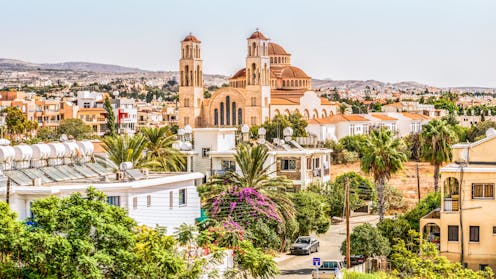
In 2022 and 2023, we conducted interviews with women volunteers and refugees affiliated with The Learning Refuge, a civil society organization in the city of Paphos in southwest Cyprus that cultivates dialogue and collaboration among these two diverse groups.
Women-led initiatives
Many displaced people first arrive on the island of Cyprus through the Turkish Republic of Northern Cyprus (TRNC). However, the absence of a functioning asylum system or international legal protections leaves them in limbo.
With no viable path to status in the TRNC, most cross the Green Line that bifurcates Cyprus into the ROC, where European Union asylum frameworks exist but remain limited in practice.
In Cyprus, as in manyother countries, a variety of community-building efforts are important responses to limited or restricted state support and humanitarian aid for refugees.
Women-led efforts offer opportunities to deliver educational activities and establish networks, and to help improve the welfare and social protection of refugee women, however imperfectly.
Founded in 2015, The Learning Refuge began as community meetings in a city park. The organization then used space from a nearby music venue to conduct support activities, and later, established itself in a dedicated building.
Organizations like The Learning Refuge emerged to address the limited state support and humanitarian assistance services available to refugees.
The Learning Refuge cultivates dialogue and collaboration among a diverse group of community volunteers. (Suzan Ilcan)
The Learning Refuge cultivates dialogue and collaboration among a diverse group of community volunteers, including schoolteachers, artists, musicians, local residents, refugees and other migrants.
With the aid of 20 volunteers, the loosely organized groups provide women refugees with material support and resources to enhance collective activities, including art and music projects, while also engaging in educational and friendship activities.
While modest in scale, the organization has formed partnerships with local and international organizations, including Caritas Cyprus, UNHCR-Cyprus and the Cyprus Refugee Council to extend its outreach to various refugee groups.
The organization has also launched creative initiatives aimed at cultivating additional inclusive civic spaces. One such effort, “Moms and Babies Day,” was developed in response to the rising number of single mothers from Africa arriving on the island. These women often face poverty and isolation, and struggle with language barriers.
These efforts highlight how grassroots responses — especially those led by women — can offer partial but vital educational and emotional support to refugees struggling to find their footing in a new country.
Negotiated belonging
Through participation in The Learning Refuge, refugee women in Paphos engage in a dynamic process of negotiated belonging, navigating challenges like language barriers, gendered isolation, domestic violence and poverty while contributing to broader community-building efforts.
For example, Maryam, a Syrian woman and mother of three, told us how The Learning Refuge helped her children establish friendships and learn Greek. She also highlighted that it helped her form close ties with volunteers and other Syrian women living in Cyprus, and find paid work in the city.
The volunteers and women refugees participating in The Learning Refuge’s activities emphasized not only their capacity to develop new forms of belonging and solidarity; they also help reshape communal knowledge and generate supportive spaces for women from various backgrounds.
Our research shows that women-led community-building is an effective, though short-term, response to insufficient state support and humanitarian aid systems that leave many refugees in precarious situations.
In varying degrees, these efforts offer women and their families spaces to learn and cultivate new relationships, and foster collective projects and better visions of resettlement and refuge.
Suzan Ilcan receives funding from the Social Sciences and Humanities Council of Canada.
Seçil Daǧtaș receives funding from Social Sciences and Humanities Research Council of Canada.
Source: The Conversation – Canada – By James Horncastle, Assistant Professor and Edward and Emily McWhinney Professor in International Relations, Simon Fraser University
Segment on Trump’s threats against Iran’s leader. (BBC News)
The American military can certainly make an impact in any air campaign against Iran. The problem from a military standpoint, however, is that the U.S., based on its forces’ deployment, will almost certainly seek to keep its involvement limited to its air force to avoid another Iraq-like quagmire.
While doing so could almost certainly disrupt Iran’s nuclear program, it will likely fall short of Israel’s goal of regime change.
In fact, it could reinforce the Iranian government and draw the U.S. into a costly ground war.
The initial stated reason for Israel’s bombing campaign — Iran’s nuclear capabilities — appears specious at best.
Israeli Prime Minister Benjamin Netanyahu has argued several times in the past, without evidence, that Iran is close to achieving a nuclear weapon. U.S. intelligence, however, have assessed that Iran is three years away from deploying a nuclear weapon.
Regardless of the veracity of the claims, Israel initiated the offensive and requires American support.
Israel’s need for U.S. assistance rests on two circumstances:
While Israel succeeded in eliminating key figures from the Iranian military in its initial strikes, Iran’s response appears to have exceeded Israel’s expectations with their Arrow missile interceptors nearing depletion.
Israel’s air strikes can only achieve so much in disrupting Iran’s nuclear ambitions. Most analysts note that Israel’s bombings are only likely to delay the Iranian nuclear program by a few months. This is due to the fact that Israeli missiles are incapable of penetrating the Fordow Fuel Enrichment Plant, which estimates place close to 300 feet underground.
Nonetheless, the efficacy of air power has been vastly overrated in the popular media and various air forces of the world. Air power is great at disrupting an opponent, but has significant limitations in influencing the outcome of a war.
Specifically, air power is likely to prove an inadequate tool for one of the supposed Israeli and American objectives in the war: regime change. For air power to be effective at bringing about regime change, it needs to demoralize the Iranian people to the point that they’re willing to oppose their own government.
Early air enthusiasts believed that a population’s demoralization would be an inevitable consequence of aerial bombardment. Italian general Giulio Douhet, a prominent air power theorist, argued that air power was so mighty that it could destroy cities and demoralize an opponent into surrendering.
Douhet was correct on the first point. He was wrong on the second.
Recent history provides evidence. While considerableink has been spilled to demonstrate the efficacy of air power during the Second World War, close examination of the facts demonstrate that it had a minimal impact. In fact, Allied bombing of German cities in several instances created the opposite effect.
More recent bombing campaigns replicated this failure. The U.S. bombing of North Vietnam during the Vietnam War did not significantly damage North Vietnamese morale or war effort. NATO’s bombing of Serbia in 1999, likewise, rallied support for the unpopular Slobodan Milosevic due to its perceived injustice — and continues to evoke strong emotions to this day.
Iran’s political regime may be unpopular with many Iranians, but Israeli and American bombing may shore up support for the Iranian government.
Nationalism is a potent force, particularly when people are under attack. The attacks on Iran will rally segments of the population to the government that would otherwise oppose it.
Few positive options
The limitations of air power to fuel significant political change in Iran should have given Trump pause about intervening in the conflict.
Some American support, such as providing weapons, is a given due to the close relationship between the U.S. and Israel. But any realization of American and Israeli aspirations of a non-nuclear Iran and a new government will likely require ground forces.
Recent American experiences in Afghanistan and Iraq show such a ground forces operation won’t lead to the swift victory that Trump desires, but could potentially stretch on for decades.
James Horncastle does not work for, consult, own shares in or receive funding from any company or organisation that would benefit from this article, and has disclosed no relevant affiliations beyond their academic appointment.
After being released from detention in 2011, Egyptian engineer and activist Wael Ghonim told the media:
If you want to liberate a society, all you need is the internet.
He’d been taken into custody for his role in the revolution that toppled the regime of Hosni Mubarak. Part of the success of this unprecedented popular uprising was due to the role of social media in mobilising citizens around a common political cause.
In 2025, after a decade under the repressive government of Abdel Fattah el-Sisi, it’s fair to say that little has remained of Ghonim’s vision. Social media use in Egypt is closely guarded by the authorities to detect signs of opposition. Citizens are routinely detained, even for the slightest criticism of the government.
In 2018 Egypt introduced a new law, apparently to curb the problem of online misinformation and disinformation. This law is, in reality, often used to stifle dissent. Egyptians today operate within unclear boundaries of what is permissible to say online. The result is widespread self-censorship for fear of arrest.
As a scholar of political communication and new media I’ve writtenbooks on global social media. I teach students about the social and political impact of digital and social media in Egypt. The video sharing platform TikTok is a frequent subject in my classes because it reveals both the liberating and the repressive effects of social media use in Egypt.
TikTok stands out for its ability to create viral videos and sudden micro-celebrities. This has made it a lightning rod for government crackdowns. But it has also connected people across socio-economic divides and bred a lively new cultural and political debate – one that’s not as easy for the government to police.
TikTok in Egypt
Since 2020, TikTok has become immensely popular in Egypt, with an estimated 33 million users over 18 years old.
While TikTok hasn’t taken on the explicit political dimension that Facebook or Twitter did over a decade ago, it has already become the theatre of a series of incidents that have landed its users in the crosshairs of the authorities. This has exposed political rifts and tensions.
Most of the incidents are related to the ability of TikTok to work as a “virality engine” – even users with few followers can gain a sudden and sometimes problematic celebrity.
But while Egyptian authorities have evidently been cracking down on TikTok users, there have been no concrete plans to ban the platform. In fact, some government branches have used it to advance their own initiatives. The Ministry of Youth and Sports, for example, signed an agreement with TikTok to launch the Egyptian TikTok Creator Hub, designed to educate youth on using social media responsibly.
Women targeted
Since 2020, Egyptian authorities have arrested TikTok users under charges ranging from the violation of family values to the spread of false information and allegations of belonging to terrorist organisations. Most of these TikTokers didn’t post explicit sexual or political content, making the charges against them appear exaggerated. These cases suggest the authorities are closely monitoring the platform, following strict moral and political considerations.
The most high profile cases have involved young women, most notably Haneen Hossam and Mawada Eladham, who were arrested in 2020 for violating family values. Article 25 of Egypt’s anti-cybercrime law states that content “violating the family principles and values upheld by Egyptian society may be punished by a minimum of six months’ imprisonment and/or a fine”. It leaves the definition of family values purposefully vague.
Observers have noted that this vagueness has allowed the law to be applied in a range of different cases. More than a dozen women have faced similar charges, endured pretrial detention and been handed lengthy prison sentences.
The arbitrary nature of many of the charges suggests a possible deeper motive: policing the presence of young women in digital spaces where they can gain influence and financial independence outside traditional family or work structures.
TikTok has given ordinary users in Egypt unprecedented visibility, in some cases allowing them to challenge social norms, often through humour. This appears to have unsettled authorities, who appear to have sought to send a message to the broader population.
Arrests
TikTok-related arrests have not been limited to family values. In 2022, three users were arrested for criticising rising food prices. They were charged with spreading fake news, despite the fact that inflation in Egypt was rising sharply.
In 2023, a parody skit of a fake jail visit by a TikToker went viral. The creators were arrested and charged with belonging to a terror organisation, spreading fake news and misusing social media.
Such arrests indicate that TikTok content that touches on politically sensitive matters, even in jest, is posing a new type of challenge for the Egyptian government. The state is particularly concerned with viral content that might bring attention to its poor human rights record. This includes notoriously bad conditions in jails.
‘Egypt’ and ‘Masr’
At the same time, the platform is proving able to connect people from very different social and economic backgrounds, as it is seen to do globally.
Egypt is very hierarchical. Small, affluent elite groups live in a separate and secluded socio-economic reality from the majority of the population. Thirty percent of Egyptians live under the poverty line.
On TikTok, the more privileged, cosmopolitan section of society is referred to as “Egypt”. The poor and disenfranchised are “Masr” (مصر), the Arabic word for Egypt.
TikTok is aimed at generating viral content more than it is a networking site, like Facebook, that’s based on pre-existing social connections. The result is a virtual common space where the two sides can interact in new ways. This engenders unique social and cultural dynamics also observed in other countries.
“Egypt” watches “Masr” create all kinds of content – from singing and dancing routines to live begging. “Masr” gets to peek into the otherwise inaccessible world of the wealthy.
In the current climate of an economic crisis, this divide can be glaring. While most Egyptians are struggling with inflation, the cost of living and unemployment, the wealthy flaunt their lifestyles on TikTok.
When wealthy TikTokers post content complaining about relatively petty issues like a long wait for valet parking at a luxury restaurant or boast about their weekly allowance, it reveals their disconnect from the everyday hardships faced by the less privileged.
Users are able to comment freely on each other’s videos, sharing their unvarnished opinions. A student boasting about their weekly allowance of 3,000 EGP (US$60) might be told, “This is some people’s monthly salary.”
Political consequences
Since it first appeared in 2020, TikTok in Egypt has evolved from a platform mainly geared towards silly and entertaining content by teenagers. It’s become an outlet for people of all ages interested in gathering information, keeping abreast of current trends and events, and also a space for political engagement, especially on the issue of Palestine.
There hasn’t been an obvious politicisation of TikTok in Egypt yet and there might never be, given the strict policing by authorities. But TikTok’s ability to expose divisions in Egyptian society and connect citizens across demographic cleavages could potentially have unexpected political consequences in the near future.
Shahd Atef contributed to the research for this article
Gabriele Cosentino does not work for, consult, own shares in or receive funding from any company or organisation that would benefit from this article, and has disclosed no relevant affiliations beyond their academic appointment.
The UK has historically been held up as leading democracy with free and fair elections. However, our new report shows election quality in the UK is now ranked in the bottom half of countries in Europe.
The Global Electoral Integrity Report provides scores for election quality around the world. It defines electoral integrity as the extent to which elections empower citizens.
Iceland received the highest score for an election that took place in 2024, the “year of elections” during which 1.6 billion people went to the polls, according to Time Magazine. This was an unprecedented concentration of democratic activity in a single year. Iceland has a successful system of automatic voter registration and an electoral system that is judged to be fair to smaller parties.
Want more politics coverage from academic experts? Every week, we bring you informed analysis of developments in government and fact check the claims being made.
Countries that scored highly based on their most recent election include Sweden, Denmark, Canada, Finland and Lithuania. Those at the opposite end of the scale include Syria, Belarus, Egypt, and Nicaragua. The UK is ranked 24th out of 39 countries in Europe. It is below Estonia, the Czech Republic, Italy, Austria, Luxembourg and Slovakia. It is ranked 53rd out of 170 countries overall.
The US also saw a decline. The beacons for electoral democracy are therefore now found in mainland Europe (most notably Scandinavia), Australasia, South America and the southern parts of Africa – rather than the UK and US. The centre of global democratic authority has shifted away from Westminster.
There remain many areas of strength in UK elections. UK electoral officials show professionalism and independence and there is no concern about the integrity of the vote counting process. There is no evidence of widespread electoral fraud.
A major weakness is in the fairness of the electoral rules for small parties. The electoral system generated a very disproportional result in 2024. Labour took nearly two-thirds of the seats in parliament, a total of 412, with less than 10 million votes (only 34% of votes cast). Labour won a massive majority in terms of parliamentary arithmetic but the the government did not enter office with widespread support.
By contrast, Reform and the Greens received 6 million votes between them, but only nine MPs. The electoral system may have worked when Britain had a two-party system – but the two-party system no longer holds. Today’s Britain is more diverse, and political support is more distributed.
The UK also scores poorly on voter registration. It is estimated that there are around 7 million to 8 million people not correctly registered or missing from the registers entirely. This is not many less than the 9.7 million people whose votes gave the government a landslide majority. The UK does not have a system of automatic voter registration, which is present in global leaders such as Iceland, where everyone is enrolled without a hiccup.
Another problem is participation. Turnout in July 2024 was low – with only half of adults voting. Voting has been made more difficult as the Elections Act of 2022 introduced compulsory photographic identification for the first time at the general election. This was thought to have made it more difficult for many citizens to vote because the UK does not have a national identity card which all citizens hold.
Meanwhile, there are further swirling headwinds. The spread of disinformation by overseas actors in elections has become a prominent challenge around the world and there was evidence of disinformation in this campaign too. Violence during the electoral period was thought to have been removed from British elections in Victorian times. But more than half candidates experience abuse and intimidation during the electoral period.
Action needed
One year into its time in office, the government is yet to act on this issue. The word “democracy” was missing from the prime minister’s strategic defence review, despite the emphasis on protecting the UK from Russia, a country known for electoral interference and other forms of attack on democracies.
This was a sharp contrast to the former government’s 2021 review, which emphasised that a “world in which democratic societies flourish and fundamental human rights are protected is one that is more conducive to our sovereignty, security and prosperity as a nation”.
In its election manifesto, Labour promised to “address the inconsistencies in voter ID rules”, “improve voter registration” and give 16 and 17-year-olds the right to vote in all elections. There needs to be firm action on electoral system change, automatic voter registration, campaign finance reform, voter identification changes and other areas.
There are a complex set of challenges facing democracy and elections. New technological challenges, change in attitudes, international hostility and new emergencies are combining to batter the door of democracy down.
International organisations are increasingly stressing that political leaders need to work together and take proactive action to protect elections against autocratic forces. This means not only supporting democracy in their messages on the world stage – but also introducing reforms to create beacons of democracy in their own countries.
Toby James has previously received funding from the AHRC, ESRC, Joseph Rowntree Reform Trust, British Academy, Leverhulme Trust, Electoral Commission, Nuffield Foundation, the McDougall Trust and Unlock Democracy. His current research is funded by the Canadian SSHRC.
Holly Ann Garnett receives funding from the Social Sciences and Humanities Research Council of Canada and the Canadian Defence Academy Research Programme. She has previously received funding from: the British Academy, the Canadian Institute for Advanced Research, the NATO Public Diplomacy Division, the American Political Science Association Centennial Centre, and the Conference of Defence Associations.
Israel’s attack on Iran last month and the US bombing of the country’s nuclear facilities, the first-ever direct US attacks on Iranian soil, were meant to cripple Tehran’s strategic capabilities and reset the regional balance.
The strikes came after 18 months during which Israel had effectively dismantled Hamas in Gaza, dealt a devastating blow to Hezbollah in Lebanon, weakened the Houthis in Yemen, and seen the collapse of the Assad regime in Syria – a longstanding and key Iranian ally.
From a military standpoint, these were remarkable achievements. But they failed to deliver the strategic outcome Israeli and US leaders had long hoped for: the collapse of Iran’s influence and the weakening of its regime.
Instead, the confrontation exposed a deeper miscalculation. Iran’s power isn’t built on impulse or vulnerable proxies alone. It is decentralised, ideologically entrenched and designed to endure. While battered, the Islamic Republic did not fall. And now, it may be more determined – and more dangerous – than before.
Get your news from actual experts, straight to your inbox.Sign up to our daily newsletter to receive all The Conversation UK’s latest coverage of news and research, from politics and business to the arts and sciences.
Israel’s attack – dubbed “operation rising lion” – began with attacks on Iranian radar systems, followed by precision airstrikes on Iranian enrichment facilities and senior military officers and scientists. Israel spent roughly US$1.45 (£1.06 billion) billion in the first two days and in the first week of strikes on Iran, costs hit US$5 billion, with daily spending at US$725 million: US$593 million on offensive operations and US$132 million on defence and mobilization.
The day after the US strikes, the Israeli prime minister, Benjamin Netanyahu, spoke with Donald Trump about a ceasefire. He and his generals were reportedly keen to bring the conflict to a speedy end. Reports suggest that Netanyahu wanted to avoid a lengthy war of attrition that Israel could not sustain, and was already looking for an exit strategy.
Crucially, the Iranian regime remained intact. Rather than inciting revolt, the war rallied nationalist sentiment. Opposition movements remain fractured and lack a common platform or domestic legitimacy. Hopes of a popular uprising that might topple the regime expressed by both Trump and Netanyahu were misplaced.
In the aftermath, Iranian authorities launched a sweeping crackdown on suspected dissenters and what it referred to as “spies”. Former activists, reformists and loosely affiliated protest organisers were arrested or interrogated. What was meant to fracture the regime instead reinforced its grip on power.
Most notably, Iran’s parliament voted to suspend cooperation with the International Atomic Energy Agency (IAEA), ending inspections and giving Tehran the freedom to expand its nuclear programme – both civilian and potentially military – without oversight.
Perhaps the clearest misreading came from Israel and the US treating Syria as a template. The 2024 fall of Bashar al-Assad was hailed as a turning point. His successor, Ahmed al-Sharaa – a little-known opposition figure, former al-Qaeda insurgent and IS affiliate – was rebranded as a pragmatic reformer, who Trump praised as “attractive” and “tough”.
For western and Israeli strategists, Syria offered both a way to weaken Iran and a blueprint of how eventual regime change could play out: collapse the regime, install cooperative leadership in a swift reordering process. But this analogy was dangerously flawed. Iran’s stronger institutions, military depth, resistance-driven identity and existence made it a fundamentally different and more resilient state.
Both Israel and Iran, however, came away with new intelligence. Israel learned that its missile defences and economic resilience were not built for prolonged, multi-front warfare. Iran, meanwhile, gained valuable insight into how far its arsenal – drones, missiles and regional proxies – could reach, and where its limits lie.
Most of Iran’s drones and missiles were intercepted — up to 99% in the cases of drones — exposing critical weaknesses in accuracy, penetration, and survivability against modern air defenses. Yet the few that did break through caused significant damage in Tel Aviv, striking residential areas and critical infrastructure.
This war was not only a clash of weapons but a real-time stress test of each side’s strategic depth. Iran may now adjust its doctrine accordingly – prioritising survivability, mobility and precision in anticipation of future conflicts.
Israel’s vulnerabilities
Internally, Israel entered the war politically fractured and socially strained. Netanyahu’s far-right coalition was already under fire for attempting to weaken judicial independence. The war has temporarily united the country, but the economic and human toll have reignited deeper concerns.
Israel’s geographic and demographic constraints have become clear. Its high-tech economy, tightly integrated with global markets, could not weather prolonged instability. And critically, the damage inflicted by the US bombing was more limited than hoped for. While Washington joined in the initial strikes, it resisted deeper involvement, partly to avoid broader regional escalation and largely because of the lack of domestic appetite for war and high potential for energy inflation, if Iran was to close the Strait of Hormuz.
What happens now?
The war of 2025 did not produce peace. It produced recalibration. Israel emerges militarily capable but politically shaken and economically strained. Iran, though damaged, stands more unified, with fewer international constraints on its nuclear ambitions. Its crackdown on dissent, withdrawal from IAEA oversight, and deepening ties to rival powers suggest a regime preparing not for collapse, but for survival, perhaps even confrontation.
The broader lesson is sobering. Regime change cannot be engineered through precision strikes. Tactical brilliance does not guarantee strategic victory. And the assumption that Iran could unravel like Syria was not strategy, it was hubris.
Both sides now better understand each other’s strengths and limits, a clarity that could deter future war – or make the next one more dangerous. In a region shaped by trauma and shifting power, mistaking resistance for weakness or pause for peace remains the gravest miscalculation.
Bamo Nouri does not work for, consult, own shares in or receive funding from any company or organisation that would benefit from this article, and has disclosed no relevant affiliations beyond their academic appointment.
This article was first published in The Conversation UK’s World Affairs Briefing email newsletter. Sign up to receive weekly analysis of the latest developments in international relations, direct to your inbox.
Each day that has passed recently has brought another report of mass killings in Gaza. Today’s headline was as grim as any: according to reports from Gaza’s Hamas-run health ministry, another 118 people were killed in the past 24 hours, including 12 people trying to get aid supplies. This is a particularly unpalatable feature of a wretched conflict: the number of people being killed as they queue for food.
A bulletin carried on the United Nations website bore the headline: “GAZA: Starvation or Gunfire – This is Not a Humanitarian Response.” It said that more than 500 Palestinians have been killed and almost 4,000 injured just trying to access or distribute food.
There are, however, hopes of a hiatus in the violence. Donald Trump announced on July 2 that Israel had accepted terms for a 60-day ceasefire and Hamas is reportedly reviewing the conditions. Donald Trump on his TruthSocial platform wrote: “I hope… that Hamas takes this Deal, because it will not get better – IT WILL ONLY GET WORSE.”
Sign up to receive our weekly World Affairs Briefing newsletter from The Conversation UK. Every Thursday we’ll bring you expert analysis of the big stories in international relations.
For his part, the Israeli prime minister, Benjamin Netanyahu, said: “There will be no Hamas [in postwar Gaza]”. This doesn’t bode well for the longevity of any deal, writes Julie M. Norman.
Norman, an expert in international security at UCL who specialises in the Middle East, says we’ve been here before. The ceasefire deal negotiated with great fanfare as the Biden presidency passed over to Trump’s second term in January, fell to bits after phase one of a mooted three-phase deal, with accusations of bad faith on both sides.
Further talk of a new deal in May never got any further than the drawing board. And the two sides’ positions seem to remain utterly irreconcilable. Hamas wants the ceasefire to end in a permanent peace deal and the withdrawal of Israeli forces from Gaza. Israel wants Hamas dismantled, out of Gaza and out of the picture, full stop.
Netanyahu is due to visit Washington next week, for the third time in less than six months. Whether the US president can bring pressure to bear on Netanyahu to compromise remains to be seen.
As Norman points out after the 12-day war against Iran, which both Trump and Netanyahu have been trumpeting as a huge success, the Israeli prime minister may have the political clout to defy his more hardline colleagues in pursuit of a deal. Trump, meanwhile, having done everything he can to help Netanyahu, can call in some big favours in his quest to play dealmaker. Hamas is seriously weakened and its main ally in the region, Iran, seems unlikely to intervene after its recent conflict with Israel and the US.
So while recent history makes a cessation of violence in Gaza seem as far off as ever, there is at least some reason for hope.
As noted higher up, one of the more terrible features of this wretched conflict of late has been the number of people being killed as they queue to get food. The death toll at aid distribution centres has mounted steadily since Israel, with US backing, introduced a new system run by an American company: Gaza Humanitarian Foundation (GHF). This organisation replaced more than 400 aid points (previously run by a UN agency) with just four, mainly in the south of the Gaza Strip.
This was always going to cause problems, writes Leonie Fleischmann of City St George’s, University of London, who specialises in the conflict between Israel and Palestine. While Israel says the new system is designed to prevent Hamas taking control of aid supplies, all reports are that the scenes around the four distribution centres are descending into anarchy. According to a UN report, “Thousands [of people] released into chaotic enclosures to fight for limited food supplies … These areas have become sites of repeated massacres in blatant disregard for international humanitarian law.”
“Arguably, this chaos and violence is inbuilt in the new aid delivery system,” writes Fleischmann, who concludes that the new system should be seen as a “a mechanism of forced displacement” which is part of a plan by the Netanyahu government “relocate Palestinians to a ‘sterile zone’ in Gaza’s far south” as it continues to clear the north of the Gaza strip.
But if Trump and Netanyahu think the recent short war will lead to a complete reset in the region, leaving a crippled Iran licking its wounds, they way well have miscalculated. That’s the assessment of the situation by Bamo Nouri, a Middle East specialist at City St George’s, University of London. He believes that the 12-day war may prove to have been a strategic blunder by Israel and the US.
For a start, he writes, one outcome of the conflict is that Iran suspended cooperation with the International Atomic Energy Agency (IAEA), ending inspections and giving Tehran the freedom to expand its nuclear programme with no oversight. And its response to Israel’s airstrikes, involving more than 1,000 missiles and drones, breached the country’s “iron dome” defensive system, causing considerable damage and inflicting a serious psychological blow against Israel.
Tehran has also deepened its relationships with both Moscow and Beijing. And far from prompting regime change, the war appears to have prompted an upsurge in nationalist sentiment in Iran.
Nouri concludes: “Israel emerges militarily capable but politically shaken and economically strained. Iran, though damaged, stands more unified, with fewer international constraints on its nuclear ambitions.”
It’s hard to get a clear picture of what was achieved, which isn’t surprising when you consider that there remains considerable doubt, even in this information age, what was achieved by the US bombing raid against Iran’s heavily fortified nuclear installations.
First they were “completely obliterated”. Or at least that was what Donald Trump posted on the night of the raid. Then it seemed that they may not have been as obliterated as first thought. In fact an initial assessment prepared by the US Office of Defense Intelligence thought that the damage may only have hindered Iran’s nuclear programme by a few months.
Cue outrage from the US president and his senior colleagues, amplified by their friends in the US media. There followed some new intelligence which seemed to favour Trump’s position. Then the head of the IAEA, Rafael Grossi, weighed in, saying Iran could be enriching uranium again in a “matter of months”. The latest contribution was from the Pentagon which is saying that timescale is actually closer to “one to two years”. Clear as mud then.
But as Rob Dover reminds us, former US defense secretary Donald Rumsfeld once pronounced: “If it was a fact it wouldn’t be called intelligence.” Dover, who is an intelligence specialist at the University of Hull, explains that intelligence almost always has a political dimension and should be viewed through that prism.
“The assessment given to the public may well be different from the one held within the administration,” writes Dover. This is not necessarily a bad thing, he concludes as “security diplomacy is best done behind closed doors”. Or at least it used to be. Now the US president seems happy to discuss sensitive information in public.
But then, as Sara Polak observes, Donald Trump’s use of social media is changing the way government is conducted in the US. Polak is a specialist in US politics at Leiden University with a particular interest in the way politics and media intersect.
As she writes, for more than a century since Teddy Roosevelt cultivated print journalists, through FDR’s adept use of radio and JFK’s mastery of television, each new media platform has its master. For Trump it is social media. And he is using it to remake politics.
Nowhere has Trump’s mastery of art of issuing simple messages which make for effective soundbites been displayed so clearly than in the name of his landmark tax-cutting legislation still being wrangled over in the US Congress at the time of writing: the One Big Beautiful Bill Act.
While undoubtedly big – it runs to 940 pages – its beauty is what the US House of Representatives has been debating fiercely for 24 hours or more, after it passed the Senate with the help of a casting vote from US president J.D. Vance when three Republican senators voted against it.
Dafydd Townley from the University of Portsmouth, who writes regularly for The Conversation about US politics, has written this incisive analysis of the politics around the legislation which appears set to continue for some time to come.
Donald Trump is continuing his run of political wins after his keynote legislation, nicknamed the ‘big beautiful bill’, squeaked through the Senate.
While the bill, which includes major cuts in tax and government spending, must now go back to the House of Representatives for another vote, passing the upper house is highly significant. Trump lost the support of just three Republican senators, and with the help of a tie-breaking vote from Vice-President J.D. Vance managed to push the bill forward.
Democrats, the minority in both the House and Senate, have been unable to do anything but sit by and watch as Trump claims victory after victory. These include progress in his attempt to end birthright citizenship, the claimed destruction of significant Iranian nuclear sites (yet to be independently verified) and the convincing of Nato member states to increase defence spending to 5% of their GDP. Trump may even be getting closer to a peace deal between Israel and Hamas.
And now the Democrats have failed in their desperate attempts to stop this bill. In the Senate, it was felt that there could be enough Republican senators concerned about cuts to Medicaid (the US system that provides essential healthcare to those on low incomes), the closure or reduction of services at rural hospitals, and the increase in national debt to potentially hinder the bill’s progress. However, Democrats were unable to do anything apart from delaying the voting process, and the bill is progressing with some changes but not enough to be severely weakened.
It had seemed likely that the Democrats could work with the Maga-focused Freedom Caucus group of representatives, whose members include Marjorie Taylor Greene, in the early stages in the House to stop its initial passage. But Speaker Mike Johnson managed to calm most of their fears about the rise in the deficit to get the bill through the House.
The lack of effective opposition from the Democrats reflects their congressional standing. The Republicans control the Senate 53-47, and they also have a majority of 220-212 in the House, with three vacancies.
While Democrat numbers in Congress is the primary issue in opposing this bill, their future congressional power will rely on strong leadership within the party and, more importantly, a clear set of policies with appeal that can attract more support at the ballot boxes. Failure to address this will probably allow Republicans to dominate Congress and shape American domestic and foreign policy any way they wish for longer.
Trump’s agenda has now passed the Senate.
What could Democrats do differently?
While Democrat Hakeem Jeffries has been a diligent minority leader in the House, he has attempted to operate as an obstacle to Republican policies with little success, rather than reaching across the political divide to create a consensus with dissenting Republicans.
Outside of Congress, California governor Gavin Newsom, widely touted as a potential candidate for the next presidential election, has offered some resistance to the Trump administration, particularly over Trump’s assumption of national command over the state-controlled National Guard to deal with protests in California against the Immigration and Customs Enforcement agency. However, Newsom’s reputation is still relatively regional, although it is on the rise.
Zohran Mamdani has won the Democratic nomination for New York mayor.
There will be jostling over the next couple of years for the Democratic presidential nomination, and this will have an impact on the platform that the party runs on. Party members and those voting for the next presidential nominee will need to decide whether to continue with the mainly centrist position that the party has adopted since the 1990s or adopt something more left-wing.
A more radical candidate, such as New York representative Alexandria Ocasio-Cortez, might offer a substantially different proposal that could seem attractive to Democratic voters and those Trump supporters who may feel dissatisfied with the current Republican administration.
However, democratic socialist Zohran Mamdani, recently selected as the Democratic nominee for the New York mayoral election, has already been vilified by some in the Republican party.
Concerns about such a supposedly “radical” candidate may concern many voters in red states in middle America. However, getting elected is one thing but implementing progressive, left-leaning policies is another thing entirely. They also need to deliver solutions to major issues, such as crime, at all levels, to show their abilities to solve problems.
It is not just the policies that matter for the Democrats, but who they want to represent. Last year’s election suggested that the Democrats had been ousted as the representatives of the working class. Some significant labour unions, a foundation of Democratic support for the majority of the 20th century, failed to endorse Kamala Harris.
Mamdani’s success in New York stemmed from the mobilisation of a grassroots campaign that used social media effectively. It targeted young working-class voters disenchanted with the Democratic party. He also resonated with voters in areas that had seen an increase in Republican voters in the 2024 election.
All this may offer some lessons to the Democrats. They need to reassess their policies, their image and their tactics, and show Americans that they can solve the problems that the public sees as most important, including the high cost of living. While they can expect to gain seats in the House in next year’s midterms, they need to look for a leader and policies that will capture the public’s hearts.
Dafydd Townley does not work for, consult, own shares in or receive funding from any company or organisation that would benefit from this article, and has disclosed no relevant affiliations beyond their academic appointment.
While he likes to provoke opponents with the possibility of serving a third term, Donald Trump faces a more immediate historical burden that has plagued so many presidents: the “second term curse”.
Twenty-one US presidents have served second terms, but none has reached the same level of success they achieved in their first.
Second term performances have ranged from the lacklustre and uninspiring to the disastrous and deadly. Voter dissatisfaction and frustration, presidential fatigue and a lack of sustainable vision for the future are all explanations.
But Trump doesn’t quite fit the mould. Only one other president, Grover Cleveland in the late 19th century, has served a second nonconsecutive term, making Trump 2.0 difficult to measure against other second-term leaders.
Trump will certainly be hoping history doesn’t repeat Cleveland’s second-term curse. Shortly after taking office he imposed 50% tariffs, triggering global market volatility that culminated in the “Panic of 1893”.
At the time, this was the worst depression in US history: 19% unemployment, a run on gold from the US Treasury, a stock market crash and widespread poverty.
More than a century on, Trump’s “move fast and break things” approach in a nonconsecutive second term might appeal to voters demanding action above all else. But he risks being drawn into areas he campaigned against.
So far, he has gone from fighting a trade war and a culture war to contemplating a shooting war in the Middle East. His “big beautiful bill” will add trillions to the national debt and potentially force poorer voters – including many Republicans – off Medicaid.
Whether his radical approach will defy or conform to the second term curse seems very much an open question.
No kings
The two-term limit was enacted by the 22nd Amendment to the Constitution in 1951. Without a maximum term, it was feared, an authoritarian could try to take control for life – like a king (hence the recent “No Kings” protests in the US).
George Washington, James Madison and Thomas Jefferson all declined to serve a third term. Jefferson was suspicious of any president who would try to be re-elected a third time, writing:
should a President consent to be a candidate for a 3d. election, I trust he would be rejected on this demonstration of ambitious views.
There is a myth that after Franklin Delano Roosevelt broke the de facto limit of two terms set by the early presidents, the ghost of George Washington placed a curse on anyone serving more than four years.
At best, second-term presidencies have been tepid compared to the achievements in the previous four years. After the second world war, some two-term presidents (Eisenhower, Reagan and Obama) started out strong but faltered after reelection.
Eisenhower extricated the US from the Korean War in his first term, but faced domestic backlash and race riots in his second. He had to send 500 paratroopers to escort nine Black high school students in Little Rock, Arkansas, to enforce a federal desegregation order.
Reagan made significant tax and spending cuts, and saw the Soviet Union crumble in term one. But the Iran-Contra scandal and watered down tax reform defined term two.
Truly disastrous examples of second term presidencies include Abraham Lincoln (assassination), Woodrow Wilson (first world war, failure of the League of Nations, a stroke), Richard Nixon (Watergate, impeachment and resignation), and Bill Clinton (Lewinsky scandal and impeachment).
Room for one more? Trump has joked about being added to Mount Rushmore. Shutterstock
Monumental honours
It may be too early to predict how Trump will feature in this pantheon of less-than-greatness. But his approval ratings recently hit an all-time low as Americans reacted to the bombing of Iran and deployment of troops in Los Angeles.
A recent YouGov poll showed voters giving negative approval ratings for his handling of inflation, jobs, immigration, national security and foreign policy. While there has been plenty of action, it may be the levels of uncertainty, drastic change and market volatility are more extreme than some bargained for.
An uncooperative Congress or opposition from the judiciary can be obstacles to successful second terms. But Trump has used executive orders, on the grounds of confronting “national emergencies”, to bypass normal checks and balances.
As well, favourable rulings by the Supreme Court have edged closer to expanding the boundaries of executive power. But they have not yet supported Trump’s claim from his first term that “I have an Article 2, where I have the right to do whatever I want as President”.
Some supporters say Trump deserves a Nobel Peace Prize. And he was only half joking when he asked if there is room for one more face on Mount Rushmore. But such monumental honours may only amount to speculation unless Trump’s radical approach and redefinition of executive power defy the second-term curse.
Garritt C. Van Dyk has received funding from the Getty Research Institute.
The UK has historically been held up as leading democracy with free and fair elections. However, our new report shows election quality in the UK is now ranked in the bottom half of countries in Europe.
The Global Electoral Integrity Report provides scores for election quality around the world. It defines electoral integrity as the extent to which elections empower citizens.
Iceland received the highest score for an election that took place in 2024, the “year of elections” during which 1.6 billion people went to the polls, according to Time Magazine. This was an unprecedented concentration of democratic activity in a single year. Iceland has a successful system of automatic voter registration and an electoral system that is judged to be fair to smaller parties.
Want more politics coverage from academic experts? Every week, we bring you informed analysis of developments in government and fact check the claims being made.
Countries that scored highly based on their most recent election include Sweden, Denmark, Canada, Finland and Lithuania. Those at the opposite end of the scale include Syria, Belarus, Egypt, and Nicaragua. The UK is ranked 24th out of 39 countries in Europe. It is below Estonia, the Czech Republic, Italy, Austria, Luxembourg and Slovakia. It is ranked 53rd out of 170 countries overall.
The US also saw a decline. The beacons for electoral democracy are therefore now found in mainland Europe (most notably Scandinavia), Australasia, South America and the southern parts of Africa – rather than the UK and US. The centre of global democratic authority has shifted away from Westminster.
There remain many areas of strength in UK elections. UK electoral officials show professionalism and independence and there is no concern about the integrity of the vote counting process. There is no evidence of widespread electoral fraud.
A major weakness is in the fairness of the electoral rules for small parties. The electoral system generated a very disproportional result in 2024. Labour took nearly two-thirds of the seats in parliament, a total of 412, with less than 10 million votes (only 34% of votes cast). Labour won a massive majority in terms of parliamentary arithmetic but the the government did not enter office with widespread support.
By contrast, Reform and the Greens received 6 million votes between them, but only nine MPs. The electoral system may have worked when Britain had a two-party system – but the two-party system no longer holds. Today’s Britain is more diverse, and political support is more distributed.
The UK also scores poorly on voter registration. It is estimated that there are around 7 million to 8 million people not correctly registered or missing from the registers entirely. This is not many less than the 9.7 million people whose votes gave the government a landslide majority. The UK does not have a system of automatic voter registration, which is present in global leaders such as Iceland, where everyone is enrolled without a hiccup.
Another problem is participation. Turnout in July 2024 was low – with only half of adults voting. Voting has been made more difficult as the Elections Act of 2022 introduced compulsory photographic identification for the first time at the general election. This was thought to have made it more difficult for many citizens to vote because the UK does not have a national identity card which all citizens hold.
Meanwhile, there are further swirling headwinds. The spread of disinformation by overseas actors in elections has become a prominent challenge around the world and there was evidence of disinformation in this campaign too. Violence during the electoral period was thought to have been removed from British elections in Victorian times. But more than half candidates experience abuse and intimidation during the electoral period.
Action needed
One year into its time in office, the government is yet to act on this issue. The word “democracy” was missing from the prime minister’s strategic defence review, despite the emphasis on protecting the UK from Russia, a country known for electoral interference and other forms of attack on democracies.
This was a sharp contrast to the former government’s 2021 review, which emphasised that a “world in which democratic societies flourish and fundamental human rights are protected is one that is more conducive to our sovereignty, security and prosperity as a nation”.
In its election manifesto, Labour promised to “address the inconsistencies in voter ID rules”, “improve voter registration” and give 16 and 17-year-olds the right to vote in all elections. There needs to be firm action on electoral system change, automatic voter registration, campaign finance reform, voter identification changes and other areas.
There are a complex set of challenges facing democracy and elections. New technological challenges, change in attitudes, international hostility and new emergencies are combining to batter the door of democracy down.
International organisations are increasingly stressing that political leaders need to work together and take proactive action to protect elections against autocratic forces. This means not only supporting democracy in their messages on the world stage – but also introducing reforms to create beacons of democracy in their own countries.
Toby James has previously received funding from the AHRC, ESRC, Joseph Rowntree Reform Trust, British Academy, Leverhulme Trust, Electoral Commission, Nuffield Foundation, the McDougall Trust and Unlock Democracy. His current research is funded by the Canadian SSHRC.
Holly Ann Garnett receives funding from the Social Sciences and Humanities Research Council of Canada and the Canadian Defence Academy Research Programme. She has previously received funding from: the British Academy, the Canadian Institute for Advanced Research, the NATO Public Diplomacy Division, the American Political Science Association Centennial Centre, and the Conference of Defence Associations.
Source: The Conversation – USA – By Elizabeth Carlen, Living Earth Collaborative Postdoctoral Fellow, Washington University in St. Louis
A Buddhist monk in Hong Kong releases fish and chants prayers during a ceremony to free the spirits of tsunami victims.Samantha Sin/AFP via Getty Images
People often consider evolution to be a process that occurs in nature in the background of human society. But evolution is not separate from human beings. In fact, human cultural practices can influence evolution in wildlife. This influence is highly pronounced in cities, where people drastically alter landscapes to meet their own needs.
Human actions can affect wildlife evolution in a number of ways. If people fragment habitat, separated wildlife populations can evolve to be more and more different from each other. If people change certain local conditions, it can pressure organisms in new ways that mean different genes are favored by natural selection and passed on to offspring – another form of evolution that can be driven by what people do.
In a recent review, evolutionary biologists Marta Szulkin, Colin Garrowayand I, in collaboration with scientists spread across five continents, explored how cultural processes – including religion, politics and war – shape urban evolution. We reviewed dozens of empirical studies about urban wildlife around the globe. Our work highlights which human cultural practices have and continue to shape the evolutionary trajectory of wild animals and plants.
Religious practices
If you’ve traveled internationally, you may have noticed the menu at any one McDonald’s restaurant is shaped by the local culture of its location. In the United Arab Emirates, McDonald’s serves an entirely halal menu. Vegetarian items are common and no beef is served in Indian McDonald’s. And in the United States, McDonald’s Filet-O-Fish is especially popular during Lent when observant Catholics don’t consume meat on Fridays.
Similarly, ecosystems of cities are shaped by local cultural practices. Because all wildlife are connected to the environment, cultural practices that alter the landscape shape the evolution of urban organisms.
Populations of fire salamanders have different genes depending on which side of city walls in Oviedo, Spain, they live on. Patrice Skrzynski via Getty Images
For example, in Oviedo, Spain, people constructed walls around religious buildings between the 12th and 16th centuries. This division of the city led to different populations of fire salamanders inside and outside the walls. Because salamanders can’t scale these walls, those on opposite sides became isolated from each other and unable to pass genes back and forth. In a process that scientists call genetic drift, over time salamanders on the two sides became genetically distinct − evidence of the two populations evolving independently.
Imagine dumping out a handful of M&Ms. Just by chance, some colors might be overrepresented and others might be missing. In the same way, genes that are overrepresented on one side of the wall can be in low numbers or missing on the other side. That’s genetic drift.
Introducing non-native wildlife is another way people can alter urban ecosystems and evolutionary processes. For example, prayer animal release is a practice that started in the fifth or sixth century in some sects of Buddhism. Practitioners who strive to cause no harm to any living creature release captive animals, which benefits the animal and is meant to improve the karma of the person who released it.
However, these animals are often captured from the wild or come from the pet trade, thereby introducing non-native wildlife into the urban ecosystem. Non-natives may compete with local species and contribute to the local extinction of native wildlife. Capturing animals nearby has downsides, too. It can diminish local populations, since many die traveling to the release ceremony. The genetic diversity of these local populations in turn decreases, reducing the population’s ability to survive.
Politically motivated campaigns have shaped wildlife in various ways.
Starting in 1958, for instance, the Chinese Communist Party led a movement to eliminate four species that were considered pests: rats, flies, mosquitoes and sparrows. While the first three are commonly considered pests around the world, sparrows made the list because they were “public animals of capitalism” due to their fondness for grain. The extermination campaign ended up decimating the sparrow population and damaging the entire ecosystem. With sparrows no longer hunting and eating insects, crop pests such as locusts thrived, leading to crop destruction and famine.
In the United States, racial politics may be shaping evolutionary processes in wildlife.
For instance, American highways traverse cities according to political agendas and have often dismantled poor neighborhoods of color to make way for multilane thoroughfares. These highways can change how animals are able to disperse and commingle. For example, they prevent bobcats and coyotes from traveling throughout Los Angeles, leading to similar patterns of population differentiation as seen in fire salamanders in Spain.
Wildlife during and after war
Human religious and political agendas often lead to armed conflict. Wars are known to dramatically alter the environment, as seen in current conflicts in Gaza and Ukraine.
While documenting evolutionary changes to urban wildlife is secondary to keeping people safe during wartime, a handful of studies on wildlife have come out of active war zones. For example, the current Russia-Ukraine war affected the migration of greater spotted eagles. They made large diversions around the active war zone, arriving later than usual at their breeding grounds. The longer route increased the energy the eagles used during migration and likely influenced their fitness during breeding.
Wars limit access to resources for people living in active war zones. The lack of energy to heat homes in Ukraine during the winter has led urban residents to harvest wood from nearby forests. This harvesting will have long-term consequences on forest dynamics, likely altering future evolutionary potential.
A similar example is famine that occurred during the Democratic Republic of Congo’s civil wars (1996-1997, 1998-2003) and led to an increase in bushmeat consumption. This wildlife hunting is known to reduce primate population sizes, making them more susceptible to local extinction.
Even after war, landscapes experience consequences.
For example, the demilitarized zone between North Korea and South Korea is a 160-mile (250-kilometer) barrier, established in 1953, separating the two countries. Heavily fortified with razor wire and landmines, the demilitarized zone has become a de facto nature sanctuary supporting thousands of species, including dozens of endangered species.
The collapse of the Soviet Union and the end of the Cold War led to the establishment of the European Green Belt, which runs along the same path as the Iron Curtain. This protected ecological network is over 7,800 miles (12,500 kilometers) long, allowing wildlife to move freely across 24 countries in Europe. Like the Korean DMZ, the European Green Belt allows for wildlife to move, breed and exchange genes, despite political boundaries. Politics has removed human influence from these spaces, allowing them to be a safe haven for wildlife.
While researchers have documented a number of examples of wildlife evolving in response to human history and cultural practices, there’s plenty more to uncover. Cultures differ around the world, meaning each city has its own set of variables that shape the evolutionary processes of wildlife. Understanding how these human cultural practices shape evolutionary patterns will allow people to better design cities that support both humans and the wildlife that call these places home.
Ideas for this article were developed as part of a NSF funded Research Coordination Network (DEB 1840663). Elizabeth Carlen was funded by the Living Earth Collaborative.
Source: United Kingdom – Executive Government & Departments
News story
Nationwide clampdown on delivery riders working illegally
Ramp-up of arrests and visits set to take place across the UK targeting migrants working illegally in the gig economy
Immigration enforcement van
Enforcement teams are gearing up to launch a nationwide blitz targeting illegal working hotspots, with a focus on the gig economy and migrants working as delivery riders.
Under the Government’s Plan for Change to restore order to the immigration system and tougher enforcement of the rules, Home Office Immigration Enforcement teams will launch a major operation to disrupt this type of criminality.
Strategic, intel-driven activity will bring together officers across the UK and place an increased focus on migrants suspected of working illegally whilst in taxpayer funded accommodation or receiving financial support.
The law is clear that asylum seekers are only entitled to this support if they would otherwise be destitute. That is why anyone caught flagrantly abusing the system in this way, as a result of the operation, will face having support discontinued, whether that’s entitlement to accommodation or payments.
Operational teams will target certain hotspots across the country over a period of intensification, as well as going after organisations who wilfully employ those working illegally, through civil penalty referrals. Any business found to be illegally employing someone could face a fine of up to £60,000 per worker, director disqualifications and potential prison sentences of up to five years.
The Government has been surging action against illegal working since coming into power one year ago, with 10,031 illegal working visits leading to 7,130 arrests, marking a 48% and 51% rise respectively, compared to the year before (5 July 2023 to 28 June 2024). This marks the first time in a 12-month period where more than 10,000 visits have taken place.
748 illegal working civil penalty notices were also handed to businesses caught violating immigration rules in the first quarter (January to March) of the year, marking the highest level since 2016 – an 81% increase compared to the same time last year.
And the Government is tightening the law by making it a legal requirement for all companies, including the gig economy, to check anyone working for them has the legal right to do so. This will end the abuse of flexible working arrangements. The new measures will be introduced through the landmark Border Security, Asylum and Immigration Bill.
Home Secretary Yvette Cooper, said:
Illegal working undermines honest business and undercuts local wages – the British public will not stand for it and neither will this government.
Often those travelling to the UK illegally are sold a lie by the people smuggling gangs that they will be able to live and work freely in this country, when in reality they end up facing squalid living conditions, minimal pay and inhumane working hours.
We are surging enforcement action against this pull factor, on top of returning 30,000 people with no right to be here and tightening the law through our Plan for Change.
But there is no single solution to the problem of illegal migration. That’s why we’ve signed landmark agreements with international partners to dismantle gangs and made significant arrests of notorious people smugglers.
Director of Enforcement, Compliance and Crime, Eddy Montgomery, said:
Our dedicated Immigration Enforcement officers have been ramping up action to disable illegal working across the board.
This next step of co-ordinated activity will target those who seek to work illegally in the gig economy and exploit their status in the UK.
That means if you are found to be working with no legal right to do so, we will bring the full force of powers available to us to disrupt and stop this abuse. There will no place to hide.
This targeted action is on top of ongoing work across the country to disrupt people flouting the rules across different sectors.
Earlier this week, during a joint operation with the Metropolitan Police to go after people suspected of working illegally as cash in hand builders, officers targeted anti-social behaviour and illegally modified scooters and e-bikes. 20 Indian nationals were arrested as part of the operation. This included 16 overstayers, one illegal entrant, one port absconder and two small boat arrivals.
On 18 June, West Midlands teams conducted an operation on Smethwick High Street after receiving intelligence on a major collection point for people suspected of going to work illegally, primarily on construction sites. The team encountered 73 individuals, arresting 26 suspected immigration offenders (24 Indian nationals, one Nepalese national and one Italian national). This led to the detention of 11 Indian nationals.
And on 12 June, East of England teams conducted a multi-agency operation with police in Lynn Road, Wisbech, focusing on cash in hand builders using illegally modified e-bikes. They carried out 21 immigration checks which resulted the arrest of three men, including one Syrian, one Chinese and one Brazilian national. The police went on to seize six mopeds and one car for offences including driving with no insurance, no driving licence and disqualification.
The crackdown also sits alongside key join up with the delivery industry on tackling illicit account sharing. On Monday, 30 June , the Home Office and Department for Business and Trade met with major delivery firms and pledged to strengthen security checks to tackle illegal working. Deliveroo, Uber Eats and Just Eat have committed to increasing the number of daily facial recognition checks riders are required to take to verify their identity.
Illegal working is linked to exploitation, with teams often encountering squalid living conditions, people receiving little to no pay and inhumane working hours. In the worst instances, these individuals may be victims of modern slavery.
Immigration Enforcement take a number of steps to spot the signs of individuals who are potentially being exploited and, where appropriate, will refer people to the National Referral Mechanism so they can access support. They also work closely with crucial partners like the Gangmasters Labour Abuse Authority, to share insights and strengthen the approach to tackling labour exploitation.
And this new operation is just one part of the government’s action to strengthen UK border security and disable the people smuggling gangs fuelling illegal migration.
Over the past year, the Prime Minister has been resetting relationships and forging partnerships across Europe and beyond, to ensure a targeted international response in breaking the model behind this vile trade.
Furthermore, nearly 30,000 people with no right to be in UK have been returned, landmark agreements have been signed with Iraq to dismantle gangs and Italy to take down illicit finance networks and a world-first people smuggling sanctions regime has been launched to ban travel and freeze assets.
View of the United Nations logo at a 2022 conference of the Parties to the Treaty on the Non-Proliferation of Nuclear Weapons.Angela Weiss/AFP via Getty Images)
While the U.S. military’s strikes on Iran on June 21, 2025, are believed to have damaged the country’s critical nuclear infrastructure, no evidence has yet emerged showing the program to have been completely destroyed. In fact, an early U.S. Defense Intelligence Agency assessment surmised that the attack merely delayed Iran’s possible path to a nuclear weapon by less than six months. Further, Rafael Mariano Grossi, director of the United Nations’ International Atomic Energy Agency, stated that Iran may have moved its supply of enriched uranium ahead of the strikes, and assessed that Tehran could resume uranium enrichment “in a matter of months.”
As a scholar of nuclear nonproliferation, my research indicates that military strikes, such as the U.S. one against Iran, tend not to work. Diplomacy — involving broad and resolute international efforts — offers a more strategically effective way to preempt a country from obtaining a nuclear arsenal.
Yet neither military operation reliably or completely terminated the targeted program. Many experts of nuclear strategy believe that while the Israeli strike destroyed the Osirak complex, it likely accelerated Iraq’s fledgling nuclear program, increasing Saddam Hussein’s commitment to pursue a nuclear weapon.
In a similar vein, while Israeli airstrikes destroyed Syria’s nascent nuclear facility, evidence soon emerged that the country, under its former leader, Bashar Assad, may have continued its nuclear activities elsewhere.
Based on my appraisal of similar cases, the record shows that diplomacy has been a more consistently reliable strategy than military force for getting a targeted country to denuclearize.
The tactics involved in nuclear diplomacy include bilateral and multilateral engagement efforts and economic tools ranging from comprehensive sanctions to transformative aid and trade incentives. Travel and cultural sanctions – including bans on participating in international sporting and other events – can also contribute to the effectiveness of denuclearization diplomacy.
The high point of denuclearization diplomacy came in 1970, when the majority of the world signed the Treaty on the Non-Proliferation of Nuclear Weapons. The treaty obliged nonnuclear weapons states to refrain from pursuing them, and existing nuclear powers to share civilian nuclear power technology and work toward eventual nuclear weapons disarmament.
I’ve found that in a majority of cases since then – notably in Argentina, Brazil, Libya, South Africa, South Korea and Taiwan – diplomacy played a pivotal role in convincing nuclear-seeking nations to entirely and permanently relinquish their pursuit of nuclear weapons.
Case studies of nuclear diplomacy
In the cases of U.S. allies Argentina, Brazil, South Korea and Taiwan, the military option was off the table for Washington, which instead successfully used diplomatic pressure to compel these countries to discontinue their nuclear programs. This involved the imposition of significant economic and technological sanctions on Argentina and Brazil in the late-1970s, which substantially contributed to the denuclearization of South America. In the South Korea and Taiwan cases, the threat of economic sanctions was effectively coupled with the risk of losing U.S. military aid and security guarantees.
In the case of Iraq, the Hussein regime eventually did denuclearize in the 1990s, but not through a deal negotiated directly with the U.S. or the international community. Rather, Hussein’s decision was motivated by the damaging economic and technological costs of the U.N. sanctions and his desire to see them lifted after the first Gulf War.
In the 11 countries in which diplomacy was used to reverse nuclear proliferation, only in the cases of India and Pakistan did it fail to induce any nuclear reversal.
Consistent with the historical track record for diplomacy concerning other nuclear powers, Iran offers compelling evidence of what diplomacy can achieve in lieu of military force.
Diplomatic negotiations between the U.S, Iran and five leading powers yielded the landmark Joint Comprehensive Plan of Action in 2015. The so-called Iran deal involved multilateral diplomacy and a set of economic sanctions and incentives, and persuaded Iran to place stringent limits on its nuclear program for at least 10 years and ship tons of enriched uranium out of the country. A report from the International Atomic Energy Agency in 2016 confirmed that Iran had abided by the terms of the agreement. Consequently, the U.S., European Union and U.N. responded by lifting sanctions.
Representatives of the nations involved in signing the 2015 Iran nuclear deal pose for a group photo following talks in July 2015. AP Photo/Ronald Zak
Trump signaled quickly after the recent attack on Iran a willingness to engage in direct talks with Tehran. However, Iran may rebuff any agreement that effectively contains its nuclear program, opting instead for the intensified underground approach Iraq took after the 1981 Osirak attack.
Indeed, my research shows that combining military threats with diplomacy reduces the prospects of successfully reaching a disarmament agreement. Nations will be more reluctant to disarm when their negotiating counterpart adopts a threatening and combative posture, as it heightens their fear that disarmament will make it more vulnerable to future aggression from the opposing country.
A return to an Iran nuclear deal?
Successful denuclearization diplomacy with Iran will not be a panacea for Middle East stability; the U.S. will continue to harbor concerns about Iran’s military-related actions and relationships in the region.
It is, after all, unlikely that any U.S. administration could strike a deal with Tehran on nuclear policy that would simultaneously settle all outstanding issues and resolve decades of mutual acrimony.
But by signing and abiding to the terms of the JCPOA, Iran has demonstrated a willingness to cooperate on the nuclear issue in the past. Under the agreement, Iran accepted a highly limited and low-proliferation-risk nuclear program subject to intrusive inspections by the international community.
That arrangement was beneficial for regional stability and for buttressing the global norm against nuclear proliferation. A return to a JCPOA-type agreement would reinforce a diplomatic approach to relations with Iran and create an opening for progress with the country on other areas of concern.
Stephen Collins does not work for, consult, own shares in or receive funding from any company or organization that would benefit from this article, and has disclosed no relevant affiliations beyond their academic appointment.
The US president, Donald Trump, says that Israel has agreed to terms for a 60-day ceasefire in Gaza. If that sounds familiar, it is.
The idea of a two-month truce has been discussed since the collapse of the last shortlived ceasefire in March. A similar proposal was floated in May, but Hamas viewed it as an enabling mechanism for Israel to continue the war after a brief pause, rather than reaching a permanent peace deal.
As the devastation in Gaza worsens by the day, will this time be any different?
The proposal, put forward by Qatari mediators, reportedly involves Hamas releasing ten living hostages and the bodies of 18 deceased hostages over the 60-day period, in exchange for the release of a number of Palestinian prisoners.
Get your news from actual experts, straight to your inbox.Sign up to our daily newsletter to receive all The Conversation UK’s latest coverage of news and research, from politics and business to the arts and sciences.
The remaining 22 hostages would be released if a long-term deal is reached. The 60-day ceasefire period would also involve negotiations for a permanent end to hostilities and a roadmap for post-war governance in Gaza.
But the plan is similar to the eight-week, three-phase ceasefire from January to March of this year, which collapsed after the first phase of hostage exchanges. Since then peace talks have hit a recurrent impasse.
For Hamas, a long-term ceasefire means the permanent end to the war and the withdrawal of Israeli forces from Gaza. Israel, meanwhile, wants to see the complete removal of Hamas from power, the dismantling and disarming of its military wing and the exile of remaining senior Hamas leaders.
But despite the persistent challenges, there are several reasons that this attempt for a ceasefire might be different. First and foremost is the recent so-called “12-day war” between Israel and Iran, which Israel has trumpeted as a major success for degrading Iran’s nuclear capabilities (although the reality is more nuanced).
The perceived win gives Israel’s prime minister, Benjamin Netanyahu, political maneuverability to pursue a ceasefire over the objections of far-right hardliners in his coalition who have threatened to bring down the government in previous rounds.
The Iran-Israel war, in which the US controversially carried out strikes on Iran’s nuclear sites, also revived Trump’s interest in the Middle East. Trump entered office just as the phased Gaza ceasefire deal was being agreed. But Trump put little diplomatic pressure on Israel to engage in serious talks to get from the first phase of the agreement to phase two, allowing the war to resume in March.
Now however, after assisting Israel militarily in Iran, Trump has significant leverage he can use with Netanyahu. He will have the chance to use it (if he chooses) when Netanyahu visits Washington next week.
Both men also view Iran’s weakened position as an opportunity for expanding the Abraham accords. This was the set of agreements normalising relations between Israel and several Arab states, including the United Arab Emirates, Bahrain, Sudan and Morocco, which Trump brokered at the end of his first term.
Netanyahu has long eyed a US-backed deal with Saudi Arabia, and a smaller-scale declaration with Syria is reportedly now under discussion as well. But those deals can’t move forward while the war in Gaza is going.
Additional obstacles
However, the recurrent obstacles to a deal remain – and it’s unclear if the proposed terms will include guarantees to prevent Israel resuming the war after the 60-day period.
New issues have also arisen since the last round of talks that could create further challenges. Hamas is demanding a return to traditional humanitarian aid distribution in Gaza – or at least the replacement of the controversial US and Israeli-backed Gaza Humanitarian Foundation (GHF).
The GHF’s four distribution sites, located in militarised zones, replaced over 400 previously operating aid points, and more than 400 people have been killed while seeking aid near the sites, since May 26. More than 170 international non-governmental organisations and charities have called for the GHF to be shut down.
Israel’s military control over Gaza has also become further entrenched since the last ceasefire. More than 80% is thought to be covered by evacuation orders – and new orders for north Gaza and Gaza City were issued on June 29 and July 2 respectively.
Israeli officials have described the renewed operations as military pressure on Hamas to accept a ceasefire. But Netanyahu has also spoken openly about long-term military occupation of Gaza.
He recently stated that Israel would remain in “full security control of Gaza” even after the war. Even if a temporary ceasefire is agreed, the road ahead is strewn with difficulties in moving towards a long-lasting ceasefire or reaching an acceptable “day-after” agreement.
Still, the current moment offers an opportunity for a breakthrough. Trump has a renewed interest in getting to a ceasefire and Netanyahu has a rare political window to enter an agreement and get hostages home. Hamas, meanwhile, has been weakened, not only by Israel’s relentless military pounding, but by increasing disillusionment from the people of Gaza, who are desperate for an end to the war.
There is no shortage of reasons to end the war in Gaza. The only question is if Israel and Hamas have the will to do so.
Julie M. Norman does not work for, consult, own shares in or receive funding from any company or organisation that would benefit from this article, and has disclosed no relevant affiliations beyond their academic appointment.
After the Egyptian pharaoh Hatshepsut died around 1458 BCE, many statues of her were destroyed. Archaeologists believed that they were targeted in an act of revenge by Thutmose III, her successor. Yet the condition of the statues recovered in the vicinity of her mortuary temple varies and many survive with their faces virtually intact.
Now a new study by archaeologist Jun Yi Wong re-examines the original excavations and offers an alternative explanation. Much of the damage may in fact be from the “ritual deactivation” of the statues and their reuse as raw material. We asked him to explain.
Who was Queen Hatshepsut and why was she important?
Hatshepsut ruled as the pharaoh of Egypt around 3,500 years ago. Her reign was an exceptionally successful one – she was a prolific builder of monuments, and her reign saw great innovations in art and architecture. As a result, some regard her as one of the greatest rulers – male or female – in ancient Egypt. She has also been described as the “first great woman in history”.
Hatshepsut was the wife and half sister of pharaoh Thutmose II. Following the premature death of her husband, she acted as regent for her stepson, the young Thutmose III. However, about seven years later, Hatshepsut ascended the throne and declared herself ruler of Egypt.
Why was it believed her statues were destroyed in revenge?
After her death, Hatshepsut’s names and representations such as statues were systematically erased from her monuments. This event, often called the “proscription” of Hatshepsut, is currently part of my wider research.
There’s little doubt that this destruction began during the time of Thutmose III, since some of Hatshepsut’s erased representations were found concealed by his new constructions.
The statues that formed the subject of my recently published study were discovered in the 1920s. By this time, Thutmose III’s proscription of Hatshepsut was already well known, so it was immediately (and rightly) assumed it was caused during his reign. Some of the broken statues were even found underneath a causeway built by Thutmose III, so there is little doubt that their destruction took place during his reign.
Because the statues were found in fragments, early archaeologists assumed that they must have been broken up violently, perhaps due to Thutmose III’s animosity towards Hatshepsut. For instance, Herbert Winlock, the archaeologist who led the excavations of 1922 to 1928, remarked that Thutmose III must have “decreed the destruction of every portrait of (Hatshepsut) in existence” and that
Every conceivable indignity had been heaped on the likeness of the fallen Queen.
The problem with such an interpretation is that some of Hatshepsut’s statues have survived in relatively good condition, with their faces virtually intact. Why was there such a great variation in the treatment of the statues? That was essentially the main question of my research.
How did you go about finding the answer?
It was clear that the damage to Hatshepsut’s statues was not caused solely by Thutmose III. Many of them were left exposed and not buried, and many were reused as building material. Indeed, not far from where the statues were discovered, the archaeologists found a stone house that was partially built using fragments of her statues.
Of course, the question is to what extent these reuse activities added to the damage of the statues. Fortunately, the archaeologists who excavated the statues left behind field notes that are quite detailed.
Based on this archival material, it is possible to reconstruct the locations in which many of these statues were found.
The results were quite intriguing: statues that are scattered over large areas, or have significant missing parts, tend to have sustained significant damage to their faces. In contrast, statues found in a relatively complete condition typically have their faces fully intact.
In other words, statues that were subjected to heavy reuse activities are far more likely to have sustained facial damage.
Therefore, it is likely that Thutmose III was not responsible for the facial damage sustained by the statues. Instead, the destruction that he was responsible for was far more specific, namely the breaking of these statues across their neck, waist and knees.
This form of treatment is not unique to Hatshepsut’s statues.
Fascinating. So what does this mean?
The practice of breaking royal statues across their neck, waist and knees is common in ancient Egypt. It’s often referred to as the “deactivation” of statues.
For the ancient Egyptians, statues were more than just images. For example, newly made statues underwent a rite known as the opening of the mouth, where they were ritually brought to life. Since statues were regarded as living and powerful objects, their inherent power had to be neutralised before they could be discarded.
Indeed, one of the most extraordinary discoveries in Egyptian archaeology is the Karnak Cachette, where hundreds of royal statues were found buried in a single deposit. The vast majority of the statues have been “deactivated”, even though most of them depict pharaohs who were never subjected to any hostilities after their death.
This suggests that the destruction of Hatshepsut’s statues was motivated mainly by ritualistic and pragmatic reasons, rather than revenge or animosity. This, of course, changes the way that her relationship with Thutmose III is understood.
Jun Yi Wong receives funding from the Andrew W. Mellon Foundation.
In 1962, poet and Auschwitz survivor Yehiel Dinur took the stand in Jerusalem in the trial of Nazi war criminal Adolf Eichmann. Dinur was a much-anticipated witness, bearing the audience’s hope this man, a poet, would be able to explain – to capture and to transmit – the experience of Auschwitz, and of the Holocaust; that he could speak the unspeakable. Prosecutor Gideon Hausner hoped such a witness might “do justice to the six million personal tragedies”.
Dinur used the name Katzetnik 135633 in his writings, also translated as “Prisoner 135663”. On the stand, he said: “I believe wholeheartedly that I have to continue to bear this name until the world awakens.”
Awakening, understanding, empathy and change are the sentiments many survivors hope for, or ask for, during and after periods of trauma. The 20th century saw many of those pleas. The 21st century has done no better at honouring the promise, captured in the title of the 1984 Argentinian commission report on forced disappearances, Nunca Mas: never again. No matter how many such pleas appear before the courts, before the aggressors, before those in solidarity, the horrors of war, torture, starvation and genocide seem to happen again – and again.
Three recent books from the region where war was been raging since the Hamas attacks on Israel on October 7 2023, and the ensuing war on Gaza, are part of these pleas.
Review: Eyes on Gaza – Plestia Alaqad (Macmillan), Letters from Gaza – edited by Mohammed Al-Zaqzooq & Mahmoud Alshaer (Penguin), Gates of Gaza – Amir Tibon (Scribe)
Eyes on Gaza is an on-the-ground account of the death and destruction of the first 45 days of the war by now 23-year-old Palestinian journalist Plestia Alaqad, who moved to Melbourne with her family in November 2023. Letters from Gaza is a collection of 50 stories, poems and fragments from Palestinian writers enduring the past 20 months. And Gates of Gaza is the story of Israeli journalist Amir Tibon, a resident of Nahal Oz, one of the border kibbutz attacked by Hamas on October 7.
Plestia Alaqad. Plestia
These are all first-person testimonies of experiences of being under attack, though those attacks differ. We might say they fit into the genre adopted in truth commissions, such as the Truth and Reconciliation Commission in South Africa: a response to the nation’s years of living under the apartheid laws, discarded when Nelson Mandela took power in 1994.
The commission was one effort to heal from this past. But, like the Eichmann trial, it needed stories to explain the histories of violence, and it needed the pain to be voiced to explain its impacts on communities, families and relationships.
The use of people’s narratives to “bear witness” to the complex layers of legally sanctioned and militarily executed pain, loss and the traumas they can produce, is sometimes effective in helping audiences understand them. The Bringing Them Home Report in 1997 used this form to explain the incidence and impacts of the forced removal of Indigenous children by the Australian state. It was effective as one form of creating a shared reality for all in Australia, who then understood the term “stolen generations” and the pain, loss and genocidal intent to which this phrase refers.
More recently, the Yoorrook Justice Commission in Victoria, Australia’s first formal truth-telling inquiry into historic and ongoing systemic injustices perpetrated against First Nations Peoples by colonisation, has also brought histories of loss, dispossession and abuse to light, using stories. Stories can make sense of the impact incurred through the intertwined web of policies, statistics, discrimination and quotidian violence at the hands of the state.
The work of testimony
The narratives in these books written since October 7 2023 are part of this genre of testimony or storytelling. But at least two of these books are not attempting to explain the past. They might be described better as pleas to stop what the International Court of Justice has called “a plausible genocide” happening in the present.
They are, in one reading, wishes for the world to understand the experience of pain, rage, loss, fear, distress and defeat that accompanies destruction and unbearable loss. A wish for the world to hear, or perhaps feel, the words on the page – and make the pain stop.
They wish the world would “awaken” to what is happening right now.
The dynamic of awakening is the stock in trade of truth commissions. One party testifies or speaks to an experience, and the audience wakes up to what has been happening. As a result, they either change or facilitate change. The truth, captured as testimony, is supposed to set people free. Not just the speaker, but the community of speakers weighed down by history – or by the struggles of the past or the present.
In legal forms the reason to speak is clear. The reason to speak in literature, biographies and works of nonfiction is less clear. What does the author want from us, the readers? But perhaps more importantly, what can we offer?
She wants the genocide to stop. She wants a free Palestine. She wants her home and her life back. The stories in this book show readers outside Gaza some of the life and death of those first six and a half weeks.
Her last entry before she leaves Gaza for Egypt – and then Australia – is dated Day 45. During those 45 days, she puts on a press helmet and jacket, which both give her protection and weigh her down. And then she speaks: to cameras, to followers, to anyone who will listen. Her social media feeds documenting the war gained worldwide attention, her Instagram following rising from around 3,700 to 4.1 million today.
There are too many deaths to be witnessed – by her and the reader. She describes genocide as an understatement for what is occurring in Gaza: “we lose more people than our hearts can handle”. She has seen so much death, heard so many screams. By day 30,
all you can hear is a voice crying for help from under the rubble. You turn your back and walk away, because there’s nothing you can do to help.
But Plestia’s project is more than documenting death. She is careful to show many aspects of life in Gaza. She shows how Palestinians retain relationships, family and pets. How a young boy just needs his “pot plant” from his destroyed house, under skies filled with drones and bombs. This is a plea for the genocide to stop, but it is also a celebration of being Palestinian. It is an homage to life in Gaza.
It is also a plea to see Palestinians as more than numbers – and more than how they are depicted by Israel.
“The world,” she says, “sometimes treats us like terrorists, trying to justify its complacency in allowing us to be massacred. And we know the perception, we read the propaganda just like everyone else. But the reality is that we’re the opposite.”
She describes gentle moments of love and care between her fellow journalists and the people they interview. The children they bring sweets for, the “bird lady” who renames her tortoise “Plestia” after her. Both Plestia the tortoise and the “bird lady” are now living in a tent. She speaks of the doctors who work tirelessly.
In the midst of brutal amputations and unimaginable burns, she recounts the care of a doctor giving cream for a skin rash that has tormented her, diagnosed as a product of her anxiety. Anxiety seems a gentle diagnosis for symptoms produced by witnessing and documenting such brutality.
Anxiety over her helplessness, perhaps, over the lack of sleep, of nourishing food: dwindling even in those first 45 days. Anxiety seems like a Western preoccupation, from this writing distance. What Plestia experiences seems more like layers of embodied distress. Her empathy allows her to feel, perhaps too much. Empathy can be an enemy.
Around page 100, she begins to deteriorate. “It’s funny how genocide changes a person,” she writes, describing herself as “Genocide Plestia”. She’s devastated, exhausted. She has lost hope. The journal entries are shorter, more repetitive.
They recite her helplessness with what Jacqueline Rose, co-director of the Birkbeck Institute for the Humanities, has called the “repetitive thud of referentiality”.
You feel Plestia’s effort to try to speak with some life in the pages, to use writing as a therapeutic tool. You wish it for her, but she has trouble summoning the energy, the life, any hope. As she poignantly quips: “Fake it till you make it doesn’t work during a Genocide”. What is there to say in such relentless days of loss?
You want Plestia to get up, you want a happy ending, for a conclusion to the painful story, but the problem is time. The reader’s time, the reality of time since she wrote her book.
Day 45, her last day in Gaza, is Monday November 20 2023. I read this book in June 2025, 646 days later – and it hasn’t stopped. When Plestia leaves Gaza and finally arrives here in Melbourne, the conditions she describes have been ongoing for more than 20 months. A recently released survey by the Palestinian Center for Policy and Survey Research estimates almost 84,000 people died in Gaza between October 2023 and early January 2025, as a result of the war. And that was six months ago.
50 letters from Gaza
The numbers are a way of reducing the experience of grief, devastation, loss (and the viewer’s guilt) to simple digits. Digits have no face and no sound. This is helpful to viewers, but it does not do justice to the 84,000, as Gideon Hausner knew well. No one awakens by hearing the numbers. But they matter.
In Letters from Gaza, psychologist Ahmed Mortaja fears becoming a news story, “a dull number … I don’t want my name and my family name to be reduced to mere numbers, whether odd or even”.
This book, a fragmented collection of 50 poems, stories and accounts, is devoted to giving life to those numbers. To animating the loss, so readers can apply their own imaginations, so we can understand the incomprehensible. It is a collection of fragments of lives since October 7 2023, squeezed into expressive pages. There is no “letter” more than six pages long. They are backed up against each other, permeating one another.
Each letter tells a different story and the same story. Each finds a detail that has no language: flowers in a girl’s hair, dreams of careers that will perhaps never be, the sounds of explosions. They are stories of the impossible search for bread, the longing for a bed and a pillow. And, as in Plestia’s account, they evoke the relentless buzz of the drones in the sky in Gaza: everywhere, all day, every day since October 7 2023. Like tinnitus, like torture.
The book begins with an effort to give names to numbers. On the first page, in the publisher’s note, we read that two of the authors, Sara al-Assar and Basma al-Hor, cannot be contacted. Because of communication lines and constant displacements, the details “may not reflect their current location or circumstances”. Authors may have died or been further displaced. Communication towers are destroyed. Tents are moved as people are moved on. Tents are destroyed.
In Plestia’s accounts, there are displacements to safe zones that then become unsafe, so they move again and again – until the only choice is tents, often without food or blankets. She describes seeing 33,000 people in a displacement shelter, this number increasing daily. Just as numbers are not people, tents are not homes. In Letters from Gaza, the displaced tents are character, metaphor and reality.
The stories are different, as are the deaths and losses within them, but these painful accounts help explain each other. The personal stories help animate words like displacement, refugee camp, genocide, so they do not fall into the pile of legal terms disconnected from names.
But after the United Nations declarations in the opening pages, we hear no more of law – and little of justice. As Palestinian human rights lawyer and founder of the Palestinian Centre for Human Rights, Raji Sourani said: Gaza is in danger of becoming “the graveyard of international law”. What is left are stories. The short stories, poems and brief accounts are packaged so they do not ask too much of the reader – just enough to provoke tears, and perhaps donations. Many readers will feel some of the helplessness in these pages.
There are stories of hunger; the loss of grandmothers and children. I cried many times reading this book, but the next story would quickly arrive and sometimes bring relief. There is something sad, but ordinary, about details like a cat who finds a tent too hot. Unlike Plestia’s clear analysis and summation of the genocide in Gaza, the politics of this book are comparably quiet. Not absent, but quiet. The word genocide is mentioned four times, “Holocaust” only once. (I counted.)
In Letters from Gaza, no one says Israel, only “the occupiers”. Husam Maarouf writes, “we no longer want anything from you […] Only to die in safety.” His entry is dated March 1 2024; he may well be dead. Batool Abu Akleen makes simple requests of the reader (or perhaps of God): “I want a grave, I don’t want my corpse to rot in the open road.” But the book seems to intentionally not accuse. We are told:
this is not a book about war. It is a book about human souls that strive to avoid being hunted down by war. It is about how innocents are forced to learn how to survive when everything around them is about killing, destruction and death.
But the accusation is there. How could it not be? Against Israel as occupier and aggressor – and the reader as bystander.
Accusation sometimes comes embedded in questions. “Is one person’s pain greater than another’s?” asks Gaza poet and teacher Doha Kahlout. This question resonates with one inscribed on the Holocaust Memorial Tree in Hungary: “Whose agony is greater than mine?”
When comparing agony, only one can live
Jewish author, philosopher and psychoanalyst Jessica Benjamin, writing on Palestine and Israeli peace struggles, cautions against pitting stories from Israel and Palestine against each other, such that “only one can live”. Only one story, one narrative, one version of pain and loss.
Holding multiple stories of suffering in mind is very difficult: for the survivor, for the listener and even for the psychoanalyst. Many survivors suffer symptoms of trauma that reduce the world to interpretation through their experience of its painful histories.
In Eyes of Gaza, writing from Melbourne, Plestia shows a moment of this:
On the train home, I see a lady with a suitcase, and the first thing that I think of is displacement, imagining how everyone in Gaza carries their whole life in their bag […] Then the announcement: Next Stop […] And I’m snapped back into reality.
In this moment, the suitcase is only read through the lens of the past. It’s what is described colloquially as living in the past – a type of banal flashback, often a symptom of trauma. But when pain colonises bodies and narratives, recognising the pain of others is difficult to see. It may be impossible to see the experiences of the other’s world through any other lens than one’s own pain. Whose agony is greater than mine? is a competitive statement, not a question.
In the war of greater pain, an Israeli child in fear may be read against a Palestinian child enduring the loss of their limbs and their whole family. Only one (story) can live.
To hold two competing stories of pain, loss and agony in mind requires a feat of mental health endurance few are capable of: the Nelson Mandelas of this world. Working in the field of transitional justice, I have met a few.
Most have experienced great loss and know there is no comparison at the level of agony. They resist “the repetitive thud of referentiality” because it drowns out conversation, annihilating curiosity and empathy alike. They know all stories must have their time.
In October 2023, “liberal” London Jewish journalist and filmmaker Michael Segalov, once a “staunch defender of Israel”, tried to hold competing stories. He wrote about seeing Israel–Palestine through the lens of “fear and trauma – of the Shoah, of the Nakba, of generations now born into perpetual fear”.
Early Jewish settlers were not “imperial soldiers”, but “a persecuted population failed by global governments pre and post Holocaust”, he points out. But by 1948, the year after the UN resolution that called for Palestine to be divided into Arab and Jewish states, “more than 750,000 Palestinians were made refugees, 15,000 killed”.
“While these lands might well feel a Jewish ancestral home,” he wrote, “within living memory, it was shared with another people: the majority.” In 1922, in the first census carried out under the British Mandate, the population of Palestine was 763,550: 89% were Arabs and 11% Jewish.
As Palestinian psychiatrist Eyad El Sarraj stressed while talking with Jessica Benjamin during peace negotiations, we must “stand simultaneously for the recognition of all injuries, while at the same time being clear that one side was coming from the position of Occupied and less powerful, the other Occupying and dominating”. Stories matter, politics matters.
And some stories take more time than others – some stories are given more time than others. This is a matter of politics and practicality.
Surviving the October 7 attacks
Israeli journalist Amir Tibon and his family survived the October 7 attack on Kibbutz Nahal Oz, on the Gaza border; they are now internal refugees in northern Israel. He and his partner settled in Nahal Oz and raised a family. On the morning of October 7, they heard the sounds of the attack and raced to their safe room, spending the next five hours in there trying to keep their children – Galia, 3 years old and Carmel, aged 19 months – quiet.
Amir Tibon and his family survived the Oct 7 attack on Kibbutz Nahal Oz, on the Gaza border. Scribe
In discussing Tibon’s book, Gates of Gaza: a story of betrayal, survival and hope in Israel’s borderlands, I risk comparison and competition. Sometimes stories speak to each other, even when they speak to the silences. I resisted this one’s proximity to the above stories. But that is also to resist reality. It is to resist the importance of difference. All experience is valuable, but sometimes comparison reveals inequality.
Plestia knows this well. The survivor guilt of which she writes is part of the hierarchy experienced by all survivors of mass violence. That she and her family survived, that she migrated, is to feel guilt for escaping the fate of those who have been starved, tortured, obliterated.
Yehiel Dinur spoke from this position of guilt on the stand in 1962, saying he was speaking for those who died in Auschwitz. In the face of others’ death, all survivors struggle with justification. Competition is one form of this: Whose agony is greater than mine?
Tibon was a resident of Nahal Oz, having moved there with his partner because of its beauty, nine years before October 7. He describes it as having “a strong, left-wing, liberal political leaning”, and says residents of the border areas are “some of the strongest advocates of Israeli–Palestinian peace”. He writes that the kibbutz movement has, “for decades”, been in favour of “a compromise that would allow Jews and Arabs to share this land, with agreed-upon borders – borders that, of course, would have to be protected”.
In the 300-plus pages, Tibon describes the morning of October 7 in detail. The fear of his children and his partner as they stayed quiet in a safe room for some five hours. The sounds of shootings and desperation as he read pleas and accounts from other residents on the community’s WhatsApp group as the attacks unfolded.
The narrative of that morning is interspersed with accounts from people who survived in his community: his parents, some of those who attended the Nova music festival, and Israeli Defense Force (IDF) soldiers. The narrative moves between that morning and a history of the kibbutz, framed in a history of Israel’s political lurching between right and left – and back again – over the 87 years since its recognition as a nation state by the UN.
In one reading, this is a history book of 87 years – not just an account of five hours. It is a particular history.
The narrative of those five hours is intense, peppered with stories of his parents racing from Tel Aviv to the kibbutz. Tibon’s father is a crucial figure in this narrative. A retired IDF general with “more than three decades” in the military, including combat experience, he seemingly has the capacity to assess situations and navigate a war zone with skill. It is his father who finally knocks on the “safe room” door in the afternoon (about halfway through the book). Tibon reports hearing “a strong bang and a familiar voice” from inside.
The father, we could say, is the embodiment of Tibon’s feelings for – and belief in – a strong, kind Israel. An army general, protective husband and grandfather (in Hebrew, Saba), he is longed for by Tibon’s young children, who “loved their grandparents”, particularly his father, “who pampered and spoiled them at every opportunity”. This grandfather’s presence at the safe-room door allows the family to re-enter the safety of Israel.
If the father is Israel, the sleeping children are its citizens. Carmel and Galia slept through much of the conflict, barely awakened by gunshots. They were rushed to the safe room the moment the shots were heard.
Once you know the stories from Letters of Gaza, it is hard not to compare this to the waking of Mohammed Al Zaqzooq’s three boys – Baraa, Jawad and Basil – to the sound of “Huge missiles in large numbers making terrifying sounds” and the need to flee. Not least, because Amir’s children were barely awakened by shots outside. Their safe room kept the noise muffled and the danger at bay. This is not to say their fear won’t impact on their actions later. Transgenerational trauma has a way of influencing the future.
Mohammed’s children moved quickly, within half an hour, to a refugee camp. At the time of writing, they remain there. His story is five pages long. Amir’s is 300-plus. Amir, an author and award-winning diplomatic correspondent for Haaretz, Israel’s liberal paper of record, has access to a computer, electricity and the security required to think, research and write.
But why does he write this book? In the acknowledgements, he describes himself as needing to be encouraged, unsure of the worth of telling the story of his five hours in the safe room. But he describes much more than five hours.
His book is a story of Israel – and particularly, of its informal settlements. In the early 1950s, he writes, 20 young soldiers – ten men and ten women – were taken by bus to this site to settle it. Nahal Oz is so close to Gaza, it has “agricultural lands which literally touch the border fence”. The kibbutzim functioned as a kind of human border, with increased populations: the 20 broke into couples, then families. Within a few years, they had a small farming community, with a person devoted to security.
Empty land?
This is not a story of military invasion and colonisation, however. It is a story of settlement on land represented as empty. We know this story well in Australia. In this context, it can be a plea for a recognition of innocence.
As Amir tells it, there were no Palestinians in the place before: no one was removed or relocated. Only in passing does he mention the Bedouin who passed through the area before.
In Australia, Irene Watson and Aileen Moreton-Robinson have, in different ways, explained lands do not need to be sites of permanent agriculture to be crucial to the survival of some groups or nations. Borders and settlements can disturb land, law and life regardless of whether houses are demolished or not.
The beauty of Nahal Oz, Amir writes, was due to its access to water and its site on fertile land, where trees provided shelter and probably food. Its loss was likely no small thing to people who required sustenance and shelter as they moved through. After the settlement, they no longer could.
After Israel set up its border there, only Israelis could pass through without being subject to the checkpoints that are well documented sites of humiliation and arbitrary punishment for Palestinians.
By 1997, the walls went up near Nahal Oz. But the walls to shield Nahal Oz from Gaza – and particularly from its people – were not enough. Amir describes the elaborate and extensive tunnels used by Palestinian soldiers to enter Israel (he calls them “terrorists” and “suicide bombers”).
The tunnels became the problem of Palestinian attacks on Israeli settlers. To deal with this problem, the concrete walls were built, reaching 160 metres underground, preventing any permeation. Then, on October 7, the walls could not provide security. Then, there was only the safe room.
The safe room is an obvious metaphor in this book. It is Israel under attack. One of these rooms has been built into every house in the kibbutz, so families can be safe from the mortar attacks from Gaza – a regular occurrence since the 1987 Intifada.
Plestia tells us that the materials for a safe room are not allowed to be brought into Gaza. There are no safe rooms there. Tibon doesn’t mention this; maybe he doesn’t even know this fact, which is its own symptom of the political and social environment in Israel.
He does describe “the unimaginable destruction that Israel has unleashed on Gaza in the aftermath” of the October 7 attacks. He is critical of this “destruction”, though he does not use the term genocide. (There are those who wait for the International Court of Justice to decide if it was more than “plausible” – and there are those who cannot wait.)
Tibon is critical of Israel’s right wing, which cultivates war. He wants peace. But peace here is its own violence.
Like the rhetoric of reconciliation in South Africa, calls for peace can do violence to historical experiences of injustice. There, reconciliation discourse has been criticised, along with its apolitical leanings. Reconciliation in South Africa has largely meant people subject to historical injustices must reconcile themselves to their losses and their reality.
A story attributed to Father Mxolisi Mapanbani, of Tom and Bernard and the bicycle, has been used many times to critique “reconciliation” rhetoric in South Africa. It is helpful here.
Tom and Bernard are friends and live opposite each other. One day, Tom stole Bernard’s bicycle. Every day, Bernard saw Tom cycling to school on it. After some time, Tom went up to Bernard and said, “Let us reconcile and put the past behind us.” Bernard said, “Okay, let’s reconcile – what about the bicycle?” “Oh no,” said Tom, “I’m not talking about the bicycle, I’m talking about reconciliation.”
In the Australian context, after Kevin Rudd’s apology to the stolen generations in 2008, human rights and social justice campaigner Tom Calma described this form of reconciliation as the “unfinished business of justice”.
The apology might have offered some form of acknowledgement, and gone some way toward creating a shared reality on the injustices of the past, but while justice remains unfinished, many are not at peace.
Amir wants peace. He doesn’t want to live in a safe house – but he wants his house and his family to live securely in Nahal Oz. He wants Palestinians to be at peace with this reality.
The word “peace”, like “reconciliation”, does a lot of work to present Tibon on the side of “the good”. Just like, in Letters From Gaza, the relative lack of the word “genocide” keeps the accusation at bay and politics in the background – and it keeps its calls for recognition of suffering at the fore. In this book about “human souls”, the editors call for a recognition of shared humanity.
Tibon is careful not to group “terrorists” under that name – though he uses a Hebrew word that means exactly that. (Mehablim, he calls the people who attacked Nahal Oz.) Why? Though he writes in English and undoubtably spoke Hebrew throughout the siege, why does he speak of the Palestinian attackers as Mehablim?
The answer might be found in the fact no Palestinian name, beyond former Palestinian leader Yasser Arafat, appears in these pages. He has interviewed many people, but none of them are Palestinian. Their narrative remains outside his text.
We must find the humanity of the Palestinians in other stories.
If the safe room is a metaphor for Israel, the tent – as described in so many of the stories in Letters from Gaza, and in Plestia’s account of those 45 days – is a metaphor for the lives of Palestinians in Israel, and perhaps the world’s eyes.
A tent is permeable, fragile, disposable. Bodies within it are subject to displacement, starvation, genocide. Every house in Tibon’s kibbutz has a safe room. There have been at least seven bombings of tent camps in Gaza. How can you not do the maths?
Stories, awakening and halting the bombs
Stories demand people are not reduced to mathematics. They place the reader in the scene and plead for identification and understanding. Writing on the Eichmann trial, Holocaust historian and legal scholar Lawrence Douglas describes “the words of the survivors that built a bridge from the accused to the world of ashes”.
Afrikaaner journalist and poet Antje Krog writes, on the Truth and Reconciliation Commission in South Africa, “In all the stories a landscape is created.”
But this landscape, if it is to have any effect, must be mapped across previous perceptions. For that, it must do damage to the secure world – the pre-existing imaginative landscape – of the reader or of the listener.
Moral philosopher Rai Gaita describes remorse as “a dying to the world”: a little death is required of the listener or reader who is implicated as a bystander, encountering the suffering of others. A death of complacency. A small disintegration that may mean our own peaceful worlds are no longer tenable.
This is why stories, particularly, are mobilised in truth commissions. They animate the impossible numbers – the dry policies and repetitive loss – with scenes of humanity. Testimony – personal stories – link the words (genocide, massacre, terror) to an imagination of a scene, a person, a child or a parent. To people we can identify or empathise with.
Like the two worlds connected in Ahmed Mortaja’s poem, Hubb and Harb, In Letters from Gaza:
tonight I will fall asleep telling myself that the noise outside is fireworks, a celebration and nothing more.
That the frightened screams of children are the gleeful terror of suspense before something long-awaited, like Eid.
Tonight, I will fall asleep scrolling through the photos on my phone, telling myself that my evening with friends wasn’t that great – really, I was bored – so now I’m skimming through memories to pass the time.
If empathy were all it took to halt the counting of the 646 days in Gaza, then Letters from Gaza and Eyes on Gaza would achieve their aim. But empathy rarely produces political change.
Stories – the 50 voices in Letters from Gaza, accounts like Plestia’s – make us cry, perhaps make us donate, but they do not halt the bombs. This, and more, might be what Yehiel Dinur meant when he asked for the world to “awaken”, that it change, that it stop what Tibon calls “the unimaginable destruction”.
Until then, Dinur pledged to remain Katzetnik 135633. Until then, we will likely only know “Genocide Plestia”: “it’s funny how genocide changes a person”.
Juliet Rogers does not work for, consult, own shares in or receive funding from any company or organisation that would benefit from this article, and has disclosed no relevant affiliations beyond their academic appointment.
Tariffs imposed on Canada by the United States have fuelled a surge in nationalist sentiment that played a significant role in the outcome of April’s federal election.
Mark Carney’s new Liberal government has signalled an interest in pursuing nation-building projects that hearken back to an earlier period in Canadian history.
Economic, cultural and social policy in Canada has often served the purpose of building national unity to facilitate cohesion and collective action. But some commentators have cautioned Canadians to dampen their reinvigoratedsense of pride in their nation.
Those on the right view Canadian nationalism as an obstacle to neo-liberal economic policies while the left perceives it as irredeemably flawed.
For people on the right, free trade and globalization are thought to produce the best economic outcomes, and nationalism obstructs those outcomes. But those on the progressive left argue that Canada was founded on racist policies and settler colonialism, so nationalism should be rejected because of this original sin.
Both perspectives — and the public discussion of Canada’s national identity more generally — remain mired in confusion over the nature of nations. As a political philosopher, I have worked to clear up this confusion by determining what nations are and how they evolve.
In the 19th century, French scholar Ernest Renan outlined a definition of nation that has yet to be improved upon. For Renan, a nation consists of two things: the daily commitment of a people to continue to live and work together and a collective memory of a shared past together.
In contemporary times, Irish social scientist Benedict Anderson described nations as “imagined communities,” since the character of the nation is determined by the limits of the collective imagination of its citizens.
These are subjective definitions of nations because they define national communities in terms of the identification of their members with the community.
There are other, more common objective definitions of a nation involving identity, including shared ethnicity, religion or culture. But these definitions have long been criticized since many national identities transcend ethnicity, religion, culture or any other identity markers.
Nations vs. states
A national community is distinct from a state. The state constitutes the formal political institutions of a society, while the nation is the community of people within that society who view each other as compatriots. This is why the phrase “the people” is often used as a synonym for the national community.
While some nations are stateless, in other cases, multiple nations co-exist within a single state.
In Canada, there is the Québécois nation and many Indigenous nations within the Canadian nation. Although they are distinct, states and their governments will often build national identities around themselves to enable cohesion and collective action. Canada’s national identity was systematically shaped by successive governments — from Confederation onward — to build the society that Canadians live in today.
The character of a particular nation is not fixed.
The beliefs, practices and culture of the people who choose to live and work together can be shaped into anything they collectively decide on. A nation can adopt new values, redefine its membership or have one of its definitive characteristics fade from prominence.
Accordingly, there is no reason to think that moral failings of a national community’s past must compromise it forever. A nation can, and sometimes does, recognize its past failures and become something better.
For Orwell, patriotism is devotion to a particular way of life without the desire to force it on other people, while nationalism denotes an impulse to seek power for one’s nation. Patriotism, then, is a benign, ethical form of partiality to one’s nation.
The liberal nationalist, according to Tamir, seeks to construct a national identity that adopts the correct ethical values. They hope to harness the energy of nationalism to build a nation committed to liberty, inclusivity and progress.
In 1867, George-Étienne Cartier described the Canadian identity that he and the other Fathers of Confederation sought to create as a “political nationality.” He viewed Canadian identity as being defined by shared principles rather than language or ethnicity.
More than 150 years later, political theorist Michael Ignatieff made a similar distinction between ethnic and civic nationalism. In an ethnic nation, citizens identify with each other because they belong to the same ethnic, religious or cultural community. Meanwhile, in a civic nation, the people unite behind certain civic principles, like a commitment to democracy.
Cartier’s concept of a political nationality was crucial to making sense of the political experiment that was Confederation. Having mostly abandoned their efforts to assimilate the French-Canadians, the British settlers in North America would now join with them to build a new national identity instead.
Reshaping Canadian identity
In his recent book, historian Raymond Blake explains how Canada’s post-Second World War prime ministers, through their speeches and public statements, reshaped Canada’s national identity.
Up through Louis St-Laurent, various prime ministers would refer to the “deux nations” origin of Canada as inspirational. British and French settlers had come together despite their differences to build a new society together, they pointed out.
As time went on, it became clear this definition of Canada’s national identity wasn’t nearly inclusive enough, making no mention of Indigenous Peoples.
The multicultural character of Canadian society was increasingly acknowledged by the government and Canadians at large until it was central to Canada’s identity. Canada’s national narrative has been reframed in recent years to recognize Indigenous Peoples as one of the three founding pillars of Canadian society. This evolution exemplifies exactly the change citizens should expect in a national community.
This transformation in Canadian national identity shows that national communities can change over time — including, perhaps, in response to U.S. President Donald Trump’s threats against Canada.
In the end, Canadians decide what sort of nation they want to inhabit. Canada’s political nationality has proven more resilient than even some of its founders might have anticipated, but not for lack of effort. There will always remain the work of building a better nation — and it’s work worth doing.
Eric Wilkinson does not work for, consult, own shares in or receive funding from any company or organisation that would benefit from this article, and has disclosed no relevant affiliations beyond their academic appointment.
Source: The Conversation – Canada – By Reuben Rose-Redwood, Professor of Geography and Associate Dean Academic, Faculty of Social Sciences, University of Victoria
On March 25, 2025, a Turkish PhD student at Tufts University, Rümeysa Öztürk, was walking in a Boston suburb when she was detained by plain-clothed federal agents. A video of the encounter went viral, sparking fear and outrage in the United States and beyond.
Since March, a growing number of international students in the U.S. have had their visas revoked or their legal status terminated for everything from engaging in political activism to minor infractions such as traffic tickets.
The tightening of restrictions is part of a broader effort by President Donald Trump’s administration to impose its political will on colleges and universities. These governmental interventions have caused deep concern about the future of higher education, democracy, scientific research and the rule of law in the U.S.
Many of the revoked student visas were restored in late April as a result of nearly 100 federal lawsuits. But the Trump administration continues to target international students for deportation.
Boston Globe video: Tufts student Rümeysa Öztürk detained by immigration authorities.
Other international students, scholars and permanent residents have also been detained for participating in pro-Palestinian protests on university campuses.
Just before the Gaza campus encampment movement arose in April 2024, we published an edited book, International Student Activism and the Politics of Higher Education. Our book brought together interdisciplinary scholars to examine how international students have engaged in political activism and advocacy through case studies.
This leads us to consider what lessons the history of international student politics might hold for addressing current challenges.
Host and home country relations
Although the backlash against international student activism has captured headlines recently, there’s a long history of international students participating in political life during their studies abroad.
These political activities have ranged from protests against tuition hikes to involvement in lobbying and demonstrations related to global geopolitical issues.
The first key lesson we have learned is that the very presence of international students on university campuses is a political matter that depends on a measure of good will between the host and home countries.
For instance, when diplomatic relations between Canada and Saudi Arabia broke down in 2018 due to a dispute over alleged Saudi human rights violations, the Saudi government ordered its students to leave Canada and study elsewhere. Despite this order, thousands of Saudi students chose to stay in Canada even after Saudi authorities withdrew government scholarships to support them.
Political courage in face of risks
A second lesson is that international student activists have often demonstrated extraordinary political courage when the risks of government retaliation are high.
After the First World War, Korean nationals studying in the U.S. took inspiration from the American Revolution to advocate for an independent Korea. At the time, participation in the independence movement was punishable by death in Japanese-occupied Korea.
Following the Tiananmen Square massacre in 1989, Chinese students and scholars in the U.S. also protested against political repression in China at great risk of persecution if they returned to their home country.
Building political solidarity
A third important lesson is that the international student experience offers an opportunity for students to build political solidarity across national divisions.
The international solidarity movement for Palestine is a prime example.
During the 1960s, support for Palestine was widespread among international students of different nationalities in strongholds of student politics such as Paris. In recent years, international students have forged new alliances through the pro-Palestinian protest movement against the Gaza war on campuses around the world.
International students have engaged in diverse forms of “front-stage” and “back-stage” political action in different contexts.
Front-stage political activism includes participation in protests, demonstrations, occupations and other political acts that are publicly visible.
Some protests are responses to specific policy changes at colleges and universities. At the University of Victoria, where we both work, international students protested tuition increases in 2019, blockading administrative buildings and occupying the Senate chambers.
Other front-stage political actions — such as the 2024 Gaza campus protests — are part of global movements.
But front-stage protests are only half the story. They often ebb and flow throughout the school year and come with significant risks due to the precarious status of international students as visa holders.
Given the heightened risks under the Trump administration, some international students are advocating for more strategic back-stage political activism to minimize public attention.
In a recent editorial, Janhavi Munde, an international student at Wesleyan University, noted that within the current political environment, “it might be smarter and safer to create change in the background” in order to “provide more scope for impactful activism — as opposed to getting arrested the day of your first on-campus protest.”
Strengthening democratic culture
The current debate over international student activism in the U.S. raises broader questions about the very purpose of higher education in democratic societies.
When asked at a news conference why Öztürk, the Turkish student at Tufts University, was detained, U.S. Secretary of State Marco Rubio explained that “we gave you a visa to come and study and get a degree, not to become a social activist that tears up our university campuses.”
This narrow understanding of higher education reduces the richness of the educational experience — where learning occurs both within and beyond the classroom — to a one-dimensional focus on schooling to receive a credential.
One of the main aims of higher education in democracies is to foster critical thinking and civic engagement. When international students actively participate in campus political life, this strengthens the democratic culture of higher education and society.
More than a century ago, American philosopher John Dewey observed in Democracy and Education that education is essential to striving for the democratic ideal. He argued that “democracy is more than a form of government; it is primarily a mode of associated living.” For Dewey, education could foster democracy through “the breaking down of those barriers of class, race and national territory.”
Equal dignity of all people
As geographers, we take inspiration from Russian geographer Peter Kropotkin’s classic 1885 essay where he observed that, in a:
“time of wars, of national self-conceit, of national jealousies and hatreds … geography must be — in so far as the school may do anything to counterbalance hostile influences — a means of dissipating these prejudices and of creating other feelings more worthy of humanity.”
When international students such as Öztürk urge us to “affirm the equal dignity and humanity of all people,” they are displaying political courage by embodying the ideals of freedom and democracy at a time when these founding principles of the U.S. are increasingly under threat.
Reuben Rose-Redwood has received funding from the Social Sciences and Humanities Council of Canada.
CindyAnn Rose-Redwood has received funding from the Social Sciences and Humanities Council of Canada.
Tariffs imposed on Canada by the United States have fuelled a surge in nationalist sentiment that played a significant role in the outcome of April’s federal election.
Mark Carney’s new Liberal government has signalled an interest in pursuing nation-building projects that hearken back to an earlier period in Canadian history.
Economic, cultural and social policy in Canada has often served the purpose of building national unity to facilitate cohesion and collective action. But some commentators have cautioned Canadians to dampen their reinvigoratedsense of pride in their nation.
Those on the right view Canadian nationalism as an obstacle to neo-liberal economic policies while the left perceives it as irredeemably flawed.
For people on the right, free trade and globalization are thought to produce the best economic outcomes, and nationalism obstructs those outcomes. But those on the progressive left argue that Canada was founded on racist policies and settler colonialism, so nationalism should be rejected because of this original sin.
Both perspectives — and the public discussion of Canada’s national identity more generally — remain mired in confusion over the nature of nations. As a political philosopher, I have worked to clear up this confusion by determining what nations are and how they evolve.
In the 19th century, French scholar Ernest Renan outlined a definition of nation that has yet to be improved upon. For Renan, a nation consists of two things: the daily commitment of a people to continue to live and work together and a collective memory of a shared past together.
In contemporary times, Irish social scientist Benedict Anderson described nations as “imagined communities,” since the character of the nation is determined by the limits of the collective imagination of its citizens.
These are subjective definitions of nations because they define national communities in terms of the identification of their members with the community.
There are other, more common objective definitions of a nation involving identity, including shared ethnicity, religion or culture. But these definitions have long been criticized since many national identities transcend ethnicity, religion, culture or any other identity markers.
Nations vs. states
A national community is distinct from a state. The state constitutes the formal political institutions of a society, while the nation is the community of people within that society who view each other as compatriots. This is why the phrase “the people” is often used as a synonym for the national community.
While some nations are stateless, in other cases, multiple nations co-exist within a single state.
In Canada, there is the Québécois nation and many Indigenous nations within the Canadian nation. Although they are distinct, states and their governments will often build national identities around themselves to enable cohesion and collective action. Canada’s national identity was systematically shaped by successive governments — from Confederation onward — to build the society that Canadians live in today.
The character of a particular nation is not fixed.
The beliefs, practices and culture of the people who choose to live and work together can be shaped into anything they collectively decide on. A nation can adopt new values, redefine its membership or have one of its definitive characteristics fade from prominence.
Accordingly, there is no reason to think that moral failings of a national community’s past must compromise it forever. A nation can, and sometimes does, recognize its past failures and become something better.
For Orwell, patriotism is devotion to a particular way of life without the desire to force it on other people, while nationalism denotes an impulse to seek power for one’s nation. Patriotism, then, is a benign, ethical form of partiality to one’s nation.
The liberal nationalist, according to Tamir, seeks to construct a national identity that adopts the correct ethical values. They hope to harness the energy of nationalism to build a nation committed to liberty, inclusivity and progress.
In 1867, George-Étienne Cartier described the Canadian identity that he and the other Fathers of Confederation sought to create as a “political nationality.” He viewed Canadian identity as being defined by shared principles rather than language or ethnicity.
More than 150 years later, political theorist Michael Ignatieff made a similar distinction between ethnic and civic nationalism. In an ethnic nation, citizens identify with each other because they belong to the same ethnic, religious or cultural community. Meanwhile, in a civic nation, the people unite behind certain civic principles, like a commitment to democracy.
Cartier’s concept of a political nationality was crucial to making sense of the political experiment that was Confederation. Having mostly abandoned their efforts to assimilate the French-Canadians, the British settlers in North America would now join with them to build a new national identity instead.
Reshaping Canadian identity
In his recent book, historian Raymond Blake explains how Canada’s post-Second World War prime ministers, through their speeches and public statements, reshaped Canada’s national identity.
Up through Louis St-Laurent, various prime ministers would refer to the “deux nations” origin of Canada as inspirational. British and French settlers had come together despite their differences to build a new society together, they pointed out.
As time went on, it became clear this definition of Canada’s national identity wasn’t nearly inclusive enough, making no mention of Indigenous Peoples.
The multicultural character of Canadian society was increasingly acknowledged by the government and Canadians at large until it was central to Canada’s identity. Canada’s national narrative has been reframed in recent years to recognize Indigenous Peoples as one of the three founding pillars of Canadian society. This evolution exemplifies exactly the change citizens should expect in a national community.
This transformation in Canadian national identity shows that national communities can change over time — including, perhaps, in response to U.S. President Donald Trump’s threats against Canada.
In the end, Canadians decide what sort of nation they want to inhabit. Canada’s political nationality has proven more resilient than even some of its founders might have anticipated, but not for lack of effort. There will always remain the work of building a better nation — and it’s work worth doing.
Eric Wilkinson does not work for, consult, own shares in or receive funding from any company or organisation that would benefit from this article, and has disclosed no relevant affiliations beyond their academic appointment.
Source: The Conversation – Canada – By Reuben Rose-Redwood, Professor of Geography and Associate Dean Academic, Faculty of Social Sciences, University of Victoria
On March 25, 2025, a Turkish PhD student at Tufts University, Rümeysa Öztürk, was walking in a Boston suburb when she was detained by plain-clothed federal agents. A video of the encounter went viral, sparking fear and outrage in the United States and beyond.
Since March, a growing number of international students in the U.S. have had their visas revoked or their legal status terminated for everything from engaging in political activism to minor infractions such as traffic tickets.
The tightening of restrictions is part of a broader effort by President Donald Trump’s administration to impose its political will on colleges and universities. These governmental interventions have caused deep concern about the future of higher education, democracy, scientific research and the rule of law in the U.S.
Many of the revoked student visas were restored in late April as a result of nearly 100 federal lawsuits. But the Trump administration continues to target international students for deportation.
Boston Globe video: Tufts student Rümeysa Öztürk detained by immigration authorities.
Other international students, scholars and permanent residents have also been detained for participating in pro-Palestinian protests on university campuses.
Just before the Gaza campus encampment movement arose in April 2024, we published an edited book, International Student Activism and the Politics of Higher Education. Our book brought together interdisciplinary scholars to examine how international students have engaged in political activism and advocacy through case studies.
This leads us to consider what lessons the history of international student politics might hold for addressing current challenges.
Host and home country relations
Although the backlash against international student activism has captured headlines recently, there’s a long history of international students participating in political life during their studies abroad.
These political activities have ranged from protests against tuition hikes to involvement in lobbying and demonstrations related to global geopolitical issues.
The first key lesson we have learned is that the very presence of international students on university campuses is a political matter that depends on a measure of good will between the host and home countries.
For instance, when diplomatic relations between Canada and Saudi Arabia broke down in 2018 due to a dispute over alleged Saudi human rights violations, the Saudi government ordered its students to leave Canada and study elsewhere. Despite this order, thousands of Saudi students chose to stay in Canada even after Saudi authorities withdrew government scholarships to support them.
Political courage in face of risks
A second lesson is that international student activists have often demonstrated extraordinary political courage when the risks of government retaliation are high.
After the First World War, Korean nationals studying in the U.S. took inspiration from the American Revolution to advocate for an independent Korea. At the time, participation in the independence movement was punishable by death in Japanese-occupied Korea.
Following the Tiananmen Square massacre in 1989, Chinese students and scholars in the U.S. also protested against political repression in China at great risk of persecution if they returned to their home country.
Building political solidarity
A third important lesson is that the international student experience offers an opportunity for students to build political solidarity across national divisions.
The international solidarity movement for Palestine is a prime example.
During the 1960s, support for Palestine was widespread among international students of different nationalities in strongholds of student politics such as Paris. In recent years, international students have forged new alliances through the pro-Palestinian protest movement against the Gaza war on campuses around the world.
International students have engaged in diverse forms of “front-stage” and “back-stage” political action in different contexts.
Front-stage political activism includes participation in protests, demonstrations, occupations and other political acts that are publicly visible.
Some protests are responses to specific policy changes at colleges and universities. At the University of Victoria, where we both work, international students protested tuition increases in 2019, blockading administrative buildings and occupying the Senate chambers.
Other front-stage political actions — such as the 2024 Gaza campus protests — are part of global movements.
But front-stage protests are only half the story. They often ebb and flow throughout the school year and come with significant risks due to the precarious status of international students as visa holders.
Given the heightened risks under the Trump administration, some international students are advocating for more strategic back-stage political activism to minimize public attention.
In a recent editorial, Janhavi Munde, an international student at Wesleyan University, noted that within the current political environment, “it might be smarter and safer to create change in the background” in order to “provide more scope for impactful activism — as opposed to getting arrested the day of your first on-campus protest.”
Strengthening democratic culture
The current debate over international student activism in the U.S. raises broader questions about the very purpose of higher education in democratic societies.
When asked at a news conference why Öztürk, the Turkish student at Tufts University, was detained, U.S. Secretary of State Marco Rubio explained that “we gave you a visa to come and study and get a degree, not to become a social activist that tears up our university campuses.”
This narrow understanding of higher education reduces the richness of the educational experience — where learning occurs both within and beyond the classroom — to a one-dimensional focus on schooling to receive a credential.
One of the main aims of higher education in democracies is to foster critical thinking and civic engagement. When international students actively participate in campus political life, this strengthens the democratic culture of higher education and society.
More than a century ago, American philosopher John Dewey observed in Democracy and Education that education is essential to striving for the democratic ideal. He argued that “democracy is more than a form of government; it is primarily a mode of associated living.” For Dewey, education could foster democracy through “the breaking down of those barriers of class, race and national territory.”
Equal dignity of all people
As geographers, we take inspiration from Russian geographer Peter Kropotkin’s classic 1885 essay where he observed that, in a:
“time of wars, of national self-conceit, of national jealousies and hatreds … geography must be — in so far as the school may do anything to counterbalance hostile influences — a means of dissipating these prejudices and of creating other feelings more worthy of humanity.”
When international students such as Öztürk urge us to “affirm the equal dignity and humanity of all people,” they are displaying political courage by embodying the ideals of freedom and democracy at a time when these founding principles of the U.S. are increasingly under threat.
Reuben Rose-Redwood has received funding from the Social Sciences and Humanities Council of Canada.
CindyAnn Rose-Redwood has received funding from the Social Sciences and Humanities Council of Canada.
View of the United Nations logo at a 2022 conference of the Parties to the Treaty on the Non-Proliferation of Nuclear Weapons.Angela Weiss/AFP via Getty Images)
While the U.S. military’s strikes on Iran on June 21, 2025, are believed to have damaged the country’s critical nuclear infrastructure, no evidence has yet emerged showing the program to have been completely destroyed. In fact, an early U.S. Defense Intelligence Agency assessment surmised that the attack merely delayed Iran’s possible path to a nuclear weapon by less than six months. Further, Rafael Mariano Grossi, director of the United Nations’ International Atomic Energy Agency, stated that Iran may have moved its supply of enriched uranium ahead of the strikes, and assessed that Tehran could resume uranium enrichment “in a matter of months.”
As a scholar of nuclear nonproliferation, my research indicates that military strikes, such as the U.S. one against Iran, tend not to work. Diplomacy — involving broad and resolute international efforts — offers a more strategically effective way to preempt a country from obtaining a nuclear arsenal.
Yet neither military operation reliably or completely terminated the targeted program. Many experts of nuclear strategy believe that while the Israeli strike destroyed the Osirak complex, it likely accelerated Iraq’s fledgling nuclear program, increasing Saddam Hussein’s commitment to pursue a nuclear weapon.
In a similar vein, while Israeli airstrikes destroyed Syria’s nascent nuclear facility, evidence soon emerged that the country, under its former leader, Bashar Assad, may have continued its nuclear activities elsewhere.
Based on my appraisal of similar cases, the record shows that diplomacy has been a more consistently reliable strategy than military force for getting a targeted country to denuclearize.
The tactics involved in nuclear diplomacy include bilateral and multilateral engagement efforts and economic tools ranging from comprehensive sanctions to transformative aid and trade incentives. Travel and cultural sanctions – including bans on participating in international sporting and other events – can also contribute to the effectiveness of denuclearization diplomacy.
The high point of denuclearization diplomacy came in 1970, when the majority of the world signed the Treaty on the Non-Proliferation of Nuclear Weapons. The treaty obliged nonnuclear weapons states to refrain from pursuing them, and existing nuclear powers to share civilian nuclear power technology and work toward eventual nuclear weapons disarmament.
I’ve found that in a majority of cases since then – notably in Argentina, Brazil, Libya, South Africa, South Korea and Taiwan – diplomacy played a pivotal role in convincing nuclear-seeking nations to entirely and permanently relinquish their pursuit of nuclear weapons.
Case studies of nuclear diplomacy
In the cases of U.S. allies Argentina, Brazil, South Korea and Taiwan, the military option was off the table for Washington, which instead successfully used diplomatic pressure to compel these countries to discontinue their nuclear programs. This involved the imposition of significant economic and technological sanctions on Argentina and Brazil in the late-1970s, which substantially contributed to the denuclearization of South America. In the South Korea and Taiwan cases, the threat of economic sanctions was effectively coupled with the risk of losing U.S. military aid and security guarantees.
In the case of Iraq, the Hussein regime eventually did denuclearize in the 1990s, but not through a deal negotiated directly with the U.S. or the international community. Rather, Hussein’s decision was motivated by the damaging economic and technological costs of the U.N. sanctions and his desire to see them lifted after the first Gulf War.
In the 11 countries in which diplomacy was used to reverse nuclear proliferation, only in the cases of India and Pakistan did it fail to induce any nuclear reversal.
Consistent with the historical track record for diplomacy concerning other nuclear powers, Iran offers compelling evidence of what diplomacy can achieve in lieu of military force.
Diplomatic negotiations between the U.S, Iran and five leading powers yielded the landmark Joint Comprehensive Plan of Action in 2015. The so-called Iran deal involved multilateral diplomacy and a set of economic sanctions and incentives, and persuaded Iran to place stringent limits on its nuclear program for at least 10 years and ship tons of enriched uranium out of the country. A report from the International Atomic Energy Agency in 2016 confirmed that Iran had abided by the terms of the agreement. Consequently, the U.S., European Union and U.N. responded by lifting sanctions.
Representatives of the nations involved in signing the 2015 Iran nuclear deal pose for a group photo following talks in July 2015. AP Photo/Ronald Zak
Trump signaled quickly after the recent attack on Iran a willingness to engage in direct talks with Tehran. However, Iran may rebuff any agreement that effectively contains its nuclear program, opting instead for the intensified underground approach Iraq took after the 1981 Osirak attack.
Indeed, my research shows that combining military threats with diplomacy reduces the prospects of successfully reaching a disarmament agreement. Nations will be more reluctant to disarm when their negotiating counterpart adopts a threatening and combative posture, as it heightens their fear that disarmament will make it more vulnerable to future aggression from the opposing country.
A return to an Iran nuclear deal?
Successful denuclearization diplomacy with Iran will not be a panacea for Middle East stability; the U.S. will continue to harbor concerns about Iran’s military-related actions and relationships in the region.
It is, after all, unlikely that any U.S. administration could strike a deal with Tehran on nuclear policy that would simultaneously settle all outstanding issues and resolve decades of mutual acrimony.
But by signing and abiding to the terms of the JCPOA, Iran has demonstrated a willingness to cooperate on the nuclear issue in the past. Under the agreement, Iran accepted a highly limited and low-proliferation-risk nuclear program subject to intrusive inspections by the international community.
That arrangement was beneficial for regional stability and for buttressing the global norm against nuclear proliferation. A return to a JCPOA-type agreement would reinforce a diplomatic approach to relations with Iran and create an opening for progress with the country on other areas of concern.
Stephen Collins does not work for, consult, own shares in or receive funding from any company or organization that would benefit from this article, and has disclosed no relevant affiliations beyond their academic appointment.
View of the United Nations logo at a 2022 conference of the Parties to the Treaty on the Non-Proliferation of Nuclear Weapons.Angela Weiss/AFP via Getty Images)
While the U.S. military’s strikes on Iran on June 21, 2025, are believed to have damaged the country’s critical nuclear infrastructure, no evidence has yet emerged showing the program to have been completely destroyed. In fact, an early U.S. Defense Intelligence Agency assessment surmised that the attack merely delayed Iran’s possible path to a nuclear weapon by less than six months. Further, Rafael Mariano Grossi, director of the United Nations’ International Atomic Energy Agency, stated that Iran may have moved its supply of enriched uranium ahead of the strikes, and assessed that Tehran could resume uranium enrichment “in a matter of months.”
As a scholar of nuclear nonproliferation, my research indicates that military strikes, such as the U.S. one against Iran, tend not to work. Diplomacy — involving broad and resolute international efforts — offers a more strategically effective way to preempt a country from obtaining a nuclear arsenal.
Yet neither military operation reliably or completely terminated the targeted program. Many experts of nuclear strategy believe that while the Israeli strike destroyed the Osirak complex, it likely accelerated Iraq’s fledgling nuclear program, increasing Saddam Hussein’s commitment to pursue a nuclear weapon.
In a similar vein, while Israeli airstrikes destroyed Syria’s nascent nuclear facility, evidence soon emerged that the country, under its former leader, Bashar Assad, may have continued its nuclear activities elsewhere.
Based on my appraisal of similar cases, the record shows that diplomacy has been a more consistently reliable strategy than military force for getting a targeted country to denuclearize.
The tactics involved in nuclear diplomacy include bilateral and multilateral engagement efforts and economic tools ranging from comprehensive sanctions to transformative aid and trade incentives. Travel and cultural sanctions – including bans on participating in international sporting and other events – can also contribute to the effectiveness of denuclearization diplomacy.
The high point of denuclearization diplomacy came in 1970, when the majority of the world signed the Treaty on the Non-Proliferation of Nuclear Weapons. The treaty obliged nonnuclear weapons states to refrain from pursuing them, and existing nuclear powers to share civilian nuclear power technology and work toward eventual nuclear weapons disarmament.
I’ve found that in a majority of cases since then – notably in Argentina, Brazil, Libya, South Africa, South Korea and Taiwan – diplomacy played a pivotal role in convincing nuclear-seeking nations to entirely and permanently relinquish their pursuit of nuclear weapons.
Case studies of nuclear diplomacy
In the cases of U.S. allies Argentina, Brazil, South Korea and Taiwan, the military option was off the table for Washington, which instead successfully used diplomatic pressure to compel these countries to discontinue their nuclear programs. This involved the imposition of significant economic and technological sanctions on Argentina and Brazil in the late-1970s, which substantially contributed to the denuclearization of South America. In the South Korea and Taiwan cases, the threat of economic sanctions was effectively coupled with the risk of losing U.S. military aid and security guarantees.
In the case of Iraq, the Hussein regime eventually did denuclearize in the 1990s, but not through a deal negotiated directly with the U.S. or the international community. Rather, Hussein’s decision was motivated by the damaging economic and technological costs of the U.N. sanctions and his desire to see them lifted after the first Gulf War.
In the 11 countries in which diplomacy was used to reverse nuclear proliferation, only in the cases of India and Pakistan did it fail to induce any nuclear reversal.
Consistent with the historical track record for diplomacy concerning other nuclear powers, Iran offers compelling evidence of what diplomacy can achieve in lieu of military force.
Diplomatic negotiations between the U.S, Iran and five leading powers yielded the landmark Joint Comprehensive Plan of Action in 2015. The so-called Iran deal involved multilateral diplomacy and a set of economic sanctions and incentives, and persuaded Iran to place stringent limits on its nuclear program for at least 10 years and ship tons of enriched uranium out of the country. A report from the International Atomic Energy Agency in 2016 confirmed that Iran had abided by the terms of the agreement. Consequently, the U.S., European Union and U.N. responded by lifting sanctions.
Representatives of the nations involved in signing the 2015 Iran nuclear deal pose for a group photo following talks in July 2015. AP Photo/Ronald Zak
Trump signaled quickly after the recent attack on Iran a willingness to engage in direct talks with Tehran. However, Iran may rebuff any agreement that effectively contains its nuclear program, opting instead for the intensified underground approach Iraq took after the 1981 Osirak attack.
Indeed, my research shows that combining military threats with diplomacy reduces the prospects of successfully reaching a disarmament agreement. Nations will be more reluctant to disarm when their negotiating counterpart adopts a threatening and combative posture, as it heightens their fear that disarmament will make it more vulnerable to future aggression from the opposing country.
A return to an Iran nuclear deal?
Successful denuclearization diplomacy with Iran will not be a panacea for Middle East stability; the U.S. will continue to harbor concerns about Iran’s military-related actions and relationships in the region.
It is, after all, unlikely that any U.S. administration could strike a deal with Tehran on nuclear policy that would simultaneously settle all outstanding issues and resolve decades of mutual acrimony.
But by signing and abiding to the terms of the JCPOA, Iran has demonstrated a willingness to cooperate on the nuclear issue in the past. Under the agreement, Iran accepted a highly limited and low-proliferation-risk nuclear program subject to intrusive inspections by the international community.
That arrangement was beneficial for regional stability and for buttressing the global norm against nuclear proliferation. A return to a JCPOA-type agreement would reinforce a diplomatic approach to relations with Iran and create an opening for progress with the country on other areas of concern.
Stephen Collins does not work for, consult, own shares in or receive funding from any company or organization that would benefit from this article, and has disclosed no relevant affiliations beyond their academic appointment.
View of the United Nations logo at a 2022 conference of the Parties to the Treaty on the Non-Proliferation of Nuclear Weapons.Angela Weiss/AFP via Getty Images)
While the U.S. military’s strikes on Iran on June 21, 2025, are believed to have damaged the country’s critical nuclear infrastructure, no evidence has yet emerged showing the program to have been completely destroyed. In fact, an early U.S. Defense Intelligence Agency assessment surmised that the attack merely delayed Iran’s possible path to a nuclear weapon by less than six months. Further, Rafael Mariano Grossi, director of the United Nations’ International Atomic Energy Agency, stated that Iran may have moved its supply of enriched uranium ahead of the strikes, and assessed that Tehran could resume uranium enrichment “in a matter of months.”
As a scholar of nuclear nonproliferation, my research indicates that military strikes, such as the U.S. one against Iran, tend not to work. Diplomacy — involving broad and resolute international efforts — offers a more strategically effective way to preempt a country from obtaining a nuclear arsenal.
Yet neither military operation reliably or completely terminated the targeted program. Many experts of nuclear strategy believe that while the Israeli strike destroyed the Osirak complex, it likely accelerated Iraq’s fledgling nuclear program, increasing Saddam Hussein’s commitment to pursue a nuclear weapon.
In a similar vein, while Israeli airstrikes destroyed Syria’s nascent nuclear facility, evidence soon emerged that the country, under its former leader, Bashar Assad, may have continued its nuclear activities elsewhere.
Based on my appraisal of similar cases, the record shows that diplomacy has been a more consistently reliable strategy than military force for getting a targeted country to denuclearize.
The tactics involved in nuclear diplomacy include bilateral and multilateral engagement efforts and economic tools ranging from comprehensive sanctions to transformative aid and trade incentives. Travel and cultural sanctions – including bans on participating in international sporting and other events – can also contribute to the effectiveness of denuclearization diplomacy.
The high point of denuclearization diplomacy came in 1970, when the majority of the world signed the Treaty on the Non-Proliferation of Nuclear Weapons. The treaty obliged nonnuclear weapons states to refrain from pursuing them, and existing nuclear powers to share civilian nuclear power technology and work toward eventual nuclear weapons disarmament.
I’ve found that in a majority of cases since then – notably in Argentina, Brazil, Libya, South Africa, South Korea and Taiwan – diplomacy played a pivotal role in convincing nuclear-seeking nations to entirely and permanently relinquish their pursuit of nuclear weapons.
Case studies of nuclear diplomacy
In the cases of U.S. allies Argentina, Brazil, South Korea and Taiwan, the military option was off the table for Washington, which instead successfully used diplomatic pressure to compel these countries to discontinue their nuclear programs. This involved the imposition of significant economic and technological sanctions on Argentina and Brazil in the late-1970s, which substantially contributed to the denuclearization of South America. In the South Korea and Taiwan cases, the threat of economic sanctions was effectively coupled with the risk of losing U.S. military aid and security guarantees.
In the case of Iraq, the Hussein regime eventually did denuclearize in the 1990s, but not through a deal negotiated directly with the U.S. or the international community. Rather, Hussein’s decision was motivated by the damaging economic and technological costs of the U.N. sanctions and his desire to see them lifted after the first Gulf War.
In the 11 countries in which diplomacy was used to reverse nuclear proliferation, only in the cases of India and Pakistan did it fail to induce any nuclear reversal.
Consistent with the historical track record for diplomacy concerning other nuclear powers, Iran offers compelling evidence of what diplomacy can achieve in lieu of military force.
Diplomatic negotiations between the U.S, Iran and five leading powers yielded the landmark Joint Comprehensive Plan of Action in 2015. The so-called Iran deal involved multilateral diplomacy and a set of economic sanctions and incentives, and persuaded Iran to place stringent limits on its nuclear program for at least 10 years and ship tons of enriched uranium out of the country. A report from the International Atomic Energy Agency in 2016 confirmed that Iran had abided by the terms of the agreement. Consequently, the U.S., European Union and U.N. responded by lifting sanctions.
Representatives of the nations involved in signing the 2015 Iran nuclear deal pose for a group photo following talks in July 2015. AP Photo/Ronald Zak
Trump signaled quickly after the recent attack on Iran a willingness to engage in direct talks with Tehran. However, Iran may rebuff any agreement that effectively contains its nuclear program, opting instead for the intensified underground approach Iraq took after the 1981 Osirak attack.
Indeed, my research shows that combining military threats with diplomacy reduces the prospects of successfully reaching a disarmament agreement. Nations will be more reluctant to disarm when their negotiating counterpart adopts a threatening and combative posture, as it heightens their fear that disarmament will make it more vulnerable to future aggression from the opposing country.
A return to an Iran nuclear deal?
Successful denuclearization diplomacy with Iran will not be a panacea for Middle East stability; the U.S. will continue to harbor concerns about Iran’s military-related actions and relationships in the region.
It is, after all, unlikely that any U.S. administration could strike a deal with Tehran on nuclear policy that would simultaneously settle all outstanding issues and resolve decades of mutual acrimony.
But by signing and abiding to the terms of the JCPOA, Iran has demonstrated a willingness to cooperate on the nuclear issue in the past. Under the agreement, Iran accepted a highly limited and low-proliferation-risk nuclear program subject to intrusive inspections by the international community.
That arrangement was beneficial for regional stability and for buttressing the global norm against nuclear proliferation. A return to a JCPOA-type agreement would reinforce a diplomatic approach to relations with Iran and create an opening for progress with the country on other areas of concern.
Stephen Collins does not work for, consult, own shares in or receive funding from any company or organization that would benefit from this article, and has disclosed no relevant affiliations beyond their academic appointment.
The US president, Donald Trump, says that Israel has agreed to terms for a 60-day ceasefire in Gaza. If that sounds familiar, it is.
The idea of a two-month truce has been discussed since the collapse of the last shortlived ceasefire in March. A similar proposal was floated in May, but Hamas viewed it as an enabling mechanism for Israel to continue the war after a brief pause, rather than reaching a permanent peace deal.
As the devastation in Gaza worsens by the day, will this time be any different?
The proposal, put forward by Qatari mediators, reportedly involves Hamas releasing ten living hostages and the bodies of 18 deceased hostages over the 60-day period, in exchange for the release of a number of Palestinian prisoners.
Get your news from actual experts, straight to your inbox.Sign up to our daily newsletter to receive all The Conversation UK’s latest coverage of news and research, from politics and business to the arts and sciences.
The remaining 22 hostages would be released if a long-term deal is reached. The 60-day ceasefire period would also involve negotiations for a permanent end to hostilities and a roadmap for post-war governance in Gaza.
But the plan is similar to the eight-week, three-phase ceasefire from January to March of this year, which collapsed after the first phase of hostage exchanges. Since then peace talks have hit a recurrent impasse.
For Hamas, a long-term ceasefire means the permanent end to the war and the withdrawal of Israeli forces from Gaza. Israel, meanwhile, wants to see the complete removal of Hamas from power, the dismantling and disarming of its military wing and the exile of remaining senior Hamas leaders.
But despite the persistent challenges, there are several reasons that this attempt for a ceasefire might be different. First and foremost is the recent so-called “12-day war” between Israel and Iran, which Israel has trumpeted as a major success for degrading Iran’s nuclear capabilities (although the reality is more nuanced).
The perceived win gives Israel’s prime minister, Benjamin Netanyahu, political maneuverability to pursue a ceasefire over the objections of far-right hardliners in his coalition who have threatened to bring down the government in previous rounds.
The Iran-Israel war, in which the US controversially carried out strikes on Iran’s nuclear sites, also revived Trump’s interest in the Middle East. Trump entered office just as the phased Gaza ceasefire deal was being agreed. But Trump put little diplomatic pressure on Israel to engage in serious talks to get from the first phase of the agreement to phase two, allowing the war to resume in March.
Now however, after assisting Israel militarily in Iran, Trump has significant leverage he can use with Netanyahu. He will have the chance to use it (if he chooses) when Netanyahu visits Washington next week.
Both men also view Iran’s weakened position as an opportunity for expanding the Abraham accords. This was the set of agreements normalising relations between Israel and several Arab states, including the United Arab Emirates, Bahrain, Sudan and Morocco, which Trump brokered at the end of his first term.
Netanyahu has long eyed a US-backed deal with Saudi Arabia, and a smaller-scale declaration with Syria is reportedly now under discussion as well. But those deals can’t move forward while the war in Gaza is going.
Additional obstacles
However, the recurrent obstacles to a deal remain – and it’s unclear if the proposed terms will include guarantees to prevent Israel resuming the war after the 60-day period.
New issues have also arisen since the last round of talks that could create further challenges. Hamas is demanding a return to traditional humanitarian aid distribution in Gaza – or at least the replacement of the controversial US and Israeli-backed Gaza Humanitarian Foundation (GHF).
The GHF’s four distribution sites, located in militarised zones, replaced over 400 previously operating aid points, and more than 400 people have been killed while seeking aid near the sites, since May 26. More than 170 international non-governmental organisations and charities have called for the GHF to be shut down.
Israel’s military control over Gaza has also become further entrenched since the last ceasefire. More than 80% is thought to be covered by evacuation orders – and new orders for north Gaza and Gaza City were issued on June 29 and July 2 respectively.
Israeli officials have described the renewed operations as military pressure on Hamas to accept a ceasefire. But Netanyahu has also spoken openly about long-term military occupation of Gaza.
He recently stated that Israel would remain in “full security control of Gaza” even after the war. Even if a temporary ceasefire is agreed, the road ahead is strewn with difficulties in moving towards a long-lasting ceasefire or reaching an acceptable “day-after” agreement.
Still, the current moment offers an opportunity for a breakthrough. Trump has a renewed interest in getting to a ceasefire and Netanyahu has a rare political window to enter an agreement and get hostages home. Hamas, meanwhile, has been weakened, not only by Israel’s relentless military pounding, but by increasing disillusionment from the people of Gaza, who are desperate for an end to the war.
There is no shortage of reasons to end the war in Gaza. The only question is if Israel and Hamas have the will to do so.
Julie M. Norman does not work for, consult, own shares in or receive funding from any company or organisation that would benefit from this article, and has disclosed no relevant affiliations beyond their academic appointment.
The US president, Donald Trump, says that Israel has agreed to terms for a 60-day ceasefire in Gaza. If that sounds familiar, it is.
The idea of a two-month truce has been discussed since the collapse of the last shortlived ceasefire in March. A similar proposal was floated in May, but Hamas viewed it as an enabling mechanism for Israel to continue the war after a brief pause, rather than reaching a permanent peace deal.
As the devastation in Gaza worsens by the day, will this time be any different?
The proposal, put forward by Qatari mediators, reportedly involves Hamas releasing ten living hostages and the bodies of 18 deceased hostages over the 60-day period, in exchange for the release of a number of Palestinian prisoners.
Get your news from actual experts, straight to your inbox.Sign up to our daily newsletter to receive all The Conversation UK’s latest coverage of news and research, from politics and business to the arts and sciences.
The remaining 22 hostages would be released if a long-term deal is reached. The 60-day ceasefire period would also involve negotiations for a permanent end to hostilities and a roadmap for post-war governance in Gaza.
But the plan is similar to the eight-week, three-phase ceasefire from January to March of this year, which collapsed after the first phase of hostage exchanges. Since then peace talks have hit a recurrent impasse.
For Hamas, a long-term ceasefire means the permanent end to the war and the withdrawal of Israeli forces from Gaza. Israel, meanwhile, wants to see the complete removal of Hamas from power, the dismantling and disarming of its military wing and the exile of remaining senior Hamas leaders.
But despite the persistent challenges, there are several reasons that this attempt for a ceasefire might be different. First and foremost is the recent so-called “12-day war” between Israel and Iran, which Israel has trumpeted as a major success for degrading Iran’s nuclear capabilities (although the reality is more nuanced).
The perceived win gives Israel’s prime minister, Benjamin Netanyahu, political maneuverability to pursue a ceasefire over the objections of far-right hardliners in his coalition who have threatened to bring down the government in previous rounds.
The Iran-Israel war, in which the US controversially carried out strikes on Iran’s nuclear sites, also revived Trump’s interest in the Middle East. Trump entered office just as the phased Gaza ceasefire deal was being agreed. But Trump put little diplomatic pressure on Israel to engage in serious talks to get from the first phase of the agreement to phase two, allowing the war to resume in March.
Now however, after assisting Israel militarily in Iran, Trump has significant leverage he can use with Netanyahu. He will have the chance to use it (if he chooses) when Netanyahu visits Washington next week.
Both men also view Iran’s weakened position as an opportunity for expanding the Abraham accords. This was the set of agreements normalising relations between Israel and several Arab states, including the United Arab Emirates, Bahrain, Sudan and Morocco, which Trump brokered at the end of his first term.
Netanyahu has long eyed a US-backed deal with Saudi Arabia, and a smaller-scale declaration with Syria is reportedly now under discussion as well. But those deals can’t move forward while the war in Gaza is going.
Additional obstacles
However, the recurrent obstacles to a deal remain – and it’s unclear if the proposed terms will include guarantees to prevent Israel resuming the war after the 60-day period.
New issues have also arisen since the last round of talks that could create further challenges. Hamas is demanding a return to traditional humanitarian aid distribution in Gaza – or at least the replacement of the controversial US and Israeli-backed Gaza Humanitarian Foundation (GHF).
The GHF’s four distribution sites, located in militarised zones, replaced over 400 previously operating aid points, and more than 400 people have been killed while seeking aid near the sites, since May 26. More than 170 international non-governmental organisations and charities have called for the GHF to be shut down.
Israel’s military control over Gaza has also become further entrenched since the last ceasefire. More than 80% is thought to be covered by evacuation orders – and new orders for north Gaza and Gaza City were issued on June 29 and July 2 respectively.
Israeli officials have described the renewed operations as military pressure on Hamas to accept a ceasefire. But Netanyahu has also spoken openly about long-term military occupation of Gaza.
He recently stated that Israel would remain in “full security control of Gaza” even after the war. Even if a temporary ceasefire is agreed, the road ahead is strewn with difficulties in moving towards a long-lasting ceasefire or reaching an acceptable “day-after” agreement.
Still, the current moment offers an opportunity for a breakthrough. Trump has a renewed interest in getting to a ceasefire and Netanyahu has a rare political window to enter an agreement and get hostages home. Hamas, meanwhile, has been weakened, not only by Israel’s relentless military pounding, but by increasing disillusionment from the people of Gaza, who are desperate for an end to the war.
There is no shortage of reasons to end the war in Gaza. The only question is if Israel and Hamas have the will to do so.
Julie M. Norman does not work for, consult, own shares in or receive funding from any company or organisation that would benefit from this article, and has disclosed no relevant affiliations beyond their academic appointment.