Category: English

  • Zonal pricing is dead – here’s how the UK should change its electricity system instead

    Source: ForeignAffairs4

    Source: The Conversation – UK – By Cassandra Etter-Wenzel, DPhil Candidate in Energy Policy, University of Oxford

    Marcin Rogozinski/Shutterstock

    The UK government has decided against setting different prices for electricity based on the locations of consumers.

    Zonal pricing would have categorised Britain into distinct zones, each with wholesale electricity prices that reflect how much power is generated locally, and how much demand there is for it. It would have raised prices in areas with lots of demand but low generation, like London, and lowered them where supply outstrips demand, such as in the turbine-rich Scottish Highlands.

    This might have caused an immediate increase in the energy bills of already vulnerable households in some high-demand, low-generation areas, such as Tower Hamlets in London and Blackpool in north-west England.

    But the idea was to encourage the construction of renewable energy to meet high demand in higher-priced zones, and prompt big electricity consumers to move to where electricity is cheaper. It was also intended to ease the need for new infrastructure to transmit electricity over long distances, like pylons. Australia, Norway and several EU nations already use this method.

    The ultimate goal of zonal pricing was to make the price of electricity more accurately reflect generation and transmission costs. However, one thing has significantly inflated electricity prices in recent years, which this pricing method wouldn’t have addressed on its own: gas.


    Get your news from actual experts, straight to your inbox. Sign up to our daily newsletter to receive all The Conversation UK’s latest coverage of news and research, from politics and business to the arts and sciences.


    Gas is expensive, even more so since Russia’s invasion of Ukraine. Britain’s electricity system operator brings power plants onto the system to meet demand in order of the lowest to highest marginal costs.

    The point at which supply meets demand forms the wholesale price of electricity. Renewable sources, like wind and solar, have zero or very low marginal costs. But most of the time the wholesale price is set by gas plants, because they can readily fill a gap in supply but have high and erratic marginal costs (largely tied to what they pay for fuel).

    We need another, cheaper technology to set the wholesale price of electricity. Batteries, which can store electricity over several hours, and options capable of storing energy for longer, such as compressed air and low-carbon hydrogen, could be just the thing.

    The idea is simple: batteries can be charged at times when there is a lot of surplus electricity generation (on a bright, windy day, for example) and discharge it at times of peak demand (or when the sun doesn’t shine and the wind doesn’t blow). This would entail grid operators (and ultimately, consumers) not having to pay gas plants to fire up when renewable generation cannot meet the shortfall.

    Unfortunately, batteries comprised just 6% of Britain’s total electricity capacity in 2024. Investment in energy storage has lagged behind what the government forecasts is necessary to meet its 2030 clean power goals, but it is at least increasing.

    Research shows that the more money that is invested in batteries, the more associated costs come down. If used instead of gas to stabilise the grid, energy storage could significantly lower the wholesale cost of the UK’s energy over time, and with the right balance of policies, household bills too. This would require subsidies to cover some of the cost of making and installing batteries, and planning mandates to build new renewables alongside new batteries.

    Affordable and fair

    The government could also try alternatives to zonal pricing. Wholesale electricity prices could reflect the “strike” price in renewable energy contracts. This is the price at which developers have agreed to build clean electricity generation projects, like wind farms. This would mean that gas no longer sets the wholesale price, but stable, predictable prices agreed years in advance, which would help to regulate the retail costs consumers pay.

    Rows of solar panels in a rural area.
    Solar arrays installed on farmland in Devon, southern England.
    Pjhpix/Shutterstock

    These types of reforms can help set efficient energy prices, which the government usually talks about as the price needed to encourage investment in new energy technologies. But just because prices are efficient, it doesn’t mean they’re fair. Some households struggle to afford their energy bills even when markets are working efficiently. So, when prices change to encourage cleaner energy, it can hit them harder.

    The government should implement new policies and expand eligibility for existing measures to take the burden off energy-poor households. These include social tariffs, which offer discounted rates to vulnerable consumers, and discounts for blocks of electricity use when renewables are generating a lot of it.

    Transition funds could help poorer households meet bills, while schemes to encourage home insulation and other improvements could see more homes with rooftop solar panels and battery storage.

    This support, combined with increasing investment in energy storage and renewables, will lower the wholesale price of electricity over time – and make energy more affordable (and fair) for everyone.


    Don’t have time to read about climate change as much as you’d like?

    Get a weekly roundup in your inbox instead. Every Wednesday, The Conversation’s environment editor writes Imagine, a short email that goes a little deeper into just one climate issue. Join the 45,000+ readers who’ve subscribed so far.


    The Conversation

    Anupama Sen has previously received funding from the Quadrature Climate Foundation and Children’s Investment Fund Foundation.

    Cassandra Etter-Wenzel and Sam Fankhauser do not work for, consult, own shares in or receive funding from any company or organisation that would benefit from this article, and have disclosed no relevant affiliations beyond their academic appointment.

    ref. Zonal pricing is dead – here’s how the UK should change its electricity system instead – https://theconversation.com/zonal-pricing-is-dead-heres-how-the-uk-should-change-its-electricity-system-instead-260985

  • What is peer review? The role anonymous experts play in scrutinizing research before it gets published

    Source: ForeignAffairs4

    Source: The Conversation – USA – By Joshua Winowiecki, Assistant Professor of Nursing, Michigan State University

    Reviewer 1: “This manuscript is a timely and important contribution to the field, with clear methodology and compelling results. I recommend publication with only minor revisions.”

    Reviewer 2: “This manuscript is deeply flawed. The authors’ conclusions are not supported by data, and key literature is ignored. Major revisions are required before it can be considered.”

    These lines could be pulled from almost any editorial decision letter in the world of academic publishing, sent from a journal to a researcher. One review praises the work, while another sees nothing but problems. For scholars, this kind of contradiction is common. Reviewer 2, in particular, has become something of a meme: an anonymous figure often blamed for delays, rejections or cryptic critiques that seem to miss the point.

    But those disagreements are part of the peer-review process.

    a robot holds a manuscript and says 'No. No. I don't like the font.'
    A world of memes – like this one shared on Reddit – has sprung up about the ridiculous feedback provided by a mythical Reviewer #2.
    Reddit/r/medicalschool

    As a clinical nurse specialist, educator and scholar who reviews studies in nursing and health care and teaches others to do so critically as well, I’ve seen how peer review shapes not just what gets published, but what ultimately influences practice.

    Peer review is the checkpoint where scientific claims are validated before they are shared with the world. Researchers and scholars submit their findings to academic journals, which invite other scholars with similar expertise – those are the peers – to assess the work. Reviewers look at the way the scholar designed the project, the methods they used and whether their conclusions stand up.

    The point of peer review

    This process isn’t new. Versions of peer review have been around for centuries. But the modern form – anonymous, structured and managed by journal editors – took hold after World War II. Today, it is central to how scientific publishing works, and nowhere more so than health, nursing and medicine. Research that survives review is more likely to be trusted and acted upon by health care practitioners and their patients.

    Millions of research papers move through this process annually, and the number grows every year. The sheer volume means that peer review isn’t just quality control, it’s become a bottleneck, a filter of sorts, and a kind of collective judgment about what counts as credible.

    In clinical fields, peer review also has a protective role. Before a study about a new medication, procedure or care model gains traction, it is typically evaluated by others in the field. The point isn’t to punish the authors – it’s to slow things down just enough to critically evaluate the work, catch mistakes, question assumptions and raise red flags. The reviewer’s work doesn’t always get credit, but it often changes what ends up in print.

    So, even if you’ve never submitted a paper or read a scientific journal, peer-reviewed science still shows up in your life. It helps shape what treatments are available, what protocols and guidelines your nurse practitioner or physician uses, and what public health advice gets passed along on the news.

    This doesn’t mean peer review always works. Plenty of papers get published despite serious limitations. And some of these flawed studies do real harm. But even scholars who complain about the system often still believe in it. In one international survey of medical researchers, a clear majority said they trusted peer-reviewed science, despite frustrations with how slow or inconsistent the process can be.

    What actually happens when a paper is reviewed?

    Before a manuscript lands in the hands of reviewers, it begins with the researchers themselves. Scientists investigate a question, gather and analyze their data and write up their findings, often with a particular journal in mind that publishes new work in their discipline. Once they submit their paper to the journal, the editorial process begins.

    At this point, journal editors send it out to two or three reviewers who have relevant expertise. Reviewers read for clarity, accuracy, originality and usefulness. They offer comments about what’s missing, what needs to be explained more carefully, and whether the findings seem valid. Sometimes the feedback is collegial and helpful. Sometimes it’s not.

    high angle of woman marking papers with laptop in background
    Peer reviewers’ comments can help researchers revise and strengthen their work.
    AJ_Watt/E+ via Getty Images

    Here is where Reviewer 2 enters the lore of academic life. This is the critic who seems especially hard to please, who misreads the argument, or demands rewrites that would reshape the entire project. But even these kinds of reviews serve a purpose. They show how work might be received more broadly. And many times they flag weaknesses the author hadn’t seen.

    Review is slow. Most reviewers aren’t paid, with nearly 75% reporting they receive no compensation or formal recognition for their efforts. They do this work on top of their regular clinical, teaching or research responsibilities. And not every editor has the time or capacity to sort through conflicting feedback or to moderate tone. The result is a process that can feel uneven, opaque, and, at times, unfair.

    It doesn’t always catch what it is supposed to. Peer review is better at catching sloppy thinking than it is at detecting fraud. If data is fabricated or manipulated, a reviewer may not have the tools, or the time, to figure that out. In recent years, a growing number of published papers have been retracted after concerns about plagiarism or faked results. That trend has shaken confidence in the system and raised questions about what more journals should be doing before publication.

    Imperfect but indispensable

    Even though the current peer-review system has its shortcomings, most researchers would argue that science is better off than it would be without the level of scrutiny peer review provides. The challenge now is how to make peer review better.

    Some journals are experimenting with publishing reviewer comments alongside articles. Other are trying systems where feedback continues after publication. There are also proposals to use artificial intelligence to help flag inconsistencies or potential errors before human reviewers even begin.

    These efforts are promising but still in the early stages of development and adoption. For most fields, peer review remains a basic requirement for legitimacy, while some, such as law and high-energy physics, have alternate methods of communicating their findings. Peer review assures a reader that a journal article’s claim has been tested, scrutinized and revised.

    Peer review doesn’t guarantee truth. But it does invite challenge, foster transparency, offer reflection and force revision. That’s often where the real work of science begins.

    Even if Reviewer 2 still has notes.

    The Conversation

    Joshua Winowiecki does not work for, consult, own shares in or receive funding from any company or organization that would benefit from this article, and has disclosed no relevant affiliations beyond their academic appointment.

    ref. What is peer review? The role anonymous experts play in scrutinizing research before it gets published – https://theconversation.com/what-is-peer-review-the-role-anonymous-experts-play-in-scrutinizing-research-before-it-gets-published-258255

  • Examining mushrooms under microscopes can help engineers design stronger materials

    Source: ForeignAffairs4

    Source: The Conversation – USA – By Mohamed Khalil Elhachimi, PhD Student in Mechanical Engineering, Binghamton University, State University of New York

    White button mushrooms are one of the types studied to inform stronger materials. DigiPub/Moment via Getty Images

    Pick up a button mushroom from the supermarket and it squishes easily between your fingers. Snap a woody bracket mushroom off a tree trunk and you’ll struggle to break it. Both extremes grow from the same microscopic building blocks: hyphae – hair-thin tubes made mostly of the natural polymer chitin, a tough compound also found in crab shells.

    As those tubes branch and weave, they form a lightweight but surprisingly strong network called mycelium. Engineers are beginning to investigate this network for use in eco-friendly materials.

    A diagram showing a mushroom with hyphae filaments labeled, as well as the mycelium filaments underground.
    Filaments called hyphae are a mushroom’s support structures both above and below ground, and the mycelium network links multiple mushrooms together.
    Milkwood.net/Flickr, CC BY-NC-SA

    Yet even within a single mushroom family, the strength of a mycelium network can vary widely. Scientists have long suspected that how the hyphae are arranged – not just what they’re made of – holds the key to understanding, and ultimately controlling, their strength. But until recently, measurements that directly link microscopic arrangement to macroscopic strength have been scarce.

    I’m a mechanical engineering Ph.D. student at Binghamton University who studies bio-inspired structures. In our latest research, my colleagues and I asked a simple question: Can we tune the strength of a mushroomlike material just by changing the angle of its filaments, without adding any tougher ingredients? The answer, it turns out, is yes.

    2 edible species, many tiny tests

    In our study, my team compared two familiar fungi. The first was the white button mushroom, whose tissue uses only thin filaments called generative filaments. The second was the maitake, also called hen-of-the-woods, whose tissue mixes in a second, thicker type of hyphae called skeletal filaments. These skeletal filaments are arranged roughly in parallel, like bundles of cables.

    A diagram showing two electron microscope images of long, thin filaments. On the right, the filaments are arranged in parallel.
    The two types of mushrooms used in the study: The white button mushroom is monomitic, shown on the left, meaning it has only one type of hyphae. The maitake is shown on the right, and is dimitic, meaning it has two types of hyphae.
    Mohamed Khalil Elhachimi

    After gently drying the caps and stems to remove any water, which can soften the material and skew the results, we zoomed in with scanning electron microscopes and tested the samples at two very different scales.

    First, we tested macro-scale compression. A motor-driven piston slowly squashed each mushroom while sensors recorded how hard the sample pushed back – the same way you might squeeze a marshmallow, only with laboratory precision.

    Then we pressed a diamond tip thinner than a human hair into individual filaments to measure their stiffness.

    The white mushroom filaments behaved like rubber bands, averaging about 18 megapascals in stiffness – similar to natural rubber. The thicker skeletal filaments in maitake measured around 560 megapascals, more than 30 times stiffer and approaching the stiffness of high-density polyethylene – the rigid plastic used in cutting boards and some water pipes.

    Two mushroom photos, the left is a bracket mushroom with many leaflike structures attached together, the right is button mushrooms which are spherical caps with conical stems.
    The two mushrooms tested include the maitake, left, and the button mushroom.
    Lance Cheung/USDA and edenpictures/Flickr, CC BY

    But chemistry is only half the story. When we squeezed entire chunks, the direction we squeezed in mattered even more for the maitake. Pressing in line with its parallel skeletal filaments made the block 30 times stiffer than pressing across the grain. By contrast, the tangled filaments in white mushrooms felt equally soft from every angle.

    A digital mushroom and twisting the threads

    To separate geometry from chemistry, we converted snapshots from the microscope into a computer model using a 3D Voronoi network – a pattern that mimics the walls between bubbles in a foam. Think of ping-pong balls crammed in a box: Each ball is a cell, and the walls between cells become our simulated filaments.

    We assigned those filaments by the stiffness values measured in the lab, then virtually rotated the whole network to angles of 0 degrees, 30 degrees, 60 degrees, 90 degrees and completely random.

    Horizontal (0 degrees) filaments flexed like a spring mattress. Vertical (90 degrees) filaments supported weight almost as firmly as dense wood. Simply tilting the network to 60 degrees nearly doubled its stiffness compared with 0 degrees – all without changing a single chemical ingredient.

    A diagram showing five arrangements of fibers, where the fibers are tilted different degrees.
    The researchers modeled structures with different fiber orientations to see which are the strongest: (a) represents a horizontal fiber orientation, (b) a 30-degree fiber orientation, (c) a 60-degree fiber orientation, (d) a vertical fiber orientation, and (e) a random fiber orientation.
    Mohamed Khalil Elhachimi

    Basically, we found that orientation alone could turn a mushy sponge into something that stands up to serious pressure. That suggests manufacturers could make strong, lightweight, biodegradable parts – such as shoe insoles, protective packaging and even interior panels for cars – simply by guiding how a fungus grows rather than by mixing in harder additives.

    Greener materials – and beyond

    Startups already grow “leather” made from mycelium – the threadlike fungal network – for handbags, and mycelium foam as a Styrofoam replacement.

    Guiding fungi to lay their filaments in strategic directions could push performance much higher, opening doors in sectors where strength-to-weight ratio is king: think sporting goods cores, building-insulation panels or lightweight fillers inside aircraft panels.

    The same digital tool kit also works for metal or polymer lattices printed layer by layer. Swap the filament properties in the model, let the algorithm pick the best angles, and then feed that layout into a 3D printer.

    One day, engineers might dial up an app that says something like, “I need a panel that’s stiff north-south but flexible east-west,” and the program could spit out a filament map inspired by the humble maitake.

    Our next step is to feed thousands of these virtual networks into a machine learning model so it can predict – or even invent – filament layouts that hit a targeted stiffness in any direction.

    Meanwhile, biologists are exploring low-energy ways to coax real fungi to grow in neat rows, from steering nutrients toward one side of a petri dish to applying gentle electric fields that encourage filaments to align.

    This study taught us that you don’t always need exotic chemistry to make a better material. Sometimes it’s all about how you line up the same old threads – just ask a mushroom.

    The Conversation

    Mohamed Khalil Elhachimi does not work for, consult, own shares in or receive funding from any company or organization that would benefit from this article, and has disclosed no relevant affiliations beyond their academic appointment.

    ref. Examining mushrooms under microscopes can help engineers design stronger materials – https://theconversation.com/examining-mushrooms-under-microscopes-can-help-engineers-design-stronger-materials-260477

  • Biology is complex and diverse, so scientific research approaches need to be too

    Source: ForeignAffairs4

    Source: The Conversation – Canada – By Thomas Merritt, Professor, Chemistry and Biochemistry, Laurentian University

    The beautiful, fascinating and often perplexing world around us grows from intricate and convoluted interactions of millions of pieces. As scientists, we work to understand and describe the parts and interactions of these systems.

    Scientific understanding is only as good as the questions we ask. Observing the world from a variety of viewpoints and asking questions from a diversity of perspectives helps us recognize and understand biological complexity. Science, and our own experience, tells us that diverse collaborations lead to better questions and more innovative solutions — but diversity in research is under threat.

    A major advancement in modern biology, specifically in the world of modern genetics that our research team works in, has been the realization that genes are far more complicated than we thought 20 years ago. When the human genome was first sequenced in 2001, scientists realized that each person’s DNA contained around 20,000 genes. Earlier estimates had been between 80,000 and 100,000.

    This drastic downsize may seem like a step back in complexity, but the reduced number means genes must be more complex in order to fulfil multiple roles and functions. There are fewer genes, but each gene has a complicated set of multiple functions modulated through intricate, interconnected and interactive gene-regulation mechanisms.

    Model species, surprising discoveries

    Our research group studies gene regulation using the fruit fly (Drosophila melanogaster) as a model species — a non-human species studied extensively to reveal more about other organisms. Flies, like humans, have two copies of each chromosome, each copy with a full set of genes. Typically, regulation of each copy has been assumed to be independent.

    a close up of a fruit fly
    Flies, like humans, have two copies of each chromosome.
    (Mr.checker/Wikimedia)

    Unexpectedly, our research has found that in fruit flies, the copies on separate chromosomes physically interact to modulate each other’s regulation. This means that the chromosomes aren’t independent: they co-regulate in a way that depends on genome structure, or what we call chromosome architecture.

    This form of inter-chromosomal gene regulation, called transvection, was originally described in the 1950s, but is largely unknown. Its potential role to drive biological complexity is underappreciated because its effects are often (but not always) subtle and generally overshadowed by “typical” mechanisms of gene regulation along a single chromosome, cis-regulation.


    Read more:
    How to kill fruit flies, according to a scientist


    Complex genetic interactions

    Our transvection research focuses on subtle differences between individuals and environments. Too often, biology assumes that phenomena are simple, uniform and discreet.

    A classic example, taught in high school biology classes, demonstrates this thinking. Austrian biologist Gregor Mendel studied genetics in pea plants to propose dominant and recessive hereditary traits. His data was a little too clean, too good to be true: Mendel’s peas were either wrinkled or round, yellow or green.

    Genetics is works in more complex ways: think of eye colour. Our eyes are not a dichotomous brown or blue. Colour varies in a spectrum of shades of blues, greens, grays, hazels and browns.

    Similarly, we have shown that transvection, itself an unexpected twist, varies subtly and substantially, in unexpected ways. Recognizing that inter-chomosomal regulation was even possible, let alone could itself be modulated and variable, meant looking at our results from a non-typical view point, a different perspective.

    Our research into stress biology has drawn similar conclusions; diverse responses are the norm and appreciating this variability is absolutely fundamental to understanding the system.

    Differences between male and female biologies

    In our research into metabolism, we have repeatedly found significant and substantial differences between male and females. For example, in recent unpublished data, we find that differences between male and female fruit fly responses to metal toxicity were as large as we would have expected to occur between different species.

    Past conventional wisdom in the field assumed that the biology in the two sexes was interchangeable, with females essentially being just hypervariable males, although recent research in our lab and others is broadly pushing back against this misconception.


    Read more:
    Sex matters: Male bias in the lab is bad science


    The male and female responses are similar but distinct, and this is an important point. To understand biology, our research indicates, we need to identify, appreciate and study these subtle differences in order to produce more thorough scientific investigations.

    Unexpected complexity

    Our research regularly reveals unexpected biological complexity and, not coincidentally, the studies listed above were all collaborations. The technical complexity of research often requires involving experts in multiple disciplines.

    A typical project can involve half a dozen or more experiments and methods, ranging from biochemistry to genetics to life history, and techniques from enzyme kinetic assays to mass spectrometry and DNA sequencing.

    We are part of a genetics research group at Laurentian University whose diversity has greatly strengthened the quality and originality of contributions we have made to the field. In our experience, diverse collaborations combining different perspectives and viewpoints lead to innovative conclusions.

    The literature bears this out: a series of large-scale studies involving millions of researchers and publications repeatedly show that diverse groups of scientists ask more interesting, perceptive and innovative questions and pose more interesting solutions.

    Diversity and innovation

    But this diversity-innovation connection is under attack in the current social and political climate. This has been most visible under the current political regime in the United States, but is also present here in Canada.

    If successful, these attacks will narrow the perspective of scientific research and cripple scientific advances. Current diversity is the result of decades of programs fighting generations of systematic discrimination. Many researchers have been making research a more diverse and inclusive place.


    Read more:
    Want to reach out to an Indigenous scholar? Awesome! But first, here are 10 things to consider


    Sustainability is essential to the long-term health of scientific research. The research, and our own experiences, clearly shows that diverse groups of researchers conduct more creative, innovative and impactful science. Visibility in scientific research is important to ensure its sustainability. More young students will pursue careers in research if they can see themselves in that role.

    Our hope is that a broader appreciation of the importance of diversity in research, will lead to greater community and political, support for research programs that recognize the fundamental importance of diversity, equity and inclusion.

    The biological world is a beautifully diverse and complex place. To truly understand that world, the research laboratory must to be, too.

    The Conversation

    Thomas Merritt receives funding from the Natural Sciences and Engineering Research Council.

    Allie Hutchings does not work for, consult, own shares in or receive funding from any company or organisation that would benefit from this article, and has disclosed no relevant affiliations beyond their academic appointment.

    ref. Biology is complex and diverse, so scientific research approaches need to be too – https://theconversation.com/biology-is-complex-and-diverse-so-scientific-research-approaches-need-to-be-too-260696

  • How rising living costs are changing the way we date, live and love

    Source: ForeignAffairs4

    Source: The Conversation – Canada – By Melise Panetta, Lecturer of Marketing in the Lazaridis School of Business and Economics, Wilfrid Laurier University

    Young adults in their 20s and 30s face an altered social landscape where financial realities influence their relationships. (Rene Ranisch/Unsplash)

    If it feels like rising prices are affecting your dating life or friendships, you’re not imagining it. Around the world, economic pressures are taking a significant toll on personal relationships.

    From strained romantic partnerships to postponed life milestones, financial uncertainty is changing the way people connect and relate to with one another.

    Young adults in their 20s and 30s, in particular, are facing an altered social landscape where even the most fundamental aspects of relationships are being influenced by financial realities.


    Dating today can feel like a mix of endless swipes, red flags and shifting expectations. From decoding mixed signals to balancing independence with intimacy, relationships in your 20s and 30s come with unique challenges. Love IRL is the latest series from Quarter Life that explores it all.

    These research-backed articles break down the complexities of modern love to help you build meaningful connections, no matter your relationship status.


    Financial stress and relationship strain

    Money has long been one of the biggest sources of conflict in relationships, but today’s economic landscape has made financial stress an even greater burden.

    In Canada, a staggering 77 per cent of couples report financial strain, and 62 per cent say they argue over money. The rising cost of rent, food and everyday expenses has forced many couples to make difficult financial decisions, sometimes at the expense of their relationship.

    These concerns are not unique to Canadian couples. A study in the United Kingdom found that 38 per cent of people in a relationship admit to having a secret account or “money stashed away” that their partner doesn’t know about. And in the United States, couples surveyed reported having 58 money-related arguments per year.

    A woman sits on a couch with her head in her hands while another person, only seen from the neck down, sits beside her with their arms crossed
    Money has long been one of the biggest sources of conflict in relationships.
    (Shutterstock)

    Even more concerning, financial instability is affecting how long relationships last. A recent RBC poll found 55 per cent of Canadians feel they need to be in a relationship to afford their lifestyle.

    The economic barriers to independence are particularly pronounced for those contemplating separation or divorce. Traditionally, a breakup meant one partner moving out, but now more divorced and separated couples are finding themselves cohabitating simply because they can’t afford to live alone.

    Understanding how to maintain a healthy relationship when facing financial troubles is essential for couples to navigate these difficult times.

    Postponing major life decisions

    The cost-of-living crisis is also delaying key life milestones for young adults worldwide. A Statistics Canada survey found that 38 per cent of young adults have postponed moving out due to economic uncertainty, an increase from 32 per cent in 2018.

    This issue is not only delaying the journey to independent adulthood, it is also reversing it. For example, in the United Kingdom, one in five young adults who moved out have had to move back into their family home due to the cost of living crisis.

    Housing affordability plays a major role in these delays. With housing prices soaring in Canada, the U.S., the U.K. and elsewhere, home ownership feels out of reach for many. For instance, 55 per cent of young Canadians report the housing crisis is fuelling their decision to delay starting a family.

    Several real estate for sale signs seen on a lawn
    The cost-of-living crisis is also delaying key life milestones for young adults worldwide. Real estate signs seen in Calgary in May 2023.
    (Shutterstock)

    These delays have cascading effects on individuals and on broader societal trends, including lower fertility rates and shifts toward smaller families.

    Dating in a cost-conscious era

    One side effect of the rising cost of living is that couples are moving in together sooner than they might have otherwise in order to split living expenses. Others are adopting a more pragmatic approach to dating and bringing up topics like financial stability, job security and housing much earlier in their relationships.

    A dating trend known as “future-proofing” is also spreading. According to Bumble’s annual trend report, 95 per cent of singles say their worries about the future are impacting who they date and how they approach relationships. Top concerns include finances, job security, housing and climate change.


    Read more:
    The price of love: Why millennials and Gen Zs are running up major dating debt


    At the same time, financial strain is leading to simpler and cheaper date nights. More than half of Canadians say the rising cost of living is affecting dating. Many people are opting for budget-friendly activities like coffee dates, picnics or home-cooked meals instead of expensive dinners or weekend getaways.

    In the U.K., inflation and other day-to-day expenses have also made 33 per cent of the nation’s young singles less likely to go on dates. Around one-quarter of them say it has made them less likely to seek out a romantic partner altogether.

    Two people knock their glasses of red wine together over a candlelit table
    Financial strain is leading fewer people to go on expensive, extravagent date nights.
    (Shutterstock)

    These costs are forcing single Americans to adjust their dating plans. With 44 per cent of single Americans reporting adjusting a date for financial reasons, and 27 per cent outright cancelling plans due to financial pressures, it is clear that the cost of living is fundamentally changing how Americans date.

    Also, with 38 per cent of dating Canadians saying the costs associated with dating have negatively impacted their ability to reach their financial goals, some are even skipping dating altogether.

    The cost of friendship

    Friendships, too, are feeling the pinch. Gone are the days of casually grabbing dinner or catching a concert on the weekend. Nearly 40 per cent of Canadians, 42 per cent of Britons and 37 per cent of Americans have cut back on social outings due to financial constraints.

    While this may seem like a small sacrifice, the decline in social interactions carries serious consequences. Regular social engagement is critical for mental health, resilience and career development. The more social activities are reduced, the greater the risk of loneliness and isolation — two factors that can significantly impact emotional well-being.

    For many, socializing now means opting for budget-friendly alternatives. However, even with creative adjustments, financial pressures are making it harder to maintain strong social ties.

    The changing landscape of connection

    If you’re in your 20s or 30s, you’ve probably felt the way the economic realities of today are reshaping what relationships look like. Rising costs are influencing everything, from who you live with, how you date and when — or if — you take major life steps.

    Maybe you’ve moved in with a partner sooner than planned to split rent, swapped nights out for budget-friendly hangs or put off milestones like starting a family. You’re not alone. Financial pressures are redefining how we connect with each other.

    Finding ways to maintain strong relationships under economic stress is essential. Research shows providing emotional support to your partner, employing positive problem-solving skills and engaging in open communication are key maintaining high-quality relationships.

    The Conversation

    Melise Panetta does not work for, consult, own shares in or receive funding from any company or organisation that would benefit from this article, and has disclosed no relevant affiliations beyond their academic appointment.

    ref. How rising living costs are changing the way we date, live and love – https://theconversation.com/how-rising-living-costs-are-changing-the-way-we-date-live-and-love-252709

  • ‘Alligator Alcatraz’ showcases Donald Trump’s penchant for visual cruelty

    Source: ForeignAffairs4

    Source: The Conversation – Canada – By Marycarmen Lara Villanueva, PhD Candidate, Department of Social Justice Education, Ontario Institute for Studies in Education, University of Toronto

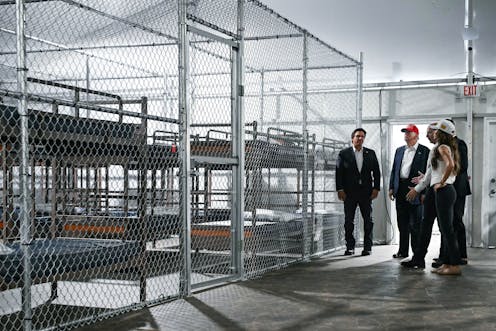
    The United States government recently announced the opening of a massive immigrant detention facility built deep within the Florida Everglades that’s been dubbed “Alligator Alcatraz.” White House Press Secretary Karoline Leavitt said during a media briefing that “there is only one road leading in … and the only way out is a one-way flight.”

    For some taking in her remarks, the moment felt dystopian. According to Florida Gov. Ron DeSantis, the facility is surrounded by swamps and alligators and is equipped with more than 200 security cameras, 8,500 metres of barbed wire and a security force of 400 personnel.

    Accounts from some of the first detainees at the facility have shed light on the inhumane conditions. They’ve described limited access to water and fresh air, saying they received only one meal a day and that the lights are on 24/7.

    Apparently designed to be an immigration deterrence and a display of cruelty, Alligator Alcatraz is much more than infrastructure. It is visual policy aimed to stage terror as a message while making Trump’s authoritarian and fascist politics a material reality.

    Contributing to this fascist visual apparatus, AI-generated images of alligators wearing Immigration and Customs Enforcement (ICE) hats have circulated widely on social media. Some have questioned whether these images were satire or state propaganda.

    An AI-generated image shows alligators wearing ICE caps outside a heavily fortified facility with barbed wire fences and a watch tower.
    A screenshot of a June 2025 Homeland Security post on X, formerly Twitter.

    Surveillance, migration, debilitation

    In a moment of growing right-wing rhetoric and support for anti-immigrant violence, understanding how visual regimes operate, and what they attempt to normalize, is important.


    Read more:
    Nearly 54% of extreme conservatives say the federal government should use violence to stop illegal immigration


    Surveillance and deterrence technologies used along the U.S.–Mexico border for decades were intentionally designed to restrict the movement of undocumented migrants. According to Human Rights Watch, this has resulted in more than 10,000 deaths.

    Since 1994, U.S. Border Patrol has been accused of directing migrants away from urban crossings along the southern border, intentionally funnelling them into harsh and inhospitable terrain like the Sonora Desert.

    The desert serves as a deterrent to prevent immigrants from reaching their destiny. American theorist Jasbir Puar’s concept of debility is useful in making sense of the strategic process whereby the state works not to kill, but to weaken, as a form of slow violence that wears people down over time. The desired outcome is deterrence.

    On the southern U.S. border, severe dehydration and kidney failure can be outcomes of this debilitating process, potentially resulting in disability or death.

    Infrastructures of violence

    Sarah Lopez, a built environment historian and migration scholar in the U.S., describes the architecture of migrant immobilization as existing on a continuum with prison design. She’s highlighted the increasingly punitive conditions of immigration detention facilities, such as small dark cells or the absence of natural light.

    French architect and writer Léopold Lambert explains that architecture isn’t just about buildings, but about how space is used to organize and control people. He coined and developed the term weaponized architecture to describe how spaces are designed to serve the political goals of those in power.

    Colonialism, capitalism and modernity are closely connected, and architecture has played a key role in making them possible. Alligator Alcatraz sits at the intersection of all three, intentionally created to invoke danger and isolation. In other words, it’s cruel by design.

    As Leavitt put it, the facility is “isolated and surrounded by dangerous wildlife and unforgiving terrain.” The Trump administration has essentially transformed land into infrastructure and migrants into disposable threats.

    Terrorizing the marginalized

    State-sanctioned “unforgiving terrains” are not new, and the use of alligators to terrorize people of colour isn’t new either.

    The grotesque history of Black children being used as “alligator bait” in Jim Crow-era imagery is well-documented.

    So when Trump publicly fantasized about alligators eating immigrants trying to escape the new detention centre, it came as no surprise to those familiar with the long racist visual history linking alligators to representations of Black people.

    This logic is redeployed in the form of a racial terror that is made visible, marketable and even humorous in mainstream political discourse.

    Visuality and migration

    “Visuality” is a key term in the field of visual and cultural studies, originally coined by Scottish historian Thomas Carlyle and reintroduced in the early 2000s by American cultural theorist Nicholas Mirzoeff. It can be understood as the socially, historically and culturally constructed ways of seeing and understanding the visual world.

    Visual systems have historically been used to justify western imperial and colonial rule by controlling how people see and understand the world.

    While Alligator Alcatraz is a brand-new detention facility, it draws from a longer visual and spatial history of domination.

    The AI-generated images of alligators wearing ICE hats can be seen as part of a broader visual system that makes racialized violence seem normal, justified and even funny. In this absurd transformation, the alligator is reimagined as a legitimate symbol of border enforcement.

    Migrant death by water

    The spectacle of Alligator Alcatraz, with its swampy inhospitable landscape, cannot be divorced from the long visual history of migrant death by water that’s relied on the circulation of images to provoke outrage — and sometimes state action.

    Examples include the iconic image of Aylan Kurdi, the Syrian child whose lifeless body washed ashore in Turkey in 2015, and the devastating photo of Oscar Alberto Martínez Ramírez and his two-year-old daughter who both drowned crossing the Rio Grande in 2019.

    These images sparked global concern, but they also reinforced the idea that migrant lives only matter when they end in death — as if borders only become visible when they cause deaths.

    Alligator Alcatraz was built in eight days. The fact that a detention camp — or what some have called a concentration camp — can be assembled almost overnight, while basic human needs like clean drinking water or emergency warning systems go unmet for years, speaks volumes about where political will and government priorities lie.

    The Conversation

    Marycarmen Lara Villanueva does not work for, consult, own shares in or receive funding from any company or organisation that would benefit from this article, and has disclosed no relevant affiliations beyond their academic appointment.

    ref. ‘Alligator Alcatraz’ showcases Donald Trump’s penchant for visual cruelty – https://theconversation.com/alligator-alcatraz-showcases-donald-trumps-penchant-for-visual-cruelty-260566

  • Angels, witches, crystals and black cats: How supernatural beliefs vary across different groups in the US

    Source: ForeignAffairs4

    Source: The Conversation – USA (3) – By Christopher P. Scheitle, Associate Professor of Sociology, West Virginia University

    Education, income and demographics shape our views of the unseen world, a survey found. karetoria/Collection Moment via Getty Images

    Younger Americans are more likely to express belief in witchcraft and luck, as our new research shows.

    As sociologists who research the social dynamics of religion in the United States, we conducted a nationally representative survey in 2021. Our survey posed dozens of questions to 2,000 Americans over the age of 18 on a wide range of beliefs in supernatural phenomena – everything from belief in the devil to belief in the magical power of crystals.

    Our statistical analyses found that supernatural beliefs in the United States tend to group into four types.

    The first represents what many consider “traditional religious beliefs.” These include beliefs in God, the existence of angels and demons, and belief in the soul and its journey beyond this lifetime.

    A second represents belief in “spiritual and mental forces,” some of which are associated with either paranormal or new age beliefs. These include communicating with the dead, predicting the future, or believing that one’s soul can travel through space or time.

    A third group represents belief in “witches and witchcraft.” This was measured on our survey with questions about the existence of “black magic” and whether it was “possible to cast spells on people.”

    The fourth and final group represents beliefs in supernatural forces that shape “luck” – for instance, that “black cats bring bad luck.”

    Our analysis finds that higher education and higher income are associated with lower levels of all four types of supernatural belief. Those with a bachelor’s degree or higher, for instance, score below average on all four types of belief, while those with less education score higher than average on all four.

    Looking at race and ethnicity, we found that Latino or Hispanic individuals were more likely than white individuals to express belief in the “witches and witchcraft” form of supernatural belief. About 50% of Latino or Hispanic individuals in our survey, for example, strongly agreed that “witches exist.” This compares with about 37% of white individuals.

    Comparing gender differences, we find that women are more likely than men to believe in the “spiritual and mental forces” forms of supernatural belief. For instance, about 31% of women in our survey agreed that “it is possible to communicate with the dead” compared with about 22% of men.

    Why it matters

    Our research addresses two key questions: first, whether people who hold one type of supernatural belief are also more likely to hold other types of supernatural beliefs; and second, how do different types of supernatural belief vary across key demographic groups, such as across educational levels, racial and ethnic groups, and gender?

    Answering these questions can be surprisingly difficult. Most scientific surveys of the U.S. public include, at best, only one or two questions about religious beliefs; rarely do they include questions about other types of supernatural beliefs, such as belief in paranormal or superstitious forces. This could lead to an incomplete understanding of how supernatural beliefs and practices are changing in the United States.

    An increasing number of Americans are leaving organized religion. However, it is not clear that supernatural beliefs have or will follow the same trajectory – especially beliefs that are not explicitly connected to those religious identities. For example, someone can identify as nonreligious but believe that the crystal they wear will provide them with supernatural benefits.

    Moreover, recognizing that supernatural beliefs can include more than traditionally religious supernatural beliefs may be vital for better understanding other social issues. Research has found, for example, that belief in paranormal phenomena is associated with lower trust in science and medicine.

    What’s next

    Our survey provides some insight into the nature and patterns of supernatural belief in the U.S. at one point in time, but it does not tell us how such beliefs are changing over time.

    We would like to see future surveys – both ours or from other social scientists – that ask more diverse questions about belief in supernatural beings and forces that will allow for an assessment of such changes.

    The Research Brief is a short take on interesting academic work.

    The Conversation

    Christopher P. Scheitle receives funding from the National Science Foundation and the John Templeton Foundation. The research discussed in this article was supported by a grant from the Science and Religion: Identity and Belief Formation grant initiative spearheaded by the Religion and Public Life Program at Rice University and the University of California-San Diego and provided by the Templeton Religion Trust via The Issachar Fund.

    Bernard DiGregorio receives funding from the National Science Foundation. The research discussed in this article was funded by a grant from the Science and Religion: Identity and Belief Formation grant initiative spearheaded by the Religion and Public Life Program at Rice University and the University of California-San Diego and provided by the Templeton Religion Trust via The Issachar Fund.

    Katie E. Corcoran receives funding from the National Science Foundation, the John Templeton Foundation, and the Patient-Centered Outcomes Research Institute. The research discussed in this article was supported by a grant from the Science and Religion: Identity and Belief Formation grant initiative spearheaded by the Religion and Public Life Program at Rice University and the University of California-San Diego and provided by the Templeton Religion Trust via The Issachar Fund.

    ref. Angels, witches, crystals and black cats: How supernatural beliefs vary across different groups in the US – https://theconversation.com/angels-witches-crystals-and-black-cats-how-supernatural-beliefs-vary-across-different-groups-in-the-us-258377

  • California farmers identify a hot new cash crop: Solar power

    Source: ForeignAffairs4

    Source: The Conversation – USA (2) – By Jacob Stid, Ph.D. student in Hydrogeology, Michigan State University

    This dairy farm in California’s Central Valley has installed solar panels on a portion of its land. George Rose/Getty Images

    Imagine that you own a small, 20-acre farm in California’s Central Valley. You and your family have cultivated this land for decades, but drought, increasing costs and decreasing water availability are making each year more difficult.

    Now imagine that a solar-electricity developer approaches you and presents three options:

    • You can lease the developer 10 acres of otherwise productive cropland, on which the developer will build an array of solar panels and sell electricity to the local power company.
    • You can select 1 or 2 acres of your land on which to build and operate your own solar array, using some electricity for your farm and selling the rest to the utility.
    • Or you can keep going as you have been, hoping your farm can somehow survive.

    Thousands of farmers across the country, including in the Central Valley, are choosing one of the first two options. A 2022 survey by the U.S. Department of Agriculture found that roughly 117,000 U.S. farm operations have some type of solar device. Our own work has identified over 6,500 solar arrays currently located on U.S. farmland.

    Our study of nearly 1,000 solar arrays built on 10,000 acres of the Central Valley over the past two decades found that solar power and farming are complementing each other in farmers’ business operations. As a result, farmers are making and saving more money while using less water – helping them keep their land and livelihood.

    A hotter, drier and more built-up future

    Perhaps nowhere in the U.S. is farmland more valuable or more productive than California’s Central Valley. The region grows a vast array of crops, including nearly all of the nation’s production of almonds, olives and sweet rice. Using less than 1% of all farmland in the country, the Central Valley supplies a quarter of the nation’s food, including 40% of its fruits, nuts and other fresh foods.

    The food, fuel and fiber that these farms produce are a bedrock of the nation’s economy, food system and way of life.

    But decades of intense cultivation, urban development and climate change are squeezing farmers. Water is limited, and getting more so: A state law passed in 2014 requires farmers to further reduce their water usage by the mid-2040s.

    Workers on farmland with mountains in the background.
    California’s Central Valley is some of the most productive cropland in the country.
    Citizen of the Planet/UCG/Universal Images Group via Getty Images

    The trade-offs of installing solar on agricultural land

    When the solar arrays we studied were installed, California state solar energy policy and incentives gave farm landowners new ways to diversify their income by either leasing their land for solar arrays or building their own.

    There was an obvious trade-off: Turning land used for crops to land used for solar usually means losing agricultural production. We estimated that over the 25-year life of the solar arrays, this land would have produced enough food to feed 86,000 people a year, assuming they eat 2,000 calories a day.

    There was an obvious benefit, too, of clean energy: These arrays produced enough renewable electricity to power 470,000 U.S. households every year.

    But the result we were hoping to identify and measure was the economic effect of shifting that land from agricultural farming to solar farming. We found that farmers who installed solar were dramatically better off than those who did not.

    They were better off in two ways, the first being financially. All the farmers, whether they owned their own arrays or leased their land to others, saved money on seeds, fertilizer and other costs associated with growing and harvesting crops. They also earned money from leasing the land, offsetting farm energy bills, and selling their excess electricity.

    Farmers who owned their own arrays had to pay for the panels, equipment and installation, and maintenance. But even after covering those costs, their savings and earnings added up to US$50,000 per acre of profits every year, 25 times the amount they would have earned by planting that acre.

    Farmers who leased their land made much less money but still avoided costs for irrigation water and operations on that part of their farm, gaining $1,100 per acre per year – with no up-front costs.

    The farmers also conserved water, which in turn supported compliance with the state’s Sustainable Groundwater Management Act water use reduction requirements. Most of the solar arrays were installed on land that had previously been irrigated. We calculated that turning off irrigation on this land saved enough water every year to supply about 27 million people with drinking water or irrigate 7,500 acres of orchards. Following solar array installation, some farmers also fallowed surrounding land, perhaps enabled by the new stable income stream, which further reduced water use.

    A view of farmland with irrigation sprinklers spraying widely.
    Irrigation is key to cropland productivity in California’s Central Valley. Covering some land with solar panels eliminates the need for irrigation of that area, saving water for other uses elsewhere.
    Citizen of the Planet/UCG/Universal Images Group via Getty Images

    Changes to food and energy production

    Farmers in the Central Valley and elsewhere are now cultivating both food and energy. This shift can offer long-term security for farmland owners, particularly for those who install and run their own arrays.

    Recent estimates suggest that converting between 1.1% and 2.4% of the country’s farmland to solar arrays would, along with other clean energy sources, generate enough electricity to eliminate the nation’s need for fossil fuel power plants.

    Though many crops are part of a global market that can adjust to changes in supply, losing this farmland could affect the availability of some crops. Fortunately, farmers and landowners are finding new ways to protect farmland and food security while supporting clean energy.

    One such approach is agrivoltaics, where farmers install solar designed for grazing livestock or growing crops beneath the panels. Solar can also be sited on less productive farmland or on farmland that is used for biofuels rather than food production.

    Even in these areas, arrays can be designed and managed to benefit local agriculture and natural ecosystems. With thoughtful design, siting and management, solar can give back to the land and the ecosystems it touches.

    Farms are much more than the land they occupy and the goods they produce. Farms are run by people with families, whose well-being depends on essential and variable resources such as water, fertilizer, fuel, electricity and crop sales. Farmers often borrow money during the planting season in hopes of making enough at harvest time to pay off the debt and keep a little profit.

    Installing solar on their land can give farmers a diversified income, help them save water, and reduce the risk of bad years. That can make solar an asset to farming, not a threat to the food supply.

    The Conversation

    Jacob Stid works for Michigan State University. Funding for this work came from the US Department of Agriculture’s National Institute of Food and Agriculture program and the Department of Earth and Environmental Sciences at Michigan State University. He also receives funding from the Foundation for Food and Agricultural Research.

    Annick Anctil receives funding from NSF and USDA.

    Anthony Kendall receives funding from the USDA, NASA, the NSF, and the Foundation for Food and Agricultural Research. He is an Assistant Professor at Michigan State University, and serves on the nonprofit board of the FLOW Water Advocates.

    ref. California farmers identify a hot new cash crop: Solar power – https://theconversation.com/california-farmers-identify-a-hot-new-cash-crop-solar-power-259653

  • MethaneSat: The climate spy satellite that went quiet

    Source: ForeignAffairs4

    Source: The Conversation – UK – By Vincent Gauci, Professorial Fellow, School of Geography, Earth and Environmental Sciences, University of Birmingham

    Satellites circling the Earth have many different functions, including navigation, communications and Earth observation. About 8%-10% of all active satellites are military or “dual use” serving intelligence or reconnaissance functions as spy satellites.

    But it was a climate satellite serving as both spy and “name and shame” police officer in the sky that recently caught the world’s attention when it went quiet.

    MethaneSat was developed to spot emission hot spots or plumes of invisible methane pollution from space. Built by the US non-profit, the Environmental Defense Fund with Nasa’s support, it tracked methane leaks from oil and gas sites, farms and landfills across the globe.

    These are among the biggest human-caused emission sources. But methane emissions are traditionally hard to spot because they come from so many relatively small point sources or plumes.


    Get your news from actual experts, straight to your inbox. Sign up to our daily newsletter to receive all The Conversation UK’s latest coverage of news and research, from politics and business to the arts and sciences.


    This specialist observation satellite was developed and deployed because methane acts differently to other greenhouse gas emissions. Methane is a powerful greenhouse gas that, over 20 years, is more than 80 times more powerful a greenhouse gas than carbon dioxide.

    Since 1750, additional human-caused methane emissions have contributed directly and indirectly, to around 60% of the global warming of carbon dioxide over that time.

    Methane also has a short lifetime. Where carbon dioxide stays in the atmosphere for in excess of 100 years, relying on plant uptake for its removal from the atmosphere and conversion into other carbon forms, methane is broken down in the atmosphere by molecules known as hydroxyl radicals. These are nicknamed “the atmosphere’s detergent”, because they effectively remove methane from the atmosphere in less than ten years.

    gas refinery plume burning
    A gas flare at an oil refinery – one of many pinpoint sources of methane emissions.
    hkhtt hj/Shutterstock

    This combination of short lifetime and high global warming potential (a measure of the climate strength of the gas relative to carbon dioxide) makes methane both a problem and an ideal target for reduction. In fact, growth in atmospheric methane is occurring at such a rate that it is placing us dangerously off track from meeting our Paris agreement obligations to stay within 1.5°C of climate warming by 2050 and 2°C by 2100.

    Eyes in the sky

    But how can we achieve these reductions and what was the role of MethaneSat in seeking to meet this objective?

    There are two ways atmospheric methane concentrations can be reduced. A recent and more challenging proposition is that methane is actively removed from the atmosphere.

    This is difficult because it relies on technological advances that are at their earliest stages (although growing more trees can go some way to achieving this). Another more realistic approach is to reduce emissions and then to let atmospheric chemistry do the work of removing excess methane in the atmosphere.

    The global methane pledge was announced in 2021 at the UN climate summit, Cop26, in Glasgow. This aimed to reduce human-caused methane emissions by 30% on 2020 levels by 2030. More than 150 countries have now signed up to this pledge. If successful, it could reduce warming by up to 0.2°C by 2050. That’s why MethaneSat was so useful.

    MethaneSat is fitted with a hyperspectral sensor – which can record sunlight reflected off Earth in hundreds of narrow colour bands across the spectrum, far beyond what our eyes can see. It’s capable of picking up concentrations of methane in air at minute quantities.

    This sensor allowed the satellite to spot individual plumes of methane, so it had a crucial role in identifying those problem areas. Given that these are dispersed but also individual point sources, it was invaluable in intervening in the leaks, permitting identification of those responsible so they could be held to account and so address the problem.

    No one instrument can cover what MethaneSat could do with freely available data. It had high precision, high spatial resolution and, critically, global coverage and it was particularly useful at identifying plumes in nations that don’t have the resources for the sort of regional surveys using aircraft mounted systems that can fill the gap in developed regions.

    Now that MethaneSat is no longer operational, there are some other tools to identify small anthropogenic emissions sources, but they tend to be regionally focused like the aircraft measurements mentioned.

    Other satellites gather similar data but that data sits behind commercial paywalls, whereas MethaneSat data was freely available. Collectively, these drawbacks mean that it’s just going to be that much harder to spot the emissions MethaneSat was so good at tracking.


    Don’t have time to read about climate change as much as you’d like?

    Get a weekly roundup in your inbox instead. Every Wednesday, The Conversation’s environment editor writes Imagine, a short email that goes a little deeper into just one climate issue. Join the 45,000+ readers who’ve subscribed so far.


    The Conversation

    Vincent Gauci receives funding from the NERC, Spark Climate Solutions, the JABBS Foundation and has received funding from the Royal Society, Defra and the AXA Research Fund.

    ref. MethaneSat: The climate spy satellite that went quiet – https://theconversation.com/methanesat-the-climate-spy-satellite-that-went-quiet-261022

  • Small penises are still the butt of the joke in film and TV

    Source: ForeignAffairs4

    Source: The Conversation – UK – By Neil Cocks, Associate Professor in the Department of English Literature, University of Reading

    Gen V (2023-present), the recent iteration of the wildly successful superhero satire The Boys (2019), thrives on scenes of bodily outrage. One such episode concerns a young woman who is able to shrink – an ability triggered by self-induced vomiting.

    Her boyfriend persuades her to use her powers during sex and we see her touching his penis, which is now taller than she is. We also understand why the boyfriend is so insistent about her transformation: relatively speaking, he has a small penis.

    In Companion (2025), a film about a young man who has an abusive sexual relationship with a self-conscious robot, a small penis is also mocked. When the robot gains autonomy, and has an intelligence boost, she confronts and shames the abusive man, claiming that he is motivated in his violent and controlling behaviour by “a below average-sized penis”.

    What interests me about these works, as a researcher of sexuality and film, is that they are otherwise committed to questioning reductive ideas about the body. Yes, in the universe of The Boys there is undoubted glee at all the exploding heads and superpowered, murderous buttocks, but the keynote is pathos.


    Looking for something good? Cut through the noise with a carefully curated selection of the latest releases, live events and exhibitions, straight to your inbox every fortnight, on Fridays. Sign up here.


    The girl who changes her shape through vomiting is arguably representing bulimic experience and there are characters whose superpowers can be understood to negotiate, for example, self-harm and dysmorphia. But when it comes to a man with a small penis, it’s a different story. His body is understood to directly influence both his actions and sense of morality.

    Likewise, in Companion, which is in so many senses a meditation on the fraught relationship between mind and body, the small penis of the young man is understood to be the obvious source of his repressive actions.

    In both cases, the audience is expected to laugh at the abuser because of his small penis. The small penis is framed as both a signifier and cause of abusiveness.

    ‘We are still so medieval about penis size’

    It could be argued that in Companion and Gen V, the small penis itself is not what is being mocked. The men involved in both are young, white and heterosexual. The idea is, perhaps, that mocking those with small penises is acceptable, because in this the creators are really questioning white, heterosexual and male power structures, and that the inadequacy of that power, its mythic nature, is exposed.

    One difficulty in this is that as only power held by men with small penises is mocked, the power of the well endowed, regardless of racial or sexual identity, is naturalised.

    Equally, those people of colour or queer people who have small penises might implicitly be included in the mockery, with the implication that they are somehow the beneficiaries of power structures, misuse this power, and have obvious, biologically rooted motivations in so doing.

    The trailer for Gen V.

    Gen V qualifies the laughter – the girl , talking later to a friend, makes clear that there is nothing wrong in having a small penis, just “don’t be a dick about it”. But the only small-penised character we see is, of course, being “a dick”.

    There have been a number of television shows that focus on penis size, but each explores the pathos of having a large penis: Hung (2009), The Hard Times of RJ Berger (2010), Sex Education (2019). Imagine an equivalent concerning a character with a small – or even simply not large – penis.

    As journalist Caitlin Moran wrote in a 2023 Guardian article introducing her book, What About Men:

    We are still so medieval about penis size that we see male genitalia as being inimical to a man’s soul. Remember when Stormy Daniels told the world that Donald Trump’s penis was ‘smaller than average – a dick like the mushroom character in Mario Kart’. And we were all like: ‘Yes, it makes sense the horrible man has a small, weird mushroom penis.’ The whole world joined in on that one.

    Let us instead question the relationship between biology and destiny. And let this action be taken not to frame heterosexual white men as a disadvantaged group, but for the good of us all. Our bodies are ours to negotiate, with ourselves, and with our significant others, as well as those others that find in them indifference, or more troubling affects.

    As Gen V and Companion suggest, in recent science fiction stories that otherwise reimagine the body, the small penis can only be imagined as shameful. It is taken to be an obvious motivation for abusive behaviour. Such an understanding helps no one. As the science fiction genre is especially well placed to question common-sense ideas about the human and its form, it would be a good place to begin.

    The Conversation

    Neil Cocks does not work for, consult, own shares in or receive funding from any company or organisation that would benefit from this article, and has disclosed no relevant affiliations beyond their academic appointment.

    ref. Small penises are still the butt of the joke in film and TV – https://theconversation.com/small-penises-are-still-the-butt-of-the-joke-in-film-and-tv-256748

  • AI can be your wingman when online dating – but should you let it?

    Source: ForeignAffairs4

    Source: The Conversation – UK – By Natasha McKeever, Lecturer in Applied Ethics, University of Leeds

    YWdesign/Shutterstock

    Many dating app companies are enthusiastic about incorporating generative AI into their products. Whitney Wolfe Herd, founder of dating app Bumble, wants gen-AI to “help create more healthy and equitable relationships”. In her vision of the near future, people will have AI dating concierges who could “date” other people’s dating concierges for them, to find out which pairings were most compatible.

    Dating app Grindr is developing an AI wingman, which it hopes to be up and running by 2027. Match Group, owner of popular dating apps including Tinder, Hinge and OK Cupid, have also expressed keen interest in using gen-AI in their products, believing recent advances in AI technology “have the power to be transformational, making it more seamless and engaging for users to participate in dating apps”. One of the ways they think gen-AI can do this is by enhancing “the authenticity of human connections”.

    Use of gen-AI in online dating is not just some futuristic possibility, though. It’s already here.

    Want to enhance your photos or present yourself in a different style? There are plenty of online tools for that. Similarly, if you want AI to help “craft the perfect, attention-grabbing bio” for you, it can do that. AI can even help you with making conversation, by analysing your chat history and suggesting ways to reply.

    Extra help

    It isn’t just dating app companies who are enthusiastic about AI use in dating apps either. A recent survey carried out by Cosmopolitan magazine and Bumble of 5,000 gen-Zers and millennials found that 69% of respondents were excited about “the ways AI could make dating easier and more efficient”.

    An even higher proportion (86%) “believe it could help solve pervasive dating fatigue”. A surprising 86% of men and 77% of the women surveyed would share their message history with AI to help guide their dating app conversations.


    Dating today can feel like a mix of endless swipes, red flags and shifting expectations. From decoding mixed signals to balancing independence with intimacy, relationships in your 20s and 30s come with unique challenges.Love IRL is the latest series from Quarter Life that explores it all.

    These research-backed articles break down the complexities of modern love to help you build meaningful connections, no matter your relationship status.


    It’s not hard to see why AI is so appealing for dating app users and providers. Dating apps seem to be losing their novelty: many users are reportedly abandoning them due to so-called “dating app fatigue” – feeling bored and burnt out with dating apps.

    Apps and users might be hopeful that gen-AI can make dating apps fun again, or if not fun, then at least that it will make them actually lead to dates. Some AI dating companions claim to get you ten times more dates and better dates at that. Given that men tend to get fewer matches on dating apps than women, it’s also not surprising that we’re seeing more enthusiasm from men than women about the possibilities AI could bring.

    Talk of gen-AI in connection to online dating gives rise to many ethical concerns. We at the Ethical Dating Online Network, an international network of over 30 multi-disciplinary academics interested in how online dating could be more ethical, think that dating app companies need to convincingly answer these worries before rushing new products to market. Here are a few standout issues.

    Pitfalls of AI dating

    Technology companies correctly identify some contemporary social issues, such as loneliness, anxiety at social interactions, and concerns about dating culture, as hindering people’s dating lives.

    But turning to more technology to solve these issues puts us at risk of losing the skills we need to make close relationships work. The more we can reach for gen-AI to guide our interactions, the less we might be tempted to practise on our own, or to take accountability for what we communicate. After all, an AI “wingman” is of little use when meeting in person.

    Also, AI tools risk entrenching much of dating culture that people find stressful. Norms around “banter”, attractiveness or flirting can make the search for intimacy seem like a competitive battleground. The way AI works – learning from existing conversations – means that it will reproduce these less desirable aspects.

    Woman looking annoyed and upset at phone
    Gen-AI may reproduce the negative elements of online dating culture.
    fizkes/Shutterstock

    Instead of embracing those norms and ideals, and trying to equip everyone with the tools to seemingly meet impossibly high standards, dating app companies could do more to “de-escalate” dating culture: make it calmer, more ordinary and help people be vulnerable. For example, they could rethink how they charge for their products, encourage a culture of honesty, and look at alternatives to the “swiping” interfaces.

    The possibility of misrepresentation is another concern. People have always massaged the truth when it comes to dating, and the internet has made this easier. But the more we are encouraged to use AI tools, and as they are embedded in dating apps, bad actors can more simply take advantage of the vulnerable.

    An AI-generated photo, or conversation, can lead to exchanges of bank details, grooming and sexual exploitation.

    Stopping short of fraud, however, is the looming intimate authenticity crisis. Online dating awash with AI generated material risks becoming a murky experience. A sincere user might struggle to identify like-minded matches on apps where use of AI is common.

    This interpretive burden is annoying for anyone, but it will exacerbate the existing frustrations women, more so than men, experience on dating apps as they navigate spaces full of with timewasting, abuse, harassment and unwanted sexualisation.

    Indeed, women might worry that AI will turbo-charge the ability of some men to prove a nuisance online. Bots, automation, conversation-generating tools, can help some men to lay claim to the attention of many women simultaneously.

    AI tools may seem like harmless fun, or a useful timesaver. Some people may even wholeheartedly accept that AI generated content is not “authentic” and love it anyway.

    Without clear guardrails in place, however, and more effort by app companies to provide informed choices based on transparency about how their apps work, any potential benefits of AI will be obscured by the negative impact it has to intimacy online.

    The Conversation

    The authors do not work for, consult, own shares in or receive funding from any company or organisation that would benefit from this article, and have disclosed no relevant affiliations beyond their academic appointment.

    ref. AI can be your wingman when online dating – but should you let it? – https://theconversation.com/ai-can-be-your-wingman-when-online-dating-but-should-you-let-it-254666

  • Looking for meaningful romantic relationships? Start by diversifying your friendships and forgetting your wishlist

    Source: ForeignAffairs4

    Source: The Conversation – UK – By Mariko Visserman, Assistant Professor in Psychology, University of Sussex

    loreanto/Shutterstock

    When you’re looking for a relationship, chances are you’ll start off with a wishlist for your ideal partner. Maybe someone who is attractive or wealthy, someone who likes the same movies and the outdoors. Seems like a solid starting point, right? The problem is that in the real world, these wishlists are rarely helpful. And how realistic is the idea that one person can fulfil all our needs in the first place?

    In 2017, researchers conducted a large speed-dating study. They wanted to see how well the preferences people indicated for a potential partner predicted who they wanted to see again after the event.

    The researchers were left with nothing: people’s wishlists did not predict who they actually liked. Instead, they suggested that the best predictor of whether you like someone is seeing how they make you feel when you interact with them. Do you feel comfortable in their presence? Do they make you laugh?

    The scientific evidence suggests that you have to meet people in the flesh if you want to find your match.


    Dating today can feel like a mix of endless swipes, red flags and shifting expectations. From decoding mixed signals to balancing independence with intimacy, relationships in your 20s and 30s come with unique challenges. Love IRL is the latest series from The Conversation’s Quarter Life that explores it all.

    These research-backed articles break down the complexities of modern love to help you build meaningful connections, no matter your relationship status.


    People used to find their romantic partner by tapping into their social networks – through friends, family, or the people they met in their daily lives. Nowadays, we often look for a romantic partner using online dating platforms, which allow us to access a larger network of potential romantic partners than ever before.

    This apparent abundance may encourage a critical comparison with your wishlist and you may spend a lot of time swiping through profiles of potential partners, without initiating meeting them.

    Research suggests that doing so can leave you feeling paralysed by an overload of choice and less optimistic about your chances. Research also shows that people tend to have fewer matches as the number of profiles on offer increases.

    The researchers of this paradox suggest that you may be wise to put yourself on a dating diet: only looking at a limited number of profiles each day and exploring them with a curious mind. Then, when contact is established and you feel positive about the initial interaction, the real experiment begins.

    When you spend a long time interacting online you may construct an idealised version of your potential partner and what you hope they’re like. That leaves you all the more likely to be disappointed when meeting them in person, as it’s easy for them to fall short of your expectations.

    Woman smiling at her phone
    When you spend long time interacting online you may construct an idealised version of your potential partner.
    dodotone/Shutterstock

    A better strategy would be to meet them in the flesh with a curious mind, before becoming overly invested in an online persona that is not a fair representation of what the other person may be like.

    Taking it offline

    Whether you will go on to have a satisfying relationship in the long run depends more than anything on your relationship expectations and behaviour.

    Being kind and attentive to each other’s goals and needs ensures each partner’s happiness and will help weather any challenge, small or large, that couples inevitably face. But here too, technology may disrupt your mindful awareness of others – for example being on your phone in the presence of your partner – posing a risk to enjoying relationships.

    Couples today also seem to have historically high expectations for their partner to help them fulfil all their goals and needs. You may want a partner to be a passionate lover, your best friend, your motivational coach and help you achieve personal growth.

    In other words, people’s wishlists people carry into relationships too, as we long for a partner to fulfil all our needs.

    Girl and boy feeding each other crisps
    Diversifying your friendships can put less pressure on your romantic connection.
    Dupe/Daniel Bughiu

    Demanding all of this from one partner can place too much pressure on the relationships, rather than satisfying your needs. You may be left with a dissatisfying relationship that falls short of your expectations.

    In some ways, we may all benefit from adopting lower expectations when looking for a partner and when being with them long term. This may help us appreciate them instead of taking their support and kind acts for granted.

    It’s also a good idea to diversify your relationships. Having other important close (and even less close) relationships can help fulfil some needs your partner may not be best suited to meet, such as friends who like the same movies you do or who like to explore the outdoors together.

    Research has shown that a greater diversity of relationships benefits happiness, as different relationships can serve different roles in fulfilling your needs, which may take some pressure off “the one” fulfilling all your needs.

    Putting some brakes on your expectations for a romantic partner, when looking for a partner and when sharing your life with them, may help you to see more clearly who they are and appreciate what they contribute to your life.

    The Conversation

    Mariko Visserman does not work for, consult, own shares in or receive funding from any company or organisation that would benefit from this article, and has disclosed no relevant affiliations beyond their academic appointment.

    ref. Looking for meaningful romantic relationships? Start by diversifying your friendships and forgetting your wishlist – https://theconversation.com/looking-for-meaningful-romantic-relationships-start-by-diversifying-your-friendships-and-forgetting-your-wishlist-254022

  • Love IRL: a new Quarter Life series on modern dating from The Conversation

    Source: ForeignAffairs4

    Source: The Conversation – UK – By Anna Walker, Senior Arts + Culture Editor

    Roman Samborskyi/Shutterstock

    None of the cultural love stories of the 2000s started with a swipe. Friends taught us that your social circle could double as a dating pool. The Office proved that love could blossom by the water cooler, and in High School Musical the perfect match could be the new girl at school.

    But in the years since, apps have changed the way we date. The old-fashioned meet-cute was replaced by swipes, and slow-burn feelings were forgotten in favour of instant digital chemistry. It came with some benefits. Gone were the days when your romantic options were limited to bad set-ups, overly flirty colleagues, or trying to catch the eye of the hottie reading on the train. And introverts could pursue connections without the anxiety of approaching someone in a noisy bar or making the first move with a friend. But there were losses too.

    While the convenience of dating apps expanded our horizons, they also stripped away some of the spontaneity and authenticity of in-person connections. The rush of emotions tied to real-life interactions – the spark of chemistry when eyes meet across a room or the thrill of an unexpected conversation – has become less frequent. Swiping left and right creates a kind of detachment, where it’s easier to dismiss someone with a flick of the thumb than to take a moment to truly get to know them. What we gained in options, we lost in meaningful connections.

    Now another love revolution is on the horizon as algorithms and AI start to play an ever-growing role in how we form and navigate our relationships. Whether you’re single, dating, married or somewhere in between, our love lives are increasingly mediated by technology.

    This is especially true for those of us in our 20s and 30s, who grew up with the promise of finding romance in real life but came of age as the dating app revolution began in earnest. Which is where Love IRL, a new Quarter Life series from The Conversation, comes in. These research-backed articles break down the complexities of modern love, from decoding mixed signals to balancing independence with intimacy. Along the way we’ll help you navigate the ghosts, love-bombers, breadcrumbers and catfishers and strive for more meaningful connections – offline and on.

    Some of the topics you’ll read about include how ditching the wishlists can help you find meaningful romantic relationships, how AI wingmen are influencing online dating, and how rising living costs are changing the way we date, live and love.

    Thoughts? Relationship woes? Get in touch at quarterlife@theconversation.com


    Dating today can feel like a mix of endless swipes, red flags and shifting expectations. From decoding mixed signals to balancing independence with intimacy, relationships in your 20s and 30s come with unique challenges. Love IRL is the latest series from Quarter Life that explores it all.

    These research-backed articles break down the complexities of modern love to help you build meaningful connections, no matter your relationship status.


    The Conversation

    ref. Love IRL: a new Quarter Life series on modern dating from The Conversation – https://theconversation.com/love-irl-a-new-quarter-life-series-on-modern-dating-from-the-conversation-259474

  • University students feel ‘anxious, confused and distrustful’ about AI in the classroom and among their peers

    Source: ForeignAffairs4

    Source: The Conversation – USA (2) – By Elise Silva, Director of Policy Research at the Institute for Cyber Law, Policy, and Security, University of Pittsburgh

    Artificial intelligence has taken off on campus, changing relationships between students and professors and among students themselves. Photo by Annie Spratt on Unsplash

    The advent of generative AI has elicited waves of frustration and worry across academia for all the reasons one might expect: Early studies are showing that artificial intelligence tools can dilute critical thinking and undermine problem-solving skills. And there are many reports that students are using chatbots to cheat on assignments.

    But how do students feel about AI? And how is it affecting their relationships with peers, instructors and their coursework?

    I am part of a group of University of Pittsburgh researchers with a shared interest in AI and undergraduate education. While there is a growing body of research exploring how generative AI is affecting higher education, there is one group that we worry is underrepresented in this literature, yet perhaps uniquely qualified to talk about the issue: our students.

    Our team ran a series of focus groups with 95 students across our campuses in the spring of 2025 and found that whether students and faculty are actively using AI or not, it is having significant interpersonal, emotional effects on learning and trust in the classroom. While AI products such as ChatGPT, Gemini or Claude are, of course, affecting how students learn, their emergence is also changing their relationships with their professors and with one another.

    ‘It’s not going to judge you’

    Most of our focus group participants had used AI in the academic setting – when faced with a time crunch, when they perceive something to be “busy work,” or when they are “stuck” and worry that they can’t complete a task on their own. We found that most students don’t start a project using AI, but many are willing to turn to it at some point.

    Many students described positive experiences using AI to help them study or answer questions, or give them feedback on papers. Some even described using AI instead of a professor, tutor or teaching assistant. Others found a chatbot less intimidating than attending office hours where professors might be “demeaning.” In the words of one interviewee: “With ChatGPT you can ask as many questions as you want and it’s not going to judge you.”

    But by using it, you may be judged. While some were excited about using AI, many students voiced mild feelings of guilt or shame about their AI use due to environmental or ethical concerns, or just coming across as lazy. Some even expressed a feeling of helplessness, or a sense of inevitability regarding AI in their futures.

    Anxiety, distrust and avoidance

    While many students expressed a sense that faculty members are, as one participant put it, “very anti-ChatGPT,” they also lamented the fact that the rules around acceptable AI use were not sufficiently clear. As one urban planning major put it: “I feel uncertain of what the expectations are,” with her peer chiming in, “We’re not on the same page with students and teachers or even individually. No one really is.”

    Students also described feelings of distrust and frustration toward peers they saw as overly reliant on AI. Some talked about asking classmates for help, only to find that they “just used ChatGPT” and hadn’t learned the material. Others pointed to group projects, where AI use was described as “a giant red flag” that made them “think less” of their peers.

    These experiences feel unfair and uncomfortable for students. They can report their classmates for academic integrity violations – and enter yet another zone in which distrust mounts – or they can try to work with them, sometimes with resentment. “It ends up being more work for me,” a political science major said, “because it’s not only me doing my work by myself, it’s me double checking yours.”

    Photos of small college classroom with teacher and students
    Student-teacher relationships are a key part of a good college experience. What if students avoid professors and rely instead of always-available chatbots?
    U.S. Department of Education

    Distrust was a marker that we observed of both student-to-teacher relationships and student-to-student relationships. Learners shared fears of being left behind if other students in their classes used chatbots to get better grades. This resulted in emotional distance and wariness among students. Indeed, our findings reflect other reports that indicate the mere possibility that a student might have used a generative AI tool is now undercutting trust across the classroom. Students are as anxious about baseless accusations of AI use as they are about being caught using it.

    Students described feeling anxious, confused and distrustful, and sometimes even avoiding peers or learning interactions. As educators, this worries us. We know that academic engagement – a key marker of student success – comes not only from studying the course material, but also from positive engagement with classmates and instructors alike.

    AI is affecting relationships

    Indeed, research has shown that faculty-student relationships are an important indicator of student success. Peer-to-peer relationships are essential too. If students are sidestepping important mentoring relationships with professors or meaningful learning experiences with peers due to discomfort over ambiguous or shifting norms around the use of AI technology, institutions of higher education could imagine alternative pathways for connection. Residential campuses could double down on in-person courses and connections; faculty could be incentivized to encourage students to visit during office hours. Faculty-led research, mentoring and campus events where faculty and students mix in an informal fashion could also make a difference.

    We hope our research can also flip the script and disrupt tropes about students who use AI as “cheaters.” Instead, it tells a more complex story of students being thrust into a reality they didn’t ask for, with few clear guidelines and little control.

    As generative AI continues to pervade everyday life, and institutions of higher education continue to search for solutions, our focus groups reflect the importance of listening to students and considering novel ways to help students feel more comfortable connecting with peers and faculty. Understanding these evolving interpersonal dynamics matters because how we relate to technology is increasingly affecting how we relate to one another. Given our experiences in dialogue with them, it is clear that students are more than ready to talk about this issue and its impact on their futures.

    Acknowledgment: Thank you to the full team from the University of Pittsburgh Oakland, Greensburg, Bradford and Johnstown campuses, including Annette Vee, Patrick Manning, Jessica FitzPatrick, Jessica Ghilani, Catherine Kula, Patty Wharton-Michael, Jialei Jiang, Sean DiLeonardi, Birney Young, Mark DiMauro, Jeff Aziz, and Gayle Rogers.

    The Conversation

    Elise Silva does not work for, consult, own shares in or receive funding from any company or organization that would benefit from this article, and has disclosed no relevant affiliations beyond their academic appointment.

    ref. University students feel ‘anxious, confused and distrustful’ about AI in the classroom and among their peers – https://theconversation.com/university-students-feel-anxious-confused-and-distrustful-about-ai-in-the-classroom-and-among-their-peers-258665

  • Patients who feel heard are more likely to stick with medical treatment

    Source: ForeignAffairs4

    Source: The Conversation – France – By Diana Pérez-Arechaederra, Associate Professor of Organizational Psychology, ESCP Business School

    In the 2000s, when I worked as a psychologist in long-term elderly care and primary healthcare services, many of the patients I saw were living with chronic or complex conditions. These situations required that patients trust care providers, consistently adhere to treatments and, often, receive care over an extended period of time.

    But what stood out to me were the differences in how those protocols were applied. Some practitioners took time to explain something clearly, asked questions that showed genuine care, or invited patients into a conversation about their treatment. I also noticed how differently patients responded when none of that happened.

    The quality of communication – the level of respect, attention and clarity – often made the difference between patients’ cooperation and resistance, between their motivation and withdrawal.

    These observations led me to systematically investigate the psychological processes involved in how patients perceive fairness in healthcare.

    What I found, in collaboration with colleagues, is that this “soft” dimension of care – how people perceive their treatment, how information is shared with them, and how much time and space they are given to take part in the process – has very real effects on behaviour. Patients’ perception of respect – what we call interactional fairness – often hinges on whether they are given the chance to ask questions, make sense of information, weigh different options and even participate in making decisions. For patients to follow a practitioner’s recommendations, they need to feel informed, heard, respected and involved – not just treated.

    What fairness looks like in practice

    In our study, we examined two forms of what psychologists call organizational justice in healthcare settings:

    • Interactional justice – the sense of being treated with dignity, attentiveness and respect

    • Informational justice – the perception that shared information is clear, complete, timely and relevant

    We surveyed over 850 patients in Spain and the United States who had visited a healthcare provider in the previous six months. We asked them how they experienced their interactions with health professionals, how much they trusted those professionals, how satisfied they were with the service, whether they followed medical advice, and whether they intended to return to the same provider.

    What we saw was a clear pattern. Patients who perceived fairness – being treated with respect and given clear and appropriate information – were more likely to trust their healthcare provider. That trust, in turn, shaped whether they felt able to engage with treatment and sustain their relationship with (or, in the language of our study, their “loyalty” to) the healthcare service or physician. What we call informational fairness had a particularly strong direct link to adherence to treatments or clinical advice, showing its importance for understanding patient behaviour.

    In healthcare, patients are navigating uncertainty, vulnerability, and long-term relationships with systems and providers. Their ability to understand, participate in and trust that process is integral to care.


    A weekly e-mail in English featuring expertise from scholars and researchers. It provides an introduction to the diversity of research coming out of the continent and considers some of the key issues facing European countries. Get the newsletter!

    Insights across borders

    Despite the structural and institutional differences between Spain, with its predominantly public healthcare system, and the United States, where healthcare is largely organised through the private sector, our goal was to identify common patterns in how patients interpret and engage with services. Specifically, we sought to understand whether similar cognitive and emotional processes create the patient experience, regardless of the broader healthcare system in place.

    Using path analysis models, we assessed the relationships between patients’ perceptions of fairness and their resulting levels of trust and satisfaction, and then, the relationship between those perceptions and patients’ adherence and loyalty to the service. While patients in the United States exhibited slightly stronger associations between perceived fairness and both trust and satisfaction, the overall nature of the relationships was highly consistent across both countries.

    These findings suggest that despite differences in how care is delivered and financed, patients in both countries respond to their healthcare interactions in fundamentally similar ways. This matters for healthcare providers and policymakers across diverse settings who are aiming to enhance patient-centred care.

    Recognizing patients as agents

    At the heart of this is an ethical question: Are patients treated as agents in their own care, or simply as objects of intervention?

    Medicine is not a closed, flawless system. It is a developing field of research being translated into practice, and its shortcomings are shaped by social and structural biases, and by the fact that patients may not be given all of the options they should receive. In areas such as women’s health, chronic pain, mental health and rare diseases, patients often offer insights that clinical protocols miss. When their lived experience is ignored or dismissed, we lose opportunities for better diagnoses, more responsive and efficient care, and more sustainable treatment plans.


    À lire aussi :
    Doctors need to talk through treatment options better for black men with prostate cancer


    When I was working in elderly care, I remember the testimony of a resident who was very upset because his parenteral treatment (an injection) had been changed to an enteral one (a drink). Nobody informed him about the change. When I asked him why he was so unhappy, he said: “I much preferred the injections because the clinician who came to administer them was very nice to me. We were friends. Now, I’ll never see her again.”

    I’m not sure whether continuing with the parenteral administration was even possible, but what was certain is that nobody asked him what he preferred. And that had an impact on him.

    Listening to patients is not merely being polite: it is recognizing that they have information that professionals lack. And that the ethical foundation of health care depends not only on what medical professionals do to patients, but on how they work with them.

    What can be done

    Creating fairer care involves the following concrete practices, which come from our findings:

    • Designing information systems that support timely, accessible and patient-centred communication

    • Designing procedures and allocating enough time for professionals to conduct themselves in accordance with interactional and informational fairness principles

    • Training for professionals in relational and communication skills that foster patients’ perceptions of respect and dignity

    • Educating patients about what care can reasonably provide to help set appropriate expectations

    • Reframing patient participation so that patients are not just surveyed after the fact, but listened to and given agency throughout the care process


    À lire aussi :
    Power to the patient: Person-centred care and how you can take your health into your own hands


    None of this is separate from clinical quality. On the contrary, it is what allows clinical care to work best and for all. When patients feel that they matter – that they are respected and informed – they are more likely to collaborate, follow through and return for more care if they need it. That would benefit patients, their practitioners, healthcare systems and society.

    The Conversation

    The scientific article referred to in this piece was funded by the Spanish Ministry of Science and Innovation and the Instituto de Salud Carlos III (ISCIII), whose projects, RD24/0005/0018, were co-funded by the European Union and the Facility for Recovery and Resilience (MRR). The Network for Research on Chronicity, Primary Care and Health Promotion (RICAPPS) was involved in the development of RD24/0005/0018. Projects PI22/01677 and PI20/00321 were co-financed by the European Union. The government of Castilla y León also collaborated in the funding of this study through research projects BioSan 2009 and BioSan 2011. These funders played no role in the study design, data analysis, results reporting or the decision to submit the manuscript for publication.

    ref. Patients who feel heard are more likely to stick with medical treatment – https://theconversation.com/patients-who-feel-heard-are-more-likely-to-stick-with-medical-treatment-260750

  • Bribery in South Africa: law now puts a duty on companies to act

    Source: ForeignAffairs4

    Source: The Conversation – Africa – By Rehana Cassim, Professor in Company Law, University of South Africa

    Bribery is one of the most common forms of corruption in South African companies and state institutions. This has a number of harmful outcomes.

    Firstly, research shows that it weakens democracy and slows down economic growth. It also creates expensive barriers for honest businesses to succeed because it distorts fair competition. If bribery is not stopped or punished it has a demoralising effect, because it erodes trust and creates a culture where ethical conduct is undermined.

    In 2024 a new law came into force in South Africa that puts a duty on companies to take proactive steps to prevent bribery. This law falls under a broader law dealing with corruption in South Africa.

    The new provisions make it a crime for companies to fail to prevent bribery by an associated person. This is a major policy shift in South African anti-corruption law, and aligns with the United Kingdom’s anti-bribery legislation.

    An associated person is anyone who performs services for the company. This can include suppliers, joint venture partners, distributors, consultants, and other professionals advising the company. It can even be other companies, like subsidiaries.

    In my research I found that South Africa took inspiration from the United Kingdom (UK) Bribery Act 2010. The law makes it a criminal offence for commercial organisations to fail to prevent bribery by associated persons.

    Despite some successes, enforcement of the UK Bribery Act has been slow and the volume of prosecutions has been low.

    Based on my research into company conduct, given the current challenges in law enforcement and the low conviction rates for crimes of corruption, the new law might not work as well as hoped.

    But with improved enforcement, it has potential to reduce bribery in South Africa.

    What’s behind the new law?

    The new addition to the law was introduced after a commission of inquiry found evidence of widespread bribery and corruption under former president Jacob Zuma.

    For example, Angelo Agrizzi, former chief operating officer of African Global Operations (Pty) Ltd (formerly known as Bosasa), testified that Bosasa won about US$129 million in government tenders by paying about US$4 million in bribes to politicians and government officials. He said that every contract in which Bosasa was involved was linked to bribery and corruption.

    The new law is designed to prevent this from happening.

    If a person associated with a member of the private sector or an incorporated state-owned entity gives, agrees or offers to give a bribe (or gratification) to another person, the company could be held liable. This applies to companies as well as individuals, partnerships, trusts and other legal entities.

    The bribe must be given by the associated person to get business for the company or to gain a business advantage for it. Importantly, a company can be found guilty even if it didn’t know about the bribe.

    What counts as a bribe?

    A bribe (or gratification) is not just money. It includes avoiding a loss or other disadvantage, releasing any obligation or liability, or giving any favour or advantage.

    The bribe does not actually have to be given. It is enough if the associated person agrees or offers to give the bribe.

    It is not clear yet if hospitality or promotional expenditures count as bribes.

    Under the UK Bribery Act a hospitality payment is not regarded as a gratification unless it is disproportionate. In my view South Africa should follow the same approach.

    For example, if paying for transport from the airport to a hotel for an on-site visit, taking clients to dinner, or giving them tickets to an event aligns with the norms for the industry, this probably will not be seen as a bribe.

    Facilitation payments is another tricky area. These are small bribes made to minor officials to get routine administrative tasks done, such as applying for visas, clearing customs or getting licences.

    The new law doesn’t say whether facilitation payments are regarded as bribes. In my view, they should be.

    What companies need to do

    Companies can avoid liability under the new law if they can prove that they had adequate procedures in place to prevent bribery by associated persons.

    But the law doesn’t explain what “adequate procedures” are. Until the South African government provides guidance on this, it is useful to look at the guidance provided under the UK Bribery Act. It recommends the following:

    • Companies should adopt procedures that are proportionate to the bribery risks they face and the nature, scale and complexity of their activities.

    So a larger company operating in a high-risk market where bribery is known to be common must do more to prevent bribery than a smaller company in a low-risk market where bribery is less common.

    • The company’s board of directors should foster a culture where bribery is never acceptable.

    • Companies should periodically assess their exposure to potential bribery risks.

    • Companies should carry out due diligence procedures on their associated persons.

    • Companies should communicate their anti-bribery polices internally and externally. They should also provide training to ensure that everyone understands their anti-bribery position.

    • Companies should monitor their procedures and improve them where necessary.

    The way forward

    The South African government should urgently publish official guidelines to help companies understand what they must do to comply with the new law.

    The principles of South Africa’s corporate governance code, the King IV Report, can also be used to help companies comply with the new law. These principles promote ethical leadership, an ethical culture, risk management, accountability and transparency.

    Guidelines are also important for small and medium enterprises. They also have a legal duty to put in place adequate procedures to prevent bribery.

    Companies that have not already put in place anti-bribery procedures should act quickly. And they should check that their corporate hospitality policies are reasonable and proportionate to their businesses.

    Companies should also evaluate their relationships with the people associated with them.

    Setting up anti-bribery procedures may have cost implications. But not having them could cost far more. Having adequate procedures in place is the only defence under the new law.

    The Conversation

    Rehana Cassim does not work for, consult, own shares in or receive funding from any company or organisation that would benefit from this article, and has disclosed no relevant affiliations beyond their academic appointment.

    ref. Bribery in South Africa: law now puts a duty on companies to act – https://theconversation.com/bribery-in-south-africa-law-now-puts-a-duty-on-companies-to-act-260148

  • Trump free to begin gutting Department of Education after Supreme Court ‘shadow’ ruling − 5 essential reads

    Source: ForeignAffairs4

    Source: The Conversation – USA (2) – By Bryan Keogh, Managing Editor

    Protesters gather during a demonstration at the headquarters of the Department of Education in Washington. AP Photo/Mark Schiefelbein

    The Trump administration was given the green light by the Supreme Court on July 14, 2025, to proceed with mass layoffs at the Department of Education – part of a wider plan to dismantle the agency. In doing so, the conservative majority on the bench overruled a lower court judge that had blocked the move.

    While the court didn’t explain its decision – and didn’t rule on the merits of the case – Justice Sonia Sotomayor, one of the three liberal justices who objected, issued a strongly worded dissent: “When the Executive publicly announces its intent to break the law, and then executes on that promise, it is the Judiciary’s duty to check that lawlessness, not expedite it.”

    The Conversation has been following the administration’s efforts to take apart the Department of Education since President Donald Trump won the presidential election in November. Here are a few stories from our archives that explain the executive order targeting the department, why the agency has been in the crosshairs of conservatives, and some of the impacts of carrying out the order.

    1. Hollowing out education

    Trump has promised to eliminate the Department of Education since at least September 2023. What started out as a campaign promise eventually became the executive order he issued on March 20, 2025, released shortly after the administration announced plans to lay off about 1,300 of the 4,000 employees in the department.

    “Although the president has broad executive authority, there are many things he cannot order by himself,” wrote Joshua Cowen, a professor of education policy at Michigan State University. “And one of those is the dismantling of a Cabinet agency created by law. But he seems determined to hollow the agency out.”

    And that’s what the Supreme Court says he can do while the case plays out in lower courts. Ultimately, Trump’s order creates a lot of “legal and policy uncertainty around funding for children in local schools and communities.”


    Read more:
    Mass layoffs at Education Department signal Trump’s plan to gut the agency


    a woman wearing an orange jacket gestures in front of a microphone
    Secretary of Education Linda McMahon is responsible for carrying out Trump’s executive order.
    AP Photo/Rod Lamkey Jr.

    2. What the education secretary normally does

    The person directed to actually carry our the president’s order is the education secretary, Linda McMahon. She has called dismantling the department its “final mission.”

    But the secretary – and the department – have many other missions, such as managing students loans and administering Title I funding to help schools serving low-income students obtain an equitable education regardless of their socioeconomic status.

    “Every child in the United States is required to attend school in some capacity, and what happens at the federal level can have real-world impacts on students ranging from preschool to grad school,” wrote Dustin Hornbeck, a scholar of educational policy at the University of Memphis.

    In his article, Hornbeck explored the key duties of the education secretary and the role of the federal government in education, which he argued will continue even if the Education Department is abolished.


    Read more:
    US secretary of education helps set national priorities in a system primarily funded and guided by local governments


    3. Why MAGA targeted the department

    So why did Trump decide getting rid of the Education Department was a top priority and worth the legal risks?

    Fighting what he perceived as “wokeness” was likely one reason, wrote Alex Hinton, an anthropologist who has been studying U.S. political culture at Rutgers University − Newark.

    “First and foremost, Trump and his supporters believe that liberals are ruining public education by instituting what they call a ‘radical woke agenda’ that they say prioritizes identity politics and politically correct groupthink at the expense of the free speech of those, like many conservatives, who have different views,” he explains.

    Trump’s battle against DEI – or diversity, equity and inclusion – is of course a big part of that, but so too are what he and his supporters call “radical” race and gender policies.

    Hinton goes on to describe three other reasons – including supposed “Marxist indoctrination” and school choice – he argues that the MAGA faithful want to eliminate the Department of Education.


    Read more:
    Trump orders a plan to close Education Department – an anthropologist who studies MAGA explains 4 reasons why Trump and his supporters want to eliminate it


    4. It didn’t begin with Trump

    But conservative efforts to gut the department didn’t begin with Trump or MAGA. In fact, the Heritage Foundation, which created the Project 2025 blueprint for remaking the federal government, has been trying to limit or end its role in education since at least 1981 – just two years after the Department of Education was created.

    “In its 1981 mandate, the Heritage Foundation struck now-familiar themes,” including closing the Department of Education and ending funding for disadvantaged students, wrote Fred L. Pincus, a sociology professor focused on diversity and social inequality at the University of Maryland, Baltimore County. “And the Heritage Foundation called for ending federal support for programs it claimed were designed to ‘turn elementary- and secondary-school classrooms into vehicles for liberal-left social and political change.’”

    The conservative think tank struck similar themes in its Project 2025 playbook, though it went even further in calling out “leftist indoctrination” and “gender ideology extremism,” Pincus noted.


    Read more:
    Trump’s executive order to dismantle the Education Department was inspired by the Heritage Foundation’s decades-long disapproval of the agency


    young students sitting at their desks in a classroom raise their hands
    Changes at the Department of Education will have a big impact on students across the country.
    skynesher/E+ via Getty Images

    5. Impact on most vulnerable students

    After all the already planned layoffs go into effect, the Department of Education will have roughly half the staff it started the year with. That will have a significant impact on its ability to carry out its many tasks, such as managing federal loans for college and tracking student achievement.

    The department also enforces civil rights for schools and universities, and that office has been hit especially hard by the job cuts, wrote education professors Erica Frankenberg of Penn State and Maithreyi Gopalan of the University of Oregon.

    “The Office for Civil Rights has played an important role in facilitating equitable education for all students,” they wrote. “The full effects of these changes on the most vulnerable public school students will likely be felt for many years.”


    Read more:
    Big cuts at the Education Department’s civil rights office will affect vulnerable students for years to come


    This story is a roundup of articles from The Conversation’s archives.

    The Conversation

    ref. Trump free to begin gutting Department of Education after Supreme Court ‘shadow’ ruling − 5 essential reads – https://theconversation.com/trump-free-to-begin-gutting-department-of-education-after-supreme-court-shadow-ruling-5-essential-reads-261218

  • Florida is fronting the $450M cost of Alligator Alcatraz – a legal scholar explains what we still don’t know about the detainees

    Source: ForeignAffairs4

    Source: The Conversation – USA – By Mark Schlakman, Senior Program Director, The Florida State University Center for the Advancement of Human Rights, Florida State University

    Florida Gov. Ron DeSantis leads a tour of the new Alligator Alcatraz immigration detention facility for President Donald Trump and U.S. Department of Homeland Security Secretary Kristi Noem. Andrew Cabellero-Reynolds/AFP via Getty Images

    The state of Florida has opened a migrant detention center in the Everglades. Its official name is Alligator Alcatraz, a reference to the former maximum security federal penitentiary in San Francisco Bay.

    While touring Alligator Alcatraz on July 1, 2025, President Donald Trump said, “This facility will house some of the menacing migrants, some of the most vicious people on the planet.” But new reporting from the Miami Herald/Tampa Bay Times reveals that of more than 700 detainees, only a third have criminal convictions.

    To find out more about the state of Florida’s involvement in immigration enforcement and who can be detained at Alligator Alcatraz, The Conversation spoke with Mark Schlakman. Schlakman is a lawyer and senior program director for The Florida State University Center for the Advancement of Human Rights. He also served as special counsel to Florida Gov. Lawton Chiles, working as a liaison of sorts with the federal government during the mid-1990s when tens of thousands of Haitians and Cubans fled their island nations on makeshift boats, hoping to reach safe haven in Florida.

    U.S. Department of Homeland Security Secretary Kristi Noem has characterized the migrants being detained in facilities like Alligator Alcatraz as “murderers and rapists and traffickers and drug dealers.” Do we know if the detainees at Alligator Alcatraz have been convicted of these sorts of crimes?

    The Times/Herald published a list of 747 current detainees as of Sunday, July 13, 2025. Their reporters found that about a third of the detainees have criminal convictions, including attempted murder, illegal reentry to the U.S., which is a federal crime, and traffic violations. Apparently hundreds more have charges pending, though neither the federal nor state government have made public what those charges are.

    There are also more than 250 detainees with no criminal history, just immigration violations.

    Is it a crime for someone to be in the U.S. without legal status? In other words, is an immigration violation a crime?

    No, not necessarily. It’s well established as a matter of law that physical presence in the U.S. without proper authorization is a civil violation, not a criminal offense.

    However, if the federal government previously deported someone, they can be subject to federal criminal prosecution if they attempt to return without permission. That appears to be the case with some of the detainees at Alligator Alcatraz.

    What usually happens if a noncitizen commits a crime in the U.S.?

    Normally, if a foreign national is accused of committing a crime, they are prosecuted in a state court just like anyone else. If found guilty and sentenced to incarceration, they complete their sentence in a state prison. Once they’ve served their time, state officials can hand them over to U.S. Immigration and Customs Enforcement, or ICE. They are subject to deportation, but a federal immigration judge can hear any grounds for relief.

    DHS has clarified that it “has not implemented, authorized, directed or funded” Alligator Alcatraz, but rather the state of Florida is providing startup funds and running this facility. What is Florida’s interest in this? Are these mostly migrants who have been scooped up by ICE in Florida?

    It’s still unclear where most of these detainees were apprehended. But based on a list of six detainees released by Florida Attorney General James Uthmeier’s office, it is clear that at least some were apprehended outside of Florida, and others simply may have been transferred to Alligator Alcatraz from federal custody elsewhere.

    This calls to mind the time in 2022 when Gov. Ron DeSantis flew approximately 50 migrants from Texas to Martha’s Vineyard in Massachusetts at Florida taxpayer expense. Those migrants also had no discernible presence in Florida.

    To establish Alligator Alcatraz, DeSantis leveraged an immigration emergency declaration, which has been ongoing since Jan. 6, 2023. A state of emergency allows a governor to exercise extraordinary executive authority. This is how he avoided requirements such as environmental impact analysis in the Everglades and concerns expressed by tribal governance surrounding that area.

    For now, the governor’s declaration remains unchallenged by the Florida Legislature. Environmental advocates have filed a lawsuit over Alligator Alcatraz, and the U.S. Supreme Court upheld a decision by a federal judge temporarily barring Florida from enforcing its new immigration laws, which DeSantis had championed. But no court has yet intervened to contest this prolonged state of emergency.

    This presents a stark contrast to Gov. Lawton Chiles’ declaration of an immigration emergency during the mid-1990s. At that time, tens of thousands of Cubans and Haitians attempted to reach Florida shores in virtually anything that would float. Chiles’ actions as governor were informed by his experience as a U.S. senator during the Mariel boatlift in 1980, when 125,000 Cubans made landfall in Florida over the course of just six months.

    Chiles sued the Clinton administration for failing to adequately enforce U.S. immigration law. But Chiles also entered into unprecedented agreements with the federal government, such as the 1996 Florida Immigration Initiative with U.S. Attorney General Janet Reno. His intent was to protect Florida taxpayers while enhancing federal enforcement capacity, without dehumanizing people fleeing desperate circumstances.

    During my tenure on Chiles’ staff, the governor generally opposed state legislation involving immigration. In the U.S.’s federalist system of government, immigration falls under the purview of the federal government, not the states. Chiles’ primary concern was that Floridians wouldn’t be saddled with what ought to be federal costs and responsibilities.

    Chiles was open to state and local officials supporting federal immigration enforcement. But he was mindful this required finesse to avoid undermining community policing, public health priorities and the economic health of key Florida businesses and industries. To this day, the International Association of Chiefs of Police’s position reflects Chiles’ concerns about such cooperation with the federal government.

    Florida Gov. Ron DeSantis speaking into a microphone
    Gov. Ron DeSantis outlines his plans for Alligator Alcatraz to the media on July 1, 2025.
    Andrew Caballero-Reynolds/AFP via Getty Images

    Now, in 2025, DeSantis has taken a decidedly different tack by using Florida taxpayer dollars to establish Alligator Alcatraz. The state of Florida has fronted the US$450 million to pay for this facility. DeSantis reportedly intends to seek reimbursement from FEMA’s Shelter and Services Program. Ultimately, congressional action may be necessary to obtain reimbursement. Florida is essentially lending the federal government half a billion dollars and providing other assistance to help support the Trump administration’s immigration enforcement agenda.

    Florida is also establishing another migrant detention facility at Camp Blanding Joint Training Center near Jacksonville. A third apparently is being contemplated for the Panhandle.

    ICE claims that the ultimate decision of whom to detain at these facilities belongs to the state of Florida, through the Florida Division of Emergency Management. Members of Congress who visited Alligator Alcatraz earlier this week have disputed ICE’s claim that Florida is in charge.

    You advised Florida Division of Emergency Management leadership directly for several years during the administrations of Gov. Charlie Crist and Gov. Rick Scott. Does running a detention facility like Alligator Alcatraz fall within its typical mission?

    The division is tasked with preparing for and responding to both natural and human-caused disasters. In Florida, that generally means hurricanes. While the division may engage to facilitate shelter, I don’t recall any policies or procedures contemplating anything even remotely similar to Alligator Alcatraz.

    DeSantis could conceivably argue that this is consistent with a 287(g) agreement authorizing state and local support for federal immigration enforcement. But such agreements typically require federal supervision of state and local activities, not the other way around.

    The Conversation

    Mark Schlakman served as special counsel to Florida Gov. Lawton Chiles and as a consultant to Emilio Gonzalez at the U.S. Department of Homeland Security during his tenure as U.S. Citizenship and Immigration Services Director during the George W. Bush administration.

    ref. Florida is fronting the $450M cost of Alligator Alcatraz – a legal scholar explains what we still don’t know about the detainees – https://theconversation.com/florida-is-fronting-the-450m-cost-of-alligator-alcatraz-a-legal-scholar-explains-what-we-still-dont-know-about-the-detainees-260665

  • Taurine could power your energy drink – and maybe cancer cells too. Here’s what you need to know

    Source: ForeignAffairs4

    Source: The Conversation – UK – By Gulshanara (Rumy) Begum, Senior Lecturer in Nutrition & Exercise Science, University of Westminster

    shutterstock New Africa/Shutterstock

    Energy drinks are big business. Marketed as quick fixes for fatigue and performance dips, energy drinks are especially popular among young people, athletes, sports enthusiasts, and so-called “weekend warriors” – people who pack their workouts into the weekend instead of exercising regularly. Gamers are now a major target too.

    But as the market grows, so do concerns about what’s actually in these drinks – and what these ingredients might be doing to our bodies.

    Many energy drinks contain some combination of three familiar stimulants: caffeine, found naturally in coffee, tea and cacao; guarana, an Amazonian plant rich in caffeine; and taurine, a naturally occurring amino acid found in scallops, mussels, turkey and chicken.

    Taurine, in particular, has drawn both hype and hope. It is credited with performance-enhancing properties and potential health benefits. But new research is raising important questions about how it behaves in the body – and when it might do more harm than good.

    In May 2025, a study published in Nature sparked headlines and unease in equal measure. It found that taurine may fuel the progression of leukaemia, a group of blood cancers that begin in the bone marrow.

    The study showed that while healthy bone marrow cells naturally produce taurine, leukaemia cells cannot. But they can absorb taurine from their surroundings and use it as a fuel source to grow and multiply. Research on mice and in human leukaemia cell samples demonstrated that taurine in the tumour microenvironment – the area around a tumour that includes blood vessels, immune cells and structural support – accelerated the progression of leukaemia.

    Crucially, when researchers blocked taurine uptake by leukaemia cells (using genetic techniques), cancer progression slowed significantly. The authors suggest taurine supplements could potentially worsen outcomes in people with leukaemia and propose that developing targeted ways to block taurine uptake by cancer cells might offer a new treatment strategy.

    Taurine: friend or foe?

    Taurine is one of the most abundant free amino acids in the human body, found in especially high concentrations in the heart, muscles and brain. In healthy people, it’s mainly obtained through diet, but the body can also synthesise taurine from the amino acids methionine and cysteine, provided it has enough vitamin B6, which is found in foods such as salmon, tuna, chicken, bananas and milk.

    Most people consuming a typical western diet take in 40mg–400mg of taurine a day from food alone. This figure refers only to taurine that is directly ingested, not including the additional amount the body can synthesise internally, which may vary depending on age, diet and health.

    Fresh scallops and half a lemon
    Scallops contain high levels of taurine.
    barmalini/Shutterstock

    Taurine is listed on the Food and Drug Administration’s (FDA’s) generally recognised as safe (GRAS) database, and according to the European Food Safety Authority (EFSA), it’s safe to consume up to six grams per day. By comparison, a serving of Red Bull or Monster contains around one gram – comfortably below that threshold.

    Despite recent concerns about a possible link to blood cancer progression, taurine isn’t inherently harmful. In fact, some people may benefit from supplementation, especially those receiving long-term parenteral nutrition, where nutrients are delivered directly into the bloodstream because the gut isn’t working properly. People with chronic liver, kidney or heart failure may also have trouble producing or holding on to enough taurine, making supplementation helpful in specific clinical settings.

    Ironically, some research suggests taurine may actually help reduce the side effects of chemotherapy in leukaemia patients – even as emerging studies raise concerns that it could also fuel the disease. This contradiction underscores how much context matters: the effects of taurine depend not just on dosage and delivery, but also on the patient’s underlying condition. What helps in one context, could harm in another.

    But here’s the catch: taking taurine as a supplement for particular health reasons is very different from consuming large quantities through energy drinks, which often combine taurine with high levels of caffeine and sugar. This combination can put strain on the heart, interfere with sleep and increase the risk of side effects, particularly for people with underlying health conditions or those taking other stimulants.

    The latest research raises important questions about whether taurine-heavy products could be harmful in some cases, especially for people with, or at risk of, blood cancers.

    So, should you worry?

    According to the current evidence, if you’re a healthy adult who occasionally sips an energy drink, there’s little cause for alarm. But moderation is key. Consuming multiple high-taurine drinks daily or taking taurine supplements (without prior professional consultation), on top of a taurine-rich diet might not be wise, especially if future research confirms links between taurine and cancer progression.

    Until more is known, the safest approach would be to enjoy your energy boosts by consuming a nutritious diet rather than consuming energy drinks. If you have any underlying health conditions – or a family history of cancer – it’s always best to consult a healthcare professional before diving into taurine supplementation or consumption of energy drinks.

    The Conversation

    Gulshanara (Rumy) Begum does not work for, consult, own shares in or receive funding from any company or organisation that would benefit from this article, and has disclosed no relevant affiliations beyond their academic appointment.

    ref. Taurine could power your energy drink – and maybe cancer cells too. Here’s what you need to know – https://theconversation.com/taurine-could-power-your-energy-drink-and-maybe-cancer-cells-too-heres-what-you-need-to-know-256957

  • What Trump’s decision to send more weapons to Ukraine will mean for the war

    Source: ForeignAffairs4

    Source: The Conversation – UK – By David Hastings Dunn, Professor of International Politics in the Department of Political Science and International Studies, University of Birmingham

    At face value, Donald Trump’s announcement about his plans on Russia and Ukraine look like a major policy change. Speaking from the Oval Office on July 14, where he had been meeting with Nato secretary general Mark Rutte, the US president said he would send “top-of-the-line-weapons” to help Kyiv and – unless a ceasefire deal is agreed inside a 50-day time limit – the US would impose secondary sanctions on any countries dealing with Russia.

    But while this represents a significant departure from Trump’s previous approach, it’s more of a step back towards the policy approach of his predecessor Joe Biden than the U-turn that some commentators are claiming.

    For months Russia has stepped up its bombardment of Ukraine, buoyed by the fact that neither the US Congress nor the White House has authorised any new military aid to Kyiv. Moscow would have been aware of this lack of US action and its missile and drone attacks against Ukraine have aimed to run down the stocks of air defence missiles supplied by Biden while paying lip service to the idea of peace negotiations.

    For Trump the penny appears finally to have dropped as to what was happening. His frustration and disappointment in Putin is what has finally led to him calling this out. According to Trump, Putin “fooled a lot of people – Clinton, Bush, Obama, Biden – he didn’t fool me. At a certain point talk doesn’t talk, it’s got to be action”.

    The decision to send new supplies of defensive – and potentially even longer-range offensive missiles – to Ukraine (even if the Europeans pay for them) is an important signal to Russia. But so too is the threat of tariffs of 100% on countries, such as India and China, that sustain the Russian economy by buying its oil and gas at knockdown prices.

    The US senate, led by Lindsay Graham, the influential Republican senator for South Carolina, has been itching to pass these secondary sanctions for months. Now that the Trump administration appears to have adopted this plan it is a significant policy instrument to pile the pressure on Russia.

    The change in Trump’s approach may also mean that the $US8 billion (£6 billion) of frozen Russian assets in the US (and US$223 billion in Europe) could be released to aid Ukraine, which would provide a ready means to pay for the US arms transfers.

    Limits to US support

    What has not changed, however, is the goal of Trump’s policy towards the war in Ukraine. While the Biden administration called out the illegality of Putin’s unprovoked aggression and called for the restoration of Ukrainian sovereignty, Trump is merely calling for a ceasefire.

    Trump may say he is “disappointed” with Putin, but he has not labelled him as the aggressor. In fact at one point he was blaming Ukraine for the invasion. And, significantly, he has not demanded that Russia give up the 20% of Ukraine that it currently illegally occupies.

    ISW map showing the state of the war in Ukraine, July 14
    As at July 14, Russian troops occupy about 20% of Ukraine’s sovereign territory.
    Institute for the Study of War

    The US president is also silent on what the US would commit to in terms of security and stability for Ukraine after the fighting stops. This is a much bigger question than Ukraine’s Nato membership. America’s European allies in Nato regard some sort of stability force on Ukrainian territory as necessary to deter any future Russian aggression.

    Whether or not US troops would be involved (and all the signs are that they would not), some sort of US security “back-stop” or guarantee is still seen in Europe as key to its success – as would be US logistical and intelligence support for its operation.

    But why the 50-day delay?

    Another aspect of the change in Trump’s policy is the long lead time that Russia has been given to come to the table. A lot of Ukrainian civilians are likely to die during this period if the intense bombardment continues. On the battlefield, 50 days would give the Russians an extended window during a renewed summer offensive to make further territorial gains inside the occupied provinces.

    So Trump’s proposals have to be viewed through the prism of his propensity to set deadlines that are then pushed back multiple times – as with the on-again, off-again tariffs, which have given Trump the nickname Taco (“Trump always chickens out”) on Wall Street.

    Russian senator, Konstantin Kosachev, was certainly taking this view when he told the BBC after Trump’s announcement that, “if this is all Trump had to say about Ukraine today, then so far it’s been much ado about nothing”.

    This sentiment was shared by the Russian stock market which rose 2.7% in the aftermath of Trump’s announcement. Analysts had expected much worse, so the long delay in the prospect of anything actually happening was clearly seen as a long way off and potentially subject to change or cancellation. Trump is seen by many as both inconsistent in his threats and unpredictable as to where policy will eventually settle.

    The fact that Trump told BBC Washington correspondent Gary O’Donoghue that while he was “disappointed” with Putin, he was “not done with him” – and his clear reluctance to act quickly and decisively in sanctioning Russia – should be seen as an important counterpart to the apparent policy shift.

    Like so many things with the 47th US president, it’s important not to react to the media appearances or the headlines they provoke, without also paying attention to the policy actions of his administration.

    The Conversation

    David Hastings Dunn has previously received funding from the ESRC, the Gerda Henkel Foundation, the Open Democracy Foundation and has previously been both a NATO and a Fulbright Fellow.

    ref. What Trump’s decision to send more weapons to Ukraine will mean for the war – https://theconversation.com/what-trumps-decision-to-send-more-weapons-to-ukraine-will-mean-for-the-war-261192

  • England’s redesigned banknotes will reveal how the country sees itself

    Source: ForeignAffairs4

    Source: The Conversation – UK – By Pavan Mano, Lecturer in Global Cultures, King’s College London

    Richard z/Shutterstock

    The Bank of England has announced a redesign of its banknotes and invited the public to suggest new themes that might feature on them. Victoria Cleland, the Bank of England’s chief cashier, said this was as “a symbolic representation of our collective national identity and an opportunity to celebrate the UK”.

    Even though they can appear like the unifying symbols Cleland suggests, my research shows that there are contradictions that surround many national symbols. They are not as unifying as they might seem. In fact, in many cases they also work to exclude people.

    For a long time, there has been a persuasive argument about belonging and the nation. As one of the grand theorists of the nation, Benedict Anderson, once put it, the nation is an “imagined political community”.

    The idea here is that the nation is simply a collection of people who form a community together, something larger than themselves. And national symbols are supposed to represent this community. As such, national symbols are often taken as markers of belonging.

    But what is often overlooked is the exclusionary element of the nation. In my book, Straight Nation, I show how for some people to belong to a nation, others must be portrayed as not belonging. It can be difficult to pinpoint exactly how one belongs to the nation; it is far easier to point at someone else and declare that they do not.

    The invitation to contribute to the redesign will therefore show two things. It will tell us how the country sees itself. It will also demonstrate the contradictions around national symbols and the exclusions they can produce. The former perhaps more straightforward than the latter.


    Looking for something good? Cut through the noise with a carefully curated selection of the latest releases, live events and exhibitions, straight to your inbox every fortnight, on Fridays. Sign up here.


    How does England see itself?

    In theory, the banknote is a perfectly neat national symbol. It is an object that is only valid within the borders of the state it is issued in, so the images printed on it can be treated as representations of the nation. Current notes feature images of historically significant characters: former prime minister Sir Winston Churchill, author Jane Austen, painter J.M.W. Turner and scientist Alan Turing.

    Jane Austen on the £10 note
    Jane Austen is one of only three women who have been on the banknote.
    Dudaeva/Shutterstock

    Indeed, the Bank of England has suggested that images should not be “divisive”. In other words, they need to be as inclusive as possible. But in the current political environment, far-right politics and division have become extremely commonplace both globally and closer to home.

    In the US, the current administration has squarely taken aim at diversity, equity and inclusion programmes and launched a massive wave of deportations. Across much of western Europe, far-right parties are going from strength to strength.

    In the UK, rightwing Reform has emerged as the party that would win the most seats if a general election were held this year. The current prime minister, Keir Starmer, recently gave a speech where he warned the UK risked becoming an “island of strangers” without tougher immigration policies.

    Amid these political currents, it will be interesting to see which themes and images are eventually chosen to adorn the new banknotes from the consultation which closes at the end of July. The designs will be instructive not least because they will show how how the current climate translates onto these notes as well as how the country sees itself.

    For instance, there has never been a person of colour and only three women have previously featured on a banknote. It would be a a long time coming if this were to change.

    The exclusions at the heart of national symbols

    Perhaps more importantly, however, is the ironic contradiction around asking for the public’s views on banknotes when banknotes are disappearing from public view.

    At the start of this year, Lloyds Banking Group announced it would be closing 136 of its high street banks. This follows a broader trend. Since 2015, banks have closed more than 6,000 branches, and the number of cash machines has fallen by more than 7,000 between June 2021 and June 2024.

    Banking is becoming increasingly digital and carried out through a smartphone app. A growing number of establishments have gone entirely cashless.

    Many people are affected by this, including those with disabilities, older people, those living in rural areas and small businesses. Not only is cash no longer king, it is barely in the building.

    When it is redesigned, the new banknote will be released into an environment where it is less used and, in a growing number of establishments that have gone entirely cashless, will be almost entirely unwelcome.

    National belonging is often romanticised. There is a sense that nationalism and unity go hand in hand, and that the nation is simply a basin of belonging. National symbols are portrayed as a matter of pride.

    We do not know yet what designs they will bear when the crisp new banknotes are issued. But we do know that they will be issued in decreasing quantities and many people will find it harder to get their hands on them. That captures the contradictions of national symbols, and the exclusions they produce.

    The Conversation

    Pavan Mano does not work for, consult, own shares in or receive funding from any company or organisation that would benefit from this article, and has disclosed no relevant affiliations beyond their academic appointment.

    ref. England’s redesigned banknotes will reveal how the country sees itself – https://theconversation.com/englands-redesigned-banknotes-will-reveal-how-the-country-sees-itself-260842

  • Vanishing data in the U.S. undermines good public policy, with global implications

    Source: ForeignAffairs4

    Source: The Conversation – Canada – By Kristi Thompson, Research Data Management Librarian, Western University

    The recent tragic floods in Texas have focused attention on the human impact of the cuts to government infrastructure and services in the United States by Donald Trump’s administration.

    Although initial analyses suggest that recent budget cuts and loss of staff played no role in the timeliness of the warnings, many are concerned that a lack of data used to make critical predictions and decisions will increasingly become apparent as a serious problem.

    As researchers focused on data management (Kristi) and behavioural sciences (Albert) and whose work tackles the significance of research with open access data, we have been concerned about how the data sets that scholars around the world rely on have been vanishing from U.S. government sites.

    Vanishing data is of dire concern far beyond the U.S., including for Canadians.

    Danielle Goldfarb, an expert on trade, real-time data, economics and public policy, notes that cuts to the National Oceanic and Atmospheric Administration’s Arctic monitoring programs weaken Canada’s ability to assess shared climate risks and global shipping impacts. The American dismantling of key weather reporting also threatens the availability of crucial data for Canada’s disaster preparedness.

    The Canadian data community is watching U.S. events closely, and this has led to the recent founding of the Canadian Data Rescue Project. The project has a dual focus: to support data rescue efforts in the U.S. and to set up preventative life support for Canadian government data.

    Attack on knowledge

    The attack on knowledge in the U.S. began in January 2025 when Trump signed executive orders mandating the removal of information on topics such as diversity and “gender ideology” from government websites.

    Next, entire websites, data distribution systems and data collection systems began to disappear. The result was not only growing alarm over how the needs of marginalized populations are represented in democratic life and how public safety could be affected, but also concerns about a research and public policy crisis.

    Environmental data was a major target, with climate change tracking tools disappearing.

    And as part of the defunding of the Department of Education, nearly all of the staff, including the commissioner at the National Center for Education Statistics, were fired.


    Read more:
    Trump orders a plan to close Education Department – an anthropologist who studies MAGA explains 4 reasons why Trump and his supporters want to eliminate it


    Fundamental records

    Government data provides the most fundamental record of how a society works. Health, social, economic and education data collections show a clear picture of how people live, and allow researchers to track how public policy changes affect everyday lives.

    Government data is a unique resource because governments can require and enforce the collection of accurate information. This data also provides records of the activities of elected governments.

    Eliminating data collection breaks the system of knowledge that allows governments to work well, and lets the public transparently see how they are working well.

    Accuracy of data affects how people live

    Data and budget cuts are already undermining economic policy in the U.S.

    Inflation is a key indicator of economic health, and was an important electoral issue for Americans, with egg prices and other indicators coming up repeatedly in election campaigns.

    But the Bureau of Labor Statistics, responsible for monitoring price changes, has been forced by staffing shortages to rely on less accurate data-collection methods. Now, according to the Wall Street Journal, economists are questioning the accuracy of the government’s inflation data.

    Similar budget pressures hit climate science. The National Oceanic and Atmospheric Administration decommissioned its Billion-Dollar Weather and Climate Disasters Database as of May 8.


    Read more:
    Three scientists speak about what it’s like to have research funding cut by the Trump administration


    This data tracked weather disasters where damages or costs reached or exceeded $1 billion and helped local and state governments plan, allocate budgets and advocate for funding. Employment losses are also expected.

    Internationally, shuttering the U.S. Agency for International Development has led to data losses that will severely hinder global development goals. The Demographic and Health Surveys program helped governments of many low- and middle-income countries collect health and service data.

    Losing aid funding will harm people directly. Losing the data will worsen that harm by preventing governments from making informed decision on allocating scarce resources, and it will hide how much harm is being done.

    Limiting what can be known

    Data destruction is a way to disrupt and control discourse by limiting what can be known. Without data, questions like “What impact are climate-related disasters having?” or “What’s the inflation rate?” are unanswerable. It becomes harder to effectively critique government actions.

    If data destruction is an act of political suppression, then data preservation can be an act of political resistance.

    In February 2025, several U.S. academic and non-profit associations got together to form the Data Rescue Project. They have worked to download data files, create documentation and prepare the data for publication on donated platforms.

    While researchers are unable to change the termination of data collection programs, they are preserving as much data as possible so researchers and critics can at least access information.

    The Canadian Data Rescue Project has hosted three data rescue events to create documentation for rescued American data sets, and is setting up processes to download and archive Canadian government data as a safeguarding measure.

    Canadian data concerns

    Disappearing data could happen here, and similar events have. Stephen Harper’s Conservative government cut data collection programs and issued gag orders to federal scientists.

    The federal government reduced funding for environmental data collection and eliminated the First Nations Statistical Institute.

    Researcher Melonie Fullick noted in 2012 that since 2009, “research on post-secondary education in Canada has been undermined by a systematic elimination of resources.” With the termination of varied education bodies or councils also came a scarcity of data.

    The Harper government also eliminated the 2011 long-form census, replacing it with a voluntary survey, leading to the resignation of Canada’s national statistician and disrupting the baseline for all social and health data collection in Canada over the next few years.

    Subsequent governments restored the census and some other data-collection programs, but in the case of education, researchers say some of the pains now being felt in the sector can be traced back to this period.

    Canada at crossroads

    A society knows itself through data, and makes a declaration about what it values by what it chooses to count.

    Canada is now at a crossroads. Our researchers and policy analysts have piggybacked on U.S. data collection in critical areas from health to climate and weather forecasting. We now need a national response to help mitigate the effects of data destruction.

    The Conversation

    The authors do not work for, consult, own shares in or receive funding from any company or organisation that would benefit from this article, and have disclosed no relevant affiliations beyond their academic appointment.

    ref. Vanishing data in the U.S. undermines good public policy, with global implications – https://theconversation.com/vanishing-data-in-the-u-s-undermines-good-public-policy-with-global-implications-258230

  • Why the Nazis stole a fragment of the Bayeux tapestry

    Source: ForeignAffairs4

    Source: The Conversation – UK – By Millie Horton-Insch, Postdoctoral Research Fellow, History of Art Department, Trinity College Dublin

    There was great excitement at the news this month that the Bayeux tapestry – the 11th-century embroidered epic depicting the conquest of England by William the Conqueror in 1066 – will go on display at the British Museum in 2026. However, the tapestry had already been in the news earlier this year, admittedly to much less fanfare.

    In March, it was reported that a fragment of the Bayeux tapestry had been discovered in Germany in the Schleswig-Holstein state archives. To understand how it ended up there, we must turn to a troubling and little-known episode in the tapestry’s history: Sonderauftrag Bayeux (Special Operation Bayeux), a project operated by the Nazi Ahnenerbe, the SS regime’s heritage research group.


    Looking for something good? Cut through the noise with a carefully curated selection of the latest releases, live events and exhibitions, straight to your inbox every fortnight, on Fridays. Sign up here.


    It has often been observed that art seems to have been of disproportionate concern to the Nazis. However, their manipulation of visual and material culture should be understood as central to – not separate from – Hitler’s genocidal regime and its efforts towards global domination.

    The Ahnenerbe, under the ultimate authority of Heinrich Himmler, was established to develop and disseminate histories in support of that mythology central to the Nazi regime: the supremacy of the Aryan race. To this end, the Ahnenerbe oversaw research that claimed to use unassailable scientific methods.

    However, it has long been acknowledged that their projects consciously manipulated historical evidence to construct fabricated histories that would support racist ideologies. To achieve this, numerous research projects were conducted. These projects saw scholars travel across the globe in the pursuit of objects that could act as monuments to the mythologies of Aryan supremacy. Sonderauftrag Bayeux was one such project.

    Nazi interest in the Bayeux tapestry may seem surprising to British people, where the tapestry is considered a symbol of a singularly significant moment in Britain’s history. However, just as politicians in modern Britain have found it tempting to reference the tapestry in the advancement of their political agendas, so too did the Ahnenerbe.

    Sonderauftrag Bayeux aimed to produce a multi-volume study of the tapestry that would assert its inherently Scandinavian character. The objective was to present the tapestry as proof of the supremacy of the early medieval Norman people, whom the Ahnenerbe claimed as the ancestors of modern German Aryans and descendants of “Viking” northern Europeans.

    By June 1941, work on Sonderauftrag Bayeux had begun in earnest. Among the team sent to Normandy to study the tapestry first hand was Karl Schlabow, a textile expert and head of the Germanic Costume Institute at Neumünster in Germany. Schlabow spent a fortnight in Bayeux, and it was he who removed a fragment of the tapestry’s backing fabric and brought it back to Germany when his research visit was complete.

    Though initial reports suggested that Schlabow removed this fragment when the embroidery was later transferred by the Nazis to Paris, it is more likely that he did so during June 1941, when he and his fellow members of Sonderauftrag Bayeux were stationed in Bayeux.

    In a sketch by Herbert Jeschke – the artist commissioned to create a painted reproduction of the tapestry – during this visit, Jeschke depicted himself with Schlabow and Herbert Jankuhn (the director of the project) hunched over the tapestry. The sketch is accompanied by the emphatic title, “Die Tappiserie!”, an expression of delight at their privileged viewing of this medieval masterpiece.

    To join the Ahnenerbe, Schlabow, like others involved in the Sonderauftrag Bayeux, was inducted into the SS. He held the rank of SS-Unterscharführer (roughly the equivalent of a sergeant in today’s British army). After the second world war many members of the Ahnenerbe denied having sympathy for Nazi policies.

    However, documents seized by US intelligence officers at the end of the second world war reveal that some were denied entry to the Ahnenerbe if they, for instance, had had Jewish friends or expressed sympathy towards communist ideas. They therefore had to (at least outwardly) appear sympathetic to Nazism to be inducted into its ranks.

    Details of what exactly the Ahnenerbe project uncovered, or even hoped to uncover, from this study of the tapestry are opaque. It appears that, to a large extent, the act of producing an illustrated study and dispatching researchers to the original textile was enough to claim the object as a monument to Germanic Aryan supremacy. It is clear that perceived Scandinavian influence within the tapestry’s designs was to be central to the study’s conclusions, but the project was not completed before Germany’s defeat at the end of the war.

    Like many other members of the Ahnenerbe, Schlabow returned to research after the war, working at the Schleswig-Holstein State Museum in Gottorf Castle.

    The discovery of even the tiniest fragment of this remarkable medieval object is cause for much excitement. However, its recovery should be framed firmly in the context in which it was removed. It should come as no surprise that Schlabow felt empowered to steal this piece of the tapestry; the regime for which he worked claimed the object as a piece of his heritage, his birthright as an Aryan German.

    This find is a timely reminder that the past is closer than we realise and that there is still much work to be done to explore the long shadows cast by previous practices in the histories we inherit. The recovered fragment is currently on display in Schleswig-Holstein, but will return to the Musée la Tapisserie de Bayeux in Normandy in time for the museum’s re-opening in 2027 when the two elements will be reunited for the first time since 1941.

    The Conversation

    Millie Horton-Insch receives funding from the Leverhulme Trust.

    ref. Why the Nazis stole a fragment of the Bayeux tapestry – https://theconversation.com/why-the-nazis-stole-a-fragment-of-the-bayeux-tapestry-260048

  • Why the Sycamore Gap tree provoked such strong emotional reactions – a psychologist explains

    Source: ForeignAffairs4

    Source: The Conversation – UK – By Samuel Fairlamb, Senior Lecturer, Department of Psychology, Royal Holloway University of London

    Joe Rey Photography/Shutterstock

    In September 2023, so many people were shocked when the famous Sycamore Gap tree, thriving in a dip along Hadrian’s Wall, was deliberately cut down overnight. For many, the tree symbolised British resilience, heritage and an enduring history. The public response was swift and intense, with widespread outrage and grief over the loss of this cultural landmark.

    The two men convicted of felling the Sycamore Gap tree have been sentenced to four years and three months in prison. Meanwhile, the tree lives on thanks to an AI-generated alternate world in the film 28 Years Later.

    As a psychologist, I’m interested in what inspired such a strong reaction to the destruction of a single tree. One psychological explanation, known as “terror management theory”, suggests that the emotional response reflects deeper anxieties about death – and not just about this tree.


    Get your news from actual experts, straight to your inbox. Sign up to our daily newsletter to receive all The Conversation UK’s latest coverage of news and research, from politics and business to the arts and sciences.


    Terror management theory, developed by psychologists Sheldon Solomon, Jeff Greenberg and Tom Pyszczynski, builds on the work of cultural anthropologist Ernest Becker, author of the Pulitzer prize-winning The Denial of Death (1973).

    This book’s central idea is simple yet profound. In it, Becker proposes that our awareness of mortality creates the potential for considerable existential anxiety.

    To manage this, we rely on cultural worldviews. These are our belief systems. These worldviews can be religious, secular, political or national. They all share a promise that life is meaningful and offer prescriptions for how we should live. When we live in accordance with our cultural values and standards – whether by being a good parent, a loyal citizen or following religious texts – we gain a sense of self-esteem and feel we are contributing to something enduring and significant.

    These worldviews also offer the promise of immortality. Some do so literally, as in religious faiths that promise life beyond death. Others offer symbolic immortality, through lasting achievements, family bloodlines, or the continuation of one’s nation. By embedding ourselves in these worldviews, we gain a sense that some part of us will continue after we die.

    Cultural symbols such as flags, religious icons, or even a tree can embody our core values and collective identity and are therefore treated with deep reverence. Throughout history, people have waged wars and shown intense emotional reactions to the desecration of such symbols (burning the American flag or the Qur’an, for example).

    cur tree trunk in fenced off area
    The Sycamore Gap tree was cut down in September 2023.
    SunCity/Shutterstock

    The Sycamore Gap tree carried similar significance. As a centuries-old landmark, it came to represent Britain’s heritage, strength and continuity. From the perspective of terror management theory, its felling may have stirred strong reactions because it reminded people that even the symbols we rely on for a sense of permanence can be suddenly lost.

    This sense of cultural loss is also echoed by other recent events, such as Brexit and the immigration crisis. A collective fear over the erosion of British values and traditions place questions about the loss of British identity at the centre of public consciousness.

    Rooted in mortality

    Decades of psychological research support this theory’s claims. One common method (a technique called “mortality salience”) involves making participants subtly aware of their mortality (control participants are not reminded of death).

    In studies carried out in the 1990s, researchers found that when the solution to a task required desecrating a cultural symbol, such as using an American flag to separate ink from a jar of sand, participants reminded of death took longer to complete the task and experienced greater apprehension.

    Hundreds of studies also show how being reminded of death can increase anger and hostility towards people who threaten or violate one’s cultural values. One line of research examining reactions to those who commit moral transgressions may be particularly appropriate to this case.

    For instance, in one study, participants reminded of their own death were more likely to support harsher punishments for those who committed moral transgressions such as someone who destroyed an irreplaceable artefact (much like the cutting down of a tree). Other research has shown similar effects: participants (including judges!) when reminded of death gave out harsher penalties or sentencing for those who have committed a crime.

    You might question whether these effects truly reflect death anxiety or if they could be explained without invoking a desire for immortality. Research may provide compelling evidence. One study found that reminders of death increased support for harsher punishments for moral transgressors (replicating the study mentioned earlier).

    However, when participants were first presented with evidence of an afterlife, the effect of death increasing harsher punishments disappeared. In other words, the promise that death is not the end appeared to buffer from the anxiety that death arouses.

    The fall of the Sycamore Gap tree was more than a loss of natural beauty. It was, for many, a symbolic attack on permanence, on meaning, and on shared identity. Yet while such losses can stir outrage and calls for punishment, research also shows that when people endorse prosocial values like empathy, reminders of death can actually foster forgiveness towards those who commit moral transgressions.

    According to terror management theory, these responses are not just about anger, but about what it means to be human in the face of inevitable death. In this light, the tree’s felling uprooted something sacred: a collective continuity that gives meaning to our brief lives. As we grieve its loss, perhaps we’re also mourning something more elusive – the comforting illusion that some things might last forever.


    This article features references to books that have been included for editorial reasons, and may contain links to bookshop.org. If you click on one of the links and go on to buy something from bookshop.org The Conversation UK may earn a commission.


    Don’t have time to read about climate change as much as you’d like?

    Get a weekly roundup in your inbox instead. Every Wednesday, The Conversation’s environment editor writes Imagine, a short email that goes a little deeper into just one climate issue. Join the 45,000+ readers who’ve subscribed so far.


    The Conversation

    Samuel Fairlamb does not work for, consult, own shares in or receive funding from any company or organisation that would benefit from this article, and has disclosed no relevant affiliations beyond their academic appointment.

    ref. Why the Sycamore Gap tree provoked such strong emotional reactions – a psychologist explains – https://theconversation.com/why-the-sycamore-gap-tree-provoked-such-strong-emotional-reactions-a-psychologist-explains-257165

  • How to give children the freedom to play all across the city – not just in playgrounds

    Source: ForeignAffairs4

    Source: The Conversation – UK – By Michael Martin, Lecturer in Urban Design and Planning, University of Sheffield

    Co-created play space with children and the community, Via Val Lagarina Milan. Milan municipality

    Children play everywhere. Yet their right to play – protected by a UN convention – is constantly challenged by adults.

    Play is crucial to support children’s holistic development in cognitive, emotional, physical and social skills. Likewise, we know children’s environments significantly influence their health and wellbeing, for better or worse.

    But across cities, young people are let down by a built environment that fails to appropriately consider their needs.

    Places where children commonly used to play, such as streets and local neighbourhoods, have been transformed into car-only spaces where traffic and parking take priority. Likewise, city spaces frequently “design out” children by prohibiting skateboarding, ball games and other kinds of play.

    Over time, urban planning has confined children’s opportunities for play to dedicated playground spaces only.


    Get your news from actual experts, straight to your inbox. Sign up to our daily newsletter to receive all The Conversation UK’s latest coverage of news and research, from politics and business to the arts and sciences.


    However, children don’t have equal access to these formal play spaces. In the largest study of playgrounds in England, my colleagues and I found substantial inequalities in access to play. Children in the most deprived areas needed to travel further to their nearest playground.

    In new research, I’ve explored four international examples of how children and play can be promoted in less likely urban spaces. My findings show how play can be promoted in cities to support children’s right to play anywhere – but also that there is widespread hostility to children’s right to use urban spaces for play.

    Power of play

    In Sydney, a pedal park installation with temporary jumps, ramps and a pump track was set up in different car parks for the duration of the winter. In Paris, a play street was created in central Paris by closing road traffic on Friday afternoons in autumn and spring.

    In Belfast, temporary play equipment and playful street furniture was set up in the Cathedral Gardens public space.

    Cathedral Gardens pop-up play space in Belfast meaningfully encourages children to use the city.
    Park Hood Ltd.

    In Milan, a community-led design involved children in creating a colourful grid, planters, growing beds and games in a school car park, which went on to inspire a new municipal programme of temporary school streets and piazzas.

    These play spaces allowed children to play freely, play with objects, play pretend, play games with rules, and play physically – the core pillars of play. What’s more, they enabled children to develop new connections with their community by appropriating urban spaces to promote relaxation and fun. This was vital following the trauma of the global pandemic – all the projects were active during COVID-19 outside of lockdown.

    Intergenerational encounters at the weekly play street in the 3rd District of Paris.
    Rue’golotte

    These short-term projects invited children to enjoy urban life in new ways. In fact, they bolstered civic access for people of all generations. In Sydney, the closure of the car park fostered a new sense of community. Caregivers, grandparents and residents were able to connect with each other in a whole different setting.

    Children in Sydney play freely in a ‘pop-up pedal park’ created in a public car park.
    Randwick City Council

    Politics of play

    But despite the positives, over time, the projects faced protest and tension. In Milan, fears from residents emerged on play being used as a tool to displace poorer communities. This was in response to the area having long been earmarked for regeneration. In Sydney, Paris and Belfast, people actively targeted and sabotaged the informal play spaces.

    In Sydney, to park their cars, older citizens successfully lobbied local councillors to reduce the total amount of space for play, from the entire car park to one aisle of parking. In Paris, local businesses were exasperated by the presence of children. Collectively they threatened project initiators and staged a protest, claiming that “play streets kill local shops”. In Belfast, the pop-up play space was set on fire, multiple times. By summer 2022, much of the park had been destroyed.

    Destruction and criminal damage of the Cathedral Gardens play space in Belfast.
    Author

    The outcomes demonstrate the politics that children, and their play, were exposed to. Because of a range of aggressive behaviour from adults, children’s use of streets and public spaces were consistently restricted. A common statement from dissenters was “children can go elsewhere”. The reality is they can’t.

    In tracking informal play projects through the pandemic and subsequent years, two additional factors hampered their longer-term success. For the council projects in Sydney and Belfast, council officers hoped to direct more resources to urban play, but the lack of a specific local policy to support play was a significant constraint. By comparison, the community projects in Paris and Milan placed an unsustainable pressure on volunteers to ensure prolonged success.

    Lessons from previous crises highlight how tensions and conflict can affect innovative uses of space, often diluting their progressive purpose. Ultimately, children’s play in recovery from the pandemic experienced a similar fate.

    This is worrying because Unicef research has shown children’s wellbeing has continued to suffer after COVID-19.

    Places that allow for children’s play can create dynamic neighbourhoods, intergenerational encounters, and meaningful participation in urban spaces – if only we let it happen.

    The Conversation

    Michael Martin does not work for, consult, own shares in or receive funding from any company or organisation that would benefit from this article, and has disclosed no relevant affiliations beyond their academic appointment.

    ref. How to give children the freedom to play all across the city – not just in playgrounds – https://theconversation.com/how-to-give-children-the-freedom-to-play-all-across-the-city-not-just-in-playgrounds-260444

  • Why many Americans still think Darwin was wrong, yet the British don’t

    Source: ForeignAffairs4

    Source: The Conversation – UK – By Edward White, PhD Candidate in Psychology, Kingston University

    One hundred years after a Tennessee teacher named John Scopes started a legal battle over what the state’s schools can teach children, Americans are still divided over evolution.

    Scopes was charged with violating Tennessee law by teaching evolution, in a highly publicised July 1925 trial that led to national debate over evolution and education. The trial tested whether a law introduced that year really could punish teachers over evolution lessons. It could and did: Scopes was fined US$100 (£74).

    But here’s the weird part: while Americans remain deeply divided about whether humans evolved from earlier species, our British predecessors largely settled this question decades before the Scopes trial.

    Black and white portrait of a man in a hat.
    John Scopes one month before the Tennessee v. John T. Scopes Trial.
    Smithsonian Institution/ Watson Davis

    According to thinktank Pew Research Center data from 2020, only 64% of Americans accept that “humans and other living things have evolved over time”. Meanwhile, 73% of Brits are fine with the idea that they share a common ancestor with chimpanzees. That nine-percentage-point gap might not sound like much, but it represents millions of people who think Darwin was peddling fake news.

    From 1985 to 2010, Americans were in what researchers call a statistical dead heat between acceptance and rejection of evolution — which is academic speak for people couldn’t decide if we were descended from apes or Adam and Eve.

    Here’s where things get psychologically fascinating. Research into misinformation and cognitive biases suggests that fundamentalism operates on a principle known as motivated reasoning. This means selectively interpreting evidence to reach predetermined conclusions. And a 2018 review of social and computer science research also found that fake news seems to spread because it confirms what people already want to believe.

    Evolution denial may work the same way. Religious fundamentalism is what researchers call “the strongest predictor” for rejection of evolution. A 2019 study of 900 participants found that belief in fake news headlines was associated with delusionality, dogmatism, religious fundamentalism and reduced analytic thinking.


    Get your news from actual experts, straight to your inbox. Sign up to our daily newsletter to receive all The Conversation UK’s latest coverage of news and research, from politics and business to the arts and sciences.


    High personal religiosity, as seen in the US, reinforced by communities of like-minded believers, can create resistance to evolutionary science. This pattern is pronounced among Southern Baptists — the largest Protestant denomination in the US — where 61% believe the Bible is the literal word of God, compared to 31% of Americans overall. The persistence of this conflict is fuelled by organised creationist movements that reinforce religious scepticism.

    Brain imaging studies
    show that people with fundamentalist beliefs seem to have reduced activity in the dorsolateral prefrontal cortex — the brain region responsible for cognitive flexibility and analytical thinking. When this area is damaged or less active, people become more prone to accepting claims without sufficient evidence and show increased resistance to changing their beliefs when presented with contradictory information. Studies of brain-injured patients show damage to prefrontal networks that normally help us question information may lead to increased fundamentalist beliefs and reduced scepticism.

    Fundamentalist psychology helps explain the US position in international evolution acceptance surveys. In a 2006 study, of over 33,00 people from 34 countries from 34 countries, only Turkey ranked lower than the US, with about 27% accepting evolution compared to America’s 40% at the time. Among the developed nations surveyed, the US consistently ranks near the bottom — a pattern that persists in more recent international comparisons.

    Young boy against cosmic background.
    Where did humans come from? Teaching children about evolution can be controversial, depending on where they live.
    vovan/Shutterstuck

    Research shows that political polarisation on evolution has historically been much stronger in the US than in Europe or Japan, where the issue rarely becomes a campaign talking point. In the US, anti-evolution bills are still being introduced in state legislatures.

    In the UK, belief in evolution became accepted among respectable clergymen around 1896, according to church historian Owen Chadwick’s analysis of Victorian christianity. But why did British religious institutions embrace science while American ones declared war?

    The answer lies in different approaches to intellectual challenges. British Anglicanism has a centuries-old tradition of seeking a “via media” — a middle way between extremes — that allowed church leaders to accommodate new ideas without abandoning core beliefs. Historian Peter documented how British religious leaders actively worked to reconcile science and religion, developing theological frameworks that embraced scientific discoveries as revealing God’s methods rather than contradicting divine authority.

    Anglican bishops and scholars tended to treat evolution as God’s method of creation rather than a threat to faith itself. The Church of England’s hierarchical structure meant that when educated clergy accepted evolution, the institutional framework often followed suit. A 2024 paper argued that many UK church leaders still view science and religion as complementary rather than conflicting.

    A different approach

    The British experience proves it’s possible to reconcile science and faith. But changing American minds requires understanding that evolution acceptance isn’t really about biology — it’s about identity, belonging, and the fundamental question of who gets to define truth. People don’t reject evolution because they’ve carefully studied the evidence. They reject it because it threatens their identity. This creates a context where education alone can’t overcome deeply held convictions.

    Misinformation intervention research suggests that inoculation strategies, such as highlighting the scientific consensus on climate change, work better than debunking individual articles. But evolution education needs to be sensitive. Consensus messaging helps, but only when it doesn’t threaten people’s core identities. For example, framing evolution as a function of “how” life develops, rather than “why it exists, allows for people to maintain religious belief while accepting the scientific evidence for natural selection.

    People’s views can change. A review published in 2024, analysed data which followed the same Gen X people in the US over 33 years. It found that, as they grew up, people developed more acceptance of evolution, though typically because of factors such as education and obtaining university degrees. But people who were taught at a private school seem less likely to become more accepting of evolution as they aged.

    As we face new waves of scientific misinformation, the century since the Scopes trial teaches us that evidence alone won’t necessarily change people’s minds. Understanding the psychology of belief might be our best hope for evolving past our own cognitive limitations.

    The Conversation

    Edward White is affiliated with Kingston University.

    ref. Why many Americans still think Darwin was wrong, yet the British don’t – https://theconversation.com/why-many-americans-still-think-darwin-was-wrong-yet-the-british-dont-260709

  • Consolation, community, national identity: what is lost when pubs close – and how they can be saved

    Source: ForeignAffairs4

    Source: The Conversation – UK – By Thomas Thurnell-Read, Reader in Sociology, Loughborough University

    William Perugini/Shutterstock

    Recent figures from the British Beer and Pub Association show that pubs will close at the rate of one a day in the UK during 2025. This is just the latest chapter in a familiar story – more than a quarter of British pubs have closed since 2000.

    The cost of running a pub has risen dramatically. The ingredients used to brew beer all cost more, as do the business rates, rents, duties, utilities and wages required to operate a welcoming venue in which to serve it. Some publicans have reported utility bills doubling in a matter of months.

    Many pubs occupy prime locations and high-value buildings, which, coupled with larger floor space, mean business rates can be high relative to turnover and profit.

    Meanwhile, food offerings which had provided many pubs with a profitable alternative to a drinks-only model have also been hit by rapid increases in costs. Supermarkets and delivery platforms now provide food and drink directly to consumers at prices few licenced venues can compete with. Even pubs that are economically viable are often more profitable converted into residential or retail space.

    These economic challenges accompany wider cultural trends, such as the continued prevalence of home working, changes in drinking habits and competition from alternative forms of in person and online leisure.

    We’ve researched pub closures in England and Wales to learn what the loss of pubs means for the communities who drink and gather in them.

    When pubs closed temporarily during COVID-19 lockdowns, many people realised that what they missed about pubs was not alcohol but the social contact pubs provided. Pubs have a clear social value. They offer a space for people to meet and interact and have been shown to help tackling loneliness and social isolation.

    Our research participants relayed stories of pub closure in relation to their own lives and communities:

    I’ve been consoled in there, I’ve consoled friends in there. We’ve chopped up family issues, work issues. We’ve drunk for the sake of drinking in there.

    Pubs help people feel connected to a local place. When they close, they can become sites of mourning, a painful reminder of change and decline. One resident of a former colliery village in Nottinghamshire said of the pub she had once worked in – now derelict, fire damaged and vandalised as it awaits redevelopment – that despite her wish that it had remained open it was now better to “knock it down” to “put us out of our misery”.

    For many, pubs are a sort of bellwether for wider anxiety about social and generational change. The loss of pubs speaks to where “we” might be heading as a nation or as a community. Our recent analysis of how the British press has reported on pub closures since 2000 shows that a sense of national identity under threat is a recurring theme.

    Both local and national newspapers have made repeated use of the word “our” in this context, warning readers of the grave threat to “our pubs” and “our heritage”, often invoking an idyllic image of rural life. However, much of this coverage has also praised the pub as a great leveller, as a place where people come together as a community to socialise despite their differences.

    Can pubs be saved?

    The Campaign for Real Ale, the leading consumer group for beer drinkers and pub goers, suggests changing planning and licensing laws to protect pubs at local and national levels, and more support and publicity for pubs to cater to changing markets.

    Others have more directly lobbied for duty cuts that give pubs a fighting chance against supermarkets benefiting from economies of scale, VAT exemptions and convenience.

    A hot meal served in a pub incurs a standard 20% rate of VAT, while a supermarket ready meal to be heated at home does not. The rationale for a tax cut to support pubs would rest on the social benefits they offer to communities, in contrast to supermarket-bought alcohol typically consumed at home.

    A woman walks past a boarded up pub called The Ship
    A boarded-up pub in Bristol.
    Thomas Turnell-Read

    The Localism Act 2011 gave communities the right to bid to take pubs into community ownership, designating them as assets of community value. Yet while there are some terrific examples of community-owned pubs becoming both thriving businesses and a revived focal point for communities, residents in poorer areas lack the resources to sustain viable campaigns.

    In one village in our study, a pub listed as a going concern at £500,000 in fact sold as a development plot for over £660,000. A viability study suggested that an investment of £225,000, plus working capital of at least £20,000, would be needed to reopen the pub. The residents we spoke to all conceded that a purchase was far beyond the modest resources of the local community.

    While the loss of so many pubs is shocking, it obscures the fact that when other licensed venues, such as bars, restaurants and licensed cafes are factored in, the downward trend is flattened – and even reversed in some areas. This suggests a long-term diversification of the sector – the pub is no longer the only option when going out for a drink.

    This may also reflect a feeling that other hospitality venues better cater to different people and groups who may feel less at home in traditional pubs. Some interviewees told us that they felt craft brewery taprooms were more welcoming and family friendly. Others found cafe-bars to have a more appealing mix of coffee, food and both alcoholic and non-alcoholic drinks.

    There’s a long history of pubs adapting to serve new needs and markets. Pub is the Hub, for example, has supported rural pubs to incorporate everything from village shops and libraries to pizza ovens and IT skills hubs. There have been promising experiments with fitting pubs for co-working and meeting space. And micropubs can continue to offer the benefits of a convivial social space, in a back-to-basics approach that reduces the costs of running bigger venues. Pubs can and must evolve.

    The Conversation

    Thomas Thurnell-Read receives funding from The Leverhulme Trust.

    Robert Deakin does not work for, consult, own shares in or receive funding from any company or organisation that would benefit from this article, and has disclosed no relevant affiliations beyond their academic appointment.

    ref. Consolation, community, national identity: what is lost when pubs close – and how they can be saved – https://theconversation.com/consolation-community-national-identity-what-is-lost-when-pubs-close-and-how-they-can-be-saved-260774

  • 3 ways Canadians can take control of their finances in an age of economic uncertainty

    Source: ForeignAffairs4

    Source: The Conversation – Canada – By Omar H. Fares, Assistant Professor, Faculty of Business, University of New Brunswick

    Canadian consumers are beginning to move from short-term economic concerns to a more persistent mindset of financial precarity, and it’s starting to affect how they live.

    People are delaying major purchases and starting to show signs of subscription fatigue, according to recent findings. One recent survey found that 70 per cent of Canadians are deferring major life decisions, including home ownership and family planning, as a consequence of this sustained economic uncertainty.

    This anxiety is now reflected in broader sentiment. The Bank of Canada’s latest Consumer Expectations Survey found a sharp rise in economic pessimism. About two-thirds of Canadians now anticipate a recession within the year, up from 47 per cent in late 2024.

    Concerns about job security, debt repayment and access to credit are also mounting. For the first time since early 2024, more consumers report cutting back on spending. Home-buying intentions are declining, especially among those expecting a downturn, and an increasing share of mortgage holders plan to reduce expenses ahead of higher renewal payments.

    Consumers are no longer just reacting to inflation or interest rates, but adjusting to the idea that financial uncertainty may be here to stay.

    Why today’s economic anxiety feels different

    While the link between economic uncertainty and reduced spending is well established, what makes today’s situation different is the convergence of multiple pressures facing consumers.

    This includes a challenging job market — particularly for younger Canadians — concerns about the disruptive effects of AI-driven automation, the threat of tariffs from the United States, ongoing global conflicts and the growing cost of living.

    With economic uncertainty now a defining feature of everyday life for many Canadians, the sense of financial precarity is shaping how people think, plan and spend.

    Addressing this new reality will require equipping ourselves with tools and mental habits that can help develop financial stability, even in unpredictable times. Here are three research-backed ways to do this.

    A Global News segment about how half of Canadians are living bill-to-bill.

    1. Budget based on values

    With many people feeling the pinch or uncertainty around money, a more deliberate, values-based approach to personal finance is needed beyond traditional budgeting methods. If you’re looking for more control over your finances, it can help to shift your focus from just tracking where your money goes to making sure it goes where you actually want it to.

    Research in consumer behaviour supports this shift in mindset. Mental accounting, introduced by economist Richard Thaler, explains how people naturally divide their money into mental categories like stability, family or learning. Budgeting then becomes less about cutting back and more about making intentional choices.

    Studies have found that pairing this kind of values-based budgeting with simple practices, such as setting clear goals and automating transfers, can lead to lower spending and more consistent long-term behaviour. The goal is not to manage every dollar perfectly, but to make sure your money aligns with what matters most to you.

    Since values tend to guide sustainable decision-making, a practical starting point is to identify three to five core values, such as financial security, personal development or time with family. Next, review your recent transactions and group them by the value they support. This reframes budgeting as a way to assess whether your current spending aligns with what you consider most important.

    From there, assign a reasonable monthly amount to each category based on your income and fixed obligations. You don’t need to track every detail, but having value-based benchmarks will improve day-to-day choices.

    Renaming categories in your budgeting app or spreadsheet is another important approach. For example, changing “discretionary” to “family time” or “well-being” can reinforce the link between spending and values. Set up automated transfers that reflect your goals; this might include creating a savings buffer, funding education or contributing to a low-risk investment account. Automation helps reduce decision fatigue and supports consistency.

    2. Use pessimism to your advantage

    While recognizing economic risks is entirely rational, how people respond to that risk makes a significant difference. Psychologists have studied a mindset known as “defensive pessimism,” a strategy that involves anticipating potential problems in order to plan effectively, rather than being overwhelmed by uncertainty.

    Unlike chronic anxiety or fear, which can impair decision-making and lead to poorer financial and consumption choices, defensive pessimism encourages people to take a more measured, thoughtful approach. It combines realism with preparation and helps individuals stay focused and responsive in uncertain conditions.

    People are more resilient when they focus on what can be changed. In practical terms, this might include learning a new skill, starting a side project or strengthening personal or professional networks.

    To apply defensive pessimism, start by clearly identifying what could go wrong, then outline specific actions to address those possibilities. Break big tasks into smaller, manageable steps, create a backup plan and regularly reassess progress. This approach helps maintain focus, reduce surprises and turn worry into preparation.

    These small, proactive steps with detailed personal reflection can offer a sense of agency that counters feelings of helplessness. Rather than ignoring challenges, defensive pessimism coupled with consistent reflection is about figuring out how to work around them.

    3. Adopt a long-term outlook

    Despite ongoing uncertainty, maintaining a long-term financial perspective remains very important. Research consistently shows that people who engage in long-term planning tend to accumulate greater wealth over time.

    Long-term planning involves continuing to plan for future goals such as retirement or education, even when timelines need to shift due to changing circumstances.

    One of the greatest challenges with this approach is known as the “sour grape effect.” This refers to the tendency people have to downplay a future goal or reward after experiencing early setbacks or failures.

    A 2020 study with 1,304 participants in Norway and the U.S. found that setbacks can lead individuals to disengage from their goals. Participants were given either positive or negative feedback on an initial task and then asked to predict how much happiness they would feel if they succeeded in a later round.

    Those who experienced failure anticipated much less happiness from future success. When everyone actually did succeed, their levels of happiness were the same regardless of initial feedback. Setbacks can lead people to devalue their goals as a self-protective strategy. However, participants with high achievement motivation did not show this bias.

    In other words, when short-term disappointments are interpreted as failure, there is a risk that people may give up on long-term plans altogether. In these moments, the most effective course of action is staying consistent and committed, while still remaining agile enough to adapt as needed.

    The Conversation

    Omar H. Fares does not work for, consult, own shares in or receive funding from any company or organisation that would benefit from this article, and has disclosed no relevant affiliations beyond their academic appointment.

    ref. 3 ways Canadians can take control of their finances in an age of economic uncertainty – https://theconversation.com/3-ways-canadians-can-take-control-of-their-finances-in-an-age-of-economic-uncertainty-260785

  • What Canada could learn from the tragic consequences of the Texas flash flood

    Source: ForeignAffairs4

    Source: The Conversation – Canada – By Gordon McBean, Professor Emeritus, Department of Geography and Environment, Western University

    On July 4, a horrific flash flood occurred in central Texas, mainly impacting Kerr County. The heavy rain started at about 3 a.m., resulting in rainwater surging down mountain slopes, causing the waters in the Guadalupe River to rise by eight metres very quickly.

    At least 132 people have been confirmed dead as of July 14; most of them were in Kerr County. The area is under renewed flood warnings as heavy rains threaten to continue.

    In recognition of the scope of this tragedy, it’s important to determine why it happened. Texas Gov. Greg Abbott stated that a special session of the state legislature will be held in late July to investigate the emergency response.

    Acting to reduce impacts

    Local Texas officials are facing questions over their actions in the hours — and years — before the flood. In recent years, multiple efforts in Kerr County to build a more substantial flood warning system have faltered or been abandoned due to budget concerns.

    In 2015, a deadly Memorial Day flood in Kerr County rekindled debate over whether to install a flood monitoring system and sirens that would alert the public to evacuate when the river rose to dangerous levels. Some officials, cognizant of a 1987 flood that killed eight people on a church camp bus, thought it should be done, but the idea ran into opposition.

    Some residents and elected officials opposed the installation of sirens, citing the cost and noise that they feared would result from repeated alarms. As a result, Kerr Country did not have emergency sirens that could have warned residents about the rising waters.

    Critical warnings

    The critical challenge for communicating flash floods is ensuring that early warnings reach vulnerable populations. Unlike slow-onset river floods, flash floods leave very limited time for reaction. This makes accurate short-term forecasting and community preparedness essential.

    The U.S. National Weather Service issued its first public warning about the flooding in Kerr County at 1:14 a.m. on July 4, warning of life-threatening flash flooding, with subsequent warnings triggering alerts.

    Floodwaters surged dramatically as the Guadalupe River rose nearly eight metres in about 45 minutes. The 4:03 a.m. warning instructed residents to “Move to higher ground now! This is an extremely dangerous and life-threatening situation.”

    The warnings were disseminated at night through emergency management systems and television and radio stations, but many people, including hundreds of children at summer camps, did not receive them.

    Government agencies at all levels need to work together to ensure that residents of impacted areas move effectively to outside of the flood area or at least to higher elevation areas or safe buildings.

    CBC News covers the flood warnings issued during the Texas floods.

    Societal impacts

    The World Economic Forum’s Global Risk Assessment for 10-year periods ranked extreme weather events as the highest global risk in both the 2024 and 2025 assessments. Floods are a very important extreme weather event.

    The U.S. National Centers for Environmental Information published its review of events for the period 1980-2024. Tropical cyclones were the costliest weather and climate disasters, followed by: droughts, wildfires and flooding, which had an average cost of US$4.5 billion per event. The number of billion-dollar inland flood events has increased in the U.S.

    Note that the dollar costs of these events in these assessments do not include the many societal impacts, including mental trauma and other health impacts.

    Terminations at U.S. agencies

    There have been major reductions in the staffing and budgetary support of the U.S. National Oceanic and Atmospheric Administration (NOAA) and the National Weather Services, which is part of NOAA.


    Read more:
    Terminations at U.S. government agencies that monitor extreme weather events will have negative effects


    The impacts of these reductions on the weather and flood forecasts that would have alerted Texans on July 4 are not yet clear. At the time of writing, the website for the National Weather Services office for Austin/San Antonio, which covers the region that includes hard-hit Kerr County, shows six of 27 positions are listed as vacant. One important vacancy is that of the key manager responsible for issuing warnings and co-ordinating with local emergency management officials.

    The U.S. government has also reduced the funding for research on weather systems, including floods. There have also been reductions in the funding support for scientific analyses of how climate change will affect the severity of storms.

    Deep funding cuts to NOAA may result in the termination of both the National Severe Storms Lab and the Cooperative Institute for Severe and High-Impact Weather Research and Operations at the University of Oklahoma, which will have a highly negative impact on the understanding of storms.


    Read more:
    Trump’s budget cuts are adding to risk in life-threatening floods and emergencies


    Canadian floods

    The Canadian Severe Storms Laboratory was established in 2024 at Western University to conduct leading research on severe weather in Canada.

    Flooding is the most common and costly disaster in Canada. In the past decade, floods have averaged nearly $800 million in insured losses annually.

    Over time, the potential for extreme rainfall events is increasing. Heavy rainfall events and their ensuing flood risks are increasing because of warmer temperatures.

    Canadian data shows that climate change is driving increasingly severe and frequent floods.

    Is Canada prepared?

    Flooding will only get worse in the future, and government action is needed to manage this growing risk. One of the ways in which Canada isn’t prepared is that most flood-risk maps are out of date, with some being decades old.

    While Environment and Climate Change Canada issues weather watches and warnings for things like tornadoes, severe thunderstorms and rainfall, it doesn’t provide flood forecasts.

    Most provinces argue that water resources are natural resources and are therefore under provincial jurisdiction. This means that weather forecasts across the country are provided by the Meteorological Service of Canada, while flood forecasts are produced by each of the provinces.

    It is important to take actions to address adaptation and climate resilience that consider future floods and their impacts. Federal, provincial and territorial governments will need to work together to avoid tragedies.

    The Conversation

    Gordon McBean has received funding from the Canadian funding agencies (SSHRC, NSERC) for academic research in the past. He has received funding for research from Western University including one grant that has not yet been completed and from the Institute for Catastrophic Loss Reduction to participate in scientific meetings and conferences.

    ref. What Canada could learn from the tragic consequences of the Texas flash flood – https://theconversation.com/what-canada-could-learn-from-the-tragic-consequences-of-the-texas-flash-flood-260755

  • How AI can help protect bees from dangerous parasites

    Source: ForeignAffairs4

    Source: The Conversation – Canada – By Farnaz Sheikhi, Postdoctoral Associate in Computer Vision, University of Calgary

    Tiny but mighty, honeybees play a crucial role in our ecosystems, pollinating various plants and crops. They also support the economy. These small producers contribute billions of dollars to Canada’s agriculture industry, making Canada a major honey producer.

    However, in the winter of 2024, Canada’s honey industry faced a severe collapse. Canada lost more than one-third of its beehives, primarily due to the widespread infestation of Varroa mites.

    Traditional methods for controlling these parasites now seem less effective, and the industry needs a transition to smart beekeeping if it is to survive.

    We are currently conducting research to develop a non-invasive and sustainable method for the early detection of Varroa mites. Our proposed approach uses artificial intelligence (AI) to analyze images from beehives, automatically classifying them based on the presence of Varroa mites and the level of infestation.

    Varroa infestations

    Varroa mites are tiny parasites that attach to honeybees, feed on their body tissue and transmit viruses throughout the colony. Over the years, these parasites have developed resistance to the traditional control methods, necessitating more aggressive treatments. However, these treatments can endanger the health of honeybees.

    The Prairie provinces — Alberta, Saskatchewan and Manitoba — are Canada’s top honey-producing regions, with Alberta alone contributing almost 40 per cent of the country’s total honey production.

    Canada lost an average of 34.6 per cent of its bee colonies in the winter of 2024 — 2.4 per cent more than the loss of the previous year. The winter losses across Canada ranged from 9.8 per cent in Newfoundland and Labrador to 61.3 per cent on Prince Edward Island. In the Prairie provinces, colony losses reached almost 40 per cent.

    Investigations reported that Varroa mite infestations were a key contributing factor causing the devastation.

    Economic impact on Canada

    Winter 2024 losses had a devastating effect on Canada’s beekeepers. The high cost of honeybees as well as the intensive labour and time needed to rebuild hives make them difficult to replace.

    Within a stable environment and a thriving industry, increased investment yields higher returns. In 2023, the number of beekeepers and bee colonies in Canada increased by 3.29 per cent and 2.4 per cent, respectively.

    Yet, in 2024, Canada experienced an 18.3 per cent decrease in honey production. The total national value of the harvest declined by 24.5 per cent, dropping from from $283 million in 2023 to $214 million. The Prairie provinces were hit hardest; the value of honey solely produced in Alberta fell from $100 million in 2023 to $75 million in 2024.

    Limitations of current monitoring methods

    Preventing mites requires frequent hive monitoring. Although timely detection is critical for treating hives, manual inspection is time-consuming and labour-intensive. Furthermore, frequent manual monitoring can pose risks to the health and well-being of honeybees.

    Alcohol washes, sugar shakes and using sticky boards are among the methods for Varroa mites monitoring. In a typical alcohol wash test, about 300 bees per colony are sampled. These bees are washed in rubbing alcohol. Then, they are shaken rigorously to check for Varroa mites. The problem with this method is that all the bees tested die in the process.

    While other methods, such as the sugar shake and using sticky boards, do not kill the bees tested, they deliver limited results and are not always as accurate.

    This makes none of the current methods ideal; each involves a trade-off between invasiveness and accuracy. And given that testing must be done frequently, they all pose risks to the health of honeybees themselves. So what’s the solution?

    Using AI to detect Varroa mites

    There is an urgent need for the beekeeping industry to evolve to help prevent further losses and support the resilience of bee populations. Climate change and resistance of mites to traditional treatments are environmental alarms demanding a change in our beekeeping approaches.

    This is where artificial intelligence comes in. Using imaging systems, sensors embedded in hives, image-processing techniques and AI, researchers are now able to continuously collect and analyze hive data to detect Varroa mites.

    In this approach, a camera is placed inside the beehive brood box to capture images of the honeybees. These images are then transmitted via Wi-Fi or Bluetooth for storage and analysis.

    A neural network can be trained on the collected images — first to detect bees using object-detection algorithms, and then to identify Varroa mites on the bees through colour transformation techniques. Once mites are detected, their number within the hive can be automatically counted.

    Using this technology, beekeepers can benefit from automatic monitoring of the hives. When the level of infestation is specified by the system, it can also recommend effective treatments for hives. This way, Varroa mites can be detected and treated at an early stage, allowing hives to survive the winter more smoothly.

    Transitioning to smart beekeeping is a strategic solution that is non-invasive and environmentally friendly, cost-effective and profitable in the long term. The good news is that researchers at the University of Calgary and beekeepers are already working together to make this happen and preserve the sweetness of honey across our land.

    The Conversation

    Farhad Maleki receives funding from the Natural Sciences and Engineering Research Council of Canada.
    Alberta Innovate. He is affiliated with McGill University, where he serves as an adjunct Assistant Professor.

    Farnaz Sheikhi does not work for, consult, own shares in or receive funding from any company or organisation that would benefit from this article, and has disclosed no relevant affiliations beyond their academic appointment.

    ref. How AI can help protect bees from dangerous parasites – https://theconversation.com/how-ai-can-help-protect-bees-from-dangerous-parasites-259495