Esker Expands European Field Presence with New Office in Ghent, Belgium
LYON, France, and MIDDLETON, Wis. — June 18, 2025 — Esker, a global cloud platform and leader in AI-driven process automation solutions for finance and customer service functions, is proud to announce the opening of its new office in Ghent, Belgium, further strengthening its presence in the Benelux region (Belgium, the Netherlands and Luxembourg).
The new Ghent office will enable Esker to better serve its growing customer base in a region known for its economic vitality and innovation, particularly in the industrial and biotechnology sectors.
Esker already supports several major customers in the Benelux region, including Abbott, Atlas Copco, Greenyard, Heineken and Ineos, and maintains a strong partnership with KPMG in the Netherlands. The new Ghent office enables Esker to be even closer to these customers and provide more localized support.
Adelin Odent, who has led Esker’s operations in the Benelux region for over a decade, has been appointed Managing Director for Esker Benelux.
“I’m thrilled to lead Esker’s expansion in this strategically important region,” said Odent. “Opening our office in Ghent brings us closer to our customers and partners, and allows us to better support their digital transformation journeys. We’re also looking to scale up the workforce in the region and attract top local talent to drive our continued success.”
About Esker
Esker is the global authority in AI-powered business solutions for the Office of the CFO. Leveraging the latest in automation technologies, Esker’s Source-to-Pay and Order-to-Cash solutions optimize working capital and cashflow, enhance decision-making, and drive better collaboration and human-to-human relationships with customers, suppliers and employees. Esker operates in North America, Latin America, Europe and Asia Pacific with global headquarters in Lyon, France, and U.S. headquarters in Madison, Wisconsin. For more information on Esker and its solutions, visit www.esker.com. Follow Esker on LinkedIn and join the conversation.
DÜSSELDORF, Germany and ATLANTA, June 18, 2025 (GLOBE NEWSWIRE) — Heramba Electric plc (OTC: PITEF) announced today the results of an extraordinary shareholder and board meeting held on June 3, 2025. More than 90.0%+ of shareholders voted on the following resolutions:
To appoint Srinath Narayanan, Tim Dummer, Prakash Ramachandran, Andrea La Mendola, David Roberts, Cindy Huang, Michael Burton, and David Port as directors
After careful consideration of the performance of Michele Molinari as CEO, RESOLVED to terminate Michele Molinari’s employment contract with immediate effect and place him on administrative suspension across all the subsidiaries and associated boards, in accordance with all applicable law for cause in respect of the following:
i. Breach of fiduciary duty to credit and shareholders of the Company;
ii. Failure to follow proper corporate governance in enacting actions without following proper communications to shareholders;
iii. Failure to mitigate conflict of interest despite repeated requests from board members; and
iv. Significant destruction of value to shareholders and credit holders from actions pursued without taking recourse to an independent counsel or independent restructuring officer.
Appointment of Srinath Narayanan as acting CEO, David Port as Chief Restructuring Officer, Prakash Ramachandran as CFO, and Dave Roberts as Chief Legal Officer of the Company
Appointment of ByrneWallace LLP, Toiefenbacher, and PotterAnderson as the counsel in Ireland, Germany, and Delaware, respectively.
Srinath Narayanan, David Port, and Dave Roberts are the only representatives authorized to communicate and negotiate with insolvency administrators in Germany, that maximizes value for shareholders and creditors of the Company.
Certain statements included in this communication that are not historical facts are forward-looking statements for purposes of the safe harbor provisions under the United States Private Securities Litigation Reform Act of 1995. Forward-looking statements generally are accompanied by words such as “believe,” “may,” “will,” “estimate,” “continue,” “anticipate,” “intend,” “expect,” “should,” “would,” “plan,” “predict,” “potential,” “seem,” “seek,” “future,” “outlook,” and similar expressions that predict or indicate future events or trends or events that are not statements of historical matters. These forward-looking statements include, but are not limited to, statements regarding the plans and objectives of management for future operations, business strategy, anticipated growth and market opportunity. These statements are based on various assumptions, whether or not identified in this communication, and on the current expectations of Heramba Electric management and are not predictions of actual performance. These forward-looking statements are provided for illustrative purposes only and are not intended to serve as, and must not be relied on by any investor as, a guarantee, an assurance, a prediction or a definitive statement of fact or probability. Actual events and circumstances are difficult or impossible to predict and will differ from assumptions. Many actual events and circumstances are beyond the control of Heramba Electric. These forward-looking statements are subject to a number of risks and uncertainties, including (i) changes in domestic and foreign business, market, financial, political and legal conditions; (ii) the ability to continue to meet stock exchange listing standards following the consummation of the Business Combination; (iii) failure to realize the anticipated benefits of the Business Combination, which may be affected by, among other things, competition, the ability of the combined Company to grow and manage growth profitably, maintain relationships with customers and suppliers and retain its management and key employees; (iv) changes in applicable law or regulations; (v) the outcome of any legal proceedings that may be instituted against Heramba Electric, PERAC or Heramba; (vi) the effects of competition on Heramba Electric’s future business; (vii) the ability of Heramba Electric to finance future operations; (viii) the enforceability of Heramba Electric’s intellectual property rights, including its copyrights, patents, trademarks and trade secrets, and the potential infringement on the intellectual property rights of others; and (ix) those factors discussed under the heading “Risk Factors” in the definitive proxy statement/prospectus filed on March 19, 2024 by Heramba Electric and other documents filed, or to be filed, by Heramba Electric with the U.S. Securities and Exchange Commission. If any of these risks materialize or the assumptions prove incorrect, actual results could differ materially from the results implied by these forward-looking statements. There may be additional risks that Heramba Electric does not presently know or that Heramba Electric currently believes are immaterial that could also cause actual results to differ from those contained in the forward-looking statements.
In addition, forward-looking statements reflect Heramba Electric’s plans or forecasts of future events and views as of the date of this communication. Heramba Electric anticipates that subsequent events and developments may cause Heramba Electric’s assessments to change. However, while Heramba Electric may elect to update these forward-looking statements at some point in the future, Heramba Electric specifically disclaims any obligation to do so. Nothing in this communication should be regarded as a representation by any person that the forward-looking statements set forth herein will be achieved or that any of the contemplated results of such forward-looking statements will be achieved. Accordingly, undue reliance should not be placed upon the forward-looking statements.
For further information and inquiries, please contact:
Atlanta Capital Partners, LLC David L. Kugelman (866) 692-6847 Toll Free – U.S. & Canada (404) 281-8556 Mobile and WhatsApp dk@atlcp.com
PROPOSEDAMENDMENTTOTHEPRINCIPALAMOUNTOFTHEAFFECTEDSECURITIES MEETING OF THE ETP SECURITYHOLDERS
THIS DOCUMENT IS IMPORTANT AND REQUIRES YOUR IMMEDIATE ATTENTION. If you are in
any doubt about what action you should take, you are recommended to consult your independent financial adviser.
NOTICE is hereby given that, pursuant to the provisions of the trust deed dated 30 November 2012 (as amended) constituting (inter alia) the WisdomTree Brent Crude Oil 3X Daily Short Securities (the “Affected Securities”) and made between (1) WisdomTree Multi Asset Issuer Public Limited Company (the “Issuer”), (2) The Law Debenture Trust Corporation p.l.c. (the “Trustee”) and (3) WisdomTree Multi Asset Management Limited (the “Manager”), a meeting of the holders of the Affected Securities (the “AffectedSecuritiesHolders”), convened by the Issuer, will be held at the offices of Apex IFS Limited in 2nd Floor, Block 5, Irish Life Centre, Abbey Street Lower, Dublin 1, D01P767, Ireland on Friday 11 July 2025 at 11 a.m. local time (the “Meeting”).
The Meeting is being held to consider certain amendments, made under the powers set out in clause 2 of schedule 7 of the master trust deed of the Affected Securities, to documentation required to effect a reduction in the principal amount of the Affected Securities from USD 0.114 to USD 0.0114. This follows the price of the Affected Securities falling below 500 per cent of its current principal amount on Friday 13 June 2025 (the “Threshold Event Date”).
In a scenario where the vote does not pass, if the price then falls below 200% of the principal amount on or after 60 days from the Threshold Event Date, then a compulsory redemption event will be triggered and the Issuer will be required to compulsorily redeem all Affected Securities Holders.
In order to maintain the normal trading and operations of the Affected Securities and to avoid a compulsory redemption event being triggered, the Issuer considers that the principal amount of the Affected Securities should be reduced.
The reduction in the principal amount will not affect the price of the Affected Securities as the price is calculated by reference to the underlying index and not to the principal amount of the Affected Securities.
Itisimportanttonotethat:
ThereductionoftheprincipalamountoftheAffectedSecuritiesdoesNOTdilutean Affected Securities Holder’s holding or reduce the value of an Affected Securities Holder’s holding.
ThereductionoftheprincipalamountdoesNOTnegativelyimpacttheabilityofthe investor to trade the Affected Securities.
The reduction of the principal amount does NOT affect the amount an Affected Securities Holder would, in practice, receive on redemption of the AffectedSecurities.
Holders of the Affected Securities are advised to check with any bank, securities broker or other intermediary through which they hold their Affected Securities when such intermediary would need to receive instructions from a holder of Affected Securities in order for such holder of Affected Securities to participate in the Meeting by the deadlines specified in this circular. The deadlines set by any such intermediary and each ICSD for the submission instructions will be earlier than the relevant deadlines specified in this circular.
In relation to the delivery instructions or obtaining voting certificates or otherwise making arrangements for the giving of voting instructions, in each case through the ICSDs, holders of the Affected Securities should note the particular practice and policy of the relevant ICSDs, including any earlier deadlines set by such ICSD. The deadlines set by any intermediary or by the ICSDs will be earlier than the deadlines set out in this circular.
Affected Securities Holders will be notified of the outcome of the Meeting shortly thereafter.
PROPOSEDAMENDMENTTOTHEPRINCIPALAMOUNTOFTHEAFFECTEDSECURITIES MEETING OF THE ETP SECURITYHOLDERS
THIS DOCUMENT IS IMPORTANT AND REQUIRES YOUR IMMEDIATE ATTENTION. If you are in
any doubt about what action you should take, you are recommended to consult your independent financial adviser.
NOTICE is hereby given that, pursuant to the provisions of the trust deed dated 30 November 2012 (as amended) constituting (inter alia) the WisdomTree Brent Crude Oil 3X Daily Short Securities (the “Affected Securities”) and made between (1) WisdomTree Multi Asset Issuer Public Limited Company (the “Issuer”), (2) The Law Debenture Trust Corporation p.l.c. (the “Trustee”) and (3) WisdomTree Multi Asset Management Limited (the “Manager”), a meeting of the holders of the Affected Securities (the “AffectedSecuritiesHolders”), convened by the Issuer, will be held at the offices of Apex IFS Limited in 2nd Floor, Block 5, Irish Life Centre, Abbey Street Lower, Dublin 1, D01P767, Ireland on Friday 11 July 2025 at 11 a.m. local time (the “Meeting”).
The Meeting is being held to consider certain amendments, made under the powers set out in clause 2 of schedule 7 of the master trust deed of the Affected Securities, to documentation required to effect a reduction in the principal amount of the Affected Securities from USD 0.114 to USD 0.0114. This follows the price of the Affected Securities falling below 500 per cent of its current principal amount on Friday 13 June 2025 (the “Threshold Event Date”).
In a scenario where the vote does not pass, if the price then falls below 200% of the principal amount on or after 60 days from the Threshold Event Date, then a compulsory redemption event will be triggered and the Issuer will be required to compulsorily redeem all Affected Securities Holders.
In order to maintain the normal trading and operations of the Affected Securities and to avoid a compulsory redemption event being triggered, the Issuer considers that the principal amount of the Affected Securities should be reduced.
The reduction in the principal amount will not affect the price of the Affected Securities as the price is calculated by reference to the underlying index and not to the principal amount of the Affected Securities.
Itisimportanttonotethat:
ThereductionoftheprincipalamountoftheAffectedSecuritiesdoesNOTdilutean Affected Securities Holder’s holding or reduce the value of an Affected Securities Holder’s holding.
ThereductionoftheprincipalamountdoesNOTnegativelyimpacttheabilityofthe investor to trade the Affected Securities.
The reduction of the principal amount does NOT affect the amount an Affected Securities Holder would, in practice, receive on redemption of the AffectedSecurities.
Holders of the Affected Securities are advised to check with any bank, securities broker or other intermediary through which they hold their Affected Securities when such intermediary would need to receive instructions from a holder of Affected Securities in order for such holder of Affected Securities to participate in the Meeting by the deadlines specified in this circular. The deadlines set by any such intermediary and each ICSD for the submission instructions will be earlier than the relevant deadlines specified in this circular.
In relation to the delivery instructions or obtaining voting certificates or otherwise making arrangements for the giving of voting instructions, in each case through the ICSDs, holders of the Affected Securities should note the particular practice and policy of the relevant ICSDs, including any earlier deadlines set by such ICSD. The deadlines set by any intermediary or by the ICSDs will be earlier than the deadlines set out in this circular.
Affected Securities Holders will be notified of the outcome of the Meeting shortly thereafter.
TALLINN, Estonia, June 18, 2025 (GLOBE NEWSWIRE) — Bitcoin Solaris (BTC-S) is rapidly becoming one of the most talked-about names in crypto as its presale crosses a major milestone — over 11,500 investors and $5 million raised. With just under 7 weeks left before the token hits major exchanges, investor confidence is surging in this next-gen blockchain project designed for scalability, accessibility, and real-world use.
Introducing Bitcoin Solaris: Speed, Scalability, and Smart Design
Bitcoin Solaris operates on a hybrid dual-layer model, combining Proof-of-Work (PoW) and Delegated Proof-of-Stake (DPoS) to deliver exceptional speed and network integrity. Its features include
Up to 100,000 TPS with just a 2-second finality
SHA-256 compatibility for existing Bitcoin hardware
Dynamic validator rotation with slashing to keep the network clean
Cross-layer integrity anchored by PoW-based synchronization
Zero-Knowledge Proofs and Byzantine Fault Tolerance for maximum security
And it’s not just whitepaper promises. The system is fully audited by Cyberscope and Freshcoins, reinforcing what early users are already saying: this blockchain was built to last.
It’s no surprise that a detailed review by Crypto Legends highlighted Bitcoin Solaris as “the most exciting crypto play of the year,” noting its universal access and high-performance design.
Real Rewards, Real Wealth Creation
Bitcoin Solaris pays out through direct contribution-based rewards. Here’s how the network distributes earnings:
40% to Base Layer miners
25% to Solaris Layer validators
20% to long-term BTC-S holders
10% to development
5% to community initiatives
Reward values are optimized by:
Device contribution score
Network demand at the time of processing
Time-weighted participation
Complexity of validated tasks
This isn’t just another inflationary token economy. It’s a calibrated wealth machine, delivering value where it’s earned.
A Presale Surge No One Can Ignore
With 11,500+ participants and counting, the Bitcoin Solaris presale has shattered expectations.
Current Price: $8
Next Price: $9
Launch Price: $20
Bonus: 8%
Total Raised: $5M+
And there’s less than 7 weeks left to get in before it hits exchanges. If you missed Ethereum at $10 or Bitcoin before $1, Bitcoin Solaris might just be your redemption arc.
Final Verdict
Bitcoin Solaris is charging ahead with the kind of momentum altcoins dream of. Massive throughput. Mobile-first mining. Fair rewards. And a community growing by the thousands.
11,500+ investors have already made their move. What are you waiting for ?
This is more than a presale — it’s a movement. With infrastructure built for speed, rewards based on contribution, and a global user base already forming, Bitcoin Solaris is positioned for a powerful launch.
Disclaimer:This is a paid post and is provided byBitcoin Solaris. The statements, views, and opinions expressed in this content are solely those of the content provider and do not necessarily reflect the views of this media platform or its publisher. We do not endorse, verify, or guarantee the accuracy, completeness, or reliability of any information presented.We do not guarantee any claims, statements, or promises made in this article.This content is for informational purposes only and should not be considered financial, investment, or trading advice. Investing in crypto and mining-related opportunities involves significant risks, including the potential loss of capital.It is possible to lose all your capital. These products may not be suitable for everyone, and you should ensure that you understand the risks involved. Seek independent advice if necessary. Speculate only with funds that you can afford to lose.Readers are strongly encouraged to conduct their own research and consult with a qualified financial advisor before making any investment decisions. However, due to the inherently speculative nature of the blockchain sector—including cryptocurrency, NFTs, and mining—complete accuracy cannot always be guaranteed. Neither the media platform nor the publisher shall be held responsible for any fraudulent activities, misrepresentations, or financial losses arising from the content of this press release.In the event of any legal claims or charges against this article, we accept no liability or responsibility. Globenewswire does not endorse any content on this page.
Legal Disclaimer:This media platform provides the content of this article on an “as-is” basis, without any warranties or representations of any kind, express or implied.We assume no responsibility for any inaccuracies, errors, or omissions.We do not assume any responsibility or liability for the accuracy, content, images, videos, licenses, completeness, legality, or reliability of the information presented herein. Any concerns, complaints, or copyright issues related to this article should be directed to the content provider mentioned above.
TALLINN, Estonia, June 18, 2025 (GLOBE NEWSWIRE) — Bitcoin Solaris (BTC-S) is rapidly becoming one of the most talked-about names in crypto as its presale crosses a major milestone — over 11,500 investors and $5 million raised. With just under 7 weeks left before the token hits major exchanges, investor confidence is surging in this next-gen blockchain project designed for scalability, accessibility, and real-world use.
Introducing Bitcoin Solaris: Speed, Scalability, and Smart Design
Bitcoin Solaris operates on a hybrid dual-layer model, combining Proof-of-Work (PoW) and Delegated Proof-of-Stake (DPoS) to deliver exceptional speed and network integrity. Its features include
Up to 100,000 TPS with just a 2-second finality
SHA-256 compatibility for existing Bitcoin hardware
Dynamic validator rotation with slashing to keep the network clean
Cross-layer integrity anchored by PoW-based synchronization
Zero-Knowledge Proofs and Byzantine Fault Tolerance for maximum security
And it’s not just whitepaper promises. The system is fully audited by Cyberscope and Freshcoins, reinforcing what early users are already saying: this blockchain was built to last.
It’s no surprise that a detailed review by Crypto Legends highlighted Bitcoin Solaris as “the most exciting crypto play of the year,” noting its universal access and high-performance design.
Real Rewards, Real Wealth Creation
Bitcoin Solaris pays out through direct contribution-based rewards. Here’s how the network distributes earnings:
40% to Base Layer miners
25% to Solaris Layer validators
20% to long-term BTC-S holders
10% to development
5% to community initiatives
Reward values are optimized by:
Device contribution score
Network demand at the time of processing
Time-weighted participation
Complexity of validated tasks
This isn’t just another inflationary token economy. It’s a calibrated wealth machine, delivering value where it’s earned.
A Presale Surge No One Can Ignore
With 11,500+ participants and counting, the Bitcoin Solaris presale has shattered expectations.
Current Price: $8
Next Price: $9
Launch Price: $20
Bonus: 8%
Total Raised: $5M+
And there’s less than 7 weeks left to get in before it hits exchanges. If you missed Ethereum at $10 or Bitcoin before $1, Bitcoin Solaris might just be your redemption arc.
Final Verdict
Bitcoin Solaris is charging ahead with the kind of momentum altcoins dream of. Massive throughput. Mobile-first mining. Fair rewards. And a community growing by the thousands.
11,500+ investors have already made their move. What are you waiting for ?
This is more than a presale — it’s a movement. With infrastructure built for speed, rewards based on contribution, and a global user base already forming, Bitcoin Solaris is positioned for a powerful launch.
Disclaimer:This is a paid post and is provided byBitcoin Solaris. The statements, views, and opinions expressed in this content are solely those of the content provider and do not necessarily reflect the views of this media platform or its publisher. We do not endorse, verify, or guarantee the accuracy, completeness, or reliability of any information presented.We do not guarantee any claims, statements, or promises made in this article.This content is for informational purposes only and should not be considered financial, investment, or trading advice. Investing in crypto and mining-related opportunities involves significant risks, including the potential loss of capital.It is possible to lose all your capital. These products may not be suitable for everyone, and you should ensure that you understand the risks involved. Seek independent advice if necessary. Speculate only with funds that you can afford to lose.Readers are strongly encouraged to conduct their own research and consult with a qualified financial advisor before making any investment decisions. However, due to the inherently speculative nature of the blockchain sector—including cryptocurrency, NFTs, and mining—complete accuracy cannot always be guaranteed. Neither the media platform nor the publisher shall be held responsible for any fraudulent activities, misrepresentations, or financial losses arising from the content of this press release.In the event of any legal claims or charges against this article, we accept no liability or responsibility. Globenewswire does not endorse any content on this page.
Legal Disclaimer:This media platform provides the content of this article on an “as-is” basis, without any warranties or representations of any kind, express or implied.We assume no responsibility for any inaccuracies, errors, or omissions.We do not assume any responsibility or liability for the accuracy, content, images, videos, licenses, completeness, legality, or reliability of the information presented herein. Any concerns, complaints, or copyright issues related to this article should be directed to the content provider mentioned above.
Source: People’s Republic of China – State Council News
The Group of Seven (G7) summit wrapped up in Canada on Tuesday with no joint communique but some stark frictions.
Several statements, or the leaders’ commitments, were issued after the summit, which included driving secure, responsible and trustworthy AI adoption across public and private sectors, powering AI now and into the future, and closing digital divides; boosting cooperation to unlock the full potential of quantum technology to grow economies, solve global challenges and keep communities secure.
The attendees also committed to mounting a multilateral effort to better prevent, fight and recover from wildfires, which are on the rise around the world; protecting the rights of everyone in society, and the fundamental principle of state sovereignty, by continuing to combat foreign interference, with a focus on transnational repression; and countering migrant smuggling by dismantling transnational organized crime groups.
In his final remarks at the closing news conference, Canadian Prime Minister Mark Carney said that the discussions over the past two days were marked by a range of differing opinions, frank conversations and strategic exchanges.
“There is a great amount of direct dialogue and discussion, very frank exchanges, very strategic exchanges, differences of opinion on a number of issues, but an effort to find common solutions to some of these problems,” said Carney, also chair of this year’s summit.
He said this is particularly valuable “at a time when multilateralism is under great strain.”
There was no joint statement on Ukraine, although Carney announced new Canadian support for Ukraine’s defense and another set of sanctions on Russia. Carney invited Ukrainian President Volodymyr Zelensky to attend the event in person and made support for the country one of the summit’s key discussion topics on Tuesday.
Leaders met for the final day of the summit in Kananaskis in Canada’s province of Alberta without U.S. President Donald Trump, who suddenly left Canada on Monday night, saying that escalations in the Middle East forced his early exit from the G7 event.
As he left, the summit published a statement that the resolution of the Iranian crisis can lead to a broader de-escalation of hostilities in the Middle East, even a ceasefire in Gaza.
The remaining G7 leaders had a working lunch with visiting non-G7 leaders on energy security. In the statement, the leaders said that they remain vigilant to the implications of the Iran-Israel aerial conflict for international energy markets and that they will stand ready to coordinate to safeguard market stability.
Hundreds of protesters took to the streets in downtown Calgary and Banff during the summit, calling on the summit to address a variety of issues, including Trump’s threat to annex Canada.
Originally scheduled to begin on the weekend, the summit was shortened to two days and officially started on Monday.
French President Emmanuel Macron announced Tuesday that next year’s summit will take place in Evian, a French spa town known for its mineral water.
The G7 is an informal bloc comprising seven of the world’s advanced economies — Canada, France, Germany, Italy, Japan, Britain and the United States — along with the European Union.
Germany’s foreign minister appealed to Iran’s leaders to make credible assurances that it is not seeking a nuclear weapon and to show it is willing to find a negotiated solution as fears mount of further military escalation between Iran and Israel.
“We are still ready to negotiate a solution. However, Iran must act urgently … it is never too late to come to the negotiating table if one comes with sincere intentions,” Johann Wadephul said at a news conference with his Jordanian counterpart on Wednesday.
Wadephul said Israel’s fear that Iran would develop nuclear weapons was justified and it had a right to self-defence.
“The Israeli decision to do something against this threat is comprehensible,” he said, adding civilian deaths on both sides were regrettable after air attacks between Iran and Israel.
His ministry was arranging special flights later on Wednesday and on Thursday to each repatriate about 180 German citizens via Amman, he said.
Wadephul also said Germany had agreed to create an economic council with Syria to improve cooperation and boost prosperity and stability there.
Türkiye’s global steel producer Tosyalı (www.TosyaliHolding.com.tr) continues its global growth with nearly 50 facilities across 3 continents, a liquid steel production capacity of 15 million tons, and approximately 15,000 employees.
Drawing attention with its investments in high value-added qualified steel production by determining sustainability as the main agenda, Tosyalı is rapidly climbing the steps in world steel production with its production complexes in different geographies of the world, green steel products produced with advanced technology, R&D and innovation, strong equity and highly competent employees.
Amid the challenging global conditions in 2024, a difficult year for steel producers worldwide, Tosyalı achieved a rapid rise in the global rankings, adding yet another success to its record. According to data released by the World Steel Association, Tosyalı produced 9.12 million tons of liquid steel in 2024 and climbed 21 places compared to the previous year, reaching 46th position in the world rankings. With a 54.3% increase in production, Tosyalı has become one of the world’s top 3 fastest-growing steel producers. Today, Tosyalı has reached the position of Türkiye’s largest steel producer while also strengthening its strong position in the global arena as Europe’s third-largest steel producer. Additionally, the company entered the world’s top 50 steel producers, crossing a significant milestone for the industry.
TosyalıHolding Chairman of the Board Fuat Tosyalı:“Our goal is to become one of the world’s top 20 steel producers”
Stating that Tosyalı‘s global success is based on well-planned strategic investments and qualified steel production, Fuat Tosyalı, Chairman of the Board of Tosyalı Holding, said: “As Tosyalı, we have identified sustainability, efficiency and economies of scale as three important priorities. With this strategy, we continue to grow in a healthy and stable manner with eco-efficiency-oriented investments in Türkiye and in different geographies around the world. We completed Tosyalı Demir Çelik İskenderun Plant, the largest industrial investment of our country in recent years, despite the major earthquake disaster and started the first production in 2023. This plant eliminated Türkiye’s 4 million tons of flat steel imports and started to make a significant contribution to value-added steel exports. We are taking firm steps towards becoming one of the most important and strategic integrated iron and steel production centers not only in the Mediterranean basin and Africa, but also in the world with our fourth phase investments in our five-phase TosyalıAlgérie production complex, which is one of the driving forces of our success as a global steel company to date. We have also initiated investments in Libya as a strategic step in Africa. With our investments in Türkiye, Algeria, Spain and Libya, we are strengthening our position as a global steel producer day by day.
As Tosyalı, our total investment amount in the last 5 years is over 6 billion USD and the majority of these are sustainability-oriented investments. Our investments in R&D, advanced technology, circular production, and clean energy sources such as solar and hydrogen continuewithout interruption. At the same time, we are focusing on efficiency, which is also one of the main issues of sustainability, and we tend to produce more by consuming fewer resources. We continue to achieve sustainable growth thanks to our completely independent, yet dynamic and efficient structure that analyzes everything from the mine to the final product within the Tosyalıecosystem. Thus, we continue our rapid yet steady rise in the world rankings. Between 2020 and 2024, we increased our global crude steel production by 110%. Due to this progress, we have entered the world’s top 50 companies, becoming Türkiye’s largest and Europe’s third-largest steel producer. Among the top 50 companies, we are the only one to continuously rise in the global rankings every year. Our steady and sustainable growth continues, and with our production figures, we have taken a very strong step toward moving up to the next league on a global scale. In the next 4–5 years, as our ongoing investments begin production, we will move forward with confidence toward our goal of becoming one of the world’s top 20 steel companies.”
Distributed by APO Group on behalf of Tosyali Holding.
South Africa views the Group of Seven (G7) as a strategic partner in its efforts to drive climate resilience, promote a just energy transition, and secure value-added investment in its rich mineral resources.
This is according to President Cyril Ramaphosa who was speaking following the conclusion of his working visit to Canada where he participated in the G7 Summit Outreach Session. The session took place on the margins of the G7 Leaders’ Summit, held in Kananaskis, Alberta.
“South Africa views the G7 as a strategic partner. We seek greater cooperation in areas such as investment, financing for development, international crime, climate change and just transitions, as well as inclusive global growth and development,” the President said on Tuesday.
The G7 consists of the largest advanced economies namely: Canada, France, Germany, Italy, Japan, the United Kingdom and the United States.
The European Union also participates in G7 Summits, although it is not a member.
The Outreach Session aimed “to explore leadership and collaboration in driving a comprehensive approach to energy security with a focus on technology and innovation; diversification and strengthening critical mineral supply chains; and infrastructure and investment”.
The outreach theme resonated with South Africa’s national interests and priorities of South Africa’s G20 Presidency.
The Outreach Sessions of the G7 have been a feature of the Group over the years with the aim being to strengthen unity among G7 members and like-minded countries to deliberate on and address some of the world’s most pressing issues.
President Ramaphosa described the summit as “most meaningful” particularly in the context of South Africa’s role as the G20 President.
“We’ve just concluded our visit to Canada to attend the G7 Summit. It has been most meaningful for us, particularly as we are the President of the G20. We’ve had the opportunity to interact with a number of heads of state and government of various countries,” he said.
Climate change
President Ramaphosa placed climate change and its devastating effects at the centre of South Africa’s message to the G7 leaders, highlighting the destruction brought by floods in KwaZulu-Natal and the Eastern Cape, as well as the ongoing droughts in parts of the Western Cape.
“We put that firmly on the global agenda, that there should be sufficient funding for incidents such as those, as they happen on a repeated basis, particularly in our sub region – in [the] SADC [Southern African Development Community], but more importantly, in two of our provinces, KwaZulu Natal and the Eastern Cape [which] over the past few years have suffered repeated incidents of destruction from floods and also droughts in parts of the Western Cape,” the President explained.
Beneficiation
On the economic front, President Ramaphosa also pushed for a shift in the global approach to Africa’s critical minerals, emphasising the need for beneficiation and inclusive value chains.
“We discussed the importance of how our critical minerals should be treated, particularly in view of the fact that they play such an important role in energy security and that the extraction of minerals from African countries and our own country, particularly, should be made more to be not only extractive, but also to have value add, where beneficiation becomes the order of the day,” he said.
He said investors must be made aware upfront that South Africa seeks to move beyond raw exports to value-added production, in line with its long-held vision of selling finished goods rather than raw materials.
“Those who want to invest in our minerals, should know up front that we are not only looking forward to them extracting minerals, but also to value chain additions or advancements in the form of beneficiation, so that in the end, we live up to what we’ve been saying, that we want to sell value added products to the rest of the world,” the President stressed.
Bilateral meetings
The first citizen also held bilateral meetings with several leaders on the sidelines of the summit, which he described as “most beneficial” for South Africa’s diplomatic and economic engagements.
He held bilateral meetings with Heads of State and Government from Canada, France, Germany and the Republic of Korea. The meetings centered on fostering greater cooperation on issues of mutual interest.
President Ramaphosa welcomed the strengthening of cooperation between South Africa and Canada as it relates to the G20 and the G7.
“Canada’s Africa strategy is comprehensive and there is potential for cooperation in areas where there is alignment with the African Agenda.”
Several engagements have taken place between South Africa and Canada at various levels, including at Sherpa and Ministerial levels. – SAnews.gov.za
Source: United Kingdom – Executive Government & Departments
Speech
Lord Chancellor speech at the Council of Europe
The Rt Hon Shabana Mahmood MP spoke about evolving the European Convention on Human Rights to restore public confidence in the rule of law.
It is a privilege to be here in Strasbourg – the living symbol of Europe’s post-war promise: that freedom, dignity and the rule of law would never again be aspirations, but guarantees.
It was here we took our first steps together, to create from the ashes of war a Europe bound not only by treaties and peace, but by shared principles.
The United Kingdom is proud of the role it has played in keeping that promise.
We helped found this council. We helped draft the Convention. And I can confirm that we remain firmly committed to both.
But commitment is not the same as complacency.
And across the continent, trust is being tested. Rules are increasingly being broken and undermined.
And the values of democracy, human rights and the rule of law – once widely assumed – now face distortion, doubt, even hostility.
In this context, the recent letter from nine European leaders demonstrates a desire for open conversation about the future of the Convention.
And I welcome that dialogue.
But as the Secretary General has said, that discussion needs to happen amongst us as member States.
He went on to say that we must ensure that the Convention holds liberty and security, and justice and responsibility, in balance.
I agree and I want to reflect today on what that means.
Because our Convention was never meant to be frozen in time.
It has been amended, extended and interpreted over decades – responding to new threats, new rights, and new realities.
And we must consider doing so again. That is why the UK is not only open to this conversation, we are already actively pursuing it in how we implement the convention domestically – not to weaken rights, but to update and strengthen them.
This is not a retreat from principle. It is the very essence of the rule of law.
In these increasingly turbulent times, that phrase is often repeated, sometimes diluted.
But the rule of law is not a vague ideal.
It means simply that laws are clear and apply to all; that power is exercised within limits; and that everyone – government included – is bound by the rules.
That principle runs through the United Kingdom’s legal tradition.
It’s why my parents chose to make their lives there – because they believed in a country where institutions were independent, where power was accountable, and where justice didn’t depend on who you were, but on what was right.
And it is not only our tradition.
Every nation in this Council shares the practice of using written rules to underpin our democratic societies – we pay our taxes, respect others’ property and uphold due process.
These rules bind not just people within a state, but the behaviour of states towards one another – as was made clear at the Luxembourg Ministerial.
I commend strongly the speed with which the Council expelled Russia following its full-scale invasion of Ukraine, and the extensive work to set up the Register of Damage and towards creating a Special Tribunal for the Crime of Aggression.
These are not symbolic acts. They are proud declarations that the rule of law still matters.
To support this, I can today announce our contribution of €100,000 to the Council of Europe Ukraine Action Plan.
This will support Council of Europe activities that are strengthening democratic governance and the rule of law in Ukraine.
When I came in this morning, the Ukrainian and Council of Europe flags were at half-mast, and it is a sobering reminder of the daily horrors that the Ukrainian people are suffering.
But the successes of our Convention cannot be taken for granted. Because when rules are broken with impunity, trust collapses – not just in states, but in the idea of democracy itself.
And across Europe, public confidence in the rule of law is fraying.
There is a growing perception – sometimes mistaken, sometimes grounded in reality – that human rights are no longer a shield for the vulnerable, but a tool for criminals to avoid responsibility.
That the law too often protects those who break the rules, rather than those who follow them.
This tension is not new. The Convention was written to protect individuals from the arbitrary power of the state.
But in today’s world, the threats to justice and liberty are more complex.
They can come from technology, transnational crime, uncontrolled migration, or legal systems that drift away from public consent.
Again, I commend the good work that is going on.
We must work together with the Secretary General to ensure that the Democratic Pact helps meet these challenges and builds on existing work such as the Reykjavik Principles on Democracy, the Venice Commission, and GRECO.
But when the application of rights begins to feel out of step with common sense – when it conflicts with fairness or disrupts legitimate government action – trust begins to erode.
We have seen this in the UK in two particularly sensitive areas: immigration and criminal justice.
If a foreign national commits a serious crime, they should expect to be removed from the country.
But we see cases where individuals invoke the right to family life – even after neglecting or harming those very family ties.
Or take prison discipline. Being in custody is a punishment. It means some privileges are lost.
But dangerous prisoners have been invoking Article 8 to try to block prison staff from putting them in separation centres to manage the risk they pose.
It is not right that dangerous prisoners’ rights are given priority over others’ safety and security.
That is not what the Convention was ever intended to protect.
To be clear, this is not a critique of the Court of Human Rights.
It was my pleasure yesterday to meet the new President of the Court, and he and his colleagues have my full support in their role of interpreting and applying the Convention.
But when legal outcomes feel disconnected from public reasonableness, it is our job to respond.
Because when people come to believe that rights only exist to protect the rule-breaker – not the rule-follower – those who would undermine the entire idea of universal human rights – the populists – will seize the space we leave behind.
So, what should we do?
We cannot leave these questions to the courts alone.
If judges are being asked to solve political problems that parliaments avoid, we weaken both institutions.
That is why reform must be a shared political endeavour amongst us as member States – to preserve our Convention by renewing its moral and democratic foundation.
None of us can walk away from that discussion.
In the UK, we are restoring the balance we pledged at the birth of our Convention: liberty with responsibility, individual rights with the public interest.
There must be consequences for breaking the rules.
Which is why we are clarifying how Convention rights – particularly Article 8 – operate in relation to our immigration rules. The right to family life is fundamental. But it has too often been used in ways that frustrate deportation, even where there are serious concerns about credibility, fairness, and risk to the public.
We’re bringing clarity back to the distinction between what the law protects and what policy permits.
Prisoners claiming a right to socialise – under Article 8 – is not just a legal stretch. It damages the public perception of human rights altogether.
These are the reforms we are pursuing at home. The question for all of us now is whether the Convention system, as it stands, has the tools to resolve these tensions in a way that keeps the public with us.
As I have said, our Convention has evolved before, through new protocols, new rights, and new interpretations. Always to reflect changing times, while staying true to its purpose.
The rule of law and human rights are part of one system of thought.
But when rights feel remote from fairness, or we appear to protect the rule-breaker over the rule-follower, trust disintegrates – and with it, the foundations of democracy.
That is why this dialogue matters. Because the Convention matters so much.
We can preserve rights by restoring public confidence in them rather than give ground to populism.
The European Convention on Human Rights is one of the great achievements of post-war politics.
It has endured because it has evolved.
Now, it must do so again – as the Secretary General said, so it is strong and relevant
And as it is our convention, it is our responsibility. It will not always be easy. But this is a conversation we need to have.
I look forward to that conversation, today and in the months to come.
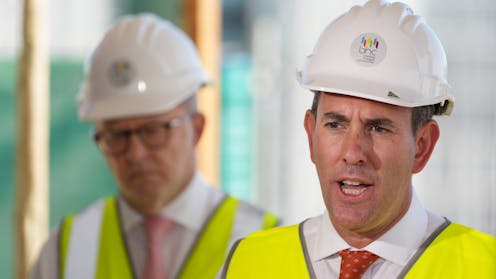
While the world’s media is largely focused on conflict in the Middle East, the focus for many Australians remains at home, with the government preparing the long task ahead of trying to lift Australia’s productivity.
Last week, Prime Minister Anthony Albanese announced a productivity roundtable, which will be held in mid-August. Now Treasurer Jim Chalmers has flagged the roundtable will be part of a much more ambitious debate, indicating he’s open to a broad discussion of major tax reform.
In this podcast, Chalmers is frank about his own belief in the importance of seizing the moment – even if “there’s an element of political risk” whenever governments talk about tax reform.
The way I see this is that I become very wary of people who say, because of the magnitude of our majority, that we will get another term. There are, as you know, few such assurances in politics, particularly in modern politics.
I can kind of hear that [office] clock ticking behind us, and I want to get on with it. You know, we’ve got a big job to do to deliver the big, substantial, ambitious agenda that we’ve already determined and taken to an election. But I am, by nature, impatient. I think the country has an opportunity to be ambitious here. And so if you’re detecting that in my language, that’s probably not accidental.
[…] There’s no absence of courage. There is an absence of consensus, and it’s consensus that we need to move forward. And that’s what I’m seeking, not just in the roundtable, but in the second term of our government.
Chalmers says one of his takeouts from reading Abundance, a new book currently fashionable with progressives, was the need to “get out of our own away” to build more homes and renewable energy, while maintaining high standards.
A lot of regulation is necessary. So we talk about better regulation. But where we can reduce compliance costs and where we can wind back some of this red tape in ways that doesn’t compromise standards, of course we should seek to do that.
One of the things I’m really pleased I got the cabinet to agree to earlier this week is we’re going to approach all of the regulators and we’re going to say, ‘please tell us where you think we can cut back on regulation and compliance costs in a way that doesn’t jeopardise your work’ […] We’re not talking about eliminating regulation. We’re talking about making sure that it’s better.
[…] I think renewable energy projects is part of the story here. I speak to a lot of international investors, there’s a big global contest and scramble for capital in the world […] One of the things that international investors say to us about Australia is ‘we don’t want to spend too long burning cash while we wait for approvals from multiple levels of government and other sorts of approvals’.
So if we can speed some of that up, if we can make sure it makes sense, if our regulation is better, then I think we give ourselves more of a chance of achieving our economic goals, but also our social and environmental goals.
On the productivity roundtable, Chalmers wants bold ideas.
We have an open door and an open mind. This is a genuine attempt to see where we can find some common ground. In some areas that won’t be possible, in other areas, I think it will. And I think we owe it to ourselves to try.
This is a very different discussion to the [2022] Jobs and Skills Summit. Much smaller, much more targeted, a bigger onus on people in the room to build consensus outside of the room.
We’re specifically asking people to consider the trade-offs, including the fiscal trade-off when it comes to what they’re proposing. We’re asking them to take a nationwide, economy-wide view, not a sectoral view about their own interests.
On whether any new major changes – including greater tax reform – would require a fresh mandate, Chalmers wants to wait and see.
I think it depends on the nature of the change. I’m sort of reluctant to think about sequencing and timing and mandates before we’ve got everybody’s ideas on the table and worked out where the consensus and common ground exists […] I think that remains to be seen.
E&OE Transcript
MICHELLE GRATTAN, HOST: Treasurer Jim Chalmers has declared improving Australia’s dismal progress on productivity is at the top of his priorities for Labor’s second term, but addressing the National Press Club on Wednesday, it was clear that his ambitions for economic reform are wide, much wider than we’ve heard from him or from the Prime Minister in the previous term or in the election campaign.
From August 19 to 21, the Government will hold a roundtable to seek ideas for reform from business, unions, civil society and experts. This will be a small gathering held in Parliament House’s Cabinet room.
Notably, Chalmers has invited participants to put forward ideas on tax reform.
The Treasurer is our guest today. Jim Chalmers, before we get to the roundtable, let’s start with the escalating Middle East war. What are the economic implications of this so far, and on one specific issue, what are the implications going to be for oil prices?
JIM CHALMERS, TREASURER: Thanks, Michelle. This is obviously a very perilous part of the world right now, it’s a perilous moment, perilous for the global economy as well.
We’re primarily focused on the human consequences of what’s going on, including around 2,000 people who’ve registered with DFAT to try and get out of the particularly dangerous areas right now, so that’s our focus, but there will be big economic consequences as well, and we’ve already seen in the volatility in the oil price – the barrel price for oil went up between 10 and 11 per cent last Friday when a lot of this flared up, and I think that is an indication of the volatility that this escalating situation in the Middle East is creating in the economy.
I get briefed every day on movements in relevant commodity prices and the like, and there’s a lot of concern, again primarily about the human cost, but there’s a lot of concern around the world about what this means for petrol price inflation and what it means for global growth as well.
GRATTAN: Also on the international scene, are we making any progress on getting concessions on the US tariffs, or will that have to wait for a rescheduled meeting between Donald Trump and Anthony Albanese? There’s now talk, incidentally, of a meeting possibly at NATO next week, although we don’t know whether that will happen or not.
CHALMERS: The Prime Minister’s made it clear that he is considering going to the NATO meeting. By the time people listen to this podcast, it may be that that’s been determined, but whether or not he goes to Europe, we’ve got a lot of different ways and a lot of different opportunities to engage with the Americans on these key questions, and the Prime Minister met with some of the most senior people in the economic institutions of the US overseas – and he met with leaders from Japan and the UK and Germany and Canada and others, so a very worthwhile trip.
We’ll continue to engage wherever we can and whenever we can, because our national economic interest is at stake here. We’ll continue to speak up and stand up for our workers and our businesses to try and make progress on this really key question.
GRATTAN: But no progress yet.
CHALMERS: We’re continuing to engage. We have had discussions at every level, including at my level, and the Prime Minister’s had discussions. Like the whole world right now, people are trying to get a better deal in the aftermath of the announcement of these tariffs; we’re no exception.
We’re better placed and better prepared than most countries to deal with the fallout of what’s happening with these escalating trade tensions, but we are seeking a better deal for our workers and businesses and industries. The Prime Minister’s engagement reflects that, and so does the rest of ours.
GRATTAN: Now, to turn to your productivity roundtable, give us some more details about it, including whether the sessions will be public and will the Premiers be there?
CHALMERS: There are some of those details that we’re still working out. I can’t imagine it will be public in the sense that we’ll have permanent cameras in the Cabinet room, but we don’t intend to be heavy‑handed about it, we’re not seeking people to sign non‑disclosure agreements ‑ I can’t anticipate that we’ll make it kind of Chatham House rules or confidential discussions, but we’re working through all of those issues. When it comes to the states, obviously we want the states involved in one way or another, and we’re working out the best way to do that.
I already engage with the state and territory treasurers at the moment on some of these key questions. I’ll continue to do that, I’ll step that up, and we’ll work out the best way to make sure that the states’ views are represented in the room.
You know how big the Cabinet room is, Michelle, it’s about 25 seats around an oblong table, so we can’t have everybody there, but we will do everything we can to make sure that the relevant views are represented, including the views of the States and Territories.
GRATTAN: When you say you wouldn’t see you having cameras in the Cabinet room, wouldn’t you want some of it to be public, because if it wasn’t, then whoever was telling the story would be putting their slant on it?
CHALMERS: Well, we’ll try and strike the best balance. I think what will happen is, inevitably, people who are participating in the roundtable, indeed people who are providing views but not necessarily in the room, there will be a big flourishing of national policy discussion and debate; that’s a good thing. We’ll try not to restrict that excessively. I just think practically having a kind of live feed out of the Cabinet room is probably not the best way to go about things.
But I’m broadly confident ‑ comfortable, broadly comfortable with people expressing a view outside the room and characterising the discussions inside the room. There may be a convincing reason not to go about it that way, but I’m pretty relaxed about people talking about the discussions.
GRATTAN: In your Press Club speech, you spoke about seeking submissions. Now, would those be submissions before the roundtable?
CHALMERS: Absolutely, but also, we’re trying to work out, in addition to structuring this roundtable – which will be a really important way for us to seek consensus – in addition to that, we’re trying to work out how do we become really good at collecting and taking seriously the views that are put to us by people who are experts in their fields.
Not everybody can be around the Cabinet table. People have well-informed views, and we want to tap them. So we’re working out the best way to open a dedicated Treasury channel, primarily and initially, about feeding views in for the consideration of the roundtable. But if there are ways that we can do that better on an ongoing basis, we’re going to look at that too.
GRATTAN: What do you say to those in business who came out of the 2022 Jobs and Skills Summit rather cynical thinking, really, they’d been had, frankly, that this was basically a meeting to legitimise the Government giving what it wanted to to the unions?
CHALMERS: I’ve heard that view, but I don’t share it. I’ve taken the opportunity in recent days to look again at the sorts of things we progressed out of the Jobs and Skills Summit, it was much, much broader than a narrow focus on industrial relations. So I take that view seriously, but I don’t share it.
And my commitment, I gave this at the Press Club, and I will give this commitment every day between now and the roundtable if that’s necessary, we have an open door and an open mind, this is a genuine attempt to see where we can find some common ground. In some areas, that won’t be possible, in other areas I think it will, and I think we owe it to ourselves to try.
This is a very different discussion to the Jobs and Skills Summit, much smaller, much more targeted, a bigger onus on people in the room to build consensus outside of the room. We’re specifically asking people to consider the trade-offs, including the fiscal trade-offs. When it comes to what they’re proposing, we’re asking them to take a nationwide, economy-wide view, not a sectoral view about their own interests.
Let’s see how we go. We are approaching it in that fashion, a different discussion to Jobs and Skills, and we want to give ourselves every chance to progress out of that discussion with something meaningful.
GRATTAN: You say you accept the need for tax reform. This is really a big statement from you, and it is a change of emphasis from last term. Up to now, you’ve resisted any suggestion of undertaking comprehensive reform of the taxation system. So, where do you actually stand now? Are you looking for ideas for incremental change, or are you looking for something that’s really bold?
CHALMERS: First of all, I do accept that the economic reform, and particularly the tax reform we’ve engaged in so far, it has been sequenced, it has been methodical – but it’s also been, I think, more substantial than a lot of the commentary allows, about half a dozen ways we’re reforming the tax system, and I’m proud of the progress that we’ve made.
When it comes to the roundtable, the point I’ve made about tax, the thing I welcome about the roundtable is it’s not possible to think about and talk about productivity, budget sustainability and resilience amidst global volatility without allowing or encouraging, welcoming a conversation about tax. So that’s the approach I’m taking to it.
What I’m trying to do, and we’ll see how successful we can be at doing this over the course of the next couple of months, but what I’m trying to do is to not pre‑empt that discussion, I’m trying not to artificially limit that discussion about tax, and that’s because I know that people have well‑intentioned, well‑informed views about tax reform; let’s hear them.
GRATTAN: But you do seem open, from what you said, to a possible switch in the tax mix between direct and indirect.
CHALMERS: I think that will be one of the considerations that people raise at the roundtable, and I think it would be unusual to discourage that two months out. Let’s see what people want to propose. You know, I think that’s an indication of my willingness, the Prime Minister’s willingness, the Government’s, to hear people out.
And we broadly, whether it’s in tax and budget, whether it’s in productivity, resilience – I don’t want to spend too much at this roundtable with problem ID, I want to go from problem ID to ideas. That’s because we’ve had really for a long time now – probably as long as you and I have known each other, Michelle – we’ve had a lot of reports about tax, and important ones. I think the time now is to work out where are their common interests, where does the common ground exist, if it exists, on tax, and to see what we can progress together, and that requires on my part an open mind, and that’s what I’ve tried to bring to it.
GRATTAN: Of course, your former Treasury Secretary, who’s now the Prime Minister’s right-hand man as head of the Prime Minister’s department, I think has made speeches pointing out that you really do need such a switch.
CHALMERS: Yeah, and Steven Kennedy’s a very influential person in the Government. I’m delighted – we’ve been joking behind closed doors about Steven being demoted to PM&C from Treasury, but the reality is it’s amazing, it’s the best of all worlds from our point of view to have Kennedy at PM&C and Wilkinson at Treasury. That’s an amazing outcome for anyone who cares about economic reform and responsible economic management, a wonderful outcome.
Steven has made a number of comments in the past about the tax system, probably Jenny has as well. They are very informed, very considered, big thinkers when it comes to economic reform, and we’re going to tap their experience, their interest and their intellect.
GRATTAN: Well, he can now get into the Prime Minister’s ear on this matter. The other thing on tax, you did seem to wobble a bit on changing the GST; you’ve been pretty against that. I guess you left the impression at the Press Club that basically you were still probably against, but you did seem a bit more open-minded than usual.
CHALMERS: What I’m trying to do there, Michelle, and I’m pleased you asked me, because I think that was a bit of a test, a bit of an example of what I talk about in the speech, which is that obviously there are some things that governments, sensible, middle of the road, centrist governments like ours don’t consider – we don’t consider inheritance taxes, we don’t consider changing the arrangements for the family home, those sorts of things.
But what I’ve tried to do and what I tried to say in the speech is if we spend all of our time ruling things in or ruling things out, I think that has a corrosive impact on the nature of our national policy debate, and I don’t want to artificially limit the things that people bring to the roundtable discussion.
I was asked about the GST – you know that I’ve, for a decade or more, had a view about the GST. I repeated that view at the Press Club because I thought that was the honest thing to do, but what I’m going to genuinely try and do, whether it’s in this policy area or in other policy areas, is to not limit what people might bring to the table.
And so that’s what you described as a wobble, I think that really just reflects what I’m trying to do here is to not deny what I have said about these things in the past, but to try and give people the ability to raise whatever they would like at the roundtable. I suspect there will be other occasions like that, other opportunities like that between now and the roundtable where I’ll do the same thing. I’ll repeat what I’ve said, I won’t walk away from it, I haven’t changed my view on the GST. I suspect people will bring views to the roundtable about the GST. Let’s hear them.
GRATTAN: Well, of course, the GST can be a bit like a wild dog when it’s let off the leash. You’ll remember when Malcolm Turnbull let Scott Morrison as Treasurer float the idea of changing the GST, and that didn’t end well.
CHALMERS: No, I think I can recall a fascinating part of Malcolm’s book about that, if memory serves, or perhaps something else that he said or wrote subsequently. I’m obviously aware of that history, you know, and there’s ‑ let’s be upfront with each other, Michelle, when you do what I did at the Press Club today and say bring us your ideas and let’s see where there’s some common ground, there’s an element of political risk to that.
There’s a lot of history tied up in a lot of these questions, as you rightly point out in this instance, and I guess I’m demonstrating, or I’m trying to demonstrate, a willingness to hear people out, and there will be people who write about that in a way that tries to diminish this conversation that we’re setting up. That will happen. I’m open to that, relaxed about that, but let’s see what people think about our economy, about productivity, sustainability, tax, resilience, and let’s see if we can’t get around some good ideas that come out of that discussion.
GRATTAN: Which tempts me to ask, will Ken Henry be on your guest list of the famous Henry review?
CHALMERS: I think some people were surprised to see Ken there today at the National Press Club. Ken was there at the Press Club, and I think I said in the question and answer, if memory serves, and I hope it’s okay with Ken that I said this, but we’ve been engaging on drafts of the speech – we talk about some of the big issues in the Press Club speech I gave today.
I’m not sure about the final invite list. Once you start putting together a list of about 25 people, you’ve got some ministerial colleagues, you’ve got peak organisations, including the ACTU, Sally McManus will be there, maybe a community organisation, someone representing the community, some experts. Before long, it’s very easy to hit 25 people.
You’ve planned a few dinner parties in your time, Michelle, and an invite list of 25 people fills up pretty quick. We haven’t finalised that yet, but whether we invite Ken or Ken’s outside the room, he’s one of a number of people that I speak to about these big policy challenges, and regardless, I hope that he’s okay with us continuing to tap his brain.
GRATTAN: Maybe you need to adopt a sort of restaurant approach of rotational sittings.
CHALMERS: Yeah, well! –
GRATTAN: Now, I know you said today that you don’t like gotcha questions and gave us a bit of a lecture ‑‑
CHALMERS: This doesn’t sound like a good introduction, Michelle.
GRATTAN: ‑‑ about that, but your controversial tax on capital gains on superannuation balances that are very big, critics worry that this could in fact be the thin end of the wedge extending to other areas of the tax system. Would you care to rule that out?
CHALMERS: I think I said today, and I’m happy to repeat with you, Michelle, that we haven’t changed our approach here. We’ve got a policy that we announced almost two and a half years ago now, and we intend to proceed with it.
What we’re looking for here is not an opportunity at the roundtable to cancel policies that we’ve got a mandate for; we’re looking for the next round of ideas.
Now again, a bit like some of the other things we’ve been talking about, I suspect people will come either to the roundtable itself or to the big discussion that surrounds it with very strong views, and not unanimous views about superannuation. We read in a couple of our newspapers on an almost daily basis that people have got strong views about the superannuation changes, and not the identical same views, and so I suspect that will continue.
But our priority is to pass the changes that we announced, really some time ago, that we’ve taken to an election now, and that’s how we intend to proceed.
GRATTAN: So, you’re open to considering other views?
CHALMERS: On that particular issue, I think we have a pretty good sense of people’s views. I mean there’s ‑ I don’t pretend for a second that there’s unanimous support for it.
GRATTAN: I mean, extending it to other areas.
CHALMERS: No, I mean that’s not something we’ve been contemplating even for a second, and we haven’t done any work on that, we haven’t had a discussion about that, that’s not our intention.
But more broadly, when it comes to the system, I suspect people will have views about that at the roundtable – but thanks for the opportunity to clarify, we’re not planning for or strategising for extending that in additional ways.
GRATTAN: Now, artificial intelligence is obviously being seen as the next big productivity enhancer when you’re talking about the big things, but it’s also going to cost jobs, and that will exercise the unions.
Your Industry Minister Tim Ayres, has emphasised the unions have a role in this transition, must be consulted, brought into it, but you’ve said that while regulation will matter, and I quote, “We are overwhelmingly focused on capabilities and opportunities, not just guardrails. The emphasis here is different”. Do you see this as being a bit like the tariff reforms in the Hawke/Keating time, when there were big gains to be made but there were also very significant losers, and how do you deal with that situation?
CHALMERS: First of all, I think unions do have a place and a role to play in this. I can’t imagine meaningful progress on AI or technology more broadly where we wouldn’t include unions and workers in that conversation. That wouldn’t be consistent with our approach, and it wouldn’t make a lot of sense, so I share Tim’s view on that. I work closely with Tim Ayres and also Andrew Charlton, who will have a key role in some of these policy questions.
The point that I was making was it’s not a choice between regulation or capability, it’s not an either/or. Obviously we need guardrails, obviously we need regulation, but from my point of view, I see this as a game‑changer in our economy, I see it as one of the big ways that will make our economy more productive and lift living standards.
It’s not all downside for workers either – we’re talking about augmenting jobs, we’re talking about some of the routine tasks that are not the most satisfying parts of people’s work, so of course we want to include the union movement, of course we want to make sure that we’ve got appropriate guardrails.
The point that I was making in that interview with the Financial Review which you’re quoting from is that we need to get our capabilities right, we need the right skills base, I think we’ve got a huge opportunity with data centres and the infrastructure that supports artificial intelligence, and so that is a big part of the focus of our work. When it comes to productivity, when it comes to growth more broadly, industry policy, our work with the Productivity Commission, data and digital, AI, data centres, all of that I think are going to be key parts of the future economy in Australia.
GRATTAN: The last time we spoke on this podcast, you said you’d been reading the book Abundance by Ezra Klein and Derek Thompson, and you described it as a ripper. Now I think you’re making all your Cabinet colleagues read it too, and I’m not sure whether they thank you for that, but there it goes.
What are some of the ideas in the book that attracted you, and in particular, do you agree with the thesis that red tape is holding us back, particularly when it comes to housing and renewable energy and the transition to renewables?
CHALMERS: First of all ‑ we should be on a commission for this book, I think, from Andrew Leigh through a whole bunch of colleagues ‑ a lot of us have either read it or are in the process of reading it.
The reason that we are attracted to it is because it really is about working out as progressive people who care deeply about building more homes, rolling out more renewable energy, to make sure that the way we regulate that and approach that doesn’t get in our own way, that we don’t make it harder for us to achieve our big economic goals in the energy transformation; in housing and technology and all of these sorts of things.
What the Abundance book reminds us to do, and I think in a really timely and really punchy way, is it says, “As progressive people, let’s get out of our own way”. A lot of regulation is necessary, so we talk about better regulation, but where we can reduce compliance costs and where we can wind back some of this red tape in ways that doesn’t compromise standards, of course, we should seek to do that.
One of the things I’m really pleased I got the Cabinet to agree to earlier this week is we’re going to approach all of the regulators, and we’re going to say, “Please tell us where you think we can cut back on regulation and compliance costs in a way that doesn’t jeopardise your work”. I suspect from that, maybe not from every regulator, but from some of the regulators, I think if we are genuine about it, I think we can make some progress there to get compliance costs down, to speed up approvals so that we can deliver the things that we truly value as an economy but also as a society, and that’s what the Abundance book’s about.
GRATTAN: Of course, one of the problems is, while this sounds very good, a lot of stakeholders say we need more regulation of this or that, we need to protect flora, fauna, climate, whatever.
CHALMERS: Yeah, of course we do.
GRATTAN: And that all gets in the way of clearing away red tape, doesn’t it?
CHALMERS: We’re not talking about eliminating regulation, we are talking about making sure that it’s better, that we can use regulation in the service of our social and environmental and economic goals, but to make sure that we’re not overdoing it, that it’s not unnecessary, that it doesn’t prevent us achieving our aspirations and our objectives, including in the environment.
I think renewable energy projects are part of the story here, and I speak to a lot of international investors, there’s a big global contest and scramble for capital in the world. People are rethinking their investments, and there’s a lot of interest in Australia, and one of the things that international investors say to us about Australia is we don’t want to spend too long burning cash while we wait for approvals from multiple levels of government and other sorts of approvals.
If we can speed some of that up, if we can make sure it makes sense, if our regulation is better, then I think we give ourselves more of a chance of achieving our economic goals, but also our social and environmental goals as well.
GRATTAN: Another of your priorities is budget sustainability, and you say the Government’s made progress, but there’s a way to go. So, where are you going now? Do you need to make big savings in what areas, or are you really having to look at the revenue side more?
CHALMERS: I think there’s this kind of strange binary analysis of the budget situation. Some people say it doesn’t matter, some people say it’s beyond repair, and obviously, like a lot of things in politics and policy, the truth lies somewhere in between.
We’ve made a heap of progress on the budget; two surpluses, biggest ever nominal turnaround in the budget, we got the debt down, got the interest costs down. But what I acknowledge and what I will continue to acknowledge is there’s always more work to do to make it more sustainable.
For us, we made a heap of progress on aged care, the NDIS and interest costs, but we need to make sure that even when we think about the policy ideas that people bring to us at the roundtable, budget sustainability really matters. Where we do find something that we want to invest more in, we’ve got to consider the trade-offs, we’ve got to work out how to pay for things.
There’s probably not a day, certainly not a week that goes by where Katy Gallagher and I aren’t in one way or another engaging with colleagues on some of these structural pressures on the budget, because they do matter.
GRATTAN: Well, one, of course, is defence spending, and I was interested that you did in your remarks to the Press Club seem, while cautious, while saying, “We’re spending a lot on defence”, you seemed open to the idea that over the next decade governments will have to increase defence spending.
CHALMERS: I think the point I was trying to make there, Michelle, was it would be strange over a period of 10 years if there were no changes to any policy or levels of spending. But the thing that’s not, I think, sufficiently acknowledged is we’ve already quite dramatically increased defence spending, and you know, it’s not easy to find the extra $11 billion we found over the forward estimates, or the almost $58 billion I think we found over the decade.
We are dramatically increasing our defence spending. I acknowledge and accept and respect that some people, including some of our partners, want us to spend more on defence, but we are already spending a heap more on defence, and we’ve had to find room for that in the budget, and that’s what we’ve done.
GRATTAN: So we should be up for that conversation, as Richard Marles would say?
CHALMERS: I think what Richard’s saying, to be fair to him, is that we are more or less continuously engaging with our partners about things like defence spending, and when it comes to the Americans, they’ve made it clear around the world that they want people to spend more on defence. That’s not an unreasonable position for the Americans to put to us. We decide our level of defence spending, and we have decided collectively as a government to dramatically increase it.
GRATTAN: As Treasurer, you’re the gatekeeper for foreign investment decisions, big decisions, and there’s a takeover bid at the moment from Abu Dhabi’s national oil company for Santos. Can you give us some idea of the process, the timetable, when you would make a decision if the matter comes to you?
CHALMERS: This is a really big transaction potentially, and it raises – there are a lot of considerations around the national interest, it’s in a sensitive part of our economy for all of the obvious reasons.
What usually happens with a transaction of this magnitude, tens of billions of dollars, is it goes through a number of stages. One of those stages is a Foreign Investment Review Board process where I’ve got a heap of terrific colleagues in the Treasury who advise me on these things. What I try to do is to make sure that I refrain from commenting on these sorts of deals before I’ve got that Foreign Investment Review Board advice. I take that advice very seriously, and that means not pre‑empting it.
I know that there will be a heap of views, a heap of interest, I do acknowledge it’s a very big transaction which involves a really key sensitive part of our economy, and I’ll do what I always do with these big FIRB approval processes, which is to engage in it in a really methodical and considered way.
That will roll out over the course of the next few months. The last time I asked, which I think was yesterday, we hadn’t ‑ the FIRB hadn’t had a chance to go through or hadn’t received yet the Foreign Investment Review Board proposal. That may have changed since then, but regardless, these things take a little bit of time.
GRATTAN: Before we finish, let’s come back to productivity. You’ve said the work will take more than a term. So just give us a snapshot of where you would want to be at the end of say three years, six years.
CHALMERS: Yeah. The point I’m making there, when it comes to productivity is, unlike some of the other really important measures in our economy, there’s no instant gratification. It’s very hard to flick a switch and get an immediate, substantial, meaningful shift in the data.
The point that I’ve made is that we’re enthusiastic and very committed, very dedicated to doing meaningful things on productivity, but even those things can sometimes take a while to play out in the data, so I’m just really trying to say to people, this is important, it will pay off, some of it will pay off in the medium term and the longer term, but that shouldn’t deter us, the fact that some of these challenges take a little bit longer to fix.
Now, if there was a switch that you could flick to make our economy instantly more productive, somebody would have flicked it already. Unfortunately, there’s not, and so we’re left in a world where we have to do a lot of things at once, and some of those things will take a little while to pay off.
GRATTAN: Can you set any sort of target in terms of growth, annual growth? –
CHALMERS: I’m reluctant to do that.
GRATTAN: – productivity growth.
CHALMERS: I’m reluctant to do that. The budget assumes a level of productivity growth, which is higher than what we are currently seeing, so it wouldn’t be a bad start to try and get closer to the forecast. But I’m reluctant to put a target on it.
GRATTAN: And that forecast is?
CHALMERS: The Treasury changed it to 1.2 per cent, and we’re currently tracking a bit lower than that on the current 20-year average, and so we need to do better. I tried to be quite blunt about that at the Press Club. Our economy is growing, but it’s not productive enough, our budget is stronger, but it’s not sustainable enough, our economy is resilient, but not resilient enough. And this is my way of saying to people, we’ve made a lot of progress together, but we’ve got a further ‑ we’ve got more to do, and productivity is our primary focus in that regard, but not our only focus.
GRATTAN: For really big changes, say for tax changes, do you think you need another mandate or not?
CHALMERS: I think it depends on the nature of the change. I’m reluctant to think about sequencing and timing and mandates before we’ve got everybody’s ideas on the table and worked out where the consensus and common ground exists, and so I don’t like to be evasive with a good question like that, Michelle, but I think that remains to be seen. It will be to be determined once we get a firmer sense of the way forward.
GRATTAN: Just finally, you sounded in your speech rather like a man who’s been liberated since the election. Has your attitude changed? Do you think it’s just time to go for it?
CHALMERS: The way I see this, Michelle, is that I become very wary of people who say, because of the magnitude of our majority, that we will get another term. There are, as you know, few such assurances in politics, particularly in modern politics, and so I can kind of hear that clock ticking behind us, and I want to get on with it.
We’ve got a big job to do to deliver the big, substantial, ambitious agenda that we’ve already determined and taken to an election. But I am by nature impatient, I think the country has an opportunity to be ambitious here, and so if you’re detecting that in my language, that’s probably not accidental. I think we know what the challenges are, we know what people’s views are broadly, there’s no absence of courage, there is an absence of consensus, and it’s consensus that we need to move forward, and that’s what I’m seeking not just in the roundtable, but in this second term of our Government.
GRATTAN: Jim Chalmers, it’s going to be an interesting few months, and thank you for talking with us today. That’s all for today’s podcast. Thank you to my producer, Ben Roper. We’ll be back with another interview soon, but good‑bye for now.
Michelle Grattan does not work for, consult, own shares in or receive funding from any company or organisation that would benefit from this article, and has disclosed no relevant affiliations beyond their academic appointment.
A CURATOR and art director who was instrumental in bringing German expressionism to Leicester is being celebrated with a new book launch in the city.
Hans Hess was born in Erfurt in Germany in 1907, and his family counted artists like Paul Klee and Wassily Kandinsky amongst their friends. When he was forced out of Germany in the 1930s for being Jewish, he moved to England and, in 1944, he was appointed assistant keeper of art at Leicester Museum and Art Gallery.
The book launch takes place on Saturday 28 June from 5.30pm, and is free to attend, although a ticket is required. The event will be an evening of art, history and insight, with guests able to enjoy exclusive access to the museum’s renowned German Expressionist gallery.
“We are delighted to be hosting this event with Manifesto Press, which will celebrate the works of this renowned curator who had strong links to Leicester,” said head of arts & museums Joanna Jones.
“Hans Hess was a remarkable person. In February 1944, amid the war’s darkest days, he worked with Leicester Museum’s art director Trevor Thomas to curate Mid European Art, a groundbreaking exhibition which introduced Britain to masterpieces by Franz Marc, Wassily Kandinsky, Paul Klee, and others – works the Nazis condemned as ‘degenerate.’ In exhibiting these works in 1944, Leicester stood as a beacon of cultural defiance.
“Thanks to our links with the Hess family, the courage of artists and collectors who fled Nazism and the visionary leadership of Trevor Thomas, we are able to celebrate Leicester’s unique status to this day as a global hub for German Expressionism.”
Assistant city mayor for culture, Cllr Vi Dempster, said: “Hans Hess’s story is a fantastic and moving one and is also a symbol of what Leicester stands for – we have a long history of welcoming refugees and standing up to discrimination.
“It is wonderful that we are able to celebrate his influence on our city by hosting the launch of his books at the museum he helped to shape.”
Hans Hess’ daughter, Anita Halpin, spent her early years in Leicester. “My father arrived in Leicester after 10 years of uncertainty and trauma,” she said. “Working with Trevor Thomas was the start of a new life for him and his family. He would be extremely pleased and gratified that the Leicester Museum and Art Gallery now has by far the largest collection of German expressionist works in this country.”
The books will be available to purchase at the launch, and a paid bar will be available throughout the evening. To book a ticket, visit Event Details – Leicester Museums
ENDS
Picture shows Rote Frau by Franz Marc, one of the first four works to come to Leicester’s gallery from the Hess family with the 1944 exhibition.
Source: Moscow Government – Government of Moscow –
The Moscow Oncology Forum 2025 has begun its work in the capital. It was opened by Anastasia Rakova, Deputy Mayor of Moscow for Social Development. In her welcoming speech, she spoke about the city’s transition to an electronic format for pathomorphological diagnostics, the completion of the formation of an infrastructural framework for oncological care, and the introduction of robotic systems into the capital’s healthcare system.
“In five years, we have essentially created a high-tech oncology service from scratch: we have modernized the equipment, worked out standards for drug provision, formed client paths and carried out complete digitalization. Now all oncology hospitals have the most modern robotic systems – and not one in each. And all this is provided with the necessary financial resources. Four thousand operations have already been performed, and our annual capacity is more than five thousand operations per year. All our laboratories work exclusively digitally. But the most important thing is, of course, a new level of quality of medical care for our patients. I would like to separately note the team of Moscow oncologists, who are truly the vanguard of the capital’s healthcare. You are pioneers in almost all innovations and processes. I would like to thank each oncologist for your daily, difficult, but very noble work in the conditions of continuous changes,” said Anastasia Rakova.
She added that the unprecedented archive of digital medical data, including oncological data, formed in Moscow is an indisputable competitive advantage. In the context of the development of large generative models of artificial intelligence, this archive opens up a unique opportunity to create projects to identify precursors and patterns of disease development.
According to Anastasia Rakova, the Moscow oncology service today has every opportunity to reach a new level of care and use modern technologies, such as cell therapy, personalized vaccines, isotopes, and minimally invasive surgery. Among the first steps already being implemented in this direction, she noted the creation of a nuclear pharmacy, theranostics, and the successful use of yttrium to treat liver tumors. The deputy mayor expressed hope that successful cases of high-tech care will become a permanent practice available to every Muscovite. To this end, the capital will increase its work with federal centers, scientific organizations, and pharmaceutical companies.
The Deputy Mayor recalled the classic rule of medicine: it is easier to prevent a disease than to treat it, and the capital is actively moving in this direction. Thanks to the opening of endoscopic centers, it was possible to increase the detection rate of gastrointestinal tract (GIT) cancer at an early stage. The plans include opening several more such centers. At the same time, the capital is implementing proactive programs. For example, as part of a pilot project for the prevention of oncological diseases, a referral for a screening endoscopic examination of the GIT was opened automatically for those who have not undergone it for more than three years and fall into the risk group. More than 50 thousand people have already signed up for the checkup. After the opening ceremony, guests will be able to learn more about the latest achievements in the field of treatment and diagnosis of oncological diseases not only during the speakers’ speeches, but also by visiting an interactive exhibition. It presents 14 stands in different areas. For example, these are “Brain and Nervous System Tumors”, “Oncourology”, “Radiation and Radionuclide Therapy” and others.
Visitors to the interactive exhibition will be able to participate in master classes, intellectual games and quizzes, examine objects under a microscope, study video recordings of real operations, and also get a visual representation of the work of the operating room. The stands will show the latest equipment, models of tumors and unique clinical cases.
The largest oncology forum in Russia is taking place from June 18 to 20 at Gostiny Dvor. The event brings together participants from 20 countries. The most pressing aspects of cancer treatment are being discussed by domestic and foreign experts from Singapore, China, the United Arab Emirates, Spain, France, Turkey, the United States, Belgium, Italy and other countries. These are 144 of the best specialists, including academicians and corresponding members of the Russian Academy of Sciences, professors and doctors of science. Together, they will present almost 400 scientific reports on the latest developments in the field of providing medical care to patients with cancer.
Please note: This information is raw content directly from the source of the information. It is exactly what the source states and does not reflect the position of MIL-OSI or its clients.
Please Note; This Information is Raw Content Directly from the Information Source. It is access to What the Source Is Stating and Does Not Reflect
Source: International Atomic Energy Agency (IAEA) –
The 68th Annual Regular Session of the International Atomic Energy Agency (IAEA) General Conference, #IAEAGC, will convene from 16 to 20 September at the Vienna International Centre (VIC) in Vienna, Austria. The opening session takes place on Monday, 16 September, at 10:00 CEST.
High-ranking officials and representatives from IAEA Member States will consider and make decisions on a range of issues pertaining to the work and the budget of the Agency.
The main conference events will take place in the M-Building of the VIC.
All plenary sessions of the General Conference will be livestreamed on the IAEA website (no login required) in Arabic, Chinese, English, French, Russian and Spanish.
The opening session of the GC will also be streamed live on the lAEA YouTube channel in high definition, and a download link will be made available afterwards.
The IAEA will host a briefing for media on the new projections. IAEA experts, including Henri Paillere, Head of Planning and Economic Studies at the IAEA, will provide the briefing on Monday, 16 September at 09:30 CEST in the Press Room.
Please note: All information presented during the briefing are under embargo until after the Director General’s opening statement on Monday, 16 September.
Please inform the IAEA Press Office if you plan to attend the briefing.
Scientific Forum
This year’s Scientific Forum, organized on the sidelines of the General Conference on 17 and 18 September, is entitled Atoms4Food – Better Agriculture for Better Life. It will focus on how nuclear science, technology and innovation can enhance sustainable agrifood systems, improve food security and address climate change.
The Scientific Forum will cover crop improvement, animal genetics and reproduction, crop and animal disease and pest management, food safety and nutrition, and sustainable management of natural resources, including soil and water. The two-day event will facilitate best practice exchanges, discuss sustainable adoption and scaling up of R&D results, and explore innovative financing and partnerships.
IAEA Director General Rafael Mariano Grossi will open the Scientific Forum with high-level speakers on Tuesday, 17 September, at 09:30 CEST.
The Forum will take place in Boardroom D of the C-Building. All sessions will be livestreamed.
Accreditation
All journalists – including those with permanent accreditation – are requested to inform the IAEA Press Office of their plans to attend the General Conference. Journalists without permanent accreditation must send copies of their passport and press ID to the IAEA Press Office by 14:00 CEST on Friday, 13 September.
We encourage those journalists who do not yet have permanent accreditation to request it at UNIS Vienna.
Access to the plenary sessions of the General Conference and the Scientific Forum for photographers and video camera operators must be requested in advance.
Source: International Atomic Energy Agency (IAEA) –
Scientists and experts from around the world will meet at the IAEA Scientific Forum this week to discuss how nuclear science and technology innovations under the framework of Atoms4Food can contribute to enhancing sustainable agrifood systems, improving food security and addressing climate challenges.
IAEA Director General Rafael Mariano Grossi will open the forum on Tuesday alongside HE Musalia Mudavadi, Prime Cabinet Secretary of Kenya, Mr Abdulhamid Alkhalifa, President of the OPEC Fund, MrLiu Jing, Vice Chairman, China Atomic Energy Authority, China, HE MrSidi Tiémoko Touré, Minister of Animal and Fisheries Resources, Cote d’Ivoire, HE MsLeila Benali, Minister of Energy Transition and Sustainable Development, Kingdom of Morocco, HE MrFernando Mattos, Minister of Livestock, Uruguay, and Mr Giorgio Silli, Undersecretary of Foreign Affairs and International Cooperation, Italy. Director General Grossi will conclude the Forum on Wednesday alongside HE MrAnxious Jongwe Masuka, Minister of Lands, Agriculture, Fisheries, Water and Rural Development from Zimbabwe, HE MrAmadou Dicko, Deputy Minister, Ministry of Agriculture, Animal Resources and Fisheries, Burkina Faso and other distinguished representatives from Member States and International Organizations.
The event under the title Atoms4Food – Better Agriculture for Better Life, takes place from Tuesday, 17 September, 9:30 CEST to Wednesday, 18 September 2024, 13:00 CEST in Board Room D on the 4th floor of the C-Building of the Vienna International Centre (VIC). Open to the media and streamed live, the event will showcase how nuclear science can drive agricultural advancements and support global efforts to combat food insecurity.
The forum will feature three technical sessions, where international experts will explore the critical role of nuclear science and technology in advancing sustainable agriculture, food production and nutrition. Speakers will discuss innovations using nuclear and isotopic techniques in agriculture and food production, the interconnectedness of agricultural practices with environmental conservation and socioeconomic equity, and the importance of partnering with stakeholders to scale up results and ensure sustainability. More details about the Scientific Forum can be found on the IAEA website and social media (Facebook, Instagram, LinkedIn, X, Weibo). Photos of the Forum will also be available on Flickr.
The detailed programme and full list of speakers can be found here. For those interested in interviewing speakers, please contact the IAEA Press Office, and we will assist with interview arrangements.
Accreditation
Journalists with permanent credentials to the VIC or journalists who have already obtained accreditation for the IAEA’s General Conference need no additional credentials. We encourage those journalists who do not yet have permanent accreditation to request it at UNIS Vienna.
Others should contact the IAEA Press Office for accreditation.
Source: International Atomic Energy Agency (IAEA) –
On Wednesday, 6 November 2024, the inaugural ministerial meeting of the IAEA World Fusion Energy Group (WFEG) will be held at Italy’s Ministry of Foreign Affairs and International Cooperation in Rome. Co-organized by the International Atomic Energy Agency (IAEA) and Italy, the meeting will see governments, executives from public and private institutions, and investors join forces in paving the way for this promising technology to provide the abundant clean energy the world needs to meet its growing development needs.
The meeting will begin at 10:00 CET with welcome remarks by Italian Deputy Prime Minister and Minister of Foreign Affairs and International Cooperation Antonio Tajani, followed with opening remarks by IAEA Director General Rafael Mariano Grossi, Minister of the Environment and Energy Security Gilberto Pichetto Fratin, and Italian Prime Minister Giorgia Meloni.
A family photo will be taken at 09:45 in the Mosaic Room (across from the International Conference Room) before the meeting.
Statements from the Head of Delegation of each invited country will follow. Director General Grossi and Minister Fratin are expected to hold a joint press conference around 13:30 in the Aldo Moro Hall, which will be the listening room for the Press.
At the event, the IAEA will launch two publications, Fusion Key Elements and the World Fusion Outlook 2024. The WFEG meeting will also feature three panel discussions on the status of fusion energy; global collaboration and public-private partnerships; and sustaining resources and exploring alternative business opportunities. The tentative programme is available here.
All media representatives wishing to attend the meeting must submit their accreditation request to Italy. Please see this page for more details.
Headline: Thales and Skydweller join forces to develop an innovative aerial surveillance solution, combining Skydweller’s zero carbon footprint extreme endurance and Thales’ SMART RADAR based on Artificial Intelligence
Share this article
Skydweller and Thales are strengthening their collaboration by equipping Skydweller’s unmanned solar powered aircraft (MAPS) with a new solution consisting of the AirMaster S radar, equipped with Artificial Intelligence features allowing optimal and autonomous adaptation to the specific flight conditions.
This innovative solution combines a solar-powered extreme endurance aerial platform with next-generation surveillance intelligence, to set a new standard in autonomous, ultra-persistent maritime surveillance.
The Skydweller MAPS (medium-altitude pseudo-satellite), an autonomous aircraft with an unrivalled payload carrying capacity (up to 400kg unlike all other solar powered aircraft lacking real payload capability) is capable of flights from weeks to months, destroying the tyranny of distance with no carbon emissions. This capability allows for almost continuous maritime coverage, extending the scope of surveillance missions that require both persistence and operational performance.
Thales will equip the MAPS Skydweller with the AirMaster S radar system and its advanced SMART RADAR capabilities, whose intelligent functions have already been proven on board the ATL2 maritime patrol aircraft. Operating in X-band with AESA (Active Electronically Scanned Array Antenna) technology, the AirMaster S radar offers significant operational advantages such as immediate and accurate assessment of land, air or sea situation.
The radar also features auto-tuning capabilities based on flight and mission conditions, perfectly suited to the Skydweller drone’s persistence in flight. Its AI-based target classification feature can detect points of interest among a large volume of data and reduce the amount of information that needs to be transmitted to the ground.
Thanks to its ability to fly uninterrupted for weeks to months, the MAPS Skydweller solar powered unmanned aircraft allows a permanent presence in sensitive areas. It complements the resources already available (satellites, other types of drones, aircraft, etc.) and makes it possible to redirect resources according to the missions.
“The combination of Thales’ AirMaster S Smart radar with the MAPS Skydweller will make it possible to change the paradigm for surveillance missions, by offering a unique solution to current sovereignty challenges. We welcome this alliance and think it will be greater to security to NATO, the EU, and allies of western democracies,” Sébastien Renouard, Chief Commercial Officer for Europe Middle East & Africa.
“We are delighted with this collaboration, which demonstrates the value of our Artificial Intelligence capabilities in the field of radars, which, combined with the innovative Skydweller MAPS, represent a real technological breakthrough for surveillance missions,”Philippe Duhamel, Executive Vice President, Defense Mission Systems, Thales
About Skydweller
Skydweller Aero Inc. is an innovative transatlantic aerospace company that develops and manufactures a fleet of solar-powered aircraft capable of perpetual flight with significant payload capacity.
Skydwellers are autonomous aircraft made of carbon fiber, with a wingspan larger than a Boeing 747, which will be used to carry out long-duration missions such as continuous coverage of theaters of operations, surveillance of exclusive economic zones or detection of drug traffickers and pirates at sea. Powered by solar energy, Skydwellers are inexpensive to operate and maintain and have a zero carbon footprint.
Skydweller Aero Inc. is primarily backed by venture capital and private equity, has its global and U.S. headquarters in Oklahoma City and European offices in Spain. For more information about Skydweller, please visit http://www.skydweller.aero
About Thales
Thales (Euronext Paris: HO) is a global leader in advanced technologies for the Defence, Aerospace, and Cyber & Digital sectors. Its portfolio of innovative products and services addresses several major challenges: sovereignty, security, sustainability and inclusion.
The Group invests more than €4 billion per year in Research & Development in key areas, particularly for critical environments, such as Artificial Intelligence, cybersecurity, quantum and cloud technologies. Thales has more than 83,000 employees in 68 countries.
In 2024, the Group generated sales of €20.6 billion.
Paris, France/Abu Dhabi, UAE – At the 2025 edition of the Paris Airshow, EDGE, one of the world’s leading advanced technology and defence groups, and Thales, a global leader in high technology solutions for defence and security, have signed a Memorandum of Understanding (MoU) to enhance cooperation in the production and maintenance of Thales’ advanced electro-optic systems. This MoU supports the shared commitment of both parties to strengthen the UAE’s sovereign defence capabilities and localise key technologies through sustainable in-country industrial solutions.
Under the MoU, EDGE’s Electro-Optic Centre of Excellence (EOCE) and Thales will explore the creation of dedicated capabilities in the UAE for a range of Thales’ cutting-edge optronic systems currently in operational service with the UAE Armed Forces. The areas of intended cooperation include:
Hand-Held Thermal Imagers (HHTI): Maintenance of Thales’ field-proven SOPHIE family of thermal imagers, supporting ground forces with superior detection and identification performance.
Weapon Sights: Local support for Thales’ XTRAIM weapon sights, which combine red dot sighting and thermal imaging in a compact, high-performance solution.
Electro-Optic Vehicular Cameras: Maintenance and support for Thales’ advanced vehicular optronics systems, designed to enhance crew awareness and targeting capabilities across a range of armoured platforms.
The MoU was signed by Dr. Chaouki Kasmi, President of Technology and Innovation at EDGE, Alexis Morel, Vice-President of the Optronics and Missile Electronics activities at Thales, and Abdelhafid Mordi, Chief Executive Officer of Thales in the UAE. The signing ceremony was witnessed by Hamad Al Marar, Managing Director and CEO of EDGE, Patrice Caine, Chairman and CEO of Thales Group, and Pascale Sourisse, President of Thales International.
By leveraging their respective areas of expertise, EDGE’s EOCE and Thales aim to increase operational readiness and lifecycle support for advanced defence technologies deployed across the UAE Armed Forces.
Dr. Chaouki Kasmi, President of Technology and Innovation at EDGE, said: “This MoU marks another important step in our journey to strengthen local defence capabilities through industrial partnerships. Together with Thales, EDGE is taking a significant step towards enabling unique and centralised maintenance capabilities for mission-critical electro-optical systems.”
Abdelhafid Mordi, CEO of Thales in the UAE, said: “We are proud to deepen our collaboration with EDGE and contribute to the UAE’s strategic vision for localised defence readiness. This partnership will ensure sustained performance of our advanced optronics systems across multiple operational domains, and reinforce our shared commitment to bolster the local industrial ecosystem and reinforce the UAE’s leadership in the global defence sector”.
About EDGE
Launched in November 2019, the UAE’s EDGE is one of the world’s leading advanced technology groups, established to develop agile, bold and disruptive solutions for defence and beyond, and to be a catalyst for change and transformation. It is dedicated to bringing breakthrough innovations, products, and services to market with greater speed and efficiency, to position the UAE as a leading global hub for future industries, and to creating clear paths within the sector for the next generation of highly-skilled talent to thrive.
With a focus on the adoption of 4IR technologies, EDGE is driving the development of sovereign capabilities for global export and for the preservation of national security, working with front-line operators, international partners, and adopting advanced technologies such as autonomous capabilities, cyber-physical systems, advanced propulsion systems, robotics and smart materials. EDGE converges R&D, emerging technologies, digital transformation, and commercial market innovations with military capabilities to develop disruptive solutions tailored to the specific requirements of its customers. Headquartered in Abu Dhabi, capital of the UAE, EDGE consolidates more than 35 entities into six core clusters: Platforms & Systems, Missiles & Weapons, Space & Cyber Technologies, Trading & Mission Support, Technology & Innovation, and Homeland Security.
Thales (Euronext Paris: HO) is a global leader in advanced technologies for the Defence, Aerospace, and Cyber & Digital sectors. Its portfolio of innovative products and services addresses several major challenges: sovereignty, security, sustainability and inclusion.
The Group invests more than €4 billion per year in Research & Development in key areas, particularly for critical environments, such as Artificial Intelligence, cybersecurity, quantum and cloud technologies.
Thales has more than 83,000 employees in 68 countries. In 2024, the Group generated sales of €20.6 billion.
Parliament’s assessment of the Commission’s 2024 rule of law report and of recent developments highlights a broad range of threats to EU values across member states.
The report adopted on Wednesday by 405 votes for, 210 against, and with 36 abstentions, delivers MEPs’ yearly review of the Commission’s latest rule of law report, and points to worrying developments.
Justice, equality, accountability, and transparency
Parliament underlines the need for independent, effective judicial systems with highly qualified personnel, and stresses the importance of assessing ongoing reforms in member states, while also condemning interference in corruption investigations and the misuse of judicial systems for political ends. It reiterates its call for stronger enforcement of EU values and decisions of the Court of Justice of the EU, warning that the legitimacy of the EU legal order is at stake.
MEPs condemn attacks on press freedom, the use of spyware against journalists and civil society, and the spread of disinformation undermining democratic processes, calling for full implementation of recent EU legislation such as the Digital Services Act and the Media Freedom Act.
Better tools for persistent, systemic, and new challenges
Parliament highlights worrying developments in relation to the right of assembly and a rapidly shrinking civic space, attacks on LGBTIQ+ rights, weak anti-corruption enforcement, the rise of extremism, threats to electoral processes, and the use of technology to curtail democratic rights..
MEP also reiterate the need for a “more comprehensive toolbox” that links EU funding more closely to compliance with the rule of law. They warn against the potential misuse of this conditionality against civil society, urging the Commission to ensure that EU funds reach their final recipients, including via direct funding mechanisms.
Hungary
The report expressly mentions Hungary’s persistent breaches of EU values, referencing political influence on the prosecution service and misuse of EU funds, and urging the Council to unblock stalled Article 7 proceedings.
Quote
After the vote, rapporteur Ana Catarina Mendes (S&D, Portugal), said: “Democracy thrives on the separation of powers, freedom of the press, access to justice, and respect for fundamental freedoms. Without these, the rule of law becomes an empty formality −and space opens up for authoritarianism. This Parliament cannot ignore threats to our values, when journalists are targeted with spyware in Italy, basic civil liberties for LGBTIQ+ people are under attack in Hungary, and reproductive freedom is threatened by a new nationalist president in Poland. The silence of democrats is the greatest boon for extremists.”
The report serves as Parliament’s contribution ahead of the Commission’s 2025 Rule of Law Report, expected in July. MEPs urge the Commission to incorporate more binding recommendations and improved methodology, while calling on all institutions to strengthen cooperation and resolve in the face of growing threats.
Source: International Atomic Energy Agency (IAEA) –
Each year, more than 1400 women in Syria are diagnosed with gynaecological cancer. For many, access to a specialized form of internal radiotherapy called brachytherapy could significantly improve their chances of survival.
To help these women receive the treatment they need, the IAEA, through its Rays of Hope Initiative, is working with local medical teams to build Syria’s first fully equipped brachytherapy suite at Al-Biruni Hospital in Damascus. This life-saving facility is being made possible with the financial support of the government of Italy.
“We are supporting the reconstruction of Syria’s radiotherapy, nuclear medicine, and radiology services,” said Mr Grossi. “We’re providing equipment like CT scanners, brachytherapy machines for women’s cancers, and other tools not currently available in the country, and we will train personnel on the ground to use them.”
IAEA Director General Rafael Mariano Grossi will open the conference on Tuesday, 26 November, at 09:30 CET, alongside Co-chair of the Conference Kai Mykkänen, Minister of Climate and the Environment, Finland; Co-chair of the Conference Kwaku Afriyie, Minister for Environment, Science, Technology and Innovation, Ghana; Dongyu Qu, Director General, Food and Agriculture Organization of the United Nations (FAO); Ailan Li, Assistant Director-General, Universal Health Coverage/Healthier Populations, World Health Organization (WHO); Shaimaa Al-Sheiby, Vice President for Public Sector and Strategy, the OPEC Fund for International Development; Demetrios Papathanasiou, Global Director, Energy and Extractives Global Practice, the World Bank; and Tom McCulley, Chief Executive Officer, Anglo American Crop Nutrients. This is the second Ministerial Conference of its kind.
A ministerial declaration is expected to be adopted on 26 November, recognizing the role of nuclear science and technology and the Technical Cooperation Programme in addressing global challenges, advancing the 2030 Agenda and fostering international collaboration for peaceful purposes, with a focus on capacity building and equitable access for all Member States.
The conference will take place in Boardroom B/M1, M Building, Vienna International Centre (VIC). The conference, including the ministerial segments, technical sessions and panels, is open to media and will be livestreamed. The provisional programme is available here.
Among 1400 participants, more than 50 high-level officials, including ministers, are expected to deliver national statements. The scientific and technical programme comprises panel discussions among ministers, scientists and experts on the latest developments in nuclear science, technology and applications. Member State’s representatives will also share experiences on how the IAEA Technical Cooperation Programme has contributed to their national development.
Accreditation
All journalists interested in covering the meeting in person – including those with permanent accreditation – are requested to inform the IAEA Press Office of their plans. Journalists without permanent accreditation must send copies of their passport and press ID to the IAEA Press Office by 14:00 CET on Monday, 25 November.
We encourage those journalists who do not yet have permanent accreditation to request it at UNIS Vienna.
Please plan your arrival to allow sufficient time to pass through the VIC security check.
Advisor to the Prime Minister and Official Spokesperson for the Ministry of Foreign Affairs Dr. Majed bin Mohammed Al Ansari said that Israel’s attack on the Islamic Republic of Iran represents an uncalculated escalation with serious consequences for regional security, which is already strained and cannot handle further crises.
During the Ministry’s weekly press briefing, Al Ansari highlighted the State of Qatar’s deep concern over the situation, describing it as a new chapter in an ongoing pattern of provocations. He pointed out that, while countries across the region are making efforts to de-escalate various tensions, one regional actor continues to be the main source of instability and is undermining every peace effort.
He strongly criticized what he described as an uncalculated attack on nuclear and energy infrastructure, warning that this move could have far-reaching impacts on both global energy markets and regional security. He particularly highlighted the strategic significance of Gulf waters, not only as a local water source but also as a crucial artery for the world’s energy supply.
Al Ansari mentioned that, for the first time in over seven years, the region was witnessing real diplomatic momentum in talks between Iran and the United States, momentum that the State of Qatar and other countries were supporting. However, he cautioned that the current escalation could derail these efforts. He reaffirmed the State of Qatar’s commitment to working with both regional and international partners to help return to dialogue and avoid an unpredictable regional war.
He explained the region’s importance by citing that nearly 30% of the world’s exports of oil and fertilizers, and about 25% of its natural gas, pass through this area and the Strait of Hormuz.
He expressed confidence in the State of Qatar’s economy, highlighting that things remain very stable. He also noted that the Ministry of Environment and Climate Change announced yesterday that it had not detected any pollution in the water. He added that the government is monitoring the situation closely and, for now, water safety is intact and maritime movement in the Strait of Hormuz is normal, with energy exports proceeding without disruption.
When asked about contingency plans, he said that the State of Qatar has them in place and for various scenarios covering both the energy sector and public safety. He noted that the State of Qatar has consistently demonstrated readiness and resilience during past regional crises.
Despite the current calm in shipping and energy flow, he warned that any continued escalation could trigger dangerous and unforeseen consequences.
He also highlighted that the State of Qatar is in constant contact with its regional and international allies, aiming to end the crisis and facilitate dialogue. According to him, the country is actively engaged in mediation efforts to bring all sides closer together and reach a peaceful resolution to this dangerous escalation.
Al Ansari stressed that the region’s most urgent challenge now is escalation. He warned that if these tensions are not curbed, the consequences could be increasingly negative. That’s why, he added, all efforts must focus on crisis prevention.
Regarding Israel’s strike on Iran’s side of the South Pars gas field, He described the strike as a serious concern. He noted that many international companies operate in these energy fields and employ people from various countries. He said that, despite the State of Qatar’s energy infrastructure remaining unaffected and exports continuing normally, the targeting of the field has raised legitimate fears across the region about global energy supply security.
On Gaza, he confirmed that the State of Qatar’s mediation efforts toward a ceasefire were still underway. But he acknowledged that regional escalations, especially the latest confrontation between Iran and Israel, were severely hampering progress on multiple diplomatic fronts, including Gaza.
He raised alarm regarding the worsening humanitarian crisis in Gaza, saying that the situation has been deteriorating since early March. Of particular concern, he noted, is the repeated targeting of civilians seeking humanitarian aid. He stressed that the only way to address this crisis is to allow the unconditional entry of aid into Gaza and enable international organizations to distribute it. Al-Ansari dismissed justifications for blocking aid as weak and disconnected from the reality on the ground.
Spokesperson Al Ansari addressed the recent diplomatic outreach conducted by HE Prime Minister and Minister of Foreign Affairs. He noted that since last Friday and up to Monday, His Excellency made numerous phone calls with his counterparts, including Iranian Minister of Foreign Affairs Dr. Abbas Araghchi. During that call, HE the Prime Minister extended the State of Qatar’s condolences to the families of the victims and emphasized that the State of Qatar would work with both regional and international partners to urgently halt the aggression against Iran and spare the region from its potentially disastrous consequences.
He also highlighted that HE the Prime Minister held conversations with several high-level officials, including UAE Foreign Minister Sheikh Abdullah bin Zayed Al Nahyan; Egypt’s Minister of Foreign Affairs and Expatriates Dr. Badr Abdelatty; Jordan’s Deputy Prime Minister and Minister of Foreign Affairs Dr. Ayman Safadi, Saudi Foreign Minister Prince Faisal bin Farhan bin Farhan bin Abdullah Al-Saud, Omani Foreign Minister Badr bin Hamad Al Busaidi, UK Foreign Secretary David Lammy, Spanish Foreign Minister Jose Manuel Albares, Italian Deputy Prime Minister and Foreign Minister Antonio Tajani; Canadian Foreign Minister Anita Anand; and Greek Foreign Minister Giorgos Gerapetritis.
He also highlighted HE the Prime Minister’s expressing the State of Qatar’s condemnation of the repeated Israeli violations and attacks in the region during these conversations, stressing that such actions undermine peace efforts. He called for unified regional and international efforts to de-escalate tensions and resolve disputes through diplomacy.
The Spokesperson added that HE the Prime Minister hosted German Foreign Minister Johann Wadephul on Saturday in Doha. Their meeting focused on regional developments and enhancing international peace and security.
In a related development, He said that Minister of State for Foreign Affairs Dr. Mohammed bin Abdulaziz bin Saleh Al Khulaifi held a phone call with Rafael Grossi, Director General of the International Atomic Energy Agency (IAEA), to discuss the recent Israeli attacks on Iranian nuclear facilities and the need to bolster nuclear site security. Dr. Al Khulaifi stressed during the call that targeting such facilities poses a serious threat to regional and global peace, reaffirming that Qatar is working actively with its partners to return to dialogue and promote lasting security and stability.
Al Ansari also noted that last Thursday marked the opening of the third Qatar-France Strategic Dialogue, held in Paris. The session was co-chaired by HE the Prime Minister and Minister of Foreign Affairs and French Minister for Europe and Foreign Affairs Jean-Noel Barrot. One of the key outcomes of the meeting was mutual appreciation for the progress made since HH the Amir’s state visit to France in February last year, which paved the way for new cooperation initiatives across multiple sectors. Both sides reaffirmed their commitment to deepening strategic partnerships.
On the sidelines of the dialogue, HE the Prime Minister and Minister of Foreign Affairs and French Minister for Europe and Foreign Affairs discussed ways to strengthen bilateral cooperation and addressed regional developments, particularly the ongoing challenges surrounding the Gaza Strip.
He further noted that Minister of State for International Cooperation Maryam bint Ali bin Nasser Al Misnad met today with Philippe Lazzarini, Commissioner-General of UNRWA (the UN agency for Palestinian refugees). Their meeting focused on enhancing the collaboration between Qatar and UNRWA.
Additionally, on Monday, Minister Al Misnad also met with Greek Deputy Foreign Minister Tasos Hadjivassiliou to discuss bilateral cooperation
European Commission Press release Brussels, 18 Jun 2025 Today, the European Commission decided to refer Spain to the Court of Justice of the European Union for failing to fully transpose the Directive on transparent and predictable working conditions (Directive 2019/1152) into national law.
European Commission Press release Brussels, 18 Jun 2025 Today, the European Commission decided to refer Spain to the Court of Justice of the European Union for failing to fully transpose the Directive on transparent and predictable working conditions (Directive 2019/1152) into national law.
€500 million EIB loan to finance sustainable infrastructure in cities and towns across Greece
Total EIB support under the “Antonis Tritsis” programme reaches €1 billion to improve everyday life in cities across the country
Funding targets climate-resilient, inclusive projects with strong benefits for local communities
The European Investment Bank (EIB) and the Consignment Deposits and Loans Fund (CDLF) have signed a new €500 million loan with the Consignment Deposits and Loans Fund (CDLF) to support hundreds of sustainable projects in cities and towns across Greece. The new funding will help local authorities invest in cleaner water, better waste management, safer roads, greener public buildings and smarter urban services.
This latest operation builds on the success of a previous €500 million loan signed in 2021 under the national “Antonis Tritsis” programme. With today’s signature and, the EIB’s total support for the programme now reaches €1 billion — making it one of the largest urban investment partnerships between Greece and the EU Bank.
“This new €500 million loan reaffirms the EIB’s strong long-standing partnership with Greece and our joint commitment to enabling sustainable urban development in every corner of the country. By supporting the “Antonis Tritsis” programme, we help local communities improve essential infrastructure, enhance resilience and deliver better quality of life for citizens. We are proud to continue our close collaboration with the Ministry of Interior and the Consignment Deposits and Loans Fund to turn ambitious local projects into reality,” said EIB Vice-President, Yannis Tsakiris.
EIB helping to harness local impact of CDLF in Greece’s localities
The CDLF, a financial institution which operates as a Legal Entity of Public Law and is supervised by the Ministry of Interior, is tasked with the registry of consignments and the social and regional development by funding projects of public and social interest. For this purpose, the CDLF mainly grants loans to municipalities and prefectures, participates in development bodies and co-funds projects with the EIB. All projects must meet EU environmental and climate standards and support sustainable, inclusive urban development.
“With this signing, the funding for the projects included in the “Antonis Tritsis” Program is secured. These are projects that change the quality of life for all residents in the country, create new infrastructure and strengthen Local Government”, said Minister of the Interior of the Hellenic Republic, Thodoris Livanios.
Unlocking high impact investment across key sectors
The EIB financing will support a wide range of projects across Greek cities and towns, includingSustainable water and wastewater management
Solid waste infrastructure and recycling
Safer and more climate-resilient roads
Energy-efficient upgrades to public buildings
Urban regeneration and public space improvements
Smart city technologies and digital services
Anti-seismic measures in schools and other public infrastructure
CDLF President Mr. Dimitris Stamatis stated: “We are pleased to continue our excellent cooperation with the EIB and proud of our contribution to the design and implementation of the Ministry of Interior’s special development programme Antonis Tritsis. This programme supports a wide range of investments: urban regeneration, flood and seismic protection, water and waste management, e-mobility, renovation and construction of municipal buildings, and smart city initiatives. Our aim is to ensure that every project we finance delivers not only economic returns, but also long-term environmental and social benefits that meet the needs and improve the wellbeing of both current and future generations.”
Only projects that are climate-aligned and follow the principles of sustainable development will be eligible for funding. The investments will be spread across the country, helping cities and smaller communities address local challenges and improve quality of life.
The EIB will complement its financing with advisory services under InvestEU and other EU-supported technical assistance programmes to enhance the capacity of smaller municipalities to develop mature, sustainable and bankable projects.
About the Consignment Deposits and Loans Fund (CDLF)
The Consignment Deposits and Loans Fund (CDLF) is a public legal entity supervised by the Greek Ministry of Finance. It operates as an autonomous financial and management institution serving local and regional development, the public and social interest, and the exclusive custody and management of all forms of consignments.
The CDLF provides loans to municipalities, regional authorities and other public sector bodies for infrastructure and general interest projects, while also offering technical assistance either directly or in collaboration with other institutions.
Under the “Antonis Tritsis” programme, the CDLF has so far signed loan agreements totalling €2.7 billion, of which €1.7 billion has already been disbursed. These are financed either from CDLF’s own resources or co-financed with the EIB.
Background information
EIB
The European Investment Bank (ElB) is the long-term lending institution of the European Union, owned by its Member States. Built around eight core priorities, we finance investments that contribute to EU policy objectives by bolstering climate action and the environment, digitalisation and technological innovation, security and defence, cohesion, agriculture and bioeconomy, social infrastructure, high-impact investments outside the European Union, and the capital markets union.
The EIB Group, which also includes the European Investment Fund (EIF), signed nearly €89 billion in new financing for over 900 high-impact projects in 2024, boosting Europe’s competitiveness and security.
All projects financed by the EIB Group are in line with the Paris Climate Agreement, as pledged in our Climate Bank Roadmap. Almost 60% of the EIB Group’s annual financing supports projects directly contributing to climate change mitigation, adaptation, and a healthier environment.
Fostering market integration and mobilising investment, the Group supported a record of over €100 billion in new investment for Europe’s energy security in 2024 and mobilised €110 billion in growth capital for startups, scale-ups and European pioneers. Approximately half of the EIB’s financing within the European Union is directed towards cohesion regions, where per capita income is lower than the EU average.
High-quality, up-to-date photos of our headquarters for media use are available here.
The EIB strengthens its support for green and sustainable urban development in Greece with a new €500 million financing agreement in partnership with the Consignment Deposits and Loans Fund (CDLF)
The EIB strengthens its support for green and sustainable urban development in Greece with a new €500 million financing agreement in partnership with the Consignment Deposits and Loans Fund (CDLF)
The EIB strengthens its support for green and sustainable urban development in Greece with a new €500 million financing agreement in partnership with the Consignment Deposits and Loans Fund (CDLF)
€500 million EIB loan to finance sustainable infrastructure in cities and towns across Greece
Total EIB support under the “Antonis Tritsis” programme reaches €1 billion to improve everyday life in cities across the country
Funding targets climate-resilient, inclusive projects with strong benefits for local communities
The European Investment Bank (EIB) and the Consignment Deposits and Loans Fund (CDLF) have signed a new €500 million loan with the Consignment Deposits and Loans Fund (CDLF) to support hundreds of sustainable projects in cities and towns across Greece. The new funding will help local authorities invest in cleaner water, better waste management, safer roads, greener public buildings and smarter urban services.
This latest operation builds on the success of a previous €500 million loan signed in 2021 under the national “Antonis Tritsis” programme. With today’s signature and, the EIB’s total support for the programme now reaches €1 billion — making it one of the largest urban investment partnerships between Greece and the EU Bank.
“This new €500 million loan reaffirms the EIB’s strong long-standing partnership with Greece and our joint commitment to enabling sustainable urban development in every corner of the country. By supporting the “Antonis Tritsis” programme, we help local communities improve essential infrastructure, enhance resilience and deliver better quality of life for citizens. We are proud to continue our close collaboration with the Ministry of Interior and the Consignment Deposits and Loans Fund to turn ambitious local projects into reality,” said EIB Vice-President, Yannis Tsakiris.
EIB helping to harness local impact of CDLF in Greece’s localities
The CDLF, a financial institution which operates as a Legal Entity of Public Law and is supervised by the Ministry of Interior, is tasked with the registry of consignments and the social and regional development by funding projects of public and social interest. For this purpose, the CDLF mainly grants loans to municipalities and prefectures, participates in development bodies and co-funds projects with the EIB. All projects must meet EU environmental and climate standards and support sustainable, inclusive urban development.
“With this signing, the funding for the projects included in the “Antonis Tritsis” Program is secured. These are projects that change the quality of life for all residents in the country, create new infrastructure and strengthen Local Government”, said Minister of the Interior of the Hellenic Republic, Thodoris Livanios.
Unlocking high impact investment across key sectors
The EIB financing will support a wide range of projects across Greek cities and towns, includingSustainable water and wastewater management
Solid waste infrastructure and recycling
Safer and more climate-resilient roads
Energy-efficient upgrades to public buildings
Urban regeneration and public space improvements
Smart city technologies and digital services
Anti-seismic measures in schools and other public infrastructure
CDLF President Mr. Dimitris Stamatis stated: “We are pleased to continue our excellent cooperation with the EIB and proud of our contribution to the design and implementation of the Ministry of Interior’s special development programme Antonis Tritsis. This programme supports a wide range of investments: urban regeneration, flood and seismic protection, water and waste management, e-mobility, renovation and construction of municipal buildings, and smart city initiatives. Our aim is to ensure that every project we finance delivers not only economic returns, but also long-term environmental and social benefits that meet the needs and improve the wellbeing of both current and future generations.”
Only projects that are climate-aligned and follow the principles of sustainable development will be eligible for funding. The investments will be spread across the country, helping cities and smaller communities address local challenges and improve quality of life.
The EIB will complement its financing with advisory services under InvestEU and other EU-supported technical assistance programmes to enhance the capacity of smaller municipalities to develop mature, sustainable and bankable projects.
About the Consignment Deposits and Loans Fund (CDLF)
The Consignment Deposits and Loans Fund (CDLF) is a public legal entity supervised by the Greek Ministry of Finance. It operates as an autonomous financial and management institution serving local and regional development, the public and social interest, and the exclusive custody and management of all forms of consignments.
The CDLF provides loans to municipalities, regional authorities and other public sector bodies for infrastructure and general interest projects, while also offering technical assistance either directly or in collaboration with other institutions.
Under the “Antonis Tritsis” programme, the CDLF has so far signed loan agreements totalling €2.7 billion, of which €1.7 billion has already been disbursed. These are financed either from CDLF’s own resources or co-financed with the EIB.
Background information
EIB
The European Investment Bank (ElB) is the long-term lending institution of the European Union, owned by its Member States. Built around eight core priorities, we finance investments that contribute to EU policy objectives by bolstering climate action and the environment, digitalisation and technological innovation, security and defence, cohesion, agriculture and bioeconomy, social infrastructure, high-impact investments outside the European Union, and the capital markets union.
The EIB Group, which also includes the European Investment Fund (EIF), signed nearly €89 billion in new financing for over 900 high-impact projects in 2024, boosting Europe’s competitiveness and security.
All projects financed by the EIB Group are in line with the Paris Climate Agreement, as pledged in our Climate Bank Roadmap. Almost 60% of the EIB Group’s annual financing supports projects directly contributing to climate change mitigation, adaptation, and a healthier environment.
Fostering market integration and mobilising investment, the Group supported a record of over €100 billion in new investment for Europe’s energy security in 2024 and mobilised €110 billion in growth capital for startups, scale-ups and European pioneers. Approximately half of the EIB’s financing within the European Union is directed towards cohesion regions, where per capita income is lower than the EU average.
High-quality, up-to-date photos of our headquarters for media use are available here.
The EIB strengthens its support for green and sustainable urban development in Greece with a new €500 million financing agreement in partnership with the Consignment Deposits and Loans Fund (CDLF)
The EIB strengthens its support for green and sustainable urban development in Greece with a new €500 million financing agreement in partnership with the Consignment Deposits and Loans Fund (CDLF)
The EIB strengthens its support for green and sustainable urban development in Greece with a new €500 million financing agreement in partnership with the Consignment Deposits and Loans Fund (CDLF)
Question for written answer E-002389/2025 to the Commission Rule 144 Borja Giménez Larraz (PPE), Pilar del Castillo Vera (PPE)
To encourage Member States to interconnect their installed electricity generation capacity, in Regulation (EU) 2018/1999, the EU set a target for electricity interconnections of at least 15 % by 2030.
What is more, the affordable energy action plan stresses that ‘more needs to be achieved as regards interconnections, grid infrastructure, energy system integration and system flexibility to further upscale integration of cheaper and cleaner energy sources’.
It is vital that the most isolated electricity systems, such as Spain’s, are interconnected. An interconnected system would reduce the risk of sudden supply cuts and make it easier to better manage the increasing levels of variable renewable energy forms, such as wind and solar.
At the start of 2025, as many as eight countries – including Spain – had yet to reach the 10 % target set for 2020.
At the moment, two interconnection projects are under consideration: TR 276 Navarra-Landes and TR 270 Aragón-Atlantic Pyrenees. Both, initially planned to be up and running in 2030, have been delayed until 2036 and 2041 respectively.
What steps does the Commission intend to take to speed up Spain-France projects under consideration through the Pyrenees?
Question for written answer E-002394/2025 to the Commission Rule 144 Kathleen Funchion (The Left)
1.Has the Commission investigated the failure to contain ash dieback and prevent it from reaching the extremities of the EU it would not naturally have reached, such as Ireland?
2.What support has the Commission dedicated to managing ash dieback?
3.Has the Commission done an impact assessment on the effect of ash dieback on forestry and conservation?
2. Combating the sexual abuse and sexual exploitation of children and child sexual abuse material and replacing Council Framework Decision 2004/68/JHA (recast) ***I (debate)
Report on the proposal for a directive of the European Parliament and of the Council on combating the sexual abuse and sexual exploitation of children and child sexual abuse material and replacing Council Framework Decision 2004/68/JHA (recast) [COM(2024)0060 – C9-0028/2024 – 2024/0035(COD)] – Committee on Civil Liberties, Justice and Home Affairs. Rapporteur: Jeroen Lenaers (A10-0097/2025)
Jeroen Lenaers introduced the report.
The following spoke: Magnus Brunner (Member of the Commission).
The following spoke: Heléne Fritzon (rapporteur for the opinion of the FEMM Committee), Javier Zarzalejos, on behalf of the PPE Group, Marina Kaljurand, on behalf of the S&D Group, Susanna Ceccardi, on behalf of the PfE Group, Assita Kanko, on behalf of the ECR Group, Veronika Cifrová Ostrihoňová, on behalf of the Renew Group, Saskia Bricmont, on behalf of the Verts/ALE Group, Irene Montero, on behalf of The Left Group, Mary Khan, on behalf of the ESN Group, Michał Wawrykiewicz, Alex Agius Saliba, Anders Vistisen, who also answered a blue-card question from Jeroen Lenaers, Paolo Inselvini, Laurence Farreng, Alice Kuhnke, Nikos Pappas, Zsuzsanna Borvendég, Monika Beňová, Lukas Sieper, on comments made by some of the previous speakers (the President took note), Ewa Kopacz, Maria Guzenina, Margarita de la Pisa Carrión, Georgiana Teodorescu, Moritz Körner, Nicolae Ştefănuță, Anja Arndt, who also declined to take a blue-card question from Moritz Körner, Malika Sorel, Elissavet Vozemberg-Vrionidi, Juan Fernando López Aguilar, Mathilde Androuët, Gheorghe Piperea, Ana Miguel Pedro, who also answered a blue-card question from João Oliveira, Laura Ballarín Cereza, Elisabeth Dieringer, Chiara Gemma, Péter Magyar, who also answered a blue-card question from Jorge Buxadé Villalba, Jaak Madison, Isabel Wiseler-Lima, Lara Magoni and François-Xavier Bellamy, who also answered a blue-card question from Petras Gražulis.
The following spoke under the catch-the-eye procedure: Eleonora Meleti, Maria Grapini, Viktória Ferenc, Sebastian Tynkkynen, Nina Carberry, Vytenis Povilas Andriukaitis, Annamária Vicsek, João Oliveira and Alessandra Moretti.
IN THE CHAIR: Pina PICIERNO Vice-President
The following spoke under the catch-the-eye procedure: Sunčana Glavak and Lukas Sieper.
The following spoke: Magnus Brunner and Jeroen Lenaers.
The debate closed.
Vote: 17 June 2025.
3. European Ocean Pact (debate)
Commission statement: European Ocean Pact (2025/2744(RSP))
Costas Kadis (Member of the Commission) made the statement.
The following spoke: Isabelle Le Callennec, on behalf of the PPE Group, Christophe Clergeau, on behalf of the S&D Group, Silvia Sardone, on behalf of the PfE Group, Bert-Jan Ruissen, on behalf of the ECR Group, Stéphanie Yon-Courtin, on behalf of the Renew Group, Isabella Lövin, on behalf of the Verts/ALE Group, Emma Fourreau, on behalf of The Left Group, Siegbert Frank Droese, on behalf of the ESN Group, Carmen Crespo Díaz, André Rodrigues, António Tânger Corrêa, Nora Junco García, Ana Vasconcelos, Rasmus Nordqvist, Nikolas Farantouris, Paulo Do Nascimento Cabral, who also answered a blue-card question from João Oliveira, Antonio Decaro, André Rougé, who also answered a blue-card question from Christophe Clergeau, Michal Wiezik, Mélissa Camara, Catarina Martins, Željana Zovko, Sofie Eriksson, France Jamet, Gerben-Jan Gerbrandy, Sebastian Everding, Francisco José Millán Mon, Thomas Bajada, who also answered a blue-card question from Lukas Sieper, Yvan Verougstraete, Luke Ming Flanagan, Sander Smit, Nicolás González Casares, Billy Kelleher, Fredis Beleris, Sakis Arnaoutoglou, Salvatore De Meo, Giuseppe Lupo, César Luena and Idoia Mendia.
The following spoke under the catch-the-eye procedure: Ingeborg Ter Laak, Sebastian Tynkkynen and João Oliveira.
The following spoke: Costas Kadis.
The debate closed.
(The sitting was suspended at 11:57.)
IN THE CHAIR: Roberta METSOLA President
4. Resumption of the sitting
The sitting resumed at 12:06.
5. Formal sitting – Address by His Majesty King Abdullah II, King of the Hashemite Kingdom of Jordan
The President made an address to welcome His Majesty Abdullah II, King of the Hashemite Kingdom of Jordan.
King Abdullah II addressed the House.
(The sitting was suspended for a few moments.)
IN THE CHAIR: Antonella SBERNA Vice-President
6. Resumption of the sitting
The sitting resumed at 12:33.
***
The following spoke: Fernand Kartheiser on the response time for written questions (the President provided some clarifications) and Alexander Jungbluth (the President cut him off as remarks did not constitute a point of order).
7. Voting time
For detailed results of the votes, see also ‘Results of votes’ and ‘Results of roll-call votes’.
7.1. Amending Regulation (EU) No 228/2013 as regards additional assistance and further flexibility to outermost regions affected by severe natural disasters and in the context of cyclone Chido devastating Mayotte ***I (vote)
Proposal for a regulation of the European Parliament and of the Council amending Regulation (EU) No 228/2013 as regards additional assistance and further flexibility to outermost regions affected by severe natural disasters and in the context of cyclone Chido devastating Mayotte (COM(2025)0190 – C10-0071/2025 – 2025/0104(COD)) –Committee on Agriculture and Rural Development
(Majority of the votes cast)
COMMISSION PROPOSAL
Approved(P10_TA(2025)0115)
Detailed voting results
7.2. Combating the sexual abuse and sexual exploitation of children and child sexual abuse material and replacing Council Framework Decision 2004/68/JHA (recast)***I(vote)
Report on the proposal for a directive of the European Parliament and of the Council on combating the sexual abuse and sexual exploitation of children and child sexual abuse material and replacing Council Framework Decision 2004/68/JHA (recast) [COM(2024)0060 – C9-0028/2024 – 2024/0035(COD)] – Committee on Civil Liberties, Justice and Home Affairs. Rapporteur: Jeroen Lenaers (A10-0097/2025)
(Majority of the votes cast)
COMMISSION PROPOSAL and AMENDMENTS
Approved (P10_TA(2025)0116)
REQUEST FOR REFERRAL BACK TO COMMITTEE
Approved
The following had spoken:
Jeroen Lenaers (rapporteur), after the vote on the Commission proposal, to request that the matter be referred back to the committee responsible, for interinstitutional negotiations in accordance with Rule 60(4).
Detailed voting results
7.3. Agreement between the European Union and Ukraine amending the Agreement between the European Union and Ukraine on the carriage of freight by road of 29 June 2022***(vote)
Recommendation on the draft Council decision on the conclusion, on behalf of the Union, of the Agreement between the European Union and Ukraine amending the Agreement between the European Union and Ukraine on the carriage of freight by road of 29 June 2022 [16072/2024 – C10-0226/2024 – 2024/0290(NLE)] – Committee on Transport and Tourism. Rapporteur: Elissavet Vozemberg-Vrionidi (A10-0102/2025)
(Majority of the votes cast)
DRAFT COUNCIL DECISION
Approved (P10_TA(2025)0117)
Parliament consented to the conclusion of the agreement.
Detailed voting results
7.4. Termination of the Voluntary Partnership Agreement between the European Union and the Republic of Cameroon on forest law enforcement governance and trade in timber and derived products to the Union***(vote)
Recommendation on the draft Council decision on the termination of the Voluntary Partnership Agreement between the European Union and the Republic of Cameroon on forest law enforcement, governance and trade in timber and derived products to the Union [05673/2025 – C10-0012/2025 – 2024/0245(NLE)] – Committee on International Trade. Rapporteur: Karin Karlsbro (A10-0089/2025)
(Majority of the votes cast)
DRAFT COUNCIL DECISION
Approved (P10_TA(2025)0118)
Parliament consented to the termination of the agreement.
Detailed voting results
7.5. Termination of the Voluntary Partnership Agreement between the European Union and the Republic of Cameroon on forest law enforcement governance and trade in timber and derived products to the Union (Resolution) (vote)
Report containing a motion for a non-legislative resolution on the proposal for a Council decision on the termination of the Voluntary Partnership Agreement between the European Union and the Republic of Cameroon on forest law enforcement, governance and trade in timber and derived products to the Union [2024/0245M(NLE)] – Committee on International Trade. Rapporteur: Karin Karlsbro (A10-0094/2025)
(Majority of the votes cast)
MOTION FOR A RESOLUTION
Adopted by single vote (P10_TA(2025)0119)
Detailed voting results
7.6. Electoral rights of mobile Union citizens in European Parliament elections * (vote)
Report on the proposal for a Council directive laying down detailed arrangements for the exercise of the right to vote and stand as a candidate in elections to the European Parliament for Union citizens residing in a Member State of which they are not nationals (recast) [09789/2024 – C10-0001/2024 – 2021/0372(CNS)] – Committee on Constitutional Affairs. Rapporteur: Sven Simon (A10-0090/2025)
(Majority of the votes cast)
COUNCIL DRAFT
Approved(P10_TA(2025)0120)
Detailed voting results
7.7. Amendments to Parliament’s Rules of Procedure concerning the declaration of input (Article 8 of Annex I to the Rules of Procedure) (vote)
Report on amendments to Parliament’s Rules of Procedure concerning the declaration of input (Article 8 of Annex I to the Rules of Procedure) [2025/2067(REG)] – Committee on Constitutional Affairs. Rapporteur: Sven Simon (A10-0086/2025)
(Majority of Parliament’s component Members required)
PROPOSAL FOR A DECISION
Adopted (P10_TA(2025)0121)
This amendment would enter into force on the first day of the following part-session.
The following had spoken:
Sven Simon (rapporteur), before the vote, to make a statement on the basis of Rule 165(1).
Detailed voting results
7.8. Strengthening rural areas in the EU through cohesion policy (vote)
Report on strengthening rural areas in the EU through cohesion policy [2024/2105(INI)] – Committee on Regional Development. Rapporteur: Denis Nesci (A10-0092/2025)
The debate had taken place on 16 June 2025 (minutes of 16.6.2025, item 22).
(Majority of the votes cast)
MOTION FOR A RESOLUTION
Adopted by single vote (P10_TA(2025)0122)
Detailed voting results
7.9. Financing for development – ahead of the Fourth International Conference on Financing for Development in Seville (vote)
Report on financing for development – ahead of the Fourth International Conference on Financing for Development in Seville [2025/2004(INI)] – Committee on Development. Rapporteur: Charles Goerens (A10-0101/2025)
(Majority of the votes cast)
MOTION FOR A RESOLUTION
Rejected
The following had spoken:
Charles Goerens (rapporteur), before the vote, to make a statement under Rule 165(4), and after the vote on the resolution as a whole.
Detailed voting results
9
(The sitting was suspended for a few moments.)
8. Resumption of the sitting
The sitting resumed at 12:57.
9. Approval of the minutes of the previous sitting
The following spoke: Marion Maréchal, to make a personal statement in the light of the comments made by Benedetta Scuderi during the previous day’s sitting, before the adoption of the agenda (minutes of 16.6.2025, item 16).
The minutes of the previous sitting were approved.
10. Implementation report on the Recovery and Resilience Facility (debate)
Report on the implementation of the Recovery and Resilience Facility [2024/2085(INI)] – Committee on Budgets – Committee on Economic and Monetary Affairs. Rapporteurs: Victor Negrescu and Siegfried Mureşan (A10-0098/2025)
Victor Negrescu and Siegfried Mureşan introduced the report.
The following spoke: Raffaele Fitto (Executive Vice-President of the Commission).
The following spoke: Carla Tavares (rapporteur for the opinion of the BUDG Committee), Marie-Pierre Vedrenne (rapporteur for the opinion of the EMPL Committee), Jonas Sjöstedt (rapporteur for the opinion of the ENVI Committee), Giuseppe Lupo (rapporteur for the opinion of the TRAN Committee), Markus Ferber, on behalf of the PPE Group, Jean-Marc Germain, on behalf of the S&D Group, Enikő Győri, on behalf of the PfE Group, Denis Nesci, on behalf of the ECR Group, and Ľudovít Ódor, on behalf of the Renew Group.
IN THE CHAIR: Sabine VERHEYEN Vice-President
The following spoke: Nikolas Farantouris on behalf of The Left Group, Rada Laykova, on behalf of the ESN Group, Karlo Ressler, who also answered a blue-card question from João Oliveira, Jonás Fernández, Julien Sanchez, who also answered a blue-card question from Lukas Sieper, Ruggero Razza, Rasmus Andresen, Jussi Saramo, Alexander Jungbluth, who also answered a blue-card question from Radan Kanev, Thomas Geisel, Dirk Gotink, Costas Mavrides, Klara Dostalova, Bogdan Rzońca, Gordan Bosanac, who also answered a blue-card question from Sunčana Glavak, Milan Mazurek, Danuše Nerudová, Pierre Pimpie, Aurelijus Veryga, Radan Kanev, Alex Agius Saliba, Tomasz Buczek, Dick Erixon, Gheorghe Falcă, Idoia Mendia, Angéline Furet, Giovanni Crosetto, Georgios Aftias, Nils Ušakovs, Marlena Maląg, Kinga Kollár, who also answered a blue-card question from Enikő Győri, Evelyn Regner, Marion Maréchal, Angelika Winzig, Eero Heinäluoma, Adrian-George Axinia, Hanna Gronkiewicz-Waltz, Sandra Gómez López, Jacek Ozdoba, Adnan Dibrani, César Luena and Damian Boeselager.
The following spoke under the catch-the-eye procedure: Nikolina Brnjac, Maria Grapini, Sebastian Tynkkynen, Diana Iovanovici Şoşoacă and Hélder Sousa Silva.
The following spoke: Raffaele Fitto, Victor Negrescu and Siegfried Mureşan.
The debate closed.
Vote: 18 June 2025.
11. The Commission’s 2024 Rule of Law report (debate)
Report on The Commission’s 2024 Rule of Law report [2024/2078(INI)] – Committee on Civil Liberties, Justice and Home Affairs. Rapporteur: Ana Catarina Mendes (A10-0100/2025)
Ana Catarina Mendes introduced the report.
The following spoke: Michael McGrath (Member of the Commission).
IN THE CHAIR: Christel SCHALDEMOSE Vice-President
The following spoke: Isabel Wiseler-Lima (rapporteur for the opinion of the AFET Committee), Ilhan Kyuchyuk (rapporteur for the opinion of the JURI Committee), Michał Wawrykiewicz, on behalf of the PPE Group, Birgit Sippel, on behalf of the S&D Group, Jorge Buxadé Villalba, on behalf of the PfE Group, Alessandro Ciriani, on behalf of the ECR Group, Moritz Körner, on behalf of the Renew Group, Daniel Freund, on behalf of the Verts/ALE Group, Gaetano Pedulla’, on behalf of The Left Group, Milan Uhrík, on behalf of the ESN Group, Dolors Montserrat, who also declined to take a blue-card question from Juan Fernando López Aguilar, Marco Tarquinio, Fabrice Leggeri, Mariusz Kamiński, Veronika Cifrová Ostrihoňová, Mary Khan, Ondřej Dostál, Javier Zarzalejos, Chloé Ridel, András László, who also answered a blue-card question from Gabriella Gerzsenyi, Patryk Jaki (the President reminded the House of the rules on conduct), Irena Joveva, Marcin Sypniewski, who also answered a blue-card question from Arkadiusz Mularczyk, Zoltán Tarr, Alessandro Zan, Marieke Ehlers, Nicolas Bay, Nikola Minchev, Sven Simon, Marc Angel, Gilles Pennelle, Dainius Žalimas, Paulo Cunha, who also answered a blue-card question from João Oliveira, Matjaž Nemec, Csaba Dömötör, David Casa, Katarina Barley, who also answered a blue-card question from Patryk Jaki, and Loucas Fourlas.
The following spoke under the catch-the-eye procedure: Gabriella Gerzsenyi, Juan Fernando López Aguilar, Arkadiusz Mularczyk, Katrin Langensiepen, Petras Gražulis and Maria Zacharia.
The following spoke: Michael McGrath and Ana Catarina Mendes.
The debate closed.
Vote: 18 June 2025.
12. 2023 and 2024 reports on Montenegro (debate)
Report on the 2023 and 2024 Commission reports on Montenegro [2025/2020(INI)] – Committee on Foreign Affairs. Rapporteur: Marjan Šarec (A10-0093/2025)
Marjan Šarec introduced the report.
The following spoke: Marta Kos (Member of the Commission).
The following spoke: Reinhold Lopatka, on behalf of the PPE Group, Costas Mavrides, on behalf of the S&D Group, Jaroslav Bžoch, on behalf of the PfE Group, and Şerban Dimitrie Sturdza, on behalf of the ECR Group.
IN THE CHAIR: Nicolae ŞTEFĂNUȚĂ Vice-President
The following spoke: Vladimir Prebilič, on behalf of the Verts/ALE Group, Giorgos Georgiou, on behalf of The Left Group, Davor Ivo Stier, Matjaž Nemec, Matthieu Valet, Carlo Ciccioli, Thomas Waitz, who also answered a blue-card question from Tomislav Sokol, Katarína Roth Neveďalová, Željana Zovko, Tonino Picula, Annamária Vicsek, Stephen Nikola Bartulica, Sunčana Glavak, Carla Tavares, Liudas Mažylis and Tomislav Sokol.
The following spoke under the catch-the-eye procedure: Vytenis Povilas Andriukaitis and Lukas Sieper.
The following spoke: Marta Kos and Marjan Šarec.
The debate closed.
Vote: 18 June 2025.
13. 2023 and 2024 reports on Moldova (debate)
Report on 2023 and 2024 Commission reports on Moldova [2025/2025(INI)] – Committee on Foreign Affairs. Rapporteur: Sven Mikser (A10-0096/2025)
Sven Mikser introduced the report.
The following spoke: Marta Kos (Member of the Commission).
The following spoke: Andrzej Halicki, on behalf of the PPE Group, Marta Temido, on behalf of the S&D Group, Cristian Terheş, on behalf of the ECR Group, Dan Barna, on behalf of the Renew Group, Virginijus Sinkevičius, on behalf of the Verts/ALE Group, Jonas Sjöstedt, on behalf of The Left Group, Alexander Sell, on behalf of the ESN Group, Andrey Kovatchev, Victor Negrescu, Eugen Tomac, Davor Ivo Stier, Marcos Ros Sempere, Karin Karlsbro, Mika Aaltola, Kristian Vigenin and Krzysztof Brejza.
The following spoke under the catch-the-eye procedure: Maria Grapini, Vytenis Povilas Andriukaitis and Lukas Sieper.
The following spoke: Marta Kos and Sven Mikser.
The debate closed.
Vote: 18 June 2025.
14. Two years since the devastating Tempi rail accident (debate)
Commission statement: Two years since the devastating Tempi rail accident (2025/2698(RSP))
The President provided some procedural clarifications.
Apostolos Tzitzikostas (Member of the Commission) made the statement.
IN THE CHAIR: Esteban GONZÁLEZ PONS Vice-President
The following spoke: Elissavet Vozemberg-Vrionidi, on behalf of the PPE Group, Yannis Maniatis, on behalf of the S&D Group, Afroditi Latinopoulou, on behalf of the PfE Group, Emmanouil Fragkos, on behalf of the ECR Group, Sandro Gozi, on behalf of the Renew Group, Virginijus Sinkevičius, on behalf of the Verts/ALE Group, Konstantinos Arvanitis, on behalf of The Left Group, and Siegbert Frank Droese, on behalf of the ESN Group.
The following spoke: Apostolos Tzitzikostas.
The debate closed.
15. Corrigenda (Rule 251) (action taken)
Corrigendum P9_TA(2024)0348(COR02) had been announced on 16 June 2025 (minutes of 16.6.2025, item 15).
As no requests for a vote had been made in accordance with Rule 251(4), the corrigendum was deemed approved.
16. Delegated acts (Rule 114(6)) (action taken)
The recommendation from the AGRI Committee to raise no objections to a delegated act had been announced in plenary on 16 June 2025(minutes of 16.6.2025, item 14).
As no objections to the recommendation had been raised in accordance with Rule 114(6), the recommendation was deemed approved.
17. Interpretations of the Rules of Procedure (action taken)
The AFCO Committee had provided interpretations of Article 3(5), first subparagraph, of Annex I and Article 8 of Annex I to the Rules of Procedure. The interpretations had been announced in plenary on 16 June 2025(minutes of 16.6.2025, item 11).
As they had not been contested by a political group or Members reaching at least the low threshold in accordance with Rule 242(4), the interpretations were appended to the Rules (P10_TA(2025)0123).
18. EU framework conditions for competitive, efficient and sustainable public transport services at all levels (debate)
Commission statement: EU framework conditions for competitive, efficient and sustainable public transport services at all levels (2025/2742(RSP))
Apostolos Tzitzikostas (Member of the Commission) made the statement.
The following spoke: Dariusz Joński, on behalf of the PPE Group, Johan Danielsson, on behalf of the S&D Group, Roman Haider, on behalf of the PfE Group, Antonella Sberna, on behalf of the ECR Group, Jan-Christoph Oetjen, on behalf of the Renew Group, Lena Schilling, on behalf of the Verts/ALE Group, Elena Kountoura, on behalf of The Left Group, Milan Uhrík, on behalf of the ESN Group, Nina Carberry, François Kalfon, Annamária Vicsek, Kosma Złotowski, Cynthia Ní Mhurchú, Kai Tegethoff, Kostas Papadakis, Elena Nevado del Campo, Rosa Serrano Sierra, Julien Leonardelli, Péter Magyar, who also answered a blue-card question from Annamária Vicsek, Sérgio Gonçalves, who also answered a blue-card question from João Oliveira, Sérgio Humberto, who also answered a blue-card question from João Oliveira, Matteo Ricci, Nikolina Brnjac and Regina Doherty.
The following spoke under the catch-the-eye procedure: Sebastian Tynkkynen, Lefteris Nikolaou-Alavanos, Maria Zacharia and Lukas Sieper.
The following spoke: Apostolos Tzitzikostas.
The debate closed.
(The sitting was suspended for a few moments.)
IN THE CHAIR: Sabine VERHEYEN Vice-President
19. Resumption of the sitting
The sitting resumed at 19:33.
20. Latest developments on the revision of the air passenger rights and airline liability regulations (debate)
Council and Commission statements: Latest developments on the revision of the air passenger rights and airline liability regulations (2025/2743(RSP))
Adam Szłapka (President-in-Office of the Council) and Apostolos Tzitzikostas (Member of the Commission) made the statements.
The following spoke: Andrey Novakov, on behalf of the PPE Group, Matteo Ricci, on behalf of the S&D Group, Roman Haider, on behalf of the PfE Group, Kosma Złotowski, on behalf of the ECR Group, Jan-Christoph Oetjen, on behalf of the Renew Group, Vicent Marzà Ibáñez, on behalf of the Verts/ALE Group, Arash Saeidi, on behalf of The Left Group, Stanislav Stoyanov, on behalf of the ESN Group, Jens Gieseke, Johan Danielsson, Julien Leonardelli, Michele Picaro, Oihane Agirregoitia Martínez, Nina Carberry, Rosa Serrano Sierra, Annamária Vicsek, Cynthia Ní Mhurchú, Borja Giménez Larraz, François Kalfon, Ernő Schaller-Baross, Nikolina Brnjac, Sérgio Gonçalves, Barbara Bonte, Sophia Kircher, Isabella Tovaglieri, Markus Ferber and Elżbieta Katarzyna Łukacijewska.
The following spoke under the catch-the-eye procedure: Sérgio Humberto, Ana Miranda Paz, Elena Kountoura and Magdalena Adamowicz.
The following spoke: Apostolos Tzitzikostas and Adam Szłapka.
The debate closed.
21. Situation in the Middle East (joint debate)
Statement by the Vice-President of the Commission / High Representative of the Union for Foreign Affairs and Security Policy: Risk of further instability in the Middle East following the Israel-Iran military escalation (2025/2770(RSP))
Statement by the Vice-President of the Commission / High Representative of the Union for Foreign Affairs and Security Policy: Review of the EU-Israel Association Agreement and the ongoing humanitarian crisis in Gaza (2025/2747(RSP))
Kaja Kallas (Vice President of the Commission / High Representative of the Union for Foreign Affairs and Security Policy) made the statements.
The following spoke: Michael Gahler, on behalf of the PPE Group, Iratxe García Pérez, on behalf of the S&D Group, Sebastiaan Stöteler, on behalf of the PfE Group, Bert-Jan Ruissen, on behalf of the ECR Group, Bart Groothuis, on behalf of the Renew Group, Hannah Neumann, on behalf of the Verts/ALE Group, Rima Hassan, on behalf of The Left Group, Antonio López-Istúriz White, Yannis Maniatis and Elena Donazzan.
IN THE CHAIR: Younous OMARJEE Vice-President
The following spoke: Bernard Guetta, Mounir Satouri, Marc Botenga, Lefteris Nikolaou-Alavanos, Hildegard Bentele, Kathleen Van Brempt, Rihards Kols, Barry Andrews, Villy Søvndal, Kathleen Funchion, Ruth Firmenich, Reinhold Lopatka, Ana Catarina Mendes, Alexandr Vondra, Irena Joveva, Catarina Vieira, Catarina Martins, Erik Kaliňák, Wouter Beke, Leire Pajín, Alberico Gambino, Abir Al-Sahlani, Saskia Bricmont, João Oliveira, Maria Zacharia, Nicolás Pascual de la Parte, who also answered a blue-card question from Ana Miranda Paz, Marta Temido, Geadis Geadi, Leoluca Orlando, Luke Ming Flanagan, Fidias Panayiotou, Maria Walsh, Thijs Reuten, Cynthia Ní Mhurchú, Alice Kuhnke, Danilo Della Valle, David Casa, Chloé Ridel, Gerben-Jan Gerbrandy, Majdouline Sbai, Céline Imart, Vasile Dîncu, Michael McNamara, Anna Strolenberg, Michał Szczerba, Aodhán Ó Ríordáin, Evin Incir and Regina Doherty.
The following spoke under the catch-the-eye procedure: Vytenis Povilas Andriukaitis, Sebastian Tynkkynen, Ana Miranda Paz, Jaume Asens Llodrà, Lukas Sieper and Katarína Roth Neveďalová.
The following spoke: Kaja Kallas.
The debate closed.
22. Assassination attempt on Senator Miguel Uribe and the threat to the democratic process and peace in Colombia (debate)
Statement by the Vice-President of the Commission/High Representative of the Union for Foreign Affairs and Security Policy: Assassination attempt on Senator Miguel Uribe and the threat to the democratic process and peace in Colombia (2025/2749(RSP))
Kaja Kallas (Vice President of the Commission / High Representative of the Union for Foreign Affairs and Security Policy) made the statement.
The following spoke: Davor Ivo Stier, on behalf of the PPE Group, Leire Pajín, on behalf of the S&D Group, Sebastian Kruis, on behalf of the PfE Group, Carlo Fidanza, on behalf of the ECR Group, Cristina Guarda, on behalf of the Verts/ALE Group, Anthony Smith, on behalf of The Left Group, Francisco José Millán Mon, Javi López, Jorge Martín Frías, Reinhold Lopatka, Julien Sanchez and Rody Tolassy.
The following spoke under the catch-the-eye procedure: Sebastian Tynkkynen.
The following spoke: Kaja Kallas.
The debate closed.
23. Oral explanations of votes (Rule 201)
23.1. Combating the sexual abuse and sexual exploitation of children and child sexual abuse material and replacing Council Framework Decision 2004/68/JHA (recast) (A10-0097/2025) Cristian Terheş
23.2. Strengthening rural areas in the EU through cohesion policy (A10-0092/2025) Cristian Terheş,Kathleen Funchion
24. Explanations of votes in writing (Rule 201)
Explanations of votes given in writing would appear on the Members’ pages on Parliament’s website
25. Agenda of the next sitting
The next sitting would be held the following day, 18 June 2025, starting at 09:00. The agenda was available on Parliament’s website.
26. Approval of the minutes of the sitting
In accordance with Rule 208(3), the minutes of the sitting would be put to the House for approval at the beginning of the afternoon of the next sitting.
27. Closure of the sitting
The sitting closed at 22:52.
LIST OF DOCUMENTS SERVING AS A BASIS FOR THE DEBATES AND DECISIONS OF PARLIAMENT
I. Documents received
The following documents had been received from committees:
– ***I Report on the proposal for a regulation of the European Parliament and of the Council on the welfare of dogs and cats and their traceability (COM(2023)0769 – C9-0443/2023 – 2023/0447(COD)) – AGRI Committee – Rapporteur: Veronika Vrecionová (A10-0104/2025)