NewzIntel.com

    • Checkout Page
    • Contact Us
    • Default Redirect Page
    • Frontpage
    • Home-2
    • Home-3
    • Lost Password
    • Member Login
    • Member LogOut
    • Member TOS Page
    • My Account
    • NewzIntel Alert Control-Panel
    • NewzIntel Latest Reports
    • Post Views Counter
    • Privacy Policy
    • Public Individual Page
    • Register
    • Subscription Plan
    • Thank You Page

Category: Eurozone

  • MIL-OSI Analysis: Israel bombed an Iraqi nuclear reactor in 1981 − it pushed program underground and spurred Saddam Hussein’s desire for nukes

    Source: The Conversation – Global Perspectives – By Jeffrey Fields, Professor of the Practice of International Relations, USC Dornsife College of Letters, Arts and Sciences

    The Osirak nuclear power research station in 1981. Jacques Pavlovsky/Sygma via Getty Images

    Israel, with the assistance of U.S. military hardware, bombs an adversary’s nuclear facility to set back the perceived pursuit of the ultimate weapon. We have been here before, about 44 years ago.

    In 1981, Israeli fighter jets supplied by Washington attacked an Iraqi nuclear research reactor being built near Baghdad by the French government.

    The reactor, which the French called Osirak and Iraqis called Tammuz, was destroyed. Much of the international community initially condemned the attack. But Israel claimed the raid set Iraqi nuclear ambitions back at least a decade. In time, many Western observers and government officials, too, chalked up the attack as a win for nonproliferation, hailing the strike as an audacious but necessary step to prevent Iraqi dictator Saddam Hussein from building a nuclear arsenal.

    But the reality is more complicated. As nuclear proliferation experts assess the extent of damage to Iran’s nuclear facilities following the recent U.S. and Israeli raids, it is worth reassessing the longer-term implications of that earlier Iraqi strike.

    The Osirak reactor

    Iraq joined the landmark Nuclear Non-Proliferation Treaty in 1970, committing the country to refrain from the pursuit of nuclear weapons. But in exchange, signatories are entitled to engage in civilian nuclear activities, including having research or power reactors and access to the enriched uranium that drives them.

    The International Atomic Energy Agency is responsible through safeguards agreements for monitoring countries’ civilian use of nuclear technology, with on-the-ground inspections to ensure that civilian nuclear programs do not divert materials for nuclear weapons.

    But to Israel, the Iraqi reactor was provocative and an escalation in the Arab-Israeli conflict.

    Israel believed that Iraq would use the French reactor – Iraq said it was for research purposes – to generate plutonium for a nuclear weapon. After diplomacy with France and the United States failed to persuade the two countries to halt construction of the reactor, Prime Minister Menachem Begin concluded that attacking the reactor was Israel’s best option. That decision gave birth to the “Begin Doctrine,” which has committing Israel to preventing its regional adversaries from becoming nuclear powers ever since.

    Israeli Prime Minister Menachem Begin addresses the press after the 1981 attack on the Osarik nuclear reactor.
    Israel Press and Photo Agency/Wikimedia Commons

    In spring 1979, Israel attempted to sabotage the project, bombing the reactor core destined for Iraq while it sat awaiting shipment in the French town of La Seyne-sur-Mer. The mission was only a partial success, damaging but not destroying the reactor.

    France and Iraq persisted with the project, and in July 1980 – with the reactor having been delivered – Iraq received the first shipment of highly enriched uranium fuel at the Tuwaitha Nuclear Research Center near Baghdad.

    Then in September 1980, during the initial days of the Iran-Iraq war, Iranian jets struck the nuclear research center. The raid also targeted a power station, knocking out electricity in Baghdad for several days. But a Central Intelligence Agency situation report assessed that “only secondary buildings” were hit at the nuclear site itself.

    It was then Israel’s turn. The reactor was still unfinished and not in operation when on June 7, 1981, eight U.S.-supplied F-16s flew over Jordanian and Saudi airspace and bombed the reactor in Iraq. The attack killed 10 Iraqi soldiers and a French civilian.

    Revisiting the ‘success’ of Israeli raid

    Many years later, U.S. President Bill Clinton commented: “Everybody talks about what the Israelis did at Osirak in 1981, which I think, in retrospect, was a really good thing. You know, it kept Saddam from developing nuclear power.”

    But nonproliferation experts have contended for years that while Saddam may have had nuclear weapons ambitions, the French-built research reactor would not have been the route to go. Iraq would either have had to divert the reactor’s highly enriched uranium fuel for a few weapons or shut the reactor down to extract plutonium from the fuel rods – all while hiding these operations from the International Atomic Energy Agency.

    As an additional safeguard, the French government, too, had pledged to shut down the reactor if it detected efforts to use the reactor for weapons purposes.

    In any event, Iraq’s desire for a nuclear weapon was more aspirational than operational. A 2011 article in the journal International Security included interviews with several scientists who worked on Iraq’s nuclear program and characterized the country’s pursuit of a nuclear weapons capability as “both directionless and disorganized” before the attack.

    Iraq’s program begins in earnest

    So what happened after the strike? Many analysts have argued that the Israeli attack, rather than diminish Iraqi desire for a nuclear weapon, actually catalyzed it.

    Nuclear proliferation expert Målfrid Braut-Hegghammer, the author of the 2011 study, concluded that the Israeli attack “triggered a nuclear weapons program where one did not previously exist.”

    In the aftermath of the attack, Saddam decided to formally, if secretively, establish a nuclear weapons program, with scientists deciding that a uranium-based weapon was the best route. He tasked his scientists with pursuing multiple methods to enrich uranium to weapons grade to ensure success, much the way the Manhattan Project scientists approached the same problem in the U.S.

    In other words, the Israeli attack, rather than set back an existing nuclear weapons program, turned an incoherent and exploratory nuclear endeavor into a drive to get the bomb personally overseen by Saddam and sparing little expense even as Iraq’s war with Iran substantially taxed Iraqi resources.

    From 1981 to 1987, the nuclear program progressed fitfully, facing both organizational and scientific challenges.

    As those challenges were beginning to be addressed, Iraq invaded Kuwait in 1990, provoking a military response from the United States. In the aftermath of what would become Operation Desert Storm, U.N. weapons inspectors discovered and dismantled the clandestine Iraqi nuclear weapons program.

    The Tammuz nuclear reactor was hit again during the 1991 Gulf War.
    Ramzi Haidar/AFP via Getty Images

    Had Saddam not invaded Kuwait over a matter not related to security, it is very possible that Baghdad would have had a nuclear weapon capability by the mid-to-late 1990s.

    Similarly to Iraq in 1980, Iran today is a party to the Nuclear Non-Proliferation Treaty. At the time President Donald Trump withdrew U.S. support in 2018 for the Joint Comprehensive Plan of Action, colloquially known as the Iran nuclear deal, the International Atomic Energy Agency certified that Tehran was complying with the requirements of the agreement.

    In the case of Iraq, military action on its nascent nuclear program merely pushed it underground – to Saddam, the Israeli strikes made acquiring the ultimate weapon more rather than less attractive as a deterrent. Almost a half-century on, some analysts and observers are warning the same about Iran.

    Jeffrey Fields receives funding from the Carnegie Corporation of New York and Schmidt Futures.

    – ref. Israel bombed an Iraqi nuclear reactor in 1981 − it pushed program underground and spurred Saddam Hussein’s desire for nukes – https://theconversation.com/israel-bombed-an-iraqi-nuclear-reactor-in-1981-it-pushed-program-underground-and-spurred-saddam-husseins-desire-for-nukes-259618

    MIL OSI Analysis –

    June 27, 2025
  • MIL-OSI China: Documentary “Xi Jinping’s Cultural Story” premieres on major Italian media

    Source: People’s Republic of China – State Council News

    In celebration of the 55th anniversary of the establishment of diplomatic ties between China and Italy, a launch event for the documentary “Xi Jinping’s Cultural Story,” produced by China Media Group, was held in Rome on Wednesday.

    Starting from June 25, the program will be broadcast across more than 30 mainstream Italian media outlets, including Alma TV, Donna TV, Travel TV, Lazio TV, Lombardia City TV, Roma Corona TV, Milan Pavia TV, and the website of Milano Finanza, among others.

    “Xi Jinping’s Cultural Story” features vivid stories that reflect Chinese President Xi Jinping’s deep concern for the inheritance and development of culture. It showcases his profound reflections on the idea that “our country will thrive only if our culture thrives, and our nation will be strong only if our culture is strong,” as well as his deep affection for cultural heritage and his dedication to preserving historical continuity. The program explains to international audiences the essence of Xi Jinping Thought on Culture and the solid cultural foundation underpinning his philosophy of governance.

    The documentary includes on-site visits to places where Xi has worked or conducted inspections, such as Zhengding in Hebei Province, Xiamen in Fujian Province, Hangzhou in Zhejiang Province, and Dunhuang in Gansu Province. Through a variety of narrative forms — including video footage and in-depth interviews — it vividly presents China’s practical efforts in the new era to trace the origins of civilization and protect cultural heritage, highlighting the profound, far-reaching, inclusive and ever-evolving nature of Chinese culture.

    MIL OSI China News –

    June 27, 2025
  • MIL-OSI Europe: Pride march in Budapest: Ministers Aurore Bergé and Benjamin Haddad reaffirm France’s support for LGBT+ people’s rights (26 June 2025)

    Source: Republic of France in English
    The Republic of France has issued the following statement:

    On the occasion of the Budapest Pride march on 28 June 2025, France reaffirms its commitment to the freedom, protection and rights of LGBT+ people within the European Union.

    Held as part of Pride month, Pride marches are a legacy of the historic struggles that began with the Stonewall riots in New York on 28 June 1969, the founding event of the contemporary movement for LGBT+ people’s rights. In France, in Europe and all over the world, the marches are a reminder that those rights are the result of collective battles against discrimination, criminalization, pathologization and violence.

    Banned by the Hungarian Government but supported by the Mayor of Budapest, the Budapest Pride march will be held amid a worrying national decline in individual freedoms. LGBT+ people there are facing an increasingly hostile political and social climate, fomented by hate speech and discriminatory policies that fuel an environment of fear and exclusion.

    In this regard, France wants to reiterate its deep commitment to respect for the European Union’s basic values, as set out in Article 2 of the Treaty on European Union: “The Union is founded on the values of respect for human dignity, freedom, democracy, equality, the rule of law and respect for human rights, including the rights of persons belonging to minorities. These values are common to the Member States in a society in which pluralism, non-discrimination, tolerance, justice, solidarity and equality between women and men prevail.”

    France calls for heightened vigilance in the face of legislative and social changes in the various Member States, in order to guarantee respect for basic rights, defend the principles of the European Union and ensure consistency in its values, particularly in terms of equality and non-discrimination.

    At the ministers’ request, M. Jean-March Berthon, Ambassador for the Rights of LGBT+ People, will officially represent the French Government at the march, as a sign of France’s support and commitment.

    What is playing out in Hungary is a reminder of a global reality: the rights of LGBT+ people are far from being guaranteed and remain profoundly fragile. No victory is irreversible.

    Everywhere, reactionary and fundamentalist onslaughts are seeking to restrict equality and wipe out existences. What can be won through struggles can be destroyed through inaction. In the face of this global threat, visibility, international solidarity and commitment remain more essential than ever.

    “Respect for and protection of human rights must apply everywhere, all the time, and to everyone. LGBT+ citizens can in no way be an exception to this basic principle, on which France will never compromise. The slightest relapse in terms of public freedoms within the European Union itself is unacceptable. Combating all forms of regression is a necessity, building a world without violence is an imperative, and furthering human rights is France’s commitment,” said Aurore Bergé, Minister Delegate for Gender Equality and the Fight against Discrimination.

    “My colleague Aurore Bergé and I pay tribute to the advocacy work of the activists, journalists and nongovernmental organizations working to ensure that Hungarians enjoy equal treatment and full legal protection, regardless of their sexual orientation or gender expression. The Budapest Pride march is an important moment both for LGBTQI+ people and for all those committed to freedom. France will remain a powerful champion of a Europe where everyone is guaranteed the opportunity to express their basic freedoms freely and safely,” said Benjamin Haddad, Minister for Europe.

    MIL OSI Europe News –

    June 27, 2025
  • MIL-OSI USA: UConn Health Recognized for Responsible Antibiotic Use

    Source: US State of Connecticut

    A commitment to responsible use of antibiotics earns UConn Health’s John Dempsey Hospital the designation of “Antimicrobial Stewardship Center of Excellence” from the Infectious Diseases Society of America.

    Certificate from the Infectious Diseases Society of America

    With this designation, the IDSA recognizes institutions that have established stewardship programs, led by infectious diseases physicians and pharmacists, to advance science in antimicrobial resistance, and that have surpassed high standards aligned with evidence-based national guidelines.

    “Evolving antimicrobial resistance patterns and the introduction of new therapeutics have made antibiotic prescribing more challenging than ever,” says Kevin Chamberlin, UConn Health’s chief pharmacy officer. “This Center of Excellence designation is a testament to the sound antimicrobial stewardship we practice that protects our limited options for our most vulnerable patients.”

    John Dempsey Hospital is one of four hospitals in Connecticut designated as an Antimicrobial Stewardship Center of Excellence, and among fewer than 200 hospitals in the world that have earned the distinction since the ISDA started this program in 2017.

    Core criteria include implementation of stewardship protocols by integrating best practices to slow the emergency of resistance, optimize the treatment of infections, reduce adverse events associated with antibiotic use, and address other challenging areas of antimicrobial stewardship.

    “This shows that we are using multidisciplinary collaboration to ensure that we’re using antibiotics in the most quality way and optimizing those antibiotics across care, both on the inpatient and outpatient side,” says Gillian Kuszewski ’03 (PHARM), ’05 Pharm.D., university director of UConn Health’s pharmacy residency programs.

    Kuszewski co-leads UConn Health’s antibiotic stewardship program with Dr. David Banach ’06 MD, MPH, infectious diseases physician and UConn Health’s hospital epidemiologist, and Jeffrey Aeschlimann ’93 (PHARM), a UConn School of Pharmacy faculty member and clinician in UConn Health’s pharmacy practice.

    From left: Dr. David Banach, Gillian Kuszewski, and Jeffrey Aeschlimann lead UConn Health’s antibiotic stewardship program. (Photo by Chris DeFrancesco, UConn Health)

    “Antibiotic stewardship is a global health priority,” Banach says. “The goal of using the right antibiotic for the right patient at the right time for the right duration is really becoming recognized as a key public health measure, both for reducing resistance and also reducing antibiotic-associated side effects and adverse events like C. diff.”

    C. diff, or Clostridioides difficile infection, is one of the most common health care-associated infections. It is highly contagious and difficult to treat.

    “One of the important things the stewardship program does is minimize unnecessary use of broad-spectrum antibiotics, which has been shown to also decrease C. diff rates in hospitals and health care settings,” Aeschlimann says.

    While this is the first time UConn Health has applied for this ISDA designation, antimicrobial stewardship has been a priority going back more than a decade, predating regulatory requirements. Aeschlimann and Dr. Kevin Dieckhaus, who today is chief of UConn Health’s Division of Infectious Diseases, started the antibiotic stewardship committee in 2013. Since then, it has grown to include representation from throughout the institution, including microbiology lab professionals, nurses, pharmacists, physicians, informatics specialists, infection preventionists, and students, residents and fellows.

    “We’ve always been doing these things along the way, and we felt now was the right time to sit down and formally submit an application,” Kuszewski says. “We’ve always done extremely well with our program when regulatory bodies like the Joint Commission come to visit. From a regulatory perspective, we’ve consistently received really good feedback from them on our antimicrobial stewardship activities.”

    She says the committee has established protocols, policies, and workflows to guide and support front-line providers in making the best choices.

    “We’ve supported, for example, processes to make sure that even after the patient leaves the emergency department, they’re on the right antibiotic based on follow-up information that we get from cultures,” Kuszewski says.

    “We have the collaborations between those who prescribe antibiotics and those who have expertise to offer and help support optimal prescribing,” Banach says.

    And the committee’s guidance has made its way into the electronic health record system to provide an additional resource for prescribers.

    “We try to develop either order sets or clinical pathways or popups, whatever we think might work best, to guide clinicians to pick the right antibiotic choice,” Aeschlimann says.

    Another strategy is to prioritize documentation of allergies to help inform prescribing decisions.

    “They can choose an antibiotic with the least risk of a negative outcome,” Kuszewski says. “Penicillin allergy documentation often leads to unnecessary use of certain antibiotics that come with greater risks. Perhaps a penicillin might cause some temporary stomach upset for a patient and is not really a true allergy. Clarifying this documentation in a patient’s medical record can help providers determine which antibiotic carries the least risk in treating an infection.”

    Kuszewski notes that UConn Health leadership has been supportive of the antimicrobial stewardship efforts since the beginning.

    “Not only are we following standards, but we’re also seeing better outcomes,” she says. “We also have results that show that we’re using less broad-spectrum antibiotics than what we’re expected to use, and our C. diff rates are down. The outcomes are actually tangible. It’s not just what we say we’re doing, but we’re seeing good results.”

    MIL OSI USA News –

    June 27, 2025
  • MIL-OSI: 3D Systems Advances Regenerative Medical Solutions for First-of-its-Kind Peripheral Nerve Repair

    Source: GlobeNewswire (MIL-OSI)

    • Collaboration with French MedTech company, TISSIUM, has resulted in FDA approval for unique 3D-printed polymeric solution for repair of peripheral nerve damage
    • 3D Systems’ bioprinting system enabled production of a 3D-printed bioabsorbable medical device leveraging TISSIUM’s proprietary biomorphic programable polymers—a major industry milestone that sets new standard for high resolution elastomeric 3D-printed medical implants
    • Builds on 3D Systems’ pioneering work to develop additive manufacturing solutions for regenerative medicine applications
    • 3D Systems’ solutions accelerating additive manufacturing use in bioprinting—total market anticipated to reach more than $2 billion by end of 2029

    ROCK HILL, South Carolina, June 26, 2025 (GLOBE NEWSWIRE) — Today, 3D Systems (NYSE: DDD) announced that its 3D bioprinting technologies have enabled FDA approval for the regenerative repair of peripheral nerve damage. For the last several years, 3D Systems has partnered with TISSIUM, a French MedTech company that is a pioneer in the development of biomorphic programmable polymers for tissue reconstruction, to develop a bespoke 3D printing solution for the repair of damaged peripheral nerves. Combining TISSIUM’s expertise and proprietary biomorphic programable polymers with 3D Systems’ ground-breaking regenerative medicine bioprinting technologies has resulted in the successful development of a fully bioabsorbable 3D-printed medical device for nerve repair utilizing a unique photopolymer. This device, called COAPTIUM® CONNECT with TISSIUM Light, is a first-of-its-kind, atraumatic, sutureless solution for the repair of peripheral nerves. Earlier this week, TISSIUM announced that the U.S. Food and Drug Administration (FDA) has granted De Novo marketing authorization for this solution. This milestone validates the polymer’s clinical potential and paves the way for its use across a broad spectrum of transformative applications. Its unique polymer characteristics enable the production of high-resolution, elastomeric biodegradable implants that are unique in the industry.

    “This is a significant advancement in patient care,” said Scott Turner, vice president, advanced systems, 3D Systems. “It has been tremendously rewarding to work alongside the talented team at TISSIUM to design a complete 3D bioprinted solution that offers the potential for patients to recover from peripheral nerve damage. I truly believe this will redefine treatment paradigms and offer hope to individuals that have suffered from the effects of nerve damage in regaining their quality of life.”

    This milestone is yet another proof point of 3D Systems’ nearly decade-long leadership position in bioprinting. In 2017, 3D Systems entered into a joint development program with United Therapeutics Corporation, the goal of which is to establish an unlimited supply of human lungs, requiring no immunosuppression, allowing all patients with end-stage lung disease to receive transplants which will enable them to enjoy long and active lives. 3D Systems has focused primarily on establishing the 3D printing technology to produce scaffolds meeting the extreme precision and resolution requirements for a functional human lung and to do so in a manner that yields the physical, mechanical, and biocompatibility performance to influence cell behavior and reproduction required for extended use in the human body. Its Print to Perfusion™ process enables 3D printing of high-resolution scaffolds, which can be perfused with living cells to create tissues. Through the combination of bioprinting technology, biocompatible 3D printing materials, and a broad range of cell types including patient-derived cells, the Company’s biomedical engineers can construct patient-specific living tissues.

    “Over the past several years, we have made phenomenal progress building upon Chuck Hull’s invention of 3D printing, and pushing its capabilities into new frontiers,” said Dr. Jeffrey Graves, president & CEO, 3D Systems. “Whether in our medical device business through the production of patient-specific implants and surgical solutions, or through the work our regenerative medicine team is doing, 3D Systems is making a profound impact not only on how healthcare is delivered, but on the quality of patients’ lives, and continues to solidify what I believe is an unparalleled role we play in advancing medicine with additive manufacturing applications. This latest accomplishment by TISSIUM, enabled by our unique 3D printing technology, is one more example of how 3D Systems is transforming patient care for a better future.”

    According to Markets and Markets1, the global 3D bioprinting market was valued at $1.3 billion in 2024, and is expected to reach $2.4 billion in 2029. Nearly 40 years ago, 3D Systems created the innovation of 3D printing and reimagined the approaches and processes for product development, parts manufacturing, and personalized healthcare through additive manufacturing solutions. The Company’s additive manufacturing solutions are transforming how healthcare is delivered. As a pioneer in personalized healthcare solutions, 3D Systems has worked with surgeons for over a decade to plan more than 150,000 patient-specific cases and additively manufacture more than two million implants and instruments for 100+ CE-marked and FDA-cleared devices from its world-class, FDA-registered, ISO 13485-certified facilities in Littleton, Colorado, and Leuven, Belgium. 3D Systems is leveraging this experience to innovate bioprinting technologies to transform patient care. By enabling the fabrication of living tissues, the Company believes its bioprinting technology will unlock the promise and potential — to develop new therapeutics, and to improve patient lives.

    Forward-Looking Statements
    Certain statements made in this release that are not statements of historical or current facts are forward-looking statements within the meaning of the Private Securities Litigation Reform Act of 1995. Forward-looking statements involve known and unknown risks, uncertainties and other factors that may cause the actual results, performance or achievements of the company to be materially different from historical results or from any future results or projections expressed or implied by such forward-looking statements. In many cases, forward-looking statements can be identified by terms such as “believes,” “belief,” “expects,” “may,” “will,” “estimates,” “intends,” “anticipates” or “plans” or the negative of these terms or other comparable terminology. Forward-looking statements are based upon management’s beliefs, assumptions, and current expectations and may include comments as to the company’s beliefs and expectations as to future events and trends affecting its business and are necessarily subject to uncertainties, many of which are outside the control of the company. The factors described under the headings “Forward-Looking Statements” and “Risk Factors” in the company’s periodic filings with the Securities and Exchange Commission, as well as other factors, could cause actual results to differ materially from those reflected or predicted in forward-looking statements. Although management believes that the expectations reflected in the forward-looking statements are reasonable, forward-looking statements are not, and should not be relied upon as a guarantee of future performance or results, nor will they necessarily prove to be accurate indications of the times at which such performance or results will be achieved. The forward-looking statements included are made only as of the date of the statement. 3D Systems undertakes no obligation to update or review any forward-looking statements made by management or on its behalf, whether as a result of future developments, subsequent events or circumstances or otherwise, except as required by law.

    About 3D Systems
    For nearly 40 years, Chuck Hull’s curiosity and desire to improve the way products were designed and manufactured gave birth to 3D printing, 3D Systems, and the additive manufacturing industry. Since then, that same spark continues to ignite the 3D Systems team as we work side-by-side with our customers to change the way industries innovate. As a full-service solutions partner, we deliver industry-leading 3D printing technologies, materials and software to high-value markets such as medical and dental; aerospace, space and defense; transportation and motorsports; AI infrastructure; and durable goods. Each application-specific solution is powered by the expertise and passion of our employees who endeavor to achieve our shared goal of Transforming Manufacturing for a Better Future. More information on the company is available at www.3dsystems.com.

    Investor Contact: investor.relations@3dsystems.com
    Media Contact: press@3dsystems.com


    1 Markets and Markets, 3D Bioprinting Market: Growth, Size, Share, and Trends (May 2024).

    The MIL Network –

    June 27, 2025
  • MIL-OSI: Oxbridge / SurancePlus CEO Jay Madhu to Speak during Ethereum Community Conference (EthCC) – Cannes, at the Gamma Prime Investor Forum

    Source: GlobeNewswire (MIL-OSI)

    GRAND CAYMAN, Cayman Islands, June 26, 2025 (GLOBE NEWSWIRE) — Oxbridge Re Holdings Limited (Nasdaq: OXBR) (“Oxbridge Re”), a leader in digitizing reinsurance securities as tokenized real-world assets (RWAs), together with its subsidiary SurancePlus, today announced its participation during the Ethereum Community Conference (EthCC), to be held in Cannes, France, June 30–July 3, 2025. The event brings together blockchain builders, institutional investors, and capital allocators from around the world to explore the next wave of decentralized finance and tokenized assets.

    As part of the conference, Chairman and CEO Jay Madhu will speak at the Gamma Prime Investor Forum, a private gathering hosted alongside EthCC that showcases institutional-grade opportunities in the RWA space.

    Jay Madhu, CEO of Oxbridge and SurancePlus, commented: “We look forward to speaking during EthCC – Cannes about RWA tokenization and public markets This is an especially exciting time for Oxbridge as we review a range of potentially transformative strategic initiatives.”

    About Oxbridge Re Holdings Limited

    Oxbridge Re Holdings Limited (NASDAQ: OXBR, OXBRW) (“Oxbridge”) is headquartered in the Cayman Islands. The company offers tokenized Real-World Assets (“RWAs”) as tokenized reinsurance securities and reinsurance business solutions to property and casualty insurers, through its wholly owned subsidiaries SurancePlus Inc., Oxbridge Re NS, and Oxbridge Reinsurance Limited.

    Insurance businesses in the Gulf Coast region of the United States purchase property and casualty reinsurance through our licensed reinsurers Oxbridge Reinsurance Limited and Oxbridge Re NS.

    Our Web3-focused subsidiary, SurancePlus Inc. (“SurancePlus”), has developed the first “on chain” reinsurance RWA of its kind to be sponsored by a subsidiary of a publicly traded company. By digitizing interests in reinsurance contracts as on-chain RWAs, SurancePlus has democratized the availability of reinsurance as an alternative investment to both U.S. and non U.S. investors.

    Company Contact:

    Oxbridge Re Holdings Limited
    Jay Madhu, CEO
    +1 345-749-7570
    jmadhu@oxbridgere.com

    About Gamma Prime

    Gamma Prime is a next-generation investment platform delivering institutional-grade access to uncorrelated alternative investments. With over $3.6B AUM of funds and $460M of investors onboarded, Gamma Prime has curated a vast menu of reg-compliant alternatives – both digital assets and RWAs – that fits investor profiles. The partnership with SurancePlus expands investor access to high-yield, low-correlation reinsurance-backed digital securities.

    Forward-Looking Statements

    This press release may contain forward-looking statements made pursuant to the Private Securities Litigation Reform Act of 1995. Words such as “anticipate,” “estimate,” “expect,” “intend,” “plan,” “project” and other similar words and expressions are intended to signify forward-looking statements. Forward-looking statements are not guarantees of future results and conditions but rather are subject to various risks and uncertainties. A detailed discussion of risks and uncertainties that could cause actual results and events to differ materially from such forward-looking statements is included in the section entitled “Risk Factors” contained in our Form 10-K filed with the Securities and Exchange Commission (“SEC”) on 26th March 2025 and in our other filings with the SEC. The occurrence of any of these risks and uncertainties could have a material adverse effect on the Company’s business, financial condition and results of operations. Any forward-looking statements made in this press release speak only as of the date of this press release and, except as required by law, the Company undertakes no obligation to update any forward looking statement contained in this press release, even if the Company’s expectations or any related events, conditions or circumstances change.

    The MIL Network –

    June 27, 2025
  • MIL-OSI Economics: AGNICO EAGLE PROVIDES NOTICE OF RELEASE OF SECOND QUARTER 2025 RESULTS AND CONFERENCE CALL

    Source: Agnico Eagle Mines

    Stock Symbol: AEM (NYSE and TSX)

    TORONTO, June 26, 2025 /CNW/ – Agnico Eagle Mines Limited (NYSE: AEM) (TSX: AEM) (“Agnico Eagle” or the “Company“) today announced that it will release its second quarter 2025 results on Wednesday, July 30, 2025, after normal trading hours.

    Second Quarter 2025 Results Conference Call and Webcast

    Agnico Eagle’s senior management will host a conference call on Thursday, July 31, 2025, at 11:00 AM (E.D.T.) to discuss the Company’s financial and operating results.

    Via Webcast:

    To listen to the live webcast of the conference call, you may register on the Company website at www.agnicoeagle.com, or directly via the link here.

    Via Phone:

    To join the conference call by phone, please dial 416.945.7677 or toll-free 1.888.699.1199 to be entered into the call by an operator. To ensure your participation, please call approximately five minutes prior to the scheduled start of the call.

    To join the conference call without operator assistance, you may register your phone number here 30 minutes prior to the scheduled start of the call to receive an instant automated call back.

    Replay Archive:

    Please dial 289.819.1450 or toll-free 1.888.660.6345, access code 68663 #. The conference call replay will expire on August 31, 2025.

    The webcast, along with presentation slides, will be archived for 180 days on the Company’s website.

    About Agnico Eagle

    Agnico Eagle is a Canadian based and led senior gold mining company and the third largest gold producer in the world, producing precious metals from operations in Canada, Australia, Finland and Mexico, with a pipeline of high-quality exploration and development projects. Agnico Eagle is a partner of choice within the mining industry, recognized globally for its leading sustainability practices. Agnico Eagle was founded in 1957 and has consistently created value for its shareholders, declaring a cash dividend every year since 1983.

    View original content to download multimedia:https://www.prnewswire.com/news-releases/agnico-eagle-provides-notice-of-release-of-second-quarter-2025-results-and-conference-call-302491697.html

    SOURCE Agnico Eagle Mines Limited

    MIL OSI Economics –

    June 27, 2025
  • MIL-OSI United Kingdom: SFO cracks down on corruption through international alliance

    Source: United Kingdom – Government Statements

    Press release

    SFO cracks down on corruption through international alliance

    UK Serious Fraud Office joins global anti-corruption alliance to combat cross-border corruption.

    • Serious Fraud Office joins International Anti-Corruption Coordination Centre to strengthen the fight against cross-border corruption

    • Move follows creation of pioneering tri-national taskforce with France and Switzerland

    • Enhanced intelligence gathering will target companies and individuals involved in overseas corruption involving politically exposed persons

    The Serious Fraud Office has today expanded its global reach by joining the International Anti-Corruption Coordination Centre (IACCC), strengthening the UK’s ability to tackle grand corruption and illicit finance across borders.

    This strategic alliance builds on the SFO’s recent establishment of a taskforce with French and Swiss authorities to tackle international bribery and corruption.

    Based within the National Crime Agency, the IACCC brings together specialist law enforcement officers from agencies around the world to tackle allegations of grand corruption that span multiple jurisdictions.

    Organisations with a proven intention to fight domestic and international corruption can be considered for membership, with the SFO gaining enhanced access to key partners in the fight against grand corruption involving politically exposed persons. 

    The partnership will boost the SFO’s capacity to gather intelligence and evidence on companies and individuals suspected of corruption overseas while maintaining full control over its investigations.

    Nick Ephgrave QPM, Director at the Serious Fraud Office (SFO), said:

    This is another step forward for the SFO and further demonstration of our determination to use every power and partnership we can to confront the threat of bribery and corruption.

    This membership will bring us closer to global law enforcement and strengthen our intelligence gathering capabilities on those companies and individuals engaged in international bribery and corruption.

    The SFO recently issued new guidance to companies on their responsibilities to report suspected criminality.

    Rob Jones, Director General of Operations at the NCA, said:

    We welcome the SFO’s membership of the International Anti-Corruption Coordination Centre. Their membership will assist the collective effort of supporting overseas partners with hugely important investigations into grand corruption.

    Since its launch in 2017 the IACCC has helped identify over £1.8 billion of suspected stolen assets, supported the freezing of nearly half of those assets in various global jurisdictions, and helped with the arrest and charging of a significant number of suspects involved in high profile investigations in over 40 separate countries.

    Press Office

    Email news@sfo.gov.uk

    Out of hours press office contact number +44 (0)7557 009842

    Share this page

    The following links open in a new tab

    • Share on Facebook (opens in new tab)
    • Share on Twitter (opens in new tab)

    Updates to this page

    Published 26 June 2025

    MIL OSI United Kingdom –

    June 26, 2025
  • MIL-Evening Report: ‘Don’t surrender’ to Indonesian pressure over West Papua, Bomanak warns MSG

    Asia Pacific Report

    A West Papuan independence movement leader has warned the Melanesian Spearhead Group after its 23rd leaders summit in Suva, Fiji, to not give in to a “neocolonial trade in betrayal and abandonment” over West Papua.

    While endorsing and acknowledging the “unconditional support” of Melanesian people to the West Papuan cause for decolonisation, OPM chair and commander Jeffrey P Bomanak
    spoke against “surrendering” to Indonesia which was carrying out a policy of “bank cheque diplomacy” in a bid to destroy solidarity.

    Fiji Prime Minister Sitiveni Rabuka took over the chairmanship of the MSG this week from his Vanuatu counterpart Jotham Napat and vowed to build on the hard work and success that had been laid before it.

    He said he would not take the responsibility of chairmanship lightly, especially as they were confronted with an increasingly fragmented global landscape that demanded more from them.

    PNG Prime Minister James Marape called on MSG member states to put West Papua and Kanaky New Caledonia back on the agenda for full MSG membership.

    Marape said that while high-level dialogue with Indonesia over West Papua and France about New Caledonia must continue, it was culturally “un-Melanesian” not to give them a seat at the table.

    West Papua currently holds observer status in the MSG, which includes Papua New Guinea, Solomon Islands, Vanuatu, and Fiji — and Indonesia as an associate member.

    PNG ‘subtle shift’
    PNG recognises the West Papuan region as five provinces of Indonesia, making Marape’s remarks in Suva a “subtle shift that may unsettle Jakarta”, reports Gorethy Kenneth in the PNG Post-Courier.

    West Papuans have waged a long-standing Melanesian struggle for independence from Indonesia since 1969.

    The MSG resolved to send separate letters of concern to the French and Indonesian presidents.

    The OPM letter warning the MSG. Image: Screenshot APR

    In a statement, Bomanak thanked the Melanesians of Fiji, Papua New Guinea, Solomon Islands, Vanuatu and the Kanak and Socialist National Liberation Front (FLNKS) of Kanaky New Caledonia for “unconditionally support[ing] your West Papuan brothers and sisters, subjected to dispossession, enslavement, genocide, ethnocide, infanticide, and ethnic cleansing, [as] the noblest of acts.”

    “We will never forget these Melanesian brothers and sisters who remain faithfully loyal to our cultural identity no matter how many decades is our war of liberation and no matter how many bags of gold and silver Indonesia offers for the betrayal of ancestral kinship.

    “When the late [Vanuatu Prime Minister] Father Walter Lini declared, ‘Melanesia is not free unless West Papua is free,”’ he was setting the benchmark for leadership and loyalty across the entire group of Melanesian nations.

    “Father Lini was not talking about a timeframe of five months, or five years, or five decades.

    “Father Lini was talking about an illegal invasion and military occupation of West Papua by a barbaric nation wanting West Papua’s gold and forests and willing to exterminate all of us for this wealth.

    ‘Noble declaration’
    “That this noble declaration of kinship and loyalty now has a commercial value that can be bought and sold like a commodity by those without Father Lini’s courage and leadership, and betrayed for cheap materialism, is an act of historic infamy that will be recorded by Melanesian historians and taught in all our nations’ universities long after West Papua is liberated.”

    OPM leader Jeffrey Bomanak . . . his letter warns against surrendering to Indonesian control. Image: OPM

    Bomanak was condemning the decision of the MSG to regard the “West Papua problem” as an internal issue for Indonesia.

    “The illegal occupation of West Papua and the genocide of West Papuans is not an internal issue to be solved by the barbaric occupier.

    “Indonesia’s position as an associate member of MSG is a form of colonial corruption of the Melanesian people.

    “We will continue to fight without MSG because the struggle for independence and sovereignty is our fundamental right of the Papuan people’s granted by God.

    “Every member of MSG can recommend to the United Nations that West Papua deserves the same right of liberation and nation-state sovereignty that was achieved without compromise by Timor-Leste — the other nation illegally invaded by Indonesia and also subjected to genocide.”

    Bomanak said the MSG’s remarks stood in stark contrast to Father Lini’s solidarity with West Papua and were “tantamount to sharing in the destruction of West Papua”.

    ‘Blood money’
    It was also collaborating in the “extermination of West Papuans for economic benefit, for Batik Largesse. Blood money!”

    The Papua ‘problem’ was not a human rights problem but a problem of the Papuan people’s political right for independence and sovereignty based on international law and the right to self-determination.

    It was an international problem that had not been resolved.

    “In fact, to say it is simply a ‘problem’ ignores the fate of the genocide of 500,000 victims.”

    Bomanak said MSG leaders should make clear recommendations to the Indonesian government to resolve the “Papua problem” at the international level based on UN procedures and involving the demilitarisation of West Papua with all Indonesian defence and security forces “leaving the land they invaded and unlawfully occupied.”

    Indonesia’s position as an associate member in the MSG was a systematic new colonialisation by Indonesia in the home of the Melanesian people.

    Indonesia well understood the weaknesses of each Melanesian leader and “carries out bank cheque diplomacy accordingly to destroy the solidarity so profoundly declared by the late Father Walter Lini.”

    “No surrender!”

    MSG leaders in Suva . . . Jeremy Manele (Solomon Islands, from left), James Marape (PNG), Sitiveni Rabuka (Fiji), Jotham Napat (Vanuatu), and Roch Wamytan (FLNKS spokesperson). Image: PNG Post-Courier

    MIL OSI Analysis – EveningReport.nz –

    June 26, 2025
  • MIL-OSI Analysis: How Nato summit shows Europe and US no longer have a common enemy

    Source: The Conversation – UK – By Andrew Corbett, Senior Lecturer in Defence Studies, King’s College London

    Mark Rutte had an unenviable task at the Hague summit this week. The Nato secretary-general had to work with diverging American and European views of current security threats. After Rutte made extraordinary efforts at highly deferential, overt flattery of Donald Trump to secure crucial outcomes for the alliance, he seems to have succeeded for now.

    But what this meeting and the run-up has made increasingly clear is that the US and Europe no longer perceive themselves as having a single common enemy. Nato was established in 1949 as a defensive alliance against the acknowledged threat from the USSR. This defined the alliance through the cold war until the dissolution of the Soviet Union in 1991. Since Russia invaded Ukraine and annexed Crimea in 2014, Nato has focused on Moscow as the major threat to international peace. But the increasingly bellicose China is demanding more attention from the US.

    There are some symbolic moves that signal how things are changing. Every Nato summit declaration since the Russian invasion of Ukraine in 2022 has used the same form of words: “We adhere to international law and to the purposes and principles of the Charter of the United Nations and are committed to upholding the rules-based international order.”

    The declaration published during the Hague summit on June 25 conspicuously does not mention either. Indeed, in a departure from recent declarations, the five paragraphs of the Hague summit declaration are brutally short and focused entirely on portraying the alliance solely in terms of military capability and economic investment to sustain that. No mention of international law and order this time.

    This appears to be a carefully orchestrated output of a deliberately shortened summit designed to contain Trump’s unpredictable interventions. This also seems symptomatic of a widening division between the American strategic trajectory and the security interests perceived by Canada and the European members of Nato.

    That this declaration was so short, and so focused on such a narrow range of issues suggests there were unusually entrenched differences that could not be surmounted.

    Since the onslaught of the full Russian invasion of Ukraine in February 2022, the Nato allies have been united in their criticism of Russia and support for Ukraine; until now.

    Since January, the Trump administration has not authorised any military aid to Ukraine and significantly reduced material support to Ukraine and criticism of Russia. Trump has sought to end the war rapidly on terms effectively capitulating to Russian aggression; his proposal suggests recognising Russia’s control over Crimea and de facto control over some other occupied territories (Luhansk, parts of Zaporizhzhia, Donetsk, and Kherson) He has also suggested Ukraine would not join Nato but might receive security guarantees and the right to join the EU.

    Meanwhile, European allies have sought to fund and support Ukraine’s defensive efforts, increasing aid and military support, and continuing to ramp up sanctions.

    Another sign of the differing priorities of Europe and Canada v the US, was the decision by Pete Hegseth, US secretary of defense, to step back from leadership of the Ukraine defence contact group, an ad-hoc coalition of states across the world providing military support to Ukraine. Hegseth also symbolically failed to attend the group’s pre-summit meeting in June.

    Trump has long been adamant that Nato members should meet their 2014 commitment to spend 2% of their GDP on defence, and Rutte recognised that. In 2018, Trump suggested that this should be increased to 4 or 5% but this was dismissed as unreasonable. Now, in a decision which indicates increasing concern about both Russia as a threat and US support, Nato members (except for Spain) have agreed to increase spending to 5% of GDP on defence over the next 10 years.

    Donald Trump gives a press conference after the Nato summit.

    Nato’s article 3 requires states to maintain and develop their capacity to resist attack. However, since 2022, it has become increasingly apparent that many Nato members are unprepared for any major military engagement. At the same time, they are increasingly feeling that Russia is more of a threat on their doorsteps. There has been recognition, particularly among the Baltic states, Germany, France and the UK that they need to increase their military spending and preparedness.

    For the US to focus more on China, US forces will shift a greater percentage of the US Navy to the Pacific. It will also assign its most capable new ships and aircraft to the region and increase general presence operations, training and developmental exercises, and engagement and cooperation with allied and other navies in the western Pacific. To do this US forces will need to reduce commitments in Europe, and European allies must replace those capabilities in order to sustain deterrence against Russia.

    The bedrock of the Nato treaty, article 5, is commonly paraphrased as “an attack on one is an attack on all”. On his way to the Hague summit, Trump seemed unsure about the US commitment to Nato. Asked to clarify this at the summit, he stated: “I stand with it [Article 5]. That’s why I’m here. If I didn’t stand with it, I wouldn’t be here.”

    Lord Ismay, the first secretary-general of Nato, famously (if apocryphally) suggested that the purpose of the alliance was to keep the Russians out, the Americans in and the Germans down. Germany is now an integral part of Nato, and the Americans are in, if distracted. But there are cracks, and Rutte will have his hands full managing Trump’s declining interest in protecting Europe if he is to keep the Russians at bay.

    Andrew Corbett does not work for, consult, own shares in or receive funding from any company or organisation that would benefit from this article, and has disclosed no relevant affiliations beyond their academic appointment.

    – ref. How Nato summit shows Europe and US no longer have a common enemy – https://theconversation.com/how-nato-summit-shows-europe-and-us-no-longer-have-a-common-enemy-259842

    MIL OSI Analysis –

    June 26, 2025
  • MIL-OSI Analysis: How Nato summit shows Europe and US no longer have a common enemy

    Source: The Conversation – UK – By Andrew Corbett, Senior Lecturer in Defence Studies, King’s College London

    Mark Rutte had an unenviable task at the Hague summit this week. The Nato secretary-general had to work with diverging American and European views of current security threats. After Rutte made extraordinary efforts at highly deferential, overt flattery of Donald Trump to secure crucial outcomes for the alliance, he seems to have succeeded for now.

    But what this meeting and the run-up has made increasingly clear is that the US and Europe no longer perceive themselves as having a single common enemy. Nato was established in 1949 as a defensive alliance against the acknowledged threat from the USSR. This defined the alliance through the cold war until the dissolution of the Soviet Union in 1991. Since Russia invaded Ukraine and annexed Crimea in 2014, Nato has focused on Moscow as the major threat to international peace. But the increasingly bellicose China is demanding more attention from the US.

    There are some symbolic moves that signal how things are changing. Every Nato summit declaration since the Russian invasion of Ukraine in 2022 has used the same form of words: “We adhere to international law and to the purposes and principles of the Charter of the United Nations and are committed to upholding the rules-based international order.”

    The declaration published during the Hague summit on June 25 conspicuously does not mention either. Indeed, in a departure from recent declarations, the five paragraphs of the Hague summit declaration are brutally short and focused entirely on portraying the alliance solely in terms of military capability and economic investment to sustain that. No mention of international law and order this time.

    This appears to be a carefully orchestrated output of a deliberately shortened summit designed to contain Trump’s unpredictable interventions. This also seems symptomatic of a widening division between the American strategic trajectory and the security interests perceived by Canada and the European members of Nato.

    That this declaration was so short, and so focused on such a narrow range of issues suggests there were unusually entrenched differences that could not be surmounted.

    Since the onslaught of the full Russian invasion of Ukraine in February 2022, the Nato allies have been united in their criticism of Russia and support for Ukraine; until now.

    Since January, the Trump administration has not authorised any military aid to Ukraine and significantly reduced material support to Ukraine and criticism of Russia. Trump has sought to end the war rapidly on terms effectively capitulating to Russian aggression; his proposal suggests recognising Russia’s control over Crimea and de facto control over some other occupied territories (Luhansk, parts of Zaporizhzhia, Donetsk, and Kherson) He has also suggested Ukraine would not join Nato but might receive security guarantees and the right to join the EU.

    Meanwhile, European allies have sought to fund and support Ukraine’s defensive efforts, increasing aid and military support, and continuing to ramp up sanctions.

    Another sign of the differing priorities of Europe and Canada v the US, was the decision by Pete Hegseth, US secretary of defense, to step back from leadership of the Ukraine defence contact group, an ad-hoc coalition of states across the world providing military support to Ukraine. Hegseth also symbolically failed to attend the group’s pre-summit meeting in June.

    Trump has long been adamant that Nato members should meet their 2014 commitment to spend 2% of their GDP on defence, and Rutte recognised that. In 2018, Trump suggested that this should be increased to 4 or 5% but this was dismissed as unreasonable. Now, in a decision which indicates increasing concern about both Russia as a threat and US support, Nato members (except for Spain) have agreed to increase spending to 5% of GDP on defence over the next 10 years.

    Donald Trump gives a press conference after the Nato summit.

    Nato’s article 3 requires states to maintain and develop their capacity to resist attack. However, since 2022, it has become increasingly apparent that many Nato members are unprepared for any major military engagement. At the same time, they are increasingly feeling that Russia is more of a threat on their doorsteps. There has been recognition, particularly among the Baltic states, Germany, France and the UK that they need to increase their military spending and preparedness.

    For the US to focus more on China, US forces will shift a greater percentage of the US Navy to the Pacific. It will also assign its most capable new ships and aircraft to the region and increase general presence operations, training and developmental exercises, and engagement and cooperation with allied and other navies in the western Pacific. To do this US forces will need to reduce commitments in Europe, and European allies must replace those capabilities in order to sustain deterrence against Russia.

    The bedrock of the Nato treaty, article 5, is commonly paraphrased as “an attack on one is an attack on all”. On his way to the Hague summit, Trump seemed unsure about the US commitment to Nato. Asked to clarify this at the summit, he stated: “I stand with it [Article 5]. That’s why I’m here. If I didn’t stand with it, I wouldn’t be here.”

    Lord Ismay, the first secretary-general of Nato, famously (if apocryphally) suggested that the purpose of the alliance was to keep the Russians out, the Americans in and the Germans down. Germany is now an integral part of Nato, and the Americans are in, if distracted. But there are cracks, and Rutte will have his hands full managing Trump’s declining interest in protecting Europe if he is to keep the Russians at bay.

    Andrew Corbett does not work for, consult, own shares in or receive funding from any company or organisation that would benefit from this article, and has disclosed no relevant affiliations beyond their academic appointment.

    – ref. How Nato summit shows Europe and US no longer have a common enemy – https://theconversation.com/how-nato-summit-shows-europe-and-us-no-longer-have-a-common-enemy-259842

    MIL OSI Analysis –

    June 26, 2025
  • MIL-OSI NGOs: Bonn ‘talking shop’ at odds with urgency needed to save forests, climate

    Source: Greenpeace Statement –

    Bonn, Germany – A lack of urgency to address the escalating climate crisis has marred the Bonn Climate Change Conference, leaving much work to be done to deliver real progress on climate and biodiversity action at COP30 in Brazil.   

    Ambition to accelerate mitigation, including transitioning away from fossil fuels in upcoming 2035 climate action plans was lacking and talks stalled on climate finance and the Baku to Belém roadmap to mobilise up to US$1.3 trillion for developing countries became polarised. Efforts to secure an end to deforestation by 2030 also struggled to find a landing ground.

    An Lambrechts, Biodiversity Policy Expert, Greenpeace International, said: “As temperatures escalate, efforts to end deforestation and protect critical ecosystems are an essential part of the 1.5°C solution. But if an action plan to end forest destruction is to be agreed in Belém, parties must grasp the urgency and deliver a transformative COP30 forest outcome.

    “While there were some positive signs for potential progress on synergies between climate and biodiversity action in Belém, there’s been far too much procrastination in Bonn and too little decision-making. We believe in multilateralism, but that spirit needs to be reinvigorated ahead of COP30 to accelerate the protection and restoration of critical ecosystems.”

    Lorelei Limousin, Climate and Fossil Fuels Campaigner, Greenpeace France said: “The 1.5°C goal is getting harder every day and ambition to deliver the Paris Agreement must be ramped up in 2035 climate action plans. As custodian of the Paris Agreement, France must drive ambition and needs to support EU targets for both 2035 and 2040 that are aligned with 1.5°C.

    “Macron’s attempts to weaken EU ambition is sabotaging the Paris Agreement in its 10th anniversary year, putting at risk EU climate leadership. Instead of backtracking, France – and the EU – need to signal they’ll move ahead and accelerate the transition away from fossil fuels.

    “But the EU and Global North as a whole, must also help unlock robust public climate finance to help stimulate climate action in developing countries. One clear solution is to give the bill to the fossil fuel producers and make them pay for the climate destruction their products cause.”

    Camila Jardim, International Politics Specialist, Greenpeace Brazil said: “Amid challenging times, this is a great opportunity for Brazilian climate leadership to emerge. As COP30 host, Brazil can make the goal of halting global deforestation and forest degradation a reality, delivering a fruitful COP30 legacy to forests all over the world.

    “2035 NDCs and bridging the 1.5°C ambition gap is the make-or-break for COP30. A strong COP outcome is needed to combat the expected shortfall in ambition alongside finance to enable greater action in developing countries. But in Bonn a stalemate on emission reductions and finance was exposed, as the Global Stocktake and NDCs became a new taboo in negotiation rooms and developed countries refused to step up on finance. This needs to change – it’s time to act.” 

    ENDS

    Contacts:
    Aaron Gray-Block, Climate Politics Communications Manager, Greenpeace International, [email protected]

    Greenpeace International Press Desk, +31 (0)20 718 2470 (available 24 hours), [email protected]

    Join the Greenpeace UNFCCC WhatsApp Update Group

    MIL OSI NGO –

    June 26, 2025
  • MIL-OSI United Kingdom: It’s smooth-sailing thanks to Kyle’s handy Tall Ships guide Hundreds of Aberdeen sail trainees embarking on the adventure of a lifetime as part in the Tall Ships Races 2025 don’t know it but they are successfully navigating the event thanks to a helping hand from University student Kyle Buchan.

    Source: University of Aberdeen

    Over the course of seven weeks, Kyle put himself in the shoes of a trainee in order to understand the diverse range of information they might need.

    Hundreds of Aberdeen sail trainees embarking on the adventure of a lifetime as part in the Tall Ships Races 2025 don’t know it but they are successfully navigating the event thanks to a helping hand from University student Kyle Buchan.
    The third year Business Management and Geography student was tasked with collating the official Sail Trainee Handbook when he took on the job of Tall Ships Project Intern with Aberdeen City Council earlier this year.
    Over the course of seven weeks, Kyle put himself in the shoes of a trainee in order to understand the diverse range of information they might need.
    “It has been a great project to work on,” said the 20-year-old. “The opportunity to be a sail trainee was open to people of all backgrounds aged between 15 and 25 living in the AB postcode.
    “That meant across the 230-strong group of trainees there was a really wide range of experience, confidence and, for some, the need to also provide information and reassurance for parents too.”
    The resulting 3,500-word handbook being issued to the trainees contains a list of frequently asked questions, travel arrangements for those arriving from France or taking part in the Norwegian leg, information on the ships they will be sailing on, the itinerary for the days at sea, what to expect when they dock in each port, events in each host city – and much, much more.

    This is such a big event for the city and I wanted to play a part in it. I’m really proud to have been involved in producing the handbook and hope the trainees find it as useful as we designed it to be.” Kyle Buchan, third year Business Management and Geography student

    “We wanted to make sure we’d answered all the questions people might have so they could focus on enjoying the experience,” said Kyle.
    “That meant not just working with people across the Council, I had to liaise with teams in Kristiansand and Dunkirk to find out what would be happening when the Ships arrived in their ports, the arrangements in place for the trainees and activities they can take part in while there.
    “This is such a big event for the city and I wanted to play a part in it. I’m really proud to have been involved in producing the handbook and hope the trainees find it as useful as we designed it to be.”
    Since completing his internship Kyle also volunteered his time at several of the supporting events taking place in the run up to the Tall Ships arrival.
    “There’s a real buzz around the city and I’m looking forward to seeing the ships arrive and enjoying all the activities at the quayside knowing I’ve played a small part in making it happen.”

    MIL OSI United Kingdom –

    June 26, 2025
  • MIL-OSI United Kingdom: Morven sets sail – for a second time! Postgraduate psychological studies student Morven Reddy is no stranger to the Tall Ships Races. This summer she’ll be setting sail as a sail trainee, racing from Dunkirk in France to her home city of Aberdeen.

    Source: University of Aberdeen

    Six years ago Morven journeyed from Aalborg, Denmark to Fredrikstad in Norway on the Lord Nelson

    Postgraduate psychological studies student Morven Reddy is no stranger to the Tall Ships Races. This summer she’ll be setting sail as a sail trainee, racing from Dunkirk in France to her home city of Aberdeen.
    But it’s not the first time at sea for Morven, who first took part in the Tall Ships Races in 2019 at just 17 years old.
    Six years ago she journeyed from Aalborg, Denmark to Fredrikstad in Norway on the Lord Nelson.
    Morven explains: “I loved doing Tall Ships in 2019. It was an experience like no other with people of all ages, nationalities and backgrounds coming together to race a variety of unique vessels.
    “I originally found out about the Tall Ships Races when I was seeking sailing experience as it was a childhood dream of mine to join the Royal Navy. I knew from the moment I disembarked the Lord Nelson that it was something I would love to do again if I ever had the chance.
    “In 2021, when I was finishing my sixth year exams I was diagnosed with a blood cancer, which prevents me from joining the Royal Navy, but I promised myself that when I finished chemotherapy I would find other ways to get out onto the ocean and hopefully do the Tall Ships Race again.
    “When I first saw the Aberdeenshire Council adverts for applying to become a sail trainee this year, I applied without a second thought and I am so grateful I was one of the 200 odd that were chosen to participate.”
    This summer Morven will be onboard the 54 metre A Class Gulden Leeuw in a race expected to take six days, a prospect about which she says she is “beyond excited”.
    She continues: “I am looking forward to sailing on the Gulden Leeuw as she is one of the world’s largest three-mast-topsail schooners and was used as training ship for a Danish nautical college which means she will be a great vessel for racing on.
    “I am very excited and proud to be sailing into my hometown of Aberdeen. I am looking forward to being able to wave at my family and friends in the crowd as we sail in.

    The opportunity to participate in the Tall Ships Race 2025 is so unique that I know will help develop skills that I can use in every aspect of my life.” Postgraduate psychological studies student Morven Reddy

    “The training has gone well so far. I am lucky, having previously experienced a Tall Ships Race and have previous sailing experience, that I know what to expect which has been good to reassure some of my crewmates as many have never sailed before.
    “When we dock in Aberdeen I am looking forward to participating in the crew parade and competitions as they are always really fun and a great way to end such a special adventure. There will also be the prize giving ceremony as this event is a race to see who can go from Dunkirk to Aberdeen the fastest within each size category.”
    Having competed in the races before, Morven has a bit of a head start and knows what to expect. And while there was time to take in the unique setting on her last journey, Morven says it certainly wasn’t a pleasure cruise.
    “We do four-hour watches, so you’re on for four hours and then off for four hours which takes some getting used to. The worst one was midnight to 4am. You are assigned to a group and you have a Watch Master who oversees you.
    “Some watches you could be prepping food and setting tables for mealtimes, or you could be up on deck tidying ropes and putting stuff away. There might be things happening with the sails – it really depended what watches you’re on.
    “You might be on deck with whoever is at the helm, steering the boat and you’re basically watching all angles to make sure there aren’t any hazards around about you – such as other vessels or fishing lines. The weirdest story I heard was when someone came across a sofa floating in the middle of the ocean that they had to avoid!
    “At one point we were alongside submarines. They weren’t on the radar and we didn’t even know what country they belonged to!”
    With the countdown on, Morven is raring to go and make her second Tall Ships race another unforgettable experience.
    “The opportunity to participate in the Tall Ships Race 2025 is so unique that I know will help develop skills that I can use in every aspect of my life. Sailing in a race on any vessel, but even more so on a big ship like the Gulden Leeuw, requires discipline, teamwork, open and effective communication, constant problem-solving skills, comradery and organisation.
    “As I discovered in 2019, this is truly a life changing experience which will allow people to see their true potential whilst building some amazing friendships. I met some amazing people in 2019 from all sorts of different backgrounds and I am still in touch with some of them today. It’s so unique it’s hard to put into words, but I am incredibly excited and grateful that I get the opportunity to do it again.”

    MIL OSI United Kingdom –

    June 26, 2025
  • MIL-OSI United Kingdom: Council awarded share of €7.5m PEACEPLUS funding to deliver community cross border walking programme

    Source: Northern Ireland City of Armagh

    Armagh City, Banbridge and Craigavon Borough Council is proud to announce it has been awarded funding from PEACEPLUS to help deliver ‘Walking for All’, a participation-based walking programme which will engage over 14,000 people in walking in rural areas in Northern Ireland and the border counties of Ireland.

    The funding announcement of €7,536,957 from PEACEPLUS is a programme managed by the Special EU Programmes Body (SEUPB).

    Walking for All aims to create healthier rural communities by encouraging participation in walking through organised, volunteer-led walks. These short walks, guided by trained volunteers, will be held in local community spaces and will also aim to bring diverse communities together, fostering acceptance and respect for differences.

    Key outcomes of this cross-border cross-community project include the appointment of dedicated Walking for All Officers, who will oversee the recruitment and training of Volunteer Walk Leaders. These leaders will support the creation of nearly 600 walking groups across rural communities, with the aim of engaging thousands of individuals in regular, social walks.

    The project involves 19 partners. Outscape, a registered charity and not-for-profit organisation, will co-ordinate and lead the project. Delivery on the ground across Northern Ireland will be undertaken by Armagh City, Banbridge and Craigavon Borough Council, 7 other Northern Ireland Local Authorities and Causeway Coast and Glens Heritage Trust. There will be 6 Local Sports Partnerships (LSPs) in Republic of Ireland who will also be responsible for project delivery including Louth, Cavan, Leitrim, Monaghan, Donegal and Sligo. Sport Ireland, Mountaineering Ireland and the Public Health Agency in Northern Ireland are support partners and were instrumental in the development of the programme.

    Lord Mayor Alderman Stephen Moutray said: “We are delighted to be one of the delivery partners for Walking for All and receive this funding from the Special EU Programmes Body to implement Walking for All. Being part of this programme under the mentorship of Outscape, we can take significant steps towards improving the health and wellbeing of rural communities in Armagh, Banbridge and Craigavon.

    “We look forward to being part of this collaborative approach which will use walking to address issues associated with people’s health, social exclusion and isolation.”

    Gina McIntyre, CEO Special EU Programmes Body commented: “Significant developments have been made in the provision of collaborative cross-border services in recent years, providing equality of access for citizens in rural areas. The EU INTERREG programme enabled much of this work and PEACEPLUS funding now builds – and further expands – these collaborative initiatives into areas of increasing wellbeing and reducing social isolation in rural areas.”

    Speaking on the project’s potential impact, Caro-Lynne Ferris, Executive Director at Outscape commented: “This is the most ambitious project Outscape has undertaken to date, and it marks a major milestone for both Northern Ireland and the border counties. We are excited to work with communities across NI and ROI, helping them embrace walking as a means to better health and strengthen social connections. This project will be a powerful catalyst for increased social cohesion and community wellbeing, with impacts that extend far beyond its duration.”

    Spanning the next three years, the project represents a significant step towards Armagh City, Banbridge and Craigavon Borough Council achieving its vision of ‘A happy, healthy and connected community, a vibrant and sustainable economy and appealing places for living, working and learning’ by delivering on one of its strategic goals of providing opportunities which improve quality of life and wellbeing for our communities in outdoor activities.  Walking For All also aligns with key government priorities, including the draft Obesity Strategy ‘Healthy Futures’ in Northern Ireland.

    MIL OSI United Kingdom –

    June 26, 2025
  • MIL-OSI United Kingdom: Pupils and council join forces for nature on lough shore

    Source: Northern Ireland City of Armagh

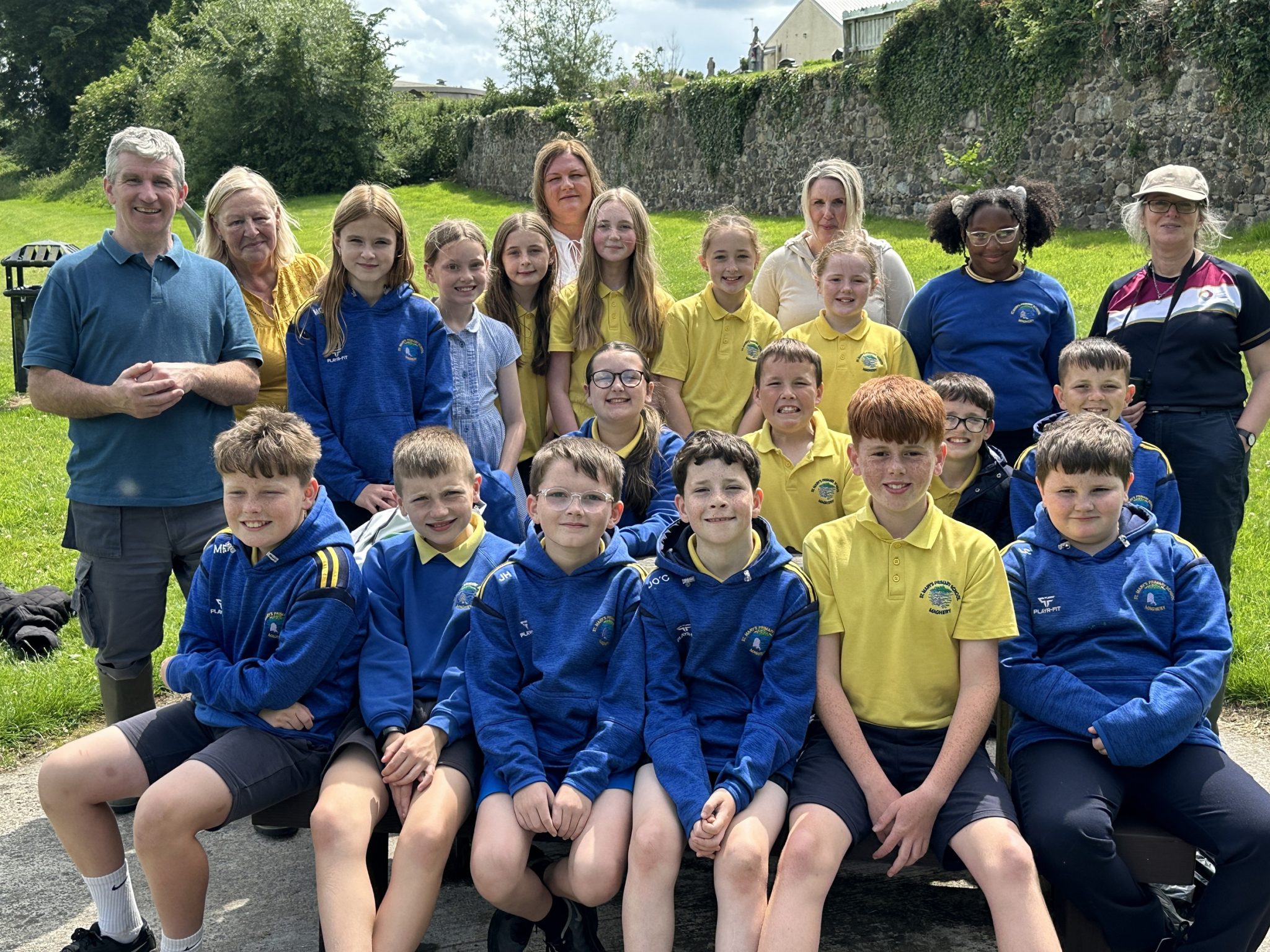
    Pupils from St Mary’s PS pictured at their environmental survey.

    The shores of Lough Neagh have proven to be the perfect location for local school pupils determined to make a positive impact on their environment and wildlife, with the help of Armagh City, Banbridge and Craigavon (ABC) Borough Council.

    Butterflies, wildflowers and a Great Crested Grebe were just some of the wonderful flora and fauna spotted and recorded by the pupils of St Mary’s Primary School in Maghery.

    As part of their project to promote and protect biodiversity, the children have been helping to manage a wild meadow at Maghery Country Park.

    Pupils and staff from St Mary’s PS Maghery pictured with officers from ABC Council at their environmental survey.

    The school adopted an area of wet grassland in Maghery Country Park which frequently flooded and was difficult for the Council’s Ground Maintenance team to manage.  Under the supervision of the Biodiversity Team at Oxford Island the project was agreed.

    The council agreed not to cut the grass area until the end of September allowing native wildflowers to grow and set seed. To assess the impact of their project, the school joined council officers last week, to carry out a survey of the range of native wildflowers growing in the uncut wet grassland, and a butterfly walk to count and identify species.

    The pupils who enjoyed a boat trip, also carried out a successful bird survey, when they spotted a range of species including Grey Heron, Coot, Great Crested Grebe, Mute Swan, Swallow, Mallard and Tufted duck.

    Council officers have praised the work of the pupils who had also participated in a Himalayan Balsam Bash to remove the non-native Himalayan Balsam invasive species which competes with the local wildflowers vital for pollinators.

    To find out more about environmental education programmes at Oxford Island, including an exciting summer programme of environmental activities for children, please visit – www.getactiveabc.com/facility/oxfordisland/

    MIL OSI United Kingdom –

    June 26, 2025
  • MIL-OSI: The Eclipse Foundation’s Jakarta EE Working Group Announces Jakarta EE 11 Release

    Source: GlobeNewswire (MIL-OSI)

    BRUSSELS, June 26, 2025 (GLOBE NEWSWIRE) — Jakarta EE, a working group hosted by the Eclipse Foundation, one of the world’s largest open source software foundations, today announced the general availability of the Jakarta EE 11 Platform, the latest version of its enterprise Java platform. This milestone release builds on previous Core Profile (December 2024) and Web Profile (March 2025) versions and represents a significant advancement in simplifying enterprise Java for cloud native development.

    Jakarta EE 11 focuses on enhancing developer productivity, streamlining testing processes, and aligning with the latest Java LTS release, Java 21. Highlights include modernised Test Compatibility Kits (TCKs), introduction of the Jakarta Data specification, along with major updates to the existing specifications, all designed to support the evolving needs of developers and organisations building mission-critical applications.

    “The renaissance of enterprise Java continues,” said Mike Milinkovich, executive director for the Eclipse Foundation. “Jakarta EE 11 introduces meaningful improvements in performance, testing, and productivity. The combination of innovation along with API stability and compatibility is what enterprise developers are looking for. There were many parties involved in this release, but I would like to recognize the efforts of Microsoft for leading the release and Red Hat for their efforts in modernizing the compatibility testing frameworks.”

    Key Highlights of Jakarta EE 11

    Jakarta Data (new specification)
    Designed to simplify data access and improve developer productivity:

    • BasicRepository: A built-in repository supertype for performing basic operations on entities.
    • CrudRepository: Facilitates basic CRUD operations, making database interactions more straightforward and less error-prone.
    • Pagination: Supports both offset and cursor-based pagination.
    • Query Language: A streamlined language designed to specify the semantics of query methods within Jakarta Data repositories.

    Streamlined Specifications
    Designed to make building applications faster and simpler for developers:

    • Managed Beans Deprecated: Removed for a simpler and more modern programming model.
    • CDI Enhancements: Greater emphasis on Contexts and Dependency Injection (CDI) for consistent application behavior.
    • Java Records Support: Broader integration to ensure data integrity and reduce boilerplate code
    • Java SE SecurityManager references removed: In alignment with JEP 411, paving the way for more modern security practices.

    Modernised TCK Framework
    Improves compatibility testing and reduces the barriers to adding new tests as the platform evolves:

    • Upgraded Tools: Moved from Apache Ant and Java Test Harness to JUnit 5 and Apache Maven for enhanced efficiency and relevance.
    • Streamlined TCK Structure: Reduced complexity, making the TCK easier to learn and use.
    • Improved Accessibility: By updating the TCK to a multi-dependency Maven project, Jakarta EE 11 improves compatibility testing and reduces the barriers to adding new tests as the platform evolves, fostering future innovation.

    Jakarta EE 11 supports Java 17 or higher and introduces concurrency enhancements for Java 21, including support for Virtual Threads for improved scalability, reduced overhead, and significant performance gains.

    Early Adoption and Certified Implementations

    Several Jakarta EE Working Group members have already certified products as compatible with Jakarta EE 11, including:

    Following the release, additional implementations and compatible products are anticipated as the community continues to adopt Jakarta EE 11.

    Looking ahead, work is already underway on Jakarta EE 12, targeted for release in 2026. The upcoming version is expected to raise the platform’s API source level to Java SE 21 and support Java SE 25 at runtime. The community is actively exploring updates across most specifications, with potential additions such as Jakarta Query and Jakarta MVC, as well as enhancements to Jakarta NoSQL. Continuing its rhythm of steady progress, Jakarta EE aims to maintain a roughly two-year release cadence to support long-term planning and innovation. To connect with the global Jakarta EE community, contribute, or learn more, visit: https://jakarta.ee/connect/

    Organisations with a strategic interest in enterprise Java are invited to join the Jakarta EE Working Group to participate in shaping the platform’s future, marketing programs, and community engagement. Learn more about membership benefits here: https://jakarta.ee/membership/.

    Perspectives from Jakarta EE Community Members

    Fujitsu

    “Jakarta EE 11’s alignment with Java SE 21 brings modern programming features, like Records and Pattern Matching, to enterprise Java development, enhancing data-oriented programming,” said Shinya Echigo, Head of Application Management Division, Fujitsu. “Key improvements include the new Jakarta Data specification and updated Jakarta Concurrency support for Virtual Threads, boosting efficiency and relevance for enterprise Java systems. Fujitsu remains committed to contributing to Jakarta EE technologies within the Eclipse Foundation and will soon support Jakarta EE 11 applications on our products, offering customers enhanced performance and modernized development.”

    IBM

    “The release of Jakarta EE 11 continues its evolution as the platform for cloud native Java innovation. The addition of Jakarta Data, as a new specification that simplifies data access, combined with the adoption of Java Virtual Thread in Jakarta Concurrency, and support for Java 17 and 21, makes this release significant,” said Ian Robinson, CTO, IBM App Runtimes. “The comprehensive rewrite of the TCK is a welcome step that will enable more rapid testing and release cycles going forward. We anticipate full compatibility with Open Liberty and WebSphere Liberty, enabling developers to get started quickly with this important release.”

    Microsoft

    “Microsoft is proud to have played a pivotal role in the successful release of Jakarta EE 11. This new iteration brings forth the eagerly awaited Jakarta Data specification, updates critical specifications such as Persistence, and prunes legacy specifications to modernize enterprise Java,” said Scott Hunter, Microsoft VP of Product, Azure Developer Experience. “Our collaboration with esteemed partners IBM, Red Hat, and Oracle has been instrumental in supporting Jakarta EE 11 runtimes on Azure, including Azure Kubernetes Service, Azure Red Hat OpenShift, and App Service. We eagerly anticipate continuing our joint efforts to foster innovation and support the enterprise Java community.”

    Oracle

    “Oracle offers its congratulations and appreciation to the entire Jakarta EE community on the release of Jakarta EE 11,” said Tom Snyder, vice president, Oracle Enterprise Cloud Native Java. “Ongoing enhancements in Jakarta EE, combined with advances in Java SE, provide a bright future for users of enterprise Java technologies. Oracle supports Jakarta EE 10 Core Profile and MicroProfile 6.1 with Helidon 4.1 today and intends to leverage Jakarta EE releases across our WebLogic, Coherence, and Helidon releases. We will continue investing in Jakarta EE for our products and our customers.”

    OmniFish

    “OmniFish proudly celebrates the release of Jakarta EE 11, a testament to the vibrant community driving enterprise Java’s evolution. This milestone, brimming with innovation, is a shared achievement of the whole Java community. GlassFish, as always, leads the way, embodying the collaborative spirit of Jakarta EE,” said Ondro Mihalyi, Director of OmniFish. “Looking ahead, OmniFish remains committed to GlassFish’s continued development as a premier Jakarta EE server, providing exceptional support for its users. We believe in Jakarta EE’s pivotal role in the enterprise Java ecosystem and are dedicated to its future. Therefore, we’re also working on extending Jakarta EE 11 compatibility to Piranha Cloud, making the powerful Jakarta EE APIs accessible to an even broader range of users.”

    Payara

    “Jakarta EE 11 marks a transformative milestone in enterprise Java development,” said Steve Millidge, CEO of Payara. “The introduction of specifications like Jakarta Data fundamentally enhances the ability of our customers to build modern, cloud-native applications while maintaining complete backward compatibility with legacy Java EE systems. Our custom Jakarta Data implementation demonstrates Payara’s technical leadership and deep commitment to the Jakarta EE ecosystem. Payara Platform Community 7 Alpha already includes comprehensive Jakarta EE 11 support, with our middleware achieving Core Profile certification and full Web Profile and Platform Profile certification planned for upcoming releases. This positions Payara customers at the forefront of enterprise Java innovation, with access to cutting-edge capabilities that directly address today’s most demanding application requirements.”

    Primeton

    “Congratulations on the launch of Jakarta EE 11, a result of collaborative efforts by all members! As a member of the Jakarta EE Specification Committee, Primeton is proud to have contributed significantly to this milestone,” said Jun Qian, Chief Technology Director of Primeton. “As a leading software platform provider in China, Primeton recognizes the significance of Jakarta EE for the industry. The inclusion of asynchronous microservices and data specification extensions in Jakarta EE 11 is pivotal for agile data application development. We are set to showcase the new features of Jakarta EE 11 to our clients and encourage their use in projects. As the founder of the Jakarta EE Community in China, Primeton is committed to fostering the adoption and application of Jakarta EE 11 specifications throughout the country.”

    About the Eclipse Foundation
    The Eclipse Foundation provides our global community of individuals and organisations with a business-friendly environment for open source software collaboration and innovation. We host the Eclipse IDE, Adoptium, Software Defined Vehicle, Jakarta EE, and over 420 open source projects, including runtimes, tools, specifications, and frameworks for cloud and embedded applications, IoT, AI, automotive, systems engineering, open processor designs, and many others. Headquartered in Brussels, Belgium, the Eclipse Foundation is an international non-profit association supported by over 385 members. To learn more, follow us on social media @EclipseFdn, LinkedIn, or visit eclipse.org.

    Third-party trademarks mentioned are the property of their respective owners.

    Media contacts:
    Schwartz Public Relations (Germany)
    Julia Rauch/Marita Bäumer
    Sendlinger Straße 42A
    80331 Munich
    EclipseFoundation@schwartzpr.de
    +49 (89) 211 871 -70/ -62

    514 Media Ltd (France, Italy, Spain)
    Benoit Simoneau
    benoit@514-media.com
    M: +44 (0) 7891 920 370

    Nichols Communications (Global Press Contact)
    Jay Nichols
    jay@nicholscomm.com
    +1 408-772-1551

    The MIL Network –

    June 26, 2025
  • MIL-OSI Europe: Gender-responsive policing in focus at cadet training organized by OSCE and Albanian Security Academy

    Source: Organization for Security and Co-operation in Europe – OSCE

    Headline: Gender-responsive policing in focus at cadet training organized by OSCE and Albanian Security Academy

    Police cadets in Albania strengthening their skills in gender-responsive policing during an introductory training course organized by the OSCE and the Albanian Security Academy in Tirana, 24 June. (OSCE) Photo details

    More than 400 police cadets in Albania strengthened their skills in gender-responsive policing during a series of one-day introductory training courses organized by the OSCE’s Transnational Threats Department, the OSCE Presence in Albania, and the Albanian Security Academy from 23 to 26 June 2025 in Tirana.
    The aim of the course was to help future police officers effectively respond to cases of gender-based violence and know how to maintain a victim-centred approach. It also underscored the key role police officers play in detecting and preventing gender-based violence, as well as how to ensure effective implementation of protective measures and risk assessments.
    Each cadet attended a one-day training session led by a group of national police officers, prosecutors, and local experts. They learned about key terms and concepts related to gender stereotypes and gender-based violence as well as the importance of a victim-centred approach.
    “Victim-centred criminal justice responses to gender-based violence are crucial for the safety of all women and girls, their families and wider society. Meaningful actions of law enforcement authorities to address gender-based violence, in full respect of the victim, is a core element of increasing trust in the criminal justice system and increasing reporting of this particularly damaging type of crime,” said Umberto Severini, Head of the OSCE’s Strategic Police Matters Unit.
    A professional psychologist also worked with the cadets to understand the neurobiology of trauma and the psychology of victims and perpetrators. Through a specially-developed role play theatre session, they deepened their insights into the consequences of gender-based violence on victims.
    Finally, the cadets heard from a victim of domestic violence who had received support from a local civil society organization working with victims of gender-based violence and had offered to share her experience at the training courses. She spoke about some of the challenges and stigma she faced when seeking help and dealing with the law enforcement system.
    “During the training, I particularly liked the methodology and the moderating approach. The trainers created an open and safe environment to express opinions, encouraging active participation and respect for different opinions. What I believe will have a direct impact on my future profession is the ability to communicate effectively, to listen with empathy and to intervene without judgment in delicate situations, especially when it comes to sensitive issues such as gender-based violence,” said one of the cadets in the training.
    The training courses were delivered as part of the OSCE’s extrabudgetary project, “Enhancing Criminal Justice Capacities for Combating Gender-based Violence in South-Eastern Europe”, funded by Austria, Finland, France, Germany, Italy and Norway. The project contributes to the implementation of the Council of Europe Istanbul Convention on Preventing and Combating Violence against Women and Domestic Violence.

    MIL OSI Europe News –

    June 26, 2025
  • MIL-OSI Russia: Corporate Library Systems: Technologies and Innovations

    Translation. Region: Russian Federal

    Source: Peter the Great St Petersburg Polytechnic University – Peter the Great St Petersburg Polytechnic University –

    On June 23-24, the Polytechnic University hosted the XXIII conference “Corporate Library Systems: Technologies and Innovations” – KorFor-2025. Participants included library managers and employees, IT specialists, suppliers of electronic databases and equipment for automating institutions.

    The conference has been held since 2001, with a break in 2020. This year, more than 250 people participated in person and 500 specialists online from Russia, Belarus, Kyrgyzstan, Uzbekistan and Italy. Experts discussed the activities of university, public and departmental libraries. The work took place in the format of discussion panels, strategic and thematic sections.

    At the plenary session, the Director of the Information and Library Complex of SPbPU Alexander Plemnek spoke with a report “AI as a driver of the transformation of libraries and librarianship on the horizon until 2035.” He compared the development forecasts that he made at conferences five and ten years ago, showing that many have come true, and earlier than predicted. Alexander Plemnek paid attention to one of the innovations of AI in 2025 – autonomous agents that are able to act independently, without direct human control, to achieve their goals. They resemble digital employees.

    The integration of GenAI and autonomous agents doesn’t just add new tools to a librarian’s toolbox; it fundamentally redefines what a library is and what librarians do. The profession is at a crossroads, facing extraordinary opportunities for growth and innovation, said Alexander Plemnek.

    Professor Fabio Di Bello, Wiley Client Training Manager, spoke online with a report entitled “Expanding the Possibilities of Academic Librarianship: Artificial Intelligence, Large Language Models, and the Future of Knowledge Management.” The expert demonstrated the capabilities of AI in translation. On the screen, a digital double of the speaker, who does not speak Russian, not only recited the text in literate Russian, but also reproduced facial expressions and phonetics of the language.

    The expert panel “From the instruction of the President of the Russian Federation to the implementation of the Concept of the federal project “Development of scientific and technical libraries”” became the most important event of the conference. It was attended by the acting Director General of the Russian State Public Library for Science and Technology Natalia Mikhalchenkova, Director of the M. Gorky Scientific Library of St. Petersburg State University Marina Karpova, Vice President of the Russian Library Association, Director of the Fundamental Library of the Herzen State Pedagogical University Natela Kvelidze-Kuznetsova, as well as representatives of other universities.

    Natalia Mikhalchenkova revealed the goals of the federal project aimed at transforming the state system of scientific and technical information to achieve technological leadership of the country. She focused on the project’s tasks in 2025 related to the creation of an up-to-date register of scientific and technical libraries subordinate to various ministries and departments, as well as the development of programs for improving the qualifications of librarians. Representatives of the universities of St. Petersburg and Kazan showed a variety of areas of development of university libraries dedicated to the collection, distribution and recording of scientific resources.

    Experts of the section “More than a library” presented a project for promoting and supporting the results of intellectual activity, new digital platforms for interaction with library services in 24/7/365 mode, spoke about events for creating educational video content, organizing a literary club and open lectures.

    The strategic session “Vectors of Development of Russian Discovery Systems: What Users Really Need” brought together developers of a modern domestic information search service that has replaced foreign systems, and representatives of universities that use it. A fruitful dialogue allowed us to see the progress over the first year of the system’s existence and discuss development directions based on the results of surveys of service users.

    Leading providers of scientific and educational databases shared their vision for the development of online resources and services for integration with university libraries.

    At the section “Electronic libraries, repositories, sites and applications” experts presented various options for electronic storage. For example, in the National Electronic Library of the Udmurt Republic – preservation of cultural heritage, in the repository of scientific data of SPbPU – various results of scientific research, including unpublished ones.

    The section “New library environment: developing vs. breaking traditions” showed different approaches to transforming libraries, from changing physical premises to introducing new virtual services, using AI assistants for readers and employees. Of particular interest was the report on projects for digital transformation of departmental library activities (using the Bank of Russia library as an example).

    At the round table “Practice of using the services of the SuperStat and FEDURUS projects in libraries,” a discussion was held on new forms of access to subscription resources based on a login and password, and the organization of collection and analysis of statistics on the use of online resources in an automated mode.

    The expert discussion “Acquisition and new regulatory documents: monitoring the situation, adapting to practice” concluded the conference program. Specialists from the National Library of Russia considered current issues related to the introduction of new regulatory documents that cause difficulties.

    On June 25, excursions were organized to the libraries of St. Petersburg, after which the participants became acquainted with the features of digital transformation in the libraries of the Republic of Karelia.

    An exhibition was held in the reading room of the IBC SPbPU, where one could get acquainted with the latest generation of book scanners from ELAR, which have improved the digitization and recognition of texts in many languages due to the introduction of AI, and test RFID equipment from various suppliers to optimize reader service.

    All speeches and presentations will be made publicly available. The conference materials will be posted in the Electronic Library of SPbPU and indexed in the Russian Science Citation Index.

    Please note: This information is raw content directly from the source of the information. It is exactly what the source states and does not reflect the position of MIL-OSI or its clients.

    MIL OSI Russia News –

    June 26, 2025
  • MIL-OSI: Altcoin Season Officially Begins With Bitcoin Solaris: The Bitcoin Alternative Creating a New Wealthy Class

    Source: GlobeNewswire (MIL-OSI)

    TALLINN, Estonia, June 26, 2025 (GLOBE NEWSWIRE) — crypto world has seen its fair share of trends, seasons, and tokens that promised to change the financial landscape. But this time, something feels different. Investors are not just chasing hype. They’re analyzing architecture, technology, and long-term sustainability. As altcoin season kicks off again, one name is echoing louder across communities, forums, and influencer breakdowns: Bitcoin Solaris. It is not a meme coin. It’s not a pump-and-dump. It is the foundation of what could be crypto’s next generational wealth movement.

    Engineered for the Future: Bitcoin Solaris as a Scalable Financial Platform

    Bitcoin Solaris is designed from the ground up to meet the demands of today’s digital economy. Built for speed, efficiency, and accessibility, it aims to power a new era of decentralized finance and utility-driven crypto engagement.

    With native support for smart contracts, seamless scalability, and an energy-efficient framework, Bitcoin Solaris empowers everyday users and seasoned investors alike. Whether through mining, staking, or application deployment, the platform delivers real-world usability that aligns with long-term adoption goals.

    By focusing on innovation, inclusion, and sustainability, Bitcoin Solaris opens a new economic path for those seeking reliable blockchain infrastructure and meaningful participation in the crypto economy.

    Why Bitcoin Solaris Is Leading This Altcoin Season

    Bitcoin Solaris (BTC-S) isn’t climbing the charts by chance. It is engineered for performance, adoption, and wealth distribution. The upcoming Solaris Nova App is a breakthrough move, letting anyone mine from their mobile phone or laptop without needing expensive gear or deep technical knowledge. This isn’t theoretical. Through the exciting release of the app, Bitcoin Solaris is shifting the mining landscape into something accessible and instantly rewarding.

    But accessibility is just the beginning. Behind BTC-S lies a double-layered engine:

    • The Base Layer uses Proof of Work (PoW) combined with Proof of Contribution (PoC) to ensure rock-solid decentralization.
    • The Application Layer utilizes Proof of History (PoH) and Proof of Time (PoT), allowing 10,000 transactions per second with a finality speed of just 2 seconds.

    This dual-consensus approach gives Bitcoin Solaris unmatched versatility and scalability.

    • Network processes 10,000+ TPS with near-instant settlement.
    • Smart contracts are programmable across multiple use cases, including DeFi, gaming, and payments.
    • Energy efficiency is enhanced by design, reducing unnecessary consumption.
    • Validator rotation ensures fairness and network resilience.

    All of this is powered by a limited 21 million token supply, echoing Bitcoin’s iconic scarcity principle while improving every other layer of functionality.

    Mining as a Path to Wealth

    Mining Bitcoin Solaris doesn’t require a warehouse of GPUs or sky-high electricity bills. Thanks to its design, mining is directly tied to holding BTC-S, which reduces sell pressure and strengthens the network. This circular model means that the more engaged the community, the more sustainable the system.

    Anyone can estimate their potential profits using the Bitcoin Solaris mining calculator, which gives real-time insights based on token holdings and participation.

    This user-centric mining approach has already gained massive interest. Influencer breakdowns, like the detailed review from Crypto Show, highlight how BTC-S bridges the gap between decentralization, accessibility, and profitability.

    The Explosive Rise of the Presale

    The current phase of the Bitcoin Solaris presale is causing serious waves. With the price now at $9 and less than 6 weeks left before the launch at $20, urgency is in the air. Over 12,300 users have already joined the movement. It’s not just one of the most talked-about presales in 2025. It is shaping up to be one of the most explosive in crypto history.

    Newcomers entering now can still lock in an 7 percent bonus. Early-stage buyers have already seen remarkable growth. The momentum keeps building as funds raised surpass $5 million, and the Bitcoin Solaris presale continues attracting the kind of FOMO most projects only dream of. You can learn more and join the growing ecosystem via the official Bitcoin Solaris website.

    The Referral Program: A Wealth Accelerator

    Bitcoin Solaris has also structured one of the smartest community-driven campaigns through its referral system. Referrers earn a 5 percent BTC-S bonus on every purchase through their link, while the invited participants also receive a 5 percent bonus on their purchase. It’s a double-reward design that encourages growth and inclusivity.

    Add to that the daily mini games introduced by bitcoin solaris for holders to earn free prizes on a daily basis, the earning potential is just limitless.

    Long-Term Strength: Audits, Ecosystem, and Stability

    Bitcoin Solaris is not flying under the radar. The platform has passed full security audits by both Cyberscope and Freshcoins, which adds confidence in its code and operations. Meanwhile, its Telegram and X channels keep users connected and informed, giving BTC-S the transparency needed for long-term engagement.

    Another reason this project is becoming a pillar of altcoin season is how carefully it was structured post-launch. Its price stability model includes:

    • A mining-first token distribution, with over 66 percent of tokens reserved for long-term contributors.
    • A fixed 21 million supply that mimics Bitcoin while rewarding network participants.
    • Controlled exchange listings to prevent fragmentation and maintain liquidity.

    All these aspects contribute to one thing: Bitcoin Solaris isn’t trying to be the next meme. It is focused on building the next financial infrastructure layer.

    Final Verdict

    Bitcoin Solaris is positioned at the intersection of accessibility, innovation, and community. As the altcoin season unfolds, its presale success, user-focused mining app, and strong technical foundation are making it one of the most compelling opportunities of 2025.

    Whether you’re new to crypto or a seasoned investor, Bitcoin Solaris offers a gateway to the next era of decentralized wealth-building.

    Learn More and Join the Movement
    Website: https://www.bitcoinsolaris.com/
    Telegram: https://t.me/Bitcoinsolaris
    X: https://x.com/BitcoinSolaris

    Media Contact:
    Xander Levine
    press@bitcoinsolaris.com
    Press Kit: Available upon request

    Disclaimer: This content is provided by Bitcoin Solaris. The statements, views, and opinions expressed in this content are solely those of the content provider and do not necessarily reflect the views of this media platform or its publisher. We do not endorse, verify, or guarantee the accuracy, completeness, or reliability of any information presented. We do not guarantee any claims, statements, or promises made in this article. This content is for informational purposes only and should not be considered financial, investment, or trading advice.Investing in crypto and mining-related opportunities involves significant risks, including the potential loss of capital. It is possible to lose all your capital. These products may not be suitable for everyone, and you should ensure that you understand the risks involved. Seek independent advice if necessary. Speculate only with funds that you can afford to lose. Readers are strongly encouraged to conduct their own research and consult with a qualified financial advisor before making any investment decisions. However, due to the inherently speculative nature of the blockchain sector—including cryptocurrency, NFTs, and mining—complete accuracy cannot always be guaranteed.Neither the media platform nor the publisher shall be held responsible for any fraudulent activities, misrepresentations, or financial losses arising from the content of this press release. In the event of any legal claims or charges against this article, we accept no liability or responsibility.Globenewswire does not endorse any content on this page.

    Legal Disclaimer: This media platform provides the content of this article on an “as-is” basis, without any warranties or representations of any kind, express or implied. We assume no responsibility for any inaccuracies, errors, or omissions. We do not assume any responsibility or liability for the accuracy, content, images, videos, licenses, completeness, legality, or reliability of the information presented herein. Any concerns, complaints, or copyright issues related to this article should be directed to the content provider mentioned above.

    Photos accompanying this announcement are available at:

    https://www.globenewswire.com/NewsRoom/AttachmentNg/c59a561a-ef05-40c3-893e-24adcf9e9cca

    https://www.globenewswire.com/NewsRoom/AttachmentNg/85b0aa6d-27cc-4fc3-bc04-0a61402742a8

    https://www.globenewswire.com/NewsRoom/AttachmentNg/5cbe5ba3-bf57-4692-8426-2eb8dba166da

    https://www.globenewswire.com/NewsRoom/AttachmentNg/dd4a2bf0-23e7-40fb-8b8d-da80618ea174

    The MIL Network –

    June 26, 2025
  • MIL-OSI: Altcoin Season Officially Begins With Bitcoin Solaris: The Bitcoin Alternative Creating a New Wealthy Class

    Source: GlobeNewswire (MIL-OSI)

    TALLINN, Estonia, June 26, 2025 (GLOBE NEWSWIRE) — crypto world has seen its fair share of trends, seasons, and tokens that promised to change the financial landscape. But this time, something feels different. Investors are not just chasing hype. They’re analyzing architecture, technology, and long-term sustainability. As altcoin season kicks off again, one name is echoing louder across communities, forums, and influencer breakdowns: Bitcoin Solaris. It is not a meme coin. It’s not a pump-and-dump. It is the foundation of what could be crypto’s next generational wealth movement.

    Engineered for the Future: Bitcoin Solaris as a Scalable Financial Platform

    Bitcoin Solaris is designed from the ground up to meet the demands of today’s digital economy. Built for speed, efficiency, and accessibility, it aims to power a new era of decentralized finance and utility-driven crypto engagement.

    With native support for smart contracts, seamless scalability, and an energy-efficient framework, Bitcoin Solaris empowers everyday users and seasoned investors alike. Whether through mining, staking, or application deployment, the platform delivers real-world usability that aligns with long-term adoption goals.

    By focusing on innovation, inclusion, and sustainability, Bitcoin Solaris opens a new economic path for those seeking reliable blockchain infrastructure and meaningful participation in the crypto economy.

    Why Bitcoin Solaris Is Leading This Altcoin Season

    Bitcoin Solaris (BTC-S) isn’t climbing the charts by chance. It is engineered for performance, adoption, and wealth distribution. The upcoming Solaris Nova App is a breakthrough move, letting anyone mine from their mobile phone or laptop without needing expensive gear or deep technical knowledge. This isn’t theoretical. Through the exciting release of the app, Bitcoin Solaris is shifting the mining landscape into something accessible and instantly rewarding.

    But accessibility is just the beginning. Behind BTC-S lies a double-layered engine:

    • The Base Layer uses Proof of Work (PoW) combined with Proof of Contribution (PoC) to ensure rock-solid decentralization.
    • The Application Layer utilizes Proof of History (PoH) and Proof of Time (PoT), allowing 10,000 transactions per second with a finality speed of just 2 seconds.

    This dual-consensus approach gives Bitcoin Solaris unmatched versatility and scalability.

    • Network processes 10,000+ TPS with near-instant settlement.
    • Smart contracts are programmable across multiple use cases, including DeFi, gaming, and payments.
    • Energy efficiency is enhanced by design, reducing unnecessary consumption.
    • Validator rotation ensures fairness and network resilience.

    All of this is powered by a limited 21 million token supply, echoing Bitcoin’s iconic scarcity principle while improving every other layer of functionality.

    Mining as a Path to Wealth

    Mining Bitcoin Solaris doesn’t require a warehouse of GPUs or sky-high electricity bills. Thanks to its design, mining is directly tied to holding BTC-S, which reduces sell pressure and strengthens the network. This circular model means that the more engaged the community, the more sustainable the system.

    Anyone can estimate their potential profits using the Bitcoin Solaris mining calculator, which gives real-time insights based on token holdings and participation.

    This user-centric mining approach has already gained massive interest. Influencer breakdowns, like the detailed review from Crypto Show, highlight how BTC-S bridges the gap between decentralization, accessibility, and profitability.

    The Explosive Rise of the Presale

    The current phase of the Bitcoin Solaris presale is causing serious waves. With the price now at $9 and less than 6 weeks left before the launch at $20, urgency is in the air. Over 12,300 users have already joined the movement. It’s not just one of the most talked-about presales in 2025. It is shaping up to be one of the most explosive in crypto history.

    Newcomers entering now can still lock in an 7 percent bonus. Early-stage buyers have already seen remarkable growth. The momentum keeps building as funds raised surpass $5 million, and the Bitcoin Solaris presale continues attracting the kind of FOMO most projects only dream of. You can learn more and join the growing ecosystem via the official Bitcoin Solaris website.

    The Referral Program: A Wealth Accelerator

    Bitcoin Solaris has also structured one of the smartest community-driven campaigns through its referral system. Referrers earn a 5 percent BTC-S bonus on every purchase through their link, while the invited participants also receive a 5 percent bonus on their purchase. It’s a double-reward design that encourages growth and inclusivity.

    Add to that the daily mini games introduced by bitcoin solaris for holders to earn free prizes on a daily basis, the earning potential is just limitless.

    Long-Term Strength: Audits, Ecosystem, and Stability

    Bitcoin Solaris is not flying under the radar. The platform has passed full security audits by both Cyberscope and Freshcoins, which adds confidence in its code and operations. Meanwhile, its Telegram and X channels keep users connected and informed, giving BTC-S the transparency needed for long-term engagement.

    Another reason this project is becoming a pillar of altcoin season is how carefully it was structured post-launch. Its price stability model includes:

    • A mining-first token distribution, with over 66 percent of tokens reserved for long-term contributors.
    • A fixed 21 million supply that mimics Bitcoin while rewarding network participants.
    • Controlled exchange listings to prevent fragmentation and maintain liquidity.

    All these aspects contribute to one thing: Bitcoin Solaris isn’t trying to be the next meme. It is focused on building the next financial infrastructure layer.

    Final Verdict

    Bitcoin Solaris is positioned at the intersection of accessibility, innovation, and community. As the altcoin season unfolds, its presale success, user-focused mining app, and strong technical foundation are making it one of the most compelling opportunities of 2025.

    Whether you’re new to crypto or a seasoned investor, Bitcoin Solaris offers a gateway to the next era of decentralized wealth-building.

    Learn More and Join the Movement
    Website: https://www.bitcoinsolaris.com/
    Telegram: https://t.me/Bitcoinsolaris
    X: https://x.com/BitcoinSolaris

    Media Contact:
    Xander Levine
    press@bitcoinsolaris.com
    Press Kit: Available upon request

    Disclaimer: This content is provided by Bitcoin Solaris. The statements, views, and opinions expressed in this content are solely those of the content provider and do not necessarily reflect the views of this media platform or its publisher. We do not endorse, verify, or guarantee the accuracy, completeness, or reliability of any information presented. We do not guarantee any claims, statements, or promises made in this article. This content is for informational purposes only and should not be considered financial, investment, or trading advice.Investing in crypto and mining-related opportunities involves significant risks, including the potential loss of capital. It is possible to lose all your capital. These products may not be suitable for everyone, and you should ensure that you understand the risks involved. Seek independent advice if necessary. Speculate only with funds that you can afford to lose. Readers are strongly encouraged to conduct their own research and consult with a qualified financial advisor before making any investment decisions. However, due to the inherently speculative nature of the blockchain sector—including cryptocurrency, NFTs, and mining—complete accuracy cannot always be guaranteed.Neither the media platform nor the publisher shall be held responsible for any fraudulent activities, misrepresentations, or financial losses arising from the content of this press release. In the event of any legal claims or charges against this article, we accept no liability or responsibility.Globenewswire does not endorse any content on this page.

    Legal Disclaimer: This media platform provides the content of this article on an “as-is” basis, without any warranties or representations of any kind, express or implied. We assume no responsibility for any inaccuracies, errors, or omissions. We do not assume any responsibility or liability for the accuracy, content, images, videos, licenses, completeness, legality, or reliability of the information presented herein. Any concerns, complaints, or copyright issues related to this article should be directed to the content provider mentioned above.

    Photos accompanying this announcement are available at:

    https://www.globenewswire.com/NewsRoom/AttachmentNg/c59a561a-ef05-40c3-893e-24adcf9e9cca

    https://www.globenewswire.com/NewsRoom/AttachmentNg/85b0aa6d-27cc-4fc3-bc04-0a61402742a8

    https://www.globenewswire.com/NewsRoom/AttachmentNg/5cbe5ba3-bf57-4692-8426-2eb8dba166da

    https://www.globenewswire.com/NewsRoom/AttachmentNg/dd4a2bf0-23e7-40fb-8b8d-da80618ea174

    The MIL Network –

    June 26, 2025
  • MIL-OSI Europe: Written question – Commission guidance on the compensation models for electricity demand response through aggregation – E-002465/2025

    Source: European Parliament

    Question for written answer  E-002465/2025
    to the Commission
    Rule 144
    Bruno Tobback (S&D)

    The Commission has announced that a white paper on electricity market integration will be published in late 2025. It will address governance issues while also exploring flexibility compensation.

    With regard to electricity demand response through aggregation, European legislation[1] establishes that countries ‘may require electricity undertakings or participating final customers to pay financial compensation to other market participants or to the market participants’ balance responsible parties, if those market participants or balance responsible parties are directly affected by demand response activation’. At the same time, this financial compensation must not create a barrier to market entry for market participants who are engaged in aggregation, nor a barrier to flexibility. However, when this is read in conjunction with the proposed Article 55A of the Electricity Balancing Regulation[2], within the newly proposed draft network code on demand response, it is unclear which model should be used to ensure correct compensation. This has raised issues in countries such as France, where direct compensation models have created barriers to market access.

    Will the Commission publish guidance on compensation models so that countries can fulfil their obligations under Article 17(4) of Directive (EU) 2019/944?

    Submitted: 18.6.2025

    • [1] Article 17(4) of Directive (EU) 2019/944 of the European Parliament and of the Council of 5 June 2019 on common rules for the internal market for electricity and amending Directive 2012/27/EU (OJ L 158, 14.6.2019, p. 125, ELI: http://data.europa.eu/eli/dir/2019/944/oj).
    • [2] Commission Regulation (EU) 2017/2195 of 23 November 2017 establishing a guideline on electricity balancing (OJ L 312, 28.11.2017, p. 6, ELI: http://data.europa.eu/eli/reg/2017/2195/oj).
    Last updated: 26 June 2025

    MIL OSI Europe News –

    June 26, 2025
  • MIL-OSI Europe: EIB provides €107.5 million to back security and defence in Italy

    Source: European Investment Bank

    ©Don Jackson/ Unsplash

    • The EIB financing will contribute to the purchase of helicopters for the Italian army.
    • This is the third agreement between the EIB, the Italian Ministry of Economy and Finance and the Italian Ministry of Defence.

    The European Investment Bank (EIB) has signed a new strategic agreement with the Ministry of Economy and Finance and the Ministry of Defence, with the goal of further strengthening Italy’s security and defence capabilities.

    The operation is part of the EIB’s broader commitment to European security and defence. It recently expanded its eligibility criteria to backing military projects, in line with EU priorities.

    The loan will be disbursed to the Ministry of Economy and Finance, which will then channel the EIB resources to the Ministry of Defence. The favourable conditions offered by the EIB on international markets mean that the loan will enable the Italian government to make substantial interest savings over the 20-year term.

    This is the third agreement of its kind between the EIB, the Ministry of Economy and Finance and the Ministry of Defence In 2022, the EIB provided €240 million to finance the purchase of 16 light helicopters for the Italian Carabinieri and upgrades to the national air traffic control system, while in 2020, it provided €220 million to build three hydro-oceanographic vessels.

    “This agreement shows the EIB’s growing commitment to supporting European security and defence, and is the result of ongoing fruitful dialogue with the Italian government to promote strategic investments strengthening the competitiveness and security of Italy,” said EIB Vice-President Gelsomina Vigliotti. “We will continue to work side by side with our partners to safeguard the strategic autonomy of the European Union.”

    Background information

    The European Investment Bank (ElB) is the long-term lending institution of the European Union, owned by its Member States. Built around eight key priorities, we finance investments that contribute to EU policy objectives by bolstering climate action and the environment, digitalisation and technological innovation, security and defence, cohesion, agriculture and bioeconomy, social infrastructure, the capital markets union, and a stronger Europe in a more peaceful and prosperous world. The EIB Group, which also includes the European Investment Fund (EIF), signed over 900 projects worth nearly €89 billion in 2024, boosting Europe’s competitiveness and security. The EIB Group signed 99 operations totalling €10.98 billion in Italy in 2024, helping to unlock almost €37 billion of investment in the real economy. All projects financed by the EIB Group are in line with the Paris Climate Agreement, as pledged in our Climate Bank Roadmap. Almost 60% of the EIB Group’s annual financing supports projects directly contributing to climate change mitigation, adaptation, and a healthier environment. Fostering market integration and mobilising investment, the funds made available by the Group unlocked over €100 billion in new investment for Europe’s energy security in 2024 and mobilised a further €110 billion for startups and scale-ups. Around half of the EIB’s financing within the European Union is directed towards cohesion regions, where per capita income is lower than the EU average.

    MIL OSI Europe News –

    June 26, 2025
  • MIL-OSI Europe: Press release – European Parliament Press Kit for the European Council of 26 – 27 June 2025

    Source: European Parliament

    European Parliament President Roberta Metsola will represent the European Parliament at the summit, where she will address the heads of state or government at 11.00 and hold a press conference after her speech.

    When: Press conference at around 11.45 on 26 June

    Where: European Council press room and via Parliament’s webstreaming or EbS.

    At their meeting in Brussels, the heads of state or government will focus on ways to bolster EU competitiveness. They will also discuss how the EU can continue supporting Kyiv against Russia’s aggression – with Ukrainian President Volodymyr Zelenskyy, how to strengthen the EU’s defence capabilities, and the EU’s response to the escalation in the Middle East. Leaders will also discuss migration and the situation in the Western Balkans.

    Competitiveness

    In a resolution, adopted on Thursday 19 June in response to the European Commission’s Clean Industrial Deal plan, Parliament stresses the need to combine climate action with industrial competitiveness. It underscores the importance of the EU’s newly established industrial decarbonisation bank, which MEPs consider vital for scaling up investment in clean technologies. The resolution addresses the importance of regulatory simplification and the need to streamline permitting procedures to support the transition and innovation efforts of small businesses. MEPs also support the action plan for affordable energy and want measures to boost cross-border energy infrastructure and to complete the energy union.

    On 18 June, MEPs adopted a resolution highlighting the stabilising effect of the Recovery and Resilience Facility (RRF) at a time of significant economic uncertainty in Europe. They note that the RRF prevented the fragmentation of the EU internal market and promoted economic recovery in member states. MEPs are concerned that the short timeframe for the implementation of outstanding RRF funding poses challenges to the completion of key reforms, large-scale investments and innovative projects, as well as the 70% of milestones and targets that have still to be reached. They urge the Commission to set up new programmes, which should be flexible and reactive to changing circumstances and guarantee predictability. MEPs also demand an 18-month extension for ongoing mature projects.

    In a keynote speech at the event “Europe at the crossroads” on 13 May, Parliament President Roberta Metsola outlined her vision for a smarter, stronger and safer Europe. The President argued “the time of hypothetical crossroads is over. There is only one path left: forward and together”. She called for a different Europe, which is more realistic, more self-critical and supportive of its industries, with less regulation and more innovation. On the need to cut back regulation, she said: “Europe’s simplification agenda needs to signal the start of a new Europe and with the upcoming MFF, trigger an economic boom.”

    Further reading

    Clean Industrial Deal must marry industrial competitiveness with climate action

    National recovery plans should add to EU resilience and strategic autonomy

    Metsola calls to “re-launch Europe as a global power”

    MEPs call for a more competitive EU that respects social and labour standards

    Russia’s war of aggression against Ukraine

    On 16 June, Parliament debated the human cost of Russia’s war against Ukraine and the urgent need to end Russian aggression, the situation of illegally detained civilians and prisoners of war, and the continued bombing of civilians. You can watch the debate here. Parliament ill vote on a resolution on 9 July.

    On 17 June, MEPs agreed to update the EU-Ukraine road transport agreement and extend it until the end of 2025, to continue facilitating the movement of goods in and out of the country. Concluded in June 2022, the agreement has facilitated the transport of vital goods such as fuel and humanitarian aid into Ukraine, and enabled Ukrainian exports such as grain, ore, and steel to reach the EU and beyond. Set to expire in June 2024, its application continued provisionally pending formal backing by MEPs and the EU Council of its extension until the end of 2025.

    On 22 May, MEPs backed increased tariffs on fertilisers and certain Russian and Belarusian agricultural goods, seeking to reduce EU dependency on those imports. Plenary has endorsed the Commission proposal to increase by 50% EU tariffs on agricultural products from Russia and Belarus that were not yet subject to extra customs duties. The aim is to reduce EU dependence on the two countries still further. Products targeted by the new tariffs include sugar, vinegar, flour and animal feed.

    In a resolution adopted on 8 May, MEPs strongly condemn Russia’s “genocidal strategy”, with the support of Belarus, designed to erase Ukrainian identity. The forced transfer and deportation of Ukrainian children, their illegal adoption, their assassination, and the forced Russification and militarisation must stop. Russia must report the identities and whereabouts of all deported Ukrainian children and ensure their well-being and safe and unconditional return. The Russian authorities must also, MEPs say, allow international organisations, such as the International Committee of the Red Cross, the Office of the UN High Commissioner for Human Rights and UNICEF, access to all deported Ukrainian children.

    On 8 May, MEPs voted to renew the suspension of import duties and quotas for certain imports from Ukraine, such as iron and steel, due to expire on 5 June 2025.With the adoption of the Autonomous Trade Measures (ATM) Regulation, the EU liberalised trade with Ukraine by suspending trade defence measures on 4 June 2022. MEPs have now approved the proposed prolongation of these trade liberalisation measures, which focus steel, to provide Ukraine with vital export revenues

    On 7 May, Parliament discussed with Commission President von der Leyen and Polish Minister for EU Affairs Szłapka how the EU can contribute to achieving a just, sustainable, and comprehensive peace deal for Ukraine. The debate focussed on the EU’s political, financial and military support for Ukraine, and its role in efforts to secure a peace settlement that preserves Ukraine’s sovereignty and territorial integrity and is based on international law.

    Further reading

    European Parliament backs extension of EU-Ukraine road transport agreement

    Parliament approves new tariffs on Russian and Belarussian agricultural goods

    Parliament backs extension of trade liberalisation measure for Ukrainian imports

    The EU must contribute to robust security guarantees for Ukraine

    Joint statement on the third anniversary of Russia’s invasion of Ukraine

    EP Conference of Presidents’ statement on EU support for Ukraine

    How the EU is supporting Ukraine

    EU stands with Ukraine


    European defence and security

    On 18 June, MEPs outlined their expectations for the 24 – 26 June NATO summit in The Hague, Netherlands, in a debate with EU foreign policy chief Kaja Kallas.

    On 24 April, the Committees on Industry, Research and Energy and Security and Defence have adopted their position on the proposed creation of a European defence industry programme (EDIP), designed to strengthen Europe’s defence industry, ramp up defence product manufacturing and provide more support for Ukraine. More specifically, MEPs backed measures to boost Europe’s defence technological and industrial base (EDTIB), to strengthen EU defence and integrate the EU defence industry. They want the new programme to focus on improving the supply of weapons, ammunition and other crisis-relevant products, boosting manufacturing capacities and ensuring their ramp-up, reducing lead times for production and delivery, and increasing stockpiles. MEPs and Council are now negotiating the final shape of the law.

    In a resolution adopted on 12 March, Parliament calls on the EU to act urgently and ensure its own security. This will mean, MEPs say, strengthening relationships with like-minded partners, and strongly diminishing reliance on non-EU countries. The EU needs “truly ground-breaking efforts” and actions “close to those of wartime”, say MEPs, who welcomed the recently tabled ReArm plan. To achieve peace and stability in Europe, the EU must support Ukraine and become more resilient itself, MEPs argue. The resolution says “Europe is today facing the most profound military threat to its territorial integrity since the end of the Cold War”. It calls on member states, international partners, and NATO allies to lift all restrictions on the use of Western weapons systems delivered to Ukraine against military targets on Russian territory.

    Further reading

    MEPs push for a more ambitious European defence industry programme

    MEPs urge the EU to ensure its own security

    “We cannot afford to depend on others to keep us safe”, Metsola tells EU leaders

    “Europe must be responsible for its own security”, Metsola tells EU leaders

    MEPs call on Europe to strengthen its defence capacity

    Rutte to MEPs: “We are safe now, we might not be safe in five years”


    Middle East

    On 17 June, MEPs and EU foreign policy chief Kaja Kallas debated the situation in the Middle East. The debate focussed on the risk of further instability in the Middle East following the Israel-Iran military escalation, the review of the EU-Israel Association Agreement, and the ongoing humanitarian crisis in Gaza.

    On 17 June, the King of Jordan, His Majesty Abdullah II bin Al-Hussein, addressed MEPs at a formal sitting in Strasbourg. Welcoming King Abdullah II of Jordan to the hemicycle, European Parliament President Roberta Metsola said: “The European Parliament appreciates Jordan’s critical efforts in reducing regional tensions, in pushing for a ceasefire in Gaza and for the return of hostages whilst also facilitating so much urgently needed humanitarian aid, as well as for the unwavering support for Palestinian and Syrian refugees and a two-State solution as a path to lasting peace.”

    The King outlined two essential areas for action: first, supporting development, because a thriving Middle East creates opportunities that benefit us all; and second, strong, coordinated action to ensure global security. “Our mutual security won’t be assured until our global community acts, not only to end the three-year war in Ukraine, but also the world’s longest and most destructive flashpoint, the eight-decade-long Palestinian-Israeli conflict.” King Abdullah II added: “Palestinians, like all people, deserve the rights to freedom, sovereignty, and, yes, statehood (…) The path to peace has been walked before. It can be again, if we have the courage to choose it, and the will to walk it together.”

    On 21 May, Parliament discussed the EU’s response to the Israeli government’s plan to seize the Gaza Strip, ensuring effective humanitarian support and the liberation of hostages.

    Further reading

    King Abdullah II of Jordan: “A shameful version of humanity is unfolding in Gaza”

    The EU must support the political transition and reconstruction of Syria


    Western Balkans

    In a vote on 24 June, the Foreign Affairs Committee backed North Macedonia’s EU path and called for bold reforms. Skopje must introduce constitutional changes, strengthen rule of law and fight corruption, MEPs say. The report underlines that EU accession is ultimately a matter of political will—both in enacting reforms and adopting constitutional amendments. MEPs call on all political parties in North Macedonia to engage in constructive dialogue to reach the required consensus, which would strengthen the country’s multi-ethnic character and accelerate EU progress.

    In two reports adopted on 18 June, MEPs welcomed Montenegro´s objective to join the EU in 2028 and praised Moldova’s EU membership efforts. Parliament is calling for political stability in Montenegro and substantial progress regarding electoral and judicial reforms as well as the fight against organised crime and corruption. MEPs stress that Montenegro remains the leading candidate in the EU enlargement process and point to the overwhelming support of its citizens and the majority of political actors for joining the EU in 2028. Parliament welcomes the country’s full alignment with the EU’s common foreign and security policy, including EU sanctions against Russia, and commends Montenegro for its support for the international rules-based order at the United Nations.

    Praising Moldova’s exemplary commitment to advancing its progress towards EU membership, Parliament recognises that EU-Moldova relations have entered a new phase. Cooperation has intensified alongside sustained efforts by the government in Chișinău to align Moldova’s laws with those of the EU (the so-called “EU acquis”). Despite significant internal and external challenges, such as the effects of Russia’s continuing war against neighbouring Ukraine and Moscow’s interference in Moldova’s democratic processes, MEPs are encouraged by the Moldovan government’s progress on meeting the EU’s enlargement requirements and the country’s ambition to open negotiations on more enlargement-related issues.

    In a report adopted on 4 June, the Foreign Affairs Committee has praised Albania’s steadfast commitment to EU accession. MEPs highlight Albania’s broad political consensus and strong public support for joining the EU, alongside full alignment with the EU’s foreign and security policy. While welcoming Albania’s aim to complete accession talks by 2027 and the progress already made, MEPs stress the urgent need to intensify reforms. Key priorities include strengthening judicial independence, combating corruption and organised crime, and protecting fundamental rights. Enhancing media pluralism and transparency remains crucial to building public trust. Plenary will vote on the report on 9 July.

    The Foreign Affairs Committee called urgently for reform and unity in Bosnia and Herzegovina to advance EU accession and tackle corruption and division, in a report adopted on 4 June. MEPs reaffirm their strong support for BiH’s EU accession bid, emphasising a merit-based process aligned with the Copenhagen criteria and grounded in the country’s unity, sovereignty, territorial integrity, and in equality among all citizens. Welcoming the European Council’s decision to open accession negotiations with BiH amid the changing geopolitical landscape following Russia’s full-scale invasion of Ukraine, the committee acknowledged key reforms but expressed concern over stalled progress and weak implementation. The vote in plenary is scheduled for 9 July.

    On 7 May, Parliament adopted two resolutions, saying Kosovo needs to accelerate its EU-related reforms and that Serbia must do more to protect the rule of law and media freedom and to fight corruption.

    Kosovo has made notable strides in its electoral reforms, economic resilience, and the protection of fundamental rights, say MEPs. However, challenges remain regarding judicial reforms, media freedom, public administration efficiency, and the digitalisation of public services. Continued commitment to comprehensive reforms and inclusive governance is essential for Kosovo to make progress on its European integration pathway, they stress.

    Despite some progress in negotiations, Serbia still has major hurdles to overcome, according to MEPs. Belgrade needs to improve its internal political dialogue, protect the rule of law, and make anti-corruption reforms. It also has to work on reaching a comprehensive normalisation agreement with Kosovo, and fully align with EU foreign policy. Parliament calls on Serbia’s authorities to ensure the independence of key institutions, including media regulators such as the country’s Regulatory Authority for Electronic Media.

    Further reading

    European Parliament backs North Macedonia’s EU path, calls for bold reforms

    Montenegro and Moldova: MEPs applaud EU membership progress

    MEPs call on Albania to accelerate reforms and strengthen democratic institutions

    Support for Bosnia and Herzegovina’s EU accession amid urgent calls for reform

    Parliament encourages Kosovo and Serbia to advance their EU accession reforms


    Migration

    On 18 June, Civil Liberties Committee MEPs backed proposals to give Europol and EU authorities more tools to fight migrant-smuggling and human trafficking. The proposed law would give the EU’s police agency Europol new tools to combat and investigate migrant-smuggling and human trafficking by coordinating the actions of EU national authorities. A European Centre Against Migrant Smuggling (ECAMS) would be formally established within Europol to support cross-border investigations. . Parliament and Council are now negotiating on the final shape of the law.

    On 19 May, Parliament and Council reached an agreement on gradually rolling out the Entry-Exit System (EES) at the EU’s external borders. Once operational, the system will register the data, including biometric data such as facial images and fingerprints, of third‑country nationals entering and leaving the Schengen area on short‑stay visas. The aim is to improve security, speed up the border check process, and reduce queues. The idea behind the gradual implementation over 180 days is to prevent a simultaneous launch in all countries from compromising the system. During the roll-out period, the launch could be temporarily suspended if waiting times become too long or there are technical issues. The vote in plenary will take place on 8 July.

    On 15 January, the Working Group on Asylum-Implementation of the Pact/CEAS (Common European Asylum System), formed by MEPs of all EP political groups, started to monitor the implementation of the EU Pact on Asylum and Migration. Chaired by Birgit Sippel (S&D, Germany), the Working Group will focus on scrutinising and monitoring the Common European Asylum System and the implementation of the Pact on Asylum and Migration.

    Further reading

    Migrant-smuggling: new resources and a stronger role for Europol

    Border security: agreement on gradual roll-out of Entry-Exit System

    MEPs kick off scrutiny work of the Asylum and Migration Pact

    MIL OSI Europe News –

    June 26, 2025
  • MIL-OSI Europe: France: Gatewatcher secures €25 million EIB investment to accelerate growth and reinforce European cyber resilience

    Source: European Investment Bank

    • The EIB is backing Gatewatcher’s ambition to strengthen Europe’s technological sovereignty.
    • The French firm, recently named the only “Visionary” in the Gartner® Magic Quadrant for network detection and response (NDR), will use the funding to boost innovation and continue to expand internationally.
    • This transaction is part of the EIB Group’s ever-stronger commitment to security and defence, as reaffirmed by the Board of Governors at their annual meeting on 20 June.  

    Marking its largest venture debt investment in cybersecurity to date, the European Investment Bank (EIB) has granted a €25 million financing facility to Gatewatcher, a French company recognised as a European leader in cyber threat detection. Gatewatcher has developed an advanced network detection and response (NDR) platform that combines artificial intelligence and threat intelligence to deliver real-time visibility across all digital environments. The funds will accelerate the development of Gatewatcher’s advanced detection technologies and support its international expansion in a context of rising cyber threats and renewed focus on European autonomy.

    EIB Vice-President Ambroise Fayolle said: “Cybersecurity is a strategic sector within the defence industry. Having the capability to prevent cyberattacks, safeguard the integrity of infrastructure and data, and identify those responsible for attacks is now imperative for Europe’s security and the competitiveness of our economies. We are therefore proud to support the development of a company like Gatewatcher, which is fully dedicated to cybersecurity and whose results are already promising. The project is also fully in line with the EIB’s new strategy to finance the European security and defence sector.”

    “This investment is a strong signal of trust from a major European institution. It represents a shared commitment to building a secure, digital future,” said CEO and founder of Gatewatcher Jacques de La Rivière. “This financing allows us to pursue our innovation efforts for our clients and partners, while accelerating the market launch of our latest AI solution. Our ambition is clear: to bring cutting-edge threat detection technologies to the broadest possible market, while contributing to the emergence of a robust European cybersecurity industry. This next phase of growth is first and foremost a collective one, driven by our teams and guided by a sense of responsibility to our ecosystem.”

    The financing comes as Gatewatcher marks its tenth anniversary and continues to scale across Europe, Middle East, Asia and Africa. A pioneer in large-scale fundraising within the European cybersecurity sector, Gatewatcher is confirming its long-term vision, strategic independence and strength in a fiercely competitive global market with this new milestone. Its inclusion as the only fully European vendor, and the sole “Visionary” in the 2024 Gartner® Magic Quadrant for network detection and response further confirms its role as a key player in Europe’s cyber defence ecosystem. Today, Gatewatcher’s technologies protect hundreds of public and private organisations, including critical infrastructure operators, governments and enterprises.

    For the EIB Group, this transaction confirms its commitment to security and defence, just a few days after the Bank’s annual Board of Governors meeting on 20 June, where the 27 EU Member States approved the plan to increase the financing volume for 2025 to an unprecedented level of up to €100 billion. This revised ceiling will notably enable 3.5% of total financing to be dedicated to European security and defence. Further information on the EIB Group’s financing of security and defence projects is available here.

    Background information

    About EIB:

    The European Investment Bank (EIB) is the long-term lending institution of the European Union, owned by its Member States. Built around eight core priorities, we finance investments that contribute to EU policy objectives. The EIB Group, which also includes the European Investment Fund (EIF), signed nearly €89 billion in new financing for over 900 high-impact projects in 2024, boosting Europe’s competitiveness and security. In France, the EIB Group signed more than 100 operations in 2024 for a total amount of €12.6 billion, which made it possible to mobilise €62 billion in investments in the real economy. Nearly 60% of the EIB Group’s annual financing supports projects directly contributing to climate change mitigation and adaptation.

    About Gatewatcher:

    Gatewatcher, a leader in cyber threat detection, has been protecting the networks of businesses and public institutions, including the most critical ones, since 2015. The Gatewatcher NDR Platform (network detection and response) combines artificial intelligence, dynamic and behavioural analytics techniques, and contextualised cyber threat intelligence (CTI). This enables unified, comprehensive visibility, real-time detection and mapping of systems, and an automated, prioritised response to attacks. Deployed across cloud, on-premise or sensitive infrastructure, and compatible with information technology, operational technology and internet of things environments, it secures all critical assets while streamlining operations through its integrated AI assistant. Gatewatcher combines technological power with operational peace of mind to align cybersecurity with your business objectives. 

    MIL OSI Europe News –

    June 26, 2025
  • EU leaders meet to decide on whether to back quick US trade deal or seek better terms

    Source: Government of India

    Source: Government of India (4)

    European Union leaders are to tell the European Commission on Thursday whether they want to reach a quick trade agreement with the United States on terms that favour Washington or keep fighting for a better deal.

    A quick deal seems to be the preferred option for most, officials and diplomats said, as the EU can then seek to address the unfavourable bias with some rebalancing measures of its own.

    “I support the Commission, I support the President of the European Commission in her endeavours to make progress on competitiveness. I also support the European Commission in all its endeavours to reach a trade agreement with the USA quickly,” German Chancellor Friedrich Merz said.

    “I want us to get Mercosur off the ground and conclude further trade agreements. Europe is facing decisive weeks and months,” he said.

    The Commission, which negotiates trade agreements on behalf of the EU, will ask leaders of the EU’s 27 members meeting in Brussels how they want to respond to President Donald Trump’s July 9 deadline for a deal, now less than two weeks away.

    The bloc has said it is striving for a mutually beneficial agreement, but as Washington looks set to stick to its 10% across-the board tariffs on most EU goods and threatening higher rates with prolonged talks, EU diplomats said a growing number of EU countries were now favouring a quick resolution.

    “A trade war makes both sides of the Atlantic poorer and is just stupid. So I support the approach of the Commission president, who always kept calm and has negotiated for a result,” said Belgian Prime Minister Bart De Wever.

    “If that were to end in one-sided and unfair tariffs then we have to take proportionate and very targeted countermeasures.”

    The bloc is already facing U.S. import tariffs of 50% on its steel and aluminium, 25% for cars and car parts, along with a 10% tariff on most other EU goods, which Trump has threatened could rise to 50% without an agreement.

    The United States’ only completed trade deal to date is with Britain, with the broad 10% tariff still in place. U.S. officials say it will not go lower for any trading partner.

    Some 23 of the leaders will come to Brussels straight from the NATO summit in the Hague. Few will want to follow accord there with an economic war.

    “There is a group of EU countries that want to protect companies by seemingly accepting something they have gotten used to – a 10% baseline,” one EU diplomat said.

    REBALANCING MEASURES

    One question EU leaders face is whether it should respond with its own measures to such a baseline tariff.

    The European Union has agreed, but not imposed, tariffs on 21 billion euros of U.S. goods and is debating a further package of tariffs on up to 95 billion euros of U.S. imports. Some EU countries favour watering it down.

    Among the EU rebalancing options is a tax on digital advertising, which would hit U.S. giants like Alphabet Inc’s Google, Meta, Apple, X or Microsoft and eat into the trade surplus in services the U.S. has with the EU. The bloc has a trade surplus with the U.S. in goods.

    The Commission has proposed an EU-U.S. deal to cut respective tariffs on industrial goods to zero, along with potential further EU purchases of liquefied natural gas and soybeans.

    Washington has shown little obvious interest, preferring to highlight items it considers as barriers, such as EU value-added tax, environmental standards and rules on online platforms, on which the EU does not want to move.

    On the sidelines of the summit, EU leaders will also seek to allay the concerns of Slovakia and Hungary over ending their access to Russian gas as foreseen by the EU’s plan to phase out all Russian gas imports by the end of 2027.

    EU diplomats said EU leaders’ assurances over gas should allow the two countries to back the EU’s 18th package of sanctions against Russia, which they are now blocking.

    Before the start of the summit however, Slovakia’s Prime Minister Robert Fico said he would demand a delay in voting for the sanctions until Slovak concerns were addressed.

    (Reuters)

    June 26, 2025
  • MIL-OSI Security: NATO concludes historic Summit in The Hague

    Source: NATO

    On Wednesday (25 June 2025), NATO concluded a historic Summit in The Hague. Allies reached a decision to invest 5% of GDP in defence – laying the foundation for a strong, united NATO in the years to come – and reaffirming their continued support to Ukraine.

    Leaders came together for a series of events around the NATO Summit in The Hague on 24-25 June. 

    On Tuesday, the Secretary General spoke at the NATO Public Forum – a conference that lasted two days and provided in-person and online audiences with an opportunity to dive into the decisions being made at the Summit, as well as other topics on which NATO is engaged. NATO also hosted a Summit Defence Industry Forum on the 24th that brought together political and military leaders, as well as industry, to advance efforts to boost defence industrial production across the Alliance. 

    On Tuesday evening, the Dutch King Willem-Alexander and Queen Maxima hosted a social dinner for the leaders gathered for the Summit at the historic Huis ten Bosch. In parallel, NATO Defence Ministers held a working dinner, as did NATO Foreign Ministers who met, along with Ukrainian Foreign Minister Andrii Sybiha, for a working dinner of the NATO-Ukraine Council.

    At the formal session of NATO Heads of State and Government on Wednesday, Allied leaders adopted a summit declaration that set a new benchmark for defence investment, underlined the importance of ramping up defence industrial production, and affirmed continued support for Ukraine. With The Hague Defence Investment Plan outlined in the statement, Allies commit to investing 5% of GDP in defence – including 3.5% of GDP on core defence requirements and 1.5% on defence- and security-related investments like infrastructure and industry. This marks a major uplift from the previous benchmark of 2% of GDP.

    “Together, Allies have laid the foundations for a stronger, fairer, more lethal NATO,” the Secretary General stated in a closing press conference. “These decisions will have a profound impact on our ability to do what NATO was founded to do – deter and defend.” Highlighting the challenges to Allied security, the Secretary General underscored, “whether from Russia or terrorism, cyberattacks, sabotage or strategic competition – this Alliance is and will remain ready, willing and able to defend every inch of Allied territory,” explaining that the new pledge would “ensure that our one billion people can continue to live in freedom and security.”

    There were also a number of additional meetings held at the NATO Summit including a meeting of the NATO Secretary General, the President of Ukraine, and the Presidents of the European Council and European Commission; a meeting of the NATO Secretary General, the President of Ukraine, the President of France, the German Chancellor, and the Prime Ministers of Italy, Poland, and the United Kingdom; and a meeting between the NATO Secretary General and NATO’s Indo-Pacific partners. 

    The next NATO Summit is planned for 2026 in Türkiye.

    MIL Security OSI –

    June 26, 2025
  • MIL-OSI Analysis: How Bordeaux wine estates price their bottles

    Source: The Conversation – France – By Jean-Marc Figuet, Professeur d’économie, Université de Bordeaux

    On wine-rating platforms, amateur ratings better explain the price differences of bottles than professional scores. JuanGarciaHinojosa/Shutterstock

    Research in economics has unravelled the workings of the complex market for Bordeaux wines, in which perceived quality, historical reputation and critical reviews are intertwined. The question of how bottles are priced is all the more relevant amid a crisis for the Bordeaux industry, which is facing the threat of higher US tariffs on EU exports.

    Reputation, ranking, vintage and climate

    A document pertaining to the ranking of Bordeaux wines in the 19th century.
    Wikimediacommons

    To assess the relationship between the quality and price of Bordeaux wines, Jean-Marie Cardebat and I applied the “hedonic” method. The analysis links price to the observable characteristics of a wine: its ranking, vintage, designation of origin, alcohol content, flavour, etc.

    The results are striking: the reputation of the wine estate and its official ranking, in particular that of 1855, are more powerful factors in explaining price than taste and sensory characteristics. In other words, a ranked wine, because of the prestige of its label, sells for significantly more than an unranked wine of equivalent taste and sensory appeal.


    À lire aussi :
    Our perception of wine has more to do with its commercial history than we think


    The economist Orley Ashenfelter has shown that the weather conditions of a vintage – temperature, sunshine, rainfall – are predictors of its quality and therefore its price. A simple model, based solely on climatic data.

    Robert Parker and the golden age of experts

    For more than 30 years, the critic Robert Parker stirred up the Bordeaux wine market. His famous scores out of 100, published in The Wine Advocate, made and broke the value of wines. The economist Robert H. Ashton measured the scores’ impact: an extra point could boost a price by 10-20%.

    Parker was the originator of a tribe of “gurus”, whose scores structured the entire early season for wines. The estates adjusted prices according to their assessments, and wine buyers followed suit, convinced of the accuracy of the scores.


    A weekly e-mail in English featuring expertise from scholars and researchers. It provides an introduction to the diversity of research coming out of the continent and considers some of the key issues facing European countries. Get the newsletter!

    Fragmented influence

    The Bordeaux wine landscape has changed since Parker’s retirement in 2019. The critics are still around but their influence has fragmented. No one has taken over Parker’s leadership. Consensus is now less clear and rating discrepancies are more frequent.

    An even deeper turning point is evident when we compare the impact of expert and consumer ratings – notably from the Vivino platform – on the price of French red wines.

    The result is clear: in the majority of cases, the scores of amateurs surpass those of professionals when it comes to explaining price differences. The market has therefore moved from a “guru” logic to a “geek” logic, in which the collective intelligence of connected consumers now carries as much weight, if not more, than expert opinions.


    À lire aussi :
    Appearance, aroma and mouthfeel: all you need to know to give wine tasting a go


    ‘Bordeaux bashing’

    During the “primeurs” or early harvest campaign, the most prestigious Bordeaux wines are offered 18 months before bottling, often at a price that is supposed to be lower than the future market price. It’s a great opportunity for a bargain. Philippe Masset’s research shows that most wine estates overestimate the price of early harvest wines.

    For example, for the 2021 vintage, over 80% of the wines analysed were priced above their “fair value” as estimated by an econometric model. The more a wine is overpriced on its release, the worse it performs on the secondary market. This discrepancy between asking price and perceived value feeds what is known as “Bordeaux bashing”. There is disaffection with these wines that are considered too expensive, too complex, too austere and totally out of step with today’s expectations – young people’s in particular.

    A changing market

    While the price of Bordeaux wine is still based on its quality, origin, weather and ranking, it also depends on criticism not just by experts, but by consumers. This shift is redefining the balance of power in the world of wine.

    Reputation still pays, but prestige is no longer enough. Nonelite wine consumers are gradually taking over, gaining a new form of power over prices. If the Bordeaux market wants to emerge from crisis and reclaim its place, it will undoubtedly have to rethink the way its prices are set and perceived.

    Jean-Marc Figuet has received public funding for his research.

    – ref. How Bordeaux wine estates price their bottles – https://theconversation.com/how-bordeaux-wine-estates-price-their-bottles-259830

    MIL OSI Analysis –

    June 26, 2025
  • MIL-OSI Submissions: World Solar Challenge 2025: Gebrüder Weiss and ETH Zurich students team up again

    Source: Gebrüder Weiss 

    Gebrüder Weiss is once again the a Centauri Solar Racing Team’s logistics partner / Branches in Zurich, Wolfurt, and Adelaide ensure seamless transport of the custom-built solar-powered racing car.

    Wolfurt, June 26, 2025. Logistics company Gebrüder Weiss is once again supporting the students of the a Centauri Solar Racing Team from the Swiss Federal Institute of Technology (ETH) in Zurich as they travel to Australia for the World Solar Challenge 2025. At this year’s international solar vehicle race, the Swiss students are aiming to improve on their 12th place debut result from 2023, having developed a vehicle with improved aerodynamics and a larger solar surface area. To ensure that everything runs smoothly before the race begins in Darwin on August 24, the team has once again entrusted Gebrüder Weiss with the complex transport.

    “We are delighted to be accompanying the aCentauri team from ETH Zurich again this year. Such collaborations are in line with our understanding of partnership: long-term, trusting, and focused on a sustainable future for mobility,” explains Frank Haas, Head of Communications at Gebrüder Weiss. “The students already demonstrated in 2023 that solar mobility works, and we wish them every success in reaching the top ten.”

    The technical equipment was shipped to Australia by sea freight back in May. Now, the vehicle itself is embarking on its journey by air freight, after a live presentation at the Gebrüder Weiss location in Wolfurt. After completing a final test drive in front of press representatives, the vehicle was prepared for air transport at the IATA-certified terminal.

    Certification from the IATA (International Air Transport Association) means that the Air & Sea Terminal at Wolfurt is an officially recognized air freight terminal where shipments can be prepared for air transport in accordance with IATA standards – including special packaging, security checks, and all required inspection processes. The flight will then depart for Australia via Frankfurt Airport without any intermediate steps.

    Upon arrival in Australia, the logistics experts at the new Gebrüder Weiss location in Adelaide will take charge of the next stage of the process: They will coordinate the import formalities and transport to the University of Adelaide.

    The World Solar Challenge starts on August 24, 2025, and covers 3,000 kilometers across the Australian outback. First held in 1987, the race promotes innovation in the areas of sustainable mobility and renewable energies.

    As a company with a history spanning over 500 years, Gebrüder Weiss is eager to play an active role in shaping the future of mobility. Since 2021, the company has been involved in relevant projects, working closely with universities, research teams, and start-ups. In addition to logistics, Gebrüder Weiss promotes exchange between project partners and raises the profile of forward-thinking ideas. The aim is to implement new technologies at an early stage.

    Further background information on the projects can be found at: https://www.gw-world.com/company/sustainability/future-of-mobility, or via the logistics company’s social media channels.

    About Gebrüder Weiss

    Gebrüder Weiss Holding AG, based in Lauterach, Austria, is a globally operative full-service logistics provider with about 8,600 employees at 180 company-owned locations. The company generated revenues of 2.71 billion euros in 2024. Its portfolio encompasses transport and logistics solutions, digital services, and supply chain management. The twin strengths of digital and physical competence enable Gebrüder Weiss to respond swiftly and flexibly to customers’ needs. The family-run organization – with a history going back more than half a millennium – has implemented a wide variety of environmental, economic, and social initiatives. Today, it is also considered a pioneer in sustainable business practices. www.gw-world.com

    MIL OSI – Submitted News –

    June 26, 2025
  • MIL-OSI United Kingdom: Successful Familiarisation Visit at Dan Winter’s Cottage

    Source: Northern Ireland City of Armagh

    Lord Mayor Alderman Stephen Moutray pictured with Colin, Cristine, and their son Robert Winter, Joanne McElmeel, Trade Liaison Officer at ABC Council, alongside representatives from 22 local tourism providers during a successful familiarisation visit to Dan Winter’s Cottage.

    Armagh City, Banbridge and Craigavon Borough Council welcomed 22 local tourism providers to Dan Winter’s Cottage, Loughgall as part of its ongoing Familiarisation Visits programme. The tour was titled ‘Mud walls of Memories’ was led by Colin and Christine from Dan Winters Cottage.

    The visit was an opportunity for providers to build confidence in recommending local experiences to their guests, while also encouraging collaboration and connection across the tourism and hospitality sectors. By fostering these relationships, the Council aims to create a more cohesive and compelling destination, driving increased visitor spend, longer stays, and repeat visits to our borough.

    Speaking about the event, Lord Mayor of Armagh City, Banbridge and Craigavon Borough Alderman Stephen Moutray said:

    “It’s inspiring to see so many passionate providers come together to celebrate and support our local tourism offering. Initiatives like this not only showcase the best of our Borough but also build the partnerships that are vital for long-term success. Together, we are shaping a destination that visitors will want to return to time and time again.”

    Colin Winter, Dan Winter’s Cottage welcomed guests:

    “We’re delighted to offer visitors a truly immersive experience that brings our local history to life. With ‘Mud Walls of Memories’, we’re offering more than just a tour—we’re inviting people to step into the past and connect with the stories that shaped Dan Winter’s Cottage. We’re proud to bring its history to life in a way that’s meaningful and memorable.”

    The council is committed to driving tourism for the borough by providing memorable and unique visitor experiences. It is through these initiatives that the council continues to showcase its rich heritage and stories, celebrating local landmarks, historic buildings, and immersive tours — delivering cultural experiences to domestic, national, and international audiences.

    The council provides ongoing support to local tourism and hospitality providers through the Tourism, Arts and Culture Department. For more information and advice contact:

    *protected email*

    MIL OSI United Kingdom –

    June 26, 2025
←Previous Page
1 … 91 92 93 94 95 … 190
Next Page→
NewzIntel.com

NewzIntel.com

MIL Open Source Intelligence

  • Blog
  • About
  • FAQs
  • Authors
  • Events
  • Shop
  • Patterns
  • Themes

Twenty Twenty-Five

Designed with WordPress