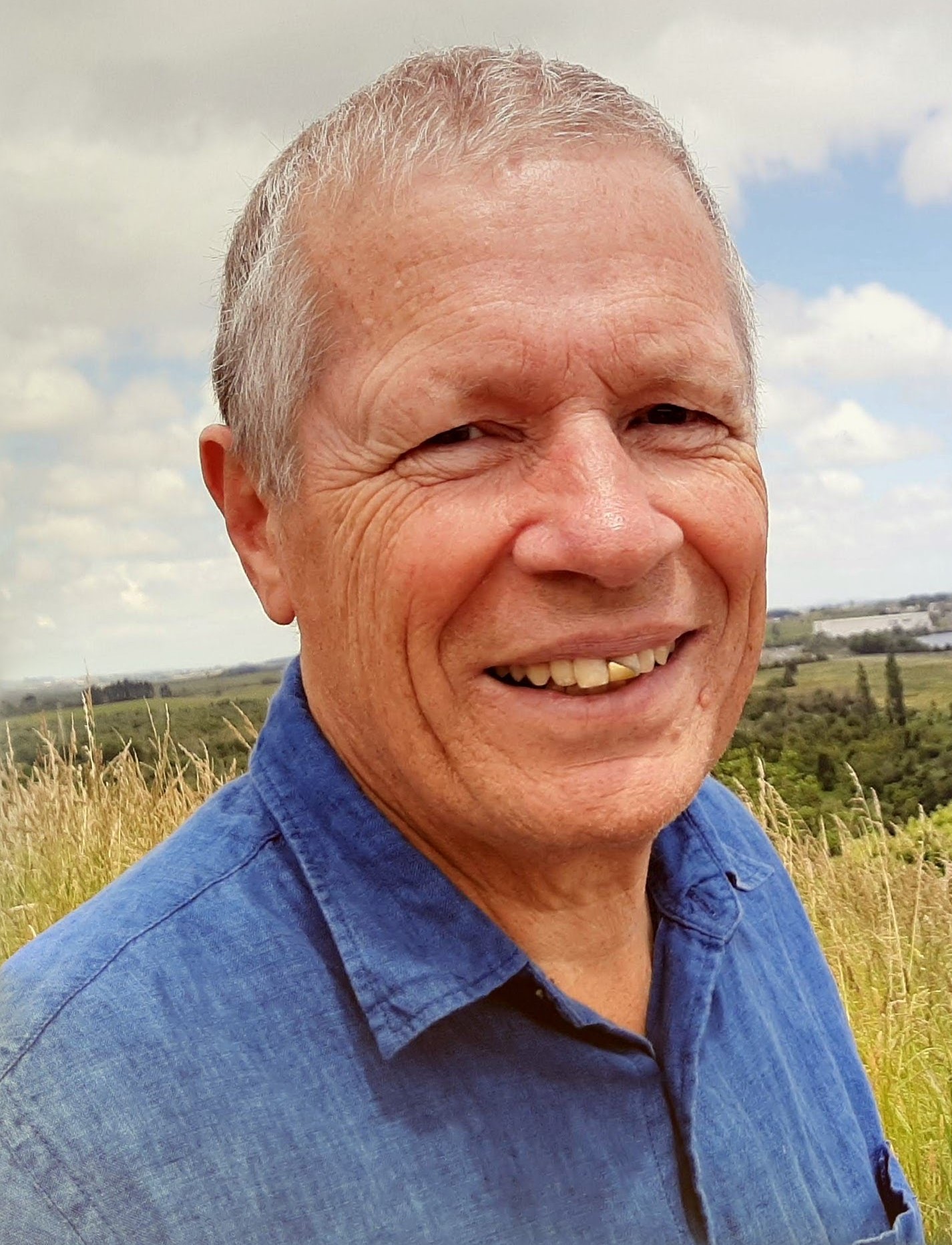
Source: United States Senator for Iowa Chuck Grassley
WASHINGTON – At the National Whistleblower Day celebration on Capitol Hill Wednesday, Sen. Chuck Grassley (R-Iowa) announced he has succeeded in reinstating Federal Bureau of Investigation (FBI) whistleblower Michael DeBey’s clearance and employment with the agency. This is the sixth whistleblower Grassley has successfully restored so far this year.
During his remarks, Grassley also spoke about his work to support patriotic whistleblowers and the important role they play in rooting out waste, fraud and abuse. Grassley is the co-founder and co-chair of the Whistleblower Protection Caucus.
Remarks by Senator Chuck Grassley of Iowa “Whistleblower Appreciation Day” Wednesday, July 30, 2025
It’s an honor to be among patriots here today.
Today, nobody will be treated like a skunk at a picnic.
Whistleblowers too often get the short end of the stick for simply telling the truth.
Instead, whistleblowers ought to be recognized for what they are: patriots and the government’s most powerful tool to root out waste, fraud, and abuse.
So, I’m proud to have introduced the National Whistleblower Appreciation Day resolution for the 12th year in a row.
Throughout my career, I’ve fought for whistleblowers.
I’m committed to ensuring that federal agencies treat whistleblowers fairly and are held accountable for retaliating against them.
That goes for both Republican and Democratic administrations.
When I first was elected to the Senate in 1981, I worked with brave whistleblowers like Ernie Fitzgerald.
Ernie was fired in 1968 by President Nixon for blowing the whistle on waste and fraud in Defense Department contracts.
I worked to pass laws to eliminate fraud that whistleblowers like Ernie told me about.
Now, because of this work, I passed the False Claims Amendment Act in 1986.
It’s helped recover more than $78 billion in fraud so far, and prevented countless billions more.
My “anti-gag” provision also became law. It’s an important sword and shield to protect whistleblowers.
Far too often, federal agencies tried to silence or intimidate whistleblowers through nondisclosure agreements.
My anti-gag provision is designed to put a stop to that.
I also championed laws and legislation to expand whistleblower protections for the Federal Bureau of Investigation (FBI).
This Congress, I introduced much needed legislation to strengthen whistleblower protections for FBI employees.
But just because we’ve introduced legislation and passed good laws doesn’t mean we can stop paying attention.
I’ve worked hard to ensure individuals who retaliate against whistleblowers are held accountable. I’ve also pushed federal agencies to do right by whistleblowers.
IRS whistleblowers Gary Shapley and Joseph Ziegler made legally protected disclosures about government misconduct.
They were retaliated against and sidelined from doing their job.
This year, at my urging, they were taken out of the shadows of retaliation and were promoted by the Treasury Department.
I also pushed the Department of Homeland Security Secretary to end the seven-year nightmare for Customs and Border Protection whistleblowers Mark Jones, Mike Taylor and Fred Wynn.
These brave whistleblowers faced years of retaliation for blowing the whistle on the government’s failure to collect DNA at the border.
At my urging, this year the Department of Homeland Security promoted them and restored their law enforcement credentials.
So, they got their guns and badges back to do their job.
I’ve also worked to restore the security clearances of FBI employees who had them suspended or revoked.
These FBI employees were retaliated against and, as we all know, the FBI’s illegal power move is to take away security clearances.
And it’s not just government whistleblowers who are important.
I’ve introduced legislation to protect private sector whistleblowers from retaliation for exposing waste, fraud, abuse and misconduct.
I’m the lead cosponsor of the bipartisan Expanding Whistleblower Protections for Contractors Act.
That bill increases whistleblower protections for employees of federal contractors and subcontractors.
I also introduced the bipartisan Securities and Exchange Commission Whistleblower Reform Act of 2025.
The bill protects corporate whistleblowers who report violations to the Securities and Exchange Commission.
Additionally, I’m proud to have introduced the bipartisan Artificial Intelligence Whistleblower Protection Act.
That bill is designed to increase transparency and provide whistleblower protections to employees who work in the Artificial Intelligence field.
But like I said, there’s still a lot of work to be done.
The task of supporting whistleblowers doesn’t start and stop with this day or depend on who’s in the White House.
If you make legally protected disclosures, you’re a whistleblower and ought to be protected from retaliation.
This administration has said Mr. Reuvini isn’t a whistleblower.
I’ve publicly disagreed.
The other two people who came forward about Mr. Bove are also whistleblowers.
Here’s my message to all whistleblowers in this room: just because I may disagree with the conclusions in a whistleblower disclosure, it doesn’t mean that I don’t support a whistleblower’s right to come forward.
And regardless of the content of the disclosure, every whistleblower must be protected from retaliation.
That’s why last week, I wrote President Trump about the importance of protecting whistleblowers from retaliation.
As this administration reduces the federal workforce, it must ensure terminations aren’t done because a protected disclosure was made. This administration, just like all the rest, has an obligation to comply with whistleblower laws.
In my letter, I also reminded President Trump of my outstanding request that he hold a Rose Garden Ceremony for whistleblowers.
I’ve asked every president since Ronald Reagan to have a Rose Garden ceremony honoring whistleblowers.
I’m not giving up on that request just like I’m not giving up on any of you.
Whistleblowers are some of the bravest people out there. It takes guts to stick your neck out and report misconduct.
All of you here have put your careers, livelihoods and reputations on the line in service to our great country.
Source: United States Senator for Iowa Chuck Grassley
WASHINGTON – At the National Whistleblower Day celebration on Capitol Hill Wednesday, Sen. Chuck Grassley (R-Iowa) announced he has succeeded in reinstating Federal Bureau of Investigation (FBI) whistleblower Michael DeBey’s clearance and employment with the agency. This is the sixth whistleblower Grassley has successfully restored so far this year.
During his remarks, Grassley also spoke about his work to support patriotic whistleblowers and the important role they play in rooting out waste, fraud and abuse. Grassley is the co-founder and co-chair of the Whistleblower Protection Caucus.
Remarks by Senator Chuck Grassley of Iowa “Whistleblower Appreciation Day” Wednesday, July 30, 2025
It’s an honor to be among patriots here today.
Today, nobody will be treated like a skunk at a picnic.
Whistleblowers too often get the short end of the stick for simply telling the truth.
Instead, whistleblowers ought to be recognized for what they are: patriots and the government’s most powerful tool to root out waste, fraud, and abuse.
So, I’m proud to have introduced the National Whistleblower Appreciation Day resolution for the 12th year in a row.
Throughout my career, I’ve fought for whistleblowers.
I’m committed to ensuring that federal agencies treat whistleblowers fairly and are held accountable for retaliating against them.
That goes for both Republican and Democratic administrations.
When I first was elected to the Senate in 1981, I worked with brave whistleblowers like Ernie Fitzgerald.
Ernie was fired in 1968 by President Nixon for blowing the whistle on waste and fraud in Defense Department contracts.
I worked to pass laws to eliminate fraud that whistleblowers like Ernie told me about.
Now, because of this work, I passed the False Claims Amendment Act in 1986.
It’s helped recover more than $78 billion in fraud so far, and prevented countless billions more.
My “anti-gag” provision also became law. It’s an important sword and shield to protect whistleblowers.
Far too often, federal agencies tried to silence or intimidate whistleblowers through nondisclosure agreements.
My anti-gag provision is designed to put a stop to that.
I also championed laws and legislation to expand whistleblower protections for the Federal Bureau of Investigation (FBI).
This Congress, I introduced much needed legislation to strengthen whistleblower protections for FBI employees.
But just because we’ve introduced legislation and passed good laws doesn’t mean we can stop paying attention.
I’ve worked hard to ensure individuals who retaliate against whistleblowers are held accountable. I’ve also pushed federal agencies to do right by whistleblowers.
IRS whistleblowers Gary Shapley and Joseph Ziegler made legally protected disclosures about government misconduct.
They were retaliated against and sidelined from doing their job.
This year, at my urging, they were taken out of the shadows of retaliation and were promoted by the Treasury Department.
I also pushed the Department of Homeland Security Secretary to end the seven-year nightmare for Customs and Border Protection whistleblowers Mark Jones, Mike Taylor and Fred Wynn.
These brave whistleblowers faced years of retaliation for blowing the whistle on the government’s failure to collect DNA at the border.
At my urging, this year the Department of Homeland Security promoted them and restored their law enforcement credentials.
So, they got their guns and badges back to do their job.
I’ve also worked to restore the security clearances of FBI employees who had them suspended or revoked.
These FBI employees were retaliated against and, as we all know, the FBI’s illegal power move is to take away security clearances.
And it’s not just government whistleblowers who are important.
I’ve introduced legislation to protect private sector whistleblowers from retaliation for exposing waste, fraud, abuse and misconduct.
I’m the lead cosponsor of the bipartisan Expanding Whistleblower Protections for Contractors Act.
That bill increases whistleblower protections for employees of federal contractors and subcontractors.
I also introduced the bipartisan Securities and Exchange Commission Whistleblower Reform Act of 2025.
The bill protects corporate whistleblowers who report violations to the Securities and Exchange Commission.
Additionally, I’m proud to have introduced the bipartisan Artificial Intelligence Whistleblower Protection Act.
That bill is designed to increase transparency and provide whistleblower protections to employees who work in the Artificial Intelligence field.
But like I said, there’s still a lot of work to be done.
The task of supporting whistleblowers doesn’t start and stop with this day or depend on who’s in the White House.
If you make legally protected disclosures, you’re a whistleblower and ought to be protected from retaliation.
This administration has said Mr. Reuvini isn’t a whistleblower.
I’ve publicly disagreed.
The other two people who came forward about Mr. Bove are also whistleblowers.
Here’s my message to all whistleblowers in this room: just because I may disagree with the conclusions in a whistleblower disclosure, it doesn’t mean that I don’t support a whistleblower’s right to come forward.
And regardless of the content of the disclosure, every whistleblower must be protected from retaliation.
That’s why last week, I wrote President Trump about the importance of protecting whistleblowers from retaliation.
As this administration reduces the federal workforce, it must ensure terminations aren’t done because a protected disclosure was made. This administration, just like all the rest, has an obligation to comply with whistleblower laws.
In my letter, I also reminded President Trump of my outstanding request that he hold a Rose Garden Ceremony for whistleblowers.
I’ve asked every president since Ronald Reagan to have a Rose Garden ceremony honoring whistleblowers.
I’m not giving up on that request just like I’m not giving up on any of you.
Whistleblowers are some of the bravest people out there. It takes guts to stick your neck out and report misconduct.
All of you here have put your careers, livelihoods and reputations on the line in service to our great country.
The FBI’s upgrade of its Wellington office demonstrates the strength of the Five Eyes partnership and enhances the safety and security of New Zealanders, the Minister Responsible for the GCSB and NZSIS Judith Collins and Police Minister Mark Mitchell say.
The Ministers met with FBI Director Kash Patel, who officially opened the new Wellington office at the US Embassy earlier today and installed a permanent Legat position.
“We exchanged a range of insights on areas such as trans-national organised crime, counter-terrorism, cyber-security and espionage,” Ms Collins says.
“NZSIS and GCSB relationships with overseas partners like the FBI, as well as their support to New Zealand Police, are an important part of how the intelligence agencies deliver on their mission to keep New Zealand safe and secure.”
Mr Mitchell says Director Patel’s visit should send a clear message to criminals whose offending causes harm in our communities, wherever they are, that they cannot hide behind an international border.
“New Zealand Police are continually working with their overseas counterparts like the FBI to catch those engaged in illegal, harmful activities such as drug smuggling and online child exploitation, as well disrupting and preventing this offending from happening in the first place,” he says.
“Police are part of a global effort on law enforcement. Director Patel’s visit was an excellent opportunity to share our common concerns while reinforcing the importance of New Zealand and the US working together to protect our citizens.”
Director Patel is the most senior member of the US administration to visit New Zealand since the start of President Trump’s second term in office.
Source: United States Senator for Massachusetts Ed Markey
Bill Text (PDF)
Washington (July 30, 2025) – Senator Edward J. Markey (D-Mass.), a member of the Gun Violence Prevention Caucus, along with Senator Elissa Slotkin (D-Mich.) and Representative Marilyn Strickland (WA-10), reintroduced the Gun Violence Prevention Research Act, legislation that would dedicate $50 million each year for the next five years for gun violence prevention research at the Centers for Disease Control and Prevention (CDC).
This legislation arrives at a critical time. After a decades-long prohibition on the CDC’s ability to conduct gun violence prevention research, Congress began to secure $25 million annually for this research in Fiscal Year 2020. However, the Trump administration has effectively dismantled gun violence prevention efforts, decimating the staff at the CDC responsible for this critical research and terminating $158 million—more than half—of federal funding for gun violence prevention programs at the Department of Justice. The Gun Violence Prevention Research Act would help ensure we have the tools to stem the scourge of gun violence in our communities.
“Stopping the spread of our nation’s gun violence epidemic requires action on the reforms we know are essential and effective,” said Senator Markey. “We must invest more to study the root causes of violence and develop evidence-based solutions. This legislation would allow our nation’s top medical, scientific, and public health researchers to conduct studies that would save lives. It is critical that we chart a path out of this public health crisis.”
“Gun violence is a uniquely American crisis that continues to impact communities across Michigan and our country,” said Senator Slotkin. “As the first Member of Congress to have two mass shootings in my former House district—Oxford High School and Michigan State University—I’ve seen first-hand the devasting toll gun violence has on our communities. As elected officials, our most basic responsibility is to protect our children from the things that are truly harming them. We must treat this epidemic like the national security threat that it is. And that means using every tool in the toolbox. Let’s get this bill across the finish line.”
“Make no mistake: gun violence is preventable. Republicans actively choose to watch children, mothers, fathers, and Americans gunned down in deference to the gun lobby,” said Representative Strickland. “We must root out the gun violence crisis in our nation. This legislation will simply treat gun violence as the public health crisis it is, and allow us to research it so we can take steps toward saving lives.”
Cosponsors of the Gun Violence Prevention Research Act include Senators Ruben Gallego (D-Ariz.), Angus King (I-Maine), Chuck Schumer (D-N.Y.), Adam Schiff (D-Calif.), Martin Heinrich (D-N.M.), Alex Padilla (D-Calif.), John Fetterman (D-Penn.), Maria Cantwell (D-Wash.), Richard Blumenthal (D-Conn.), Jack Reed (D-R.I.), Chris Murphy (D-Conn.), Tina Smith (D-Minn.), Tim Kaine (D-Va.), Chris Coons (D-Del.), Elizabeth Warren (D-Mass.), Amy Klobuchar (D-Minn.), Lisa Blunt Rochester (D-Del.), Mark Warner (D-Va.), Tammy Baldwin (D-Wisc.), Brian Schatz (D-Hawaii), Angela Alsobrooks (D-Md.), Peter Welch (D-Vt.), Cory Booker (D-N.J.), Chris Van Hollen (D-Md.), Kirsten Gillibrand (D-N.Y.), Richard Durbin (D-Ill.), Mazie Hirono (D-Hawaii), Bernie Sanders (I-Vt.), Jeff Merkley (D-Ore.), Ron Wyden (D-Ore.), and Tammy Duckworth (D-Ill.).
The Gun Violence Prevention Research Act is endorsed by Brady, Everytown, March For Our Lives, and Giffords.
In June 2025, Senator Markey reintroduced five gun violence prevention bills, including the 3D Printed Gun Safety Act, Keeping Gun Dealers Honest Act, Gun Violence Prevention Through Financial Intelligence Act, Making America Safe and Secure (MASS) Act, and Protecting Kids from Gun Marketing Act. This package of bills would significantly decrease the pervasive threat of gun violence across the United States by putting an end to the three-dimensional (3D) printing and distribution of “ghost guns,” strengthen accountability measures for irresponsible gun dealers, help banks detect and report suspicious activity related to mass shootings, establish rules that prohibit the marketing of firearms to children, and strengthen state-by-state gun-licensing regulations through federal incentives.
In April 2025, Senator Markey and Representative Dwight Evans (PA-03) introduced the Resources for Victims of Gun Violence Act, legislation that would help all victims of gun violence—from survivors to their loved ones, coworkers, and classmates—identify and access resources to help meet medical, legal, financial, and other needs.
Senator Markey first introduced the Gun Violence Prevention Research Act in 2023.
Source: People’s Republic of China in Russian – People’s Republic of China in Russian –
An important disclaimer is at the bottom of this article.
Source: People’s Republic of China – State Council News
JERUSALEM, July 29 (Xinhua) — Israeli Prime Minister Benjamin Netanyahu is expected to present a plan to annex part of the Gaza Strip to the country’s security cabinet, the Israeli newspaper Haaretz reported on Monday evening.
According to her, B. Netanyahu told the ministers that Israel gave Hamas several days to agree on a ceasefire. If it refuses the agreement, Israel will begin to gradually annex parts of the Gaza Strip until the Palestinian movement surrenders, the prime minister added.
The article notes that B. Netanyahu has chosen this course of action in order to secure the support of the far-right Religious Zionism party, which opposes both the ceasefire and increased humanitarian aid to Gaza. Keeping this party in the coalition is crucial to preventing the collapse of the current government.
According to media reports, Religious Zionism leader and cabinet member Bezalel Smotrich told his associates that the party is pushing a “good strategic move” and it will soon become clear whether it will be successful.
Haaretz writes that during his conversations with ministers, B. Netanyahu stated that his plan was approved by the administration of US President Donald Trump.
Also on Monday, the Prime Minister’s Office said Israel would continue to work with international organizations, as well as the United States and European countries, to ensure that large amounts of humanitarian aid reach the Gaza Strip. “While the situation in Gaza remains difficult and Israel works to ensure that aid reaches the Strip, Hamas is benefiting from attempts to create the impression of a humanitarian crisis,” the office said. -0-
Please note: This information is raw content obtained directly from the source of the information. It is an accurate report of what the source claims and does not necessarily reflect the position of MIL-OSI or its clients.
The Thailand–Cambodia border, where fighting has raged since last week, was calm on Tuesday following a ceasefire deal and military commanders from both sides are set to meet for talks later in the day, acting Thai Prime Minister Phumtham Wechayachai said.
Phumtham and Cambodian Prime Minister Hun Manet met in Malaysia on Monday and agreed to halt their deadliest conflict in more than a decade following five days of intense fighting that killed at least 38 people, mostly civilians, and displaced over 300,000.
The Thai army said in a statement there had been attacks by Cambodian troops in at least five locations early on Tuesday, violating the ceasefire that had come into effect from midnight, and Thailand‘s military had retaliated proportionately.
Phumtham played down the clashes, and said he had spoken with Cambodia‘s defence minister ahead of the talks between military commanders.
“There is no escalation,” Phumtham told reporters. “Right now things are calm.”
Thai military officials in two areas had met with their Cambodian counterparts, but commanders along the stretch of the frontier that has seen the heaviest fighting during the conflict were yet to hold talks, Thai army spokesman Major Gen. Winthai Suvaree said in a statement.
The parley had been scheduled for 10 a.m. local time (0300 GMT), but it was postponed and no new time had yet been set, he added.
Maly Socheata, a spokesperson for the Cambodian Defence Ministry, said at a briefing on Tuesday that there had been no new fighting along the border.
Vehicular traffic and daily activity resumed in the Kantharalak district of Thailand‘s Sisaket province on Tuesday, about 30 km (20 miles) from the frontlines, where Thai and Cambodian troops remain amassed.
Cars and motorbikes returned to the streets, which had been largely empty since the border clashes began on Thursday, with military vehicles among civilian traffic.
Chaiya Phumjaroen, 51, said he returned to town to reopen his shop early on Tuesday, after hearing of the ceasefire deal on the news.
“I am very happy that a ceasefire happened,” he said. “If they continue to fight, we have no opportunity to make money.”
TALKS AND TRADE
The Southeast Asian neighbours have wrangled for decades over their disputed frontier and have been on a conflict footing since the killing of a Cambodian soldier in a skirmish late in May, which led to a troop buildup on both sides and a full-blown diplomatic crisis.
Monday’s peace talks came after a sustained push by Malaysian Premier Anwar Ibrahim and U.S. President Donald Trump, with the latter warning Thai and Cambodian leaders that trade negotiations would not progress if fighting continued.
Thailand and Cambodia face a tariff of 36% on their goods in the U.S., their biggest export market, unless a reduction can be negotiated. After the ceasefire deal was reached, Trump said he had spoken to both leaders and had instructed his trade team to restart tariff talks.
Pichai Chunhavajira, Thailand‘s finance minister, said on Tuesday that trade talks with Washington are expected to be concluded before August 1, and that U.S. tariffs on the country are not expected to be as high as 36%.
U.S. President Donald Trump said on Tuesday that he was not seeking a summit with Chinese President Xi Jinping, but added that he may visit China at Xi’s invitation, which Trump said had been extended.
“I may go to China, but it would only be at the invitation of President Xi, which has been extended. Otherwise, no interest!,” Trump said on Truth Social.
Aides to Trump and Xi have discussed a potential meeting between the leaders during a trip by the U.S. president to Asia later this year, sources previously told Reuters.
A trip would be the first face-to-face encounter between the men since Trump’s second term in office, at a time when trade and security tensions between the two superpower rivals remain elevated.
While plans for a meeting have not been finalized, discussions on both sides of the Pacific have included a possible Trump stopover around the time of the Asia-Pacific Economic Cooperation summit in South Korea or talks on the sidelines of the October 30-November 1 event, the people said.
The third round of U.S.-China trade talks taking place in Stockholm this week may lay the groundwork ahead of a leaders’ summit in the autumn, analysts say.
A new flare-up of tariffs and export controls would likely impact any plans for a meeting with Xi.
U.S. President Donald Trump said on Monday many people were starving in Gaza and suggested Israel could do more on humanitarian access, as Palestinians struggled to feed their children a day after Israel declared steps to improve supplies.
As the death toll from two years of war in Gaza nears 60,000, a growing number of people are dying from starvation and malnutrition, Gaza health authorities say, with images of starving children shocking the world and fuelling international criticism of Israel over sharply worsening conditions.
Describing starvation in Gaza as real, Trump’s assessment put him at odds with Israeli Prime Minister Benjamin Netanyahu, who said on Sunday “there is no starvation in Gaza” and vowed to fight on against the Palestinian militant group Hamas – a statement he reposted on X on Monday.
However, Netanyahu later on Monday described the situation in Gaza as “difficult”, saying his country was working to ensure aid delivery to the besieged strip.
“Israel will continue to work with international agencies as well as the U.S. and European nations to ensure that large amounts of humanitarian aid flows into the Gaza Strip,” Netanyahu said, according to a statement from his office.
Trump, speaking during a visit to Scotland, said Israel has a lot of responsibility for aid flows, and that a lot of people could be saved. “You have a lot of starving people,” he said.
“We’re going to set up food centres,” with no fences or boundaries to ease access, Trump said. The U.S. would work with other countries to provide more humanitarian assistance to the people of Gaza, including food and sanitation, he said.
A White House spokesperson said additional details on the food centres would be “forthcoming.”
‘WHEN YOU GO TO BED HUNGRY, YOU WAKE UP HUNGRY’
On Monday, the Gaza health ministry said at least 14 people had died in the past 24 hours of starvation and malnutrition, bringing the war’s death toll from hunger to 147, including 88 children, most in just the last few weeks.
Israel announced several measures over the weekend, including daily humanitarian pauses to fighting in three areas of Gaza, new safe corridors for aid convoys, and airdrops. The decision followed the collapse of ceasefire talks on Friday.
Wessal Nabil from Beit Lahiya in northern Gaza described the struggle of trying to feed her three children. “When you go to bed hungry, you wake up hungry. We distract them with anything … to make them calm down,” she told Reuters.
“I call on the world, on those with merciful hearts, the compassionate, to look at us with compassion, to be kind to us, to stand with us until aid comes in and ensure it reaches us.”
Two Israeli defence officials said the international pressure prompted the new Israeli measures, as did the worsening conditions on the ground.
U.N. agencies said a long-term and steady supply of aid was needed. The World Food Programme said 60 trucks of aid had been dispatched – short of target. Almost 470,000 people in Gaza are enduring famine-like conditions, with 90,000 women and children in need of specialist nutrition treatments, it said.
“Our target at the moment, every day is to get 100 trucks into Gaza,” WFP Regional Director for the Middle East, North Africa and Eastern Europe, Samer AbdelJaber, told Reuters.
Jan Egeland, head of the Norwegian Refugee Council, told Reuters the situation is catastrophic.
“At this time, children are dying every single day from starvation, from preventable disease. So time has run out.”
Netanyahu has denied any policy of starvation towards Gaza, saying aid supplies would be kept up whether Israel was negotiating a ceasefire or fighting.
A spokesperson for COGAT, the Israeli military aid coordination agency, said Israel had not placed a time limit on the humanitarian pauses in its military operation, a day after U.N. aid chief Tom Fletcher said Israel had decided “to support a one-week scale-up of aid”.
“We hope this pause will last much longer than a week, ultimately turning into a permanent ceasefire,” Fletcher’s spokesperson, Eri Kaneko, said on Monday.
Netanyahu’s office did not immediately respond to a request for comment.
Compared to last week, U.N. spokesperson Farhan Haq said, there had only been a “small uptick” in the amount of aid being transported into Gaza since Israel started the humanitarian pauses.
TRUMP SAYS HAMAS DIFFICULT TO DEAL WITH
In his statement on Sunday, Netanyahu said Israel would continue to fight until it achieved the release of remaining hostages held by Hamas and the destruction of its military and governing capabilities.
Trump said Hamas had become difficult to deal with in recent days, but he was talking with Netanyahu about “various plans” to free hostages still held in the enclave.
The war began on October 7, 2023, when Hamas militants attacked communities across the border in southern Israel, killing some 1,200 people and taking another 251 hostage, according to Israeli tallies.
The Gaza health ministry said that 98 Palestinians have been killed by Israeli fire in the past 24 hours.
Some of the trucks that made it into Gaza were seized by desperate Palestinians, and some by armed looters, witnesses said.
The Hamas-run Gaza government said only 87 aid trucks entered the Gaza Strip on Monday, with the majority of trucks looted due to what it described as “direct and systematic Israeli complicity”.
“Currently aid comes for the strong who can race ahead, who can push others and grab a box or a sack of flour. That chaos must be stopped and protection for those trucks must be allowed,” said Emad, 58, who used to own a factory in Gaza City.
The WFP said it has 170,000 metric tons of food in the region, outside Gaza, which would be enough to feed the whole population for the next three months if it gets the clearance to bring into the enclave.
COGAT said more than 120 truckloads of aid were distributed in Gaza on Sunday by the U.N. and international organizations.
More aid was expected on Monday. Qatar said it had sent 49 trucks that arrived in Egypt en route for Gaza. Jordan and the United Arab Emirates airdropped supplies.
Israel cut off aid to Gaza from the start of March in what it said was a means to pressure Hamas into giving up dozens of hostages it still holds, and reopened aid with new restrictions in May. Hamas accuses Israel of using hunger as a weapon.
Israel says it abides by international law but must prevent aid from being diverted by militants, and blames Hamas for the suffering of Gaza’s people.
The United Arab Emirates and Jordan airdropped 25 tonnes of food and humanitarian supplies on Sunday. Israel has further announced daily pauses in its military strikes on Gaza and the opening of humanitarian corridors to facilitate UN aid deliveries.
The UN emergency relief chief, Tom Fletcher, has characterised the next few days as “make or break” for humanitarian agencies trying to reach more than two million Gazans facing “famine-like conditions”.
A third of Gazans have gone without food for several days and 90,000 women and children now require urgent care for acute malnutrition. Local health authorities have reported 147 deaths from starvation so far, 80% of whom are children.
Israeli Prime Minister Benjamin Netanyahu has claimed – without any evidence – “there is no starvation in Gaza”. This claim has been rejected by world leaders, including Netanyahu ally US President Donald Trump.
Famine expert Alex de Waal has called the famine in Gaza without precedent:
[…] there’s no case of such minutely engineered, closely monitored, precisely designed mass starvation of a population as is happening in Gaza today.
While the UN has welcomed the partial lifting of the blockade, the current aid being allowed into Gaza will not be enough to avert a wider catastrophe, due to the severity and depth of hunger in Gaza and the health needs of the people.
According to the UN World Food Programme, which has enough food stockpiled to feed all of Gaza for three months, only one thing will work:
An agreed ceasefire is the only way to reach everyone.
Airdrops a ‘distraction and a smokescreen’
Air-dropping food supplies is considered a last resort due to the undignified and unsafe manner in which the aid is delivered.
The Global Protection Cluster, a network of non-governmental organisations and UN agencies, shared a story from a mother in Al Karama, east of Gaza City, whose home was hit by an airdropped pallet, causing the roof to collapse:
Immediately following the impact, a group of people armed with knives rushed towards the house, while the mother locked herself and her children in the remaining room to protect her family. They did not receive any assistance and are fearful for their safety.
Air-dropped pallets of food are also inefficient compared with what can be delivered by road.
One truck can carry up to 20 tonnes of supplies. Trucks can also reach Gaza quickly if they are allowed to cross at the scale required. Aid agencies have repeatedly said they have the necessary aid and personnel sitting just one hour away at the border.
Given how ineffective the air drops have been – and will continue to be – the head of the UN Relief Works Agency (UNRWA) for Palestine has called them a “distraction” and a “smokescreen”.
Malnourished women and children need specialised care
De Waal has also made clear how starvation differs from other war crimes – it takes weeks of denying aid for starvation to take hold.
For the 90,000 acutely malnourished women and children who require specialised and supplementary feeding, in addition to medical care, the type of food being air-dropped into Gaza will not help them. Malnourished children require nutritional screening and access to fortified pastes and baby food.
Gaza’s decimated health system is also not able to treat severely malnourished women and children, who are at risk of “refeeding syndrome” when they are provided with nutrients again. This can trigger a fatal metabolic response.
The UN has characterised the limited reopening of aid deliveries to Gaza as a potential “lifeline”, if it’s upheld and expanded.
According to Ciaran Donnelly from the International Rescue Committee, what’s needed is “tragically simple”: Israel must fully open the Gaza borders to allow aid and humanitarian personnel to flood in.
Israel must also guarantee safe conditions for the dignified distribution of aid that reaches everyone, including women, children, the elderly and people with disabilities. The level of hunger and insecurity mean these groups are at high risk of exclusion.
The people of Gaza have the world’s attention – for now. They have endured increasingly dehumanising conditions – including the risk of being shot trying to access aid – under the cover of war for more than 21 months.
Two leading Israeli human rights organisations have just publicly called Israel’s war on Gaza “a genocide”. This builds on mounting evidence compiled by the UN and other experts that supports the same conclusion, triggering the duty under international law for all states to act to prevent genocide.
These obligations require more than words – states must exercise their full diplomatic leverage to pressure Israel to let aid in at the scale required to avert famine. States must also pressure Israel to extend its military pauses into the only durable solution – a permanent ceasefire.
Amra Lee does not work for, consult, own shares in or receive funding from any company or organisation that would benefit from this article, and has disclosed no relevant affiliations beyond their academic appointment.
July 29 2025 – The Federal Reserve is expected to leave interest rates on hold Wednesday, despite mounting pressure from President Donald Trump – setting up a direct standoff between the world’s most influential central bank and a White House demanding immediate stimulus.
This is the warning from Nigel Green, CEO of global financial advisory giant deVere Group ahead of the Fed’s critical interest rate decision that will set the tone for markets and the US economy for the rest of 2025.
He says: “Trump has made no secret of his frustration. Senior administration figures have been pressing the Fed behind the scenes, while the President has repeatedly gone public with calls for lower borrowing costs.
“But the central bank appears likely to resist, at least for now, holding firm in the face of aggressive political intervention.
“In doing so, it could trigger another direct standoff with Trump.
Nigel Green continues: “This is a collision between a political push for immediate stimulus and a central bank trying to defend its institutional independence. The stakes go far beyond this week’s rate decision.”
Markets are already attuned to the tension. A rate hold is largely priced in. But investors are watching for what comes next: the tone of Powell’s message, and Trump’s reaction if the Fed refuses to deliver the cuts he’s demanding.
“The pressure campaign is about to intensify,” the deVere CEO notes.
“Trump blames the Fed for slowing the economy, for capping the market, for anything that doesn’t go his way. This will, again, become personal with Fed Chair, Jerome Powell.”
The economic backdrop gives the Fed cover to pause. Inflation has cooled but remains above target. Labor markets are still tight. Financial conditions are already easier than they were at the start of the year. There is no immediate economic case for cutting—but there is a clear political one.
“This is about optics as much as outcomes,” says Nigel Green. “The White House wants momentum. The Fed wants breathing room. Neither side is likely to back down.”
What happens next matters. If Trump launches a fresh public offensive—as expected—it could shift sentiment quickly.
“The dollar could strengthen on Fed firmness, while equities and emerging markets wobble on fears of a widening institutional rift.”
He adds: “Markets can handle steady rates. What they don’t handle well is institutional volatility. A public fight between the President and the Fed injects uncertainty into every asset class.”
The President has options. If monetary easing doesn’t come through, he may accelerate fiscal promises, hint at further executive action, or reignite questions over Jerome Powell’s future.
This administration has already shown it’s willing to blur lines between economic stewardship and political advantage.
“Trump wants control of the economic narrative and he’s running out of patience,” concludes Nigel Green.
“If the Fed doesn’t move, he’ll move the spotlight. This could mean spending pledges, it could mean trade posturing, it could mean fresh attacks on Powell. All of it adds risk.”
deVere Group is one of the world’s largest independent advisors of specialist global financial solutions to international, local mass affluent, and high-net-worth clients. It has a network of offices around the world, more than 80,000 clients, and $14bn under advisement.
The first images of Earth were captured in 1946 through a motion camera picture. The world stood still from far above while its floor held the chaos on its surface and beneath all the land. Almost eight decades from then, the world will now see what is on and under Earth in remarkable detail, all thanks to the collaborative project between ISRO and NASA called “NISAR.” Slated to be launched on July 30 from India’s Satish Dhawan Space Center,the mission is set to change the course of how we see this planet.
What exactly is NISAR?
NISAR (NASA-ISRO Synthetic Aperture Radar) aims to monitor Earth’s surface using advanced radar imaging. A three-dimensional view of Earth will be generated through the two radars of NISARthat will be able to track changes in the surface with accuracy of a fraction of an inch. This project, which cost around $1.4 billion, is more than just a testament of collaboration between NASA and ISRO but a scientific marvel in itself. NISAR is the most advanced radar system that will generate around 80 terabytes of data per day. That is equivalent to one hundred and fifty hard drives that can store 512 GB. This is the maximum amount of data that will be generated per day by any Earth satellite that has ever been launched by NASA or ISRO. TheS-Band Radar of NISAR was developed by ISRO’s center in Ahmedabad, and the L-Band Radar was produced by NASA in Southern California. The labelling “L and S Band” is attributed to the microwave bandwidth regions from which the radar will collect the data.
How will this data from NISAR change things for scientists?
NISAR will map changes on the surface of Earth.Broadly, the applications can be seen in natural hazard monitoring, assessment of sea, ice, and glaciers, and also in crop management. The satellite will be able to see through clouds, rain, and in both day and night. The data will be able to provide insights into the time of glacial melting and provide unprecedented coverage ofAntarctica. Moreover, through NISAR, it will be possible to identify the parts of fault lines that move slowly and detect land movement essential for understanding and detecting earthquakes. Earthquakes have damaged large dams, like Koyna in 1967 and Shih-Gang in 1999, due to shaking or fault movement. NISAR satellite data can help prevent such failures by mapping ground shifts and fault risks with high precision.
The satellite will be used for ecosystem monitoring for land and ice-covered surfaces twice every twelve days and will also include parts of Earth that were not monitored so rigorously and with such frequency in the past. From forest canopies to croplands and from ice melts to land movements, NISAR will cover everything. Such detailed monitoring with advanced radar systems will thus paint a fresh picture of the planet in front of scientists. The data collected by NISAR is open access and is expected to unravel details of land movement and of ecosystems that may provide novel insights.From scientists to policymakers, this data will revolutionize our understanding of the planet.
Space Diplomacy and India’s new chapter in space
The NISAR project is critical to the US and India’s pioneering year of civil space cooperation. It was only in February 2025 when PM Modi visited the US and met President Donald Trump; the leaders hailed 2025 as a pioneering year for the U.S.-India civil space cooperation. The cooperation saw a bright beginning with the AXIOM Mission where Indian astronaut Shubhanshu Shukla traveled to space in a collaborative mission with NASA, making him only the second after Rakesh Sharma after a gap of almost four decades. It is clear that India is scripting a new chapter in space diplomacy, and it is not restricted only to the USA. ISRO has ongoing collaborative missions with other countries like France,Japan, Australia, Russia, Italy, and Europe. Given the success rate of ISRO, it has also become a key player in foreign launches with 433 foreign satellite launches from 34 countries. ISRO is pioneering space diplomacy through strategic international collaborations, fostering global cooperation and scientific advancement. By sharing expertise, resources, and satellite data, ISRO enhances global space research, promotes peaceful exploration, and positions India as a leader in space diplomacy.
Radar, Real-Time, and Responsibility
The NISAR mission marks a monumental leap in Earth observation, uniting ISRO and NASA in a shared vision to unravel our planet’s dynamic processes. By delivering unprecedented radar data, NISAR will empower scientists and policymakers to tackle climate change, natural disasters, and sustainable resource management with newfound precision. Beyond its scientific impact, the mission underscores India’s growing stature in space diplomacy, forging global partnerships that advance peaceful exploration and collective knowledge. As ISRO continues to collaborate with nations like the U.S., France, and Japan, NISAR stands as a beacon of innovation, cooperation, and India’s leadership in shaping the future of space exploration.
(Pooja Mishra is a Content Researcher at DD India)
PANAMA CITY, July 29, 2025 (GLOBE NEWSWIRE) — Gate, a leading global cryptocurrency exchange, and World Liberty Financial (WLFI), the developer of a pioneering DeFi protocol and governance platform inspired by President Donald J. Trump, jointly announced a major milestone in the growing adoption of USD1, a USD-backed stablecoin issued by WLFI. According to on-chain data as of today, Gate has officially become the second-largest holder of USD1 among all centralized exchanges, trailing only Binance.
The surge in USD1 holdings on Gate was driven by the launch of Ika (IKA) on Gate Launchpad on July 26. The Launchpad campaign supports subscriptions in USD1 and Gate Token (GT), attracting substantial user participation and stablecoin inflow.
According to on-chain data, most USD1 liquidity is currently concentrated on the BNB Smart Chain (BSC), with smaller but notable reserves on Ethereum (ETH). Gate currently holds approximately $170 million USD1 on BSC, ranking second among CEXs with an additional $20 million USD1 on Ethereum, ranking first among CEXs on that chain. This correlates closely with the total USD1 allocation of 196 million tokens contributed to the IKA Launchpad event to date.
In total, Gate Launchpad with $IKA has seen user contributions surpass 200 million USD1 and 5.33 million GT, worth approximately $97.5 million, marking one of the largest Launchpad commitments in Gate’s recent history.
USD1 is a USD-backed stablecoin issued by World Liberty Financial, designed to provide transparent, regulated, and scalable digital dollar access across multiple blockchains. It is backed 1:1 by short-term US government treasuries, US dollar deposits, and other cash equivalents, with real-time audits and multi-chain deployment on BSC, Ethereum, and beyond.
This collaboration signals both parties’ commitment to building an open and compliant PayFi ecosystem—bridging traditional financial assets with next-generation decentralized infrastructure.
Gate, founded in 2013 by Dr. Han, is one of the world’s earliest cryptocurrency exchanges. The platform serves over 33 million users with 3,600+ digital assets and pioneered the industry’s first 100% proof-of-reserves. Beyond core trading services, Gate’s ecosystem includes Gate Wallet, Gate Ventures, and other innovative solutions.
This content does not constitute an offer, solicitation, or recommendation. You should always seek independent professional advice before making investment decisions. Gate may restrict or prohibit certain services in specific jurisdictions. For more information, please read the User Agreement via https://www.gate.com/user-agreement.
About World Liberty Financial
World Liberty Financial (WLFI) is a pioneering decentralized finance (DeFi) protocol and governance platform inspired by the vision of President Donald J. Trump. WLFI develops transparent, secure, and accessible financial tools, including institutional-grade products designed to broaden participation in decentralized finance. WFLI’s USD1 is a stablecoin redeemable 1:1 for the U.S. dollar, 100% backed by short-term U.S. treasuries, cash, and cash equivalents.
Media Contact Frederica Ko Senior PR Manager, Gate Exchange ✉️ Frederica@gate.com
Disclaimer: This content is provided byGate. The statements, views, and opinions expressed in this content are solely those of the content provider and do not necessarily reflect the views of this media platform or its publisher. We do not endorse, verify, or guarantee the accuracy, completeness, or reliability of any information presented. We do not guarantee any claims, statements, or promises made in this article. This content is for informational purposes only and should not be considered financial, investment, or trading advice.Investing in crypto and mining-related opportunities involves significant risks, including the potential loss of capital. It is possible to lose all your capital. These products may not be suitable for everyone, and you should ensure that you understand the risks involved. Seek independent advice if necessary. Speculate only with funds that you can afford to lose. Readers are strongly encouraged to conduct their own research and consult with a qualified financial advisor before making any investment decisions.Neither the media platform nor the publisher shall be held responsible for any fraudulent activities, misrepresentations, or financial losses arising from the content of this press release. In the event of any legal claims or charges against this article, we accept no liability or responsibility. Globenewswire does not endorse any content on this page.
Legal Disclaimer: This media platform provides the content of this article on an “as-is” basis, without any warranties or representations of any kind, express or implied. We assume no responsibility for any inaccuracies, errors, or omissions. We do not assume any responsibility or liability for the accuracy, content, images, videos, licenses, completeness, legality, or reliability of the information presented herein. Any concerns, complaints, or copyright issues related to this article should be directed to the content provider mentioned above.
The United Arab Emirates and Jordan airdropped 25 tonnes of food and humanitarian supplies on Sunday. Israel has further announced daily pauses in its military strikes on Gaza and the opening of humanitarian corridors to facilitate UN aid deliveries.
The UN emergency relief chief, Tom Fletcher, has characterised the next few days as “make or break” for humanitarian agencies trying to reach more than two million Gazans facing “famine-like conditions”.
A third of Gazans have gone without food for several days and 90,000 women and children now require urgent care for acute malnutrition. Local health authorities have reported 147 deaths from starvation so far, 80% of whom are children.
Israeli Prime Minister Benjamin Netanyahu has claimed – without any evidence – “there is no starvation in Gaza”. This claim has been rejected by world leaders, including Netanyahu ally US President Donald Trump.
Famine expert Alex de Waal has called the famine in Gaza without precedent:
[…] there’s no case of such minutely engineered, closely monitored, precisely designed mass starvation of a population as is happening in Gaza today.
While the UN has welcomed the partial lifting of the blockade, the current aid being allowed into Gaza will not be enough to avert a wider catastrophe, due to the severity and depth of hunger in Gaza and the health needs of the people.
According to the UN World Food Programme, which has enough food stockpiled to feed all of Gaza for three months, only one thing will work:
An agreed ceasefire is the only way to reach everyone.
Airdrops a ‘distraction and a smokescreen’
Air-dropping food supplies is considered a last resort due to the undignified and unsafe manner in which the aid is delivered.
The Global Protection Cluster, a network of non-governmental organisations and UN agencies, shared a story from a mother in Al Karama, east of Gaza City, whose home was hit by an airdropped pallet, causing the roof to collapse:
Immediately following the impact, a group of people armed with knives rushed towards the house, while the mother locked herself and her children in the remaining room to protect her family. They did not receive any assistance and are fearful for their safety.
Air-dropped pallets of food are also inefficient compared with what can be delivered by road.
One truck can carry up to 20 tonnes of supplies. Trucks can also reach Gaza quickly if they are allowed to cross at the scale required. Aid agencies have repeatedly said they have the necessary aid and personnel sitting just one hour away at the border.
Given how ineffective the air drops have been – and will continue to be – the head of the UN Relief Works Agency (UNRWA) for Palestine has called them a “distraction” and a “smokescreen”.
Malnourished women and children need specialised care
De Waal has also made clear how starvation differs from other war crimes – it takes weeks of denying aid for starvation to take hold.
For the 90,000 acutely malnourished women and children who require specialised and supplementary feeding, in addition to medical care, the type of food being air-dropped into Gaza will not help them. Malnourished children require nutritional screening and access to fortified pastes and baby food.
Gaza’s decimated health system is also not able to treat severely malnourished women and children, who are at risk of “refeeding syndrome” when they are provided with nutrients again. This can trigger a fatal metabolic response.
The UN has characterised the limited reopening of aid deliveries to Gaza as a potential “lifeline”, if it’s upheld and expanded.
According to Ciaran Donnelly from the International Rescue Committee, what’s needed is “tragically simple”: Israel must fully open the Gaza borders to allow aid and humanitarian personnel to flood in.
Israel must also guarantee safe conditions for the dignified distribution of aid that reaches everyone, including women, children, the elderly and people with disabilities. The level of hunger and insecurity mean these groups are at high risk of exclusion.
The people of Gaza have the world’s attention – for now. They have endured increasingly dehumanising conditions – including the risk of being shot trying to access aid – under the cover of war for more than 21 months.
Two leading Israeli human rights organisations have just publicly called Israel’s war on Gaza “a genocide”. This builds on mounting evidence compiled by the UN and other experts that supports the same conclusion, triggering the duty under international law for all states to act to prevent genocide.
These obligations require more than words – states must exercise their full diplomatic leverage to pressure Israel to let aid in at the scale required to avert famine. States must also pressure Israel to extend its military pauses into the only durable solution – a permanent ceasefire.
Amra Lee does not work for, consult, own shares in or receive funding from any company or organisation that would benefit from this article, and has disclosed no relevant affiliations beyond their academic appointment.
Source: People’s Republic of China in Russian – People’s Republic of China in Russian –
An important disclaimer is at the bottom of this article.
Source: People’s Republic of China – State Council News
MADRID, July 29 (Xinhua) — Spanish Prime Minister Pedro Sanchez on Monday called on the European Union (EU) to “diversify” the country’s trade relations following the announcement of a new EU-U.S. trade deal late on Sunday.
Speaking at his residence in Madrid ahead of the summer parliamentary recess, P. Sanchez told the press that he “appreciated” “the efforts made by the European Commission.”
He said the trade deal showed that “one of the lessons Europe must learn in the face of the US administration is that we must act together in all aspects: in strategic autonomy and in commercial agreements with other countries.”
“We must diversify our commercial relations with blocs that want to reach an agreement with Europe, such as Mercosur,” said P. Sanchez, stressing that Spain’s foreign policy is based on “commitment to peace, reality and cooperation between nations.”
US President Donald Trump and European Commission President Ursula von der Leyen announced the new deal on Sunday after trade talks at Trump’s golf club in Turnberry, South Ayrshire, Scotland.
While both leaders described the agreement as a step toward restoring “trade balance” and promoting more equitable bilateral trade, the deal allows the United States to impose broad 15 percent tariffs on EU goods while providing zero-tariff access to a range of strategic U.S. exports. In return, the EU has committed to purchasing $750 billion in U.S. energy and investing an additional $600 billion in the United States. –0–
Please note: This information is raw content obtained directly from the source of the information. It is an accurate report of what the source claims and does not necessarily reflect the position of MIL-OSI or its clients.
The Kremlin said on Tuesday that it had “taken note” of a statement by U.S. President Donald Trump that he was shortening his deadline for Moscow to sign up to a ceasefire in Ukraine or face sanctions.
Trump set a new deadline on Monday of 10 or 12 days for Russia to make progress toward ending the war in Ukraine or face consequences, underscoring frustration with President Vladimir Putin over the 3-1/2-year-old conflict.
Asked about Trump’s statement on Tuesday during a conference call with reporters, the Kremlin kept its remarks short.
“We have taken note of President Trump’s statement yesterday. The special military operation continues,” said Kremlin spokesman Dmitry Peskov, employing the term that Moscow uses for its war effort in Ukraine.
“We remain committed to a peace process to resolve the conflict around Ukraine and to ensure our interests in the course of this settlement.”
Trump threatened on July 14 to impose new sanctions on Russia and buyers of its exports within 50 days, a deadline which would have expired in early September.
But on Monday, during a visit to Britain, he shortened that deadline and said:
“There’s no reason in waiting… We just don’t see any progress being made.”
Trump, who has held half a dozen calls with the Kremlin leader since returning to the White House in January, also said he was “not so interested in talking any more”.
Source: People’s Republic of China in Russian – People’s Republic of China in Russian –
An important disclaimer is at the bottom of this article.
Source: People’s Republic of China – State Council News
LONDON, July 28 (Xinhua) — U.S. President Donald Trump and European Commission President Ursula von der Leyen said on Sunday that the two sides have reached a trade deal under which the United States will impose a basic 15 percent tariff on goods from the European Union.
The statement was made at a joint press briefing on Sunday afternoon following talks at US President Donald Trump’s golf club in Turnberry, Scotland.
Pharmaceuticals were excluded from the deal, while existing 50 percent tariffs on EU steel and aluminum exports to the United States will remain in place.
While both leaders described the deal as a step toward restoring “trade balance” and promoting more equitable bilateral trade, the agreement allows the United States to impose broad 15 percent tariffs on EU goods while providing zero-tariff access to a range of strategic American exports. In return, the EU has committed to purchasing $750 billion in American energy and investing an additional $600 billion in the United States.
At a press briefing, D. Trump said the agreement would allow American cars to re-enter the European market and make American agricultural exports more accessible to the EU. –0–
Please note: This information is raw content obtained directly from the source of the information. It is an accurate report of what the source claims and does not necessarily reflect the position of MIL-OSI or its clients.
Source: People’s Republic of China – State Council News
U.S. President Donald Trump and European Commission President Ursula von der Leyen claimed Sunday that they had reached a trade deal under which the United States would impose a baseline tariff of 15 percent on European Union (EU) goods.
The announcement was made at a joint press briefing Sunday afternoon following trade talks at the Trump Turnberry in South Ayrshire, Scotland.
Although both leaders described the deal as a step toward restoring “trade balance” and promoting more equitable two-way commerce, the agreement allows the United States to impose a broad 15 percent tariff on EU goods while securing zero-tariff access for a range of strategic American exports. In contrast, the EU has pledged to purchase 750 billion U.S. dollars’ worth of American energy and commit an additional 600 billion U.S. dollars in investments in the United States.
At the press briefing, Trump claimed the agreement would enable American cars to re-enter the European market and make U.S. agricultural exports more accessible in the EU. He also said that pharmaceuticals were excluded from the agreement, while existing 50 percent tariffs on EU steel and aluminium exports to the United States will remain in place.
However, at a separate press briefing, von der Leyen clarified that the EU and the U.S. had agreed to include pharmaceuticals under the 15 percent tariff framework. She did not rule out the possibility of further U.S. trade actions in the future.
When asked whether a 15 percent tariff for EU carmakers-up from 2.5 percent under the Biden administration-was a favorable outcome, von der Leyen responded that, prior to this agreement, European vehicles faced a total tariff of 27.5 percent when entering the U.S. market. This included a 25 percent levy imposed during Trump’s previous term in addition to the original 2.5 percent. The new 15 percent rate, she argued, represents a reduction from that level.
Bernd Lange, chair of the European Parliament’s Committee on International Trade, criticized the newly reached deal as “unsatisfactory” and “significantly imbalanced,” warning that it could undermine the EU’s economic stability and job security.
“This is a deal with a slant. Clearly, concessions have been made that are difficult to bear,” Lange said in a statement on Sunday.
Prior to the agreement, over 70 percent of EU exports to the United States were subject to tariffs, including 50 percent on steel and aluminium, 25 percent on automobiles and parts, and a 10 percent duty on most other goods. Trump had warned that if no deal was reached by Aug. 1, the 10 percent tariff would be raised to 30 percent.
Strong retail and business investment keep WA on top, while anticipated rate cuts could eventually support a lift in performance for NSW and Victoria.
Western Australia has once again claimed the top spot in the latest CommSec State of the States report, leading the nation’s economic performance rankings for a fourth consecutive quarter.
South Australia also began 2025 with a bang, climbing from fourth to second, driven by solid gains across several key indicators.
The State of the States report determines which Australian state or territory economy is performing best by tracking eight key economic indicators and comparing the latest observation with decade averages (or the “normal”).
“Western Australia led across several economic measures, taking first place in retail trade, housing finance, and business investment. Meanwhile South Australia ranks first on two indicators – construction work and dwelling starts,” Chief CommSec Economist Ryan Felsman said.
“Overall, the economic performance of Australia’s states and territories is being supported by a combination of slowing inflation, falling interest rates, rising real wages, robust government spending and a solid labour market.
“But economic growth has moderated, held back by slowing public investment, population growth and household spending. The future path will depend on the resiliency of the job market, further interest rate cuts and US President Donald Trump’s trade policies.”
In the July 2025 edition of the State of the States:
Western Australia leads the national performance rankings for the fourth successive report. The state is ranked first on three of the eight economic indicators – retail trade, housing finance and equipment spending.
South Australia has jumped to second from fourth after a strong start to 2025, with a pickup in consumer spending and business investment. South Australia now leads other economies on dwelling starts and construction work done, lifting from second spot in the previous quarter.
Queensland stays third, ranking second on relative unemployment and housing finance, but consumer activity in the southeast of the state was disrupted in the March quarter by ex-Tropical Cyclone Alfred.
Victoria dropped from second to fourth place. The state is in third spot on four indicators but is held back by weakness in relative unemployment. Victoria stays in second spot for retail spending with it being 10 per cent above its ‘normal’ levels or the decade average.
Tasmania is steady in fifth place – ranking first on relative unemployment, with the trend jobless rate at a record low 3.8 per cent in June. But the state is held back by relative population growth, which is at the weakest level in nearly a decade.
New South Wales slips back to sixth from equal fifth position due to a delayed transition from public to private sector led growth, while the ACT joins NSW in sixth, ranking first on relative economic growth, constrained by more modest public demand and weak business investment
The Northern Territory stays in eighth place despite strength in relative population growth. The decade-average method of assessing economic performance disadvantages the Top End given significant LNG construction over 2012–18 inflated a range of economic indicators. That said, the Territory has lifted its economic performance in the past 12 months.
Annual growth rates
The State of the States report also compares the annual growth rates across the eight major indicators, enabling comparisons in terms of more recent economic momentum. This quarter’s report revealed:
The commodities and tourism-focused state of Western Australia continues to outperform the rest of the nation, also ranking first on four of the eight key economic indicators. Population growth is particularly strong.
South Australia is the big improver, also jumping to second from fourth spot, supported by a pick-up in consumer spending, business investment and construction activity.
The Northern Territory lifts from fifth to third due to robust growth in business investment and construction activity.
Queensland slips to fourth from second following a fall in coal and agricultural exports caused by ex-Tropical Cyclone Alfred.
Victoria dips from third to fifth despite above-average net overseas migration, supporting household spending.
New South Wales joins Victoria in fifth, up from sixth, with Sydney’s heavily mortgaged households benefiting from interest rate cuts.
The ACT (seventh) and Tasmania (eighth) are both being held back by weakness in private sector investment.
About the CommSec State of the States Report
The July 2025 edition of the State of the States report uses the most recent economic data available. While population growth data relates to the December quarter of 2024, other data – such as unemployment – is much timelier, covering the month of June 2025, with the majority of the other indicators using March quarter of 2025 figures.
CommSec, the self-directed broking arm of Australia’s largest bank, assesses the performance of each state and territory on a quarterly basis using eight key indicators. Those indicators include economic growth, retail spending, equipment investment, unemployment, construction work done, population growth, housing finance and dwelling commencements.
Just as the Reserve Bank of Australia (RBA) uses long-term averages to determine the level of “normal” interest rates, CommSec compares the key indicators to decade averages; that is, against “normal” performance.
CommSec also compares annual growth rates for eight key indicators for all states and territories, in addition to Australia as a whole, enabling a comparison of economic momentum.
Keith Rankin, trained as an economic historian, is a retired lecturer in Economics and Statistics. He lives in Auckland, New Zealand.
Have you noticed how, in New Zealand news items and weather reports, Nelson and Marlborough are called the “top” of the South Island rather than the ‘north’ of that island. We also get phrases such as the “lower North Island” and the “upper North Island”. And New Zealand’s narrators regularly refer to New Zealand as being at the “bottom of the world”.
These phrases reference the (conventionally portrayed) map of the world, not the world itself. Rotate the map 180°. Nelson-Marlborough will still be the north of the South Island. But they will now be at the bottom of the top island! (And noting that the Roof of the World is the Tibetan Himalayas, not the North Pole. The South Island is at a higher latitude than the North Island; eg 44°S rather than 38°S. And Upper Egypt is south of – lower than? – Lower Egypt.)
Another really annoying aspect of a similar problem – in this case, the problem of colloquial jargon – is the propensity of financial journalists to refer to ‘up’ as ‘north’, as in “the stockmarket is heading north”. An even more egregious example I heard on RNZ on 29 May (Reserve Bank cuts OCR 25 basis points) was the Acting Reserve Bank Governor (Christian Hawkesby) referring to the ‘North Star’ as the ‘target’ of arcane monetary policy. Especially problematic was when he said “if you knew your North Star was much further south”. A bit ‘woo woo’ new age, if you get my meaning. Is the Reserve Bank trying to navigate the stormy seas where myth and reality meet, as in the search for Moby Dick? (Irish navigators 4,000 years ago could always return from a trip to Spain by following the North Star. Being in the ‘lower world’, Maui and Kupe faced more complex problems.)
Does the Reserve Bank make policy decisions based on Tarot Cards? Indeed, astrology did guide policy formation for most of human history.
The lesser problem is that ‘bottom’ has a pejorative meaning; a meaning that has been transferred to the word ‘south’ (which means ‘poor’ in the label ‘Global South’). The more substantive problem is the diminishing ability of ‘modern man’ (or at least homo sapiens in the Global North) to think abstractly. A diminishing abstract capacity allows us to conflate the reality of the planet Earth with its representation in the form of a map. And once too many of us see the representation as the same thing as the reality, the ongoing repetition of that framed construct self-reinforces; we give in to the narrative for the sake of mental peace and quiet. The imputed ‘reality’ of the conventional map becomes hard-wired; the map becomes reality, hardware rather than software.
Other examples of incongruent representation follow.
Knowledge Rich
‘Knowledge rich’ is a label that doesn’t match the package; refer Govt’s curriculum changes come under fire RNZ 22 July 2025. The phrase ‘knowledge rich’ appears to be an example of vacuous bureaucratic weasel words, to use a bit of idiomatic anti-jargon; a label useless except for obfuscation purposes. We would expect that the term ‘knowledge rich’ would mean something like ’emphasising the acquisition of knowledge’; ie the more understanding of reality the better.
When asked to define ‘knowledge rich’, the senior bureaucrat interviewee said in that RNZ interview: “really well-structured, clear content, the things that we want young people to know [my emphasis] and the things [skills?] that we want them to know how to do; we want them to learn … in nice sequential and … coherent learning pathway… structured ways … and that teachers need clarity on what needs to be taught and what students should be learning at any particular point on the pathway”. That’s actually reasonably clear for a bureaucrat put on the spot, but it’s not in any way the meaning of ‘knowledge rich’. This definition is about structure and constrained knowledge acquisition; it’s about young people learning what the state wants them to learn, only what the state wants them to learn, and in the ways the state wants them to learn. The label contradicts the reality, possibly with political intent.
It is clear that the Israeli government is exploiting the increased naivete of the western news audience; a state of entrenched naivety that – as noted above – has become hard-wired in too many of our brains, thanks to the ongoing use of language which presents representation as reality.
We should also note that, in Germany in the 1930s, Adolf Hitler was able to gain a groundswell of popular support through his representation of Jews as cunning and Machiavellian disrupters; it does not serve Israel well for their present-day leaders to give any semblance of support to Hitler’s portrayal.
Holocaust
Through a relentless multi-decade campaign, it has become hard-wired into too many western brains that there was little more to World War Two than The Holocaust; ie that WW2 was essentially a battle between ‘Hitler’ and ‘The Jews’, and that it was resolved by white knights in the form of Churchill and Roosevelt and Truman coming to the rescue – albeit too late – by dealing to Hitler and giving (as compensation) Palestine to The Jews. In the process, most other narratives in that war are by now largely forgotten.
World War Two was of course far more complex. Further, the label Holocaust is an inaccurate portrayal of those catastrophic events. One strength of the English language is its capacity to borrow from other languages. The correct label for this greatest of catastrophes should be that from the victims’ own language; their label, the Shoah. The word holocaust, correctly used, has connotations of fire and brimstone (especially raining from the sky); the best-known biblical example being the destruction of Sodom and Gomorrah ‘documented’ in Genesis. We may note that part of the divine and the diabolical intents of both the biblical holocaust and of the Shoah was to eradicate homosexuals. World War Two has a number of ready-made examples of true holocausts; many perpetrated by the Allies, starting with Operation Gomorrah which incinerated Hamburg in 1943, and ending with the nuclear explosion over Nagasaki, Japan, in 1945.
The Holocaust obscures the holocausts, and much else. Inadequate representation indeed misrepresents the Shoah as a biblical spectacle, whereas it was really a coldly cynical mix of operations conducted in the then shadows. Was the Shoah a bigger catastrophe than Gomorrah? Probably yes.
Genocide and Terrorism
Earlier in the 2020s, people such as Paula Penfold and Liz Truss tried to represent the Chinese government’s persecution of the East Turkestan (aka Xinjiang) Uyghurs as “genocide”. They were ‘weaponising’ the g-word, part of a wider cross-partisan opportunity to demonise China during the Covid19 pandemic.
In the light of recent events in the Levant, an obvious and unmistakeable genocide which too many people refrain from calling a ‘genocide’, those anti-China representations look rather silly.
It is perfectly possible that people using the same identity label can be both victims of genocide and perpetrators of genocide; most likely at different places in different times. Most petty of all, this ‘is it a genocide?’ has become an elitist word-game. Anyone who thinks that if what is happening in Palestine does not meet some English-language definition of ‘genocide’ is morally bound to come up with an alternative word or phrase – presumably a somethingelse-icide – that more accurately conveys their assessment. Myself, I think that these events may be even more than a genocide; such as philosopher historian AC Grayling’s term culturicide (from Among the Dead Cities) which expresses what – for example, the Morgenthau Plan – looked to impose on post-war Germany (seeking to reduce Germany, with a pre-war population of 80 million to an impoverished ‘pastoral’ nation of 30 million). Cultural erasure is more than genocide.
Genocide is an unfortunate reality, a human propensity which has occurred in the past, is occurring in the present, and will occur periodically (unless finished by the ‘final genocide’, or biocide) in the future. Trying to weasel our way around it through an absence of language is a trait which has hard-wired itself, through denial and distractive fig-leaves, into elite cultures of complicity and impunity.
Another such word is ‘terrorism’. Winston Churchill and his bomber commander Arthur Harris had no doubt about the meaning of that word. So did the victims of their fiery terror, in Hamburg and many other cities. Now the representation of ‘terror’ through this word is restricted to a selected subset of resistance organisations. Winston Churchill understood that meaning of ‘terrorism’, too. His friend – Walter Guinness, 1st Baron Moyne – was assassinated in Cairo by fascist Lehi terrorists. (Re Lehi, see Stern: The Man, the Gang and the State, Al Jazeera 13 Aug 2024.)
Appeasement
This word may be used improperly, as a damaging misrepresentation of a political opponent, or avoided when it is most needed. (Grayling, in Among the Dead Cities, concludes that the Churchill/Harris holocausts on German cities, were in large part an ineffective appeasement of Josef Stalin.)
Here’s a correct recent use of the a-word: “With such uncontrolled power and aggressive posture, it seems Israel is seeking submission [in Syria and the rest of the ‘Middle East’ region]. The Trump administration’s approach of solving crises by appeasing Israel will entrench this doctrine and push the region into further instability.” (Nour Odeh, reporting from Amman in lieu of Al Jazeera ban by Israel, Al Jazeera News, about 8:05am NZ time, 20 July 2025. She ‘hit the nail on the head’.)
Could someone who has been represented as an ‘appeaser’ ever be a justifiable winner of a Nobel Peace Prize? I think the answer is a ‘qualified yes’; just as good fishers sometimes have to appease their quarry before reeling them in. But, I think, neither an appeaser of Netanyahu nor Stalin could qualify for that prize.
In reality, appeasement has to be done sometimes. New Zealand dairy owners have been routinely asked to appease violent robbers. And, in the movies, when someone points a gun at someone and says “hands up”, the victim almost always appeases the gunner, regardless of their moral position.
‘Appeasement’ is a representation that’s both underused and overused; a representation designed to construct a deception. If we cannot distinguish between representation and reality, label and labelled, then we stand to become victims to all kinds of mischievous narratives.
Cost of Living
The Government and the Opposition both frame the alleged “cost of living crisis” as a problem of inflation rather than deflation. Indeed, the linguistic minefield around economic policy is so problematic that a whole separate article is required to examine it.
The key issue for us here is that the ‘cost-of-living’ framing – ie representation – in government circles is that the economy must be in an inflationary phase and therefore a deflationary policy is required. However, when the New Zealand public complain about the ‘cost-of-living’ they are saying that prices are too high compared to their incomes; it’s an ‘affordability crisis’, not an inflationary crisis. And clearly the deflationary retrenchment policies – meaning policies to slow the economy down, to instigate a recession – pursued by the government are a critical part of the problem. The government’s solution is to represent its actual class-war anti-growth policies as ‘pro-growth’ policies. And the Labour Opposition completely falls for the way the government frames New Zealand’s structural recession as a ‘cost-of-living’ crisis.
At present, New Zealand has near-record-high (north!?) ‘terms of trade’, only slightly below the record highs of 2022. New Zealand’s terms of trade are now 50% higher than they were in 2000, and nearly 100% higher than the dramatic lows of the mid-1970s and early 1980s. As when Brian Easton wrote In Stormy Seas: The Post-War New Zealand Economy in 1997, the terms of trade represented the stormy waves, some bigger than others; and the favourable crests of those waves were when New Zealand expected (and generally got) economic good times. The troughs during the Muldoon years – not Robert Muldoon’s fault; he never had the power to shift the tides of a stormy world – were very difficult times for Aotearoa New Zealand. In these terms the twenty-first century has been the ‘best of times’ for New Zealand, and the 2020s the ‘very best of times’. Yet they are also the ‘worst of times’, to reference Charles Dickens. (Many of our most potent truths come from literature.)
New Zealand, like other countries, has experienced economic cycles and economic shocks. Through my lifetime one consistent cycle has been the short ‘trade-cycle’, on average about 32 months. We are near the crest of that cycle now. The last quarterly growth peak, September 2022, led to an annual growth peak of 4% in the year-to June 2023. Based on the usual timing of the trade cycle, June 2025 will be the next quarterly peak. It will not be pretty, if that will be the best GDP data that we get on this government’s watch. Any positivity when the next GDP figures are released in September, in colloquial jargon, may be characterised as a ‘dead-cat bounce’.
The government is undertaking structural retrenchment under the cover of a ‘cost-of-living crisis’ that means very different things to different people. Insinuating that New Zealand has a crisis of inflation – taken as a synonym for ‘overspending’ – when it has a very real crisis of structural recession and growing unemployment, is a particularly cynical misrepresentation of reality.
Conclusion
We too easily fall for these misrepresentations of reality; for representations that, in our minds, become a reality like treacle; sets of overlayed representations which play tricks on our minds. That makes us, and our political Opposition parties, quite unable to form coherent critiques of the too many misrepresented and problematic things that are happening to us.
In New Zealand, although we are allegedly at the ‘bottom of the world’, in the Far Southeast (fortunately not in the incorrectly named ‘Middle East’!). We also pride ourselves as being in the West and in the Global North. What is genuinely true is that Aotearoa New Zealand is geographically very far from most of the rest of humanity. We could use that birds-eye bottom-of-the-world detached perspective to see past the labels, the frames, the self-serving narratives. We don’t have to play ‘silly buggers’ when the rest of the world is so-doing; we can cut through the ‘bullshit’, to use some more colloquial jargon. We can be the North Star of the South.
With escalating geopolitical wars, and plenty of undertested nuclear weapons in the hands of numerous political sociopaths, being at ‘the bottom of the world’ may not be such a great place to be. All of us of a certain age remember British, American, and French nuclear testing in Oceania. Some, a bit older, remember nuclear testing in Japan.
*******
Keith Rankin (keith at rankin dot nz), trained as an economic historian, is a retired lecturer in Economics and Statistics. He lives in Auckland, New Zealand.
Source: United States House of Representatives – Congressman Steny H Hoyer (MD-05)
WASHINGTON, DC – Today, Congressman Steny H. Hoyer (MD-05), Ranking Member of the House Appropriations Subcommittee on Financial Services and General Government (FSGG), delivered opening remarks at the House Appropriations Full Committee Markup of the Fiscal Year 2026 National Security, Department of State, and Related Agencies Bill. Below is a transcript of his remarks:
“Thank you very much, Mr. Chairman. There are many ways to sound retreat. Silence is one of them. Failure to articulate the principles of democracy and defense. Failing to fund properly the defense of democracy here and around the world. The chairman of this subcommittee and I have voted almost exactly alike over a long period of time, ensuring that we opposed communist dictatorship in a little island not too far from our shores.
“Some of you perhaps saw my statement the day after we bombed Iran’s nuclear capacity in support of that action. I fully subscribe to the remarks of the Subcommittee Chairman in articulating the deficiencies of this bill, in articulating, in sounding a clear trumpet again here and around the world of America’s willingness to stand against dictators, despots, and war criminals. I also will take no second spot in my defense of Israel. And I thank the gentleman for – and the gentlelady for assuring that our intent to defend Israel and oppose those who want to kill Jews.
“A few months ago, when DOGE eliminated [the] Near Eastern Regional Democracy Fund – which supported pro-democracy Iranian activists – the Ayatollah’s regime celebrated. An Iranian newspaper affiliated with Khomeini’s government praised the decision, writing, and I quote, ‘Trump, who was expected to undermine Iran, has instead disrupted the opposition.’ I think perhaps they’ve changed their views as a result of the Administration’s action in Iran just a few days ago. China was similarly elated when the Trump Administration gutted Voice of America early this year. Reacting to that news, the former head of the Chinese Communist Party’s flagship newspaper said, ‘How truly gratifying.’ He said that China was thrilled to see the program and, I quote, ‘crumble from within,scattering like a flock of startled birds.’ The reaction was similar in Russia, where the head of one of Vladimir Putin’s state media agencies said, and again, I quote, ‘Today is a holiday for me and my colleagues.’ These are Russian colleagues. ‘This is an awesome decision by Trump.’ ‘We couldn’t shut them down,’ the spokesman continued, ‘unfortunately, but America did so itself.’ The axis of aggression will have the same reaction to this bill.
“Russia, China, Iran, and others are already working to fill in the vacuum the bill would help create on the global stage. China, Russia, and other adversaries are pouring money into foreign initiatives to expand their influence around the world. They’re training more diplomats and analysts. They are forging closer economic ties with developing nations, as the Chair Lady [Frankel] said. Investing in diplomacy and foreign aid is not simply the right thing to do, it is also the smart thing to do. It builds goodwill toward the United States. It helps stop humanitarian crises that would otherwise put additional strain on our broken immigration system. It helps stop the spread of dangerous diseases from HIV to Ebola to Covid. Crucially, investing in these programs enhances our national security without endangering our military service members. “I echo what Marco Rubio said in 2017: ‘Foreign aid is not charity. We must make sure it is well spent, but it is less than 1% of our budget and critical to our national security.’ That was the Secretary of State who said that in 2017. How sad to see him rationalize disinvestment, contradicting his own words. In just the past few weeks, we’ve seen the Administration purge over 1,300 employees from the State Department, allegedly to improve efficiency and perhaps because our foreign challenges have become less complicated. I had two separate constituents who were dismissed. They’re concerned that the purge will undermine the State Department’s ability to process American passports.
“I will yield, and I would hope somebody would yield to me to continue my statement.”
(Rep. Jim Clyburn yields for Mr. Hoyer to continue his remarks.)
“I thank the gentleman for yielding. Mr. Alford is one of my better friends on the Republican side. I respect him. I respect his remarks, and we are pleased, as the gentleman observed, that PEPFAR has been saved. It was saved from DOGE, it was saved from the Trump Administration. And yes, we support that effort, and we applaud the Chairman of the Subcommittee for doing that. However, when the gentleman talks about limited resources, there are limited resources. I care a great deal about the debt. We need to deal with $37 trillion of debt or my great grandchildren are going to be in real trouble. My grandchildren are going to be in trouble. Maybe my children won’t be in so much trouble. But we need to deal with that debt.
“But a Republican former vice president who was governor of our state once said: ‘The cost of failure far exceeds the price of progress.’ That was Spiro Agnew. The cost of failure exceeds the price of progress. On your side, you made a determination. You were going to raise our debt by $5 trillion. Some people who had never voted to raise debt before voted to raise the debt by $5 trillion, and then you spent that additional debt, giving $3.4 trillion to some of the wealthiest people in America. Now, there were some who were not so wealthy [who] also got some small relief. So yes, this bill does some good things, but it is silent, and I think one of the biggest challenges to which John Kennedy was speaking, that, ‘we will pay any price, bear any burden to defend freedom here and around the world.’
“And we have a dictator, despot, anti-democrat – with a small ‘d’ – attacking a democratic country, an ally of ours. We have had 12 votes on supporting Ukraine. There’s not a single Democrat [that] voted against Ukraine in those, and the overwhelming majority of Republicans voted for these 12 votes. An average of 79% of us in the Congress of the United States supported defending and helping Ukraine defend itself. Yet, as I understand it, there’s not a single word in this national security bill about Ukraine. I think the gentleman from Illinois has an amendment that may deal tangentially with Ukraine, but this bill is essentially silent. That’s what I mean about sounding retreat.
“Now, we won’t know the full scope of the damage of this bill for a long time to come. I hope it’s a long time. It maybe sooner. We talk about China. We talk about Taiwan and supporting that $500 million. I guarantee you the message we send to China if Ukraine loses will be louder than anything this bill says. Many of those forced out of [the Department of State] were intelligence analysts specializing in Russia and China. Others focused on counterterrorism, on stopping drug trafficking. Some were tasked with ensuring America’s energy dominance. Maintaining America’s security and influence around the world is not a partisan issue. It has not been for me a single day I’ve been in this institution. I supported almost all of Ronald Reagan’s buildup, and I think it led directly to the ability of Gorbachev to look his industrial complex in the eye and say, ‘We can’t compete with America.’
“We ought to put this legislation aside and act on the bipartisan consensus that I believe still exists on these priorities. I pray it still exists. If America retreats, our adversaries will inevitably advance. Are there some good things in this bill? There are. But they are woefully inadequate in so many other ways. I urge the defeat of this bill and yield back the balance of my time.”
Source: United States House of Representatives – Congressman Steny H Hoyer (MD-05)
WASHINGTON, DC – Today, Congressman Steny H. Hoyer (MD-05), U.S. Senators Chris Van Hollen and Angela Alsobrooks (both D-MD), and U.S. Representatives Glenn Ivey (MD-04), Kweisi Mfume (MD-07), Jamie Raskin (MD-08), Sarah Elfreth (MD-03), Johnny Olszewski (MD-02), and April McClain Delaney (MD-06) released the following statement on the future of the Beltsville Agricultural Research Center:
“The Beltsville Agricultural Research Center (BARC) is the foundation of our country’s excellence in agricultural research, with its scientists working for more than 100 years on the front lines of protecting public health and supporting farmers and farming across the country. Shuttering BARC and uprooting its workforce will undercut its critical mission, endanger public safety, and unnecessarily waste taxpayer dollars. Clearly, the Trump Administration has not thought through the costs or consequences of this misguided decision. Congress and the courts must act swiftly to block this illegal and harmful reorganization and ensure BARC remains intact. The law demands it, and our farmers depend on it.”
One-time Nationals leader Barnaby Joyce sought to dominate the first sitting week of the current federal parliament by proposing a divisive plan to reverse Australia’s net zero emissions target.
If Australia is to take meaningful climate action, federal parliament must engage with the facts honestly and without distortion. So let’s take a closer look at whether Joyce and McCormack’s latest claims withstand scrutiny.
Claim 1: Australia’s net zero policy will not address climate change
Joyce describes as “perverse” the notion that Australia’s net zero goal can meaningfully help address global climate change.
Every tonne of greenhouse gas emissions adds to global warming. What’s more, Joyce’s claim ignores the near-universal agreement of nations signed up to the Paris Agreement – including Australia – to pursue efforts (including domestic measures) to limit the average global temperature rise to 1.5°C.
It’s true that collective national efforts to curb warming have so far been insufficient. But that doesn’t mean they should be abandoned.
A landmark court ruling this week is likely to further strengthen global pressure for nations to ramp up emissions reduction. The advisory opinion by the International Court of Justice observed countries are legally obliged to prevent harms caused by climate change – including by regulating the fossil fuel industry.
As others have noted, Australia must now reconsider its stance on approving new fossil fuel projects – including those geared to export markets.
the International Court of Justice said countries are legally obliged to prevent harms caused by climate change. JOHN THYS/AFP via Getty Images
Claims 3: the net zero goal is a security threat
Joyce claims a net zero policy agenda is “treacherous” for Australia’s security and will “inflame our incapacity” to contend with geopolitical threats.
But evidence suggests the opposite is true. There is a significant link between climate change and certain types of military conflicts.
Research predicts the Australian Defence Force will become involved in more wars as the climate crisis escalates, and respond to more frequent climate-related disasters inside our borders.
Claim 4: net zero is bad for regional Australia
Both Joyce and McCormack say the net zero target and associated renewable energy rollout is devastating regional Australia. The Institute of Public Affairs, a prominent right-wing think tank, this week launched a documentary making similar claims.
Joyce cited division in rural communities over renewable energy. In reality, there is significant support in regional Australia for such technology. A poll last year by Farmers for Climate Action found 70% of regional Australians in renewable energy zones support the development of renewable energy projects on local farmland.
Joyce also pointed to “the removal of agricultural land from production” to support his stance. However, analysis shows very little farmland is required for the clean energy transition.
What’s more, the cost of inaction is high. Climate change is disproportionately affecting cost of living for regional households – for example, due to higher insurance premiums.
Joyce also appears deaf to the myriad regional voices calling for stronger climate action.
The Mackay Conservation Group, for example, is challenging Whitehaven’s Winchester South coal mine in Queensland’s Land Court. Similarly, an environment group based in the NSW Hunter Valley this week successfully appealed the expansion of MACH Energy’s Mount Pleasant coal mine.
Only facts can stop a new wave of climate wars
Clearly, the efforts of Joyce and McCormack to undermine Australia’s net zero goal are not backed by evidence.
The Coalition must heed the facts – not backbench pressure – as it weighs its climate and energy policy. Only then can Australia avoid reigniting the divisive climate wars that stalled progress and positioned Australia as a global laggard.
Likewise, the Albanese government must not be distracted from the climate action task. Australia’s next round of climate targets should be based on the best available science, and make a meaningful, credible contribution to the objectives of the Paris Agreement.
Ella Vines does not work for, consult, own shares in or receive funding from any company or organisation that would benefit from this article, and has disclosed no relevant affiliations beyond their academic appointment.
Prime Minister to meet President Trump for wide ranging talks in Scotland
The Prime Minister will travel to Scotland today to meet the President for talks.
The Prime Minister will travel to Scotland today to meet the President for talks on his golf course in Turnberry
The leaders are expected to discuss progress on implementing the UK-US trade deal, hopes for a ceasefire in the Middle East and applying pressure on Putin to end the war in Ukraine
The leaders will travel on together for a further private engagement in Aberdeen
The strength of the UK-US relationship will be on display again today (Monday 28 July) as the Prime Minister meets US President Donald Trump in Scotland for wide-ranging talks.
The Prime Minister will travel to the President’s golf course in Turnberry during the course of his private visit, ahead of the President’s landmark second State Visit to the UK in September.
Over the course of the visit, the leaders are expected to talk one-on-one about advancing implementation of the landmark Economic Prosperity Deal so that Brits and Americans can benefit from boosted trade links between their two countries.
The Prime Minister is also expected to welcome the President’s administration working with partners in Qatar and Egypt to bring about a ceasefire in Gaza. He will discuss further with him what more can be done to secure the ceasefire urgently, bring an end to the unspeakable suffering and starvation in Gaza and free the hostages who have been held so cruelly for so long.
Securing peace in Ukraine will also be high on the agenda, with the Prime Minister and President set to talk about their shared desire to bring an end to the barbaric war. It is expected they will reflect on progress in their 50-day drive to arm Ukraine and force Putin to the negotiating table.
After their meeting they will travel on together to a private engagement in Aberdeen.
The UK and the US have one of the closest, most productive alliances the world has ever seen, working together to cooperate on defence, intelligence, technology and trade.
The UK was the first country to agree a deal with the US that lowered tariffs on key sectors and has received one of the lowest reciprocal tariff rates in the world.
Businesses in the aerospace and autos sectors are already benefitting from the strong relationship the UK has with the US and the deal agreed on 8 May.
The Government is working at pace with the US to go further to deliver benefits to working people on both sides of the Atlantic and to give UK industry the security it needs, protect vital jobs, and put more money in people’s pockets through the Plan for Change.
Source: People’s Republic of China in Russian – People’s Republic of China in Russian –
An important disclaimer is at the bottom of this article.
Source: People’s Republic of China – State Council News
LONDON, July 27 (Xinhua) — U.S. President Donald Trump and European Commission President Ursula von der Leyen said Sunday they have reached a trade deal under which the United States will impose a basic 15 percent tariff on goods from the European Union. -0-
Please note: This information is raw content obtained directly from the source of the information. It is an accurate report of what the source claims and does not necessarily reflect the position of MIL-OSI or its clients.
Last month, actor Brad Pitt stepped onto the Formula One circuit as the leading man of the high-octane film F1, backed by Apple Studios, Jerry Bruckheimer Films and Pitt’s own Plan B Entertainment.
Pitt was never charged over these allegations, but he was under considerable public scrutiny when they first came to light.
The tone has since shifted. Now, many media outlets are focused on Pitt’s clothing, describing him as looking “effortlessly iconic” and someone who is “just trying to have fun with his style” – a seemingly polished return to the limelight.
Pitt is far from an exception. He is part of a well-established pattern of powerful men in Hollywood who rebound from scandal quickly, and with seemingly little repercussion.
Pitt’s career trajectory, bolstered by critical acclaim and PR campaigns, reveals how easily the public memory can be rewritten.
How the media protects accused men
One 2019 study that looked at coverage of rape allegations against Portuguese footballer Cristiano Ronaldo highlighted how the media helps construct narratives that favour the accused. The allegations came from American woman Kathryn Mayorga, who accused Ronaldo of raping her in 2009.
The study found Portuguese media and political leaders largely defended Ronaldo, hailing him as a “national hero”. They focused on his career and presumption of innocence, while minimising and discrediting Mayorga’s account.
When Mayorga reopened the case in 2018, alleging coercion into an earlier settlement, the coverage stereotyped her as a “gold digger”, diverting attention away from the issue of sexual violence. Reports also emphasised “collateral damages”, such as Ronaldo’s club avoiding matches in the United States.
These findings underscore how the “celebrity halo” can compromise serious coverage of allegations.
According to Karen Boyle, gender studies professor and author of the 2018 book #MeToo, Weinstein and Feminism, mainstream media and celebrity culture systemically protect powerful men accused of violence against women.
Celebrity culture is fundamentally patriarchal, Boyle argues, and will centre men even when they’re found to be perpetrators. She writes:
Even when these men fall, they fall spectacularly, with all eyes on them […] Their stories dominate.
Instead of drawing attention to female survivors, media narratives orbit around the accused celebrity – including their downfall, legacy and potential redemption.
The machinery of ‘redemption’
The post-#MeToo era promised a reckoning. Survivors were to be heard, and powerful men held accountable. Yet the cultural reset hasn’t been what many supporters of the movement hoped for.
Boyle argues we must understand #MeToo in relation to an ongoing history of popular misogyny which normalises men’s abuse of women.
The #MeToo movement has faced mounting backlash since it went viral in 2017. Articles in Vox and Dame Magazine highlight how public sympathy is increasingly shifting towards accused men, recasting them as victims of “cancel culture” while sidelining survivors.
Online platforms such as Instagram, Reddit and Youtbe have also created space for public commentators to blame victim-survivors and make excuses for famous male perpetrators.
And it’s not just about attraction-leniency theory, wherein physically attractive people are judged more favourably. It’s also about race.
One 2015 study found media coverage of intimate partner violence by celebrity men was more likely to be portrayed as “criminal” when the man was black.
“Reports are more likely to include excuses for men’s violence against women when the coverage is of a white celebrity than when the celebrity is black,” said the author Joanna Pepin.
White men in Hollywood accumulate prestige, status and connections that operate like currency, buffering them from consequences that would derail the careers of others.
Ideology, power and coercive control
As a scholar who had been analysing coercive control for more than ten years, I argue power operates not just through institutions, but through discourse: through who gets to speak, who is believed, what is remembered, and what is erased.
Belief is often unconscious. The public may know violence occurred, but still act as though it didn’t. People choose to forget, to preserve the comforting fiction their favourite heartthrob is a good man.
My research argues coercive control isn’t limited to perpetrators of domestic violence, but is a widespread tactic employed by high-profile men to assert power and dominance.
It operates like a modern panopticon. Powerful men can use gendered power and social status to not only trap and discipline victims within an invisible prison, but can extend this control to entire communities.
Importantly, this control can be subtle. It is often hidden behind performative niceness – hard to see and harder to prosecute.
Shifting the lens
Gender studies scholar Judith Butler argues Trump-era politics have actively distorted public conversations about gender, power and accountability. They explain in one interview:
What we’re seeing with the Trump administration is a normalisation of hatred, of xenophobia, masculinity and misogyny that emboldens far-right groups and legitimises violence against vulnerable populations.
Moving forward, we need to collectively recognise how media narratives can contribute to our collective amnesia of violence against women.
We also need to prioritise teaching younger generations about masculine culture and the dangers of gendered violence. And when survivors speak, the focus shouldn’t be on whether they seem “credible” or “emotional enough”, but on the structures that may embolden the men they are accusing.
Jamilla Rosdahl does not work for, consult, own shares in or receive funding from any company or organisation that would benefit from this article, and has disclosed no relevant affiliations beyond their academic appointment.
One-time Nationals leader Barnaby Joyce sought to dominate the first sitting week of the current federal parliament by proposing a divisive plan to reverse Australia’s net zero emissions target.
If Australia is to take meaningful climate action, federal parliament must engage with the facts honestly and without distortion. So let’s take a closer look at whether Joyce and McCormack’s latest claims withstand scrutiny.
Claim 1: Australia’s net zero policy will not address climate change
Joyce describes as “perverse” the notion that Australia’s net zero goal can meaningfully help address global climate change.
Every tonne of greenhouse gas emissions adds to global warming. What’s more, Joyce’s claim ignores the near-universal agreement of nations signed up to the Paris Agreement – including Australia – to pursue efforts (including domestic measures) to limit the average global temperature rise to 1.5°C.
It’s true that collective national efforts to curb warming have so far been insufficient. But that doesn’t mean they should be abandoned.
A landmark court ruling this week is likely to further strengthen global pressure for nations to ramp up emissions reduction. The advisory opinion by the International Court of Justice observed countries are legally obliged to prevent harms caused by climate change – including by regulating the fossil fuel industry.
As others have noted, Australia must now reconsider its stance on approving new fossil fuel projects – including those geared to export markets.
the International Court of Justice said countries are legally obliged to prevent harms caused by climate change. JOHN THYS/AFP via Getty Images
Claims 3: the net zero goal is a security threat
Joyce claims a net zero policy agenda is “treacherous” for Australia’s security and will “inflame our incapacity” to contend with geopolitical threats.
But evidence suggests the opposite is true. There is a significant link between climate change and certain types of military conflicts.
Research predicts the Australian Defence Force will become involved in more wars as the climate crisis escalates, and respond to more frequent climate-related disasters inside our borders.
Claim 4: net zero is bad for regional Australia
Both Joyce and McCormack say the net zero target and associated renewable energy rollout is devastating regional Australia. The Institute of Public Affairs, a prominent right-wing think tank, this week launched a documentary making similar claims.
Joyce cited division in rural communities over renewable energy. In reality, there is significant support in regional Australia for such technology. A poll last year by Farmers for Climate Action found 70% of regional Australians in renewable energy zones support the development of renewable energy projects on local farmland.
Joyce also pointed to “the removal of agricultural land from production” to support his stance. However, analysis shows very little farmland is required for the clean energy transition.
What’s more, the cost of inaction is high. Climate change is disproportionately affecting cost of living for regional households – for example, due to higher insurance premiums.
Joyce also appears deaf to the myriad regional voices calling for stronger climate action.
The Mackay Conservation Group, for example, is challenging Whitehaven’s Winchester South coal mine in Queensland’s Land Court. Similarly, an environment group based in the NSW Hunter Valley this week successfully appealed the expansion of MACH Energy’s Mount Pleasant coal mine.
Only facts can stop a new wave of climate wars
Clearly, the efforts of Joyce and McCormack to undermine Australia’s net zero goal are not backed by evidence.
The Coalition must heed the facts – not backbench pressure – as it weighs its climate and energy policy. Only then can Australia avoid reigniting the divisive climate wars that stalled progress and positioned Australia as a global laggard.
Likewise, the Albanese government must not be distracted from the climate action task. Australia’s next round of climate targets should be based on the best available science, and make a meaningful, credible contribution to the objectives of the Paris Agreement.
Ella Vines does not work for, consult, own shares in or receive funding from any company or organisation that would benefit from this article, and has disclosed no relevant affiliations beyond their academic appointment.
Source: People’s Republic of China in Russian – People’s Republic of China in Russian –
An important disclaimer is at the bottom of this article.
Source: People’s Republic of China – State Council News
UNITED NATIONS/WASHINGTON, July 27 (Xinhua) — United Nations Secretary-General Antonio Guterres and U.S. President Donald Trump on Saturday called on Cambodia and Thailand to agree on a ceasefire.
A. Guterres called on both sides to immediately cease hostilities and resolve all contentious issues through dialogue, seeking to find a lasting solution to the conflict, according to a statement from the UN chief’s deputy spokesman Farhan Haq.
“The UN Secretary-General condemns the tragic and unnecessary loss of life, injuries to civilians, and the destruction of homes and infrastructure on both sides,” said F. Hack. According to him, A. Guterres “remains ready to assist in any efforts to peacefully resolve the conflict.”
Trump said on Saturday on Truth Social that he had held talks with the Prime Minister of Cambodia and the acting Prime Minister of Thailand to urge them to immediately cease-fire. He said both Cambodia and Thailand have expressed their readiness for immediate peace and a cease-fire.
Cambodian Prime Minister Hun Manet on Sunday reaffirmed readiness for an “immediate and unconditional ceasefire” between the armed forces of Cambodia and Thailand after a phone call with Donald Trump.
The Thai side also responded to Trump’s call on Sunday, saying that the country agreed in principle to a ceasefire, but would like to see sincere intentions from Cambodia.
Gunfire continued along the border between the two countries early Sunday morning, Thailand’s National Broadcasting Service reported, citing military sources. –0–
Please note: This information is raw content obtained directly from the source of the information. It is an accurate report of what the source claims and does not necessarily reflect the position of MIL-OSI or its clients.
Today, the Department of State is adding The Resistance Front (TRF) as a designated Foreign Terrorist Organization (FTO) and Specially Designated Global Terrorist (SDGT).
TRF, a Lashkar-e-Tayyiba (LeT) front and proxy, claimed responsibility for the April 22, 2025, Pahalgam attack which killed 26 civilians. This was the deadliest attack on civilians in India since the 2008 Mumbai attacks conducted by LeT. TRF has also claimed responsibility for several attacks against Indian security forces, including most recently in 2024.
These actions taken by the Department of State demonstrates the Trump Administration’s commitment to protecting our national security interests, countering terrorism, and enforcing President Trump’s call for justice for the Pahalgam attack.
TRF and other associated aliases have been added to LeT’s designation as a FTO and SDGT pursuant to section 219 of the Immigration and Nationality Act and Executive Order 13224, respectively. The Department of State has also reviewed and maintained the FTO designation of LeT. Amendments to FTO designations go into effect upon publication in the Federal Register.
The most enduring ones usually take hold for two reasons: first, because there’s some grain of truth to them, and second, because they speak to foundational historical divisions.
The theories morph and change, distorting the grain of truth at their centre beyond reality. In the process, they reinforce and deepen existing divisions, encouraging hateful blindness.
US President Donald Trump is perhaps the most successful conspiracy trafficker in modern American history.
Trump built his political career by trading on conspiracy. These have included a combination of racist birther conspiracies about former president Barack Obama, nebulous ideas about the “Deep State” that conspired against the interests of regular Americans, and nods to a more recent online universe centered on QAnon that alleged a Satanist ring of “elite” pedophiles involving Hillary Clinton was trafficking children.
These theories all had their own grain of truth and tapped into deep-seated historical fears. For example, Obama does have Kenyan heritage, and his Blackness threatened many white Americans’ sense of their own power.
Revelations about disgraced financier Jeffery Epstein’s trafficking in children and the way in which that implicated the “elite” of New York seemed to confirm at least parts of the final theory. It tapped into the belief – one that does have some basis in reality – that America’s elite play by rules of their own, above justice and accountability.
In the lead-up to the 2024 presidential election, Trump increasingly engaged with this online universe. He seemed to quietly enjoy suggestions that he might be “Q” – the anonymous leader who, according to the theory, was going to break the paedophile ring wide open in a “day of reckoning”.
Many of Trump’s perennially online supporters based their championing of him around these conspiracy theories. QAnon believers were among those who stormed the Capitol on January 6 2021. A core section of Trump’s base continues to believe his promises that he would at last reveal the truth – about John F. Kennedy’s assassination, the Deep State, and Epstein.
That it has long been public knowledge that Trump and Epstein had a longstanding friendship did not impinge on these beliefs.
Conspiracy theories have swirled around Epstein since at least his first arrest nearly two decades ago, in 2006. After allegations of unlawful sex with a minor, Epstein was charged with soliciting prostitution. This elicited suggestions he was receiving special treatment because of his elite status as a New York financier and philanthropist.
That pattern continued over the next decade as accusations multiplied, culminating in his arrest in 2019 on federal charges of sex trafficking, including to a private island. The allegations touched the global elite, including former president Bill Clinton, the United Kingdom’s Prince Andrew, and Trump. In August 2019, Epstein was found dead in his cell, allegedly by suicide – adding further fuel to the already intense conspiracy fire.
Epstein’s arrest and death occurred during the first Trump administration. Since then, there has been a steady trickle of accusations and revelations that have increased pressure on the administration to declassify and release material relating to the case. Many of Trump’s most loyal supporters, including a set of influential podcasters and influencers, have built their audiences around Epstein and the insistence that the truth be revealed.
Early in the life of the current administration, Attorney-General Pam Bondi – whom Trump is wont to treat as his personal lawyer – said she was reviewing the Epstein “client list”.
In the past few weeks, however, the administration has indicated it will not release the list or other materials relating to the case. At the same time, more information about Trump’s relationship with Epstein has trickled out, including more photos of the two together. It’s hard to deny the sense there is more to come.
Trump’s posting about the issue, despite his apparent wish to divert from it, seems only to compel more interest. Sections of his online conspiracy base, including vocal supporters such as Tucker Carlson, are outraged at what they see as a betrayal. Reports suggest a significant rift developing between Trump and key backer Rupert Murdoch over the issue. Democrats, rightly, sense weakness.
Loyal Republicans seem rattled enough that Speaker of the House Mike Johnson called an early summer recess, sending congresspeople home in an apparent effort to avoid any forced vote on the issue.
The obvious inference – though it is inference only – is that Trump and Republicans are so worried about what is in the Epstein material they would rather cop strong backlash from the base, looking scared and weak, than release the information. If nothing else, that is a guaranteed way to fuel an already raging fire.
Trump’s tanking approval rating and the salience of this issue lead to an obvious question: is this going to be the thing that finally scratches the Teflon president? Will his base turn on him at last?
If history is anything to go by, that seems unlikely. Trump is remarkably resilient, using crises like this to consolidate his power. Trump commands loyalty, and he has it from Bondi, Johnson and others in this weakened and increasingly ideologically driven federal government. And his conspiracy-fuelled base is in so deep that turning on the president now is not just a question of admitting error, but one of core identity.
US mainstream media has long pursued a “gotcha” approach to Trump, driven by a model of journalism that still seeks out smoking guns and dreams of Watergate. Not unlike the conspiracy theories it reports on, this framing hopes for a neat, clear resolution to the story of US politics. But politics doesn’t work like that – especially not for Trump.
From the outside, Trump’s attempts to pivot on the issue and build on his existing conspiracies around Obama and Hillary Clinton might look feeble, but they are tried and true. Trump is now focused on fanning theories around Obama and Clinton, broadening them to include accusations of “treason”. Trump’s Director of National Intelligence Tulsi Gabbard went so far as to claim Obama had “manufactured […] a years-long coup against President Trump”. Even reporting on these claims with rightful incredulity adds fuel to the raging fire.
In the personality cult of an authoritarian leader, conspiracy is easily weaponised against enemies, perceived and real. In the febrile environment of US politics, these conspiracy theories tap into and encourage a long vein of white supremacy and racial revanchism that has shaped American politics since even before the nation’s founding.
Trump can morph and change conspiracy theories like no one else, building on fears and deepening existing divisions. He understands the power of pointing to “enemies from within”, and just how well that reinforces the narrative he has already so successfully ingrained in US political culture. We underestimate him, and the power of conspiracy theory, at our peril.
Emma Shortis is Director of International and Security Affairs at The Australia Institute, an independent think tank.
Source: People’s Republic of China – State Council News
Cambodian Prime Minister Hun Manet on Sunday reiterated Cambodia’s willingness for an “immediate and unconditional ceasefire” between the armed forces of Cambodia and Thailand.
In a social media post, Hun Manet said he had a phone discussion on Saturday night with U.S. President Donald Trump over the issue of armed clashes along the Cambodia-Thailand border.
During the conversation, Trump expressed his desire not to see war or fighting that would lead to many deaths and injuries on both sides, including soldiers and civilians, and wished to see an immediate ceasefire and peace between the two countries, said Hun Manet.
“In response, I made it clear to Honorable President Donald Trump that Cambodia agreed with the proposal for an immediate and unconditional ceasefire between the two armed forces,” he said.
Hun Manet said he had assigned Prak Sokhonn, Cambodian deputy prime minister and minister of foreign affairs and international cooperation, to discuss with U.S. Secretary of State Marco Rubio over the ceasefire proposal.
Clashes in the border areas between Cambodia and Thailand began on Thursday, with both sides accusing each other of violating international law.