Source: People’s Republic of China in Russian – People’s Republic of China in Russian –
Source: People’s Republic of China – State Council News
TEHRAN, June 18 (Xinhua) — Iran’s Supreme Leader Ayatollah Ali Khamenei said on Wednesday that the country remains steadfast in the conflict with Israel and will not give in to pressure, Iran’s Tasnim news agency reported.
In a televised address, he praised the Iranian people’s “steadfast, courageous and timely” response to what he called Israel’s “stupid and malicious aggression.” He said the nation’s resilience reflected “the growth of rationality and spirituality” in the country.
“The Iranian people will firmly resist the imposed war, just as they will firmly resist the imposed peace. This nation will not surrender to anyone’s pressure,” Tasnim quotes A. Khamenei as saying.
He also warned that the United States would suffer “irreparable damage” as a result of any military intervention. “Those who know Iran and its history understand that threatening its people is futile,” he said.
Iran’s supreme leader made the remarks after US President Donald Trump made several social media posts on Tuesday demanding Tehran’s “immediate surrender,” fueling speculation that the US was getting militarily involved in the conflict.
The conflict between Israel and Iran is continuing for a sixth day. During this time, about 600 people have died in Iran and 24 in Israel. The escalation began after Israel launched surprise airstrikes on Iranian territory on June 13. –0–
esterday, Governor Kathy Hochul visited Brooklyn’s Little Haiti neighborhood to visit community leaders and discuss the impact of President Trump’s policies on the Haitian-American community.
PHOTOS of the meeting are available on the Governor’s Flickr page.
“With the Statue of Liberty in our harbor, New York has always welcomed immigrants who come to this country seeking a better life. That’s especially true for our Haitian American community who have become a large, vibrant part of New York’s culture and civic life. Haitian American leaders have opened small businesses, provided essential healthcare as front line workers, produced extraordinary arts and culture, and served at the highest levels of elected office. These are our fellow Americans — and our fellow New Yorkers,” said Governor Hochul. We know the Haitian American community has been under attack by cynical political leaders. Haiti has been characterized in ways that are too vile to put in writing, and politicians have spread false rumors about Haitian Americans in Ohio. Now, the federal government is banning travel between Haiti and the United States, cutting hundreds of thousands of New Yorkers off from their loved ones and family. As leaders of the Empire State, we stand united against this outrageous travel ban. The ban is cruel and does nothing to make us safer. Instead of doubling down on hate, New York will continue our efforts to lift up the Haitian American community with support and resources to ensure their safety and well-being. We stand united in the face of this bigotry, and we will not back down.”
Assemblymember Michaelle C. Solages, Chair of the NYS Black, Puerto Rican, Hispanic & Asian Legislative Caucus said, “This policy is not rooted in national security. It is rooted in racism, xenophobia, and a cruel desire to slam the door on families fleeing hardship. As the first person of Haitian descent elected to the New York State Legislature, this is deeply personal. I understand what our community has faced and continues to endure. Haitian New Yorkers are caregivers, small business owners, students, faith leaders, and essential workers who contribute to our economy and enrich New York every day. Banning Haitians and others from entering the United States under the guise of safety is not only wrong, it is a stain on our nation’s moral fabric. We cannot allow fear and bigotry to dictate immigration policy. We must reject this shameful act and continue fighting for an immigration system that reflects compassion and human dignity.”
Assemblymember Rodneyse Bichotte Hermelyn said, “New York has always been a welcoming beacon for immigrant communities to build a better life. The President’s inhumane and xenophobic policy banning citizens from 12 countries – including Haiti – from entry and travel to the U.S. is not only unjust — it causes real harm by cutting families off from their loved ones in a time of dire crisis. Further, the sudden, blatantly racist ban targets millions who have legally called our nation and state home, and will wreak havoc on our economy while causing dangerous discord for our nation that is built on the backs of immigrants. As the first Haitian-American State Legislator elected to represent NYC, I resolutely stand with Governor Hochul in opposition. In the face of xenophobic rhetoric and harmful policies that unfairly target Haitians, and the Black and brown immigrants from 11 nations, New York must, and will, lead with compassion, strength, and resolve.”
Assemblymember Clyde Vanel said, “Policies like these serve only to further isolate Haiti and its people during a time when international support is most needed. Thousands of constituents in my district, including myself, have close relatives in Haiti. This ban will do nothing except to make unifying families and visiting loved ones next to impossible. It will also further worsen the humanitarian crisis already occurring in Haiti.”
Councilmember Farah N. Louis said, “The decision to impose travel restrictions on 12 countries represents a despicable and deeply troubling moment for our community. Haiti is once again being unfairly targeted in an intentional attack on our identity, dignity, and humanity. I commend Governor Hochul for standing with Haitian New Yorkers and reaffirming that our state will not be complicit in cruelty. New York’s leaders are showing the country what it means to protect all people, regardless of nationality or status. I will continue to join efforts to safeguard our community, uplift Haitian voices, and fight back against federal policies rooted in discrimination and fear.”
Councilmember Mercedes Narcisse said, “As a proud Haitian-American, I stand with my community and Governor Hochul in opposing the federal travel ban that will only deepen the suffering of those already facing unimaginable challenges. Haiti is in the midst of a devastating crisis, and for many, the United States represents their last hope for safety, medical care, and a better life. By cutting off access to this lifeline, the federal government is turning its back on the Haitian people, and also disregarding the very values that define this nation, compassion, humanity, and support for those in need.”
Source: People’s Republic of China – State Council News
The Group of Seven (G7) summit wrapped up in Canada on Tuesday with no joint communique but some stark frictions.
Several statements, or the leaders’ commitments, were issued after the summit, which included driving secure, responsible and trustworthy AI adoption across public and private sectors, powering AI now and into the future, and closing digital divides; boosting cooperation to unlock the full potential of quantum technology to grow economies, solve global challenges and keep communities secure.
The attendees also committed to mounting a multilateral effort to better prevent, fight and recover from wildfires, which are on the rise around the world; protecting the rights of everyone in society, and the fundamental principle of state sovereignty, by continuing to combat foreign interference, with a focus on transnational repression; and countering migrant smuggling by dismantling transnational organized crime groups.
In his final remarks at the closing news conference, Canadian Prime Minister Mark Carney said that the discussions over the past two days were marked by a range of differing opinions, frank conversations and strategic exchanges.
“There is a great amount of direct dialogue and discussion, very frank exchanges, very strategic exchanges, differences of opinion on a number of issues, but an effort to find common solutions to some of these problems,” said Carney, also chair of this year’s summit.
He said this is particularly valuable “at a time when multilateralism is under great strain.”
There was no joint statement on Ukraine, although Carney announced new Canadian support for Ukraine’s defense and another set of sanctions on Russia. Carney invited Ukrainian President Volodymyr Zelensky to attend the event in person and made support for the country one of the summit’s key discussion topics on Tuesday.
Leaders met for the final day of the summit in Kananaskis in Canada’s province of Alberta without U.S. President Donald Trump, who suddenly left Canada on Monday night, saying that escalations in the Middle East forced his early exit from the G7 event.
As he left, the summit published a statement that the resolution of the Iranian crisis can lead to a broader de-escalation of hostilities in the Middle East, even a ceasefire in Gaza.
The remaining G7 leaders had a working lunch with visiting non-G7 leaders on energy security. In the statement, the leaders said that they remain vigilant to the implications of the Iran-Israel aerial conflict for international energy markets and that they will stand ready to coordinate to safeguard market stability.
Hundreds of protesters took to the streets in downtown Calgary and Banff during the summit, calling on the summit to address a variety of issues, including Trump’s threat to annex Canada.
Originally scheduled to begin on the weekend, the summit was shortened to two days and officially started on Monday.
French President Emmanuel Macron announced Tuesday that next year’s summit will take place in Evian, a French spa town known for its mineral water.
The G7 is an informal bloc comprising seven of the world’s advanced economies — Canada, France, Germany, Italy, Japan, Britain and the United States — along with the European Union.
Source: US Whitehouse
President Donald J. Trump’s One Big Beautiful Bill will be an economic windfall for working and middle-class Americans, delivering the largest tax cut in history, higher wages, higher take-home pay, and much more — coupled with generational spending cuts and deficit reduction that will position the U.S. for real prosperity. Its massive benefits will be felt by Americans in all 50 states, according to a new state-by-state analysis from the Council of Economic Advisers:
State
Long-run wage increase(Inflation-adjusted)
Take-home pay increase(Typical family with two kids)
Alabama
$4,800 to $9,100
$6,500 to $10,800
Alaska
$6,400 to $12,200
$8,100 to $13,900
Arizona
$5,800 to $11,100
$7,500 to $12,800
Arkansas
$4,500 to $8,600
$6,200 to $10,300
California
$7,500 to $14,300
$9,200 to $16,000
Colorado
$7,000 to $13,300
$8,700 to $15,000
Connecticut
$7,300 to $14,000
$7,300 to $14,000
Delaware
$6,100 to $11,700
$7,800 to $13,400
Florida
$5,800 to $11,000
$7500 to $12,700
Georgia
$5,800 to $11,000
$7,500 to $12,700
Hawaii
$7,000 to $13,300
$8,700 to $15,000
Idaho
$5,500 to $10,500
$7,200 to $12,200
Illinois
$6,200 to $11,800
$7,900 to $13,500
Indiana
$5,100 to $9,800
$6,800 to $11,500
Iowa
$5,200 to $10,000
$6,900 to $11,700
Kansas
$5,200 to $10,000
$6,900 to $11,700
Kentucky
$4,700 to $8,900
$6,400 to $10,600
Louisiana
$4,700 to $8,900
$6,400 to $10,600
Maine
$5,400 to $10,300
$7,100 to $12,000
Maryland
$7,200 to $13,800
$8,900 to $15,500
Massachusetts
$7,700 to $14,800
$9,400 to $16,500
Michigan
$5,200 to $10,000
$6,900 to $11,700
Minnesota
$6,300 to $12,100
$8,000 to $13,800
Mississippi
$4,300 to $8,100
$6,000 to $9,800
Missouri
$5,200 to $9,900
$6,900 to $11,600
Montana
$5,300 to $10,000
$7,000 to $11,700
Nebraska
$5,700 to $10,800
$7,400 to $12,500
Nevada
$5,800 to $11,000
$7,500 to $12,700
New Hampshire
$7,000 to $13,300
$8,700 to $15,000
New Jersey
$7,700 to $14,700
$9,400 to $16,400
New Mexico
$4,800 to $9,100
$6,500 to $10,800
New York
$6,800 to $13,000
$8,500 to $14,700
North Carolina
$5,500 to $10,500
$7,200 to $12,200
North Dakota
$5,500 to $10,500
$7,200 to $12,200
Ohio
$5,200 to $10,000
$6,900 to $11,700
Oklahoma
$4,800 to $9,100
$6,500 to $10,800
Oregon
$6,000 to $11,400
$7,700 to $13,100
Pennsylvania
$5,700 to $10,900
$7,400 to $12,600
Rhode Island
$6,300 to $12,000
$8,000 to $13,700
South Carolina
$5,200 to $9,900
$6,900 to $11,600
South Dakota
$5,400 to $10,300
$7,100 to $12,000
Tennessee
$5,300 to $10,000
$7,000 to $11,700
Texas
$6,000 to $11,300
$7,700 to $13,000
Utah
$6,600 to $12,500
$8,300 to $14,200
Vermont
$5,900 to $11,300
$7,600 to $13,000
Virginia
$6,900 to $13,100
$8,600 to $14,800
Washington
$7,200 to $13,800
$8,900 to $15,500
West Virginia
$4,300 to $8,200
$6,000 to $9,900
Wisconsin
$5,500 to $10,400
$7,200 to $12,000
Wyoming
$5,200 to $9,900
$6,900 to $11,600
Methodological notes:
The Council of Economic Advisers (CEA) calculates how investment, GDP, and wages increase in response to lower effective tax rates (lower statutory rates, bigger deduction for pass-through businesses, and full expensing that businesses will enjoy on new equipment, R&D, and factories) using standard academic methods that were successful in accurately forecasting the effects of the 2017 Tax Cuts and Jobs Act (TCJA).
Take-home pay — defined as after-tax earnings — increases because wages rise and less money is taken out of workers’ paychecks.
The CEA also looks at the further boost to GDP from the stronger incentive to work (lower taxes boost labor supply) and the greater spending power that Americans will have.
More about the methodology can be found here.
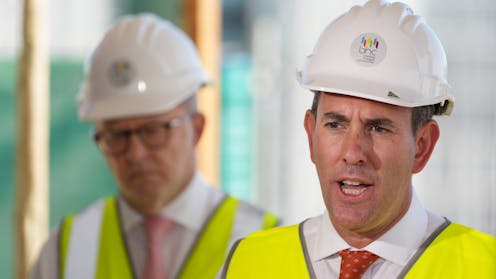
While the world’s media is largely focused on conflict in the Middle East, the focus for many Australians remains at home, with the government preparing the long task ahead of trying to lift Australia’s productivity.
Last week, Prime Minister Anthony Albanese announced a productivity roundtable, which will be held in mid-August. Now Treasurer Jim Chalmers has flagged the roundtable will be part of a much more ambitious debate, indicating he’s open to a broad discussion of major tax reform.
In this podcast, Chalmers is frank about his own belief in the importance of seizing the moment – even if “there’s an element of political risk” whenever governments talk about tax reform.
The way I see this is that I become very wary of people who say, because of the magnitude of our majority, that we will get another term. There are, as you know, few such assurances in politics, particularly in modern politics.
I can kind of hear that [office] clock ticking behind us, and I want to get on with it. You know, we’ve got a big job to do to deliver the big, substantial, ambitious agenda that we’ve already determined and taken to an election. But I am, by nature, impatient. I think the country has an opportunity to be ambitious here. And so if you’re detecting that in my language, that’s probably not accidental.
[…] There’s no absence of courage. There is an absence of consensus, and it’s consensus that we need to move forward. And that’s what I’m seeking, not just in the roundtable, but in the second term of our government.
Chalmers says one of his takeouts from reading Abundance, a new book currently fashionable with progressives, was the need to “get out of our own away” to build more homes and renewable energy, while maintaining high standards.
A lot of regulation is necessary. So we talk about better regulation. But where we can reduce compliance costs and where we can wind back some of this red tape in ways that doesn’t compromise standards, of course we should seek to do that.
One of the things I’m really pleased I got the cabinet to agree to earlier this week is we’re going to approach all of the regulators and we’re going to say, ‘please tell us where you think we can cut back on regulation and compliance costs in a way that doesn’t jeopardise your work’ […] We’re not talking about eliminating regulation. We’re talking about making sure that it’s better.
[…] I think renewable energy projects is part of the story here. I speak to a lot of international investors, there’s a big global contest and scramble for capital in the world […] One of the things that international investors say to us about Australia is ‘we don’t want to spend too long burning cash while we wait for approvals from multiple levels of government and other sorts of approvals’.
So if we can speed some of that up, if we can make sure it makes sense, if our regulation is better, then I think we give ourselves more of a chance of achieving our economic goals, but also our social and environmental goals.
On the productivity roundtable, Chalmers wants bold ideas.
We have an open door and an open mind. This is a genuine attempt to see where we can find some common ground. In some areas that won’t be possible, in other areas, I think it will. And I think we owe it to ourselves to try.
This is a very different discussion to the [2022] Jobs and Skills Summit. Much smaller, much more targeted, a bigger onus on people in the room to build consensus outside of the room.
We’re specifically asking people to consider the trade-offs, including the fiscal trade-off when it comes to what they’re proposing. We’re asking them to take a nationwide, economy-wide view, not a sectoral view about their own interests.
On whether any new major changes – including greater tax reform – would require a fresh mandate, Chalmers wants to wait and see.
I think it depends on the nature of the change. I’m sort of reluctant to think about sequencing and timing and mandates before we’ve got everybody’s ideas on the table and worked out where the consensus and common ground exists […] I think that remains to be seen.
E&OE Transcript
MICHELLE GRATTAN, HOST: Treasurer Jim Chalmers has declared improving Australia’s dismal progress on productivity is at the top of his priorities for Labor’s second term, but addressing the National Press Club on Wednesday, it was clear that his ambitions for economic reform are wide, much wider than we’ve heard from him or from the Prime Minister in the previous term or in the election campaign.
From August 19 to 21, the Government will hold a roundtable to seek ideas for reform from business, unions, civil society and experts. This will be a small gathering held in Parliament House’s Cabinet room.
Notably, Chalmers has invited participants to put forward ideas on tax reform.
The Treasurer is our guest today. Jim Chalmers, before we get to the roundtable, let’s start with the escalating Middle East war. What are the economic implications of this so far, and on one specific issue, what are the implications going to be for oil prices?
JIM CHALMERS, TREASURER: Thanks, Michelle. This is obviously a very perilous part of the world right now, it’s a perilous moment, perilous for the global economy as well.
We’re primarily focused on the human consequences of what’s going on, including around 2,000 people who’ve registered with DFAT to try and get out of the particularly dangerous areas right now, so that’s our focus, but there will be big economic consequences as well, and we’ve already seen in the volatility in the oil price – the barrel price for oil went up between 10 and 11 per cent last Friday when a lot of this flared up, and I think that is an indication of the volatility that this escalating situation in the Middle East is creating in the economy.
I get briefed every day on movements in relevant commodity prices and the like, and there’s a lot of concern, again primarily about the human cost, but there’s a lot of concern around the world about what this means for petrol price inflation and what it means for global growth as well.
GRATTAN: Also on the international scene, are we making any progress on getting concessions on the US tariffs, or will that have to wait for a rescheduled meeting between Donald Trump and Anthony Albanese? There’s now talk, incidentally, of a meeting possibly at NATO next week, although we don’t know whether that will happen or not.
CHALMERS: The Prime Minister’s made it clear that he is considering going to the NATO meeting. By the time people listen to this podcast, it may be that that’s been determined, but whether or not he goes to Europe, we’ve got a lot of different ways and a lot of different opportunities to engage with the Americans on these key questions, and the Prime Minister met with some of the most senior people in the economic institutions of the US overseas – and he met with leaders from Japan and the UK and Germany and Canada and others, so a very worthwhile trip.
We’ll continue to engage wherever we can and whenever we can, because our national economic interest is at stake here. We’ll continue to speak up and stand up for our workers and our businesses to try and make progress on this really key question.
GRATTAN: But no progress yet.
CHALMERS: We’re continuing to engage. We have had discussions at every level, including at my level, and the Prime Minister’s had discussions. Like the whole world right now, people are trying to get a better deal in the aftermath of the announcement of these tariffs; we’re no exception.
We’re better placed and better prepared than most countries to deal with the fallout of what’s happening with these escalating trade tensions, but we are seeking a better deal for our workers and businesses and industries. The Prime Minister’s engagement reflects that, and so does the rest of ours.
GRATTAN: Now, to turn to your productivity roundtable, give us some more details about it, including whether the sessions will be public and will the Premiers be there?
CHALMERS: There are some of those details that we’re still working out. I can’t imagine it will be public in the sense that we’ll have permanent cameras in the Cabinet room, but we don’t intend to be heavy‑handed about it, we’re not seeking people to sign non‑disclosure agreements ‑ I can’t anticipate that we’ll make it kind of Chatham House rules or confidential discussions, but we’re working through all of those issues. When it comes to the states, obviously we want the states involved in one way or another, and we’re working out the best way to do that.
I already engage with the state and territory treasurers at the moment on some of these key questions. I’ll continue to do that, I’ll step that up, and we’ll work out the best way to make sure that the states’ views are represented in the room.
You know how big the Cabinet room is, Michelle, it’s about 25 seats around an oblong table, so we can’t have everybody there, but we will do everything we can to make sure that the relevant views are represented, including the views of the States and Territories.
GRATTAN: When you say you wouldn’t see you having cameras in the Cabinet room, wouldn’t you want some of it to be public, because if it wasn’t, then whoever was telling the story would be putting their slant on it?
CHALMERS: Well, we’ll try and strike the best balance. I think what will happen is, inevitably, people who are participating in the roundtable, indeed people who are providing views but not necessarily in the room, there will be a big flourishing of national policy discussion and debate; that’s a good thing. We’ll try not to restrict that excessively. I just think practically having a kind of live feed out of the Cabinet room is probably not the best way to go about things.
But I’m broadly confident ‑ comfortable, broadly comfortable with people expressing a view outside the room and characterising the discussions inside the room. There may be a convincing reason not to go about it that way, but I’m pretty relaxed about people talking about the discussions.
GRATTAN: In your Press Club speech, you spoke about seeking submissions. Now, would those be submissions before the roundtable?
CHALMERS: Absolutely, but also, we’re trying to work out, in addition to structuring this roundtable – which will be a really important way for us to seek consensus – in addition to that, we’re trying to work out how do we become really good at collecting and taking seriously the views that are put to us by people who are experts in their fields.
Not everybody can be around the Cabinet table. People have well-informed views, and we want to tap them. So we’re working out the best way to open a dedicated Treasury channel, primarily and initially, about feeding views in for the consideration of the roundtable. But if there are ways that we can do that better on an ongoing basis, we’re going to look at that too.
GRATTAN: What do you say to those in business who came out of the 2022 Jobs and Skills Summit rather cynical thinking, really, they’d been had, frankly, that this was basically a meeting to legitimise the Government giving what it wanted to to the unions?
CHALMERS: I’ve heard that view, but I don’t share it. I’ve taken the opportunity in recent days to look again at the sorts of things we progressed out of the Jobs and Skills Summit, it was much, much broader than a narrow focus on industrial relations. So I take that view seriously, but I don’t share it.
And my commitment, I gave this at the Press Club, and I will give this commitment every day between now and the roundtable if that’s necessary, we have an open door and an open mind, this is a genuine attempt to see where we can find some common ground. In some areas, that won’t be possible, in other areas I think it will, and I think we owe it to ourselves to try.
This is a very different discussion to the Jobs and Skills Summit, much smaller, much more targeted, a bigger onus on people in the room to build consensus outside of the room. We’re specifically asking people to consider the trade-offs, including the fiscal trade-offs. When it comes to what they’re proposing, we’re asking them to take a nationwide, economy-wide view, not a sectoral view about their own interests.
Let’s see how we go. We are approaching it in that fashion, a different discussion to Jobs and Skills, and we want to give ourselves every chance to progress out of that discussion with something meaningful.
GRATTAN: You say you accept the need for tax reform. This is really a big statement from you, and it is a change of emphasis from last term. Up to now, you’ve resisted any suggestion of undertaking comprehensive reform of the taxation system. So, where do you actually stand now? Are you looking for ideas for incremental change, or are you looking for something that’s really bold?
CHALMERS: First of all, I do accept that the economic reform, and particularly the tax reform we’ve engaged in so far, it has been sequenced, it has been methodical – but it’s also been, I think, more substantial than a lot of the commentary allows, about half a dozen ways we’re reforming the tax system, and I’m proud of the progress that we’ve made.
When it comes to the roundtable, the point I’ve made about tax, the thing I welcome about the roundtable is it’s not possible to think about and talk about productivity, budget sustainability and resilience amidst global volatility without allowing or encouraging, welcoming a conversation about tax. So that’s the approach I’m taking to it.
What I’m trying to do, and we’ll see how successful we can be at doing this over the course of the next couple of months, but what I’m trying to do is to not pre‑empt that discussion, I’m trying not to artificially limit that discussion about tax, and that’s because I know that people have well‑intentioned, well‑informed views about tax reform; let’s hear them.
GRATTAN: But you do seem open, from what you said, to a possible switch in the tax mix between direct and indirect.
CHALMERS: I think that will be one of the considerations that people raise at the roundtable, and I think it would be unusual to discourage that two months out. Let’s see what people want to propose. You know, I think that’s an indication of my willingness, the Prime Minister’s willingness, the Government’s, to hear people out.
And we broadly, whether it’s in tax and budget, whether it’s in productivity, resilience – I don’t want to spend too much at this roundtable with problem ID, I want to go from problem ID to ideas. That’s because we’ve had really for a long time now – probably as long as you and I have known each other, Michelle – we’ve had a lot of reports about tax, and important ones. I think the time now is to work out where are their common interests, where does the common ground exist, if it exists, on tax, and to see what we can progress together, and that requires on my part an open mind, and that’s what I’ve tried to bring to it.
GRATTAN: Of course, your former Treasury Secretary, who’s now the Prime Minister’s right-hand man as head of the Prime Minister’s department, I think has made speeches pointing out that you really do need such a switch.
CHALMERS: Yeah, and Steven Kennedy’s a very influential person in the Government. I’m delighted – we’ve been joking behind closed doors about Steven being demoted to PM&C from Treasury, but the reality is it’s amazing, it’s the best of all worlds from our point of view to have Kennedy at PM&C and Wilkinson at Treasury. That’s an amazing outcome for anyone who cares about economic reform and responsible economic management, a wonderful outcome.
Steven has made a number of comments in the past about the tax system, probably Jenny has as well. They are very informed, very considered, big thinkers when it comes to economic reform, and we’re going to tap their experience, their interest and their intellect.
GRATTAN: Well, he can now get into the Prime Minister’s ear on this matter. The other thing on tax, you did seem to wobble a bit on changing the GST; you’ve been pretty against that. I guess you left the impression at the Press Club that basically you were still probably against, but you did seem a bit more open-minded than usual.
CHALMERS: What I’m trying to do there, Michelle, and I’m pleased you asked me, because I think that was a bit of a test, a bit of an example of what I talk about in the speech, which is that obviously there are some things that governments, sensible, middle of the road, centrist governments like ours don’t consider – we don’t consider inheritance taxes, we don’t consider changing the arrangements for the family home, those sorts of things.
But what I’ve tried to do and what I tried to say in the speech is if we spend all of our time ruling things in or ruling things out, I think that has a corrosive impact on the nature of our national policy debate, and I don’t want to artificially limit the things that people bring to the roundtable discussion.
I was asked about the GST – you know that I’ve, for a decade or more, had a view about the GST. I repeated that view at the Press Club because I thought that was the honest thing to do, but what I’m going to genuinely try and do, whether it’s in this policy area or in other policy areas, is to not limit what people might bring to the table.
And so that’s what you described as a wobble, I think that really just reflects what I’m trying to do here is to not deny what I have said about these things in the past, but to try and give people the ability to raise whatever they would like at the roundtable. I suspect there will be other occasions like that, other opportunities like that between now and the roundtable where I’ll do the same thing. I’ll repeat what I’ve said, I won’t walk away from it, I haven’t changed my view on the GST. I suspect people will bring views to the roundtable about the GST. Let’s hear them.
GRATTAN: Well, of course, the GST can be a bit like a wild dog when it’s let off the leash. You’ll remember when Malcolm Turnbull let Scott Morrison as Treasurer float the idea of changing the GST, and that didn’t end well.
CHALMERS: No, I think I can recall a fascinating part of Malcolm’s book about that, if memory serves, or perhaps something else that he said or wrote subsequently. I’m obviously aware of that history, you know, and there’s ‑ let’s be upfront with each other, Michelle, when you do what I did at the Press Club today and say bring us your ideas and let’s see where there’s some common ground, there’s an element of political risk to that.
There’s a lot of history tied up in a lot of these questions, as you rightly point out in this instance, and I guess I’m demonstrating, or I’m trying to demonstrate, a willingness to hear people out, and there will be people who write about that in a way that tries to diminish this conversation that we’re setting up. That will happen. I’m open to that, relaxed about that, but let’s see what people think about our economy, about productivity, sustainability, tax, resilience, and let’s see if we can’t get around some good ideas that come out of that discussion.
GRATTAN: Which tempts me to ask, will Ken Henry be on your guest list of the famous Henry review?
CHALMERS: I think some people were surprised to see Ken there today at the National Press Club. Ken was there at the Press Club, and I think I said in the question and answer, if memory serves, and I hope it’s okay with Ken that I said this, but we’ve been engaging on drafts of the speech – we talk about some of the big issues in the Press Club speech I gave today.
I’m not sure about the final invite list. Once you start putting together a list of about 25 people, you’ve got some ministerial colleagues, you’ve got peak organisations, including the ACTU, Sally McManus will be there, maybe a community organisation, someone representing the community, some experts. Before long, it’s very easy to hit 25 people.
You’ve planned a few dinner parties in your time, Michelle, and an invite list of 25 people fills up pretty quick. We haven’t finalised that yet, but whether we invite Ken or Ken’s outside the room, he’s one of a number of people that I speak to about these big policy challenges, and regardless, I hope that he’s okay with us continuing to tap his brain.
GRATTAN: Maybe you need to adopt a sort of restaurant approach of rotational sittings.
CHALMERS: Yeah, well! –
GRATTAN: Now, I know you said today that you don’t like gotcha questions and gave us a bit of a lecture ‑‑
CHALMERS: This doesn’t sound like a good introduction, Michelle.
GRATTAN: ‑‑ about that, but your controversial tax on capital gains on superannuation balances that are very big, critics worry that this could in fact be the thin end of the wedge extending to other areas of the tax system. Would you care to rule that out?
CHALMERS: I think I said today, and I’m happy to repeat with you, Michelle, that we haven’t changed our approach here. We’ve got a policy that we announced almost two and a half years ago now, and we intend to proceed with it.
What we’re looking for here is not an opportunity at the roundtable to cancel policies that we’ve got a mandate for; we’re looking for the next round of ideas.
Now again, a bit like some of the other things we’ve been talking about, I suspect people will come either to the roundtable itself or to the big discussion that surrounds it with very strong views, and not unanimous views about superannuation. We read in a couple of our newspapers on an almost daily basis that people have got strong views about the superannuation changes, and not the identical same views, and so I suspect that will continue.
But our priority is to pass the changes that we announced, really some time ago, that we’ve taken to an election now, and that’s how we intend to proceed.
GRATTAN: So, you’re open to considering other views?
CHALMERS: On that particular issue, I think we have a pretty good sense of people’s views. I mean there’s ‑ I don’t pretend for a second that there’s unanimous support for it.
GRATTAN: I mean, extending it to other areas.
CHALMERS: No, I mean that’s not something we’ve been contemplating even for a second, and we haven’t done any work on that, we haven’t had a discussion about that, that’s not our intention.
But more broadly, when it comes to the system, I suspect people will have views about that at the roundtable – but thanks for the opportunity to clarify, we’re not planning for or strategising for extending that in additional ways.
GRATTAN: Now, artificial intelligence is obviously being seen as the next big productivity enhancer when you’re talking about the big things, but it’s also going to cost jobs, and that will exercise the unions.
Your Industry Minister Tim Ayres, has emphasised the unions have a role in this transition, must be consulted, brought into it, but you’ve said that while regulation will matter, and I quote, “We are overwhelmingly focused on capabilities and opportunities, not just guardrails. The emphasis here is different”. Do you see this as being a bit like the tariff reforms in the Hawke/Keating time, when there were big gains to be made but there were also very significant losers, and how do you deal with that situation?
CHALMERS: First of all, I think unions do have a place and a role to play in this. I can’t imagine meaningful progress on AI or technology more broadly where we wouldn’t include unions and workers in that conversation. That wouldn’t be consistent with our approach, and it wouldn’t make a lot of sense, so I share Tim’s view on that. I work closely with Tim Ayres and also Andrew Charlton, who will have a key role in some of these policy questions.
The point that I was making was it’s not a choice between regulation or capability, it’s not an either/or. Obviously we need guardrails, obviously we need regulation, but from my point of view, I see this as a game‑changer in our economy, I see it as one of the big ways that will make our economy more productive and lift living standards.
It’s not all downside for workers either – we’re talking about augmenting jobs, we’re talking about some of the routine tasks that are not the most satisfying parts of people’s work, so of course we want to include the union movement, of course we want to make sure that we’ve got appropriate guardrails.
The point that I was making in that interview with the Financial Review which you’re quoting from is that we need to get our capabilities right, we need the right skills base, I think we’ve got a huge opportunity with data centres and the infrastructure that supports artificial intelligence, and so that is a big part of the focus of our work. When it comes to productivity, when it comes to growth more broadly, industry policy, our work with the Productivity Commission, data and digital, AI, data centres, all of that I think are going to be key parts of the future economy in Australia.
GRATTAN: The last time we spoke on this podcast, you said you’d been reading the book Abundance by Ezra Klein and Derek Thompson, and you described it as a ripper. Now I think you’re making all your Cabinet colleagues read it too, and I’m not sure whether they thank you for that, but there it goes.
What are some of the ideas in the book that attracted you, and in particular, do you agree with the thesis that red tape is holding us back, particularly when it comes to housing and renewable energy and the transition to renewables?
CHALMERS: First of all ‑ we should be on a commission for this book, I think, from Andrew Leigh through a whole bunch of colleagues ‑ a lot of us have either read it or are in the process of reading it.
The reason that we are attracted to it is because it really is about working out as progressive people who care deeply about building more homes, rolling out more renewable energy, to make sure that the way we regulate that and approach that doesn’t get in our own way, that we don’t make it harder for us to achieve our big economic goals in the energy transformation; in housing and technology and all of these sorts of things.
What the Abundance book reminds us to do, and I think in a really timely and really punchy way, is it says, “As progressive people, let’s get out of our own way”. A lot of regulation is necessary, so we talk about better regulation, but where we can reduce compliance costs and where we can wind back some of this red tape in ways that doesn’t compromise standards, of course, we should seek to do that.
One of the things I’m really pleased I got the Cabinet to agree to earlier this week is we’re going to approach all of the regulators, and we’re going to say, “Please tell us where you think we can cut back on regulation and compliance costs in a way that doesn’t jeopardise your work”. I suspect from that, maybe not from every regulator, but from some of the regulators, I think if we are genuine about it, I think we can make some progress there to get compliance costs down, to speed up approvals so that we can deliver the things that we truly value as an economy but also as a society, and that’s what the Abundance book’s about.
GRATTAN: Of course, one of the problems is, while this sounds very good, a lot of stakeholders say we need more regulation of this or that, we need to protect flora, fauna, climate, whatever.
CHALMERS: Yeah, of course we do.
GRATTAN: And that all gets in the way of clearing away red tape, doesn’t it?
CHALMERS: We’re not talking about eliminating regulation, we are talking about making sure that it’s better, that we can use regulation in the service of our social and environmental and economic goals, but to make sure that we’re not overdoing it, that it’s not unnecessary, that it doesn’t prevent us achieving our aspirations and our objectives, including in the environment.
I think renewable energy projects are part of the story here, and I speak to a lot of international investors, there’s a big global contest and scramble for capital in the world. People are rethinking their investments, and there’s a lot of interest in Australia, and one of the things that international investors say to us about Australia is we don’t want to spend too long burning cash while we wait for approvals from multiple levels of government and other sorts of approvals.
If we can speed some of that up, if we can make sure it makes sense, if our regulation is better, then I think we give ourselves more of a chance of achieving our economic goals, but also our social and environmental goals as well.
GRATTAN: Another of your priorities is budget sustainability, and you say the Government’s made progress, but there’s a way to go. So, where are you going now? Do you need to make big savings in what areas, or are you really having to look at the revenue side more?
CHALMERS: I think there’s this kind of strange binary analysis of the budget situation. Some people say it doesn’t matter, some people say it’s beyond repair, and obviously, like a lot of things in politics and policy, the truth lies somewhere in between.
We’ve made a heap of progress on the budget; two surpluses, biggest ever nominal turnaround in the budget, we got the debt down, got the interest costs down. But what I acknowledge and what I will continue to acknowledge is there’s always more work to do to make it more sustainable.
For us, we made a heap of progress on aged care, the NDIS and interest costs, but we need to make sure that even when we think about the policy ideas that people bring to us at the roundtable, budget sustainability really matters. Where we do find something that we want to invest more in, we’ve got to consider the trade-offs, we’ve got to work out how to pay for things.
There’s probably not a day, certainly not a week that goes by where Katy Gallagher and I aren’t in one way or another engaging with colleagues on some of these structural pressures on the budget, because they do matter.
GRATTAN: Well, one, of course, is defence spending, and I was interested that you did in your remarks to the Press Club seem, while cautious, while saying, “We’re spending a lot on defence”, you seemed open to the idea that over the next decade governments will have to increase defence spending.
CHALMERS: I think the point I was trying to make there, Michelle, was it would be strange over a period of 10 years if there were no changes to any policy or levels of spending. But the thing that’s not, I think, sufficiently acknowledged is we’ve already quite dramatically increased defence spending, and you know, it’s not easy to find the extra $11 billion we found over the forward estimates, or the almost $58 billion I think we found over the decade.
We are dramatically increasing our defence spending. I acknowledge and accept and respect that some people, including some of our partners, want us to spend more on defence, but we are already spending a heap more on defence, and we’ve had to find room for that in the budget, and that’s what we’ve done.
GRATTAN: So we should be up for that conversation, as Richard Marles would say?
CHALMERS: I think what Richard’s saying, to be fair to him, is that we are more or less continuously engaging with our partners about things like defence spending, and when it comes to the Americans, they’ve made it clear around the world that they want people to spend more on defence. That’s not an unreasonable position for the Americans to put to us. We decide our level of defence spending, and we have decided collectively as a government to dramatically increase it.
GRATTAN: As Treasurer, you’re the gatekeeper for foreign investment decisions, big decisions, and there’s a takeover bid at the moment from Abu Dhabi’s national oil company for Santos. Can you give us some idea of the process, the timetable, when you would make a decision if the matter comes to you?
CHALMERS: This is a really big transaction potentially, and it raises – there are a lot of considerations around the national interest, it’s in a sensitive part of our economy for all of the obvious reasons.
What usually happens with a transaction of this magnitude, tens of billions of dollars, is it goes through a number of stages. One of those stages is a Foreign Investment Review Board process where I’ve got a heap of terrific colleagues in the Treasury who advise me on these things. What I try to do is to make sure that I refrain from commenting on these sorts of deals before I’ve got that Foreign Investment Review Board advice. I take that advice very seriously, and that means not pre‑empting it.
I know that there will be a heap of views, a heap of interest, I do acknowledge it’s a very big transaction which involves a really key sensitive part of our economy, and I’ll do what I always do with these big FIRB approval processes, which is to engage in it in a really methodical and considered way.
That will roll out over the course of the next few months. The last time I asked, which I think was yesterday, we hadn’t ‑ the FIRB hadn’t had a chance to go through or hadn’t received yet the Foreign Investment Review Board proposal. That may have changed since then, but regardless, these things take a little bit of time.
GRATTAN: Before we finish, let’s come back to productivity. You’ve said the work will take more than a term. So just give us a snapshot of where you would want to be at the end of say three years, six years.
CHALMERS: Yeah. The point I’m making there, when it comes to productivity is, unlike some of the other really important measures in our economy, there’s no instant gratification. It’s very hard to flick a switch and get an immediate, substantial, meaningful shift in the data.
The point that I’ve made is that we’re enthusiastic and very committed, very dedicated to doing meaningful things on productivity, but even those things can sometimes take a while to play out in the data, so I’m just really trying to say to people, this is important, it will pay off, some of it will pay off in the medium term and the longer term, but that shouldn’t deter us, the fact that some of these challenges take a little bit longer to fix.
Now, if there was a switch that you could flick to make our economy instantly more productive, somebody would have flicked it already. Unfortunately, there’s not, and so we’re left in a world where we have to do a lot of things at once, and some of those things will take a little while to pay off.
GRATTAN: Can you set any sort of target in terms of growth, annual growth? –
CHALMERS: I’m reluctant to do that.
GRATTAN: – productivity growth.
CHALMERS: I’m reluctant to do that. The budget assumes a level of productivity growth, which is higher than what we are currently seeing, so it wouldn’t be a bad start to try and get closer to the forecast. But I’m reluctant to put a target on it.
GRATTAN: And that forecast is?
CHALMERS: The Treasury changed it to 1.2 per cent, and we’re currently tracking a bit lower than that on the current 20-year average, and so we need to do better. I tried to be quite blunt about that at the Press Club. Our economy is growing, but it’s not productive enough, our budget is stronger, but it’s not sustainable enough, our economy is resilient, but not resilient enough. And this is my way of saying to people, we’ve made a lot of progress together, but we’ve got a further ‑ we’ve got more to do, and productivity is our primary focus in that regard, but not our only focus.
GRATTAN: For really big changes, say for tax changes, do you think you need another mandate or not?
CHALMERS: I think it depends on the nature of the change. I’m reluctant to think about sequencing and timing and mandates before we’ve got everybody’s ideas on the table and worked out where the consensus and common ground exists, and so I don’t like to be evasive with a good question like that, Michelle, but I think that remains to be seen. It will be to be determined once we get a firmer sense of the way forward.
GRATTAN: Just finally, you sounded in your speech rather like a man who’s been liberated since the election. Has your attitude changed? Do you think it’s just time to go for it?
CHALMERS: The way I see this, Michelle, is that I become very wary of people who say, because of the magnitude of our majority, that we will get another term. There are, as you know, few such assurances in politics, particularly in modern politics, and so I can kind of hear that clock ticking behind us, and I want to get on with it.
We’ve got a big job to do to deliver the big, substantial, ambitious agenda that we’ve already determined and taken to an election. But I am by nature impatient, I think the country has an opportunity to be ambitious here, and so if you’re detecting that in my language, that’s probably not accidental. I think we know what the challenges are, we know what people’s views are broadly, there’s no absence of courage, there is an absence of consensus, and it’s consensus that we need to move forward, and that’s what I’m seeking not just in the roundtable, but in this second term of our Government.
GRATTAN: Jim Chalmers, it’s going to be an interesting few months, and thank you for talking with us today. That’s all for today’s podcast. Thank you to my producer, Ben Roper. We’ll be back with another interview soon, but good‑bye for now.
Michelle Grattan does not work for, consult, own shares in or receive funding from any company or organisation that would benefit from this article, and has disclosed no relevant affiliations beyond their academic appointment.
Source: United Kingdom – Executive Government & Departments
A systematic review published in the Journal for the American Heart Association looks at ocean microplastic pollution and the risk of cardiometabolic disease in US coastline counties.
Prof Oliver Jones, Professor of Chemistry, RMIT University, said:
“I fear this paper will lead to more “plastics cause scary disease X” headlines, but, to my mind, the evidence in this paper is quite weak.
“Firstly, the authors don’t claim that microplastics cause disease, but rather that they found an association between microplastic exposure and type 2 diabetes (T2D), coronary artery disease (CAD), and stroke. An association between two things does not necessarily mean that one caused the other; it is simply an observation. There is also a large amount of overlap in the datasets, even between the very low and very high exposure scenarios, and the authors clearly state in the paper that their “results do not imply causation”.
“Perhaps more importantly, the authors didn’t measure either microplastic exposure or the health factors they studied directly; both were estimates. Microplastic concentrations were estimated from ocean measurements, some of which were taken up to 230 miles offshore and thus may not accurately represent what coastal communities are exposed to. The rates of disease occurrence were estimated from county-level survey data, which does not provide data on individuals. Potential cofounders were limited to those listed in the survey data, meaning some potentially confounding factors could not be controlled for.
“The authors all appear to be medics, rather than chemists or environmental scientists. The paper makes a lot of incorrect generalisations about microplastics, for example, referring to “microplastic compounds like phthalates”. Phthalates are not microplastics, and not all phthalates are the same. They claim that bisphenol A and phthalates promote adverse health outcomes through their endocrine-disrupting properties, which is incorrect. The paper also refers to toxicity studies on polystyrene particles, neglecting the fact that polystyrene is far from the most common type of plastic in the environment.
“So, while the work raises interesting research questions, I do not think the evidence of harm is strong, and people living near the coast don’t need to panic”
Dr Ria Devereux, Environmental Research Fellow, the Sustainable Research Institute, the University of East London, said:
Does the press release accurately reflect the science?
“It is important to note that this research focuses solely on the United States, particularly its coastal counties, and specifically examines marine microplastics. It does not consider other types of microplastics, such as those found in marine sediment, beach sediment, atmospheric microplastics, or microplastics in soil. The title, “Living near an ocean polluted by microplastics may increase cardiometabolic disease risk,” could give the incorrect impression that these findings apply globally, which is not justified by this data.
“Both sizes of plastic particles come from the chemical breakdown (decomposition) of larger plastic waste, including food packaging (like single-use water bottles), synthetic fabrics and personal care products.” This statement is also slightly incorrect. Microplastics can also be found in the form primary microplastics (nurdles) which are made to be a particular size and are not the result of degradation. Plastics are also subjected to mechanical, biological degradation as well as chemical.
Is this good quality research? Are the conclusions backed up by solid data?
“It is very interesting research which does need further research to investigate some of the limitations of the study conducted. One major limitation that is not addressed is that microplastics contain chemicals which have been found to be harmful to human health. There is no mention in this study regarding data on water quality. For example, is there a higher abundance of chemicals found within plastics in the water surrounding these coastal communities which may be a contributing factor.
How does this work fit with the existing evidence?
“The production of plastic and its associated pollution are increasingly recognized for their potential implications on human health. Research conducted on wildlife has demonstrated severe consequences, including choking hazards and hormonal disruptions.
“Recent studies have identified plastics in various human tissues, including the placenta [1],breastmilk [2] and stool [3].
“In addition to the presence of microplastics in the human body, chemicals commonly used in plastic production have been found to pose health risks. Research indicates that exposure to these chemicals can lead to various health issues, including skin irritation, respiratory diseases, hormonal disruptions, and certain cancers [4].
Have the authors accounted for confounders? Are there important limitations to be aware of?
“The dataset from NOAA presents several limitations. It does not account for when the samples were collected—such as during storms—or the duration of the sampling periods. Additionally, there may be a lack of studies in many coastal counties. For instance, most samples from the Gulf of Mexico are concentrated around Tampa and the southern region of Florida, with only two data points near New Orleans. While the authors briefly mention this issue in relation to the Atlantic and Pacific coasts, they do not address it for the Gulf of Mexico. They note that “study design, spatial coverage, and oceanic transport dynamics” may contribute to differences observed in previous studies.
“The authors also acknowledge that theabsence of data on the types of microplastics—such as fragments and fibers—constitutes a limitation. However, this statement should also include the lack of information regarding polymer types and plastic sizes.
“Additionally, it would be relevant to consider how many people in these coastal areas consume seafood and whether it is locally sourced or imported.
“As for the timeframe investigated, How long must someone live near the coast for it potentially to impact their health?
“Regarding groundwater, the authors mention that only “35% of drinking water in the United States is supplied by groundwater.” Is the proportion of coastal residents who drink groundwater higher than that of individuals living in other parts of America?
“Perhaps the most critical issue that the authors have not fully addressed is that almost all plastic production plants in the United States, which are involved in petrochemical and petroleum manufacturing, are located either in coastal counties along the Gulf of Mexico or on the Atlantic Ocean side (according to the Plastics Inventory Map [5]). This study indicates that cases of heart disease and similar health issues are higher in these areas. Many chemicals used in plastic production, such as BPA and phthalates, have been previously linked to these health problems [6]
What are the implications in the real world? Is there any over-speculation?
“This study highlights the need for further investigation into the health impacts of plastics on human well-being throughout their entire lifecycle. While this research primarily focuses on marine microplastics, it is essential to recognize that microplastics are also present in soil, air, and water. Additionally, it is important to understand that the risks associated with plastic do not stop at ingestion or inhalation, the entire lifecycle of plastic poses threats to public health. This includes hazards linked to petroleum extraction, the use of chemicals in production, and the leaching of these substances into our environment during manufacturing and disposal.
“It is important to note that this study cannot establish a cause-and-effect relationship between ocean microplastic levels (which were assessed only in water, not in sediment or fish) and the development of certain diseases due to its limitations in data and design. Further research is needed to determine whether microplastics and associated chemicals are present in higher concentrations near coastlines in soil, water, and air, as well as within the human body, to fully evaluate the potential health implications of living closer to the coast. Additionally, this study should be expanded to explore whether this trend is observed worldwide.
“Unfortunately, many individuals around the globe view plastic pollution solely as an environmental issue, overlooking its potential implications for human health. Studies like this one play a crucial role in raising awareness of these risks.
Extra commentary from Dr Ria Devereux on wider context
“The adverse effects of chemicals used in plastic production are particularly pronounced in the Gulf of Mexico, an area often referred to as “Cancer Alley.” This region experiences a higher-than-average incidence of cancer, diabetes, and respiratory diseases, which are concentrated in particular areas. The reason behind this is the concentration of petrochemical, petroleum and production plants involved in plastic production and an increase in the presence of chemicals used within the plastic production such as BPA and Phthalates [7,8].
“Although the Plastics Treaty acknowledges that human health is a critical factor in regulating plastic production and the associated chemicals, reports indicate that “chemicals of concern in plastic products” are at threat of being excluded from the current treaty text [9,10,11].
“In regards to America, we may find in the future that this types of disparity in human health and microplastics become worse due to Trumps “America first” narrative on top of increasing tariffs which will cause an increase in the plastics industry to align with the needs of the consumer and manufacturers. On top of this Trump has bought plastic straws back to America [12] and has started to dismantle key government institutions such as NOAA ( The National Oceanic and Atmospheric Administration)[13] and the Environmental Protection Agency [14] which will push back Americas efforts to reduce plastic waste.”
‘Marine Microplastic Levels and the Prevalence of Cardiometabolic Diseases in US Coastline Counties’byMakwanaet al.will be published in Journal for the American Heart Association at 10:00UK time on Wednesday 18th June.
DOI:10.1161/JAHA.124.039891
Declared interests
Dr Ria Devereux None
Prof Oliver Jones “I am a Professor of Chemistry at RMIT University in Melbourne, Australia. I conduct research into environmental pollution and its effects on biological systems. I don’t have any conflicts of interest to declare.”
Source: International Atomic Energy Agency (IAEA) –
Nobel’s spotlight on our perilous path and how we change course
I want to start by congratulating Nihon Hidankyō and the hibakusha for their Nobel Peace Prize.
As a young diplomat almost 40 years ago, I was fortunate to be part of a UN disarmament fellowship programme and to visit Hiroshima. There, fellows had an opportunity to meet the hibakusha and I had a conversation with an ailing victim. I have carried to every meeting, to every negotiation, and to every posting, the memory this woman’s silent testimony. When I asked her about that morning in 1945, she struggled to express the horror in words. She tried to articulate some words but stayed silent. Looking at me, right into my eyes. The look in her eyes has stayed with me ever since, like a powerful reminder, a secret mandate, to work so that her suffering is never repeated.
For decades after the Second World War, the international community has been dealing with this unique dilemma: we built robust norms and passed nonproliferation and disarmament treaties. Instead of dozens of countries armed with nuclear weapons, as was the concern in the 1960s, there are less than ten. Stockpiles of nuclear weapons have shrunk from tens of thousands to thousands.
But on its journey through the perils of the atomic age, the world has come to a crucial crossroads. Our deep psychological connection caused by collectively seeing the horror of the consequences of nuclear war seems to be evaporating, taking with it our joint resolve to do everything possible to prevent a repetition.
Like a giant spotlight, this year’s Nobel Peace Prize has lit up our path ahead. It has done it, by reminding us of the past, and of the consequences of ignoring the perils of nuclear weapons use.
Context of conflicts
To understand the important challenges we face, we must look at the global context, at what is happening around the world.
War has returned to Europe, and it directly involves a nuclear weapon state. The conflict in Ukraine is also an indirect confrontation between the world’s biggest nuclear weapon states, the first since the end of the Cold War. But nuclear exercises and open references to the use of nuclear weapons in the theatre of this war are increasing the risks and can not be ignored.
In the Middle East, the conflict of the past year has ignited smoldering tensions between Israel and Iran and led to the unprecedented step of direct exchanges and attacks between the two. Here there is also a nuclear weapons dimension. On one side, the assumed presence of nuclear weapons looms in the background. On the other, the very real potential of nuclear proliferation is raising the stakes.
We find ourselves in a harmful loop: the erosion of the restraints around nuclear weapons is making these conflicts more dangerous. Meanwhile, these conflicts are contributing to the erosion of the restraints. The vicious circle dynamic is in motion.
An unfortunate change of direction
Doctrines regarding the use of nuclear weapons are being revised or reinterpreted. The quantity and quality of nuclear weapon stockpiles are being increased.
And in some non-nuclear weapon states – states that are important in their region – leaders are asking “why not us?”. And they are asking this openly!
At the start of the nuclear arms race, J Robert Oppenheimer described the USSR and the US as “two scorpions in a bottle” each capable of killing the other, but only by risking their own life.
Oppenheimer’s blunt statement would later be developed and elaborated under the roof of deterrence and the more sophisticated concept of “Mutual Assured Destruction,” or MAD.
Today, independent of the vantage point of the observer, there is widespread concern that the risk of mutual destruction through nuclear war is higher than it has been for more than a generation.
Lessons from history
But it does not have to be this way. We can do better. History has shown that effective dialogue among superpowers has, more often than not, led to confidence and, as a result, also to arms limitation and even disarmament. At certain moments in history, world leaders took the right decisions, to tone down, or, to use today’s parlance, to de-escalate. Let’s see:
The end of the Cuban Missile Crisis happened thanks to the direct engagement of Soviet leader Nikita Khrushchev and US President John F Kennedy. Decades later, at the Geneva Summit of 1985, Mikhail Gorbachev and President Ronald Reagan agreed a crucial axiom: “Nuclear war cannot be won and should never be fought.” They met again the next year in Reykjavik and significant reductions in nuclear arsenals followed. Nuclear weapon reductions and the elimination of a whole category of weapon, through the Intermediate-Range Nuclear Forces, or INF, Treaty, were agreed. These steps towards rapprochement took leadership and courage. They often happened despite skepticism and voices against them.
Diplomacy and dialogue (and the duty of nuclear weapon states)
A return to diplomacy and dialogue is urgently needed, and this, not only in things nuclear. Shutting the other side out has never solved a problem and almost certainly aggravates it. Top leadership involvement is simply indispensable when nuclear weapons are involved. President Trump took the initiative and talked to Kim Jong Un. More of this is needed. Some have said these talks were ill prepared. I say, this is important. Nuclear weapon policy and limitations does not work bottom up. It is of course the other way around.
We must be proactive in building the trust and protections that lower the risk of close calls and of brinkmanship, especially during today’s tensions. Not taking active steps means we rely on luck – or the assumption that the other side will show restraint – to save us from nuclear war. The longer you rely on luck, the more likely it is to run out.
Conflict and tensions compel nations to arm themselves. Diplomacy and compromise create conditions in which they can disarm.
The road to a nuclear weapon-free world is long and winding. The disarmament landscape is complex, and it’s worth acknowledging that. This does not diminish the responsibility nuclear weapons states have to make progress. After all, they committed themselves to this goal back in 1968, through the Non-Proliferation Treaty.
Steps can be taken to decrease the reliance on nuclear weapons, both in their production and the scenarios for their use.
Nuclear weapon states, through their actions at home and on the world stage, have a responsibility to avoid a scenario in which more countries seek nuclear weapons. Pushing ahead with increases in arsenals leads to despair, cynicism, and a growing skepticism about the value of past commitments. Disengagement and unilateralism fuel sentiments of vulnerability in other countries, and with that, the notion nuclear weapons could be the ultimate protection against outside threats.
Engagement among the five permanent members of the Security Council is indispensable. Such engagement can take many different shapes, starting with direct contact among themselves, bilaterally or as a group. This dialogue, which still exists, has been reduced to a very low level, virtually without real impact. Perhaps its revival could be assisted by an international organization, or facilitated with the support of a respected, impartial leader. Therefore, it’s essential that the United Nations, other international organizations, and their leaders work effectively to ensure their continued relevance amid the changing needs of their stakeholders.
Do not make things worse (by falling for the siren call of proliferation)
The IAEA has played its indispensable technical role during past attempts of nuclear proliferation, particularly in the Middle East. As the difficult experiences in Iraq, Libya and Syria remind us, the draw of nuclear weapons is real and so is the geopolitical and military response.
Today’s tensions are prompting even leaders of important counties that, so far, are in good standing with the NPT to ask: “Why shouldn’t we have a nuclear weapon too?”
To this, I would say, “Do not make things worse.” Acquiring a nuclear weapon will not increase national security, it will do the opposite. Other countries will follow. And this will contribute to the unravelling of a nonproliferation regime that has had its ups and downs – and it still has its limitations – but none-the-less it has served humanity extraordinarily well. The problem and challenge to the NPT regime may come from those nuclear armed but also those who, while not having nuclear weapons, may feel the NPT has failed as a catalyst to disarmament.
Weakening the non-proliferation treaty under the argument that progress on nuclear disarmament has been slow and more drastic approaches are required, would be totally misguided and may make us throw away existing international measures committing nuclear weapon states and non-nuclear weapon states in this field.
I come from a non-nuclear weapon state. I understand the frustration that some people feel about the “haves” and “have-nots” of nuclear weapons. But I have also seen the legacy of peace and prosperity left by leaders who resisted that siren call. In the 1980s, vision, resolve and dialogue meant Brazil and Argentina changed course and did not go down the path to nuclear arms. Today, Latin America is a nuclear weapon free zone.
Multilateral leaders: step up by stepping in
Many wonder whether there’s still a role for multilateralism in guiding us through this maze of conflicting interests. Yes, there is. During difficult times in the past, international organizations have had a big impact on peace and security. But it only happens when leaders of these organizations get off the side lines and use their mandate and their own good offices effectively.
We prove our relevance in extraordinary times.
Each organization has different tools, a different mandate, a different membership, and each of their leaders will determine how to act. I can speak for the IAEA. We have nuclear science at our core, and we are the world’s nuclear weapons watchdog. Let me give you an example:
For almost three years, Ukraine, the world and the IAEA have been confronted with a completely unprecedented situation – never before has a military conflict involved the seizure of a nuclear power plant and been fought among the facilities of a major nuclear power programme.
At the beginning of the war, Ukraine’s biggest nuclear power plant – the biggest nuclear power plant in Europe, with nearly 6 gigawatts of installed capacity – was taken by Russia. This established a hotspot in the middle of a combat zone. The chance of an incident – or accident – causing terrible radiological consequences became real.
Observing this from the outside was never, in my mind, an option. Staying on the sidelines and later reflecting on “lessons learned” may have been the more traditional – or expected – path for an international organization. But to me this would have been a dereliction of duty. So, we leaned into our core mission, crossed the front lines of war, and established a permanent presence of IAEA experts at all Ukraine’s nuclear power plants. That makes us the only international organization operating independently in occupied territory. We are informing the world of what’s going on and reducing the chance that a radiological incident enflames the conflict and causes even more devastation.
We did the same by going to Kursk when a Russian nuclear reactor was at risk of coming into the line of fire. I am in constant communication with both sides.
I have been meeting with President Zelenskyy, and President Putin regularly. Nuclear safety and security during this conflict must have the buy-in and continued involvement of both leaders. Talking to only one of them would not achieve this important goal. At the same time, I am keeping an open dialogue with leaders on all continents and briefing the UN Security Council. When it comes to nuclear safety in Ukraine it has been possible to build a level of agreement that is rare during the divisions of this conflict. Where there is agreement, there is hope for more agreement.
Ukraine is not our only hotspot.
In Iran, the IAEA’s job is to verify the exclusively peaceful nature of a growing nuclear programme. Iran has now enriched uranium to a level that is hard to justify. It has not yet answered the IAEA’s questions completely and it has made our work more difficult by taking away some of our cameras and blocking some of our most experienced safeguards inspectors from going into the country. This has caused concern and led to a pattern of mistrust and recriminations. In diplomacy, progress often requires prompting, catalyzing, and suggesting ways forward. This presents a role for an impartial, honest and effective broker. It is a role I, in my capacity as the IAEA’s Director General, have been playing. In fact, I returned from my latest visit to Tehran just a few weeks ago where I presented alternatives and ideas to reduce the growing tensions, and hopefully to retain Iran within the NPT and the non-proliferation norms.
The danger of playing it safe
When it comes to working on behalf of peace and security, playing it safe is dangerous.
Silence and indifference can be deadly.
Dag Hammerskjold, the second Secretary General of the United Nations, said: “It is when we all play safe that we create a world of utmost insecurity.”
A new path
This week, the Norwegian Nobel Committee looked beyond today’s conflicts. In its own way, it did not play it safe. Instead, it shined a light on the horrors of nuclear war and the people who have been warning us about them for many decades.
In doing that, the Nobel Committee, Nihon Hidankyō and the hibakusha have illuminated the danger of the path we are now on.
We have to make a new path.
First, the leaders of the nuclear weapon states must recognize the need for a responsible management of their nuclear arsenals. Experiences from the past confirm that even at times of crisis and conflict it has been possible to recognize the unique terminal power of these weapons and the responsibility that comes with it. What Kennedy, Khrushchev, Reagan, Gorbachev, or Trump did by reaching out to a nuclear-armed adversary, sets a precedent, a useful one. Such contacts, either bilateral or at the P5 level could possibly be facilitated by a competent broker. These are the first steps to bringing down the tone so that nuclear sabre rattling recedes and the commitments to the unequivocal undertakings to move towards a nuclear free world can be fulfilled.
Secondly, an iron-clad resolve to observe and strengthen the global non-proliferation regime needs to be adopted. Nuclear weapon and nuclear non-weapon states must work together to ensure the non-proliferation of nuclear weapons.
Ladies and gentlemen,
We need to walk through perilous times by recognizing limitations and keeping our eyes on our common objectives.
Nuclear disarmament cannot be imposed on the nuclear armed.
Realism is not defeatism. Diplomacy is not weakness.
Difficult times call for enlightened leadership, at the national level, and at the international level as well.
Putting the international system back on track is within our reach. World leaders, including those at the top of the multilateral system, have a duty and an irrevocable responsibility to work towards this.
Personally, I am convinced. Perhaps, because the secret mandate I received that day in Hiroshima from a hibakusha burns in me, stronger than ever. Thank you.
SACRAMENTO – Governor Gavin Newsom recently wrote an op-ed on the dangers of President Trump’s reach at authoritarianism, as well as the solution to that lies within the power of each citizen to hold their electeds accountable to the Constitution they have sworn to.
As the state’s challenge to the federalization of California’s National Guard plays out in the courts, Californians need no reminder of the dangers of Trump’s overreach. The National Guard officers still on the ground in Los Angeles are trained in foreign combat, not domestic law enforcement. Ramped up ICE raids are targeting immigrant communities across our state indiscriminately, prioritizing an interest in meeting arbitrary arrest quotas over a focus on arresting individuals with prior criminal charges or convictions.
“If some of us can be snatched off the streets without a warrant, based only on suspicion or skin color, then none of us are safe.”
Governor Gavin Newsom
The op-ed is excerpted and expanded from Governor Newsom’s “Democracy at a Crossroads” address on June 10. Lea el artículo de opinión aquí en español.
Press releases, Recent news
Recent news
Jun 17, 2025
News Sacramento, California – El Gobernador Gavin Newsom escribió recientemente un artículo de opinión sobre los peligros del autoritarismo del Presidente Trump, así como la solución que reside en el poder de cada ciudadano de exigir a sus elegidos que rindan cuentas…
Jun 17, 2025
News What you need to know: Governor Newsom announced that this year, the state recovered 113,245 stolen items worth nearly $6.5 million. In May alone, arrests were up almost 130%, stolen assets recovered were up 65%, and the value of the items recovered was up nearly…
Jun 17, 2025
News SACRAMENTO – Ahead of today’s court hearing in the Ninth Circuit Court of Appeals to stop Trump’s unlawful militarization of Los Angeles, learn more about what Governor Gavin Newsom has done to protect Californians. I’m confident in the rule of law. I’m confident…
When 35-year-old Oscar Escobar completed his term as the youngest elected mayor in his Colombian hometown in 2023, he was accepted into a program at Harvard University’s John F. Kennedy School of Government tailored to aspiring global leaders like him.
If the Trump administration gets its way, Escobar may be among the last foreign students for the foreseeable future to attend the Kennedy School, widely considered one of the world’s best schools for preparing future policymakers.
Last month, the Department of Homeland Security sought to revoke Harvard’s ability to enroll international students and force those who are there to transfer or lose their legal status. It accused the university of “fostering violence, antisemitism, and coordinating with the Chinese Communist Party.”
In early June, President Donald Trump doubled-down by issuing a proclamation to bar U.S. entry for foreign nationals planning to study at Harvard and directed the State Department to consider revoking visas for those already enrolled. Trump argued that Harvard has tolerated crime on campus and that its relationships with China threatened national security.
Harvard said the orders – which affect thousands of students – were illegal and amounted to retaliation for rejecting government’s demands to control its governance and curriculum among other things. It said it was addressing concerns about antisemitism and campus threats.
A federal judge has temporarily blocked both orders while the courts review legal challenges, but if allowed to stand, they would represent a huge blow to Harvard, and the Kennedy School in particular.
Over the past five years, 52% of Kennedy students have come from outside the United States, the school’s media office said. With students from more than 100 countries, it is “the most global” school at Harvard.
The large foreign contingent is a big part of why the school has been so successful as a training ground for future leaders, including Americans, said Nicholas Burns, a Kennedy School professor and a former U.S. diplomat.
“It’s by design,” Burns said in an interview, referring to the number of international students. “It’s a decision that the Kennedy School leadership made because it replicates the world as it is.”
Kennedy counts an impressive list of foreign leaders among its alumni, including former Mexican President Felipe Calderon and former Canadian Prime Minister Pierre Trudeau.
Another is Maia Sandu, who was elected president of Moldova in 2020 after she graduated. She has since emerged as an important regional voice against Russian influence, spearheading the country’s drive to join the European Union and taking a stand against Russia’s invasion of Ukraine.
“At Harvard I met interesting people from all over the world, everyone with his or her own story,” Sandu said in a 2022 address to Kennedy School graduates. “And, very quickly, I realized that my country was not the only one which had been struggling for decades. I realized that development takes time.”
‘SOFT POWER’
For the school’s defenders, foreign students bring more benefits than risks. They say educating future world leaders means boosting U.S. “soft power,” a concept coined in the 1980s by Harvard political scientist Joseph Nye, later a Kennedy School dean, to refer to non-coercive ways to promote U.S. values such as democracy and human rights.
Singapore Prime Minister Lawrence Wong, a Kennedy School graduate who must now navigate the rivalry between the United States and China in Southeast Asia, has acknowledged the influence of American culture on him.
He says he decided to study in the U.S. in part because his favorite musicians were Americans. Last year, Wong posted a TikTok video of himself playing Taylor Swift’s “Love Song” on acoustic guitar, dedicating the performance to teachers.
To be sure, the Kennedy School has courted its share of controversies – including criticism over who it accepts into its programs and who it invites to teach and speak to its students.
A notable example came in 2022 when Kennedy’s Carr Center for Human Rights Policy offered a fellowship to Kenneth Roth, former executive director of Human Rights Watch, and then rescinded it. Roth said at the time he believed the school caved to pressure from supporters of Israel who believed HRW had an anti-Israel bias. Kennedy denied that, but eventually reversed course amid widespread criticism that it was limiting debate.
Smiling as he posed for graduation photos with his family in May, Escobar said it was a bittersweet moment to complete his studies at Kennedy.
“If this university cannot receive international students anymore, of course we are missing an opportunity,” said Escobar, who has since returned to Colombia to work on the presidential campaign of leftist politician Claudia Lopez, also a former Harvard fellow.
“If what President Donald Trump wants is to make America great again, it will be a mistake.”
Aid cuts could cost millions of lives and leave girls, boys, women and men without access to enough food, water, education, health treatment
G7 countries are making deliberate and deadly choices by cutting life-saving aid, enabling atrocities, and reneging on their international commitments
Low and middle-income countries face reduced aid, rising debt, and trade barriers — a perfect storm that threatens development and recovery.
The Group of Seven (G7) countries, which together account for around three-quarters of all official development assistance (ODA), are set to slash their aid spending by 28 percent for 2026 compared to 2024 levels.
It would be the biggest cut in aid since the G7 was established in 1975, and indeed in aid records going back to 1960, reveals a new analysis by Oxfam ahead of the G7 Summit in Kananaskis, Canada.
“The G7’s retreat from the world is unprecedented and couldn’t come at a worse time, with hunger, poverty, and climate harm intensifying. The G7 cannot claim to build bridges on one hand while tearing them down with the other. It sends a shameful message to the Global South, that G7 ideals of collaboration mean nothing,” said Oxfam International Executive Director Amitabh Behar.
2026 will mark the third consecutive year of decline in G7 aid spending – a trend not seen since the 1990s. If these cuts go ahead, G7 aid levels in 2026 will crash by $44 billion to just $112 billion. The cuts are being driven primarily by the US (down $33 billion), Germany (down $3.5 billion), the UK (down $5 billion) and France (down $3 billion).
“Rather than breaking from the Trump administration’s cruel dismantling of USAID and other US foreign assistance, G7 countries like the UK, Germany, and France are instead following the same path, slashing aid with brutal measures that will cost millions of lives,” said Behar.
“These cuts will starve the hungry, deny medicine to the sick, and block education for a generation of girls and boys. This is a catastrophic betrayal of the world’s most vulnerable and crippling to the G7’s credibility,” said Behar.
Economic projections show that aid cuts will mean 5.7 million more people across Africa will fall below extreme poverty levels in the coming year, a number expected to rocket to 19 million by 2030.
Cuts to aid are putting vital public services at risk in some of the world’s poorest countries. In countries like Liberia, Haiti, Malawi, and South Sudan, US aid had made up over 40 percent of health and education budgets, leaving them especially exposed. Combined with a growing debt crisis, this is undermining governments’ ability to care for their people.
Global aid for nutrition will fall by 44 percent in 2025 compared to 2022:
The end of just $128 million worth of US-funded child nutrition programs for a million children will result in an extra 163,500 child deaths a year.
At the same time, 2.3 million children suffering from severe acute malnutrition – the most lethal form of undernutrition – are now at risk of losing their life-saving treatments.
One in five dollars of aid to poor countries’ health budgets are cut or under threat:
WHO reports that in almost three-quarters of its country offices are seeing serious disruptions to health services, and in about a quarter of the countries where it operates some health facilities have already been forced to shut down completely.
US aid cuts could lead to up to 3 million preventable deaths every year, with 95 million people losing access to healthcare. This includes children dying from vaccine-preventable diseases, pregnant women losing access to care, and rising deaths from malaria, TB, and HIV.
G7 countries are not just reneging on commitments to global aid and solidarity, they are fuelling conflicts by allowing grave violations of international law, like in Gaza where people are facing starvation. Whether in Ukraine, the occupied Palestinian territory, the Democratic Republic of the Congo or elsewhere, civilians must always be protected, and aid is often the first line of protection they get. G7 countries are illuminating a double standard that risks more global instability, conflict and atrocities.
While G7 countries cut aid, their citizen billionaires continue to see their wealth surge. Since the beginning of 2025, the G7 ultra-rich have made $126 billion, almost the same amount as the group’s 2025 aid commitment of $132 billion.
At this pace, it would take the world’s billionaires less than a month to generate the equivalent of the G7’s 2025 aid budget.
By taxing the super-rich, the G7 could easily meet their financial commitments to end poverty and climate breakdown, whilst also having billions in new revenue to fight inequality in their own countries.
“The world is not short of money. The problem is that it is in the hands of the super-rich instead of the public. Rather than fairly taxing billionaires to feed the hungry, we see billionaires joining government to slash aid to the poorest in order to fund tax cuts for themselves,” said Behar.
Oxfam is calling on the G7 to urgently reverse aid cuts and restore funding to address today’s global challenges. More than 50 years after the United Nations set the target of 0.7 percent for aid spending, most G7 countries remain well below this.
Oxfam is also urging the G7 to support global efforts led by Brazil and Spain to raise taxes on the super-rich, and to back the call from the African Union and The Vatican for a new UN body to help manage countries’ debt problems.
According to OECD Data Explorer, the combined annual aid expenditure of the G7 in 2024 was $156.694 billion. Canada spent $7.323 billion, the United States $61.821 billion, Japan $17.583 billion, France $15.047 billion, Germany $31.382 billion, Italy $6.534 billion, and the United Kingdom $17.005 billion.
Donor Tracker estimates that the decline in combined annual aid spending of the G7 countries for the period 2024 to 2026 will be -$44,488 billion.
In 2024, aid from G7 countries declined by 8 percent, and projections for 2025 point to a sharper drop of 19 percent.
Modelling using finds that 5.7 million more Africans would fall below the US$2.15 extreme poverty income level in the next year if Trump’s administration succeeds in its aid-reduction ambition. This assumes a 20 percent reduction of aid to Africa, considering that some US aid would be maintained as the US alone accounted for 26 percent of aid to Africa before the cuts.
The dismantling of USAID and major aid reductions announced by Western donors threaten to undo decades of progress on malnutrition. A 44 percent drop in funding from 2022 levels could lead to widespread hardship and death.
Up to 2.3 million children with severe acute malnutrition risk losing life-saving treatment, warns the Standing Together for Nutrition Consortium.
There are 2,968 billionaires in the world, and 1,346 live in G7 countries (45 percent).
One of the world’s most critical oil chokepoints, the Strait of Hormuz is central to discussions and analyses focused on the ongoing Iran-Israel conflict. Located between Oman and Iran, the strait connects the Persian Gulf with the Gulf of Oman and the Arabian Sea. It is deep and wide enough to accommodate the world’s largest crude oil tankers, making it a vital artery at risk of disruption as tensions between Iran and Israel escalate. Although Iran has threatened to close the strait in the past, it has never followed through. The heightened conflict has reignited fears of such a closure. The strait is just 20 nautical miles wide at its narrowest point, with a significant portion falling within Iran’s territorial waters.
Details of the strait
The Strait of Hormuz derives its name from the ancient Persian city of Hormuz, located on an island in the strait. The island was a major trading hub for centuries, controlling maritime routes in the Persian Gulf. Historically, the strait was a key part of the Silk Road’s maritime extensions, facilitating trade between Asia, the Middle East, and Europe. The U.S. Navy’s Fifth Fleet, based in Bahrain, regularly patrols the Strait of Hormuz to ensure safe passage of commercial vessels. Also, Iran maintains a network of small, fast-attack boats and anti-ship missiles along its coastline, designed to disrupt strait traffic in a potential conflict. The strait has been associated with various conflicts in past, For example, during the Iran-Iraq War (1980–1988), the so-called “Tanker War” saw both sides attacking oil tankers in the strait, leading to U.S. naval intervention to protect Kuwaiti vessels.
Why Is the World Concerned About its closure?
The Strait of Hormuz is a critical oil chokepoint. These narrow channels along widely used global sea routes are essential to global energy security. Any disruption to oil transit through a major chokepoint, even temporarily, can cause significant supply delays and raise shipping costs, potentially driving up global energy prices. While some chokepoints have alternative routes, these often add significant transit time. For the Strait of Hormuz, pipeline alternatives exist but are comparatively inefficient. Approximately one-fifth of the world’s total oil consumption passes through this strait. In 2024, oil flow through the strait averaged 20 million barrels per day (b/d), equivalent to about 20% of global petroleum liquids consumption. OPEC members Saudi Arabia, Iran, the United Arab Emirates, Kuwait, and Iraq export most of their crude via the strait, primarily to Asia. Qatar, one of the largest exporters of liquefied natural gas (LNG), sends nearly all its LNG through the strait. In 2024, 84% of the crude oil and condensate and 83% of the LNG that moved through the Strait of Hormuz went to Asian markets. The International Energy Agency (IEA) has warned, “Iran has repeatedly threatened to close the key Strait of Hormuz if attacked. Closure of the strait, even for a limited period, would have a major impact on global oil and gas markets.”
What Happens if Iran Closes the Strait of Hormuz?
Iran views the Strait of Hormuz as a strategic pressure point in conflicts. However, Iran does not exclusively control the strait. While it borders the northern side and controls some islands within it, the strait is also bordered by Oman and the United Arab Emirates. Since a significant portion of the strait falls within Iran’s territorial waters, its actions could disrupt oil markets. Over 3,000 commercial ships use the strait monthly to transport oil, natural gas, and goods from Gulf countries to global markets. Oil prices surged on Tuesday as the conflict intensified and U.S. President Donald Trump reiterated his support for Israel. A blockade could trigger energy disruptions, inflation, and trade delays, potentially sending stock markets into a tailspin, especially in oil-sensitive sectors. Ironically, Israel would face no direct consequences from a Strait of Hormuz blockade. Its estimated consumption of 220,000 barrels of crude per day comes via the Mediterranean from countries like Azerbaijan (via the Baku–Tbilisi–Ceyhan pipeline through Türkiye), the U.S., Brazil, Gabon, and Nigeria.
As the Iran-Israel conflict simmers, the Strait of Hormuz could become a flashpoint reshaping global energy dynamics. If Iran escalates by disrupting the strait’s 20 million barrels daily flow, oil prices might soar, potentially triggering a recession in some key economies. Asian markets, heavily reliant on Gulf exports, could pivot to costlier alternatives, while Europe’s LNG supply faces strain. Israel’s Mediterranean oil routes insulate it, but global inflation could still sting. Diplomacy remains critical to prevent this narrow waterway from dictating the world’s economic future.
(Pooja Mishra is a Content Researcher at DD India)
Iran has conveyed to Washington that it will respond firmly to the United States if it becomes directly involved in Israel’s military campaign, the Iranian ambassador to the United Nations in Geneva said on Wednesday.
Ali Bahreini told reporters that he saw the U.S. as “complicit in what Israel is doing”. Iran would set a red line, and respond if the United States crosses it, he said, without specifying what actions would provoke a response.
Israel launched an air war on Friday after saying it had concluded Iran was on the verge of developing a nuclear weapon. Iran denies seeking nuclear weapons. U.S. President Donald Trump called on Tuesday for Iran’s “unconditional surrender”.
Bahreini called Trump’s remarks “completely unwarranted and very hostile. We cannot ignore them. We are vigilant about what Trump is saying. We will put it in our calculations and assessments.”
The U.S. has so far taken only indirect actions, including helping to shoot down missiles fired toward Israel. It is deploying more fighter aircraft to the Middle East and extending the deployment of other warplanes, three U.S. officials said.
“I am confident that (Iran’s military) will react strongly, proportionally and appropriately. We are closely following the level of involvement in the U.S … We will react whenever it is needed,” he said.
Thousands of people were fleeing Tehran and other major cities on Wednesday, Iranian media reported, as Iran and Israel launched new missile strikes at each other.
Source: United States House of Representatives – Representative Jesús Chuy García (IL-04)
CHICAGO – Today, Congressman Jesús “Chuy” García (IL-04) joined by Gads Hill Center CEO Mariana Osoria, Dawn Delgado, Director of Early Learning at Metropolitan Family Services and Viviana Vergara, Home Visiting Supervisor and parent advocate at El Hogar del Niño, held a press conference to discuss the arbitrary decision by the Trump administration to close the Region 5 Office of Head Start (OHS) will have on children, parents and providers. The Congressman also hosted an early education roundtable to brief education partners on key issues and concerns related to grant administration and program oversight.
“Early childhood education cannot be an afterthought. It is essential for our children, especially for low-income and working families,” said Congressman García. “Since the regional office here in Chicago closed, many providers have told us they feel ignored by the federal government. There’s no guidance, no answers, and that’s not fair to our communities. Parents are nervous about whether their children will be able to remain in the program.”
“Research confirms that 90% of a child’s brain develops in the first five years of their lives, making this the best time to invest in them. If we want a thriving, growing country, let’s invest in that critical foundation that sets the brain architecture for optimal, life-long learning,” said Gads Hill Center CEO Mariana Osoria.“Head Start and Early Head Start programs do just that for our youngest learners regardless of their zip code, regardless of whether the program is in an urban or rural community. Simply put, Head Start works.”
“Head Start is not just an early education program—it provides services such as health screenings, nutritious meals, mental health services, and parental support that helps communities thrive. Cutting funding jeopardizes these wraparound services critical for healthy child development,” said Director of Early Learning at Metropolitan Family Services Dawn Delgado. “Additionally, Head Start supports low-income families with family counseling, job training, and additional support to overcoming poverty, and it also enables parents to work, to stay working, or attend school as it serves as reliable childcare with an emphasis on early childhood education.”
“I am the product of Head Start; I am the daughter of a working-class immigrant family who did everything to give me the best start possible. Now that I am a parent, both of my children are Head Start babies, and it truly is because of this program that I get to do what I love. Head Start has been fundamental to me being able to go to school, have a career and advocate for my community. Every day I know that I am leaving my children in a safe place where they are not only being taken care of, but they are safe, and they are learning! They go to a place that is not just a building, but like a second home,” said Home Visiting Supervisor and parent advocate at El Hogar del Niño, Viviana Vergara. “At this moment, the unknown is what brings fear, because there are so many families in need of services and agencies who they can depend on to help them thrive, so that they can in return help our communities thrive.”
Earlier this month, Rep. García led 24 Members of Congress in sending a letter to Health and Human Services Secretary Robert F. Kennedy Jr. demanding answers about the abrupt decision to close all Head Start offices in Region 5. The move was announced without prior notice or implementation guidance, prompting widespread confusion among families, providers, and staff. As of June 16, Sec. Kennedy has not provided answers.
Source: The Conversation (Au and NZ) – By Amin Saikal, Emeritus Professor of Middle Eastern and Central Asian Studies, Australian National University; and Vice Chancellor’s Strategic Fellow, Victoria University
Israeli Prime Minister Benjamin Netanyahu has gone beyond his initial aim of destroying Iran’s ability to produce nuclear weapons. He has called on the Iranian people to rise up against their dictatorial Islamic regime and ostensibly transform Iran along the lines of Israeli interests.
United States President Donald Trump is now weighing possible military action in support of Netanyahu’s goal and asked for Iran’s total surrender.
If the US does get involved, it wouldn’t be the first time it’s tried to instigate regime change by military means in the Middle East. The US invaded Iraq in 2003 and backed a NATO operation in Libya in 2011, toppling the regimes of Saddam Hussein and Muammar Gaddafi, respectively.
In both cases, the interventions backfired, causing long-term instability in both countries and in the broader region.
Could the same thing happen in Iran if the regime is overthrown?
As I describe in my book, Iran Rising: The Survival and Future of the Islamic Republic, Iran is a pluralist society with a complex history of rival groups trying to assert their authority. A democratic transition would be difficult to achieve.
Until this moment, Iran had a long history of monarchical rule dating back 2,500 years. Mohammad Reza, the last shah, was the head of the Pahlavi dynasty, which came to power in 1925.
In 1953, the shah was forced into exile under the radical nationalist and reformist impulse of the democratically elected Prime Minister Mohammad Mosaddegh. He was shortly returned to his throne through a CIA-orchestrated coup.
Despite all his nationalist, pro-Western, modernising efforts, the shah could not shake off the indignity of having been re-throned with the help of a foreign power.
The revolution against him 25 years later was spearheaded by pro-democracy elements. But it was made up of many groups, including liberalists, communists and Islamists, with no uniting leader.
The Shia clerical group (ruhaniyat), led by the Shah’s religious and political opponent, Ayatollah Ruhollah Khomeini, proved to be best organised and capable of providing leadership to the revolution. Khomeini had been in exile from the early 1960s (at first in Iraq and later in France), yet he and his followers held considerable sway over the population, especially in traditional rural areas.
When US President Jimmy Carter’s administration found it could no longer support the shah, he left the country and went into exile in January 1979. This enabled Khomeini to return to Iran to a tumultuous welcome.
Birth of the Islamic Republic
In the wake of the uprising, Khomeini and his supporters, including the current supreme leader Ayatollah Ali Khamenei, abolished the monarchy and transformed Iran to a cleric-dominated Islamic Republic, with anti-US and anti-Israel postures. He ruled the country according to his unique vision of Islam.
Khomeini denounced the US as a “Great Satan” and Israel as an illegal usurper of the Palestinian lands – Jerusalem, in particular. He also declared a foreign policy of “neither east, nor west” but pro-Islamic, and called for the spread of the Iranian revolution in the region.
Khomeini not only changed Iran, but also challenged the US as the dominant force in shaping the regional order. And the US lost one of the most important pillars of its influence in the oil-rich and strategically important Persian Gulf region.
Fear of hostile American or Israeli (or combined) actions against the Islamic Republic became the focus of Iran’s domestic and foreign policy behaviour.
A new supreme leader takes power
Khomeini died in 1989. His successor, Ayatollah Ali Khamenei, has ruled Iran largely in the same jihadi (combative) and ijtihadi (pragmatic) ways, steering the country through many domestic and foreign policy challenges.
Khamenei fortified the regime with an emphasis on self-sufficiency, a stronger defence capability and a tilt towards the east – Russia and China – to counter the US and its allies. He has stood firm in opposition to the US and its allies – Israel, in particular. And he has shown flexibility when necessary to ensure the survival and continuity of the regime.
Khamenei wields enormous constitutional power and spiritual authority.
He has presided over the building of many rule-enforcing instruments of state power, including the expansion of the Islamic Revolutionary Guard Corps and its paramilitary wing, the Basij, revolutionary committees, and Shia religious networks.
The Shia concept of martyrdom and loyalty to Iran as a continuous sovereign country for centuries goes to the heart of his actions, as well as his followers.
Khamenei and his rule enforcers, along with an elected president and National Assembly, are fully cognisant that if the regime goes down, they will face the same fate. As such, they cannot be expected to hoist the white flag and surrender to Israel and the US easily.
However, in the event of the regime falling under the weight of a combined internal uprising and external pressure, it raises the question: what is the alternative?
The return of the shah?
Many Iranians are discontented with the regime, but there is no organised opposition under a nationally unifying leader.
The son of the former shah, the crown prince Reza Pahlavi, has been gaining some popularity. He has been speaking out on X in the last few days, telling his fellow Iranians:
The end of the Islamic Republic is the end of its 46-year war against the Iranian nation. The regime’s apparatus of repression is falling apart. All it takes now is a nationwide uprising to put an end to this nightmare once and for all.
Since the deposition of his father, he has lived in exile in the US. As such, he has been tainted by his close association with Washington and Jerusalem, especially Netanyahu.
If he were to return to power – likely through the assistance of the US – he would face the same problem of political legitimacy as his father did.
What does the future hold?
Iran has never had a long tradition of democracy. It experienced brief instances of liberalism in the first half of the 20th century, but every attempt at making it durable resulted in disarray and a return to authoritarian rule.
Also, the country has rarely been free of outside interventionism, given its vast hydrocarbon riches and strategic location. It’s also been prone to internal fragmentation, given its ethnic and religious mix.
The Shia Persians make up more than half of the population, but the country has a number of Sunni ethnic minorities, such as Kurds, Azaris, Balochis and Arabs. They have all had separatist tendencies.
Iran has historically been held together by centralisation rather than diffusion of power.
Should the Islamic regime disintegrate in one form or another, it would be an mistake to expect a smooth transfer of power or transition to democratisation within a unified national framework.
At the same time, the Iranian people are highly cultured and creative, with a very rich and proud history of achievements and civilisation.
They are perfectly capable of charting their own destiny as long as there aren’t self-seeking foreign hands in the process – something they have rarely experienced.
Amin Saikal does not work for, consult, own shares in or receive funding from any company or organisation that would benefit from this article, and has disclosed no relevant affiliations beyond their academic appointment.
The conflict between Israel and Iran has entered its sixth day, with sustained missile strikes, air raids, and cyber warfare raising fears of a broader regional conflagration. Diplomatic channels remain frozen as hostilities intensify across multiple fronts.
On Wednesday morning, the Israeli military reported intercepting three drones launched from Iranian territory, triggering air raid sirens in the Golan Heights. No casualties or material damage were reported.
Overnight, Iran launched a fresh barrage of ballistic and hypersonic Fattah-1 missiles targeting Israel. Explosions were reported over Tel Aviv, with sirens sounding across northern Israel. In retaliation, Israeli forces conducted a series of high-intensity airstrikes on military installations in Tehran and the nearby city of Karaj. The targets reportedly included facilities linked to Iran’s Islamic Revolutionary Guard Corps (IRGC) and a university campus believed to be housing sensitive research.
The conflict has also expanded into cyberspace. Iranian banking systems reportedly experienced widespread disruptions, attributed to cyberattacks believed to originate from Israel or its allies. Satellite imagery released by intelligence sources indicates substantial damage to Iranian nuclear and military infrastructure following five days of sustained Israeli bombardment.
Iran has framed its strikes as retaliation for what it calls acts of terrorism by the ‘Zionist regime’. Israel issued evacuation warnings to residents of Tehran’s District 18, ahead of targeted strikes. Israeli officials claim they now have, ‘very good control over the skies of Tehran’.
Former U.S. President Donald Trump has weighed in, calling for Iran’s “unconditional surrender” and warning that “American patience is wearing thin.” While stopping short of announcing direct military action, Trump confirmed phone calls with Israeli Prime Minister Benjamin Netanyahu and proposed sending Vice President JD Vance, along with a special envoy, for exploratory talks with Iran. Global financial markets have responded nervously, with U.S. stock indices falling amid fears of wider regional escalation. Regional airspace remains restricted, disrupting commercial aviation and heightening security alerts across much of West Asia.
The conflict between Israel and Iran has entered its sixth day, with sustained missile strikes, air raids, and cyber warfare raising fears of a broader regional conflagration. Diplomatic channels remain frozen as hostilities intensify across multiple fronts.
On Wednesday morning, the Israeli military reported intercepting three drones launched from Iranian territory, triggering air raid sirens in the Golan Heights. No casualties or material damage were reported.
Overnight, Iran launched a fresh barrage of ballistic and hypersonic Fattah-1 missiles targeting Israel. Explosions were reported over Tel Aviv, with sirens sounding across northern Israel. In retaliation, Israeli forces conducted a series of high-intensity airstrikes on military installations in Tehran and the nearby city of Karaj. The targets reportedly included facilities linked to Iran’s Islamic Revolutionary Guard Corps (IRGC) and a university campus believed to be housing sensitive research.
The conflict has also expanded into cyberspace. Iranian banking systems reportedly experienced widespread disruptions, attributed to cyberattacks believed to originate from Israel or its allies. Satellite imagery released by intelligence sources indicates substantial damage to Iranian nuclear and military infrastructure following five days of sustained Israeli bombardment.
Iran has framed its strikes as retaliation for what it calls acts of terrorism by the ‘Zionist regime’. Israel issued evacuation warnings to residents of Tehran’s District 18, ahead of targeted strikes. Israeli officials claim they now have, ‘very good control over the skies of Tehran’.
Former U.S. President Donald Trump has weighed in, calling for Iran’s “unconditional surrender” and warning that “American patience is wearing thin.” While stopping short of announcing direct military action, Trump confirmed phone calls with Israeli Prime Minister Benjamin Netanyahu and proposed sending Vice President JD Vance, along with a special envoy, for exploratory talks with Iran. Global financial markets have responded nervously, with U.S. stock indices falling amid fears of wider regional escalation. Regional airspace remains restricted, disrupting commercial aviation and heightening security alerts across much of West Asia.
Ukrainian President Volodymyr Zelenskiy left the Group of Seven summit on Tuesday with new aid from host Canada for its war against Russia but said diplomacy is in “crisis” having missed the chance to press U.S. President Donald Trump for more weapons.
The G7 wealthy nations struggled to find unity over the conflict in Ukraine after Trump expressed support for Russian President Vladimir Putin and left a day early to address the Israel-Iran conflict from Washington.
A Canadian official initially said Ottawa had dropped plans for the G7 to issue a strong statement on the war in Ukraine after resistance from the United States.
Emily Williams, director of media relations for Prime Minister Mark Carney, later said no proposed statement on Ukraine had ever been planned.
Carney had started the day by announcing Ottawa would provide C$2 billion ($1.47 billion) in new military assistance for Kyiv as well as impose new financial sanctions.
Zelenskiy said he had told the G7 leaders that “diplomacy is now in a state of crisis” and said they need to continue calling on Trump “to use his real influence” to force an end to the war, in a post on his Telegram account.
Although Canada is one of Ukraine’s most vocal defenders, its ability to help it is far outweighed by the United States, the largest arms supplier to Kyiv. Zelenskiy had said he hoped to talk to Trump about acquiring more weapons.
After the summit in the Rocky Mountain resort area of Kananaskis concluded, Carney issued a chair statement summarizing deliberations.
“G7 leaders expressed support for President Trump’s efforts to achieve a just and lasting peace in Ukraine,” it said.
“They recognized that Ukraine has committed to an unconditional ceasefire, and they agreed that Russia must do the same. G7 leaders are resolute in exploring all options to maximize pressure on Russia, including financial sanctions.”
Canada holds the rotating G7 presidency this year. Other leaders do not need to sign off on G7 chair statements.
Trump did agree to a group statement published on Monday calling for a resolution of the Israel-Iran conflict.
“We had a declaration given the exceptional, fast moving situation in Iran,” Carney told a closing news conference.
A European official said leaders had stressed to Trump their plans to be hard on Russia and Trump seemed impressed, though he does not like sanctions in principle.
Three European diplomats said they had heard signals from Trump that he wanted to raise pressure on Putin and consider a U.S. Senate bill drafted by Senator Lindsey Graham, but that he had not committed to anything.
“I am returning to Germany with cautious optimism that decisions will also be made in America in the coming days to impose further sanctions against Russia,” German Chancellor Friedrich Merz said.
G7 leaders agreed on six other statements, about migrant smuggling, artificial intelligence, critical minerals, wildfires, transnational repression and quantum computing.
KREMLIN SAYS G7 LOOKS ‘RATHER USELESS’
Trump said on Monday he needed to be back in Washington as soon as possible due to the situation in the Middle East, where escalating attacks between Iran and Israel have raised risks of a broader regional conflict.
A White House official on Tuesday said Trump explained that he returned to the U.S. because it is better to hold high-level National Security Council meetings in person, rather than over the phone.
Upon arriving at the summit, Trump said that the then-Group of Eight had been wrong to expel Russia after Putin ordered the occupation of Crimea in 2014.
The Kremlin said on Tuesday that Trump was right and said the G7 was no longer significant for Russia and looked “rather useless.”
Many leaders had hoped to negotiate trade deals with Trump, but the only deal signed was the finalization of the U.S.-UK deal announced last month. Treasury Secretary Scott Bessent remained at the summit after Trump left.
Carney also invited non-G7 members Mexico, India, Australia, South Africa, South Korea and Brazil, as he tries to shore up alliances elsewhere and diversify Canada’s exports away from the United States.
Carney warmly welcomed Indian counterpart Narendra Modi on Tuesday, after two years of tense relations between Canada and India.
Ukrainian President Volodymyr Zelenskiy left the Group of Seven summit on Tuesday with new aid from host Canada for its war against Russia but said diplomacy is in “crisis” having missed the chance to press U.S. President Donald Trump for more weapons.
The G7 wealthy nations struggled to find unity over the conflict in Ukraine after Trump expressed support for Russian President Vladimir Putin and left a day early to address the Israel-Iran conflict from Washington.
A Canadian official initially said Ottawa had dropped plans for the G7 to issue a strong statement on the war in Ukraine after resistance from the United States.
Emily Williams, director of media relations for Prime Minister Mark Carney, later said no proposed statement on Ukraine had ever been planned.
Carney had started the day by announcing Ottawa would provide C$2 billion ($1.47 billion) in new military assistance for Kyiv as well as impose new financial sanctions.
Zelenskiy said he had told the G7 leaders that “diplomacy is now in a state of crisis” and said they need to continue calling on Trump “to use his real influence” to force an end to the war, in a post on his Telegram account.
Although Canada is one of Ukraine’s most vocal defenders, its ability to help it is far outweighed by the United States, the largest arms supplier to Kyiv. Zelenskiy had said he hoped to talk to Trump about acquiring more weapons.
After the summit in the Rocky Mountain resort area of Kananaskis concluded, Carney issued a chair statement summarizing deliberations.
“G7 leaders expressed support for President Trump’s efforts to achieve a just and lasting peace in Ukraine,” it said.
“They recognized that Ukraine has committed to an unconditional ceasefire, and they agreed that Russia must do the same. G7 leaders are resolute in exploring all options to maximize pressure on Russia, including financial sanctions.”
Canada holds the rotating G7 presidency this year. Other leaders do not need to sign off on G7 chair statements.
Trump did agree to a group statement published on Monday calling for a resolution of the Israel-Iran conflict.
“We had a declaration given the exceptional, fast moving situation in Iran,” Carney told a closing news conference.
A European official said leaders had stressed to Trump their plans to be hard on Russia and Trump seemed impressed, though he does not like sanctions in principle.
Three European diplomats said they had heard signals from Trump that he wanted to raise pressure on Putin and consider a U.S. Senate bill drafted by Senator Lindsey Graham, but that he had not committed to anything.
“I am returning to Germany with cautious optimism that decisions will also be made in America in the coming days to impose further sanctions against Russia,” German Chancellor Friedrich Merz said.
G7 leaders agreed on six other statements, about migrant smuggling, artificial intelligence, critical minerals, wildfires, transnational repression and quantum computing.
KREMLIN SAYS G7 LOOKS ‘RATHER USELESS’
Trump said on Monday he needed to be back in Washington as soon as possible due to the situation in the Middle East, where escalating attacks between Iran and Israel have raised risks of a broader regional conflict.
A White House official on Tuesday said Trump explained that he returned to the U.S. because it is better to hold high-level National Security Council meetings in person, rather than over the phone.
Upon arriving at the summit, Trump said that the then-Group of Eight had been wrong to expel Russia after Putin ordered the occupation of Crimea in 2014.
The Kremlin said on Tuesday that Trump was right and said the G7 was no longer significant for Russia and looked “rather useless.”
Many leaders had hoped to negotiate trade deals with Trump, but the only deal signed was the finalization of the U.S.-UK deal announced last month. Treasury Secretary Scott Bessent remained at the summit after Trump left.
Carney also invited non-G7 members Mexico, India, Australia, South Africa, South Korea and Brazil, as he tries to shore up alliances elsewhere and diversify Canada’s exports away from the United States.
Carney warmly welcomed Indian counterpart Narendra Modi on Tuesday, after two years of tense relations between Canada and India.
Source: The Conversation (Au and NZ) – By Amin Saikal, Emeritus Professor of Middle Eastern and Central Asian Studies, Australian National University; and Vice Chancellor’s Strategic Fellow, Victoria University
Israeli Prime Minister Benjamin Netanyahu has gone beyond his initial aim of destroying Iran’s ability to produce nuclear weapons. He has called on the Iranian people to rise up against their dictatorial Islamic regime and ostensibly transform Iran along the lines of Israeli interests.
United States President Donald Trump is now weighing possible military action in support of Netanyahu’s goal and asked for Iran’s total surrender.
If the US does get involved, it wouldn’t be the first time it’s tried to instigate regime change by military means in the Middle East. The US invaded Iraq in 2003 and backed a NATO operation in Libya in 2011, toppling the regimes of Saddam Hussein and Muammar Gaddafi, respectively.
In both cases, the interventions backfired, causing long-term instability in both countries and in the broader region.
Could the same thing happen in Iran if the regime is overthrown?
As I describe in my book, Iran Rising: The Survival and Future of the Islamic Republic, Iran is a pluralist society with a complex history of rival groups trying to assert their authority. A democratic transition would be difficult to achieve.
Until this moment, Iran had a long history of monarchical rule dating back 2,500 years. Mohammad Reza, the last shah, was the head of the Pahlavi dynasty, which came to power in 1925.
In 1953, the shah was forced into exile under the radical nationalist and reformist impulse of the democratically elected Prime Minister Mohammad Mosaddegh. He was shortly returned to his throne through a CIA-orchestrated coup.
Despite all his nationalist, pro-Western, modernising efforts, the shah could not shake off the indignity of having been re-throned with the help of a foreign power.
The revolution against him 25 years later was spearheaded by pro-democracy elements. But it was made up of many groups, including liberalists, communists and Islamists, with no uniting leader.
The Shia clerical group (ruhaniyat), led by the Shah’s religious and political opponent, Ayatollah Ruhollah Khomeini, proved to be best organised and capable of providing leadership to the revolution. Khomeini had been in exile from the early 1960s (at first in Iraq and later in France), yet he and his followers held considerable sway over the population, especially in traditional rural areas.
When US President Jimmy Carter’s administration found it could no longer support the shah, he left the country and went into exile in January 1979. This enabled Khomeini to return to Iran to a tumultuous welcome.
Birth of the Islamic Republic
In the wake of the uprising, Khomeini and his supporters, including the current supreme leader Ayatollah Ali Khamenei, abolished the monarchy and transformed Iran to a cleric-dominated Islamic Republic, with anti-US and anti-Israel postures. He ruled the country according to his unique vision of Islam.
Khomeini denounced the US as a “Great Satan” and Israel as an illegal usurper of the Palestinian lands – Jerusalem, in particular. He also declared a foreign policy of “neither east, nor west” but pro-Islamic, and called for the spread of the Iranian revolution in the region.
Khomeini not only changed Iran, but also challenged the US as the dominant force in shaping the regional order. And the US lost one of the most important pillars of its influence in the oil-rich and strategically important Persian Gulf region.
Fear of hostile American or Israeli (or combined) actions against the Islamic Republic became the focus of Iran’s domestic and foreign policy behaviour.
A new supreme leader takes power
Khomeini died in 1989. His successor, Ayatollah Ali Khamenei, has ruled Iran largely in the same jihadi (combative) and ijtihadi (pragmatic) ways, steering the country through many domestic and foreign policy challenges.
Khamenei fortified the regime with an emphasis on self-sufficiency, a stronger defence capability and a tilt towards the east – Russia and China – to counter the US and its allies. He has stood firm in opposition to the US and its allies – Israel, in particular. And he has shown flexibility when necessary to ensure the survival and continuity of the regime.
Khamenei wields enormous constitutional power and spiritual authority.
He has presided over the building of many rule-enforcing instruments of state power, including the expansion of the Islamic Revolutionary Guard Corps and its paramilitary wing, the Basij, revolutionary committees, and Shia religious networks.
The Shia concept of martyrdom and loyalty to Iran as a continuous sovereign country for centuries goes to the heart of his actions, as well as his followers.
Khamenei and his rule enforcers, along with an elected president and National Assembly, are fully cognisant that if the regime goes down, they will face the same fate. As such, they cannot be expected to hoist the white flag and surrender to Israel and the US easily.
However, in the event of the regime falling under the weight of a combined internal uprising and external pressure, it raises the question: what is the alternative?
The return of the shah?
Many Iranians are discontented with the regime, but there is no organised opposition under a nationally unifying leader.
The son of the former shah, the crown prince Reza Pahlavi, has been gaining some popularity. He has been speaking out on X in the last few days, telling his fellow Iranians:
The end of the Islamic Republic is the end of its 46-year war against the Iranian nation. The regime’s apparatus of repression is falling apart. All it takes now is a nationwide uprising to put an end to this nightmare once and for all.
Since the deposition of his father, he has lived in exile in the US. As such, he has been tainted by his close association with Washington and Jerusalem, especially Netanyahu.
If he were to return to power – likely through the assistance of the US – he would face the same problem of political legitimacy as his father did.
What does the future hold?
Iran has never had a long tradition of democracy. It experienced brief instances of liberalism in the first half of the 20th century, but every attempt at making it durable resulted in disarray and a return to authoritarian rule.
Also, the country has rarely been free of outside interventionism, given its vast hydrocarbon riches and strategic location. It’s also been prone to internal fragmentation, given its ethnic and religious mix.
The Shia Persians make up more than half of the population, but the country has a number of Sunni ethnic minorities, such as Kurds, Azaris, Balochis and Arabs. They have all had separatist tendencies.
Iran has historically been held together by centralisation rather than diffusion of power.
Should the Islamic regime disintegrate in one form or another, it would be an mistake to expect a smooth transfer of power or transition to democratisation within a unified national framework.
At the same time, the Iranian people are highly cultured and creative, with a very rich and proud history of achievements and civilisation.
They are perfectly capable of charting their own destiny as long as there aren’t self-seeking foreign hands in the process – something they have rarely experienced.
Amin Saikal does not work for, consult, own shares in or receive funding from any company or organisation that would benefit from this article, and has disclosed no relevant affiliations beyond their academic appointment.
The Big Picture Podcast host, New Zealand-Egyptian journalist and author Mohamed Hassan, interviews Middle East Eye editor-in-chief David Hearst about the rapidly unfolding war between Israel and Iran, why the West supports it, and what it threatens to unleash on the global order.
What does Israel really want to achieve, what options does Iran have to deescalate, and will the United States stop the war, or join it as is being hinted?
Hearst says the war is “more dangerous than we imagine” and notes that while most Western leadership still backs Israel, there has been a strong shift in world public opinion against Tel Aviv.
He says Israel has lost most of the world’s support, most of the Global South, most African states, Brazil, South Africa, China and Russia.
Hearst says the world is witnessing the “cynical tailend of the colonial era” among Western states.
The era of peace is over. Video: Middle East Eye
Iran ‘unlikely to surrender’ Ali Vaez, the Iran project director at the International Crisis Group, says Iran is unlikely to “surrender to American terms” and that there is a risk the war on Iran could “bring the entire region down”.
Vaez told Al Jazeera in an interview that US President Donald Trump “provided the green light for Israel to attack Iran” just two days before the president’s special envoy, Steve Witkoff, was due to meet with the Iranians in the Oman capital of Muscat.
Imagine viewing, from the Iranian perspective, Trump giving the go-ahead for the attack while at the same time saying that diplomacy with Tehran was still ongoing, Vaez said.
Now Trump “is asking for Iranian surrender” on his Truth Social platform, he said.
“I think the only thing that is more dangerous than suffering from Israeli and American bombs is actually surrendering to American terms,” Vaez said.
“Because if Iran surrenders on the nuclear issue and on the demands of President Trump, there is no end to the slippery slope, which would eventually result in regime collapse and capitulation anyway.”
Most Americans oppose US involvement Meanwhile, a new survey has reported that most Americans oppose US military involvement in the conflict.
The survey by YouGov showed that some 60 percent of Americans surveyed thought the US military should not get involved in the ongoing hostilities between Israel and Iran.
Only 16 percent favoured US involvement, while 24 percent said they were not sure.
Among the Democrats, those who opposed US intervention were at 65 percent, and among the Republicans, it was 53 percent. Some 61 percent of independents opposed the move.
The survey also showed that half of Americans viewed Iran as an enemy of the US, while 25 percent said it was “unfriendly”.
The Big Picture Podcast host, New Zealand-Egyptian journalist and author Mohamed Hassan, interviews Middle East Eye editor-in-chief David Hearst about the rapidly unfolding war between Israel and Iran, why the West supports it, and what it threatens to unleash on the global order.
What does Israel really want to achieve, what options does Iran have to deescalate, and will the United States stop the war, or join it as is being hinted?
Hearst says the war is “more dangerous than we imagine” and notes that while most Western leadership still backs Israel, there has been a strong shift in world public opinion against Tel Aviv.
He says Israel has lost most of the world’s support, most of the Global South, most African states, Brazil, South Africa, China and Russia.
Hearst says the world is witnessing the “cynical tailend of the colonial era” among Western states.
The era of peace is over. Video: Middle East Eye
Iran ‘unlikely to surrender’ Ali Vaez, the Iran project director at the International Crisis Group, says Iran is unlikely to “surrender to American terms” and that there is a risk the war on Iran could “bring the entire region down”.
Vaez told Al Jazeera in an interview that US President Donald Trump “provided the green light for Israel to attack Iran” just two days before the president’s special envoy, Steve Witkoff, was due to meet with the Iranians in the Oman capital of Muscat.
Imagine viewing, from the Iranian perspective, Trump giving the go-ahead for the attack while at the same time saying that diplomacy with Tehran was still ongoing, Vaez said.
Now Trump “is asking for Iranian surrender” on his Truth Social platform, he said.
“I think the only thing that is more dangerous than suffering from Israeli and American bombs is actually surrendering to American terms,” Vaez said.
“Because if Iran surrenders on the nuclear issue and on the demands of President Trump, there is no end to the slippery slope, which would eventually result in regime collapse and capitulation anyway.”
Most Americans oppose US involvement Meanwhile, a new survey has reported that most Americans oppose US military involvement in the conflict.
The survey by YouGov showed that some 60 percent of Americans surveyed thought the US military should not get involved in the ongoing hostilities between Israel and Iran.
Only 16 percent favoured US involvement, while 24 percent said they were not sure.
Among the Democrats, those who opposed US intervention were at 65 percent, and among the Republicans, it was 53 percent. Some 61 percent of independents opposed the move.
The survey also showed that half of Americans viewed Iran as an enemy of the US, while 25 percent said it was “unfriendly”.
Prime Minister Narendra Modi, in a strong message to Washington, told US President Donald Trump that India rejects any form of mediation on issues concerning Pakistan, Foreign Secretary Vikram Misri said in a statement on Wednesday.
Reiterating India’s long-standing position, Misri said, “Prime Minister Modi stressed that India has never accepted mediation, does not accept it, and will never accept it. There is complete political unanimity in India on this issue.”
According to the foreign secretary, the two leaders spoke over the phone for 35 minutes — their first conversation since the Pahalgam terror attack and India’s response through Operation Sindoo
The call took place after a scheduled in-person meeting between the two leaders on the sidelines of the G7 Summit was cancelled due to Trump’s early return to the US.
“The phone conversation was held at the request of President Trump,” said Misri, adding that PM Modi used the opportunity to detail India’s measured military response to the April 22 terror attack in Pahalgam, which killed 26 tourists.
“Prime Minister Modi said that on the night of May 6-7, India had targeted only terrorist hideouts in Pakistan and Pakistan-occupied Kashmir. India’s actions were very measured, precise, and non-escalatory,” Misri said.
“India had made it clear that it would respond to Pakistan’s ‘goli’ with ‘gola’ — a strong, proportionate military response,” he added.
The foreign secretary also said that on the night of May 9, US Vice President Vance conveyed to PM Modi that Pakistan could launch a major retaliatory strike.
“Prime Minister Modi told him clearly that if this happened, India would respond with even greater force. India’s strong counterattack on the night of May 9-10 May caused heavy damage to Pakistan’s military. Several of their airbases were rendered inoperable,” Misri said. He noted that, following India’s retaliation, Pakistan approached India with a ceasefire request.
“Prime Minister Modi stated that the ceasefire was agreed to only at Pakistan’s request and that India does not want mediation. He made it clear that at no point during this episode were India-US trade talks or third-party mediation discussed,” Misri said.
“The halt to military action was discussed directly between the two countries through existing military channels,” he added.
President Trump, according to Misri, fully understood India’s position and expressed support for its fight against terrorism. The prime minister also informed Trump that India would consider any terror act emanating from Pakistan as an act of war, and that Operation Sindoor remains ongoing.
Apart from regional security, the two leaders also discussed broader international developments, including the Iran-Israel conflict and the Russia-Ukraine war. Both leaders agreed on the need for direct dialogue between Moscow and Kyiv.
“They also discussed the Indo-Pacific and the vital role of the QUAD. The PM invited President Trump to India for the next QUAD summit, and President Trump accepted the invitation,” Misri said.
President Trump also invited PM Modi to visit Washington, but due to a pre-existing schedule, PM Modi was unable to accept the invitation. Both leaders agreed to meet in the near future, Misri said.
Iran and Israel launched new missile strikes at each other on Wednesday as the air war between the two longtime enemies entered a sixth day despite a call from U.S. President Donald Trump for Tehran’s unconditional surrender.
The Israeli military said two barrages of Iranian missiles were launched toward Israel in the first two hours of Wednesday morning. Explosions were heard over Tel Aviv.
Israel told residents in a southwestern area of Tehran to evacuate so its air force could strike Iranian military installations. Iranian news websites said Israel was attacking a university linked to Iran’s Revolutionary Guards in the east of the capital.
Iranian news websites said Israel was also attacking a university linked to Iran’s Revolutionary Guards in the country’s east, and the Khojir ballistic missile facility near Tehran, which was also targeted by Israeli airstrikes last October.
The U.S. Office of the Director of National Intelligence says Iran is armed with the largest number of ballistic missiles in the Middle East. Iran has said its ballistic missiles are an important deterrent and retaliatory force against the U.S., Israel and other potential regional targets.
Trump warned on social media on Tuesday that U.S. patience was wearing thin. While he said there was no intention to kill Iran’s leader Ayatollah Ali Khamenei “for now,” his comments suggested a more aggressive stance toward Iran as he weighs whether to deepen U.S. involvement.
“We know exactly where the so-called ‘Supreme Leader’ is hiding,” he wrote on Truth Social. “We are not going to take him out (kill!), at least not for now … Our patience is wearing thin.”
Three minutes later Trump posted, “UNCONDITIONAL SURRENDER!”
Trump’s sometimes contradictory and cryptic messaging about the conflict between close U.S. ally Israel and longtime foe Iran has deepened the uncertainty surrounding the crisis. His public comments have ranged from military threats to diplomatic overtures, not uncommon for a president known for an often erratic approach to foreign policy.
A source familiar with internal discussions said Trump and his team are considering a number of options, including joining Israel on strikes against Iranian nuclear sites.
A White House official said Trump spoke to Israeli Prime Minister Benjamin Netanyahu by phone on Tuesday.
Trump also met for 90 minutes with his National Security Council on Tuesday afternoon to discuss the conflict, a White House official said. Details were not immediately available.
The U.S. is deploying more fighter aircraft to the Middle East and extending the deployment of other warplanes, three U.S. officials told Reuters. The U.S. has so far only taken indirect actions in the current conflict with Iran, including helping to shoot down missiles fired toward Israel.
A source with access to U.S. intelligence reports said Iran has moved some ballistic missile launchers, but it is difficult to determine if they were targeting U.S. forces or Israel.
However, Britain’s leader Keir Starmer, speaking at the Group of Seven nations summit in Canada that Trump left early, said there was no indication the U.S. was about to enter the conflict.
REGIONAL INFLUENCE WEAKENS
Khamenei’s main military and security advisers have been killed by Israeli strikes, hollowing out his inner circle and raising the risk of strategic errors, according to five people familiar with his decision-making process.
With Iranian leaders suffering their most dangerous security breach since the 1979 Islamic Revolution, the country’s cybersecurity command banned officials from using communications devices and mobile phones, Fars news agency reported.
Israel launched a “massive cyber war” against Iran’s digital infrastructure, Iranian media reported.
Ever since Iran-backed Hamas attacked Israel on October 7, 2023, and triggered the Gaza war, Khamenei’s regional influence has waned as Israel has pounded Iran’s proxies – from Hamas in Gaza to Hezbollah in Lebanon, the Houthis in Yemen and militias in Iraq. Iran’s close ally, Syria’s autocratic president Bashar al-Assad, has been ousted.
Israel launched its air war, its largest ever on Iran, on Friday after saying it had concluded the Islamic Republic was on the verge of developing a nuclear weapon.
Iran denies seeking nuclear weapons and has pointed to its right to nuclear technology for peaceful purposes, including enrichment, as a party to the international Non-Proliferation Treaty.
Israel, which is not a party to the NPT, is the only country in the Middle East believed to have nuclear weapons. Israel does not deny or confirm that.
Netanyahu has stressed that he will not back down until Iran’s nuclear development is disabled, while Trump says the Israeli assault could end if Iran agrees to strict curbs on enrichment.
Before Israel’s attack began, the 35-nation board of governors of the U.N. nuclear watchdog, the International Atomic Energy Agency, declared Iran in breach of its non-proliferation obligations for the first time in almost 20 years.
The IAEA said on Tuesday an Israeli strike directly hit the underground enrichment halls at the Natanz facility.
Israel says it now has control of Iranian airspace and intends to escalate the campaign in coming days.
But Israel will struggle to deal a knock-out blow to deeply buried nuclear sites like Fordow, which is dug beneath a mountain, without the U.S. joining the attack.
Iranian officials have reported 224 deaths, mostly civilians, while Israel said 24 civilians had been killed. Residents of both countries have been evacuated or fled.
Global oil markets are on high alert following strikes on sites including the world’s biggest gas field, South Pars, shared by Iran and Qatar.
Source: United States House of Representatives – Congressman Steny H Hoyer (MD-05)
EDGEWATER, MD — Congressman Steny H. Hoyer (MD-05) recently toured the YMCA Camp Letts to hear directly from local leaders about the critical infrastructure needs of the campsite and how they serve Maryland youth. Congressman Hoyer has long championed improvements to the YMCA’s water infrastructure as it continues to improve health outcomes for Maryland’s children and families.
“Since I came to Congress, one of my top priorities has been to ensure Maryland families have access to clean waters and recreational opportunities,” Congressman Hoyer said. “The good people of YMCA Camp Letts have helped youth develop new skills and a sense of self-confidence that will serve them down the line in good-paying jobs and fulfilling careers. As House Republicans and Donald Trump continue to cut vital programs and services in Maryland, I will continue to help YMCA Camp Letts serve its mission and ensure Maryland families have access to healthy air and clean water.”
Founded in 1906, YMCA Camp Letts is the area’s oldest residential camp. Since its founding, YMCA Camp Letts has served hundreds of thousands of children and their families. As part of the 2026 Fiscal Year Government Funding Bill, Congressman Hoyer is working to secure $1 million in Community Project Funding for the YMCA to improve HVAC systems, plumbing, and more. Congressman Hoyer solicited requests on his website and submitted 15 projects to the House Appropriations Committee.
The domestic benchmark indices opened lower on Wednesday amid rising geopolitical tensions but turned positive in early trade, led by buying in the auto, IT, and PSU bank sectors.
At around 9:32 a.m., the Sensex was trading 160.49 points, or 0.20 per cent, higher at 81,743.79, while the Nifty added 57.40 points, or 0.23 per cent, to reach 24,910.80.
The Nifty Bank index was up 33 points, or 0.06 per cent, at 55,747.15. The Nifty Midcap 100 index was trading at 58,358.95, down 20.35 points, or 0.03 per cent. The Nifty Smallcap 100 index was at 18,412.80, declining 7.55 points, or 0.04 per cent.
According to analysts, hopes for de-escalation in the Middle East conflict have faded, as former U.S. President Donald Trump called for an “unconditional surrender” from Iran. Recent social media posts by Trump and U.S. defence movements in West Asia indicate a possible escalation, market experts noted.
However, global equity markets have not shown signs of panic. “It appears that the market’s assessment is that this conflict will end soon without impacting the global economy,” said Dr. V.K. Vijayakumar, Chief Investment Strategist at Geojit Financial Services.
In the Sensex pack, Power Grid, Kotak Mahindra Bank, Infosys, HDFC Bank, Axis Bank, NTPC, and M&M were among the top losers. On the other hand, IndusInd Bank, HCL Tech, Sun Pharma, Eicher Motors, and TCS were the top gainers.
“Nifty encountered resistance around the 61.8 per cent retracement level of the recent decline and has corrected from there. Yesterday’s high of 24,982 is the immediate resistance level on the way up. On the downside, 24,550–24,450 is a critical support zone,” said Vikram Kasat, Head of Advisory at Prabhudas Lilladher.
On the institutional side, Foreign Institutional Investors (FIIs) were net buyers, purchasing equities worth ₹1,616.19 crore on June 17. Domestic Institutional Investors (DIIs) bought equities worth ₹7,796.57 crore on the same day.
In the broader Asian markets, indices in Bangkok, Japan, and Seoul were trading in green, while Jakarta, Hong Kong, and China were in the red.
In the last trading session, the Dow Jones Industrial Average in the U.S. closed at 42,215.80, down 299.29 points, or 0.70 per cent. The S&P 500 ended with a loss of 50.39 points, or 0.84 per cent, at 5,982.72, while the Nasdaq closed at 19,521.09, down 180.12 points, or 0.91 per cent.
The domestic benchmark indices opened lower on Wednesday amid rising geopolitical tensions but turned positive in early trade, led by buying in the auto, IT, and PSU bank sectors.
At around 9:32 a.m., the Sensex was trading 160.49 points, or 0.20 per cent, higher at 81,743.79, while the Nifty added 57.40 points, or 0.23 per cent, to reach 24,910.80.
The Nifty Bank index was up 33 points, or 0.06 per cent, at 55,747.15. The Nifty Midcap 100 index was trading at 58,358.95, down 20.35 points, or 0.03 per cent. The Nifty Smallcap 100 index was at 18,412.80, declining 7.55 points, or 0.04 per cent.
According to analysts, hopes for de-escalation in the Middle East conflict have faded, as former U.S. President Donald Trump called for an “unconditional surrender” from Iran. Recent social media posts by Trump and U.S. defence movements in West Asia indicate a possible escalation, market experts noted.
However, global equity markets have not shown signs of panic. “It appears that the market’s assessment is that this conflict will end soon without impacting the global economy,” said Dr. V.K. Vijayakumar, Chief Investment Strategist at Geojit Financial Services.
In the Sensex pack, Power Grid, Kotak Mahindra Bank, Infosys, HDFC Bank, Axis Bank, NTPC, and M&M were among the top losers. On the other hand, IndusInd Bank, HCL Tech, Sun Pharma, Eicher Motors, and TCS were the top gainers.
“Nifty encountered resistance around the 61.8 per cent retracement level of the recent decline and has corrected from there. Yesterday’s high of 24,982 is the immediate resistance level on the way up. On the downside, 24,550–24,450 is a critical support zone,” said Vikram Kasat, Head of Advisory at Prabhudas Lilladher.
On the institutional side, Foreign Institutional Investors (FIIs) were net buyers, purchasing equities worth ₹1,616.19 crore on June 17. Domestic Institutional Investors (DIIs) bought equities worth ₹7,796.57 crore on the same day.
In the broader Asian markets, indices in Bangkok, Japan, and Seoul were trading in green, while Jakarta, Hong Kong, and China were in the red.
In the last trading session, the Dow Jones Industrial Average in the U.S. closed at 42,215.80, down 299.29 points, or 0.70 per cent. The S&P 500 ended with a loss of 50.39 points, or 0.84 per cent, at 5,982.72, while the Nasdaq closed at 19,521.09, down 180.12 points, or 0.91 per cent.
Source: People’s Republic of China in Russian – People’s Republic of China in Russian –
Source: People’s Republic of China – State Council News
NEW YORK, June 17 (Xinhua) — The United States has full control over Iranian airspace, US President Donald Trump said on Tuesday.
“We now have complete and total control over the Iranian skies,” he said.
“Iran had good tracking and other defense equipment, and plenty of it, but it doesn’t compare to what was made, designed, and manufactured in America. No one does it better than the good ol’ USA,” Trump wrote on Truth Social.
D. Trump left the Group of Seven (G7) summit in Canada late Monday, a day earlier than expected, amid an exchange of missile strikes between Israel and Iran.
Earlier on Tuesday, Trump said he wanted a “real end” to the conflict, not just a truce. He also told the Truth Social website that the United States knows where Iran’s Supreme Leader Ayatollah Ali Khamenei is hiding, calling him an “easy target” and calling for Iran’s “unconditional surrender.”
“I think they know not to touch our troops,” Trump said of Iran, warning that the United States would not hold back if it had to respond.
In an interview with ABC News on Sunday, the White House chief said the United States was not involved in Israel’s military strikes on Iran, but did not rule out the possibility.
Israel has called on the United States to join the conflict with Iran to dismantle its nuclear program, local media reported. –0–
Source: People’s Republic of China – Ministry of National Defense
On the afternoon of June 9, 2025, Senior Colonel Jiang Bin, Deputy Director-General of the Information Office of China’s Ministry of National Defense (MND) and Spokesperson for the MND, responded to recent media queries concerning the military.
On the afternoon of June 9, 2025, Senior Colonel Jiang Bin, Deputy Director-General of the Information Office of China’s Ministry of National Defense (MND) and Spokesperson for the MND, answers recent media queries concerning the military. (Photo by Li Xiaowei)
(The following English text is for reference. In case of any divergence of interpretation, the Chinese text shall prevail.)
Jiang Bin: First, I would like to announce two pieces of information.
First, at the invitation of the Ministry of Defense of Mongolia, PLA Army soldiers will go to Mongolia in mid-June to participate in the Khaan Quest-2025 multinational peacekeeping exercise.
Secondly, the 20th meeting of the Experts’ Working Group on Peacekeeping Operations under the ASEAN Defence Ministers’ Meeting Plus (ADMM-Plus) will be held in Nanjing from June 11 to 14. The member states and observer states of the ADMM-Plus, as well as the United Nations and the ASEAN Secretariat will send representatives to the event. Themed on “Technology and Innovation: Enhancing Military Cooperation in Peacekeeping Operations”, the meeting aims to deepen military mutual trust and security cooperation among regional countries and enhance their capacities for peacekeeping operations.
Journalist: President Xi Jinping, Chairman of the Central Military Commission, recently signed an order to release the Regulation on Awarding Military Scientific Research. Please provide more information about this.
Jiang Bin: As the first military-wide document on awarding military scientific research, the Regulation features three characteristics. First, it incorporates the standard of combat effectiveness throughout the entire awarding process, takes the contribution to the generation of combat capabilities as the primary criterion for evaluation, and assigns it the greatest weight. Second, it categorizes awards as theoretical research, scientific and technological advancement, and technological innovation, and establishes different levels of rewards including special, first-class, second-class, and third-class awards, constituting a well-structured military research award system with sound classification and evaluation methods. Third, it adjusts the awarding process, sets limits on the total number of awards, and emphasizes discipline and conduct. This will let researchers stay focused on their work and pursue innovation through solid efforts. The Regulation is expected to enhance innovation in military research, accelerate breakthroughs in military theory and defense technology, and support the building of a strong military in the new era with high-quality technology.
Journalist: It is reported that the British government recently released its Strategic Defense Review, claiming that China is leveraging its economic, technological, and military capabilities to establish dominance in the Indo-Pacific, posing a “sophisticated and persistent challenge.” What’s your comment on this?
Jiang Bin: China stays committed to the path of peaceful development and a defense policy that is defensive in nature. China has worked all along to uphold, promote and contribute to security in the Asia Pacific region. China’s development brings opportunities, not challenges, to other countries, and contributes stability and positive energy to world peace. We hope that the UK side adopts a right perception of China, respect facts, take a rational view of China and its military development, stop hyping up the so-called “China threat”, and do more to facilitate the development of bilateral ties and military relations between the two countries.
On the afternoon of June 9, 2025, Senior Colonel Jiang Bin, Deputy Director-General of the Information Office of China’s Ministry of National Defense (MND) and Spokesperson for the MND, answers recent media queries concerning the military. (Photo by Li Xiaowei)
Journalist:It is reported that the US is transporting a new batch of M1A2 tanks to Taiwan and plans to increase its arms sales to Taiwan over the next four years. New arms sales may surpass that of the first Trump administration. In addition, a former official of the US military said that about 500 US military personnel are operating in Taiwan, which is over ten times of the number previously disclosed by the US Congress. What’s your comment on this?
Jiang Bin: This is another solid piece of evidence that the US side and the “Taiwan independence” separatist forces are taking efforts to violate China’s core interests, change the status quo across the Taiwan Strait and escalate regional tensions. Who is making provocations despite strong opposition from the Chinese side? Who is undermining cross-Strait stability and repeatedly stirring up troubles? We believe we all know the answers. The Chinese side is strongly dissatisfied and firmly opposed to this act.
The Taiwan question is at the very core of China’s core interests, and is the first red line that must not be crossed in China-US relations. We urge the US side to stop its military collusion with Taiwan in any form; otherwise it will get burnt for playing with fire and gain more harm than good. We warn the DPP authorities that US weapons cannot save them, and soliciting external support for “Taiwan independence” will only fail. The PLA will continue to strengthen military training and combat readiness and enhance its capability to fight and win. We will take resolute measures to thwart “Taiwan independence” separatist activities and external interference.
Source: United States Senator for New Jersey Cory Booker
WASHINGTON, D.C. – Today, U.S. Senator Cory Booker (D-NJ) issued the following statement following the passage of the bipartisan GENIUS Act:
“As new technologies and payment systems emerge, it is essential that Congress moves quickly to establish regulatory frameworks that protect consumers from predatory practices, keep our markets safe, and prevent bad actors from exploiting regulatory gaps. Stablecoins, which millions of consumers already use to facilitate digital asset trading, are undeniably a part of the future of the global financial system, but are largely operating outside of the regulatory system or relying on a patchwork of inconsistent state regulations, posing serious risks to businesses and consumers alike. The U.S. should be a leader in setting standards for consumer protection and responsible innovation in the space.
“This bill is the result of months of bipartisan negotiations and offers robust guardrails for consumers in the U.S. It offers an important starting point for protecting financial security and our broader economy, closing loopholes on foreign-issued stablecoins that pose risks to national security, strengthening federal oversight over stablecoin issuers, and expanding consumer protections in the event of a stablecoin collapse. The bill also expands ethics requirements on government employees, ensuring special government employees like Elon Musk cannot enrich themselves while serving in government.
“This bill is the beginning. There is still a significant amount of work to do to ensure that digital assets are operating in a way that protects and benefits consumers and holds industry accountable. I am also deeply concerned by the ongoing corruption by the Trump administration, as President Trump, his family, and other administration officials seek to exploit their roles in order to cut big real estate deals and enrich themselves on memecoin schemes. I urge my colleagues to continue to work in a bipartisan manner to craft legislation that evolves alongside our changing financial system, and to hold the Trump family accountable.”
Israel’s military has confirmed the killing of Ali Shadmani, Iran’s wartime Chief of Staff and a close adviser to Supreme Leader Ayatollah Ali Khamenei, in an airstrike on a command center in Tehran. Shadmani had recently assumed leadership of Iran’s Khatam-al Anbiya Central Headquarters following the death of his predecessor during Israel’s initial offensive on Friday.
Iran’s Cyber Security Command has accused Israel of launching a widespread cyber war targeting its digital infrastructure, reportedly disrupting essential services, according to the state-run IRIB news agency.
Israel’s air force has struck deep within Tehran, killing one of Iran’s top military officers, Ali Shadmani — a high-ranking adviser to Supreme Leader Ayatollah Khamenei.
Continuous and intense explosions are being heard in west Tehran, according to Iranian state news agency IRNA, as the conflict enters its sixth day with no signs of abating.
Iran’s newly appointed army chief has issued a stark warning, saying the strikes carried out against Israel so far were merely a deterrent message.
In a televised address, the new army chief General Abdolrahim Mousavi declared that punitive action will be carried out soon, signaling further escalation.
Meanwhile, United States President Donald Trump made a social media call for Iran to surrender unconditionally.
As tensions rise, the Pentagon announced it is speeding up the deployment of the USS Nimitz and other naval hardware to the Middle East, the second carrier strike group to be deployed to the area.
Calls for restraint are growing louder. Egypt has urged both Iran and Israel to pull back, warning that continued escalation could destabilize the entire region.
Speaking in Brussels, Jordan’s King Abdullah II addressed the European Parliament, cautioning that Israeli strikes on Iran risk igniting a far wider war.
The G7 summit in Canada issued a collective call for a de-escalation of hostilities across the Middle East, including a ceasefire in Gaza. However, the group stopped short of directly calling for a ceasefire between Israel and Iran.
Egyptian Foreign Minister Badr Abdelatty urged an immediate cessation of hostilities in phone calls with Iranian Foreign Minister Abbas Araghchi and US Middle East envoy Steve Witkoff. Egypt warned the conflict risked igniting broader regional upheaval, a message echoed by Jordan’s King Abdullah II, who, in an address to the European Parliament, stressed the potential for wider instability triggered by continued Israeli strikes on Iran.
French President Emmanuel Macron revealed that a US-backed ceasefire proposal is on the table, though its contents remain undisclosed. Tehran, however, has reportedly maintained a hardline stance on nuclear negotiations, with some sources indicating Iran may only consider compromise after retaliatory action against Israel is complete.
Israeli Prime Minister Benjamin Netanyahu claimed that ongoing operations have dealt a major blow to Iran’s nuclear program, saying, “I estimate we are sending them back a very, very long time.” Israel has reportedly targeted multiple nuclear facilities and eliminated several senior Iranian military commanders in a tightly coordinated campaign.