Category: Trumpism

  • MIL-OSI USA: Governor Newsom announces 48 new projects to film in California thanks to the state’s Film & Television Tax Credit Program

    Source: US State of California Governor

    Jun 23, 2025

    What you need to know: Thanks to California’s Film and Television Tax Credit Program, 48 projects — including 43 independent features — will be made in California, projected to generate $664 million in economic activity and employ over 6,500 cast and crew across the Golden State.

    SACRAMENTO – Governor Newsom today continued his work in protecting film production jobs in Los Angeles and across the state with a new round of 48 projects approved for the California Film Commission’s Film and Television Tax Credit Program. Governor Newsom recently proposed to double down on this vital program, by expanding the tax credit from $330 million to $750 million to help boost this iconic industry and production in California.

    “California didn’t earn its role as the heart of the entertainment world by accident — it was built over generations by skilled workers and creative talent pushing boundaries. Today’s awards help ensure this legacy continues, keeping cameras rolling here at home, supporting thousands of crew members behind the scenes and boosting local economies that depend on a strong film and television industry.”

    Governor Gavin Newsom

    Why this matters

    This diverse slate of feature films — ranging from major studio productions to independent film — is expected to generate $664 million in total spending throughout the state, including $485 in qualified expenditures and more than $302 million in wages for California workers.

    These projects, which include 43 independent films, are collectively expected to hire 6,515 cast and crew members, as well 32,000 background performers (measured in days worked), across 1,346 total California filming days.

    More than half of the films will be shot in the Los Angeles area, helping to sustain the birthplace of this iconic industry and supporting the community as it recovers from recent wildfires. Enabling the industry’s reach throughout the state, 22 of the selected projects will conduct significant filming outside the Los Angeles area, contributing 329 out-of-zone filming days and substantial economic benefits in Ventura County (Make A Wish, The Teller, Things We Cannot Touch), San Francisco and the Bay Area (High Priestess of Souls, Our Kind of Cruelty), El Dorado and Placer Counties (Gold Mountain), San Bernardino and Riverside Counties (Superbloom, The Heidi Fleiss Story), Bakersfield in Kern County (Counting by 7s) and coastal communities such as Half Moon Bay and Costa Mesa (Sponsor, Doll).

    Today’s slate of awards marks the ninth allocation in this fiscal year and reinforces California’s continued leadership as a global production hub, even as other states and countries pursue projects with their own incentive offerings.

    “This industry is core to California’s creative economy and keeping production here at home is more important than ever,” said Colleen Bell, Director of the California Film Commission. “This round of tax credits shows our commitment to supporting both indie and studio productions while spreading the economic benefits of filming across the state.”

    Highlights from this round of awards

    • Five major studio features, including Sony Pictures’ “One of Them Days Sequel” — the latest film produced by Issa Rae — which alone is projected to spend more than $39 million in qualified expenditures.
    • Six independently produced features with budgets over $10 million, such as “Gold Mountain,” “The Teller,” and “They Follow,” all of which plan to film primarily outside of the Los Angeles area.
    • 37 independent projects with budgets of $10 million or less, contributing to the state’s goal of expanding access to underrepresented filmmakers and promoting more inclusive storytelling.

    “Los Angeles was an essential backdrop to ‘One of Them Days’ and we are thrilled that Dreux and Alyssa will embark on another authentic escapade through the city’s streets in the sequel through the support of California’s Film and Television Tax Credit,” said Nicole Brown, President of TriStar Pictures.

    Read more about today’s announcement, including a full list of productions that are part of the Film and Television Tax Credit Program here.

    California is a creative economy powerhouse

    Last fall, Governor Newsom proposed expanding California’s Film & Television Tax Credit Program to $750 million annually, a massive increase from the current $330 million annual allocation, which would position California as one of the top states for capped film incentive programs.

    As one of the strategic sectors outlined in the recently launched California Jobs First Economic Blueprint, the creative economy has deep roots in California’s history and continues to be an engine for innovation, cultural expression, and economic growth.

    • In 2023, California was home to 220,000 creative economy jobs, one in every four creative economy jobs in the U.S.
    • The average salary paid to creative workers in 2023 was $160,000, more than 50% higher than the California average.
    • And while the Los Angeles region leads the way in jobs generated by the creative economy, three other regions — Redwoods, the Bay Area, and the Southern Border — also identified film, TV, and the arts as a regional strategic sector.

    About the Film and TV Tax Credit Program

    The Film and Television Tax Credit Program provides tax credits based on qualified expenditures for eligible productions produced in California.

    Since its launch in 2009 through May 2025, the program has approved 799 projects that have generated nearly $27 billion in economic activity, resulting in less runaway production, new career pathways for below-the-line workers and increased economic opportunity in rural, suburban and urban communities alike. The program further incentivizes projects that film outside the Los Angeles area or relocate to California from out-of-state. The program also requires projects to invest in building career exposure and training opportunities for underrepresented communities.

    Looking ahead, the next television application window is slated for July 7-9, 2025. Film applications will be accepted August 25-27, 2025. Application dates and deadlines are posted on the California Film Commission website.
    Recent news

    News SACRAMENTO – Governor Gavin Newsom today announced the following appointments:Soon-Sik Lee, of Bellevue, Washington, has been appointed Chief of Planning and Engineering at the California High Speed Rail Authority. Lee has been a Vice President – Senior Program…

    News What you need to know: The Ninth Circuit rejected Trump’s sweeping claim that he can federalize the National Guard for any reason and avoid judicial scrutiny, even as it stayed an emergency district court order. This is a critical check on presidential overreach…

    News Sacramento, California – Governor Gavin Newsom today issued a proclamation declaring “Juneteenth National Freedom Day: A Day of Observance” in the State of California.The text of the proclamation and a copy can be found below: PROCLAMATIONJuly 4 is not the only…

    MIL OSI USA News

  • MIL-OSI USA: Governor Newsom announces 48 new projects to film in California thanks to the state’s Film & Television Tax Credit Program

    Source: US State of California Governor

    Jun 23, 2025

    What you need to know: Thanks to California’s Film and Television Tax Credit Program, 48 projects — including 43 independent features — will be made in California, projected to generate $664 million in economic activity and employ over 6,500 cast and crew across the Golden State.

    SACRAMENTO – Governor Newsom today continued his work in protecting film production jobs in Los Angeles and across the state with a new round of 48 projects approved for the California Film Commission’s Film and Television Tax Credit Program. Governor Newsom recently proposed to double down on this vital program, by expanding the tax credit from $330 million to $750 million to help boost this iconic industry and production in California.

    “California didn’t earn its role as the heart of the entertainment world by accident — it was built over generations by skilled workers and creative talent pushing boundaries. Today’s awards help ensure this legacy continues, keeping cameras rolling here at home, supporting thousands of crew members behind the scenes and boosting local economies that depend on a strong film and television industry.”

    Governor Gavin Newsom

    Why this matters

    This diverse slate of feature films — ranging from major studio productions to independent film — is expected to generate $664 million in total spending throughout the state, including $485 in qualified expenditures and more than $302 million in wages for California workers.

    These projects, which include 43 independent films, are collectively expected to hire 6,515 cast and crew members, as well 32,000 background performers (measured in days worked), across 1,346 total California filming days.

    More than half of the films will be shot in the Los Angeles area, helping to sustain the birthplace of this iconic industry and supporting the community as it recovers from recent wildfires. Enabling the industry’s reach throughout the state, 22 of the selected projects will conduct significant filming outside the Los Angeles area, contributing 329 out-of-zone filming days and substantial economic benefits in Ventura County (Make A Wish, The Teller, Things We Cannot Touch), San Francisco and the Bay Area (High Priestess of Souls, Our Kind of Cruelty), El Dorado and Placer Counties (Gold Mountain), San Bernardino and Riverside Counties (Superbloom, The Heidi Fleiss Story), Bakersfield in Kern County (Counting by 7s) and coastal communities such as Half Moon Bay and Costa Mesa (Sponsor, Doll).

    Today’s slate of awards marks the ninth allocation in this fiscal year and reinforces California’s continued leadership as a global production hub, even as other states and countries pursue projects with their own incentive offerings.

    “This industry is core to California’s creative economy and keeping production here at home is more important than ever,” said Colleen Bell, Director of the California Film Commission. “This round of tax credits shows our commitment to supporting both indie and studio productions while spreading the economic benefits of filming across the state.”

    Highlights from this round of awards

    • Five major studio features, including Sony Pictures’ “One of Them Days Sequel” — the latest film produced by Issa Rae — which alone is projected to spend more than $39 million in qualified expenditures.
    • Six independently produced features with budgets over $10 million, such as “Gold Mountain,” “The Teller,” and “They Follow,” all of which plan to film primarily outside of the Los Angeles area.
    • 37 independent projects with budgets of $10 million or less, contributing to the state’s goal of expanding access to underrepresented filmmakers and promoting more inclusive storytelling.

    “Los Angeles was an essential backdrop to ‘One of Them Days’ and we are thrilled that Dreux and Alyssa will embark on another authentic escapade through the city’s streets in the sequel through the support of California’s Film and Television Tax Credit,” said Nicole Brown, President of TriStar Pictures.

    Read more about today’s announcement, including a full list of productions that are part of the Film and Television Tax Credit Program here.

    California is a creative economy powerhouse

    Last fall, Governor Newsom proposed expanding California’s Film & Television Tax Credit Program to $750 million annually, a massive increase from the current $330 million annual allocation, which would position California as one of the top states for capped film incentive programs.

    As one of the strategic sectors outlined in the recently launched California Jobs First Economic Blueprint, the creative economy has deep roots in California’s history and continues to be an engine for innovation, cultural expression, and economic growth.

    • In 2023, California was home to 220,000 creative economy jobs, one in every four creative economy jobs in the U.S.
    • The average salary paid to creative workers in 2023 was $160,000, more than 50% higher than the California average.
    • And while the Los Angeles region leads the way in jobs generated by the creative economy, three other regions — Redwoods, the Bay Area, and the Southern Border — also identified film, TV, and the arts as a regional strategic sector.

    About the Film and TV Tax Credit Program

    The Film and Television Tax Credit Program provides tax credits based on qualified expenditures for eligible productions produced in California.

    Since its launch in 2009 through May 2025, the program has approved 799 projects that have generated nearly $27 billion in economic activity, resulting in less runaway production, new career pathways for below-the-line workers and increased economic opportunity in rural, suburban and urban communities alike. The program further incentivizes projects that film outside the Los Angeles area or relocate to California from out-of-state. The program also requires projects to invest in building career exposure and training opportunities for underrepresented communities.

    Looking ahead, the next television application window is slated for July 7-9, 2025. Film applications will be accepted August 25-27, 2025. Application dates and deadlines are posted on the California Film Commission website.

    Recent news

    News SACRAMENTO – Governor Gavin Newsom today announced the following appointments:Soon-Sik Lee, of Bellevue, Washington, has been appointed Chief of Planning and Engineering at the California High Speed Rail Authority. Lee has been a Vice President – Senior Program…

    News What you need to know: The Ninth Circuit rejected Trump’s sweeping claim that he can federalize the National Guard for any reason and avoid judicial scrutiny, even as it stayed an emergency district court order. This is a critical check on presidential overreach…

    News Sacramento, California – Governor Gavin Newsom today issued a proclamation declaring “Juneteenth National Freedom Day: A Day of Observance” in the State of California.The text of the proclamation and a copy can be found below: PROCLAMATIONJuly 4 is not the only…

    MIL OSI USA News

  • MIL-OSI USA: Governor Newsom announces 48 new projects to film in California thanks to the state’s Film & Television Tax Credit Program

    Source: US State of California Governor

    Jun 23, 2025

    What you need to know: Thanks to California’s Film and Television Tax Credit Program, 48 projects — including 43 independent features — will be made in California, projected to generate $664 million in economic activity and employ over 6,500 cast and crew across the Golden State.

    SACRAMENTO – Governor Newsom today continued his work in protecting film production jobs in Los Angeles and across the state with a new round of 48 projects approved for the California Film Commission’s Film and Television Tax Credit Program. Governor Newsom recently proposed to double down on this vital program, by expanding the tax credit from $330 million to $750 million to help boost this iconic industry and production in California.

    “California didn’t earn its role as the heart of the entertainment world by accident — it was built over generations by skilled workers and creative talent pushing boundaries. Today’s awards help ensure this legacy continues, keeping cameras rolling here at home, supporting thousands of crew members behind the scenes and boosting local economies that depend on a strong film and television industry.”

    Governor Gavin Newsom

    Why this matters

    This diverse slate of feature films — ranging from major studio productions to independent film — is expected to generate $664 million in total spending throughout the state, including $485 in qualified expenditures and more than $302 million in wages for California workers.

    These projects, which include 43 independent films, are collectively expected to hire 6,515 cast and crew members, as well 32,000 background performers (measured in days worked), across 1,346 total California filming days.

    More than half of the films will be shot in the Los Angeles area, helping to sustain the birthplace of this iconic industry and supporting the community as it recovers from recent wildfires. Enabling the industry’s reach throughout the state, 22 of the selected projects will conduct significant filming outside the Los Angeles area, contributing 329 out-of-zone filming days and substantial economic benefits in Ventura County (Make A Wish, The Teller, Things We Cannot Touch), San Francisco and the Bay Area (High Priestess of Souls, Our Kind of Cruelty), El Dorado and Placer Counties (Gold Mountain), San Bernardino and Riverside Counties (Superbloom, The Heidi Fleiss Story), Bakersfield in Kern County (Counting by 7s) and coastal communities such as Half Moon Bay and Costa Mesa (Sponsor, Doll).

    Today’s slate of awards marks the ninth allocation in this fiscal year and reinforces California’s continued leadership as a global production hub, even as other states and countries pursue projects with their own incentive offerings.

    “This industry is core to California’s creative economy and keeping production here at home is more important than ever,” said Colleen Bell, Director of the California Film Commission. “This round of tax credits shows our commitment to supporting both indie and studio productions while spreading the economic benefits of filming across the state.”

    Highlights from this round of awards

    • Five major studio features, including Sony Pictures’ “One of Them Days Sequel” — the latest film produced by Issa Rae — which alone is projected to spend more than $39 million in qualified expenditures.
    • Six independently produced features with budgets over $10 million, such as “Gold Mountain,” “The Teller,” and “They Follow,” all of which plan to film primarily outside of the Los Angeles area.
    • 37 independent projects with budgets of $10 million or less, contributing to the state’s goal of expanding access to underrepresented filmmakers and promoting more inclusive storytelling.

    “Los Angeles was an essential backdrop to ‘One of Them Days’ and we are thrilled that Dreux and Alyssa will embark on another authentic escapade through the city’s streets in the sequel through the support of California’s Film and Television Tax Credit,” said Nicole Brown, President of TriStar Pictures.

    Read more about today’s announcement, including a full list of productions that are part of the Film and Television Tax Credit Program here.

    California is a creative economy powerhouse

    Last fall, Governor Newsom proposed expanding California’s Film & Television Tax Credit Program to $750 million annually, a massive increase from the current $330 million annual allocation, which would position California as one of the top states for capped film incentive programs.

    As one of the strategic sectors outlined in the recently launched California Jobs First Economic Blueprint, the creative economy has deep roots in California’s history and continues to be an engine for innovation, cultural expression, and economic growth.

    • In 2023, California was home to 220,000 creative economy jobs, one in every four creative economy jobs in the U.S.
    • The average salary paid to creative workers in 2023 was $160,000, more than 50% higher than the California average.
    • And while the Los Angeles region leads the way in jobs generated by the creative economy, three other regions — Redwoods, the Bay Area, and the Southern Border — also identified film, TV, and the arts as a regional strategic sector.

    About the Film and TV Tax Credit Program

    The Film and Television Tax Credit Program provides tax credits based on qualified expenditures for eligible productions produced in California.

    Since its launch in 2009 through May 2025, the program has approved 799 projects that have generated nearly $27 billion in economic activity, resulting in less runaway production, new career pathways for below-the-line workers and increased economic opportunity in rural, suburban and urban communities alike. The program further incentivizes projects that film outside the Los Angeles area or relocate to California from out-of-state. The program also requires projects to invest in building career exposure and training opportunities for underrepresented communities.

    Looking ahead, the next television application window is slated for July 7-9, 2025. Film applications will be accepted August 25-27, 2025. Application dates and deadlines are posted on the California Film Commission website.

    Recent news

    News SACRAMENTO – Governor Gavin Newsom today announced the following appointments:Soon-Sik Lee, of Bellevue, Washington, has been appointed Chief of Planning and Engineering at the California High Speed Rail Authority. Lee has been a Vice President – Senior Program…

    News What you need to know: The Ninth Circuit rejected Trump’s sweeping claim that he can federalize the National Guard for any reason and avoid judicial scrutiny, even as it stayed an emergency district court order. This is a critical check on presidential overreach…

    News Sacramento, California – Governor Gavin Newsom today issued a proclamation declaring “Juneteenth National Freedom Day: A Day of Observance” in the State of California.The text of the proclamation and a copy can be found below: PROCLAMATIONJuly 4 is not the only…

    MIL OSI USA News

  • MIL-OSI USA: Congressman Lawler, Chairman of the Middle East And North Africa Subcommittee, Strongly Condemns Indiscriminate Iranian Attack on Civilians

    Source: US Congressman Mike Lawler (R, NY-17)

    Pearl River, NY – 6/16/2025… Today, Congressman Mike Lawler, the Chairman of the Middle East and North Africa Subcommittee on the House Foreign Affairs Committee, released the following statement condemning the targeting of innocent civilians in Israel by the extremist Iranian regime. More than 20 Israeli civilians have lost their lives in recent days due to the Iranian regime’s indiscriminate missile attacks.

    “I am outraged at how Iran has been conducting itself in this conflict – indiscriminately killing Jews and Arabs alike,” said Congressman Lawler. “While Israel has sought to defend itself and eliminate the threat posed by a nuclear Iran, The Ayataollah has shown himself to be a bloodthirsty dictator and his actions back up Iran’s consistent rhetoric that they want to wipe the state of Israel off the face of the earth.”

    “With hypersonic and ballistic missiles raining down on Tel-Aviv, Haifa, and across Israel, and with civilians hiding in shelters for days on end, it’s imperative that the United States stand by our staunch ally, Israel,” concluded Lawler. “I urge President Trump to continue working with Prime Minister Netanyahu, and to keep all options on the table for dealing with Iran.”

    Congressman Lawler is one of the most bipartisan members of Congress and represents New York’s 17th Congressional District, which is just north of New York City and contains all or parts of Rockland, Putnam, Dutchess, and Westchester Counties. He was rated the most effective freshman lawmaker in the 118th Congress, 8th overall, surpassing dozens of committee chairs.

    ###

    MIL OSI USA News

  • MIL-OSI USA: Congressman Lawler, Chairman of the Middle East And North Africa Subcommittee, Strongly Condemns Indiscriminate Iranian Attack on Civilians

    Source: US Congressman Mike Lawler (R, NY-17)

    Pearl River, NY – 6/16/2025… Today, Congressman Mike Lawler, the Chairman of the Middle East and North Africa Subcommittee on the House Foreign Affairs Committee, released the following statement condemning the targeting of innocent civilians in Israel by the extremist Iranian regime. More than 20 Israeli civilians have lost their lives in recent days due to the Iranian regime’s indiscriminate missile attacks.

    “I am outraged at how Iran has been conducting itself in this conflict – indiscriminately killing Jews and Arabs alike,” said Congressman Lawler. “While Israel has sought to defend itself and eliminate the threat posed by a nuclear Iran, The Ayataollah has shown himself to be a bloodthirsty dictator and his actions back up Iran’s consistent rhetoric that they want to wipe the state of Israel off the face of the earth.”

    “With hypersonic and ballistic missiles raining down on Tel-Aviv, Haifa, and across Israel, and with civilians hiding in shelters for days on end, it’s imperative that the United States stand by our staunch ally, Israel,” concluded Lawler. “I urge President Trump to continue working with Prime Minister Netanyahu, and to keep all options on the table for dealing with Iran.”

    Congressman Lawler is one of the most bipartisan members of Congress and represents New York’s 17th Congressional District, which is just north of New York City and contains all or parts of Rockland, Putnam, Dutchess, and Westchester Counties. He was rated the most effective freshman lawmaker in the 118th Congress, 8th overall, surpassing dozens of committee chairs.

    ###

    MIL OSI USA News

  • MIL-OSI USA: Rep. Stansbury Joins Bipartisan Resolution

    Source: United States House of Representatives – Representative Melanie Stansbury (N.M.-01)

    ALBUQUERQUE Rep. Melanie Stansbury (NM-01) issued the following statement:

    “The U.S. Constitution is clear: the authority to declare war sits solely with Congress. President Trump may not declare war or engage in offensive military action without the explicit consent of both the United States House of Representatives and Senate.

    Just in case they forgot — a bipartisan group of lawmakers, including myself, has joined a resolution to reaffirm our Congressional authority. Now is the time for diplomacy.”

    ### 

    MIL OSI USA News

  • MIL-OSI USA: VIDEO: Rep. Stansbury Fights for Veterans, VA, Opposes Trump Cuts to Vital Veteran Programs

    Source: United States House of Representatives – Representative Melanie Stansbury (N.M.-01)

    ALBUQUERQUE Rep. Melanie Stansbury (NM-01) joined New Mexico state lawmakers and community leaders for a veterans town hall to answer questions directly from veterans on issues that impact them in light of the Trump administration’s cuts to the VA, and attacks on our service members by Secretary of Defense Pete Hegseth. 

    The Congresswoman joined New Mexico State Representative Debbie Sariñana (D-Albuquerque), New Mexico State Senator Harold Pope Jr. (D-Albuquerque), and U.S. Marine Corps veteran Frank Smith.

    Rep. Sariñana and Sen. Pope both served in the U.S. Air Force.

    Watch the video here

    “The most patriotic thing we can do is to resist,” said Rep. Melanie Stansbury (NM-01). “The most patriotic thing we can do right now is to speak out. The most patriotic thing we can do is engage in acts of resistance and supporting our communities. And the most patriotic thing we can do is continue to serve our communities, to fight for our communities, and to fight for our democracy because we will win.” 

    Secretary Pete Hegseth has directed cuts aimed at what’s being labeled “wasteful” spending:

    • Over $580 million in contracts and programs have been canceled.
    • Major cuts include $1.8 billion from consulting contracts at the Defense Health Agency, $1.4 billion from cloud IT services, and $500 million from Navy business consulting.
    • Eleven contracts related to DEI, climate change, and COVID-19 were also terminated.
    • A $500 million DARPA help desk contract was cut due to duplication.
    • The Department of Defense is working with DOGE (Department of Government Efficiency), which has identified $800 million in additional spending to eliminate.
    • There are plans to in-source IT roles, shifting those duties to civilian staff. 

    The VA started aggressive contract reviews and program cuts: 

    • Effective May 1, the VA ended the Veterans Affairs Servicing Purchase (VASP) program, which had been the only available mortgage assistance tool for many at-risk veterans. This has increased the risk of foreclosure for thousands of veteran families.
    • VA has canceled 585 contracts worth $1.8 billion, redirecting about $900 million to healthcare and benefits. Most of the canceled contracts were described as non-mission critical, but some provided administrative or support services that may now fall back on already strained internal resources. 

    ### 

    MIL OSI USA News

  • MIL-OSI USA: Congressman Pat Fallon Statement on US Strikes on Iran’s Nuclear Sites

    Source: United States House of Representatives – Congressman Pat Fallon (TX-04)

    “President Trump made the tough, but absolutely correct decision in the best interest of America’s national security to order strikes on Iran’s nuclear sites,” said Rep. Fallon.

    “These highly successful strikes, carried out by B-2 stealth bombers, have shown Iran, and near-pear adversaries such as Russia and China that when the U.S. military is called to act, it will do so with precision and utter lethality to accomplish its objectives. This was not some trivial task to destroy Iran’s nuclear enrichment facilities—the courage and training of the U.S. Air Force pilots who undertook these missions is exceptional and I thank them for their steadfast commitment to duty and excellence that is core to our military’s ethos.”

    Rep. Fallon continued, “President Trump has made clear for years that Iran cannot possess nuclear weapons under any circumstances. This past weekend’s strikes are a profound act of deterrence that signals not only to Iran, but to rogue states and bad actors on the world stage that the U.S. is fully committed to protecting our nation’s interests as well as restoring security for ourselves and our allies and partners.”

    MIL OSI USA News

  • MIL-OSI USA: Congressman Nick Langworthy’s Statement on U.S. Airstrikes on Iran Nuclear Sites

    Source: US Congressman Nick Langworthy (NY-23)

    WASHINGTON, D.C. – Today, Congressman Nick Langworthy (NY-23) released the following statement in response to President Donald Trump’s announcement of U.S. airstrikes on Iran nuclear sites.


    “Today, President Trump acted with strength and clarity to eliminate a grave threat to our nation, our allies, and the world. After Iran refused every diplomatic path and persisted in its dangerous pursuit of nuclear weapons, the President was left with no choice but to defend American interests and global security. 

    “We honor and salute the brave men and women of the United States military who executed this critical mission with precision, courage, and professionalism. By destroying Iran’s nuclear sites, President Trump demonstrated bold leadership, unshakable resolve, and an unwavering commitment to safeguarding our homeland and our allies. 

    “This action sends a unmistakable message: the United States will never tolerate a nuclear-armed Iran, and we will stand firm and unflinching against aggression and terror. 

    “I stand with the President and our heroic service members as they defend peace and protect the American people.”

    ###

    MIL OSI USA News

  • MIL-OSI USA: Jayapal Statement on Trump Administration’s Attempt to Limit Congressional Oversight of ICE Detention

    Source: United States House of Representatives – Congresswoman Pramila Jayapal (7th District of Washington)

    WASHINGTON – U.S. Representative Pramila Jayapal (WA-07), Ranking Member of the Immigration Integrity, Security, and Enforcement Subcommittee, released the following statement regarding recently announced guidance by the Department of Homeland Security (DHS) limiting access to immigration detention facilities:

    “Today’s announcement is in direct violation of federal law and is just the latest attempt to undercut congressional oversight and dismantle all manner of oversight related to detention facilities – centers that too often have credible reports of inhumane treatment.

    “The idea that the administration is claiming that Immigration and Customs Enforcement (ICE) Field Offices, where immigrants are being held for lengthy periods, are not considered a location that is ‘used to detain or otherwise house’ immigrants and therefore not subject to congressional oversight is absurd. It is our responsibility to do oversight of ICE’s enforcement, and these new policies will not stop us.

    “This is nothing but an attempt to hide the truth that President Trump lied to the American people when he promised to arrest and deport only the ‘worst of the worst.’ When I visited a detention facility just last month, the only detained people I was allowed to talk to were a woman who has been in this country for 20 years and was detained less than a week before she was to be married to a U.S. citizen; as well as a legal permanent resident, who has been here 31 years, is a proud member of the Machinists Union, and is married to a U.S. citizen with three U.S. citizen children.”

    Earlier this year, the Trump administration also terminated the DHS Office of Civil Rights and the Office of Immigration Detention Ombudsman crippling internal oversight of the Department.

    Appropriations language states: SEC. 527. (a) None of the funds appropriated or otherwise made available to the Department of Homeland Security by this Act may be used to prevent any of the following persons from entering, for the purpose of conducting oversight, any facility operated by or for the Department of Homeland Security used to detain or otherwise house aliens, or to make any temporary modification at any such facility that in any way alters what is observed by a visiting Member of Congress or such designated employee, compared to what would be observed in the absence of such modification:

    (1) A Member of Congress.

    (2) An employee of the United States House of Representatives or the United States Senate designated by such a Member for the purposes of this section.

    (b) Nothing in this section may be construed to require a Member of Congress to provide prior notice of the intent to enter a facility described in subsection (a) for the purpose of conducting oversight. 

    Issues: Immigration

    MIL OSI USA News

  • MIL-OSI USA: ICYMI: Rutherford Statement on U.S. Attacks on Nuclear Sites in Iran

    Source: United States House of Representatives – Congressman John Rutherford (4th District of Florida)

    WASHINGTON, D.C. – On Saturday, U.S. Congressman John H. Rutherford (FL-05) released the following statement on U.S. Armed Forces attacks on nuclear sites in Iran: 

    “I am fully behind President Trump and our Armed Forces in the action taken in self-defense, which precludes any need for an Authorization for Use of Military Force (AUMF). The President gave Iran every opportunity to make a deal for peace to end this long conflict, but they refused. This is what peace through strength looks like. The world is safer without the threat of a nuclear bomb in the hands of an Iranian regime.”

    MIL OSI USA News

  • MIL-OSI USA: Trahan Statement on Trump’s Unauthorized Military Strikes in Iran

    Source: United States House of Representatives – Congresswoman Lori Trahan (D-MA-03)

    LOWELL, MA — Today, Congresswoman Lori Trahan (MA-03) issued the following statement after President Donald Trump announced unauthorized U.S. military strikes in Iran:
    “I am deeply grateful that the American servicemembers who carried out this mission returned safely. Their professionalism, precision, and bravery are unmatched, and we owe them and their families a debt of gratitude for their unwavering commitment to our country.”
    “Absolutely no one wants to see the Iranian regime acquire nuclear weapons. That shared goal has guided years of bipartisan diplomatic and strategic engagement to prevent Iran from becoming a nuclear-armed state. President Trump’s decision to launch direct military strikes without congressional approval threatens to undermine those efforts and drag the United States into another costly, endless war in the Middle East.”
    “Acting without the consent of Congress, without a clear strategy, and without the backing of our allies puts American lives at risk and risks further destabilizing an already volatile region. It also flies in the face of the president’s campaign promise to de-escalate tensions in the Middle East, end the war in Gaza, and bring home the hostages still held by Hamas.”
    ###

    MIL OSI USA News

  • MIL-OSI USA: Babin statement on U.S. strikes on Iran

    Source: United States House of Representatives – Representative Brian Babin (R-TX)

    Babin statement on U.S. strikes on Iran

    Washington, June 21, 2025

    WASHINGTON, D.C. – U.S. Congressman Brian Babin (TX-36) released the following statement on the U.S. strikes on Iran. 

    “President Trump made the right call. The Iranian regime has spent more than four decades threatening the United States, attacking our troops, menacing Israel, and pursuing nuclear weapons in defiance of international norms,” said Rep. Babin. “America’s precision strikes against Iranian nuclear sites send a clear message: the United States will not allow a terrorist regime to acquire the world’s most dangerous weapons. I am proud of President Trump’s bold leadership, thankful for the incredible bravery of our U.S. military, and grateful for the continued partnership of our Israeli allies. Iran cannot have a nuclear weapon. Not now. Not ever.”

    MIL OSI USA News

  • MIL-OSI USA: PRESS RELEASE: Congresswoman Barragán Holds Press Conference To Sound Alarm On Possible Hospital Closures and Reduced Services Due to Trump’s “One Big, Ugly Bill”

    Source: United States House of Representatives – Representative Nanette Diaz Barragán (CA-44)

    FOR IMMEDIATE RELEASE
    June 21, 2025

    Contact: Jin.Choi@mail.house.gov


    Congresswoman Barragán Holds Press Conference 
    To Sound Alarm On Possible Hospital Closures and Reduced Services Due to Trump’s One Big, Ugly Bill

    West Carson, CA —  Yesterday, Congresswoman Nanette Barragán (CA-44) held a press conference at Harbor UCLA Medical Center to highlight how Trump’s Big, Ugly Bill — passed by House Republicans last month — threatens patients and puts hospitals at risk with deep cuts to Medicaid. She emphasized that hospitals like Harbor UCLA rely heavily on Medicaid to deliver critical care to millions. The Congresswoman also warned that Senate Republicans are pushing to make the largest health care cuts in history even worse by slashing key Medicaid funding, including provider tax rates in states that expanded coverage under the Affordable Care Act.

    Congresswoman Barragán was joined by representatives from the Harbor-UCLA Medical Center and Los Angeles County Supervisor Holly Mitchell, who described the harmful effects the Republicans’ cuts to Medicaid will have on both hospitals and patients. 

    “Our local hospitals provide critical, and in some cases life-saving, health care services to millions of Americans — they should not be at risk of closing because of Republicans’ bankrolling huge tax breaks for their billionaire buddies,” said Rep. Barragán. “House Republicans passed a budget that already contains the largest health care cuts in our country’s history and Senate Republicans have made the cuts even deeper.”

    “When people are kicked off Medicaid, we’ll see packed emergency rooms and more expensive health care costs across the board. Hospitals that rely heavily on Medicaid reimbursements may be forced to close — those that don’t close will face greater financial strain and possible reduction in services. This will impact neighboring hospitals as well — where patients will face overcrowding and longer wait times. The American people should not have to struggle to receive essential care — and House Democrats will fight like hell to save our hospitals and get our constituents the care they need.”

    “I want to be very clear,” said Dr. Griselda Gutierrez, Chief Marketing Officer at Harbor-UCLA Medical Center. “Medicaid is not a program for people who do not work. Our patients are seniors, children, and people with disabilities, who need health care. Home health aides, grocery workers, child care workers, parents who are juggling multiple jobs— often without benefits, contractors and gig workers, with no employee-sponsored health care insurance options. They’re the backbone of our communities and they rely on Medicaid to stay healthy and keep showing up for their families and for their jobs. Cutting Medicaid doesn’t just threaten hospitals, real people will suffer.”

    “Medicaid cuts will have a disastrous effect on Los Angeles County — the largest county in the nation,” said Holly J. Mitchell, Los Angeles County Supervisor, Second District. “Twenty-five percent of LA County’s Medi-Cal recipients reside in my district alone. Medicaid is the foundation that allows our hospitals like Harbor UCLA and Martin Luther King Jr. Community Hospital to remain open and continue providing high-quality care that countless people rely on and deserve.”

    The live stream for the press conference can be found HERE.

    ###

    MIL OSI USA News

  • MIL-OSI United Kingdom: Parliamentary veto “essential” before any UK military action in Middle East – Plaid Cymru

    Source: Party of Wales

    Plaid Cymru Leader Rhun ap Iorwerth MS and Westminster Leader Liz Saville Roberts MP have today warned the UK Government against being dragged into a “potentially catastrophic” conflict in the Middle East, and that the UK Parliament must have a say on any proposals for military action.

    Rhun ap Iorwerth MS and Liz Saville Roberts MP welcomed Prime Minister Keir Starmer’s calls for diplomacy and de-escalation, but voiced concerns that he had fallen short of roundly condemning President Trump’s authorisation of US strikes against Iran overnight.

    The Plaid Cymru politicians added that the pursuit of peace should take priority over any UK loyalty to the US and warned against repeating history where the UK entered a regional conflict in the Middle East as “America’s puppet.”

    In a joint statement, Rhun ap Iorwerth MS and Liz Saville Roberts MP said:

    “President Trump’s decision to launch US strikes against Iran is potentially catastrophic for an already destabilised region.

    “Whilst Prime Minister Keir Starmer’s calls for diplomacy and de-escalation are to be welcomed, it is concerning that he has fallen short of roundly condemning President Trump’s actions.

    “The pursuit of peace should take priority over any UK loyalty to the US. We all remember the disastrous consequences of being dragged into a regional conflict in the Middle East as America’s puppet.

    “It is essential therefore that Parliament has the opportunity to veto any UK military involvement in the Israel-Iran conflict should Keir Starmer yield to any pressure from President Trump and propose some form of intervention.

    “In the same way the US Democrats are divided on the issue, Keir Starmer may well face pressure from Labour hawks to follow President Trump’s lead.

    “Air strikes were launched against Syria in 2018 without granting Parliament an opportunity to vote on military action. At the time Plaid Cymru accused then-Prime Minister Theresa May of showing complete disregard towards democracy.

    “We stand firmly by that view and reiterate our calls for restraint before more innocent civilian lives are lost.”

    MIL OSI United Kingdom

  • MIL-OSI USA: Rep. Estes Leads Letter Supporting American Aerospace Trade

    Source: United States House of Representatives – Congressman Ron Estes (R-Kansas)

    Rep. Ron Estes (R-Kansas), representative of the Air Capital of the World and co-chair of the House Aerospace Caucus, recently led a letter with 23 colleagues urging United States Trade Representative, Ambassador Jamieson Greer and the Trump administration to build on the zero-zero tariff environment for aerospace and defense manufacturing as part of the 1979 Agreement on Trade in Civil Aircraft.
     
    “America’s A&D companies are global leaders in manufacturing and sustaining technologies across the commercial aviation, defense, and space sectors,” writes Rep. Estes and colleagues. “The U.S. A&D industry produces the best systems and components in the world, resulting in the largest consistent trade surplus across the U.S. manufacturing sector. In 2023, American A&D exports were $135.9 billion, and imports were $61.4 billion, resulting in a trade surplus of $74.5 billion.”
     
    The letter concludes, “For these reasons, we respectfully urge the Administration to build on the success of the zero-zero tariff environment in this sector by reinforcing such treatment through all bilateral trade negotiations. This will drive additional U.S. competitiveness in the global aerospace sector. We appreciate the Administration’s continued attention on these issues and look forward to a sustained partnership to make sure America continues to drive leadership of the global aerospace industry.”
     
    Rep. Estes was joined by Reps. Sam Graves, Adrian Smith, Mike Kelly, David Schweikert, Kevin Hern, Carol D. Miller, Gregory F. Murphy, M.D., Blake D. Moore, Beth Van Duyne, Mike Carey, Brian K. Fitzpatrick, Rudy Yakym III, Jack Bergman, Pete Stauber, Tracey Mann, Barry Moore, Jay Obernolte, Brad Finstad, Rich McCormick, MD, MBA, Brian Jack, Brad Knott, Tim Moore and Derek Schmidt.
     
    Download the full letter here or read below.
     
    The Honorable Jamieson Greer
    Ambassador
    United States Trade Representative
    600 17th Street NW
    Washington, DC 20006
     
    Dear Ambassador Greer:
     
    We write to commend this Administration’s commitment to restore a robust American manufacturing sector. We are proud to work with the Administration to make historic progress to make American manufacturing great. In this context, we write to highlight the importance of the 1979 Agreement on Trade in Civil Aircraft (the “Agreement”) to the United States’ Aerospace and Defense (A&D) industry’s trade surplus, specifically civilian aviation, and its high-wage domestic manufacturing workforce. 
     
    America’s A&D companies are global leaders in manufacturing and sustaining technologies across the commercial aviation, defense, and space sectors. The U.S. A&D industry produces the best systems and components in the world, resulting in the largest consistent trade surplus across the U.S. manufacturing sector. In 2023, American A&D exports were $135.9 billion, and imports were $61.4 billion, resulting in a trade surplus of $74.5 billion.
     
    Comprising more than 100,000 companies, large and small, across commercial and defense markets, the American A&D industry drives the U.S. economy, generating nearly $422 billion in business output in 2023. That alone contributed 1.6 percent to the 2023 U.S. gross domestic product.
     
    A&D companies invest tens of billions of dollars annually in the United States, creating highly skilled new jobs and enhancing U.S. economic and national security. These companies provide top-paying jobs in all 50 states with numerous employees, facilities, and suppliers. In 2023, the domestic A&D workforce grew 4.8 percent to over 2.2 million employed Americans.
     
    The U.S. A&D industry is a best-in-class example of an America First Trade Policy. It creates high-wage manufacturing jobs in every state and its commitment to innovation sustains U.S. world leadership in aerospace technology.
     
    A key reason for American dominance in the global aerospace industry is how the United States has leveraged the Agreement. In the 1960s and 1970s, several competing countries established tariffs and non-tariff barriers for commercial aviation production and its supply chain. Working on a bipartisan basis, Congress and the Administration collaborated on structuring and negotiating a sectoral agreement to establish wholly reciprocal duty-free trade for commercial aircraft, parts and components. There are 33 signatories and 25 observer countries that have consistently adhered to this reciprocal tariff-free regime.
     
    America’s innovative A&D industry has taken full advantage of this reciprocity to establish global dominance. Since the Agreement came into effect in 1980, the U.S. trade surplus in A&D has grown over 2,000 percent. American companies control the high end of the value chain, increasing U.S. competitiveness and our trade surplus. In addition, the innovation, profits, and growth of the U.S. commercial aviation sector is integral to the U.S. defense industry due to crossover benefits of A&D technologies and our world-class manufacturing workforce.
     
    For these reasons, we respectfully urge the Administration to build on the success of the zero-zero tariff environment in this sector by reinforcing such treatment through all bilateral trade negotiations. This will drive additional U.S. competitiveness in the global aerospace sector. We appreciate the Administration’s continued attention on these issues and look forward to a sustained partnership to make sure America continues to drive leadership of the global aerospace industry.

    MIL OSI USA News

  • MIL-OSI Global: Iran is considering closing the strait of Hormuz – why this would be a major escalation

    Source: The Conversation – UK – By Basil Germond, Professor of International Security, Department of Politics, Philosophy and Religion, Lancaster University

    Faced with the prospect of continuing Israeli airstrikes and further American involvement, Iran’s parliament has reportedly approved plans to close the strait of Hormuz.

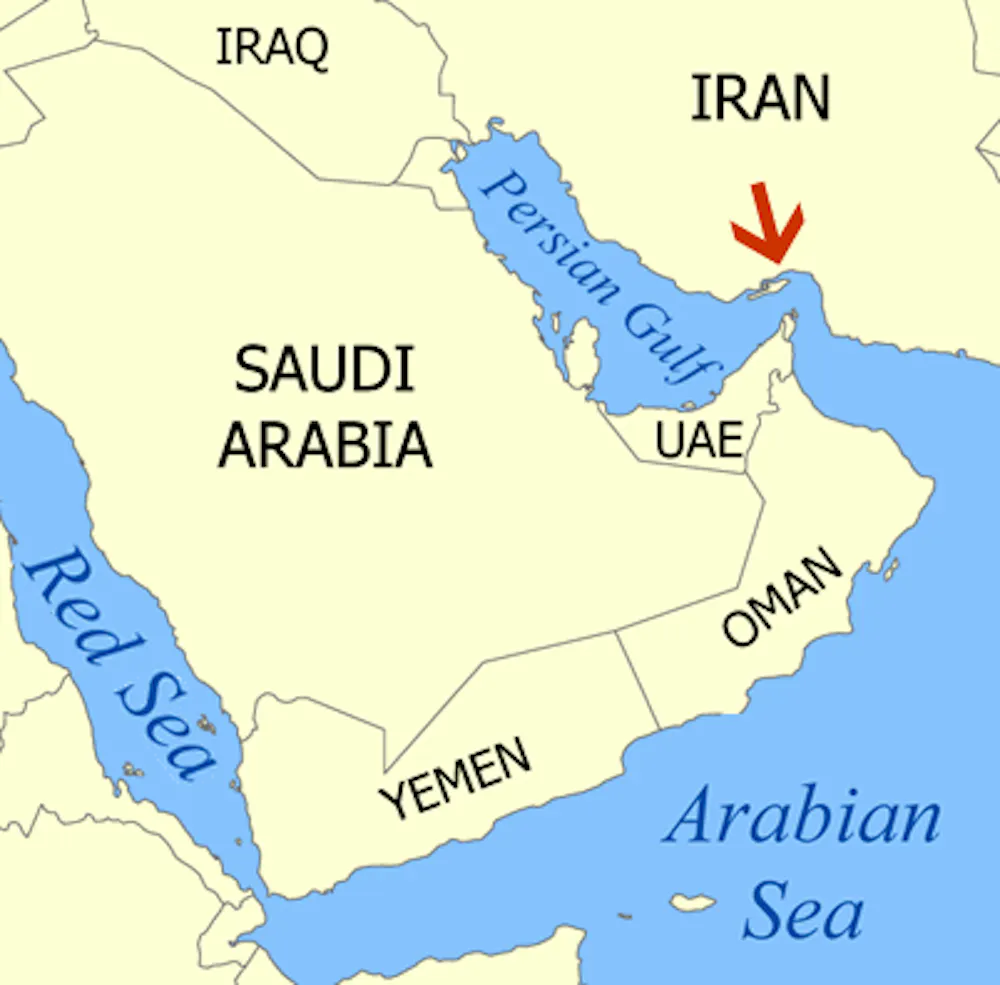
    This is potentially a very dangerous moment. The strait of Hormuz is an important shipping lane through which 20% of the world’s oil transits – about 20 million barrels each day.

    The waterway connects the Persian Gulf and the Gulf of Oman. Iran can either disrupt maritime traffic or attempt to “close” the strait altogether. These are distinctly different approaches with different risks and outcomes.


    Get your news from actual experts, straight to your inbox. Sign up to our daily newsletter to receive all The Conversation UK’s latest coverage of news and research, from politics and business to the arts and sciences.


    The first option is to try and disrupt maritime traffic like Yemen’s Houthi rebels have been doing in the Red Sea since winter 2024. This can be done by attacking passing ships with rockets and drones.

    There are already reports that Iran has started to jam GPS signals in the strait, which has the potential to severely interfere with passing ships, according to US-based maritime analyst Windward.

    Disruption of this kind is likely to deter shipping companies from using this route for fear of casualties and loss of cargo. Shipping companies that want to avoid the Red Sea can always use alternative shipping lanes, such as the Cape of Good Hope route. As inconvenient as that is, there is no such option in the case of the Gulf.

    As we’ve seen with Houthis’ attacks, such disruptions have impacts on oil price, but also ripple effects on stock markets and inflation. Although the US and its western allies can absorb these economic effects – certainly for a while – disrupting the strait would still demonstrate that Tehran has some leverage.

    The credibility factor

    The second option – “closing” the strait would involve interdicting all maritime traffic. This is akin to a blockade. And for it to work, as we have seen in the Black Sea with Russia’s failed attempt at blockading Ukraine, a blockade must be credible enough to deter all traffic.

    Iran has a number of ways to block the strait. It could deploy mines in the waters around the choke point and sink vessels to create obstacles. Iran would also likely use its navy, including submarines, to engage those attempting to break the blockade; use electronic and cyber attacks to disrupt navigation; and threaten civilian traffic and regional ports and oil infrastructure with drones and rockets.

    It’s worth noting that Iran still has plenty of short-range rockets. Israel claims to have destroyed much of its longer range ballistic-missile capability, but it is understood that the country still has a stockpile of short-range missiles that could be effective in targeting ships and infrastructure in the Gulf as well as US bases in the region.

    Recent events have shown up Iran as a bit of a paper tiger. It has made bold claims about its plan to retaliate and the military strength it has to do so. Yet with almost no air power capabilities (apart from drones and missiles) and limited naval power – and with its proxies either defeated or on the back foot – Iran is no longer in a position to project power in the region.

    Iran’s response to the current Israeli attacks have not managed to inflict any major damage or achieve any strategic or political objectives. It’s hard to see a change on the battlefield as things stand.

    Vital waterway: 20% of the world’s oil transts through the Strait of Hormuz.
    w:en:Kleptosquirrel/Wikimedia Commons, CC BY-SA

    For this reason, Tehran’s best option is to target the strait of Hormuz, which has the potential to cause a significant spike in oil prices, leading to a major disruption of the global economy.

    Short of being able to rival the US or Israel on the battlefield, Iran might decide to use asymmetrical means of disruption (in particular missile and drone attacks on civilian shipping) to affect the global economy. Closing or disrupting the strait would be an effective way of doing that.

    A blockade, even a partial one, would offer Tehran some options on the diplomatic scene. For instance, it has been reported that the US asked China to convince Iran not to close the strait. This demonstrates that Tehran can use the threat of a blockade to its advantage on the diplomatic front. But for this to work, the blockade needs to be effective and thus sustained.

    What would be the effect of a blocking the Strait?

    Disrupting traffic in the strait could drag Gulf states – Iraq, Kuwait, Saudi Arabia, UAE, Bahrain and Qatar – into the conflict, since their interests will be directly affected. It’s important to consider how they might respond and whether this will drive them closer to the US – and even Israel, as was already happening with the Abraham Accords and the tentative, but shaky, rapprochement between Saudi Arabia and Israel.


    Read more:
    US joins Israel in attack on Iran and ushers in a new era of impunity


    These are all things Iran would have factored into its calculations a year ago when Israel was targeting its proxies, including Hezollah, Hamas and the various Shia militias it funds in Iraq and elsewhere. But now, given that it has suffered an enormous military setback, which has hurt the regime’s prestige and credibility – including, importantly, at home – Tehran is more likely to downplay these risks. I would expect it to proceed with its blockade plans.

    Even if China voices concerns, like it did regarding the Houthis’ attacks, this is unlikely to change the decision. The regime is cornered. If the leaders believe they could be toppled, they are likely to consider the risks worth taking, particularly if they feel it could give them diplomatic leverage.

    The US has enough naval and air power to disrupt such a blockade. It can preemptively destroy Iran’s mine-laying forces. It can also target missile launch sites inland and respond to threats as and when they arise.

    This is likely to prevent Iran from completely closing the strait. But it won’t prevent the Islamic republic from disrupting maritime trade enough to have serious effects on the world economy. This might well be one of the last cards the regime has to play, both on the battlefield and in the diplomatic arena.

    Basil Germond does not work for, consult, own shares in or receive funding from any company or organisation that would benefit from this article, and has disclosed no relevant affiliations beyond their academic appointment.

    ref. Iran is considering closing the strait of Hormuz – why this would be a major escalation – https://theconversation.com/iran-is-considering-closing-the-strait-of-hormuz-why-this-would-be-a-major-escalation-259562

    MIL OSI – Global Reports

  • MIL-OSI Global: Appeals court ruling grants Donald Trump broad powers to deploy troops to American cities

    Source: The Conversation – Canada – By Jack L. Rozdilsky, Associate Professor of Disaster and Emergency Management, York University, Canada

    Residents of Los Angeles will need to get used to federally controlled National Guard troops operating on their streets. Due to a ruling from an appeals court on June 19, United States President Donald Trump now has broad authority to deploy military forces in American cities.

    This is a troubling development. All presidents have held in their grasp extraordinary powers to deploy military troops domestically. But Trump stands apart with his apparent keen interest in manufacturing false emergencies to exploit extraordinary power.

    An 1878 law called the Posse Comitatus Act restricts using the military for domestic law enforcement. The broader principle being challenged by Trump’s actions in L.A. is the norm of the military not being allowed to interfere in the affairs of civilian governance.

    Injunctions and appeals

    Five months into Trump’s presidency, L.A. has been targeted for aggressive immigration enforcement. In their pluralistic city where dozens of languages and nationalities peacefully co-exist, some Angelenos believe the city is experiencing an attack on its most essential social fabric.

    On June 7, Trump acted under United States Code Title 10 provisions to take over command and control of California’s National Guard. Federalized military forces were deployed.

    The objective was to counter what Trump argued was a form of rebellion against the authority of the government of the United States. In fact, these “rebellions” were largely peaceful protests in downtown L.A.

    On June 9, the U.S. District Court for the Northern District of California granted an injunction restraining the president’s use of military force in L.A. The court order supported Gov. Gavin Newsom’s contention that Trump overstepped his authority.

    On June 19, a decision from a panel of judges at the U.S. Court of Appeals for the Ninth Circuit overturned the injunction.

    What this means at the moment is that Trump does not have to return control of the troops to Newsom. California has options to continue litigation by asking the Federal Appeals Court to rehear the matter, or perhaps directly asking the U.S. Supreme Court to intervene.

    Moving toward authoritarianism

    Trump’s June 7 memorandum facilitating his move to overrule Newsom’s authority and seize control of 2,000 National Guard troops was based on the president defining his own so-called emergency.

    He claimed incidents of violence and disorder following aggressive immigration enforcement amounted to a form of rebellion against the U.S.

    As Trump flexes his emergency power might, his second term has been called the 911 presidency. He has used extraordinary emergency powers at a pace well beyond his predecessors, pressing the limits to address his administration’s supposed sense of serious perils overtaking the nation.

    Issues arise when the level of actual danger locally is not at all representative of what the president suggests is a full-scale national emergency. For example, demonstrations over immigration raids occupied only a tiny parcel of real estate in L.A.’s huge metropolitan area. A Los Angeles-based rebellion against the U.S. was not occurring.

    As dissent over aggressive immigration enforcement actions grew, localized clashes with law enforcement did occur. Mutual aid surged into Los Angeles, where neighbouring California law enforcement agencies acted to assist one another. The law enforcement challenges never rose to the level of the governor of California requesting additional federal support.

    Shortly after the federal government took over the California National Guard, Newsom said the move was purposefully inflammatory.

    In addition to declaring dubious emergencies to amass power, stoking violence is a characteristic of authoritarian rulers. Creating fear, division and feelings of insecurity can lead to community crises. Trump did not need to wait for a crisis; it seems he simply invented one.

    No guardrails

    The expression “out of kilter” comes to mind as Trump inches closer to invoking the Insurrection Act of 1807. If so, the situation will look quite similar in practice to what is happening now in Los Angeles.

    Five years ago, Trump flirted with invoking the Insurrection Act during Black Lives Matter unrest in Washington, D.C., in and around Lafayette Park.

    As recent L.A. protests intensified, Trump stated: “We’re going to have troops everywhere.”

    Currently, there are few guardrails in place to prevent a rogue president from misusing the military in domestic civilian affairs. Trump has been coy about whether he would tap into the greater powers available to him under the Insurrection Act.

    Real emergencies presenting existential threats to America do persist. Nuclear proliferation, climate change and pandemics need serious leaders. But politically exploiting last-resort emergency laws designed to provide options to deal with genuine existential threats — not to weaponize them against protesters demonstrating against public policy — is absurd.

    Jack L. Rozdilsky receives support for research communication and public scholarship from York University. He also has received research support from the Canadian Institutes of Health Research.

    ref. Appeals court ruling grants Donald Trump broad powers to deploy troops to American cities – https://theconversation.com/appeals-court-ruling-grants-donald-trump-broad-powers-to-deploy-troops-to-american-cities-258894

    MIL OSI – Global Reports

  • MIL-OSI Global: No country for old business owners: Economic shifts create a growing challenge for America’s aging entrepreneurs

    Source: The Conversation – USA – By Nancy Forster-Holt, Clinical Associate Professor of Innovation and Entrepreneurship, University of Rhode Island

    Americans love small businesses. We dedicate a week each year to applauding them, and spend Small Business Saturday shopping locally. Yet hiding in plain sight is an enormous challenge facing small business owners as they age: retiring with dignity and foresight. The current economic climate is making this even more difficult.

    As a professor who studies aging and business, I’ve long viewed small business owners’ retirement challenges as a looming crisis. The issue is now front and center for millions of entrepreneurs approaching retirement. Small enterprises make up more than half of all privately held U.S. companies, and for many of their owners, the business is their retirement plan.

    But while owners often hope to finance their golden years by selling their companies, only 20% of small businesses are ready for sale even in good times, according to the Exit Planning Institute. And right now, conditions are far from ideal. An economic stew of inflation, supply chain instability and high borrowing costs means that interest from potential buyers is cooling.

    For many business owners, retirement isn’t a distant concern. In the U.S., baby boomers – who are currently 61 to 79 years old – own about 2.3 million businesses. Altogether, they generate about US$5 billion in revenue and employ almost 25 million people. These entrepreneurs have spent decades building businesses that often are deeply rooted in their communities. They don’t have time to ride out economic chaos, and their optimism is at a 50-year low.

    New policies, new challenges

    You can’t blame them for being gloomy. Recent policy shifts have only made life harder for business owners nearing retirement. Trade instability, whipsawing tariff announcements and disrupted supply chains have eroded already thin margins. Some businesses – generally larger ones with more negotiating power – are absorbing extra costs rather than passing them on to shoppers. Others have no choice but to raise prices, to customers’ dismay. Inflation has further squeezed profits.

    At the same time, with a few notable exceptions, buyers and capital have grown scarce. Acquirers and liquidity have dried up across many sectors. The secondary market – a barometer of broader investor appetite – now sees more sellers than buyers. These are textbook symptoms of a “flight to safety,” a market shift that drags out sale timelines and depresses valuations – all while Main Street business owners age out. These entrepreneurs typically have one shot at retirement – if any.

    Adding to these woes, many small businesses are part of what economists call regional “clusters,” providing services to nearby universities, hospitals and local governments. When those anchor institutions face budget cuts – as is happening now – small business vendors are often the first to feel the impact.

    Research shows that many aging owners actually double down in weak economic times, sinking increasing amounts of time and money in a psychological pattern known as “escalating commitment.” The result is a troubling phenomenon scholars refer to as “benign entrapment.” Aging entrepreneurs can remain attached to their businesses not because they want to, but because they see no viable exit.

    This growing crisis isn’t about bad personal planning — it’s a systemic failure.

    Rewriting the playbook on small business policy

    A key mistake that policymakers make is to lump all small business owners together into one group. That causes them to overlook important differences. After all, a 68-year-old carpenter trying to retire doesn’t have much in common with a 28-year-old tech founder pitching a startup. Policymakers may cheer for high-growth “unicorns,” but they often overlook the “cows and horses” that keep local economies running.

    Even among older business owners, circumstances vary based on local conditions. Two retiring carpenters in different towns may face vastly different prospects based on the strength of their local economies. No business, and no business owner, exists in a vacuum.

    A small business owner in Rochester, Vt., discusses the challenges of retirement in a news segment from WCAX-TV.

    Relatedly, when small businesses fail to transition, it can have consequences for the local economy. Without a buyer, many enterprises will simply shut down. And while closures can be long-planned and thoughtful, when a business closes suddenly, it’s not just the owner who loses. Employees are left scrambling for work. Suppliers lose contracts. Communities lose essential services.

    Four ways to help aging entrepreneurs

    That’s why I think policymakers should reimagine how they support small businesses, especially owners nearing the end of their careers.

    First, small business policy should be tailored to age. A retirement-ready business shouldn’t be judged solely by its growth potential. Rather, policies should recognize stability and community value as markers of success. The U.S. Small Business Administration and regional agencies can provide resources specifically for retirement planning that starts early in a business’s life, to include how to increase the value of the business and a plan to attract acquirers in later stages.

    Second, exit infrastructure should be built into local entrepreneurial ecosystems. Entrepreneurial ecosystems are built to support business entry – think incubators and accelerators – but not for exit. In other words, just like there are accelerators for launching businesses, there should be programs to support winding them down. These could include confidential peer forums, retirement-readiness clinics, succession matchmaking platforms and flexible financing options for acquisition.

    Third, chaos isn’t good for anybody. Fluctuations in capital gains taxes, estate tax thresholds and tariffs make planning difficult and reduce business value in the eyes of potential buyers. Stability encourages confidence on both sides of a transaction.

    And finally, policymakers should include ripple-effect analysis in budget decisions. When universities, hospitals or governments cut spending, small business vendors often absorb much of the shock. Policymakers should account for these downstream impacts when shaping local and federal budgets.

    If we want to truly support small businesses and their owners, it’s important to honor the lifetime arc of entrepreneurship – not just the launch and growth, but the retirement, too.

    Nancy Forster-Holt does not work for, consult, own shares in or receive funding from any company or organization that would benefit from this article, and has disclosed no relevant affiliations beyond their academic appointment.

    ref. No country for old business owners: Economic shifts create a growing challenge for America’s aging entrepreneurs – https://theconversation.com/no-country-for-old-business-owners-economic-shifts-create-a-growing-challenge-for-americas-aging-entrepreneurs-254537

    MIL OSI – Global Reports

  • MIL-OSI Global: How the end of carbon capture could spark a new industrial revolution

    Source: The Conversation – USA – By Andres Clarens, Professor of Civil and Environmental Engineering, University of Virginia

    Steelmaking uses a lot of energy, making it one of the highest greenhouse gas-emitting industries.
    David McNew/Getty Images

    The U.S. Department of Energy’s decision to claw back US$3.7 billion in grants from industrial demonstration projects may create an unexpected opening for American manufacturing.

    Many of the grant recipients were deploying carbon capture and storage – technologies that are designed to prevent industrial carbon pollution from entering the atmosphere by capturing it and injecting it deep underground. The approach has long been considered critical for reducing the contributions chemicals, cement production and other heavy industries make to climate change.

    However, the U.S. policy reversal could paradoxically accelerate emissions cuts from the industrial sector.

    An emissions reality check

    Heavy industry is widely viewed as the toughest part of the economy to clean up.

    The U.S. power sector has made progress, cutting emissions 35% since 2005 as coal-fired power plants were replaced with cheaper natural gas, solar and wind energy. More than 93% of new grid capacity installed in the U.S. in 2025 was forecast to be solar, wind and batteries. In transportation, electric vehicles are the fastest-growing segment of the U.S. automotive market and will lead to meaningful reductions in pollution.

    But U.S. industrial emissions have been mostly unchanged, in part because of the massive amount of coal, gas and oil required to make steel, concrete, aluminum, glass and chemicals. Together these materials account for about 22% of U.S. greenhouse gas emissions.

    The global industrial landscape is changing, though, and U.S. industries cannot, in isolation, expect that yesterday’s means of production will be able to compete in a global marketplace.

    Even without domestic mandates to reduce their emissions, U.S. industries face powerful economic pressures. The EU’s new Carbon Border Adjustment Mechanism imposes a tax on the emissions associated with imported steel, chemicals, cement and aluminum entering European markets. Similar policies are being considered by Canada, Japan, Singapore, South Korea and the United Kingdom, and were even floated in the United States.

    The false promise of carbon capture

    The appeal of carbon capture and storage, in theory, was that it could be bolted on to an existing factory with minimal changes to the core process and the carbon pollution would go away.

    Government incentives for carbon capture allow producers to keep using polluting technologies and prop up gas-powered chemical production or coal-powered concrete production.

    The Trump administration’s pullback of carbon capture and storage grants now removes some of these artificial supports.

    Without the expectation that carbon capture will help them meet regulations, this may create space to focus on materials breakthroughs that could revolutionize manufacturing while solving industries’ emissions problems.

    The materials innovation opportunity

    So, what might emissions-lowering innovation look like for industries such as cement, steel and chemicals? As a civil and environmental engineer who has worked on federal industrial policy, I study the ways these industries intersect with U.S. economic competitiveness and our built environment.

    There are many examples of U.S. innovation to be excited about. Consider just a few industries:

    Cement: Cement is one of the most widely used materials on Earth, but the technology has changed little over the past 150 years. Today, its production generates roughly 8% of total global carbon pollution. If cement production were a country, it would rank third globally after China and the United States.

    Researchers are looking at ways to make concrete that can shed heat or be lighter in weight to significantly reduce the cost of building and cooling a home. Sublime Systems developed a way to produce cement with electricity instead of coal or gas. The company lost its IDP grant in May 2025, but it has a new agreement with Microsoft.

    Making concrete do more could accelerate the transition. Researchers at Stanford and separately at MIT are developing concrete that can act as a capacitor and store over 10 kilowatt-hours of energy per cubic meter. Such materials could potentially store electricity from your solar roof or allow for roadways that can charge cars in motion.

    How concrete could be used as a capacitor. MIT.

    Technologies like these could give U.S. companies a competitive advantage while lowering emissions. Heat-shedding concrete cuts air conditioning demand, lighter formulations require less material per structure, and energy-storing concrete could potentially replace carbon-intensive battery manufacturing.

    Steel and iron: Steel and iron production generate about 7% of global emissions with centuries-old blast furnace processes that use intense heat to melt iron ore and burn off impurities. A hydrogen-based steelmaking alternative exists today that emits only water vapor, but it requires new supply chains, infrastructure and production techniques.

    U.S. Steel has been developing techniques to create stronger microstructures within steel for constructing structures with 50% less material and more strength than conventional designs. When a skyscraper needs that much less steel to achieve the same structural integrity, that eliminates millions of tons of iron ore mining, coal-fired blast furnace operations and transportation emissions.

    Chemicals: Chemical manufacturing has created simultaneous crises over the past 50 years: PFAS “forever chemicals” and microplastics have been showing up in human blood and across ecosystems, and the industry generates a large share of U.S. industrial emissions.

    Companies are developing ways to produce chemicals using engineered enzymes instead of traditional petrochemical processes, achieving 90% lower emissions in a way that could reduce production costs. These bio-based chemicals can naturally biodegrade, and the chemical processes operate at room temperature instead of requiring high heat that uses a lot of energy.

    Is there a silver bullet without carbon capture?

    While carbon capture and storage might not be the silver bullet for reducing emissions that many people thought it would be, new technologies for managing industrial heat might turn out to be the closest thing to one.

    Most industrial processes require temperatures between 300 and 1830 degrees Fahrenheit (150 and 1000 degrees Celsisus for everything from food processing to steel production. Currently, industries burn fossil fuels directly to generate this heat, creating emissions that electric alternatives cannot easily replace. Heat batteries may offer a breakthrough solution by storing renewable electricity as thermal energy, then releasing that heat on demand for industrial processes.

    How thermal batteries work. CNBC.

    Companies such as Rondo Energy are developing systems that store wind and solar power in bricklike materials heated to extreme temperatures. Essentially, they convert electricity into heat during times when electricity is abundant, usually at night. A manufacturing facility can later use that heat, which allows it to reduce energy costs and improve grid reliability by not drawing power at the busiest times. The Trump administration cut funding for projects working with Rondo’s technology, but the company’s products are being tested in other countries.

    Industrial heat pumps provide another pathway by amplifying waste heat to reach the high temperatures manufacturing requires, without using as much fossil fuel.

    The path forward

    The Department of Energy’s decision forces industrial America into a defining moment. One path leads backward toward pollution-intensive business as usual propping up obsolete processes. The other path drives forward through innovation.

    Carbon capture offered an expensive Band-Aid on old technology. Investing in materials innovation and new techniques for making them promises fundamental transformation for the future.

    Andres Clarens receives funding from the National Science Foundation and the Alfred P Sloan Foundation.

    ref. How the end of carbon capture could spark a new industrial revolution – https://theconversation.com/how-the-end-of-carbon-capture-could-spark-a-new-industrial-revolution-257894

    MIL OSI – Global Reports

  • MIL-OSI Global: 3 years after abortion rights were overturned, contraception access is at risk

    Source: The Conversation – USA – By Cynthia H. Chuang, Professor of Medicine and Public Health Sciences, Penn State

    Women living in states that ban or severely restrict abortion may be especially motivated to avoid unintended pregnancy. Viktoriya Skorikova/Moment via Getty Images

    On June 24, 2022, the U.S. Supreme Court decision in Dobbs v. Jackson Women’s Health Organization eliminated a nearly 50-year constitutional right to abortion and returned the authority to regulate abortion to the states.

    The Dobbs ruling, which overturned Roe v. Wade, has vastly reshaped the national abortion landscape. Three years on, many states have severely restricted access to abortion care. But the decision has also had a less well-recognized outcome: It is increasingly jeopardizing access to contraception.

    We are a physician scientist and a sociologist and health services researcher studying women’s health care and policy, including access to contraception. We see a worrisome situation emerging.

    Even while the growing limits on abortion in the U.S. heighten the need for effective contraception, family planning providers are less available in many states, and health insurance coverage of some of the most effective types of contraception is at risk.

    A growing demand for contraception

    Abortion restrictions have proliferated around the country since the Dobbs decision. As of June 2025, 12 states have near-total abortion bans and 10 states ban abortion before 23 or 24 weeks of gestation, which is when a fetus is generally deemed viable. Of the remaining states, 19 restrict abortion after viability and nine states and Washington have no gestational limits.

    It’s no surprise that women living in states that ban or severely restrict abortion may be especially motivated to avoid unintended pregnancy. Even planned pregnancies have grown riskier, with health care providers fearing legal repercussions for treating pregnancy-related medical emergencies such as miscarriages. Such concerns may in part explain emerging research that suggests the use of long-acting contraception such as intrauterine devices, or IUDs, and permanent contraception – namely, sterilization – are on the rise.

    A national survey conducted in 2024 asked women ages 18 to 49 if they have changed their contraception practices “as a result of the Supreme Court overturning Roe v. Wade.” It found that close to 1 in 5 women began using contraception for the first time, switched to a more effective contraceptive method, received a sterilization procedure or purchased emergency contraception to keep on hand.

    The Supreme Court’s decision in Dobbs reshaped the landscape of abortion access across the U.S.

    A study in Ohio hospitals found a nearly 16% increase in women choosing long-acting contraception methods or sterilization in the six months after the Dobbs decision, and a 33% jump in men receiving vasectomies. Another study, which looked at both female and male sterilization in academic medical centers across the country, also reported an uptick in sterilization procedures for young adults ages 18 to 30 after the Dobbs decision, through 2023.

    A loss of contraception providers

    Ironically, banning or severely restricting abortion statewide may also diminish capacity to provide contraception.

    To date, there is no compelling evidence that OB-GYN doctors are leaving states with strict abortion laws in significant numbers. One study found that states with severe abortion restrictions saw a 4.2% decrease in such practitioners compared with states without abortion restrictions.

    However, the Association of American Medical Colleges reports declining applications to residency training programs located in states that have abortion bans – not just for OB-GYN training programs, but for residency training of all specialties. This drop suggests that doctors may be overall less likely to train in states that restrict medical practice. And given that physicians often stay on to practice in the states where they do their training, it may point to a long-term decline in physicians in those states.

    But the most significant drop in contraceptive services likely comes from the closure of abortion clinics in states with the most restrictive abortion policies. That’s because such clinics generally provide a wide range of reproductive services, including contraception. The 12 states with near-total abortion bans had 57 abortion clinics in 2020, all of which were closed as of March 2024. One study reported a 4.1% decline in oral contraceptives dispensed in those states.

    Contraception under threat

    The Dobbs decision has also encouraged ongoing efforts to incorrectly redefine some of the most effective contraceptives as medications that cause abortion. These efforts target emergency contraceptive pills, known as Plan B over-the-counter and Ella by prescription, as well as certain IUDs. Emergency contraceptive pills are up to 98% effective at preventing pregnancy after unprotected sex, and IUDs are 99% effective.

    Neither method terminates a pregnancy, which by definition begins when a fertilized egg implants in the uterus. Instead, emergency contraceptive pills prevent an egg from being released from the ovaries, while IUDs, depending on the type, prevent sperm from fertilizing an egg or prevent an egg from implanting in the uterus.

    Conflating contraception and abortion spreads misinformation and causes confusion. People who believe that certain types of contraception cause abortions may be dissuaded from using those methods and rely on less effective methods. What’s more, it may affect health insurance coverage.

    Medicaid, which provides health insurance for low-income children and adults, has been required to cover family planning services at no cost to patients since 1972. Since 2012, the Affordable Care Act has required private health insurers to cover certain women’s health preventive services at no cost to patients, including the full-range of contraceptives approved by the Food and Drug Administration.

    According to our research, the insurance coverage required by the Affordable Care Act has increased use of IUDs, which can be prohibitively expensive when paid out of pocket. But if IUDs and emergency contraceptive pills were reclassified as interventions that induce abortion, they likely would not be covered by Medicaid or the Affordable Care Act, since neither type of health insurance requires coverage for abortion care. Thus, access to some of the most effective contraceptive methods could be jeopardized at a time when the right to terminate an unintended or nonviable pregnancy has been rolled back in much of the country.

    Indeed, Project 2025, the conservative policy agenda that the Trump administration appears to be following, specifically calls for removing Ella from the Affordable Care Act contraception coverage mandate because it is a “potential abortifacient.” And politicians in multiple states have expressed support for the idea of restricting these contraceptive methods, as well as contraception more broadly.

    On the third anniversary of the Dobbs decision, it is clear that its ripple effects include threats to contraception. Considering that contraception use is almost universal among women in their reproductive years, in our view these threats should be taken seriously.

    Cynthia H. Chuang receives funding from the Agency for Healthcare Research and Quality.

    Carol S. Weisman does not work for, consult, own shares in or receive funding from any company or organization that would benefit from this article, and has disclosed no relevant affiliations beyond their academic appointment.

    ref. 3 years after abortion rights were overturned, contraception access is at risk – https://theconversation.com/3-years-after-abortion-rights-were-overturned-contraception-access-is-at-risk-258458

    MIL OSI – Global Reports

  • MIL-OSI Global: The sleeper Supreme Court decision that could have profound impacts on the Trump administration agenda – and restore faith in the high court

    Source: The Conversation – USA – By Ray Brescia, Associate Dean for Research and Intellectual Life, Albany Law School

    The Trump administration has tried to punish or suppress speech and opposition to administration policies. Baac3nes/Getty Images

    The American public’s trust in the Supreme Court has fallen precipitously over the past decade. Many across the political spectrum see the court as too political.

    This view is only strengthened when Americans see most of the justices of the court dividing along ideological lines on decisions related to some of the most hot-button issues the court handles. Those include reproductive rights, voting rights, corporate power, environmental protection, student loan policy, worker rights and LGBTQ+ rights.

    But there is one recent decision where the court was unanimous in its ruling, perhaps because its holding should not be controversial: National Rifle Association v. Vullo. In that 2024 case, the court said that it’s a clear violation of the First Amendment’s free speech provisions for government to force people to speak and act in ways that are aligned with its policies.

    The second Trump administration has tried to wield executive branch power in ways that appear to punish or suppress speech and opposition to administration policy priorities. Many of those attempts have been legally challenged and will likely make their way to the Supreme Court.

    The somewhat under-the-radar – yet incredibly important – decision in National Rifle Association v. Vullo is likely to figure prominently in Supreme Court rulings in a slew of those cases in the coming months and years, including those involving law firms, universities and the Public Broadcasting Service.

    That’s because, in my view as a legal scholar, they are all First Amendment cases.

    Will the Supreme Court continue to protect free speech rights, as it did unanimously in 2024?
    Geoff Livingston/Getty Images

    Why the NRA sued a New York state official

    In May 2024, in an opinion written by reliably liberal Sonia Sotomayor, a unanimous court ruled that the efforts of New York state government officials to punish companies doing business with the NRA constituted clear violations of the First Amendment.

    Following its own precedent from the 1960s, Bantam Books v. Sullivan, the court found that government officials “cannot attempt to coerce private parties in order to punish or suppress views that the government disfavors.”

    Many of the current targets of the Trump administration’s actions have claimed similar suppression of their First Amendment rights by the government. They have fought back, filing lawsuits that often cite the National Rifle Association v. Vullo decision in their efforts.

    To date, the most egregious examples of actions that violate the principles announced by the court – the executive orders against law firms – have largely been halted in the lower courts, with those decisions often citing what’s now known as the Vullo decision.

    While these cases may still be working their way through the lower courts, it is likely that the Supreme Court will ultimately consider legal challenges to the Trump administration’s efforts in a range of areas.

    These would include the executive orders against law firms, attempts to cut government grants and research funding from universities, potential moves to strip nonprofits of their tax-exempt status, and regulatory actions punishing media companies for what the White House believes to be unfavorable coverage.

    The court could also hear disputes over the government terminating contracts with a family of companies that provides satellite and communications support to the U.S. government generally and the military in particular.

    Despite the variety of organizations and government actions involved in these lawsuits, they all can be seen as struggles over free speech and expression, like Vullo.

    Whether it is private law firms, multinational corporations, universities or members of the media, all have one thing in common: They have all been targeted by the Trump administration for the same reason – they are engaged in actions or speech that is disfavored by President Donald Trump.

    Protecting speech, regardless of politics

    U.S. Supreme Court Justice Robert Jackson, front, took leave to help prosecute war criminals at the Nuremberg trials at the end of World War II.
    Bettman/Getty Images

    The NRA, an often-controversial gun-rights advocacy organization, was the plaintiff in the Vullo decision.

    But just because the groups that have been targeted by the Trump administration are across the political divide from the NRA does not mean the outcome in decisions relying on the court’s opinion will be different. In fact, these groups can rely on the same arguments advanced by the NRA, and are, I believe, likely to win.

    Vullo isn’t the only decision on which the court can rely when considering challenges to the Trump administration’s efforts targeting these groups.

    In the wake of World War II, Supreme Court Justice Robert Jackson took a leave from the court and served as a prosecutor in the Nuremberg trials of Nazi leaders. Prosecuting them for their atrocities, Jackson saw how the Nuremberg defendants wielded government authority to punish enemies who resisted their rise and later opposed their rule.

    Once he returned to the court, Jackson wrote the majority opinion in West Virginia State Board of Education v. Barnette, where the court found that students who refused to salute the American flag and recite the Pledge of Allegiance at school could not be expelled.

    Jackson’s opinion is a forceful rejection of government attempts to control what people say: “If there is any fixed star in our constitutional constellation, it is that no official, high or petty, can prescribe what shall be orthodox in politics, nationalism, religion, or other matters of opinion or force citizens to confess by word or act their faith therein.”

    If some of the cases testing the state’s power to force fidelity to the executive branch reach the Supreme Court, the cases could offer the justices the opportunity to, once again, speak with one voice as they did in NRA v. Vullo, to demonstrate it can be evenhanded and will not play politics with the First Amendment.

    Ray Brescia does not work for, consult, own shares in or receive funding from any company or organization that would benefit from this article, and has disclosed no relevant affiliations beyond their academic appointment.

    ref. The sleeper Supreme Court decision that could have profound impacts on the Trump administration agenda – and restore faith in the high court – https://theconversation.com/the-sleeper-supreme-court-decision-that-could-have-profound-impacts-on-the-trump-administration-agenda-and-restore-faith-in-the-high-court-258216

    MIL OSI – Global Reports

  • MIL-OSI Russia: Israel strikes military targets in western Iran

    Translation. Region: Russian Federal

    Source: People’s Republic of China in Russian –

    Source: People’s Republic of China – State Council News

    JERUSALEM, June 23 (Xinhua) — The Israel Defense Forces (IDF) carried out new strikes on targets in Kermanshah province in western Iran, the IDF said on Monday.

    The Israeli Air Force struck what it called “military infrastructure” — launch pads and storage facilities for surface-to-surface missiles, the military said in a statement. More than 15 warplanes took part in the operation.

    The strikes came shortly after Iran fired a rocket at Israel before dawn, sending air raid sirens ringing across much of the country. The Israeli military said the rocket was shot down and there were no casualties or damage.

    The Iranian attack followed US President Donald Trump’s suggestion of possible regime change in Iran. –0–

    MIL OSI Russia News

  • Putin tells Iranian foreign minister there was no justification for US attack

    Source: Government of India

    Source: Government of India (4)

    Russian President Vladimir Putin told Iran’s foreign minister on Monday there was no justification for the U.S. bombing of his country and that Moscow was trying to help the Iranian people.

    Putin hosted Iranian Foreign Minister Abbas Araqchi in Moscow two days after U.S. President Donald Trump sent U.S. bomber planes to strike Iran’s three main nuclear sites.

    “The absolutely unprovoked aggression against Iran has no basis and no justification,” Putin told Araqchi in televised comments.

    “For our part, we are making efforts to assist the Iranian people,” he added.

    “I am very glad that you are in Moscow today, this will give us the opportunity to discuss all these pressing issues and think together about how we could get out of today’s situation.”

    Araqchi told Putin that Iran was conducting legitimate self-defence, and thanked Russia for condemning the U.S. actions. He conveyed best wishes to Putin from Iran’s supreme leader and president.

    “Russia is today on the right side of history and international law,” said Araqchi.

    It was unclear, however, what Russia might do to support Iran, an important ally with which Putin signed a strategic cooperation treaty in January. That agreement did not include a mutual defence clause.

    Before Saturday’s U.S. strikes, Moscow had warned that U.S. military intervention could destabilise the entire region and plunge it into the “abyss”.

    Asked what Russia was ready to do to help Tehran, Kremlin spokesman Dmitry Peskov said: “It all depends on what Iran needs”. He said the fact that Moscow had offered to mediate in the crisis was itself a form of support.

    Peskov condemned the U.S. attacks.

    “An increase in the number of participants in this conflict is happening – or rather, has happened. A new spiral of escalation of tension in the region,” Peskov told reporters.

    “And, of course, we condemn this and express regret in this regard, deep regret. In addition, of course, it remains to be seen what happened to (Iran’s) nuclear facilities, whether there is a radiation hazard.”

    Peskov said Trump had not told Putin in detail about the planned strikes in advance.

    “There was no detailed information. The topic of Iran itself was repeatedly discussed by the presidents during their most recent conversations, certain proposals were voiced by Russia, but there was no direct detailed information about this,” he said.

    (Reuters)

  • Succession plans for Iran’s Khamenei hit top gear

    Source: Government of India

    Source: Government of India (4)

    The clock’s ticking for senior clerics seeking a successor to Iran’s Supreme Leader Ayatollah Ali Khamenei.

    A three-man committee from a top clerical body, appointed by Khamenei himself two years ago to identify his replacement, has accelerated its planning in recent days since Israel attacked Iran and threatened to assassinate the veteran leader, five insiders with knowledge of the discussions told Reuters.

    Khamenei, 86, is being regularly briefed on the talks, according to the Iranian sources who requested anonymity to discuss highly sensitive matters. He has gone into hiding with his family and is being guarded by the Vali-ye Amr special forces unit of the Revolutionary Guards, a top security official said.

    The ruling establishment will immediately seek to name a successor to Khamenei if he is killed, to signal stability and continuity, according to the sources who acknowledged that predicting Iran’s subsequent political trajectory was difficult.

    A new leader will still be chosen for his devotion to the revolutionary precepts of the Islamic Republic’s late founder Ayatollah Ruhollah Khomeini, according to one insider, who is close to Khamenei’s office and privy to succession discussions.

    At the same time, the top echelon of power is also considering which candidate might present a more moderate face to ward off foreign attacks and internal revolts, the person said.

    Two frontrunners have emerged in the succession discussions, the five insiders said: Khamenei’s 56-year-old son Mojtaba, long seen as a continuity choice, and a new contender, Hassan Khomeini, grandson of the father of the Islamic revolution.

    Khomeini, a close ally of the reformist faction that favours the easing of social and political restrictions, nonetheless commands respect among senior clerics and the Revolutionary Guards because of his lineage, the sources added.

    “I once again humbly express that this small and insignificant servant of the Iranian people stands ready to proudly be present on any front or scene you deem necessary,” the 53-year-old said in a public message of support to the supreme leader on Saturday, hours before the U.S. bombed Iran’s nuclear facilities.

    Khomeini has come into the frame as a serious candidate this month amid the conflict with Israel and America because he could represent a more conciliatory choice internationally and domestically than Mojtaba Khamenei, the five people said.

    By contrast, Khamenei hews closely to his father’s hardline policies, according to the insiders who cautioned that nothing had been determined, candidates could change and the supreme leader would have the final say.

    However, with the military conflict continuing, it remains unclear whether any new leader could be chosen easily or installed securely or if he could assume the level of authority enjoyed by Khamenei, they added.

    Israeli strikes have also killed several of Iran’s top Revolutionary Guards commanders, potentially complicating a handover of power as the elite military force has long played a central role in enforcing the supreme leader’s rule.

    Khamenei’s office and the Assembly of Experts, the clerical body from which the succession committee was drawn, were not available to comment.

    TRUMP: KHAMENEI IS EASY TARGET

    Planning for an eventual handover was already in the works because of Khamenei’s age and the longstanding health concerns of a leader who has dominated all aspects of Iranian politics for decades, the sources said.

    The urgency of the task was underlined in September when Israel killed Hezbollah leader Sayyed Hassan Nasrallah, a close ally of Khamenei’s, and the planning accelerated significantly this month following the Israeli attacks on nuclear sites, which were followed by the American attacks at the weekend.

    “We know exactly where the so-called ‘Supreme Leader’ is hiding,” U.S. President Trump warned on social media last week, calling for Tehran’s unconditional surrender. “He is an easy target.”

    Khamenei hasn’t publicly expressed any preference for his successor. The sources said he had repeatedly opposed the idea of his son taking over, in succession discussions in the past, concerned about any suggestion of Iran returning to the kind of hereditary rule that ended with the ousting of the shah in 1979.

    The role of Supreme Leader was created after the revolution and then enshrined in the constitution giving a top cleric ultimate authority in guiding the elected president and parliament.

    Officially, the leader is named by the Assembly of Experts, made up of 88 senior clerics who are chosen through a national election in which a hardline watchdog body aligned with Khamenei must approve all the candidates.

    “Whether the Islamic Republic survives or not, it will be a very different one, because the context in which it has existed has fundamentally changed,” said London-based Iranian political analyst Hossein Rassam, adding that Hassan Khomeini could fit the bill for a leader to take Iran in a new direction.

    “The regime has to opt for someone who’ll facilitate slow transition.”

    Hassan Khomeini’s close links to the reformist faction of Iranian politics, which pursued an ultimately unsuccessful policy of opening Iran to the outside world in the 1990s, saw hardline officials bar him from running as a member of senior clerical body the Assembly of Experts in 2016.

    The succession planners are aware that Khomeini is likely to be more palatable to the Iranian population than a hardliner, the five insiders said. Last year he warned of a “crisis of rising popular dissatisfaction” among Iranians due to poverty and deprivation.

    By contrast, Mojtaba Khamenei’s views echo those of his father on every major topic from cracking down on opponents to taking a hardline with foreign foes, the sources said – qualities they saw as hazardous with Iran under attack.

    A mid-ranking cleric who teaches theology at a religious seminary in the city Qom, the centre of Iranian religious life, Mojtaba has never held a formal position the Islamic Republic, though exercises influence behind the scenes as the gatekeeper to his father, according to Iran watchers.

    The U.S. Treasury Department imposed sanctions on Mojtaba in 2019, saying he represented the Supreme Leader in “an official capacity despite never being elected or appointed to a government position” aside from working his father’s office.

    OTHER CANDIDATES FALL AWAY

    Several of the candidates long seen as possible successors to Khamenei have already died.

    Former presidents Hashemi Rafsanjani passed away in 2017, former judiciary chief Mahmoud Hashemi Shahroudi died of natural causes in 2018 and former President Ebrahim Raisi was killed in a helicopter crash in 2023. Another senior cleric Sadegh Amoli Larijani, has been sidelined.

    Others, such as the Assembly of Experts member Ayatollah Alireza Arafi, are still in contention but have fallen behind Mojtaba Khamenei and Hassan Khomeini, the five sources said.

    Beyond the most likely candidates, it’s also possible that a less prominent cleric could be chosen as a pawn of Revolutionary Guards, said Ali Vaez, Iran project director at the International Crisis Group think-tank.

    “It is possible that they would put forward a candidate that no one has ever heard of and would not really hold the same levers of power that Ayatollah Khamenei has held now for more than 30 years,” he said.

    The supreme leader’s voice is powerful.

    After the death of the Islamic Republic’s founder Ruhollah Khomeini in 1989, Khamenei was publicly hailed as his predecessor’s choice. Although he had already served as president, Khamenei was only a mid-ranking cleric and was initially dismissed by influential clerics as weak and an unlikely successor to his charismatic predecessor.

    However, he steadily tightened his grip to become Iran’s unquestioned decision-maker, relying on the Revolutionary Guards as he outmanoeuvred rivals and crushed bouts of popular unrest.

    (Reuters)

  • MIL-OSI Russia: The United States has urged its citizens to exercise increased caution abroad.

    Translation. Region: Russian Federal

    Source: People’s Republic of China in Russian – People’s Republic of China in Russian –

    Source: People’s Republic of China – State Council News

    WASHINGTON, June 23 (Xinhua) — The U.S. State Department on Sunday issued a global security alert, urging U.S. citizens abroad to exercise increased caution.

    “The conflict between Israel and Iran has led to disruptions in air traffic and periodic closures of airspace in the Middle East,” says a statement posted on the department’s official website.

    “There is a potential for protests against U.S. citizens and interests abroad. The State Department advises U.S. citizens worldwide to exercise increased caution,” the warning said.

    The United States struck three key Iranian nuclear sites on Saturday, saying it had destroyed the country’s nuclear program.

    Late on Saturday, US President Donald Trump warned that any retaliatory strike by Iran “will be met with force far beyond what the world saw tonight.”

    Last week, the State Department warned American citizens against traveling to Israel, Gaza and the West Bank due to armed conflict, terrorism and civil unrest. –0–

    MIL OSI Russia News

  • MIL-OSI USA: Governor Newsom announces appointments 6.20.25

    Source: US State of California 2

    Jun 20, 2025

    SACRAMENTO – Governor Gavin Newsom today announced the following appointments:

    Soon-Sik Lee, of Bellevue, Washington, has been appointed Chief of Planning and Engineering at the California High Speed Rail Authority. Lee has been a Vice President – Senior Program Manager at AECOM since 2021. He was Director of Engineering at Etihad Rail from 2020 to 2021. Lee was a Principal Investment Operations Specialist at Asian Infrastructure Investment Bank from 2016 to 2020. He was the Engineering and Construction Director at Etihad Rail from 2011 to 2016. Lee was an Assistant Vice President – Project Manager at Union Railway 2009 to 2011. He was a Project Manager at Parsons from 2006 to 2008. Lee was a Senior Bridge Engineer URS 2002 to 2006. He held multiple positions at University of Michigan from 1999 to 2002, including Post Doctoral Research Fellow and Research Assistant. Lee was a Structural Engineer at Won-Jong Engineering from 1996 to 1997. He earned a Doctor of Philosophy degree in Civil Engineering from University of Michigan, Ann Arbor, a Master of Business Administration degree from University of Chicago, a Master of Science degree in Civil Engineering from University of Michigan, Ann Arbor, and a Bachelor of Science degree in Civil Engineering from Kyung Hee University. This position does not require Senate confirmation, and the compensation is $280,008. Lee is registered without party preference. 

    Lilian Coral, of San Marino, has been appointed to the California Community Colleges Board of Governors. Coral has been Vice President of Technology and Democracy Programs and Head of the Open Technology Institute at New America and an Adjunct Instructor at the University of Southern California since 2022. She was Director of National Strategy and Technology Innovation at the Knight Foundation from 2017 to 2022. Coral was Chief Data Officer at the Office of Los Angeles Mayor Eric Garcetti from 2015 to 2017. She was a Nonprofit Consultant and Principal at Adaptive Muse from 2008 to 2015. Coral was Founding Director of 2-1-1 California from 2010 to 2014. She was Policy Manager at the Los Angeles County Children’s Planning Council from 2007 to 2008. Coral was a Research and Policy Associate at Service Employees International Union, Local 721 from 2004 to 2007. She is a Board Member at Next City. She earned a Master of Public Policy degree from University of California, Los Angeles and a Bachelor of Arts degree in International Studies from University of California, Irvine. This position requires Senate confirmation, and the compensation is $100 per diem. Coral is a Democrat. 

    Carson Fajardo, of Rancho Cucamonga, has been appointed to the California State University Board of Trustees. Fajardo held several roles at California State University, San Bernardino from 2022 to 2025, including President and Chief Executive Officer and Member of the Board of Directors at Associated Students, Inc., and Programming Coordinator at the Residence Halls Association. He earned a Bachelor of Arts degree in Business Administration from California State University, San Bernardino. This position does not require Senate confirmation, and the compensation is $100 per diem. Fajardo is a Republican. 

    Press releases, Recent news

    Recent news

    News What you need to know: The Ninth Circuit rejected Trump’s sweeping claim that he can federalize the National Guard for any reason and avoid judicial scrutiny, even as it stayed an emergency district court order. This is a critical check on presidential overreach…

    News Sacramento, California – Governor Gavin Newsom today issued a proclamation declaring “Juneteenth National Freedom Day: A Day of Observance” in the State of California.The text of the proclamation and a copy can be found below: PROCLAMATIONJuly 4 is not the only…

    News What you need to know: The Trump administration announced today that is has directed the national suicide prevention hotline to stop offering specialized support to LGBTQ callers. California continues to support this population.  SACRAMENTO – Governor Gavin…

    MIL OSI USA News

  • MIL-OSI NGOs: USA: MAHMOUD KHALIL RELEASED 

    Source: Amnesty International –

    In response to a U.S. District Court Judge ordering Mahmoud Khalil to be released on bail, Amnesty International’s Americas Regional Director Ana Piquer said: 

    “After more than three months of unjust detention, Mahmoud Khalil has finally been granted his freedom to return home, embrace his wife, and hold his child.  His detention was not only unnecessary, but emblematic of a broader effort by the Trump administration to suppress solidarity with Palestinian people and weaponize the immigration system. Mahmoud was targeted for exercising his human rights to freedom of expression and peaceful assembly. All of these rights must be respected in the United States and around the world, without exception. 

    After more than three months of unjust detention, Mahmoud Khalil has finally been granted his freedom to return home, embrace his wife, and hold his child.  His detention was not only unnecessary, but emblematic of a broader effort by the Trump administration to suppress solidarity with Palestinian people and weaponize the immigration system.

    Ana Piquer, Amnesty International’s Americas Regional Director.

    We remain deeply concerned by the escalating use of detention, intimidation, deportation, and disregard to right of due process, to silence protest and chill public debate in the United States. This is not just about one student, it is about the growing pattern of authoritarian practices by the Trump administration that undermine human rights. We urge the U.S. government to end the political targeting of students and other individuals based on their beliefs and to respect freedom of speech. Mahmoud’s detention is a stark reminder of the human rights that are at stake in the country, and we will continue to monitor his case.” 

    We urge the U.S. government to end the political targeting of students and other individuals based on their beliefs and to respect freedom of speech. Mahmoud’s detention is a stark reminder of the human rights that are at stake in the country, and we will continue to monitor his case.” 

    Ana Piquer, Amnesty International’s Americas Regional Director.

    Contact: [email protected]

    MIL OSI NGO

  • MIL-OSI Europe: Briefing – EU–NATO cooperation – 23-06-2025

    Source: European Parliament

    The cooperation between the EU and the North Atlantic Treaty Organization (NATO) has deepened significantly in response to Russia’s full-scale invasion of Ukraine, which has reshaped Europe’s security environment and highlighted the complementary roles of both organisations. NATO remains the cornerstone of collective defence, backed by United States (US) capabilities, while the EU has emerged as a key actor in financial aid, military assistance and sanctions. Both institutions have formalised their partnership through joint declarations and strategic documents, including NATO’s Strategic Concept, the EU’s Strategic Compass and White Paper for European Defence – Readiness 2030. Practical cooperation now spans a wide range of areas including cyber defence, countering hybrid threats, military mobility, critical infrastructure protection, and joint crisis preparedness. Regular staff-level coordination, shared exercises, and technical arrangements – such as the NATO–EU task force on critical infrastructure – have improved resilience and interoperability. The EU has also significantly ramped up its defence role. It has delivered €50.8 billion in military aid to Ukraine (EU plus Member State contributions). It has introduced industrial policies such as EDIRPA, ASAP, and the ReArm Europe/Readiness 2030 plan to reinforce the European defence industrial base. Despite progress, persistent challenges remain. Political tensions – in particular between Cyprus and Türkiye – continue to block intelligence sharing and formal joint planning. The EU still relies heavily on NATO, particularly US assets, for operational capabilities. Growing uncertainty over US commitments under the second Trump Presidency has reinforced the EU’s drive to strengthen strategic autonomy and ensure greater burden-sharing within NATO. The European Parliament supports stronger, complementary EU–NATO ties focused on interoperability, resilience and avoiding duplication, while stressing the need for Europe to take greater responsibility for its own security. At the NATO summit on 24-25 June in The Hague (the Netherlands), key challenges include agreeing on higher defence spending targets, maintaining alliance unity, managing the Russia threat, and rapidly scaling up Europe’s defence capabilities.

    MIL OSI Europe News

  • MIL-OSI Europe: At a Glance – 2025 G7 Summit in Kananaskis, Canada – 23-06-2025

    Source: European Parliament

    G7 leaders gathered under this year’s Canadian Presidency in Kananaskis, Canada, from 15 to 17 June 2025. The 51st leaders’ summit was overshadowed by the escalating conflict between Israel and Iran (which forced United States (US) President Donald Trump to leave the summit earlier), trade tensions between the US and the G7 nations, Russia’s ongoing war against Ukraine, and the Israel–Hamas war and the situation in Gaza. While the G7 issued several joint statements, for instance on the Israel–Iran crisis, no final G7 leaders’ communiqué was adopted, contrary to previous summits. The EU and other G7 members did not achieve a breakthrough in the trade talks with the US.

    MIL OSI Europe News