ER Report: Here is a summary of significant articles published on EveningReport.nz on June 18, 2025.
Saving species starts at home: how you can help Australia’s 1,000 threatened invertebrates Source: The Conversation (Au and NZ) – By Kate Umbers, Associate Professor in Zoology, Western Sydney University Atlas Moth (_Attacus wardi_) Garry Sankowsky/flickr, CC BY When we think about animals, we tend to think of furry four-legged mammals. But 95% of all animal species are invertebrates – bees, butterflies, beetles, snails, worms, octopuses, starfish, corals,
Matariki and our diminishing night sky: light pollution from cities and satellites is making stars harder to see Source: The Conversation (Au and NZ) – By Shea Esterling, Senior Lecturer Above the Bar, University of Canterbury Zhang Jianyong/Xinhua via Getty Images This week, Aotearoa New Zealand officially celebrates Matariki for the fourth time, marked by the reappearance in the night sky of the star cluster also known as the Pleiades. Yet, ironically, the
Why a US court allowed a dead man to deliver his own victim impact statement – via an AI avatar Source: The Conversation (Au and NZ) – By James D Metzger, Senior Lecturer in Law & Justice, UNSW Sydney Composite image: Arrington Watkins Architects / AI avatar: YouTube/StaceyWales, CC BY In November 2021, in the city of Chandler, Arizona, Chris Pelkey was shot and killed by Gabriel Horcasitas in a road rage altercation. Horcasitas was
What’s the difference between food poisoning and gastro? A gut expert explains Source: The Conversation (Au and NZ) – By Vincent Ho, Associate Professor and Clinical Academic Gastroenterologist, Western Sydney University Andrey_Popov/Shutterstock If you’ve got a dodgy tummy, diarrhoea and have been vomiting, it’s easy to blame a “tummy bug” or “off food”. But which is it? Gastro or food poisoning? What’s the difference anyway? What’s gastroenteritis?
Sharks come in many different shapes and sizes. But they all follow a centuries-old mathematical rule Source: The Conversation (Au and NZ) – By Jodie L. Rummer, Professor of Marine Biology, James Cook University Rachel Moore From hand-sized lantern sharks that glow in the deep sea to bus-sized whale sharks gliding through tropical waters, sharks come in all shapes and sizes. Despite these differences, they all face the same fundamental challenge:
Iran war: from the Middle East to America, history shows you cannot assassinate your way to peace ANALYSIS: By Matt Fitzpatrick, Flinders University In the late 1960s, the prevailing opinion among Israeli Shin Bet intelligence officers was that the key to defeating the Palestinian Liberation Organisation was to assassinate its then-leader Yasser Arafat. The elimination of Arafat, the Shin Bet commander Yehuda Arbel wrote in his diary, was “a precondition to finding
Solomon Islanders safe but unable to leave Israel amid war on Iran RNZ Pacific The Solomon Islands Foreign Ministry says five people who completed agriculture training in Israel are safe but unable to come home amid the ongoing war between Israel and Iran. The ministry said in a statement that the Solomon Islands Embassy in Abu Dhabi, United Arab Emirates, was closely monitoring the situation and maintaining
We tracked Aussie teens’ mental health. The news isn’t good – and problems are worse for girls Source: The Conversation (Au and NZ) – By Scarlett Smout, Postdoctoral Research Fellow at The Matilda Centre for Research in Mental Health and Substance Use and Australia’s Mental Health Think Tank, University of Sydney skynesher/Getty Images We know young people in Australia and worldwide are experiencing growing mental health challenges. The most recent national survey
Australia could become the world’s first net-zero exporter of fossil fuels – here’s how Source: The Conversation (Au and NZ) – By Frank Jotzo, Professor, Crawford School of Public Policy and Director, Centre for Climate and Energy Policy, Australian National University Photo by Jie Zhao/Corbis via Getty Images Australia is the world’s third largest exporter of gas and second largest exporter of coal. When burned overseas, these exports result
Would a corporate tax cut boost productivity in Australia? So far, the evidence is unclear Source: The Conversation (Au and NZ) – By Isaac Gross, Lecturer in Economics, Monash University The Conversation, CC BY-NC The first term of the Albanese government was defined by its fight against inflation, but the second looks like it will be defined by a need to kick start Australia’s sluggish productivity growth. Productivity is essentially
How high can US debt go before it triggers a financial crisis? Source: The Conversation (Au and NZ) – By Luke Hartigan, Lecturer in Economics, University of Sydney rarrarorro/Shutterstock The tax cuts bill currently being debated by the US Senate will add another US$3 trillion (A$4.6 trillion) to US debt. President Donald Trump calls it the “big, beautiful bill”; his erstwhile policy adviser Elon Musk called it
Jaws at 50: how two musical notes terrified an entire generation Source: The Conversation (Au and NZ) – By Alison Cole, Composer and Lecturer in Screen Composition, Sydney Conservatorium of Music, University of Sydney Universal Pictures Our experience of the world often involves hearing our environment before seeing it. Whether it’s the sound of something moving through nearby water, or the rustling of vegetation, our fear
As Luxon heads to China, his government’s pivot toward the US is a stumbling block Source: The Conversation (Au and NZ) – By Robert G. Patman, Professor of International Relations, University of Otago Ahead of his first visit to China, Prime Minister Christopher Luxon has been at pains to present meetings with Chinese premier Xi Jinping and other leaders as advancing New Zealand’s best interests. But there is arguably a
The story of the journalist on the Rainbow Warrior’s last voyage, David Robie Report by Dr David Robie – Café Pacific. – In April 2025, several of the Greenpeace crew visited Matauri Bay, Northland, the final resting place of the original flagship, the Rainbow Warrior. This article was one of the reflections pieces written by an oceans communications crew member. COMMENTARY: By Emma Page I was on the
As Israeli attacks draw tit-for-tat missile responses from Iran and shuts Haifa refinery, Gaza genocide continues Israeli media report that Iranian missile strikes on Haifa oil refinery yesterday killed 3 people and closed down the installation. The Israeli death toll has risen to 24, with 400 injured and more than 2700 people displaced. Israeli authorities report 370 missiles fired by Iran in total, 30 reaching their targets. Iranian military report they
View from the Hill: Cancelled Albanese-Trump meeting a setback on tariffs, AUKUS Source: The Conversation (Au and NZ) – By Michelle Grattan, Professorial Fellow, University of Canberra Anthony Albanese’s failure to get his much-anticipated meeting with US President Donald Trump is not the prime minister’s fault, nor should it be characterised as a “snub” by the president. There was always a risk of derailment by outside events,
Decoding PNG leader Marape’s talks with French President Macron ANALYSIS: By Scott Waide, RNZ Pacific PNG correspondent The recent series of high-level agreements between Papua New Guinea and France marks a significant development in PNG’s geopolitical relationships, driven by what appears to be a convergence of national interests. The “deepening relationship” is less about a single personality and more about a calculated alignment of
There’s a new ban on vaping in childcare centres, but what else do we need to keep kids safe? Source: The Conversation (Au and NZ) – By Erin Harper, Lecturer, School of Education and Social Work, University of Sydney On Monday, the federal government announced new rules to boost safety in the early childhood sector. From September there will be mandatory reporting of any allegations or incidents of child physical or sexual abuse within
Regime change wouldn’t likely bring democracy to Iran. A more threatening force could fill the vacuum Source: The Conversation (Au and NZ) – By Andrew Thomas, Lecturer in Middle East Studies, Deakin University The timing and targets of Israel’s attacks on Iran tell us that Prime Minister Benjamin Netanyahu’s short-term goal is to damage Iran’s nuclear facilities in order to severely diminish its weapons program. But Netanyahu has made clear another
Why is there so much concern over Iran’s nuclear program? And where could it go from here? Source: The Conversation (Au and NZ) – By Benjamin Zala, Senior Lecturer, Politics & International Relations, Monash University Maxar satellite imagery overview of the Fordow enrichment facility located southwest of Tehran. Maxar/Contributor/Getty Images Conflict between Israel and Iran is intensifying, after Israeli airstrikes on key nuclear sites and targeted assassinations last week were followed by
ER Report: Here is a summary of significant articles published on EveningReport.nz on June 18, 2025.
Saving species starts at home: how you can help Australia’s 1,000 threatened invertebrates Source: The Conversation (Au and NZ) – By Kate Umbers, Associate Professor in Zoology, Western Sydney University Atlas Moth (_Attacus wardi_) Garry Sankowsky/flickr, CC BY When we think about animals, we tend to think of furry four-legged mammals. But 95% of all animal species are invertebrates – bees, butterflies, beetles, snails, worms, octopuses, starfish, corals,
Matariki and our diminishing night sky: light pollution from cities and satellites is making stars harder to see Source: The Conversation (Au and NZ) – By Shea Esterling, Senior Lecturer Above the Bar, University of Canterbury Zhang Jianyong/Xinhua via Getty Images This week, Aotearoa New Zealand officially celebrates Matariki for the fourth time, marked by the reappearance in the night sky of the star cluster also known as the Pleiades. Yet, ironically, the
Why a US court allowed a dead man to deliver his own victim impact statement – via an AI avatar Source: The Conversation (Au and NZ) – By James D Metzger, Senior Lecturer in Law & Justice, UNSW Sydney Composite image: Arrington Watkins Architects / AI avatar: YouTube/StaceyWales, CC BY In November 2021, in the city of Chandler, Arizona, Chris Pelkey was shot and killed by Gabriel Horcasitas in a road rage altercation. Horcasitas was
What’s the difference between food poisoning and gastro? A gut expert explains Source: The Conversation (Au and NZ) – By Vincent Ho, Associate Professor and Clinical Academic Gastroenterologist, Western Sydney University Andrey_Popov/Shutterstock If you’ve got a dodgy tummy, diarrhoea and have been vomiting, it’s easy to blame a “tummy bug” or “off food”. But which is it? Gastro or food poisoning? What’s the difference anyway? What’s gastroenteritis?
Sharks come in many different shapes and sizes. But they all follow a centuries-old mathematical rule Source: The Conversation (Au and NZ) – By Jodie L. Rummer, Professor of Marine Biology, James Cook University Rachel Moore From hand-sized lantern sharks that glow in the deep sea to bus-sized whale sharks gliding through tropical waters, sharks come in all shapes and sizes. Despite these differences, they all face the same fundamental challenge:
Iran war: from the Middle East to America, history shows you cannot assassinate your way to peace ANALYSIS: By Matt Fitzpatrick, Flinders University In the late 1960s, the prevailing opinion among Israeli Shin Bet intelligence officers was that the key to defeating the Palestinian Liberation Organisation was to assassinate its then-leader Yasser Arafat. The elimination of Arafat, the Shin Bet commander Yehuda Arbel wrote in his diary, was “a precondition to finding
Solomon Islanders safe but unable to leave Israel amid war on Iran RNZ Pacific The Solomon Islands Foreign Ministry says five people who completed agriculture training in Israel are safe but unable to come home amid the ongoing war between Israel and Iran. The ministry said in a statement that the Solomon Islands Embassy in Abu Dhabi, United Arab Emirates, was closely monitoring the situation and maintaining
We tracked Aussie teens’ mental health. The news isn’t good – and problems are worse for girls Source: The Conversation (Au and NZ) – By Scarlett Smout, Postdoctoral Research Fellow at The Matilda Centre for Research in Mental Health and Substance Use and Australia’s Mental Health Think Tank, University of Sydney skynesher/Getty Images We know young people in Australia and worldwide are experiencing growing mental health challenges. The most recent national survey
Australia could become the world’s first net-zero exporter of fossil fuels – here’s how Source: The Conversation (Au and NZ) – By Frank Jotzo, Professor, Crawford School of Public Policy and Director, Centre for Climate and Energy Policy, Australian National University Photo by Jie Zhao/Corbis via Getty Images Australia is the world’s third largest exporter of gas and second largest exporter of coal. When burned overseas, these exports result
Would a corporate tax cut boost productivity in Australia? So far, the evidence is unclear Source: The Conversation (Au and NZ) – By Isaac Gross, Lecturer in Economics, Monash University The Conversation, CC BY-NC The first term of the Albanese government was defined by its fight against inflation, but the second looks like it will be defined by a need to kick start Australia’s sluggish productivity growth. Productivity is essentially
How high can US debt go before it triggers a financial crisis? Source: The Conversation (Au and NZ) – By Luke Hartigan, Lecturer in Economics, University of Sydney rarrarorro/Shutterstock The tax cuts bill currently being debated by the US Senate will add another US$3 trillion (A$4.6 trillion) to US debt. President Donald Trump calls it the “big, beautiful bill”; his erstwhile policy adviser Elon Musk called it
Jaws at 50: how two musical notes terrified an entire generation Source: The Conversation (Au and NZ) – By Alison Cole, Composer and Lecturer in Screen Composition, Sydney Conservatorium of Music, University of Sydney Universal Pictures Our experience of the world often involves hearing our environment before seeing it. Whether it’s the sound of something moving through nearby water, or the rustling of vegetation, our fear
As Luxon heads to China, his government’s pivot toward the US is a stumbling block Source: The Conversation (Au and NZ) – By Robert G. Patman, Professor of International Relations, University of Otago Ahead of his first visit to China, Prime Minister Christopher Luxon has been at pains to present meetings with Chinese premier Xi Jinping and other leaders as advancing New Zealand’s best interests. But there is arguably a
The story of the journalist on the Rainbow Warrior’s last voyage, David Robie Report by Dr David Robie – Café Pacific. – In April 2025, several of the Greenpeace crew visited Matauri Bay, Northland, the final resting place of the original flagship, the Rainbow Warrior. This article was one of the reflections pieces written by an oceans communications crew member. COMMENTARY: By Emma Page I was on the
As Israeli attacks draw tit-for-tat missile responses from Iran and shuts Haifa refinery, Gaza genocide continues Israeli media report that Iranian missile strikes on Haifa oil refinery yesterday killed 3 people and closed down the installation. The Israeli death toll has risen to 24, with 400 injured and more than 2700 people displaced. Israeli authorities report 370 missiles fired by Iran in total, 30 reaching their targets. Iranian military report they
View from the Hill: Cancelled Albanese-Trump meeting a setback on tariffs, AUKUS Source: The Conversation (Au and NZ) – By Michelle Grattan, Professorial Fellow, University of Canberra Anthony Albanese’s failure to get his much-anticipated meeting with US President Donald Trump is not the prime minister’s fault, nor should it be characterised as a “snub” by the president. There was always a risk of derailment by outside events,
Decoding PNG leader Marape’s talks with French President Macron ANALYSIS: By Scott Waide, RNZ Pacific PNG correspondent The recent series of high-level agreements between Papua New Guinea and France marks a significant development in PNG’s geopolitical relationships, driven by what appears to be a convergence of national interests. The “deepening relationship” is less about a single personality and more about a calculated alignment of
There’s a new ban on vaping in childcare centres, but what else do we need to keep kids safe? Source: The Conversation (Au and NZ) – By Erin Harper, Lecturer, School of Education and Social Work, University of Sydney On Monday, the federal government announced new rules to boost safety in the early childhood sector. From September there will be mandatory reporting of any allegations or incidents of child physical or sexual abuse within
Regime change wouldn’t likely bring democracy to Iran. A more threatening force could fill the vacuum Source: The Conversation (Au and NZ) – By Andrew Thomas, Lecturer in Middle East Studies, Deakin University The timing and targets of Israel’s attacks on Iran tell us that Prime Minister Benjamin Netanyahu’s short-term goal is to damage Iran’s nuclear facilities in order to severely diminish its weapons program. But Netanyahu has made clear another
Why is there so much concern over Iran’s nuclear program? And where could it go from here? Source: The Conversation (Au and NZ) – By Benjamin Zala, Senior Lecturer, Politics & International Relations, Monash University Maxar satellite imagery overview of the Fordow enrichment facility located southwest of Tehran. Maxar/Contributor/Getty Images Conflict between Israel and Iran is intensifying, after Israeli airstrikes on key nuclear sites and targeted assassinations last week were followed by
Source: People’s Republic of China – State Council News
U.S. President Donald Trump’s tax and budget bill will increase the deficit by 2.8 trillion U.S. dollars over the next decade, according to a report released Tuesday by the U.S. nonpartisan Congressional Budget Office (CBO).
The bill, also known as the “One Big Beautiful Bill Act,” is a core agenda for the Trump administration, encompassing a range of policies including taxation, border control, and artificial intelligence. The bill sparked sharp partisan debate within the United States over whether it would increase the national debt.
“It’s not only not paying for all of itself, it’s not paying for any of itself,” Marc Goldwein, senior vice president and senior policy director for the Committee for a Responsible Federal Budget, said Tuesday on social media.
The bill will also increase the wealth gap in the United States, costing the poorest Americans approximately 1,600 dollars per year, while increasing the average annual income of the wealthiest households by 12,000 dollars, according to the report released by the CBO on June 12.
Due to several reports expressing pessimism about the bill and the government’s economic measures, the CBO has faced criticism from some Republican leaders.
House Speaker Mike Johnson said the CBO is “notorious for getting things wrong.” White House Press Secretary Karoline Leavitt described the CBO’s projections as “absurd.”
As Trump urges Congress to approve the bill before July 4, the CBO’s predictions could lead to further controversy between the two parties over the bill.
Source: The Conversation – USA – By Jeffrey Fields, Professor of the Practice of International Relations, USC Dornsife College of Letters, Arts and Sciences
People observe fire and smoke from an Israeli airstrike on an oil depot in Tehran, Iran, on June 15, 2025. Stringer/Getty Images
The two countries have been particularly hostile to each other since Iranian students took over the U.S. Embassy in Tehran in November 1979, resulting in economic sanctions and the severing of formal diplomatic relations between the nations.
Some of the major events in U.S.-Iran relations highlight the differences between the nations’ views, but others arguably presented real opportunities for reconciliation.
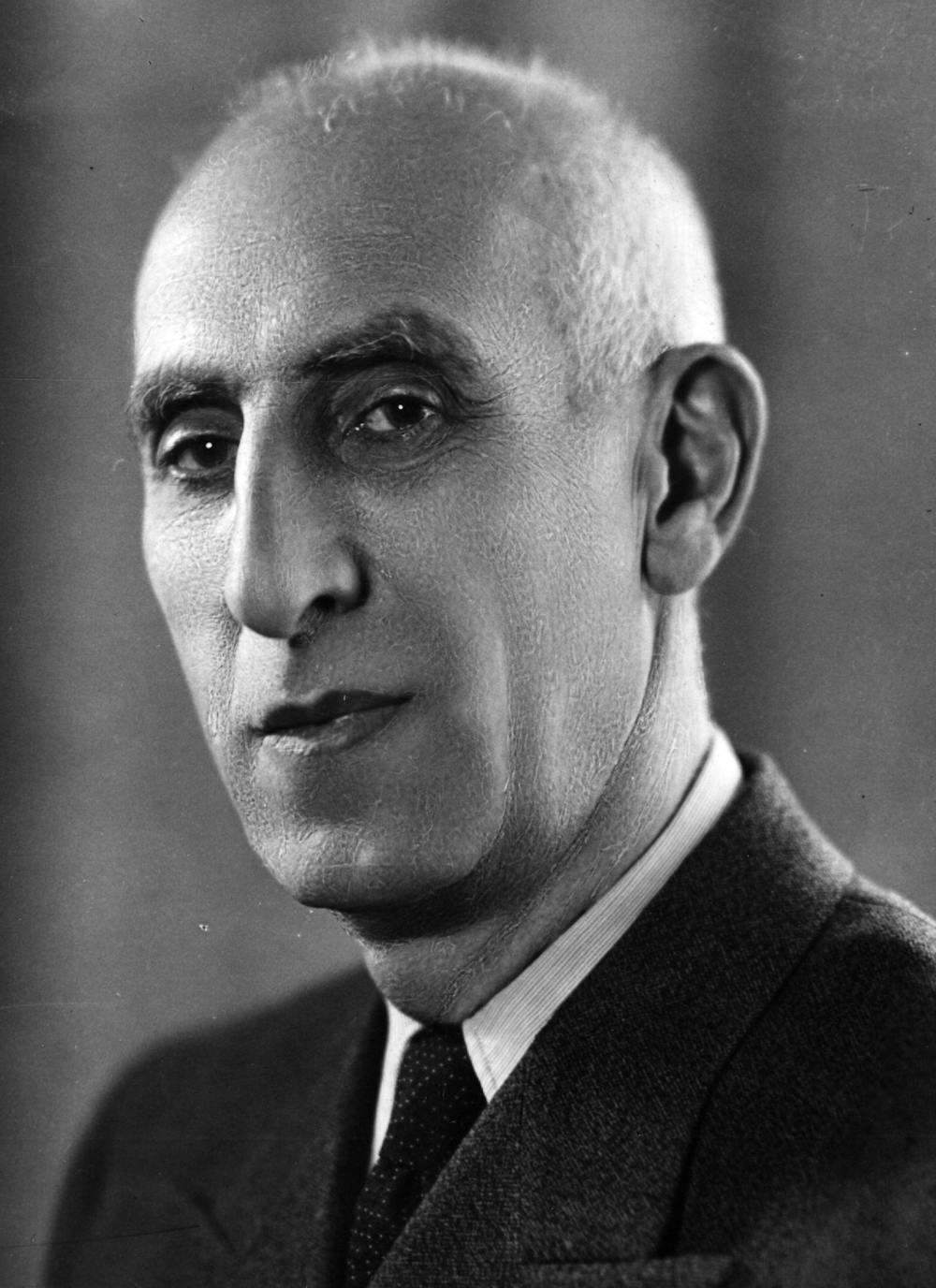
In 1951, the Iranian Parliament chose a new prime minister, Mossadegh, who then led lawmakers to vote in favor of taking over the Anglo-Iranian Oil Company, expelling the company’s British owners and saying they wanted to turn oil profits into investments in the Iranian people. The U.S. feared disruption in the global oil supply and worried about Iran falling prey to Soviet influence. The British feared the loss of cheap Iranian oil.
President Dwight Eisenhower decided it was best for the U.S. and the U.K. to get rid of Mossadegh. Operation Ajax, a joint CIA-British operation, convinced the Shah of Iran, the country’s monarch, to dismiss Mossadegh and drive him from office by force. Mossadegh was replaced by a much more Western-friendly prime minister, handpicked by the CIA.
Demonstrators in Tehran demand the establishment of an Islamic republic. AP Photo/Saris
1979: Revolutionaries oust the shah, take hostages
After more than 25 years of relative stability in U.S.-Iran relations, the Iranian public had grown unhappy with the social and economic conditions that developed under the dictatorial rule of Shah Mohammad Reza Pahlavi.
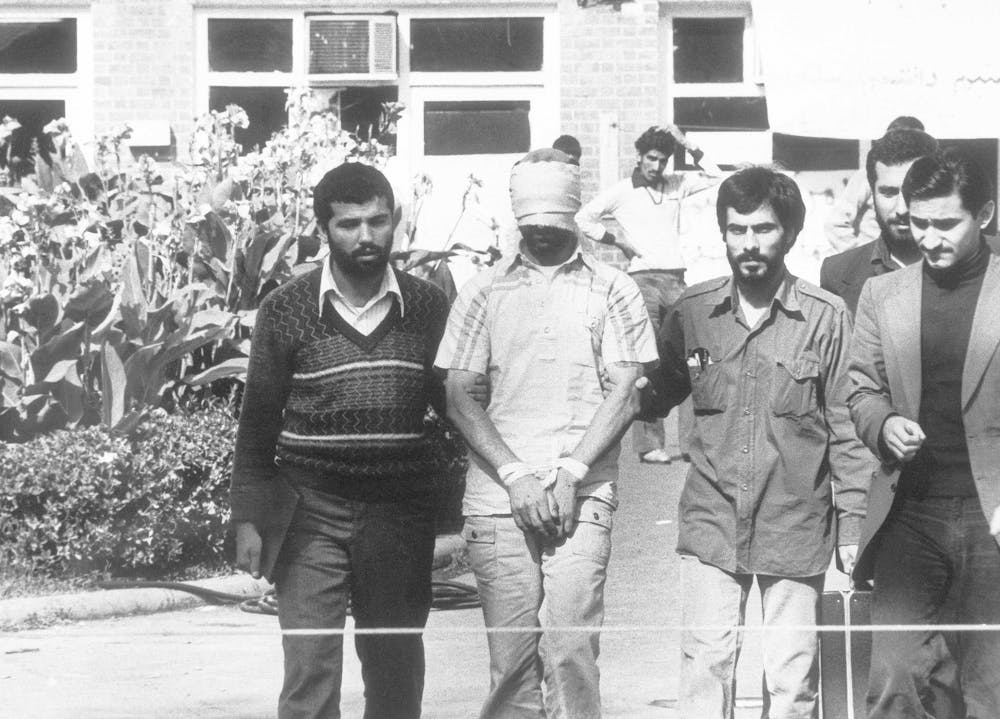
Iranian students at the U.S. Embassy in Tehran show a blindfolded American hostage to the crowd in November 1979. AP Photo
In October 1979, President Jimmy Carter agreed to allow the shah to come to the U.S. to seek advanced medical treatment. Outraged Iranian students stormed the U.S. Embassy in Tehran on Nov. 4, taking 52 Americans hostage. That convinced Carter to sever U.S. diplomatic relations with Iran on April 7, 1980.
Two weeks later, the U.S. military launched a mission to rescue the hostages, but it failed, with aircraft crashes killing eight U.S. servicemembers.
The shah died in Egypt in July 1980, but the hostages weren’t released until Jan. 20, 1981, after 444 days of captivity.
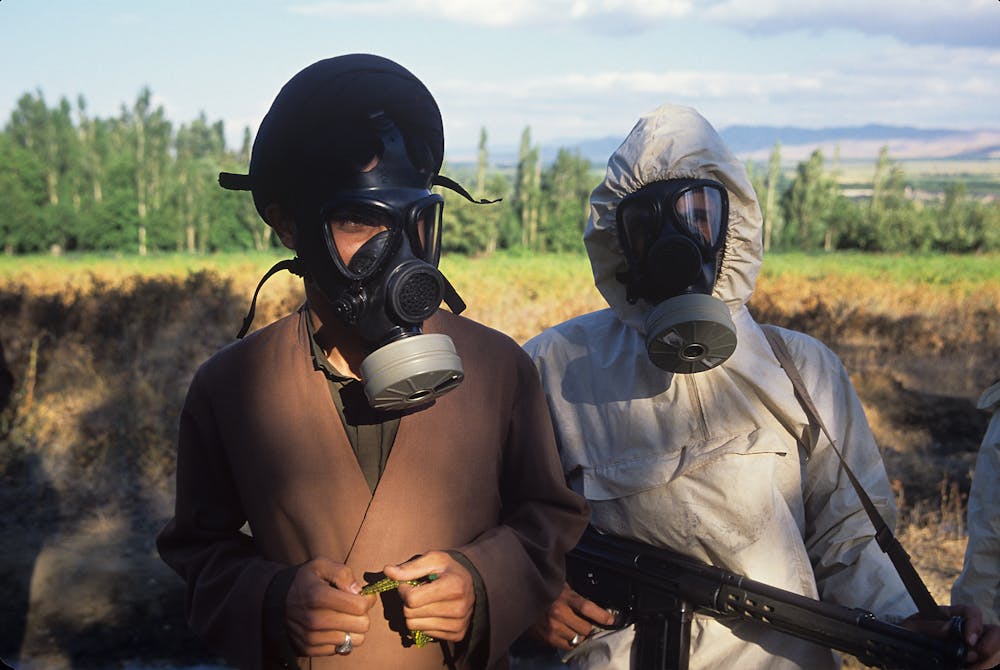
An Iranian cleric, left, and an Iranian soldier wear gas masks to protect themselves against Iraqi chemical-weapons attacks in May 1988. Kaveh Kazemi/Getty Images
The U.S. was concerned that the conflict would limit the flow of Middle Eastern oil and wanted to ensure the conflict didn’t affect its close ally, Saudi Arabia.
U.S. officials moderated their usual opposition to those illegal and inhumane weapons because the U.S. State Department did not “wish to play into Iran’s hands by fueling its propaganda against Iraq.” In 1988, the war ended in a stalemate. More than 500,000 military and 100,000 civilians died.
1981-1986: US secretly sells weapons to Iran
The U.S. imposed an arms embargo after Iran was designated a state sponsor of terrorism in 1984. That left the Iranian military, in the middle of its war with Iraq, desperate for weapons and aircraft and vehicle parts to keep fighting.
The last shipment, of anti-tank missiles, was in October 1986. In November 1986, a Lebanese magazine exposed the deal. That revelation sparked the Iran-Contra scandal in the U.S., with Reagan’s officials found to have collected money from Iran for the weapons and illegally sent those funds to anti-socialist rebels – the Contras – in Nicaragua.
At a mass funeral for 76 of the 290 people killed in the shootdown of Iran Air 655, mourners hold up a sign depicting the incident. AP Photo/CP/Mohammad Sayyad
Either during or just after that exchange of gunfire, the Vincennes crew mistook a passing civilian Airbus passenger jet for an Iranian F-14 fighter. They shot it down, killing all 290 people aboard.
The U.S. called it a “tragic and regrettable accident,” but Iran believed the plane’s downing was intentional. In 1996, the U.S. agreed to pay US$131.8 million in compensation to Iran.
1997-1998: The US seeks contact
In August 1997, a moderate reformer, Mohammad Khatami, won Iran’s presidential election.
U.S. President Bill Clinton sensed an opportunity. He sent a message to Tehran through the Swiss ambassador there, proposing direct government-to-government talks.
Shortly thereafter, in early January 1998, Khatami gave an interview to CNN in which he expressed “respect for the great American people,” denounced terrorism and recommended an “exchange of professors, writers, scholars, artists, journalists and tourists” between the United States and Iran.
However, Supreme Leader Ayatollah Ali Khamenei didn’t agree, so not much came of the mutual overtures as Clinton’s time in office came to an end.
In his 2002 State of the Union address, President George W. Bush characterized Iran, Iraq and North Korea as constituting an “Axis of Evil” supporting terrorism and pursuing weapons of mass destruction, straining relations even further.
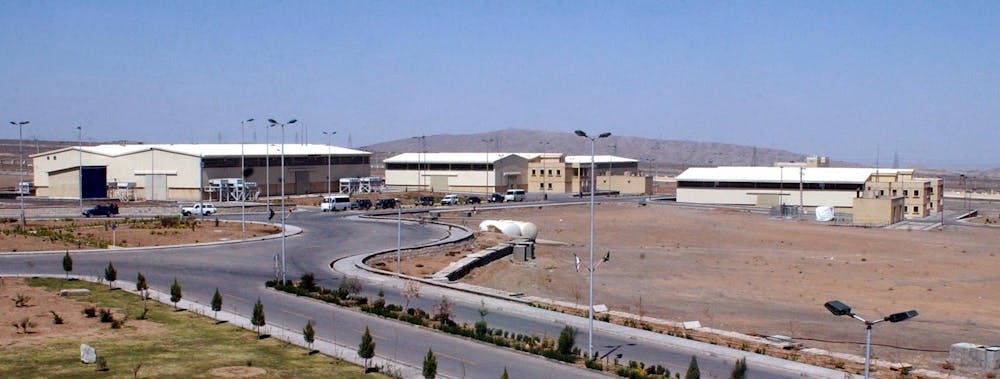
Inside these buildings at the Natanz nuclear facility in Iran, technicians enrich uranium. AP Photo/Vahid Salemi
That was a violation of the terms of the Nuclear Nonproliferation Treaty, which Iran had signed, requiring countries to disclose their nuclear-related facilities to international inspectors.
One of those formerly secret locations, Natanz, housed centrifuges for enriching uranium, which could be used in civilian nuclear reactors or enriched further for weapons.
Starting in roughly 2005, U.S. and Israeli government cyberattackers together reportedly targeted the Natanz centrifuges with a custom-made piece of malicious software that became known as Stuxnet.
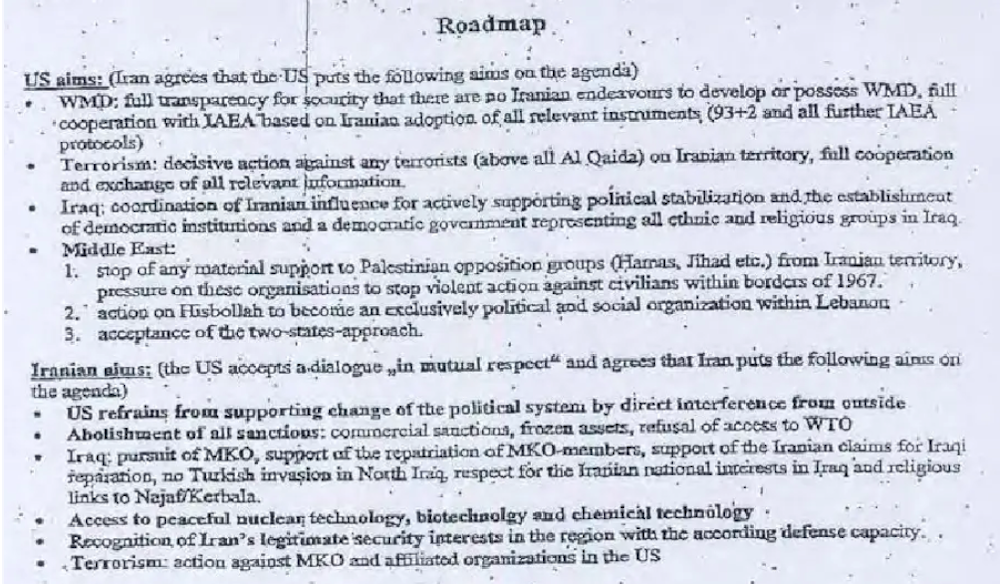
An excerpt of the document sent from Iran, via the Swiss government, to the U.S. State Department in 2003, appears to seek talks between the U.S. and Iran. Washington Post via Scribd
In May 2003, senior Iranian officials quietly contacted the State Department through the Swiss embassy in Iran, seeking “a dialogue ‘in mutual respect,’” addressing four big issues: nuclear weapons, terrorism, Palestinian resistance and stability in Iraq.
Hardliners in the Bush administration weren’t interested in any major reconciliation, though Secretary of State Colin Powell favored dialogue and other officials had met with Iran about al-Qaida.
When Iranian hardliner Mahmoud Ahmadinejad was elected president of Iran in 2005, the opportunity died. The following year, Ahmadinejad made his own overture to Washington in an 18-page letter to President Bush. The letter was widely dismissed; a senior State Department official told me in profane terms that it amounted to nothing.
After a decade of unsuccessful attempts to rein in Iran’s nuclear ambitions, the Obama administration undertook a direct diplomatic approach beginning in 2013.
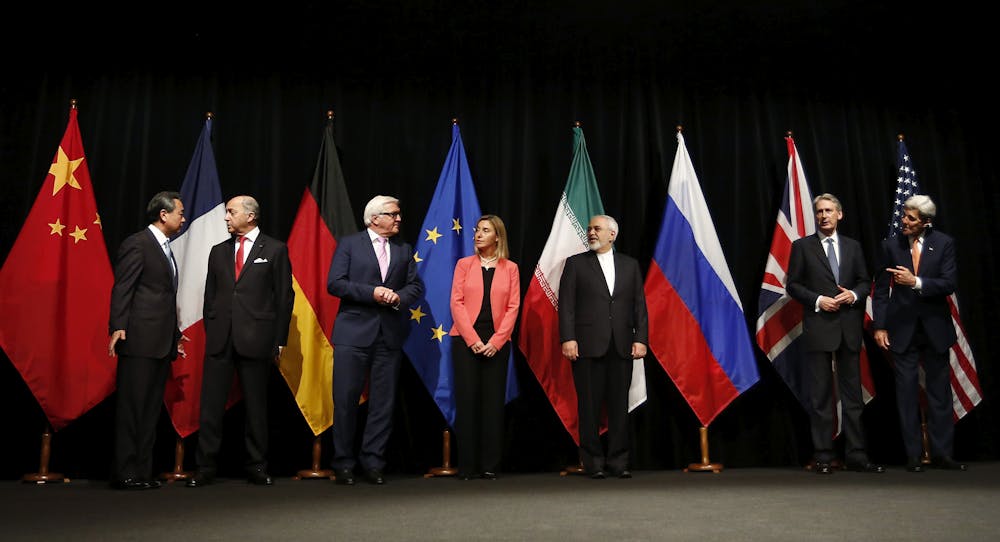
Iran, the U.S., China, France, Germany, Russia and the United Kingdom signed the deal in 2015. It severely limited Iran’s capacity to enrich uranium and mandated that international inspectors monitor and enforce Iran’s compliance with the agreement.
In return, Iran was granted relief from international and U.S. economic sanctions. Though the inspectors regularly certified that Iran was abiding by the agreement’s terms, President Donald Trump withdrew from the agreement in May 2018.
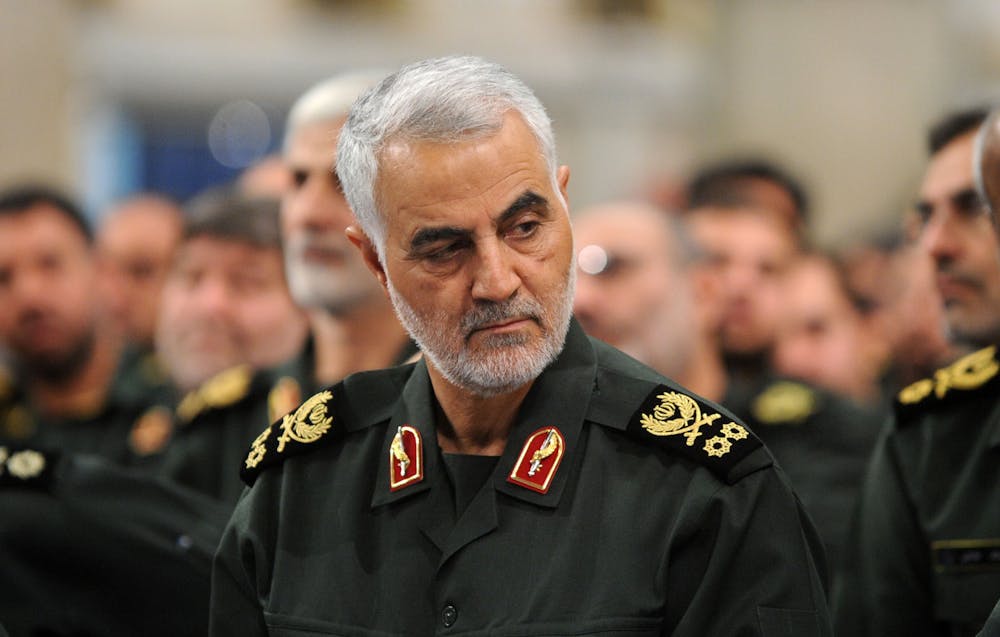
2020: US drones kill Iranian Maj. Gen. Qassem Soleimani
At the time, the Trump administration asserted that Soleimani was directing an imminent attack against U.S. assets in the region, but officials have not provided clear evidence to support that claim.
Hamas’ brazen attack on Israel on Oct. 7, 2023, provoked a fearsome militarized response from Israel that continues today and served to severely weaken Iran’s proxies in the region, especially Hamas – the perpetrator of the attacks – and Hezbollah in Lebanon.
2025: Trump 2.0 and Iran
Trump saw an opportunity to forge a new nuclear deal with Iran and to pursue other business deals with Tehran. Once inaugurated for his second term, Trump appointed Steve Witkoff, a real estate investor who is the president’s friend, to serve as special envoy for the Middle East and to lead negotiations.
Negotiations for a nuclear deal between Washington and Tehran began in April, but the countries did not reach a deal. They were planning a new round of talks when Israel struck Iran with a series of airstrikes on June 13, forcing the White House to reconsider is position.
Jeffrey Fields receives funding from the Carnegie Corporation of New York and Schmidt Futures.
Source: United States Senator for Virginia Tim Kaine
VIDEO OF KAINE’S REMARKS IS AVAILABLE HERE.
WASHINGTON, D.C. – Today, U.S. Senator Tim Kaine (D-VA), a member of the Senate Health, Education, Labor and Pensions (HELP) Committee, hosted a spotlight forum with Senator Chris Murphy (D-CT) to highlight how President Donald Trump and Republicans’ bill would make major cuts to vital programs that families rely on, including Medicaid and SNAP, in order to pay for massive tax breaks for the wealthy.
“We’re here because of the reconciliation bill … which we call the ‘Big Beautiful Betrayal.’ And my Republican colleagues are trying to pass it by a party-line vote without including us in any of the discussions about what’s in the bill. But it would be disastrous for this country,” said Kaine as he began the forum. “We’ll do everything we can to try and defeat it.”
Kaine continued, “President Trump and congressional Republicans are championing this BBB and it reflects choices – affirmative, calculated decisions about who to help and who to harm … But we don’t have to make a choice to harm middle-class and working people. We don’t have to do that. We can cut taxes for working- and middle-class families without cutting crucial programs that these families rely on. We can choose not to give additional tax breaks to those who have already been so benefitted in the past by tax breaks.
“The top 20 percent of households will receive nearly 70 percent of the tax cuts in the House bill. That is an upside-down priority,” Kaine continued. “According to the nonpartisan Congressional Budget Office … 16 million Americans nationwide will lose health care coverage under the House bill, and that includes more than 300,000 Virginians.
“According to our Joint Economic Committee, the House bill … would cut SNAP, the Supplemental Nutrition Assistance Program, by 20 percent, slashing away a crucial safety net for about 200,000 Virginians – 800,000 get SNAP benefits [in total in Virginia]. The benefits are modest – $4.70 per day – but 200,000 of those 800,000 will either have their $4.70 benefit reduced or completely eliminated,” said Kaine. “SNAP fights hunger fast. When it’s slashed, families will feel hunger a lot faster.”
Kaine continued, “If we take a second and just tally things up: the tax plan would boot millions off health care, take food from the mouths of hungry children and families, cut taxes for millionaires and billionaires, and drive up the deficit by 3 trillion, although I saw the Senate version actually knocks it up even further, maybe as high as $5 trillion. This is before you start factoring in historic and illegal tariffs that the administration is levying on the same everyday people who are suffering by these cuts,” Kaine said.
“The Yale Budget Lab found that when you factor in both the reconciliation bill and the President’s tariff actions, the bottom 80 percent of American households are going to be worse off. So I truly hope my Republican colleagues will have a change of heart and rework this product, and we’re sure going to give them an opportunity to do it with all the amendments that we’re going to offer—very targeted amendments that will pose some really important choices for them. They could take out all of the SNAP and Medicaid cuts by scaling back the tax cuts for the wealthy, and still have a bill that costs the same as it is. This legislation is going to harm Virginians and harm Americans,” Kaine concluded.
Source: United States Senator for Virginia Tim Kaine
VIDEO OF KAINE’S FLOOR SPEECH IS AVAILABLE HERE.
WASHINGTON, D.C.—Today, U.S. Senator Tim Kaine (D-VA), a member of the Senate Armed Services and Foreign Relations Committees, spoke on the Senate floor about a war powers resolution he filed this week to express concern about the escalating violence in the Middle East and its potential to pull the U.S. into conflict. The resolution requires that any U.S. participation in offensive hostilities against Iran be explicitly authorized by Congress through a declaration of war or specific authorization for use of military force. It does not prevent the U.S. from defending itself from an imminent attack. The resolution is privileged, meaning that the Senate will be required to promptly consider and vote upon the resolution.
“There’s no part of the Constitution that’s more important than the Article One provision making plain that the United States should not be at war without a vote of Congress,” said Kaine. “Yet the news of the day suggests that we are potentially on the verge of a war with Iran.”
“I was elected to the Senate in 2012, having served as a Governor from 2006 to 2010 during a tremendous upsurge in the two wars in Iraq and Afghanistan. I visited our troops multiple times in the green zones in Baghdad and in Afghanistan. I went to the deployments and the homecomings. I went to the wakes and the funerals,” Kaine continued. “And I told myself when I came to the Senate that if I ever had the chance to stop this nation from getting into an unnecessary war, I would do everything I could to stop us.”
“I happen to believe that the United States engaging in a war against Iran – a third war in the Middle East since 2001 – would be a catastrophic blunder for this country,” Kaine said. “I think there are some in this body who have a different point of view than me on that point, but I think we should all be able to agree in the fundamental constitutional principle that says we shouldn’t be in a war if Congress doesn’t have the guts to debate it and vote on it. We should all – having taken an oath to the Constitution – at least support the principle that war is something that should be for Congress to declare.”
“Our Constitution has, accordingly, with studied care, vested the question of war with the legislature,” said Kaine. “Other countries don’t do this, but the Framers of our Constitution in 1787 decided we’re going to be different. Before we send troops in harm’s way where they could be killed, where they could be injured, where they could see people that they love – their colleagues killed and injured – before we’re going to send troops in harm’s way in war, we want to see the people’s elected bodies – both houses – have a debate about what the stakes are and whether we should force our troops into harm’s way and potentially lose their lives. And that debate will be in full view of the American public, so the American public can understand what’s at stake and then they can call their representatives or write them a letter and tell them what they think about whether war is necessary and whether the sacrifice we ask of our troops should be the ultimate sacrifice that we are often asking of them in war.”
“The question for this body that we will grapple with over the course of the next couple of weeks is whether the United States should be in another war in the Middle East – in particular, whether we should allow war to start without us, whether we should hide in the tall grass, rather than exercise our constitutional responsibility under Article One. This is fundamentally a debate about Congress being true to its oath of office and actually also being true to the obligations we have to our public,” Kaine said. “The Framers put this in the Constitution so that we wouldn’t be at war without a debate in front of the public.”
“If we have that debate and we decide that war is in the national interest, then the troops go into war knowing that the civilian leadership of this country have had the hard debate in view of the American public and decided that the stakes are sufficient to ask people to make the ultimate sacrifice,” Kaine said. “How dare we ask people to make the ultimate sacrifice if we don’t have the guts to have a debate and decide whether a war is in the interest of this country?”
“We need to have this debate in front of the American public,” Kaine said. “Let them watch us debate the stakes of this – and it might be that colleagues in this body or in the House think a war with Iran is a good idea. Let them put a war authorization on the table. Let’s debate that. Let’s debate that in front of Virginians and Kansans and Californians and hear what our constituents have to say. Let’s debate that in the full view of people whose spouses are in the military or whose kids are in the military. Let’s have that debate in front of them and hear what they think before we cast a vote that would be one of the most serious votes that you ever cast on the floor of a body like this. But we should not allow a war of the magnitude of this to begin with Congress hiding.”
“I will be asking my colleagues to support my simple resolution as early as next week. No war without a vote of Congress. I’ll be asking my colleagues to support it and uphold the oath we’ve all taken to support the Constitution that established that most unusual principle, most unique principle, that is part of what makes this nation special,” Kaine concluded.
For years, Kaine has been a leading voice in Congress raising concerns over presidents’ efforts to expand the use of military force without congressional authorization. In 2017, Kaine wrote a piece in TIME warning of the consequences if President Donald Trump pulled out of the nuclear deal with Iran. In 2018, Kaine wrote a piece in The Atlantic warning that Trump was blundering toward war with Iran. In March 2020, Congress passed Kaine’s bipartisan war powers resolution to prevent further escalation of hostilities with Iran without congressional authorization. In 2023, the Senate passed bipartisan legislation led by Kaine to repeal the 1991 and 2002 Authorizations for Use of Military Force (AUMFs) and formally end the Gulf and Iraq wars.
Source: United States Senator for Commonwealth of Virginia Mark R Warner
WASHINGTON – U.S. Sen. Mark R. Warner (D-VA) today applauded the Senate passage of the Guiding and Establishing National Innovation for U.S. Stablecoins (GENIUS) Act, bipartisan legislation to bring much-needed oversight and standards to the $250 billion stablecoin market, and released the following statement:
“For too long, stablecoins have operated in a regulatory gray area, putting consumers, markets, and national security at risk. The GENIUS Act changes that by creating guardrails for responsible innovation, setting high standards for issuers, and reining in potential abuses by big tech and bad actors.
“Many of us have deep concerns about how members of the Trump family have used crypto technologies to evade scrutiny, conceal financial entanglements, and profit off the public trust. We must remain vigilant in exposing and stopping these abuses. But our outrage over that corruption cannot prevent us from building a foundation for responsible innovation in this space. If we don’t lead, others will, and not in ways that reflect our interests or democratic values. With the GENIUS Act, the U.S. will finally begin to set the rules of the road to support innovation while protecting consumers and our national security.”
The Fifth Circuit Court of Appeals recently limited a nationwide injunction to only Texas, giving the Administration the greenlight to resume processing initial DACA applications for all other states
WASHINGTON, D.C. — U.S. Senators Alex Padilla, Ranking Member of the Senate Judiciary Immigration Subcommittee, and Adam Schiff (both D-Calif.) joined U.S. Senate Democratic Whip Dick Durbin (D-Ill.), Ranking Member of the Senate Judiciary Committee and lead author of the Dream Act, and Senate Democrats in urging U.S. Citizenship and Immigration Services to resume processing initial applications for the Deferred Action for Childhood Arrivals (DACA) program, following a ruling in the Fifth Circuit Court of Appeals that narrowed an earlier injunction to just Texas and allowed USCIS to start processing initial DACA applications from all other states.
The Senators began by highlighting thepopularsupportfor providing Dreamers a pathway to citizenship, writing: “Noncitizens brought to the United States as children, often known as Dreamers, are American in every way but their immigration status. Many only know this country as their home, and they contribute every day to this great nation by paying taxes and serving in critical roles, such as police officers, teachers, and nurses. Americans overwhelmingly support providing Dreamers a path to citizenship, and in December 2024, President Trump stated that he supported protections for Dreamers to remain in the United States.”
“Consistent with this statement, we implore you to use your authority at United States Citizenship and Immigration Services (USCIS) to resume processing initial applications for Deferred Action for Childhood Arrivals (DACA) and provide such protections for Dreamers immediately,” continuedthe Senators.
Sunday, June 15, marked the thirteenth anniversary of the DACA program via policy memorandum in 2012. Since then, more than 825,000 people have received deferred action pursuant to DACA, empowering recipients to bolster their careers and contribute an estimated $140 billion to the U.S. economy in spending power and $40 billion in combined federal, payroll, state, and local taxes.
In 2021, U.S. District Court Judge Andrew Hanen halted the DACA program and enjoined USCIS from approving any new DACA applications nationwide. While the program was enjoined, USCIS has continued to accept and hold initial applications, and in 2022, the Department of Homeland Security published the DACA Final Rule, codifying the 2012 memorandum establishing DACA into regulation. More than 100,000 initial DACA applications are pending with USCIS.
On January 17, 2025, the Fifth Circuit Court of Appeals issued a decision limiting Judge Hanen’s injunction to just Texas.
“Pursuant to the order, in Texas, DACA must resume as a limited program providing protection from deportation for current DACA recipients, but without access to work authorization or driver’s licenses as part of those renewals. This order went into effect on March 11, giving USCIS the authority to start processing initial DACA applications from states other than Texas. However, nearly three months later, USCIS has not made any public announcement on whether new DACA applications will be processed; nor has the agency begun processing initial applications that have been pending with the agency for years,” added the Senators.
“We urge you to begin processing these DACA applications immediately, consistent with the Fifth Circuit decision and existing regulations, and to ensure Dreamers eligible to file initial DACA applications can do so as soon as possible,” concluded the Senators.
In addition to Padilla, Schiff, and Durbin, the letter is signed by U.S. Senators Tammy Baldwin (D-Wis.), Michael Bennet (D-Colo.), Richard Blumenthal (D-Conn.), Cory Booker (D-N.J.), Chris Coons (D-Del.), Catherine Cortez Masto (D-Nev.), Tammy Duckworth (D-Ill.), John Fetterman (D-Pa.), Ruben Gallego (D-Ariz.), Kirsten Gillibrand (D-N.Y.), Maggie Hassan (D-N.H.), Martin Heinrich (D-N.M.), John Hickenlooper (D-Colo.), Mazie Hirono (D-Hawai’i), Tim Kaine (D-Va.), Mark Kelly (D-Ariz.), Andy Kim (D-N.J.), Angus King (I-Maine), Amy Klobuchar (D-Minn.), Ben Ray Luján (D-N.M.), Edward Markey (D-Mass.), Jeff Merkley (D-Ore.), Patty Murray (D-Wash.), Gary Peters (D-Mich.), Jack Reed (D-R.I.), Jacky Rosen (D-Nev.), Bernie Sanders (I-Vt.), Brian Schatz (D-Hawai’i), Jeanne Shaheen (D-N.H.), Elissa Slotkin (D-Mich.), Tina Smith (D-Minn.), Chris Van Hollen (D-Md.), Mark Warner (D-Va.), Raphael Warnock (D-Ga.), Elizabeth Warren (D-Mass.), Peter Welch (D-Vt.), Sheldon Whitehouse (D-R.I.), and Ron Wyden (D-Ore.).
Full text of the letter to USCIS is available here.
Source: United States Senator Alex Padilla (D-Calif.)
WATCH: Padilla Delivers Floor Speech Following His Forcible Removal From DHS Press Conference
WATCH: Padilla: “If this Administration is this afraid of just one Senator with a question, colleagues, imagine what the voices of tens of millions of Americans peacefully protesting can do.”
“If that is what the Administration is willing to do to a United States Senator for having the [audacity] to simply ask a question, imagine what they’ll do to any American who dares to speak up. If what you saw happen can happen when the cameras are on, imagine not only what can happen — but what is happening — in so many places where there are no cameras.”
Video of Senator Padilla’s full speech can be viewed here and downloaded here.
WASHINGTON, D.C. — Today, U.S. Senator Alex Padilla (D-Calif.), Ranking Member of the Senate Judiciary Immigration Subcommittee, spoke on the Senate floor following his forcible removal from Secretary of Homeland Security Kristi Noem’s press conference, where he was thrown to the ground and handcuffed after attempting to ask a question. Padilla delivered a strong rebuke to the Trump Administration’s unprecedented militarization of Los Angeles and called for his colleagues on both sides of the aisle, as well as the American people, to speak up against Trump’s abuse of power.
Last week, Trump deployed approximately 4,000 National Guard troops and 700 active-duty Marines to Los Angeles amid unrest caused by his indiscriminate immigration raids across the region. Padilla flew to Los Angeles to conduct oversight over the Trump Administration’s unprecedented military deployment to California — without Governor Newsom’s consent — and was in the high-security Los Angeles Federal Building for a scheduled oversight meeting with the commanding general in charge of the military presence in the region before law enforcement escorted him into Secretary Noem’s briefing room.
“The Trump Administration has done everything in their power but to provide transparency to the American people about their mission in Los Angeles. And so last week, I chose to go home to try to get answers from the Administration as they are literally militarizing our city.”
“I want to share what I learned. I want to share what I heard because it should shock the conscience of our country.”
In the hopes of learning new information after having his requests ignored for months, Padilla tried to ask a question in response to Noem’s demonizing rhetoric toward immigrants and Los Angeles’ democratically elected leadership.
“At one point, the United States Secretary of Homeland Security said that the purpose of federal law enforcement and the purpose of the United States military was to ‘liberate’ Los Angeles from our governor and our mayor. To somehow liberate us from the very people that we democratically elected to lead our city and our state.”
“Colleagues, let that fundamentally un-American mission statement sink in. That is not a mission focused on public safety. And that simply is not, and cannot be, the mission of federal law enforcement and the United States military.”
“To my colleagues on both sides of the aisle, are we truly prepared to live in a country where the President can deploy the Armed Forces to decide which duly elected governors and mayors should be allowed to lead their constituents? Is that really the precedent that we’re okay with setting?”
“Throughout the country’s history, we’ve had conflict, we’ve had tumult, but we’ve never had a tyrant as a commander-in-chief.”
Padilla detailed his own background as the proud son of immigrants from Mexico who left behind his MIT engineering degree to protest against the vile anti-immigrant rhetoric in the 1990s that a Republican governor up for reelection spread across California. He said he felt he had to speak out against the Trump Administration’s “un-American” scapegoating of immigrants and California, and detailed the violent reaction to his question.
“So last week, when I heard something so blatantly un-American from the Secretary of Homeland Security, a cabinet official — of course I was compelled, both as a Senator and as an American, to speak up.”
“But before I could even get out my question, I was physically and aggressively forced out of the room — even as I repeatedly announced I was a United States Senator, and I had a question for the Secretary. And even as the National Guardsman and the FBI agent who served as my escorts and brought me into that press briefing room stood by, silently, knowing full well who I was.”
“You’ve seen the video. I was pushed and pulled, struggled to maintain my balance. I was forced to the ground — first on my knees and then flat on my chest. And as I was handcuffed and marched down a hallway, repeatedly asking why am I being detained, not once did they tell me why.”
Padilla expressed his gratitude for the immense support for him and his family that poured in since his forcible removal. However, he emphasized that this fight was not about him but about the fundamental democratic rights of all Americans across the country.
“If you watched what unfolded last week and thought what happened is just about one politician and one press conference, you’re missing the point.”
“If that is what the Administration is willing to do to a United States Senator for having the [audacity] to simply ask a question, imagine what they’ll do to any American who dares to speak up. If what you saw happen can happen when the cameras are on, imagine not only what can happen — but what is happening — in so many places where there are no cameras.”
“Colleagues, this isn’t about me. In fact, it’s not just about immigrant communities or even just the State of California. It’s about every single American who values their Constitutional rights. It’s about anyone who’s ever exercised their First Amendment rights, or anyone who’s ever disagreed with a president, or anyone who simply values our democracy and wants to keep it.”
Padilla set the record straight on Republican misinformation on undocumented immigrants as Trump has used the same playbook when the headlines turn against him: scapegoat immigrants and manufacture a crisis. Public reporting shows that the majority of immigrants currently in ICE custody have no prior criminal conviction, and under 10 percent of immigrants taken into ICE custody since October have serious criminal convictions. Yet, President Trump has blamed immigrants to distract from his failed policies, including Republicans’ billionaire-first budget reconciliation bill that would cut critical services like health care and nutrition for millions of working families across the country.
As President Trump takes unprecedented action to militarize Los Angeles without justification or the Governor’s request, Padilla warned of the stakes for cities across the United States and American democracy.
“Donald Trump is continuing to test the boundaries of his power. And he’s surrounded himself with yes-men and underqualified attack dogs — from the DHS Secretary to the FBI Director to the Secretary of Defense — who will rubberstamp every anti-democratic step he takes.”
“This Administration’s officials and maybe not all, but many Republicans in Congress may choose not to do their job, but they cannot stop me from doing mine.”
“Again, if you really think this is just about immigrants and immigration, it’s time to wake up. What’s happening is not just a threat to California; it’s a threat to everyone in every state. If Donald Trump can bypass the Governor and activate the National Guard to put down protests on immigrant rights, he can do it to suppress your rights, too. If he can deploy the Marines to Los Angeles without justification, he can deploy them to your state, too. And if he can ignore due process, strip away First Amendment rights, and disappear people to foreign prisons without their day in court, he can do it to you too.”
“California is just the test case for the rest of the country. Last week for many was a warning shot. But I pray that it also serves as a wakeup call.”
Padilla concluded his speech with a call to action for Angelenos and millions of Americans to stand up and keep peacefully protesting against the Trump Administration’s attack on fundamental rights.
“It doesn’t matter if you’re a Republican, or a Democrat, or an Independent — we all have a responsibility to speak up and to push back, before it’s too late. So I do encourage people to keep peacefully protesting. There’s nothing more patriotic than to peacefully protest for your rights.”
“Because no one will liberate Los Angeles but Angelenos. No one will redeem America but Americans. No one is coming to save us but us.”
“And we know that the cameras are not on in every corner of the country. But if this Administration is this afraid of just one Senator with a question, colleagues, imagine what the voices of tens of millions of Americans peacefully protesting can do.”
Senator Padilla has been outspoken in calling out the Immigration and Customs Enforcement (ICE) raids in Los Angeles and Trump’s misguided deployment of the National Guard and U.S. Marine Corps. This weekend, Padilla led the entire Senate Democratic Caucus in demanding that President Trump immediately withdraw all military forces from Los Angeles and cease all threats to deploy the National Guard or active-duty servicemembers to American cities. Last week, Padilla and Senator Adam Schiff (D-Calif.) demanded answers regarding the Trump Administration’s decision to deploy approximately 700 Marines to Los Angeles. Padilla has spoken at a spotlight hearing and on the Senate floor multiple times to blast President Trump for manufacturing a crisis by launching indiscriminate ICE raids across Los Angeles and deploying the National Guard and active-duty servicemembers to the region. He also joined all Senate Judiciary Committee Democrats today in calling on Chairman Grassley to schedule Department of Homeland Security Secretary Noem for a broad oversight hearing for testimony before the committee.
Padilla’s full remarks as prepared for delivery are available below:
[Mr./Madam] President,
Over the last two weeks in Los Angeles – my hometown – we’ve seen masked federal agents in tactical gear ordered into our communities . . .
We’ve seen a disturbing pattern of extreme and cruel immigration enforcement operations, targeting non-violent people at places of worship, schools, and courthouses.
All to meet an arbitrary quota.
Now, we’re seeing President Trump federalize and deploy the National Guard without the Governor’s consent . . .
Active-duty Marines have been deployed, escalating tensions in our city . . .
All without coordination with the state and local law enforcement.
Despite repeated requests for justification for these extreme actions…and after months of little to no response from the Administration on their aggressive and theatrical immigration raids…
The Trump administration has done everything in their power BUT provide transparency to the American people about their mission in Los Angeles.
So last week, I went home to try to get answers from the administration as they militarize our city.
What I heard should shock the conscience of our country.
One of the first items on my schedule last Thursday was a meeting with General Guillot, the four-star general in charge of U.S. Northern Command at the Federal Building in west Los Angeles, where they are overseeing these military operations.
When the United States military is deployed domestically…
When our own troops are deployed against the wishes of the Governor for the first time since 1965, against the wishes of the mayor, against even the wishes of local law enforcement — then we’re in uncharted territory.
So in an effort to do my duty to conduct congressional oversight — and to try to get answers from the Department of Defense that state and local officials were not receiving— I went to the federal building in West LA.
I was met at the entrance by a National Guardsman and an FBI agent, who escorted me through the security screening and up to a conference room for my scheduled briefing.
While waiting for my scheduled briefing with General Guillot, I learned that Homeland Security Secretary Kristi Noem was holding a press conference just down the hall and that the press conference was causing my briefing to be delayed.
The thought occurred to me that maybe I could attend and listen in, in the hopes of hearing Secretary Noem provide some new information that could help us make sense of what was happening.
I asked and was escorted by my National Guard and FBI escorts into the press conference. They opened the door for me. They accompanied me into the press briefing room.
It was there that I listened as the United States Secretary of Homeland Security said that the purpose of federal law enforcement and the United States military was to “liberate” Los Angeles from our governor and our mayor . . .
. . . To somehow liberate us from the very people we democratically elected to lead our city and our state.
Colleagues, let that fundamentally un-American mission statement sink in.
That’s not a mission focused on public safety.
That simply is not, and cannot be, the mission of federal law enforcement and the United States military.
To my colleagues on the other side of the aisle, are you truly prepared to live in a country where the President can deploy the armed forces to decide which duly elected governors and mayors should be allowed to lead their constituents?
Is that really the precedent you’re okay with setting?
As Secretary Noem herself said last year when serving as Governor of South Dakota, “If Joe Biden federalizes the National Guard, that would be a direct attack on states’ rights.”
Throughout the country’s history, we’ve had conflict, and we’ve had tumult. But we have never had a tyrant as a commander-in-chief.
That’s not by coincidence!
It’s because the American people have always been willing to speak up and exercise their First Amendment right to protest – especially when our fundamental rights have been threatened.
As the proud son of immigrants from Mexico, it’s that same right I came to revere when marching through the streets of Los Angeles in 1994 alongside friends and family protesting against the vile anti-immigrant rhetoric that was growing in California.
It was that year that a Republican Governor up for reelection and down in the polls, turned to scapegoating immigrants to try to improve his political standing.
That fight is what got me to leave an engineering career behind and dedicate myself to influencing government and politics. So, I’ve seen this before. Californians have seen this before.
So last week, when I heard something so blatantly un-American from the Secretary of Homeland Security — I was compelled, both as a Senator AND as an American, to speak up.
But before I could even get out my question, I was physically and aggressively forced out of the room — even as I announced I was a United States Senator, and I had a question for the Secretary.
And even as the National Guardsman and FBI agent who escorted me into the press conference stood by, silently, knowing full well who I was.
You’ve seen the video.
I was pushed and pulled, struggling to maintain my balance.
I was forced to the ground — first to my knees and then flat on my chest.
As I was handcuffed and marched down a hallway, I repeatedly asked why I was being detained. Not once did they tell me why.
In that moment, a lot of questions run through your head.
Where are they taking me?
Am I being arrested?
What will a city already on edge from being militarized think when they see their Senator has been handcuffed just for trying to ask a question? Or . . .
What will my wife and our three boys think?
I also remember asking myself: if this aggressive escalation is the result of speaking up against the abuses and overreach of the Trump administration, was it really worth it?
But colleagues, how many Americans in our nation’s history have marched, have protested, have shed blood and lost their lives to protect our rights?
How many Americans have served in wars overseas to protect our freedoms here at home?
And how many Americans in the year 2025 see a vindictive president on a tour of retribution, unrestrained by the majority of this separate but co-equal branch of government in this building, and wonder if it’s worth it to stand up or to speak out?
If a United States Senator is too afraid to speak up, how can we expect any other American to do the same?
Colleagues, you know me.
I’m not aware of anyone who would describe me as a flamethrower. I try to be respectful and considerate to every member of this body— regardless of your politics.
So I want to thank all of my colleagues on both sides of the aisle who reached out to share messages of support — whether it was public or in private.
In means a great deal to me and my family.
But if you watched what unfolded last week and thought this was about one politician or one press conference, you’re missing the point.
If that’s what this Administration will do to a United States Senator for having the audacity to simply ask a question, imagine what they’ll do to any American who dares to speak up.
If that’s what can happen when the cameras are on, imagine not only what can happen — but what is happening — when the cameras are off.
This isn’t about me. In fact, it’s not even just about immigrant communities or about Californians.
It’s about every single American who values their constitutional rights. It’s about anyone who’s ever exercised their First Amendment rights, or ever disagreed with a president, or who simply values living in a democracy and wants to keep it.
The President will tell you this is about undocumented immigrants, and about law and order and about targeting dangerous, violent criminals.
But we know differently.
Public data released by the administration shows that the majority of immigrants currently in ICE custody do not have a prior criminal conviction.
And new reporting shows that less than 10 percent of immigrants taken into ICE custody since October have serious criminal convictions.
Less than 10 percent!
Two weeks ago, Donald Trump was at the lowest point in his presidency so far.
He was drowning in a week of terrible headlines.
The American people were finally waking up to the realities of the budget reconciliation bill that will cut health care, nutrition assistance, and good paying clean energy jobs in order to cut taxes for billionaires.
He was losing his tariff wars as the costs of everyday goods were continuing to rise.
His promises to end Russia’s invasion of Ukraine were falling flat.
He’d been handed loss after loss in federal court.
And maybe the most embarrassing part was his public breakup with Elon Musk.
But we know what happens when the headlines turn on Donald Trump. Donald Trump turns to the same tired playbook he always has: when in doubt, scapegoat immigrants. And manufacture a crisis to distract the media from your failures.
That’s the reason he ramped up ICE raids in California.
And when Californians took to the streets to peacefully protest, that’s the reason he bypassed the Governor and federalized the National Guard. And as things began to settle in Los Angeles, he escalated even further by sending in the Marines.
He wants the spectacle — not just to distract, but to justify his undemocratic crackdowns and his authoritarian power grabs.
That’s the reason why even while the vast majority of protests have remained peaceful, the President, the Vice President, and their allies have called protestors insurrectionists!
Yes, this is the same man who provoked an actual insurrection on our Capitol on January 6th.
The same man who incited a violent mob, carrying confederate flags, against Congress.
The same man who then pardoned the convicted felons who assaulted our brave Capitol Police officers.
Trump is testing the boundaries of his power. And he’s surrounded himself with yes-men and underqualified attack dogs — from the DHS Secretary to the FBI Director to the Secretary of Defense — who will rubberstamp every anti-democratic step he takes.
This Administration’s officials and Congressional Republicans may choose not to do their job, but they cannot stop me from doing mine.
And I refuse to let immigrants be pawns on the path to fascism.
Again, if you really think this is just about immigrants, it’s time to wake up.
What’s happening isn’t just a threat to California, it’s a threat to everyone in every state.
If Donald Trump can bypass the Governor and activate the National Guard to put down protests for immigrant rights, he can do it to suppress your rights, too.
If he can deploy Marines to Los Angeles without justification, he can deploy them to your city, too.
If he can ignore due process, strip away First Amendment rights, and disappear people to foreign prisons without their day in court, he can do it to you too.
California is just Trump’s test case for the rest of the country.
Last week was a warning shot.
But I pray that it can be our wakeup call, too.
We’ve now seen Trump threaten to do the same in other cities run by elected Democrats.
It doesn’t matter if you’re a Republican, a Democrat, or an independent — we all have a responsibility to speak up and to push back, before it’s too late.
So I encourage people to keep peacefully protesting. There’s nothing more patriotic than peacefully protesting for your rights.
No one will liberate Los Angeles but Angelenos.
No one will redeem America but Americans.
No one is coming to save us but us.
The cameras won’t always be on.
But if this Administration is this scared of just one Senator with a question, imagine what the voices of tens of millions of Americans in the streets can do.
Thank you, [Mr./Madam] President, I yield the floor.
Source: United States Senator Alex Padilla (D-Calif.)
Padilla, Schiff Condemn Trump Administration Decision to Terminate $3.7 Billion in Clean Energy Grants, Urge DOE to Reinstate Them
SenatorsPadilla and Schiff: “These unlawful terminations represent a significant setback for American energy independence, and they undermine California and America’s leadership in the globally competitive clean energy industry.”
“These grants were provided through legally binding contract agreements between recipients and the federal government and, therefore, cannot be canceled on a political whim.”
WASHINGTON, D.C — Today, U.S. Senators Alex Padilla and Adam Schiff (both D-Calif.) condemned the Trump Administration’s decision to terminate $3.7 billion in federal funding for clean energy projects across the country, including $845 million in California, and called on the Administration to reinstate them. In the letter to U.S. Department of Energy (DOE) Chris Wright, the Senators note that these grants were previously awarded through legally binding contract agreements between recipients and the federal government and cannot be canceled on a political whim.
The projects targeted include the National Cement Company of California which lost $500 million for their Lebec Net-Zero Project to focus on carbon capture and the development of carbon-neutral cement, a manufacturing process that is notoriously emissions-intensive, $270 million for implementing carbon capture at a natural gas power plant in Yuba City, and $75 million for a project focused on testing new technology at Gallo Glass Company furnaces in Modesto.
“These grants were provided through legally binding contract agreements between recipients and the federal government and, therefore, cannot be canceled on a political whim. DOE claims that the agency evaluated the investments “on a case-by-case basis to identify waste of taxpayer dollars,” and yet your agency has not provided any information to Congress detailing waste of any kind,” wrote the Senators.
“DOE’s attacks on cutting-edge clean energy projects run counter to our shared interest in boosting energy production, innovation, and economic vitality. The United States cannot afford to halt our progress and hinder American companies’ efforts to move beyond outdated technologies if we hope to remain competitive and truly energy dominant around the globe. These irrational cancellations will increase energy prices, hamper innovation, and set us backwards as we strive toward a clean energy future. We ask that you reinstate the $3.7 billion in canceled OCED funding so that we may bolster American energy production and maintain our competitive edge,” concluded the Senators.
A list of DOE awards terminated is available here.
Full text of the letter is available here and below:
Dear Secretary Wright:
We write with deep concern regarding the U.S. Department of Energy’s (DOE) terminations of energy projects in California that were supported by the Office of Clean Energy Demonstrations (OCED). These unlawful terminations represent a significant setback for American energy independence, and they undermine California and America’s leadership in the globally competitive clean energy industry. We urge you to work with recipients to reinstate their grant awards.
On May 30, DOE canceled $3.7 billion in funding for 24 clean energy projects around the country, including in Alabama, Arizona, California, Illinois, Kentucky, Louisiana, Massachusetts, Michigan, Nevada, New York, Ohio, Texas, Washington, and Wyoming. In California alone, DOE terminated $845 million in project funding. These terminations are unnecessarily harmful to California’s industries, who often push the cutting edge of innovation forward.
One of the largest cancellations targeted the National Cement Company of California Inc., which lost $500 million for their Lebec Net-Zero Project to focus on carbon capture and the development of carbon-neutral cement, a manufacturing process that is notoriously emissions-intensive. Not only would this project have accelerated decarbonization efforts, but it would have also created hundreds of local jobs in construction and plant operations. Another canceled project in California was $270 million for implementing carbon capture at a natural gas power plant in Yuba City. This project, which supported the same traditional sources of energy that the Trump DOE claims to support, would have helped reduce 95 percent of CO2 emissions from the plant and provided Northern California with more low-carbon electricity. DOE canceled another $75 million for a project focused on testing new technology at Gallo Glass Company furnaces in Modesto. This project would have reduced natural gas use by 70 percent and would have used union labor to produce glass for California’s wine industry.
These grants were provided through legally binding contract agreements between recipients and the federal government and, therefore, cannot be canceled on a political whim. DOE claims that the agency evaluated the investments “on a case-by-case basis to identify waste of taxpayer dollars,” and yet your agency has not provided any information to Congress detailing waste of any kind. These terminations follow your agency’s May 15 announcement that DOE would review 179 awards totaling over $15 billion for projects dedicated to updating power grids and supporting the domestic manufacture of batteries, which has created significant chaos and uncertainty in America’s energy and manufacturing sectors.
Additionally, it has been reported that DOE may be planning to close OCED, which has contributed to more than 70 percent of staff in that office departing the agency. In 2021, Congress directed the establishment of OCED in the bipartisan Infrastructure Investment and Jobs Act. OCED’s mission is to advance large-scale demonstration projects to accelerate the deployment and market adoption of energy technologies like clean hydrogen, carbon management, advanced nuclear reactors, and long-duration energy storage. Until recently, these were bipartisan initiatives.
DOE’s attacks on cutting-edge clean energy projects run counter to our shared interest in boosting energy production, innovation, and economic vitality. The United States cannot afford to halt our progress and hinder American companies’ efforts to move beyond outdated technologies if we hope to remain competitive and truly energy dominant around the globe. These irrational cancellations will increase energy prices, hamper innovation, and set us backwards as we strive toward a clean energy future. We ask that you reinstate the $3.7 billion in canceled OCED funding so that we may bolster American energy production and maintain our competitive edge.
In the late 1960s, the prevailing opinion among Israeli Shin Bet intelligence officers was that the key to defeating the Palestinian Liberation Organisation was to assassinate its then-leader Yasser Arafat.
The elimination of Arafat, the Shin Bet commander Yehuda Arbel wrote in his diary, was “a precondition to finding a solution to the Palestinian problem.”
For other, even more radical Israelis – such as the ultra-nationalist assassin Yigal Amir – the answer lay elsewhere. They sought the assassination of Israeli leaders such as Yitzak Rabin who wanted peace with the Palestinians.
Despite Rabin’s long personal history as a famed and often ruthless military commander in the 1948 and 1967 Arab-Israeli Wars, Amir stalked and shot Rabin dead in 1995. He believed Rabin had betrayed Israel by signing the Oslo Accords peace deal with Arafat.
It’s been 20 years since Arafat died as possibly the victim of polonium poisoning, and 30 years after the shooting of Rabin. Peace between Israelis and the Palestinians has never been further away.
Since its attacks on Iran began on Friday, Israel has killed numerous military and intelligence leaders, including Iran’s intelligence chief, Mohammad Kazemi; the chief of the armed forces, Mohammad Bagheri; and the commander of the Islamic Revolutionary Guard Corps, Hossein Salami. At least nine Iranian nuclear scientists have also been killed.
Israel’s Prime Minister Benjamin Netanyahu reportedly said:
We got their chief intelligence officer and his deputy in Tehran.
Iran, predictably, has responded with deadly missile attacks on Israel.
Far from having solved the issue of Middle East peace, assassinations continue to pour oil on the flames.
A long history of extra-judicial killings
Israeli journalist Ronen Bergman’s book Rise and Kill First argues assassinations have long sat at the heart of Israeli politics.
In the past 75 years, there have been more than 2,700 assassination operations undertaken by Israel. These have, in Bergman’s words, attempted to “stop history” and bypass “statesmanship and political discourse”.
This normalisation of assassinations has been codified in the Israeli expression of “mowing the grass”. This is, as historian Nadim Rouhana has shown, a metaphor for a politics of constant assassination. Enemy “leadership and military facilities must regularly be hit in order to keep them weak.”
The point is not to solve the underlying political questions at issue. Instead, this approach aims to sow fear, dissent and confusion among enemies.
Thousands of assassination operations have not, however, proved sufficient to resolve the long-running conflict between Israel, its neighbours and the Palestinians. The tactic itself is surely overdue for retirement.
Targeted assassinations elsewhere
Israel has been far from alone in this strategy of assassination and killing.
Former US President Barack Obama oversaw the extra-judicial killing of Osama Bin Laden, for instance.
After what Amnesty International and Human Rights Watch denounced as a flawed trial, former US President George W. Bush welcomed the hanging of Iraqi leader Saddam Hussein as “an important milestone on Iraq’s course to becoming a democracy”.
Current US President Donald Trump oversaw the assassination of Iran’s leader of clandestine military operations, Qassem Soleimani, in 2020.
More recently, however, Trump appears to have baulked at granting Netanyahu permission to kill Iran’s Supreme Leader Ayatollah Ali Khamenei.
And it’s worth noting the US Department of Justice last year brought charges against an Iranian man who said he’d been tasked with killing Trump.
Elsewhere, in Vladimir Putin’s Russia, it’s common for senior political and media opponents to be shot in the streets. Frequently they also “fall” out of high windows, are killed in plane crashes or succumb to mystery “illnesses”.
A poor record
Extra-judicial killings, however, have a poor record as a mechanism for solving political problems.
Cutting off the hydra’s head has generally led to its often immediate replacement by another equally or more ideologically committed person, as has already happened in Iran. Perhaps they too await the next round of “mowing the grass”.
But as the latest Israeli strikes in Iran and elsewhere show, solving the underlying issue is rarely the point.
In situations where finding a lasting negotiated settlement would mean painful concessions or strategic risks, assassinations prove simply too tempting. They circumvent the difficulties and complexities of diplomacy while avoiding the need to concede power or territory.
As many have concluded, however, assassinations have never killed resistance. They have never killed the ideas and experiences that give birth to resistance in the first place.
Nor have they offered lasting security to those who have ordered the lethal strike.
Enduring security requires that, at some point, someone grasp the nettle and look to the underlying issues.
The alternative is the continuation of the brutal pattern of strike and counter-strike for generations to come.
Matt Fitzpatrick receives funding from the Australian Research Council.
The Middle East is a region of intense beauty and ancient kingdoms. It has also repeatedly endured periods of geopolitical instability over many centuries.
Today, geopolitical, socio-political and religious tensions persist. The world is currently watching as longstanding regional tensions come to a head in the shocking and escalating conflict between Israel and Iran.
The global airline industry takes a special interest in how such tensions play out. This airspace is a crucial corridor linking Europe, Asia and Africa.
The Middle East is now home to several of the world’s largest international airlines: Emirates, Qatar Airways and Etihad Airways. These airlines’ home bases – Dubai, Doha and Abu Dhabi, respectively – have become pivotal hubs in international aviation.
Keeping passengers safe will be all airlines’ highest priority. What could an escalating conflict mean for both the airlines and the travelling public?
Safety first
History shows that the civil airline industry and military conflict do not mix. On July 3 1988, the USS Vincennes, a US navy warship, fired two surface-to-air missiles and shot down Iran Air Flight 655, an international passenger service over the Persian Gulf.
More recently, on July 17 2014, Malaysian Airlines Flight MH17 was shot down over eastern Ukraine as the battle between Ukrainian forces and pro-Russian separatists continued.
Understandably, global airlines are very risk-averse when it comes to military conflict. The International Civil Aviation Organization requires airlines to implement and maintain a Safety Management System (SMS).
One of the main concerns – known as “pillars” – of the SMS is “safety risk management”. This includes the processes to identify hazards, assess risks and implement risk mitigation strategies.
The risk-management departments of airlines transiting the Middle East region will have been working hard on these strategies.
Headquartered in Montreal, Canada, the International Civil Aviation Organization has strict requirements and protocols to keep passengers safe. meunierd/Shutterstock
Route recalculation
The most immediate and obvious evidence of such strategies being put in place are changes to aircraft routing, either by cancelling or suspending flights or making changes to the flight plans. This is to ensure aircraft avoid the airspace where military conflicts are flaring.
At the time of writing, a quick look at flight tracking website Flightradar24 shows global aircraft traffic avoiding the airspace of Iran, Iraq, Syria, Israel, Jordan, Palestine and Lebanon. The airspace over Ukraine is also devoid of air traffic.
Rerouting, however, creates its own challenges. Condensing the path of the traffic into smaller, more congested areas can push aircraft into and over areas that are not necessarily equipped to deal with such a large increase in traffic.
Having more aircraft in a smaller amount of available safe airspace creates challenges for air traffic control services and the pilots operating the aircraft.
More time and fuel
Avoiding areas of conflict is one of the most visible forms of airline risk management. This may add time to the length of a planned flight, leading to higher fuel consumption and other logistical challenges. This will add to the airlines’ operating costs.
There will be no impact on the cost of tickets already purchased. But if the instability in the region continues, we may see airline ticket prices increase.
It is not just the avoidance of airspace in the region that could place upward pressure on the cost of flying. Airliners run on Jet-A1 fuel, produced from oil.
If Iran closes the Strait of Hormuz, the “world’s most important oil transit chokepoint”, this could see the cost of oil, and in turn Jet-A1, significantly increase. Increasing fuel costs will be passed on the paying passenger. However, some experts believe such a move is unlikely.
A major hub
The major aviation hubs in the Middle East provide increased global connectivity, enabling passengers to travel seamlessly between continents.
Increased regional instability has the potential to disrupt this global connectivity. In the event of a prolonged conflict, airlines operating in and around the region may find they have increased insurance costs. Such costs would eventually find their way passed on to consumers through higher ticket prices.
Across the globe, airlines and governments are issuing travel advisories and warnings. The onus is on the travelling public to stay informed about changes to flight status, and potential delays.
Such warnings and advisories can lead to a drop in passenger confidence, which may then lead to a drop in bookings both into and onwards from the region.
Until the increase in instability in the Middle East, global airline passenger traffic numbers were larger than pre-pandemic figures. Strong growth had been predicted in the coming decades.
Anything that results in falling passenger confidence could negatively impact these figures, leading to slowed growth and affecting airline profitability.
Despite high-profile disasters, aviation remains the safest form of transport. As airlines deal with these challenges they will constantly work to keep flights safe and to win back passenger confidence in this unpredictable situation.
Natasha Heap does not work for, consult, own shares in or receive funding from any company or organisation that would benefit from this article, and has disclosed no relevant affiliations beyond their academic appointment.
The tax cuts bill currently being debated by the US Senate will add another US$3 trillion (A$4.6 trillion) to US debt. President Donald Trump calls it the “big, beautiful bill”; his erstwhile policy adviser Elon Musk called it a “disgusting abomination”.
Foreign investors have already been rattled by Trump’s upending of the global trade system. The eruption of war in the Middle East would usually lead to “flight to safety” buying of the US dollar, but the dollar has barely budged. That suggests US assets are not seen as the safe haven they used to be.
Greg Combet, chair of Australia’s own sovereign wealth fund, the Future Fund, outlined many of the new risks arising from US policies in a speech on Tuesday.
As investors turn cautious on the US, at some point the surging US debt pile will become unsustainable. That could risk a financial crisis. But at what point does that happen?
The public sector holds a range of debt
When talking about the sustainability of US government debt, we have to distinguish between total debt and public debt.
Public debt is owed to individuals, companies, foreign governments and investors. This accounts for about 80% of total US debt. The remainder is intra-governmental debt held by government agencies and the Federal Reserve.
Public debt is a more correct measure of US government debt. And it is much less than the headline total government debt amount that is frequently quoted, which is running at US$36 trillion or 121% of GDP.
Are there limits to government debt?
Governments are not like households. They can feasibly roll over debt indefinitely and don’t technically need to repay it, unlike a personal credit card. And countries such as the US that issue debt in their own currency can’t technically default unless they choose to.
Debt also serves a useful role. It is the main way a government funds infrastructure projects. It is an important channel for monetary policy, because the US Federal Reserve sets the benchmark interest rate that affects borrowing costs across the economy. And because the US government issues bonds, known as Treasuries, to finance the debt, this is an important asset for investors.
There is probably some limit to the amount of debt the US government can issue. But we don’t really know what this amount is, and we won’t know until we get there. Additionally, the US’s reserve currency status, due to the US dollar’s dominant role in international finance, gives the US government more leeway than other governments.
Interest costs are surging
What is important is the government’s ability to service its debt – that is, to pay the interest cost. This depends on two components: growth in economic activity, and the interest rate on government debt.
If economic growth on average is higher than the interest rate, then the government’s effective interest cost is negative and it could sustainably carry its existing debt burden.
The interest cost of US government debt has surged recently following a series of Federal Reserve interest rate hikes in 2022 and 2023 to quell inflation.
The US government is now spending more on interest payments than on defence – about US$882 billion annually. This will soon start crowding out spending in other areas, unless taxes are raised or further spending cuts made.
Recent policy decisions not helping
The turmoil caused by Trump’s “Liberation Day” tariffs and heightened uncertainty about future government policy are expected to weaken US economic growth and raise inflation. This, coupled with the recent credit downgrade of US government debt by ratings agency Moody’s, is likely to put upward pressure on US interest rates, further increasing the servicing cost of US government debt.
Moody’s cited concerns about the growth of US federal debt. This comes as the US House of Representatives passed the “One Big Beautiful Bill Act”, which seeks to extend the 2017 tax cuts indefinitely while slashing social spending. This has caused some to question the sustainability of the US government’s fiscal position.
The non-partisan Congressional Budget Office estimates the bill will add a further US$3 trillion to government debt over the ten years to 2034, increasing debt to 124% of GDP. And this would increase to US$4.5 trillion over ten years and take debt to 128% of GDP if some tax initiatives were made permanent.
Also troubling is Section 899 of the bill, known as the “revenge tax”. This controversial provision raises the tax payable by foreign investors and could further deter foreign investment, potentially making US government debt even less attractive.
A compromised Federal Reserve is the next risk
The passing of the tax and spending bill is unlikely to cause a financial crisis in the US. But the US could be entering into a period of “fiscal dominance”, which is just as concerning.
In this situation, the independence of the Federal Reserve might be compromised if it is pressured to support the US government’s fiscal position. It would do this by keeping interest rates lower than otherwise, or buying government debt to support the government instead of targeting inflation. Trump has already been putting pressure on Federal Reserve chair Jerome Powell, demanding he cut rates immediately.
This could lead to much higher inflation in the US, as occurred in Germany in the 1920s, and more recently in Argentina and Turkey.
Luke Hartigan receives funding from the Australian Research Council (DP230100959)
Three major French financial institutions, including two of the country’s largest banks and the state’s public investment arm, have announced their rejection of deep sea mining during the United Nations Ocean Conference (UNOC) last week in Nice.
The three institutions are:
BNP Paribas– France’s largest and Europe’s second largest bank.BNP Paribasconfirms itdoes not invest in deep sea mining projectsdue to the intrinsic environmental and social risks involved.
Crédit Agricole– The second largest bank in France and the world’s largest cooperative financial institution.Crédit Agricolestatedit will not finance deep sea mining projectsuntil it has been proven that such operationspose no significant harm to marine ecosystems.
Groupe Caisse des Dépôts– The public investment arm of the French Government, which also holds a majority stake in La Banque Postale.The Grouphas pledgedto exclude all financing and investmentin companies whose main activity is deep sea mining, as well as in deep sea mining projects.
Amundi Asset Managementalso made a statement that it seeks to avoid investment in companies “involved in deep sea mining and/or exploration”.
Deep Sea Mining Campaign Finance Advocacy Officer Andy Whitmore says: “This is a truly significant outcome from UNOC. Until recently no French financiers had matched their Government’s position calling for a ban. This UN Ocean Conference, co-hosted by France, was the perfect opportunity for the most important national players to step up and be counted”
These financial announcements are a sign of global concern pushing itself on to the agenda. World leadersrenewed calls for a global moratoriumon the dangerous industry, with French President Emmanuel Macron denouncing it as “madness”, with UN Secretary-General António Guterres responding to recent announcements from President Trump by warning that the deep sea “cannot become the Wild West.” Slovenia, Latvia, Cyprus and the Marshall Islands also announced their support for a moratorium or precautionary pause, bringing thenumber of like-minded countries to 37.
Andy Whitmore concluded “the events at UNOC have added further momentum to the financial establishment rejecting deep sea mining. The recent unseemly rush to mine is creating push-back from the financial world, as much as from governments and civil society.”
Source: People’s Republic of China – State Council News
A worker cleans Land Rover cars at a Jaguar Land Rover dealership in Reading Britain on June 24, 2020. [Photo/Xinhua]
Britain and the United States have formally signed a partial bilateral trade agreement during the G7 summit in Canada, according to a press release issued by the UK government on Tuesday.
The agreement, first announced in May, includes tariff reductions on British car and aerospace exports, but several key sectors, notably steel, aluminium and pharmaceuticals, remain unresolved.
The deal came into effect after U.S. President Donald Trump signed an executive order to implement it. British Prime Minister Keir Starmer, who met with Trump at the summit, confirmed that the core tariff reduction measures would take effect “immediately.”
Under the agreement, the U.S. will reduce tariffs on up to 100,000 British-made cars per year from 27.5 percent to 10 percent. It also removes the 10 percent U.S. tariff on British aerospace products, including jet engines and aircraft components, a measure expected to take effect by the end of the month.
Britain has also agreed to a quota of 1.4 billion litres of tariff-free U.S. bioethanol imports, a volume roughly equivalent to the country’s total annual domestic demand. In return, the U.S. has committed to allowing limited British beef exports.
The British government said all American agricultural imports would still need to meet Britain’s food safety and animal welfare standards. However, British bioethanol producers and farming groups have expressed concern that the influx of U.S. products could undercut local industries.
Despite these developments, large parts of the agreement remain incomplete. According to reports by the Financial Times, both sides are still in negotiations over steel and aluminium tariffs.
Although Britain currently benefits from an exemption to the new 50 percent global steel duty announced by Trump, it continues to face a 25 percent tariff.
British officials said that final arrangements have been delayed due to “technical and legal” challenges, including U.S. rules requiring that steel must be “melted and poured” in its country of origin. Much of Britain’s steel is processed from imported material and may not qualify under that definition.
People walk past a Boots store in Manchester, Britain, on July 9, 2020. [Photo/Xinhua]
Pharmaceuticals represent another unresolved area. While the British government says both sides aim to secure “significantly preferential outcomes” for the British pharmaceutical industry, no binding provisions have been announced.
According to British media, Starmer has appointed his senior business adviser Varun Chandra to lead a delegation to Washington this week. The team, which includes embassy trade officials, is expected to focus on finalising the remaining elements of the agreement.
Industry analysts and trade experts have pointed out that the deal is limited in scope and relies on executive action rather than formal legislation. This raises questions about the long-term stability of the agreement, particularly if there is a change in U.S. leadership.
Source: People’s Republic of China – State Council News
U.S. retail sales declined sharply in May, missing analysts’ expectations, amid concerns that President Donald Trump’s tariffs could damage the economy, according to data released on Tuesday by the U.S. Department of Commerce (DOC).
Retail sales fell 0.9 percent, exceeding the 0.6 percent drop that economists had forecast.
The decline reflected growing worries that the Trump administration’s sweeping tariffs might slow down consumer activity.
One major factor in the decline was a drop in auto sales. Many consumers made large purchases earlier in anticipation of tariff announcements, avoiding car dealerships in May.
In addition to auto sales, building materials and garden supply stores saw a 2.7 percent decline. Lower energy prices led to a 2 percent drop in revenue at gas stations. Sales at food and beverage stores were down 0.7 percent, including a 0.8 percent decline at grocery stores. Health and personal care store sales edged down 0.1 percent.
“Today’s data suggests consumers are downshifting,” Ellen Zentner, chief economic strategist at Morgan Stanley Wealth Management, told reporters.
Following the report, U.S. stock futures remained in negative territory, and Treasury yields also fell.
Source: American Federation of State, County and Municipal Employees Union
Municipalities in Texas, Tennessee, Ohio, and Missouri and Public Sector Union Win Injunction to Prevent Cuts at U.S. Department of Health and Human Services Court Declines to Issue Nationwide Relief
Washington, D.C. — A coalition of major municipalities across the nation — including Harris County, Texas; Columbus, Ohio; the Metropolitan Government of Nashville and Davidson County, Tennessee; and Kansas City, Missouri — and public service workers represented by the American Federation of State, County, and Municipal Employees (AFSCME) were granted an injunction today in their challenge to unlawful funding termination by the U.S. Department of Health and Human Services (HHS). That termination would have canceled grants that those municipalities and their public health workforce rely on to protect their constituents from infectious diseases and pandemics.
The injunction will stop the unlawful HHS funding termination, requiring the Department to issue the grants while the case proceeds. The court declined to issue a nationwide injunction, but left open the possibility of extending needed relief later in the case to public health employees across the country.
The municipalities filed suit in April in District Court for the District of Columbia, and the case is Harris County et al. v. Kennedy. Nashville and Davidson County, Kansas City, and Columbus are represented by Democracy Forward and the Public Rights Project. AFSCME is also represented by Democracy Forward. Harris County is represented by Harris County Attorney Christian Menefee.
“This ruling is a win for Harris County residents and public health departments across the country. The federal government cannot simply ignore Congress and pull the plug on essential services that communities rely on. Today’s decision ensures we can keep doing the work that protects our residents — from tracking disease outbreaks to providing vaccinations and supporting vulnerable families,” said Harris County Attorney Christian Menefee.
“When the executive branch claims virtually unlimited powers, we all rely on the courts to uphold the Constitution. Nashville cannot easily replace the five individuals laid off when the cancellation of the grant was initially announced, but we are grateful to the partners that pushed for this injunction and skillfully articulated why no administration has the authority to rescind grants previously authorized by Congress,” said Metro Nashville’s Director of Law, Wally Dietz.
“We are pleased the judge ruled that it was unlawful and a violation of the Constitution for the administration to rip this critical public health funding from our communities; however, we are disappointed by the decision to only deliver limited relief,” said AFSCME President Lee Saunders. “Every tax dollar withheld means fewer staff responding to outbreaks, fewer vaccinations, and greater risk to the public — especially those most vulnerable. But this fight isn’t over. We will continue to push our case forward to ensure public dollars remain invested in public health.”
On March 24, 2025, HHS Secretary Robert F. Kennedy Jr. unlawfully eliminated congressionally-mandated federal funding designed to keep local governments safe from COVID-19 and from future pandemics. The terminated appropriations provided more than $11 billion worth of federal grants to local municipalities for the vital public health work of identifying, monitoring, and addressing infectious diseases; ensuring access to necessary immunizations, including immunizations for children; and strengthening emergency preparedness to avoid future pandemics.
“This injunction is important for public health,” said Joel McElvain, Senior Legal Advisor at Democracy Forward. “The Trump-Vance administration’s destructive agenda threatens to deprive residents of essential public health services in the midst of continuing dangers posed by COVID-19 and other diseases, including a deadly measles outbreak centered in Texas that has spread to Ohio, Tennessee, and other states across the country. The stakes here are real and immediate, and this injunction reflects that urgency. Democracy Forward is honored to represent this coalition, which is fighting to preserve crucial and lifesaving public health efforts.”
“This case is about stopping federal abuse of power that puts lives at risk,” said Jill Habig, founder and chief executive officer of Public Rights Project. “Local governments rely on this funding to track disease, maintain vaccinations and staff essential health programs. This ruling ensures communities nationwide — not just the ones that sued — can continue to count on these vital services.”
Though the reasoning offered by the Trump administration for canceling the grants was the end of the COVID-19 pandemic, the programs canceled were not limited to work on COVID-19, and include work to stop outbreaks of avian flu and measles, two infectious diseases currently spreading in American neighborhoods.
The Democracy Forward legal team working on the matter includes counsel Joel McElvain, Pooja Boisture, and Skye L. Perryman.
Please find the full complaint here and today’s ruling here.
Source: People’s Republic of China – State Council News
The logo of TikTok is seen on the screen of a smartphone in Arlington, Virginia, the United States, March 13, 2024. [Photo/Xinhua]
U.S. President Donald Trump will extend the deadline for ByteDance Ltd. to divest TikTok’s U.S. operations for the third time, allowing the app to continue operating in the United States as negotiations continue, the White House said Tuesday.
“As he has said many times, President Trump does not want TikTok to go dark,” White House Press Secretary Karoline Leavitt said in a statement. “This extension will last 90 days, which the Administration will spend working to ensure this deal is closed so that the American people can continue to use TikTok with the assurance that their data is safe and secure.”
This marks the third extension since Trump took office in January. He initially signed an executive order delaying the TikTok ban by 75 days, saying it would permit his administration “an opportunity to determine the appropriate course of action with respect to TikTok.” In April, he granted another 75-day extension to avoid disrupting the app’s operations. The latest extension expires on June 19.
In his first term, Trump signed an executive order effectively seeking to ban the app in the United States unless ByteDance sold its U.S. operations to an American company, but the order didn’t go into effect amid legal challenges.
In April 2024, then-President Joe Biden signed a law giving ByteDance 270 days to sell TikTok, citing national security concerns that critics called unfounded. Under the law, failure to comply would require app store operators like Apple and Google to remove TikTok from their platforms starting Jan. 19, 2025.
The app went dark for hours and resumed its service on Jan. 19, one day before Trump’s inauguration for his second term.
Source: US Whitehouse
U.S. Border Patrol didn’t release a single illegal immigrant into the interior of the U.S. last month, the New York Post reports — the latest victory in President Donald J. Trump’s relentless commitment to securing the homeland and a remarkable turnaround from the 64,000 illegals released into the country under the Biden Administration just one year ago.
Promises made, promises kept.
From the Post:
“Border Patrol agents didn’t release a single migrant into the US last month — a staggering drop after the Biden administration allowed 64,000 illegal crossers in the country in May 2024, The Post can exclusively reveal.
Agents caught 8,725 migrants crossing illegally at the southern border last month. That’s a 93% decrease from May 2024, when 117,905 were nabbed, according to internal data obtained by The Post.
And Acting Customs and Border Protection commissioner Pete Flores said it’s a result of the Trump administration’s tough border policies.”
Click here to read the full story.
The Solomon Islands Foreign Ministry says five people who completed agriculture training in Israel are safe but unable to come home amid the ongoing war between Israel and Iran.
The ministry said in a statement that the Solomon Islands Embassy in Abu Dhabi, United Arab Emirates, was closely monitoring the situation and maintaining regular contact with the students.
Ambassador Cornelius Walegerea said that given the volatile nature of the current situation, the safety of their citizens in Israel — particularly the students — remained their top priority.
“Once the airport reopens and it is deemed safe for them to travel, the students will be able to return home.”
The five Solomon Islands students have undertaken agricultural training at the Arava International Centre for Agriculture in Israel since September 2024.
The students completed their training on June 5 and were scheduled to return home on June 17.
The students have been advised to strictly follow instructions issued by local authorities and to continue observing all precautionary safety measures.
Ministry updates The ministry will continue to provide updates as the situation develops.
Its travel advisory, issued the day Israel attacked Iran last Friday, said the ministry “wishes to advise all citizens not to travel to Israel and the region”.
Citizens studying in Israel were told they “should now make every effort to leave Israel”.
Meanwhile, a friend of a New Zealander stuck in Iran said the NZ government needed to help provide safe passage, and that the advice so far had been “vague and lacking any substance whatsover”.
The woman told RNZ the advice from MFAT until yesterday had been to “stay put”, before an evacuation notice was issued.
MFAT declined interview MFAT declined an interview, but told RNZ it had heard from a small number of New Zealanders seeking advice about how to depart from Iran and Israel.
It would not provide any further detail regarding those individuals.
MFAT said the airspace was currently closed over both countries, which would likely continue.
The agency understood departure via land border crossings had been taking place, but that carried risks and New Zealanders “should only do so if they feel it is safe”.
Meanwhile, the NZ government said visitors from war zones in the Middle East could stay in New Zealand until it was safe for them to return home.
This article is republished under a community partnership agreement with RNZ.
Toronto, Canada, G7 leaders have failed to deliver outcomes that advance bold climate action, as the shadow of a stand-off with the US held back urgently needed progress.
Tracy Carty, Climate Politics Expert, Greenpeace International said: “As G7 leaders grapple with how to de-escalate multiple conflicts they can ill afford to ignore another threat to global stability – the worsening climate emergency.”
“But even before the latest intensification in the Middle East, the climate had already been sidelined, as the G7 – under Canada’s leadership – tiptoed around Trump’s climate denialism. The leaders of these nations – among the most responsible for global emissions – cannot retreat and hide.”
“The G7 must urgently work towards bold action to cut emissions, hold the fossil fuel industry accountable, and ensure big polluters pay their fair share for the climate damage already unfolding across the globe.”
Keith Stewart, Senior Energy Strategist, Greenpeace Canada said: “Canada is literally a country on fire, but despite wanting to discuss an improved joint response to wildfires, it allowed the summit to end with a statement on the issue that included no mention of tackling the climate crisis fuelling the latest disaster.”
“This was a wasted opportunity as Canada ducked away from a confrontation with Trump. But true leadership requires standing up to climate denialists and fostering cooperation instead of deepening climate culpability. The G7 cannot abdicate its responsibility to lead the charge for bold, urgent global action to cut emissions and the time to act is now.”
The Leaders of the Group of Seven (G7) gathered in Kananaskis, Alberta, from June 15-17, 2025, with the objective of building stronger economies by making communities safer and the world more secure, promoting energy security and accelerating the digital transition, as well as fostering partnerships of the future.
Five decades after its founding in 1975, the G7 continues to demonstrate its value as a platform for advanced economies to coordinate financial and economic policy, address issues of peace and security, and cooperate with international partners in response to global challenges.
G7 Leaders focused on economic developments. In a context of rising market volatility and shocks to international trade, as well as longer-term trends toward fragmentation and global imbalances, they discussed the need for greater economic and financial stability, technological innovation, and an open and predictable trading regime to drive investment and growth. They considered ways to collaborate on global trade to boost productivity and grow their economies, emphasizing energy security and the digital transition. They acknowledged that both are underpinned by secure and responsible critical mineral supply chains and that more collaboration is required, within and beyond the G7. Leaders undertook to safeguard their economies from unfair non-market policies and practices that distort markets and drive overcapacity in ways that are harmful to workers and businesses. This includes de-risking through diversification and reduction of critical dependencies. Leaders welcomed the new Canada-led G7 initiative – the Critical Minerals Production Alliance – working with trusted international partners to guarantee supply for advanced manufacturing and defence.
G7 Leaders expressed support for President Trump’s efforts to achieve a just and lasting peace in Ukraine. They recognized that Ukraine has committed to an unconditional ceasefire, and they agreed that Russia must do the same. G7 Leaders are resolute in exploring all options to maximize pressure on Russia, including financial sanctions. The G7 met with President of Ukraine, Volodymyr Zelenskyy, and Secretary General of the North Atlantic Treaty Organization, Mark Rutte to discuss their support for a strong and sovereign Ukraine, including budgetary defence and recovery and reconstruction support.
G7 Leaders reiterated their commitment to peace and stability in the Middle East. They exchanged on the evolving situation, following Hamas’s terrorist attacks against Israel on October 7, 2023, and the active conflict between Israel and Iran. Leaders discussed the importance of unhindered humanitarian aid to Gaza, the release of all hostages and an immediate and permanent ceasefire. Leaders also talked about the need for a negotiated political solution to the Israeli-Palestinian conflict that achieves lasting peace. Leaders affirmed Israel’s right to defend itself, and were clear that Iran can never have a nuclear weapon. They underlined the importance of protecting civilians. They expressed their readiness to coordinate to safeguard the stability of international energy markets. They urged that the resolution of this crisis leads to a broader de-escalation of hostilities in the Middle East, including a ceasefire in Gaza. G7 Leaders released a statement on recent developments between Israel and Iran.
Leaders highlighted the importance of a free, open, prosperous and secure Indo-Pacific, based on the rule of law, and discussed growing economic cooperation with the region. They stressed the importance of constructive and stable relations with China, while calling on China to refrain from market distortions and harmful overcapacity, tackle global challenges and promote international peace and security. Leaders discussed their ongoing serious concerns about China’s destabilizing activities in the East and South China Seas and the importance of maintaining peace and stability across the Taiwan Strait. They expressed concern about DPRK’s nuclear weapons and ballistic missile programs and the need to jointly address DPRK cryptocurrency thefts fueling these programs. The need to resolve the abductions issue was also raised. Leaders acknowledged the links between crisis theatres in Ukraine, the Middle East and Indo-Pacific. Leaders discussed other instances of crisis and conflict, including in Africa and Haiti.
The G7 Leaders underscored their resolve to ensure the safety and security of communities. They condemned foreign interference, underlining the unacceptable threat of transnational repression to rights and freedoms, national security and state sovereignty. Leaders highlighted the importance of ongoing collaboration to promote border security and counter migrant smuggling and illicit synthetic drug trafficking, noting recent successes. They stressed the need to work with countries of origin and transit countries. Leaders discussed the impacts of increasingly extreme weather events around the world. They highlighted the need for more international collaboration to prevent, fight and respond to wildfires, which are destroying homes and ecosystems, and driving pollution and emissions.
The G7 welcomed participation in the Summit by the President of South Africa, Matamela Cyril Ramaphosa, President of Brazil, Luiz Inácio Lula da Silva, President of Mexico, Claudia Sheinbaum, President of the Republic Korea, Lee Jae-myung, Prime Minister of India, Narendra Modi, and Prime Minister of Australia, Anthony Albanese, as well as UN Secretary General, António Guterres, and President of the World Bank, Ajaypal Singh Banga. Together, they identified ways to collaborate on energy security in a changing world, with a focus on advancing technology and innovation, diversifying and strengthening critical mineral supply chains, building infrastructure, and mobilizing investment. They discussed just energy transitions as well as sustainable and innovative solutions to boost energy access and affordability, while mitigating the impact on climate and the environment. They talked about the consequences of growing conflicts for shared prosperity, including energy security, and the need to work towards a shared peace.
Leaders and guests had a productive discussion on the importance of building coalitions with reliable partners – existing and new – that include the private sector, development finance institutions and multilateral development banks, to drive inclusive economic growth and advance sustainable development. The upcoming United Nations’ Fourth International Conference on Financing for Development was raised as an opportunity to continue these discussions, including on private capital mobilization.
G7 Leaders agreed to collaborate with partners on concrete outcomes that deliver for everyone. To this end, they agreed to six joint statements. Their commitments included:
Securing high-standard critical mineral supply chains that power the economies of the future.
Driving secure, responsible and trustworthy AI adoption across public and private sectors, powering AI now and into the future, and closing digital divides.
Boosting cooperation to unlock the full potential of quantum technology to grow economies, solve global challenges and keep communities secure.
Mounting a multilateral effort to better prevent, fight and recover from wildfires, which are on the rise around the world.
Protecting the rights of everyone in society, and the fundamental principle of state sovereignty, by continuing to combat foreign interference, with a focus on transnational repression.
Countering migrant smuggling by dismantling transnational organized crime groups.
G7 Leaders welcomed the endorsement by many outreach partners of the Critical Minerals Action Plan and the Kananaskis Wildfire Charter.
Discussions at the Kananaskis Summit were informed by the recommendations of the G7 Gender Equality Advisory Council (GEAC), which stressed the social and economic benefits of gender equality, and of all G7 engagement groups.
The G7 remains committed to working with domestic and international stakeholders and partners, including local governments, Indigenous Peoples, civil society, industry and international organizations, to advance shared priorities.
The G7 will continue its work under Canada’s presidency throughout 2025, and looks forward to France’s leadership in 2026.
Source: United States Senator for Illinois Dick Durbin
June 17, 2025
WASHINGTON – Today, U.S. Senate Democratic Whip Dick Durbin (D-IL) introduced the Bicycles for Rural African Transport Act, legislation that would establish within the United States Agency forInternational Development (USAID) a program to promote mobility in rural communities using affordable, sustainable bicycles to support access and key development objectives.
“U.S. foreign assistance makes up less than one percent of the federal budget—yet, it can yield millions in returns, both financially and in lives saved. Sometimes, the simplest of tools, like a bicycle, can help make incredible progress,” said Durbin. “Since 2019, I have worked through the appropriations process to push USAID to invest inlocally appropriate and sustainable bicycles, which help meet needs in health care, education, and women and girls’ empowerment. Now that the Trump Administration has gutted USAID and is trying to jam a rescissions package through the Senate that strips global funding for the most vulnerable abroad, we need this legislation more than ever.”
“Reliable, purpose-built bicycles are among the most cost-effective tools to improve access to healthcare, education, and economic opportunities in rural communities. We applaud Senator Durbin’s leadership in reintroducing the Bicycles for Rural African Transport Act, which recognizes that mobility is foundational to development. This bill has the power to accelerate progress and unlock potential for millions of people,” said Dave Neiswander, CEO, World Bicycle Relief.
This Bicycles for Rural African Transport Act builds on the work Durbin has done through the Senate Appropriations Subcommittee on State, Foreign Operations, and Related Programs (SFOPS) in the annual appropriations package in recent years, to provide modest funding and a comprehensive USAID assessment for a pilot program related to bicycles that has been successful at helping get girls to school, providing health services, allowing farmers to take their crops to market, and more. This bill would effectively codify those efforts, and requires USAID to report on such projects from which the agency can continue to build.
The legislation also emphasizes partnerships with existing entities, such as Chicago-based World Bicycle Relief, with successful models for providing access to affordable bicycles to achieve development objectives. Founded in 2005, World Bicycle Relief partners with communities across nearly two dozen countries to establish and manage a sustainable transportation ecosystem that has delivered nearly 900,000 sustainable bicycles and supported more 4.4 million people.
Source: United States Senator for Illinois Dick Durbin
June 17, 2025
Durbin, SJC Dems cite alarming conduct such as the unnecessary use of force by masked ICE agents, family separations, targeting of workers, unjustified invocation of wartime powers, defiance of court orders, ignoring congressional oversight, and deployment of National Guard to California
WASHINGTON – U.S. Senate Democratic Whip Dick Durbin (D-IL), Ranking Member of the Senate Judiciary Committee, led all Senate Judiciary Committee Democrats in calling on Chairman Grassley to schedule Department of Homeland Security (DHS) Secretary Kristi Noem for testimony before the committee.
In a letter to Chairman Chuck Grassley (R-IA), the Senators write: “We request that you immediately convene a Judiciary Committee oversight hearing with Homeland Security Secretary Kristi Noem to discuss the Department of Homeland Security’s escalating use of alarming immigration enforcement practices.”
The Senators cited recent alarming conduct as part of the Trump Administration’s anti-immigrant agenda, writing: “Federal agents’ conduct during the incident last week with Senator Padilla has become all too common. We increasingly are seeing masked agents, acting with unnecessary force and failing to identify themselves, arresting noncitizens in raids that terrify communities and needlessly separate families. The treatment of Senator Padilla is the latest in a string of attacks on our constitutional order. Earlier this year, President Trump invoked the Alien Enemies Act, a wartime authority that was last used during World War II to detain Japanese, Italian, and German immigrants. He has sent nearly 300 people to a dangerous and brutal prison in El Salvador without due process. He has consistently failed to comply with court orders. In recent days, he deployed the National Guard to California in response to protests of his Administration’s mass deportations over the objections of state officials.”
The Senators continued by criticizing the Trump Administration’s hypocrisy for abandoning its promise to hold violent criminals accountable, writing: “We must ensure violent criminals are held accountable. The Administration, however, has abandoned its commitment to arresting and deporting dangerous immigrants, sweeping up hardworking, longstanding members of our communities in disorganized and dangerous raids in a misguided effort to meet arrest quotas. One Administration official reports that White House Deputy Chief of Staff Stephen Miller admonished U.S. Immigration and Customs Enforcement officials not to focus deportation efforts on criminals.”
The Senate Judiciary Committee has a constitutional responsibility to conduct oversight of Executive Branch agencies under its jurisdiction, regardless of the party in charge of the White House or Congress. During the Biden Administration, then-Chair Durbin held a DHS oversight hearing months into then-Homeland Security Secretary Mayorkas’ tenure.
The Senators then admonished the Trump Administration for neglecting to comply with Congressional oversight, writing: “This Administration, however, has dismissed Congress’s critical role in ‘seek[ing] information to help inform Members as they perform their Constitutional duty to legislate and fix real problems for the American people.’ Ranking Member Durbin alone has eight outstanding letters and briefing requests that have gone unanswered by DHS. To quote you once more, Mr. Chairman, ‘oversight brings transparency, and transparency brings accountability. And, the opposite is true. Shutting down oversight requests doesn’t drain the swamp …. It floods the swamp.’”
The Senators concluded by reiterating the necessity for a DHS oversight hearing, writing: “The President should not be allowed to bypass constitutional principles like due process, separation of powers, and federalism. Senator Padilla’s mistreatment by federal agents should be a warning to us all. We urge you to quickly schedule a hearing to ensure we have an opportunity to question Secretary Noem regarding Committee members’ many unanswered requests for information from DHS, and the cruel and un-American steps this Administration has taken to carry out its mass deportation agenda.”
In addition to Durbin, the letter is signed by U.S. Senators Sheldon Whitehouse (D-RI), Amy Klobuchar (D-MN), Chris Coons (D-DE), Richard Blumenthal (D-CT), Mazie Hirono (D-HI), Cory Booker (D-NJ), Alex Padilla (D-CA), Peter Welch (D-VT), and Adam Schiff (D-CA).
For a full PDF of the letter to Chairman Grassley, click here.
-30-
Source: United States House of Representatives – Representative Don Beyer (D-VA)
Yesterday Senate Republicans unveiled their version of legislation to extend and expand the Trump tax cuts for the wealthy. While scores for their altered bill are still forthcoming, the changes from the House-passed version are unlikely to significantly alter that bill’s distributional effects, which would result in the largest transfer of wealth from working people to the rich from a single law in American history.
As a reminder, here are some of the stories that legislation generated:
Wall Street Journal: GOP Megabill Boosts Wealthy Households While Hurting Poor, CBO Says
New York Times: Trump’s Big Bill Would Be More Regressive Than Any Major Law in Decades
CBS: GOP Tax Bill Could Cost Low-Income Americans $1,600 Per Year, CBO Says
Associated Press: GOP Tax Bill Would Cost Poor Americans $1,600 A Year And Boost Highest Earners By $12,000, CBO Says
CNN: The 10 Richest Americans Got $365 Billion Richer In The Past Year. Now They’re On The Verge Of A Huge Tax Cut
Washington Post: GOP Tax Bill Could Hurt The Poorest Households More Than It Helps Them
Bloomberg: Trump Tax Bill Would Help the Richest, Hurt the Poorest, CBO Says
Reuters: Trump Tax Bill Poses Limited Benefits, Higher Costs For Lower-Income Americans
New York Times: G.O.P. Tax Bill May Hurt the Lowest Earners and Help the Richest
NPR: The GOP’s Massive Bill Would Benefit The Rich The Most — While Hitting The Poor
Financial Times: Donald Trump’s Tax Bill Would Be A Boon For Richest Americans, Says Watchdog
Politico: Wealthy Gain, Low-Income People Lose From GOP Megabill, Analysis Finds
CNBC: House Republican Tax Bill Favors The Rich — How Much They Stand To Gain, And Why
WASHINGTON, D.C. – Today, U.S. Representatives Val Hoyle (OR-04), Andrea Salinas (OR-06), Suzanne Bonamici (OR-01), Maxine Dexter (OR-03), and Janelle Bynum (OR-05) issued a joint statement on the Trump Administration’s decision to withdraw from the Resilient Columbia Basin Agreement (RCBA) reached between the Federal Government and the Six Sovereigns—the states of Washington and Oregon, and the Nez Perce Tribe, Confederated Tribes and Bands of the Yakama Nation, Confederated Tribes of the Umatilla Indian Reservation, and Confederated Tribes of the Warm Springs Reservation:
“We are deeply disappointed in President Trump’s unilateral decision to withdraw from the Resilient Columbia Basin Agreement. This agreement enabled a pause to decades of litigation and reaffirmed the federal government’s responsibility to ensure healthy and abundant salmon populations in the Columbia River Basin.
“President Trump has already threatened Salmon recovery efforts through his nonsensical layoffs at key agencies – like the National Oceanic and Atmospheric Administration – which are responsible for operating hatcheries on the Columbia River System. Now, with the stroke of a pen, he has created upheaval and uncertainty for the future of salmon runs, clean energy in the Pacific Northwest, and our nation’s commitment to honoring Tribal treaty rights.
“Furthermore, this decision was made unilaterally and without any consultation with the four tribes — the Yakama Nation, the Nez Perce Tribe, the Confederated Tribes of the Umatilla Indian Reservation, and the Confederated Tribes of Warm Springs.
“We have consistently supported federal funding for salmon recovery efforts and clean energy deployment, and it is beyond frustrating to see this Administration take such a sweeping approach to dismantling these essential programs. Moving forward, we will continue to work with our partners across the Pacific Northwest to reach a resilient solution to ensure abundant salmon populations and reliable clean energy for our region.”
WASHINGTON, D.C. – Today, U.S. Representatives Val Hoyle (OR-04), Andrea Salinas (OR-06), Suzanne Bonamici (OR-01), Maxine Dexter (OR-03), and Janelle Bynum (OR-05) issued a joint statement on the Trump Administration’s decision to withdraw from the Resilient Columbia Basin Agreement (RCBA) reached between the Federal Government and the Six Sovereigns—the states of Washington and Oregon, and the Nez Perce Tribe, Confederated Tribes and Bands of the Yakama Nation, Confederated Tribes of the Umatilla Indian Reservation, and Confederated Tribes of the Warm Springs Reservation:
“We are deeply disappointed in President Trump’s unilateral decision to withdraw from the Resilient Columbia Basin Agreement. This agreement enabled a pause to decades of litigation and reaffirmed the federal government’s responsibility to ensure healthy and abundant salmon populations in the Columbia River Basin.
“President Trump has already threatened Salmon recovery efforts through his nonsensical layoffs at key agencies – like the National Oceanic and Atmospheric Administration – which are responsible for operating hatcheries on the Columbia River System. Now, with the stroke of a pen, he has created upheaval and uncertainty for the future of salmon runs, clean energy in the Pacific Northwest, and our nation’s commitment to honoring Tribal treaty rights.
“Furthermore, this decision was made unilaterally and without any consultation with the four tribes — the Yakama Nation, the Nez Perce Tribe, the Confederated Tribes of the Umatilla Indian Reservation, and the Confederated Tribes of Warm Springs.
“We have consistently supported federal funding for salmon recovery efforts and clean energy deployment, and it is beyond frustrating to see this Administration take such a sweeping approach to dismantling these essential programs. Moving forward, we will continue to work with our partners across the Pacific Northwest to reach a resilient solution to ensure abundant salmon populations and reliable clean energy for our region.”
Source: United States Senator for Tennessee Bill Hagerty
WASHINGTON—Today, United States Senator Bill Hagerty (R-TN), a member of the Senate Appropriations, Banking, and Foreign Relations Committees and former U.S. Ambassador to Japan, joined America Reports on Fox News to discuss the conflict in the Middle East.
*Click the photo above or here to watch*
Partial Transcript
Hagerty on Trump preventing Iran from obtaining a nuclear weapon: “What you’ve heard President [Donald] Trump say time and again, is that he’s not going to allow Iran to have a nuclear weapon. I think you’ve also heard President Trump say that he doesn’t want us to engage in more of these endless wars. So, whatever President Trump does—and I know that he’s three steps ahead of everybody else here—whatever he does, it’s going to be putting America’s interest first. It’s going to be bringing Iran to a point where they do not have a nuclear weapon. That’s the stated objective, and it’s going to have to happen very, very quickly. I don’t think the timeframe that Senator [Tim] Kaine is considering is relevant to this situation at all. President Trump wants to see the carnage come to an end. He’s been clear about that here. He’s been clear about that with Ukraine. He wants to see the loss of lives over. This regime has been extremely difficult to deal with. I’ve seen President Trump deal with this regime before. I served in his administration last time. The ‘Maximum Pressure Campaign’ that he imposed was working. Regretfully, the Biden administration put us back on this same train that [former President Barack] Obama had us on, with respect to Iran marching its way toward a nuclear weapon. President Trump is not going to allow that to happen. He’s had a much more difficult hand to deal with here. That’s why the Israelis have stepped in. They’ve seen the threat. They’re doing what they need to do. And whatever decision President Trump takes, I can assure you this: he’s going to be taking America’s interest to heart. And again, basic principles here, he wants to see an end of the carnage. He wants to see that end come fast, and he’s not going to allow Iran to have a nuclear weapon.”
Hagerty on the need to resolve the situation quickly: “What I want to be clear about is President Trump has never articulated the need for a regime change. What he wants to do is to bring the Iranians to the table. The Iranians ought to look at this very, very carefully and realize President Trump is not going to allow them to have a nuclear weapon. They may need to consider what the consequence will be if they don’t get to the table and make a deal fast. He’s offering them an offramp here. I think the window’s closing, though. This needs to be resolved quickly.”
Hagerty on Trump’s America First approach: “I know who the person is responsible for making this decision with the United States. I’m not getting ahead of him. This is President Trump’s decision with respect to that. But I’ll say this: the Iranian people will ultimately make the decision, and if the Ayatollahs continue down this path toward a nuclear weapon, I think the decision’s going to become very clear for the Iranian people too. Again, the Ayatollahs need to wake up. They need to consider the options that they have right now, and those options have narrowed dramatically. This needs to stop, and I think President Trump’s going to make certain that it does in a way that advances America’s interests.”
WASHINGTON, D.C. – Today, House Foreign Affairs Committee Chairman Brian Mast led a letter to President Trump in support of the administration’s diplomatic efforts to advance peace and responsible development across the African Great Lakes region and encouraged further engagement aimed at bolstering economic stability and growth.
Chairman Mast, who was joined by fellow House Foreign Affairs Committee Republican, Rep. Jim Baird (IN-04), commended Secretary Marco Rubio’s and Senior Advisor Massad Boulos’ leadership in the recent signing of the Declaration of Principles between the foreign ministers of Rwanda and the Democratic Republic of the Congo (DRC).
“This agreement demonstrates that regional leaders are prepared to translate dialogue into concrete action, and is a sign that American leadership, when resolute and strategic, create conditions for lasting peace,” the lawmakers wrote.
Additionally, the lawmakers underscored that security and peace in the region “must be paired with meaningful economic stability and growth,” adding that access to reliable electric power and basic infrastructure will facilitate the gains the Trump administration is accomplishing.
“Few efforts illustrate this objective more clearly than the Ruzizi III hydropower project — a project that will deliver electricity to more than 30 million people across the DRC, Rwanda, and Burundi. The project would provide needed support to the region and build genuine political and economic cooperation between the three governments—offering a diplomatic and economic dividend that is in America’s national interest.,” the lawmakers wrote.
The lawmakers encouraged further engagement by the administration to further bolster success in the region through:
Continued high-level engagement with the Economic Community of the Great Lakes Countries (CEPGL) and national ministries to ensure the final administrative steps—such as the signing of the tri-national Establishment Agreement of the “Community Enterprise of the Great Lakes.”
Coordination with all stakeholders to amplify diplomatic pressure in the region to usher an end to the conflict and advance the Ruzizi III project to financial close in 2025 considering most of the funding for the project has been committed by the World Bank Group and other Western allies to the U.S (EU, UK government). The U.S. International Development Finance Corporation may also wish to participate.
“By pairing robust diplomacy with smart infrastructure alignment, the United States can advance regional peace, American interests, and human dignity,” the lawmakers wrote.
Source: US Whitehouse
class=”has-text-align-center”>By the President of the United States of America
A Proclamation
On this day 250 years ago, a fearless band of American patriots stood their ground against the mightiest military power of the age at the Battle of Bunker Hill. Outmanned, outgunned, and underestimated, these ordinary men exemplified extraordinary courage and sent a thundering message to Britain and the entire world that the American people would never waver in their fight for freedom.
A new revolutionary spirit had been awakened in the American Colonies following the Battles of Lexington and Concord in April 1775. In the weeks that followed, thousands of Colonial militiamen from Massachusetts, Connecticut, New Hampshire, and Rhode Island — exhausted and fed up with the escalating tyranny of the British Crown — left behind their homes, farms, and families to rally to the cause of independence. By June, they had assembled around Boston — the center of British power in New England — to contain nearly 5,000 Redcoats, protect nearby towns, and prevent British forces from moving beyond the city.
After learning of British plans to seize the Charlestown peninsula to the north of Boston, Colonial leaders acted swiftly. On the night of June 16, 1775, over 1,000 American militiamen, led by Colonel William Prescott, marched to Charlestown and constructed fortifications atop Breed’s Hill — ready to defend their homeland at any cost necessary. The next day, on June 17, nearly 2,200 Redcoats arrived, initiating a direct attack to drive the Americans off the hill. Significantly outnumbered and low on ammunition, Colonel Prescott gave the famous order to his fellow soldiers: “Don’t fire until you see the whites of their eyes!” When the moment came and the British advanced, the Patriots held firm. Wave after wave, the Redcoats charged, only to be driven back as the colonists inflicted massive casualties and held their ground with unshakable grit and resolve.
After two failed assaults, the Redcoats launched a third charge up the hill. The patriots, nearly out of ammunition, met the British in brutal hand-to-hand combat. Though ultimately forced to retreat, the colonists inflicted staggering losses. More than 1,000 British soldiers were killed or wounded, compared to 450 Americans. Charlestown was left in ruins, but the American spirit stood taller than ever. Though the British claimed the ground that history would remember as Bunker Hill, it was the patriots who claimed the victory of morale — etched not in territory but in valor — proving that the cause of freedom, once awakened, is an unstoppable force.
Today, we celebrate the courage, determination, and selflessness of the patriots who fought at Bunker Hill. They sent a message to Britain and the entire world that the Americans would not be ruled by fear and that a free people, united in purpose, is the most powerful force on Earth. The spirit of Bunker Hill lives on in every soldier who defends this land, in every citizen who loves their country, and in every patriot who believes that America’s best days are still ahead.
NOW, THEREFORE, I, DONALD J. TRUMP, President of the United States of America, by virtue of the authority vested in me by the Constitution and the laws of the United States, do hereby proclaim June 17, 2025, as a day in commemoration of the 250th anniversary of the Battle of Bunker Hill.
IN WITNESS WHEREOF, I have hereunto set my hand this
seventeenth day of June, in the year of our Lord two thousand twenty-five, and of the Independence of the United States of America the two hundred and forty-ninth.
DONALD J. TRUMP