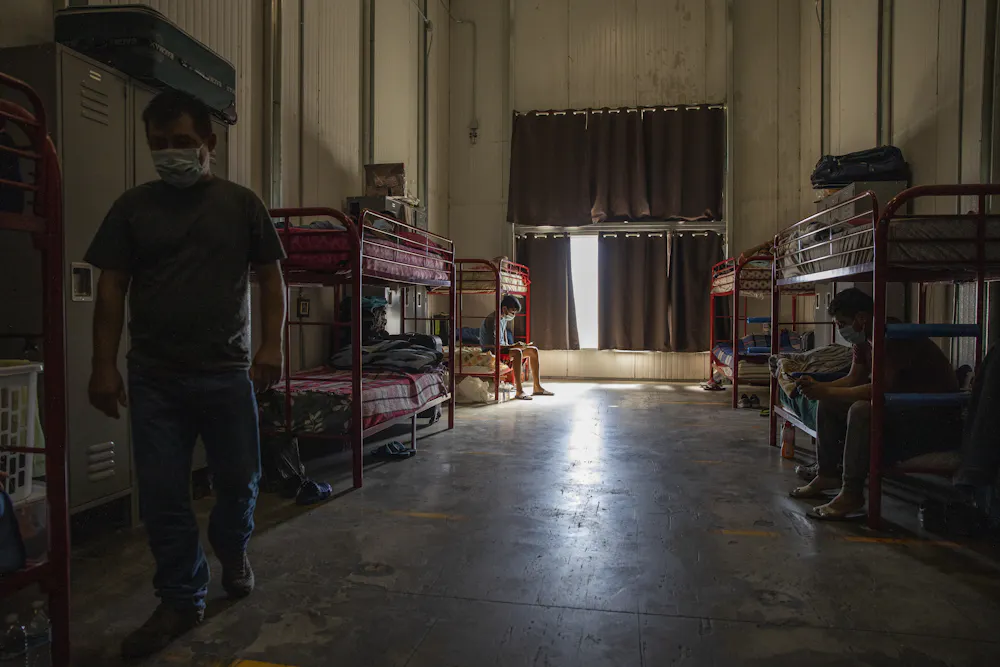
Source: United States Bureau of Alcohol Tobacco Firearms and Explosives (ATF)
MOBILE, AL – Joseph Ambrose Wilburn, Jr., of Mobile, Alabama, was sentenced to 156 months in prison for possessing a firearm as a previously convicted felon.
According to court documents, on April 11, 2024, the Mobile Police Department received information about an active arrest warrant for Wilburn in connection to him using a firearm to kidnap and sexually assault a woman. Later that day, Wilburn was stopped pursuant to a traffic stop where he was found to be in possession of two additional firearms. Wilburn has multiple prior felony convictions including multiple convictions of Domestic Violence – Assault, and convictions of Criminal Trespass, Possession/Receipt of a Controlled Substance, and Reckless Endangerment, among others. As a convicted felon, Wilburn is prohibited from possessing a firearm.
Wilburn was indicted for being a felon in possession of a firearm and pleaded guilty to the charge. United States District Court Judge Terry F. Moore sentenced Wilburn to 156 months in prison followed by a 3-year term of supervised release for illegally possessing the firearm.
U.S. Attorney Sean P. Costello of the Southern District of Alabama made the announcement.
The Bureau of Alcohol, Tobacco, Firearms and Explosives and the Mobile Police Department investigated the case.
This case is part of Operation Take Back America, a nationwide initiative that marshals the full resources of the Department of Justice to repel the invasion of illegal immigration, achieve the total elimination of cartels and transnational criminal organizations (TCOs), and protect our communities from the perpetrators of violent crime. Operation Take Back America streamlines efforts and resources from the Department’s Organized Crime Drug Enforcement Task Forces (OCDETFs) and Project Safe Neighborhood (PSN).
Assistant U.S. Attorney Jessica S. Terrill and Jimmy L. Thomas prosecuted the case on behalf of the United States.
Source: United States Bureau of Alcohol Tobacco Firearms and Explosives (ATF)
PIERRE – United States Attorney Alison J. Ramsdell announced today that U.S. District Judge Eric C. Shulte has sentenced a man from Harrold, South Dakota, who was convicted of Possession of a Firearm by a Prohibited Person. The sentencing took place on July 21, 2025.
Jerrod Fallis, age 47, was sentenced to six months in federal prison, followed by three years of supervised release, and ordered to pay a $100 special assessment to the Federal Crime Victims Fund. Forfeiture of the firearm and silencer was also ordered.
Fallis was indicted by a federal grand jury in March 2024. He pleaded guilty on April 17, 2025.
On December 8, 2023, a traffic stop was conducted on a vehicle driven by Fallis. During a search of the vehicle, officers discovered a Rock River Arms AR15 rifle, silencer, and methamphetamine paraphernalia. Fallis is prohibited from possessing firearms due to prior state felony drug convictions.
This case is part of Project Safe Neighborhoods (PSN), a program bringing together all levels of law enforcement and the communities they serve to reduce violent crime and gun violence, and to make our neighborhoods safer for everyone. On May 26, 2021, the Department launched a violent crime reduction strategy strengthening PSN based on these core principles: fostering trust and legitimacy in our communities, supporting community-based organizations that help prevent violence from occurring in the first place, setting focused and strategic enforcement priorities, and measuring the results.
This case was investigated by the Bureau of Alcohol, Tobacco, Firearms and Explosives (ATF), and the Hyde County Sheriff’s Office. Assistant U.S. Attorney Meghan Dilges prosecuted the case.
Fallis was immediately remanded to the custody of the U.S. Marshals Service.
Source: United States Senator for New Mexico Martin Heinrich
Investments Heinrich championed support homeownership & homebuilding, rental & homelessness assistance, Tribal health & education, Southwest Border Regional Commission, & more
WASHINGTON — U.S. Senator Martin Heinrich (D-N.M.) announced the bipartisan Senate Appropriations Committee passage of the Fiscal Year 2026 (FY26) Interior, Environment and Related Agencies; and Transportation, Housing, and Urban Development, and Related Agencies (THUD) Appropriations Bills. With Committee approval of these bills, Heinrich secured support for over $65 million for New Mexico, including $52 million in Congressionally Directed Spending for 39 local projects between these bills and their House-companions.
“While these Appropriations bills aren’t perfect, they include resources and investments I negotiated for New Mexico that will fund Tribal health care and education, help Tribal law enforcement officers solve and reduce violent crime, and continue funding for the Institute of American Indian Arts for the 2026-2027 school year,” said Heinrich, a member of the Senate Appropriations Committee. “This legislation will help over 11,000 families in New Mexico afford rent, build new housing, and invest in border communities through the Southwest Border Regional Commission. Additionally, the bill protects the Amtrak Southwest Chief train service in New Mexico, restores waterfowl habitat, and builds on my work to clean up abandoned hardrock mines. As a member of the Senate Appropriations Committee, I will always fight for investments that put New Mexico first.”
Additionally, Heinrich offered an amendment to require the U.S. Department of the Interior and the U.S. Forest Service to hire and maintain a minimum number of Full Time Employees in order to manage wildfire preparedness, suppression, and other mission-critical support, in the FY26 Interior, Environment and Related Agencies Appropriations Bill. Heinrich’s amendment would have also required the National Park Service to hire and maintain a minimum number of Full Time Employees for the operation of national park units, including administrative services. Despite Heinrich’s attempt to include the amendment in the Appropriations bill, the amendment was rejected by Republicans on the Committee.
Heinrich is a member of the Senate Appropriations Committee and the Subcommittee on Interior, Environment, and Related Agencies.
Next, the two bills passed out of the Appropriations Committee will be considered by the full United States Senate.
Interior, Environment and Related Agencies Key Points and Highlights
Congressionally Directed Spending
Heinrich successfully included $7.1 million in investments for the following ten local projects in the bill:
$1,075,000for the City of Truth or Consequences to replace aged and damaged waterlines.
$1,000,000 for Zuni Pueblo to make improvements to their drinking water system.
$1,000,000 for Pueblo of Tesuque to remove Siberian elm trees to restore the Rio Tesuque bosque to its natural vegetation.
$1,000,000 for the Village of Questa to construct a well house to prevent contamination of their municipal well.
$1,000,000 for Albuquerque Bernalillo County Water Utility Authority to conduct wastewater system improvements in Carnuel.
$700,000 for the Mescalero Apache Tribe to restore coniferous forest and promote aspen stand growth along the Rio Ruidoso to prepare for the reintroduction of beavers, a culturally significant species.
$525,000 for Taos Pueblo to purchase wildfire preparedness equipment.
$500,000for Eight Northern Indian Pueblos Council for a Caja del Rio Ethnographic Study.
$150,000 for the Desert Tortoise Council to work on Bolson tortoise recovery efforts.
$150,000 for the Bureau of Land Management to work with existing partners to replace barbed-wire fences with wildlife-friendly fences on the Rio Grande del Norte National Monument.
Heinrich and U.S. Senator Ben Ray Luján (D-N.M.) successfully included $3.39 million for the following three projects:
$2,090,000 for the City of Rio Rancho to expand their aquifer reinjection system.
$800,000 for the Enchanted Forest Mutual Domestic Water Consumers Association to develop a new water source pump house and appurtenances and to replace distribution lines.
$500,000 for the New Mexico Department of Cultural Affairs to make water system improvements at the Fort Selden Historic Site.
Heinrich also successfully worked with his colleagues in the N.M. Delegation to include $2.18 million for the following two projects in the House-companion bill:
$1,092,000 for the Town of Bernalillo will rehabilitate their current wastewater facilities.
$1,092,000 for the City of Belen to rehabilitate their wastewater treatment plant.
Heinrich also successfully included three amendments into the Manager’s Package. These include:
An amendment for a U.S. Government Accountability Office (GAO) study comparing the per-patient funding levels for health care services provided by the Department of Veterans Affairs (VA) and the Indian Health Service (IHS). Additionally, the study would analyze potential recruitment and retainment strategies utilized by the VA that could be extended to IHS.
An amendment ensuring that the Bureau of Indian Education (BIE) is included in reference to the reauthorization of the Legacy Restoration Fund to address deferred maintenance.
An amendment for a Fish and Wildlife Service report on staffing levels and positions at National Wildlife Refuge System units and complexes.
Safeguard Tribal Objects of Patrimony (STOP) Act Implementation: Heinrich successfully included $500,000 to implement the Safeguard Tribal Objects of Patrimony (STOP) Act, a bipartisan law that Heinrich championed and passed in 2022 to prohibit the exporting of sacred Native American items and increase penalties for stealing and illegally trafficking Tribal cultural patrimony. Representing the first dedicated funding for this program, it would be used to halt the trade of culturally significant items and repatriate stolen pieces to the Tribal communities where they belong. Heinrich first introduced the STOP Act in 2016 after he helped halt the auction of a shield, stolen from the Pueblo of Acoma. Heinrich played a role in the effort to bring the shield home to Acoma by working with Governors Kurt Riley and Brian Vallo to call for its return.
Tribal Programs: Heinrich fought for and successfully included $13,482,000 to the Institute of American Indian and Alaska Native Culture and Arts Development (IAIA). After the administration threatened to withhold IAIA’s funding earlier this year, Heinrich secured the release of FY 2025 funds earlier this month. This bill will ensure continued investment for IAIA through FY26, supporting its mission to advance Indigenous arts, culture, and education for future generations.
Heinrich also successfully included funding to protect several Tribal programs, including $23,750,000 for Tribal Historic Preservation Offices, $2,658,289,000 for Indian Health Services (IHS) Hospitals and Health Clinics, and funding for IHS Facilities and Construction. He also protected funding for Bureau of Indian Affairs Tribal Law Enforcement and included report language to ensure the continuation of the Tribal law enforcement training program in New Mexico.
Abandoned Hardrock Mine Reclamation Program: Heinrich successfully included continued funding for the Abandoned Hardrock Mine Reclamation Program, after championing the creation of the program in the Infrastructure Law. Hardrock mines and mining features are related to the extraction of metals like copper, gold, silver, and uranium. When not reclaimed, many hardrock mines pose a hazard to public health and the environment. This funding will be used to clean up federal, state, Tribal, and private land and water resources affected by abandoned hardrock mines.
Southwest Ecological Research Institutes: Heinrich fought for and successfully maintained funding for the Southwest Ecological Research Institutes (SWERIs). Last month Heinrich pressed the U.S. Forest Chief on the Administration’s plan entirely to cut funding for the program in FY26. SWERIs offer unique opportunities for dedicated research in forest science and watershed health and represent the future of science in forest management. New Mexico Highlands University houses one center along with Colorado State University and Northern Arizona University. This funding would ensure the continuation of valuable research in southwestern forest and fire management.
Conservation: Heinrich successfully protected funding for the North American Wetlands Conservation Fund, which leverages private dollars to restore waterfowl habitat across the country. Senator Heinrich led the reauthorization of this fund last congress. He also protected core wildlife management and science capabilities at the Fish and Wildlife Service and the U.S. Geological Survey from the steep cuts proposed by the Trump administration.
Transportation, Housing, and Urban Development, and Related Agencies (THUD) Key Points and Highlights
Congressionally Directed Spending
Heinrich successfully included $17.1 million in investments for the following 11 local projects in the bill:
$4,000,000 for Homewise to help moderate-income, first-time homebuyers purchase entry-level homes.
$2,300,000 for the City of Socorro to replace aged and damaged waterlines.
$2,073,000 for the City of Raton to upgrade its municipal airport infrastructure.
$1,500,000 for the Boys & Girls Club of San Juan County to renovate a community center.
$1,500,000 for DreamTree Project to complete the final phase of renovations to the Navigating Emergency Support Together (NEST) building and purchase land for on-site permanent supportive housing.
$1,000,000 Serenity Mesa Youth Recovery Center to expand their facilities to support increased substance use crisis stabilization, treatment, and housing for adolescents and young adults.
$850,000 for the Albuquerque Housing Authority will invest in necessary upgrades at public housing properties.
$692,000 for the Northern Rio Grande National Heritage Area to conduct an affordable housing pilot project.
$440,000 for Deming Silver Linings to provide emergency temporary housing for unhoused individuals.
$200,000 for Mesilla Valley Community of Hope to support individuals and families experiencing poverty and homelessness by providing affordable housing and wraparound services.
Heinrich and U.S. Senator Ben Ray Luján (D-N.M.) successfully included $16.3 million for the following nine projects:
$3,000,000 for Youth Development, Inc. for an early childhood development center.
$3,000,000 for the Agri-Cultura Cooperative Network and La Cosecha Community Supported Agriculture to create a Food Hub at the Sacred Roots farm site to create economic development opportunity in the local food system, provide education to students and community members, and increase access to healthy foods.
$2,500,000 for Santa Fe County to develop a Permanent Supportive Housing project designed to meet the urgent needs of the region’s unhoused population.
$1,800,000 for the Town of Mountainair to rebuild, repave, and upgrade approximately two miles of downtown Mountainair’s roadways.
$1,600,000 for the City of Raton to conduct an interchange alignment study as part of the Ports-to-Plains Corridor Interstate Planning process.
$1,500,000 for Tierra Del Sol Housing Corporation to complete the first phase of construction for an affordable housing project in Vado, New Mexico.
$1,210,000 for the City of Bloomfield to plan, design, and construct the expansion of East Blanco Boulevard in Bloomfield.
$1,000,000 for the Pueblo of Acoma to construct new single-family homes for low-to-moderate income families on the Housing Authority’s waiting list.
$700,000 for Cuidando Los Niños of Albuquerque to expand its facility to house early childhood education and family wraparound services.
Heinrich also successfully worked with his colleagues in the N.M. Delegation to include $8.4 million for the following four projects in the House-companion bill:
$2,900,000 for the Pueblo of Acoma to repair housing for senior community members and provide ADA accommodations.
$2,000,000 for the City of Albuquerque Health, Housing and Homelessness Department to improve security and accessibility at the city’s largest homeless shelter.
$2,000,000 for the City of Albuquerque to establish a modular Shelter Stability site for seniors.
$1,512,000 for Jemez Pueblo to demolish hazardous buildings within the Pueblo.
Rental Assistance: Heinrich successfully secured increased funding for the Tenant-Based Rental Assistance (Housing Choice Vouchers) and Project-Based Rental Assistance, despite the administration’s attempts to completely defund both programs. The Housing Choice Voucher (HCV) Program helps over 11,000 families in New Mexico afford rent. Heinrich also secured language urging HUD to expand resources to train public housing staff on how to use housing choice vouchers to make homeownership an attainable goal for residents of public housing.
Tribal Programs: Heinrich successfully included a $25 million investment for Tribal Transportation Program High Priority Projects, a set-aside that provides funds to Tribes or a governmental subdivision of a Tribe whose annual allocation of funding received under the Tribal Transportation Program is insufficient to complete the highest priority project of the Tribe. Heinrich secured an increase in funding for Tribal housing programs. Heinrich also secured a legislative proposal that would make certain home loans on Tribal lands easier to keep if homeowners are delinquent on payments.
Southwest Border Regional Commission: Heinrich successfully included a $5 million investment in the Southwest Border Regional Commission (SBRC) for transportation infrastructure planning to support supply chain connectivity and economic development in southern New Mexico and along the southern border.
Homelessness Assistance: Heinrich successfully secured an increase in funding for grant programs that address homelessness through emergency shelter, transitional and supportive housing, rapid re-housing, rental assistance and prevention, and supportive services. Heinrich successfully pushed back against the Trump administration’s attempts to curtail homelessness assistance funding by making grant match requirements overly burdensome for New Mexican service providers.
Homebuilding and Homeownership: Heinrich secured funding for the HOME Investment Partnership Program (HOME), a critical program that helps New Mexicans purchase or rehabilitate homes. The Trump administration also sought to cut all funding for this program. In New Mexico, HOME also provides gap funding for Low-Income Housing Tax Credit projects, which increases the supply of affordable rental units.
Amtrak Southwest Chief: Heinrich secured language that protects existing Amtrak Southwest Chief train service in New Mexico from cuts and closure.
Source: United States House of Representatives – Congressman David Scott (GA-13)
Read Letter PDF
WASHINGTON D.C. – Today, Congressman David Scott (GA-13), a senior member of the House Financial Services Committee, sent a letter to Securities and Exchange Commission (SEC) Chair Paul Atkins demanding answers over the agency’s failure to detect the sprawling $140 million Ponzi scheme orchestrated by Georgia-based lender First Liberty Building and Loan. The letter calls for greater transparency and accountability following the SEC’s federal seizure of First Liberty.
In his letter, Congressman David Scott sharply criticizes the SEC for its years-long inability to detect or stop the fraud, which impacted hundreds of investors in Georgia and over a thousand investors nationwide. Despite numerous red flags, such as fabricated loan pools, implausible investment returns, and aggressive social media marketing, the SEC waited until July 10, 2025, to act, by which point nearly 90% of First Liberty’s loan portfolio had already defaulted. The congressman calls the SEC’s oversight breakdown “a catastrophic collapse of federal supervision.”
“This is not just a regulatory lapse, it is a total failure of oversight that enabled a $140 million Ponzi scheme to thrive in broad daylight,” said Congressman David Scott. “The worst hit investors are not millionaires or billionaires, they are retirees, faith leaders, and veterans who were failed by the SEC and Georgia state regulators. Many have lost their life savings, retirement security, and the very opportunity to financially support their families. The fact that this level of fraud went undetected for so long is completely unacceptable. The people of Georgia, especially those whose future was shattered by this scheme deserve accountability—not silence.”
Congressman David Scott’s letter aims at uncovering the full extent of the SEC’s oversight failures and identifying a path forward for victims to be made whole. The letter also questions why the SEC and state regulators—including the Georgia Department of Banking and Finance—failed to coordinate efforts, despite reportedly receiving multiple red flags and investor complaints. It demands a full accounting of:
When and how the SEC first became aware of First Liberty’s operation and whether SEC examiners reviewed the firm’s activities prior to July 2025
Why the firm was allowed to continue issuing unregistered offerings without disclosure or allowed to operate without registering as a broker dealer
What structural failures exist in the SEC’s regional supervisory and whistleblower processes that led to this apparent regulatory breakdown
What specific steps are being taken to pursue asset recovery, including offshore accounts or properties purchased with stolen investor funds
Additionally, Congressman Scott is requesting the SEC commit to a full and timely public report outlining how this massive Ponzi scheme operation was able to go on without detection. He has called for congressional hearings and a Government Accountability Office (GAO) investigation into whether loopholes in Regulation D and resource shortfalls at the SEC are enabling widespread abuse in private financial markets.
Congressman Scott remains committed to ensuring every victim receives justice and that the inexcusable regulatory failures which allowed this fraud to occur are addressed swiftly and thoroughly.
Source: United States House of Representatives – Congressman Earl L Buddy Carter (GA-01)
Headline: Carter Installs Overdose Reversal Kits in House Office Buildings
WASHINGTON, D.C. – Rep. Earl L. “Buddy” Carter (R-GA) successfully advocated for the installation of overdose reversal kits near automated external defibrillators (AEDs) in House office buildings, shining a light on the need to make naloxone, an over-the-counter opioid reversal treatment, as accessible as a defibrillator.
Overdoses are the number one cause of death for adults aged 18-45. House Office Buildings are leading by example to normalize the presence of this safe and effective treatment and encouraging members of the public to learn how to properly administer it.
“This is a huge win for public safety,” said Rep. Carter. “By making opioid reversal kits as common as defibrillators and fire extinguishers, we will arm citizens with critical tools to combat the opioid epidemic. I am proud that the U.S. Capitol is leading the way. We can and must ensure that schools and other public and private buildings across the nation have similar access to this life-saving treatment.”
Currently, boxes have been installed near building entrances for Rayburn, Longworth, Cannon, Ford, and O’Neill. The Sergeant at Arms will soon fill the boxes with opioid reversal kits, which will be available in case of an emergency.
The boxes are located at:
Longworth House Office Building: Basement, NW corner near tunnel to Rayburn House Office Building
Cannon House Office Building: First Floor, NW corner, across from NJ avenue entrance
Rayburn House Office Building: First Floor, East side, across from the horseshoe S Capitol St. entrance
Ford House Office Building: First Floor, North side, near C St. entrance
O’Neill House Office Building: First floor North side, near C St. entrance
Source: People’s Republic of China – State Council News
A Chinese envoy on Thursday rejected U.S. accusations over China’s Xinjiang region at a Security Council meeting on cooperation between the United Nations and the Organization of Islamic Cooperation.
“China firmly opposes and categorically rejects the groundless accusations made by the U.S. representative regarding China’s Xinjiang region,” said Fu Cong, China’s permanent representative to the United Nations.
Currently, Xinjiang enjoys social stability, economic prosperity, where people live in peace and contentment. It is in the best period of development ever. The United States has gone to great lengths to hype up the so-called Xinjiang issue in a vain attempt to interfere in China’s internal affairs and curb China’s development, only to lay bare their true colors, which are hegemonic and based on double standards, he said.
Over the past six years, over 100 countries, including many Islamic countries, have voiced their support for China’s just position at the Third Committee of the UN General Assembly. They unequivocally oppose politicizing human rights issues and exploiting human rights as a pretext to interfere in other countries’ internal affairs, said Fu.
“This is a message loud and clear that the U.S. scheme to contain China using the so-called Xinjiang issue is very much bankrupt, and its sinister intention to provoke bloc confrontation by discrediting and suppressing China has failed miserably,” he said.
Fu asked: If the United States truly cared about the human rights of Muslims, why does it turn a blind eye to the living hell in Gaza? Why has the United States ignored the historical injustices suffered by the Palestinian people?
The United States overlooks its own chronic problems at home, such as gun violence, racial discrimination, and the trampling of its own citizens’ rights and dignity. Yet under the guise of human rights, it wantonly interferes in other countries’ internal affairs and violates the human rights of countless people in developing nations, he said.
“We urge the United States to reflect on its own ills and wrongdoings, change course and put more effort into practical, positive actions for international peace and security,” he said.
ROME, Ga. – Wilfort Foster, III, 41, of El Monte, California, was sentenced to 28 years in federal prison after pleading guilty to narcotics and money laundering conspiracy charges. Foster, a convicted felon serving a sentence of probation during a portion of the offense, led an operation that moved hundreds of kilograms of methamphetamine, as well as significant quantities of fentanyl, from California to the North Georgia area and elsewhere, and then laundered hundreds of thousands of dollars in drug proceeds.
“Our office partnered with a host of federal, state, and local law enforcement agencies to dismantle a significant, multi-state drug trafficking and money laundering network,” said U.S. Attorney Theodore S. Hertzberg. “Foster’s 28-year prison sentence should serve as a robust warning to others who might consider trafficking deadly fentanyl and methamphetamine in North Georgia.”
“DEA is committed to going after money laundering networks that move cash made from the sale of illegal drugs in the United States,” said Jae W. Chung, Acting Special Agent in Charge of the DEA Atlanta Division. “We will continue to follow the money trail while working alongside our partners to hold those accountable who profit from the distribution of deadly fentanyl and methamphetamine.”
“This sentencing marks the end of a years-long effort to dismantle a dangerous drug trafficking network that was pushing lethal fentanyl and methamphetamine into our communities,” said Paul Brown, Special Agent in Charge of FBI Atlanta. “The FBI remains focused on dismantling these dangerous organizations at every level—from supply to distribution to laundering the proceeds of their crimes.”
“This significant sentence reflects the massive danger that fentanyl and illicit narcotics pose to our communities,” said Steven N. Schrank, the Special Agent in Charge of Homeland Security Investigations in Georgia and Alabama. “Thanks to the dedicated efforts of HSI and our law enforcement partners, Wilfort Foster, III, who led a major drug trafficking ring, will no longer be able to endanger lives with these deadly substances.”
According to U.S. Attorney Hertzberg, the charges and other information presented in court: Beginning in 2017 and continuing into 2022, Foster and others conspired to transport methamphetamine and fentanyl from California to Cartersville, Georgia and other areas. Foster ran a stash house and illegal gambling operation in his California barbershop, which he used to supply his network with large amounts of fentanyl and methamphetamine for sale. In one instance, Foster supplied a co-defendant with more than 22 kilograms of methamphetamine that law enforcement subsequently seized.
After Foster’s operation sold drugs, conspirators in Georgia laundered more than $600,000 in cash to Foster by using shell companies and flying with hundreds of thousands of dollars in cash to California. Foster maintained tight control of his network and once broke a co-defendant’s jaw during a feud over the co-defendant’s drug debt.
During the multi-agency investigation, law enforcement seized significant quantities of narcotics and more than a dozen firearms, including an AR-15. Foster continued his drug and money laundering operation in Georgia despite being on probation in California in a case involving the seizure of over nine kilograms of methamphetamine and two firearms.
Earlier today, United States District Judge William M. Ray II sentenced Foster to serve 28 years in prison to be followed by 5 years of supervised release. Foster was convicted of conspiracy to possess with the intent to distribute methamphetamine and fentanyl and conspiracy to commit money laundering on January 6, 2025, after he pleaded guilty.
Another member of Foster’s organization, Steven Ham, 43, of Cartersville, Georgia, was sentenced to 15 years in prison and 10 years of supervised release on November 26, 2024, after pleading guilty to conspiracy to possess with the intent to distribute methamphetamine.
Additionally, the following defendants have pleaded guilty as part of this case and are awaiting sentencing:
Clifford Alexander, 39, of Gadsden, Alabama, pleaded guilty to conspiracy to possess with the intent to distribute methamphetamine.
Frank Miller, 47, of Cartersville, Georgia, pleaded guilty to conspiracy to possess with the intent to distribute methamphetamine and fentanyl, possession of a firearm in furtherance of a drug trafficking crime, and conspiracy to commit money laundering.
Kenneth Antoine Scott, 41, of East Point, Georgia, pleaded guilty to conspiracy to possess with the intent to distribute methamphetamine and possession of a firearm in furtherance of a drug trafficking crime.
Lori Silvers, 46, of Rockmart, Georgia, pleaded guilty to conspiracy to possess with the intent to distribute methamphetamine.
Nia Thomas, 31, of Atlanta, Georgia, pleaded guilty to conspiracy to possess with the intent to distribute methamphetamine.
This case was investigated by the Federal Bureau of Investigation, Drug Enforcement Administration, Homeland Security Investigations, United States Postal Inspection Service, Bartow-Cartersville Drug Task Force, Bartow County Sheriff’s Office, Cartersville Police Department, Cedartown Police Department, Polk County Police Department, Acworth Police Department, Kennesaw Police Department, El Monte (CA) Police Department, Los Angeles (CA) Sheriff’s Department, Rutherford County (TN) Sheriff’s Office, Sevier County (TN) Sheriff’s Office, Kansas City (KS) Police Department, and the Georgia Bureau of Investigation.
Assistant United States Attorneys Calvin A. Leipold, III, Matthew R. LaGrone, and Jeffrey Brown; former Assistant United States Attorneys Richard Beaulieu and Zachary Howard; and former Special Assistant United States Attorney Rachel Lyons prosecuted the case.
This case is part of Operation Take Back America, a nationwide initiative that marshals the full resources of the Department of Justice to repel the invasion of illegal immigration, achieve the total elimination of cartels and transnational criminal organizations (TCOs), and protect our communities from the perpetrators of violent crime. Operation Take Back America streamlines efforts and resources from the Department’s Organized Crime Drug Enforcement Task Forces (OCDETFs) and Project Safe Neighborhood (PSN).
This effort is part of an OCDETF operation. OCDETF identifies, disrupts, and dismantles the highest-level criminal organizations that threaten the United States using a prosecutor-led, intelligence-driven, multi-agency approach. Additional information about the OCDETF Program can be found at https://www.justice.gov/OCDETF.
The U.S. Attorney’s Office in Atlanta recommends parents and children learn about the dangers of drugs at the following web site: www.justthinktwice.gov.
For further information please contact the U.S. Attorney’s Public Affairs Office at USAGAN.PressEmails@usdoj.gov or (404) 581-6185. The Internet address for the U.S. Attorney’s Office for the Northern District of Georgia is http://www.justice.gov/usao-ndga.
Early this morning in al-Bab, Aleppo Governate, Syria, CENTCOM Forces conducted a raid resulting in the death of senior ISIS Leader, Dhiya’ Zawba Muslih al-Hardani, and his two adult ISIS-affiliated sons, Abdallah Dhiya al-Hardani and Abd al-Rahman Dhiya Zawba al-Hardani.
Source: People’s Republic of China in Russian – People’s Republic of China in Russian –
An important disclaimer is at the bottom of this article.
Source: People’s Republic of China – State Council News
UNITED NATIONS, July 25 (Xinhua) — China’s permanent representative to the United Nations Fu Cong on Thursday rejected U.S. accusations against China’s Xinjiang Uygur Autonomous Region (XUAR) at a Security Council meeting on cooperation between the United Nations and the Organization of Islamic Cooperation.
“China firmly opposes and categorically rejects the groundless accusations made by the US representative regarding China’s Xinjiang region,” the Chinese diplomat said.
At present, Xinjiang enjoys social stability, economic prosperity, and people live in peace and contentment. It is the best period of development in its history. The United States has made great efforts to stir up the so-called Xinjiang issue in a vain attempt to interfere in China’s internal affairs and curb its development, but in doing so, it has only exposed its true nature of hegemonic ambitions and double standards, Fu Cong noted.
Over the past six years, more than 100 countries, including many Islamic countries, have voiced their support for China’s just position at the general debate of the Third Committee of the UN General Assembly. They are unequivocally opposed to the politicization of human rights issues and the use of human rights as a pretext for interfering in the internal affairs of other countries, the Chinese envoy said.
“This is a loud and clear signal that the US plan to contain China using the so-called Xinjiang issue has largely failed, and its sinister intention to provoke bloc confrontation by discrediting and suppressing China has failed completely,” he said.
Fu Cong asked, “If the US really cares about Muslim rights, why does it turn a blind eye to the living hell in Gaza? Why does the US ignore the historical injustices suffered by the Palestinian people?”
The United States, he said, ignores its own chronic problems at home, such as gun violence, racial discrimination, and the violation of the rights and dignity of its own citizens. Under the guise of protecting human rights, Washington unjustifiably interferes in the internal affairs of other countries and violates the rights of countless people in the developing world.
“We call on the United States to examine its own vices and misdeeds, change course, and make greater efforts to take practical, positive action in the interests of international peace and security,” he said. –0–
Please note: This information is raw content obtained directly from the source of the information. It is an accurate report of what the source claims and does not necessarily reflect the position of MIL-OSI or its clients.
Source: United States House of Representatives – Representative Mike Johnson (LA-04)
WASHINGTON — Six months into the Trump Administration, Republicans in the 119th Congress are delivering on President Trump’s America First agenda. With the historic passage of the One Big Beautiful Bill and many more separate pieces of legislation, House Republicans have already voted to codify 50 of President Trump’s executive actions.
“The American people gave President Trump a clear mandate to enact his America First agenda – and House Republicans are answering that call. To date, we’ve voted to codify 50 of the President’s Executive Orders into law, from reining in waste, fraud, and abuse, to cutting bureaucratic red tape that has strangled America’s innovators, job creators, and entrepreneurs,” said Speaker Johnson. “The last four years under President Joe Biden made painfully clear how quickly progress can be undone unless Congress steps in. That’s why House Republicans are working around the clock to codify President Trump’s executive actions and enshrine his historic agenda into law.”
Executive Actions Passed by the House in the 119th Congress listed below and can be found here:
1. Preserving and Protecting the Integrity of American Elections
2. Defending Women from Gender Ideology Extremism and Restoring Biological Truth to the Federal Government
3. Unleashing Prosperity Through Deregulation
4. Imposing Sanctions on the International Criminal Court
5. Immediate Expansion of American Timber Production
6. Restoring Names that Honor American Greatness
7. Protecting American Communities from Criminal Aliens
8. Small Business Administration Overhaul of the Reckless Biden-era Lending Program
9. Ending Taxpayer Subsidization of Open Borders
10. Making the District of Columbia Safe and Beautiful
11. Memorandum for the Heads of Executive Departments and Agencies: Advancing United States Interests When Funding Nongovernmental Organizations
12. Putting America First in International Environmental Agreements
13. Radical Transparency About Wasteful Spending
14. Withdrawing the U.S. from the World Health Organization
15. Withdrawing the U.S. from and Ending Funding to Certain U.N. Organizations and Reviewing U.S. Support to All International Organizations
16. Reevaluating and Realigning U.S. Foreign Aid
17. Restoring Freedom of Speech and Ending Federal Censorship
18. Ending Radical and Wasteful Government DEI Programs and Preferencing
19. Securing Our Borders
20. Protecting Children from Surgical Mutilation
21. Expanding Migrant Operations Center at Naval Station Guantanamo Bay to Full Capacity
22. Expanding Access to In Vitro Fertilization
23. Restoring America’s Maritime Dominance
24. Declaring a National Emergency at the Southern Border of the U.S.
25. Reinvigorating America’s Beautiful Clean Coal Industry
28. Celebrating America’s 250th Birthday with the Garden of Heroes
29. Declaring a National Energy Emergency
30. Enforcing the Hyde Amendment
31. Immediate Measures to Increase American Mineral Production
32. Restricting the Entry of Foreign Nationals to Protect the United States from Foreign Terrorists and Other National Security and Public Safety Threats
33. The Iron Dome for America
34. Clarifying The Military’s Role in Protecting the Territorial Integrity of the United States
35. Keeping Americans Safe in Aviation
36. Unleashing American Drone Dominance
37. Implementing the President’s “Department of Government Efficiency” Cost Efficiency Initiative
38. Improving Education Outcomes by Empowering Parents, States, and Communities
39. Reforming Accreditation to Strengthen Higher Education
40. Continuing the Reduction of the Federal Bureaucracy
41. Establishing the President’s Make America Healthy Again Commission
42. Further Amendment to Duties Addressing the Synthetic Opioid Supply Chain in the People’s Republic of China as Applied to Low-Value Imports
43. The Organization for Economic Co-operation and Development (OECD) Global Tax Deal (Global Tax Deal)
44. Protecting America’s Bank Account Against Fraud, Waste, and Abuse
45. Stopping Waste, Fraud, and Abuse by Eliminating Information Silos
46. Strengthening American Leadership in Digital Financial Technology
47. Honoring Jocelyn Nungaray
48. Ending Taxpayer Subsidization of Biased Media
49. Restoring America’s Fighting Force
50. Ending Illegal Discrimination and Restoring Merit-Based Opportunity
Source: US Federal Deposit Insurance Corporation FDIC
WASHINGTON – The Federal Deposit Insurance Corporation (FDIC) today published a list of orders of administrative enforcement actions taken against banks and individuals in June 2025. There are no administrative hearings scheduled for August 2025.
Order Terminating Consent Order:
Citizens State Bank, Ganado, Texas
Order Terminating Order to Pay Civil Money Penalty:
CNB Bank, Carlsbad, New Mexico
Orders to Pay Civil Money Penalties:
Royal Bank, Elroy, Washington
Tioga-Franklin Savings Bank, Philadelphia, Pennsylvania
Orders of Prohibition from Further Participation:
One American Bank, Centerville, South Dakoka
Watermark Bank, Oklahoma City, Oklahoma
Orders of Termination of Insurance:
Community Bank, Joseph, Oregon
First Financial Northwest Bank, Renton, Washington
Mid-Southern Savings Bank, FSB, Salem, Indiana
Republic Bank of Arizona, Phoenix, Arizona
Security State Bank, Centralia, Washington
Orders Terminating Orders Relating to Section 19 of the FDI Act (Section 19):
Six Orders Terminating Orders Issued Pursuant to Section 19
Notices of Charges:
Truist Bank, Charlotte, NC
# # #
MEDIA CONTACT: LaJuan Williams-Young lwilliams-young@FDIC.gov
The FDIC does not send unsolicited email. If this publication has reached you in error, or if you no longer wish to receive this service, please unsubscribe.
WASHINGTON — The following statement can be attributed to NEA President Becky Pringle:
“At the recent NEA 2025 Representative Assembly, a recommendation was sent to NEA’s Executive Committee that the National Education Associationnot partner with the Anti-Defamation League. As the NEA does not currently have a partnership with the ADL, this would have constituted a forward-looking declaration.
“Today, following the culmination of a thorough review process as governed by NEA rules, including a vote by NEA’s Executive Committee earlier this week, NEA’s Board of Directors—representing the broad and diverse membership of the NEA, including representatives from every state—voted not to implement this proposal.
“In our review, NEA considered multiple factors, including the rationale and concerns behind the proposal, its relationship to our policies and values, and how this would affect students, our members, our work, and our mission to champion excellence and justice in public education. We consulted with NEA state affiliates and civil rights leaders, including Jewish American and Arab American community leaders, and we also met with ADL leadership.
“After consideration, it was determined that this proposal would not further NEA’s commitment to academic freedom, our membership, or our goals. Today’s vote by the NEA Board of Directors to not adopt this proposal completes NEA’s process.
“There is no doubt that antisemitism is on the rise. Without equivocation, NEA stands strongly against antisemitism. We always have and we always will. Our Jewish students and educators deserve nothing less.
“As NEA members debated this issue on the floor of our Representative Assembly, they spoke about a variety of painful, frustrating, and dehumanizing experiences related to antisemitism and anti-Arab and anti-Palestinian bigotry. We know antisemitism and anti-Arab bigotry are very real and urgent problems in this country and around the world. They are insidious forms of hate, which is why NEA and our members actively work to fight them in our classrooms, on our campuses, and in our communities.
“We have increased our efforts to combat all forms of hate because we know freedom and safety for any of us depend on the freedom and safety of all of us. As educators, we remain steadfast in our commitment to ensuring our schools and campuses are safe and welcoming for all students, regardless of their religion, ethnicity, or identity—with no exceptions. That is fundamental to who we are as educators and the core of who we are as a union.
“At our core, NEA’s work and mission are rooted in social and racial justice, and we have a long, proud history of fighting against hate in all its forms. In this time of division, fighting antisemitism, anti-Arab racism, and other forms of discrimination will take more resources, not fewer. We are ready.
“Public education is vital to building respect for the worth, dignity, and equality of every individual in our diverse society. Our democracy depends on freedom of speech, and a great education depends on academic freedom, and inclusive and respectful debate. NEA opposes efforts to shut down debate, to silence voices of disagreement, and intimidation. We recognize the underlying concerns of the authors and supporters of the proposal, and we are committed to ongoing discussion with our community.
“Not adopting this proposal is in no way an endorsement of the ADL’s full body of work. We are calling on the ADL to support the free speech and association rights of all students and educators. We strongly condemn abhorrent and unacceptable attacks on our members who dedicate their lives to helping their students thrive. Our commitment to freedom of speech fully extends to freedom of protest and dissent, whether in the public square or on college campuses.
“NEA will continue our work to combat discrimination against all people, pursue justice inside and beyond our schools, and we will always ensure our members are supported in these efforts. Along with this vote, we commit to continue our ongoing work to stand strong against oppression and hatred, a prerequisite for a thriving public education system consistent with our core values. Even with passionately held views on emotionally charged issues, the moment calls for us to use care and grace with each other and to ensure we refrain from actions that harm vulnerable communities.
“Going forward, the NEA will use a diverse and knowledgeable group of NEA practitioners to review materials that we use in relation to antisemitism curriculum and tools to combat antisemitism.
“As a union, our diverse backgrounds and perspectives make us stronger, and our interconnected safety comes only through solidarity. In light of the near-daily direct attacks being made against public education, our work together has never been more important. No amount of bullying can force us to abandon our commitment to our members and our values. And there is too much at stake to rest for even a moment.”
Follow us on Bluesky athttps://bsky.app/profile/neapresident.bsky.socialand https://bsky.app/profile/neatoday.bsky.social
# # #
The National Education Association is the nation’s largest professionalemployeeorganization, representing more than 3 million elementary and secondary teachers, higher education faculty, education support professionals, school administrators, retired educators, students preparing to become teachers, healthcare workers, and public employees. Learn more at www.nea.org.
Aid cuts and humanitarian deadlock are fuelling a full-blown public health disaster.
In Sake and Minova, 500 people are sharing a single water tap.
Six months since the renewed war in the Democratic Republic of Congo (DRC), a full-blown public health emergency is accelerating, Oxfam warned today.
Since January, more than 35,000 suspected cholera cases and at least 852 related deaths have been reported – an average of more than four deaths every day and a 62 percent increase compared to 2024.
After M23 fighters seized Goma in January civilians were ordered to return to their villages within 72 hours. More than 3.16 million people have since returned back only to find their homes reduced to rubble, and aid system on the verge of collapse.
Water networks, including storage facilities have been obliterated, leaving families to drink from contaminated streams and stagnant lakes. Basic health services have crumbled, with hospitals out of medicine and sanitation systems in ruins. In some of the hardest-hit areas, like Sake and Minova, 500 people are now sharing a single water tap.
Dr. Manenji Mangundu, Oxfam’s Director in DRC said:
“This is a full-blown public health emergency. Families are returning to ruins—no shelters, no toilets, no clean water. In many areas, latrines have been flooded or stripped for firewood, forcing people to defecate in the open and contaminate the only water available. The air reeks of sewage. Hospitals are out of medicine, and we can’t reach cut-off communities with even the most basic aid.”
In South Kivu’s Uvira region, cholera is surging with 100 new cases being reported each day. Floodwaters from Lake Tanganyika routinely inundate homes and latrines overflow into the lake, even as families are forced to drink lake water.
The forced closure and destruction of more than 20 displacement sites in Goma alone has left 700,000 people without safe shelter, clean water or basic sanitation In Rusayo, Lushagal, and Bhimba —where Oxfam had been supporting over 100,000 people—entire sites have been razed or abandoned, including more than $700,000 worth of water and sanitation infrastructure, such as pipelines, latrines, and tanks.
“This is a full-blown public health emergency. Families are returning to ruins—no shelters, no toilets, no clean water. In many areas, latrines have been flooded or stripped for firewood, forcing people to defecate in the open and contaminate the only water available. The air reeks of sewage. Hospitals are out of medicine, and we can’t reach cut-off communities with even the most basic aid.”
Dr. Manenji Mangundu, Oxfam’s Director in DRC
Oxfam
Despite a US-brokered ceasefire, insecurity, roadblocks, and ongoing clashes have severed vital supply routes, cutting off communities from lifesaving food, clean water, and medicine. Aid agencies like Oxfam are now being forced to detour through Rwanda, severely hampering relief efforts. Cross-border access through Burundi has been entirely blocked, while illegal taxes and bureaucratic obstruction are further choking humanitarian deliveries.
Deep aid cuts since the start of 2025 have pushed the humanitarian response to the brink of failure. Only a fraction of the $2.54 billion needed this year as humanitarian aid in DRC has been received to date—forcing agencies like Oxfam to scale back or suspend life-saving operations. Even a UN investigation into possible war crimes has been frozen for lack of funding.
“People are suffering because we cannot reach them,” said Balume Loutre, Oxfam’s Public Health Engineering Team Leader in Eastern DRC. “They’re drinking from contaminated water sources, and we lack the resources to deliver even basic aid. In some villages, 15,000 families need help, but we can only support 500. We’re forced to make impossible choices, leaving thousands behind.”
The situation is particularly alarming for women and girls. Since the cuts to USAID funding, more than 8,200 people living with HIV have lost access to antiretroviral treatment. Emergency post-rape care kits are vanishing, even as a child is reported raped every half an hour in eastern DRC, according to UNICEF.
Despite the collapse of the aid system, Oxfam and its partners continue to deliver lifesaving assistance – constructing water systems, building latrines and distributing soap and hygiene kits, food and seed. But urgent funding is needed to reach 400,000 people in high-risk cholera zones.
“We need an immediate injection of funds, and all warring parties to commit to a permanent ceasefire and allow aid to flow freely. After six months of chaos, people need dignity and respite from relentless violence. The world cannot look away,” said Mangundu.
In northern Nigeria, our teams are seeing an ever-increasing number of children in need of treatment for malnutrition.
We have begun a preventive campaign in Mashi local government area, distributing nutrition supplements for 66,000 children.
Urgent mobilisation is needed to save lives from this malnutrition crisis.
Northern Nigeria is currently facing an alarming malnutrition crisis. In Katsina state, for instance, where Médecins Sans Frontières (MSF) has been present since 2021, the teams are seeing an ever-increasing number of malnourished children in our therapeutic feeding centres, with increasingly severe conditions and higher mortality rates.
In collaboration with the local authorities, we have begun distributing nutrition supplements for 66,000 children in the local government area of Mashi, as a method for emergency prevention. In the context of drastic cuts in international funding, the need for prevention and treatment of malnutrition is enormous in northern Nigeria, and urgent mobilisation is required.
By the end of June 2025, nearly 70,000 children with malnutrition had already received medical care from our teams in Katsina state, including nearly 10,000 who were hospitalised in serious condition. Without taking into account the new healthcare facilities opened by MSF during the year in the state, this represents an increase of approximately one-third compared to last year.
In addition, between January and June 2025, the number of children with nutritional oedema,1 the most severe and deadly form of malnutrition, rose by 208 per cent compared with the same period in 2024. Unfortunately, 652 children have already died in our facilities since the beginning of 2025 due to a lack of timely access to care.
A worrying sign of the growing severity of this major public health emergency, is that adults—particularly women, including pregnant and breastfeeding women—are also affected. A screening carried out in July, in all five MSF malnutrition centres in Katsina state, on 750 mothers of patients, revealed that more than half of adult caregivers were acutely malnourished, including 13 per cent with severe acute malnutrition.
To cope with the massive influx of children expected by the end of the lean season in October, we have increased our support to the local authorities in several states in north Nigeria where we provide care to communities. In Katsina state for instance, we opened a new outpatient therapeutic feeding centre in Mashi and an additional inpatient therapeutic feeding centre in Turai, to provide a total of 900 beds in two hospitals where MSF teams work.
“The year 2024 marked a turning point in northern Nigeria’s nutritional crisis, with an increase of 25 per cent from the previous year,” says Ahmed Aldikhari, country representative of MSF in Nigeria. “But the true scale of the crisis exceeds all predictions. We are currently witnessing massive budget cuts, particularly from the United States, the United Kingdom, and the European Union, which are having a real impact on the treatment of malnourished children.”
Earlier this week, the World Food Programme (WFP) announced it will be forced to suspend all emergency food and nutrition aid for 1.3 million people in northeast Nigeria by the end of July due to “critical funding shortfalls”.2
“At the same time, we observe ever-increasing needs, such as in Katsina state, where an increasing number of people cannot afford to buy food anymore, even though it is available in markets,” says Aldikhari.
A food security survey carried out by humanitarian organisations in the local government area of Kaita, in Katsina state, before the lean season began at the start of 2025 revealed that over 90 per cent of households had reduced the number of meals they ate each day.
Across the north, other factors worsening the malnutrition crisis include disease outbreaks, which are worsened by low vaccine coverage, availability, and accessibility of basic health services, and other socioeconomic indices complicated by insecurity and violence.
“The most urgent way to reduce the risk of immediate death from malnutrition is to ensure families have access to food,” says Emmanuel Berbain, nutrition adviser at MSF. “This can be done through large-scale distribution of food or nutrition supplements, as we are currently doing in the Mashi area, or through cash distributions when and where it is possible.”
The capacity to care for and treat malnourished children must also be expanded, both by increasing the number of beds in health facilities, and by providing funding and access to ready-to-use therapeutic food. These actions must be undertaken as a priority in areas where the needs, such as the number of malnourished children, are greatest.
People over the age of five, who are also increasingly affected by malnutrition but are currently not covered by any assistance, should also be included in prevention programmes.
On 8 July, His Excellency Nigeria’s Vice President Kashim Shettima publicly sounded the alarm on the scale of malnutrition in Nigeria, warning that it deprives almost 40 per cent of children under the age of five of their full physical and cognitive potential. He described the situation as a national emergency requiring urgent and collective action.
MSF treated over 300,000 children with malnutrition in seven northern states in 2024, a 25 per cent increase from 2023. In the northwest alone, where MSF tackles malnutrition in the states of Sokoto, Kebbi, Katsina, and Zamfara, we have already treated almost 100,000 children suffering from severe and moderate acute malnutrition in outpatient treatment centres in the first six months of 2025, and hospitalised around 25,000 malnourished children.
Distributed by APO Group on behalf of Médecins sans frontières (MSF).
Source: United States Bureau of Alcohol Tobacco Firearms and Explosives (ATF)
TALLAHASSEE, FLORIDA – John Caleb Allen, 26, of Bristol, Florida, has been charged by federal criminal complaint for assault of a federal law enforcement officer with a deadly weapon, discharging a firearm during a crime of violence, and illegal possession of a machine gun. The charges were announced today by John P. Heekin, United States Attorney for the Northern District of Florida.
Court documents allege that, on July 24, 2025, agents of the Bureau of Alcohol, Tobacco, Firearms & Explosives with the assistance of the Liberty County Sheriff’s Office, were executing a federal search warrant at the subject’s residence when Allen opened fire on law enforcement. After firing multiple rounds at the agents, Allen was arrested without the agents discharging their weapons. Agents suffered minor, non-critical injuries as a result of the assault.
Allen is scheduled for arraignment before United States Magistrate Judge Martin A. Fitzpatrick today, at 3:00 pm at the Federal Courthouse in Tallahassee, Florida.
If convicted, Allen faces up to twenty years’ imprisonment on the assault of a federal law enforcement officer with a deadly weapon count, a minimum of ten years up to life imprisonment on the discharge of a firearm during a crime of violence count, and up to ten years’ imprisonment on the illegal possession of a machinegun count.
The Bureau of Alcohol, Tobacco, Firearms and Explosives, the Liberty County Sheriff’s Office, and the Florida Department of Law Enforcement are investigating the case. Assistant United States Attorney James McCain is prosecuting the case.
This case is part of Operation Take Back America (https://www.justice.gov/dag/media/1393746/dl?inline ) a nationwide initiative that marshals the full resources of the Department of Justice to repel the invasion of illegal immigration, achieve the total elimination of cartels and transnational criminal organizations (TCOs), and protect our communities from the perpetrators of violent crime. Operation Take Back America streamlines efforts and resources from the Department’s Organized Crime Drug Enforcement Task Forces (OCDETFs) and Project Safe Neighborhood (PSN).
A criminal complaint is merely an allegation by a sworn affiant that a defendant has committed a violation of federal criminal law and is not evidence of guilt. All defendants are presumed innocent and entitled to due process, to include a fair trial, during which it is the government’s burden to prove guilt beyond a reasonable doubt at trial.
The United States Attorney’s Office for the Northern District of Florida is one of 94 offices that serve as the nation’s principal litigators under the direction of the Attorney General. To access public court documents online, please visit the U.S. District Court for the Northern District of Florida website. For more information about the United States Attorney’s Office, Northern District of Florida, visit http://www.justice.gov/usao/fln/index.html.
Source: United States Bureau of Alcohol Tobacco Firearms and Explosives (ATF)
BOSTON – A Boston-area man has been sentenced in federal court in Boston for his role in Cameron Street, a violent Boston gang.
Wilter Rodrigues, 39, was sentenced on July 22, 2025 by U.S. Senior District Court Judge William G. Young to 60 months in prison to be followed by three years of supervised release. In July 2024, Rodrigues pleaded guilty to conspiracy to distribute cocaine and cocaine base.
According to court documents, Rodrigues was identified as member of Cameron Street, a violent gang based largely in the Dorchester section of Boston that uses violence and threats of violence to preserve, protect and expand its territory, promote a climate of fear and enhance its reputation.
Rodrigues worked with two co-defendants to allegedly distribute cocaine and cocaine base from an apartment in Somerville. Rodrigues has a lengthy criminal record, including a previous federal conviction for being a felon in possession of a firearm and ammunition and two state court convictions for drug-distribution offenses.
United States Attorney Leah B. Foley; Bryan DiGirolamo, Acting Special Agent in Charge of the Bureau of Alcohol, Tobacco, Firearms & Explosives, Boston Field Division; Jarod A. Forget, Special Agent in Charge of the Drug Enforcement Administration, New England Field Division; and Boston Police Commissioner Michael Cox made the announcement today. Valuable assistance was provided by the Massachusetts State Police; Suffolk County Sheriff’s Office; Suffolk, Plymouth, Norfolk and Bristol County District Attorney’s Offices; and the Canton, Quincy, Randolph, Somerville, Brockton, Malden, Stoughton, Rehoboth and Pawtucket (R.I.) Police Departments. Assistant U.S. Attorneys Christopher Pohl and Charles Dell’Anno of the Criminal Division are prosecuting the case.
This operation is part of an Organized Crime Drug Enforcement Task Forces (OCDETF) Strike Force Initiative, which provides for the establishment of permanent multi-agency task force teams that work side-by-side in the same location. This co-located model enables agents from different agencies to collaborate on intelligence-driven, multi-jurisdictional operations to disrupt and dismantle the most significant drug traffickers, money launderers, gangs, and transnational criminal organizations. OCDETF identifies, disrupts, and dismantles the highest-level criminal organizations that threaten the United States using a prosecutor-led, intelligence-driven, multi-agency approach. Additional information about the OCDETF Program can be found at https://www.justice.gov/OCDETF.
The remaining defendants named in the indictment are presumed innocent unless and until proven guilty beyond a reasonable doubt in a court of law.
Source: United States Bureau of Alcohol Tobacco Firearms and Explosives (ATF)
Tampa, Florida – United States Attorney Gregory W. Kehoe announces the return by a grand jury of an indictment charging Aristeo Ceron-Morales (48, Sarasota) with unlawful possession of a firearm and illegal reentry. If convicted on all counts, Ceron-Morales faces a maximum penalty of 17 years in federal prison. The indictment also notifies Ceron-Morales that the United States intends to forfeit a Sig Sauer P226 firearm, a Savage 410 shotgun, Hornady 9 mm ammunition, and Remington .38 ammunition, which are alleged to be traceable to proceeds of the offense.
According to the indictment, Aristeo Ceron-Morales is a convicted felon and illegal alien. In 2002, he was convicted of “Sex Offense Against Child Fondling – Conduct by Person 18 Years of Age or Older.” Ceron-Morales possessed firearms and ammunition despite not being able to legally do so based on his status as a convicted felon and illegal alien. Additionally, Ceron-Morales was previously removed from the United States in 2003 and had returned to the United States illegally.
An indictment is merely a formal charge that a defendant has committed one or more violations of federal criminal law, and every defendant is presumed innocent unless, and until, proven guilty.
This case was investigated by the Bureau of Alcohol, Tobacco, Firearms and Explosives, Homeland Security – Immigration and Customs Enforcement, and the Manatee County Sheriff’s Office, with assistance from the Bradenton Police Department. It will be prosecuted by Assistant United States Attorney Abigail K. King.
This case is part of Operation Take Back America, a nationwide initiative that marshals the full resources of the Department of Justice to repel the invasion of illegal immigration, achieve the total elimination of cartels and transnational criminal organizations (TCOs), and protect our communities from the perpetrators of violent crime. Operation Take Back America streamlines efforts and resources from the Department’s Organized Crime Drug Enforcement Task Forces (OCDETFs) and Project Safe Neighborhood (PSN).
Source: United States Bureau of Alcohol Tobacco Firearms and Explosives (ATF)
OKLAHOMA CITY – MICHAEL LOWELL BONJOUR, 39, of Mustang, has been sentenced to serve 87 months in federal prison for illegal possession of firearms after previous felony conviction, possession of stolen firearms, and possession of an unregistered firearm, announced U.S. Attorney Robert J. Troester.
According to public record, Bonjour was arrested on state charges by officers with the El Reno Police Department in March 2024 when he was discovered to be in possession of a stolen firearm. Six months later, in September 2024, officers with the Oklahoma City Police Department arrested him after he was stopped driving a stolen vehicle and found to be in possession of three stolen firearms – including a sawed-off shotgun.
Prior to these arrests, Bonjour had been convicted of multiple felonies, including convictions in Canadian County District Court for bringing contraband into a jail/penal institution in case number CF-2023-232; possession of a stolen vehicle in case number CF-2023-298; and stalking in case number CF-2023-325, as well as a total of four misdemeanor convictions for violations of a protective order.
On November 6, 2024, a federal grand jury charged Bonjour with being a felon in possession of a firearm, possession of stolen firearms, and possession of an unregistered firearm. On February 28, 2025, Bonjour pleaded guilty and admitted he knowingly possessed stolen firearms despite his previous felony convictions, and further admitted that one of the firearms was not properly registered to him despite its modified barrel.
At a sentencing hearing on July 18, 2025, U.S. District Judge Scott L. Palk sentenced Bonjour to serve 87 months in federal prison, followed by three years of supervised release. In announcing the sentence, the Court noted the need to deter additional criminal conduct and to protect the public.
This case is the result of an investigation by the Bureau of Alcohol, Tobacco, Firearms and Explosives, the Edmond Police Department, the Oklahoma City Police Department, and the El Reno Police Department. Assistant U.S. Attorney Danielle M. Connolly prosecuted the case.
This case is part of Project Safe Neighborhoods (PSN), a Department of Justice program to reduce violent crime. This case is also part of “Operation 922,” the Western District of Oklahoma’s implementation of PSN, which prioritizes prosecution of federal crimes connected to domestic violence. For more information about PSN, please visit https://justice.gov/psn and https://justice.gov/usao-wdok.
Reference is made to public filings for additional information.
Source: United States Bureau of Alcohol Tobacco Firearms and Explosives (ATF)
SOUTH BEND – Terrence Dockery, 33 years old, of South Bend, Indiana, was sentenced by United States District Court Judge Cristal C. Brisco after pleading guilty to being a convicted felon in possession of a firearm, announced Acting United States Attorney M. Scott Proctor.
Dockery was sentenced to 100 months in prison followed by 1 year of supervised release.
According to documents in the case, police conducted a traffic stop as Dockery was riding his moped on a late summer night in South Bend. Police found Dockery in possession of two guns and about 30 grams of methamphetamine. Dockery has multiple prior felony convictions, including convictions for dealing methamphetamine and arson, and as such, he is prohibited from possessing the firearm in this case.
This case was investigated by the Bureau of Alcohol, Tobacco, Firearms and Explosives with assistance from the South Bend Police Department. The case was prosecuted by Assistant United States Attorney Joel Gabrielse.
This case is part of Project Safe Neighborhoods (PSN), a program bringing together all levels of law enforcement and the communities they serve to reduce violent crime and gun violence, and to make our neighborhoods safer for everyone. On May 26, 2021, the Department launched a violent crime reduction strategy strengthening PSN based on these core principles: fostering trust and legitimacy in our communities, supporting community-based organizations that help prevent violence from occurring in the first place, setting focused and strategic enforcement priorities, and measuring the results.
Source: United States House of Representatives – Representative Jonathan Jackson – Illinois (1st District)
FOR IMMEDIATE RELEASE
CHICAGO, IL – Today, Congressman Jonathan Jackson (IL-01) issued the following statement in response to France’s announcement that it will formally recognize a Palestinian state in September:
“I commend President Emmanuel Macron and the French government for their courageous and principled decision to recognize Palestinian statehood. This historic step reaffirms France’s commitment to justice, diplomacy, and a peaceful resolution to the Israeli-Palestinian conflict.
“A two-state solution, with Israel and Palestine coexisting in security and mutual recognition, remains the only viable path to lasting peace. France’s leadership moves the world closer to that reality. The United States and the international community must follow this example by supporting dialogue, de-escalation, and a negotiated settlement that upholds the rights and dignity of all people in the region.
“Now is the time for bold action. Let us seize this moment to advance peace, stability, and hope for future generations. We must break this cycle of violence and work towards a lasting peace and prosperity. The work is not a singular act, but rather a commitment made to bring our world together. “
Source: United States Senator MarkWayne Mullin (R-Oklahoma)
ICYMI from Fox News: ‘Shirts and Skins’: How one Republican bridged the gap to pass Trump’s ‘big, beautiful bill’
“‘Hey, we’re all on the same team,’ is a little tougher than what people think.”
Washington, D.C. – ICYMI, Fox News published the following piece crediting U.S. Senator Markwayne Mullin’s (R-OK) essential role in uniting House and Senate Republicans to accomplish President Trump’s ‘One, Big, Beautiful Bill.’ The article highlights Mullin’s important role the “de facto liaison between the chambers” and specifically notes his importance in managing a SALT deal that “helped seal the deal for anxious blue state House Republicans.”
Additionally, Fox News reported on the evolution of the senator’s negotiating style due to the leadership of Senate Majority Leader John Thune (R-SD), writing, “for a time his negotiating style was arguing with lawmakers to convince them ‘why you’re wrong.’ But that style softened after watching Thune.”
Read the full story from Fox News HERE and below:
‘Shirts and Skins’: How one Republican bridged the gap to pass Trump’s ‘big, beautiful bill’
By Alex Miller | July 24, 2025
Passing President Donald Trump’s agenda was a team effort between the Senate and House, but one Senate Republican was key in smoothing over differences between the two chambers.
“There’s an inherent mistrust between senators and representatives,” Sen. Markwayne Mullin, R-Okla., told Fox News Digital in an interview. “There’s a deep, deep mistrust, and it’s like we’re playing shirts and skins with our own team.”
“And trying to break down that barrier and let people know, ‘Hey, we’re all on the same team,’ is a little tougher than what people think,” he continued.
House Republicans were dead set on crafting one, colossal package, while Senate Republicans preferred splitting the bill into two — even three — pieces. Then there were disagreements over the depth of spending cuts, changes to Medicaid and carveouts to boost the cap on the State and Local Tax Deduction (SALT).
And while the House GOP worked to craft their version of the massive, $3.3 trillion tax cuts and spending package that eventually made its way to the Senate, Mullin was a crucial figure in bridging the roughly 100-yard gap between both sides of the Capitol.
But it’s a job he never really wanted.
Mullin, who has been in Washington for over a decade, got his start in the House before being elected to the Senate in 2021. He wanted to maintain “lifelong friendships” with his House colleagues, but becoming the de facto liaison between the chambers was more a decision of practicality than one he truly desired.
“The first couple of deputy whip meetings we had when [Senate Majority Leader John Thune] was whip was discussing what the House is going to do, and no one knew,” Mullin said. “And I was like, ‘Man, it’s just down the hall, we can go walk and talk to them.’ So the first time I did that, I went to the [House GOP] conference and just talked.”
“And then it just turned into me going to Thune and saying, ‘Hey, why don’t I just become a liaison between the two?’ So I didn’t, I never envisioned of doing that, other than just keeping a relationship, but it was a natural fit,” he continued.
That role began when former House Speaker Kevin McCarthy, who Mullin had a longstanding relationship with, led the House GOP, and has continued since House Speaker Mike Johnson, R-La., took the helm in 2023.
And it paid dividends during the six-month slog to draft and pass Trump’s budget reconciliation bill, which required full buy-in from congressional Republicans to do so given that no Democrats were involved in the process.
Markwayne said that before the bill even made it to the Senate in early June, he played a role in ensuring that House Republicans didn’t “dump a ton of stuff in there” that would be nixed by Senate rules.
He effectively ping-ponged back and forth between the chambers, jetting from morning workouts to speak with lawmakers, meeting with House Republicans during their weekly conference confabs or holding smaller discussions with lawmakers, particularly blue state Republicans concerned about changes to SALT, to get everyone on roughly the same page.
Much of it broke down to explaining how the Senate’s Byrd rule, which governs reconciliation and allows either party to skirt the Senate filibuster to pass legislation, worked.
“I mean, even though I spent 12 or 10 years in the House, I never understood the Byrd rule, but why would I? I didn’t have to deal with it,” he said. “So really getting to understand that, and breaking down that barrier helped.”
The flow of information wasn’t just one way, however. His discussions with House Republicans helped him better inform his colleagues in the upper chamber of their priorities, and what could and couldn’t be touched as Senate Republicans began putting their fingerprints on the bill.
SALT was the main issue that he focused on, and one that most Senate Republicans didn’t care much for. Still, it was a make-or-break agreement to raise the caps, albeit temporarily, to $40,000 for single and joint filers for the next five years, that helped seal the deal for anxious blue state House Republicans.
“Just keeping them informed through the process was very important,” he said. “But at the same time, talking to the House, and when we’re negotiating over here, I’d be like, ‘No guys, that’s a killer,’” he said. “We can’t do that if you, if you touch this, it’s dead over there for sure.
Guaranteed, it’s dead.”
Over time, his approach to the role has changed, an evolution he said was largely influenced by Thune.
A self-described “bull in a China cabinet,” Mullin said that for a time his negotiating style was arguing with lawmakers to convince them “why you’re wrong.” But that style softened after watching Thune, he said, and saw him talking less and listening more.
“I took his lead off of it to let people talk,” he said. “Sometimes you’re going to find out that they’re actually upset about something that had nothing to do with the bill, but they’re taking that, and they’re holding the bill hostage to be able to let this one point be heard.”
“I don’t think it was a good indication that we were butting heads. Everybody was very passionate about this. I mean, they’ve been working for a long time. We looked at it as maybe a once in a generation opportunity for us to be able to get this done,” he continued. “We wanted to get it right, but everybody wanted to have their fingerprint on it and at the end of the day, we knew we [had] to bring it to the floor.”
French President Emmanuel Macron has announced he will recognise Palestinian statehood, drawing angry rebukes from Israel and the United States and opening the door for other major nations to potentially like Britain and Canada to perhaps follow suit.
Below are some details about Macron’s announcement, driven by a rising global outcry over starvation and devastation in Gaza amid Israel’s war against Hamas militants, as well as other nations’ position on having Palestinian statehood recognised.
WHAT DID MACRON SAY?
Macron published a letter sent to Palestinian Authority President Mahmoud Abbas confirming France’s intention to press ahead with recognition and work to convince other partners to do the same. He said he would make a formal announcement at the United Nations General Assembly next month.
France is now the first major Western country to shift its diplomatic stance on a Palestinian state, after Spain, Ireland and Norway officially recognised one last year.
WHY IS THIS SIGNIFICANT?
The decision to recognise Palestinian statehood is mostly symbolic, with Israel occupying the territories where the Palestinians have long aimed to establish that state in the West Bank and the Gaza Strip with East Jerusalem as its capital.
But the move by France, which is home to Europe’s largest Jewish and Muslim communities, could fuel a movement so far dominated by smaller nations generally more critical of Israel.
It also makes Israel appear more isolated on the international stage over the war in Gaza, which is suffering from a wave of hunger that the World Health Organization’s chief said this week amounts to man-made mass starvation.
Israel says it is committed to allowing aid into Gaza but must control it to prevent it being diverted by militants. It says it has let enough food into Gaza during the war and blames Hamas for the suffering of Gaza’s 2.2 million people.
WHY DID MACRON DO THIS?
Macron had been leaning towards the move for months as part of a bid to keep the idea of a two-state solution alive, despite the pressure not to do so. He decided to do it ahead of a U.N. conference co-hosted by France and Saudi Arabia on the matter next week to try to sway other countries considering that step, or those that are wavering.
WHAT IMPACT COULD IT HAVE ON FRENCH TIES WITH ISRAEL
Ahead of Macron’s announcement, Israeli officials had spent months lobbying to prevent what some had called “a nuclear bomb” for bilateral relations.
Sources familiar with the matter say Israel’s warnings to France had ranged from scaling back intelligence-sharing to complicating Paris’ regional initiatives – even hinting at possible annexation of parts of the West Bank.
WHO COULD BE NEXT?
France’s decision may put pressure on major countries like Britain, Germany, Australia, Canada and Japan to take the same path. In the immediate term, Malta and Belgium could be the next countries within the European Union to do so.
A British cabinet minister said on Friday that Britain supports eventual recognition of a Palestinian state, but the immediate priority should be alleviating the suffering in Gaza and securing a ceasefire between Israel and Hamas.
Germany said on Friday it was not planning to recognise Palestinian statehood in the short term, rather its priority waas to make “long-overdue progress” towards a two-state solution – Israel and a Palestinian state co-existing in peace.
WHO ELSE HAS RECOGNISED PALESTINIAN STATEHOOD?
Last year, Ireland, Norway and Spain recognised a Palestinian state with its borders to be demarcated as they were prior to the 1967 Middle East war, when Israel captured the West Bank, Gaza and East Jerusalem.
However, they also recognised that those borders may change in any eventual talks to reach a final settlement, and that their decisions did not diminish their belief in Israel’s fundamental right to exist in peace and security.
About 144 of the 193 member states of the United Nations recognise Palestine as a state, including most of the global south as well as Russia, China and India. But only a handful of the 27 European Union members do so, mostly former Communist countries as well as Sweden and Cyprus.
The U.N. General Assembly approved the de facto recognition of the sovereign state of Palestine in November 2012 by upgrading its observer status at the world body to “non-member state” from “entity.”
HOW DID THE UNITED STATES, ISRAEL, AND PALESTINIANS REACT?
Israeli Prime Minister Benjamin Netanyahu condemned the decision by France, one of Israel’s closest allies and a G7 member, saying such a move “rewards terror and risks creating another Iranian proxy”.
Israeli Defence Minister Israel Katz described it as “a disgrace and a surrender to terrorism”. He added that Israel would not allow the establishment of a “Palestinian entity that would harm our security, endanger our existence”.
U.S. Secretary of State Marco Rubio said the United States “strongly rejects (Macron’s) plan to recognise a Palestinian state at the U.N. General Assembly.”
“This reckless decision only serves Hamas propaganda and sets back peace,” Rubio posted on X. “It is a slap in the face to the victims of October 7th” – a reference to Hamas’ 2023 cross-border attack on Israel that set off the Gaza war.
Thanking France, the Palestinian Authority’s Vice President Hussein Al Sheikh said Macron’s decision reflected “France’s commitment to international law and its support for the Palestinian people’s rights to self-determination and the establishment of our independent state”.
The Palestine Liberation Organization recognised Israel’s right to exist in peace at the start of the U.S.-backed peace process in 1993 that set up the Palestinian Authority in what Palestinians hoped would be a stepping stone towards statehood.
But Hamas and other Palestinian Islamist militants who have long dominated Gaza and frequently clash with Israeli forces in the West Bank reject recognition of Israel.
overnor Kathy Hochul visited Suffolk County Community College as part of her efforts to highlight the SUNY Reconnect program to provide free community college for adult learners, ages 25-55, who don’t already have a college degree and who are pursuing an associate degree in a high-demand field. The SUNY Reconnect program, which will begin in fall 2025, is part of Governor Hochul’s ongoing efforts to empower New Yorkers to pursue good jobs, and to ensure employers have access to a well-educated workforce to help the state’s economy thrive.
“In every corner of our state, adult New Yorkers will have access to free community college so they will be able to realize their dreams of better jobs in high-demand industries,” Governor Hochul said. “Through SUNY Reconnect, community colleges like Suffolk County Community College will offer a world-class education to New Yorkers, for free, and will help empower these future leaders to turbo-charge our state economy and pursue paths to upward mobility.”
Launched in mid-May following passage of the 2025-26 State Budget, SUNY Reconnect will make it possible for eligible adult students, ages 25-55, to pursue degrees in high-demand fields for free at SUNY community colleges throughout the state. To help prospective students learn more, SUNY community colleges are holding informational sessions and recruitment events. An updated listing can be found at: https://www.suny.edu/communitycollege/free-cc/sessions/.
Governor Hochul was joined by SUNY Chancellor John B. King Jr. as they visited Suffolk County Community College where they highlighted the school’s Heating, Ventilation, Air Conditioning and Refrigeration (HVAC/R) program, which is an eligible associate degree program under the free community college initiative. To support adult learner success through SUNY Reconnect, Suffolk County Community College will utilize online and hybrid options for students that need to work while attending classes. Students will also have access to personal support specifically for adult learners, including on-campus childcare centers.
SUNY Chancellor Kingsaid, “Thanks to Governor Hochul’s leadership, SUNY is on the move and our community colleges are stepping up to help New Yorkers around the state earn a degree in high-need fields. SUNY community colleges are pathways to upward mobility, and with the support of Governor Hochul and state leaders, Suffolk County Community College and all SUNY community colleges are ensuring that every eligible New Yorker interested in a degree in a high-need field will be able to unleash their full potential.”
The SUNY Board of Trustees said, “SUNY has been New Yorkers’ engine of upward mobility and access to a world-class, affordable higher education for 77 years, and with the support of Governor Hochul SUNY Reconnect represents a bold new chapter in our history of service. By offering a community college education free of charge for adult learners seeking degrees in high-need fields, Governor Hochul and state leaders made a bold investment in the future of our state economy and workforce.”
New York State Department of Labor Commissioner Roberta Reardon said, “Free community college for adult learners opens new doors for New Yorkers and ensures skilled and knowledgeable workers in sectors that communities statewide rely on, including education, healthcare, and technology. I thank Governor Hochul for advancing workforce development initiatives through SUNY programs that not only set up adult students for success but also help make the state an affordable place to live, work, and raise a family.”
State Senator Toby Ann Stavisky said, “Everyone’s educational journey is different. Sometimes the path has hurdles and challenges. This initiative will enable students between the ages of 25 to 55 to complete their journey. It also expands workforce development in high demand fields. As a result, everyone benefits.”
To support the launch of SUNY Reconnect, SUNY has:
Allocated $4 million to community colleges to support SUNY Reconnect programmatic implementation through advising, enrollment, outreach, award of credit for prior learning, and other student services, supports, and campus operations.
Provided an additional $1 million to cover equipment, materials, supplies, and other one-time needs to increase student enrollment capacity in high-demand programs that are part of SUNY Reconnect.
Announced $1.1 million in grant funding for the SUNY Adult Learner Leadership Initiative to help community colleges increase access and ensure degree completion for adult learners.
SUNY Reconnect will fund degrees in high-demand fields including:
Advanced manufacturing
Artificial Intelligence
Cybersecurity
Engineering
Technology
Nursing and allied health fields
Green and renewable energy
Pathways to teaching in shortage areas
In addition to SUNY Reconnect, the FY25-26 Enacted State Budget provides $8 million in increased operating aid to community colleges – the first back-to-back operating aid increases in decades for these institutions – and maintains the 100% community college funding floor, which protects community colleges from $75 million lost direct state tax support.
The budget also provides significant funding toward New York’s longstanding Educational Opportunity Program, which has served more than 85,000 students, and increased support for ASAP|ACE, which will make these proven retention and completion programs permanent at SUNY and allow for a significant expansion.
Assemblymember Tommy John Schiavoni said, “As an educator for 30 years, I know firsthand how transformative access to higher education can be for individuals and entire communities. Governor Hochul’s SUNY Reconnect initiative will open doors for thousands of adult learners across New York, giving them the opportunity to build careers in high-demand fields while strengthening our state’s workforce and economy. I am proud to support this bold investment in New Yorkers’ futures.”
Suffolk County Community College President Dr. Edward Bonahue said, “Suffolk County Community College is dedicated to the value of lifelong learning, and SUNY Reconnect is a major step forward in helping us fulfill that mission. With this support from the state, we are proud to welcome adult learners preparing for careers in the high-demand fields critical to growing Long Island’s workforce.”
New York State United Teachers President Melinda Person said, “From Niagara to Suffolk and every community in between, SUNY Reconnect is an historic step toward making higher education truly accessible. By removing financial barriers, it gives thousands of adult learners the chance to return to school, build new careers in high-demand fields, and strengthen their families. NYSUT is proud to stand with Gov. Hochul and Chancellor King to support a future where every New Yorker has the opportunity to thrive.”
New York State Association of Counties Executive Director Stephen Acquario said, “Community colleges are at the heart of local communities across New York State, offering accessible and affordable education while also serving as critical engines of workforce development. By removing financial barriers for adults to return to college and pursue degrees in high-demand fields, this initiative will help employers fill job openings and enable more New Yorkers to build fulfilling careers right in their communities. We commend Governor Hochul for her leadership in expanding educational access and creating meaningful opportunities for working-age adults across the state.”
New York Community College Association of Presidents and SUNY Orange President Dr. Kristine Young said, “Access and affordability have long been the hallmarks of New York’s community colleges. Governor Hochul’s support of SUNY Reconnect brings degrees in high-demand fields into reach for adult learners by further removing costs as a barrier. Students will gain access on our campuses to academic excellence and robust support systems, while being able to take advantage of the meaningful connections we’ve built with local and state employers in these critical sectors where skilled employees are needed. My colleagues at each of our 30 SUNY community colleges are more than ready to welcome new and returning adult learners throughout the state and to help them achieve their academic, career and personal goals.”
About The State University of New York The State University of New York is the largest comprehensive system of higher education in the United States, and more than 95 percent of all New Yorkers live within 30 miles of any one of SUNY’s 64 colleges and universities. Across the system, SUNY has four academic health centers, five hospitals, four medical schools, two dental schools, a law school, the country’s oldest school of maritime, the state’s only college of optometry, and manages one US Department of Energy National Laboratory. In total, SUNY serves about 1.4 million students amongst its entire portfolio of credit- and non-credit-bearing courses and programs, continuing education, and community outreach programs. SUNY oversees nearly a quarter of academic research in New York. Research expenditures system-wide are nearly $1.16 billion in fiscal year 2024, including significant contributions from students and faculty. There are more than three million SUNY alumni worldwide, and one in three New Yorkers with a college degree is a SUNY alum. To learn more about how SUNY creates opportunities, visit www.suny.edu.
In this week’s look around the Air Force, personnel, equipment and aircraft surge into the Indo-Pacific theatre for Resolute Force Pacific, AMC provides the logistical foundation for the Department-Level Exercise series, and Space Operations Command takes steps to modernize GPS.
As a scholar who examines the history of U.S. immigration law and enforcement, I believe that it remains far from clear whether the Trump White House will significantly reduce the undocumented population. But even if the administration’s efforts fail, the fear and damage to the U.S. immigrant community will remain.
Presidents Bush and Obama
To increase deportations, in 2006 President George W. Bush began using workplace raids. Among these sweeps was the then-largest immigration workplace operation in U.S. history at a meat processing plant in Postville, Iowa in 2008.
U.S. Immigration and Customs Enforcement deployed 900 agents in Postville and arrested 398 employees, 98% of whom were Latino. They were chained together and arraigned in groups of 10 for felony criminal charges of aggravated identity theft, document fraud and use of stolen Social Security numbers. Some 300 were convicted, and 297 of them served jail sentences before being deported.
In 2008, Bush also initiated Secure Communities, a policy that sought to deport noncitizens – both lawful permanent residents as well as undocumented immigrants – who had been arrested for crimes. Some 2 million immigrants were deported during Bush’s two terms in office.
The Obama administration limited Secure Communities to focus on the removal of noncitizens convicted of felonies. It deported a record 400,000 noncitizens in fiscal year 2013, which led detractors to refer to President Barack Obama as the “Deporter in Chief.”
Trump’s first administration broke new immigration enforcement ground in several ways.
He began his presidency by issuing what was called a “Muslim ban” to restrict the entry into the U.S. of noncitizens from predominantly Muslim nations.
Early in Trump’s first administration, federal agents expanded immigration operations to include raids at courthouses, which previously had been off-limits.
In 2019, Trump implemented the Remain in Mexico policy that for the first time forced noncitizens who came to the U.S. border seeking asylum to wait in Mexico while their claims were being decided. He also invoked Title 42 in 2020 to close U.S. borders during the COVID-19 pandemic.
Immigration-rights activists stage a rally outside President Barack Obama’s Democratic Congressional Campaign Committee fundraiser in Los Angeles, after the president signed a bill that tightened security at the Mexico border in August 2010. Mark Ralston/AFP via Getty Images
In January 2025, he announced an expanded, expedited removal process for any noncitizen apprehended anywhere in the country – not just the border region, as had been U.S. practice since 1996.
These issues have not been seriously addressed by any modern U.S. president. Until it is, we can expect the undocumented population to remain in the millions.
Kevin Johnson does not work for, consult, own shares in or receive funding from any company or organization that would benefit from this article, and has disclosed no relevant affiliations beyond their academic appointment.
Headline: Around the Air Force: Global Teamwork for REFORPAC, Rapid Global Mobility, Modernizing GPS
In this week’s look around the Air Force, personnel, equipment and aircraft surge into the Indo-Pacific theatre for Resolute Force Pacific, AMC provides the logistical foundation for the Department-Level Exercise series, and Space Operations Command takes steps to modernize GPS.
Demographers generally gauge births in a population with a measure called the total fertility rate. The total fertility rate for a given year is an estimate of the average number of children that women would have in their lifetime if they experienced current birth rates throughout their childbearing years.
Fertility rates are not fixed – in fact, they have changed considerably over the past century. In the U.S., the total fertility rate rose from about 2 births per woman in the 1930s to a high of 3.7 births per woman around 1960. The rate then dipped below 2 births per woman in the late 1970s and 1980s before returning to 2 births in the 1990s and early 2000s.
But while the total fertility rate offers a snapshot of the fertility landscape, it is not a perfect indicator of how many children a woman will eventually have if fertility patterns are in flux – for example, if people are delaying having children.
Picture a 20-year-old woman today, in 2025. The total fertility rate assumes she will have the same birth rate as today’s 40-year-olds when she reaches 40. That’s not likely to be the case, because birth rates 20 years from now for 40-year-olds will almost certainly be higher than they are today, as more births occur at older ages and more people are able to overcome infertility through medically assisted reproduction.
A more nuanced picture of childbearing
These problems with the total fertility rate are why demographers also measure how many total births women have had by the end of their reproductive years. In contrast to the total fertility rate, the average number of children ever born to women ages 40 to 44 has remained fairly stable over time, hovering around two.
In other words, it doesn’t seem to be the case that birth rates are low because people are uninterested in having children; rather, it’s because they don’t feel it’s feasible for them to become parents or to have as many children as they would like.
The challenge of predicting future population size
Standard demographic projections do not support the idea that population size is set to shrink dramatically.
One billion people lived on Earth 250 years ago. Today there are over 8 billion, and by 2100 the United Nations predicts there will be over 10 billion. That’s 2 billion more, not fewer, people in the foreseeable future. Admittedly, that projection is plus or minus 4 billion. But this range highlights another key point: Population projections get more uncertain the further into the future they extend.
Predicting the population level five years from now is far more reliable than 50 years from now – and beyond 100 years, forget about it. Most population scientists avoid making such long-term projections, for the simple reason that they are usually wrong. That’s because fertility and mortality rates change over time in unpredictable ways.
The U.S. population size is also not declining. Currently, despite fertility below the replacement level of 2.1 children per woman, there are still more births than deaths. The U.S. population is expected to grow by 22.6 million by 2050 and by 27.5 million by 2100, with immigration playing an important role.
Despite a drop in fertility rates, there are still more births than deaths in the U.S. andresr/E+ via Getty Images
Will low fertility cause an economic crisis?
A common rationale for concern about low fertility is that it leads to a host of economic and labor market problems. Specifically, pronatalists argue that there will be too few workers to sustain the economy and too many older people for those workers to support. However, that is not necessarily true – and even if it were, increasing birth rates wouldn’t fix the problem.
As fertility rates fall, the age structure of the population shifts. But a higher proportion of older adults does not necessarily mean the proportion of workers to nonworkers falls.
For one thing, the proportion of children under age 18 in the population also declines, so the number of working-age adults – usually defined as ages 18 to 64 – often changes relatively little. And as older adults stay healthier and more active, a growing number of them are contributing to the economy. Labor force participation among Americans ages 65 to 74 increased from 21.4% in 2003 to 26.9% in 2023 — and is expected to increase to 30.4% by 2033. Modest changes in the average age of retirement or in how Social Security is funded would further reduce strains on support programs for older adults.
What’s more, pronatalists’ core argument that a higher birth rate would increase the size of the labor force overlooks some short-term consequences. More babies means more dependents, at least until those children become old enough to enter the labor force. Children not only require expensive services such as education, but also reduce labor force participation, particularly for women. As fertility rates have fallen, women’s labor force participation rates have risen dramatically – from 34% in 1950 to 58% in 2024. Pronatalist policies that discourage women’s employment are at odds with concerns about a diminishing number of workers.
Research shows that economic policies and labor market conditions, not demographic age structures, play the most important role in determining economic growth in advanced economies. And with rapidly changing technologies like automation and artificial intelligence, it is unclear what demand there will be for workers in the future. Moreover, immigration is a powerful – and immediate – tool for addressing labor market needs and concerns over the proportion of workers.
Overall, there’s no evidence for Elon Musk’s assertion that “humanity is dying.” While the changes in population structure that accompany low birth rates are real, in our view the impact of these changes has been dramatically overstated. Strong investments in education and sensible economic policies can help countries successfully adapt to a new demographic reality.
Leslie Root receives funding from the Eunice Kennedy Shriver National Institute of Child Health and Development (NICHD) for work on fertility rates.
Karen Benjamin Guzzo has received funding from the Eunice Kennedy Shriver National Institute of Child Health and Human Development in the United States.
Shelley Clark receives funding from the Social Sciences and Humanities Research Council of Canada.
I saw it firsthand after my cat Murphy died earlier this year. She’d been diagnosed with cancer just weeks before.
She was a small gray tabby with delicate paws who, even during chemotherapy, climbed her favorite dresser perch – Mount Murphy – with steady determination.
The day after she died, a colleague said with a shrug: “It’s just part of life.”
That phrase stayed with me – not because it was wrong, but because of how quickly it dismissed something real.
Murphy wasn’t just a cat. She was my eldest daughter – by bond, if not by blood. My shadow.
But when someone grieves them like family, the cultural script flips. Grief gets minimized. Support gets awkward. And when no one acknowledges your loss, it starts to feel like you weren’t even supposed to love them that much in the first place.
And I’ve seen firsthand how often grief following pet loss gets brushed aside – treated as less valid, less serious or less worthy of support than human loss. After a pet dies, people often say the wrong thing – usually trying to help, but often doing the opposite.
Psychologists describe this kind of unacknowledged loss as disenfranchised grief: a form of mourning that isn’t fully recognized by social norms or institutions. It happens after miscarriages, breakups, job loss – and especially after the death of a beloved animal companion.
The pain is real for the person grieving, but what’s missing is the social support to mourn that loss.
Even well-meaning people struggle to respond in ways that feel supportive.
And when grief gets dismissed, it doesn’t just hurt – it makes us question whether we’re even allowed to feel it.
Here are three of the most common responses – and what to do instead:
‘Just a pet’
This is one of the most reflexive responses after a loss like this. It sounds harmless. But under the surface is a cultural belief that grieving an animal is excessive – even unprofessional.
That belief shows up in everything from workplace leave policies to everyday conversations. Even from people trying to be kind.
Pets often become attachment figures; they’re woven into our routines, our emotional lives and our identities. Recent research shows that the quality of the human-pet bond matters deeply – not just for well-being, but for how we grieve when that connection ends.
What’s lost isn’t “just an animal.” It’s the steady presence who greeted you every morning. The one who sat beside you through deadlines, small triumphs and quiet nights. A companion who made the world feel a little less lonely.
But when the world treats that love like it doesn’t count, the loss can cut even deeper.
It may not come with formal recognition or time off, but it still matters. And love isn’t less real just because it came with fur.
If someone you care about loses a pet, acknowledge the bond. Even a simple “I’m so sorry” can offer real comfort.
‘I know how you feel’
“I know how you feel” sounds empathetic, but it quietly shifts the focus from the griever to the speaker. It rushes in with your story before theirs has even had a chance to land.
That instinct comes from a good place. We want to relate, to reassure, to let someone know they’re not alone. But when it comes to grief, that impulse often backfires. Grief doesn’t need to be matched. It needs to be honored and given time, care and space to unfold, whether the loss is of a person or a pet.
Instead of responding with your own story, try simpler, grounding words:
“You can always get another one” is the kind of thing people offer reflexively when they don’t know what else to say – a clumsy attempt at reassurance.
Underneath is a desire to soothe, to fix, to make the sadness go away. But that instinct can miss the point: The loss isn’t practical – it’s personal. And grief isn’t a problem to be solved.
This type of comment often lands more like customer service than comfort. It treats the relationship as replaceable, as if love were something you can swap out like a broken phone.
But every pet is one of a kind – not just in how they look or sound, but in how they move through your life. The way they wait for you at the door and watch you as you leave. The small rituals that you didn’t know were rituals until they stopped. You build a life around them without realizing it, until they’re no longer in it.
You wouldn’t tell someone to “just have another child” or “just find a new partner.” And yet, people say the equivalent all the time after pet loss.
Rushing to replace the relationship instead of honoring what was lost overlooks what made that bond irreplaceable. Love isn’t interchangeable – and neither are the ones we lose.
So offer care that endures. Grief doesn’t follow a timeline. A check-in weeks or months later, whether it’s a heart emoji, a shared memory or a gentle reminder that they’re not alone, can remind someone that their grief is seen and their love still matters.
When people say nothing
People often don’t know what to say after a pet dies, so they say nothing. But silence doesn’t just bury grief, it isolates it. It tells the griever that their love was excessive, their sadness inconvenient, their loss unworthy of acknowledgment.
And grief that feels invisible can be the hardest kind to carry.
So if someone you love loses a pet, don’t change the subject. Don’t rush them out of their sadness. Don’t offer solutions.
Instead, here are a few other ways to offer support gently and meaningfully:
Say their pet’s name.
Ask what they miss most.
Tell them you’re sorry.
Let them cry.
Let them not cry.
Let them remember.
Because when someone loses a pet, they’re not “just” mourning an animal. They’re grieving for a relationship, a rhythm and a presence that made the world feel kinder. What they need most is someone willing to treat that loss like it matters.
Brian N. Chin does not work for, consult, own shares in or receive funding from any company or organization that would benefit from this article, and has disclosed no relevant affiliations beyond their academic appointment.
Source: The Conversation – USA (2) – By Wilfredo José Burgos Matos, Adjunct Assistant Professor of Latin American and Latino Studies, Lehman College, CUNY
What began as songs about heartbreak in the brothels and barrios of the Dominican Republic in the 1960s has become a worldwide sensation.
Even the Bee Gees have gotten a bachata spin. Prince Royce’s bilingual take on the 1977 hit “How Deep Is Your Love” has topped the Latin music charts this summer and proves bachata is no longer chasing the mainstream but reimagining the pop canon.
I’m a scholar of Dominican culture and the senior researcher for the History of Dominican Music in the U.S. project at the City University of New York’s Dominican Studies Institute. I see bachata as a revealing window into modern post-1960s Dominican history – and one that spotlights the emotional truths and everyday experiences of poor and Black Dominicans in particular.
Music from the margins
Bachata was born in the Dominican countryside and later developed in the shantytowns of Santo Domingo, the capital. In most Latin American dictionaries, the word “bachata” is loosely defined as “revelry” or “a spree.”
The distinctive sound is formed from guitars, bongos, bass and the güira – a percussion instrument also used in merengue music – and accompanied by typically romantic or bittersweet lyrics.
The genre’s first recording came in 1962, just over a year after Rafael Leónidas Trujillo, a brutal dictator who ruled the island for 31 years, was assassinated. Trujillo’s death marked the beginning of a new cultural and political era in the Dominican Republic, although democratic hopes were soon shattered by a military coup, civil war and a second U.S. intervention following an earlier one between 1916-1924.
Urban and middle-class Dominicans looked down on bachata as the music played in brothels and favored by poor, rural people who started to migrate to urban areas in large numbers in the 1960s. It was played almost exclusively on Radio Guarachita, a Santo Domingo station run by Radhamés Aracena, a key promoter of the genre.
Amid a country reeling from political upheaval, bachata emerged as a soundtrack to working-class survival. The guitar-based rhythms were shaped by Cuban bolero and son and Mexican ranchera music, while the lyrics chronicled daily struggles, grief and marginalization.
In most Latin American dictionaries, the word ‘bachata’ is loosely defined as ‘revelry’ or ‘a spree.’ This reflects its early development in informal social spaces where friends gathered to sing their hearts out, share drinks and escape daily hardships. CUNY Dominican Studies Institute Library, The Deborah Pacini Hernández Bachata Music Collection
Bachata’s shifting language
In the 1960s, bachata lyrics centered on heartache and were often directed at a romantic partner.
“Understand me, you know I love only you. Don’t deny me the hope of kissing you again,” Rafael Encarnación sang in Spanish in his 1964 song “Muero Contigo,” or “I Die With You.”
“I gave you everything you ever wanted, but it was all useless because you went looking for another man,” Blas Durán sang in 1985. “I was left like the orange vendor – peeling so someone else could suck the fruit.”
To reclaim respect for bachata, some artists, such as Luis Segura and Leonardo Paniagua, in the mid-1980s began calling their music música de amargue, or “music of romantic bitterness.”
What began as a genre label gradually transformed into a sensibility. “Amargue” came to name a feeling marked by longing, loss and quiet introspection – akin to “feeling the blues” in the U.S.
American blues similarly emerged from the hardships faced by Black Americans in the South and expressed themes of sorrow, resilience and reflection.
As acceptance of the genre grew, traditional bachateros in the Dominican Republic continued releasing bachata albums. However, Dominican pop, rock and other artists also began recording bachatas – such as 1990’s “Yo Quiero Andar” by Sonia Silvestre and 1998’s “Bufeo” by Luis “El Terror” Días.
Migration to the U.S. is a pivotal chapter in Dominican history after the 1960s. The U.S. Immigration Act of 1965 functioned as a de facto immigration policy and encouraged a large-scale exodus from the Dominican Republic.
By the mid-1990s, a strong and vibrant Dominican diaspora was firmly established in New York City. The Bronx became the birthplace of Grupo Aventura, a group that revolutionized bachata by blending its traditional rhythms with urban genres such as hip-hop.
“Obsesión,” released in 2002, was an international hit.
Their music reflected the bicultural diaspora, often torn between nostalgia for their homeland and everyday challenges of urban American life. Against the backdrop of city life, bachata found a new voice that mirrored the immigrant experience. The genre shifted from a shared feeling of loss and longing to a celebration of cultural community.
In 2002, the song “Obsesión” by Aventura and featuring Judy Santos topped music charts in France, Germany, Italy, the U.S. and elsewhere. The group Aventura and, later, lead singer Romeo Santos as a solo artist sold out Madison Square Garden and Yankee Stadium, respectively.
As they rose in fame, Aventura became global ambassadors for Dominican culture and made bachata mainstream.
Puerto Rican bachatero Toby Love performs during an event held by Democratic presidential candidate Hillary Clinton on April 9, 2016, in New York City. Andrew Renneisen via Getty Images
Global spin on bachata
Bachata’s popularity has also spread to other countries in Latin America, and especially among working-class and Afro-descendant communities in Central America that see their own realities reflected in the music.
At the same time, Dominican diasporic communities in countries such as Spain and Italy carried the genre with them, where it continued to evolve.
In Spain, for example, bachata experienced a creative transformation. By the mid-2000s, bachata sensual had emerged as a dance style influenced by zouk and tango, emphasizing smooth, body-led movements and close partner connection.
Around the same time, modern bachata also developed between Spain and New York City. This style is a departure from traditional bachata, which focuses on the box step and fast footwork, and incorporates more turns and other elements from salsa.
Today, bachata’s influence is truly global. International conferences dedicated to the genre attract dancers, musicians and scholars from around the world. Puerto Rican, Colombian and other artists from diverse cultural and racial backgrounds continue to nurture and reinvent bachata.
At the same time, more women, such as Andre Veloz, Judy Santos and Leslie Grace, are building careers as bachata performers and challenging a traditionally male-dominated genre.
Natti Natasha performs at an album release party for ‘En Amargue,’ her 2025 album produced by bachata icon and former Aventura singer Romeo Santos. John Parra/WireImage via Getty Images
Bachata holds a place not only on the world stage but in the hearts of Latino, Black, Asian and many other communities in the U.S. that recognize the genre’s power to tell stories of love, loss, migration and resilience.
Wilfredo José Burgos Matos does not work for, consult, own shares in or receive funding from any company or organization that would benefit from this article, and has disclosed no relevant affiliations beyond their academic appointment.
The U.S. has an important choice to make regarding agriculture.
It can import more people to pick crops and do other kinds of agricultural labor, it can raise wages enough to lure more U.S. citizens and immigrants with legal status to take these jobs, or it can import more food. All three options contradict key Trump administration priorities: reducing immigration, keeping prices low and importing fewer goods and services.
As a professor of Latin American politics and U.S.-Latin American relations, I teach my students to consider the difficult trade-offs that governments face. If the Trump administration removes a significant share of the immigrants living in the U.S. without legal permission from the agricultural labor force to try to meet its deportation goals, farm owners will have few options.
Few options available
First, farm owners could raise wages and improve working conditions enough to attract U.S. citizens and immigrants who are legal permanent residents or otherwise in the U.S. with legal status.
Second, farm owners could employ fewer people. That would require either growing different crops that require less labor or becoming more reliant on machinery to plant and harvest. But that would mean the U.S. could have to import more food. And automation for some crops is very expensive. For others, such as for berries, it’s currently impossible.
It’s also possible that some farm owners could put their land to other uses, ceasing production, but that would also necessitate more imported food.
Trump administration’s suggested fixes
U.S. Agriculture Secretary Brooke Rollins has predicted that farm owners will soon find plenty of U.S. citizens to employ.
She declared on July 8 that the new Medicaid work requirements included in the same legislative package as the immigration enforcement funds would encourage huge numbers of U.S. citizens to start working in the fields instead of losing their health insurance through that government program.
Few people enrolled in Medicaid live close enough to a farm to work at one, and even those who do aren’t capable of doing farmwork. When farm owners tried putting people enrolled in a welfare program to work in the fields in the 1990s, it failed. Another experiment in the 1960s, which deployed teenagers, didn’t pan out either because the teens found the work too hard.
It seems more likely that farm owners will try to hire many more foreign farmworkers to do temporary but legal jobs through the H-2A program.
In June, for example, Trump said his administration was working on “some kind of a temporary pass” for immigrants lacking authorization to be in the U.S. who are working on farms and in hotels.
Farmworkers with H-2A visas spend time in their employer-provided dormitory on April 28, 2020, in King City, Calif. Brent Stirton/Getty Images
Established in 1952, numbers now rising quickly
The guest worker system, established in 1952 and revised significantly in 1986, has become a mainstay of U.S. agriculture because it offers important benefits to both the farm owners who need workers and the foreign workers they hire.
There is no cap on the number of potential workers. The number of H-2A visas issued is based only on how many employers request them. Farm owners may apply for visas after verifying that they are unable to locate enough workers who are U.S. citizens or present in the U.S. with authorization.
To protect U.S. workers, the government mandates that H-2A workers earn an “adverse effect wage rate.” The Labor Department sets that hourly wage, which ranges from $10.36 in Puerto Rico to about $15 in several southern states, to more than $20 in California, Alaska and Hawaii. These wages are set at relatively high levels to avoid putting downward pressure on what other U.S. workers are paid for the same jobs.
After certification, farm owners recruit workers in a foreign country who are offered a contract that includes transportation from their home country and a trip back – assuming they complete the contract.
The program provides farm owners with a short-term labor force. It guarantees the foreign workers who obtain H-2A visas relatively high wages, as well as housing in the U.S. That combination has proven increasingly popular in recent years: The annual number of H-2A visas rose to 310,700 in 2023, a more than fivefold increase since 2010.
Possible downsides
Boosting the number of agricultural guest workers would help fill some gaps in the agricultural labor force and reduce the risk of crops going unharvested. But it seems clear to me that a sudden change would pose risks for workers and farm owners alike.
Relying even more on guest farmworkers than the U.S. does today would also swap workers who have built lives and families north of the border with people who are in the U.S. on a temporary basis. Immigration opponents are unlikely to object to this trade-off, but to immigrant rights groups, this arrangement would be cruel and unfair to workers with years of service behind them.
The U.S. Government Accountability Office has researched the H-2A visa program and observed many problems it recommends be fixed.
For farm owners, the downside of ramping up guest worker programs is that it could increase costs and make production less efficient and more costly. That’s because transporting Mexican farmworkers back and forth each year is complicated and expensive. Farm groups say that compliance with H-2A visa requirements is cumbersome. It can be particularly difficult for small farms to participate in this program.
To be sure, these problems aren’t limited to agriculture. Hotels, restaurants and other hospitality businesses, which rely heavily on undocumented workers, can also temporarily employ some foreigners through the H-2B visa program – which is smaller than the H-2A program, limits the number of visas issued and is available only for jobs considered seasonal.
If the U.S. does deport millions of workers, the price of tomatoes, elder care, restaurant meals and roof repairs would probably rise substantially. A vast increase in the number of guest workers is a potential but partial solution, but it would multiply problems that are inherent in these temporary visa programs.
Scott Morgenstern does not work for, consult, own shares in or receive funding from any company or organization that would benefit from this article, and has disclosed no relevant affiliations beyond their academic appointment.