Category: Military Intelligence

  • ISRO, Axiom Space coordinate ahead of June 19 launch of Ax-4 mission

    Source: Government of India

    Source: Government of India (4)

    The Indian Space Research Organisation (ISRO) on Monday said it is working closely with Axiom Space to refresh time-sensitive experimental specimens, following the rescheduling of the Axiom-4 mission to the International Space Station (ISS) for June 19.

    In a post on X, ISRO said: “@NASA, @Axiom_Space & @SpaceX are targeting no earlier than June 19 for the #Ax4 mission to the @Space_Station. Indian Principal Investigators & @isro are coordinating with @Axiom_Space to refresh time-sensitive experimental specimens. #Space #AxMission4 #ISRO #ISS.”

    The Axiom-4 mission includes Indian Air Force Group Captain Shubhanshu Shukla, who will become the second Indian to travel to space after Rakesh Sharma’s 1984 mission.

    Union Minister of State for Science and Technology Jitendra Singh confirmed the new launch date in a June 14 post on X, saying: “Launch date of the Axiom-4 mission carrying Indian astronaut Shubhanshu Shukla to the International Space Station is, as of now, rescheduled for June 19, 2025.”

    He added that the technical issues which caused the initial delay had been resolved: “The SpaceX team has confirmed that all the issues that led to the earlier postponement of the launch have been duly addressed.”

    The delay was first announced by SpaceX on June 11, when the company cited a need for additional time to repair a liquid oxygen (LOx) leak identified during post-static fire booster inspections. “Standing down from tomorrow’s Falcon 9 launch of Ax-4 to the @Space_Station to allow additional time for SpaceX teams to repair the LOx leak identified during post-static fire booster inspections. Once complete – and pending Range availability – we will share a new launch date” SpaceX said on X.

    The Ax-4 mission is Axiom Space’s fourth private astronaut flight to the ISS. The Ax-4 crew includes astronauts from India, Poland, and Hungary. According to Axiom, this will be the first government-sponsored human spaceflight for the three nations since the 1980s.

  • ISRO, Axiom Space coordinate ahead of June 19 launch of Ax-4 mission

    Source: Government of India

    Source: Government of India (4)

    The Indian Space Research Organisation (ISRO) on Monday said it is working closely with Axiom Space to refresh time-sensitive experimental specimens, following the rescheduling of the Axiom-4 mission to the International Space Station (ISS) for June 19.

    In a post on X, ISRO said: “@NASA, @Axiom_Space & @SpaceX are targeting no earlier than June 19 for the #Ax4 mission to the @Space_Station. Indian Principal Investigators & @isro are coordinating with @Axiom_Space to refresh time-sensitive experimental specimens. #Space #AxMission4 #ISRO #ISS.”

    The Axiom-4 mission includes Indian Air Force Group Captain Shubhanshu Shukla, who will become the second Indian to travel to space after Rakesh Sharma’s 1984 mission.

    Union Minister of State for Science and Technology Jitendra Singh confirmed the new launch date in a June 14 post on X, saying: “Launch date of the Axiom-4 mission carrying Indian astronaut Shubhanshu Shukla to the International Space Station is, as of now, rescheduled for June 19, 2025.”

    He added that the technical issues which caused the initial delay had been resolved: “The SpaceX team has confirmed that all the issues that led to the earlier postponement of the launch have been duly addressed.”

    The delay was first announced by SpaceX on June 11, when the company cited a need for additional time to repair a liquid oxygen (LOx) leak identified during post-static fire booster inspections. “Standing down from tomorrow’s Falcon 9 launch of Ax-4 to the @Space_Station to allow additional time for SpaceX teams to repair the LOx leak identified during post-static fire booster inspections. Once complete – and pending Range availability – we will share a new launch date” SpaceX said on X.

    The Ax-4 mission is Axiom Space’s fourth private astronaut flight to the ISS. The Ax-4 crew includes astronauts from India, Poland, and Hungary. According to Axiom, this will be the first government-sponsored human spaceflight for the three nations since the 1980s.

  • MIL-OSI China: Xi leaves for 2nd China-Central Asia Summit 2025-06-16 14:37:29 Chinese President Xi Jinping left Beijing on Monday for the second China-Central Asia Summit in Astana at the invitation of President of the Republic of Kazakhstan Kassym-Jomart Tokayev.

    Source: People’s Republic of China – Ministry of National Defense

      BEIJING, June 16 (Xinhua) — Chinese President Xi Jinping left Beijing on Monday for the second China-Central Asia Summit in Astana at the invitation of President of the Republic of Kazakhstan Kassym-Jomart Tokayev.

      Xi’s entourage includes Cai Qi, a member of the Standing Committee of the Political Bureau of the Communist Party of China (CPC) Central Committee and director of the General Office of the CPC Central Committee, and Wang Yi, a member of the Political Bureau of the CPC Central Committee and foreign minister. 

    loading…

    MIL OSI China News

  • India Inc’s operating profit margins likely to rise to 18.5% in Q1 FY26: ICRA report

    Source: Government of India

    Source: Government of India (4)

    India Inc’s operating profit margins are expected to rise by 10 to 40 basis points to 18.2–18.5% in the first quarter (April–June) of FY2026, continuing the sequential recovery seen over the past few quarters, according to a report released by rating agency ICRA on Monday.

    “This, coupled with a moderation in interest costs due to the Reserve Bank of India’s recent cumulative repo rate cuts of 100 basis points, is expected to improve the interest coverage ratio for India Inc. to around 5.1–5.2 times in Q1 FY2026, compared to 5.0 times in Q4 FY2025,” the report stated.

    Kinjal Shah, Senior Vice President at ICRA, noted, “Given the uncertain global environment, the private capital expenditure (capex) cycle is expected to remain measured. However, certain sunrise sectors such as electronics, semiconductors, and niche segments within the automotive space like electric vehicles will continue to attract investment, supported by the Government of India’s production-linked incentive (PLI) schemes.”

    He further added that entities linked to Indian Railways and the Defence sector are likely to see their large order books translating into higher revenues and earnings.

    ICRA’s analysis of 589 listed companies (excluding financial sector entities) for Q4 FY2025 revealed a 7.6% year-on-year revenue growth. This was driven by improved demand across consumption-oriented sectors such as consumer durables, retail, hotels, and airlines, as well as infrastructure-related sectors like power, real estate, and construction. In contrast, sectors such as iron and steel experienced a decline due to weaker global demand and an influx of cheaper imports from China.

    India Inc is expected to post stable revenue growth in Q1 FY2026, supported by resilient domestic demand. Rural demand is projected to remain healthy, while urban demand is likely to recover, aided by income tax relief measures, easing food inflation, and lower EMIs.

    However, ongoing geopolitical tensions continue to weigh on sentiment, particularly for export-oriented sectors such as agrochemicals, textiles, auto and auto components, cut and polished diamonds, and IT services.

    In Q4 FY2025, India Inc recorded a 63-basis-point year-on-year increase in operating profit margins to 18.5%, marking the highest level since Q4 FY2022. This expansion was driven by improved operating leverage on the back of strong demand in sectors like power, airlines, and real estate, along with some moderation in input costs. Sequentially, margins improved by around 41 basis points during the quarter.

    ICRA also observed that the interest coverage ratio of its sample set—adjusted to exclude sectors with relatively low debt levels such as IT, FMCG, and pharmaceuticals—improved on a year-on-year basis to 5.0 times in Q4 FY2025, up from 4.8 times in Q4 FY2024, owing to better profitability.

    Furthermore, range-bound debt levels and improved profitability across industrial, capital goods, and construction sectors in FY2025 contributed to a stronger financial position, as reflected in improved gearing and better debt-to-operating profit ratios.

    IANS

  • India Inc’s operating profit margins likely to rise to 18.5% in Q1 FY26: ICRA report

    Source: Government of India

    Source: Government of India (4)

    India Inc’s operating profit margins are expected to rise by 10 to 40 basis points to 18.2–18.5% in the first quarter (April–June) of FY2026, continuing the sequential recovery seen over the past few quarters, according to a report released by rating agency ICRA on Monday.

    “This, coupled with a moderation in interest costs due to the Reserve Bank of India’s recent cumulative repo rate cuts of 100 basis points, is expected to improve the interest coverage ratio for India Inc. to around 5.1–5.2 times in Q1 FY2026, compared to 5.0 times in Q4 FY2025,” the report stated.

    Kinjal Shah, Senior Vice President at ICRA, noted, “Given the uncertain global environment, the private capital expenditure (capex) cycle is expected to remain measured. However, certain sunrise sectors such as electronics, semiconductors, and niche segments within the automotive space like electric vehicles will continue to attract investment, supported by the Government of India’s production-linked incentive (PLI) schemes.”

    He further added that entities linked to Indian Railways and the Defence sector are likely to see their large order books translating into higher revenues and earnings.

    ICRA’s analysis of 589 listed companies (excluding financial sector entities) for Q4 FY2025 revealed a 7.6% year-on-year revenue growth. This was driven by improved demand across consumption-oriented sectors such as consumer durables, retail, hotels, and airlines, as well as infrastructure-related sectors like power, real estate, and construction. In contrast, sectors such as iron and steel experienced a decline due to weaker global demand and an influx of cheaper imports from China.

    India Inc is expected to post stable revenue growth in Q1 FY2026, supported by resilient domestic demand. Rural demand is projected to remain healthy, while urban demand is likely to recover, aided by income tax relief measures, easing food inflation, and lower EMIs.

    However, ongoing geopolitical tensions continue to weigh on sentiment, particularly for export-oriented sectors such as agrochemicals, textiles, auto and auto components, cut and polished diamonds, and IT services.

    In Q4 FY2025, India Inc recorded a 63-basis-point year-on-year increase in operating profit margins to 18.5%, marking the highest level since Q4 FY2022. This expansion was driven by improved operating leverage on the back of strong demand in sectors like power, airlines, and real estate, along with some moderation in input costs. Sequentially, margins improved by around 41 basis points during the quarter.

    ICRA also observed that the interest coverage ratio of its sample set—adjusted to exclude sectors with relatively low debt levels such as IT, FMCG, and pharmaceuticals—improved on a year-on-year basis to 5.0 times in Q4 FY2025, up from 4.8 times in Q4 FY2024, owing to better profitability.

    Furthermore, range-bound debt levels and improved profitability across industrial, capital goods, and construction sectors in FY2025 contributed to a stronger financial position, as reflected in improved gearing and better debt-to-operating profit ratios.

    IANS

  • MIL-OSI United Kingdom: Dstl announces Orpheus satellite mission contract

    Source: United Kingdom – Executive Government & Departments

    News story

    Dstl announces Orpheus satellite mission contract

    The Orpheus satellite mission will carry a suite of payloads to measure the effects of space weather.

    The Defence Science and Technology Laboratory (Dstl) has awarded the £5.15 million satellite contract for the Orpheus space domain awareness mission to Astroscale UK.

    This will be a successor to the Prometheus-2 and CIRCE missions that were lost aboard the Virgin Orbit launch in 2023. Orpheus is a collaborative effort between UK industry, government and academia–as well as international government partners in Canada and the US. Launch is anticipated to be in 2027.

    Astroscale UK is working with subcontractor Open Cosmos Limited who will design and build 2 near identical cubesats that Astroscale UK will operate for the mission. The satellites will fly in formation in Low Earth, Sun Synchronous Orbit to observe and collect critical data using in-situ and remote sensing techniques.

    Dstl Chief Executive, Dr Paul Hollinshead, said:

    “Changes in space weather can have a critical impact on satellites which provide navigation aids, telecommunications and data transmission. Sustained investment in space research in collaboration with our international partners strengthens the security of UK interests in space.”

    Orpheus will host a suite of Space Domain Awareness (SDA) payloads. These payloads will include a Hyperspectral Imaging (HSI) payload on each spacecraft and an array of payloads to characterise the ionosphere (the ionised portion of Earth’s upper atmosphere) from several UK and international partners.

    HSI payload

    The 2 HSI payloads, supplied by Dragonfly Aerospace, will capture image data to support SDA and Intelligence, Surveillance and Reconnaissance (ISR) scientific experiments and measurements of land-based, littoral and ice over water targets.

    Used in a lead-trail configuration in a near-polar earth sun-synchronous orbit, the 2 HSI payloads will allow for the detection and identification of materials and targets of interest based on their spectral signatures.

    Dragonfly Aerospace, South Africa and Defence Research and Development Canada (DRDC), Canada.

    The satellites will carry the following payloads to measure the effects of space weather:

    Triple Tiny Ionospheric Photometers (Tri-TIP)

    Characterises the ionosphere through observation of UV wavelengths on the night-side of the Earth, using two payloads with multiple different view angles to allow multi-point sampling. US Naval Research Laboratory, US.

    TOPside ionosphere Computer Assisted Tomography (TOPCAT II)

    Derives total electron content of the propagation medium from differential phase of received GPS signals. University of Bath, UK.

    Wind Ion Neutral Composition Suite (WINCS)

    Provide in-situ observations of ions and neutrals (density, temperature and winds/drifts). US Naval Research Laboratory, US.

    Radiation Monitor (RadMon)

    Comprised of a particle detector, dose rate monitor and total dose monitor. Surrey Satellite Technology Ltd, UK.

    The suite of payloads carried on Orpheus will generate observations enabling a greater understanding of the driving processes of geophysical phenomena in the ionosphere-thermosphere system, distributed across a wide range of latitudes.

    Understanding the characteristics of the dynamic ionosphere is vital for a range of both civil and defence applications such as:

    • GNSS
    • communications
    • sensing technology
    • space sustainability

    This fully funded project will run for 3 years and will conclude in 2028. It will cover the complete lifecycle of the mission, from design through to launch, operations and disposal.

    Orpheus is Astroscale UK’s first defence mission and demonstrates how the defence industry is a conduit for small and medium enterprises to super charge their growth through defence activities.

    In the short-term, Orpheus will enable Astroscale to retain 10 direct jobs, in addition to a further 17 jobs for platform partner Open Cosmos and the wider UK supply chain.

    Updates to this page

    Published 16 June 2025

    MIL OSI United Kingdom

  • MIL-Evening Report: How does Israel’s famous air defence work? It’s not just the ‘Iron Dome’

    Source: The Conversation (Au and NZ) – By James Dwyer, Lecturer, School of Social Sciences, University of Tasmania

    Israeli defence systems intercept Iranian missiles over the city of Haifa Ahmad Gharabli / AFP via Getty Images

    Late last week, Israel began a wave of attacks on Iran under the banner of Operation Rising Lion, with the stated goal of crippling the Islamic republic’s nuclear program and long-range strike capabilities. At the outset, Israel claimed Iran would soon be able to build nine nuclear weapons, a situation Israel regarded as completely unacceptable.

    Following Israeli strikes against Iranian nuclear facilities, and targeted assassinations of Iranian nuclear scientists and key members of the Iranian armed forces, Iran retaliated with a large barrage of ballistic missiles and drones against Tel Aviv and Jerusalem. The first wave consisted of some 200 ballistic missiles and 200 drones.

    The conflict continues to escalate, with population centres increasingly being targeted. Israel’s missile defence systems (including the vaunted Iron Dome) have so far staved off most of Iran’s attacks, but the future is uncertain.

    Ballistic missiles and how to stop them

    Iran possesses a large arsenal of ballistic missiles and long-range drones, alongside other long-range weapons such as cruise missiles. Ballistic missiles travel on a largely fixed path steered by gravity, while cruise missiles can adjust their course as they fly.

    Iran is approximately 1,000km from Israel, so the current strikes mostly involve what are classified as medium-range ballistic missiles, alongside long-range drones. It is not clear exactly what type of missile Iran has used in its latest strikes, but the country has several including the Fattah-1 and Emad.

    It is very difficult to defend against ballistic missiles. There is not much time between launch and impact, and they come down at very high speed. The longer the missile’s range, the faster and higher it flies.

    An incoming missile presents a small, fast-moving target – and defenders may have little time to react.

    Israel’s missile defence and the Iron Dome

    Israel possesses arguably one of the most effective, battle-tested air defence systems in service today. The system is often described in the media as the “Iron Dome”, but this is not quite correct.

    Israel’s defences have several layers, each designed to address threats coming from different ranges.

    Iron Dome is just one of these layers: a short range, anti-artillery defence system, designed to intercept short-range artillery shells and rockets.

    In essence, Iron Dome consists of a network of radar emitters, command and control facilities, and the interceptors (special surface-to-air missiles). The radar quickly detects incoming threats, the command and control elements decide which are most pressing, and the interceptors are sent to destroy the incoming shells or rockets.

    Ballistic defence systems

    The other layers of Israel’s defence system include David’s Sling, and the Arrow 2 and Arrow 3 interceptors. These are specifically designed to engage longer-range ballistic missiles, both within the atmosphere and at very high altitudes above it (known as exoatmospheric interception).

    Spectacular footage has been captured of what are likely exoatmospheric interceptions taking place during this latest conflict, demonstrating Israel’s capacity to engage longer-range missiles.

    The US military has comparable missile defence systems. The US Army has the Patriot PAC-3 (comparable to David’s Sling) and THAAD (comparable to Arrow 2), while the US Navy has the Aegis and the SM-3 (comparable to Arrow 3) and the SM-6 (comparable again to Arrow 2).

    The US deployed Aegis-equipped warships to support Israel’s defence against missile attacks in 2024, and appears to be preparing to do the same now.

    Iran possesses some air defence systems such as the Russian S300 which has some (very limited) ballistic missile defence capabilities, but only against shorter range (and thus slower) ballistic missiles. Further, Israel has been focusing on degrading Iran’s air defences, so it is not clear how many are still operational.

    Iran has been focusing on developing technology such as maneuverable warheads, which are harder to defend against. However, it is not clear whether these are yet operational and in Iranian service.

    Can missile defences last forever?

    Missile defences are finite. The defender is always limited by the number of interceptors it possesses.

    The attacker is also limited by the number of missiles it possesses. However, the defender must often assign multiple interceptors to each attacking missile, in case the first misses or otherwise fails.

    The attacker will plan for some losses to interceptors (or mechanical failures) and send what it determines to be enough missiles for at least some to penetrate the defences.

    When it comes to ballistic missiles, the advantage lies with the attacker. Ballistic missiles can carry large explosive payloads (or even nuclear warheads), so even a handful of missiles “leaking” past defensive systems can still wreak significant damage.

    What now?

    Israel’s missile defences are unlikely to stop working completely. However, as attacks deplete its stocks of interceptors, the system may become less effective.

    As the conflict continues, it may become a race to see who runs out of weapons first. Will it be Iran’s stocks of ballistic missiles and drones, or the interceptors and anti-air munitions of Israel, the US and any other supporters?

    It is impossible to say who would prevail in such a race of stockpile attrition. Some reports suggest Iran has fired approximately 1,000 ballistic missiles of an estimated 3,000. However, this still leaves it with an enormous stockpile to use, and it is unclear how fast Iran can make new missiles to replenish its resources.

    But we should hope it doesn’t come to that. Beyond the tit-for-tat exchange of missiles, the latest conflict between Israel and Iran risks escalating. If it is not resolved soon, and if the US is drawn into the conflict more directly, we may see broader conflict in the Middle East.

    The Conversation

    James Dwyer does not work for, consult, own shares in or receive funding from any company or organisation that would benefit from this article, and has disclosed no relevant affiliations beyond their academic appointment.

    ref. How does Israel’s famous air defence work? It’s not just the ‘Iron Dome’ – https://theconversation.com/how-does-israels-famous-air-defence-work-its-not-just-the-iron-dome-259029

    MIL OSI AnalysisEveningReport.nz

  • India-Cyprus relations: expanding defence and economic ties

    Source: Government of India

    Source: Government of India (4)

    India and the Republic of Cyprus (RoC) have continued to deepen their bilateral engagement with steady progress in defence and economic cooperation in recent years. Building on shared strategic interests, the two countries have laid down frameworks to expand collaboration in key sectors, while also reaffirming their commitment to a rules-based international order.

    In the area of defence, the signing of a Memorandum of Understanding (MoU) on Defence Cooperation on December 29, 2022, during External Affairs Minister S. Jaishankar’s visit to Cyprus, marked a significant development. The agreement has since been followed by the signing of a Bilateral Defence Cooperation Programme (BDCP) for 2025, which took place in Nicosia on January 23, 2025. The programme aims to enhance structured cooperation in defence and military exchanges.

    In a reflection of this growing engagement, a Cypriot defence delegation led by Anna Aristotelous, Permanent Secretary of the Defence Ministry of RoC, participated in Aero India 2025 held in Bengaluru from February 10–14. On the sidelines of the event, Aristotelous held discussions with Minister of State for Defence, Sanjay Seth, to explore ways to further deepen defence ties.

    Defence diplomacy between the two nations is also supported by India’s concurrent accreditation of its Defence Attaché to the Republic of Cyprus, based at the Embassy of India in Cairo.

    On the economic front, bilateral trade has shown resilience despite global challenges. According to the Ministry of External Affairs (MEA), trade between India and Cyprus in 2023–24 stood at USD 137 million. Key Indian exports to Cyprus include pharmaceuticals, textiles, ceramic products, iron and steel, machinery, and chemicals. Meanwhile, Cyprus exports pharmaceuticals, beverages, and various manufactured goods to India.

    While trade volumes were impacted by the disruptions caused by the COVID-19 pandemic, both sides remain engaged in efforts to revive economic flows and encourage greater investments. Cyprus continues to be an important partner in the Foreign Direct Investment space for India, and several Indian firms view Cyprus as a strategic gateway to the European Union.

  • High-level visits cement strategic partnership between India and Cyprus

    Source: Government of India

    Source: Government of India (4)

    India and the Republic of Cyprus (RoC) have sustained and deepened their bilateral relations through a series of high-level political engagements, Ministerial meetings, and institutional consultations in recent years. A statement issued by the Ministry of External Affairs (MEA) said that both countries have consistently reaffirmed their commitment to enhancing cooperation across a wide spectrum of areas including trade, innovation, defence, maritime, legal exchange, and digital transformation.

    The foundation of this longstanding relationship has been reinforced through key high-level visits. President Nicos Anastasiades of RoC paid a State visit to India from 24–29 April 2017, while the then President of India, Ram Nath Kovind, visited Cyprus from 2–4 September 2018. In subsequent years, bilateral ties have continued to progress through meetings between top leadership and diplomatic representatives.

    Prime Minister Narendra Modi met President Anastasiades during the United Nations General Assembly (UNGA) in New York on 26 September 2019 and earlier during the Commonwealth Heads of Government Meeting (CHOGM) in London on 20 April 2018.

    External Affairs Minister Dr. S. Jaishankar has had multiple engagements with his Cypriot counterparts in recent years. In a virtual meeting with then Foreign Minister Nikos Christodoulides on 16 February 2021, both sides expressed satisfaction over the growing trajectory of bilateral ties and agreed to maintain momentum across high-level exchanges, economic partnership, and people-to-people ties. EAM Jaishankar held further discussions with Foreign Minister Ioannis Kasoulides on the sidelines of CHOGM 2022 in Kigali and again at the 77th UNGA in New York in September 2022.

    EAM Dr. Jaishankar visited Cyprus from 29–31 December 2022. During the visit, he held meetings with Acting President and Speaker of the House of Representatives Annita Demetriou, and Foreign Minister Ioannis Kasoulides. Two key agreements were signed: a Memorandum of Understanding (MoU) on Defence and Military Cooperation and a Declaration of Intent on a Migration and Mobility Partnership Agreement (MMPA). Additionally, RoC joined the International Solar Alliance during this visit. EAM and his counterpart also addressed an Economic and Business Forum in Limassol on 30 December 2022.

    Engagements between the two countries have continued at multilateral fora. EAM met with RoC Foreign Minister Dr. Constantinos Kombos on the sidelines of the EU-Indo Pacific Forum in Stockholm on 13 May 2023, and again during the 78th UNGA in New York on 23 September 2023, followed by another meeting during the 79th UNGA on 25 September 2024, and later during the Doha Forum on 7 December 2024.

    Minister of State for Ports, Shipping and Waterways Shantanu Thakur visited Cyprus from 8–11 October 2023 to attend the “Cyprus Maritime 2023 Conference” in Limassol. The event, inaugurated by President Nikos Christodoulides, served as a platform to discuss maritime cooperation and future shipping partnerships. On the sidelines, MoS held a bilateral meeting with the Shipping Deputy Minister Marina Hadjimanolis and also engaged with the Indian shipping community and professionals based in Cyprus.

    Dr. Nicodemos Damianou, Deputy Minister of Research, Innovation and Digital Policy of RoC, led a delegation to New Delhi from 5–6 September 2024 to participate in the “CII India Mediterranean Business Conclave.” He joined Commerce Minister Piyush Goyal and EAM Jaishankar during a ministerial session on trade and investment.

    Judicial and legal cooperation also received a boost when a high-level delegation from India, led by Justice Surya Kant and Attorney General R. Venkataramani, visited RoC to attend the Commonwealth Legal Education Association (CLEA) International Conference held at UCLan Cyprus from 7–8 October 2024.

    To institutionalize the strategic dialogue, the sixth round of Foreign Office Consultations (FOC) was held on 26 November 2024 in Nicosia.

  • High-level visits cement strategic partnership between India and Cyprus

    Source: Government of India

    Source: Government of India (4)

    India and the Republic of Cyprus (RoC) have sustained and deepened their bilateral relations through a series of high-level political engagements, Ministerial meetings, and institutional consultations in recent years. A statement issued by the Ministry of External Affairs (MEA) said that both countries have consistently reaffirmed their commitment to enhancing cooperation across a wide spectrum of areas including trade, innovation, defence, maritime, legal exchange, and digital transformation.

    The foundation of this longstanding relationship has been reinforced through key high-level visits. President Nicos Anastasiades of RoC paid a State visit to India from 24–29 April 2017, while the then President of India, Ram Nath Kovind, visited Cyprus from 2–4 September 2018. In subsequent years, bilateral ties have continued to progress through meetings between top leadership and diplomatic representatives.

    Prime Minister Narendra Modi met President Anastasiades during the United Nations General Assembly (UNGA) in New York on 26 September 2019 and earlier during the Commonwealth Heads of Government Meeting (CHOGM) in London on 20 April 2018.

    External Affairs Minister Dr. S. Jaishankar has had multiple engagements with his Cypriot counterparts in recent years. In a virtual meeting with then Foreign Minister Nikos Christodoulides on 16 February 2021, both sides expressed satisfaction over the growing trajectory of bilateral ties and agreed to maintain momentum across high-level exchanges, economic partnership, and people-to-people ties. EAM Jaishankar held further discussions with Foreign Minister Ioannis Kasoulides on the sidelines of CHOGM 2022 in Kigali and again at the 77th UNGA in New York in September 2022.

    EAM Dr. Jaishankar visited Cyprus from 29–31 December 2022. During the visit, he held meetings with Acting President and Speaker of the House of Representatives Annita Demetriou, and Foreign Minister Ioannis Kasoulides. Two key agreements were signed: a Memorandum of Understanding (MoU) on Defence and Military Cooperation and a Declaration of Intent on a Migration and Mobility Partnership Agreement (MMPA). Additionally, RoC joined the International Solar Alliance during this visit. EAM and his counterpart also addressed an Economic and Business Forum in Limassol on 30 December 2022.

    Engagements between the two countries have continued at multilateral fora. EAM met with RoC Foreign Minister Dr. Constantinos Kombos on the sidelines of the EU-Indo Pacific Forum in Stockholm on 13 May 2023, and again during the 78th UNGA in New York on 23 September 2023, followed by another meeting during the 79th UNGA on 25 September 2024, and later during the Doha Forum on 7 December 2024.

    Minister of State for Ports, Shipping and Waterways Shantanu Thakur visited Cyprus from 8–11 October 2023 to attend the “Cyprus Maritime 2023 Conference” in Limassol. The event, inaugurated by President Nikos Christodoulides, served as a platform to discuss maritime cooperation and future shipping partnerships. On the sidelines, MoS held a bilateral meeting with the Shipping Deputy Minister Marina Hadjimanolis and also engaged with the Indian shipping community and professionals based in Cyprus.

    Dr. Nicodemos Damianou, Deputy Minister of Research, Innovation and Digital Policy of RoC, led a delegation to New Delhi from 5–6 September 2024 to participate in the “CII India Mediterranean Business Conclave.” He joined Commerce Minister Piyush Goyal and EAM Jaishankar during a ministerial session on trade and investment.

    Judicial and legal cooperation also received a boost when a high-level delegation from India, led by Justice Surya Kant and Attorney General R. Venkataramani, visited RoC to attend the Commonwealth Legal Education Association (CLEA) International Conference held at UCLan Cyprus from 7–8 October 2024.

    To institutionalize the strategic dialogue, the sixth round of Foreign Office Consultations (FOC) was held on 26 November 2024 in Nicosia.

  • MIL-OSI New Zealand: Black ice, fog risk prompts warning to motorists

    Source: New Zealand Transport Agency

    A combination of freezing temperatures, fog, hoar frosts and black ice means challenging conditions for travel on State Highways 8 and 80 over the next few days, with the biggest concern being drivers not adapting to the conditions.

    “On SH8 in particular, there are many sheltered areas where build-up of ice is a major concern,” says NZTA System Manager Mark Pinner.  

    “Bridge surfaces can cool quickly, and re-freezing can even occur in the late morning.”

    “We‘ve already had reports of people driving too fast for the conditions and truck and trailer units fishtailing. We also know it’s going to get busier later in the week as we get closer to the long holiday weekend for Matariki. Reducing speed is the biggest thing drivers can do to keep themselves safe and to help keep the highways open.”

    “One of the measures we are employing to slow traffic down are Temporary Speed Limits which can be employed on parts of the highway network that are most at risk.”

    The Temporary Speed Limit of 50km/h has been put into effect on State Highway 8 at sites such as either side of Lake Tekapo township, and near the Tekapo Military Camp, the Tekapo Flyover (over the Tekapo Canal) and Simons Pass.

    “This is not our usual approach, but the nature of the conditions forecast for this week means we need to use every tool we can to keep people safe on the roads,” Mr Pinner says.

    “Our typical de-icing agents are at the extreme range of where they aren’t as effective, and whilst we are gritting the roads, driving to conditions is a key part of keeping road access safe also.”

    “If the conditions warrant it, we will close the highway, most likely overnight and through the high-risk early morning period. People need to plan ahead if they are travelling in the area – keep an eye on our Journey Planner site.”

    Journey Planner

    Winter driving advice

    MIL OSI New Zealand News

  • MIL-OSI New Zealand: Defence News – Anzac delegation rounds off Pacific tour with constructive Timor-Leste visit

    Source: New Zealand Defence Force

    New Zealand’s Chief of Army, Major General Rose King, and Australia’s Chief of Army, Lieutenant General Simon Stuart, combined for a joint visit to Timor-Leste last week.

    The two chiefs met with senior Ministry of Defence and Falintil-Forcas de Defesa de Timor-Leste (F-FDTL) members to discuss shared security priorities and long-standing partnership and cooperation programmes. These included ways to continue to support and strengthen F-FDTL, which in turn provides valuable insight and lessons for both the Australian and New Zealand armies.

    The delegation also met with Australian Defence Cooperation Program (ADCP) and New Zealand Mutual Assistance Programme (MAP) personnel, which have been long-standing commitments in the country.

    “Timor-Leste is an important security partner to both Australia and New Zealand. Our shared history and commitment to a peaceful, stable region is at the core of our growing fri

    MIL OSI New Zealand News

  • Iran and Israel Exchange Fresh Strikes as Global Leaders Push for Ceasefire

    Source: Government of India

    Source: Government of India (4)

    The war between Iran and Israel is in its fourth day of direct hostilities as international diplomatic activity is in full swing to prevent the conflict from engulfing broader West Asia. While ongoing military operations have killed dozens of people and caused widespread destruction, a complex matrix of behind-the-scenes negotiations is underway among world powers and regional actors desperately trying to contain the crisis.

    Iran launched missile strikes on Israeli cities , with rockets striking Haifa and injuring at least 15 in Israel’s National Emergency Service. The attacks were launched as residents in Tehran reported shaking explosions throughout the capital city, with Iranian officials confirming missile strikes in the Niavaran and Tajrish neighborhoods in the northern part of the city, as well as in and around central Valiasr and Hafte Tir squares.

    Israeli forces have expanded their campaign beyond Tehran to cities including Shiraz and Isfahan, where a Defense Ministry military base was hit. The Israeli military announced it had conducted its longest-range strike since the fighting began, striking an aerial refueling aircraft at Mashhad Airport in eastern Iran. Well over 250 Iranian targets have been hit in the expanding military campaign, including what Israel identifies as nuclear command and control centers and key energy targets. The situation is still complex and fraught with difficulties. Now, Iranian officials refer to negotiations with USA as unjustifiable amid current Israeli aggression, and Iran has stopped attending nuclear negotiations that were supposed to be carried out in Oman.

    Iran’s Foreign Minister Abbas Aragchi has indicated readiness for nuclear agreements that ensure Iran does not pursue weapons development, but insists the country will not accept any deal that deprives it of nuclear rights.

    Behind closed doors, Iran has approached Qatar and Oman requesting them to act as intermediaries with the United States to facilitate ceasefire negotiations, while Saudi Arabia is reportedly involved in diplomatic efforts to de-escalate the situation. US President Donald Trump has expressed optimism about peace prospects, stating he anticipates a deal soon through ongoing calls and meetings to broker an agreement. International diplomatic efforts have accelerated as global leaders warn of the urgent need to prevent the conflict from spilling over to the rest of the Middle East, with multiple regional powers working frantically to halt what they describe as a spiral of violence causing irreparable economic and civil damage to both sides.

    The United Nations Security Council convened an emergency session where both nations presented diametrically opposing positions. Iran labeled Israel’s strike a declaration of war, while Israel justified its attack as legitimate self-defense after failed diplomacy. The session failed to produce a binding resolution, which was indicative of the failure of the international community to agree on anything.

    European leaders have called for diplomatic solutions but appear to have limited influence in the conflict, with analysts saying Europe is on the sidelines. Cyprus has played a minor role, with its president reportedly having carried messages between Israel and Iran through indirect intermediaries.

    Israel remains extremely skeptical of Iranian intentions and has continued its military push despite diplomatic progress. Israeli leaders have warned Iran to vacate nuclear facilities while calling for the United States to assist efforts at abandoning Iran’s nuclear program entirely. The Israeli government has shown little desire to stop activities without concrete Iranian concessions.

    Stakes have also increased as Iran threatened that Western assistance to Israel in downing missiles can result in targeting US, UK, and French military assets throughout the region. The threat has complicated diplomacy as Washington has already provided defensive assistance to Israel while publicly urging restraint.

    In spite of active diplomatic contacts with various regional mediators and ongoing US engagement, prospects for an immediate ceasefire are uncertain.

  • Iran and Israel Exchange Fresh Strikes as Global Leaders Push for Ceasefire

    Source: Government of India

    Source: Government of India (4)

    The war between Iran and Israel is in its fourth day of direct hostilities as international diplomatic activity is in full swing to prevent the conflict from engulfing broader West Asia. While ongoing military operations have killed dozens of people and caused widespread destruction, a complex matrix of behind-the-scenes negotiations is underway among world powers and regional actors desperately trying to contain the crisis.

    Iran launched missile strikes on Israeli cities , with rockets striking Haifa and injuring at least 15 in Israel’s National Emergency Service. The attacks were launched as residents in Tehran reported shaking explosions throughout the capital city, with Iranian officials confirming missile strikes in the Niavaran and Tajrish neighborhoods in the northern part of the city, as well as in and around central Valiasr and Hafte Tir squares.

    Israeli forces have expanded their campaign beyond Tehran to cities including Shiraz and Isfahan, where a Defense Ministry military base was hit. The Israeli military announced it had conducted its longest-range strike since the fighting began, striking an aerial refueling aircraft at Mashhad Airport in eastern Iran. Well over 250 Iranian targets have been hit in the expanding military campaign, including what Israel identifies as nuclear command and control centers and key energy targets. The situation is still complex and fraught with difficulties. Now, Iranian officials refer to negotiations with USA as unjustifiable amid current Israeli aggression, and Iran has stopped attending nuclear negotiations that were supposed to be carried out in Oman.

    Iran’s Foreign Minister Abbas Aragchi has indicated readiness for nuclear agreements that ensure Iran does not pursue weapons development, but insists the country will not accept any deal that deprives it of nuclear rights.

    Behind closed doors, Iran has approached Qatar and Oman requesting them to act as intermediaries with the United States to facilitate ceasefire negotiations, while Saudi Arabia is reportedly involved in diplomatic efforts to de-escalate the situation. US President Donald Trump has expressed optimism about peace prospects, stating he anticipates a deal soon through ongoing calls and meetings to broker an agreement. International diplomatic efforts have accelerated as global leaders warn of the urgent need to prevent the conflict from spilling over to the rest of the Middle East, with multiple regional powers working frantically to halt what they describe as a spiral of violence causing irreparable economic and civil damage to both sides.

    The United Nations Security Council convened an emergency session where both nations presented diametrically opposing positions. Iran labeled Israel’s strike a declaration of war, while Israel justified its attack as legitimate self-defense after failed diplomacy. The session failed to produce a binding resolution, which was indicative of the failure of the international community to agree on anything.

    European leaders have called for diplomatic solutions but appear to have limited influence in the conflict, with analysts saying Europe is on the sidelines. Cyprus has played a minor role, with its president reportedly having carried messages between Israel and Iran through indirect intermediaries.

    Israel remains extremely skeptical of Iranian intentions and has continued its military push despite diplomatic progress. Israeli leaders have warned Iran to vacate nuclear facilities while calling for the United States to assist efforts at abandoning Iran’s nuclear program entirely. The Israeli government has shown little desire to stop activities without concrete Iranian concessions.

    Stakes have also increased as Iran threatened that Western assistance to Israel in downing missiles can result in targeting US, UK, and French military assets throughout the region. The threat has complicated diplomacy as Washington has already provided defensive assistance to Israel while publicly urging restraint.

    In spite of active diplomatic contacts with various regional mediators and ongoing US engagement, prospects for an immediate ceasefire are uncertain.

  • Israel-Iran battle escalates, set to dominate G7 talks

    Source: Government of India

    Source: Government of India (4)

    Israel and Iran kept up their attacks, killing and wounding civilians and raising concern among world leaders at a G7 meeting in Canada this week that the biggest battle between the two old enemies could lead to a broader regional conflict.

    The Iranian death toll in four days of Israeli strikes, carried out with the declared aim of wiping out Iran’s nuclear and ballistic missile programs, had reached at least 224, with 90% of the casualties reported to be civilians, an Iranian health ministry spokesperson said.

    Early on Monday, the Israeli military said it had detected more missiles launched from Iran towards Israel.

    “At this time, the (Israeli Air Force) is operating to intercept and strike where necessary to eliminate the threat,” the Israeli Defence Forces said. Live video footage showed several missiles over Tel Aviv and Reuters witnesses said explosions could be heard there and over Jerusalem.

    At least 10 people in Israel, including children, have been killed so far, according to authorities there.

    Group of Seven leaders began gathering in the Canadian Rockies on Sunday with the Israel-Iran conflict expected to be a top priority.

    German Chancellor Friedrich Merz said his goals for the summit include for Iran to not develop or possess nuclear weapons, ensuring Israel’s right to defend itself, avoiding escalation of the conflict and creating room for diplomacy.

    “This issue will be very high on the agenda of the G7 summit,” Merz told reporters.

    Before leaving for the summit on Sunday, U.S. President Donald Trump was asked what he was doing to de-escalate the situation. “I hope there’s going to be a deal. I think it’s time for a deal,” he told reporters. “Sometimes they have to fight it out.”

    Iran has told mediators Qatar and Oman that it is not open to negotiating a ceasefire while it is under Israeli attack, an official briefed on the communications told Reuters on Sunday.

    FIRST DAYLIGHT ATTACK ON ISRAEL

    Explosions shook Tel Aviv on Sunday during Iran’s first daylight missile attack since Israel’s strike on Friday. Shortly after nightfall, Iranian missiles hit a residential street in Haifa, a mixed Jewish-Arab city, and in Israel’s south.

    In Bat Yam, a city near Tel Aviv, residents braced on Sunday evening for another sleepless night after an overnight strike on an apartment tower.

    “It’s very dreadful. It’s not fun. People are losing their lives and their homes,” said Shem, 29.

    Images from Tehran showed the night sky lit up by a huge blaze at a fuel depot after Israel began strikes against Iran’s oil and gas sector – raising the stakes for the global economy and the functioning of the Iranian state.

    Brent crude futures were up $1.04, or 1.4%, to $75.39 a barrel by 0115 GMT, having jumped as much as $4 earlier in the session. While the spike in oil prices has investors on edge, stock and currency markets were little moved in early trading in Asia on Monday.

    “It’s more of an oil story than an equity story at this point,” said Jim Carroll, senior wealth adviser and portfolio manager at Ballast Rock Private Wealth. “Stocks right now seem to be hanging on.”

    TRUMP VETOES PLAN TO TARGET KHAMENEI, OFFICIALS SAY

    In Washington, two U.S. officials told Reuters that Trump had vetoed an Israeli plan in recent days to kill Iran’s Supreme Leader Ayatollah Ali Khamenei.

    When asked about the Reuters report, Netanyahu told Fox News on Sunday: “There’s so many false reports of conversations that never happened, and I’m not going to get into that.”

    “We do what we need to do,” he told Fox’s “Special Report With Bret Baier.”

    Israel began the assault with a surprise attack on Friday that wiped out the top echelon of Iran’s military command and damaged its nuclear sites, and says the campaign will escalate in the coming days.

    The intelligence chief of Iran’s Revolutionary Guards, Mohammad Kazemi, and his deputy were killed in attacks on Tehran on Sunday, Iran’s semi-official Tasnim news agency said.

    Iran has vowed to “open the gates of hell” in retaliation.

    TRUMP WARNS IRAN NOT TO ATTACK

    Trump has lauded Israel’s offensive while denying Iranian allegations that the U.S. has taken part and warning Tehran not to widen its retaliation to include U.S. targets.

    Two U.S. officials said on Friday the U.S. military had helped shoot down Iranian missiles that were headed toward Israel.

    The U.S. president has repeatedly said Iran could end the war by agreeing to tough restrictions on its nuclear program, which Iran says is for peaceful purposes but which Western countries and the IAEA nuclear watchdog say could be used to make an atomic bomb.

    The latest round of nuclear negotiations between Iran and the U.S., due on Sunday, was scrapped after Tehran said it would not negotiate while under Israeli attack.

    (Reuters)

  • Israel-Iran battle escalates, will be high on agenda as world leaders meet

    Source: Government of India

    Source: Government of India (4)

    Israel and Iran kept up their attacks, killing and wounding civilians and raising concern among world leaders at a G7 meeting in Canada this week that the biggest battle between the two old enemies could lead to a broader regional conflict.

    The Iranian death toll in four days of Israeli strikes, carried out with the declared aim of wiping out Iran’s nuclear and ballistic missile programs, had reached at least 224, with 90% of the casualties reported to be civilians, an Iranian health ministry spokesperson said.

    Early on Monday, the Israeli military said it had detected more missiles launched from Iran towards Israel.

    “At this time, the (Israeli Air Force) is operating to intercept and strike where necessary to eliminate the threat,” the Israeli Defence Forces said. Live video footage showed several missiles over Tel Aviv and Reuters witnesses said explosions could be heard there and over Jerusalem.

    At least 10 people in Israel, including children, have been killed so far, according to authorities there.

    Group of Seven leaders began gathering in the Canadian Rockies on Sunday with the Israel-Iran conflict expected to be a top priority.

    German Chancellor Friedrich Merz said his goals for the summit include for Iran to not develop or possess nuclear weapons, ensuring Israel’s right to defend itself, avoiding escalation of the conflict and creating room for diplomacy.

    “This issue will be very high on the agenda of the G7 summit,” Merz told reporters.

    Before leaving for the summit on Sunday, U.S. President Donald Trump was asked what he was doing to de-escalate the situation. “I hope there’s going to be a deal. I think it’s time for a deal,” he told reporters. “Sometimes they have to fight it out.”

    Iran has told mediators Qatar and Oman that it is not open to negotiating a ceasefire while it is under Israeli attack, an official briefed on the communications told Reuters on Sunday.

    FIRST DAYLIGHT ATTACK ON ISRAEL

    Explosions shook Tel Aviv on Sunday during Iran’s first daylight missile attack since Israel’s strike on Friday. Shortly after nightfall, Iranian missiles hit a residential street in Haifa, a mixed Jewish-Arab city, and in Israel’s south.

    In Bat Yam, a city near Tel Aviv, residents braced on Sunday evening for another sleepless night after an overnight strike on an apartment tower.

    “It’s very dreadful. It’s not fun. People are losing their lives and their homes,” said Shem, 29.

    Images from Tehran showed the night sky lit up by a huge blaze at a fuel depot after Israel began strikes against Iran’s oil and gas sector – raising the stakes for the global economy and the functioning of the Iranian state.

    Brent crude futures were up $1.04, or 1.4%, to $75.39 a barrel by 0115 GMT, having jumped as much as $4 earlier in the session. While the spike in oil prices has investors on edge, stock and currency markets were little moved in early trading in Asia on Monday.

    “It’s more of an oil story than an equity story at this point,” said Jim Carroll, senior wealth adviser and portfolio manager at Ballast Rock Private Wealth. “Stocks right now seem to be hanging on.”

    TRUMP VETOES PLAN TO TARGET KHAMENEI, OFFICIALS SAY

    In Washington, two U.S. officials told Reuters that Trump had vetoed an Israeli plan in recent days to kill Iran’s Supreme Leader Ayatollah Ali Khamenei.

    When asked about the Reuters report, Netanyahu told Fox News on Sunday: “There’s so many false reports of conversations that never happened, and I’m not going to get into that.”

    “We do what we need to do,” he told Fox’s “Special Report With Bret Baier.”

    Israel began the assault with a surprise attack on Friday that wiped out the top echelon of Iran’s military command and damaged its nuclear sites, and says the campaign will escalate in the coming days.

    The intelligence chief of Iran’s Revolutionary Guards, Mohammad Kazemi, and his deputy were killed in attacks on Tehran on Sunday, Iran’s semi-official Tasnim news agency said.

    Iran has vowed to “open the gates of hell” in retaliation.

    TRUMP WARNS IRAN NOT TO ATTACK

    Trump has lauded Israel’s offensive while denying Iranian allegations that the U.S. has taken part and warning Tehran not to widen its retaliation to include U.S. targets.

    Two U.S. officials said on Friday the U.S. military had helped shoot down Iranian missiles that were headed toward Israel.

    The U.S. president has repeatedly said Iran could end the war by agreeing to tough restrictions on its nuclear program, which Iran says is for peaceful purposes but which Western countries and the IAEA nuclear watchdog say could be used to make an atomic bomb.

    The latest round of nuclear negotiations between Iran and the U.S., due on Sunday, was scrapped after Tehran said it would not negotiate while under Israeli attack.

    (Reuters)

  • MIL-Evening Report: ER Report: A Roundup of Significant Articles on EveningReport.nz for June 16, 2025

    ER Report: Here is a summary of significant articles published on EveningReport.nz on June 16, 2025.

    ‘No kings!’: like the LA protesters, the early Romans hated kings, too
    Source: The Conversation (Au and NZ) – By Peter Edwell, Associate Professor in Ancient History, Macquarie University Protesters across the United States have brandished placards declaring “no kings!” in recent days, keen to send a message one-man rule is not acceptable. The defeat of the forces of King George III in the United States’ revolutionary

    Keith Rankin Analysis – Clio: Whose side is ‘History’ on?
    Analysis by Keith Rankin. Is history binary? A judge of past behaviour with just two available options: thumbs-up, or thumbs-down? If you are not on the ‘right side’ of history, are you therefore on the ‘wrong side’? Can there be a ‘right side of history’? Given the contexts that we now proclaim to be the

    Millions rally against authoritarianism, while the White House portrays protests as threats – a political scientist explains
    Source: The Conversation (Au and NZ) – By Jeremy Pressman, Professor of Political Science, University of Connecticut Protesters parade through the Marigny neighborhood of New Orleans as part of the nationwide No Kings protest against President Donald Trump, on June 14, 2025. Patt Little/Anadolu via Getty Images At the end of a week when President

    A 3-tonne, $1.5 billion satellite to watch Earth’s every move is set to launch this week
    Source: The Conversation (Au and NZ) – By Steve Petrie, Earth Observation Researcher, Swinburne University of Technology Artist’s concept of the NISAR satellite in orbit over Earth. NASA/JPL-Caltech In a few days, a new satellite that can detect changes on Earth’s surface down to the centimetre, in almost real time and no matter the time

    Decades on from the Royal Commission, why are Indigenous people still dying in custody?
    Source: The Conversation (Au and NZ) – By Thalia Anthony, Professor of Law, University of Technology Sydney Rose Marinelli/Shutterstock Aboriginal and Torres Strait Islander readers are advised that this article contains the name of an Indigenous person who has died. The recent deaths in custody of two Indigenous men in the Northern Territory have provoked

    Need to see a specialist? You might have to choose between high costs and a long wait. Here’s what needs to change
    Source: The Conversation (Au and NZ) – By Peter Breadon, Program Director, Health and Aged Care, Grattan Institute If you have cancer, a disease such as diabetes or dementia, or need to manage other complex health conditions, you often need expert care from a specialist doctor. But as our new Grattan Institute report shows, too

    Small businesses are an innovation powerhouse. For many, it’s still too hard to raise the funds they need
    Source: The Conversation (Au and NZ) – By Colette Southam, Associate Professor of Finance, Bond University The federal government wants to boost Australia’s productivity levels – as a matter of national priority. It’s impossible to have that conversation without also talking about innovation. We can be proud of (and perhaps a little surprised by) some

    A solar panel recycling scheme would help reduce waste, but please repair and reuse first
    Source: The Conversation (Au and NZ) – By Deepika Mathur, Senior Research Fellow, Northern Institute, Charles Darwin University tolobalaguer.com, Shutterstock Australia’s rooftop solar industry has renewed calls for a mandatory recycling scheme to deal with the growing problem of solar panel waste. Only about 10% of panels are currently recycled. The rest are stockpiled, sent

    Why Israel’s shock and awe has proven its power but lost the war
    COMMENTARY: By Antony Loewenstein War is good for business and geopolitical posturing. Before Israeli Prime Minister Benjamin Netanyahu arrived in Washington in early February for his first visit to the US following President Donald Trump’s inauguration, he issued a bold statement on the strategic position of Israel. “The decisions we made in the war [since

    Netanyahu has two war aims: destroying Iran’s nuclear program and regime change. Are either achievable?
    Source: The Conversation (Au and NZ) – By Ian Parmeter, Research Scholar, Middle East Studies, Australian National University Israeli Prime Minister Benjamin Netanyahu has said Israel’s attack on Iran’s nuclear facilities could last for at least two weeks. His timing seems precise for a reason. The Israel Defence Forces and the country’s intelligence agencies have

    Israel’s attacks on Iran are already hurting global oil prices, and the impact is set to worsen
    Source: The Conversation (Au and NZ) – By Joaquin Vespignani, Associate Professor of Economics and Finance, University of Tasmania The weekend attacks on Iran’s oil facilities – widely seen as part of escalating hostilities between Israel and Iran – represent a dangerous moment for global energy security. While the physical damage to Iran’s production facilities

    Vehicle issued to Fiji assistant minister involved in fatal accident – driver’s son implicated
    By Anish Chand in Suva The son of a Fiji assistant minister is under investigation for allegedly driving a government vehicle without authority and causing an accident that killed two men. The accident took place along Bau Road, Nausori, last night. The vehicle involved in the accident was the official government vehicle issued for the

    Caitlin Johnstone: We are, of course, being lied to about Iran
    Report by Dr David Robie – Café Pacific. – COMMENTARY: By Caitlin Johnstone Iran and Israel are at war, with the US already intimately involved and likely to become more so. Which of course means we’ll be spending the foreseeable future getting bashed in the face with lies from the most powerful people in the

    MIL OSI AnalysisEveningReport.nz

  • MIL-OSI China: PLA conducts patrol in South China Sea

    Source: People’s Republic of China – State Council News

    The Chinese People’s Liberation Army (PLA) Southern Theater Command on Saturday conducted a joint sea-air patrol in the South China Sea, a spokesperson said on Sunday, noting that the armed forces stay on high alert for any destabilizing activities in the region.

    Tian Junli, the spokesperson, said the Philippines’ attempt to rally extraregional countries to carry out so-called “joint patrols” had heightened security risks and undermined peace and stability in the South China Sea.

    All military activities that seek to stir up trouble or create flashpoints in the region are under full control, Tian added.

    MIL OSI China News

  • MIL-OSI USA: WATCH: Padilla Condemns Trump’s Militarization of Los Angeles, Extreme Immigration Enforcement on Face the Nation, State of the Union

    US Senate News:

    Source: United States Senator Alex Padilla (D-Calif.)

    WATCH: Padilla Condemns Trump’s Militarization of Los Angeles, Extreme Immigration Enforcement on Face the Nation, State of the Union

    Padilla speaks out on rise in political violence and Trump’s polarizing rhetoric

    Watch the full Face the Nation Interview here.
     
    Watch the full State of the Union interview here.

    WASHINGTON, D.C. — In case you missed it, U.S. Senator Alex Padilla (D-Calif.), Ranking Member of the Senate Judiciary Immigration Subcommittee, joined CBS’ “Face the Nation” and CNN’s “State of the Union” to discuss the unprecedented militarization of Los Angeles and his forcible removal from Secretary of Homeland Security Kristi Noem’s press conference, where he was thrown to the ground and handcuffed after simply trying to ask a question. Padilla condemned the Trump Administration’s cruel immigration enforcement operations in Los Angeles, utilizing unnecessary and excessive actions to repeatedly escalate tensions across the region.

    Senator Padilla set the record straight against blatant Republican disinformation on his forcible removal, highlighting that he was already in the high-security building for a scheduled oversight meeting with the general in charge of the military presence in Los Angeles and was escorted into the briefing room by law enforcement.  

    Key Excerpts — CBS’ “Face the Nation”:

    On his attempt to ask Secretary Noem a question:

    • “The reason I was at the press conference, I was at a scheduled briefing with representatives of Northern Command just a couple doors down the hall in the same federal building when I learned of the press conference, my briefing delayed because the folks I was supposed to meet with were at that press conference. So I asked if we could listen in. I was escorted over, and that’s what I was doing.”
    • “Why? Because for months and months, whether it’s in committee, the Secretary herself testifying and not providing substantive answers to questions, other representatives of the department, formal letters and inquiries that we’ve submitted, doing my job as a Senator to get information as part of our oversight and accountability responsibility. So to be able to ask a question of the Secretary directly when they offered the meeting after the incident, I took it, but sadly, no, nothing substantive, nothing informative.”
    • “When I had the audacity to try to ask a question, as a Senator, of a cabinet secretary, that’s what happened. And you saw the response, everybody’s seen the video. It wasn’t about me, right? If that’s how this Administration responds to a Senator with a question, don’t just imagine what they’re capable of, but what they are doing when the cameras are not there, to people without a title like United States Senator, that cruel disrespectful treatment of so many people who deserve much better.”

    On the unprecedented deployment of military personnel to Los Angeles and the Trump Administration’s broken promise to target violent criminals:

    • “Among other things, their justification for the federalization of the National Guard, not only not necessary, but counterproductive as we’ve seen this last week in Los Angeles.”
    • “And also just truth. You know, for all the talk about the focus and targeting of violent criminals, if that’s all the Trump Administration was doing, there would be no debate. There is no disagreement on that. But as you’re hearing more and more stories of undocumented, long-term residents of the United States who are otherwise law abiding, working hard, paying taxes, raising families and, frankly, working in jobs that under the first Trump Administration, when the COVID pandemic hit, were deemed essential. Workers in restaurants, in agricultural fields, in health care, construction, etc. — that’s who’s being targeted now, and that’s why there’s so much fear and terror in communities, not just in Los Angeles, but throughout the country.”

    On Trump’s sudden order to reduce ICE enforcement and what broader immigration reform looks like:

    • “Let’s hope there’s more to follow because they’re responding to what I and others have been saying for months, and what’s frankly, years, going back to the first Trump Administration.”
    • “The State of California, the most populous state in the nation, the most diverse state in the nation, home to more immigrants than any state in the nation, mostly documented, some undocumented. This is the same California that is the largest economy of any state in the nation, fourth largest economy in the world, not despite the immigrant population, but thanks to the contributions of so many immigrants as a workforce, as consumers, and as entrepreneurs.”
    • “So again, focus on the dangerous, violent criminals. No disagreement there, but the folks who are otherwise law abiding, taxpaying, and enriching communities. There’s got to be a better way, a pathway towards legalization, a pathway to citizenship for Dreamers, farm workers, and others.”

    On the Trump Administration’s harmful rhetoric and rising political violence, including the tragic Minnesota killings:

    • “Look a lot of questions, a lot of concerns. I work directly with both the U.S. Capitol Police and the Senate Sergeant at Arms, and they’re doing what they need to do to ensure the safety of members of Congress.”
    • “But I also think it’s more than appropriate to step back and say, why are tensions so high, not just in Los Angeles, but throughout the country? And I can’t help but point to the beginning of not just the first Trump term, but the beginning of the campaign, the tone with which the President launched his first campaign for president, served throughout his first term, and continues in this term. For a cabinet secretary, during a press conference, to not be able or be willing to de-escalate a situation when I was trying to ask a question — that’s just indicative of the tone of this [Administration].”

    Video of Senator Padilla’s full “Face the Nation” interview is available here.

    Key Excerpts — CNN’s “State of the Union”:

    On why he felt the need to speak up:

    • “Surprise, surprise, no substance came from that press conference, just political attacks. You know, when I heard the Secretary, not for the first time in that press conference, talk about the needing to liberate the people of Los Angeles from their duly elected Mayor and Governor, it was at that moment that I chose to try to ask a question.”
    • “If all the Trump Administration was doing was truly focusing on dangerous, violent criminals, as they suggest, there would be no debate. There would be no disagreement. But we’ve seen story after story after story of hardworking women and men, maybe undocumented, but otherwise law abiding, good people being subject to the terror that the … immigration enforcement operations is subjecting the people to, I needed to speak up. I needed to try to get the information from the Secretary that they’ve refused to provide in hearing after hearing.”

    On Republican disinformation that Sen. Padilla tried to “manufacture a viral moment” and that nobody knew who he was at the press conference:

    • “Nothing could be further from the truth. Again, what are the odds? I was in a federal building a couple of doors down awaiting a briefing from Northern Command, because I still believe the federalization of the National Guard troops and deployment in Los Angeles was not only unlawful, unjustified, but counterproductive. It’s what’s escalated the tensions in Los Angeles.”
    • “I was escorted during my entire time in that building, from showing up in the building, going through security screening, escorted by an FBI agent and a National Guard member to the conference room where I was awaiting a briefing. … They escorted me over to the press conference. They opened the door for me, and they stood next to me while I was listening for the entire time. And then, of course, once I was forcibly removed and handcuffed.”

    On Secretary Noem and President Trump’s failed leadership:

    • “I do think there’s some serious questions, how does the Cabinet Secretary not know the Senator from California when she steps foot into Los Angeles? She came through the Senate for confirmation at one point. And certainly, how does the Secretary of Homeland Security not know how to de-escalate a situation? It’s because she can’t, or because they don’t want to, and it sets the tone — Donald Trump and Secretary Noem have set the tone for the Department of Homeland Security and the entire Administration in terms of escalation and extreme enforcement actions.”

    Video of Senator Padilla’s full “State of the Union” interview is available here.

    Senator Padilla has been outspoken in calling out the ICE raids in Los Angeles and Trump’s misguided deployment of the National Guard and U.S. Marine Corps. Yesterday, Padilla led the entire Senate Democratic Caucus in demanding that President Trump immediately withdraw all military forces from Los Angeles and cease all threats to deploy the National Guard or active-duty servicemembers to American cities. Earlier this week, Padilla and Schiff demanded answers regarding the Trump Administration’s decision to deploy approximately 700 Marines to Los Angeles. Padilla has spoken at a spotlight hearing and on the Senate floormultiple times to blast President Trump for manufacturing a crisis by launching indiscriminate ICE raids across Los Angeles and deploying the National Guard and active-duty servicemembers to the region.

    MIL OSI USA News

  • MIL-OSI China: Israel military announces new wave of airstrikes on Iranian missile sites

    Source: People’s Republic of China – State Council News

    The Israeli air force unleashed a new wave of airstrikes in Iran on Sunday night, targeting surface-to-surface missile sites in the west of the country, the Israeli military announced in a statement.

    Smoke rises following an explosion in Tehran, capital of Iran, June 15, 2025. Explosions shook Tehran as Iran’s tensions with Israel escalated. (Xinhua/Shadati)

    The strikes aimed to destroy “dozens” of missile targets, according to the statement.

    Israel carried out its heaviest aerial assault on Iran on Friday, striking nuclear facilities in Tehran and other locations across the country. The attack killed dozens of scientists, senior security officials, and civilians in Iran, and triggered retaliatory missile and drone attacks that killed at least 14 people in Israel.

    On Sunday, Israeli Defense Minister Israel Katz said the airstrikes would continue and would target not only nuclear-related facilities but also missile sites, weapons production facilities, aerial defense systems, and “regime targets in Tehran.”

    In a public update, Israeli Prime Minister Benjamin Netanyahu said Israel was “determined to complete the mission of removing the double threat” from Iran.

    MIL OSI China News

  • MIL-OSI Global: Netanyahu has two war aims: destroying Iran’s nuclear program and regime change. Are either achievable?

    Source: The Conversation – Global Perspectives – By Ian Parmeter, Research Scholar, Middle East Studies, Australian National University

    Israeli Prime Minister Benjamin Netanyahu has said Israel’s attack on Iran’s nuclear facilities could last for at least two weeks.

    His timing seems precise for a reason. The Israel Defence Forces and the country’s intelligence agencies have clearly devised a methodical, step-by-step campaign.

    Israeli forces initially focused on decapitating the Iranian military and scientific leadership and, just as importantly, destroying virtually all of Iran’s air defences.

    Israeli aircraft can not only operate freely over Iranian air space now, they can refuel and deposit more special forces at key sites to enable precision bombing of targets and attacks on hidden or well-protected nuclear facilities.

    In public statements since the start of the campaign, Netanyahu has highlighted two key aims: to destroy Iran’s nuclear program, and to encourage the Iranian people to overthrow the clerical regime.

    With those two objectives in mind, how might the conflict end? Several broad scenarios are possible.

    A return to negotiations

    US President Donald Trump’s special envoy for the Middle East, Steve Witkoff, was to have attended a sixth round of talks with his Iranian counterparts on Sunday aimed at a deal to replace the Iran nuclear agreement negotiated under the Obama administration in 2015. Trump withdrew from that agreement during his first term in 2018, despite Iran’s apparent compliance to that point.

    Netanyahu was opposed to the 2015 agreement and has indicated he does not believe Iran is serious about a replacement.

    So, accepting negotiations as an outcome of the Israeli bombing campaign would be a massive climbdown by Netanyahu. He wants to use the defanging of Iran to reestablish his security credentials after the Hamas attacks of October 2023.

    Even though Trump continues to press Iran to accept a deal, negotiations are off the table for now. Trump won’t be able to persuade Netanyahu to stop the bombing campaign to restart negotiations.

    Complete destruction of Iran’s nuclear program

    Destruction of Iran’s nuclear program would involve destroying all known sites, including the Fordow uranium enrichment facility, about 100 kilometres south of Tehran.

    According to International Atomic Energy Agency (IAEA) Director General Rafael Grossi, the facility is located about half a mile underground, beneath a mountain. It is probably beyond the reach of even the US’ 2,000-pound deep penetration bombs.

    The entrances and ventilation shafts of the facility could be closed by causing landslides. But that would be a temporary solution.

    Taking out Fordow entirely would require an Israeli special forces attack. This is certainly possible, given Israel’s success in getting operatives into Iran to date. But questions would remain about how extensively the facility could be damaged and then how quickly it could be rebuilt.

    And destruction of Iran’s nuclear centrifuges – used to enrich uranium to create a bomb – would be only one step in dismantling its program.

    Israel would also have to secure or eliminate Iran’s stock of uranium already enriched to 60% purity. This is sufficient for up to ten nuclear bombs if enriched to the weapons-grade 90% purity.

    But does Israeli intelligence know where that stock is?

    Collapse of the Iranian regime

    Collapse of the Iranian regime is certainly possible, particularly given Israel’s removal of Iran’s most senior military leaders since its attacks began on Friday, including the heads of the Islamic Revolutionary Guard Corps and the Iranian armed forces.

    And anti-regime demonstrations over the years, most recently the “Women, Life, Freedom” protests after the death in police custody of a young Iranian woman, Mahsa Amini, in 2022, have shown how unpopular the regime is.

    That said, the regime has survived many challenges since coming to power in 1979, including war with Iraq in the 1980s and massive sanctions. It has developed remarkably efficient security systems that have enabled it to remain in place.

    Another uncertainty at this stage is whether Israeli attacks on civilian targets might engender a “rally round the flag” movement among Iranians.

    Netanyahu said in recent days that Israel had indications the remaining senior regime figures were packing their bags in preparation for fleeing the country. But he gave no evidence.

    A major party joins the fight

    Could the US become involved in the fighting?

    This can’t be ruled out. Iran’s UN ambassador directly accused the US of assisting Israel with its strikes.

    That is almost certainly true, given the close intelligence sharing between the US and Israel. Moreover, senior Republicans, such as Senator Lindsey Graham, have called on Trump to order US forces to help Israel “finish the job”.

    Trump would probably be loath to do this, particularly given his criticism of the “forever wars” of previous US administrations. But if Iran or pro-Iranian forces were to strike a US base or military asset in the region, pressure would mount on Trump to retaliate.

    Another factor is that Trump probably wants the war to end as quickly as possible. His administration will be aware the longer a conflict drags on, the more likely unforeseen factors will arise.

    Could Russia become involved on Iran’s side? At this stage that’s probably unlikely. Russia did not intervene in Syria late last year to try to protect the collapsing Assad regime. And Russia has plenty on its plate with the war in Ukraine.

    Russia criticised the Israeli attack when it started, but appears not to have taken any action to help Iran defend itself.

    And could regional powers such as Saudi Arabia or the United Arab Emirates become involved?

    Though they have a substantial arsenal of US military equipment, the two countries have no interest in becoming caught up in the conflict. The Gulf Arab monarchies have engaged in a rapprochement with Iran in recent years after decades of outright hostility. Nobody would want to put this at risk.

    Uncertainties predominate

    We don’t know the extent of Iran’s arsenal of missiles and rockets. In its initial retaliation to Israel’s strikes, Iran has been able to partially overwhelm Israel’s Iron Dome air defence system, causing civilian casualties.

    If it can continue to do this, causing more civilian casualties, Israelis already unhappy with Netanyahu over the Gaza war might start to question his wisdom in starting another conflict.

    But we are nowhere near that point. Though it’s too early for reliable opinion polling, most Israelis almost certainly applaud Netanyahu’s action so far to cripple Iran’s nuclear program. In addition, Netanyahu has threatened to make Tehran “burn” if Iran deliberately targets Israeli civilians.

    We can be confident that Iran does not have any surprises in store. Israel has severely weakened its proxies, Hezbollah and Hamas. They are clearly in no position to assist Iran through diversionary attacks.

    The big question will be what comes after the war. Iran will almost certainly withdraw from the Nuclear Non-Proliferation Treaty and forbid more inspections by the International Atomic Energy Agency.

    Israel will probably be able to destroy Iran’s existing nuclear facilities, but it’s only a question of when – not if – Iran will reconstitute them.

    This means the likelihood of Iran trying to secure a nuclear bomb in order to deter future Israeli attacks will be much higher. And the region will remain in a precarious place.

    Ian Parmeter does not work for, consult, own shares in or receive funding from any company or organisation that would benefit from this article, and has disclosed no relevant affiliations beyond their academic appointment.

    ref. Netanyahu has two war aims: destroying Iran’s nuclear program and regime change. Are either achievable? – https://theconversation.com/netanyahu-has-two-war-aims-destroying-irans-nuclear-program-and-regime-change-are-either-achievable-259014
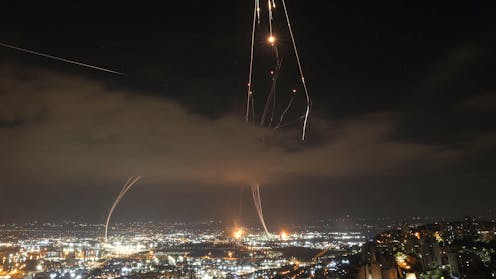
    MIL OSI – Global Reports

  • MIL-OSI USA: NASA, DoD Practice Abort Scenarios Ahead of Artemis II Moon Mission

    Source: NASA

    NASA and the Department of Defense (DoD) teamed up June 11 and 12 to simulate emergency procedures they would use to rescue the Artemis II crew in the event of a launch emergency. The simulations, which took place off the coast of Florida and were supported by launch and flight control teams, are preparing NASA to send four astronauts around the Moon and back next year as part of the agency’s first crewed Artemis mission.
    The team rehearsed procedures they would use to rescue the crew during an abort of NASA’s Orion spacecraft while the SLS (Space Launch System) rocket is still on the launch pad, as well as during ascent to space. A set of test mannequins and a representative version of Orion called the Crew Module Test Article, were used during the tests.
    The launch team at NASA’s Kennedy Space Center in Florida, flight controllers in mission control at the agency’s Johnson Space Center in Houston, as well as the mission management team, all worked together, exercising their integrated procedures for these emergency scenarios.

    “Part of preparing to send humans to the Moon is ensuring our teams are ready for any scenario on launch day,” said Lakiesha Hawkins, NASA’s assistant deputy associate administrator for the Moon to Mars Program, and who also is chair of the mission management team for Artemis II. “We’re getting closer to our bold mission to send four astronauts around the Moon, and our integrated testing helps ensure we’re ready to bring them home in any scenario.”
    The launch pad abort scenario was up first. The teams conducted a normal launch countdown before declaring an abort before the rocket was scheduled to launch. During a real pad emergency, Orion’s launch abort system would propel Orion and its crew a safe distance away and orient it for splashdown before the capsule’s parachutes would then deploy ahead of a safe splashdown off the coast of Florida.

    For the simulated splashdown, the test Orion with mannequins aboard was placed in the water five miles east of Kennedy. Once the launch team made the simulated pad abort call, two Navy helicopters carrying U.S. Air Force pararescuers departed nearby Patrick Space Force Base. The rescuers jumped into the water with unique DoD and NASA rescue equipment to safely approach the spacecraft, retrieve the mannequin crew, and transport them for medical care in the helicopters, just as they would do in the event of an actual pad abort during the Artemis II mission.
    The next day focused on an abort scenario during ascent to space.
    The Artemis recovery team set up another simulation at sea 12 miles east of Kennedy, using the Orion crew module test article and mannequins. With launch and flight control teams supporting, as was the Artemis II crew inside a simulator at Johnson, the rescue team sprung into action after receiving the simulated ascent abort call and began rescue procedures using a C-17 aircraft and U.S. Air Force pararescuers. Upon reaching the capsule, the rescuers jumped from the C-17 with DoD and NASA unique rescue gear. In an actual ascent abort, Orion would separate from the rocket in milliseconds to safely get away prior to deploying parachutes and splashing down.

    Rescue procedures are similar to those used in the Underway Recovery Test conducted off the California coast in March. This demonstration ended with opening the hatch and extracting the mannequins from the capsule, so teams stopped without completing the helicopter transportation that would be used during a real rescue.
    Exercising procedures for extreme scenarios is part of NASA’s work to execute its mission and keep the crew safe. Through the Artemis campaign, NASA will send astronauts to explore the Moon for scientific discovery, economic benefits, and to build the foundation for the first crewed missions to Mars – for the benefit of all. 

    MIL OSI USA News

  • MIL-OSI USA: Governor Newsom pre-deploys safety resources ahead of anticipated demonstrations

    Source: US State of California 2

    Jun 13, 2025

    What you need to know: Governor Newsom ordered the pre-deployment of safety and security resources across California to protect the public’s safety during anticipated demonstrations over the weekend.

    SACRAMENTO – Governor Gavin Newsom today announced he ordered the state to pre-deploy safety and security resources to communities throughout California to aid and support local law enforcement, ahead of anticipated nationwide demonstrations. 

    The resources from the California Highway Patrol and those coordinated through the Governor’s Office of Emergency Services (Cal OES) will help local governments protect the safety of peaceful demonstrators and the public – as well as enforce strict laws against the destruction of property, vandalism, and looting.  

    In the United States, the office of citizen is the most important office we can hold. We respect and protect those who exercise their First Amendment rights when they do so peacefully and respectfully.

    California has zero tolerance for those who plan to take advantage of peaceful demonstrations with violence. We’re pre-deploying resources to maintain safety – and we will prosecute those who break the law.

    Governor Gavin Newsom

    All eight of CHP’s Special Response Teams (SRT) are activated and pre-staged throughout California, a surge of nearly 700 officers. The CHP’s Southern Division remains on tactical alert, which ensures every available uniformed employee is prepared should they be needed. The CHP is coordinating with local law enforcement partners and Cal OES.

    “The California Highway Patrol actively protects and upholds every individual’s First Amendment right to peacefully assemble and express their views,” said CHP Commissioner Sean Duryee. “Our officers stand ready to ensure these rights are exercised safely and lawfully. If anyone attempts to violate the rights of others, destroy property, or obstruct public movement, we will respond swiftly and decisively to enforce the law.”

    Cal OES has coordinated with state and local partners to ensure communities have resources to help keep people safe. At this time, CalOES has not received significant requests from local governments for mutual aid in advance of this coming weekend. CalOES remains in close communication with local government partners and stands ready to coordinate any future requests for mutual aid or support. 

    “Cal OES remains prepared to assist and respond,” said Cal OES Director Nancy Ward. “We’re in close contact with local government partners and stand ready to assist with any requests for support or mutual aid.” 

    Stay peaceful, never resort to violence

    This is a reminder to Californians that they have a right to speak out, but they must remain peaceful. Those who engage in protests and demonstrations must always emphasize partnership, unity and non-violence.

    Recent news

    News What you need to know: Following new reports that the U.S. Department of Health and Human Services has shared Medicaid beneficiary information with the Department of Homeland Security, Governor Newsom slammed the Trump administration for their dangerous abuse of…

    News “A win for all Americans” What you need to know: Standing up for American citizens and the nation’s foundational ban on martial law in peacetime, Governor Newsom and Attorney General Bonta today secured an emergency restraining order blocking President Trump’s…

    News What you need to know: Former secretaries of the Army and Navy and retired four-star admirals and generals filed an amicus brief in support of the Governor’s motion to block the Trump administration’s illegal militarization of downtown Los Angeles. SACRAMENTO –…

    MIL OSI USA News

  • MIL-OSI USA News: President Trump Celebrates U.S. Army’s 250th Birthday with Iconic Grand Parade

    Source: US Whitehouse

    Last night, President Donald J. Trump and the First Lady — along with members of his Administration and military leaders — joined veterans, active-duty troops, wounded warriors, Gold Star Families, and patriotic Americans from all over the country in the nation’s capital to celebrate the 250th birthday of the U.S. Army.

    An iconic grand parade wrapped up a day of festivities celebrating the legacy of the U.S. Army and the generations of heroes who have protected our country with strength, selflessness, and bravery — and looking boldly forward to the next 250 years of patriotism and military achievement.

    As President Trump said in his remarks: “Tonight, we affirm with unwavering certainty that in the years ahead, and in every generation hence, whenever duty calls and whatever danger comes, the American Soldier will be there. No matter the risks, no matter the obstacles, our warriors will charge into battle, they will plunge into the crucible of fire, and they will seize the crown of victory because the United States of America will always have the grace of Almighty God and the iron will of the United States Army.”

    MIL OSI USA News

  • MIL-Evening Report: Millions rally against authoritarianism, while the White House portrays protests as threats – a political scientist explains

    Source: The Conversation (Au and NZ) – By Jeremy Pressman, Professor of Political Science, University of Connecticut

    Protesters parade through the Marigny neighborhood of New Orleans as part of the nationwide No Kings protest against President Donald Trump, on June 14, 2025. Patt Little/Anadolu via Getty Images

    At the end of a week when President Donald Trump sent Marines and the California National Guard to Los Angeles to quell protests, Americans across the country turned out in huge numbers to protest Trump’s attempts to expand his power. In rallies on June 14, 2025, organized under the banner “No Kings,” millions of protesters decried Trump’s immigration roundups, cuts to government programs and what many described as his growing authoritarianism.

    The protests were largely peaceful, with relatively few incidents of violence.

    Protests and the interactions between protesters and government authorities have a long history in the United States. From the Boston Tea Party to the Civil Rights movement, LBGTQ Stonewall uprising, the Tea Party movement and Black Lives Matter, public protest has been a crucial aspect of efforts to advance or protect the rights of citizens.

    But protests can also have other effects.

    In the last few months, large numbers of anti-Trump protesters have come out in the streets across the U.S., on occasions like the April 5 Hands Off protests against safety net budget cuts and government downsizing. Many of those protesters assert they are protecting American democracy.

    The Trump administration has decried these protesters and the concept of protest more generally, with the president recently calling protesters “troublemakers, agitators, insurrectionists.” A few days before the June 14 military parade in Washington, President Donald Trump said of potential protesters: “this is people that hate our country, but they will be met with very heavy force.”

    Trump’s current reaction is reminiscent of his harsh condemnation of the Black Lives Matter protests in the summer of 2020. In 2022, former Secretary of Defense Mark Esper said that Trump had asked about shooting protesters participating in demonstrations after the 2020 shooting of George Floyd.

    As co-director of the Crowd Counting Consortium, which compiles information on each day’s protests in the U.S., I understand that protests sometimes can advance the goals of the protest movement. They also can shape the goals and behavior of federal or state governments and their leaders.

    Opportunity for expressing or suppressing democracy

    Protests are an expression of democracy, bolstered by the right to free speech and “the right of the people peaceably to assemble” in the First Amendment of the U.S. Constitution.

    At the same time, clamping down on protests is one way to rebut challenges to government policies and power.

    For a president intent on the further centralization of executive power, or even establishing a dictatorship, protest suppression provides multiple opportunities and pitfalls.

    Widespread, well-attended demonstrations can represent a mass movement in favor of democracy or other issues as well as serve as an opportunity to expand participation even further. Large events often lead to significant press coverage and plenty of social media posting. The protests may heighten protesters’ emotional connection to the movement and increase fundraising and membership numbers of sponsoring organizations.

    Though it is not an ironclad law, research shows that when at least 3.5% of the total population is involved in a demonstration, protesters usually prevail over their governments. That included the Chilean movement in the 1980s that toppled longtime dictator Augusto Pinochet. Chileans used not only massive demonstrations but also a wide array of creative tactics like a coordinated slowdown of driving and walking, neighbors banging pots outside homes simultaneously, and singing together.

    Protests are rarely only about protesting. Organizers usually seek to involve participants in many other activities, whether that is contacting their elected officials, writing letters to the editor, registering to vote or running a food drive to help vulnerable populations.

    In this way of thinking, participation in a major street protest like No Kings is a gateway into deeper activism.

    Risks and opportunities

    Of course, protest leaders cannot control everyone in or adjacent to the movement.

    Other protesters with a different agenda, or agitators of any sort, can insert themselves into a movement and use confrontational tactics like violence against property or law enforcement.

    In one prominent example from Los Angeles, someone set several self-driving cars on fire. Other Los Angeles examples included some protesters’ throwing things like water bottles at officers or engaging in vandalism. Police officers also use coercive measures such as firing chemical irritants and pepper balls at protesters.

    When leaders want to concentrate executive power and establish an autocracy, where they rule with absolute power, protests against those moves could lead to a mass rejection of the leader’s plans. That is what national protest groups like 50501 and Indivisible are hoping for and why they aimed to turn out millions of people at the No Kings protests on June 14.

    But while the Trump administration faces risks from protests, it also may see opportunities.

    Misrepresenting and quashing dissent

    Protests can serve as a justification for a nascent autocrat to further undermine democratic practices and institutions.

    Take the recent demonstrations in Los Angeles protesting the Trump administration’s immigration raids conducted by Immigration and Customs Enforcement, or ICE.

    Autocrats seek to politicize independent institutions like the armed forces. The Los Angeles protests offered the opportunity for that. Trump sent troops from the California National Guard and Marines to Los Angeles to contain the protests. That domestic deployment of the military is rare but not unheard of in U.S. history.

    And the deployment was ordered against the backdrop of the president’s partisan June 10 speech at a U.S. military base in North Carolina. The military personnel in attendance cheered and applauded many of Trump’s political statements. Both the speech and audience reactions to it appeared to violate the U.S. military norm of nonpartisanship.

    This deployment of military personnel in a U.S. city also dovetails with the expansion of executive power characteristic of autocratic leaders. It is rare that presidents call up the National Guard; the Guard is traditionally under the control of the state governor.

    Yet the White House disregarded that Los Angeles’ mayor and California’s governor both objected to the deployment.

    The state sued the Trump administration over the deployment. The initial court decision sided with California officials, declaring the federal government action “illegal.” The Trump administration has appealed.

    Autocrats seek to spread disinformation. In the case of the Los Angeles protests, the Trump administration’s narrative depicted a chaotic, gang-infested city with violence everywhere. Reports on the ground refuted those characterizations. The protests, mostly peaceful, were confined to a small part of the city, about a 10-block area.

    More generally, a strong executive leader and their supporters often want to quash dissent. In the Los Angeles example, doing that has ranged from the military deployment itself to targeting journalists covering the story to arresting and charging prominent opponents like SEIU President David Huerta or shoving and handcuffing U.S. Sen. Alex Padilla, a California Democrat.

    The contrast on June 14 was striking. In Washington, D.C., Trump reviewed a parade of troops, tanks and planes, leaning into a display of American military power.

    At the same time, from rainy Bethlehem, Pennsylvania, to sweltering Yuma, Arizona, millions of protesters embraced their First Amendment rights to oppose the president. It perfectly illustrated the dynamic driving deep political division today: the executive concentrating power while a sizable segment of the people resist.

    Jeremy Pressman does not work for, consult, own shares in or receive funding from any company or organization that would benefit from this article, and has disclosed no relevant affiliations beyond their academic appointment.

    ref. Millions rally against authoritarianism, while the White House portrays protests as threats – a political scientist explains – https://theconversation.com/millions-rally-against-authoritarianism-while-the-white-house-portrays-protests-as-threats-a-political-scientist-explains-258963

    MIL OSI AnalysisEveningReport.nz

  • MIL-OSI Russia: Israeli army announces new series of airstrikes on Iranian missile sites

    Translation. Region: Russian Federal

    Source: People’s Republic of China in Russian – People’s Republic of China in Russian –

    Source: People’s Republic of China – State Council News

    JERUSALEM, June 15 (Xinhua) — The Israeli Air Force carried out a new round of airstrikes on Iran on Sunday evening, hitting surface-to-surface missile sites in the country’s west, the Israeli military said in a statement.

    It is noted that the strikes were aimed at destroying “dozens” of missile targets.

    On June 13, Israel launched its largest air attack on Iran, striking nuclear facilities in Tehran and elsewhere across the country, killing dozens of Iranian scientists, senior security officials and civilians, prompting the Islamic Republic to retaliate with missiles and drones that killed at least 14 people in Israel.

    Israeli Defense Minister Israel Katz said Sunday that airstrikes would continue, targeting not only nuclear sites but also missile bases, weapons factories, air defense systems and “the regime in Tehran.”

    Israeli Prime Minister Benjamin Netanyahu says the Jewish state is “determined to carry out the mission to eliminate the double threat” from Iran. –0–

    MIL OSI Russia News

  • MIL-OSI United Kingdom: Joint statement between the Prime Minister of the United Kingdom and the Prime Minister of Canada

    Source: United Kingdom – Government Statements

    Press release

    Joint statement between the Prime Minister of the United Kingdom and the Prime Minister of Canada

    This Joint Statement follows the meeting of the Prime Ministers of the United Kingdom and Canada on 15 June 2025.

    Today, Sir Keir Starmer, Prime Minister of the United Kingdom (UK) and Mark Carney, Prime Minister of Canada met in Ottawa to reaffirm the profound friendship and shared values that unite both nations. The Canada-UK partnership, rooted in a common history and enduring people-to-people ties, continues to grow stronger, with a focus on delivering prosperity and security for the working people of Canada and the UK alike.

    The two leaders discussed the many geopolitical challenges currently facing the world, including in the Middle East and tensions in the Indo-Pacific region, and reaffirmed their steadfast support for Ukraine in the face of Russia’s illegal and unjustifiable war of aggression.

    The two leaders underscored the importance of a fair, open and predictable global trading system; reiterated their commitment to a rules-based international order underpinned by respect for sovereignty and territorial integrity; and committed to advancing peace and trans-Atlantic security. They agreed the following joint initiatives aimed at strengthening economic growth and prosperity and enhancing collective security and defence:

    Growth and Innovation Partnership

    Canada and the UK are committed to delivering economic growth for their people. The two Prime Ministers today announced further collaboration on trade, science, technology and innovation. Through their Partnership, Canada and the UK will work together to:

    • Trade: Strengthen trade ties as trusted, reliable partners. This will include expanding trade under the Canada-UK Trade Continuity Agreement. We will establish a new structured UK-Canada Economic and Trade Working Group to deepen our existing trading relationship further, including to address existing market access barriers, to expand existing arrangements into new areas, such as digital trade, and to explore cooperation in the development of critical minerals and sovereign artificial intelligence infrastructure. The working group will report back to both Prime Ministers within six months. Canada will seek to introduce legislation this autumn to ratify the UK’s accession to the Comprehensive and Progressive Trans-Pacific Partnership.

    • Semiconductors: Deliver industrial R&D projects to enhance both nations’ complementary strengths in semiconductors, photonics, emerging materials and chip design. They will deepen connections between the innovation rich semiconductor ecosystems in Canada and the UK to help build resilient supply chains and accelerate breakthroughs in this key sector that is driving economic growth.

    • Quantum: Announce a joint commitment to develop secure, transatlantic communications based on quantum technologies, allowing us to connect our national systems and lay the groundwork to create a truly global, next-generation network, with applications across our financial and telecoms sectors.

    • Digital: Mutually reinforce nation-building digital public infrastructure by co-developing policy levers and standards, and common technology components.

    • Artificial Intelligence: Deepen and explore new collaborations on frontier AI systems to support our national security. This will include a partnership agreement to strengthen existing collaboration on AI safety and security between the Canadian AI Safety Institute and UK AI Security Institute, and new Canadian and UK MOUs with leading Canadian AI firm Cohere. Under the Canadian MOU, Cohere will collaborate with the Canadian AI Safety Institute and develop their commitment to building cutting-edge data centres in Canada. Under the UK MOU, Cohere will expand their UK presence to support the delivery of the UK AI Opportunities Action Plan. Both MOUs reflect ongoing collaboration on the application of AI tools in security and intelligence and are rooted in Cohere’s strong foundations in Canada and ongoing commitment to the UK.

    • Biomanufacturing: Strengthen collaboration to deliver economic growth and be better prepared for future health emergencies, including a joint investment of $14.8 million to support joint biomanufacturing research and development that will grow the talent and skills pipeline in both countries, and to help businesses scale.

    • Civil Nuclear: Develop a world-leading fusion energy collaboration and deepen cooperation on nuclear energy from fission to reduce the influence of Russia on our international fuel supply chains.

    • Critical Minerals: Intensify bilateral cooperation by conducting a strategic mapping exercise to pinpoint key critical minerals, infrastructure, production and processing capacities. They will identify projects for joint investment to support secure and sustainable critical minerals supply chain development and  leverage all available financial tools to mobilize funding and drive production to strengthen our manufacturing and mining sectors.

    Enhanced Defence and Security Partnership

    The two leaders agreed to strengthen cooperation – both bilaterally and through the NATO Alliance and Five Eyes partnership – to safeguard democratic values advance global stability and ensure the safety of our people in an increasingly complex world. To achieve this, they committed to:

    • Ukraine: Further support Ukraine in its self-defence against Russia’s war of aggression. This will include continued support for the Coalition of the Willing and respective efforts to support Ukraine’s domestic defence industrial production. The UK and Canada will continue to work together to support the Air Force Capability Coalition and develop cutting edge aircraft weaponry technology in support of Ukraine.

    • Military Cooperation: Position the Canada-UK defence relationship for further growth across military operations, industrial collaboration, and defence innovation, catalyzed by Canada’s newly announced defence investment trajectory and the UK’s Strategic Defence Review. Canada and the UK will work towards a new permanent arrangement for the long-term and sustainable use of British Army Training Unit Suffield (BATUS) through the “BATUS Future Project”. The Project will deepen the Canada-UK relationship on defence and showcase CFB Suffield as a multi-purpose facility for the development and testing of new equipment and cutting-edge technology which are vital to maintaining our shared security and prosperity.

    • Intelligence: Build on the long history of deep and productive collaboration between our security and intelligence organizations by launching coordinated operational campaigns to combat terrorism and violent extremism, and deepening collaboration on enhanced intelligence collection, including by expanding officer exchange programs.

    • National Security: Tackle evolving state threats together, including sabotage, transnational repression, foreign interference, malicious cyber activity, information manipulation and economic coercion, all of which seeks to undermine our national security and that of our Allies and partners. This will include joint work to invest in civil society organizations actively working to counter digital transnational repression through the Joint Canada-UK Common Good Cyber Fund, a first-of-its-kind multilateral fund aimed at supporting civil society actors at high risk. To kickstart this fund, Canada and the UK are providing $5.7 million in seed funding to the Fund, which will be disbursed over 5 years. They also agreed to strengthen bilateral development and delivery of secure communications products and cutting-edge cryptography and explore new research partnerships to address gaps in AI security and evolve AI models to support national security.

    • Border Security: Strengthen bilateral cooperation to tackle transnational organized criminal organizations engaged in the illicit movement of goods and narcotics, and bolster our response to combat irregular migration, migrant smuggling and human trafficking, including through deeper bilateral information and knowledge exchange.

    Updates to this page

    Published 15 June 2025

    MIL OSI United Kingdom

  • MIL-OSI Canada: Joint Statement by Prime Minister Carney and Prime Minister Starmer

    Source: Government of Canada – Prime Minister

    Today, Mark Carney, Prime Minister of Canada, and Sir Keir Starmer, Prime Minister of the United Kingdom (UK), met in Ottawa to reaffirm the profound friendship and shared values that unite both nations. The Canada-UK partnership, rooted in a common history and enduring people-to-people ties, continues to grow stronger, with a focus on delivering prosperity and security for the working people of Canada and the UK alike.

    The two leaders discussed the many geopolitical challenges currently facing the world, including in the Middle East and tensions in the Indo-Pacific region, and reaffirmed their steadfast support for Ukraine in the face of Russia’s illegal and unjustifiable war of aggression.

    The two leaders underscored the importance of a fair, open and predictable global trading system; reiterated their commitment to a rules-based international order underpinned by respect for sovereignty and territorial integrity; and committed to advancing peace and trans-Atlantic security. They agreed the following joint initiatives aimed at strengthening economic growth and prosperity and enhancing collective security and defence:

    Growth and Innovation Partnership

    Canada and the UK are committed to delivering economic growth for their people. The two Prime Ministers today announced further collaboration on trade, science, technology and innovation. Through their Partnership, Canada and the UK will work together to:

    • Trade: Strengthen trade ties as trusted, reliable partners. This will include expanding trade under the Canada-UK Trade Continuity Agreement. We will establish a new structured UK-Canada Economic and Trade Working Group to deepen our existing trading relationship further, including to address existing market access barriers, to expand existing arrangements into new areas, such as digital trade, and to explore cooperation in the development of critical minerals and sovereign artificial intelligence infrastructure. The working group will report back to both Prime Ministers within six months. Canada will seek to introduce legislation this autumn to ratify the UK’s accession to the Comprehensive and Progressive Trans-Pacific Partnership.
    • Semiconductors: Deliver industrial R&D projects to enhance both nations’ complementary strengths in semiconductors, photonics, emerging materials and chip design. They will deepen connections between the innovation rich semiconductor ecosystems in Canada and the UK to help build resilient supply chains and accelerate breakthroughs in this key sector that is driving economic growth.
    • Quantum: Announce a joint commitment to develop secure, transatlantic communications based on quantum technologies, allowing us to connect our national systems and lay the groundwork to create a truly global, next-generation network, with applications across our financial and telecoms sectors.
    • Digital: Mutually reinforce nation-building digital public infrastructure by co-developing policy levers and standards, and common technology components.
    • Artificial Intelligence: Deepen and explore new collaborations on frontier AI systems to support our national security. This will include a partnership agreement to strengthen existing collaboration on AI safety and security between the Canadian AI Safety Institute and UK AI Security Institute, and new Canadian and UK MOUs with leading Canadian AI firm Cohere. Under the Canadian MOU, Cohere will collaborate with the Canadian AI Safety Institute and develop their commitment to building cutting-edge data centres in Canada. Under the UK MOU, Cohere will expand their UK presence to support the delivery of the UK AI Opportunities Action Plan. Both MOUs reflect ongoing collaboration on the application of AI tools in security and intelligence and are rooted in Cohere’s strong foundations in Canada and ongoing commitment to the UK.
    • Biomanufacturing: Strengthen collaboration to deliver economic growth and be better prepared for future health emergencies, including a joint investment of $14.8 million to support joint biomanufacturing research and development that will grow the talent and skills pipeline in both countries, and to help businesses scale.
    • Civil Nuclear: Develop a world-leading fusion energy collaboration and deepen cooperation on nuclear energy from fission to reduce the influence of Russia on our international fuel supply chains.
    • Critical Minerals: Intensify bilateral cooperation by conducting a strategic mapping exercise to pinpoint key critical minerals, infrastructure, production and processing capacities. They will identify projects for joint investment to support secure and sustainable critical minerals supply chain development and  leverage all available financial tools to mobilize funding and drive production to strengthen our manufacturing and mining sectors.

    Enhanced Defence and Security Partnership

    The two leaders agreed to strengthen cooperation – both bilaterally and through the NATO Alliance and Five Eyes partnership – to safeguard democratic values advance global stability and ensure the safety of our people in an increasingly complex world. To achieve this, they committed to:

    • Ukraine: Further support Ukraine in its self-defence against Russia’s war of aggression. This will include continued support for the Coalition of the Willing and respective efforts to support Ukraine’s domestic defence industrial production. The UK and Canada will continue to work together to support the Air Force Capability Coalition and develop cutting edge aircraft weaponry technology in support of Ukraine.
    • Military Cooperation: Position the Canada-UK defence relationship for further growth across military operations, industrial collaboration, and defence innovation, catalyzed by Canada’s newly announced defence investment trajectory and the UK’s Strategic Defence Review. Canada and the UK will work towards a new permanent arrangement for the long-term and sustainable use of British Army Training Unit Suffield (BATUS) through the “BATUS Future Project”. The Project will deepen the Canada-UK relationship on defence and showcase CFB Suffield as a multi-purpose facility for the development and testing of new equipment and cutting-edge technology which are vital to maintaining our shared security and prosperity.
    • Intelligence: Build on the long history of deep and productive collaboration between our security and intelligence organizations by launching coordinated operational campaigns to combat terrorism and violent extremism, and deepening collaboration on enhanced intelligence collection, including by expanding officer exchange programs.
    • National Security: Tackle evolving state threats together, including sabotage, transnational repression, foreign interference, malicious cyber activity, information manipulation and economic coercion, all of which seeks to undermine our national security and that of our Allies and partners. This will include joint work to invest in civil society organizations actively working to counter digital transnational repression through the Joint Canada-UK Common Good Cyber Fund, a first-of-its-kind multilateral fund aimed at supporting civil society actors at high risk. To kickstart this fund, Canada and the UK are providing $5.7 million in seed funding to the Fund, which will be disbursed over 5 years. They also agreed to strengthen bilateral development and delivery of secure communications products and cutting-edge cryptography and explore new research partnerships to address gaps in AI security and evolve AI models to support national security.
    • Border Security: Strengthen bilateral cooperation to tackle transnational organized criminal organizations engaged in the illicit movement of goods and narcotics, and bolster our response to combat irregular migration, migrant smuggling and human trafficking, including through deeper bilateral information and knowledge exchange.

    MIL OSI Canada News

  • MIL-OSI Russia: Iran Launches New Missile Attack on Israel

    Translation. Region: Russian Federal

    Source: People’s Republic of China in Russian – People’s Republic of China in Russian –

    Source: People’s Republic of China – State Council News

    JERUSALEM, June 15 (Xinhua) — Iran launched a new missile attack on Israel on Sunday, triggering air raid sirens across the Jewish state, the Israel Defense Forces (IDF) said, sending millions of people running for cover.

    There have been no reports of casualties or damage yet.

    The IDF said “several” rockets were fired from Iranian territory toward Israel, most of which were intercepted.

    “There were no reports of any projectiles falling,” the statement said.

    The attack began at around 4pm local time /1300 GMT/, marking the first Iranian attack in daylight since Israel’s surprise strikes on the Islamic republic on June 13 triggered the current escalation.

    The body of another victim was pulled from the rubble of a building hit by a rocket overnight on Sunday, police said, and the search continues for three other people still missing.

    The death toll from Iranian attacks since June 13 has reached 14, according to Israeli state television Kan. –0–

    MIL OSI Russia News

  • MIL-OSI Global: Millions rally against authoritarianism, while the White House portrays protests as threats – a political scientist explains

    Source: The Conversation – USA – By Jeremy Pressman, Professor of Political Science, University of Connecticut

    Protesters parade through the Marigny neighborhood of New Orleans as part of the nationwide No Kings protest against President Donald Trump, on June 14, 2025. Patt Little/Anadolu via Getty Images

    At the end of a week when President Donald Trump sent Marines and the California National Guard to Los Angeles to quell protests, Americans across the country turned out in huge numbers to protest Trump’s attempts to expand his power. In rallies on June 14, 2025, organized under the banner “No Kings,” millions of protesters decried Trump’s immigration roundups, cuts to government programs and what many described as his growing authoritarianism.

    The protests were largely peaceful, with relatively few incidents of violence.

    Protests and the interactions between protesters and government authorities have a long history in the United States. From the Boston Tea Party to the Civil Rights movement, LBGTQ Stonewall uprising, the Tea Party movement and Black Lives Matter, public protest has been a crucial aspect of efforts to advance or protect the rights of citizens.

    But protests can also have other effects.

    In the last few months, large numbers of anti-Trump protesters have come out in the streets across the U.S., on occasions like the April 5 Hands Off protests against safety net budget cuts and government downsizing. Many of those protesters assert they are protecting American democracy.

    The Trump administration has decried these protesters and the concept of protest more generally, with the president recently calling protesters “troublemakers, agitators, insurrectionists.” A few days before the June 14 military parade in Washington, President Donald Trump said of potential protesters: “this is people that hate our country, but they will be met with very heavy force.”

    Trump’s current reaction is reminiscent of his harsh condemnation of the Black Lives Matter protests in the summer of 2020. In 2022, former Secretary of Defense Mark Esper said that Trump had asked about shooting protesters participating in demonstrations after the 2020 shooting of George Floyd.

    As co-director of the Crowd Counting Consortium, which compiles information on each day’s protests in the U.S., I understand that protests sometimes can advance the goals of the protest movement. They also can shape the goals and behavior of federal or state governments and their leaders.

    Opportunity for expressing or suppressing democracy

    Protests are an expression of democracy, bolstered by the right to free speech and “the right of the people peaceably to assemble” in the First Amendment of the U.S. Constitution.

    At the same time, clamping down on protests is one way to rebut challenges to government policies and power.

    For a president intent on the further centralization of executive power, or even establishing a dictatorship, protest suppression provides multiple opportunities and pitfalls.

    Widespread, well-attended demonstrations can represent a mass movement in favor of democracy or other issues as well as serve as an opportunity to expand participation even further. Large events often lead to significant press coverage and plenty of social media posting. The protests may heighten protesters’ emotional connection to the movement and increase fundraising and membership numbers of sponsoring organizations.

    Though it is not an ironclad law, research shows that when at least 3.5% of the total population is involved in a demonstration, protesters usually prevail over their governments. That included the Chilean movement in the 1980s that toppled longtime dictator Augusto Pinochet. Chileans used not only massive demonstrations but also a wide array of creative tactics like a coordinated slowdown of driving and walking, neighbors banging pots outside homes simultaneously, and singing together.

    Protests are rarely only about protesting. Organizers usually seek to involve participants in many other activities, whether that is contacting their elected officials, writing letters to the editor, registering to vote or running a food drive to help vulnerable populations.

    In this way of thinking, participation in a major street protest like No Kings is a gateway into deeper activism.

    Risks and opportunities

    Of course, protest leaders cannot control everyone in or adjacent to the movement.

    Other protesters with a different agenda, or agitators of any sort, can insert themselves into a movement and use confrontational tactics like violence against property or law enforcement.

    In one prominent example from Los Angeles, someone set several self-driving cars on fire. Other Los Angeles examples included some protesters’ throwing things like water bottles at officers or engaging in vandalism. Police officers also use coercive measures such as firing chemical irritants and pepper balls at protesters.

    When leaders want to concentrate executive power and establish an autocracy, where they rule with absolute power, protests against those moves could lead to a mass rejection of the leader’s plans. That is what national protest groups like 50501 and Indivisible are hoping for and why they aimed to turn out millions of people at the No Kings protests on June 14.

    But while the Trump administration faces risks from protests, it also may see opportunities.

    Misrepresenting and quashing dissent

    Protests can serve as a justification for a nascent autocrat to further undermine democratic practices and institutions.

    Take the recent demonstrations in Los Angeles protesting the Trump administration’s immigration raids conducted by Immigration and Customs Enforcement, or ICE.

    Autocrats seek to politicize independent institutions like the armed forces. The Los Angeles protests offered the opportunity for that. Trump sent troops from the California National Guard and Marines to Los Angeles to contain the protests. That domestic deployment of the military is rare but not unheard of in U.S. history.

    And the deployment was ordered against the backdrop of the president’s partisan June 10 speech at a U.S. military base in North Carolina. The military personnel in attendance cheered and applauded many of Trump’s political statements. Both the speech and audience reactions to it appeared to violate the U.S. military norm of nonpartisanship.

    This deployment of military personnel in a U.S. city also dovetails with the expansion of executive power characteristic of autocratic leaders. It is rare that presidents call up the National Guard; the Guard is traditionally under the control of the state governor.

    Yet the White House disregarded that Los Angeles’ mayor and California’s governor both objected to the deployment.

    The state sued the Trump administration over the deployment. The initial court decision sided with California officials, declaring the federal government action “illegal.” The Trump administration has appealed.

    Autocrats seek to spread disinformation. In the case of the Los Angeles protests, the Trump administration’s narrative depicted a chaotic, gang-infested city with violence everywhere. Reports on the ground refuted those characterizations. The protests, mostly peaceful, were confined to a small part of the city, about a 10-block area.

    More generally, a strong executive leader and their supporters often want to quash dissent. In the Los Angeles example, doing that has ranged from the military deployment itself to targeting journalists covering the story to arresting and charging prominent opponents like SEIU President David Huerta or shoving and handcuffing U.S. Sen. Alex Padilla, a California Democrat.

    The contrast on June 14 was striking. In Washington, D.C., Trump reviewed a parade of troops, tanks and planes, leaning into a display of American military power.

    At the same time, from rainy Bethlehem, Pennsylvania, to sweltering Yuma, Arizona, millions of protesters embraced their First Amendment rights to oppose the president. It perfectly illustrated the dynamic driving deep political division today: the executive concentrating power while a sizable segment of the people resist.

    Jeremy Pressman does not work for, consult, own shares in or receive funding from any company or organization that would benefit from this article, and has disclosed no relevant affiliations beyond their academic appointment.

    ref. Millions rally against authoritarianism, while the White House portrays protests as threats – a political scientist explains – https://theconversation.com/millions-rally-against-authoritarianism-while-the-white-house-portrays-protests-as-threats-a-political-scientist-explains-258963

    MIL OSI – Global Reports