Category: Politics

  • MIL-OSI USA: Durbin Questions Witnesses In Judiciary Subcommittee Hearing On Censorship

    US Senate News:

    Source: United States Senator for Illinois Dick Durbin

    March 25, 2025

    Durbin questions a majority witness on whether the January 6 insurrection was protected free speech; highlights the Trump Administration’s assault on the First Amendment

    WASHINGTON – U.S. Senate Democratic Whip Dick Durbin (D-IL), Ranking Member of the Senate Judiciary Committee, today questioned witnesses during the Senate Judiciary Subcommittee on the Constitution hearing entitled “The Censorship Industrial Complex.” 

    Durbin began by asking Benjamin Weingarten, a Commentator and Senior Contributor to The Federalist, about the January 6 insurrection at the Capitol. Mr. Weingarten has written about the existence of a so-called Censorship Industrial Complex that he believes has been directed by the Biden Administration. As part of this, Weingarten has stated, “the Capitol riot fueled the war on wrongthink” and that “[c]lemency for Capitol rioters, perhaps above all other opening actions [by the Trump Administration], should represent the start of the end of that war.”

    “Do you think the January 6 riot at the Capitol was protected free speech?” Durbin asked.

    Mr. Weingarten responded, “I think to the extent there was peaceful protest, that is free speech, and when it bleeds into violence to action, that’s when it certainly crosses a line.”

    Durbin responded, “You believe that some of the individuals who received full and unconditional pardons by the President of the United States had in fact crossed the line and were guilty of criminal conduct?”

    Mr. Weingarten stated that “some people [on January 6] committed crimes.”

    “They certainly did [commit crimes]—140 policemen were assaulted by these rioters. I’m on the policemen’s side and I hope you are too,” said Durbin.

    Durbin then asked about Mr. Weingarten’s “whole-of-society war” rhetoric and what it means. Mr. Weingarten said it’s when “government is working hand-in-hand with civil society to achieve some sort of outcome.”

    “Do you think that’s inherently wrong or insidious?” Durbin asked.

    Mr. Weingarten responded, “On its face, it’s potentially chilling when you have government and civil society working hand-in-glove because that blurring of the line between civil society and the state can cross into potentially draconian methods and outcomes.”

    Durbin then asked about whether Mr. Weingarten’s definition of “whole-of-society-war” is in line with the former President George W. Bush’s actions following 9/11.

    Durbin then asked Dr. Mary Anne Franks, a Professor at George Washington University Law School, about the Trump Administration’s attacks on law firms. The Trump Administration has recently targeted several law firms for their association with the President’s perceived enemies, including Perkins Coie and Paul Weiss. Reportedly, the Administration has created a list of more than a dozen firms that it may target.

    “I think this attack on law firms for representing unpopular clients—unpopular with this Administration—is one of the most dangerous developments I’ve seen and the violation of basic free speech… What do you think about the future of legal representation at these law firms, at least one of them has reached a settlement with the Trump Administration?” Durbin asked.

    Dr. Franks responded, “I very much share your alarm about those actions because as you mentioned, access to the courts is a very key principle of our freedoms, and to threaten law firms that are trying to do what all of us should rely on which is to defend people’s rights in court, is extremely chilling.”

    Durbin concluded by asking Gabe Rottman, Vice President of Policy at the Reporters Committee for Freedom of the Press (RCFP), about the Trump Administration’s views on freedom of the press. The Trump White House recently refused to allow the Associated Press (AP) in the White House press pool for using “Gulf of Mexico” instead of “Gulf of America.”

    “You use the term ‘Gulf of Mexico’ [and] you’re not welcome in the White House,” Durbin said.

    Mr. Rottman responded, “it’s explicit viewpoint discrimination that underpins retaliatory actions by the White House and that makes it a First Amendment violation.”

    Video of Durbin’s questions in Committee is available here.

    Audio of Durbin’s questions in Committee is available here.

    Footage of Durbin’s questions in Committee is available here for TV Stations.

    -30-

    MIL OSI USA News

  • MIL-OSI USA: Ranking Members Padilla, Morelle Secure Reversal on Damaging Plan to Close Federal Buildings With Congressional Offices

    US Senate News:

    Source: United States Senator Alex Padilla (D-Calif.)

    Ranking Members Padilla, Morelle Secure Reversal on Damaging Plan to Close Federal Buildings With Congressional Offices

    Padilla and Morelle: “We are relieved that GSA and DOGE have heeded our strong objections and reversed course”
    WASHINGTON, D.C. — Today, U.S. Senator Alex Padilla (D-Calif.), Ranking Member of the Senate Committee on Rules and Administration, and U.S. Representative Joe Morelle (N.Y.-25), Ranking Member of the Committee on House Administration, followed up on their March 7 letter to the General Services Administration (GSA), welcoming its abandonment of joint efforts with the Department of Government Efficiency (DOGE) to cancel leases or sell federal buildings that host Congressional or other Legislative Branch offices. The Members continued to press GSA on their reckless efforts to close or sell off hundreds of other federal facilities at the direction of President Trump and Elon Musk and the indiscriminate firings of GSA Congressional support and regional management staff.
    “Members of Congress utilize offices across the country to carry out their constitutional duties within their home states and districts,” wrote the lawmakers. “We reiterate that closing facilities that host Congressional offices and forcing them to relocate would directly interfere with Congress’s constitutional duties, pose significant security risks, and cause disruption to essential constituent services. We are relieved that GSA and DOGE have heeded our strong objections and reversed course.”
    Trump’s GSA failed to respond to the lawmakers’ March 7 letter and still refuses to be transparent or accountable to Congressional oversight over these potential plans to cancel leases and sell off federally owned facilities.
    “This lack of responsiveness to Congress is unacceptable. GSA is funded and overseen by Congress and is accountable to the American people and their duly elected representatives in Congress,” wrote the lawmakers. “A lack of transparency, combined with uncoordinated and chaotic policy announcements and execution, is the opposite of ‘government efficiency.’”
    The lawmakers condemned the sweeping firings of GSA staff for entire regions and of GSA’s Congressional Support Program staff, who are critical to establish and maintain in-state Congressional offices. While the plans to sell off federally owned buildings in the Legislative Branch have been called off, these offices need a strong workforce to maintain essential operations.
    “DOGE and GSA have continued their indiscriminate firing of GSA Congressional Support staff and regional building management staff, leaving dozens of federal buildings with Congressional tenants without adequate support,” continued the lawmakers. “DOGE and GSA should similarly reverse course on these untargeted and short-sighted staff reductions that risk disrupting congressional operations.”
    Full text of the letter is available here and below:
    Dear Acting Administrator Ehikian:
    We write to follow up to our March 7 letter regarding the General Services Administration’s (GSA) ongoing efforts to cancel leases and sell off federally owned facilities in concert with the U.S. Department of Government Efficiency (DOGE). We remain particularly concerned with the unacceptable impacts that would result from the unilateral forced relocations of Congressional offices or other Legislative Branch agencies.
    Unfortunately, GSA has failed to respond in a timely way. This lack of responsiveness to Congress is unacceptable. GSA is funded and overseen by Congress and is accountable to the American people and their duly elected representatives in Congress. A lack of transparency, combined with uncoordinated and chaotic policy announcements and execution, is the opposite of “government efficiency.”
    Nevertheless, we are encouraged by reports and information that we have received through other channels that GSA has stopped its misguided plans to cancel leases or divest buildings that host Legislative Branch agencies and offices. We are also pleased that GSA and DOGE are no longer pursuing lease terminations or taking steps to divest buildings that host Members of Congress offices in their home states and districts. These reports were confirmed by GSA’s press release issued Friday afternoon on March 21 with a reduced list of buildings identified for divestment.
    As noted in our March 7 letter, Members of Congress utilize offices across the country to carry out their constitutional duties within their home states and districts. We reiterate that closing facilities that host Congressional offices and forcing them to relocate would directly interfere with Congress’s constitutional duties, pose significant security risks, and cause disruption to essential constituent services. We are relieved that GSA and DOGE have heeded our strong objections and reversed course.
    However, DOGE and GSA have continued their indiscriminate firing of GSA Congressional Support staff and regional building management staff, leaving dozens of federal buildings with Congressional tenants without adequate support. DOGE and GSA should similarly reverse course on these untargeted and short-sighted staff reductions that risk disrupting congressional operations.
    We all share the stated goals of ensuring efficient use of federal office space and being responsible stewards of taxpayer funds. GSA should consult with Legislative Branch tenants and reach appropriate agreements that ensure safety, security, and avoid disrupting operations. If DOGE and GSA again consider unilaterally terminating leases or divesting buildings that host Congressional or other Legislative Branch offices, you should immediately notify Congressional leadership, the Senate and House Sergeants-at-Arms, the Senate Rules Committee, and the Committee on House Administration on a bipartisan basis.
    Thank you for your continued attention to these important considerations when it comes to Legislative Branch use of GSA facilities.
    Sincerely,

    MIL OSI USA News

  • MIL-OSI United Nations: 25 March 2025 News release New WHO guidance calls for urgent transformation of mental health policies

    Source: World Health Organisation

    The World Health Organization (WHO) today launched new guidance to help all countries reform and strengthen mental health policies and systems. Mental health services worldwide remain underfunded, with major gaps in access and quality. In some countries, up to 90% of people with severe mental health conditions receive no care at all, while many existing services rely on outdated institutional models that fail to meet international human rights standards.

    The guidance provides a clear framework to transform mental health services in line with the latest evidence and international human rights standards, ensuring quality care is accessible to all.

    “Despite rising demand, quality mental health services remain out of reach for many people,” said Dr Tedros Adhanom Ghebreyesus, WHO Director-General. “This new guidance gives all governments the tools to promote and protect mental health and build systems that serve everyone.”

    A blueprint for mental health care transformation

    While effective prevention and treatment interventions exist, most people living with mental health conditions do not have access to these. The new WHO guidance sets out concrete actions to help countries close these gaps and ensure mental health is promoted and protected, with a focus on:

    • protecting and upholding human rights, ensuring mental health policies and services are aligned with international human rights standards;
    • promoting holistic care with an emphasis on lifestyle and physical health, psychological, social, and economic interventions;
    • addressing social and economic factors that shape and affect mental health including employment, housing and education;
    • implementing prevention strategies and promote population-wide mental health and well-being; and
    • ensuring people with lived experience are empowered to participate in policy planning and design to ensure mental health policies and services are responsive to their needs.

    The guidance identifies five key policy areas requiring urgent reform: leadership and governance, service organization, workforce development, person-centred interventions, and addressing social and structural determinants of mental health.

    A tailored approach to strengthening mental health systems

    The WHO guidance serves as a critical tool for governments, policymakers, and stakeholders working to strengthen mental health systems and improve access to mental health care.

    By offering a menu of policy directives, strategies and actions to guide reform efforts, the guidance supports policy makers to prioritize and tailor policies to their specific national context, in line with their available resources and operational structures.

    “This new WHO guidance provides practical strategies for countries to build inclusive, responsive and resilient mental health systems. Designed to be flexible, it allows all countries – whether low- middle- or high-income – to adapt their approach to mental health care based on national context, needs, and priorities,” said Dr Michelle Funk, Unit Head, Policy, Law and Human Rights in the WHO Department for Mental Health and Substance Abuse.

    Developing and implementing the guidance

    The guidance was developed in consultation with global experts, policymakers and individuals with lived experience. The policy guidance also builds on the resources, guidance and tools developed under the WHO QualityRights initiative, aiming to promote a person-centred, recovery-oriented and rights-based approach to mental health. WHO will support countries in implementing the guidance through technical assistance and capacity-building initiatives.

    MIL OSI United Nations News

  • MIL-OSI USA: Cornyn, Cruz File Amicus Brief Urging SCOTUS to Hear Case Challenging Texas’ Lobbying Law

    US Senate News:

    Source: United States Senator for Texas John Cornyn
    WASHINGTON – U.S. Senators John Cornyn (R-TX) and Ted Cruz (R-TX) filed an amicus brief encouraging the U.S. Supreme Court (SCOTUS) to take up Sullivan v. Texas Ethics Commission, which is a case on appeal from the Supreme Court of Texas by petitioner Michael Quinn Sullivan to resolve concerns over potential First Amendment violations in Texas’ lobbying registration law. A copy of the brief can be found here.
    “The American people should be able to engage in protected political speech without government restrictions, unless such limits are constitutionally permissible,” wrote the Sens.
    “Does the First Amendment permit the government to require ordinary citizens to register and pay a fee to communicate with their government representatives? With the current split of authority, the answer depends on which court hears the case,” they continued.  
    “This case is an apt vehicle for the Court to clarify the level of scrutiny that should apply to lobbying restrictions that impact political speech. This clarity will ensure any restriction on political speech is constitutionally permissible,” they concluded.
    An amicus brief, or “friend of the court” brief, can be filed in order to address concerns and advise the Court on a matter of law that directly affects the case at hand.
    Background:
    The State of Texas has a lobbying registration law, which requires anyone who tries to influence legislation or administration action by communicating directly with a member of the legislative or executive branch to register and pay a fee. In 2012, the Texas Ethics Commission fined Michael Quinn Sullivan for failing to register as a lobbyist—and pay the fee—before sending emails to legislators.
    Sullivan challenged the lobbying statute on First Amendment grounds, first to the Texas Ethics Commission, which rejected his arguments and imposed the fine, then to state district court, which affirmed, and then to the state court of appeals, which also affirmed. He appealed to the Texas Supreme Court, which denied review, and is now seeking review in the Supreme Court. There is currently a circuit split about the level of scrutiny to apply to these requirements.
    In this amicus for cert, the Senators are supporting the Supreme Court taking up the question of whether or not the Texas lobbying law is unconstitutional the way it is currently written. SCOTUS hasn’t addressed lobbying laws since the tiers of scrutiny were established years ago, so it’s appropriate for the Court to revisit this question. Texas law doesn’t distinguish between concerned citizens and paid lobbyists, but other circuits have upheld lobbying laws under a strict scrutiny analysis.

    MIL OSI USA News

  • MIL-OSI USA: Cornyn, Padilla Bill to Safeguard U.S. Research Against Foreign Adversaries Passes House

    US Senate News:

    Source: United States Senator for Texas John Cornyn
    WASHINGTON – U.S. Senators John Cornyn (R-TX) and Alex Padilla (D-CA) released the following statements after their U.S. Research Protection Act, which would shield American research from malign foreign influence by updating language in the CHIPS and Science Act to include additional restrictions against programs sponsored by countries of concern, passed the U.S. House of Representatives:
    “In a world where competition turns into hostility all too often, we must do everything in our power to safeguard American ingenuity against bad actor nations,” said Sen. Cornyn. “This legislation will place even more restrictions on academic programs involving countries of concern to ensure American scientific research is protected.”
    “The bipartisan CHIPS and Science Act included important provisions to bolster our research security, and we must continue to build upon this progress,” said Sen. Padilla. “This legislation will provide much-needed clarity for federal agencies and academic institutions to better safeguard national security while preserving research collaboration and international partnerships crucial to the strength of America’s innovation economy. I am glad to see the House pass our bipartisan bill, and I look forward to working with Senator Cornyn and my colleagues to secure its swift passage in the Senate.”
    U.S. Representatives Mike Kennedy (UT-03) and Haley Stevens (MI-11) led the legislation in the House.
    Background:
    Malign Foreign Talent Programs are sponsored by countries of concern like Russia, China, Iran, and North Korea to obtain American scientific research and technology by incentivizing or coercing American researchers to act on their behalf. The CHIPS and Science Act included provisions to prohibit the U.S. government and academic institutions from partnering with such programs.
    However, the law’s current definition of a Malign Foreign Talent Program only includes programs that “directly provide” incentives and benefits to researchers to participate, leaving out other methods to provide indirect benefits to researchers to induce their cooperation. This legislation would broaden the definition to include “indirect benefits,” ensuring foreign adversarial nations cannot exploit this loophole to evade U.S. research restrictions.

    MIL OSI USA News

  • MIL-OSI USA: Hagerty Secures Commitment from Trump’s Nominee on Ensuring Panama Cooperates to Stop Illicit Drug Trafficking to the U.S.

    US Senate News:

    Source: United States Senator for Tennessee Bill Hagerty
    WASHINGTON—United States Senator Bill Hagerty (R-TN), a member of the Senate Foreign Relations Committee and former U.S. Ambassador to Japan, today at a hearing received a commitment from Kevin Cabrera, nominee to be U.S. Ambassador to Panama, to use all tools at his disposal to ensure Panama cooperates with the United States on reducing the flow of illicit drug trafficking into America.
    “Transnational criminal organizations, from countries like Colombia and Mexico, have long used Panama to smuggle illicit drugs, and they’ve done it to the tune of billions of dollars,” Hagerty said. “Last year alone, the State Department estimates that up to 40 percent of cocaine that was produced in Colombia had transited through the exclusive economic zones of Panama.”
    “Mr. Cabrera, do you commit to use all of the tools at your disposal to ensure that the Panamanian government continues to collaborate with the United States [in taking] strong actions against these criminal organizations and stopping the flow of illicit drugs into America?” Hagerty asked.
    “[Panama is] a great ally in this and…[I look] forward to continuing that and using all the tools that are at our disposal to continue to [make] sure that we stop as many metric tons of drugs coming through that border through the Darién Gap,” said Cabrera. “It goes hand-in-hand with migration.”

    *Click the photo above or here to watch*

    MIL OSI USA News

  • MIL-OSI Submissions: Australia – Budget support for cost of living, health and vulnerable communities welcomed – AMES

    Source: AMES

    Migrant and refugee settlement agency AMES Australia has welcomed measures announced by the federal government in its 2025 budget which provide cost of living relief, support for diverse communities while promoting social cohesion and maintaining Australia’s commitment to resettling refugees.

    CEO of migrant and refugee settlement agency AMES Australia also welcomed budget measures that supported access to healthcare, especially for women, as well as cost of living relief for vulnerable families and communities.

    “We welcome the measures in the budget that support migrants and refugees and their communities, who are among the most vulnerable to cost of living pressures and barriers to accessing healthcare,” Ms Scarth said.

    “The government’s investment in extending bulk billing and keeping medicines affordable will be welcomed by the communities we work with and support.

    “The modest tax cuts delivering $268 a year to families and the extension of power bill relief, saving households $150 a year, will also have a positive impact,” she said.

    Ms Scarth said the health measures in the budget would be felt in diverse communities.

    “We know that people from diverse communities can struggle to access healthcare, so the $8.5 billion boost to Medicare aimed at extending bulk-billing target of nine out of ten GP visits by 2030 is welcome,” Ms Scarth said.

    “Also welcome is the $650 million in the budget for urgent care clinics and the $573 million for women’s health. The measure to limit the costs of prescriptions on the Pharmaceutical Benefits Scheme to no more than $25 will help many families.

    “The women’s health measures are particularly important because they focus on areas such as contraception, endometriosis and menopause care,” she said.

    AMES Australia also welcomed the $178.4 million investment in the budget over five years to strengthen social cohesion, including $10 million for independent multicultural media and $44.8 million in grants for community projects.

    The budget also commits $21.4 million to strengthen support for victim-survivors of sexual violence, which builds on existing programs aimed at improving access to critical legal and non-legal support for victim-survivors.


    And it allocates funds to maintain Australia’s world-leading refugee programs.


    “The budget maintains Australia’s commitment to settle 20,000 refugees each year at a time when many countries are closing their borders to those fleeing war or persecution, and while an increasing number of global conflicts are driving record human displacement,” Ms Scarth said.


    “Overall, the budget is inclusive. It recognises that when people feel they are valued members of society, there is a dividend in stronger social cohesion and a stronger society,” she said.  

    MIL OSI – Submitted News

  • MIL-OSI USA: Ranking Member Welch Debunks so-called “Censorship Industrial Complex” in First Judiciary Subcommittee on the Constitution Hearing 

    US Senate News:

    Source: United States Senator Peter Welch (D-Vermont)
    Welch: “Although we agree that government should not infringe on free speech, I don’t believe that’s what has been happening here.” 
    WASHINGTON, D.C. — Today, U.S. Senator Peter Welch (D-Vt.), Ranking Member of the Judiciary Subcommittee on the Constitution, addressed far-right false claims of a vast censorship conspiracy during a Subcommittee hearing titled “The Censorship Industrial Complex.” Instead of focusing the first Subcommittee hearing on actual and proven instances of censorship by the Trump Administration against journalists, political adversaries, and critics, the Majority focused the first Subcommittee hearing on an alleged—and unproven—censorship enterprise against conservatives.  
    “On this question of the ‘censorship industrial complex,’ the basic allegation here, as I understand it, is that there is government-facilitated interference with free speech. And we’re going to hear from the witnesses on that. But the underlying premise of this, as I understand it, is the taxpayers are essentially footing the bill for this. My view is that facts don’t support that allegation,” said Senator Welch. “Although we agree that government should not infringe on free speech—I am with you on that and with all of my colleagues here—I don’t believe that’s what has been happening here.” 
    Watch the hearing below: 
    Read Senator Welch’s opening remarks as delivered here. 
    Witnesses for the Democratic Minority included Professor Mary Anne Franks, and Gabe Rottman. Dr. Franks is the Eugene L. and Barbara A. Bernard Professor in Intellectual Property, Technology, and Civil Rights Law at George Washington University School of Law, and an expert in the First Amendment and technology. Mr. Rottman is the Vice President of Policy at the Reporters Committee for Freedom of the Press. In this role he works at the intersection of press freedom and technology.   
    Witnesses for the Majority included Mollie Hemingway, senior editor for The Federalist, Jonathan Turley, conservative legal scholar, and Benjamin Weingarten, a Senior Contributor for The Federalist.   
    Read excerpts of Senator Welch’s questioning below: 
    Sen. Welch: Mr. Rottman, you’ve got an incredible job because the press is on the front lines, and Ms. Hemingway, you know that as well. What do you see as problematic for the press right now in the current administration, if anything?  
    Mr. Rottman: So, as I touched on both in the written testimony and just a few minutes ago, one of the key concepts in First Amendment jurisprudence is this notion that the government cannot use its vast authority to pick and choose sides in public debate. And the legal term for that is viewpoint discrimination. The various examples that I’ve pointed out in my testimony involve viewpoint discrimination. The AP case at the White House, right? The White House has said explicitly it is taking these actions because of the AP’s editorial choice to continue to use the term ‘Gulf of Mexico’— 
    Sen. Welch: Let me interrupt for just a second. The government can have a viewpoint, so obviously President Trump has a significantly different viewpoint than President Biden had. Is there any reservation on their ability to express what their viewpoint is?   
    Mr. Rottman: No, until the government uses its power to try and enforce that viewpoint on others.  

    MIL OSI USA News

  • MIL-OSI USA: Senator Reverend Warnock Votes “No” on Dr. Oz Nomination, Raises Consequences of Medicaid Cuts

    US Senate News:

    Source: United States Senator Reverend Raphael Warnock – Georgia

    Senator Reverend Warnock Votes “No” on Dr. Oz Nomination, Raises Consequences of Medicaid Cuts

    Today, during a Senate Finance committee vote, Senator Reverend Warnock voted “NO” on advancing the nomination of Dr. Mehmet Oz for full Senate consideration to lead the Centers for Medicare & Medicaid Services (CMS)
    If confirmed, Dr. Oz expressed no indication he would defend Medicaid from Washington Republicans who are threatening major slashes in funding for health care
    In Georgia, Medicaid covers two in five children and one in ten veterans
    Senator Reverend Warnock believes access to health care for working or low-income Georgians is too important to gamble with nominees unable to unequivocally defend Medicare and Medicaid from partisan attacks 

    Watch Senator Reverend Warnock’s remarks HERE
    Washington, D.C. – Today, during a Senate Finance Committee hearing, U.S. Senator Reverend Raphael Warnock (D-GA) announced he was voting “no” to advance the nomination of Dr. Mehmet Oz to become the next Administrator for the Centers for Medicare & Medicaid Services (CMS). The Senator cited grave concerns that Dr. Oz would not defend Medicaid, which covers two in five Georgia children and one in ten Georgia veterans, from Washington Republicans looking to make devastating cuts to the program.
    “Let me be really clear that I’m voting against Dr. Oz. I think he is knowledgeable, certainly more knowledgeable than Secretary Kennedy about the program that he’s tasked to lead, but we’ve got to take seriously the needs of millions of Americans who will lose their health care. And so, I’m voting no for his nomination, and I urge my colleagues to do the same,”said Senator Reverend Warnock. 
    In his remarks during the committee hearing, Senator Warnock highlighted how Washington Republicans are proposing to gut almost $900 billion from Medicaid to give millionaires and billionaires an additional tax cut, potentially kicking millions of Americans off of their health care insurance.
    “Here’s the deal, Republicans need a whole lot of money to pay for their tax cuts for the wealthiest among us, and they know if you give people enough bureaucratic hoops to jump through, then enough working people will get tripped up by the red tape and lose their health care. And so that’s the plan, less money spent on a working mom’s cancer treatment because she didn’t fill out the right form every month by the right deadline, so you have more money for billionaire tax cuts. We know this because I live in Georgia. Georgia is the only state with work reporting requirements in its Medicaid program, and all this program has to show for itself five years later, is 6,500 people enrolled. We’ve got nearly 600,000 Georgians who are in the Medicaid gap. The governor’s program has enrolled a whopping 6,500 people,” said Senator Reverend Warnock.
    Interested media can read a transcript of the senator’s remarks below and watch them HERE.
    “Before entering the Senate I was fighting for my state to expand Medicaid, which would give an estimated 600,000 Georgians access to affordable health care. But here we are, 15 years almost to the day of the Affordable Care Act being signed into law, and still Georgia has not expanded Medicaid. Georgia continues to deny its citizens access to this program that’s being supported by the tax paying Georgians. To make matters worse, now, Washington Republicans have proposed to gut almost $900 billion from Medicaid to give millionaires and billionaires an additional tax cut, potentially kicking millions of Americans off of their health care insurance. Medicaid covers almost 40 million children across the country, two in five children in Georgia, one in 10 veterans, 63% of seniors in nursing homes. Medicaid also supports 1/5 of all hospital spending, especially in communities without many hospital options.”
    “Washington Republicans and Dr. Oz say they want to make Medicaid more efficient by requiring people who get their health insurance through Medicaid to fill out government paperwork each month to prove that they are working. Here are the facts: nearly all adults enrolled in Medicaid are either working, in school, or caregivers. By and large, if they can work, they do work. I know that may be hard to believe in a country that increasingly maligns poor people for being poor, but by and large, these folks already work, or their caregivers or their students. They are construction workers. They are restaurant service, and mechanics. They are doing exactly what Dr. Oz and Washington Republicans want them to do. But here’s the deal, Republicans need a whole lot of money to pay for their tax cuts for the wealthiest among us, and they know if you give people enough bureaucratic hoops to jump through, then enough working people will get tripped up by the red tape and lose their health care. And so that’s the plan, less money spent on a working mom’s cancer treatment because she didn’t fill out the right form every month by the right deadline, so you have more money for billionaire tax cuts.”
    “We know this because I live in Georgia. Georgia is the only state with work reporting requirements and its Medicaid program, and all of this program has to show for itself five years later, is 6,500 people enrolled. We’ve got nearly 600,000 Georgians who are in the Medicaid gap. The governor’s program has enrolled a whopping 6,500 people. Mr. Chair. I know I’m running out of time, but as I close, and nobody believes the Baptist preacher when he says as I close, let me be really clear that I’m voting against Dr. Oz. I think he is knowledgeable, certainly more knowledgeable than Secretary Kennedy about the program that he’s tasked to lead, but we’ve got to take seriously the needs of millions of Americans who will lose their health care. And so, I’m voting no for his nomination, and I urge my colleagues to do the same.”

    MIL OSI USA News

  • MIL-OSI New Zealand: Greenpeace shocked by Govt MP’s attempt to strip New Zealanders’ democratic rights

    Source: Greenpeace

    Greenpeace Aotearoa is condemning a Government MP’s proposed Members’ Bill, which aims to prevent New Zealanders from seeking action on climate change through the legal system.
    National Party MP Joseph Mooney’s Climate Change (Restriction on Civil Proceedings) Bill seeks to establish policy that prohibits tort claims related to climate change.
    Greenpeace spokesperson Amanda Larsson say, “This bill would have a chilling effect on New Zealanders’ democratic rights and our ability to secure a liveable future for our kids and grandkids.
    “The judicial system is a cornerstone of democracy because checks and balances are needed to protect the public interest. This Bill attempts a complete overreach of executive political power.”
    The Bill specifically references the legal case Smith v Fonterra, in which iwi leader Mike Smith has sued Fonterra and New Zealand’s other biggest polluters for the harm they have done in contributing to climate change. The case is groundbreaking and has received significant attention in New Zealand and overseas.
    “It is alarming the lengths that Luxon’s Government will go to secure wealthy industry executives’ profits over the rights of regular people,” says Larsson.
    “This is just the latest chapter in Luxon’s War on Nature, which is tearing down environmental, climate and health protections at the behest of corporate lobbyists.
    “Climate change is an existential threat, and we’re in the fight for our lives. New Zealanders want a future for their kids, with clean land, air and water. But Luxon’s vision of New Zealand is an industrial wasteland churning out milk powder and minerals in exchange for poisoned drinking water, dead oceans and more extreme floods, cyclones and droughts.”
    Mooney’s Members’ Bill was submitted hot on the heels of Deputy Prime Minister Winston Peters’ state of the nation speech, in which he criticised the Paris Climate Agreement. ACT leader and soon-to-be Deputy Prime Minister, David Seymour, has also recently questioned whether New Zealand should remain a signatory to the deal.
    “It’s time for Christopher Luxon to explain to New Zealanders where his government really stands on climate change. You cannot claim to be committed to climate action while your ministers and MPs run rings around you, threatening to abandon efforts to protect our children’s future and take away people’s democratic rights in the process.”

    MIL OSI New Zealand News

  • MIL-OSI: Petrus Resources Announces Fourth Quarter and Year-End 2024 Financial, Operating & Reserves Results

    Source: GlobeNewswire (MIL-OSI)

    CALGARY, Alberta, March 25, 2025 (GLOBE NEWSWIRE) — Petrus Resources Ltd. (“Petrus” or the “Company”) (TSX: PRQ) is pleased to report financial and operating results as at and for the three and twelve months ended December 31, 2024 and to provide 2024 year end reserves information as evaluated by Insite Petroleum Consultants Ltd. (“Insite”). The Company’s Management’s Discussion and Analysis (“MD&A”) and audited consolidated financial statements are available on SEDAR+ (the System for Electronic Document Analysis and Retrieval) at www.sedarplus.ca.

    Q4 2024 HIGHLIGHTS:

    • Dividends – Throughout the fourth quarter Petrus paid a dividend of $0.01 per share per month, totaling $3.7 million. Including the dividend declared on March 3, 2025 payable on March 31, 2025, Petrus will have cumulatively paid $0.18 per share, or $22.4 million in dividends since the company began paying dividends in Q4 2023. Based on the average closing share price at March 24, 2025 of $1.36 per share, the current dividend yield is approximately 9% annually.
    • Production – Production for the fourth quarter of 2024 averaged 9,066 boe/d(1), which was relatively flat compared to 9,215 boe/d in the third quarter of 2024, as natural declines were largely offset by new wells that were brought on production in December 2024.
    • Natural Gas Liquids (NGL) production – NGL production increased to 1,810 bbl/d in the fourth quarter of 2024, up 24% compared to 1,465 bbl/d in the third quarter of 2024. Strategic efforts to improve NGL recoveries resulted in the NGL yield increasing by 25%, from 40 bbl/mmcf of gas in Q4 2023 to 50 bbl/mmcf of gas in Q4 2024.
    • Commodity prices – Total realized price was $26.45/boe in the fourth quarter of 2024, up 10% from $24.07/boe in the third quarter of 2024. Increases were seen across all commodities, with the most notable change in realized natural gas pricing, which was up 101% compared to the prior quarter.
    • Funds flow(2) Petrus generated funds flow of $12.5 million in the fourth quarter of 2024 compared to $10.7 million in the third quarter of 2024. The 17% increase is due to the higher natural gas prices combined with higher NGL production volumes.
    • Net debt(2) Net debt was $60.1 million at the end of Q4 2024, which was down $0.3 million compared to the end of the prior quarter.

    2024 ANNUAL HIGHLIGHTS:

    • Commodity prices – Total realized price was $27.24/boe in 2024, a decrease of 18% from $33.31/boe in 2023. Realized natural gas prices declined by 47% from $3.01/mcf in 2023 to $1.60/mcf in 2024.
    • Capital expenditures – Total capital expenditures were $31.8 million in 2024, down from $86.8 million in 2023 as the Company reduced its capital expenditures program in response to lower natural gas prices.
    • Natural Gas Liquids (NGL) production – NGL production was higher by 3% in 2024, increasing to 1,623 bbl/d compared to 1,575 bbl/d in 2023.
    • Production – Production for 2024 averaged 9,382 boe/d(1), as compared to 10,301 boe/d in 2023. The 9% decrease was primarily due to natural declines and a reduced capital program.
    • Funds flow(2) Petrus generated funds flow of $50.1 million in 2024 compared to $78.0 million in 2023. The 36% decrease was due to a combination of lower natural gas prices and reduced production.
    • Net debt(2) Petrus reduced net debt by $2.5 million from $62.6 million at year end 2023 to $60.1 million at year end 2024.

    2025 OUTLOOK(3)

    In 2025, Petrus will continue to execute its strategy of disciplined capital investment, focusing on projects that sustain production, increase liquids weighting, enhance capital efficiency, and drive free funds flow. On February 12, 2025, we announced our 2025 capital budget and guidance, available under the ‘News & Events’ section of our website.

    The 2025 capital program began early in the year with a return to drilling in Ferrier. Completion operations were carried out in February and new wells were brought on before the end of the first quarter of 2025. Additionally, construction of the 12-kilometer expansion of the North Ferrier pipeline was completed in March. This infrastructure investment will further improve access to undeveloped lands and allow the Company to transport both its own and third-party natural gas to the Petrus’ operated Ferrier gas plant, providing cost-effective processing and the opportunity to generate additional revenue through third-party fees.

    For the balance of 2025, the Company has hedged approximately 53% of forecasted production at an average of $2.67/GJ for natural gas and CAD$94.81/bbl for oil. The Company is well-positioned to carry out its 2025 capital program and achieve guidance targets. As always, Petrus will closely monitor market conditions and is prepared to adjust its capital program as needed, guided by its commitment to delivering sustainable returns to shareholders.

    FOURTH QUARTER AND YEAR-END 2024 CONFERENCE CALL

    Date: March 26, 2025
    Time: 9:00 am (mountain time)
    Please refer to the events page on Petrus’ website for conference call details and links: www.petrusresources.com/events

    ANNUAL GENERAL MEETING

    The Company’s Annual General Meeting will be held on Wednesday May 21, 2025 at 1:30 pm (mountain time).
    Please refer to the events page on Petrus’ website for location details: www.petrusresources.com/events

    For further information, please contact:

    Ken Gray, P.Eng.
    President and Chief Executive Officer
    T: (403) 930-0889
    E: kgray@petrusresources.com

    (1)Disclosure of production on a per boe basis consists of the constituent product types and their respective quantities. Refer to “BOE Presentation” and “Production & Product Type Information” for further details.
    (2)Non-GAAP financial measure or non-GAAP ratio. Refer to “Non-GAAP and Other Financial Measures”.
    (3)Refer to “Advisories – Forward-Looking Statements”.

    SELECTED FINANCIAL INFORMATION

    OPERATIONS Twelve months
    ended
     

    Dec. 31, 2024

    Twelve months
    ended

    Dec. 31, 2023

    Three months
    ended

    Dec. 31, 2024

    Three months
    ended

    Sept. 30, 2024

    Three months
    ended

    Jun. 30, 2024

    Three months
    ended

    Mar. 31, 2024

    Average Production            
    Natural gas (mcf/d) 38,149   42,779   36,178   37,368   38,908   40,174  
    Oil and condensate(1) (bbl/d) 1,400   1,595   1,226   1,522   1,322   1,529  
    NGLs (bbl/d) 1,623   1,575   1,810   1,465   1,664   1,557  
    Total (boe/d) 9,382   10,301   9,066   9,215   9,471   9,783  
    Total (boe)(1) 3,433,994   3,760,004   834,111   847,760   861,838   890,267  
    Liquids weighting 32 % 31 % 33 % 32 % 32 % 32 %
    Realized Prices            
    Natural gas ($/mcf) 1.60   3.01   1.61   0.80   1.41   2.54  
    Oil and condensate(1) ($/bbl) 94.35   95.61   93.60   90.80   103.77   90.38  
    NGLs ($/bbl) 38.44   39.31   36.90   36.81   37.25   43.09  
    Total realized price ($/boe) 27.24   33.31   26.45   24.07   26.81   31.42  
    Royalty income 0.05   0.09   0.03   0.05   0.05   0.07  
    Royalty expense (3.66 ) (4.59 ) (3.85 ) (3.06 ) (3.83 ) (3.89 )
    Gain (loss) on risk management activities   0.40          
    Net oil and natural gas revenue ($/boe) 23.63   29.21   22.63   21.06   23.03   27.60  
    Operating expense (5.93 ) (6.25 ) (5.89 ) (6.10 ) (4.96 ) (6.76 )
    Transportation expense (1.55 ) (1.63 ) (1.44 ) (1.46 ) (1.46 ) (1.81 )
    Operating netback(2)($/boe) 16.15   21.33   15.30   13.50   16.61   19.03  
    Realized gain (loss) on financial derivatives 2.02   2.14   3.04   2.49   (0.36 ) 2.90  
    Other cash income (expense) 0.34   0.02   1.19   0.09   0.05   0.05  
    General & administrative expense (1.54 ) (1.11 ) (2.10 ) (1.43 ) (1.34 ) (1.32 )
    Cash finance expense (1.87 ) (1.28 ) (1.83 ) (1.95 ) (1.91 ) (1.78 )
    Decommissioning expenditures (0.52 ) (0.37 ) (0.61 ) (0.12 ) (0.72 ) (0.61 )
    Funds flow & corporate netback(2)($/boe) 14.58   20.73   14.99   12.58   12.33   18.27  
                 
    FINANCIAL (000s except $ per share) Twelve months
    ended

    Dec. 31, 2024

    Twelve months
    ended

    Dec. 31, 2023

    Three months
    ended

    Dec. 31, 2024

    Three months
    ended

    Sept. 30, 2024

    Three months
    ended

    Jun. 30, 2024

    Three months
    ended

    Mar. 31, 2024

    Oil and natural gas sales 93,721   125,605   22,085   20,446   23,150   28,039  
    Net income (loss) (1,246 ) 50,731   (4,004 ) 5,302   2,789   (5,333 )
    Net income (loss) per share            
    Basic (0.01 ) 0.41   (0.03 ) 0.04   0.02   (0.04 )
    Fully diluted (0.01 ) 0.40   (0.03 ) 0.04   0.02   (0.04 )
    Funds flow(2) 50,058   78,024   12,493   10,665   10,628   16,272  
    Funds flow per share(2)            
    Basic 0.40   0.63   0.10   0.09   0.09   0.13  
    Fully diluted 0.40   0.62   0.10   0.08   0.08   0.13  
    Capital expenditures 31,814   86,843   7,705   4,859   6,907   12,343  
    Weighted average shares outstanding            
    Basic 124,389   123,469   124,497   124,372   124,290   124,299  
    Fully diluted 124,389   126,436   124,497   126,686   126,559   124,299  
    As at period end            
    Common shares outstanding            
    Basic 125,113   124,266   125,113   124,372   124,372   124,259  
    Fully diluted 134,919   134,542   134,919   134,952   134,919   134,484  
    Total assets 420,124   437,842   420,124   421,196   419,584   427,574  
    Non-current liabilities 65,475   60,926   65,475   62,869   59,511   59,995  
    Net debt(2) 60,080   62,596   60,080   60,423   61,848   63,114  

    (1)   Disclosure of production on a per boe basis consists of the constituent product types and their respective quantities. Refer to “BOE Presentation” and “Production & Product Type Information” for further details.
    (2)   Non-GAAP financial measure or non-GAAP ratio. Refer to “Non-GAAP and Other Financial Measures”.


    OPERATIONS UPDATE

    Fourth quarter average production by area was as follows:

    For the three months ended December 31, 2024 Ferrier & North
    Ferrier
    Foothills Central Alberta Total
    Natural gas (mcf/d) 31,052 539 4,587 36,178
    Oil and condensate (bbl/d) 928 54 244 1,226
    NGLs (bbl/d) 1,665 7 138 1,810
    Total (boe/d)(1) 7,768 151 1,147 9,066

    (1)   Disclosure of production on a per boe basis consists of the constituent product types and their respective quantities. Refer to “BOE Presentation” and “Production & Product Type Information” for further details.

    Production for the fourth quarter of 2024 averaged 9,066 boe/d, as compared to 9,474 boe/d in the fourth quarter of 2023. The 4% decrease was primarily due to natural declines and strategic shut-ins due to low natural gas prices and was partially offset by new wells that commenced production in December 2024.

    RESERVES

    Petrus’ 2024 year end reserves were evaluated by its independent reserves evaluator, Insite, in accordance with the definitions, standards and procedures contained in the Canadian Oil and Gas Evaluation Handbook (“COGE Handbook”) and National instrument 51-101 – Standards of Disclosure for Oil and Gas Activities (“NI 51-101”) as of December 31, 2024 (“2024 Insite Report”). Additional reserve information as required under NI 51-101 will be included in our Annual Information Form for the year ended December 31, 2024, which will be available under the Company’s profile on SEDAR (the System for Electronic Document Analysis and Retrieval) at www.sedarplus.com.

    Petrus has a reserves committee, comprised of a majority of independent board members, that reviews the qualifications and appointment of the independent reserves evaluator. The committee also reviews the procedures for providing information to the evaluators. All booked reserves are based upon annual evaluations by the independent qualified reserve evaluator conducted in accordance with the COGE Handbook and NI 51-101. The evaluations are conducted using all available geological and engineering data. The reserves committee has reviewed the reserves information and approved the 2024 Insite Report.

    The following table provides a summary of the Company’s before tax reserves as evaluated by Insite:

    As at December 31, 2024 Total Company Interest (1)(3)
    Reserve Category Conventional
    Natural Gas
    (mmcf)
    Light and
    Medium
    Crude Oil

    (mbbl)
    NGL
    (mbbl)
    Total
    (mboe)
    NPV 0%(2)
    ($000s)
    NPV 5%(2)
    ($000s)
    NPV 10%(2)
    ($000s)
    Proved Developed Producing 72,283 764 4,661 17,472 300,947 242,886 206,936
    Proved Developed Non-Producing 1,434 19 67 325 3,397 2,821 2,335
    Proved Undeveloped 120,479 3,060 7,235 30,375 425,388 255,976 155,680
    Total Proved 194,196 3,843 11,963 48,172 729,733 501,683 362,616
    Proved + Probable Producing 86,694 913 5,598 20,960 382,364 291,613 238,115
    Total Probable 96,481 3,434 5,405 24,919 499,146 294,964 192,562
    Total Proved Plus Probable 290,677 7,277 17,368 73,091 1,228,879 796,647 555,178

    (1)Tables may not add due to rounding.
    (2)NPV 0%, NPV 5% and NPV 10% refer to the risked net present value of the future net revenue of the Company’s reserves, discounted by 0%, 5% and 10%, respectively
    and is presented before tax and based on Insite’s pricing assumptions.
    (3)Total company interest reserve volumes presented therein are presented as the Company’s total working interest before the deduction of royalties (but after including any royalty interests of Petrus).

    The Company produced 3.4 mmboe during 2024 and ended the year with 17.5 mmboe of Proved Developed Producing (“PDP”) reserves (31% oil and liquids).

    Petrus ended 2024 with $206.9 million, $362.6 million and $555.2 million of PDP, Total Proved (“TP”), and Total Proved plus Probable (“P+P”) reserve value before-tax, respectively, discounted at 10%, based on the 2024 Insite Report. In 2024, the Company realized Finding and Development (“F&D”)(1)(2) costs of $12.58/boe for PDP reserves.

    Based on the 2024 Insite Report, the Company’s PDP reserve value before-tax, discounted at 10% is $1.32 per share (134,918,886 fully-diluted common shares outstanding at December 31, 2024). On the same basis, the Company’s P+P reserve value before-tax, discouted at 10%, is $3.90 per share.  

    (1)Refer to “Oil and Gas Disclosures”
    (2)While F&D costs are commonly used in the oil and nature gas industry and have been prepared by management, these terms do not have a standardized meaning and may not be comparable to similar measures presented by other companies and, therefore, should not be used to make such comparisons.


    FUTURE DEVELOPMENT COST

    Future Development Cost (“FDC”) reflects Insite’s best estimate of what it will cost to bring the P+P undeveloped reserves on production. The following table provides a summary of the Company’s FDC as set forth in the 2024 Insite Report:

    Future Development Cost ($000s) Total Proved Total Proved + Probable
    2025 44,349 44,349
    2026 138,485 138,485
    2027 151,518 164,611
    2028 83,030 147,282
    Thereafter 130,453
    Total FDC, Undiscounted 417,381 625,179
    Total FDC, Discounted at 10% 345,611 489,942


    PERFORMANCE RATIOS

    The following table highlights annual performance ratios for the Company from 2020 to 2024(2):

      December 31,
    2024
    December 31,
    2023
    December 31,
    2022
    December 31,
    2021
    December 31,
    2020
    Proved Producing          
    FD&A ($/boe) (1) 12.58 19.67 12.58 15.64 4.83  
    F&D ($/boe) (1) 12.58 19.67 12.70 8.90 4.83  
    Reserve Life Index (yr) (1) 5.24 5.27 5.31 5.41 5.20  
    Reserve Replacement Ratio (1) 0.74 1.15 3.20 0.78 1.20  
    FD&A Recycle Ratio (1) 1.28 1.06 2.91 1.58 2.60  
    Proved Developed          
    FD&A ($/boe) (1) 12.63 19.34 12.50 14.54 4.71  
    F&D ($/boe) (1) 12.63 19.34 12.61 8.53 4.71  
    Reserve Life Index (yr) (1) 5.33 5.36 5.39 5.50 5.20  
    Reserve Replacement Ratio (1) 0.73 1.17 3.22 0.84 1.20  
    FD&A Recycle Ratio (1) 1.28 1.08 2.93 1.70 2.70  
    Total Proved          
    FD&A ($/boe) (1) 17.53 14.50 18.24 10.51 1.29  
    F&D ($/boe) (1) 17.53 14.50 33.99 9.24 1.29  
    Reserve Life Index (yr) (1) 14.4 13.85 12.18 15.30 10.90  
    Reserve Replacement Ratio (1) 0.97 2.98 3.79 4.50 (1.00 )
    FD&A Recycle Ratio (1) 0.92 1.44 2.01 2.35 9.80  
    Future Development Cost (undiscounted) ($000s) 417,381 391,058 313,786 233,684 156,815  
    Total Proved + Probable          
    FD&A ($/boe) (1) 33.63 14.00 15.66 10.57 0.37  
    F&D ($/boe) (1) 33.63 14.00 36.12 8.36 0.37  
    Reserve Life Index (yr) (1) 21.9 21.62 19.68 23.29 17.70  
    Reserve Replacement Ratio (1) 0.33 3.49 6.63 5.10 (1.30 )
    FD&A Recycle Ratio (1) 0.48 1.50 2.34 2.33 33.70  
    Future Development Cost (undiscounted) ($000s) 625,179 618,437 519,823 343,489 252,335  

    (1)Refer to “Oil and Gas Disclosures”
    (2)While FD&A cost and F&D costs, reserve life index, reserve replacement ratio and FD&A recycle ratio are commonly used in the oil and natural gas industry and have been prepared by management, these terms do not have a standardized meaning and may not be comparable to similar measures presented by other companies and, therefore, should not be used to make such comparisons.


    NET ASSET VALUE

    The following table shows the Company’s Net Asset Value (“NAV”), calculated using the 2024 Insite Report and Insite’s December 31, 2024 price forecast. The reader is cautioned that these amounts may not be directly comparable to other companies, as the term “Net Asset Value” does not have a standardized meaning under GAAP or NI 51-101. Management believes that net asset value provides a useful measure to analyze the comparative change in the Company’s estimated value on a normalized basis.

    As at December 31, 2024 ($000s except per share) Proved Developed
    Producing
      Total Proved   Proved + Probable  
    Present Value Reserves, before tax (discounted at 10%) (1) 206,936   362,616   555,178  
    Undeveloped Land Value (2) 30,758   30,758   30,758  
    Net Debt (3) (60,080 ) (60,080 ) (60,080 )
    Net Asset Value 177,614   333,294   525,856  
    Fully Diluted Shares Outstanding 134,919   134,919   134,919  
    Estimated Net Asset Value per Fully Diluted Share $1.32   $2.47   $3.90  

    (1)Based on the 2024 Insite Report, using the forecast future prices and costs.
    (2)Based on the exploration and evaluation assets as per the Company’s December 31, 2024 audited consolidated financial statements.
    (3)Non-GAAP financial measure. See “Non-GAAP and Other Financial Measures”.


    NON-GAAP AND OTHER FINANCIAL MEASURES

    This press release makes reference to the terms “operating netback” (on an absolute and $/boe basis), “corporate netback” (on an absolute and $/boe basis), “funds flow” (on an absolute, per share (basic and fully diluted) and $/boe basis), and “net debt”. These non-GAAP and other financial measures are not recognized measures under GAAP (IFRS) and do not have a standardized meaning prescribed by GAAP (IFRS). Accordingly, the Company’s use of these terms may not be comparable to similarly defined measures presented by other companies. These non-GAAP and other financial measures should not be considered to be more meaningful than GAAP measures which are determined in accordance with IFRS as indicators of our performance. Management uses these non-GAAP and other financial measures for the reasons set forth below.

    Operating Netback
    Operating netback is a common non-GAAP financial measure used in the oil and natural gas industry which is a useful supplemental measure to evaluate the specific operating performance by product type at the oil and natural gas lease level. The most directly comparable GAAP measure to operating netback is oil and natural gas sales. Operating netback is calculated as oil and natural gas sales less royalty expenses, gain (loss) on risk management activities, operating expenses and transportation expenses. See below for a reconciliation of operating netback to oil and natural gas sales.

    Operating netback ($/boe) is a non-GAAP ratio used in the oil and natural gas industry which is a useful supplemental measure to evaluate the specific operating performance by product type at the oil and natural gas lease level. It is calculated as operating netbacks divided by weighted average daily production on a per boe basis. See below.

    Corporate Netback and Funds Flow
    Corporate netback or funds flow is a common non-GAAP financial measure used in the oil and natural gas industry which evaluates the Company’s profitability at the corporate level. Corporate netback and funds flow are used interchangeably. Petrus analyzes these measures on an absolute value and on a per unit (boe) and per share (basic and fully diluted) basis as non-GAAP ratios. Management believes that funds flow and corporate netback provide information to assist a reader in understanding the Company’s profitability relative to current commodity prices. They are calculated as the operating netback less general and administrative expense, cash finance expense and decommissioning expenditures, plus or minus other income (expense) and the realized gain (loss) on financial derivatives. See below for a reconciliation of funds flow and corporate netback to oil and natural gas sales.

    Corporate netback ($/boe) or funds flow ($/boe) is a non-GAAP ratio used in the oil and natural gas industry which evaluates the Company’s profitability at the corporate level. Management believes that funds flow ($/boe) or corporate netback ($/boe) provide information to assist a reader in understanding the Company’s profitability relative to current commodity prices. It is calculated as corporate netbacks or funds flow divided by weighted average daily production on a per boe basis. See below.

    Funds flow per share (basic and fully diluted) is comprised of funds flow divided by basic or fully diluted weighted average common shares outstanding.

      Three months ended

    Dec. 31, 2024

    Three months ended

    Dec. 31, 2023

    Twelve months ended

    December 31, 2024

    Twelve months ended

    December 31, 2023

      $000s $/boe $000s $/boe $000s $/boe $000s $/boe
    Oil and natural gas sales 22,085   26.48   26,747   30.70   93,721   27.29   125,605   33.41  
    Royalty expense (3,212 ) (3.85 ) (4,167 ) (4.78 ) (12,572 ) (3.66 ) (17,255 ) (4.59 )
    Gain (loss) on risk management activities             1,522   0.40  
    Net oil and natural gas revenue 18,873   22.63   22,580   25.92   81,149   23.63   109,872   29.22  
    Transportation expense (1,203 ) (1.44 ) (1,271 ) (1.46 ) (5,316 ) (1.55 ) (6,115 ) (1.63 )
    Operating expense (4,915 ) (5.89 ) (4,419 ) (5.07 ) (20,376 ) (5.93 ) (23,505 ) (6.25 )
    Operating netback 12,755   15.30   16,890   19.39   55,457   16.15   80,252   21.34  
    Realized gain (loss) on financial derivatives 2,539   3.04   1,737   1.99   6,930   2.02   8,051   2.14  
    Other income(1) 991   1.19   (161 ) (0.18 ) 1,156   0.34   79   0.02  
    General & administrative expense (1,752 ) (2.10 ) (319 ) (0.37 ) (5,291 ) (1.54 ) (4,183 ) (1.11 )
    Cash finance expense (1,530 ) (1.83 ) (1,246 ) (1.43 ) (6,418 ) (1.87 ) (4,801 ) (1.28 )
    Decommissioning expenditures (510 ) (0.61 ) (376 ) (0.43 ) (1,776 ) (0.52 ) (1,374 ) (0.37 )
    Funds flow and corporate netback 12,493   14.99   16,525   18.97   50,058   14.58   78,024   20.74  
      Three months ended

    Dec. 31, 2024

    Three months ended

    Sept. 30, 2024

    Three months ended

    Jun. 30, 2024

    Three months ended

    March 31, 2024

      $000s $/boe $000s $/boe $000s $/boe $000s $/boe
    Oil and natural gas sales 22,085   26.48   20,446   24.12   23,150   26.86   28,039   31.50  
    Royalty expense (3,212 ) (3.85 ) (2,593 ) (3.06 ) (3,305 ) (3.83 ) (3,461 ) (3.89 )
    Net oil and natural gas revenue 18,873   22.63   17,853   21.06   19,845   23.03   24,578   27.61  
    Transportation expense (1,203 ) (1.44 ) (1,239 ) (1.46 ) (1,259 ) (1.46 ) (1,615 ) (1.81 )
    Operating expense (4,915 ) (5.89 ) (5,172 ) (6.10 ) (4,271 ) (4.96 ) (6,018 ) (6.76 )
    Operating netback 12,755   15.30   11,442   13.50   14,315   16.61   16,945   19.04  
    Realized gain (loss) on financial derivatives 2,539   3.04   2,115   2.49   (307 ) (0.36 ) 2,583   2.90  
    Other income (expense)(1) 991   1.19   77   0.09   40   0.05   48   0.05  
    General & administrative expense (1,752 ) (2.10 ) (1,209 ) (1.43 ) (1,152 ) (1.34 ) (1,178 ) (1.32 )
    Cash finance expense (1,530 ) (1.83 ) (1,657 ) (1.95 ) (1,650 ) (1.91 ) (1,581 ) (1.78 )
    Decommissioning expenditures (510 ) (0.61 ) (103 ) (0.12 ) (618 ) (0.72 ) (545 ) (0.61 )
    Funds flow and corporate netback 12,493   14.99   10,665   12.58   10,628   12.33   16,272   18.28  


    Net Debt

    Net debt is a non-GAAP financial measure and is calculated as the sum of long term debt and working capital (current assets and current liabilities), excluding the current financial derivative contracts and current portion of the lease obligation and decommissioning obligation. Petrus uses net debt as a key indicator of its leverage and strength of its balance sheet. Net debt is reconciled, in the table below, to long-term debt which is the most directly comparable GAAP measure.

    ($000s) As at Dec. 31, 2024 As at Dec. 31, 2023 As at Sep. 30, 2024 As at Jun. 30, 2024 As at March 31, 2024
    Long-term debt 25,000   25,000   25,000   25,000   25,000  
    Current assets (17,583 ) (30,805 ) (20,258 ) (16,333 ) (21,081 )
    Current liabilities 51,268   61,755   48,458   52,379   61,099  
    Current financial derivatives 2,632   8,374   7,690   1,276   (716 )
    Current portion of lease obligation (164 ) (258 ) (230 ) (237 ) (263 )
    Current portion of decommissioning obligation (1,073 ) (1,470 ) (237 ) (237 ) (925 )
    Net debt 60,080   62,596   60,423   61,848   63,114  


    ADVISORIES

    OIL AND GAS DISCLOSURES
    Our oil and gas reserves statement for the year ended December 31, 2024, which includes disclosure of our oil and natural gas reserves and other oil and natural gas information in accordance with NI 51-101, is contained in the Company’s Annual Information Form for the year ended December 31, 2024 (the “AIF”), which will be filed on SEDAR+ at www.sedarplus.ca. It should not be assumed that the present worth of estimated future amounts presented in the tables above represents the fair market value of the reserves. There is no assurance that the forecast prices and costs assumptions will be attained, and variances could be material. The recovery and reserve estimates contained herein are estimates only and there is no guarantee that the estimated reserves will be recovered. Actual reserves may be greater than or less than the estimates provided herein.

    This release contains metrics commonly used in the oil and natural gas industry which have been prepared by management. These terms do not have a standardized meaning and may not be comparable to similar measures presented by other companies, and therefore should not be used to make such comparisons.

    Management uses oil and gas metrics for its own performance measurements and to provide shareholders with measures to compare Petrus’ operations over time. Readers are cautioned that the information provided by these metrics, or that can be derived from the metrics presented in this release, should not be relied upon for investment or other purposes.

    F&D Costs and FD&A Costs

    FD&A cost is defined as capital costs for the time period including change in FDC divided by change in reserves including revisions and production for that same time period. F&D cost is defined as capital costs for the time period including change in FDC divided by change in reserves including revisions and production for that same time period, excluding acquisitions and dispositions. Both F&D costs and FD&A costs take into account reserves revisions during the year on a per boe basis. The methodology used to calculate F&D costs includes disclosure required to bring the proved undeveloped and probable reserves to production. Annually, changes in forecast FDC occur as a result of Petrus’ development, acquisition and disposition activities, undeveloped reserve revision and capital cost estimates. These values reflect the independent evaluator’s best estimate of the cost to bring the proved and probable undeveloped reserves to production.

    Reserve Life Index

    Reserve life index is defined as total reserves by category divided by the annualized fourth quarter production.

    Reserve Replacement Ratio

    The reserve replacement ratio is calculated by dividing the yearly change in reserves net of production by the actual annual production for the year.

    FD&A Recycle Ratio

    The FD&A recycle ratio is calculated by dividing operating netback by FD&A costs.

    ADVISORIES

    Basis of Presentation

    Financial data presented above has largely been derived from the Company’s financial statements, prepared in accordance with GAAP which require publicly accountable enterprises to prepare their financial statements using IFRS. Accounting policies adopted by the Company are set out in the notes to the audited consolidated financial statements as at and for the twelve months ended December 31, 2024. The reporting and the measurement currency is the Canadian dollar. All financial information is expressed in Canadian dollars, unless otherwise stated.

    Forward-Looking Statements

    Certain information regarding Petrus set forth in this release contains forward-looking statements within the meaning of applicable securities law, that involve substantial known and unknown risks and uncertainties. The use of any of the words “anticipate”, “continue”, “estimate”, “expect”, “may”, “will”, “project”, “should”, “believe” and similar expressions are intended to identify forward-looking statements. Such statements represent Petrus’ internal projections, estimates, beliefs, plans, objectives, assumptions, intentions or statements about future events or performance. These statements are only predictions and actual events or results may differ materially. Although Petrus believes that the expectations reflected in the forward-looking statements are reasonable, it cannot guarantee future results, levels of activity, performance or achievement since such expectations are inherently subject to significant business, economic, competitive, political and social uncertainties and contingencies. Many factors could cause Petrus’ actual results to differ materially from those expressed or implied in any forward-looking statements made by, or on behalf of, Petrus. In particular, forward-looking statements included in this release include, but are not limited to statements with respect to: that in 2025, Petrus will continue to execute its strategy of disciplined capital investment, focusing on projects that sustain production, increase liquids weighting, enhance capital efficiency, and drive free funds flow; that the Company is well-positioned to carry out its 2025 capital program and achieve guidance targets; that Petrus will closely monitor market conditions and is prepared to adjust its capital program as needed, guided by its commitment to delivering sustainable returns to shareholders; the estimated future development costs to bring our undeveloped reserves on production; that we have a unique ability to be dynamic and respond quickly to constantly evolving market conditions; that Petrus will continue paying an industry leading, high-yielding dividend to our shareholders while investing remaining cash flow in high return wells and strategic infrastructure projects; that during periods of low prices, we will maintain production and cash flow and ensure the Company is positioned to quickly pivot to a growth strategy when pricing is more constructive; that our strengths will continue to serve the Company and our shareholders well as we navigate the constant changes and challenges inherent in this business; that the Company utilizes financial derivative contracts and physical commodity contracts to mitigate commodity price risk and provide stability and sustainability to the Company’s economic returns, funds flow, dividend payments and capital development plans; that the Company’s risk management contracts provide protection from significant changes in crude oil and natural gas commodity prices out to 2026; that the Company endeavors to hedge approximately half of its forecasted production for up to 12 months forward, and approximately 25% of its forecasted production for 12 to 24 months forward; that the Company’s hedging strategy is intended to provide stability and sustainability to the Company’s economic returns, funds flow, dividend payments and capital development plans; that the Company does not intend to settle its DSUs for cash; and that the Company expects the working capital deficiency to diminish over the next 12 months as the RLF is paid down by cash flow from operations. In addition, statements relating to “reserves” are deemed to be forward-looking statements, as they involve the implied assessment, based on certain estimates and assumptions, that the reserves described can be profitably produced in the future.

    These forward-looking statements are subject to numerous risks and uncertainties, most of which are beyond the Company’s control, including: the risk that (i) negotiations between the U.S. and Canadian governments are not successful and one or both of such governments implements announced tariffs, increases the rate or scope of announced tariffs, or imposes new tariffs on the import of goods from one country to the other, including on oil and natural gas, (ii) the U.S. and/or Canada imposes any other form of tax, restriction or prohibition on the import or export of products from one country to the other, including on oil and natural gas, and (iii) the tariffs imposed by the U.S., Canada, China and other countries and responses thereto could have a material adverse effect on the Canadian, U.S. and global economies, and by extension the Canadian oil and natural gas industry and the Company; the impact of general economic conditions; volatility in market prices for crude oil, NGL and natural gas; industry conditions; currency fluctuation; changes in interest rates and inflation rates; imprecision of reserve estimates; liabilities inherent in crude oil and natural gas operations; environmental risks; incorrect assessments of the value of acquisitions and exploration and development programs; competition; the lack of availability of qualified personnel or management; changes in income tax laws or changes in tax laws and incentive programs relating to the oil and gas industry; hazards such as fire, explosion, blowouts, cratering, and spills, each of which could result in substantial damage to wells, production facilities, other property and the environment or in personal injury and/or increase our costs, decrease our production, or otherwise impede our ability to operate our business; extreme weather events, such as wild fires, floods, drought and extreme cold or warm temperatures, each of which could result in substantial damage to our assets and/or increase our costs, decrease our production, or otherwise impede our ability to operate our business; stock market volatility; ability to access sufficient capital from internal and external sources; that the amount of dividends that we pay may be reduced or suspended entirely; that we reduce or suspend the repurchase of shares under our NCIB; and the other risks and uncertainties described in our AIF. With respect to forward-looking statements contained in this release, Petrus has made assumptions regarding: that the tariffs that have been publicly announced by the U.S. and Canadian governments (but which are not yet in effect) do not come into effect, but that if such tariffs do come into effect, the potential impact of such tariffs, and that other than the tariffs that have been announced, neither the U.S. nor Canada (i) increases the rate or scope of such tariffs, or imposes new tariffs, on the import of goods from one country to the other, including on oil and natural gas, and/or (ii) imposes any other form of tax, restriction or prohibition on the import or export of products from one country to the other, including on oil and natural gas; the amount of dividends that we will pay; the number of shares that we will repurchase under our NCIB; future commodity prices and royalty regimes; availability of skilled labour; timing and amount of capital expenditures; future exchange rates; the impact of increasing competition; conditions in general economic and financial markets; availability of drilling and related equipment and services; effects of regulation by governmental agencies; the effects of inflation on our costs and profitability; future interest rates; and future operating costs. Management has included the above summary of assumptions and risks related to forward-looking information provided in this release in order to provide investors with a more complete perspective on Petrus’ future operations and such information may not be appropriate for other purposes. Petrus’ actual results, performance or achievement could differ materially from those expressed in, or implied by, these forward-looking statements and, accordingly, no assurance can be given that any of the events anticipated by the forward-looking statements will transpire or occur, or if any of them do so, what benefits that the Company will derive therefrom. Readers are cautioned that the foregoing lists of factors are not exhaustive.

    This release contains future-oriented financial information and financial outlook information (collectively, “FOFI”) about Petrus’ prospective results of operations including, without limitation, the percentage of our forecast production for the 2025 that is hedged, which are subject to the same assumptions, risk factors, limitations, and qualifications as set forth above. Readers are cautioned that the assumptions used in the preparation of such information, although considered reasonable at the time of preparation, may prove to be imprecise and, as such, undue reliance should not be placed on FOFI. Petrus’ actual results, performance or achievement could differ materially from those expressed in, or implied by, these FOFI, or if any of them do so, what benefits Petrus will derive therefrom. Petrus has included the FOFI in order to provide readers with a more complete perspective on Petrus’ future operations and such information may not be appropriate for other purposes.

    These forward-looking statements and FOFI are made as of the date of this release and the Company disclaims any intent or obligation to update any forward-looking statements and FOFI, whether as a result of new information, future events or results or otherwise, other than as required by applicable securities laws.

    BOE Presentation

    The oil and natural gas industry commonly expresses production volumes and reserves on a barrel of oil equivalent (“boe”) basis whereby natural gas volumes are converted at the ratio of six thousand cubic feet to one barrel of oil. The intention is to sum oil and natural gas measurement units into one basis for improved measurement of results and comparisons with other industry participants. Petrus uses the 6:1 boe measure which is the approximate energy equivalence of the two commodities at the burner tip. Boe’s do not represent an economic value equivalence at the wellhead and therefore may be a misleading measure if used in isolation.

    Production & Product Type Information

    References to crude oil (or oil), natural gas liquids (“NGLs”), natural gas and average daily production in this document refer to the light and medium crude oil, conventional natural gas, and NGLs product types, as applicable, as defined in National Instrument 51-101 (“NI 51-101”), except as noted below.

    NI 51-101 includes condensate within the NGLs product type. The Company has disclosed condensate as combined with crude oil and separately from other NGLs since the price of condensate as compared to other NGLs is currently significantly higher and the Company believes that this crude oil and condensate presentation provides a more accurate description of its operations and results therefrom. Crude oil therefore refers to light oil, medium oil, and condensate. NGLs refers to ethane, propane, butane and pentane combined. Natural gas refers to conventional natural gas.

    Abbreviations
    $000’s   thousand dollars
    $/bbl   dollars per barrel
    $/boe   dollars per barrel of oil equivalent
    $/GJ   dollars per gigajoule
    $/mcf   dollars per thousand cubic feet
    bbl   barrel
    mbbl   thousand barrels
    bbl/d   barrels per day
    boe   barrel of oil equivalent
    mboe   thousand barrel of oil equivalent
    mmboe   million barrel of oil equivalent
    boe/d   barrel of oil equivalent per day
    GJ   gigajoule
    GJ/d   gigajoules per day
    mcf   thousand cubic feet
    mcf/d   thousand cubic feet per day
    mmcf/d   million cubic feet per day
    NGLs   natural gas liquids
    WTI   West Texas Intermediate

    The MIL Network

  • MIL-OSI Economics: Operation ForumTroll: APT attack with Google Chrome zero-day exploit chain

    Source: Securelist – Kaspersky

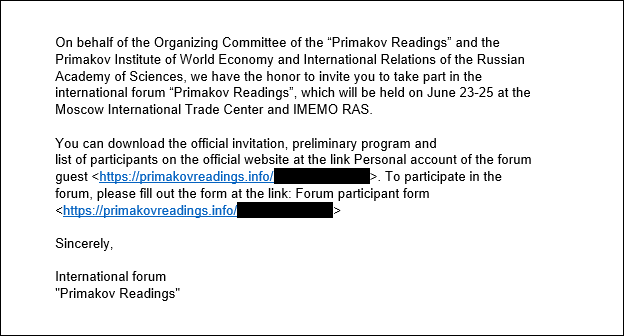
    Headline: Operation ForumTroll: APT attack with Google Chrome zero-day exploit chain

    In mid-March 2025, Kaspersky technologies detected a wave of infections by previously unknown and highly sophisticated malware. In all cases, infection occurred immediately after the victim clicked on a link in a phishing email, and the attackers’ website was opened using the Google Chrome web browser. No further action was required to become infected.

    All malicious links were personalized and had a very short lifespan. However, Kaspersky’s exploit detection and protection technologies successfully identified the zero-day exploit that was used to escape Google Chrome’s sandbox. We quickly analyzed the exploit code, reverse-engineered its logic, and confirmed that it was based on a zero-day vulnerability affecting the latest version of Google Chrome. We then reported the vulnerability to the Google security team. Our detailed report enabled the developers to quickly address the issue, and on March 25, 2025, Google released an update fixing the vulnerability and thanked us for discovering this attack.

    Acknowledgement for finding CVE-2025-2783 (excerpt from security fixes included into Chrome 134.0.6998.177/.178)

    We have discovered and reported dozens of zero-day exploits actively used in attacks, but this particular exploit is certainly one of the most interesting we’ve encountered. The vulnerability CVE-2025-2783 really left us scratching our heads, as, without doing anything obviously malicious or forbidden, it allowed the attackers to bypass Google Chrome’s sandbox protection as if it didn’t even exist. The cause of this was a logical error at the intersection of Google Chrome’s sandbox and the Windows operating system. We plan to publish the technical details of this vulnerability once the majority of users have installed the updated version of the browser that fixes it.

    Our research is still ongoing, but judging by the functionality of the sophisticated malware used in the attack, it seems the attackers’ goal was espionage. The malicious emails contained invitations supposedly from the organizers of a scientific and expert forum, “Primakov Readings”, targeting media outlets, educational institutions and government organizations in Russia. Based on the content of the emails, we dubbed the campaign Operation ForumTroll.

    Example of a malicious email used in this campaign (translated from Russian)

    At the time of writing, there’s no exploit active at the malicious link – it just redirects visitors to the official website of “Primakov Readings”. However, we strongly advise against clicking on any potentially malicious links.

    The exploit we discovered was designed to run in conjunction with an additional exploit that enables remote code execution. Unfortunately, we were unable to obtain this second exploit, as in this particular case it would have required waiting for a new wave of attacks and exposing users to the risk of infection. Fortunately, patching the vulnerability used to escape the sandbox effectively blocks the entire attack chain.

    All the attack artifacts analyzed so far indicate high sophistication of the attackers, allowing us to confidently conclude that a state-sponsored APT group is behind this attack.

    We plan to publish a detailed report with technical details about the zero-day exploit, the sophisticated malware, and the attackers’ techniques.

    Kaspersky products detect the exploits and malware used in this attack with the following verdicts:

    • Exploit.Win32.Generic
    • Trojan.Win64.Agent
    • Trojan.Win64.Convagent.gen
    • PDM:Exploit.Win32.Generic
    • PDM:Trojan.Win32.Generic
    • UDS:DangerousObject.Multi.Generic

    Indicators of Compromise

    primakovreadings[.]info

    MIL OSI Economics

  • MIL-OSI Canada: No carbon tax in B.C. as of April 1, 2025

    People will see immediate savings through the elimination of the consumer carbon tax in British Columbia.

    With the federal government removing the federal carbon tax on consumers, the B.C. government is not only halting the scheduled tax increase, it is tabling legislation on Monday, March 31, 2025, to remove the tax, effective April 1, 2025.

    The Province is notifying fuel sellers and natural gas retailers now so they can take action to stop collecting the tax from consumers as of April 1, 2025. While the Government of B.C. understands that eliminating the tax requires changes, the Province expects fuel sellers and natural gas retailers to make every effort to ensure their customers are not charged the carbon tax on purchases as of April 1.

    The Province will continue to act on the commitment to battle climate change by ensuring people in British Columbia have affordable options to make sustainable choices and by encouraging industry to innovate.

    Incentivizing industry to adopt lower-carbon technologies while maintaining their competitiveness is critically important in the province. While government removes the carbon tax on people, the Province of B.C will continue to ensure big industrial emitters pay their fair share through the output-based carbon pricing system. The system holds large industrial emitters accountable and offers cost-effective ways to cut emissions.

    MIL OSI Canada News

  • MIL-OSI: Element Nominates Paolo Ferrari and Tracey McVicar for Election to the Board of Directors

    Source: GlobeNewswire (MIL-OSI)

    TORONTO, March 25, 2025 (GLOBE NEWSWIRE) — Element Fleet Management Corp. (TSX:EFN) (“Element” or the “Company”), the largest publicly traded, pure-play automotive fleet manager in the world, today announced that Paolo Ferrari and Tracey McVicar have been nominated to stand for election to the Company’s Board of Directors at its Annual General Meeting of Shareholders on May 2, 2025. They are being nominated to replace Andrew Clarke and Arielle-Meloul Wechsler who have decided not to stand for re-election.

    Mr. Ferrari is a seasoned global executive, most recently holding the roles of Chief Executive Officer of Bridgestone Americas, Chief Executive Officer of Bridgestone West, and Joint Global Chief Operations Officer of Bridgestone Corporation. He is also the former Chief Executive Officer of Pirelli North America and Latin America, and held prior executive roles in telecommunications, technology, and investment banking.

    Ms. McVicar is a Partner at CAI Capital Partners, a private equity firm she joined in 2003. She previously held senior positions in investment banking at Raymond James Ltd. and RBC Capital Markets. Ms. McVicar is also a past director of Teck Resources Ltd. where she served as Chair of the Audit Committee and a past director of BC Hydro Corporation where she chaired the Audit and Finance Committee.

    “We are pleased to nominate Paolo Ferrari and Tracey McVicar to our Board,” said Element Board Chair Kathleen Taylor. “Paolo and Tracey bring integral skills, perspectives, and experience, and we are confident they will be tremendous assets to the Company. We would also like to thank our outgoing Board members, Andrew Clarke and Arielle Meloul-Wechsler, for their valuable support and contributions to Element.”

    Further details about Element’s nominated directors can be found in our management information circular, which is available at http://www.sedarplus.ca.

    Delivering Value Through Our Global Growth Strategy

    Continuing to demonstrate how Element is driving growth and delivering value to our clients, shareholders, and team members, the Company also announced the release of its inaugural annual report. The report provides stakeholders with a clear and comprehensive overview of the Company’s strategy, vision, operations, and financial performance for 2024. It also highlights key trends shaping the fleet and mobility industry, and how the strategic investments Element made in 2024 will drive the Company’s continued industry leadership across fleet and mobility, setting a strong foundation for future success. More details are available in Element’s 2024 Annual Report.

    About Element Fleet Management

    Element Fleet Management (TSX: EFN) is the largest publicly traded pure-play automotive fleet manager in the world. As a Purpose-driven company, we provide a full range of sustainable and intelligent mobility solutions to optimize and enhance fleet performance for our clients across North America, Australia and New Zealand. Our services address every aspect of our clients’ fleet requirements, from vehicle acquisition, maintenance, route optimization, risk management, and remarketing, to advising on decarbonization efforts, integration of electric vehicles and managing the complexity of gradual fleet electrification. Clients benefit from Element’s expertise as one of the largest fleet solutions providers in its markets, offering economies of scale and insight used to reduce operating costs and enhance efficiency and performance. At Element, we maximize our clients’ fleet so they can focus on growing their business.

    This press release includes forward-looking statements regarding Element and its business. Such statements are based on the current expectations and views of future events of Element’s management. In some cases the forward-looking statements can be identified by words or phrases such as “may”, “will”, “expect”, “plan”, “anticipate”, “intend”, “potential”, “estimate”, “believe” or the negative of these terms, or other similar expressions intended to identify forward-looking statements, including, among others, statements regarding Element’s expectations for financial performance. No forward-looking statement can be guaranteed. Forward-looking statements and information by their nature are based on assumptions and involve known and unknown risks, uncertainties and other factors which may cause Element’s actual results, performance or achievements, or industry results, to be materially different from any future results, performance or achievements expressed or implied by such forward-looking statement or information. Accordingly, readers should not place undue reliance on any forward-looking statements or information. Such risks and uncertainties include those regarding the fleet management and finance industries, economic factors and many other factors beyond the control of Element. A discussion of the material risks and assumptions associated with this outlook can be found in Element’s annual MD&A, and Annual Information Form for the year ended December 31, 2024, each of which has been filed on SEDAR and can be accessed at www.sedarplus.ca. Except as required by applicable securities laws, forward-looking statements speak only as of the date on which they are made and Element undertakes no obligation to publicly update or revise any forward-looking statement, whether as a result of new information, future events, or otherwise.

    The MIL Network

  • MIL-OSI USA: News 03/25/2025 Blackburn, Schatz, Introduce Bipartisan Legislation to Boost U.s. Cultural Trade Amid Competition From China

    US Senate News:

    Source: United States Senator Marsha Blackburn (R-Tenn)
    WASHINGTON, D.C. – Today, U.S. Senators Marsha Blackburn (R-Tenn.) and Brian Schatz (D-Hawaii) introduced the Cultural Trade Promotion Act of 2025, bipartisan legislation to strengthen America’s creative industries and expand cultural exports. By bolstering the creative economy, this legislation will help U.S. businesses—including Native-owned, small, and rural enterprises—reach new global markets, create jobs, and strengthen America’s influence abroad amidst increasing competition from China.
    “We cannot allow China to continue to outpace the United States in overall cultural exports, and Tennessee is home to countless creative entrepreneurs who need support to export their products and grow their businesses,” said Senator Blackburn. “The Cultural Trade Promotion Act would improve access to international shipping services for these small businesses to strengthen our economy and promote high-quality American goods.” 
    “America’s creative industries are a powerful force, driving jobs at home and shaping perceptions of our country abroad. Recently, China has doubled down on promoting its cultural exports, and we’ve been falling behind,” said Senator Schatz. “This bipartisan bill will help us level the playing field by expanding export opportunities for American businesses everywhere from Maui to Memphis so that our creative economy remains the global leader.”
    Over the past decade, China has aggressively expanded its cultural trade through coordinated government investments and programs. In 2014, China surpassed the United States in overall cultural exports, and it continues to leverage cultural promotion as part of its Belt and Road Initiative. Meanwhile, America’s cultural trade surplus has declined, dropping from $31.5 billion in 2019 to $17.8 billion in 2021 before rebounding slightly to $21 billion in 2022, according to the National Endowment for the Arts.
    The Cultural Trade Promotion Act would direct the Foreign Commercial Service to promote U.S. creative economy goods abroad and require the Trade Promotion Coordinating Committee to include the creative economy in its annual governmentwide strategic plan. The bill would also improve access to international shipping services for small businesses by facilitating collaboration between the International Trade Administration and the U.S. Postal Service. Additionally, it would promote products from American Indian, Alaska Native, and Native Hawaiian-owned businesses and include a representative of the creative industries on the Department of Commerce’s Travel and Tourism Advisory Board.

    MIL OSI USA News

  • MIL-OSI Global: Maritime truce would end a sorry war on the waves for Russia that set back its naval power ambitions

    Source: The Conversation – Global Perspectives – By Colin Flint, Distinguished Professor of Political Science, Utah State University

    A warship is seen docked in the port of the Black Sea city of Sochi. Mikhail Mordasov/AFP via Getty Images

    Away from the grueling land battles and devastating airstrikes, the Ukraine war has from its outset had a naval element. Soon after the February 2022 invasion, Russia imposed a de facto naval blockade on Ukraine, only to see its fleet stunningly defeated during a contest for control of the Black Sea.

    But that war on the waves looks like it could be ending.

    Under the terms of a deal announced on March 25, 2025, by the U.S. and agreed upon in Saudi Arabia, both sides of the conflict committed to ensuring “safe navigation, eliminate the use of force, and prevent the use of commercial vessels for military purposes in the Black Sea,” according to a White House statement.

    The naval aspect of the Ukraine war has gotten less attention than events on land and in the skies. But it is, I believe, a vital aspect with potentially far-reaching consequences.

    Not only have Russia’s Black Sea losses constrained Moscow’s ability to project power across the globe through naval means, it has also resulted in Russia’s growing cooperation with China, where Moscow is emerging as a junior party to Beijing on the high seas.

    Battle over the Black Sea

    The tradition of geopolitical theory has tended to paint an oversimplification of global politics. Theories harkening back to the late 19th century categorized countries as either land powers or maritime powers.

    Thinkers such as the British geopolitician Sir Halford Mackinder or the U.S. theorist Alfred Thayer Mahan characterized maritime powers as countries that possessed traits of democratic liberalism and free trade. In contrast, land powers were often portrayed as despotic and militaristic.

    While such generalizations have historically been used to demonize enemies, there is still a contrived tendency to divide the world into land and sea powers. An accompanying view that naval and army warfare is somewhat separate has continued.

    And this division gives us a false impression of Russia’s progress in the war with Ukraine. While Moscow has certainly seen some successes on land and in the air, that should not draw attention away from Russia’s stunning defeat in the Black Sea that has seen Russia have to retreat from the Ukrainian shoreline and keep its ships far away from the battlefront.

    As I describe in my recent book, “Near and Far Waters: The Geopolitics of Seapower,” maritime countries have two concerns: They must attempt to control the parts of the sea relatively close to their coastlines, or their “near waters”; meanwhile, those with the ability and desire to do so try to project power and influence into “far waters” across oceans, which are the near waters of other countries.

    The Black Sea is a tightly enclosed and relatively small sea comprising the near waters of the countries that surround it: Turkey to the south, Bulgaria and Romania to the west, Georgia to the east, and Ukraine and Russia to the north.

    Control of the Black Sea’s near waters has been contested throughout the centuries and has played a role in the current Russian-Ukraine war.

    Russia’s seizure of the Crimean Peninsula in 2014 allowed it to control the naval port of Sevastopol. What were near waters of Ukraine became de facto near waters for Russia.

    Controlling these near waters allowed Russia to disrupt Ukraine’s trade, especially the export of grain to African far waters.

    But Russia’s actions were thwarted through the collaboration of Romania, Bulgaria and Turkey to allow passage of cargo ships through their near waters, then through the Bosporus into the Mediterranean Sea.

    Ukraine’s use of these other countries’ near waters allowed it to export between 5.2 million and 5.8 million tons of grain per month in the first quarter of 2024. To be sure, this was a decline from Ukraine’s exports of about 6.5 million tons per month prior to the war, which then dropped to just 2 million tons in the summer of 2023 because of Russian attacks and threats. Prior to the announcement of the ceasefire, the Foreign Agricultural Service of the U.S. Department of Agriculture had forecasted a decline in Ukrainian grain exports for 2025.

    But efforts to constrain Russia’s control of Ukraine’s near waters in the Black Sea, and Russia’s unwillingness to face the consequences of attacking ships in NATO countries’ near waters, meant Ukraine was still able to access far waters for economic gain and keep the Ukrainian economy afloat.

    For Putin, that sinking feeling

    Alongside being thwarted in its ability to disrupt Ukrainian exports, Russia has also come under direct naval attack from Ukraine. Since February 2022, using unmanned attack drones, Ukraine has successfully sunk or damaged Russian ships and whittled away at Russia’s Black sea fleet, sinking about 15 of its prewar fleet of about 36 warships and damaging many others.

    Russia has been forced to limit its use of Sevastopol and station its ships in the eastern part of the Black Sea. It cannot effectively function in the near waters it gained through the seizure of Crimea.

    Russia’s naval setbacks against Ukraine are only the latest in its historical difficulties in projecting sea power and its resulting tendency to mainly focus on the defense of near waters.

    In 1905, Russia was shocked by a dramatic naval loss to Japan. Yet even in cases where it was not outright defeated, Russian sea power has been continually constrained historically. In World War I, Russia cooperated with the British Royal Navy to limit German merchant activity in the Baltic Sea and Turkish trade and military reach in the Black Sea.

    In World War II, Russia relied on material support from the Allies and was largely blockaded within its Baltic Sea and Black Sea ports. Many ships were brought close to home or stripped of their guns as artillery or offshore support for the territorial struggle with Germany.

    During the Cold War, meanwhile, though the Soviet Union built fast-moving missile boats and some aircraft carriers, its reach into far waters relied on submarines. The main purpose of the Soviet Mediterranean fleet was to prevent NATO penetration into the Black Sea.

    And now, Russia has lost control of the Black Sea. It cannot operate in these once secure near waters. These losses reduce its ability to project naval power from the Black Sea and into the Mediterranean Sea.

    Ceding captaincy to China

    Faced with a glaring loss in its backyard and put in a weak position in its near waters, Russia as a result can project power to far waters only through cooperation with a China that is itself investing heavily in a far-water naval capacity.

    Joint naval exercises in the South China Sea in July 2024 are evidence of this cooperation. Wang Guangzheng of the Chinese People’s Liberation Army Navy’s Southern Theater said of the drill that “the China-Russia joint patrol has promoted the deepening and practical cooperation between the two in multiple directions and fields.” And looking forward, he claimed the exercise “effectively enhanced the ability to the two sides to jointly respond to maritime security threats.”

    Warships of the Chinese and Russian navies take part in a joint naval exercise in the East China Sea.
    Li Yun/Xinhua via Getty Images

    This cooperation makes sense in purely military terms for Russia, a mutually beneficial project of sea power projection. But it is largely to China’s benefit.

    Russia can help China’s defense of its northern near waters and secure access to far waters through the Arctic Ocean – an increasingly important arena as global climate change reduces the hindrance posed by sea ice. But Russia remains very much the junior partner.

    Moscow’s strategic interests will be supported only if they match Chinese interests. More to the point, sea power is about power projection for economic gain. China will likely use Russia to help protect its ongoing economic reach into African, Pacific, European and South American far waters. But it is unlikely to jeopardize these interests for Russian goals.

    To be sure, Russia has far-water economic interests, especially in the Sahel and sub-Saharan Africa. And securing Russian interests in Africa complements China’s growing naval presence in the Indian Ocean to secure its own, and greater, global economic interests. But cooperation will still be at China’s behest.

    For much of the Ukraine war, Russia has been bottled up in its Black Sea near waters, with the only avenue for projecting its naval power coming through access to Africa and Indian Ocean far waters – and only then as a junior partner with China, which dictates the terms and conditions.

    A maritime deal with Ukraine now, even if it holds, will not compensate for Russia’s ongoing inability to project power across the oceans on its own.

    Editor’s note: This is an updated version of an article originally published by The Conversation U.S. on Oct. 3, 2024.

    Colin Flint does not work for, consult, own shares in or receive funding from any company or organization that would benefit from this article, and has disclosed no relevant affiliations beyond their academic appointment.

    ref. Maritime truce would end a sorry war on the waves for Russia that set back its naval power ambitions – https://theconversation.com/maritime-truce-would-end-a-sorry-war-on-the-waves-for-russia-that-set-back-its-naval-power-ambitions-253089

    MIL OSI – Global Reports

  • MIL-OSI Security: Security News: Evolutions Flooring Inc. and Its Owners to Pay $8.1 Million to Settle False Claims Act Allegations Relating to Evaded Customs Duties

    Source: United States Department of Justice 2

    Evolutions Flooring Inc. (Evolutions), a South San Francisco, California-based importer of multilayered wood flooring, and its owners, Mengya Lin and Jin Qian, have agreed to resolve allegations that they violated the False Claims Act by knowingly and improperly evading customs duties on imports of multilayered wood flooring from the People’s Republic of China (PRC). The settlement is based on Evolutions’ and its owners’ ability to pay.

    “Import duties provide an important source of government revenue and level the playing field for U.S. manufacturers against their global competitors,” said Acting Assistant Attorney General Yaakov M. Roth of the Justice Department’s Civil Division. “The department will pursue those who seek an unfair advantage in U.S. markets, including by evading the duties owed on goods imported into this country from China.” 

    To enter goods into the United States, an importer must declare, among other things, the country of origin of the goods, the value of the goods, whether the goods are subject to duties, and the amount of duties owed. U.S. Customs and Border Protection (CBP) collects applicable duties, including antidumping and countervailing duties assessed by the Department of Commerce and Section 301 duties imposed by the Office of the United States Trade Representative. Antidumping duties protect against foreign companies “dumping” products on U.S. markets at prices below cost, while countervailing duties offset foreign government subsidies. Section 301 duties similarly protect U.S. industry by imposing trade sanctions on foreign countries that violate U.S. trade agreements or engage in other unreasonable acts that burden U.S. commerce. During the relevant time period, PRC-manufactured multilayered wood flooring products were subject to antidumping, countervailing, and Section 301 duties.

    The settlement resolves allegations that Evolutions, at the direction of Lin and Qian, knowingly and improperly evaded customs duties, including antidumping, countervailing, and Section 301 duties, on multilayered wood flooring manufactured in the PRC that Evolutions imported between Sept. 1, 2019 and July 31, 2022. Among other things, the United States alleged that Evolutions caused false information to be submitted to CBP regarding the identity of the manufacturers and country of origin of the imported multilayered wood flooring.

    “The outcome of this case demonstrates that the United States Attorney’s Office for the Central District of California and its CBP partners will continue to safeguard the nation’s economic well-being,” said Acting U.S. Attorney Joseph McNally for the Central District of California. “Fraud in international commerce deprives the United States of vital revenue and creates an unfair advantage over businesses that operate legitimately. The settlement sends a message that we will not stand aside when companies try to cheat the system.”

    “The team at CBP was instrumental in providing expertise and logistical support to this investigation,” said Director of Field Operations Cheryl M. Davies of the CBP Los Angeles Field Office. “Through its efforts, which included a site visit to factories in Thailand, review of identified shipments by CBP experts on multilayered wood flooring, an analysis of import records and data by Office of Trade Regulatory Audit, and involvement in interviews with witnesses, CBP contributed to a successful outcome in this matter.”

    The settlement with Evolutions and its owners resolves a lawsuit filed by Urban Global LLC under the whistleblower provision of the False Claims Act, which permits private parties to file suit on behalf of the United States for false claims and share in a portion of the government’s recovery. The civil lawsuit was filed in the Central District of California and is captioned United States ex rel. Urban Global LLC v. Struxtur Inc. et al., No. CV20-7217 (C.D. Cal.). As part of today’s resolution, relator Urban Global LLC will receive approximately $1,215,000 of the settlement proceeds.

    The resolution obtained in this matter was the result of a coordinated effort between the Civil Division’s Commercial Litigation Branch, Fraud Section, and the U.S. Attorney’s Office for the Central District of California, with assistance from CBP’s Office of Chief Counsel, West Region and Trade Regulatory Audit and the Center of Excellence and Expertise for Industrial and Manufacturing Materials within CBP’s Office of Trade.

    Senior Trial Counsel Christelle Klovers of the Justice Department’s Civil Division and Assistant U.S. Attorney Desmond Jui for the Central District of California handled the case. 

    The claims resolved by the settlement are allegations only; there has been no determination of liability.

    MIL Security OSI

  • MIL-OSI USA News: Fact Sheet: President Donald J. Trump Modernizes Payments to and from America’s Bank Account

    Source: The White House

    PHASING OUT PAPER CHECKS: Today, President Donald J. Trump signed an Executive Order to modernize how the government handles money, switching from old-fashioned paper-based payments to fast, secure electronic payments.

    • The Order mandates that, effective September 30, 2025, the Federal government will cease issuing paper checks for all disbursements, including intragovernmental payments, benefits, vendor payments, and tax refunds.
    • All executive departments and agencies must transition to modern, electronic funds transfer (EFT) methods like direct deposit, debit/credit card payments, digital wallets, and real-time transfers.
    • Payments made to the Federal government, such as fees, fines, loans, and taxes, must also be processed electronically where permissible under existing law.
    • Treasury will phase out physical lockbox services and expedite electronic collection of Federal receipts.
    • A comprehensive public awareness campaign will be launched to inform Federal payment recipients of the shift to electronic options and offer guidance on setting up digital payments.
    • Exceptions will be made for people without banking or electronic payment access, certain emergency payments, certain law enforcement activities, and other special cases qualifying for an exception under the Order or other existing law.
    • This Executive Order does not establish a Central Bank Digital Currency (CBDC).

    DEFENDING AGAINST FINANCIAL FRAUD AND IMPROPER PAYMENTS: President Trump is cracking down on waste, fraud, and abuse in government by modernizing outdated paper-based payment systems that impose unnecessary costs, delays, and security risks.

    • Paper-based payments, such as checks and money orders, impose unnecessary costs, delays, and risks of fraud, lost payments, theft, and inefficiencies.
    • Mail theft complaints have increased substantially since 2020.
    • Historically, Treasury checks are 16 times more likely to be reported lost or stolen, returned undeliverable, or altered than an electronic funds transfer.
    • Maintaining the physical infrastructure and specialized technology for digitizing paper records cost the American taxpayer over $657 million in fiscal year 2024 alone.
    • Check fraud is becoming more common, with banks issuing about 680,000 reports of check fraud in 2022 – nearly double the number from 2021.
    • Digital payments are more efficient, less costly, and less vulnerable to fraud.

    MODERNIZING THE FEDERAL GOVERNMENT: President Trump is making government work better for the American people.

    President Trump has long championed the need for replacing outdated technology, saying “government needs to catch up with the technology revolution.”

    MIL OSI USA News

  • MIL-OSI USA News: Addressing Risks from Jenner & Block

    Source: The White House

    class=”has-text-align-left”>By the authority vested in me as President by the Constitution and the laws of the United States of America, it is hereby ordered:

    Section 1Background.  My Administration is committed to addressing the significant risks associated with law firms, particularly so-called “Big Law” firms, that engage in conduct detrimental to critical American interests.  Many firms take actions that threaten public safety and national security, limit constitutional freedoms, degrade the quality of American elections, or undermine bedrock American principles.  Moreover, law firms regularly conduct this harmful activity through their powerful pro bono practices, earmarking hundreds of millions of their clients’ dollars for destructive causes, that often directly or indirectly harm their own clients.  Lawyers and law firms that engage in such egregious conduct should not have access to our Nation’s secrets, nor should such conduct be subsidized by Federal taxpayer funds or contracts.

    Jenner & Block LLP (Jenner) is yet another law firm that has abandoned the profession’s highest ideals, condoned partisan “lawfare,” and abused its pro bono practice to engage in activities that undermine justice and the interests of the United States.  For example, Jenner engages in obvious partisan representations to achieve political ends, supports attacks against women and children based on a refusal to accept the biological reality of sex, and backs the obstruction of efforts to prevent illegal aliens from committing horrific crimes and trafficking deadly drugs within our borders.  Moreover, Jenner discriminates against its employees based on race and other categories prohibited by civil rights laws, including through the use of race-based “targets.”

    In addition, Jenner was “thrilled” to re-hire the unethical Andrew Weissmann after his time engaging in partisan prosecution as part of Robert Mueller’s entirely unjustified investigation.  Andrew Weissmann’s career has been rooted in weaponized government and abuse of power, including devastating tens of thousands of American families who worked for the now defunct Arthur Andersen LLP, only to have his unlawfully aggressive prosecution overturned by the Supreme Court.  The numerous reports of Weissman’s dishonesty, including pursuit of nonexistent crimes, bribery to foreign nationals, and overt demand that the Federal Government pursue a political agenda against me, is a concerning indictment of Jenner’s values and priorities. 

    Sec. 2Security Clearance Review.  (a)  The Attorney General, the Director of National Intelligence, and all other relevant heads of executive departments and agencies (agencies) shall immediately take steps consistent with applicable law to suspend any active security clearances held by individuals at Jenner pending a review of whether such clearances are consistent with the national interest.

    (b)  The Office of Management and Budget shall identify all Government goods, property, material, and services, including Sensitive Compartmented Information Facilities, provided for the benefit of Jenner.  The heads of agencies providing such material or services shall, to the extent permitted by law, expeditiously cease such provision.

    Sec. 3.  Contracting.  (a)  To prevent the transfer of taxpayer dollars to Federal contractors whose earnings subsidize, among other things, activities that are not aligned with American interests, including racial discrimination, Government contracting agencies shall, to the extent permissible by law, require Government contractors to disclose any business they do with Jenner and whether that business is related to the subject of the Government contract.

    (b)  The heads of agencies shall review all contracts with Jenner or with entities that disclose doing business with Jenner under subsection (a) of this section.  To the extent permitted by law, the heads of agencies shall:

    (i)   take appropriate steps to terminate any contract, to the maximum extent permitted by applicable law, including the Federal Acquisition Regulation, for which Jenner has been hired to perform any service; and

    (ii)  otherwise align their agency funding decisions with the interests of the citizens of the United States; with the goals and priorities of my Administration as expressed in executive actions, especially Executive Order 14147 of January 20, 2025 (Ending the Weaponization of the Federal Government); and as heads of agencies deem appropriate.  Within 30 days of the date of this order, agencies shall submit to the Director of the Office of Management and Budget an assessment of contracts with Jenner or with entities that do business with Jenner effective as of the date of this order and any actions taken with respect to those contracts in accordance with this order.

    Sec. 4Racial Discrimination.  Nothing in this order shall be construed to limit the action authorized by section 4 of Executive Order 14230 of March 6, 2025 (Addressing Risks from Perkins Coie LLP).  

    Sec. 5Personnel.  (a)  The heads of agencies shall, to the extent permitted by law, provide guidance limiting official access from Federal Government buildings to employees of Jenner when such access would threaten the national security of or otherwise be inconsistent with the interests of the United States.  In addition, the heads of agencies shall provide guidance limiting Government employees acting in their official capacity from engaging with Jenner employees, including but not limited to Andrew Weissmann, to ensure consistency with the national security and other interests of the United States.

    (b)  Agency officials shall, to the extent permitted by law, refrain from hiring employees of Jenner, including but not limited to Andrew Weissmann, absent a waiver from the head of the agency, made in consultation with the Director of the Office of Personnel Management, that such hire will not threaten the national security of the United States.

    Sec. 6.  General Provisions.  (a)  Nothing in this order shall be construed to impair or otherwise affect:

    (i)   the authority granted by law to an executive department or agency, or the head thereof; or

    (ii)  the functions of the Director of the Office of Management and Budget relating to budgetary, administrative, or legislative proposals.

    (b)  This order shall be implemented consistent with applicable law and subject to the availability of appropriations.

    (c)  This order is not intended to, and does not, create any right or benefit, substantive or procedural, enforceable at law or in equity by any party against the United States, its departments, agencies, or entities, its officers, employees, or agents, or any other person.

    DONALD J. TRUMP

    MIL OSI USA News

  • MIL-OSI USA News: Preserving and Protecting the Integrity of American Elections

    Source: The White House

    class=”has-text-align-left”>By the authority vested in me as President by the Constitution and the laws of the United States of America, it is hereby ordered: 

    Section 1.  Purpose and Policy.  Despite pioneering self-government, the United States now fails to enforce basic and necessary election protections employed by modern, developed nations, as well as those still developing.  India and Brazil, for example, are tying voter identification to a biometric database, while the United States largely relies on self-attestation for citizenship.  In tabulating votes, Germany and Canada require use of paper ballots, counted in public by local officials, which substantially reduces the number of disputes as compared to the American patchwork of voting methods that can lead to basic chain-of-custody problems.  Further, while countries like Denmark and Sweden sensibly limit mail-in voting to those unable to vote in person and do not count late-arriving votes regardless of the date of postmark, many American elections now feature mass voting by mail, with many officials accepting ballots without postmarks or those received well after Election Day. 

    Free, fair, and honest elections unmarred by fraud, errors, or suspicion are fundamental to maintaining our constitutional Republic.  The right of American citizens to have their votes properly counted and tabulated, without illegal dilution, is vital to determining the rightful winner of an election.
    Under the Constitution, State governments must safeguard American elections in compliance with Federal laws that protect Americans’ voting rights and guard against dilution by illegal voting, discrimination, fraud, and other forms of malfeasance and error.  Yet the United States has not adequately enforced Federal election requirements that, for example, prohibit States from counting ballots received after Election Day or prohibit non-citizens from registering to vote.

    Federal law establishes a uniform Election Day across the Nation for Federal elections, 2 U.S.C. 7 and 3 U.S.C. 1.  It is the policy of my Administration to enforce those statutes and require that votes be cast and received by the election date established in law.  As the United States Court of Appeals for the Fifth Circuit recently held in Republican National Committee v. Wetzel (2024), those statutes set “the day by which ballots must be both cast by voters and received by state officials.”  Yet numerous States fail to comply with those laws by counting ballots received after Election Day.  This is like allowing persons who arrive 3 days after Election Day, perhaps after a winner has been declared, to vote in person at a former voting precinct, which would be absurd.  

    Several Federal laws, including 18 U.S.C. 1015 and 611, prohibit foreign nationals from registering to vote or voting in Federal elections.  Yet States fail adequately to vet voters’ citizenship, and, in recent years, the Department of Justice has failed to prioritize and devote sufficient resources for enforcement of these provisions.  Even worse, the prior administration actively prevented States from removing aliens from their voter lists.  

    Additionally, Federal laws, such as the National Voter Registration Act (Public Law 103-31) and the Help America Vote Act (Public Law 107-252), require States to maintain an accurate and current Statewide list of every legally registered voter in the State.  And the Department of Homeland Security is required to share database information with States upon request so they can fulfill this duty.  See 8 U.S.C. 1373(c).  Maintaining accurate voter registration lists is a fundamental requirement in protecting voters from having their ballots voided or diluted by fraudulent votes. 
    Federal law, 52 U.S.C. 30121, prohibits foreign nationals from participating in Federal, State, or local elections by making any contributions or expenditures.  But foreign nationals and non-governmental organizations have taken advantage of loopholes in the law’s interpretation, spending millions of dollars through conduit contributions and ballot-initiative-related expenditures.  This type of foreign interference in our election process undermines the franchise and the right of American citizens to govern their Republic.  

    Above all, elections must be honest and worthy of the public trust.  That requires voting methods that produce a voter-verifiable paper record allowing voters to efficiently check their votes to protect against fraud or mistake.  Election-integrity standards must be modified accordingly.
    It is the policy of my Administration to enforce Federal law and to protect the integrity of our election process.

    Sec. 2.  Enforcing the Citizenship Requirement for Federal Elections.  To enforce the Federal prohibition on foreign nationals voting in Federal elections:

    (a)(i) Within 30 days of the date of this order, the Election Assistance Commission shall take appropriate action to require, in its national mail voter registration form issued under 52 U.S.C. 20508:

    (A)  documentary proof of United States citizenship, consistent with 52 U.S.C. 20508(b)(3); and

    (B)  a State or local official to record on the form the type of document that the applicant presented as documentary proof of United States citizenship, including the date of the document’s issuance, the date of the document’s expiration (if any), the office that issued the document, and any unique identification number associated with the document as required by the criteria in 52 U.S.C. 21083(a)(5)(A), while taking appropriate measures to ensure information security.

    (ii)  For purposes of subsection (a) of this section, “documentary proof of United States citizenship” shall include a copy of: 

    (A)  a United States passport; 

    (B)  an identification document compliant with the requirements of the REAL ID Act of 2005 (Public Law 109-13, Div. B) that indicates the applicant is a citizen of the United States; 

    (C)  an official military identification card that indicates the applicant is a citizen of the United States; or 

    (D)  a valid Federal or State government-issued photo identification if such identification indicates that the applicant is a United States citizen or if such identification is otherwise accompanied by proof of United States citizenship.

    (b)  To identify unqualified voters registered in the States:

    (i)    the Secretary of Homeland Security shall, consistent with applicable law, ensure that State and local officials have, without the requirement of the payment of a fee, access to appropriate systems for verifying the citizenship or immigration status of individuals registering to vote or who are already registered;

    (ii)   the Secretary of State shall take all lawful and appropriate action to make available information from relevant databases to State and local election officials engaged in verifying the citizenship of individuals registering to vote or who are already registered; and 

    (iii)  the Department of Homeland Security, in coordination with the DOGE Administrator, shall review each State’s publicly available voter registration list and available records concerning voter list maintenance activities as required by 52 U.S.C. 20507, alongside Federal immigration databases and State records requested, including through subpoena where necessary and authorized by law, for consistency with Federal requirements. 

    (c)  Within 90 days of the date of this order, the Secretary of Homeland Security shall, consistent with applicable law, provide to the Attorney General complete information on all foreign nationals who have indicated on any immigration form that they have registered or voted in a Federal, State, or local election, and shall also take all appropriate action to submit to relevant State or local election officials such information.

    (d)  The head of each Federal voter registration executive department or agency (agency) under the National Voter Registration Act, 52 U.S.C. 20506(a), shall assess citizenship prior to providing a Federal voter registration form to enrollees of public assistance programs.   

    (e)  The Attorney General shall prioritize enforcement of 18 U.S.C. 611 and 1015(f) and similar laws that restrict non-citizens from registering to vote or voting, including through use of:

    (i)    databases or information maintained by the Department of Homeland Security; 

    (ii)   State-issued identification records and driver license databases; and

    (iii)  similar records relating to citizenship.

    (f)  The Attorney General shall, consistent with applicable laws, coordinate with State attorneys general to assist with State-level review and prosecution of aliens unlawfully registered to vote or casting votes.

    Sec. 3.  Providing Other Assistance to States Verifying Eligibility.  To assist States in determining whether individuals are eligible to register and vote:

    (a)  The Commissioner of Social Security shall take all appropriate action to make available the Social Security Number Verification Service, the Death Master File, and any other Federal databases containing relevant information to all State and local election officials engaged in verifying the eligibility of individuals registering to vote or who are already registered.  In determining and taking such action, the Commissioner of Social Security shall ensure compliance with applicable privacy and data security laws and regulations. 

    (b)  The Attorney General shall ensure compliance with the requirements of 52 U.S.C. 20507(g).  

    (c)  The Attorney General shall take appropriate action with respect to States that fail to comply with the list maintenance requirements of the National Voter Registration Act and the Help America     Vote Act contained in 52 U.S.C. 20507 and 52 U.S.C. 21083.

    (d)  The Secretary of Defense shall update the Federal Post Card Application, pursuant to the Uniformed and Overseas Citizens Absentee Voting Act, 52 U.S.C. 20301, to require:

    (i)   documentary proof of United States citizenship, as defined by section 2(a)(ii) of this order; and

    (ii)  proof of eligibility to vote in elections in the State in which the voter is attempting to vote.

    Sec. 4.  Improving the Election Assistance Commission.  
    (a)  The Election Assistance Commission shall, pursuant to 52 U.S.C. 21003(b)(3)and 21142(c) and consistent with applicable law, take all appropriate action to cease providing Federal funds to States that do not comply with the Federal laws set forth in 52 U.S.C. 21145, including the requirement in 52 U.S.C. 20505(a)(1) that States accept and use the national mail voter registration form issued pursuant to 52 U.S.C. 20508(a)(1), including any requirement for documentary proof of United States citizenship adopted pursuant to section 2(a)(ii) of this order.

    (b)(i) The Election Assistance Commission shall initiate appropriate action to amend the Voluntary Voting System Guidelines 2.0 and issue other appropriate guidance establishing standards for voting systems to protect election integrity.  The amended guidelines and other guidance shall provide that voting systems should not use a ballot in which a vote is contained within a barcode or quick-response code in the vote counting process except where necessary to accommodate individuals with disabilities and should provide a voter-verifiable paper record to prevent fraud or mistake. 

    (ii)  Within 180 days of the date of this order, the Election Assistance Commission shall take appropriate action to review and, if appropriate, re-certify voting systems under the new standards established under subsection (b)(i) of this section, and to rescind all previous certifications of voting equipment based on prior standards.  

    (c)  Following an audit of Help America Vote Act fund expenditures conducted pursuant to 52 U.S.C. 21142, the Election Assistance Commission shall report any discrepancies or issues with an audited State’s certifications of compliance with Federal law to the Department of Justice for appropriate enforcement action.

    (d) The Secretary of Homeland Security and the Administrator of the Federal Emergency Management Agency, consistent with applicable law, shall in considering the provision of funding for State or local election offices or administrators through the Homeland Security Grant Programs, 6 U.S.C. 603 et seq., heavily prioritize compliance with the Voluntary Voting System Guidelines 2.0 developed by the Election Assistance Commission and completion of testing through the Voting System Test Labs accreditation process.

    Sec. 5.  Prosecuting Election Crimes.  To protect the franchise of American citizens and their right to participate in fair and honest elections:

    (a)  The Attorney General shall take all appropriate action to enter into information-sharing agreements, to the maximum extent possible, with the chief State election official or multi-member agency of each State.  These agreements shall aim to provide the Department of Justice with detailed information on all suspected violations of State and Federal election laws discovered by State officials, including information on individuals who: 

    (i)    registered or voted despite being ineligible or who registered multiple times; 

    (ii)   committed election fraud;

    (iii)  provided false information on voter registration or other election forms;

    (iv)   intimidated or threatened voters or election officials; or 

    (v)    otherwise engaged in unlawful conduct to interfere in the election process.

    (b)  To the extent that any States are unwilling to enter into such an information sharing agreement or refuse to cooperate in investigations and prosecutions of election crimes, the Attorney General shall: 

    (i)   prioritize enforcement of Federal election integrity laws in such States to ensure election integrity given the State’s demonstrated unwillingness to enter into an information-sharing agreement or to cooperate in investigations and prosecutions; and

    (ii)  review for potential withholding of grants and other funds that the Department awards and distributes, in the Department’s discretion, to State and local governments for law enforcement and other purposes, as consistent with applicable law.

    (c)  The Attorney General shall take all appropriate action to align the Department of Justice’s litigation positions with the purpose and policy of this order.

    Sec. 6.  Improving Security of Voting Systems.  To improve the security of all voting equipment and systems used to cast ballots, tabulate votes, and report results:

    (a)  The Attorney General and the Secretary of Homeland Security shall take all appropriate actions to the extent permitted by 42 U.S.C. 5195c and all other applicable law, so long as the Department of Homeland Security maintains the designation of election infrastructure as critical infrastructure, as defined by 42 U.S.C. 5195c(e), to prevent all non-citizens from being involved in the administration of any Federal election, including by accessing election equipment, ballots, or any other relevant materials used in the conduct of any Federal election.

    (b)  The Secretary of Homeland Security shall, in coordination with the Election Assistance Commission and to the maximum extent possible, review and report on the security of all electronic systems used in the voter registration and voting process.  The Secretary of Homeland Security, as the head of the designated Sector Risk Management Agency under 6 U.S.C. 652a, in coordination with the Election Assistance Commission, shall assess the security of all such systems to the extent they are connected to, or integrated into, the Internet and report on the risk of such systems being compromised through malicious software and unauthorized intrusions into the system.  

    Sec. 7.  Compliance with Federal Law Setting the National Election Day.  To achieve full compliance with the Federal laws that set the uniform day for appointing Presidential electors and electing members of Congress:

    (a)  The Attorney General shall take all necessary action to enforce 2 U.S.C. 7 and 3 U.S.C. 1 against States that violate these provisions by including absentee or mail-in ballots received after Election Day in the final tabulation of votes for the appointment of Presidential electors and the election of members of the United States Senate and House of Representatives.

    (b)  Consistent with 52 U.S.C. 21001(b) and other applicable law, the Election Assistance Commission shall condition any available funding to a State on that State’s compliance with the requirement in 52 U.S.C. 21081(a)(6) that each State adopt uniform and nondiscriminatory standards within that State that define what constitutes a vote and what will be counted as a vote, including that, as prescribed in 2 U.S.C. 7 and 3 U.S.C. 1, there be a uniform and nondiscriminatory ballot receipt deadline of Election Day for all methods of voting, excluding ballots cast in accordance with 52 U.S.C. 20301 et seq., after which no additional votes may be cast.  

    Sec. 8.  Preventing Foreign Interference and Unlawful Use of Federal Funds.  The Attorney General, in consultation with the Secretary of the Treasury, shall prioritize enforcement of 52 U.S.C. 30121 and other appropriate laws to prevent foreign nationals from contributing or donating in United States elections.  The Attorney General shall likewise prioritize enforcement of 31 U.S.C. 1352, which prohibits lobbying by organizations or entities that have received any Federal funds.   

    Sec. 9.  Federal Actions to Address Executive Order 14019.  The heads of all agencies, and the Election Assistance Commission, shall cease all agency actions implementing Executive Order 14019 of March 7, 2021 (Promoting Access to Voting), which was revoked by Executive Order 14148 of on January 20, 2025 (Initial Rescissions of Harmful Executive Orders and Actions), and, within 90 days of the date of this order, submit to the President, through the Assistant to the President for Domestic Policy, a report describing compliance with this order.

    Sec. 10.  Severability.  If any provision of this order, or the application of any provision to any agency, person, or circumstance, is held to be invalid, the remainder of this order and the application of its provisions to any other agencies, persons, or circumstances shall not be affected thereby.

    Sec. 11.  General Provisions.  (a)  Nothing in this order shall be construed to impair or otherwise affect:

    (i)   the authority granted by law to an executive department or agency, or the head thereof; or

    (ii)  the functions of the Director of the Office of Management and Budget relating to budgetary, administrative, or legislative proposals.

    (b)  This order shall be implemented consistent with applicable law and subject to the availability of appropriations.

    (c)  This order is not intended to, and does not, create any right or benefit, substantive or procedural, enforceable at law or in equity by any party against the United States, its departments, agencies, or entities, its officers, employees, or agents, or any other person.

    DONALD J. TRUMP

    THE WHITE HOUSE,
        March 25, 2025. 

    MIL OSI USA News

  • MIL-OSI USA News: Fact Sheet: President Donald J. Trump Addresses Risks from Jenner & Block

    Source: The White House

    SUSPENDING SECURITY CLEARENCES TO PROTECT THE NATIONAL INTEREST: Today, President Donald J. Trump signed an Executive Order to suspend security clearances held by individuals at Jenner & Block LLP (Jenner) pending a review of whether such clearances are consistent with the national interest.

    • Security clearances held by Jenner employees will be immediately suspended, pending a review of whether their access to sensitive information is consistent with the national interest.
      • The Federal Government will halt all material and services, including sensitive compartmented information facility (SCIF) access provided to Jenner and restrict its employees’ access to government buildings.
      • Federal Agencies will also refrain from hiring Jenner employees unless specifically authorized.
    • To ensure taxpayer dollars no longer go to contractors whose earnings subsidize activities not aligned with American interests, the Federal Government will terminate contracts that involve Jenner.
    • The practices of Jenner will be reviewed under Title VII to ensure compliance with civil rights laws against racial bias.

    ADDRESSING ROGUE LAW FIRMS: President Trump believes that lawyers and law firms that engage in conduct detrimental to critical American interests should not be subsidized by American taxpayers or have access to our Nation’s secrets.

    • Jenner pursues partisan goals, supports attacks against women and children based on the denial of the biological reality of sex, and backs the obstruction of efforts to prevent illegal aliens from committing horrific crimes and trafficking deadly drugs within our borders.
    • Jenner has been accused of discriminating against its own employees on the basis of race and other categories prohibited by civil rights laws, including through the use of race-based “targets.”
    • Jenner was also “thrilled” to re-hire Andrew Weissmann, a prosecutor known for his unethical behavior, including his role in engaging in partisan prosecution as part of Robert Mueller’s entirely unjustified investigation.
      • Weissmann’s career has been rooted in weaponized government and abuse of power, including devastating tens of thousands of American families who worked for the now defunct Arthur Andersen LLP, only to have his unlawfully aggressive prosecution overturned by the Supreme Court. 
      • The numerous reports of Weissman’s dishonesty, including pursuit of nonexistent crimes, bribery to foreign nationals, and overt demand that the federal government pursue a political agenda against President Trump, is a concerning indictment of Jenner’s values and priorities. 

    A RETURN TO ACCOUNTABILITY: President Trump is delivering on his promise to end the weaponization of government and protect the nation from partisan and bad faith actors who exploit their influence. 

    • In addition to Jenner, President Trump has also taken action to hold other major law firms accountable.
    • This Executive Order aligns with President Trump’s priority on refocusing government operations to serve the citizens of the United States.
    • It builds on President Trump’s previous actions, such as signing an Executive Order on his first day in office to end the weaponization of the Federal government and ensure accountability for past misconduct.
    • It follows his revocation of security clearances held by intelligence officials who falsely claimed Hunter Biden’s laptop was Russian disinformation during the 2020 election.

    MIL OSI USA News

  • MIL-OSI USA News: Fact Sheet: President Donald J. Trump Protects the Integrity of American Elections

    Source: The White House

    RESTORING TRUST IN AMERICAN ELECTIONS: Today, President Donald J. Trump signed an Executive Order to protect the integrity of American elections.

    • This Order strengthens voter citizenship verification and bans foreign nationals from interfering in U.S. elections.
      • The Election Assistance Commission will require documentary, government-issued proof of U.S. citizenship on its voter registration forms.
      • Agencies like the Department of Homeland Security (DHS), Social Security Administration and Department of State must provide states with access to Federal databases to verify eligibility and citizenship of individuals registering to vote.
      • The Attorney General will prioritize prosecuting non-citizen voting and related crimes, including through use of DHS records and coordination with state attorneys general.
    • Federal election-related funds will be conditioned on states complying with the integrity measures set forth by Federal law, including the requirement that states use the national mail voter registration form that will now require proof of citizenship.
    • The Order improves the integrity of elections by directing the updating of the Voluntary Voting System Guidelines 2.0 and security standards for voting equipment and prioritizing federal grant funds accordingly.
      • This includes requiring a voter-verifiable paper ballot record and not using ballots in which the counted vote is contained within a barcode or QR code.
    • It directs the Attorney General to enter into information-sharing agreements with state election officials to identify cases of election fraud or other election law violations.
      • Non-compliant states may face prioritized Federal enforcement of election integrity laws and loss of funding given their unwillingness to police fraud.
    • The Attorney General and Secretary of Homeland Security shall prevent non-citizens from any involvement in administering elections.
    • The Attorney General will fully enforce the voter-list maintenance requirements of the National Voter Registration Act and the Help America Vote Act.
    • Given clear Federal law setting a single Election Day deadline, the Attorney General shall take appropriate action against states that count ballots received after Election Day in Federal elections. Federal election funding will be conditioned on compliance.
    • The Attorney General will prioritize enforcement of laws prohibiting foreign nationals from contributing to or donating in U.S. elections.
    • All agencies must report on compliance with undoing Biden Executive Order 14019, which turned Federal agencies into Democratic voter turnout centers.

    SAFEGUARDING THE VOTE: President Trump recognizes that free, fair, and honest elections—unmarred by fraud, errors, or suspicion—are essential to our Constitutional Republic.

    • The United States lags behind other nations in enforcing basic and necessary election protections.
      • India and Brazil tie voter identification to a biometric database, while the United States largely relies on self-attestation for citizenship.
      • Germany and Canada require paper ballots when tabulating votes, while the United States has a patchwork of methods that often lack basic chain-of-custody protections.
      • Denmark and Sweden sensibly limit mail-in voting to those unable to vote in person—and late arrivals do not count—while American elections now feature mass voting by mail, even after Election Day.
    • Without proper enforcement of Federal laws, illegal voting, discrimination, fraud, and other forms of malfeasance and error dilute the votes of lawful American citizens.
    • Federal law establishes a uniform Election Day across the nation for Federal elections, but numerous states fail to comply with those laws by counting ballots received after Election Day.
    • The Biden Administration blocked states from removing aliens from voter rolls, while foreign nationals and non-governmental organizations (NGOs) exploited loopholes to pour millions into influencing U.S. elections.

    MAKING ELECTIONS SECURE AGAIN: Voters deserve elections they can trust, and that confidence is being restored thanks to President Trump. 

    • President Trump is following through on his promise to secure our elections.
      • President Trump: “We’re going to fix our elections so that our elections are going to be honorable and honest and people leave and they know their vote is counted. We are going to have free and fair elections. And ideally, we go to paper ballots, same-day voting, proof of citizenship, very big, and voter ID, very simple.”
      • President Trump: “We will secure our elections, and they will be secure once and for all.”
    • Unlike the Biden Administration, which prioritized political agendas over fair elections, President Trump is putting the American people back in charge.

    MIL OSI USA News

  • MIL-OSI USA News: Fact Sheet: President Donald J. Trump Protects America’s Bank Account Against Waste, Fraud, and Abuse

    Source: The White House

    PROMOTING FINANCIAL INTEGRITY AND OPERATIONAL EFFICIENCY: Today, President Donald J. Trump signed an Executive Order promoting financial integrity, transparency, and efficiency by improving the Department of the Treasury’s ability to screen for improper payments and fraud, track transactions, and manage the Government’s disbursements.

    • The Order directs the Department of the Treasury to update guidance and enhance systems across the Federal Government to ensure that all payments made on behalf of agencies undergo pre-certification verification to prevent fraud and improper payments.
      • In order for Treasury to disburse funds, agency heads must comply with Treasury disbursement requirements, which include ensuring that sufficient funds are available before obligations are incurred, verifying payee information, standardizing information reporting formats, confirming funds are being disbursed from appropriate sources, and implementing other verification and certification measures.
    • Agencies must share relevant data with Treasury to enhance Treasury’s ability to detect and prevent fraud, subject to applicable law.
    • Agencies will consolidate core financial systems, including for non-CFO Act agencies, consolidating transactional financial management services under standardized solutions to improve financial reporting and traceability.
    • Non-Treasury Disbursing Offices (NTDOs) will be reduced as appropriate, with Treasury developing a plan to centralize and manage payments previously handled by NTDOs.

    MANAGING TAXPAYER FUNDS RESPONSIBLY: President Trump recognizes that financial fraud threatens the integrity of Federal programs and undermines trust in government.  

    • The Government Accountability Office (GAO) estimates the Federal Government loses up to $521 billion annually to fraud due to inadequate data and outdated systems.
    • The Treasury is responsible for safeguarding the General Fund (sometimes referred to as “America’s Bank Account”) but currently lacks sufficient controls to track transactions flowing through it.
      • Fragmented disbursing authority, with NTDOs handing 22% of Federal payments, creates duplicative reporting and diminishes Treasury’s ability to provide centralized oversight.
    • The Federal Government’s longstanding challenges when it comes to accessing accurate data across agencies has prevented it from more fully safeguarding taxpayer dollars against fraud and improper payments.
    • Transitioning to centralized systems and ensuring basic pre-certification and verification measures before funds are disbursed will enhance security and improve efficiency in managing Federal funds.

    SAFEGUARDING AGAINST WASTE, FRAUD, AND ABUSE: Since Day One, President Trump has been steadfast in his commitment to get rid of waste, fraud, and abuse across the Federal Government.

    President Trump implemented a cost efficiency initiative to ensure government contracts and grants are held to rigorous standards.

    President Trump established the “Department of Government Efficiency” to examine how to streamline the operations of the Federal Government, eliminate unnecessary programs, and reduce bureaucratic inefficiency.

    President Trump launched a 10-to-1 deregulation initiative, ensuring every new Federal rule is justified by clear benefits.

    President Trump reduced unnecessarily large scopes of governmental entities and terminated numerous harmful Biden executive actions.

    MIL OSI USA News

  • MIL-OSI USA: Evolutions Flooring Inc. and Its Owners to Pay $8.1 Million to Settle False Claims Act Allegations Relating to Evaded Customs Duties

    Source: US State of North Dakota

    Evolutions Flooring Inc. (Evolutions), a South San Francisco, California-based importer of multilayered wood flooring, and its owners, Mengya Lin and Jin Qian, have agreed to resolve allegations that they violated the False Claims Act by knowingly and improperly evading customs duties on imports of multilayered wood flooring from the People’s Republic of China (PRC). The settlement is based on Evolutions’ and its owners’ ability to pay.

    “Import duties provide an important source of government revenue and level the playing field for U.S. manufacturers against their global competitors,” said Acting Assistant Attorney General Yaakov M. Roth of the Justice Department’s Civil Division. “The department will pursue those who seek an unfair advantage in U.S. markets, including by evading the duties owed on goods imported into this country from China.” 

    To enter goods into the United States, an importer must declare, among other things, the country of origin of the goods, the value of the goods, whether the goods are subject to duties, and the amount of duties owed. U.S. Customs and Border Protection (CBP) collects applicable duties, including antidumping and countervailing duties assessed by the Department of Commerce and Section 301 duties imposed by the Office of the United States Trade Representative. Antidumping duties protect against foreign companies “dumping” products on U.S. markets at prices below cost, while countervailing duties offset foreign government subsidies. Section 301 duties similarly protect U.S. industry by imposing trade sanctions on foreign countries that violate U.S. trade agreements or engage in other unreasonable acts that burden U.S. commerce. During the relevant time period, PRC-manufactured multilayered wood flooring products were subject to antidumping, countervailing, and Section 301 duties.

    The settlement resolves allegations that Evolutions, at the direction of Lin and Qian, knowingly and improperly evaded customs duties, including antidumping, countervailing, and Section 301 duties, on multilayered wood flooring manufactured in the PRC that Evolutions imported between Sept. 1, 2019 and July 31, 2022. Among other things, the United States alleged that Evolutions caused false information to be submitted to CBP regarding the identity of the manufacturers and country of origin of the imported multilayered wood flooring.

    “The outcome of this case demonstrates that the United States Attorney’s Office for the Central District of California and its CBP partners will continue to safeguard the nation’s economic well-being,” said Acting U.S. Attorney Joseph McNally for the Central District of California. “Fraud in international commerce deprives the United States of vital revenue and creates an unfair advantage over businesses that operate legitimately. The settlement sends a message that we will not stand aside when companies try to cheat the system.”

    “The team at CBP was instrumental in providing expertise and logistical support to this investigation,” said Director of Field Operations Cheryl M. Davies of the CBP Los Angeles Field Office. “Through its efforts, which included a site visit to factories in Thailand, review of identified shipments by CBP experts on multilayered wood flooring, an analysis of import records and data by Office of Trade Regulatory Audit, and involvement in interviews with witnesses, CBP contributed to a successful outcome in this matter.”

    The settlement with Evolutions and its owners resolves a lawsuit filed by Urban Global LLC under the whistleblower provision of the False Claims Act, which permits private parties to file suit on behalf of the United States for false claims and share in a portion of the government’s recovery. The civil lawsuit was filed in the Central District of California and is captioned United States ex rel. Urban Global LLC v. Struxtur Inc. et al., No. CV20-7217 (C.D. Cal.). As part of today’s resolution, relator Urban Global LLC will receive approximately $1,215,000 of the settlement proceeds.

    The resolution obtained in this matter was the result of a coordinated effort between the Civil Division’s Commercial Litigation Branch, Fraud Section, and the U.S. Attorney’s Office for the Central District of California, with assistance from CBP’s Office of Chief Counsel, West Region and Trade Regulatory Audit and the Center of Excellence and Expertise for Industrial and Manufacturing Materials within CBP’s Office of Trade.

    Senior Trial Counsel Christelle Klovers of the Justice Department’s Civil Division and Assistant U.S. Attorney Desmond Jui for the Central District of California handled the case. 

    The claims resolved by the settlement are allegations only; there has been no determination of liability.

    MIL OSI USA News

  • MIL-OSI United Nations: World News in Brief: Alarm over Türkiye detentions, Ukraine update, Sudan-Chad border emergency

    Source: United Nations MIL OSI b

    Peace and Security

    The UN human rights office (OHCHR) expressed major concern on Tuesday following the detention of at least 92 people by the Turkish authorities over the past week, including Istanbul’s mayor, Ekrem İmamoğlu, who has been charged with corruption and removed from office.

    “These detentions triggered country-wide demonstrations that were met with unlawful blanket bans on protests in three cities,” said OHCHR spokesperson Liz Throssell.

    More than 1,000 people have been detained during the protests, among them at least nine media workers.

    Türkiye has reportedly seen its largest street protests in more than a decade following the arrest of current Turkish President Recep Tayyip Erdogan’s main political rival, Mr. İmamoğlu.

    Legitimate right of protest

    Ms. Throssell said that all those detained “for the legitimate exercise of their rights must be released immediately and unconditionally.”

    Those facing charges should be treated with dignity, she added, and their rights to due process while their rights to a fair trial – including access to a lawyer of their own choice – must be fully ensured.

    “We urge the authorities to ensure that the rights to freedom of expression and freedom of assembly are guaranteed, in line with international law, and that credible allegations of unlawful use of force against protesters are promptly and thoroughly investigated,” Ms. Throssell underscored.

    Ukraine: Dozens injured in Sumy attack; UN welcomes announcement of Black Sea ceasefire

    More than 80 civilians – including children – were injured following a Russian missile attack on the city of Sumy on Monday in Ukraine’s northeast, UN humanitarians have reported.

    Citing local authorities, more than 20 children were injured with two schools, a hospital and multiple homes suffering extensive damage in the attack, said UN Spokesperson Stéphane Dujarric.

    “Complementing the efforts of the first responders, and immediately after the attack, humanitarian organizations provided first aid and helped transport the wounded to the hospitals. They also distributed shelter materials, blankets and other necessities.”

    UN Humanitarian Coordinator for Ukraine, Mattias Schmale, condemned the attack in Sumy and recent drone strikes in the cities of Zaporizhzhia and Kyiv.

    Since the escalation of the war in 2022 following Russia’s full-scale invasion, the Human Rights Monitoring Mission to Ukraine has verified more than 2,500 child casualties in that country, Mr. Dujarric maintained.

    It also noted an alarming increase in child casualties in 2024, caused by explosive weapons targeting territory inside Ukraine, due to intensified attacks along the frontline in the Donetsk Region and increased use of long-range missiles, drones and aerial bombing.

    Black Sea announcements

    The White House on Tuesday said that Russia and Ukraine had reached separate agreements following talks in Saudi Arabia with US negotiators, with both agreeing to a maritime ceasefire in the crucial Black Sea shipping corridor.

    The US said Moscow and Kyiv had agreed to the principal of safe navigation, eliminating the use of force and preventing the use of commercial vessels for military purposes.

    Asked for reaction from the Secretary-General, UN Spokesperson Stéphane Dujarric told the regular noon briefing that the two announcements were a welcome development.

    “These issues, notably, on the freedom of navigation and Black Sea, are issues that the Secretary-General, his team, notably Rebeca Grynspan [head of trade and development body, UNCTAD] and others, have been working on since almost the start of the conflict. And there continues to be discussions on these issues.”

    Mr. Dujarric said the UN had played no part in discussions in Riyad but noted Ms. Grynspan had been in Moscow for talks Monday on resuming the Memorandum of Understanding between Russia, Ukraine, Türkiye and the United Nations under the Black Sea Grain Initiative, which Moscow pulled out of in July 2023.

    He confirmed talks had also taken place recently in Washington.

    The UN has been heavily invested in ensuring that Ukrainian grain exports via the Black Sea can happen safely, along with the transport of Russian food and fertilizer, to halt spiralling food prices worldwide and stave off famine in vulnerable countries.

    The UN-brokered Black Sea Grain Initiative was agreed by Russia, Ukraine, Türkiye and the UN in Istanbul in July 2022. It allowed more than 30 million tonnes of grain and other foodstuffs to leave Ukraine’s ports and played an “indispensable role” in global food security, Mr. Guterres said at the time.

    Sudanese uprooted by conflict drag themselves across Chad’s border

    Finally, to the Sudan-Chad border, where UN teams have said that a humanitarian emergency is underway, with the number of people fleeing to eastern Chad expected to surpass one million by the end of the year.

    There are already 970,000 refugees in Chad today, the result of almost two years of heavy fighting in Sudan between rival militaries. Many have endured terrible violence and sexual abuse.

    The refugees are being housed in 18 refugee camps and other shelters, but this has added to pressures on already neglected communities in eastern Chad, according to the UN Development Programme, UNDP.

    To help, the UN agency’s Resident Representative in Chad, Francis James, said that a new centre for women should open in Adre next month. It’s an initiative of the UN Deputy Secretary-General Amina Mohammed and its purpose is to strengthen ties between host and refugee communities, Mr. James said:

    “You have refugees coming over, literally crawling over and stumbling over the border, and you need social protection…but also you need to give them hope.”

    Other UN projects include supporting women and girls to go back to school.

    UNDP’s Mr. James explained that it was key that classrooms are built close to the refugee camps so that schoolgoers can avoid walking “for kilometres through dangerous zones” where they risk being assaulted.

    Continued attacks in Sudan

    Stéphane Dujarric said on Tuesday the UN was “gravely alarmed by continued attacks on civilians” inside Sudan.

    Dozens of casualties were reported on Monday night when an air strike hit a market around 40 kilometres north-west of Darfur’s main city of El Fasher – which remains besieged by the Rapid Support Forces militia who have been fighting Government troops for nearly two years for control of Sudan.

    “Our humanitarian colleagues are also deeply concerned about escalating attacks on populated areas in Khartoum,” Mr. Dujarric continued.

    There were reports of civilians killed and injured in eastern Khartoum on Monday when artillery struck a mosque during evening prayers. Civilian casualties were also reported on Sunday as a result of heavy shelling in Omdurman – Khartoum’s twin city across the Nile.  

    MIL OSI United Nations News

  • MIL-OSI Asia-Pac: Union Home Minister and Minister of Cooperation Shri Amit Shah replies to the discussion on the Disaster Management (Amendment) Bill, 2024 in the Rajya Sabha, Upper house passes the bill

    Source: Government of India

    Union Home Minister and Minister of Cooperation Shri Amit Shah replies to the discussion on the Disaster Management (Amendment) Bill, 2024 in the Rajya Sabha, Upper house passes the bill

    Under Modi ji’s leadership, India became a global leader in disaster management

    Modi government is managing disasters by adopting a proactive approach instead of a reactive one and by aiming for zero casualties instead of minimising casualties

    Compared to the previous regime, Modi government has given more than three times the money to the states from the central fund

    In the previous regime, funds were given to the Rajiv Gandhi Foundation from PMNRF

    This bill will further increase the capacity, intensity, efficiency and accuracy in disaster response

    Earlier, thousands of people used to die in cyclones, but Modi government is moving towards zero casualty

    The aim of this bill is to increase transparency, accountability, efficiency and cooperation in disaster management

    India’s disaster management prowess has been established globally through CDRI

    To deal with the changing size and scale of disasters, we will have to change the methods, systems and make institutions accountable as well as give them powers

    India has had the most successful management of the COVID-19 pandemic in the entire world

    Earlier, it used to take two generations for getting vaccines, but under the Modi government, India has made the COVID vaccine and also delivered it to every citizen

    The Modi government has given more money than the prescribed amount to the states for disaster managementna

    Posted On: 25 MAR 2025 9:24PM by PIB Delhi

    Union Home Minister and Minister of Cooperation Shri Amit Shah today replied to the discussion in the Rajya Sabha on the Disaster Management (Amendment) Bill, 2024.  After the discussion, with the passage of the bill from the upper house the amendment bill was passed by the Parliament.

    Speaking in the upper house during the discussion, Union Home Minister and Minister of Cooperation said that through this amendment bill, the Narendra Modi government intends to connect Centre, State governments, Panchayat and all our citizens with the cause of disaster management and there is no question of centralization of power. He said that this disaster management amendment bill is an attempt to take the fight against disasters from a reactive approach to a proactive one and also beyond to an innovative and a participatory approach.

    Shri Amit Shah said that Prime Minister Shri Narendra Modi Ji presented a ten-point agenda to the world for disaster risk reduction which has been accepted by more than 40 countries of the world. He said that this bill envisages participation not only from state governments and local units but also from the society. He said that the amendment bill keeps scope of minute planning at local levels too along with the national level and gives clarity on the powers and duties of institutions involved. Shri Shah said that the fight against disasters cannot be accomplished without enabling the institutions and making them better and more accountable, and both of these things have been taken care of in the bill. He said that disasters are directly related to climate change and to mitigate them, we should take steps against global warming. He said that India has been moving in this direction for thousands of years and the Modi government is working to take this tradition forward.

    Union Home Minister and Minister of Cooperation said that the Disaster Management Act was brought for the first time in the year 2005 and under this NDMA (National Disaster Management Authority), SDMA (State Disaster Management Authority) and DDMA (District Disaster Management Authority) were formed. He said that in this bill, the biggest responsibility in the aftermath of disasters have been given to DDMAs which is under the state government, thus there is no question of any damage to our federal system. He said that for financial assistance, National Disaster Response Fund and National Disaster Mitigation Fund were created. Shri Amit Shah said that the Finance Commission has made a scientific arrangement for disaster relief and the Modi government has not given a single penny less than the prescribed amount to any state, rather it has given more.

    He said that due to global disasters like Covid-19, increasing urbanization, irregular rain-related disasters and climate change, both the size and scale of disasters have changed. Shri Shah said that to deal with the changing size and scale of disasters, we will have to change the methods and systems and also make the institutions accountable and give them powers. He said that with this objective, this bill has been brought for an effective and comprehensive solution to the disaster management problem. He said that suggestions have been incorporated from stakeholders, ministries and departments of the Central Government, all state governments, Union Territories, international organizations and national and international non-governmental organizations and this bill has been prepared comprehensively by accepting 89 percent of their suggestions.

    Union Home Minister said that through this bill, Modi government wants to move from reactive response to proactive risk reduction, from manual monitoring to AI-based real-time monitoring, from radio warnings to social media, apps and mobile warnings, and from government-led response to a multi-dimensional response involving society and citizens. He said that this entire bill has been made to incorporate capacity, intensity, efficiency and accuracy in disaster response. Shri Shah said that in the last 10 years, there has been a change in disaster management in our country due to which we have emerged as a regional and global power recognized by the world. He said that this bill is necessary to maintain this success story of India for a longer time in future.

    Shri Amit Shah said that this Bill will make both NDMA and SDMA effective, disaster database will be created at national and state level. It envisages creation of Urban Disaster Management Authority which will be completely under the state governments. Apart from this, this Bill will also give statutory power to NDMA and SDMA in creating a blueprint for 100% implementation of the recommendations of the 15th Finance Commission. He said that transparency, trust, credibility and accountability have been given place in it. Shri Shah also said that well-defined roles have been fixed in it and moral responsibilities have also been given place. The Home Minister said that we have also fixed responsibility for the best use of resources. He said that through this Bill, an attempt has been made to fight against disaster with synergy, between preparation, good management and coordination. Many reforms have been made on these four pillars and not a single one of these reforms is for centralization of power.

    Union Home Minister and Minister of Cooperation said that in the last ten years, on one hand, Prime Minister Modi Ji has done many things for environmental protection and on the other hand, he has also taken disaster management a long way forward. He said that on one hand Modi Ji talked about Mission Life in front of the world and on the other hand he also announced a ten-point disaster risk reduction agenda. He said that on one hand, a definite concrete program was given to become a pro-planet people and on the other hand, the Coalition for Disaster Resilience Infrastructure (CDRI) was presented to the world, which has 43 countries as members. Shri Shah said that Modi Ji started the International Solar Alliance and Global Biofuel Alliance and also formed a task force on Disaster Risk Reduction by hosting the G20 conference in India. He said that on both these fronts, Prime Minister Modi and the government led by him have worked in a meticulous manner with great foresight. The Home Minister said that on the one hand efforts should be made to prevent disasters by protecting the environment and on the other hand, in case of a disaster, Modi ji has made complete arrangements to fight the disaster in a scientific manner from villages to Delhi.

    Shri Amit Shah said that the devastating earthquake in Bhuj, Gujarat in 2001 shook not only Gujarat but the entire country and the world. He said that at that time Shri Narendra Modi was the Chief Minister of Gujarat and he had established the Climate Change Department for the first time in India. He said that at that time Modi ji created the Climate Change Fund in Gujarat and in 2003 brought the State Disaster Management Act in Gujarat. Shri Shah said that in 2013, the country’s first city level action plan for heat wave was made in Ahmedabad and Modi ji also worked on making a detailed plan for reconstruction, community preparedness and rehabilitation after the earthquake.

    Union Home Minister said that after Shri Narendra Modi became the Prime Minister in 2014, a holistic and integrated approach was introduced in the country instead of a relief-centric approach. He said that a proactive approach was adopted instead of a reactive one and disaster management was done by keeping the target of zero casualty instead of the usual target of minimum casualty of the previous regime. He said that today governments are not only focus on relief and rescue after a disaster but also make many preparations to tackle them. Shri Shah said that the Modi government has done a very good job in early warning system, prevention to the extent possible, mitigation, timely preparedness and disaster risk reduction. He said that when the Odisha Super Cyclone hit in 1999, 10 thousand people died, but when Cyclone Fani hit in 2019, only one person died, this was the result of our changed approach. He said that when Cyclone Biparjoy hit Gujarat in 2023, not a single person or animal died and we achieved the target of zero casualties in 2023. He said that there has been a 98 percent reduction in loss of life and property due to cyclones and we have also succeeded in reducing heat-related mortality significantly.

    Shri Amit Shah said that the budget of SDRF was Rs 38 thousand crores during the year 2004 to 2014, which was increased to Rs 1 lakh 24 thousand crores by the Modi government during 2014 to 2024. Rs 28 thousand crores were given to NDRF during 2004 to 2014, while Rs 80 thousand crores were given during 2014 to 2024. Shri Shah said that the government has increased the total amount from Rs 66 thousand crores to more than Rs 2 lakh crores. He said that the Modi government has given more than three times the money to the states from the central funds. Shri Shah said that apart from this, a National Disaster Response Reserve of 250 crores was created, the first National Disaster Management Plan was released in 2016 which is completely in line with the Sendai framework, the Subhash Chandra Bose Disaster Management Award was established in 2018-19 and the first phase of National Cyclone Risk Mitigation was done in Odisha and Andhra Pradesh in 2018. He said that in 2020-21, the Home Ministry decided that the Inter-Ministerial Consultative Team (IMCT) will first go and do an immediate review and the Modi government made a provision to provide immediate assistance by sending 97 IMCTs within 10 days in 5 years.

    Union Home Minister said that currently 16 battalions of NDRF are operational and seeing the NDRF personnel, people feel assured that they are safe now. He said that apart from this, programs have also been made for landslide risk management, glacial lake outburst flood (GLOF) and civil security and training capacity building.

    Union Home Minister and Minister of Cooperation said that the National Disaster Response Force (NDRF), in the spirit of Vasudhaiva Kutumbakam, conducted ‘Operation Maitri’ during the earthquake in Nepal in 2015, ‘Operation Samudra Maitri’ in Indonesia in 2018, ‘Operation Dost’ in Turkey and Syria in 2023, ‘Operation Karuna’ in Myanmar and ‘Operation Sadbhav’ in Vietnam, due to which the governments and people of these countries praised NDRF and Modi ji. He said that NDRF has worked to get our disaster management system firmed up at a national level.

    Shri Amit Shah said that the Government of India has signed agreements with Japan, Tajikistan, Mongolia, Bangladesh, Italy, Turkmenistan, Maldives and Uzbekistan to strengthen disaster management and disaster risk reduction. The geographical conditions of these countries make them prone to similar disasters which are possible in India. He said that we have tried to ensure that these countries benefit from our best practices and we benefit from their best practices. Apart from the MoUs, international seminars were also held in the years 2015, 2016, 2019, 2020, 2023, in which disaster management experts from member countries of organizations like SAARC, BRICS, SCO also participated.

    Union Home Minister said that the Coalition for Disaster Resilient Infrastructure (CDRI) is an example of India’s global leadership in the field of disaster management. Prime Minister Shri Narendra Modi put forward this idea in the UN Climate Summit held in New York on 23 September 2019 and it was established in India itself. He said that so far 42 countries and 7 international organizations have become members of CDRI and through CDRI, work has been done to establish India’s leadership in this field at the global level.

    Shri Amit Shah said that through the ‘Aapada Mitra’ scheme, a force of one lakh community volunteers has been created in 350 disaster prone districts at a cost of Rs 370 crore and the volunteers have been registered on the India Disaster Resource Network portal. The District Collectors have their complete details. When a disaster strikes, these volunteers reach for the help on their own. The Home Minister said that 20 percent of the one lakh ‘Aapada Mitra’ volunteers are women. Our women power is working shoulder to shoulder in the work of disaster management. He said that as a result of the ‘Aapada Mitra’ scheme, 78 thousand people were rescued from disasters and taken to safe places and 129 lives were saved by providing them timely treatment at the hospitals.

    Union Home Minister said that the ‘Aapada Mitra’ scheme is being expanded. To involve the youth, more than 1300 trained ‘Aapada Mitras’ have been employed as master trainers with a budget of Rs 470 crore. In this, NCC, NSS, Nehru Yuva Kendra Sangathan and Bharat Scouts and Guides will train two lakh 37 thousand ‘Aapada Mitras’, which will increase the total number of community volunteers to three lakh 37 thousand.

    Shri Amit Shah said that we have created many apps for weather related information. These include ‘Mausam’, ‘Meghdoot’, ‘Flood Watch’, ‘Damini’, ‘Pocket Bhuvan’, ‘Sachet’, ‘Van Agni’ and ‘Samudra’. Also, a nodal agency has been created for the study of landslides. India Quake app has been created for automated broadcasting of earthquake parameters. He said that due to the efforts of Modi ji, today all these apps have reached almost every citizen of the country. This has benefited farmers, fishermen, people living on the seashore and people living in landslide prone areas on time.

    Union Home Minister said that the entire world has accepted that Prime Minister Narendra Modi is leading the world in the field of environment, therefore the United Nations has honoured him with the award of Champions of the Earth. Modi ji has almost completed the task of making India free from single-use plastic. Many countries have joined the International Solar Alliance (ISA) formed on his initiative. Modi ji has worked to popularise the ‘One Sun, One Earth, One Grid’ project worldwide. The construction of Inter-Regional Energy Grid has begun for sharing solar energy across the world. Crores of people have planted trees with devotion in reverence of Mother Earth and their own mothers through the ‘Ek Ped Maa Ke Naam’ campaign.

    Shri Amit Shah said that India has set the target of Net Zero Carbon Emission by the year 2070. He said that we have already achieved the targets of International Solar Alliance, Global Bio-fuel Alliance and 20 percent Ethanol Blending by the year 2025. Today all our vehicles have 20 percent eco-friendly fuel. Shri Shah said that by providing 10 crore gas connections under the Ujjwala Yojana, we have stopped the smoke of cow dung cakes and coal. We have increased the Swachhata Abhiyan from 39 percent to 100 percent sanitation coverage. Along with this, the Green Hydrogen Mission has started the implementation of a new type of scheme in the entire world.

    Union Home Minister said that, if the best COVID management has happened anywhere in the world, it has happened in India. Every Indian should be proud of this and the whole world praises our efforts immensely. He said that as soon as Corona arrived, we started making the vaccine. He said that during the previous regime, it used to take two generations to administer vaccines but under Modi Government India not only got the vaccine made but also ensured that it reached every citizen of the country. Shri Shah said that there is no parallel to such a precise use of technology for public welfare anywhere in the world. Due to the use of technology, the certificate was made available on the mobile as soon as the vaccine was administered and a reminder message would also come up with the time for the second vaccine.

    Shri Amit Shah said that through video conference in the state’s civil hospitals and AIIMS, doctors treating minor diseases in small villages were guided about telemedicine, which saved the lives of lakhs of people. He said that the Prime Minister talked to the Chief Ministers of the states 40 times during COVID-19 and inquired about the situation. Not only the Prime Minister, the entire cabinet was involved in this work.

    Union Home Minister said that due to our leadership we were able to fight the best battle against Corona in the whole world. Governments were fighting against Corona all over the world, but here the Central Government, State Government and 130 crore people were fighting together. He said that there is not a single example in independent India when an appeal by a leader has had the seriousness of a government order and the whole country followed the appeal of the Prime Minister Shri Narendra Modi for Janta curfew with full seriousness. No leader’s appeal had ever received such a great respect.

    Shri Amit Shah said that the Prime Minister’s National Relief Fund (PMNRF) was created during the previous regime. He said fund from PMNRF used to be given to Rajiv Gandhi Foundation. Shri Shah said that during Modi ji’s regime PM Cares fund was created. We spent its funds for tackling the corona epidemic, disaster relief, oxygen plants, ventilators, assistance to the poor and vaccination. Shri Shah said that under PM Cares, along with relief work, we have also provided many types of innovative assistance. There is no political interference in this.

    Union Home Minister said that for Karnataka, an estimate of Rs 5,909 crore was given by a high-level committee, out of which Rs 5,800 crore was transferred. For Kerala, an estimate of Rs 3,743 crore was made, out of which Rs 2438 crore was given. For Tamil Nadu, Rs 4600 crore was given out of Rs 4817 crore. West Bengal was given Rs 5000 crore out of Rs 6837 crore. Himachal Pradesh was given Rs 1766 crore out of Rs 2339 crore. The committee has given more or less the same amount to Telangana as well.

    Shri Amit Shah said that Rs 111 crore was given to Jharkhand, Rs 121 crore to Kerala, Rs 460 crore to Maharashtra, Rs 256 crore to Bihar and Rs 254 crore to Gujarat for fire-fighting measures, which was never given before. He said that other states will be given funds for fire-fighting measures next year. Shri Shah said that Rs 228 crore has been given to Tamil Nadu between the years 2019 to 2024 and a lot of assistance has been provided.

    Union Home Minister said that we declared the disaster in Wayanad, Kerala as a disaster of severe nature. Rs 215 crore was immediately released from the National Disaster Response Fund (NDRF). Rs 36 crore was sent for debris removal, which has not been spent yet. Apart from this, assistance of Rs 153 crore was given on the basis of the IMCT report. The state government has estimated the need for Rs 2219 crore for normalizing the situation and reconstruction, out of which Rs 530 crore has been given. Along with this, other measures have been suggested to get additional assistance from a special window.

    Shri Amit Shah said that for the Central Government, citizens of all states including Kerala, Ladakh, Gujarat, Uttar Pradesh are equal and we do not discriminate against anyone. He said that in the Disaster Management Bill, we have paid attention to increasing human resources along with the provision of increasing technical capacity. Along with the government’s effort, provision has also been made for community effort and along with disaster-resistant construction, care has also been taken for the conservation of nature.

    ********


    RK/VV/RR/PR/PS

    (Release ID: 2115092) Visitor Counter : 57

    MIL OSI Asia Pacific News

  • MIL-OSI Asia-Pac: CCI approves acquisition of Athaang Devanahalli Tollway Private Limited, Athaang Jammu Udhampur Highway Private Limited and Quazigund Expressway Private Limited by Cube Highways Trust and Cube Highways and Infrastructure V Pte. Ltd.

    Source: Government of India

    Posted On: 25 MAR 2025 7:47PM by PIB Delhi

    The Competition Commission of India has approved acquisition of Athaang Devanahalli Tollway Private Limited, Athaang Jammu Udhampur Highway Private Limited and Quazigund Expressway Private Limited by Cube Highways Trust and Cube Highways and Infrastructure V Pte. Ltd.

    The Proposed Combination envisages:

    1. acquisition of 100% shareholding of Athaang Devanahalli Tollway Private Limited (ADTPL) by Cube Highways and Infrastructure V Pte. Ltd. (Cube V); and
    2. acquisition of 100% shareholding of (i) Athaang Jammu Udhampur Highway Private Limited (AJUHPL), and (ii) Quazigund Expressway Private Limited (QEPL) by Cube Highways Trust (Cube Trust).

    (Hereinafter ADTPL, AJUHPL and QEPL are collectively referred to as the ‘Targets’)

    The Cube Trust is an infrastructure investment trust registered with the Securities and Exchange Board of India (SEBI) under the SEBI (Infrastructure Investment Trusts) Regulations, 2014 (as amended). The road assets/ SPVs of Cube Trust are engaged, inter alia, in the operation and maintenance (O&M) of various road and highway projects in India.

    Cube V is registered as a foreign portfolio investor with the SEBI and acquires, operates and manages road assets in India.

    The Targets have been incorporated in India as special purpose vehicles and are engaged in the business of operating (through governmental concessions) roads and highways in India.

    Detailed order of the Commission will follow.

    *****

     NB/AD

    (Release ID: 2115027) Visitor Counter : 20

    MIL OSI Asia Pacific News

  • MIL-OSI Asia-Pac: Competition Commission of India (CCI) approves the acquisition of 100% equity shareholding in 11 road special purpose vehicles owned by Ashoka Concessions Limited and Ashoka Buildcon Limited by Epic Concesiones 2 Private Limited

    Source: Government of India

    Posted On: 25 MAR 2025 7:44PM by PIB Delhi

    The Competition Commission of India has approved the acquisition of 100% equity shareholding in 11 road special purpose vehicles owned by Ashoka Concessions Limited and Ashoka Buildcon Limited by Epic Concesiones 2 Private Limited.

    The Proposed Combination envisages acquisition of 100% equity shareholding by Epic Concesiones 2 Private Limited (EC2PL) in road 11 special purpose vehicles (Target SPVs) owned by Ashoka Concessions Limited (ACL) and Ashoka Buildcon Limited (ABL) (Proposed Equity Transaction).

    EC2PL is a private limited company engaged in owning and operating infrastructure projects. It is owned by Infrastructure Yield Plus II (IYP II) & Infrastructure Yield Plus IIA (IYP IIA) (collectively IYP), which are both schemes of the Infrastructure Yield Trust, an irrevocable and determinate contributory investment trust under the Indian Trusts Act, 1882 and registered with the SEBI as a Category I – Infrastructure Alternative Investment Fund, under the SEBI (Alternative Investment Funds) Regulations, 2012. The investment manager of IYP II and IYP IIA is EAAA India Alternatives Limited (EIAL) which is an indirect wholly-owned subsidiary of EFSL, the parent entity of EC2PL.

    The Target SPVs are eleven road SPVs have been incorporated in India and are engaged in the business of operating (through governmental concessions) roads and highways in India.

    Detailed order of the Commission will follow.

    *****

    NB/AD

    (Release ID: 2115024) Visitor Counter : 25

    MIL OSI Asia Pacific News

  • MIL-OSI Asia-Pac: Union Public Service Commission (Upsc) announces Final Results of Combined Defence Services Examination (II), 2024

    Source: Government of India (2)

    Posted On: 25 MAR 2025 7:14PM by PIB Delhi

    The following are the lists, in order of merit of 349 (223 + 89 + 37) candidates who have qualified on the basis of the results of the Combined Defence Services Examination (II), 2024 conducted by the Union Public Service Commission in  September, 2024 and SSB interviews held by the Services Selection Board of the Ministry of Defence for admission to the 159th (DE) Course of Indian Military Academy, Dehradun; Indian Naval Academy, Ezhimala, Kerala and Air Force Academy, Hyderabad (Pre-Flying) Training Course i.e. No. 218 F(P) Course.

    2.         There are some common candidates in the three lists for various courses.

    3.         The number of vacancies, as intimated by the Government is 100 for Indian Military Academy [including 13 vacancies reserved for NCC ‘C’ Certificates (Army Wing) holders], 32 for Indian Naval Academy, Ezhimala, Kerala Executive Branch (General Service)/Hydro[including 06 vacancies for NCC ‘C’ Certificate (Naval Wing) holders] and 32 for Air Force Academy, Hyderabad [03 vacancies are reserved for NCC ’C’ Certificate (Air Wing) holders through NCC Spl. Entry].

    4.         The Commission had recommended 2534, 900, and 613 as qualified in the written test for admission to the Indian Military Academy, Indian Naval Academy and Air Force Academy, respectively.  The number of candidates finally qualified are those after SSB test conducted by Army Head Quarters.

    5.         The results of Medical examination have not been taken into account in preparing these lists.

    6.         Verification of date of birth and educational qualifications of these candidates is still under process by the Army Headquarters.  The candidature of all these candidates is, therefore, Provisional on this score.  Candidates are requested to forward their certificates, in original, in support of Date of Birth/Educational qualification etc. claimed by them, along with Photostat attested copies thereof to Army Headquarters /Naval Headquarters /Air Headquarters, as per their first choice.

    7.         In case, there is any change of address, the candidates are advised to promptly intimate directly to the Army Headquarters /Naval Headquarters /Air Headquarters.

    8.         These results will also be available on the UPSC website at http://www.upsc.gov.in However, marks of the candidates will be available on the website after declaration of final result of Officers’ Training Academy (OTA) Course for Combined Defence Services Examination (II), 2024.

    9.         For any further information, the candidates may contact Facilitation Counter near Gate ‘C’ of the Commission’s Office, either in person or on telephone Nos. 011-23385271/011-23381125/011-23098543 between 10:00 hours and 17:00 hours on any working day.

    Click here for see the result

    *****

    NKR/PSM

    (Release ID: 2115002) Visitor Counter : 44

    MIL OSI Asia Pacific News

  • MIL-OSI Asia-Pac: HKPF conducts inter-departmental tabletop exercise to strengthen collaboration and responsiveness in transportation services near KTSP (with photos)

    Source: Hong Kong Government special administrative region

    HKPF conducts inter-departmental tabletop exercise to strengthen collaboration and responsiveness in transportation services near KTSP  
         The exercise built on insights from the first phase of the tabletop exercise completed on October 25, 2024, and data collected from a number of subsequent large-scale test events and stress tests, which showed approximately 70 per cent of participants chose to take the MTR Tuen Ma Line during large-scale events at the KTSP. As such, this exercise, which was based on the Hong Kong Rugby Sevens simulated different emergency scenarios involving train operations and signal systems at nearby MTR stations,  causing varying degrees of impact to the MTR Tuen Ma Line service.
     
         The exercise aimed to enhance stakeholders’ ability to immediately deploy manpower, implement appropriate contingency measures, and coordinate inter-departmental actions according to different emergency situations, so as to minimise impacts on participants of large-scale events and local residents near the KTSP, as well as ensuring their safety and smooth mobility.
     
         Supported by 13 government bureaux, departments and relevant organisations, over 150 representatives participated in the exercise, including personnel from the Culture, Sports and Tourism Bureau, the Transport and Logistics Bureau, the Security Bureau, the HKPF, the Fire Services Department, the Hospital Authority, the Civil Aid Service, the Auxiliary Medical Service, the Transport Department, the Leisure and Cultural Services Department, the Home Affairs Department (Wong Tai Sin District Office and Kowloon City District Office), the MTR Corporation Limited and the KTSP Limited.
    Issued at HKT 21:35

    NNNN

    MIL OSI Asia Pacific News