Israeli bombardments continued across Gaza on Wednesday, killing hundreds more people – many of them women and children – and leaving widespread destruction in its wake, according to local authorities.
The UN Office for the Coordination of Humanitarian Affairs (OCHA) reported that leaflets were dropped over Beit Lahiya and Beit Hanoun in the shattered-north, as well as eastern Khan Younis in the south, ordering residents once again to leave their homes.
UN Special Advisers Virginia Gamba and Mô Bleeker warned of an alarming and potentially “irreversible” escalation as Israel intensifies pressure on Hamas to release hostages.
“Thousands of people have already been displaced”, said UN Deputy Spokesperson Farhan Haq briefing journalists in New York.
No safe place to go
As strikes continue following the collapse of the two-month ceasefire, families are scrambling to find shelter.
In southern Gaza, UN humanitarian partners reported that many have fled from east to west Khan Younis, seeking shelter with relatives or in open areas.
In Rafah, growing numbers of displaced people are moving back toward the Mawasi area and other locations along the coast, while in the north, those escaping Beit Hanoun have sought safety in UNRWA-run schools in western Gaza City or in Beit Lahiya.
Meanwhile, OCHA warned that Israeli military operations are expanding into new areas.
On Wednesday morning, “Israeli forces raided Ein Beit el Ma refugee camp in Nablus, ordering five families to vacate their homes, which were turned into military zones,” said Mr. Haq.
The families were told not to return for three days. Fearing an extended operation in the camp, about 45 additional families have pre-emptively fled, he added.
The blockade continues
The closure of crossings into Gaza – now in its 18th day – is “severely disrupting relief operations and worsening an already catastrophic situation,” noted Mr. Haq.
Humanitarian organizations warned that food, potable water, clothing and blankets are in critically short supply.
UN partners working in food security reported that food distributions have been disrupted due to the deteriorating security situation and the proximity of distribution points to evacuation zones.
Around 30 community kitchens providing cooked meals were forced to shut down on Tuesday, and those in east Khan Younis and North Gaza remained closed on Wednesday.
Education has also been affected, with learning activities in 163 temporary learning spaces suspended, leaving thousands of students without access to education.
Soundcloud
Immediate steps
With conditions in Gaza deteriorating by the hour, UN officials are urging all parties to take immediate steps to protect civilians, halt the violence, and work toward a political solution.
“It is essential that the mutual imperatives of the peace process, integrating aspects of prevention and protection are prioritised urgently,” Mr. Dujarric emphasised.
Without urgent intervention, officials warn that the humanitarian crisis will only deepen, with devastating consequences for those caught in the crossfire.
[. The Critical Infrastructure Defence Amendment Act, 2025, would make amendments to the CIDA to update the definition of essential infrastructure to include facilities where oil and gas production and emission data and records are held, as well as the two-kilometre-deep border zone north of the Alberta-United States border.
“Our government will continue using every tool we can to defend the best interests of Albertans, our economy, and our industry. These amendments would further assert Alberta’s exclusive provincial jurisdiction to develop its natural resources and ensure our southern border remains secure. We will not tolerate the continuous and unconstitutional overreaches made by the federal government. Alberta will continue its pursuit of doubling our oil and gas production to meet the growing global demand for energy and we will not let Ottawa stand in the way of our province’s future prosperity.”
“Whether securing our border or calling on the federal government to scrap its harmful, job-killing emissions cap, our government will always prioritize public safety and defend Alberta’s interests. These amendments will ensure we have the necessary tools to protect our economy, industry and economic prosperity right now and in the years to come.
Updating the Critical Infrastructure Defence Act to include facilities where oil and gas production and emission data and records are held will help protect Alberta’s economy and the province’s ability to continue producing responsible energy to meet the world’s growing demands. These amendments are in line with the Alberta Sovereignty Within a United Canada Act motion, passed in December 2024, which stated that all emissions data be exclusively owned by the province, and if the federal government’s proposed emissions cap is found to be unconstitutional, federal enforcement officers would have no reason to conduct emissions cap inspections or collect data.
“This production cap will kill tens of thousands of jobs and devastate Alberta’s economy, all while global emissions rise. Protecting Alberta’s emissions data is part of our plan to defend our province if the proposed cap ever becomes law. We will never let the federal Liberal government sacrifice Alberta’s prosperity for their extreme ideological agenda.”
The Critical Infrastructure Defence Act protects essential infrastructure by creating offences under the act for trespassing, interfering with operations or causing damage. Proposed amendments would also explicitly state the act applies to the federal government.
As part of government’s efforts to strengthen security in the area near the international border, a two-kilometre-deep border zone north of the entire Alberta-United States border was designated as essential infrastructure in the Critical Infrastructure Defence Regulation in January 2025. These legislative changes would further enshrine this in legislation.
“The proposed amendments are vital to increasing border security along Alberta’s southern USA border. Let this be a message to all potential traffickers, especially those who traffic deadly fentanyl, that Alberta’s southern border is secure. Anyone caught trespassing in the red zone, interfering with, or damaging essential infrastructure, and those who do not have a lawful right to be on the essential infrastructure will be arrested.”
The Critical Infrastructure Amendment Act will combine the definition of essential infrastructure in one place by including the two-kilometre border zone, as designated in the regulation, into the act. These changes would help protect Alberta’s economy, industry and prosperity and ensure peace officers have the tools needed to strengthen security in the area near the international border.
Related information
Bill 45: Critical Infrastructure Defence Amendment Act, 2025
Related news
Protecting Alberta’s economic future from Ottawa (Nov. 26, 2024)
Outgoing Chief Ombudsman Peter Boshier says stiffer penalties may be needed for government agencies that persistently delay the release of official information.
Mr Boshier has today released a report about his reflections over the past nine years, on the Official Information Act 1982, along with separate investigations into seven agencies, and two new case notes.
“I want to give New Zealanders the big picture as I leave office. As Ombudsman I have a unique insight which is valuable. About 14,000 OIA complaints have come across my desk since I started as Chief Ombudsman in late 2015. I have also conducted 37 proactive investigations into how agencies manage OIA requests. My experience hasn’t altered my view on the OIA: I still believe it is fundamentally sound and has stood the test of time.
“The real issues are not with the law. They centre on ‘culture’ and that involves trust, behaviour and leadership. Bad behaviour undermines the OIA. The Act’s not the problem-it’s the attitude that needs to change.”
Mr Boshier says agencies need to commit to developing a culture where OIA work is given priority and it is valued by staff throughout their organisation. He says while there have been significant improvements, much more can be done.
“For example, I see far too many agencies taking a defensive approach to OIA requests. This attitude can lead to misbehaviour. I believe where problem behaviour exists, even after all the levers provided in the legislation have been applied to their fullest extent, additional incentives and sanctions against offending agencies may be needed.
“Another area that has become worrying is some agencies’ commitment to record-keeping. Good record keeping is a legal requirement under the Public Records Act 2005. Official information must be not only retained but be able to be retrieved. I have sometimes heard that public officials are pressured to avoid creating records for ‘fear of them being OIA-d’. This is wrong. I believe this is an area of the law that needs strengthening.”
Mr Boshier says it’s not just agencies that need to lift their game.
“I have real concerns about how a small number of requesters are using the OIA irresponsibly, for example, by submitting requests that are vexatious, frivolous, or too large.
“This places a huge burden on responders and frustrates the entire OIA process.
“Requesters should always be careful that when they make requests, they don’t undermine the very system that allows them to access information.”
Mr Boshier says another issue is the length of time requesters need to wait before they get a decision from an agency on the information they’ve requested.
“Today I have also published the findings of my investigation into how seven agencies dealt with timeliness.
“I didn’t find evidence of deliberate attempts to slow things down but I did see, in all but one of the seven agencies, practices that were contributing to delays.
“The majority had strong leadership and were committed to sound OIA handling, but there were still some that didn’t have a high-level strategy for meeting their OIA obligations. This should be a priority.
“Health New Zealand is of particular concern. I regret to say that I have found on a number of occasions that it is not always following the letter and spirit of the law.
“For a relatively new agency, Health NZ is generating an increasing number of complaints, mostly about the time it takes to make a decision, or its refusal to release parts or all of the requested information. Health NZ’s record management, especially its inability to retrieve regional records, is an underlying factor. Two case notes that I have also released today, identify significant concerns with Health NZ’s delays and administrative processes.
“Finally, I am increasingly concerned at legislative ‘carve-outs’ where other Acts are amended to avoid the need to comply with the OIA. This happens where there is a perceived lack of adequate protection around, for example, private and commercially sensitive information. I firmly believe carve-outs are not necessary. The OIA as it stands protects any such interests and initiatives.”
Mr Boshier says a collective effort is needed to make the OIA work.
“It is very clear to me that everyone working with the OIA must make it a priority to safeguard this vitally important piece of legislation. It is a commitment that is fundamental to democracy and freedom in New Zealand.”
Mr Boshier’s term as Chief Ombudsman ends on 28 March.
InternetNZ’s annual insights survey has revealed that misinformation remains a top concern for New Zealanders online for the sixth consecutive year.
The results from a survey of 1001 New Zealanders showed that misleading or inaccurate information is a cause of significant concern for 61% of the population, with an additional 26% being somewhat concerned.
Vivien Maidaborn, Chief Executive of InternetNZ, attributes this to the widespread exposure of New Zealanders to harmful misinformation online, especially on social media platforms.
“Internet users in Aotearoa are increasingly cautious of information that has been created to mislead them. The results of the survey prove that false information is negatively impacting our collective experience of the internet”, Maidaborn said.
The survey results indicate that women and elderly people were more concerned about misinformation than other groups, with 64% of women and 70% of elderly over 70 expressing concern. Pacific peoples were the most concerned ethnic group, with 74% of respondents either extremely or very concerned about misleading or inaccurate information.
Maidaborn thinks the survey results reflect an environment in which people have to be vigilant about unregulated online spaces where it’s easy for mistruths to spread.
“New Zealanders are consistently concerned in this area because they know that people who spread false information target important things like health, the environment, parliamentary processes and democracy, socio-economic conditions, and racism.”
The results of the survey also show that 63% of respondents are extremely or highly concerned about the internet being used to spread dangerous or discriminatory content, with one in six people reporting that they have been subjected to online abuse or harassment, which can take many forms, including bullying.
“The Internet is now a significant and important part of every aspect of our lives. New Zealanders’ level of concern reflects the need for the Government to be engaged in policy and law development that makes it a fair, equitable, and inclusive space for us to be.”
A recent Internet Insights survey conducted by InternetNZ has revealed that a large majority of New Zealanders (68%) are worried about the potential malicious use of AI and the lack of regulation surrounding it. While only 10% of respondents expressed more excitement than concern, 44% reported feeling more concerned than excited.
InternetNZ Chief Executive Vivien Maidaborn believes that widespread acceptance of AI is still yet to come, but acknowledges that New Zealanders are taking the initiative to understand AI and its implications.
Maidaborn stated, “We’re mostly still getting to grips with AI and exploring what it means to us. The concern that New Zealanders are expressing is reasonable, given the lack of awareness and education or Governmental guidance there is about it.”
The survey also highlighted specific areas of concern, with 68% of respondents highly concerned about AI being used for malicious purposes. Other major concerns included insufficient regulation and laws (62%), inaccurate information from AI (62%), and unintended harm caused by AI (60%).
Despite these concerns, 73% of New Zealanders admitted to knowing only ‘a little’ about AI, and 12% said they know nothing at all. Misuse of intellectual property was also a concern for 52% of respondents.
Maidaborn emphasised the need for Government action to protect citizens from potential harm as AI continues to evolve, stating, “The New Zealand public bears the brunt of people creating tools and releasing them to the market without regulation, so we need our government to be thinking about what guidelines, policies, and laws are required to keep us safe and informed.
“She also highlighted the importance of ensuring that AI benefits New Zealanders, stating, “The main focus for AI needs to be getting it to add value to our lives and to help us as New Zealanders, and that remains yet to be seen.”
Currently, New Zealand is ranked 40th on the Oxford University Government AI Readiness Index. The United States, Canada, UK, France, and Australia are all in the top ten.
Union Minister of Commerce & Industry, Shri Piyush Goyal highlighted thatthere remains significant untapped potential for economic and trade expansion.Shri Goyal, addressed the 10th CII India-LAC Conclave today at New Delhi, emphasizing the growing importance of India’s economic engagement with the Latin American and Caribbean (LAC) region.
He said, the India-LAC partnership is not just about business but also about cultural exchanges, shared traditions, and a collective commitment to preserving heritage. He noted that the passion for festivals, sporting spirit, and rich histories of both regions provide a strong foundation for enhanced economic collaboration. He underscored that the conclave serves as an excellent platform for fostering enduring economic ties and deeper people-to-people connections between the two regions.
He called for ambitious targets, aiming to double trade volumes in the next five years by focusing on sectors such as engineering, healthcare, renewable energy, critical minerals, tourism, agriculture, gems and jewelry, and digital services.
Shri Goyal outlined several key areas for deeper cooperation, including trade expansion through preferential trade agreements with MERCOSUR and bilateral agreements where necessary. He emphasized the need for collaboration in renewable energy, highlighting the LAC region’s vast lithium reserves and proposing joint ventures in lithium processing, battery manufacturing, and electric mobility. He also pointed to India-Brazil cooperation in biofuels and the potential for ethanol-powered vehicles. Agriculture and food security were also identified as crucial areas of partnership, with India and the LAC region complementing each other’s needs through investments in climate-resilient agriculture, post-harvest storage, cold chain logistics, and value-added food processing. Additionally, Shri Goyal stressed the importance of improving trade infrastructure through enhanced shipping routes, direct air connectivity, and digitalizing customs procedures to streamline market access. He called for expanding sectoral engagement beyond traditional industries, urging collaboration in pharmaceuticals, artificial intelligence, digital public infrastructure, and high-end manufacturing.
Shri Goyal acknowledged the global economic slowdown and supply chain disruptions but emphasized that India remains committed to strengthening economic ties with the LAC region. He urged governments, businesses, and institutions to seize emerging opportunities and move beyond incremental progress toward transformative growth.
In conclusion, Shri Goyal reaffirmed India’s commitment to fostering a dynamic and mutually beneficial partnership with the LAC region, built on trust, cooperation, and shared prosperity.
8th Joint Working Group Meeting between INDIA-GERMANY on Agriculture held today. Cooperation in digital agriculture, seeds sector, mechanization & technology, horticulture sector, animal husbandry and fisheries were discussed in detail.
Posted On: 19 MAR 2025 9:00PM by PIB Delhi
The meeting was chaired by co-chaired by Ms. AlkaUpadhyay, Secretary, Department of Animal Husbandry and Dairying and Ms. Silvia Bender, State Secretary of the German Federal Ministry of Food and Agriculture (BMEL). Cooperation in digital agriculture, seeds sector, mechanization & technology, horticulture sector, animal husbandry and fisheries were discussed in detail.
The 8th India-Germany Joint Working Group (JWG) Meeting on Agriculture was co-chaired by Ms. AlkaUpadhyay, Secretary of the Department of Animal Husbandry and Dairying, and Ms. Silvia Bender, State Secretary of the German Federal Ministry of Food and Agriculture (BMEL), on 19th March 2025 at the National Agricultural Science Complex, PUSA, New Delhi.
In her welcome address, Ms. Upadhyay underscored the strong ties between India and Germany, highlighting the robust collaboration on global issues and the strategic partnership nurtured through the Intergovernmental Consultations (IGC) since 2011. She emphasized the significance of cooperation in the agricultural sector, particularly in digital technologies, and noted the impressive agricultural trade between the two nations. She also pointed out ongoing collaborations in agroecology, seed production, and sustainable practices, reaffirming India’s commitment to deepening ties and exploring new avenues for agricultural cooperation.
Ms. Silvia Bender expressed Germany’s deep appreciation for its partnership with India and reaffirmed the shared commitment to strengthening bilateral relations, especially in agriculture and allied sectors. She acknowledged the common challenges faced by both countries and stressed the importance of working together to find innovative solutions. She further reiterated Germany’s readiness to share its experience and vision to enhance cooperation in agriculture.
Mr. Ajeet Kumar Sahu provided an insightful overview of India’s agricultural achievements, emphasizing its pivotal role in both domestic and global food security. He highlighted the government’s initiatives, including the Digital Agriculture Mission, the LakhpatiDidi Program, KrishiSakhi, and efforts to empower farmers through Farmer Producer Organizations (FPOs). Mr. Sahu also elaborated on programs such as Natural and Organic Farming, Crop Insurance, e-NAM, and AgriSURE, all aimed at advancing the agriculture sector and fostering rural development.
In discussing areas of cooperation, Dr.PramodMehreda highlighted the crucial role of digital agriculture, emphasizing the importance of exchanging best practices in the use of digital technologies for pest and disease management.
The meeting focused on critical areas of cooperation, including artificial intelligence, digitization in agriculture, mechanization, the seed sector, horticulture, animal husbandry, and fisheries.
The German delegation included representatives from BMEL, its subordinate authorities, and various institutions.From Indian side, Joint Secretaries of Department of Agriculture & Farmers Welfare for Horticulture, Natural Resource Management, and Mechanisation participated in the meeting along with representatives of Department of Animal Husbandry and Dairying, Department of Fisheries, Ministry of Food Processing Industries, and the Food Safety and Standards Authority of India (FSSAI).
Source: Hong Kong Government special administrative region
HKETO holds spring reception in Tokyo to celebrate arrival of spring and flower blossom season Speaking to guests from various sectors including Japanese political and business circles, academia, media and community groups, the Principal Hong Kong Economic and Trade Representative (Tokyo), Miss Winsome Au, said that Hong Kong and Japan have strengthened economic and trade relations, flourished through collaborations on different fronts, and made shared achievements together in the past year.
She noted that Hong Kong was the fifth-largest inbound tourist source market for Japan, reaching more than 2.68 million tourists for 2024, and remained the second-largest export market for Japanese agricultural, forestry and fishery products in the year.
“With direct connections to 15 airports in Japan, and soon 18, we are confident that our people-to-people exchanges will continue to grow,” Miss Au added.
On the business front, she noted that over 1 430 Japanese companies operate in Hong Kong, making them the largest group from overseas. Notably, Invest Hong Kong has attracted over 500 enterprises outside Hong Kong to set up in the city in 2024, with more renowned Japanese brands expanding their presence.
She also updated the guests of the latest developments of Hong Kong, and shared with them the Hong Kong Special Administrative Region Government’s measures to fast-track Hong Kong’s economy through reform and innovation in the 2025-26 Budget and the 2024 Policy Address.
The spring reception was organised by the Hong Kong Economic and Trade Office (Tokyo), and supported by Invest Hong Kong, the Hong Kong Trade Development Council and the Hong Kong Tourism Board. Issued at HKT 23:09
Source: Hong Kong Government special administrative region
Hong Kong Customs detects three dangerous drugs cases at airport with seizure worth about $58.4 million In the first case, through risk assessment, Customs on March 17 inspected an air cargo consignment, declared as graphite furnace machine and arriving in Hong Kong from the Netherlands at the airport. Upon inspection, Customs officers found about 25kg of suspected ketamine, with an estimated market value of about $11.8 million, concealed in the consignment.
After a follow-up investigation, Customs officers conducted a controlled delivery operation yesterday in Tsim Sha Tsui and arrested a male consignee, aged 20. Customs officers later escorted the arrested person to an industrial building unit in Kwai Chung for a search and further seized about 760g of suspected heroin and a batch of drug packaging paraphernalia.
An investigation is ongoing.
In the second case, through risk assessment, Customs yesterday inspected 48 cargoes arriving in Hong Kong from Thailand at the airport. About 152kg of suspected cannabis budswith an estimated market value of about $39 million were found concealed inside.
After a follow-up investigation, Customs discovered that an overseas company had commissioned a local freight forwarding company to collect the batch of goods and arranged transshipment of the goods to the UK via air channel. Customs has contacted the overseas law enforcement agencies concerned to conduct follow-up investigations.
In the third case, a 33-year-old female passenger arrived in Hong Kong from Amsterdam, the Netherlands, via Istanbul, Türkiye, yesterday. During customs clearance, Customs officers found about 15kg of suspected ketamine with an estimated market value of about $7.1 million inside her check-in suitcase. The woman was subsequently arrested. She has been charged with one count of trafficking in a dangerous drug. The case will be brought up at the West Kowloon Magistrates’ Courts tomorrow (March 20).
Customs will continue to step up enforcement against drug trafficking activities through intelligence analysis. The department also reminds members of the public to stay alert and not to participate in drug trafficking activities for monetary return. They must not accept hiring or delegation from another party to carry controlled items into and out of Hong Kong. They are also reminded not to carry unknown items for other people, nor to release their personal data or home address to others for receiving parcels or goods.
Customs will continue to apply a risk assessment approach and focus on selecting passengers from high-risk regions for clearance to combat transnational drug trafficking activities.
Under the Dangerous Drugs Ordinance, trafficking in a dangerous drug is a serious offence. The maximum penalty upon conviction is a fine of $5 million and life imprisonment.
Customs also reminds that cannabis and tetrahydro-cannabinol (THC) are classified as dangerous drugs under the Ordinance. Importation of products (including food or drinks) containing cannabis or THC into Hong Kong is prohibited unless the relevant provisions in the Ordinance are complied with. In order to avoid breaching the law inadvertently, special attention should be paid to the packaging labels of food and drinks.
Members of the public may report any suspected drug trafficking activities to Customs’ 24-hour hotline 182 8080 or its dedicated crime-reporting email account (crimereport@customs.gov.hkIssued at HKT 23:00
The Agricultural and Processed Food Products Export Development Authority (APEDA) commenced participation, showcasing India’s Agricultural offerings, Processed Foods and Alcoholic Beverage Products at the International Food & Drink Event (IFE) London, 2025 on 18 March 2025. A delegation of 16 leading Indian exporters from Gujarat, Punjab, Telangana, Haryana, Maharashtra, Bihar, Himachal Pradesh and Tamil Nadu amongst other states represented by 27 participants are showcasing a wide array of premium products at the India Pavilion, providing a platform for business opportunities to the UK market.
India’s pavilion features a diverse selection of homegrown value-added products, including a variety of agricultural produce, processed foods and beverages.
The Deputy High Commissioner of India in the UK, Mr. Sujit Ghosh and First Secretary (Trade, Tourism and OCI), Mr. Rakesh Dahiya along with officials from APEDA inaugurated the India Pavilion, today. APEDA’s presence at the IFE London 2025 underlines India’s commitment to promoting its agricultural offerings on the global stage.
Notable highlights of the exhibition include fresh fruits like Mangoes, Pomegranates and Guavas, a premium range of Processed Foods as well as a fine collection of Indian Liquor such as Rampur, Sula, Godawan, Old Monk Coffee Rum, Jamun Gin and Jaisalmer amongst others. Visitors can explore an extensive showcase of offerings such as Basmati rice, Honey, Namkeen, Peanut Butter, Makhana, Sauces, Millets, Soya Chaap, Baby Corn, Masala Soda, dried Petha, Ready-to-Cook (RTC) dishes like Rajma Rice, Samosas, Dal Rice, Sarson Ka Saag, Chana Rice and Coconuts.
A special emphasis is placed on promoting Organic products, Millets and Indian fruits like mangoes and pomegranates. Sampling sessions are being organized, giving attendees the opportunity to experience authentic Indian flavours with offerings like vegetarian and non-vegetarian Basmati Rice Biryani and Millet Khichdi. As part of its strategic efforts to further enhance the global footprint of Indian agricultural exports, India’s participation in IFE London 2025 serves as a platform for Indian exporters to connect with potential buyers, explore new business collaborations and promote the diverse offerings of India’s agricultural and processed food sectors globally.
The Agricultural and Processed Food Products Export Development Authority (APEDA) is a Statutory body under the Ministry of Commerce & Industry, Government of India. APEDA’s mission is to develop, facilitate and promote the exports of agricultural and processed food products from India and to enhance the nation’s footprint in the global food and beverage industry.
Source: Hong Kong Government special administrative region
Health Bureau responds to media enquiries on relocation of services of Queen Elizabeth Hospital and future use of King’s Park site The spokesman said, “To dovetail with the implementation of the First HDP of the Hospital Authority (HA), the services of QEH will be relocated to New Acute Hospital (NAH) at Kai Tak Development Area gradually starting from early 2026. By then, most of the clinical services of QEH, including the accident and emergency services, will be relocated to NAH; while the Ambulatory Care Centre (Extension) of QEH will remain at the King’s Park site.”
Situated in Central Kowloon, NAH will form a service network with Our Lady of Maryknoll Hospital, Hong Kong Buddhist Hospital and Tung Wah Group of Hospitals Wong Tai Sin Hospital in Kowloon City District; Kwong Wah Hospital, Kowloon Hospital and other hospitals in the Kowloon Central Cluster; as well as the Ambulatory Care Centre (Extension) of QEH to provide comprehensive healthcare services to the residents of the community.
The HA has been maintaining close liaison with the relevant departments, including the Transport Department (TD), on various support for NAH. Regarding public transport services, the TD will plan in advance the provision of appropriate public transport services having regard to the progress and anticipated completion date of the NAH project. The TD will also continue to closely monitor the development of the area, and adjust or strengthen the local public transport services based on actual circumstances, with a view to further enhancing the road traffic network in the vicinity of NAH having regard to the needs of the passengers, including patients seeking services at the hospital.
The spokesman added that the Health Bureau and the HA are reviewing the Second HDP by taking into account the future planning of Hong Kong (including the latest development of the Northern Metropolis), anticipated population distribution and projected healthcare service demand. After the relocation of clinical services from QEH to NAH, there will be room for development of healthcare services at the King’s Park site. Given the convenient geographical location, it will be a feasible option to consider the expansion of the ambulatory care services at the King’s Park site based on the demand of the population in Kowloon. Issued at HKT 21:25
Union Minister for Heavy Industries and Steel, Shri H.D. Kumaraswamy, chaired the meeting of the Parliamentary Consultative Committee of Ministry of Heavy Industries on 19.03.2025. The meeting was attended by Union Minister of State for Heavy Industries & Steel, Shri Bhupathiraju Srinivasa Varma, Members of the Committee, Shri Kamran Rizvi, Secretary, MHI along with Dr. Hanif Qureshi, Additional Secretary, Shri Vijay Mittal, Joint Secretary, MHI, Shri S.J. Sinha, Advisor, NITI Aayog, other senior officials from the ministry.
During the meeting, presentations and discussions were held on ” Manufacturing of Heavy Electrical Equipment” and “Encouragement of Electric Vehicles.” The discussions focused on strategies to accelerate EV adoption, enhance the manufacturing ecosystem, and strengthen the domestic production of heavy electrical equipment to support the growing demand for sustainable transportation and infrastructure.
Addressing the meeting Union Minister for Heavy Industries and Steel, Shri H.D. Kumaraswamy said “Under the visionary leadership of Hon’ble Prime Minister Shri Narendra Modi, India is making transformative strides in Amrit Kaal, aiming to become a global industrial powerhouse. The “Viksit Bharat 2047” vision positions India as a leading manufacturing and export hub, fostering economic resilience, technological leadership, and industrial self-reliance. Manufacturing contributes 17% to GDP, playing a key role in economic growth, with engineering, capital goods, automotive, and renewables among the high-impact sectors.”
Shri H.D. Kumaraswamy said The Ministry of Heavy Industries is working with the vision statement: “To have a globally competitive, green, and technology-driven heavy industry manufacturing sector, including automotive and capital goods sectors, which propels growth and job creation.” Schemes such as Enhancement of Competitiveness in the Indian Capital Goods Sector (Phase I & II), FAME, PLI for Automotive & Advanced Chemistry Cell, and PM E-DRIVE have been launched with the goal of building a strong domestic manufacturing ecosystem.
During the meeting Union Ministers of State for Heavy Industries & Steel, Shri Bhupathiraju Srinivasa Varma said “A globally competitive manufacturing sector is India’s greatest potential to drive economic growth and job creation. Several key initiatives, such as the National Manufacturing Policy and PLI scheme, have been launched to enhance India’s manufacturing potential.”
Shri Bhupathiraju Srinivasa Varma said “When it comes to the mobility sector, the Ministry of Heavy Industries has taken deliberate and forward-looking steps to ensure that the transition to electric mobility is seamless, sustainable, and inclusive. A series of progressive initiatives have been instrumental in shaping this transformation, including FAME-II, PM E-DRIVE, PLI schemes for Auto and Advanced Chemistry Cells, the PM e-Bus Sewa-Payment Security Mechanism, and the Scheme to Promote Manufacturing of Electric Passenger Cars in India. Each of these initiatives plays a crucial role in boosting local manufacturing, strengthening charging infrastructure, supporting public transport electrification, and fostering innovation in the EV sector.”
The participants were briefed about-
Manufacturing of Heavy Electrical Equipment:
The Ministry of Heavy Industries continues to play a vital role in strengthening India’s manufacturing ecosystem, particularly in the Heavy Electrical Equipment sector. Bharat Heavy Electricals Limited (BHEL), a key entity under MHI, has been at the forefront of this development, contributing significantly to indigenization and self-reliance in the sector.
Key Highlights:
The Indian manufacturing sector accounts for 17% of GDP and employs over 27.3 million workers as of FY24.
Government initiatives such as “Make in India” and the PLI Scheme have catalysed growth in the sector.
BHEL has developed a comprehensive portfolio of products, including power generation and transmission equipment, along with industrial solutions.
The company has been actively contributing to the renewable energy sector, particularly in solar and wind energy, in alignment with India’s clean energy goals.
Encouragement of Electric Vehicles:
The Indian automotive industry plays a pivotal role in the nation’s economy, contributing 6.8% of GDP and generating approximately 30 million jobs. The government’s sustained efforts to promote electric mobility have led to remarkable progress, with over 19 lakh EVs registered in 2024, marking a significant increase from 15 lakh in 2023. India’s proactive initiatives are not only accelerating the adoption of EVs domestically but also positioning the country as a key player in the global EV market.
Key Government Initiatives:
Faster Adoption and Manufacturing of Electric Vehicles (FAME) Scheme: Over 7,400 electric buses have been sanctioned under the FAME initiative, significantly enhancing sustainable urban mobility.
Production-Linked Incentive (PLI) Scheme: With a total outlay of ₹25,938 crore over five years, the PLI scheme is driving India’s manufacturing competitiveness in the automobile and auto-component sector.
Scheme to Promote Manufacturing of Electric Passenger Cars in India (SMEC): This initiative aims to attract investments from leading global EV manufacturers and establish India as a manufacturing hub for electric vehicles.
PM E-DRIVE Scheme: With an allocation of ₹10,900 crore, this scheme promotes EV adoption while reducing greenhouse gas emissions, reinforcing India’s commitment to sustainable mobility.
The meeting appreciated the government’s commitment to accelerate the transition to clean energy, fostering a robust domestic manufacturing ecosystem, as well as positioning India as a global leader in EVs and heavy electrical equipment. The Ministry of Heavy Industries remains dedicated to implementing policies that drive innovation, sustainability, and economic growth.
Centre for Development of Telematics (C-DoT), an autonomous Telecom R&D centre of Department of Telecommunication (DoT), Govt. of India launches first cohort of Incubation Program named as“Samarth”with a focus on fostering innovation and promoting technological advancements in India’s telecommunications and IT sectors.
“Samarth” Incubation Program is designed to provide comprehensive support for startups and innovators engaged in creating next-generation technologies in the fields of Telecom Software Applications, Cyber Security, 5G/6G Technologies, AI, IoT Applications & Quantum Technologies. The program aims to encourage the development of sustainable and scalable business models, offer access to cutting-edge resources, and help startups bridge the gap from ideation to commercialization.
C-DOT has selected Software Technology Parks of India (STPI) as the Implementation Partner to drive the vision of nurturing high-impact, innovative solutions and start-ups in the tech ecosystem.Software Technology Parks of India (STPI) is a premier S&T organization under Ministry of Electronics and Information Technology (MeitY) engaged in promoting IT/ITES Industry, innovation, R&D, start-ups, product/IP creation in the field of emerging technologies like IoT, Blockchain, Artificial Intelligence (AI), Machine Learning (ML), Computer Vision, Robotics etc.
‘Samarth’ represents a dynamic and supportive environment for startups looking to make their mark in the fast-evolving telecom and IT landscape. The program has a maximum cohort size of 18 startups per program, with a total of 36 startups across two cohorts of six months each. The program will be delivered in a hybrid mode. Through world-class infrastructure, expert mentorship, and access to a network of investors and industry leaders, the program is set to empower the next generation of innovators.
“Samarth” will connect people, support collaboration, attract investors and ultimately strengthen the startups community for creating a pipeline of future job-creating businesses.
The applications, under ‘Samarth’ are open to DPIIT (Department for Promotion of Industry and Internal Trade) recognized startups. Selected startups will get an opportunity to grant up to 5 lakh INR each, access to well-furnished office space for a period of 6 months at C-DOT Campus, access to C-DOT Lab facilities, mentorship from C-DOT technical leaders & industry experts. Based on progress the startup will get an opportunity for future collaboration under C-DOT Collaborative Research Program.
Applications received shall undergo comprehensive screening process for shortlisting the start-ups. Shortlisted startups shall be invited to pitch-in before a selection committee comprising of industry experts, post which the final cohort shall be selected. For more information on problem statements and to apply, visit:https://www.cdot.in OR https://cdot.sayuj.net .
Terrorism remains an evolving challenge, use of advanced tech necessitates collaborative & action-oriented approach, says Defence Secretary at 14th meeting of ADMM-Plus Experts Working Group on Counter-Terrorism Calls for developing a ‘whole of government and whole of society’ approach to counter radicalisation & violent extremism and enhancing legal & financial frameworks to disrupt terror financing networks
Posted On: 19 MAR 2025 5:34PM by PIB Delhi
“India remains steadfast in its zero-tolerance policy towards terrorism and believes in an approach that combines robust domestic mechanisms, enhanced intelligence-sharing, and strong regional cooperation,” said Defence Secretary Shri Rajesh Kumar Singh during the keynote address at the 14th meeting of ASEAN Defence Ministers’ Meeting (ADMM) – Plus Experts Working Group (EWG) on Counter-Terrorism in New Delhi on March 19, 2025.
The Defence Secretary stated that terrorism remains a dynamic & evolving challenge, with threats increasingly transcending borders, and the use of advanced technology, cyber tools & unmanned systems by terrorist groups necessitates a cohesive, forward looking and action-oriented approach. He added that the Indo-Pacific region, given its geopolitical and economic significance, is particularly vulnerable to transitional terrorism and violent extremism, which calls for a comprehensive, adaptive, and deeply collaborative response.
Shri Rajesh Kumar Singh emphasised that, through the ADMM-Plus platform, India seeks to build synergy among the defence forces, security agencies, and policy frameworks to address emerging threat effectively. “In the complex, hyper-connected & fast-paced world, social and ecological systems are fragile. It is important to assess this risk to empower the Governments in priority setting and decision making. Terrorism can destabilise governments, undermine civil society, and threaten social & economic development. We have a collective obligation to provide the decision-makers guidance to understand uncertainty and better weigh the impact on decision making,” he said.
The event witnessed the handing over of ADMM-Plus EWG on Counter-Terrorism chairmanship to India and Malaysia from Russia and Myanmar for a three-year cycle. The Defence Secretary voiced the commitment of the new co-chairs towards ensuring that the efforts over this cycle yield practical and meaningful results. “By leveraging our collective expertise, enhancing capacity-building, and fostering deeper trust and cooperation, we can significantly strengthen regional security and counter-terrorism preparedness,” he said.
Shri Rajesh Kumar Singh stated that in the present cycle of EWG on Counter-Terrorism, the focus will be on strengthening regional cooperation and improving interoperability among the Armed Forces through structured joint initiatives. He added that the aim will be to counter the misuse of emerging technologies and addressing threats posed by terrorists through use of AI-driven propaganda, encrypted communications, drone technologies. Strengthening cyber resilience against online radicalisation and recruitment efforts will also be a focus area, he said.
Towards the latter half of the cycle, the Defence Secretary said, work will be carried out together towards capacity building through practical exercises wherein Malaysia will conduct a Table-Top Exercise in 2026, facilitating strategic-level decision making simulations to improve Counter-Terrorism planning and preparedness. In 2027, India will host a Field Training Exercise, aimed at stimulating real-world Counter-Terrorism scenarios, enhancing operational coordination, and testing rapid response mechanisms. He called for developing a whole of government and whole of society approach to counter radicalisation & violent extremism and enhancing legal & financial frameworks to disrupt terror financing networks.
Shri Rajesh Kumar Singh congratulated Malaysia for assuming the chairmanship of ASEAN for the year 2025, extending India’s full support. He acknowledged Malaysia’s effort in effectively steering ASEAN under the current geopolitical scenario with the theme ‘Inclusivity and Sustainability’. He added that India is privileged to co-chair this crucial initiative alongside Malaysia, and appreciates the participation of representatives from the ASEAN member states, the Plus nations, the ASEAN Secretariat, and Timor-Leste. “Your presence reaffirms our shared commitment in combating terrorism in all its forms,” he said.
The Defence Secretary termed India’s relationship with ASEAN as a key pillar of its foreign policy, which is at the heart of Act East Policy. He reiterated India’s strong support to a stable and unified ASEAN which serves as an institutional anchor of an important region.
Delegations from 10 ASEAN members (Brunei, Cambodia, Indonesia, Lao PDR, Malaysia, Myanmar, Philippines, Vietnam, Singapore and Thailand) and eight dialogue partners (Australia, New Zealand, RoK, Japan, China, USA and Russia) along with Timor Leste and ASEAN Secretariat are participating in the meeting. India is co-chairing the EWG on Counter-Terrorism for the first time.
Source: Hong Kong Government special administrative region
Government welcomes passage of Air Pollution Control (Amendment) Bill 2024 To more effectively combat unlicensed specified processes operations that may cause serious air pollution, the Bill introduces a statutory closure notice mechanism. At the same time, the amendment exercise optimises the scope of “cement works” and the definition of “premises” under specified processes to avoid misinterpretation or control circumvention, such that the trade could enjoy a clearer and fairer business environment.
The amendment exercise also tightens five existing Air Quality Objectives (AQOs) and adds three parameters newly introduced by the World Health Organization (WHO) to the WHO Global Air Quality Guidelines. Among the 15 updated AQOs, seven are set at the most stringent levels of the Guidelines, which are on par with those of other advanced economies.
The Bill will come into effect on April 11, 2025.
A Government spokesman said, “Through implementing various local air pollution control measures and closely collaborating with the Guangdong Provincial Government, Hong Kong’s air quality has continued to improve. Over the past two years, Hong Kong’s air quality has attained the best level since its return to the motherland, and the concentrations of major air pollutants have dropped by about 40 to 80 per cent. We will continue to work with Guangdong Province to improve the air quality of the entire Guangdong-Hong Kong-Macao Greater Bay Area and build a beautiful bay area together.” Issued at HKT 19:54
North India’s first Nuclear project coming up in Haryana in a small town called Gorakhpur, Jaitapur Nuclear Plant to Contribute 10% of India’s 100 GW Clean Energy Goal Dr. Jitendra Singh in Lok Sabha
Environmental Concerns Over Jaitapur Addressed, Project on Track
In a significant policy shift, the government is also opening the nuclear energy sector to private participation to accelerate expansion.
Posted On: 19 MAR 2025 5:01PM by PIB Delhi
North India’s first Nuclear project is coming up in Haryana in a small town called Gorakhpur.
This was revealed by Union Minister Dr. Jitendra Singh while reaffirming the government’s commitment to the Jaitapur Nuclear Power Project, calling it a critical step toward India’s clean energy future.
Responding to concerns raised in the Lok Sabha, Dr. Jitendra Singh clarified that environmental clearance for the project is under renewal and that necessary safeguards are in place to address ecological and safety concerns.
Dr. Jitendra Singh emphasized that the government remains confident in the safety of the project despite objections from conservation groups and concerns about its location in a seismic zone. He stated that concerns about risks to marine life and local livelihoods have been raised repeatedly, and every time, the government has “tried to allay all these apprehensions that there is no such risk to the marine life, the fisheries, or the people living around, there are ample number of evidence-based studies to prove that.” He further clarified that the environmental clearance had expired in December 2022 due to procedural delays, not because of any new environmental objections. “If there were very serious environmental hazards or any apprehension or evidence, then we would not have got the environment clearance even earlier,” he explained.
Tracing the project’s timeline, the Minister explained that while initial approvals were given in 2008, delays occurred due to shifts in agreements with French stakeholders. With technical agreements now finalized, discussions are ongoing to settle commercial terms with the French side. The Jaitapur plant, once operational, will house six nuclear reactors, each with a capacity of 1,730 MW, totaling 10,380 MW—accounting for 10% of India’s 100 GW nuclear energy target by 2047.
Addressing concerns about nuclear liability, Dr. Jitendra Singh stated that India’s Civil Liability for Nuclear Damage (CLND) framework provides clear safeguards. The primary responsibility rests with the operator, and an insurance pool of ₹1,500 crore has been set up, with additional commitments from the government if required. Furthermore, India has aligned with global compensation mechanisms to ensure financial security in case of an incident.
In a significant policy shift, the government is also opening the nuclear energy sector to private participation to accelerate expansion. Dr. Jitendra Singh highlighted the upcoming Gorakhpur Nuclear Power Plant in Haryana, marking India’s first nuclear project in North India, as part of this broader vision.
With India aiming for net-zero emissions by 2070, the Jaitapur project is expected to play a crucial role in achieving the country’s clean energy ambitions while strengthening its position as a leader in nuclear technology.
Construction of Monastic Hostel cum Classrooms, Pemayangste
Sikkim BDP
Gyalshing
2
Construction of Monastic School Hostel cum Classrooms, Enchey monastic school
Sikkim BDP
Gangtok
3
Construction of Monastic Hostel cum Classrooms Khatek Pema Choling Monsastic School Pakyong
Sikkim BDP
Pakyong
4
Construction of Monastic Hostel cum Classrooms, Ngadak Gumpa , Namchi
Sikkim BDP
Namchi
5
Extension of existing Monastic hostel cum classrooms, sicheytamang Gumpa
Sikkim BDP
Gangtok
6
Construction of Community Meditation centre cum Multi- purpose Hall at Karthok Gumpa, Karthok, Pakyong.
Sikkim BDP
Pakyong
7
Construction of Monastic Hostel cum Classrooms at Boomtar Gumpa, Namchi
Sikkim BDP
Namchi
8
Construction of Monastic Hostel cum Classrooms at Sangay Choeling Gumpa,, Teendahharey Bhasmey
Sikkim BDP
Pakyong
9
Construction of Monastic Hostel cum Classrooms at Phuntsok Choeling Gumpa, Lower Sreebadam
Sikkim BDP
Soreng
10
Construction of Gostel cum classroom at Sanga Choling Gumpa, Martam
Sikkim BDP
Gangtok
11
Construction of proposed Dr.BheemRaoAmbedkar (Buddhist) Community, Multi-purpose hall and Library at Ambedkar Colony, 1st/D.L.Road, Dehradun
Uttarakhand BDP
Dehradun
12
Multipurpose Hall For Buddhist Community At Lakhanwala, Vikas Nagar, Dehradun
Uttarakhand BDP
Dehradun
13
Construction Of Proposed Educational And Sports Hall At 40 Buddha Vihar, 2nd D.L Road, Dehradun.
Uttarakhand BDP
Dehradun
14
Construction of the School building, incorporating Science Lab, Computer Lab & main Indoor Stadium etc. for Duzingphotang Ufti, Zansakar. District Kargil, UT of Ladakh.
CIBS BDP
District Kargil, UT of Ladakh.
15
New Academic building for traditional course at Central Institute of Buddhist studies. Leh. UT of Ladakh
CIBS BDP
Leh. UT of Ladakh
16
Infrastructure Development of Nalanda School at Nafra, West Kameng District
Arunachal Pradesh
West Kameng
17
Infrastructure development of Monk Hostel cum prayer Hall at Mechuka Gonpa
Arunachal Pradesh
Mechuka
18
Development of Hostel and Training Facilities at Lhagon Jangchub Choeling Monastery, Tezu
Arunachal Pradesh
Tezu
19
Multipurpose Hall at Nakhu Village, Nafra, West Kameng District
Arunachal Pradesh
West Kameng
20
Infrastructure Development of Thupten Dhonag Wosel Dargeyling at Mandala, Dirang, West Kameng district
Arunachal Pradesh
West Kameng
21
Infrastructure Development at Thardhoe Norbuling at Lumla, Tawang District
Arunachal Pradesh
Tawang
22
Development of Shambala and Shagrila Mythical Religious site and development of Community Centre Gompa at Hoongla Village, Tawang Disctrict
Arunachal Pradesh
Tawang
23
Development of Meditation Hall & Public Facilities at Urgan Sangha ChhoelingGonpa, Holocbari, Jia,Lower Dibang Valley.
Arunachal Pradesh
Lower Dibang Valley
24
Extension of Nyomsa Monastery at Jang, Tawang Disctrict
Arunachal Pradesh
Tawang
25
C/o Monk Quarter cum Meditation Hall & Library for Pemaziling Monastery at Muchukha Shi Yoma, Arunchal Pradesh
Arunachal Pradesh
Shi Yoma
26
Construction of Sports Climbing Wall at Mountaineering Sub Centre Jispa
Himachal Pradesh (BDP)
L & S
27
Purchasing Equipment of Sports, Mountaineering Rescue for Mountaineering Sub Centre Jispa
Himachal Pradesh (BDP)
L & S
28
Providing Winter Water Supply scheme for habitation of GP Gondhla
Himachal Pradesh (BDP)
L & S
29
Construction of Hostel Block (Boys & Girls at Mountaineering Sub Centre Jispa (Separate blocks)
Himachal Pradesh (BDP)
L & S
30
Solarization of Schools (60 Schools)
Himachal Pradesh (BDP)
L & S
31
Construction of community centre/one stop centre building at village Yournath (Guskiyar)
Himachal Pradesh (BDP)
L & S
32
Construction of Tourist Information centre cum stay facility and two trekker huts at Tingret in Miyar valley, Sub-Division Udaipur Distt. LahaulSpiti.
Himachal Pradesh (BDP)
L & S
33
Nature Interpretation Centre cum Nature Park at Sissu Sub-Division Keylong Distt. LahaulSpiti.
Himachal Pradesh (BDP)
L & S
34
Installation of Off-Grid Solar Power Plants at Mountaineering Sub Centre Jispa
Himachal Pradesh (BDP)
L & S
35
Installation of Off-Grid Solar Power Plants at Health Institution of CMO Keylong
Himachal Pradesh (BDP)
L & S
36
100 KW capacity solar power plant with Battery Energy Storage System at Kaza
Himachal Pradesh (BDP)
L & S
37
Examination cum training Center (200 eater Capacity)
Ladakh
Kargil
38
Const. of Training cum Examination center(200 seater capacity) at ITI Leh
Ladakh
Ladakh
39
Construction of 2 storey building for souvenir Shop at Leh-Mana
CIBS BDP
Leh. UT of Ladakh
40
Development of Infrastructure at Central Institute of Himalayan Culture Studies (CIHCS), Arunachal Pradesh
CIHCS
Arunachal Pradesh
41
Centre for Advanced studies in Buddhist Studies at the University of Delhi (MoU)
DU
New Delhi
42
3 storey for Department of Sowa Rigpa Medicine and Surgery (Traditional Ayurveda) with attached College
Source: Hong Kong Government special administrative region
CE meets Governor of Guangdong Province (with photo) Mr Lee welcomed Mr Wang and his delegation to Hong Kong. Mr Lee said that the Hong Kong Special Administrative Region (HKSAR) Government attaches importance to the work on Hong Kong’s integration into the overall national development. Shortly upon the establishment of the current-term Government, the Steering Group on Integration into National Development was set up to take forward and provide a steer from the top level on the work of serving the development of the GBA. He said that Guangdong and Hong Kong are adjacent to each other and interdependent, and have shared an all-round, deep and multidisciplinary co-operative relationship for many years. With the strong support from the Central Authorities, Guangdong and Hong Kong have worked with one mind to promote co-operation in finance, innovation and technology, logistics, healthcare and other fields, and have achieved fruitful results.
Mr Lee highlighted that the People’s Government of Guangdong Province issued offshore Renminbi (RMB) local government bonds in Hong Kong for the first time in September last year. This initiative not only further strengthened Hong Kong’s position as a global offshore RMB business hub, but also promoted the GBA in better serving as the driving force for high-quality development. Welcoming more Mainland local governments to issue offshore RMB bonds and green bonds in Hong Kong, Mr Lee noted that Hong Kong will continue to leverage its advantages in connecting with the international financial system and providing professional services, contributing to the country’s promotion of high-level financial opening up.
Mr Lee said that the HKSAR Government will continue to actively maintain close co-operation with the People’s Government of Guangdong Province, with a view to enhancing the innovation capabilities and influence of the GBA as a region with economic development advantages, as well as achieving complementarity and collaborative development among Guangdong, Hong Kong and Macao. It also aims to align with national development strategies and leverage Hong Kong’s unique advantages of being backed by the motherland and connected to the world under the “one country, two systems” principle to deepen international exchanges and co-operation, and better integrate into the overall national development. Issued at HKT 18:48
Sacramento, California – Governor Gavin Newsom today issued a proclamation declaring March 2025, as Developmental Disabilities Awareness Month.
The text of the proclamation and a copy can be found below:
PROCLAMATION
California is proud to join states around the country, raising awareness about the many ways in which people with intellectual and developmental disabilities contribute to strong, diverse communities across our state. This March, we shine a light on the work underway to drive the inclusion of people with intellectual and developmental disabilities and reaffirm our collective commitment to breaking down the barriers they face in connecting to the communities where they live.
Over the last decade, California has worked to support people with intellectual and developmental disabilities such as Autism and Down Syndrome with the resources they need to live and thrive in the community. We are the only state that provides developmental services as an entitlement, and we prioritize home and community-based care – avoiding institutional settings. We’ve increased the rates for our direct service professionals to keep and attract the people who provide vital support. We’re also supporting strong career pathways for those with intellectual and developmental disabilities through investments in education, new laws encouraging earlier career planning, and ending sub-minimum wage as of this last January.
This year, California’s Health and Human Services Agency (CalHHS) released a draft of the Master Plan for Developmental Services: A Community Driven Vision to leverage investments and strengthen quality, access, and sustainability for all consumers and families – no matter their demographic groups, geographic region, or socioeconomic status. The Master Plan recognizes that California’s developmental services system is deeply connected to other health and social systems. It seeks to create and strengthen bridges between critical systems across CalHHS and other systems and services, including education, housing, employment, transportation, and public safety.
We are taking a whole-of-government approach, one driven by communities themselves and delivered in partnership with the private sector, to realize a more equitable, person-centered, and data-driven developmental services system. We’ll continue working across sectors and disciplines to ensure that all Californians with intellectual and developmental disabilities can thrive and contribute to all facets of life in their neighborhoods and communities. And this month, we also take the opportunity to celebrate the value and gifts that people with intellectual and developmental disabilities contribute to the Golden State.
NOW THEREFORE I, GAVIN NEWSOM, Governor of the State of California, do hereby proclaim March 2025, as “Developmental Disabilities Awareness Month.”
IN WITNESS WHEREOF I have hereunto set my hand and caused the Great Seal of the State of California to be affixed this 17th day of March 2025.
GAVIN NEWSOM Governor of California
ATTEST: SHIRLEY N. WEBER, Ph.D. Secretary of State
Recent news
Mar 19, 2025
News What you need to know: In the first two months of 2025, California National Guard’s Counter Drug Task Force has seized 1,045 pounds of illicit fentanyl with a street valuation of $6.8 million. SACRAMENTO – Continuing an enhanced focus in 2025 to combat the…
Mar 19, 2025
News What you need to know: 51 projects — including 46 independent features — will generate nearly $580 million in economic activity and employ over 6,490 cast and crew thanks to California’s Film & Television Tax Credit Program. HOLLYWOOD — Governor Newsom today…
Mar 19, 2025
News What you need to know: Governor Newsom streamlined a solar and battery storage project in the Fresno area that would provide clean energy to power up to 300,000 homes. SACRAMENTO – Governor Gavin Newsom today announced he is taking action to streamline a clean…
CLARKSBURG, WEST VIRGINIA – Prince Boateng Adjei, age 31, of Lawrenceville, Georgia, has admitted to wire fraud involving more than $1 million stolen from a Gilmer County, WV business.
According to court documents and statements made in court, Adjei and another defendant, Chisom Okonkwo, conspired together to carry out a business email compromise scheme. The defendants created an email disguising themselves as an employee of a Gilmer County business. This type of activity is commonly referred to as “spoofing.” As part of the fraud scheme, the defendants caused a person (who believed they were dealing with a legitimate business) to send more than $1 million to a bank account controlled by the defendants. Adjei and Okonkwo spent more than $600,000 of the stolen funds before the scheme was discovered.
Okonkwo pled guilty earlier this month. She will be sentenced at a later date.
As a part of the plea agreement, Adjei agreed to pay $610,146.03 in restitution. He faces up to 20 years in prison. A federal district court judge will determine any sentence after considering the U.S. Sentencing Guidelines and other statutory factors.
Assistant U.S. Attorney Jarod Douglas is prosecuting the case on behalf of the government.
The United States Secret Service investigated the case.
CHICAGO — A former employee of the Augusta National Golf Club in Georgia was sentenced today to a year in federal prison for stealing millions of dollars’ worth of Masters golf tournament merchandise and memorabilia and selling it to online brokers.
RICHARD BRENDAN GLOBENSKY, 40, of Evans, Ga., pleaded guilty last year in U.S. District Court in Chicago to a federal charge of transporting and transferring stolen goods in interstate commerce. In addition to the prison term, U.S. District Judge Sharon Johnson Coleman today ordered Globensky to pay $3,448,842 in restitution to Augusta National.
The sentence was announced by Morris Pasqual, Acting United States Attorney for the Northern District of Illinois, and Douglas S. DePodesta, Special Agent-in-Charge of the Chicago Field Office of the FBI. Valuable assistance was provided by the FBI’s Art Crime Team.
Globensky admitted in a plea agreement that he stole the merchandise and memorabilia from 2009 to 2022 while he was employed by the club as a warehouse assistant. The merchandise included Masters shirts, hats, flags, watches, and other goods, while the memorabilia included historically significant items, such as the Green Jackets awarded to tournament winners Arnold Palmer, Gene Sarazen, and Ben Hogan. Globensky sold the merchandise to an online broker in Florida for a total of approximately $5.3 million. He sold the historically significant memorabilia to the same broker, as well as to the broker’s associate, for nearly $300,000. The brokers later re-sold the stolen merchandise and memorabilia, often at significant markups from the amounts paid to Globensky. At least one of the stolen items was purchased by a collector in Chicago.
During the last six years of the crime, Globensky spent more than $370,000 to purchase five vehicles and a motorboat, as well as more than $160,000 for Walt Disney-themed vacations and related activities. Globensky also spent nearly $600,000 on construction of a custom-built residence in Georgia and approximately $32,000 at luxury retailer Louis Vuitton.
“The funds Globensky obtained enabled him and his spouse to live a lifestyle far beyond their means,” Assistant U.S. Attorney Brian Hayes argued in the government’s sentencing memorandum. “The manner in which he spent the proceeds suggests greed was his primary motivation for committing the offense.”
“Alberta’s energy sector has long been the economic engine of Canada and has never been more critical to Canadian sovereignty and prosperity.
“During the last decade of Liberal-NDP government, multiple destructive energy policies have resulted in more than $280 billion dollars in projects being delayed, cancelled or shut in by the proponents. These are projects that would have created tens of thousands of jobs, generated hundreds of billions in government revenues, secured energy security for Eastern Canada and made our nation less dependent on the United States.
“Ottawa’s elected eco-extremists have done everything they can to keep our oil and gas in the ground – that has to change now.
“We wholeheartedly support the call by Canada’s energy business leaders to find a new way of getting major projects built. Over the last couple of months, we have seen the discussion around our oil and gas shifting across the country, and these industry leaders have captured this spirit perfectly in their letter to the federal party leaders.
“The world is desperately looking for predictable, affordable and accessible energy. Alberta has one of the largest oil and gas deposits on the planet, including by far the largest of any free and democratic nation. Our recently released study on Alberta’s oil and gas reserves found 1.36 quadrillion cubic feet of gas and 1.8 trillion barrels of oil, of which more than 130 trillion cubic feet of gas and 167 billion barrels of oil are recoverable with today’s technology.
“To leave this treasured resource in the ground would be an outright betrayal of current and future generations of Canadians. And yet, that has been the mantra of the Liberal-NDP government for the last decade.
“The new prime minister needs to call an election immediately so the next government can begin to undo the tremendous damage the previous federal government has done to this country, and most especially, to Alberta.”
Source: United States Senator Reverend Raphael Warnock – Georgia
Senator Reverend Warnock’s Statement on Trump Administration Removing Seniors’ Ability to Access Social Security Services via Phone
The statement follows the Trump Administration’s announcement that Georgia seniors will have to apply or make changes to their Social Security benefits online or in person
Earlier in the month, the Trump Administration announced it was shutting down five Georgia Social Security offices that serve rural parts of the state
According to the New York Times, it takes over a month to make an in-person appointment at a local Social Security office
15% of Georgians lack access to reliable broadband
ICYMI: Social Security Administration Will No Longer Allow Changes Made by Phone
Washington, D.C. – Today, U.S. Senator Reverend Raphael Warnock (D-GA) issued the following statement after the Trump Administration’s announcement that seniors could no longer contact the Social Security Administration by phone to file for benefits or change the bank where their payments are deposited.
“This announcement is one more example of the Trump Administration’s war on seniors and their social security benefits. The leaders of this administration appear to know a lot of billionaires, but not many ordinary people. Many Georgia seniors are unable to drive and can’t access transportation, so I know how difficult it is for seniors to make in-person appointments. Forcing seniors to choose between navigating a complicated government bureaucracy online or waiting over a month for an in-person appointment will only lead to more confusion and cause some Georgia seniors to lose out on their benefits. This announcement is especially thoughtless considering the Trump Administration just closed five Georgia Social Security offices and 15% of Georgians lack access to reliable broadband.”
“I am all for cutting government waste and abuse, and if my colleagues in Washington want to have a bipartisan conversation about how to reduce our debt, my door is open. But efforts to limit government spending should never be at the expense of services our retired seniors rely on to live healthy, fulfilling lives. This is wrong, this is dangerous, and I will fight cuts to Social Security services with every tool I have.”
Source: The Conversation (Au and NZ) – By Albert Van Dijk, Professor, Water and Landscape Dynamics, Fenner School of Environment & Society, Australian National University
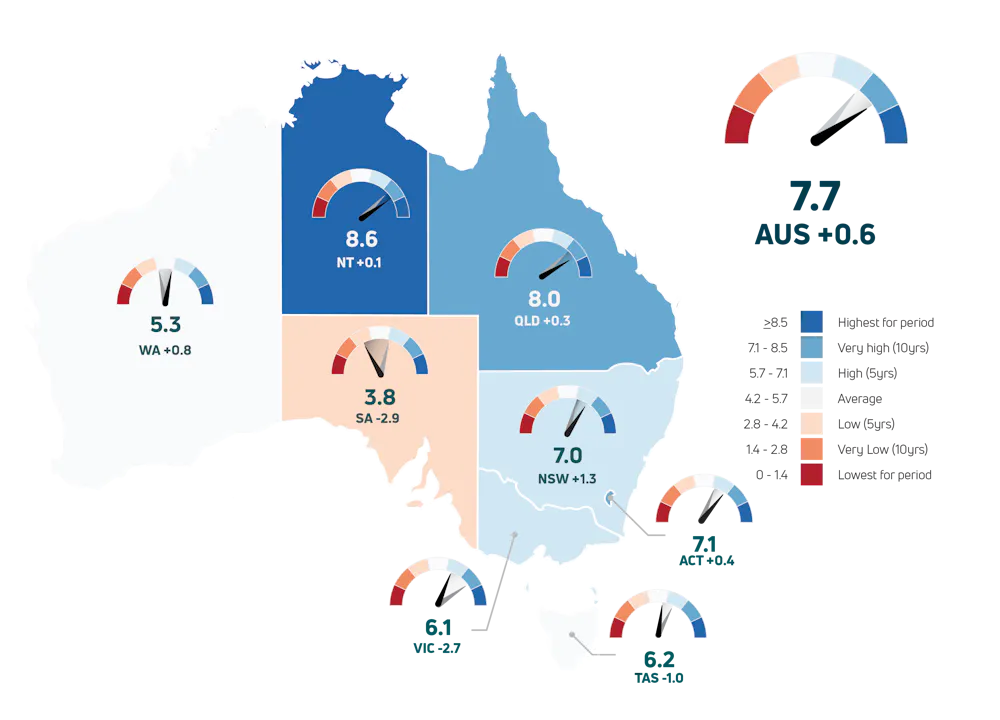
For the fourth year running, the condition of Australia’s environment has been relatively good overall. Our national environment scorecard released today gives 2024 a mark of 7.7 out of 10.
You might wonder how this can be. After all, climate change is intensifying and threatened species are still in decline.
The main reason: good rainfall partly offset the impact of global warming. In many parts of Australia, rainfall, soil water and river flows were well above average, there were fewer large bushfires, and vegetation continued to grow. Overall, conditions were above average in the wetter north and east of Australia, although parts of the south and west were very dry.
But this is no cause for complacency. Australia’s environment remains under intense pressure. Favourable conditions have simply offered a welcome but temporary reprieve. As a nation we must grasp the opportunity now to implement lasting solutions before the next cycle of drought and fire comes around.
For the tenth year running, we have trawled through a huge amount of data from satellites, weather and water measuring stations, and ecological surveys.
We gathered information about climate change, oceans, people, weather, water, soils, plants, fire and biodiversity.
Then we analysed the data and summarised it all in a report that includes an overall score for the environment. This score (between zero and ten) gives a relative measure of how favourable conditions were for nature, agriculture and our way of life over the past year in comparison to all years since 2000. This is the period we have reliable records for.
While it is a national report, conditions vary enormously between regions and so we also prepare regional scorecards. You can download the scorecard for your region at our website.
Globally, 2024 was the world’s hottest year on record. It was Australia’s second hottest year, with the record warmest sea surface temperatures. As a result, the Great Barrier Reef experienced its fifth mass bleaching event since 2016, while Ningaloo Reef in Western Australia also experienced bleaching.
Yet bushfire activity was low despite high temperatures, thanks to regular rainfall.
National rainfall was 18% above average, improving soil condition and increasing tree canopy cover.
States such as New South Wales saw notable improvements in environmental conditions, while conditions also improved somewhat in Western Australia. Others experienced declines, particularly South Australia, Victoria, and Tasmania. These regional contrasts were largely driven by rainfall – good rains can hide some underlying environmental degradation trends.
Favourable weather conditions bumped up the nation’s score this year, rather than sustained environmental improvements.
Mapping the environmental condition score to local government areas reveals poor (red) conditions in the west and the south, with good scores (blue) in the east and north. White is neutral. Australia’s Environment Explorer, CC BY-NC-ND
A temporary respite?
The past four years show Australia’s environment is capable of bouncing back from drought and fire when conditions are right.
But the global climate crisis continues to escalate, and Australia remains highly vulnerable. Rising sea levels, more extreme weather and fire events continue to threaten our environment and livelihoods. The consequences of extreme events can persist for many years, like we have seen for the Black Summer of 2019–20.
To play our part in limiting global warming, Australia needs to reduce its greenhouse gas emissions. Progress is stalling: last year, national emissions fell slightly (0.6%) below 2023 levels but were still higher than in 2022. Australia’s greenhouse gas emissions per person remain among the highest in the world.
Biodiversity loss remains an urgent issue. The national threatened species list grew by 41 species in 2024. While this figure is much lower than the record of 130 species added in 2023, it remains well above the long-term average of 25 species added per year.
More than half of the newly listed or uplisted species were directly affected by the Black Summer fires. Meanwhile, habitat destruction and invasive species continue to put pressure on native ecosystems and species.
The Threatened Species Index captures data from long-term threatened species monitoring. The index is updated annually but with a three-year lag due largely to delays in data processing and sharing. This means the 2024 index includes data up to 2021.
The index revealed the abundance of threatened birds, mammals, plants, and frogs has fallen an average of 58% since 2000.
But there may be some good news. Between 2020 and 2021, the overall index increased slightly (2%) suggesting the decline has stabilised and some recovery is evident across species groups. We’ll need further monitoring to confirm whether this represents a lasting turnaround or a temporary pause in declines.
This graph shows the relative abundance of different categories of species listed as threatened under the EPBC Act since 2000, as collated by the Threatened Species Index. Australia’s Environment Report 2024, CC BY-NC-ND
What needs to happen?
The 2024 Australia’s Environment Report offers a cautiously optimistic picture of the present. Without intervention, the future will look a lot worse.
Australia must act decisively to secure our nation’s environmental future. This includes reducing greenhouse gas emissions, introducing stronger land management policies and increasing conservation efforts to maintain and restore our ecosystems.
Without redoubling our efforts, the apparent environmental improvements will not be more than a temporary pause in a long-term downward trend.
Australia’s Environment Report is produced by the ANU Fenner School for Environment & Society and the Terrestrial Ecosystem Research Network (TERN), which is enabled by the National Collaborative Research Infrastructure Strategy.
Albert Van Dijk receives or has previously received funding from several government-funded agencies, grant schemes and programs.
Shoshana Rapley is a Research Assistant and PhD candidate at the Australian National University and has received funding from the Ecological Society of Australia and BirdLife Australia.
Tayla Lawrie is a current employee of the Terrestrial Ecosystem Research Network (TERN), funded by the National Collaborative Research Infrastructure Strategy.
by Paolo AffatatoRome (Agenzia Fides) – “Pope Francis’ visit to Indonesia and the signing of the Istiqlal Declaration last September were a crowning achievement of diplomatic relations between Indonesia and the Holy See,” says Michael Trias Kuncahyono, Ambassador of the Republic of Indonesia to the Holy See, on the occasion of the 75th anniversary of the official establishment of diplomatic relations between Indonesia and the Holy See on March 13, 1950. Fides Agency asked him some questions- Ambassador, can you recall the historical and political context in which the establishment of diplomatic relations between the Holy See and Indonesia took place, 75 years ago?Indonesia had recently completed the journey to gain independence from the Dutch colonizers: Indonesia proclaimed itself independent in 1945. But at that time, however, there were still colonial pressures from European powers, in the specific case of the Dutch. It was then the first native Indonesian bishop, Monsignor Albertus Sugiyopranoto who called on the Vatican to recognize Indonesian independence. Not only because of the assertion of the independence of the State but also because many missionaries were still imprisoned by colonial forces. This fact could have been a good push to get Indonesia’s recognition.- Was the personality of Albertus Sugiyopranoto therefore decisive?A bishop since 1940, he also made an important contribution during the occupation by Japanese forces in 1942, who had arrested priests and nuns. Bishop Sugiyopranoto took a very clear position. When Dutch forces attacked the Indonesians in 1947, he made an impassioned radio address urging Catholics to defend the homeland. He was an advocate for the involvement of Catholics in the independence movement. Meanwhile, he made contact with the Holy See, which sent one of its delegates in December 1947 and initiated direct relations with President Sukarno. Then the Apostolic Delegate, in agreement with Indonesian Vice President Mohamed Atta, dialogued to establish formal relations. Thus on March 13, 1950, the Holy See began diplomatic relations with Indonesia with the status of Apostolic Internunciature, which later became Apostolic Nunciature on December 6, 1966.- What were the respective goals on the two sides in establishing such relations?We know that the Holy See’s diplomacy is different from all other diplomacies in the world. The Vatican ambassador, today the Apostolic Nuncio, is sent to a State not only with the role of an intermediary between states but also to keep in connection and relationship the Church of Rome with the local Church, in the country in which it is located. At that time in Indonesia there was a great growth of the Catholic community, a phenomenon that aroused interest in the Holy See. So there was a need to facilitate the pastoral work and the life of the local Church. There was a need to follow and deepen the apostolic work in Indonesia. The goal of the Holy See is always to take care of the Catholic Church, and the Delegate was the Pope’s representative in this process.Indonesia, for its part, wanted to establish diplomatic relations because, as a very young country, it needed to be recognized in the international community. The international recognition by the Holy See was of immense value: the Holy See was the first European entity to recognize the Indonesian State. This then led other European States to follow the example. It was a decisive step.- Was the Catholic Church then already established in Indonesia? In what forms and with what configuration?The Catholic religion in Indonesia was already a well-established community, mainly thanks to some missionaries and “spiritual fathers” of the community, such as the Jesuit Franciscus Van Lith, who had been very involved in the apostolate of education, opening schools in Java, a work that was highly appreciated by Indonesian society at the time. The first Indonesian Bishop Sugiyopranoto was one of Father Van Lith’s students. Further east in the Flores area, then, a Catholic presence was already established thanks to the Portuguese. Let us remember that Christianity had arrived as early as the 7th century, and then in the 16th century several missionaries from Portugal had landed in Indonesia including Francis Xavier, passing through the Moluccas on his way to China.In addition, the fact that Indonesia, at its birth in 1945, was founded on the “Pancasila” the charter of five principles, one of which was faith in God; and that it adopted the principle of “diverse but one”: this made the Holy See realize that there was fertile ground in which all religions had a chance to flourish.- Was the “unity in diversity” approach a crucial point?That principle was the catalyst in diplomatic relations. But others, such as equality and brotherhood, are also in harmony with Christian values. The founding fathers were quite far-sighted in considering that a nation so rich in different cultures, ethnicities and religions could only survive by staying true to the motto “unity in diversity.” Pope Pius XII already appreciated this and Pope Francis also reiterated it, saying that the model should be taken as an example, especially in countries where there is great pluralism and it is difficult to remain united: we are different but we are brothers.- In Indonesian history, in designing the architecture of the Republic, the choice was made not to build a mono-religious state…It was: the first of the five founding principles was “faith in one God,” then that phrase should have continued by saying “in the Islamic way.” There was a great debate about it, then it was decided to leave only “faith in one God.” Mohammad Atta, the vice president, who was a Muslim and came from Padang a strongly Islamic city, pointed it out clearly because, he said, “we have to remain united.” It was a forward-looking vision.- What common points do you see between Indonesia and the Holy See today in their respective political and cultural approaches?Politically, Indonesia and the Holy See find themselves in a policy that is always in favor of humanity. The Holy See does not work for the maintenance of temporal power but for the development of man, his dignity and rights. I think Indonesia also has the same approach, as the Pancasila and our Constitution say, promoting equality, freedom, democracy as well as peace. These are points that Indonesia and the Holy See have in common.- Is there a common vision also in the use of the instrument of diplomacy?In the instrument of diplomacy, the aspect we have in common can be seen in the founding principles, such as freedom from colonialism and the promotion of peace: we see this in scenarios such as the Middle East, Ukraine, Myanmar. The “diplomacy of hope,” mentioned by Pope Francis in his recent address to the Diplomatic Corps, we understood it as diplomacy that wants to improve the world in a harmonious and comprehensive way. Hope must start from trust, which is the basis of relations between states. Hope for peace in the various conflict scenarios is generated on the basis of trust between the interlocutors.- What did Pope Francis’ trip to Indonesia in 2024 mean?Pope Francis’ visit to Indonesia and the signing of the Istiqlal Declaration last September was a crowning achievement of diplomatic relations between Indonesia and the Holy See. Not all countries with which the Holy See has relations are visited by the pontiff. And three Popes have visited Indonesia – Pope St. Paul VI (1970), Pope St. John Paul II (1989) and Pope Francis (2024).The trip was not perceived as a trip reserved for the Catholic community, but was perceived as a visit to all Indonesians, who welcomed the Pope with great warmth. The Pope became a model of a leader to follow: he was easy-going, showed himself in a non-luxury car, was always very humble, and stopped to greet everyone. Indonesia showed its true face, a plural face, composed of people of different cultures and religions who welcomed the Pope warmly and enthusiastically. Today, at the time of his illness, so many write to me, not only Catholics but also Muslims, saying: let us pray for him.- What do you hope for the future?We want to strengthen more and more the relations between Indonesia and the Holy See: and, since there is no political and economic aspect, to do it through culture. We intend to make the pluralism of Indonesian culture and its peaceful face better known. The Holy See is, for us, also a gateway to the rest of the world. Another field of fruitful cooperation is that of interreligious dialogue, according to the vision of Pope Francis. These are the paths for future relations. (Agenzia Fides, 18/3/2025)
Share:
Question for written answer E-001030/2025 to the Commission Rule 144 Kostas Papadakis (NI), Lefteris Nikolaou-Alavanos (NI)
Farmers, livestock breeders and bee-keepers are battling hard to make a living.
The CAP, which governments have co-decided and implemented over time, favours cartels that buy farmers’ products at ‘open’ prices. Struggling farmers demand immediate support for their shrinking income. The Government’s much-advertised reduction in VAT to 6 % on agricultural supplies is of no benefit to farmers, as it has no impact on reducing production costs since, as intermediaries who sell products at 13 % VAT, they are forced to pay the VAT difference to the revenue office.
In light of the above:
1.What is the Commission’s position on the acute problems faced by struggling farmers, livestock breeders and bee-keepers in Greece, which are caused by the policy in place – with the CAP at the centre – and which are leading them down the path of hardship?
2.What is the Commission’s position on the demands of agricultural producers for the replacement of lost income due to reduced production and low prices; the reduction of production costs by means of tax-free petrol at the pump, cheap electricity and water, and subsidies for fertilizers, agricultural supplies and animal feed; compensation of 100 % of losses; state-guaranteed prices for farmers and a ceiling on supermarket prices; the implementation of all necessary infrastructure projects; measures against ‘hellenization’; the linking of the subsidy to real agricultural production and the actual livestock count; the taking all necessary measures to control animal diseases and an increase in farmworkers’ pensions?
The European Union’s defence industry requires a major increase in private investment due to the evolving geopolitical landscape. The emergence of new EU defence exchange-traded funds (ETFs) that hold shares in the underlying companies could encourage this investment and provide EU defence firms with dearly needed capital.
The first quarter of 2025 has been a very busy one for the European Council, with EU leaders having already convened three times before their regular March meeting – once for an informal retreat on defence on 3 February, in a video-conference on 26 February and then for a special European Council meeting on 6 March. The increasingly complex geopolitical situation, as well as the current strains on the transatlantic relationship, make the regular March meeting a crucial one. According to the Leaders’ Agenda, the meeting was expected to concentrate mainly on competitiveness, but due to recent events many items have been added to the agenda, including Ukraine, the Middle East and defence. As usual, the meeting will start with an exchange of views with European Parliament President Roberta Metsola. EU leaders will also have a discussion with Ukrainian President Volodymyr Zelenskyy. There will be a working lunch with United Nations Secretary-General António Guterres, dedicated to multilateralism and other global issues. In the afternoon, a Euro Summit meeting will take place in inclusive format, with European Central Bank President, Christine Lagarde, and Eurogroup President, Paschal Donohoe, taking part in the discussions on economic issues and competitiveness.
Question for written answer E-001028/2025 to the Commission Rule 144 Kostas Papadakis (NI), Lefteris Nikolaou-Alavanos (NI)
The Pylos shipwreck, a tragic crime which claimed the lives of at least 600 refugees and migrants, remains unpunished. The Greek Ombudsman’s findings reveal that the Nea Dimokratia Government bears huge responsibility in the matter.
These findings follow on from Frontex’s own report, in which serious accusations were made against the Ministry of Maritime Affairs and the Coast Guard. However, Frontex’s findings are being hushed up and the enormous responsibilities of Frontex itself are being concealed. Although the Frontex plane sighted the fishing vessel and detected the dangerous route it was on, it failed to issue a mayday call and made no attempt whatsoever to prevent the shipwreck because it ‘was ordered not to’.
In light of the above,
1.What is the Commission’s take of the information brought to light in the Greek Ombudsman’s findings and in the previous findings of Frontex’s Fundamental Rights Office and of the European Ombudsman, which show that the Nea Dimokratia Government and the Greek authorities bear objective responsibilities for the deadly Pylos shipwreck, as does Frontex, given that it made no effort to prevent the shipwreck even though it was present in the area?
2.What view does the Commission take of the fact that the continuous and recurring shipwreck incidents that have turned the Mediterranean into a graveyard, are the result of the EU and government policy of stepping up the migration crackdown at the borders, with the assistance of Frontex, which will intensify with the Pact on Migration and Asylum that is being promoted?
Question for written answer E-000888/2025 to the Commission Rule 144 Petra Steger (PfE)
Now that the foreign ministers of the Member States have unanimously approved several legal instruments provisionally suspending the EU sanctions against Syria in the banking, energy and transport sectors, which have been in place for years, the conditions must be created for an EU-wide initiative to step up deportations to Syria. It cannot be the case that Syria benefits from significant economic relief while more than a million Syrians, who are urgently needed to rebuild their country, remain in the EU – one hundred thousand of whom in Austria. However, a return of Syrian refugees to their home country would not only contribute to the development of Syria, but would also mitigate the security risks in the host countries, which are suffering massively from the consequences of illegal mass migration.
1.What concrete measures does the Commission plan to take to ensure that the lifting of EU sanctions goes hand in hand with a coordinated return of Syrian asylum seekers to their country?
2.Is the Commission planning to revise the existing asylum regime for Syrian nationals to take into account the changed political circumstances in Syria?
3.How does the Commission plan to support Member States in the implementation of return programmes to enable rapid and efficient remigration of Syrian citizens?