NewzIntel.com

    • Checkout Page
    • Contact Us
    • Default Redirect Page
    • Frontpage
    • Home-2
    • Home-3
    • Lost Password
    • Member Login
    • Member LogOut
    • Member TOS Page
    • My Account
    • NewzIntel Alert Control-Panel
    • NewzIntel Latest Reports
    • Post Views Counter
    • Privacy Policy
    • Public Individual Page
    • Register
    • Subscription Plan
    • Thank You Page

Category: Politics

  • MIL-OSI USA: Addressing Risks from Paul Weiss

    US Senate News:

    Source: The White House
    class=”has-text-align-left”>By the authority vested in me as President by the Constitution and the laws of the United States of America, it is hereby ordered:
    Section 1.  Background.  Global law firms have for years played an outsized role in undermining the judicial process and in the destruction of bedrock American principles.  Many have engaged in activities that make our communities less safe, increase burdens on local businesses, limit constitutional freedoms, and degrade the quality of American elections.  Additionally, they have sometimes done so on behalf of clients, pro bono, or ostensibly “for the public good” — potentially depriving those who cannot otherwise afford the benefit of top legal talent the access to justice deserved by all.  My Administration will no longer support taxpayer funds sponsoring such harm.  My Administration has already taken action to address some of the significant risks and egregious conduct associated with law firms, and I have determined that similar action is necessary to end Government sponsorship of harmful activity by an additional law firm:  Paul, Weiss, Rifkind, Wharton & Garrison LLP (Paul Weiss).  In 2021, a Paul Weiss partner and former leading prosecutor in the office of Special Counsel Robert Mueller brought a pro bono suit against individuals alleged to have participated in the events that occurred at or near the United States Capitol on January 6, 2021, on behalf of the District of Columbia Attorney General.In 2022, Paul Weiss hired unethical attorney Mark Pomerantz, who had previously left Paul Weiss to join the Manhattan District Attorney’s office solely to manufacture a prosecution against me and who, according to his co-workers, unethically led witnesses in ways designed to implicate me.  After being unable to convince even Manhattan District Attorney Alvin Bragg that a fraud case was feasible, Pomerantz engaged in a media campaign to gin up support for this unwarranted prosecution.Additionally, Paul Weiss discriminates against its own employees on the basis of race and other categories prohibited by civil rights laws.  Paul Weiss, along with nearly every other large, influential, or industry leading law firm, makes decisions around “targets” based on race and sex.  My Administration is committed to ending such unlawful discrimination perpetrated in the name of “diversity, equity, and inclusion” policies and ensuring that Federal benefits support the laws and policies of the United States, including those laws and policies promoting our national security and respecting the democratic process.  Those who engage in blatant discrimination and other activities inconsistent with the interests of the United States should not have access to our Nation’s secrets nor be deemed responsible stewards of any Federal funds.
    Sec. 2.  Security Clearance Review.  (a)  The Attorney General, the Director of National Intelligence, and all other relevant heads of executive departments and agencies (agencies) shall immediately take steps consistent with applicable law to suspend any active security clearances held by individuals at Paul Weiss and Mark Pomerantz, pending a review of whether such clearances are consistent with the national interest.(b)  The Office of Management and Budget shall identify all Government goods, property, material, and services, including Sensitive Compartmented Information Facilities, provided for the benefit of Paul Weiss.  The heads of all agencies providing such material or services shall, to the extent permitted by law, expeditiously cease such provision.
    Sec. 3.  Contracting.  (a)  To prevent the transfer of taxpayer dollars to Federal contractors whose earnings subsidize, among other things, activities that are not aligned with American interests, including racial discrimination, Government contracting agencies shall, to the extent permissible by law, require Government contractors to disclose any business they do with Paul Weiss and whether that business is related to the subject of the Government contract.(b)  The heads of all agencies shall review all contracts with Paul Weiss or with entities that disclose doing business with Paul Weiss under subsection (a) of this section.  To the extent permitted by law, the heads of agencies shall:(i)   take appropriate steps to terminate any contract, to the maximum extent permitted by applicable law, including the Federal Acquisition Regulation, for which Paul Weiss has been hired to perform any service;(ii)  otherwise align their agency funding decisions with the interests of the citizens of the United States; with the goals and priorities of my Administration as expressed in executive actions, especially Executive Order 14147 of January 20, 2025 (Ending the Weaponization of the Federal Government); and as heads of agencies deem appropriate.  Within 30 days of the date of this order, all agencies shall submit to the Director of the Office of Management and Budget an assessment of contracts with Paul Weiss or with entities that do business with Paul Weiss effective as of the date of this order and any actions taken with respect to those contracts in accordance with this order.
    Sec. 4.  Racial Discrimination.  Nothing in this order shall be construed to limit the action authorized by section 4 of Executive Order 14230 of March 6, 2025 (Addressing Risks from Perkins Coie LLP).  
    Sec. 5.  Personnel.  (a)  The heads of all agencies shall, to the extent permitted by law, provide guidance limiting official access from Federal Government buildings to employees of Paul Weiss when such access would threaten the national security of or otherwise be inconsistent with the interests of the United States.  In addition, the heads of all agencies shall provide guidance limiting Government employees acting in their official capacity from engaging with Paul Weiss employees to ensure consistency with the national security and other interests of the United States.     (b)  Agency officials shall, to the extent permitted by law, refrain from hiring employees of Paul Weiss, absent a waiver from the head of the agency, made in consultation with the Director of the Office of Personnel Management, that such hire will not threaten the national security of the United States.
    Sec. 6.  General Provisions.  (a)  Nothing in this order shall be construed to impair or otherwise affect:(i)   the authority granted by law to an executive department or agency, or the head thereof; or(ii)  the functions of the Director of the Office of Management and Budget relating to budgetary, administrative, or legislative proposals.(b)  This order shall be implemented consistent with applicable law and subject to the availability of appropriations.(c)  This order is not intended to, and does not, create any right or benefit, substantive or procedural, enforceable at law or in equity by any party against the United States, its departments, agencies, or entities, its officers, employees, or agents, or any other person.
                                   DONALD J. TRUMP
    THE WHITE HOUSE,    March 14, 2025.

    MIL OSI USA News –

    March 15, 2025
  • MIL-OSI USA: Fact Sheet: President Donald J. Trump Continues the Reduction of the Federal Bureaucracy

    US Senate News:

    Source: The White House
    ELIMINATING WASTE AND REDUCING GOVERNMENT OVERREACH: Today, President Donald J. Trump signed an Executive Order continuing the reduction of the Federal Bureaucracy.
    This Executive Order eliminates non-statutory functions and reduces statutory functions of unnecessary governmental entities to what is required by law.
    Affected entities include the Federal Mediation and Conciliation Service, United States Agency for Global Media, Woodrow Wilson International Center for Scholars, Institute of Museum and Library Services, United States Interagency Council on Homelessness, Community Development Financial Institutions Fund, Minority Business Development Agency, and Arctic Research Commission.

    This action builds on an Executive Order President Trump previously signed to reduce unnecessary governmental entities and Federal advisory committees.
    REDUCING GOVERNMENT OVERREACH: With this Executive Order, President Trump is further decreasing the size of the Federal Government to enhance accountability, reduce waste, and promote innovation.
    The Department of Government Efficiency (DOGE) has already identified billions in waste, fraud, and abuse.
    Cutting these governmental entities will save taxpayer dollars, reduce unnecessary government spending, and streamline government priorities.
    By reducing the Federal footprint, President Trump is returning power to local communities and state governments.
    REFORMING THE FEDERAL BUREAUCRACY: The American people elected President Trump to drain the swamp and end ineffective government programs that empower government without achieving measurable results.
    The government wastes billions of dollars each year on duplicative programs and frivolous expenditures that fail to align with American values or address the needs of the American people.
    President Trump eliminated the Federal Executive Institute, a government program purportedly designed to provide bureaucratic leadership training.  
    President Trump established the “Department of Government Efficiency” to examine how to streamline the Federal Government, eliminate unnecessary programs, and reduce bureaucratic inefficiency.
    President Trump launched a 10-to-1 deregulation initiative, ensuring every new rule is justified by clear benefits.
    Through these actions, President Trump is keeping his promise to restore

    MIL OSI USA News –

    March 15, 2025
  • MIL-OSI USA: Continuing the Reduction of the Federal Bureaucracy

    US Senate News:

    Source: The White House
    class=”has-text-align-left”>By the authority vested in me as President by the Constitution and the laws of the United States of America, it is hereby ordered:
    Section 1.  Purpose.  This order continues the reduction in the elements of the Federal bureaucracy that the President has determined are unnecessary.
    Sec. 2.  Reducing the Scope of the Federal Bureaucracy.(a)  Except as provided in subsection (b) of this section, the non-statutory components and functions of the following governmental entities shall be eliminated to the maximum extent consistent with applicable law, and such entities shall reduce the performance of their statutory functions and associated personnel to the minimum presence and function required by law:(i)    the Federal Mediation and Conciliation Service;(ii)   the United States Agency for Global Media;(iii)  the Woodrow Wilson International Center for Scholars in the Smithsonian Institution;(iv)   the Institute of Museum and Library Services;(v)    the United States Interagency Council on Homelessness;(vi)   the Community Development Financial Institutions Fund; and(vii)  the Minority Business Development Agency.(b)  Within 7 days of the date of this order, the head of each governmental entity listed in subsection (a) of this section shall submit a report to the Director of the Office of Management and Budget confirming full compliance with this order and explaining which components or functions of the governmental entity, if any, are statutorily required and to what extent.(c)  In reviewing budget requests submitted by the governmental entities listed in subsection (a) of this section, the Director of the Office of Management and Budget or the head of any executive department or agency charged with reviewing grant requests by such entities shall, to the extent consistent with applicable law and except insofar as necessary to effectuate an expected termination, reject funding requests for such governmental entities to the extent they are inconsistent with this order.
     Sec. 3.  General Provisions.  (a)  Nothing in this order shall be construed to impair or otherwise affect:(i)   the authority granted by law to an executive department, agency, or  the head thereof; or(ii)  the functions of the Director of the Office of Management and Budget relating to budgetary, administrative, or legislative proposals.(b)  This order shall be implemented consistent with applicable law and subject to the availability of appropriations.(c)  This order is not intended to, and does not, create any right or benefit, substantive or procedural, enforceable at law or in equity by any party against the United States, its departments, agencies, or entities, its officers, employees, or agents, or any other person.
    THE WHITE HOUSE,March 14, 2025.

    MIL OSI USA News –

    March 15, 2025
  • MIL-OSI USA: Fact Sheet: President Donald J. Trump Addresses Risks from Paul Weiss

    US Senate News:

    Source: The White House
    SUSPENDING SECURITY CLEARENCES TO PROTECT THE NATIONAL INTEREST: Today, President Donald J. Trump signed an Executive Order to suspend security clearances held by individuals at Paul, Weiss, Rifkind, Wharton & Garrison LLP (Paul Weiss) pending a review of whether such clearances are consistent with the national interest.
    Security clearances held by Paul Weiss employees and Mark Pomerantz will be immediately suspended, pending a review of whether their access to sensitive information is consistent with the national interest.
    The Federal Government will halt all material and services, including sensitive compartmented information facility (SCIF) access provided to Paul Weiss and restrict its employees’ access to government buildings.
    Federal Agencies will also refrain from hiring Paul Weiss employees unless specifically authorized.

    To ensure taxpayer dollars no longer go to contractors whose earnings subsidize activities not aligned with American interests, the Federal Government will terminate contracts that involve Paul Weiss.
    The practices of Paul Weiss will be reviewed under Title VII to ensure compliance with civil rights laws against racial bias.
    SAFEGUARDING TAXPAYER FUNDS: The Trump Administration will no longer support taxpayer funds from sponsoring activities that make our communities less safe, increase burdens on local businesses, limit constitutional freedoms, and degrade the quality of American elections.
    Paul Weiss hired unethical attorney Mark Pomerantz, who had previously left the firm to join the Manhattan District Attorney’s office solely to manufacture a prosecution against President Trump.
    According to his coworkers, Pomerantz had unethically led witnesses in ways designed to implicate President Trump.
    After being unable to convince Manhattan District Attorney Alvin Bragg that a fraud case was feasible, Pomerantz engaged in a media campaign to gin up support for this unwarranted prosecution.

    Paul Weiss has been accused of discriminating against its own employees on the basis of race and other categories prohibited by civil rights laws.
    ENDING THE WEAPONIZATION OF GOVERNMENT: President Trump is delivering on his promise to end the weaponization of government and protect the nation from partisan actors who exploit their influence.  
    President Trump is refocusing government operations to their core mission—serving the citizens of the United States.  
    President Trump signed an Executive Order to end the weaponization of the Federal Government on his first day in office after promising to “end forever the weaponization of government and the abuse of law enforcement against political opponents.”
    President Trump revoked security clearances held by dozens of intelligence officials who falsely claimed in a 2020 letter, during the height of the U.S. presidential election season, that Hunter Biden’s laptop was tantamount to Russian disinformation.

    MIL OSI USA News –

    March 15, 2025
  • MIL-OSI USA: Fact Sheet: President Donald J. Trump Rescinds Additional Harmful Biden Executive Actions

    US Senate News:

    Source: The White House
    RESTORING COMMON SENSE AND GOOD GOVERNANCE: Today, President Donald J. Trump signed an Executive Order rescinding a second round of harmful executive actions issued by the prior administration, continuing his efforts to reverse damaging policies and restore effective government.
    This Executive Order rescinds 19 executive actions signed by President Biden.
    This is in addition to the nearly 80 executive actions President Trump rescinded on Day One.
    In just two months, President Trump has rescinded more executive actions than the total number of executive orders President Biden signed in his entire first year.

    These rescissions are necessary to end radical ideology, eliminate wasteful regulations, and prioritize the interests of American citizens.
    President Trump is committed to continuing the review and repeal of harmful Biden administration policies to usher in a new golden age for America.
    REVERSING BIDEN’S FAILED POLICIES: President Trump’s latest action targets some of Biden’s most damaging executive orders and policies, including:
    Rescinding Biden’s executive action that elevated radical gender ideology in U.S. diplomacy and foreign aid.
    Eliminating Biden’s use of the Defense Production Act to push his Green New Scam, including mandates for electric heat pumps and solar panels.
    Terminating proclamations declaring nearly a million acres constitute new national monuments that lock up vast amounts of land from economic development and energy production.
    Repealing Biden’s executive order forcing radical labor policies and apprenticeship mandates onto American businesses and government agencies.
    Removing Biden’s directive to prioritize union-driven policies that imposed unnecessary regulations on industries.
    Revoking Biden executive order that funneled Federal resources into radical biotech and biomanufacturing initiatives under the guise of environmental policy.
    PRESIDENT TRUMP IS DELIVERING ON HIS PROMISES: With today’s Executive Order, President Trump continues delivering on his promise to reverse the disastrous policies of the previous administration and put America back on a path to prosperity, security, and strength.
    President Trump: “I can undo almost everything Biden did, he through executive order. And on day one, much of that will be undone.”

    MIL OSI USA News –

    March 15, 2025
  • MIL-OSI Submissions: Philippines: Duterte’s appearance at ICC a symbolic moment for ‘war on drugs’ victims – Amnesty International

    Source: Amnesty International

    Responding to former Philippines President Rodrigo Duterte’s scheduled first appearance at the International Criminal Court, Amnesty International’s Southeast Asia Researcher Rachel Chhoa-Howard said:

    “Rodrigo Duterte’s appearance at the International Criminal Court is a sight families of the thousands of victims of the ‘war on drugs’ in the Philippines feared they would never see. Today shows that those accused of committing the worst crimes may one day face their day in court, regardless of their position.

    “The very institution that former President Duterte mocked will now try him for murder as a crime against humanity. This is a symbolic moment and a day of hope for families of victims and human rights defenders who have for years fought tirelessly for justice despite grave risks to their lives and safety.

    “The Court must ensure that this process plays out with full transparency, including for people following it in the Philippines. It must also ensure that victims, witnesses and their relatives and representatives are fully supported and protected and can effectively participate in the proceedings.

    “Accountability must not stop here – the Philippines government must rejoin the ICC and cooperate fully with the court in this case. It must also initiate long overdue investigations of its own and, where there is evidence, ensure fair trials and prosecutions for all those suspected to be responsible for violations, regardless of their rank or status.”

    Background

    On 11 March, upon his return to Manila from Hong Kong, former Philippine President Rodrigo Duterte was arrested on the basis of a warrant issued by the International Criminal Court against him for the charge of murder as a crime against humanity in relation to the “war on drugs”, committed between late 2011 and March 2019.

    The Philippines had been a member of the ICC since 1 November 2011, but in 2018 gave a notice of withdrawal that took effect on 17 March 2019. Nevertheless, the ICC retained jurisdiction with respect to alleged crimes that occurred in the Philippines while it was a state party, from November 2011 to March 2019.

    On 13 March, Duterte was detained in The Hague, Netherlands, where he will face trial. He will appear before the Court on 14 March, during which the chamber will, among others, ensure he is informed of the charges against him and of his rights under the Rome Statute and can follow the proceedings.

    The ICC has been carrying out investigations into possible crimes against humanity including murders committed in the context of the deadly “war on drugs” under the administration of President Duterte and also those in Davao City by the alleged Davao Death Squad while he was Mayor of Davao from 2011 to 2016.

    Amnesty International has published major investigations detailing extrajudicial executions and other human rights violations by police and their superiors. The organization has determined that the acts committed reach the threshold of crimes against humanity.

    MIL OSI – Submitted News –

    March 15, 2025
  • MIL-OSI Global: Why was it hard for the GOP to pass its spending bill?

    Source: The Conversation – USA – By Charlie Hunt, Assistant Professor of Political Science, Boise State University

    U.S. Sen. John Fetterman of Pennsylvania was one of 10 Democrats who voted to break the filibuster on the GOP funding bill. Anna Moneymaker/Getty Images

    Facing a threat of imminent government shutdown, nine Democrats joined GOP Senate colleagues to defeat a filibuster, moving a six-month government funding bill to final passage in a late-day vote on March 14, 2025.

    Since January 2025, Republicans in Washington have enjoyed what’s commonly known as a governing “trifecta”: control over the executive branch via the president, combined with majorities for their party in both the House and the Senate.

    You might think that a trifecta, which is also referred to as “unified government” by political scientists, is a clear recipe for easy legislative success. In theory, when political parties have unified control over the House, the Senate and the presidency, there should be less conflict between them. Because these politicians are part of the same political party and have the same broad goals, it seems like they should be able to get their agenda approved, and the opposing minority party can do little to stop them.

    But not all trifectas are created equal, and not all are dominant. And several weaknesses in the Republicans’ trifecta made passing their six-month stopgap spending bill so difficult, and they help explain why the federal government came so close to shutting down completely.

    Research shows that political gridlock can still happen even under a unified government for reasons that have been on display ever since Republicans assumed leadership of Congress and the presidency in January.

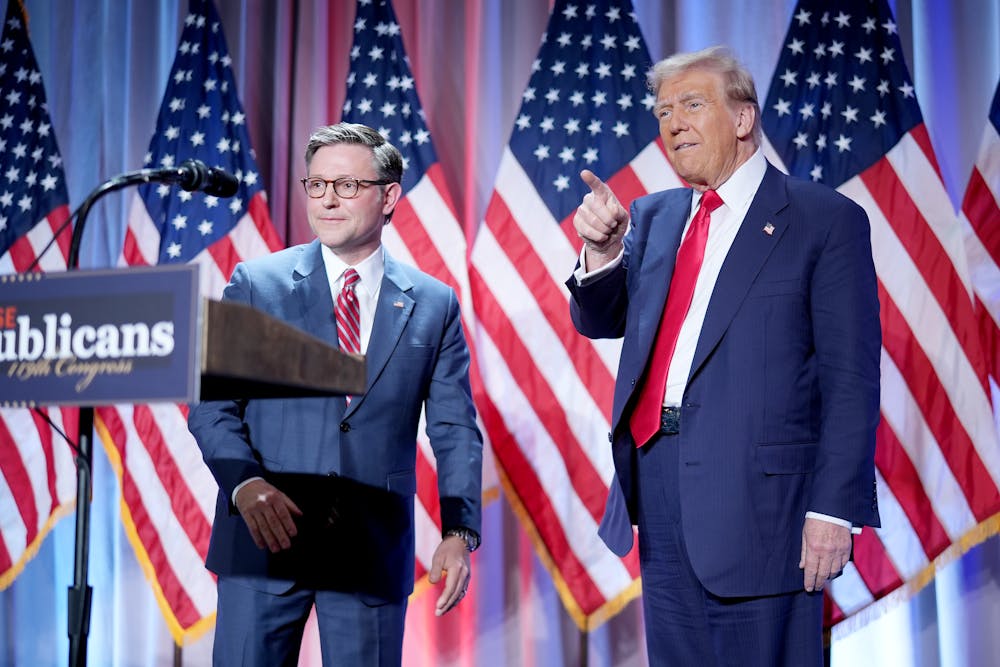
    With a slim majority, will GOP House Speaker Mike Johnson, left, be able to pass Donald Trump’s priorities?
    Andrew Harnik/Getty Images

    Majority size matters

    A unified government clearly makes President Donald Trump’s ability to enact his agenda much easier than if, for example, Democrats controlled the U.S. House, as they did during the second half of his first term, from 2021-2022. But tight margins in both congressional chambers have meant that, even with a trifecta, it hasn’t been an easy.

    Trump was the sixth consecutive president with a trifecta on Day 1 of his second term. But history – and simple math – show that presidents with trifectas have an easier time passing partisan legislation with bigger majorities. Bigger majorities mean majority-party defections won’t easily sink controversial or partisan legislation. A bigger majority also means that individual members of Congress from either party have less leverage to water down the president’s policy requests.

    Trump also held a trifecta during the beginning of his first term in office; in particular, a big Republican majority in the House, which passed major legislation with relative ease and put pressure on Senate colleagues to comply. Trump signed a major tax reform package in 2017 that was the signature legislative achievement of his first term.

    But Trump has a much smaller advantage this time.

    Every president since Bill Clinton has entered office with a trifecta, but Trump’s seat advantage in the House on Day 1 of his second term was the smallest of all of them. This slim House margin meant that Republicans could afford to lose only a handful of their party’s votes on their spending bill in order for it to pass over unanimous Democratic opposition.

    And Trump’s relatively small advantage in the Senate meant that Republicans needed at least eight Democratic votes to break a filibuster. Nine Democrats ultimately voted to advance the bill to final passage.

    Majority party troubles

    In addition to opposition from Democrats in Congress, Trump and other Republican leaders have continued to confront internal divisions within their own party.

    In a closely divided House or Senate, there are plenty of tools that Democrats, even as the minority party, can use to stymie Trump’s agenda. This most notably includes the filibuster, which would have forced Republicans to garner 60 votes for their short-term spending bill. A small proportion of Democrats ultimately bailed out Senate Republicans in this case; but any major defections within the GOP would have required even more Democratic support, which Republicans were unlikely to get.

    Even dominant legislative trifectas, again like the one former President Barack Obama enjoyed when he took office in 2009, can’t prevent divisions within political parties, as different politicians jockey for control of the party’s agenda.

    Despite entering office with a 17-vote advantage in the Senate, 11 more than Trump enjoys now, Obama’s signature legislative achievement – the Affordable Care Act, also sometimes known as Obamacare – had to be watered down significantly to win a simple majority after backlash from conservative Democrats.

    Obama’s trifecta was bigger in size; but in a polarized America, a large majority also means an ideologically diverse one.

    Just as Republican leaders did in the last Congress, Trump has faced similar pushback behind the scenes and in public from members of his own party in his second term. For the past two years, the Republican-led House has been repeatedly riven by leadership struggles and an often aimless legislative agenda, thanks to a lack of cooperation from the the party’s far-right flank.

    This group of ideologically driven lawmakers remains large enough to stall any party-line vote that Speaker Mike Johnson hopes to pass, and the spending bill very nearly fell victim to this kind of defection.

    Even though the GOP squeaked out a win on this spending bill, the potential for continued chaos is monumental, especially if Trump pursues more major reform to policy areas such as immigration.

    Competing pressures

    Despite Congress’ reputation as a polarized partisan body, members of Congress ultimately serve multiple masters. The lingering Republican divisions that made it so difficult to pass this resolution reflect the competing pressures of national party leaders in Washington and the local politics of each member’s district, which often cut against what party leaders want.

    For example, some Republicans represent heavily Republican districts and will be happy to go along with Trump’s agenda, regardless of how extreme it is. Others represent districts won by Kamala Harris in 2024 and might be more inclined to moderate their positions to keep their seats in 2026 and beyond. There admittedly aren’t many of this latter group; but likely enough to sink any party-line legislation Speaker Johnson has in mind.

    What’s next?

    Republicans managed to pass a hurried, stopgap spending bill on March 14, 2025 only by the skin of their teeth. Failing to do so would have driven the federal government into shutdown mode. Small margins, internal divisions and conflicting electoral pressures will continue to make legislating difficult over the next two years or more.

    Thanks to these complications, it may be that congressional Republicans will continue to rely on the executive branch, including Elon Musk and the efforts at the Department of Government Efficiency, or DOGE, to do the policymaking for them, even if it means handing over their own legislative power to Trump.

    This is an updated version of a story first published on Nov. 19, 2024.

    Charlie Hunt does not work for, consult, own shares in or receive funding from any company or organization that would benefit from this article, and has disclosed no relevant affiliations beyond their academic appointment.

    – ref. Why was it hard for the GOP to pass its spending bill? – https://theconversation.com/why-was-it-hard-for-the-gop-to-pass-its-spending-bill-252257

    MIL OSI – Global Reports –

    March 15, 2025
  • MIL-OSI Global: Why was it hard for the GOP – which controls Congress – to pass its spending bill?

    Source: The Conversation – USA – By Charlie Hunt, Assistant Professor of Political Science, Boise State University

    U.S. Sen. John Fetterman of Pennsylvania was one of 10 Democrats who voted to break the filibuster on the GOP funding bill. Anna Moneymaker/Getty Images

    Facing a threat of imminent government shutdown, nine Democrats joined GOP Senate colleagues to defeat a filibuster, moving the six-month government funding bill to final passage in a late-day vote on March 14, 2025.

    Since January 2025, Republicans in Washington have enjoyed what’s commonly known as a governing “trifecta”: control over the executive branch via the president, combined with majorities for their party in both the House and the Senate.

    You might think that a trifecta, which is also referred to as “unified government” by political scientists, is a clear recipe for easy legislative success. In theory, when political parties have unified control over the House, the Senate and the presidency, there should be less conflict between them. Because these politicians are part of the same political party and have the same broad goals, it seems like they should be able to get their agenda approved, and the opposing minority party can do little to stop them.

    But not all trifectas are created equal, and not all are dominant. And several weaknesses in the Republicans’ trifecta made passing their six-month stopgap spending bill so difficult, and they help explain why the federal government came so close to shutting down completely.

    Research shows that political gridlock can still happen even under a unified government for reasons that have been on display ever since Republicans assumed leadership of Congress and the presidency in January.

    With a slim majority, will GOP House Speaker Mike Johnson, left, be able to pass Donald Trump’s priorities?
    Andrew Harnik/Getty Images

    Majority size matters

    A unified government clearly makes President Donald Trump’s ability to enact his agenda much easier than if, for example, Democrats controlled the U.S. House, as they did during the second half of his first term, from 2021-2022. But tight margins in both congressional chambers have meant that, even with a trifecta, it hasn’t been an easy.

    Trump was the sixth consecutive president with a trifecta on Day 1 of his second term. But history – and simple math – show that presidents with trifectas have an easier time passing partisan legislation with bigger majorities. Bigger majorities mean majority-party defections won’t easily sink controversial or partisan legislation. A bigger majority also means that individual members of Congress from either party have less leverage to water down the president’s policy requests.

    Trump also held a trifecta during the beginning of his first term in office; in particular, a big Republican majority in the House, which passed major legislation with relative ease and put pressure on Senate colleagues to comply. Trump signed a major tax reform package in 2017 that was the signature legislative achievement of his first term.

    But Trump has a much smaller advantage this time.

    Every president since Bill Clinton has entered office with a trifecta, but Trump’s seat advantage in the House on Day 1 of his second term was the smallest of all of them. This slim House margin meant that Republicans could afford to lose only a handful of their party’s votes on their spending bill in order for it to pass over unanimous Democratic opposition.

    And Trump’s relatively small advantage in the Senate meant that Republicans needed at least eight Democratic votes to break a filibuster. Nine Democrats ultimately voted to advance the bill to final passage.

    Majority party troubles

    In addition to opposition from Democrats in Congress, Trump and other Republican leaders have continued to confront internal divisions within their own party.

    In a closely divided House or Senate, there are plenty of tools that Democrats, even as the minority party, can use to stymie Trump’s agenda. This most notably includes the filibuster, which would have forced Republicans to garner 60 votes for their short-term spending bill. A small proportion of Democrats ultimately bailed out Senate Republicans in this case; but any major defections within the GOP would have required even more Democratic support, which Republicans were unlikely to get.

    Even dominant legislative trifectas, again like the one former President Barack Obama enjoyed when he took office in 2009, can’t prevent divisions within political parties, as different politicians jockey for control of the party’s agenda.

    Despite entering office with a 17-vote advantage in the Senate, 11 more than Trump enjoys now, Obama’s signature legislative achievement – the Affordable Care Act, also sometimes known as Obamacare – had to be watered down significantly to win a simple majority after backlash from conservative Democrats.

    Obama’s trifecta was bigger in size; but in a polarized America, a large majority also means an ideologically diverse one.

    Just as Republican leaders did in the last Congress, Trump has faced similar pushback behind the scenes and in public from members of his own party in his second term. For the past two years, the Republican-led House has been repeatedly riven by leadership struggles and an often aimless legislative agenda, thanks to a lack of cooperation from the the party’s far-right flank.

    This group of ideologically driven lawmakers remains large enough to stall any party-line vote that Speaker Mike Johnson hopes to pass, and the spending bill very nearly fell victim to this kind of defection.

    Even though the GOP squeaked out a win on this spending bill, the potential for continued chaos is monumental, especially if Trump pursues more major reform to policy areas such as immigration.

    Competing pressures

    Despite Congress’ reputation as a polarized partisan body, members of Congress ultimately serve multiple masters. The lingering Republican divisions that made it so difficult to pass this resolution reflect the competing pressures of national party leaders in Washington and the local politics of each member’s district, which often cut against what party leaders want.

    For example, some Republicans represent heavily Republican districts and will be happy to go along with Trump’s agenda, regardless of how extreme it is. Others represent districts won by Kamala Harris in 2024 and might be more inclined to moderate their positions to keep their seats in 2026 and beyond. There admittedly aren’t many of this latter group; but likely enough to sink any party-line legislation Speaker Johnson has in mind.

    What’s next?

    Republicans managed to pass a hurried, stopgap spending bill on March 14, 2025 only by the skin of their teeth. Failing to do so would have driven the federal government into shutdown mode. Small margins, internal divisions and conflicting electoral pressures will continue to make legislating difficult over the next two years or more.

    Thanks to these complications, it may be that congressional Republicans will continue to rely on the executive branch, including Elon Musk and the efforts at the Department of Government Efficiency, or DOGE, to do the policymaking for them, even if it means handing over their own legislative power to Trump.

    This is an updated version of a story first published on Nov. 19, 2024.

    Charlie Hunt does not work for, consult, own shares in or receive funding from any company or organization that would benefit from this article, and has disclosed no relevant affiliations beyond their academic appointment.

    – ref. Why was it hard for the GOP – which controls Congress – to pass its spending bill? – https://theconversation.com/why-was-it-hard-for-the-gop-which-controls-congress-to-pass-its-spending-bill-252257

    MIL OSI – Global Reports –

    March 15, 2025
  • MIL-OSI Security: Leaders of Los Zetas, a Violent Mexican Drug Cartel, Arraigned on Drug Trafficking, Firearm, and Money Laundering Charges

    Source: United States Department of Justice Criminal Division

    Mexican nationals and former leaders of the Los Zetas cartel were arraigned today in Washington, D.C., on charges of engaging in a continuing criminal enterprise that involved multiple murder conspiracies, conspiring to manufacture and distribute large quantities of cocaine and marijuana destined for the United States, using firearms — including a machinegun — during and in relation to drug trafficking crimes, and conspiring to launder monetary instruments.

    According to court documents, Miguel Trevino Morales, also known as Z-40, Zeta40, and 40, age 52, and Omar Trevino Morales, also known as 42 and Z-42, age 48, ascended to the highest level of leadership in Los Zetas, a violent cartel comprised of former Mexican military officers that began as an armed militaristic wing of the Gulf Cartel. Miguel Trevino Morales allegedly took over leadership of Los Zetas in October 2012 until his arrest by Mexican authorities in 2013, at which point, his brother, Omar Trevino Morales, allegedly assumed primary leadership of the cartel until his arrest by Mexican authorities in 2015. After their arrests, the defendants allegedly renamed Los Zetas to Cartel del Noreste (CDN) and continued to control the cartel while incarcerated in Mexico. Through the date of the fifth superseding indictment, CDN allegedly continued Los Zetas’ criminal drug trafficking activities and acts of violence including murders, assaults, kidnappings, assassinations, and acts of torture. On Feb. 20, 2025, the U.S. Department of State designated CDN as a foreign terrorist organization.

    “The Criminal Division is dedicated to achieving the Attorney General’s goal of the Total Elimination of Cartels,” said Supervisory Official Matthew R. Galeotti, head of the Justice Department’s Criminal Division. “As alleged, former Zetas cartel leaders Z-40 and Z-42 engaged in conspiracies to kill members of the Mexican government, Mexican citizens, members of rival cartels, members of the Guatemalan government, and Guatemalan drug traffickers. We will aggressively pursue and bring to justice in the United States violent transnational criminals and leaders of cartels and hold them accountable for the death and violence they have committed here and abroad and for the large amounts of dangerous drugs that devastate our communities.”

    “As alleged, the defendants represent some of the world’s most vicious cartel leaders, who oversaw Los Zetas’ reign of terror with grotesque impunity and ruthlessness, and a sheer disregard for anything beyond their wealth, power, and control,” said Acting Special Agent in Charge Michael Alfonso of ICE Homeland Security Investigations New York. “I commend ICE Homeland Security Investigations’ El Dorado Task Force for consistently proving itself as a formidable opponent against cartels intent on causing harm. We will use whatever means necessary to protect the safety and security of Americans from threats both here and abroad.”

    The defendants are charged with one count each of continuing a criminal enterprise, conspiracy to distribute five kilograms or more of cocaine and 1,000 kilograms or more of marijuana for importation into the United States, use of a firearm in relation to drug trafficking crimes, and international money laundering conspiracy. As part of the continuing criminal enterprise count, the defendants are alleged to have engaged in conspiracies to kill members of the Mexican government, Mexican citizens, members of rival cartels, members of the Guatemalan government, and Guatemalan drug traffickers. Because the defendants are charged with engaging in a continuing criminal enterprise, they face a maximum penalty of death or life imprisonment.    

    The defendants were subject to longstanding U.S. extradition requests, that were not honored during the prior Administration, but the Mexican government elected to transfer to the current U.S. government in response to the Justice Department’s efforts pursuant to President Trump’s and the Attorney General’s leadership against Mexican drug cartels. On Feb. 27, the defendants were transferred by Mexican authorities to the United States.   

    The Drug Enforcement Administration, ICE HSI, and the FBI are investigating the case.

    Acting Deputy Chief Melanie Alsworth and Trial Attorneys Jayce Born and Kirk Handrich of the Criminal Division’s Narcotic and Dangerous Drug Section, Assistant U.S. Attorney Andrew Wang for the Eastern District of New York, and the U.S. Attorney’s Office for the Western District of Texas are prosecuting the case.

    This case is part of Operation Take Back America, a nationwide initiative that marshals the full resources of the Department of Justice to repel the invasion of illegal immigration, achieve the total elimination of cartels and transnational criminal organizations (TCOs), and protect our communities from the perpetrators of violent crime. Operation Take Back America streamlines efforts and resources from the Department’s Organized Crime Drug Enforcement Task Forces (OCDETFs) and Project Safe Neighborhoods (PSN).

    MIL Security OSI –

    March 15, 2025
  • MIL-OSI Russia: Financial News: Corporate Loan Portfolio to Return to Moderate Growth Rates in 2025

    Translartion. Region: Russians Fedetion –

    Source: Central Bank of Russia –

    Corporate lending slowed to 2.9% in Q4 2024, partly due to active debt repayment by companies that received compensation under government contracts. Growth for the year was a fairly strong 17.9%, but a more moderate increase of 8-13% is expected in 2025.

    The growth rate of the mortgage portfolio also continued to decline and amounted to 1.5% for the quarter, mainly due to a reduction in market mortgages in the context of high rates. For the whole of 2024, mortgages increased by 13.4%, and in 2025 growth is expected at the level of 3-8%.

    The consumer loan portfolio decreased by 2% in the quarter, and increased by 11.2% overall for the year. According to the Bank of Russia, in 2025 its growth will slow down to a level of -1 to 4%, including due to tight monetary and macroprudential policies.

    Corporate funds in banks grew by 11.9% by the end of the year, while household funds grew by 26.1%. In 2025, more moderate dynamics of funds of both organizations (5–10%) and households (7–12%) are expected.

    It is expected that in 2025 there will be a slight compression of the net interest margin and a significant increase in the cost of risk. This will lead to a decrease in profit to 3.0-3.5 trillion rubles.

    More detailed information is provided in the quarterly review “Banking sector”.

    Preview photo: Ultramansk / Shutterstock / Fotodom

    Please note: This information is raw content directly from the source of the information. It is exactly what the source states and does not reflect the position of MIL-OSI or its clients.

    Please Note; This Information is Raw Content Directly from the Information Source. It is access to What the Source Is Stating and Does Not Reflect

    HTTPS: //VVV.KBR.ru/Press/Event/? ID = 23459

    MIL OSI Russia News –

    March 15, 2025
  • MIL-Evening Report: Dramatic growth of NZ’s Māori economy highlights new report

    By Emma Andrews, RNZ Henare te Ua Māori journalism intern

    Māori contributions to the Aotearoa New Zealand economy have far surpassed the projected goal of “$100 billion by 2030”, a new report has revealed.

    The report conducted by the Ministry of Business, Innovation and Employment’s (MBIE) and Te Puni Kōkiri, Te Ōhanga Māori 2023, shows Māori entities have grown from contributing $17 billion to New Zealand’s GDP in 2018 to $32 billion in 2023, turning a 6.5 percent contribution to GDP into 8.9 percent.

    The Māori asset base has grown from $69 billion in 2018 to $126 billion in 2023 — an increase of 83 percent.

    Of that sum, there is $66 billion in assets for Māori businesses and employers, $19 billion in assets for self-employed Māori and $41 billion in assets for Māori trusts, incorporations, and other Māori collectives including post settlement entities.

    In 2018, $4.2 billion of New Zealand’s economy came from agriculture, forestry, and fishing which made it the main contributor.

    Now, administrative, support, and professional services have taken the lead contributing $5.1 billion in 2023.

    However, Māori collectives own around half of all of New Zealand’s agriculture, forestry, and fishing assets and remain the highest asset-rich sector.

    Focused on need
    Te Rūnanga o Toa Rangatira manages political and public interests on behalf of Ngāti Toa, including political interests, treaty claims, fisheries, health and social services, and environmental kaitiakitanga.

    Tumu Whakarae chief executive Helmut Modlik said they were not focused on making money, but on “those who need it most”.

    Te Rūnanga o Toa Rangatira tumu whakarae chief executive Helmut Karewa Modlik . . . “We focus on long-term benefits rather than short-term gains.” Image: Alicia Scott/RNZ

    Ngāti Toa invested in water infrastructure and environmental projects, with a drive to replenish the whenua and improve community health. Like many iwi, they also invest in enterprises that deliver essential services such as health, housing and education.

    “We focus on long-term benefits rather than short-term gains, ensuring that our investments contribute to the sustainable development of our community,” Modlik said.

    Between the covid-19 lockdown and 2023, the iwi grew their assets from $220 million to $850 million and increased their staff from 120 to over 600.

    Pou Ōhanga (chief economic development and investment officer) Boyd Scirkovich said they took a “people first” approach to decision making.

    “We focused on building local capacity and ensuring that our people had the resources and support they needed to navigate the challenges of the pandemic.”

    The kinds of jobs Māori are working are also changing.

    Māori workers now hold more high-skilled jobs than low-skilled jobs with 46 percent in high-skilled jobs, 14 percent in skilled jobs, and 40 percent in low-skilled jobs.

    That is compared to 2018 when 37 percent of Māori were in high-skilled jobs and 51 percent in low-skilled jobs.

    This article is republished under a community partnership agreement with RNZ.

    MIL OSI Analysis – EveningReport.nz –

    March 15, 2025
  • MIL-OSI Europe: Latest news – 13 March 2025 – meeting – Delegation to the Africa-EU Parliamentary Assembly

    Source: European Parliament

    On Thursday, 13 March 2025 (10.00-11.30), the DAFR delegation held a meeting in Strasbourg (room: DE MADARIAGA S5); the main point was an “Exchange of views on the political, humanitarian and human rights crisis in Sudan”.

    The key speakers were:
    • H.E Kabeir Abdelbagi, Ambassador of Sudan to the European Union
    • Ms Mona Rishmawi, Member of the UN Independent Fact-finding Mission for the Sudan (remote connection)

    The meeting was webstreamed and it can be consulted.

    MIL OSI Europe News –

    March 15, 2025
  • MIL-OSI Europe: Answer to a written question – The way forward towards appointing a new EU small and medium-sized enterprise (SME) Envoy – E-001291/2024(ASW)

    Source: European Parliament

    The College Decision of 31 January 2024 appointing Mr Pieper put an end to the selection procedure for the EU SME (small and medium-sized enterprises) Envoy. 

    Following the withdrawal of Mr Pieper from the recruitment procedure before his contract came into effect, the post of EU SME Envoy remains vacant and no decision has yet been taken concerning its possible republication.

    Unless otherwise specified in the vacancy notice for a post, selection procedures for senior officials aim to select a person for a particular post and not to create a reserve list from which the Commission could recruit during a given period of time.

    Since the successful candidate withdrew after the appointment, which put an end to the selection procedure, it is not now possible to select any of the other candidates, as the selection procedure is closed.

    The Commission reiterates that the selection procedure for the EU SME Envoy was run in accordance with the established rules.

    Last updated: 14 March 2025

    MIL OSI Europe News –

    March 15, 2025
  • MIL-OSI Europe: Written question – Türkiye and the European defence architecture – E-000967/2025

    Source: European Parliament

    Question for written answer  E-000967/2025
    to the Commission
    Rule 144
    Loucas Fourlas (PPE)

    The current geopolitical situation, with the gradual reduction of US security guarantees, is creating new dynamics in European defence cooperation. Türkiye, taking advantage of this situation, is attempting to strengthen its involvement in European defence structures and in the EU’s joint armaments programmes.

    However, this is a country that has illegally occupied European territory in Cyprus for 50 years, threatens European states with constant provocations and violations of international law, and operates as it pleases with regard to the EU’s Common Foreign and Security Policy.

    In view of the above, can the Commission answer the following:

    • 1.How is Türkiye’s inclusion in European defence initiatives justified, given its constant challenges to the EU and its member states, and at a time when it is obstructing Cyprus’s participation in European and other institutions?
    • 2.Does the Commission intend to set specific conditions and restrictions for the participation of third countries in European armaments programmes, so as not to undermine the Union’s strategic interests?
    • 3.Will steps be taken to prevent Türkiye from using defence cooperation as a means of extracting political and military concessions from the EU?

    Submitted: 6.3.2025

    Last updated: 14 March 2025

    MIL OSI Europe News –

    March 15, 2025
  • MIL-OSI Europe: Written question – The abominable massacre of Christians and Alawites in Syria and the urgent need for an immediate and decisive EU response – P-001051/2025

    Source: European Parliament

    Priority question for written answer  P-001051/2025
    to the Commission
    Rule 144
    Afroditi Latinopoulou (PfE)

    The recent massacres in Syria, in which 1 300 people, most of them civilians from the Alawite minority and Christians, were killed by Islamist security forces, constitute crimes against humanity and cannot go unanswered. This heinous attack against Christian minorities shows the true colours of the new government, which was formed from a group that has radical Islamist origins.

    While Europe stands by and watches as a passive observer, Christian communities and other minorities in Syria face an existential threat, adding to a long list of persecutions in the region.

    Considering the unquestionable responsibility the EU has to protect Christian minorities and combat religious persecution, can the Commission answer the following:

    • 1.Why has it still not firmly condemned these massacres, calling them by their real name, i.e. ethnic cleansing and genocide against Christians and Alawites?
    • 2.What immediate and specific measures will it take to put an end to the bloodshed and ensure the protection of the remaining Christian and Alawite communities in Syria?
    • 3.When will it finally acknowledge the obvious danger posed by the spread of radical Islamism in the region and take effective measures to protect European values and religious freedoms?

    Submitted: 12.3.2025

    Last updated: 14 March 2025

    MIL OSI Europe News –

    March 15, 2025
  • MIL-OSI Europe: Written question – Deadly attacks in Syria against Alawite and Christian minorities – P-001075/2025

    Source: European Parliament

    Priority question for written answer  P-001075/2025
    to the Vice-President of the Commission / High Representative of the Union for Foreign Affairs and Security Policy
    Rule 144
    Laurent Castillo (PPE), François-Xavier Bellamy (PPE), Christophe Gomart (PPE), Céline Imart (PPE), Nadine Morano (PPE)

    For several days, deadly attacks have been taking place in Syria against the Alawite and Christian minorities, which we condemn. Syria’s transitional government must assume its responsibilities and provide evidence to the European Union of its full commitment to prosecute and convict the perpetrators of these hate crimes. Syria must not descend into Islamism, as happened in Iraq and Libya when their dictatorial regimes fell, nor must it be so naive as to overlook the fact that Ahmed al-Sharaa was an al-Qaeda and Islamic State fighter before becoming President of the Syrian Arab Republic. On 17 January 2025 the Commission announced EUR 235 million in humanitarian aid for Syria and neighbouring countries, and on 24 February 2025 the Council of the European Union announced the suspension of sectoral measures, but we should be vigilant about any normalisation of diplomatic relations.

    • 1.How does the EU monitor the use of the funds allocated to Syria?
    • 2.How does the EU intend to investigate the deadly attacks committed in early March 2025 and determine the involvement of the new regime in those attacks?
    • 3.How will the EU’s sanctions regime against Syria change?

    Submitted: 12.3.2025

    Last updated: 14 March 2025

    MIL OSI Europe News –

    March 15, 2025
  • MIL-OSI Global: Why was it so hard for the GOP to pass its spending bill?

    Source: The Conversation – USA – By Charlie Hunt, Assistant Professor of Political Science, Boise State University

    U.S. Sen. John Fetterman of Pennsylvania was one of 10 Democrats who voted to break the filibuster on the GOP funding bill. Anna Moneymaker/Getty Images

    Facing a threat of imminent government shutdown, nine Democrats joined GOP Senate colleagues to defeat a filibuster, moving a six-month government funding bill to final passage in a late-day vote on March 14, 2025.

    Since January 2025, Republicans in Washington have enjoyed what’s commonly known as a governing “trifecta”: control over the executive branch via the president, combined with majorities for their party in both the House and the Senate.

    You might think that a trifecta, which is also referred to as “unified government” by political scientists, is a clear recipe for easy legislative success. In theory, when political parties have unified control over the House, the Senate and the presidency, there should be less conflict between them. Because these politicians are part of the same political party and have the same broad goals, it seems like they should be able to get their agenda approved, and the opposing minority party can do little to stop them.

    But not all trifectas are created equal, and not all are dominant. And several weaknesses in the Republicans’ trifecta made passing their six-month stopgap spending bill so difficult, and they help explain why the federal government came so close to shutting down completely.

    Research shows that political gridlock can still happen even under a unified government for reasons that have been on display ever since Republicans assumed leadership of Congress and the presidency in January.

    With a slim majority, will GOP House Speaker Mike Johnson, left, be able to pass Donald Trump’s priorities?
    Andrew Harnik/Getty Images

    Majority size matters

    A unified government clearly makes President Donald Trump’s ability to enact his agenda much easier than if, for example, Democrats controlled the U.S. House, as they did during the second half of his first term, from 2021-2022. But tight margins in both congressional chambers have meant that, even with a trifecta, it hasn’t been an easy.

    Trump was the sixth consecutive president with a trifecta on Day 1 of his second term. But history – and simple math – show that presidents with trifectas have an easier time passing partisan legislation with bigger majorities. Bigger majorities mean majority-party defections won’t easily sink controversial or partisan legislation. A bigger majority also means that individual members of Congress from either party have less leverage to water down the president’s policy requests.

    Trump also held a trifecta during the beginning of his first term in office; in particular, a big Republican majority in the House, which passed major legislation with relative ease and put pressure on Senate colleagues to comply. Trump signed a major tax reform package in 2017 that was the signature legislative achievement of his first term.

    But Trump has a much smaller advantage this time.

    Every president since Bill Clinton has entered office with a trifecta, but Trump’s seat advantage in the House on Day 1 of his second term was the smallest of all of them. This slim House margin meant that Republicans could afford to lose only a handful of their party’s votes on their spending bill in order for it to pass over unanimous Democratic opposition.

    And Trump’s relatively small advantage in the Senate meant that Republicans needed at least eight Democratic votes to break a filibuster. Nine Democrats ultimately voted to advance the bill to final passage.

    Majority party troubles

    In addition to opposition from Democrats in Congress, Trump and other Republican leaders have continued to confront internal divisions within their own party.

    In a closely divided House or Senate, there are plenty of tools that Democrats, even as the minority party, can use to stymie Trump’s agenda. This most notably includes the filibuster, which would have forced Republicans to garner 60 votes for their short-term spending bill. A small proportion of Democrats ultimately bailed out Senate Republicans in this case; but any major defections within the GOP would have required even more Democratic support, which Republicans were unlikely to get.**

    Even dominant legislative trifectas, again like the one former President Barack Obama enjoyed when he took office in 2009, can’t prevent divisions within political parties, as different politicians jockey for control of the party’s agenda.

    Despite entering office with a 17-vote advantage in the Senate, 11 more than Trump enjoys now, Obama’s signature legislative achievement – the Affordable Care Act, also sometimes known as Obamacare – had to be watered down significantly to win a simple majority after backlash from conservative Democrats.

    Obama’s trifecta was bigger in size; but in a polarized America, a large majority also means an ideologically diverse one.

    Just as Republican leaders did in the last Congress, Trump has faced similar pushback behind the scenes and in public from members of his own party in his second term. For the past two years, the Republican-led House has been repeatedly riven by leadership struggles and an often aimless legislative agenda, thanks to a lack of cooperation from the the party’s far-right flank.

    This group of ideologically driven lawmakers remains large enough to stall any party-line vote that Speaker Mike Johnson hopes to pass, and the spending bill very nearly fell victim to this kind of defection.

    Even though the GOP squeaked out a win on this spending bill, the potential for continued chaos is monumental, especially if Trump pursues more major reform to policy areas such as immigration.

    Competing pressures

    Despite Congress’ reputation as a polarized partisan body, members of Congress ultimately serve multiple masters. The lingering Republican divisions that made it so difficult to pass this resolution reflect the competing pressures of national party leaders in Washington and the local politics of each member’s district, which often cut against what party leaders want.

    For example, some Republicans represent heavily Republican districts and will be happy to go along with Trump’s agenda, regardless of how extreme it is. Others represent districts won by Kamala Harris in 2024 and might be more inclined to moderate their positions to keep their seats in 2026 and beyond. There admittedly aren’t many of this latter group; but likely enough to sink any party-line legislation Speaker Johnson has in mind.

    What’s next?

    Republicans managed to pass a hurried, stopgap spending bill on March 14, 2025 only by the skin of their teeth. Failing to do so would have driven the federal government into shutdown mode. Small margins, internal divisions and conflicting electoral pressures will continue to make legislating difficult over the next two years or more.

    Thanks to these complications, it may be that congressional Republicans will continue to rely on the executive branch, including Elon Musk and the efforts at the Department of Government Efficiency, or DOGE, to do the policymaking for them, even if it means handing over their own legislative power to Trump.

    This is an updated version of a story first published on Nov. 19, 2024.

    Charlie Hunt does not work for, consult, own shares in or receive funding from any company or organization that would benefit from this article, and has disclosed no relevant affiliations beyond their academic appointment.

    – ref. Why was it so hard for the GOP to pass its spending bill? – https://theconversation.com/why-was-it-so-hard-for-the-gop-to-pass-its-spending-bill-252257

    MIL OSI – Global Reports –

    March 15, 2025
  • MIL-OSI United Kingdom: Prime Minister to tell world leaders: ‘The ball is in Russia’s court, Putin must stop delaying tactics’

    Source: United Kingdom – Executive Government & Departments

    Press release

    Prime Minister to tell world leaders: ‘The ball is in Russia’s court, Putin must stop delaying tactics’

    The Coalition of the Willing will meet tomorrow as world leaders drive forward action to support a just and enduring peace for Ukraine.

    • Prime Minister Keir Starmer to host around 25 leaders for virtual call in further push for peace
    • Comes as President Putin tries to play games with President Trump’s peace plan
    • Keir Starmer will say countries need to strain every sinew to further ramp up economic pressure on Russia and force Putin into negotiations

    The Coalition of the Willing will meet tomorrow as world leaders drive forward action to support a just and enduring peace for Ukraine.

    Around 25 countries, including European partners, the EU Commission, NATO, Canada, Ukraine, Australia and New Zealand are expected to join the virtual meeting tomorrow morning. 

    The Prime Minister will tell leaders that now is the time for concrete commitments as President Putin tries to play pointless games with President Trump’s peace plan.

    He will say that countries need to ratchet up economic pressure on Russia, to force Putin into negotiations, in the short term and be prepared to support a just and enduring peace in Ukraine over the long term and continue to ramp up our military support to Ukraine to defend themselves against increasing Russian attacks.

    Prime Minister Keir Starmer said: 

    We can’t allow President Putin to play games with President Trump’s deal. The Kremlin’s complete disregard for President Trump’s ceasefire proposal only serves to demonstrate that Putin is not serious about peace.

    If Russia finally comes to the table, then we must be ready to monitor a ceasefire to ensure it is a serious, and enduring peace, if they don’t, then we need to strain every sinew to ramp up economic pressure on Russia to secure an end to this war. 

    Putin is trying to delay, saying there must be a painstaking study before a ceasefire can take place, but the world needs to see action, not a study or empty words and pointless conditions. 

    My message to the Kremlin could not be clearer: stop the barbaric attacks on Ukraine, once and for all, and agree to a ceasefire now. Until then we will keep working around the clock to deliver peace.

    The call is expected to delve further into how countries plan to contribute to the Coalition of the Willing, ahead of a military planning session being held next week.

    During the session tomorrow morning, leaders are expected to receive an update on progress made at a Chiefs of Defence meeting held in Paris on Tuesday, and updates from countries on efforts to unlock further military aid for Ukraine. The Prime Minister will also pay tribute to the collective European efforts to step up.

    The call follows a week of intensive diplomacy by UK ministers after the Defence Secretary travelled to Paris to meet counterparts from Germany, France, Poland and Italy, and the Foreign Secretary travelled to Canada for G7 Foreign Ministers.

    It also follows the Prime Minister’s Lancaster House Summit held a fortnight ago, where he again made clear that we must protect our country in a dangerous new era, and deliver on the foundation of security in the government’s Plan for Change.

    The government has already accelerated that work, announcing an increase in defence spending to 2.5% of GDP from 2027, with an ambition to reach 3% in the next parliament.

    Share this page

    The following links open in a new tab

    • Share on Facebook (opens in new tab)
    • Share on Twitter (opens in new tab)

    Updates to this page

    Published 14 March 2025

    MIL OSI United Kingdom –

    March 15, 2025
  • MIL-OSI Canada: Statement: Premier Danielle Smith calls for federal election

    Source: Government of Canada regional news (2)

    MIL OSI Canada News –

    March 15, 2025
  • MIL-OSI USA News: WEEK EIGHT WINS: A Testament to American Greatness Under President Trump

    Source: The White House

    The past week was marked by another series of triumphs that underscore the commitment of President Donald J. Trump and his administration to making America stronger, safer, and more prosperous than ever before.

    Here is a non-comprehensive list of wins in week eight:

    • President Trump’s economic agenda came into focus as Americans saw needed economic relief following years of Bidenflation.
      • Consumer inflation “eased more than expected” in February, with core inflation at its lowest level in nearly four years — driven by a decline in airfare prices as Americans prepare for Spring Break.
      • Wholesale inflation came in much lower than expected in February.
      • Mortgage rates dropped to their lowest levels since December, while home purchase applications are at their highest level since January.
      • The price of a dozen eggs is down 36.6% since President Trump’s inauguration.
      • The average price for regular gas has fallen below $3/gallon in 31 states — the third straight week of decline — with the price of oil down nearly 15% since President Trump took office.
    • President Trump and his administration continued their remarkable progress in securing the border following the news that illegal crossings have plummeted to the lowest levels ever recorded.
      • In President Trump’s first 50 days, ICE arrested 32,809 illegal immigrants — nearly 75% of whom were accused or convicted criminals — virtually the same number of arrests over the entirety of Biden’s final year in office.
      • Just 77 “gotaways” were recorded in the past three weeks — a 95% decrease from the average daily number of “gotaways” under Biden in 2023.
      • Migration to the U.S. through Panama’s Darien Gap has dropped by 99% as would-be illegal border crossers turn around.
    • President Trump’s Section 232 tariffs on imported steel and aluminum took effect as the Trump Administration levels the playing field for American workers.
      • Steel Manufacturers Association: “As the revised steel tariff goes into effect today, President Trump is boldly declaring that America will no longer be a dumping ground for cheap, subsidized foreign steel … By closing loopholes in the tariff that have been exploited for years, President Trump will again supercharge a steel industry that stands ready to rebuild America.”
      • Five major organizations representing the steel industry issued a statement lauding the tariffs.
    • President Trump’s tariffs continued driving manufacturing back to the U.S.
      • Cra-Z-Art — the biggest toymaker in the country — is expanding its domestic manufacturing by 50%.
        • “We are moving a large percentage of what we have in China to here, duplicating some machinery and investing in high speed automation equipment,” said Chairman Lawrence Rosen. “When Trump announced the higher tariffs on China, it’s been full steam ahead.”
      • GE Aerospace announced a $1 billion investment in its U.S.-based manufacturing operation, which will create 5,000 new jobs.
      • Asahi Group Holdings, one of the largest Japanese beverage makers, announced a $35 million investment to boost production at its Wisconsin plant.
      • Angel Aligner, a global orthodontic manufacturer, announced it will build its first U.S.-based production facility in Wisconsin.
      • Pegatron Corp., a Taiwan-based artificial intelligence server maker, announced it will build its first U.S.-based facility and increase its U.S. investment.
      • Merck opened its $1 billion North Carolina manufacturing facility as it plans to invest $8 billion in the U.S. over the next several years.
      • Saica Group, a Spain-based corrugated packaging maker, announced plans to build a $110 million new manufacturing facility in Anderson, Indiana.
      • Saint Gobain Ceramics announced a new $40 million NorPro manufacturing facility in Wheatfield, New York.
      • LGM Pharma announced a $6 million investment to expand its manufacturing facility in Rosenberg, Texas.
    • President Trump forced Ontario, Canada, Premier Doug Ford to back down from his threat to implement 25% electricity tariffs on American consumers.
    • The Department of Homeland Security unveiled the CBP Home App, which repurposes the Biden-era CBP One App to give illegal immigrants the option of self-deporting.
    • The Trump Administration stripped the first visa of a foreign student linked to Hamas-supporting “disruptions” on a college campus.
    • The Environmental Protection Agency launched the “biggest day of deregulation in American history,” which included ending the Biden-Harris electric vehicle mandate, stopping the Biden Administration’s assault on power plants, and eliminating costly emissions standards.
    • The EPA canceled more than 400 “diversity, equity, and inclusion” and “environmental justice” grants, totaling $1.7 billion.
    • The Department of Education opened investigations into 45 universities under Title VI for alleged impermissible use of race-exclusionary preferences, race-based scholarships, and/or race-based segregation.
    • The Trump Administration announced Ukraine accepted an offer to enter into immediate negotiations for a ceasefire and ultimate end to the brutal war.
    • The Trump Administration secured an agreement by Israel and Lebanon to engage in land border negotiations.
    • Secretary of the Interior Doug Burgum officially fulfilled President Trump’s promise to rename the Anahuac National Wildlife Refuge in Texas as the Jocelyn Nungaray National Wildlife Refuge — honoring the memory of Jocelyn Nungaray, a young woman whose life was tragically cut short by an illegal immigrant.
    • The Department of the Interior announced the approval of a federal mining plan modification to extend the operational life of Montana’s Spring Creek Mine by 16 years — enabling the production of nearly 40 million tons of coal and supporting hundreds of full-time jobs.
    • The Department of Energy signed the third major liquefied natural gas export permit approval since President Trump reversed the Biden-era ban, allowing the Delfin LNG project — which was delayed by the Biden Administration — to move forward.
    • The Department of Justice’s new interagency task force arrested 214 criminals in its first two weeks, including violent MS-13 and Tren de Aragua gang members.
    • The Department of Veterans Affairs opened another new clinic — in addition to the three new clinics opened over the past several weeks — to serve thousands of additional veterans.
    • Secretary of Defense Pete Hegseth ordered a department-wide review of the U.S. military’s physical and grooming guidelines to ensure the force is meeting the highest possible standard.
    • The Department of Defense terminated woke climate change programs and initiatives that were not in line with the department’s core warfighting mission.
    • Army Chief of Staff General George ordered a review of all general officer memorandums of reprimand that were issued to soldiers who refused to comply with the Biden Administration’s COVID vaccine mandate.
    • The Department of Transportation rescinded memos issued by the Biden administration that injected social justice, radical environmental agendas into infrastructure funding decisions.
    • The Department of the Treasury sanctioned Iran’s oil minister and shadow fleet operators and targeted Houthi terrorists involved in smuggling and procuring weapons.
    • The Department of Agriculture continued its push to root out fraud, waste, and abuse — including terminating a grant that supports “queer and trans farmers and urban consumers.”
    • The Department of Health and Human Services ended a loophole that allowed ingredient manufacturers to utilize chemicals with unknown safety data in food.
    • The Federal Communications Commission launched its sweeping “In Re: Delete, Delete, Delete” deregulation initiative to alleviate the unnecessary, burdensome regulatory assault on Americans.

    MIL OSI USA News –

    March 15, 2025
  • MIL-OSI Canada: Premier’s statement on carbon tax increase

    Premier David Eby has issued the following statement about the future of the carbon tax in British Columbia:

    “People in B.C. are doing everything they can to fight climate change. But we don’t want people to have to choose between affordability and climate action. That’s why we made the commitment last year to get rid of the consumer carbon tax at the first opportunity if the federal government removes the national carbon tax requirement.

    “With Prime Minister Mark Carney moving to eliminate the federal carbon tax on consumers, we are preparing legislation for this session to repeal the tax in B.C.

    “As the federal government removes the requirement that B.C. have a carbon tax in place, we will act quickly so the people of British Columbia don’t feel the pinch when filling their cars or heating their homes.

    “As that work is underway, B.C. is also readying legislation to eliminate the scheduled increase to the carbon tax that would otherwise have occurred on April 1, 2025.

    “While we eliminate the consumer carbon tax, we will continue to ensure big industrial polluters pay their fair share by maintaining an effective price on carbon for large emitters. Our goal is to incentivize industry to adopt lower-carbon technologies while maintaining their competitiveness.

    “The carbon tax has been an important tool in British Columbia. For over a decade and a half, a price on pollution has been an effective part of our efforts to tackle climate change. However, with cost-of-living pressures facing households and the imminent removal of federal carbon pricing, there is no longer support for the measure. We will continue our commitments to battle climate change by encouraging industry to innovate and ensuring British Columbians have affordable options to make sustainable choices.”

    MIL OSI Canada News –

    March 15, 2025
  • MIL-OSI Canada: More schools for Calgary and region | Un plus grand nombre d’écoles pour la région de Calgary

    [. Since 2020, student enrolment in Alberta has grown by almost 89,000 students, with much of this growth concentrated in the Calgary metro region. To ensure every student has the space to grow and thrive, Alberta’s government is making more investments in new and ongoing school projects across the province.

    Budget 2025, if passed, will kick-start 18 new school projects in the Calgary metro area, adding 14,400 new and updated student spaces. In total, there are now 49 school projects underway in and around Calgary.

    “Being able to meet the needs of our rapidly growing population is a top priority for Alberta’s government and that’s why we’re investing in 18 new school projects in the Calgary area. These investments will help ease the pressure on our K-12 system and ensure that every student receives the quality education they deserve, in a great school that will prepare them for success in the future.”

    Danielle Smith, Premier

    “We have heard from parents and school boards that the province needs more schools and student spaces to keep up with growing enrolment. I am proud to say that we have stepped up to the plate to meet these demands. Our plan to build schools will make sure every student has a space close to home.”

    Demetrios Nicolaides, Minister of Education

    Budget 2025, if passed, funds a total of 41 new school projects across the province, including more than 38,500 new and renovated student spaces. In total, there are now 132 active school projects across Alberta, all of which are being fast-tracked through the new and improved funding process designed and released by Alberta’s government in fall of 2024.

    “The strength of our communities comes from the strength of our people. When we ensure that students have access to well-built and well-maintained classrooms to foster positive education, we are setting up the next generation to succeed. I am proud to play a role in building the schools our province needs.”

    Martin Long, Minister of Infrastructure

    Last fall, Alberta’s government announced a generational investment of $8.6 billion to accelerate school construction and build new classroom spaces to address unprecedented enrolment growth. Over the next seven years, Alberta’s government will fund more than 100 new and renovated school projects in fast-growing communities around Alberta, adding more than 200,000 student spaces across the province.

    “We are grateful to the Government of Alberta for recognizing the urgent need for new learning spaces. Our hope is that through the School Construction Accelerator Program these schools will quickly move from design to shovels in the ground. It will be a great day when we can welcome students and staff into each of these 10 new schools.”

    Patricia Bolger, board chair, Calgary Board of Education

    “We thank the Government of Alberta for recognizing the need to invest in the Francophone education system. The modernization of École de la Rose sauvage will ensure FrancoSud can continue offering world-class education in a learning environment that meets the needs of our students, staff, and community. We’re looking forward to collaborating with Alberta Education and Alberta Infrastructure to complete this modernization project in a timely manner.”

    Hélène Emmell, chair, Conseil scolaire FrancoSud

    Budget 2025 is meeting the challenge faced by Alberta with continued investments in education and health, lower taxes for families and a focus on supporting the economy. 

    Quick facts

    • The 2025 Capital Plan allocates $75 million over the next three years for the planning and design of the 41 school capital projects approved in 2025 and $2.3 billion to building and updating previously announced school projects.
    • With Budget 2025, if passed, there are now 49 school projects underway in the metropolitan Calgary region:
      • 21 projects with construction approval
      • 15 projects with design approval
      • 11 projects with planning approval
      • 2 projects with preplanning approval

    Budget 2025 (if passed) new school projects in the Calgary region (15):

    Community

    School division

    Project type/name

    Design funding (11)

    Calgary

    Calgary Board of Education

    new 5 to 9 in Aspen Woods

    new 6 to 9 in Cityscape/Redstone

    new K to 5 in Cornerstone

    new 6 to 9 in Cornerstone

    new K to 6 in Livingston

    new 7 to 9 in Mahogany

    new K to 4 in Nolan Hill

    new K to 5 in Sage Hill

    new 6 to 9 in Sage Hill/Kincora

    new 5 to 9 in Sherwood/Nolan Hill

    Calgary Catholic School District

    new K to 9 in Cornerstone

    Planning funding (4)

    Airdrie

    Rocky View Schools

    new K to 8 in Lanark

    Calgary

    Calgary Catholic School District

    new K to 9 in Carrington

    new K to 9 in Walden

    Chestermere

    Rocky View Schools

    new 10 to 12 in Chelsea

    Budget 2025 (if passed) modernization school projects in the Calgary region (1):

    Community

    School division

    Project type/name

    Planning funding (1)

    Calgary

    Conseil scolaire FrancoSud

    modernization of École de la Rose sauvage

    Budget 2025 (if passed) public charter school projects in the Calgary region (2):

    Community

    Charter authority

    Project type/name

    Design funding (1)

    Calgary

    Foundations for the Future Charter Academy

    modernization of Quarry Park building (9 to 12) in SE Calgary

    Planning funding (1)

    Calgary

    Almadina Language Charter Academy

    new 10 to 12 in northeast Calgary

    Related information

    • Budget 2025 Capital Plan
    • Budget 2025 overview
    • School Construction Accelerator Program
    • Public charter schools

    Related news

    • Building schools in every corner of the province (March 7, 2025)

    Multimedia

    • Watch the news conference

    La région de Calgary aura bientôt dix-huit nouvelles écoles.

    De plus en plus de gens s’installent en Alberta, ce qui entraine une hausse du nombre d’élèves inscrits dans les écoles albertaines, accentuant ainsi les pressions dues aux inscriptions. Depuis 2020, le nombre d’élèves en Alberta a augmenté de près de 89 000, la majeure partie de cette croissance étant concentrée dans la région métropolitaine de Calgary. Afin que chaque élève ait l’espace nécessaire pour grandir et réussir, le gouvernement de l’Alberta investit davantage dans de nouveaux projets d’écoles et dans ceux déjà en cours dans l’ensemble de la province.

    Le budget 2025, s’il est adopté, fera démarrer 18 nouveaux projets d’écoles dans la région métropolitaine de Calgary, ce qui permettra de créer et de rénover 14 400 places pour les élèves. Au total, 49 projets d’écoles sont maintenant en cours de réalisation dans la région de Calgary.

    « La priorité absolue du gouvernement de l’Alberta est de pouvoir répondre aux besoins de notre population en croissance rapide. C’est pourquoi nous investissons dans 18 nouveaux projets d’écoles dans la région de Calgary. Ces investissements permettront d’alléger la pression qui pèse sur notre système d’éducation M à 12 et de faire en sorte que chaque élève reçoive l’éducation de qualité qu’il mérite, dans une bonne école qui le prépare à réussir dans l’avenir. »

    Danielle Smith, première ministre

    « Les parents et les autorités scolaires nous ont dit que la province avait besoin de plus d’écoles et de places pour les élèves afin de faire face à la croissance des inscriptions. Je suis fier de dire que nous avons pris les mesures nécessaires pour répondre à ces demandes. Notre plan de construction d’écoles permettra à chaque élève d’avoir une place près de chez lui. »

    Demetrios Nicolaides, ministre de l’Éducation

    Le budget 2025, s’il est adopté, finance un total de 41 nouveaux projets d’écoles dans l’ensemble de la province, ce qui permettra de créer et de rénover plus de 38 500 places pour les élèves. Au total, 132 projets d’écoles sont présentement actifs dans toute l’Alberta, tous accélérés grâce au nouveau processus de financement amélioré que le gouvernement de l’Alberta a créé et annoncé à l’automne 2024.

    « Nos collectivités puisent leur force dans notre population. Lorsque nous veillons à ce que les élèves aient accès à des salles de classe bien construites et entretenues pour favoriser une éducation positive, nous donnons à la prochaine génération les moyens de réussir. Je suis fier de jouer un rôle dans la construction des écoles dont notre province a besoin. »

    Martin Long, ministre de l’Infrastructure

    L’automne dernier, le gouvernement de l’Alberta a annoncé un investissement générationnel de 8,6 milliards de dollars pour accélérer la construction d’écoles et pour construire de nouvelles salles de classe afin de faire face aux pressions dues à la croissance sans précédent des inscriptions. Au cours des sept prochaines années, le gouvernement de l’Alberta financera plus de 100 projets de construction et de rénovation d’écoles dans des collectivités en forte croissance, un peu partout en Alberta, ce qui permettra d’ajouter plus de 200 000 places pour les élèves dans l’ensemble de la province.

    « Nous remercions sincèrement le gouvernement de l’Alberta de reconnaitre l’urgence de fournir de nouveaux espaces d’apprentissage. Nous espérons que, grâce au programme pour accélérer la construction d’écoles, ces établissements passeront rapidement de la phase de conception à la mise en chantier. Ce sera un moment mémorable lorsque nous pourrons accueillir les élèves et le personnel dans chacune de ces dix nouvelles écoles. »

    Patricia Bolger, présidente, Calgary Board of Education

    « Nous remercions le gouvernement de l’Alberta de reconnaitre la nécessité d’investir dans le système d’éducation francophone. La modernisation de l’École de la Rose sauvage garantira que FrancoSud puisse continuer à offrir une éducation de calibre mondiale dans un environnement d’apprentissage adapté aux besoins de nos élèves, de notre personnel et de notre communauté. Nous sommes impatients de collaborer avec Alberta Education et Alberta Infrastructure pour mener à bien ce projet de modernisation dans les meilleurs délais. »

    Hélène Emmell, présidente, Conseil scolaire FrancoSud

    Le budget 2025 relève les défis auxquels fait face l’Alberta en continuant d’investir dans l’éducation et la santé, en réduisant les impôts pour les familles et en soutenant l’économie. 

    En bref

    • Le plan d’immobilisations 2025 alloue 75 millions de dollars sur trois ans pour la planification et la conception des 41 projets d’immobilisations scolaires approuvés en 2025 et 2,3 milliards de dollars pour les projets de construction et de modernisation d’écoles déjà annoncés.
    • Si le budget 2025 est adopté, 49 projets d’écoles seront en cours de réalisation dans la région métropolitaine de Calgary :
      • 21 projets approuvés pour la construction;
      • 15 projets approuvés pour la conception;
      • 11 projets approuvés pour la planification;
      • 2 projets approuvés pour la planification préliminaire.

    Le budget 2025 (si adopté) financera ces projets de nouvelles écoles dans la région de Calgary (15) :

    Collectivité

    Autorité scolaire

    Type/nom de projet

    Financement pour la conception (11)

    Calgary

    Calgary Board of Education

    nouvelle école 5 à 9 dans Aspen Woods

    nouvelle école 6 à 9 dans Cityscape/Redstone

    nouvelle école M à 5 dans Cornerstone

    nouvelle école 6 à 9 dans Cornerstone

    nouvelle école M à 6 dans Livingston

    nouvelle école 7 à 9 dans Mahogany

    nouvelle école M à 4 dans Nolan Hill

    nouvelle école M à 5 dans Sage Hill

    nouvelle école 6 à 9 dans Sage Hill/Kincora

    nouvelle école 5 à 9 dans Sherwood/Nolan Hill

    Calgary Catholic School District

    nouvelle école M à 9 dans Cornerstone

    Financement pour la planification (4)

    Airdrie

    Rocky View Schools

    nouvelle école M à 8 dans Lanark

    Calgary

    Calgary Catholic School District

    nouvelle école M à 9 dans Carrington

    nouvelle école M à 9 dans Walden

    Chestermere

    Rocky View Schools

    nouvelle école 10 à 12 dans Chelsea

    Le budget 2025 (si adopté) financera ce projet de modernisation d’écoles dans la région de Calgary (1) :

    Collectivité

    Autorité scolaire

    Type/nom de projet

    Financement pour la planification (1)

    Calgary

    Conseil scolaire FrancoSud

    modernisation de l’École de la Rose sauvage

    Le budget 2025 (si adopté) financera ces projets d’écoles publiques à charte dans la région de Calgary (2) :

    Collectivité

    Autorité à charte

    Type/nom de projet

    Financement pour la conception (1)

    Calgary

    Foundations for the Future Charter Academy

    modernisation de l’édifice Quarry Park (9 à 12) dans le sud-est de Calgary

    Financement pour la planification (1)

    Calgary

    Almadina Language Charter Academy

    nouvelle école 10 à 12 dans le nord-est de Calgary

    Renseignements connexes

    • Budget 2025 : Plan d’immobilisations (en anglais seulement)
    • Aperçu du budget 2025 (en anglais seulement)
    • Programme pour accélérer la construction d’écoles
    • Écoles publiques à charte (en anglais seulement)

    Nouvelle connexe

    • Construire des écoles aux quatre coins de la province (7 mars 2025)

    Multimédia

    • Regarder la conférence de presse

    MIL OSI Canada News –

    March 15, 2025
  • MIL-OSI Europe: Written question – EU ratification of the Beijing Treaty on Audiovisual Performances – E-000955/2025

    Source: European Parliament

    Question for written answer  E-000955/2025
    to the Commission
    Rule 144
    Marcos Ros Sempere (S&D), Emma Rafowicz (S&D), Hannes Heide (S&D), Joanna Scheuring-Wielgus (S&D)

    The Beijing Treaty on Audiovisual Performances entered into force on 28 April 2020. This treaty ensures the protection of audiovisual performers when their performances are exploited in third countries. However, although the European Union signed it in June 2013, nearly five years after its entry into force it has yet to ratify it.

    In its response on 13 June 2024 to a parliamentary question[1], the Commission recalled that in its Action Plan on Intellectual Property, published on 25 November 2020, it had committed to continuing efforts to ensure the ratification of the treaty. Furthermore, it noted that Commission services had initiated discussions on the matter within the Working Party on Intellectual Property of the Council of the European Union. The response concluded by reaffirming the Commission’s commitment to this process.

    • 1.Is the Commission still working with the Council to advance the final ratification of the treaty, following its signature in 2013 and the commitments made?
    • 2.How does the Commission justify further delays, given that almost five years have passed since the treaty entered into force and many European artists still lack full protection in some countries?

    Submitted: 6.3.2025

    • [1] https://www.europarl.europa.eu/doceo/document/E-9-2024-000950_EN.html.
    Last updated: 14 March 2025

    MIL OSI Europe News –

    March 15, 2025
  • MIL-OSI Europe: Written question – Criticism of the bill on developing and promoting research and the excessive level of job insecurity faced by Italian researchers – E-000986/2025

    Source: European Parliament

    Question for written answer  E-000986/2025
    to the Commission
    Rule 144
    Giuseppe Antoci (The Left)

    The Italian Government’s bill on developing and promoting research[1] has been met with widespread criticism, as it could introduce even more job insecurity into the academic world. Although a reform did set out to make research careers more stable (by replacing research cheques with contracts, for example)[2], bureaucratic delays have hampered the practical implementation these measures, thus threatening the effectiveness of the reforms foreseen in the National Recovery and Resilience Plan (NRRP)[3].

    The bill has been strongly criticised by associations such as ADI[4] and trade unions such as FLC CGIL, which have reported the inconsistencies with Italy’s commitments at EU level to the Commission[5][6]. They argue that the new measures, providing for post-doc contracts and fellowships without adequate safeguards, could make the market even more insecure for researchers, in contradiction with the EU’s goals for universities to strengthen their autonomy and quality.

    In response to the criticism, the Minister for Universities and Research announced that it would be suspending the parliamentary proceedings on the bill to review its content.

    In view of the above:

    • 1.What does the Commission make of the researchers’ and trade unions’ criticism about Bill 1240 and the reforms provided for in the NRRP?
    • 2.What does it make of the worrying phenomenon of job insecurity in Italian universities[7], considering the European standards on stable academic employment and the European Charter for Researchers in particular?
    • 3.Could it support Italy in the structural financing of pre-tenure and tenure-track university positions?

    Submitted: 6.3.2025

    • [1] Bill 1240 https://www.senato.it/leg/19/BGT/Schede/Ddliter/58531.htm
    • [2] Law 79/2022 (‘PNRR-bis’).
    • [3] Reform 1.1 and its practical application vis-à-vis ‘pre-tenure’ university posts, within the meaning of Article 24(3) of Regulation (EU) 2021/241.
    • [4] Italian doctoral students’ association
    • [5] FL CGIL report https.//www.flcgil.it/files/pdf/20250204/lettera-flc-cgil-a-commissione-europea-rischio-annullamento-obblighi-pnrr-riforma-1-1-missione-4-componente-2.pdf.
    • [6] ADI report https.//dottorato.it/content/ricerca-e-ddl-1240-ladi-presenta-un-esposto-alla-commissione-europea-sul-pnrr.
    • [7] In January 2025, more than 30 000 people were in temporary employment, with 7 770 researchers on fixed-term contracts and 24 077 on grants (Ministry for Universities and Research database).
    Last updated: 14 March 2025

    MIL OSI Europe News –

    March 15, 2025
  • MIL-OSI Europe: Workshops – Stocktaking of the European elections 2024 – 19-03-2025 – Committee on Constitutional Affairs

    Source: European Parliament

    Accompanying an own-initiative Report on Stocktaking of the European elections 2024, this workshop will provide the AFCO members and the public with the related information and analysis of the applicable legislation, Member States’ candidates’ lists, voting arrangements, campaigns, the role of the national and European political parties, data related to the turnout, reasons for voting, potential foreign interference, etc.

    MIL OSI Europe News –

    March 15, 2025
  • MIL-OSI Europe: Text adopted – Continuing the unwavering EU support for Ukraine, after three years of Russia’s war of aggression – P10_TA(2025)0033 – Wednesday, 12 March 2025 – Strasbourg

    Source: European Parliament

    The European Parliament,

    –  having regard to its previous resolutions on Ukraine and on Russia, in particular those adopted since Russia’s full-scale invasion of Ukraine in February 2022 and the annexation of the Crimean Peninsula on 19 February 2014,

    –  having regard to the Helsinki Final Act of the Organization for Security and Co-operation in Europe (OSCE) of 1 August 1975, the Charter of Paris for a New Europe of the OSCE of 21 November 1990 and the UN Memorandum on Security Assurances in Connection with Ukraine’s Accession to the Treaty on the Non-Proliferation of Nuclear Weapons of 5 December 1994 (the Budapest Memorandum on Security Assurances),

    –  having regard to the Association Agreement between the European Union and its Member States, of the one part, and Ukraine, of the other part(1), and to the accompanying Deep and Comprehensive Free Trade Area between the European Union and Ukraine, signed in 2014,

    –  having regard to the UN Charter, the Hague Conventions, the Geneva Conventions and the additional protocols thereto, and to the Rome Statute of the International Criminal Court (ICC),

    –  having regard to the European Council’s decision of 14 December 2023 to open accession negotiations with Ukraine, following the Commission’s positive recommendation of 8 November 2023 in this regard,

    –  having regard to Regulation (EU) 2024/792 of the European Parliament and of the Council of 29 February 2024 establishing the Ukraine Facility(2), and to other forms of EU support for Ukraine,

    –  having regard to the joint statement by the President of the European Council, the President of the European Commission and the President of the European Parliament of 24 February 2025 on the third anniversary of Russia’s invasion of Ukraine,

    –  having regard to UN General Assembly Resolution ES-11/7 adopted on 24 February 2025 entitled ‘Advancing a comprehensive, just and lasting peace in Ukraine’,

    –  having regard to the Conclusions of the extraordinary European Council of 6 March 2025,

    –  having regard to Rule 136(2) of its Rules of Procedure,

    A.  whereas Russia has been waging an illegal, unprovoked and unjustified full-scale war of aggression against Ukraine since 24 February 2022; whereas Russia’s war against Ukraine started in 2014 with the illegal occupation and annexation of the Crimean peninsula and the subsequent occupation of parts of the Donetsk and Luhansk regions; whereas this war of aggression constitutes a blatant and flagrant violation of the UN Charter and of the fundamental principles of international law and international humanitarian law, as established by the Geneva Conventions of 1949;

    B.  whereas Russia’s actions in Ukraine over the past three years continue to threaten peace and security in Europe and worldwide; whereas the Russian war of aggression is the largest military conflict on the European continent since the end of the Second World War and reflects the growing conflict between authoritarianism and democracy;

    C.  whereas Ukraine and its citizens have shown unwavering determination in resisting Russia’s war of aggression, successfully defending their country, despite the high cost in civilian and military casualties, along with the attacks on residential areas, destruction of civilian and public infrastructure – particularly that providing water and energy – and of the natural environment and cultural heritage, forced deportations, disappearances and illegal adoptions of deported children, illegal imprisonments, mass killings, executions of civilians, soldiers and prisoners of war, torture and the use of sexual violence and mass rape as weapons of war and altering the ethnic composition of the occupied territories of Ukraine, all of which constitute war crimes and crimes against humanity; whereas millions of Ukrainians remain displaced both inside and outside their country; whereas the United Nations has confirmed that more than 12 500 civilians, including hundreds of children, have been murdered since February 2022; whereas the Ukrainian authorities estimate that at least 20 000 Ukrainian children have been deported and forcibly displaced from their homes to Russia and Russian-occupied territories since the full-scale invasion began in February 2022; whereas the Russian Federation attempts to deny Ukraine and its people their ethnic, linguistic and historical identity by erasing signs of Ukrainian identity in occupied territories; whereas the brave people of Ukraine were awarded the 2022 Sakharov Prize as a tribute to their courage and resilience;

    D.  whereas the UN General Assembly, in its resolution of 2 March 2022, immediately qualified the Russian war against Ukraine as an act of aggression in violation of Article 2(4) of the UN Charter, and, in its resolution of 14 November 2022, recognised the need to hold the Russian Federation accountable for its war of aggression and legally and financially responsible for its internationally wrongful acts, including by making reparation for the injury and damage caused;

    E.  whereas on 2 March 2022, the Prosecutor of the International Criminal Court opened an investigation into the situation in Ukraine, focusing on war crimes, crimes against humanity, and genocide committed on Ukrainian territory from 21 November 2013 onwards and on 17 March 2023 issued arrest warrants for Vladimir Putin, President of the Russian Federation, and Maria Lvova-Belova, so-called Commissioner for Children’s Rights in the Office of the President of the Russian Federation, for the war crime of unlawful deportation of Ukrainian children, arrest warrants for Sergei Kuzhugetovich Shoigu and Valery Vasilyevich Gerasimov for crimes against humanity including the war crime of directing attacks at civilian objects and the war crime of causing excessive incidental harm to civilians or damage to civilian objects; whereas the EU supports the establishment of a special tribunal for the crime of aggression;

    F.  whereas a number of third countries, notably Iran, North Korea and Belarus, have provided Russia with substantial deliveries of weapons and ammunition, and Belarus has allowed Russia to use its territory to attack Ukraine which amounts to an act of aggression under international law; whereas North Korean troops have been deployed on the battlefield and are fighting alongside the Russian army; whereas Russia and China signed a ‘no-limits partnership’ on 4 February 2022, and subsequently, China has become a key enabler of the Russian war effort through its massive support for Russia’s economy and its defence industrial base, and by supplying dual-use equipment;

    G.  whereas the latest Rapid Damage and Needs Assessment report estimates that, as of December 2024, the total cost of reconstruction and recovery in Ukraine will be at least EUR 506 billion over the next decade, which is 2.8 times the estimated nominal gross domestic product of Ukraine for 2024; whereas a total financing gap of EUR 9,62 billion for recovery and reconstruction needs remains for 2025;

    H.  whereas the EU has recently adopted its 16th sanctions package against Russia to weaken its economic base, deprive it of critical technologies and limit its ability to wage war; whereas the new sanctions target additional individuals and entities, including military firms, sanctions evaders, non-EU country supporters, Kremlin propagandists, shadow fleet networks, and individuals involved in the deportation of Ukrainian children; whereas the EU sanctions now apply to over 2 400 individuals and entities, subjecting them to asset freezes, funding bans and travel restrictions;

    I.  whereas the EU and its Member States have provided the most substantial cumulative support for Ukraine in all areas since the start of the full-scale invasion, and have provided financial support amounting to close to EUR 140 billion, including over EUR 67 billion of support to Ukraine in the form of humanitarian and emergency assistance, budget support and macro-financial assistance and over EUR 48 billion of military aid; whereas approximately EUR 300 billion of Russian sovereign assets were frozen in different jurisdictions; whereas in May 2024, the EU Member States approved the use of financial proceeds generated by immobilised Russian sovereign assets held within the EU, estimated at around EUR 210 billion, to support Ukraine, with the aim of providing up to EUR 3 billion per year in support of Ukraine’s reconstruction and resilience efforts;

    J.  whereas many EU Member States continue to purchase fossil fuels from Russia, including liquefied natural gas, imports of which are rising, as well as uranium, contributing to the Russian economy and bolstering its war chest; whereas sales of Russian fossil fuels to the EU since the outbreak of the full-scale war of aggression against Ukraine have exceeded EUR 200 billion;

    K.  whereas the EU has welcomed more than four million refugees from Ukraine and has expressed its support for the people of Ukraine and their leadership by launching negotiations on Ukraine’s accession to the EU;

    L.  whereas the European Council decided to open accession negotiations with Ukraine following the positive recommendation of the Commission; whereas the first intergovernmental conference took place on 25 June 2024, launching the negotiation process and adopting the negotiating framework;

    M.  whereas, under the administration of US President Donald Trump, the United States has significantly changed its stance on Russia’s war against Ukraine; whereas President Trump is making demands towards Ukraine but has not expressed any demands towards the Russian side, moreover he has downplayed Moscow’s responsibility for starting the war and possibly envisages granting Russia sanctions relief in the short term; whereas between the time of the meeting between President Trump and President Zelenskyy on 28 February 2025 and 9 March 2025 alone, Russia carried out over 2 100 aerial assaults, including 1 200 guided bomb strikes and nearly 870 drone attacks;

    N.  whereas recent US-Russia talks in Riyadh excluded Ukraine and the EU, and the United States did not consult its European allies before ending its part in the effort to isolate Russia; whereas the new US administration, alongside Russia and its allies, voted against a UN General Assembly resolution of 24 February 2025 condemning Russia’s aggression; whereas the American U-turn on the Russian war of aggression against Ukraine threatens Ukraine’s capacity to withstand Russia’s aggression, makes clear that Washington’s commitment to hold Russia accountable is no longer dependable and undermines international efforts to address the crisis;

    O.  whereas on 3 March 2025 the United States suspended its military assistance to Ukraine, including that approved by the previous US administration, as well as intelligence sharing with Ukraine; whereas it then cut off Ukraine’s access to commercial satellite imagery collected by the US government system on 7 March 2025;

    P.  whereas, according to widely recognised democratic principles and Ukraine’s constitution, elections cannot be held during wartime and under martial law, especially when millions of Ukrainians have been displaced; whereas martial law was declared and continues to be in effect in Ukraine solely because of Russia’s war of aggression; whereas the EU continues to recognise President Zelenskyy as the legitimate leader of Ukraine until democratic elections can be held;

    Q.  whereas President Donald Trump ordered a sweeping freeze on US foreign aid, halting hundreds of critical projects in Ukraine, including demining activities, military veteran rehabilitation, humanitarian aid, independent media and anti-corruption initiatives, investigations into Russian war crimes, but also those bolstering Ukraine’s telecommunications networks against Russian cyberattacks;

    R.  whereas Russia’s war of aggression shows its imperialistic attitude towards its neighbours; whereas as long as Russia remains a state pursuing revisionist policies, it remains a threat to security on the European continent; whereas the Russian war of aggression is part of a broader set of objectives against the West and its interests and values, the international rules-based order, democracy and security, as openly declared by Vladimir Putin in the weeks preceding the full-scale invasion; whereas numerous international actors have recognised Russia as a state sponsor of terrorism and a state that uses means of terrorism;

    S.  whereas Ukraine’s defeat would be widely viewed as a strategic defeat for Europe, the United States and the entire NATO alliance and as a reward for Russia as the aggressor, with far-reaching security consequences, the extent of which cannot be overstated; whereas depending on the outcome of the war in Ukraine, it will likely have a ripple effects in other parts of the world, notably the Indo-Pacific, and could encourage other revisionist powers to pursue their own hegemonic ambitions;

    T.  whereas a Special European Council took place on 6 March 2025 dedicated to the situation in Ukraine and the need to strengthen European defence; whereas the European Council endorsed the defence package put forward by the Commission on strengthening European Defence through the ‘ReArm Europe’ plan, which could potentially mobilise as much as EUR 800 billion, and reiterated its support for Ukraine, highlighting in particular that there can be no negotiations on Ukraine without Ukraine and that there can be no negotiations that affect European security without Europe’s involvement, and furthermore that Ukraine’s security and European, transatlantic and global security are intertwined;

    U.  whereas since the outbreak of the war, undersea cables in the Baltic Sea and key infrastructure have been targeted, presumably by Russian and Chinese-linked actors;

    1.  Pays tribute, on the third anniversary of Russia’s full-scale aggression against Ukraine, to the thousands who have sacrificed their lives for a free and democratic Ukraine; reiterates its unwavering solidarity with the people of Ukraine and its support for the independence, sovereignty and territorial integrity of Ukraine, within its internationally recognised borders; strongly underlines Ukraine’s inherent right to self-defence in line with Article 51 of the UN Charter;

    2.  Reiterates its condemnation, in the strongest possible terms, of Russia’s illegal, unprovoked and unjustifiable war of aggression against Ukraine, as well as of the involvement of Belarus, North Korea and Iran; demands that Russia and its proxy forces immediately completely and unconditionally cease all attacks against residential areas and civilian infrastructure, terminate all military action in Ukraine and withdraw all military forces, proxies and military equipment from the entire internationally recognised territory of Ukraine; reiterates its policy of non-recognition of temporarily occupied territories of Ukraine by Russia, including but not limited to Crimea; demands that the Russian Federation permanently cease violating or threatening the sovereignty, independence and territorial integrity of Ukraine; condemns the atrocities committed against the Ukrainian population by the Russian invading force and the indiscriminate destruction of Ukraine’s infrastructure; demands the end of forced deportations of Ukrainian civilians, and the release and return of all detained Ukrainians, especially children;

    3.  Reiterates its condemnation of Russia’s full-scale aggression against Ukraine as an existential threat to European security and stability; emphasises that the crime of aggression against Ukraine is a grave violation of international law and the UN Charter; underlines that the Russian war of aggression has fundamentally changed the geopolitical situation in Europe and beyond, and threatens its security architecture, and that in response this calls for bold, brave and comprehensive political, security and financial decisions by the EU; believes that a Ukraine that is capable of defending itself effectively is an integral part of a stable and predictable European security landscape;

    4.  Believes that the outcome of the war and the stance taken by the international community will play a crucial role in influencing future action by other authoritarian regimes, which are closely observing the course of the war and assessing how much space there is for them to exert aggressive foreign policies, including by military means;

    5.  Expresses deep concern over the apparent shift in the United States’ stance on Russia’s war of aggression, which has included openly blaming Ukraine for the ongoing war, suspending US military aid, and attempting to coerce Ukraine into relinquishing its legitimate right to self-defence and into making territorial concessions; stresses that, in light of this change, the EU and its Member States are now Ukraine’s primary strategic allies and must maintain their role as the largest donor to Ukraine and significantly increase the much-needed assistance they provide to uphold Ukraine’s right to self-defence and step in, as far as possible, to replace suspended USAID funding, while ensuring long-term aid for reconstruction and recovery;

    6.  Reiterates its call on the Member States to substantially increase and accelerate their military support, in particular the provision of weapons and ammunition, as well as training, in response to pressing needs (inter alia long range weapons systems, air defence systems, artillery systems, electronic warfare systems, anti-drone capabilities and engineering equipment); urges Member States and their defence industries to invest in and partner with the Ukrainian defence industry in order to maximise the full potential of its production capabilities to produce critical equipment in the most efficient manner following the Danish and Dutch examples; reiterates its position that all EU Member States and NATO allies should collectively and individually commit to supporting Ukraine militarily, with no less than 0,25 % of their GDP annually; calls on the EU and its Member States to utilise their satellite imagery infrastructure for Ukraine; recalls that the military support to Ukraine must be sufficient to ultimately stop Russia’s war of aggression and allow Ukraine to liberate all its people, re-establish full control over its entire territory within its internationally recognised borders and deter any further aggression by Russia; notes in this context that a number of EU Member States are non-aligned and urges them to increase their support for Ukraine in line with their constitutions;

    7.  Reaffirms its commitment to supporting Ukraine’s desire for a just and lasting peace and to the Peace Formula and the Victory Plan presented by Ukraine’s President, Volodymyr Zelenskyy; believes that it is a comprehensive plan to restore Ukraine’s territorial integrity and includes the building blocks of a comprehensive, just and lasting peace in Ukraine based on the principles of the UN Charter and international law, which requires the full restoration of Ukraine’s territorial integrity, accountability for war crimes and the crime of aggression, Russian reparations for the massive damage caused in Ukraine, full accountability for those responsible, and exclusion of any future aggressions by Russia; urges the EU and its Member States to work with like-minded partners to ensure that peace negotiations take place in a way that respects the above mentioned principles;

    8.  Underlines that any genuine peace negotiations must be conducted in good faith and include Ukraine; recalls that any settlement that excludes Ukraine or undermines its legitimate aspirations, such as its right to choose its own security arrangements, or which lacks credible security guarantees for Ukraine that contribute to deterring future Russian aggression, will be neither just nor viable;

    9.  Insists that the EU must contribute to robust security guarantees for Ukraine in order to deter further Russian aggression; underlines that Ukraine must be empowered to resist and prevent further Russian attacks and reject hasty deals that weaken its security in the mid to long term and risk subjecting Ukraine and other European countries to renewed Russian aggression; underlines that Russia’s war economy is not sustainable and coupling orchestrated economic pressure with accelerated military support to Ukraine would enable Ukrainian forces to improve their positions while simultaneously harming Russia’s economy to ensure Ukraine has a stronger negotiating position for Ukraine when it agrees to engage in peace talks;

    10.  Strongly deplores any attempts at blackmailing Ukraine’s leadership into surrender to the Russian aggressor for the sole purpose of announcing a so-called ‘peace deal’; considers that the current attempts by the US administration to negotiate a ceasefire and peace agreement with Russia over the heads of Ukraine and other European states, in which the latter are confronted with the outcome without their meaningful participation, as counterproductive and dangerous, as it leads to empowering the belligerent state, thus showing that an aggressive policy is not punished but rewarded; concludes that, taking into account the history of Russia’s violations of previous agreements and fundamental principles of international law, such a peace can only be reached through strength, including effective security guarantees;

    11.  Highlights that the financial support provided by the EU and its Member States to Ukraine exceeds that of any other country, reflecting the Union’s unparalleled commitment to Ukraine and consequently to the security of Europe; underscores that the EU’s role in any negotiations impacting the security of Europe must be commensurate with its political and economic weight; reaffirms that there can be no negotiations touching on European security without the European Union at the table; welcomes efforts by France’s President Macron and the UK’s Prime Minister Starmer to host European emergency summits in Paris and London; welcomes the launch of a ‘coalition of the willing’ to enable a European-led enforcement of an eventual peace agreement;

    12.  Expresses dismay concerning the policy of the US administration of appeasing Russia and targeting its allies; warns that this policy undermines the trust of traditional US allies around the world and can have devastating consequences for the transatlantic bond, peace and stability in Europe and beyond;

    13.  Calls for the EU and its Member States to take the latest developments in the US-Ukraine relations as the final wakeup call for them to step in as Ukraine’s leading partner and actively work towards maintaining the broadest possible international support for Ukraine, including through building a ‘coalition of the able and willing’ with like-minded partners globally to support Ukraine and increase pressure on Russia;

    14.  Welcomes the joint statement by Ukraine and the United States following their meeting in the Kingdom of Saudi Arabia on 11 March 2025, including the resumption of US military assistance and intelligence sharing as well as a proposal for a 30-day ceasefire agreement; recalls that a ceasefire can be an effective tool for suspension of hostilities, only if the aggressor fully adheres to it; expects therefore Russia to agree to it and follow it by ceasing all attacks on Ukraine, its military positions, civilian population, infrastructure and territory;

    15.  Expresses concern about the increased tensions in the Baltic Sea with actions of hybrid warfare against critical infrastructure and considers closer cooperation between the Nordic states, Baltic states, Poland and Germany crucial;

    16.  Welcomes the conclusions of the Special European Council of 6 March 2025 and its support for a rapid strengthening of European defence through the ‘ReArm Europe’ plan and reiterating its support for Ukraine following the ‘peace through strength’ approach, highlighting in particular that Ukraine’s security and European, transatlantic and global security are intertwined;

    17.  Reiterates that Russia’s deliberate attacks on the civilian population of Ukraine, destruction of civilian infrastructure, use of sexual violence and rape as a weapon of war, deportation of thousands of Ukrainian citizens to the territory of the Russian Federation, forced transfer and adoption of Ukrainian children, and other serious violations of human rights and international humanitarian law all constitute war crimes for which all perpetrators must be held accountable;

    18.  Emphasises that all those responsible for war crimes perpetrated in Ukraine must be held accountable and stresses that no peace will be sustainable without justice; reiterates its call on the Commission, the VP/HR and the Member States to work together with Ukraine and the international community on setting up a special tribunal to investigate and prosecute the crime of aggression committed against Ukraine by Russia and its allies and underlines the need for the jurisdiction of this tribunal to cover the entire leadership of Russia and Belarus responsible for the aggression against Ukraine; welcomes the establishment of the International Centre for the Prosecution of the Crime of Aggression in Ukraine in The Hague;

    19.  Emphasises its full support for the ongoing investigation by the Prosecutor of the ICC into the situation in Ukraine based on alleged war crimes, crimes against humanity and genocide; welcomes Ukraine’s ratification of the Rome Statute of the ICC, which allowed it to become a state party to it as of January 2025; in this context, expresses its utmost concern about the US sanctions against the ICC, its prosecutors, judges and staff, which constitute a serious attack on the international justice system; calls on the Commission to urgently activate the Blocking Statute and on the Member States to urgently increase their diplomatic efforts in order to protect and safeguard the ICC as an indispensable cornerstone of the international justice system;

    20.  Welcomes the European Council’s decision to open accession negotiations with Ukraine once the Commission’s recommendations are met; reaffirms that Ukraine’s future lies in the EU; welcomes progress on accession-related reforms despite wartime conditions; calls for the acceleration of accession talks, recognising Ukraine’s EU integration as a strategic priority; underscores the importance of continued EU financial assistance, linked to concrete reform, as a key instrument to sustain and accelerate Ukraine’s transformation in line with European standards; underlines that the Copenhagen criteria and the required reforms, in particular concerning the rule of law, democracy, fundamental freedoms and human rights, are fundamental to the merit-based process of accession; believes that Ukraine’s membership of the EU represents a geostrategic investment in a united and strong Europe and that it equates to showing leadership, resolve and vision;

    21.  Recalls NATO’s commitments to admit Ukraine to the Alliance; notes in this regard NATO’s consistent open door policy, in accordance with which NATO remains open to all European democracies that share the values of the Alliance, and in accordance with which decisions on membership have to be taken only by NATO allies, with no third party having a say in this process;

    22.  Calls on the Ukrainian authorities to strengthen internal political unity in Ukraine, uphold parliamentary pluralism and engage in constructive cooperation with the political parties in the Verkhovna Rada; calls on Ukrainian political stakeholders to continue strengthening political unity and parliamentary pluralism and to engage in constructive cooperation within the Verkhovna Rada; calls for due regard to be given to the powers and rights of local self-governing bodies; calls for media pluralism to be guaranteed in line with the democratic principles and values that Ukrainians are so resolutely and bravely defending; suggests in light of the EU accession process to end all limitations of foreign travel of members of the Verkhovna Rada of Ukraine;

    23.  Commends Ukrainian, European and international civil society organisations for supporting families of abducted Ukrainian children, prisoners of war, and illegally detained civilians; calls for the EU, its Member States and the international community to assist their efforts and intensify pressure on Russia to return all abducted and detained Ukrainians;

    24.  Points to the estimate of the latest Rapid Damage and Needs Assessment that at least EUR 506 billion will be required over the next decade for Ukraine’s recovery and reconstruction; welcomes the EU’s Ukraine Facility, which has a budget of almost EUR 50 billion, and the EU’s Ukraine Loan Cooperation Mechanism, which, in cooperation with the G7, offers loans to Ukraine of up to EUR 45 billion; nevertheless, urges the EU to prepare for Ukraine’s reconstruction by dedicating and securing new resources; calls for the EU, the Member States and like-minded partners to provide comprehensive and coordinated political, economic, technical and humanitarian assistance to support the sustainable and inclusive post-war reconstruction and recovery of Ukraine; reaffirms the EU’s commitment to sustainable and long-term financial and economic support to Ukraine, including macro-financial assistance, support for reconstruction and economic and social recovery and measures to ensure the resilience of Ukraine’s economy and critical infrastructure; reiterates its firm conviction that Russia must pay for the massive damage caused in Ukraine and therefore calls for the Russian sovereign assets immobilised under EU sanctions to be confiscated for the purpose of supporting Ukraine’s defence and reconstruction;

    25.  Calls on the Council, the Commission and the Member States to increase the effectiveness and impact of sanctions on Russia in order to definitively undermine Russia’s ability to continue waging its brutal war of aggression against Ukraine and threatening the security of other European countries; calls for a ban or targeted tariffs on Russian imports to the EU with the aim of fully closing the flow of grain, potash and fertilisers as well as raw materials including steel, uranium, titanium, nickel, wood and wood products, and all types of oil and gas; calls on the Council to maintain, mirror where possible and extend its sanctions policy against Russia, and all the enabling states, such as Belarus, Iran, North Korea, and to sanction Chinese entities suppling dual-use goods and military items, while monitoring, reviewing and enhancing the policy’s effectiveness and impact; calls on the Commission and the Member States to ensure the swift implementation and strict enforcement of all packages of sanctions and to strengthen cooperation among Member States; asks the Commission for an impact assessment of the effectiveness of sanctions in hindering the Russian war effort and on the effectiveness of measures to prevent the circumvention of sanctions; calls on the Council to systematically tackle the issue of sanctions circumvention by EU-based companies, third parties and non-EU countries, and to adopt and strictly implement restrictive measures against all entities facilitating the circumvention of sanctions and providing the Russian military complex with military and dual-use technologies and equipment;

    26.  Calls for further sanctions against sectors of special importance for the Russian economy, in particular banking, the metallurgy, nuclear, chemical and agriculture sectors, raw materials such as aluminium, steel, uranium, titanium and nickel, as well as for anti-circumvention measures against all countries and entities that provide Russia with military and dual-use goods and technologies; calls for further actions against the Russian ‘shadow fleet’, in the light of sanctions circumvention, sabotage of critical infrastructure and environmental risks; calls on the Commission to jointly engage with flag and port states outside of the EU and take action against owners, operators and insurance operators in third countries that enable Russia’s shadow fleet; urges the Member States to further coordinate operational cooperation between coast guard agencies in order to increase the overall capacity for maritime surveillance; highlights that Russia is increasing its reliance on gas-derived fertilisers, which provide a growing source of revenue, while simultaneously compromising EU economies and threatening food security; expects the EU to keep its sanctions against Russia in place as long as needed to secure a just and lasting peace and until accountability is achieved;

    27.  Calls for the next EU sanctions package to sanction all known shadow fleet tankers and their owners, while also introducing sanctions on any oil tanker breaching the International Convention for the Prevention of Pollution from Ships and enforcing strict implementation by all Member States of the measures prohibiting vessels, irrespective of flag, from sailing in European waters or into any EU Member State port if they have not followed the international rules regarding ship-to-ship transfers (STS) at sea or have illegally turned off their automatic identification system; urges the Commission and the Member States to ban ship-to-ship transfers of Russian oil in EU waters;

    28.  Calls on the Commission and the Member States to develop broader sanctions on Russian and Belarusian wood, including specifically prohibiting the import or purchase of wood products processed in non-EU countries that incorporate wood, particularly birch plywood, originating in Russia or Belarus, to support the enforcement of current sanctions;

    29.  Strongly condemns the Hungarian Government for threatening to block the renewal of the EU’s sanctions framework as well as to limit an appropriate EU response commensurate with the gravity of the situation; calls on the Member States to use all available tools to prevent the Hungarian Government from further blocking;

    30.  Calls for further limitations on Russian and Belarusian citizens entering the EU, especially through more stringent security screenings, including the submission of military service records during the Schengen visa application process, notwithstanding the need to issue humanitarian visas;

    31.  Strongly condemns the execution of Ukrainian prisoners of war by Russian forces; calls for the EU, its Member States and international partners to increase pressure on Russia to comply with its international obligations, particularly the Geneva Convention, and allow international organisations access to prisoners;

    32.  Condemns the devastating impact of Russia’s war on children; calls for increased EU support for children’s education, healthcare, mental health services, and for child protection, including trauma recovery and safe learning environments; urges the EU and Ukraine to prioritise children’s needs in aid and reconstruction efforts, in clearing landmines, and in integrating child welfare into the EU accession process;

    33.  Reiterates its concern about the situation at the Zaporizhzhia nuclear power plant, which is illegally controlled by Russia; supports efforts to maintain a continued International Atomic Energy Agency presence at the Zaporizhzhia nuclear power plant; reiterates its deep concern about the broader long-term environmental impact of the war;

    34.  Calls for the EU and its Member States to strengthen EU strategic communication, particularly to publicly set the record straight about the EU’s leading support to Ukraine – especially in light of claims that seek to diminish its contribution – to counter hybrid threats and grey zone activities, and to prevent Russian interference in political, electoral, and other democratic processes in Ukraine and Europe; urges proactive communication on EU enlargement benefits to enhance public understanding and support for Ukraine’s accession in both Ukraine and the Member States; underlines that Ukraine’s EU integration is an opportunity for the development of both bordering regions and the Member States; calls strongly for the EU and the Member States to combat Russian disinformation about the war, by strengthening digital literacy, promoting fact-based narratives and holding social media platforms accountable for spreading harmful content by strictly enforcing the Digital Services Act(3);

    35.  Instructs its President to forward this resolution to the Council, the Commission, the Vice-President of the Commission / High Representative of the Union for Foreign Affairs and Security Policy, the governments and parliaments of the Member States, the President, Government and Verkhovna Rada of Ukraine and the Secretary-General of the United Nations.

    (1) OJ L 161, 29.5.2014, p. 3, ELI: http://data.europa.eu/eli/agree_internation/2014/295/oj.
    (2) OJ L, 2024/792, 29.2.2024, ELI: http://data.europa.eu/eli/reg/2024/792/oj.
    (3) Regulation (EU) 2022/2065 of the European Parliament and of the Council of 19 October 2022 on a Single Market For Digital Services and amending Directive 2000/31/EC (Digital Services Act) (OJ L 277, 27.10.2022, p. 1, ELI: http://data.europa.eu/eli/reg/2022/2065/oj).

    MIL OSI Europe News –

    March 15, 2025
  • MIL-OSI Europe: Text adopted – European Semester for economic policy coordination: employment and social priorities for 2025 – P10_TA(2025)0032 – Wednesday, 12 March 2025 – Strasbourg

    Source: European Parliament

    The European Parliament,

    –  having regard to Article 3 of the Treaty on European Union (TEU),

    –  having regard to Articles 9, 121, 148 and 149 of the Treaty on the Functioning of the European Union (TFEU),

    –  having regard to the European Pillar of Social Rights (EPSR) proclaimed and signed by the Council, Parliament and the Commission on 17 November 2017,

    –  having regard to the Commission communication of 4 March 2021 entitled ‘The European Pillar of Social Rights Action Plan’ (COM(2021)0102) and its proposed 2030 headline targets on employment, skills and poverty reduction,

    –  having regard to the Commission communication of 17 December 2024 entitled ‘2025 European Semester – Autumn package’ (COM(2024)0700),

    –  having regard to the Commission communication of 26 November 2024 entitled ‘2025 European Semester: bringing the new economic governance framework to life’ (COM(2024)0705),

    –  having regard to the Commission proposal of 17 December 2024 for a joint employment report from the Commission and the Council (COM(2024)0701),

    –  having regard to the Commission recommendation of 17 December 2024 for a Council recommendation on the economic policy of the euro area (COM(2024)0704),

    –  having regard to the Commission report of 17 December 2024 entitled ‘Alert Mechanism Report 2025’ (COM(2024)0702),

    –  having regard to the Commission staff working document of 26 November 2024 entitled ‘Fiscal statistical tables providing relevant background data for the assessment of the 2025 draft budgetary plans’ (SWD(2024)0950),

    –  having regard to the Commission staff working document of 17 December 2024 on the changes in the scoreboard the Macroeconomic Imbalance Procedure Scoreboard in the context of the regular review process (SWD(2024)0702),

    –  having regard to its resolution of 22 October 2024 on the Council position on Draft amending budget No 4/2024 of the European Union for the financial year 2024 – update of revenue (own resources) and adjustments to some decentralised agencies(1),

    –  having regard to Mario Draghi’s report of 9 September 2024 entitled ‘The future of European competitiveness’,

    –  having regard to Enrico Letta’s report of April 2024 on the future of the single market(2),

    –  having regard to the La Hulpe Declaration on the Future of the European Pillar of Social Rights signed by Parliament, the Commission, the European Economic and Social Committee and the Council on 16 April 2024,

    –  having regard to the Regulation (EU) 2023/955 of the European Parliament and of the Council of 10 May 2023 establishing a Social Climate Fund and amending Regulation (EU) 2021/1060(3),

    –  having regard to the Regulation (EU) 2024/1263 of the European Parliament and of the Council of 29 April 2024 on the effective coordination of economic policies and on multilateral budgetary surveillance and repealing Council Regulation (EC) No 1466/97(4), and in particular to Articles 3, 4, 13 and 27 thereof,

    –  having regard to the Commission communication of 17 January 2023 entitled ‘Harnessing talent in Europe’s regions’ (COM(2023)0032),

    –  having regard to the Commission communication of 20 March 2023 entitled ‘Labour and skills shortages in the EU: an action plan’ (COM(2024)0131),

    –  having regard to the 2020 European Skills Agenda,

    –  having regard to the Commission communication of 7 September 2022 on the European care strategy (COM(2022)0440),

    –  having regard to the Council Recommendation on access to affordable, high-quality long-term care(5),

    –  having regard to the EU Social Scoreboard and its headline and secondary indicators,

    –  having regard to the Commission communication of 3 March 2021 entitled ‘Union of Equality: Strategy for the Rights of Persons with Disabilities 2021-2030’ (COM(2021)0101),

    –  having regard to the Commission report of 19 September 2024 entitled ‘Employment and Social Developments in Europe (ESDE): upward social convergence in the EU and the role of social investment’,

    –  having regard to the Council Decision on Employment Guidelines, adopted by the Employment, Social Policy, Health and Consumer Affairs Council on 2 December 2024, which establishes employment and social priorities aligned with the principles of the EPSR,

    –  having regard to the Tripartite Declaration for a thriving European Social Dialogue and to the forthcoming pact on social dialogue,

    –  having regard to Directive (EU) 2022/2041 of the European Parliament and of the Council of 19 October 2022 on adequate minimum wages in the European Union(6) (Minimum Wage Directive),

    –  having regard to the European Social Charter, referred to in the preamble of the EPSR,

    –  having regard to the EU Roma strategic framework for equality, inclusion and participation for 2020-2030,

    –  having regard to the United Nations Sustainable Development Goals (SDGs),

    –  having regard to the Gender Equality Strategy 2020-2025,

    –  having regard to the EU Anti-Racism Action Plan 2020-2025,

    –  having regard to the LGBTIQ Equality Strategy 2020-2025,

    –  having regard to Rule 55 of its Rules of Procedure,

    –  having regard to the report of the Committee on Employment and Social Affairs (A10-0023/2025),

    A.  whereas progress has been made towards achieving the EU’s employment targets, namely that at least 78 % of people aged 20 to 64 should be in employment by 2030, despite the uncertainty created by Russia’s war of aggression against Ukraine and the impact of high inflation; whereas, according to the Commission’s 2025 autumn economic forecast, EU employment has reached a rate of 75,3 %; whereas growth in employment in the EU remained robust in 2023; whereas in two thirds of the Member States, employment growth in 2023 was on track to reach the national 2030 target; whereas significant challenges nevertheless persist, such as high unemployment rates in some Member States, particularly among young people and persons with disabilities, as do significant inequalities between sectors and regions, which can negatively affect social cohesion and the well-being of European citizens in the long term;

    B.  whereas the European Semester combines various different instruments in an integrated framework for multilateral coordination and surveillance of economic, employment and social policies within the EU and it must become a key tool for fostering upward social convergence; whereas the Social Convergence Framework is a key tool for assessing social challenges and upward convergence within the European Semester and for monitoring social disparities across Member States, while addressing the challenges identified in the Joint Employment Report (JER);

    C.  whereas the Union has adopted the 2030 target of reducing the number of people at risk of poverty and social exclusion by at least 15 million compared to 2019, including at least 5 million children; whereas in nearly half of the Member States the trend is heading in the opposite direction; whereas one child in four in the European Union is still at risk of poverty and social exclusion; and whereas the current trend will not make it possible to meet the 2030 target; whereas public spending on children and youth should not be seen only as social expenditure but as an investment in the future; whereas the promotion of strong, sustainable and inclusive economic growth can succeed only if the next generation can develop their full educational potential in order to be prepared for the changing labour market, whereas to meet the 2030 Barcelona targets for early childhood education and care, the EU should invest an additional EUR 11 billion per year(7);

    D.  whereas despite a minimal reduction in the number of people at risk of poverty or social exclusion in the EU in 2023, approximately one in five still faces this challenge, with notable disparities for children, young and older people, persons with disabilities, LGTBI, non-EU born individuals, and Roma communities;

    E.  whereas significant disparities are observed among children from ethnic or migrant backgrounds and children with disabilities; whereas 83 % of Roma children live in households at risk of poverty; whereas the EU and national resources currently deployed are in no way sufficient for addressing the challenge of child poverty in the EU and, therefore, a dedicated funding instrument for the European Child Guarantee as well as synergies with other European and national funds are of the utmost importance;

    F.  whereas the EPSR must be the compass guiding EU social and economic policies, whereas the Commission should monitor progress on the implementation of the EPSR using the Social Scoreboard and the Social Convergence Framework;

    G.  whereas poor quality jobs among the self-employed are disproportionately widespread while the rate of self-employment is declining, including among young people;

    H.  whereas there are still 1,4 million people residing in institutions in the EU; whereas residents of institutions are isolated from the broader community and do not have sufficient control over their lives and the decisions that affect them; whereas despite the fact that the European Union has long been committed to the process of deinstitutionalisation, efforts are still needed at both European and national level to enable vulnerable groups to live independently in a community environment;

    I.  whereas demographic challenges, including an ageing population, low birth rates and rural depopulation, with young people in particular moving to urban areas, profoundly affect the economic vitality and attractiveness of EU regions, the labour markets, and consequently, the sustainability of welfare systems, and further aggravate the regional disparities in the EU, and hence represent a structural challenge for the EU economy; and whereas, as underlined in the Draghi report, sustainable growth and competitiveness in Europe depend to a large extent on adapting education and training systems to evolving skills needs, prioritising adult learning and vocational education and training, and the inclusion of the active population in the labour market and on a robust welfare system;

    J.  whereas 70 % of workers in Europe are in good-quality jobs, 30 % are in high-strain jobs where demands are more numerous than resources available to balance them leading to overall poor job quality; whereas in many occupations suffering from persistent labour shortages the share of low-quality jobs is higher than 30 %;

    K.  whereas the Letta report states that there is a decline in the birth rate, noting the importance of creating a framework to support all families as part of a strategy of inclusive growth in line with the EPSR; whereas the report notes that the free movement of people remains the least developed of the four freedoms and argues for reducing barriers to intra-EU occupational mobility while addressing the social, economic and political challenges facing the sending Member States and their most disadvantaged regions, as well as safeguarding the right to stay; whereas there is a need to promote family-friendly and work-life balance policies, ensuring accessible and professional care systems as well as public quality education, family-related leave and flexible working arrangements in line with the European Care Strategy;

    L.  whereas inflation has increased the economic burden on households, having a particularly negative impact on groups in vulnerable situations, such as single parents, large families, older people or persons with disabilities, whereas housing costs and energy poverty remain major problems; whereas housing is becoming unaffordable for those who live in households where housing costs account for 40 % of total disposable income; whereas investment in social services, housing supply – including social housing – and policies that facilitate the accessibility and affordability of housing play a key role in reducing poverty among vulnerable households;

    M.  whereas the EU’s micro, small and medium-sized enterprises face particular challenges such as staying competitive against third-country players, maintaining production levels despite rising energy costs and finding the necessary skills for the green and digital transitions; whereas they need financial and technical support to comply with regulatory requirements and take advantage of the opportunities offered by the twin transitions;

    N.  whereas labour and skills shortages remain a problem at all levels, and are reported by companies of all sizes and sectors; whereas these shortages are exacerbated by a lack of candidates to fill critical positions in key sectors such as education, healthcare, transport, science, technology, engineering and construction, especially in areas affected by depopulation; whereas these shortages can result from a number of factors, such as difficult working conditions, unattractive salaries, demand for new skill sets and a shortage of relevant training, the lack of public services, barriers of access to medium and higher education and lack of recognition of skills and education;

    O.  whereas the Union has adopted the target that at least 60 % of adults should participate in training every year by 2030; whereas the Member States have committed themselves to national targets in order to achieve this headline goal and whereas the majority of Member States lost ground in the pursuit of these national targets; whereas further efforts are needed to ensure the provision of, and access to, quality training policies that promote lifelong learning; whereas upskilling, reskilling and training programmes must be available for all workers, including those with disabilities, and should also be adapted to workers’ needs and capabilities;

    P.  whereas in 2022, the average Programme for International Student Assessment (PISA) score across the OECD on the measures of basic skills (reading, mathematics and science) of 15-year-olds dropped by 10 points compared to the last wave in 2018; whereas underachievement is prevalent among disadvantaged learners, demonstrating a widening of educational inequalities; whereas this worrying deterioration calls for reforms and investments in education and training;

    Q.  whereas the EU’s capacity to deal with future shocks, crises and ‘polycrises’ while navigating the demographic, digital and green transitions, will depend greatly on the conditions under which critical workers will be able to perform their work; whereas addressing the shortages and retaining all types of talent requires decent working conditions, access to social protection systems, and opportunities for skills development tailored to the needs; and whereas addressing skills shortages is crucial to achieving the digital and green transitions, ensuring inclusive and sustainable growth and boosting the EU’s competitiveness;

    R.  whereas it is essential to promote mobility within the EU and consider attracting skilled workers from third countries, while ensuring respect for and enforcement of labour and social rights and channelling third-country nationals entering the EU through legal migration pathways towards occupations experiencing shortages, supported by an effective integration policy, in full complementarity with harnessing talents from within the Union;

    S.  whereas gender pay gaps remain considerable in most EU Member States and whereas care responsibilities are an important factor that continue to constrain women into part-time employment or lead to their exclusion from the labour market, resulting in a wider gender employment gap;

    T.  whereas the JER highlights the right to disconnect, in particular in the context of telework, acknowledging the critical role of this right in ensuring a work-life balance in a context of increasing digitalisation and remote working;

    U.  whereas challenges to several sectors, such as automotive manufacturing and energy intensive industries, became evident in 2024 and a number of companies announced large-scale restructuring;

    V.  whereas there are disparities in the coverage of social services, including long-term care, child protection, domestic violence support, and homelessness aid, that need to be addressed through the European Semester;

    W.  whereas there is currently no regular EU-wide collection of data on social services investment and coverage; whereas collecting such data is key for an evidence-based analysis of national social policies in the European Semester analysis; whereas this should be addressed through jointly agreed criteria and data collection standards for social services investment and coverage in the Member States; whereas the European Social Network’s Social Services Index is an example of how such data collection can contribute to the European Semester analysis;

    X.  whereas the crisis in generational renewal, demographic changes, and lack of sufficient investment in public services have led to an increased risk of poverty and social exclusion, particularly affecting children and older people, single-parent households and large families, the working poor, persons with disabilities, and people from marginalised backgrounds; whereas an ambitious EU anti-poverty strategy will be essential to reverse this trend and provide responses to the multidimensional phenomenon of poverty;

    Y.  whereas Eurofound research shows that suicide rates have been creeping up since 2021, after decreasing for decades; whereas more needs to be done to address causes of mental health problems in working and living conditions (importantly social inclusion), and access to support for people with poor mental health remains a problem;

    Z.  whereas there were still over 3 300 fatal accidents and almost 3 million nonfatal accidents in the EU-27 in 2021; whereas over 200 000 workers die each year from work-related illnesses; whereas these data do not include all accidents caused by undeclared work, making it plausible to assume that the true numbers greatly exceed the official statistics; whereas in 2017, according to Eurofound, 20 % of jobs in Europe were of ‘poor quality’ and put workers at increased risk regarding their physical or mental health; whereas 14 % of workers have been exposed to a high level of psychosocial risks; whereas 23 % of European workers believe that their safety or their health is at risk because of their work;

    AA.  whereas the results of the April 2024 Eurobarometer survey on social Europe highlight that 88 % of European citizens consider social Europe to be important to them personally; whereas this was confirmed by the EU Post-Electoral Survey 2024, where European citizens cited rising prices and the cost of living (42 %) and the economic situation (41 %) as the main topics that motivated them to vote in the 2024 European elections;

    AB.  whereas according to Article 3 TEU, social progress in the EU is one of the aims of a highly competitive social market economy, together with full employment, a high level of protection and improvement of the quality of the environment; whereas Article 3 TEU also states that the EU ‘shall combat social exclusion and discrimination, and shall promote social justice and protection, equality between women and men, solidarity between generations and protection of the rights of the child’;

    AC.  whereas the new EU economic governance framework entered into force in April 2024 and aims to promote sustainable and inclusive growth and to give more space for social investment and achievement of the objectives of the EPSR; whereas, for the first time, the revision includes a social convergence framework as an integrated part of the European Semester;

    AD.  whereas under the new EU economic governance framework, all Member States have to include reforms and investments in their medium-term plans addressing common EU priorities and challenges identified in country-specific recommendations in the context of the European Semester; whereas the common EU priorities include social and economic resilience, including the EPSR;

    AE.  whereas public investment is expected to increase in 2025 in almost all Member States, with a significant contribution from NextGenerationEU’s Recovery and Resilience Facility (RRF) and EU funds and will contribute to social spending, amounting to around 25 % of the total estimated expenditure under the RRF, securing growth and economic resilience(8); whereas social investments and reforms in key areas can boost employment, social inclusion, competitiveness and economic growth(9); whereas social partners are essential for designing and implementing policies that promote sustainable and inclusive growth, decent and quality work, and fair transitions and must be involved at all levels of governance in accordance with the TFEU;

    AF.  whereas according to the Organization for Economic Co-operation and Development (OECD), on average across OECD countries, occupations at highest risk of automation account for about 28 % of employment(10); whereas social dialogue and collective bargaining are crucial in this context to ensure a participatory approach to managing change driven by technological developments, addressing potential concerns, while fostering workers’ adaptation (including via skills provision); whereas digitalisation, robotisation, automation and artificial intelligence (AI) must benefit workers and society by improving working conditions and quality of life, ensuring a good work-life balance, creating better employment opportunities, and contributing to socio-economic convergence; whereas workers and their trade unions will play a critical role in anticipating and tackling risks emerging from those challenges;

    AG.  whereas social dialogue and collective bargaining are essential for the EU’s competitiveness, labour productivity and social cohesion;

    1.  Considers that the Commission and the Council should strengthen their efforts to implement the EPSR, in line with the action plan of March 2021 and the La Hulpe Declaration, to achieve the 2030 headline targets; calls on the Commission to ensure that the JER 2026 analyses the implementation of all the principles of the EPSR in line with Regulation (EU) 2024/1263 and includes an analysis of the social dimension of the national medium-term fiscal structural plans related to social resilience, including the EPSR; welcomes, in this regard, the announcement of a new Action Plan on the implementation of the EPSR(11) for 2025 to give a new impetus to social progress; welcomes the fact that almost all Member States are expected to increase public investment in 2025, which is necessary to ensure access to quality public services and achieve the aims of the EPSR; recalls that the Member States can mobilise the RRF within the scope defined by the Regulation (EU) 2021/241(12) until 31 December 2026 on policies for sustainable and inclusive growth and the next generation;

    2.  Stresses the importance of using the Social Scoreboard and the Social Convergence Framework to identify risks to, and to track progress in, reducing inequalities, strengthening social protection systems and promoting decent working conditions and supportive measures for workers to manage the transitions; stresses that in this regard, it is necessary to ensure a sustainable, fair and inclusive Europe where social rights are fully protected and safeguarded at the same level as economic freedoms; recalls that EU citizens identify social Europe as one of their priorities;

    3.  Regrets the lack of data on and analysis of wealth inequality and wealth concentration in the EU as this is one of the main determinants of poverty; points out that according to Distributional Wealth Accounts, a dataset developed by the European System of Central Banks, the share of wealth held by the top 10 % stood at 56 % in the fourth quarter of 2023, while the bottom half held just 5 %;

    4.  Welcomes the inclusion of analysis on the positive contribution of the SDGs and the European equality strategies in the JER 2025 and calls on the Commission to ensure that the JER 2026 includes both a section analysing the progress towards the SDGs related to employment and social policy, and another on progress towards eliminating social and labour discrimination in line with the Gender Equality Strategy 2020-2025, the EU Anti-Racism Action Plan 2020-2025, the EU Roma strategic framework for equality, inclusion and participation 2020-2030, the LGBTIQ Equality Strategy 2020-2025, and the Strategy for the rights of persons with disabilities 2021-2030;

    5.  Calls on the Member States to implement the updated employment guidelines, with an emphasis on education and training for all, new technologies such as AI, and recent policy initiatives on platform work, affordable and decent housing and tackling labour and skills shortages, with a view to strengthening democratic decision-making;

    6.  Reiterates the importance of investing in workforce skills development and occupational training and of ensuring quality employment, with an emphasis on the individual right to training and lifelong learning; urges the Member States to develop upskilling and reskilling measures in collaboration with local stakeholders, including educational and training bodies and the social partners, in order to reinforce the link between the education and training systems and the labour market and to anticipate labour market needs; welcomes the fact that employment outcomes for recent graduates from vocational education and training (VET) continue to improve across the EU; is concerned about young people’s declining educational performance, particularly in basic skills; welcomes, in this regard, the announcement of an Action Plan on Basic Skills and a STEM Education Strategic Plan; calls on the Member States to invest in programmes to equip learners with the basic, digital and transversal skills needed for the world of work and its digitisation as well as to help them to contribute meaningfully to society; recalls the important role that the European Globalisation Adjustment Fund for displaced workers can play in supporting and reskilling workers who were made redundant as a result of major restructuring events;

    7.  Welcomes the announcement of a quality jobs roadmap to ensure a just transition for all; calls on the Commission to include in this roadmap considerations for measures linked to the use of AI and algorithmic management in the world of work so that new technologies are harnessed to improve working conditions and productivity while respecting workers’ rights and work-life balance as recognised in the JER(13);

    8.  Stresses that the response to labour shortages in the European Union also involves improving and facilitating labour mobility within the Union; calls on the Member States to strengthen and facilitate the recognition of skills and qualifications in the Union, including those of third-country nationals; calls on the Commission to analyse the effectiveness of the European Employment Services (EURES) platform with a view to a potential revision of its operation;

    9.  Notes that the number of early leavers from education and training, people with lower levels of education, young people not in education, employment or training (NEETs) and among them vulnerable groups, including Roma, women, older people, low- and medium-qualified people, persons with disabilities and people with a migrant or minority background, depending on the country-specific context, remains high in several Member States, despite a downward trend in the European Union; calls on the Member States to reinforce the Youth Guarantee as stated in Principle 4 of the EPSR; in order to support young people in need throughout their personal and professional development; reiterates the pivotal role that VET plays in providing the knowledge, skills and competencies necessary for young people entering the labour market; emphasises the need to invest in the quality and attractiveness of VET through the European Social Fund Plus (ESF+); recalls, therefore, the need to address this situation and develop solutions to keep young people in education, training or employment and the importance of ensuring their access to traineeships and apprenticeships, enabling them to gain their first work experience and facilitating their transition from education to employment as well as to create working conditions that enable an ageing workforce to remain in the labour market;

    10.  Considers that, although there has been an improvement, persons with disabilities, especially women with disabilities, still face significant obstacles in the labour market, and that there is therefore a need for vocational and digital training, while promoting the inclusion of persons with disabilities, targeting the inactive labour force and groups with low participation in the labour market, including women, young people, older workers and persons with chronic diseases; calls on the Commission to update the EU Disability Strategy with new flagship initiatives and actions from 2025 onwards, such as a European Disability Employment and Skills Guarantee and the sharing of best practices such as the disability card, in particular to address social inclusion and independent living for people with disabilities, also ensuring their access to quality education, training and employment through guidance on retaining disability allowances;

    11.  Expresses concern that Roma continue to face significant barriers to employment, with persistent biases limiting their prospects; notes that the EU Roma strategic framework for equality, inclusion, and participation highlights a lack of progress in employment access and a growing share of Roma youth not in employment, education, or training; emphasises the framework’s goal of halving the employment gap between Roma and the general population and ensuring that at least 60 % of Roma are in paid work by 2030; urges the Member States to adopt an integrated, equality-focused approach and to ensure that public policies and services effectively reach all Roma, including those in remote rural areas;

    12.  Stresses the need to pay attention to the social and environmental aspects of competitiveness, emphasising the need for investments in education and training for all to ensure universal access to high-quality public education and professional training programmes, as well as sustainable practices to foster inclusive growth; underlines that social partners should play a key role in identifying and addressing skills needs across the EU;

    13.  Calls on the Commission and the Member States to include specific recommendations on housing affordability in the European Semester and to promote housing investment; urges the Member States to ensure that housing investments support long-term quality housing solutions that are actually affordable for low-income and middle-income households, highlighting that investments in social and affordable housing are crucial in order to ensure and improve the quality of life for all; stresses the need for a better use of EU funding, such as through European Investment Bank financial instruments, in particular to support investments to increase the energy efficiency of buildings; calls on the Commission and the Member States to take decisive action to provide an assessment of Union policies, funds and bottlenecks that should facilitate the construction, conversion and renovation of accessible, affordable and energy-efficient housing, including social housing, that meets the needs of young people, people with reduced mobility, low- and middle-income groups, families at risk and people in more vulnerable situations, while protecting homeowners and those seeking access to home ownership from a further reduction in supply;

    14.  Welcomes the announced European Affordable Housing Plan to support Member States in addressing the housing crisis and soaring rents; calls on the Commission to assess and publish which potential barriers on State aid rules affect housing accessibility; recalls that the Social Climate Fund aims to provide financial aid to Member States from 2026 to support vulnerable households, in particular with measures and investments intended to increase the energy efficiency of buildings, decarbonisation of heating and cooling of buildings and the integration in buildings of renewable energy generation and storage;

    15.  Considers that homelessness is a dramatic social problem in the EU; calls for a single definition of homelessness in the EU, which would enable the systematic comparison and assessment of the extent of homelessness across different EU Member States; calls on the Commission to develop a strategy and work towards ending homelessness in the EU by 2030 by promoting access to affordable and decent housing as well as access to quality social services; urges the Member States to better use the available EU instruments, including the ESF+, in this matter(14);

    16.  Calls on the Member States to design national homelessness strategies; welcomes the intention to deliver a Council recommendation on homelessness(15); urges the Commission to further increase the ambition of the European Platform on Combating Homelessness;

    17.  Considers that EU action is urgently needed to address the persistently high levels of poverty and social exclusion in the EU, particularly among children, young and older people, persons with disabilities, non-EU born individuals, LGTBI and Roma communities; highlights that access to quality social services should be prioritised and should ensure energy security for vulnerable households; calls on the Commission to adopt the first-ever EU Anti-Poverty Strategy;

    18.  Recalls the Union objective of transitioning from institutional to community or family-based care; calls on the Commission to put forward an action plan on deinstitutionalisation; stresses that this action plan should cover all groups still living in institutions, including children, persons with disabilities, people with mental health issues, people affected by homelessness and older people; calls on the Member States to make full use of the ESF+ funds as well as other relevant European and national funds in order to finalise the deinstitutionalisation process so as to ensure that every EU citizen can live in a family or community environment;

    19.  Calls on the Commission to deliver a European action plan for mental health, in line with its recent recommendations(16); calls on the Member States to strengthen access to mental health services and emotional support programmes for all, particularly children, young people and older people; requests a better use of the Social Scoreboard indicators to address the impact of precarious living conditions and uncertainty on mental health;

    20.  Calls on the Commission to address loneliness by promoting a holistic EU strategy on loneliness and access to professional care; calls also for this EU strategy to address the socio-economic impact of loneliness on productivity and well-being by tackling issues such as rural isolation; urges the Member States to continue implementing the Council recommendation on access to affordable, quality long-term care with a view to ensuring access to quality care while ensuring decent working conditions for workers in the care sector, as well as for informal carers;

    21.  Recognises that 44 million Europeans are frequent informal long-term caregivers, the majority of whom are women(17);

    22.  Recognises the unique role of carers in society, and while the definition of care workers is not harmonised across the EU, the long-term care sector employs 6.4 million people across the EU;

    23.  Is concerned that, in 2023, 94,6 million people in the EU were still at risk of poverty or social exclusion; stresses that without a paradigm shift in the approach to combating poverty, the European Union and its Member States will not achieve their poverty reduction objectives; believes that the announcement of the first-ever EU Anti-Poverty Strategy is a step in the right direction towards reversing the trend, but must provide a comprehensive approach to tackling the multidimensional aspects of poverty and social exclusion with concrete actions, strong implementation and monitoring; calls for this Strategy to encompass everybody experiencing poverty and social exclusion, first and foremost the most disadvantaged, but also specific measures for different groups such as persons experiencing in-work poverty, homeless people, people with disabilities, single-parent families and, above all, children in order to sustainably break the cycle of poverty; stresses that the transposition of the Minimum Wage Directive will be key to preventing and fighting poverty risks among workers, while reinforcing incentives to work, and welcomes the fact that several Member States have amended or plan to amend their minimum wage frameworks; is concerned about the rise of non-standard forms of employment where workers are more likely to face in-work poverty and find themselves without adequate legal protections;

    24.  Reiterates its call on the Commission to carefully monitor implementation of the Child Guarantee in all Member States as part of the European Semester and country-specific recommendations; reiterates its call for an increase in the funding of the European Child Guarantee with a dedicated budget of at least EUR 20 billion and for all Member States to allocate at least 5 % of their allocated ESF+ funds to fighting child poverty and promoting children’s well-being; considers that the country-specific recommendations should reflect Member States’ budgetary compliance with the minimum required allocation for tackling child poverty set out in the ESF+ Regulation(18); calls on the Commission to provide an ambitious budget for the Child Guarantee in the next MFF in order to respond to the growing challenge of child poverty and social exclusion;

    25.  Is concerned about national policies that create gaps in health coverage, increasing inequalities both within and between Member States; warns that this also undermines the implementation of principle 16 of the EPSR and of SDG 3.8 on universal health coverage, as well as the EPSR’s overall objective of promoting upward social convergence in the EU, leaving no one behind; believes that the indicators used in the Social Scoreboard do not provide a comprehensive understanding of healthcare affordability;

    26.  Underlines that employers need to foster intergenerational links within companies and intergenerational learning between younger and older workers, and vice versa; underlines that an ageing workforce can help a business develop new products and services to adapt to the needs of an ageing society in a more creative and productive way; calls, furthermore, for the creation of incentives to encourage volunteering and mentoring to induce the transfer of knowledge between generations;

    27.  Warns that, according to European Central Bank reports, real wages are still below their pre-pandemic level, while productivity was roughly the same; agrees that this creates some room for a non-inflationary recovery in real wages and warns that if real wages do not recover, this would increase the risk of protracted economic weakness, which could cause scarring effects and would further dent productivity in the euro area relative to other parts of the world; believes that better enforcement of minimum wages and strengthening collective bargaining coverage can have a beneficial effect on levels of wage inequality, especially by helping more vulnerable workers at the bottom of the wage distribution who are increasingly left out;

    28.  Calls for the Member States to ensure decent working conditions, comprising among other things decent wages, access to social protection, lifelong learning opportunities, occupational health and safety, a good work-life balance and the right to disconnect, reasonable working time, workers’ representation, democracy at work and collective agreements; urges the Member States to foster democracy at work, social dialogue and collective bargaining and to protect workers’ rights, particularly in the context of the green and digital transitions, and to ensure equal pay for equal work by men and women, enhance pay transparency and address gender-based inequality to close the gender pay gap in the EU;

    29.  Recalls the importance of improving access to social protection for the self-employed and calls on the Commission to monitor the Member States’ national plans for the implementation of the Council Recommendation of 8 November 2019 on access to social protection for workers and the self-employed(19) as part of the country-specific recommendations; recalls, in this regard, as the rate of self-employed professionals in the cultural and creative sectors is more than double that in the general population, the 13 initiatives laid down in the Commission’s 21 February 2024 response to the European Parliament resolution of 21 November 2023 on an EU framework for the social and professional situation of artists and workers in the cultural and creative sectors(20) and calls on the Commission to start implementing them in cooperation with the Member States;

    30.  Calls for the implementation of policies that promote work-life balance and the right to disconnect, with the aim of improving the quality of life for all families and workers, for ensuring the implementation of the Work-Life Balance Directive(21) and of the European Care Strategy; calls on the Commission to put forward a proposal to address teleworking and the right to disconnect; as well as a proposal for the creation of a European card for all types of large families and a European action plan for single parents, offering educational and social advantages; calls, ultimately, for initiatives to combat workforce exclusion as a consequence of longer periods of sick leave, to adapt the workplace and to promote flexible working conditions and to develop strategies to support workers’ return after longer periods of absence;

    31.  Calls for demographic challenges to be prioritised in the EU’s cohesion policy and for concrete action at EU and national levels; calls on the Commission to declare a ‘European Year of Demography’ and to prioritise the development of the Commission communication on harnessing talent in Europe’s regions and the ‘Talent Booster Mechanism’ in order to promote social cohesion and to step up funding for rural and outermost areas and regions with a high rate of depopulation, supporting quality job creation, public services, local development projects and basic infrastructure that favour the population’s ‘right to stay’, especially in the case of young people; highlights the importance of introducing specific measures to address regional inequalities in education and training, ensuring equal access to high-quality and affordable education for all;

    32.  Is concerned that, despite improvements, several population groups are still significantly under-represented in the EU labour market, including women, older people, low- and medium-qualified people, persons with disabilities and people with a migrant or minority background; warns that  educational inequalities have deepened, further exacerbating the vulnerabilities of students from disadvantaged and migrant backgrounds; points out that, according to the JER, people with migrant or minority backgrounds can significantly benefit from targeted measures in order to address skills mismatches, improve language proficiency and combat discrimination; stresses the importance of strengthening efforts in the implementation of the 2021-27 Action Plan on Integration and Inclusion, which provides a common policy framework to support the Member States in developing national migrant integration policies;

    33.  Calls on the Commission and the Council to prioritise reducing administrative burdens with the aim of simplification while respecting labour and social standards; believes that better support for SMEs and actual and potential entrepreneurs will improve the EU’s competitiveness and long-term sustainability, boost innovation and create quality jobs; notes that SMEs and self-employed professionals in all sectors are essential for the EU’s economic growth and thus the financing of social policies; urges the implementation of specific recommendations to improve the single market; takes note of the Commission’s publication of the ‘Competitiveness Compass’ on 29 January 2025(22);

    34.  Calls on the Commission to conduct competitiveness checks on every new legislative proposal, taking into account the overall impact of EU legislation on companies, as well as on other EU policies and programmes;

    35.  Considers that the social economy is an essential component of the EU’s social market economy and a driver for the implementation of the EPSR and its targets, often providing employment to vulnerable and excluded groups; calls on the Commission and the Member States to strengthen their support for all social economy enterprises but especially non-profit ones, as highlighted in the Social Economy Action Plan 2021 and the Liège Roadmap for the Social Economy, in order to promote quality, decent, inclusive work and the circular economy, to encourage the Member States to facilitate access to funding and to enhance the visibility of social economy actors; calls for the Commission to explore innovative funding mechanisms to support the development of the social economy in Europe(23) and to foster a dynamic and inclusive business environment;

    36.  Believes that, in this year of transition, with the implementation of the revised economic governance rules, the Member States should align fiscal responsibility with sustainable and inclusive growth and employment, notes that the involvement of social partners, including in the development of medium-term fiscal structural plans, should be enhanced to contribute to the goals of the new economic governance framework;

    37.  Welcomes the fact that the national medium-term fiscal structural plans, under the new economic governance framework, have to include the reforms and investments responding to the main challenges identified in the context of the European Semester and also to ensure debt sustainability while investing strategically in the principles of the EPSR with the aim of fostering upward social convergence;

    38.  Is concerned that compliance with the country-specific recommendations (CSRs) remains low; reiterates its call, therefore, for an effective implementation of CSRs by the Member States so as to promote healthcare and sustainable pension systems, in line with principles 15 and 16 of the EPSR, and long-term prosperity for all citizens, taking into account the vulnerability of those workers whose careers are segmented, intermittent and subject to labour transitions; insists that the Commission should reinforce its dialogues with the Member States on the implementation of existing recommendations and of the Employment Guidelines as well as on current or future policy action to address identified challenges;

    39.  Welcomes the establishment of a framework to identify risks to social convergence within the European Semester, for which Parliament called strongly; recalls that under this framework, the Commission assesses risks to upward social convergence in Member States and monitors progress on the implementation of the EPSR on the basis of the Social Scoreboard and of the principles of the Social Convergence Framework; welcomes the fact that the 2025 JER delivers country-specific analysis based on the principles of the Social Convergence Framework; calls on the Commission to further develop innovative quantitative and qualitative analysis tools under this new Framework in order to make optimal use of it in the future cycles of the European Semester;

    40.  Welcomes the fact that the first analysis based on the principles of the Social Convergence Framework points to upward convergence in the labour market in 2023(24); notes with concern that employment outcomes of under-represented groups still need to improve and that risks to upward convergence persist at European level in relation to skills development, ranging from early education to lifelong learning, and the social outcomes of at-risk-of-poverty and social exclusion rates; calls on the Commission to further analyse these risks to upward social convergence in the second stage of the analysis and to discuss with the Member States concerned the measures undertaken or envisaged to address these risks;

    41.  Recognises the cost of living crisis, which has increased the burden on households, and the rising cost of housing, which, in conjunction with high energy costs, is contributing to high levels of energy poverty across the EU; calls, therefore, on the Commission and Member States to comprehensively address the root causes of this crisis by prioritising policies that promote economic resilience, social cohesion, and sustainable development;

    42.  Warns of the social risks stemming from the crisis in the automotive sector, which is facing unprecedented pressure from both external and internal factors; calls on the Commission to pay attention to this sector and enhance social dialogue and the participation of workers in transition processes; stresses the urgent need for a coordinated EU response via an emergency task force of trade unions and employers to respond to the current crisis;

    43.  Calls on the Commission to monitor data on restructuring and its impact on employment, such as by using the European Restructuring Monitor, to facilitate measures in support of restructuring and labour market transitions, and to consider highlighting national measures supporting a socially responsible way of restructuring in the European Semester;

    44.  Is concerned about the Commission’s revision of the Macroeconomic Imbalance Procedure (MIP) Scoreboard, particularly the reduction in employment and social indicators, which are crucial for assessing the social and labour market situation in the Member States; regrets the fact that youth unemployment is no longer considered as a headline indicator, despite its relevance in identifying and addressing specific labour market challenges and in adopting adequate public policies; stresses that social standards indicators should be given greater consideration in the decision-making process; regrets the fact that the Commission did not duly consult Parliament and reminds the Commission of its obligation to closely cooperate with Parliament, the Council and social partners before drawing up the MIP scoreboard and the set of macroeconomic and macro-financial indicators for Member States; stresses that the implementation of the principles of the EPSR must be part of the MIP scoreboard;

    45.  Considers that territorial and social cohesion are essential components of the competitiveness agenda, and legislation such as the European Instrument for Temporary Support to Mitigate Unemployment Risks in an Emergency (SURE) remain a positive example to inspire future EU initiatives;

    46.  Considers that the Commission and the Member States should ensure that fiscal policies under the European Semester support investments aligned with the EPSR, particularly in areas such as decent and affordable housing, quality healthcare, education, and social protection systems, as these are critical for social cohesion and long-term economic sustainability and to address the challenges identified through social indicators;

    47.  Stresses the need to address key challenges identified in the Social Scoreboard as ‘critical’ and ‘to watch’, including children at risk of poverty or social exclusion, the gender employment gap, housing cost overburden, childcare, and long-term care the disability employment gap, the impact of social transfers on reducing poverty, and basic digital skills(25);

    48.  Stresses the negative impacts that the cost of living crisis has had on persons with disabilities;

    49.  Urges the Member States to consider robust policies that ensure fair wages and improve working conditions, particularly for low-income and precarious workers;

    50.  Stresses the need for timely and harmonised data on social policies to improve evidence-based policymaking and targeted social investments; calls for improvements to be made to the Social Scoreboard in order to cover the 20 EPSR principles with the introduction of relevant indicators reflecting trends and causes of inequality, such as quality employment, wealth distribution, access to public services, adequate pensions, the homelessness rate, mental health and unemployment; recalls that the at-risk-of-poverty-or-social-exclusion (AROPE) indicator fails to reveal the causes of complex inequality; calls on the Commission and the Member States to develop a European data collection framework on social services to monitor the investment in and coverage of social services;

    51.  Instructs its President to forward this resolution to the Council and the Commission.

    (1) OJ C, C/2025/491, 29.1.2025, ELI: http://data.europa.eu/eli/C/2025/491/oj.
    (2) Letta, E., Much more than a market – Speed, security, solidarity – Empowering the Single Market to deliver a sustainable future and prosperity for all EU Citizens, April 2024.
    (3) OJ L 130, 16.5.2023, p. 1, ELI: http://data.europa.eu/eli/reg/2023/955/oj.
    (4) OJ L, 2024/1263, 30.4.2024, ELI: http://data.europa.eu/eli/reg/2024/1263/oj.
    (5) OJ C 476, 15.12.2022, p. 1.
    (6) OJ L 275, 25.10.2022, p. 33, ELI: http://data.europa.eu/eli/dir/2022/2041/oj.
    (7) European Commission, ‘Employment and Social Developments in Europe (ESDE) 2024’, September 2024.
    (8) 2025 European Semester: Commission proposal of 17 December 2024 for a joint employment report from the Commission and the Council (COM(2024)0701).
    (9) European Commission, ‘Employment and Social Developments in Europe (ESDE) 2024’, September 2024.
    (10) OECD Social, Employment and Migration Working Papers No. 282.
    (11) von der Leyen, U., ‘Europe’s Choice, Political Guidelines for the Next European Commission 2024-2029’, 18 July 2024.
    (12) Regulation (EU) 2021/241 of the European Parliament and of the Council of 12 February 2021 establishing the Recovery and Resilience Facility (OJ L 57, 18.2.2021, p. 17, ELI: http://data.europa.eu/eli/reg/2021/241/oj).
    (13) Commission proposal of 17 December 2024 for a joint employment report from the Commission and the Council (COM(2024)0701).
    (14) Opinion of the European Economic and Social Committee of 13 December 2023 on For an EU framework for national homeless strategies based on the principle of ‘Housing First’ (OJ C, C/2024/1567, 5.3.2024, ELI: http://data.europa.eu/eli/C/2024/1567/oj).
    (15) Opinion of the European Economic and Social Committee of 13 December 2023 on For an EU framework for national homeless strategies based on the principle of ‘Housing First’.
    (16) Commission communication of 7 June 2023 on a comprehensive approach to mental health (COM(2023)0298).
    (17) European Commission: Directorate-General for Employment, Social Affairs and Inclusion, Long-term care report – Trends, challenges and opportunities in an ageing society. Volume I, Publications Office, 2021, https://data.europa.eu/doi/10.2767/677726.
    (18) Article 7(3) of Regulation (EU) 2021/1057 of the European Parliament and of the Council of 24 June 2021 establishing the European Social Fund Plus (ESF+) (OJ L 231, 30.6.2021, p. 21, ELI: http://data.europa.eu/eli/reg/2021/1057/oj).
    (19) OJ C 387, 15.11.2019, p. 1.
    (20) European Parliament resolution of 21 November 2023 with recommendations to the Commission on an EU framework for the social and professional situation of artists and workers in the cultural and creative sectors (OJ C, C/2024/4208, 24.7.2024, ELI: http://data.europa.eu/eli/C/2024/4208/oj).
    (21) Directive (EU) 2019/1158 of the European Parliament and of the Council of 20 June 2019 on work-life balance for parents and carers and repealing Council Directive 2010/18/EU (OJ L 188, 12.7.2019, p. 79, ELI: http://data.europa.eu/eli/dir/2019/1158/oj).
    (22) Commission communication of 29 January 2025 entitled ‘A Competitiveness Compass for the EU’ (COM(2025)0030).
    (23) Resolution of 6 July 2022 on the EU action plan for the social economy (OJ C 47, 7.2.2023, p. 171).
    (24) Commission proposal of 17 December 2024 for a joint employment report from the Commission and the Council (COM(2024)0701).
    (25) Commission proposal of 17 December 2024 for a joint employment report from the Commission and the Council (COM(2024)0701).

    MIL OSI Europe News –

    March 15, 2025
  • MIL-OSI Europe: Text adopted – European Semester for economic policy coordination 2025 – P10_TA(2025)0031 – Wednesday, 12 March 2025 – Strasbourg

    Source: European Parliament

    The European Parliament,

    –  having regard to the Treaty on the Functioning of the European Union (TFEU), in particular Articles 121, 126 and 136 thereof,

    –  having regard to Protocol No 1 to the Treaty on European Union (TEU) and the TFEU on the role of national parliaments in the European Union,

    –  having regard to Protocol No 2 to the TEU and the TFEU on the application of the principles of subsidiarity and proportionality,

    –  having regard to Protocol No 12 to the TEU and the TFEU on the excessive debt procedure,

    –  having regard to the Treaty on Stability, Coordination and Governance in the Economic and Monetary Union,

    –  having regard to Regulation (EU) 2024/1263 of the European Parliament and of the Council of 29 April 2024 on the effective coordination of economic policies and on multilateral budgetary surveillance and repealing Council Regulation (EC) No 1466/97(1),

    –  having regard to Council Regulation (EU) 2024/1264 of 29 April 2024 amending Regulation (EC) No 1467/97 on speeding up and clarifying the implementation of the excessive deficit procedure(2),

    –  having regard to Council Directive (EU) 2024/1265 of 29 April 2024 amending Directive 2011/85/EU on requirements for budgetary frameworks of the Member States(3),

    –  having regard to Regulation (EU) No 1173/2011 of the European Parliament and of the Council of 16 November 2011 on the effective enforcement of budgetary surveillance in the euro area(4),

    –  having regard to Regulation (EU) No 1174/2011 of the European Parliament and of the Council of 16 November 2011 on enforcement measures to correct excessive macroeconomic imbalances in the euro area(5),

    –  having regard to Regulation (EU) No 1176/2011 of the European Parliament and of the Council of 16 November 2011 on the prevention and correction of macroeconomic imbalances(6),

    –  having regard to Regulation (EU) No 472/2013 of the European Parliament and of the Council of 21 May 2013 on the strengthening of economic and budgetary surveillance of Member States in the euro area experiencing or threatened with serious difficulties with respect to their financial stability(7),

    –  having regard to Regulation (EU) No 473/2013 of the European Parliament and of the Council of 21 May 2013 on common provisions for monitoring and assessing draft budgetary plans and ensuring the correction of excessive deficit of the Member States in the euro area(8),

    –  having regard to Regulation (EU, Euratom) 2020/2092 of the European Parliament and of the Council of 16 December 2020 on a general regime of conditionality for the protection of the Union budget(9) (the Rule of Law Conditionality Regulation),

    –  having regard to Regulation (EU) 2021/241 of the European Parliament and of the Council of 12 February 2021 establishing the Recovery and Resilience Facility(10) (the RRF Regulation),

    –  having regard to the Commission’s Spring 2024 Economic Forecast of 15 May 2024,

    –  having regard to the Commission’s Autumn 2024 Economic Forecast of 15 November 2024,

    –  having regard to the Commission’s Debt Sustainability Monitor 2023 of 22 March 2024,

    –  having regard to the Commission communication of 17 December 2024 entitled ‘Alert Mechanism Report 2025’ (COM(2024)0702) and to the Commission recommendation of 17 December 2024 for a Council recommendation on the economic policy of the euro area (COM(2024)0704),

    –  having regard to the Commission proposal of 17 December 2024 for a joint employment report from the Commission and the Council (COM(2024)0701),

    –  having regard to the Commission communication of 8 March 2023 entitled ‘Fiscal policy guidance for 2024’ (COM(2023)0141),

    –  having regard to the Commission report of 19 June 2024 prepared in accordance with Article 126(3) of the Treaty on the Functioning of the European Union (COM(2024)0598),

    –  having regard to the Council Recommendation of 12 April 2024 on the economic policy of the euro area(11),

    –  having regard to the European Fiscal Board assessment of 3 July 2024 on the fiscal stance appropriate for the euro area in 2025,

    –  having regard to the Eurogroup statement of 15 July 2024 on the fiscal stance for the euro area in 2025,

    –  having regard to the European Fiscal Board’s 2024 annual report, published on 2 October 2024,

    –  having regard to the Commission communication of 19 June 2024 entitled ‘2024 European Semester – Spring Package’ (COM(2024)0600),

    –  having regard to the Commission communication of 17 December 2024 entitled ‘2025 European Semester – Autumn package’ (COM(2024)0700),

    –  having regard to the Commission communication of 11 December 2019 entitled ‘The European Green Deal’ (COM(2019)0640), to the Paris Agreement adopted on 12 December 2025 in the context of the United Nations Framework Convention on Climate Change and to the UN Sustainable Development Goals,

    –  having regard to the Eighth Environment Action Programme to 2030,

    –  having regard to the Interinstitutional Proclamation of 17 November 2017 on the European Pillar of Social Rights(12) and to the Commission communication of 4 March 2021 entitled ‘The European Pillar of Social Rights Action Plan’ (COM(2021)0102),

    –  having regard to its resolution of 21 January 2021 on access to decent and affordable housing for all(13),

    –  having regard to the document by Ursula von der Leyen, candidate for President of the European Commission, of 18 July 2024 entitled ‘Europe’s choice – Political guidelines for the next European Commission 2024-2029’, and to the statement made by Valdis Dombrovskis, Commissioner for Economy and Productivity, Implementation and Simplification, at his confirmation hearing on 7 November 2024,

    –  having regard to International Monetary Fund working paper 24/181 of August 2024 entitled ‘Taming Public Debt in Europe: Outlook, Challenges, and Policy Response’,

    –  having regard to the International Monetary Fund’s Fiscal Monitor entitled ‘Putting a Lid on Public Debt’ of October 2024,

    –  having regard to Special Report 13/2024 of the European Court of Auditors entitled ‘Absorption of funds from the Recovery and Resilience Facility – Progressing with delays and risks remain regarding the completion of measures and therefore the achievement of RRF objectives’,

    –  having regard to the in-depth analysis entitled ‘The new economic governance framework: implications for monetary policy’, published by its Directorate-General for Internal Policies on 20 November 2024(14),

    –  having regard to the in-depth analysis entitled ‘Economic Dialogue with the European Commission on EU Fiscal Surveillance’, published by its Directorate-General for Internal Policies on 1 December 2024(15),

    –  having regard to Mario Draghi’s report of 9 September 2024 entitled ‘The future of European Competitiveness’ (the Draghi report),

    –  having regard to Rule 55 of its Rules of Procedure,

    –  having regard to the report of the Committee on Economic and Monetary Affairs (A10-0022/2025),

    A.  whereas the European Semester plays an essential role in coordinating economic and budgetary policies in the Member States, and thus preserves the macroeconomic stability of the economic and monetary union;

    B.  whereas the European Semester aims to promote sustainable, inclusive and competitive growth, employment, macroeconomic stability and sound public finances throughout the entire EU, with a view to ensuring the sustained upward convergence of the economic, social and environmental performance of the Member States;

    C.  whereas the 2024 European Semester marked the first implementation cycle of the new economic governance framework, which came into force on 30 April 2024, guiding the EU and its Member States through a transitional phase;

    D.  whereas the 2024 Council Recommendation on the economic policy of the euro area calls on the Member States to take action, both individually and collectively, to strengthen competitiveness, boost economic and social resilience, preserve macro-financial stability and sustain a high level of public investment to support the green and digital transitions; whereas fiscal stability is a basis for both sustainable high social standards in the EU and the competitiveness of the EU;

    E.  whereas the main objectives of the new economic governance framework are to strengthen debt sustainability and sustainable and inclusive growth in all Member States, as well as enabling all Member States to undertake the necessary reforms and investments in the EU’s common priorities, which include (i) a fair green and digital transition, (ii) social and economic resilience including the European pillar of social rights, (iii) energy security, and (iv) the build-up of defence capabilities; whereas disparities in fiscal capacity among Member States hinder equitable investment in strategic priorities and weaken cohesion within the single market;

    F.  whereas reference values of up to 3 % of government deficit to GDP and 60 % of public debt to GDP are defined by the TFEU; whereas the EU’s headline deficit and government debt-to-GDP ratio remain above the reference values; whereas both the headline deficit and government debt-to-GDP ratio vary across the EU, with significantly divergent situations in different Member States;

    G.  whereas excessive deficit procedures were opened, or kept open, for eight Member States in 2024; whereas some Member States were not subject to an excessive deficit procedure, despite having a deficit above 3 % of GDP in 2023, as decided by the Council and the Commission after a balanced assessment of all the relevant factors;

    H.  whereas no procedure concerning macroeconomic imbalances has been opened by the Council since the establishment of this procedure in 2011; whereas, in accordance with its Alert Mechanism Report, the Commission will conduct an in-depth review of 10 countries identified as experiencing macroeconomic imbalances or excessive imbalances in 2025;

    I.  whereas the success of a framework relies heavily on its proper, transparent and effective implementation from the outset, while taking into account the Member States’ starting points and the individual challenges they face;

    J.  whereas the timely submission of the national medium-term fiscal-structural and draft budgetary plans is a precondition for the effective implementation and credibility of the new rules; whereas the first national fiscal and budgetary plans have already been assessed by the Council; whereas the equal treatment of the Member States and compliance with the requirements outlined in Regulation (EU) 2024/1263 as regards the fiscal plans are necessary for the effective implementation of the framework;

    K.  whereas the economic outlook for the EU remains highly uncertain and there is a growing risk of future events or situations that will negatively affect the economy; whereas Russia’s aggression in Ukraine and the conflicts in the Middle East are aggravating geopolitical risks and highlighting Europe’s energy vulnerability; whereas a rise in protectionist measures by trading partners may affect world trade, with negative repercussions for the EU economy; whereas current geopolitical tensions have demonstrated the need for the EU to further strengthen its open strategic autonomy and remain competitive in the global market, while ensuring that no one is left behind;

    L.  whereas the implementation of the revised economic governance framework is expected to lead to a restrictive fiscal stance for the euro area, as a whole, of 0,5 % of GDP in 2024 and 0,25 % of GDP in 2025; whereas political discussion is needed to ensure appropriate public investment levels following the expiry of the Recovery and Resilience Facility (RRF) in 2026;

    M.  whereas the Draghi report points out that the gap between the EU and the United States in the level of GDP at 2015 prices has gradually widened, from slightly more than 15 % in 2002 to 30 % in 2023, and estimates the necessary additional annual investment by the EU at EUR 800 billion, including EUR 450 billion for the energy transition;

    N.  whereas the new Commission has set the goal of being an ‘investment Commission’; whereas discussions on addressing the significant investment gap and reducing borrowing costs are needed in the EU; whereas the framework, where appropriate, should be strengthened by EU-level investment instruments and tools designed to minimise the cost for EU taxpayers and maximise efficiency in the provision of European public goods;

    O.  whereas the Member States need to have the necessary control and audit mechanisms to ensure respect for the rule of law and to protect the EU’s financial interests, in particular to prevent fraud, corruption and conflicts of interest and to ensure transparency;

    P.  whereas it is important to increase the share of ‘fully implemented’ country-specific recommendations (CSRs) and to link them more closely to the respective country reports in order to contribute to more effective economic governance;

    1.  Notes that in the last few years, the EU has demonstrated a high degree of resilience and unity in the face of major shocks, thanks, among other things, to a coordinated policy response involving all the EU institutions, including a flexible approach to the use of new and existing instruments; further recalls that promoting long-term sustainable growth means promoting a balance between responsible fiscal policies, structural reforms and investments that together increase efficiency, productivity, employment and prosperity, and also entails boosting competitiveness, fostering the single market, developing economic growth policies and revising the regulatory framework to attract investments; stresses the fundamental need for sustainable, inclusive and competitive economic growth;

    2.  Notes that economic policy coordination is fundamentally necessary for a successful economic and monetary union; recalls that the European Semester is the well-established framework for coordinating fiscal, economic, employment and social policies across the EU, in line with the Treaties, while respecting the defined national competences;

    3.  Notes the Commission’s commitment to ensure that the European Semester drives policy coordination for competitiveness, sustainability and social fairness, as well as the integration of the UN Sustainable Development Goals and the European pillar of social rights; notes that the European Green Deal remains a core deliverable for the Commission;

    4.  Highlights the fact that an integrated, coordinated, targeted and horizontal industrial policy is vital to increase investments in the EU’s innovation capacity, while bolstering competitiveness and the integrity of the single market;

    5.  Highlights that public and private investments are crucial for the EU’s ability to cope with existing challenges, including developing the EU’s innovation capacity and implementing the just green and digital transitions, and that they will increase the EU’s resilience, long-term competitiveness and open strategic autonomy; calls attention to the need for strategic investments in energy interconnections, low-carbon energies (such as renewables) and energy efficiency to, among other things, (i) make the EU independent from imported fossil fuels and prevent the possible inflationary effects of dependence on these, (ii) modernise production systems and (iii) promote social cohesion; recalls that the materialisation of climate-change-related physical risks can greatly affect public finances, as demonstrated by the floods in Valencia in October 2024 and the cyclone in Mayotte in December 2024; calls on the Member States to make the necessary investments to improve climate change mitigation and adaptation and enhance the resilience of the EU economy;

    6.  Calls on the Commission to come up with initiatives, on the basis of the Budapest Declaration; to make the EU more competitive, productive, innovative and sustainable, by building on economic, social and territorial cohesion and ensuring convergence and a level playing field both within the EU and globally; notes the development of a new competitiveness coordination tool; expects the Commission to clarify how this tool will interact with the European Semester; stresses the importance of supporting micro, small and medium-sized enterprises as key drivers of economic growth and employment within the EU;

    7.  Stresses the need to foster a dynamic entrepreneurial ecosystem that supports innovators, recognising their critical role in driving global competitiveness, economic resilience, job creation and open strategic autonomy;

    8.  Welcomes the Commission’s recommendations regarding the economic policy of the euro area, urging the Member States to enhance competitiveness and foster productivity through improved access to funding for businesses, reduced administrative burdens, and public and private investment in areas of EU common priorities, which include (i) a fair green and digital transition, (ii) social and economic resilience including the European pillar of social rights, (iii) energy security, and (iv) the build-up of defence capabilities;

    9.  Welcomes the Commission’s recommendation that, when defining fiscal strategies, euro area Member States should aim to improve the quality and efficiency of public expenditure and public revenue, which are essential for ensuring the sustainability of public finances, while minimising detrimental and distortive impacts on economic growth; stresses that this could be achieved by, among other things, increasing European coordination and reducing tax avoidance and tax evasion; welcomes the Draghi report’s conclusion that a coordinated reduction of labour income taxation for low- to middle-income workers is needed to promote EU competitiveness; recalls the Member States’ competence in tax policy; invites the Member States to redirect the tax burden from income to less distortive tax bases;

    10.  Highlights the need to create fiscal buffers to address fiscal sustainability challenges, ensuring sufficient resources for investment and for dealing with potential future shocks and crises; stresses the importance of promoting competitive, sustainable and inclusive growth in supporting long-term fiscal stability and resilience;

    Economic prospects for the EU

    11.  Expresses concern that, according to the Commission’s autumn 2024 economic forecast, EU GDP is expected to grow by 0,9 % (0,8 % in the euro area) in 2024, by 1,5 % (1,3 % in the euro area) in 2025 and by 1,8% (1,6% in the euro area) in 2026; recalls that these figures reflect a gradual recovery, but also limited economic expansion compared to previous economic cycles; notes that the economic outlook for the EU remains highly uncertain, with risks more likely to negatively affect economic growth;

    12.  Notes that the public debt ratio is projected to increase to 83,0 % in the EU and 89,6 % in the euro area in 2025 and to 83,4 % in the EU and 90 % in the euro area in 2026, when the output gap will be virtually closed both in the EU and in the euro area, and that this is higher than the levels in 2024 (82,4 % for the EU and 89,1 % for the euro area);

    13.  Recalls that developments in public debt ratios vary from country to country; points out that policy uncertainty and geopolitical risks can contribute significantly to increasing the cost of borrowing on the financial markets for the Member States; notes that unsustainable debt levels could undermine economic stability and decrease the Member States’ economic resilience and capacity to respond to crises; highlights that in 2024 and 2025, 11 euro area Member States are expected to have debt ratios above the Treaty reference value of 60 %, with 5 remaining above 100 %;

    14.  Notes that according to the Commission’s 2024 autumn economic forecast, the general government deficit in the EU and the euro area is expected to decline to 3,1 % and 3 % of GDP, respectively, in 2024, and to decrease further to 3 % and 2,9 % of GDP in 2025 and 2,9 % and 2,8 % of GDP in 2026; stresses that 10 EU Member States are expected to post a deficit above the Treaty reference value of 3 % of GDP in 2024; points out that this number will remain stable in 2025, and that in 2026, most Member States are forecast to have weaker budgetary positions than before the pandemic (2019), with 9 of them still posting deficits of above 3 %;

    15.  Notes that eight Member States have excessive deficits; recalls that the Council has taken remedial action and calls on the Member States concerned to take steps to reduce excessive deficits while minimising the socio-economic impact; recalls the importance of consistency in applying the excessive deficit procedure to the Member States;

    16.  Notes that according to the Commission’s autumn 2024 economic forecast, inflation is projected to fall from 2,6 % in 2024 to 2,4 % in 2025 and 2 % in 2026 in the EU, and from 2,4 % in 2024 to 2,1 % in 2025 and 1,9 % in 2026 in the euro area; recalls that although this reduction is a positive development, core inflation remains relatively high, which points to persistent inflationary pressures; notes that fiscal policy, while safeguarding fiscal sustainability, can support monetary policy in reducing inflation, and should provide sufficient space for additional investments and support long-term growth;

    17.  Notes that the Commission has not been able to present the Annual Sustainable Growth Survey, the Alert Mechanism Report, the draft euro area recommendation and the draft joint employment report at the same time;

    18.  Observes that according to the Commission’s 2025 Alert Mechanism Report, in-depth reviews will be prepared in 2025 for the nine countries that were identified as experiencing imbalances or excessive imbalances in 2024, while another in-depth review should be undertaken for another Member State, as it presents particular risks of newly emerging imbalances;

    19.  Underlines that housing is directly interconnected with the macroeconomic imbalances in the euro area, with damaging implications for economic resilience, dynamism and social progress and for regional and intra-EU mobility; is concerned that in some Member States, house prices are likely to increase and may become hard to curb in the absence of a holistic strategy;

    Revised EU economic governance framework and its effective implementation

    20.  Recalls that the reform aims to make the framework simpler, more transparent and more effective, with greater national ownership and better enforcement, while differentiating between Member States on the basis of their individual starting points, representing a step forward in ending the ‘one-size-fits-all’ approach in view of the country-specific fiscal sustainability considerations embodied in the net expenditure path; recalls, furthermore, that the reform aims to strengthen fiscal sustainability through gradual and tailor-made adjustments complemented by reforms and investments and to promote countercyclical fiscal policies;

    21.  Acknowledges that the new fiscal rules provide greater flexibility and incentives linked to the investments and national reforms required to address the economic, social and geopolitical challenges facing the EU; acknowledges that financial resources and contributions from national budgets differ from one Member State to another; welcomes the fact that the net expenditure indicator excludes all national co-financing in EU-funded programmes, providing increased fiscal space for Member States to invest in the EU’s common priorities, as laid down in Regulation (EU) 2024/1263, thus helping to strengthen synergies between the EU and national budgets, thereby reducing fragmentation and increasing the overall efficiency of public spending in some areas, such as defence;

    22.  Highlights that the debt sustainability analysis (DSA) plays a key role in the reformed EU fiscal rules; is of the opinion that the discretionary role of the Commission in the DSA requires the relevant assessments to be fully transparent, predictable, replicable and stable; calls on the Commission to address possible methodological improvements, such as assessing spillover effects between Member States, and to duly inform Parliament in this regard;

    23.  Notes the Commission’s inconsistent application of the fiscal rules framework in the past, and the Member States’ uneven compliance with the rules; stresses that it is essential for the new framework to ensure the equal treatment of the Member States; affirms that a successful framework relies heavily on proper, transparent and effective implementation from the outset, while taking into account the Member States’ starting points and the individual challenges they face; takes note of the changes introduced in the new framework to improve the credibility of the financial sanctions regime;

    24.  Encourages the Member States to align the technical definition of their national operational indicator to the European primary net expenditure indicator;

    25.  Emphasises the role of Parliament and of independent fiscal authorities in the EU’s economic governance framework; underlines the discretionary power of the Commission in developing the medium-term fiscal-structural plans; emphasises the need for increased scrutiny of the Commission by Parliament and by the European Fiscal Board, as envisioned in Regulation (EU) 2024/1263, and for an increase in the flow of information towards Parliament to enable its effective oversight;

    National medium-term fiscal-structural and budgetary plans

    26.  Notes that not all Member States were able to submit their national medium-term fiscal-structural and draft budgetary plans on time; notes that, as a result of general elections and the formation of new governments, five Member States have not yet submitted their national medium-term fiscal-structural plans and two Member States have not yet submitted their draft budgetary plans, while one Member State has not submitted its draft budgetary plan for other unspecified reasons; calls on these Member States to submit the relevant plans as soon as possible; underlines that the timely submission of these plans is a precondition for the effective implementation and credibility of the new rules; reaffirms the importance of the timely submission of draft budgetary plans to translate commitments outlined in fiscal plans into concrete policies following approval of the national medium-term fiscal-structural plans;

    27.  Recalls that the reforms and investments outlined in the national medium-term fiscal-structural plans should align with the EU’s common priorities as laid down in Regulation (EU) 2024/1263; emphasises that, under the new framework, the Commission should pay particular attention to these priorities when assessing the national medium-term fiscal-structural plans;

    28.  Acknowledges that 21 of the 22 national medium-term fiscal-structural plans that have been reviewed so far received a positive evaluation; notes that the new framework allows Member States to use assumptions that differ from the Commission’s DSA if these differences are explained and duly justified in a transparent manner and are based on sound economic arguments in the technical dialogue with the Member States; observes, however, that in the plans submitted by five Member States, the Commission found insufficiently justified inconsistencies and deviations from the DSA framework in macroeconomic assumptions related to potential GDP and/or the GDP deflator; stresses that such deviations and risks of backloading could potentially threaten future fiscal sustainability; notes that in the plans submitted by three Member States, the Commission acknowledges a concentration of the fiscal adjustment towards the end of the period; calls on the Commission to ensure that any such concentration of the adjustment meets the requirements set out in the regulation and calls on it to prevent procyclical policies;

    29.  Takes note of the fact that only seven Member States have sought an opinion from their relevant independent fiscal institution, which provides an important additional scrutiny dimension; notes with caution that some independent fiscal institutions gave a negative opinion on their Member State’s national fiscal plan; stresses that nine Member States did not meet their obligation to conduct political consultations with civil society, social partners, regional authorities and other relevant stakeholders prior to submitting their national plans; further regrets the fact that several Member States have not involved their national parliaments in the approval process for the plans and have not reported whether the required consultations with national parliaments took place as laid down in the new framework;

    30.  Observes that five Member States have requested an extension of the adjustment period; emphasises that any such extension should be based on a set of investment and reform commitments that, taken all together, improve the potential growth and resilience of the economy, support fiscal sustainability, address the EU’s common priorities and the relevant CSRs and have been assessed as meeting the conditions outlined in the regulation for such an extension; notes that the reforms and investments used to justify this extension rely considerably on reforms already approved under the RRF; highlights the importance of and need for reforms and investments that contribute positively to the potential GDP growth of the Member States; calls on the Commission to effectively evaluate ex post the impact of agreed investments and reforms in terms of supporting fiscal sustainability, enhancing the growth potential of the economy, addressing the EU’s common priorities and the CSRs and ensuring the required level of nationally financed public investment;

    31.  Notes the Commission’s assessment that only 8 of the 17 draft budgetary plans presented are in line with fiscal recommendations stemming from the national medium-term fiscal-structural plan; regrets the fact that 7 plans were assessed as not being fully in line with the recommendations, 1 as non-compliant and 1 as at risk of not being in line with the recommendations; is concerned that six Member States have presented draft budgetary plans with annual or cumulative expenditure growth above their prescribed ceilings;

    Fiscal stance and the role of fiscal policy in the provision of European public goods

    32.  Notes the Commission’s projection that the implementation of the revised governance framework is expected to lead to a reduction of the primary structural balance for the euro area as a whole of 0,5 % of GDP in 2024 and 0,25 % of GDP in 2025; notes the Commission’s assessment that this is in line with the process of enhancing fiscal sustainability and support the ongoing disinflationary process as economic uncertainty remains high; notes that GDP growth will continue to support fiscal consolidation throughout the EU; calls for fiscal policies that restore stability while promoting innovation, industrial competitiveness and long-term economic growth; stresses the need to create additional fiscal space to tackle future challenges and potential crises while preserving a sufficient level of investment to support and foster sustainable and inclusive growth, industrialisation and prosperity for all;

    33.  Considers that the effective implementation of the fiscal rules, although necessary, is not in itself sufficient to achieve the optimal fiscal stance at all times and ensure a high standard of living for all Europeans; notes that the fiscal stance is still projected to differ greatly from one Member State to another in 2025; calls on the Commission to explore ideas for a mechanism that helps ensure that the cyclical position of the EU as a whole is appropriate for the macroeconomic outlook at all times;

    34.  Recalls that, according to the Commission, the fiscal drag in 2025 will be partly offset by a slight expansion in investment, financed both by national budgets and by RRF grants and other EU funds; emphasises the RRF’s role in addressing EU investment needs, noting that it will expire by the end of 2026, which might lead to a decrease in public investment in common European priorities;

    35.  Calls on the Commission to initiate discussions on addressing the significant investment gap in the EU and to reduce borrowing costs, strengthen financial stability and enable strategic investments in line with the EU’s objectives and for the provision of European public goods, such as defence capabilities to match needs in a context of growing threats and security challenges; calls for full use to be made of the efficiency gains that may stem from the provision of European public goods at EU scale through the effective coordination of investment priorities among Member States; believes that this framework, where appropriate, should be strengthened by EU-level investment instruments and tools designed to minimise the cost for EU taxpayers and maximise efficiency in the provision of European public goods;

    36.  Recalls that any EU funding must be accompanied by robust controls ensuring transparency, accountability and the efficient use of funds, so as to avoid unjustified increases in public spending;

    37.  Encourages the Member States to promote investment spending that produces a positive rate of return; acknowledges the Draghi report’s assessment that around four fifths of productive investments will be undertaken by the private sector in the EU, while public investment will also play a catalysing role; welcomes the Commission initiative to propose a competitiveness fund under the new multiannual financial framework and calls on it to make full use of financial guarantees to leverage private investment; stresses that the Member States must step up their efforts, in particular budgetary efforts, to accelerate innovation, digitalisation, education, training and decarbonisation, to strengthen European competitiveness and to reduce dependencies;

    Country-specific recommendations

    38.  Notes that the share of ‘fully implemented’ CSRs has dropped from 18,1 % (in the period 2011-2018) to 13,9 % (in the period 2019-2023); recalls that implementing CSRs, including with regard to the efficiency of public spending, is a key part of ensuring fiscal sustainability and addressing macroeconomic imbalances; advocates a more efficient implementation of the CSRs and the relevant reforms; calls for ways of increasing the share of ‘fully implemented’ CSRs to be explored; calls on the Commission to link the CSRs more closely to the respective country reports; calls for the impact of reforms and the progress towards reducing identified investment gaps to be evaluated; calls for greater transparency in the preparation of CSRs;

    39.  Reiterates, in this regard, that CSRs should be enhanced by focusing on a limited set of challenges, in particular specific Member States’ structural challenges and the EU’s common priorities, with a view to promoting sound and inclusive economic growth, enhancing competitiveness and macroeconomic stability, promoting the green and digital transitions and ensuring social and intergenerational fairness;

    40.  Recalls the Member States’ commitment to address, in their national fiscal plans, the relevant CSRs in both their economic and social dimensions, as expressed under the European Semester; notes that the Commission has found unaddressed CSRs in the national fiscal plans;

    41.  Highlights the importance of the CSRs in tackling the longer-term drivers of fiscal sustainability, including the sustainability and proper provision of public pension systems, the healthcare and long-term care systems in the face of demographic challenges such as ageing populations, and preparedness for adverse developments, including climate-change-related physical risks; stresses the relevance of CSRs in addressing the stability of the housing market in order to contribute to the economic resilience of the EU;

    o
    o   o

    42.  Instructs its President to forward this resolution to the Council and the Commission.

    (1) OJ L, 2024/1263, 30.4.2024, ELI: http://data.europa.eu/eli/reg/2024/1263/oj.
    (2) OJ L, 2024/1264, 30.4.2024, ELI: http://data.europa.eu/eli/reg/2024/1264/oj.
    (3) OJ L, 2024/1265, 30.4.2024, ELI: http://data.europa.eu/eli/dir/2024/1265/oj.
    (4) OJ L 306, 23.11.2011, p. 1, ELI: http://data.europa.eu/eli/reg/2011/1173/oj.
    (5) OJ L 306, 23.11.2011, p. 8, ELI: http://data.europa.eu/eli/reg/2011/1174/oj.
    (6) OJ L 306, 23.11.2011, p. 25, ELI: http://data.europa.eu/eli/reg/2011/1176/oj.
    (7) OJ L 140, 27.5.2013, p. 1, ELI: http://data.europa.eu/eli/reg/2013/472/oj.
    (8) OJ L 140, 27.5.2013, p. 11, ELI: http://data.europa.eu/eli/reg/2013/473/oj.
    (9) OJ L 433I, 22.12.2020, p. 1, ELI: http://data.europa.eu/eli/reg/2020/2092/oj.
    (10) OJ L 57, 18.2.2021, p. 17, ELI: http://data.europa.eu/eli/reg/2021/241/oj.
    (11) OJ C, C/2024/2807, 23.4.2024, ELI: http://data.europa.eu/eli/C/2024/2807/oj.
    (12) OJ C 428, 13.12.2017, p. 10.
    (13) OJ C 456, 10.11.2021, p. 145.
    (14) Monetary Dialogue paper – ‘The new economic governance framework: implications for monetary policy’, Darvas, Z. et al. for the European Parliament, Directorate-General for Internal Policies, Economic Governance and EMU Scrutiny Unit, 20 November 2024.
    (15) In-depth analysis – ‘Economic Dialogue with the European Commission on EU Fiscal Surveillance’, European Parliament, Directorate-General for Internal Policies, Economic Governance and EMU Scrutiny Unit, 1 December 2024.

    MIL OSI Europe News –

    March 15, 2025
  • MIL-OSI Europe: Text adopted – Agreement between Canada and the European Union on the transfer and processing of Passenger Name Record (PNR) data – P10_TA(2025)0030 – Wednesday, 12 March 2025 – Strasbourg

    Source: European Parliament

    (Consent)

    The European Parliament,

    –  having regard to the draft Council decision (08897/2024),

    –  having regard to the draft Agreement between Canada and the European Union on the transfer and processing of Passenger Name Record data (08896/2024),

    –  having regard to the request for consent submitted by the Council in accordance with Article 16(2) and Article 87(2), point (a), and Article 218(6), second subparagraph, point (a)(v), of the Treaty on the Functioning of the European Union (C10-0125/2024),

    –  having regard to Rule 107(1) and (4), and Rule 117(7) of its Rules of Procedure,

    –  having regard to the recommendation of the Committee on Civil Liberties, Justice and Home Affairs (A10-0013/2025),

    1.  Gives its consent to the conclusion of the agreement;

    2.  Instructs its President to forward its position to the Council, the Commission and the governments and parliaments of the Member States and of Canada.

    MIL OSI Europe News –

    March 15, 2025
  • MIL-OSI Europe: Text adopted – EU-Norway Agreement: modification of concessions on all the tariff-rate quotas included in the EU Schedule CLXXV as a consequence of the United Kingdom’s withdrawal from the European Union – P10_TA(2025)0029 – Wednesday, 12 March 2025 – Strasbourg

    Source: European Parliament

    (Consent)

    The European Parliament,

    –  having regard to the draft Council decision (13817/2023),

    –  having regard to draft Agreement in the form of an Exchange of Letters between the European Union and the Kingdom of Norway amending the Agreement of the European Union and the Kingdom of Norway pursuant to Article XXVIII of the General Agreement on Tariffs and Trade (GATT) 1994 relating to the modification of concessions on all the tariff rate quotas included in the EU Schedule CLXXV as a consequence of the United Kingdom’s withdrawal from the European Union (13818/2023),

    –  having regard to the request for consent submitted by the Council in accordance with Article 207(4), first subparagraph, and Article 218(6), second subparagraph, point (a)(v), of the Treaty on the Functioning of the European Union (C10-0189/2024),

    –  having regard to Rule 107(1) and (4), and Rule 117(7) of its Rules of Procedure,

    –  having regard to the letter from the Committee on Agriculture and Rural Development,

    –  having regard to the recommendation of the Committee on International Trade (A10-0017/2025),

    1.  Gives its consent to the conclusion of the agreement;

    2.  Instructs its President to forward its position to the Council, the Commission and the governments and parliaments of the Member States and of the Kingdom of Norway.

    MIL OSI Europe News –

    March 15, 2025
←Previous Page
1 … 1,204 1,205 1,206 1,207 1,208 … 1,899
Next Page→
NewzIntel.com

NewzIntel.com

MIL Open Source Intelligence

  • Blog
  • About
  • FAQs
  • Authors
  • Events
  • Shop
  • Patterns
  • Themes

Twenty Twenty-Five

Designed with WordPress