Category: Politics

  • MIL-OSI United Kingdom: Government response to ACMD advice on reform to hemp licensing fees

    Source: United Kingdom – Government Statements

    Government response to the ACMD’s advice on increasing the level of tetrahydrocannabinol (THC) permissible in industrial hemp from 0.2-0.3% and assessment after 2 years.

    Documents

    Government response to ACMD advice on reform to hemp licensing fees

    Request an accessible format.
    If you use assistive technology (such as a screen reader) and need a version of this document in a more accessible format, please email alternativeformats@homeoffice.gov.uk. Please tell us what format you need. It will help us if you say what assistive technology you use.

    Details

    Government response to the ACMD advice on reform to hemp licensing fees.

    Updates to this page

    Published 11 February 2025

    Sign up for emails or print this page

    MIL OSI United Kingdom

  • MIL-OSI Russia: Vladimir Stroyev took part in the discussion of the Strategy of Russian Education at the State Duma meeting

    Translartion. Region: Russians Fedetion –

    Source: State University of Management – Official website of the State –

    On February 11, 2025, the State Duma of the Russian Federation held a “government hour” on the development of the Strategy for Russian Education, in which the rector of the State University of Management Vladimir Stroyev took part.

    The speakers of the discussion were the Minister of Science and Higher Education Valery Falkov, the Minister of Education Sergey Kravtsov, the head of the Federal Agency for Youth Affairs Grigory Gurov, the Chairman of the State Duma Committee on Science and Higher Education Sergey Kabyshev and also the leaders of political factions. In addition, the meeting was attended in person and via videoconference by representatives of the rector’s and scientific communities, experts in the field of education from 89 regions of Russia.

    The strategy for the development of the education system in the Russian Federation for the period up to 2036 with a perspective up to 2040 is being developed on the instructions of the President of the Russian Federation Vladimir Putin.

    The head of the Ministry of Education and Science, Valery Falkov, told those gathered about the development of a new list of specialties that corresponds to the changing technological order and modern requirements of the labor market.

    “The world is changing rapidly, and there is a growing demand for fundamentally new specialists. We will respond to this demand with new specialties. Such as, for example, “Design and operation of unmanned mobile systems”, “Additive technologies”, “Design and operation of high-speed traffic systems”, – said Valery Falkov.

    State educational standards will be adapted to the new model of higher education and the list of specialties. The Strategy also implies the convergence of secondary vocational and higher education. The share of practical training will be increased, and the best graduates of secondary vocational education will be given the opportunity to enroll in shortened higher education programs, but only in full-time form. Accordingly, the involvement of employers in higher education will also be increased, for which purpose a bill on educational and methodological associations has been submitted to the State Duma, in whose activities representatives of employers will directly participate.

    The Minister of Science and Higher Education also reported that the most important priority of the new Strategy will be university teachers: “We will focus on social support measures, a system of material incentives, advanced training and, of course, reducing various types of workload.”

    Valery Falkov emphasized that the right to receive educational loans at a rate of 3% will be granted first of all to those applying for specialties that are a priority for solving state problems: future engineers, doctors, teachers and specialists in natural sciences. This initiative has already been supported by Vladimir Putin.

    Education Minister Sergei Kravtsov informed deputies that from September 1, 2026, Russian schools will switch to new state textbooks on subjects such as history, social studies, and the foundations of spiritual and moral culture of Russia.

    The head of the Ministry of Education also drew attention to the need to increase the authority and status of teachers. The new Strategy for Russian Education will reflect the tasks of increasing teachers’ salaries and reducing their workload.

    The head of the Federal Agency for Youth Affairs, associate professor of the Department of State and Municipal Administration of the State University of Management Grigory Gurov noted that the environment that surrounds children and young people is becoming an important component of educational work.

    “Of course, great attention should be paid to the digital environment, in which young people are now spending more and more time. And of course, the structure of information consumption is inevitably changing. Unreliable information, more frequent cases of bullying in the online space and aggressive behavior require coordinated decisions and joint actions from us,” said Grigory Gurov.

    Chairman of the State Duma Committee on Science and Higher Education Sergei Kabyshev pointed out that the development of the Education Development Strategy is one of the key elements in the implementation of national goals and a special instrument of strategic state planning.

    Subscribe to the TG channel “Our GUU” Date of publication: 02/11/2025

    Please note: This information is raw content directly from the source of the information. It is exactly what the source states and does not reflect the position of MIL-OSI or its clients.

    MIL OSI Russia News

  • MIL-OSI United Nations: Innovative insurance model directs millions in cash assistance to people affected by hurricane Beryl

    Source: World Food Programme

    GRENADA – The United Nations World Food Programme (WFP) has supported Caribbean nations to ensure that climate insurance payouts triggered by category-5 Hurricane Beryl in July last year are used for social subsidies to get the most vulnerable back on their feet. The Governments of Grenada, Jamaica and Saint Vincent and the Grenadines will use a US$ 5.5 million portion of the payout to assist people affected by the tropical storm.

    In Grenada alone, 34,000 people (30 percent of the population) required emergency assistance after Hurricane Beryl. Now, it is the first country to provide subsidies to people who lost income, under the Beryl Relief Income Support Programme (BRISP).

    WFP and CCRIF SPC (formerly the Caribbean Catastrophe Risk Insurance Facility) work together to link tropical cyclone and excess rainfall insurance policies with national social protection systems. Through an innovative model, financial support allows countries to top-up their sovereign insurance coverage on the condition that a fixed percentage of the payout is allocated for social assistance if and when policies are triggered. 

    “Recognising the limited fiscal space of Caribbean governments, we know that it is crucial to strengthen national systems to ensure that support reaches the people who need it most, when disaster strikes,” said Brian Bogart, Representative of the WFP Caribbean Multi-Country Office. “Hurricane Beryl’s impact was significant, and many people are still struggling to recover. WFP is committed to supporting strategies that assist people as they recover, without increasing the long-term debt burden of small island nations and derailing progress on national development goals.”

    WFP first introduced insurance policy top-up agreements in Dominica in 2021. Since then, WFP has helped expand the model to Belize, Dominica and Saint Lucia, with support from the European Union, the Government of Canada and the Global Shield Financing Facility. The Canada-CARICOM Climate Adaptation has recently provided funding to include Antigua and Barbuda, Grenada, Jamaica and Saint Vincent and the Grenadines. 

    “In the face of increasing climate-related challenges, it is imperative that we strengthen our collaborative efforts to build resilience within our Caribbean communities,” said Isaac Solomon, Acting President of the Caribbean Development Bank. ” Innovative insurance models supported by CCRIF SPC and WFP are an effective method to get relief those most affected in a timely manner.”

    “Canada was keen to build on the work that started in 2021,” said Abebech Assefa, Head of Cooperation for the Eastern Caribbean at Canada’s International Trade – Global Affairs Canada. “The idea to connect a portion of CCRIF SPC payouts to social protection systems helps ensure that these funds reach the most vulnerable people. The recent experience with Hurricane Beryl has provided an opportunity to put the concept to the test.” 

    Caribbean small island developing states (SIDS) are on the frontline of climate change. The WFP Caribbean Multi-Country Office was established in 2018 and has since supported governments in scaling-up climate solutions, including early warning systems, anticipatory action and insurance to protect food-insecure communities.

    #                 #                   #

    About WFP

    The United Nations World Food Programme is the world’s largest humanitarian organization saving lives in emergencies and using food assistance to build a pathway to peace, stability, and prosperity for people recovering from conflict, disasters, and the impact of climate change.

    Follow us on X, formerly Twitter, via @wfp_media; @wfp_Caribbean

    MIL OSI United Nations News

  • MIL-OSI Canada: New Radiation Therapy Program Brings Gold Standard of Cancer Care Closer to Home

    Source: Government of Canada regional news

    Released on February 11, 2025

    Cervical cancer patients in Saskatchewan now have access to a new treatment option.

    The Saskatchewan Cancer Agency (SCA) is proud to announce the launch of the Interstitial High-Dose-Rate (HDR) Gynecological Brachytherapy program. This safe, specialized, targeted form of radiation therapy is the gold standard of care. The program eliminates the need for patients with cervical cancer to travel out of province, with this treatment now available in Saskatchewan. 

    “Providing Saskatchewan cancer patients with world-class care and cutting-edge treatment options close to home remains a top priority for our government,” Health Minister Jeremy Cockrill said. “We are dedicated to driving healthcare innovation that enhances patient outcomes and improves quality of life for all residents.”

    In January 2025, the program treated its first patient with this innovative treatment, which combines standard applicators with strategically placed interstitial needles. The technique provides a precise, high-dose radiation treatment that treats irregular-sized tumours while reducing radiation exposure to surrounding healthy tissues and minimizing side effects.

    Currently, around 65 per cent of patients with cervical cancer in Saskatchewan could benefit from this program, which eliminates the need for out-of-province travel and provides a locally accessible, high-quality treatment option.

    The program is expected to benefit more than 20 cervical cancer patients annually. Typically, a patient receives four treatments, totalling around 80 procedures per year in Saskatchewan.

    “We’re excited to expand our treatment options and provide this safe, innovative and highly effective treatment for cervical cancer patients right here, where they’re close to their support networks,” Radiation Oncologist for SCA Dr. Jocelyn Moore said.

    The program will be rolled out in three phases during the coming years. Phase 1 focuses on the introduction of hybrid therapy, which combines the standard applicator with additional interstitial needles for optimal precision and effectiveness. Future phases will involve the introduction of different applicators to expand treatment options to treat vaginal cancers, vaginally recurrent uterine cancers, and locally advanced cervical cancers.

    This procedure is initially available in Saskatoon for all Saskatchewan patients, with plans to expand to Regina in the future. Collaboration between medical teams at the Saskatchewan Cancer Agency and the Saskatchewan Health Authority is at the heart of this initiative, which focuses on seamless patient care and the best possible outcomes for those undergoing treatment.

    Media availability: Dr. Jocelyn Moore will be available to describe the procedure and explain its impact on Saskatchewan residents during a virtual information session on Tuesday, February 11, 2025, at 11 a.m. 

    To attend the virtual information session, RSVP to SCA.Communications@SaskCancer.ca.

    -30-

    For more information, contact:

    MIL OSI Canada News

  • MIL-OSI Economics: IMF Executive Board Concludes the 2024 Article IV Consultation with Qatar

    Source: International Monetary Fund

    February 11, 2025

    Washington, DC: On January 27, 2025, the Executive Board of the International Monetary Fund (IMF) concluded the Article IV consultation[1] with Qatar.

    Growth normalization after the 2022 FIFA World Cup continued, with signs of strengthening activities more recently. Real GDP growth is projected to improve gradually to 2 percent in 2024–25 supported by public investment, spillovers from the ongoing LNG expansion project, and strong tourism. Medium-term growth is expected to accelerate to 4¾ percent on average, boosted by the significant LNG production expansion and initial gains from implementing reforms guided by the Third National Development Strategy (NDS3). Headline inflation will likely ease to 1 percent in 2024 and converge to around 2 percent over the medium term.

    With lower hydrocarbon prices, both the current account and fiscal surpluses narrowed in 2023, to 17 percent of GDP and 5½ percent of GDP, respectively. The twin surpluses moderated further in 2024. Over the medium, as Qatar’s LNG production expands massively, both the current and fiscal accounts will likely remain in surpluses, albeit declining as a share of GDP, as hydrocarbon prices are projected to fall.

    Banks are well-capitalized, liquid, and profitable, with the capital adequacy ratio of close to 20 percent and return on equity of 14½ percent, respectively, in the third quarter of 2024. Since the implementation of QCB measures to reduce banks’ net short-term foreign liabilities, banks’ non-resident deposits declined significantly, and banks have lengthened the average maturity and diversified further the sources of foreign funding. The sector-wide NPL ratio remained broadly unchanged at slightly below 4 percent and the provisioning coverage ratio is relatively high at above 80 percent.   

    Qatar has started to implement the ambitious Third National Development Strategy (NDS3) to build a more diversified, knowledge-based and private sector-driven economy. Guided by NDS3, reform momentum has strengthened significantly, including to attract and retain high-skilled expatriate workers, foster innovation, promote public-private partnerships, and further improve the business efficiency. Qatar is well positioned to leverage digitalization and AI for productivity gains, and the nation’s climate agenda is advancing.

    Risks to the outlook are broadly balanced. Main downside risks stem from the global headwinds, including a sharper-than-expected global growth slowdown, increased volatility in global financial conditions and commodity prices, and further worsening of geopolitical tensions. The regional conflict has had limited impact on Qatar but adds further to the downside risks through lower tourism and capital inflows, and more volatile hydrocarbon prices. Domestic downside risk stems mainly from further weaknesses in the real estate sector, although strong tourism and policy measures introduced in 2023 could mitigate the risk. Over the medium and long term, supply in the global natural gas market is expected to expand significantly, potentially putting downward pressure on prices. On the upside, sustained high hydrocarbon prices and accelerated NDS3 reforms would strengthen the outlook. However, if ambitious NDS3 initiatives lead to resource misallocation, both the public finance and growth prospect would be affected.

    Executive Board Assessment[2]

    Executive Directors agreed with the thrust of the staff appraisal. They welcomed Qatar’s continued resilience to external shocks and its favorable medium-term outlook, driven by significant increases in LNG production and the reforms under the Third National Development Strategy. Directors agreed that maintaining prudent macroeconomic policies and accelerating reform efforts would further solidify macroeconomic stability and resilience to shocks while boosting prosperity.

    Directors commended the authorities’ commitment to continued fiscal prudence and called for accelerating fiscal reforms. They recommended adopting a medium-term fiscal anchor to help ensure intergenerational equity, and reiterated the need to accelerate revenue diversification, particularly by introducing the value-added tax. Directors highlighted the importance of improving spending efficiency and composition, particularly by enhancing public investment management. They welcomed the ongoing efforts to strengthen fiscal institutions and adopt a full-fledged medium-term fiscal framework with enhanced fiscal risk management.

    Directors supported the authorities’ efforts to maintain financial stability and deepen domestic financial markets, while encouraging them to consider undertaking a Financial Sector Assessment Program update. They welcomed the newly introduced risk-based supervision and recommended formalizing the financial safety net and continuing to adjust macroprudential policies to mitigate potential macro-financial risks. Directors encouraged the authorities to sustain their progress in fighting financial crimes.

    Directors agreed that the exchange rate peg continues to serve Qatar well. They concurred that, as conditions allow, strengthening the operational framework would further enhance monetary policy transmission.

    Directors supported the authorities’ strategy to build a more diversified, private sector-led, and knowledge-based economy. They recommended fostering innovation and business efficiency and enhancing human capital by attracting and retaining more high-skilled expatriate workers, improving Qatari nationals’ employment in the private sector, and further increasing female labor force participation. Directors agreed that aligning domestic energy prices with export prices would benefit public finances and support climate goals. They also encouraged the authorities to close remaining data gaps, with the help of IMF capacity development.

    It is expected that the next Article IV consultation with Qatar will be held on the standard 12-month cycle.

    Qatar: Selected Macroeconomic Indicators, 2021-25
    (Quota: 735.1 million SDRs, November 2024)
    (Per capita income: U.S.$69,541, 2023)
    (Life expectancy at birth: 81.6 years, 2022)
    (Population: 3.1 million, 2023)
    Projections
    2021 2022 2023 2024 2025
    Production and prices (percent change)
    Real GDP (2018 prices) 1.6 4.2 1.2 1.7 2.4
    Hydrocarbon 1/ -0.3 1.7 1.4 1.4 3.0
    Nonhydrocarbon 2.8 5.7 1.1 1.9 2.1
    CPI inflation (average) 2.3 5.0 3.0 1.0 1.4
    Public finances (percent of GDP)
    Revenue 29.6 34.7 32.8 26.2 28.7
    Expenditure 29.4 24.3 27.3 25.9 26.2
    Current 18.3 15.6 17.5 17.2 17.5
    Capital 11.1 8.8 9.7 8.7 8.7
    Central government fiscal balance 0.2 10.4 5.6 0.3 2.5
    Money (percent change)
    Broad money 1.4 17.4 1.1 4.1 5.6
    Credit to private sector 9.5 7.4 4.9 5.5 6.1
    External sector (percent of GDP unless otherwise noted)
    Exports 58.7 68.6 60.4 58.7 60.1
    Imports 34.1 31.6 33.9 33.4 35.1
    Current account balance 14.6 26.8 17.1 16.6 15.5
    in billions of U.S. dollars 26.3 63.1 36.5 37.0 35.2
    External debt 161.4 115.5 123.2 118.1 116.8
    Central Bank’s reserves 23.5 20.1 24.2 24.5 25.4
    in months of next year’s imports 6.6 7.7 8.1 8.0 7.9
    Exchange rate (per U.S. dollar) 2/ 3.6 3.6 3.6 3.6 3.6
    Real effective exchange rate (percent change) 3/ -2.6 6.5 0.2 -0.5
    Sources: Qatari authorities; and IMF staff estimates and projections.
    1/ Includes crude oil, natural gas, propane, butane, and condensates.
    2/ January 6, 2025
    3/ November 2024.

    [1] Under Article IV of the IMF’s Articles of Agreement, the IMF holds bilateral discussions with members, usually every year. A staff team visits the country, collects economic and financial information, and discusses with officials the country’s economic developments and policies. On return to headquarters, the staff prepares a report, which forms the basis for discussion by the Executive Board.

    [2] At the conclusion of the discussion, the Managing Director, as Chair of the Board, summarizes the views of Executive Directors, and this summary is transmitted to the country’s authorities. An explanation of any qualifiers used in summing up can be found here: http://www.IMF.org/external/np/sec/misc/qualifiers.htm.

    IMF Communications Department
    MEDIA RELATIONS

    PRESS OFFICER: Angham Al Shami

    Phone: +1 202 623-7100Email: MEDIA@IMF.org

    MIL OSI Economics

  • MIL-OSI USA: Ernst Names Small Business of the Week, BHFO

    US Senate News:

    Source: United States Senator Joni Ernst (R-IA)
    RED OAK, Iowa – U.S. Senator Joni Ernst (R-Iowa), Chair of the Senate Small Business Committee, today announced her Small Business of the Week: BHFO of Linn County. Throughout the 119th Congress, Chair Ernst plans to recognize a small business in every one of Iowa’s 99 counties.
    “BHFO is tailored for success and always in style,” said Chair Ernst. “For over 20 years, BHFO has brought passion and fashion together to deliver high-quality, designer apparel at affordable prices across Iowa and the world.”
    In 2003, Jon and Stacie Sefton founded BHFO in the basement of their Cedar Rapids home. BHFO began on a single online marketplace with two suppliers but has now expanded across 18 different marketplaces with hundreds of brand partnerships. Their 240,000-square-foot state-of-the-art facility in Cedar Rapids serves as the hub for their operations, allowing them to efficiently source, process, and distribute an extensive selection of clothing, shoes, and accessories to their customers worldwide. In March, BHFO will celebrate its 22nd anniversary in Iowa.
    Stay tuned as Chair Ernst recognizes more Iowa small businesses across the state with her Small Business of the Week award.

    MIL OSI USA News

  • MIL-OSI United Kingdom: Statement from the 11th Tata Steel / Port Talbot Transition Board

    Source: United Kingdom – Executive Government & Departments

    Welsh Secretary Jo Stevens chaired the eleventh Tata Steel/Port Talbot Transition Board in February 2025.

    The Tata Steel / Port Talbot Transition Board met on 6 February 2025.

    The Secretary of State for Wales and Chair of the Transition Board, Rt Hon Jo Stevens MP, sought endorsement from the Board to announce £8.2 million for the South Wales Industrial Transition from Carbon Hub (SWITCH). This project will support more than 100 jobs and generate more than £87 million for the South Wales economy, supporting the Government’s Plan for Change and economic growth mission.

    This is the first project to receive funding as part of the growth and regeneration projects in Port Talbot. A collaboration between Swansea University, Cardiff University and the University of South Wales, with industry and public sector partners. The Transition Board funding is in addition to the £20 million from the Swansea Bay City Deal. SWITCH will deliver research to support and join up the decarbonisation transition. The announcement of further growth and regeneration projects are due to follow.

    Today’s release of money is the fourth announcement from the UK Government’s £80m Tata Steel / Port Talbot Transition Board fund which, since last July, has announced £51 million to support individual steelworkers and businesses in Tata Steel’s supply chain to protect jobs and grow the local economy.

    The Board also discussed mental health support, and further information on the interventions being developed to support mental health in the community will be announced at the next Transition Board meeting on 27th of March, following a mental health pilot at the Neath Port Talbot Council Support Hub in Aberafan Shopping Centre.

    The Board also received updates on:

    • Tata Steel UK’s decarbonisation programme;
    • The Department of Business and Trade’s plans for a steel strategy;
    • The Community Union Support Hub for affected workers; and
    • The Transition Board funds that have already been announced, including applications received for the Supply Chain fund, and support being provided from the Employment and Skills fund.

    Those in attendance included: Rt Hon Jo Stevens MP, Secretary of State for Wales; Rebecca Evans MS, Cabinet Secretary for Economy, Energy and Planning in the Welsh Government; Sarah Jones MP, Minister of State in the Department for Energy Security and Net Zero and the Department; Cllr Steve K Hunt, Leader of Neath Port Talbot Council; Frances O’Brien, CEO of Neath Port Talbot Council; Rajesh Nair, CEO of Tata Steel UK; Stephen Kinnock, MP for Aberafan Maesteg; David Rees, MS for Aberavon; Tom Giffard, MS for the region of South Wales West; Luke Fletcher MS for the region of South Wales West; Sarah Williams-Gardener; Anne Jessopp CBE; Katherine Bennett CBE independent members of the Board; Alun Davies, National Officer for Steel & Metals, Community Union and Jason Bartlett, Regional Officer for Unite the Union.

    ENDS

    Updates to this page

    Published 11 February 2025

    MIL OSI United Kingdom

  • MIL-OSI United Kingdom: Communications and Public Relations Apprenticeship: Sarah’s journey

    Source: United Kingdom – Executive Government & Departments

    Sarah is a Communications and Public Relations Apprentice in the Government Legal Department

    My name is Sarah and I am working as a Communications Assistant in the Government Legal Department’s (GLD) Communications Team, whilst simultaneously carrying out my Level 4 Public Relations and Communications qualification. I have been in this role now for just over a year and have alternated between the Press Office and internal communications, carrying out exciting campaigns such as National Apprenticeship Week and more recently the All Staff Conference held in the QEII Centre.

    GLD offers a number of apprenticeships that give young people the opportunity to immerse themselves into the world of work straight after school and work towards a qualification. What attracted me to an apprenticeship, rather than a degree, was the prospect of kickstarting my career whilst earning a salary and still gaining a qualification at the end. The work and learning balances out to be 4 days a week in the workplace and one designated day to carry out my assignments and studying.

    Throughout my role as a Communications Assistant, I have been able to improve my confidence, teamwork, and organisational skills by working on different projects with colleagues across GLD and the Communications Team. I have pitched articles to legal outlets, scheduled social media posts, planned events and written articles.

    I enjoy working with my team who are all very supportive and will assist with anything I need help with. I also volunteer as a GLD Culture and Behaviour Champion, and work to promote an inclusive culture and a working environment that is free from all forms of bullying, harassment or negative behaviour.

    I am currently in the end point assessment period of my apprenticeship, meaning I am leading on a communications project for the department. The project that I have chosen to lead on is the Pupil Barrister recruitment campaign, which has allowed me to carry out a wide scope of communications activities around including press releases, articles, videos, and social media posts. Both my employer and apprenticeship provider have been very supportive throughout this, ensuring that I achieve the best outcome.

    I have really enjoyed my time so far as a Communications and Public Relations apprentice, in particular rediscovering my love for writing, and am looking forward to future career paths and opportunities that this may lead to.

    Updates to this page

    Published 11 February 2025

    MIL OSI United Kingdom

  • MIL-OSI Russia: Dmitry Grigorenko: Russia launches pilot project to switch to digital utility bills

    Translartion. Region: Russians Fedetion –

    Source: Government of the Russian Federation – An important disclaimer is at the bottom of this article.

    The government has launched a pilot project to switch to a fully electronic format for transmitting payment documents for utilities. With the consent of the citizen, such documents will not be duplicated on paper.

    The pilot project is being conducted in the Moscow region. The corresponding decree on the start of the experiment has been signed.

    According to the resolution, residents of the region will be able to voluntarily refuse to duplicate payment documents for utilities on paper. They will receive digital payment documents through their personal account on the regional portal of public services.

    “A pilot project to switch to digital housing and communal services receipts instead of paper ones has started in the Moscow Region. It is planned to scale it up across the country. The goal is to eliminate duplication of payment documents and make services more flexible and convenient for people. As a result, on the regional government services portal, everyone will be able to choose how they prefer to receive payment documents – on paper or electronically,” said Deputy Prime Minister – Chief of Staff of the Government Dmitry Grigorenko.

    The Deputy Prime Minister also noted that the pilot project in the Moscow Region will last until October 1, 2025. This will be an important step in the digitalization of the public utilities sector and improving the quality of life of citizens.

    Please note: This information is raw content directly from the source of the information. It is exactly what the source states and does not reflect the position of MIL-OSI or its clients.

    MIL OSI Russia News

  • MIL-OSI Economics: A small consultancy firm in Puerto Rico adopts AI — helping other businesses thrive

    Source: Microsoft

    Headline: A small consultancy firm in Puerto Rico adopts AI — helping other businesses thrive

    MIL OSI Economics

  • MIL-OSI Global: Why are migrants dying trying to cross into the US? These are the 3 main risks they face

    Source: The Conversation – USA – By Marni LaFleur, Assistant Professor of Anthropology, University of San Diego

    An altar set at the U.S.-Mexico border wall in Baja, Calif., in November 2024 honors migrants who died trying to reach the U.S. Guillermo Arias/AFP via Getty Images

    President Donald Trump closed much of the activity at the U.S.-Mexico border in January 2025, making it impossible for migrants who arrive at a U.S. port of entry to apply for asylum. Trump’s border policies are likely to make it far more difficult and dangerous for migrants trying to reach the U.S. – but won’t deter all people who want to cross the U.S.-Mexico border without legal authorization.

    The number of migrants crossing from Mexico into the U.S. without legal authorization dropped dramatically in 2024. But for a long time, crossing the U.S.-Mexico border by land has been the world’s deadliest migration route.

    U.S. Customs and Border Protection recovered the remains of 10,784 migrants from 1988 through 2024.

    This figure is an estimate of the total number of migrants who have died trying to cross from Mexico into the U.S. – there is no centralized system or organization that tracks migrant deaths, or any federal laws guiding authorities on how to manage the remains of migrants.

    Many other dead migrants are also never found.

    I am a professor of anthropology and have spent the past several years trying to understand how and why migrants die trying to enter the U.S.

    Stranded migrants who are now staying in Mexican border towns and others with plans to still try to illegally cross into the U.S. might pursue increasingly dangerous ways to enter the country.

    Research shows that there are three main reasons why migrants die trying to reach the U.S. from Mexico. First, migrants are often exposed to extreme weather conditions. Second, they drown in rivers or other bodies of water. Third, they could also experience blunt force trauma because of falls or motor vehicle accidents.

    A body of a man is found by the Rio Grande in Ciudad Juarez, Mexico, on March 28, 2024.
    David Peinado/Anadolu via Getty Images

    Environmental exposure is common and dangerous

    Migrants coming from Central and South America often travel to the U.S. in groups, typically with the help of a guide, called a coyote, they pay to help them.

    They may spend days or weeks walking through remote areas without access to shelter or fresh food and clean water. They might sleep outdoors in very cold weather and walk during extreme heat. This can cause hypothermia or hyperthermia.

    One of those remote areas is the Sonoran Desert, which spans the southwest U.S. into northwest Mexico. It is divided by the U.S.-Mexico border and is one of the hottest places on Earth. Ambient temperatures can soar to or above 118 degrees Fahrenheit, or 48 degrees Celsius.

    As part of the strategy to stop migrants from coming to the U.S., Customs and Border Protection does not place many officers in the depths of the desert along the border. The government’s 1994 migration “prevention through deterrence” strategy explains that because the desert itself poses mortal danger to individuals, it is unnecessary to guard the land.

    With border barriers, video surveillance, bright lights and many patrol agents closer to more populated areas along the U.S.-Mexico border, migrants can view the desert as a viable alternative for entering the U.S. Deterrent practices have been found to not stop migrants from trying to enter the U.S., but they do increase the number of migrants who die trying to do so.

    Even migrants who are near help or are rescued from the desert may not recover from exposure to extreme temperatures. In 2023, for example, a 9-year-old migrant boy died from organ failure after authorities found him along the Arizona border.

    Drowning poses another risk

    Drowning is another leading cause of death for migrants trying to reach the U.S.

    In California, for example, the 82-mile-long All-American Canal runs parallel to the U.S.-Mexico border. Although the canal doesn’t look particularly dangerous, it is deep, cold, fast-moving and has steep concrete edges that are difficult to scale. Migrants might not be able to swim, or others, particularly women and children, are not strong enough to withstand the force of the currents.

    Areas of the Rio Grande, a river that divides the U.S. and Mexico in some areas of Texas, have become hot spots for migrant drownings. Approximately 1,107 migrants died trying to cross this river between 2017 to 2023. The river is fast and deep and is filled with rocks and heavy vegetation that make crossing difficult.

    Additionally, in an effort to further deter migrant crossing at Eagle Pass, an area of the Rio Grande, the Texas National Guard installed more than 100 miles of razor wire along the river’s banks in 2024. They set up a large string of oversized orange buoys in the water, creating what the federal government called a navigation obstruction for migrants.

    These tactics have sparked larger debates on how to handle migration, and which government agency is responsible for preventing people from crossing into the country, or apprehending them when they do so.

    In 2024, a Mexican woman and her two children tried to cross the Rio Grande but struggled to do so. As Customs and Border Protection agents prepared to rescue the distressed and drowning individuals, the Texas National Guard prevented rescue attempts. The family died from drowning, and their bodies were later recovered.

    Blunt force trauma

    Another leading cause of death of migrants is falling from heights or experiencing car accidents.

    At the California border region alone, approximately 20% of migrant deaths were due to blunt force trauma between 2018 through 2023. This rate rose after the 2020 expansion of the border wall, which now spans 741 miles of the U.S.-Mexico border. In total, the border is nearly 2,000 miles.

    In one incident in Texas in 2020, a pregnant 19-year-old Guatemalan woman died after falling from the border wall, which ranges from 18 to 30 feet. Medical authorities were unable to save the fetus.

    In Texas, between 2021 and 2023, high-speed chases by immigration officials led to the deaths of 74 people. Some individuals were ejected from moving vehicles, while others were hit by fast-moving vehicles. Another particularly deadly accident occurred in 2021 in Holtville, California, when an SUV transporting 25 migrants collided with a semitruck. Thirteen migrants were killed.

    Migrants from Colombia sleep outside in Jacumba, Calif., after crossing into the U.S. in May 2023.
    Gregory Bull/Associated Press

    ‘Prevention through deterrence’

    For more than 30 years, the U.S. government has tried to prevent migrants from reaching the U.S. through different strategies, like deploying Border Patrol agents or building walls.

    There are many practical and policy-based interventions that would make it safer for migrants to cross through the U.S. and Mexico deserts. For example, water stations along known migration routes of the desert save lives.

    Regardless of how the Trump administration tries to stop migrants from reaching the U.S., people will likely still try to come and embark on unsafe journeys to do so – and I will continue to track their experiences and deaths.

    Marni LaFleur received funding from the National Science Foundation. I am the founder and director of a California registered 501 (c)(3) called Lemur Love (EIN 48-1174852).

    ref. Why are migrants dying trying to cross into the US? These are the 3 main risks they face – https://theconversation.com/why-are-migrants-dying-trying-to-cross-into-the-us-these-are-the-3-main-risks-they-face-246108

    MIL OSI – Global Reports

  • MIL-OSI United Kingdom: Prior authority for contempt and breaches of part 1 injunctions

    Source: United Kingdom – Executive Government & Departments

    The Magistrates Billing team will now consider prior authority requests in contempt and breach of anti-social behaviour injunction cases.

    Further to the news story on Monday 3 February, we are a moving the consideration of prior authority requests in contempt and breach of anti-social behaviour injunction cases.

    The new email address to send requests for prior authority in contempt and breach of part 1 injunction cases is CNTP.extensions@justice.gov.uk, the same as for cost increases for contempt.

    An amendment has been made to the published guidance.

    More information

    For guidance on the funding of civil contempt, how to apply, and how to get paid, see Apply for legal aid for civil contempt cases

    For guidance on the funding of breach of anti-social behaviour injunctions, how to apply, and how to get paid, see Apply for legal aid for breach of Part 1 injunctions under the Anti-Social Behaviour Crime and Policing Act 2014

    Updates to this page

    Published 11 February 2025

    MIL OSI United Kingdom

  • MIL-OSI United Kingdom: Enjoy free and low-cost fun in Leicester this half term

    Source: City of Leicester

    FAMILIES looking for a low-cost day out this half term can enjoy dozens of activities in Leicester that won’t break the bank.

    The city council’s online guide to half-term fun lists events organised by Leicester’s libraries, museums and children’s centres, as well as free activities taking place elsewhere in the city.

    During their week off school, children and young people will be able to delve into a cabinet of curiosity, try their hand at stand-up comedy, take a ride on a steam locomotive or join a Lego coding club.

    Details of all the activities can be found at families.leicester.gov.uk/half-term-fun

    On Saturday (15 February), the team from Leicester Museums will be bringing their Cabinet of Curiosity to Beaumont Shopping Centre. Visitors can drop in any time between 11am and 4pm to discover fascinating items from Leicester’s natural history and technology collections.

    Also on Saturday, young cyclists aged 16+ can find out more about the Leicester playwright Joe Orton. A nine-mile guided bike ride takes in the area where the writer grew up and the theatre that inspired his passion for drama. Places on the free tour must be booked in advance at letsride.co.uk

    On Monday (17 Feb), any child who wants to learn how to be a dog’s best friend can join a free event at Beaumont Leys Library.

    Organised by The Dogs’ Trust, the session runs from 10am-11am and is aimed at children aged 7-11. Places must be booked in advance by calling the library on 0116 454 3270. Please note that no dogs will be involved in the session.

    Later that day, at Highfields Library, there’s a free event inspired by David Walliams’ Gangsta Granny. Those aged 7+ can join a Simple Science session and create an alarm system to protect the Crown Jewels.

    The Gangsta Granny sessions will be repeated at Fosse Library on Tuesday (18 Feb) and at Belgrave Library on Wednesday (19 Feb). Places must be booked in advance by contacting the libraries directly.

    On Tuesday (18 Feb, Newarke Houses Museum hosts a Puppets’ Playtime (tickets £4), while those looking for outdoor activities should head for the Abbey Pumping Station, where the steam train on the narrow gauge railway will be offering rides. Admission to the pumping station’s Railway Day  – which runs from 11.30am-4pm – is free of charge, with train rides costing 50p.

    The Haymarket shopping centre has got lots going on for youngsters on Wednesday (19 Feb). As part of its Blast Off To Fun event, there will be free space-themed crafts and an alien walkabout from 11am-3pm, with activities provided by the National Space Centre. There will also be King Richard III-themed crafts for those aged three and over.

    Leicester Museum & Art Gallery is inviting families to make their own museum in a box on Wednesday (19 Feb), while the Central Library is running a six-week Lego Coding Club for those aged 8-12, starting on Wednesday (19 Feb). Booking for both events is required.

    On Thursday (20 Feb), it’s the Guildhall’s annual ‘snowball’ fight – part of the museum’s Frosty Fun Day. Whatever the weather, there’ll be wintry-themed arts and crafts between 11am-3pm. Tickets are £4 when bought in advance.

    Children who like to play with clay can drop in to Leicester Cathedral on both Tuesday (18 Feb) and Thursday (20 Feb) and make their very own mythical grotesque. Aimed at those aged three and over, the craft sessions are free of charge.

    On both Thursday (20 Feb) and Friday (21 Feb), young people can join a zine making workshop at Leicester Museum & Art Gallery, working with professional artists to create a Leicester Legends zine. Part of the Tell Tall Tales heritage project, the free drop-in sessions run from 2pm-4pm.

    All week, there’ll be lots going on at Leicester’s libraries. Free activities include Undersea Crafts at Aylestone Library (1.30pm-3pm on Monday 17 Feb), The Aliens are Coming at Westcotes Library (11am-1pm on Tuesday 18 Feb), Fabulous Frivolous Fun at the Pork Pie Library (2pm-3.30pm on Wednesday 19 Feb), Ramadan and Eid-themed crafts at St Matthew’s Library (2pm-4pm on Wednesday 19 Feb), Make a Dreamcatcher at St Barnabas Library (1pm-2pm on Thursday 20 Feb), Year of the Snake crafts at Rushey Mead Library (2pm-3.30pm on Thursday 20 Feb) and fun paper crafts at Belgrave Library (1pm-4pm on Friday 21 Feb).

    And all week, children and young people can get involved in the UK Kids’ Comedy Festival by telling their favourite jokes at libraries across the city.

    Joke Spots take place at Highfields Library on Monday (17 Feb), Aylestone Library on Tuesday (18 Feb), Braunstone and Hamilton libraries on Wednesday (19 Feb), Beaumont Leys Library on Thursday (20 Feb), New Parks Library on Friday (21 Feb) and Belgrave Library on Saturday (22 Feb).

    All the activities taking place at Leicester’s libraries can be found here

    Assistant city mayor Cllr Vi Dempster said: “Keeping children busy over the half-term break doesn’t have to cost the earth, as we’ve got plenty of free and low-cost activities in our libraries and museums.

    “I hope families will find our online guide useful and will enjoy discovering the many free educational, creative and activity-based events taking place in Leicester this half term.”

    Details of activities taking place in Leicester this half term can be found at families.leicester.gov.uk/half-term-fun

    MIL OSI United Kingdom

  • MIL-OSI United Kingdom: City’s inspirational women honoured as historic plaques unveiled

    Source: City of Leeds

    The names of inspirational women who made their mark on Leeds have been officially etched in history today.

    In a landmark project, plaques honouring the names of six trailblazing women from the city’s past were unveiled in the prestigious council chamber of Leeds Civic Hall.

    Taking their rightful place alongside the names of men who already feature, they have become the very first women to be permanently added to the chamber walls since the building opened in 1933.

    The project is aimed at recognising the extraordinary accomplishments of women in Leeds and the unique contribution they have made to the city’s story.

    Their names were chosen after a public consultation and confirmed by members of the council’s executive board.

     The plaques unveiled today bear the names of:

    • The Barnbow Lasses: These women worked in the Barnbow Munitions Factory, where 35 women and girls were tragically killed in an explosion during the First World War. It remains the single biggest loss of life in the city’s history.
    • Leonora Cohen OBE: A pioneer of the Suffragette movement, born in Leeds. She was famously arrested for smashing a glass case containing a royal insignia at the Tower of London in protest against the government’s position on a woman’s right to vote.
    • Gertrude Paul: A founding member of the Leeds West Indian Carnival and the first black head teacher in Leeds. She also founded the Leeds International Women’s Group, the Afro Asian Organisation and the United Caribbean Association.
    • Alice Bacon MP CBE: The city’s first female MP, as a minister in the Home Office in the 1960s she oversaw the introduction of substantial societal changes, including the abolition of the death penalty, the decriminalisation of homosexuality and the legalisation of abortion.
    • Beryl Burton OBE: Racing cyclist who dominated the sport in the UK and abroad, winning more than 90 domestic championships and seven world titles and setting numerous national records.
    • Ivy Benson: Born in Holbeck, Benson was a saxophonist and bandleader, who led an all-female swing band. Benson’s band were the first entertainers to be invited to perform at the VE celebrations in Berlin in 1945.

    Attending today’s unveiling ceremony was Heather Paul, daughter of Gertrude Paul, who said: “Today is a great day honouring all the women, and a celebration of everyone who worked with Gertrude Paul and those whom she supported. She was a woman who believed in collective action, galvanising young and old to promote equity not only in education but in all public services.  

    “Her strong vision for reform meant she was strategically excellent in making an impact with sustainable projects. She worked tirelessly with voluntary organisations and volunteers beyond the school gate, locally and nationally to ensure that antiracist activism influenced institutional processes and practices.

    “She was particularly influential in raising the bar for student attainment in Chapeltown and South Leeds. Proud of her identity as a Black woman of African Caribbean heritage, arriving as a young, qualified teacher meant that she shared her exceptional talents, her concept of hope and belief in optimism with her community and anyone who shared experiences of discrimination based on skin colour, disabilities, class, gender or being seen as different throughout their lives.

    “It is a proud moment for her name to be added to the council chamber, especially for the diverse groups of people who worked with her collectively. Her vision and impact continue to make a difference to many people generationally.”

    When Leeds Civic Hall was built in 1933, men who had a close association with Leeds or who contributed in a significant way to the history of the city saw their names added to the walls of the council chamber.

    More recently the council has been working to ensure women from the city’s past are also recognised.

    Councillor Debra Coupar, Leeds City Council’s deputy leader and executive member for resources, said: “The response to this project from the people of Leeds has been so overwhelmingly positive and it’s been clear from the outset that the city wants to see these remarkable women recognised for their accomplishments.

    “Each one of these names has played their own unique role in the story of Leeds, and it’s an honour and privilege for us to add them to the walls of the chamber today.

    “By creating a permanent tribute, we can ensure they continue to inspire future generations of Leeds women and girls and help them to know they can make a difference in their city and that anything is possible.”

    Funding for the project will come through savings from former chief executive Tom Riordan not taking a pay award for a number of years.

    ENDS

    MIL OSI United Kingdom

  • MIL-OSI: LPL Financial Welcomes Lex Wealth Management

    Source: GlobeNewswire (MIL-OSI)

    SAN DIEGO, Feb. 11, 2025 (GLOBE NEWSWIRE) — LPL Financial LLC announced today that financial advisors Carmen M. Lex Jr., CFP®, RICP®, and Chris Lex, CRPC®, have joined LPL Financial’s broker-dealer, Registered Investment Advisor (RIA) and custodial platforms. The brothers reported serving approximately $630 million in advisory, brokerage and retirement plan assets* and join LPL from Corebridge Financial, formerly Valic, a subsidiary of AIG.

    Based in Marlton, N.J., Carmen and Chris have built a reputation for delivering tailored investment strategies and quality service since they teamed up in 2014. They specialize in financial planning, and both have significant experience in pension and social security analysis, including the intricacies of the Public School Employees’ Retirement System. The Lex brothers credit their grandmother and parents as inspiration for their financial journey.

    “We had a lot of people who guided us to where we are today, especially our grandmother who taught us the importance of saving from a young age,” said Chris Lex. “That fueled our drive to help others with important financial decisions. We are committed to educating and empowering individuals and families to take control of their financial futures.”

    Why they made the move to LPL Financial

    After more than 15 years in the industry, Carmen and Chris realized their shared vision for delivering personalized, independent financial guidance. They decided to reshape their approach, prioritize independence and build a firm focused on providing tailored strategies and exceptional client service. This spurred their move to LPL and the creation of Lex Wealth Management.

    “As we work with more clients in the distribution phases, we realized there are more personalized options available to us as independent advisors,” said Carmen. “By joining LPL Financial, we’ll benefit from innovative technology, strategic business resources, a comprehensive product selection and the support of an industry-leading wealth management firm. This move gives us everything we need to be better advisors and do right by our clients.”

    Scott Posner, LPL Executive Vice President, Business Development, said, “We extend a warm welcome to Carmen and Chris and congratulate them on the move to independence. With more freedom and flexibility, financial advisors who choose LPL are able to work more effectively, run thriving practices and create value for the evolving needs of their clients. We look forward to supporting Lex Wealth Management for years to come.”

    Related

    Advisors, learn how LPL Financial can help take your business to the next level.

    About LPL Financial

    LPL Financial Holdings Inc. (Nasdaq: LPLA) is among the fastest growing wealth management firms in the U.S. As a leader in the financial advisor-mediated marketplace, LPL supports nearly 29,000 financial advisors and the wealth management practices of approximately 1,200 financial institutions, servicing and custodying approximately $1.7 trillion in brokerage and advisory assets on behalf of approximately 6 million Americans. The firm provides a wide range of advisor affiliation models, investment solutions, fintech tools and practice management services, ensuring that advisors and institutions have the flexibility to choose the business model, services, and technology resources they need to run thriving businesses. For further information about LPL, please visit www.lpl.com.

    Securities and advisory services offered through LPL Financial (LPL), a registered investment advisor and broker dealer, member FINRA/SIPC. Lex Wealth Management and LPL are separate entities.

    Throughout this communication, the terms “financial advisors” and “advisors” are used to refer to registered representatives and/or investment advisor representatives affiliated with LPL Financial.

    We routinely disclose information that may be important to shareholders in the “Investor Relations” or “Press Releases” section of our website.

    *Value approximated based on asset and holding details provided to LPL from end of year, 2024.

    Media Contact:
    Media.relations@LPLFinancial.com
    (704) 996-1840

    Tracking #690597

    The MIL Network

  • MIL-OSI: QuEra Computing Completes $230M Financing to Accelerate Development of Large-Scale Fault-Tolerant Quantum Computers

    Source: GlobeNewswire (MIL-OSI)

    BOSTON, Feb. 11, 2025 (GLOBE NEWSWIRE) — QuEra Computing, the leader in neutral-atom quantum computing, today announced it has successfully completed a financing of more than $230 million. The funds will be used to accelerate the development and production of large-scale, fault-tolerant quantum computers, reinforcing the company’s position at the forefront of quantum innovation.

    The investment comes from new investors, including Google (previously announced), SoftBank Vision Fund 2, Valor Equity Partners, and others. They join QuEra’s existing investors, including QVT Family Office, Safar Partners, and all other major existing investors, who all participated. Of the $230M, $60 million will be received in the near future upon satisfying a prerequisite funding condition, currently in progress. This financing validates the considerable technical breakthroughs achieved by QuEra in collaboration with Mikhail Lukin, Markus Greiner, and their teams at Harvard, as well as Vladan Vuletic and his team at MIT. This financing was also made possible by QuEra’s commercial progress with major customers such as AIST, as well as the new strategic partnerships the company has cultivated.

    “This round represents a significant milestone for QuEra as we continue to deliver on our promise of scalable, fault-tolerant quantum computing,” said Andy Ory, Interim CEO of QuEra. “Since our last funding round in 2023, we have achieved impressive scientific, technical, and commercial milestones, which have dramatically increased the value of our business. This new investment will fuel our next phase of growth, enabling us to deliver large-scale quantum solutions that address critical business challenges for our customers.”

    “We believe quantum computing has the potential to revolutionize industries, and QuEra is at the forefront of making this technology accessible and transformative,” said Kentaro Matsui, Managing Partner of SoftBank Investment Advisers. “We are excited to support QuEra as it pioneers the next generation of computation, unlocking new possibilities in AI and beyond.”

    “As early backers of QuEra, we are pleased to both significantly increase our investment and to welcome this new group of outstanding investors,” said Arthur Chu, QuEra board member and managing member of QVT. “We believe that this new capital will allow QuEra to extend its technological and commercial leadership in fault-tolerant quantum computing.”

    Takuya Kitagawa, President of QuEra, says, “We are deeply grateful for the continued confidence of our existing investors and excited to welcome new strategic partners who believe in our team and share our long-term vision. Their support strongly advances our mission: to accelerate innovation by building scalable, useful, and fault-tolerant quantum computers.”

    Ed Durkin, CFO of QuEra, added, “We are pleased to announce this very significant and successful financing. All our major existing investors have shown strong support by participating in this transaction, and we are thrilled to welcome such high-quality and knowledgeable new strategic and financial investors like Google and SoftBank Vision Fund, who share our long-term vision. This funding structure, coupled with our growing organic revenue stream, provides flexibility as we hit our development targets and scale production and provides the Company with a very long financial runway over the next several years.”

    With this funding, QuEra will:

    • Accelerate the development of fault-tolerant quantum computer technology.
    • Rapidly expand its team of world-class scientists and engineers, with a focus on technical and scientific talent.
    • Strengthening build and test capacity to scale up and meet growing demand for high-performance neutral-atom computers.
    • Broaden its portfolio of application co-design, cloud, and on-premises engagements with global research organizations, Fortune 500 companies, and government programs.

    QuEra’s continued momentum highlights the growing market demand for fault-tolerant quantum systems, which are poised to revolutionize industries such as finance, pharmaceuticals, logistics, and cybersecurity.

    About QuEra
    QuEra Computing is the leader in developing and productizing quantum computers using neutral atoms, widely recognized as a highly promising quantum computing modality. Based in Boston and built on pioneering research from Harvard University and MIT, QuEra operates the world’s largest publicly accessible quantum computer, available over a major public cloud and for on-premises delivery. QuEra is developing useful, scalable and fault-tolerant quantum computers to tackle classically intractable problems, becoming the partner of choice in the quantum field. Simply put, QuEra is the best way to quantum. For more information, visit us at quera.com and follow us on X or LinkedIn.

    Media Contact
    Merrill Freund
    press@quera.com
    +1-415-577-8637

    The MIL Network

  • MIL-OSI: Research from QphoX, Rigetti, and Qblox Demonstrating Optical Readout Technique for Superconducting Qubits Published in Nature Physics

    Source: GlobeNewswire (MIL-OSI)

    DELFT, The Netherlands and Berkeley, Calif., Feb. 11, 2025 (GLOBE NEWSWIRE) — QphoX B.V., a Dutch quantum technology startup that is developing leading frequency conversion systems for quantum applications, Rigetti Computing, Inc. (Nasdaq: RGTI), a pioneer in full-stack quantum-classical computing, and Qblox, a leading innovator in quantum control stack development, today announced that their joint research demonstrating the ability to readout superconducting qubits with an optical transducer was published in Nature Physics.

    Quantum computing has the potential to drive transformative breakthroughs in fields such as advanced material design, artificial intelligence, and drug discovery. Of the quantum computing modalities, superconducting qubits are a leading platform towards realizing a practical quantum computer given their fast gate speeds and ability to leverage existing semiconductor industry manufacturing techniques. However, fault-tolerant quantum computing will likely require 10,000 to a million physical qubits. The sheer amount of wiring, amplifiers and microwave components required to operate such large numbers of qubits far exceeds the capacity of modern-day dilution refrigerators, a core component of a superconducting quantum computing system, in terms of both space and passive heat load.

    A potential solution to this problem may be to replace coaxial cables and other cryogenic components with optical fibers, which have a considerably smaller footprint and negligible thermal conductivity. The challenge lies in converting the microwave signals used to control qubits into infrared light that can be transmitted through fiber. This is where microwave-to-optical transduction comes into play, a field dedicated to the coherent conversion of microwave photons to optical photons. QphoX has developed transducers with piezo-optomechanical technology that are capable of performing this conversion, forming an interface between superconducting qubits and fiber-optics.

    To demonstrate the potential of this technology, QphoX, Rigetti and Qblox connected a transducer to a superconducting qubit, with the goal of measuring its state using light transmitted through an optical fiber. The results of this collaborative effort have been published in Nature Physics. Remarkably, it was discovered that not only is the transducer capable of converting the signal that reads out the qubit, but that the qubit can also be sufficiently protected from decoherence introduced by thermal noise or stray optical photons from the transducer during operation.

    “Microwave-to-optics transduction is a rapidly emerging technology with far-reaching implications for quantum computing. Our work demonstrates that transducers are now ready to interface with superconducting qubit technology. This is an exciting and crucial demonstration, with the potential for this technology being far reaching and potentially transformative for the development of quantum computers,” says Dr. Thierry van Thiel, lead author of the work and Lead Quantum Engineer at QphoX.

    “Developing more efficient ways to design our systems is key as we work towards fault tolerance. This innovative, scalable approach to qubit signal processing is the result of our strong partnerships with QphoX and Qblox and showcases the value of having a modular technology stack. By allowing our partners to integrate their technology with ours, we are able to discover creative ways to solve long-standing engineering challenges,” says Dr. Subodh Kulkarni, Rigetti CEO.

    “Realizing industrial-scale quantum computers comes with solving several critical bottlenecks. Many of these lie in the scalability of the readout and control of qubits. As Qblox is entirely focused on exactly this theme, we are proud to be part of this pivotal demonstration that shows that QphoX microwave-to-optical transducers are a solid route to scalable quantum computing. We look forward to the next steps with Rigetti and QphoX to scale up this technology,” says Dr. Niels Bultink, Qblox CEO.

    About QphoX
    QphoX is the leading developer of quantum transduction systems that enable quantum computers to network over optical frequencies. Leveraging decades of progress in photonic, MEMS and superconducting device nanofabrication, their single-photon interfaces bridge the gap between microwave, optical and telecom frequencies to provide essential quantum links between computation, state storage and networking. QphoX is based in Delft, the Netherlands. See https://www.qphox.eu/ for more information.

    About Rigetti
    Rigetti is a pioneer in full-stack quantum computing. The Company has operated quantum computers over the cloud since 2017 and serves global enterprise, government, and research clients through its Rigetti Quantum Cloud Services platform. In 2021, Rigetti began selling on-premises quantum computing systems with qubit counts between 24 and 84 qubits, supporting national laboratories and quantum computing centers. Rigetti’s 9-qubit Novera™ QPU was introduced in 2023 supporting a broader R&D community with a high-performance, on-premises QPU designed to plug into a customer’s existing cryogenic and control systems. The Company’s proprietary quantum-classical infrastructure provides high-performance integration with public and private clouds for practical quantum computing. Rigetti has developed the industry’s first multi-chip quantum processor for scalable quantum computing systems. The Company designs and manufactures its chips in-house at Fab-1, the industry’s first dedicated and integrated quantum device manufacturing facility. Learn more at https://www.rigetti.com/.

    About Qblox
    Qblox is a leading provider of scalable and modular qubit control stacks. Qblox operates at the frontier of the quantum revolution in supporting academic and industrial labs worldwide. The Qblox control stack, known as the Cluster, combines key technologies for qubit control and readout and supports a wide variety of qubit technologies. Qblox has grown to 130+ employees and continues to innovate to enable the quantum industry. Learn more at https://www.qblox.com/.

    Reference
    T.C. van Thiel, M.J. Weaver, F. Berto, P. Duivestein, M. Lemang, K.L. Schuurman, M. Žemlička, F. Hijazi, A.C. Bernasconi, C. Ferrer, E. Cataldo, E. Lachman, M. Field, Y. Mohan, F.K. de Vries, C.C. Bultink, J.C. van Oven, J.Y. Mutus, R. Stockill, and S. Gröblacher, Optical readout of a superconducting qubit using a piezo-optomechanical transducer, Nature Physics, 11 February 2025.
    https://www.nature.com/articles/s41567-024-02742-3

    QphoX Media Contact
    Simon Gröblacher, CEO
    press@qphox.eu

    Rigetti Media Contact
    Rebecca Malamud, Senior Marketing & Communications Manager
    press@rigetti.com

    Qblox Media Contact
    Eva Flipse, Head of Marketing
    eflipse@qblox.com

    Cautionary Language and Forward-Looking Statements
    Certain statements in this communication may be considered “forward-looking statements” within the meaning of the federal securities laws, including statements with respect to the Company’s expectations with respect to its future success and performance, including expectations with respect to the ability to use an optical transducer to perform readout on the Company’s superconducting qubits; the potential with respect to quantum computing driving transformative breakthroughs in fields such as advanced material design, artificial intelligence, and drug discovery; the number of qubits necessary to reach fault tolerance; potential to replace coaxial cables and other cryogenic components with optical fibers; the ability to convert microwave signals used to control qubits into infrared light that can be transmitted through fiber; expectations of using optical transducers to protect a qubit from decoherence introduced by thermal noise or stray optical photons; readiness of interfacing optical transducers with semiconducting qubit technology; expectations with respect to scaling to create larger qubit systems without sacrificing gate performance using the Company’s modular chip architecture, including expectations with respect to the Company’s anticipated systems; expectations with respect to the Company’s partners and customers and the quantum computing plans and activities thereof; and expectations with respect to the anticipated stages of quantum technology maturation, including the Company’s ability to develop a quantum computer that is able to solve practical, operationally relevant problems significantly better, faster, or cheaper than a current classical solution and achieve quantum advantage on the anticipated timing or at all; expectations with respect to the quantum computing industry and related industries. These forward-looking statements are based upon estimates and assumptions that, while considered reasonable by the Company and its management, are inherently uncertain. Factors that may cause actual results to differ materially from current expectations include, but are not limited to: the Company’s ability to achieve milestones, technological advancements, including with respect to its technology roadmap, help unlock quantum computing, and develop practical applications; the ability of the Company to obtain government contracts successfully and in a timely manner and the availability of government funding; the potential of quantum computing; the ability of the Company to expand its QPU sales and the Novera QPU Partnership Program; the success of the Company’s partnerships and collaborations; the Company’s ability to accelerate its development of multiple generations of quantum processors; the outcome of any legal proceedings that may be instituted against the Company or others; the ability to maintain relationships with customers and suppliers and attract and retain management and key employees; costs related to operating as a public company; changes in applicable laws or regulations; the possibility that the Company may be adversely affected by other economic, business, or competitive factors; the Company’s estimates of expenses and profitability; the evolution of the markets in which the Company competes; the ability of the Company to implement its strategic initiatives, expansion plans and continue to innovate its existing services; the expected use of proceeds from the Company’s past and future financings or other capital; the sufficiency of the Company’s cash resources; unfavorable conditions in the Company’s industry, the global economy or global supply chain, including financial and credit market fluctuations and uncertainty, rising inflation and interest rates, disruptions in banking systems, increased costs, international trade relations, political turmoil, natural catastrophes, warfare (such as the ongoing military conflict between Russia and Ukraine and related sanctions and the state of war between Israel, Hamas and Hezbollah and related threat of a larger conflict), and terrorist attacks; the Company’s ability to maintain compliance with the continued listing standards of the Nasdaq Capital Market; and other risks and uncertainties set forth in the section entitled “Risk Factors” and “Cautionary Note Regarding Forward-Looking Statements” in the Company’s Annual Report on Form 10-K for the year ended December 31, 2023 and Quarterly Report on Form 10-Q for the quarter ended September 30, 2024, and other documents filed by the Company from time to time with the SEC. These filings identify and address other important risks and uncertainties that could cause actual events and results to differ materially from those contained in the forward-looking statements. Forward-looking statements speak only as of the date they are made. Readers are cautioned not to put undue reliance on forward-looking statements, and the Company assumes no obligation and does not intend to update or revise these forward-looking statements other than as required by applicable law. The Company does not give any assurance that it will achieve its expectations.

    The MIL Network

  • MIL-OSI Global: NOAA’s vast public weather data powers the local forecasts on your phone and TV – a private company alone couldn’t match it

    Source: The Conversation – USA – By Christine Wiedinmyer, Associate Director for Science at CIRES, University of Colorado Boulder

    A forecaster monitors incoming data for Hurricane Irma in 2017 at the National Hurricane Center, part of the NOAA. Matt McClain/The Washington Post via Getty Images

    When a hurricane or tornado starts to form, your local weather forecasters can quickly pull up maps tracking its movement and showing where it’s headed. But have you ever wondered where they get all that information?

    The forecasts can seem effortless, but behind the scenes, a vast network of satellites, airplanes, radar, computer models and weather analysts are providing access to the latest data – and warnings when necessary. This data comes from analysts at the National Oceanic and Atmospheric Administration, known as NOAA, and its National Weather Service.

    Atmospheric scientists Christine Wiedinmyer and Kari Bowen, who is a former National Weather Service forecaster, explained NOAA’s central role in most U.S. weather forecasts.

    When people see a weather report on TV, what went on at NOAA to make that forecast possible?

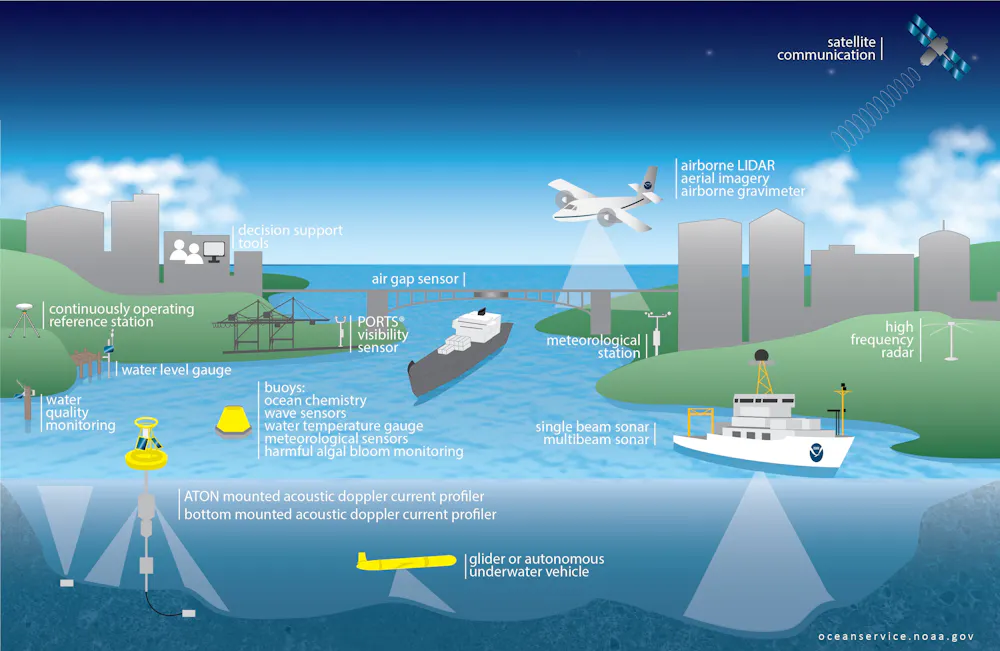
    A lot of the weather information Americans rely on starts with real-time data collected by NOAA satellites, airplanes, weather balloons, radar and maritime buoys, as well as weather stations around the world.

    All of that information goes into the agency’s computers, which process the data to begin defining what’s going on in different parts of the atmosphere.

    NOAA forecasters use computer models that simulate physics and the behavior of the atmosphere, along with their own experience and local knowledge, to start to paint a picture of the weather – what’s coming in a few minutes or hours or days. They also use that data to project seasonal conditions out over weeks or months.

    NOAA’s data comes from many sources to provide a more complete picture of developing climate and weather conditions. Communities and economies rely on that constantly updated information.
    NOAA

    When severe weather is on the way, the agency issues the official alerts you’ll see in the news and on your phone.

    All of this analysis happens before the information reaches private weather apps and TV stations.

    No matter who you are, you can freely access that data and the analyses. In fact, a large number of private companies use NOAA data to create fancy maps and other weather products that they sell.

    It would be extremely difficult to do all of that without NOAA.

    The agency operates a fleet of 18 satellites that are packed with instruments dedicated to observing weather phenomena essential to predicting the weather, from how hot the land surface is to the water content of the atmosphere. Some are geostationary satellites which sit high above different parts of the U.S. measuring weather conditions 24/7. Others orbit the planet. Many of these are operated as part of partnerships with NASA or the Air Force.

    Some private companies are starting to invest in satellites, but it would take an enormous amount of money to replicate the range of instrumentation and coverage that NOAA has in place. Satellites only last so long and take time to build, so NOAA is continually planning for the future, and using its technical expertise to develop new instruments and computer algorithms to interpret the data.

    NOAA’s low earth orbiting satellites circle the planet from pole to pole and across the equator 14 times a day to provide a full picture of the year twice a day. The agency also has geostationary satellites that provide continuous coverage over the U.S.
    NOAA

    Maritime buoys are another measuring system that would be difficult to replicate. Over 1,300 buoys across oceans around the world measure water temperature, wind and wave height – all of which are essential for coastal warnings, as well as long-term forecasts.

    Weather observation has been around a long time. President Ulysses S. Grant created the first national weather service in the War Department in 1870. It became a civilian service in 1880 under the Department of Agriculture and is now in the Commerce Department. The information its scientists and technologists produce is essential for safety and also benefits people and industries in a lot of ways.

    Could a private company create forecasts on its own without NOAA data?

    It would be difficult for one company to provide comprehensive weather data in a reliable way that is also accessible to the entire public.

    Some companies might be able to launch their own satellite, but one satellite only gives you part of the picture. NOAA’s weather observation network has been around for a long time and collects data from points all over the U.S. and the oceans. Without that robust data, computer models and the broad network of forecasters and developers, forecasting also becomes less reliable.

    Analyzing that data is also complex. You’re not going to be able to take satellite data, run a model on a standard laptop and suddenly have a forecast.

    And there’s a question of whether a private company would want to take on the legal risk of being responsible for the nation’s forecasts and severe weather warnings.

    Neil Jacobs, nominated to oversee NOAA, explains why the agency is essential for accurate national weather forecasting, and why private companies might not want to take on the legal risk on their own.

    NOAA is taxpayer-funded, so it is a public good – its services provide safety and security for everyone, not just those who can pay for it.

    If weather data was only available at a price, one town might be able to afford the weather information necessary to protect its residents, while a smaller town or a rural area across the state might not. If you’re in a tornado-prone area or coastal zone, that information can be the difference between life or death.

    Is climate data and research into the changing climate important for forecasts?

    The Earth’s systems – its land, water and the atmosphere – are changing, and we have to be able to assess how those changes will impact weather tomorrow, in two weeks and far into the future.

    Rising global temperatures affect weather patterns. Dryness can fuel wildfires. Forecasts have to take the changing climate into account to be accurate, no matter who is creating the forecast.

    Drought is an example. The dryness of the Earth controls how much water gets exchanged with the atmosphere to form clouds and rainfall. To have an accurate weather prediction, we need to know how dry things are at the surface and how that has changed over time. That requires long-term climate information.

    NOAA doesn’t do all of this by itself – who else is involved?

    NOAA partners with private sector, academia, nonprofits and many others around the world to ensure that everyone has the best information to produce the most robust weather forecasts. Private weather companies and media also play important roles in getting those forecasts and alerts out more widely to the public.

    A lot of businesses rely on accuracy from NOAA’s weather data and forecasts: aviation, energy companies, insurance, even modern tractors’ precision farming equipment. The agency’s long-range forecasts are essential for managing state reservoirs to ensure enough water is saved and to avoid flooding.

    The government agency can be held accountable in a way private businesses are not because it answers to Congress. So, the data is trustworthy, accessible and developed with the goal to protect public safety and property for everyone. Could the same be said if only for-profit companies were producing that data?

    Christine Wiedinmyer is the CIRES Associate Director for Science. CIRES is a CU Boulder research institute that has a cooperative agreement (grant) with NOAA called the Cooperative Institute for Earth Systems Research and Data Science, CIESRDS. Wiedinmyer’s funding is primarily from NOAA, which supports more than 400 CIRES CU Boulder employees.

    Kari Bowen is the Science and Administration Manager. CIRES is a CU Boulder research institute with a cooperative agreement (grant) with NOAA called the Cooperative Institute for Earth Systems Research and Data Science, CIESRDS. Bowen’s funding is from NOAA, which supports more than 400 CIRES CU Boulder employees.

    ref. NOAA’s vast public weather data powers the local forecasts on your phone and TV – a private company alone couldn’t match it – https://theconversation.com/noaas-vast-public-weather-data-powers-the-local-forecasts-on-your-phone-and-tv-a-private-company-alone-couldnt-match-it-249451

    MIL OSI – Global Reports

  • MIL-OSI United Kingdom: Mayor’s Violence Reduction Unit secures funding boost to deliver key youth work interventions driving down violence

    Source: Mayor of London

    • Government invests £9.4m in violence prevention in London
    • New funding to build on delivery of youth workers embedded in hospital and police custody
    • Data shows 90 per cent of young people arrested did not reoffend and three-quarters reduced their risk of harm as a result of interventions by youth workers
    • National investment to work alongside Sadiq’s record funding for prevention and early intervention work

    The Mayor of London’s Violence Reduction Unit (VRU) has secured £9.4 million investment from the Home Office to build on youth work intervention programmes that are working to drive down violence in the capital.

    New funding will enable London’s VRU to deliver key violence prevention work, which includes embedding teams of skilled and experienced youth workers in hospitals and in police custody, to offer support, guidance and a route away from violence for young people.

    Youth workers will continue delivering diversionary work from eight A&E hospitals and four Major Trauma Centres. Delivered by St Giles Trust, Catch22/Redthread and Oasis, hospital locations are determined by the levels of young victims of violence in the surrounding area. 

    It builds on a programme which has supported more than 3,100 young people since 2022, and contributed to significant reductions in young people deemed high risk to others or to further violence. After engaging with a youth worker, 77 per cent reduced their risk of harm from others and 73 per cent felt safer post intervention.

    Government investment in the VRU, which was set up by the Mayor in 2019 and the first in England and Wales, will also fund youth workers embedded in police custody suites across London. The Divert and Engage programmes, which involves youth workers embedded in police custody, are reaching 10,000 young people at a point of crisis with two-thirds achieving positive outcomes in reintegration into education, training or employment. 

    For those up to 18, nearly 90 per cent arrested for violent offences did not reoffend over the next 12 months following engagement with a youth worker.  

    Youth workers based in hospital and in police custody provide an opportunity to intervene in a young person’s life much earlier. Known as the ‘reachable, teachable moment’ skilled youth workers engage with young people when they arrive at hospital with injuries or after having been arrested – the time when they are most receptive to changing their behaviour.

    Clinical leads in hospitals across the capital have worked in partnership to provide opportunities for youth workers to speak confidentially to young people, giving them the support and guidance they need.

    National funding will also be used for diversionary activities through sport and works alongside the Mayor’s record investment in prevention and early intervention, which is working to tackle school exclusions, mentoring and a commitment to fund a further 250,000 positive opportunities for young people.

    The Mayor, the Director of the VRU, Lib Peck, and the Deputy Mayor for Policing and Crime, Kaya Comer-Schwartz, were today joined by Diana Johnson MP, the Crime and Policing Minister, at a visit to the Royal London Hospital in Whitechapel. It’s one of 12 hospitals delivering the youth work intervention programme. Since 2022, St Giles Trust youth workers have supported 550 young people who had been involved in violence, including knife injury, gunshots, or self-harm. Last year, interventions by youth workers resulted in 85 per cent of young people they engaged with no longer involved in gang activity, and led to an 83 per cent reduction in their risk of harm and involvement in violence.

    Policing Minister, Dame Diana Johnson said: “Tackling violence and making our streets safer is at the heart of this government’s Plan for Change. We have already banned zombie-style knives, are fast progressing our ban on Ninja swords and are strengthening age-verification checks for buying knives online. 

    “But we cannot do this alone. One of the first things the Prime Minister did was launch the Coalition to tackle knife crime, which brings together different communities and voices to ensure our work will actually make a difference to young people.

    “I am grateful to the London VRU and the Mayor of London for the vital work they already do, supporting vulnerable young lives in exceptionally difficult and complex circumstances, and today we have committed to a £9.4 million investment to ensure this continues.” 

    The Mayor of London, Sadiq Khan, said: “I am committed to tackling violence and building a safer London for everyone by being tough on crime and tough on its complex causes.

    “Alongside record investment in policing, I set up and fund the Violence Reduction Unit as part of my commitment to prevention and investing in young Londoners.

    “I welcome the Government’s investment and support so that we can continue delivering targeted interventions that we know are working to divert young people away from violence and towards opportunity.” 

    Lib Peck, Director of London’s Violence Reduction Unit, said: “We firmly believe that violence is preventable, not inevitable. But key to this is approach is the role that youth workers play in changing the lives of young people every day in London.

    “Evidence now firmly shows that embedding youth workers in hospitals and custody suites has impact in cutting reoffending rates and offering young people a route away from violence.

    “We are really pleased to secure the funding and backing we need to continue supporting the life-changing impact that youth workers have on young people to keep them save and able to thrive in our great city.”

    Tracey Burley, Chief Executive of St Giles, said: “Collaborating with staff at The Royal London Hospital and Barts NHS Trust has been transformative. By integrating our lived experience approach to tackle violence, we seize a critical opportunity during hospital stays to positively impact young lives.

    “We are deeply thankful to the London VRU, Royal London Hospital and Barts NHS Trust for partnering with us and sharing our belief in the power of first-hand experience to drive meaningful change to young people’s lives and wider communities.” 

    MIL OSI United Kingdom

  • MIL-OSI: Artificial Intelligence (AI) Influence on Healthcare Market Expected to Generate Revenues of $610 Billion By 2034

    Source: GlobeNewswire (MIL-OSI)

    PALM BEACH, Fla., Feb. 11, 2025 (GLOBE NEWSWIRE) — FN Media Group News Commentary – The growing adoption of the digital technologies in the healthcare sector owing to the growing need for reducing the healthcare costs and offer enhanced quality patient care services to the patients are the prominent factors that are boosting the growth of the global artificial intelligence in healthcare market. The surging prevalence of various chronic diseases and growing elderly population is resulting in the increased pool of patients at hospitals. The large volume of patient health data is generated every day, which is required to be stored and managed effectively. The growing demand for the personalized medicines and the necessity of maintaining digital health records are significantly driving the artificial intelligence in healthcare market. The novel technologies like artificial intelligence and machine learning are now being integrated to the healthcare systems that will allow the health professionals in early identification of the diseases and offer enhanced care services to the patients. Moreover, the data analytics, deep learning technology, natural language processing (NPL), predictive analytics, and content analytics are supporting the healthcare professionals in early diagnosis and care services. A report from Precedence Research said that the global artificial intelligence (AI) in healthcare market size accounted for USD 26.69 billion in 2024 and is predicted to reach around USD 613.81 billion by 2034, growing at a CAGR of 36.83% from 2024 to 2034. North America AI in healthcare market size reached USD 8.67 billion in 2023. Active A.I. companies active in the markets include: Avant Technologies Inc. (OTCQB: AVAI), Tempus AI, Inc. (NASDAQ: TEM), BigBear.ai (NYSE: BBAI), Talkspace (NASDAQ: TALK), SoundHound AI, Inc. (NASDAQ: SOUN).

    The Precedence Research report added: “North America region was the highest market share holder in (recent years). North America is characterized by the increased inclination towards the advanced and latest digital technologies. The strong and developed healthcare, IT, and telecommunications infrastructure in North America has supported the growth of the artificial intelligence in healthcare market. Furthermore, the favorable government policies that encourage the adoption of the digital and novel technologies like artificial intelligence in the healthcare sector. North America has the presence of huge pool of patients. It is estimated that over half of the US population is suffering from one or more chronic diseases. This is resulting in increased volume of patients in hospitals. The health data of these patients needs to be stored and managed in digital form as per the government regulations. This is a major factor that propels the demand for the artificial intelligence in healthcare sector.”

    Avant Technologies, Inc. (OTCQB: AVAI) and Ainnova Advance Toward FDA Clinical Trial with Selection of Top CRO Avant Technologies, Inc. (“Avant” or the “Company”) and its partner, Ainnova Tech, Inc., (Ainnova), a leading healthcare technology company focused on revolutionizing early disease detection using artificial intelligence (AI), today announced the selection of Fortrea, a global provider of clinical development solutions to the life sciences industry, as the contract research organization (CRO) to conduct Ainnova’s upcoming clinical studies to seek approval from the U.S. Food and Drug Administration (FDA) for Ainnova’s Vision AI platform.

    Fortrea will assist Ainnova in requesting a pre-submission meeting with the FDA for guidance on the clinical testing needed for its Vision AI platform in the early detection of diabetic retinopathy. After a pre-submission meeting, Fortrea will then work with Ainnova on its FDA submission and a subsequent clinical study before concluding with an FDA 510(k) submission to obtain clearance from the FDA to market its Vision AI platform.

    The upcoming clinical studies are significant to Avant and its shareholders because of the partnership formed by Avant and Ainnova to advance and commercialize Ainnova’s technology portfolio, including its Vision AI platform and its versatile retinal cameras. The joint venture formed by the two companies, Ai-nova Acquisition Corp. (AAC), has the licensing rights for this portfolio in the U.S., Canada, and Europe, so the success of Ainnova’s clinical studies with the FDA will be vital to marketing the technology portfolio in the United States.

    Ainnova’s Chief Executive Officer, Vinicio Vargas, said of the selection, “We worked diligently to identify and select the right CRO to help us both engage the FDA and then conduct our clinical studies. Fortrea is an established and highly regarded full-service CRO with expertise in more than 20 therapeutic areas, and a CRO with an extensive portfolio of successfully completed clinical trials, including those involving both emerging and large biopharmaceutical, medical device, and diagnostic companies.”

    With Fortrea’s guidance, Ainnova expects to submit its pre-submission application in the coming weeks and expects to meet with the FDA for its pre-submission meeting in late March/early April 2025. Additionally, Ainnova will also interact with the FDA to devise a plan to obtain clearance for four algorithms it recently acquired the exclusive licensing rights to, which include early detection for cardiovascular risk, prediabetes and Type 2 diabetes, fatty liver disease, and chronic kidney disease. CONTINUED… Read this and more news for Avant Technologies at: https://www.financialnewsmedia.com/news-avai/

    In other A.I. developments and happenings in the market recently include:

    Tempus AI, Inc. (NASDAQ: TEM), a technology company leading the adoption of AI to advance precision medicine and patient care, recently announced it has completed its acquisition of Ambry Genetics, a recognized leader in genetic testing that aims to improve health by understanding the relationship between genetics and disease.

    “This acquisition complements our strategy of leveraging diagnostics and data to drive innovation, further strengthening our ability to deliver cutting-edge solutions to clinicians, patients, and life sciences companies,” said Eric Lefkofsky, Founder and CEO of Tempus. “We are excited to welcome Ambry to the Tempus team as we work together to improve patient outcomes and transform treatment journeys through the power of technology.”

    BigBear.ai (NYSE: BBAI) has recently been awarded a contract by the Department of Defense (DoD) Chief Digital and Artificial Intelligence Office (CDAO) to advance BigBear.ai’s Virtual Anticipation Network (VANE) prototype. This initiative will support the CDAO and Office of the Secretary of Defense (OSD) by leveraging custom AI models to better assess news media originating in countries that are potential foreign adversaries.

    The prototype award is designed to improve CDAO’s ability to identify key trends and topics related to potential foreign adversarial areas of interest, enabling faster and more informed assessments of media data vital to national security. VANE was created to contrive clarity in multi-domain environments for military and government applications by aggregating and analyzing vast data points, enabling predictions of adversarial activity in complex situations.

    “We are honored to continue our support in the modernization of our nation’s defense efforts. This award underscores the importance of leveraging cutting-edge AI technologies to address complicated geopolitical challenges,” said Ryan Legge, President of National Security at BigBear.ai. “By advancing VANE within CDAO, we are arming our warfighters with sophisticated intelligence capabilities to leverage foreign insights critical to the safety of our Nation and those protecting it.”

    Talkspace (NASDAQ: TALK) recently announced the launch of Insights, a new feature that enhances therapeutic care by helping Talkspace providers efficiently prepare for sessions and guide client care between sessions. The feature was developed and refined in partnership with Talkspace clinicians.

    Before each session, providers can use Insights to synthesize data from each client’s care journey, a process that is typically manual — including changes in that client’s symptom acuity from evidence-based psychological assessments and key details from the most recent session — to generate a concise pre-session primer tailored to the therapist’s upcoming appointment. After the session, an update can be generated to reflect the discussion’s key points, highlight therapeutic progress, and note follow-ups for future sessions.

    SoundHound AI, Inc. (NASDAQ: SOUN), a global leader in voice artificial intelligence, recently announced the launch of Brand Personalities, a groundbreaking feature for its SoundHound Chat AI Automotive voice assistant – making it the first in-vehicle assistant to offer distinct, customizable personas tailored to each automaker’s unique brand identity, designed to enhance both the user experience and brand loyalty for OEMs.

    Brand Personalities enables car makers to control the entire personality of their voice assistant including response style, character and vivaciousness. Automotive partners can choose from pre-designed personas, create fully customized personalities tailored to their specific needs, or even introduce seasonal characters for campaigns. Due to SoundHound’s unique software architecture, multiple personas can be defined for specific sub-brands or model lines—allowing sports cars, family cars, and commercial vehicles to each have distinct personalities that reflect the unique needs of their customers.

    About FN Media Group:
    At FN Media Group, via our top-rated online news portal at www.financialnewsmedia.com, we are one of the very few select firms providing top tier one syndicated news distribution, targeted ticker tag press releases and stock market news coverage for today’s emerging companies. #tickertagpressreleases #pressreleases

    Follow us on Facebook to receive the latest news updates: https://www.facebook.com/financialnewsmedia
    Follow us on Twitter for real time Market News: https://twitter.com/FNMgroup
    Follow us on Linkedin: https://www.linkedin.com/in/financialnewsmedia/

    DISCLAIMER: FN Media Group LLC (FNM), which owns and operates FinancialNewsMedia.com and MarketNewsUpdates.com, is a third party publisher and news dissemination service provider, which disseminates electronic information through multiple online media channels. FNM is NOT affiliated in any manner with any company mentioned herein. FNM and its affiliated companies are a news dissemination solutions provider and are NOT a registered broker/dealer/analyst/adviser, holds no investment licenses and may NOT sell, offer to sell or offer to buy any security. FNM’s market updates, news alerts and corporate profiles are NOT a solicitation or recommendation to buy, sell or hold securities. The material in this release is intended to be strictly informational and is NEVER to be construed or interpreted as research material. All readers are strongly urged to perform research and due diligence on their own and consult a licensed financial professional before considering any level of investing in stocks. All material included herein is republished content and details which were previously disseminated by the companies mentioned in this release. FNM is not liable for any investment decisions by its readers or subscribers. Investors are cautioned that they may lose all or a portion of their investment when investing in stocks. For current services performed FNM was compensated forty nine hundred dollars for news coverage of the current press releases issued by Avant Technologies, Inc. by a non-affiliated third party. FNM HOLDS NO SHARES OF ANY COMPANY NAMED IN THIS RELEASE.

    This release contains “forward-looking statements” within the meaning of Section 27A of the Securities Act of 1933, as amended, and Section 21E the Securities Exchange Act of 1934, as amended and such forward-looking statements are made pursuant to the safe harbor provisions of the Private Securities Litigation Reform Act of 1995. “Forward-looking statements” describe future expectations, plans, results, or strategies and are generally preceded by words such as “may”, “future”, “plan” or “planned”, “will” or “should”, “expected,” “anticipates”, “draft”, “eventually” or “projected”. You are cautioned that such statements are subject to a multitude of risks and uncertainties that could cause future circumstances, events, or results to differ materially from those projected in the forward-looking statements, including the risks that actual results may differ materially from those projected in the forward-looking statements as a result of various factors, and other risks identified in a company’s annual report on Form 10-K or 10-KSB and other filings made by such company with the Securities and Exchange Commission. You should consider these factors in evaluating the forward-looking statements included herein, and not place undue reliance on such statements. The forward-looking statements in this release are made as of the date hereof and FNM undertakes no obligation to update such statements.

    Contact Information:
    Media Contact email: editor@financialnewsmedia.com – +1(561)325-8757 

    SOURCE: FN Media Group

    The MIL Network

  • MIL-OSI Global: The New Yorker turns 100 − how a poker game pipe dream became a publishing powerhouse

    Source: The Conversation – USA – By Christopher B. Daly, Professor Emeritus of Journalism, Boston University

    The New Yorker expanded the scope of journalism far beyond the standard categories of crime, courts, politics and sports. Design Uncensored

    Literate in tone, far-reaching in scope, and witty to its bones, The New Yorker brought a new – and much-needed – sophistication to American journalism when it launched 100 years ago this month.

    As I researched the history of U.S. journalism for my book “Covering America,” I became fascinated by the magazine’s origin story and the story of its founder, Harold Ross.

    In a business full of characters, Ross fit right in. He never graduated from high school. With a gap-toothed smile and bristle-brush hair, he was frequently divorced and plagued by ulcers.

    Ross devoted his adult life to one cause: The New Yorker magazine.

    For the literati, by the literati

    Born in 1892 in Aspen, Colorado, Ross worked out west as a reporter while still a teenager. When the U.S. entered World War I, Ross enlisted. He was sent to southern France, where he quickly deserted from his Army regiment and made his way to Paris, carrying his portable Corona typewriter. He joined up with the brand-new newspaper for soldiers, Stars and Stripes, which was so desperate for anybody with training that Ross was taken on with no questions asked, even though the paper was an official Army operation.

    Harold Ross and Jane Grant in 1926.
    University of Oregon Libraries

    In Paris, Ross met a number of writers, including Jane Grant, who had been the first woman to work as a news reporter at The New York Times. She eventually became the first of Ross’ three wives.

    After the armistice, Ross headed to New York City and never really left. There, he started meeting other writers, and he soon joined a clique of critics, dramatists and wits who gathered at the Round Table in the Algonquin Hotel on West 44th Street in Manhattan.

    Over long and liquid lunches, Ross rubbed shoulders and wisecracked with some of the brightest lights in New York’s literary chandelier. The Round Table also spawned a floating poker game that involved Ross and his eventual financial backer, Raoul Fleischmann, of the famous yeast-making family.

    In the mid-1920s, Ross decided to launch a weekly metropolitan magazine. He could see that the magazine business was booming, but he had no intention of copying anything that already existed. He wanted to publish a magazine that spoke directly to him and his friends – young city dwellers who’d spent time in Europe and were bored by the platitudes and predictable features found in most American periodicals.

    First, though, Ross had to come up with a business plan.

    The kind of smart-set readers Ross wanted were also desirable to Manhattan’s high-end retailers, so they got on board and expressed interest in buying ads. On that basis, Ross’ poker partner Fleischmann was willing to stake him US$25,000 to start – roughly $450,000 in today’s dollars.

    Ross goes all in

    In the fall of 1924, using an office owned by Fleischmann’s family at 25 West 45th St., Ross got to work on the prospectus for his magazine:

    “The New Yorker will be a reflection in word and picture of metropolitan life. It will be human. Its general tenor will be one of gaiety, wit and satire, but it will be more than a jester. It will not be what is commonly called radical or highbrow. It will be what is commonly called sophisticated, in that it will assume a reasonable degree of enlightenment on the part of its readers. It will hate bunk.”

    The magazine, he famously added, “is not edited for the old lady in Dubuque.”

    In other words, The New Yorker was not going to respond to the news cycle, and it was not going to pander to middle America.

    Ross’ only criterion would be whether a story was interesting – with Ross the arbiter of what counted as interesting. He was putting all his chips on the long-shot idea that there were enough people who shared his interests – or could discover that they did – to support a glossy, cheeky, witty weekly.

    Ross almost failed. The cover of the first issue of The New Yorker, dated Feb. 21, 1925, carried no portraits of potentates or tycoons, no headlines, no come-ons.

    Instead, it featured a watercolor by Ross’ artist friend Rea Irvin of a dandified figure staring intently through a monocle at – of all things! – a butterfly. That image, nicknamed Eustace Tilly, became the magazine’s unoffical emblem.

    A magazine finds its footing

    Inside that first edition, a reader would find a buffet of jokes and short poems. There was a profile, reviews of plays and books, lots of gossip, and a few ads.

    It was not terribly impressive, feeling quite patched together, and at first the magazine struggled. When The New Yorker was just a few months old, Ross almost even lost it entirely one night in a drunken poker game at the home of Pulitzer Prize winner and Round Table regular Herbert Bayard Swope. Ross didn’t make it home until noon the next day, and when he woke, his wife found IOUs in his pockets amounting to nearly $30,000.

    Fleischmann, who had been at the card game but left at a decent hour, was furious. Somehow, Ross persuaded Fleischmann to pay off some of his debt and let Ross work off the rest. Just in time, The New Yorker began gaining readers, and more advertisers soon followed. Ross eventually settled up with his financial angel.

    A big part of the magazine’s success was Ross’ genius for spotting talent and encouraging them to develop their own voices. One of the founding editor’s key early finds was Katharine S. Angell, who became the magazine’s first fiction editor and a reliable reservoir of good sense. In 1926, Ross brought James Thurber and E.B. White aboard, and they performed a variety of chores: writing “casuals,” which were short satirical essays, cartooning, creating captions for others’ drawings, reporting Talk of the Town pieces and offering commentary.

    E.B. White in his office at The New Yorker.
    Bettmann/Getty Images

    As The New Yorker found its footing, the writers and editors began perfecting some of its trademark features: the deep profile, ideally written about someone who was not strictly in the news but who deserved to be better known; long, deeply reported, nonfiction narratives; short stories and poetry; and, of course, the single-panel cartoons and the humor sketches.

    Intensely curious and obsessively correct in matters grammatical, Ross would go to any length to ensure accuracy. Writers got their drafts back from Ross covered in penciled queries demanding dates, sources and endless fact-checking. One trademark Ross query was “Who he?”

    During the 1930s, while the country was suffering through a relentless economic depression, The New Yorker was sometimes faulted for blithely ignoring the seriousness of the nation’s problems. In the pages of The New Yorker, life was almost always amusing, attractive and fun.

    The New Yorker really came into its own, both financially and editorially, during World War II. It finally found its voice, one that was curious, international, searching and, ultimately, quite serious.

    Ross also discovered still more writers, such as A.J. Liebling, Mollie Panter-Downes and John Hersey, who was raided from Henry Luce’s Time magazine. Together, they produced some of the best writing of the war, most notably Hersey’s landmark reporting on the use of the first atomic bomb in warfare.

    A crown jewel of journalism

    Over the past century, The New Yorker had a profound impact on American journalism.

    For one thing, Ross created conditions for distinctive voices to be heard. For another, The New Yorker provided encouragement and an outlet for nonacademic authority to flourish; it was a place where all those serious amateurs could write about the Dead Sea Scrolls or geology or medicine or nuclear war with no credentials other than their own ability to observe closely, think clearly and put together a good sentence.

    Finally, Ross must be credited with expanding the scope of journalism far beyond standard categories of crime and courts, politics and sports. In the pages of The New Yorker, readers almost never found the same content that they’d come across in other newspapers and magazines.

    Instead, readers of The New Yorker might find just about anything else.

    Christopher B. Daly does not work for, consult, own shares in or receive funding from any company or organization that would benefit from this article, and has disclosed no relevant affiliations beyond their academic appointment.

    ref. The New Yorker turns 100 − how a poker game pipe dream became a publishing powerhouse – https://theconversation.com/the-new-yorker-turns-100-how-a-poker-game-pipe-dream-became-a-publishing-powerhouse-246774

    MIL OSI – Global Reports

  • MIL-OSI Global: Whether Christians should prioritize care for migrants as much as for fellow citizens has been debated for centuries

    Source: The Conversation – USA – By Laura E. Alexander, Associate Professor of Religious Studies, University of Nebraska Omaha

    Vice President JD Vance has criticized the U.S. Catholic bishops condemning agents of Immigration and Customs Enforcement entering churches and schools. Kayla Bartkowski/Getty Images

    Vice President JD Vance and several bishops of the U.S. Roman Catholic Church are having a war of words over the Trump administration’s flurry of executive orders and highly publicized immigration raids. The bishops argue that these policies tend to empower gangs and traffickers while harming vulnerable families; Vance has criticized the bishops’ stance and argued that crackdowns are a matter of public safety.

    In the wake of President Donald Trump’s executive orders, both Archbishop Timothy P. Broglio, president of the U.S. Conference of Catholic Bishops, and Bishop Mark Seitz, chairman of the USCCB’s Committee on Migration, publicly objected to the tone and the humanitarian impacts of the orders.

    Seitz critiqued generalizations that denigrate and describe migrants without legal status as “criminals” or “invaders,” saying this “is an affront to God, who has created each of us in his own image.” Instead, he urged humane policies and bipartisan immigration reform for an “effective, orderly immigration system.”

    Interviewed on “Face the Nation,” Vance argued that the USCCB should “look in the mirror … and recognize that when they receive over US$100 million to help resettle illegal immigrants, are they worried about humanitarian concerns? Or are they actually worried about their bottom line?”

    To be clear, this line of attack appears to be false. USCCB contracts with the U.S. State Department to resettle refugees and has received over $100 million in recent years to do so, but refugee resettlement is a legal immigration program. The Catholic Church, rather than making money on this program, provides funding from its own budget to supplement its humanitarian work with refugees. For example, according to the USCCB’s audited financial statements, in 2023, the most recent year reported, the USCCB spent over $134.2 million on resettlement services. Federal grants provided over $129.6 million for these services, with the USCCB covering the rest.

    As a scholar of religion and migration, I see in this debate long-standing tensions among Catholic – and other Christian – thinkers and practitioners about moral obligations to people with whom we have closer versus more distant relationships.

    This tension is magnified in the case of migrants without legal status, since most of these migrants do have close relationships with U.S. communities and citizens, but they are not legally authorized by the U.S. government.

    2 perspectives on moral responsibility

    In international relations, different stances on how to treat people who are not citizens of one’s own state are described as “cosmopolitan” and “communitarian,” respectively.

    Some Christian thinkers have adopted these terms as a helpful way to understand Christian ethical debates over how to prioritize caring for people who are more closely connected or less connected to us. Those who take a cosmopolitan stance argue that Christians should care equally about all people of the world and should not show preference to family members or those within their near orbit, even if, for practical reasons, they do assist those close to them more often.

    Meanwhile, thinkers who take a communitarian stance argue that Christians certainly should care about the well-being of all but have a moral obligation to prefer helping people they have a closer relationship with, such as family members, those who are close geographically and possibly fellow citizens.

    Christian theologies of neighborly love

    Many Christian thinkers have developed perspectives on how to prioritize care for different neighbors by interpreting the words and actions of Jesus, as well as the teachings and practices of the early Christian church. Over time, Christian thinkers have also considered institutional statements and traditional teachings of different church bodies.

    Early theologians, including Clement of Rome, the first-century bishop of Rome, and John Chrysostom, archbishop of Constantinople in the fourth and fifth centuries, demonstrated cosmopolitan tendencies.

    Biblical passages encourage believers to welcome strangers.
    ‘Sermon on the Mount’ by Henrik Olrik via Wikimedia Commons

    These early church leaders consider biblical passages, including commandments in the Hebrew Bible, to welcome strangers. In the Gospels of the New Testament, Jesus’ parable of the Good Samaritan upholds a person of different ethnicity and religion from Jesus and his followers as an ideal “neighbor.” It also praises acts of kindness across ethnic and religious boundaries.

    In another passage, Jesus heals the daughter of a woman who was both non-Jewish and of foreign ethnicity, accepting her chastisement for his initial reluctance to assist a non-Jew.

    Later in the New Testament, the apostle Paul used expansive language for the Christian community, particularly in Galatians, the ninth book of the New Testament: “There is no longer Jew or Greek; there is no longer slave or free; there is no longer male and female, for all of you are one in Christ Jesus.”

    The contemporary Roman Catholic Church has often taken a cosmopolitan perspective on social issues. Pope Francis, in his message for the 2024 World Day of Migrants and Refugees, highlights the biblical passage that “our citizenship is in heaven” and states that “the encounter with the migrant … ‘is also an encounter with Christ.’”

    Catholic service organizations draw on this thinking when they help migrants in concrete ways. In addition to refugee resettlement services, many Catholic organizations provide humanitarian assistance such as food and shelter to migrants, no matter where they are from.

    Christian communitarian thought

    From a communitarian perspective, some thinkers argue that Christians’ concrete obligations to members of their communities can differ from their obligations to others, even though they view all people as of equal moral worth.

    New Testament writings describe how members of early Christian groups provided food and care for those in their communities – even as they also gave charity to the poor in the wider society.

    St. Thomas Aquinas, whose writings have also become part of the current debate after Vance referenced them online, argues that Christians should assist people in need, even to the point of depriving themselves of luxuries or social standing. He consistently urges Christians to love all people as commanded by God. Yet he also writes that, all other things being equal, Christians can properly meet the needs of people close to them before they give to those outside their own family or close circles, and that in political matters there can be some justification for preferring fellow citizens.

    Some contemporary Christian thinkers apply similar ideas to relationships between citizens and noncitizens in modern states. Ethicist Mark Amstutz argues that American Christian churches should incorporate a stronger focus on citizens’ needs and solidarity within state communities into their statements on immigration. German Catholic thinker Manfred Spieker has advocated that Christian social teachings permit preferences for people one is close to, as well as requirements of cultural integration by immigrants.

    These proponents of Christian communitarian perspectives continue to stress that all neighbors should be treated well even if some are prioritized over others. In this way, Vance’s remarks are not the best example of Christian communitarian thought, since migrants without legal status still should not be demonized nor falsely accused of criminal behavior, both of which Vance himself has done in the past few months.

    Immigrants in communities and the command to love

    Christian thinkers do agree that Christians are commanded by God to show love for all people – those who are like them, those who are not like them and even enemies.

    But it’s possible that love could take different shapes in different relationships. Immigration poses a unique test case because immigrants are not citizens, but they are “close” neighbors to U.S. citizens.

    Immigrants, including undocumented immigrants, are integral parts of the communities where they live. They work in vital jobs; in 2020-22, 42% of hired farmworkers were migrants without legal status. Immigrants, both with legal status and without, have brought new workers and young families to small towns whose populations have declined in recent decades.

    This further nuances debates about cosmopolitan and communitarian moral perspectives, since immigrants arrive from places outside the U.S. but have close relationships with U.S. citizens, whether as family members or as neighbors with whom they work, shop and worship.

    At the moment, public debate over immigration reflects trends in U.S. politics as much or more than it does Christian ethics. Yet Christian communities do continue to wrestle with cosmopolitan and communitarian ways of thinking, as they try to understand and apply Christian scriptural and moral commands to care for all people.

    Laura E. Alexander receives funding from the Mellon Foundation and has previously received funding from the Public Religion Research Institute. As a private individual, she is a member of the Nebraska Alliance for Thriving Communities, a statewide network of businesses, institutions, and individuals seeking immigration reform solutions.

    ref. Whether Christians should prioritize care for migrants as much as for fellow citizens has been debated for centuries – https://theconversation.com/whether-christians-should-prioritize-care-for-migrants-as-much-as-for-fellow-citizens-has-been-debated-for-centuries-248640

    MIL OSI – Global Reports

  • MIL-OSI Global: How opioid deaths tripled in Philly over a decade − and what may be behind a recent downturn

    Source: The Conversation – USA – By Ben Cocchiaro, Assistant Clinical Professor of Family Medicine and Community Health, Drexel University

    Fatal overdose deaths in Philadelphia dropped 7% in 2023. The city is expected to release 2024 data in the spring. Spencer Platt via Getty Images

    After nearly a decade of almost year-over-year increases in overdose deaths, the tide may finally be turning in Philadelphia.

    The Centers for Disease Control and Prevention announced in May 2024 an estimated 3% decrease in overdose deaths in the U.S. in 2023 compared with 2022. Shortly after, data from the Philadelphia Department of Public Health showed a similar trend: Fatal overdoses across the city decreased 7% in 2023, from 1,207 to 1,122. The city is expected to release its 2024 data in the spring of 2025.

    While these declines are notable, the city’s 2023 fatal overdose numbers are three times higher than they were in 2013.

    Still, if 2024 numbers confirm the downward trend, it allows a little hope into an otherwise bleak epidemic that is killing more Philadelphians than homicides, car accidents and diabetes combined.

    Something may finally be working. But what?

    If over a decade spent treating and researching substance use disorders has taught me anything, it’s that the overdose epidemic is what researchers and policymakers refer to as a wicked problem. Wicked problems are constantly changing, complex, interconnected knots of other problems with no clear solution.

    But let’s look at what we do know about how overdose deaths in Philadelphia spiked in the first place – and why they may finally be decreasing.

    Why overdose deaths spiked

    The first wave of the overdose epidemic began in the late 1990s and is attributed to overprescription of opioid pain medicines. But the largest acceleration in deaths didn’t occur until after the government and health insurers implemented prescribing controls in the early 2010s. These controls led many people who were no longer able to get prescribed opioids to turn to illicit heroin.

    In a phenomenon known as the “iron law of prohibition,” stricter drug law enforcement led drug-trafficking organizations to shift from heroin toward more powerful synthetic opioids that are easier to produce, conceal and distribute. Gram for gram, pure fentanyl is over 50 times stronger than pure heroin.

    But street-obtained fentanyl has proven to be anything but pure.

    Local drug-testing efforts found as much as a fiftyfold difference in potency between bags of fentanyl that appear identical.

    This unpredictable potency is considered to be the chief contributor to the deadliness of street fentanyl. It’s like cracking a beer and not knowing whether drinking it will get you mildly buzzed or send you to the graveyard.

    Research suggests drug busts, though touted as improving public safety, can lead to more inconsistency and unpredictability in the potency of illicit opioids. An analysis of 14 studies conducted in the U.S. demonstrated a marked increase in fatal overdoses following the supply disruptions that result from drug seizures.

    There’s also some evidence that the heightened economic insecurity and despair caused by the COVID-19 pandemic may have intensified the fatal overdose epidemic.

    Andres Freire of Prevention Point stands on the ‘bupe bus,’ a mobile service that offers medication treatment such as buprenorphine to people with opioid use disorder in Philadelphia.
    Jeff Fusco for The Conversation U.S., CC BY-NC-ND

    Potential reasons for decline

    Just as economic insecurity was associated with rising deaths, the subsequent economic recovery as the U.S. emerged from the pandemic may have contributed to the 2023 drop in overdose fatalities nationwide.

    However, the unequal distribution of that recovery seems to track with worsening racial disparities in overdose rates in the late 2010s to early 2020s.

    Another possible explanation for the reduction in overdose deaths is the increasing availability of buprenorphine.

    Buprenorphine, an FDA-approved medication for opioid use disorder, reduces withdrawal and cravings for fentanyl. What’s more, it decreases overdose risk by more than 50%.

    However, efforts to increase access to this medication have stagnated. National prescribing rates for buprenorphine were relatively stable from 2019 to 2023, and the CDC estimates that only a quarter of those who need treatment are getting it. Efforts to make buprenorphine available without a prescription have not yet gained traction.

    Access to and education around naloxone, a lifesaving drug used to reverse opioid overdoses, has also increased, and the drug is increasingly being administered by bystanders. Over 1.3 million doses were distributed in Pennsylvania since 2017. National research suggests these distribution efforts, often spearheaded by local harm-reduction organizations, have led to quicker administration of naloxone. This saves lives while also decreasing reliance on emergency medical services.

    Finally, the consequences of a seemingly minor characteristic of fentanyl’s pharmacology might also be reducing the overdose death rate in Philadelphia.

    Fentanyl’s effects last only a third as long as heroin. This shorter duration led drug traffickers to add the animal tranquilizer xylazine – also called “tranq” – and the veterinary anesthetic medetomidine into Philadelphia’s street drug supply. In 2019, two-thirds of heroin or fentanyl sampled in Philadelphia had xylazine in it. By 2021 all of it did.

    These additives lengthen the duration of the effect, mitigate withdrawal symptoms and possibly reduce the amount of fentanyl needed per dose. Some evidence from animal studies shows that xylazine reduces fentanyl intake by suppressing fentanyl withdrawal, thereby lengthening the time before a person uses again.

    What’s more, the skin wounds and sedative effects that are associated with xylazine may be motivating some people to avoid using street fentanyl.

    Over 1.3 million doses of naloxone have been distributed for free in Pennsylvania since 2017.
    Jeff Fusco for The Conversation U.S., CC BY-NC-ND

    What’s next for Philadelphia

    The opioid settlement, a multibillion-dollar payment from the pharmaceutical industry to resolve legal actions against them, has led to increased funding in Philadelphia for naloxone and medications such as buprenorphine to treat opioid use disorder.

    However, in the past year the city eliminated funding for needle exchanges and implemented compulsory treatment strategies, which research suggests often do not reduce drug use or criminal recidividism.

    Meanwhile, at the federal level, Republican members of Congress have proposed cuts to Medicaid, the health insurance program for low-income Americans.

    Whether new data, when it’s released, will show overdose deaths in Philly have continued to decline or are back on the rise is anybody’s guess. But I do know that harm-reduction advocates, medical providers and communities of people who use drugs will continue to fight this epidemic as if their lives depend on it. For many, it does.

    Ben Cocchiaro is affiliated with Prevention Point Philadelphia but his opinions are his own. He served on the Data Analysis and Sharing Subcommittee of the Philadelphia Mayor’s Task Force to Combat the Opiate Epidemic from 2016-2017.

    ref. How opioid deaths tripled in Philly over a decade − and what may be behind a recent downturn – https://theconversation.com/how-opioid-deaths-tripled-in-philly-over-a-decade-and-what-may-be-behind-a-recent-downturn-247768

    MIL OSI – Global Reports

  • MIL-OSI Global: Legal fight against AI-generated child pornography is complicated – a legal scholar explains why, and how the law could catch up

    Source: The Conversation – USA – By Wayne Unger, Assistant Professor of Law, Quinnipiac University

    Child pornography laws may be clear, but AI makes enforcement more difficult. AP Photo/J. Scott Applewhite

    The city of Lancaster, Pennsylvania, was shaken by revelations in December 2023 that two local teenage boys shared hundreds of nude images of girls in their community over a private chat on the social chat platform Discord. Witnesses said the photos easily could have been mistaken for real ones, but they were fake. The boys had used an artificial intelligence tool to superimpose real photos of girls’ faces onto sexually explicit images.

    With troves of real photos available on social media platforms, and AI tools becoming more accessible across the web, similar incidents have played out across the country, from California to Texas and Wisconsin. A recent survey by the Center for Democracy and Technology, a Washington D.C.-based nonprofit, found that 15% of students and 11% of teachers knew of at least one deepfake that depicted someone associated with their school in a sexually explicit or intimate manner.

    The Supreme Court has implicitly concluded that computer-generated pornographic images that are based on images of real children are illegal. The use of generative AI technologies to make deepfake pornographic images of minors almost certainly falls under the scope of that ruling. As a legal scholar who studies the intersection of constitutional law and emerging technologies, I see an emerging challenge to the status quo: AI-generated images that are fully fake but indistinguishable from real photos.

    Policing child sexual abuse material

    While the internet’s architecture has always made it difficult to control what is shared online, there are a few kinds of content that most regulatory authorities across the globe agree should be censored. Child pornography is at the top of that list.

    For decades, law enforcement agencies have worked with major tech companies to identify and remove this kind of material from the web, and to prosecute those who create or circulate it. But the advent of generative artificial intelligence and easy-to-access tools like the ones used in the Pennsylvania case present a vexing new challenge for such efforts.

    In the legal field, child pornography is generally referred to as child sexual abuse material, or CSAM, because the term better reflects the abuse that is depicted in the images and videos and the resulting trauma to the children involved. In 1982, the Supreme Court ruled that child pornography is not protected under the First Amendment because safeguarding the physical and psychological well-being of a minor is a compelling government interest that justifies laws that prohibit child sexual abuse material.

    That case, New York v. Ferber, effectively allowed the federal government and all 50 states to criminalize traditional child sexual abuse material. But a subsequent case, Ashcroft v. Free Speech Coalition from 2002, might complicate efforts to criminalize AI-generated child sexual abuse material. In that case, the court struck down a law that prohibited computer-generated child pornography, effectively rendering it legal.

    The government’s interest in protecting the physical and psychological well-being of children, the court found, was not implicated when such obscene material is computer generated. “Virtual child pornography is not ‘intrinsically related’ to the sexual abuse of children,” the court wrote.

    States move to criminalize AI-generated CSAM

    According to the child advocacy organization Enough Abuse, 37 states have criminalized AI-generated or AI-modified CSAM, either by amending existing child sexual abuse material laws or enacting new ones. More than half of those 37 states enacted new laws or amended their existing ones within the past year.

    California, for example, enacted Assembly Bill 1831 on Sept. 29, 2024, which amended its penal code to prohibit the creation, sale, possession and distribution of any “digitally altered or artificial-intelligence-generated matter” that depicts a person under 18 engaging in or simulating sexual conduct.

    Deepfake child pornography is a growing problem.

    While some of these state laws target the use of photos of real people to generate these deep fakes, others go further, defining child sexual abuse material as “any image of a person who appears to be a minor under 18 involved in sexual activity,” according to Enough Abuse. Laws like these that encompass images produced without depictions of real minors might run counter to the Supreme Court’s Ashcroft v. Free Speech Coalition ruling.

    Real vs. fake, and telling the difference

    Perhaps the most important part of the Ashcroft decision for emerging issues around AI-generated child sexual abuse material was part of the statute that the Supreme Court did not strike down. That provision of the law prohibited “more common and lower tech means of creating virtual (child sexual abuse material), known as computer morphing,” which involves taking pictures of real minors and morphing them into sexually explicit depictions.

    The court’s decision stated that these digitally altered sexually explicit depictions of minors “implicate the interests of real children and are in that sense closer to the images in Ferber.” The decision referenced the 1982 case, New York v. Ferber, in which the Supreme Court upheld a New York criminal statute that prohibited persons from knowingly promoting sexual performances by children under the age of 16.

    The court’s decisions in Ferber and Ashcroft could be used to argue that any AI-generated sexually explicit image of real minors should not be protected as free speech given the psychological harms inflicted on the real minors. But that argument has yet to be made before the court. The court’s ruling in Ashcroft may permit AI-generated sexually explicit images of fake minors.

    But Justice Clarence Thomas, who concurred in Ashcroft, cautioned that “if technological advances thwart prosecution of ‘unlawful speech,’ the Government may well have a compelling interest in barring or otherwise regulating some narrow category of ‘lawful speech’ in order to enforce effectively laws against pornography made through the abuse of real children.”

    With the recent significant advances in AI, it can be difficult if not impossible for law enforcement officials to distinguish between images of real and fake children. It’s possible that we’ve reached the point where computer-generated child sexual abuse material will need to be banned so that federal and state governments can effectively enforce laws aimed at protecting real children – the point that Thomas warned about over 20 years ago.

    If so, easy access to generative AI tools is likely to force the courts to grapple with the issue.

    Wayne Unger does not work for, consult, own shares in or receive funding from any company or organization that would benefit from this article, and has disclosed no relevant affiliations beyond their academic appointment.

    ref. Legal fight against AI-generated child pornography is complicated – a legal scholar explains why, and how the law could catch up – https://theconversation.com/legal-fight-against-ai-generated-child-pornography-is-complicated-a-legal-scholar-explains-why-and-how-the-law-could-catch-up-247980

    MIL OSI – Global Reports

  • MIL-OSI United Kingdom: Council Tax needs to be replaced not reformed say Scottish Greens

    Source: Scottish Greens

    Councils and local communities deserve our support to succeed.

    Council Tax is a broken system that needs to be replaced rather than reformed, says Scottish Greens spokesperson for local government, Ariane Burgess MSP. 

    The call comes as the Scottish Government has announced that it is taking action to make the system “fairer.”

    Ms Burgess said:

    “Council tax is an outdated and broken tax that works for nobody. 

    “It isn’t fair to the households who are paying it and does not benefit the councils that are struggling to fund essential services.

    “From schools and social care to waste collections, libraries and community centres, our councils are on the front line of delivering for our communities. We need to support them. 

    “Tweaking and reforming it is not enough. It is time to replace it with a fairer and more progressive system that would see most households paying less while the wealthiest would pay more.”

    Ms Burgess added:

    “The Scottish Greens have already delivered important reforms, like doubling Council Tax on holiday homes and allowing councils to set tourist levies, raising money for local services and helping to tackle the housing crisis.”

    MIL OSI United Kingdom

  • MIL-OSI United Kingdom: New UK sanctions target Russian cybercrime network

    Source: United Kingdom – Executive Government & Departments

    A key Russian cybercrime syndicate responsible for aiding merciless ransomware attacks around the world has been targeted by new UK sanctions.

    • UK sanctions target Russian cyber entity, ZSERVERS responsible for facilitating crippling ransomware attacks globally
    • targets also include 6 ZSERVERS members who are part of a prolific cybercrime supply chain, and their UK front company XHOST
    • action on illicit Russian cybercrime syndicate is latest step to strengthen UK national security

    Fresh sanctions are targeting ZSERVERS, a key component of the Russian cybercrime supply chain, and 6 of its members, as well as its UK front company, XHOST Internet Solutions LP. ZSERVERS provide vital infrastructure for cybercriminals as they plan and execute attacks against the UK.    

    The illicit supply chain protects, supports and conceals the operations of some of the world’s most ruthless ransomware gangs. Ransomware actors rely on these services to launch attacks, extort victims and store stolen data.   

    In the modern digital-first economy, cyber security is a non-negotiable cornerstone of business success. A secure digital economy is a less attractive target for cybercriminals and a more attractive home for investment, generating jobs and putting more money into hardworking people’s pockets, delivering on this government’s Plan for Change. 

    Foreign Secretary, David Lammy, said:

    Putin has built a corrupt mafia state driven by greed and ruthlessness. It is no surprise that the most unscrupulous extortionists and cyber-criminals run rampant from within his borders.  

    This government will continue to work with partners to constrain the Kremlin and the impact of Russia’s lawless cyber underworld. We must counter their actions at every opportunity to safeguard the UK’s national security and deliver on our Plan for Change. 

    Predatory ransomware groups pose a clear and persistent threat to national security, public services and privacy. These attacks threaten critical national infrastructure, disrupt essential services, compromise sensitive data and generated $1 billion from their victims globally in 2023 alone.  

    Minister of State for Security, Dan Jarvis, said:

    Ransomware attacks by Russian affiliated cybercrime gangs are some of the most harmful cyber threats we face today and the government is tackling them head on. Denying cybercriminals the tools of their trade weakens their capacity to do serious harm to the UK.  

    We have already announced new world-first proposals to deter ransomware attacks and destroy their business model.  With these targeted sanctions and the full weight of our law enforcement, we are countering the threats we face to protect our national security, a foundation of our Plan for Change, and our economy.

    ZSERVERS explicitly advertise themselves to illicit actors as a Bulletproof Hosting (BPH) Provider. Some BPH are known to host hackers, misinformation, child exploitation material, spam and hate speech. BPH providers like ZSERVERS, protect and enable cybercriminals, offering a range of purchasable tools which mask their locations, identities, and activities. Targeting these providers can disrupt hundreds or thousands of criminals simultaneously.  

    Today’s action is the latest in a series of coordinated steps alongside US and Australian partners, and comes off the back of recent sanctions against notorious ransomware groups LockBit and Evil Corp.  

    LockBit affiliates are known to have used ZSERVERS as a launch pad for targeting the UK, enabling ransomware attacks against various targets, including the non-profit sector.   

    Protecting the nation from threats both physical and digital sits at the foundation of the government’s Plan for Change. That is why we are moving through the entire ransomware pipeline step by step, cracking down on Russian cybercriminals that threaten the UK’s security, integrity, and prosperity.

    Background 

    The full list of those sanctioned today:  

    • ZSERVERS  
    • XHOST Internet Solutions LP   
    • Aleksandr Bolshakov (employee)  
    • Aleksandr Mishin (employee)  
    • Ilya Sidorov (employee)  
    • Dmitriy Bolshakov (employee)  
    • Igor Odintsov (employee)  
    • Vladimir Ananev (employee)

    Further information on how our actions align with the UK government’s overall strategy to disrupt cybercrime, and how these actors support the broader cybercrime ecosystem: Ransomware, extortion and the cyber crime ecosystem, NCSC.GOV.UK 

    An overview of Bulletproof Hosting (BPH) providers from our Australian partners: “Bulletproof” hosting providers, Cyber.gov.au

    View the full UK Sanctions List and more information on UK sanctions relating to Russia.

    Media enquiries

    Email newsdesk@fcdo.gov.uk

    Telephone 020 7008 3100

    Contact the FCDO Communication Team via email (monitored 24 hours a day) in the first instance, and we will respond as soon as possible.

    Updates to this page

    Published 11 February 2025

    MIL OSI United Kingdom

  • MIL-OSI: Siebert Financial Launches Investment Banking Division, Adding Industry Leaders Kimberly Boulmetis and Ajay Asija as Co-Heads

    Source: GlobeNewswire (MIL-OSI)

    MIAMI and NEW YORK, Feb. 11, 2025 (GLOBE NEWSWIRE) — Siebert Financial Corp. (NASDAQ: SIEB) has launched Siebert Investment Banking, a strategic expansion designed to serve middle-market clients often overlooked by larger financial institutions. Leading this new division are Kimberly Boulmetis and Ajay Asija, two seasoned professionals with extensive experience in capital markets, M&A, and financial advisory services.

    Siebert Investment Banking will initially focus on providing tailored solutions for underserved companies in financial services in FinTech, depository, and specialty finance, expanding the practice into blockchain and digital assets and building additional verticals over time. In addition to the existing institutional distribution channels, the new division will be able to leverage Siebert’s extensive retail distribution network. The firm is uniquely positioned to provide certainty of execution in equity and debt financings while offering a client-centric, transparent business model that attracts top banking talent.

    John J. Gebbia Sr., CEO of Siebert Financial, emphasized the firm’s strategic vision. “Investment banking is a natural extension of Siebert’s commitment to providing best-in-class financial solutions to its clients. Kimberly and Ajay bring the expertise and leadership necessary to develop a strong platform, serving a vital market segment.”

    Asija and Boulmetis’ appointment strategically complements the recent expansion of the firm with the Capital Markets Group, led by Randy Billhardt complementing Siebert’s existing strengths.

    Ajay Asija, bringing over 25 years of experience in investment banking, has advised on over $90 billion in transactions throughout his career at firms including Lehman Brothers, J.P. Morgan, Bear Stearns, and B. Riley. Most recently, he served as CFO of BM Technologies, a publicly traded FinTech company, orchestrating its successful sale to First Carolina Bank. His M&A and strategic financial advisory expertise make him a key driver in Siebert’s expansion.

    “The middle market deserves the same level of expertise and execution as larger firms,” said Asija. “Siebert’s platform offers the ideal foundation to deliver trusted high-quality advisory services to clients who need them most.”

    With over 25 years of experience in debt capital markets and financial institutions advisory, Kimberly Boulmetis most recently was the head of U.S. Financial Institutions for the DCM Group at Mitsubishi UFJ Financial Group (MUFG) where she was responsible for covering a broad roster of financial institution clients – including banks, insurance companies, asset management firms, private equity sponsors, business development companies (BDCs) and closed-end funds.  She has a deep knowledge of markets, providing her clients with innovative strategic and financing solutions in both public & private markets. One of her major areas of focus is helping ’40 Act companies, specifically BDCs and Closed-End Funds, optimize their cost of capital.

    “I am so excited to join Siebert, a firm that was originally founded by Muriel Siebert, a true trailblazer, with current leadership that honors her legacy with incredible focus, drive, and the desire to continue to strategically enhance the firm for our clients’ benefit,” said Boulmetis. “Siebert’s current platform, coupled with the areas that the firm is building out, will allow Randy, Ajay & I to be extremely well-positioned to truly add value to our clients from a corporate advisory and capital raising perspective.”

    Randy Billhardt, Head of Capital Markets at Siebert, comments, “Investment banking at Siebert will be defined by its ability to provide a boutique, high-touch experience while leveraging the firm’s broad distribution network. I am proud to welcome Kimberly and Ajay to Siebert, adding their deep expertise and leadership to our growing capabilities.”

    About Siebert Financial Corp.
    Siebert is a diversified financial services company and has been a member of the NYSE since 1967 when Muriel Siebert became the first woman to own a seat on the NYSE and the first to head one of its member firms.

    Siebert operates through its subsidiaries Muriel Siebert & Co., LLC, Siebert AdvisorNXT, LLC, Park Wilshire Companies, Inc., RISE Financial Services, LLC, Siebert Technologies, LLC, and StockCross Digital Solutions, Ltd, and Gebbia Entertainment LLC. Through these entities, Siebert provides a full range of brokerage and financial advisory services, including securities brokerage, investment advisory and insurance offerings, securities lending, and corporate stock plan administration solutions, in addition to entertainment and media productions. For over 55 years, Siebert has been a company that values its clients, shareholders, and employees. More information is available at www.siebert.com.

    Cautionary Note Regarding Forward-Looking Statements
    The statements contained in this press release that are not historical facts, including statements about our beliefs and expectations, are “forward-looking statements” within the meaning of the U.S. Private Securities Litigation Reform Act of 1995. Forward-looking statements include statements preceded by, followed by, or that include the words “may,” “could,” “would,” “should,” “believe,” “expect,” “anticipate,” “plan,” “estimate,” “target,” “project,” “intend” and similar words or expressions. In addition, any statements that refer to expectations, projections, or other characterizations of future events or circumstances are forward-looking statements.

    These forward-looking statements, which reflect beliefs, objectives, and expectations as of the date hereof, are based on the best judgment of the management of Siebert. All forward-looking statements speak only as of the date on which they are made. Such forward-looking statements are subject to certain risks, uncertainties and assumptions relating to factors that could cause actual results to differ materially from those anticipated in such statements, including, without limitation, the following: economic, social and political conditions, global economic downturns resulting from extraordinary events; securities industry risks; interest rate risks; liquidity risks; credit risk with clients and counterparties; risk of liability for errors in clearing functions; systemic risk; systems failures, delays and capacity constraints; network security risks; competition; reliance on external service providers; new laws and regulations affecting Siebert’s business; net capital requirements; extensive regulation, regulatory uncertainties and legal matters; failure to maintain relationships with employees, customers, business partners or governmental entities; the inability to achieve synergies or to implement integration plans; and other consequences associated with risks and uncertainties detailed in Part I, Item 1A – Risk Factors of Siebert’s Annual Report on Form 10-K for the year ended December 31, 2023, and Siebert’s filings with the SEC.

    Siebert cautions that the foregoing list of factors is not exclusive, and new factors may emerge, or changes to the foregoing factors may occur that could impact its business. Siebert undertakes no obligation to publicly update or revise these statements, whether as a result of new information, future events, or otherwise, except to the extent required by the federal securities laws.

    Media Contact
    Deborah Kostroun, Zito Partners
    deborah@zitopartners.com
    +1 (201) 403-8185

    A photo accompanying this announcement is available at https://www.globenewswire.com/NewsRoom/AttachmentNg/cca28fdf-fc44-4b26-8a62-2f005b866714

    The MIL Network

  • MIL-OSI: Two Payden Mutual Funds Receive Five-Star Overall Morningstar Rating™

    Source: GlobeNewswire (MIL-OSI)

    LOS ANGELES, Feb. 11, 2025 (GLOBE NEWSWIRE) — The Payden Floating Rate Fund (PYFRX) and the Payden High Income Fund (PYHRX) each received a five-star overall Morningstar rating as of January 31, 2025.

    The Floating Rate Fund’s investment objective is to seek a high level of current income through floating rate debt instruments, with a secondary objective of long-term capital appreciation. In addition, the fund received a five-star Morningstar rating for the three-, five- and ten-year periods.

    The High Income Fund invests in corporate high-yield bonds, which provide a premium to U.S. Treasury bonds. The fund generally invests in the higher-quality segment of the market and looks for companies with good growth prospects, superior and defensible products and strong management teams.

    The Payden Funds span the fixed income asset class, from short-term floating rate bonds to socially responsible municipal bonds to credit sensitive areas like high yield and emerging markets corporates. During a turbulent period for the bond market, with rising rates and increasing uncertainty about the future direction of the global economy, Payden’s process has endured even in challenging markets.

    About Payden & Rygel

    With $159 billion under management, Payden & Rygel is one of the largest privately-owned global investment advisers focused on the active management of fixed income and equity portfolios. Payden & Rygel provides a full range of investment strategies and solutions to investors around the globe, including Central Banks, Pension Funds, Insurance Companies, Private Banks, and Foundations. Independent and privately-owned, Payden is headquartered in Los Angeles and has offices in Boston, London, and Milan. Visit www.payden.com for more information about Payden’s investment offerings, including US mutual funds and Irish-domiciled funds (subject to investor eligibility).

    *Morningstar rates funds from one to five stars based on how well their risk-adjusted performance compares to similar funds. Within each Morningstar Category, the top 10% of funds receive five stars, the next 22.5% four stars, the middle 35% three stars, the next 22.5% two stars, and the bottom 10% receive one star. Funds are rated for up to three time periods—three-, five-, and 10 years—and these ratings are combined to produce an overall rating. Funds with less than three years of history are not rated. Ratings are objective, based entirely on a mathematical evaluation of past performance. They’re a useful tool for identifying funds worthy of further research, but shouldn’t be considered buy or sell recommendations. Morningstar does not adjust total returns for sales charges (such as front-end loads, deferred loads, and redemption fees). Total returns do account for the expense ratio, which includes management, administrative, 12b-1 Distribution fees, and other costs that are taken out of assets.

    © 2024 Morningstar, Inc. All Rights Reserved. The information contained herein: (1) is proprietary to Morningstar; (2) may not be copied or distributed; and (3) is not warranted to be accurate, complete, or timely. Neither Morningstar nor its content providers are responsible for any damages or losses arising from any use of this information. Past performance is no guarantee of future results.

    Past performance does not guarantee future results. Investment returns and principal value will fluctuate, so investors’ shares, when sold, may be worth more or less than their original cost. For the most recent month-end performance, which may be higher or lower than that quoted, visit our website at payden.com or call 800 572-9336.

    For more information and to obtain a prospectus or summary prospectus, visit payden.com or call 800 572-9336. Before investing, investors should carefully read and consider investment objectives, risks, charges, expenses and other important information about the Fund, which is contained in these documents.

    A Investing in high-yield securities entails certain risks from investing in investment grade securities, including higher volatility, greater credit risk, and the issues’ more speculative nature.

    B Investment in foreign securities entails certain risks from investing in domestic securities, including changes in exchange rates, political changes, differences in reporting standards, and, for emerging-market securities, higher volatility. The Payden Funds are distributed through Payden & Rygel Distributors, member FINRA.

    Sources for the material contained herein are deemed reliable but cannot be guaranteed. This material is for illustrative purposes only and does not constitute investment advice or an offer to sell or buy any security. Past performance is no guarantee of future results.

    A chart accompanying this announcement is available at https://www.globenewswire.com/NewsRoom/AttachmentNg/2b8d395c-a448-4ade-a15e-69e566acc651

    This press release was published by a CLEAR® Verified individual.

    The MIL Network

  • MIL-OSI: Anfield Energy to Present at the Metals and Mining Growth Virtual Investor Conference February 13th

    Source: GlobeNewswire (MIL-OSI)

    VANCOUVER, British Columbia, Feb. 11, 2025 (GLOBE NEWSWIRE) — Anfield Energy, Inc. (TSXV:AEC; OTCQB:ANLDF), with its uranium and vanadium asset portfolio based in the Southwestern United States and focused on development and the pursuit of near-term production, today announced that Corey Dias, Chief Executive Officer, will present live at the Metals and Mining Virtual Investor Conference hosted by VirtualInvestorConferences.com, on February 13th, 2025

    DATE: February 13th
    TIME: 11:30 AM ET
    LINK: https://bit.ly/4hPp1JA
    Available for 1×1 meetings: February 12th and 13th

    This will be a live, interactive online event where investors are invited to ask the company questions in real-time. If attendees are not able to join the event live on the day of the conference, an archived webcast will also be made available after the event.

    It is recommended that online investors pre-register and run the online system check to expedite participation and receive event updates.  

    Learn more about the event at www.virtualinvestorconferences.com.

    Recent Company Highlights

    • Recently completed a $15 million equity financing
    • Announced its intention to pursue a listing of its shares on a senior US stock exchange
    • Announced that it had completed its 14-hole, 14,100-foot drill program at its Slick Rock uranium and vanadium project and outlined its 2025 plans to advance the project, including the pursuit of a Plan of Operations

    About Anfield Energy, Inc.

    Anfield is a uranium and vanadium development and near-term production company that is committed to becoming a top-tier energy-related fuels supplier by creating value through sustainable, efficient growth in its assets. Anfield is a publicly traded corporation listed on the TSX Venture Exchange (AEC-V), the OTCQB Marketplace (ANLDF) and the Frankfurt Stock Exchange (0AD).

    About Virtual Investor Conferences®
    Virtual Investor Conferences (VIC) is the leading proprietary investor conference series that provides an interactive forum for publicly traded companies to seamlessly present directly to investors.

    Providing a real-time investor engagement solution, VIC is specifically designed to offer companies more efficient investor access.  Replicating the components of an on-site investor conference, VIC offers companies enhanced capabilities to connect with investors, schedule targeted one-on-one meetings and enhance their presentations with dynamic video content. Accelerating the next level of investor engagement, Virtual Investor Conferences delivers leading investor communications to a global network of retail and institutional investors.

    CONTACTS:
    Anfield Energy, Inc.
    Corey Dias
    Chief Executive Officer
    604-669-5762
    cdias@anfieldresources.com

    Virtual Investor Conferences
    John M. Viglotti
    SVP Corporate Services, Investor Access
    OTC Markets Group
    (212) 220-2221
    johnv@otcmarkets.com

    Neither the TSX Venture Exchange nor its Regulation Services Provider (as that term is defined in the policies of the TSX Venture Exchange) accepts responsibility for the adequacy or accuracy of this news release. No securities regulatory authority has either approved or disapproved of the contents of this news release.

    Cautionary Statement Regarding Forward-Looking Information

    This news release contains “forward-looking information” within the meaning of applicable Canadian securities legislation. “Forward-looking information” includes, but is not limited to, statements with respect to the activities, events or developments that the Company expects or anticipates will or may occur in the future, including the anticipated use of proceeds from the Equity Financing, the receipt of regulatory approvals with respect to the Equity Financing and the intention to pursue a listing on a US stock exchange.

    Generally, but not always, forward-looking information and statements can be identified by the use of words such as “plans”, “expects”, “is expected”, “budget”, “scheduled”, “estimates”, “forecasts”, “intends”, “anticipates”, or “believes” or the negative connotation thereof or variations of such words and phrases or state that certain actions, events or results “may”, “could”, “would”, “might” or “will be taken”, “occur” or “be achieved” or the negative connotation thereof.

    Such forward-looking information and statements are based on numerous assumptions, including among others, that the Company will use the proceeds of the Equity Financing as currently anticipated; that the Company will receive regulatory approval with respect to the Equity Financing; and that the Company will be able to pursue a listing on a US stock exchange. Although the assumptions made by the Company in providing forward-looking information or making forward-looking statements are considered reasonable by management at the time, there can be no assurance that such assumptions will prove to be accurate.

    There can be no assurance that such statements will prove to be accurate and actual results and future events could differ materially from those anticipated in such statements. Important factors that could cause actual results to differ materially from the Company’s plans or expectations include the risk that the Company may not use the proceeds of the Equity Financing as currently anticipated; that the Company may not receive regulatory approval with respect to the Equity Financing; the risk that the Company may not have the resources, or may otherwise be unable to pursue a listing on a US stock exchange; risks relating to the actual results of the Company’s operational activities, fluctuating commodity prices, availability of capital and financing, general economic, market or business conditions, regulatory changes, timeliness of government or regulatory approvals and other risks detailed herein and from time to time in the filings made by the Company with securities regulators.

    Although the Company has attempted to identify important factors that could cause actual results to differ materially from those contained in the forward-looking information or implied by forward-looking information, there may be other factors that cause results not to be as anticipated, estimated or intended. There can be no assurance that forward-looking information and statements will prove to be accurate, as actual results and future events could differ materially from those anticipated, estimated or intended. Accordingly, readers should not place undue reliance on forward-looking statements or information.

    The Company expressly disclaims any intention or obligation to update or revise any forward-looking statements whether as a result of new information, future events or otherwise except as otherwise required by applicable securities legislation. We seek safe harbor.

    The MIL Network

  • MIL-OSI USA News: Fact Sheet: President Donald J. Trump Restores Section 232 Tariffs

    Source: The White House

    COUNTERING TRADE PRACTICES THAT UNDERMINE NATIONAL SECURITY: Yesterday, President Donald J. Trump signed proclamations to close existing loopholes and exemptions to restore a true 25% tariff on steel and elevate the tariff to 25% on aluminum.

    • President Trump is taking action to protect America’s critical steel and aluminum industries, which have been harmed by unfair trade practices and global excess capacity.
    • President Trump is reinstating the full 25% tariff on steel imports and increasing tariffs on aluminum imports to 25%.
      • Key reforms include eliminating all alternative agreements, applying strict “melted and poured” standards, expanding tariffs to include key downstream products, terminating all general approved exclusions, and cracking down on tariff misclassification and duty evasion schemes.
    • The countries of Argentina, Australia, Brazil, Canada, Japan, Mexico, South Korea, the European Union, Ukraine, and the United Kingdom had received exemptions, which prevented the tariffs from being effective.
      • By granting exemptions to certain countries, the United States inadvertently created loopholes that were exploited by China and others with excess steel and aluminum capacity, undermining the purpose of these exemptions.
    • The President is exercising his authority under Section 232 of the Trade Expansion Act of 1962 to adjust imports of steel and aluminum to protect our national security.
      • This statute provides the President with authority to adjust imports being brought into the United States in quantities or under circumstances that threaten to impair national security.
      • In March 2018, President Trump invoked authority under Section 232 of the Trade Expansion Act of 1962 (19 U.S.C. § 1862) to impose 25% tariffs on steel imports and 10% tariffs on aluminum.  These measures were remarkably effective in supporting recovery and reinvestment in the American steel industry and saved the domestic primary aluminum industry from total collapse. But exemptions and loopholes have permitted evasion of the tariffs and weakened the effectiveness of the program.
      • The reinvigorated Section 232 tariffs on steel and aluminum will support the program’s original objective of revitalizing the domestic steel and aluminum industries and achieving sustainable capacity utilization of at least 80%.

    RESTORING FAIRNESS TO STEEL AND ALUMINUM MARKETS: President Trump is taking action to end unfair trade practices and the global dumping of steel and aluminum.

    • Foreign nations have been flooding the United States market with cheap steel and aluminum, often subsidized by their governments.
    • A report from the first Trump Administration found that steel import levels and global excess were weakening our domestic economy and threatening to impair national security.
      • The report found that excess production and capacity, particularly in China, has been a major factor in the decline of domestic aluminum production.
    • While the domestic steel industry briefly achieved 80% utilization in 2021, subsequent trade pressure following the COVID-19 pandemic has depressed domestic production.  In 2022 and 2023, capacity utilization fell to 77.3% and 75.3%, respectively.  High import volumes from sources exempt from Section 232 tariffs are a major factor in depressing domestic production volumes. 
    • For aluminum, there was an increase in the capacity utilization rate between 2017 and 2019, from 40% to 61% during that period. But since 2019, the aluminum capacity utilization has once again seen a steady decline, falling from 61% to 55% between 2019 and 2023.  
    • The United States does not want to be in a position where it would be unable to meet demand for national defense and critical infrastructure in a national emergency.

    STRENGTHENING AMERICA’S MANUFACTURING INDUSTRY: President Trump’s decision to close existing loopholes and exemptions will strengthen United States’ steel and aluminum industries.

    • In his first term, President Trump imposed Section 232 tariffs to protect the American steel and aluminum industries from unfair foreign competition.
    • The steel tariffs that President Trump implemented led to thousands of jobs gained and higher wages in the metals industry.
      • These tariffs were hailed as a “boon” for Minnesota’s iron ore industry, with state officials crediting tariffs for bolstering the local economy. 
      • Steel and aluminum imports drastically decreased under President Trump, falling by nearly a third from 2016 to 2020.
      • The tariffs led to a wave in investment across the United States, with more than $10 billion committed to build new mills.
    • It was recently announced that Hyundai Steel is actively considering building a steel plant in the United States.
    • U.S. steelmakers, including the American Iron and Steel Institute and the Steel Manufacturers Association, have praised President Trump’s America First trade policy.

    TARIFFS WORK: Studies have repeatedly shown that contrary to public rhetoric, tariffs can be an effective tool for achieving economic and strategic objectives.

    • A 2024 study on the effects of President Trump’s tariffs in his first Administration found that they “strengthened the U.S. economy,” and “led to significant reshoring” in industries like manufacturing and steel production.
    • A 2023 report by the U.S. International Trade Commission that analyzed the effects of Section 232 and 301 tariffs on more than $300 billion of U.S. imports found that the tariffs reduced imports from China, effectively stimulated more U.S. production of the tariffed goods, with very minor effects on prices.
    • According to the Economic Policy Institute, the tariffs implemented by President Trump during his first Administration “clearly show[ed] no correlation with inflation” and only had a temporary effect on overall price levels.
    • An analysis from the Atlantic Council found that “tariffs would create new incentives for US consumers to buy US-made products.”
    • Former Biden Treasury Secretary Janet Yellen affirmed last year that tariffs do not raise prices: “I don’t believe that American consumers will see any meaningful increase in the prices that they face.”

    A 2024 economic analysis found that a global tariff of 10% would grow the economy by $728 billion, create 2.8 million jobs, and increase real household incomes by 5.7%.

    MIL OSI USA News