Category: Politics

  • MIL-OSI Global: Saudi Arabia is a controversial choice to host the World Cup, but the spotlight and scrutiny might spark change

    Source: The Conversation – UK – By Wasim Ahmed, Senior Lecturer in Marketing, University of Hull

    The official announcement that Saudi Arabia would host the 2024 Fifa men’s World Cup came as a surprise to nobody. Hosting rights have been on the country’s geopolitical agenda for many years, and football’s international governing body was more than happy to oblige.

    Both parties have come in for heavy criticism as a result.

    A joint statement from 21 campaign groups, including Amnesty International, accused Fifa of making “empty human rights commitments”. The apparent lack of a competitive bidding process was ridiculed, and concerns were raised about the the potential environmental impact.

    So what was Fifa thinking?

    After all the controversy over the 2022 tournament in Qatar (and Russia in 2018) has it simply doubled down on being impervious to global criticism? Or is it genuinely trying to perform a balancing act which fairly distributes the geopolitical and economic power of football?

    Whatever the underlying reason, Fifa has become well practised at defending itself. It said that for the 2034 tournament, a “comprehensive consultation process” had taken place. Fifa president Gianni Infantino added that he expects Saudi Arabia to deliver “social improvements [and] positive human rights impacts” as “one of the responsibilities of hosting a World Cup”.

    And there is some evidence which actually backs up this stance. It has been suggested for example, that after the intense scrutiny around its hosting of the 2022 World Cup, Qatar’s approach to human rights and the treatment of migrant workers improved.

    It could also be argued that Fifa is opening up the sport to new regions, away from the traditional power bases of football. After all, since the 1930s, Europe has hosted 11 Word Cup tournaments, with five in Latin America. It took until 2002 for Asia to have a turn (in Japan and South Korea), while Africa did not have a host nation until 2010 (South Africa).

    Fifa also likes to position itself as a promoter of global peace and international unity. The appointment of former Arsenal manager Arsene Wenger as chief of global football development was a positive move in this direction. Under his leadership, Fifa has established more consultation processes with fans and national confederations to shape the future of football. It still has a way to go though.

    The world is watching

    Fifa would probably argue that it is accountable and open. After all, it went to the trouble of publishing a bid evaluation report. This endorsed Saudi Arabia’s bid for being “innovative” and “forward looking”, showing strong financial and organisational capacity.

    You can understand the “innovative” element. One of the planned stadiums situated on top of a cliff, promises to be a modern marvel. Another will be built 350m above the ground, at the heart of a newly built city.

    The “forward looking” part may be a stretch for a country where the royal family remains omnipotent, the security services are powerful, and questioning the ruling elite is simply not tolerated.

    Yet sport could also provide an opportunity for Saudi Arabia to change. In recent years, the country has lifted a ban on women drivers, opened up job opportunities, and appointed women to some of the top jobs in government. Women attend football matches, there has been a surge in popularity of female-only gyms, and the country’s gay scene is becoming more visible.

    All of this does not match Saudi Arabia to the standards many in the west are used to, but at least it’s a start.

    Fifa certainly appears to see it this way. Justifying the country’s successful bid, it said: “This is about making decisions based on evidence of how effectively bidders intend to address human rights risks connected with a tournament. It is not about peremptorily excluding countries based on their general human rights context.”

    A league apart?

    And it’s perhaps worth noting that few potential host countries would get a completely clean bill of political or societal health. In 2018, when the US, Canada and Mexico were given joint hosting duties for the 2026 tournament, the first Trump presidency had banned travellers from some Muslim countries from entering the country and was sparking huge concerns over the treatment of migrant families at the Mexican border.

    Similarly, Canada continues to grapple with its long-term mistreatment of the country’s indigenous population.

    In 2024 (so far) across the US and Mexico, there have been more than 45,000 deaths linked to gun violence. That includes dozens of politicians in Mexico, where 163 journalists have been killed since 2000.

    The US, Mexico and Canada are also among the biggest oil and gas producing nations in the world. The US has the second biggest carbon footprint of any country, which will be exacerbated by the 78 matches due to be played there during the 2026 tournament.

    Few questioned the decision to award the three countries hosting rights. So perhaps the inconvenient truth for purists is that no nation is perfectly suited for this role.

    Competing to host major events has become something of a geopolitical tournament in itself, where the prizes on offer include power, prestige and the chance to try and change global perceptions. At the same time, football continues to seek ways to satisfy its hunger for commercial development and revenue growth.

    Amid all of this, the hope must be that the world’s favourite sport manages to be a force for social good – wherever it is played.

    The authors do not work for, consult, own shares in or receive funding from any company or organisation that would benefit from this article, and have disclosed no relevant affiliations beyond their academic appointment.

    ref. Saudi Arabia is a controversial choice to host the World Cup, but the spotlight and scrutiny might spark change – https://theconversation.com/saudi-arabia-is-a-controversial-choice-to-host-the-world-cup-but-the-spotlight-and-scrutiny-might-spark-change-246366

    MIL OSI – Global Reports

  • MIL-OSI Global: ‘Yes, I am a human’: bot detection is no longer working – and just wait until AI agents come along

    Source: The Conversation – UK – By Irfan Mehmood, Associate Professor in Business Analytics and AI, University of Bradford

    ‘Let’s try for a third time.’ Gago Design

    You’re running late at the airport and need to urgently access your account, only to be greeted by one of those frustrating tests — “Select all images with traffic lights” or “Type the letters you see in this box”. You squint, you guess, but somehow you’re wrong. You complete another test but still the site isn’t satisfied.

    “Your flight is boarding now,” the tannoy announces as the website gives you yet another puzzle. You swear at the screen, close your laptop and rush towards the gate.

    Now, here’s a thought to cheer you up: bots are now solving these puzzles in milliseconds using artificial intelligence (AI). How ironic. The tools designed to prove we’re human are now obstructing us more than the machines they’re supposed to be keeping at bay.

    Welcome to the strange battle between bot detection and AI, which is set to get even more complicated in the coming years as technology continues to improve. So what does the future look like?

    Captcha, which stands for Completely Automated Public Turing test to tell Computers and Humans Apart, was invented in the early 2000s by a team of computer scientists at Carnegie Mellon University in Pittsburgh. It was a simple idea: get internet users to prove their humanity via tasks they can easily complete, but which machines find difficult.

    Machines were already causing havoc online. Websites were flooded with bots doing things like setting up fake accounts to buy up concert tickets, or posting automated comments to market fake Viagra or to entice users to take part in scams. Companies needed a way to stop this pernicious activity without losing legitimate users.

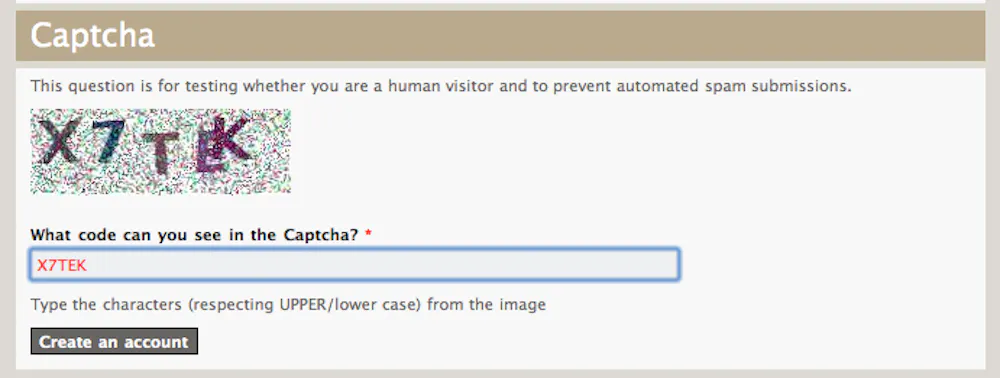
    The early versions of Captcha were basic but effective. You’d see wavy, distorted letters and type them into a box. Bots couldn’t “read” the text the way humans could, so websites stayed protected.


    Chris Messina, CC BY

    This went through several iterations in the years ahead: ReCaptcha was created in 2007 to add a second element in which you had to also key in a distorted word from an old book.

    Then in 2014 – by now acquired by Google – came reCaptcha v2. This is the one that asks users to tick the “I am not a robot” box and often choose from a selection of pictures containing cats or bicycle parts, or whatever. Still the most popular today, Google gets paid by companies who use the service on their website.

    Damn those bicycles.
    Lilgrapher

    How AI has outgrown the system

    Today’s AI systems can solve the challenges these Captchas rely on. They can “read” distorted text, so that the wavy or squished letters from the original Captcha tests are easy for them. Thanks to natural language processing and machine learning, AI can decode even the messiest of words.

    Similarly, AI tools such as Google Vision and OpenAI’s Clip can recognise hundreds of objects faster and more accurately than most humans. If a Captcha asks an AI to click all the buses in a picture selection, they can solve it in fractions of a second, whereas it might take a human ten to 15 seconds.

    This isn’t just a theoretical problem. Consider driving tests: waiting lists for tests in England are many months long, though you can get a much faster test by paying a higher fee to a black-market tout. The Guardian reported in July that touts commonly used automated software to book out all the test slots, while swapping candidates in and out to fit their ever-changing schedules.

    In an echo of the situation 20 years ago, there are similar issues with tickets for things such as football matches. The moment tickets become available, bots overwhelm the system – bypassing Captchas, purchasing tickets in bulk and reselling them at inflated prices. Genuine users often miss out because they can’t operate as quickly.

    Similarly, bots attack social media platforms, e-commerce websites and online forums. Fake accounts spread misinformation, post spam or grab limited items during sales. In many cases, Captcha is no longer able to stop these abuses.

    What’s happening now?

    Developers are continually coming up with new ways to verify humans. Some systems, like Google’s ReCaptcha v3 (introduced in 2018), don’t ask you to solve puzzles anymore. Instead, they watch how you interact with a website. Do you move your cursor naturally? Do you type like a person? Humans have subtle, imperfect behaviours that bots still struggle to mimic.

    Not everyone likes ReCaptcha v3 because it raises privacy issues – plus the web company needs to assess user scores to determine who is a bot, and the bots can beat the system anyway. There are alternatives that use similar logic, such as “slider” puzzles that ask users to move jigsaw pieces around, but these too can be overcome.

    Slider Captcha:


    GitHub

    Some websites are now turning to biometrics to verify humans, such as fingerprint scans or voice recognition, while face ID is also a possibility. Biometrics are harder for bots to fake, but they come with their own problems – privacy concerns, expensive tech and limited access for some users, say because they can’t afford the relevant smartphone or can’t speak because of a disability.

    The imminent arrival of AI agents will add another layer of complexity. It will mean we increasingly want bots to visit sites and do things on our behalf, so web companies will need to start distinguishing between “good” bots and “bad” bots. This area still needs a lot more consideration, but digital authentication certificates are proposed as one possible solution.

    In sum, Captcha is no longer the simple, reliable tool it once was. AI has forced us to rethink how we verify people online, and it’s only going to get more challenging as these systems get smarter. Whatever becomes the next technological standard, it’s going to have to be easy to use for humans, but one step ahead of the bad actors.

    So the next time you find yourself clicking on blurry traffic lights and getting infuriated, remember you’re part of a bigger fight. The future of proving humanity is still being written, and the bots won’t be giving up any time soon.

    The authors do not work for, consult, own shares in or receive funding from any company or organisation that would benefit from this article, and have disclosed no relevant affiliations beyond their academic appointment.

    ref. ‘Yes, I am a human’: bot detection is no longer working – and just wait until AI agents come along – https://theconversation.com/yes-i-am-a-human-bot-detection-is-no-longer-working-and-just-wait-until-ai-agents-come-along-246427

    MIL OSI – Global Reports

  • MIL-OSI Global: Climate, migration and conflict mix to create ‘deadly’ intense tropical storms like Chido

    Source: The Conversation – UK – By Liz Stephens, Professor of Climate Risks and Resilience, University of Reading

    Cyclone Chido was an “intense tropical cyclone”, equivalent to a category 4 hurricane in the Atlantic. It made landfall in Mayotte, a small island lying to the north-west of Madagascar on December 14, generating wind gusts approaching 155mph (250km/hr). Later on, it hit Mozambique, East Africa with the same ferocity.

    This storm skirted north of Madagascar and affected the Comoros archipelago before making landfall in Mozambique. It is well within the range of what is expected for this part of the Indian Ocean. But this region has experienced an increase in the most intense tropical cyclones in recent years. This, alongside its occurrence so early in the season, can be linked to increases in ocean temperatures as a result of climate change.

    News of the effects of tropical cyclone Chido in Mayotte, Mozambique and Malawi continues to emerge. Current estimates suggest 70% of Mayotte’s population have been affected, with over 50,000 homes in Mozambique partially or completely destroyed.

    Ongoing conflict in Mozambique and undocumented migration to Mayotte will have played a key role in the number of deaths and the infrastructure damage.

    Assessing how these cyclones characteristics are changing across southern Africa is part of the research we are involved in. Our team also studies how to build resilience to cyclones where conflict, displacement and migration magnify their effects.

    A human-made disaster?

    The risk that tropical cyclones pose to human life is exacerbated by socioeconomic issues. Migrants on Mayotte, many of whom made perilous journeys to escape conflict in countries such as the Democratic Republic of Congo, now make up more than half of the island’s population.

    Precarious housing and the undocumented status of many residents reportedly made the disaster more deadly, as people feared evacuation would lead them to the police. On islands with poor infrastructure such as Mayotte, there is often simply nowhere safe to go. It takes many days for the power network and drinking water supply to be restored.

    The situation is particularly complex in Mozambique. The ongoing conflict and terrorist violence, coupled with cyclones, including Kenneth in 2019, has caused repeated evacuations and worsening living conditions. Cabo Delgado and Nampula in the far north of Mozambique, the provinces most affected by both Chido and the conflict, rank among the poorest and most densely populated in the country due to limited education, scarce livelihood options and an influx of people displaced by violence.

    As of June 2024, more than half a million people remained without permanent homes in the region, many living in displacement camps. That number is likely to rise significantly after Chido.

    Compounding the crisis, Chido’s landfall so early in the cyclone season meant that the usual technical and financial preparations were not yet fully ramped up, with low stock levels delaying the timely delivery of aid. Unrest following elections in November hampered preparations further, cutting the flow of resources and personnel needed for anticipatory action and early response.

    Tropical cyclones in a warmer world

    Warmer sea surface temperatures not only provide more fuel for stronger storms, but may also expand the regions at risk of tropical cyclones.

    The Indian Ocean is warming faster than the global average, and is experiencing a staggering increase in the proportion of storms reaching the intensity of Chido.

    Climate simulations predict that storms will continue getting stronger as we further warm our world, and could even lead to an unprecedented landfall as far south as the Mozambican capital, Maputo.

    Scientists carry out attribution studies to determine how climate change contributed to specific events. Scientists undertaking rapid attribution studies of Chido have found that the ocean surface temperatures along the path of the storm were 1.1°C warmer than they would have been without climate change. So, temperatures this warm were made more than 50 times more likely by climate change. Another study focusing on Chido itself concluded that the cyclone’s winds were 5% faster due to global heating caused by burning fossil fuels, enough to bump it from a category 3 to a category 4 storm.

    Intense winds are not the only hazard. Scientists are confident that tropical cyclones will dump more rain as a result of climate change. A trend towards slower-moving storms has been observed, causing more of that rain to accumulate in a single location, resulting in floods.

    Cyclone Freddy delivered a year’s worth of rain to southern Malawi in just four days in March 2023. Storm surges, exacerbated by sea level rise, also raise the scale of flooding, as in the devastating Cyclone Idai in March 2019. An increase in the number of storms that rapidly intensify, as Chido did before landfall in Mayotte has also been linked to climate change, which makes it harder to provide early warnings.

    To improve resilience to future cyclones, conflict, migration and social dynamics must be considered alongside climate change, without this, displaced and migrant communities will continue to be the most affected by the risks that climate change poses.


    Don’t have time to read about climate change as much as you’d like?

    Get a weekly roundup in your inbox instead. Every Wednesday, The Conversation’s environment editor writes Imagine, a short email that goes a little deeper into just one climate issue. Join the 40,000+ readers who’ve subscribed so far.


    Liz Stephens also works for the Red Cross Red Crescent Climate Centre, where she works as the Science Lead. She receives funding from the Foreign, Commonwealth & Development Office (FCDO) and the International Development Research Centre in Canada, as part of the CLARE (CLimate Adaptation and REsilience) research programme. Liz holds advisory positions within the Red Cross Red Crescent Movement, for the European Commission’s Global Flood Awareness System, the Anticipation Hub and the African Risk Capacity

    I work for a university which has interest on publications around disasters and climate change. I am part of a research consortium (REPRESA) funded by IDRC to research cyclones in Southern Africa region

    Dan Green does not work for, consult, own shares in or receive funding from any company or organisation that would benefit from this article, and has disclosed no relevant affiliations beyond their academic appointment.

    ref. Climate, migration and conflict mix to create ‘deadly’ intense tropical storms like Chido – https://theconversation.com/climate-migration-and-conflict-mix-to-create-deadly-intense-tropical-storms-like-chido-246219

    MIL OSI – Global Reports

  • MIL-OSI Global: What next for Syria? The danger of violence in post-war transitions

    Source: The Conversation – UK – By Chelsea Johnson, Lecturer in International Relations, University of Liverpool

    Images emerging from Syria over the past week have shown jubilation on the streets, as millions celebrate the end of 24 years of repression under Bashar al-Assad.

    It is rare for rebels to manage to tip the scales in their favour and win a war outright after such a long and protracted stalemate. But the obvious next question is: what comes next? Looking to the handful of similar examples, history suggests that new forms of violence could continue to threaten Syria’s political future.

    In Libya, an umbrella coalition of rebel forces known as the National Transition Council defeated Muammar Gaddafi’s government in 2011. Meanwhile, in South Sudan, victory against Omar al-Bashir came in the form of a successful referendum on independence that same year.

    Looking further back, in Idi Amin’s Uganda, an alliance was brokered by neighbouring Tanzania between two rival rebellions in 1979. Their joint military campaign ended in Amin’s defeat soon after.

    The immediate aftermath of rebel victory in each of these cases points to one common lesson. Where a fragmented coalition of armed groups finds itself in a political vacuum, more violence – not less – is probably on the horizon.

    Fragile and shifting coalitions

    The injustices of repressive regimes often motivate rebellion. They can also provide a common enemy that, especially when sensing a window of opportunity, makes it possible for rival armed groups to put aside their differences and work together towards a common cause.

    Subsequently, however, transition periods generate uncertainty over political futures. This can make it difficult for former allies to remain united.

    Many Libyan militias allied behind the National Transition Council during its uprising against Muammar Gaddafi. But they soon became violent rivals in competition over political influence in the transitional government being formed in Tripoli.

    In a vacuum of authority, these new forms of violence may look like local turf wars. But they are often attempts by faction leaders to position themselves advantageously as political spoils are up for grabs at the national level.

    Meanwhile, where dominant factions vie for national power in the presence of many smaller and more localised militias, these weaker factions may be prone to changing allegiances so as to end up on the winning side.

    Fighting in Libya throughout 2017 exhibited this kind of opportunistic flip-flopping. Local militias such as the Kiniyat Brigade changed their allegiances between the faction of former prime minister, Khalifa al-Ghawil, and a rival faction based in Tripoli claiming to represent the legitimate government of Libya.

    The conflict in South Sudan has long been described as ethnic in nature. The main rival leaders, Salva Kiir and Riek Machar, belonged to the country’s two largest ethnic groups, Dinka and Nuer. But this obscures a more complex and strategic constellation of alliances. Many of the groups that have fought against Kiir have also been ethnic Dinkas and vice versa, with loyalties shifting over time as either leader gains an advantage. Some of the most recent violence has been between forces loyal to Machar and a co-ethnic splinter faction known as Kitgwang, which opposes his leadership.

    Numerous reports from international observers and mediators have attested to the difficulty of brokering and maintaining a stable agreement on the terms of transition in these countries due to fluid and shifting coalitions.

    Armed groups in Syria have already shown such tendencies. The Military Operations Command, the coalition of Syrian opposition groups that brought down Assad’s regime, exists in name only. The dominant group, Hayat Tahrir al-Sham (HTS), is itself an amalgam of at least four separate militias, while previous coalitions backed by Turkey and the US have coalesced and fragmented over time.

    HTS leader Ahmed al-Sharaa has pledged that all rebel factions will “be disbanded and the fighters trained to join the ranks of the defence ministry”. But history suggests that a rival is likely to emerge from one of these blocs to challenge the legitimacy of HTS’s claim to lead the transition. This will introduce a new element of uncertainty for the smaller factions forced to choose a side.

    Looking ahead to elections

    Even where a stable transitional coalition can be upheld, peace may eventually be threatened by the outcome of a winner-takes-all election.

    Violence was avoided in post-Amin Uganda for as long as the two faction leaders who overthrew him held top positions in a transitional power-sharing government. But when elections produced a clear win for Milton Obote in 1980, his rival, Yoweri Museveni, relaunched his rebellion. Uganda’s so-called bush war would continue until 1986, when Museveni’s forces took the capital, Kampala, by force.

    Ethiopia’s post-war transition fared slightly better after victory for an allied rebel assault on the authoritarian Derg regime in 1991. Most of Ethiopia’s rebel factions had clear and distinct ethno-territorial bases and, as a result, the new constitution emerging from an inclusive national conference devolved power to ethnic regions in a federal system.

    This attempt to create a political stake for former rebels not wholly dependent on national election results may have succeeded had local or regional elections been held first. Ultimately, however, at least two rebellions returned to low-level violence throughout the 1990s, accusing the new government of marginalisation and attempts to undermine their electoral competitiveness.

    In any case, devolution appears unlikely in Syria. Aside from Kurdish separatists in the north-east, the country’s many militias have less clear linkages to specific demographic groups and often overlap in their areas of influence. And with HTS now calling for a unified state with no federal regions, the national-level political game will remain high stakes and prone to violent forms of contention.

    Chelsea Johnson receives funding from the British Academy.

    ref. What next for Syria? The danger of violence in post-war transitions – https://theconversation.com/what-next-for-syria-the-danger-of-violence-in-post-war-transitions-246073

    MIL OSI – Global Reports

  • MIL-OSI Global: A short history of palm reading in the UK – and a guide to how it’s supposed to work

    Source: The Conversation – UK – By Martha McGill, Historian of Supernatural Beliefs, University of Warwick

    Wikimedia , CC BY

    In August 1676, a court in Hertford heard a case of fraud against Joseph Haynes, James Domingo and Domingo’s “pretended wife” Sarah. The three had been travelling between local towns telling fortunes.

    Apparently, Domingo had promised one woman that she would marry a “pretty tall merry-speaking” farmer’s son with a mole on his chin and a respectable £80 to his name. Haynes, meanwhile, boasted that his divinatory efforts had won him £5, three maidenheads and a broken shin.

    The court’s decision is not recorded, but the case encapsulates the divided opinion of divination in the 17th century. Although commonly condemned by the authorities, fortune-telling was a popular and potentially profitable art.

    We do not know how exactly the three miscreants practised, but most travelling fortune-tellers studied facial features (physiognomy) or read palms (palmistry or chiromancy). The idea that there was occult meaning etched in the body’s marks, lines, features and moles stretches back to antiquity.

    The body’s outer form supposedly reflected the state of the soul. Also, it was believed that the body was intimately entwined with the wider cosmos.


    Looking for something good? Cut through the noise with a carefully curated selection of the latest releases, live events and exhibitions, straight to your inbox every fortnight, on Fridays. Sign up here.


    In a popular work from the early 16th century, the German physician Heinrich Cornelius Agrippa explained that the body’s appearance and behaviour invited particular “celestial gifts”. Palmistry was the art of interpreting this “harmonical correspondency”.

    However, Christian authorities were largely unimpressed. Theologians dismissed palmistry as superstitious, or argued that it was presumptuous to pry into God’s plan. The Catholic church officially condemned divinatory arts in a papal bull of 1586. The English Protestant minister William Perkins (1558–1602) wrote that palmistry was an “abomination” that was “detested of God, and ought also to be detestable in the eyes of Gods [sic] people”.

    Official mistrust of palmistry was spurred by its association with “Egyptian” fortune-tellers (often shortened to “gypsies”). This label was used for travellers of diverse origins, but especially the Romani diaspora from India.

    Romani travellers first reached central and western Europe in the 15th century and many claimed to have come from Egypt. Ancient Egyptians were famed for their occult wisdom and the association probably helped Romani groups to win credit as fortune-tellers. Nevertheless, they met with widespread persecution.

    A fortune teller reading the palm of a soldier.
    Wellcome Collection, CC BY-NC

    In England, a 1530 parliamentary act officially banished the “outlandish” people “calling themselves Egyptians” who allegedly travelled about the country, swindling people by pretending divinatory prowess.

    All the same, magical practitioners at various social levels continued to offer palm-reading services. And from the 17th century, pamphlets offered guides to interpreting your own hands.

    An anonymous work published in London in 1700 claimed to fully resolve all questions about human life through “the Rules of Art used by the Ancient and Famous Egyptian Magi, or Wise Men and Philosophers”.

    Here I offer some guidance on how you’re supposed to read your palm based on that work. It may contradict itself hopelessly. It may promise you a grisly death. But if the stars are kind, you too could rise by your good deeds and find a spouse lauded for their virtue – or, at least, a merry man with £80 and a nice mole.

    How to read a palm

    Always consult the left hand.

    1: Life line

    Look for the semi-curved line that starts between the thumb and index finger and runs down toward the wrist.

    If this line is long and clear, not broken with little cross-lines, you will be healthy and live to an old age. However, if the uppermost part of the line is forked or jagged, you will often be sick.

    If there are three stars intersecting with the line, you may suffer “great losses and calamities”. If the line intertwines with the table line, you will gain “honour and riches”.

    2: Table line

    Look for a horizontal line on your upper palm that starts near the index or middle finger and runs to beneath the little finger.

    If this line is broad and vivid in colour, you will be healthy and contented. However, if the line is forked at the end, you will gain riches by trickery and soon lose them again. If it branches towards the index or middle finger, you will rise to a prestigious position.

    3: Middle line

    Look for a horizontal line across the middle part of the palm.

    If there are lots of small lines in between this and the table line, you will be sick when you are young but make a recovery. If there is a halfmoon in this line, you will suffer from “cold and watery diseases”, but a sun or a star promises prosperity.

    4: Line of Venus

    Look for an arching line that runs near the base of your middle, ring and little fingers.

    If this line forks near the index finger, you may be ruined by keeping bad company. If there are crosses on this line near the index and little fingers, you are “inclined to a virtuous and modest course of life”. The author claims that wise men employ this method to choose suitable wives.

    5: Liver line

    Look for a vertical line that starts beneath the ring or little finger and runs to the base of the palm.

    If this line is straight, you are of sound judgement. If it is crooked you are deceitful. If this line and the middle line begin near one other, it means foolishness in men and foretells injury by overwork for women.

    6: Plain of Mars

    Plains are flat areas of the palm that can be associated with difference parts of life. The plain of Mars is the centre of your palm.

    If the lines in this plain are crooked, you will fall by your enemies. If you have lines beginning at the middle of your wrist and reaching into the plain of Mars, you will get into lots of fights. If there are large crosses in the plain, you will, if a man, rise by good deeds or, if a woman, have many husbands and children.

    Martha McGill does not work for, consult, own shares in or receive funding from any company or organisation that would benefit from this article, and has disclosed no relevant affiliations beyond their academic appointment.

    ref. A short history of palm reading in the UK – and a guide to how it’s supposed to work – https://theconversation.com/a-short-history-of-palm-reading-in-the-uk-and-a-guide-to-how-its-supposed-to-work-246276

    MIL OSI – Global Reports

  • MIL-OSI USA: FEMA Awards $1 Billion in Public Assistance Funds Following Hurricane Milton

    Source: US Federal Emergency Management Agency 2

    FEMA Awards $1 Billion in Public Assistance Funds Following Hurricane Milton

    TALLAHASSEE, Fla. – FEMA has obligated over $1 billion in Public Assistance funds to aid Florida’s recovery from Hurricane Milton. Reaching this milestone, in just over two months after the hurricane’s major disaster declaration on Oct. 11, has never been done before in Florida. This rapid response highlights the partnership with the State of Florida to aid local governments’ efforts to help communities recover.These funds include costs that the state and local jurisdictions spent on debris removal and emergency protective measures. As of Dec. 20, the state of Florida has removed 37.4 million cubic yards of debris, which equals to more than 228,000 tractor trailers loads.FEMA’s Public Assistance program provides reimbursement to state and local government agencies for the costs of emergency response, debris removal and restoration of disaster-damaged public facilities and infrastructure. Houses of worship and certain private nonprofit organizations may also be eligible for FEMA Public Assistance. The deadline to apply for Public Assistance funds is Dec. 20, 2024.For the latest information about Hurricane Milton recovery, visit fema.gov/disaster/4834. For Hurricane Helene, visit fema.gov/disaster/4828. For Hurricane Debby, visit fema.gov/disaster/4806. Follow FEMA on X at x.com/femaregion4 and on Facebook at facebook.com/fema.###FEMA’s mission is helping people before, during, and after disasters. FEMA is committed to ensuring disaster assistance is accomplished equitably, without discrimination on the grounds of race, color, nationality, sex, sexual orientation, religion, age, disability, English proficiency, or economic status. Any disaster survivor or member of the public may contact the FEMA Office of Civil Rights if they feel that they have a complaint of discrimination. FEMA’s Office of Civil Rights can be contacted at FEMA-OCR@fema.dhs.gov or toll-free at 833-285-7448.
    sixto.valentin…
    Fri, 12/20/2024 – 14:53

    MIL OSI USA News

  • MIL-OSI Security: USINDOPACOM Commander Travels to Cambodia

    Source: United States INDO PACIFIC COMMAND

    PHNOM PENH, Cambodia — Adm. Samuel J. Paparo, commander of U.S. Indo-Pacific Command, traveled to Cambodia, Dec. 18, to strengthen and expand the U.S-Cambodia partnership as the two nations enter the 75th anniversary of bilateral relations.

    He met with senior government and military officials including Cambodian Prime Minister Hun Manet, Secretary of State for the Ministry of Defense Rath Dararoth, and Commander in Chief of the Royal Cambodian Armed Forces Gen. Vong Pisen.

    Paparo, joined by U.S. Chargé d’Affaires to Cambodia Bridgette L. Walker, discussed the recent visit of U.S. Secretary of Defense Lloyd J. Austin, where Austin highlighted confidence-building measures to strengthen U.S.-Cambodia relations and rebuild bilateral defense and security cooperation. They focused on relations being based on the principles of sovereignty, mutual respect and upholding the international rules-based order. Paparo also underscored U.S. commitment to ASEAN-centrality and expressed support for cooperation in the areas of international military education and training; peacekeeping operations; demining and unexploded ordnance removal; and medical medicine.

    Throughout his trip, Paparo expressed appreciation for the U.S.-Cambodian efforts, through the Defense POW/MIA Accounting Agency, to achieve the fullest possible accounting of all missing U.S. personnel in Cambodia and Southeast Asia.

    Paparo also visited the Independence-class littoral combat ship USS Savannah (LCS 28) at Sihanoukville Autonomous Port, where he engaged with Governor of Preah Sihanouk province Mang Sineth and the commander of Ream Naval Base Rear Adm. Mey Dina during a press event and ship tour. USS Savannah’s presence in Sihanoukville marks the first time in approximately eight years that a U.S. Navy ship has visited Cambodia, symbolizing the catalyst for expanding defense exchanges.

    USINDOPACOM is committed to enhancing stability in the Indo-Pacific region by promoting security cooperation, encouraging peaceful development, responding to contingencies, deterring aggression and, when necessary, fighting to win.

    MIL Security OSI

  • MIL-OSI Canada: Updating Alberta’s approach to homelessness

    Source: Government of Canada regional news

    [embedded content]

    Over the past decade, new challenges with rural homelessness, the drug crisis and more meant that Alberta’s approach to addressing homelessness became outdated. To better respond to those needs, in 2022 the province committed to testing and implementing a new, coordinated approach to combatting homelessness through Alberta’s Action Plan on Homelessness.

    To continue this progress and finish implementing Alberta’s Action Plan on Homelessness, Alberta’s government will be streamlining grant administration for housing with supports and providing provincial funding directly to front-line service providers, including Indigenous-led organizations. By designating the coordination of supports to Alberta’s government, the government will be in a better position to address homelessness-related issues in communities across the province. Additionally, directly funding front-line service providers will help those providers strengthen their wraparound supports for Albertans experiencing homelessness. This funding, which will remain stable, helps people experiencing homelessness move into and maintain stable housing with access to the wraparound supports they need.

    “Our government has invested an unprecedented amount of funding and effort into addressing homelessness in Alberta. As shown by the success of our navigation centres and other innovative approaches, our government’s efforts to better coordinate supports are making a positive difference for vulnerable Albertans. I look forward to expanding our valuable partnerships with front-line service agencies across the province as we continue to follow through on our commitments.”

    Jason Nixon, Minister of Seniors, Community and Social Services

    To improve the coordination of these wraparound supports and achieve better outcomes for those seeking help, Alberta’s government is also working to improve the accuracy of data collection on a provincial scale. Alberta’s government will continue to work closely with front-line service providers, municipalities and community partners to ensure minimal disruption in services as this improved delivery model is implemented.

    These new efforts build on the success of earlier initiatives by the government, including the introduction of new supports like Indigenous-led shelters, women-only shelter spaces, and expanded recovery services. Building on this work, Navigation and Support Centres in Edmonton and Calgary have been essential to providing thousands of Albertans with wraparound supports, including government ID, addiction treatment, mental health services, employment skills training and housing.

    All of this work is possible because Alberta’s government has made unprecedented investments to fund these new supports, with Budget 2024 investing almost $210 million in emergency shelters and housing with supports.

    “When funding for emergency shelters and housing is meant to support Indigenous peoples, it should be delivered by Indigenous-operated organizations. While community-based organizations have served some of our people in times of need, they have not historically delivered in ways that reflect our knowledge and cultural practices. Providing these funds directly through the Alberta Government will allow our Indigenous-operated organizations an opportunity to receive grants and deliver services that are not only effective, but also rooted in the cultural understanding and traditions of our communities.”

    Chief Cody Thomas, Enoch Cree Nation

    As Alberta looks to the future, an expert panel is being established to help shape the province’s long-term approach to combatting homelessness. While the province has made progress on better supporting the most vulnerable, Alberta’s homelessness-related issues have evolved in recent years. The panel is tasked with ensuring Alberta’s long-term approach continues to meet the needs of Albertans experiencing homelessness, with an increased focus on Indigenous communities, rural needs, complex addictions and mental health. Co-chaired by Justin Wright, the MLA for Cypress-Medicine Hat, and Robin James, the chief administrative officer of the Lethbridge Housing Authority, the panel will advise the province on how to continue to reduce homelessness across Alberta. Additional members of the panel will be announced at a later date.

    “I am honoured to be appointed as co-chair of the panel, and I look forward to undertaking this important work. It is critical that rural communities have the supports they need to appropriately address homelessness to achieve better outcomes for those seeking help.”

    Justin Wright, MLA for Cypress – Medicine Hat

    “Lethbridge Housing Authority welcomes this announcement as an opportunity to strengthen our partnerships with front-line service providers. We have seen great success in Lethbridge and southern Alberta as a result of our work alongside Alberta’s government, and we look forward to continuing this important work.”

    Robin James, CAO, Lethbridge Housing Authority

    “The Calgary Drop-In Centre supports thousands of vulnerable Calgarians each year, and we look forward to continuing this work in partnership with Alberta’s government. These changes will make a difference and ensure we can continue to support vulnerable Calgarians, creating hope and stability into the future.”

    Sandra Clarkson, CEO, Calgary Drop-In Centre

    Quick facts

    • In 2023-24, more than 8,000 Albertans were provided with housing and supports, including 1,800 people newly admitted to housing programs.
    • In 2024-25, the province is investing almost $210 million overall into homelessness initiatives in Alberta, including:
      • $116 million in 2024-25 to support the operation of homeless shelter spaces.
      • $101.5 million to support local programs designed to move people out of homelessness and into stable housing linked with appropriate supports. This funding will now be directly distributed to service providers by the Alberta Government.

    Related information

    • Action Plan on Homelessness
    • Coordinated Community Response to Homelessness Task Force Report

    Related news

    • Alberta shelters are ready for winter (Nov. 21, 2024)

    Multimedia

    • Watch the news conference

    MIL OSI Canada News

  • MIL-OSI United Kingdom: Response to the announcement from the Deputy Prime Minister that regional Mayors will be handed powers to crackdown on e-bikes and e-scooters being dumped on pavements

    Source: Mayor of London

    In response to the announcement from Deputy Prime Minister Angela Rayner, that regional Mayors will be handed new powers to crackdown on e-bikes and e-scooters being dumped on pavements, Labour’s London Assembly Transport Spokesperson, Elly Baker AM, said:

    “Dockless e-bikes have grown in popularity across London, with around 40,000 now in operation across 22 boroughs.  However, we have seen in recent years that lack of regulation for careless parking has resulted in blocked pavements, street clutter, and other accessibility issues particularly impacting people with mobility or visual impairments and parents with young children.

    “Last month, the London Assembly backed my call for the government to grant regulatory powers to Transport for London (TfL) and London boroughs to deal with this issue. Earlier this month, TfL set out plans to tackle poorly parked e-bikes causing safety or access issues.

    “I welcome that the government has listened to my call to empower local transport authorities like TfL to regulate e-bikes and e-scooters.

    “This is an important step in making sure our city is accessible for everyone.” as further consultation and discussion on the devolution white paper gets underway, I will be reiterating my call to grant strategic transport authorities, like TfL, powers to place a cap on the number of bikes available to rent and regulate data sharing in partnership with local authorities.”

    MIL OSI United Kingdom

  • MIL-OSI Global: Times journalists deemed ‘legitimate military targets’ – how Russia muzzles criticism at home and abroad

    Source: The Conversation – UK – By Precious Chatterje-Doody, Senior Lecturer in Politics and International Studies, The Open University

    Russia’s former president and current deputy head of its security council, Dmitry Medvedev, has declared that the editors of the Times newspaper in the UK are now “legitimate military targets”.

    Medvedev, who is one of Vladimir Putin’s closest allies, was responding to the newspaper’s coverage of the recent assassination of Russia’s chemical weapons chief, Igor Kirillov, in Moscow on December 17. The paper’s leading article referred to his killing by an explosive device hidden in a scooter as a “legitimate act of defence by a threatened nation”.

    Medvedev took to Telegram to denounce the article, writing: “Those who carry out crimes against Russia … always have accomplices. They too are now legitimate military targets. This category could also include the miserable jackals from the Times who cowardly hid behind their editorial. That means the entire leadership of the publication.”

    The assassination of Kirillov, who was in charge of Russia’s chemical, biological and nuclear defence forces, came a day after he had been charged by Ukraine in absentia with war crimes over Russia’s use of chemical weapons in the ongoing war.

    Once seen as a liberal reformer when he temporarily took over Russia’s presidency between 2008 and 2012, Medvedev has since reinvented himself as a pro-war hawk who regularly makes outlandish or extreme statements on social media.

    In May 2023, following a drone attack on the Kremlin, Medvedev posted a message on Telegram saying there were “no options left other than the physical elimination of [the Ukrainian president] Zelenskyy and his clique”. The post prompted Ukraine’s foreign minister, Dmytro Kuleba, to respond in an interview that “Medvedev should drink less vodka before going on Telegram”.

    In his most recent outburst, Medvedev mirrored the rhetoric used in the Times editorial, claiming that by the same logic, all of Kyiv’s “accomplices” – whether decision-makers in Nato or journalists justifying Ukraine’s actions – are active participants in a war against Russia. This makes them “legitimate military targets” who need to “be careful” even in London, where “anything goes”.

    Part of a pattern

    Medvedev’s comments, while extreme, fall within a broader pattern of Russian officials using humour or courting controversy to justify their positions or ensure international press coverage. But they are also part of an escalation in Russian attacks on freedom of expression and the press.

    Prior to the full-scale invasion of Ukraine, Russia’s media environment was restricted. Opposition viewpoints could, however, still be accessed relatively easily from a range of sources, including the regional press, online outlets and the political blogosphere. But the Kremlin has gradually chipped away at these possibilities by increasing restrictions on independent media and social media users alike.

    These restrictions were ramped up even further following Russia’s invasion of Ukraine in February 2022. Criticism of the armed forces and spreading what the Kremlin deems “false information” about the so-called “special military operation” were criminalised.

    Anti-war activists now routinely face conviction for justifying terrorism, and well-respected news outlets such as Ekho Moskvy have been forced to close. Journalists from Russia and abroad have been tried, convicted and incarcerated for allegedly violating these laws. They are often held in harsh conditions, in isolation and without access to adequate medical care.

    But it is not just journalists and activists within Russia who have come under threat from this increasingly authoritarian regime. As well as its military incursions into Georgia in 2008 and eastern Ukraine since 2014, Russian intelligence organisations have been blamed for a number of targeted provocations abroad in recent years. In the case of the 2018 Salisbury poisonings, these resulted in fatalities on British soil.

    Russian involvement is, of course, always denied. Kremlin propaganda uses a range of disinformation tactics to hide Russia’s culpability. With the Salisbury poisonings, this included an outlandish television interview on Russia’s RT network, where the main suspects claimed to be visiting health supplements salesmen. My research at the time showed that online audiences universally rejected their story, but incredulity over the interview overtook public anger.

    Contrasting values

    As my research has shown, extreme statements and conspiracy theories circulate rapidly and widely in today’s international media environment. With this in mind, it is common for the Kremlin and its proxies to mirror accusations back towards other parties and accuse them of hypocrisy.

    Taking questions from a US journalist in his end-of-year press conference and phone-in on December 19, Putin was asked about the “failure” of the special military operation in Ukraine. The reporter went on to describe Putin’s position as “weaker” than that of the incoming US president, Donald Trump.

    Putin insinuated that the very fact this US journalist was included in the event showed a better treatment by Russia of “esteemed” international journalists than Russian journalists receive from the US.

    This is patently untrue. Wall Street Journal reporter Evan Gershkovich was imprisoned in Russia for 16 months on trumped-up espionage charges, after being detained in March 2023 while covering the effect of western sanctions on the Russian economy.

    Russia’s crackdown on freedom of speech and freedom of the press is precisely because authoritarian regimes recognise they are incredibly vulnerable to the free and open-ended enquiry that my co-authors and I have argued is so crucial to defend.

    As a spokesperson for the UK prime minister, Keir Starmer, noted in response to Medvedev’s latest comments: “A free press is a cornerstone of our democracy.”

    Precious Chatterje-Doody does not work for, consult, own shares in or receive funding from any company or organisation that would benefit from this article, and has disclosed no relevant affiliations beyond their academic appointment.

    ref. Times journalists deemed ‘legitimate military targets’ – how Russia muzzles criticism at home and abroad – https://theconversation.com/times-journalists-deemed-legitimate-military-targets-how-russia-muzzles-criticism-at-home-and-abroad-246361

    MIL OSI – Global Reports

  • MIL-OSI Russia: 23rd meeting of the Intergovernmental Commission on Economic Cooperation between the Russian Federation and the Republic of Armenia

    Translation. Region: Russian Federation –

    Source: Government of the Russian Federation – An important disclaimer is at the bottom of this article.

    The meeting was held under the joint chairmanship of Deputy Prime Minister of the Russian Federation Alexey Overchuk and Deputy Prime Minister of the Republic of Armenia Mher Grigoryan.

    Previous news Next news

    23rd meeting of the Intergovernmental Commission on Economic Cooperation between the Russian Federation and the Republic of Armenia

    The 23rd regular meeting of the Intergovernmental Commission on Economic Cooperation between the Russian Federation and the Republic of Armenia was held in Moscow under the joint chairmanship of Deputy Prime Minister of the Russian Federation Alexey Overchuk and Deputy Prime Minister of the Republic of Armenia Mher Grigoryan.

    The parties summed up the results of bilateral cooperation in trade and economic spheres, energy, industry, transport, agriculture, finance, healthcare, culture, science, interregional cooperation, education and tourism.

    “Our trade and economic relations continue to be on the rise. Mutual trade between Russia and Armenia, according to data for 10 months of 2024, amounted to 10.2 billion dollars. This is more than twice as much as the same indicator last year,” noted Alexey Overchuk, emphasizing that in order to implement trade and economic relations, the countries have almost completely switched to settlements in national currencies – the share of the Russian ruble in mutual settlements has reached 96.3%.

    The Russian Federation is one of the main investors in the Armenian economy. Investments in industrial projects in the Republic of Armenia have reached $3.4 billion. More than 40 large Russian companies operate in Armenia, some of them are the largest taxpayers in the state budget.

    “In addition to direct investments, Eurasian development institutions are also actively working,” said the Deputy Prime Minister. “Active work is underway here, including in support of the “Crossroads of the World” initiative, which was put forward by the Prime Minister of the Republic of Armenia Nikol Vovaevich Pashinyan.”

    The Chairman of the Russian part of the commission also noted that in July 2024, with the assistance of Russian Railways, the railway between Armenia and Georgia, damaged by flooding, was restored in the shortest possible time – the only railway connecting Armenia with the outside world, which is an important channel for delivering vital goods to Armenia.

    “All these investments and projects are being implemented with the aim of strengthening connectivity in the Eurasian region and the South Caucasus, in particular, integrating Armenia into the new value chains emerging in Eurasia and realizing the transport and logistics potential that the Republic of Armenia has, with unwavering respect for its sovereignty and jurisdiction,” Alexey Overchuk said in his speech.

    In the context of the work of Eurasian development institutions, the Deputy Prime Minister also noted the implementation of the irrigation systems modernization project: mechanical irrigation has been replaced by gravity irrigation, which provides annual energy savings. 5 main and 22 inter-farm canals have been restored. Work on the restoration and construction of intra-farm irrigation systems in 105 settlements of the Republic of Armenia has been completed.

    “Two weeks ago, our specialists agreed to assess the technical condition of eight bridges damaged by the floods in Lori and Tavush. All work will be completed as soon as possible, and we expect that by the end of the year, their results will be submitted to the Ministry of Territorial Administration and Infrastructure of the Republic of Armenia,” the Deputy Prime Minister said.

    During the meeting, the active development of cooperation in the humanitarian sphere was emphasized.

    “Today we are signing an intergovernmental Agreement on the conditions of operation of the Russian-Armenian University in the Republic of Armenia. This is one of the leading universities in Armenia, where more than 5 thousand students study, mastering 123 educational programs, 80 of which are taught according to Russian educational standards,” the Deputy Prime Minister emphasized.

    The university’s research and teaching staff includes 82 doctors and 332 candidates of science. The university’s structure includes 9 institutes, 31 departments and 12 laboratories.

    The University cooperates with the Joint Institute for Nuclear Research, the Institute for System Programming of the Russian Academy of Sciences, the St. Petersburg Polytechnic University and other Russian scientific centers. Research projects are implemented in such areas as bioinformatics, genomic research, quantum nanophotonics, biochemistry and biotechnology.

    Work continues to provide opportunities to receive education according to Russian standards in the educational and sports complex, which includes a school for 700 students, built in Yerevan as part of the Gazprom for Children social program.

    The countries pay great attention to cooperation in the field of culture. Since 2023, a program to support Russian theaters abroad has been implemented, within the framework of which the Yerevan State Russian Drama Theater named after Stanislavsky was provided with financial assistance for the acquisition of stage equipment and the creation of new productions based on works of Russian classics. The Moscow Parajanov Theater, with the support of the Ministry of Culture of Russia and the Cultural Center of the Armenian Embassy in Russia, held a large-scale festival “Parajanov Fest”.

    Bilateral cooperation in the field of creative education is developing. Within the framework of the International Student Festival of VGIK, 38 films participating in the festival were screened at the Russian-Armenian University.

    In pursuance of the agreements reached at the meeting of the intergovernmental commission, the second Russian-Armenian Forum of Education in the Sphere of Culture was held in Moscow in December 2024.

    Cooperation in the healthcare sector is being strengthened, including within the framework of annual Russian-Armenian forums on healthcare. The ninth Russian-Armenian forum on healthcare, dedicated to issues of maternal and child health, was held on December 16, 2024 in Yerevan. During the forum, the system of extended perinatal screening developed and successfully applied in Russia was presented.

    Russia and Armenia are developing mutual tourism. In January-September 2024, the number of trips of Russian tourists to Armenia amounted to 715.8 thousand, and Armenian tourists to Russia – 266 thousand.

    Speaking about cooperation in multilateral formats, primarily through the Eurasian Economic Union, the Deputy Prime Minister noted that the union has become a real guarantor of Armenia’s energy and food security, as well as its technological development.

    “The Union countries are the key sales market and the key supplier to the Armenian market. The EAEU accounts for 56% of Armenia’s food exports, 80% of machinery and equipment exports, 67% of chemical exports, and 56% of textile exports. The EAEU also provides 72% of energy imports, 49% of precious metal imports, 38% of food imports, and 34% of timber imports. During its membership in the Union, the export of industrial goods from Armenia has grown 15-fold, and food exports from Armenia have grown 4-fold. Since joining the EAEU in 2015, Armenia’s per capita GDP has grown almost 2.4-fold. This was made possible by the benefits of a common goods market, low prices for agricultural raw materials and energy, a convenient migration regime, and a common services market,” said Alexey Overchuk.

    Following the meeting, the protocol of the 23rd meeting of the Intergovernmental Commission on Economic Cooperation between the Russian Federation and the Republic of Armenia was signed.

    The parties also signed an Agreement between the Government of the Russian Federation and the Government of the Republic of Armenia on the conditions for the operation of the Russian-Armenian University in the Republic of Armenia, a State Purchase Agreement for a polyvalent, cultured, sorbed, inactivated foot-and-mouth disease vaccine, an Agreement between the Government of the Russian Federation and the Government of the Republic of Armenia on the conditions for the operation of the Educational and Sports Complex of Gazprom Armenia CJSC in Yerevan, and a work plan for the Russian-Armenian Business Council for 2025.

    Please note: This information is raw content directly from the source of the information. It is exactly what the source states and does not reflect the position of MIL-OSI or its clients.

    MIL OSI Russia News

  • MIL-OSI United Nations: Security and economic woes plague West Africa, as key elections loom

    Source: United Nations 4

    By Vibhu Mishra

    Peace and Security

    West Africa and the Sahel continue to grapple with a confluence of political, security and humanitarian crises as countries prepares for pivotal elections in 2025, the UN special envoy for the vast region told ambassadors in the Security Council on Friday.

    Leonardo Santos Simão, highlighted upcoming presidential elections in Côte d’Ivoire and Guinea-Bissau, and the adoption of constitutional reforms amid a strained political environment in Gambia.

    He also commended recent successful elections in Ghana and Senegal, noting the signing of a “Peace Pact” by all presidential candidates in Ghana and the smooth transfer of power following orderly concessions by political rivals.  

    In Senegal, electoral observer missions highlighted the transparency of the process and the trust placed by political parties in national institutions, he added.

    These two elections demonstrate progress in democracy in the region,” Mr. Simão said.

    Challenges remain

    However, several countries in the region – including Ghana and Senegal – continue to face significant economic challenges.

    “They will require support to manage rising debt and implement projects that protect livelihoods, otherwise their democratic gains may fail to satisfy the expectations of the populations, in particular among women and the youth,” Mr. Simão warned.

    He also urged efforts to prioritise preventive diplomacy and dialogue in the region, while emphasising he remains focused on fostering mutual understanding and encouraging common ground with all stakeholders.

    “While the positive outcomes of these engagements are gradual, there are promising signs of increased collaboration on people-centred, pragmatic solutions to the region’s security, governance, humanitarian and socio-economic challenges,” he added.

    Escalating security threats

    Insecurity remains the most urgent concern, with terrorist groups becoming increasingly aggressive and utilising sophisticated weaponry, including drones. Recent attacks in the Central Sahel have claimed many lives, affecting civilians and security personnel alike.

    Beyond the Sahel, violent extremism and organized crime have begun to spill into Gulf of Guinea nations, such as Benin and Togo, threatening more regional destabilisation.  

    The cessation of operations by the G5-Sahel Joint Force and the restructuring of the Accra Initiative, highlight the urgent need to reinvigorate regional security mechanisms, Mr. Simão said.

    He called for increased support for the Multinational Joint Task Force (MNJTF), the only functioning security platform in the Lake Chad Basin, which is struggling to counter increasingly well-equipped terrorist groups.

    Humanitarian crisis deepens

    The humanitarian situation in the region also remains challenging.

    Chad, hosting two million refugees and internally displaced persons (IDPs) – including those fleeing the violence in Sudan – is grappling with the dual challenges of displacement and severe flooding.

    In Burkina Faso, Mali, Niger and Nigeria, escalating violence has displaced millions, while underfunded humanitarian appeals leave many vulnerable.

    “I urge partners to contribute to the humanitarian appeal, which remains less than 50 percent funded,” Mr. Simão said.

    Withdrawal from ECOWAS

    He also briefed Council members of the Summit of the Economic Community of West African States (ECOWAS) last week, where leaders took note of the decision by Burkina Faso, Mali, and Niger to withdraw from the bloc.  

    While formal withdrawal proceedings are expected to commence in late January 2025, ECOWAS leaders also extended a six-month window for dialogue, in case rapprochement is possible.

    MIL OSI United Nations News

  • MIL-OSI Canada: Prime Minister welcomes the appointment of the Honourable James O’Reilly as Senate Ethics Officer

    Source: Government of Canada – Prime Minister

    The Prime Minister, Justin Trudeau, today welcomed the appointment of the Honourable James O’Reilly as the new Senate Ethics Officer. This appointment, which was recently approved by the Senate, is effective January 10, 2025.

    A widely respected member of Canada’s legal community, Mr. O’Reilly was appointed a judge of the Federal Court in 2002 and of the Court Martial Appeal Court in 2003. Prior to his appointment to the Bench, he had a varied legal career that included roles at the Law Commission of Canada, the Department of Justice Canada, and the Supreme Court of Canada. He is also a published author and has taught law at various universities across the country.

    As Senate Ethics Officer, Mr. O’Reilly will be responsible for administering, interpreting, and applying the Ethics and Conflict of Interest Code for Senators, providing advice on the Code to members of the Senate.

    The Prime Minister congratulated the outgoing Senate Ethics Officer, Pierre Legault, on his upcoming retirement and thanked him for his dedication and service.

    Quote

    “I congratulate the Honourable James O’Reilly on his appointment as the next Senate Ethics Officer. His impressive legal career will make him an invaluable advisor to members of the Red Chamber.”

    Quick Facts

    • The Senate Ethics Officer is an independent Officer of the Senate, appointed under the Parliament of Canada Act for a term of seven years.
    • Mr. O’Reilly was chosen as the nominee for this position on the advice of the Prime Minister, following the government’s open, transparent, and merit-based appointment process. Under the Parliament of Canada Act, his nomination was then approved by the Senate.
    • The Ethics and Conflict of Interest Code for Senators outlines a set of standards and rules on ethics and conflict of interest that a senator must meet in performing their parliamentary duties and functions.

    Biographical Note

    Associated Links

    MIL OSI Canada News

  • MIL-OSI Security: Rantoul Man Convicted of Bank Robbery

    Source: Federal Bureau of Investigation (FBI) State Crime News

    Urbana, Ill. – A federal jury returned a guilty verdict on December 11, 2024, against Troy Burke, 40, of Rantoul, Illinois, for bank robbery. Sentencing for Burke has been scheduled for May 2, 2025, at 2:30 p.m. at the U.S. Courthouse in Urbana, Illinois

    During the two-day trial, the government presented evidence that on June 20, 2024, Burke walked into the Community Plus Federal Credit Union in Rantoul, Illinois indicating to the teller that he had a gun. He proceeded to remove the plastic partition separating the teller from the customer and threatened to hit her with it. Burke left the bank with more than $9,000 in cash and a GPS device the teller had secured in the stack of currency. Burke was stopped by Rantoul police a few blocks from the Credit Union and was found to be in possession of more than $9,000 cash and the GPS device from the bank.

    Burke was arrested on June 20, 2024, and remains in the custody of the U.S. Marshals Service pending sentencing. 

    Statutory penalties for bank robbery are up to twenty years imprisonment, up to 3 years of supervised release, and a fine of up to $250,000.

    The case investigation was conducted by the Rantoul Police Department and the Federal Bureau of Investigation, Springfield Field Office. Timothy Sullivan and Bryan Freres represented the government at trial. 

    MIL Security OSI

  • MIL-OSI Security: Nationwide Lawsuit Filed in Rhode Island Alleging CVS Knowingly Dispensed Controlled Substances in Violation of the Controlled Substances Act and the False Claims Act

    Source: Federal Bureau of Investigation (FBI) State Crime News

    PROVIDENCE, RI – In a civil complaint unsealed today in federal court in Providence, Rhode Island, the Justice Department alleges that CVS Pharmacy, Inc., and various subsidiaries (collectively, CVS) filled unlawful prescriptions in violation of the Controlled Substances Act (CSA) and sought reimbursement from federal healthcare programs for some of the unlawful prescriptions in violation of the False Claims Act (FCA). CVS is the country’s largest pharmacy chain, with more than 9,000 pharmacies across the United States.

    The government’s complaint alleges that, from October 17, 2013, to the present, CVS knowingly filled prescriptions for controlled substances that lacked a legitimate medical purpose, were not valid, and/or were not issued in the usual course of professional practice. Among the large quantities of unlawful prescriptions that CVS allegedly filled were prescriptions for dangerous and excessive quantities of opioids, early fills of opioids, and “trinity” prescriptions, an especially dangerous and abused combination of drugs made up of an opioid, a benzodiazepine, and a muscle relaxant. CVS also allegedly filled large quantities of prescriptions for controlled substances written by prescribers it knew to be engaged in “pill mill practices” – that is, prescribers who issue large numbers of controlled substance prescriptions without any medical purpose. According to the complaint, CVS ignored substantial evidence from multiple sources, including its own pharmacists and internal data, indicating that its stores were dispensing unlawful prescriptions. 

    The complaint alleges that CVS’s violations resulted from corporate-mandated performance metrics, incentive compensation, and staffing policies that prioritized corporate profits over patient safety. CVS set staffing levels far too low for pharmacists to both meet their performance metrics and comply with their legal obligations. CVS also allegedly deprived its pharmacists of crucial information (including by, for example, preventing pharmacists from warning one another about certain prescribers) that could have reduced the number of unlawful prescriptions filled. The complaint alleges that CVS’s actions helped to fuel the prescription opioid crisis and that, in some particularly tragic instances, patients died after overdosing on opioids shortly after filling unlawful prescriptions at CVS.

    “Opioid deaths remain a scourge on communities across Rhode Island and the nation, robbing families of loved ones and leaving a path of devastation in their wake,” said Zachary A. Cunha, U.S. Attorney for the District of Rhode Island. “This lawsuit alleges that CVS failed to exercise its critical role as gatekeeper of dangerous prescription opioids and, instead, facilitated the illegal distribution of these highly addictive drugs, including by pill mill prescribers. When corporations such as CVS prize profits over patient safety and overburden their pharmacy staff so that they cannot carry out the basic responsibility of ensuring that prescriptions are legitimate, we will use every tool at our disposal to see that they answer for it.”

    “Our complaint alleges that CVS repeatedly filled controlled substance prescriptions that were unlawful and pressured its pharmacists to fill such prescriptions without taking the time needed to confirm their validity,” said Principal Deputy Assistant Attorney General Brian M. Boynton, head of the Justice Department’s Civil Division. “The practices alleged contributed to the opioid crisis and opioid-related deaths, and today’s complaint seeks to hold CVS accountable for its misconduct.”

    The government alleges that by knowingly filling unlawful prescriptions for controlled substances, CVS violated the CSA and, where CVS sought reimbursement from federal healthcare programs, also violated the FCA. The complaint alleges that CVS’s actions helped to fuel the prescription opioid crisis. If CVS is found liable, it could face civil penalties for each unlawful prescription filled in violation of the CSA and treble damages and applicable penalties for each prescription reimbursed by federal healthcare programs in violation of the FCA. The court also may award injunctive relief to prevent CVS from committing further CSA violations, including ordering appropriate changes to corporate compliance programs and policies.

    “When lives are destroyed or lost to opioid abuse, it doesn’t matter if the supplier is a street-level dealer, a pill mill, or a nationwide corporation,” said Jessica D. Aber, U.S. Attorney for the Eastern District of Virginia. “Our laws regarding the distribution of opioids and other controlled substances are clear and apply to everyone. We will pursue whatever legal action is necessary to stop any enterprise, regardless of size, that places profit over the safety of our citizens.”

    “CVS is alleged to have dispensed large amounts of highly addictive opioid medications to persons they knew had no medical need for them. Simply put, they put profits over their obligation to keep their customers safe,” said DEA Administrator Anne Milgram. “A pharmacy is the final step in the pharmaceutical distribution process that is in place to keep customers safe. In the fight against the opioid epidemic, DEA will continue to be relentless in holding those accountable who violate our drug laws and place our communities in danger whether they are a criminal cartel or large pharmacy chain.”

    “Pharmacies and pharmacists are critical partners to ensure controlled substances are dispensed lawfully and safely to the public,” said Deputy Inspector General Christian J. Schrank of the Department of Health and Human Services Office of Inspector General (HHS-OIG). “HHS-OIG is committed to holding individuals and entities that dispense these controlled substances improperly and without legitimate medical purpose accountable.”

    “Protecting TRICARE, the healthcare system for military members and their dependents, is a top priority for the Department of Defense Office of Inspector General Defense Criminal Investigative Service (DCIS),” stated Special Agent in Charge Patrick J. Hegarty, DCIS Northeast Field Office. “Today’s filing demonstrates DCIS’ ongoing commitment to partner with the Department of Justice and our law enforcement partners to investigate health care providers that submit false claims to TRICARE and put its beneficiaries at risk.”

    Whistleblower Hillary Estright, who previously worked for CVS, filed an action on October 17, 2019, under the qui tam provisions of the FCA. Those provisions authorize private parties to sue on behalf of the United States for false claims and share in any recovery. The Act permits the United States to intervene and take over such lawsuits, as it has done here.

    The case is captioned United States ex rel. Estright v. Health Corporation, et al., No. 1:22-cv-222 (D.R.I.).

    The United States’ intervention in this matter underscores the government’s commitment to combating health care fraud. One of the most powerful tools in this effort is the False Claims Act. Tips and complaints from all sources about potential fraud, waste, abuse, and mismanagement can be reported to HHS, at 800-HHS-TIPS (800-447-8477).

    The United States’ enforcement action is being litigated by attorneys from the U.S. Attorneys’ Offices for the District of Rhode Island (First Assistant U.S. Attorney Sara M. Bloom and Assistant U.S. Attorneys Kevin Love Hubbard and Rachna Vyas), the Justice Department Civil Division’s Consumer Protection Branch (Assistant Directors Amy L. DeLine and C.B. Buente, Senior Litigation Counsel Donald Lorenzen, and Trial Attorneys Benjamin Cornfeld and Amanda K. Kelly) and Commercial Litigation Branch, Fraud Section (Trial Attorneys Claire L. Norsetter, Joshua Barron, and Megan F. Engel), as well as the Eastern District of Virginia (Assistant U.S. Attorneys Clare Wuerker and John Beerbower), the District of Hawaii (Assistant U.S. Attorneys Sydney Spector and Tracy Weinstein), and the Eastern District of Texas (Assistant U.S. Attorneys James Gillingham and Adrian Garcia).

    The DEA’s Office of Diversion Control, Washington, D.C. Field Division, HHS-OIG, and DCIS conducted the investigation. Several other offices provided substantial assistance in the investigation, including the United States Attorneys’ Offices for the Southern District of California, the Northern District of Ohio, DEA’s Office of Chief Counsel, DEA’s Office of Diversion Control, Los Angeles Field Division, the Office of Personnel Management, the Department of Labor Office of Inspector General, United States Postal Service Office of Inspector General, and the FBI.

    The claims asserted against the defendants are allegations only, and there has been no determination of liability.

    ###

    MIL Security OSI

  • MIL-OSI United Kingdom: Flamingo Land appeal is “nightmare before Christmas” say Greens

    Source: Scottish Greens

    Scotland rejects daft Flamingo Land plans. Our Government must do the same.

    Scottish Green MSP Ross Greer has slammed the decision of the Scottish Government’s enterprise agency to extend Flamingo Land’s exclusive contract to land on the southern shore of Loch Lomond at Balloch, paving the way for the developer to appeal the rejection of their mega-resort application.

    At a public hearing in September the board of Loch Lomond and the Trossachs National Park unanimously rejected the Yorkshire theme park operator’s plans for two hotels, a waterpark, a hundred woodland lodges, over 370 parking spaces, a monorail, shops, restaurants and more at Balloch. 

    This came after a campaign led by Mr Greer collected a record 155,000 objections to the plans, alongside objections from a variety of environmental groups and organisations.

    Mr Greer received notice today from Scottish Enterprise that they will extend Flamingo Land’s exclusive contract to the land alongside the River Leven and southern shore of Loch Lomond, which makes up a majority of the proposed site. This extension allows Flamingo Land to lodge an appeal to the Scottish Government to overturn their application rejection. The contract gives Flamingo Land the exclusive right to buy the publicly owned land if they secure planning permission.

    Following the National Park’s rejection of the plans in September, Greer called on the First Minister to end Flamingo Land’s exclusive contract.

    Reacting to the news, Ross Greer MSP said: “This ridiculous company just doesn’t know when to give up, and it is bitterly disappointing that the Scottish Government are helping them in their attempts to ruin this special corner of Loch Lomond.

    “Extending Flamingo Land’s exclusive contract for the land means that an appeal is now all but certain, despite the overwhelming reasons for its rejection in the first place.

    “Our campaign to Save Loch Lomond lodged a record 155,000 objections to these daft and destructive mega-resort plans. We were joined by experts from the likes of the Woodland Trust, Ramblers and most importantly, the Scottish Environment Protection Agency. Not only that, the National Park’s own planning officers carefully considered the application and agreed that it must be rejected on the basis of both flood risk and damage to the natural environment.

    “Flamingo Land has spent a decade trying to force a mega-resort on Balloch. We beat them in 2019 and then again earlier this year. This greedy company just cannot take no for an answer. I am incredibly frustrated that the Scottish Government is enabling this saga through an exclusive contract which should have been terminated years ago. There are absolutely no grounds to approve the application on appeal. We have urged Flamingo Land to accept reality and get round the table to discuss alternatives, but they clearly have no interest in listening to the community.

    “The Scottish Greens will continue our campaign and work alongside Balloch residents to ensure that these destructive plans are rejected once again. Exhausted as we all are after a decade of this nonsense, we are ready to fight once again to save Loch Lomond.”

    MIL OSI United Kingdom

  • MIL-OSI Canada: Province appoints new BC Hydro board chair, directors

    Source: Government of Canada regional news

    The B.C. government has appointed a new chair and three new directors to the BC Hydro board of directors, ensuring the important work of keeping rates affordable, expanding critical electricity infrastructure to meet future demand, and effective management of drought and power imports continues to be prioritized.

    Glen Clark has been appointed the new chair of the BC Hydro board of directors. Clark will take over the post from current chair, Lori Wanamaker, whose term will end on Dec. 31, 2024. Clark brings extensive leadership, corporate relations and resource development experience to the position, as a former premier and minister of finance and corporate relations, as well as former president of the Jim Pattison Group, a multinational corporation with diverse holdings.

    Merran Smith is president of New Economy Canada and brings award-winning leadership uniting industry, government and civil-society partners to solve society’s most pressing social and ecological challenges. She represents Canada on the C3E International Ambassador Corps. The founder of Clean Energy Canada, Smith is broadly recognized as a fearless advocate and national leader in advancing Canada’s clean, zero-carbon economy.

    Brynn Bourke is executive director of the BC Building Trades (BCBT). Under her leadership, BCBT has opened the College of the BC Building Trades, launched a youth ambassador program to connect apprentices with high school students, secured enhanced sanitation protocols on construction sites and supported initiatives that reduce barriers for under-represented groups to enter the trades. Bourke is a board member of BuildForce Canada and SkillPlan.

    Don Kayne is president and CEO of Canfor Corporation, and former CEO of Canfor Pulp Products Inc. Kayne has deep experience in international sales and marketing, human resources and executive compensation through 45 years with the forest company. Kayne has served the forestry industry in many roles, including numerous current and past leadership positions with provincial, national and international forestry-related associations and organizations.

    The new directors will occupy spaces on the board left by Amanda Hobson and Victoria McMillan, whose terms are ending, and Irene Lanzinger and Daryl Fields, who are retiring.

    Directors Nalaine Morin and Chief Clarence Louie, whose terms on the board will end on Dec. 31, 2024, have been reappointed for an additional two-year term. The remainder of the board is unchanged.

    The board of directors is responsible for providing oversight and direction of BC Hydro, such as the implementation of relevant energy policy decisions of the Province. The board chair provides leadership in guiding the board’s activities in the best interests of BC Hydro and British Columbians.

    MIL OSI Canada News

  • MIL-OSI Security: Three Twin Cities Men Indicted in Narcotics Fraud Conspiracy

    Source: Office of United States Attorneys

    MINNEAPOLIS – Three individuals have been charged in a conspiracy to acquire scheduled controlled substances by fraud, announced U.S. Attorney Andrew M. Luger.

    According to court documents, Oscar Becerra-Ruiz, 21, Jasper William Johnson, 19, and Rayjaun Keon Varner, 23, knowingly conspired with each other to obtain promethazine with codeine, a controlled substance.  From approximately December 2022 and continuing through on or about August 3, 2023, the defendants used paid internet-based record searches to secure identifying information of registered physicians practicing in Minnesota and Wisconsin.  Johnson then used this information to illegally access the Drug Enforcement Administration’s Registrant Information Consolidated System (RICS), a government-run database designed to track physician registration, compliance, and reporting, and to prevent the diversion of controlled substances from legitimate medical sources to the illicit black market. 

    The indictment alleges that after gaining access to multiple physicians’ RICS accounts, Johnson changed the physicians’ valid contact information in the system to phone numbers, email addresses, and physical addresses he and his co-conspirators maintained and controlled.  The defendants then used the stolen and compromised information to set up physician customer accounts with several online pharmaceutical wholesalers. Using pre-paid debit cards and peer-to-peer payment accounts also registered in the physicians’ names, the defendants unlawfully placed dozens of orders with the pharmaceutical vendors for controlled substances, including promethazine with codeine, a prescription-strength cough syrup containing the opioid codeine.

    To date, the investigation, which remains ongoing, has not uncovered any evidence of patients or patient information having been compromised by the defendants. 

    Becerra-Ruiz, Johnson, and Varner were each charged with conspiracy to obtain controlled substances by fraud and attempt to obtain controlled substances by fraud.  Johnson was charged with an additional 11 counts of wire fraud, 3 counts of accessing a protected computer in furtherance of fraud, and 4 counts of aggravated identity theft.  The defendants will be arraigned at a later date. 

    This case is the result of an investigation conducted by the Drug Enforcement Administration, with assistance from the U.S. Postal Inspection Service and the U.S. Secret Service.

    Assistant U.S. Attorneys Lauren O. Roso and Allen A. Slaughter are prosecuting the case.

    An indictment is merely an allegation, and all defendants are presumed innocent until proven guilty beyond a reasonable doubt in a court of law.

    MIL Security OSI

  • MIL-OSI Security: Pennsylvania Man Sentenced to Prison for Assaulting Police Officer During Jan. 6 Capitol Breach

    Source: Office of United States Attorneys

               WASHINGTON – A Pennsylvania man was sentenced to prison today after he was previously convicted of assaulting law enforcement during the Jan. 6, 2021, breach of the U.S. Capitol. His actions and the actions of others disrupted a joint session of the U.S. Congress convened to ascertain and count the electoral votes related to the 2020 presidential election.

               Joseph Pastucci, 50, of New Cumberland, Pennsylvanian, was sentenced by U.S. District Judge Beryl A. Howell to 26 months in prison, 36 months of supervised release, and ordered to pay $2,000 in restitution.

               Pastucci previously pleaded guilty to a felony offense of assaulting, resisting, or impeding certain officers. According to the stipulated facts of this case, Pastucci and co-defendant Jeanette Mangia made plans to travel to Washington, D.C., on Jan. 6, 2021, to protest Congress’ certification of the Electoral College. On Jan. 6, 2021, Pastucci and Mangia traveled from New Cumberland, Pennsylvania, to the Washington, D.C., area to attend the “Stop the Steal” rally. After the rally, the couple walked down toward the U.S. Capitol building. Two minutes after the first breach, they entered the building via the Senate Wing Door and eventually made their way to and entered the Speaker of the House’s Office Suite.

               From there, the couple continued to traverse throughout the Capitol building before making their way into the Senate Chamber. Inside the Chamber, the couple walked on, inspected, and photographed the Senate Dais and rifled through documents. They remained in the Senate Chamber for approximately 14 minutes.

               After leaving the Senate Chamber, between 3:04 p.m. and approximately 3:06 p.m., Pastucci and Mangia confronted police officers near the Senate Carriage Door. During this confrontation, the officers instructed Pastucci and Mangia to leave the building, but they refused. Pastucci was then physically pushed from the Capitol by a police officer. Pastucci resisted this officer’s efforts to push him from the building, including by grabbing a piece of furniture and using it to try and brace against the officer’s efforts. After being ejected from the Capitol and watching Mangia be removed from the Capitol, Pastucci shoved a United States Capitol Police Officer in the chest and shoulder area.

               After being physically removed from the Capitol and assaulting a police officer, at approximately 3:06 p.m., the couple reentered the Capitol via the Rotunda Doors and pushed their way into a crowd of rioters. The couple exited the building at approximately 3:27 p.m.

               The FBI arrested the duo on April 27, 2023, in Pennsylvania.

                Jeanette Mangia is currently awaiting trial for her role in the events of January 6th.

               The U.S. Attorney’s Office for the District of Columbia and the Department of Justice National Security Division’s Counterterrorism Section prosecuted this case. The U.S. Attorney’s Offices for the Middle Pennsylvania provided valuable assistance.

               The FBI’s Philadelphia and Washington Field Offices investigated this case. The U.S. Capitol Police and the Metropolitan Police Department provided valuable assistance.

               In the 47 months since Jan. 6, 2021, more than 1,572 individuals have been charged in nearly all 50 states for crimes related to the breach of the U.S. Capitol, including more than 590 individuals charged with assaulting or impeding law enforcement, a felony. The investigation remains ongoing.

               Anyone with tips can call 1-800-CALL-FBI (800-225-5324) or visit tips.fbi.gov.

    23-cr-288

    MIL Security OSI

  • MIL-OSI Security: Dentist Sentenced to 15 Years in Prison for Stealing Drugs from Patients and Performing Surgery Without Proper Pain Management

    Source: Office of United States Attorneys

    SPRINGFIELD, Ill. – A Rochester, Illinois, dentist, Phillip M. Jensen, 64, was sentenced on December 18, 2024, to 15 years in prison for stealing fentanyl from his patients, injecting them with adulterated drugs, and performing surgery without proper pain management. Jenson also was ordered to pay a $200,000 fine.

    Jensen previously pleaded guilty to two counts of drug diversion, two counts of acquiring a controlled substance by fraud, one count of tampering with consumer products resulting in serious bodily injury, and two counts of false statements relating to health care matters in August 2024.

    Jensen, who prior to having his license suspended in 2022 had specialized in oral and maxillofacial surgery, started stealing fentanyl form his patients as early as December 2019. This conduct first came to light when his staff began noticing patients who were moving, moaning, and otherwise showing signs of pain and distress during surgery.

    Jensen admitted that he had stolen at least half of the fentanyl in every vial in the practice. He acknowledged removing the safety caps, withdrawing at least half of the fentanyl in the single-use vials, refilling the vials with saline, and gluing the caps back on to the vials. In a further effort to hide what he had done, Jensen made false entries into his surgical records claiming that he had given quantities of full-strength and unadulterated fentanyl to his patients to control their pain. He further billed both public and private insurance for these surgeries utilizing these same falsified records. In all, Jensen stole more than 40 grams of fentanyl for his personal use through his fraud.

    At the sentencing hearing before U.S. District Judge Colleen R. Lawless, the government presented evidence of Jensen’s lengthy history with addiction, his previous efforts at treatment, and his ultimate decision to prey upon his patients by stealing the drugs that were meant to provide them with comfort during their surgeries. The government presented evidence of the elaborate steps Jensen took to disguise his theft and how his theft of this necessary pain medication impacted his patients. 

    During the hearing, Judge Lawless also heard from several of the more than 99 identified victims of Jensen’s fraud, including the statement of a mother who discussed looking into the face of their child immediately following the surgery as the child cried and stated that they had “felt everything.” The government also presented the statement of a patient that awoke during her surgery. When Jensen realized she was awake, he struck the patient in the head with an instrument and completed the surgery, which involved the extraction of multiple teeth as well as the shaping and smoothing of the bones in her jaw, while she was conscious and lacking pain management.

    At the conclusion of the hearing, Judge Lawless rejected Jensen’s argument that he was less culpable than an average drug dealer. She noted that Jensen profited from his crimes. She also stated that while a dealer provides drugs to knowing and willing participants, Jensen provided diluted drugs without the consent or knowledge of his victims. She noted that Jensen was a physician who used his position of trust to hurt others. Judge Lawless concluded by asking, “If you cannot trust your doctor, who can you trust?”

    A federal grand jury returned an indictment against Jensen in February 2022 charging him with twenty felony counts. He was originally released on bond, but a warrant was issued in July 2024 for violation of the terms and conditions of bond after he stalked and harassed a potential witness in the case. Jensen was detained at that time, and he has remained in the custody of the U.S. Marshal Service.

    Judge Lawless, in imposing the fifteen-year sentence, rejected Jensen’s arguments for a lower drug weight and noted the egregious nature of his conduct. In addition to the $200,000 fine imposed, Judge Lawless also ordered Jensen to repay the government for the costs of the expert witness it had to hire. Jensen also lost his medical license as a result of his conduct.

    “This case represents the commitment of the Department of Justice, both in the Central District of Illinois and beyond, to protect and defend the public from those that would prey upon them,” said U.S. Attorney Gregory K. Harris. “People are never as vulnerable as when they place their faith in a health care provider to not only treat their condition but to administer anesthesia and pain medicine during that treatment. Jensen abused that faith and hurt others in the process. Because of this prosecution, Jensen will not be permitted to practice medicine again and will be prevented from hurting members of our community in the future.”

    “Health care professionals who tamper with patient medications create a risk of harm to patients, and also put at risk the trust that U.S. consumers have in those who provide their medical care,” said Ronne Malham, Special Agent in Charge of the Food and Drug Administration’s Office of Criminal Investigations Chicago Field Office. “We will continue to investigate and bring to justice health care professionals who take advantage of their unique medical positions and tamper with patients’ medications.”

    “Medical professionals who violate their oaths to ‘do no harm’ must be held accountable,” said Sheila Lyons, Special Agent in Charge of the U.S. Drug Enforcement Administration – Chicago Division. “The DEA will continue working to keep Illinois families safe from medical professionals who illegally divert opioid painkillers from legitimate medical supplies.”

    The United States Drug Enforcement Administration Diversion Unit, Springfield Resident Office, which focuses on cases involving pharmaceutical controlled substances diverted from the legal chain of commerce to the illegal drug market, investigated this case in conjunction with the Sangamon County Sheriff’s Office, the United States Food and Drug Administration, and the Illinois Department of Financial and Professional Regulation. Assistant U.S. Attorneys Douglas F. McMeyer and Sierra Senor-Moore represented the government in the prosecution.

    MIL Security OSI

  • MIL-OSI Security: Jury Finds Convicted Killer Guilty of Kidnapping and Racketeering

    Source: Office of United States Attorneys

               WASHINGTON – Christopher Green, 38, of Washington D.C., was found guilty on Wednesday of racketeering and kidnapping, in connection with a series of violent crimes he committed in early 2017.

               The verdict was announced by U.S. Attorney Matthew M. Graves, FBI Assistant Director, Washington Field Office, David Sunberg, Chief Malik Aziz of the Prince Georges Police Department, and Chief Pamela Smith of the Metropolitan Police Department (MPD).

               Following a 12-day re-trial, the jury found Green, 38, aka “Twin,” guilty of RICO conspiracy and VICAR kidnapping. U.S. District Court Judge Randolph D. Moss scheduled sentencing for March 31, 2025. 

               In 2021, Green was found guilty of first-degree murder with aggravating circumstances, assault with a dangerous weapon, and attempted robbery in connection with other offenses committed during the same period.

              According to the government’s evidence, Green was a core member of a criminal organization that operated in the District of Columbia, Prince George’s County, Maryland, and elsewhere, primarily making money through a series of armed robberies. Green’s actions in Southeast Washington on April 9, 2017, led to the death of 25-year-old Zaan Scott. Mr. Scott, a swim coach at the Eastern Market pool, who was on his way home when Green attempted to rob him at gunpoint. Mr. Scott died on May 17, 2017, of a blood clot that the medical examiner determined was a result of the shooting. Green also was found guilty at the initial trial of firing gunshots at another victim on Feb. 23, 2017.

           The kidnapping conviction in the retrial involved an incident on April 8, 2017, in which Green confronted a young man at gunpoint as the man was getting out of his car in a convenience store parking lot.  Green ordered the victim back into the car and robbed him of his ATM card.  He then forced the victim to drive to a nearby apartment complex, where he robbed him of his sneakers and other belongings. 

                Green has been detained since his arrest in April 2017.

               The case was investigated by the FBI’s Washington Field Office, the Metropolitan Police Department, and the Prince George’s County Police Department. It is being prosecuted by Assistant U.S. Attorneys Nihar R. Mohanty and Michael Liebman.

    19cr0019

    MIL Security OSI

  • MIL-OSI Security: Texas ‘Proud Boy’ Sentenced to Prison for Actions During Jan. 6 Capitol Breach

    Source: Office of United States Attorneys

                WASHINGTON – A Texas man was sentenced to prison today after he was previously convicted of felony and misdemeanor offenses related to his conduct during the Jan. 6, 2021, breach of the U.S. Capitol. His actions and the actions of others disrupted a joint session of the U.S. Congress convened to ascertain and count the electoral votes related to the 2020 presidential election.

                Jeffrey David Reed, 49, of Rosanky, Texas, was sentenced by U.S. District Chief Judge James E. Boasberg to 30 months in prison, 24 months of supervised release, and ordered to pay a $2,000 in restitution. 

                Reed, a member of the Proud Boys’ Hudson Valley chapter in New York, was previously found guilty of a felony offense of civil disorder and misdemeanor offenses of entering or remaining in a restricted building or grounds, disorderly or disruptive conduct in a restricted building or grounds, disorderly conduct in a Capitol building, and parading, demonstrating, or picketing in a Capitol building.

                According to evidence presented during the trial, Reed, a member of the Proud Boys’ Hudson Valley chapter in New York, participated in the January 6, 2021, events in Washington, D.C., as part of the group’s organized efforts. Specifically, Reed was part of the group who broke through metal bike rack barriers, and snow fencing with “Area Closed” signs, to push through a line of officers at the first breach of the restricted perimeter near the Peace Circle.

                This forced police officers, overrun by the numbers of the crowd, to run back up the Pennsylvania Walkway toward the Capitol and regroup, forming a second police line between rioters and the Capitol. As the crowd advanced, Reed ran up to the front of the mob and reached the next set of barricades, consisting of metal bike racks. Capitol Police had erected these barriers to protect the Capitol and keep the crowd at bay. Reed grabbed one of the bike racks with both hands, lifted it, and moved it aside, clearing a path for thousands of rioters to push forward toward the Capitol building. The overwhelmed police officers, outnumbered by the advancing mob, were forced to retreat on the West Plaza.

                Reed continued onward toward the Capitol, confronting a third police line formed by officers behind a metal railing that was part of the construction for the Inaugural Stage. At this point, still at the front of the crowd, Reed was face to face with officers—yelling and pointing at them. Despite law enforcement’s efforts to hold the line for over an hour, they were ultimately overrun. The mob, emboldened by their numbers, surged forward once again, overpowering the police and advancing onto the Capitol’s West Plaza. During the crowd’s efforts to stop the crowd from gaining access to a critical access point—the Southwest staircase—Reed physically pulled another metal bike rack with both hands, using his body weight to try to yank the bike rack away from a police officer. This struggle ended in an officer falling to the ground. The crowd, including Reed, stormed the Southwest staircase and the Inaugural Stage before breaching the Capitol building itself.

                At approximately 2:26 p.m., Reed entered the Capitol through the Senate Wing Door, stepping over broken glass and into the chaos. Once inside, he made his way to the Speaker’s Lobby, just outside the House Chamber. Reed exited the Capitol approximately 16 minutes later, through the East Rotunda Door, at around 2:49 p.m. Once exiting the Capitol, Reed remained on Capitol grounds in the restricted area on the East front—climbing on top of law enforcement vehicles and ripping up a “Police Lives Matter” flag on the East steps of the Capitol.

                This case was prosecuted by the United States Attorney’s Office for the District of Columbia and the Department of Justice National Security Division’s Counterterrorism Section. Valuable assistance was provided by the United States Attorney’s Office for the Western District of Texas.

                This case was investigated by the FBI’s San Antonio and Washington Field Offices, as well as the New York Field Office. Valuable assistance was provided by the United States Capitol Police and the Metropolitan Police Department.

                In the 47 months since Jan. 6, 2021, more than 1,572 individuals have been charged in nearly all 50 states for crimes related to the breach of the U.S. Capitol, including more than 590 individuals charged with assaulting or impeding law enforcement, a felony. The investigation remains ongoing.

                Anyone with tips can call 1-800-CALL-FBI (800-225-5324) or visit tips.fbi.gov.

    23cr227

    MIL Security OSI

  • MIL-OSI USA: Sen. Greg Dolezal to Introduce Legislation to Reinstate Senate Special Committee on Investigations

    Source: US State of Georgia

    ATLANTA (December 20, 2024) — Today, Sen. Greg Dolezal (R–Cumming) announced his intent to file a resolution at the beginning of the 2025 Legislative Session to re-establish the Senate Special Committee on Investigations. Current committee chairman, Sen. Bill Cowsert (R–Athens), has been a key player in addressing concerns about prosecutorial misconduct, with strong support from Lt. Governor Burt Jones, who has prioritized transparency and accountability in state government. This decision follows the Georgia Court of Appeals’ ruling to disqualify Fulton County District Attorney (DA) Fani Willis from prosecuting the election interference case against President-elect Donald Trump and others.

    Sen. Dolezal spoke on the proposed legislation, stating, “Yesterday’s ruling by the Georgia Court of Appeals citing the ‘significant appearance of impropriety’ in removing DA Fani Willis from the election interference case, only further validates our body’s justified concerns about the potential need to legislatively address such conduct and decision-making. In addition to Judge Scott McAfee’s earlier reference to the ‘odor of mendacity,’ these developments confirm the pressing need for continued legislative action.

    Despite our committee’s lawful subpoena, DA Willis has refused to testify. This, coupled with troubling revelations of apparent violations of Georgia’s open records laws, paints a disturbing picture of an office operating as though it is above the law. This behavior undermines public trust and raises serious questions about the integrity of her office.

    In January, I will refile legislation to establish the Senate Special Committee on Investigations to ensure that we continue our efforts to get to the bottom of this and prevent similar abuses of power in the future. The people of this great state deserve a justice system that operates with integrity, transparency and respect for the rule of law.”

    Lt. Governor Burt Jones and Sen. Bill Cowsert echoed their support for Sen. Dolezal’s resolution, emphasizing the need for legislative action to restore public trust and hold public officials accountable. Both leaders underscored the significance of the court’s ruling and reaffirmed the importance of the committee’s work in ensuring transparency, accountability, and integrity in Georgia’s justice system.

    “The Senate will not back down in its fight for accountability of taxpayer dollars,” said Lt. Governor Burt Jones. “The appeals court decision to disqualify DA Willis from the case based on a ‘significant appearance of impropriety’ was the right decision. The Senate will continue to fight for transparency and accountability. DA Willis’s refusal to come before the committee is unacceptable and addressing these issues to require accountability will be a priority for the Senate. I want to thank Chairman Dolezal for continuing the work on this important issue.”

    “The ruling from the court of appeals is not surprising given the misconduct of District Attorney Willis,” said Sen. Bill Cowsert (R–Athens), current Chairman of the Senate Special Committee on Investigations. “I applaud Sen. Dolezal for extending the committee so we can complete our work. Our hearings have revealed serious prosecutorial misconduct and legislative remedies are needed. I look forward to finishing our investigation and passing legislation that restores confidence in the criminal justice system.”

    # # # #

    Sen. Greg Dolezal serves as Chairman for the Senate Committee on Transportation. He represents the 27th Senate District, which includes a large part of Forsyth County. He may be reached by phone at 404.656.0040 or via email at greg.dolezal@senate.ga.gov.

    For all media inquiries, please reach out to SenatePressInquiries@senate.ga.gov.

    MIL OSI USA News

  • MIL-OSI Europe: Text adopted – Setting up a special committee on the European Democracy Shield, and defining its responsibilities, numerical strength and term of office – P10_TA(2024)0065 – Wednesday, 18 December 2024 – Strasbourg

    Source: European Parliament

    The European Parliament,

    –  having regard to the proposal from the Conference of Presidents,

    –  having regard to the Commission communication on the European democracy action plan (COM(2020)0790),

    –  having regard to Regulation (EU) 2022/2065 of the European Parliament and of the Council of 19 October 2022 on a Single Market For Digital Services and amending Directive 2000/31/EC (Digital Services Act)(1) and Regulation (EU) 2022/1925 of the European Parliament and of the Council of 14 September 2022 on contestable and fair markets in the digital sector and amending Directives (EU) 2019/1937 and (EU) 2020/1828 (Digital Markets Act)(2),

    –  having regard to its resolution of 20 October 2021 on Europe’s Media in the Digital Decade: an Action Plan to Support Recovery and Transformation(3),

    –  having regard to the 2022 Code of Practice on Disinformation,

    –  having regard to Directive (EU) 2019/1937 of the European Parliament and of the Council of 23 October 2019 on the protection of persons who report breaches of Union law(4),

    –  having regard to Directive (EU) 2022/2557 of the European Parliament and of the Council of 14 December 2022 on the resilience of critical entities and repealing Council Directive 2008/114/EC(5),

    –  having regard to Regulation (EU) 2024/1083 of the European Parliament and of the Council of 11 April 2024 establishing a common framework for media services in the internal market and amending Directive 2010/13/EU (European Media Freedom Act)(6),

    –  having regard to Directive (EU) 2024/1069 of the European Parliament and of the Council of 11 April 2024 on protecting persons who engage in public participation from manifestly unfounded claims or abusive court proceedings (‘Strategic lawsuits against public participation’)(7),

    –  having regard to the March 2021 EU toolbox of risk mitigating measures on the cybersecurity of 5G networks,

    –  having regard to the Communication from the Commission on Defence of Democracy (COM(2023)0630),

    –  having regard to the Commission proposal of 12 December 2023 for a Directive of the European Parliament and of the Council establishing harmonised requirements in the internal market on transparency of interest representation carried out on behalf of third countries and amending Directive (EU) 2019/1937 (COM(2023)0637),

    –  having regard to the Commission recommendations on inclusive and resilient electoral processes in the Union and enhancing the European nature and efficient conduct of the elections to the European Parliament (C(2023)8626) and on promoting the engagement and effective participation of citizens and civil society organisations in public policy-making processes (C(2023)8627),

    –  having regard to its resolution of 9 March 2022 on foreign interference in all democratic processes in the European Union, including disinformation(8) (INGE 1),

    –  having regard to its resolution of 1 June 2023 on foreign interference in all democratic processes in the European Union, including disinformation(9) (INGE2),

    –  having regard to its recommendation of 15 June 2023 to the Council and the Commission following the investigation of alleged contraventions and maladministration in the application of Union law in relation to the use of Pegasus and equivalent surveillance spyware(10),

    –  having regard to the report of 30 October 2024 entitled ‘Safer Together – Strengthening Europe’s Civilian and Military Preparedness and Readiness’, authored by Sauli Niinistö, former President of the Republic of Finland, in his capacity as Special Adviser to the President of the European Commission,

    –  having regard to Rule 213 of its Rules of Procedure,

    A.  whereas foreign interference constitutes a serious violation of the universal values and principles on which the Union is founded, such as human dignity, freedom, equality, solidarity, respect for human rights and fundamental freedoms, democracy and the rule of law; whereas evidence shows that malicious and authoritarian foreign state actors and malicious non-state actors are using information manipulation and other tactics to interfere in democratic processes in the Union; whereas such attacks mislead and deceive citizens and affect their voting behaviour, amplify divisive debates, divide, polarise, and exploit the vulnerabilities of societies, promote hate speech, worsen the situation of vulnerable groups which are more likely to become victims of disinformation, distort the integrity of democratic elections and referendums, cast suspicion on national governments, public authorities, the democratic order and the rule of law and have the goal of destabilising European democracy; whereas this has become a question of internal security and safety of Union society as a whole;

    B.  whereas a campaign of disinformation of an unparalleled malice and magnitude with the purpose of deceiving both domestic citizens and the international community of States as a whole has continuously been carried out by Russia for many years, with particular intensity since the eve of and during its war of aggression against Ukraine which started on 24 February 2022; whereas there is a need for continuous support and close cooperation with Ukraine and Moldova in that regard, but also the pro-European forces in Georgia and the countries of the Western Balkans, which all face strong Russian interference into their process of convergence with the Union, leveraging the possibilities of mutual exchange of information and best practices;

    C.  whereas attempts by state actors from third countries and malicious non-state actors to interfere in the functioning of democracy in the Union and its Member States, and put pressure on the values enshrined in Article 2 of the Treaty on European Union by means of malicious interference, are part of a wider disruptive trend experienced by democracies worldwide;

    D.  whereas malicious actors continue to seek to interfere in electoral processes and take advantage of the openness and pluralism of our societies, and to attack democratic processes and the resilience of the Union and its Member States;

    E.  whereas malign autocratic actors are increasingly conducting disinformation campaigns against the work of the Union delegations; whereas this is a clear attempt to hinder the Union’s strategic communication abroad;

    F.  whereas, before 8 October 2024, the EU and its Member States did not have a specific regime of sanctions relating to foreign interference and disinformation campaigns orchestrated by malicious state actors from third countries, meaning that such actors were in a position to safely assume that their destabilisation campaigns against the Union will face no consequences;

    G.  whereas there is a lack of a common definition and understanding of this phenomenon and many gaps and loopholes remain in current legislation and policies at Union and national level intended to detect, prevent and counter foreign interference;

    H.  whereas foreign interference, disinformation, and numerous attacks on and threats against democracy are expected to continue in ever-greater numbers and more sophisticated ways;

    I.  whereas Parliament’s previous recommendations to counter malign foreign interference operations in the democratic processes of the Union have contributed to an overall Union understanding and to a greater awareness of the issue;

    J.  whereas the hearings and work of the INGE 1 and INGE 2 special committees have contributed to public recognition and the contextualisation of these issues, and have successfully framed the Union debate on foreign interference in democratic processes and disinformation;

    K.  whereas there is a need for global, multilateral cooperation and support among like-minded partners, including between parliamentarians, in dealing with foreign malicious interference and disinformation; whereas democracies have developed advanced skills and counter-strategies in dealing with those threats and attacks;

    L.  whereas addressing foreign interference, disinformation and threats against democracy requires a multifaceted approach in order to foster critical thinking and media and information literacy, and promoting civic engagement and democracy education;

    M.  whereas hybrid threats and attacks may lead to full-scale and cross-sectoral crises with detrimental effects on safety and security, the well-being of citizens and the functioning of society and economy as a whole, constituting a key challenge to the Union’s internal affairs; whereas that new reality requires a more robust approach to Union crisis management and civilian and defence preparedness, building strategic foresight and anticipation and strengthening early warning, detection, analysis and operational coordination capabilities;

    1.  Decides to set up a special committee named ‘special committee on the European Democracy Shield’ and that it shall carry out, in cooperation and consultation with the competent standing committees where their powers and responsibilities under Annex VI of the Rules of Procedure are concerned, the following responsibilities:

       (a) to assess relevant existing and planned legislation and policies to further detect possible loopholes, gaps and overlaps that could be exploited for malicious interference in democratic processes, including as regards the following matters:
       (i) policies, legislative proposals and structures to be established under the European Democracy Shield, and already established under the European Democracy Action Plan, as well as relevant instruments under the Strategic Compass such as the EU Hybrid Toolbox;
       (ii) opportunities of cooperation among Union agencies and national authorities in the area of justice and home affairs, including for the purposes of information sharing, intelligence and advance detection mechanisms;
       (iii) policies and recommendations outlined in the report of 30 October 2024 entitled ‘Safer Together – Strengthening Europe’s Civilian and Military Preparedness and Readiness’;
       (iv) policies contributing to Union democratic processes, democratic resilience through situational awareness, media and information literacy, media pluralism and independent journalism, the promotion of civic engagement, education, critical thinking and citizens’ awareness and participation;
       (v) democratic resilience against home-grown hybrid threats and attacks and malign interference;
       (vi) interference using online platforms, in particular by evaluating, in-depth, the responsibility and effects that very large online platforms have on democracy and democratic processes in the Union;
       (vii) impact of interference on critical infrastructure and strategic sectors, including foreign investment and ownership of property located in the Union;
       (viii) hybrid threats and attacks, including but not limited to: cyberattacks including on military and non-military targets, human-made text and audiovisual content, as well as AI-generated content and ‘deepfakes’ used for the purpose of foreign interference and disinformation, interference in political institutions, economic influence or coercion, interference through global actors via elite capture, national diasporas, universities and cultural events, covert funding of political activities by malicious foreign actors and donors, foreign information manipulation and interference actions targeting Union action abroad and the exploitation of artificially created migration flows through an increased role of state actors;
       (ix) policies ensuring a high common level of cybersecurity across the Union and resilience against cyberattacks, where related to democratic processes;
       (x) the role of malicious state and non-state actors, their modus operandi and financing, as well as physical sabotage perpetrated by them;
       (xi) the impact of interference on the rights of minorities and other discriminated groups;
       (xii) deterrence, attribution and collective countermeasures, including sanctions;
       (xiii) neighbourhood and global cooperation, and multilateralism;
       (xiv) interference by Union-based actors both within the Union and in third countries;
       (xv) policies and measures to preserve the fairness and integrity of elections, and to strengthen democratic checks and balances;
       (b) to develop, in close cooperation with the competent standing committees, suggestions and proposals on how to further remedy these gaps in order to foster the Union’s resilience towards hybrid threats and attacks, including foreign information manipulation and interference, and on how to improve the Union’s legal and institutional framework;
       (c) to assess the activities of the Commission and the European External Action Service regarding the fight against foreign information manipulation and interference and hybrid threats and attacks;
       (d) to counter information campaigns and strategic communication of malign third countries, including those through domestic Union actors and organisations, that harm the goals of the Union and that are created to influence Union public opinion;
       (e) to follow up, where relevant, on the implementation of the reports of the INGE 1 and INGE 2 special committees;
       (f) to contribute to overall institutional resilience against foreign interference, hybrid threats, attacks and disinformation;
       (g) to maintain relations with other Union institutions and bodies, Member States authorities, other international organisations and interparliamentary assemblies, civil society as well as state and non-state partners in relevant third countries for matters falling under its responsibility, in order to reinforce Union action against hybrid threats and attacks and internal and foreign information manipulation and interference; to engage particularly with state and non-state partners in Ukraine and Moldova and the pro-European partners in Georgia as well as the countries from the Western Balkans; to counter manipulated narratives coming from Russia, given the critical and continuous danger Russia poses to the stability and security in the whole of the Union;

    2.  Decides that, whenever the special committee work includes the hearing of evidence of a confidential nature, testimonies involving personal data, or exchanges of views or hearings with authorities and bodies on confidential information, including scientific studies or parts thereof granted confidentiality status under Article 63 of Regulation (EC) No 1107/2009 of the European Parliament and of the Council(11), the meetings shall be held in camera; decides further that witnesses and experts shall have the right to make a statement or provide testimony in camera;

    3.  Decides that the list of people invited to public meetings, the list of those who attend them and the minutes of such meetings, shall be made public;

    4.  Decides that confidential documents that have been received by the special committee shall be assessed in accordance with the procedure set out in Rule 227 of its Rules of Procedure, decides further that such information shall be used exclusively for the purposes of drawing up the final report of the special committee;

    5.  Decides that the special committee shall have 33 members;

    6.  Decides that the term of office of the special committee shall be 12 months and that that term of office shall start running from the date of its constituent meeting;

    7.  Decides that the special committee may present to Parliament a mid-term report; decides further that it shall present to Parliament at the latest during the part-session of January 2026 a final report focusing on the matters set out in paragraph 1 and containing factual findings and recommendations concerning the measures and initiatives to be taken, without prejudice to the competences of the standing committees in accordance with Annex VI to its Rules of Procedure; stresses that the recommendations of the special committee shall be taken into consideration by the competent standing committees in their work.

    (1) OJ L 277, 27.10.2022, p. 1, ELI: http://data.europa.eu/eli/reg/2022/2065/oj.
    (2) OJ L 265, 12.10.2022, p. 1, ELI: http://data.europa.eu/eli/reg/2022/1925/oj.
    (3) OJ C 184, 5.5.2022, p. 71.
    (4) OJ L 305, 26.11.2019, p. 17, ELI: http://data.europa.eu/eli/dir/2019/1937/oj.
    (5) OJ L 333, 27.12.2022, p. 164, ELI: http://data.europa.eu/eli/dir/2022/2557/oj.
    (6) OJ L, 2024/1083, 17.4.2024, ELI: http://data.europa.eu/eli/reg/2024/1083/oj.
    (7) OJ L, 2024/1069, 16.4.2024, ELI: http://data.europa.eu/eli/dir/2024/1069/oj.
    (8) OJ C 347, 9.9.2022, p. 61.
    (9) OJ C, C/2023/1226, 21.12.2023, ELI: http://data.europa.eu/eli/C/2023/1226/oj.
    (10) OJ C, C/2024/494, 23.1.2024, ELI: http://data.europa.eu/eli/C/2024/494/oj.
    (11) Regulation (EC) No 1107/2009 of the European Parliament and of the Council of 21 October 2009 concerning the placing of plant protection products on the market and repealing Council Directives 79/117/EEC and 91/414/EEC (OJ L 309, 24.11.2009, p. 1, ELI: http://data.europa.eu/eli/reg/2009/1107/oj).

    MIL OSI Europe News

  • MIL-OSI Europe: Text adopted – Amendment of Annex VI – Powers and responsibilities of the standing committees – P10_TA(2024)0064 – Wednesday, 18 December 2024 – Strasbourg

    Source: European Parliament

    The European Parliament,

    –  having regard to the proposal from the Conference of Presidents,

    –  having regard to its decision of 15 January 2014 on the powers and responsibilities of the standing committees(1),

    –  having regard to Rules 212, 218 and 219 of its Rules of Procedure,

    1.  Decides to set up a standing committee on Security and Defence and that the subcommittee on Security and Defence shall cease to exist; decides that the responsibilities of the committee on Foreign Affairs shall be amended accordingly;

    2.  Decides that the standing committee on Security and Defence shall be responsible for EU security and EU defence integration and cooperation including the issues related to the European Defence Agency, the permanent structured cooperation, the scrutiny of the common security and defence policy (CSDP), European Defence Industry and European defence industry funding where it contributes to the objectives of CSDP and related defence-exclusive measures of the European Union;

    3.  Decides to set up a standing committee on Public Health and that the subcommittee on Public Health shall cease to exist; decides that the name and the responsibilities of the committee on the Environment, Public Health and Food Safety shall be amended accordingly;

    4.  Decides that Annex VI to its Rules of Procedure is amended as follows:

    (1)  in Part I, paragraph 1, point 1 is replaced by the following:”‘1. the common foreign and security policy (CFSP);’”

    (2)  the following Part is inserted:”‘Ia. Committee on Security and Defence

    Committee responsible for the promotion, implementation and monitoring of the common security and defence policy (CSDP) and related defence-exclusive measures of the Union as envisaged in Article 42(2) of the Treaty on European Union, including:

       1. the developments threatening the territorial integrity of the Union and its Member States and the security of Union citizens;
       2. the capabilities and assets for civilian and military CSDP missions outside the Union, complementary measures under the European Peace Facility (EPF) as well as other budget lines and financial instruments directly supporting or contributing to the CSDP framework;
       3. the implementation and regular review of strategic defence decisions and policies;
       4. the progressive framing of a common Union defence policy leading to a Common Defence Union and the alignment of CSDP instruments with other Union financial instruments, legislation and policies;
       5. the capabilities to monitor and counter hybrid threats from outside the Union – including foreign information manipulation and interference (FIMI), cyber-defence, and related issues such as the protection of space assets, and the security of defence related critical infrastructure – within the limits of the CSDP and related defence-exclusive measures of the Union;
       6. the defence capabilities, preparedness and resilience of the Union and its Member States, including defence-specific research, development and innovation, joint production and life-cycle management;
       7. the measures, activities and instruments related to Union defence industrial integration and cooperation in pursuit of a single market for defence;
       8. the military mobility infrastructure relevant to the defence readiness of the Union and its Member States and the capacities to protect that infrastructure from foreign threats, except in relation to TEN-T-related projects and dual-use transport infrastructure, where, when appropriate, advice shall be provided to the responsible Committee on Transport and Tourism;
       9. the parliamentary oversight of defence-specific institutional Union structures and agencies, in particular:

       the Directorate-General of the EU Military Staff,
       the European Security and Defence College,
       the European Defence Agency (EDA),
       the Permanent Structured Cooperation (PESCO),
       the EU Satellite Centre within the limits of the CSDP and in establishing the European Defence Union, and
       the European External Action Service CSDP structure;
       10. initiatives, programmes and policies insofar as they aim to strengthen the European defence technological and industrial base and consolidate defence industrial cooperation aimed for exclusively military use by Member States and relevant Union capacities;
       11. defence-specific international agreements, depending on their content and scope, on security and defence, the external dimension of counter-terrorism, cyber defence, arms exports and control, disarmament and non-proliferation;
       12. relations with the Union’s security and defence partners, including NATO, the UN Department of Peace Operations, the Organization for Security and Co-operation in Europe (OSCE), and other international organisations, and with inter-parliamentary bodies for matters falling under the responsibility of the Committee on Security and Defence;
       13. political oversight and coordination with the work of the delegation for relations with the NATO Parliamentary Assembly and the possible future delegations with competences in the field of security and defence;
       14. multilateral frameworks for security, arms exports and control and non-proliferation issues, the external dimension of counter-terrorism, good practices to improve the effectiveness of security and defence, and the Union legal and institutional developments in those fields within the limits of the CSDP and related defence-exclusive measures of the Union;
       15. joint consultations, meetings and conferences on a regular basis to exchange information with the Council, the European External Action Service, and the Commission within the remit of the competences of the Committee on Security and Defence.’

    (3)  Part VIII is replaced by the following:”‘VIII. Committee on the Environment, Climate and Food Safety

    Committee responsible for:

       1. environmental and climate policy and protection measures, in particular concerning:

       (a) climate change, adaptation, resilience and preparedness,
       (b) environmental policy for the protection of public health,
       (c) air, soil and water pollution, waste management and recycling, noise levels and the protection of biodiversity,
       (d) chemicals, dangerous substances and preparations, pesticides and maximum residue levels, and cosmetics,
       (e) sustainable development,
       (f) international and regional measures and agreements aimed at protecting the environment,
       (g) restoration of environmental damage,
       (h) civil protection,
       (i) the European Environment Agency and the European Chemicals Agency;
       2. food safety issues, including in particular:

       (a) the labelling and safety of foodstuffs,
       (b) veterinary legislation concerning protection against risks to human health; public health checks on foodstuffs and food production systems,
       (c) the European Food Safety Authority and the Commission’s Directorate for Health and Food Audits and Analysis.’

    (4)  the following Part is inserted:”‘VIIIa. Committee on Public Health

    Committee responsible for public health matters related to:

       1. pharmaceuticals and medical devices;
       2. programmes and specific actions in the field of public health;
       3. health crisis preparedness and response;
       4. mental health and patients’ rights;
       5. health aspects of bioterrorism;
       6. the European Medicines Agency and the European Centre for Disease Prevention and Control;
       7. relations with the World Health Organization concerning the above matters.’

    5.  Decides that the standing committee on Security and Defence shall have 43 members and that the standing committee on Public Health shall have 43 members;

    6.  Decides that the standing committee on Security and Defence committee shall cooperate with other committees, guided by the principle of good and sincere cooperation, notably with the Committee on Foreign Affairs;

    7.  Decides, with reference to the decisions of the Conference of Presidents of 30 June 2019 and 9 January 2020 relating to the composition of committee and subcommittee bureaux, that the bureaux of the standing committee on Security and Defence and of the standing committee on Public Health may each consist of up to four vice-chairs;

    8.  Decides that this decision will enter into force on the first day of the next part-session;

    9.  Instructs its President to forward this decision to the Council and the Commission, for information.

    (1) OJ C 482, 23.12.2016, p. 160.

    MIL OSI Europe News

  • MIL-OSI Europe: Text adopted – Continued repression of civil society and independent media in Azerbaijan and the cases of Dr Gubad Ibadoghlu, Anar Mammadli, Kamran Mammadli, Rufat Safarov and Meydan TV – P10_TA(2024)0074 – Thursday, 19 December 2024 – Strasbourg

    Source: European Parliament

    The European Parliament,

    –  having regard to the European Convention on Human Rights, ratified by Azerbaijan,

    –  having regard to Rules 150(5) and 136(4) of its Rules of Procedure,

    A.  whereas since 2023, the Azerbaijani authorities have been engaged in a systemic crackdown on civil society, political opposition, human rights defenders, the LGBTI+ community and independent media, which intensified around COP29;

    B.  whereas there are over 300 political prisoners in Azerbaijan as well as 23 Armenian prisoners of war, including leaders of the former self-proclaimed Nagorno-Karabakh republic;

    C.  whereas political prisoner and 2024 Sakharov Prize finalist Gubad Ibadoghlu remains under house arrest; whereas the European Court of Human Rights ruled that his health condition is critical, requiring hospitalisation and urgent heart surgery;

    D.  whereas civil society leader Anar Mammadli has been in pre-trial detention since April 2024 on bogus charges, with his health deteriorating due to denied healthcare;

    E.  whereas in early December 2024, the Azerbaijani authorities arrested MeydanTV journalists Aynur Ganbarova, Aytaj Ahmadova, Khayala Agayeva, Natig Javadli and Aysel Umudova, and journalists Ramin Jabrayilzade and Ahmad Mukhtar; whereas they also arrested Baku Journalism School deputy director Ulvi Tahirov, political leader Azer Gasimli and human rights defender Rufat Safarov; whereas all face unfounded, politically motivated charges;

    F.  whereas environmental activist Kamran Mammadli was attacked by security guards at COP29 and is banned from travelling;

    G.  whereas prisoners’ human rights are routinely violated through detention in inhumane conditions, torture and specific harassment of female political prisoners, including Nargiz Absalamova;

    1.  Strongly condemns the Azerbaijani regime’s reported ongoing violations of human rights, including freedoms of expression, association and peaceful assembly, and its politically motivated abuse of the criminal justice system;

    2.  Urges the Azerbaijani authorities to immediately end the crackdown on all dissident groups and unconditionally release and drop all charges against human rights defenders, journalists and political and other activists prosecuted under fabricated, politically motivated charges;

    3.  Demands that the authorities immediately lift the travel ban on Ibadoghlu, unconditionally drop all charges against him and allow him to receive urgent treatment abroad; deplores the fact that Ibadoghlu was not allowed to attend the Sakharov Prize ceremony or connect remotely;

    4.  Calls on Azerbaijan to lift undue restrictions on independent media by aligning its laws on the registration and funding of non-governmental groups and media with Venice Commission recommendations; demands that the authorities end the repression of MeydanTV, ToplumTV, Abaz Media and Kanal13;

    5.  Calls for EU sanctions under its global human rights sanctions regime to be imposed on Azerbaijani officials responsible for serious human rights violations, including Fuad Alasgarov, Vilayat Eyvazov and Ali Naghiyev;

    6.  Insists that any EU-Azerbaijan partnership agreement – including on energy – must be strongly conditional on respect for fundamental rights and the release of all political prisoners; calls on the Commission to suspend the 2022 Memorandum of Understanding on a Strategic Partnership in the Field of Energy;

    7.  Instructs its President to forward this resolution to the Council, the Commission, the VP/HR, Member States and the President, Government and Parliament of Azerbaijan.

    MIL OSI Europe News

  • MIL-OSI Europe: Text adopted – 11th year of the occupation of the Autonomous Republic of Crimea and the city of Sevastopol by the Russian Federation and the deteriorating human rights situation in occupied Crimea, notably the cases of Iryna Danylovych, Tofik Abdulhaziiev and Amet Suleymanov – P10_TA(2024)0072 – Thursday, 19 December 2024 – Strasbourg

    Source: European Parliament

    The European Parliament,

    –  having regard to Rule 150(5) and 136(4) of its Rules of Procedure,

    A.  whereas since February 2014, Crimea has been temporarily occupied by Russia, which illegally annexed it, following an unlawful and internationally unrecognised referendum;

    B.  whereas Crimeans continue to experience severe human rights violations, unlawful conscription to the Russian army, forced passportisation and Russification, arbitrary detentions, often on trumped-up terrorism charges, enforced disappearances, torture, extrajudicial killings, the absence of freedom of opinion, assembly, association and religion;

    C.  whereas the Russian occupying authorities are particularly targeting Crimean Tatars, ethnic Ukrainians and ethnic minorities, and have resettled up to 800 000 Russians, forcibly altering the demographic composition of Crimea along ethnic lines in a neo-colonial manner, which constitutes a war crime under international law;

    D.  whereas there are over 200 Crimean political prisoners in Russian detention facilities, including 133 Crimean Tatars and 67 political prisoners with severe health problems that require assistance;

    E.  whereas Crimean journalist and human rights defender Iryna Danylovych was abducted in 2022, accused of possessing explosives and sentenced to 6 years and 11 months of imprisonment; whereas NGO activist Tofik Abdulhaziiev was arrested in 2019 and sentenced to 12 years in a maximum security prison on trumped-up charges, and since 2023 is being held in a prison some 2 700 km away from Crimea; whereas citizen journalist Amet Suleymanov was sentenced to 12 years of prison in 2021;

    F.  whereas many Crimeans continue to be persecuted, including: Emil Kurbedinov, Server Mustafayev, Emir-Usein Kuku, Lutfiye Zudiyeva, Kulamet Ibraimov, Abdureshit Dzhepparov, Edem Semedlyaev, Rustem Kyamilev, Oleksandr Sizikov, Halyna Dovhopola, Ruslan Abdurakhmanov, Rustem Huhuryk and Lilia Hemedzhy;

    1.  Reiterates its condemnation of the illegal occupation of the Autonomous Republic of Crimea and the city of Sevastopol by Russia;

    2.  Condemns Russia’s continuous targeting of ethnic Ukrainians and systematic persecution of indigenous Crimean Tatars, which aims to erase their identity, heritage and culture, echoing, for the Crimean Tatars, the genocidal deportations of 1944; considers that Crimea’s future is tied to its recognition as the Crimean Tatars’ historic homeland;

    3.  Condemns the persecution of journalists, civil society activists and human rights defenders and the deportation of civilians including political prisoners from Crimea to penitentiary institutions across Russia, contrary to international law;

    4.  Demands the immediate and unconditional release of Iryna Danylovych, Tofik Abdulhaziiev and Amet Suleymanov and other political prisoners; calls for immediate medical care to be provided; denounces the upholding of verdicts against seriously ill individuals, which constitutes a blatant violation of international human rights standards; calls on the International Committee of the Red Cross and the UN to establish the whereabouts of civilian detainees from Crimea;

    5.  Calls on the international community to continue its policy of non-recognition of the illegal annexation of Crimea; supports efforts for its de-occupation, such as the Crimean Platform; calls for the strengthening of sanctions against individuals and legal entities involved in the illegal annexation;

    6.  Instructs its President to forward this resolution to the VP/HR, the relevant EU institutions and the Russian and Ukrainian authorities.

    MIL OSI Europe News

  • MIL-OSI Europe: Text adopted – Human rights situation in Kyrgyzstan, in particular the case of Temirlan Sultanbekov – P10_TA(2024)0073 – Thursday, 19 December 2024 – Strasbourg

    Source: European Parliament

    The European Parliament,

    –  having regard to its previous resolutions on Kyrgyzstan,

    –  having regard to Rule 150(5) and 136(4) of its Rules of Procedure,

    A.  whereas searches were recently conducted at the headquarters of the Kyrgyzstan Social Democrats party (SDK); whereas ahead of the November 2024 municipal elections, a Bishkek district court ordered the pre-trial detention of SDK leader Temirlan Sultanbekov and other party officials until 13 January 2025; whereas they were arrested on vote-buying allegations, with an audiotape of unknown origin serving as the primary evidence, for which the judicial authorisation is unclear and its connection with the detainees unknown; whereas the SDK demonstrated that payments to campaign staff, as referred to in the recording, were transparent; whereas Mr Sultanbekov began a hunger strike in protest on the day of his arrest and his physical condition has since been seriously deteriorating; whereas the Bishkek Election Commission disqualified the party’s municipal candidates in Bishkek;

    B.  whereas in recent years, democratic standards and human rights in Kyrgyzstan have deteriorated alarmingly;

    C.  whereas independent media, such as Kloop, Temirov Live, Ait Ait Dese and Azattyk, journalists and bloggers continue to face repression; whereas both the judiciary and vigilante violence are increasingly being used to suppress political opponents and civil society critics;

    D.  whereas the Enhanced Partnership and Cooperation Agreement (EPCA) between Kyrgyzstan and the EU is subject to the Parliament consent procedure and requires Kyrgyzstan’s full compliance with its duty to protect human rights and uphold democratic standards;

    1.  Is concerned by the dubious reasons for the detention of Temirlan Sultanbekov and other pro-democracy activists in Kyrgyzstan and the possible political motivation behind the criminal case against them;

    2.  Urges the Kyrgyz authorities to immediately release Mr Sultanbekov and other party officials and adopt alternative measures to detention, while respecting their right to due process in line with the civil and political rights guaranteed under the Kyrgyz constitution and international obligations; calls on the authorities to ensure his safety and well-being;

    3.  Urges the Kyrgyz government to halt its campaign of intimidation and legal persecution against opposition parties, independent media outlets and journalists; is concerned by the adoption of the Russian-style ‘foreign agents’ law; urges the Kyrgyz authorities to drop all charges against human rights defenders, including Makhabat Tazhibek Kyzy, Azamat Ishenbekov, Aktilek Kaparov and Ayke Beishekeeva, journalists from the Temirov Live and Ait Ait Dese channels;

    4.  Calls on the Kyrgyz authorities to respect human rights and uphold democratic standards and fundamental freedoms in line with the EPCA and the Generalised Scheme of Preferences Plus;

    5.  Calls for all EU institutions and bodies, in particular the EU Delegation to Kyrgyzstan, to continue to voice their grave concern over the deterioration of human rights with the Kyrgyz authorities, and to consider other action should the situation deteriorate further;

    6.  Instructs its President to forward this resolution to the Council, the Commission, the VP/HR, the EU Special Representative for Central Asia, the Member States, the UN Human Rights Council and the Kyrgyz authorities.

    MIL OSI Europe News

  • MIL-OSI Europe: Text adopted – Recommendation to the Council on the EU priorities for the 69th session of the UN Commission on the Status of Women – P10_TA(2024)0075 – Thursday, 19 December 2024 – Strasbourg

    Source: European Parliament

    The European Parliament,

    –  having regard to the UN declaration of 15 September 1995 entitled ‘Beijing Declaration and Platform for Action’ and the outcomes of its review conferences,

    –  having regard to the 1979 UN Convention on the Elimination of All Forms of Discrimination against Women,

    –  having regard to Articles 21 and 23 of the Charter of Fundamental Rights of the European Union,

    –  having regard to the UN 2030 Agenda for Sustainable Development, the principle of ‘leaving no one behind’ and, in particular, Sustainable Development Goal (SDG) 5, which seeks to achieve gender equality,

    –  having regard to the UN Secretary-General’s report of 13 December 2019 to the UN Commission on the Status of Women entitled ‘Review and appraisal of the implementation of the Beijing Declaration and Platform for Action and the outcomes of the twenty-third special session of the General Assembly’,

    –  having regard to the joint communication from the Commission and the High Representative of the Union for Foreign Affairs and Security Policy of 25 November 2020 entitled ‘EU Gender Action Plan (GAP) III: an ambitious agenda for gender equality and women’s empowerment in EU external action’ (JOIN(2020)0017) and the accompanying joint staff working document of 25 November 2020 entitled ‘Objectives and Indicators to frame the implementation of the Gender Action Plan III (2021-25)’ (SWD(2020)0284),

    –  having regard to the EU gender equality strategy for 2020-2025 of 5 March 2020,

    –  having regard to its resolution of 10 March 2022 on the EU Gender Action Plan III(1),

    –  having regard to the Committee on the Elimination of Discrimination against Women 2024 Inquiry concerning Poland, conducted under Article 8 of the Optional Protocol to the Convention,

    –  having regard to its resolution of 11 February 2021 on challenges ahead for women’s rights in Europe: more than 25 years after the Beijing Declaration and Platform for Action(2),

    –  having regard to the briefing entitled ‘Accelerating progress on Sustainable Development Goal 5 (SDG 5): Achieving gender equality and empowering women and girls’, published by its Directorate-General for Parliamentary Research Services on 18 September 2024,

    –  having regard to the UN Women and UN Department of Economic and Social Affairs report of September 2024 entitled ‘Progress on the Sustainable Development Goals: The Gender Snapshot 2024’,

    –  having regard to its resolution of 22 November 2023 on proposals of the European Parliament for the amendment of the Treaties(3),

    –  having regard to its resolution of 11 April 2024 on including the right to abortion in the EU Fundamental Rights Charter(4),

    –  having regard to Rule 121 of its Rules of Procedure,

    –  having regard to the report of the Committee on Women’s Rights and Gender Equality (A10-0030/2024),

    A.  whereas equality between women and men is a fundamental and universal principle of the EU, and whereas the EU’s external action must be guided by this principle, so that the EU continues to lead by example and further steps up and meets its commitments on gender equality;

    B.  whereas women’s and girls’ human rights and gender equality are not only fundamental human rights, but preconditions for advancing development and education and reducing poverty, and a necessary foundation for a peaceful, prosperous and sustainable world;

    C.  whereas 189 governments across the world, including the EU and its Member States, committed to working towards gender equality and empowering all women and girls at the 1995 Fourth World Conference on Women in Beijing;

    D.  whereas the Beijing Declaration and Platform for Action is the most comprehensive global agenda for promoting gender equality and is considered the international ‘Bill of Rights’ for women, defining women’s rights as human rights and articulating a vision of equal rights, freedom and opportunities for all women in the world, and was reaffirmed in 2015 with Goal 5, ‘Achieve gender equality and empower all women and girls’, of the sustainable development goals (SDGs) set out in the UN’s 2030 Agenda for Sustainable Development, by specifying targets and concrete measures across a range of issues affecting women and girls;

    E.  whereas the UN Assembly agreed in 2017 on a global indicator framework to standardise data collection, a key element for the comparability of data;

    F.  whereas just six years in advance of the 2030 deadline for the UN’s SDGs, not a single indicator under Goal 5 has been fully achieved; whereas the UN estimates that strong actions are needed in order to accelerate progress and to avoid taking 286 years to close gaps in legal protection and remove discriminatory legislation for women;

    G.  whereas gender equality is a cross cutting principle, to be mainstreamed across the SDGs;

    H.  whereas a 2024 UN study(5) on the evaluation of SDG 5 highlights that social norms still exist that legitimise gender-based violence against women and girls, without sufficient appropriate punishments against perpetrators, reduce access to health services, including sexual and reproductive health services, assign unpaid care and domestic work solely to women and restrict leadership opportunities; whereas women and girls can be still discriminated against through reproductive sex selection(6);

    I.  whereas the UN General Assembly has raised the alarm about the active resistance to achievements and advances in gender equality and the growing transnational backlash against women’s rights; whereas sexual and gender-based violence as well as anti-rights movements threaten the fundamental rights of women and girls on a daily basis; whereas there is a clear and urgent need to reaffirm, safeguard and develop gender equality and the human rights of women and girls(7);

    J.  whereas women’s sports competitions must be a celebration of sporting values; whereas all conditions must be met to ensure fairness within these competitions, to preserve the health of female athletes and to prevent physical and psychological violence against them;

    K.  whereas the Summit of the Future adopted document includes a specific action for achieving gender equality and the empowerment of all women and girls as a crucial contribution to progress(8);

    L.  whereas the rebels who brought down the regime in Syria are dominated by the Hayat Tahrir al-Sham (HTS) force; whereas the HTS group is an Islamist organisation classified as a terrorist organisation by the EU and the UN; whereas this situation raises serious concerns about the security of women and girls in the area;

    M.  whereas the UN’s Committee on the Elimination of Discrimination against Women, in an inquiry into Polish abortion law, has concluded that criminalising and restricting abortion discriminates against women;

    1.  Recommends that the Council:

       (a) re-confirm its full and unwavering commitment to the Beijing Declaration and Platform for Action and to the range of actions for human rights of women in all their diversity and gender equality outlined therein; confirm its commitment to human rights of women, including sexual and reproductive health and rights, through gender mainstreaming in all relevant policy areas and cycles, to the implementation of specific and targeted actions for human rights of women and gender equality, and to ensuring proper gender budgeting;
       (b) express its most profound opposition to the fact that Saudi Arabia is this year chair of CSW annual meeting and condemn any form of political instrumentation given that the country’s own record on women’s rights is abysmal and many of its policies contrary to the CSW’s own mandate and objectives; raise the systemic discrimination against women and persecution of women’s rights activists taking place in Saudi Arabia;
       (c) ensure that gender equality and women’s and girls’ rights are fully and proudly implemented as a core part of EU external action through an adequately funded, gender-responsive, inclusive and intersectional approach, taking into account marginalised women and women in vulnerable situations, especially as the funding of anti-gender movements globally is on the rise(9);
       (d) ensure the full involvement of Parliament and its Committee on Women’s Rights and Gender Equality in the decision-making process on the EU’s position at the 69th session of the UN Commission on the Status of Women (10-25 March 2025); ensure that Parliament has adequate, regular and timely information and access to the EU’s position document ahead of the negotiations; ensure the timely communication of Parliament’s position to the EU negotiating team; and further improve interinstitutional cooperation and informal consultation, including prior to and during negotiations, so that Parliament’s priorities are properly incorporated;
       (e) conduct an annual review of the progress, and setbacks, encountered in the implementation of the Beijing Declaration and Platform for Action;
       (f) pledge its strong support for the work of UN Women, which is a central actor in the UN system for advancing women’s rights, while committing to ensure its funding as well as increased finance for gender equality;
       (g) reinvigorate the EU’s efforts to overcome remaining challenges and accelerate the full implementation of the Beijing Declaration and Platform for Action, as it is a universal document, and EU Member States are far from having achieved all targets; ensure that the EU leads by example by putting in place robust policy measures, coupled with adequate financing to prevent, address and combat gender inequality in all its manifestations, empower women in all their diversity in all EU countries and ensure the realisation of their rights;
       (h) reiterate that the EU has an important role to play in achieving a gender-equal world through leading by example and supporting partner countries in addressing all types of direct and indirect discrimination and gender-based violence; recall the importance of the Istanbul Convention, urge the remaining five Member States that have still not ratified and implemented the Istanbul Convention to do so in the shortest possible timeframe, and also call on other countries to make progress towards signing and ratifying it;
       (i) press for equal access to and opportunities in all areas of life, to allow women in all their diversity to fulfil their potential, notably also in decision-making, including political, economic, financial, academic, health, cultural and sports-related, this also being essential for good governance and policymaking; encourage initiatives that promote female political leadership and participation, strengthening democratic practices and inspiring future generations of women;
       (j) within this context, express opposition to all forms of gender-based violence, including online or offline, as well as against women engaged in or wishing to engage in politics, which sustains and reinforces the invisibilisation of women and negative stereotypes about women and discourages women of all ages from entering politics and public spaces;
       (k) encourage measures that promote women’s participation and gender balance in all high impact sectors, including STEM; stress the importance of combating gender stereotypes, attitudes and prejudices in all their dimensions, through all kinds of media, including social media, and promote programmes, including through public-private partnerships, to reduce discrimination against women in politics and public positions;
       (l) emphasise that weak political guidance, lack of commitment, data gaps, insufficiently targeted investment, hate speech and hate campaigns, lack of access to relevant skills and knowledge, lack of economic opportunity and education, gender-related discrimination in the work place, including maternal mobbing, lack of economic autonomy and unequal conditions in the labour market, and the rise of anti-rights movements have been identified as obstacles and threats for women’s rights; thus making it necessary to encourage more women in politics and leadership, increase dedicated gender-equality-related investment in services such as education and health, and implement comprehensive rights-based and gender-responsive education, training and policy reforms to overcome these systemic structural barriers and achieve a truly equal society, for which the commitment and engagement of men and boys is essential;
       (m) apply gender mainstreaming and gender budgeting more consistently in all relevant EU policy areas, including external action, and lead by example in this regard, committing that the next MFF 2027 will include gender-equality-specific objectives and gender budgeting methods to be able to increase and monitor all investments regarding gender impact;
       (n) commit to constant appraisal and proactive corrective action in the EU’s internal and external policies in regard to gender equality, mainstreaming and budgeting;
       (o) defend and recall the importance of the Women Peace and Security (WPS) Agenda and the 25th anniversary of its landmark resolution, to renew the WPS EU action plan and to vocally combat any pushbacks towards this agenda internationally;
       (p) call on the Commission to further develop and roll out concrete and well-financed plans and actions to address the UN SDGs, specifically those related to gender equality, promoting equality in education;
       (q) take the lead in the global fight against the backlash against gender equality and women’s rights, generated in particular by increasingly influential anti-rights movements, by condemning all attempts to roll back, restrict or remove existing protections for gender equality, including on sexual and reproductive health and rights, as well as all forms of threats, intimidation and harassment, online and offline, of human rights defenders and civil society organisations working to advance these rights; emphasise that anti-gender movements are not only attacking women’s rights and gender equality but go hand-in-hand with anti-democratic movements; promote partnerships and alliances to counteract regressive movements and reaffirm the EU’s commitment to protecting gender equality as a core value, including by ensuring that women’s rights movements are adequately funded;
       (r) emphasise the need to protect and promote the rights of groups experiencing intersectional forms of discrimination, including people with disabilities and people who are from disadvantaged socio-economic backgrounds, racialised, from ethnic, minority or migrant backgrounds, older or LGBTIQ+, among others;
       (s) work to promote the concept of combating intersectional discrimination throughout all UN bodies and to conduct, apply and integrate intersectional gender analysis at different levels in the EU and its Member States;
       (t) urge the Commission to further develop and improve the collection of gender-disaggregated equality data on sex, race, colour, ethnic or social origin, genetic features, language, religion or other belief, political opinion, membership of a national minority, property, birth, disability, age or sexual orientation, sex characteristics and gender identity as well as geographically disaggregated data, including on a regional level, to ensure that this data contributes to better and more informed policymaking, and to reinforce the European Institute for Gender Equality both in terms of funding and capacity;
       (u) commit to advancing towards a foreign, security and development policy that gives priority to gender equality, protects and promotes the human rights of traditionally marginalised groups, such as transgender people, and takes into account the voices of women and LGBTIQ+ human rights defenders and civil society;
       (v) implement, without delay and to the fullest extent, the EU GAP III and ensure that 85 % of all new actions throughout external relations contribute to gender equality and women’s empowerment by 2027 at the latest;
       (w) take note of and implement the recommendations of Parliament’s resolution of 10 March 2022 on the EU GAP III, and thus prioritise GAP III in every aspect of EU external action through a gender-responsive and intersectional approach, both in terms of GAP III’s geographical coverage and areas of action, as well as gender mainstreaming in all areas of external action, whether trade, development policy, migration, humanitarian aid, security or sectors such as energy, fisheries and agriculture, while enhancing the consistency between the EU’s internal and external policies;
       (x) devise, fund and implement policies that combat the feminisation of poverty and reduce the role of gender as a factor in poverty both within and, through external action, outside of the EU, taking due note of intersectional factors, including sex, race, colour, ethnic or social origin, genetic features, language, religion or other belief, political opinion, membership of a national minority, property, birth, disability, age or sexual orientation, sex characteristics or gender identity;
       (y) advocate for equal access to resources and equal opportunities for women in all regions, to achieve economic empowerment and enable access to social justice and to a better quality of life as a result of a global vision of gender equality; recognise the unique challenges faced by women living in rural, remote and least developed areas, where access to resources, healthcare, education, and economic opportunities may be limited; call for targeted measures and investments that address the needs of these communities, through the promotion of gender equality, female entrepreneurship and employment opportunities or infrastructure; stress the importance of integrating these perspectives into all relevant external action and development strategies to ensure no woman is left behind;
       (z) address and monitor the systemic and root causes of female poverty with an emphasis on those in rural areas or isolated and disadvantaged areas, empower women and girls in all their diversity through education, training and lifelong learning, non-discriminatory labour opportunities, access to equal pay and pensions, and encourage employment programmes for women with disabilities;
       (aa) promote female entrepreneurship and women-led businesses through an enabling environment for their economic activities, such as support programmes in partner countries, ensuring equitable access to business opportunities and training in entrepreneurial skills;
       (ab) encourage initiatives that strengthen women’s economic autonomy and job creation in high-growth sectors, support initiatives that empower women economically, particularly women entrepreneurs and those leading micro, small and medium-sized enterprises, as well as fight stereotypes and combat persisting inequalities in education, as well as addressing women’s employment rate and under-representation in certain sectors like STEM and AI;
       (ac) ensure access to social services, including family support services, equal shares of unpaid care and social responsibilities through legislative initiatives, efforts to combat harmful gender stereotyping, patriarchal attitudes and systems and promote women as role models, and work-life-balance policies that ensure access to digital education and skills training to bridge the digital gender divide; enable women’s access to ownership, property, adequate and affordable housing and land, eliminating barriers, with focus on addressing the specific needs of women, in particular those in poverty and female-led households;
       (ad) call for further efforts, legislation and enforcement of existing measures to ensure the rights of women care workers and domestic workers as well as the recognition of informal carers, including single mothers, recognising their work as essential for making our society function; push for more ambitious care policies and investments in care with a view to advancing towards care economies, setting minimum standards and guidelines for care throughout the life cycle, with an intersectional perspective;
       (ae) develop labour migration policies and programmes that are gender-responsive, including in highly ‘feminised’ and informal sectors such as domestic and care work, and which address the gendered barriers to women’s labour force participation and skills recognition;
       (af) encourage, in the EU, the right to asylum, and the recognition, protection, support and integration of women who are victims of violence, whatever the form;
       (ag) enhance the EU’s response, resources and toolkit, both internally and externally, regarding online and offline gender-based violence, including domestic, sexual, physical, psychological, verbal and economic violence, harassment at work, as well as violence in situations of conflict and war, trafficking, early and forced marriages and sexual and reproductive exploitation, noting that this should include support for the establishment of help centres for women victims of violence in non-EU countries, particularly in disadvantaged areas, similar to anti-violence centres, with a dual objective, namely: assisting in the recognition of situations of violence and providing both legal and practical protection and support for women who decide to report and exit violence;
       (ah) advocate for a consent-based definition of rape as a universal standard across all regions, aiming to enhance legal protections and ensure that sexual violence is defined by the absence of consent, rather than solely by the use of force;
       (ai) highlight the major impact of online gender-based violence on women’s and girls’ personal and professional lives, and on their mental and physical health;
       (aj) underline the importance of enforcing international humanitarian law to safeguard the rights of women and girls in conflict; ensure that external agreements, including those related to border control and cooperation with non-EU countries, prioritise the safety of women and girls, stressing that the EU must ensure that partner countries uphold high human rights standards, particularly in preventing gender-based violence including trafficking for the purpose of sexual exploitation;
       (ak) pay particular attention to the condition of Syrian women and children, including those from Christian minorities, who are more likely to be the particular target of an Islamist regime, as already seen in several Middle Eastern countries, such as Afghanistan and Iraq;
       (al) promote the prevention of gender-based violence in sports by establishing a system to monitor and prevent such violence within sports institutions, requiring organisations to adopt preventive policies and measures, along with a secure and protected reporting mechanism;
       (am) remove the legal, financial, social and practical barriers and restrictions on access to safe and legal abortion worldwide; advocate firmly for the defence of sexual and reproductive health and rights as fundamental rights and fight against anti-choice networks; ensure that women and girls in all their diversity have information and access to affordable health services, including for sexual and reproductive health and rights, in line with international human rights and public health standards, including comprehensive age-appropriate and scientifically accurate sexuality and relationship education, access to contraception and emergency contraception, safe and legal abortion, respectful maternal healthcare and care-based health services; ensure that women are protected from forced pregnancies and sex-selective or forced abortions, particularly in the context of ethnic cleansing practices, and that in no case should abortion be promoted as a method of family planning, as mentioned in the Beijing Declaration; emphasise the importance of access to mental health services tailored to the specific needs of women and girls;
       (an) promote dignified and human rights-respectful conditions for incarcerated women who are also mothers, with special attention to the needs of mothers with young children; support access to healthcare, psychological care and rehabilitation programmes, ensuring adequate spaces to maintain the bond with their children;
       (ao) take note of and implement the recommendations of the European Parliament’s resolution of 11 April 2024 on including the right to abortion in the EU Fundamental Rights Charter;
       (ap) commit to increase efforts to address gender issues in the context of the green and energy transition, recognising that the climate crisis is not gender-neutral; acknowledge the intersectional and disproportionate impact of climate change on women and girls, particularly in developing countries, as well as in the regions and rural areas most affected by these changes; advocate for the inclusion of women in environmental decision-making processes to build resilience and gender-responsive strategies;
       (aq) advocate for and strengthen civil society organisations working to advance women’s and girls’ rights and gender equality in all circumstances including disability, violence, discrimination in the workplace or motherhood; advocate for the provision of safe spaces and shelters for women and girls suffering violence or threats; ensure the protection of human rights defenders, and their participation in the relevant forums;
       (ar) work to ensure that grassroots organisations and women’s and LGBTIQ+ rights defenders, especially small organisations, are supported through the provision of adequate funding and the removal of restrictions that impede their ability to operate; provide targeted measures and capacity-building support to grassroots women’s organisations to amplify their impact at the local and international levels; actively work against initiatives aimed at diminishing the civic space globally;
       (as) establish a Council Configuration on Gender Equality and Equality, to create a formal forum for the ministers responsible for the matters of equality to foster cooperation, coordinate policies and exchange best practices among Member States;

    2.  Instructs its President to forward this recommendation to the Council, and for information, to the Commission.

    (1) OJ C 347, 9.9.2022, p. 150.
    (2) OJ C 465, 17.11.2021, p. 160.
    (3) OJ C, C/2024/4216, 24.7.2024, ELI: http://data.europa.eu/eli/C/2024/4216/oj.
    (4) Texts adopted, P9_TA(2024)0286 .
    (5) UN, ‘Are we getting there? A synthesis of UN system evaluations of SDG 5’, March 2024, https://www.unwomen.org/en/digital-library/publications/2024/03/are-we-getting-there-a-synthesis-of-un-system-evaluations-of-sdg-5.
    (6) Office of the High Commissioner for Human Rights, UN Population Fund, UN Women, UNIFCEF, World Health Organization, ‘Preventing gender-biased sex selection: an interagency statement’,2011, https://www.unfpa.org/sites/default/files/resource-pdf/Preventing_gender-biased_sex_selection.pdf
    (7) UN General Assembly, ‘Escalating backlash against gender equality and urgency of reaffirming substantive equality and the human rights of women and girls: Report of the Working Group on discrimination against women and girls’, 15 May 2024, https://documents.un.org/doc/undoc/gen/g24/073/47/pdf/g2407347.pdf. .
    (8) UN, ‘Summit of the Future outcome documents: Pact for the Future, Global Digital Compact and Declaration on Future Generations’, September 2024, https://www.un.org/sites/un2.un.org/files/sotf-pact_for_the_future_adopted.pdf.
    (9) Datta, N., European Parliamentary Forum for Sexual and Reproductive Rights, ‘Tip of the Iceberg– Religious Extremist Funders against Human Rights for Sexuality and Reproductive Health in Europe 2009 – 2018’ June 2021, https://www.epfweb.org/sites/default/files/2021-08/Tip%20of%20the%20Iceberg%20August%202021%20Final.pdf.

    MIL OSI Europe News

  • MIL-OSI Europe: Text adopted – Appointment of the Chair of the Anti-Money Laundering Authority (AMLA) – P10_TA(2024)0067 – Wednesday, 18 December 2024 – Strasbourg

    Source: European Parliament

    (Approval)

    The European Parliament,

    –  having regard to the proposal of the Commission of 4 December 2024 (C10-0210/2024),

    –  having regard to Article 68(1) of Regulation (EU) 2024/1620 of the European Parliament and of the Council of 31 May 2024 establishing the Authority for Anti-Money Laundering and Countering the Financing of Terrorism and amending Regulations (EU) No 1093/2010, (EU) No 1094/2010 and (EU) No 1095/2010(1),

    –  having regard to its Rules of Procedure,

    –  having regard to the report of the Committee on Economic and Monetary Affairs and the Committee on Civil Liberties, Justice and Home Affairs (A10-0032/2024),

    A.  whereas Article 68(1) of Regulation (EU) 2024/1620 provides that the Chair of the Authority for Anti-Money Laundering and Countering the Financing of Terrorism shall be selected on the basis of merit, skills, knowledge, integrity, recognised standing and experience in the area of AML/CFT and other relevant qualifications;

    B.  whereas Parliament is committed to ensuring gender balance in executive positions in Union institutions, bodies and agencies; whereas all Union and national institutions and bodies should implement concrete measures to ensure gender balance;

    C.  whereas in accordance with Article 68(1) of Regulation (EU) 2024/1620, on 9 October 2024 the Commission adopted a shortlist of candidates for the position of Chair of the Authority for Anti-Money Laundering and Countering the Financing of Terrorism and the Committee on Economic and Monetary Affairs and Committee on Civil Liberties, Justice and Home Affairs held hearings with those shortlisted candidates on 25 November 2024;

    D.  whereas in accordance with Article 68(1) of Regulation (EU) 2024/1620, the Commission provided the shortlist to Parliament on 9 October 2024;

    E.  whereas on 4 December 2024, the Commission adopted a proposal to appoint Bruna Szego as Chair of the Authority for Anti-Money Laundering and Countering the Financing of Terrorism and transmitted that proposal to Parliament;

    F.  whereas the Committee on Economic and Monetary Affairs and the Committee on Civil Liberties, Justice and Home Affairs then proceeded to evaluate the credentials of the proposed candidate for the position of Chair of the Authority for Anti-Money Laundering and Countering the Financing of Terrorism, in particular in view of the requirements laid down in Article 68 of Regulation (EU) 2024/1620;

    G.  whereas on 16 December 2024, the Committee on Economic and Monetary Affairs and the Committee on Civil Liberties, Justice and Home Affairs held a hearing with Bruna Szego, at which she made an opening statement and then answered questions put by members of the Committees;

    1.  Approves the proposal for the appointment of Bruna Szego as Chair of the Authority for Anti-Money Laundering and Countering the Financing of Terrorism;

    2.  Instructs its President to forward this decision to the Council, the Commission, the Authority for Anti-Money Laundering and Countering the Financing of Terrorism and the governments of the Member States.

    (1) OJ L, 2024/1620, 19.6.2024, ELI: http://data.europa.eu/eli/reg/2024/1620/oj.

    MIL OSI Europe News