Source: The Conversation – UK – By Lillian Hingley, Postdoctoral Researcher in English Literature, University of Oxford
With her latest album, Virgin, Lorde is stretching the concept of the virgin beyond the common definition. Some may consider the album’s title and its cover art – an X-ray of Lorde’s pelvis showing an IUD – to be contradictory.
But while Lorde could still be using contraception for purposes beyond birth control, its presence shows that the album doesn’t shy away from discussions of sexual activities and the risk of pregnancy (two themes that are clearly discussed in the track Clearblue).
As she also shows with her approach to gender in the album’s opening song, Hammer (“Some days, I’m a woman, some days, I’m a man”), Lorde is testing and muddying common dualisms.
The scientific perspective offered by the album art forces the viewer to look through Lorde’s body, but we are also looking beyond her reproductive organs. Certainly, Lorde sometimes conceptualises virginity as something that can only be given once, as she explains on David.
Looking for something good? Cut through the noise with a carefully curated selection of the latest releases, live events and exhibitions, straight to your inbox every fortnight, on Fridays. Sign up here.
In Hammer, her quip “don’t know if it’s love or if it’s ovulation” is a comedic musing on whether an experience is profoundly transcendental or just the product of hormones. But what strikes me is the fact that her concepts and themes are not static or singular.
This album is exploring the idea of being made, or even remade, through experience. In If She Could See Me Now, Lorde recounts how painful moments “made me a woman”.
Like French philosopher Simone de Beauvoir’s phrase “one is not born, but rather becomes, a woman”, Lorde is exploring how her body is being changed by what she has been through. As she sings in What Was That?: “I try to let whatever has to pass through me pass through.”
Again, while she on the one hand describes something moving through her body, she’s also describing an attempt to move through something that has happened to her – turning a passive experience into one of acceptance and action. Here we might think of another notion of virginity: a substance before it is processed. Virginity is part of the experience of being changed, or reborn, into something else.
This is not to say that Virgin is uninterested in the body. Lorde’s discussion of her eating disorder in Broken Glass is a case in point.
Lorde as performance artist
The visuals accompanying Virgin emphasise Lorde’s status as a performance artist. The crescendo of the What Was That video is a spontaneous public performance of Virgin’s first single.
TRYING TO MAKE IT SOUND LIKE A FONTANA, LIKE PAINTING BITTEN BY A MAN, LIKE THE NEW YORK EARTH ROOM. THE SOUND OF MY REBIRTH.
The simile here, or the idea of making music sound “like” visual art, emphasises the tactility of Lorde’s work. Each artistic piece referenced here is concerned with physically intervening into the conventional art gallery set-up.
Italian artist Lucio Fontana’s Spacial Concept series (1960) included slashed canvases a disruption of the body of the artwork with yonic – in other words, vulva-like – imagery (indeed, it challenges how “damaged” artworks are usually hidden from audiences, waiting to be restored).
Similarly, American artist Jasper Johns’ Painting Bitten by a Man (1961) is an encaustic painting (derived from the Greek word for “burned in”), which shows off the markings of someone who has bitten into the canvas.
The video for Man of the Year.
The music video for Man of the Year is filmed in a room that is filled with dirt. This is a clear nod to American sculptor Walter de Maria’s New York Earth Room (1977). The piece also fills a white room in New York with this unexpected material: earth inside a building, where mushrooms can grow.
The video for Man of the Year may also be referencing another artwork. Lorde is shown using duct tape to bind her breasts. While this points to Lorde’s exploration of her body and gender identity, the material also recalls Italian artist Maurizio Cattelan’s duct-taped banana artwork, Comedian.
Offering phallic imagery to Fontana’s yonic imagery, Cattelan’s piece mirrors Lorde’s concern with ontology, or definition. What makes something art?
Prometheus (Un)bound?
But just as Lorde is binding herself in new ways, she is unbinding herself in others. In If She Could See Me Now, Lorde declares: “I’m going back to the clay.”
Here that the album recalls the Prometheus myth: the ancient Greek story that Prometheus fashioned humans out of mud (or clay) and gave his creations fire.
The closing track, David, offers another ancient allusion, this time about David and Goliath. David – who, as a harpist, is a musician like Lorde – kills the giant man with stones. This reference furthers the song’s discussion of the problem of treating a man, a lover, like a god.
In David Lorde explores similar themes to Mary Shelley.
This subtle reference to the killing of Goliath adds another layer to the euphemism for male testicles explored in Shapeshifter: “Do you have the stones?”. Perhaps Virgin is doing what Mary Shelley’s Frankenstein (1818) did with the Prometheus tale: both exploring what happens when a man tries to create and determine the fate of another being, whether nature or nurture make a person, and how a new body can be refashioned from old ones.
After listening to the entire album, I was struck by how Lorde is exploring different facets of another question: who, exactly, is Lorde? Especially now that she is embracing who she is beyond the yoke of other people – or the demons – that have shaped her? Virgin shows that Lorde now wants to return “to the clay”, or to remake who she is, now that she is unbound by Prometheus.
This article features references to books that have been included for editorial reasons, and may contain links to bookshop.org. If you click on one of the links and go on to buy something from bookshop.org The Conversation UK may earn a commission.
Lillian Hingley does not work for, consult, own shares in or receive funding from any company or organisation that would benefit from this article, and has disclosed no relevant affiliations beyond their academic appointment.
Hearing improvements were both rapid and significant after patients received the gene therapy we developed.Nina Lishchuk/ Shutterstock
Up to three in every 1,000 newborns has hearing loss in one or both ears. While cochlear implants offer remarkable hope for these children, it requires invasive surgery. These implants also cannot fully replicate the nuance of natural hearing.
But recent research my colleagues and I conducted has shown that a form of gene therapy can successfully restore hearing in toddlers and young adults born with congenital deafness.
Our research focused specifically on toddlers and young adults born with OTOF-related deafness. This condition is caused by mutations in the OTOF gene that produces the otoferlin protein –a protein critical for hearing.
The protein transmits auditory signals from the inner ear to the brain. When this gene is mutated, that transmission breaks down leading to profound hearing loss from birth.
Get your news from actual experts, straight to your inbox.Sign up to our daily newsletter to receive all The Conversation UK’s latest coverage of news and research, from politics and business to the arts and sciences.
Unlike other types of genetic deafness, people with OTOF mutations have healthy hearing structures in their inner ear – the problem is simply that one crucial gene isn’t working properly. This makes it an ideal candidate for gene therapy: if you can fix the faulty gene, the existing healthy structures should be able to restore hearing.
In our study, we used a modified virus as a delivery system to carry a working copy of the OTOF gene directly into the inner ear’s hearing cells. The virus acts like a molecular courier, delivering the genetic fix exactly where it’s needed.
The modified viruses do this by first attaching themselves to the hair cell’s surface, then convincing the cell to swallow them whole. Once inside, they hitch a ride on the cell’s natural transport system all the way to its control centre (the nucleus). There, they finally release the genetic instructions for otoferlin to the auditory neurons.
Our team had previously conducted studies in primates and young children (five- and eight-year-olds) which confirmed the virus therapy was safe. We were also able to illustrate the therapy’s potential to restore hearing – sometimes to near-normal levels.
But key questions had remained about whether the therapy could work in older patients – and what age is optimal for patients to receive the treatment.
To answer these questions, we expanded our clinical trial across five hospitals, enrolling ten participants aged one to 24 years. All were diagnosed with OTOF-related deafness. The virus therapy was injected into the inner ears of each participant.
We closely monitored safety during the 12-months of the study through ear examinations and blood tests. Hearing improvements were measured using both objective brainstem response tests and behavioural hearing assessments.
From the brainstem response tests, patients heard rapid clicking sounds or short beeps of different pitches while sensors measured the brain’s automatic electrical response. In another test, patients heard constant, steady tones at different pitches while a computer analysed brainwaves to see if they automatically followed the rhythm of these sounds.
The therapy used a synthetic version of a virus to deliver a functional gene to the inner ear. Kateryna Kon/ Shutterstock
For the behavioural hearing assessment, patients wore headphones and listened to faint beeps at different pitches. They pressed a button or raised their hand each time they heard a beep – no matter how faint.
Hearing improvements were both rapid and significant – especially in younger participants. Within the first month of treatment, the average total hearing improvement reached 62% on the objective brainstem response tests and 78% on the behavioural hearing assessments. Two participants achieved near-normal speech perception. The parent of one seven-year-old participant said her child could hear sounds just three days after treatment.
Over the 12-month study period, ten patients experienced very mild to moderate side-effects. The most common adverse effect was a decrease in white blood cells. Crucially, no serious adverse events were observed. This confirmed the favourable safety profile of this virus-based gene therapy.
Treating genetic deafness
This is the first time such results have been achieved in both adolescent and adult patients with OTOF-related deafness.
The findings also reveal important insights into the ideal window for treatment, with children between the ages of five and eight showing the most pronounced benefit.
While younger children and older participants also showed improvement, their recovery was less dramatic. These counter-intuitive results in younger children are surprising. Although preserved inner-ear integrity and function at early ages should theoretically predict a better response to the gene therapy, these findings suggest the brain’s ability to process newly restored sounds may vary at different ages. The reasons for this are not yet understood.
This trial is a milestone. By bridging the gap between animal and human studies and diverse patients of different ages, we’re entering a new era in the treatment of genetic deafness. Although questions still remain about how long the effects of this therapy last, as gene therapy continues to advance, the possibility of curing – not just managing – genetic hearing loss is becoming a reality.
OTOF-related deafness is just the beginning. We, along with other research teams, are working on developing therapies that target other, more common genes that are linked to hearing loss. These are more complex to treat, but animal studies have yielded promising results. We’re optimistic that in the future, gene therapy will be available for many different types of genetic deafness.
Maoli Duan does not work for, consult, own shares in or receive funding from any company or organisation that would benefit from this article, and has disclosed no relevant affiliations beyond their academic appointment.
Stephen Spielberg’s original Jurassic Park film (1993) instilled awe and trepidation in his characters and audience alike. As his protagonists wrestled with the unintended consequences and ethical dilemmas of reanimating extinct apex predators, viewers marvelled at the novel use of CGI. At a keystroke it seemed to consign the hand-crafted stop-motion wonders of dinosaur films past to the archive.
Alongside pulse-pounding action set pieces delivered with trademark Spielberg panache, that first film flamboyantly inaugurated a new era in fantasy effects. And it solicited delight and wonder from its audience. On opening day in New York the dinosaurs’ first appearance prompted a spontaneous ovation: I was there and clapped too.
Thirty-two years, six Jurassic iterations and countless monstrous digital apparitions later, that initial wow factor is a distant memory. By Jurassic World: Rebirth (set nearly 35 years after the original film) dinosaurs are treated by their human prey as barely more than inconvenient obstacles. They’re dangerous, of course, but certainly not wondrous.
Looking for something good? Cut through the noise with a carefully curated selection of the latest releases, live events and exhibitions, straight to your inbox every fortnight, on Fridays. Sign up here.
Palaeontologist Dr Henry Loomis’s (Jonathan Bailey) delight in coming face-to-face with his objects of study is a pale echo of the giddy euphoria that overtook Sam Neill and Laura Dern’s characters all those years ago.
In fact, early in the film we’re told that the public have since lost all interest in dinosaurs. Wildlife parks and museum displays are closing and the animals themselves have mostly died off outside their quarantined tropical habitat.
As this has information has little bearing for the plot, it’s hard not to sense some ironic commentary from screenwriter David Koepp (returning to the franchise for the first time since 1997) on the exhaustion of the Jurassic Park model. Always incipiently reflexive – as a blockbuster set in a theme park – by this stage in the game, the franchise machinery is inescapably visible.
Almost as ironic is a plot line promoting the open-source sharing of intellectual property for the benefit of the whole world rather than exploitative corporations. I doubt NBCUniversal-Comcast would agree.
The Jurassic World Rebirth trailer.
The Jurassic franchise
The Jurassic Park format is among the most unforgivingly rigid of any current film franchise.
Each instalment (bar to some extent the last, the convoluted 2022 Jurassic World: Dominion, whose characters and story the new release completely ignores) places humans in perilous proximity to genetically rejuvenated sauropods. And generally does so in a remote, photogenic tropical location with minimal contact with the outside world. (Will the franchise ever run out of uncharted Caribbean islands where demented bio-engineers have wreaked evolutionary havoc?)
The human characters in this new film are the usual pick-and-mix of daredevil adventurers, amoral corporate types and idealistic palaeontologists. And there are the mandatory school-age children too – important to keep the interest of younger viewers. The real stars of course, are the primeval leviathans who grow larger and more fearsome – though not more interesting – with each new episode of the franchise.
How this human-dino jeopardy comes about tends not to matter very much. Jurassic World: Rebirth produces one of the least interesting MacGuffins in movie history (meaning something that drives the plot and which the charcters care about but the audience does not). Blood drawn from each of the three largest dinosaur species in the aforesaid remote tropical island will produce a serum to cure human heart disease (dinosaur hearts are huge, you see, so … never mind).
This feeble contrivance suffices for sneery Big Pharma suit Martin (Rupert Friend) to hire freebooters Zora (Scarlett Johansson) and Duncan (Mahershala Ali) for his expedition. Along the way they encounter a marooned family (dad, two teens, one winsome but plucky grade-schooler) who subsequently have their own largely self-contained adventures before reuniting for the big climax.
Franchise filmmaking is generally an auteur-free zone. Welsh blockbuster specialist Gareth Edwards is no Spielberg (though he pays homage at several point, notably in a waterborne first act studded with Jaws references). But he handles the action with unremarkable competence.
In truth, Jurassic World: Rebirth suggests that the intellectual property so expensively vested in the franchise would benefit from some genetic modification.
Barry Langford does not work for, consult, own shares in or receive funding from any company or organisation that would benefit from this article, and has disclosed no relevant affiliations beyond their academic appointment.
There are more refugees in the world today than at any other point in history. The United Nations estimates that there are now more than 120 million people forcibly displaced from their homes. That is one in every 69 people on Earth. Some 73% of this population is hosted in lower or middle-income countries.
From the legacies of European colonialism to global inequality, drone warfare and climate instability, politicians have failed to address the causes driving this mass displacement. Instead, far-right parties exploit the crisis by inflaming cultures of hatred and hostility towards migrants, particularly in high-income western countries.
This is exacerbated by visual media, which makes refugees an easy target by denying them the means of telling their own stories on their own terms. Pictures of migrants on boats or climbing over border walls are everywhere in tabloid newspapers and on social media. But these images are rarely accompanied by any detailed account of the brutal experiences that force people into these situations.
Looking for something good? Cut through the noise with a carefully curated selection of the latest releases, live events and exhibitions, straight to your inbox every fortnight, on Fridays. Sign up here.
Many different kinds of visual storytelling live under the umbrella of refugee comics. They include short strips and stories, such as A Perilous Journey (2016) with testimonies from people fleeing the civil war in Syria, and Cabramatta (2019), about growing up as a Vietnamese migrant in a Sydney suburb. They also include codex-bound graphic novels, such as The Best We Could Do by Thi Bui (2017), and interactive web-comics such as Exodus by Jasper Rietman (2018).
They include documentaries made by journalists about the specific experiences of individual refugees. They also include fiction by artists who combine elements of several refugee testimonies into representative stories. Additionally, there are both fictional and non-fictional artworks made by migrants and refugees themselves.
Refugee comics address different forced mass displacements over the 20th and 21st centuries. These include the 1948 Nakba in Palestine, the 1970s flight of refugees from Vietnam and the 2010s displacement of people from Syria and other countries across sub-Saharan Africa and the Middle East.
These refugee comics challenge anti-migrant images in at least three ways. First, they often integrate the direct testimonies of refugees. This is enhanced by the combination of words and pictures that comprise the comics page, which allows refugees to frame the way we see and respond to images of displaced people.
For example, in The Unwanted by Joe Sacco (2012), familiar images of migrants crossing the Mediterranean on small boats are narrated by a refugee called Jon. Jon’s testimony turns our attention to the fears and desires that drive people to attempt dangerous sea crossings.
A second way comics challenge anti-migrant images is by allowing refugees to tell their stories without disclosing their identities. Because comics are drawn by hand and use abstract icons rather than photographs, refugees can tell their stories while also avoiding any unwanted scrutiny while also maintaining personal privacy. This reintroduces refugee agency into a visual culture that often seeks to reduce migrants to voiceless victims or security threats.
For example, in Escaping Wars and Waves: Encounters with Syrian Refugees (2018) German comics journalist Olivier Kugler dedicates two pages to a man he calls “The Afghan” because he didn’t want his name or identity revealed. Kugler presents this man’s testimony of failed attempts to get to the UK, but he never draws his face or refers to him by name.
The third way comics challenge anti-migrant images is by shifting our attention from refugees themselves to the hostile environments and border infrastructures that they are forced to travel through and inhabit. Refugee researchers describe this different way of seeing as a “places and spaces, not faces” approach.
For instance, in Undocumented: The Architecture of Migrant Detention (2017), Tings Chak walks her readers through migrant detention centres from the perspective of those who are being processed and detained.
Drawing displacement
This emphasis on place and space is built into the structure of our own book, Graphic Refuge. We begin by focusing on graphic stories about ocean crossings, particularly on the Mediterranean sea. We then turn to comics concerned with the experience of refugee camps, and we also ask how interactive online comics bring viewers into virtual refugee spaces in a variety of ways.
It is the obliteration of homes that forces people to become refugees in the first place. Later in the book, we explore how illustrated stories document the destruction of cityscapes across Syria and also in Gaza. Finally, we turn to graphic autobiographies by second-generation refugees, those who have grown up in places such as the US or Australia, but who must still negotiate the trauma of their parents’ displacement.
Where most previous studies of refugee comics have focused on trauma and empathy, in Graphic Refuge we take a different approach. We set out to show how refugee comics represent migrant agency and desire, and how we are all implicated in the histories and systems that have created the very idea of the modern refugee.
As critical refugee scholar Vinh Nguyen writes in our book’s foreword, while it is difficult to truly know what refugee lives are like, those of us who enjoy the privileges of citizenship can at least read these comics to better understand “what we – we who can sleep under warm covers at night – are capable of”.
This article features references to books that have been included for editorial reasons, and may contain links to bookshop.org. If you click on one of the links and go on to buy something from bookshop.org The Conversation UK may earn a commission.
The authors do not work for, consult, own shares in or receive funding from any company or organisation that would benefit from this article, and have disclosed no relevant affiliations beyond their academic appointment.
The global ecosystem of climate finance is complex, constantly changing and sometimes hard to understand. But understanding it is critical to demanding a green transition that’s just and fair. That’s why The Conversation has collaborated with climate finance experts to create this user-friendly guide, in partnership with Vogue Business. With definitions and short videos, we’ll add to this glossary as new terms emerge.
Blue bonds
Blue bonds are debt instruments designed to finance ocean-related conservation, like protecting coral reefs or sustainable fishing. They’re modelled after green bonds but focus specifically on the health of marine ecosystems – this is a key pillar of climate stability.
By investing in blue bonds, governments and private investors can fund marine projects that deliver both environmental benefits and long-term financial returns. Seychelles issued the first blue bond in 2018. Now, more are emerging as ocean conservation becomes a greater priority for global sustainability efforts.
By Narmin Nahidi, assistant professor in finance at the University of Exeter
Carbon border adjustment mechanism
Did you know that imported steel could soon face a carbon tax at the EU border? That’s because the carbon border adjustment mechanism is about to shake up the way we trade, produce and price carbon.
The carbon border adjustment mechanism is a proposed EU policy to put a carbon price on imports like iron, cement, fertiliser, aluminium and electricity. If a product is made in a country with weaker climate policies, the importer must pay the difference between that country’s carbon price and the EU’s. The goal is to avoid “carbon leakage” – when companies relocate to avoid emissions rules and to ensure fair competition on climate action.
But this mechanism is more than just a tariff tool. It’s a bold attempt to reshape global trade. Countries exporting to the EU may be pushed to adopt greener manufacturing or face higher tariffs.
The carbon border adjustment mechanism is controversial: some call it climate protectionism, others argue it could incentivise low-carbon innovation worldwide and be vital for achieving climate justice. Many developing nations worry it could penalise them unfairly unless there’s climate finance to support greener transitions.
Carbon border adjustment mechanism is still evolving, but it’s already forcing companies, investors and governments to rethink emissions accounting, supply chains and competitiveness. It’s a carbon price with global consequences.
By Narmin Nahidi, assistant professor in finance at the University of Exeter
Carbon budget
The Paris agreement aims to limit global warming to 1.5°C above pre-industrial levels by 2030. The carbon budget is the maximum amount of CO₂ emissions allowed, if we want a 67% chance of staying within this limit. The Intergovernmental Panel on Climate Change (IPCC) estimates that the remaining carbon budgets amount to 400 billion tonnes of CO₂ from 2020 onwards.
Think of the carbon budget as a climate allowance. Once it has been spent, the risk of extreme weather or sea level rise increases sharply. If emissions continue unchecked, the budget will be exhausted within years, risking severe climate consequences. The IPCC sets the global carbon budget based on climate science, and governments use this framework to set national emission targets, climate policies and pathways to net zero emissions.
By Dongna Zhang, assistant professor in economics and finance, Northumbria University
Carbon credits
Carbon credits are like a permit that allow companies to release a certain amount of carbon into the air. One credit usually equals one tonne of CO₂. These credits are issued by the local government or another authorised body and can be bought and sold. Think of it like a budget allowance for pollution. It encourages cuts in carbon emissions each year to stay within those global climate targets.
The aim is to put a price on carbon to encourage cuts in emissions. If a company reduces its emissions and has leftover credits, it can sell them to another company that is going over its limit. But there are issues. Some argue that carbon credit schemes allow polluters to pay their way out of real change, and not all credits are from trustworthy projects. Although carbon credits can play a role in addressing the climate crisis, they are not a solution on their own.
By Sankar Sivarajah, professor of circular economy, Kingston University London
Carbon credits explained.
Carbon offsetting
Carbon offsetting is a way for people or organisations to make up for the carbon emissions they are responsible for. For example, if you contribute to emissions by flying, driving or making goods, you can help balance that out by supporting projects that reduce emissions elsewhere. This might include planting trees (which absorb carbon dioxide) or building wind farms to produce renewable energy.
The idea is that your support helps cancel out the damage you are doing. For example, if your flight creates one tonne of carbon dioxide, you pay to support a project that removes the same amount.
While this sounds like a win-win, carbon offsetting is not perfect. Some argue that it lets people feel better without really changing their behaviour, a phenomenon sometimes referred to as greenwashing.
Not all projects are effective or well managed. For instance, some tree planting initiatives might have taken place anyway, even without the offset funding, deeming your contribution inconsequential. Others might plant the non-native trees in areas where they are unlikely to reach their potential in terms of absorbing carbon emissions.
So, offsetting can help, but it is no magic fix. It works best alongside real efforts to reduce greenhouse gas emissions and encourage low-carbon lifestyles or supply chains.
By Sankar Sivarajah, professor of circular economy, Kingston University London
Carbon offsetting explained.
Carbon tax
A carbon tax is designed to reduce greenhouse gas emissions by placing a direct price on CO₂ and other greenhouse gases.
A carbon tax is grounded in the concept of the social cost of carbon. This is an estimate of the economic damage caused by emitting one tonne of CO₂, including climate-related health, infrastructure and ecosystem impacts.
A carbon tax is typically levied per tonne of CO₂ emitted. The tax can be applied either upstream (on fossil fuel producers) or downstream (on consumers or power generators). This makes carbon-intensive activities more expensive, it incentivises nations, businesses and people to reduce their emissions, while untaxed renewable energy becomes more competitively priced and appealing.
Carbon tax was first introduced by Finland in 1990. Since then, more than 39 jurisdictions have implemented similar schemes. According to the World Bank, carbon pricing mechanisms (that’s both carbon taxes and emissions trading systems) now cover about 24% of global emissions. The remaining 76% are not priced, mainly due to limited coverage in both sectors and geographical areas, plus persistent fossil fuel subsidies. Expanding coverage would require extending carbon pricing to sectors like agriculture and transport, phasing out fossil fuel subsidies and strengthening international governance.
What is carbon tax?
Sweden has one of the world’s highest carbon tax rates and has cut emissions by 33% since 1990 while maintaining economic growth. The policy worked because Sweden started early, applied the tax across many industries and maintained clear, consistent communication that kept the public on board.
Canada introduced a national carbon tax in 2019. In Canada, most of the revenue from carbon taxes is returned directly to households through annual rebates, making the scheme revenue-neutral for most families. However, despite its economic logic, inflation and rising fuel prices led to public discontent – especially as many citizens were unaware they were receiving rebates.
Carbon taxes face challenges including political resistance, fairness concerns and low public awareness. Their success depends on clear communication and visible reinvestment of revenues into climate or social goals. A 2025 study that surveyed 40,000 people in 20 countries found that support for carbon taxes increases significantly when revenues are used for environmental infrastructure, rather than returned through tax rebates.
By Meilan Yan, associate professor and senior lecturer in financial economics, Loughborough University
Climate resilience
Floods, wildfires, heatwaves and rising seas are pushing our cities, towns and neighbourhoods to their limits. But there’s a powerful idea that’s helping cities fight back: climate resilience.
Resilience refers to the ability of a system, such as a city, a community or even an ecosystem – to anticipate, prepare for, respond to and recover from climate-related shocks and stresses.
Sometimes people say resilience is about bouncing back. But it’s not just about surviving the next storm. It’s about adapting, evolving and thriving in a changing world.
Resilience means building smarter and better. It means designing homes that stay cool during heatwaves. Roads that don’t wash away in floods. Power grids that don’t fail when the weather turns extreme.
It’s also about people. A truly resilient city protects its most vulnerable. It ensures that everyone – regardless of income, age or background – can weather the storm.
And resilience isn’t just reactive. It’s about using science, local knowledge and innovation to reduce a risk before disaster strikes. From restoring wetlands to cool cities and absorb floods, to creating early warning systems for heatwaves, climate resilience is about weaving strength into the very fabric of our cities.
By Paul O’Hare, senior lecturer in geography and development, Manchester Metropolitan University
The meaning of climate resilience.
Climate risk disclosure
Climate risk disclosure refers to how companies report the risks they face from climate change, such as flood damage, supply chain disruptions or regulatory costs. It includes both physical risks (like storms) and transition risks (like changing laws or consumer preferences).
Mandatory disclosures, such as those proposed by the UK and EU, aim to make climate-related risks transparent to investors. Done well, these reports can shape capital flows toward more sustainable business models. Done poorly, they become greenwashing tools.
By Narmin Nahidi, assistant professor in finance at the University of Exeter
Emissions trading scheme
An emissions trading scheme is the primary market-based approach for regulating greenhouse gas emissions in many countries, including Australia, Canada, China and Mexico.
Part of a government’s job is to decide how much of the economy’s carbon emissions it wants to avoid in order to fight climate change. It must put a cap on carbon emissions that economic production is not allowed to surpass. Preferably, the polluters (that’s the manufacturers, fossil fuel companies) should be the ones paying for the cost of climate mitigation.
Regulators could simply tell all the firms how much they are allowed to emit over the next ten years or so. But giving every firm the same allowance across the board is not cost efficient, because avoiding carbon emissions is much harder for some firms (such as steel producers) than others (such as tax consultants). Since governments cannot know each firm’s specific cost profile either, it can’t customise the allowances. Also, monitoring whether polluters actually abide by their assigned limits is extremely costly.
An emissions trading scheme cleverly solves this dilemma using the cap-and-trade mechanism. Instead of assigning each polluter a fixed quota and risking inefficiencies, the government issues a large number of tradable permits – each worth, say, a tonne of CO₂-equivalent (CO₂e) – that sum up to the cap. Firms that can cut greenhouse gas emissions relatively cheaply can then trade their surplus permits to those who find it harder – at a price that makes both better off.
By Mathias Weidinger, environmental economist, University of Oxford
Emissions trading schemes, explained by climate finance expert Mathias Weidinger.
Environmental, social and governance (ESG) investing
ESG investing stands for environmental, social and governance investing. In simple terms, these are a set of standards that investors use to screen a company’s potential investments.
ESG means choosing to invest in companies that are not only profitable but also responsible. Investors use ESG metrics to assess risks (such as climate liability, labour practices) and align portfolios with sustainability goals by looking at how a company affects our planet and treats its people and communities. While there isn’t one single global body governing ESG, various organisations, ratings agencies and governments all contribute to setting and evolving these metrics.
For example, investing in a company committed to renewable energy and fair labour practices might be considered “ESG aligned”. Supporters believe ESG helps identify risks and create long-term value. Critics argue it can be vague or used for greenwashing, where companies appear sustainable without real action. ESG works best when paired with transparency and clear data. A barrier is that standards vary, and it’s not always clear what counts as ESG.
Why do financial companies and institutions care? Issues like climate change and nature loss pose significant risks, affecting company values and the global economy.
However, gathering reliable ESG information can be difficult. Companies often self-report, and the data isn’t always standardised or up to date. Researchers – including my team at the University of Oxford – are using geospatial data, like satellite imagery and artificial intelligence, to develop global databases for high-impact industries, across all major sectors and geographies, and independently assess environmental and social risks and impacts.
For instance, we can analyse satellite images of a facility over time to monitor its emissions effect on nature and biodiversity, or assess deforestation linked to a company’s supply chain. This allows us to map supply chains, identify high-impact assets, and detect hidden risks and opportunities in key industries, providing an objective, real-time look at their environmental footprint.
The goal is for this to improve ESG ratings and provide clearer, more consistent insights for investors. This approach could help us overcome current data limitations to build a more sustainable financial future.
By Amani Maalouf, senior researcher in spatial finance, University of Oxford
Environmental, social and governance investing explained.
Financed emissions
Financed emissions are the greenhouse gas emissions linked to a bank’s or investor’s lending and investment portfolio, rather than their own operations. For example, a bank that funds a coal mine or invests in fossil fuels is indirectly responsible for the carbon those activities produce.
Measuring financed emissions helps reveal the real climate impact of financial institutions not just their office energy use. It’s a cornerstone of climate accountability in finance and is becoming essential under net zero pledges.
By Narmin Nahidi, assistant professor in finance at the University of Exeter
Green bonds
Green bonds are loans issued to fund environmentally beneficial projects, such as energy-efficient buildings or clean transportation. Investors choose them to support climate solutions while earning returns.
Green bonds are a major tool to finance the shift to a low-carbon economy by directing finance toward climate solutions. As climate costs rise, green bonds could help close the funding gap while ensuring transparency and accountability.
Green bonds are required to ensure funds are spent as promised. For instance, imagine a city wants to upgrade its public transportation by adding electric buses to reduce pollution. Instead of raising taxes or slashing other budgets, the city can issue green bonds to raise the necessary capital. Investors buy the bonds, the city gets the funding, and the environment benefits from cleaner air and fewer emissions.
The growing participation of government issuers has improved the transparency and reliability of these investments. The green bond market has grown rapidly in recent years. According to the Bank for International Settlements, the green bond market reached US$2.9 trillion (£2.1 trillion) in 2024 – nearly six times larger than in 2018. At the same time, annual issuance (the total value of green bonds issued in a year) hit US$700 billion, highlighting the increasing role of green finance in tackling climate change.
By Dongna Zhang, assistant professor in economics and finance, Northumbria University
Just transition
Just transition is the process of moving to a low-carbon society that is environmentally sustainable and socially inclusive. In a broad sense, a just transition means focusing on creating a more fair and equal society.
Just transition has existed as a concept since the 1970s. It was originally applied to the green energy transition, protecting workers in the fossil fuel industry as we move towards more sustainable alternatives.
These days, it has so many overlapping issues of justice hidden within it, so the concept is hard to define. Even at the level of UN climate negotiations, global leaders struggle to agree on what a just transition means.
The big battle is between developed countries, who want a very restrictive definition around jobs and skills, and developing countries, who are looking for a much more holistic approach that considers wider system change and includes considerations around human rights, Indigenous people and creating an overall fairer global society.
A just transition is essentially about imagining a future where we have moved beyond fossil fuels and society works better for everyone – but that can look very different in a European city compared to a rural setting in south-east Asia.
For example, in a British city it might mean fewer cars and better public transport. In a rural setting, it might mean new ways of growing crops that are more sustainable, and building homes that are heatwave resistant.
By Alix Dietzel, climate justice and climate policy expert, University of Bristol
The meaning of just transition.
Loss and damage
A global loss and damage fund was agreed by nations at the UN climate summit (Cop27) in 2022. This means that the rich countries of the world put money into a fund that the least developed countries can then call upon when they have a climate emergency.
At the moment, the loss and damage fund is made up of relatively small pots of money. Much more will be needed to provide relief to those who need it most now and in the future.
By Mark Maslin, professor of earth system science, UCL
Mark Maslin explains loss and damage.
Mitigation v adaptation
Mitigation means cutting greenhouse gas emissions to slow climate change. Adaptation means adjusting to its effects, like building sea walls or growing heat-resistant crops. Both are essential: mitigation tackles the cause, while adaptation tackles the symptoms.
Globally, most funding goes to mitigation, but vulnerable communities often need adaptation support most. Balancing the two is a major challenge in climate policy, especially for developing countries facing immediate climate threats.
By Narmin Nahidi, assistant professor in finance at the University of Exeter
Nationally determined contributions
Nationally determined contributions (NDCs) are at the heart of the Paris agreement, the global effort to collectively combat climate change. NDCs are individual climate action plans created by each country. These targets and strategies outline how a country will reduce its greenhouse gas emissions and adapt to climate change.
Each nation sets its own goals based on its own circumstances and capabilities – there’s no standard NDC. These plans should be updated every five years and countries are encouraged to gradually increase their climate ambitions over time.
The aim is for NDCs to drive real action by guiding policies, attracting investment and inspiring innovation in clean technologies. But current NDCs fall short of the Paris agreement goals and many countries struggle to turn their plans into a reality. NDCs also vary widely in scope and detail so it’s hard to compare efforts across the board. Stronger international collaboration and greater accountability will be crucial.
By Doug Specht, reader in cultural geography and communication, University of Westminster
Fashion depends on water, soil and biodiversity – all natural capital. And forward-thinking designers are now asking: how do we create rather than deplete, how do we restore rather than extract?
Natural capital is the value assigned to the stock of forests, soils, oceans and even minerals such as lithium. It sustains every part of our economy. It’s the bees that pollinate our crops. It’s the wetlands that filter our water and it’s the trees that store carbon and cool our cities.
If we fail to value nature properly, we risk losing it. But if we succeed, we unlock a future that is not only sustainable but also truly regenerative.
My team at the University of Oxford is developing tools to integrate nature into national balance sheets, advising governments on biodiversity, and we’re helping industries from fashion to finance embed nature into their decision making.
Natural capital, explained by a climate finance expert.
By Mette Morsing, professor of business sustainability and director of the Smith School of Enterprise and the Environment, University of Oxford
Net zero
Reaching net zero means reducing the amount of additional greenhouse gas emissions that accumulate in the atmosphere to zero. This concept was popularised by the Paris agreement, a landmark deal that was agreed at the UN climate summit (Cop21) in 2015 to limit the impact of greenhouse gas emissions.
There are some emissions, from farming and aviation for example, that will be very difficult, if not impossible, to reach absolute zero. Hence, the “net”. This allows people, businesses and countries to find ways to suck greenhouse gas emissions out of the atmosphere, effectively cancelling out emissions while trying to reduce them. This can include reforestation, rewilding, direct air capture and carbon capture and storage. The goal is to reach net zero: the point at which no extra greenhouse gases accumulate in Earth’s atmosphere.
By Mark Maslin, professor of earth system science, UCL
Mark Maslin explains net zero.
For more expert explainer videos, visit The Conversation’s quick climate dictionary playlist here on YouTube.
Mark Maslin is Pro-Vice Provost of the UCL Climate Crisis Grand Challenge and Founding Director of the UCL Centre for Sustainable Aviation. He was co-director of the London NERC Doctoral Training Partnership and is a member of the Climate Crisis Advisory Group. He is an advisor to Sheep Included Ltd, Lansons, NetZeroNow and has advised the UK Parliament. He has received grant funding from the NERC, EPSRC, ESRC, DFG, Royal Society, DIFD, BEIS, DECC, FCO, Innovate UK, Carbon Trust, UK Space Agency, European Space Agency, Research England, Wellcome Trust, Leverhulme Trust, CIFF, Sprint2020, and British Council. He has received funding from the BBC, Lancet, Laithwaites, Seventh Generation, Channel 4, JLT Re, WWF, Hermes, CAFOD, HP and Royal Institute of Chartered Surveyors.
Amani Maalouf receives funding from IKEA Foundation and UK Research and Innovation (NE/V017756/1).
Narmin Nahidi is affiliated with several academic associations, including the Financial Management Association (FMA), British Accounting and Finance Association (BAFA), American Finance Association (AFA), and the Chartered Association of Business Schools (CMBE). These affiliations do not influence the content of this article.
Paul O’Hare receives funding from the UK’s Natural Environment Research Council (NERC). Award reference NE/V010174/1.
Alix Dietzel, Dongna Zhang, Doug Specht, Mathias Weidinger, Meilan Yan, and Sankar Sivarajah do not work for, consult, own shares in or receive funding from any company or organisation that would benefit from this article, and have disclosed no relevant affiliations beyond their academic appointment.
Source: The Conversation – Canada – By Faisal Shennib, Environmental Specialist, 24-25 Concordia Public Scholar, PhD Candidate in Individualized Program, Concordia University
And compared to national waste tracking, localized waste tracking could also provide more timely and relevant insights on the effectiveness of policies, infrastructure investments and education.
Measuring waste
The units for measuring waste are fairly standard across the world. Quantity of waste is measured by weight (tonnes) and waste performance is the per cent of total waste not sent for landfill and incineration.
However, waste terminology varies across both academia and industry. In some settings, “recycling” may mean that the material was collected for recycling, but not necessarily recycled. A term like “municipal waste” can include waste from offices and businesses — or not. This confusion makes global waste tracking challenging.
Regular global reporting on waste is sorely lacking. The United Nations’ Sustainable Development Goals (SDGs) call for global action on waste management, but there have been no figures for global recycling in recent UN SDG reports. This is likely due to the lack of available, reliable data.
Reports on global waste are compiled from sources using a wide variety of formats; a source may represent annual or daily waste, and total waste or waste per capita. Data is often from different years, making it useful for trend analysis but not strict comparisons.
Estimations and incomplete data are common; only 39 per cent of populations in developing countries are served by waste collection services. Double-counting is another risk when data comes from varied sources like waste collectors, processors and local governments.
With all these challenges, global waste reports require years to compile, leading to multiyear gaps in published reports.
Insufficient data
Even nations with consistent reporting are not immune to methodological gaps. The European Union and Canada both require annual reporting on waste, but allow for a wide variety of methods in data sourcing, including estimation.
In the United States, annual waste data is reported by states to the Environmental Protection Agency (EPA) on a voluntary basis. No new nationwide reports have been published since 2018.
Reliable waste characterization requires the waste to be audited: sampled, weighed, separated into categories, and then weighed again. It’s a labour-intensive and cost-prohibitive process, which might explain why American states haven’t provided updated waste characterizations to the EPA since 2018.
Estimating recycling stats
The oft-cited fact that nine per cent of global plastics are recycled comes from a 2022 report. It was calculated in several steps, each with significant uncertainties, including how much plastic was produced globally, how long it was used for, and how much was collected and likely to have been recycled.
The nine per cent figure is very much an estimate, representing global plastic waste in 2019. And now, it is an outdated figure.
In South Korea, for example, a country renowned for its waste policies and programs, reports a 73 per cent recycling rate for plastics, while Greenpeace estimates that the rate is 26 per cent because much of what is collected is not recycled.
In Canada, plastic recycling tracking suffers from the same lack of standardization and transparency as recycling in general.
A much-needed global consensus
Material consumption and management is a global problem requiring international collaboration, commitments and adequate tracking.
Faisal Shennib does not work for, consult, own shares in or receive funding from any company or organisation that would benefit from this article, and has disclosed no relevant affiliations beyond their academic appointment.
Headline: Ghana formally accepts WTO Agreement on Fisheries Subsidies
DG Okonjo-Iweala said: “I congratulate Ghana on joining forces with other WTO members to bring the Agreement on Fisheries Subsidies closer to entry into force. This collective effort to curb harmful fisheries subsidies puts us on the right track to begin restoring our oceans’ health and improve the livelihoods of millions of people. Only 8 acceptances more to go!”
Ambassador Antwi said: “Ghana is pleased to be depositing its instrument of acceptance for the WTO fisheries agreement. We are confident that, with our ratification of this crucial agreement, Ghana is in a much better position to contribute to environmental sustainability, in line with the mandate of United Nations Sustainable Development Goal 14.6.”
Formal acceptances from two-thirds of WTO members are required for the Agreement to enter into force — representing 111 members. The list of the 103 WTO members which have deposited their instruments of acceptance with the WTO is available here.
At the WTO’s 12th Ministerial Conference (MC12) held in Geneva in June 2022, ministers adopted by consensus the Agreement on Fisheries Subsidies, setting new, binding, multilateral rules to curb harmful fisheries subsidies. The Agreement prohibits subsidies for illegal, unreported and unregulated fishing, for fishing overfished stocks, and for fishing on the unregulated high seas.
Ministers also recognized the needs of developing economies and least-developed countries by establishing a fund to provide technical assistance and capacity-building to help governments that have formally accepted the Agreement to implement the new obligations.
The Fish Fund launched a Call for Proposals on 6 June, inviting developing and least-developed country (LDC) members that have ratified the Agreement to submit requests for project grants aimed at helping them implement the Agreement. Information on the WTO Fish Fund application portal can be found here.
WTO members also agreed at MC12 to continue negotiating on remaining fisheries subsidies issues. The objective is to find consensus on additional provisions to further strengthen the disciplines on fisheries subsidies.
Information for members on how to accept the Protocol of Amendment is available here.
Source: The Conversation – Canada – By Daphne Rena Idiz, Postdoctoral fellow, Department of Arts, Culture and Media, University of Toronto
What should count as Canadian content (CanCon) in the era of streaming and generative AI (GenAI)?
That’s the biggest unknown at the heart of the Canadian Radio-television and Telecommunications Commission’s recent (CRTC) public hearing, held in Gatineau, Que., from May 14 to 27.
The debate is about how Canada’s current points-based CanCon system remains effective in the context of global streaming giants and generative AI. Shows qualify as CanCon by assigning value to roles like director, screenwriter and lead actors being Canadian.
The outcome will shape who gets to tell Canadian stories and what those stories are, and also which ones count as Canadian under the law. This, in turn, will determine who in the film and television industries can access funding, tax credits and visibility on streaming services.
It will also determine which Canadian productions big streamers like Netflix will invest in under their Online Streaming Act obligations.
The federal government’s recent announcement that it’s rescinding the Digital Services Tax reveals the limits of Canada’s leverage over Big Tech, underscoring the significance of CanCon rules as parameters around how streaming giants contribute meaningfully to the country’s creative industries.
CanCon: Who gets to decide?
The CRTC’s existing approach to defining CanCon relies on the citizenship of key creative personnel.
The National Film Board argued that this misses the “cultural elements” of Canadian storytelling. These include cultural expression, narrative themes and connection to Canadian audiences. That is, a production might technically count as CanCon by hiring Canadians, without feeling particularly “Canadian.”
The acts empower broadcasters and streamers to decide which Canadian stories and content will be developed, produced and distributed through commissioning and licensing powers. This implicitly limits the CRTC’s role to setting rules about which creatives are at the table.
The Writer’s Guild advocates broadening the pool of Canadian key creatives to modernize the CanCon system. It trusts the combined perspectives of a broader pool to make creative decisions about Canadian identity in meaningful ways. Accordingly, it supports the CRTC’s intent to add the showrunner role to the point system since showrunners are the “the chief custodian of the creative vision of a series.”
Battle over Canadian IP
Streaming introduces more players with financial stakes, complicating who controls content and who profits from it. A seismic shift is happening in how intellectual property (IP) is handled.
CRTC has proposed that the updated CanCon definition include Canadian IP ownership as a mandatory element to enable Canadian companies and workers to retain some control over their own IP, and thereby earn sustainable income. For example, in a streaming drama, Canadian screenwriters who retain ownership of the IP could earn ongoing revenue through licensing deals, international sales and royalties each time the series is distributed.
However, the Motion Picture Association-Canada (MPA-Canada), representing industry titans like Netflix, Amazon and Disney, is pushing back against requirements that mandate the sharing of territory or IP.
Without IP rights, Canadian talent and the industry as a whole may be reduced to becoming service providers for global companies.
Intervenors shared a range of preferences from 100 per cent Canadian IP ownership to none at all. One hundred per cent Canadian IP ownership means Canadian creators like a producer of a streaming series would control the rights to the content. They would receive the majority of profits from licensing, distribution and future adaptations.
Even 51 per cent ownership could give them a controlling stake, but would likely require sharing revenue and decision-making with the streaming service.
AI and CanCon
And then, of course, there’s the question of how generative AI should be considered within the updated CanCon definition. The Writers Guild of Canada has drawn a firm line in the sand: AI-generated material should not qualify as Canadian content.
The guild argues that since current AI tools don’t possess identity, nationality or cultural context, their output cannot advance the goals of the Broadcasting Act, centred on promoting Canadian voices and stories.
The Alliance of Canadian Cinema, Television and Radio Artists (ACTRA) raised a different concern around AI. AI, ACTRA argued, “should not take over the jobs of the creators in the ecosystem that we’re in and we should not treat AI-generated performers as if they are a Canadian actor.”
Depending on how the CRTC addresses AI, this could mean that streaming content featuring AI-generated scripts, characters, or performances — even if developed by a Canadian creator or set in Canada — would not qualify as CanCon.
The WGC notes that it has already negotiated restrictions on AI use in screenwriting through its agreement with the Canadian Media Producers Association. These guardrails are being held up as the “emerging industry standard.”
Follow the money
Another contested point is how streamers should pay into CanCon: through direct investment or through more traditional modes of financing. Under the Online Streaming Act, streamers are required to pay five per cent of their annual revenues to certain Canadian funds.
This model echoes previous requirements used to manage decision-making at media broadcasters, some at the much more substantial level of 30 per cent.
Research in the European Union and Canada highlight how different stakeholders benefit from different forms of financial obligations, suggesting the industry may be best served by a policy mix.
As Canada rewrites its broadcasting rules, defining Canadian content is a courtroom drama unfolding in real time — and the verdict will have serious ramifications.
MaryElizabeth Luka receives research project funding from peer-adjudicated grants from the Social Sciences and Humanities Research Council and internal grants at University of Toronto, such as the Creative Labour Critical Futures Cluster of Scholarly Prominence.
Daphne Rena Idiz does not work for, consult, own shares in or receive funding from any company or organisation that would benefit from this article, and has disclosed no relevant affiliations beyond their academic appointment.
Source: The Conversation – USA – By Rizwan Virk, Faculty Associate, PhD Candidate in Human and Social Dimensions of Science and Technology, Arizona State University
In Stephenson’s novel ‘The Diamond Age,’ a device called the Young Lady’s Illustrated Primer offers emotional, social and intellectual support.Christopher Michel/Wikimedia Commons, CC BY-SA
Every time I read about another advance in AI technology, I feel like another figment of science fiction moves closer to reality.
“The Diamond Age” depicted a post-cyberpunk sectarian future, in which society is fragmented into tribes, called phyles. In this future world, sophisticated nanotechnology is ubiquitous, and a new type of AI is introduced.
Though inspired by MIT nanotech pioneer Eric Drexler and Nobel Prize winner Richard Feynman, the advanced nanotechnology depicted in the novel still remains out of reach. However, the AI that’s portrayed, particularly a teaching device called the Young Lady’s Illustrated Primer, isn’t only right in front of us; it also raises serious issues about the role of AI in labor, learning and human behavior.
In Stephenson’s novel, the Primer looks like a hardcover book, but each of its “pages” is really a screen display that can show animations and text, and it responds to its user in real time via AI. The book also has an audio component, which voices the characters and narrates stories being told by the device.
It was originally created for the young daughter of an aristocrat, but it accidentally falls into the hands of a girl named Nell who’s living on the streets of a futuristic Shanghai. The Primer provides Nell personalized emotional, social and intellectual support during her journey to adulthood, serving alternatively as an AI companion, a storyteller, a teacher and a surrogate parent.
The AI is able to weave fairy tales that help a younger Nell cope with past traumas, such as her abusive home and life on the streets. It educates her on everything from math to cryptography to martial arts. In a techno-futuristic homage to George Bernard Shaw’s 1913 play “Pygmalion,” the Primer goes so far as to teach Nell the proper social etiquette to be able to blend into neo-Victorian society, one of the prominent tribes in Stephenson’s balkanized world.
No need for ‘ractors’
Three recent developments in AI – in video games, wearable technology and education – reveal that building something like the Primer should no longer be considered the purview of science fiction.
In May 2025, the hit video game “Fortnite” introduced an AI version of Darth Vader, who speaks with the voice of the late James Earl Jones.
While it was popular among fans of the game, the Screen Actors Guild lodged a labor complaint with Epic Games, the creator of “Fortnite.” Even though Epic had received permission from the late actor’s estate, the Screen Actors Guild pointed out that actors could have been hired to voice the character, and the company – in refusing to alert the union and negotiate terms – violated existing labor agreements.
In “The Diamond Age,” while the Primer uses AI to generate the fairy tales that train Nell, for the voices of these archetypal characters, Stephenson concocted a low-tech solution: The characters are played by a network of what he termed “ractors” – real actors working in a studio who are contracted to perform and interact in real time with users.
The Darth Vader “Fortnite” character shows that a Primer built today wouldn’t need to use actors at all. It could rely almost entirely on AI voice generation and have real-time conversations, showing that today’s technology already exceeds Stephenson’s normally far-sighted vision.
Recording and guiding in real time
Synthesizing James Earl Jones’ voice in “Fortnite” wasn’t the only recent AI development heralding the arrival of Primer-like technology.
I recently witnessed a demonstration of wearable AI that records all of the wearer’s conversations. Their words are then sent to a server so they can be analyzed by AI, providing both summaries and suggestions to the user about future behavior.
Several startups are making these “always on” AI wearables. In an April 29, 2025, essay titled “I Recorded Everything I Said for Three Months. AI Has Replaced My Memory,” Wall Street Journal technology columnist Joanna Stern describes the experience of using this technology. She concedes that the assistants created useful summaries of her conversations and meetings, along with helpful to-do lists. However, they also recalled “every dumb, private and cringeworthy thing that came out of my mouth.”
AI wearable devices that continuously record the conversations of their users have recently hit the market.
These devices also create privacy issues. The people whom the user interacts with don’t always know they are being recorded, even as their words are also sent to a server for the AI to process them. To Stern, the technology’s potential for mass surveillance becomes readily apparent, presenting a “slightly terrifying glimpse of the future.”
Relying on AI engines such as ChatGPT, Claude and Google’s Gemini, the wearables work only with words, not images. Behavioral suggestions occur only after the fact. However, a key function of the Primer – coaching users in real time in the middle of any situation or social interaction – is the next logical step as the technology advances.
Education or social engineering?
In “The Diamond Age,” the Primer doesn’t simply weave interactive fairy tales for Nell. It also assumes the responsibility of educating her on everything from her ABCs when younger to the intricacies of cryptography and politics as she gets older.
There are certainly advantages to AI tutors: Tutoring and college tuition can be exorbitantly expensive, and the technology can offer better access to education to people of all income levels.
Pulling together these latest AI advances – interactive avatars, behavioral guides, tutors – it’s easy to envision how an AI device like the Young Lady’s Illustrated Primer could be created in the near future. A young person might have a personalized AI character that accompanies them at all times. It can teach them about the world and offer up suggestions for how to act in certain situations. The AI could be tailored to a child’s personality, concocting stories that include AI versions of their favorite TV and movie characters.
But “The Diamond Age” offers a warning, too.
Toward the end of the novel, a version of the Primer is handed out to hundreds of thousands of young Chinese girls who, like Nell, didn’t have access to education or mentors. This leads to the education of the masses. But it also opens the door to large-scale social engineering, creating an army of Primer-raised martial arts experts, whom the AI then directs to act on behalf of “Princess Nell,” Nell’s fairy tale name.
It’s easy to see how this sort of large-scale social engineering could be used to target certain ideologies, crush dissent or build loyalty to a particular regime. The AI’s behavior could also be subject to the whims of the companies or individuals that created it. A ubiquitous, always-on, friendly AI could become the ultimate monitoring and reporting device. Think of a kinder, gentler face for Big Brother that people have trusted since childhood.
While large-scale deployment of a Primer-like AI could certainly make young people smarter and more efficient, it could also hamper one of the most important parts of education: teaching people to think for themselves.
Rizwan Virk owns shares of investments funds which own stock in various private AI companies such as Open AI and X.ai. He owns public stock in Google and Microsoft. Virk has family members who work for a wearable AI company.
The Parker administration says it will issue $800 million in bonds over the next four years to fund affordable housing.Jeff Fusco/The Conversation, CC BY-NC-SA
Often, only city treasurers and the finance committees of city councils pay attention to the details behind these municipal bonds.
As a law professor who studies the social impact of municipal bonds, I believe it’s important that city residents understand how these bonds work as well.
While municipal bonds are integral to the city’s effort to increase access to affordable and market-rate housing, they can include hidden costs and requirements that raise prices in ways that make city services unaffordable for lower-income residents.
The Parker administration has vowed to create or preserve 30,000 affordable housing units in Philly through new construction, rehabilitation and expanded rental assistance. Jeff Fusco/The Conversation, CC BY-SA
How municipal bonds work
Most people are aware that companies sell shares on the stock market to raise capital. State and local governments do the same thing in the form of municipal bonds, which help them raise money to cover their expenses and to finance infrastructure projects.
These bonds are a form of debt. Investors can purchase an interest in the bond and, in exchange, the local government promises to pay the money back with interest in a specified time period. The money from investors functions like a loan to the government.
Municipal bonds are often used so that one generation of taxpayers is not having to bear the full cost of a project that will benefit multiple generations of residents. The cost of building a bridge, for example, which will be in use for decades, can be spread out over 30 years so that residents pay back the loan slowly over time rather than saddle residents with huge tax increases one year to cover the cost.
However, the cost of borrowing pushes up the cost of projects by adding interest payments the same way a mortgage adds to the overall cost of buying a house. Overall, the market and state and local governments have historically viewed this cost as a worthy trade-off.
Some municipal bonds have limits
The Parker administration has several options when it comes to raising capital on the municipal market.
The most common method is through general obligation bonds, which are backed by the city’s authority to impose and collect taxes. Bondholders rely on the city’s “full faith and credit” to assure them that if the city has difficulty paying back the debt, the city will raise taxes on residents to secure the payment.
The city plans to use general obligation bonds to help fund its affordable housing plan, but there are limits on how much it can borrow this way. The state constitution limits Philadelphia’s ability to incur debt to a total of 13.5% of the value of its assessed taxable real estate, based on an average of this amount for the preceding 10 years.
Philadelphia is more affordable than several other big U.S. cities, according to a 2020 report from the Pew Charitable Trusts, but it has a high poverty rate. Jeff Fusco/The Conversation, CC BY-SA
Philly has another option
The city, however, also has the authority to take on another form of debt: revenue bonds. Revenue bonds rely on specific sources of revenue instead of the government’s taxing power. Jurisdictions issue revenue bonds to fund particular projects or services – usually ones that generate income from fees paid by users.
For example, a publicly owned water utility or electric company relies on water and sewage fees or electricity rates and charges to pay back their revenue bonds. Likewise, a transportation authority will rely on tolls to pay back revenue bonds issued to build a toll road, such as the Pennsylvania Turnpike.
Under state law, revenue bonds are “non-debt debts.” They are not debts owed by the city, because the city has not promised to repay the debt through the use of its own taxing powers. Instead, the people who pay the fees to use the service are paying back the debt.
Since states began to place stricter limits on debt in the wake of the Great Depression in the 1930s, cities across the U.S. have increasingly used revenue bonds to get around state debt limits and still fund valuable public services, including affordable housing projects.
When another government entity – rather than the city – issues the bond, and the city pays them a service fee for doing so, it’s a form of what’s called conduit debt. That obligation to pay the service fee to the other government entity is the conduit debt that the city pays out of its general fund.
From fiscal years 2012 to 2021, the city’s outstanding debt from general obligation bonds paid for out of its general fund was between $1.3 billion to $1.7 billion per year. However, the city’s conduit debt outstripped that number every year, ranging from $1.8 billion to nearly $2.3 billion. In more recent years, conduit debt has been less than the city’s debt from general obligation bonds.
The city keeps conduit debt on its books – and is obligated to pay it back – even though it comes from bonds issued by the development authorities, because these debts loop back to the city. In the bonds issued by these agencies, the city actually becomes like a client of the agency. The city is typically obligated to pay the agency service fees as part of a contractual obligation that cannot be canceled.
The revenue on which the development agencies’ bonds rely, the money from which bondholders expect to be paid back, does not come from fees that residents pay out of their own pocket – for example through ticket sales from a sports stadium built with revenue bonds. The money instead comes out of the city’s treasury.
A loophole to affordable housing
Essentially this is a loophole for the city to bypass debt limits set for Philadelphia in the state constitution. Sometimes creativity in government requires using loopholes to get the job done – to get to yes instead of a stalemate.
Consider this analogy. Say your sister takes out a bank loan to buy a car for you because your credit limit is maxed out. She is relying on you to pay her back, and she uses your payment to pay the bank. But if you don’t pay her back, she’s not responsible by law for paying the bank herself. So, it’s your debt, but she is the conduit.
If the city holds itself accountable, it can use conduit debt responsibly to make affordable housing construction a reality.
The mayor’s office did not respond to my questions about whether they plan to use conduit debt issued by a development authority, whether that conduit debt would include service fees, and what funds would be used to pay those fees.
In its quest to increase access to affordable housing, the Parker administration should, in my view, be mindful of limiting the service fees it agrees to pay – which have no legally prescribed limits – and also account for where it will find income to cover these costs. For example, will it come from the sale of city-owned land? Fees charged to developers? Or some other source?
Otherwise, taxpayers may be left to foot a bill that is essentially unlimited.
Jade Craig does not work for, consult, own shares in or receive funding from any company or organization that would benefit from this article, and has disclosed no relevant affiliations beyond their academic appointment.
Source: The Conversation – USA – By Robert Bird, Professor of Business Law & Eversource Energy Chair in Business Ethics, University of Connecticut
Something dangerous is happening to the U.S. economy, and it’s not inflation or trade wars. Chaotic deregulation and the selective enforcement of laws have upended markets and investor confidence. At one point, the threat of tariffs and resulting chaos evaporated US$4 trillion in value in the U.S. stock market. This approach isn’t helping the economy, and there are troubling signs it will hurt both the U.S. and the global economy in the short and long term.
The rule of law – the idea that legal rules apply to everyone equally, regardless of wealth or political connections − is essential for a thriving economy. Yet globally the respect for the rule of law is slipping, and the U.S. is slipping with it. According to annual rankings from the World Justice Project, the rule of law has declined in more than half of all countries for seven years in a row. The rule of law in the U.S., the most economically powerful nation in the world, is now weaker than the rule of law in Uruguay, Singapore, Latvia and over 20 other countries.
When regulation is unnecessarily burdensome for business, government should lighten the load. However, arbitrary and frenzied deregulation does not free corporations to earn higher profits. As a business school professor with an MBA who has taught business law for over 25 years, and the author of a recently published book about the importance of legal knowledge to business, I can affirm that the opposite is true. Chaotic deregulation doesn’t drive growth. It only fuels risk.
Chaos undermines investment, talent and trust
Legal uncertainty has become a serious drag on American competitiveness.
A study by the U.S. Chamber of Commerce found that public policy risks — such as unexpected changes in taxes, regulation and enforcement — ranked among the top challenges businesses face, alongside more familiar business threats such as competition or economic volatility. Companies that can’t predict how the law might change are forced to plan for the worst. That means holding back on long-term investment, slowing innovation and raising prices to cover new risks.
When the government enforces rules arbitrarily, it also undermines property rights.
For example, if a country enters into a major trade agreement and then goes ahead and violates it, that threatens the property rights of the companies that relied on the agreement to conduct business. If the government can seize assets without due process, those assets lose their stability and value. And if that treatment depends on whether a company is in the government’s political favor, it’s not just bad economics − it’s a red flag for investors.
When government doesn’t enforce rules fairly, it also threatens people’s freedom to enter into contracts.
Consider presidential orders that threaten the clients of law firms that have challenged the administration with cancellation of their government contracts. The threat alone jeopardizes the value of those agreements.
If businesses can’t trust public contracts to be respected, they’ll be less likely to work with the government in the first place. This deprives the government, and ultimately the American people, of receiving the best value for their tax dollars in critical areas such as transportation, technology and national defense.
Regulatory chaos also allows corruption to spread.
For example, the Foreign Corrupt Practices Act, which prohibits businesses from bribing foreign government officials, has leveled the playing field for firms and enabled the best American companies to succeed on their merits. Before the law was enacted in 1977, some American companies felt pressured to pay bribes to compete. “Pausing” enforcement of the law, as the current presidential administration has done, increases the cost of doing business and encourages a wild west economy where chaos thrives.
Chaotic enforcement of the law also corrodes labor markets.
American companies require a strong pool of talented professionals to fuel their financial success. When legal rights are enforced arbitrarily or unjustly, the very best talent that American companies need may leave the country.
The science brain drain is already happening. American scientists have submitted 32% more applications for jobs abroad compared with last year. Nonscientists are leaving too. Ireland’s Department of Foreign Affairs has witnessed a 50% increase in Americans taking steps to obtain an Irish passport. Employers in the U.K. saw a spike in job applications from the United States.
Business from other countries will gladly accept American talent as they compete against American companies. During the Third Reich, Nazi Germany lost its best and brightest to other countries, including America. Now the reverse is happening, as highly talented Americans leave to work for firms in other nations.
Threats of arbitrary legal actions also drive away democratic allies and their prosperous populations that purchase American-made goods and services. For example, arbitrarily threatening to punish or even annex a closely allied nation does not endear its citizens to that government or the businesses it represents. So it’s no surprise that Canadians are now boycotting American goods and services. This is devastating businesses in American border towns and hurts the economy nationwide.
Similarly, the Canadian government has responded to whipsawing U.S. tariff announcements with counter-tariffs, which will slice the profits of American exporters. Close American allies and trading partners such as Japan, the U.K. and the European Union are also signaling their own willingness to impose retaliatory tariffs, increasing the costs of operations to American business even more.
Modern capitalism depends on smart regulation to thrive. Smart regulation is not an obstacle to capitalism. Smart regulation is what makes American capitalism possible. Smart regulation is what makes American freedom possible.
Clear and consistently applied legal rules allow businesses to aggressively compete, carefully plan, and generate profits. An arbitrary rule of law deprives business of the true power of capitalism – the ability to promote economic growth, spur innovation and improve the overall living standards of a free society. Americans deserve no less, and it is up to government to make that happen for everyone.
Robert Bird does not work for, consult, own shares in or receive funding from any company or organization that would benefit from this article, and has disclosed no relevant affiliations beyond their academic appointment.
About 600 miles off the west coast of Africa, large clusters of thunderstorms begin organizing into tropical storms every hurricane season. They aren’t yet in range of Hurricane Hunter flights, so forecasters at the National Hurricane Center rely on weather satellites to peer down on these storms and beam back information about their location, structure and intensity.
The satellite data helps meteorologists create weather forecasts that keep planes and ships safe and prepare countries for a potential hurricane landfall.
Now, meteorologists are about to lose access to three of those satellites.
On June 25, 2025, the Trump administration issued a service change notice announcing that the Defense Meteorological Satellite Program, DMSP, and the Navy’s Fleet Numerical Meteorology and Oceanography Center would terminate data collection, processing and distribution of all DMSP data no later than June 30. The data termination was postponed until July 31 following a request from the head of NASA’s Earth Science Division.
How hurricanes form. NOAA
I am a meteorologist who studies lightning in hurricanes and helps train other meteorologists to monitor and forecast tropical cyclones. Here is how meteorologists use the DMSP data and why they are concerned about it going dark.
Looking inside the clouds
At its most basic, a weather satellite is a high-resolution digital camera in space that takes pictures of clouds in the atmosphere.
These are the satellite images you see on most TV weather broadcasts. They let meteorologists see the location and some details of a hurricane’s structure, but only during daylight hours.
Hurricane Flossie spins off the Mexican coast on July 1, 2025. Images show the top of the hurricane from space as day turns to night. NOAA GOES
Meteorologists can use infrared satellite data, similar to a thermal imaging camera, at all hours of the day to find the coldest cloud-top temperatures, highlighting areas where the highest wind speeds and rainfall rates are found.
But while visible and infrared satellite imagery are valuable tools for hurricane forecasters, they provide only a basic picture of the storm. It’s like a doctor diagnosing a patient after a visual exam and checking their temperature.
Infrared bands show more detail of Hurricane Flossie’s structure on July 1, 2025. NOAA GOES
For more accurate diagnoses, meteorologists rely on the DMSP satellites.
The three satellites orbit Earth 14 times per day with special sensor microwave imager/sounder instruments, or SSMIS. These let meteorologists look inside the clouds, similar to how an MRI in a hospital looks inside a human body. With these instruments, meteorologists can pinpoint the storm’s low-pressure center and identify signs of intensification.
Precisely locating the center of a hurricane improves forecasts of the storm’s future track. This lets meteorologists produce more accurate hurricane watches, warnings and evacuations.
About 80% of major hurricanes – those with wind speeds of at least 111 mph (179 kilometers per hour) – rapidly intensify at some point, ramping up the risks they pose to people and property on land. Finding out when storms are about to undergo intensification allows meteorologists to warn the public about these dangerous hurricanes.
Where are the defense satellites going?
NOAA’s Office of Satellite and Product Operations described the reason for turning off the flow of data as a need to mitigate “a significant cybersecurity risk.”
The three satellites have already operated for longer than planned.
The DMSP satellites were launched between 1999 and 2009 and were designed to last for five years. They have now been operating for more than 15 years. The United States Space Force recently concluded that the DMSP satellites would reach the end of their lives between 2023 and 2026, so the data would likely have gone dark soon.
The advanced technology microwave sounder, or ATMS, can provide data similar to the special sensor microwave imager/sounder, or SSMIS, but at a lower resolution. It provides a more washed-out view that is less useful than the SSMIS for pinpointing a storm’s location or estimating its intensity.
Images of Hurricane Erick off the coast of Mexico, viewed from NOAA-20’s ATMS (left) and DMPS SSMIS (right) on June 18 show the difference in resolution and the higher detail provided by the SSMIS data. U.S. Naval Research Laboratory, via Michael Lowry
ML-1A is a microwave satellite that will help replace some of the DMSP satellites’ capabilities. However, the government hasn’t announced whether the ML-1A data will be available to forecasters, including those at the National Hurricane Center.
Why are satellite replacements last minute?
Satellite programs are planned over many years, even decades, and are very expensive. The current geostationary satellite program launched its first satellite in 2016 with plans to operate until 2038. Development of the planned successor for GOES-R began in 2019.
Scientists prepare a GOES-R satellite for packing aboard a rocket in 2016. NASA/Charles Babir
Delays in developing the satellite instruments and funding cuts caused the National Polar-orbiting Operational Environmental Satellite System and Defense Weather Satellite System to be canceled in 2010 and 2012 before any of their satellites could be launched.
The 2026 NOAA budget request includes an increase in funding for the next-generation geostationary satellite program, so it can be restructured to reuse spare parts from existing geostationary satellites. The budget also terminates contracts for ocean color, atmospheric composition and advanced lightning mapper instruments.
Hurricane forecasters will continue to use all available tools, including satellite, radar, weather balloon and dropsonde data, to monitor the tropics and issue hurricane forecasts. But the loss of satellite data, along with other cuts to data, funding and staffing, could ultimately put more lives at risk.
Chris Vagasky is a member of the American Meteorological Society and the National Weather Association.
On June 26, 2025, the U.S. Supreme Court handed down a 6-3 ruling that preserves free preventive care under the Affordable Care Act, a popular benefit that helps approximately 150 million Americans stay healthy.
The case, Kennedy v. Braidwood, was the fourth major legal challenge to the Affordable Care Act. The decision, written by Justice Brett Kavanaugh with the support of Justices Amy Coney Barrett, Elena Kagan, Ketanji Brown Jackson and Sonia Sotomayor, ruled that insurers must continue to cover at no cost any preventive care approved by a federal panel called the U.S. Preventive Services Task Force.
Members of the task force are independent scientific experts, appointed for four-year terms. The panel’s role had been purely advisory until the ACA, and the plaintiffs contended that the members lacked the appropriate authority as they had not been appointed by the President and confirmed by the Senate. The Supreme Court rejected this argument, saying that members simply needed to be appointed by the Health and Human Services Secretary – currently, Robert F. Kennedy Jr. – which they had been, under his predecessor during the Biden administration.
This ruling seemingly safeguards access to preventive care. But as public health researchers who study health insurance and sexual health, we see another concern: It leaves preventive care vulnerable to how Kennedy and future HHS secretaries will choose to exercise their power over the task force and its recommendations.
What is the US Preventive Services Task Force?
The U.S. Preventive Services Task Force was initially created in 1984 to develop recommendations about prevention for primary care doctors. It is modeled after the Canadian Task Force on Preventive Health Care, which was established in 1976.
Under the ACA, insurers must fully cover all screenings and interventions endorsed by the U.S. Preventive Services Task Force. SDI Productions/E+ via Getty Images
The task force makes new recommendations and updates existing ones by reviewing clinical and policy evidence on a regular basis and weighing the potential benefits and risks of a wide range of health screenings and interventions. These include mammograms; blood pressure, colon cancer, diabetes and osteoporosis screenings; and HIV prevention. Over 150 million Americans have benefited from free coverage of these recommended services under the ACA, and around 60% of privately insured people use at least one of the covered services each year.
The task force plays such a crucial role in health care because it is one of three federal groups whose recommendations insurers must abide by. Section 2713 of the Affordable Care Act requires insurers to offer full coverage of preventive services endorsed by three federal groups: the U.S. Preventive Services Task Force, the Advisory Committee on Immunization Practices, and the Health Resources and Services Administration. For example, the coronavirus relief bill, which passed in March 2020 and allocated emergency funding in response to the COVID-19 pandemic, used this provision to ensure COVID-19 vaccines would be free for many Americans.
The Braidwood case and HIV prevention
This case, originally filed in Texas in 2020, was brought by Braidwood Management, a Christian for-profit corporation owned by Steven Hotze, a Texas physician and Republican activist who has previously filed multiple lawsuits against the ACA. Braidwood and its co-plaintiffs argued on religious grounds against being forced to offer preexposure prophylaxis, or PrEP, a medicine that prevents HIV infection, in their insurance plans.
At issue in Braidwood was whether task force members – providers and researchers who provide independent and nonpartisan expertise – were appropriately appointed and supervised under the appointments clause of the Constitution, which specifies how various government positions are appointed. The case called into question free coverage of all recommendations made by the task force since the Affordable Care Act was passed in March 2010.
In the ruling, Kavanaugh wrote that “the Task Force members’ appointments are fully consistent with the Appointments Clause in Article II of the Constitution.” In laying out his reasoning, he wrote, “The Task Force members were appointed by and are supervised and directed by the Secretary of HHS. And the Secretary of HHS, in turn, answers to the President of the United States.”
Concerns over political influence
The U.S. Preventive Services Task Force is meant to operate independently of political influence, and its decisions are technically not directly reviewable. However, the task force is appointed by the HHS secretary, who may remove any of its members at any time for any reason, even if such actions are highly unusual.
Kennedy recently took the unprecedented step of removing all members of the Advisory Committee on Immunization Practices, which debates vaccine safety but also, crucially, helps decide what immunizations are free to Americans guaranteed by the Affordable Care Act. The newly constituted committee, appointed in weeks rather than years, includes several vaccine skeptics and has already moved to rescind some vaccine recommendations, such as routine COVID-19 vaccines for pregnant women and children.
Kennedy has also proposed restructuring out of existence the agency that supports the task force, the Agency for Healthcare Research and Quality. That agency has been subject to massive layoffs within the Department of Health and Human Services. For full disclosure, one of the authors is currently funded by the Agency for Healthcare Research and Quality and previously worked there.
The decision to safeguard the U.S. Preventive Services Task Force as a body and, by extension, free preventive care under the ACA, doesn’t come without risks and highlights the fragility of long-standing, independent advisory systems in the face of the politicization of health. Kennedy could simply remove the existing task force members and replace them with members who may reshape the types of care recommended to Americans by their doctors and insurance plans based on debunked science and misinformation.
Partisanship and the politicization of health threaten trust in evidence. Already, signs are emerging that Americans on both side of the political divide are losing confidence in government health agencies. This ruling preserves a crucial part of the Affordable Care Act, yet federal health guidelines and access to lifesaving care could still swing dramatically in Kennedy’s hands – or with each subsequent transition of power.
Paul Shafer receives research funding from the National Institutes of Health, Agency for Healthcare Research and Quality, and Department of Veterans Affairs. The views expressed in this article are those of the authors and do not necessarily reflect the position or policy of these agencies or the United States government.
Kristefer Stojanovski receives funding from the Robert Wood Johnson Foundation. The views expressed in this article are those of the authors and do not necessarily reflect the position or policy of these agencies or the United States government.
On June 26, 2025, the U.S. Supreme Court handed down a 6-3 ruling that preserves free preventive care under the Affordable Care Act, a popular benefit that helps approximately 150 million Americans stay healthy.
The case, Kennedy v. Braidwood, was the fourth major legal challenge to the Affordable Care Act. The decision, written by Justice Brett Kavanaugh with the support of Justices Amy Coney Barrett, Elena Kagan, Ketanji Brown Jackson and Sonia Sotomayor, ruled that insurers must continue to cover at no cost any preventive care approved by a federal panel called the U.S. Preventive Services Task Force.
Members of the task force are independent scientific experts, appointed for four-year terms. The panel’s role had been purely advisory until the ACA, and the plaintiffs contended that the members lacked the appropriate authority as they had not been appointed by the President and confirmed by the Senate. The Supreme Court rejected this argument, saying that members simply needed to be appointed by the Health and Human Services Secretary – currently, Robert F. Kennedy Jr. – which they had been, under his predecessor during the Biden administration.
This ruling seemingly safeguards access to preventive care. But as public health researchers who study health insurance and sexual health, we see another concern: It leaves preventive care vulnerable to how Kennedy and future HHS secretaries will choose to exercise their power over the task force and its recommendations.
What is the US Preventive Services Task Force?
The U.S. Preventive Services Task Force was initially created in 1984 to develop recommendations about prevention for primary care doctors. It is modeled after the Canadian Task Force on Preventive Health Care, which was established in 1976.
Under the ACA, insurers must fully cover all screenings and interventions endorsed by the U.S. Preventive Services Task Force. SDI Productions/E+ via Getty Images
The task force makes new recommendations and updates existing ones by reviewing clinical and policy evidence on a regular basis and weighing the potential benefits and risks of a wide range of health screenings and interventions. These include mammograms; blood pressure, colon cancer, diabetes and osteoporosis screenings; and HIV prevention. Over 150 million Americans have benefited from free coverage of these recommended services under the ACA, and around 60% of privately insured people use at least one of the covered services each year.
The task force plays such a crucial role in health care because it is one of three federal groups whose recommendations insurers must abide by. Section 2713 of the Affordable Care Act requires insurers to offer full coverage of preventive services endorsed by three federal groups: the U.S. Preventive Services Task Force, the Advisory Committee on Immunization Practices, and the Health Resources and Services Administration. For example, the coronavirus relief bill, which passed in March 2020 and allocated emergency funding in response to the COVID-19 pandemic, used this provision to ensure COVID-19 vaccines would be free for many Americans.
The Braidwood case and HIV prevention
This case, originally filed in Texas in 2020, was brought by Braidwood Management, a Christian for-profit corporation owned by Steven Hotze, a Texas physician and Republican activist who has previously filed multiple lawsuits against the ACA. Braidwood and its co-plaintiffs argued on religious grounds against being forced to offer preexposure prophylaxis, or PrEP, a medicine that prevents HIV infection, in their insurance plans.
At issue in Braidwood was whether task force members – providers and researchers who provide independent and nonpartisan expertise – were appropriately appointed and supervised under the appointments clause of the Constitution, which specifies how various government positions are appointed. The case called into question free coverage of all recommendations made by the task force since the Affordable Care Act was passed in March 2010.
In the ruling, Kavanaugh wrote that “the Task Force members’ appointments are fully consistent with the Appointments Clause in Article II of the Constitution.” In laying out his reasoning, he wrote, “The Task Force members were appointed by and are supervised and directed by the Secretary of HHS. And the Secretary of HHS, in turn, answers to the President of the United States.”
Concerns over political influence
The U.S. Preventive Services Task Force is meant to operate independently of political influence, and its decisions are technically not directly reviewable. However, the task force is appointed by the HHS secretary, who may remove any of its members at any time for any reason, even if such actions are highly unusual.
Kennedy recently took the unprecedented step of removing all members of the Advisory Committee on Immunization Practices, which debates vaccine safety but also, crucially, helps decide what immunizations are free to Americans guaranteed by the Affordable Care Act. The newly constituted committee, appointed in weeks rather than years, includes several vaccine skeptics and has already moved to rescind some vaccine recommendations, such as routine COVID-19 vaccines for pregnant women and children.
Kennedy has also proposed restructuring out of existence the agency that supports the task force, the Agency for Healthcare Research and Quality. That agency has been subject to massive layoffs within the Department of Health and Human Services. For full disclosure, one of the authors is currently funded by the Agency for Healthcare Research and Quality and previously worked there.
The decision to safeguard the U.S. Preventive Services Task Force as a body and, by extension, free preventive care under the ACA, doesn’t come without risks and highlights the fragility of long-standing, independent advisory systems in the face of the politicization of health. Kennedy could simply remove the existing task force members and replace them with members who may reshape the types of care recommended to Americans by their doctors and insurance plans based on debunked science and misinformation.
Partisanship and the politicization of health threaten trust in evidence. Already, signs are emerging that Americans on both side of the political divide are losing confidence in government health agencies. This ruling preserves a crucial part of the Affordable Care Act, yet federal health guidelines and access to lifesaving care could still swing dramatically in Kennedy’s hands – or with each subsequent transition of power.
Paul Shafer receives research funding from the National Institutes of Health, Agency for Healthcare Research and Quality, and Department of Veterans Affairs. The views expressed in this article are those of the authors and do not necessarily reflect the position or policy of these agencies or the United States government.
Kristefer Stojanovski receives funding from the Robert Wood Johnson Foundation. The views expressed in this article are those of the authors and do not necessarily reflect the position or policy of these agencies or the United States government.
Based on pronouncements in 2024, you might think now is the time to see U.S. citizens streamingout of the country. Months before the 2024 presidential election, Americans were saying they would leave should candidate Donald Trump win the election. Gallup polling in 2024 found that 21% of Americans wanted to leave the United States permanently, more than double the 10% who had said so in 2011.
And indeed in June 2025, a Vermont legislator announced that she was resigning her seat and moving to Canada because of political concerns and economic opportunities. To be sure, people are moving. Even so, as a scholar of American migration overseas, my research finds that the vast majority of Americans are not about to depart for greener shores.
A western Massachusetts group
In October 2024, I surveyed 68 Americans in western Massachusetts, an area with a slight Democratic majority, asking if they wanted to leave the United States for a lengthy period of time, but not necessarily permanently. Over 90% said no, noting that there were factors limiting their mobility, such as financial obligations or having a partner who would not move, and that there were reasons that made them want to stay, such as owning property and having friends nearby.
Just three respondents indicated they were making plans to move, while an additional 11 said they wanted to move “someday.”
Reality strikes
After the November 2024 election, I interviewed seven of those respondents, two of whom had said prior to the election that they might leave the United States. After the election, they all said they planned to stay.
One who had said she wanted to leave acknowledged her reversal, saying: “I may have flippantly said, ‘Oh, if (Trump) gets voted in … I would leave,’ but I can’t see leaving. Part of it is because of my daughter,” who had recently become a mother. She continued, “It’s never crossed my mind seriously enough to even research it.”
Another told me, “I’m not going to let somebody push me out of what I consider my country and my home because he’s a jerk.”
Others spoke of needing to work several more years in order to receive a pension, or having family responsibilities keeping them in the country. None supported the current administration.
On a national level
In two nationally representative surveys, my colleague Helen B. Marrow, a sociologist of immigration, and I found no significant increase in migration aspiration between 2014 and 2019. We also found that respondents mentioned exploration and adventure much more often than political or economic reasons for wanting to move abroad.
Even though the U.S. passport grants visa-free visitor access to more than 180 countries, U.S. citizens still need residence and work visas. At home, they, like others, have family commitments and financial constraints, or may just not want to leave home. More than 95% of the world’s population do not move abroad – and U.S. citizens are no different.
Relocation coaching
In addition to my academic research on overseas Americans, I am also an international relocation coach. I help Americans considering a move abroad navigate the emotional, practical and professional complexities of relocation, whether they’re just starting to explore the idea or actively planning their next steps.
In February 2025, a national poll found that 4% of Americans said they were “definitely planning to move” to another country.
That same month, I followed up with my seven interviewees from western Massachusetts, including one trans man. They all reiterated their choice to remain in the United States. One person, who might move abroad at some point, told me she hadn’t changed her mind about leaving soon: “Leaving doesn’t necessarily mean anything will be better for me, even if it was a financial possibility.”
Two people said that recent political developments actually meant that they were more committed to remaining in the United States. One told me, “Now, more than ever, individuals need to figure out what small actions can be taken to help our fellow Americans get through this dark period.”
But even those “definitely planning on moving” can have other factors intervene. Two clients of mine who were making serious plans had to stop when family members’ health situations changed for the worse.
So how many people are actually leaving? It is clear that a growing number of Americans are considering a move abroad. But far fewer are conducting serious research, seeking professional consultation or actually moving. Drawing on available data, my own academic research and my coaching experience, my educated estimate is that no more than 1% to 2% of U.S. citizens are actively making viable plans to leave the country. Nor are all of those leaving out of protest; many are still motivated by exploration, adventure, employment or to be with a partner.
Even so, that figure is roughly 3 million to 6 million people – which would be a significant increase over the estimated 5.5 million Americans currently living abroad. As with many migration flows, even the movement of a small percentage of a population can still have the potential to reshape both the United States and its overseas population.
Amanda Klekowski von Koppenfels does not work for, consult, own shares in or receive funding from any company or organization that would benefit from this article, and has disclosed no relevant affiliations beyond their academic appointment.
Gen. Dan Caine, chairman of the Joint Chiefs of Staff, describes the U.S. military attack on Iranian nuclear sites, which occurred on June 21, 2025, .AP Photo/Alex Brandon
The U.S. Air Force dropped a dozen ground-penetrating bombs, each weighing 30,000 pounds (13,607 kilograms), in a raid on Iran’s nuclear site at Fordo on June 21, 2025. The attack was an attempt to reach the uranium enrichment facility buried deep inside a mountain. The target, President Donald Trump declared, was “completely and totally obliterated.”
Others were less sure. On June 24, the administration canceled a classified intelligence briefing to members of Congress, leading to frustration among those with questions about White House claims. While Defense Intelligence Agency analysts apparently agree that the strikes did real damage, they dispute the idea that the attack permanently destroyed Iran’s enrichment capability. Reports emerged that their initial analysis found that the strikes had only set Iran back a few months.
Such disagreements are unsurprising. Battle damage assessment – originally called bomb damage assessment – is notoriously difficult, and past wars have featured intense controversies among military and intelligence professionals. In World War II, poor weather and the limits of available technology conspired against accuracy.
Battle damage assessment remained a thorny problem decades later, even after radical improvements in surveillance technology. In the first Gulf War in 1990, for example, military leaders argued with CIA officials over the effects of airstrikes against Iraq’s armored forces.
How the U.S. military’s ‘bunker buster’ bomb works.
Tools of the trade
The intelligence community has a number of tools and techniques that can help with challenges like assessing the damage at Fordo. Imagery intelligence such as satellite photography is the obvious starting point. Before-and-after comparisons might reveal collapsed tunnels or topographical changes, suggesting unseen subterranean damage.
More exotic data collection techniques may be able to help infer the underground effects based on particle and electromagnetic emissions from the site. These platforms provide what is called measurement and signatures intelligence. Specialized sensors can measure nuclear radiation, seismographic information and other potentially revealing information from camouflaged facilities. When combined with traditional imagery, measurement and signatures intelligence can provide a more detailed model of the likely effects of the bombing.
Other sources may prove useful as well. Reporting from human intelligence assets – spies or unwitting informers with firsthand or secondhand knowledge – may provide information on internal Iranian assessments. These may be particularly valuable because Iranian officials presumably know how much equipment was removed in advance, as well as the location of previously enriched uranium.
The same is true for signals intelligence, which intercepts and interprets communications. Ideally, battle damage assessment will become more comprehensive and accurate as these sources of intelligence are integrated into a single assessment.
Pervasive uncertainty
But even in that case, it will still be difficult to estimate the broader effects on Iran’s nuclear program. Measuring the immediate physical effects on Fordo and other nuclear sites is a kind of puzzle, or a problem that can be solved with sufficient evidence. Estimating the long-term effects on Iranian policy is a mystery, or a problem that cannot be solved even with abundant information on hand. It’s impossible to know how Iran’s leaders will adapt over time to their changing circumstances. They themselves cannot know either; perceptions of the future are inherently uncertain.
Regarding the puzzle over Fordo, Trump seems to believe that the sheer volume of explosives dropped on the site must have done the job. As White House Press Secretary Karoline Leavitt put it: “Everyone knows what happens when you drop 14 30,000-pound bombs perfectly on their targets: total obliteration.”
But the fact that Fordo is buried in the side of a mountain is a reason to doubt this commonsense conclusion. In addition, Iran may have moved enriched uranium and specialized equipment from the site in advance, limiting the effects on its nuclear program.
Trump’s instincts might be right. Or the skeptics might be right. Both make plausible claims. Analysts will need more intelligence from more sources to make a confident judgment about the effects on Fordo and on Iran’s broader nuclear efforts. Even then, it is likely that they will disagree on the effects, because this requires making predictions.
News coverage of the attack on Fordo and White House claims of success.
Politicized intelligence
In a perfect world, policymakers and intelligence officials would wrestle with dueling assessments in good faith. Such a process would take place outside the political fray, giving both sides the opportunity to offer criticism without being accused of political mischief. In this idealized scenario, policymakers could use reasonable intelligence conclusions to inform their decision-making process. After all, there are a lot of decisions about Middle Eastern security left to be made.
But we are not in a perfect world, and hopes for a good faith debate seem hopelessly naïve. Already the battle lines are being drawn. Congressional Democrats are suspicious that the administration is being disingenuous about Iran. The White House, for its part, is going on the offensive. “The leaking of this alleged assessment is a clear attempt to demean President Trump,” Leavitt declared in a written statement, “and discredit the brave fighter pilots who conducted a perfectly executed mission.”
Relations between policymakers and their intelligence advisers are often contentious, and U.S. presidents have a long history of clashing with spy chiefs. But intelligence-policy relations today are in a particularly dismal state. Trump bears the most responsibility, given his repeated disparagement of intelligence officials. For example, he dismissed the congressional testimony on Iran from Director of National Intelligence Tulsi Gabbard: “I don’t care what she said.”
The problem goes deeper than the president, however. Intelligence-policy relations in a democracy are difficult because of the persuasive power of secret information. Policymakers fear that intelligence officials who control secrets might use them to undermine the policymakers’ plans. Intelligence officials worry that the policymakers will bully them into giving politically convenient answers. Such fears led to intelligence-policy breakdowns over estimates of enemy strength in the Vietnam War and estimates of Soviet missile capabilities in the early years of detente.
This mutual suspicion has become progressively worse since the end of the Cold War, as secret intelligence has become increasingly public. Intelligence leaders have become recognizable public figures, and intelligence judgments on current issues are often quickly declassified. The public now expects to have access to intelligence findings, and this has helped turn intelligence into a political football.
What lies ahead
What does all this mean for intelligence on Iran? Trump might ignore assessments he dislikes, given his history with intelligence. But the acrimonious public dispute over the Fordo strike may lead the White House to pressure intelligence leaders to toe the line, especially if critics demand a public accounting of secret intelligence.
Such an outcome would benefit nobody. The public would not have a better sense of the questions surrounding Iran’s nuclear effort, the intelligence community would suffer a serious blow to its reputation, and the administration’s efforts to use intelligence in public might backfire, as was the case for the George W. Bush administration after the war in Iraq.
Source: The Conversation – France – By Jérémy Lemarié, Maître de conférences à l’Université de Reims Champagne-Ardenne, Université de Reims Champagne-Ardenne (URCA)
Invented in Hawaii, surfing gained popularity in the United States and Australia in the 1950s before becoming a global phenomenon. Now practiced in more than 150 countries, its spread has been driven by media and tourism. Surf tourism involves travelling to destinations to catch waves, either with a surfboard or through activities such as body surfing or bodyboarding. Tourists range from seasoned surfers to beginners eager to learn.
The allure of California
For many, surf tourism evokes exotic imagery shaped by California production companies. Columbia Pictures in 1959 and Paramount Pictures in 1961 introduced surfing to the middle class, showcasing the sport as a gateway to summer adventure and escape. However, it was the 1966 movie The Endless Summer, directed and produced by Bruce Brown, that became a box office success. The film follows two Californians travelling the globe in search of the perfect wave, which they ultimately find in South Africa. Beneath the seemingly lighthearted portrayal of a “surf safari”, it carries undertones of colonial ambition.
In the film, the Californians tell people in Africa that waves are untapped resources ready to be named and conquered. This sense of Western cultural dominance over populations in poorer countries has permeated surf tourism. Since the 1970s, French surfers have flocked to Morocco for its long-breaking waves, Australians have flocked to Indonesia and Californians to Mexico. The expansion of surfing to Africa, Asia and Latin America was enabled by easier international travel and economic disparities between visitors and hosts.
Surfing’s impact on local communities
Indonesia, for instance, became a surfing hotspot after Australian surfers started to explore the waves of Bali and the Mentawai Islands in the 1970s. Once remote regions with modest living standards, these areas saw tourism infrastructure mushroom to meet demand. Today, destinations such as Uluwatu in Bali and Padang Padang in Sumatra attract surfers of all skill levels.
Similarly, Morocco has experienced a surge in surf tourism, with spots such as Taghazout drawing European visitors in search of affordable waves and sunshine. While this has boosted local economies, it has also raised concerns about environmental degradation and the strain of tourism on previously untouched areas.
The challenges of overtourism in coastal areas
Although surfing is often seen as an activity in harmony with nature, mass tourism has created tensions between local surfers and visitors. Overtourism refers to the negative impact of excessive tourist numbers on natural environments and local communities.
One response to overtourism is localism – where local surfers assert ownership of waves, sometimes discouraging or even intimidating outsiders. This has been particularly pronounced in economically dependent surf destinations. For example, in Hawaii during the 1970s and 1980s, local surfers protested against the influx of professional Australian surfers and international competitions. Today, localism persists globally, from Maroubra in Sydney to Boucau-Tarnos in France’s Nouvelle-Aquitaine region. These places are not systematically off-limits to beginners, but major conflicts can arise during peak tourist seasons.
Surf schools, while crucial for teaching newcomers, also exacerbate crowding. During high seasons, beaches such as Côte des Basques in Biarritz become overcrowded, straining relations between experienced surfers, instructors and novices. Beginners, often unaware of surf etiquette and safety rules, contribute to frustrations among seasoned surfers.
A weekly e-mail in English featuring expertise from scholars and researchers. It provides an introduction to the diversity of research coming out of the continent and considers some of the key issues facing European countries. Get the newsletter!
The role of public authorities
In response to these challenges, public initiatives have emerged to promote sustainable surf tourism. For instance, the Costa Rican government has established marine protected areas and regulated tourism activities to preserve a part of the coastal environment. Local authorities have also begun capping the number of surf schools and making access to the practice more difficult.
In southwestern France, municipalities use public service delegations (DSP), temporary occupation authorisations (AOT) and other tools to regulate surf schools operating on public beaches. Environmental awareness programmes have been launched to educate tourists on responsible behaviour toward beaches and oceans.
Gaps in regulation
Despite these measures, many coastal regions face insufficient action to address the environmental and social challenges posed by surf tourism. In Fiji, a 2010 decree deregulated the surf tourism industry, eliminating traditional indigenous rights to coastal and reef areas. This allowed unregulated development of tourism infrastructure, often ignoring long-term ecological impacts.
Similar issues are seen in Morocco, where lax regulations allow foreign investors to exploit coastal land for hotel development, often providing little benefit to local communities.
Yet, there are success stories. In Santa Cruz, California, the initiative Save Our Shores mobilises citizens and tourists to protect beaches through anti-pollution campaigns and regular cleanups.
Surf tourism has brought significant economic benefits to many coastal regions. However, it has also introduced social and environmental challenges, including localism, overcrowding and ecological strain. Managing these issues requires a collaborative approach, with governments, local stakeholders and tourists working together to preserve the sport’s connection to nature.
This article was published as part of the 2024 Fête de la Science, of which The Conversation France was a partner. The year’s theme, “Oceans of Knowledge,” explored the wonders of the marine world.
Jérémy Lemarié is a member of the Fulbright network, as the recipient of the “Chercheuses et Chercheurs” grant from the Franco-American Commission in 2022-2023.
Source: The Conversation – France – By Jérémy Lemarié, Maître de conférences à l’Université de Reims Champagne-Ardenne, Université de Reims Champagne-Ardenne (URCA)
Invented in Hawaii, surfing gained popularity in the United States and Australia in the 1950s before becoming a global phenomenon. Now practiced in more than 150 countries, its spread has been driven by media and tourism. Surf tourism involves travelling to destinations to catch waves, either with a surfboard or through activities such as body surfing or bodyboarding. Tourists range from seasoned surfers to beginners eager to learn.
The allure of California
For many, surf tourism evokes exotic imagery shaped by California production companies. Columbia Pictures in 1959 and Paramount Pictures in 1961 introduced surfing to the middle class, showcasing the sport as a gateway to summer adventure and escape. However, it was the 1966 movie The Endless Summer, directed and produced by Bruce Brown, that became a box office success. The film follows two Californians travelling the globe in search of the perfect wave, which they ultimately find in South Africa. Beneath the seemingly lighthearted portrayal of a “surf safari”, it carries undertones of colonial ambition.
In the film, the Californians tell people in Africa that waves are untapped resources ready to be named and conquered. This sense of Western cultural dominance over populations in poorer countries has permeated surf tourism. Since the 1970s, French surfers have flocked to Morocco for its long-breaking waves, Australians have flocked to Indonesia and Californians to Mexico. The expansion of surfing to Africa, Asia and Latin America was enabled by easier international travel and economic disparities between visitors and hosts.
Surfing’s impact on local communities
Indonesia, for instance, became a surfing hotspot after Australian surfers started to explore the waves of Bali and the Mentawai Islands in the 1970s. Once remote regions with modest living standards, these areas saw tourism infrastructure mushroom to meet demand. Today, destinations such as Uluwatu in Bali and Padang Padang in Sumatra attract surfers of all skill levels.
Similarly, Morocco has experienced a surge in surf tourism, with spots such as Taghazout drawing European visitors in search of affordable waves and sunshine. While this has boosted local economies, it has also raised concerns about environmental degradation and the strain of tourism on previously untouched areas.
The challenges of overtourism in coastal areas
Although surfing is often seen as an activity in harmony with nature, mass tourism has created tensions between local surfers and visitors. Overtourism refers to the negative impact of excessive tourist numbers on natural environments and local communities.
One response to overtourism is localism – where local surfers assert ownership of waves, sometimes discouraging or even intimidating outsiders. This has been particularly pronounced in economically dependent surf destinations. For example, in Hawaii during the 1970s and 1980s, local surfers protested against the influx of professional Australian surfers and international competitions. Today, localism persists globally, from Maroubra in Sydney to Boucau-Tarnos in France’s Nouvelle-Aquitaine region. These places are not systematically off-limits to beginners, but major conflicts can arise during peak tourist seasons.
Surf schools, while crucial for teaching newcomers, also exacerbate crowding. During high seasons, beaches such as Côte des Basques in Biarritz become overcrowded, straining relations between experienced surfers, instructors and novices. Beginners, often unaware of surf etiquette and safety rules, contribute to frustrations among seasoned surfers.
A weekly e-mail in English featuring expertise from scholars and researchers. It provides an introduction to the diversity of research coming out of the continent and considers some of the key issues facing European countries. Get the newsletter!
The role of public authorities
In response to these challenges, public initiatives have emerged to promote sustainable surf tourism. For instance, the Costa Rican government has established marine protected areas and regulated tourism activities to preserve a part of the coastal environment. Local authorities have also begun capping the number of surf schools and making access to the practice more difficult.
In southwestern France, municipalities use public service delegations (DSP), temporary occupation authorisations (AOT) and other tools to regulate surf schools operating on public beaches. Environmental awareness programmes have been launched to educate tourists on responsible behaviour toward beaches and oceans.
Gaps in regulation
Despite these measures, many coastal regions face insufficient action to address the environmental and social challenges posed by surf tourism. In Fiji, a 2010 decree deregulated the surf tourism industry, eliminating traditional indigenous rights to coastal and reef areas. This allowed unregulated development of tourism infrastructure, often ignoring long-term ecological impacts.
Similar issues are seen in Morocco, where lax regulations allow foreign investors to exploit coastal land for hotel development, often providing little benefit to local communities.
Yet, there are success stories. In Santa Cruz, California, the initiative Save Our Shores mobilises citizens and tourists to protect beaches through anti-pollution campaigns and regular cleanups.
Surf tourism has brought significant economic benefits to many coastal regions. However, it has also introduced social and environmental challenges, including localism, overcrowding and ecological strain. Managing these issues requires a collaborative approach, with governments, local stakeholders and tourists working together to preserve the sport’s connection to nature.
This article was published as part of the 2024 Fête de la Science, of which The Conversation France was a partner. The year’s theme, “Oceans of Knowledge,” explored the wonders of the marine world.
Jérémy Lemarié is a member of the Fulbright network, as the recipient of the “Chercheuses et Chercheurs” grant from the Franco-American Commission in 2022-2023.
Source: The Conversation – France – By Jérémy Lemarié, Maître de conférences à l’Université de Reims Champagne-Ardenne, Université de Reims Champagne-Ardenne (URCA)
Invented in Hawaii, surfing gained popularity in the United States and Australia in the 1950s before becoming a global phenomenon. Now practiced in more than 150 countries, its spread has been driven by media and tourism. Surf tourism involves travelling to destinations to catch waves, either with a surfboard or through activities such as body surfing or bodyboarding. Tourists range from seasoned surfers to beginners eager to learn.
The allure of California
For many, surf tourism evokes exotic imagery shaped by California production companies. Columbia Pictures in 1959 and Paramount Pictures in 1961 introduced surfing to the middle class, showcasing the sport as a gateway to summer adventure and escape. However, it was the 1966 movie The Endless Summer, directed and produced by Bruce Brown, that became a box office success. The film follows two Californians travelling the globe in search of the perfect wave, which they ultimately find in South Africa. Beneath the seemingly lighthearted portrayal of a “surf safari”, it carries undertones of colonial ambition.
In the film, the Californians tell people in Africa that waves are untapped resources ready to be named and conquered. This sense of Western cultural dominance over populations in poorer countries has permeated surf tourism. Since the 1970s, French surfers have flocked to Morocco for its long-breaking waves, Australians have flocked to Indonesia and Californians to Mexico. The expansion of surfing to Africa, Asia and Latin America was enabled by easier international travel and economic disparities between visitors and hosts.
Surfing’s impact on local communities
Indonesia, for instance, became a surfing hotspot after Australian surfers started to explore the waves of Bali and the Mentawai Islands in the 1970s. Once remote regions with modest living standards, these areas saw tourism infrastructure mushroom to meet demand. Today, destinations such as Uluwatu in Bali and Padang Padang in Sumatra attract surfers of all skill levels.
Similarly, Morocco has experienced a surge in surf tourism, with spots such as Taghazout drawing European visitors in search of affordable waves and sunshine. While this has boosted local economies, it has also raised concerns about environmental degradation and the strain of tourism on previously untouched areas.
The challenges of overtourism in coastal areas
Although surfing is often seen as an activity in harmony with nature, mass tourism has created tensions between local surfers and visitors. Overtourism refers to the negative impact of excessive tourist numbers on natural environments and local communities.
One response to overtourism is localism – where local surfers assert ownership of waves, sometimes discouraging or even intimidating outsiders. This has been particularly pronounced in economically dependent surf destinations. For example, in Hawaii during the 1970s and 1980s, local surfers protested against the influx of professional Australian surfers and international competitions. Today, localism persists globally, from Maroubra in Sydney to Boucau-Tarnos in France’s Nouvelle-Aquitaine region. These places are not systematically off-limits to beginners, but major conflicts can arise during peak tourist seasons.
Surf schools, while crucial for teaching newcomers, also exacerbate crowding. During high seasons, beaches such as Côte des Basques in Biarritz become overcrowded, straining relations between experienced surfers, instructors and novices. Beginners, often unaware of surf etiquette and safety rules, contribute to frustrations among seasoned surfers.
A weekly e-mail in English featuring expertise from scholars and researchers. It provides an introduction to the diversity of research coming out of the continent and considers some of the key issues facing European countries. Get the newsletter!
The role of public authorities
In response to these challenges, public initiatives have emerged to promote sustainable surf tourism. For instance, the Costa Rican government has established marine protected areas and regulated tourism activities to preserve a part of the coastal environment. Local authorities have also begun capping the number of surf schools and making access to the practice more difficult.
In southwestern France, municipalities use public service delegations (DSP), temporary occupation authorisations (AOT) and other tools to regulate surf schools operating on public beaches. Environmental awareness programmes have been launched to educate tourists on responsible behaviour toward beaches and oceans.
Gaps in regulation
Despite these measures, many coastal regions face insufficient action to address the environmental and social challenges posed by surf tourism. In Fiji, a 2010 decree deregulated the surf tourism industry, eliminating traditional indigenous rights to coastal and reef areas. This allowed unregulated development of tourism infrastructure, often ignoring long-term ecological impacts.
Similar issues are seen in Morocco, where lax regulations allow foreign investors to exploit coastal land for hotel development, often providing little benefit to local communities.
Yet, there are success stories. In Santa Cruz, California, the initiative Save Our Shores mobilises citizens and tourists to protect beaches through anti-pollution campaigns and regular cleanups.
Surf tourism has brought significant economic benefits to many coastal regions. However, it has also introduced social and environmental challenges, including localism, overcrowding and ecological strain. Managing these issues requires a collaborative approach, with governments, local stakeholders and tourists working together to preserve the sport’s connection to nature.
This article was published as part of the 2024 Fête de la Science, of which The Conversation France was a partner. The year’s theme, “Oceans of Knowledge,” explored the wonders of the marine world.
Jérémy Lemarié is a member of the Fulbright network, as the recipient of the “Chercheuses et Chercheurs” grant from the Franco-American Commission in 2022-2023.
Source: The Conversation – France – By Jérémy Lemarié, Maître de conférences à l’Université de Reims Champagne-Ardenne, Université de Reims Champagne-Ardenne (URCA)
Invented in Hawaii, surfing gained popularity in the United States and Australia in the 1950s before becoming a global phenomenon. Now practiced in more than 150 countries, its spread has been driven by media and tourism. Surf tourism involves travelling to destinations to catch waves, either with a surfboard or through activities such as body surfing or bodyboarding. Tourists range from seasoned surfers to beginners eager to learn.
The allure of California
For many, surf tourism evokes exotic imagery shaped by California production companies. Columbia Pictures in 1959 and Paramount Pictures in 1961 introduced surfing to the middle class, showcasing the sport as a gateway to summer adventure and escape. However, it was the 1966 movie The Endless Summer, directed and produced by Bruce Brown, that became a box office success. The film follows two Californians travelling the globe in search of the perfect wave, which they ultimately find in South Africa. Beneath the seemingly lighthearted portrayal of a “surf safari”, it carries undertones of colonial ambition.
In the film, the Californians tell people in Africa that waves are untapped resources ready to be named and conquered. This sense of Western cultural dominance over populations in poorer countries has permeated surf tourism. Since the 1970s, French surfers have flocked to Morocco for its long-breaking waves, Australians have flocked to Indonesia and Californians to Mexico. The expansion of surfing to Africa, Asia and Latin America was enabled by easier international travel and economic disparities between visitors and hosts.
Surfing’s impact on local communities
Indonesia, for instance, became a surfing hotspot after Australian surfers started to explore the waves of Bali and the Mentawai Islands in the 1970s. Once remote regions with modest living standards, these areas saw tourism infrastructure mushroom to meet demand. Today, destinations such as Uluwatu in Bali and Padang Padang in Sumatra attract surfers of all skill levels.
Similarly, Morocco has experienced a surge in surf tourism, with spots such as Taghazout drawing European visitors in search of affordable waves and sunshine. While this has boosted local economies, it has also raised concerns about environmental degradation and the strain of tourism on previously untouched areas.
The challenges of overtourism in coastal areas
Although surfing is often seen as an activity in harmony with nature, mass tourism has created tensions between local surfers and visitors. Overtourism refers to the negative impact of excessive tourist numbers on natural environments and local communities.
One response to overtourism is localism – where local surfers assert ownership of waves, sometimes discouraging or even intimidating outsiders. This has been particularly pronounced in economically dependent surf destinations. For example, in Hawaii during the 1970s and 1980s, local surfers protested against the influx of professional Australian surfers and international competitions. Today, localism persists globally, from Maroubra in Sydney to Boucau-Tarnos in France’s Nouvelle-Aquitaine region. These places are not systematically off-limits to beginners, but major conflicts can arise during peak tourist seasons.
Surf schools, while crucial for teaching newcomers, also exacerbate crowding. During high seasons, beaches such as Côte des Basques in Biarritz become overcrowded, straining relations between experienced surfers, instructors and novices. Beginners, often unaware of surf etiquette and safety rules, contribute to frustrations among seasoned surfers.
A weekly e-mail in English featuring expertise from scholars and researchers. It provides an introduction to the diversity of research coming out of the continent and considers some of the key issues facing European countries. Get the newsletter!
The role of public authorities
In response to these challenges, public initiatives have emerged to promote sustainable surf tourism. For instance, the Costa Rican government has established marine protected areas and regulated tourism activities to preserve a part of the coastal environment. Local authorities have also begun capping the number of surf schools and making access to the practice more difficult.
In southwestern France, municipalities use public service delegations (DSP), temporary occupation authorisations (AOT) and other tools to regulate surf schools operating on public beaches. Environmental awareness programmes have been launched to educate tourists on responsible behaviour toward beaches and oceans.
Gaps in regulation
Despite these measures, many coastal regions face insufficient action to address the environmental and social challenges posed by surf tourism. In Fiji, a 2010 decree deregulated the surf tourism industry, eliminating traditional indigenous rights to coastal and reef areas. This allowed unregulated development of tourism infrastructure, often ignoring long-term ecological impacts.
Similar issues are seen in Morocco, where lax regulations allow foreign investors to exploit coastal land for hotel development, often providing little benefit to local communities.
Yet, there are success stories. In Santa Cruz, California, the initiative Save Our Shores mobilises citizens and tourists to protect beaches through anti-pollution campaigns and regular cleanups.
Surf tourism has brought significant economic benefits to many coastal regions. However, it has also introduced social and environmental challenges, including localism, overcrowding and ecological strain. Managing these issues requires a collaborative approach, with governments, local stakeholders and tourists working together to preserve the sport’s connection to nature.
This article was published as part of the 2024 Fête de la Science, of which The Conversation France was a partner. The year’s theme, “Oceans of Knowledge,” explored the wonders of the marine world.
Jérémy Lemarié is a member of the Fulbright network, as the recipient of the “Chercheuses et Chercheurs” grant from the Franco-American Commission in 2022-2023.
Source: The Conversation – USA (2) – By Rizwan Virk, Faculty Associate, PhD Candidate in Human and Social Dimensions of Science and Technology, Arizona State University
In Stephenson’s novel ‘The Diamond Age,’ a device called the Young Lady’s Illustrated Primer offers emotional, social and intellectual support.Christopher Michel/Wikimedia Commons, CC BY-SA
Every time I read about another advance in AI technology, I feel like another figment of science fiction moves closer to reality.
“The Diamond Age” depicted a post-cyberpunk sectarian future, in which society is fragmented into tribes, called phyles. In this future world, sophisticated nanotechnology is ubiquitous, and a new type of AI is introduced.
Though inspired by MIT nanotech pioneer Eric Drexler and Nobel Prize winner Richard Feynman, the advanced nanotechnology depicted in the novel still remains out of reach. However, the AI that’s portrayed, particularly a teaching device called the Young Lady’s Illustrated Primer, isn’t only right in front of us; it also raises serious issues about the role of AI in labor, learning and human behavior.
In Stephenson’s novel, the Primer looks like a hardcover book, but each of its “pages” is really a screen display that can show animations and text, and it responds to its user in real time via AI. The book also has an audio component, which voices the characters and narrates stories being told by the device.
It was originally created for the young daughter of an aristocrat, but it accidentally falls into the hands of a girl named Nell who’s living on the streets of a futuristic Shanghai. The Primer provides Nell personalized emotional, social and intellectual support during her journey to adulthood, serving alternatively as an AI companion, a storyteller, a teacher and a surrogate parent.
The AI is able to weave fairy tales that help a younger Nell cope with past traumas, such as her abusive home and life on the streets. It educates her on everything from math to cryptography to martial arts. In a techno-futuristic homage to George Bernard Shaw’s 1913 play “Pygmalion,” the Primer goes so far as to teach Nell the proper social etiquette to be able to blend into neo-Victorian society, one of the prominent tribes in Stephenson’s balkanized world.
No need for ‘ractors’
Three recent developments in AI – in video games, wearable technology and education – reveal that building something like the Primer should no longer be considered the purview of science fiction.
In May 2025, the hit video game “Fortnite” introduced an AI version of Darth Vader, who speaks with the voice of the late James Earl Jones.
While it was popular among fans of the game, the Screen Actors Guild lodged a labor complaint with Epic Games, the creator of “Fortnite.” Even though Epic had received permission from the late actor’s estate, the Screen Actors Guild pointed out that actors could have been hired to voice the character, and the company – in refusing to alert the union and negotiate terms – violated existing labor agreements.
In “The Diamond Age,” while the Primer uses AI to generate the fairy tales that train Nell, for the voices of these archetypal characters, Stephenson concocted a low-tech solution: The characters are played by a network of what he termed “ractors” – real actors working in a studio who are contracted to perform and interact in real time with users.
The Darth Vader “Fortnite” character shows that a Primer built today wouldn’t need to use actors at all. It could rely almost entirely on AI voice generation and have real-time conversations, showing that today’s technology already exceeds Stephenson’s normally far-sighted vision.
Recording and guiding in real time
Synthesizing James Earl Jones’ voice in “Fortnite” wasn’t the only recent AI development heralding the arrival of Primer-like technology.
I recently witnessed a demonstration of wearable AI that records all of the wearer’s conversations. Their words are then sent to a server so they can be analyzed by AI, providing both summaries and suggestions to the user about future behavior.
Several startups are making these “always on” AI wearables. In an April 29, 2025, essay titled “I Recorded Everything I Said for Three Months. AI Has Replaced My Memory,” Wall Street Journal technology columnist Joanna Stern describes the experience of using this technology. She concedes that the assistants created useful summaries of her conversations and meetings, along with helpful to-do lists. However, they also recalled “every dumb, private and cringeworthy thing that came out of my mouth.”
AI wearable devices that continuously record the conversations of their users have recently hit the market.
These devices also create privacy issues. The people whom the user interacts with don’t always know they are being recorded, even as their words are also sent to a server for the AI to process them. To Stern, the technology’s potential for mass surveillance becomes readily apparent, presenting a “slightly terrifying glimpse of the future.”
Relying on AI engines such as ChatGPT, Claude and Google’s Gemini, the wearables work only with words, not images. Behavioral suggestions occur only after the fact. However, a key function of the Primer – coaching users in real time in the middle of any situation or social interaction – is the next logical step as the technology advances.
Education or social engineering?
In “The Diamond Age,” the Primer doesn’t simply weave interactive fairy tales for Nell. It also assumes the responsibility of educating her on everything from her ABCs when younger to the intricacies of cryptography and politics as she gets older.
There are certainly advantages to AI tutors: Tutoring and college tuition can be exorbitantly expensive, and the technology can offer better access to education to people of all income levels.
Pulling together these latest AI advances – interactive avatars, behavioral guides, tutors – it’s easy to envision how an AI device like the Young Lady’s Illustrated Primer could be created in the near future. A young person might have a personalized AI character that accompanies them at all times. It can teach them about the world and offer up suggestions for how to act in certain situations. The AI could be tailored to a child’s personality, concocting stories that include AI versions of their favorite TV and movie characters.
But “The Diamond Age” offers a warning, too.
Toward the end of the novel, a version of the Primer is handed out to hundreds of thousands of young Chinese girls who, like Nell, didn’t have access to education or mentors. This leads to the education of the masses. But it also opens the door to large-scale social engineering, creating an army of Primer-raised martial arts experts, whom the AI then directs to act on behalf of “Princess Nell,” Nell’s fairy tale name.
It’s easy to see how this sort of large-scale social engineering could be used to target certain ideologies, crush dissent or build loyalty to a particular regime. The AI’s behavior could also be subject to the whims of the companies or individuals that created it. A ubiquitous, always-on, friendly AI could become the ultimate monitoring and reporting device. Think of a kinder, gentler face for Big Brother that people have trusted since childhood.
While large-scale deployment of a Primer-like AI could certainly make young people smarter and more efficient, it could also hamper one of the most important parts of education: teaching people to think for themselves.
Rizwan Virk owns shares of investments funds which own stock in various private AI companies such as Open AI and X.ai. He owns public stock in Google and Microsoft. Virk has family members who work for a wearable AI company.
Source: The Conversation – USA (2) – By Rizwan Virk, Faculty Associate, PhD Candidate in Human and Social Dimensions of Science and Technology, Arizona State University
In Stephenson’s novel ‘The Diamond Age,’ a device called the Young Lady’s Illustrated Primer offers emotional, social and intellectual support.Christopher Michel/Wikimedia Commons, CC BY-SA
Every time I read about another advance in AI technology, I feel like another figment of science fiction moves closer to reality.
“The Diamond Age” depicted a post-cyberpunk sectarian future, in which society is fragmented into tribes, called phyles. In this future world, sophisticated nanotechnology is ubiquitous, and a new type of AI is introduced.
Though inspired by MIT nanotech pioneer Eric Drexler and Nobel Prize winner Richard Feynman, the advanced nanotechnology depicted in the novel still remains out of reach. However, the AI that’s portrayed, particularly a teaching device called the Young Lady’s Illustrated Primer, isn’t only right in front of us; it also raises serious issues about the role of AI in labor, learning and human behavior.
In Stephenson’s novel, the Primer looks like a hardcover book, but each of its “pages” is really a screen display that can show animations and text, and it responds to its user in real time via AI. The book also has an audio component, which voices the characters and narrates stories being told by the device.
It was originally created for the young daughter of an aristocrat, but it accidentally falls into the hands of a girl named Nell who’s living on the streets of a futuristic Shanghai. The Primer provides Nell personalized emotional, social and intellectual support during her journey to adulthood, serving alternatively as an AI companion, a storyteller, a teacher and a surrogate parent.
The AI is able to weave fairy tales that help a younger Nell cope with past traumas, such as her abusive home and life on the streets. It educates her on everything from math to cryptography to martial arts. In a techno-futuristic homage to George Bernard Shaw’s 1913 play “Pygmalion,” the Primer goes so far as to teach Nell the proper social etiquette to be able to blend into neo-Victorian society, one of the prominent tribes in Stephenson’s balkanized world.
No need for ‘ractors’
Three recent developments in AI – in video games, wearable technology and education – reveal that building something like the Primer should no longer be considered the purview of science fiction.
In May 2025, the hit video game “Fortnite” introduced an AI version of Darth Vader, who speaks with the voice of the late James Earl Jones.
While it was popular among fans of the game, the Screen Actors Guild lodged a labor complaint with Epic Games, the creator of “Fortnite.” Even though Epic had received permission from the late actor’s estate, the Screen Actors Guild pointed out that actors could have been hired to voice the character, and the company – in refusing to alert the union and negotiate terms – violated existing labor agreements.
In “The Diamond Age,” while the Primer uses AI to generate the fairy tales that train Nell, for the voices of these archetypal characters, Stephenson concocted a low-tech solution: The characters are played by a network of what he termed “ractors” – real actors working in a studio who are contracted to perform and interact in real time with users.
The Darth Vader “Fortnite” character shows that a Primer built today wouldn’t need to use actors at all. It could rely almost entirely on AI voice generation and have real-time conversations, showing that today’s technology already exceeds Stephenson’s normally far-sighted vision.
Recording and guiding in real time
Synthesizing James Earl Jones’ voice in “Fortnite” wasn’t the only recent AI development heralding the arrival of Primer-like technology.
I recently witnessed a demonstration of wearable AI that records all of the wearer’s conversations. Their words are then sent to a server so they can be analyzed by AI, providing both summaries and suggestions to the user about future behavior.
Several startups are making these “always on” AI wearables. In an April 29, 2025, essay titled “I Recorded Everything I Said for Three Months. AI Has Replaced My Memory,” Wall Street Journal technology columnist Joanna Stern describes the experience of using this technology. She concedes that the assistants created useful summaries of her conversations and meetings, along with helpful to-do lists. However, they also recalled “every dumb, private and cringeworthy thing that came out of my mouth.”
AI wearable devices that continuously record the conversations of their users have recently hit the market.
These devices also create privacy issues. The people whom the user interacts with don’t always know they are being recorded, even as their words are also sent to a server for the AI to process them. To Stern, the technology’s potential for mass surveillance becomes readily apparent, presenting a “slightly terrifying glimpse of the future.”
Relying on AI engines such as ChatGPT, Claude and Google’s Gemini, the wearables work only with words, not images. Behavioral suggestions occur only after the fact. However, a key function of the Primer – coaching users in real time in the middle of any situation or social interaction – is the next logical step as the technology advances.
Education or social engineering?
In “The Diamond Age,” the Primer doesn’t simply weave interactive fairy tales for Nell. It also assumes the responsibility of educating her on everything from her ABCs when younger to the intricacies of cryptography and politics as she gets older.
There are certainly advantages to AI tutors: Tutoring and college tuition can be exorbitantly expensive, and the technology can offer better access to education to people of all income levels.
Pulling together these latest AI advances – interactive avatars, behavioral guides, tutors – it’s easy to envision how an AI device like the Young Lady’s Illustrated Primer could be created in the near future. A young person might have a personalized AI character that accompanies them at all times. It can teach them about the world and offer up suggestions for how to act in certain situations. The AI could be tailored to a child’s personality, concocting stories that include AI versions of their favorite TV and movie characters.
But “The Diamond Age” offers a warning, too.
Toward the end of the novel, a version of the Primer is handed out to hundreds of thousands of young Chinese girls who, like Nell, didn’t have access to education or mentors. This leads to the education of the masses. But it also opens the door to large-scale social engineering, creating an army of Primer-raised martial arts experts, whom the AI then directs to act on behalf of “Princess Nell,” Nell’s fairy tale name.
It’s easy to see how this sort of large-scale social engineering could be used to target certain ideologies, crush dissent or build loyalty to a particular regime. The AI’s behavior could also be subject to the whims of the companies or individuals that created it. A ubiquitous, always-on, friendly AI could become the ultimate monitoring and reporting device. Think of a kinder, gentler face for Big Brother that people have trusted since childhood.
While large-scale deployment of a Primer-like AI could certainly make young people smarter and more efficient, it could also hamper one of the most important parts of education: teaching people to think for themselves.
Rizwan Virk owns shares of investments funds which own stock in various private AI companies such as Open AI and X.ai. He owns public stock in Google and Microsoft. Virk has family members who work for a wearable AI company.
On June 26, 2025, the U.S. Supreme Court handed down a 6-3 ruling that preserves free preventive care under the Affordable Care Act, a popular benefit that helps approximately 150 million Americans stay healthy.
The case, Kennedy v. Braidwood, was the fourth major legal challenge to the Affordable Care Act. The decision, written by Justice Brett Kavanaugh with the support of Justices Amy Coney Barrett, Elena Kagan, Ketanji Brown Jackson and Sonia Sotomayor, ruled that insurers must continue to cover at no cost any preventive care approved by a federal panel called the U.S. Preventive Services Task Force.
Members of the task force are independent scientific experts, appointed for four-year terms. The panel’s role had been purely advisory until the ACA, and the plaintiffs contended that the members lacked the appropriate authority as they had not been appointed by the President and confirmed by the Senate. The Supreme Court rejected this argument, saying that members simply needed to be appointed by the Health and Human Services Secretary – currently, Robert F. Kennedy Jr. – which they had been, under his predecessor during the Biden administration.
This ruling seemingly safeguards access to preventive care. But as public health researchers who study health insurance and sexual health, we see another concern: It leaves preventive care vulnerable to how Kennedy and future HHS secretaries will choose to exercise their power over the task force and its recommendations.
What is the US Preventive Services Task Force?
The U.S. Preventive Services Task Force was initially created in 1984 to develop recommendations about prevention for primary care doctors. It is modeled after the Canadian Task Force on Preventive Health Care, which was established in 1976.
Under the ACA, insurers must fully cover all screenings and interventions endorsed by the U.S. Preventive Services Task Force. SDI Productions/E+ via Getty Images
The task force makes new recommendations and updates existing ones by reviewing clinical and policy evidence on a regular basis and weighing the potential benefits and risks of a wide range of health screenings and interventions. These include mammograms; blood pressure, colon cancer, diabetes and osteoporosis screenings; and HIV prevention. Over 150 million Americans have benefited from free coverage of these recommended services under the ACA, and around 60% of privately insured people use at least one of the covered services each year.
The task force plays such a crucial role in health care because it is one of three federal groups whose recommendations insurers must abide by. Section 2713 of the Affordable Care Act requires insurers to offer full coverage of preventive services endorsed by three federal groups: the U.S. Preventive Services Task Force, the Advisory Committee on Immunization Practices, and the Health Resources and Services Administration. For example, the coronavirus relief bill, which passed in March 2020 and allocated emergency funding in response to the COVID-19 pandemic, used this provision to ensure COVID-19 vaccines would be free for many Americans.
The Braidwood case and HIV prevention
This case, originally filed in Texas in 2020, was brought by Braidwood Management, a Christian for-profit corporation owned by Steven Hotze, a Texas physician and Republican activist who has previously filed multiple lawsuits against the ACA. Braidwood and its co-plaintiffs argued on religious grounds against being forced to offer preexposure prophylaxis, or PrEP, a medicine that prevents HIV infection, in their insurance plans.
At issue in Braidwood was whether task force members – providers and researchers who provide independent and nonpartisan expertise – were appropriately appointed and supervised under the appointments clause of the Constitution, which specifies how various government positions are appointed. The case called into question free coverage of all recommendations made by the task force since the Affordable Care Act was passed in March 2010.
In the ruling, Kavanaugh wrote that “the Task Force members’ appointments are fully consistent with the Appointments Clause in Article II of the Constitution.” In laying out his reasoning, he wrote, “The Task Force members were appointed by and are supervised and directed by the Secretary of HHS. And the Secretary of HHS, in turn, answers to the President of the United States.”
Concerns over political influence
The U.S. Preventive Services Task Force is meant to operate independently of political influence, and its decisions are technically not directly reviewable. However, the task force is appointed by the HHS secretary, who may remove any of its members at any time for any reason, even if such actions are highly unusual.
Kennedy recently took the unprecedented step of removing all members of the Advisory Committee on Immunization Practices, which debates vaccine safety but also, crucially, helps decide what immunizations are free to Americans guaranteed by the Affordable Care Act. The newly constituted committee, appointed in weeks rather than years, includes several vaccine skeptics and has already moved to rescind some vaccine recommendations, such as routine COVID-19 vaccines for pregnant women and children.
Kennedy has also proposed restructuring out of existence the agency that supports the task force, the Agency for Healthcare Research and Quality. That agency has been subject to massive layoffs within the Department of Health and Human Services. For full disclosure, one of the authors is currently funded by the Agency for Healthcare Research and Quality and previously worked there.
The decision to safeguard the U.S. Preventive Services Task Force as a body and, by extension, free preventive care under the ACA, doesn’t come without risks and highlights the fragility of long-standing, independent advisory systems in the face of the politicization of health. Kennedy could simply remove the existing task force members and replace them with members who may reshape the types of care recommended to Americans by their doctors and insurance plans based on debunked science and misinformation.
Partisanship and the politicization of health threaten trust in evidence. Already, signs are emerging that Americans on both side of the political divide are losing confidence in government health agencies. This ruling preserves a crucial part of the Affordable Care Act, yet federal health guidelines and access to lifesaving care could still swing dramatically in Kennedy’s hands – or with each subsequent transition of power.
Paul Shafer receives research funding from the National Institutes of Health, Agency for Healthcare Research and Quality, and Department of Veterans Affairs. The views expressed in this article are those of the authors and do not necessarily reflect the position or policy of these agencies or the United States government.
Kristefer Stojanovski receives funding from the Robert Wood Johnson Foundation. The views expressed in this article are those of the authors and do not necessarily reflect the position or policy of these agencies or the United States government.
The Parker administration says it will issue $800 million in bonds over the next four years to fund affordable housing.Jeff Fusco/The Conversation, CC BY-NC-SA
Often, only city treasurers and the finance committees of city councils pay attention to the details behind these municipal bonds.
As a law professor who studies the social impact of municipal bonds, I believe it’s important that city residents understand how these bonds work as well.
While municipal bonds are integral to the city’s effort to increase access to affordable and market-rate housing, they can include hidden costs and requirements that raise prices in ways that make city services unaffordable for lower-income residents.
The Parker administration has vowed to create or preserve 30,000 affordable housing units in Philly through new construction, rehabilitation and expanded rental assistance. Jeff Fusco/The Conversation, CC BY-SA
How municipal bonds work
Most people are aware that companies sell shares on the stock market to raise capital. State and local governments do the same thing in the form of municipal bonds, which help them raise money to cover their expenses and to finance infrastructure projects.
These bonds are a form of debt. Investors can purchase an interest in the bond and, in exchange, the local government promises to pay the money back with interest in a specified time period. The money from investors functions like a loan to the government.
Municipal bonds are often used so that one generation of taxpayers is not having to bear the full cost of a project that will benefit multiple generations of residents. The cost of building a bridge, for example, which will be in use for decades, can be spread out over 30 years so that residents pay back the loan slowly over time rather than saddle residents with huge tax increases one year to cover the cost.
However, the cost of borrowing pushes up the cost of projects by adding interest payments the same way a mortgage adds to the overall cost of buying a house. Overall, the market and state and local governments have historically viewed this cost as a worthy trade-off.
Some municipal bonds have limits
The Parker administration has several options when it comes to raising capital on the municipal market.
The most common method is through general obligation bonds, which are backed by the city’s authority to impose and collect taxes. Bondholders rely on the city’s “full faith and credit” to assure them that if the city has difficulty paying back the debt, the city will raise taxes on residents to secure the payment.
The city plans to use general obligation bonds to help fund its affordable housing plan, but there are limits on how much it can borrow this way. The state constitution limits Philadelphia’s ability to incur debt to a total of 13.5% of the value of its assessed taxable real estate, based on an average of this amount for the preceding 10 years.
Philadelphia is more affordable than several other big U.S. cities, according to a 2020 report from the Pew Charitable Trusts, but it has a high poverty rate. Jeff Fusco/The Conversation, CC BY-SA
Philly has another option
The city, however, also has the authority to take on another form of debt: revenue bonds. Revenue bonds rely on specific sources of revenue instead of the government’s taxing power. Jurisdictions issue revenue bonds to fund particular projects or services – usually ones that generate income from fees paid by users.
For example, a publicly owned water utility or electric company relies on water and sewage fees or electricity rates and charges to pay back their revenue bonds. Likewise, a transportation authority will rely on tolls to pay back revenue bonds issued to build a toll road, such as the Pennsylvania Turnpike.
Under state law, revenue bonds are “non-debt debts.” They are not debts owed by the city, because the city has not promised to repay the debt through the use of its own taxing powers. Instead, the people who pay the fees to use the service are paying back the debt.
Since states began to place stricter limits on debt in the wake of the Great Depression in the 1930s, cities across the U.S. have increasingly used revenue bonds to get around state debt limits and still fund valuable public services, including affordable housing projects.
When another government entity – rather than the city – issues the bond, and the city pays them a service fee for doing so, it’s a form of what’s called conduit debt. That obligation to pay the service fee to the other government entity is the conduit debt that the city pays out of its general fund.
From fiscal years 2012 to 2021, the city’s outstanding debt from general obligation bonds paid for out of its general fund was between $1.3 billion to $1.7 billion per year. However, the city’s conduit debt outstripped that number every year, ranging from $1.8 billion to nearly $2.3 billion. In more recent years, conduit debt has been less than the city’s debt from general obligation bonds.
The city keeps conduit debt on its books – and is obligated to pay it back – even though it comes from bonds issued by the development authorities, because these debts loop back to the city. In the bonds issued by these agencies, the city actually becomes like a client of the agency. The city is typically obligated to pay the agency service fees as part of a contractual obligation that cannot be canceled.
The revenue on which the development agencies’ bonds rely, the money from which bondholders expect to be paid back, does not come from fees that residents pay out of their own pocket – for example through ticket sales from a sports stadium built with revenue bonds. The money instead comes out of the city’s treasury.
A loophole to affordable housing
Essentially this is a loophole for the city to bypass debt limits set for Philadelphia in the state constitution. Sometimes creativity in government requires using loopholes to get the job done – to get to yes instead of a stalemate.
Consider this analogy. Say your sister takes out a bank loan to buy a car for you because your credit limit is maxed out. She is relying on you to pay her back, and she uses your payment to pay the bank. But if you don’t pay her back, she’s not responsible by law for paying the bank herself. So, it’s your debt, but she is the conduit.
If the city holds itself accountable, it can use conduit debt responsibly to make affordable housing construction a reality.
The mayor’s office did not respond to my questions about whether they plan to use conduit debt issued by a development authority, whether that conduit debt would include service fees, and what funds would be used to pay those fees.
In its quest to increase access to affordable housing, the Parker administration should, in my view, be mindful of limiting the service fees it agrees to pay – which have no legally prescribed limits – and also account for where it will find income to cover these costs. For example, will it come from the sale of city-owned land? Fees charged to developers? Or some other source?
Otherwise, taxpayers may be left to foot a bill that is essentially unlimited.
Jade Craig does not work for, consult, own shares in or receive funding from any company or organization that would benefit from this article, and has disclosed no relevant affiliations beyond their academic appointment.
Source: The Conversation – USA (2) – By Robert Bird, Professor of Business Law & Eversource Energy Chair in Business Ethics, University of Connecticut
Something dangerous is happening to the U.S. economy, and it’s not inflation or trade wars. Chaotic deregulation and the selective enforcement of laws have upended markets and investor confidence. At one point, the threat of tariffs and resulting chaos evaporated US$4 trillion in value in the U.S. stock market. This approach isn’t helping the economy, and there are troubling signs it will hurt both the U.S. and the global economy in the short and long term.
The rule of law – the idea that legal rules apply to everyone equally, regardless of wealth or political connections − is essential for a thriving economy. Yet globally the respect for the rule of law is slipping, and the U.S. is slipping with it. According to annual rankings from the World Justice Project, the rule of law has declined in more than half of all countries for seven years in a row. The rule of law in the U.S., the most economically powerful nation in the world, is now weaker than the rule of law in Uruguay, Singapore, Latvia and over 20 other countries.
When regulation is unnecessarily burdensome for business, government should lighten the load. However, arbitrary and frenzied deregulation does not free corporations to earn higher profits. As a business school professor with an MBA who has taught business law for over 25 years, and the author of a recently published book about the importance of legal knowledge to business, I can affirm that the opposite is true. Chaotic deregulation doesn’t drive growth. It only fuels risk.
Chaos undermines investment, talent and trust
Legal uncertainty has become a serious drag on American competitiveness.
A study by the U.S. Chamber of Commerce found that public policy risks — such as unexpected changes in taxes, regulation and enforcement — ranked among the top challenges businesses face, alongside more familiar business threats such as competition or economic volatility. Companies that can’t predict how the law might change are forced to plan for the worst. That means holding back on long-term investment, slowing innovation and raising prices to cover new risks.
When the government enforces rules arbitrarily, it also undermines property rights.
For example, if a country enters into a major trade agreement and then goes ahead and violates it, that threatens the property rights of the companies that relied on the agreement to conduct business. If the government can seize assets without due process, those assets lose their stability and value. And if that treatment depends on whether a company is in the government’s political favor, it’s not just bad economics − it’s a red flag for investors.
When government doesn’t enforce rules fairly, it also threatens people’s freedom to enter into contracts.
Consider presidential orders that threaten the clients of law firms that have challenged the administration with cancellation of their government contracts. The threat alone jeopardizes the value of those agreements.
If businesses can’t trust public contracts to be respected, they’ll be less likely to work with the government in the first place. This deprives the government, and ultimately the American people, of receiving the best value for their tax dollars in critical areas such as transportation, technology and national defense.
Regulatory chaos also allows corruption to spread.
For example, the Foreign Corrupt Practices Act, which prohibits businesses from bribing foreign government officials, has leveled the playing field for firms and enabled the best American companies to succeed on their merits. Before the law was enacted in 1977, some American companies felt pressured to pay bribes to compete. “Pausing” enforcement of the law, as the current presidential administration has done, increases the cost of doing business and encourages a wild west economy where chaos thrives.
Chaotic enforcement of the law also corrodes labor markets.
American companies require a strong pool of talented professionals to fuel their financial success. When legal rights are enforced arbitrarily or unjustly, the very best talent that American companies need may leave the country.
The science brain drain is already happening. American scientists have submitted 32% more applications for jobs abroad compared with last year. Nonscientists are leaving too. Ireland’s Department of Foreign Affairs has witnessed a 50% increase in Americans taking steps to obtain an Irish passport. Employers in the U.K. saw a spike in job applications from the United States.
Business from other countries will gladly accept American talent as they compete against American companies. During the Third Reich, Nazi Germany lost its best and brightest to other countries, including America. Now the reverse is happening, as highly talented Americans leave to work for firms in other nations.
Threats of arbitrary legal actions also drive away democratic allies and their prosperous populations that purchase American-made goods and services. For example, arbitrarily threatening to punish or even annex a closely allied nation does not endear its citizens to that government or the businesses it represents. So it’s no surprise that Canadians are now boycotting American goods and services. This is devastating businesses in American border towns and hurts the economy nationwide.
Similarly, the Canadian government has responded to whipsawing U.S. tariff announcements with counter-tariffs, which will slice the profits of American exporters. Close American allies and trading partners such as Japan, the U.K. and the European Union are also signaling their own willingness to impose retaliatory tariffs, increasing the costs of operations to American business even more.
Modern capitalism depends on smart regulation to thrive. Smart regulation is not an obstacle to capitalism. Smart regulation is what makes American capitalism possible. Smart regulation is what makes American freedom possible.
Clear and consistently applied legal rules allow businesses to aggressively compete, carefully plan, and generate profits. An arbitrary rule of law deprives business of the true power of capitalism – the ability to promote economic growth, spur innovation and improve the overall living standards of a free society. Americans deserve no less, and it is up to government to make that happen for everyone.
Robert Bird does not work for, consult, own shares in or receive funding from any company or organization that would benefit from this article, and has disclosed no relevant affiliations beyond their academic appointment.
Based on pronouncements in 2024, you might think now is the time to see U.S. citizens streamingout of the country. Months before the 2024 presidential election, Americans were saying they would leave should candidate Donald Trump win the election. Gallup polling in 2024 found that 21% of Americans wanted to leave the United States permanently, more than double the 10% who had said so in 2011.
And indeed in June 2025, a Vermont legislator announced that she was resigning her seat and moving to Canada because of political concerns and economic opportunities. To be sure, people are moving. Even so, as a scholar of American migration overseas, my research finds that the vast majority of Americans are not about to depart for greener shores.
A western Massachusetts group
In October 2024, I surveyed 68 Americans in western Massachusetts, an area with a slight Democratic majority, asking if they wanted to leave the United States for a lengthy period of time, but not necessarily permanently. Over 90% said no, noting that there were factors limiting their mobility, such as financial obligations or having a partner who would not move, and that there were reasons that made them want to stay, such as owning property and having friends nearby.
Just three respondents indicated they were making plans to move, while an additional 11 said they wanted to move “someday.”
Reality strikes
After the November 2024 election, I interviewed seven of those respondents, two of whom had said prior to the election that they might leave the United States. After the election, they all said they planned to stay.
One who had said she wanted to leave acknowledged her reversal, saying: “I may have flippantly said, ‘Oh, if (Trump) gets voted in … I would leave,’ but I can’t see leaving. Part of it is because of my daughter,” who had recently become a mother. She continued, “It’s never crossed my mind seriously enough to even research it.”
Another told me, “I’m not going to let somebody push me out of what I consider my country and my home because he’s a jerk.”
Others spoke of needing to work several more years in order to receive a pension, or having family responsibilities keeping them in the country. None supported the current administration.
On a national level
In two nationally representative surveys, my colleague Helen B. Marrow, a sociologist of immigration, and I found no significant increase in migration aspiration between 2014 and 2019. We also found that respondents mentioned exploration and adventure much more often than political or economic reasons for wanting to move abroad.
Even though the U.S. passport grants visa-free visitor access to more than 180 countries, U.S. citizens still need residence and work visas. At home, they, like others, have family commitments and financial constraints, or may just not want to leave home. More than 95% of the world’s population do not move abroad – and U.S. citizens are no different.
Relocation coaching
In addition to my academic research on overseas Americans, I am also an international relocation coach. I help Americans considering a move abroad navigate the emotional, practical and professional complexities of relocation, whether they’re just starting to explore the idea or actively planning their next steps.
In February 2025, a national poll found that 4% of Americans said they were “definitely planning to move” to another country.
That same month, I followed up with my seven interviewees from western Massachusetts, including one trans man. They all reiterated their choice to remain in the United States. One person, who might move abroad at some point, told me she hadn’t changed her mind about leaving soon: “Leaving doesn’t necessarily mean anything will be better for me, even if it was a financial possibility.”
Two people said that recent political developments actually meant that they were more committed to remaining in the United States. One told me, “Now, more than ever, individuals need to figure out what small actions can be taken to help our fellow Americans get through this dark period.”
But even those “definitely planning on moving” can have other factors intervene. Two clients of mine who were making serious plans had to stop when family members’ health situations changed for the worse.
So how many people are actually leaving? It is clear that a growing number of Americans are considering a move abroad. But far fewer are conducting serious research, seeking professional consultation or actually moving. Drawing on available data, my own academic research and my coaching experience, my educated estimate is that no more than 1% to 2% of U.S. citizens are actively making viable plans to leave the country. Nor are all of those leaving out of protest; many are still motivated by exploration, adventure, employment or to be with a partner.
Even so, that figure is roughly 3 million to 6 million people – which would be a significant increase over the estimated 5.5 million Americans currently living abroad. As with many migration flows, even the movement of a small percentage of a population can still have the potential to reshape both the United States and its overseas population.
Amanda Klekowski von Koppenfels does not work for, consult, own shares in or receive funding from any company or organization that would benefit from this article, and has disclosed no relevant affiliations beyond their academic appointment.
Gen. Dan Caine, chairman of the Joint Chiefs of Staff, describes the U.S. military attack on Iranian nuclear sites, which occurred on June 21, 2025, .AP Photo/Alex Brandon
The U.S. Air Force dropped a dozen ground-penetrating bombs, each weighing 30,000 pounds (13,607 kilograms), in a raid on Iran’s nuclear site at Fordo on June 21, 2025. The attack was an attempt to reach the uranium enrichment facility buried deep inside a mountain. The target, President Donald Trump declared, was “completely and totally obliterated.”
Others were less sure. On June 24, the administration canceled a classified intelligence briefing to members of Congress, leading to frustration among those with questions about White House claims. While Defense Intelligence Agency analysts apparently agree that the strikes did real damage, they dispute the idea that the attack permanently destroyed Iran’s enrichment capability. Reports emerged that their initial analysis found that the strikes had only set Iran back a few months.
Such disagreements are unsurprising. Battle damage assessment – originally called bomb damage assessment – is notoriously difficult, and past wars have featured intense controversies among military and intelligence professionals. In World War II, poor weather and the limits of available technology conspired against accuracy.
Battle damage assessment remained a thorny problem decades later, even after radical improvements in surveillance technology. In the first Gulf War in 1990, for example, military leaders argued with CIA officials over the effects of airstrikes against Iraq’s armored forces.
How the U.S. military’s ‘bunker buster’ bomb works.
Tools of the trade
The intelligence community has a number of tools and techniques that can help with challenges like assessing the damage at Fordo. Imagery intelligence such as satellite photography is the obvious starting point. Before-and-after comparisons might reveal collapsed tunnels or topographical changes, suggesting unseen subterranean damage.
More exotic data collection techniques may be able to help infer the underground effects based on particle and electromagnetic emissions from the site. These platforms provide what is called measurement and signatures intelligence. Specialized sensors can measure nuclear radiation, seismographic information and other potentially revealing information from camouflaged facilities. When combined with traditional imagery, measurement and signatures intelligence can provide a more detailed model of the likely effects of the bombing.
Other sources may prove useful as well. Reporting from human intelligence assets – spies or unwitting informers with firsthand or secondhand knowledge – may provide information on internal Iranian assessments. These may be particularly valuable because Iranian officials presumably know how much equipment was removed in advance, as well as the location of previously enriched uranium.
The same is true for signals intelligence, which intercepts and interprets communications. Ideally, battle damage assessment will become more comprehensive and accurate as these sources of intelligence are integrated into a single assessment.
Pervasive uncertainty
But even in that case, it will still be difficult to estimate the broader effects on Iran’s nuclear program. Measuring the immediate physical effects on Fordo and other nuclear sites is a kind of puzzle, or a problem that can be solved with sufficient evidence. Estimating the long-term effects on Iranian policy is a mystery, or a problem that cannot be solved even with abundant information on hand. It’s impossible to know how Iran’s leaders will adapt over time to their changing circumstances. They themselves cannot know either; perceptions of the future are inherently uncertain.
Regarding the puzzle over Fordo, Trump seems to believe that the sheer volume of explosives dropped on the site must have done the job. As White House Press Secretary Karoline Leavitt put it: “Everyone knows what happens when you drop 14 30,000-pound bombs perfectly on their targets: total obliteration.”
But the fact that Fordo is buried in the side of a mountain is a reason to doubt this commonsense conclusion. In addition, Iran may have moved enriched uranium and specialized equipment from the site in advance, limiting the effects on its nuclear program.
Trump’s instincts might be right. Or the skeptics might be right. Both make plausible claims. Analysts will need more intelligence from more sources to make a confident judgment about the effects on Fordo and on Iran’s broader nuclear efforts. Even then, it is likely that they will disagree on the effects, because this requires making predictions.
News coverage of the attack on Fordo and White House claims of success.
Politicized intelligence
In a perfect world, policymakers and intelligence officials would wrestle with dueling assessments in good faith. Such a process would take place outside the political fray, giving both sides the opportunity to offer criticism without being accused of political mischief. In this idealized scenario, policymakers could use reasonable intelligence conclusions to inform their decision-making process. After all, there are a lot of decisions about Middle Eastern security left to be made.
But we are not in a perfect world, and hopes for a good faith debate seem hopelessly naïve. Already the battle lines are being drawn. Congressional Democrats are suspicious that the administration is being disingenuous about Iran. The White House, for its part, is going on the offensive. “The leaking of this alleged assessment is a clear attempt to demean President Trump,” Leavitt declared in a written statement, “and discredit the brave fighter pilots who conducted a perfectly executed mission.”
Relations between policymakers and their intelligence advisers are often contentious, and U.S. presidents have a long history of clashing with spy chiefs. But intelligence-policy relations today are in a particularly dismal state. Trump bears the most responsibility, given his repeated disparagement of intelligence officials. For example, he dismissed the congressional testimony on Iran from Director of National Intelligence Tulsi Gabbard: “I don’t care what she said.”
The problem goes deeper than the president, however. Intelligence-policy relations in a democracy are difficult because of the persuasive power of secret information. Policymakers fear that intelligence officials who control secrets might use them to undermine the policymakers’ plans. Intelligence officials worry that the policymakers will bully them into giving politically convenient answers. Such fears led to intelligence-policy breakdowns over estimates of enemy strength in the Vietnam War and estimates of Soviet missile capabilities in the early years of detente.
This mutual suspicion has become progressively worse since the end of the Cold War, as secret intelligence has become increasingly public. Intelligence leaders have become recognizable public figures, and intelligence judgments on current issues are often quickly declassified. The public now expects to have access to intelligence findings, and this has helped turn intelligence into a political football.
What lies ahead
What does all this mean for intelligence on Iran? Trump might ignore assessments he dislikes, given his history with intelligence. But the acrimonious public dispute over the Fordo strike may lead the White House to pressure intelligence leaders to toe the line, especially if critics demand a public accounting of secret intelligence.
Such an outcome would benefit nobody. The public would not have a better sense of the questions surrounding Iran’s nuclear effort, the intelligence community would suffer a serious blow to its reputation, and the administration’s efforts to use intelligence in public might backfire, as was the case for the George W. Bush administration after the war in Iraq.
Debt pause clauses allow for the postponement of debt servicing during climate, health, or other crises, freeing up resources for response and recovery without compromising long-term economic and social sustainability.
The initiative, led by Spain and co-led by the EIB, is part of the agreements reached at the IV International Conference on Financing for Development, held in Seville.
The alliance remains an open and flexible coalition and brings together many countries and major multilateral banks
Spain, with the support of other countries and major multilateral development banks such as the European Investment Bank Group, unveiled the Debt Pause Clause Alliance at the IV International Conference on Financing for Development in Seville.
These clauses allow for the temporary suspension of debt payments in the face of extraordinary events — such as natural disasters, food crises, or health emergencies — offering borrowing countries immediate fiscal space to respond to the crisis without jeopardizing their solvency or their ability to meet social expenses. Their adoption promotes a more resilient and predictable development financing framework in times of crisis.
The alliance is an international coalition that seeks to accelerate the systematic inclusion of these clauses in public and private financial instruments. Additionally, it seeks to develop common principles and standard contractual language, thus generating transparent regulation that mobilizes the private sector.
The co-leaders of the initiative include the Inter-American Development Bank, the European Investment Bank, the African Development Bank, the Development Bank of Latin America and the Caribbean, the Asian Development Bank, as well as the governments of Barbados, Canada, Spain, France, and the United Kingdom.
The EIB has made Debt Pause Clauses available for contracts on its new operations in 70 countries.
“As the financial arm of the European Union, the EIB is offering solutions to countries and communities to ensure the most vulnerable are not left behind. In the past year, the EIB has made climate resilient debt clauses available to 70 developing countries around the world. Today, we show our commitment to global partnerships for prosperity, win win outcomes and peace,” said Nadia Calviño, president of the European Investment Bank.
VEHIS commits to originate PLN 2.6 billion of auto leases for the benefit of Polish SMEs.
The new lending is enabled by a cash securitisation whereby VEHIS obtains funding from EIB and from an external investor backed by EIF.
The operation will support financing of low carbon road vehicles and financing of women-led businesses, and contribute to regional development and economic inclusion across Poland.
The European Investment Bank (EIB) Group is joining forces with Polish car platform VEHIS to expand access to financing for a range of businesses in Poland. The EIB Group, which also includes the European Investment Fund (EIF), will back auto leases by VEHIS so that the company can boost lending to Polish small and medium-sized enterprises (SMEs) and Mid-Caps.
The operation will contribute to regional development and economic inclusion across Poland. It will further support gender equality and the green transition through targeted financing for women-led businesses and electric vehicles.
Under the agreement, the EIB will invest PLN 637 million (€150 million) in notes backed by auto leases originated by VEHIS, and the EIF will provide guarantees to a third-party, enabling it to purchase notes for an amount of similar size. The operation aims to generate a new portfolio of SME and Mid-Cap leases totalling PLN 2.6 billion.
At least 30% of the new car financing by VEHIS will go to women-led businesses and at least 10% will support climate action including electric-vehicle leasing.
“This transaction is a great example of how we can use capital markets tools to deliver real impact for small businesses,” said Marjut Falkstedt, Chief Executive of the EIF. “By working with VEHIS, we’re helping to channel funding where it’s needed most — to entrepreneurs driving innovation, inclusion and sustainability across Poland.”
Under the accord, the EIB’s investment will be in the senior class notes of a securitisation of VEHIS auto leases and the EIF guarantees will enable the third party to invest in the senior class and mezzanine class notes of the same transaction.
“Together with the EIB and EIF, we are carrying out the first securitization of a portfolio built under warehouse financing in the history of the Polish market. This is a unique moment of appreciation for us by leading European financial institutions and another important step that will allow us to continue our dynamic growth. Thanks to the cooperation, we will be able to continue active SME financing, including supporting women-led businesses, as well as financing low-emission cars,” said Jan Bujak, CFO of VEHIS.
The operation will also contribute to regional development in Poland by enabling VEHIS to reach more entrepreneurs in underserved market segments and in areas where per capita income is below the European Union average.
“Supporting SMEs is at the heart of what we do at the EIB Group,” commented Teresa Czerwińska, Vice-President of the EIB. “This partnership with VEHIS will not only help businesses grow but also promote gender equality and accelerate the shift to cleaner transport. It’s a smart, targeted investment in Poland’s future.”
Technical note on the securitisation transaction
The transaction is structured as a cash securitisation of a granular portfolio of performing auto leases originated by VEHIS and sold to a securitisation special purpose entity (Issuer). EIB purchases class A1 notes issued by the Issuer. EIF simultaneously, through bilateral financial guarantees agreed with an institutional investor, takes exposure to class A2 notes (ranking pari passu with the mentioned class A1 notes) and to class B notes (characterised by higher credit risk compared to the class A1 and class A2 notes) issued by the Issuer. VEHIS effectively retains credit exposure to the securitised lease exposures by purchasing and retaining the most junior notes (characterised by higher credit risk than the class A and class B notes) issued by the Issuer. The notes and the securitised exposures pay floating interest and are denominated in polish zloty.
The reference portfolio consists of more than 9,000 leases, 100% secured by light vehicles and with c. 90% of lessees in the form of SMEs. The transaction is non-revolving and includes standard credit enhancement features such as subordination, excess spread, use of a cash reserve and a principal deficiency ledger.
Background information
About EIB Group The European Investment Bank (ElB) is the long-term lending institution of the European Union, owned by its Member States. Built around eight core priorities, we finance investments that contribute to EU policy objectives by bolstering climate action and the environment, digitalisation and technological innovation, security and defence, cohesion, agriculture and bioeconomy, social infrastructure, the capital markets union, and a stronger Europe in a more peaceful and prosperous world.
The EIB Group, which also includes the European Investment Fund (EIF), signed nearly €89 billion in new financing for over 900 high-impact projects in 2024, boosting Europe’s competitiveness and security.
The Group’s latest Investment Survey (EIBIS) showed Poland fares better than European Union peers when it comes to gender equality in business management.
To enhance the positive impact of its activities on gender equality and empower women and girls, the EIB Group has embedded gender equality goals into its business model through a dedicated Strategy on Gender Equality and Women’s Economic Empowerment and a Gender Action Plan. These guide its lending, blending, and advisory work both within and outside the European Union. In 2024, EIB financing for gender equality represented more than €3 billion across over 40 projects. The EIB also applies global gender-lens investing criteria (“2X”) and is committed to promoting gender equality in the workplace. You can find more information here on the EIB gender equality initiatives.
About VEHIS
VEHIS is a car platform that allows customers to select and purchase a vehicle along with the relevant financing options. The offer encompasses all car brands available on the Polish market from key dealers, along with financing options in the form of leasing.
VEHIS provides full support throughout the period of vehicle use, including a special insurance package, GPS monitoring and service support for the car, as well as handling traffic damage claims.
VEHIS advisors working in 18 VEHIS branches across Poland support customers in choosing a car, its financing and insurance. The entire process can be completed online through the website or with the remote assistance of an advisor.
The platform offers a selection of over 10,000 cars at competitive prices from 200 dealers. These offers are updated almost in real time, thanks to IT tools developed by VEHIS.
VEHIS’ strategic investor is Enterprise Investors, one of the oldest and largest private equity firms in Central and Eastern Europe.
Source: Hong Kong Government special administrative region – 4
The Secretary for Housing, Ms Winnie Ho, began her visit to Lisbon, Portugal, yesterday (July 2, Lisbon time). She first met with the Secretary of State for Housing in the Ministry of Infrastructure and Housing, Ms Patrícia Gonçalves Costa, to exchange views on the housing policies of the two places. She attended the International Forum on Urbanism (IFoU) held at the Pavilion of Portugal for the previous World Expo afterwards and explored the latest trends of housing planning, design and management, community engagement and more with scholars, industry representatives, professional bodies and students from the Mainland, Europe and the United States. She also took the opportunity to promote Hong Kong’s resident-oriented “Well-being design” concepts and strategies.
Ms Ho attended the IFoU Winter School workshop held in Hong Kong earlier this year, where she shared a vision on public housing projects over the next five years including those in the Northern Metropolis, and how to integrate the eight well-being concepts from the “Well-being design” guide into public housing developments. Speaking at the IFoU, Ms Ho said that she was delighted to be invited again to attend this forum and exchange views with international scholars, political and business sectors and young people on Hong Kong’s public housing design and development.
She stated in the plenary session that public housing construction not only promotes the development of innovative construction technologies, but also enables further exploration of resident-oriented design to build a more interactive, energetic community that enhances intergenerational harmony. The Housing Bureau and the Hong Kong Housing Authority (HKHA) launched the “Well-being design” guide last year, which covers eight well-being concepts, namely “Health & Vitality”, “Green Living and Sustainability”, “Age-Friendliness”, “Intergenerational & Inclusive Living”, “Family & Community Connection”, “Urban Integration”, “Upward Mobility” and “Perception & Image”. It serves as a reference for the future design of new public housing estates and the improvement works of existing estates to create a more comfortable and vibrant living environment for its residents.
Ms Ho said that with 308 000 public housing units to be built in the next 10 years, new public housing estates will have an average of 4 000 to 5 000 units, in which around 10 000 people will reside. The completion of each housing estate is like establishing a new small community, with common areas for various residents’ activities to take place and bring people together. Within a 15-minute living circle, various shops are available to meet the daily needs of residents, and social welfare facilities and schools are provided. Public transportation is available to enable the residents’ commute and help them stay connected with society. The HKHA is also increasing green spaces in the estates through landscaping to promote green, healthy living, and is introducing new technologies to save energy and reduce carbon emissions.
Ms Ho said that Hong Kong can give full play to the role of being a “super connector” through interactions and exchanges in different places: on one hand promoting the HKHA’s evolving design and experiences in construction and management since its establishment over 50 years ago, the application of the “Well-being design” guide and innovative construction technologies to outside of Hong Kong. On the other hand, Hong Kong is gaining a better understanding of the efforts of other places in carbon reduction, energy saving and sustainable development, and more.
The IFoU is an international platform for converging innovative ideas on architecture and urban planning. International conferences and workshops on architecture and urban design are organised in different cities each year, allowing representatives and students from member institutions around the world to exchange ideas. This year’s conference, themed “Future Living” has seven topics, namely “Dwelling”, “Connecting”, “Integrating”, “Adapting”, “Visioning”, “Steering”, and “Sharing”, and was hosted by the University of Lisbon. Participants of the forum explored ideas towards future living environments to foster cross-sectoral co-operation to cope with various challenges, and formulate innovative plans for sustainable development.
After the forum, Ms Ho and the Commissioner for the Development of the Guangdong-Hong Kong-Macao Greater Bay Area (GBA), Ms Maisie Chan, had dinner with the Ambassador Extraordinary and Plenipotentiary of the People’s Republic of China to the Portuguese Republic, Mr Zhao Bentang, and briefed him on Hong Kong’s latest housing policies and initiatives, including promoting the development of innovative housing construction technologies by capitalising on the strengths of the GBA; leveraging Hong Kong’s important role as a “super connector” and a “super value-adder” between the Mainland and the rest of the world, serving as a two-way springboard for Mainland enterprises to go global, and for attracting overseas enterprises.
Ms Ho will continue her visit in Lisbon today (July 3, Lisbon time) before departing for Barcelona, Spain.


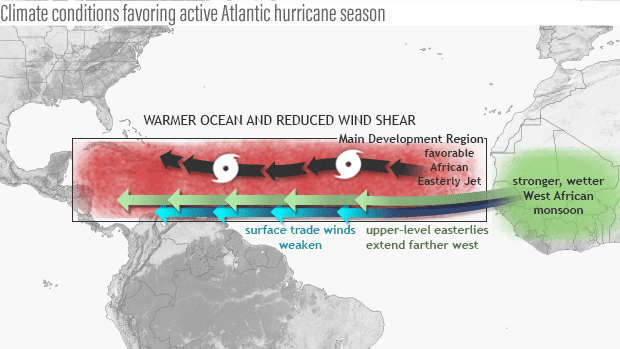

.jpg)
