Category: Politics

  • MIL-OSI USA: 05.13.2025 Sen. Cruz Announces Key Senior Staff Hires and Promotions

    US Senate News:

    Source: United States Senator for Texas Ted Cruz
    WASHINGTON, D.C. – U.S. Sen. Ted Cruz (R-TX) announced key senior staff hires and promotions in his Washington, D.C. office.
    OMRI CEREN promoted to Senior Advisor for Policy and Communications. Omri previously served as National Security Advisor and then Legislative Director for Senator Cruz. Before joining Sen. Cruz’s staff, he was programmatic director at The Israel Project, a nonprofit focused on working with journalists and the public on Middle East issues, and before that was a political blogger and writer. He received his doctorate from the University of Southern California’s Annenberg School for Communication.
    PRESTON HOWEY promoted to Legislative Director. A proud native of the Permian Basin, Preston began his Capitol Hill career with Chairman Kevin Brady (TX-08) and later served as Legislative Director for Representative August Pfluger (TX-11). He went on to work with the natural gas markets team at the American Petroleum Institute before joining Senator Cruz’s office as Domestic Policy Advisor. Preston is a graduate of Texas A&M University.
    MIKE BERRY hired as Chief Counsel. Mike joins Sen. Cruz’s office after 7 years on active duty as a U.S. Marine, and more than a decade of litigation experience in the non-profit sector. During his time in the Marines, Mike deployed to Afghanistan and taught law at the U.S. Naval Academy. Mike also served in senior litigation roles at First Liberty Institute and America First Policy Institute, during which he successfully led the litigation efforts on some of the nation’s most high-profile religious liberty and election integrity cases. Mike received his undergraduate degree from Texas A&M University, and his law degree from The Ohio State University.
    BRANDON GINDT hired as National Security Advisor. A Texas native, Brandon joins Sen. Cruz’s office from the Defense Intelligence Agency (DIA) where he served in the Directorate for Operations since 2018, predominantly working on Middle East and strategic competition issues. During his tenure at DIA, he deployed to Afghanistan and managed crisis operations on the Joint Staff and served as the Israel and Lebanon Country Director in the Office of the Under Secretary of Defense for Policy. He received his undergraduate and graduate degrees from Texas A&M University. 
    MACARENA MARTINEZ promoted to Communications Director. A native of Houston, Macarena has served as Senator Cruz’s communications advisor since 2023. Before her work with Senator Cruz, Macarena served as the Texas Communications Director for the Republican National Committee. Prior to that, she was a War Room Analyst on President Donald Trump’s 2020 campaign. Macarena holds a double bachelor’s degree from the University of Texas at Austin.

    MIL OSI USA News

  • MIL-OSI USA: Padilla, Schatz, Wyden Lead Push Warning Trump Admin of Harmful Impacts of SAVE Act, Anti-Voter Executive Order in Native Communities

    US Senate News:

    Source: United States Senator Alex Padilla (D-Calif.)

    Padilla, Schatz, Wyden Lead Push Warning Trump Admin of Harmful Impacts of SAVE Act, Anti-Voter Executive Order in Native Communities

    WASHINGTON, D.C. — Today, U.S. Senators Alex Padilla (D-Calif.), Ranking Member of the Senate Committee on Rules and Administration with oversight over elections, Brian Schatz (D-Hawaii), Vice Chairman of the Senate Committee on Indian Affairs, and Ron Wyden (D-Ore.) led 11 Senators in sounding the alarm on the devastating impacts of President Trump’s anti-voter “election integrity” executive order and the SAVE Act on Native American voting rights. In a letter to Secretary of the Interior Doug Burgum, the Senators specifically warn about the challenges Native communities will face with the proposed requirements of documentary proof of citizenship and restrictions on mail-in voting.
    “Enactment of new voter registration policies under the Executive Order and the SAVE Act would lead to mass disenfranchisement of eligible Native voters and further depress the Native vote,” wrote the Senators. “Tribal IDs generally lack place of birth information required by the legislation, and the vast majority of these IDs lack the specific U.S. citizenship documentation required by the Executive Order. And the SAVE Act’s in-person requirement would exacerbate existing barriers, such as requiring IDs that list residential mailing addresses, by forcing many Native voters to travel great distances, including costly flights or multi-hour drives, to reach their local elections office or polling place.”
    “As Secretary of the Interior, you have a special moral and legal responsibility to uphold our nation’s trust and treaty obligations,” continued the Senators. “If implemented, the sweeping federal mandates included in the Executive Order and the SAVE Act would disenfranchise eligible Native voters who are following state laws. We encourage your active engagement with the White House and the Department of Justice to ensure that Native communities are able to exercise the franchise fully and have their voices heard at the ballot box.”
    Tribal IDs are currently an acceptable form of documentation to register to vote in nearly every state, but the SAVE Act and Trump executive order require that an ID must show place of birth and citizenship, which the majority of Tribal IDs lack, adding another barrier to the ballot box for many Native American communities. The Senators underscored that if enacted, these provisions would force Tribal voters who live in rural and remote locations to travel significant distances to prove their citizenship in order to register to vote.
    The Senators also emphasized the disproportionate impact the vote-by-mail restrictions would have on Native communities, which often rely more on mail-in voting because of a lack of infrastructure and transportation access. Trump’s executive order penalizes states that accept absentee or mail-in ballots received after Election Day, harming Native voters in states like Alaska, North Dakota, Oregon, and California that process ballots as long as they are postmarked by Election Day. In Alaska specifically, which has 229 federally recognized Tribes, vote-by-mail is essential because polling sites can be hundreds of miles away for villages that are not on the road system.
    Only 66 percent of Native Americans eligible to participate in elections are currently registered to vote, leaving more than 1 million eligible voting-age Native Americans unregistered. Creating further obstacles to register to vote would likely reduce these numbers even further.
    In addition to Senators Padilla, Schatz, and Wyden, the letter was also signed by Senators Catherine Cortez Masto (D-Nev.), Kirsten Gillibrand (D-N.Y.), Mazie Hirono (D-Hawaii), Tim Kaine (D-Va.), Amy Klobuchar (D-Minn.), Edward J. Markey (D-Mass.), Jeff Merkley (D-Ore.), Jacky Rosen (D-Nev.), Tina Smith (D-Minn.), Chris Van Hollen (D-Md.), and Elizabeth Warren (D-Mass.).
    Senator Padilla has led the charge opposing President Trump and Republicans’ reckless attempts to restrict the right to vote. As President Trump marked 100 disastrous days in office, he recently led his Democratic colleagues on the Senate floor to speak out against the SAVE Act and attacks on election integrity. Last month, Padilla warned Secretaries of State, Lieutenant Governors, and Chief Election Officials across the country of the devastating potential impacts of Republicans’ SAVE Act, concerns that have been echoed by top election officials across the country. He also led 11 Senators in introducing the Defending America’s Future Elections Act to repeal Trump’s illegal anti-voter executive order and prevent the Department of Government Efficiency (DOGE) from accessing sensitive voter registration data and state records. Padilla previously led 14 Democratic Senators in calling on Trump to revoke his illegal anti-voter executive order and issued a statement slamming the order when it was announced.
    Full text of the letter is available here and below:
    Dear Secretary Burgum:
    We write to express our serious concern over the impact of the Administration’s March 25 Executive Order 14284 “Preserving and Protecting the Integrity of American Elections” on Native communities. As former Governor of North Dakota, and now as Secretary of the Interior, you must appreciate that Indian Country faces voting challenges unique to the rest of the country, including remote locations, limited resources, and a legacy of legal discrimination. Unfortunately, both this Executive Order, and the related Safeguard American Voter Eligibility (SAVE) Act (H.R. 22) recently passed by the House of Representatives, would represent the largest steps backwards for Native American voting rights in many decades. We urge you to ensure that the federal government meets its trust responsibility to safeguard Native American voting rights and to engage in Tribal consultation on any new policies that impact the Native vote.
    Enactment of new voter registration policies under the Executive Order and the SAVE Act would lead to mass disenfranchisement of eligible Native voters and further depress the Native vote. For example, both the Executive Order and the SAVE Act include a requirement for voters to provide documentary proof of citizenship when registering or re-registering to vote. Tribal IDs generally lack place of birth information required by the legislation, and the vast majority of these IDs lack the specific U.S. citizenship documentation required by the Executive Order. And the SAVE Act’s in-person requirement would exacerbate existing barriers, such as requiring IDs that list residential mailing addresses, by forcing many Native voters to travel great distances, including costly flights or multi-hour drives, to reach their local elections office or polling place.
    What’s more, under the Executive Order, the Attorney General is directed to take action against states with laws that accept absentee or mail-in ballots received after Election Day. This directive will have a disproportionate impact on Native communities, given the remote locations of many Native communities, along with a general lack of infrastructure and transportation access. As a result, Native voters often must rely on vote-by-mail systems to cast their ballots, but extremely long distances and unpredictable weather can result in mail delays that impact the arrival times of ballots. For example, in states like Alaska, which is home to 229 federally recognized Tribes, voters must rely on mail-in ballots due to the lack of local polling sites in Native villages, the majority of which are not on the road system; in fact, the nearest polling site might be hundreds of miles away by plane or boat. So, it is standard practice for many states to allow ballots to be counted for several days following the federal election as long as they were postmarked before or on election day. Of note, no state allows hand-delivered ballots to be returned after Election Day. If the Executive Order’s provision were enforced, it risks further disenfranchisement of Native voters in states like Alaska, North Dakota, Oregon, and California that accept absentee or mail-in ballots postmarked by the day before Election Day.
    As Secretary of the Interior, you have a special moral and legal responsibility to uphold our nation’s trust and treaty obligations. If implemented, the sweeping federal mandates included in the Executive Order and the SAVE Act would disenfranchise eligible Native voters who are following state laws. We encourage your active engagement with the White House and the Department of Justice to ensure that Native communities are able to exercise the franchise fully and have their voices heard at the ballot box.
    Thank you for your attention to this matter and we welcome the opportunity to further discuss these concerns with you.
    Sincerely,

    MIL OSI USA News

  • MIL-OSI Global: ‘The pope is Peruvian!’ How 2 decades in South America shaped the vision of Pope Leo XIV

    Source: The Conversation – USA – By Matthew Casey-Pariseault, Associate Clinical Professor of History, Arizona State University

    Faithful hold a photo of Robert Prevost, who was elected Pope Leo XIV, in front of the Cathedral of Chiclayo, Peru, where he served as bishop for several years. AP Photo/Manuel Medina

    In his first appearance as Pope Leo XIV on the balcony of St. Peter’s Basilica, the man born Robert Francis Prevost spoke for 10 minutes in Italian. Then he transitioned to Spanish and, with a big grin, gave a greeting to his “beloved diocese of Chiclayo in Peru.”

    Many Peruvians were overjoyed with the election of Leo, whom they are proud to claim as a fellow citizen. “The Pope is Peruvian!” reported the live coverage on Latina Noticias, one of the main national networks. Other news outlets around Lima, where I live, shared similar headlines. Within minutes, all of Peru knew that the new pope, who was born and raised in Chicago, had served in Peru for over two decades and was nationalized as a citizen in 2015.

    During his time in the South American nation, he lived alongside his parishioners through a bloody civil war, a decade-long dictatorship and an unstable post-dictatorship period that has so far led to three former presidents being handed prison sentences. Amid these challenges, Prevost became part of Peruvian society – and, eventually, a leader within it.

    Prevost’s leadership roles in Chicago and Rome were essential in his formation. But as a scholar of religion in Latin America, I believe that it is his time in Peru that has best prepared him to take on the challenges of directing the global Catholic Church. In Peru, where Catholicism permeates public life, Prevost encountered deep social and political challenges in ways that bishops in many other countries may never face so directly.

    Missionary during war and dictatorship

    Prevost first arrived in Peru in 1985. A member of the Order of St. Augustine, the young man had been sent to its mission in Chulucanas, in the northern province of Piura. Chulucanas is about 30 miles east of the regional capital, where the desert coast begins to rise up into the Andes.

    After a year, Prevost left to finish his doctoral degree and serve briefly in Illinois. But he soon returned to Peru, serving as a missionary in the northern city of Trujillo. He stayed there through the remainder of the 1980s and 1990s, amid civil war between the government and various militant groups – primarily the Maoist guerrillas of Sendero Luminoso, or “Shining Path,” who aimed to install a communist state.

    The violence hit other regions more severely, but Trujillo and the surrounding area were home to car bombs, sabotaged electrical grids and brutal military dragnet operations. Prevost accompanied Peruvians through some of the darkest days of the country’s history.

    During these years, Prevost trained future clergy and served as a parish priest. One fellow Augustinian recalled that Prevost played a key role in recruiting and training Peruvian candidates to the priesthood. Prevost also founded the Trujillo parish of Nuestra Señora de Montserrat, where his parishioners knew him as “Padre Roberto.”

    As the country transitioned away from the civil war period, which ultimately left nearly 70,000 dead, Prevost remained in Peru. During the 1990s, President Alberto Fujimori’s government built a polarizing legacy by undermining democracy and citizenship rights while capturing the two most powerful guerrilla leaders.

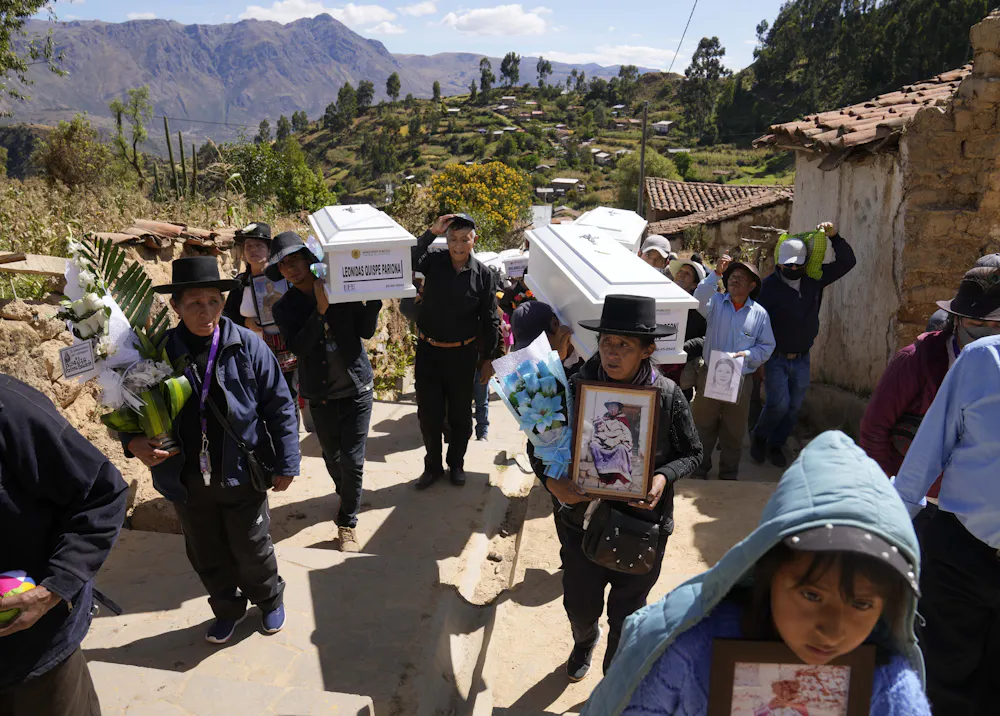
    Peruvian families carry remains of recently identified relatives who were killed years ago, during the insurgency, to the cemetery for burial in 2022.
    AP Photo/Martin Mejia

    As I show in my research, religion and politics are deeply intertwined in Peru. By the 1990s, the Peruvian Catholic Church was divided between members who spoke out in defense of human rights and those who defended the often brutal tactics of the government. Juan Luis Cipriani Thorne, who was then the archbishop of Ayacucho – the Andean stronghold of Sendero Luminoso – became a spokesperson for the pro-state faction, framing defenders of human rights as apologists for terrorism.

    Prevost was among those who maintained a critical view of any party, including the government, that committed human rights abuses. Diego Garcia-Sayan, the country’s former minister of justice and foreign affairs, recently wrote an op-ed praising Prevost’s willingness to speak out against attempts to legalize the death penalty and to defend embattled human rights organizations.

    From Chiclayo to the Vatican

    After returning to the United States in 1999, Prevost rose through the leadership ranks of the Augustinian order. He was sent back to Peru in 2014, when Pope Francis named him the apostolic administrator, and later bishop, of the northern diocese of Chiclayo.

    As bishop, Prevost emerged as a voice for democracy and justice. In a 2017 public statement to national media, he urged former President Fujimori to “personally ask forgiveness for the great injustices that were committed and for which he was prosecuted.”

    During his tenure as bishop, Prevost helped guide his community through the COVID-19 pandemic. He also played a key role ministering to Chiclayo’s growing population of Venezuelan migrants.

    Venezuelan Betania Rodriguez on May 10, 2025, shows a photo taken with Pope Leo XIV at a migrant shelter in Chiclayo, Peru.
    AP Photo/Guadalupe Pardo

    Meanwhile, he was gaining the confidence of his peers, as well as Pope Francis. Prevost was given a leadership role in the Peruvian Conference of Bishops and played a central role during Francis’ 2018 visit to Peru. In 2023, Francis named Prevost prefect of the Dicastery of Bishops, the oversight body for naming new bishops across the world.

    Prevost took the position in Rome but was sad to leave Peru again. “This time, again, it will be hard for me to leave here,” Prevost told Peruvian media.

    In recent years, Prevost has taken on causes central to Francis’ papacy. He was a key actor in the Vatican investigations of a Peruvian organization, Sodalicio de Vida Cristiana, which was found to have committed dozens of sexual and psychological abuses dating back to the 1970s. Francis dissolved the organization in 2025. Prevost has also developed an increased focus on Indigenous and environmental rights, in line with Francis’ 2015 encyclical Laudato Si and 2019 conference for bishops in the Amazon.

    Local celebrations

    Photographs and memes celebrating the Peruvian pope have flown around social media and WhatsApp groups in Peru. The photos of Prevost eating traditional dishes from the north coast are especially popular. AI-generated memes of the pope wearing the Peruvian national soccer jersey or eating ceviche with an Inca Kola soda are making the rounds.

    In Chicalayo and Trujillo, in addition to official church celebrations, thousands have taken to the streets to express their joy with placards and chants.

    Leo XIV has clearly brought the memory of his years in Peru with him to the Vatican. He has chosen Edgard Rimaycuna, a Peruvian priest whom the pope knew from his time in Chiclayo, as his personal secretary.

    I believe the challenges that Leo guided his parishioners through in two decades in Peru should offer valuable lessons for the new pope to build on the legacy of Francis, the first Latin American pope.

    Matthew Casey-Pariseault does not work for, consult, own shares in or receive funding from any company or organization that would benefit from this article, and has disclosed no relevant affiliations beyond their academic appointment.

    ref. ‘The pope is Peruvian!’ How 2 decades in South America shaped the vision of Pope Leo XIV – https://theconversation.com/the-pope-is-peruvian-how-2-decades-in-south-america-shaped-the-vision-of-pope-leo-xiv-256415

    MIL OSI – Global Reports

  • MIL-OSI USA: Governor Newsom’s budget to help lower drug costs, expand authority to access medication abortion through CalRx

    Source: US State of California 2

    May 13, 2025

    What you need to know: Governor Newsom will take action tomorrow to lower drug prices, increase transparency for PBMs, and expand authority for the state to acquire medication abortion.

    Sacramento, California – As part of the 2025-26 May Revision, Governor Gavin Newsom will propose two major actions to reduce prescription drug costs and safeguard reproductive freedom by expanding access to medication abortion.

    “Prescription drug prices are out of control and we’re shining a light on hidden costs — while also giving CalRX more tools to respond to supply chain disruptions, market manipulation, or politically motivated abortion restrictions.”

    Governor Gavin Newsom

    Pharmacy Benefit Managers: Pharmacy Benefit Managers (PBMs) act as middlemen between drug manufacturers, pharmacies, and insurers — often driving up costs in the process. The Governor’s May Revision proposes new state oversight to increase transparency and cut costs. Under this proposal:

    • PBMs must be licensed and regulated by the Department of Managed Health Care (DMHC).

    • They must report operational and financial details, including audited statements and will have a fiduciary duty to clients, holding PBMs to a higher ethical standard.

    • DMHC will review PBM contracts and perform regular financial audits.

    • As part of licensure, PBMs must report detailed drug pricing data to the Department of Health Care Access and Information (HCAI), the state’s health data agency.

    • DMHC will have clear authority to enforce rules and penalize violations.

    Expanding CalRx for brand-name drugs: The May Revision proposes expanding the authority of CalRx to purchase brand-name drugs. This change gives the state more tools to respond to supply chain disruptions, market manipulation, or politically motivated restrictions that could threaten access to essential medications — including medication abortion.

    By expanding CalRx’s scope, California will be better positioned to:

    • Secure affordable supply of both generic and brand-name drugs.

    • Maintain uninterrupted access to medications at risk of shortage or political interference.

    • Strengthen the state’s ability to protect reproductive health care options, including mifepristone and other medications under attack in other states.

    Members of the press who wish to attend tomorrow’s release of the revised budget plan can learn more HERE.

    Recent news

    News What you need to know: California today filed a request for a preliminary injunction to immediately stop President Trump’s unlawful tariffs while the state’s lawsuit proceeds. Tariffs are not only expected to impact trade, but the upcoming state revenues and…

    News What you need to know: Sacramento’s Monarch housing project is the latest affordable housing site brought to fruition under Governor Newsom’s executive order to develop excess and underutilized state lands into affordable new homes. SACRAMENTO — Governor Gavin…

    News What you need to know: Thanks to Prop 1, today’s funding is estimated to create over 5,000 residential treatment beds and more than 21,800 outpatient treatment slots for behavioral health and will build upon other major behavioral health initiatives in…

    MIL OSI USA News

  • MIL-OSI USA: InCHIP Supports Principal Investigators Amid Uncertainty in Federal Research Funding

    Source: US State of Connecticut

    On Friday, May 30, UConn’s Institute for Collaboration on Health, Intervention, and Policy (InCHIP) will hold a virtual coffee break for faculty to receive updates on the evolving federal research funding landscape and guidance for writing competitive grant applications in the current climate.

    The event will feature a panel of InCHIP principal investigators (PIs) who have submitted a federal funding proposal this year. In addition, leaders from InCHIP and the Office of the Vice President for Research will share advice from program officers at the National Institutes of Health and answer questions about the impact of federal funding on the university.

    Information for the upcoming coffee hour can be found on InCHIP’s website, chip.uconn.edu.

    This event is part of InCHIP’s recurring coffee hours, which provide faculty a space to informally discuss their experiences with federal funding changes and create a network of support.

    Caitlin Caspi, Director of Food Security Initiatives at the UConn Rudd Center for Food Policy and Health, and Associate Professor of Allied Health Sciences

    “These events are important for us to get an idea of how changes in federal funding are affecting faculty and how InCHIP can support PIs and their research,” says Caitlin Caspi, associate director of InCHIP and director of Food Security Initiatives at the UConn Rudd Center for Food Policy and Health.

    Faculty from UConn Storrs, UConn Health, regional campuses, and various schools and colleges have participated, highlighting strong interest and demand for these events.

    Caspi spearheaded the coffee hours in response to unprecedented funding cuts at the National Institutes of Health (NIH). According to the Association of American Medical Colleges (AAMC), about $1.9 billion in research and career development funding to U.S. institutions has been terminated. AAMC data shows that Connecticut has lost more than $12 million in NIH funding.

    Scientific research is a core component in the economic engine of Connecticut and the United States. Government-funded research also fuels cures for debilitating diseases and innovation.

    A 2019 study published in Science by researchers at the University of California, Berkely, the University of Connecticut, Boston University, and Harvard University quantified the impact of federal research dollars on patents. The authors found that nearly one-third of U.S. patents rely on federal research dollars and established that corporations have become more reliant on government investment.

    In addition to the impacts on innovation, the cuts have socioeconomic implications. As the largest public funder of biomedical research, the NIH provided key support for research that improves public health and well-being, especially for historically understudied populations and fields.

    Grant terminations have most heavily impacted research areas like HIV/AIDS, sexual and gender minorities, COVID-19, and climate science – many of which are InCHIP priorities. In response, leadership is working to expand support for investigators beyond the coffee hours.

    First, InCHIP continues to offer seed grant funding to support innovative pilot research that will serve as the foundation for future external funding proposals.

    Tricia Leahey of the Department of Allied Health Sciences (AHS) in the College of Agriculture, Health and Natural Resources (CAHNR), and director of the UConn Institute for Collaboration on Health, Intervention, and Policy (InCHIP)

    “InCHIP seed grants support innovative pilot research in emerging areas and PI career growth. In unstable financial times, these internal funding opportunities can act as lifelines to keep research moving forward,” says Tricia Leahey, director of InCHIP.

    For the Spring 2025 semester, InCHIP offered internal funds for projects that aim to address health challenges and concerns affecting understudied populations in Connecticut and the United States.

    Specifically, InCHIP has partnered with the UConn Gladstein Family Human Rights Institute to fund projects that explore the areas of health equity, human rights, and social justice. InCHIP expects to fund 2 projects under this opportunity.

    InCHIP also offered seed grants in environment and health, community-engaged research, and women’s health, along with core funding for career development, and team formation, bridge funding, and project completion.

    The spring application cycle has closed, but investigators are encouraged to check InCHIP’s website during the fall semester.

    InCHIP is also supporting PIs who received award termination from the NIH, from navigating logistics to providing financial support. In addition, InCHIP is helping PIs navigate the changing funding landscape through grant writing workshops and identifying non-federal funding sources.

    Next semester, InCHIP will offer a grant writing workshop focused on foundation opportunities. The goal of the workshop is to help PIs learn best practices for crafting competitive proposals. Modeled after InCHIP’s Spring 2025 NIH grant writing bootcamp, the workshop builds on this semester’s successful bootcamp and follow-up seminar, which is providing researchers hands-on experience and in-depth feedback on their grant proposals.

    Details about the foundation grants workshop will be announced on InCHIP’s website.

    MIL OSI USA News

  • MIL-OSI Russia: IMF Executive Board Concludes 2025 Article IV Consultation with St. Kitts and Nevis

    Source: IMF – News in Russian

    May 13, 2025

    Washington, DC: The Executive Board of the International Monetary Fund (IMF) completed the Article IV Consultation for St. Kitts and Nevis[1] The authorities have consented to the publication of the Staff Report prepared for this consultation.

    Following the post-pandemic rebound, the economy is facing challenges. Real GDP growth moderated to 1.5 percent in 2024, reflecting lower contributions from tourism and government services, while inflation eased to 1 percent. The fiscal deficit increased to 11 percent of GDP in 2024, mainly driven by a sharp decline in Citizenship-by-Investment (CBI) revenue amid recent reforms aimed at strengthening the CBI program. The current account deficit widened due to lower CBI inflows. Meanwhile, credit growth accelerated on the back of pent-up demand, especially in mortgage loans, amid increasing competition. Groundwork is ongoing for a potentially transformative geothermal project.

    In 2025, economic growth is projected to strengthen to 2 percent supported by expanding tourism, while inflation is expected to remain stable.[2] In the medium term, growth is forecast to rise to 2½ percent, benefiting from large energy projects. Nonetheless, fiscal deficits are forecasted to remain high in the medium term, driven by expectations of structurally lower CBI revenue, resulting in public debt exceeding 70 percent of GDP by 2030.

    Near-term risks to growth are tilted to the downside, but progress in fostering renewable energy provides upside potential over the medium term. The uncertainty and volatility of CBI revenue pose a significant two-sided risk, but a further decline in CBI revenue would pressure fiscal accounts. Downside risks include a slowdown in key source markets for tourism, global financial instability, and commodity price volatility. The economy is highly exposed to natural disasters. On the other hand, the energy projects could foster growth and fiscal revenue in the medium term.

    Executive Board Assessment[3]

    Executive Directors welcomed the authorities’ commitment to prudent policy reforms and stressed that the significant challenges the economy is facing require a multipronged approach to address low growth and fiscal sustainability, while safeguarding financial stability and the external position.

    Directors encouraged the authorities to implement a prompt and decisive fiscal consolidation to keep public debt below the regional debt ceiling and reduce reliance on the Citizenship‑by‑Investment Program (CBI). This would create space for capital expenditure, resilience against natural disasters, and contingent liabilities. Directors stressed that fiscal consolidation should be driven by tax revenue mobilization and reductions in current expenditures, anchored by fiscal rules. Greater diversification of funding sources would also help to lengthen debt maturities and lower financing costs. Directors supported the authorities’ plan to establish a Sovereign Wealth Fund to absorb upsides in CBI revenue and called for continuing improvements in the CBI framework, including its transparency. They also welcomed the authorities’ initiatives to implement reforms to improve the sustainability of the Social Security Fund.

    Directors underscored that further progress is needed to strengthen the financial sector, including to reduce NPLs and meet the ECCB’s prudential requirements. They emphasized the importance of continuing to strengthen the balance sheet of the systemic bank and to revitalize its business model. Directors also called for reforms of the Development Bank, building on the authorities’ work in this area. They stressed the need to monitor rapid credit growth and further strengthen the regulation and oversight of credit unions. It will also be important to make additional progress in strengthening the AML/CFT framework.

    Directors emphasized that structural reforms and improved preparedness for natural disasters are crucial to boost potential growth. They stressed that reforms are necessary to enhance the efficiency of government services, improve credit access, and better align labor skills with market demands. Directors noted that accelerating the energy transition would help increase competitiveness. Finally, they underscored the need to enhance the investment and the multi‑layered insurance frameworks to strengthen natural disaster preparedness.

    St. Kitts and Nevis: Selected Economic Indicators 2020-26 1/


    Est.

    Proj.

    2020

    2021

    2022

    2023

    2024

    2025

    2026

    (Annual percentage change, unless otherwise specified)

    National income and prices

    Real GDP (market prices) 2/

    -14.6

    -1.7

    10.5

    4.3

    1.5

    2.0

    2.2

    Real GDP (factor cost) 2/

    -13.4

    -1.0

    8.0

    5.0

    4.3

    0.7

    0.5

    Consumer prices, period average

    -1.2

    1.2

    2.7

    3.6

    1.0

    1.7

    2.0

    Real effective exchange rate appreciation (+) (end-of-period)

    -1.0

    -3.1

    -1.4

    -0.7

    -2.4

    Money and credit 3/

    Broad money

    -8.1

    8.9

    3.7

    -1.9

    2.5

    13.5

    8.9

    Change in net foreign assets

    -0.4

    9.1

    -7.0

    -6.4

    -12.8

    -2.3

    -2.0

    Net credit to general government

    -18.4

    -4.8

    4.9

    0.3

    9.3

    10.3

    6.6

    Credit to private sector

    -4.0

    7.7

    5.8

    5.2

    9.8

    8.1

    6.4

    (In percent of GDP)

    Public sector 4/

    Total revenue and grants

    33.5

    46.6

    45.2

    43.0

    31.1

    32.5

    33.2

      o/w Tax revenue

    18.8

    19.0

    18.4

    19.3

    18.7

    18.2

    19.0

      o/w CBI fees

    11.3

    23.4

    25.3

    21.7

    8.1

    9.0

    9.0

    Total expenditure and net lending

    36.5

    41.2

    49.4

    43.3

    41.7

    42.2

    39.8

    Overall balance

    -3.1

    5.4

    -4.2

    -0.3

    -10.6

    -9.8

    -6.6

    Total public debt (end-of-period)

    68.0

    69.1

    60.2

    55.9

    52.2

    61.4

    65.6

    General government deposits

    (percent of GDP) 5/

    21.6

    30.4

    21.6

    20.4

    10.4

    10.3

    9.9

    External sector

    External current account balance

    -10.8

    -3.4

    -11.4

    -11.6

    -15.1

    -13.1

    -12.8

    Trade balance

    -28.0

    -24.8

    -34.7

    -32.8

    -32.7

    -32.3

    -33.3

    Memorandum items


    Net international reserves, end-of-period


    (in millions of U.S. dollars)

    365.4

    312.8

    270.3

    262.4

    270.7

    269.0

    267.3


    Nominal GDP at market prices

    (in millions of EC$)

    2,387

    2,318

    2,650

    2,850

    3,017

    3,048

    3,171

    Sources: St. Kitts and Nevis authorities; ECCB; UNDP; World Bank; and IMF staff estimates and projections.

    1/ The staff report projections are based on the information available as of March 27, 2025. Therefore, they do not reflect the impact of trade tensions since April 2, 2025.

    2/ In June 2021, the National Statistics Office revised historical GDP series.

    3/ The series for monetary aggregates have been revised consistent with the 2016 Monetary and Financial Statistics Manual and Compilation Guide.

    4/ Consolidated general government balances. Primary and overall balances are based on above-the-line data.

    5/ Includes only central government deposits at the commercial banks.


    [1] Under Article IV of the IMF’s Articles of Agreement, the IMF holds bilateral discussions with members, usually every year. A staff team visits the country, collects economic and financial information, and discusses with officials the country’s economic developments and policies. On return to headquarters, the staff prepares a report, which forms the basis for discussion by the Executive Board.

    [2] Since the issuance of the Staff Report, economic growth has been marked down, reflecting the impact of trade tensions combined with their effects on global policy uncertainty and global financial conditions, primarily through tourism and FDI (see the Supplement).

    [3] At the conclusion of the discussion, the Managing Director, as Chair of the Board, summarizes the views of Executive Directors, and this summary is transmitted to the country’s authorities. An explanation of any qualifiers used in summings up can be found here: http://www.IMF.org/external/np/sec/misc/qualifiers.htm.

    IMF Communications Department
    MEDIA RELATIONS

    PRESS OFFICER: Rosa Hernandez Gomez

    Phone: +1 202 623-7100Email: MEDIA@IMF.org

    https://www.imf.org/en/News/Articles/2025/05/12/pr-25139-st-kitts-and-nevis-imf-executive-board-concludes-2025-article-iv-consultation

    MIL OSI

    MIL OSI Russia News

  • MIL-OSI United Nations: Experts of the Committee on the Rights of the Child Commend Norway on Child Welfare Act, Raise Questions on Proposed Increased Use of Force in Schools and Data on Children with Disabilities

    Source: United Nations – Geneva

    The Committee on the Rights of the Child today concluded its review of the seventh periodic report of Norway, with Committee Experts commending the State on the new child welfare act, while raising questions about the proposed increased use of force in schools and the lack of data on children with disabilities. 

    Bragi Gudbrandsson, Committee Expert and Taskforce Member, commended Norway for the child welfare act which was a wonderful piece of legislation. 


    Mr. Gudbrandsson said the Committee was concerned that Norway planned to use stronger force and constraints.  How had the country reached this situation?

    Faith Marshall Harris, Committee Expert and Taskforce Member, also emphasised her concern, stating that instead of teachers being trained to de-escalate violence, they were given the power to use more force than police officers.  It seemed that the Government had responded in a knee-jerk reaction to media pressure; however, the situation was more about training teachers to deal with these situations in a non-violent way.  Norway was encouraged to rethink this approach. 

    Thuwayba Al Barwani, Committee Expert and Taskforce Member, said Norway had excellent data but when it came to disability, there was no disaggregated data to better understand the situation of children with disabilities in the country.  How many of these children lived with their families? How many lived in residential care? How many were receiving support services?  What awareness raising campaigns were in place to remove stigma and educate about disability? 

    What measures were in place to provide quality psychological care for children with mental health disabilities in all municipalities?   

    The delegation said the new education act introduced a broader scope for exercising force and restraint.  Employees could now intervene against pupils when necessary.  Norway shared the Committee’s concerns and had tried to state explicitly in the provision that this was a last resort, with strict measures for physical restriction to take place.  The Government and municipalities focused on the competence of the staff to put pre-emptive measures in place so that physical interventions were a last resort and only used when necessary. 

    The delegation said the Norwegian strategy for equality for all ran until 2030, with an important competence to increase the visibility of the Convention on the Rights of Persons with Disabilities in all municipalities.  In 2025, the Government allocated 280 million kroner for grants for people with disabilities.  Norway could not definitively say how many people with disabilities were living in the country.  A recent report by Statistic Norway, focused on the different definitions of disability, which would hopefully assist the State in future.

    Introducing the report, Lene Vågslid, Minister of Children and Families of Norway and head of the delegation, said since the last dialogue with the Committee in 2018, Norway had taken significant steps to further strengthen children’s rights. 

    Last month, the Government presented a proposal for a new children’s act to Parliament, which included a new provision on the child’s right to privacy, and the parents’ responsibility in this regard.  Norway had introduced a range of measures in recent years to develop and improve the child welfare sector, including the new child welfare act, which entered into force in 2023, placing greater emphasis on prevention and helping children and parents as early as possible.  For the first time, a white paper on “Safe digital upbringing” would soon be presented to Parliament to develop policies that empowered and protected children in their digital lives. 

    In closing remarks, Mr. Gudbrandsson said it was clear Norway was on an exciting journey in revisiting the fundamental principles of the Convention, which was reflected in the new legislation, guidelines and action plans; the Committee was very impressed and appreciated these efforts. 

    In her closing remarks, Ms. Vågslid thanked the Committee for the important questions and the dialogue.  Norway aimed to highlight that all sectors were working towards the best possible outcomes for children. 

    The delegation of Norway was comprised of representatives from the Ministry of Children and Families; the Ministry of Culture and Equality; the Ministry of Education and Research; the Ministry of Justice and Public Security; the Ministry of Health Services; the Ministry of Labour and Social Inclusion; and the Permanent Mission of Norway to the United Nations Office at Geneva. 

    Summaries of the public meetings of the Committee can be found here, while webcasts of the public meetings can be found here. The programme of work of the Committee’s ninety-ninth session and other documents related to the session can be found here.

    The Committee will next meet in public at 3. pm on Wednesday, 14 May to begin its consideration of the combined fifth and sixth periodic reports of Indonesia (CRC/C/IDN/5-6).

    Report

    The Committee has before it the seventh periodic report of Norway (CRC/C/NOR/7).

    Presentation of Report

    LENE VÅGSLID, Minister of Children and Families of Norway and head of the delegation, said since the last dialogue with the Committee in 2018, Norway had taken significant steps to further strengthen children’s rights.  Fundamental children’s rights were included in the Norwegian Constitution, including that the best interests of the child must be a key consideration, and that children had a right to be heard regarding issues affecting them.  Moreover, the Convention was implemented through the human rights act, meaning it was applied as Norwegian law and prevailed if in conflict with other legislation. 

    Last month, the Government presented a proposal for a new children’s act to Parliament, which included a new provision on the child’s right to privacy, and the parents’ responsibility in this regard.  There were also several amendments to strengthen children’s rights when parents separated, including mandatory mediation for the parents and children. Additionally, the new education act of 2023 applied to all public primary and secondary education and contained general provisions stating that the best interests of pupils should be a fundamental consideration in actions and decisions concerning them. 

    Norway had introduced a range of measures in recent years to develop and improve the child welfare sector, including the new child welfare act, which entered into force in 2023, placing greater emphasis on prevention and helping children and parents as early as possible.  Last month, the Government launched the Quality Improvement Initiative, to give children relying on child welfare services greater predictability and stability. 

    It was only in exceptional cases, and as a matter of last resort, that the best interest of the child could lead to children being separated from their parents.  From 2023, children in health institutions had the right to be accompanied by a parent or guardian throughout their stay.  Families who had a child with a serious illness, injury or disability now had a right to a coordinator.  The Government also recently decided to incorporate the Convention on the Rights of Persons with Disabilities into the human rights act. 

    Since 2022, Norway had offered collective protection to around 90,000 refugees from Ukraine, many of them children.  The State had also increased the earmarked budget line for strengthened child expertise in asylum reception centres, and the County Governor’s supervision of unaccompanied minors was increased.  A national strategy for children in low-income families (2020-2023) was put forward in 2020 and renewed in 2024, aiming to strengthen the economy of low-income families and reduce economic barriers to kindergartens and after-school programmes. 

    In 2023, the Government introduced a “youth guarantee” which ensured young people close follow-up and individual support.  Since 2022, a cross-sector initiative called the Core Group for Vulnerable Children and Youth coordinated efforts across eight ministries and 14 agencies to address the needs of at-risk children.  Two weeks ago, Norway launched a national mission on the inclusion of children in education, work and societal life, with the key goal of reducing exclusion among children by 2035. 

    For the first time, a white paper on “Safe digital upbringing” would soon be presented to Parliament to develop policies that empowered and protected children in their digital lives.  Norway had also, for the first time, established a Ministry of Digitalisation, working closely together on children’s behalf.  Norway had high ambitions for all its children and was committed to advancing their well-being.  Ms. Vågslid concluded by commending the important role played by the United Nations treaty bodies in improving States’ implementation of human rights. 

    TORMOD C. ENDRESEN, Permanent Representative of Norway to the United Nations Office at Geneva, said Norway was looking forward to doing a deep dive with the Committee on the Rights of the Child in the country.  He then introduced the Norwegian delegation. 

    Questions by Committee Experts

    BRAGI GUDBRANDSSON, Committee Expert and Taskforce Member, said the Committee was aware of Norway’s exemplary record in children’s rights, being the first country to incorporate the Convention into domestic legislation, and the first in the world to establish the position of Ombudsman for children.  For this reason, the Committee would do its best to give Norway a critical appraisal. 

    The Government of Norway had been criticised in the law-making process, including the lack of a child rights assessment impact, and that children’s views were not included in the process of lawmaking.  It was understood that steps had been taken to address this; could the delegation share these with the Committee?  Could some examples be provided?  How was it ensured that the public administration act contributed to strong policies for children?  It was interesting that Norway had not yet formulated a comprehensive implementation plan for the Convention on a national, regional or sectoral basis. Could the delegation comment on this? 

    Norway was commended for collaboration between the Ministries and the Core Group for Vulnerable People.  Had it addressed the discrepancies in resources between the different municipalities? Had a strategy been devised in this regard?  Were children regularly consulted by the Core Group?  Norway currently did not collect disaggregated data which was of concern to the Committee.  Could the State use a safeguard strategy, rather than simply not collecting the statistics?  How did the State address the concerns of unaccompanied minors in reception centres? What was the status of amendments to the legal aid act?  To what extent were local politicians aware of the Committee’s observations since 2018? What was being done to improve this situation?  How were the concluding observations applied in the Government? 

    Mr. Gudbrandsson commended Norway for the child welfare act which was a wonderful piece of legislation.  The lack of participation of children in Norway was of concern, with many pieces of legislation being implemented without children having a chance to provide their views.  Were steps being taken to follow-up the child welfare act to ensure children were heard? Was there a possibility to accommodate the views of the children during child abuse cases through the Barnahus model? Would the State consider the age limit for accessing Barnahus services to 18?  It was important to provide young offenders with inappropriate sexual behaviour with good therapy, and Norway was commended for thinking about this.  The Committee welcomed the State’s action plan to address violence against children.  Had an evaluation of the previous plans been conducted?  How had this impacted the new plan? 

    The Committee was concerned that Norway planned to use stronger force and constraints.  How had the country reached this situation? Would Norway ban child marriages completely without any exceptions?  There was a lack of specific prohibition of the sale and sexual exploitation of children; could this be explained? 

    MARY BELOFF, Committee Vice-Chair and Taskforce Member, said Norway’s high-level delegation present before the Committee highlighted the country’s commitment to human rights.  Norway was an exemplary country in so many ways.  Why did discrimination still persist in such an egalitarian community, particularly when it came to Sami, migrant, asylum and refugee children? Where did the root causes lie? Were there any plans to diminish the levels of discrimination seen against children? 

    All State practices in Norway kept the best interests of the child in mind.  However, there were certain cases where questions arose. Was there an instrument for local and national authorities for this purpose?  How could the best interest of the child be reconciled with chemical restraints or practices of confinement?  How was it assessed whether the best interests of the children involved were satisfied? 

    If a child needed to be removed from their family, was there a protocol in place to ensure that the best interests of the child were still respected?  How was the situation of brothers and sisters assessed and the impact on children’s mental health?  Was there sufficient information to provide a solution to deportation or family reunification as it pertained to refugees?  How did “extended detention” reconcile with the best interests of the child?

    Responses by the Delegation 

    The delegation said the proposed children’s act strengthened the rights of all children in Norway and put their safety first, with the best interests of the child always considered most important.  The act aimed to facilitate the child’s contact with both parents and reduce conflict in situations of separation of parents.  The new act also included special provisions for cases of abuse of children.

    Norway placed a great emphasis on human rights and had implemented human rights conventions in the national law; in case of conflict, the conventions would prevail.  Norway’s Parliament had considered the ratification of the third Optional Protocol on several occasions, most recently in 2022, but given several reservations expressed, had voted not to implement it by an 80 per cent majority.  Given that recent decision, the Government was currently not considering ratifying the third Optional Protocol.  The Government remained adamant to develop a national complaints procedure and had taken steps in this regard.  A child-friendly website had been designed, allowing children to access the complaints procedure more easily. 

    The participation of children was becoming an increasingly valued part of Norway’s decision-making process.  The right to be heard was enshrined in the Constitution, and there were now established youth councils and mandated conversations with the Government and youth-oriented non-governmental organizations.  In March this year, the Government developed and clarified the role of the Norwegian Directorate for Children, Youth and Family which would now oversee all aspects pertaining to children and participation, and provide guidance to the public sector in this regard. 

    There were many national complaints bodies in Norway which had the competence to handle complaints concerning children.  Several measures had been taken to strengthen children’s right to complain. Politicians at all levels were responsible for following Norwegian law in all their decisions, and the Convention was part of Norwegian law.  Politicians received a copy of the Convention on the first day of work and an informative poster.  All general comments made by the Committee were published on the Government’s website in Norwegian and English. 

    The Norwegian Human Rights Institution had created a guide on children’s rights which was available online.  Since 2018, it was forbidden to enter a marriage with someone under 18 in Norway, and from this year, foreign marriages of a person under the age of 18 were not recognised. 

    In April, a bill was submitted to parliament for a new administrative procedural act.  The legal aid act stipulated the right to free legal aid for natural citizens, including minors.  The Norwegian Barnahus model was evaluated in 2021, with the system seeming to work well and in accordance with international conventions.  The Government aimed to strengthen the legal protection of child suspects, including around interrogation of minors. The evaluation of the Barnahus model did not delve further into the proposal to raise the age for access to services to 18. 

    Residents in asylum reception centres took part in an information programme about the Norwegian society and its fundamental values.  The objective was to help residents take care of their own living situations and also inform them of their rights.  In cases of expulsion, an extended right to free legal aid was granted. 

    In recent years, Norway had taken significant steps to strengthen the child welfare services through policies, research, and financial commitments.  The child welfare services aimed to do everything within their power to allow children to live at home.  The municipalities were vital in this regard.  In Norway, around 54,000 children and adolescents received help from child welfare services annually.  The new child welfare act entered into force in 2023, and children were provided with additional rights, including speaking to child welfare authorities without parental consent.  The new participation regulation came into force in 2024 and clarified the duty of the child welfare services to provide child participation in cases.  Norway was working to improve the system, including through evaluating the new rules, developing more child friendly processes, and ensuring access to qualified legal representation to children, among other measures.   

    Norway had been working hard on foster homes; nine out of 10 children living in alternative care lived in foster homes.  Several measures had been launched to improve the situation of foster parents, including for them to be given clearer decision-making authority.  Children who had lived in a foster home for at least two years could be proposed a permanent residence in the home, if the aim of reunification had been abandoned.  The State was currently investing in models for foster homes for siblings. 

    The responsibility of the treatment and follow-up of intersex children was assigned to two hospitals, and necessary medical treatment was initiated when relevant. Treatment practices in Norway were aligned with the rest of the Nordic countries.    Norway did not collect any data or statistics based on the ethnicity of the population.  The Government was strengthening and renewing its efforts to combat hate and discrimination based on ethnicity and religion, and had delivered four action plans, including against anti-Semitism and anti-Muslim racism and hate speech, as well as discrimination against the Sami.  A study showed that a high number of children with ethnic backgrounds had experienced racism. 

    The kindergarten act and education act stated that children had the right to an education free from discrimination.  The new education act introduced a broader scope for exercising force and restraint. Employees could now intervene against pupils when necessary.  Norway shared the Committee’s concerns and had tried to state explicitly in the provision that this was a last resort, with strict measures for physical restriction to take place.   

    Several guidelines had been produced by the immigration service and the appeals board on how to hear children in the case-handling process.   

    Questions by Committee Experts

    THUWAYBA AL BARWANI, Committee Vice-Chair and Taskforce Member, acknowledged the hard work Norway had put into the strategy of equality for persons with disabilities 2020 to 2030.  How had the strategy helped mitigate the discrimination of vulnerable children? What interventions were envisaged to address access to services for children with disabilities to ensure their rights were upheld?  The Committee had heard reports of abuse of children with psychosocial disabilities, particularly girls.  What measures had been taken to address this problem?  To what extent did these children know their rights?  Was the State party making efforts to give them opportunities to be heard and their views taken into account? 

    There had been violations found in 76 per cent of respite homes; how was the Government planning to regulate these homes?  Were there efforts to reduce and phase out these institutions and replace them with more community-based care? 

    Norway had excellent data but when it came to disability, there was no disaggregated data to better understand the situation of children with disabilities in the country. How many of these children lived with their families?  How many lived in residential care?  How many were receiving support services?  What awareness raising campaigns were in place to remove stigma and educate about disability? 

    What measures were in place to provide quality psychological care for children with mental health disabilities in all municipalities?   

    The Committee had received reports that children without resident permits could not be seen by a general practitioner, and could only receive emergency health care, which was of concern.  Was the Government planning to change this practice?  The Committee welcomed Norway’s commitment to protect intersex children from violence; however, it was concerned that unnecessary irreversible surgeries had been performed on intersex children without their informed consent.  Was this the case?  Had data been collected on these practices?  Had there been redress for these children?  How was the Government planning to protect children from these practices?  What measures did the Government have to combat family poverty?  What additional measures were in place to improve the living conditions of children in municipal housing? 

    FAITH MARSHALL HARRIS, Committee Expert and Taskforce Member, said Norway had been the envy of the world in terms of the environment and had an incredible record. Why was the State now granting more licenses for gas and extraction and exports?  The Committee was concerned about this change of direction.  Why was the State turning its back on the commitments made in the Paris Agreement?  Why was Norway undermining its incredible heritage in this direction?  Given the fact that this was so important to the lives of children, was there a mechanism in place for consulting them on these major decisions?

    Children with disabilities in Svalbard could not receive special education and had to move with their parents to the mainland; could more information be provided on this? The use of force by teachers in the classroom against disruptive pupils was concerning and seemed to escalate violence. Instead of teachers being trained to de-escalate violence, they were given the power to use more force than police officers.  It seemed that the Government had responded in a knee-jerk reaction to media pressure; however, the situation was more about training teachers to deal with these situations in a non-violent way.  Norway was encouraged to rethink this approach. 

    Could Norway provide more information about programmes and strategies for the Sami people?  Had Norway developed a national referral mechanism for trafficking?  Was legal representation available to children from the very start of an investigation?  How were children who had come out of warzones being rehabilitated? 

    BRAGI GUDBRANDSSON, Committee Expert and Taskforce Member, asked what services children with challenging behaviours were entitled to by law? 

    MARY BELOFF, Committee Vice-Chair and Taskforce Member, asked how children were heard in cases where the State legally granted a sex change?  Had a legal definition of statelessness been adopted? What mechanisms existed to protect children who had been exposed on the internet?  Did children deprived of liberty receive information on their rights?

    A Committee Expert said Norway did not participate in the ministerial conference on ending violence against children; was there a specific reason for this? 

    Another Expert asked about the Norwegian children’s act.  When would this be finished?  How much were children involved in that act? 

    An Expert asked what was being done to prevent violence against children, including risks in the digital environment?  How was the birth declaration of refugee or stateless individuals conducted?  What was being done to support those parents?

    Responses by the Delegation

    The delegation said children’s rights would always be work in progress; it was important to evolve and improve.  Children in Norway were among the highest users of screens, social media and digital technology globally.  How could the State protect them in their everyday life?  This was a difficult problem to solve. 

    The work with the Core Group for Vulnerable Children and Youth started in 2021.  There was a need for a better cross-sectoral collaboration to ensure children, youth and their families received the necessary support and follow-up.  The Core Group was comprised of representatives from seven ministries. Last year, the Core Group was evaluated, with conclusions finding that it was well established.  The Core Group did not consult children directly in its work. 

    To combat complex forms of discrimination, it was important to apply a cross-sectional approach when developing legislation.  The action plan to combat hate speech and discrimination against the Sami was launched in January this year, and included 32 measures under headings such as dialogue, democracy, safety and security, among others.  Many valuable inputs from those concerned had been received, including from young people, as well as the Sami Parliament, which was actively involved in the development of the plan.

    The Norwegian strategy for equality for all ran until 2030, with an important competence to increase the visibility of the Convention on the Rights of Persons with Disabilities in all municipalities.  In 2025, the Government allocated 280 million kroner for grants for persons with disabilities.  Norway could not definitively say how many persons with disabilities were living in the country.  A recent report by Statistic Norway focused on the different definitions of disability, which would hopefully assist the State in the future.

    Every year, the Government submitted a forward-looking white paper to the Sami Parliament.  The Government aimed to get more qualified teachers in Sami schools and kindergartens.  The lack of Sami language competence was the biggest challenge to provide good services to the Sami population.  The Government had financed a school programme to assist students with a Roma background to complete primary and secondary education.  The unique framework of the Svalbard community determined what services could be provided.  It was not possible to ensure all needs could be met in the archipelago as on the mainland, including the educational offering, particularly special education, which required a tailored, individual approach.  Any additional needs needed to be met on the mainland. 

    The education act and the private school act that clarified employees to use physical interventions, included an obligation to prevent physical intervention from occurring. The Government and municipalities focused on the competence of the staff to put pre-emptive measures in place so that physical interventions were a last resort and only used when necessary. Schools should have an environment where all students thrived and benefited from education, including those who exhibited disruptive behaviours.  The solutions for these students needed to be adapted to each individual pupil.  This year, the Norwegian Government had allocated money to municipalities to address these issues.   

    Minors who came to Norway alone were a particularly vulnerable group and given high priority. In 2022, an independent evaluation of minors in asylum reception centres was conducted to ensure they received the necessary care, and violations were detected in several centres.  In 2025, the Government increased the funding of independent supervision and funding in several reception centres.  Norway worked systematically to improve the care provided to children in reception centres.  It was mandatory for reception centres to have routines in place to handle violence against children, with staff required to report any violent behaviour to relevant authorities.  The Norwegian Directorate of Immigration had instructed follow-up procedures for minor asylum seekers who may be victims of human trafficking, violence or child marriage. The Directorate of Immigration had developed specific action cards for the reception centres, for each of these specific issues.

    The Directorate of Immigration required that cooperation resident councils were established within asylum centres to ensure residents could express their views on the operation of the centre.  When applying for protection, all unaccompanied asylum-seeking minors were offered an asylum interview, either in person or online.  Clear child-friendly guidelines had been prepared on interviewing children which needed to be followed by police units.  The Immigration Appeal Board heard children orally if deemed necessary.  It was rare for children to be involved in the Board meetings.  Child hearings were conducted orally by the local police in Norway. The police had received guidance on how to hear children in a child-friendly manner. 

    A person charged with a criminal offence who was under the age of 18 at the time of the offense would only be sentenced to preventive detention in extraordinary circumstances. Unfortunately, there were cases where the court had found there were no alternative ways to safeguard public security. In light of the recommendation from the Committee, the Norwegian Government was monitoring this situation. 

    Human trafficking was a grave violation of human rights and a crime with serious consequences. The level of trafficking was low in Norway.  The Government had decided to release a strategy on trafficking in human beings which would be presented in 2025.  Training to detect victims of torture and trafficking was of utmost importance; a national guideline was published in this regard in 2023.  There were several provisions in the criminal procedure act which granted the right to a publicly appointed defence council, which was an unconditional right if the individual was a minor at the time of the offence. 

    More than 89 per cent of children in Norway participated in kindergartens.  The Government’s strategy to 2030 aimed to ensure all children could participate in high quality kindergartens, regardless of where they lived and their financial situation.  The Government had taken steps in 2024 to reduce the price of kindergarten places, significantly lowering barriers for families to enrol their children in kindergartens.  Children of minority backgrounds had lower levels of enrolment.  Children in asylum reception centres were not entitled to a place in kindergarten, but grants were provided to assist them in this regard. 

    Municipalities were strengthening formal competence in education.  School absenteeism could have many different courses and the severity of cases varied.  Absenteeism early in the school year could have significant consequences for pupils. The Government was strengthening efforts to prevent students from developing school absenteeism.

    The Convention on the Rights of Persons with Disabilities’ project was an important measure to ensure the Convention was implemented throughout the whole country. A guide had been created to help the municipalities understand and implement the Convention, and films and other materials had been made to increase the understanding of using the Convention in practice. 

    Children and young people would have to live with the climate, and the decisions made today would affect their future.  It was crucial to limit the global temperature increase to 1.5 degrees Celsius. Norway was contributing to this effort by striving to complete its own climate goals and it collaborated with the European Union in this regard.  The Government involved children and young people in the development of the climate policy.  An agreement had been reached which safeguarded the rights of reindeer herders. The State had taken a responsibility to ensure that reindeer herders could utilise additional land for winter grazing.  Following the full-scale invasion of Ukraine, the supply of gas from Norway to Europe had helped free Europe from Russian gas.

    Questions by Committee Experts

    FAITH MARSHALL HARRIS, Committee Expert and Taskforce Member, congratulated Norway on the outcome for the reindeer herders.  The issues of violence and bullying in schools was an increasing worldwide phenomenon which had reached even Norway.  Did Norway consider that the socialisation in schools needed to increase?  What would be done about this?  Was the issue of displacement among indigenous peoples being addressed?  Was their free, prior and informed consent being obtained for development activities? 

    A Committee Expert asked if the Immigration Appeals Board had an administrative and judicial competency?  What kind of appeals did it hear?  Were there age assessment appeals before this Board?  How was the right of children to be heard guaranteed if the Board did not hear children directly?  Did the Board hear appeals from detention conditions?  Was there mandatory reporting with regards to the best interest of the child?  Did permanency only apply to children in residential care or those in all care settings?

    Another Expert said developing countries were most vulnerable to the impact of greenhouse gases. What was Norway doing for those countries? 

    A Committee Expert asked if children in Norway had been consulted regarding the ratification of the third Optional Protocol?  Norway should be commended regarding its commitment to the landmine treaty, as landmines were some of the worst arms affecting children.  Did the State plan to take a stronger stance?

    Another Committee Expert asked if there were positive parenting programmes in place in Norway? How was artificial intelligence used in Norway and how did the State protect children from its threats? 

    MARY BELOFF, Committee Vice-Chair and Taskforce Member, asked why Norway did not feel the need to have a differentiated response between the ages of 15 to 18? 

    Responses by the Delegation

    The delegation said three quarters of the country’s child and adolescent mental health services had implemented cognitive behaviour therapies to address trauma.  The Norwegian Board of Health Supervision conducted nationwide inspections of children in respite homes between 2022 and 2023, and had provided several recommendations, with follow-up measures now initiated.  Since 1991, Norway had implemented a reform for the care of people with developmental disabilities, with the goal to phase out institutional care.  Data showed that almost 20,000 children had received one or more municipal care services. 

    Children with disabilities should be treated equally and protected against discrimination. The Ombudsman for Children played an important role in raising awareness about children’s rights.  Illegal substance use among children and young people in Norway was relatively low.  However, there had been a concerning increase in cocaine use among young men and boys.  The Government was particularly focused on preventing substance use among children and young people.  Most children and young people in Norway reported a good quality of life and satisfaction; however, there had been an increase of poor self-mental health diagnosis among young people in Norway, particularly after the COVID-19 pandemic. The Government aimed to ensure that everyone had access to good quality, low-threshold mental health services, and municipal capacities had been developed in this regard.

    Combatting violence against children was a high priority for the Norwegian Government and a national action plan had been developed.  A whitepaper on safe digital upbringing would soon be submitted to Parliament.  The development of social media was being debated, and Norway was assessing an age limit for social media services.  Most social media services were not developed with children’s wellbeing in mind. Children of any age could refuse a parent sharing videos or photos of them on social media.

    In cases of separation, parents should have shared daily authority as a general rule, to safeguard the child’s right to family life and reduce conflict.  Norway had a free and low threshold counselling service for families to prevent disputes.  The Norwegian Directorate of Children and Youth offered a wealth of online resources for parents to help them navigate different aspects of parenting. 

    The Government had proposed legislative amendments to ensure foster parents could be given direct authority to make decisions on behalf of the child.  Foster parents were given the right to appeal the decision to move a child.  The child welfare act regulated follow-up between parents and monitored the child’s development. 

    Children could be placed in child welfare institutions if they had serious behavioural problems; this was the case for approximately 20 per cent of children residing in these institutions.  The State had a duty to ensure these children received the necessary care and help required. 

    Norway’s housing allowance had been strengthened in 2024 and 2025 to help those struggling in the housing market.  The Government had strengthened the grants scheme for the inclusion of children and youth. Policies targeted newly arrived refugees and immigrants who had lived in Norway for years, to increase their access to the labour market.   

    The Government had initiated a series of measures to improve the school environment and was further strengthening this effort.  Studies showed that pupils who did not use their phones in school hours experienced less bullying, and for this reason there was a directive for schools to keep school-hours mobile free.  Schools and kindergartens had an obligation to act if a child was experiencing bullying.

    An age assessment was considered during the asylum decision.  It was not the case that the Immigration Appeal Board never heard the child. When it was assessed that the case was sufficiently informed, the Board could decide on the case without a hearing. Usually, it was assessed that the case was sufficiently informed, as the child had previously been heard through an asylum-seeking interview.  The detention of children was only used to carry out an immediate pending return. Minors above 16 years old could be granted a resident permit if they reached the age of 18.  This was important to reduce the number of asylum-seeking minors embarking on dangerous journeys to Norway and Europe.  There were special penal sentences in place for juvenile offenders.

    Norway regretted the decision of some countries to withdraw from the mine ban treaty and had no plans to withdraw. 

    Gender affirming treatment was not provided to intersex children based on this diagnosis alone; it was only after a diagnosis of gender dysmorphia where treatment could be received, following years of monitoring.  Surgeries were not performed on the psychosocial indications of intersex children.  The last time this occurred was several decades ago. 

    When giving birth in Norway, most births took place in a hospital, where the birth was then registered.  If the birth took place at home without a doctor or midwife present, it was up to the mother to report the birth within one month. 

    Closing Remarks

    BRAGI GUDBRANDSSON, Committee Expert and Taskforce Member, appreciated the rich, comprehensive information shared by the delegation.  It was clear Norway was on an exciting journey in revisiting the fundamental principles of the Convention, which was reflected in the new legislation, guidelines and action plans; the Committee was very impressed and appreciated these efforts.  The proposal to expand the use of force in schools and residential care was of concern to the Committee and it was hoped this would be carefully considered before being enacted. 

    LENE VÅGSLID, Minister of Children and Families of Norway and head of the delegation, thanked the Committee for the important questions and the dialogue.  Norway had seen a rise in the exclusion of children which it wished to turn around.  The proposed children’s act aimed to secure the child’s right to family life, provided it was in their best interest.  Norway aimed to highlight that all sectors were working towards the best possible outcomes for children.  Norway looked forward to receiving the Committee’s concluding observations.

    SOPIO KILADZE, Committee Chair, thanked Norway for the dialogue and for acknowledging the challenges faced by the country.  The concluding observations would contain recommendations to make Norway a better place for children.  Ms. Kiladze extended warm regards on behalf of the Committee to the children of Norway.

    ___________

    Produced by the United Nations Information Service in Geneva for use of the media; 
    not an official record. English and French versions of our releases are different as they are the product of two separate coverage teams that work independently.

    CRC25.010E

    MIL OSI United Nations News

  • MIL-OSI Security: DHS Lands Legal Victory in IRS Data Sharing Case: “Win for the American People and for Common Sense”

    Source: US Department of Homeland Security

    U.S. District Court blocks injunction request by activist legal groups seeking to prevent DHS from working with the IRS to enforce immigration laws 

    WASHINGTON – The Department of Homeland Security (DHS) secured an initial legal victory and released the following statement on Monday night’s decision by the U.S. District Court for the District of Columbia denying an injunction that would have prevented DHS and the Internal Revenue Service (IRS) from partnering to help U.S. Immigration and Customs Enforcement (ICE) access information to better enforce criminal immigration laws.   

    Statement Attributable to Assistant Secretary Tricia McLaughlin:  

    Under President Trump’s leadership, the government is finally doing what it should have all along—sharing information across the federal government to solve problems. Biden not only allowed millions of illegal aliens to flood into our country, but he lost them through incompetence and improper processing.  

    Information sharing across agencies is essential to identify who is in our country, including violent criminals, determine what public safety and terror threats may exist so we can neutralize them, scrub these individuals from voter rolls, and identify what public benefits these aliens are using at taxpayer expense. With the IRS information specifically, DHS plans to focus on enforcing long-neglected criminal laws that apply to illegal aliens but which the Biden Administration ignored. 

    “Today’s ruling is a victory for the American people and for common sense.” 

    The Judge states in the decision, “At its core, this case presents a narrow legal issue: Does the Memorandum of Understanding between the IRS and DHS violate the Internal Revenue Code? It does not.” 

    An excerpt from Judge Friedrich’s decision is below.  

    ###

    MIL Security OSI

  • MIL-OSI Security: Former State Employee Pleads Guilty to Unemployment Insurance Fraud Scheme

    Source: Federal Bureau of Investigation (FBI) State Crime News

    DETROIT – A Southfield woman pleaded guilty to stealing over $250,000 as part of an extensive unemployment fraud and identity theft conspiracy while working for the State of Michigan Unemployment Insurance Agency, announced United States Attorney Jerome F. Gorgon Jr.

    Joining in the announcement were Joseph Cuffari, Inspector General, Department of Homeland Security—Office of Inspector General; Megan Howell, Special Agent-in-Charge, Great Lakes Region, U.S. Department of Labor-Office of Inspector General; Cheyvoryea Gibson, Special Agent in Charge of the Detroit Field Office of the Federal Bureau of Investigation; and Jason Palmer, Director of the State of Michigan Unemployment Insurance Agency

    Timeka Johnson, 43, pleaded guilty before United States District Judge Stephen J. Murphy, III.

    Johnson was an employee for the State of Michigan Unemployment Insurance Agency (MUIA). Her duties included reviewing, processing, and verifying the legitimacy of unemployment insurance claims.

    According to court records, Johnson used her insider access to fraudulently process claims in the names of third parties. As part of the scheme, Johnson personally:

    • accessed third-party unemployment insurance assistance claim information without authorization;
    • dismissed and improperly closed fraud prevention triggers and information requests relating to third-party unemployment insurance assistance;
    • uploaded false and fraudulent documentation to support illegitimate unemployment insurance assistance claims, including false and fraudulent personal identifying information in the names of third parties;
    • falsely and fraudulently certified the entitlement of third-party claims as being eligible to receive unemployment insurance assistance funds;
    • caused at least one other Michigan Unemployment Insurance Agency employee to fraudulently access and alter third-party unemployment insurance assistance claim information for Johnson’s benefit in exchange for financial compensation from Johnson;
    • caused unauthorized debit cards to be issued in the names of third-party unemployment insurance assistance claimants;
    • caused improper payments to be issued in connection with unemployment insurance assistance claims; and
    • conducted unauthorized cash withdrawals of unemployment insurance assistance issued in the name of a third party.

    As a result of the conspiracy, over $250,000 in fraudulent unemployment assistance payments were made by the State of Michigan.

    Sentencing is set for August 19, 2025 before Judge Murphy. Johnson faces a mandatory two-year sentence of imprisonment for having engaged in aggravated identity theft. She also faces up to 20 years in prison for having conspired to engage in wire fraud.

    “Timeka Johnson abused her position of trust to steal from hard-working American taxpayers. In doing so, she also made it more difficult for legitimate claimants to receive unemployment insurance assistance to which they are entitled. My office is committed to aggressively prosecuting government employees who use their positions to illicitly enrich themselves rather than serve the public,” stated U.S. Attorney Gorgon.

    “Former Michigan Unemployment Insurance Agency employee Timeka Johnson engaged in an unemployment insurance (UI) fraud scheme by facilitating the approval of UI claims filed in the names of identity theft victims who were not entitled to such benefits.  Johnson abused her position by misusing her access to sensitive employment information and state data systems for her own personal financial gain. We will continue to work with our law enforcement partners to investigate those who seek to exploit this critical benefit program, particularly when an insider threat is involved,” said Megan Howell, Acting Special Agent-in-Charge, Great Lakes Region, U.S. Department of Labor, Office of Inspector General.

    “The guilty plea of Timeka Johnson, a former employee of the State of Michigan’s Unemployment Insurance Agency, represents a serious betrayal of public trust,” said Cheyvoryea Gibson, Special Agent in Charge of the FBI Detroit Field Office. “By abusing her position, she exploited a critical safety net relied upon by countless residents of Michigan. Let this serve as a warning: those who attempt to defraud public assistance programs will face a determined and coordinated response from law enforcement. I want to thank the FBI Detroit Area Public Corruption Task Force, our partners at the Department of Homeland Security Office of Inspector General, the Department of Labor Office of Inspector General, and the State of Michigan Unemployment Insurance Agency. The FBI is committed to protecting public resources and holding accountable those who undermine them.”

    “It is unacceptable when the person stealing taxpayer money is someone within UIA who is entrusted to faithfully safeguard taxpayer money meant for those who find themselves out of a job,” said Jason Palmer, Director of the Michigan Unemployment Insurance Agency. “UIA will aggressively pursue every fraudster, including insiders, who saw an opportunity to steal for their own financial gain. We work closely with our legal partners to make sure every fraudster faces the consequences of their shameful schemes.”

    The case is being prosecuted by Assistant United States Attorney Andrew J. Yahkind. The investigation is being conducted jointly by the Department of Homeland Security—Office of Inspector General, Department of Labor—Office of Inspector General, the Federal Bureau of Investigation, and the Unemployment Insurance Agency, Michigan Department of Labor and Economic Opportunity

    MIL Security OSI

  • MIL-OSI Security: Memphis Men Sentenced to Federal Imprisonment for Participation in 2021 Business Robbery

    Source: Federal Bureau of Investigation (FBI) State Crime News

    Memphis, TN – Three Memphis men have been sentenced to a total of over 30 years in federal prison after being convicted of a business robbery that occurred in the fall of 2021. Joseph C. Murphy, Jr., Interim United States Attorney for the Western District of Tennessee, announced the sentences today.

    According to the information presented in court, Anthony Lewis, 36Kyle Walker, 22, and Aramis Smith, 34, participated in an armed robbery in the early morning of November 10, 2021.  Walker and Lewis entered a gas station on Summer Avenue in Memphis, while Smith waited outside in the getaway car.  Walker and Lewis approached the lone clerk as she was stocking the shelves. Walker grabbed her and brandished a firearm as he made threats and pushed her to the registers.  Lewis moved to the doorway and stood as a lookout as Walker forced the clerk to empty the register.  The trio fled with approximately $100.  

    Unbeknownst to the robbers, a good Samaritan saw the robbery in progress, called 911 and provided a description of the getaway vehicle.  Dispatchers relayed the robbery in progress call to Memphis Police Department officers; and undercover officers with the Violent Crime Unit (VCU) observed the suspect vehicle fleeing the scene.  VCU officers followed the suspect vehicle on I-240 as they coordinated additional units to arrive and make a traffic stop. When marked units were in place, officers attempted to stop the suspect vehicle with lights and sirens; but the vehicle fled.  Ultimately, the suspect vehicle wrecked on the off-ramp immediately before the Hernando DeSoto Bridge; and officers engaged in a brief foot pursuit with two of the suspects before they were all taken into custody.

    All three men pled guilty to one count of business robbery. Walker and Lewis also pled guilty to one count of aiding and abetting the brandishing of a firearm during a crime of violence.   

    Senior United States District Court Judge John T. Fowlkes, Jr. sentenced Walker to 125 months of imprisonment on August 31, 2023, and Smith to 120 months of imprisonment on February 21, 2024.  Lewis was sentenced to 147 months on May 1, 2025 by United States Court of Appeals for the Sixth Circuit Judge Andre B. Mathis.  Additionally, on May 8, 2025, Judge Fowlkes sentenced Lewis to an additional 24 months in federal prison as a result of his Supervised Release Violation based on this case and a prior federal conviction.   There is no parole in the federal system.

    The Federal Bureau of Investigation’s Safe Streets Task Force and the Memphis Police Department investigated this case.

    Assistant United States Attorneys Greg Wagner and Lynn Crum prosecuted this case on behalf of the government.  Former Assistant United States Attorney Courtney Lewis also assisted in prosecuting this case on behalf of the United States.

    ###

    For more information, please contact the media relations team at USATNW.Media@usdoj.gov. Follow the U.S. Attorney’s Office on Facebook or on X at @WDTNNews for office news and updates.

    MIL Security OSI

  • MIL-OSI USA: Sacramento breaks ground on project to transform underutilized state land into affordable housing community

    Source: US State of California 2

    May 13, 2025

    What you need to know: Sacramento’s Monarch housing project is the latest affordable housing site brought to fruition under Governor Newsom’s executive order to develop excess and underutilized state lands into affordable new homes.

    SACRAMENTO — Governor Gavin Newsom today announced the groundbreaking of Monarch in Sacramento – the city’s third affordable housing community created on excess state land. The Monarch community will transform a former state-owned storage warehouse into 241 homes for low- to extremely low-income Sacramentans and is made possible by Governor Newsom’s executive order to identify and prioritize underutilized state property for clean, innovative, and cost-effective housing.

    “Today’s groundbreaking in Sacramento illustrates the life-altering possibilities of converting excess and underutilized state lands into thriving local communities. With 32 housing developments currently awarded, California’s Excess Sites program provides the innovative boost needed to help alleviate the state’s affordable housing shortage.”

    Governor Gavin Newsom

    First-in-the-nation program

    Governor Newsom’s Excess Sites Program was the first housing initiative nationwide to release all state land identified as suitable and available for affordable housing development.

    The Department of General Services (DGS) and the California Department of Housing and Community Development (HCD) partner to administer the Excess Sites Program, identifying state-owned land available and suitable for housing, and making a public digital inventory of these properties. In February 2025, Governor Newsom revamped and streamlined the Excess Sites Program by announcing a Developer Interest Submission Portal, making it easier for developers to submit proposals on state excess sites projects – improving the speed and efficiency with which state land is leased for affordable housing.

    “Thanks to California’s Excess Sites Program, 20 previously under-utilized state properties will soon be transformed into 4,300 housing units, including the 241 homes at the Monarch,” said Business, Consumer Services and Housing Agency Secretary Tomiquia Moss. “Through continued investments in the Excess Sites program, the state is encouraging infill development, building affordable homes, and promoting healthier communities for future generations of Californians.”

    About the project

    Monarch will bring much-needed affordable housing to a vibrant and growing mixed-use neighborhood in close proximity to transit, parks, restaurants, and shopping. 20 units will be reserved for people exiting or at risk of homelessness, with supportive services provided by Lutheran Social Services. 

    Rendering of the Monarch housing development

    “Monarch will ensure a safe haven for hundreds of Sacramentans whose access to secure housing is especially needed,” said Government Operations Agency Secretary Nick Maduros. “A stable home and proximity to amenities will allow Monarch’s residents to thrive and contribute to the renaissance taking place in this area of downtown.”

    Monarch will include 3,428 square feet of retail space, 264 secured bicycle parking spaces, and 33 vehicle parking spots.

    “Projects like Monarch are helping to breathe new life into city centers,” said HCD Director Gustavo Velasquez. “It is extremely gratifying to help make the Governor’s vision for state lands a reality, as properties that are not needed for a government purpose can advance the greater good of making affordable housing available in high-resource areas that connect Californians to opportunity and community.” 

    Monarch received $10 million in funding from HCD’s Local Government Matching Grant program to match the $3.3 million in funding from the City of Sacramento, waived impact fees from the City and County of Sacramento, and an $8 million gap loan from CADA, one of the site’s developers. Another $4 million was contributed by the California Housing Finance Agency through its Mixed-Income Program. The community is expected to welcome residents in the Spring of 2027.

    “This is yet another significant partnership between DGS and CADA to create an affordable housing project here in Sacramento under the Governor’s Executive Order,” said DGS Director Ana M. Lasso. “It is so inspiring to see excess state-owned property repurposed to create living spaces that strengthen the local community here in the capital city.”

    Since Governor Newsom launched the Excess Sites Program through his executive order, 32 housing development projects have been awarded totaling 4,300 homes in various phases of development. This pipeline includes 234 homes that are already constructed and occupied with another 424 homes currently under construction. 

    Transforming underutilized state land

    In 2019, Governor Gavin Newsom issued an executive order calling on HCD and DGS to address the state’s affordable housing crisis by identifying underutilized state-owned sites for the development of affordable housing, taking into account factors such as proximity to job centers, amenities, and public transit. The order has since been utilized to create hundreds of affordable homes, including:

    Recent news

    News What you need to know: Thanks to Prop 1, today’s funding is estimated to create over 5,000 residential treatment beds and more than 21,800 outpatient treatment slots for behavioral health and will build upon other major behavioral health initiatives in…

    News What you need to know: Governor Newsom today released a model ordinance for cities and counties to immediately address dangerous and unhealthy encampments and connect people experiencing homelessness with shelter and services. Backed in part by $3.3 billion in…

    News Sacramento, California – Governor Gavin Newsom today issued a proclamation declaring May 2025 as “Older Californians Month.”The text of the proclamation and a copy can be found below: PROCLAMATIONCalifornia is home to nearly nine million older residents who…

    MIL OSI USA News

  • MIL-OSI USA: Improving Drinking Water, Protecting Public Health

    Source: US State of New York

    overnor Kathy Hochul today announced the start of construction of a critical project to replace nearly 2,500 lead service lines in the City of Albany, improving drinking water, protecting public health, and enhancing quality of life. It’s the first project to get underway with the Governor’s new Lead Infrastructure Forgiveness and Transformation Grants – a $100 million statewide initiative to help local governments get the lead out. This funding is a key component of the governor’s comprehensive strategy to rid New York’s water systems of dangerous lead pipes while protecting the pockets of local ratepayers.

    “Removing lead from our water systems is not just a matter of public health, it’s a matter of equity, safety, and affordability for all communities,” Governor Hochul said. “I’ll keep fighting to ensure local governments can fund essential upgrades to their water systems without taking on crippling debt and overburdening New York families who deserve safe, clean water at rates they can afford.”

    The $12.9 million project spans all 15 city wards, focused on streets containing water mains installed prior to 1975. The project will provide full lead service line replacement to entire street segments at no cost to homeowners or renters.

    Albany was one of 12 municipalities awarded this state grant to fully cover the cost of their lead service line replacement. This $3.9 million state grant for Albany will reimburse costs that were not fully covered by the $9 million federal grant, so at completion of the project, the city will not need to pay back the $3.9 million in EFC financing. The initiative delivers on Governor Hochul’s affordability and safety agenda, helping to ensure local ratepayers in these communities will not bear the financial burden of these vital water quality projects.

    Representative Paul Tonko said, “Science tells us that there is no safe level of lead exposure. Yet millions of lead service lines remain in operation across the country, putting the health and safety of American families at risk. This initiative will bring us closer to a lead-free future by replacing nearly 2,500 lead service lines in the City of Albany, ensuring safe drinking water and improved quality of life for residents across the city. The replacement of lead service lines is one of the best investments we can make in the future of our communities, and I applaud Governor Hochul for recognizing and acting on this critical issue. Going forward, I remain committed to securing additional federal funding to realize our mission to get the lead out of our drinking water and ensure that every New Yorker and every American knows the water from their tap is clean and safe.”

    Albany Mayor Kathy Sheehan said, “Thank you Governor Hochul, President Coleman, and Dr. McDonald for your support in transforming Albany’s water infrastructure. I also want to applaud the Albany Water Department and Commissioner Joseph Coffey for taking the initiative to work toward creating a lead-free water system for our City. Across the country, millions of homes still receive drinking water through privately-owned lead services lines, and it is estimated 40% of the homes in Albany fall into this category. As we know, this issue has disproportionately impacted Albany’s historically underserved neighborhoods, making this initiative vital to ensuring every resident in our city has clean, safe drinking water. Since taking office, my administration has invested more than $150 million in water and sewer infrastructure improvements – a larger investment over the past 12 years than the 20 previous years combined – and this program is yet another example of my administration’s commitment to equitably investing in our City’s infrastructure.”

    Lead is harmful to human health and can enter drinking water when plumbing materials that contain lead corrode, especially where the water has high acidity or low mineral content that corrodes pipes and fixtures. The most common sources of lead in drinking water are lead pipes, faucets, and fixtures. In homes with lead pipes that connect the home to the water main, also known as lead services lines, these pipes are typically the most significant source of lead in the water. Lead pipes are more likely to be found in older cities and homes built before 1986.

    This funding is part of a $340 million statewide initiative that combines state resources with federal grants to remove lead pipes from water systems across New York. Coupling state and federal funding takes the fiscal pressure off communities, allowing them to replace more lead service lines without incurring additional costs. The State’s strategic approach continues to provide communities with the resources they need to improve their water infrastructure without putting undue financial strain on ratepayers.

    New York State Health Commissioner Dr. James McDonald said, “The $100 million Lead Infrastructure Forgiveness and Transformation program represents Governor Hochul’s continued commitment to safeguarding our drinking water by eliminating lead from plumbing and protecting the health of our communities. We thank the Environmental Facilities Corporation and our federal partners for their collaborative leadership and investments in ensuring the water delivered to consumers here in Albany and throughout New York State meets the highest standards.”

    New York State Environmental Facilities Corporation President and CEO Maureen A. Coleman said, “Governor Hochul’s landmark $100 million initiative is helping to ensure that New Yorkers – no matter where they live – have access to clean, safe, and affordable drinking water. EFC is pleased to work with the Department of Health and local governments to get these dollars out the door quickly so communities can get shovels in the ground for their projects. I commend Mayor Sheehan and her administration for their extraordinary work in undertaking these life-saving system improvements for the people of Albany.”

    State Senator Patricia Fahy said, ““There are more than 13,000 lead pipes in the City of Albany alone. When we turn on the tap, we expect our water to be clean, lead-free, and drinkable. Today’s investment represents one of the first bold steps towards ensuring that every child in our Capital Region has access to clean, fresh water. I look forward to working with my colleagues in the State Senate to continue funding lead pipe replacement and clean water infrastructure in every community across the 46th District: rural, suburban, and urban.”

    Assemblymember John T. McDonald III, RPh said “As both a legislator and a former mayor, I know firsthand how vital it is to invest in infrastructure that protects public health without placing an undue burden on our communities. This lead service line replacement project represents exactly the kind of forward-thinking investment we need. Thank you to Governor Hochul, the Environmental Facilities Corporation, and the Department of Health for their leadership and commitment to getting the lead out and delivering cleaner, safer drinking water for all. Today’s groundbreaking in Albany is an example of what we can achieve when state and local governments work together to prioritize the health and safety of our residents.”

    Assemblymember Gabriella Romero said, “Safe, clean drinking water should be a fundamental right. The Lead Infrastructure Forgiveness and Transformation Grants are a critical initiative to not only remove lead from our service lines, but also make sure that cost doesn’t fall on Albany families and local governments. This investment from Governor Hochul is a huge win for Albany to make sure our state and local government can work together to ensure city residents have safe drinking water without footing the bill.

    Albany County Executive Daniel P. McCoy said, “Every community deserves safe drinking water, and this $100 million investment is a major step toward delivering that. This project is about more than pipes and pavement, it’s about laying a foundation for a more resilient and equitable city for generations to come. I thank Governor Hochul for her continued commitment to the health and safety of our residents.”

    Albany Water Commissioner Joseph Coffey said, “In 2019, the Albany Water Department and Albany Water Board included in our strategic plan an initiative to remove all lead water services by 2034. Since 2019, we have replaced over 1700 lead water services. The Water Board created a grant reimbursement program in 2021 to assist homeowners in replacing lead water services and to date, over 780 grants have been awarded totaling over $1.2 million. Now, with the support of Governor Hochul, the Environmental Facilities Corporation, and the NYS State Health Department, this funding will be a catalyst to advance our goal of removing all lead water services in the city.”

    New York’s Commitment to Water Quality
    New York State continues to increase its nation-leading investments in water infrastructure, including more than $2.2 billion in financial assistance from EFC for local water infrastructure projects in State Fiscal Year 2024 alone. With $500 million allocated for clean water infrastructure in the FY25 Executive Budget announced by Governor Hochul, New York will have invested a record $6 billion in water infrastructure since 2017. New Yorkers can track projects benefiting from EFC’s investments using the interactive project impact dashboard.

    MIL OSI USA News

  • MIL-OSI Russia: Chairman of the NPC Standing Committee meets with Zimbabwe National Assembly Speaker

    Translation. Region: Russian Federal

    Source: People’s Republic of China in Russian – People’s Republic of China in Russian –

    Source: People’s Republic of China – State Council News

    BEIJING, May 13 (Xinhua) — Zhao Leji, chairman of the Standing Committee of the National People’s Congress (NPC), met with Jacob Mudenda, speaker of the National Assembly (lower house of parliament) of Zimbabwe, in Beijing on Tuesday.

    Zhao Leji noted that over the 45 years since the establishment of diplomatic relations between China and Zimbabwe, the two countries have always maintained mutual trust and support for each other, and bilateral relations have successfully stood the test of time and changes in the international situation.

    The NPC Standing Committee Chairman recalled that last year, the two heads of state held in-depth friendly exchanges in Beijing and reached an important consensus, outlining a new plan for the development of interstate relations and mutually beneficial cooperation. According to Zhao Leji, China is willing to work with Zimbabwe to implement the consensus reached by the two leaders and jointly build a high-level China-Zimbabwe community with a shared future.

    He stressed that China stands ready to make joint efforts with Zimbabwe to maintain and develop high-level political mutual trust, continue to provide firm mutual support on issues concerning each other’s core interests, strengthen the synergy of development strategies and enhance international cooperation.

    The NPC is willing to expand friendly exchanges at all levels with the Zimbabwean parliament and carry out exchanges and mutual learning on issues such as lawmaking, supervision, improving people’s livelihood, social governance and combating cross-border crime, so as to create a favorable legal environment for practical bilateral cooperation, Zhao Leji added.

    J. Mudenda, for his part, noted that under the leadership of the two leaders, the Zimbabwe-China comprehensive strategic partnership of cooperation has been continuously deepened. Zimbabwe, he continued, firmly adheres to the one-China principle and is grateful to the Chinese government and people for their long-term and valuable support. According to him, Zimbabwe hopes to expand practical cooperation with China in such areas as trade, energy, agriculture, artificial intelligence and cultural and people-to-people exchanges.

    The Zimbabwe National Assembly is willing to expand friendly exchanges with the NPC and exchange views on issues such as promoting socio-economic development through lawmaking so as to make legislative contributions to building a high-level Zimbabwe-China community with a shared future, Mudenda added. –0–

    MIL OSI Russia News

  • MIL-OSI Russia: IMF Executive Board Concludes 2025 Article IV Consultation with Costa Rica

    Source: IMF – News in Russian

    May 13, 2025

    Washington, DC: The Executive Board of the International Monetary Fund (IMF) completed the Article IV Consultation for Costa Rica on May 12, 2025. [1]

    Costa Rica has achieved remarkable economic progress due to its very strong fundamentals, policies, and policy frameworks. GDP growth has averaged above 5 percent per year since 2021, inflation is rising toward the Banco Central de Costa Rica’s (BCCR) target of 3 percent, public debt has fallen steadily to below 60 percent of GDP, international reserves are at comfortable levels, and systemic financial stability risks are contained.

    Such factors are expected to support robust growth going forward notwithstanding external headwinds. This year, growth is expected to moderate to around potential (3½ percent) and the current account deficit is expected to increase slightly to 1.8 percent of GDP, while the primary surplus is expected to rise to 1¼ percent of GDP as fiscal consolidation continues. Inflation is expected to return to the BCCR’s target in 2026.

    Risks to the growth outlook have tilted to the downside while those for inflation are balanced. Weaker external demand, tighter global financial conditions, and increased policy uncertainty could reduce Costa Rica’s exports, foreign direct investment (FDI) inflows, and economic activity, but the country’s strategic location, high-value exports and economic diversification could drive continued strong growth momentum. Upside risks to inflation include strong credit growth and supply-side disruptions, but there are also downside risks, especially if inflation expectations soften.

    Executive Board Assessment[2]

    Executive Directors commended Costa Rica’s remarkable economic progress based on its very strong fundamentals, policies, and policy frameworks. Directors welcomed the authorities’ very strong implementation of macroeconomic policies, wide‑ranging reforms in the process of becoming an OECD member, the successful completion of IMF‑supported programs, and a strategic focus on exports and economic diversification. They praised the authorities’ commitment to continued prudent policies and structural reforms to maintain resilience amid heightened external uncertainty.

    Directors welcomed the sustained decline of public debt. They stressed that the medium‑term fiscal consolidation is appropriately paced but will require spending to be kept below the ceiling permitted by the fiscal rule. Directors concurred that tax reforms should aim to increase equity, efficiency, and the revenue‑to‑GDP ratio. They stressed the importance of full implementation of the public employment law by all public institutions without delay. The disputed claim by the social security system should also be resolved comprehensively, including by clarifying the central government budget’s responsibility, coupled with improvements in the registries of beneficiaries and the system’s governance and accountability. Directors also supported reforms to debt management to increase flexibility in issuing external debt.

    Directors commended BCCR’s forward‑looking data‑dependent approach to monetary policy, which has proven effective. They concurred that there is scope to cut the policy rate if the convergence of inflation to the BCCR’s target weakens in the coming months. They also underscored the importance of passing legislation to further improve the BCCR’s governance, transparency, and accountability, and to institutionalize its de facto autonomy. Directors recommended that the exchange rate should be allowed to flexibly adjust to market conditions, limiting foreign exchange intervention to addressing market volatility.

    Directors stressed that indicators of financial soundness remain comfortable, yet the resolution of small non‑bank financial institutions last year highlights the importance of a very strong supervisory and crisis management framework. They underscored the importance of passing the proposed amendments to the bank resolution and deposit insurance law. Directors also called for close monitoring of risks related to the rise in FX lending.

    Directors welcomed the authorities’ efforts to advance supply‑side reforms to help sustain Costa Rica’s impressive economic performance. Reducing skills mismatches, enhancing infrastructure quality, and implementing legislation on public‑private partnerships would further strengthen potential growth. Better integrating climate considerations into public investment decisions will make infrastructure more resilient against natural disasters.


    Costa Rica: Selected Economic Indicators

    Projections

    2022

    2023

    2024

    2025

    2026

    2027

    2028

    Output and Prices

    (Annual percentage change)

    Real GDP

    4.6

    5.1

    4.3

    3.4

    3.4

    3.5

    3.5

    GDP deflator

    6.3

    -0.1

    0.0

    3.0

    3.2

    3.2

    3.2

    Consumer prices (period average)

    8.3

    0.5

    -0.4

    2.2

    3.0

    3.0

    3.0

    Savings and Investment

    (In percent of GDP, unless otherwise indicated)

    Gross domestic saving

    14.4

    13.8

    14.3

    13.8

    13.5

    14.1

    14.4

    Gross domestic investment

    17.7

    15.3

    15.7

    15.6

    15.4

    15.7

    16.0

    External Sector

    Current account balance

    -3.3

    -1.4

    -1.4

    -1.8

    -1.9

    -1.6

    -1.5

    Trade balance

    -6.7

    -3.7

    -2.6

    -3.4

    -4.0

    -3.7

    -3.9

    Financial account balance

    -1.9

    -0.7

    -0.8

    -1.8

    -1.9

    -1.6

    -1.5

    Foreign direct investment, net

    -4.4

    -4.3

    -4.5

    -4.1

    -4.0

    -4.1

    -4.3

    Gross international reserves (millions of U.S. dollars)

    8,724

    13,261

    14,181

    14,932

    15,792

    16,485

    17,301

    External debt

    50.7

    43.3

    42.0

    42.1

    43.3

    44.0

    44.4

    Public Finances

    Central government primary balance

    2.1

    1.6

    1.1

    1.3

    1.5

    1.6

    1.6

    Central government overall balance

    -2.8

    -3.3

    -3.8

    -3.2

    -2.8

    -2.5

    -2.3

    Central government debt

    63.0

    61.1

    59.8

    59.7

    59.0

    57.9

    56.7

    Money and Credit

    Credit to the private sector (percent change)

    3.3

    1.9

    6.2

    6.4

    6.5

    6.6

    6.6

    Monetary base 1

    8.0

    7.9

    8.3

    8.3

    8.3

    8.2

    8.2

    Broad money

    47.5

    47.4

    51.3

    50.5

    50.9

    51.5

    52.3

    Memorandum Items

    Nominal GDP (billions of colones)

    44,810

    47,059

    49,116

    52,307

    55,830

    59,647

    63,720

    Output gap (as percent of potential GDP)

    -0.3

    1.0

    0.6

    0.4

    0.2

    0.1

    0.0

    GDP per capita (US$)

    13,240

    16,390

    17,909

    19,095

    20,036

    21,057

    22,138

    Unemployment rate

    11.7

    7.3

    6.9

    7.5

    8.0

    8.5

    8.5

    Sources: Central Bank of Costa Rica, and Fund staff estimates.

    1 Includes currency issued and required domestic reserves.


    [1] Under Article IV of the IMF’s Articles of Agreement, the IMF holds bilateral discussions with members, usually every year. A staff team visits the country, collects economic and financial information, and discusses with officials the country’s economic developments and policies. On return to headquarters, the staff prepares a report, which forms the basis for discussion by the Executive Board .

    [2] At the conclusion of the discussion, the Managing Director, as Chair of the Board, summarizes the views of Executive Directors, and this summary is transmitted to the country’s authorities. An explanation of any qualifiers used in summings up can be found here: http://www.IMF.org/external/np/sec/misc/qualifiers.htm .

    IMF Communications Department
    MEDIA RELATIONS

    PRESS OFFICER: Meera Louis

    Phone: +1 202 623-7100Email: MEDIA@IMF.org

    https://www.imf.org/en/News/Articles/2025/05/13/pr25142-costa-rica-imf-executive-board-concludes-2025-article-iv-consultation

    MIL OSI

    MIL OSI Russia News

  • MIL-Evening Report: The pay equity puzzle: can we compare effort, skill and risk between different industries?

    Source: The Conversation (Au and NZ) – By Gemma Piercy, Lecturer, Sociology, Social Policy and Criminology, University of Waikato

    Getty Images

    Last week’s move by the government to amend pay equity laws, using parliamentary urgency to rush the reforms through, caught opposition parties and New Zealanders off guard.

    Protests against the Equal Pay Amendment Bill have continued into this week, driven to some extent by disappointment that an apparent political consensus on the issue has broken down.

    In 2017, the National-led government passed a forerunner to the current legislation for the health sector only, the Care and Support Workers (Pay Equity) Settlement Act. Later, in opposition, National also supported the Labour government’s Equal Pay Act in 2018, as well as the Equal Pay Amendment Act in 2020.

    That legislation was designed to extend a pay equity process to all occupations and create a clearer pathway for making pay equity claims. With both major parties seemingly aligned, some 33 pay equity claims were under way.

    Those claims – all halted now – involve the education, health and social services sectors. As such, the government would have to meet the costs of successful claims.

    This explains why one rationale for the law change has been that the claims were potentially too expensive. The other rationale (preferred by Finance Minister Nicola Willis and Workplace Relations Minister Brooke van Velden) is that the existing policy wasn’t sufficiently rigorous in determining the validity of some claims.

    In reality, both the cost and the policy framework allowing equity claims to proceed are interrelated: the more permissive the framework, the higher the potential cost to the government and employers.

    But while equal pay for equal work is the goal, it’s important to understand that equal pay and pay equity are not the same thing.

    Equal pay is about making sure men and women are paid at the same rate in a specific occupation.

    Pay equity, on the other hand, involves a more complex process. It aims to establish pay relativities between famale-dominated industries and other sectors using specific criteria. And herein lies the core of the argument.

    Comparing different work sectors

    According to van Velden, the framework for comparing different kinds of work was too loose, or simply not realistic:

    You have librarians who’ve been comparing themselves to transport engineers. We have admin and clerical staff […] comparing themselves to mechanical engineers. We don’t believe we have that setting right.

    On the surface, this may seem logical. And previous policy advice provided to the government suggests the recent law change will move New Zealand’s framework into line with other countries.

    But using a proxy method of comparison between types of work in different industries or sectors remains central to any pay equity claim.

    That’s because pay equity seeks to make visible and fix the deep, structural inequalities that have historically seen women’s work undervalued compared to men’s work. It’s about ensuring jobs that are different but of equal value are paid similarly, as a way to achieve gender equality.

    Women’s employment is still concentrated in lower-paying industries and occupations, so comparisons have to be made with other sectors.

    The factors used to measure that relativity are known as “comparators”. Rather than using tools developed and tested under the previous legislation, the new system will introduce “a hierarchy of comparators”, with a preference for comparators to be chosen within the same industry or occupation making the pay equity claim.

    Comparators are selected to help compare the nature of different kinds of work in male-dominated and female-dominated industries. This is based on an assessment of skills, experience and qualifications, level of responsibilities, types of working conditions and degree of effort.

    The assessment is completed through in-depth interviews with workers in comparison occupations. It uses resources such as Employment New Zealand’s skills recognition tool to evaluate the validity of those comparators.

    Different kinds of cost

    The subjective nature of valuing different kinds of work is part of the problem, of course. But New Zealand research shows only part of the gender pay gap can be attributed to objectively measurable pay differences within specific industries. Pay equity is about addressing both the objective and subjective elements contributing to that gap.

    We’ll need to carefully monitor the new system to see whether its narrower comparator requirements affect its capacity to close the gender pay gap.

    Treasury’s concerns also need to be considered. The former budget allocation of NZ$17 billion over four years suggests the costs of settling pay equity claims may be considerable.

    On the other hand, they may be bearable. Last year in the United Kingdom, for example, Birmingham City Council was effectively bankrupt and feared pay equity claims might be a final straw. In the end, the costs were not as high as initially anticipated.

    Finally, focusing exclusively on reducing fiscal cost risks other costs rising instead. Women who are paid less than they should be will struggle to put food on the table, pay back student loans, get onto the property ladder, contribute to Kiwisaver and afford their retirement.

    Without pay equity, in other words, there is less economic activity in general.

    Gemma Piercy received funding from the Pay Equity Unit (2004-2009), part of the former Department of Labour, now Ministry of Business, Innovation and Employment.

    Bill Cochrane and Suzette Dyer do not work for, consult, own shares in or receive funding from any company or organisation that would benefit from this article, and have disclosed no relevant affiliations beyond their academic appointment.

    ref. The pay equity puzzle: can we compare effort, skill and risk between different industries? – https://theconversation.com/the-pay-equity-puzzle-can-we-compare-effort-skill-and-risk-between-different-industries-256464

    MIL OSI AnalysisEveningReport.nz

  • MIL-OSI NGOs: Libya: Government of National Unity must ensure militia leaders are held to account after outbreak of violence in Tripoli 

    Source: Amnesty International –

    Responding to yesterday’s armed clashes in Tripoli between various militias, which resulted in the surrender of many members of the notorious Stability Support Authority (SSA) militia and the killing of its leader,  Abdel Ghani al-Kikli, known as “Gheniwa”, as well as subsequent decisions by the Government of National Unity (GNU) today, including appointing a new head of the infamous Tripoli-based Internal Security Agency (ISA) and dissolving the Directorate for Combatting Illegal Migration (DCIM), Mahmoud Shalaby, Egypt and Libya Researcher at Amnesty International, said: 

    “For years, the SSA and the ISA terrorized people in Tripoli through enforced disappearances, torture, and other crimes under international law. SSA members subjected hundreds of migrants and refugees to torture, forced labour and rape after intercepting them at sea and returning them to detention centres under SSA’s command.  

    “Now, the GNU must prioritize the rights of victims and break the cycle of impunity. It must ensure that all members of these militias, including their leaders, who are suspected of committing crimes under international law and other serious human rights violations are held to account. The GNU must immediately open thorough, independent, impartial, and transparent investigations into the crimes committed by these groups over the past years. But accountability must not turn into revenge: militia members who are arrested or surrender must be treated humanely while in detention and be protected from the risk of torture or other ill-treatment. 

    The GNU must prioritize the rights of victims and break the cycle of impunity. It must ensure that all members of these militias, including their leaders, who are suspected of committing crimes under international law and other serious human rights violations are held to account.

    Mahmoud Shalaby, Libya Researcher

    “The GNU’s appointment of a new head of the ISA today must bring to an end the ISA’s vicious campaign of repression against people who peacefully exercise their human rights. The GNU must also ensure that the former head of the ISA, Lotfi al-Harari, is held accountable for all crimes under international law allegedly committed under his command. In particular, while he was deputy head of the Abu Salim Central Security Force, another militia, he is suspected of having been involved in crimes under international law and other serious human rights violations since 2011, including arbitrary detention, torture and enforced disappearances. 

    “The GNU’s decision to dissolve the DCIM and integrate its members into the Ministry of Interior must include rigorous and thorough individual vetting to ensure that alleged perpetrators of well-documented crimes against migrants and refugees, including sexual violence, extortion, forced labour, and inhuman detention conditions across DCIM centres, are held accountable.” 

    Amnesty International is also calling on the GNU to ensure the immediate release of all individuals who are detained without charge or a legal basis in official or unofficial places of detention controlled by the SSA and all other militias, including the ISA. All those held arbitrarily must have access to effective remedies. 

    Background 

    On 12 May 2025, armed clashes erupted in Tripoli between rival militias amid reports of the killing of one of the most powerful militia leaders in Tripoli Abdel Ghani al-Kikli, known as “Gheniwa”. Emergency Medicine and Support Center, a governmental health institution, stated that six dead bodies were collected from the streets of the Abu Salim neighbourhood in Tripoli after the clashes, without clarifying whether they were civilians or fighters. 

    On 13 May 2025, the GNU issued several decisions, including establishing a governmental committee tasked with inspecting detention facilities and ensuring respect for the humane treatment of detainees. The committee is also tasked with reviewing the legality of arrests and detentions in order to guarantee that decisions on release or continued detention by judicial authorities are implemented The GNU’s decisions included the dissolution of DCIM, as well as the appointment of another head for the ISA. 

    The SSA, created by the GNU in 2021, was commanded by, Abdel Ghani al-Kikli, known as “Gheniwa”, who was appointed despite the well-documented history of crimes under international law and other serious human rights violations allegedly committed by militias under his command since the 2011 uprising.  Amnesty International has documented crimes including enforced disappearances and deaths in custody by SSA militia members under “Gheniwa’s” command, as well as interceptions of refugees and migrants at sea that have been marred by reports of violence, leading to loss of life at sea. 

    For years, Amnesty International has documented crimes under international law and other serious human rights violations across DCIM detention centres, in which migrants and refugees have been subjected to indefinite arbitrary detention and reported extortion and forced labour, cruel and inhuman detention conditions, sometimes amounting to torture, severe beatings with various objects, and sexual violence.  

    MIL OSI NGO

  • MIL-OSI NGOs: Saudi Arabia: British citizen Ahmed al-Doush receives a 10 year sentence

    Source: Amnesty International –

    Manchester based British national Ahmed al-Doush been sentenced to 10 years in prison in Saudi Arabia

    It is unknown to Ahmed’s family and UK legal team what the charges were for

    He has faced multiple violations to his fair trial rights

    Amnesty International has documented the Saudi authorities’ increasing crackdown on freedom of expression

    Manchester based British national Ahmed al-Doush, a senior business analyst with Bank of America, has been sentenced to 10 years in prison following his arrest by Saudi authorities on 31 August 2024 on a family holiday to the country.

    His domestic lawyer in Saudi Arabia has refused to share with Ahmed’s family what the sentencing was for. Five months after his arrest, Ahmed was told that charges would be issued against him for using social media to spread fake, untrue and damaging news against the Kingdom, and that he was accused of having a relationship with an individual who threatened the Kingdom’s national security.

    Based on the questions asked during his extensive interrogations, his family believes these accusations may relate to a 2018 tweet he made concerning the situation in Sudan, with no mention of Saudi Arabia, which he then deleted, and that the second accusation is related to his alleged association with a Saudi critic in exile with whom he has no relationship beyond knowing his son.

    Since his arrest, Ahmed has faced multiple violations to his fair trial rights. He was subjected to extensive interrogation without a lawyer present and before being informed of the charges against him. For over two months after his arrest, his family had no contact with him and received no information about his condition or the reasons for his detention, and he was also denied consular access. Since then, his contact with his family and UK based legal team has continued to be severely restricted.

    His wife was pregnant at the time of his arrest and he therefore missed the birth of his fourth child.

    Amnesty International has documented the Saudi authorities’ increasing crackdown on freedom of expression, targeting both citizens and foreign nationals, many of whom have been sentenced to lengthy prison terms solely for peacefully exercising their right to freedom of expression. 

    Commenting on the news of the sentence, Sacha Deshmukh, Chief Executive of Amnesty International UK, said:

    “We strongly condemn this sentence and reiterate our urgent call on the Saudi authorities to immediately and unconditionally release Ahmed al-Doush, if he is being held solely for peacefully exercising his human rights. He must be allowed to return to his family in the UK without delay. In the meantime, Saudi authorities must uphold his fair trial rights, promptly share his court documents with him and guarantee regular access to both his family and legal counsel.

    “We also urge the UK government to take all necessary steps to secure his immediate and unconditional release. The arbitrary detention of another British national abroad cannot be tolerated. Immediate and decisive action is essential.”

    MIL OSI NGO

  • MIL-OSI NGOs: Amnesty response to London High Court hearing on UK arms exports to Israel

    Source: Amnesty International –

    Photo featuring a masked figure of Keir Starmer holding a placard denying the mass atrocities in Gaza © Marie-Anne Ventoura/Amnesty International

    Amnesty International UK spokesperson available for interviews throughout the week

    Images available here: striking photos featuring a masked figure of Keir Starmer holding a placard denying the mass atrocities in Gaza © Marie-Anne Ventoura/Amnesty International

    Today (13 May) is the first day of a four-day hearing where the UK government will appear at the High Court to defend its ongoing licensing of arms exports to Israel. These exports have been linked to potential war crimes in Gaza, including bombings in Al-Mawasi, a designated safe zone where at least 90 people were reported to have been killed in a single attack.  

    Amnesty International UK staged a visual protest featuring a masked figure of Keir Starmer holding a placard denying the mass atrocities in Gaza, emblazoned with the words: ‘What Genocide?’ – a visual critique of political silence amid mass civilian suffering. Images available here © Marie-Anne Ventoura/Amnesty International.

    Amnesty International UK and Human Rights Watch have intervened in the case to submit evidence that demonstrates the Israeli authorities’ lack of commitment to international humanitarian law, and legal argument regarding the UK government’s failure to properly implement its obligations to prevent genocide, under Article 1 of the Genocide Convention.

    Commenting on the first day of the hearing, Sacha Deshmukh, Amnesty International UK’s Chief Executive, said:

    “Under the Genocide Convention, the UK has a clear legal obligation to do everything within its power to prevent genocide. Yet the UK government continues to authorise the export of military equipment to Israel – despite all the evidence that genocide is being committed by Israel against the Palestinian people in Gaza. This is a fundamental failure by the UK to fulfil its obligations.

    “What is unfolding in Gaza is not hidden – it is being broadcast to the world in real time. Entire Palestinian families are being wiped out in their homes. Civilians are being targeted in what should be safe spaces. Gaza’s medical system has been systematically dismantled, its water and sanitation infrastructure destroyed, and its population subjected to starvation and siege. Over a million people have been forcibly displaced, with no safe place to go. These acts are not accidental and there’s only one conclusion that can be reached: this is genocide.

    “The time for equivocation is over. The UK must immediately suspend all arms exports to Israel and uphold its obligations under international law. Anything less makes a mockery of the UK’s stated commitment to human rights, the rule of law, and the principles of the Genocide Convention.”

    View latest press releases

    MIL OSI NGO

  • MIL-OSI USA: Pressley Slams Trump’s Abrupt Firing of Librarian of Congress, Carla Dr. Hayden

    Source: United States House of Representatives – Congresswoman Ayanna Pressley (MA-07)

    Pressley Has Led Efforts Pushing Back Against Book Bans, Attacks on Museums, and Efforts to Whitewash American History

    Earlier Today, Pressley Convened a Roundtable and Presser to Condemn Trump’s Attacks on Museums, Affirm Importance of Preserving Shared History

    WASHINGTON – Today, Congresswoman Ayanna Pressley (MA-07) issued the following statement condemning Donald Trump’s abrupt and unjustified firing of Dr. Carla Hayden, the Librarian of Congress. Congresswoman Pressley has led efforts pushing back against book bans, attacks on museums, and efforts to whitewash American history—and earlier today she hosted a convening in Boston to uplift the vital role of museums in preserving our shared history.

    “Donald Trump’s reckless decision to fire Dr. Carla Hayden—an accomplished, principled, and history-making Librarian of Congress—without justification is a disgrace. Dr. Hayden’s leadership has elevated the Library of Congress as a beacon of knowledge and history for everyone in America, and her dismissal will only undermine the Library of Congress as a critical resource and public good.

    “To be clear, this is about more than one distinguished public servant—it is part of Trump and Republicans’ coordinated, anti-Black assault on truth, education, and the American story itself. From banning books and rewriting history, to attacking Smithsonian museums and rolling back diversity, equity, and inclusion initiatives, occupant Trump wants a citizenry that is ignorant, uninformed, and uneducated about America’s past.

    “Dr. Hayden deserved better. The Library of Congress is the People’s Library, and this shameful abuse of power will not go unanswered.”

    Last week, Congresswoman Pressley and 70 colleagues demanded an investigation into the impact of Trump’s harmful Executive Order attacking Smithsonian museums – namely, the American Art Museum, the American Women’s History Museum, and the National Museum of African American History and Culture.

    Last month, Rep. Pressley spoke out on the House Floor condemning the Executive Order and affirming that Black history is American history. Rep. Pressley has also joined Rep. Dina Titus (NV-01) and 126 of their colleagues urging President Trump to reconsider his executive order dismantling the Institute of Museum and Library Services. Congresswoman Pressley also joined Senator Elizabeth Warren (D-MA) and their Massachusetts delegation colleagues demanding answers about the Trump Administration’s staffing cuts at the National Endowment for the Humanities (NEH) and attempts to cancel NEH grants in Massachusetts and across the country.

    Rep. Pressley has been an outspoken champion for intellectual freedom and diversity, equity, and inclusion programs, and she has been on the front lines of the fight against Trump and Republicans’ efforts to ban books and erase Black history.

    In April, Rep. Pressley delivered a floor speech slamming Trump’s attack on Smithsonian museums and affirming that Black history is American history.

    Rep. Pressley is also the author of the Books Save Lives Act legislation to confront the rise of book bans in America and ensure inclusive learning environments.

    Earlier this year, amid the unprecedented onslaught against diversity, equity, and inclusion initiatives from the Trump Administration, Congresswoman Pressley re-introduced H.R. 40, legislation to establish a federal commission to examine the lasting legacy of slavery and develop reparations proposals for African American descendants of enslaved people.

    Last year, Rep. Pressley and House Oversight Ranking Member Jamies Raskin introduced the Federal Government Equity Improvement Act and the Equity in Agency Planning Act to codify racial equity across federal agencies and improve government services for underserved communities.

    ###

    MIL OSI USA News

  • MIL-OSI USA: DHS Announces Successful Operation with 287g Partners in Nashville Resulting in Arrests of MS-13 Affiliate, Murderer, Sex Offenders, and Illegals with Assault Convictions

    Source: US Federal Emergency Management Agency

    Headline: DHS Announces Successful Operation with 287g Partners in Nashville Resulting in Arrests of MS-13 Affiliate, Murderer, Sex Offenders, and Illegals with Assault Convictions

    Despite ICE and THP’s success in protecting Americans from these criminal illegal aliens, Mayor O’Connell stands by pro-illegal policies claiming that these operations were done by “people who do not share our values of safety

    ” Mayor O’Connell launched the Belonging Fund to provide taxpayer dollars for aliens in Nashville

    Attacks and demonization of ICE have resulted in offers facing a 413% increase in assaults

    Last year, Nashville felt the scourge of illegal immigration when an illegal alien—who was deported four times—murdered local restaurant owner Matt Carney in a reckless hit-and-run crash

    Since the tragic incident, the restaurant closed its doors

    “You would think all public officials would unite around DHS bringing violent criminal illegal aliens to justice and removing them from American communities

    However, pro-open borders politicians—like Mayor O’Connell—would rather protect illegal aliens than American citizens,” said Assistant Secretary Tricia McLaughlin

    “This operation resulted in getting gang members, sex offenders, and other violent criminals off Nashville’s streets

    President Trump and Secretary Noem will continue to stand with victims and the brave ICE agents who are on the frontlines making America safe again

    ”  

    Below are just a few examples of some of the worst of the worst ICE arrested during the Nashville operation: 

    Jassim Jafaf Al-Raash, a 60-year-old illegal alien from Iraq

    Al-Raash’s criminal history includes convictions for rape to which he was sentenced to 10 years imprisonment, and convictions for larceny and false imprisonment to which he was sentenced to 11 months imprisonment

    He also has an arrest for failure to register as a sex offender

      Al-Raash has a final order of removal dated September 1, 2021

    Image

    Franklin Oswaldo Velasquez, a 33-year-old illegal alien from El Salvador is affiliated with the MS-13 gang

    He is the subject of an active Red Notice in El Salvador for aggravated murder

    Velasquez’s criminal history includes a conviction for possession of methamphetamines, possession of drug paraphernalia, failure to appear, and criminal impersonation

    Image

    Inmar Antonio Penado-Membreno, a 34-year-old illegal alien from El Salvador

    Penado-Membreno’s criminal history includes a conviction for possession with intent to manufacture/deliver/sell cocaine to which he was sentenced 8 years imprisonment

      He was also convicted of aggravated assault to which he was sentenced to 4 years imprisonment

    Image

    Richard St

    Baptiste, a 36-year-old illegal alien from Haiti

    His criminal history includes convictions for possession of methamphetamine with intent to distribute to which he was sentenced to 8 years probation, and a conviction for marijuana possession to which he was sentenced to 30 days imprisonment

    Image

    Carlos Reinaldo Alvarado-Rodriguez, a 39-year-old illegal alien from Guatemala

    Alvarado’s criminal history includes a conviction for aggravated assault to which he was sentenced four years imprisonment

    Image

    BOTTOM LINE: DHS is law enforcement agency, and it will continue to enforce the law and work with all state and local partners so that Americans do not continue to be victimized by criminal aliens

    ###

    MIL OSI USA News

  • MIL-OSI USA: FDA 101: Product Recalls

    Source: US Food and Drug Administration

    Image

    What Is a Recall?
    A recall is an action taken by a company to correct or remove from the market an FDA regulated product that violates U.S. laws and regulations. Recalls may be initiated voluntarily by a company, or at the request of the FDA.
    Recalls are important because they protect the public from products that may cause injury, illness or even death. More than 83,000 FDA regulated products were recalled between 2014 and 2024.
    Most recalls involve removing violative FDA regulated products from the market, but there are instances where a violation can be corrected without removing the products from distribution. For example:

    An MRI machine or other equipment may be too large to remove from a medical facility to correct a violation and the issue could be corrected on-site.
    Affixing updated labeling on a food product, prior to retail sale, to declare an ingredient previously not listed on the product’s labeling – such as wheat, milk or peanuts.

    FDA-Regulated Products

    Human food products
    Animal food and feed
    Cosmetics
    Human drugs
    Animal drugs
    Medical devices
    Radiation-emitting products
    Vaccines
    Blood and blood products
    Transplantable human tissue
    Tobacco products

    Common reasons a product may be recalled are:

    Manufacturing defects;
    Contamination with disease causing microorganisms such as Salmonella, E. coli, etc.;
    The presence of foreign objects such as broken glass, metal fragments or plastic;
    Failure to list a major allergen;
    Failure to list a certain ingredient;
    Risk of erroneous results when a product is used as directed, e.g., diagnostic testing product results being inaccurate;
    Non-sterile product intended to be sterile;
    Adverse event reports;
    Software corrections or updates.

    Where Can Consumers Find Information About Recalls?
    Enforcement Report: The FDA provides the public a descriptive listing of each new recall and, if classified, sorted by the recall’s classification in the FDA’s Enforcement Report.
    Subscribe: The FDA offers a recall subscription service where users can sign up to receive daily or weekly notification of all FDA recalls.
    Public Warnings: are an effective way for companies or the FDA to alert the public that a product being recalled presents a serious health hazard. The FDA maintains a site, Recalls, Market Withdrawals, & Safety Alerts, of public warnings about certain recalls of FDA-regulated products. When a company announces a recall, market withdrawal, or safety alert, the FDA typically posts the company’s announcement on its website as a public service. The FDA does not endorse either the product or the company.
    Recalling Company: The company initiating the product removal or correction generally issues a recall notification to their direct distributors or customers. This notification contains information to help identify recalled products, such as the product description, brand or name; size and type of packaging; UPC (universal product code); other product codes, such as lot codes, sell-by dates, or use-by dates; pictures of the packaging and labels; and distribution information (e.g., the states and/or stores in which they were sold). The notification may also explain the reason for the recall and instruct the company’s direct customers what actions to take including notifying their customers if they have further distributed the product.
    Other government agencies: A consolidated list of recalls from six federal agencies can be found at www.recalls.gov.
    What Should Consumers Do if They Believe They Have a Recalled Product in Their Possession?
    Follow recall notification instructions: Read the recall notice carefully and verify the product description such as brand name, packaging size, and codes such as expiration or best by dates to determine whether your product has been recalled. Be sure to follow any product-specific instructions. Additionally, contact the company for further information.

    Often, recalled products can be returned to the store where they were purchased.
    A medical device recall does not always mean that you must stop using the product or return it to the company. A recall sometimes means that the medical device needs to be checked, adjusted, or fixed. Contact your health care provider for additional guidance.
    If you cannot return a product, dispose of the product properly.  If it’s contaminated, ensure it is in a secure container and place the item in a covered trash can or dumpster so no people or animals can access it. Be sure to follow your local disposal laws.
    Clean the area where the product was stored.
    Do not give the product to others, such as a food bank or a pet.

    Product-specific information about recalls and enforcement actions can be found at FDA center webpages responsible for that product:
    The Human Foods Program
    Center for Devices and Radiological Health
    Center for Drug Evaluation and Research
    Center for Veterinary Medicine
    Center for Tobacco Products
    Center for Biologics Evaluation and Research
    What Should Consumers Do if They Suspect an FDA Regulated Product Made Them or Their Pet Sick or Injured?
    Consumers experiencing an illness, injury, allergic reaction, or other adverse event should contact their health care provider or veterinarian.  Consumers can also report product issues to the FDA and the company that distributed the product.
    Consumers are encouraged to report issues involving FDA regulated products through FDA’s SmartHub. Additional guidance on how to report issues with products can be found here: https://www.safetyreporting.fda.gov/smarthub.
    FDA also encourages reporting by health professionals, patients and consumers about a product via MedWatch — The FDA Safety Information and Adverse Event Reporting Program. Reporting can be done online, by phone, or by submitting the MedWatch 3500 form by mail or fax. Visit the MedWatch How to Report page for more details.
    Recalls are put in place to keep you and your family safe. If you think you have a recalled product, don’t use it. Check the instructions and take action! If you feel sick after using a product, contact your doctor and report the issue to the FDA.

    MIL OSI USA News

  • MIL-OSI USA: Governor Newsom seeks injunction to immediately stop Trump tariffs

    Source: US State of California 2

    May 13, 2025

    What you need to know: California today filed a request for a preliminary injunction to immediately stop President Trump’s unlawful tariffs while the state’s lawsuit proceeds. Tariffs are not only expected to impact trade, but the upcoming state revenues and budget.

    SACRAMENTO – Governor Gavin Newsom and Attorney General Rob Bonta today will file a motion for a preliminary injunction to stop the Trump Administration’s illegal tariffs. The injunction was filed as part of California’s lawsuit challenging President Trump’s use of emergency powers to enact broad-sweeping tariffs that hurt states, consumers, and businesses. 

    The tariffs challenged under California’s lawsuit are projected to, at a minimum, cost California consumers $25 billion and result in the loss of over 64,000 jobs. However, the total cost of President Trump’s tariffs is projected to cost California households upwards of $40 billion. 

    “President Trump has overstepped his authority, and now families, businesses, and our ports are literally paying the price. As the largest economy in the nation, California has the most to lose from President Trump’s weak and reckless policies.”

    Governor Gavin Newsom

    “Last fall, Americans at the voting booth demanded lower prices. Now, Trump’s chaotic tariff war is threatening to skyrocket the cost of living for families, lower wages, slash jobs, and throw business owners and innovators into a spiral of uncertainty,” said Attorney General Rob Bonta. “Let me be clear, uncertainly and unpredictability are bad for business, bad for the economy, and bad for California. California is set to experience an outsized share of losses due to our larger economy, workforce, and exposure to trade. We are pulling out all the stops and will today ask the court to immediately halt these illegal tariffs while California argues it’s case.”

    Attorney General Rob Bonta

    As the largest economy in the nation — and the fourth largest in the world — President Trump’s illegal tariffs are having a profound impact on California’s budget and how the state can meet the needs of its residents.

    Economic dominance threatened by recklessness

    California is the backbone of the nation’s economy. California’s gross domestic product was $4.1 trillion in 2024. The state drives national economic growth and also sends over $83 billion more to the federal government than it receives in federal funding. California is the leading agricultural producer in the country and is also the center for manufacturing output in the United States, with over 36,000 manufacturing firms employing over 1.1 million Californians. The Golden State’s manufacturing firms have created new industries and supplied the world with manufactured goods spanning aerospace, computers and electronics, and, most recently, zero-emission vehicles.

    Impacts on trade and ports 

    California engaged in nearly $675 billion in two-way trade in 2024, supporting millions of jobs throughout the state. The impacts of the President’s tariff policies are already having an outsized impact on the state’s nation-leading ports, leaving California workers with fewer shifts unloading and transporting the goods. A decline of just 1% in cargo to the Ports of Los Angeles and Long Beach would wipe away 2,769 jobs and endanger as many as 4,000 others, one study found.  

    The increased costs associated with these tariffs will also have ripple effects throughout the supply chain, impacting not only longshoremen but also truckers, manufacturers, and retailers throughout the state and nation.

    Impacts on the state budget 

    California is expected to lose a staggering $7.8 billion in tax revenue from personal income tax, capital gains, and corporate revenue as a result of the tariffs’ impact on California taxpayers. This extraordinary loss of essential revenue is exacerbated by the unpredictable and chaotic approach to imposing tariffs, which has made it extremely difficult for California and its agencies to effectively budget, plan for the future, and properly serve Californians.

    The harms from the current tariffs and their uncertain nature are reflected in California’s recently downgraded economic projection for the 2025-2026 Governor’s Budget.  Specifically, this forecast projected increased unemployment and near-term inflation and considerably downgraded projected wage and business income growth, as well as job and personal income growth. These fiscal impacts from tariffs have immediate and devastating effects on California’s budget, which in turn could yield deep cuts to the state’s programs and services.

    Impacts on state services 

    Additionally, many agencies, including the California Department of Health Care Services and California Department of Public Health, contract with vendors to purchase critical goods which were manufactured outside the United States, including over $8 billion in pharmaceuticals, $300 million in diabetes related supplies, $3 million in pediatric and adult flu vaccines, $700,000 in disease testing kits, among other critical goods.  The President’s tariffs confront California with significantly increased costs to retain access to these essential goods through its contracts. 

    In addition to the forthcoming preliminary injunction, California will also be filing an amicus brief as early as today in the Court of International Trade in the case Oregon v. Trump, a case challenging President Trump’s illegal imposition of so called “emergency” tariffs.

    Recent news

    News What you need to know: Sacramento’s Monarch housing project is the latest affordable housing site brought to fruition under Governor Newsom’s executive order to develop excess and underutilized state lands into affordable new homes. SACRAMENTO — Governor Gavin…

    News What you need to know: Thanks to Prop 1, today’s funding is estimated to create over 5,000 residential treatment beds and more than 21,800 outpatient treatment slots for behavioral health and will build upon other major behavioral health initiatives in…

    News What you need to know: Governor Newsom today released a model ordinance for cities and counties to immediately address dangerous and unhealthy encampments and connect people experiencing homelessness with shelter and services. Backed in part by $3.3 billion in…

    MIL OSI USA News

  • MIL-OSI Global: Trump moves to gut low-income energy assistance as summer heat descends and electricity prices rise

    Source: The Conversation – USA – By Conor Harrison, Associate Professor of Economic Geography, University of South Carolina

    Cities like Houston get high humidity in addition to the heat, making summer almost unbearable without cooling. Brandon Bell/Getty Images

    The U.S. is headed into what forecasters expect to be one of the hottest summers on record, and millions of people across the country will struggle to pay their power bills as temperatures and energy costs rise.

    A 2023 national survey found that nearly 1 in 4 Americans were unable to pay their full energy bill for at least one month, and nearly 1 in 4 reported that they kept their homes at unsafe temperatures to save money. By 2025, updated polling indicated nearly 3 in 4 Americans are worried about rising energy costs.

    Conservative estimates suggest that utilities shut off power to over 3 million U.S. households each year because the residents cannot pay their bills.

    This problem of high energy prices isn’t lost on the Trump administration.

    On the first day of his second term in 2025, President Donald Trump declared a national energy emergency by executive order, saying that “high energy prices … devastate Americans, particularly those living on low- and fixed incomes.”

    Secretary of Energy Christopher Wright raised concerns about utility disconnections and outlined a mission to “shrink that number, with the target of zero.”

    Yet, the administration’s 2026 budget proposal zeros out funding for the Low Income Home Energy Assistance Program, or LIHEAP, the federal program that administers funding to help low-income households pay their utility bills. And on April 1, 2025, the administration laid off the entire staff of the LIHEAP office.

    During the hottest periods, even nighttime temperatures might not drop below 90 in Phoenix. Without air conditioning, homes can become dangerously hot.
    Patrick T. Fallon/AFP via Getty Images

    Many people already struggle to cobble together enough help from various sources to pay their power bills. As researchers who study energy insecurity, we believe gutting the federal office responsible for administering energy bill assistance will make it even harder for Americans to make ends meet.

    The high stakes of energy affordability

    We work with communities in South Carolina and Tennessee where many residents struggle to heat and cool their homes.

    We see how high energy prices force people to make dangerous trade-offs. Low-income households often find themselves choosing whether to buy necessities, pay for child care or pay their utility bills.

    One elderly person we spoke with for our research, Sarah, explained that she routinely forgoes buying medications in order to pay her utility bill. Another research participant who connects low-income families to energy bill assistance in Tennessee said: “I’ve gone into these homes, and it’s so hot. Your eyes roll in the back of your head. It’s like you can’t breathe. How do you sit in here? It’s just unreal.”

    Unfortunately, these stories are increasingly common, especially in low-income communities and communities of color.

    Electricity prices are predicted to rise with worsening climate change: More frequent heat waves and extreme weather events drive up demand and put pressure on the grid. Furthermore, rising energy demand from data centers – supercharged by the increasing energy use by artificial intelligence – is accelerating price increases.

    Shrinking resources for assistance

    LIHEAP, created in 1981, provides funding to states as block grants to help low-income families pay their utility bills. In fiscal year 2023, the program distributed US$6.1 billion in energy assistance, helping some 5.9 million households avoid losing power connections.

    The program’s small staff played critical roles in disbursing this money, providing implementation guidelines, monitoring state-level fund management and tracking and evaluating program effectiveness.

    A long line of utility customers wait to apply for help from the Low-Income Energy Assistance Program in Trenton, N.J., in 2011. In 2023, around 6 million households benefited from LIHEAP.
    AP Photo/Mel Evans

    LIHEAP has historically prioritized heating assistance in cold-weather states over cooling assistance in warmer states. However, recent research shows a need to revisit the allocation formula to address the increasing need for air conditioning. The layoffs removed staff who could direct this work.

    It is unlikely that other sources of funding can fill in the gaps if states do not receive LIHEAP funds from the federal government. The program’s funding has never been high enough to meet the need. In 2020, LIHEAP provided assistance to just 16% of eligible households.

    Our research has found that, in practice, many households rely on a range of local nonprofits, faith-based organizations and informal networks of family and friends to help them pay their bills and keep the power on.

    For example, a research participant named Deborah reported that when faced with a utility shut-off, she “drove from church to church to church” in search of assistance. United Way in South Carolina received over 16,000 calls from people seeking help to pay their utility bills in 2023.

    These charitable services are an important lifeline for many, especially in the communities we study in the South. However, research has shown that faith-based programs do not have the reach of public programs.

    Without LIHEAP, the limited funds provided by nonprofits and the personal connections that people patch together will be stretched even thinner, especially as other charitable services, such as food banks, also face funding cuts.

    What’s ahead

    The $4.1 billion that Congress allocated to LIHEAP for the 2025 fiscal year, which ends Sept. 30, has already been disbursed. Going forward, however, cuts to LIHEAP staff affect its ability to respond to growing need. Congress now has to decide if it will kill the program’s future funding as well.

    Maricopa County in Arizona, home to Phoenix, illustrates what’s at stake. Annual heat-related deaths have risen 1,000% there in the past decade, from 61 to 602. Hundreds of these deaths occurred indoors.

    Cooling becomes essential during Arizona’s extreme summers. Maricopa County, home to Phoenix, reported more than 600 heat-related deaths in 2024.
    AP Photo/Ross D. Franklin

    We believe gutting LIHEAP puts the goal of energy affordability for all Americans – and Americans’ lives – in jeopardy. Until more affordable energy sources, such as solar and wind power, can be scaled up, an expansion of federal assistance programs is needed, not a contraction.

    Increasing the reach and funding of LIHEAP is one option. Making home weatherization programs more effective is another.

    Governments could also require utilities to forgive past-due bills and end utility shut-offs during the hottest and coldest months. About two dozen states currently have rules to prevent shut-offs during the worst summer heat.

    For now, the cuts mean more pressure on nonprofits, faith-based organizations and informal networks. Looking ahead to another exceptionally hot summer, we can only hope that cuts to LIHEAP staff don’t foreshadow a growing yet preventable death toll.

    Etienne Toussaint, a law professor at the University of South Carolina, and Ann Eisenberg, a law professor at West Virginia University, contributed to this article.

    Conor Harrison receives funding from the National Science Foundation and the Alfred P. Sloan Foundation.

    Elena Louder receives funding from the Alfred P. Sloan Foundation.

    Nikki Luke receives funding from the Alfred P. Sloan Foundation. She previously worked at the U.S. Department of Energy.

    Shelley Welton receives funding from the Alfred P. Sloan Foundation.

    ref. Trump moves to gut low-income energy assistance as summer heat descends and electricity prices rise – https://theconversation.com/trump-moves-to-gut-low-income-energy-assistance-as-summer-heat-descends-and-electricity-prices-rise-256194

    MIL OSI – Global Reports

  • MIL-OSI Global: How redefining just one word could strip the Endangered Species Act’s ability to protect vital habitat

    Source: The Conversation – USA – By Mariah Meek, Associate Professor of Integrative Biology, Michigan State University

    Green sea turtles, like this hatchling in Florida, are endangered due in part to habitat destruction and fishing nets. Keenan Adams/USFWS

    It wouldn’t make much sense to prohibit people from shooting a threatened woodpecker while allowing its forest to be cut down, or to bar killing endangered salmon while allowing a dam to dry out their habitat.

    But that’s exactly what the Trump administration is proposing to do by changing how one word in the Endangered Species Act is interpreted.

    For 50 years, the U.S. government has interpreted the Endangered Species Act as protecting threatened and endangered species from actions that either directly kill them or eliminate their habitat.

    Most species on the brink of extinction are on the list because there is almost no place left for them to live. Their habitats have been paved over, burned or transformed. Habitat protection is essential for their survival.

    The golden-cheeked warbler breeds only in Texas, primarily in Texas Hill Country. It has been losing habitat as development expands in the region.
    Steve Maslowski/USFWS, CC BY

    As an ecologist and a law professor, we have spent our entire careers working to understand the law and science of helping imperiled species thrive. We recognize that the rule change the Trump administration quietly proposed could green-light the destruction of protected species’ habitats, making it nearly impossible to protect those endangered species.

    The public, which has long supported the Endangered Species Act, has until May 19, 2025, to comment on the proposal.

    The legal gambit

    The Endangered Species Act, passed in 1973, bans the “take” of “any endangered species of fish or wildlife,” which includes harming protected species.

    Since 1975, regulations have defined “harm” to include habitat destruction that kills or injures wildlife. Developers and logging interests challenged that definition in 1995 in a Supreme Court case, Babbitt v. Sweet Home Chapter of Communities for a Great Oregon. However, the court ruled that the definition was reasonable and allowed federal agencies to continue using it.

    In short, the law says “take” includes harm, and under the existing regulatory definition, harm includes indirect harm through habitat destruction.

    Critical habitat throughout the U.S., including many coastlines and mountain areas. Note: Alaska is not to scale.
    U.S. Fish and Wildlife Service

    The Trump administration is seeking to change that definition of “harm” in a way that leaves out habitat modification.

    This narrowed definition would undo the most significant protections granted by the Endangered Species Act.

    Why habitat protection matters

    Habitat protection is the single most important factor in the recovery of endangered species in the United States – far more consequential than curbing direct killing alone.

    A 2019 study examining the reasons species were listed as endangered between 1975 and 2017 found that only 17% were primarily threatened by direct killing, such as hunting or poaching. That 17% includes iconic species such as the red wolf, American crocodile, Florida panther and grizzly bear.

    In contrast, a staggering 81% were listed because of habitat loss and degradation. The Chinook salmon, island fox, southwestern willow flycatcher, desert tortoise and likely extinct ivory-billed woodpecker are just a few examples. Globally, a 2022 study found that habitat loss threatened more species than all other causes combined.

    As natural landscapes are converted to agriculture or taken over by urban sprawl, logging operations and oil and gas exploration, ecosystems become fragmented and the space that species need to survive and reproduce disappears. Currently, more than 107 million acres of land in the U.S. are designated as critical habitat for Endangered Species Act-listed species. Industries and developers have called for changes to the rules for years, arguing it has been weaponized to stop development. However, research shows species worldwide are facing an unprecedented threat from human activities that destroy natural habitat.

    Under the proposed change, development could be accelerated in endangered species’ habitats.

    Gutting the Endangered Species Act

    The definition change is a quiet way to gut the Endangered Species Act.

    It is also fundamentally incompatible with the purpose Congress wrote into the act: “to provide a means whereby the ecosystems upon which endangered species and threatened species depend may be conserved [and] to provide a program for the conservation of such endangered species and threatened species.” It contradicts the Supreme Court precedent, and it would destroy the act’s habitat protections.

    Northern spotted owls, like these fledglings, living in old growth forests in the Pacific Northwest are listed as threatened species because of habitat loss.
    Tom Kogut/USFS, CC BY

    Secretary of the Interior Doug Burgum has argued that the recent “de-extinction” of dire wolves by changing 14 genes in the gray wolf genome means that America need not worry about species protection because technology “can help forge a future where populations are never at risk.”

    But altering an existing species to look like an extinct one is both wildly expensive and a paltry substitute for protecting existing species.

    The Catalina Island fox is endemic to Catalina Island. Habitat loss, diseases introduced by domestic dogs, and predators have diminished the population of these small foxes to threatened status.
    Catalina Island Conservancy/Wikimedia Commons, CC BY-SA

    The administration has also refused to conduct the required analysis of the environmental impact that changing the definition could have. That means the American people won’t even know the significance of this change to threatened and endangered species until it’s too late, though if approved it will certainly end up in court.

    The ESA is saving species

    Surveys have found the Endangered Species Act is popular with the public, including Republicans. The Center for Biological Diversity estimates that the Endangered Species Act has saved 99% of protected species from extinction since it was created, not just from bullets but also from bulldozers. This regulatory rollback seeks to undermine the law’s greatest strength: protecting the habitats species need to survive.

    Congress knew the importance of habitat when it passed the law, and it wrote a definition of “take” that allows the agencies to protect it.

    Mariah Meek has received funding from the National Science Foundation, the US Fish and Wildlife Service, and several state agencies. In addition to being a professor, she is also the Director of Research for The Wilderness Society.

    Karrigan Börk receives grant funding from the U.S. Bureau of Reclamation and several California state agencies. He is on the Advisory Board of Water Audit California, an organization that works to protect California’s public trust resources.

    ref. How redefining just one word could strip the Endangered Species Act’s ability to protect vital habitat – https://theconversation.com/how-redefining-just-one-word-could-strip-the-endangered-species-acts-ability-to-protect-vital-habitat-256424

    MIL OSI – Global Reports

  • MIL-OSI Canada: Response to the Liberal government’s new cabinet: Premier Smith

    Source: Government of Canada regional news (2)

    MIL OSI Canada News

  • MIL-OSI Europe: Briefing – Addressing menstrual poverty in the EU – 13-05-2025

    Source: European Parliament

    Menstrual poverty, defined as insufficient access to menstrual hygiene products and facilities, affects an estimated 10 % of the half of the EU population who menstruate, with a higher prevalence among people with a low income, refugees, young people, and people with disabilities. Studies from Belgium, France, Germany, and Spain highlight the economic burden menstruation imposes, particularly on vulnerable persons. The COVID 19 pandemic exacerbated this issue by disrupting supply chains and intensifying financial strains. To address menstrual poverty, the European Union has facilitated access to menstrual hygiene products primarily through fiscal reform. The revision of the EU VAT Directive introduced greater flexibility for Member States to apply reduced or zero VAT rates to female sanitary products, shifting their classification from luxury to essential goods. Practices remain quite divergent, with some Member States, such as Ireland, Cyprus and Malta, adopting a zero rate, while others, such as Hungary, Sweden and Denmark, maintain standard rates. EU funding programmes such as Erasmus+ and ESF+ have indirectly supported menstrual health initiatives through education, social inclusion, and material assistance projects. Partnerships with non-governmental organisations, such as the Red Cross, have helped distribute products to marginalised groups. Likewise, numerous local initiatives in Member States increasingly provide free menstrual products in schools, universities, and public spaces. The European Parliament recognises menstrual poverty as a gender equality issue and calls for greater access to free menstrual products. Members continue to urge Member States and the European Commission to introduce concrete initiatives to combat period poverty.

    MIL OSI Europe News

  • MIL-OSI Europe: Highlights – Gender Mainstreaming Network- exchange of views on the new EP Gender Action Plan – Committee on Women’s Rights and Gender Equality

    Source: European Parliament

    On 20 May 2025, the meeting of the Gender Mainstreaming Network (GMN) will take place where an exchange of views with Vice-President Ewa Kopacz, Chair of the High-Level Group on Gender Equality and Diversity, on the new Gender Action Plan of the European Parliament will be held.

    The GMN is composed of Members from each parliamentary committee and the Conference of Delegation Chairs responsible for gender mainstreaming. It is a forum for exchanging information on ongoing files of interest from a gender equality perspective and for sharing best practices.

    MIL OSI Europe News

  • MIL-OSI Europe: Statement by High Representative/Vice-President Kallas and Commissioner Kos on the parliamentary elections in Albania

    Source: European Commission

    European Commission Statement Brussels, 13 May 2025 On Sunday, the people of Albania exercised their democratic right to vote, electing their representatives to the Parliament. We congratulate all the competent authorities that ensured smooth operations across the country. These elections also marked the introduction of out-of-country voting for the first time.  

    MIL OSI Europe News

  • MIL-OSI Europe: Draft agenda – Tuesday, 17 June 2025 – Strasbourg

    Source: European Parliament

    34 Combating the sexual abuse and sexual exploitation of children and child sexual abuse material and replacing Council Framework Decision 2004/68/JHA (recast)
    Jeroen Lenaers     – (possibly) Amendments; rejection Wednesday, 11 June 2025, 13:00 31 Amendments to Parliament’s Rules of Procedure implementing the Agreement establishing the Ethics Body
    Sven Simon     – Amendments Wednesday, 11 June 2025, 13:00 30 Amendments to Parliament’s Rules of Procedure concerning the declaration of input (Article 8 of Annex I to the Rules of Procedure)
    Sven Simon     – Amendments Wednesday, 11 June 2025, 13:00 36 Electoral rights of mobile Union citizens in European Parliament elections
    Sven Simon     – (possibly) Amendments Wednesday, 11 June 2025, 13:00 35 The termination of the Voluntary Partnership Agreement (VPA) between the EU and the Republic of Cameroon on forest law enforcement, governance and trade in timber and timber products to the European Union (FLEGT)
    Karin Karlsbro     – (possibly) Amendments Wednesday, 11 June 2025, 13:00 41 Electricity grids: the backbone of the EU energy system
    Anna Stürgkh     – Amendments by the rapporteur, 71 MEPs at least, Alternative motions for resolutions Wednesday, 11 June 2025, 13:00     – Joint alternative motions for resolutions Thursday, 12 June 2025, 12:00 28 Financing for development – ahead of the Fourth International Conference on Financing for Development in Seville
    Charles Goerens     – (possibly) Amendments by the rapporteur, 71 MEPs at least; Alternative motions for resolutions Wednesday, 11 June 2025, 13:00     – (possibly) Joint alternative motions for resolutions Thursday, 12 June 2025, 12:00 26 Implementation report on the Recovery and Resilience Facility
    Victor Negrescu, Siegfried Mureşan     – Amendments Wednesday, 11 June 2025, 13:00 25 2023 and 2024 reports on Montenegro
    Marjan Šarec     – (possibly) Amendments Wednesday, 11 June 2025, 13:00 17 2023 and 2024 reports on Moldova
    Sven Mikser     – (possibly) Amendments Wednesday, 11 June 2025, 13:00 Separate votes – Split votes – Roll-call votes Texts put to the vote on Tuesday Friday, 13 June 2025, 12:00 Texts put to the vote on Wednesday Monday, 16 June 2025, 19:00 Texts put to the vote on Thursday Tuesday, 17 June 2025, 19:00 Motions for resolutions concerning debates on cases of breaches of human rights, democracy and the rule of law (Rule 150) Wednesday, 18 June 2025, 19:00

    MIL OSI Europe News

  • MIL-OSI Europe: Press release – Metsola calls to “re-launch Europe as a global power”

    Source: European Parliament

    In a keynote speech at the event “Europe at the crossroads” on Tuesday, Parliament President Metsola outlined her vision for a smarter, stronger and safer Europe.

    The President argued that “the time of hypothetical crossroads is over. There is only one path left: forward and together”. She called for a different Europe, which is more realistic, more self-critical and supportive of its industries, with less regulation and more innovation. A Europe wary of populists and more in tune with what citizens expect. She made the case for a change in mind-set and a shift in priorities. President Metsola called on the European Union and the European Parliament to do things differently and to work faster, with confidence, as well as be braver in its decisions.

    A manifesto for change

    She cautioned that after the last European elections, “the political centre may well have held – just – but in an era of hyper-polarisation, ignoring the clanging alarm bells that went off would be foolhardy. “

    “We need the resolve – the political courage – to show that we are still a continent on the rise. To prove we are open for business. For ideas. For new ways to tackle old problems. That’s how we defy the cynics and defeat those determined to see Europe fail.”

    A smarter Europe

    “A smarter Europe is one that recognises that our way of individual freedoms and social safety nets depends on our competitiveness. One where it is possible to turn an idea into a business, to find investment, to fail and to begin again, and again. Where start-ups can scale up easily. Where bureaucracy is cut drastically – even in small things like ensuring road safety without over complicating peoples’ lives.”

    She pleaded for Europe to rise “to rise to the hype and ensure that we allow our businesses, our researchers, our engineers, our coders and our patent-holders, the space they need to compete, to innovate and to lead.”

    On the need to simplify and cut back regulation, she said: “Europe’s simplification agenda needs to signal the start of a new Europe and with the upcoming MFF, trigger an economic boom.”

    President Metsola argued that this European Parliament is fundamentally different from the one of 2019: “We reformed, we move faster without reducing our scrutiny and legislative obligations. It is why MEPs question attempts to tone down the involvement of the European Parliament on critical, often divisive issues. Europe is nothing without its people. Using Treaty provisions like Article 122 is not Smarter Europe, but the opposite. We will always insist on strengthening of Parliament’s right of initiative.”

    A stronger Europe

    “A strong Europe is an outward looking Europe that can sense opportunities and chase them down”. Speaking specifically about trade with the US, Metsola said: “A comprehensive deal should be the end goal of negotiations with the United States. There is no greater alliance, no stronger ‘meeting of democratic minds’, in the history of the modern world that has shaped so many lives and created so much prosperity. We must keep building and reinforcing it, while remaining ready for any scenario”.

    “Adapting must mean that we are capable of not shying away from the benefits of forging a new, closer, relationship not only with the US but with Canada and with the United Kingdom. Yes, Brexit still means Brexit. Yes, the realities of geography are what they are. But extraordinary times call for extraordinary moments and we need to get out of our traditional comfort zones. Ensuring a strong strategic partnership with the United Kingdom will benefit us all and boost transatlantic cooperation.”

    A safer Europe

    Referring to defence, Metsola said: “Spending more on defence and security is the first step. But throwing money at the problem will not solve it alone. Bringing our defence industries together, is the smart move forward. Of course, that means finding synergies between national security policies but more importantly, it means resisting the temptation of short-term gains in favour of a long-term, strategic approach.”

    “Every Member State now understands that for Europe to control its own destiny it must be able to operate in a world that that is more dangerous and unstable than before. We need to be ready as we double down on our efforts for peace and on our continued support for Ukraine. It was the message symbolised so importantly by President Macron, Chancellor Merz, Prime Minister Tusk and Prime Minister Starmer’s Europe Day visit to Ukraine.”

    Ending with a positive outlook, the President argued that “Europe is still the greatest political project in history. It is still the best place in the world to live and start a family in. We have no short of capacity, talent, capital, people and innovators – to lead and renew.”

    MIL OSI Europe News