Category: Renewable Energy

  • MIL-OSI China: China leads in energy transition investment

    Source: People’s Republic of China – State Council News

    China led the world in energy transition investment last year, accounting for two-thirds of the $2.1 trillion spent globally in 2024, according to BloombergNEF (BNEF), a research and advisory firm.

    Driven by strong domestic demand, China remained the dominant force in clean energy investment last year, with spending focused on solar power, lithium batteries, electric vehicles, and power grids, BNEF said in its recently released Energy Transition Investment Trends 2025 report.

    With a 20 percent year-on-year growth, the Chinese mainland alone contributed $134 billion of the $202 billion global investment increase in 2024. The country posted solid growth across multiple sectors, including renewables, energy storage, nuclear power, EVs, hydrogen, heat pumps and power grids, it said.

    China’s rapid investment surge widened its lead over other economies, with its energy transition spending more than double that of any other country. Even when adjusted for economic size, China’s investment accounted for 4.5 percent of its GDP, far exceeding countries like the United States with 1.2 percent, said the research firm.

    China’s renewable energy sector experienced a stellar year in 2024, with the total installed capacity of wind and solar power surpassing 1.4 billion kilowatts, further reinforcing the country’s role as a global leader in renewable energy development.

    Industry experts said China has always been a global leader in the green energy shift.

    The Sinopec Economics and Development Research Institute, a think tank that is part of China Petroleum and Chemical Corp, has forecast that China’s investment in its energy transition is expected to surpass $1 trillion by 2030, with a focus on enhancing energy efficiency and accelerating electrification.

    China has doubled the share of renewable energy in its energy investment mix, spending more than 40 percent of its energy transition funds on renewables, or roughly twice the amount allocated to fossil fuels, said Luo Daqing, vice-president of the institute.

    According to Zhou Libo, deputy secretary-general of the China Electricity Council’s electric transportation and energy storage branch, investment in China is set to continue growing in integrated energy stations, photovoltaic-storage-charging hubs and supercharging stations.

    Data released by BNEF reveal that China also maintained its dominance in the clean energy supply chain, accounting for 81 percent of global supply chain investment in 2024.

    BNEF expects China to continue leading global clean energy spending in the years ahead.

    Beyond renewables, investment in other low-carbon energy sources, including nuclear power, rose sharply in 2024, underscoring a global revival of nuclear energy, it said.

    MIL OSI China News

  • MIL-OSI Australia: Green light for Lake Victoria Wind Farm

    Source: New South Wales Premiere

    Published: 13 February 2025

    Released by: Minister for Lands and Property


    The Minns Labor Government and wind farm developer WestWind Energy Pty Ltd have signed a lease agreement to help facilitate a wind farm with up to 201 turbines on Crown land in south-west NSW. 

    WestWind Energy is aiming to construct the wind farm over a 2-3 year period from 2029 to 2032, subject to planning approvals and community consultation.  

    The project has an estimated capital expenditure of $3.8 billion and will have an installed capacity of up to about 1,000 megawatts with an annual energy production of approximately 3,400 gigawatt-hours, capable of powering up to 700,000 homes.

    The project will also include up to three battery energy storage systems with a total of 1500 megawatt hours storage to provide a more secure and consistent supply of electricity.

    The proposed Lake Victoria Wind Farm, could support up to 375 jobs during construction and up to 70 ongoing jobs once completed to maintain the infrastructure and manage ongoing operations of the facility. 

    Crown Lands has negotiated the agreement for a special purpose lease which would provide WestWind Energy with an initial 25-year lease with two 7-year options to extend the lease a further 14 years.

    The lease agreement allows WestWind Energy to progress planning for its proposed Lake Victoria Wind Farm, would be located about 30 kilometres north-west of Wentworth near the Victorian border. 

    The project is listed on the NSW Planning website to be assessed as a State Significant Development once a development application is lodged.  

    Minister for Lands and Property Steve Kamper said:

    “The Lake Victoria Wind Farm proposal has the potential to deliver major economic investment, well paid regional jobs and more green energy for NSW.

    “The Lake Victoria Wind Farm is a significant clean energy initiative that can play a vital role in powering our economy for generations to come.

    “The rental income will be reinvested into the Crown Reserves Improvement Fund to provide grants to maintain and improve Crown reserves across the state, such as regional showgrounds, war memorials and community sporting grounds.” 

    MIL OSI News

  • MIL-OSI: Precision Drilling Announces 2024 Fourth Quarter and Year End Unaudited Financial Results

    Source: GlobeNewswire (MIL-OSI)

    CALGARY, Alberta, Feb. 12, 2025 (GLOBE NEWSWIRE) — This news release contains “forward-looking information and statements” within the meaning of applicable securities laws. For a full disclosure of the forward-looking information and statements and the risks to which they are subject, see the “Cautionary Statement Regarding Forward-Looking Information and Statements” later in this news release. This news release contains references to certain Financial Measures and Ratios, including Adjusted EBITDA (earnings before income taxes, gain on acquisition, loss on investments and other assets, gain on repurchase of unsecured senior notes, finance charges, foreign exchange, loss on asset decommissioning, gain on asset disposals and depreciation and amortization), Funds Provided by (Used in) Operations, Net Capital Spending, Working Capital and Total Long-term Financial Liabilities. These terms do not have standardized meanings prescribed under International Financial Reporting Standards (IFRS) and may not be comparable to similar measures used by other companies. See “Financial Measures and Ratios” later in this news release.

    Financial Highlights and 2025 Capital Allocation Plans

    • Revenue in the fourth quarter was $468 million, an 8% decrease from 2023 as activity increases in Canadian drilling, well servicing, and international were more than offset by lower activity and day rates in the U.S.
    • Adjusted EBITDA(1) was $121 million in the quarter and included $15 million of share-based compensation charges, $4 million for rig reactivation costs and $4 million of non-recurring charges. In 2023, fourth quarter Adjusted EBITDA was $151 million and included share-based compensation charges of $13 million.
    • Net earnings attributable to shareholders was $15 million or $1.06 per share in the fourth quarter compared to $147 million or $10.42 per share as net earnings in 2023 included an income tax recovery of $69 million and a gain on acquisition of $26 million.
    • In 2024, we invested $217 million into our fleet and infrastructure, including multiple contracted rig upgrades and the strategic purchase of drill pipe for use in 2025. We expect to invest $225 million into our fleet and infrastructure in 2025, which may fluctuate with activity levels and customer contract upgrade opportunities.
    • For the year ended December 31, 2024, we achieved our annual debt reduction and return of shareholder capital targets, reducing debt by $176 million and repurchasing $75 million of common shares while building cash by $20 million. Precision has consistently met or exceeded its capital allocation goals since implementation in 2016.
    • For 2025, we expect to reduce debt by at least $100 million in 2025 and have increased our long-term debt reduction target to $700 million and extended our debt reduction period to 2027. In 2025, we plan to increase direct shareholder returns to 35% to 45% of free cash flow, before debt repayments. To the extent excess cash is generated these allocations may be increased.

    Operational Highlights

    • Demand for our services continues to be strong and in 2024 our Canadian and international drilling rig utilization days increased 12% and 37%, respectively, while our well servicing rig operating hours increased 26% over 2023.
    • In the fourth quarter, Canada’s activity averaged 65 active drilling rigs versus 64 in the same quarter last year. Our Super Triple and Super Single rigs remain in high demand and are nearly fully utilized. Canadian revenue per utilization day was $35,675, up from $34,616 in the fourth quarter of 2023.
    • Our U.S. activity has remained relatively consistent since mid-2024. We averaged 34 drilling rigs in the fourth quarter with revenue per utilization day of US$30,991 versus 45 drilling rigs at US$34,452 in 2023’s fourth quarter.
    • International activity increased 6% over the same period last year while revenue per utilization day was US$49,636 compared to US$49,872 in the fourth quarter of 2023.
    • Service rig operating hours in the fourth quarter totaled 59,834, representing a 6% increase over the same quarter last year partially driven by the CWC Energy Services Corp. (CWC) acquisition in November of 2023.

    (1) See “FINANCIAL MEASURES AND RATIOS.”

    MANAGEMENT COMMENTARY

    “Through 2024 Precision demonstrated remarkable market resilience despite weaker than expected U.S. customer demand and late year customer budget exhaustion in Canada. We continued our long-term record of meeting or exceeding our capital allocation targets every year since 2016 with $176 million of debt reduction, $75 million of share buybacks, while increasing our cash balance by $20 million. In the fourth quarter, approximately $8 million of reactivation costs and non-recurring items impacted our financial results, along with slightly lower than expected Canadian customer demand. Despite these fourth quarter headwinds we continued investing in our core business lines, including purchasing approximately $18 million of drill pipe in advance of potential tariffs, investing $3 million to begin reactivating two idle Canadian Super Single rigs to meet demand in 2025, and upgrading one rig for Canadian heavy oil pad drilling opportunities.

    “The outlook for Canada remains very strong given robust heavy oil activity following the startup of the Trans Mountain pipeline expansion in May 2024 and the imminent startup of LNG Canada in mid-2025. My enthusiasm is further underpinned by the pace of rig reactivations following the seasonal Christmas break and the stable winter activity we have experienced to date with 81 rigs working since mid-January. The uncertainty introduced by potential U.S. tariffs on Canadian oil and gas exports, has been tempered and we have not experienced any change in customer demand or their longer-term capital spending plans.

    “In Canada, our drilling utilization days increased 12% over 2023 and our Super Triple and Super Single rigs, which represent approximately 80% of our Canadian fleet, are nearly fully utilized. Demand for our Super Triple fleet, which is the preferred rig for Montney drilling, is driven by robust condensate fundamentals and the startup of LNG Canada this year. Demand for our Super Single fleet is driven by increased activity in heavy oil targeted areas as customers are benefiting from improved commodity pricing, following the startup of Trans Mountain, and a softening Canadian dollar.

    “Internationally, our drilling utilization days increased 37% in 2024 following the recertification and reactivation of four rigs in 2023. In 2024, we had eight rigs working on term contracts, five in Kuwait and three in the Kingdom of Saudi Arabia. The majority of these rigs are under five-year term contracts that extend into 2027 and 2028, providing predictable cash flow for the next few years.

    “In our Completion and Production Services business, our well servicing operating hours increased 26% over 2023 levels following the successful integration of CWC, where we achieved significant operating synergies. Our Completion and Production Services Adjusted EBITDA increased 30% year over year, which was slightly below our expectation due to late year customer budget exhaustion impacting our activity and rental business. I am very pleased with how we have transformed our Completion and Production Services business with two strategic tuck-in acquisitions. The High Arctic and CWC acquisitions more than doubled our Completion and Production revenue and Adjusted EBITDA since 2021 and solidified Precision as the premier well service provider in Canada.

    “During the year, Precision generated $482 million of cash provided by operations, allowing us to meet our capital return targets and invest $217 million into our fleet and infrastructure, which included multiple drilling rig upgrades and the strategic purchase of drill pipe for use in 2025. We expect to invest approximately $225 million in 2025, which reflects a weaker Canadian dollar and includes expected customer funded upgrades across our North American operations, including approximately $30 million in US fleet upgrades for customers targeting extended reach laterals.

    “With sustained free cash flow as a key differentiator of our business, we remain focused on reducing debt and increasing direct returns to shareholders. In 2025, we expect to reduce debt by at least $100 million, reinforcing our commitment to achieving a sustained Net Debt to Adjusted EBITDA ratio(1) of below 1.0 times. As we continue to realize the benefits of lower debt levels, we have increased our long-term debt reduction target by $100 million to $700 million and extended the debt reduction period by one year to 2027. In 2025, our goal is to increase our direct capital returns to shareholders by allocating 35% to 45% of free cash flow, before debt repayments, while continuing to move towards 50% of free cash flow thereafter, with excess cash potentially used to increase these allocations.

    “I would like to thank our employees for their dedication and commitment to serving our customers, and our shareholders for their continued support. With positive long-term fundamentals associated with global oil and natural gas demand and particularly the unique fundamentals driving drilling activity in our core geographic markets, I am confident we will continue to drive shareholder value,” concluded Mr. Neveu.

    (1) See “FINANCIAL MEASURES AND RATIOS.”

    SELECT FINANCIAL AND OPERATING INFORMATION
    Financial Highlights

      For the three months ended
    December 31,
        For the year ended
    December 31,
     
    (Stated in thousands of Canadian dollars, except per share amounts)   2024       2023     % Change       2024       2023     % Change  
    Revenue   468,171       506,871       (7.6 )     1,902,328       1,937,854       (1.8 )
    Adjusted EBITDA(1)   120,526       151,231       (20.3 )     521,221       611,118       (14.7 )
    Net earnings   14,930       146,722       (89.8 )     111,330       289,244       (61.5 )
    Net earnings attributable to shareholders   14,795       146,722       (89.9 )     111,195       289,244       (61.6 )
    Cash provided by operations   162,791       170,255       (4.4 )     482,083       500,571       (3.7 )
    Funds provided by operations(1)   120,535       145,189       (17.0 )     463,372       533,409       (13.1 )
                                       
    Cash used in investing activities   61,954       57,627       7.5       202,986       214,784       (5.5 )
    Capital spending by spend category(1)                                  
    Expansion and upgrade   21,565       24,459       (11.8 )     52,066       63,898       (18.5 )
    Maintenance and infrastructure   37,335       54,388       (31.4 )     164,632       162,851       1.1  
    Proceeds on sale   (8,570 )     (3,117 )     174.9       (30,395 )     (23,841 )     27.5  
    Net capital spending(1)   50,330       75,730       (33.5 )     186,303       202,908       (8.2 )
                                       
    Net earnings attributable to shareholders per share:                                  
    Basic   1.06       10.42       (89.8 )     7.81       21.03       (62.8 )
    Diluted   1.06       9.81       (89.2 )     7.81       19.53       (60.0 )
    Weighted average shares outstanding:                                  
    Basic   13,982       14,084       (0.7 )     14,229       13,754       3.5  
    Diluted   13,987       15,509       (9.8 )     14,234       15,287       (6.9 )

    (1) See “FINANCIAL MEASURES AND RATIOS.”
    Operating Highlights

      For the three months ended
    December 31,
        For the year ended
    December 31,
     
      2024     2023     % Change     2024     2023     % Change  
    Contract drilling rig fleet   214       214             214       214        
    Drilling rig utilization days:                                  
    U.S.   3,084       4,138       (25.5 )     12,969       17,961       (27.8 )
    Canada   6,018       5,909       1.8       23,685       21,156       12.0  
    International   736       693       6.2       2,928       2,132       37.3  
    Revenue per utilization day:                                  
    U.S. (US$)   30,991       34,452       (10.0 )     32,531       35,040       (7.2 )
    Canada (Cdn$)   35,675       34,616       3.1       34,797       33,151       5.0  
    International (US$)   49,636       49,872       (0.5 )     51,227       50,840       0.8  
    Operating costs per utilization day:                                  
    U.S. (US$)   21,698       21,039       3.1       22,009       20,401       7.9  
    Canada (Cdn$)   21,116       19,191       10.0       20,424       19,225       6.2  
                                       
    Service rig fleet   170       183       (7.1 )     170       183       (7.1 )
    Service rig operating hours   59,834       56,683       5.6       254,224       201,627       26.1  

    Drilling Activity

      Average for the quarter ended 2023   Average for the quarter ended 2024  
      Mar. 31     June 30     Sept. 30     Dec. 31     Mar. 31     June 30     Sept. 30     Dec. 31  
    Average Precision active rig count(1):                                              
    U.S.   60       51       41       45       38       36       35       34  
    Canada   69       42       57       64       73       49       72       65  
    International   5       5       6       8       8       8       8       8  
    Total   134       98       104       117       119       93       115       107  

    (1) Average number of drilling rigs working or moving. 

    Financial Position

    (Stated in thousands of Canadian dollars, except ratios) December 31, 2024     December 31, 2023(2)  
    Working capital(1)   162,592       136,872  
    Cash   73,771       54,182  
    Long-term debt   812,469       914,830  
    Total long-term financial liabilities(1)   888,173       995,849  
    Total assets   2,956,315       3,019,035  
    Long-term debt to long-term debt plus equity ratio (1)   0.33       0.37  

    (1) See “FINANCIAL MEASURES AND RATIOS.”
    (2) Comparative period figures were restated due to a change in accounting policy. See “CHANGE IN ACCOUNTING POLICY.”

    Summary for the three months ended December 31, 2024:

    • Revenue decreased to $468 million compared with $507 million in the fourth quarter of 2023 as a result of lower U.S. activity and day rates, partially offset by higher Canadian and international activity.
    • Adjusted EBITDA was $121 million in the quarter and included $15 million of share-based compensation charges, $4 million for rig reactivation costs and $4 million of non-recurring charges. In 2023, fourth quarter Adjusted EBITDA was $151 million and included share-based compensation of $13 million. Please refer to “Other Items” later in this news release for additional information on share-based compensation charges.
    • Adjusted EBITDA as a percentage of revenue was 26% as compared with 30% in 2023.
    • Net earnings attributable to shareholders was $15 million compared to $147 million in the same quarter last year as net earnings in 2023 included an income tax recovery of $69 million and a gain on acquisition of $26 million.
    • Generated cash provided by operations of $163 million, reduced debt by $25 million through the partial redemption of our 2026 unsecured senior notes and repayment of our U.S. Real Estate Credit Facility, repurchased $25 million of common shares under our Normal Course Issuer Bid (NCIB), and ended the quarter with $74 million of cash and more than $575 million of available liquidity.
    • U.S. revenue per utilization day, excluding the impact of idle but contracted rigs was US$30,813 compared with US$32,819 in 2023, a decrease of 6%. Sequentially, revenue per utilization day, excluding idle but contracted rigs, was down 6% compared with the third quarter of 2024. Fourth quarter U.S. revenue per utilization day was US$30,991 compared with US$34,452 in 2023. The decrease was primarily the result of lower fleet average day rates, idle but contracted rig revenue and recoverable costs. We recognized US$1 million of revenue from idle but contracted rigs in the quarter as compared with US$7 million in 2023.
    • U.S. operating costs per utilization day increased to US$21,698 compared with US$21,039 in 2023. The increase was mainly due to higher rig operating costs and fixed costs spread over lower activity, offset by lower recoverable costs and repairs and maintenance. Sequentially, operating costs per utilization day were down 2% due to lower recoverable costs.
    • Canadian revenue per utilization day was $35,675, an increase from the $34,616 realized in 2023 due to higher average day rates and recoverable costs. Sequentially, revenue per utilization day increased $3,350 due to higher boiler revenue and higher fleet-wide average day rates.
    • Canadian operating costs per utilization day increased to $21,116, compared with $19,191 in 2023, resulting from higher repairs and maintenance, rig reactivation costs and impact of labour rate increases. Sequentially, daily operating costs increased $1,668 and were the result of higher labour expenses due to rate increases, recoverable expenses and repairs and maintenance.
    • Internationally, fourth quarter revenue increased 6% from 2023 as we realized revenue of US$37 million versus US$35 million in the prior year. Our higher revenue was primarily the result of a 6% increase in activity, which was negatively impacted by a planned rig recertification accounting for 21 non-billable utilization days in October. International revenue per utilization day was US$49,636 compared with US$49,872 in 2023.
    • Completion and Production Services revenue was $69 million, an increase of $6 million from 2023, as our fourth quarter service rig operating hours increased 6%, reflecting the successful integration of the CWC acquisition in November 2023.
    • General and administrative expenses were $35 million as compared with $39 million in 2023 primarily due to lower non-recurring costs associated with our CWC acquisition in 2023, partially offset by higher share-based compensation charges.
    • Net finance charges were $16 million, a decrease of $3 million compared with 2023 as a result of lower interest expense on our outstanding debt balance.
    • Capital expenditures were $59 million compared with $79 million in 2023 and by spend category included $22 million for expansion and upgrades and $37 million for the maintenance of existing assets, infrastructure, and intangible assets.
    • Income tax expense for the quarter was $6 million as compared with a recovery of $69 million in 2023. During the fourth quarter, we continue to not recognize deferred tax assets on certain international operating losses.

    Summary for the year ended December 31, 2024:

    • Revenue for the year was $1,902 million, comparable with 2023.
    • Adjusted EBITDA was $521 million as compared with $611 million in 2023. Our lower Adjusted EBITDA was primarily attributed to decreased U.S. drilling results and $13 million of higher share-based compensation, partially offset by the strengthening of Canadian and international results.
    • Net earnings attributable to shareholders was $111 million compared to $289 million in the prior year. Our lower current year net earnings was due to the impact of decreased U.S. drilling results, higher income tax expense of $67 million and the gain on acquisition of $26 million recognized in 2023.
    • Cash provided by operations was $482 million as compared with $501 million in 2023. Funds provided by operations were $463 million, a decrease of $70 million from the comparative period.
    • General and administrative costs were $132 million, an increase of $10 million from 2023 primarily due to higher share-based compensation charges.
    • Net finance charges were $70 million, $14 million lower than 2023 due to our lower interest expense on our outstanding debt balance.
    • Capital expenditures were $217 million in 2024, a decrease of $10 million from 2023. Capital spending by spend category included $52 million for expansion and upgrades and $165 million for the maintenance of existing assets, infrastructure, and intangible assets.
    • Reduced debt by $176 million from the partial redemption of our 2026 unsecured senior notes and repayment of our Canadian and U.S. Real Estate Credit Facilities.
    • Repurchased $75 million of common shares under our NCIB.

    STRATEGY

    Precision’s vision is to be globally recognized as the High Performance, High Value provider of land drilling services. We work toward this vision by defining and measuring our results against strategic priorities that we establish at the beginning of every year.

    Below we summarize the results of our 2024 strategic priorities:

    1. Concentrate organizational efforts on leveraging our scale and generating free cash flow.
      • Generated cash provided from operations of $482 million, allowing us to meet our debt reduction and share repurchase goals and build our cash balance by $20 million.
      • Increased utilization of our Super Single and tele double rigs, driving Canadian drilling activity up 12% over 2023.
      • Successfully integrated our 2023 CWC acquisition, increasing Completion and Production Services operating hours and Adjusted EBITDA 26% and 30%, respectively, year over year. Achieved our $20 million annual synergies target from the acquisition.
      • Internationally, increased our activity 37% year over year and realized US$150 million of contract drilling revenue compared to US$108 million in 2023.
    2. Reduce debt by between $150 million and $200 million and allocate 25% to 35% of free cash flow before debt repayments for share repurchases.
      • Reduced debt by $176 million and ended the year with a Net Debt to Adjusted EBITDA ratio of approximately 1.4 times. On track to achieve a sustained Net Debt to Adjusted EBITDA ratio of below 1.0 times.
      • Returned $75 million to shareholders through share repurchases, achieving the midpoint of our target range.
      • Renewed our NCIB in September, allowing repurchases of up to 10% of the public float.
    3. Continue to deliver operational excellence in drilling and service rig operations to strengthen our competitive position and extend market penetration of our AlphaTMand EverGreenTMproducts.
      • Increased our Canadian drilling rig utilization days and well service rig operating hours year over year, maintaining our position as the leading provider of high-quality and reliable services in Canada.
      • Invested $52 million in expansion and upgrade capital to enhance our drilling rigs.
      • Nearly doubled our EverGreenTM revenue year over year.
      • Continued to expand our EverGreenTM product offering on our Super Single rigs with LED mast lighting and hydrogen injection systems.

    2025 Strategic Priorities

    1. Maximize free cash flow through disciplined capital deployment and strict cost management.
    2. Enhance shareholder returns through debt reduction and share repurchases.
      1. Reduce debt by at least $100 million in 2025 and debt by $700 million between 2022 and 2027, while remaining committed to achieving a sustained Net Debt to Adjusted EBITDA ratio of below 1.0 times.
      2. Allocate 35% to 45% of free cash flow, before debt repayments, directly to shareholders and continue moving direct shareholder capital returns toward 50% of free cash flow thereafter.
      3. Grow revenue in existing service lines through contracted upgrades, optimized pricing and utilization, and opportunistic consolidating tuck-in acquisitions.
      4. OUTLOOK

        The long-term outlook for global energy demand remains positive with rising demand for all types of energy including oil and natural gas driven by economic growth, increasing demand from third-world regions, and emerging energy sources of power demand. Oil prices are constructive as OPEC+ continues to honour its production quotas, producers remain committed to returning capital to shareholders versus increasing production, and geopolitical issues continue to threaten supply. In Canada, the Trans Mountain pipeline expansion, which became operational in May of 2024, combined with the imminent startup of LNG Canada are projected to provide significant tidewater access for Canadian crude oil and natural gas, supporting additional Canadian drilling activity. In the U.S., the next wave of Liquefied Natural Gas (LNG) export terminals is expected to add approximately 11 bcf/d of export capacity from 2025 to 2028, supporting additional U.S. natural gas drilling activity. Coal retirements and a build-out of artificial intelligence data centers could provide further support for natural gas drilling.

        Our Canadian drilling activity continues to be robust in 2025 and we currently have 81 rigs operating and expect this activity level to continue until spring breakup. Our Super Single fleet is near full utilization as heavy oil customers are benefiting from improved commodity pricing and a weak Canadian dollar. Our Super Triple fleet, the preferred rig for Montney drilling, is also nearly fully utilized, and with the expected startup of LNG Canada in mid-2025, rig demand could exceed supply. Overall, we expect our Canadian drilling activity to be up year over year with near full utilization of our Super Series rigs, which should support day rates and increase demand for term contracts as customers secure rigs to ensure fulfillment of their development programs. The uncertainty introduced by potential U.S. tariffs on Canadian oil and gas exports, has been tempered and we have not experienced any change in customer demand or their longer-term plans.

        In the U.S., we currently have 34 rigs earning revenue, which has been relatively consistent since mid-2024. Drilling activity growth remains constrained as producers continue to focus on shareholder returns rather than growth, while volatile commodity prices, customer consolidation, and drilling and completion efficiencies have restricted activity growth. If commodity prices remain stable and around today’s level, we expect drilling demand to begin to improve in the second half and gain momentum through the remainder of 2025 as new LNG export capacity is added and customers seek to maintain or possibly increase production levels.

        Internationally, we have eight rigs working on term contracts, five in Kuwait and three in the Kingdom of Saudi Arabia. The majority of these rigs are under five-year term contracts that extend into 2027 and 2028, providing predictable cash flow for the next few years. We continue to bid our remaining idle rigs within the region and remain optimistic in our ability to secure rig reactivations.

        As the premier well service provider in Canada, the outlook for this business remains positive. We expect the Trans Mountain pipeline expansion and LNG Canada to drive more service-related activity, while increased regulatory spending requirements are expected to result in more abandonment work. Customer demand should remain strong, and with continued labour constraints, we expect firm pricing into the foreseeable future.

        Contracts

        The following chart outlines the average number of drilling rigs under term contract by quarter as at February 12, 2025. For those quarters ending after December 31, 2024, this chart represents the minimum number of term contracts from which we will earn revenue. We expect the actual number of contracted rigs to vary in future periods as we sign additional term contracts.

        As at February 12, 2025   Average for the quarter ended 2024     Average     Average for the quarter ended 2025     Average  
            Mar. 31     June 30     Sept. 30     Dec. 31     2024     Mar. 31     June 30     Sept. 30     Dec. 31     2025  
        Average rigs under term contract:                                                            
        U.S.     20       17       17       16       18       15       13       8       6       11  
        Canada     24       22       23       23       23       20       19       18       14       18  
        International     8       8       8       8       8       8       8       7       7       8  
        Total     52       47       48       47       49       43       40       33       27       37  


        SEGMENTED FINANCIAL RESULTS

        Precision’s operations are reported in two segments: Contract Drilling Services, which includes our drilling rig, oilfield supply and manufacturing divisions; and Completion and Production Services, which includes our service rig, rental and camp and catering divisions.

          For the three months ended December 31,     For the year ended December 31,  
        (Stated in thousands of Canadian dollars)   2024     2023     % Change       2024     2023     % Change  
        Revenue:                                  
        Contract Drilling Services   402,610       446,503       (9.8 )     1,617,735       1,704,265       (5.1 )
        Completion and Production Services   68,830       62,459       10.2       294,817       240,716       22.5  
        Inter-segment eliminations   (3,269 )     (2,091 )     56.3       (10,224 )     (7,127 )     43.5  
            468,171       506,871       (7.6 )     1,902,328       1,937,854       (1.8 )
        Adjusted EBITDA:(1)                                  
        Contract Drilling Services   125,683       162,459       (22.6 )     532,345       630,761       (15.6 )
        Completion and Production Services   15,895       12,193       30.4       66,681       51,224       30.2  
        Corporate and Other   (21,052 )     (23,421 )     (10.1 )     (77,805 )     (70,867 )     9.8  
            120,526       151,231       (20.3 )     521,221       611,118       (14.7 )

        (1) See “FINANCIAL MEASURES AND RATIOS.”

        SEGMENT REVIEW OF CONTRACT DRILLING SERVICES

          For the three months ended
        December 31,
            For the year ended
        December 31,
         
        (Stated in thousands of Canadian dollars, except where noted)   2024       2023     % Change       2024       2023     % Change  
        Revenue   402,610       446,503       (9.8 )     1,617,735       1,704,265       (5.1 )
        Expenses:                                  
        Operating   264,858       270,303       (2.0 )     1,041,068       1,030,053       1.1  
        General and administrative   12,069       13,741       (12.2 )     44,322       43,451       2.0  
        Adjusted EBITDA(1)   125,683       162,459       (22.6 )     532,345       630,761       (15.6 )
        Adjusted EBITDA as a percentage of revenue(1)   31.2 %     36.4 %           32.9 %     37.0 %      

        (1) See “FINANCIAL MEASURES AND RATIOS.”

        United States onshore drilling statistics:(1) 2024     2023  
          Precision     Industry(2)     Precision     Industry(2)  
        Average number of active land rigs for quarters ended:                      
        March 31   38       602       60       744  
        June 30   36       583       51       700  
        September 30   35       565       41       631  
        December 31   34       569       45       603  
        Year to date average   36       580       49       670  

        (1) United States lower 48 operations only.
        (2) Baker Hughes rig counts.

        Canadian onshore drilling statistics:(1) 2024     2023  
          Precision     Industry(2)     Precision     Industry(2)  
        Average number of active land rigs for quarters ended:                      
        March 31   73       208       69       221  
        June 30   49       134       42       117  
        September 30   72       207       57       188  
        December 31   65       194       64       181  
        Year to date average   65       186       58       177  

        (1) Canadian operations only.
        (2) Baker Hughes rig counts.

        SEGMENT REVIEW OF COMPLETION AND PRODUCTION SERVICES

          For the three months ended
        December 31,
            For the year ended
        December 31,
         
        (Stated in thousands of Canadian dollars, except where noted)   2024       2023     % Change       2024       2023      % Change  
        Revenue   68,830       62,459       10.2       294,817       240,716       22.5  
        Expenses:                                  
        Operating   50,714       48,297       5.0       217,842       181,622       19.9  
        General and administrative   2,221       1,969       12.8       10,294       7,870       30.8  
        Adjusted EBITDA(1)   15,895       12,193       30.4       66,681       51,224       30.2  
        Adjusted EBITDA as a percentage of revenue(1)   23.1 %     19.5 %           22.6 %     21.3 %      
        Well servicing statistics:                                  
        Number of service rigs (end of period)   170       183       (7.1 )     170       183       (7.1 )
        Service rig operating hours   59,834       56,683       5.6       254,224       201,627       26.1  
        Service rig operating hour utilization   38 %     38 %           42 %     42 %      

        (1) See “FINANCIAL MEASURES AND RATIOS.”

        OTHER ITEMS

        Share-based Incentive Compensation Plans

        We have several cash and equity-settled share-based incentive plans for non-management directors, officers, and other eligible employees. Our accounting policies for each share-based incentive plan can be found in our 2023 Annual Report.

        A summary of expense amounts under these plans during the reporting periods are as follows:

          For the three months ended
        December 31,
            For the year ended
        December 31,
         
        (Stated in thousands of Canadian dollars) 2024     2023     2024     2023  
        Cash settled share-based incentive plans   14,018       11,972       42,828       32,063  
        Equity settled share-based incentive plans   1,071       697       4,588       2,531  
        Total share-based incentive compensation plan expense   15,089       12,669       47,416       34,594  
                               
        Allocated:                      
        Operating   3,709       2,765       11,868       9,497  
        General and Administrative   11,380       9,904       35,548       25,097  
            15,089       12,669       47,416       34,594  


        FINANCIAL MEASURES AND RATIOS

        Non-GAAP Financial Measures
        We reference certain Non-Generally Accepted Accounting Principles (Non-GAAP) measures that are not defined terms under IFRS to assess performance because we believe they provide useful supplemental information to investors.
        Adjusted EBITDA We believe Adjusted EBITDA (earnings before income taxes, gain on acquisition, loss on investments and other assets, gain on repurchase of unsecured senior notes, finance charges, foreign exchange, loss on asset decommissioning, gain on asset disposals and depreciation and amortization), as reported in our Condensed Interim Consolidated Statements of Net Earnings and our reportable operating segment disclosures, is a useful measure because it gives an indication of the results from our principal business activities prior to consideration of how our activities are financed and the impact of foreign exchange, taxation and depreciation and amortization charges.

        The most directly comparable financial measure is net earnings.

          For the three months ended
        December 31,
            For the year ended
        December 31,
         
        (Stated in thousands of Canadian dollars)   2024       2023       2024       2023  
        Adjusted EBITDA by segment:                      
        Contract Drilling Services   125,683       162,459       532,345       630,761  
        Completion and Production Services   15,895       12,193       66,681       51,224  
        Corporate and Other   (21,052 )     (23,421 )     (77,805 )     (70,867 )
        Adjusted EBITDA   120,526       151,231       521,221       611,118  
        Depreciation and amortization   82,210       78,734       309,314       297,557  
        Gain on asset disposals   (1,913 )     (8,883 )     (16,148 )     (24,469 )
        Loss on asset decommissioning         9,592             9,592  
        Foreign exchange   1,487       (773 )     2,259       (1,667 )
        Finance charges   16,281       19,468       69,753       83,414  
        Gain on repurchase of unsecured notes                     (137 )
        Loss on investments and other assets   1,814       735       1,484       6,810  
        Gain on acquisition         (25,761 )           (25,761 )
        Incomes taxes   5,717       (68,603 )     43,229       (23,465 )
        Net earnings   14,930       146,722       111,330       289,244  
        Non-controlling interests   135             135        
        Net earnings attributable to shareholders   14,795       146,722       111,195       289,244  
               
        Funds Provided by (Used in) Operations     We believe funds provided by (used in) operations, as reported in our Condensed Interim Consolidated Statements of Cash Flows, is a useful measure because it provides an indication of the funds our principal business activities generate prior to consideration of working capital changes, which is primarily made up of highly liquid balances.

        The most directly comparable financial measure is cash provided by (used in) operations.

               
        Net Capital Spending     We believe net capital spending is a useful measure as it provides an indication of our primary investment activities.

        The most directly comparable financial measure is cash provided by (used in) investing activities.

        Net capital spending is calculated as follows:

            For the three months ended
        December 31,
            For the year ended
        December 31,
         
        (Stated in thousands of Canadian dollars)     2024       2023       2024       2023  
        Capital spending by spend category                        
        Expansion and upgrade     21,565       24,459       52,066       63,898  
        Maintenance, infrastructure and intangibles     37,335       54,388       164,632       162,851  
              58,900       78,847       216,698       226,749  
        Proceeds on sale of property, plant and equipment     (8,570 )     (3,117 )     (30,395 )     (23,841 )
        Net capital spending     50,330       75,730       186,303       202,908  
        Business acquisitions           646             28,646  
        Proceeds from sale of investments and other assets                 (3,623 )     (10,013 )
        Purchase of investments and other assets     718       61       725       5,343  
        Receipt of finance lease payments     (208 )     (191 )     (799 )     (255 )
        Changes in non-cash working capital balances     11,114       (18,619 )     20,380       (11,845 )
        Cash used in investing activities     61,954       57,627       202,986       214,784  
        Working Capital We define working capital as current assets less current liabilities, as reported in our Condensed Interim Consolidated Statements of Financial Position.

        Working capital is calculated as follows:

          December 31,     December 31,  
        (Stated in thousands of Canadian dollars)   2024       2023  
        Current assets   501,284       510,881  
        Current liabilities   338,692       374,009  
        Working capital   162,592       136,872  
        Total Long-term Financial Liabilities We define total long-term financial liabilities as total non-current liabilities less deferred tax liabilities, as reported in our Condensed Interim Consolidated Statements of Financial Position.

        Total long-term financial liabilities is calculated as follows:

          December 31,     December 31,  
        (Stated in thousands of Canadian dollars)   2024       2023  
        Total non-current liabilities   935,624       1,069,364  
        Deferred tax liabilities   47,451       73,515  
        Total long-term financial liabilities   888,173       995,849  
        Non-GAAP Ratios
        We reference certain additional Non-GAAP ratios that are not defined terms under IFRS to assess performance because we believe they provide useful supplemental information to investors.
               
        Adjusted EBITDA % of Revenue     We believe Adjusted EBITDA as a percentage of consolidated revenue, as reported in our Condensed Interim Consolidated Statements of Net Earnings, provides an indication of our profitability from our principal business activities prior to consideration of how our activities are financed and the impact of foreign exchange, taxation and depreciation and amortization charges.
               
        Long-term debt to long-term debt plus equity     We believe that long-term debt (as reported in our Condensed Interim Consolidated Statements of Financial Position) to long-term debt plus equity (total shareholders’ equity as reported in our Condensed Interim Consolidated Statements of Financial Position) provides an indication of our debt leverage.
               
        Net Debt to Adjusted EBITDA     We believe that the Net Debt (long-term debt less cash, as reported in our Condensed Interim Consolidated Statements of Financial Position) to Adjusted EBITDA ratio provides an indication of the number of years it would take for us to repay our debt obligations.
         
        Supplementary Financial Measures
        We reference certain supplementary financial measures that are not defined terms under IFRS to assess performance because we believe they provide useful supplemental information to investors.
               
        Capital Spending by Spend Category     We provide additional disclosure to better depict the nature of our capital spending. Our capital spending is categorized as expansion and upgrade, maintenance and infrastructure, or intangibles.
               

        CHANGE IN ACCOUNTING POLICY

        Precision adopted Classification of Liabilities as Current or Non-current and Non-current Liabilities with Covenants – Amendments to IAS 1, as issued in 2020 and 2022. These amendments apply retrospectively for annual reporting periods beginning on or after January 1, 2024 and clarify requirements for determining whether a liability should be classified as current or non-current. Due to this change in accounting policy, there was a retrospective impact on the comparative Statement of Financial Position pertaining to the Corporation’s Deferred Share Unit (DSU) plan for non-management directors which are redeemable in cash or for an equal number of common shares upon the director’s retirement. In the case of a director retiring, the director’s respective DSU liability would become payable and the Corporation would not have the right to defer settlement of the liability for at least twelve months. As such, the liability is impacted by the revised policy. The following changes were made to the Statement of Financial Position:

      • As at January 1, 2023, accounts payable and accrued liabilities increased by $12 million and non-current share-based compensation liability decreased by $12 million.
      • As at December 31, 2023, accounts payable and accrued liabilities increased by $8 million and non-current share-based compensation liability decreased by $8 million.

      The Corporation’s other liabilities were not impacted by the amendments. The change in accounting policy will also be reflected in the Corporation’s consolidated financial statements as at and for the year ending December 31, 2024.

      PARTNERSHIP

      On September 26, 2024, Precision formed a strategic Partnership with two Indigenous partners to provide well servicing operations in northeast British Columbia. Precision contributed $4 million in assets to the Partnership. Profit attributable to Non-Controlling Interests (NCI) was $0.1 million in 2024.

      Precision holds a controlling interest in the Partnership and the portions of the net earnings and equity not attributable to Precision’s controlling interest are shown separately as NCI in the Consolidated Statements of Net Earnings and Consolidated Statements of Financial Position.

      CAUTIONARY STATEMENT REGARDING FORWARD-LOOKING INFORMATION AND STATEMENTS

      Certain statements contained in this release, including statements that contain words such as “could”, “should”, “can”, “anticipate”, “estimate”, “intend”, “plan”, “expect”, “believe”, “will”, “may”, “continue”, “project”, “potential” and similar expressions and statements relating to matters that are not historical facts constitute “forward-looking information” within the meaning of applicable Canadian securities legislation and “forward-looking statements” within the meaning of the “safe harbor” provisions of the United States Private Securities Litigation Reform Act of 1995 (collectively, “forward-looking information and statements”).

      In particular, forward-looking information and statements include, but are not limited to, the following:

      • our strategic priorities for 2025;
      • our capital expenditures, free cash flow allocation and debt reduction plans for 2025 through to 2027;
      • anticipated activity levels, demand for our drilling rigs, day rates and daily operating margins in 2025;
      • the average number of term contracts in place for 2025;
      • customer adoption of AlphaTM technologies and EverGreenTM suite of environmental solutions;
      • timing and amount of synergies realized from acquired drilling and well servicing assets; and
      • potential commercial opportunities and rig contract renewals.

      These forward-looking information and statements are based on certain assumptions and analysis made by Precision in light of our experience and our perception of historical trends, current conditions, expected future developments and other factors we believe are appropriate under the circumstances. These include, among other things:

      • our ability to react to customer spending plans as a result of changes in oil and natural gas prices;
      • the status of current negotiations with our customers and vendors;
      • customer focus on safety performance;
      • existing term contracts are neither renewed nor terminated prematurely;
      • our ability to deliver rigs to customers on a timely basis;
      • the impact of an increase/decrease in capital spending; and
      • the general stability of the economic and political environments in the jurisdictions where we operate.

      Undue reliance should not be placed on forward-looking information and statements. Whether actual results, performance or achievements will conform to our expectations and predictions is subject to a number of known and unknown risks and uncertainties which could cause actual results to differ materially from our expectations. Such risks and uncertainties include, but are not limited to:

      • volatility in the price and demand for oil and natural gas;
      • fluctuations in the level of oil and natural gas exploration and development activities;
      • fluctuations in the demand for contract drilling, well servicing and ancillary oilfield services;
      • our customers’ inability to obtain adequate credit or financing to support their drilling and production activity;
      • changes in drilling and well servicing technology, which could reduce demand for certain rigs or put us at a competitive advantage;
      • shortages, delays and interruptions in the delivery of equipment supplies and other key inputs;
      • liquidity of the capital markets to fund customer drilling programs;
      • availability of cash flow, debt and equity sources to fund our capital and operating requirements, as needed;
      • the impact of weather and seasonal conditions on operations and facilities;
      • competitive operating risks inherent in contract drilling, well servicing and ancillary oilfield services;
      • ability to improve our rig technology to improve drilling efficiency;
      • general economic, market or business conditions;
      • the availability of qualified personnel and management;
      • a decline in our safety performance which could result in lower demand for our services;
      • changes in laws or regulations, including changes in environmental laws and regulations such as increased regulation of hydraulic fracturing or restrictions on the burning of fossil fuels and greenhouse gas emissions, which could have an adverse impact on the demand for oil and natural gas;
      • terrorism, social, civil and political unrest in the foreign jurisdictions where we operate;
      • fluctuations in foreign exchange, interest rates and tax rates; and
      • other unforeseen conditions which could impact the use of services supplied by Precision and Precision’s ability to respond to such conditions.

      Readers are cautioned that the forgoing list of risk factors is not exhaustive. Additional information on these and other factors that could affect our business, operations or financial results are included in reports on file with applicable securities regulatory authorities, including but not limited to Precision’s Annual Information Form for the year ended December 31, 2023, which may be accessed on Precision’s SEDAR+ profile at www.sedarplus.ca or under Precision’s EDGAR profile at www.sec.gov. The forward-looking information and statements contained in this release are made as of the date hereof and Precision undertakes no obligation to update publicly or revise any forward-looking statements or information, whether as a result of new information, future events or otherwise, except as required by law.

      CONDENSED INTERIM CONSOLIDATED STATEMENTS OF FINANCIAL POSITION (UNAUDITED)

      (Stated in thousands of Canadian dollars)   December 31,
      2024
          December 31,
      2023(1)
          January 1,
      2023(1)
       
      ASSETS            
      Current assets:                  
      Cash   $ 73,771     $ 54,182     $ 21,587  
      Accounts receivable     378,712       421,427       413,925  
      Inventory     43,300       35,272       35,158  
      Assets held for sale     5,501              
      Total current assets     501,284       510,881       470,670  
      Non-current assets:                  
      Income tax recoverable           682       1,602  
      Deferred tax assets     6,559       73,662       455  
      Property, plant and equipment     2,356,173       2,338,088       2,303,338  
      Intangibles     12,997       17,310       19,575  
      Right-of-use assets     66,032       63,438       60,032  
      Finance lease receivables     4,806       5,003        
      Investments and other assets     8,464       9,971       20,451  
      Total non-current assets     2,455,031       2,508,154       2,405,453  
      Total assets   $ 2,956,315     $ 3,019,035     $ 2,876,123  
                         
      LIABILITIES AND EQUITY                  
      Current liabilities:                  
      Accounts payable and accrued liabilities   $ 314,355     $ 350,749     $ 404,350  
      Income taxes payable     3,778       3,026       2,991  
      Current portion of lease obligations     20,559       17,386       12,698  
      Current portion of long-term debt           2,848       2,287  
      Total current liabilities     338,692       374,009       422,326  
                         
      Non-current liabilities:                  
      Share-based compensation     13,666       16,755       47,836  
      Provisions and other     7,472       7,140       7,538  
      Lease obligations     54,566       57,124       52,978  
      Long-term debt     812,469       914,830       1,085,970  
      Deferred tax liabilities     47,451       73,515       28,946  
      Total non-current liabilities     935,624       1,069,364       1,223,268  
      Equity:                  
      Shareholders’ capital     2,301,729       2,365,129       2,299,533  
      Contributed surplus     77,557       75,086       72,555  
      Deficit     (900,834 )     (1,012,029 )     (1,301,273 )
      Accumulated other comprehensive income     199,020       147,476       159,714  
      Total equity attributable to shareholders     1,677,472       1,575,662       1,230,529  
      Non-controlling interest     4,527              
      Total equity     1,681,999       1,575,662       1,230,529  
      Total liabilities and equity   $ 2,956,315     $ 3,019,035     $ 2,876,123  

      (1) Comparative period figures were restated due to a change in accounting policy. See “CHANGE IN ACCOUNTING POLICY.”

      CONDENSED INTERIM CONSOLIDATED STATEMENTS OF NET EARNINGS (UNAUDITED)

          Three Months Ended December 31,     Year Ended December 31,  
      (Stated in thousands of Canadian dollars, except per share amounts)   2024     2023     2024     2023  
                               
                               
      Revenue   $ 468,171     $ 506,871     $ 1,902,328     $ 1,937,854  
      Expenses:                        
      Operating     312,303       316,509       1,248,686       1,204,548  
      General and administrative     35,342       39,131       132,421       122,188  
      Earnings before income taxes, loss on investments and
      other assets, gain on acquisition, gain on repurchase
      of unsecured senior notes, finance charges, foreign
      exchange, loss on asset decommissioning, gain on
      asset disposals, and depreciation and amortization
          120,526       151,231       521,221       611,118  
      Depreciation and amortization     82,210       78,734       309,314       297,557  
      Gain on asset disposals     (1,913 )     (8,883 )     (16,148 )     (24,469 )
      Loss on asset decommissioning           9,592             9,592  
      Foreign exchange     1,487       (773 )     2,259       (1,667 )
      Finance charges     16,281       19,468       69,753       83,414  
      Gain on repurchase of unsecured senior notes                       (137 )
      Gain on acquisition           (25,761 )           (25,761 )
      Loss on investments and other assets     1,814       735       1,484       6,810  
      Earnings before income taxes     20,647       78,119       154,559       265,779  
      Income taxes:                        
      Current     2,811       486       7,470       4,494  
      Deferred     2,906       (69,089 )     35,759       (27,959 )
            5,717       (68,603 )     43,229       (23,465 )
      Net earnings   $ 14,930     $ 146,722     $ 111,330     $ 289,244  
      Attributable to:                        
      Shareholders of Precision Drilling Corporation   $ 14,795     $ 146,722     $ 111,195     $ 289,244  
      Non-controlling interests   $ 135     $     $ 135     $  
      Net earnings per share attributable to
      shareholders:
                             
      Basic   $ 1.06     $ 10.42     $ 7.81     $ 21.03  
      Diluted   $ 1.06     $ 9.81     $ 7.81     $ 19.53  


      CONDENSED
      INTERIM CONSOLIDATED STATEMENTS OF COMPREHENSIVE INCOME (UNAUDITED)

          Three Months Ended December 31,     Year Ended December 31,  
      (Stated in thousands of Canadian dollars)   2024     2023     2024     2023  
      Net earnings   $ 14,930     $ 146,722     $ 111,330     $ 289,244  
      Unrealized gain (loss) on translation of assets and liabilities of operations denominated in foreign currency     89,412       (36,755 )     119,821       (33,433 )
      Foreign exchange gain (loss) on net investment hedge with U.S. denominated debt     (49,744 )     22,679       (69,027 )     21,195  
      Tax related to net investment hedge of long-term debt     750             750        
      Comprehensive income   $ 55,348     $ 132,646     $ 162,874     $ 277,006  
      Attributable to:                        
      Shareholders of Precision Drilling Corporation   $ 55,213     $ 132,646     $ 162,739     $ 277,006  
      Non-controlling interests   $ 135     $     $ 135     $  


      CONDENSED
      INTERIM CONSOLIDATED STATEMENTS OF CASH FLOWS (UNAUDITED)

          Three Months Ended December 31,     Year Ended December 31,  
      (Stated in thousands of Canadian dollars)   2024     2023     2024     2023  
      Cash provided by (used in):                        
      Operations:                        
      Net earnings   $ 14,930     $ 146,722     $ 111,330     $ 289,244  
      Adjustments for:                        
      Long-term compensation plans     4,398       (2,541 )     18,888       6,659  
      Depreciation and amortization     82,210       78,734       309,314       297,557  
      Gain on asset disposals     (1,913 )     (8,883 )     (16,148 )     (24,469 )
      Loss on asset decommissioning           9,592             9,592  
      Foreign exchange     1,477       (853 )     2,442       (866 )
      Finance charges     16,281       19,468       69,753       83,414  
      Income taxes     5,717       (68,603 )     43,229       (23,465 )
      Other     (392 )     (9 )     (272 )     (229 )
      Loss on investments and other assets     1,814       735       1,484       6,810  
      Gain on acquisition           (25,761 )           (25,761 )
      Gain on repurchase of unsecured senior notes                       (137 )
      Income taxes paid     (1,617 )     (708 )     (6,459 )     (3,103 )
      Income taxes recovered     27       17       85       24  
      Interest paid     (2,806 )     (3,335 )     (72,241 )     (83,037 )
      Interest received     409       614       1,967       1,176  
      Funds provided by operations     120,535       145,189       463,372       533,409  
      Changes in non-cash working capital balances     42,256       25,066       18,711       (32,838 )
      Cash provided by operations     162,791       170,255       482,083       500,571  
                               
      Investments:                        
      Purchase of property, plant and equipment     (58,900 )     (78,582 )     (216,647 )     (224,960 )
      Purchase of intangibles           (265 )     (51 )     (1,789 )
      Proceeds on sale of property, plant and equipment     8,570       3,117       30,395       23,841  
      Proceeds from sale of investments and other assets                 3,623       10,013  
      Business acquisitions           (646 )           (28,646 )
      Purchase of investments and other assets     (718 )     (61 )     (725 )     (5,343 )
      Receipt of finance lease payments     208       191       799       255  
      Changes in non-cash working capital balances     (11,114 )     18,619       (20,380 )     11,845  
      Cash used in investing activities     (61,954 )     (57,627 )     (202,986 )     (214,784 )
                               
      Financing:                        
      Issuance of long-term debt     17,078             27,978       162,649  
      Repayments of long-term debt     (41,813 )     (86,699 )     (204,319 )     (375,237 )
      Repurchase of share capital     (25,023 )     (17,004 )     (75,488 )     (29,955 )
      Issuance of common shares from the exercise of options                 686        
      Debt amendment fees     (46 )           (1,363 )      
      Lease payments     (3,266 )     (3,010 )     (13,271 )     (9,423 )
      Funding from non-controlling interest                 4,392        
      Cash used in financing activities     (53,070 )     (106,713 )     (261,385 )     (251,966 )
      Effect of exchange rate changes on cash     1,700       (798 )     1,877       (1,226 )
      Increase in cash     49,467       5,117       19,589       32,595  
      Cash, beginning of period     24,304       49,065       54,182       21,587  
      Cash, end of period   $ 73,771     $ 54,182     $ 73,771     $ 54,182  


      CONDENSED
      INTERIM CONSOLIDATED STATEMENTS OF CHANGES IN EQUITY (UNAUDITED)

          Attributable to shareholders of the Corporation              
      (Stated in thousands of Canadian dollars)   Shareholders’
      Capital
          Contributed
      Surplus
          Accumulated
      Other
      Comprehensive
      Income
          Deficit     Total     Non-
      controlling
      interest
          Total
      Equity
       
      Balance at January 1, 2024   $ 2,365,129     $ 75,086     $ 147,476     $ (1,012,029 )   $ 1,575,662     $     $ 1,575,662  
      Net earnings for the period                       111,195       111,195       135       111,330  
      Other comprehensive income for the period                 51,544             51,544             51,544  
      Share options exercised     978       (292 )                 686             686  
      Settlement of Executive Performance and Restricted Share Units     21,846       (1,479 )                 20,367             20,367  
      Share repurchases     (86,570 )                       (86,570 )           (86,570 )
      Redemption of non-management directors share units     346       (346 )                              
      Share-based compensation expense           4,588                   4,588             4,588  
      Funding from non-controlling interest                                   4,392       4,392  
      Balance at December 31, 2024   $ 2,301,729     $ 77,557     $ 199,020     $ (900,834 )   $ 1,677,472     $ 4,527     $ 1,681,999  
          Attributable to shareholders of the Corporation              
      (Stated in thousands of Canadian dollars)   Shareholders’
      Capital
          Contributed
      Surplus
          Accumulated
      Other
      Comprehensive
      Income
          Deficit     Total     Non-
      controlling
      interest
          Total
      Equity
       
      Balance at January 1, 2023   $ 2,299,533     $ 72,555     $ 159,714     $ (1,301,273 )   $ 1,230,529     $     $ 1,230,529  
      Net earnings for the period                       289,244       289,244             289,244  
      Other comprehensive income for the period                 (12,238 )           (12,238 )           (12,238 )
      Acquisition share consideration     75,588                         75,588             75,588  
      Settlement of Executive Performance and Restricted Share Units     19,206                         19,206             19,206  
      Share repurchases     (29,955 )                       (29,955 )           (29,955 )
      Redemption of non-management directors share units     757                         757             757  
      Share-based compensation expense           2,531                   2,531             2,531  
      Balance at December 31, 2023   $ 2,365,129     $ 75,086     $ 147,476     $ (1,012,029 )   $ 1,575,662     $     $ 1,575,662  


      2024 FOURTH QUARTER AND YEAR-END RESULTS CONFERENCE CALL AND WEBCAST

      Precision Drilling Corporation has scheduled a conference call and webcast to begin promptly at 11:00 a.m. MT (1:00 p.m. ET) on Thursday, February 13, 2025.

      To participate in the conference call please register at the URL link below. Once registered, you will receive a dial-in number and a unique PIN, which will allow you to ask questions.

      https://register.vevent.com/register/BI9168b4c0516f4409ab4f297340994ebc

      The call will also be webcast and can be accessed through the link below. A replay of the webcast call will be available on Precision’s website for 12 months.

      https://edge.media-server.com/mmc/p/8hij84aa

      About Precision

      Precision is a leading provider of safe and environmentally responsible High Performance, High Value services to the energy industry, offering customers access to an extensive fleet of Super Series drilling rigs. Precision has commercialized an industry-leading digital technology portfolio known as Alpha™ that utilizes advanced automation software and analytics to generate efficient, predictable, and repeatable results for energy customers. Our drilling services are enhanced by our EverGreen™ suite of environmental solutions, which bolsters our commitment to reducing the environmental impact of our operations. Additionally, Precision offers well service rigs, camps and rental equipment all backed by a comprehensive mix of technical support services and skilled, experienced personnel.

      Precision is headquartered in Calgary, Alberta, Canada and is listed on the Toronto Stock Exchange under the trading symbol “PD” and on the New York Stock Exchange under the trading symbol “PDS”.

      Additional Information

      For further information, please contact:

      Lavonne Zdunich, CPA, CA
      Vice President, Investor Relations
      403.716.4500

      800, 525 – 8th Avenue S.W.
      Calgary, Alberta, Canada T2P 1G1
      Website: www.precisiondrilling.com

      The MIL Network

  • MIL-OSI USA: Chairman Capito Opening Statement at Hearing on Advancing CCUS Technology, Proper Implementation of USE IT Act

    US Senate News:

    Source: United States Senator for West Virginia Shelley Moore Capito
    [embedded content]
    To watch Chairman Capito’s opening statement, click here or the image above.
    WASHINGTON, D.C. – Today, U.S. Senator Shelley Moore Capito (R-W.Va.), Chairman of the Senate Environment and Public Works (EPW) Committee, held a hearing on advancing carbon capture, utilization, and sequestration (CCUS) technologies, and examining the implementation of the Utilizing Significant Emissions with Innovative Technologies Act or USE IT Act. The EPW Committee led efforts to get the USE IT Act signed into law in December 2020. 
    In her opening remarks, Chairman Capito spoke to the bipartisan support for CCUS technology and the need to continue efforts to advance these technologies, while emphasizing the importance of implementing the USE IT Act at a faster pace. Additionally, Chairman Capito highlighted the significance of timely project approval and Class VI well primacy for states, as well as the role of CCUS in ensuring a reliable electric grid.
    Below is the opening statement of Chairman Shelley Moore Capito (R-W.Va.) as delivered.
    “I’m excited to start this year with a hearing on a bipartisan topic that Ranking Member Whitehouse and I have worked together on over the years to address, and I look forward to continuing bipartisan efforts to champion meaningful legislation on this issue with Ranking Member Whitehouse and the rest of the Committee. Certainly, [Senator Cramer] knows a lot about this at the same time in the great state of North Dakota. Innovative CCUS technologies will play a critical role in reducing emissions, particularly for facilities that face unique challenges because of their size, location, or industrial application.
    “In my state of West Virginia, several CCUS efforts are underway. West Virginia University is currently exploring direct air capture technologies, and the Department of Energy’s National Energy Technology Laboratory, which is located in Morgantown, is supporting a suite of CCUS research.
    “West Virginia is also a partner in the Appalachian Regional Clean Hydrogen Hub –known as ARCH2 – that includes project partners who are working to deploy CCUS technologies. Collectively, these projects position West Virginia to continue as a national energy leader, while also reducing our air emissions.
    “But, we cannot realize the full benefits of these projects and emerging technologies like CCUS if there is not a permitting framework that will allow for the rapid and safe deployment of these projects. That’s why Ranking Member Whitehouse and I, working together with Senator Barrasso and former Senator Carper, moved forward to get the Utilizing Significant Emissions with Innovative Technologies Act – or the USE IT Act – signed into law in December of 2020.
    “This legislation was intended to ensure that carbon capture projects, at all types of facilities, can be permitted in a timely and efficient manner. Despite the progress made by the USE IT Act, there have been significant problems with its implementation that have held back the deployment and the development of CCUS.
    “First, while the Council on Environmental Quality – or CEQ – released a report in 2021 and subsequent interagency guidance for the deployment of CCUS in 2022, as the USE IT Act required, the guidance failed to present a clear pathway to expedite permitting for these projects. 
    “Second, the law required at least two federal tasks forces be established to help identify challenges to and solutions for permitting these projects. The Department of Energy and CEQ missed the required 18-month deadline to establish these tasks forces. 
    “They were not chartered until April of 2024, more than twice as long as the Congress mandated in the USE IT Act. The delay in standing up these task forces has hindered our progress in supporting CCUS, but at least they are finally working on recommendations to improve the permitting process.
    “After the USE IT Act, Congress and the EPW Committee worked in a bipartisan way to expedite carbon capture projects by including $25 million in the IIJA for the EPA to review and approve Class VI well applications.
    “The IIJA also included $50 million to help our states obtain primacy for permitting such Class VI wells. This funding gave the EPA needed resources to clear its backlog of individual Class VI applications, and reduce the total number of applications that the EPA must review by granting states primacy. 
    “Despite receiving additional help and funding with the process, the Biden administration only approved two Class VI projects, and only granted primacy to two states, Louisiana, and after more than three and half years…my home state, really the last day of the Biden administration, received their permit for primacy on Class VI wells.
    “I’m very excited that [West Virginia] got our primacy over that permitting process. I hope EPA Administrator Zeldin will prioritize reducing the current backlog of pending applications and support additional states that are seeking to obtain primacy.
    “The North American Electric Reliability Corporation has found that over the next ten years, due to a rise in energy consumption and the early retirement of our existing fossil fuel generation, our country could face major electric reliability concerns.  
    “The deployment of CCUS can be a tool to not only maintain, but expand reliable electric generation capacity and ensure the reliability of our electric grid, while improving the environment and growing our economy. I believe that’s a win-win situation.
    “I look forward to our discussion today on this important topic, so we can figure out how we can continue to work in a bipartisan manner to advance CCUS deployment.”

    MIL OSI USA News

  • MIL-OSI USA: NASA’s Advancements in Space Continue Generating Products on Earth  

    Source: NASA

    The latest edition of NASA’s Spinoff publication, which highlights the successful transfer of agency technology to the commercial sector, is now available online.
    For nearly 25 years, NASA has supported crew working in low Earth orbit to learn about the space environment and perform research to advance deep space exploration. Astronauts aboard the International Space Station have learned a wealth of lessons and tried out a host of new technologies. This work leads to ongoing innovations benefiting people on Earth that are featured in NASA’s annual publication.  
    “The work we do in space has resulted in navigational technologies, lifesaving medical advancements, and enhanced software systems that continue to benefit our lives on Earth,” said Clayton Turner, associate administrator, Space Technology Mission Directorate at NASA Headquarters in Washington. “Technologies developed today don’t just make life on our home planet easier – they pave the way to a sustained presence on the Moon and future missions to Mars.” 
    The Spinoff 2025 publication features more than 40 commercial infusions of NASA technologies including: 

    A platform enabling commercial industry to perform science on the space station, including the growth of higher-quality human heart tissue, knee cartilage, and pharmaceutical crystals that can be grown on Earth to develop new medical treatments.  
    An electrostatic sprayer technology to water plants without the help of gravity and now used in sanitation, agriculture, and food safety.  
    “Antigravity” treadmills helping people with a variety of conditions run or walk for exercise, stemming from efforts to improve astronauts’ fitness in the weightlessness of space.  
    Nutritional supplements originally intended to keep astronauts fit and mitigate the health hazards of a long stay in space.  

    As NASA continues advancing technology and research in low Earth orbit to establish a sustained presence at the Moon, upcoming lunar missions are already spinning off technologies on Earth. For example, Spinoff 2025 features a company that invented technology for 3D printing buildings on the Moon that is now using it to print large structures on Earth. Another group of researchers studying how to grow lunar buildings from fungus is now selling specially grown mushrooms and plans to build homes on Earth using the same concept.  
    Spinoffs produce innovative technologies with commercial applications for the benefit of all. Other highlights of Spinoff 2025 include quality control on assembly lines inspired by artificial intelligence developed to help rovers navigate Mars, innovations in origami based on math for lasers and optical computing, and companies that will help lead the way to hydrogen-based energy building on NASA’s foundation of using liquid hydrogen for rocket fuel.  
    “I’ve learned it’s almost impossible to predict where space technology will find an application in the commercial market,” said Dan Lockney, Technology Transfer program executive at NASA Headquarters in Washington. “One thing I can say for sure, though, is NASA’s technology will continue to spin off, because it’s our goal to advance our missions and bolster the American economy.”  
    This publication also features 20 technologies available for licensing with the potential for commercialization. Check out the “Spinoffs of Tomorrow” section to learn more.
    Spinoff is part of NASA’s Space Technology Mission Directorate and its Technology Transfer program. Tech Transfer is charged with finding broad, innovative applications for NASA-developed technology through partnerships and licensing agreements, ensuring agency investments benefit the nation and the world.  
    To read the latest issue of Spinoff, visit: 
    https://spinoff.nasa.gov
    -end-
    Jasmine HopkinsHeadquarters, Washington321-431-4624jasmine.s.hopkins@nasa.gov

    MIL OSI USA News

  • MIL-OSI Security: Groundwater: How Scientists Study its Pollution and Sustainability

    Source: International Atomic Energy Agency – IAEA

    An aquifer is a porous rock that is water bearing and from which water can be extracted (Infographic: Adriana Vargas/IAEA).

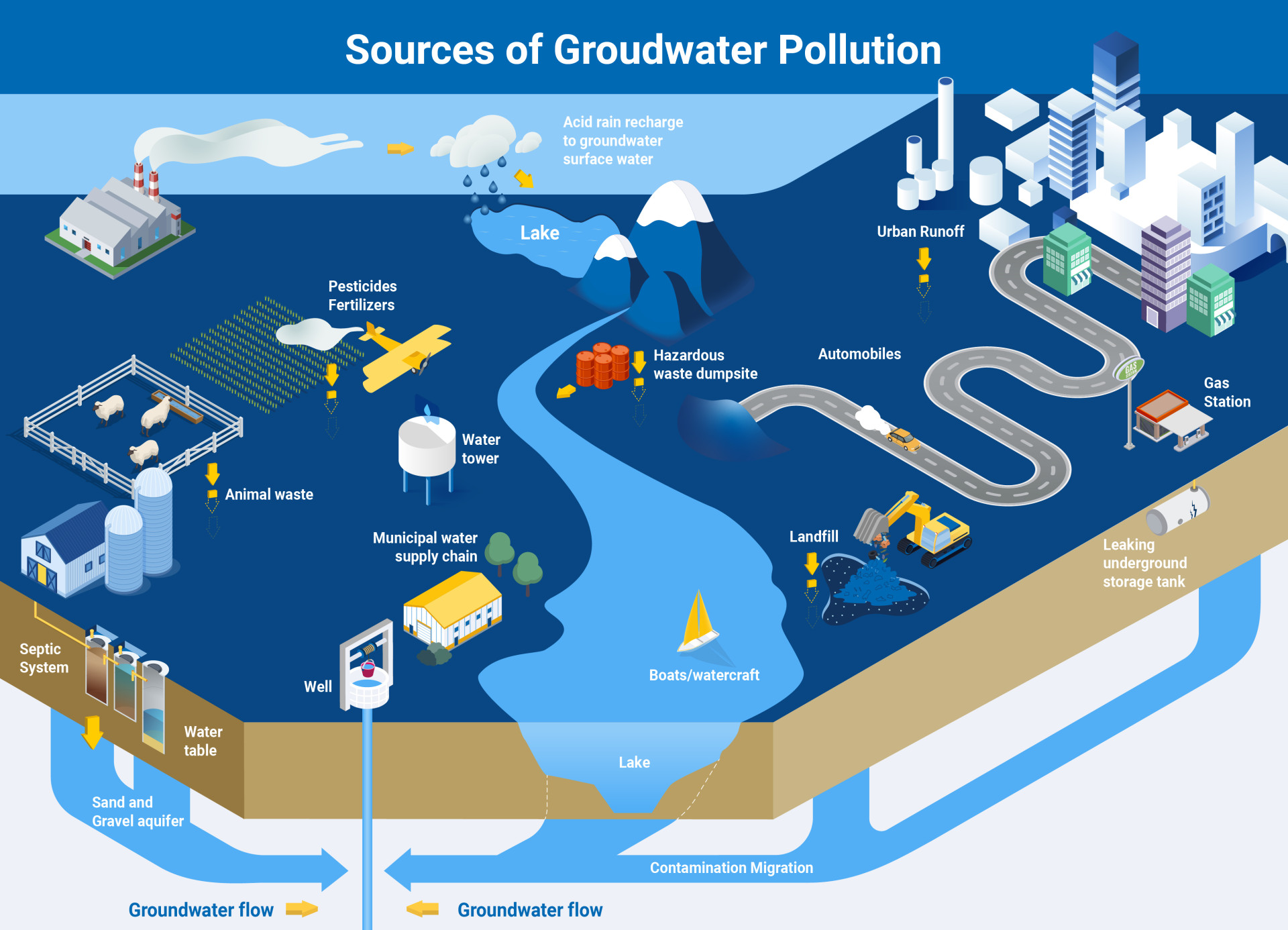
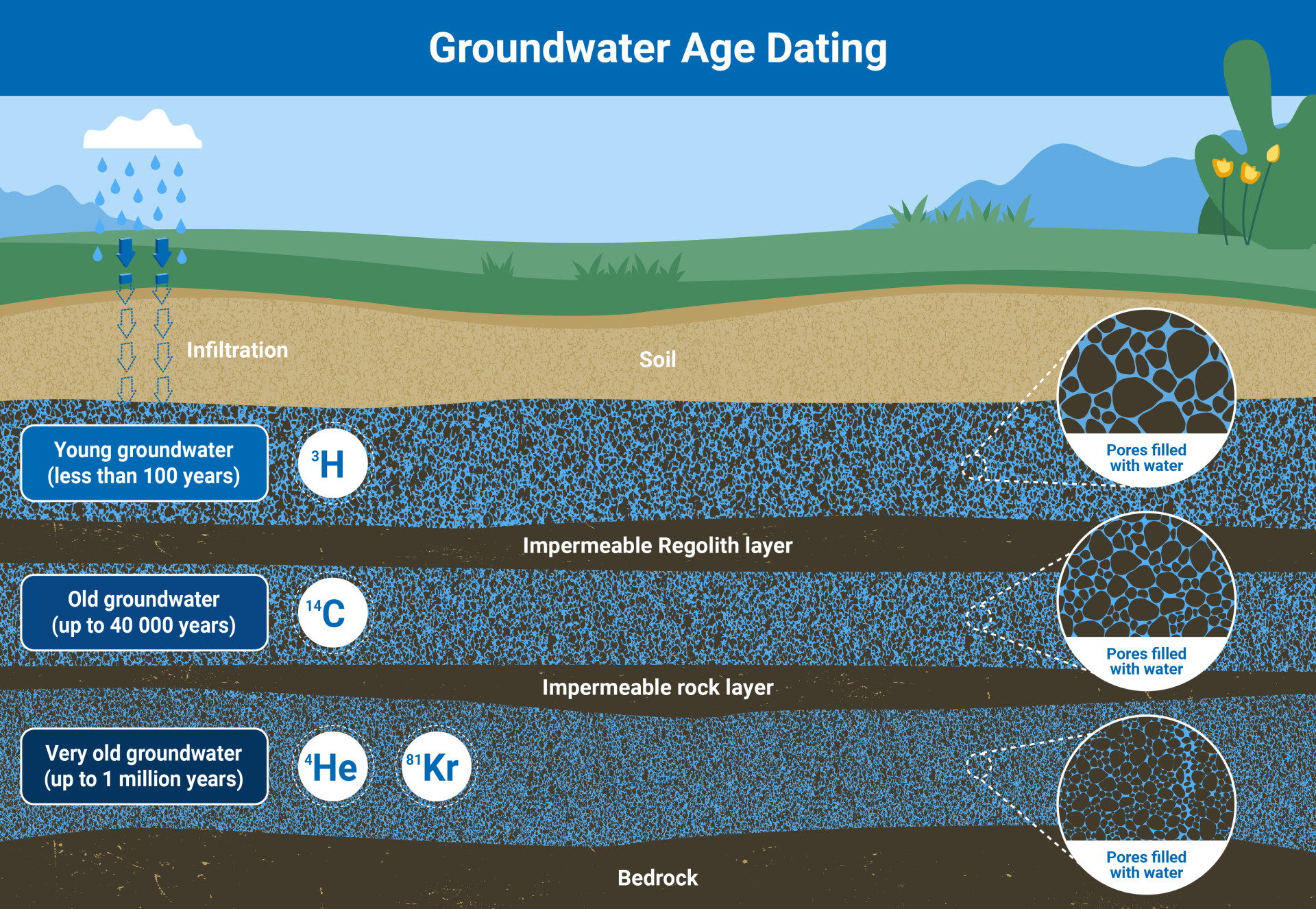
    Groundwater accounts for around 30 per cent of the world’s freshwater, making it an important resource for addressing current global issues, such as world population growth, agricultural intensification and increased water use in different sectors like oil and gas extraction and mining, apparel and textile manufacturing and livestock farming. To protect groundwater from the threats of overextraction and pollution, and to manage it sustainably for the future, it is essential to understand where groundwater in specific locations is originating from, what its quality is and how quickly it replenishes. Scientists can perform this kind of research by analyzing the water ‘fingerprints’ called “isotopes”, which are variations of atoms in the water molecule.

    What is groundwater?

    Groundwater is water found underground. It can be hidden in the cracks and spaces within rocks and sediments, forming an underground resource, hosted in what is known as an “aquifer”. Depending on the characteristics or the aquifer, groundwater can be extracted, using pumping wells, for irrigation, drinking and industrial water supply and other human activities.

    How are aquifers formed and why should we use them wisely?

    Groundwater is part of the water cycle. Following rainfall, some water soaks into the soil and, driven by gravity, migrates downwards continuously through the subsoil and moves until it is eventually stopped by compact, impermeable rock, called an aquiclude. Many aquifers are connected to, and fed by, rivers and other surface water bodies, during the dry season. In the wet season, this system can be reversed with groundwater moving back into rivers and lakes and replenishing them.

    What are isotopes and how can they help scientists understand water?

    The water molecule is composed of atoms of oxygen and hydrogen. Some variations of the atoms of the same chemical element, called isotopes, can be used to study the water cycle, including groundwater.

    Isotopes are atoms of the same element with the same number of protons but a different number of neutrons.

    Different “isotopic” techniques are used to measure isotope amounts and proportions, and to trace their origin, history, sources and interactions in the environment.

    Water has a different or unique isotopic “fingerprint”, or “isotopic signature”, depending on where it comes from. Scientists analyze isotopes to track the movement and pollution sources of water along its path through the water cycle.

    How do scientists use isotopes to establish whether groundwater is being overused?

    Scientists use isotopes in large-scale studies on water, to assess its amount, age, and origins, and to establish whether the amount being used by people is sustainable.

    For example, radioisotopes naturally present in groundwater, such as tritium, carbon-14, and noble gases helium-3, helium-4 and krypton-81, are used to learn more about how old groundwater is and the timescales of groundwater flow. By analyzing the concentration of different combinations of both stable and radio-isotopes, scientists can calculate when exactly the water is recharged in aquifers, how fast groundwater flows, and how long it takes to replenish. With this data, it is possible to establish, for example, whether or not agricultural activities in a specific area are demanding an amount of groundwater that will not be replenished fast enough to sustain irrigation needs in the long run.

    How do scientists use isotopes to study groundwater pollution?

    Scientists use specific isotopes like nitrogen-15, oxygen-18, and sulfur-34 to identify pollutants such as nitrate and sulphates. They also use these isotopes to establish whether the groundwater in a specific location is safe for human use.

    For example, scientists can establish whether water contaminated with an excessive amount of nitrate is being polluted by either human waste or by fertilizers. Nitrate ions are made up of nitrogen and oxygen, and nitrogen has two isotopes while oxygen has three. The ratio of these isotopes is different in human waste and in fertilizers. Therefore, the source of pollution can be identified based on these isotopic differences. Knowing the origins of pollutants is a milestone in addressing problems with water quality and working toward the sustainable management of water resources.

    What is the role of the IAEA?

    • The IAEA uses isotope hydrology to support Member States in water resources assessment and sustainable water management. The Agency also provides assistance and training to laboratories and scientists on analytical services through its Isotope Hydrology Laboratory.
    • Offering a wide range of courses, the IAEA provides training on the fundamentals of isotope hydrology and isotopic analyses of stable isotopes, tritium and noble gases.
    • Through its technical cooperation programme, the IAEA collaborates closely with its Member States to improve the availability and sustainability of freshwater resources through science-based, comprehensive water resources assessments.
    • Partnering with the World Meteorological Organization, the IAEA operates the Global Network of Isotopes in Precipitation, which contains scientific advice, logistics and technical support in isotope hydrology.

    This article was first published on 22 March 2023.

    MIL Security OSI

  • MIL-OSI: Gevo and Axens Partner to Broaden Their Alliance to Develop and Commercialize Bio-Based Renewable Hydrocarbon Fuels and Also Develop Gevo’s ETO Technology

    Source: GlobeNewswire (MIL-OSI)

    ENGLEWOOD, Colo., Feb. 12, 2025 (GLOBE NEWSWIRE) — Gevo, Inc. (NASDAQ: GEVO) and Axens (“Axens”) are pleased to announce they have formed a new strategic alliance to accelerate development and commercialization of sustainable aviation fuel (“SAF”) using the ethanol-to-jet (“ETJ”) pathway. The goal of the alliance is to leverage the most advantaged technologies, which we believe is Axens’ best-in-class and commercialized Jetanol™ technology. The alliance brings each partner’s complementary value propositions, real-world experience, substantially de-risked technologies, plant integrations, and pre-engineered systems to the ETJ space. The parties are also combining their technical resources to accelerate commercialization of Gevo’s patented, next-generation ethanol-to-olefins (“ETO”) technology for further process and cost improvements.

    “Today, Axens and Gevo are delivering the most cost-effective, commercially proven SAF technology with Axens Jetanol™ and Gevo’s process and business system,” says Dr. Paul Bloom, Chief Business Officer for Gevo. “By expanding our partnership to accelerate the commercialization of Gevo’s ETO technology, we’re combining our industry expertise to further reduce costs and create SAF that is competitive with fossil fuels while capitalizing on the growing carbon market.”

    Axens and Gevo are building on their previous successful commercial cooperation to ensure they remain leaders in the ETJ space by partnering with IFPEN on the final development and commercial deployment of Gevo’s next-generation ETO process for fuel applications that are expected to achieve zero carbon intensity or better. Gevo’s ETO process produces light olefins from ethanol, which can then be converted to transportation fuels utilizing commercially proven oligomerization and hydrogenation technologies.

    Provided the technology development is completed successfully, Gevo is expected to lead deployment of its ETO technology in North America with an effort to bring high-quality jobs and economic development to rural America, and Axens would provide process licensing, catalyst, equipment, and engineering services globally.

    “The immense potential for both our companies to lead the future of air-travel decarbonization is an obvious way forward,” says Quentin Debuisschert, CEO of Axens. “The combination of Gevo market know-how and capacity of project development with Axens best-in-class technology, Jetanol™, is expected to allow a fast acceptance and adoption of the ETJ Pathway. The future ETO technology commercialization will keep Axens and Gevo on the cutting edge of the ETJ pathway by offering end-users and project developers the possibility to select the most attractive technology for their situation.”

    “We believe that continuing to reduce production costs and capital costs for drop-in hydrocarbon fuels and chemicals has the potential to create large numbers of jobs, spur rural economic development, and create clear, market-based incentives for regenerative agriculture,” says Dr. Pat Gruber, Chief Executive Officer of Gevo. “It adds up to a practical approach for increased energy production and better energy security. This is a real way forward: it drives costs lower, uses the same, established fuel infrastructure, has proven and auditable improvements in sustainability, including how land is used, and offers large benefits to our society, and, in particular, strengthens our rural communities. We see this can be done, and we are pursuing it. It’s the right thing to do.”

    About Gevo
    Gevo is a next-generation diversified energy company committed to fueling America’s future with cost-effective, drop-in fuels that contribute to energy security, abate carbon, and strengthen rural communities to drive economic growth. Gevo’s innovative technology can be used to make a variety of renewable products, including SAF, motor fuels, chemicals, and other materials that provide U.S.-made solutions. By investing in the backbone of rural America, Gevo’s business model includes developing, financing, and operating production facilities that create jobs and revitalize communities. Gevo owns and operates one of the largest dairy-based renewable natural gas (“RNG”) facilities in the United States, turning by-products into clean, reliable energy. We also operate an ethanol plant with an adjacent carbon capture and sequestration (“CCS”) facility, further solidifying America’s leadership in energy innovation. Additionally, Gevo owns the world’s first production facility for specialty alcohol-to-jet (“ATJ”) fuels and chemicals. Gevo’s market-driven “pay for performance” approach regarding carbon and other sustainability attributes, helps ensure value is delivered to our local economy. Through its Verity subsidiary, Gevo provides transparency, accountability, and efficiency in tracking, measuring and verifying various attributes throughout the supply chain. By strengthening rural economies, Gevo is working to secure a self-sufficient future and to make sure value is brought to the market.

    For more information, see www.gevo.com.

    About Axens
    Axens Group provides a complete range of solutions for the conversion of oil and biomass to cleaner fuels, the production and purification of major petrochemical intermediates, the chemical recycling of plastics, all-natural gas treatment and conversion options, water treatment, as well as carbon capture and storage solutions. The offer includes technologies, equipment, furnaces, modular units, catalysts, adsorbents, and related services.

    For more information, see www.axens.net.

    Forward Looking Statements
    Certain statements in this press release may constitute “forward-looking statements” within the meaning of the Private Securities Litigation Reform Act of 1995. These forward-looking statements relate to a variety of matters, without limitation, including the alliance between Gevo and Axens, Gevo’s ETO technology; the expected benefits of the alliance, the reduced costs from the alliance and applicable technologies, and other statements that are not purely statements of historical fact. These forward-looking statements are made on the basis of the current beliefs, expectations and assumptions of the management of Gevo and are subject to significant risks and uncertainty. Investors are cautioned not to place undue reliance on any such forward-looking statements. All such forward-looking statements speak only as of the date they are made, and Gevo undertakes no obligation to update or revise these statements, whether as a result of new information, future events or otherwise. Although Gevo believes that the expectations reflected in these forward-looking statements are reasonable, these statements involve many risks and uncertainties that may cause actual results to differ materially from what may be expressed or implied in these forward-looking statements. For a further discussion of risks and uncertainties that could cause actual results to differ from those expressed in these forward-looking statements, as well as risks relating to the business of Gevo in general, see the risk disclosures in the Annual Report on Form 10-K of Gevo for the year ended December 31, 2023, and in subsequent reports on Forms 10-Q and 8-K and other filings made with the U.S. Securities and Exchange Commission by Gevo.

    Media Contact
    Heather L. Manuel
    VP, Stakeholder Engagement & Partnerships
    PR@gevo.com

    IR Contact
    Eric Frey
    VP, Corporate Development
    IR@Gevo.com

    The MIL Network

  • MIL-OSI Asia-Pac: English Translation of Prime Minister’s remarks at the India-France CEO Forum, Paris

    Source: Government of India (2)

    Posted On: 11 FEB 2025 11:59PM by PIB Delhi

    Your Excellency, President Macron,
    Industry leaders from India and France present here,
    Namaskar, Bonjour!

    I feel a wonderful energy, excitement and dynamism in this room. This isn’t just a normal business event.

    It is a confluence of the best business minds of India and France. The report of the CEO Forum that has just been presented is welcome.

    I see that all of you are moving ahead with the mantra of Innovate, Collaborate and Elevate. You are not just making boardroom connections. You all are also strengthening the Indo-French strategic partnership.

    Friends,

    It is a pleasure for me to join this forum with my friend President Macron. This is our sixth meeting in the last two years. Last year, President Macron was the Chief Guest at our Republic Day.

    This morning we had co-chaired the AI Action Summit together. I heartily congratulate President Macron for this successful summit.

    Friends,

    India and France are not just linked by democratic values. The foundation of our friendship is based on the spirit of deep trust, innovation, and public welfare.

    Our partnership is not limited to just two countries. We are cooperating together to address global problems and challenges. During my last visit, we had outlined the 2047 roadmap for our partnership. Following that, we are pursuing cooperation in a comprehensive manner in every field.

    Friends,

    Most of your companies are already present in India. You are active in different areas like aerospace, ports, defence, electronics, dairy, chemicals and consumer goods.

    I have had the opportunity to meet many CEOs in India as well. You are well aware of the changes that have taken place in India in the last decade. We have established a stable polity, and predictable policy ecosystem.

    Following the path of reform, perform, and transform, today India is the fifth largest economy in the world. It is the fastest growing major economy in the world.

    It will soon become the world’s third largest economy. India’s skilled young talent factory and innovation spirit are our identity on the global stage.

    Today, India is fast becoming a preferred global investment destination.

    We have launched AI, semiconductor and quantum missions in India. In defence, we are promoting Make in India and Make for the World. Many of you are associated with it. We are scaling new heights in space technology. This sector has been opened up for FDI. We are rapidly making India a global biotech powerhouse.

    Infrastructure development is a matter of priority for us. And on this, we are doing public expenditure of more than $114 billion a year. We have laid railway tracks on a massive scale, using technology to modernize and upgrade the railways.

    We are fast moving towards the target of 500 Gigawatts of renewable energy by 2030. For this, we have promoted solar cell manufacturing. We have also launched the Critical Mineral Mission.

    We have also taken up the Hydrogen Mission. For this, electrolyser manufacturing is being emphasized. By 2047, we are aiming for 100 gigawatts of nuclear power. I am happy to share that this sector is being opened up to the private sector. We are focusing on SMR and AMR technologies.

    Friends,

    Today India is becoming the biggest center of diversification and de-risking. A few days ago, a new generation of reforms were outlined in our budget.

    New steps have been taken for ease of doing business. In the last few years, we have rationalized more than 40,000 compliances. To promote trust-based economic governance, a high level committee for regulatory reforms has been formed. The custom rate structure has been rationalised.

    To facilitate international trade, “India Trade Net” is being introduced with the help of digital public infrastructure. We are bringing a new simplified income tax code towards Ease of Living.

    The National Manufacturing Mission has been announced. And, new sectors, such as the insurance sector, have been opened for 100 percent FDI. You must study all these initiatives carefully.

    Let me tell you all, this is the right time to come to India. Everyone’s progress is linked to India’s progress. An example of this was seen in the aviation sector, when Indian companies placed large orders for airplanes. And, now, when we are going to open 120 new airports, you can imagine the future possibilities for yourselves.

    Friends,

    The 1.4 billion people of India have resolved to build a developed India by 2047. Be it defence or advanced technology, fintech or pharma, tech or textile, agriculture or aviation, healthcare or highways, space or sustainable development. There are many opputunities for investments and collaborations in all these areas for all of you.

    I welcome you all to join India’s development journey.

    When France’s finesse and India’s scale meet…

    When India’s pace and France’s precision join…

    When France’s technology and India’s talent unite…

    Then, not just business landscape, but global transformation will happen.

    Once again, I thank you all very much for taking your precious time to come here.

    DISCLAIMER – This is the approximate translation of Prime Minister’s remarks. Original remarks were delivered

    MIL OSI Asia Pacific News

  • MIL-OSI United Kingdom: Fourth UK-India Energy Dialogue: joint statement

    Source: United Kingdom – Executive Government & Departments

    This joint statement was released following the meeting between UK Energy Secretary, Ed Miliband and India’s Minister of Power, Manohar Lal.

    The Fourth India-UK Energy Dialogue, co-chaired by Shri Manohar Lal, Union Minister of Power, India and Mr Ed Miliband, Secretary for Energy Security and Net Zero for United Kingdom, was held in, New Delhi on Monday 10th February, 2025.

    The dialogue focused on reviewing progress made in the energy sectors of both nations, including power and renewable energy, and reaffirming the commitment to a sustainable, resilient, and inclusive energy future. including across the breadth of sectors represented. They expressed satisfaction over the progress made to support green and sustainable growth, alongside accelerating the clean energy transition and ensuring energy security. The Ministers underscored the importance of ensuring that the energy transition and economic growth proceed together, while maintaining affordable and clean energy access for all.

    The Ministers underscored the importance of ensuring energy security and sustainable development and emphasised expanding the cooperation in the areas of power distribution, sector reforms, industrial energy efficiency and de-carbonisation, and electric mobility while exploring new opportunities in the emerging fields such as energy storage, green data centres, and offshore wind, with an increased focus on MSMEs.

    The Ministers were pleased to announce the launch of Phase-2 of the India-UK bilateral Accelerating Smart Power & Renewable Energy in India programme. This phase will aim to provide technical support for ensuring round the clock power supply, expanding renewable energy initiatives, and accelerating industrial energy efficiency and de-carbonisation, in collaboration with the Ministry of Power (MOP) and Ministry of New and Renewable Energy (MNRE).

    The Ministers were pleased to observe the bilateral collaboration between the two sides to promote growth and jobs, through technical assistance cooperation and investment. They also discussed the progress of trade missions focusing on offshore wind and green hydrogen, as well as the cooperation between the UK’s Energy Systems Catapult and India’s Power Trading Corporation.

    Recognising the shared ambition for advancing offshore wind development, the Ministers announced the establishment of a UK-India Offshore Wind Taskforce, which will focus on advancing offshore wind ecosystem development, supply chains, and financing models in both countries. Mr Miliband commended India’s ambitious initiatives in the renewable energy sector and shown a strong interest in gaining insights from India’s experience in implementing the Solar Rooftop Programme (PM – Surya Ghar Muft Bijli Yojna).

    The Ministers agreed on the importance of power market regulations in driving the energy transition and ensuring greater energy security and access. To support this, they announced the continuation of the Power Sector Reforms programme under the UK Partnering for Accelerating Climate Change (UKPACT). Additionally, a new taskforce has been proposed between the UK’s Office of Gas and Electricity Markets and India’s Central Electricity Regulatory Commission to support renewable energy integration and grid transformation in India.

    Both Ministers emphasised the ongoing value of the India-UK Energy Dialogue in advancing mutual energy transition goals, ensuring energy access, and building secure and sustainable clean energy supply chains while aligning these efforts with economic growth.

    The Ministers expressed their intention to further strengthen their collaboration through the Comprehensive Strategic Partnership and looked forward to the fifth UK-India Energy Dialogue in 2026. The dialogue concluded with the launch of the ‘Best Practices Compendium of Industrial Energy Efficiency/Decarbonisation’ and a ‘Pathways for Energy Efficiency and Decarbonisation in the Indian Aluminium Sector’.

    Updates to this page

    Published 12 February 2025

    MIL OSI United Kingdom

  • MIL-OSI Asia-Pac: LCQ1: Action Plan on Green Maritime Fuel Bunkering

    Source: Hong Kong Government special administrative region

    LCQ1: Action Plan on Green Maritime Fuel Bunkering
    LCQ1: Action Plan on Green Maritime Fuel Bunkering
    **************************************************

         Following is a question by the Hon Chan Hak-kan and a reply by the Secretary for Transport and Logistics, Ms Mable Chan, in the Legislative Council today (February 12):Question:     Regarding the Action Plan on Green Maritime Fuel Bunkering (the Action Plan) promulgated by the Government last year, will the Government inform this Council:(1) given that the Action Plan proposes to “adopt a multi-fuel strategy”, but it is learnt that at present, there are many types of green maritime fuels in the market, and most of them are at an early stage of development, while investments in the diversified development of fuels will not only increase the operational burden on investors, but also reduce the cost-effectiveness of such investments, whether the authorities will expeditiously specify the “designated fuels” and set relevant standards, carbon reduction targets, timetables, etc, so that investors can concentrate their resources and carry out long-term development planning;(2) as it is learnt that at present, the Mainland is already one of the major producers of maritime fuels such as bio-diesel and green methanol, and the related technologies have become relatively mature, how the authorities will, through administrative measures, support Hong Kong enterprises in fully grasping the advantage of enjoying the strong support of the motherland to build Hong Kong into a maritime fuel bunkering centre; and(3) given that the Action Plan proposes to set up a Green Maritime Fuel Bunkering Incentive Scheme within this year to encourage pioneer companies to develop green maritime fuel bunkering business in Hong Kong, when the authorities will announce the details of the Scheme?Reply: President,     The maritime industry accounts for about three per cent of the world’s carbon emissions. In order to reduce maritime operations’ negative impact on the environment, the International Maritime Organization (IMO) has set out a target of achieving net-zero carbon emissions from international shipping by or around 2050. There are many ways to reduce emissions, including adoption of energy saving technologies, switching to more energy-efficient vessels, usage of smart maritime technologies, among which the use of green maritime fuels is by far the most effective. Therefore, the industry has started to switch to using low or even zero-carbon green maritime fuels. Hong Kong must enhance its green maritime fuel bunkering capabilities to respond to market needs, so as to give full play to our advantage of our excellent geographical location and our position as a major bunkering port in South China, consolidate Hong Kong’s position as an international maritime centre, and maintain the competitiveness of our port.     The Government promulgated the Action Plan on Green Maritime Fuel Bunkering (Action Plan) in November last year, setting out clear targets with five strategies and 10 action measures with an aim to develop Hong Kong into a green maritime fuel bunkering centre. The Government has received strong support from the industry and maintained positive communication with Legislative Council members since the promulgation of the Action Plan. Various domestic and international players from different parts of the green maritime fuel bunkering supply chain have also expressed their interest in developing relevant businesses in Hong Kong.     Regarding the Hon Chan Hak-kan’s questions, the reply is as follows: (1) Currently, a number of green maritime fuels, including biodiesel, liquefied natural gas (LNG), green methanol, green ammonia and hydrogen are being used or tested by the industry, but not a single type of green maritime fuel is being particularly favoured. According to publicly available information on new vessels on order, by 2030 we expect that there will be over 1 000 vessels capable of being powered by LNG and nearly 400 methanol ones by 2030, as well as a number of hydrogen and green ammonia vessels in the world. Meanwhile, as most of the vessels that can use green maritime fuels will likely have dual-fuel engines, these vessels as well as the other traditional ones not yet due for replacement will likely adopt biodiesel, which is cheaper than other green maritime fuels currently, to reduce emission in the short term.     Taking into consideration the current trend in the maritime industry to retrofit or build new vessels powered by different green maritime fuels, the aforementioned figures, the high investment involved in ordering or retrofitting vessels, and that new vessels can generally operate for around more than 20 years after delivery, we expect diversified development in the green maritime fuel bunkering market in the coming decades. On one hand, Hong Kong will adopt a “multi-fuel” strategy like major ports such as Singapore, Rotterdam and Shanghai. But on the other hand, as mentioned in Hon Chan Hak-kan’s questions, we aim to provide a clear orientation on fuel options to the industry and the society, including making biodiesel bunkering immediately available, developing LNG and green methanol bunkering in the short- and medium-term respectively, and considering the development of the bunkering of hydrogen and green ammonia in the long run.     Following the aforementioned orientation and development directions, there are several actions we are about to implement, including:  

    in terms of LNG, we issued the Code of Practice (CoP) on LNG bunkering in January and the trade will soon conduct the first ship-to-ship LNG bunkering in Hong Kong waters this week;
    on green methanol, we will within this year invite the industry to submit expressions of interest in relation to developing green methanol storage facilities on a site in Tsing Yi South, and complete the CoP on green methanol bunkering; and
    as for hydrogen and green ammonia, we will simultaneously commence a feasibility study on the future bunkering of these fuels within this year, with a view to setting out a clear development direction.

         As regards standards on green maritime fuels, the IMO expects to finalise a number of mid-term measures within this year, which are expected to enter into force around 2027 and among which the “Green House Gas (GHG) fuel standard” will require the phased reduction of the GHG intensity of maritime fuels. As an Associate Member of IMO, Hong Kong will respond and follow the requirements in this regard.(2) Establishing a stable green maritime fuel supply chain is one of the action measures set out in the Action Plan. Given Hong Kong’s proximity to the Mainland, which is a major producer of a number of green fuels, we expect that most of Hong Kong’s green maritime fuels will be imported from the Mainland. In fact, currently some Hong Kong companies have already set up production facilities in different provinces and cities in the Mainland, including Inner Mongolia and Foshan, to produce green maritime fuels, while some Hong Kong and Mainland producers have expressed interest in providing such fuels to Hong Kong. Such stable green maritime fuel supply chain can also allow Hong Kong to take advantage of its robust and resilient financial system, good business environment, and regulatory regime in line with international standards, to develop into an international green maritime fuel trading centre.     At present, the Government will actively foster the conclusion of green maritime fuel offtake agreements by shipping companies interested in bunkering such fuels in Hong Kong. The Marine Department has set up a dedicated team to provide one-stop services for relevant companies, so as to help build a systematic and organic supply chain in Hong Kong. (3) As for the Green Maritime Fuel Bunkering Incentive Scheme, it aims to encourage pioneer enterprises to start green maritime fuel bunkering businesses in Hong Kong. At present, we are formulating the details of the scheme, and expect to establish the scheme in 2025 and will announce it in due course.     Thank you, President.

     
    Ends/Wednesday, February 12, 2025Issued at HKT 16:22

    NNNN

    MIL OSI Asia Pacific News

  • MIL-OSI Asia-Pac: Coal Ministry Issues Letters of Award to Selected Applicants under Categories II of the Financial Incentive Scheme for Coal Gasification

    Source: Government of India (2)

    Posted On: 12 FEB 2025 12:58PM by PIB Delhi

    The Ministry of Coal has made a significant stride in India’s ambitious Coal Gasification Initiative with the issuance of Letters of Award (LOAs) to selected applicants under Category II of the ₹8,500 crore Coal Gasification Incentive Scheme.

    The LOAs were presented by Shri Vikram Dev Dutt, Secretary, Ministry of Coal, in the august presence of Additional Secretary, Ms. Vismita Tej, and OSD (Technical), Shri Asheesh Kumar and Director (Technical), Shri BK Thakur, Ministry of Coal.

    Awardees under the Scheme:

    Category II: Private Sector/ Government PSUs (For allocation of Rs 1,000 crore per project or 15% of capex, whichever is lower)

    • Jindal Steel and Power Limited: The 2MMTPA coal gasification project in Angul, Odisha, has been awarded ₹569.05 crore in financial incentives. The ₹3,793 crore project will convert coal into Direct Reduced Iron (DRI) through coal gasification while also setting up a carbon capture and utilization plant designed to capture 30 TPD of CO2 for conversion into valuable products.
    • New Era Cleantech Solution Private Limited: A financial incentive of ₹1,000 crore has been granted for New Era Cleantech’s coal gasification project in Bhadravati, Chandrapur, Maharashtra. With a total project cost of ₹6,976 crore, it aims to produce 0.33 MMTPA of Ammonium Nitrate and 0.1 MMTPA of Hydrogen. Additionally, the project will implement Carbon Capture, Utilization, and Storage (CCUS) technology, where captured CO2 will be utilized for methanol production. The proposed CO2-to-methanol plant will have a capacity of 3,000 TPD (1.0 MMTPA).
    • Greta Energy Limited: The Greta Energy Limited has been awarded ₹414.01 crore of financial incentive for its coal gasification project at MIDC Bhadravati, Chandrapur, Maharashtra. With a total investment of ₹2,763 crore, the project aims to produce 0.5 MTPA of Direct Reduced Iron (DRI).

    The Coal Gasification Incentive Scheme plays a pivotal role in India’s ambitious target of reaching 100 million tonnes of coal gasification by 2030. This initiative is designed to accelerate technological advancements in coal gasification, significantly reduce carbon emissions, bolster energy security, and create a foundation for a more sustainable energy landscape.

    ****

    Shuhaib T

    (Release ID: 2102157) Visitor Counter : 81

    MIL OSI Asia Pacific News

  • MIL-OSI United Kingdom: UK stands up for working people by boosting economic, clean energy and climate links with India

    Source: United Kingdom – Executive Government & Departments

    Energy Secretary travels to New Delhi to champion UK businesses, strengthen our partnership with India and accelerate work to tackle climate change.

    • UK and India agree action to accelerate economic growth from global clean energy transition
    • Energy Secretary travelled to New Delhi to champion for British interests; supporting UK businesses, increase clean energy investment opportunities and deliver on the government’s Plan for Change
    • closer working through fourth UK-India Energy Dialogue to boost renewables and cut emissions, protecting British families and businesses from the climate crisis

    The UK and India joined forces this week to unlock economic growth from the clean energy transition, supporting new jobs, creating export opportunities and tackling the climate crisis. 

    During a visit to New Delhi, the Energy Secretary Ed Miliband backed British businesses at India Energy Week – a major international energy event. He met with UK companies who are using their expertise to speed up India’s transition from fossil fuels to clean power, including offshore wind, solar, battery storage and hydrogen.  

    He met a number of UK companies who are using the UK’s world leading technology to speed up the global clean energy transition, create job opportunities and protect the climate. These include:

    • Sherwood Power – Sherwood Power has developed energy storage technology that converts excess, low-cost, renewable energy into compressed air and heat. When demand is high, this stored energy is released to generate electricity, reducing grid load and customer costs. The company is based in Richmond, North Yorkshire.  

    • Oomph EV – Oomph EV designs and manufacture a range of rapid, mobile, electric vehicle charging solutions. They are addressing the Indian market with a view to local manufacture. They offer hardware, software and data services to the global EV market and are based in Cambridge.  

    • Flock Energy – London based Flock Energy is building the digital infrastructure for the global energy transition. Using advanced AI, Flock Energy enables energy providers to analyse customer energy data usage in detail, all on one digital platform, to improve demand forecasting, demand-side management and energy efficiency. 

    • Venterra Group – Venterra Group, established in 2021, is a London based offshore wind services company. Venterra operates globally with over 700 employees and specialises in providing comprehensive technical services across the wind farm lifecycle to reduce project risks, time, and costs.

    India is one of the fastest growing economies in the world and one which is projected to be the fourth largest global importer by 2035. Delivering on the UK Government’s Plan for Change, the Energy Secretary used his visit to increase UK clean energy investment opportunities and place British businesses at the forefront of the global race for renewables.  

    As one of the world’s biggest emitters, working with India on clean energy and climate is crucial to protecting British families and businesses from the threat of climate change. Increasing investment in renewables and clean technology supports the government’s mission to become a clean energy superpower, protecting households from unstable fossil fuel markets and helping keep bills down for good.  

    Energy Secretary Ed Miliband said: 

    We are standing up for the British people by fighting for investment into our country, and setting the example for all countries play their part in protecting our planet for future generations.  

    The UK and India are strengthening our partnership under our Plan for Change to unlock investment and accelerate the global transition to clean, secure, affordable energy.  

    Both our countries are determined to address the climate emergency to protect our way of life, while reaping the rewards of the industrial and economic opportunity of our time.

    The  Energy Secretary took part in the fourth UK-India Energy Dialogue with India’s Minister of Power Manohar Lal Khattar, and met with G20 Sherpa Amitabh Kant.  

    Both countries agreed: 

    • a new shared ambition on offshore wind, including a UK-India Offshore Wind Taskforce to drive the progress needed across the offshore wind supply chains and financing models

    • funding to reform in India’s power sector to support decarbonisation through UKPACT, which aims to deliver grid transformation as part of India’s renewables rollout

    • an extension of the bilateral Accelerating Smart Power and Renewable Energy in India (ASPIRE) programme, which will work to deliver round-the-clock power supply, accelerate industrial decarbonisation and roll out renewables 

    This builds on the UK and India’s close collaboration to tackle climate change through innovation agreed as part of the Technology Security Initiative in 2024, from using AI to increase resilience, to bringing together experts to safeguard the critical minerals needed for renewable technologies like wind turbines and batteries. 

    Talks come ahead of expected negotiations with India on a Free Trade Agreement and Bilateral Investment Treaty, led by the Business and Trade Secretary, at the end of the month.  
     
    Striking a deal would increase economic growth across both countries, facilitating the trade of renewable technologies and sustainable materials, supporting the government’s mission to become a clean energy superpower. 

    There are over 950 Indian-owned companies in the UK and over 650 UK companies in India supporting over 600,000 jobs and driving innovation across both economies. 

    Engagement with India comes ahead of COP30, due to take place in Brazil later this year, where both countries will be pushing for ambitious outcomes to address the climate emergency.

    Updates to this page

    Published 12 February 2025

    MIL OSI United Kingdom

  • MIL-OSI Economics: India’s Green Hydrogen Review and Perspective

    Source: Asia Development Bank

    As a global leader in renewable energy, India is transitioning from fossil fuel-based hydrogen to green hydrogen, driven by technological advancements, cost reductions, and supportive policies. Initiatives like the National Green Hydrogen Mission and Green Hydrogen Policy aim to establish India as a global hub, targeting an annual production of 5 million metric tons by 2030. The strategy emphasizes investments in indigenous technologies, pilot projects, and infrastructure to boost domestic demand and production. However, significant challenges remain in scaling up green hydrogen production. These include high capital expenditures for electrolyzers, gaps in transportation and storage technologies, and material dependencies. While alkaline electrolysis systems are not expected to face long-term material constraints, they still require substantial quantities of steel, nickel, and copper per megawatt. India’s dependence on imported nickel could disrupt supply chains even for these systems. To address these challenges, collaboration between the government, public enterprises, and the private sector is essential for building a sustainable green hydrogen ecosystem. By 2030, India’s investment in green hydrogen and its ammonia capacity is estimated to reach approximately $34.0 billion, with $9.3 billion (27%) from government-owned enterprises and $24.8 billion (73%) from major private companies, based on their current investment plans. This investment is projected to achieve a green hydrogen and green ammonia capacity of over 10 million metric tons by 2030, doubling the government’s target. While economic analysis shows that green hydrogen projects can be viable in accordance with the Asian Development Bank’s economic analysis guideline, financial analysis underscores the need for financing mechanisms—such as public funding, guaranteed pricing, and operational support—to make projects more competitive and attract investment. In particular, concessional funding will play a key role in mitigating risk and attracting initial investments. Additionally, a unified policy approach must address the development of infrastructure and foster collaboration across multiple stakeholders. Given the scarcity of key raw materials for electrolyzers, such as iridium and platinum, exploring alternative options like anion exchange membrane electrolyzers could be strategically significant for scaling up production. International partnerships for green hydrogen exports will also be important to support expansion on a large scale.

    WORKING PAPER 1491

    MIL OSI Economics

  • MIL-OSI China: Long March-8A carrier rocket completes maiden flight

    Source: People’s Republic of China – State Council News

    A group of low Earth orbit satellites is launched aboard a modified Long March-8 carrier rocket from the Wenchang Space Launch Site in south China’s Hainan Province, Feb. 11, 2025. The satellite group, the second of its kind that will constitute an internet constellation, was launched at 5:30 p.m. (Beijing Time). The satellites entered the preset orbit successfully. [Photo/Xinhua]

    BEIJING, Feb. 11 — China’s Long March-8A carrier rocket successfully conducted its maiden flight on Tuesday, sending a group of low Earth orbit satellites into space from the Wenchang Space Launch Site in the southern Hainan Province.

    The satellite group is the second of its kind and will form an internet constellation. It was launched at 5:30 p.m. (Beijing Time), and then entered its preset orbit successfully. The launch was the 559th flight mission of the Long March carrier rocket series.

    The Long March-8A was developed to meet the launch requirements of large-scale constellation networks in medium and low Earth orbits, according to Song Zhengyu, chief designer of the Long March-8A at the China Academy of Launch Vehicle Technology (CALT).

    “Together with the basic configuration of the Long March-8 carrier rocket and its strap-on, booster-free serial configuration, it forms the Long March-8 series of carrier rockets,” Song said.

    He noted that the series has 3-tonne, 5-tonne and 7-tonne payload capacities for sun-synchronous orbits, significantly enhancing China’s launch capabilities for medium and low Earth orbit satellite networks.

    The Long March-8A innovatively integrates the functions of the satellite support structure, the adapter frame and the instrument module in a multi-functional module, successfully reducing the rocket’s weight by 200 kilograms and improving its payload efficiency, according to Song.

    The rocket retains the core first stage and boosters of the Long March-8, while its core second stage features a newly developed universal hydrogen-oxygen final stage with a 3.35-meter diameter, paired with a 5.2-meter-diameter fairing.

    This unique configuration gives the Long March-8A a distinctive, large-headed appearance, providing more room for satellites. As a result, the rocket can support a wider variety and larger volume of satellites, significantly enhancing its mission adaptability.

    The universal hydrogen-oxygen final stage is capable of carrying more fuel and incorporates a range of advanced technologies. These innovations boost the rocket’s payload capacity significantly, decrease the time required for satellites to enter orbit, optimize fuel efficiency, and extend the operational lifespan of satellites, said Fan Chenxiao, a designer at CALT.

    Liu Lidong, another designer at CALT, said that the rocket’s final stage — using liquid hydrogen and liquid oxygen as fuel — has a high specific impulse characteristic, allowing the rocket to achieve significant thrust with a relatively low amount of fuel. 

    A group of low Earth orbit satellites is launched aboard a modified Long March-8 carrier rocket from the Wenchang Space Launch Site in south China’s Hainan Province, Feb. 11, 2025. [Photo/Xinhua]
    A group of low Earth orbit satellites is launched aboard a modified Long March-8 carrier rocket from the Wenchang Space Launch Site in south China’s Hainan Province, Feb. 11, 2025. [Photo/Xinhua]
    A group of low Earth orbit satellites is launched aboard a modified Long March-8 carrier rocket from the Wenchang Space Launch Site in south China’s Hainan Province, Feb. 11, 2025. [Photo/Xinhua]
    A group of low Earth orbit satellites is launched aboard a modified Long March-8 carrier rocket from the Wenchang Space Launch Site in south China’s Hainan Province, Feb. 11, 2025. [Photo/Xinhua]

    MIL OSI China News

  • MIL-OSI: Acceleware Announces Option Grant

    Source: GlobeNewswire (MIL-OSI)

    CALGARY, Alberta, Feb. 11, 2025 (GLOBE NEWSWIRE) — Acceleware® Ltd. (“Acceleware” or the “Corporation”) (TSX-V: AXE), a leading innovator of transformative technologies targeting the decarbonization of industrial process heat, as of February 10, 2025, has granted stock options to acquire up to 1,634,000 common shares of the Corporation to certain of its employees, consultants, officers and directors. The options have an exercise price of $0.09 per common share and expire on February 10, 2030.

    Of the 1,634,000 options granted, 592,000 shall vest on the first anniversary of the grant date, 592,000 shall vest on the second anniversary of the grant date, 225,000 shall vest when the share price of the common shares of the Corporation closes at or above $0.115 for ten consecutive trading days, and 250,000 shall vest when the share price of the common shares of the Corporation closes at or above $0.135 for ten consecutive trading days. The Corporation’s stock option plan allows for 11,843,854 common shares to be reserved for issuance under the plan. Upon issuance of the options granted, there will be 11,529,466 common shares reserved under options outstanding, leaving 314,388 common shares that may be reserved for issuance under the Corporation’s stock option plan. The stock option grant is subject to regulatory approval.

    About Acceleware
    Acceleware is an advanced electromagnetic (EM) heating company with highly scalable EM solutions for large industrial applications. The Company’s solutions provide an opportunity to economically electrify and decarbonize industrial process heat applications previously considered difficult to abate, which could have a significant impact on global GHG emissions.

    Acceleware is piloting RF XL, its patented low-cost, low-carbon EM thermal production technology for heavy oil and oil sands that is materially different from any heavy oil recovery technique used today. The Company is also working with a consortium of world-class potash partners on a pilot project using its patented and field proven Clean Tech Inverter (CTI) to decarbonize drying of potash ore and other minerals. Acceleware is actively developing partnerships for EM heating of other industrial applications in mining, steel, agriculture, cement, hydrogen and other clean fuels.

    Acceleware and Saa Dene Group (co-founded by Jim Boucher) have created Acceleware | Kisâstwêw to raise the profile, adoption, and value of Acceleware technologies. The partnership is intended to improve the environmental and economic performance of industry by supporting ideals that are important to Indigenous peoples, including respect for land, water, and clean air.

    Acceleware is a public company listed on Canada’s TSX Venture Exchange under the trading symbol “AXE”.

    For further information,

    Geoff Clark
    geoff.clark@acceleware.com

    Acceleware Ltd.
    435 10th Avenue SE
    Calgary, AB, T2G 0W3 Canada
    +1 (403) 249-9099
    www.acceleware.com

    The MIL Network

  • MIL-OSI Asia-Pac: Prime Minister addresses the 14th India-France CEOs Forum

    Source: Government of India (2)

    Prime Minister’s Office

    Prime Minister addresses the 14th India-France CEOs Forum

    Posted On: 12 FEB 2025 12:16AM by PIB Delhi

    Prime Minister Shri Narendra Modi and the President of France, H.E. Mr. Emmanuel Macron jointly addressed the 14th India-France CEOs Forum today in Paris. The forum brought together CEOs from a diverse group of companies from both sides, focusing on sectors such as defence, aerospace, critical and emerging technologies, infrastructure, advanced manufacturing, artificial intelligence, life-sciences, wellness and lifestyle, and food and hospitality.

    Prime Minister in his address noted the expanding India-France business and economic collaboration and the impetus it has provided to the strategic partnership between the two countries. He highlighted India’s attractiveness as a favored global investment destination, based on its stable polity and predictable policy ecosystem. Talking of the reforms announced in the recent budget, PM noted that the insurance sector was now open for 100% FDI and civil nuclear energy sector for private participation with focus on SMR and AMR technologies; customs rate structure was rationalized; and simplified income tax code was being brought in to enhance Ease of Living. Referring to the government’s commitment to continue ushering in reforms, he noted that a high-level committee for regulatory reforms had been constituted to establish trust based economic governance. In the same spirit, more than 40,000 compliances had been rationalized in the last few years.

    Prime Minister invited French companies to look at the immense opportunities offered by the India growth story, in the defense, energy, highway, civil aviation, space, healthcare, fintech and sustainable development sectors. Underlining global appreciation and interest in India’s skills, talent and innovation and in its newly launched AI, Semiconductor, Quantum, Critical Minerals and Hydrogen missions, he called upon French enterprises to partner India for mutual growth and prosperity. He outlined the importance of active engagement in these sectors, reaffirming the commitment of both nations to fostering innovation, investment, and technology-driven partnerships. Full remarks of Prime Minister may be seen here

    External Affairs Minister Dr. S. Jaishankar, alongside the Minister for Europe and Foreign Affairs of France, H.E. Jean-Noël Barrot, and the Minister of the Economy, Finance, and Industrial and Digital Sovereignty of France, H.E. Eric Lombard also addressed the Forum.

    5. CEOs from both sides who attended the meeting were:

    Indian Side:

      Company Name(Sector) Name and Designation

    1

    Jubiliant Foodsworks/Jubiliant Life Sciences, Food and Beverage

    Hari Bhartia, Co-Chairman and Director

    2.

    CII

    Chandrajit Banerjee, Director General

    3.

    Titagarh Rail Systems Limited (TRSL), Railways and Infrastructure

    Umesh Chowdhary, Vice Chairman and Managing Director

    4.

    Bharat Light & Power Private Limited, (Renewable Energy)

    Tejpreet Chopra, President & CEO

    5.

    P Mafatlal Group, Textiles and Industrial Products

    Vishad Mafatlal, Chairman

    6.

    boat, Consumer Electronics (Wearables)

    Aman Gupta, Co-Founder

    7.

    Dalit Indian Chamber of Commerce & Industry (DICCI), Business Advocacy and Inclusion

    Milind Kamble, Founder/Chairman

    8.

    Skyroot Aerospace, Aerospace & Space and Technology

    Pawan Kumar Chandana,Co-Founder

    9.

    Agnikul, Aerospace & Space and Technology

    Srinath Ravichandran, Co-Founder & CEO

    10.

    Tata Advanced Systems Ltd, Aerospace and Defense

    Sukaran Singh, Managing Director

    11

    UPL Group, Agrochemical and Agribusiness

    Vikram Shroff, Vice Chairman and Co-CEO

    12.

    Sula Vineyards, Food and Beverage

    Rajeev Samant, CEO

    13.

    Dynamatic Technologies Ltd, Aerospace & Defence, and Engineering

    Udayant Malhoutra, CEO & Managing Director

    14.

    Tata Consulting Engineers (TCE), Engineering and Consulting

    Amit Sharma, Managing Director & CEO

    15.

    Nykaa, Cosmetics and consumer goods

    Falguni Nayyar,CEO

    French Side:

      Company Name(Sector) Name and Designation

    1

    Air Bus, Aerospace & Defence

    Guillaume Faury, CEO

    2.

    Air Liquide, Chemicals, Health care, Engineering

    François Jackow, CEO & a member of the Board of Directors of the Air Liquide Group

    3.

    BlaBlaCar, Transport, Services

    Nicolas Brusson, CEO & Co-Founder

    4

    Capgemini Group, Information Technology, Engineering

    Aiman Ezzat, CEO

    5

    Danone, Food & Beverages

    Antoine de SAINT-AFFRIQUE, CEO

    6

    EDF, Energy, Power

    Luc Rémont, Chairman &CEO

    7

    Egis Group, Architecture Construction Engineering

    Laurent Germain,CEO

    8.

    Engie Group, Energy, Renewable Energy

    Catherine MacGregor, CEO & Board Member of ENGIE.

    9

    L’Oréal, Cosmetics & Consumer Goods

    Nicolas Hieronimus, CEO & Member of Board of Directors

    10

    Mistral AI, Artificial Intelligence

    Arthur Mensch, CEO & Co-Founder

    11

    Naval Group, Defence, Shipbuilding, Engineering

    Pierre Eric Pommellet, Chairman & CEO

    12.

    Pernod Ricard, Alcohol Beverages, FMCG

    Alexandre Ricard, Chairman & CEO

    13

    Safran, Aerospace & Defence

    Olivier Andriès, CEO

    14.

    Servier, Pharmaceuticals, Health care

    Olivier Laureau, President & CEO

    15

    Total Energies SE, Energy

    PATRICK Pouyanné, Chairman & CEO

    16

    Vicat, Construction

    Guy Sidos, Chairman & CEO


    ****

    MJPS/SR

    (Release ID: 2102056)

    MIL OSI Asia Pacific News

  • MIL-OSI Economics: OEUK news Major companies to flag business opportunities to energy supply chain at 2025 Share Fair 11 February 2025

    Source: Offshore Energy UK

    Headline: OEUK news

    Major companies to flag business opportunities to energy supply chain at 2025 Share Fair

    11 February 2025

    Supply chain companies keen to source market intelligence about the pipeline of energy projects and secure meetings with key business contacts are snapping up places at OEUK’s Share Fair on March 19 at Aberdeen’s P&J Live.

    With support from the North Sea Transition Authority (NSTA) and Aker Solutions as supporting sponsor, Share Fair illuminates business opportunities for suppliers and enables contract and procurement teams from major companies to broaden their knowledge of the expertise, innovative technology and specialised services offered by the UK supply chain.

    The growing list of leading operators, developers and major contractors confirmed as participants in Share Fair includes those with interests across the energy sector ranging from oil and gas, offshore wind, hydrogen and geothermal to carbon capture and storage. All will be sharing details about their upcoming projects and contract opportunities available to the supply chain.

    Companies signed up to present or offer the sought after one-to-one appointments include Aker Solutions, Anasuria Operating Company, bp Aberdeen Hydrogen Energy Ltd, Camm-Pro Limited, Ceraphi Energy, Copenhagen Offshore Partners, CNOOC, Dana Petroleum, Energy Pathways, Flotation Energy, Inch Cape Offshore Limited, INEOS, Ithaca Energy, Petrogas, Serica Energy, Spirit Energy, Subsea7, TAQA, Valaris and Wood, with more expected to confirm in due course.

    Katy Heidenreich, OEUK’s Supply Chain and People Director, said:

    “The UK’s sustainable energy future depends on our amazing supply chain companies. They employ our talented workforce, and we depend on them to provide the technology, services and solutions to deliver the projects of today and tomorrow. They need visibility of when projects will happen so they can address constraints on people and equipment, and uncertainty on investment decisions. Share Fair provides clear visibility of future confirmed work, enabling them to forecast demand for their goods, services and expertise. It’s the ideal arena for encouraging greater collaboration on demand planning, project scheduling and resource management, helping our industry improve its competitiveness and ensuring resources are available to support the UK’s future sustainable energy supply.”

    Bill Cattanach, Head of Supply Chain at the North Sea Transition Authority, said:

    “Every year without fail, Share Fair attracts an impressive cast-list of major operators with major opportunities for the supply chain. While more big hitters are expected to confirm their participation before March 19, it is already clear this year’s event will be another success. I’m also encouraged that the involvement of decarbonisation project developers continues to grow at Share Fair. At the NSTA, we’re seeing the same trend with our Energy Pathfinder tool, with details of contracting opportunities for energy transition schemes being added all the time.”

    Steve Nicol, Supply Chain Champion for the offshore energies industry, said:

    “Our world class supply chain requires knowledge, resources and investment to support the delivery of both homegrown energy and the energy transition. Share Fair creates a fantastic opportunity for collaboration and helps to better inform our supply chain by connecting them to the right people at this critical time.  In short, the event can help set businesses up for future success.”

    The Share Fair format comprises presentations from operators, developers and contractors on future projects, one-to-one meetings with key decision makers procuring goods and services plus extensive opportunities for suppliers to network with industry peers and book exhibition space.

    In late February, when OEUK opens booking for one-to-one appointments, suppliers will be able to secure business appointments with key decision-makers in companies looking to issue contracts to supply chain companies.

    The event takes place in Aberdeen’s P&J Live on March 19 and more information about bookings is available on the website here .


    Share this article

    MIL OSI Economics

  • MIL-OSI: StormFisher Hydrogen Secures US$50 million Commitment from Hy24 to Deliver Pipeline of Clean Fuel Production Projects in North America

    Source: GlobeNewswire (MIL-OSI)

    • The investment will accelerate StormFisher Hydrogen’s current project pipeline deployment, including several facilities in the U.S. and Canada, with a total renewable capacity of up to 1.8 GW by 2030.
    • Hy24, investing through their Clean Hydrogen Infrastructure Fund, is entering directly into the North American market, contributing to the advancement of clean fuel deployment in the region while supporting StormFisher Hydrogen’s export ambitions to European and Asian markets.

    HOUSTON, Feb. 11, 2025 (GLOBE NEWSWIRE) — StormFisher Hydrogen, a leading developer and producer of clean fuels, announces today it has secured a US$50 million commitment from Hy24’s Clean Hydrogen Infrastructure Fund, the world’s leading low-carbon hydrogen asset manager. This strategic partnership will accelerate StormFisher Hydrogen’s pipeline of clean fuel production projects in North America, helping them to reach final investment decisions (FID) and catalyzing the transition to low carbon energy solutions.

    “We are pleased to make our first direct investment in North America to support the growth of StormFisher Hydrogen,” said Pierre-Etienne Franc, co-founder and CEO of Hy24. “The company can leverage its energy platform approach, strong offtaker strategy, and a favorable international regulatory landscape to deploy its robust pipeline of e-Fuels projects and drive its export ambitions to European and Asian markets. These clean energy solutions present a significant opportunity for North America in its pursuit of energy security, economic growth, and its trade and continued leadership in the sector.”

    StormFisher Hydrogen’s current project pipeline includes several facilities located across the United States (Texas, Kansas, Minnesota) and Canada (Ontario region). Together, they will have the capacity to convert up to 1.8 gigawatts (GW) of renewable energy from solar and wind into RFNBO e-Fuels (renewable fuel of non-biological origin), such as green hydrogen, e-Methanol, green ammonia, and e-Methane. The company’s most advanced project located in North Texas, U.S. is expected to reach FID in early 2026 and will have an e-Methanol production capacity of more than 120,000 tonnes per year.

    “This collaboration with Hy24 enables us to advance projects in our pipeline and reinforces our role as a leader in project development,” said Judson Whiteside, President and CEO of StormFisher Hydrogen. “We bring a lot of value and long-term jobs to the communities we are developing in, while increasing molecule exports to Europe and Asia. With cutting-edge energy infrastructure and highly skilled workforce, the United States is poised to lead the global low-carbon fuels market. Our projects strengthen America’s position in the energy transition while enhancing domestic energy resilience and independence.”

    StormFisher Hydrogen will make a significant contribution to the development of North America’s e-Fuel production capacity, which is critical for decarbonizing hard-to-abate industries such as maritime, aviation, and chemicals. It will also help establish the United States as a key supplier to the global market while reinforcing the country’s leadership in the energy sector.

    With previous investment from ARC Financial Corp.’s ARC Energy Transition Fund and this new investment from Hy24, StormFisher Hydrogen is expected to deploy several billion dollars of capital over the next decade. The company’s clean fuel production facilities will have material economic benefits for local communities, creating approximately 50 permanent high-quality, full-time jobs per site.

    “We are thrilled to partner with Hy24,” said Brian Boulanger, CEO of ARC Financial Corp. “Their deep expertise and sectoral focus in the hydrogen and e-Fuel space will be instrumental in accelerating StormFisher Hydrogen’s mission to lead in clean fuel development. With the management team’s proven track record in developing major projects, ARC Financial Corp.’s extensive North American investment experience, and Hy24’s global reach, we are well-positioned to deliver low-carbon hydrogen-derived products to our industrial customers at scale.”

    About StormFisher Hydrogen

    StormFisher Hydrogen develops and operates facilities that produce e-Fuels through the sourcing of renewable electricity to produce green hydrogen and the sourcing and use of carbon dioxide from industrial point sources. StormFisher Hydrogen works with hard-to-abate sectors such as transportation (maritime/aviation), heavy industry, and gas utility companies, as well as traditional methanol users seeking clean fuel solutions to support long-term decarbonization goals.

    About Hy24

    The Clean H2 Infra Fund is managed by Hy24, a 50/50 joint venture between Ardian, a world leading private investment house, and FiveT Hydrogen, a clean hydrogen investment pureplay. The world’s largest clean hydrogen infrastructure fund results from the initiative of Air Liquide, TotalEnergies and VINCI Concessions, combined with the one of Plug Power, Chart Industries and Baker Hughes, which were sharing a common objective to accelerate the development of the hydrogen sector. The fund is now up and running with €2 billion of allocations. With strong industrial and financial expertise at its core, Hy24 will have a unique capacity to accelerate the scaling up of hydrogen solutions along the whole value chain: production, conversion, storage, supply, and usage. Hy24 will support large early stage and strategic projects into becoming essential energy infrastructures. The infrastructure fund managed by Hy24 complies with Article 9 of the European regulation on sustainability-related disclosures in the financial services sector (SFDR). Hy24 is an alternative investment fund manager regulated by the French Autorité des marchés financiers under the number GP-202171. The Clean H2 Infra Fund is dedicated to professional investors and not commercialized in the United States of America.

    About ARC Financial Corp.

    Founded in 1989, ARC Financial Corp. is committed to building high-performing businesses that address the world’s energy and sustainability needs. To date, ARC has raised C$6.4 billion across eleven energy-focused funds since the launch of its private equity business in 1997, having invested capital in more than 180 companies across the energy landscape. ARC’s newest fund, ARC Energy Fund 10, is focused on infrastructure development and energy services & manufacturing opportunities in energy transition. For more information, please visit www.arcfinancial.com

    Press Contacts

    StormFisher Hydrogen
    Karen Hamill, Director, Communications Strategy Group
    khamill@wearecsg.com, W: https://stormfisher.com

    Hy24
    Elizabeth Adams, Senior Managing Director, FTI Consulting
    Hy24@fticonsulting.com, W: https://hy24partners.com

    The MIL Network

  • MIL-OSI: Mainspring Expands Channel Network with Leading Resellers as Linear Generator Installations Grow

    Source: GlobeNewswire (MIL-OSI)

    MENLO PARK, Calif., Feb. 11, 2025 (GLOBE NEWSWIRE) — Mainspring Energy today announced the expansion of its channel sales network into new markets and geographies, accelerating adoption of the company’s Linear Generators with the addition of three new resellers. The program welcomes dGEN Energy Partners, Gould Group, and INF Associates to the team of partner companies bringing Mainspring’s advanced power generation solutions to commercial and industrial companies.

    The addition of these leading power resellers expands Mainspring’s reach into more projects and vertical markets such as hotels and commercial buildings, EV charging infrastructure, cold storage facilities, and other industrial operations. It also opens the door to delivering projects in new regions for the company, particularly in Puerto Rico and the Caribbean, which are prone to extreme weather events and extended power disruptions. As in the fast-growing U.S. linear generator market, commercial and industrial companies in this region are exploring linear generator solutions for greater control over their energy resources and costs. Mainspring’s products provide resilient, low-emission, rapidly installed power capacity with market-leading flexibility in siting, project scope, load profiles, and fuel types.

    “In an era of unprecedented load growth, demand is spiking globally for reliable, efficient power,” said Wissam Balshe, Senior Director of Channel Partnerships at Mainspring. “dGen, Gould Group and INF bring valuable expertise to our reseller team in deploying advanced power infrastructure in commercial and industrial markets. Together we are expanding our reach and accelerating the transition to cleaner, more efficient power.”

    The expanded reseller network puts Mainspring solutions in the hands of a growing force of industry experts specializing in reliable, affordable, and sustainable power projects that deliver new power capacity. It builds on the launch of the Mainspring reseller network last year and Mainspring’s strategic partnerships with global power leaders Schneider Electric and ABM.

    dGen
    dGen brings a wealth of experience in the renewable energy industry with over 750 MW of clean energy installed today. They are known in the solar industry for their ability to take a project from design to financing to installation with a dedicated team of developers and EPC installers. dGen expands access to renewable energy solutions to all 50 states, Puerto Rico and the Caribbean.

    Gould Group
    As a trusted real estate portfolio fiduciary, Gould Group uses energy efficiency as a strategic tool to enhance cost-effectiveness and quality across industrial, office, hospital, and multifamily properties nationwide. Gould Group stands by three certainties—Budget, Execution, and Quality—ensuring every project is completed on time, within budget, and to the highest standards. Its expertise spans energy procurement, strategic financing, and tailored sustainability solutions, enabling it to maximize efficiency, reduce costs, and create long-term value for its clients.

    INF Associates
    INF is a turnkey energy solutions firm performing complete design, equipment supply, and installation of projects, including electric vehicle (EV) charging solutions, LED lighting upgrades, distributed and renewable energy technologies, and mechanical system retrofits. INF has offices in New York City, the Hudson Valley and New Jersey, and supports energy projects nationwide. INF has a team dedicated to securing funding from utility and state commissions to advance the sustainability goals for each company they work with. Since 2011, INF has secured tens of millions of dollars of utility incentives for energy projects and has installed more than 5,000 EV chargers totaling over 50 megawatts of charging power.

    About Mainspring
    Mainspring Energy manufactures and delivers innovative, flexible, low-emissions onsite power solutions that rapidly add new power capacity and deliver reliable, affordable, clean electric power. The Mainspring Linear Generator is fully dispatchable and scalable from 250 kW to 100+MW. It is uniquely fuel-flexible, operating on any gaseous fuel including hydrogen, ammonia, biogas, natural gas, propane, and others. The company began commercial shipments in 2020 and to date has tens of MWs of power in operation and more than 100 MW in advanced development for leading Fortune 500 companies and utilities. Learn more at mainspringenergy.com.

    Media Contact:

    Marjorie Bonga
    marjorie@teamsilverline.com
    15407462385

    The MIL Network

  • MIL-OSI Asia-Pac: Prime Minister Shri Narendra Modi addresses inaugural session of India Energy Week 2025

    Source: Government of India (2)

    Posted On: 11 FEB 2025 4:17PM by PIB Delhi

    The Prime Minister Shri Narendra Modi delivered his remarks at the inauguration of third edition of India Energy Week 2025 via video message today. Addressing the gathering at Yashobhoomi, he emphasized that the attendees are not just part of the Energy Week, but are also integral to India’s energy ambitions.

    India Energy Week was envisioned as more than just another industry conference—it was designed to be a dynamic platform redefining global energy dialogues. In just two years, this self-funded initiative has achieved precisely that, becoming the world’s second-largest energy event. IEW 2025, scheduled from February 11-14, 2025, at Yashobhoomi, New Delhi, represents a significant milestone in shaping the global energy narrative.


    Highlighting that experts worldwide are asserting that the 21st century belongs to India, Shri Modi remarked, “India is driving not only its growth but also the growth of the world, with the energy sector playing a significant role”. He emphasized that India’s energy ambitions are built on five pillars: harnessing resources, encouraging innovation among brilliant minds, economic strength and political stability, strategic geography making energy trade attractive and easier, and commitment to global sustainability. The Prime Minister noted that these factors are creating new opportunities in India’s energy sector.

    “India has grown from the tenth largest to the fifth largest economy in the past decade”, remarked Shri Modi. He highlighted that India’s solar energy generation capacity has increased thirty-two times in the last ten years, making it the third-largest solar power generating nation in the world. He noted that India’s non-fossil fuel energy capacity has tripled and that India is the first G20 country to achieve the goals of the Paris Agreement. The Prime Minister emphasized India’s achievements in ethanol blending, with a current rate of nineteen percent, leading to foreign exchange savings, substantial farmer revenue, and significant reductions in CO2 emissions. He highlighted India’s goal of achieving a twenty percent ethanol mandate by October 2025. He remarked that India’s biofuels industry is ready for rapid growth, with 500 million metric tonnes of sustainable feedstock. He further noted that during India’s G20 presidency, the Global Biofuels Alliance was established and is continuously expanding, now involving 28 nations and 12 international organizations. He highlighted that this alliance is transforming waste into wealth and setting up Centers of Excellence.

    Highlighting that India is continuously reforming to fully explore the potential of its hydrocarbon resources, Shri Modi highlighted that major discoveries and extensive expansion of gas infrastructure are contributing to the growth of the gas sector, increasing the share of natural gas in India’s energy mix. He noted that India is currently the fourth largest refining hub and is working to increase its capacity by 20 percent.

    Pointing out that India’s sedimentary basins hold numerous hydrocarbon resources, some of which have already been identified, while others await exploration, the Prime Minister highlighted that to make India’s upstream sector more attractive, the Government introduced the Open Acreage Licensing Policy (OALP). He emphasized that the Government has provided comprehensive support to the sector, including opening the Exclusive Economic Zone and establishing a single-window clearance system. Shri Modi noted that changes to the Oilfields Regulation & Development Act now offer stakeholders policy stability, extended leases, and improved financial terms. He emphasized that these reforms will facilitate the exploration of oil and gas resources in the maritime sector, increase production, and maintain strategic petroleum reserves.

    Prime Minister underlined that due to several discoveries and the expanding pipeline infrastructure in India, the supply of natural gas is increasing. He emphasized that this will lead to a rise in the utilization of natural gas in the near future. He also highlighted that there are numerous investment opportunities in these sectors.

    Shri Hardeep Singh Puri, Minister of Petroleum & Natural Gas, in his address at the event, highlighted the growing significance of the event, which has rapidly become the second-largest energy conference in the world in just three years. This year’s edition has drawn over 70,000 energy professionals from more than 50 countries, including over 20 Ministers and 100 CEOs from Fortune 500 energy companies, making it a key forum 6for discussions on the evolving global energy landscape.

    Shri Puri underscored that IEW 2025 comes at a crucial juncture amid major geopolitical shifts that have reshaped the global energy order. He stressed that the conference offers a unique opportunity for policymakers, industry leaders, and stakeholders to engage in meaningful dialogue, exchange ideas, and chart a course for a balanced and inclusive energy transition. While reaffirming India’s commitment to sustainability, he emphasized that the transition must be pragmatic, recognizing the continued role of hydrocarbons alongside renewables, hydrogen, and biofuels. He cited the International Energy Agency’s (IEA) projection of global energy investment surpassing USD 3 trillion in 2024, with USD 2 trillion dedicated to clean energy technologies, as a clear indication of the accelerating shift toward cleaner energy sources.

    The Minister highlighted India’s leadership in driving energy innovation and entrepreneurship, noting that major global energy firms like BP, Shell, ExxonMobil, and Chevron operate Global Capability Centres in India, employing thousands of Indian engineers to develop cutting-edge solutions for energy efficiency, data analytics, and sustainable operations. He also acknowledged the role of 500+ entrepreneurs participating in start-up challenges such as Avinya and Vasudha, and the 700 exhibiting companies, including over 100 start-ups, showcasing AI-driven energy solutions, quantum computing applications, and advancements in biofuels and battery technologies.

    A key theme of his address was energy justice, where he warned against fragmented energy policies that could deepen inequality by leaving developing economies behind in the transition. He emphasized the need for resilient supply chains in critical minerals, semiconductors, and emerging energy technologies, calling for global collaboration to prevent disruptions that could hinder progress. He also pointed out that India is strategically investing in diverse energy sources, including scaling up biofuel production, increasing its gas share from 6% to 15%, and targeting 5 million metric tonnes of hydrogen production by 2030 to ensure a smooth transition without compromising energy security.

    Concluding his remarks, Shri Puri urged all stakeholders to leverage India Energy Week as a platform for forging transformative partnerships and shaping the global energy agenda. He invited the 6,000+ delegates to engage in the conference’s discussions over the next four days, focusing on strategies to stabilize energy markets, drive technological advancements, and enhance international cooperation. With India playing an increasingly central role in the global energy ecosystem, IEW 2025 is set to be a landmark event for defining the future of energy.

    *******

    MONIKA

    (Release ID: 2101769) Visitor Counter : 48

    MIL OSI Asia Pacific News

  • MIL-OSI Asia-Pac: LOGISTICS PERFORMANCE INDEX

    Source: Government of India (2)

    Posted On: 11 FEB 2025 4:08PM by PIB Delhi

    As per the World Bank’s Logistics Performance Index (LPI), 2023 India moved up to 22nd Rank in the Global Ranking in International Shipments category and the Overall 38th Rank in Logistics Performance Index score. Indian Ports have registered quantum improvement in “Turn Around Time”. Global comparison of Indian Ports on “Turn Around Time” parameter, as published in World Bank’s Logistics Performance Index (LPI) Report-2023, acknowledges Indian Ports “Turn Around Time” as 0.9 days which is better than USA (1.5 days), Australia (1.7 days), Belgium (1.3 days), Canada (2.0 days), Germany (1.3 days), UAE (1.1 days), Singapore (1.0 days), Russian Federation (1.8 days), Malaysia (1.0 days), Ireland (1.2 days), Indonesia (1.1 days), New Zealand (1.1 days) and South Africa (2.8 days).

    The Maritime Amrit Kaal Vision 2047 was developed in alignment with the principles of the blue economy. It outlines long-term aspirations for India’s maritime sector and provides a broad action plan for implementation. The vision aims to transform the sector through various key initiatives, including the expansion of port capacity through greenfield and brownfield developments, enhancing operational efficiency by leveraging automation and digitization, and making the sector more sustainable through green initiatives such as the development of hydrogen hubs. In addition to sustainability, the vision emphasizes the development of islands and the cruise sector, aiming to boost coastal tourism and related infrastructure. It also focuses on strengthening maritime capacity building by enhancing workforce training and skill development. Furthermore, the vision aspires to elevate India’s global maritime presence by increasing participation in international maritime platforms. Another critical area of focus is the shipbuilding and repair sector. The vision seeks to position India as a global leader in shipbuilding while also working toward increasing the country’s shipping tonnage. To achieve these ambitious objectives, the strategy proposes a comprehensive set of interventions spanning infrastructure development, policy reforms, technological advancements, institutional strengthening, and regulatory enhancements.

    GMIS 2023 attracted investment commitment of ₹10 lakh crore. This includes signing of 360 MoUs, with an investment commitment of ₹8.35 lakh crore (including international collaborations), and the announcement of additional investible projects worth ₹1.68 lakh crore.

    This information was given by the Union Minister for Ports, Shipping and Waterways, Shri Sarbananda Sonowal in Rajya Sabha, today.

    ***

    G.D. Hallikeri/Henry

    (Release ID: 2101760) Visitor Counter : 42

    MIL OSI Asia Pacific News

  • MIL-OSI Europe: EIB and Banco Santander join forces to boost Europe’s wind energy manufacturers

    Source: European Investment Bank

    • The EIB provides a €500 million counter-guarantee enabling Santander to create a portfolio of bank guarantees of up to €1 billion, expected to unlock €8 billion of investment to support wind energy manufacturers in Europe.
    • The agreement is part of the EIB’s €5 billion wind power package to boost Europe’s wind power manufacturing sector and accelerate the energy transition.
    • The operation is backed by InvestEU, the EU programme aiming to mobilise investment of more than €372 billion by 2027.

    The European Investment Bank (EIB) and Santander have signed a €500 million counter-guarantee agreement that Santander will use to create a portfolio of bank guarantees of up to €1 billion, expected to unlock €8 billion of investment to support wind energy equipment manufacturing companies in Europe.

    The guarantees will back investment by companies manufacturing wind energy and grid interconnection equipment, as well as key components for the wind sector. This will enable the manufacturers to receive advance payments as well as to provide performance guarantees when taking on new wind projects. The guarantees scheme also enables manufacturers to pay their suppliers in advance for the supply of wind farms and the related wind value chain components, which include turbines, grid connection infrastructure, cables and transformer stations.  

    The leverage effect of the EIB counter-guarantee is expected to mobilise additional funding from other investors to support increasing production and accelerate wind energy development, helping to stimulate investment in the real economy.

    The deal forms part of the EIB’s €5 billion wind power package launched in 2023, a dedicated package of counter-guarantees to improve access to finance for wind power sector and support increasing newly installed wind energy generation capacity by 32GW. This EIB financing scheme is being activated through agreements with the sector’s main lenders like Santander. It is a key component of the  European Wind Power Package launched by the European Commission, and is designed to further accelerate a just and swift transition to net zero, while boosting home-grown industrial innovation.

    “Wind energy will play a significant role in achieving the EU’s renewable-energy target. To unveil its full potential, the EIB together with Santander is putting in place de-risking instruments that will allow manufacturers to overcome some of the challenges impacting the sector such as supply chain disruptions, high costs or intense international competition,” said EIB Director of Financial Institutions Gemma Feliciani. “This new framework sponsored by the EIB wind package will accelerate the energy transition in Europe while strengthening its industrial competitiveness and strategic autonomy.”

    Ricardo Gamazo, Santander Global Trade Finance team added: “The program has been very welcome by our clients in the wind equipment industry which face a large backlog of orders to meet the energy transition demand. This in turn creates large guarantee issuance requirements and this extra capacity goes a long way in securing credit lines in the market. We believe this agreement is another decisive step in buttressing energy security for the EU in a sustainable fashion”

    Background information

    About the EIB

    The European Investment Bank (EIB) is the long-term lending institution of the European Union owned by its Member States. It finances investments that contribute towards EU policy goals. EIB projects bolster competitiveness, drive innovation, promote sustainable development, enhance social and territorial cohesion, and support a just and swift transition to climate neutrality.

    About Banco Santander

    Banco Santander (SAN SM) is a leading commercial bank, founded in 1857 and headquartered in Spain and one of the largest banks in the world by market capitalization. The group’s activities are consolidated into five global businesses: Retail & Commercial Banking, Digital Consumer Bank, Corporate & Investment Banking (CIB), Wealth Management & Insurance and Payments (PagoNxt and Cards). This operating model allows the bank to better leverage its unique combination of global scale and local leadership. Santander aims to be the best open financial services platform providing services to individuals, SMEs, corporates, financial institutions and governments. The bank’s purpose is to help people and businesses prosper in a simple, personal and fair way. Santander is building a more responsible bank and has made a number of commitments to support this objective, including raising €220 billion in green financing between 2019 and 2030. At the end of 2024, Banco Santander had €1.3 trillion in total funds, 173 million customers, 8,000 branches and 207,000 employees.

    MIL OSI Europe News

  • MIL-OSI Asia-Pac: Prime Minister Shri Narendra Modi’s remarks at India Energy Week 2025

    Source: Government of India (2)

    Posted On: 11 FEB 2025 12:00PM by PIB Delhi

    The Prime Minister Shri Narendra Modi delivered his remarks at the India Energy Week 2025 via video message today. Addressing the gathering at Yashobhoomi, he emphasized that the attendees are not just part of the Energy Week, but are also integral to India’s energy ambitions. He extended a warm welcome to all participants, including distinguished guests from abroad, highlighting their crucial role in this event.

    Highlighting that experts worldwide are asserting that the 21st century belongs to India, Shri Modi remarked, “India is driving not only its growth but also the growth of the world, with the energy sector playing a significant role”. He emphasized that India’s energy ambitions are built on five pillars: harnessing resources, encouraging innovation among brilliant minds, economic strength and political stability, strategic geography making energy trade attractive and easier, and commitment to global sustainability. The Prime Minister noted that these factors are creating new opportunities in India’s energy sector.

    Underlining that the next two decades are crucial for a Viksit Bharat, the Prime Minister highlighted that several significant milestones will be achieved in the next five years. He noted that many of India’s energy goals are aligned with the 2030 deadline, including the addition of 500 gigawatts of renewable energy capacity, achieving net zero carbon emissions for Indian Railways, and producing five million metric tons of green hydrogen annually. He acknowledged that these targets may seem ambitious, but the achievements of the past decade have instilled confidence that these goals will be attained.

    “India has grown from the tenth largest to the fifth largest economy in the past decade”, remarked Shri Modi. He highlighted that India’s solar energy generation capacity has increased thirty-two times in the last ten years, making it the third-largest solar power generating nation in the world. He noted that India’s non-fossil fuel energy capacity has tripled and that India is the first G20 country to achieve the goals of the Paris Agreement. The Prime Minister emphasized India’s achievements in ethanol blending, with a current rate of nineteen percent, leading to foreign exchange savings, substantial farmer revenue, and significant reductions in CO2 emissions. He highlighted India’s goal of achieving a twenty percent ethanol mandate by October 2025. He remarked that India’s biofuels industry is ready for rapid growth, with 500 million metric tonnes of sustainable feedstock. He further noted that during India’s G20 presidency, the Global Biofuels Alliance was established and is continuously expanding, now involving 28 nations and 12 international organizations. He highlighted that this alliance is transforming waste into wealth and setting up Centers of Excellence.

    Highlighting that India is continuously reforming to fully explore the potential of its hydrocarbon resources, Shri Modi highlighted that major discoveries and extensive expansion of gas infrastructure are contributing to the growth of the gas sector, increasing the share of natural gas in India’s energy mix. He noted that India is currently the fourth largest refining hub and is working to increase its capacity by 20 percent.

    Pointing out that India’s sedimentary basins hold numerous hydrocarbon resources, some of which have already been identified, while others await exploration, the Prime Minister highlighted that to make India’s upstream sector more attractive, the Government introduced the Open Acreage Licensing Policy (OALP). He emphasized that the Government has provided comprehensive support to the sector, including opening the Exclusive Economic Zone and establishing a single-window clearance system. Shri Modi noted that changes to the Oilfields Regulation & Development Act now offer stakeholders policy stability, extended leases, and improved financial terms. He emphasized that these reforms will facilitate the exploration of oil and gas resources in the maritime sector, increase production, and maintain strategic petroleum reserves.

    Prime Minister underlined that due to several discoveries and the expanding pipeline infrastructure in India, the supply of natural gas is increasing. He emphasized that this will lead to a rise in the utilization of natural gas in the near future. He also highlighted that there are numerous investment opportunities in these sectors.

    “India’s major focus is on Make in India and local supply chains”, exclaimed Shri Modi. He highlighted the significant potential for manufacturing various types of hardware, including PV modules, in India. The Prime Minister noted that India is supporting local manufacturing, with the solar PV module manufacturing capacity expanding from 2 gigawatts to approximately 70 gigawatts in the past ten years. He emphasized that the Production Linked Incentive (PLI) scheme has made the sector more attractive, promoting the manufacturing of high-efficiency solar PV modules.

    Highlighting the significant opportunities for innovation and manufacturing in the battery and storage capacity sector, the Prime Minister remarked that India is rapidly advancing towards electric mobility and emphasized the need for swift action to meet the demands of such a large country in this sector. Shri Modi noted that the current year’s budget includes numerous announcements supporting green energy. He highlighted that the Government has exempted several items related to the manufacturing of EV and mobile phone batteries from basic customs duty. This includes cobalt powder, lithium-ion battery waste, lead, zinc, and other critical minerals. He remarked that the National Critical Minerals Mission will play a crucial role in building a robust supply chain in India. He also highlighted the promotion of the non-lithium battery ecosystem. The Prime Minister emphasized that the current year’s budget has opened the nuclear energy sector, and every investment in energy is creating new jobs for the youth and generating opportunities for green jobs.

    “To strengthen India’s energy sector, the Government is empowering the public”, emphasised the Prime Minister. He highlighted that ordinary families and farmers have been made energy providers. He remarked that the PM Suryagarh Free Electricity Scheme was launched last year, and its scope is not limited to energy production. He noted that this scheme is creating new skills in the solar sector, developing a new service ecosystem, and increasing investment opportunities.

    Concluding his address, the Prime Minister reiterated India’s commitment to providing energy solutions that energize growth and enrich nature. He expressed confidence that this Energy Week would yield concrete outcomes in this direction. He encouraged everyone to explore every possibility emerging in India and extended his best wishes to all participants. 


    ***

    MJPS/SR

    (Release ID: 2101619) Visitor Counter : 52

    MIL OSI Asia Pacific News

  • MIL-Evening Report: Explainer: what does it actually mean to ‘firm’ renewables?

    Source: The Conversation (Au and NZ) – By Peta Ashworth, Professor and Director, Curtin Institute for Energy Transition, Curtin University

    Large power grids are among the most complicated machines humans have ever devised. Different generators produce power at various times and at various costs. A generator might fail and another fills the gap. Demand soars in the evenings and on hot days. In Australia, eastern and southern states trade power across borders. Meanwhile, Western Australia has two grids and the Northern Territory has several.

    But these complicated machines are undergoing major change, as we shift from large fossil fuel plants to cleaner forms of power. Wind and sun are now the cheapest way to produce electricity. These renewable sources will soon overtake coal and gas – they’re already averaging 40% of power flowing through the national grid.

    Solar and wind are often called “variable” renewable energy sources. Variable, here, refers to the fact the sun doesn’t always shine and the wind doesn’t always blow. On sunny, windy days we get lots of cheap power. But on still nights, we might get little.

    This is where “firming” comes in. To firm renewables is to convert this cheap but variable source of power into what we really want: a reliable supply of electricity, there when we need it. Big battery projects are one way to do it. But there are others.

    Solar and wind are often called ‘variable’ renewable energy sources.
    Damitha Jayawardena/Shutterstock

    How does firming work?

    Storage is the best known way to firm renewables. As floods of cheap power come in, you can store it for later use.

    Storage can be performed by grid-scale batteries, where the power is stored directly. But it can also be done by pumped hydro, where water is pumped uphill when power is cheap and plentiful and run back downhill, through turbines, when power is harder to source.

    Firming can also be done by virtual power plants – aggregated fleets of smaller batteries in homes and electric vehicles.

    Gas peaking plants are another way of firming renewables. In the future, gas plants will go from being a mainstay to the equivalent of a backup generator, fired up only when needed.

    Generally, energy storage facilities offer either short- or long-term firming. As more renewable power enters Australia’s grids, we will need both. This is because they offer different levels of storage and response times.

    Short term can be as short as seconds to a few hours. Batteries are a common way to provide short-term firming, because they can ramp up very quickly to tackle sudden fluctuations in supply or demand. These fast-response systems help stabilise the grid by smoothing out spikes caused by changing weather.

    Long-term firming can be for hours, days or even weeks. This includes large-scale battery storage or back-up generators such as gas plants. Long-term options are crucial to maintain power supply during extended periods of low renewable generation, such as still, cold days and nights in winter.

    Firming turns cheap solar and wind into reliable, stable power.
    Taras Vyshnya/Shutterstock

    How are we tracking with firming renewables?

    In recent years, large-scale battery announcements have ramped up. Almost 8 gigawatts of battery capacity is now in progress or anticipated to start construction shortly. But the pipeline of future projects is much larger: 75 gigawatts of firming will be required.

    While renewable power is cheap, to make it useful and reliable in addition to storage, we need transmission lines to connect large renewable zones to cities and towns. All this adds extra costs.

    As the level of renewables in our power grids inches higher, firming costs increase. This is especially true when a grid goes from 95% to 100% renewables, when there’s a sudden jump in cost.

    This is why experts have argued for keeping a few gas peaking plants. While they are not emission-free, they are flexible and can start up much more rapidly than coal. They will likely play a key role in firming the grid during renewable droughts and extreme demand – an estimated 5% of the year. That sounds small, but they will be essential.

    Eventually, gas peaking plants could switch to hydrogen, if the fuel becomes cost effective. This would cut emissions further.

    Firming – at home?

    Homes with batteries can also help firm the network by joining a virtual power plant. These networks of batteries can be digitally coordinated to function as a single power plant, helping stabilise the grid.

    If a home owner signs up to a virtual power plant program, they hand over some control in return for income. Technologies such as this can support grid stability by charging or discharging in response to supply fluctuations.

    These networks are a flexible energy resource. They can inject power to the grid instantly if there’s a sudden drop in solar or wind generation. They can also soak up surplus energy.

    These aren’t hypothetical. Several are running or in development in Australia, such as the AGL virtual power plant in South Australia, SolarHub in New South Wales and the new ARENA-funded Project Jupiter in Western Australia, which will commence soon.

    Is firming helping?

    Firming technologies are already helping in high-renewable grids overseas. Big batteries now allow California’s grid to absorb more renewables, by soaking up daytime solar and releasing it at evening peak.

    Power from renewables such as solar need to be firmed to maximise use in the grid.
    The Desert Photo/Shutterstock

    We’re seeing the benefits of firming locally, too.

    On January 20 this year, a heatwave in Western Australia triggered a new record for peak electricity demand – 4.4 gigawatts – in the state’s main electricity network, the South West Interconnected System.

    In response, recently built battery storage at Kwinana, Collie, and Cunderdin stored excess power and discharged it at peak times.

    The next day, dense clouds swept in, slashing solar output and reducing peak demand. In response, gas generators increased output to firm the grid.

    Firming technologies are already playing a vital role in keeping our electricity supply stable, reliable and resilient – and it’s just the start.

    The authors do not work for, consult, own shares in or receive funding from any company or organisation that would benefit from this article, and have disclosed no relevant affiliations beyond their academic appointment.

    ref. Explainer: what does it actually mean to ‘firm’ renewables? – https://theconversation.com/explainer-what-does-it-actually-mean-to-firm-renewables-248134

    MIL OSI AnalysisEveningReport.nz

  • MIL-OSI USA: Discovery Files: Antarctica’s Weddell Seal

    Source: US Government research organizations

    Since 1964, the deep submergence vehicle Alvin has played major roles in sea discovery, from lost hydrogen bombs to hydrothermal vents and the first survey of the wreck of the RMS Titanic. Kaitlyn Beardshear, electrical engineer at Woods Hole Oceanographic Institution and a pilot of Alvin, discuses the submersible’s history, sea exploration and discoveries in the ocean’s depths.

    MIL OSI USA News

  • MIL-OSI USA: Discovery Files Podcast: Microplastics Are Everywhere

    Source: US Government research organizations

    Since 1964, the deep submergence vehicle Alvin has played major roles in sea discovery, from lost hydrogen bombs to hydrothermal vents and the first survey of the wreck of the RMS Titanic. Kaitlyn Beardshear, electrical engineer at Woods Hole Oceanographic Institution and a pilot of Alvin, discuses the submersible’s history, sea exploration and discoveries in the ocean’s depths.

    MIL OSI USA News

  • MIL-OSI Asia-Pac: Fourth India-UK Energy Dialogue- Advancing India’s energy transition held in New Delhi today

    Source: Government of India

    Fourth India-UK Energy Dialogue-   Advancing India’s energy transition held in New Delhi today

    Phase-2 of the India-UK bilateral Accelerating Smart Power & Renewable Energy in India (ASPIRE) programme announced

    Posted On: 10 FEB 2025 8:44PM by PIB Delhi

    The Fourth India-UK Energy Dialogue, co-chaired by Shri Manohar Lal, Union Minister of Power and Housing and Urban Affairs of India, and Mr. Ed Miliband, Secretary for Energy Security and Net Zero for United Kingdom, was held today in New Delhi.

    The dialogue focused on reviewing progress made in the energy sectors of both nations, including power and renewable energy, and reaffirming the commitment to a sustainable, resilient, and inclusive energy future. The Ministers underscored the importance of ensuring that the energy transition and economic growth proceed together, while maintaining affordable and clean energy access for all.

    The Ministers underscored the importance of ensuring energy security and sustainable development and emphasized expanding the cooperation in the areas of power distribution, sector reforms, industrial energy efficiency and de-carbonization, and electric mobility while exploring new opportunities in the emerging fields such as energy storage, green data centers, and offshore wind, with an increased focus on MSMEs.

    The Ministers were pleased to announce the launch of Phase-2 of the India-UK bilateral Accelerating Smart Power & Renewable Energy in India (ASPIRE) programme. This phase will aim to provide technical support for ensuring round-the-clock power supply, expanding renewable energy initiatives, and accelerating industrial energy efficiency and de-carbonization, in collaboration with the Ministry of Power (MOP) and Ministry of New and Renewable Energy (MNRE).

    The Ministers were pleased to observe the bilateral collaboration between the two sides to promote growth and jobs, through technical assistance cooperation and investment.  They also discussed the progress of trade missions focusing on offshore wind and green hydrogen, as well as the cooperation between the UK’s Energy Systems Catapult and India’s Power Trading Corporation.

    Recognizing the shared ambition for advancing offshore wind development, the Ministers announced the establishment of a UK-India Offshore Wind Taskforce, which will focus on advancing offshore wind ecosystem development, supply chains, and financing models in both countries.  Mr. Miliband commended India’s ambitious initiatives in the renewable energy sector and shown a strong interest in gaining insights from India’s experience in implementing the Solar Rooftop Programme (PM – Surya Ghar Muft Bijli Yojna).

    The Ministers agreed on the importance of power market regulations in driving the energy transition and ensuring greater energy security and access. To support this, they announced the continuation of the Power Sector Reforms programme under the UK Partnering for Accelerating Climate Change (UKPACT). Additionally, a new taskforce has been proposed between the UK’s Office of Gas and Electricity Markets (OFGEM) and India’s Central Electricity Regulatory Commission (CERC) to support renewable energy integration and grid transformation in India.

    Both Ministers emphasized the ongoing value of the India-UK Energy Dialogue in advancing mutual energy transition goals, ensuring energy access, and building secure and sustainable clean energy supply chains while aligning these efforts with economic growth.

    The Ministers expressed their intention to further strengthen their collaboration through the Comprehensive Strategic Partnership and looked forward to the fifth UK-India Energy Dialogue in 2026. The dialogue concluded with the launch of the ‘Best Practices Compendium of Industrial Energy Efficiency/Decarbonisation’ and a ‘Pathways for Energy Efficiency and Decarbonisation in the Indian Aluminium Sector’.

    *****

    JN/ SK

    (Release ID: 2101542) Visitor Counter : 44

    MIL OSI Asia Pacific News

  • MIL-OSI Asia-Pac: Union Minister Dr. Jitendra Singh today launched India’s first indigenous Automated Bio Medical Waste Treatment Plant at AIIMS New Delhi.

    Source: Government of India (2)

    Union Minister Dr. Jitendra Singh today launched India’s first indigenous Automated Bio Medical Waste Treatment Plant at AIIMS New Delhi.

    The Automated Biomedical Waste Treatment Rig, named “Sṛjanam,” was officially dedicated to the nation:

    1st of its kind indigenously developed Automated Bio Medical Waste Treatment Rig has been developed by CSIR NIIST Thiruvananthapuram:

    “India’s New Eco-Friendly Technology Biomedical Waste Solution Set to Transform Healthcare Waste Disposal” says Science and Technology Minister Dr. Singh

    Dr. Jitendra Singh Showcases Govt’s First 100 Days Vision with Record-Breaking Investments in Science and Technology

    Posted On: 10 FEB 2025 6:12PM by PIB Delhi

    Union Minister Dr. Jitendra Singh today launched India’s first indigenous Automated Bio Medical Waste Treatment Plant at AIIMS New Delhi.

    The Automated Biomedical Waste Treatment Rig, named “Sṛjanam,” was officially dedicated to the nation by the Minister at a ceremony held in the AIIMS auditorium. Following the ceremony, he, accompanied by Director General of CSIR Dr. N. Kalaiselvi and Director of AIIMS Dr. M. Srinivas, walked to the site within the AIIMS premises where the machinery had been installed and formally switched it on.

    This innovative, environmentally friendly technology, developed by CSIR-NIIST (National Institute for Interdisciplinary Science and Technology), offers a significant advancement in the sustainable management of biomedical waste.

    Speaking on the Commissioning, Minister of State (Independent Charge) Science & Technology; MoS PMO, Personnel, Public Grievances, Pensions, Atomic Energy and Space, Dr Jitendra Singh called for a paradigm shift from ‘Waste to Wealth’ and emphasized the importance of sustainability and environmental concerns. He noted that India’s economy has transitioned from being part of the fragile five to a member of the First Five and is poised for continued growth. He highlighted the significance of the new biomedical waste treatment rig, which is set to revolutionize waste management in healthcare facilities.

    The “Sṛjanam” rig can disinfect pathogenic biomedical waste such as blood, urine, sputum, and laboratory disposables, without the use of costly and energy-intensive incinerators. Additionally, the rig imparts a pleasant fragrance to the otherwise foul-smelling toxic waste. With a daily capacity of 400 kg, the equipment is capable of handling 10 kg of degradable medical waste per day in the initial phase. Once validated, this technology will be ready for full-scale implementation after receiving approval from relevant authorities.

    With the growing demand for better waste disposal solutions, the “Sṛjanam” rig offers a safer and more efficient approach, eliminating the risks associated with human exposure to harmful waste and minimizing the chances of spills and accidents. The technology has been third-party validated for its antimicrobial action, and studies have shown that the treated material is safer than organic fertilizers like vermicompost.

    Dr. Jitendra Singh lauded CSIR-NIIST for its innovative and cost-effective solution to dispose of pathogenic biomedical waste in an eco-friendly manner. He referenced the 2023 annual report of the Central Pollution Control Board (CPCB), which indicated that India generates 743 tonnes of biomedical waste daily, presenting a significant challenge in its safe and proper disposal. The new technology addresses this issue and presents an environmentally responsible alternative to traditional incineration methods.

    Dr. Jitendra Singh further explained that improper segregation, open dumping, open burning, and inadequate incineration of biomedical waste lead to severe health hazards, including the release of carcinogens and particulate matter. He emphasized the need for effective waste management to prevent the spread of infectious diseases and reduce the risk of antimicrobial resistance.

    Dr. Jitendra Singh also acknowledged the efforts of Prime Minister Narendra Modi, whose leadership continues to drive India’s progress in science, technology, and green initiatives. He praised Shri. Tanmay Kumar, Secretary, Ministry of Environment, Forest, and Climate Change (MoEFCC), for his prompt actions in securing the necessary clearances for this project.

    In his address, Dr. Singh mentioned other technological milestones achieved by India, including the first indigenous DNA vaccine, the development of India’s first HPV vaccine to combat cervical cancer, and rapid advancements in space technology. He also highlighted India’s breakthrough in pharmaceuticals with the creation of the indigenous antibiotic ‘Nafithromycin’ and India’s first gene therapy trial for hemophilia, supported by the Department of Biotechnology (DBT).

    Vice-President of CSIR, Dr. Jitendra Singh, recalled the ‘One Week One Lab’ initiative, which aims to raise awareness about CSIR’s groundbreaking projects, such as the first hydrogen buses developed by NCL Pune, off-season tulips developed by CSIR Palampur, the 108-petal lotus, and more.

    The Science and Technology Minister also emphasized the priorities of the government during its first 100 days, which include the approval of India’s first Bio E3 policy, the sanctioning of 1000 crores for Viability Gap funding for space startups, 2000 crores for Mission Mausam, and 50,000 crores for the Anusandhan National Research Foundation (NRF). Furthermore, he highlighted the recent Union Budget, which proposes 20,000 crores for Bharat Small Modular Reactors (SMRs).

    Dr. Jitendra Singh concluded by urging for increased academic collaboration between institutions and proposed making postgraduate students co-guides in exchange programs, fostering synergy and shared learning. He emphasized the government’s unwavering support for science, technology, and innovation under the leadership of PM Modi. He said “This initiative aligns with the government’s vision of a “Viksit Bharat” by 2047, and with continued progress in innovation and sustainable technologies, India is set to become a global leader in environmental and healthcare solutions”.

    The ceremony was attended by distinguished dignitaries including Dr. V. K. Paul, Member, Niti Aayog, Dr. Rajiv Bahl, Secretary, DHR and DG, ICMR, Tanmay Kumar IAS, Secretary MoEFCC, Dr. N. Kalaiselvi, Secretary DSIR and DG, CSIR, and Dr. M. Srinivas, Director, AIIMS.

    *****

    NKR/PSM

    (Release ID: 2101416) Visitor Counter : 50

    MIL OSI Asia Pacific News

  • MIL-OSI: Sapphire Technologies and Tulip Compression Private Limited Join Forces to Advance Clean Energy in India

    Source: GlobeNewswire (MIL-OSI)

    CERRITOS, Calif., Feb. 10, 2025 (GLOBE NEWSWIRE) — Sapphire Technologies, a leader in energy recovery systems for hydrogen and natural gas applications, has announced a strategic expansion into India with its partnership with Tulip Compression Private Limited (TCPL), a prominent provider of energy solutions in the region’s natural gas industry. Together, the companies aim to deploy Sapphire’s FreeSpin® In-line Turboexpander (FIT) technology to India, addressing critical energy infrastructure challenges while advancing the country’s clean energy ambitions.

    As India’s natural gas sector continues to expand, with over 24,000 kilometers of pipelines supporting industrial growth, the need for sustainable solutions has never been greater. By leveraging Sapphire’s cutting-edge FIT technology and TCPL’s extensive industry expertise to transform pressure regulation stations into clean energy assets — the two companies have outlined an ambitious plan to deploy over 150 FIT systems across India in the coming years, which could result in a total reduction of 300,000 CO2e per year, marking a significant impact in advancing India’s decarbonization goals.

    “Partnering with Tulip Compression Private Limited is an exciting milestone as we expand into one of the world’s most dynamic energy markets,” said Freddie Sarhan, CEO of Sapphire Technologies. “India’s growing natural gas sector offers immense opportunities to deploy FIT technology, addressing inefficiencies while driving sustainability and economic growth. Together with TCPL, we aim to create a significant impact on India’s journey towards a cleaner energy future.”

    “Deploying state-of-the-art FIT technology in the Indian market for energy recovery shall significantly contribute to cost efficiency across the ecosystem,” said Rajkumar Sachdeva, Director of Tulip Compression Private Limited. “This partnership marks a pivotal moment for the industry, as we integrate innovative solutions to meet India’s clean energy aspirations. By addressing challenges across key industrial sectors like steel and fertilizer production and the expanding City Gas Distribution network, we are creating opportunities to deliver both environmental and economic benefits to the natural gas ecosystem.”

    By harnessing energy that would otherwise be wasted, the collaboration seeks to enhance operational efficiency, strengthen infrastructure, reduce carbon emissions, and create new revenue opportunities for gas companies. This deployment not only reflects the scale of their commitment but also highlights the potential to create local jobs and promote broader clean energy adoption. With the success of this initiative, the partnership is poised to expand into neighboring South Asian markets, further advancing Sapphire’s mission to drive global decarbonization.

    About Sapphire Technologies
    Sapphire Technologies is driving global decarbonization through developing and manufacturing energy recovery systems that harness the power of gas expansion to produce reliable and clean electricity. Sapphire Technologies’ systems are designed to convert energy wasted in pressure reduction processes into electric power without interrupting operations. By recovering this wasted pressure energy, Sapphire Technologies helps customers maximize efficiencies, improve productivity, reduce carbon emissions, offset electrical costs and achieve substantial financial returns. For additional information visit: https://www.sapphiretechnologies.com.

    About Tulip Compression Private Limited
    Tulip Compression Private Limited (TCPL) is a leading solution provider in the energy sector, with its origins rooted in the natural gas industry. Steered by a management team with over 20 years of experience, the company has earned the trust of the industry through its unwavering commitment to product safety and operational efficiency. TCPL’s expertise includes packaging of reciprocating equipment, lifecycle equipment maintenance, consulting in the energy and related industries, and leveraging AI for diagnostics and monitoring insights. Focused on industrial growth, TCPL emphasizes the principle of ongoing innovation, continually expanding its portfolio with new solutions, such as recent advancements in hydrogen, to meet the evolving needs of the energy sector.

    Media Contact:
    Kite Hill PR
    Lara Schembri Sant
    lara@kitehillpr.com

    A photo accompanying this announcement is available at https://www.globenewswire.com/NewsRoom/AttachmentNg/3b4f6bab-b352-44ac-bfc2-3db7491d06bc

    The MIL Network

  • MIL-OSI Global: There isn’t enough ‘sustainable’ aviation fuel to make a dent in our emissions – and there won’t be for years

    Source: The Conversation – UK – By Ben Purvis, Research Associate, Sustainability Assessment, University of Sheffield

    Most of this fuel is currently made from used cooking oil. Scharfsinn / shutterstock

    The UK chancellor, Rachel Reeves, has described so-called sustainable aviation fuel (SAF) as a “game changer”. As she announced government support for a series of airport expansions, she said that the fuel “can reduce carbon emissions from flying by 70%”.

    This number is misleading. Optimistic estimates do suggest that fully replacing fossil jet fuel with its sustainable alternative could lead to total savings of around 70%. But it will be hard to produce enough SAF to make a difference on that sort of scale. Even if the UK meets its ambitious targets, an annual saving of 7% by 2030 is more plausible.

    SAF is synthetic liquid fuel derived from something other than fossil fuels. These inputs have to be processed into a liquid that can be burned safely while also storing a lot of energy for its weight, since minimising weight is crucial. This is why long-haul electric battery-powered planes are unlikely to take off any time soon.

    The UK classifies three major pathways for creating sustainable aviation fuel. It can be derived from oils or fats, including used cooking oil or tallow. It can come from other sorts of material, such as municipal solid waste, agricultural residues, or sewage. Or it can be made from hydrogen and captured carbon using renewable electricity.

    SAF can also be produced from bioenergy crops, and products such as palm oil. However the UK won’t certify it as sustainable, due to concerns about land use and impacts on wildlife.

    Emissions that would have occurred anyway

    Burning SAF actually emits a similar amount of CO₂ to fossil jet fuel. Instead, most savings come from how we account for the waste and renewable energy that is used to produce it.

    Waste emits greenhouse gases anyway, sustainable fuel supporters argue. So why not have those emissions do something useful, like power a plane?
    Jenya Smyk/shutterstock

    SAF fundamentally relies on assumptions that if waste or energy crops were not used to make this fuel, they would be incinerated, would degrade, or would in some way release their embodied carbon anyway. In the case of fuel derived from renewable energy and captured carbon, it assumes that carbon came from the atmosphere in the first place. This allows these emissions to be deducted from the total impact of SAF, leading to lower emissions than conventional aviation fuel.

    Is sustainable aviation fuel even sustainable?

    Estimates of how much greenhouse gas SAF could cut vary greatly due to the many different ways it can be produced, and the complexities of accounting for emissions across the entire life cycle from waste, to fuel production, to plane engine. A 2023 review by the Royal Society illustrates this nicely. It found SAF could at best produce effectively negative emissions (a 111% reduction), while at worst it could be more carbon intensive than fossil kerosene jet fuel (a 69% increase).

    While policy incentives are likely to encourage increased production, there remain serious concerns that will need to be addressed before SAF can become a serious competitor for conventional jet fuel. There are hard limits to the amount of used cooking oil available for instance, and the use of other feedstocks is still in its infancy.

    Meanwhile any renewable energy used to make the fuel will have to compete with growing demand from electric vehicles, AI data centres and more. And there are big worries the industry simply won’t be profitable enough to attract initial capital investment, let alone take on its well-established rival.

    UK SAF production

    Coming into effect in January, the UK’s SAF mandate sets legal obligations for aviation fuel suppliers in the UK to progressively increase proportions of sustainable fuel, from 2% of total jet fuel in 2025 to 10% in 2030, and 22% in 2040.

    This is one of a growing number of commitments globally, including RefuelEU, and the US SAF grand challenge, which seek to increase demand and encourage more investment in production.

    As of 2023, 97% of the UK’s supply is derived from used cooking oil, with the rest from food waste. Only 8% of this cooking oil is sourced from the UK, with most being imported from China and Malaysia. The UK also comprises 16% of the global SAF market, despite representing only 1% of total passengers.

    Currently, the only commercial producer of SAF in the UK is the Phillips 66 Humber Refinery which processes used cooking oil. The previous government allocated £135 million of funding to nine projects, aiming to have five plants under construction by 2025. Despite several projects selecting sites, at the time of writing none appear to be under construction.

    In an industry with razor-thin profit margins, SAF remains considerably more expensive than conventional aviation fuel. With potential producers filing for bankruptcy and companies including Shell pulling out due to profitability concerns, the market is looking rocky.

    A 7% saving is more plausible

    Let us assume that Rachel Reeves’ 70% saving is deliverable if fossil jet fuel was fully replaced with SAF. That’s optimistic in itself, but not beyond the realms of possibility.

    Getting hold of that much sustainable fuel is less plausible, however – the total demand for jet fuel in the UK is more than ten times the current global production of SAF. But let’s assume that the rocky global market can deliver the UK’s ambitious demand of 10% SAF use by 2030.

    Reeves’ figure then becomes an optimistic value of 7% savings across the UK industry. If we then correct for anticipated growth of passenger numbers, assuming plans for airport expansion, those savings are likely to vanish.

    While SAF has a role to play in decarbonisation, growth sits in clear opposition to its impacts and potential. If the UK has any hope of meeting its climate targets, it should instead be seeking alternatives to flying where possible.


    Don’t have time to read about climate change as much as you’d like?

    Get a weekly roundup in your inbox instead. Every Wednesday, The Conversation’s environment editor writes Imagine, a short email that goes a little deeper into just one climate issue. Join the 40,000+ readers who’ve subscribed so far.


    Ben Purvis receives funding from the Grantham Foundation for the Protection of the Environment.

    ref. There isn’t enough ‘sustainable’ aviation fuel to make a dent in our emissions – and there won’t be for years – https://theconversation.com/there-isnt-enough-sustainable-aviation-fuel-to-make-a-dent-in-our-emissions-and-there-wont-be-for-years-249270

    MIL OSI – Global Reports