Category: Reportage

  • MIL-OSI Global: China positions itself as a stable economic partner and alternative to ‘unpredictable’ Trump

    Source: The Conversation – UK – By Chee Meng Tan, Assistant Professor of Business Economics, University of Nottingham

    After the second world war, the US and its western allies created a set of international agreements and institutions to govern attitudes to mutual defence, economics and human rights. For decades this created stable alliances and predictable economic plans.

    But, unlike his predecessors, Donald Trump believes that international organisations undermine US interests and sovereignty. He has withdrawn the US from the World Health Organization, and there is speculation he could reduce US commitment to the UN. US investment in Nato’s mutual defence pact remains under discussion.

    But while Washington is busy sounding the retreat from the very world order it had a hand in building, Beijing is looking to increase its international role. Chinese leadership in international agencies affiliated with the UN has increased over the years, and so has its financial commitment to international institutions.

    That’s not all. China is also a prominent member of trade coalitions such as the
    15-member Regional Comprehensive Economic Partnership, and the ten-member Brics group (led by Brazil, Russia, India, China and South Africa). These groups not only promote greater economic integration among its members, but may reduce members’ reliance on the US economy and the US dollar. Amid an increasingly volatile US, China’s presence as the second largest economy in the world in these trade groups would be useful.

    Now with the whole world negotiating new US trade deals, most nations see their relationship with the US as unstable. China sees this as a golden opportunity to position itself as a global counterbalance to the US. One of its policies is to “deliver greater security, prosperity and respect for developing countries”, and this is particularly relevant in African nations, where US aid is being reduced rapidly.


    Get your news from actual experts, straight to your inbox. Sign up to our daily newsletter to receive all The Conversation UK’s latest coverage of news and research, from politics and business to the arts and sciences.


    A US-Sino trade deal was reached in London on June 10 2025. US tariffs on Chinese goods now stand at 55%, while Chinese tariffs on US imports will remain at 10%. But how long this trade deal will last remains uncertain, when Trump has a tendency to change his mind.

    There are few details of the US trade deal with China so far.

    Just a month earlier, on May 12, Washington and Beijing concluded a major trade accord in Geneva aimed at diffusing massive trade tensions. Unfortunately, this deal only lasted for 18 days before Trump started accusing China of violating the agreement.

    But Trump’s tendency to escalate trade tensions and then diffuse them is not just China’s problem. His allies are also a victim of his frequent wavering. This leaves nations around the world, whether traditional US partners or not, in a crisis of not knowing what the US’s next move will be, and whether their economy will suffer.

    In February 2025, Trump imposed 25% tariffs on Mexico and Canada but temporarily called off the tariffs a month later. Then in early April 2025, Trump raised tariffs on 60 countries and trading blocs, including traditional US allies such as the EU (20%), Japan (24%), South Korea (25%) and Taiwan (32%). Hours later, Trump unexpectedly rescinded these tariffs, but that caused massive damage to the global economy.

    If there is a time that the world needs a more predictable partner it would be now. But it isn’t a Trump-helmed US. A recent annual report on democracy and national attitudes indicates that for first time, respondents across 100 countries view China more favourably than they do the US. So, could China be the partner that the world seeks?

    Why China needs trade

    While the world needs a stable environment to promote economic growth, Beijing needs this stability for reasons that go beyond economics.

    Unlike liberal democracies that derive their legitimacy through elections, a large part of Beijing’s legitimacy comes from its ability to deliver sustained economic prosperity to the Chinese people. But with a battered economy that was first triggered by a real estate crisis in 2021, this task of maintaining legitimacy has become more difficult.

    Exporting its way of out the economic slump may have been on Beijing’s books, as this was one of China’s traditional methods for promoting economic growth. But Trump’s trade war has made this an increasingly difficult prospect, especially to the US which imports 14.8% of total Chinese exports.

    As a result, fixing China’s economy has become a priority for the Chinese government, and it is because of this that Xi tours neighbouring Asean countries such as Vietnam, Malaysia and Cambodia to promote trade and strategic plans to maintain economic stability.

    Obstacles for China

    Despite everything that China is doing, its image remains a problem, for some. For instance, China has claimed sovereignty over the South China Sea and has built ports, military installations and airstrips on artificial islands across the region, despite territorial disputes with its neighbours including Vietnam, the Philippines, Taiwan, Malaysia and Brunei.

    But there are other concerns about China. The country’s rapid advancements in military technology, for example, have the potential to destabilise security within the Indo Pacific, potentially allowing China to take control of strategically placed islands to use as bases for its navy. China is also becoming a dominant hacking threat, according to UK cyber expert Richard Horne, which is likely to cause problems for worldwide cybersecurity.

    Polish prime minister Donald Tusk once remarked: “With a friend like Trump, who needs enemies?” Many other national leaders are likely to share Tusk’s sentiment today, and may see opportunities to extend trade deals with China as an alternative to a turbulent relationship with Trump.

    Chee Meng Tan does not work for, consult, own shares in or receive funding from any company or organisation that would benefit from this article, and has disclosed no relevant affiliations beyond their academic appointment.

    ref. China positions itself as a stable economic partner and alternative to ‘unpredictable’ Trump – https://theconversation.com/china-positions-itself-as-a-stable-economic-partner-and-alternative-to-unpredictable-trump-258443

    MIL OSI – Global Reports

  • MIL-OSI Global: Another public inquiry into institutional abuses – why they so often fail to deliver justice for victims

    Source: The Conversation – UK – By Anne Marie McAlinden, Professor, School of Law, Queen’s University Belfast

    House of Commons/Flickr, CC BY-NC-ND

    Public inquiries have become the standard political response to scandals and public crises, including allegations of institutional abuses.

    At the time of writing, there are multiple ongoing inquiries (or calls for them) into forms of abuse throughout the UK and elsewhere. Northern Ireland, Scotland and Ireland have ongoing institutional abuse inquiries or commissions of investigation. Victims of the late Mohamed Al Fayed are calling for an inquiry into abuses suffered while they were employed at Harrods.

    And the government has just announced a further national inquiry into grooming gangs in England and Wales. There has also been a concentration of institutional abuse inquiries globally over the last 30 years.


    Want more politics coverage from academic experts? Every week, we bring you informed analysis of developments in government and fact check the claims being made.

    Sign up for our weekly politics newsletter, delivered every Friday.


    Ireland in particular has had a lengthy history of such official investigations. Over the last two decades, it has had at least eight. In England and Wales, the issues of grooming gangs and child sexual exploitation have already been examined as part of the independent inquiry into child sexual abuse led by child protection expert Alexis Jay. With 19 reports and evidence from over 6,000 victims within its Truth Project alone, it was the largest ever public inquiry in the UK.

    Frequently demanded by victims and the public, inquiries have symbolic value in signifying official acknowledgement of wrongdoing and abuses. However, they arguably fail to deliver truth, justice, accountability and healing for victims in several ways.

    The failures of abuse inquiries

    Inquiries are inevitably constrained by their narrow terms of reference. This sets the parameters of the inquiry and shapes the scope and scale of their investigations and any eventual outcomes.

    Terms of reference are frequently focused on how authorities responded to emerging allegations of abuses – whether churches, police or social services. A fuller examination of the systemic and structural issues that made abuses possible or allowed them to go unchecked for so long would be more useful.

    The investigations are also usually focused on fact-finding at an institutional level. As a result, they often fail to deliver the comprehensive truth of specific cases or hold individual perpetrators to account, which is what many victims seek.

    In older cases of abuse, things are even more difficult because so much time has passed and there may be no witnesses or records left to help prove what happened.


    Read more:
    How to make sure the new grooming gangs inquiry is the last


    Previous research shows that the inquiry process is often deeply traumatising for victims. Even if the emphasis is purportedly non-adversarial, the presence of lawyers and the dominance of legal culture and cross-examination effectively requires them to prove or justify their experiences. The basic effect becomes one of disbelief of victims or dismissal of their experiences of abuse.

    Added to this are the significant costs of inquiries – in terms of money and time. The independent inquiry into child sexual abuse is said to have cost more than £180 million. As with many large investigations, it took seven years to produce its final report.

    Inevitably, victims are left waiting years for outcomes and any sense of justice. Monetary redress (or compensation), if it comes at all, only usually happens once the inquiry has concluded.

    Above all, public inquiries are severely limited in their capacity to produce meaningful, systemic and lasting change. Research shows that successive child abuse inquiries, decades apart, continue to make the same or similar recommendations. The lack of action by governments and institutions on recommendations means the issues remain unaddressed.

    Over two and a half years later, many of the Jay report’s 20 recommendations remain unimplemented.

    The collective failures of past abuse inquiries should prompt the government to pause and consider whether another is truly needed – or whether a different approach is required.

    Rethinking public inquiries

    With colleagues at the Transforming Justice Project, I’ve researched justice responses to historical institutional abuses over many years. Our work, based on extensive primary research with victims, as well as advocates and church and state representatives on the island of Ireland, has highlighted some of the failings of inquiries. We have also uncovered an appetite for doing things differently.

    On one level, it is possible to reform inquiries by focusing more centrally on victims and the trauma they have experienced. This could include, for example, adopting themed approaches to inquiries, perhaps related to particular contexts or abuses, which report sooner as standard.

    It might also mean specialist support services for victims running in parallel to inquiries. Or, it might mean involving victims in the design of the inquiry process from the outset.

    It is also worth exploring alternative models of truth recovery, such as non-statutory independent panel in Northern Ireland. This panel focuses specifically on mother and baby institutions, Magdalene laundries, and workhouses. Here, the accumulated testimony of victims and their experiences will feed into the full statutory public inquiry on these forms of institutional abuse.

    More broadly, rather than commissioning yet another inquiry, the government needs to follow up on existing recommendations from previous inquiries, including on child abuse. It is only by addressing the systemic issues underlying institutional abuse – including cultural attitudes and responses to victims – that we will prevent a recurrence of abuse in the longer term.

    Anne Marie McAlinden received funding from the AHRC and, with colleagues on the Transforming Justice Project, from the British Academy and the Higher Education Authority.

    ref. Another public inquiry into institutional abuses – why they so often fail to deliver justice for victims – https://theconversation.com/another-public-inquiry-into-institutional-abuses-why-they-so-often-fail-to-deliver-justice-for-victims-259103

    MIL OSI – Global Reports

  • MIL-OSI Global: How Cpap machines work: the anatomical science behind a noisy night-time lifesaver

    Source: The Conversation – UK – By Michelle Spear, Professor of Anatomy, University of Bristol

    sbw18/Shutterstock.com

    Every night, millions of people stop breathing without knowing it. Not once, but sometimes hundreds of times. Their remedy? A mask, a hum and the steady whisper of pressurised air.

    It’s not glamorous, but behind the awkward nighttime aesthetics of a Cpap (continuous positive airway pressure) machine lies a remarkable piece of engineering. It doesn’t just help you breathe; it reshapes the way your airway behaves.

    So how exactly does Cpap manipulate the body’s anatomy to prevent sleep apnoea? The answer lies in an elegant understanding of pressure, posture and the floppy vulnerability of the human throat.

    Obstructive sleep apnoea (OSA) occurs when the soft tissues of the upper airway – particularly the tongue, soft palate, uvula and pharyngeal walls – collapse during sleep, temporarily blocking airflow. But why does this happen?

    The anatomy of the upper airway is uniquely precarious. Unlike the lower airway, which is supported by cartilage rings and rigid structures, the upper airway – specifically the pharynx – is a collapsible tube made up of muscle and mucosa.

    It sits behind the tongue and soft palate and serves as a shared pathway for both breathing and swallowing. During wakefulness, muscle tone keeps this space open. But during sleep, especially in the deeper stages, muscle tone decreases.

    In people with obstructive sleep apnoea, this reduction allows the soft tissues to sag inward, blocking airflow. Factors such as neck circumference, fat distribution and the shape of the skull and face can all increase this risk.

    The result is a repetitive cycle of obstruction, oxygen deprivation and interrupted sleep. It’s a disorder rooted not in the lungs, but in the structure and behaviour of the upper airway. Enter Cpap.

    Pneumatic splint

    The machine doesn’t breathe for the individual; it acts more like a pneumatic splint. By delivering a constant stream of pressurised air through a mask, Cpap machines increase the pressure inside the upper airway just enough to keep the soft tissues from falling inward.

    Picture the airway as a soft-sided tent: without support, it collapses inward. Cpap works like internal tent poles, quietly holding it open from within. Anatomically, this means the base of the tongue, the soft palate and the pharyngeal walls are gently pushed outward, preventing contact and collapse.

    Over time, in some users, there may even be mild adaptations in tissue tone and airway behaviour during sleep, although Cpap isn’t a curative device.

    The pressure settings are crucial and typically calibrated to each individual. Too low and the airway still collapses. Too high and the person may experience discomfort or aerophagia (swallowing air). But when correctly calibrated, Cpap doesn’t just reduce apnoea events, it can restore the natural stages of sleep, improve blood pressure and dramatically enhance quality of life.

    Obstructive sleep apnoea can cause extreme daytime sleepiness and fatigue.
    metamorworks/Shutterstock.com

    Cpap’s effect isn’t limited to the upper airway; it also influences how the chest muscles work during breathing. By keeping the airway open, it makes it easier to breathe at night, so the breathing muscles – such as the diaphragm and the muscles between the ribs – don’t have to work as hard.

    It also stops the repeated drops in oxygen that can trigger the body’s stress response, which is the main reason why untreated sleep apnoea increases the risk of heart problems.

    There’s also evidence that long-term Cpap use can reduce swelling and inflammation in the upper airway. However, the benefits of Cpap depend a lot on people using it consistently. Unfortunately, the size and noise of the equipment can make it hard for some people to use it regularly. Despite this, it remains the gold standard treatment, especially for moderate-to-severe sleep apnoea.

    For all its noise, Cpap is a quiet triumph of anatomical insight applied to engineering. Instead of surgery or drugs, it uses air – the same substance that betrays the sleeper with every collapse – to reclaim the airway and restore function. It is, in essence, a machine that manipulates the pliability of human anatomy to therapeutic advantage.

    It may not be glamorous. But for many, Cpap is nothing short of life-changing – an anatomical nudge toward a safer, deeper and more restful night’s sleep.

    Michelle Spear does not work for, consult, own shares in or receive funding from any company or organisation that would benefit from this article, and has disclosed no relevant affiliations beyond their academic appointment.

    ref. How Cpap machines work: the anatomical science behind a noisy night-time lifesaver – https://theconversation.com/how-cpap-machines-work-the-anatomical-science-behind-a-noisy-night-time-lifesaver-255437

    MIL OSI – Global Reports

  • MIL-OSI Global: The critical response to Miley Cyrus’s Something Beautiful exposes pop’s gender double standards

    Source: The Conversation – UK – By Glenn Fosbraey, Associate Dean of Humanities and Social Sciences, University of Winchester

    With her latest album Something Beautiful debuting at number four in the Billboard 200 and in contention to reach the top of the UK album charts, Miley Cyrus’s commercial appeal appears as strong as ever.

    Something Beautiful is Cyrus’s 9th studio album, described by the singer-songwriter as an attempt to bring the divine into the day to day. It’s an ambitious, sprawling record, but, despite its commercial success, its eclecticism has led to a polarised reaction among critics.

    Negative reviews are, of course, not uncommon, and we need look no further than The New York Times’ 1969 review of Abbey Road to see that even the most celebrated and acclaimed artists aren’t immune to the critic’s poison pen. But, while some degree of criticism is inevitable for all artists, when it comes to discussing experimentation and musical identity, female and male artists seem to be treated differently.


    Looking for something good? Cut through the noise with a carefully curated selection of the latest releases, live events and exhibitions, straight to your inbox every fortnight, on Fridays. Sign up here.


    During her Billboard Music Awards woman of the year speech in 2016, Madonna commented that “there are no rules – if you’re a boy. If you’re a girl, you have to play the game.” In the same year Björk observed that female artists are criticised if they sing about anything other than their boyfriends. She might have been exaggerating a little, but Björk’s and Madonna’s points are clear: if you’re a woman in music, you should stay in your proverbial box.

    Most of the negative reviews that Something Beautiful received were along these lines. Pitchfork, for example, criticised Cyrus’s “nonsensical lyrics” (translation: stick to writing about relationships). The i Paper claimed her weird and experimental choices created a distance from her listeners (translation: don’t do anything your fans won’t like). They also condemned the lack of accessible, radio-friendly pop (translation: be one-dimensional). And the Guardian said that it fell short of the hits that made her a star (translation: as Beach Boy Mike Love allegedly said, “don’t fuck with the formula”).

    The music video for Something Beautiful by Miley Cyrus.

    For two of Cyrus’s male contemporaries, Justin Bieber and Harry Styles (both around one year her junior), it’s a very different story. While the Guardian also notes the absence of “hits” on Bieber’s 2020 album Changes, instead of presenting it as a negative as it did with Cyrus, it’s seen as a sign of maturity on a fitfully lovely album by a pop star who no longer wants chart domination.

    In the case of Styles’ 2019 album Fine Line, artistic innovation was praised by the Guardian, which observed that the most endearing moments occur when he experiments. And where Pitchfork lambasted Something Beautiful’s genre-hopping eclecticism for being tonally confused, Fine Line is praised for the “incredible” sound produced due to its “flock of influences”.

    Identity politics

    Cyrus has been told by critics that she must choose between being an accessible pop star or an unconventional artist and “can’t have it both ways”.

    Even if she did decide to plump for one camp or the other rather than ably straddling both, it’d still be debatable as to whether the ever-fickle critics would be satisfied.

    Pitchfork’s 2020 review of Cyrus’s album Plastic Heart suggests it’d be a “no” in their case, at least. Complaining that the heavier songs on the album sounded like “canned, Muzak versions of rock songs”, the publication proposed that Cyrus might sound like an actual rock star if paired with someone like producer Jonathan Rado.

    Madonna’s 2016 woman of the year speech.

    When Cyrus and Rado did collaborate on Something Beautiful, however, they remained unimpressed. You just can’t please some people. Thankfully, Cyrus is either oblivious to such noise or chooses to ignore it, and recently teased that Something Beautiful is merely “the appetizer” for a “an extremely experimental” upcoming album.

    In an era where formulaic pop music dominates the charts and AI-generated content threatens to make things even more generic, we should be encouraging the idiosyncrasies of our female artists, not labelling them as having identity problems when they are brave enough to be different.

    In her woman of the year’ speech, Madonna also noted that, as a female artist, “to age is a sin: you will be criticised, you will be vilified, and you will definitely not be played on the radio”. Perhaps, then, Cyrus’s biggest offence isn’t her refusal to become a stereotype or her desire to experiment and make music that she likes. It’s daring to grow up.

    The authors do not work for, consult, own shares in or receive funding from any company or organisation that would benefit from this article, and have disclosed no relevant affiliations beyond their academic appointment.

    ref. The critical response to Miley Cyrus’s Something Beautiful exposes pop’s gender double standards – https://theconversation.com/the-critical-response-to-miley-cyruss-something-beautiful-exposes-pops-gender-double-standards-258940

    MIL OSI – Global Reports

  • MIL-OSI Global: Smartphones are once again setting the agenda for justice as the Latino community documents ICE actions

    Source: The Conversation – USA – By Allissa V. Richardson, Associate Professor of Journalism, USC Annenberg School for Communication and Journalism

    Smartphone witnessing helped spur the anti-ICE protests in Los Angeles. AP Photo/Ethan Swope

    It has been five years since May 25, 2020, when George Floyd gasped for air beneath the knee of a Minneapolis police officer at the corner of 38th Street and Chicago Avenue. Five years since 17-year-old Darnella Frazier stood outside Cup Foods, raised her phone and bore witness to nine minutes and 29 seconds that would galvanize a global movement against racial injustice.

    Frazier’s video didn’t just show what happened. It insisted the world stop and see.

    Today, that legacy continues in the hands of a different community, facing different threats but wielding the same tools. Across the United States, Latino organizers are raising their phones, not to go viral but to go on record. They livestream Immigration and Customs Enforcement raids, film family separations and document protests outside detention centers. Their footage is not merely content. It is evidence, warning – and resistance.

    Here in Los Angeles where I teach journalism, for example, several images have seared themselves into public memory. One viral video shows a shackled father stepping into a white, unmarked van as his daughter sobs behind the camera, pleading with him not to sign any official documents. He turns, gestures for her to calm down, and blows her a kiss. In another video, filmed across town, Los Angeles Police Department officers on horseback charge into crowds of peaceful protesters, swinging wooden batons with chilling precision.

    In Spokane, Washington, residents form a spontaneous human chain around their neighbors mid-raid, their bodies and cameras erecting a barricade of defiance. In San Diego, a video shows white allies yelling “Shame!” as they chase a car full of National Guard troops from their neighborhood.

    The impact of smartphone witnessing has been immediate and unmistakable – visceral at street level, seismic in statehouses. On the ground, the videos helped inspire a “No Kings” movement, which organized protests in all 50 states on June 14, 2025.

    Lawmakers are intensifying their focus on immigration policy as well. As the Trump administration escalates enforcement, Democratic-led states are expanding laws that limit cooperation with federal agents. On June 12, the House Oversight Committee questioned Democratic governors about these measures, with Republican lawmakers citing public safety concerns. The hearing underscored deep divisions between federal and state approaches to immigration enforcement.

    The legacy of Black witnessing

    What’s unfolding now is not new – it is newly visible. As my research shows, Latino organizers are drawing from a playbook that was sharpened in 2020 and rooted in a much older lineage of Black media survival strategies that were forged under extreme oppression.

    In my 2020 book “Bearing Witness While Black: African Americans, Smartphones and the New Protest Journalism,” I document how Black Americans have used media – slave narratives, pamphlets, newspapers, radio and now smartphones – to fight for justice. From Frederick Douglass to Ida B. Wells to Darnella Frazier, Black witnesses have long used journalism as a tool for survival and transformation.

    Latino mobile journalists are building on that blueprint in 2025, filming state power in moments of overreach, archiving injustice in real time, and expanding the impact of this radical tradition.

    Their work also echoes the spatial tactics of Black resistance. Just as enslaved Black people once mapped escape routes during slavery and Jim Crow, Latino communities today are engaging in digital cartography to chart ICE-free zones, mutual aid hubs and sanctuary spaces. The People Over Papers map channels the logic of the Black maroons – communities of self-liberated Africans who escaped plantations to track patrols, share intelligence and build networks of survival. Now, the hideouts are digital. The maps are crowdsourced. The danger remains.

    Likewise, the Stop ICE Raids Alerts Network revives a civil rights-era tactic. In the 1960s, organizers used wide area telephone service lines and radio to circulate safety updates. Black DJs cloaked dispatches in traffic and weather reports – “congestion on the south side” signaled police blockades; “storm warnings” meant violence ahead. Today, the medium is WhatsApp. The signal is encrypted. But the message – protect each other – has not changed.

    Layered across both systems is the DNA of the “Negro Motorist Green Book,” the guide that once helped Black travelers navigate Jim Crow America by identifying safe towns, gas stations and lodging. People Over Papers and Stop ICE Raids are digital descendants of that legacy. Where the Green Book used printed pages, today’s tools use digital pins. But the mission remains: survival through shared knowledge, protection through mapped resistance.

    The People Over Papers map is a crowdsourced collection of reports of ICE activity across the U.S.
    Screenshot by The Conversation U.S.

    Dangerous necessity

    Five years after George Floyd’s death, the power of visual evidence remains undeniable. Black witnessing laid the groundwork. In 2025, that tradition continues through the lens of Latino mobile journalists, who draw clear parallels between their own community’s experiences and those of Black Americans. Their footage exposes powerful echoes: ICE raids and overpolicing, border cages and city jails, a door kicked in at dawn and a knee on a neck.

    Like Black Americans before them, Latino communities are using smartphones to protect, to document and to respond. In cities such as Chicago, Los Angeles and El Paso, whispers of “ICE is in the neighborhood” now flash across Telegram, WhatsApp and Instagram. For undocumented families, pressing record can mean risking retaliation or arrest. But many keep filming – because what goes unrecorded can be erased.

    What they capture are not isolated incidents. They are part of a broader, shared struggle against state violence. And as long as the cameras keep rolling, the stories keep surfacing – illuminated by the glow of smartphone screens that refuse to look away.

    Allissa V. Richardson receives funding from the Ford Foundation and the John D. and Catherine T. MacArthur Foundation.

    ref. Smartphones are once again setting the agenda for justice as the Latino community documents ICE actions – https://theconversation.com/smartphones-are-once-again-setting-the-agenda-for-justice-as-the-latino-community-documents-ice-actions-258980

    MIL OSI – Global Reports

  • MIL-OSI Global: Expansion of marriage rights to same-sex couples also expanded access to the psychological benefits that come with tying the knot

    Source: The Conversation – USA – By Alana L. Riso, Ph.D. Student in Clinical Psychology, Binghamton University, State University of New York

    Marriage and the ability to start a family are human rights. Ten years ago, on June 26, 2015, the U.S. Supreme Court’s decision in the Obergefell v. Hodges case extended the right to marry to same-sex couples.

    With 7.6% of Americans identifying as LGBTQ+, this decision continues to have an impact beyond legal benefits.

    Marriage provides unique advantages – a reality we have come to know as psychology researchers who focus on couples. The right to marry allowed same-sex couples the opportunity to experience these advantages.

    Benefits of a healthy marriage

    Although evidence largely comes from different-sex couples, psychology research documents the numerous benefits healthy marriage confers on well-being. Married people experience more positive emotions. They also have many physical health advantages, such as being more likely to survive cancer or major surgery. Children of married couples seem to benefit as well.

    A healthy marriage brings benefits that are distinct even from what couples in long-term relationships experience. Those who are married have better psychological well-being, such as less depression and better physical health than people in nonmarital romantic relationships, even those who live with their partner.

    Not surprisingly, the benefits of being married do not extend to unhappy marriages. The effects of marriage on physical well-being, life satisfaction, depression and mental health more broadly depend on marital quality, and so do outcomes for children.

    What’s so special about marriage?

    What makes a happy marriage different from a happy cohabiting, stable relationship when it comes to well-being? Social scientists don’t know, but there are a few theories.

    The one with the most empirical support involves a concept from physics called inertia. Applied in relationship science, inertia describes the idea that a relationship will remain the same or continue moving along the same trajectory unless some outside force acts upon it.

    As relationships progress, they naturally gain momentum. Partners invest more into their relationship over time. They exchange gifts, meet each others’ friends, and start staying at each others’ homes. Eventually, a natural step in this progression is either cohabitation or marriage.

    Marriage is a milestone, marking a new stage in life. Deciding to get married is a long-term commitment that often takes years of planning. Cohabitation, on the other hand, is easy to slide into due to the forward trajectory of a relationship. Cohabitors tend to stay together less as an intentional choice but for convenience.

    The intentional lifelong commitment of marriage may explain why it offers more benefits than cohabitation.

    Same-sex marriage has been legal nationwide in the U.S. since June 26, 2015.
    Justin Sullivan via Getty Images

    10 years of same-sex marriage

    As more same-sex couples have married, are they seeing the same marriage benefits that other-sex couples always had? Research on the topic is only just beginning. Still, there is some preliminary evidence that they are.

    In a 2024 survey, respondents with same-sex spouses largely felt closer to their partner and more satisfied with life in general after getting married. Findings from one research study indicate that married same-sex couples see greater benefits to psychological well-being than do same-sex couples in registered domestic partnerships. Another study on same-sex relationships found that marriage was linked to greater happiness and fewer depression symptoms than cohabitation.

    As for children of same-sex parents, they do just as well as those with other-sex parents. There’s not much data yet on the impact on kids of same-sex parents divorcing.

    Do marriage benefits differ for same-sex couples?

    The happiness of same- and other-sex relationships is largely determined by the same factors, but there are two key differences: gender composition of the couple and stress from discrimination.

    In other-sex relationships, women tend to fall into subordinate positions. Same-sex couples are free from traditional male-female gender dynamics, allowing more of a balance of power. For instance, they have a more even division of household chores, and partners have a more equal say when resolving conflicts. Greater equality may improve the quality of same-sex relationships.

    The other distinguishing feature of same-sex couples is that their relationships are negatively affected by discrimination, a known stressor. In research done mostly on different-sex couples, even support from a partner does not ameliorate the downstream effects of discrimination and – as is the case with other stressors – can make relationship problems seem worse.

    Societal disapproval may lead someone to internalize negative ideas about their own sexuality and relationship. In other words, buying into society’s message that one’s relationship is morally wrong harms their own mental health and consequently their relationship. Psychology researchers theorize that societal disapproval is a key factor standing in the way of same-sex couples experiencing the full benefits of marriage.

    More societal acceptance post-Obergefell

    As an increasing number of U.S. states, and eventually the federal government, legalized same-sex marriage, greater societal acceptance has followed. In 2025, 67% of LGBTQ+ adults agree that the country has become more accepting of same-sex couples due to the legalization of same-sex marriage.

    This trend is not unique to the U.S. Around the world, countries where same-sex marriage is legal tend to have a higher percentage of the population say they favor same-sex marriage. Although the causal direction is opaque, evidence from multiple countries indicates that same-sex marriage bans reinforce nonacceptance of LGBTQ+ people, while legal recognition fosters societal approval. Acceptance lowers stress for same-sex couples, allowing them to enjoy the benefits of marriage.

    Although societal acceptance in the United States has improved dramatically over the past couple of decades, it is important to note that 19% of Americans still strongly oppose same-sex marriage. Legalization was a major step, but it has by no means eliminated discrimination altogether.

    Matthew D. Johnson was an unpaid consultant on an amicus brief in support of the petitioners in Obergefell v Hodges that was submitted by Owen C. Pell of White & Case LLP.

    Alana L. Riso does not work for, consult, own shares in or receive funding from any company or organization that would benefit from this article, and has disclosed no relevant affiliations beyond their academic appointment.

    ref. Expansion of marriage rights to same-sex couples also expanded access to the psychological benefits that come with tying the knot – https://theconversation.com/expansion-of-marriage-rights-to-same-sex-couples-also-expanded-access-to-the-psychological-benefits-that-come-with-tying-the-knot-257950

    MIL OSI – Global Reports

  • MIL-OSI Global: How pterosaurs learned to fly: scientists have been looking in the wrong place to solve this mystery

    Source: The Conversation – UK – By Davide Foffa, Research Fellow in Palaeobiology, University of Birmingham

    Ever since the first fragments of pterosaur bone surfaced nearly 250 years ago, palaeontologists have puzzled over one question: how did these close cousins of land-bound dinosaurs take to the air and evolve powered flight? The first flying vertebrates seemed to appear on the geological stage fully formed, leaving almost no trace of their first tentative steps into the air.

    Taken at face value, the fossil record implies that pterosaurs suddenly originated in the later part of the Triassic period (around 215 million years ago), close to the equator on the northern super-continent Pangaea. They then spread quickly between the Triassic and the Jurassic periods, about 10 million years later, in the wake of a mass extinction that was most likely caused by massive volcanic activity.

    Most of the handful of Triassic specimens come from narrow seams of dark shale in Italy and Austria, with other fragments discovered in Greenland, Argentina and the southwestern US. These skeletons appear fully adapted for flight, with a hyper-elongated fourth finger supporting membrane-wings. Yet older rocks show no trace of intermediate gliders or other transitional forms that you might expect as evidence of pterosaurs’ evolution over time.

    There are two classic competing explanations for this. The literal reading says pterosaurs evolved elsewhere and did not reach those regions where most have been discovered until very late in the Triassic period, by which time they were already adept flyers. The sceptical reading notes that pterosaurs’ wafer-thin, hollow bones could easily vanish from the fossil record, dissolve, get crushed or simply be overlooked, creating this false gap.

    Eudimorphodon ranzii fossil from Bergamo in 1973 is one of many pterosaur discoveries from southern Europe.
    Wikimedia, CC BY-SA

    For decades, the debate stalled as a result of too few fossils or too many missing rocks. This impasse began to change in 2020, when scientists identified the closest relatives of pterosaurs in a group of smallish upright reptiles called lagerpetids.

    From comparing many anatomical traits across different species, the researchers established that pterosaurs and lagerpetids shared many similarities including their skulls, skeletons and inner ears. While this discovery did not bring any “missing link” to the table, it showed what the ancestor of pterosaurs would have looked like: a rat-to-dog-sized creature that lived on land and in trees.

    This brought new evidence about when pterosaurs may have originated. Pterosaurs and lagerpetids like Scleromochlus, a small land-dwelling reptile, diverged at some point after the end-Permian mass extinction. It occurred some 250 million years ago, 35 million years before the first pterosaur appearance in the fossil record.

    Scleromochlus is one of the lagerpetids, the closest known relatives to the pterosaurs.
    Gabriel Ugueto

    Pterosaurs and their closest kin did not share the same habitats, however. Our new study, featuring new fossil maps, shows that soon after lagerpetids appeared (in southern Pangaea), they spread across wide areas, including harsh deserts, that many other groups were unable to get past. Lagerpetids lived both in these deserts and in humid floodplains.

    They tolerated hotter, drier settings better than any early pterosaur, implying that they had evolved to cope with extreme temperatures. Pterosaurs, by contrast, were more restricted. Their earliest fossils cluster in the river and lake beds of the Chinle and Dockum basins (southwest US) and in moist coastal belts fringing the northern arm of the Tethys Sea, a huge area that occupied today’s Alps.

    Scientists have inferred from analysing a combination of fossil distributions, rock features and climate simulations that pterosaurs lived in areas that were warm but not scorching. The rainfall would have been comparable to today’s tropical forests rather than inland deserts.

    This suggests that the earliest flying dinosaurs may have lived in tree canopies, using foliage both for take-off and to protect themselves from predators and heat. As a result of this confined habitat, the distances that they flew may have been quite limited.

    Changing climates

    We were then able to add a fresh dimension to the story using a method called ecological niche modelling. This is routinely used in modern conservation to project where endangered animals and plants might live as the climate gets hotter. By applying this approach to later Triassic temperatures, rainfall and coastlines, we asked where early pterosaurs lived, regardless of whether they’ve shown up there in the fossil record.

    Many celebrated fossil sites in Europe emerge as poor pterosaur habitat until very late in the Triassic period: they were simply too hot, too dry or otherwise inhospitable before the Carnian age, around 235 million years ago. The fact that no specimens have been discovered there that are more than about 215 million years old may be because the climate conditions were still unsuitable or simply because we don’t have the right type of rocks preserved of that age.

    In contrast, parts of the south-western US, Morocco, India, Brazil, Tanzania and southern China seem to have offered welcoming environments several million years earlier than the age of our oldest discoveries. This rewrites the search map. If pterosaurs could have thrived in those regions much more than 215 million years ago, but we have not found them there, the problem may again lie not with biology but with geology: the right rocks have not been explored, or they preserve fragile fossils only under exceptional conditions.

    Our study flags a dozen geological formations, from rivers with fine sediment deposits to lake beds, as potential prime targets for the next breakthrough discovery. They include the Timezgadiouine beds of Morocco, the Guanling Formation of south-west China and, in South America, several layers of rock from the Carnian age, such as the Santa Maria Formation, Chañares Formation and Ischigualasto Formation.

    Pterosaurs were initially confined to tropical treetops near the equator. When global climates shifted and forested corridors opened, pterosaurs’ wings catapulted them into every corner of the planet and ultimately carried them through one of Earth’s greatest extinctions. What began as a tale of missing fossils has become a textbook example of how climate, ecology and evolutionary science have come together to illuminate a fragmentary history that has intrigued paleontologists for over two centuries.

    Davide Foffa is funded by Marie Skłodowska-Curie Actions: Individual (Global) Fellowship (H2020-MSCA-IF-2020; No.101022550), and by the Royal Commission for the Exhibition of 1851–Science Fellowship

    Alfio Alessandro Chiarenza receives funding from The Royal Society (Newton International Fellowship NIFR1231802)

    Emma Dunne does not work for, consult, own shares in or receive funding from any company or organisation that would benefit from this article, and has disclosed no relevant affiliations beyond their academic appointment.

    ref. How pterosaurs learned to fly: scientists have been looking in the wrong place to solve this mystery – https://theconversation.com/how-pterosaurs-learned-to-fly-scientists-have-been-looking-in-the-wrong-place-to-solve-this-mystery-259063

    MIL OSI – Global Reports

  • MIL-OSI Global: US and Iran have a long, complicated history, spanning far beyond Israel’s strikes on Tehran

    Source: The Conversation – USA – By Jeffrey Fields, Professor of the Practice of International Relations, USC Dornsife College of Letters, Arts and Sciences

    People observe fire and smoke from an Israeli airstrike on an oil depot in Tehran, Iran, on June 15, 2025. Stringer/Getty Images

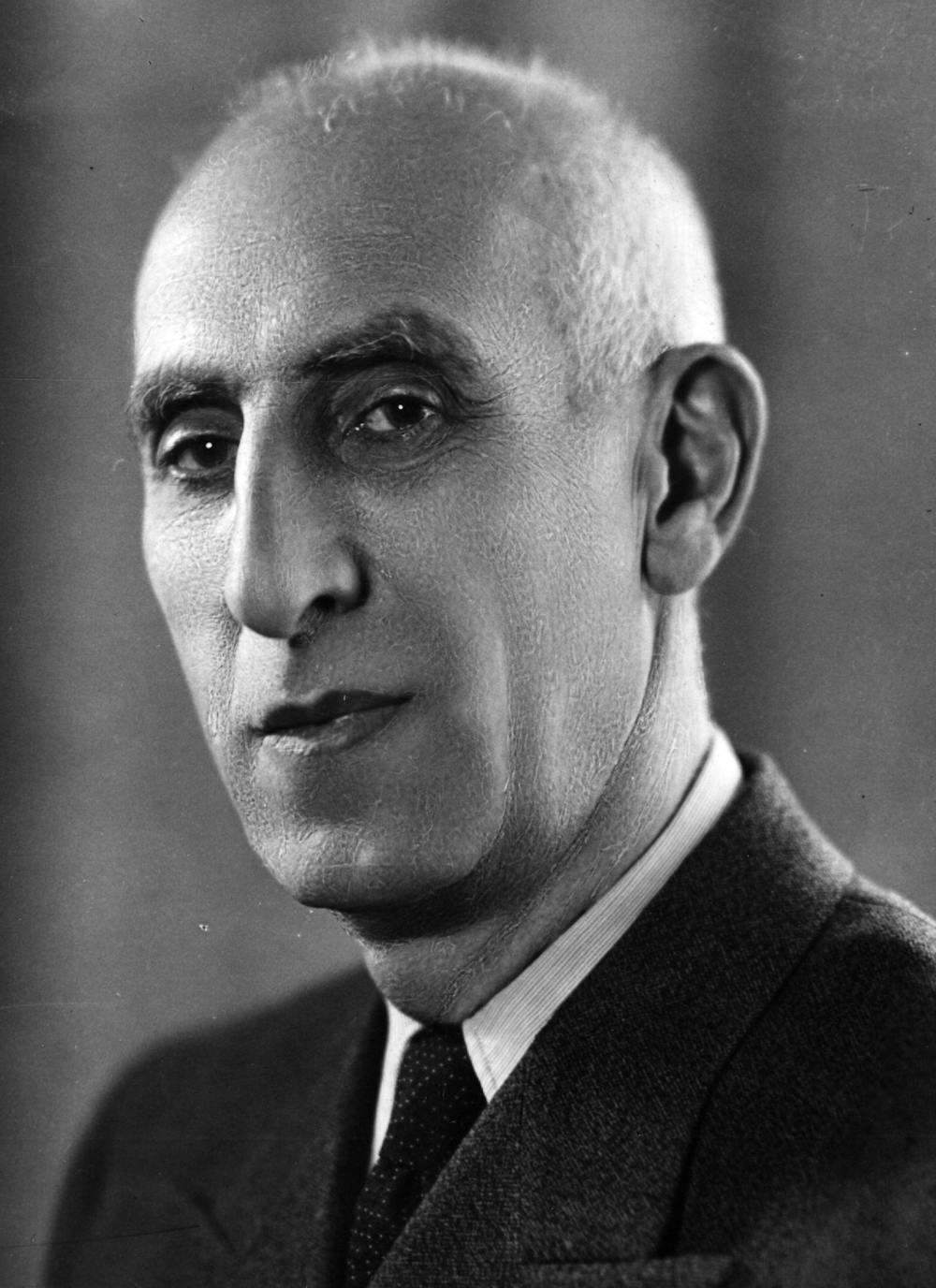
    Relations between the United States and Iran have been fraught for decades – at least since the U.S. helped overthrow a democracy-minded prime minister, Mohammed Mossadegh, in August 1953. The U.S. then supported the long, repressive reign of the Shah of Iran, whose security services brutalized Iranian citizens for decades.

    The two countries have been particularly hostile to each other since Iranian students took over the U.S. Embassy in Tehran in November 1979, resulting in economic sanctions and the severing of formal diplomatic relations between the nations.

    Since 1984, the U.S. State Department has listed Iran as a “state sponsor of terrorism,” alleging the Iranian government provides terrorists with training, money and weapons.

    Some of the major events in U.S.-Iran relations highlight the differences between the nations’ views, but others arguably presented real opportunities for reconciliation.

    1953: US overthrows Mossadegh

    Mohammed Mossadegh.
    Wikimedia Commons

    In 1951, the Iranian Parliament chose a new prime minister, Mossadegh, who then led lawmakers to vote in favor of taking over the Anglo-Iranian Oil Company, expelling the company’s British owners and saying they wanted to turn oil profits into investments in the Iranian people. The U.S. feared disruption in the global oil supply and worried about Iran falling prey to Soviet influence. The British feared the loss of cheap Iranian oil.

    President Dwight Eisenhower decided it was best for the U.S. and the U.K. to get rid of Mossadegh. Operation Ajax, a joint CIA-British operation, convinced the Shah of Iran, the country’s monarch, to dismiss Mossadegh and drive him from office by force. Mossadegh was replaced by a much more Western-friendly prime minister, handpicked by the CIA.

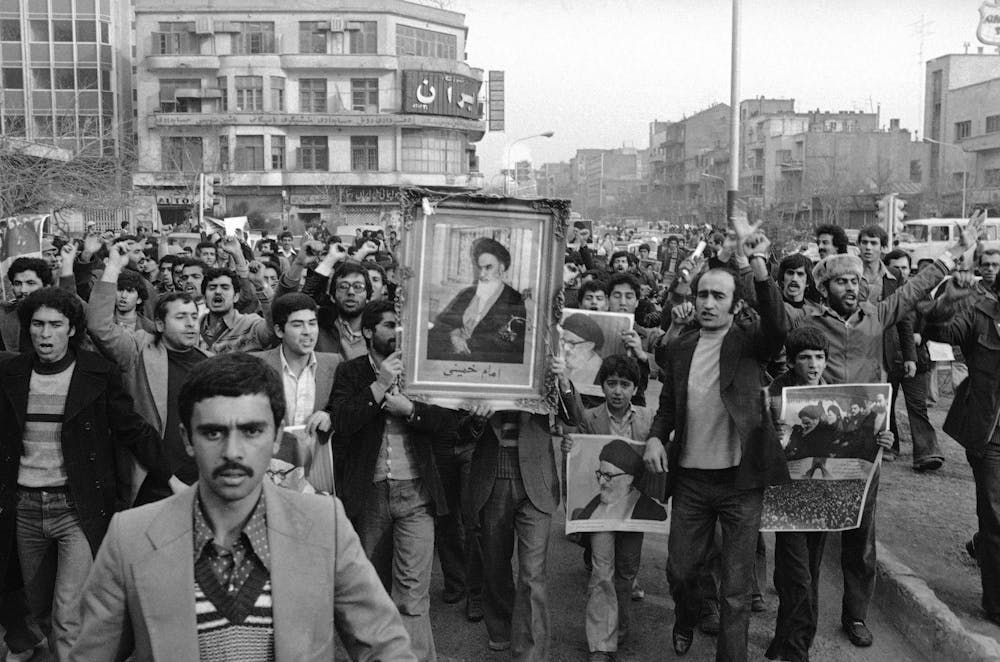
    Demonstrators in Tehran demand the establishment of an Islamic republic.
    AP Photo/Saris

    1979: Revolutionaries oust the shah, take hostages

    After more than 25 years of relative stability in U.S.-Iran relations, the Iranian public had grown unhappy with the social and economic conditions that developed under the dictatorial rule of Shah Mohammad Reza Pahlavi.

    Pahlavi enriched himself and used American aid to fund the military while many Iranians lived in poverty. Dissent was often violently quashed by SAVAK, the shah’s security service. In January 1979, the shah left Iran, ostensibly to seek cancer treatment. Two weeks later, Ayatollah Ruhollah Khomeini returned from exile in Iraq and led a drive to abolish the monarchy and proclaim an Islamic government.

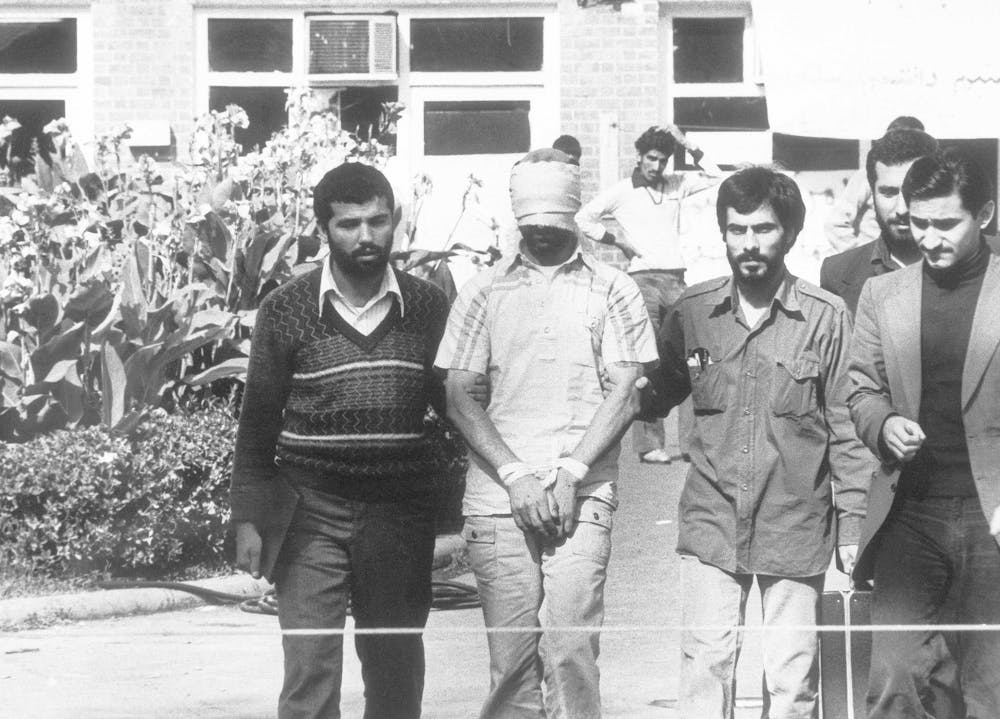
    Iranian students at the U.S. Embassy in Tehran show a blindfolded American hostage to the crowd in November 1979.
    AP Photo

    In October 1979, President Jimmy Carter agreed to allow the shah to come to the U.S. to seek advanced medical treatment. Outraged Iranian students stormed the U.S. Embassy in Tehran on Nov. 4, taking 52 Americans hostage. That convinced Carter to sever U.S. diplomatic relations with Iran on April 7, 1980.

    Two weeks later, the U.S. military launched a mission to rescue the hostages, but it failed, with aircraft crashes killing eight U.S. servicemembers.

    The shah died in Egypt in July 1980, but the hostages weren’t released until Jan. 20, 1981, after 444 days of captivity.

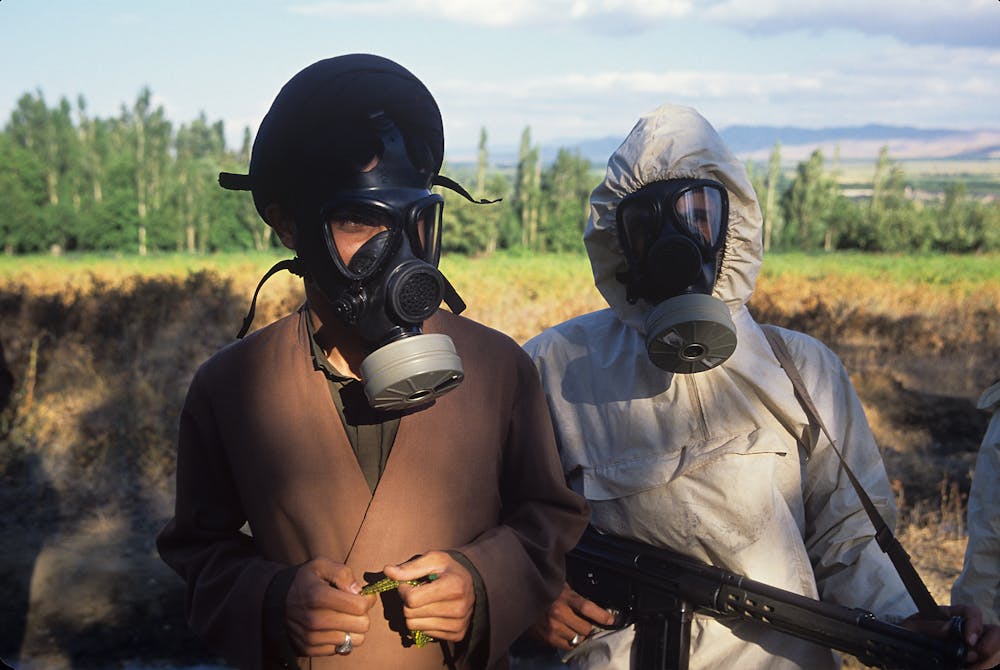
    An Iranian cleric, left, and an Iranian soldier wear gas masks to protect themselves against Iraqi chemical-weapons attacks in May 1988.
    Kaveh Kazemi/Getty Images

    1980-1988: US tacitly sides with Iraq

    In September 1980, Iraq invaded Iran, an escalation of the two countries’ regional rivalry and religious differences: Iraq was governed by Sunni Muslims but had a Shia Muslim majority population; Iran was led and populated mostly by Shiites.

    The U.S. was concerned that the conflict would limit the flow of Middle Eastern oil and wanted to ensure the conflict didn’t affect its close ally, Saudi Arabia.

    The U.S. supported Iraqi leader Saddam Hussein in his fight against the anti-American Iranian regime. As a result, the U.S. mostly turned a blind eye toward Iraq’s use of chemical weapons against Iran.

    U.S. officials moderated their usual opposition to those illegal and inhumane weapons because the U.S. State Department did not “wish to play into Iran’s hands by fueling its propaganda against Iraq.” In 1988, the war ended in a stalemate. More than 500,000 military and 100,000 civilians died.

    1981-1986: US secretly sells weapons to Iran

    The U.S. imposed an arms embargo after Iran was designated a state sponsor of terrorism in 1984. That left the Iranian military, in the middle of its war with Iraq, desperate for weapons and aircraft and vehicle parts to keep fighting.

    The Reagan administration decided that the embargo would likely push Iran to seek support from the Soviet Union, the U.S.’s Cold War rival. Rather than formally end the embargo, U.S. officials agreed to secretly sell weapons to Iran starting in 1981.

    The last shipment, of anti-tank missiles, was in October 1986. In November 1986, a Lebanese magazine exposed the deal. That revelation sparked the Iran-Contra scandal in the U.S., with Reagan’s officials found to have collected money from Iran for the weapons and illegally sent those funds to anti-socialist rebels – the Contras – in Nicaragua.

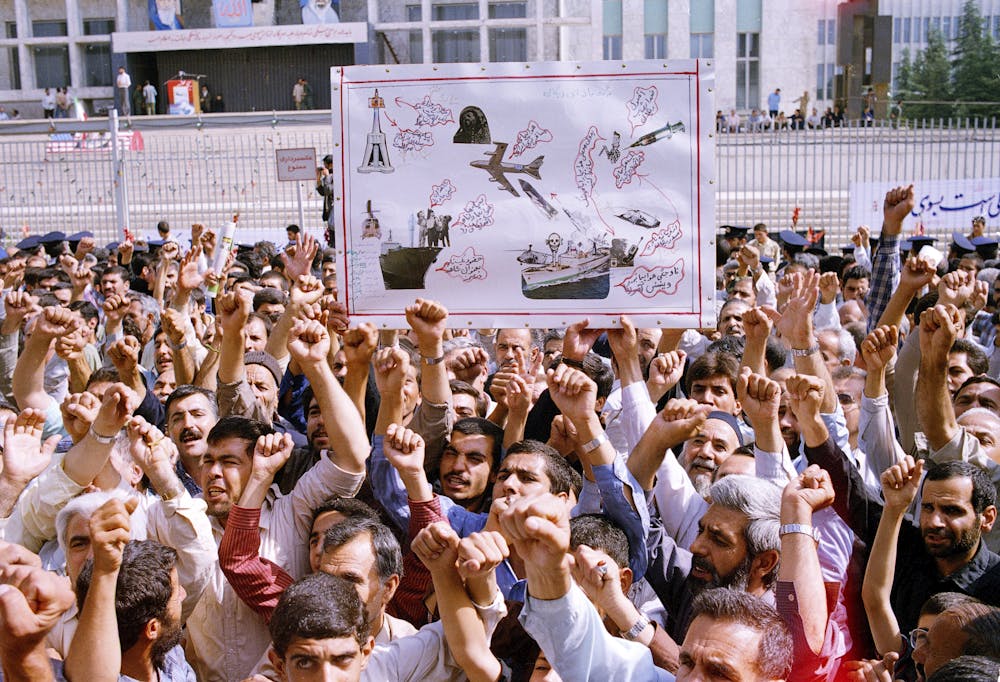
    At a mass funeral for 76 of the 290 people killed in the shootdown of Iran Air 655, mourners hold up a sign depicting the incident.
    AP Photo/CP/Mohammad Sayyad

    1988: US Navy shoots down Iran Air flight 655

    On the morning of July 8, 1988, the USS Vincennes, a guided missile cruiser patrolling in the international waters of the Persian Gulf, entered Iranian territorial waters while in a skirmish with Iranian gunboats.

    Either during or just after that exchange of gunfire, the Vincennes crew mistook a passing civilian Airbus passenger jet for an Iranian F-14 fighter. They shot it down, killing all 290 people aboard.

    The U.S. called it a “tragic and regrettable accident,” but Iran believed the plane’s downing was intentional. In 1996, the U.S. agreed to pay US$131.8 million in compensation to Iran.

    1997-1998: The US seeks contact

    In August 1997, a moderate reformer, Mohammad Khatami, won Iran’s presidential election.

    U.S. President Bill Clinton sensed an opportunity. He sent a message to Tehran through the Swiss ambassador there, proposing direct government-to-government talks.

    Shortly thereafter, in early January 1998, Khatami gave an interview to CNN in which he expressed “respect for the great American people,” denounced terrorism and recommended an “exchange of professors, writers, scholars, artists, journalists and tourists” between the United States and Iran.

    However, Supreme Leader Ayatollah Ali Khamenei didn’t agree, so not much came of the mutual overtures as Clinton’s time in office came to an end.

    In his 2002 State of the Union address, President George W. Bush characterized Iran, Iraq and North Korea as constituting an “Axis of Evil” supporting terrorism and pursuing weapons of mass destruction, straining relations even further.

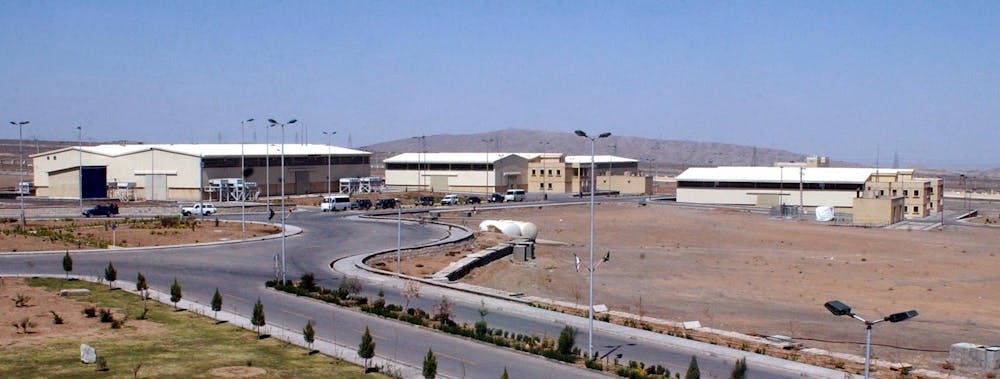
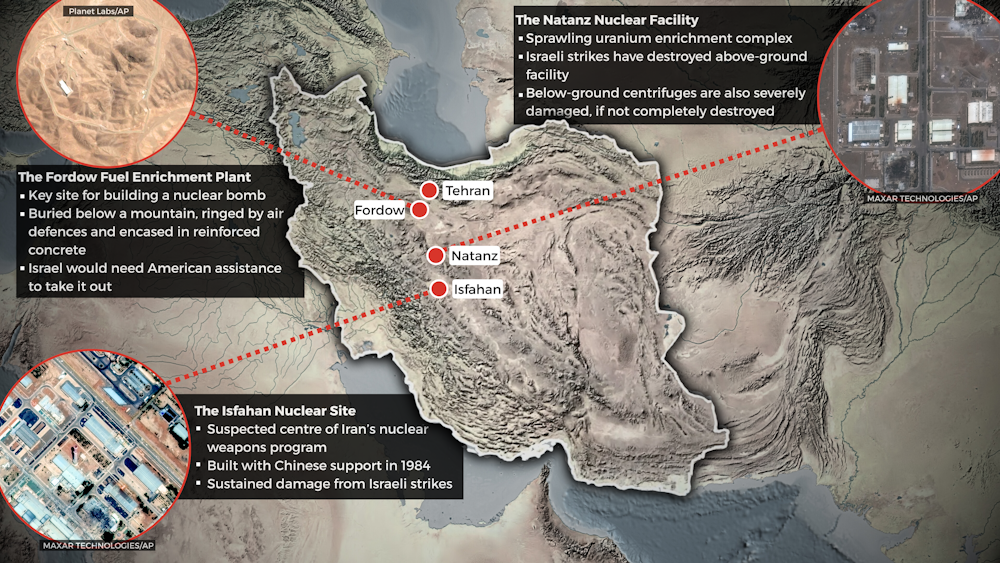
    Inside these buildings at the Natanz nuclear facility in Iran, technicians enrich uranium.
    AP Photo/Vahid Salemi

    2002: Iran’s nuclear program raises alarm

    In August 2002, an exiled rebel group announced that Iran had been secretly working on nuclear weapons at two installations that had not previously been publicly revealed.

    That was a violation of the terms of the Nuclear Nonproliferation Treaty, which Iran had signed, requiring countries to disclose their nuclear-related facilities to international inspectors.

    One of those formerly secret locations, Natanz, housed centrifuges for enriching uranium, which could be used in civilian nuclear reactors or enriched further for weapons.

    Starting in roughly 2005, U.S. and Israeli government cyberattackers together reportedly targeted the Natanz centrifuges with a custom-made piece of malicious software that became known as Stuxnet.

    That effort, which slowed down Iran’s nuclear program was one of many U.S. and international attempts – mostly unsuccessful – to curtail Iran’s progress toward building a nuclear bomb.

    2003: Iran writes to Bush administration

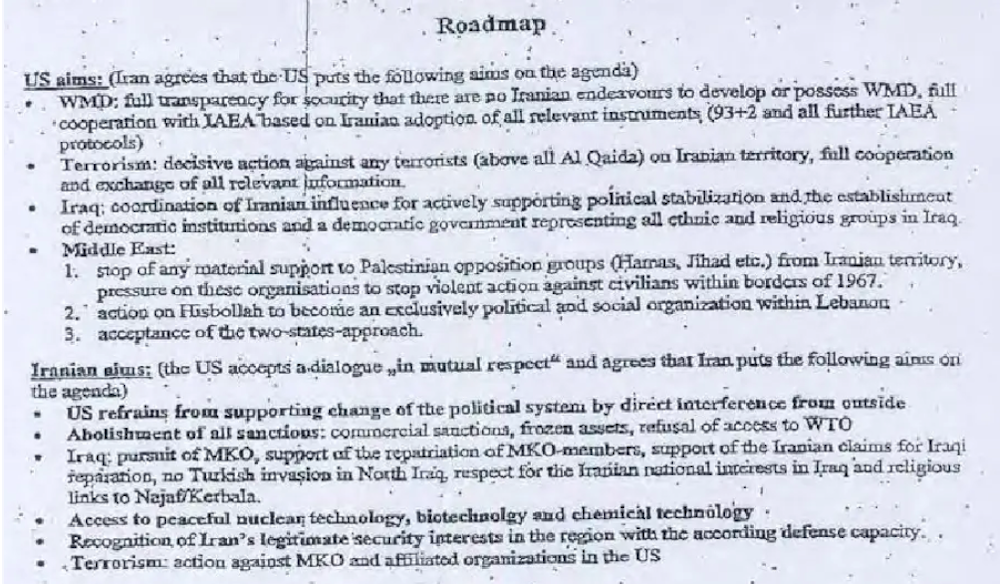
    An excerpt of the document sent from Iran, via the Swiss government, to the U.S. State Department in 2003, appears to seek talks between the U.S. and Iran.
    Washington Post via Scribd

    In May 2003, senior Iranian officials quietly contacted the State Department through the Swiss embassy in Iran, seeking “a dialogue ‘in mutual respect,’” addressing four big issues: nuclear weapons, terrorism, Palestinian resistance and stability in Iraq.

    Hardliners in the Bush administration weren’t interested in any major reconciliation, though Secretary of State Colin Powell favored dialogue and other officials had met with Iran about al-Qaida.

    When Iranian hardliner Mahmoud Ahmadinejad was elected president of Iran in 2005, the opportunity died. The following year, Ahmadinejad made his own overture to Washington in an 18-page letter to President Bush. The letter was widely dismissed; a senior State Department official told me in profane terms that it amounted to nothing.

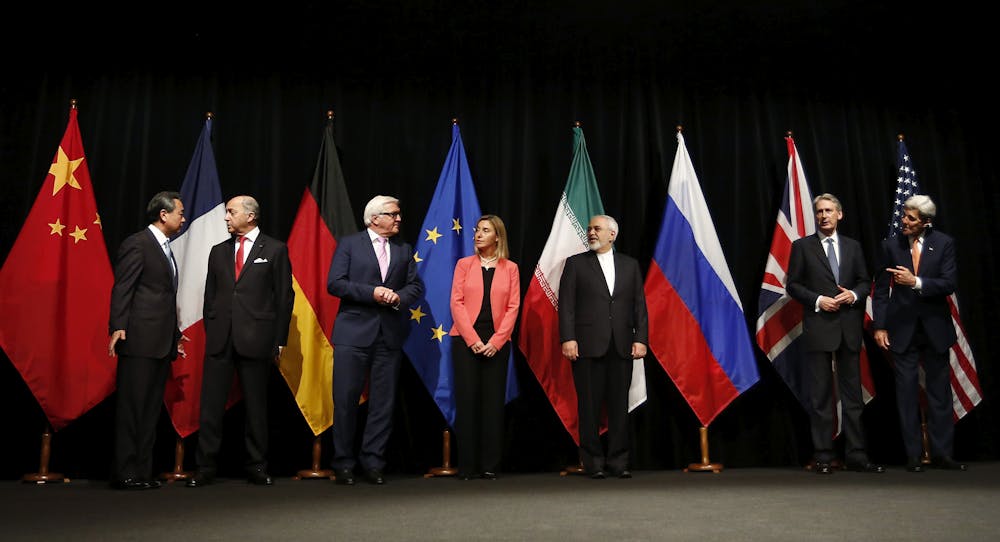
    Representatives of several nations met in Vienna in July 2015 to finalize the Iran nuclear deal.
    Austrian Federal Ministry for Europe, Integration and Foreign Affairs/Flickr

    2015: Iran nuclear deal signed

    After a decade of unsuccessful attempts to rein in Iran’s nuclear ambitions, the Obama administration undertook a direct diplomatic approach beginning in 2013.

    Two years of secret, direct negotiations initially bilaterally between the U.S. and Iran and later with other nuclear powers culminated in the Joint Comprehensive Plan of Action, often called the Iran nuclear deal.

    Two years of secret, direct negotiations conducted bilaterally at first between the U.S. and Iran and later with other nuclear powers culminated in the Joint Comprehensive Plan of Action, often called the Iran nuclear deal.

    Iran, the U.S., China, France, Germany, Russia and the United Kingdom signed the deal in 2015. It severely limited Iran’s capacity to enrich uranium and mandated that international inspectors monitor and enforce Iran’s compliance with the agreement.

    In return, Iran was granted relief from international and U.S. economic sanctions. Though the inspectors regularly certified that Iran was abiding by the agreement’s terms, President Donald Trump withdrew from the agreement in May 2018.

    2020: US drones kill Iranian Maj. Gen. Qassem Soleimani

    An official photo from the Iranian government shows Maj. Gen. Qassem Soleimani, who was killed in a Jan. 3 drone strike ordered by President Donald Trump.
    Iranian Supreme Leader Press Office/Anadolu Agency via Getty Images

    On Jan. 3, 2020, an American drone fired a missile that killed Maj. Gen. Qassem Soleimani, the leader of Iran’s elite Quds Force. Analysts considered Soleimani the second most powerful man in Iran, after Supreme Leader Ayatollah Khamenei.

    At the time, the Trump administration asserted that Soleimani was directing an imminent attack against U.S. assets in the region, but officials have not provided clear evidence to support that claim.

    Iran responded by launching ballistic missiles that hit two American bases in Iraq.

    2023: The Oct. 7 attacks on Israel

    Hamas’ brazen attack on Israel on Oct. 7, 2023, provoked a fearsome militarized response from Israel that continues today and served to severely weaken Iran’s proxies in the region, especially Hamas – the perpetrator of the attacks – and Hezbollah in Lebanon.

    2025: Trump 2.0 and Iran

    Trump saw an opportunity to forge a new nuclear deal with Iran and to pursue other business deals with Tehran. Once inaugurated for his second term, Trump appointed Steve Witkoff, a real estate investor who is the president’s friend, to serve as special envoy for the Middle East and to lead negotiations.

    Negotiations for a nuclear deal between Washington and Tehran began in April, but the countries did not reach a deal. They were planning a new round of talks when Israel struck Iran with a series of airstrikes on June 13, forcing the White House to reconsider is position.

    Jeffrey Fields receives funding from the Carnegie Corporation of New York and Schmidt Futures.

    ref. US and Iran have a long, complicated history, spanning far beyond Israel’s strikes on Tehran – https://theconversation.com/us-and-iran-have-a-long-complicated-history-spanning-far-beyond-israels-strikes-on-tehran-259240

    MIL OSI – Global Reports

  • MIL-OSI Global: ‘Canada is not for sale’ — but new Ontario law prioritizes profits over environmental and Indigenous rights

    Source: The Conversation – Canada – By Martina Jakubchik-Paloheimo, Postdoctoral Research Fellow, Environmental and Urban Change, York University, Canada

    Despite provincewide protests, Ontario’s Bill 5 officially became law on June 5. Critics warn of the loss of both environmental protections and Indigenous rights.

    The law empowers the province to create special economic zones where companies or projects don’t have to comply with provincial regulations or municipal bylaws.

    Bill 5, also known as the Protect Ontario by Unleashing our Economy Act, reduces the requirements for environmental assessment. By doing so, it weakens ecological protection laws that safeguard the rights of Indigenous Peoples and at-risk species.

    Indigenous rights and Indigenous knowledge are critical for planetary health. But the bill passed into law with no consultation with First Nations. Therefore, it undermines the duty to consult while seemingly favouring government-aligned industries.

    Indigenous Peoples have long stewarded the environment through sustainable practices that promote ecological and human health. Bill 5’s provisions to allow the bypassing of environmental regulations and shift from a consent-based model to one of consultation violate Aboriginal and Treaty rights. Métis lawyer Bruce McIvor has described the shift as a “policy of legalized lawlessness.”

    Compounding environmental threats

    Wildfires that are currently burning from British Columbia to northern Ontario are five times more likely to occur due to the effects of climate change caused by the burning of fossil fuels.

    On the federal level, Bill C-5, called the Building Canada Act, was introduced in the House of Commons on June 6 by Prime Minister Mark Carney. This bill further compounds the threat to environmental protections, species at risk and Indigenous rights across the country in favour of resource extraction projects.

    It removes the need for the assessment of the environmental impacts of projects considered to be of “national interest.”

    Ring of Fire — special economic zone?

    Ford and Carney want to fast-track the so-called Ring of Fire mineral deposit within Treaty 9 territory in northern Ontario by labelling it a “special economic zone” and of “national interest.” The proposed development is often described as a potential $90 billion opportunity.

    But scientists say there are no reliable estimates of the costs related to construction, extraction, benefit sharing and environmental impacts in the Ring of Fire.

    The mining development could devastate traditional First Nations livelihoods and rights. It could also worsen the effects of climate change in Ontario’s muskeg, the southernmost sea ice ecosystem in the world.

    Northern Ontario has the largest area of intact boreal forest in the world. Almost 90 per cent of the region’s 24,000 residents are Indigenous. The Mushkegowuk Anniwuk, the original people of the Hudson Bay lowlands, refer to this area as “the Breathing Lands” — Canada’s lungs. Cree nations have lived and stewarded these lands for thousands of years.

    Journalist Jessica Gamble of Canadian National Geographic says the James Bay Lowlands, part of the Hudson Bay Lowlands, are “traditional hunting grounds” and “the largest contiguous temperate wetland complex in the world.”

    This ecosystem is home to 200 different migratory bird species and plays a critical role in environmental health through carbon sequestration and water retention. The Wildlands League has described the area as “home to hundreds of plant, mammal and fish species, most in decline elsewhere.”

    Northern Ontario, meantime, is warming at four times the global average.

    Jeronimo Kataquapit is a filmmaker from Attawapiskat who is spearheading the “Here We Stand” campaign in opposition to Bill 5 with Attawapiskat residents and neighbouring Mushkegowuk Nations and Neskantaga First Nation. As the spokesperson for Here We Stand, he said: “Ontario’s Bill 5 and Canada’s proposed national interest legislation are going to destroy the land, pollute the water, stomp all over our treaty rights, our inherent rights, our laws and our ways of life.”

    Endangered species — polar bears

    An estimated 900 to 1,000 polar bears live in Ontario, mostly along the Hudson Bay and James Bay coasts.

    But there has been a 73 per cent decline in wildlife populations globally since the 1970s, according to the World Wildlife Fund. In Canada, species of global concern have declined by 42 per cent over the same time. Canada’s Arctic and boreal ecosystems, once symbols of the snow-capped “Great White North,” are now at risk.

    Polar bears, listed as threatened under the Ontario Endangered Species Act and of “special concern” nationally, are particularly sensitive to human activities and climate change. Polar bears and ringed seals are culturally significant and serve as ecological indicators for ecosystems.

    Melting sea ice has already altered their behaviour, forcing them to spend more time on land.

    Cree First Nations in Northern Ontario’s biodiverse Treaty 9 territory are collaborating with federal and provincial governments and conservationists to protect polar bears. Right now, there is recognition of the importance of Cree knowledge in planning and the management of polar bears.

    The new Ontario law removes safeguards protecting the province’s endangered species, such as the Endangered Species Act. It strips key protections for at-risk wildlife, such as habitat protections, environmental impact assessments and ecosystems conservation.

    Climate change and weaker environmental protections will lead to irreversible damage to our environment and biodiversity. The ecosystem services that each animal, insect and plant provides — like cleaning the air we breathe and water we drink — are essential for a healthy province.

    The impact of Bill 5 and C-5 on these species is likely to be severe.

    Short-term gains at the expense of long-term damage

    Ontario could benefit from improved infrastructure and economic growth, but development requires careful planning and collaboration. It should rely on innovative science-based solutions, especially Indigenous sciences. And it should never infringe on Indigenous rights, bypass environmental assessments or threaten endangered species.

    While Bill 5 commits to the duty to consult with First Nations, it falls short of the free, prior and informed consent required by the United Nations Declaration on the Rights of Indigenous Peoples (UNDRIP). Since becoming Canadian law in June 2021, the federal government has been obligated to align its laws with UNDRIP.

    With Bill 5 in place, some of Ontario’s major projects may be fast-tracked with minimal safeguards. Both Bill 5 and the proposed C-5 prioritize short-term economic gains that will cause irreversible environmental damage and violate legal obligations under UNDRIP.

    Lawrence Martin, Director of Lands and Resources at the Mushkegowuk Council, contributed to this article.

    Martina Jakubchik-Paloheimo works in the Faculty of Environmental and Urban Change (EUC) at York University as a Postdoctoral Fellow, facilitating a collaborative project on human-polar bear coexistence in Hudson Bay and James Bay.

    ref. ‘Canada is not for sale’ — but new Ontario law prioritizes profits over environmental and Indigenous rights – https://theconversation.com/canada-is-not-for-sale-but-new-ontario-law-prioritizes-profits-over-environmental-and-indigenous-rights-258553

    MIL OSI – Global Reports

  • MIL-OSI Global: Violent extremists like the Minnesota shooter are not lone wolves

    Source: The Conversation – USA – By Alex Hinton, Distinguished Professor of Anthropology; Director, Center for the Study of Genocide and Human Rights, Rutgers University – Newark

    A memorial for Minnesota state Rep. Melissa Hortman and her husband, Mark Hortman, is seen at the Minnesota State Capitol building on June 16, 2025, in St. Paul, Minn. Steven Garcia/Getty Images

    After a two-day manhunt, Minnesota authorities arrested and charged 57-year-old Vance Boelter on June 15, 2025, after he allegedly shot and killed Minnesota House Democratic leader Melissa Hortman and her husband in their home and seriously injured another state senator and his wife.

    Boelter, disguised as a police officer, went to other Minnesota politicians’ homes late in the evening on June 13. In his parked car he left behind a list of names and addresses of other Minnesota state and federal elected officials, as well as community leaders and Planned Parenthood locations.

    This incident is the latest to demonstrate how political and often hate-based violence is becoming a more common part of American politics.

    “Let me be absolutely clear: this was an act of targeted political violence, and it was an attack on everything we stand for as a democracy,” U.S. Sen. Amy Klobuchar of Minnesota said in a June 14 statement.

    The threat of domestic violence and terrorism is high in the United States – especially the danger posed by white power extremists, many of whom believe white people are being “replaced” by people of color.

    I am a scholar of political violence and extremism and wrote about these beliefs in a 2021 book, “It Can Happen Here: White Power and the Rising Threat of Genocide in the US.” I think it’s important to understand the lessons that can be learned from events such as the recent Minnesota shootings.

    After decades of research on numerous attacks that have left scores dead, we have learned that extremists are almost always part of a pack, not lone wolves. But the myth of the lone wolf shooter remains tenacious, reappearing in media coverage after almost every mass shooting or act of far-right extremist violence. Because this myth misdirects people from the actual causes of extremist violence, it impedes society’s ability to prevent attacks.

    Vance Boelter is seen in his booking photo on June 16, 2025, in Green Isle, Minn.
    Hennepin County Sheriff’s Office via Getty Images

    The lone wolf extremist myth is dangerous

    FBI Director Christopher Wray said in August 2022 that the nation’s top threat comes from far-right extremist “lone actors” – who, he explained, work alone, instead of “as part of a large group.”

    Wray is wrong, and the myth of the lone wolf extremist – the mistaken idea that violent extremists largely act alone – continues to directly inform research, law enforcement and the popular imagination.

    I think that Wray’s focus on extremism is much needed and long overdue. However, his line of thinking is dangerous and misleading. By focusing on individuals or small groups, it overlooks broader networks and long-term dangers and so can impede efforts to combat far-right extremist violence – which Wray has singled out as the country’s most lethal domestic threat.

    Not a new trend

    Far-right extremists may physically carry out an attack alone or as part of a small group of people, but they are almost always networked and identify with larger groups and causes.

    This was true long before the social media age. Take Timothy McVeigh. He is often depicted as the archetypal lone wolf madman who blew up the Oklahoma City Federal Building in 1995.

    In fact, McVeigh was part of a pack. He had accomplices and was connected across the far-right extremist landscape.

    The same is true of Payton Gendron, who shot and killed 10 Black people at a Buffalo, New York, grocery store in 2022, and Patrick Crusius, who killed 23 people in a racist attack targeting Latino shoppers at a Walmart in Texas in 2019.

    These two shooters were also characterized in media coverage as lone wolves following their deadly attacks.

    “He talked about how he didn’t like school because he didn’t have friends. He would say he was lonely,” a classmate of Gendron said shortly after Gendron carried out the mass shooting.

    Both were active on far-right extremist social media platforms and posted manifestos before their attacks. Gendron’s manifesto discusses how he was radicalized on the dark web and inspired to attack after watching videos of Brenton Tarrant’s 2019 massacre of 51 people at two mosques in Christchurch, New Zealand.

    Almost a quarter of Gendron’s manifesto is directly taken from Tarrant’s, which was titled “The Great Replacement.” This fear of white replacement, centered around perceived white demographic decline, was also a motive for Crusius. His manifesto pays homage to Tarrant, before explaining his attack was “a response to the Hispanic invasion of Texas.”

    The lone wolf myth also suggests that extremists are abnormal deviants with anti-social personalities.

    After Gendron’s rampage, for example, New York Attorney General Letitia James called him a “sick, demented individual.” Crusius, in turn, was described by the White House and news articles as “evil,” “psychotic” and an “anti-social loner.”

    The vast majority of far-right extremists are, in fact, otherwise ordinary men and women. They live in rural areas, suburbs and cities. They are students and working professionals. And they believe their extremist cause is justified. This point was illustrated by the spectrum of participants in the Jan. 6, 2021, Capitol insurrection.

    Boelter is a father of five who has worked various jobs in the food industry and with funeral service companies and a security service. While Boelter’s exact motivation and political affiliation are not clear, friends describe him as very religious and conservative. Boelter reportedly told a roommate and friend that he strongly opposes abortion. He has also criticized gay and transgender people during sermons he delivered at a church in the Democratic Republic of Congo.

    People hug at a memorial outside the Walmart in El Paso, Texas, where a shooter killed 23 people in 2019.
    Mark Ralston/AFP via Getty Images

    Tracing the lone wolf mythology

    How did the lone-wolf metaphor come to misinform the public’s view of extremists, and why is it so tenacious?

    Part of the answer is linked to white supremacist Louis Beam, who wrote the essay “Leaderless Resistance” in 1983. In it, he called for far-right extremists to act individually or in small groups that couldn’t be traced up a chain of command. According to his lawyer, McVeigh was one of those influenced by Beam’s call.

    After Beam formulated this idea, both far-right extremists and law enforcement increasingly used the lone wolf term. In 1998, the FBI even mounted an “Operation Lone Wolf” to investigate a West Coast white supremacist cell.

    The 9/11 terrorist attacks further turned U.S. attention to Islamic militant “lone wolves.” A decade later, the term became mainstream.

    And so it was not a surprise when, after the Buffalo shooting, New York State Senator James Sanders said, “Although this is probably a lone-wolf incident, this is not the first mass shooting we have seen, and sadly it will not be the last.”

    The tenacity of the lone wolf myth has several sources. It’s convenient – evocative and powerful enough to draw and keep people’s attention.

    By using this term, which individualizes extremism, law enforcement officials may also depoliticize their work. Instead of focusing on movements like white nationalism that have sympathizers in the various levels of government, from sheriffs to senators, they focus on individuals.

    The lone wolf extremist myth diverts from what should be the focus of deterrence efforts: understanding how far-right extremists network, organize and, as the Jan. 6 insurrection showed, build coalitions across diverse groups, especially through the use of social media.

    Such understanding provides a basis for developing long-term strategies to prevent extremists like Boelter from carrying out more violent attacks.

    This is an updated version of an article originally published on Feb. 23, 2023.

    Alex Hinton receives funding from the Rutgers-Newark Sheila Y. Oliver Center for Politics and Race in America, Rutgers Research Council, and Henry Frank Guggenheim Foundation.

    ref. Violent extremists like the Minnesota shooter are not lone wolves – https://theconversation.com/violent-extremists-like-the-minnesota-shooter-are-not-lone-wolves-259225

    MIL OSI – Global Reports

  • MIL-OSI Global: Violent extremists like the Minnesota shooter are not lone wolves

    Source: The Conversation – USA – By Alex Hinton, Distinguished Professor of Anthropology; Director, Center for the Study of Genocide and Human Rights, Rutgers University – Newark

    A memorial for Minnesota state Rep. Melissa Hortman and her husband, Mark Hortman, is seen at the Minnesota State Capitol building on June 16, 2025, in St. Paul, Minn. Steven Garcia/Getty Images

    After a two-day manhunt, Minnesota authorities arrested and charged 57-year-old Vance Boelter on June 15, 2025, after he allegedly shot and killed Minnesota House Democratic leader Melissa Hortman and her husband in their home and seriously injured another state senator and his wife.

    Boelter, disguised as a police officer, went to other Minnesota politicians’ homes late in the evening on June 13. In his parked car he left behind a list of names and addresses of other Minnesota state and federal elected officials, as well as community leaders and Planned Parenthood locations.

    This incident is the latest to demonstrate how political and often hate-based violence is becoming a more common part of American politics.

    “Let me be absolutely clear: this was an act of targeted political violence, and it was an attack on everything we stand for as a democracy,” U.S. Sen. Amy Klobuchar of Minnesota said in a June 14 statement.

    The threat of domestic violence and terrorism is high in the United States – especially the danger posed by white power extremists, many of whom believe white people are being “replaced” by people of color.

    I am a scholar of political violence and extremism and wrote about these beliefs in a 2021 book, “It Can Happen Here: White Power and the Rising Threat of Genocide in the US.” I think it’s important to understand the lessons that can be learned from events such as the recent Minnesota shootings.

    After decades of research on numerous attacks that have left scores dead, we have learned that extremists are almost always part of a pack, not lone wolves. But the myth of the lone wolf shooter remains tenacious, reappearing in media coverage after almost every mass shooting or act of far-right extremist violence. Because this myth misdirects people from the actual causes of extremist violence, it impedes society’s ability to prevent attacks.

    Vance Boelter is seen in his booking photo on June 16, 2025, in Green Isle, Minn.
    Hennepin County Sheriff’s Office via Getty Images

    The lone wolf extremist myth is dangerous

    FBI Director Christopher Wray said in August 2022 that the nation’s top threat comes from far-right extremist “lone actors” – who, he explained, work alone, instead of “as part of a large group.”

    Wray is wrong, and the myth of the lone wolf extremist – the mistaken idea that violent extremists largely act alone – continues to directly inform research, law enforcement and the popular imagination.

    I think that Wray’s focus on extremism is much needed and long overdue. However, his line of thinking is dangerous and misleading. By focusing on individuals or small groups, it overlooks broader networks and long-term dangers and so can impede efforts to combat far-right extremist violence – which Wray has singled out as the country’s most lethal domestic threat.

    Not a new trend

    Far-right extremists may physically carry out an attack alone or as part of a small group of people, but they are almost always networked and identify with larger groups and causes.

    This was true long before the social media age. Take Timothy McVeigh. He is often depicted as the archetypal lone wolf madman who blew up the Oklahoma City Federal Building in 1995.

    In fact, McVeigh was part of a pack. He had accomplices and was connected across the far-right extremist landscape.

    The same is true of Payton Gendron, who shot and killed 10 Black people at a Buffalo, New York, grocery store in 2022, and Patrick Crusius, who killed 23 people in a racist attack targeting Latino shoppers at a Walmart in Texas in 2019.

    These two shooters were also characterized in media coverage as lone wolves following their deadly attacks.

    “He talked about how he didn’t like school because he didn’t have friends. He would say he was lonely,” a classmate of Gendron said shortly after Gendron carried out the mass shooting.

    Both were active on far-right extremist social media platforms and posted manifestos before their attacks. Gendron’s manifesto discusses how he was radicalized on the dark web and inspired to attack after watching videos of Brenton Tarrant’s 2019 massacre of 51 people at two mosques in Christchurch, New Zealand.

    Almost a quarter of Gendron’s manifesto is directly taken from Tarrant’s, which was titled “The Great Replacement.” This fear of white replacement, centered around perceived white demographic decline, was also a motive for Crusius. His manifesto pays homage to Tarrant, before explaining his attack was “a response to the Hispanic invasion of Texas.”

    The lone wolf myth also suggests that extremists are abnormal deviants with anti-social personalities.

    After Gendron’s rampage, for example, New York Attorney General Letitia James called him a “sick, demented individual.” Crusius, in turn, was described by the White House and news articles as “evil,” “psychotic” and an “anti-social loner.”

    The vast majority of far-right extremists are, in fact, otherwise ordinary men and women. They live in rural areas, suburbs and cities. They are students and working professionals. And they believe their extremist cause is justified. This point was illustrated by the spectrum of participants in the Jan. 6, 2021, Capitol insurrection.

    Boelter is a father of five who has worked various jobs in the food industry and with funeral service companies and a security service. While Boelter’s exact motivation and political affiliation are not clear, friends describe him as very religious and conservative. Boelter reportedly told a roommate and friend that he strongly opposes abortion. He has also criticized gay and transgender people during sermons he delivered at a church in the Democratic Republic of Congo.

    People hug at a memorial outside the Walmart in El Paso, Texas, where a shooter killed 23 people in 2019.
    Mark Ralston/AFP via Getty Images

    Tracing the lone wolf mythology

    How did the lone-wolf metaphor come to misinform the public’s view of extremists, and why is it so tenacious?

    Part of the answer is linked to white supremacist Louis Beam, who wrote the essay “Leaderless Resistance” in 1983. In it, he called for far-right extremists to act individually or in small groups that couldn’t be traced up a chain of command. According to his lawyer, McVeigh was one of those influenced by Beam’s call.

    After Beam formulated this idea, both far-right extremists and law enforcement increasingly used the lone wolf term. In 1998, the FBI even mounted an “Operation Lone Wolf” to investigate a West Coast white supremacist cell.

    The 9/11 terrorist attacks further turned U.S. attention to Islamic militant “lone wolves.” A decade later, the term became mainstream.

    And so it was not a surprise when, after the Buffalo shooting, New York State Senator James Sanders said, “Although this is probably a lone-wolf incident, this is not the first mass shooting we have seen, and sadly it will not be the last.”

    The tenacity of the lone wolf myth has several sources. It’s convenient – evocative and powerful enough to draw and keep people’s attention.

    By using this term, which individualizes extremism, law enforcement officials may also depoliticize their work. Instead of focusing on movements like white nationalism that have sympathizers in the various levels of government, from sheriffs to senators, they focus on individuals.

    The lone wolf extremist myth diverts from what should be the focus of deterrence efforts: understanding how far-right extremists network, organize and, as the Jan. 6 insurrection showed, build coalitions across diverse groups, especially through the use of social media.

    Such understanding provides a basis for developing long-term strategies to prevent extremists like Boelter from carrying out more violent attacks.

    This is an updated version of an article originally published on Feb. 23, 2023.

    Alex Hinton receives funding from the Rutgers-Newark Sheila Y. Oliver Center for Politics and Race in America, Rutgers Research Council, and Henry Frank Guggenheim Foundation.

    ref. Violent extremists like the Minnesota shooter are not lone wolves – https://theconversation.com/violent-extremists-like-the-minnesota-shooter-are-not-lone-wolves-259225

    MIL OSI – Global Reports

  • MIL-OSI Global: Along with the ideals it expresses, the Declaration of Independence mourns for something people lost in 1776 − and now, too

    Source: The Conversation – USA – By Maurizio Valsania, Professor of American History, Università di Torino

    The committee assigned to draft the Declaration of Independence, from left: Thomas Jefferson, Roger Sherman, Benjamin Franklin, Robert R. Livingston and John Adams. Currier & Ives image, photo by MPI/Getty Images

    Right around the Fourth of July, Americans pay renewed attention to the country’s crucial founding document, the Declaration of Independence. Whether Republican or Democrat or independent, some will say – with reverence – that adherence to the values expressed in the declaration is what makes them American.

    President Barack Obama, in his second inaugural address, gave voice to this very conviction.

    “What binds this nation together,” he stated, “is not the colors of our skin or the tenets of our faith or the origins of our names.” What truly makes Americans American, he resolved, “is our allegiance to an idea, articulated in a declaration made more than two centuries ago.”

    The declaration still stands today as a manifesto. There are its lofty, “self-evident” principles, of course: that “all men are created equal” and that they are “endowed by their Creator with certain unalienable Rights” such as “Life, Liberty and the pursuit of Happiness.”

    But I’m a historian of the early republic, and I wish to remind you that the declaration doesn’t just go all pie in the sky. And it’s more than an academic paper waxing on and on about the fashionable philosophical doctrines of the 18th century – freedom and equality – or the coolest philosopher ever, John Locke.

    The declaration provides a realistic depiction of a wounded society, one shivering with fears and teetering on the brink of disaster.

    The declaration has been central to American identity; here, a 1942 poster, printed during World War II, reminds Americans of its history.
    Smith Collection/Gado/Getty Images

    Repeated injuries and usurpations

    On June 11, 1776, the Continental Congress asked five of its members to prepare a text that would notify the British king and his Parliament of America’s firm intention to get a divorce.

    The drafting committee comprised Benjamin Franklin of Pennsylvania, John Adams of Massachusetts, Roger Sherman of Connecticut, Robert R. Livingston of New York, and a man who had a stellar reputation as a gifted writer, Thomas Jefferson of Virginia.

    Jefferson didn’t waste time. He locked himself up in a rented room near the State House in Philadelphia, and within a couple of days he was ready to submit a draft to his four teammates for revision.

    The committee was smitten by the clarity and effectiveness of the document. Other than suggesting a few corrections, Jefferson’s colleagues were elated by the text.

    The Continental Congress promptly received the document, discussed it, made a handful of alterations, and in the late morning of July 4, 1776, adopted it.

    Late that night, Philadelphia printer John Dunlap was given the historic task of issuing the first copies of the final Declaration of Independence.

    In retrospect, all of this may sound like a tale of fearless heroes eager to break the chains of oppression and single-handedly affirm their boundless love of freedom.

    However, when Thomas Jefferson took the pen in his hand, he didn’t think of himself as a hero. Rather, looking ahead at the immediate future and the drama that would inexorably unfold, he felt overwhelmed. A war, pitting brethren against brethren, the Colonists against their mother country, had already started.

    The situation was tense and painful, because 18th-century Americans didn’t quite see themselves as Americans. They trusted they were active members of a powerful, expanding British Empire.

    What had begun as yet another crisis over Parliament’s right to tax its overseas possessions had quickly transformed into a turning point over whether the Colonies should become independent.

    As a consequence, readers of the declaration cannot escape the impression that this document carries a sense of reluctance, betrayal, fear and even sadness.

    We Colonists thought we were free, the logic of the declaration goes, but now we are waking up to the dismal realization that the king and the Parliament treat us like their personal slaves.

    Jefferson’s words appear to longingly express how wonderful it would be for “one people” not to be put in the condition to “dissolve the political bands which have connected them with another.” How desirable it would have been if a way to renew “the ties of our common kindred” could be found.

    Unfortunately, what Jefferson calls “repeated injuries and usurpations” have created enemies out of a common ancestry, thus stifling the “voice of justice and of consanguinity.”

    How not to grieve at these “injuries”? The king is guilty for “abolishing our most valuable Laws”; he has “excited domestic insurrections amongst us”; he has sent “Officers to harass our people”; he has obstructed “the Laws for Naturalization of Foreigners”; and he has “made Judges dependent on his Will alone.”

    Americans didn’t seek a revolution, the declaration concludes, but Colonists must accept “the necessity” of a separation: “Such has been the patient sufferance of these Colonies; and such is now the necessity which constrains them to alter their former Systems of Government.”

    Painter N.C.Wyeth’s depiction of Thomas Jefferson writing the text of the Declaration of Independence.
    Bettman/Getty Images

    ‘Forget our former love for them’

    Americans today may believe that the Declaration of Independence belongs to them – which it does. The declaration is an American document.

    But to an even larger extent, it belongs to Thomas Jefferson. It’s a Jeffersonian document.

    One of the most consequential American philosophers, the author of the declaration poured into the text his theories of society and of human nature.

    For him, human beings should not live as isolated atoms in constant competition against each other. Jefferson was a communitarian, which means that he believed that the very happiness voiced in the declaration could occur only when individuals regard themselves as functional parts of a larger whole made of other human beings.

    The declaration was built upon the tenet that, as Jefferson would explain many years later, “Nature hath implanted in our breasts a love of others, a sense of duty to them, a moral instinct in short, which prompts us irresistibly to feel and to succour their distresses.”

    As a moral philosopher, Jefferson wasn’t perfect, obviously – and his views on race and slavery prove that. But the declaration puts forth the argument that the British king and the Parliament are also to blame for having transformed a united people, a people who used to love each other, into a mass of foreigners suspicious of each other.

    In Jefferson’s account, this king has carried out the supreme betrayal – like tyrannical powers often do. He has stabbed the Americans as well as the British. He has split them into antagonistic parties. And we Americans, as Jefferson wrote in a telling passage of the declaration that didn’t survive revisions, “must endeavor to forget our former love for them.”

    The American nation was born of the traumatic experience of an amputation. It’s a residual half of a former whole that one way or another managed to learn to become a whole again.

    But after 250 years, America appears once more a people who seem to have lost what binds them together. Those “political bands which have connected them with another” are being tested; “the ties of … common kindred” are frayed.

    Such words describe a time, centuries ago, of great uncertainty, fear and sadness. It seems America has arrived yet again at such a time.

    Maurizio Valsania does not work for, consult, own shares in or receive funding from any company or organization that would benefit from this article, and has disclosed no relevant affiliations beyond their academic appointment.

    ref. Along with the ideals it expresses, the Declaration of Independence mourns for something people lost in 1776 − and now, too – https://theconversation.com/along-with-the-ideals-it-expresses-the-declaration-of-independence-mourns-for-something-people-lost-in-1776-and-now-too-258529

    MIL OSI – Global Reports

  • MIL-OSI Global: Plastics threaten ecosystems and human health, but evidence-based solutions are under political fire

    Source: The Conversation – Canada – By Tony Robert Walker, Professor, School for Resource and Environmental Studies, Dalhousie University

    Negotiations toward a global, legally binding plastics treaty are set to resume this summer, with the United Nations Environment Programme announcing that the Intergovernmental Negotiating Committee on plastic pollution will reconvene in August.

    The committee was established to develop an international legally binding instrument — known as the plastics treaty — to end plastic pollution, one of the fastest-growing environmental threats.


    Read more:
    Here’s how the new global treaty on plastic pollution can help solve this crisis


    Globally, 40 per cent of plastics production goes into the production of single-use plastic packaging, which is the single largest source of plastic waste and is a threat to wildlife and human health. Without meaningful action, global plastic waste is projected to nearly triple by 2060, reaching an estimated 1.2 billion tonnes.

    As the world prepares for another round of talks, Canada’s own plastic problem reveals what’s at stake, and what’s possible for the future.

    Canada’s plastic problem

    Canada is no exception to the global plastic crisis. Nearly half (47 per cent) of all plastic waste in Canada comes from the food and drink sector, contributing 3,268 million tonnes annually. Canadians use 15 billion plastic bags annually and nearly 57 million straws daily, yet only nine per cent of plastics are recycled — a figure that is not expected to improve.

    Most of Canada’s plastic — except for plastic bottles made of PET (polyethylene terephthalate) — are uneconomical or difficult to recycle because of the complexity of mixed plastics used in our economy. As a result, 2.8 million tonnes of plastic waste — equivalent to the weight of 24 CN Towers — end up in landfills every year.

    This is not a trivial problem, as Ontario is projected to run out of landfill space by 2035. Plastic pollution poses growing risks to both urban and rural infrastructure.

    In addition to landfill overflow, around one per cent of Canada’s plastic waste leaks into the environment. In 2016, this was 29,000 tonnes of plastic pollution. Once in the environment, plastics disintegrate into tiny particles, called microplastics (small pieces of plastic less than five millimetres long).

    We drink those tiny microplastic particles in our tap water, and eat them in our fish dinners. Some are even making their way into farmland.

    Plastics are everywhere, including inside us

    More than 93 per cent of Canadians have expressed concerns over single-use plastics used in food packaging and have supported government bans. There is a good reason for concern over the mounting levels of plastics in the environment, in our food and in us.

    Growing evidence indicates that plastics can cause harmful health effects in humans and animals. Microplastics and smaller nanoplastics (less than one micron in length) have been found in humans, including infants and breast milk. They can cause metabolic disorders, interfere with our immune and reproductive systems and cause behavioural problems.

    These health problems may be caused by chemicals added to plastics, including single-use plastics, of which 4,200 chemicals have been identified as posing a hazard to human and ecosystem health.

    It is for these reasons that the Canadian government introduced a ban on single-use plastics in 2022 as part of a plan to reach zero plastic waste in Canada by 2030.

    The decision was based extensive public and industry consultation, as well as decades of data on plastic pollution gathered from the Great Canadian Shoreline Cleanup. This data shows the most common plastic litter items found in the environment across Canada, known as the “dirty dozen” list.

    Six of these items were included in the federal ban. Three eastern Canadian provinces had already implemented single-use plastic bag bans before the federal government, with little to no public or industry opposition. Prince Edward Island was the first Canadian province to implement a province-wide plastic bag ban in July 2019, closely followed by Newfoundland and Labrador and Nova Scotia in October 2020.

    The politics of plastic

    Despite overwhelming scientific consensus, debates around plastic pollution are becoming increasingly politicized.

    In February in the United States, President Donald Trump signed an executive order directing the U.S. government to “stop purchasing paper straws and ensure they are no longer provided within federal buildings.”

    Trump told reporters at the White House: “I don’t think plastic is going to affect a shark very much, as they’re munching their way through the ocean.” Almost 2,000 peer-reviewed studies have reported, however, that more than 4,000 species have ingested or been entangled by plastic litter.

    In Canada, plastic has also become a political flashpoint. During the recent federal election, Conservative Leader Pierre Poilievre said he would scrap the federal government’s ban on single-use plastics and bring back plastic straws and grocery bags. He argued the government’s ban was about “symbolism” rather than “science,” saying, “the Liberals’ plastics ban is not about the environment, it’s about cost and control.”

    His promise would have harmed Canadians by dismissing the overwhelming scientific evidence showing that plastics in our bodies are linked to health impacts. Legislation to ban single-use plastics can be highly effective, ranging from 33 to 96 per cent reductions in plastic waste and pollution in the environment, depending on the policy and jurisdiction.

    Canada’s single-use plastics ban is a great example of evidence-based policymaking. The latest data from the conservation group Ocean Wise shows there was a 32 per cent drop in plastic straws found on Canadian shorelines in 2024 compared to the previous year.

    Science-based policies are needed

    It is indisputable that growing plastic production is directly related to plastic pollution in the environment and in human beings. Increasing plastic pollution is a global threat to human and ecosystem health, regardless of borders and political affiliation.

    As negotiators gear up for another round of talks to finalize a Global Plastics Treaty to end plastic pollution, the need for policies that are supported by scientific evidence is more urgent than ever.

    Future generations deserve a healthy and sustainable planet. The path towards a healthy and sustainable planet requires supporting action based on scientific evidence, not misinforming people with catchy phrases and political rhetoric.

    Tony Robert Walker receives funding from the Natural Sciences and Engineering Research Council of Canada, Canada Foundation for Innovation, and Research Nova Scotia. He is also a non-remunerated member of the Scientists’ Coalition for an Effective Plastics Treaty.

    Miriam L Diamond receives funding from Natural Sciences and Engineering Research Council, Ontario Ministry of Environment, Conservation and Parks, Future Earth, and Environment and Climate Change Canada. She is affiliated with the University of Toronto, serves as a paid expert for the Scientific and Technical Advisory Panel of the Global Environment Facility, and has non-remunerated positions with the International Panel on Chemical Pollution (Vice-Chair), is a member of the Scientist Coalition for an Effective Plastics Treaty, and sits on the board of the Canadian Environmental Law Association.

    ref. Plastics threaten ecosystems and human health, but evidence-based solutions are under political fire – https://theconversation.com/plastics-threaten-ecosystems-and-human-health-but-evidence-based-solutions-are-under-political-fire-256764

    MIL OSI – Global Reports

  • MIL-OSI Global: Decolonizing history and social studies curricula has a long way to go in Canada

    Source: The Conversation – Canada – By Sara Karn, Postdoctoral Fellow, Department of History, McMaster University

    In June 2015, 10 years ago, the Truth and Reconciliation Commission of Canada (TRC) called for curriculum on Indigenous histories and contemporary contributions to Canada to foster intercultural understanding, empathy and respect. This was the focus of calls to action Nos. 62 to 65.

    As education scholars, we are part of a project supported by the Social Sciences and Humanities Research Council called Thinking Historically for Canada’s Future. This project involves researchers, educators and partner organizations from across Canada, including Indigenous and non-Indigenous team members.

    As part of this work, we examined Canadian history and social studies curricula in elementary, middle and secondary schools with the aim of understanding how they address — and may better address in future — the need for decolonization.

    We found that although steps have been made towards decolonizing history curricula in Canada, there is still a long way to go. These curricula must do far more to challenge dominant narratives, prompt students to critically reflect on their identities and value Indigenous world views.


    Read more:
    Looking for Indigenous history? ‘Shekon Neechie’ website recentres Indigenous perspectives


    Reimagining curriculum

    As white settler scholars and educators, we acknowledge our responsibility to unlearn colonial ways of being and learn how to further decolonization in Canada.

    In approaching this study, we began by listening to Indigenous scholars, such as Cree scholar Dwayne Donald. Donald and other scholars call for reimagining curriculum through unlearning colonialism and renewing relationships.


    Read more:
    Leaked Alberta school curriculum in urgent need of guidance from Indigenous wisdom teachings


    The late education scholar Michael Marker, a member of the Lummi Nation, suggested that in history education, renewing relations involves learning from Indigenous understandings of the past, situated within local meanings of time and place.

    History, social studies curricula

    Curricula across Canada have been updated in the last 10 years to include teaching about treaties, Indian Residential Schools and the cultures, perspectives and experiences of Indigenous Peoples over time.

    Thanks primarily to the work of Indigenous scholars and educators, including Donald, Marker, Mi’kmaw educator Marie Battiste, Anishinaabe scholar Nicole Bell and others, some public school educators are attentive to land-based learning and the importance of oral history.

    But these teachings are, for the most part, ad hoc and not supported by provincial curriculum mandates.

    Our study revealed that most provincial history curricula are still focused on colonial narratives that centre settler histories and emphasize “progress” over time. Curricula are largely inattentive to critical understandings of white settler power and to Indigenous ways of knowing and being.

    Notably, we do not include the three territories in this statement. Most of the territorial history curricula have been co-created with local Indigenous communities, and stand out with regard to decolonization.

    For example, in Nunavut’s Grade 5 curriculum, the importance of local knowledge tied to the land is highlighted throughout. There are learning expectations related to survival skills and ecological knowledge.

    Members of our broader research team are dedicated to analyzing curricula in Nunavut, the Northwest Territories and the Yukon. Their work may offer approaches to be adapted for other educational contexts.

    Dominant narratives

    In contrast, we found that provincial curricula often reinforce dominant historical narratives, especially surrounding colonialism. Some documents use the term “the history,” implying a singular history of Canada (for example, Manitoba’s Grade 6 curriculum).

    Historical content, examples and guiding questions are predominantly written from a Euro-western perspective, while minimizing racialized identities and community histories. In particular, curricula often ignore illustrations of Indigenous agency and experience.


    Read more:
    Moving beyond Black history month towards inclusive histories in Québec secondary schools


    Most curricula primarily situate Indigenous Peoples in the past, without substantial consideration for present-day implications of settler colonialism, as well as Indigenous agency and experiences today.

    For example, in British Columbia’s Grade 4 curriculum, there are lengthy discussions of the harms of colonization in the past. Yet, there is no mention of the ongoing impacts of settler colonialism or the need to engage in decolonization today.

    To disrupt these dominant narratives, we recommend that history curricula should critically discuss the ongoing impacts of settler colonialism, while centring stories of Indigenous resistance and survival over time.

    Identity and privilege

    There are also missed opportunities within history curricula when it comes to critical discussions around identity, including systemic marginalization or privilege.

    Who we are informs how we understand history, but curricula largely does not prompt student reflection in these ways, including around treaty relationships.

    In Saskatchewan’s Grade 5 curriculum, students are expected to explain what treaties are and “affirm that all Saskatchewan residents are Treaty people.”

    However, there is no mention of students considering how their own backgrounds, identities, values and experiences shape their understandings of and responsibilities for treaties. Yet these discussions are essential for engaging students in considering the legacies of colonialism and how they may act to redress those legacies.

    A key learning outcome could involve students becoming more aware of how their own personal and community histories inform their historical understandings and reconciliation commitments.

    Indigenous ways of knowing and being

    History curricula generally ignore Indigenous ways of knowing and being. Most curricula are inattentive to Indigenous oral traditions, conceptions of time, local contexts and relationships with other species and the environment.

    Instead, these documents reflect Euro-western, settler colonial worldviews and educational values. For example, history curricula overwhelmingly ignore local meanings of time and place, while failing to encourage opportunities for land-based and experiential learning.

    In Prince Edward Island’s Grade 12 curriculum, the documents expect that students will “demonstrate an understanding of the interactions among people, places and the environment.” While this may seem promising, environmental histories in this curriculum and others uphold capitalist world views by focusing on resource extraction and economic progress.

    To disrupt settler colonial relationships with the land and empower youth as environmental stewards, we support reframing history curricula in ways that are attentive to Indigenous ways of knowing the past and relations with other people, beings and the land.

    Ways forward

    Schools have been, and continue to be, harmful spaces for many Indigenous communities, and various aspects of our schooling beg questions about how well-served both Indigenous and non-Indigenous students are for meeting current and future challenges.

    If, as a society, we accept the premise that the transformation of current curricular expectations is possible for schools, then more substantive engagement is required in working toward decolonization.

    Decolonizing curricula is a long-term, challenging process that requires consideration of many things: who sits on curriculum writing teams; the resources allocated to supporting curricular reform; broader school or board-wide policies; and ways of teaching that support reconciliation.

    We encourage history curriculum writing teams to take up these recommendations as part of a broader commitment to reconciliation.

    While not exhaustive, recommendations for curricular reform are a critical step in the future redesign of history curricula. The goal is a history education committed to listening and learning from Indigenous communities to build more inclusive national stories of the past, and into the future.

    Sara Karn receives funding from the Social Sciences and Humanities Research Council (SSHRC).

    Kristina R. Llewellyn receives funding from the Social Sciences and Humanities Research Council (SSHRC).

    Penney Clark receives funding from the Social Sciences and Humanities Research Council of Canada (SSHRC).

    ref. Decolonizing history and social studies curricula has a long way to go in Canada – https://theconversation.com/decolonizing-history-and-social-studies-curricula-has-a-long-way-to-go-in-canada-253679

    MIL OSI – Global Reports

  • MIL-OSI Global: B.C.’s mental health law is on trial — and so is our commitment to human rights

    Source: The Conversation – Canada – By Anne Levesque, Assistant professor, Faculty of Law, L’Université d’Ottawa/University of Ottawa

    The British Columbia Supreme Court has begun hearing a long-awaited constitutional challenge to the province’s Mental Health Act.

    The case, nearly a decade in the making, is now drawing greater attention in the wake of the tragedy at the Filipino Lapu Lapu Day street festival earlier this year that left 11 people dead in Vancouver.

    The event has shaken many in the community, leaving behind grief and fear. Furthermore, in light of reports that the person accused of the crime was under Mental Health Act supervision, difficult questions arise. The pain is real, and any conversation about mental health must begin with compassion for all of those affected.


    Read more:
    Vancouver SUV attack exposes crowd management falldowns and casts a pall on Canada’s election


    At the same time, it’s important to ensure this moment of reckoning leads to thoughtful dialogue, not reactive policy. Unfortunately, much of the public discourse has become mired in fear and misinformation, creating a false and dangerous choice: that Canada must sacrifice individual rights in order to protect public safety.

    As a legal scholar in equality rights and public interest litigation, I don’t believe Canadians have to choose. A mental health system that respects Canada’s Charter of Rights and Freedoms can also promote safety.

    What’s the case is about?

    The case currently before the B.C. Supreme Court was initiated by the Council of Canadians with Disabilities (CCD), a national human rights organization led by people with disabilities. The group is fighting provisions in the province’s Mental Health Act that strip patients of any right to choose their own health care, or to appoint a loved one to make health care decisions on their behalf.

    The CCD’s motto — “Nothing about us without us” — reflects a longstanding commitment to ensuring that people most affected by policies and systems have a voice in shaping them. This litigation will amplify the voices of people who underwent psychiatric treatment without consent and to shine a light on the deep and lasting harms they have suffered.

    Let’s be clear about what this Charter challenge actually seeks and what it doesn’t. It doesn’t aim to eliminate involuntary hospitalization. It does not change who can be detained, how long they can be held or the legal criteria for involuntary admission.

    What it does seek is something far more modest and humane: to ensure that when psychiatric care is forced, it is delivered with dignity, oversight and the involvement of trusted supporters in accordance with the Canadian Charter of Rights and Freedoms.

    One of the key reforms that CCD has long advocated for is the right for people to name a family member or friend to be involved in treatment decisions. Far from undermining care, this kind of involvement can help bridge the gap between medical necessity and personal dignity.

    It’s a safeguard that respects patients’ values and builds trust, which the current system desperately lacks. And yes, it could even enhance public safety. Reports suggest that a family member of the man accused in the Lapu Lapu mass murders in April was concerned about his deteriorating mental health and had reached out for help just before the tragedy occurred. A more responsive system with the embedded involvement of trusted decision-makers might have made a difference.


    Read more:
    Fraudulent crowdfunding after the Lapu Lapu tragedy highlights the need for vigilance and oversight


    Reforming the Mental Health Act

    British Columbia is currently an outlier in Canada. It’s the only province where people detained under mental health laws are automatically deemed to consent to any treatment authorized by the facility — regardless of their actual wishes or capacity.

    There’s no right to name a substitute decision-maker, no ability to appeal a treatment decision, no independent oversight, and treatment is often imposed through isolation, physical restraints or security force.

    Advocates have been calling for change for decades. But in the wake of the Lapu Lapu attack, some politicians are proposing not a more compassionate or rights-respecting approach, but harsher, more coercive powers over people with mental health issues. That would be a mistake.

    The current system, which experts have long said is inconsistent with human rights, did nothing to prevent this tragedy. Violating the rights of people in crisis did not and will not keep the public safer.

    B.C. Premier David Eby has acknowledged the shortcomings in the current system, but has said that engaging in law reform while litigation is undergoing would pose a risk. Instead, he says it’s better to wait to hear what the court decides before changing the law.

    That logic is arguably akin to a citizen saying it’s risky to stop driving at a speed they know is over the lawful limit until they’re pulled over.

    Pointless to wait

    Waiting for the courts to force change wastes precious time, and public resources, that could be better spent on designing a new, Charter-compliant mental health system in collaboration with experts, service providers, families and people with lived experiences.

    Meanwhile, substantial public funds are being spent on government lawyers to fight a legal battle defending a regime that is clearly unconstitutional and fails both patients and public safety.

    That money would be far better spent consulting with experts, families and people with lived experiences and developing legislation that upholds constitutional rights and keeps communities safe.

    The time for delay is over. The B.C. government must act now to rewrite the Mental Health Act in order to protect the public and respect Charter rights.

    Anne Levesque is co-chair of the Disability Justice Litigation Initiative of the Council of Canadians with Disabilities.

    ref. B.C.’s mental health law is on trial — and so is our commitment to human rights – https://theconversation.com/b-c-s-mental-health-law-is-on-trial-and-so-is-our-commitment-to-human-rights-258671

    MIL OSI – Global Reports

  • MIL-OSI Global: Can Britain be a nation of tea growers? Scientists say yes – and it could even be good for your health

    Source: The Conversation – UK – By Amanda Lloyd, Researcher in Food, Diet and Health, Aberystwyth University

    Almost 100 million cups of tea are consumed daily in the UK. Meteoritka/Shutterstock

    It’s not every day you find yourself standing in a tea garden in Devon, surrounded by rows of Camellia sinensis – the same plant species used to make tea in India, China and Japan. But there we were, in the heart of Dartmoor, picking fresh tea leaves from plants that are thriving in the UK’s cool, damp climate.

    It’s a surprising sight, and one that could become more common. Britain may be known as a “nation of tea drinkers”, but might there be opportunities for it to increasingly be a nation of tea growers? Our research has involved working with growers in Devon and Wales to explore the chemistry of UK-grown tea.

    We’re using a technique called “metabolomics” to understand what’s going on inside the leaves, and how different growing conditions, processing methods and even fermentation (like making kombucha) affect the final cup.

    Tea competes with coffee to be the UK’s favourite drink, but almost all tea leaves are imported. With concerns about climate change, food security and sustainability increasing, there’s growing interest in whether more food, including tea, can be grown in the UK.

    We chose mid-Wales and south-west England for our project because of their mild, wet climates, which are surprisingly well-suited to tea cultivation. Dartmoor, in particular, has a unique microclimate and varied soils that make it an ideal test site. There’s also a strong local appetite for sustainable farming and agricultural innovation.

    Wales already has a tea pioneer in Lucy George, a Nuffield farming scholar who began growing tea near Cardiff in 2014. Her brand, Peterston Tea, is now sold in Welsh shops and around the world. She believes that slower growth in Wales’ cooler climate may actually improve flavour, making Welsh-grown tea more than just a curiosity.

    Dr Amanda J Lloyd and Dr Ali Warren-Walker gathering samples at Dartmoor Estate Tea in Devon.
    Aberystwyth University, CC BY

    What we found

    One of our studies used metabolomics and machine learning to explore the chemical diversity of UK-grown tea.

    Metabolomics involves analysing the small molecules – known as “metabolites” – in a sample. These include sugars, amino acids and polyphenols, as well as more complex “bioactives” like catechins and flavonoids. These types of compounds influence flavour, aroma and potential health benefits.

    We used method called “direct injection mass spectrometry” to create a chemical fingerprint of each sample. Then we used machine learning to spot patterns and differences. We also looked at how the chemistry of the leaves changes depending on the time of day they’re picked and how they’re processed.

    Our findings show that tea grown in the UK has a rich and diverse chemical profile. Different varieties, picking times and processing techniques all influence the concentration of beneficial compounds like catechins and flavonoids.

    The other study was a human trial, which found that drinking green tea from Dartmoor with rhubarb root for 21 days significantly reduced LDL (bad) cholesterol and total cholesterol, and without disrupting the gut microbiome. This suggests that UK-grown tea could be developed into a functional food, supporting health. This product is now being sold by a tea company in Carmarthenshire, west Wales.

    This is exciting because it means we can tailor how we grow and process tea to enhance both its flavour and its health benefits. And it opens the door to a potential new UK-grown tea industry. It could play a part in supporting the rural economy, reduce reliance on imports and offer a more sustainable future for UK agriculture.

    On a global level, this kind of research helps us understand how plants respond to different environments, which is crucial for food security in a changing climate.

    A Cornish tea grower explains the challenges of growing tea in the UK.

    What’s next?

    We’re now investigating how different tea varieties and processing techniques – like steaming, oxidation and novel drying methods – influence the tea’s chemical make-up. These techniques could help preserve more of the beneficial compounds and make it easier to develop new tea-based products like powders or supplements.

    Another human study is looking at how kombucha affects well-being, memory, inflammation and stress.

    We’re also continuing to test how different varieties of tea respond to the UK’s conditions, and how we can refine growing and processing techniques to produce high-quality, health-promoting tea on home soil.

    As climate change reshapes what we can grow and where, tea may just become one of the UK’s most unexpected and exciting new crops.

    Amanda Lloyd receives funding from Welsh Government Covid Recovery Challenge Fund (part of the Welsh Government’s Food and Drink Division funding), alongside Innovate UK Better Food for all (10068218), and the Joy Welch Research Fund (Aberystwyth University internal)

    Nigel Holt receives funding from Innovate UK Better Food for all (10068218)

    ref. Can Britain be a nation of tea growers? Scientists say yes – and it could even be good for your health – https://theconversation.com/can-britain-be-a-nation-of-tea-growers-scientists-say-yes-and-it-could-even-be-good-for-your-health-257495

    MIL OSI – Global Reports

  • MIL-OSI Global: Investing in NHS staff wellbeing could produce economic benefits the UK desperately needs

    Source: The Conversation – UK – By Catia Nicodemo, Professor of Health Economics, Brunel University of London

    Drazen Zigic/Shutterstock

    Health emerged as a major beneficiary in the UK government’s recent spending review. It highlighted a clear ambition to modernise public services — particularly the NHS — through digital transformation and expanded use of artificial intelligence (AI).

    Investments in initiatives such as a single-patient NHS record would consolidate all of a patient’s data in one place, potentially accessible through an app. It could significantly improve continuity of care and patient outcomes.

    And AI adoption could streamline operations, from reducing hospital waiting times to improving productivity. AI could, for example, use predictive algorithms to triage patients more efficiently. Or it could automate administrative tasks like scheduling appointments and managing medical records.

    However, amid these forward-looking reforms, the spending review overlooked a critical component of healthcare sustainability: the wellbeing of NHS staff.


    Get your news from actual experts, straight to your inbox. Sign up to our daily newsletter to receive all The Conversation UK’s latest coverage of news and research, from politics and business to the arts and sciences.


    While technology can boost efficiency, the human element remains the bedrock of healthcare. NHS staff, grappling with burnout from relentless pressures, are at the forefront of delivering patient care. Ignoring their needs risks undermining the very advances the spending review aims to achieve.

    Burnout is not merely a workforce issue. It is an economic challenge. High levels of stress among NHS staff lead to increased absenteeism and worker turnover. It also reduces productivity, ultimately resulting in longer waiting times for patients to be seen. Compounding this are the costs of recruitment when staff quit the service, as well as operational inefficiencies.

    More worryingly, these factors can directly affect patient outcomes. Overstretched and fatigued staff are more likely to make errors, which can result in longer recovery times and potentially lead to costly legal consequences.

    Despite these realities, the spending review did not explicitly allocate resources for initiatives aimed at reducing staff workload and improving mental health support. These omissions stand in stark contrast to the government’s broader goals of increasing productivity and reducing waiting times in the NHS.

    Investing in staff wellbeing is not a competing priority. It is a complementary strategy that enhances the return on investments in technology and infrastructure. Healthier and supported staff are better equipped to use tools like AI effectively, translating digital advances into meaningful improvements in patient care.

    The economic case

    Financially, the case for prioritising staff wellbeing is robust. Proactive measures such as hiring more people to improve staff-to-patient ratios, implementing flexible working arrangements and providing mental health resources can yield significant returns. As an example, Public Health England’s return on investment (ROI) tool shows that workplace wellbeing programmes typically yield an ROI of £2.37 per £1 spent.

    Research has shown that better-supported healthcare workers make fewer errors, provide more compassionate care and can help patients recover faster. These improved outcomes translate into savings across the NHS. This could range from reduced secondary care needs – such as fewer re-admissions or shorter inpatient stays – right through to lower litigation costs linked to clinical mistakes.

    AI tools could help to triage patients more efficiently – but only if staff are healthy enough to implement them.
    toodtuphoto/Shutterstock

    And interventions focused on wellbeing can amplify the impact of other reforms. For example, reducing burnout helps staff to embrace and adapt to the technological changes — such as AI tools and integrated data systems — that they will increasingly be expected to work with. But without adequate support, there could be a greater risk of resistance among staff, or poor adoption of these technologies. This in turn would limit the potential benefits of these tech advances.

    The spending review sent a clear positive message about investing in skills and technology to modernise the NHS. However, it missed an opportunity to address the fundamental role of workforce wellbeing in achieving these objectives.

    Politicians must now recognise that digital transformation and human support are two sides of the same coin.

    As the NHS looks to the future, a more balanced approach is needed — one that couples innovation with investment in the people who make healthcare possible. By focusing on the wellbeing of its workforce, the NHS can unlock the full potential of its modernisation agenda, ensuring that every pound spent delivers maximum value to both patients and staff.

    Catia Nicodemo is affiliated with the University of Oxford.

    ref. Investing in NHS staff wellbeing could produce economic benefits the UK desperately needs – https://theconversation.com/investing-in-nhs-staff-wellbeing-could-produce-economic-benefits-the-uk-desperately-needs-258863

    MIL OSI – Global Reports

  • MIL-OSI Global: Coal power plants were paid to close. Is it time to do the same for slaughterhouses?

    Source: The Conversation – UK – By Stephanie Walton, Researcher on Food Systems and Sustainable Finance, University of Oxford

    Ocphoto/Shutterstock

    The food industry will go to great lengths (and spend a fortune) to lobby policymakers, confuse the public and politicise scientific findings. You can see the results in the UK’s delay of a ban on junk food advertisers targeting children, or the orchestrated backlash to a report that recommended cutting red meat consumption and embracing more plant-based diets.

    It’s a well-worn playbook. When scientific evidence indicates the need to phase down environmentally harmful or unhealthy products, the responsible industry pushes back.

    Motivating this resistance, my colleagues and I believe, is something rarely discussed in the context of food systems: stranded assets. These are investments that lose value or stop generating revenue earlier than their owners and investors anticipated, due to changes in market conditions, technology or – of particular interest here – policy and regulation.

    This concept has been central to debates in the energy transition. For example, studies have shown that keeping global warming below 2 °C will require leaving fossil fuels in the ground and shutting down power plants before they’ve generated a return on investment, wiping off about US$1 trillion (£736 billion) in value for companies, financial institutions and investors.

    The same dynamic applies to the task of feeding everyone well and without substantial environmental harm. What we produce must change, as well as how we produce it.


    Get your news from actual experts, straight to your inbox. Sign up to our daily newsletter to receive all The Conversation UK’s latest coverage of news and research, from politics and business to the arts and sciences.


    Producing animal-sourced protein, especially beef and dairy, has environmental impacts that dwarf those of plant-based protein. Some new technologies may reduce these impacts, particularly feed additives to reduce methane emissions from cattle. But the negative impacts go far beyond cow burps to include deforestation, biodiversity loss, water scarcity and pollution.

    Beef in particular, even when produced using intensive systems like feedlots in the US, requires substantially more land to make 100 grams of protein than any other source (excluding lamb, which is produced in much lower quantities).

    As the global population increases and constraints on land use intensify, as much nourishing food as possible will need to be produced on as little land as possible. This will entail slashing the amount of land used for animal-sourced foods.

    However, companies consistently invest in the assets that produce, process, transport and store the foods we consume. These range from slaughterhouses to the grain silos and transport equipment for single-crop supply chains, to manufacturing plants and the research and development of ultra-processed foods.

    Crops are cultivated over vast acres of land to feed livestock.
    Ekrem Sahin/Shutterstock

    In order to curtail certain foods, as part of a global shift towards sustainable and healthy diets, these assets cannot generate the revenue they do now. This means writing off some of the capital that has been sunk into them, and any anticipated revenue.

    Our research identified £217 billion that has been invested in meatpacking plants, for example. A portion of this will be lost in service of a shift to more plant-based sustenance.

    Whether or not policymakers and researchers are aware of the stranded assets problem, food companies certainly are.

    Polluter pays or pay the polluter?

    We outline three things that need to happen.

    First, while it is laudable that companies set targets to cut emissions or deforestation, how they invest their money is not always consistent with these goals. Companies need to disclose to investors and the public which of their assets are incompatible with a sustainable future, and how they plan to phase them out.

    Second, lenders (typically banks) and investors (asset managers and their clients) must work with the companies they fund to manage these transitions rather than simply revoke financing or divest. Shutting down a meatpacking plant and building up a plant-based protein business is costly, and firms will need support.

    Divestment can play an important role symbolically, signalling an ethical and moral stance against certain activities. But unless it is done by all investors at once, assets like shares go to other buyers with little or no interest in sustainability.

    Third, and perhaps the thorniest problem, who pays for stranded assets? The money has already been spent. The investments have been made, the meatpacking plants and infrastructure already built, the anticipated revenue and maximised profit margins already embedded in the value of these companies.

    There is the cost of shutting down assets early as well as the opportunity cost of not making money that was expected from capital that has already been sunk. Who bears those costs?

    Many assume the answer is straightforward: the polluter should pay. This is certainly possible to achieve. Take the recent ruling in Germany, which determined that private companies can be held liable for their share in causing climate damages.

    But implementing this principle requires unusually strong political leadership and sustained public support. Both of these things are difficult to secure, particularly in food systems where industry lobbying is intense, livelihoods are at stake, public attention is fragmented and diets are highly personal and easily politicised.

    Capital sunk into infrastructure makes change costly.
    Catstyecam/Shutterstock

    Even when policies designed to improve public health or sustainability are passed, they can be easily rolled back. Which brings us to an uncomfortable alternative: paying the polluter.

    This approach already exists in other sectors. Since 2020, Germany has paid coal plants to retire early. The same has been done in the Netherlands, parts of the US and several other countries. In the Netherlands, the government paid farmers to reduce dairy herds in certain areas in order to hit pollution targets.

    Paying off food companies to phase out harmful assets sounds like a bailout and feels unfair, since a clean and thriving environment is a human right. Such an approach could only work if it allowed stronger regulation that ensured such pollution wouldn’t occur in the future. This is how abolitionists contributed to ending slavery in the UK.

    If we’re stuck between endless policy whiplash and slow-motion climate and health crises, paying the polluter may be worth considering. It’s politically fraught and emotionally frustrating, but when it comes to stopping pollution sooner rather than later, it is perhaps more tractable than waiting for political will, corporate courage and public consensus to converge.


    Don’t have time to read about climate change as much as you’d like?

    Get a weekly roundup in your inbox instead. Every Wednesday, The Conversation’s environment editor writes Imagine, a short email that goes a little deeper into just one climate issue. Join the 45,000+ readers who’ve subscribed so far.


    Stephanie Walton does not work for, consult, own shares in or receive funding from any company or organisation that would benefit from this article, and has disclosed no relevant affiliations beyond their academic appointment.

    ref. Coal power plants were paid to close. Is it time to do the same for slaughterhouses? – https://theconversation.com/coal-power-plants-were-paid-to-close-is-it-time-to-do-the-same-for-slaughterhouses-257418

    MIL OSI – Global Reports

  • MIL-OSI Global: How to make sure the new grooming gangs inquiry is the last

    Source: The Conversation – UK – By Aisha K. Gill, Professor of Criminology, Centre for Gender and Violence Research, University of Bristol

    Motortion Films/Shutterstock

    Louise Casey’s recent report on grooming gangs and child sexual exploitation in the UK lays bare institutional failings. It highlights that, at present, victims cannot rely upon the criminal justice system – and that it has badly let them down in the past.

    One of Lady Casey’s 12 recommendations is a new national inquiry into child sexual exploitation. This inquiry would review reported cases that did not result in prosecution, and review police and children’s services to identify children at risk. Prime Minister Keir Starmer has accepted this recommendation, and a statutory inquiry will go ahead into child sexual exploitation and grooming gangs.

    As an activist and researcher with over 20 years’ experience focused on violence against women and children, if this new inquiry is to go ahead, I believe its remit must be clear and it must be delivered promptly: within the next two to three years. Importantly, it must avoid duplicating the previous independent inquiry into child sexual abuse, led by Alexis Jay and published in October 2022. It is a sign of institutional failure that those recommendations have still not been implemented.

    Professor Jay’s inquiry revealed the failure of many schools, local authorities and other institutions to protect and safeguard the children in their care. Survivors and experts criticised a widespread lack of effort on the part of the police, local safeguarding authorities and the government to better protect children from sexual abuse.

    The inquiry made 20 recommendations for action, including mandatory reporting of abuse by people who work with children, and better, more unified data on victims and perpetrators. However, there has been little evidence of such action taking place in the intervening years. None of those recommendations have been fully implemented.


    Get your news from actual experts, straight to your inbox. Sign up to our daily newsletter to receive all The Conversation UK’s latest coverage of news and research, from politics and business to the arts and sciences.


    One of the problems facing this new inquiry is how to address the current crisis of confidence and doubt over whether the government will heed these calls for change. In January 2025, Jay questioned whether a national inquiry was the most effective way to address the inherent problems associated with investigating and prosecuting the perpetrators, as well as supporting the victims, of child sexual exploitation.

    The findings of her 2022 review revealed ample evidence that schools, police officers, council chiefs and social services acted improperly. It found that they failed to protect victims and those at risk of becoming victims, either by victim blaming or turning a blind eye.

    But since Jay’s report was released, survivors of child sexual exploitation remain inadequately supported. This has compounded distrust of, and dissatisfaction with, the police and local systems of government.

    Ultimately, the consequence of these multiple government failures is that victims of child sexual exploitation are reluctant to reach out to law enforcement. They fear they will be disbelieved or even blamed for what happened to them. Casey’s recent review states that victims have to live with “an overall system that compounds and exacerbates the damage, [and] rarely acknowledges its failures to victims”.

    Heeding calls for change

    Identifying the failures of the police and local authorities is key to this process. Victims I have spoken to over the years have described being “fobbed off” – told that something was being done when in fact their cases were not progressing at all.

    Some action is underway. Since January 2025, the police have reopened for review more than 800 historic cases of group-based child sexual abuse.

    In response to Casey’s review, the Home Office has announced that the National Crime Agency has been tasked with working with police forces to deliver “long-awaited justice” for victims whose cases have not yet progressed through the criminal justice system. It is also intended to improve how local police forces investigate such crimes.

    But in my opinion, other factors must also be considered as part of these processes. Above all, adequate training for all professionals involved in identifying, investigating and prosecuting these cases is critical to preventing children from becoming prey.

    Healthcare providers, for example, must be equipped with the skills to make sure concern about a child leads to action. They often come into contact with exploited children and so need to know how to identify victims and the signs of exploitation. Hospital staff should be aware of the controlling behaviour that may be displayed by predatory groomers.

    This will also provide an opportunity to develop multi-agency screening tools that enable health professionals to help all victims. Some may require care due to pregnancy or injuries arising from the abuse.

    Casey’s report is a diplomatically framed, national snapshot audit. All who are concerned about child sexual exploitation can find points with which they agree.

    Nevertheless, even if positive legislative changes are implemented, disjointed, dysfunctional practices will continue if education is not put in place. The police, social workers, educators, health workers and community workers should receive effective, consistent training about the issues faced by children who are at risk of exploitation.

    Until the government holistically addresses child sexual exploitation, its efforts to shift the dial will remain no more than a sticking plaster. The new inquiry should thus ensure the issues underlying these crimes are fully investigated and addressed. The legal system must bring perpetrators to justice and support all victims on the path to seeking justice and accountability.

    Aisha K. Gill is affiliated with End Violence Against Women Coalition and Ashiana Network.

    ref. How to make sure the new grooming gangs inquiry is the last – https://theconversation.com/how-to-make-sure-the-new-grooming-gangs-inquiry-is-the-last-259096

    MIL OSI – Global Reports

  • MIL-OSI Global: What could have caused the Air India crash? An expert examines the proposed failure scenarios

    Source: The Conversation – UK – By Ali Elham, Professor of Design Optimisation, Department of Aeronautics and Astronautics, University of Southampton

    The recent crash of an Air India Boeing 787 Dreamliner in Ahmedabad has prompted widespread discussion about potential causes. As an expert with a background in aircraft design, I would not attempt to speculate on the cause of the incident. We should wait for the crash investigators to carry out a rigorous analysis.

    Instead, I will explain the various flight scenarios currently being discussed in the public domain, and explore what each of them implies from the perspective of aircraft design and performance.

    Understanding how such factors interact with aircraft systems and flight performance can shed light on how modern aircraft are designed to handle rare but critical situations.

    Loss of engine thrust

    Modern commercial aircraft are designed to safely continue takeoff and climb with
    one engine not operating. This is a fundamental certification requirement, particularly for twin-engine aircraft. It ensures that the loss of a single engine, even during the critical takeoff phase, should not result in a catastrophic failure.

    However, the loss of both engines is an extremely serious scenario.

    A notable case of dual engine failure occurred in 2001 on Air Transat Flight 236, which was travelling from Toronto, Canada, to Lisbon in Portugal. The Airbus A330 aircraft lost both engines over the Atlantic Ocean due to a fuel leak, but managed to glide approximately 75 miles (120km) before safely landing at Lajes Air Base in the Azores. This was possible because the aircraft had sufficient altitude and airspeed at the time of its total engine failure.

    However, takeoff and landing are considered the most critical phases of flight
    because the aircraft is close to the ground, giving pilots limited time and
    altitude to respond to failures. At low speed and altitude, the aircraft may also lack the necessary energy (in terms of both airspeed and height) to glide a meaningful distance.

    Bird strikes can also cause engine failure, as seen in the case of US Airways Flight 1549, an Airbus A320 that struck a flock of birds shortly after take off from New York’s LaGuardia Airport on January 15 2009. Both engines failed and, due to the aircraft’s low altitude and limited speed, the pilots determined that returning to the airport was not feasible.

    Instead, pilot Chesley “Sully” Sullenberger and co-pilot Jeffrey Skiles executed a successful emergency water landing on the Hudson River, resulting in the survival of all onboard. As such, the incident became known as the “miracle on the Hudson”.

    These examples highlight how altitude, speed and pilot decision-making, along with robust aircraft design, play a critical role in the outcome of rare but severe engine failure events.

    The US Airways plane involved in the ‘miracle on the Hudson’ on display in the Sullenberger Aviation Museum in Charlotte, North Carolina.
    Kevin M. McCarthy / Shutterstock

    Landing gear not retracted

    During a normal takeoff procedure, the landing gear – the sets of wheels under a plane that support it on the ground – is retracted within seconds after liftoff, once the aircraft has safely left the ground.

    Extended landing gear produces significant aerodynamic drag. So, during the initial climb when the aircraft requires maximum thrust to gain altitude, eliminating this drag by retracting the landing gear is highly beneficial for both climb performance and fuel efficiency.

    However, commercial aircraft are designed to remain controllable and flyable even if the landing gear fails to retract. In such cases, the aircraft should still be able to perform a “go-around” before safely landing again, assuming no other critical failures have occurred.

    That said, a scenario involving both loss of engine thrust and non-retracted landing gear can severely degrade glide performance. The additional drag from the extended gear reduces the aircraft’s lift-to-drag ratio, an indication of the aerodynamic efficiency of the airplane.

    The extended landing gear might limit the distance it can glide and increase its descent rate – which is especially critical when altitude is limited.

    Landing gear on a modern airliner.
    Frank Peters / Shutterstock

    Flaps retracted prematurely

    An aircraft’s ability to generate lift depends on several factors, including wing area, airspeed, altitude, and the “lift coefficient” – a number that describes how effectively a wing or other surface generates lift under specific flight conditions. The lift coefficient is largely influenced by the wing’s geometry, particularly its curvature (called camber).

    During takeoff and landing, the aircraft operates at relatively low speeds where the wings alone may not generate enough lift. To compensate, high-lift devices such as flaps are deployed. These devices are usually mounted on the wings’ trailing edges and, when extended, increase each wing’s curvature and surface area, thereby raising the lift coefficient and allowing the aircraft to remain airborne at lower speeds.

    Airplane wing with flaps and spoilers fully extended to slow down the aircraft after landing.
    Desintegrator / Shutterstock

    However, deploying flaps also increases aerodynamic drag. For this reason, once the aircraft accelerates and reaches a safe climb speed, the flaps are gradually retracted to reduce drag and improve fuel efficiency.

    If the flaps are retracted too early, before the aircraft has reached sufficient speed, there can be a sudden loss of lift. This may result in a stall or insufficient climb performance.

    This situation becomes even more critical if it occurs in combination with other issues, such as extended landing gear (which increases drag) or a loss of engine thrust, as the combined aerodynamic penalties may prevent the aircraft from maintaining controlled flight.

    Conclusion

    Over the years, numerous improvements in aircraft design, maintenance and operational procedures have resulted from crash investigations. Each incident, especially a fatal one such as the Air India Boeing 787 crash, offers valuable lessons that can drive further enhancements in aviation safety.

    The fact that both the aircraft’s flight data recorder and cockpit voice recorder (sometimes referred to as the “black boxes”) have now been recovered offers hope that the precise cause of this crash will be identified.

    Whatever is ultimately determined to be the cause – technical failure, human error, or a combination of both – there will be lessons to be learned. Every event highlights areas where systems, procedures or training can be strengthened to make aviation even safer in the future.

    Ali Elham does not work for, consult, own shares in or receive funding from any company or organisation that would benefit from this article, and has disclosed no relevant affiliations beyond their academic appointment.

    ref. What could have caused the Air India crash? An expert examines the proposed failure scenarios – https://theconversation.com/what-could-have-caused-the-air-india-crash-an-expert-examines-the-proposed-failure-scenarios-259099

    MIL OSI – Global Reports

  • MIL-OSI Global: German chancellor’s rebuke of Israel marks a shift in state policy that has long put such criticism out of bounds

    Source: The Conversation – Global Perspectives – By Elisabeth Weber, Professor, University of California, Santa Barbara

    German Chancellor Friedrich Merz and Israeli President Isaac Herzog prepare to shake hands in Berlin on May 12, 2025. Sean Gallup/Getty Images

    Friedrich Merz did something unprecedented for a German chancellor in late May 2025: publicly criticize Israel in unvarnished, unequivocal terms.

    “What the Israeli army is doing in the Gaza Strip, I no longer understand the goal,” he said in a televised interview. He added, “To harm the civilian population in such a way … can no longer be justified as a fight against terrorism.”

    A day later, during a summit with prime ministers of Nordic countries in Finland, Merz doubled down. “I take a very, very critical view of what has happened in Gaza,” he said in reference to Israel’s bombing campaign and the blockade of food and other aid.

    Merz is not alone in the German government. Foreign Minister Johann Wadephul also weighed in, noting that Germany’s stance against antisemitism and its “full support” for the right of Israel to exist “must not be instrumentalized for the conflict and the warfare currently being waged in the Gaza Strip.”

    Criticism by outside governments of Israel’s response to the Oct. 7, 2023, attacks by Hamas that killed close to 1,200 people has been present since the war in Gaza began. At first, it was largely confined to countries in the Global South. But more recently it has included countries in the West.

    Still, as a scholar of the Shoah – the Hebrew term for the Holocaust – I know that this rebuke from Germany hits differently. Post-war Germany has a long-standing political commitment to Israel’s security. It is a commitment rooted in the nation’s historical responsibility for the Nazis’ annihilation of European Jews and that has been staunchly reaffirmed by German governments since the 1952 agreement of reparations between the first chancellor of the Federal Republic of Germany, Konrad Adenauer, and the first prime minister of Israel, David Ben-Gurion.

    ‘Staatsräson’ and its critics

    In 2008, then-chancellor Angela Merkel went so far as to call this commitment to Israel’s security Germany’s “Staatsräson,” or “reason of state.” In a speech she gave to the Israeli parliament, the Knesset, on March 18, 2008, Merkel emphasized that “only if Germany acknowledges its perpetual responsibility for the moral catastrophe of German history can we shape the future humanely.” She went on to assert that Germany’s “historic responsibility” is “part of my country’s raison d’état.” She added: “Israel’s security is never negotiable for me as German chancellor.”

    The argument that Israeli security is Germany’s “reason of state” was reiterated by Merkel’s successor, Olaf Scholz, during his visit to Israel on Oct. 17, 2023 – just 10 days after the Hamas attack. Standing next to Scholz, the Israeli Prime Minister Benjamin Netanyahu called the Palestinian militant group “the new Nazis.”

    Tracing back the term’s origins and history, renowned historian Enzo Traverso recently noted that theorists and practitioners of “reason of state” agree that the concept “denotes the violation by a political power of its own ethical principles in service to a higher interest, generally the safeguarding of its own power.”

    The problem with Germany’s invocation of the “Staatsräson” as prioritizing the security of Israel above other concerns is that it implies defending policies even if they contravene Germany’s foundational ethical principles, such as those declared in its constitution. Article 1 asserts that the German people “acknowledge inviolable and inalienable human rights as the basis of every community, of peace and of justice in the world.”

    Such principles were born out of the recognition of the horrendous violation of human rights under the Nazi regime and the acknowledgment of Germany’s “perpetual responsibility,” as Merkel put it.

    German Chancellor Angela Merkel speaks ahead of a special session of the Israeli parliament on March 18, 2008.
    Sebastian Scheiner/Pool/Getty Images

    In Germany’s public discourse, as well as school curricula, the Shoah is always described as absolutely unique.

    But as Israeli-American genocide and Holocaust scholar Omer Bartov has argued, this assertion is also open to criticism:

    “Germany’s commitment to the uniqueness of the Holocaust, from which it also derives its unique commitment to Israel, has arguably put it in a morally highly dubious position of both long denying its own past colonial crimes [in Namibia] and of denying Israel’s culpability in the present destruction of Gaza, including the killing and starvation of tens of thousands of Palestinian civilians.”

    Germany’s commitment to the uniqueness of the Shoah also leaves little room for an acknowledgment of the Nakba – the violent expulsion of around 800,000 Palestinians before, during and after the foundation of the state of Israel.

    And it leaves no room for a recognition of how both catastrophes, the Shoah and the Nakba, are, as Bartov insists, “inextricably entangled.”

    Antisemitism definitions — and their critics

    As a consequence of Germany’s responsibility for the Shoah and its commitment to its uniqueness, the country has some of the strictest laws to combat antisemitism in the world. But critics also note widespread conflation of antisemitism with criticism of Israel.

    Germany, like the United States,
    has adopted a definition of antisemitism authored in 2004 by American lawyer Kenneth Stern and espoused in 2016 by the International Holocaust Remembrance Alliance. That definition includes 11 examples of antisemitism, seven of which pertain to Israel.

    It has been criticized for being too vague, leading to the labeling of Jewish and non-Jewish people who oppose the current Israeli war in Gaza as “antisemitic.”

    Stern, who describes himself as Zionist, has sharply criticized the misuse of his definition to stifle academic freedom and criticism of the actions of the Israeli nation.

    In an article for the conservative Germany newspaper Frankfurter Allgemeine Zeitung, Israeli legal scholar Itamar Mann
    argued that Germany “needs a new definition of antisemitism.”

    He applauded the recent adoption, by the German leftist party Die Linke, of a separate definition of antisemitism laid out in the Jerusalem Declaration on Antisemitism. Formulated in 2021 by more than 350 respected scholars, many of them Jewish, the declaration rejects labeling as antisemitic political speech that “criticizes or opposes Zionism as a form of nationalism.”

    Mann calls on the German government to implement policies to “protect all Jews, including those who … reject the current Israeli government and insist on a vocabulary that allows us to be Jewish and to criticize Israel.”

    A historic shift?

    The recent remarks of Merz may represent a subtle but sure shift in Germany’s “Staatsräson” and how it engages with its historical debt, Israel and antisemitism.

    And that may be a first step in moving away from a “Staatsräson” that, in the words of scholar of Middle Eastern politics Lena Obermaier, is “detrimental for Palestinians and progressive Jews” and gives Israel international cover when accused of massive violations of international law.

    What Merkel called Germany’s “perpetual responsibility for the moral catastrophe” of the Holocaust would, from my perspective as a scholar of the Shoah, demand nothing less.

    Elisabeth Weber does not work for, consult, own shares in or receive funding from any company or organization that would benefit from this article, and has disclosed no relevant affiliations beyond their academic appointment.

    ref. German chancellor’s rebuke of Israel marks a shift in state policy that has long put such criticism out of bounds – https://theconversation.com/german-chancellors-rebuke-of-israel-marks-a-shift-in-state-policy-that-has-long-put-such-criticism-out-of-bounds-258156

    MIL OSI – Global Reports

  • MIL-OSI Global: Why is there so much concern over Iran’s nuclear program? And where could it go from here?

    Source: The Conversation – Global Perspectives – By Benjamin Zala, Senior Lecturer, Politics & International Relations, Monash University

    Maxar satellite imagery overview of the Fordow enrichment facility located southwest of Tehran. Maxar/Contributor/Getty Images

    Conflict between Israel and Iran is intensifying, after Israeli airstrikes on key nuclear sites and targeted assassinations last week were followed by counter-strikes by Iran on Israel.

    These attacks have come at a moment of growing concern over Iran’s nuclear program, and have prompted larger questions over what this means for the global non-proliferation regime.

    The short answer: it’s not good.

    Where was uranium being enriched in Iran?

    There are two main enrichment sites: one at Natanz and one at Fordow. There’s also a facility at Isfahan, which, among other things, is focused on producing important materials for the enrichment process.

    Natanz has a hall of centrifuges, which are cylindrical devices that spin incredibly quickly to enrich uranium for creating either the fuel for a nuclear power program or the key ingredient for a nuclear weapon.

    Much the same is happening at Fordow, as far as we know. It is a smaller facility than Natanz but much of it is buried deep under a mountain.

    To make it weapons grade, uranium ought to be close to 90% purity. It is possible to create a bomb with uranium enriched to a lower level, but it is a much less efficient method. So around 90% is the target.

    The key nuclear sites being targeted by Israel.
    Maxxar Technologies/AP, Planet Labs/AP, The Conversation, CC BY-NC

    The Obama-era Joint Comprehensive Plan of Action Iran signed in 2015 (in exchange for the US lifting sanctions) limited Iran’s enrichment capacities and its stockpile of enriched uranium. But Trump ripped up that deal in 2018.

    Iran remained in compliance for a while, even while the US resumed its economic sanctions, but in recent years, has started to enrich to higher levels – up to about 60%. We know Iran still hasn’t got weapons-grade enriched uranium, but it’s a lot closer than it was to being able to build a bomb.

    And worse, much of their stockpile of enriched uranium will now be effectively unaccounted for because of the strikes by Israel. There are no inspections by the International Atomic Energy Agency (IAEA) happening there now and probably won’t be for some time.

    Iran could also say some of its stockpile was destroyed in the strikes – and we’ve got no way of knowing if that’s true or not.

    Both Natanz and Fordow have extensive, hardened, underground facilties. The above-ground facility at Natanz, at least, appears to have been badly damaged, based on satellite photos.

    Rafael Grossi, the head of the IAEA, said the centrifuges at Natanz were likely to have been “severely damaged if not destroyed altogether”. This was likely caused by power cuts, despite the fact the underground facility was not directly hit.

    Grossi said there was no visible damage to the underground facilities at Fordow, which is hidden some 80–90 metres beneath a mountain.

    Unlike the United States, Israel doesn’t have the very deep penetrating ordinance that can totally destroy such deeply buried structures.

    So a key question is: has Israel done enough damage to the centrifuges inside? Or have Iran’s efforts at fortifying these facilities been successful? We may not know for some time.

    Was Iran trying to hide its activities?

    In the past, Iran had a clandestine nuclear weapons program laying out the foundation of how it would build a bomb.

    We know that because, as part of the diplomatic process associated with the previous nuclear deal that Trump killed off, the IAEA had issued an assessment confirming that Iran previously had this plan in breach of the Treaty on the Non-Proliferation of Nuclear Weapons (NPT).

    Iran hadn’t actually built weapons or done a test, but it had a plan. And that plan, Project AMAD, was shelved in 2003. We also know that thanks to Israel. In 2018, Israeli special forces undertook a raid in downtown Tehran and stole secret documents revealing this.

    When the Obama administration managed to negotiate the Joint Comprehensive Plan of Action in 2015, part of the deal was Iran had to accept greater oversight of its nuclear facilities. It had to accept restrictions, limit the number of centrifuges and couldn’t maintain large stockpiles of enriched uranium. This was in exchange for the US lifting sanctions.

    These restrictions didn’t make it impossible for Iran to build a weapon. But it made it extremely difficult, particularly without being detected.

    What did the IAEA announce last week and why was it concerning?

    Last week, the IAEA Board of Governors passed a resolution saying that Iran was in breach of its obligations under the NPT.

    This related to Iran being unable to answer questions from inspectors about nuclear activities being undertaken at undeclared sites.

    That’s the first time in 20 years the IAEA has come to this finding. This is not why Israel attacked Iran. But it helps explain the exact timing. It gives Israel a degree of cover, perhaps even legitimacy. That legitimacy is surely limited however, given that Israel itself is not a signatory of the NPT and has maintained its own nuclear arsenal for more than half a century.

    In response to the IAEA announcement last week, Iran announced it would plan to build a third enrichment site in addition to Fordow and Natanz.

    Can a militarised approach to counter-proliferation backfire?

    Yes.

    When Israel hit the Osirak nuclear reactor in Iraq in 1981, it put Iraq’s nuclear program back by a few years. But the Iraqis redoubled their efforts. By the end of that decade, Iraq was very close to a fully-fledged nuclear weapons program.

    Presumably, Israel’s thinking is it will have to redo these strikes – “mowing the grass”, as they say – in an effort to hinder Iran’s attempts to reconstitute the program.

    Overnight, Iranian lawmakers also drafted a bill urging Iran to withdraw from the NPT. That is entirely legal under the treaty. Article X of the treaty allows that if “extraordinary events” jeopardise a state party’s “supreme interests” then there’s a legal process for withdrawal.

    Only one state has done that since the NPT was opened for signature in 1968: North Korea. Now, North Korea is a nuclear-armed state.

    Iran seems likely to withdraw from the treaty under this article. It has experienced a full-scale attack from another country, including strikes on key infrastructure and targeted assassinations of its top leaders and nuclear scientists. If that doesn’t count as a risk to your supreme interests, then I don’t know what does.

    Iran’s withdrawal would pose a significant challenge to the wider non-proliferation regime. It may even trigger more withdrawals from other countries.

    If Iran withdraws from the NPT, the next big questions are how much damage has Israel done to the centrifuge facilities? How quickly can Iran enrich its uranium stockpile up to weapons grade?

    And, ultimately, how much damage has been done to the ever-fragile nuclear non-proliferation regime based around the NPT?

    Benjamin Zala has received funding from the Stanton Foundation, a US philanthropic group that funds nuclear research. He is an honorary fellow at the University of Leicester on a project that is funded by the European Research Council.

    ref. Why is there so much concern over Iran’s nuclear program? And where could it go from here? – https://theconversation.com/why-is-there-so-much-concern-over-irans-nuclear-program-and-where-could-it-go-from-here-259052

    MIL OSI – Global Reports

  • MIL-OSI Global: Regime change wouldn’t likely bring democracy to Iran. A more threatening force could fill the vacuum

    Source: The Conversation – Global Perspectives – By Andrew Thomas, Lecturer in Middle East Studies, Deakin University

    The timing and targets of Israel’s attacks on Iran tell us that Prime Minister Benjamin Netanyahu’s short-term goal is to damage Iran’s nuclear facilities in order to severely diminish its weapons program.

    But Netanyahu has made clear another goal: he said the war with Iran “could certainly” lead to regime change in the Islamic republic.

    These comments came after an Israeli plan to assassinate the supreme leader of Iran, Ayatollah Ali Khamenei, was reportedly rebuffed by United States President Donald Trump.

    It’s no secret Israel has wanted to see the current government of Iran fall for some time, as have many government officials in the US.

    But what would things look like if the government did topple?

    How is power wielded in today’s Iran?

    Founded in 1979 after the Iranian Revolution, the Islamic Republic of Iran has democratic, theocratic and authoritarian elements to its governing structure.

    The founding figure of the Islamic republic, Ayatollah Ruhollah Khomeini, envisioned a state run by Islamic clerics and jurists who ensured all policies adhered to Islamic law.

    As Iran was a constitutional monarchy before the revolution, theocratic elements were effectively grafted on top of the existing republican ones, such as the parliament, executive and judiciary.

    Iran has a unicameral legislature (one house of parliament), called the Majles, and a president (currently Masoud Pezeshkian). There are regular elections for both.

    But while there are democratic elements within this system, in practice it is a “closed loop” that keeps the clerical elite in power and prevents challenges to the supreme leader. There is a clear hierarchy, with the supreme leader at the top.

    Khamenei has been in power for more than 35 years, taking office following Khomeini’s death in 1989. The former president of Iran, he was chosen to become supreme leader by the Assembly of Experts, an 88-member body of Islamic jurists.

    While members of the assembly are elected by the public, candidates must be vetted by the powerful 12-member Guardian Council (also known as the Constitutional Council). Half of this body is selected by the supreme leader, while the other half is approved by the Majles.

    The council also has the power to vet all candidates for president and the parliament.

    In last year’s elections, the Guardian Council disqualified many candidates from running for president, as well as the Majles and Assembly of Experts, including the moderate former president Hassan Rouhani.

    As such, the supreme leader is increasingly facing a crisis of legitimacy with the public. Elections routinely have low turnout. Even with a reformist presidential candidate in last year’s field – the eventual winner, Masoud Pezeshkian – turnout was below 40% in the first round.

    Freedom House gives Iran a global freedom score of just 11 out of 100.

    The supreme leader also directly appoints the leaders in key governance structures, such as the judiciary, the armed forces and Islamic Revolutionary Guard Corps (IRGC).

    The all-powerful IRGC

    So, Iran is far from a democracy. But the idea that regime change would lead to a full democracy that is aligned with Israel and the US is very unlikely.

    Iranian politics is extremely factional. Ideological factions, such as the reformists, moderates and conservatives, often disagree vehemently on key policy areas. They also jockey for influence with the supreme leader and the rest of the clerical elite. None of these factions is particularly friendly with the US, and especially not Israel.

    There are also institutional factions. The most powerful group in the country is the clerical elite, led by the supreme leader. The next most powerful faction would be the IRGC.

    Originally formed as a kind of personal guard for the supreme leader, the IRGC’s fighting strength now rivals that of the regular army.

    The IRGC is extremely hardline politically. At times, the IRGC’s influence domestically has outstripped that of presidents, exerting significant pressure on their policies. The guard only vocally supports presidents in lockstep with Islamic revolutionary doctrine.

    In addition to its control over military hardware and its political influence, the guard is also entwined with the Iranian economy.

    The IRGC is heavily enriched by the status quo, with some describing it as a “kleptocratic” institution. IRGC officials are often awarded state contracts, and are allegedly involved in managing the “black economy” used to evade sanctions.

    Given all of this, the IRGC would be the most likely political institution to take control of Iran if the clerical elite were removed from power.

    In peacetime, the general consensus is the IRGC would not have the resources to orchestrate a coup if the supreme leader died. But in a time of war against a clear enemy, things could be different.

    Possible scenarios post-Khamenei

    So, what might happen if Israel were to assassinate the supreme leader?

    One scenario would be a martial law state led by the IRGC, formed at least in the short term for the purposes of protecting the revolution.

    In the unlikely event the entire clerical leadership is decimated, the IRGC could attempt to reform the Assembly of Experts and choose a new supreme leader itself, perhaps even supporting Khamenei’s son’s candidacy.

    Needless to say, this outcome would not lead to a state more friendly to Israel or the US. In fact, it could potentially empower a faction that has long argued for a more militant response to both.

    Another scenario is a popular uprising. Netanyahu certainly seems to think this is possible, saying in an interview in recent days:

    The decision to act, to rise up this time, is the decision of the Iranian people.

    Indeed, many Iranians have long been disillusioned with their government – even with more moderate and reformist elements within it. Mass protests have broken out several times in recent decades – most recently in 2022despite heavy retaliation from law enforcement.

    We’ve seen enough revolutions to know this is possible – after all, modern Iran was formed out of one. But once again, new political leadership being more friendly to Israel and the West is not a foregone conclusion.

    It is possible for Iranians to hold contempt in their hearts for both their leaders and the foreign powers that would upend their lives.

    Andrew Thomas does not work for, consult, own shares in or receive funding from any company or organisation that would benefit from this article, and has disclosed no relevant affiliations beyond their academic appointment.

    ref. Regime change wouldn’t likely bring democracy to Iran. A more threatening force could fill the vacuum – https://theconversation.com/regime-change-wouldnt-likely-bring-democracy-to-iran-a-more-threatening-force-could-fill-the-vacuum-259042

    MIL OSI – Global Reports

  • MIL-OSI Global: Why does my phone sometimes not ring when people call? A communications expert explains

    Source: The Conversation – Global Perspectives – By Jairo Gutierrez, Professor, Department of Computer and Information Sciences, Auckland University of Technology

    Tada Images

    There’s a certain feeling I get in the pit of my stomach when I’m waiting for an important call to come through. You know the type – maybe a call from your boss, a potential new employer or news of a loved one who’s due to give birth.

    In these situations, I usually stare at my phone, willing it to ring. I make sure – over and again – it’s not on silent or “do not disturb” mode. When the screen is out of my sight, I imagine I can hear the familiar ringtone.

    Then it pops up – the missed call notification. But the phone never rang. What happened?

    How do mobile calls work?

    When making a mobile call using 4G or 5G networks, the caller dials a number and their network operator (Telstra or OneNZ, for example) routes the request to the recipient’s device.

    For this to work, both phones must be registered with an IP Multimedia Subsystem – or IMS – which automatically happens when you turn on your phone. IMS is the system that allows the combination of voice calls, messages and video communications.

    Both phones must also be connected to a 4G or 5G cell phone tower. The caller’s network sends an invite to the recipient’s device, which will then start to ring.

    This process is usually very fast. But as generations of cellular networks have evolved (remember 3G?), becoming faster and with greater capacity, they have also become more complex, with new potential points of failure.

    From phone failures to ‘dead zones’

    Mobile phones use Voice over LTE (VoLTE) for 4G networks or Voice over New Radio (VoNR) for 5G. These are technologies that enable voice calls over those two types of networks and they use the above mentioned IMS.

    In some countries such as New Zealand, if either of these aren’t enabled or supported on your device (some phones have VoLTE disabled by default), it may attempt to fall back to the 3G network, which was switched off in Australia in 2024 and is currently being phased out in New Zealand.

    If this fallback fails or is delayed, the recipient’s phone may not ring or may go straight to voicemail.

    Another possibility is that your phone may have failed to register with the IMS network. If this happens – due to something like a software glitch, SIM issue, or network problem – a phone won’t receive the call signal and won’t ring.

    Then there are handover issues. Each cell phone tower covers a particular area, and if you are moving, your call will be handed over to the tower that provides the best coverage. Sometimes your phone uses 5G for data but 4G for voice; if the handover between 5G and 4G is slow or fails, the call might not ring. If 5G is used for both data and voice, VoNR is used, which is still not widely supported and may fail.

    Mobile apps introduce other potential problems. For example, on Android, aggressive battery-saving features can restrict background processes, including the phone app, preventing it from responding to incoming calls. Third-party apps such as call blockers, antivirus tools, or even messaging apps can also interfere with call notifications.

    Finally, if your phone is in an area with poor reception, it may not receive the call signal in time to ring. These so-called “dead zones” are more common than telcos would like to admit. I live at the end of a long driveway in a well-covered suburb of Auckland in New Zealand. But, depending on where I am in the house, I still experience dead zones and often the WiFi-enabled phone apps will more reliably cause the phone to ring.

    Battery-saving features on phones can restrict background processes, including the phone app, preventing it from responding to incoming calls.
    ymgerman/Shutterstock

    What can I do to fix it?

    If your phone frequently doesn’t ring on 4G or 5G there are a few things you can do:

    • make sure VolTE/VoNR is enabled in your network settings
    • restart your phone and toggle airplane mode to refresh network registration
    • check battery optimisation settings and exclude the phone app you are using
    • contact your carrier to confirm VoLTE/VoNR support and provisioning.

    But ultimately, sometimes a call will just fail – and there’s very little an everyday person can do about it. Which yes, is annoying. But it also means you have a failsafe, expert-approved excuse for missing a call from your boss.

    Jairo Gutierrez does not work for, consult, own shares in or receive funding from any company or organisation that would benefit from this article, and has disclosed no relevant affiliations beyond their academic appointment.

    ref. Why does my phone sometimes not ring when people call? A communications expert explains – https://theconversation.com/why-does-my-phone-sometimes-not-ring-when-people-call-a-communications-expert-explains-258400

    MIL OSI – Global Reports

  • MIL-OSI Global: Pelvic floor dysfunction: what every woman should know

    Source: The Conversation – UK – By Holly Ingram, Midwifery Lecturer, Anglia Ruskin University

    megaflopp/Shutterstock

    Did you know that around one in two women in the UK will experience symptoms of pelvic floor dysfunction at some point in their lives? And for women who engage in high-intensity exercise, that figure rises to 63%.

    The female pelvic floor is a remarkable yet often overlooked structure: a complex “hammock” of muscles and ligaments that stretches from the front of the pelvis to the tailbone.

    These muscles support the bladder, bowel and uterus, wrap around the openings of the urethra, vagina and anus and work in sync with your diaphragm, abdominal and back muscles to maintain posture, continence and core stability. It’s not an exaggeration to say your pelvic floor is the foundation of your body’s core.

    Throughout a woman’s life, various events can challenge the pelvic floor. Pregnancy, for example, increases the weight of the uterus, placing added pressure on these muscles. The growing baby can cause the abdominal muscles to stretch and separate, naturally increasing the load on the pelvic floor. Childbirth, particularly vaginal delivery, may result in perineal trauma, directly injuring pelvic floor tissues.

    However, contrary to popular belief, pelvic floor problems aren’t only caused by pregnancy and childbirth. In fact, research shows that intense physical activity, even in women who have never been pregnant or given birth, can contribute to dysfunction.


    Get your news from actual experts, straight to your inbox. Sign up to our daily newsletter to receive all The Conversation UK’s latest coverage of news and research, from politics and business to the arts and sciences.


    Exercise is essential for overall health and is often recommended to ease symptoms of menopause and menstruation. But one side effect that’s not talked about enough is the effect that repeated strain, such as heavy lifting or high impact movement, can have on the pelvic floor. The increased intra-abdominal pressure during these activities can gradually weaken the pelvic floor muscles, especially if they’re not trained to cope.

    Pelvic floor dysfunction often results when these muscles aren’t strong enough to match the workload demanded of them, whether from daily life, exercise, or other core muscles. And it’s a growing issue, affecting more women than ever before.

    Common symptoms include leaking urine or faeces when coughing, sneezing or exercising, a dragging or heavy sensation in the lower abdomen or vaginal area, painful sex, changes in bowel habits, visible bulging in the vaginal area (a sign of prolapse). The emotional toll can also be significant, leading to embarrassment, anxiety, low confidence and a reluctance to stay active – all of which affect quality of life.

    Prevention

    The good news? Help is available and, better yet, pelvic floor dysfunction is often preventable.

    If you’re experiencing symptoms, speak to your GP. You may be referred to a women’s health physiotherapist, available through both the NHS and private services. But whether you’re managing symptoms or hoping to avoid them in the first place, there are practical steps you can take:

    Stay active and maintain a healthy weight

    Drink enough water to encourage healthy bladder function

    Go to the toilet only when your body signals the need; avoid going “just in case”

    Prevent constipation through a high-fibre diet and good bowel habits

    Don’t hold your breath when lifting or exercising

    Most importantly, build strength with regular pelvic floor exercises. Here’s how to do a basic pelvic floor contraction:

    1. Imagine you’re trying to stop yourself passing wind – squeeze and lift the muscles around your back passage.

    2. Then, imagine stopping the flow of urine mid-stream – engage those muscles too.

    3. Now, lift both sets of muscles upwards inside your body, as if pulling them into the vagina.

    4. Hold the contraction for a few seconds, then fully relax. Repeat.

    If you’re just starting, it may be easier to practise while sitting. With time and consistency, you’ll be able to hold contractions for longer and incorporate them into your daily routine, like brushing your teeth or waiting for the kettle to boil.

    Like any muscle, the pelvic floor gets stronger with training, making it more resilient to strain from childbirth, ageing, or strenuous activity. Research shows that a well-conditioned pelvic floor recovers faster from injury.

    So be proud of your pelvic floor. Support it, strengthen it – and don’t forget to do those squeezes.

    Holly Ingram does not work for, consult, own shares in or receive funding from any company or organisation that would benefit from this article, and has disclosed no relevant affiliations beyond their academic appointment.

    ref. Pelvic floor dysfunction: what every woman should know – https://theconversation.com/pelvic-floor-dysfunction-what-every-woman-should-know-258427

    MIL OSI – Global Reports

  • MIL-OSI Global: Israel, Iran and the US: why 2025 is a turning point for the international order

    Source: The Conversation – UK – By Brian Brivati, Visiting Professor of Contemporary History and Human Rights, Kingston University

    Israel’s large-scale attack against Iran on June 13, which it conducted without UN security council approval, has prompted retaliation from Tehran. Both sides have traded strikes over the past few days, with over 200 Iranians and 14 Israelis killed so far.

    The escalation has broader consequences. It further isolates institutions like the UN, International Criminal Court (ICC) and International Court of Justice (ICJ), which have found themselves increasingly sidelined as Israel’s assault on Gaza has progressed. These bodies now appear toothless.

    The world appears to be facing an unprecedented upending of the post-1945 international legal order. Israel’s government is operating with a level of impunity rarely seen before. At the same time, the Trump administration is actively undermining the global institutions designed to enforce international law.

    Other global powers, including Russia and China, are taking this opportunity to move beyond the western rules-based system. The combination of a powerful state acting with impunity and a superpower disabling the mechanisms of accountability marks a global inflection point.

    It is a moment so stark that we may have to rethink what we thought we knew about the conduct of international relations and the management of conflict, both for the Palestinian struggle and the international system of justice built after the second world war.


    Get your news from actual experts, straight to your inbox. Sign up to our daily newsletter to receive all The Conversation UK’s latest coverage of news and research, from politics and business to the arts and sciences.


    The Israeli government is, in addition to its preemptive air campaign against Iran’s nuclear programme, advancing with impunity on three other fronts. It is tightening its hold on Gaza, with the prospect of a lasting occupation increasingly possible.

    Senior Israeli ministers have also outlined plans for the annexation of large parts of the occupied West Bank through settlement expansion. This is now proceeding unchecked. Israel confirmed plans in May to create 22 new settlements there, including the legalisation of those already built without government authorisation.

    This is being accompanied by provocative legislation such as a bill that would hike taxes on foreign-funded non-governmental organisations. The Israeli government is also continuing its attempts to reduce the independence of the judiciary.

    Hardline elements of Israeli prime minister Benjamin Netanyahu’s cabinet say they will collapse the government if he changes course.

    The ICJ moved with urgency in response to Israel’s actions in Gaza and the West Bank. In January 2024, it found evidence that Palestinians in Gaza were at risk of genocide and ordered Israel to implement provisional measures to prevent further harm.

    Then, in May 2024, as Israeli forces pressed an offensive, the ICJ issued another ruling ordering Israel to halt its military operation in the southern Gazan city of Rafah immediately. It also called on Israel to allow unimpeded humanitarian access to the Gaza Strip.

    The court went further in July, issuing a landmark advisory opinion declaring Israel’s occupation of Palestinian territory illegal. The ICC took bold action by issuing arrest warrants for Netanyahu, his former defence minister Yoav Gallant, and the leaders of Hamas.

    Disregarding international law

    These dramatic attempts to enforce international law failed. Israel only agreed to a temporary ceasefire in Gaza in January 2025 when Washington insisted, demonstrating that the only possible brake on Israel remains the US.

    But the second Trump administration is even more transactional than the first. It prioritises trade deals and strategic alliances – particularly with the Gulf states – over the enforcement of international legal norms.

    In January, Trump issued an executive order authorising sanctions on the ICC over the court’s “illegitimate” actions against the US and its “close ally Israel”. These sanctions came into effect a little over a week before Israel launched its strikes on Iran.

    Trump then withdrew the US from the UN human rights council and extended a funding ban on Unrwa, the UN relief agency for Palestinian refugees.

    A further executive order issued in February directed the state department to withhold portions of the US contribution to the UN’s regular budget. And Trump also launched a 180-day review of all US-funded international organisations, foreshadowing further exits or funding cuts across the multilateral system.

    In May 2025, the US and Israel then advanced a new aid mechanism for Gaza run by private security contractors operating in Israeli-approved “safe zones”. Aid is conditional on population displacement, with civilians in northern Gaza denied access unless they relocate.

    This approach, which has been condemned by humanitarian organisations, contravenes established humanitarian principles of neutrality and impartiality.

    In effect, one pillar of the post-war order is attacking another. The leading founder of the UN is now undermining the institution from within, wielding its security council veto to block action while simultaneously starving the organisation of resources. The US vetoed a UN security council resolution calling for a ceasefire in Gaza on June 4.

    The implications of this turning point in the international order are already playing out across the globe. Russia is continuing its war of aggression in Ukraine despite rulings from the ICJ and extensive evidence of war crimes. It knows that enforcement mechanisms are weak and fragmented and the alternative Trumpian deal making can be played out indefinitely.

    And China is escalating military pressure on Taiwan. It is employing grey-zone tactics, that do everything possible in provocation and disinformation below the threshold of open warfare, undeterred by legal commitments to peaceful resolution.

    These cases are symptoms of a collapse in the credibility of the post-1945 legal order. Israel’s policy in Gaza and its attack on Iran are not exceptions but the acceleration. They are confirmation to other states that law no longer constrains power, institutions can be bypassed, and humanitarian principles can be used for political ends.

    Brian Brivati is executive director of the Britain Palestine Project. He is writing this article in a personal capacity.

    ref. Israel, Iran and the US: why 2025 is a turning point for the international order – https://theconversation.com/israel-iran-and-the-us-why-2025-is-a-turning-point-for-the-international-order-258044

    MIL OSI – Global Reports

  • MIL-OSI Global: AI is gobbling up water it cannot replace – I’m working on a solution

    Source: The Conversation – UK – By Muhammad Wakil Shahzad, Associate Professor and Head of Subject, Mechanical and Construction Engineering, Northumbria University, Newcastle

    Data centres are the invisible engines of our digital world. Every Google search, Netflix stream, cloud-stored photo or ChatGPT response passes through banks of high-powered computers housed in giant facilities scattered across the globe.

    These datacentres consume a staggering amount of electricity and increasingly, a surprising amount of water. But unlike the water you use at home, much of the water used in datacentres never returns to the water reuse cycle. This silent drain is drawing concern from environmental scientists. One preprint study (not yet reviewed by other scientists) from 2023 predicted that by 2027 global AI use could consume more water in a year than half of that used by the UK in the same time.

    Datacentres typically contain thousands of servers, stacked and running 24/7. These machines generate immense heat, and if not properly cooled, can overheat and fail. This happened in 2022 when the UK endured a heatwave that saw temperatures reach a record-breaking 40° Celsius in some areas, which knocked off Google and Oracle datacentres in London.

    To prevent this, datacentres rely heavily on cooling systems, and that’s where water comes in.


    Get your news from actual experts, straight to your inbox. Sign up to our daily newsletter to receive all The Conversation UK’s latest coverage of news and research, from politics and business to the arts and sciences.


    One of the most common methods for cooling datacentres involves mechanical chillers, which work like large fridges. These machines use a fluid called a refrigerant to carry heat away from the servers and release it through a condenser. A lot of water is lost as it turns into vapour during the cooling process, and it cannot be reused.

    A 1 megawatt (MW) datacentre (that uses enough electricity to power 1,000 houses) can use up to 25.5 million litres annually. The total data centre capacity in the UK is estimated at approximately 1.6 gigawatts (GW). The global data centre capacity stands at around 59 GW.

    Unlike water used in a dishwasher or a toilet, which often returns to a treatment facility to be recycled, the water in cooling systems literally vanishes into the air. It becomes water vapour and escapes into the atmosphere. This fundamental difference is why data centre water use is not comparable to that of typical household use, where water cycles back through municipal systems.

    As moisture in the atmosphere that can return to the land as rain, the water datacentres use remains part of Earth’s water cycle – but not all rain water can be recovered.

    The water is effectively lost to the local water balance, which is especially critical in drought-prone or water-scarce regions – where two-thirds of datacentres since 2022 have been built. The slow return of this water makes its use for cooling datacentres effectively non-renewable in the short term.

    The rise of AI tools like ChatGPT, image generators and voice assistants has made datacentres work much harder. These systems need a lot more computing power, which creates more heat. To stay cool, data centres use more water than ever.

    This growing demand is leading to a greater reliance on water-intensive cooling systems, driving up total water consumption even further. The International Energy Agency reported in April 2025 that datacentres now consume more than 560 billion litres of water annually, possibly rising to 1,200 billion litres a year by 2030.

    What’s the alternative?

    Another method, direct evaporative cooling, pulls hot air from datacentres and passes it through water-soaked pads. As the water evaporates, it cools the air, which is then sent back into server rooms.

    While this method is energy-efficient, especially in warmer climates, the added moisture in the air can damage sensitive server equipment. This method requires additional systems to manage and control humidity, which necessitates more complex datacentre design.

    My research team and I have developed another method which separates moist and dry air streams in datacentres with a thin aluminium foil, similar to kitchen foil. The hot, dry air passes close to the wet air stream, and heat is transferred through the foil without allowing any moisture to mix. This cools the server rooms in datacentres without adding humidity that could interfere with the equipment.

    Trials of this method at Northumbria University’s datacentre have shown it can be more energy-efficient than conventional chillers, and use less water. Powered entirely by solar energy, the system operates without compressors or chemical refrigerants.

    As AI continues to expand, the demand on datacentres is expected to skyrocket, along with their water use. We need a global shift in how we design, regulate and power digital infrastructure.


    Don’t have time to read about climate change as much as you’d like?

    Get a weekly roundup in your inbox instead. Every Wednesday, The Conversation’s environment editor writes Imagine, a short email that goes a little deeper into just one climate issue. Join the 45,000+ readers who’ve subscribed so far.


    Muhammad Wakil Shahzad is the founder of EcoTechX.
    EcoTechX received PoC funding from Northern Accelerator.

    ref. AI is gobbling up water it cannot replace – I’m working on a solution – https://theconversation.com/ai-is-gobbling-up-water-it-cannot-replace-im-working-on-a-solution-258518

    MIL OSI – Global Reports

  • MIL-OSI Global: MPs could vote on two proposals to decriminalise abortion in England and Wales – the debate explained

    Source: The Conversation – UK – By Ruth Fletcher, Professor of Law, Queen Mary University of London

    Protesters in summer 2023 demanding decriminalisation of abortion. Loredana Sangiuliano/Shutterstock

    Legal protection of abortion rights in England and Wales is fragile. Abortion has popular support and is readily available on the NHS, but has also generated a series of criminal investigations. Nicola Packer is one of the most recent abortion-seekers facing criminalisation rather than care. She was found innocent in May after a five year ordeal.

    Amid concerns about investigations for illegal abortions, MPs may vote on June 17 on legislative action to decriminalise abortion. Political opinion is divided, however, on how to do it. In the absence of a broader push for the kind of inquiries that produced full decriminalisation in Northern Ireland in 2019, MPs will consider two different legal proposals: NC1 and NC20.

    In England and Wales, people do not have explicit abortion rights as a matter of domestic law. They may feel that they have when they get good abortion care. But as a matter of law, abortion is only permissible under the Abortion Act 1967 if two conditions are met.

    Two doctors must approve, and the case must meet the legal grounds outlined in the act. These are that there must be a risk to health up to 24 weeks gestation or, after 24 weeks, a risk to life, a risk of grave permanent injury to health or a serious foetal anomaly.

    If these conditions are not met, then someone who voluntarily ends a pregnancy could be criminally liable. This is because old criminal provisions against abortion – under the Offences against the Person Act 1861 and the Infant Life (Preservation) Act 1929 – are still on the books.

    Each of the two amendments being put forward would decriminalise abortion by amending a government bill that is already making its way through parliament, the crime and policing bill, rather than by adopting a standalone piece of legislation for abortion.

    The two amendments

    NC1, proposed by Labour MP Tonia Antoniazzi, is for a partial decriminalisation that would entail the “removal of women from the criminal law related to abortion”. This would put a stop to criminal investigations of women and pregnant people on suspicion of abortion, and mean that abortion-seekers no longer face the possibility of prosecution.

    The proposed amendment has the support of over 130 MPs, has been negotiated with and has the backing of abortion providers, including the British Pregnancy Advisory Service (Bpas), MSI Reproductive Choices and the Royal College of Obstetricians and Gynaecologists. But it would not repeal or remove the existing criminal law. The criminal offences in the Offences against the Person Act and the Infant Life (Preservation) Act would remain in place.

    Neither would abortion providers, or those who assist or support abortion-seekers, including friends and family buying abortion pills on the internet, be exempted from criminal liability.

    NC20, the second amendment, is for full decriminalisation and is proposed by MP Stella Creasy. It has the support of over 100 MPs, but apparently not the support of abortion providers according to Bpas.

    Creasy’s proposal is more complex and wider in scope. This amendment would fully decriminalise abortion by repealing the criminal provisions altogether. It would maintain the Abortion Act 1967 as the legal framework for abortion care, so the legal grounds for abortion would remain the same.

    The proposed amendments to decriminalise abortion come after several high-profile cases.
    Brizmaker/Shutterstock

    Most importantly, this amendment aims to make abortion a human right, and protect the law from being restricted in the future. It does this by requiring that the secretary of state apply to England and Wales the human rights recommendations that led to decriminalisation in Northern Ireland. These are outlined in a 2018 UN report on the elimination of discrimination against women.

    The report’s recommendations establish full decriminalisation as a baseline standard that must be achieved. They also require minimum legal standards of allowing abortion in cases where there is a risk to health, where the pregnancy results from rape, and in cases of severe foetal anomaly.

    The Abortion Act 1967 already delivers these standards. But the recommendations – and Creasy’s proposed amendment – would set out a framework that could be applied in the future to other questions around bodily autonomy.

    No change in the law will happen immediately after the vote as the crime and policing bill has several more stages to pass in parliament. But the debate should give observers an indication of the direction of travel when it comes to the future of reproductive rights in England and Wales.

    Ruth Fletcher is Chairperson of the Abortion Support Network.

    ref. MPs could vote on two proposals to decriminalise abortion in England and Wales – the debate explained – https://theconversation.com/mps-could-vote-on-two-proposals-to-decriminalise-abortion-in-england-and-wales-the-debate-explained-258966

    MIL OSI – Global Reports

  • MIL-OSI Global: Itamar Ben-Gvir and Bezalel Smotrich: the Netanyahu government extremists sanctioned by the UK

    Source: The Conversation – UK – By Leonie Fleischmann, Senior Lecturer in International Politics, City St George’s, University of London

    The UK’s decision to impose sanctions on two far-right Netanyahu government ministers has put it at loggerheads with the Trump administration over Israel. Announcing on June 10 that Britain would join Canada, Australia, New Zealand and Norway in sanctioning Israel’s minister for national security, Itamar Ben-Gvir, and minister of finance, Bezalel Smotrich, the UK foreign secretary David Lammy said the pair had “incited extremist violence and serious abuses of Palestinian human rights”.

    US secretary of state Marco Rubio criticised the decision, releasing a statement the same day saying the sanctions did not “advance US-led efforts to achieve a ceasefire, bring all hostages home, and end the war”. He added: “We remind our partners not to forget who the real enemy is. The United States urges the reversal of the sanctions and stands shoulder-to-shoulder with Israel.”

    Britain and its allies also called on the Netanyahu government to respond to extremist Israeli settler violence in the West Bank and to “cease the expansion of illegal settlements which undermine a future Palestinian state”. This has brought the spotlight back to the West Bank, where decades of settler violence towards Palestinians and a planning system which favours the Israeli settlers, have led to the gradual displacement of Palestinian communities.


    Read more:
    Israeli plan to occupy all of Gaza could open the door for annexation of the West Bank


    The announcement seemed to signal a possible breach in relations between the UK government and the Netanyahu government. But with conflict escalating between Israel and Iran, the UK’s chancellor of the exchequer, Rachel Reeves, has said the government may be willing to provide military support for Israel.

    Smotrich responded to the sanctions, speaking on his “contempt” at Britain’s decision and referring to Britain’s history of administration of what he called “our homeland”. He said: “Britain has already tried once to prevent us from settling the cradle of our homeland, and we will not allow it to do so again. We are determined to continue building.”

    In retaliation for the sanctions, Smotrich pledged to collapse the Palestinian Authority, by taking measures to prevent Israeli banks for corresponding with Palestinian banks. This has been vital for sustaining the Palestinian economy.

    UK foreign secretary, David Lammy, explains why the government has sanctioned the two Israeli ministers.

    Ben-Gvir and Smotrich and their ultra-nationalist followers actually represent a relatively small fraction of Israeli society, but they hold the balance of power in Netanyahu’s coalition, controlling 20 seats in Netanyahu’s 67-seat coalition. This has enabled them to consolidate decades of settler activity outside of parliamentary legitimacy into influencing government policy.

    Itamar Ben-Gvir

    Ben-Gvir is an admirer of the late racist rabbi Meir Kahane, who founded the far-right Kach party which was labelled a terrorist organisation in 2008 having been banned from running in parliamentary elections. In 2007 he was convicted for incitement to racism and being a supporter of a terrorist organisation.

    He subsequently told an event to honour Kahane that, while he admired Kahane, he would not try to pass laws to expel all Arabs from Israel and the West Bank or to create a regime which involved ethnic segregation. But Kahane’s violent anti-Arab ideology and desire to establish a theocratic Jewish state has influenced the next generation of ultra-nationalists.

    The national security minister has been convicted eight times for offences that include racism and support for a terrorist organisation. He gained prominence as a successful defence lawyer for Jews accused of violence against Palestinians. The political party he heads, Otzma Yehudit, advocates for the annexation of the entire West Bank without granting Palestinians Israeli citizenship.

    Ben-Gvir has become infamous for his provocative statements. In August 2023, he declared in an interview with Israel’s Channel 12, that his rights trump those of Palestinians in the occupied West Bank.

    “My right, and my wife’s and my children’s right to get around on the roads in Judea and Samaria, is more important than the right to movement for Arabs,” he said, effectively advocating for a regime of apartheid. He has consistently pushed Netanyahu to maintain the war in Gaza, blocking past attempts to reach a ceasefire.

    Bezalel Smotrich

    Smotrich also has a history of making inflammatory statements. In February 2023, three days after settler vigilantes rampaged through the West Bank town of Huwara, he called for Israel to wipe the town off the map. He later apologised for this comment after being criticised by both the opposition leader, Yair Lapid, and the US government, saying he hadn’t meant it to be a call for vigilante violence.

    Smotrich believes the West Bank and the Gaza Strip are part of the biblical land of Israel and rightfully belong to the Jewish people. He has dedicated his career to ensuring the establishment of Jewish settlements.

    In 2006, he helped establish a non-governmental organisation called Regavim as a pressure group to increase settlement of the West Bank. The left-leaning Israeli newspaper Haaretz has criticised Regavim as “an organisation waging a total war on Palestinian construction in the West Bank”.

    Since Smotrich was given increased control over civil affairs on the West Bank in early 2023, the building of illegal settlements in the occupied West Bank has accelerated. He is reported to have recently directed his office to “formulate an operational plan for applying sovereignty” over the West Bank.

    He told a group touring new settlements approved by the Israeli government that: “”We will not stop until the entire area receives its full legal status and becomes an inseparable part of the State of Israel. We are changing the face of the settlement enterprise not just as a slogan, but through real action.”

    Rightward shift

    The prominence of Ben-Gvir and Smotrich reflects a rightward shift in the Israeli electorate that has brought ultra-nationalist settler ideology into the mainstream. However, their meteoric rise is also due to their holding the balance of power, which has enabled Netanyahu to remain in office. That Netanyahu remains prime minister is widely believed to be partly responsible for the slow progress of his trials for bribery, fraud and breach of trust.

    Before the November 2022 Knesset election, Netanyahu reportedly brokered a deal whereby Smotrich’s Religious Zionism Party and Ben-Gvir’s Jewish Home party joined forces. This ensured they won enough seats to ensure Netanyahu could form a coalition. And so these two extremists bent on thwarting any hope for Palestinian independence became kingmakers.

    While they have such influence over the Netanyahu government, there is no possibility for a Palestinian state. Instead it is more likely that the violence towards Palestinians and the dispossession of their land will continue to increase.

    Leonie Fleischmann does not work for, consult, own shares in or receive funding from any company or organisation that would benefit from this article, and has disclosed no relevant affiliations beyond their academic appointment.

    ref. Itamar Ben-Gvir and Bezalel Smotrich: the Netanyahu government extremists sanctioned by the UK – https://theconversation.com/itamar-ben-gvir-and-bezalel-smotrich-the-netanyahu-government-extremists-sanctioned-by-the-uk-258644

    MIL OSI – Global Reports

  • MIL-OSI Global: Why is Stalin back in the Moscow metro?

    Source: The Conversation – UK – By Jeremy Hicks, Professor of Post-Soviet Cultural History and Film, Queen Mary University of London

    A statue of Soviet dictator Joseph Stalin was unveiled in the Taganskaya metro station in Moscow in May, recreating a mural that was dismantled decades ago. It is the first such statue to be erected in central Moscow since Stalin’s death in 1953 and marks a disturbing new stage in Russia’s authoritarian path.

    Tens of millions of people died as a direct result of Stalin’s policies between 1924 and his death. These policies included the forced collectivisation of agriculture, the Gulag labour camp system and the “great terror” – a wave of mass arrests between 1937 and 1938, including of key figures in the army.

    Yet ultimate victory over Nazi Germany in 1945, with the support of Britain and the US, redeems Stalin in the eyes of Russia’s current rulers. For the Russian president, Vladimir Putin, this victory was one of the crowning achievements of the Soviet Union and remains a unifying force in modern Russia.

    De-Stalinisation, which from 1956 to the late 1960s saw the dismantling of Stalin’s policies and legacy, meant no statues of him were erected from his death until the collapse of the Soviet Union in 1991. But 110 monuments have been built since then (at the last count in 2023), with 95 of them erected in the Putin era. The rate of construction multiplied after Russia’s 2014 annexation of Crimea.


    Get your news from actual experts, straight to your inbox. Sign up to our daily newsletter to receive all The Conversation UK’s latest coverage of news and research, from politics and business to the arts and sciences.


    These statues initially tended to be in peripheral parts of the Russian Federation, such as Yakutia, North Ossetia and Dagestan, and not in city centres. The renaming by presidential decree of the airport in Volgograd as Stalingrad in April 2025, to echo the city’s wartime name, was thus a significant moment.

    But the statue in the Moscow metro, an architectural gem in the centre of Russia’s capital that is used by millions of people each day, is an even more important symbolic statement.

    ‘Stalinwashing’

    Stalin’s reputation in Russia continues to recover. According to a poll from 2015, 45% of the Russian population thought the deaths caused by Stalin’s actions were justified (up from 25% in 2012). By 2023, 63% of Russians had an overall positive view of his leadership.

    This reflects the view promoted in schools and amplified by the Russian media, where criticism of Stalin is rare. Even the 2017 British comedy, The Death of Stalin, was banned in Russia for fear of popping the bubble of public approval.

    The purpose of rehabilitating Stalin is about boosting support for Putin’s regime, training Russians’ conformity reflex, and instilling pride in their history. But it also has external ramifications.

    With the partial exception of Georgia, his birthplace, Stalin is widely reviled by Russia’s neighbours which were often the victims of Stalin’s repressive policies. This is especially true of Ukraine. A famine known to Ukrainians as the Holodomor was deliberately imposed there between 1932 and 1933 as part of collectivisation and killed as many as 3.8 million people.

    As a result, his death unleashed de-Stalinisation accompanied by the destruction of his statues all over eastern Europe. This began during the 1956 Budapest uprising and was followed by later such reactions in Prague and elsewhere.

    The statue of Stalin in Budapest was torn down by demonstrators in 1956.
    Fortepan adományozó / Wikimedia Commons, CC BY-NC-SA

    After the uprisings were put down, Stalin’s place was typically taken by the less controversial Vladimir Lenin, the revolutionary leader who founded the Soviet Union.

    But since the 2014 Maidan revolution in Ukraine, which culminated in the ousting of pro-Russian president Viktor Yanukovych, Ukrainians have also been pulling down statues of Lenin. Other Soviet-era symbols have also been torn down in a wave of demonstrations known as Leninopad or Leninfall.

    This is what has informed the latest intensification of Stalin-washing. The Ukrainian refutation of the symbolic heritage of the Soviet Union seems to have supercharged the Russian embrace of it, Stalin included.

    Russia has restored statues of Lenin in the Ukrainian territories it occupies. And it has now also started erecting statues of Stalin, notably in the southeastern city of Melitopol, where a statue was unveiled in May to commemorate the 80th anniversary of the Soviet Union’s victory in the second world war.

    This is against the law in Ukraine, where there is a ban on pro-Communist (and pro-totalitarian) symbolism. Russian forces have meanwhile been destroying memorials to the Holodomor in a battle over the meaning of the Soviet legacy.

    Russia’s military strength

    The re-elevation of Stalin promotes a narrow interpretation of his rule, stressing Russia’s military strength. Modern statues typically portray Stalin in a military uniform and evoke a sense of him as a victorious wartime leader.

    In fact, some of the appeal of the symbol of Stalin lies in welfare provisions of his leadership where, despite imposing an often cruelly authoritarian system, education and healthcare were free for all. The same can be said for his use of fear as a work incentive. Russians sometimes still denounce complacent or inept officials with the imprecation: “If only Stalin was here to sort you out” (Stalina na vas net in Russian).

    Nevertheless, it is the imperial version of Stalin that dominates, vindicating Russian refusal to reckon with its colonial past as the centre of the Soviet Union. Stalin’s record is sometimes defended within Russia on the basis that Winston Churchill, for instance, remains a British national hero despite a bloody past (such as his role in the Bengal famine of 1943).

    While there is an element of truth in this, the difference is that Churchill’s shortcomings and complicity in the death toll attributable to the British empire are publicly discussed. Such criticism of Stalin is not permitted in Russia. Even the new statue in Moscow was erected under cover of the night, evading public scrutiny and debate.

    The fact that the UK subjects its historical heroes to scrutiny is what distinguishes it from Russia, and defines it as democratic. At least for the time being.

    Jeremy Hicks is a member of the UK Labour Party

    ref. Why is Stalin back in the Moscow metro? – https://theconversation.com/why-is-stalin-back-in-the-moscow-metro-258006

    MIL OSI – Global Reports