Category: Reports

  • MIL-OSI Global: African finance ministers shouldn’t be making bond deals: how to hand over the job to experts

    Source: The Conversation – Africa – By Misheck Mutize, Post Doctoral Researcher, Graduate School of Business (GSB), University of Cape Town

    Eurobonds, debts owed in a foreign currency, have become a quick and attractive way for African countries to borrow money. They are behind a sharp rise in commercial borrowing as a percentage of total external debt: it has nearly doubled from 27% in 2011 to 52% in 2020. This has increased the debt vulnerability of most African countries.

    Recent developments, however, show that most of the bonds have not been structured properly. As a result, African countries are paying way over the odds relative to their sovereign risks.

    Based on my bond price modelling expertise, it is my view that there are two major drivers of the mispricing of African government bonds. They are interlinked.

    Firstly, a lack of expertise in debt management offices, whose job it is to negotiate the terms of any debt deals and to oversee their execution. This is a topic I explored in a recent article.


    Read more:
    African countries are bad at issuing bonds, so debt costs more than it should: what needs to change


    The second factor, which I address here, is that in many African countries, finance ministers have assumed primary responsibility for Eurobond issuance. They engage directly with investment bankers, legal advisors and credit rating agencies.

    In my view they shouldn’t.

    Finance ministers should stay away from debt negotiations because they are political appointees. They operate under incentives tied to electoral cycles, not fiscal sustainability. Their short tenures and desire to fund visible projects often conflict with the long-term nature of sovereign debt obligations.

    They don’t have the necessary expertise to handle the technical complexity required to get the best possible deal, either.

    Simply calling for ministers to step aside would ignore the institutional realities in most African countries. In particular, debt management offices have severe capacity constraints.

    Nevertheless, as global financial conditions tighten and African countries seek to refinance maturing Eurobonds or issue new instruments, the risks of politicised borrowing must be minimised. Ministers should spend their energies on ensuring their debt management offices are well staffed with top quality teams. They should then leave it up to these technical staff to prepare and arrange the financing.

    This would leave room for ministers to manage any disagreements between technical staff and the banks when necessary. And to close the final deal.

    Ministers versus the experts

    Eurobond issuance involves advanced financial engineering – pricing models, investor engagement, covenant structuring and legal compliance across jurisdictions. It takes a deep understanding of capital markets.

    When debt management offices are operating at their best, they are filled with people who have this knowledge. They have a combination of financial market and public policy skills, including debt portfolio management, risk analysis and debt transaction processing.

    In discussions with debt managers at the African Sovereign Debt Conference it’s become clear to me that debt managers are sidelined in the international bond issuance negotiations. They are also sidelined in the execution process, except for administrative support.

    What happens instead is that finance ministers are usually key contacts of the investment bankers. By approaching a minister directly, investment bankers get to close their mandates faster.

    But this minimises due diligence and bypasses internal safeguards. Ministers may not pay attention to complex legal clauses under foreign jurisdictions, details of investor negotiations and fee structures. They may accept unfavourable terms, ignore sustainability assessments and obscure fiscal vulnerabilities in pursuit of political wins and quick disbursements.

    For example, in 2018, Ghana’s then finance minister was internationally lauded for financial stewardship. Ghana was the first African issuer of a longest tenure and a zero-coupon bond. A year later, the country defaulted, suggesting the bond terms weren’t great for the country. The minister nevertheless received several awards as the best and most prudent in Africa.

    There is also the issue of conflicts of interest. When the same actor – in this case the finance minister – proposes, negotiates and approves a debt instrument, the system lacks accountability.

    In many African countries, parliaments, audit institutions and civil society have limited understanding about the technical details of bond agreements. Ministers can easily sideline procurement rules and transparency mechanisms, resulting in non-competitive contracts and opaque fees paid to underwriters and advisors.

    Investment bankers prefer this arrangement as it works in their favour.

    Reforms that are needed

    Before finance ministers can hand over control, debt management offices must be equipped. This requires targeted reforms, including:

    • Capacity building through strategic partnerships: African debt management offices should work with international issuing syndicates and development partners to gain first-hand exposure to structuring, pricing and marketing global bonds.

    • Human capital reforms: Governments must attract and retain highly skilled debt managers by offering competitive pay, professional development opportunities and protection from political interference.

    • Debt management offices must be staffed by dedicated quantitative analysts. They must also be equipped to use real-time market intelligence systems and formal investor relations programmes.

    • Gradual delegation: Authority can be shifted, starting with less complex debt instruments.

    The role of the finance minister must evolve. Ministers should provide strategic leadership: approving borrowing strategies, ensuring alignment with macroeconomic goals, and engaging parliament and the public.

    Their function should shift from operational to institutional oversight and accountability.

    Structural reforms must embed the capacity, autonomy and transparency required for debt management offices to lead effectively.

    In South Africa, for example, the assets and liabilities management division of the National Treasury department manages government’s annual funding programme.

    Professionalising the debt issuance process is not just about avoiding technical mistakes. It’s also about creating resilient institutions that can withstand political turnover. That fosters credibility and long-term access to capital.

    Ministers should remain accountable to the public, and debt management offices must do their work based on technical merit.

    Misheck Mutize is affiliated with the African Union – African Peer Review Mechanism as a Lead Expert on credit ratings

    ref. African finance ministers shouldn’t be making bond deals: how to hand over the job to experts – https://theconversation.com/african-finance-ministers-shouldnt-be-making-bond-deals-how-to-hand-over-the-job-to-experts-259017

    MIL OSI – Global Reports

  • MIL-OSI Global: After the smoke clears, a wildfire’s legacy can haunt rivers for years, putting drinking water at risk

    Source: The Conversation – USA – By Ben Livneh, Associate Professor of Hydrology, University of Colorado Boulder

    Burned ground can become hydrophobic and almost waxlike, allowing rainfall to quickly wash contaminants downslope. Ben Livneh/University of Colorado

    Picture a wildfire raging across a forested mountainside. The smoke billows and the flames rise. An aircraft drops vibrant red flame retardant. It’s a dramatic, often dangerous scene. But the threat to water supplies is only just beginning.

    After the smoke clears, the soil, which was once nestled beneath a canopy of trees and a spongy layer of leaves, is now exposed. Often, that soil is charred and sterile, with the heat making the ground almost water-repellent, like a freshly waxed car.

    When the first rain arrives, the water rushes downhill. It carries with it a slurry of ash, soil and contaminants from the burned landscape. This torrent flows directly into streams and then rivers that provide drinking water for communities downstream.

    As a new research paper my colleagues and I just published shows, this isn’t a short-term problem. The ghost of the fire can haunt these waterways for years.

    Scientists explain how wildfires can contaminate water supplies and the ways they measure the effects, summarized in their 2024 publication. University of Colorado-Boulder.

    This matters because forested watersheds are the primary water source for nearly two-thirds of municipalities in the United States. As wildfires in the western U.S. become larger and more frequent, the long-term security and safety of water supplies for downstream communities is increasingly at risk.

    Charting the long tail of wildfire pollution

    Scientists have long known that wildfires can affect water quality, but two key questions remained: Exactly how bad is the impact? And how long does it last?

    To find out, my colleagues and I led a study, coordinated by engineer Carli Brucker. We undertook one of the most extensive analyses of post-wildfire water quality to date. The results were published June 23, 2025, in the journal Nature Communications Earth & Environment.

    We gathered decades of water quality data from 245 burned watersheds across the western U.S. and compared them to nearly 300 similar, unburned watersheds.

    A map of the basins studied shows the outlines of fires in red and burned basins in black. The blue basins did not burn and were used for comparisons.
    Carli Brucker, et al., 2025, Nature Communications Earth & Environment

    By creating a computer model for each basin that accounted for its normal water quality variability, based on factors such as rainfall and temperature, we were able to isolate the impact of the wildfire. This allowed us to see how much the water quality deviated after the fire, year after year.

    The results were stark. In the first year after a fire, the concentrations of some contaminants skyrocketed. We found that levels of sediment and turbidity – the cloudiness of the water – were 19 to 286 times higher than prefire levels. That much sediment can clog filters at water treatment plants and require expensive treatment and maintenance. Think of trying to use a coffee filter with muddy water – the water just won’t flow through.

    Concentrations of organic carbon, nitrogen and phosphorus were three to 103 times greater in the burned basins. These dissolved remnants of burned plants and soil are particularly problematic. When they mix with the chlorine used to disinfect drinking water, they can form harmful chemicals called disinfection byproducts, some of which are linked to cancer.

    More surprisingly, we found the impacts to be really persistent. While the most dramatic spikes in phosphorous, nitrate, organic carbon and sediment generally occurred in the first one to three years, some contaminants lingered for much longer.

    Contaminants including phosphorus, organic carbon and nitrates lingered in water supplies for years after wildfires. The charts show the average among all burned basins eight years before fires (light blue) and all burned basins after fires (orange). The gray bars show levels in the year immediately after the fire. The horizontal purple line shows levels that would be expected without a fire, based on the prefire years.
    Carli Brucker, et al., 2025, Nature Communications Earth & Environment

    We saw significantly elevated levels of nitrogen and sediment for up to eight years following a fire. Nitrogen and phosphorus act like fertilizer for algae. A surge of these nutrients can trigger algal blooms in reservoirs, which can produce toxins and create foul odors.

    This extended timeline suggests that wildfires are fundamentally altering the landscape in ways that take a long time to heal. In our previous laboratory-based research, including a 2024 study, we simulated this process by burning soil and vegetation and then running water over them.

    After mountain slopes burn, the rain that falls on them washes ash, charred soil and debris downstream.
    Ben Livneh/University of Colorado

    The stuff that leaches out is a cocktail of carbon, nutrients and other compounds that can exacerbate flood risks and degrade water quality in ways that require more expensive treatment at water treatment facilities. In extreme cases, the water quality may be so poor that communities can’t withdraw river water at all, and that can create water shortages.

    After the Buffalo Creek Fire in 1996 and then the Hayman Fire in 2002, Denver’s water utility spent more than US$27 million over several years to treat the water, remove more than 1 million cubic yards of sediment and debris from a reservoir, and fix infrastructure. State Forest Service crews planted thousands of trees to help restore the surrounding forest’s water filtering capabilities.

    A growing challenge for water treatment

    This long-lasting impact poses a major challenge for water treatment plants that make river water safe to drink. Our study highlights that utilities can’t just plan for a few bad months after a fire. They need to be prepared for potentially eight or more years of degraded water quality.

    We also found that where a fire burns matters. Watersheds with thicker forests or more urban areas that burned tended to have even worse water quality after a fire.

    Since many municipalities draw water from more than one source, understanding which watersheds are likely to have the largest water quality problems after fires can help communities locate the most vulnerable parts of their water supply systems.

    As temperatures rise and more people move into wildland areas in the American West, the risk of wildfires increases, and it is becoming clear that preparing for longer-term consequences is crucial. The health of forests and our communities’ drinking water are inseparably linked, with wildfires casting a shadow that lasts long after the smoke clears.

    Ben Livneh receives funding from the Western Water Assessment NOAA grant #NA21OAR4310309, ‘Western Water Assessment: Building Resilience to Compound Hazards in the Inter-Mountain West’.

    ref. After the smoke clears, a wildfire’s legacy can haunt rivers for years, putting drinking water at risk – https://theconversation.com/after-the-smoke-clears-a-wildfires-legacy-can-haunt-rivers-for-years-putting-drinking-water-at-risk-259118

    MIL OSI – Global Reports

  • MIL-OSI Global: Trump’s decision to bomb Iran exposes fissures in US politics

    Source: The Conversation – Global Perspectives – By Lester Munson, Non-Resident Fellow, United States Studies Centre, University of Sydney

    US President Donald Trump’s strike on Iran’s nuclear weapons program, which he foreshadowed on and off for the past few days, has revealed a surprisingly broad middle ground in US politics, even as it has provoked controversy in the international community.

    Almost immediately after news of the US military action broke, John Fetterman, a Democrat from Pennsylvania, blasted out a statement of support, calling the attack the “correct move”.

    Steny Hoyer of Maryland, who spent decades in House Democratic Leadership roles, said the strike “was essential to preventing Iran from developing a nuclear weapon”.

    Governor of Pennsylvania Josh Shapiro, a likely presidential candidate in 2028, gave a thoughtful evaluation of the attack, calling Iran’s nuclear weapons program “dangerous”.

    Other Democrats were more muted. Leading Senators, including Leader Chuck Schumer, complained about the lack of congressional authorisation and the administration’s failure to consult Congress before the strike, but didn’t specifically oppose the US action.

    In the US system, only Congress can declare war, but the president has broad power as commander-in-chief to respond to threats. Most defenders of presidential authority acknowledge his authority to act militarily – particularly when the US’s role is highly limited, such as in the Iran strike. Should US involvement deepen, the calls for a congressional role in authorising the war will become louder and more legitimate.

    Some on the far left, including Bernie Sanders and Alexandria Ocasio-Cortez, openly opposed the strike and even called for Trump’s impeachment. Ocasio-Cortez said:

    The President’s disastrous decision to bomb Iran without authorization is a grave violation of the Constitution and Congressional War Powers. He has impulsively risked launching a war that may ensnare us for generations. It is absolutely and clearly grounds for impeachment.

    On the Republican side, there has also not been unanimous support for the strike.

    Even within the president’s coalition, some isolationists have been opposed to any US strike on Iran. They rightly pointed out that Trump campaigned on ending wars, not starting them.

    Media personalities Tucker Carlson and Steve Bannon openly urged the president not to strike Iran. Carlson’s interview on the issue with hawkish Republican Ted Cruz gathered huge attention on social media.

    Tulsi Gabbard, Trump’s Director of National Intelligence and a member of his cabinet, went so far as to make a video about the horrors of nuclear conflict.

    Trump’s reaction to Gabbard’s video was furious. He even suggested he might eliminate her office, which is charged with coordinating America’s many intelligence agencies.

    Trump also called Carlson, whose millions-strong following on X is a key component of Trump’s political base, “kooky” for opposing a strike on Iran. Trump later walked that back, saying Carlson had called to apologise, and that Carlson “is a nice guy”.

    In Congress, one notable Trump ally opposed the Iran attack. Marjorie Taylor Greene, the controversial congresswoman from Georgia, said:

    Every time America is on the verge of greatness, we get involved in another foreign war […] This is not our fight. Peace is the answer.

    Trump’s decision has wide cross-party support

    It is certainly fair to look closely at Trump’s base and explore divisions and disagreements. However, it is highly likely that Trump’s dominant personality means he will keep the vast majority of his base together.

    More revealing about US politics is the support across the aisle for his Iran policy.

    Trump’s brash manner and divisive rhetoric make it difficult for Democrats to support him in any circumstance, but the US people’s disdain for Iran appears to be much stronger.

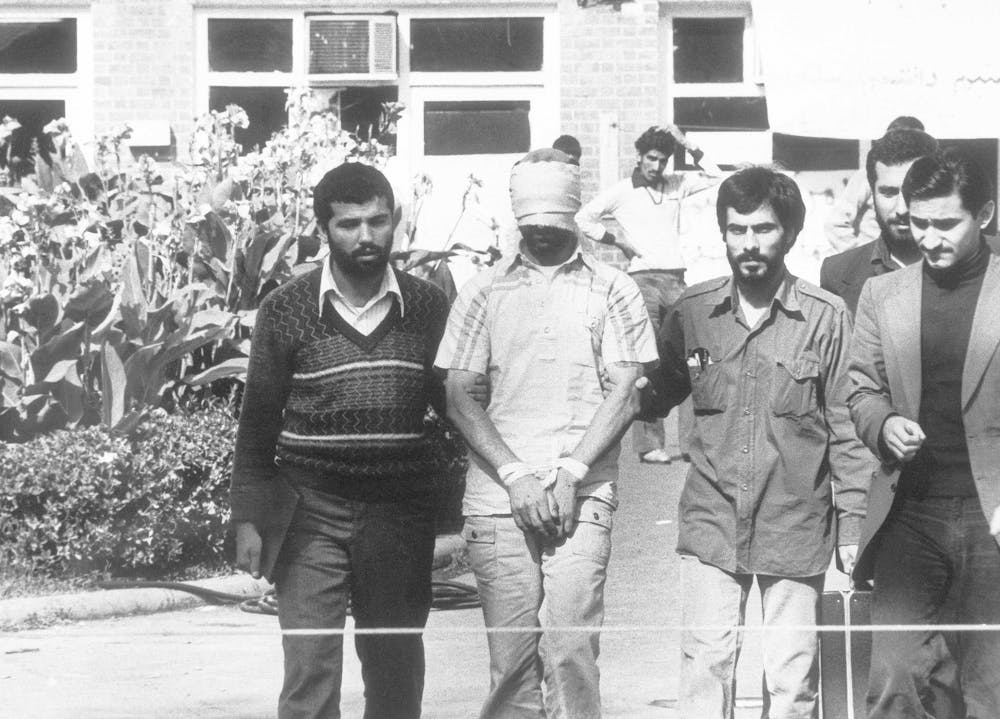
    In 1979, Iranian revolutionaries took 52 US diplomats hostage. The image of those captive hostages blindfolded and at the mercy of Iranian radicals is burned into older Americans’ brains.

    A generation later, Iran-backed militias killed more than 600 Americans in the war in Iraq. There are other sins Iran has committed against the US, included the attempted assassination of Trump. In this context, Trump’s policy is in the US mainstream.

    Why didn’t Trump consult Congress?

    It has been the standard practice of US presidents to brief the bipartisan leadership of Congress on key national security initiatives, such as a strikes on adversaries. While not a hard-and-fast rule, the practice can produce more bipartisan support for a president’s actions that he might otherwise have. It’s not unreasonable to think senior congressional Democrats might be more openly supportive of the Iran strike if they had been consulted in this manner.

    However, Trump and his administration did not do this, for a reason. There is little value in open bipartisanship in America today. Even though both parties are very close on Iran policy, neither wants that to be seen in public as cooperating across the aisle. Each party would much rather make the case to its base that it represents their interests and is not willing to compromise with the other party. Support from Democrats does not strengthen Trump, as his base is highly suspicious of the opposition party.

    The reverse is true for elected Democrats, including those in leadership. They will be more vulnerable from progressives in next year’s primary contests if they are seen as insufficiently resisting Trump. There is no Trump-like figure in their party to protect them from this base.

    In US politics today, nothing is more dangerous than agreeing with the other party. There is a premium value on publicly opposing your political adversaries, no matter what the issue. It makes for a foreign policy that appears more fractured than it actually is.

    Lester Munson receives funding from the U.S. Studies Centre at the University of Sydney. He is affiliated with the Republican Party.

    ref. Trump’s decision to bomb Iran exposes fissures in US politics – https://theconversation.com/trumps-decision-to-bomb-iran-exposes-fissures-in-us-politics-259446

    MIL OSI – Global Reports

  • MIL-OSI Global: How to stay safe during heat waves – and heat stroke warning signs to watch for

    Source: The Conversation – USA – By Brian Bossak, Professor of Public Health, College of Charleston

    Extreme heat can become lethal quickly. A young man cools off at Washington, D.C.’s Yards Park during a heat wave in 2021. Olivier Douliery/AFP via Getty Images

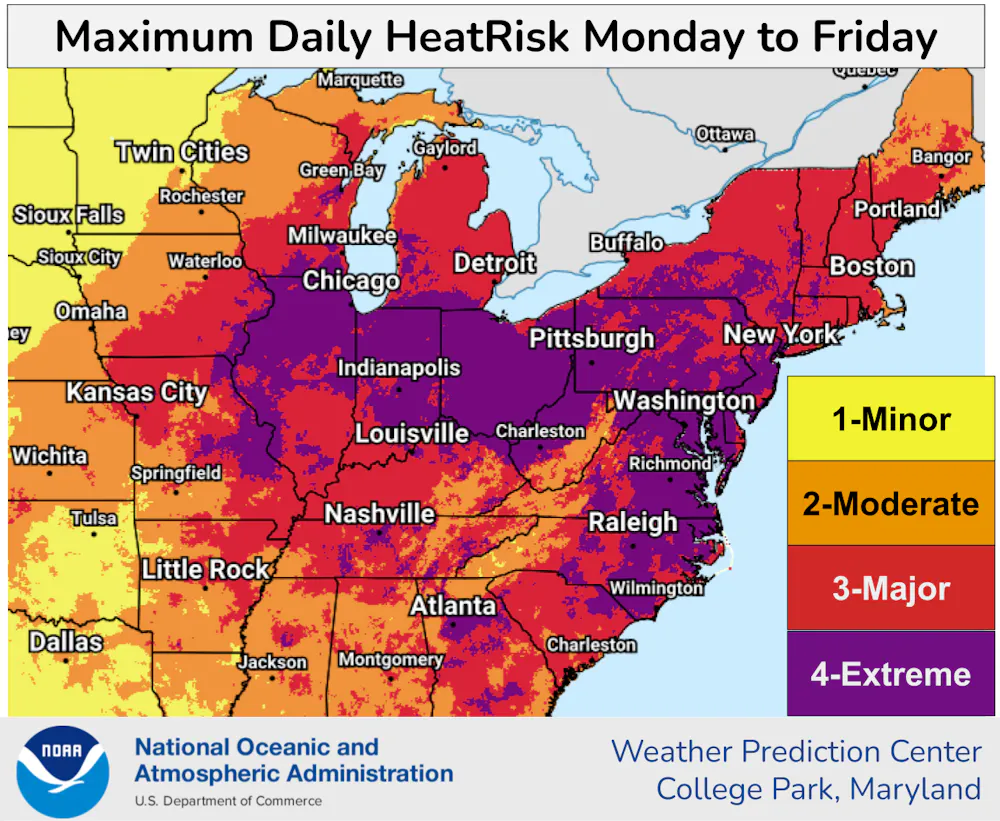
    Summer is just getting started, and millions of people are under heat advisories as a major heat wave spreads across large parts of the central and eastern U.S. in June 2025.

    For many people, summer is their favorite season, a time for cookouts, beach trips and other outdoor activities. However, summer also brings the risk of dangerously high temperatures and humidity.

    In the U.S., hundreds of people working or playing outside – even those who seem healthy – succumb to heat-related illnesses each year. Older adults and people in areas that historically haven’t needed air conditioning tend to see the highest rates of illnesses during heat waves, as Chicago saw in 1995 when at least 700 people died in a heat wave.

    The Weather Prediction Center’s heat forecast shows the maximum temperatures states can expect to see at some point during the week of June 23-27, 2025.
    NOAA Weather Prediction Center

    Even in places where heat is recognized as a dangerous health threat, people can be caught off guard as the thermometer creeps higher, on average, each year. In some cases, dangerous heat can arise quickly. In 2021, a young family died of heat stroke on a California trail after setting out for a hike when temperatures were still in the 70s Fahrenheit (low to mid 20s Celsius).

    I study health risks in a warming climate as a professor of public health, and I’ve seen heat become a growing concern. Here are some of the key warning signs to watch for when temperatures rise – and ways to keep cool when the heat and humidity get too high.

    Signs of heat-related illness to watch for

    Heat-related illnesses occur across a spectrum, and mild heat stress can quickly progress to life-threatening heat stroke if a person is exposed to dangerous conditions for too long.

    Mild forms of heat-related illness include heat cramps and heat rash, both of which can be caused by extensive sweating during hot conditions. Cooling the body and drinking cool fluids can help.

    When heat-related illnesses progress into heat exhaustion, the situation is more serious. Heat exhaustion includes symptoms such as dizziness, nausea, excessive sweating, feeling weak, thirst and getting a headache.

    Construction workers are often out in the heat for long periods of time, including during this heat wave in Los Angeles in July 2024.
    Etienne Laurent/AFP via Getty Images

    Heat exhaustion is a signal that the body is losing its ability to maintain a stable core temperature. Immediate action such as moving to a cool, ideally air-conditioned space, drinking liquids, loosening clothes and applying wet cloths are some of the recommended steps that can help keep heat exhaustion from progressing to the most dangerous form of heat-related illness, heat stroke.

    Heat stroke is a medical emergency. At this point, the body can no longer maintain a stable core temperature. A body with heat stroke can reach 106 degrees Fahrenheit or higher rapidly, and that heat can quickly damage the brain, heart and kidneys.

    Signs of heat exhaustion and heat stroke, from the National Weather Service and Centers for Disease Control and Prevention.
    NOAA/CDC

    Typically, someone suffering heat stroke has exhausted their reserves of sweat and salt to stay cool, so sweating eventually stops during heat stroke. Their cognitive ability fails, and they cannot remove themselves from danger. Heat stroke can cause seizures or put someone into a coma as their core temperature rises. If the condition is not treated immediately, and the core temperature continues to rise, heat stroke becomes fatal.

    Because heat exhaustion can lead to heat stroke, addressing heat-related illnesses before they progress is vital.

    How to tell when the heat is too high

    Heat risk isn’t just about temperature – humidity also increases the risk of heat-related illnesses because it affects how well sweating will cool the human body when it gets hot.

    Instead of just looking at temperature when planning outdoor activities, check the heat index, which accounts for heat illness risk associated with temperature and relative humidity.

    It doesn’t take very high temperatures or very high humidity for the heat index to enter dangerous territory.

    A heat index chart shows how heat and humidity combine for dangerous conditions.
    NOAA

    However, the heat index is still a conservative measure of the impact of heat on humans, particularly for outdoor workers and athletes at summer practices. This is because temperature measurements used in weather forecasting are taken in the shade and are not exposed to direct sunlight. If someone is outside and exposed to the direct sun, the actual heat index can be as much as 15 F higher than the heat index chart indicates.

    A more sophisticated measurement of heat effects on human health is what’s known as the wet-bulb globe temperature, which takes into account other variables, such as wind speed and cloud cover. Neither takes into account a person’s physical exertion, which also raises their body temperature, whether working at a construction site or playing soccer.

    Tips for staying safe in a heat wave

    How can you stay cool when heat waves set in? The answer depends in part on where you are, but the main points are the same:

    • Avoid strenuous outdoor activities in high temperatures if possible. If you start to feel symptoms of heat-related illnesses, drink fluids that will hydrate you. Find shade, rest, and use cool, damp cloths to lower your body temperature. If you see signs of heat stroke in someone else, call for medical help.

    • Be careful with fans. Fans can be useful if the temperature isn’t too high because they wick sweat away from the body and induce evaporative cooling. But at very high temperatures, they can accelerate heat buildup in the body and lead to dangerous conditions. If indoor temperatures reaches 95 degrees or higher, using fans can actually be dangerous and raise the risk of heat-related illnesses.

    • Find a cooling center, library or community center where you can get inside and rest in an air-conditioned space in the hottest hours. In places such as Phoenix, where high temperatures are a regular hazard, cooling centers are typically opened in summer. Northern cities are also opening cooling centers as heat waves occur there more frequently than they did in the past. Urban areas with a lot of pavement and buildings – known as heat islands – can have temperatures well above the city’s average.

    • Hydrate, hydrate, hydrate! Drink plenty of fluids, and don’t forget about the importance of electrolytes. Heat-related dehydration can occur when people sweat excessively, losing water and necessary salts from the body. Some sports drinks or rehydration fluids restore electrolytes and hydration levels.

    Older adults and people with disabilities often face higher risks from heat waves, particularly if they can’t easily move to a cooler environment. Communities and neighbors can help protect vulnerable populations by providing cooling centers and bottled water and making regular wellness checks during high heat.

    Summer can be a season of fun. Just remember the risks, keep an eye on your friends and neighbors when temperatures rise, and plan ahead so you can beat the heat.

    This article, originally published June 19, 2025, has been updated with new heat advisories and forecasts.

    Brian Bossak is not currently receiving relevant external funding for heat-related illness research. In 2017-2019, he served as a consultant on a heat-related research award from the Southeastern Coastal Center for Agricultural Health and
    Safety at the University of Florida.

    ref. How to stay safe during heat waves – and heat stroke warning signs to watch for – https://theconversation.com/how-to-stay-safe-during-heat-waves-and-heat-stroke-warning-signs-to-watch-for-257708

    MIL OSI – Global Reports

  • MIL-OSI Global: US and Iran have a long, complicated history, spanning decades before US strikes on nuclear sites

    Source: The Conversation – USA – By Jeffrey Fields, Professor of the Practice of International Relations, USC Dornsife College of Letters, Arts and Sciences

    People observe fire and smoke from an Israeli airstrike on an oil depot in Tehran, Iran, on June 15, 2025. Stringer/Getty Images

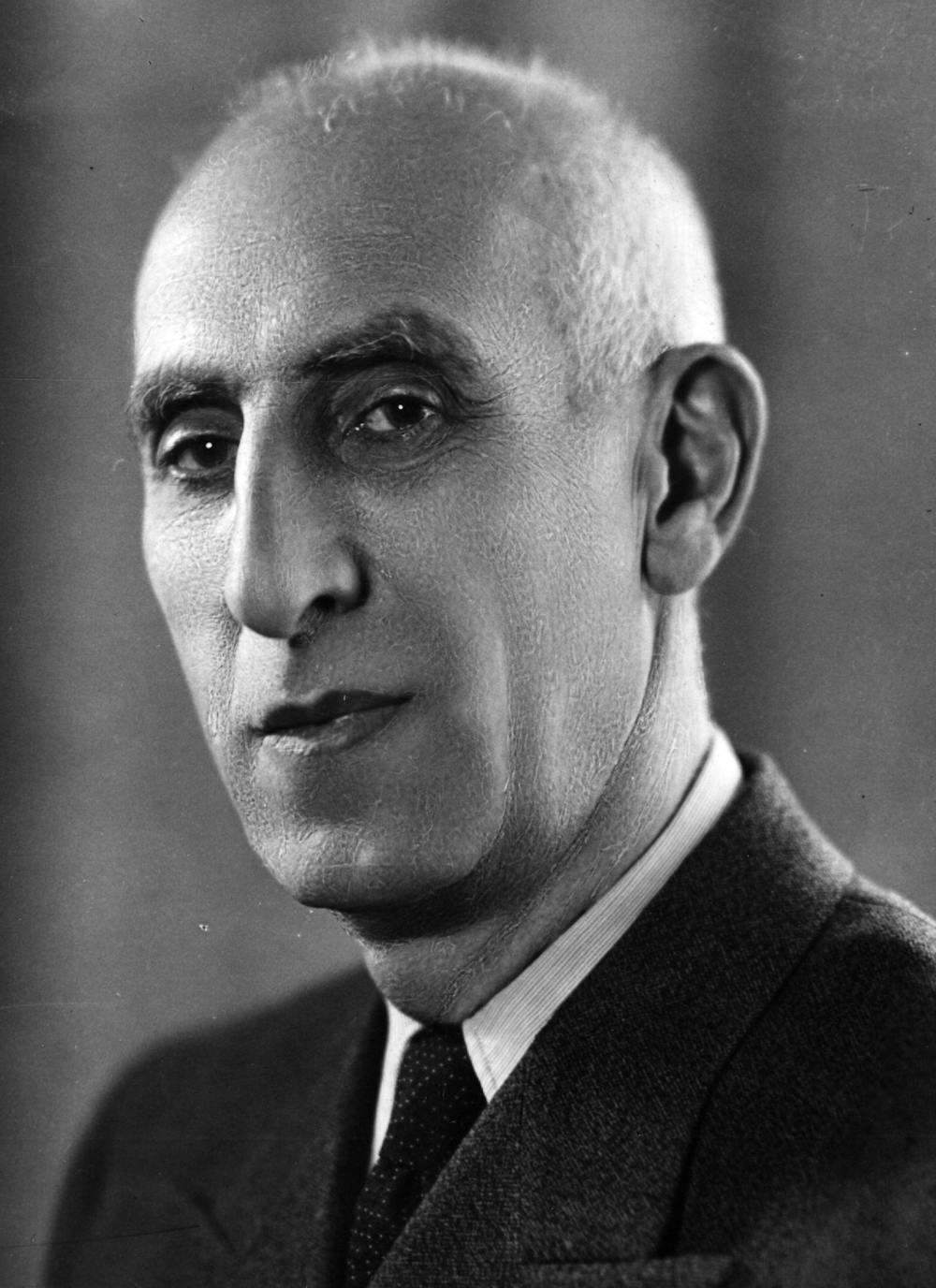
    With the U.S. bombing of three nuclear sites in Iran, relations between the two countries have arguably reached one of the lowest points in modern times. But the bad blood between the two countries isn’t new: The U.S. and Iran have been in conflict for decades – at least since the U.S. helped overthrow a democracy-minded prime minister, Mohammed Mossadegh, in August 1953. The U.S. then supported the long, repressive reign of the Shah of Iran, whose security services brutalized Iranian citizens for decades.

    The two countries have been particularly hostile to each other since Iranian students took over the U.S. Embassy in Tehran in November 1979, resulting in economic sanctions and the severing of formal diplomatic relations between the nations.

    Since 1984, the U.S. State Department has listed Iran as a “state sponsor of terrorism,” alleging the Iranian government provides terrorists with training, money and weapons.

    Some of the major events in U.S.-Iran relations highlight the differences between the nations’ views, but others arguably presented real opportunities for reconciliation.

    1953: US overthrows Mossadegh

    Mohammed Mossadegh.
    Wikimedia Commons

    In 1951, the Iranian Parliament chose a new prime minister, Mossadegh, who then led lawmakers to vote in favor of taking over the Anglo-Iranian Oil Company, expelling the company’s British owners and saying they wanted to turn oil profits into investments in the Iranian people. The U.S. feared disruption in the global oil supply and worried about Iran falling prey to Soviet influence. The British feared the loss of cheap Iranian oil.

    President Dwight Eisenhower decided it was best for the U.S. and the U.K. to get rid of Mossadegh. Operation Ajax, a joint CIA-British operation, convinced the Shah of Iran, the country’s monarch, to dismiss Mossadegh and drive him from office by force. Mossadegh was replaced by a much more Western-friendly prime minister, handpicked by the CIA.

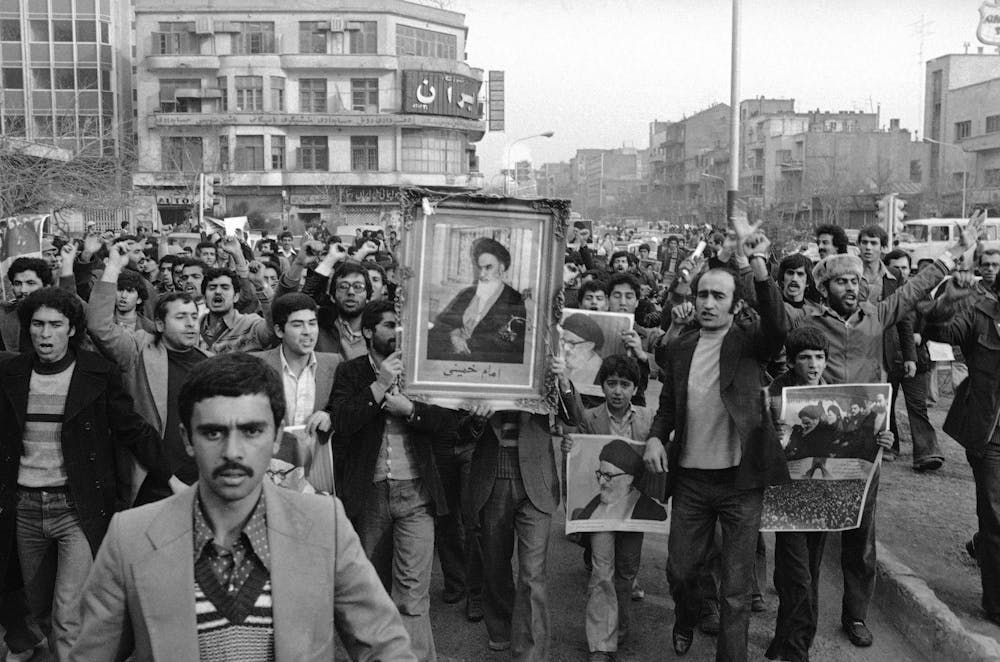
    Demonstrators in Tehran demand the establishment of an Islamic republic.
    AP Photo/Saris

    1979: Revolutionaries oust the shah, take hostages

    After more than 25 years of relative stability in U.S.-Iran relations, the Iranian public had grown unhappy with the social and economic conditions that developed under the dictatorial rule of Shah Mohammad Reza Pahlavi.

    Pahlavi enriched himself and used American aid to fund the military while many Iranians lived in poverty. Dissent was often violently quashed by SAVAK, the shah’s security service. In January 1979, the shah left Iran, ostensibly to seek cancer treatment. Two weeks later, Ayatollah Ruhollah Khomeini returned from exile in Iraq and led a drive to abolish the monarchy and proclaim an Islamic government.

    Iranian students at the U.S. Embassy in Tehran show a blindfolded American hostage to the crowd in November 1979.
    AP Photo

    In October 1979, President Jimmy Carter agreed to allow the shah to come to the U.S. to seek advanced medical treatment. Outraged Iranian students stormed the U.S. Embassy in Tehran on Nov. 4, taking 52 Americans hostage. That convinced Carter to sever U.S. diplomatic relations with Iran on April 7, 1980.

    Two weeks later, the U.S. military launched a mission to rescue the hostages, but it failed, with aircraft crashes killing eight U.S. servicemembers.

    The shah died in Egypt in July 1980, but the hostages weren’t released until Jan. 20, 1981, after 444 days of captivity.

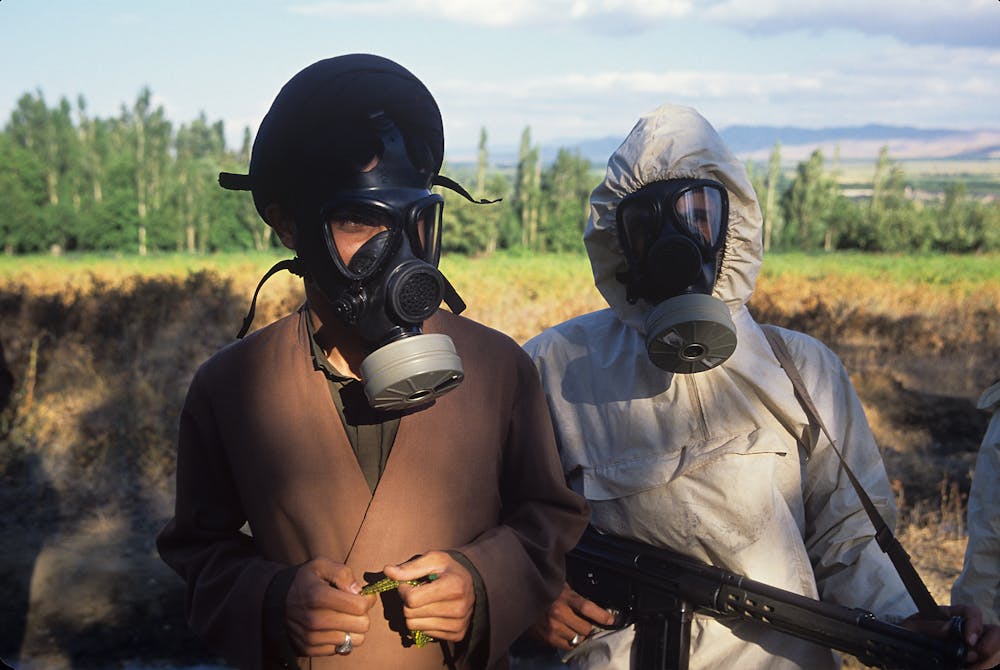
    An Iranian cleric, left, and an Iranian soldier wear gas masks to protect themselves against Iraqi chemical-weapons attacks in May 1988.
    Kaveh Kazemi/Getty Images

    1980-1988: US tacitly sides with Iraq

    In September 1980, Iraq invaded Iran, an escalation of the two countries’ regional rivalry and religious differences: Iraq was governed by Sunni Muslims but had a Shia Muslim majority population; Iran was led and populated mostly by Shiites.

    The U.S. was concerned that the conflict would limit the flow of Middle Eastern oil and wanted to ensure the conflict didn’t affect its close ally, Saudi Arabia.

    The U.S. supported Iraqi leader Saddam Hussein in his fight against the anti-American Iranian regime. As a result, the U.S. mostly turned a blind eye toward Iraq’s use of chemical weapons against Iran.

    U.S. officials moderated their usual opposition to those illegal and inhumane weapons because the U.S. State Department did not “wish to play into Iran’s hands by fueling its propaganda against Iraq.” In 1988, the war ended in a stalemate. More than 500,000 military and 100,000 civilians died.

    1981-1986: US secretly sells weapons to Iran

    The U.S. imposed an arms embargo after Iran was designated a state sponsor of terrorism in 1984. That left the Iranian military, in the middle of its war with Iraq, desperate for weapons and aircraft and vehicle parts to keep fighting.

    The Reagan administration decided that the embargo would likely push Iran to seek support from the Soviet Union, the U.S.’s Cold War rival. Rather than formally end the embargo, U.S. officials agreed to secretly sell weapons to Iran starting in 1981.

    The last shipment, of anti-tank missiles, was in October 1986. In November 1986, a Lebanese magazine exposed the deal. That revelation sparked the Iran-Contra scandal in the U.S., with Reagan’s officials found to have collected money from Iran for the weapons and illegally sent those funds to anti-socialist rebels – the Contras – in Nicaragua.

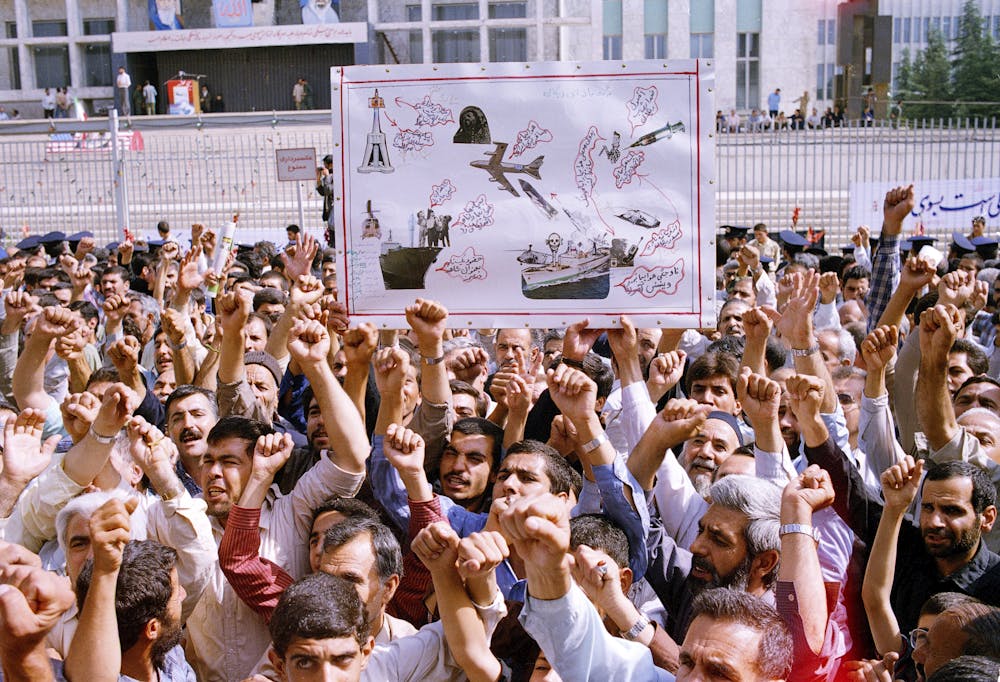
    At a mass funeral for 76 of the 290 people killed in the shootdown of Iran Air 655, mourners hold up a sign depicting the incident.
    AP Photo/CP/Mohammad Sayyad

    1988: US Navy shoots down Iran Air flight 655

    On the morning of July 8, 1988, the USS Vincennes, a guided missile cruiser patrolling in the international waters of the Persian Gulf, entered Iranian territorial waters while in a skirmish with Iranian gunboats.

    Either during or just after that exchange of gunfire, the Vincennes crew mistook a passing civilian Airbus passenger jet for an Iranian F-14 fighter. They shot it down, killing all 290 people aboard.

    The U.S. called it a “tragic and regrettable accident,” but Iran believed the plane’s downing was intentional. In 1996, the U.S. agreed to pay US$131.8 million in compensation to Iran.

    1997-1998: The US seeks contact

    In August 1997, a moderate reformer, Mohammad Khatami, won Iran’s presidential election.

    U.S. President Bill Clinton sensed an opportunity. He sent a message to Tehran through the Swiss ambassador there, proposing direct government-to-government talks.

    Shortly thereafter, in early January 1998, Khatami gave an interview to CNN in which he expressed “respect for the great American people,” denounced terrorism and recommended an “exchange of professors, writers, scholars, artists, journalists and tourists” between the United States and Iran.

    However, Supreme Leader Ayatollah Ali Khamenei didn’t agree, so not much came of the mutual overtures as Clinton’s time in office came to an end.

    In his 2002 State of the Union address, President George W. Bush characterized Iran, Iraq and North Korea as constituting an “Axis of Evil” supporting terrorism and pursuing weapons of mass destruction, straining relations even further.

    Inside these buildings at the Natanz nuclear facility in Iran, technicians enrich uranium.
    AP Photo/Vahid Salemi

    2002: Iran’s nuclear program raises alarm

    In August 2002, an exiled rebel group announced that Iran had been secretly working on nuclear weapons at two installations that had not previously been publicly revealed.

    That was a violation of the terms of the Nuclear Nonproliferation Treaty, which Iran had signed, requiring countries to disclose their nuclear-related facilities to international inspectors.

    One of those formerly secret locations, Natanz, housed centrifuges for enriching uranium, which could be used in civilian nuclear reactors or enriched further for weapons.

    Starting in roughly 2005, U.S. and Israeli government cyberattackers together reportedly targeted the Natanz centrifuges with a custom-made piece of malicious software that became known as Stuxnet.

    That effort, which slowed down Iran’s nuclear program was one of many U.S. and international attempts – mostly unsuccessful – to curtail Iran’s progress toward building a nuclear bomb.

    2003: Iran writes to Bush administration

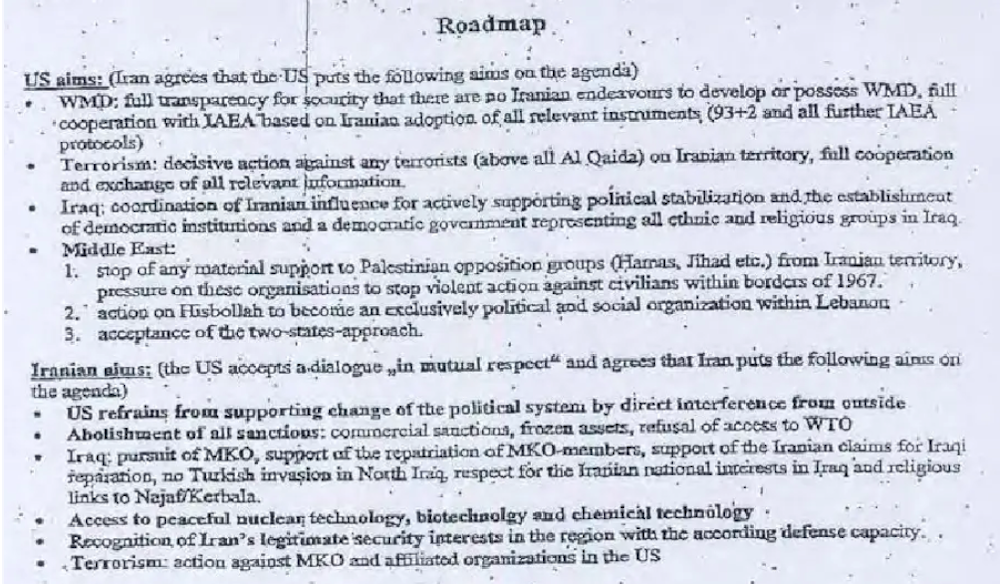
    An excerpt of the document sent from Iran, via the Swiss government, to the U.S. State Department in 2003, appears to seek talks between the U.S. and Iran.
    Washington Post via Scribd

    In May 2003, senior Iranian officials quietly contacted the State Department through the Swiss embassy in Iran, seeking “a dialogue ‘in mutual respect,’” addressing four big issues: nuclear weapons, terrorism, Palestinian resistance and stability in Iraq.

    Hardliners in the Bush administration weren’t interested in any major reconciliation, though Secretary of State Colin Powell favored dialogue and other officials had met with Iran about al-Qaida.

    When Iranian hardliner Mahmoud Ahmadinejad was elected president of Iran in 2005, the opportunity died. The following year, Ahmadinejad made his own overture to Washington in an 18-page letter to President Bush. The letter was widely dismissed; a senior State Department official told me in profane terms that it amounted to nothing.

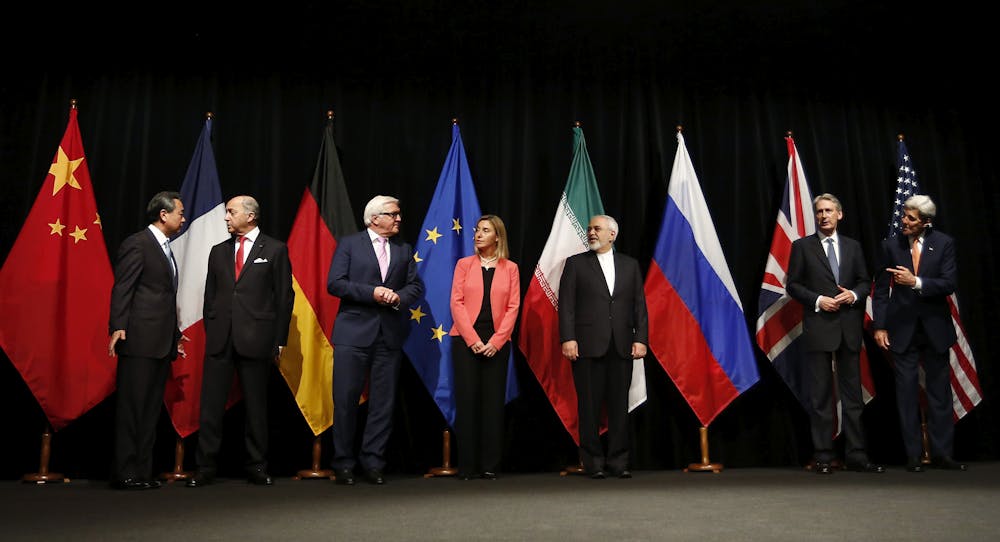
    Representatives of several nations met in Vienna in July 2015 to finalize the Iran nuclear deal.
    Austrian Federal Ministry for Europe, Integration and Foreign Affairs/Flickr

    2015: Iran nuclear deal signed

    After a decade of unsuccessful attempts to rein in Iran’s nuclear ambitions, the Obama administration undertook a direct diplomatic approach beginning in 2013.

    Two years of secret, direct negotiations initially bilaterally between the U.S. and Iran and later with other nuclear powers culminated in the Joint Comprehensive Plan of Action, often called the Iran nuclear deal.

    Two years of secret, direct negotiations conducted bilaterally at first between the U.S. and Iran and later with other nuclear powers culminated in the Joint Comprehensive Plan of Action, often called the Iran nuclear deal.

    Iran, the U.S., China, France, Germany, Russia and the United Kingdom signed the deal in 2015. It severely limited Iran’s capacity to enrich uranium and mandated that international inspectors monitor and enforce Iran’s compliance with the agreement.

    In return, Iran was granted relief from international and U.S. economic sanctions. Though the inspectors regularly certified that Iran was abiding by the agreement’s terms, President Donald Trump withdrew from the agreement in May 2018.

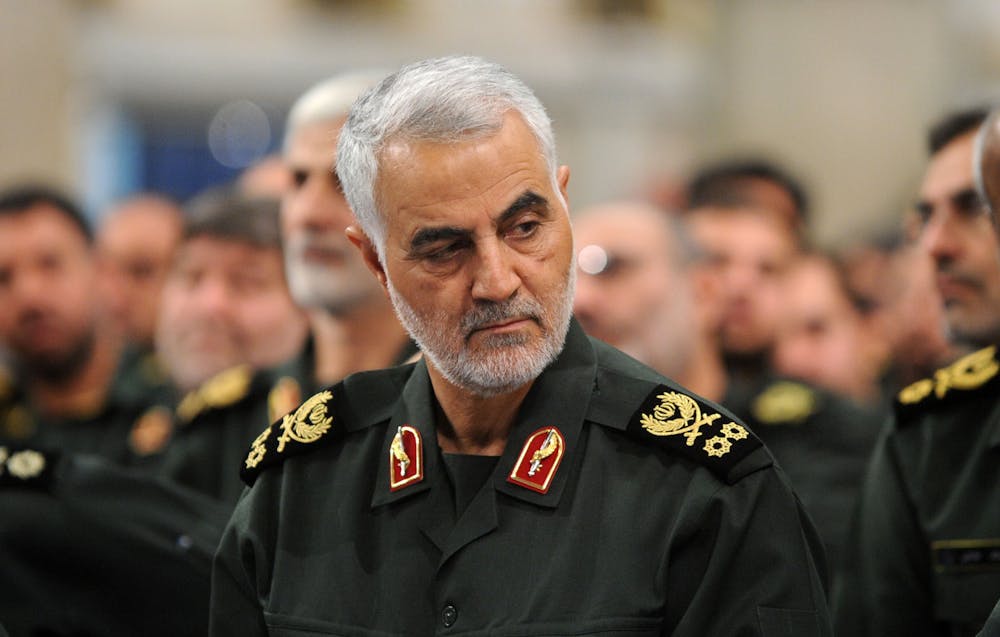
    2020: US drones kill Iranian Maj. Gen. Qassem Soleimani

    An official photo from the Iranian government shows Maj. Gen. Qassem Soleimani, who was killed in a Jan. 3 drone strike ordered by President Donald Trump.
    Iranian Supreme Leader Press Office/Anadolu Agency via Getty Images

    On Jan. 3, 2020, an American drone fired a missile that killed Maj. Gen. Qassem Soleimani, the leader of Iran’s elite Quds Force. Analysts considered Soleimani the second most powerful man in Iran, after Supreme Leader Ayatollah Khamenei.

    At the time, the Trump administration asserted that Soleimani was directing an imminent attack against U.S. assets in the region, but officials have not provided clear evidence to support that claim.

    Iran responded by launching ballistic missiles that hit two American bases in Iraq.

    2023: The Oct. 7 attacks on Israel

    Hamas’ brazen attack on Israel on Oct. 7, 2023, provoked a fearsome militarized response from Israel that continues today and served to severely weaken Iran’s proxies in the region, especially Hamas – the perpetrator of the attacks – and Hezbollah in Lebanon.

    2025: Trump 2.0 and Iran

    Trump saw an opportunity to forge a new nuclear deal with Iran and to pursue other business deals with Tehran. Once inaugurated for his second term, Trump appointed Steve Witkoff, a real estate investor who is the president’s friend, to serve as special envoy for the Middle East and to lead negotiations.

    Negotiations for a nuclear deal between Washington and Tehran began in April, but the countries did not reach a deal. They were planning a new round of talks when Israel struck Iran with a series of airstrikes on June 13, forcing the White House to reconsider is position.

    On June 22, in the early morning hours, the U.S. chose to act decisively in an attempt to cripple Iran’s nuclear capacity, bombing three nuclear sites and causing what Pentagon officials called “severe damage.” Iran vowed to retaliate.

    This story has been updated to reflect the U.S. bombing of Iranian nuclear sites on June 22, 2025.

    Jeffrey Fields receives funding from the Carnegie Corporation of New York and Schmidt Futures.

    ref. US and Iran have a long, complicated history, spanning decades before US strikes on nuclear sites – https://theconversation.com/us-and-iran-have-a-long-complicated-history-spanning-decades-before-us-strikes-on-nuclear-sites-259240

    MIL OSI – Global Reports

  • MIL-OSI Global: US bombs Iran’s nuclear sites: What led to Trump pulling the trigger – and what happens next?

    Source: The Conversation – Global Perspectives – By Javed Ali, Associate Professor of Practice of Public Policy, University of Michigan

    US President Donald Trump addresses the nation on Iran strikes on June 21, 2025 Carlos Barria/AFP via Getty Images

    In the early hours of June 22, 2025, local time, the United States attacked three nuclear facilities in Iran with “bunker buster” bombs and Tomahawk missiles.

    Following more than a week of Israeli strikes on various targets in Iran – which had prompted retaliatory strikes from Tehran – the U.S. move marks a possible inflection point in the conflict. In initial comments on the strikes at the Fordo, Isfahan and Natanz facilities, President Donald Trump said that Iran’s nuclear program had been “completely and fully obliterated.” In response, Iran’s Foreign Minister Abbas Araghchi said the U.S. had “crossed a very big red line.”

    The Conversation U.S. turned to Javed Ali, an expert on Middle East affairs at the University of Michigan and a former senior official at the National Security Council during the first Trump administration, to talk through why Trump chose now to act and what the potential repercussions could be.

    What do we know about the nature and timing of US involvement?

    President Trump has been forcefully hinting for days days that such a strike could happen, while at the same time opening up a window of negotiation by suggesting as late as June 20 that he would make a decision “within the next two weeks.” We know Trump can be very unpredictable, but he must have assessed that the current conditions presented an opportunity for U.S. action.

    Trump met with the National Security Council twice in the days leading up to the strike. Typically at such meetings the president is presented with a menu of military options, which usually boil down to three: a narrow option, a middle ground and a “if you really want to go big” strike.

    The one he picked, I would argue, is somewhere between the narrow option and the middle ground one.

    The “go big” options would have been an attack on nuclear sites and Iranian leadership – be that senior members of Iran’s Revolutionary Guard, or possibly the Supreme Leader Ayatollah Ali Khamenei. The more narrow approach would have been just one facility, likely to have been Fordo – a deeply fortified uranium enrichment site buried within a mountain.

    What did occur was a strike there, but also at two other sites – Isfahan and Natanz.

    U.S. military chiefs confirmed that that 12 GBU-57s – the so-called 30,000-pound bunker busters – were dropped by B-2 bombers on Fordo, and two on Isfahan.

    That suggests to me that the military goal of the operation was to destroy Iran’s ability to produce and or store highly enriched uranium in a one-time strike rather than drag the U.S. into a more prolonged conflict.

    Has the strike achieved Trump’s objectives?

    It will take some time to properly assess the extent to which Iran’s ability to produce or store highly enriched uranium has been damaged.

    Certainly we know that the bombs hit their targets, and they have been damaged – but to what extent is not immediately clear. General Dan Caine, chairman of the Joint Chiefs of Staff, said that all three target sites had suffered “extremely severe damage and destruction” – possibly rolling back from Trump’s “fully obliterated” assessment. Perhaps most tellingly, Iran has not commented yet on the extent of the damage.

    But to Trump, the objective was not just military but political, too. Trump has long said “no” to a nuclear Iran while at the same time has expressed that he has no desire to drag the U.S. into another war.

    And this strike may allow Trump to achieve those seemingly contradictory goals. If U.S. initial assessments are correct, Iran’s nuclear program will have been severely compromised. But the strikes won’t necessarily pull U.S. into the conflict fully – unless Iran retaliates in such a way that necessitates further U.S. action.

    And that is what Iran’s supreme leader and his military generals will need to work out: Should Iran retaliate and, if so, is it prepared to deal with a heavier U.S. military response – especially when there is no end in sight to its current conflict with Israel.

    An operational timeline of a strike on Iran is displayed during a news conference with U.S. Chairman of the Joint Chiefs of Staff Gen. Dan Caine and U.S. Defense Secretary Pete Hegseth on June 22, 2025.
    Andrew Harnik/Getty Images

    What options does Iran have to retaliate against US?

    Iran has in the past tried to respond proportionately to any attack. But here is the problem for Iran’s leaders: There is no feasible proportionate response to the United States. Iran has no capability to hit nuclear plants in the U.S. – either conventionally or through unconventional warfare.

    But there are tens of thousands of U.S. troops in the region, stationed in Iraq, Syria, the United Arab Emirates, Oman, Qatar and Jordan. All are in range of Iran’s ballistic, drones or cruise missiles.

    But that military inventory has been depleted – both by using ballistic missiles in waves of attacks against Israel and by Israel hitting missile launch and storage sites in Iran.

    Similarly, Tehran’s capacity to respond through one of its proxy or aligned groups in the region has been degraded. Hezbollah in Lebanon and Gaza’s Hamas – both of whom have ties to Iran – are in survival mode following damaging attacks from Israel over the past 18 months.

    The Houthis in Yemen are in many ways the “last man standing” in Iran’s so-called “Axis of Resistance.” But the Houthis have limited capability and know that if they do attack U.S. assets, they will likely get hit hard. During Operation Rough Rider from March to May this year, the Trump administration launched over 1,000 strikes against the Houthis.

    Meanwhile Shia militias in Iraq and Syria that could be encouraged to attack U.S. bases haven’t been active in months.

    Of course, Iran could look outside the region. In the past the country has been involved in assassinations, kidnappings and terror attacks abroad that were organized through its Quds Force or via operatives of MOIS, its intelligence service.

    But for Iran’s leaders, it is increasingly looking like a lose-lose proposition. If they don’t respond in a meaningful way, they look weak and more vulnerable. But if they do hit U.S. targets in any meaningful way, they will invite a stronger U.S. involvement in the conflict, as Trump has warned.

    The parallel I see here is with the killing of Iranian general and commander of the Quds Force, Qassem Soleimani, in January 2020 by a U.S. drone strike.

    On that occasion, Iran promised a strong retaliation. Its retaliatory attack against the U.S. Ain al-Asad air base in Iraq involved 27 ballistic missiles and caused the physical destruction of some of the facilities on base as well as traumatic brain injury-type symptoms to dozens of troops and personnel, but no deaths. Nevertheless, after this both the U.S. and Iran then backed off from deepening the conflict.

    The circumstances now are very different. Iran is already at war with Israel. Moreover, the U.S. went after Iran’s crown jewels – its nuclear program – and it was on Iranian territory. Nonetheless, Khameini knows that if he retaliates, he risks provoking a larger response.

    Trump suggested ‘further attacks’ could occur. What could that entail?

    The U.S. has suggested that it has the intelligence and ability to hit senior leadership in Iran. And any “go big option” would have likely involved strikes on key personnel. Similarly there could be plans to hit the Iranian economy by attacking oil and gas targets.

    A satellite image of the Fordo nuclear facility in Iran prior to the U.S. strike on June 22, 2025.
    Maxar/Getty

    But such actions risk either damaging the global economy or drawing the U.S. deeper into the conflict – it would evolve from a “one and done” strike to a cycle of attacks and responses. And that could widen political cracks between hawks in the administration and parts of Trump’s MAGA faithful who are against the U.S. being involved in overseas wars.

    Is there any opportunity of a return to diplomacy?

    Trump has not closed his “two weeks” window for talks – theoretically it is still open.

    But will Iran come to table? Leaders there had already said they were not willing to entertain any deal while under attack from Israel. Araghchi, Iran’s foreign minister, said after the U.S. strikes that the time for diplomacy had now passed.

    In any event, you have to ask, what can Iran come to the table with? Do they have much of a nuclear program anymore? And if not, what would they try to negotiate? It would seem, using one of Trump’s phrases, they “don’t have the cards” to make much of a deal.

    Javed Ali does not work for, consult, own shares in or receive funding from any company or organization that would benefit from this article, and has disclosed no relevant affiliations beyond their academic appointment.

    ref. US bombs Iran’s nuclear sites: What led to Trump pulling the trigger – and what happens next? – https://theconversation.com/us-bombs-irans-nuclear-sites-what-led-to-trump-pulling-the-trigger-and-what-happens-next-259519

    MIL OSI – Global Reports

  • MIL-OSI Global: Why Israel and the U.S. are sure to encounter the limits of air power in Iran

    Source: The Conversation – Canada – By James Horncastle, Assistant Professor and Edward and Emily McWhinney Professor in International Relations, Simon Fraser University

    The United States has apparently answered Israel’s call to to become involved in the war between Israel and Iran.

    President Donald Trump had signalled a willingness for the U.S. to become involved in the conflict. He went so far, in fact, to suggest in social media posts that he could kill Iran’s supreme leader if he wanted to.

    Segment on Trump’s threats against Iran’s leader. (BBC News)

    The American military can certainly make an impact in any air campaign against Iran. The problem from a military standpoint, however, is that the U.S., based on its forces’ deployment, will almost certainly seek to keep its involvement limited to its air force to avoid another Iraq-like quagmire.

    While doing so could almost certainly disrupt Iran’s nuclear program, it will likely fall short of Israel’s goal of regime change.

    In fact, it could reinforce the Iranian government and draw the U.S. into a costly ground war.


    Read more:
    Why is there so much concern over Iran’s nuclear program? And where could it go from here?


    Israel’s need for American support

    The initial stated reason for Israel’s bombing campaign — Iran’s nuclear capabilities — appears specious at best.

    Israeli Prime Minister Benjamin Netanyahu has argued several times in the past, without evidence, that Iran is close to achieving a nuclear weapon. U.S. intelligence, however, have assessed that Iran is three years away from deploying a nuclear weapon.

    Regardless of the veracity of the claims, Israel initiated the offensive and requires American support.

    Israel’s need for U.S. assistance rests on two circumstances:

    1. While Israel succeeded in eliminating key figures from the Iranian military in its initial strikes, Iran’s response appears to have exceeded Israel’s expectations with their Arrow missile interceptors nearing depletion.

    2. Israel’s air strikes can only achieve so much in disrupting Iran’s nuclear ambitions. Most analysts note that Israel’s bombings are only likely to delay the Iranian nuclear program by a few months. This is due to the fact that Israeli missiles are incapable of penetrating the Fordow Fuel Enrichment Plant, which estimates place close to 300 feet underground.

    The United States, however, possesses munitions that have reportedly destroyed the Fordow facility. Most notably, the GBU-57A/B Massive Ordnance Penetrator (more commonly known as a bunker buster) has a penetration capability of 200 feet and was reportedly used in the attack.

    Romanticizing air power

    Nonetheless, the efficacy of air power has been vastly overrated in the popular media and various air forces of the world. Air power is great at disrupting an opponent, but has significant limitations in influencing the outcome of a war.

    Specifically, air power is likely to prove an inadequate tool for one of the supposed Israeli and American objectives in the war: regime change. For air power to be effective at bringing about regime change, it needs to demoralize the Iranian people to the point that they’re willing to oppose their own government.

    Early air enthusiasts believed that a population’s demoralization would be an inevitable consequence of aerial bombardment. Italian general Giulio Douhet, a prominent air power theorist, argued that air power was so mighty that it could destroy cities and demoralize an opponent into surrendering.

    Douhet was correct on the first point. He was wrong on the second.

    Recent history provides evidence. While considerable ink has been spilled to demonstrate the efficacy of air power during the Second World War, close examination of the facts demonstrate that it had a minimal impact. In fact, Allied bombing of German cities in several instances created the opposite effect.

    More recent bombing campaigns replicated this failure. The U.S. bombing of North Vietnam during the Vietnam War did not significantly damage North Vietnamese morale or war effort. NATO’s bombing of Serbia in 1999, likewise, rallied support for the unpopular Slobodan Milosevic due to its perceived injustice — and continues to evoke strong emotions to this day.

    Iran’s political regime may be unpopular with many Iranians, but Israeli and American bombing may shore up support for the Iranian government.

    Nationalism is a potent force, particularly when people are under attack. The attacks on Iran will rally segments of the population to the government that would otherwise oppose it.

    Few positive options

    The limitations of air power to fuel significant political change in Iran should have given Trump pause about intervening in the conflict.

    Some American support, such as providing weapons, is a given due to the close relationship between the U.S. and Israel. But any realization of American and Israeli aspirations of a non-nuclear Iran and a new government will likely require ground forces.

    Recent American experiences in Afghanistan and Iraq show such a ground forces operation won’t lead to the swift victory that Trump desires, but could potentially stretch on for decades.

    James Horncastle does not work for, consult, own shares in or receive funding from any company or organisation that would benefit from this article, and has disclosed no relevant affiliations beyond their academic appointment.

    ref. Why Israel and the U.S. are sure to encounter the limits of air power in Iran – https://theconversation.com/why-israel-and-the-u-s-are-sure-to-encounter-the-limits-of-air-power-in-iran-259348

    MIL OSI – Global Reports

  • MIL-OSI Global: Why corporations are backing away from supporting Pride this year

    Source: The Conversation – Canada – By Leah Hamilton, Professor in the Faculty of Business & Communication Studies, Mount Royal University

    Prime Minister Mark Carney recently raised the Pride flag on Parliament Hill and lamented the growing anti-2SLGBTQIA+ sentiment in Canada. He also committed $1.5 million to make Pride festivals across the country safer.

    This political support stands in sharp contrast to the many businesses that have reduced or ended their support for the 2SLGBTQIA+ community this Pride season.

    Multinational corporations like Google, as well as Canadian-owned companies like Molson Coors, have divested from supporting festivals, while Target has scaled back its Pride merchandise due to threats against employees and large-scale conservative backlash.

    The impact is already being felt. Pride Toronto is currently facing a $900,000 funding gap. Executive director Kojo Modeste recently told CBC News this corporate divestment appears to be linked to the larger backlash against diversity, equity and inclusion efforts.

    Fear of punitive measures

    In January, United States President Donald Trump issued an executive order to dismantle DEI initiatives in federal agencies and target private companies that support DEI measures. In the executive order, Trump’s administration called DEI measures and mandates “immoral discrimination programs.”

    Spearheaded by journalist-cum-activist and Trump adviser Christopher Rufo, the attacks against so-called “woke” DEI programs are fuelled by the “culture wars” that pit equity and inclusion against merit and the free market.


    Read more:
    Here’s what ‘woke’ means and how to respond to it


    Major private corporations, including IBM, quickly bent to the pressure of Trump’s anti-DEI orders by gutting their programs and shifting corporate donorship away from “woke” initiatives.

    The pressure to comply with anti-DEI measures hasn’t ended with corporations. More recently, Trump has set his sights on the U.S. post-secondary system, freezing US$2.2 million in federal grants and US$60 million in contracts after Harvard University refused to comply with the administration’s demands related to its DEI programs.

    In Canada, the rollback of DEI programs isn’t as loud, but it is happening. Michelle Grocholsky, the CEO of Empowered EDI in Toronto, told CBC News companies are reducing their budgets and cutting their staff. In the midst of job cuts in January 2025, the Alberta Investment Management Corporation removed their DEI staff.

    Following in the footsteps of the U.S., Alberta’s United Conservative Party membership passed a resolution to eliminate DEI programs and training in the public service. The party has also indicated it will remove government funding from post-secondary institutions that continue to do DEI work.

    Declining public support

    In addition to the rollback of DEI programs, the ongoing corporate reductions in Pride support are taking place amid increasing anti-2SLGBTQIA+ sentiment.

    A 2024 poll reported that, in Canada, support for 2SLGBTQIA+ visibility — like representation on screens and in sports — is lower than it was in 2021. Compared to previous years, Canadians also expressed less support for transgender rights, and this level of support was lower than the 26 other countries surveyed.

    Not surprisingly, this declining public support for the 2SLGBTQIA+ community coincides with rising hate crimes targeting 2SLGBTQIA+ communities. In 2023, Statistics Canada reported a 69 per cent increase in hate crimes targeting sexual orientation.

    Public attitudes don’t change in a vacuum. They are deeply influenced by hate movements, political rhetoric and the spread of misinformation and disinformation weaponized by politicians and leaders to dehumanize the 2SLGBTQIA+ community, particularly transgender people.

    This dehumanization incites fear, violence and support for anti-2SLGBTQIA+ hate. It has coincided with companies silently withdrawing their support for the 2SLGBTQIA+ community.

    Where we live, in Alberta, the provincial government has passed the most draconian anti-trans laws Canada has ever seen. As we (Corinne L. Mason and Leah Hamilton) have previously written, Premier Danielle Smith’s government has unveiled a suite of policies targeting transgender, intersex and gender diverse children and youth in Alberta, and the 2SLGBTQIA+ community more broadly.

    In this environment of reduced public and political support, it’s not surprising to see companies backing away from the 2SLGBTQIA+ community.

    Getting back to Pride’s roots

    The fact that companies have quickly backed away from their support of the 2SLGBTQIA+ community — by halting production of Pride merchandise or reducing sponsorship in Pride festivals — illustrates the conditionality of their support.

    Rather than beg big business to come back to the table, some members of the community are using this moment to reflect on how corporate “Love is Love” campaigns haven’t actually led to increased quality of life or justice for our communities.

    While it has received less media coverage than calls to remove police from Pride and the presence of Boycott, Divest and Sanction movement at Pride festivals, the corporatization of Pride has long been subject of debate in the 2SLGBTQIA+ community.


    Read more:
    Queers and trans say no to police presence at Pride parade


    Those against “rainbow capitalism” — the shallow and inauthentic use of Pride imagery in advertising — argue for a return to community-based and radical protest rather than settling for flag-waving bankers throwing beads from atop expensive floats.

    Pride Month is rooted in protest and resistance against police violence and systemic oppression. It was led by Black trans women and can be traced back to the Stonewall Riots. Today, Pride still isn’t simply a party and parade.

    Authentic ‘rainbow dollars’

    In this sociopolitical climate of legislated DEI rollbacks and declining public support for the 2SLGBTQIA+ community, organizations that want to support the 2SLGBTQIA+ community should back up their messaging with meaningful actions and structural support.

    Some organizations have shown a commitment to structural support for the 2SLGBTQIA+ community from its beginning, including the Northern Super League, the top-division professional women’s soccer league in Canada. The league openly and consistently amplifies and supports its 2SLGBTQIA+ players, coaches, staff and fans. Founded by Diana Matheson, an openly queer woman, the league is founded on inclusion as a core value.

    When it comes to creating Pride merchandise, Social Made Local is a queer-owned Canadian apparel company in Saskatoon that focuses on gender-inclusive sizing, sustainability and community. They donate a portion of their sales to Canadian non-profits like Rainbow Railroad.

    Companies that want to show their support can spend their rainbow dollars in good faith through actions that meaningfully support the 2SLGBTQIA+ community. This could include creating programs that support queer entrepreneurs, donating to legal funds that are fighting discriminatory legislation, and partnering with 2SLGBTQIA+ organizations to amplify their work.

    Leah Hamilton receives funding from the Social Sciences and Humanities Research Council of Canada.

    Corinne L. Mason receives funding from Social Sciences and Humanities Research Council.

    Gini (Virginia) Weber does not work for, consult, own shares in or receive funding from any company or organisation that would benefit from this article, and has disclosed no relevant affiliations beyond their academic appointment.

    ref. Why corporations are backing away from supporting Pride this year – https://theconversation.com/why-corporations-are-backing-away-from-supporting-pride-this-year-258770

    MIL OSI – Global Reports

  • MIL-OSI Global: If we don’t teach youth about sexual assault and consent, popular media will

    Source: The Conversation – Canada – By Shannon D. M. Moore, Assistant professor of social studies education, Department of Curriculum Teaching and Learning, Faculty of Education, University of Manitoba

    The sexual assault trial of five former World Juniors hockey players has spotlighted issues around sexual assault and consent.

    Sexual assault, intimate partner violence and other forms of gender-based violence aren’t inevitable. Kindergarten to Grade 12 public schools have an ethical obligation to enact sexuality education that is responsive to current contexts, respects human diversity, empowers young people and is rooted in human rights.

    We argue for harnessing popular media to advance sexuality education. Children and youth learn about a great deal about gender, relationships, sexuality and consent from popular media.

    Although there is strong theoretical rationale for using popular media to confront sexual assault, many teachers identify and experience barriers to putting this into practice in their classrooms.

    Let’s (not) talk about sex?

    Many factors shape the reality that comprehensive sex education remains wholly absent or inadequate in schools.

    Talking about sex in society and in schools is often taboo. Discussions of healthy relationships and consent are often highly controlled, minimized or relegated to a sexual education curriculum that is not universally taught. This is due to parental opt-outs/ins in many provinces.

    Some opponents of sexual education curriculum say parents should have full authority over the subject. Others exploit misunderstandings of age appropriateness and the presumed innocence of children and youth. Among the public at large, there is a lack of knowledge (or belief) about the high rates of sexual assault and other forms of gender-based violence experienced by youth within and beyond schools

    Not surprisingly, neglecting comprehensive sexuality education has many adverse consequences. Students learn that eliminating sexual violence is not a societal priority. Those who have experienced assault and other forms of violence learn that they are not important, as their stories are often silenced, ignored or distrusted.

    As a result, rape culture and gender-based violence remains unchallenged in schools, while it is normalized, legitimized and endorsed in popular media.


    Read more:
    ‘Adolescence’ on Netflix: A painful wake-up call about unregulated internet use for teens


    Meet your child’s other teacher

    In the absence or confines of comprehensive sex education in schools, youth identify popular media as their main source of information about sex and relationships.

    As professor of criminal justice, Nickie D. Phillips, writes, popular media is one of the “primary sites through which rape culture [is] understood, negotiated and contested.”

    What youth watch, play, listen to or create on social media has a significant role in teaching dominant understandings that normalize sexual violence, misogyny and the patriarchy.

    Critical media scholars Michael Hoechsmann and Stuart Poyntz emphasize that popular media “plays a central role in the socialization, acculturation and intellectual formation of young people. It is a … force to be reckoned with, and we ignore it at our peril.

    As teacher educators and educational researchers, the teachers we have worked with across grades and subject areas recognize how popular media is always and already present in classrooms, and many embrace the opportunities it affords for necessary conversations that are relevant to students.

    Challenges with using popular media

    The teacher participants in our study revealed that classroom culture wars have had a chilling impact on their practice, making them feel more wary about tackling particular topics.

    We found that despite research-informed rationale for using popular media to ground sexuality education, teachers encounter several barriers and complications in doing so.

    Teachers’ discomfort was exacerbated when school leaders did not support their efforts to advance these lessons, even though they were anchored to the provincial curriculum. Teacher participants also spoke of a lack of professional development or preparation to talk about healthy relationships and consent in teacher education contexts.

    Finally, they also raised concerns about teaching with and through violent, sexually suggestive or explicit popular media in classrooms. This is the case even though young people are learning about sex through limitless access to digital pornography and R-rated popular media outside of classrooms.

    Influencing healthy relationships

    There is limited research about how popular media content could be used to teach about sexual violence prevention. Through our ongoing research, we have identified several starting points for using popular media content to ground conversations about healthy relationships, boundaries and consent.

    1. Start with media constructions of gender: As popular media contributes to societal expectations of gender, students should begin by interrogating how masculinities and femininities are constructed and mobilized in popular media.

    This can include examining how male, female and non-binary characters are constructed and presented to audiences, their position within the broader storyline and their level of dialogue and how varied intersections of identity impact these depictions.

    Discussions of gender based violence must begin with intersectional discussions of gender, as these constructions contribute to the issue (for example, the hypersexualization and subordination of females, the exoticization and dehumanization of racialized women or the portrayal of males as powerful, aggressive and preoccupied with sex).

    2. Begin with unfamiliar content: Students can initially become defensive when they are asked to critically engage with media content that deeply connect with their identity and give them a sense of joy.

    While the goal is to move to the interrogation of students’ own media diets, it can positively generate student participation when educators begin analytical and critical discussions about media with unfamiliar, or at least not cherished, material (like popular songs, video or social media).

    This means students learn how to analyze content before connecting this analysis with themes related to gender-based violence, like: how popular media normalizes sexual violence against women and promotes unhealthy representations of romance and relationships; how popular media contributes to victim blaming or siding with perpetrators and promotes “himpathy” for males who commit sexual assault.

    3. Offer a feminist lens: As teacher educators, we recognize that there is no single method or approach that tends to every aspect of sexual assault and other forms of gender-based violence. Yet, we also know that educators seek resources to engage more meaningfully with students.

    Cards to foster conversation

    We constructed a deck of educational playing cards that educators can use to foster conversations about media portrayals of gender, healthy relationships and consent (or lack thereof).

    These cards employ a feminist lens, based on Sarah Ahmed’s Living a Feminist Life. We advocate for teachers to have time in professional learning spaces to try out the cards with other educators before they facilitate complex conversations related to gender-based violence with students.

    If as a society we want to see fewer instances of gender-based violence, teachers need provincial curriculum documents that align with the research on comprehensive sex education. They also need school leaders who will support their work and model consent in the broader school culture, and more professional development and preparation in teacher education.

    Shannon D. M. Moore receives funding from the Social Sciences and Humanities Research Council

    Jennifer Watt receives funding from the Social Sciences and Humanities Research Council .

    ref. If we don’t teach youth about sexual assault and consent, popular media will – https://theconversation.com/if-we-dont-teach-youth-about-sexual-assault-and-consent-popular-media-will-256741

    MIL OSI – Global Reports

  • MIL-OSI Global: AI applications are producing cleaner cities, smarter homes and more efficient transit

    Source: The Conversation – Canada – By Mohammadamin Ahmadfard, Postdoctoral Fellow, Mechanical & Industrial Engineering, Toronto Metropolitan University

    Artificial intelligence (AI) is quietly transforming how cities generate, store and distribute energy, acting as the invisible conductor that orchestrates cleaner, smarter and more resilient cities.

    By integrating renewables — from solar panels and wind turbines to geothermal grids, hydrogen plants, electric vehicles and batteries — AI can enable cities to manage diverse energy sources as a single, intelligent system.

    One striking example is the Oya Hybrid Power Station in South Africa. Here, AI-driven controls seamlessly co-ordinate solar, wind and battery storage to deliver reliable power to up to 320,000 households. Using AI makes this kind of integration not only possible, but dramatically more efficient.

    Recent research shows AI can also optimize how batteries, solar and the grid interact in buildings. A 2023 study found that deep learning and real-time data helped a boarding school in Turin, Italy increase low-cost energy purchases and cut its electricity bill by more than half.

    Cleaner, smarter energy grids

    AI models are increasingly able to predict weather with greater precision. These predictions allow electric grid operators to plan hours ahead, storing excess energy in batteries or adjusting supply to meet demand before a storm or heatwave hits.

    Using AI to respond strategically to weather is a game-changer. In Cambridge, England, a system called Aardvark uses satellite and sensor data to generate rapid, accurate forecasts of sun and wind patterns.

    Unlike traditional supercomputer-driven weather models, Aardvark’s AI can deliver precise local forecasts in minutes on an ordinary computer. This makes advanced weather prediction more accessible and affordable for cities, utilities and even smaller organizations — potentially transforming how communities everywhere plan for and respond to changing weather.

    AI models are increasingly able to predict weather with greater precision, allowing electric grid operators to plan ahead, storing excess energy in batteries or adjusting supply to meet demand before a storm or heat wave hits.
    (Shutterstock)

    AI for smarter district heating and cooling

    In Munich, Germany, AI is improving geothermal district heating by using underground sensors to monitor temperature and moisture levels in the ground.

    The collected data feeds into a digital simulation model that helps optimize network operations. In more advanced versions, during winter cold snaps, such systems can suggest lowering flow to underused spaces like half-empty offices and boosting heat where demand is higher, such as in crowded apartments.

    This intelligent, self-optimizing approach extends the life of equipment and delivers more warmth with the same energy input.

    This is a breakthrough with enormous potential for cities in cold climates with established geothermal networks, such as Winnipeg in Canada and Iceland’s Reykjavik.

    Although these cities have not yet adopted AI-driven monitoring systems, they could benefit from AI’s real-time improvements in efficiency, comfort and energy savings during harsh winters — a principle that holds true wherever geothermal district heating and cooling exists.

    Inside the home, AI-managed smart climate systems can factor in how many people are in each room, which appliances are in use, how much natural sunlight each space receives.
    (Shutterstock)

    Smart buildings

    Inside the home, AI-managed smart climate systems can factor in how many people are in each room, which appliances are in use, how much natural sunlight each space receives and how much electricity or heat a home’s solar panels generate throughout the day.

    Based on this, AI determines how to heat or cool rooms efficiently, and can transfer energy from one space to another, balancing comfort with minimal energy use.

    Coastal cities and those in wind-heavy regions are using AI in other creative ways. In Orkney, Scotland, excess wind and tidal energy are converted into green hydrogen. Instead of letting that surplus power go to waste, an AI system called HyAI controls when to generate hydrogen based on wind forecasts, electricity prices and how full the hydrogen storage tanks are.

    When winds are strong at night and electricity is cheap, the AI can divert surplus power to produce hydrogen and store it for later use. On calmer days, that stored hydrogen can power fuel cells or buses.

    Energy storage

    AI is transforming energy storage into a smart, revenue-generating force. In Finland, a startup called Capalo AI has developed Zeus VPP, an AI-powered virtual power plant that aggregates distributed batteries from homes, businesses and other sites.

    Zeus VPP uses advanced forecasting and AI algorithms to decide when batteries should charge or discharge, factoring in energy prices, local consumption and weather forecasts. This enables battery owners to earn revenue by participating in electricity markets, while also supporting grid stability and making better use of renewable energy.

    Utility companies are also using AI to monitor everything from high-voltage transmission lines to neighbourhood transformers, dramatically increasing reliability.

    AI-powered dynamic line rating adjusts how much electricity a line can carry in real time, boosting capacity by 15 to 30 per cent when conditions allow. This helps utilities maximize the use of existing infrastructure instead of relying on costly upgrades.

    At the local level, AI analyzes smart metre data to predict which transformers are overheating due to rising EV and heat pump use.

    By forecasting these stress points, utilities can proactively upgrade equipment before failures happen — a shift from reactive to predictive maintenance that makes the grid stronger and cities more resilient.

    AI-powered public transit and mobility

    Transportation innovation is becoming part of the energy solution, with AI at the centre of this transformation. In New York City, energy company Con Edison has installed major battery storage systems to help manage peak electricity demand and reduce reliance on polluting peaker plants, which supply energy only during high-demand periods.

    More broadly, Con Edison is deploying advanced AI-powered analytics software across its electric grid — optimizing voltage, enhancing reliability and enabling predictive maintenance. Together, these efforts show how combining energy storage and AI-driven analytics can make even the world’s busiest cities more resilient and efficient.

    AI is also powering “vehicle-to-grid” innovations in California, where an AI-driven platform manages electric school buses that can supply stored energy back to the grid during periods of high demand.

    By carefully managing when buses charge and discharge, these systems help keep the grid reliable and ensure vehicles are ready for their daily routes. As this technology expands, parked electric vehicles could serve as valuable backup resources for the electricity system.

    Transportation innovation is becoming part of the energy solution.
    (Shutterstock)

    AI for clean energy initiatives

    AI is rapidly transforming cities by revolutionizing how energy is used and managed. Google, for example, has slashed cooling energy at its data centres by up to 40 per cent using AI that fine-tunes fans, pumps and windows more efficiently than any human operator.

    Organizations like the Electric Power Research Institute (EPRI), in collaboration with NVIDIA, Microsoft and others, have launched the Open Power AI Consortium, which is creating open-source AI tools for utilities worldwide.

    These tools will enable even the most resource-constrained cities to deploy advanced AI capabilities, without having to start from scratch, helping to level the playing field and accelerate the global energy transition.

    The result is not just cleaner air and lower energy bills, but a path to fewer blackouts and more resilient homes.

    Mohammadamin Ahmadfard receives funding from the Natural Sciences and Engineering Research Council of Canada (NSERC) and Mitacs Inc. for his postdoctoral research at Toronto Metropolitan University.

    ref. AI applications are producing cleaner cities, smarter homes and more efficient transit – https://theconversation.com/ai-applications-are-producing-cleaner-cities-smarter-homes-and-more-efficient-transit-256291

    MIL OSI – Global Reports

  • MIL-OSI Global: 4 reasons to be concerned about Bill C-4’s threats to Canadian privacy and sovereignty

    Source: The Conversation – Canada – By Sara Bannerman, Professor and Canada Research Chair in Communication Policy and Governance, McMaster University

    In Canada, federal political parties are not governed by basic standards of federal privacy law. If passed, Bill C-4, also known as the Making Life More Affordable for Canadians Act, would also make provincial and territorial privacy laws inapplicable to federal political parties, with no adequate federal law in place.

    Federal legislation in the form of the Privacy Act and the Personal Information Protection and Electronic Documents Act sets out privacy standards for government and business, based on the fair information principles that provide for the collection, use and disclosure of Canadians’ personal information.

    At the moment, these laws don’t apply to political parties. Some provinces — especially British Columbia — have implemented laws that do. In May 2024, the B.C. Supreme Court upheld the provincial Information Commissioner’s ruling that B.C.’s privacy legislation applies to federal political parties. That decision is currently under appeal.

    Bill C-4 would undermine those B.C. rights. It would make inapplicable to federal parties the standard privacy rights that apply in other business and government contexts— such as the right to consent to the collection, use and disclosure of personal information — and to access and correct personal information held by organizations.

    Why should we be concerned about Bill C-4’s erasure of these privacy protections for Canadians? There are four reasons:

    1. Threats to Canada’s sovereignty

    In light of threats to Canadian sovereignty by United States President Donald Trump, the Canadian government and Canadian politicians must rethink their approach to digital sovereignty.

    Until now, Canadian parties and governments have been content to use American platforms, data companies and datified campaign tactics. Bill C-4 would leave federal parties free to do more of the same. This is the opposite of what’s needed.

    The politics that resulted in Trump being elected twice to the Oval Office was spurred in part by the datafied campaigning of Cambridge Analytica in 2016 and Elon Musk in 2024. These politics are driven by micro-targeted and arguably manipulative political campaigns.

    Do Canadians want Canada to go in the same direction?


    Read more:
    How political party data collection may turn off voters


    Are political parties spying and experimenting on Canadians via personal data collection?
    (Unsplash/Arthur Mazi), FAL

    2. Threats to Canada’s future

    Bill C-4 would undermine one of the mechanisms that makes Canada a society: collective political decisions.

    Datified campaigning and the collection of personal information by political parties change the nature of democracy. Rather than appealing to political values or visions of what voters may want in the future or as a society — critically important at this historical and troubling moment in history — datified campaigning operates by experimenting on unwitting individual citizens who are alone on their phones and computers. It operates by testing their isolated opinions and unvarnished behaviours.

    For example, a political campaign might do what’s known as A/B testing of ads, which explores whether ad A or ad B is more successful by issuing two different versions of an ad to determine which one gets more clicks, shares, petition signatures, donations or other measurable behaviour. With this knowledge, a campaign or party can manipulate the ads through multiple versions to get the desired behaviour and result. They also learn about ad audiences for future targeting.


    Read more:
    A/B testing: how offline businesses are learning from Google to improve profits


    In other words, political parties engaging in this tactic aren’t engaging with Canadians — they’re experimenting on them to see what type of messages, or even what colour schemes or visuals, appeal most. This can be used to shape the campaign or just the determine the style of follow-up messaging to particular users.

    University researchers, to name just one example, are bound by strict ethical protocols and approvals, including the principle that participants should consent to the collection of personal information, and to participation in experiments and studies. Political parties have no such standards, despite the high stakes — the very future of democracy and society.

    Most citizens think of elections as being about deliberation and collectively deciding what kind of society they want to live in and what kind of future they want to have together as they decide how to cast their ballots.

    But with datified campaigning, citizens may not be aware of the political significance of their online actions. Their data trail might cause them to be included, or excluded, from a party’s future campaigning and door-knocking, for example. The process isn’t deliberative, thoughtful or collective.

    3. Secret personal data collection

    Political parties collect highly personal data about Canadians without their knowledge or consent. Most Canadians are not aware of the extent of the collection by political parties and the range of data they collect, which can include political views, ethnicity, income, religion or online activities, social media IDs, observations of door-knockers and more.

    If asked, most Canadians would not consent to the range of data collection by parties.

    4. Data can be dangerous in the wrong hands

    Some governments can and do use data to punish individuals politically and criminally, sometimes without the protection of the rule of law.

    Breaches and misuses of data, cybersecurity experts say, are no longer a question of “if,” but “when.”

    Worse, what would happen if the wall between political parties and politicians or government broke down and the personal information collected by parties became available to governments? What if the data were used for political purposes, such as for vetting people for political appointments or government benefits? What if it were used against civil servants?

    What if it were to be used at the border, or passed to other governments? What if it were passed to and used by authoritarian governments to harass and punish citizens?

    What if it was passed to tech companies and further to data brokers?

    OpenMedia recently revealed that Canadians’ data is being passed to the many different data companies political parties use. That data is not necessarily housed in Canada or by Canadian companies.

    If provincial law is undermined, there are few protections against any of these problems.

    Strengthening democracy

    Bill C-4 would erase the possibility of provincial and territorial privacy laws being applied to federal political parties, with virtually nothing remaining. Privacy protection promotes confidence and engagement with democratic processes — particularly online. Erasing privacy protections threatens this confidence and engagement.

    The current approach of federal political parties in terms of datified campaigning and privacy law is entirely wrong for this political moment, dangerous to Canadians and dangerous to democracy. Reforms should instead ensure federal political parties must adhere to the same standards as businesses and all levels of government.

    Data privacy is important everywhere, but particularly so for political parties, campaigns and democratic engagement. It is important at all times — particularly now.

    Sara Bannerman receives funding from the Canada Research Chairs program, the Social Sciences and Humanities Research Council, and McMaster University. She has previously received funding from the Office of the Privacy Commissioner’s Contributions Program and the Digital Ecosystem Research Challenge.

    ref. 4 reasons to be concerned about Bill C-4’s threats to Canadian privacy and sovereignty – https://theconversation.com/4-reasons-to-be-concerned-about-bill-c-4s-threats-to-canadian-privacy-and-sovereignty-259331

    MIL OSI – Global Reports

  • MIL-OSI Global: US joins Israel in attack on Iran and ushers in a new era of impunity

    Source: The Conversation – UK – By Simon Mabon, Professor of International Relations, Lancaster University

    When US B-2 bombers hit Iran’s nuclear facilities at Fordow, Natanz and Isfahan, Donald Trump declared the strikes a success and urged the Islamic Republic to make peace or face even more devastating strikes. The US president proclaimed the might of the US military, operating in full coordination with Israel, before taking to truth social.

    Trump and the Israeli prime minister, Benjamin Netanyahu, will hope that the strikes will end Iran’s nuclear programme once and for all. It may, it may not. More certain is that the operation will sound the death knell for the post-second world war global order.

    After the horrors of the that war and the cold war that followed, a global order emerged seemingly predicated on a set of largely liberal rules and norms that sought to prevent a retreat into global conflict. Predicated on non-intervention, diplomacy and a respect for the rule of law, this global order was idealistic and – ultimately – aspirational.

    But in recent years, this vision of global politics has come crashing down. Now America joining Israel in its attacks on Iran will rightly provoke serious questions about the future of global order and what comes next.


    Get your news from actual experts, straight to your inbox. Sign up to our daily newsletter to receive all The Conversation UK’s latest coverage of news and research, from politics and business to the arts and sciences.


    Trump’s decision to use US air power to land heavy blows against Iran’s nuclear programme is the latest event on a continuum which arguably reaches back to the Hamas terror attack of October 7.

    Israel’s destruction of Gaza, its decapitation of Hamas and disabling of Hezbollah’s military capacity and its strikes against the Houthi rebels have consolidated Israel’s position of strength in the region, to generally positive acclaim from global audiences. Yet the spectre of Iran continued to loom large, even as its proxies were defeated

    Iran has long been framed as an nefarious puppet master controlling a complex web of “proxy actors” across the Middle East each accused of doing the bidding of Tehran. The reality is rather different. While the Islamic Republic undeniably wields influence over such groups, it is not the perfidious mastermind that some would suggest, nor is it the source of all ills in the region.

    Instead, Iran is in a perilous position. The Islamic Republic faces serious social and economic pressures, with the “women life freedom movement” galvanising popular opposition, while unrest across Iran’s peripheral provinces which are home to ethnic and religious minorities continues to ferment.

    In recent years, diplomacy has shown it can work, ameliorating longstanding and deep-seated animosities. This was bearing fruits as seen in the gradual rapprochement between Iran and Saudi Arabia from 2023, which had been preceded by the signing of the Abraham accords in 2020.

    Seen by many as a key achievement of Trump’s first presidency, this was a series of agreements between Israel and Bahrain, the United Arab Emirates, Morocco and Sudan in which the Arab countries recognised Israel and all sides signed a declaration of principles focused on mutual understanding, respect for human dignity, and cooperation.

    While many in Israel and the US hoped that Saudi Arabia would officially recognise Israel, the events of October 7 and the destruction of Gaza that followed ended those hopes. Now the possibility of all-out conflict between Iran and Israel and the US risks blowing a major regional conflict with global implications.

    Serious questions must be asked as to the longer-term strategy here. While Israeli officials have articulated a need for strikes on Iran’s nuclear facilities to prevent the Islamic Republic from getting a nuclear weapons capability, Iran is a signatory of the nuclear non-proliferation treaty (although it has threatened recently to quit) and key officials have regularly declared that nuclear weapons have no place in Iran’s strategic portfolio.

    Israel is not a signatory to the treaty. In fact, it is thought to possess between 75 and 400 nuclear warheads. It’s hard to tell, as the country has maintained a steadfast policy of nuclear opacity, never actually admitting the extent of its nuclear capability.

    New impunity?

    Is this the start of a new order of impunity across the region, backed by western powers? And if so, what does this mean for the war in Ukraine and the potential for an aggressive Russia engaging in further dangerous adventurism? What does it mean for the possibility of China taking advantage in this breakdown to perhaps fulfil its generations-old ambition to unite with Taiwan, by force, if necessary? Are we seeing the shift to a world in which Donald Trump’s threats to annex Greenland – even perhaps Canada – must be taken seriously?

    The contours of global politics are changing before our eyes. Gone are the norms that have served as the bedrock of the so-called liberal international order. The risk is that while this period has itself featured tragedy and suffering on an almost unimaginable scale, tearing up the rule book will be far worse.

    Simon Mabon receives funding from Carnegie Corporation of New York and the Henry Luce Foundation. He is a Senior Research Fellow with the Foreign Policy Centre.

    ref. US joins Israel in attack on Iran and ushers in a new era of impunity – https://theconversation.com/us-joins-israel-in-attack-on-iran-and-ushers-in-a-new-era-of-impunity-259511

    MIL OSI – Global Reports

  • MIL-OSI Global: The US has entered the Israel-Iran war. Here are 3 scenarios for what might happen next

    Source: The Conversation – Global Perspectives – By Ian Parmeter, Research Scholar, Middle East Studies, Australian National University

    After prevaricating about whether the United States would enter Israel’s war on Iran, President Donald Trump finally made a decision.

    Early Sunday, US warplanes and submarines struck three of Iran’s nuclear sites at Natanz, Isfahan and Fordow, where the Iranians have a uranium enrichment plant buried about 80 metres beneath a mountain.

    These strikes have to be viewed as part of an overall continuum that began with the Gaza war following Hamas’ attack on Israel on October 7, 2023, and then continued with Israel’s attacks on Hezbollah (the Iran-backed militant group in Lebanon) and the fall of the Iran-backed Assad regime in Syria.

    Iran has never been weaker than it is now. And when Trump said it may take two weeks for him to decide whether to bomb Iran, the Israelis likely pushed him to act sooner.

    We can assume there was a lot of Israeli pressure on Trump to use the massive ordnance penetrators, the 30,000-pound (13,600-kilogram) “bunker buster” bombs that only the US can deploy with its B2 bombers.

    Now that Trump has taken the significant step of entering the US in yet another Middle East war, where could things go from here? There are a few possible scenarios.

    Iran strikes back

    The Iranians know they don’t have the strength to take on the US, and that the Americans can do enormous damage to their country and even put the Iranian regime’s stability at risk.

    This is always the prime consideration of the clerical regime led by Supreme Leader Ali Khamenei – everything else is subordinate to that.

    To gauge Iran’s possible reaction, we can look at the how it responded to the first Trump administration’s assassination of the head of the Islamic Revolutionary Guard Corps’ elite Quds Force, Qassem Soleimani, in January 2020.

    Iran said there would be a major reaction, but all it did was launch a barrage of missiles at two American bases in Iraq, which caused no US fatalities and very little damage. After that token retaliation, Iran said the matter was closed.

    Iran’s reaction to the new US strikes will likely be along these lines. It probably won’t want to get into a tit-for-tat with the US by launching attacks against American facilities in the region. Trump has promised to respond with force:

    Iran, a bully of the Middle East, must now make peace. If they do not, future attacks will be far greater and a lot easier.

    It’s also unclear how long Iran will be able to prosecute this war. This depends largely on how many ballistic missiles and launchers it has left.

    There are various estimates as to how many ballistic missiles Iran may have remaining in its stockpiles. It was believed to have about 2,000 missiles capable of reaching Israel at the start of the war. Some estimates say Iran has fired 700 of them; others say around 400. Whatever the number is, its stockpiles are dwindling quickly.

    Israel has also destroyed about a third of Iran’s ballistic missile launchers. If Israel is able to destroy all of them, Iran would have very limited ability to fight back.

    Iran backs down

    Before the US got involved in the conflict, Iran said it was prepared to negotiate, but it wouldn’t do so while Israel was still attacking.

    So, one scenario is that some sort of compromise can now be worked out, in which Israel announces a ceasefire and Iran and the US agree to resume negotiations on Tehran’s nuclear program.

    The big problem is that Israeli Prime Minister Benjamin Netanyahu has said he doesn’t trust the negotiating process and he doesn’t want to stop Israel’s military actions until all of Iran’s nuclear facilities have been completely destroyed. He’s also been bombing Iran’s oil terminals and gas facilities to put even more pressure on the regime.

    But the regime has shown itself to be incredibly determined not to lose face. It was under great pressure at different times during the Iran-Iraq war in the 1980s and never considered surrendering until a US missile mistakenly took down an Iranian passenger jet, killing 290 people.

    Iran then agreed to a UN-brokered ceasefire. But the Iran-Iraq war lasted eight years, causing an estimated one million deaths. And when the then-supreme leader, Ayatollah Ruhollah Khomeini, agreed to the ceasefire, he said it was “worse than drinking poison”.

    Given the state of Iran’s military capabilities, Khamenei, the current supreme leader, might surrender simply to try to preserve the regime. But this would be quite a climbdown as far as he’s concerned, and he has been very obstinate in the past.

    The regime is very unpopular, but the Iranian people, in my experience, are strongly patriotic – loyal to their country, if not the regime. Though it’s difficult to gauge opinion in a country of 90 million people, a lot of Iranians would not want to be ordered to do anything by the US or Israel, and would rather fight on.

    Netanyahu has said he wants to create the conditions for the Iranian people to rise up against the regime.

    But it’s worth bearing in mind that the opposite of autocracy is not necessarily democracy. It could possibly be chaos. Iran has a number of different ethnic groups and there may be huge disagreements over what should take the place of the clerical regime, were it to fall.

    At this stage, the regime will probably be able to hold together. And even if Khameini were to die suddenly, the regime will likely be able to quickly replace him.

    Though we don’t know his probable successor, the regime has had plenty of time to plan for this. Those in senior positions will also know that a post-Khamenei succession struggle really would put the regime at risk.

    The US engagement is limited

    According to the new polling by The Economist and YouGov, released on June 17, 60% of Americans were opposed to joining the conflict between Israel and Iran, with just 16% in favour. Among Republicans, 53% opposed military action.

    So, these strikes were not an obviously popular move among Americans at this stage. However, if this is an isolated event and succeeds in bringing a swift end to the war, Trump will probably be applauded by a majority of Americans.

    If the US has to go back with more bombers – or there are serious attacks on US interests in the region – there could be more adverse reactions among Americans.

    Another question is whether Iran’s 400 kilograms of 60% enriched uranium have been destroyed in the US attack.

    If it hasn’t been destroyed, and depending how much damage has been done to its centrifuges, Iran may be able to reconstruct its nuclear program relatively quickly. And it could have more incentive to further enrich this uranium to 90% purity, or weapons-grade level, to build a nuclear device.

    Ian Parmeter does not work for, consult, own shares in or receive funding from any company or organisation that would benefit from this article, and has disclosed no relevant affiliations beyond their academic appointment.

    ref. The US has entered the Israel-Iran war. Here are 3 scenarios for what might happen next – https://theconversation.com/the-us-has-entered-the-israel-iran-war-here-are-3-scenarios-for-what-might-happen-next-259509

    MIL OSI – Global Reports

  • MIL-OSI Global: What is a ‘bunker buster’? An expert explains what the US dropped on Iran

    Source: The Conversation – Global Perspectives – By James Dwyer, Lecturer, School of Social Sciences, University of Tasmania

    The jagged silhouette of a B2 stealth bomber seen during a 2015 flyover in the US. Jonathan Daniel / Getty Images

    Late on Saturday night, local time, the United States carried out strikes against Iranian nuclear enrichment sites at Fordow, Natanz and Isfahan, marking its open participation in the conflict between Iran and Israel.

    The US says it fired 30 submarine-launched missiles at the sites in Natanz and Isfahan, as well as dropping more than a dozen “bunker buster” bombs at Fordow and Natanz.

    The kind of bomb in question is the extremely destructive GBU-57 Massive Ordance Penetrator, or MOP, which weighs around 13.5 tonnes.

    The attacks raise a lot of questions. What are these enormous bombs? Why did the US feel it had to get involved in the conflict? And, going forward, what does it mean for Iran’s nuclear ambitions?

    What are ‘bunker busters’, and why are they used?

    Bunker busters are weapons designed to destroy heavily protected facilities such as bunkers deep underground, beyond the reach of normal bombs.

    Bunker busters are designed to bury themselves into the ground before detonating. This allows more of the explosive force to penetrate into the ground, rather than travelling through the air or across the surface.

    Iran’s nuclear enrichment sites at Fordow, Natanz and Isfahan are built deep underground. Estimates suggest that Fordow for example could be 80m beneath the surface, and capped with layers of reinforced concrete and soil.

    What is the MOP?

    The bunker buster used in this particular operation is the largest in the US arsenal. Leaving aside nuclear weapons, the MOP is the largest known buster buster in the world.

    Weighing some 13.5 tonnes, the MOP is believed to be able to penetrate up to 60 metres below ground in the right conditions. It is not known how many the US possesses, but the numbers are thought to be small (perhaps 20 or so in total).

    We also don’t know exactly how many were used in Iran, though some reports say it was 14. However, it is likely to be a significant portion of the US MOP arsenal.

    Why does only the US possess this capability?

    The US is not the only state with bunker-busting weaponry. However, the size of MOP means it requires very specialised bombers to carry and drop it.

    Only the B2 stealth bomber is currently able to deploy the MOP. Each B2 can carry at most two MOPs at a time. Around seven of America’s 19 operational B2s were used in the Iran operation.

    There has been some consideration whether large transport aircraft such as the C-130 Hercules could be modified to carry and drop the MOP from its rear cargo doors. While this would allow other countries (including Israel) to deploy the MOP, it is for now purely hypothetical.

    Why has the US (apparently) used them in Iran

    The Trump administration claims Iran may be only a few weeks from possessing a nuclear weapon, and that it needed to act now to destroy Iranian nuclear enrichment sites. This claim is notably at odds with published assessments from the US intelligence community.

    However, Israel lacks bunker busting weaponry sufficient to damage the deeply buried and fortified enrichment sites at Fordow, Natanz and Isfahan.

    An F-15E Strike Eagle releases a GBU-28 ‘bunker buster’ laser-guided bomb, a smaller equivalewnt of the 13,600 kg GBU-57 ‘Massive Ordnance Penetrator’ believed to have been used in Iran.
    Michael Ammons / US Air Force

    Only the MOP could do the job (short of using nuclear weapons). Even then, multiple MOPs would have been required to ensure sufficient damage to the underground facilities.

    The US has claimed that these sites have been utterly destroyed. We cannot conclusively say whether this is true.

    Iran may also have other, undeclared nuclear sites elsewhere in the country.

    Iran’s reaction

    The US has reportedly reached out to Iran via diplomatic channels to emphasise that this attack was a one-off, not part of a larger project of regime change. It is hard to say what will happen in the next few weeks.

    Iran may retaliate with large strikes against Israel or against US forces in the region. It could also interrupt shipping in the Strait of Hormuz, which would affect a large portion of global oil shipments, with profound economic implications.

    Alternatively, Iran could capitulate and take steps to demonstrate it is ending its nuclear program. However, capitulation would not necessarily mean the end of Iran’s nuclear ambitions.

    The value of nuclear weapons

    Perhaps a greater concern is that the attack will reinforce Iran’s desire to go nuclear. Without nuclear weapons, Iran was unable to threaten the US enough to deter today’s attack.

    Iran may take lessons from the fate of other states. Ukraine (in)famously surrendered its stockpile of former Soviet nuclear weapons in the early 1990s. Russia has since felt emboldened to annex Crimea in 2014 and launch an ongoing invasion in 2022. Other potential nuclear states, such as Iraq and Gadaffi’s regime in Libya, also suffered from military intervention.

    By contrast, North Korea successfully tested its first nuclear weapon in 2006. Since then there has been no serious consideration of military intervention in North Korea.

    Iran may yet have the ability to produce useful amounts of weapons-grade uranium. It may now aim to buy itself time to assemble a relatively small nuclear device, similar in scale to the bombs used in Hiroshima and Nagasaki.

    Depending on what facilities and resources have survive the US strikes, the attack has likely reinforced that the only way the Iranian regime can guarantee its survival is to possess nuclear weapons.

    James Dwyer does not work for, consult, own shares in or receive funding from any company or organisation that would benefit from this article, and has disclosed no relevant affiliations beyond their academic appointment.

    ref. What is a ‘bunker buster’? An expert explains what the US dropped on Iran – https://theconversation.com/what-is-a-bunker-buster-an-expert-explains-what-the-us-dropped-on-iran-259508

    MIL OSI – Global Reports

  • MIL-OSI Global: Kwame Akoto-Bamfo: the Ghanaian artist using work about slavery to find justice and healing

    Source: The Conversation – Africa – By Rachel Ama Asaa Engmann, Associate Professor and Director of Christiansborg Archaeological Heritage Project, Associate Graduate Faculty, Rutgers University

    Thousands of sculpted heads – captive African men, women, and children – meticulously created by the artist Kwame Akoto-Bamfo, emerge from the soil at the Nkyinkyim Museum, as a sacred gathering of ancestors. Together, they form a powerful monument to the horror, violence, and resistance to enslavement, as well as the ongoing work of remembrance and healing.

    Kwame Akoto-Bamfo is a Ghanaian multidisciplinary artist who engages with the histories and legacies of the transatlantic slave trade and colonialism at home and, increasingly, internationally, on both sides of the Atlantic.

    As an archaeologist who works in the field of critical heritage studies, Akoto-Bamfo’s work is important for its powerful engagement with memory, material culture and restorative justice. I feature it in a chapter of a new book that I co-edited called Architectures of Slavery: Ruins and Reconstructions.

    Who is Kwame Akoto-Bamfo?

    Akoto-Bamfo studied at the Kwame Nkrumah University of Science and Technology in Kumasi. He obtained his bachelor’s and master of fine arts degrees, both in sculpture. After graduating, the artist worked as a school teacher and a university lecturer.

    In 2015, Akoto-Bamfo rose to international fame through a series of large-scale installations. He called it ‘Nkyinkyim’ (“twisting” in the Ghanaian Twi language, as in the proverb, “Life’s journey is twisted”).


    Read more:
    Book review: how Africa was central to the making of the modern world


    Four years later, he established the ‘Nkyinkyim Museum’, a non-profit organisation known as the ‘Ancestor Project’. This open-air museum is located in Nuhalenya-Ada, a two-hour drive from Accra. It has become a space for people of African descent to engage in restorative healing through art and education.

    Nkyinkyim Museum

    At the site’s entrance, three twenty-five-foot monuments are displayed. They are made of stone, concrete and wood. The first is inspired by North and Eastern Africa, and the second by Sudano-Sahelian architecture. The third is inspired by the Forest regions in Central and West Africa.

    The collection includes multiple installations in collaboration with the local community. They illustrate “the diversity in our narratives surrounding history, philosophy, and religious beliefs”. The artist himself, demonstrates a mastery of multimedia art forms, working in cement, terracotta, brass, copper, and wood, noting “one can reach different heights with different technologies.”

    Today, the museum features a sacred healing space with a compelling display of thousands of unique concrete life size heads and 7,000 terracotta miniature sculpted heads. They include captive Africans abducted, sold and forcibly trafficked during the transatlantic slave trade.

    His sculptures capture captives’ shock, horror, anger, distress and fear—emotions. This is communicated through their facial expressions in an installation that is disturbingly evocative and profoundly haunting. It is inspired by ‘nsodie’, an Akan funerary sculpture tradition, that dates back to approximately the twelfth century. Akoto-Bamfo explains during our conversations relating to the research for book:

    I wanted to draw upon Akan belief in commemoration and remembrance after death in order to honour the young, old, men and women, who originated from various ethnic groups and who died in the Atlantic Ocean during the Middle Passage and did not get that chance.

    Each year, the annual ‘Ancestor Veneration’ ceremony takes place under the guidance of chiefs, priests, and priestess from various ethnic groups.

    Visitors are invited to participate in certain Akan rites and ceremonies – free from photography and selfies that undermine or commercialise sacred funerary art practices. Says Akoto-Bamfo:

    I am Akan, so initially I began with Akan traditional rites, but now our ceremonies welcome other African ethnic groups including the Ga-Dangme, Ewe, and Yoruba, from Ghana and Nigeria, as well as African descendant people in the African diaspora.

    In contrast, the ‘Freedom Parade Festival’ allows participants to creatively express and contribute to an evolving heritage tradition, without the specified observances. For example, painted bodily adornment applied directly onto the skin, yet without the necessary spiritual rites.

    A protest monument

    Akoto-Bamfo’s sculptures have also gained recognition beyond Ghana’s borders. For instance, the permanent installation at the Legacy Museum and National Museum for Peace and Justice in Montgomery, Alabama in the US.

    More recently, in 2021, his Blank Slate Project Monument toured throughout the United States. This included stops at Times Square in New York and the King Center in Atlanta. It depicts an enslaved ancestor, bent forward with his hands behind his back, head turned sideways, face on the ground, with a booted foot on his head.

    Akoto-Bamfo describes this work as “a noisy one — a protest piece that speaks against racist Civil War monuments.” The work was completed prior to the police killing of George Floyd that led to widespread protests in the US in 2020. It was first unveiled in a private viewing in Ghana, prior to its shipment to the United States.

    He says:

    We had a lot of discussions among those involved in the project: some feared it might incite violence, others said that it was a prediction.

    The work is interactive. It holds a removable placard that invites viewers to inscribe their reactions to the statue, which are then exhibited. Akoto-Bamfo emphasises:

    I wanted ordinary people, both individuals and communities, to relate, and to contribute to, not only towards my artwork but also to the wider ongoing discussions. As an artist, I believe that I do not have the sole right to speak. I wanted ordinary Americans to add their voices because I am already contributing.

    In Europe too, his work is featured at the 169 Museum in Germany.

    In Ghana, Akoto-Bamfo’s work was initially seen as too controversial. The artist shares:

    At first, I had to be extremely resilient because my work was concerned with the slave trade, slavery, colonialism, racism, and human rights. I embraced uncomfortable dialogue. Yet these were difficult topics for galleries and the art world at that time in Ghana.

    He adds:

    Today, however, some even view me as a spiritual leader… but I have always had an innate antipathy towards injustice. My work is not only about the past but what is unfolding now.

    Akoto-Bamfo offers a closing reflection on why this kind of memory work matters:

    I just want to use the little knowledge that I have to contribute towards the work of restorative and transformative justice.

    Rachel Ama Asaa Engmann does not work for, consult, own shares in or receive funding from any company or organisation that would benefit from this article, and has disclosed no relevant affiliations beyond their academic appointment.

    ref. Kwame Akoto-Bamfo: the Ghanaian artist using work about slavery to find justice and healing – https://theconversation.com/kwame-akoto-bamfo-the-ghanaian-artist-using-work-about-slavery-to-find-justice-and-healing-259184

    MIL OSI – Global Reports

  • MIL-OSI Global: Kwame Akoto-Bamfo: the Ghanaian artist using work about slavery to find justice and healing

    Source: The Conversation – Africa – By Rachel Ama Asaa Engmann, Associate Professor and Director of Christiansborg Archaeological Heritage Project, Associate Graduate Faculty, Rutgers University

    Thousands of sculpted heads – captive African men, women, and children – meticulously created by the artist Kwame Akoto-Bamfo, emerge from the soil at the Nkyinkyim Museum, as a sacred gathering of ancestors. Together, they form a powerful monument to the horror, violence, and resistance to enslavement, as well as the ongoing work of remembrance and healing.

    Kwame Akoto-Bamfo is a Ghanaian multidisciplinary artist who engages with the histories and legacies of the transatlantic slave trade and colonialism at home and, increasingly, internationally, on both sides of the Atlantic.

    As an archaeologist who works in the field of critical heritage studies, Akoto-Bamfo’s work is important for its powerful engagement with memory, material culture and restorative justice. I feature it in a chapter of a new book that I co-edited called Architectures of Slavery: Ruins and Reconstructions.

    Who is Kwame Akoto-Bamfo?

    Akoto-Bamfo studied at the Kwame Nkrumah University of Science and Technology in Kumasi. He obtained his bachelor’s and master of fine arts degrees, both in sculpture. After graduating, the artist worked as a school teacher and a university lecturer.

    In 2015, Akoto-Bamfo rose to international fame through a series of large-scale installations. He called it ‘Nkyinkyim’ (“twisting” in the Ghanaian Twi language, as in the proverb, “Life’s journey is twisted”).


    Read more:
    Book review: how Africa was central to the making of the modern world


    Four years later, he established the ‘Nkyinkyim Museum’, a non-profit organisation known as the ‘Ancestor Project’. This open-air museum is located in Nuhalenya-Ada, a two-hour drive from Accra. It has become a space for people of African descent to engage in restorative healing through art and education.

    Nkyinkyim Museum

    At the site’s entrance, three twenty-five-foot monuments are displayed. They are made of stone, concrete and wood. The first is inspired by North and Eastern Africa, and the second by Sudano-Sahelian architecture. The third is inspired by the Forest regions in Central and West Africa.

    The collection includes multiple installations in collaboration with the local community. They illustrate “the diversity in our narratives surrounding history, philosophy, and religious beliefs”. The artist himself, demonstrates a mastery of multimedia art forms, working in cement, terracotta, brass, copper, and wood, noting “one can reach different heights with different technologies.”

    Today, the museum features a sacred healing space with a compelling display of thousands of unique concrete life size heads and 7,000 terracotta miniature sculpted heads. They include captive Africans abducted, sold and forcibly trafficked during the transatlantic slave trade.

    His sculptures capture captives’ shock, horror, anger, distress and fear—emotions. This is communicated through their facial expressions in an installation that is disturbingly evocative and profoundly haunting. It is inspired by ‘nsodie’, an Akan funerary sculpture tradition, that dates back to approximately the twelfth century. Akoto-Bamfo explains during our conversations relating to the research for book:

    I wanted to draw upon Akan belief in commemoration and remembrance after death in order to honour the young, old, men and women, who originated from various ethnic groups and who died in the Atlantic Ocean during the Middle Passage and did not get that chance.

    Each year, the annual ‘Ancestor Veneration’ ceremony takes place under the guidance of chiefs, priests, and priestess from various ethnic groups.

    Visitors are invited to participate in certain Akan rites and ceremonies – free from photography and selfies that undermine or commercialise sacred funerary art practices. Says Akoto-Bamfo:

    I am Akan, so initially I began with Akan traditional rites, but now our ceremonies welcome other African ethnic groups including the Ga-Dangme, Ewe, and Yoruba, from Ghana and Nigeria, as well as African descendant people in the African diaspora.

    In contrast, the ‘Freedom Parade Festival’ allows participants to creatively express and contribute to an evolving heritage tradition, without the specified observances. For example, painted bodily adornment applied directly onto the skin, yet without the necessary spiritual rites.

    A protest monument

    Akoto-Bamfo’s sculptures have also gained recognition beyond Ghana’s borders. For instance, the permanent installation at the Legacy Museum and National Museum for Peace and Justice in Montgomery, Alabama in the US.

    More recently, in 2021, his Blank Slate Project Monument toured throughout the United States. This included stops at Times Square in New York and the King Center in Atlanta. It depicts an enslaved ancestor, bent forward with his hands behind his back, head turned sideways, face on the ground, with a booted foot on his head.

    Akoto-Bamfo describes this work as “a noisy one — a protest piece that speaks against racist Civil War monuments.” The work was completed prior to the police killing of George Floyd that led to widespread protests in the US in 2020. It was first unveiled in a private viewing in Ghana, prior to its shipment to the United States.

    He says:

    We had a lot of discussions among those involved in the project: some feared it might incite violence, others said that it was a prediction.

    The work is interactive. It holds a removable placard that invites viewers to inscribe their reactions to the statue, which are then exhibited. Akoto-Bamfo emphasises:

    I wanted ordinary people, both individuals and communities, to relate, and to contribute to, not only towards my artwork but also to the wider ongoing discussions. As an artist, I believe that I do not have the sole right to speak. I wanted ordinary Americans to add their voices because I am already contributing.

    In Europe too, his work is featured at the 169 Museum in Germany.

    In Ghana, Akoto-Bamfo’s work was initially seen as too controversial. The artist shares:

    At first, I had to be extremely resilient because my work was concerned with the slave trade, slavery, colonialism, racism, and human rights. I embraced uncomfortable dialogue. Yet these were difficult topics for galleries and the art world at that time in Ghana.

    He adds:

    Today, however, some even view me as a spiritual leader… but I have always had an innate antipathy towards injustice. My work is not only about the past but what is unfolding now.

    Akoto-Bamfo offers a closing reflection on why this kind of memory work matters:

    I just want to use the little knowledge that I have to contribute towards the work of restorative and transformative justice.

    Rachel Ama Asaa Engmann does not work for, consult, own shares in or receive funding from any company or organisation that would benefit from this article, and has disclosed no relevant affiliations beyond their academic appointment.

    ref. Kwame Akoto-Bamfo: the Ghanaian artist using work about slavery to find justice and healing – https://theconversation.com/kwame-akoto-bamfo-the-ghanaian-artist-using-work-about-slavery-to-find-justice-and-healing-259184

    MIL OSI – Global Reports

  • MIL-OSI Global: One year on: South Africa’s coalition government boosted optimism, but will it last?

    Source: The Conversation – Africa – By Matthias Krönke, Lecturer, University of Reading

    For the first time since the end of apartheid in 1994, the ruling African National Congress lost its parliamentary majority in 2024. After 30 years in power, it had to form a coalition with 10 other political parties to govern the country. The creation of the “government of national unity” marked a turning point in the country’s democracy.

    This development appears to have rekindled hope and positive sentiment among South Africans about the country’s future and its democratic processes.

    The period leading up to the 2024 elections was characterised by widespread pessimism. Years of economic stagnation, high unemployment, severe electricity shortages, and high-level corruption cases had taken their toll on public trust and satisfaction with the ANC’s governance. Previous analyses by Afrobarometer (a research network that conducts public attitude surveys) had consistently shown declining satisfaction with the country’s direction and the functioning of democracy.

    We are political scientists who have worked with public opinion data in South Africa for almost a decade. We analysed data from a special Afrobarometer survey just before and after the country’s 2024 election. The results show a sharp turnaround in attitudes on three issues: the direction of the country, government performance, and views on democracy.

    One of the most significant findings is the shift in citizens’ perceptions about the general direction of the country. Before the election, a mere 14% of South Africans believed the country was heading in the right direction. Post-election, this figure surged to 39%.

    South Africans’ renewed optimism after the formation of the unity government underscores the importance of electoral processes in shaping citizen perceptions of democracy and governance. Whether these sentiments are sustained will depend on a few things, including the coalition government’s ability to meet citizen expectations and address their most pressing concerns.

    The post-election optimism boost

    Afrobarometer interviewed the same group of adult South Africans before (April/May 2024) and after (August/September 2024) the election. This allowed us to track which respondents changed their views and in which direction. Here, we focus on citizens’ views of the overall direction of the country (optimism), government performance, and views on democracy.

    A surge in optimism: The data show that 35% of the population became more positive in their outlook after the election. This was consistent across gender, age, and education levels. At the same time, 4% of the population maintained their positive outlook on the country’s trajectory.

    About half (48%) continued to say that South Africa was going in the wrong direction after the election. A further 10% moved towards a negative outlook.

    Renewed faith in democratic processes: Beyond general optimism, there was a resurgence in pro-democratic attitudes. The proportion of South Africans who believe democracy is preferable to any other form of government increased from 45% before the election to 55% after. Satisfaction with the way democracy works in South Africa jumped from 36% to 59%. These levels of support for and satisfaction with democracy were the highest recorded by Afrobarometer in South Africa since 2018 and 2011, respectively.

    We found that three in 10 (29%) respondents were newly in favour of democracy after the elections. About four in 10 (39%) shifted from dissatisfaction or a neutral opinion before the election to stating they were “fairly” or “very” satisfied with the country’s democracy afterwards.

    Where are the sore losers?: In both the case of support for and satisfaction with democracy, we found that a greater proportion of poorer citizens shifted their opinions, compared to their wealthier counterparts. In contrast, there were no clear patterns of opinion change by respondents’ gender, age, level of education, or race.

    When examining the same question by party affiliation, the outcome was interesting. The share of partisans who preferred democracy increased among supporters of the ANC, the Economic Freedom Fighters and the MK Party after the election. A majority of supporters from the four major parties were satisfied with how democracy worked in the country.

    Even ANC supporters remained largely satisfied with democracy despite the party’s electoral losses. Collectively, these findings suggest a post-electoral vote of confidence in multiparty competition.

    Expectations of the new government: Citizens also appeared more hopeful about the new coalition government’s ability to tackle some of the nation’s most pressing issues. Pre-election evaluations of government performance on key services were overwhelmingly negative. The post-election wave showed some modest increases in optimism.

    Two-thirds (67%) of South Africans felt the government of national unity would be more effective in the critical area of electricity provision. There was also hope for progress in other areas; 42% expected the new government to be more effective in creating jobs. Another 41% believed it would be more successful in fighting corruption.

    Over the past year, the government seems to have met citizens’ expectations. South Africa has not experienced prolonged periods of power cuts over the past 12 months. However, the unemployment rate has remained unchanged, at 32.9%.

    Looking ahead

    The 2024 elections in South Africa seem to have served as an inflection point. It is contributing to a revival of optimism and pro-democratic sentiment. The shift from pre-election pessimism to post-election hope was palpable. Maintaining renewed public confidence, however, relies on a government’s ability to meet citizens’ expectations and deliver tangible improvements on their concerns.

    The ongoing skirmishes between the ANC and the Democratic Alliance illustrate the coalition government’s difficulty in translating agreement on a broad agenda into specific outcomes.

    The coming months and years will tell whether the unity government’s infighting ultimately squanders citizens’ goodwill.

    Matthias Krönke works for the University of Reading and consults for Afrobarometer.

    Rorisang Lekalake is affiliated with Afrobarometer.

    ref. One year on: South Africa’s coalition government boosted optimism, but will it last? – https://theconversation.com/one-year-on-south-africas-coalition-government-boosted-optimism-but-will-it-last-258497

    MIL OSI – Global Reports

  • MIL-OSI Global: One year on: South Africa’s coalition government boosted optimism, but will it last?

    Source: The Conversation – Africa – By Matthias Krönke, Lecturer, University of Reading

    For the first time since the end of apartheid in 1994, the ruling African National Congress lost its parliamentary majority in 2024. After 30 years in power, it had to form a coalition with 10 other political parties to govern the country. The creation of the “government of national unity” marked a turning point in the country’s democracy.

    This development appears to have rekindled hope and positive sentiment among South Africans about the country’s future and its democratic processes.

    The period leading up to the 2024 elections was characterised by widespread pessimism. Years of economic stagnation, high unemployment, severe electricity shortages, and high-level corruption cases had taken their toll on public trust and satisfaction with the ANC’s governance. Previous analyses by Afrobarometer (a research network that conducts public attitude surveys) had consistently shown declining satisfaction with the country’s direction and the functioning of democracy.

    We are political scientists who have worked with public opinion data in South Africa for almost a decade. We analysed data from a special Afrobarometer survey just before and after the country’s 2024 election. The results show a sharp turnaround in attitudes on three issues: the direction of the country, government performance, and views on democracy.

    One of the most significant findings is the shift in citizens’ perceptions about the general direction of the country. Before the election, a mere 14% of South Africans believed the country was heading in the right direction. Post-election, this figure surged to 39%.

    South Africans’ renewed optimism after the formation of the unity government underscores the importance of electoral processes in shaping citizen perceptions of democracy and governance. Whether these sentiments are sustained will depend on a few things, including the coalition government’s ability to meet citizen expectations and address their most pressing concerns.

    The post-election optimism boost

    Afrobarometer interviewed the same group of adult South Africans before (April/May 2024) and after (August/September 2024) the election. This allowed us to track which respondents changed their views and in which direction. Here, we focus on citizens’ views of the overall direction of the country (optimism), government performance, and views on democracy.

    A surge in optimism: The data show that 35% of the population became more positive in their outlook after the election. This was consistent across gender, age, and education levels. At the same time, 4% of the population maintained their positive outlook on the country’s trajectory.

    About half (48%) continued to say that South Africa was going in the wrong direction after the election. A further 10% moved towards a negative outlook.

    Renewed faith in democratic processes: Beyond general optimism, there was a resurgence in pro-democratic attitudes. The proportion of South Africans who believe democracy is preferable to any other form of government increased from 45% before the election to 55% after. Satisfaction with the way democracy works in South Africa jumped from 36% to 59%. These levels of support for and satisfaction with democracy were the highest recorded by Afrobarometer in South Africa since 2018 and 2011, respectively.

    We found that three in 10 (29%) respondents were newly in favour of democracy after the elections. About four in 10 (39%) shifted from dissatisfaction or a neutral opinion before the election to stating they were “fairly” or “very” satisfied with the country’s democracy afterwards.

    Where are the sore losers?: In both the case of support for and satisfaction with democracy, we found that a greater proportion of poorer citizens shifted their opinions, compared to their wealthier counterparts. In contrast, there were no clear patterns of opinion change by respondents’ gender, age, level of education, or race.

    When examining the same question by party affiliation, the outcome was interesting. The share of partisans who preferred democracy increased among supporters of the ANC, the Economic Freedom Fighters and the MK Party after the election. A majority of supporters from the four major parties were satisfied with how democracy worked in the country.

    Even ANC supporters remained largely satisfied with democracy despite the party’s electoral losses. Collectively, these findings suggest a post-electoral vote of confidence in multiparty competition.

    Expectations of the new government: Citizens also appeared more hopeful about the new coalition government’s ability to tackle some of the nation’s most pressing issues. Pre-election evaluations of government performance on key services were overwhelmingly negative. The post-election wave showed some modest increases in optimism.

    Two-thirds (67%) of South Africans felt the government of national unity would be more effective in the critical area of electricity provision. There was also hope for progress in other areas; 42% expected the new government to be more effective in creating jobs. Another 41% believed it would be more successful in fighting corruption.

    Over the past year, the government seems to have met citizens’ expectations. South Africa has not experienced prolonged periods of power cuts over the past 12 months. However, the unemployment rate has remained unchanged, at 32.9%.

    Looking ahead

    The 2024 elections in South Africa seem to have served as an inflection point. It is contributing to a revival of optimism and pro-democratic sentiment. The shift from pre-election pessimism to post-election hope was palpable. Maintaining renewed public confidence, however, relies on a government’s ability to meet citizens’ expectations and deliver tangible improvements on their concerns.

    The ongoing skirmishes between the ANC and the Democratic Alliance illustrate the coalition government’s difficulty in translating agreement on a broad agenda into specific outcomes.

    The coming months and years will tell whether the unity government’s infighting ultimately squanders citizens’ goodwill.

    Matthias Krönke works for the University of Reading and consults for Afrobarometer.

    Rorisang Lekalake is affiliated with Afrobarometer.

    ref. One year on: South Africa’s coalition government boosted optimism, but will it last? – https://theconversation.com/one-year-on-south-africas-coalition-government-boosted-optimism-but-will-it-last-258497

    MIL OSI – Global Reports

  • MIL-OSI Global: Kenya’s police still kill with impunity – what needs to be done to stop them

    Source: The Conversation – Africa – By Kamau Wairuri, Lecturer in criminology, Edinburgh Napier University

    Weeks ahead of the first anniversary in Kenya of the Gen Z-led anti-government protests that resulted in at least 60 deaths and displays of police brutality, news broke that Albert Ojwang, a young Kenyan blogger, had died in police detention. Kamau Wairuri who has studied the politics of policing in Kenya, sets out why these events aren’t outliers, what efforts have been made to reform Kenya’s security forces, and what still needs to be done.

    When did this all begin?

    Recent events are part of a long history of police brutality in Kenya that can be traced back to colonial times.

    Historians (colonial and post-colonial Kenya) such as David Anderson and Caroline Elkins present gruesome details of how state authorities brutalised indigenous Africans during colonial times.

    The colonial origins of the police – largely modelled along the approaches of the Royal Ulster Constabulary known for its brutality in Ireland – partly explains why Kenya’s policing is the way it is. The police force was never designed for service. It was designed to safeguard the interests of the white minority ruling elite.

    While there have been important changes in the architecture of policing since independence, subsequent post-colonial Kenyan regimes have adopted the same brutal approaches to stay in power. My previous work demonstrates this use of state security apparatuses to enhance the capacity of incumbents to crack down on opposition protests.

    The brutal policing experienced under the current Kenya Kwanza regime falls within this broader historical trajectory.

    The ruling elite see and use the police as their last line of defence against challenges to their misrule.

    But police brutality goes beyond the policing of politics to everyday crime control. Police violence is a common occurrence, especially against poor young men.

    What’s changed

    Kenya’s history has been marked by strong agitation for justice and reform. Again, this goes back to colonial times.

    There have been important legal and institutional changes since independence. The most important was the disbandment of the Special Branch in 1998, an intelligence unit of the police responsible for political repression. It was replaced by the National Security Intelligence Service. This then became the National Intelligence Service.

    The most important changes came about through the constitutional reform of 2010. This saw a change in the architecture of the police, including:

    Internal Affairs, a unit within the police service, is supposed to investigate police misconduct. The policing oversight agency is a civilian-led institutions with a similar mandate. Ideally, the two institutions should work together in executing crucial investigations. Internal affairs should provide access to information from within the police service that would be difficult for outsiders to access.

    The National Police Service Commission was set up to handle the management of personnel. It’s mandated to address the challenges of corruption, nepotism and negative ethnicity that have characterised recruitment into the police service.

    But it’s clear from the continued police brutality that these institutions aren’t achieving the intended effect. This means that police officers can expect to continue acting with relative impunity despite the control measures in place.

    What still needs to be done

    Policing is often imagined as the investigation of crimes, arresting suspects, and presenting them to court for prosecution and punishment if guilty. In Kenya, the actions of the police often appear to substitute for the entire criminal justice system.

    In many cases, officers go beyond the metaphor of judge, jury and executioner to also become the complainant, mortician and undertaker. For instance, Mbaraka Karanja died in police custody in 1987 and officers proceeded to incinerate his body.

    In my view, the brutality won’t end until the following steps have been taken.

    First, the National Police Service Commission needs to reclaim its mandate. It seems to have completely abdicated duty, transferring crucial responsibilities back to the inspector general of the police service. As the human resource unit of the police, the commission has an important role of professionalising the service and maintaining discipline. It’s presently not doing so.

    Second, the Internal Affairs Unit needs to be strengthened and given more autonomy. So far, it has been difficult to assess the effectiveness the unit given the secrecy that characterises the police service. A better-resourced unit will enhance investigations of police misconduct. It would unearth obscure squads within the police service and reveal evidence to help identify perpetrators.

    Third, the Independent Policing Oversight Authority needs to defend its independence and develop popular legitimacy. With its limited success in prosecuting police officers – despite the prevalence of police abuse – many Kenyans have lost confidence in it. Crucially, the authority has failed in it’s deterrence role.

    Fourth, the independence of the National Police Service needs to be safeguarded. The police service leadership continues to serve at the pleasure of the prevailing regime. This in turn shapes the priorities of the service. Inspectors-general have been forced to resign. President William Ruto confessed to having fired the director of criminal investigations when he took power. Ruto had initially claimed that the director had resigned.

    Crucially, and in fifth place, there needs to be a change in policing culture alongside broader governance culture in Kenya. Impunity is rampant across the public service. Kenya won’t have a highly accountable police force while other agencies and senior officials are operating with significant impunity.

    Identifying the levers of cultural change isn’t easy. There are many proposals to alter policing culture. These include a complete redesign of Kenya’s Penal Code to dislodge its colonial roots, transforming the training of police officers, and strengthening the policing oversight authority’s capacity to investigate cases.

    But, in my mind, a crucial starting point is citizen agitation and demand for accountability. The light that Gen Z protesters, the media and civil society organisations are shining on police abuses should be encouraged. A clear signal that Kenyans will no longer tolerate police abuse is crucial for culture change within the service and among the political elite.

    However, this needs to be understood within the reality that many Kenyans support police violence, believing it to be the most effective way of dealing with crime as my earlier research demonstrates. In another study, I note how police abuse is endorsed by politicians and religious leaders as a way of responding to crime and punishing groups of people they don’t like.

    Combined with ineffective accountability mechanisms, this popular support for police violence, both tacit and explicit, gives the police the belief that they are the thin blue line between order and chaos. That they have the popular mandate to use any means they consider necessary – often brutal violence – to keep society safe.

    In other words, the conversation on police reform requires a fundamental reframing to kick start the journey towards democratic policing. At present, we’re not only way off the mark, we seem to be heading in the wrong direction.

    Kamau Wairuri does not work for, consult, own shares in or receive funding from any company or organisation that would benefit from this article, and has disclosed no relevant affiliations beyond their academic appointment.

    ref. Kenya’s police still kill with impunity – what needs to be done to stop them – https://theconversation.com/kenyas-police-still-kill-with-impunity-what-needs-to-be-done-to-stop-them-259326

    MIL OSI – Global Reports

  • MIL-OSI Global: Assisted dying – medical anthropolgist on the complex practical and ethical road ahead

    Source: The Conversation – UK – By Erica Borgstrom, Professor of Medical Anthropology, The Open University

    Steve Travelguide/Shutterstock

    The House of Commons narrowly passed the terminally ill adults (end of life) bill on June 20, a significant step toward legalising assisted dying in England and Wales. The bill must still pass through the House of Lords before it can become law. So far, the debate has centred on a key question: should people already facing a terminal prognosis have the legal right to choose when to end their lives?

    The discussions, both in Parliament and among the wider public, have often focused on personal stories of dying – some shared as examples of a “good” death, others as cautionary tales of suffering. When speaking to the BBC after the bill passed, MP Kim Leadbeater, who introduced the legislation, described the current situation as a “failing status quo.” She argued that the law must change to offer more control and compassion at the end of life.

    More than 530,000 people die in England each year, and it’s estimated that around 90% of them could benefit from palliative care. Yet many are still dying in pain, with thousands experiencing unmet needs in their final months. Some supporters of the bill argue that access to assisted dying could offer an escape from anticipated suffering and loss of dignity, especially when palliative care falls short.

    What is a “good” death?

    The concept of a “good” death already shapes the country’s end-of-life care policy. Current practice encourages patient choice, comfort and dignity usually guided by the question: what matters most to you?

    Through advance care planning, patients can express preferences for their care, such as refusing resuscitation or declining further treatment. But these choices are usually framed in terms of what not to do. Assisted dying, by contrast, introduces a new ethical dimension: it’s not about withholding treatment, but about actively intervening to end life.

    View from the clinic – and bedside

    Over the past 15 years of conducting ethnographic research on end-of-life care in England, I’ve seen just how deeply people are affected when asked to contemplate their future – or the future of someone they love.


    Read more:
    Is the UK really the best place in the world to die?


    Some patients are decisive: they know what they don’t want, and they say so clearly. Others apologise for being a burden. Some find it too difficult to plan at all. In fact, fewer than 3% of UK adults have documented advance care plans.

    Clinicians, too, face challenges. I’ve seen doctors wish patients would recognise when treatment has become futile – and patients, in turn, hope doctors will take the decision to “just stop”. There can be deep mistrust, with some fearing they’ll be “given up on”. These tensions are unlikely to disappear if assisted dying is legalised; in fact, they may become more pronounced.

    Who would be eligible?

    In England, the legal definition of “terminal illness” is a life expectancy of six months or less, and that’s the threshold used in this bill. It excludes people with incurable but long-term conditions who may be suffering, but aren’t likely to die within half a year.

    This six-month cut-off also assumes that doctors can accurately predict how long someone has left. But Marie Curie, the end of life charity, called that definition “outdated” and “arbitrary,” highlighting how it fails to reflect clinical reality.


    Read more:
    The assisted dying debate has been about safety not sanctity – here’s why I think the bill passed the test


    More recently, research examining nearly 100,000 patient records from London found that prognosis is least reliable when predicting survival over the “weeks to months” time-frame – exactly the bracket covered by the bill. Doctors are more confident estimating if someone has less than two weeks or more than a year. Anything in between is often described, quite literally, as “the length of a piece of string”.

    A step forward – with complexities ahead

    The bill’s passage in the Commons reflects a growing desire to give people more choice, control and clarity at the end of life. For many, it marks a long-overdue recognition of both suffering and the right to self-determination.

    Yet while the vote signals strong support for greater autonomy in dying, the everyday realities of predicting prognosis and navigating complex end-of-life decisions remain uncertain. The practical and ethical challenges are far from resolved.

    Erica Borgstrom receives/has received funding for her research from the National Institute of Health Research, the UKRI Economic and Social Research Council, Marie Curie, the Foundation for the Sociology of Health and Illness, NHS England & NHS Innovation, and End of Life Doula UK.

    ref. Assisted dying – medical anthropolgist on the complex practical and ethical road ahead – https://theconversation.com/assisted-dying-medical-anthropolgist-on-the-complex-practical-and-ethical-road-ahead-259478

    MIL OSI – Global Reports

  • MIL-OSI Global: Assisted dying – medical anthropolgist on the complex practical and ethical road ahead

    Source: The Conversation – UK – By Erica Borgstrom, Professor of Medical Anthropology, The Open University

    Steve Travelguide/Shutterstock

    The House of Commons narrowly passed the terminally ill adults (end of life) bill on June 20, a significant step toward legalising assisted dying in England and Wales. The bill must still pass through the House of Lords before it can become law. So far, the debate has centred on a key question: should people already facing a terminal prognosis have the legal right to choose when to end their lives?

    The discussions, both in Parliament and among the wider public, have often focused on personal stories of dying – some shared as examples of a “good” death, others as cautionary tales of suffering. When speaking to the BBC after the bill passed, MP Kim Leadbeater, who introduced the legislation, described the current situation as a “failing status quo.” She argued that the law must change to offer more control and compassion at the end of life.

    More than 530,000 people die in England each year, and it’s estimated that around 90% of them could benefit from palliative care. Yet many are still dying in pain, with thousands experiencing unmet needs in their final months. Some supporters of the bill argue that access to assisted dying could offer an escape from anticipated suffering and loss of dignity, especially when palliative care falls short.

    What is a “good” death?

    The concept of a “good” death already shapes the country’s end-of-life care policy. Current practice encourages patient choice, comfort and dignity usually guided by the question: what matters most to you?

    Through advance care planning, patients can express preferences for their care, such as refusing resuscitation or declining further treatment. But these choices are usually framed in terms of what not to do. Assisted dying, by contrast, introduces a new ethical dimension: it’s not about withholding treatment, but about actively intervening to end life.

    View from the clinic – and bedside

    Over the past 15 years of conducting ethnographic research on end-of-life care in England, I’ve seen just how deeply people are affected when asked to contemplate their future – or the future of someone they love.


    Read more:
    Is the UK really the best place in the world to die?


    Some patients are decisive: they know what they don’t want, and they say so clearly. Others apologise for being a burden. Some find it too difficult to plan at all. In fact, fewer than 3% of UK adults have documented advance care plans.

    Clinicians, too, face challenges. I’ve seen doctors wish patients would recognise when treatment has become futile – and patients, in turn, hope doctors will take the decision to “just stop”. There can be deep mistrust, with some fearing they’ll be “given up on”. These tensions are unlikely to disappear if assisted dying is legalised; in fact, they may become more pronounced.

    Who would be eligible?

    In England, the legal definition of “terminal illness” is a life expectancy of six months or less, and that’s the threshold used in this bill. It excludes people with incurable but long-term conditions who may be suffering, but aren’t likely to die within half a year.

    This six-month cut-off also assumes that doctors can accurately predict how long someone has left. But Marie Curie, the end of life charity, called that definition “outdated” and “arbitrary,” highlighting how it fails to reflect clinical reality.


    Read more:
    The assisted dying debate has been about safety not sanctity – here’s why I think the bill passed the test


    More recently, research examining nearly 100,000 patient records from London found that prognosis is least reliable when predicting survival over the “weeks to months” time-frame – exactly the bracket covered by the bill. Doctors are more confident estimating if someone has less than two weeks or more than a year. Anything in between is often described, quite literally, as “the length of a piece of string”.

    A step forward – with complexities ahead

    The bill’s passage in the Commons reflects a growing desire to give people more choice, control and clarity at the end of life. For many, it marks a long-overdue recognition of both suffering and the right to self-determination.

    Yet while the vote signals strong support for greater autonomy in dying, the everyday realities of predicting prognosis and navigating complex end-of-life decisions remain uncertain. The practical and ethical challenges are far from resolved.

    Erica Borgstrom receives/has received funding for her research from the National Institute of Health Research, the UKRI Economic and Social Research Council, Marie Curie, the Foundation for the Sociology of Health and Illness, NHS England & NHS Innovation, and End of Life Doula UK.

    ref. Assisted dying – medical anthropolgist on the complex practical and ethical road ahead – https://theconversation.com/assisted-dying-medical-anthropolgist-on-the-complex-practical-and-ethical-road-ahead-259478

    MIL OSI – Global Reports

  • MIL-OSI Global: The assisted dying debate has been about safety not sanctity – here’s why I think the bill passed the test

    Source: The Conversation – UK – By Colin Gavaghan, Professor of Digital Futures, University of Bristol Law School, University of Bristol

    KieferPix/Shutterstock

    British MPs’ approval of the assisted dying bill made history – and revealed a rare kind of parliamentary debate. While the bill must still pass through the House of Lords, it is now widely expected to become law in England and Wales.

    What stood out even more than the result was the tone of the debate. Despite passionate disagreement, MPs conducted themselves with respect and thoughtfulness – a striking contrast to today’s often polarised political climate. That, in itself, felt like a moment of democratic maturity.

    Unsurprisingly, MPs in favour of the bill made familiar arguments, focusing on choice, dignity and the desire to avoid unbearable suffering at the end of life. What stood out, though, was how little opposition there was to the principle of assisted dying.

    Gone were the sweeping religious or philosophical arguments that once dominated such debates. Very few MPs spoke about the sanctity of life or raised moral objections to the idea of assisted dying itself.

    Instead, many of those who voiced concerns focused on this particular bill, especially its safeguards. Their worry wasn’t whether we should allow assisted dying, but whether the law goes far enough to protect the vulnerable. It’s a valid concern, and one likely to shape scrutiny as the bill heads to the Lords.

    So, how safe is the bill as currently drafted? Does it protect against the risks of coercion, misdiagnosis, or vulnerable people being pushed toward ending their lives? As a researcher of end-of-life issues and an expert witness in Seales v Attorney General, the leading New Zealand case on assisted dying, I believe the choice that the bill will introduce in England and Wales seems a lot less vulnerable to pressure and coercion than the sorts of life-ending choices the law has long allowed.

    As Kim Leadbeater pointed out in her speech, no decision involving people near the end of life is ever entirely without risk. Diagnoses can be wrong. External influences, both subtle and overt, are impossible to eliminate completely.

    But what’s important is that the safeguards around assisted dying, as proposed, are stricter than those in many other medical decisions that the law already permits.

    For instance, adults in the UK currently have the legal right to refuse life-saving treatment. That includes cases where the treatment could restore them to full health.

    The classic example is a Jehovah’s Witness refusing a blood transfusion. Courts have consistently upheld the right of mentally competent people to make that choice, even when the outcome is death.

    This remains true even if the person’s situation arises from a previous suicide attempt. The central legal question is not why they want to die, but whether they are mentally capable of understanding and weighing their options.

    The assisted dying bill sets a far narrower scope. It only applies to people with an “inevitably progressive illness or disease which cannot be reversed by treatment” and which is likely to lead to death within six months. In other words, people who are already extremely ill.

    Yes, doctors might occasionally misjudge a prognosis. But the law will still only apply to those facing certain death in the near future, a very different group from those currently allowed to refuse care.

    Pressure or coercion

    No major life decision happens in a vacuum. We are all influenced by people around us: family, friends, culture, religion. But legally, coercion only becomes a problem when someone’s ability to choose freely is overwhelmed.

    In medical law, that’s not always easy to determine. Is a devout patient refusing treatment out of genuine belief or pressure from their religious community? Is someone declining chemotherapy being subtly manipulated by family members with ulterior motives?

    These grey areas are familiar – and they already exist. But the safeguards proposed in the assisted dying bill are arguably stronger than those surrounding many current end-of-life choices.

    Two doctors will be required to independently assess whether the person is making the request voluntarily and without coercion. A multi-disciplinary panel will also need to confirm this.

    On top of that, the bill introduces serious new criminal offences: up to 14 years in prison for anyone who pressures someone into requesting assisted dying, and a life sentence for those who unlawfully administer the drugs.

    Self-coercion

    Some MPs raised concerns about “self-coercion”: the idea that someone might choose assisted dying not because they genuinely want it, but because they feel like a burden to others.

    It’s a deeply human worry. Most of us would be horrified to think an elderly parent or terminally ill partner felt they had to die to make life easier for us.

    One proposed amendment tried to address this, suggesting that people should only be allowed access to assisted dying if their motivation was “for their own sake rather than for the benefit of others.”

    It’s easy to understand the intent behind that. But ultimately, I would argue it’s probably right that the amendment was rejected.

    UK courts have long upheld the principle that patients don’t need to justify their values. The test is whether they are mentally competent: whether they understand the information and can weigh it up to make a decision.

    Judges and doctors don’t need to agree with the beliefs behind that decision. They don’t need to endorse a Jehovah’s Witness’s refusal of a transfusion. Nor must they accept that a life without “sparkle” is not worth living, as one woman once described her own situation before legally refusing treatment.

    The assisted dying bill won’t remove all risk. No law could. But in many ways, it introduces a choice that is less open to abuse and pressure than decisions we’ve already accepted as legal for decades.

    The debate isn’t over, and the House of Lords will no doubt return to these issues. But today’s vote was more than a political milestone. It was a moment of thoughtful, measured debate – and perhaps, a sign that we can tackle the hardest moral questions without descending into division.

    Colin Gavaghan is a member of ‘Lawyers for End of Life Choice’ and a board member of ‘Yes for Compassion’. He was an expert witness for the plaintiff in Seales v Attorney General.

    ref. The assisted dying debate has been about safety not sanctity – here’s why I think the bill passed the test – https://theconversation.com/the-assisted-dying-debate-has-been-about-safety-not-sanctity-heres-why-i-think-the-bill-passed-the-test-259476

    MIL OSI – Global Reports

  • MIL-OSI Global: MPs may have passed the assisted dying bill, but the debate is just beginning

    Source: The Conversation – UK – By Suzanne Ost, Professor of Law, Lancaster University

    Now that the assisted dying bill has passed its momentous third reading in the House of Commons, it may seem like legalisation in England and Wales is a done deal. But despite this significant milestone, the bill is not yet law and its journey through the House of Lords is far from a formality.

    While the terminally ill adults (end of life) bill is now closer than ever to becoming law, both the Commons and the Lords must agree on its final wording. And just like in the Commons, there are passionate supporters and vocal opponents in the Lords. Peers are expected to focus their attention on a number of outstanding, and controversial, issues.

    One of the biggest concerns that surfaced during both the report stage and today’s third reading relates to the speed and process of drafting the legislation.

    Because this is a private member’s bill, introduced by Labour MP Kim Leadbeater, it was subject to strict timelines. Leadbeater had just 85 days to work with legal drafters and set out a policy framework before the bill was published ahead of its second reading in November 2024.

    Despite this, the democracy-supporting charity the Hansard Society has noted that the bill is “among the most heavily scrutinised in recent times”, and it could ultimately receive up to 200 hours of parliamentary debate, especially now that it has moved to the Lords.

    Still, the fast turnaround meant that many important decisions, such as what medications will be approved for use in assisted dying, have been left for the secretary of state to determine later through what’s known as delegated legislation (secondary laws made without a full parliamentary vote).

    One area likely to receive particular scrutiny is the bill’s inclusion of so-called “Henry VIII clauses”. These are controversial powers that allow ministers to make changes to existing primary legislation, effectively altering acts of parliament without needing a new law. A key example is clause 38 that would let ministers revise the NHS Act 2006 to formally include assisted dying within NHS services.

    Stronger safeguards but concerns persist

    Several amendments aimed at strengthening the bill’s safeguards were supported during the Commons stages. These included the introduction of independent advocates, a new disability advisory board, and additional protections for people with learning disabilities, mental health conditions, or autism.

    An amendment from Labour MP Naz Shah was also supported at the third reading, ensuring that a person who chooses to stop eating and drinking will not automatically be considered terminally ill. This is a protection designed to prevent the system being used inappropriately.

    Yet despite these measures, concerns remain. Critics worry about the risk of coercion, both from others and self imposed. There is particular unease about people feeling pressured to choose assisted dying because they consider themselves a burden.

    Questions have also been raised about whether those with conditions like anorexia might qualify for assisted dying under the current wording of the bill.

    Even with the new safeguards, including mandatory training for doctors to detect coercion and assess mental capacity, many feel the bill needs tighter definitions and clearer criteria to protect the most vulnerable.

    The role of palliative care

    The impact on palliative and end-of-life care continues to be a major point of debate. Today, MPs backed an amendment from Liberal Democrat MP Munira Wilson that would require the government to assess the state of palliative care services within one year of the law being enacted.

    Peers in the House of Lords may push further on this issue. Some may argue that before a person can request assisted dying, they should first be referred to a palliative care specialist to fully understand their options. Others may want the law to spell out more clearly who is qualified to assess these requests.

    Another key question is who should provide assisted dying services. The British Medical Association has previously suggested a model where assisted dying operates outside the core NHS system. This would be a kind of parallel service overseen by the health secretary but delivered by independent providers. This would be similar to how early medical abortions are offered in some parts of the UK.

    Time is tight in the Lords, so peers will probably focus on a few high priority areas. Any amendments will need to be proposed, debated and approved quickly if the bill is to continue progressing this session.

    Even if the bill passes, it includes a four year implementation period to allow for the development of more detailed policies, including training for professionals, protocols for medication and clearer guidance on safeguarding.

    The passing of the bill in the Commons is historic. But the national conversation on assisted dying is not over. And the next phase will determine how this sensitive and deeply personal issue is handled in practice.

    Suzanne Ost has previously received funding from the AHRC for her assisted dying research.

    Nancy Preston receives funding from Horizon Europe, Horizon 2020 and the NIHR

    ref. MPs may have passed the assisted dying bill, but the debate is just beginning – https://theconversation.com/mps-may-have-passed-the-assisted-dying-bill-but-the-debate-is-just-beginning-259460

    MIL OSI – Global Reports

  • MIL-OSI Global: MPs may have passed the assisted dying bill, but the debate is just beginning

    Source: The Conversation – UK – By Suzanne Ost, Professor of Law, Lancaster University

    Now that the assisted dying bill has passed its momentous third reading in the House of Commons, it may seem like legalisation in England and Wales is a done deal. But despite this significant milestone, the bill is not yet law and its journey through the House of Lords is far from a formality.

    While the terminally ill adults (end of life) bill is now closer than ever to becoming law, both the Commons and the Lords must agree on its final wording. And just like in the Commons, there are passionate supporters and vocal opponents in the Lords. Peers are expected to focus their attention on a number of outstanding, and controversial, issues.

    One of the biggest concerns that surfaced during both the report stage and today’s third reading relates to the speed and process of drafting the legislation.

    Because this is a private member’s bill, introduced by Labour MP Kim Leadbeater, it was subject to strict timelines. Leadbeater had just 85 days to work with legal drafters and set out a policy framework before the bill was published ahead of its second reading in November 2024.

    Despite this, the democracy-supporting charity the Hansard Society has noted that the bill is “among the most heavily scrutinised in recent times”, and it could ultimately receive up to 200 hours of parliamentary debate, especially now that it has moved to the Lords.

    Still, the fast turnaround meant that many important decisions, such as what medications will be approved for use in assisted dying, have been left for the secretary of state to determine later through what’s known as delegated legislation (secondary laws made without a full parliamentary vote).

    One area likely to receive particular scrutiny is the bill’s inclusion of so-called “Henry VIII clauses”. These are controversial powers that allow ministers to make changes to existing primary legislation, effectively altering acts of parliament without needing a new law. A key example is clause 38 that would let ministers revise the NHS Act 2006 to formally include assisted dying within NHS services.

    Stronger safeguards but concerns persist

    Several amendments aimed at strengthening the bill’s safeguards were supported during the Commons stages. These included the introduction of independent advocates, a new disability advisory board, and additional protections for people with learning disabilities, mental health conditions, or autism.

    An amendment from Labour MP Naz Shah was also supported at the third reading, ensuring that a person who chooses to stop eating and drinking will not automatically be considered terminally ill. This is a protection designed to prevent the system being used inappropriately.

    Yet despite these measures, concerns remain. Critics worry about the risk of coercion, both from others and self imposed. There is particular unease about people feeling pressured to choose assisted dying because they consider themselves a burden.

    Questions have also been raised about whether those with conditions like anorexia might qualify for assisted dying under the current wording of the bill.

    Even with the new safeguards, including mandatory training for doctors to detect coercion and assess mental capacity, many feel the bill needs tighter definitions and clearer criteria to protect the most vulnerable.

    The role of palliative care

    The impact on palliative and end-of-life care continues to be a major point of debate. Today, MPs backed an amendment from Liberal Democrat MP Munira Wilson that would require the government to assess the state of palliative care services within one year of the law being enacted.

    Peers in the House of Lords may push further on this issue. Some may argue that before a person can request assisted dying, they should first be referred to a palliative care specialist to fully understand their options. Others may want the law to spell out more clearly who is qualified to assess these requests.

    Another key question is who should provide assisted dying services. The British Medical Association has previously suggested a model where assisted dying operates outside the core NHS system. This would be a kind of parallel service overseen by the health secretary but delivered by independent providers. This would be similar to how early medical abortions are offered in some parts of the UK.

    Time is tight in the Lords, so peers will probably focus on a few high priority areas. Any amendments will need to be proposed, debated and approved quickly if the bill is to continue progressing this session.

    Even if the bill passes, it includes a four year implementation period to allow for the development of more detailed policies, including training for professionals, protocols for medication and clearer guidance on safeguarding.

    The passing of the bill in the Commons is historic. But the national conversation on assisted dying is not over. And the next phase will determine how this sensitive and deeply personal issue is handled in practice.

    Suzanne Ost has previously received funding from the AHRC for her assisted dying research.

    Nancy Preston receives funding from Horizon Europe, Horizon 2020 and the NIHR

    ref. MPs may have passed the assisted dying bill, but the debate is just beginning – https://theconversation.com/mps-may-have-passed-the-assisted-dying-bill-but-the-debate-is-just-beginning-259460

    MIL OSI – Global Reports

  • MIL-OSI Global: WhatsApp introducing advertising is a potentially lucrative but risky move

    Source: The Conversation – UK – By Yusuf Oc, Associate Professor of Digital Marketing and AI, City St George’s, University of London

    shutterstock metamorworks/Shutterstock

    The decision to start advertising on WhatsApp marks a major shift for a private messaging service that has long positioned itself as being different from other social media platforms.

    Back when Meta (then known simply as Facebook) bought it in 2014 for US$19 billion, WhatsApp had an unusual and simple business model. Users were required to pay a very small annual fee (US$1 (£0.69)) in return for a minimalist, ad-free experience.

    That fee was scrapped in 2016, and WhatsApp became fully free. But it always had the potential to eventually align with Meta’s wider operation of offering free services for users to connect to others – while making money from targeted advertising.

    Since then, WhatsApp has taken slow, deliberate steps toward making money. These strategies relied on income from businesses, which paid to use WhatsApp as a way of communicating with their customers.

    By 2024, over 700 million businesses were using a separate version of the app called WhatsApp Business for customer service replies or promotional updates. Brands including Zara and Adidas use WhatsApp to send order updates, respond to queries and offer personalised shopping assistance.

    But this is still a limited revenue stream compared to the massive ad-based profits Meta generates elsewhere. Estimates suggest that WhatsApp brings in only a tiny fraction of Meta’s US$160 billion annual revenue, most of which comes from Facebook and Instagram.

    So perhaps it’s no surprise that the company is now turning to WhatsApp’s nearly 3 billion users across the world. After all, the decision mirrors a broader industry trend, with other apps like Snapchat and Telegram exploring monetisation more actively.

    Yet WhatsApp’s move still feels different.

    The platform’s identity is deeply tied to privacy, simplicity and intimacy. It is not a social media feed, it’s a communication tool. And a tool which many people use to share personal or sensitive information.

    And even if adverts are not based on message content, they may still end up being quite personal to users because of all the other data Meta has access to through Facebook and Instagram. Information about who you talk to, and how often, is still accessible – and can be used for targeted advertising.

    So if Meta already knows your favourite sports team or holiday destination for example, it may show ads related to this information. If you’ve been chatting with friends on Whatsapp about a recent fixture or planned trip, it may feel strange if you then start seeing ads on those themes.

    Business message

    WhatsApp faced a backlash in 2021 over a privacy policy update that suggested more data sharing with Facebook. The company proceeded with the update, but millions of users downloaded alternatives like Signal and Telegram in protest.

    And even if research suggests that younger generations are more comfortable with personalised content, trust is still a fragile thing – which can quickly erode. If users perceive that WhatsApp no longer protects their privacy or becomes too commercial, many might switch to rivals, at no cost, especially if their social circles are already active on rival platforms.

    WhatsAd.
    BigTunaOnline/Shutterstock

    A separate concern is that as ads appear more frequently in private communication spaces, there’s a greater risk of users, especially young people, encountering inappropriate or manipulative content.

    This is especially risky in spaces where people feel psychologically safe. Whereas users are typically wary of TV advertising, their guards might be down on platforms where they exchange intimate messages with loved ones.

    When it comes to children, parents and schools have a role to play. Rather than advocating for bans or strict age controls, which are difficult to enforce and often ignored, digital literacy needs to be embedded into education.

    Teenagers should learn how social media and messaging apps work, how data is used, how to identify manipulative content and how to manage screen time and exposure.

    Too often, adults assume that younger users are “digital natives” and tech savvy – but in reality, many are vulnerable to psychological nudges and online targeting. Research suggests that empowering them with the tools to recognise these tactics is far more sustainable than trying to shield them completely.

    Those tactics will soon be visible on what has been, for a long time, a simple messaging service. WhatsApp’s introduction of ads is not just a business decision, it’s a cultural shift. It reflects some economic logic, but also challenges the assumptions many users have about their private digital spaces.

    If done carefully, WhatsApp could strike that fine balance between making a profit and maintaining trust. But if users sense their private sphere is being commodified, the backlash may be swift.

    Because for platforms like WhatsApp, success hinges not just on what they do, but how they are perceived to do it.

    The authors do not work for, consult, own shares in or receive funding from any company or organisation that would benefit from this article, and have disclosed no relevant affiliations beyond their academic appointment.

    ref. WhatsApp introducing advertising is a potentially lucrative but risky move – https://theconversation.com/whatsapp-introducing-advertising-is-a-potentially-lucrative-but-risky-move-259317

    MIL OSI – Global Reports

  • MIL-OSI Global: WhatsApp introducing advertising is a potentially lucrative but risky move

    Source: The Conversation – UK – By Yusuf Oc, Associate Professor of Digital Marketing and AI, City St George’s, University of London

    shutterstock metamorworks/Shutterstock

    The decision to start advertising on WhatsApp marks a major shift for a private messaging service that has long positioned itself as being different from other social media platforms.

    Back when Meta (then known simply as Facebook) bought it in 2014 for US$19 billion, WhatsApp had an unusual and simple business model. Users were required to pay a very small annual fee (US$1 (£0.69)) in return for a minimalist, ad-free experience.

    That fee was scrapped in 2016, and WhatsApp became fully free. But it always had the potential to eventually align with Meta’s wider operation of offering free services for users to connect to others – while making money from targeted advertising.

    Since then, WhatsApp has taken slow, deliberate steps toward making money. These strategies relied on income from businesses, which paid to use WhatsApp as a way of communicating with their customers.

    By 2024, over 700 million businesses were using a separate version of the app called WhatsApp Business for customer service replies or promotional updates. Brands including Zara and Adidas use WhatsApp to send order updates, respond to queries and offer personalised shopping assistance.

    But this is still a limited revenue stream compared to the massive ad-based profits Meta generates elsewhere. Estimates suggest that WhatsApp brings in only a tiny fraction of Meta’s US$160 billion annual revenue, most of which comes from Facebook and Instagram.

    So perhaps it’s no surprise that the company is now turning to WhatsApp’s nearly 3 billion users across the world. After all, the decision mirrors a broader industry trend, with other apps like Snapchat and Telegram exploring monetisation more actively.

    Yet WhatsApp’s move still feels different.

    The platform’s identity is deeply tied to privacy, simplicity and intimacy. It is not a social media feed, it’s a communication tool. And a tool which many people use to share personal or sensitive information.

    And even if adverts are not based on message content, they may still end up being quite personal to users because of all the other data Meta has access to through Facebook and Instagram. Information about who you talk to, and how often, is still accessible – and can be used for targeted advertising.

    So if Meta already knows your favourite sports team or holiday destination for example, it may show ads related to this information. If you’ve been chatting with friends on Whatsapp about a recent fixture or planned trip, it may feel strange if you then start seeing ads on those themes.

    Business message

    WhatsApp faced a backlash in 2021 over a privacy policy update that suggested more data sharing with Facebook. The company proceeded with the update, but millions of users downloaded alternatives like Signal and Telegram in protest.

    And even if research suggests that younger generations are more comfortable with personalised content, trust is still a fragile thing – which can quickly erode. If users perceive that WhatsApp no longer protects their privacy or becomes too commercial, many might switch to rivals, at no cost, especially if their social circles are already active on rival platforms.

    WhatsAd.
    BigTunaOnline/Shutterstock

    A separate concern is that as ads appear more frequently in private communication spaces, there’s a greater risk of users, especially young people, encountering inappropriate or manipulative content.

    This is especially risky in spaces where people feel psychologically safe. Whereas users are typically wary of TV advertising, their guards might be down on platforms where they exchange intimate messages with loved ones.

    When it comes to children, parents and schools have a role to play. Rather than advocating for bans or strict age controls, which are difficult to enforce and often ignored, digital literacy needs to be embedded into education.

    Teenagers should learn how social media and messaging apps work, how data is used, how to identify manipulative content and how to manage screen time and exposure.

    Too often, adults assume that younger users are “digital natives” and tech savvy – but in reality, many are vulnerable to psychological nudges and online targeting. Research suggests that empowering them with the tools to recognise these tactics is far more sustainable than trying to shield them completely.

    Those tactics will soon be visible on what has been, for a long time, a simple messaging service. WhatsApp’s introduction of ads is not just a business decision, it’s a cultural shift. It reflects some economic logic, but also challenges the assumptions many users have about their private digital spaces.

    If done carefully, WhatsApp could strike that fine balance between making a profit and maintaining trust. But if users sense their private sphere is being commodified, the backlash may be swift.

    Because for platforms like WhatsApp, success hinges not just on what they do, but how they are perceived to do it.

    The authors do not work for, consult, own shares in or receive funding from any company or organisation that would benefit from this article, and have disclosed no relevant affiliations beyond their academic appointment.

    ref. WhatsApp introducing advertising is a potentially lucrative but risky move – https://theconversation.com/whatsapp-introducing-advertising-is-a-potentially-lucrative-but-risky-move-259317

    MIL OSI – Global Reports

  • MIL-OSI Global: Why some elite athletes face a higher risk of developing motor neurone disease – and what we’re doing about it

    Source: The Conversation – UK – By Johnathan Cooper-Knock, Senior Lecturer in Neurology, School of Medicine and Population Health, University of Sheffield

    Mural of Rob Burrow, former Leeds Rhinos rugby league star by Jonathan Long, CC BY-SA 2.0, via Wikimedia Commons, CC BY-SA

    Motor neuron disease (MND) is a devastating condition that causes progressive muscle weakness by damaging the motor neurons, the nerve cells that connect the brain to muscles. These neurons allow us to move, breathe, eat and ultimately, stay alive.

    Unlike many chronic conditions linked to lifestyle, where being “unhealthy” increases risk, MND doesn’t follow the usual rules. In fact, some of the highest profile cases of MND in recent years have involved elite athletes: rugby legends Doddie Weir and Rob Burrow are two well known examples. Previous research from Italy also found an increased incidence of MND in former professional footballers.

    But wait – these are elite sportsmen. The healthiest of the healthy. We’re always told that exercise protects against heart disease, stroke, diabetes, and many forms of cancer. So why would it be associated with something as devastating as MND?

    That’s the question we’re investigating at the Sheffield Institute for Translational Neuroscience (SITraN), part of the University of Sheffield, where we’re exploring how strenuous physical activity might play a role in triggering MND.


    Get your news from actual experts, straight to your inbox. Sign up to our daily newsletter to receive all The Conversation UK’s latest coverage of news and research, from politics and business to the arts and sciences.


    One of the first questions we asked was whether this link could simply be down to survivorship bias. In other words, do people who exercise more develop MND only because they’re protected from more common causes of death?

    To explore this, we turned to genetics. Specifically, we looked at the connection between MND, exercise, and genetic mutations – changes in DNA that are fixed from birth and unaffected by lifestyle or survival.

    We found that a small proportion of people who are genetically predisposed to engage in high levels of physical activity also carry a genetic risk for MND, but only when it comes to very intense anaerobic exercise. Other forms of exercise, like weightlifting, had no effect. Crucially, this link appeared to be independent of head injury, which has also been suggested as a potential cause of exercise-associated MND.

    How much is too much?

    It’s important to emphasise that most athletes never develop MND. There is no simple one-to-one relationship between intense exercise and the disease.

    What we observed in our genetic study was a dose effect; risk was only apparent in people performing extreme levels of activity, such as more than 12 hours of intense exercise per week. Even then, most did not go on to develop MND. But in this group, the risk of MND was higher than in the general population.

    This echoes findings from a Swedish study involving cross-country skiers who took part in the Vasaloppet, a gruelling 90km race. The fastest skiers, those at the very top of the performance spectrum, were four times more likely to develop MND than the general population. However, skiers who finished in the middle of the pack had a 50% lower risk than average.

    Why? We believe that extreme levels of physical activity may switch off protective mechanisms within motor neurons. These mechanisms act like safety switches, preventing neurons from becoming overexcited and wearing out. Turn them off, and you may improve performance – but at a potential long-term cost. We’re now exploring whether we can reactivate these safety mechanisms to prevent or delay the onset of MND.

    To develop treatments, we first need a reliable model of the disease – and that’s where fruit flies come in. We’ve engineered flies that carry a known genetic risk factor for MND.

    In healthy flies, exercise improves strength and extends lifespan – just like in humans. But in MND-prone flies, exercise does the opposite: it makes them weaker and accelerates motor neuron loss. We’ve seen similar patterns in human studies.

    Now we’re testing interventions that could protect against this damage. Early results suggest the key may lie in tweaking the electrical signals between motor neurons and muscles; potentially allowing us to retain the benefits of exercise while eliminating the risks.

    Should athletes be worried?

    There’s no need for alarm, just awareness. Exercise is overwhelmingly beneficial and should be encouraged for almost everyone. Most professional athletes remain in exceptional health throughout their lives.

    But for a small proportion of people, extreme anaerobic training may carry a hidden risk. By identifying those individuals early and better understanding the underlying biology, we aim to develop targeted strategies for prevention and treatment – without discouraging the countless benefits of an active life.

    The science is still evolving. But the goal is clear: to make sport safer and motor neuron disease rarer.

    Johnathan Cooper-Knock receives funding from TargetALS, the ALS Association, the MND Association and the Lister Institute of Preventive Medicine.

    Pamela J. Shaw has received funding from The Motor Neurone Disease Association, The Medical Research Council, LifeArc, NIHR, My Name’5 Doddie Foundation, European Union and Pharmaceutical partners

    ref. Why some elite athletes face a higher risk of developing motor neurone disease – and what we’re doing about it – https://theconversation.com/why-some-elite-athletes-face-a-higher-risk-of-developing-motor-neurone-disease-and-what-were-doing-about-it-258452

    MIL OSI – Global Reports

  • MIL-OSI Global: What ancient ice sheets can tell us about future sea level rise

    Source: The Conversation – UK – By Ed Gasson, Royal Society University Research Fellow and Senior Lecturer, Department of Earth and Environmental Sciences, University of Exeter

    When visiting Godrevy beach on the north Cornish coast, most people look out to sea at the lighthouse, surfers and seals rather than the cliffs behind. But these cliffs hold a history of past climate and sea level that is incredibly valuable to scientists like me who are trying to determine how quickly sea level is going to rise in the future.

    Scramble up the slate rocks a few metres and you’ll reach a flat platform cut by waves breaking over 100,000 years ago. On top, there’s a cliff of sand and pebbles, an incredibly clear indicator of where the shoreline used to be, several metres higher than it is today.

    Beaches like this exist all around the Cornish coastline, near Falmouth at Bream Cove and at the furthest western point near Lands End at Porth Nanven.

    Searching for the source of these higher sea levels takes us to the poles. In a climate similar to today, the Antarctic and Greenland ice sheets retreated, raising global sea level. Although exactly where this ice was lost from remains a mystery that continues to frustrate scientists.

    Godrevy lighthouse, Cornwall, UK.
    Vivi_784/Shutterstock


    Local science, global stories.

    This article is part of a series, Secrets of the Sea, exploring how marine scientists are developing climate solutions.

    In collaboration with the BBC, Anna Turns travels around the West Country coastline to meet ocean experts making exciting discoveries beneath the waves.


    When ice gets trapped on land as giant ice sheets, it causes the sea level to change, but it doesn’t change by the same amount all around the planet. Like the moon, the gravity of the ice sheets pulls the ocean towards them, causing sea levels to rise near to the ice sheets.

    The opposite happens when they melt. As the ice on Greenland retreats today, it’s causing the sea level nearby to fall, rather than rise. Only as far as Scotland, some 1,500 miles from Greenland, does this sea level fall switch to a sea level rise.

    The cliffs at Godrevy reveal historic sea level rise.
    Ed Gasson, CC BY-NC-ND

    This gravity effect leaves behind a distinctive fingerprint in past sea level markers, such as raised beaches and fossil coral reefs. By piecing together data from around the world we can work out the source of past high sea levels.

    The raised beaches such as those in north Cornwall are likely caused by the retreat of ice from Antarctica, rather than the ice from Greenland. But direct evidence for ice loss from Antarctica has proven very hard to come by.

    I’m involved with an international drilling project that aims to solve this mystery. Following two challenging seasons of drilling, our team of scientists and engineers will return to Antarctica in late 2025 and attempt to recover sediments from deep underneath the ice, to analyse for signals of past ice retreat.

    If we’re lucky, we’ll recover records from warm climates millions of years ago. This will help us understand how the west Antarctic ice sheet may change in the future as our climate continues to warm.

    Drilling down

    Next winter, this international team is travelling to Scott Base, a New Zealand research station at the edge of the Ross ice shelf in west Antarctica. From there, the journey continues over 500 miles to the other end of the ice shelf, an extremely remote corner of an already remote continent.

    Everything we need is taken across the ice in a convoy of tracked snow vehicles. A hot water drill is used to make a small hole through the 500m ice shelf, providing access to the sediment below. Up to 200m of valuable sediment core will be retrieved with a custom-designed drilling system.

    The geological data contained in these sediments will help us to improve models and refine our predictions of how sea level will rise in the future. As the amount of carbon dioxide in the atmosphere increases, it is as if we are rapidly moving backwards through geological time.

    Today, there is as much CO₂ in the atmosphere as during a geological epoch known as the mid-Pliocene, more than 3 million years ago. The average estimate for the mid-Pliocene is a concentration of around 400 parts per million (ppm), a value we reached only 12 years ago.

    We’ll exceed the highest concentrations of the Pliocene this year. The next warmest interval is probably the mid-Miocene, 12 million years earlier.

    Back in Cornwall, some communities are already planning for the effects of sea level rise. In Bude, local people have come together to form a “climate jury”, a panel chosen to give local people a voice as to how to best manage and reduce the impacts of a rising sea.

    This approach could be adopted by other communities at risk from sea level rise, alongside other adaptations. Hopefully, the world can avoid a return to the very high sea levels that formed the raised beaches at Godrevy.


    Don’t have time to read about climate change as much as you’d like?

    Get a weekly roundup in your inbox instead. Every Wednesday, The Conversation’s environment editor writes Imagine, a short email that goes a little deeper into just one climate issue. Join the 45,000+ readers who’ve subscribed so far.


    Ed Gasson receives funding from The Royal Society and the Natural Environment Research Council.

    ref. What ancient ice sheets can tell us about future sea level rise – https://theconversation.com/what-ancient-ice-sheets-can-tell-us-about-future-sea-level-rise-251185

    MIL OSI – Global Reports

  • MIL-OSI Global: Why taking a cold shower on a hot day might be a bad idea

    Source: The Conversation – UK – By Adam Taylor, Professor of Anatomy, Lancaster University

    A cold shower might not be the best strategy to cool down. Ollyy/ Shutterstock

    When the weather warms up, many of us use a nice cold shower to help us cool down. But while this might feel like relief, it might actually not be helping the body cool off at all.

    Our body’s optimal temperature is around 37°C. This temperatures ensures our body systems can function properly. But when the core gets too hot the temperature regulating centre of the brain starts sending nervous signals out to the blood vessels and muscles in or near the skin – telling them to start activating their cooling mechanisms.

    If our core stays at high temperature for too long (around 39-40°C), this can lead to organ damage. So to ensure our temperature stays optimal, the body uses multiple techniques to cool itself down.

    For instance, the body radiates heat into the surrounding environment by electromagnetic (thermal) radiation. Approximately 60% of our body heat is lost this way.


    Get your news from actual experts, straight to your inbox. Sign up to our daily newsletter to receive all The Conversation UK’s latest coverage of news and research, from politics and business to the arts and sciences.


    Sweating is another mechanism the body uses. Around 22% of our body heat is lost this way. But when the air temperature around us exceeds our body temperature, sweating becomes the dominant mechanism for reducing core temperature. Any remaining body heat is then lost through a mixture of convection into the air or liquid the body may be in contact with and conduction into solid objects that the body may be in contact with.

    To support these mechanisms, our blood vessels change diameter. The ones closest to the skin dilate (widen) to allow more blood into them so they can get close to the relatively cooler surface of the skin.

    The body then works to circulate the blood so that heat from inside the body can be moved to the periphery to cool off. Similarly on our skin, the hairs remain flat to allow air next to the body to cool and be replaced, helping to dissipate heat.

    Cold shower?

    Of course, when the weather gets really hot outside, these mechanisms just don’t feel like they cut it.

    Although diving into a cold bath or shower straight after being out in the heat might feel nice on your skin, it isn’t doing what is needed to reduce the core temperature of the body. It might also be risky for some people.

    A cold shower might not actually cool the body down.
    LarsZ/ Shutterstock

    When exposed to cold, the blood vessels near to the skin constrict – reducing the blood flow into these areas.

    So in the context of cooling the body down, jumping into a cold shower does the opposite of what needs to happen, as less blood is now flowing to the surface of the skin. This will hold the heat in and around your organs instead of getting rid of it. Basically, you’re tricking your body that it doesn’t need to cool down, but actually needs to conserve heat.

    And, depending on how cold your water is, sudden exposure could even trigger dangerous consequences for some people.

    Exposure to water that is 15°C can trigger the cold shock response. This causes the blood vessels in the skin (those in contact with the cold water) to constrict rapidly. This increases blood pressure as the heart is now pumping against increased resistance.

    This response can be particularly dangerous in people with underlying heart conditions, such as coronary artery disease. The cold shock response can also lead to an irregular heartbeat and even death when going from very hot to cold.

    Thankfully, these events are rare – and probably won’t happen if you’re just taking a cold shower or bath in your home. But you might want to skip the cold plunge or avoid taking an ice bath on a hot day for this reason.

    Hot showers are also a bad idea on a warm day. Although it’s sometimes said that a hot shower helps the body cool down faster, this unfortunately isn’t true. Water that is warmer than the body is going to transfer energy in the form of heat into the body. This again prevents the body getting rid of heat – potentially increasing its core temperature.

    On a hot day, a tepid or lukewarm bath or shower is the way to go, evidence suggests 26-27°C is most effective. This helps bring blood to the surface to cool, without being cold enough to cause the body to think it needs to conserve its heat.

    Another reason to skip a cold shower on a hot day is that it might not help you get clean.

    When we get hot, we sweat – and this sweat mixes with sebum, another skin product and the bacteria on our skin, which produces body odour. Cold water has been shown to be less effective at removing and breaking down sebum and other detritus on the skin, compared to warmer water, which means body odour will persist.

    Cold water also causes the skin to tighten. This might potentially trap sebum and dirt within the pores. This can lead to blackheads, whiteheads and acne. But warm or lukewarm water can help dissolve and loosen material in the pores.

    As you plan your escape and recovery from the heat this week, a lukewarm or cool shower or bath, rather than a cold shower, is a safer and more effective choice. This will allow your body to dissipate heat away from your core without harm.

    Equally, if you do feel the need to go cooler, do it gradually so you aren’t shocking the body’s automatic temperature regulation system into action. Turning the temperature down gradually if you want to go cold, or slowly placing a limb in at a time can help with this process.

    Adam Taylor does not work for, consult, own shares in or receive funding from any company or organisation that would benefit from this article, and has disclosed no relevant affiliations beyond their academic appointment.

    ref. Why taking a cold shower on a hot day might be a bad idea – https://theconversation.com/why-taking-a-cold-shower-on-a-hot-day-might-be-a-bad-idea-259074

    MIL OSI – Global Reports

  • MIL-OSI Global: What the new grooming gangs inquiry must do to put victims before politics

    Source: The Conversation – UK – By William Tantam, Senior Lecturer, Department of Anthropology and Archaeology, University of Bristol

    Kemi Badenoch, Conservative party leader, responds to Home Secretary Yvette Cooper’s statement announcing the new inquiry. House of Commons/Flickr, CC BY-NC-ND

    The independent inquiry into child sexual abuse was the largest inquiry in UK history, running from 2015 to 2022 and investigating institutional failures in preventing child sexual abuse. The inquiry’s final report included 20 recommendations for change. So far, zero have been fully implemented.

    We both worked on the inquiry and know the pervasive harm of this violence, as well as the consequences it leaves with survivors, families and communities. We are also well aware of the importance of clear language to reflect victims’ experiences and of capturing reliable data.

    Louise Casey’s audit of group-based child sexual exploitation and abuse echoes these issues. In particular, it highlights the huge gaps around ethnicity data.

    The report addresses decades of failure to protect vulnerable girls from group-based child sexual abuse (“grooming gangs”). The ethnicity of perpetrators and victims has been a flashpoint in the discussion for years.

    The national narrative has been that gangs of predominantly Asian men have groomed and exploited young white girls, and that this is why victims’ cases were ignored, dismissed or covered up. Political rows around it have been a factor in the government announcing another inquiry. Over 200 pages, Lady Casey’s audit endeavours to lay out the facts.


    Get your news from actual experts, straight to your inbox. Sign up to our daily newsletter to receive all The Conversation UK’s latest coverage of news and research, from politics and business to the arts and sciences.


    What does the report say about ethnicity?

    Casey’s audit repeatedly emphasises the lack of ethnicity data on a national level. She notes that ethnicity is not recorded for two-thirds of perpetrators, and that the data collected for both victims and perpetrators is “not sufficient to allow any conclusions to be drawn at the national level.”

    But she does note: “There is enough evidence available in local police data in three police force areas … which show disproportionate numbers of men from Asian ethnic backgrounds.” And, “There have been enough convictions across the country of groups of men from Asian ethnic backgrounds to have warranted closer examination. Instead of examination, we have seen obfuscation.”

    Why might this be? Casey notes that the issue of ethnicity was “shied away from” by local services, due to anxieties about being perceived as racist by endorsing an “Asian grooming gang” narrative.

    Her audit points to numerous reviews at different levels, all of which reflect inconsistency in data collection. While some, such as a 2020 Home Office research, found that most offenders of organised exploitation nationwide are white, Casey again notes that the data is not sufficient to conclude this.

    When analysing the testimonies of victims of child sexual abuse in other contexts, such as the 2015 inquiry’s Truth Project, often the ethnicity of the perpetrator remains vague. One reason is that whiteness goes unremarked upon in many areas of life in a majority-white country such as the UK. Another serious issue is the poor levels of reporting of child sexual abuse in general in ethnic minority communities. Overall, we lack a good understanding of both victim and perpetrator characteristics.


    Want more politics coverage from academic experts? Every week, we bring you informed analysis of developments in government and fact check the claims being made.

    Sign up for our weekly politics newsletter, delivered every Friday.


    Casey also raises important questions about perpetrator profiles that go beyond their ethnicity, such as what drives them to commit these crimes. We would add another key question – why are young, working class girls from all backgrounds consistently treated as culpable for the crimes committed against them?

    If coming from a particular community is a risk factor for perpetration of a certain form of child sexual abuse, more accurate data is needed to say this confidently and in a way that can engage communities rather than alienating them. It is our hope that this new inquiry can do that. In the meantime, Casey has asked for the public to “keep calm” over the data.


    House of Commons/Flickr, CC BY-NC-ND

    Putting victims over politics

    The lack of accurate data has allowed politicians and the far right to take control of the narrative, without strong evidence to back up their claims. Elon Musk’s interventions earlier this year made the implications of this clear.

    People can lay claim to “the truth” of child grooming gangs without clear data in support or in opposition. What we can say with conviction – and what Musk was correct in pointing out – was the horrific nature of the crimes perpetrated against victims of sexual violence.

    Politicisation of abuse does a serious disservice to victims. As we found through the 2015 inquiry’s extensive work with diverse communities, narratives about the ethnicity of child sexual abuse perpetrators can lead to defensiveness and secrecy among victims from those communities, who fear betraying their own, risking further abuse.

    This new inquiry is a much needed opportunity to improve the data. The government has accepted all 12 recommendations, including mandatory collection of ethnicity and nationality data for all suspects in child sexual abuse and criminal exploitation cases.

    This is a statutory inquiry, so it has greater powers than past inquiries to compel witnesses to provide evidence. It also means that the inquiry holds some independence from government, hopefully insulating it from some of the politicised rhetoric.

    But the current moment still risks loud political voices talking over the expertise of survivors. While it is encouraging to read that survivors’ voices were included in Casey’s investigation, the audit does not say how many nor in what capacity.

    We hope that the inquiry takes a lesson from the pioneering approach of the 2015 inquiry. Its victims and survivors consultative panel gave a level of “testimonial justice” to those whose voices are often silenced and ignored.

    The new inquiry is a chance to really listen to victims, who have been let down for decades.
    Katty Elizarova/Shutterstock

    Foremost in everyone’s minds is the need to prevent and deter such abuse from happening in the future. This requires fully understanding the reasons behind inaccurate or incomplete data collection, the motivations of perpetrators and institutional contexts that might facilitate them, and barriers to implementing meaningful responses. This inquiry promises to listen to survivors, without filtering the parts that are uncomfortable to hear.

    Amid this, there is another scandal hidden in plain sight. For all the talk about acting on Casey’s findings, there is a huge funding crisis in services that support survivors of child sexual abuse. Our colleagues in the sector report increasing pressure to reduce the amount of care survivors are offered, despite commitments to offer lifelong care for those affected by this deeply damaging crime.

    How can we claim to care about prevention when we do not do enough to support those already affected?

    The authors do not work for, consult, own shares in or receive funding from any company or organisation that would benefit from this article, and have disclosed no relevant affiliations beyond their academic appointment.

    ref. What the new grooming gangs inquiry must do to put victims before politics – https://theconversation.com/what-the-new-grooming-gangs-inquiry-must-do-to-put-victims-before-politics-259410

    MIL OSI – Global Reports