Category: Reports

  • MIL-OSI Global: Can animals make art?

    Source: The Conversation – USA – By Shawn Simpson, Visiting Lecturer in Philosophy, University of Pittsburgh

    A male satin bowerbird stands before his creation. Ken Griffiths/iStock via Getty Images

    In the forests of eastern Australia, satin bowerbirds create structures known as “bowers.”

    The males gather twigs and place them upright, in two bundles, with a gap in the middle, resulting in what looks like a miniature archway. All around the bower the bird scatters small objects – shells, pieces of plastic, flower petals – which all possess the same property: the color blue.

    Studies suggest that the purpose of the bowers is to impress and attract females. But their beauty and intricacy has left some researchers wondering whether they shouldn’t be considered art.

    Of course, figuring out whether something is a work of art requires answering some tricky philosophical questions. Are animals even capable of creating art? And how can we tell whether something is a work of art rather than just a coincidentally beautiful object? As a philosopher and artist who’s interested in aesthetics and biology, I recently wrote about the evolution of behaviors in animals that could be seen as art.

    A contested concept

    First, it’s important to outline various theories of what makes something a work of art.

    There’s a general agreement that art must have some sort of producer and some possible or intended audience. In this way, it’s similar to other forms of communication.

    But the rest of the picture is unclear, and there’s no universally agreed-upon definition of art. In fact, art has proven so difficult to define that Scottish philosopher W.B. Gallie once suggested it might be an “essentially contested concept” – an idea for which there is no correct definition.

    That being said, some popular views have emerged.

    Leo Tolstoy famously suggested art is a conduit for emotion, writing in 1897 that “one man consciously, by means of certain external signs, hands on to others feelings he has lived through, and that other people are infected by these feelings and also experience them.”

    Plato and Aristotle emphasized the representational role of art: the idea that a work of art must in some way mimic, depict or “stand in” as a sort of sign for something else.

    Some philosophers believe that creating art requires intention – for example, a sculptor will mold clay with the intention of having it look like Abraham Lincoln. And nonhuman animals, they’ll argue, simply don’t have the right kind of intentions for art-making.

    Art, beauty and sex

    And yet, it’s not clear how much intention really does matter for art.

    Philosopher Brian Skyrms has pointed out that communication arises even in animals that plausibly do not have sophisticated intentions like our own. For example, fireflies signal to mates with flashes, and this seems to be largely an evolved behavior. Communication can even emerge via simple reinforcement learning, as when a dog learns to associate a certain call with dinner.

    These aren’t instances of art. But they reveal how meaningful signs or representations can operate without the need for complex intentions. Given that much art also serves a communicative role, I argue that there’s reason to think that art might be able to come about in less intention-demanding ways too.

    Ornithologist Richard Prum also takes a communicative view of art, but one where art is meant to be evaluated for its beauty. The beauty of a work functions as an indicator of the artist’s reproductive fitness, or their having “good genes” – and this can apply to both humans and animals.

    Charles Darwin, musing about birds in “The Descent of Man,” also thought at least some animals appreciate beauty:

    “When we behold a male bird elaborately displaying his graceful plumes or splendid colours before the female, whilst other birds, not thus decorated, make no such display, it is impossible to doubt that she admires the beauty of her male partner.”

    Some might not like an account like Prum’s, since it seems to allow creations like bowers to count as art. And yet, as philosopher Denis Dutton points out in his 2009 book “The Art Instinct,” mate attraction and fitness broadcasting can be the primary motivation behind many human works of art too: just consider the stereotype of the sex-hungry rock musician.

    Whale ballads and pig paintings

    I think it’s safe to say some animal creations don’t count as art. The webs of most spiders, though intricate and carefully designed, appear to exist for utilitarian purposes and serve no evaluative or communicative function. The same goes for most anthills.

    But what about animal songs?

    The structures of the songs of humpback whales are complex, featuring parts and repeated patterns that researchers often describe as “themes” and “verses.” The songs are long – sometimes up to 30 minutes. Because males perform these songs primarily during mating season, it’s plausible that female whales assess them for their beauty, which serves as a way to gauge the singer’s genetic fitness. Details of songs even vary from whale population to population, often changing over the course of a mating season.

    Then there are animals that have been trained to make art. Pigcasso was a pig in South Africa whose trainer taught her to paint on canvas via reinforcement learning. The trainer would pick out the colors for Pigcasso, and Pigcasso would do the brushing. Was Pigcasso really an artist? Were her paintings works of art?

    Pigcasso was taught to paint by her trainer.
    Kristin Palitza/Picture Alliance via Getty Images

    Pigcasso was plausibly making these paintings for reasons other than her own desire to communicate or make something beautiful; she was motivated, at least in part, by “piggy treats.” The trainer chose the colors. But Pigcasso did, in the end, have some aesthetic freedom: She had control over her brushstrokes.

    Off the coasts of Japan, male white-spotted puffer fish create impressive nests to attract females. The male puffer fish uses his mouth to remove rocks from the sand and his body to wiggle out long, strategically placed grooves. The finished product is a multi-ringed sand mandala about 6 feet in diameter.

    Like the bowers, the nests of the puffer fish are beautiful and involve mate attraction. Yet some researchers argue that since these sorts of works all look roughly the same – have the same shape, use the same materials and so on – they’re more likely the result of evolved, inflexible dispositions than more creative processes.

    Male white-spotted puffer fish create elaborate designs in the sand to attract mates.

    But it’s worth noting that many human works of art bear core similarities as well. Many paintings use flat surfaces, oils or acrylics. Many songs follow the same chord patterns. And would we still consider human sculptures art if we discovered much about the motivation to build them could be explained by evolution? I wager we would.

    Birds bust a move

    Many human cases of art involve more than one person, sometimes even a large group. Think of all the people it takes to make a modern film. Does anything like that happen in animals?

    Consider the blue manakin bird of South America. Male blues will form groups, often of three or more, which then practice an elaborate song-and-dance routine to later perform in front of females. The practice is detailed and dutiful. The groups hone their moves. This involves learning and memorization, not just genetics. Flaws in the performance are challenged and corrected. Sometimes during practices, a juvenile male will even fill in as a mock female.

    Some blue manakins spend years honing their dance moves.

    It’s not The Beatles. But the similarity to music groups seem hard to deny.

    At the same time, it’s worth wondering whether, beyond conveying their eagerness to mate, the birds are trying to “say” or “express” anything more with their performance. And do they know it’s beautiful?

    All this leaves room for doubt about whether animals really make art.

    To me, a key question is whether there’s any animal art that doesn’t have to do with mating, and instead expresses something more complex or sentimental. Without being able to get into the heads of animals, it’s hard to say. But it’s plausible that humans aren’t alone in their artistic pursuits.

    Shawn Simpson does not work for, consult, own shares in or receive funding from any company or organization that would benefit from this article, and has disclosed no relevant affiliations beyond their academic appointment.

    ref. Can animals make art? – https://theconversation.com/can-animals-make-art-248503

    MIL OSI – Global Reports

  • MIL-OSI Global: The story of the Great Migration often overlooks Black businesses that built Detroit

    Source: The Conversation – USA – By Kendra D. Boyd, Assistant Professor of History, Rutgers University

    The flourishing Black business district in Detroit, Mich., photographed in 1942. Arthur S. Siegel via the Library of Congress, CC BY-ND

    Black businesses were essential to facilitating the Great Migration of African Americans out of the South between the 1910s and 1960s. Yet, the traditional narrative of the migration as a movement of laborers seeking high-wage jobs obscures the history of African Americans who moved north or west seeking entrepreneurial opportunities.

    This story is featured in my book, “Freedom Enterprise: Black Entrepreneurship and Racial Capitalism in Detroit,” which will be published April 8, 2025.

    Between 1910 and 1970, more than 6 million African Americans left the South for destinations such as Detroit, Chicago, New York and Los Angeles. This mass exodus had, and continues to have, enormous political, cultural and social implications for our nation. Migrants were seeking true freedom, including full political and economic citizenship – things they had not been able to achieve in the Jim Crow South.

    As a historian of Black business, I wanted to know more about those who migrated to Detroit with the aim of working for themselves – as opposed to getting a job in Henry Ford’s auto factories.

    The experiences and trajectories of these migrant entrepreneurs can tell us much about the possibilities for Black social and economic advancement through business in the United States.

    Leaving the South

    Pioneering African American historian Carter G. Woodson, father of Black History Month, pointed to the lack of business opportunities in describing the causes of the mass migration that began in the mid-1910s.

    “In most parts of the South the Negroes are still unable to become landowners or successful business men,” Woodson wrote in 1918. “Conditions and customs have reserved these spheres for the whites.”

    Of course, African Americans did establish businesses in the South, sometimes becoming quite wealthy. But there was always the threat of lynchings and other forms of racial violence for those who defied the racial caste system of Jim Crow. The destruction of “Black Wall Street” in Tulsa, Oklahoma, is a well-known story. But there were many other incidents of white supremacist terrorism targeting Black businesses owners.

    In fact, many Black entrepreneurs pointed out that the danger of racial violence was a deciding factor in their moving to Detroit. This included people such as Willis Eugene Smith, who established a funeral home, and Berry Gordy Sr., who operated a grocery store and contracting business in the city. In his 1979 memoir, “Movin’ Up: Pop Gordy Tells His Story,” Gordy told how he decided to leave Georgia for Detroit after local whites began pestering him about a large check he received as payment for goods he had sold. Gordy’s sister warned him: “You fool ’round here, they’re liable to beat us out of it, take all our money.”

    Many African American entrepreneurs who participated in the Great Migration questioned whether they could experience enduring upward mobility through business if they stayed in the South.

    As early as 1917, the director of the Detroit Urban League, Forrester B. Washington, reported “receiving many letters from [southern] Negro business men asking information regarding the real situation here.”

    Migrant entrepreneurs’ services essential

    Many of those Southern entrepreneurs decided to move north. Detroit’s African American population increased 611% between 1910 and 1920 to 40,838, making it home to one of the largest populations of African Americans in the country.

    While Southern migrants saw Detroit as a promised land, segregation in the North was alive and well. There were many negative aspects to racial segregation, but it also created entrepreneurial opportunities, as Black newcomers needed the services of Black-owned businesses such as barbershops and hair salons, hotels and restaurants. These businesses sustained the growing African American community and made it feasible for Southern migrants to settle permanently in the city. By 1926, 85% of Detroit’s Black population were migrants, according to “The Negro in Detroit,” a report produced by the Detroit Bureau of Governmental Research.

    Some businesses made their Southern roots explicit in their advertising. A 1933 advertisement for the Creole Hand Laundry, located at 542 Watson St., stated: “From New Orleans, La.”

    Migrant entrepreneurs tapped into newly created niche markets, catering to the tastes of Southern transplants. For example, the Home Milling Company was established in Detroit around 1922 and processed hominy grits, cornmeal and whole wheat flour in a plant at Catherine and Russell streets. Home Milling’s managers had plans to expand the business in order to supply Black-owned bakeries in Detroit and satiate the tastes of newcomers.

    “There is quite a large demand of the products on the part of Southern residents in the City and the concern is doing a fair volume of business,” stated the 1926 “The Negro in Detroit” report. “Their cornmeal is made from specially selected white corn out of deference to the palate of Southern Negroes who do not relish meal made from yellow corn.”

    Supreme Linen and Laundry was another company that provided essential goods and services to Detroit’s growing number of Black-owned restaurants and hotels. Established by native Mississippians Fred and Callie Allen in 1929, the company supplied uniforms, tablecloths and napkins to businesses across the city and housed a commercial laundry.

    Fred and Callie Allen, a husband and wife team, built up their laundry business, Supreme Linen and Laundry, to service the Black neighborhoods nearby. The business grew to at least 41 Black employees.
    The Detroit Tribune, CC BY-ND

    A mecca for Black-owned business

    By the 1940s, Detroit had earned the reputation of having more Black-owned businesses than any other city in the United States. This thriving business community comprised mainly Southern migrants.

    Black business women, particularly those affiliated with the Detroit Housewives’ League, were instrumental in facilitating the growth of the Black-owned business community in the 1930s and 1940s. The league was established with the goal of boosting Black business in the city and grew to have over 10,000 members. The organization promoted Black businesses by hosting annual exhibitions, producing and distributing informational publications, and sponsoring educational programs for entrepreneurs and consumers.

    Building a successful Black business community in Detroit in the first half of the 20th century was certainly not without obstacles. These included retail and residential segregation, lending discrimination and violence, among others. Yet, migrant entrepreneurs facilitated the migration to the city and transformed the landscape of Detroit.

    In 1925, the city’s Black population was 85,000. That blossomed to 300,000 by 1950.

    Detroit’s historic Black business community was concentrated in adjoining neighborhoods called Black Bottom and Paradise Valley.

    Later, this area was targeted by urban planning initiatives, including freeway construction and urban renewal in the 1950s and 1960s. As a result, the success of this business community was cut short. State-sponsored redevelopment wiped out much of the wealth Black entrepreneurs hoped to pass down to their children, contributing to the racial wealth gap.

    This destruction was a harsh blow to Southern migrant entrepreneurs who had relocated to Detroit seeking economic independence, upward mobility and other markers of freedom.

    Read more of our stories about Detroit.

    Kendra D. Boyd does not work for, consult, own shares in or receive funding from any company or organization that would benefit from this article, and has disclosed no relevant affiliations beyond their academic appointment.

    ref. The story of the Great Migration often overlooks Black businesses that built Detroit – https://theconversation.com/the-story-of-the-great-migration-often-overlooks-black-businesses-that-built-detroit-249006

    MIL OSI – Global Reports

  • MIL-OSI Global: Why history instruction is critical for combating online misinformation

    Source: The Conversation – USA – By Lightning Jay, Assistant Professor of Teaching, Learning and Educational Leadership, Binghamton University, State University of New York

    Students ask questions during a social studies class on American politics. AP Photo/John Minchillo

    Can you tell fact from fiction online? In a digital world, few questions are more important or more challenging.

    For years, some commentators have called for K-12 teachers to take on fake news, media literacy, or online misinformation by doubling down on critical thinking. This push for schools to do a better job preparing young people to differentiate between low- and high-quality information often focuses on social studies classes.

    As an education researcher and former high school history teacher, I know that there’s both good and bad news about combating misinformation in the classroom. History class can cultivate critical thinking – but only if teachers and schools understand what critical thinking really means.

    Not just a ‘skill’

    First, the bad news.

    When people demand that schools teach critical thinking, it’s not always clear what they mean. Some might consider critical thinking a trait or capacity that teachers can encourage, like creativity or grit. They could believe that critical thinking is a mindset: a habit of being curious, skeptical and reflective. Or they might be referring to specific skills – for instance, that students should learn a set of steps to take to assess information online.

    Unfortunately, cognitive science research has shown that critical thinking is not an abstract quality or practice that can be developed on its own. Cognitive scientists see critical thinking as a specific kind of reasoning that involves problem-solving and making sound judgments. It can be learned, but it relies on specific content knowledge and does not necessarily transfer between fields.

    Early studies on chess players and physicists in the 1970s and ’80s helped show how the kind of flexible and reflective cognition often called critical thinking is really a product of expertise. Chess masters, for instance, do not start out with innate talent. In most cases, they gain expertise by hours of thoughtfully playing the game. This deliberate practice helps them recognize patterns and think in novel ways about chess. Chess masters’ critical thinking is a product of learning, not a precursor.

    Nurman Alua of Kazakhstan, left, and Lee Alice of the U.S. during the 45th Chess Olympiad in Budapest, Hungary, on Sept. 22, 2024.
    AP Photo/Denes Erdos

    Because critical thinking develops in specific contexts, it does not necessarily transfer to other types of problem-solving. For example, chess advocates might hope the game improves players’ intelligence, and studies do suggest learning chess may help elementary students with the kind of pattern recognition they need for early math lessons. However, research has found that being a great chess player does not make people better at other kinds of complex critical thinking.

    Historical thinking

    Since context is key to critical thinking, learning to analyze information about current events likely requires knowledge about politics and history, as well as practice at scrutinizing sources. Fortunately, that is what social studies classes are for.

    Social studies researchers often describe this kind of critical thinking as “historical thinking”: a way to evaluate evidence about the past and assess its reliability. My own research has shown that high school students can make relatively quick progress on some of the surface features of historical thinking, such as learning to check a text’s date and author. But the deep questioning involved in true historical thinking is much harder to learn.

    Social studies classrooms can also build what researchers call “civic online reasoning.” Fact-checking is complex work. It is not enough to tell young people that they should be wary online, or to trust sites that end in “.org” instead of “.com.” Rather than learning general principles about online media, civic online reasoning teaches students specific skills for evaluating information about politics and social issues.

    Still, learning to think like a historian does not necessarily prepare someone to be a skeptical news consumer. Indeed, a recent study found that professional historians performed worse than professional fact-checkers at identifying online misinformation. The misinformation tasks the historians struggled with focused on issues such as bullying or the minimum wage – areas where they possessed little expertise.

    Powerful knowledge

    That’s where background knowledge comes in – and the good news is that social studies can build it. All literacy relies on what readers already know. For people wading through political information and news, knowledge about history and civics is like a key in the ignition for their analytical skills.

    Readers without much historical knowledge may miss clues that something isn’t right – signs that they need to scrutinize the source more closely. Political misinformation often weaponizes historical falsehoods, such as the debunked and recalled Christian nationalist book claiming that Thomas Jefferson did not believe in a separation of church and state, or claims that the nadir of African American life came during Reconstruction, not slavery. Those claims are extreme, but politicians and policymakers repeat them.

    For someone who knows basic facts about American history, those claims won’t sit right. Background knowledge will trigger their skepticism and kick critical thinking into gear.

    A teacher in North Carolina conducts a lesson about the D-Day invasion of Normandy in an Advanced Placement class.
    AP Photo/Gerry Broome

    Past, present, future

    For this reason, the best approach to media literacy will come through teaching that fosters concrete skills alongside historical knowledge. In short, the new knowledge crisis points to the importance of the traditional social studies classroom.

    But it’s a tenuous moment for history education. The Bush- and Obama-era emphasis on math and English testing resulted in decreased instructional time in history classes, particularly in elementary and middle schools. In one 2005 study, 27% of schools reported reducing social studies time in favor of subjects on state exams.

    Now, history teachers are feeling heat from politically motivated culture wars over education that target teaching about racism and LGBTQ+ issues and that ban books from libraries and classrooms. Two-thirds of instructors say that they’ve limited classroom discussions about social and political topics.

    Attempts to limit students’ knowledge about the past imperil their chances of being able to think critically about new information. These attacks are not just assaults on the history of the country; they are attempts to control its future.

    Lightning Jay does not work for, consult, own shares in or receive funding from any company or organization that would benefit from this article, and has disclosed no relevant affiliations beyond their academic appointment.

    ref. Why history instruction is critical for combating online misinformation – https://theconversation.com/why-history-instruction-is-critical-for-combating-online-misinformation-248528

    MIL OSI – Global Reports

  • MIL-OSI Global: As mountain glaciers melt, risk of catastrophic flash floods rises for millions − World Day for Glaciers carries a reminder

    Source: The Conversation – USA – By Suzanne OConnell, Harold T. Stearns Professor of Earth Science, Wesleyan University

    Imja Lake, a glacial lake in the Mount Everest region of Nepal, began as meltwater ponds in 1962 and now contains 90 million cubic meters of water. Its water level was lowered to protect downstream communities. Alton Byers

    In mountain ranges around the world, glaciers are melting as global temperatures rise. Europe’s Alps and Pyrenees lost 40% of their glacier volume from 2000 to 2023. These and other icy regions have provided freshwater for people living downstream for centuries – almost 2 billion people rely on glaciers today. But as glaciers melt faster, they also pose potentially lethal risks.

    Water from the melting ice often drains into depressions once occupied by the glacier, creating large lakes. Many of these expanding lakes are held in place by precarious ice dams or rock moraines deposited by the glacier over centuries.

    Too much water behind these dams or a landslide into the lake can break the dam, sending huge volumes of water and debris sweeping down the mountain valleys, wiping out everything in the way.

    These risks and the loss of freshwater supplies are some of the reasons the United Nations declared 2025 the International Year of Glaciers’ Preservation and March 21 the first World Day for Glaciers. As an Earth scientist and a mountain geographer, we study the impact that ice loss can have on the stability of the surrounding mountain slopes and glacial lakes. We see several reasons for increasing concern.

    Erupting ice dams and landslides

    Most glacial lakes began forming over a century ago as a result of warming trends since the 1860s, but their abundance and rates of growth have risen rapidly since the 1960s.

    Many people living in the Himalayas, Andes, Alps, Rocky Mountains, Iceland and Alaska have experienced glacial lake outburst floods of one type or another.

    A glacial lake outburst flood in the Himalayas in October 2023 damaged more than 30 bridges and destroyed a 200-foot-high (60-meter) hydropower plant. Residents had little warning. By the time the disaster was over, more than 50 people had died.

    Juneau, Alaska, has been hit by several flash floods in recent years from a glacial lake dammed by ice on an arm of Mendenhall Glacier. Those floods, including in 2024, were driven by a melting glacier that slowly filled a basin below it until the basin’s ice dam broke.

    Scientists investigate flooding from Mendenhall Glacier’s Suicide Basin.

    Avalanches, rockfalls and slope failures can also trigger glacial lake outburst floods. These are growing more common as frozen ground known as permafrost thaws, robbing mountain landscapes of the cryospheric glue that formerly held them together. These slides can create massive waves when they plummet into a lake. The waves can then rupture the ice dam or moraine, unleashing a flood of water, sediment and debris.

    That dangerous mix can rush downstream at speeds of 20-60 mph (30-100 kph), destroying homes and anything else in its path.

    The casualties of such an event can be staggering. In 1941, a huge wave caused by a snow and ice avalanche that fell into Laguna Palcacocha, a glacial lake in the Peruvian Andes, overtopped the moraine dam that had contained the lake for decades. The resulting flood destroyed one-third of the downstream city of Huaraz and killed between 1,800 and 5,000 people.

    Teardrop-shaped Lake Palcacocha, shown in this satellite view, has expanded in recent decades. The city of Huaraz, Peru, is just down the valley to the right of the lake.
    Google Earth, data from Airbus Data SIO, NOAA, U.S. Navy, NGA, GEBCO

    In the years since, the danger there has only increased. Laguna Palcacocha has grown to more than 14 times its size in 1941. At the same time, the population of Huaraz has risen to over 120,000 inhabitants. A glacial lake outburst flood today could threaten the lives of an estimated 35,000 people living in the water’s path.

    Governments have responded to this widespread and growing threat by developing early warning systems and programs to identify potentially dangerous glacial lakes. Some governments have taken steps to lower water levels in the lakes or built flood diversion structures, such as walls of rock-filled wire cages, known as gabions, that divert floodwaters from villages, infrastructure or agricultural fields.

    Where the risks can’t be managed, communities have been encouraged to use zoning that prohibits building in flood-prone areas. Public education has helped build awareness of the flood risk, but the disasters continue.

    Flooding from inside and thawing permafrost

    The dramatic nature of glacial lake outburst floods captures headlines, but those aren’t the only risks. As scientists expand their understanding of how the world’s icy regions interact with global warming, they are identifying a number of other phenomena that can lead to similarly disastrous events.

    Englacial conduit floods, for instance, originate inside of glaciers, commonly those on steep slopes. Meltwater can collect inside massive systems of ice caves, or conduits. A sudden surge of water from one cave to another, perhaps triggered by the rapid drainage of a surface pond, can set off a chain reaction that bursts out of the ice as a full-fledged flood.

    An englacial conduit flood begins in the Himalayas. Elizabeth Byers.

    Thawing mountain permafrost can also trigger floods. This permanently frozen mass of rock, ice and soil has been a fixture at altitudes above 19,685 feet (6,000 meters) for millennia.

    Freezing helps keep mountains together. But as permafrost thaws, even solid rock becomes less stable and is more prone to breaking, while ice and debris are more likely to become detached and turn into destructive and dangerous debris flows. Thawing permafrost has been increasingly implicated in glacial lake outburst floods because of these new sources of potential triggers.

    In 2017, nearly a third of the solid rock face of Nepal’s 29,935-foot (6,374-meter) Saldim Peak collapsed and fell onto the Langmale glacier below. Heat generated by the friction of rock falling through air melted ice, creating a slurry of rock, debris and sediment that plummeted into Langmale glacial lake below, resulting in a massive flood.

    A glacial outburst flood in Barun Valley started when nearly one-third of the face of Saldim Peak in Nepal fell onto Langmale Glacier and slid into a lake. The top image shows the mountain in 2016. The lower shows the same view in 2017.
    Elizabeth Byers (2016), Alton Byers (2017)

    These and other forms of glacier-related floods and hazards are being exacerbated by climate change.

    Flows of ice and debris from high altitudes and the sudden appearance of meltwater ponds on a glacier’s surface are two more examples. Earthquakes can also trigger glacial lake outburst floods. Not only have thousands of lives been lost, but billions of dollars in hydropower facilities and other structures have also been destroyed.

    Impermanent frost. Nepali Times.

    A reminder of what’s at risk

    The International Year of Glaciers’ Preservation and World Day for Glaciers are reminders of the risks and also of who is in harm’s way.

    The global population depends on the cryosphere – the 10% of the Earth’s land surface that’s covered in ice. But as more glacial lakes form and expand, floods and other risks are rising. A study published in 2024 counted more than 110,000 glacial lakes around the world and determined 10 million people’s lives and homes are at risk from glacial lake outburst floods.

    The U.N. is encouraging more research into these regions. It also declared 2025 to 2034 the “decade of action in cryospheric sciences.” Scientists on several continents will be working to understand the risks and find ways to help communities respond to and mitigate the dangers.

    Suzanne OConnell receives funding from The National Science Foundation

    Alton C. Byers does not work for, consult, own shares in or receive funding from any company or organization that would benefit from this article, and has disclosed no relevant affiliations beyond their academic appointment.

    ref. As mountain glaciers melt, risk of catastrophic flash floods rises for millions − World Day for Glaciers carries a reminder – https://theconversation.com/as-mountain-glaciers-melt-risk-of-catastrophic-flash-floods-rises-for-millions-world-day-for-glaciers-carries-a-reminder-251707

    MIL OSI – Global Reports

  • MIL-OSI Global: Shaken baby syndrome can cause permanent brain damage, long-term disabilities or death – a pediatrician examines the preventable tragedy

    Source: The Conversation – USA – By Lori Frasier, Professor of Pediatrics, Penn State

    A common cause of shaken baby incidents is continuous crying. Cavan Images via Getty Images

    In the early 1990s when I was a young pediatrician, I was responsible for evaluating children with developmental and learning problems. Two unrelated boys, ages 7 and 9, were found to have IQs in the range of 60-70, which indicates a severe cognitive disability.

    During my medical review, the mothers revealed that their children were shaken violently as infants and that afterward behaved as if “the wind had been knocked out of them.” Both mothers reported shaking by a boyfriend or a father. No child was seen for medical care at the time.

    At the same period of my career I was working with a renowned pediatrician who was studying shaken baby syndrome. The link between shaking and later cognitive impairment was not lost on me.

    This scenario of shaken babies having neurological and developmental disabilities has played out over the past 30 years of my career as a child abuse pediatrician.

    The high rates of death and disability

    Shaken baby syndrome is a condition that can injure babies and young children, and in some cases lead to death.

    A 2024 study on babies with shaken baby syndrome found that 20% to 25% of infants die, another 20% to 25% look normal on discharge from the hospital, and fully half are left with long-term disabilities. These include learning and behavioral problems that appear later in life.

    The dangers of shaking babies have been recognized for over 50 years.

    In the early 1970s, John Caffey, a pediatric radiologist, coined the term “Whiplash Shaken Infant Syndrome.” Caffey linked permanent brain damage and bleeding in the backs of the retina to violent shaking of infants. Caffey suggested a multipronged approach to prevention of this severe form of abuse that included educating and supporting young families, especially mothers. As primary caregivers, mothers are often most easily reached by the message, but the message of prevention can involve fathers, babysitters and any other caregivers.

    Since Caffey’s original description, there have been tremendous advancements in the research behind shaking babies and infant head trauma. In 2009, the American Academy of Pediatrics recommended that medical providers use the term “abusive head trauma” to include many actions other than shaking that can injure the brains of infants and children. The use of shaken baby syndrome is still recommended for public education and prevention, and health care providers and other experts also recommend the use of the term because it’s commonly recognized by the lay public and understood by parents.

    How the brain is affected

    What happens to the brain of an infant when they are shaken?

    Infants – the most common population to be shaken – are small and have undeveloped neck muscles.

    In these incidents, the infant is typically grabbed around the chest and shaken back and forth several times. Small blood vessels around the brain break and bleed, causing blood to flow around the brain. This condition is called a subdural hematoma. In some cases, similar forces occur in the back of the eye, and hemorrhages in the retina can occur.

    In the most severe forms of shaking, the tissue of the brain itself is injured, and the child may experience unconsciousness or even stop breathing. Neck injuries occur when shaking causes injuries to ligaments and muscles that support the neck. Sometimes children have other injuries after being thrown down or impacted against something. Skull fractures or fractures of other bones, bruising and other injuries are often found.

    Three seconds of anger can change a life forever.

    A complex diagnosis

    An infant or child must be diagnosed as having abusive head trauma by a team of pediatric specialists. Usually, a concerned parent or caregiver who may or may not know an infant has been injured becomes concerned that the child is not behaving normally. The child may have symptoms ranging from persistent vomiting to seizures or even seem unconscious.

    The medical team begins addressing the child’s condition through blood testing and X-rays. Often a CT scan is performed in order to determine if there is a brain injury or some other abnormality. Bleeding around the brain is an indicator of trauma. However, other conditions can also cause this type of bleeding, including bleeding disorders, vitamin deficiency or genetic problems.

    Carefully assessing a child for all of these possibilities may lead to discovery of other areas of trauma, such as broken bones and bruises. A child abuse physician is often called in to assist with the evaluation when trauma becomes a leading diagnosis. That trauma could be accidental, or it could be a sign that someone has abused or hurt an infant.

    There are other medical conditions and even accidental injuries to a child that may resemble abusive head trauma. Experienced clinicians will evaluate a child carefully for these well-described conditions. Controversy about many of these conditions may exist in the courtroom, but in the medical setting it is often clear which conditions are present and when injuries are caused by trauma versus other medical conditions.

    All 50 states and territories of the U.S. require that a report is made to child protective services agencies, with law enforcement often being involved when someone suspects or knows that a baby has been shaken.

    Investigators and doctors work together along with parents and caregivers to try to determine what led to the infant or child’s condition. Bruising, fractures and retinal hemorrhages may support a diagnosis of child abuse, specifically shaken baby syndrome.

    During an investigation, a rare accidental cause may be determined. The purpose is to make sure infants and children are not being harmed or that a medical condition is uncovered that can be treated.

    As a pediatrician working in a children’s hospital and trauma center, it will never get easier for me to see infants and children with abusive injuries as well as other head traumas. The U.S. has come a long way in ensuring the safety of children through the use of car seats and many safety devices.

    Education can help

    Crying in infancy is a common trigger in cases where shaking occurs. Other risk factors include isolation, poverty, domestic violence and substance use. During severe economic downturns, the rate of shaken baby incidents rises, since research shows that social stressors often contribute.

    Although anyone can injure a baby in a moment of frustration, most prevention research has focused specifically on helping parents understand why infants cry or become fussy. Recognizing your infant’s needs and addressing those needs is an important piece of learning how to parent. Studies have shown that focused education for new parents in maternity wards by nurses is effective.

    If you or someone you know is concerned that a child or infant is being harmed in any way, each state has a process for reporting these concerns to appropriate authorities. Reporting can help prevent further harm to an infant and provide assistance to families.

    The National Center on Shaken Baby Syndrome, the American Academy of Pediatrics and the Centers for Disease Control and Prevention offer some helpful resources.

    Lori Frasier is has been a paid consultant to testify for both prosecution and defense in medical legal child abuse cases.
    I am on the governing board of the national center for shaken baby syndrome, this is volunteer position.

    ref. Shaken baby syndrome can cause permanent brain damage, long-term disabilities or death – a pediatrician examines the preventable tragedy – https://theconversation.com/shaken-baby-syndrome-can-cause-permanent-brain-damage-long-term-disabilities-or-death-a-pediatrician-examines-the-preventable-tragedy-243882

    MIL OSI – Global Reports

  • MIL-OSI Global: Measles cases are on the rise − here’s how to make sure you’re protected

    Source: The Conversation – USA – By Daniel Pastula, Professor of Neurology, Medicine (Infectious Diseases), and Epidemiology, University of Colorado Anschutz Medical Campus

    Should you get an additional shot of the measles vaccine? Hailshadow via Gett Images

    The measles outbreak that started in Texas in late January continues to grow. As of March 18, 2025, confirmed cases in the outbreak, which now spans Texas, New Mexico and Oklahoma, reached 321, surpassing the number of confirmed cases recorded for all of the U.S. in 2024. The vast majority of cases are in people who are not vaccinated. Meanwhile, a lack of clarity from health authorities is leaving people with questions about whether they need to get revaccinated.

    In a Q&A with The Conversation U.S., Daniel Pastula, a neurologist and medical epidemiologist from the University of Colorado Anschutz Medical Campus and Colorado School of Public Health, explained how and when you should take action.

    Should adults get another shot of the measles vaccine?

    The measles vaccine, which first became available in the U.S. in 1963, contains a live but significantly weakened strain of the measles virus. This modified strain is too weak to cause measles, but it is similar enough to the wild type measles virus to train the immune system to recognize it. Most people who have received the live measles vaccine won’t need an additional shot now, but here is what you need to know:

    People born before 1957 are presumed to have lifelong immunity because measles was so contagious that almost everyone contracted it before age 15. Unless there are special circumstances, they probably don’t need a vaccine now.

    Most people born after 1957 would have received the shot as children, so they should be set for life. Physicians and public health experts don’t recommend most people in this group get a second measles shot, though there are exceptions.

    In 1989, a limited outbreak of measles occurred among vaccinated school children. In response, the recommendations changed from one dose of the live measles vaccine to two doses for children. People fully vaccinated as children after that year do not need any additional doses.

    Measles vaccination has worked so well that many people today have never seen a measles case.

    Exceptions to these guidelines

    There are two special circumstances where the previous recommendations may not hold.

    First, if you were vaccinated between 1963 and 1967, one of the measles vaccines available at the time consisted of just proteins from the virus rather than a live, weakened version of it. Researchers soon realized this inactivated, or “killed,” vaccine was less effective and didn’t provide long-term immunity. Unless you know for certain you received the live vaccine, physicians and public health experts recommend that people vaccinated during those years get one dose of the live vaccine at some point.

    Second, if you fall into a high-risk group – for example, if you are a health care provider, are traveling internationally or attending college, physicians and public health experts generally recommend getting a second dose if you have only had one.

    For most adults without such risk factors, physicians and public health experts do not routinely recommend a second dose if you have previously received one dose of a live measles vaccine. If you have questions or concerns about your situation, make sure to ask your health care provider.

    Except in very rare circumstances, there is no recommendation for a third dose of the measles vaccine.

    Can you find out whether you’ve been vaccinated?

    You might be able to! It’s worth checking. States actually keep vaccine records specifically for this reason, where you can look up your vaccine records or that of your kids. Your high school or college may still have your records, and so might your pediatrician’s office.

    Should you get your antibody levels checked?

    For most people, probably not.

    A titer test checks the level of antibodies in your blood, and some people are asking their doctor to check their titers to determine whether they are still immune to measles. The problem is, the level of antibodies in your blood does not necessarily reflect your level of immunity. That’s because antibodies are just one part of your immune system’s infection-fighting force. Having a low level of antibodies does not necessarily mean your immunity has waned.

    Other crucial elements of your immune response include B cells, T cells and other immune cells, but a titer test does not show their capabilities. For example, memory B cells might not currently be making antibodies against the virus but are primed to quickly do so the next time they see it. This is why antibody and titer tests should be used only in specific cases, in consultation with your doctor.

    One example of when an antibody test may be warranted is if you are a health care provider born before 1957 and you want to make sure you don’t need another dose of the vaccine. You would use a test to see whether you have measles antibodies. But in this case you would be looking for a yes or no answer; the total amount of antibodies may not be very informative.

    Is natural immunity better than vaccine-induced immunity?

    Natural immunity – that is, the immunity you get after having measles – is effective. However, the downside is that natural infection with a wild virus is very risky. Before 1963, measles caused close to 50,000 hospitalizations and about 500 deaths each year in the United States, usually in children. It also caused over 1,000 cases of severe brain inflammation every year and carried several other long-term risks, such as permanent hearing loss or the wipe out of immunity to other diseases.

    Measles might seem mild in many people who get it, but it poses serious long-term health risks.
    Bilanol via Getty Images

    The point of vaccines is to create immunity without the risks of severe infection. It is basically a dress rehearsal for the real thing. The immunity from a vaccine is effectively the same immunity you get from having measles itself – but vastly safer than encountering the wild virus unprotected. One dose is 93% effective at preventing measles and two doses are 97% effective, and any breakthrough cases are likely to be much milder than a full-blown case of measles.

    Can the vaccine cause measles?

    No, the measles vaccine cannot cause measles because it contains a significantly weakened strain that has limited ability to infect and damage cells.

    Some have claimed without evidence that the current outbreak in Texas was caused by the measles vaccine.

    As part of the outbreak investigation, however, CDC and the Texas Department of State Health Services analyzed the genome of the virus causing the current outbreak and identified it as a wild measles virus. Researchers classify measles virus strains based on their genetic characteristics, or genotypes. They identified the outbreak virus as wild type genotype D8, and not the weakened measles vaccine strain, which is genotype A.

    What are the risks of the vaccine?

    That is a very reasonable question. Because the measles vaccine is a live, weakened virus strain, it can cause a mild, measles-like syndrome. For example, some people might have a slight fever, a rash, or some slight joint pain. These symptoms generally go away in a day or two, and most people don’t experience them. But the vaccine cannot cause measles itself, as it does not contain the wild measles virus.

    In extremely rare cases, people can experience more significant reactions to the measles vaccine. It is important to remember that every single medical or health intervention carries risks – and that includes all medications and over-the-counter supplements. According to all available evidence, however, comparing the potential benefits against potential risks reveals that the risks of a signficant reaction to the vaccine are much lower than the risks of severe outcomes from measles itself.

    Being vaccinated not only protects you and your family, but it also protects vulnerable people in the community, such as infants, cancer patients and pregnant women, who cannot be vaccinated themselves.

    Daniel Pastula does not work for, consult, own shares in or receive funding from any company or organization that would benefit from this article, and has disclosed no relevant affiliations beyond their academic appointment.

    ref. Measles cases are on the rise − here’s how to make sure you’re protected – https://theconversation.com/measles-cases-are-on-the-rise-heres-how-to-make-sure-youre-protected-252277

    MIL OSI – Global Reports

  • MIL-OSI Global: Donald Trump’s nonstop news-making can be exhausting, making it harder for people to scrutinize his presidential actions

    Source: The Conversation – USA – By Jennifer Mercieca, Professor of Communication and Journalism, Texas A&M University

    President Donald Trump calls on reporters during a news conference at the White House on Jan. 30, 2025. Chip Somodevilla/Getty Images

    Like many other news organizations, The Associated Press maintains a “live updates” page, which posts the latest from the Trump administration in a ticker tape-like live scroll, with multiple updates per hour, 12 hours a day.

    President Donald Trump has kept the ticker busy.

    “Trump is moving with light speed and brute force to break the existing order and reshape America at home and abroad,” an Associated Press reporter wrote on Feb. 22, 2025.

    Many Americans find the amount and pace of news exhausting, confusing and overwhelming.

    “How do you push back against a tidal wave?” political communication expert Dannagal Young wrote of this media phenomenon on Feb. 21. “You can’t.”

    I study the relationship between communication and democracy. I teach university classes on propaganda, presidential communication and the dark arts of communication, and I’m the author of an award-winning 2020 book on Trump’s communication strategies.

    Deliberately overwhelming people with a flood of news content is a propaganda strategy used by authoritarians like Russian President Vladimir Putin to distort reality and prevent people from clearly evaluating their government’s actions.

    President Donald Trump’s official ‘Truth’ account is seen on a mobile phone.
    Beata Zawrzel/NurPhoto via Getty Images

    Trump communicates more than ‘The Great Communicator’

    When Ronald Reagan’s first term as president began in 1981, several prominent political scientists noted in an analysis that a “week scarcely goes by without at least one major news story devoted to coverage of a radio or TV speech, an address to Congress, a speech to a convention, a press conference, a news release, or some other presidential utterance.”

    It’s hard to believe that Reagan’s presidential communication only attracted one major news story per week, especially since he is often called “the Great Communicator.”

    The 1980s had a slower, pre-digital news environment than that of the current day, to be sure. But Trump is also simply generating a lot more news content than Reagan did.

    Today, Trump’s frequent press conferences, news releases, social media posts and other appearances and offhand remarks generate a constant flow of new stories and social media posts each day. The proliferation of cellphones and social media allows many people to follow the news throughout the day. People, in return, expect the president and other politicians to talk to the public constantly and often berate them when they fail to meet that expectation and go silent.

    In fact, Trump is generating a lot more media content in his second term than he did in his first.

    Trump’s intensified communication strategy

    Reagan averaged about 5.8 news conferences per year. Trump averaged 22 per year in his first term, according to data collected by a nonpartisan group at the University of California Santa Barbara called the American Presidency Project. Former President Joe Biden averaged 9.25 per year.

    Trump has already had 18 press gaggles or press conferences since taking office in January 2025.

    A news analysis conducted by National Journal White House reporter George Condon showed that Trump has already answered more than 1,000 questions from reporters since he returned to office, which is nearly five times more questions than he answered at this point in his first presidency.

    Trump has also made a lot of news by issuing almost 90 executive orders, which he has used both as a strategy for exercising executive power over issues like foreign aid and as a strategy for attracting media coverage.

    Reagan issued 50 executive orders in his first year in office in 1981. Trump issued 72 executive orders within his first 30 days in 2025. That’s more executive orders than any previous president has issued in their first month over the last 40 years, including himself. He only issued 33 at this point in his first term in 2017.

    Trump’s media strategy in his second term appears to intensify the approach he used in his first term. During Trump’s first term, according to The New York Times, “Mr. Trump told top aides to think of each presidential day as an episode in a television show in which he vanquishes rivals.”

    As former Trump aide and current host of the show “War Room” Steve Bannon said in 2018, “The real opposition is the media. And the way to deal with them is to flood the zone with shit.”

    In 2025, in order to win the day’s news coverage, Trump is flooding the media with an unrelenting tidal wave of news content to dominate and vanquish the zone.

    This strategy is evident in the Oval Office executive order signing events. Trump literally makes news by signing a large piece of paper in front of cameras and reporters. These events are carefully staged political theater for media consumption in which Trump casts himself as the nation’s hero protecting it from foreign invasions, diversity programs or paper straws.

    Many of Trump’s executive orders are facing legal challenges, and some have been shot down by federal judges. Nonetheless, it is the spectacle of signing the orders that I, as a communications scholar, believe is designed to win the day – they are effective at generating news coverage and making Trump look powerful.

    “Trump, as we know from this first month, is the most news-making person to occupy the Oval Office I’ve ever seen,” said New York Times Executive Editor Joe Kahn on Feb. 27.

    President Donald Trump and Tesla CEO Elon Musk speak to reporters in front of a red Model S Tesla vehicle outside the White House on March 11, 2025.
    Pool Image/Associated Press

    A strategy of control

    Media scholar Marshall McLuhan famously argued in 1964 that “The medium is the message.” Likewise, with Trump, the communication strategy is the message.

    Communication is a tool. It can be used to promote democracy or to erode it. Any politician’s communication strategy reveals, at least in part, how they think about governing, power and democracy. Some political leaders communicate in ways that encourage people to ask questions and use their reason and critical thinking skills to evaluate public policies.

    Other political leaders use communication in undemocratic ways to manipulate and coerce, preventing citizens from using their reason and critical thinking skills to evaluate policies.

    What does Trump’s tidal wave of news content say about how he thinks about governing, power and democracy?

    As a media and governing strategy, I think that creating an unrelenting tidal wave of content is designed to enable Trump to attract and keep the nation’s attention on himself and – in the process, drown out other voices.

    This method overwhelms the media and exhausts many Americans who cannot easily absorb so much information at once.

    And the tidal wave strategy prevents the public from scrutinizing the president’s actions – because no one can push back against a tidal wave.

    Jennifer Mercieca does not work for, consult, own shares in or receive funding from any company or organization that would benefit from this article, and has disclosed no relevant affiliations beyond their academic appointment.

    ref. Donald Trump’s nonstop news-making can be exhausting, making it harder for people to scrutinize his presidential actions – https://theconversation.com/donald-trumps-nonstop-news-making-can-be-exhausting-making-it-harder-for-people-to-scrutinize-his-presidential-actions-250733

    MIL OSI – Global Reports

  • MIL-OSI Global: Fires, wars and bureaucracy: The tumultuous journey to establish the US National Archives

    Source: The Conversation – USA – By Elizabeth Call, University Archivist, RIT Libraries and Archives, Rochester Institute of Technology

    The 1952 procession to deliver the Declaration of Independence and Constitution from the Library of Congress to the National Archives included military guards and a tank. National Archives

    Some of the United States’ most important historical documents, including the Declaration of Independence, the Constitution, the Bill of Rights and the Emancipation Proclamation, are housed in the U.S. National Archives. Beyond these high-profile items, it also preserves lesser-known but no less vital records, such as national park master plans, polar exploration documents and the records of all U.S. veterans. Together, these materials stand as a testament to the country’s commitment to preserving its history.

    While these crucial documents in U.S. history now have a home in the National Archives, the road to establishing this institution was paved with catastrophic losses and bureaucratic inertia.

    Creating the National Archives required decades of advocacy by historians, politicians and government officials. The National Archives was not simply an administrative convenience – it was a necessity born from repeated disasters that underscored the fragility of government records. And with President Donald Trump’s firing of the head archivist in February 2025, as well as the loss of several high-level archives staff members, the organization faces a new era of uncertainty.

    Documentary heritage – the recorded memory of a nation that preserves its cultural, historical and legal legacy – is essential for a country as it safeguards its identity, informs its governance and ensures that future generations can understand and learn from the past.

    I am a university archivist with two decades of experience in the library and archives field. I oversee the preservation and accessibility of historical records at Rochester Institute of Technology, advocate for inclusivity, and engage in national conversations on the evolving role of archives in the digital age.

    Understanding the precarious nature of historical records, it’s clear to me that maintaining, staffing and funding the National Archives is a necessary safeguard against the destruction of the nation’s documentary heritage.

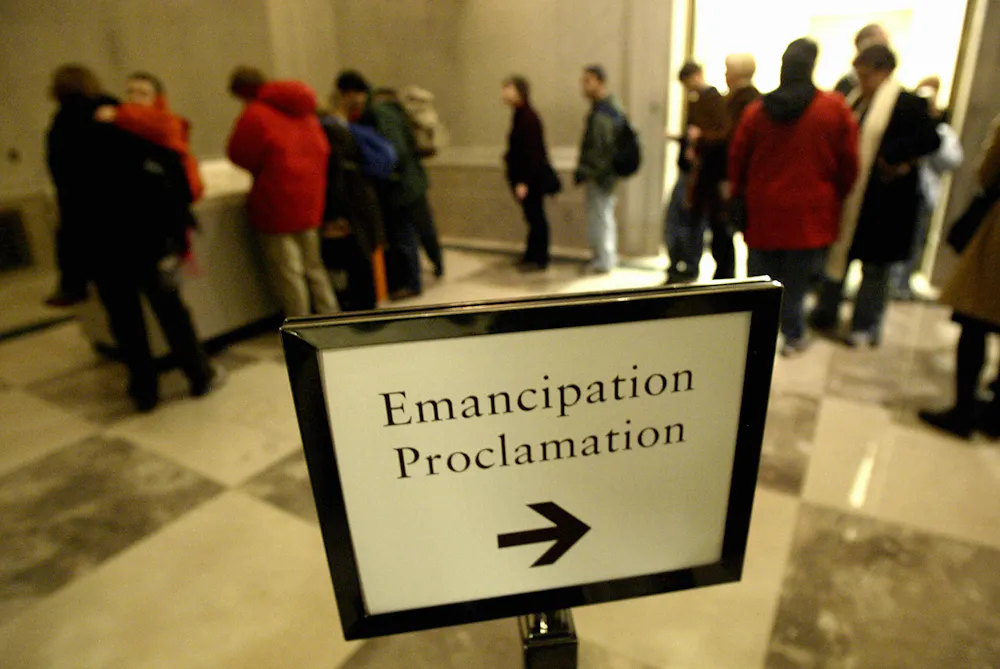
    People line up to view the original Emancipation Proclamation on Martin Luther King Jr. Day, Jan. 19, 2004, at the National Archives building in Washington, D.C.
    Tim Sloan/AFP-Getty Images

    Destroyed by fire

    The idea of preserving the government’s records dates back to the country’s founding. Charles Thomson, secretary of the Continental Congress during the American Revolution and then secretary of Congress under the Articles of Confederation, recognized the need for proper storage of the Congress’ records.

    But the young nation lacked the money and infrastructure to act. Many of the Continental Congress’ records were kept by Thomson himself for years, and while some were later transferred to the Department of State, others were lost.

    Throughout the 19th and early 20th centuries, fires repeatedly ravaged federal records. Fires were very common in the 19th century due to a combination of highly flammable building materials, open frames used for lighting and heating, and the lack of modern fire safety measures such as sprinklers and fire-resistant construction.

    In 1800, a blaze destroyed the War Department’s archives, a loss that severely hampered government operations. In 1810, Congress authorized better housing for government records, but the law was never fully executed. Instead, different parts of the government, from the Department of State to the Department of Treasury, continued maintaining their own records.

    The Treasury Department suffered fires in 1801 and again in 1833, further erasing crucial financial records. The Patent Office, home to invaluable documentation of American innovation, burned in 1877, having already been damaged by an 1836 fire.

    Storage at the federal Office of Indian Affairs in 1935.
    National Archives Foundation

    One of the most devastating losses occurred in 1921 when a fire at the Department of Commerce destroyed nearly all records from the 1890 federal census. This loss had far-reaching consequences, particularly for genealogical and demographic research.

    Fires weren’t the only threat to the government’s records.

    “It is a matter of common report that during the civil war, great quantities of documents stored in the Capitol were thrown away to make quarters for soldiers,” Historian and founding member of the American Historical Association J. Franklin Jameson noted in a 1911 Washington Post article.

    “At a later date,” he added, “the archives of the House of Representatives were systematically looted for papers having a market value because of their autographs.”

    Jameson spent decades lobbying Congress for a centralized repository. His persistence, coupled with the advocacy of key officials, laid the groundwork for future action.

    A bound copy of George Washington’s account of expenses while commander in chief of the Continental Army.
    National Archives and Records Administration

    These repeated disasters illuminated a glaring issue: The federal government lacked a centralized, protected repository to safeguard its records.

    Finding a home

    Momentum for a dedicated archives building gained traction in the late 19th century. In 1903, a bipartisan bill passed Congress giving the OK to purchase land in Washington, D.C., for a Hall of Records.

    But the legislation didn’t lead to any action. Government records remained scattered, vulnerable and neglected. That same year, Congress authorized that any records not needed for daily business be transferred to the Library of Congress.

    In 1912, President William H. Taft issued executive order 1499, aptly named Disposal of Useless Papers, requiring agencies to consult the librarian of Congress before disposing of documents.

    This established a formal review process for government document disposal, but agencies still discarded records, often haphazardly, until stricter records management laws were enacted.

    In 1926, Congress passed the Public Buildings Act, authorizing construction of an archives facility in Washington, D.C. Departing president Herbert Hoover laid the cornerstone of the new building on Feb. 20, 1933. He then deposited facsimiles of the Declaration of Independence and the Constitution, an American flag and daily newspapers from that day underneath the cornerstone.

    Growth and standardization

    President Franklin D. Roosevelt, who took office two weeks later, was himself a meticulous record-keeper. He understood the importance of historical preservation. Roosevelt kept all of his personal and presidential records and books in a fire-safe space he built on his Hyde Park, New York, property, which he donated to the government after he died. This building and the materials inside became part of the National Archives as the first U.S. presidential library.

    The National Archives, an independent agency, was officially established under Roosevelt in the 1934 National Archives Act. The head archivist was to be appointed by the president. The first archivist, Robert D.W. Connor, took office that year with a mandate to organize, preserve and make accessible the nation’s records.

    Initially, the National Archives was simply a building – an impressive neoclassical structure in Washington, D.C., that opened in 1935. The very first records deposited there came from three World War I-era regulatory agencies – the U.S. Food Administration, the Sugar Equalization Board and the U.S. Grain Corporation.

    Initially, the Archives lacked a formalized records management program. There were no clear guidelines on what to keep and what to discard, so agencies made their own decisions. This led to inconsistent preservation.

    The creation of the first federal records administration program in 1941, together with the 1943 Records Disposal Act, codified things. These policies granted the National Archives authority to establish a structured approach to determining which records held historical value and should be preserved, while allowing for the responsible disposal of other documents.

    A 1950 law gave the National Archives more power to decide what should be kept and what could be discarded, creating a more organized and accountable system for preserving the nation’s history.

    As the volume of records increased and their formats changed, the archives adapted. By 2014, amendments to the Federal Records Act explicitly included electronic records, recognizing the shift toward digital documentation.

    Stacks at the National Archives in Washington in 1950, where rare photographs and national records are ordered and stored.
    Three Lions/Getty Images

    Ensuring accountability

    Beyond mere storage, the National Archives plays a vital role in upholding democracy.

    It ensures transparency by preserving government accountability, preventing manipulation or loss of records that could distort historical truth. The National Archives also provides public access to documents that shape civic awareness and historical knowledge, from the Declaration of Independence to declassified government files.

    In an era of digital misinformation and contested narratives, the National Archives stands as a guardian of primary sources. Its existence reminds the nation that history is not a matter of convenience, but a cornerstone of informed governance.

    Elizabeth Call is a member of the Society of American Archivists.

    ref. Fires, wars and bureaucracy: The tumultuous journey to establish the US National Archives – https://theconversation.com/fires-wars-and-bureaucracy-the-tumultuous-journey-to-establish-the-us-national-archives-250857

    MIL OSI – Global Reports

  • MIL-OSI Global: Social media design is key to protecting kids online

    Source: The Conversation – USA – By Abdulmalik Alluhidan, Ph.D. student in Computer Science, Vanderbilt University

    How social media apps are designed has a lot to do with whether teens have good or bad experiences. Daniel de la Hoz/Moment via Getty Images

    Social media is a complex environment that presents both opportunities and threats for adolescents, with self-expression and emotional support on the one hand and body-shaming, cyberbullying and addictive behaviors on the other. This complexity underscores the challenge to regulating teen social media use, but it also points to another avenue for protecting young people online: how social media platforms are designed.

    The growing debate around teen social media use has intensified, with recent bipartisan policy efforts in the U.S., such as the Kids Online Safety Act, seeking to protect young people from digital harms. These efforts reflect legitimate concerns. However, broad restrictions on social media could also limit benefits for teens, throwing the baby out with the bath water.

    I am a researcher who studies online safety and digital well-being. My recent work with colleagues in computer scientist Pamela Wisniewski’s Socio-Technical Interaction Research Lab underscores a critical point: social media is neither inherently harmful nor entirely beneficial. It is a tool shaped by its design, how teens use it, and the context of their experiences.

    In other words, social media’s impact is shaped by its affordances – how platforms are designed and what they enable users to do or constrain them from doing. Some features foster connection while others amplify harms.

    As society moves toward practical solutions for online safety, it is important to use evidence-based research on how these features shape teens’ social media experiences and how they could be redesigned to be age appropriate for young people. It’s also important to incorporate teens’ perspectives to pinpoint what policies and design choices should be made to protect young people using social media.

    My colleagues and I analyzed over 2,000 posts from teens ages 15-17 on an online peer-support platform. Teens openly discussed their experiences with popular social media platforms such as Instagram, YouTube, Snapchat and TikTok. Their voices highlight a potential path forward: focusing on safety by design – an approach that improves platform features to amplify benefits and mitigate harms. This approach respects young people’s agency while prioritizing their digital well-being.

    What teens say about social media

    While social media’s worst outcomes such as cyberbullying or mental health crises are often in the spotlight, our research shows that teens’ experiences are far more nuanced. Instead, platforms enable diverse outcomes depending on their features and design.

    Teens commonly described negative experiences involving social drama, cyberbullying and privacy violations. For example, Instagram was a focal point for body-shaming and self-esteem issues, driven by its emphasis on curated visual content. Facebook triggered complaints about privacy violations, such as parents sharing private information without teens’ consent. Snapchat, meanwhile, exposed teens to risky interactions due to its ephemeral messaging, which fosters intimate but potentially unsafe connections.

    Research – and teens themselves – indicates that social media has negative and positive effects on young people.

    At the same time, teens expressed that social media provides a space for support, inspiration and self-expression, particularly when offline spaces feel isolating. Teens used social media to cope with stress or seek out uplifting content.

    Platforms such as Snapchat and WhatsApp were key spaces for seeking connection, enabling teens to build relationships and find emotional support. Snapchat, in particular, was the go-to platform for fostering close personal connections, while YouTube empowered teens to promote their creativity and identity by sharing videos.

    Many praised Instagram and Snapchat for providing inspiration, distraction or emotional relief during stressful times. Teens also used social media to seek information, turning to YouTube and Twitter to learn new things, verify information or troubleshoot technical problems.

    These findings underscore a critical insight: Platform design matters. Features such as algorithms, privacy controls and content-sharing mechanisms directly shape how teens experience social media. These findings further question the perception of social media as a purely negative force. Instead, teens’ experiences highlight its dual nature: a space for both risk and opportunity.

    Key to safer social media

    The concept of affordances – design and features – helps explain why teens’ experiences differ across platforms and provides a path toward safer design. For example, Instagram’s affordances such as image sharing and algorithmic content promotion amplify social comparison, leading to body-shaming and self-esteem issues. Snapchat’s affordances, such as ephemeral messaging and visibility of “best friends,” encourage personal connections but can foster risky interactions. Meanwhile, YouTube’s affordances, such as easy content creation and discovery, promote self-expression but can contribute to time-management struggles due to its endless scroll design.

    By understanding these platform-specific designs and features, it is possible to mitigate risks without losing the benefits. For example, Facebook could allow for appropriate levels of parental oversight of teen accounts while preserving privacy. Instagram could reduce algorithmic promotion of harmful content. And Snapchat could improve safety features.

    This safety by design approach moves beyond restricting access to focus on improving the platforms themselves. By thoughtfully redesigning social media features, tech companies can empower teens to use these tools safely and meaningfully. Policymakers can focus on holding social media companies responsible for their platforms’ impact, while simultaneously promoting the digital rights of teens to benefit from social media use.

    Call for safety by design

    It’s important for policymakers to recognize that social media’s risks and rewards coexist. Instead of viewing social media as a monolith, however, policymakers can target the features of social media platforms most likely to cause harm. For example, they could require platform companies to conduct safety audits or disclose algorithmic risks. These steps could encourage safer design without limiting access.

    By addressing platform affordances and adopting safety by design, it is possible to create digital spaces that protect teens from harm while preserving the connection, creativity and support that social media enables. The tools to build a future where teens can thrive are already available; they just need to be designed better.

    Pamela Wisniewski contributed to the writing of this article.

    The research reported in this article was supported by the U.S. National Science Foundation and the William T. Grant Foundation.

    ref. Social media design is key to protecting kids online – https://theconversation.com/social-media-design-is-key-to-protecting-kids-online-243547

    MIL OSI – Global Reports

  • MIL-OSI Global: Humans aren’t the only animals with complex culture − but researchers point to one feature that makes ours unique

    Source: The Conversation – USA – By Eli Elster, Doctoral Candidate in Evolutionary Anthropology, University of California, Davis

    A ritual dance honoring Yoruban ancestors is one of the countless examples of human culture. Jorge Fernández/LightRocket via Getty Images

    Of the 8.7 million species on Earth, why are human beings the only one that paints self-portraits, walks on the Moon and worships gods?

    For decades, many scholars have argued that the difference stems from our ability to learn from each other. Through techniques such as teaching and imitation, we can create and transmit complicated information over many generations.

    So if a human finds, for instance, a better but more complex way to make a knife, they can pass along the new instructions. One of those learners might stumble upon their own improvement and pass it along in turn.

    If this loop continues, you get a ratchet effect, in which small changes can accumulate over time to produce increasingly intricate behaviors and technologies. This process produces our uniquely complex cultures: Scientists call it cumulative cultural evolution.

    But extensive data has emerged suggesting that other animals, including bees, chimpanzees and crows, can also generate cultural complexity through social learning. Consequently, the debate over human uniqueness is shifting in a new direction.

    As an anthropologist, I study a different feature of human culture that researchers are beginning to think about: the diversity of our traditions. Whereas animal cultures affect just a few crucial behaviors, such as courtship and feeding, human cultures cover a massive and constantly expanding set of activities, from clothing to table manners to storytelling.

    This new view suggests that human culture is not uniquely cumulative. It is uniquely open-ended.

    What is cumulative culture?

    In the early 2000s, a research team led by psychologist Michael Tomasello tested 105 human children, 106 adult chimpanzees and 32 adult orangutans on a battery of cognitive assessments. Their goal was to see whether humans held any innate cognitive advantage over their primate cousins.

    Surprisingly, the human children performed better in only one capacity: social learning. Tomasello thus concluded that humans are not “generally smarter.” Rather, “we have a special kind of smarts.” Our advanced social abilities allow us to transmit information by accurately teaching and learning from each other.

    Psychologist Michael Tomasello and his team ran a number of experiments comparing how human children and nonhuman primates performed on cognitive tasks, including tests of social learning.
    Max Planck Institute for Evolutionary Anthropology

    Humans’ apparent social learning abilities suggested a clear explanation for our unique cultural traits. Knowledgeable humans – say, someone who discovers a better way to make a spear – can successfully transfer that skill to their peers. But an inventive chimp – one who discovers a better way to smash nuts, for example – can’t successfully share their innovation. Nobody listens to Chimp Einstein. So our inventions persist and build upon each other, while theirs vanish into the jungle floor.

    Or so the theory went.

    Now, though, scientists have hard evidence showing that, just like us, animals can learn from each other and thus maintain their cultures for long periods of time. Groups of swamp sparrows appear to use the same song syllables for centuries. Meerkat troops settle on different wake-up times and maintain them for a decade or more.

    Of course, long-term social learning is not the same as cumulative culture. Yet scientists also now know that humpback whale songs can oscillate in complexity over many generations of learners, that homing pigeons create efficient flight paths by learning from each other and making small improvements, and that hooved mammals cumulatively alter their migration routes to exploit plant growth.

    Once again, the animals have shot down our claim to uniqueness, as they have innumerable times throughout scientific history. You might wonder, at this point, if we should just settle the uniqueness question by answering: “We’re not.”

    If not cumulative culture, what makes us unique?

    But it remains the case that humans and their cultures are quite different from animals and their equivalents. Most scholars agree about that, even if they disagree about the reasons why. Since cumulative complexity appears not to be the most important difference, several researchers are sketching out a new perspective: Human culture is uniquely open-ended.

    Currently, anthropologists are discussing open-endedness in two related ways. To get a sense of the first, try counting the number of things you’re engaged with, right now, that came to you through culture. For example, I picked my clothes today based on fashion trends I did not develop; I am writing in a language I did not invent; I tied my shoes using a method my father taught me; there are paintings and postcards and photographs on my walls.

    Give me 10 minutes, and I could probably add 100 more items to that list. In fact, other than biological acts such as breathing, it is difficult for me to think of any aspect of what I’m doing right now that is not partially or completely cultural. This breadth is incredibly strange. Why should any organism spend time pursuing such a wide range of goals, particularly if most of them have nothing to do with survival?

    Other animals are much more judicious. Their cultural variation and complexity pertains almost entirely to matters of subsistence and reproduction, such as acquiring food and mating. Humans, on the other hand, lip-synch, build space stations and, less grandiosely, have been known to do things such as spend six years trying to park in all 211 spots of a grocery store lot. Our cultural diversity is unparalleled.

    Open-endedness, as a unique human quality, is not just about variety; it reflects the quantum leaps by which our cultures can evolve. To illustrate this peculiarity, consider a hypothetical example regarding the rocks that chimpanzees use to smash nuts.

    Chimps often use stones to break open hard-shelled nuts.
    Anup Shah/Stone via Getty Images

    Let’s say these chimps would benefit from using rocks that they can swing as hard and accurately as possible, but that they don’t immediately know what kind of rocks those would be. By trying different options and observing each other, they might accumulate knowledge of the best qualities in a nut-smashing rock. Eventually, though, they’d hit a limit in the power and precision available by swinging a rock with your fist.

    How could they get past this upper limit? Well, they could tie a stick to their favorite rock; the extra leverage would help them smash the nuts even harder. As far as we know, though, chimpanzees aren’t capable of realizing the benefits of harnessing this additional quality. But we are – people invented hammers.

    Crucially, discovering the power of leverage allows for more than just better nut-smashing. It opens up innovations in other domains. If adding handles to wielded objects allows for better nut-smashing, then why not better throwing, or cutting, or painting? The space of cultural possibilities, suddenly, has expanded.

    Through open-ended cultural evolution, human beings produce open-endedness in culture. In this respect, our species is unparalleled.

    What’s next?

    Researchers have not yet answered most of the major questions about open-endedness: how to quantify it, how we create it, whether it has any true limitations.

    But this new framework must shift the tides of a related debate: whether there is something obviously different about the way human minds work, other than social learning capacities. After all, every cultural trait emerges through interactions between minds – so how do our minds interact to produce such a degree of cultural breadth?

    No one knows yet. Interestingly, this shifting debate over how cognition influences culture coincides with a spate of research bridging psychology and anthropology, which explores why certain behaviors – such as singing lullabies, curative bloodletting and storytelling – recur across human cultures.

    Human minds produce unparalleled diversity in their cultures; yet it is also true that those cultures tend to express variations on a strict set of themes, such as music and marriage and religion. Ironically, the source of our open-endedness may illuminate not only what makes us so diverse, but also what makes us so often the same.

    Eli Elster does not work for, consult, own shares in or receive funding from any company or organization that would benefit from this article, and has disclosed no relevant affiliations beyond their academic appointment.

    ref. Humans aren’t the only animals with complex culture − but researchers point to one feature that makes ours unique – https://theconversation.com/humans-arent-the-only-animals-with-complex-culture-but-researchers-point-to-one-feature-that-makes-ours-unique-245526

    MIL OSI – Global Reports

  • MIL-OSI Global: Violence in South Sudan is rising again: what’s different this time, and how to avoid civil war

    Source: The Conversation – Africa – By Jan Pospisil, Associate Professor at the Centre for Peace and Security, Coventry University

    A rise in political tensions in South Sudan and an escalation of violence in the Upper Nile State have raised fears of a return to civil war in the world’s youngest nation. In early March 2025, neighbouring Uganda sent troops to South Sudan on the request of the government, and was involved in aerial bombardments.

    South Sudan’s opposition groups took issue with the Ugandan intervention, and stopped taking part in discussions to create a joint military system in the country. These developments risk unravelling the 2018 power-sharing deal between President Salva Kiir, and First Vice-President Riek Machar and other opposition leaders. This deal brought a halt to a five-year civil war. Jan Pospisil, who has researched South Sudan’s political transition, unpacks the drivers of growing discontent.

    What’s the current situation in South Sudan?

    In early March 2025, the White Army, a Nuer community militia, launched attacks against units of the South Sudan People’s Defence Forces in Nasir County, Upper Nile State.

    This sparked fierce fighting. Nearly 50 people have been killed so far and many more wounded. The White Army claims it acted in self-defence. The militia group defends the Nuer community, one of country’s major ethnolinguistic groups.

    This outbreak of violence follows patterns of conflict from 2024 and years before. But it has spiralled out of control. The government’s response – including aerial bombardments with the support of the Ugandan army and arrests of leading opposition figures – has inflamed tensions.

    This conflict can be traced back to historical tensions between the Nuer and Dinka communities, worsened by the 1991 split of the Sudanese People’s Liberation Movement (SPLM), a political party.

    After the split, Riek Machar established a Nuer-dominated faction called SPLM-Nasir. It broke away from the John Garang-led SPLM, which was said to be Dinka-dominated. The split led to years of infighting.

    The White Army itself emerged during this period in the 1990s. It was primarily concerned with Nuer community defence and cattle raiding. It has never been controlled by any political entity.

    Machar has tried but never succeeded to command all Nuer militias, including the White Army.

    The White Army’s independence remains crucial in understanding the current situation in South Sudan. Many statements – often deliberately to discredit the opposition – conflate White Army actions with South Sudan’s opposition strategy. Such statements downplay the existing grievances in Nasir County.

    What’s different this time compared to the outbreak of civil war in 2013?

    When South Sudan’s civil war erupted in 2013, Nasir was engulfed in violence. Government troops – largely of Dinka origin – perceived the Nuer-majority town as enemy territory. Their attacks were often an attempt to take revenge for the atrocities committed by the White Army against Dinka civilians in the 1990s. Nuer fighters retaliated in kind. This trapped civilians in cycles of violence. By August 2014, Nasir was deserted, its infrastructure in ashes.

    The White Army’s recent attacks appear to be motivated by a series of provocations rather than any centralised political directive.

    Clashes erupted in mid-February 2025 when White Army members attacked soldiers collecting firewood. Four soldiers died and at least 10 civilians were injured by retaliatory shelling from the army.

    This incident heightened animosities, resulting in violent attacks. In March 2025, army forces suffered a humiliating defeat. This embarrassed the government – it looked like the national army was unable to control a community militia. This provoked a crackdown, and the White Army pushed back.

    The White Army seized Nasir and parts of the Wec Yar Adiu army barracks on 4 March.

    A planned evacuation of army troops via a UN peacekeeping helicopter on 7 March was disrupted when an exchange of fire led to casualties. At least 27 soldiers died, including Nasir army commander Majur Dak, a Dinka from neighbouring Jonglei State, and a UN peacekeeping crew member.

    In response, the SPLM-led government has moved to scapegoat the opposition.

    Several opposition figures, including oil minister Puot Kang Chol and opposition chief of staff Gabriel Duop Lam, were arrested.

    The government’s narrative suggests that the opposition orchestrated the White Army attacks as part of a broader destabilisation effort in the country.

    However, this ignores the fact that the White Army has historically acted independently. The arrests appear to be an opportunistic move to weaken the opposition, rather than a genuine attempt to address the root causes of the violence.

    What can be done to avoid a return to war?

    The path to stability lies in dialogue and sustained community demobilisation.

    The government needs to refrain from randomly arresting opposition figures because it feels humiliated. And it needs to stop indiscriminate attacks against civilians, such as aerial bombardments, in Nasir County.

    At the same time, community leaders, particularly those with influence over White Army factions, should be engaged in negotiations to de-escalate the situation.

    The coming rainy season, expected to start in April, provides a natural window for such efforts. Logistical challenges will make large-scale armed operations more difficult. This period could allow for confidence-building measures on the ground between Nuer communities and the army.

    And internationally?

    The international community has responded to the unfolding crisis with condemnations of the violence in Nasir. However, there has been little action.

    The UN mission in South Sudan has called for restraint from all sides but has largely failed to acknowledge the complex, independent nature of White Army mobilisation. The head of the UN mission should clearly call out the arrests of opposition figures as unbased and a threat to the transition process.

    The lack of such statements risks reinforcing government narratives that justify the use of heavy military force. The UN and international actors must emphasise the need for de-escalation, while also advocating for political solutions that address underlying grievances.

    This research is supported by the Peace and Conflict Resolution Evidence Platform (PeaceRep), funded by UK International Development from the UK government. However, the views expressed are those of the author and do not necessarily reflect the UK government’s official policies. Any use of this work should acknowledge the author and the Peace and Conflict Resolution Evidence Platform.

    ref. Violence in South Sudan is rising again: what’s different this time, and how to avoid civil war – https://theconversation.com/violence-in-south-sudan-is-rising-again-whats-different-this-time-and-how-to-avoid-civil-war-252395

    MIL OSI – Global Reports

  • MIL-OSI Global: Trump’s phone call with Putin fails to deliver ceasefire – here’s what could happen next

    Source: The Conversation – UK – By Stefan Wolff, Professor of International Security, University of Birmingham

    After more than two hours on the phone on Tuesday, March 17, the US president, Donald Trump, and his Russian counterpart, Vladimir Putin, agreed agreed only to confidence-building measures, not a ceasefire between Ukraine and Russia. The two leaders came away from the call having agreed on a limited prisoner exchange, a suspension of attacks on energy infrastructure, and the creation of working groups to explore further steps towards a ceasefire and ultimately a peace agreement.

    A less charitable way of looking at the outcome of the second call between the two presidents since Trump returned to the White House would be that the ball is now back in America’s court. Putin made it crystal clear to Trump that he is not (yet) in the mood for any compromise.

    This is hardly surprising given recent events.

    The US has pressured Ukraine mercilessly into accepting a proposal for a 30-day ceasefire, which Trump hoped Russia would also agree to. But apart from a vague statement by Trump that he might consider sanctions against Russia, he has so far seemed unwilling to contemplate putting any meaningful equivalent pressure on Putin.


    Sign up to receive our weekly World Affairs Briefing newsletter from The Conversation UK. Every Thursday we’ll bring you expert analysis of the big stories in international relations.


    On the ground, Russia has gained the upper hand in the Kursk region where Ukrainian troops have ceded most of the territory they captured after a surprise offensive last summer. Once Putin’s forces, assisted by thousands of North Korean soldiers, have succeeded in driving the Ukrainians out of Russia, Kyiv will have lost its most valuable bargaining chip in negotiations with Moscow.

    Meanwhile, Russia has also made further gains on the frontlines inside Ukraine especially in parts of Kherson and Zaporizhzhia. These are two of the four regions (the other two are Donetsk and Luhansk) that Putin has claimed for Russia in their entirety since sham referendums in September 2022, despite not yet having full control of them.

    If Russia were to capture yet more Ukrainian territory, Putin would probably find it even easier to convince Trump that his demands are reasonable. The fact that Trump already hinted at a “dividing of assets”, including the nuclear power plant at Zaporizhzhia – Europe’s largest before its forced shutdown in September 2022 – is a worrying indication of how far the Russian president has already pushed the envelope.

    Ukraine war: territory occupied by Russia as at March 18 2025.
    Institute for the Study of War

    But a deal solely between Russia and the US is not going to work. In that sense, time is not only on Putin’s side but also on Zelensky’s.

    The Russian readout of the call between the two presidents claimed that they had discussed “the complete cessation of foreign military assistance and the provision of intelligence information to Kyiv” as a key condition for moving forward – something that Trump subsequently denied in an interview with Fox. This means that, for now, Kyiv is likely to continue to receive US aid.

    Europe at the ready

    Perhaps more importantly in the long term, Europe is also doubling down on support for Ukraine. While Trump and Putin were discussing a carve-up of Ukraine over the phone, the president of the European Commission, Ursula von der Leyen, left no doubt on where the EU stands.

    In a speech at the Royal Danish Military Academy foreshadowing the publication of the commission’s Readiness 2030 white paper on bolstering European defences, she recommitted to developing European “capabilities to have credible deterrence” against a hostile Russia.

    A few hours later, the German parliament passed a multi-billion Euro package that loosens the country’s tight borrowing rules to enable massive investments in defence. This follows announcements of increased defence elsewhere on the continent, including in the UK, Poland, and by the EU itself.

    Meanwhile, the UK and France are leading efforts to assemble a coalition of the willing to help Ukraine. Representatives of the 30-member group gathered in London on March 15 for further talks.

    Afterwards, the UK prime minister, Keir Starmer, released a statement saying that Ukraine’s western partners “will keep increasing the pressure on Russia, keep the military aid flowing to Ukraine and keep tightening the restrictions on Russia’s economy”.

    Undoubtedly, these measures would be more effective if they had Washington’s full buy-in – but they send a strong signal to both the Kremlin and the White House that Ukraine is not alone in its fight against Russia’s continuing aggression.

    Putin’s options

    Putin, meanwhile, may have time on his side in the short term – but he should take note of this. Russian manpower and firepower may dwarf that of Ukraine, but it would be no match for a Ukraine backed by such a coalition of the willing.

    Putin’s apparent plan to drag Trump into the minutiae of negotiating a comprehensive deal may eventually backfire in more ways than one. For a start, really detailed discussions will test the US president’s notoriously short attention span.

    But this will also buy time for Ukraine and its supporters to strengthen Kyiv’s position in future negotiations. And it will continue to strain – but not immediately break – Russia’s economy.

    For now, Trump’s efforts to end the war in Ukraine have stalled. He is attempting to broker a complex ceasefire deal that involves separate agreements with Kyiv and Moscow, pressure on Nato allies, and an attempt to drive a wedge between Russia and China. It’s not clear how this will succeed or indeed where it will end.

    The only certainty is that they are not bringing a just and stable peace for Ukraine any closer.

    Stefan Wolff is a past recipient of grant funding from the Natural Environment Research Council of the UK, the United States Institute of Peace, the Economic and Social Research Council of the UK, the British Academy, the NATO Science for Peace Programme, the EU Framework Programmes 6 and 7 and Horizon 2020, as well as the EU’s Jean Monnet Programme. He is a Trustee and Honorary Treasurer of the Political Studies Association of the UK and a Senior Research Fellow at the Foreign Policy Centre in London.

    Tetyana Malyarenko does not work for, consult, own shares in or receive funding from any company or organisation that would benefit from this article, and has disclosed no relevant affiliations beyond their academic appointment.

    ref. Trump’s phone call with Putin fails to deliver ceasefire – here’s what could happen next – https://theconversation.com/trumps-phone-call-with-putin-fails-to-deliver-ceasefire-heres-what-could-happen-next-252417

    MIL OSI – Global Reports

  • MIL-OSI Global: Is Google Maps brainwashing us? It might be if the theory of ‘extended cognition’ is correct

    Source: The Conversation – Canada – By Susan Dieleman, Jarislowsky Chair in Trust and Political Leadership and Associate Professor of Philosophy, University of Lethbridge

    Over a billion people use Google Maps to help them navigate their world every month. If you own a smartphone, the odds are better than average you’re one of those people.

    If you’re using Google Maps in the United States, you may have noticed some recent changes to your world. The “Gulf of Mexico” is now the “Gulf of America,” and “Mount Denali” is again “Mount McKinley.” These are both changes instigated by U.S. President Donald Trump.

    Google is reportedly systematically removing resistance to these changes.

    When compared to how common it is for the Google search engine to boost misinformation and fake news, and feed into confirmation bias, changing the name of a body of water might not seem like a big deal. But the philosophical theory of “extended cognition” suggests such changes might not be so innocuous after all.

    Cognitive processes — not all in our heads

    The notion of extended cognition, along with the notion of the extended mind, was presented in a 1998 paper by British philosopher Andy Clark and his Australian colleague, David J. Chalmers.

    They argued that the environment plays an active role in our cognitive processes.

    Take their example of “the use of pen and paper to perform long multiplication” — something that could have been done in the mind is extended, as it were, to the external world. If it had been done in one’s mind, we wouldn’t hesitate to call this a cognitive process.

    The point is — moving this process outside the mind doesn’t change what it is. Rather, as they put it: “Cognitive processes ain’t (all) in the head!”

    They suggest that if the resources of an external tool are always there when we need them, then those resources are, in effect, “part of the basic package of cognitive resources that I bring to bear on the everyday world.”

    Back in 1998, almost decade before the advent of the iPhone, they used the example of a pocket calculator, with a suggestion that it’s unlikely the average person would always have one with them. Imagine, then, how smartphones play an integral role in many of our cognitive processes.

    In fact, as Chalmers pointed out in a later piece, the iPhone he purchased quickly became part of his mind. This is because it replaced part of his memory, harboured some of his desires, facilitated some of his calculations and more.

    In short, we outsource many of our cognitive tasks to our technologies. Our smartphones, in particular, play an important role in keeping track, remembering, calculating and finding our way.

    ‘Attention economy’

    In what’s come to be known as the attention economy, the role of technologies in our cognitive processes is amplified further.

    As Google strategist-turned-philosopher James Williams notes, technologies’ low-level engagement goals include “maximizing the amount of time you spend with their product, keeping you clicking or tapping or scrolling as much as possible, or showing you as many pages or ads as they can.”

    The more time spent on our phones, the more of our attention they demand, and the more integrated they are in our cognitive processes.

    When I’ve taught a unit on technology in Introduction to Philosophy courses in recent years, I’ve instructed students to read this piece by Canadian cognitive science scholar Karina Vold and reflect on their relationships to their phones — something most readily admit they’d never done before.

    As Vold points out, there could be significant legal implications if courts were to accept the theory of extended cognition in a world where smartphone technologies are ubiquitous. They might even include whether and how the law could protect “what and how we think from undue influence.”

    From this perspective, the fact that Google can change maps literally overnight gains new significance.

    If we take the theory of extended cognition seriously, we can understand Google’s changes, like renaming the Gulf of Mexico the Gulf of America, as problematically undermining our autonomy. In a sense, Google is able to get into our cognitive processes and, at will, make changes — to our understanding and memory of how the physical world is structured and navigated — without our consent.

    As a result, such changes fall on the wrong side of the admittedly blurry distinction between persuasion and coercion.

    Persuasion versus coercion

    Traditionally understood, persuasion respects individuals’ autonomy. It requires critical thinking and argumentation, which involve presenting reasons in support of a claim to people, who then use their own cognitive powers to decide whether to adopt or reject those reasons and claims.

    Conversely, coercion is closer to a form of brainwashing. It involves undermining or bypassing a person’s ability to accept or reject an argument. It gets into the cognitive processes themselves, making changes without knowledge or consent.

    In an era when technology companies compete for increasing shares of our attention, and therefore of our cognitive processes, it becomes increasingly difficult, but also urgently important, to be aware of whether we are being persuaded or brainwashed, and what we are being persuaded or brainwashed to believe.

    Though the name of a body of water on a Google Map might not seem like a big deal, it’s at least a reminder to be vigilant.

    Susan Dieleman receives funding as the Jarislowsky Chair in Trust and Political Leadership at the University of Lethbridge.

    ref. Is Google Maps brainwashing us? It might be if the theory of ‘extended cognition’ is correct – https://theconversation.com/is-google-maps-brainwashing-us-it-might-be-if-the-theory-of-extended-cognition-is-correct-251604

    MIL OSI – Global Reports

  • MIL-OSI Global: Sand-sized fossils hold secrets to the history of climate change

    Source: The Conversation – Global Perspectives – By Yuhao Dai, Research Fellow in Earth Sciences, Australian National University

    N-2-s/Shutterstock

    Between 18,000 and 11,000 years ago, the amount of carbon dioxide in the atmosphere suddenly shot up. This caused rapid global warming, the mass melting of glaciers, and the end of the last ice age.

    Much of this sudden influx of atmospheric CO₂ came from the Southern Ocean around Antarctica, highlighting the key role this body of water plays in regulating the global climate.

    However, we have a poor understanding of how and why CO₂ release from this region changed during periods such as the end of the last ice age. But our new study, published in Nature Communications, reveals how much CO₂ was released to the atmosphere from the polar Southern Ocean during this period – and what factors were responsible.

    We reached these conclusions by examining the chemistry of sand-sized fossils, called foraminifera, from the seafloor south of Tasmania.

    Tiny shells preserved in mud

    Foraminifera are tiny single-celled organisms, either floating in the ocean surface or living on the seabed. Most of them build shells made of calcium carbonate to protect themselves. After death, these foraminifera shells are preserved in the mud on the seabed.

    Newer generations of foraminifera shells stack over older ones, like adding new pages to a book. Over time, these foraminifera shells form a book on the seabed that can be dated back to millions of years ago.

    Even more fascinating, trace amounts of elements in the seawater are incorporated into the calcium carbonate shells of foraminifera. In some foraminifera species, the amount of these elements is sensitive to the environment they live in.

    For example, the amount of boron in a species called Cibicidoides wuellerstorfi is sensitive to carbonate ion concentrations, and the amount of cadmium in another species (Hoeglundina elegans) is sensitive to phosphate concentrations.

    By looking at trace elements in these foraminifera shells found in the sequence of mud on the seabed, we can decipher mysteries about the past seawater condition in the book left by foraminifera on the seabed.

    In some species of foraminifera, such as Cibicidoides wuellerstorfi (pictured here), the trace amount of elements found in their shells is sensitive to their environment.
    Le Coze, François/WoRMS, CC BY-SA

    A giant metal straw

    How do scientists do this? First we go out to the ocean to collect mud.

    In this process, a giant metal straw is dropped to the seabed and then raised to our research ships, fully filled with mud. We take these mud samples back to our lab. There, we slice them into pieces and examine them separately.

    This allows us to extract information from each page of the book in chronological order. Foraminifera shells are washed out of the mud, and specific shells are picked out under a microscope, cleaned, and finally analysed for their chemical composition.

    Foraminifera have lived almost everywhere in the ocean for millions of years. Based on their chemical composition, scientists have reconstructed a continuous record of seawater temperature during the past 66 million years in great detail.

    Among a few places in the ocean where you cannot find foraminifera is the polar Southern Ocean. Although some foraminifera live there, seawater in this region is often too corrosive for their shells to preserve on the seabed. The lack of foraminifera in the polar Southern Ocean brings a huge challenge for scientists eager to understand past changes in CO₂ exchanges between the ocean and the atmosphere.

    Among a few places in the ocean where you cannot find foraminifera is the polar Southern Ocean.
    Mathias Berlin/Shutterstock

    From Antarctica to Tasmania

    We decided to tackle the problem using mud on the seabed 3,300 metres below the surface just south of Tasmania.

    Seawater at that depth near Tasmania is ideal for studying the chemistry of the polar Southern Ocean. That’s because seawater from the polar Southern Ocean sinks to the bottom of the ocean, moves northwards, and eventually occupies the seabed south of Tasmania.

    Seawater chemistry – including concentrations of carbon, phosphate and oxygen – does change along its way at the bottom of the ocean.

    These changes are, however, generally proportional to each other. So if all these concentrations are known for seawater at depth near Tasmania, we can work out their concentrations in the polar Southern Ocean.

    Fortunately, there were plenty of foraminifera shells in the mud for all these reconstructions at the site we examined near Tasmania.

    Reconstructing ancient chemical concentrations

    Using the chemistry of foraminifera, we reconstructed changes in concentrations of carbonate ion (which is largely related to carbon), phosphate and oxygen at the bottom of the ocean near Tasmania during the end of the last ice age roughly 20,000–10,000 years ago. This period is known as the last deglaciation.

    Based on these reconstructions, we calculated the amount of CO₂ released from the polar Southern Ocean during the last deglaciation. Some of this CO₂ came from biological processes – changes in the amount of carbon used by microscopic organisms living near the ocean surface. The rest was from physical processes – CO₂ molecules escaping from seawater directly to the air.

    We found that biological processes were more important for CO₂ releases during the earlier stages of the deglaciation, while the physical processes contributed more during the later stages.

    From the polar Southern Ocean, seawater sinks to the bottom of the ocean and moves northwards to reach the seabed south of Tasmania.
    Steve Todd/Shutterstock

    So why is this important?

    Scientists use climate models to predict future climate and to reproduce past atmospheric CO₂ changes.

    Our results provide testing targets for climate models to reproduce.

    Better reproduction of past changes will improve climate model design for predicting future changes.

    This will help us understand how future changes in the polar Southern Ocean can affect atmospheric CO₂, contributing to making effective plans to mitigate CO₂ emissions.

    Yuhao Dai receives funding from the Australian Research Council Special Research Initiative, Australian Centre for Excellence in Antarctic Science.

    ref. Sand-sized fossils hold secrets to the history of climate change – https://theconversation.com/sand-sized-fossils-hold-secrets-to-the-history-of-climate-change-250928

    MIL OSI – Global Reports

  • MIL-OSI Global: Putin made Trump wait, then strung him along – it’s clear his war aims in Ukraine have not changed

    Source: The Conversation – Global Perspectives – By Jon Richardson, Visiting Fellow, Centre for European Studies, Australian National University

    US President Donald Trump’s phone call with his Russian counterpart, Vladimir Putin, didn’t take a tangible step towards ending the hostilities in Ukraine, let alone finding an enduring peace. Rather, it provided further evidence of Putin’s ability to string along and outsmart Trump.

    For starters, Putin sent a signal by making Trump wait for more than an hour to talk. Putin was speaking at a televised conference with Russian businesspeople and even made a joke about the delay when told the time for his call was approaching.

    This was clearly designed to show his alpha status, both to Trump and the Russian public. Steve Witkoff, Trump’s special envoy, was reportedly made to wait eight hours by Putin when he arrived in Moscow last week for talks.

    And after Tuesday’s call, Putin only agreed to pause attacks on Ukraine’s energy infrastructure for 30 days, rather than the total ceasefire proposed by Trump and agreed to by Ukrainian President Volodymyr Zelensky.

    And even this agreement lacked clarity. The lengthy Kremlin statement on the call said the pause would only apply to attacks on energy infrastructure, while the vaguer White House read-out said it included a much broader “energy and infrastructure” agreement. The Kremlin will doubtless stick to the narrow concept.

    The Kremlin’s statement also said Trump proposed this idea and Putin reacted positively. This seems implausible given that pausing attacks on energy infrastructure would be the least costly partial ceasefire for Russia to agree to.

    It seems more likely this proposal came from Putin as a “compromise”, even though Trump was earlier threatening fire and brimstone if Russia did not agree to a proper ceasefire.

    Russia will still be able to continue its ground offensive in Ukraine, where it has the upper hand thanks to Ukrainian manpower shortages (despite its own horrendous losses). It will also be able to maintain its bombardment of Ukrainian civilian targets that has already cost possibly as many as 100,000 civilian lives and half a trillion US dollars in mooted reconstruction costs.

    Ukraine, meanwhile, has only rarely hit residential areas in Russia. However, it has achieved considerable success with long-distance drone attacks on Russian oil refineries and energy infrastructure, threatening one of the main funding sources of Moscow’s war effort.

    Putin’s war aims remain unchanged

    The Kremlin’s read-out of the call also noted that various sticking points remain to achieve a full ceasefire in Ukraine.

    These included the Kyiv regime’s “inability to negotiate in good faith”, which has “repeatedly sabotaged and violated the agreements reached.” The Kremlin also accused Ukrainian militants of “barbaric terrorist crimes” in the Kursk region of Russia that Ukraine briefly occupied.

    This is not new language, but shows breathtaking chutzpah. It’s Russia, in fact, that has broken several agreements vowing to respect Ukraine’s borders, as well as numerous provisions of the Geneva Conventions on treatment of civilian populations and prisoners of war. It has even violated the Genocide Convention in the eyes of some scholars.

    That a US president could let this kind of statement go unchallenged underscores the extent of the White House’s volte-face on Ukraine.

    The Kremlin also asserted that a “key principle” for further negotiations must be the cessation of foreign military aid and intelligence to Ukraine.

    Given Trump has already frozen arms and intelligence support to Ukraine to make Zelensky more compliant, Putin no doubt thinks he might do so again. This, in turn, would strengthen Russia’s leverage in negotiations.

    Trump has already given away huge bargaining chips that could have been used to pressure Russia towards a just and enduring outcome. These include:

    • holding talks with Russia without Ukraine present
    • ruling out security guarantees for Ukraine and NATO membership in the longer term, and
    • foreshadowing that Ukraine should cede its sovereign territory in defiance of international law.

    Putin may be content to string out the ceasefire talks as long as he can in the hopes Russian troops can consolidate their hold on Ukrainian territory and completely expel Ukrainian forces from the Kursk region inside Russia.

    He shows no sign of resiling from his key aims since the beginning of the war – to reimpose Russian dominance over Ukraine and its foreign and domestic policies, and to retain the territories it has illegally annexed.

    The fact Moscow has signed treaties to formally incorporate and assimilate these Ukrainian regions fully into Russia – rather than merely occupying them – underlines how this has always been a war of imperial reconquest rather than a response to perceived military threat.

    At the same time, if he can get much of what he wants, Putin may just be tempted to end the war to further a more business-as-usual relationship with the US. Trump has dangled various carrots to encourage Putin to do this, from renewed US investment in Russia to easing sanctions to ice hockey games.

    Ukraine’s lines in the sand

    Ukraine’s immediate reaction to the Trump-Putin call appears to be cautiously accepting of a limited ceasefire on energy infrastructure. This is no doubt to avoid incurring Trump’s wrath.

    At the same time, Ukraine’s bottom line remains firm:

    • Ukraine’s territorial integrity and sovereignty are non-negotiable
    • it must be able to choose its own foreign alliances and partnerships, and
    • it must be able to defend itself, without limits on the size of its army or its weaponry.

    The only way to square the circle would be to freeze the conflict at the current front lines in Ukraine and leave the status of the annexed Ukrainian regions to be resolved in future negotiations.

    But even this would have little credibility unless Russia revoked its annexations and allowed international organisations and observers to enter the region to encourage a modicum of compliance with international law.

    Jon Richardson does not work for, consult, own shares in or receive funding from any company or organisation that would benefit from this article, and has disclosed no relevant affiliations beyond their academic appointment.

    ref. Putin made Trump wait, then strung him along – it’s clear his war aims in Ukraine have not changed – https://theconversation.com/putin-made-trump-wait-then-strung-him-along-its-clear-his-war-aims-in-ukraine-have-not-changed-252497

    MIL OSI – Global Reports

  • MIL-OSI Global: Why did the Israel-Hamas ceasefire fall apart? It was never going to solve the root causes of the conflict

    Source: The Conversation – Global Perspectives – By Marika Sosnowski, Postdoctoral research fellow, The University of Melbourne

    When a ceasefire in the war between Hamas and Israel finally came into effect on January 19, the world breathed a collective sigh of relief.

    However, that ceasefire agreement, and its associated negotiations, have now been cast aside by new Israeli attacks on Gaza.

    A statement from Israeli Prime Minister Benjamin Netanyahu’s office said the strikes came after Hamas’ “repeated refusals” to “release our hostages”, and the group’s rejection of all proposals presented by US President Donald Trump’s Middle East envoy, Steve Witkoff.

    Even before Israel cut off all humanitarian aid and electricity to Gaza in the past two weeks, Hamas claimed it had not met the levels of humanitarian aid, shelter and fuel it agreed to provide in the terms of the ceasefire. However, this is a distraction from a larger issue.

    This ceasefire was always more like a strangle contract than a negotiated agreement between equal parties. Israel, as the party with far greater military and political power, has always had the upper hand.

    And while the first phase of the ceasefire, which lasted 42 days, saw the successful release of 33 hostages held by Hamas in exchange for nearly 1,800 Palestinian prisoners, the ceasefire also enabled Israel to use it for its own political and military ends.

    Buying time

    The most common conventional concern about ceasefires is that the parties to a conflict will use them for their own ends.

    Typically, the worry is that non-state armed groups, such as Hamas, will use the halt in violence to buy time to regroup, rearm and rebuild their strength to continue fighting.

    But states such as Israel have this ability, too. Even though they have standing armies that might not need to regroup and rearm in the same way, states can use this time to manoeuvre in the international arena – a space largely denied to non-state actors.

    Trump’s rise to power in the US has seemingly given the Israeli government carte blanche to proceed in ways that were arguably off limits to previous US presidents who were also largely supportive of Israel’s actions.

    This includes the plan of forcing Gaza’s population out of the strip. This plan was raised earlier in the war by Trump advisor Jared Kushner and Israeli officials as a supposed humanitarian initiative.

    Trump has now repeated the call to relocate Palestinians from Gaza to Egypt and Jordan – or possibly other parts of Africa – and for the US to take “ownership” of the coastal strip and turn it into the “Riviera of the Middle East”.

    On the face of it, this plan would be a war crime. But even if it is never fully implemented, the fact it is being promoted by Trump after many years of domestic Israeli and international opprobrium shows how political ideas once thought unacceptable can take on a life of their own.

    Political and military maneouvering

    Israel has also used the ceasefire to pursue larger political and military goals in Gaza, the West Bank, southern Lebanon and Syria.

    Even though the ceasefire did reduce overall levels of violence in Gaza, Israel has continued to carry out attacks on targets in the strip.

    It has also escalated the construction of settlements and carried out increasingly violent operations in the West Bank. In addition, there have been egregious attacks on Palestinian residents in Israel.

    And though nearly 1,800 Palestinian prisoners were released during the ceasefire, Israel was holding more than 9,600 Palestinians in detention on “security grounds” at the end of 2024. Thousands more Palestinians are being held by Israel in administrative detention, which means without trial or charge.

    During the ceasefire, Israel also accelerated efforts to evict the UN agency for Palestinian refugees, UNRWA, from its headquarters in East Jerusalem. And the Israeli government has also proposed increasingly draconian laws aimed at restraining the work of Israeli human rights organisations.

    On the military front, the ceasefire arguably alleviated some pressure on Israel, giving it time to consolidate its territorial and security gains against Hezbollah in southern Lebanon and in Syria.

    In the past two months, two deadlines for the withdrawal of Israeli forces from southern Lebanon passed. Israel has instead proposed establishing a buffer zone on Lebanese territory and has begun destroying villages, uprooting olive trees and building semi-permanent outposts along the border.

    In a speech in February, Netanyahu also demanded the “complete demilitarisation of southern Syria” following the fall of Bashar al-Assad’s regime. And Defence Minister Israel Katz said this month Israel would keep its troops in southern Syria to “protect” residents from any threats from the new Syrian regime.

    Be careful what you wish for

    While Palestinians are known for their sumud – usually translated as steadfastness or tenacity – there is a limit to what humans can endure. The war, and subsequent ceasefires, have created a situation in which Gazans may have to put the survival and wellbeing of themselves and their families above their desire to stay in Palestine.

    There is a general assumption that ceasefires are positive and humanitarian in nature. But ceasefires are not panaceas. In reality, they are a least-worst option for stopping the violence of war for often just a brief period.

    A ceasefire was never going to be the solution to the decades-old conflict between Israel and the Palestinians. Instead, it has turned out to be part of the problem.

    Marika Sosnowski does not work for, consult, own shares in or receive funding from any company or organisation that would benefit from this article, and has disclosed no relevant affiliations beyond their academic appointment.

    ref. Why did the Israel-Hamas ceasefire fall apart? It was never going to solve the root causes of the conflict – https://theconversation.com/why-did-the-israel-hamas-ceasefire-fall-apart-it-was-never-going-to-solve-the-root-causes-of-the-conflict-249944

    MIL OSI – Global Reports

  • MIL-OSI Global: Trump-Putin ceasefire conversation shows no initial signs of bringing peace to Ukraine

    Source: The Conversation – Global Perspectives – By James Horncastle, Assistant Professor and Edward and Emily McWhinney Professor in International Relations, Simon Fraser University

    Russian President Vladimir Putin agreed to a proposal by United States President Donald Trump for Russia and Ukraine to stop attacking each other’s energy infrastructure for 30 days, according to statements by both the White House and the Kremlin.

    Yet within hours of a Trump-Putin phone call about a U.S. ceasefire proposal, Russia was reportedly attacking Ukrainian energy facilities again, leading Ukraine’s Volodymyr Zelenskyy to accuse Putin of effectively rejecting the terms.

    The deal falls short of an unconditional 30-day ceasefire proposed by U.S. and Ukrainian officials earlier this month.

    In fact, Trump’s latest phone call with Putin seemingly didn’t amount to any substantive changes, except for an apparently short-lived Russian agreement to refrain from targeting Ukraine’s energy infrastructure — a concession that might actually benefit Russia.

    The winter, when Ukraine is most vulnerable to Russian attacks on its energy infrastructure, is almost done. Russia’s dependence on energy exports to support its war effort, however, remains constant, and any Ukrainian attacks on Russian energy facilities will be framed as a breach by Russian authorities.

    Russia exploiting Trump’s desire for peace at any cost will probably be an ongoing trend.

    Given the earlier proposal was highly vague, this leads to one conclusion. Russia is playing for time to maximize its negotiating position.

    Trump’s goal

    The U.S. is playing an important role in peace negotiations. Under former president Joe Biden, this was due to the fact that the U.S. provided Ukraine with arms and moral support.

    Like most aspects of American policy, however, Trump dramatically pivoted, even attacking Zelenskyy in an infamous White House meeting in February. Now Trump is seeking a ceasefire, no matter what form it takes, to build a reputation as a statesman and distract Americans from domestic policy issues.


    Read more:
    What the U.S. ceasefire proposal means for Ukraine, Russia, Europe – and Donald Trump


    This development places Zelenskyy in a political bind. The U.S. in the past provided most of the military aid to Ukraine and the relationship between the Ukrainian leader and Trump is acrimonious.

    As such, even if Zelenskyy doesn’t agree with American ceasefire proposals, he must give the appearance of agreement or risk permanently alienating the mercurial Trump. Putin, in the meantime, will exploit any Ukrainian-American tensions.

    Current military situation

    The first year of the current phase of the Ukraine-Russia war was marked by mobility as both Russia and Ukraine made considerable advances and counteroffensives.

    Since the start of 2023, however, the conflict is increasingly defined as a war of attrition and a stalemate.

    Many analysts argue that such a war favours Russia. Wars of attrition are defined by slow, grinding advances whereby large casualties are a necessary byproduct for success. Given Russia’s material and personnel advantages, it can afford to suffer higher casualties.

    For the past several months, Russian forces have been making slow, steady advances against Ukrainian positions. Russia has suffered significant casualties in these advances, and they may not be sustainable over the long term.

    Putin is gambling that Ukraine’s and the international community’s will to fight will be broken by the time this is an issue. Trump’s push for a ceasefire at any cost suggests Putin may have a point.

    Any immediate ceasefire agreement between Russia and Ukraine would leave Ukraine occupying Russian soil in the Kursk region, which Russia cannot accept.

    Russia’s immediate goal

    Ukraine’s 2024 incursion into the Kursk region provided the country and its people with a necessary respite from the war of attrition. Ukrainian forces, attacking an under-defended and unprepared part of the Russian front line, made significant advances into Russia.

    Ukraine’s ability to maintain territory around Kursk has also proven to be an embarrassment for Putin and the Russian establishment.

    Putin recently said Russian forces encircled Ukrainian forces in the salient, although Ukraine denies it. Regardless of the statement’s validity, it speaks to the importance both parties attach to the battle.

    Russia’s reputation

    This issue highlights a particular problem for the Russian leadership. Russia has done its utmost to frame its so-called “special military operation” in Ukraine as a success. An example is Russia’s formal annexation of four Ukrainian areas in 2022, despite not actually possessing the territory at the time.

    Any perception of the invasion of Ukraine as a failure is a non-starter for a Russian government concerned about its domestic standing.

    Ukraine possessing Russian territory, however, leads to questions in Russia about the war’s success. Ukraine, in exchange for relinquishing any Russian territory it seized during the war, would undoubtedly seek the return of Ukrainian territory.

    Russia has not even achieved its minimal goals of seizing the four Ukrainian regions it’s officially annexed. Therefore, it’s unlikely Putin would ever agree to the exchange of the territory it has actually already seized in exchange for the Kursk salient.

    Putin is following the Russian playbook of negotiating from strength. So long as Ukraine maintains Kursk, Russia will not negotiate in good faith.

    While Kursk is the most prominent area of Russia concern, there are other conditions that will become important in the future as Putin seeks to improve Russia’s negotiating position.

    It’s a lesson that Trump will soon learn, despite any and all efforts he or his administration make to frame things positively.

    James Horncastle does not work for, consult, own shares in or receive funding from any company or organisation that would benefit from this article, and has disclosed no relevant affiliations beyond their academic appointment.

    ref. Trump-Putin ceasefire conversation shows no initial signs of bringing peace to Ukraine – https://theconversation.com/trump-putin-ceasefire-conversation-shows-no-initial-signs-of-bringing-peace-to-ukraine-252368

    MIL OSI – Global Reports

  • MIL-OSI Global: Trump-Putin ceasefire conversation shows no initial signs of ending the war in Ukraine

    Source: The Conversation – Global Perspectives – By James Horncastle, Assistant Professor and Edward and Emily McWhinney Professor in International Relations, Simon Fraser University

    Russian President Vladimir Putin agreed to a proposal by United States President Donald Trump for Russia and Ukraine to stop attacking each other’s energy infrastructure for 30 days, according to statements by both the White House and the Kremlin.

    Yet within hours of a Trump-Putin phone call about a U.S. ceasefire proposal, Russia was reportedly attacking Ukrainian energy facilities again, leading Ukraine’s Volodymyr Zelenskyy to accuse Putin of effectively rejecting the terms.

    The deal falls short of an unconditional 30-day ceasefire proposed by U.S. and Ukrainian officials earlier this month.

    In fact, Trump’s latest phone call with Putin seemingly didn’t amount to any substantive changes, except for an apparently short-lived Russian agreement to refrain from targeting Ukraine’s energy infrastructure — a concession that might actually benefit Russia.

    The winter, when Ukraine is most vulnerable to Russian attacks on its energy infrastructure, is almost done. Russia’s dependence on energy exports to support its war effort, however, remains constant, and any Ukrainian attacks on Russian energy facilities will be framed as a breach by Russian authorities.

    Russia exploiting Trump’s desire for peace at any cost will probably be an ongoing trend.

    Given the earlier proposal was highly vague, this leads to one conclusion. Russia is playing for time to maximize its negotiating position.

    Trump’s goal

    The U.S. is playing an important role in peace negotiations. Under former president Joe Biden, this was due to the fact that the U.S. provided Ukraine with arms and moral support.

    Like most aspects of American policy, however, Trump dramatically pivoted, even attacking Zelenskyy in an infamous White House meeting in February. Now Trump is seeking a ceasefire, no matter what form it takes, to build a reputation as a statesman and distract Americans from domestic policy issues.


    Read more:
    What the U.S. ceasefire proposal means for Ukraine, Russia, Europe – and Donald Trump


    This development places Zelenskyy in a political bind. The U.S. in the past provided most of the military aid to Ukraine and the relationship between the Ukrainian leader and Trump is acrimonious.

    As such, even if Zelenskyy doesn’t agree with American ceasefire proposals, he must give the appearance of agreement or risk permanently alienating the mercurial Trump. Putin, in the meantime, will exploit any Ukrainian-American tensions.

    Current military situation

    The first year of the current phase of the Ukraine-Russia war was marked by mobility as both Russia and Ukraine made considerable advances and counteroffensives.

    Since the start of 2023, however, the conflict is increasingly defined as a war of attrition and a stalemate.

    Many analysts argue that such a war favours Russia. Wars of attrition are defined by slow, grinding advances whereby large casualties are a necessary byproduct for success. Given Russia’s material and personnel advantages, it can afford to suffer higher casualties.

    For the past several months, Russian forces have been making slow, steady advances against Ukrainian positions. Russia has suffered significant casualties in these advances, and they may not be sustainable over the long term.

    Putin is gambling that Ukraine’s and the international community’s will to fight will be broken by the time this is an issue. Trump’s push for a ceasefire at any cost suggests Putin may have a point.

    Any immediate ceasefire agreement between Russia and Ukraine would leave Ukraine occupying Russian soil in the Kursk region, which Russia cannot accept.

    Russia’s immediate goal

    Ukraine’s 2024 incursion into the Kursk region provided the country and its people with a necessary respite from the war of attrition. Ukrainian forces, attacking an under-defended and unprepared part of the Russian front line, made significant advances into Russia.

    Ukraine’s ability to maintain territory around Kursk has also proven to be an embarrassment for Putin and the Russian establishment.

    Putin recently said Russian forces encircled Ukrainian forces in the salient, although Ukraine denies it. Regardless of the statement’s validity, it speaks to the importance both parties attach to the battle.

    Russia’s reputation

    This issue highlights a particular problem for the Russian leadership. Russia has done its utmost to frame its so-called “special military operation” in Ukraine as a success. An example is Russia’s formal annexation of four Ukrainian areas in 2022, despite not actually possessing the territory at the time.

    Any perception of the invasion of Ukraine as a failure is a non-starter for a Russian government concerned about its domestic standing.

    Ukraine possessing Russian territory, however, leads to questions in Russia about the war’s success. Ukraine, in exchange for relinquishing any Russian territory it seized during the war, would undoubtedly seek the return of Ukrainian territory.

    Russia has not even achieved its minimal goals of seizing the four Ukrainian regions it’s officially annexed. Therefore, it’s unlikely Putin would ever agree to the exchange of the territory it has actually already seized in exchange for the Kursk salient.

    Putin is following the Russian playbook of negotiating from strength. So long as Ukraine maintains Kursk, Russia will not negotiate in good faith.

    While Kursk is the most prominent area of Russia concern, there are other conditions that will become important in the future as Putin seeks to improve Russia’s negotiating position.

    It’s a lesson that Trump will soon learn, despite any and all efforts he or his administration make to frame things positively.

    James Horncastle does not work for, consult, own shares in or receive funding from any company or organisation that would benefit from this article, and has disclosed no relevant affiliations beyond their academic appointment.

    ref. Trump-Putin ceasefire conversation shows no initial signs of ending the war in Ukraine – https://theconversation.com/trump-putin-ceasefire-conversation-shows-no-initial-signs-of-ending-the-war-in-ukraine-252368

    MIL OSI – Global Reports

  • MIL-OSI Global: Putin makes self-serving concession to Ukraine as Trump tries unsuccessfully to become a statesman

    Source: The Conversation – Global Perspectives – By James Horncastle, Assistant Professor and Edward and Emily McWhinney Professor in International Relations, Simon Fraser University

    Russian President Vladimir Putin agreed to a proposal by United States President Donald Trump for Russia and Ukraine to stop attacking each other’s energy infrastructure for 30 days, according to statements by both the White House and the Kremlin.

    Yet within hours of a Trump-Putin phone call about the U.S. ceasefire proposal, Russia was reportedly attacking Ukrainian energy facilities again, leading Ukraine’s Volodymyr Zelenskyy to accuse Putin of effectively rejecting the terms.

    The deal falls short of an unconditional 30-day ceasefire proposed by U.S. and Ukrainian officials earlier this month.

    In fact, Trump’s latest phone call with Putin seemingly didn’t amount to any substantive changes, except for Russia’s agreement to refrain from targeting Ukraine’s energy infrastructure — a concession that might actually benefit Russia.

    The winter, when Ukraine is most vulnerable to Russian attacks on its energy infrastructure, is almost done. Russia’s dependence on energy exports to support its war effort, however, remains constant, and any Ukrainian attacks on Russian energy facilities will be framed as a breach by Russian authorities.

    Russia exploiting Trump’s desire for peace at any cost will probably be an ongoing trend.

    Given the earlier proposal was highly vague, this leads to one conclusion. Russia is playing for time to maximize its negotiating position.

    Trump’s goal

    The U.S. is playing an important role in peace negotiations. Under former president Joe Biden, this was due to the fact that the U.S. provided Ukraine with arms and moral support.

    Like most aspects of American policy, however, Trump dramatically pivoted, even attacking Zelenskyy in an infamous White House meeting in February. Now Trump is seeking a ceasefire, no matter what form it takes, to build a reputation as a statesman and distract Americans from domestic policy issues.


    Read more:
    What the U.S. ceasefire proposal means for Ukraine, Russia, Europe – and Donald Trump


    This development places Zelenskyy in a political bind. The U.S. in the past provided most of the military aid to Ukraine and the relationship between the Ukrainian leader and Trump is acrimonious.

    As such, even if Zelenskyy doesn’t agree with American ceasefire proposals, he must give the appearance of agreement or risk permanently alienating the mercurial Trump. Putin, in the meantime, will exploit any Ukrainian-American tensions.

    Current military situation

    The first year of the current phase of the Ukraine-Russia war was marked by mobility as both Russia and Ukraine made considerable advances and counteroffensives.

    Since the start of 2023, however, the conflict is increasingly defined as a war of attrition and a stalemate.

    Many analysts argue that such a war favours Russia. Wars of attrition are defined by slow, grinding advances whereby large casualties are a necessary byproduct for success. Given Russia’s material and personnel advantages, it can afford to suffer higher casualties.

    For the past several months, Russian forces have been making slow, steady advances against Ukrainian positions. Russia has suffered significant casualties in these advances, and they may not be sustainable over the long term.

    Putin is gambling that Ukraine’s and the international community’s will to fight will be broken by the time this is an issue. Trump’s push for a ceasefire at any cost suggests Putin may have a point.

    Any immediate ceasefire agreement between Russia and Ukraine would leave Ukraine occupying Russian soil in the Kursk region, which Russia cannot accept.

    Russia’s immediate goal

    Ukraine’s 2024 incursion into the Kursk region provided the country and its people with a necessary respite from the war of attrition. Ukrainian forces, attacking an under-defended and unprepared part of the Russian front line, made significant advances into Russia.

    Ukraine’s ability to maintain territory around Kursk has also proven to be an embarrassment for Putin and the Russian establishment.

    Putin recently said Russian forces encircled Ukrainian forces in the salient, although Ukraine denies it. Regardless of the statement’s validity, it speaks to the importance both parties attach to the battle.

    Russia’s reputation

    This issue highlights a particular problem for the Russian leadership. Russia has done its utmost to frame its so-called “special military operation” in Ukraine as a success. An example is Russia’s formal annexation of four Ukrainian areas in 2022, despite not actually possessing the territory at the time.

    Any perception of the invasion of Ukraine as a failure is a non-starter for a Russian government concerned about its domestic standing.

    Ukraine possessing Russian territory, however, leads to questions in Russia about the war’s success. Ukraine, in exchange for relinquishing any Russian territory it seized during the war, would undoubtedly seek the return of Ukrainian territory.

    Russia has not even achieved its minimal goals of seizing the four Ukrainian regions it’s officially annexed. Therefore, it’s unlikely Putin would ever agree to the exchange of the territory it has actually already seized in exchange for the Kursk salient.

    Putin is following the Russian playbook of negotiating from strength. So long as Ukraine maintains Kursk, Russia will not negotiate in good faith.

    While Kursk is the most prominent area of Russia concern, there are other conditions that will become important in the future as Putin seeks to improve Russia’s negotiating position.

    It’s a lesson that Trump will soon learn, despite any and all efforts he or his administration make to frame things positively.

    James Horncastle does not work for, consult, own shares in or receive funding from any company or organisation that would benefit from this article, and has disclosed no relevant affiliations beyond their academic appointment.

    ref. Putin makes self-serving concession to Ukraine as Trump tries unsuccessfully to become a statesman – https://theconversation.com/putin-makes-self-serving-concession-to-ukraine-as-trump-tries-unsuccessfully-to-become-a-statesman-252368

    MIL OSI – Global Reports

  • MIL-OSI Global: Putin makes paltry concession to Ukraine in Trump’s self-aggrandizing ceasefire effort

    Source: The Conversation – Canada – By James Horncastle, Assistant Professor and Edward and Emily McWhinney Professor in International Relations, Simon Fraser University

    Russian President Vladimir Putin has agreed to a proposal by United States President Donald Trump for Russia and Ukraine to stop attacking each other’s energy infrastructure for 30 days, according to statements by both the White House and the Kremlin.

    The deal, however, falls short of an unconditional 30-day ceasefire proposed by U.S. and Ukrainian officials earlier this month.

    Russia’s response to the initial U.S. ceasefire proposal has been predictable. Putin has argued that considerable changes need to be made to the original proposal, though he didn’t outright reject it.

    Given the earlier proposal is highly vague, this leads to one conclusion. Russia is playing for time to maximize its negotiating position.

    Trump’s latest phone call with Putin seemingly didn’t amount to any substantive changes, except for Russia’s agreement to refrain from targeting Ukraine’s energy infrastructure — a concession that might actually benefit Russia.

    The winter, when Ukraine is most vulnerable to Russian attacks on its energy infrastructure, is almost done. Russia’s dependence on energy exports to support its war effort, however, remains constant, and any Ukrainian attacks on Russian energy facilities will be framed as a breach by Russian authorities.

    Russia exploiting Trump’s desire for peace at any cost will probably be an ongoing trend.

    Trump’s goal

    The U.S. is playing an important role in peace negotiations. Under former president Joe Biden, this was due to the fact that the U.S. provided Ukraine with arms and moral support.

    Like most aspects of American policy, however, Trump dramatically pivoted, even attacking Ukraine’s Volodymyr Zelenskyy in an infamous White House meeting in February. Now Trump is seeking a ceasefire, no matter what form it takes, to build a reputation as a statesman and distract Americans from domestic policy issues.


    Read more:
    What the U.S. ceasefire proposal means for Ukraine, Russia, Europe – and Donald Trump


    This development places Zelenskyy in a political bind. The U.S. in the past provided most of the military aid to Ukraine and the relationship between the Ukrainian leader and Trump is acrimonious.

    As such, even if Zelenskyy doesn’t agree with American ceasefire proposals, he must give the appearance of agreement or risk permanently alienating the mercurial Trump. Putin, in the meantime, will exploit any Ukrainian-American tensions.

    Current military situation

    The first year of the current phase of the Ukraine-Russia war was marked by mobility as both Russia and Ukraine made considerable advances and counteroffensives.

    Since the start of 2023, however, the conflict is increasingly defined as a war of attrition and a stalemate.

    Many analysts argue that such a war favours Russia. Wars of attrition are defined by slow, grinding advances whereby large casualties are a necessary byproduct for success. Given Russia’s material and personnel advantages, it can afford to suffer higher casualties.

    For the past several months, Russian forces have been making slow, steady advances against Ukrainian positions. Russia has suffered significant casualties in these advances, and they may not be sustainable over the long term.

    Putin is gambling that Ukraine’s and the international community’s will to fight will be broken by the time this is an issue. Trump’s push for a ceasefire at any cost suggests Putin may have a point.

    Any immediate ceasefire agreement between Russia and Ukraine would leave Ukraine occupying Russian soil in the Kursk region, which Russia cannot accept.

    Russia’s immediate goal

    Ukraine’s 2024 incursion into the Kursk region provided the country and its people with a necessary respite from the war of attrition. Ukrainian forces, attacking an under-defended and unprepared part of the Russian front line, made significant advances into Russia.

    Ukraine’s ability to maintain territory around Kursk has also proven to be an embarrassment for Putin and the Russian establishment.

    Putin recently said Russian forces encircled Ukrainian forces in the salient, although Ukraine denies it. Regardless of the statement’s validity, it speaks to the importance both parties attach to the battle.

    Russia’s reputation

    This issue highlights a particular problem for the Russian leadership. Russia has done its utmost to frame its so-called “special military operation” in Ukraine as a success. An example is Russia’s formal annexation of four Ukrainian areas in 2022, despite not actually possessing the territory at the time.

    Any perception of the invasion of Ukraine as a failure is a non-starter for a Russian government concerned about its domestic standing.

    Ukraine possessing Russian territory, however, leads to questions in Russia about the war’s success. Ukraine, in exchange for relinquishing any Russian territory it seized during the war, would undoubtedly seek the return of Ukrainian territory.

    Russia has not even achieved its minimal goals of seizing the four Ukrainian regions it’s officially annexed. Therefore, it’s unlikely Putin would ever agree to the exchange of the territory it has actually already seized in exchange for the Kursk salient.

    Putin is following the Russian playbook of negotiating from strength. So long as Ukraine maintains Kursk, Russia will not negotiate in good faith.

    While Kursk is the most prominent area of Russia concern, there are other conditions that will become important in the future as Putin seeks to improve Russia’s negotiating position.

    It’s a lesson that Trump will soon learn, despite any and all efforts he or his administration make to frame things positively.

    James Horncastle does not work for, consult, own shares in or receive funding from any company or organisation that would benefit from this article, and has disclosed no relevant affiliations beyond their academic appointment.

    ref. Putin makes paltry concession to Ukraine in Trump’s self-aggrandizing ceasefire effort – https://theconversation.com/putin-makes-paltry-concession-to-ukraine-in-trumps-self-aggrandizing-ceasefire-effort-252368

    MIL OSI – Global Reports

  • MIL-OSI Global: Police struggle to identify the riskiest domestic abuse perpetrators – here’s how they can do better

    Source: The Conversation – UK – By Barry Godfrey, Professor of Social Justice, University of Liverpool

    Shutterstock

    The government cannot achieve its target to halve violence against women and girls if it doesn’t address the most serious perpetrators – and it isn’t anywhere near knowing how to identify them. Our new research shows where they are going wrong, and how they can do better.

    The most recent statistics show that violence against women and girls affects one in 12 women in England and Wales. A quarter of domestic abuse incidents reported to police involve known, repeat perpetrators. But despite being told by government to identify and control the most serious perpetrators, police do not currently have systems good enough to do that.

    Currently, police forces use an algorithm to determine which offenders pose the greatest risk to women and girls. This is known as the RFGV algorithm – perpetrators are propelled up or down a list based on the recency, frequency, gravity (seriousness) of reported incidents, and the vulnerability of the victim.

    The gap in this approach is that it largely treats incidents as isolated, when they should be looked at as a whole. Research has also found it is used inconsistently between forces.

    Most police perpetrator lists contain hundreds or even thousands of people, making them difficult tools to use. They also do not seem to be able to distinguish who the most serious offenders are, with men with very similar profiles near the top, middle and bottom of the lists.

    We propose an alternative method, which would assess the whole of a perpetrator’s record of incidents. This would allow police to identify not only the most dangerous perpetrators, but also opportunities to better address their offending earlier on. This might be with diversion to programmes designed to support better choices and rehabilitation, or arrest and incarceration to prevent them harming other people.

    By joining together incidents recorded by police for individual perpetrators, we constructed detailed case studies using police officer’s notes. Here is a summary of two people who appear in one force’s perpetrator list.

    1. Male born mid 1980s, involved in 340 incidents over 20 years

    His offending begins with an indecent assault on a young teenage girl when he is 19. He is increasingly involved in drug-related offending in his 20s. He is later sentenced to six years in jail for arson endangering life. Released on conditional licence, he is re-convicted of the harassment of his ex-partner and recalled to prison.

    Release is followed by further offences until the mid-2010s when he is imprisoned again. When released, his offending is erratic (low-level public order, violence, threats, drug-related offending).

    Throughout his 30s, he frequently victimises partners and ex-partners. He has no settled address and is homeless at various points of his life. He is still subject to frequent mental health episodes.

    2. Male born early 1980s, involved in 396 incidents over 25 years

    In his teens he was involved in low-level thefts, criminal damage and breaches of an antisocial behaviour order. He was also suspected of selling drugs to schoolchildren, and imprisoned, aged 18, for drug-related violence.

    In his 20s he “associates with” children and is found with a missing vulnerable schoolgirl hiding in his house. He continues to commit offences of criminal damage, drug dealing, and stealing vehicles. Another missing teenage girl is found to be living with him.

    In his early 20s he very violently assaults and harasses much younger partners. He continues to commit public order offences and to threaten, harass, and assault current and ex-partners, kicking his pregnant partner in the stomach.

    In the early 2020s, police attend his ex-partner’s house following abandoned 999 calls – they find him with his hand over her mouth to stop her calling out to the police. He continues to be violent to ex-partners and his involvement in drug-related offending deepens. He is currently in prison for a violent offence.

    Who is the danger?

    Both men pose a real and severe threat of violence to women and girls as well as the public. But the RFGV algorithm places the first man more than a thousand places higher than the second. Clearly treating the offences they commit in isolation is not sufficient to distinguish which man poses the greatest risk.

    A life-course approach, which takes into account the type and pattern of offending as it develops over time, is less susceptible to fluctuations which move an offender rapidly up or down the priority lists. Therefore, it more reliably reflects who poses the greatest risk.

    The current system looks at incidents in isolation.
    Vadim Kulikov/Shutterstock

    A better ranking system is clearly required. The RFGV algorithm provides a “score”, but a more sophisticated system would also evaluate the direction of offending of individuals – is it escalating, more frequent, more serious?

    A life-course approach could be used separately or together with RFGV to allow police analysts to identify the most serious perpetrators. It may also be possible to use artificial intelligence to identify trends in offending and escalation of risk through analysis of thousands of police incident reports in real time.

    The system could then identify opportunities for early intervention which have been shown to be effective in reducing re-offending against current and future victims. It could also automatically trigger warnings to neighbourhood officers, specialist domestic abuse-trained officers, mental health services and so on.

    We won’t really know the full capability until new systems are tried, and evaluated. This also means including the voices of survivors and focusing on the lives of persistent perpetrators – often substance use, homelessness, estrangement, imprisonment and mental health problems are at play. The possibilities of learning from artificial intelligence or other technology should not be privileged over the very sources of the data such intelligence relies upon: victims’ experiences.

    David Gadd currenty receives research grant funding, via the University of Manchester from the ESRC, NIHR, and Greater Manchester Combined Authority.

    Barry Godfrey does not work for, consult, own shares in or receive funding from any company or organisation that would benefit from this article, and has disclosed no relevant affiliations beyond their academic appointment.

    ref. Police struggle to identify the riskiest domestic abuse perpetrators – here’s how they can do better – https://theconversation.com/police-struggle-to-identify-the-riskiest-domestic-abuse-perpetrators-heres-how-they-can-do-better-247734

    MIL OSI – Global Reports

  • MIL-OSI Global: New report calls for return of human remains – but UK museums lack the resources to act

    Source: The Conversation – UK – By William Carruthers, Lecturer, School of Philosophical, Historical, and Interdisciplinary Studies, University of Essex

    Shutterstock/David Herraez Calzada

    The display of human remains in museums has long been a contentious issue. Last week, the All-Party Parliamentary Group for Afrikan Reparations (APPG-AR) published a report on the African human remains collected by British museums during, and due to, colonialism and the slave trade.

    Introduced by the MP Bell Ribeiro-Addy (the APPG-AR’s chair), and produced by Afford (The African Foundation for Development), the publication of the report, Laying Ancestors to Rest, is another high-profile and meaningful intervention in an area where developments now seem inevitable.

    The report makes a number of recommendations. First, that the sale of human remains should be made illegal in the UK. It also suggests that the Human Tissue Act of 2004 should be amended to make stipulations about remains older than 100 years.

    This would include banning their public display without consent from the Human Tissue Authority and ensuring that museums obtain a licence from the authority for their storage. It’s further recommended that the UK parliament’s culture, media and sport committee should launch an inquiry into restitution.

    Laying Ancestors to Rest should be welcomed. It seems likely to be successful in achieving at least one of its recommendations. Calling for a ban on the trade in human remains in Britain, as the report does, is not particularly controversial.

    However, the report’s blanket approach towards banning the display of human remains without consent is, in the present environment, unlikely to succeed.


    This article is part of our State of the Arts series. These articles tackle the challenges of the arts and heritage industry – and celebrate the wins, too.


    The report itself hints at the reasons for this. The success of its recommendations rests on the financial health of the UK’s museum landscape. Resources matter, not least in terms of the relationships which those resources allow museums to build.

    Instead of a blanket response, developments in this area are likely to be piecemeal – both due to the significant effort required to carry out the task effectively and the limited resources many museums have to do so. In that sense, it is unclear whether calling for a blanket ban now is all that useful, other than as a wake-up call.

    This point is not to absolve museums for their historical part in this situation. It is though, to argue that work in understanding the collections of human remains held by British museums – where they come from, who they might belong to – has, at times (and certainly not in all circumstances), been happening. It is also to clarify what the often slow-paced norms of effective understanding and restitution are.

    In 2020, for example, the University of Oxford’s Pitt-Rivers Museum removed its well-known collection of tsantsa (shrunken heads) from display. The removal happened with a view to working with Shuar and Achuar delegates to decide on the best way forward with regard to the care and display of the human remains. That work continues.

    In 2020 the Pitt-Rivers Museum removed its well-known collection of shrunken heads from display.
    Shutterstock/John Wreford

    A few years earlier, Laura Peers, then curator of the Americas collections at the museum, wrote about the slow, quiet and bureaucratic process of returning a single femur “collected by a missionary as a medical curiosity, from an Indigenous nation with whom I have longstanding professional and personal relationships”.

    Such work is, when it happens, painstaking and careful. Even with the best of intentions, it is not a fast process

    Funding restitution

    The often-halting nature of that work is likely to continue. Museum professionals – particularly newer museum professionals – know that this work has to happen and are, I would argue, in large part invested in doing it.

    In a contemporary funding environment marked by almost continuous cuts, even the most dedicated staff will find their actions curtailed. They may, in some cases, be able to remove remains from display, as the report recommends (and as the Pitt Rivers Museum has done).

    However, securing consent for the limited display of mummified Egyptian bodies, for instance, will be challenging. Without funding, it is difficult to build the relationships necessary for conversations about consent, ownership and restitution.

    In his afterword to the report, Dan Hicks of the University of Oxford writes that “this is a time of immense hope and optimism for British museums”. The problem is that that hope in part rests on the funding that he also admits has been subject to “austerity and swingeing cuts”.


    Looking for something good? Cut through the noise with a carefully curated selection of the latest releases, live events and exhibitions, straight to your inbox every fortnight, on Fridays. Sign up here.


    The contradiction is not difficult to see – particularly when the report’s recommendations are similar to the 2018 one written for French collections by cultural researchers Felwine Sarr and Bénédicte Savoy.

    The Restitution of African Cultural Heritage: Toward a New Relational Ethics, which was commissioned by the French president, Emmanuel Macron, has been widely read. It has catalysed thinking beyond current international legal norms when it comes to restitution.

    Yet progress on the goal of restitution even in France has been slow, at least in part due to the time involved in building the new relationships that the report calls for. There is also the question of whether attitudes regarding restitution within African countries are consistent. By February 2024, France had returned only 26 objects to Benin and one (a sword) to Senegal.

    Worse still, the legislative picture across British collections remains complex. Collections such as the Pitt Rivers Museum have been able to move on restitution because they are university collections. As such, they are subject to different legislation than “national” collections such as the British Museum or the V&A, which were established by acts of parliament and are funded by the Department for Culture, Media and Sport.

    As the V&A’s director, Tristram Hunt, recently wrote, the UK’s national museums remain in “debilitating stasis” on restitution. Hunt argues that this is the case because these collections are hampered by the proscriptions of the 1983 National Heritage Act. That act – by rule or by choice, dependent on your view – effectively forbids such collections from disposing of objects, including human remains.

    As Laying Ancestors to Rest recommends, this situation needs to change. The likelihood is, however, that any change will come more slowly and with more deliberation even than the report itself acknowledges is necessary.

    Progress on this issue is by no means impossible. But without real political will and without the money to back it up, a blanket approach to the display and restitution of human remains in British museums remains difficult to enforce.

    William Carruthers works for the University of Essex as Lecturer in Heritage.

    ref. New report calls for return of human remains – but UK museums lack the resources to act – https://theconversation.com/new-report-calls-for-return-of-human-remains-but-uk-museums-lack-the-resources-to-act-252547

    MIL OSI – Global Reports

  • MIL-OSI Global: Why I’m training Colombian Amazonians to become archaeology tourist guides

    Source: The Conversation – UK – By José Iriarte, Professor of Archaeology, University of Exeter

    Professor Jamie Hampson discusses the interpretation of rock art with diploma students in front of the Tapirs rock art panel. Jose Iriarte, CC BY-NC-ND

    Diana Vera, a passionate local guide from Serranía de la Lindosa, Colombia, leads a group of sweaty and panting European tourists through the hot, lush Amazonian rainforest. Together, they climb the flattop hill (known as tepui) of Nuevo Tolima. Their destination? A vast, ancient painted wall perched at the very top of the tepui that whispers stories from a time long past.

    As the tourists reach the site, Vera brings history to life. She recounts how archaeology tells us that the first humans arrived here some 13,000 years ago.

    She explains how they left their mark on these landscapes by painting their stories, beliefs and visions of the world on the walls of these hills. Because archaeologists have closely analysed the paintings and their chemical signatures, she can explain how paintings were crafted with local ochre using their fingers and brushes.

    She gestures towards the intricate depictions of animals, plants and people, pausing at an especially intriguing image – a now-extinct ice age “palaeolama” or prehistoric llama.

    Then, she shows them a fascinating hybrid figure – a fusion of bird, deer and human. Much of this artwork is probably shamanic in nature – possibly representing spiritual transformations, most likely induced by hallucinogenic rituals or prolonged fasting.

    After Colombia’s peace process was signed in 2016 between participants in a violent civil war, the rock art of Serranía de la Lindosa became a major draw for research and tourism.

    As well as attracting visitors, this cultural and natural heritage has sparked positive social change in the region. Families of more than 100 tourist guides benefit because tourism provides an economic alternative for these communities.

    It’s a path away from illicit activities such as coca cultivation, destructive deforestation for cattle ranching or joining dissident factions of the FARC (Revolutionary Armed Forces of Colombia) guerrilla movement.

    Until now, these local guides have largely relied on self-taught knowledge. There are no universities in the region to provide formal education. Little archaeological research has been conducted in this area, so much of its history and heritage remains unexplored.

    To address this gap, my colleagues and I have co-created a diploma degree in cultural heritage management for local tourism guides.

    Our team at the University of Exeter worked closely with Colombian partners including the University of Antioquia, the Secretariat of Culture and Tourism of Guaviare Department and the Geographical Society of Colombia to make sure that the diploma met the needs of local people. This diploma is based on knowledge from our systematic study of archaeology and rock art of the region, as part of a European Research Council-funded project called the LastJourney project.

    A new cultural heritage diploma degree trains archaeology tourist guides in the Colombian Amazon.

    Local community archaeology tourism benefits the heritage, the people and the rainforest. As Colombian archaeologist Javier Aceituno states in The Painted Forest, the 2022 book we co-wrote: “The paintings need the people, and the people need the paintings.”

    The Colombian Institute of Anthropology and History, the national heritage authority, has officially designated la Lindosa as an archaeological protected area. However, like many national parks in the Amazon, there are very limited resources for enforcement and preservation of these large rural areas. Local communities can help protect these rock paintings by controlling access and providing guided visits to the sites.

    Forty people took part in the first iteration of this three-month-long diploma in 2023-2024. Each of three 30-hour modules are delivered in rural communities of Cerro Azul, Nuevo Tolima and Raudal del Guayabero in Guaviare department, Colombia.

    Alongside my colleagues from the University of Exeter and the University of Antioquia, I taught modules in communal village buildings, where we conducted experimental archaeology. This included manufacturing stone tools and recreating paint recipes from scratch, providing a practical, hands-on learning experience bringing archaeology to life.*

    This diploma has empowered communities to take a stronger role in managing their archaeological and bio-cultural heritage. By deepening their understanding of this unique history, communities can better protect and manage their heritage, ultimately enriching the tourist experience.

    Three graduates from the course also visited UK archaeological sites, including Stonehenge in Wiltshire, to explore how such sites are preserved and presented to tourists abroad. At the Ancient Technology Centre in Dorset they learnt how visitors can experience archaeology in creative ways through hands-on experiences and demonstrations of ancient crafts and sustainable building techniques.

    Archaeologists and rock art specialists aren’t just sharing their expertise. My colleagues and I are also learning from Indigenous participants. Victor Caycedo, of the Indigenous Amazonian Desana ethnicity, and Ismael Sierra, from the Tukano people of southern Colombia, bring invaluable ancestral knowledge to the diploma.

    They have shared insights into the shamanic and animistic worldviews that have shaped these landscapes for centuries. Their perspectives add a deeper, living dimension to the study of rock art, bridging past and present in a way that only those rooted in these traditions can reveal, as recently published in the journal Arts.

    For Diana Vera, this diploma represents “learning about heritage and the ancient lifeways of the people of La Lindosa”. She told me that she now better understands “the union of three villages with a single purpose of conservation and preservation” and has a greater sense of belonging to these ancestral places and nature. Most of all, this diploma marks the opportunity for “a new beginning” in this region by introducing more sustainable and responsible tourism, she said.


    Don’t have time to read about climate change as much as you’d like?

    Get a weekly roundup in your inbox instead. Every Wednesday, The Conversation’s environment editor writes Imagine, a short email that goes a little deeper into just one climate issue. Join the 40,000+ readers who’ve subscribed so far.


    José Iriarte receives funding from the European Research Council, Arts and Humanities Research Council (UK), British Academy, National Geographic, Wenner Gren Foundation for Anthropological Research, FAPESP (Brazil), and CAPES (Brazil).

    ref. Why I’m training Colombian Amazonians to become archaeology tourist guides – https://theconversation.com/why-im-training-colombian-amazonians-to-become-archaeology-tourist-guides-251651

    MIL OSI – Global Reports

  • MIL-OSI Global: Nuclear deterrence: can Britain and France take on America’s role in defending Europe against Russian aggression?

    Source: The Conversation – UK – By Paul van Hooft, Research Leader, Defence and Security, RAND

    European doubts about deterrence predate the current US administration. Russia’s 2022 invasion of Ukraine, and its growing reliance on nuclear coercion to ward off Nato support, brought the importance of nuclear weapons to the foreground again for the first time since the cold war.

    Even after the invasion, the US continued to prioritise the Indo-Pacific. It questioned the sufficiency of its nuclear arsenal as China’s weapon stockpile grew and delivery systems improved.

    A bipartisan US congressional commission concluded that the Chinese and Russian arsenals should be seen as a joint “two-nuclear-peer” problem, with North Korea an additional disrupting presence.

    Within this context, European leaders are floating alternatives for deterrence in Europe. The French president, Emmanuel Macron, has again affirmed that the French nuclear deterrent has a “European dimension”.

    The Polish president, Andrzej Duda, registered his interest in the idea of the French deterrent being extended to include its European allies. But he also signalled that his country might want to develop its own deterrent.

    The incoming German chancellor, Friedrich Merz, has also noted the need to engage with the French and British deterrents. So, could French and British nuclear weapons be enough to deter Russia and reassure European allies?

    Russia has roughly as many weapons as the US. Its arsenal comprises approximately 1,700 deployed strategic weapons and 1,000-2,000 other lower-yield, “smaller” so-called “tactical” nuclear weapons, and another 2,500 non-deployed weapons.

    This is vastly more than France and the UK which have 290 and 225 respectively, or 515 in total.

    Yet, with those numbers both European states should have sufficient strategic weapons to cause unacceptable damage to Moscow and St Petersburg. Their weapons are carried by constantly patrolling nuclear-powered ballistic missile submarines – which, are concealed in the ocean far away and are therefore highly likely to survive a first-strike attack. These weapons should be considered credible deterrents for existential threats to either France or the UK.

    Unlike the US, France and the UK are in Europe and cannot consider their security distinct from each other or from Europe. The US, meanwhile, had to have a large and flexible arsenal with tactical nuclear weapons, and a large conventional presence in Europe simply to mount a credible argument, not least to its European allies, that it would actually protect Europe, with nuclear weapons as a last resort.

    The importance of needing to convince Russia of how serious Nato is about deterrence is a matter of record. When they met in Paris in June 1961, the then French leader, General Charles de Gaulle, expressed doubts to the then US president, John F. Kennedy, as to how serious the US was about its defence of Europe, particularly given the uncertainty at the time of the future security of Berlin.

    De Gaulle asked asked Kennedy: “Would you trade New York for Paris?”. His point was that if he wasn’t convinced, would the Russians be? So it’s not just about numbers of warheads. It’s about the defensive posture overall.

    Likely scenarios

    The issue is not existential deterrence but scenarios where French and British survival are not directly threatened. Neither has the option to escalate with so-called “tactical” (or non-strategic) weapons when non-vital interests are at risk – though France could fire a Rafale-launched nuclear “warning shot”.

    Meanwhile, Russia has 1,000–2,000 “tactical” nuclear weapons, which, despite the misleading term, are still entirely capable of levelling a city.

    In case of a conflict in Europe, these could provide military and signalling options between doing nothing and catastrophic escalation. Rather than a full-scale invasion, Russia is more likely to test Nato’s unity by pressuring a Baltic state and using nuclear threats to deter any Nato allies intervening in support. France and the UK would struggle to credibly threaten use of strategic weapons in response.

    Europe’s solution may lie in advanced conventional weapons to deter Russian aggression by building the ability to raise the costs in early stages of a conflict through what is called a strategy of denial. Such capabilities include long-range precision strikes, fifth generation airpower – such as the American F-35 fighter and the French, German and UK alternatives presently being developed – and integrated air and missile defence.

    Given the poor performance of Russia’s own air and missile defence in Ukraine, they could target Russian military units attacking or operating within Nato territory, their reinforcements and their logistics, while denying Russia’s use of missiles. Europe is already investing in cruise missiles, as well as developing their own European long-range strike approach and missile defence.

    Through precision, stealth and low-altitude flight, these weapons could also threaten strategic targets deep in Russia – potentially a more viable, less destabilising alternative to expanding French and British nuclear arsenals, or adding a third nuclear power in Europe.

    No time to waste

    Politically, however, there is a need for more than hardware. European states should find an institutional forum to coordinate deterrence. This means either convincing France to return to Nato’s nuclear planning group or creating another council for European deterrence with France, the UK, and other key European states like Germany and Poland.

    Those and other European armed forces could also conduct conventional operations in support of nuclear operations exercises together with France and the UK, specifically the French air force with its air-launched warheads.

    Simply put, there are material and political solutions to European deterrence problems if the US turns out to be preoccupied by events in Asia. The real constraint that France and the UK, and the rest of Europe, now face is how to build both the hardware and habits of conventional and nuclear deterrence in Europe in little or no time at all.

    Paul van Hooft received a Stanton Nuclear Security Foundation research grant in 2018.

    ref. Nuclear deterrence: can Britain and France take on America’s role in defending Europe against Russian aggression? – https://theconversation.com/nuclear-deterrence-can-britain-and-france-take-on-americas-role-in-defending-europe-against-russian-aggression-252338

    MIL OSI – Global Reports

  • MIL-OSI Global: Can a daily nap do more harm than good? A sleep researcher explains

    Source: The Conversation – UK – By Talar Moukhtarian, Assistant Professor in Mental Health, Warwick Medical School, University of Warwick

    Olga Rolenko/Shutterstock

    You’re in the middle of the afternoon, eyelids heavy, focus slipping. You close your eyes for half an hour and wake up feeling recharged. But later that night, you’re tossing and turning in bed, wondering why you can’t drift off. That midday snooze which felt so refreshing at the time might be the reason.

    Naps have long been praised as a tool for boosting alertness, enhancing mood, strengthening memory, and improving productivity. Yet for some, they can sabotage nighttime sleep.

    Napping is a double-edged sword. Done right, it’s a powerful way to recharge the brain, improve concentration, and support mental and physical health. Done wrong, it can leave you groggy, disoriented, and struggling to fall asleep later. The key lies in understanding how the body regulates sleep and wakefulness.

    Most people experience a natural dip in alertness in the early afternoon, typically between 1pm and 4pm. This isn’t just due to a heavy lunch – our internal body clock, or circadian rhythm, creates cycles of wakefulness and tiredness throughout the day. The early afternoon lull is part of this rhythm, which is why so many people feel drowsy at that time.

    Studies suggest that a short nap during this period – ideally followed by bright light exposure – can help counteract fatigue, boost alertness, and improve cognitive function without interfering with nighttime sleep. These “power naps” allow the brain to rest without slipping into deep sleep, making it easier to wake up feeling refreshed.

    But there’s a catch: napping too long may result in waking up feeling worse than before. This is due to “sleep inertia” – the grogginess and disorientation that comes from waking up during deeper sleep stages.

    Once a nap extends beyond 30 minutes, the brain transitions into slow-wave sleep, making it much harder to wake up. Studies show that waking from deep sleep can leave people feeling sluggish for up to an hour. This can have serious implications if they then try to perform safety-critical tasks, make important decisions or operate machinery, for example. And if a nap is taken too late in the day, it can eat away from the “sleep pressure build-up” – the body’s natural drive for sleep – making it harder to fall asleep at night.

    When napping is essential

    For some, napping is essential. Shift workers often struggle with fragmented sleep due to irregular schedules, and a well-timed nap before a night shift can boost alertness and reduce the risk of errors and accidents. Similarly, people who regularly struggle to get enough sleep at night – whether due to work, parenting or other demands – may benefit from naps to bank extra hours of sleep that compensate for their sleep loss.

    Nonetheless, relying on naps instead of improving nighttime sleep is a short-term fix rather than a sustainable solution. People with chronic insomnia are often advised to avoid naps entirely, as daytime sleep can weaken their drive to sleep at night.

    Certain groups use strategic napping as a performance-enhancing tool. Athletes incorporate napping into their training schedules to speed up muscle recovery and improve sports-related parameters such as reaction times and endurance. Research also suggests that people in high-focus jobs, such as healthcare workers and flight crews, benefit from brief planned naps to maintain concentration and reduce fatigue-related mistakes. Nasa has found that a 26-minute nap can improve performance of long-haul flight operational staff by 34%, and alertness by 54%.

    How to nap well

    To nap effectively, timing and environment matter. Keeping naps between ten and 20 minutes prevents grogginess. The ideal time is before 2pm – napping too late can push back the body’s natural sleep schedule.

    The best naps happen in a cool, dark and quiet environment, similar to nighttime sleep conditions. Eye masks and noise-cancelling headphones can help, particularly for those who nap in bright or noisy settings.

    Despite the benefits, napping isn’t for everyone. Age, lifestyle and underlying sleep patterns all influence whether naps help or hinder. A good nap is all about strategy – knowing when, how, and if one should nap at all.

    For some it’s a life hack, improving focus and energy. For others, it’s a slippery slope into sleep disruption. The key is to experiment and observe how naps affect your overall sleep quality.

    Done wisely, naps can be a valuable tool. Done poorly, they might be the reason you’re staring at the ceiling at midnight.

    Talar Moukhtarian previously received funding from UKRI Medical Research Council (MRC).

    ref. Can a daily nap do more harm than good? A sleep researcher explains – https://theconversation.com/can-a-daily-nap-do-more-harm-than-good-a-sleep-researcher-explains-251630

    MIL OSI – Global Reports

  • MIL-OSI Global: Women’s sexual pleasure is still taboo – but the Kamasutra tells a different story

    Source: The Conversation – UK – By Sharha Sharha, PhD Candidate in Kamasutra Feminism, Cardiff Metropolitan University

    A carved erotic scene on the outer wall of temple in Khajuraho complex, India. Cortyn/Shutterstock

    For some people, the Kamasutra is little more than a name associated with condom brands, scented oils and chocolates shaped into erotic positions. In India, where sex remains a taboo subject, this ancient sex manual has often been reduced to merely a “dirty book”.

    But beneath this narrow view lies a deeper message: the Kamasutra is a treatise on sexual autonomy, one that could be revolutionary for women.

    In Indian society, women’s sexual pleasure is often invisible, buried beneath layers of cultural silence. Women are often taught to suppress their desires, their voices stifled by traditions that prioritise male needs. Yet, it was in this very country that the Kamasutra was written.

    Composed in the ancient Sanskrit language in the 3rd century by the Indian philosopher Vatsyayana, the Kamasutra is more than a book about sexual positions. The word “kama” means love, sex, desire and pleasure, while “sutra” translates to a treatise. The text explores relationships, ethics and social norms. It offers a framework for mutual respect and understanding between partners.

    In her 2016 book Redeeming the Kamasutra, scholar of Indian culture and society Wendy Doniger argues that Vatsyayana was an advocate of women’s pleasure as well as stressing their right to education and the freedom to express desire. Far from reinforcing male dominance, the Kamasutra originally emphasised the importance of mutual enjoyment and consent. It presents sex as a shared experience rather than a male conquest.

    Sir Richard Francis Burton (1821 – 1890).
    Rischgitz/Stringer/Wikimedia

    The perception of the Kamasutra as a male-centred sex manual can be traced back to its first English translation by Sir Richard Burton in 1883.

    Burton, a British soldier and explorer, omitted or altered passages that highlighted women’s autonomy. It shifted their role from active participants to passive recipients of male pleasure.

    In contrast, scholars such as Ganesh Saili have argued that the Kamasutra originally depicted women as equal partners in intimacy. According to the text, women communicated their needs through gestures, emotions and words, ensuring that their pleasure was just as valued as men’s. Importantly, conversation played a central role in intimacy, reinforcing the necessity of a woman’s consent before having sex.

    Despite this rich history, Indian society continues to largely suppress discussions around female sexuality. Indian sex educator and journalist Leeza Mangaldas argues that women’s sexual pleasure remains a taboo topic, policed by cultural expectations that dictate women must remain silent, subservient and sexually inactive before marriage.

    Social scientist, Deepa Narayan, argues that this suppression begins at home. Girls are often taught to deny their own bodies and prioritise male desires.

    The title page of the 1883 edition of Sir Richard Burton’s translation.
    Ms Sarah Welch/Wikimedia, CC BY

    This control extends to patriarchal social norms that uphold virginity as a virtue for women while imposing no such expectation on men. Sex is framed as something women “give” rather than something they experience. Pleasure is seen as a right for males but merely an afterthought for females. Sex is for men but for women, it is only for producing babies.

    Yet the Kamasutra itself tells a different story. In its original form, it described women as active participants in their pleasure and compared their sensuality to the delicacy of flowers – requiring care, attention and respect.

    My own research explores “Kamasutra feminism”. This is the idea that this ancient text is not just about sex but about sexual autonomy. It challenges patriarchal norms by promoting women’s freedom to articulate their desires and take control of their pleasure. The Kamasutra rejects the notion that women’s sexuality should be regulated or repressed. Instead, it advocates for mutual satisfaction and consent.

    Doniger describes the Kamasutra as a feminist text, citing its emphasis on women choosing their partners, expressing their desires freely and engaging in pleasurable sexual relationships. It recognises economic independence as a crucial factor in women’s sexual autonomy. Financial freedom is linked to the ability to make personal choices.

    An original Kamasutra manuscript page preserved in the vaults of the Raghunath Temple in Jammu & Kashmir.
    Ms Sarah Welch/Wikimedia, CC BY

    Patriarchy versus sexual liberty

    Ultimately, the Kamasutra represents a clash between patriarchy – where women’s sexuality is controlled – and a vision of sexual liberty. It offers an alternative narrative, one where seduction is about mutual enjoyment rather than male domination. Its teachings encourage open discussions about intimacy, allowing women to reclaim their voices in relationships.

    For more than a century, the Kamasutra has been misinterpreted, its radical message buried beneath layers of censorship and cultural shame. But if we look beyond its erotic reputation, we find a text that speaks to the importance of consent, equality and female agency.

    Reclaiming the Kamasutra as a guide for sexual empowerment could help dismantle deeply ingrained taboos and reshape the conversation around women’s pleasure. In a world where female desire is still widely policed, this ancient manuscript reminds us that women’s pleasure is not a luxury, but a right.

    Sharha Sharha does not work for, consult, own shares in or receive funding from any company or organisation that would benefit from this article, and has disclosed no relevant affiliations beyond their academic appointment.

    ref. Women’s sexual pleasure is still taboo – but the Kamasutra tells a different story – https://theconversation.com/womens-sexual-pleasure-is-still-taboo-but-the-kamasutra-tells-a-different-story-251987

    MIL OSI – Global Reports

  • MIL-OSI Global: Argentina: despite the scandals, Milei’s politics are here to stay

    Source: The Conversation – UK – By Juan Pablo Ferrero, Senior Lecturer in Latin American Politics, University of Bath

    The Argentinian president, Javier Milei, is going through the toughest moment of his short but remarkable political career. He is facing impeachment calls – as well as legal action – over his promotion of a cryptocurrency on social media.

    The cryptocoin $Libra, which Milei mentioned in a social media post on February 14, quickly rose in value before nosediving, causing severe losses for people who had invested in it. Milei has insisted that his post did not constitute an endorsement.

    “I’m a techno-optimist … and this was proposed to me as an instrument to help fund Argentine projects,” he said in a television interview. “It’s true that in trying to help out those Argentines, I took a slap in the face.”

    I doubt this is it for Milei. But even if it is the beginning of the end, Milei’s politics are here to stay. His leadership style, discourse and actions represent an emerging constituency with both a present and a future.

    This is because Milei is not, in my opinion, the effect of a crisis of representation. He is instead a faithful representative of a new reactive society emerging worldwide, which is largely sceptical of institutional mediation and values problem solvers and strong executives.

    People at the inauguration of Javier Milei in December 2023.
    Facundo Florit / Shutterstock

    To explore this phenomenon, imagine if you will, “Ricardo”, a fictitious yet representative member of a vulnerable segment of Argentina’s workforce. People like Ricardo returned to the labour market after the pandemic with precarious jobs and lower wages.

    He is a delivery worker who uses multiple digital platforms to earn a living. His life, characterised by the gig economy and labour informality, reflects a broader trend affecting around 50% of workers in Argentina.

    Ricardo had previously voted for Argentina’s left-wing leader, Cristina Fernández de Kirchner. But he voted for Milei in the last election, as did many others, and says he would vote for Milei again today. His sympathy for Milei has grown over the year he has been in office.

    According to a recent poll put together by political consultancy firm Tendencias, 89.6% of those who voted for Milei in the 2023 general election were happy with their choice. A growing share of Argentina’s population seemingly approves of the Milei administration.

    During the pandemic, Ricardo’s ability to support his family was diminished by government-imposed restrictions on travel and movement. These restrictions, which were often violently enforced by security forces, pushed him into poverty. The rate of poverty in Argentina increased to over 40% during the pandemic.

    This experience led Ricardo to feel a sense of satisfaction when Milei began mass layoffs of public employees to cut public spending. He thought this was payback time for those in the public sector, with job security, who did not have to endure what he had to during the pandemic.

    For Ricardo, they were all ñoquis (gnocchi), a slang term widely used in Argentina to refer to public employees who receive a salary but allegedly do little work. These workers are called ñoquis because many Argentinians traditionally eat gnocchi on the 29th day of every month, around the time people receive their monthly paychecks.

    Ricardo consumes all of the short clips circulating online from television interviews and talks at international forums of Milei “destroying” career politicians, whom he calls la casta (the caste). Milei sees the main aim of the caste as the reproduction of themselves, so he advocates for a small state or no state at all. Milei believes that nearly everything should be privatised.

    While Ricardo thinks politicians should be compensated for their job, many from across Argentina’s political spectrum have become extremely wealthy, so he’s with Milei on this one too. He even wears a chainsaw as a key ring – a nod to Milei’s promise to slash the size of the state.

    Ricardo acknowledges that life has become very expensive in Argentina since Milei took office. This is because, while inflation has gone down, the Argentinian peso has gained value, making Argentina one of the most expensive countries in the world. However, he believes this remains a price worth paying for a stable and prosperous Argentina.

    The aforementioned poll suggests that many Argentinians feel that their economic situation is better than a year ago, and will improve over the course of the next six months. Inflation, which was the leading concern in most polls ahead of the election, has fallen to sixth place.

    Ricardo is persuaded by Milei’s mantra: “If printing money would end poverty, printing diplomas would end stupidity”. And in recent times, Ricardo has spent his scarce leisure moments watching videos on his phone where internet influencers teach him how to multiply his dwindling income by investing in cryptocurrencies that promise high returns in a short time.

    In Argentina, like many other areas of the world, the appetite for gambling or investing in highly risky ventures such as cryptocurrency has multiplied as a means to win money fast. This is especially true among young people, often with devastating consequences.

    Representation of a new society

    There is a new political subject emerging worldwide marked by the precariousness of new forms of work, whose socialisation occurs in the digital world dominated by influencers. These people see the state not only as unnecessary, but as an enemy to be destroyed and distrust all institutional political intermediaries. Milei represents this new society.

    The process by which an issue becomes a subject of political debate and action has also changed. Solutions to single issues have replaced political programmes with complex visions about the future as the main source of popular validation. Big personalities can carry this forward more successfully than bureaucratic political parties.

    Presidents have become more like city majors judged by their ability to provide solutions to a single issue. In the case of Milei, it’s inflation. For Nayib Bukele in El Salvador, it’s security. And for Donald Trump in the US, it’s China.

    The figureheads of new political formations might change, but the politics of these formations will not.

    Juan Pablo Ferrero does not work for, consult, own shares in or receive funding from any company or organisation that would benefit from this article, and has disclosed no relevant affiliations beyond their academic appointment.

    ref. Argentina: despite the scandals, Milei’s politics are here to stay – https://theconversation.com/argentina-despite-the-scandals-mileis-politics-are-here-to-stay-250183

    MIL OSI – Global Reports

  • MIL-OSI Global: The 30,000 year old vulture that reveals a completely new type of fossilisation

    Source: The Conversation – UK – By Valentina Rossi, Postdoctoral researcher, Palaeontology, University College Cork

    Fossilised feathers of the wing of a Pleistocene Vulture from central Italy. Edoardo Terranova, CC BY-SA

    A surprising discovery in the feathers of a fossil vulture from central Italy has revealed that volcanic deposits can preserve delicate tissue structures in unprecedented detail, offering new insights into the fossilisation process.

    In 1889 in the foothills of Mount Tuscolo, 25km south-east of Rome, farm workers discovered something extraordinary. While digging the ground for a new vineyard, they encountered a layer of bedrock with a strange void. This contained the skeleton of a large bird, including apparent imprints of its plumage on the surrounding rocks.

    The bizarre find prompted the landowner to call in the renowned Italian geologist Romolo Meli. By the time of Meli’s arrival on site, however, the workers had consigned most of the fossil blocks to the waste pile, and many were broken.

    After salvaging most of the rocks, Meli identified the specimen as a fossilised griffon vulture. He also noted that the preservation of the plumage was unusual considering the host rock was volcanic.


    Read more:
    Pompeii: ancient remains are helping scientists learn what happens to a body caught in a volcanic eruption


    Meli produced a report about the discovery later that year, and then the fossil vulture faded into obscurity and most of the rock samples were lost. All that remains today are blocks containing the plumage of one wing and the imprint of the bird’s head and neck.

    A few years ago, advances in analytical approaches to studying fossils prompted researchers to become more interested in the specimen, which probably dates from around 30,000 years ago. In 2014 one of us (Dawid Iurino) led a new study using CT scanning (computed tomography) of the imprint of the head and neck.

    This revealed three-dimensional details of the bird’s eyelids, tongue and the texture of its skin and neck (see the video below). Such fine preservation of biological features exceeds even that of the victims of Pompeii.

    In our new study, we then examined the feathers and it became clear that we were looking at something out of the ordinary. Our preliminary microscope analyses surprisingly revealed that the feathers, which have an orange colour that contrasts with the host rock, were preserved in three dimensions.

    Three-dimensional fossil feathers are more commonly found in amber, whereas those in rocks are normally two-dimensional thin layers of dark-coloured organic matter.

    Yet there were still important unanswered questions around how the feathers were preserved in a volcanic deposit, so we carried out some further investigations.

    A new way to fossilise

    The fossil feather.
    Edoardo Terranova, CC BY-SA

    A more detailed microscopic analysis revealed that this three-dimensional preservation extended to the delicate branches of the feathers. We could even see feather structures that were less than one micron (0.001mm) wide, specifically tiny cell organelles (part of a cell) called melanosomes whose pigments contribute to the colouration of feathers.

    Even stranger was the fact that the fossil feather was made of a mineral called zeolite. This mineral is not associated with any other fossil tissues, revealing a means of fossilisation that has never been recorded before. It came about because zeolite forms via the dissolution of volcanic ash and glass.

    The fossil’s level of tissue detail, plus the chemical composition of the feathers, indicates some important differences between the pyroclastic flows that entombed the vulture and the flow that buried Pompeii.

    The ancient residents of Pompeii were buried alive by hot fast-moving, turbulent flows of gas and ashes known as pyroclastic flows, at temperatures exceeding 500°C. At these temperatures, their soft tissues were vaporised, leaving only skeletons and charcoal.

    On the other hand, we do not know exactly how the vulture died. It may have been asphyxiated by toxic clouds of volcanic gas, or may have been killed directly by the pyroclastic flow. What we do know is that the flow was relatively cool because it was diluted with water or far from the volcanic source.

    The processes by which the volcanic sediment hardened into rock and formed zeolite happened relatively quickly (within days), which may explain why delicate structures such as feathers can preserve well in three dimensions. This opens up the possibility that many other ash-rich volcanic rocks may contain remarkable fossils, and are therefore exciting new targets for palaeontological research.

    Valentina Rossi received funding from The Palaeontological Association (UK) and The Paleontological Society (USA). She is currently receiving funding from the European Research Council (H2020-ERC-CoG-1010003293-PALAEOCHEM awarded to Prof. Maria Mcnamara).

    Maria McNamara receives funding from the European Research Council and Research Ireland.

    Dawid Iurino does not work for, consult, own shares in or receive funding from any company or organisation that would benefit from this article, and has disclosed no relevant affiliations beyond their academic appointment.

    ref. The 30,000 year old vulture that reveals a completely new type of fossilisation – https://theconversation.com/the-30-000-year-old-vulture-that-reveals-a-completely-new-type-of-fossilisation-252400

    MIL OSI – Global Reports

  • MIL-OSI Global: What Trump could learn from the British and Irish trade war of the 1930s

    Source: The Conversation – UK – By Richard Carr, Lecturer in History and Politics, Anglia Ruskin University

    The Blue Water Bridge border crossing connects Michigan in the US with Ontario in Canada. ehrlif/Shutterstock

    During his election campaign, US president Donald Trump claimed the word tariff is “more beautiful than ‘love’”. Now in office, Trump has targeted his closest neighbours and trading partners with those self same policies. He initially concentrated his levies on Canada, China and Mexico – two of which share land borders with the US – before implementing blanket tariffs on all steel and aluminium imports.

    History shows us the impacts these policies can have. In 1932, during Neville Chamberlain’s time as British chancellor, the country slapped what became 40% levies on key exports (including cattle, butter and other agricultural products) from the then Irish Free State. These were promptly met by Irish retaliation on British goods including coal and steel.

    A trade war ensued – and lasted in some form for almost six years.

    As with Trump today, raising tariffs is often partly about some other policy goal. As far as the British-Irish trade war goes, I show in my new book Britain and Ireland From the Treaty to the Troubles that the initial beef (pun intended) was over a decades-long debt obligation. These annuities, as they were known, were predominantly owed by Irish farmers to Anglo-Irish landowners, and were widely disliked.

    In early 1932 Éamon de Valera secured electoral victory in Ireland for his Fianna Fáil party, partly on the basis of refusing to hand over this money. At £5 million, it was a significant sum for a government that took in around £25 million annually.

    Instead, de Valera planned to use the annuities for domestic purposes. He wanted to reward his agricultural and working-class electoral bases principally in Ireland’s west, as well as win over new voters with the nationalist and anti-English nature of his message.

    The legality of the annuities dispute was ambiguous. But de Valera withheld the money, and to recoup the missing millions the British imposed tariffs and punitive quotas. This was swiftly followed by retaliatory measures from Dublin – just as Trump’s moves have seen reaction from abroad.

    The stakes were high. A massive 92% of Irish exports went to the UK, and civil servants in Dublin fretted about the knock-on effects. In the short term, they were right to. Exports of cattle, bacon and other goods collapsed, and emergency domestic subsidy was needed to plug the gap.

    Irish attempts to land a major trade deal with the US by way of compensation went nowhere, and Britain remained its key customer for decades.

    Yet, unlike Trump, de Valera had a clear end goal into which the tariff war fitted rather well. He wanted to retool Irish farming away from livestock towards crops, and invest in Ireland’s nascent industry elsewhere. This included expanding the country’s energy independence and kick-starting its manufacturing sector.

    The retained annuities and the increased political capital his government gained from the trade war both helped with these objectives.

    It took until about 1937, after two more election wins and a referendum victory for de Valera, for British leaders to accept that the Irish public broadly backed their leader. They realised that a bilateral agreement was necessary.

    The dispute was finally ended in April 1938. As the ink dried on a deal that saw tariffs dropped in exchange for a one-off payment from Dublin and the return of three ports to Ireland, the British media hailed the achievement of Chamberlain – now prime minister.

    But this reaction also tells us something. Initially, Chamberlain was portrayed as a genius who had clearly won. But then critics pointed to it being a rather better deal for de Valera (the £10 million one-off sum was nowhere near the £100 million the British had a nominal claim for).

    In this new stance, it had been a great deal precisely because Chamberlain had been so magnanimous. A terrible deal was actually a great deal. Some of that mentality could be seen in reactions to the Munich Agreement with Adolf Hitler a few months later.

    All told, the consequences had been significant. Perhaps 3% of the Irish economy was lost.

    In the meantime, Irish immigration to Britain consequently ticked up as people looked for work. Smuggling at the Northern Irish border ballooned, leading to additional costs to police a frontier where cattle were hurried across unmanned fields and rivers to avoid the tariff.

    Guinness even moved production to London in order to avoid future tariffs.
    gabriel12/Shutterstock

    Major Irish-based industry, including Guinness and Ford, moved operations to the London periphery (Park Royal and Dagenham respectively) to avoid any future duties. Although Ford kept some tractor production in Cork in the south of Ireland, for large parts of its European and imperial business the only way was now Essex.

    All this meant economic dislocation and diplomatic animosity at a point where the geopolitical outlook was troubled – not an unfamiliar story. Although Ireland remained neutral during the second world war – the ultimate show for de Valera of its independence – intelligence cooperation and the service of Irish men and women in the Allied war effort illustrated that the two countries just about muddled through.

    But today, tariffs provoking wider turmoil remains a big worry. As former Canadian prime minister Justin Trudeau noted, Trump’s actions are “a very dumb thing to do” and could lead to “exactly what our opponents around the world want to see … a dispute between two friends and neighbours”.

    Trump may also be wise to note that de Valera’s position was bolstered when he could claim that he was being bullied by a more powerful neighbour. In the past few weeks, the Canadian Liberal Party has surged back in the polls, partly on the back of the same dynamics. The little guy sometimes swings back.

    Richard Carr does not work for, consult, own shares in or receive funding from any company or organisation that would benefit from this article, and has disclosed no relevant affiliations beyond their academic appointment.

    ref. What Trump could learn from the British and Irish trade war of the 1930s – https://theconversation.com/what-trump-could-learn-from-the-british-and-irish-trade-war-of-the-1930s-252128

    MIL OSI – Global Reports

  • MIL-OSI Global: Why Canada must treat its food system as a matter of national defence

    Source: The Conversation – Canada – By Karen Foster, Associate Professor, Sociology and Social Anthropology and Canada Research Chair in Sustainable Rural Futures for Atlantic Canada, Dalhousie University

    Rising tensions between Canada and the United States have made increased military investment and a renewed focus on national defence all but inevitable.

    A recent Angus Reid poll found three in four Canadians want to see the country’s military strengthened in response to U.S. President Donald Trump’s threats to annex Canada as the 51st state. In early March, former prime minister Justin Trudeau committed publicly to increasing military spending.

    While it makes sense for a country feeling vulnerable to invasion to look at recruiting new soldiers and increasing its arsenal, there is an additional facet of national defence that is too often overlooked: food preparedness.

    Trump’s on-again, off-again tariffs are already “stoking a new nationalism” in Canadians and sparking interest in buying local, but food should be part of the national defence conversation, too.

    The double edge of globalization

    The globalization of food systems, in Canada and the rest of the world, has intensified since the Second World War. This has brought some benefits, such as year-round access to fresh produce, but it has also made Canada’s food systems vulnerable to the whims of its trading partners.

    Academics focused on food security and sovereignty have long raised concerns about import-dependence on key nutritious foods like fruits and vegetables.

    Even in 2021, when the COVID-19 pandemic shone a harsh light on food supply chains in Canada, research showed that the production of fresh produce was declining while imports were increasing.

    Now, faced with both a trade war and annexation threats, Canada must confront whether its domestic food systems can feed its population in a crisis — economic, political, environmental or otherwise.

    Food systems and national defence

    Trade-dependent countries worldwide are recognizing food security as a matter of national defence. Some, like Sweden, are making plans to take stock of the capacity and resilience of their food systems, and actively working toward a system that can sustain the lives of their citizens in a crisis.

    Sweden’s total goods trade accounted for 67 per cent of its GDP in 2023, compared to Canada’s 53 per cent. Despite its high level of trade dependence, Sweden has put food at the heart of the country’s total defence approach to national security.

    Total defence is a defence policy that emphasizes both traditional military activities and civilian activities, including their food systems.

    The Swedish government, in its defence resolution, states: “A well-functioning and robust food supply and personal preparedness of the civil population are ultimately a matter of survival and maintaining the will to defend.”

    This approach is not focused only on individual or household levels of preparedness — that is, whether people have enough in their pantries — but also includes the overall preparedness of the systems that produce, process and distribute food.

    Canada, with its heavy reliance on global trade and the U.S. as a primary trading partner, would do well to take note.

    Food sovereignty in Canada

    There are hundreds of scholars and thousands of community entities working to make Canada’s food systems more sustainable and resilient in the face of financialization, farmland consolidation and the globalization of supply chains.

    In Québec, for example, there is a growing movement to mobilize and empower producers, community entities, the agrifood sector, policymakers and additional stakeholders to build more resilient, territorial food systems across the province.


    Read more:
    Making our food fairer: Don’t Call Me Resilient EP 12


    Canadian experts play a key role in global discussions on food systems resilience, with scholars contributing to the United Nations Committee on World Food Security’s Building Resilient Food Systems draft report. This report is designed to help countries make their food systems more resilient, equitable and sustainable.

    Yet Canada’s efforts are not co-ordinated, empowered or moving fast enough in the push for greater food sovereignty. The point is not to abandon trade, but to manage it more strategically.

    Both international and domestic markets are crucial for Canadian farmers, and many local companies are devoted to importing everyday goods like coffee, tea and bananas under fair trade and agroecological conditions.

    Trade relations, however, are about more than economics; they involve building political partnerships with Mexico, the European Union, Asian countries and beyond — something Canada needs now more than ever.

    Sweden has already recognized this. Its food preparedness strategy involves deepening co-operation with like-minded Nordic countries and collaborating around the supply, transport, stockpiling and testing of food.

    Crisis-proofing Canada’s food systems

    To ensure Canada can feed itself in a crisis, the government must invest in domestic production, processing and distribution infrastructure. This would create more efficient, connected local markets that removes some of the burden of buying local from individuals.


    Read more:
    Boycotting U.S. products allows Canadians to take a rare political stand in their daily lives


    The Canadian government must also promote diversification in production and export. Canada needs to move away from monoculture farming and toward more regional networks and agroecological approaches. These approaches are more resilient to both crops themselves and the diverse markets they open up, reducing Canada’s dependence on single trading partners like the U.S.

    Key agricultural policies such as the Sustainable Canadian Agricultural Partnership need to go beyond the long-standing focus on prioritizing export markets. They must also invest in infrastructure and partnerships in Canada to strengthen their support of Canadian producers, ranchers, fisheries and food system players at home, to help them work together at a regional scale.

    Correcting power imbalances in our food systems is also critical. Greater local and regional autonomy over how food is produced, processed and distributed would help with this. These strategies would make Canada less vulnerable to supply chain disruption.

    Countries like Sweden recognize these efforts as part of national defence — an approach Canada should consider.

    But while we fight annexation from the kitchen table, we must recognize it doesn’t start there; it starts at a higher level. Only better policy, infrastructure and systemic change can prepare Canada to be more proactive and resilient in the face of world crises — economic or otherwise.

    Karen Foster receives research funding from the Social Sciences and Humanities Research Council of Canada (SSHRC) as well as Agriculture and Agri-Food Canada (AAFC). She is the director of the SSHRC/AAFC-funded Common Ground Canada Network.

    Alicia Martin is a Postdoctoral Fellow with the SSHRC/AAFC-funded Common Ground Canada Network.

    Gavin Fridell receives funding from the Social Science and Humanities Research Council (SSHRC) of Canada. He is a member of the Trade and Investment Research Project at the Canadian Centre for Policy Alternatives.

    Kathleen Kevany receives funding from The Social Sciences and Humanities Research Council, for the Food Impact Network research and knowledge mobilization for the handbook of sustainable diets; Natural Sciences and Engineering Research Council (NSERC) for food waste prevention work, and Mitacs for internships on food procurement and food environment analysis.

    I am advised to Farm to Cafeteria Canada (F2CC) an NGO.

    ref. Why Canada must treat its food system as a matter of national defence – https://theconversation.com/why-canada-must-treat-its-food-system-as-a-matter-of-national-defence-251118

    MIL OSI – Global Reports