Category: Russian Federation

  • MIL-OSI Russia: World’s largest car carrier, built by China, sets off on maiden voyage

    Translation. Region: Russian Federal

    Source: People’s Republic of China in Russian – People’s Republic of China in Russian –

    Source: People’s Republic of China – State Council News

    SHANGHAI, May 15 (Xinhua) — China’s self-built car carrier Anji Ansheng, the world’s largest by cargo capacity, departed from Shanghai Port on Thursday evening on its maiden voyage, carrying nearly 7,000 Chinese-made vehicles to Europe.

    The car carrier’s departure from Shanghai marked a new milestone for Chinese shipbuilding as the Anji Ansheng broke the world’s largest cargo-carrying capacity record set just weeks earlier by Chinese auto giant BYD’s Shenzhen. The Shenzhen previously held the title of the world’s largest car carrier in operation. –0–

    MIL OSI Russia News

  • MIL-OSI Russia: Iraq: Concluding Statement of the 2025 IMF Article IV Mission

    Source: IMF – News in Russian

    May 15, 2025

    A Concluding Statement describes the preliminary findings of IMF staff at the end of an official staff visit (or ‘mission’), in most cases to a member country. Missions are undertaken as part of regular (usually annual) consultations under Article IV of the IMF’s Articles of Agreement, in the context of a request to use IMF resources (borrow from the IMF), as part of discussions of staff monitored programs, or as part of other staff monitoring of economic developments.

    The authorities have consented to the publication of this statement. The views expressed in this statement are those of the IMF staff and do not necessarily represent the views of the IMF’s Executive Board. Based on the preliminary findings of this mission, staff will prepare a report that, subject to management approval, will be presented to the IMF Executive Board for discussion and decision.

    An International Monetary Fund (IMF) mission, led by Mr. Jean-Guillaume Poulain, met with the Iraqi authorities in Amman and Baghdad during May 4–13 to conduct the 2025 Article IV consultation. The following statement was issued at the end of the mission:

    A highly uncertain global environment, falling oil prices, and acute financing pressures, are taking a toll on economic activity and exacerbating Iraq’s existing vulnerabilities, calling for urgent measures to preserve fiscal and external stability. These include containing the fiscal deficit by mobilizing non-oil tax revenues and reining in the public wage bill, completing the restructuring of state-owned banks, and promoting private sector growth, by reforming the labor market, improving the business environment, enhancing governance and fighting corruption. Building on recent progress, the Central Bank of Iraq (CBI) should continue modernizing the banking system and supporting private banks in expanding their corresponding banking relationships.

    Recent Economic Developments, Outlook and Risks

    The non-oil sector grew at a slower pace last year and inflation remained subdued. Following a very strong growth of 13.8 percent in 2023, Iraq’s non-oil GDP is expected to have considerably moderated to 2.5 percent in 2024, driven by a slowdown in public investment and in the services sector, as well as a weaker trade balance. The agriculture, manufacturing, and construction sectors remained resilient, benefiting from post-drought recovery, expanded refining capacity, and strong growth in credit to households. The decline in oil production weighed on overall growth, which contracted by 2.3 percent for the year. Inflation dropped to 2.7 percent by end-2024, amid lower food price inflation and liquidity absorption from the CBI.

    The fiscal position has deteriorated, along with external balances. The 2024 fiscal deficit is estimated at 4.2 percent of GDP, compared to 1.1 percent in 2023, reflecting rising spending on wages and salaries and energy purchases. Financing constraints have led to reemergence of arrears notably in energy and capital expenditure. On the external front, the current account surplus narrowed sharply from 7.5 percent to 2 percent of GDP, due to a surge in goods imports. Nonetheless, external buffers remain strong, with reserves at US$100.3 billion at end-2024—covering over 12 months of imports.

    Non-oil growth is projected to remain subdued in 2025 amid a challenging global environment and financing constraints. Non-oil GDP is projected to slow down to 1 percent this year as the impact of falling oil prices and financing constraints weigh on government spending and consumer sentiment. The current account is expected to weaken considerably in 2025 primarily due to declining oil export revenues. The deterioration in the external position is projected to weigh on foreign reserves.

    Policy Priorities

    Iraq’s vulnerabilities have increased in recent years due to a large fiscal expansion. Beside weighing on prospects of private sector-led growth, current public employment policies and resulting wage costs are unsustainable given Iraq’s low non-oil tax base. Accordingly, dependence on oil revenues has worsened, and the oil price required to balance the budget increased to around $84 in 2024, up from $54 in 2020.

    These challenges have been exacerbated by the sharp decline in oil prices in 2025, requiring an urgent policy response. In the very short-term, the authorities should review current and capital spending plans for 2025 and limit or postpone all non-essential expenditure. At the same time, there may be scope to increase non-oil revenues by revising customs duties as well as introducing or raising excise taxes. The authorities should also explore options to diversify the creditors base for increasing financing availability. Monetary financing of the deficit should be avoided as it could fuel inflation, drain FX reserves, and weaken the CBI’s balance sheet.

    More broadly, a sizable fiscal consolidation is needed to mitigate macro-fiscal risks, ensure debt sustainability, and rebuild fiscal buffers. On the revenue side, besides customs duties and excise taxes, there is scope to gradually reform personal income tax by limiting exemptions and increasing rates. Strengthening tax administration—through digitalization, improved enforcement, and better collection—is essential. A more effective tax administration should allow for eventually introducing a general sales tax. On the spending side, curbing current expenditures, particularly via comprehensive wage bill reforms, limiting mandatory hiring, and adopting attrition rule, would yield significant savings. Recent efforts to better target the public distribution system are welcome, but there is scope to further improve targeting and eventually shift to cash-based social safety nets. Finally, it is urgent to reform the public pension system through raising the retirement age and reducing both the accrual and replacement rates is needed to enhance its sustainability.

    Implementing these reforms would also create fiscal space to increase capital spending. Expanding non-oil investment, especially in trade and transportation infrastructure should help economic diversification. Substantial investments are also required to modernize the electricity sector and develop natural gas resources, both of which are essential for improving energy security and reducing dependence on gas imports. Improved procurement, public financial management, and corruption control would enhance the effectiveness of any additional public investment.

    Further efforts are needed to mop up excess liquidity in order to improve monetary policy transmission. While the CBI has made progress in absorbing excess liquidity, additional adjustments could enhance the effectiveness of the framework. Key measures include increasing the issuance of CB-bills, focusing on the short maturity (14-day) at the policy rate, revising size limits on individual banks’ bids, and improving liquidity forecasting tools and practices. To safeguard its balance sheet and preserve credibility, the CBI should continue to avoid financing the government deficit.

    The mission commended the CBI for the successful transition to the new trade finance system. Trade finance is now fully processed by commercial banks through their correspondent banking relationships. This has also supported the recent decline in the spread between the official and parallel market exchange rates. Nonetheless, further efforts are needed to further reduce the spread, including by imposing Iraqi dinar usage for car and real estate transactions, improving customs controls to curb smuggling, and simplifying FX access.

    While initial steps to reform state-owned banks are encouraging, broader efforts are needed to strengthen the financial sector. The restructuring plan for state-owned banks should be finalized without delay, encompassing treatment of non-performing loans, and recapitalization needs. In parallel, the mission welcomed progress in digitalization and the authorities’ intention to undertake a comprehensive banking sector overhaul. Reforms should include enhancing corporate governance, digital infrastructure, and cybersecurity, while promoting a stronger role for private banks. Efforts to enhance AML/CFT measures by tackling the deficiencies identified in the MENAFATF Mutual Evaluation report should continue.

    Chronic power shortages, electricity losses and excessive tariff subsidization continue to weigh on the economy. Addressing inefficiencies in the electricity sector is important for fiscal sustainability and improving productivity. In 2024, distribution losses reached 55 percent, driven by theft and illegal connections, leading to significant financial losses. The authorities are deploying smart meters and have introduced other measures to enhance billing and collection. However, progress should be accelerated. Once collection substantially improves, achieving cost recovery will also require electricity tariff increases, with carefully calibrated subsidies targeted to low-income users. Recent disruptions in electricity imports from Iran further underscore the need for diversified supply and the development of gas projects.

    Combating corruption and governance weaknesses is imperative to support economic development. Steps taken in the implementation and upgrade of the national anticorruption strategy and the improvements in corruption perception indices are positive developments. However, corruption remains a significant hurdle for growth. Strengthening accountability frameworks for the operation of state-owned and private enterprises in the oil, electricity and construction sectors is critical, and thorough compliance with Extractives Industries Transparency Initiative standards and the enactment of the law on Transparency and Access to Information should be prioritized. Additionally, aligning anticorruption legal frameworks with international covenants and best practice, and strengthening the independence of the judiciary are essential for effective enforcement and for the protection of economic rights.

    A comprehensive structural reform agenda is essential to unlock growth potential. The mission estimates that a comprehensive set of reforms covering the labor market, business regulation, the financial sector and governance could double non-oil potential GDP growth over the medium term. On labor market, priorities include increasing labor force participation, particularly among women, by improving female education and further reducing barriers to their work and mobility, and reforming public sector hiring, which distort labor markets and reduce productivity. Efforts to better align skills with labor market needs should intensify. More generally, simplifying regulations and reducing bureaucratic impediments in e.g. business registration or tax administration should increase participation in the formal economy and help private sector development.

    The mission would like to thank the Iraqi authorities and various stakeholders for their excellent hospitality and cooperation and candid discussions during the mission.

    IMF Communications Department
    MEDIA RELATIONS

    PRESS OFFICER: Mayada Ghazala

    Phone: +1 202 623-7100Email: MEDIA@IMF.org

    https://www.imf.org/en/News/Articles/2025/05/15/mcs-iraq-concluding-statement-of-the-2025-imf-article-iv-mission

    MIL OSI

    MIL OSI Russia News

  • MIL-OSI Russia: Tariff baiting will not be able to stop China’s intensive development – Consul General of the PRC in Khabarovsk Jiang Xiaoyang

    Translation. Region: Russian Federal

    Source: People’s Republic of China in Russian –

    Source: People’s Republic of China – State Council News

    Vladivostok, May 15 (Xinhua) — Tariff baiting will not be able to stop China’s intensive development, and the US attempts to change fundamental trends in the Chinese economy and undermine China’s development through extreme pressure and tariff blackmail are doomed to failure, said Jiang Xiaoyang, China’s Consul General in Khabarovsk.

    “Recently, the US government, ignoring widespread opposition both at home and abroad, has been increasingly wielding the tariff baton on the world stage, primarily targeting China. China has clearly demonstrated its determination to resist and its willingness to stand firm. As the world’s second-largest economy and second-largest consumer market, China has a solid economic foundation, obvious advantages, and huge development potential,” Jiang Xiaoyang wrote in an article published in the Pacific Star on May 13.

    The Chinese diplomat is convinced that the stability of the political course serves as a reliable support for China in countering the trade war imposed by the United States. By adhering to the principles of “protecting international norms and steadily promoting openness,” China demonstrates the strategic determination and responsibility of a great power. “We have long predicted a new round of pressure from the United States. A series of emergency measures have already demonstrated their effectiveness, and we still have enough room to adjust political instruments,” Jiang Xiaoyang points out.

    China’s robust foreign trade has a strong ability to withstand risks, he continued. In 2024, China’s total import and export volume reached 43.85 trillion yuan (about 6.16 trillion US dollars), setting another historical record. In terms of trade turnover, China has ranked first in the world for the seventh consecutive year. China has more than 230 countries and regions as trading partners, with China becoming the main trading partner for more than 150 of them. Having signed 23 free trade agreements with 30 countries and regions, China is actively building a global network of high-standard free trade zones. In addition, in recent years, China has consistently implemented the strategy of diversifying import and export markets. Last year, the share of trade with countries that joined the Belt and Road Initiative in China’s total foreign trade exceeded 50 percent.

    A large domestic market provides a reliable backbone for the Chinese economy in withstanding external shocks. Chinese President Xi Jinping noted: “The Chinese economy is an ocean, not a small pond.” The super-large market with a population of over 1.4 billion people has tremendous development stability, powerful potential, and ample room for strategic maneuver. In recent years, China has accelerated the formation of a new “dual circulation” model, which has contributed to the steady strengthening of the domestic demand base. In 2024, the total retail sales of consumer goods in the country reached 48.8 trillion yuan (about 6.85 trillion US dollars), an increase of 3.5 percent year on year. The consumer market shows a tendency to expand in scale, optimize the structure, and actively develop new forms of consumption.

    Jiang Xiaoyang emphasizes that the complete industrial system is a powerful pillar of China’s economic development. China has the most comprehensive and large-scale industrial system in the world, covering all UN industrial categories and almost all major industrial products. The country is able to ensure a stable supply of various types of industrial products with high efficiency and low cost. China ranks first in the world in terms of production volumes of more than 40 percent of the 500 major industrial products of global significance. China has already formed complete production and supply chains in sectors such as new energy vehicles and electronic information.

    The diplomat points out that scientific and technological innovation is a key driving force behind the high-quality development of the Chinese economy. In recent years, China has been consistently building industrial industries of the future and making breakthroughs in key technologies. New achievements are constantly being reported in the field of scientific and technological innovation, and new industries of strategic importance are rapidly developing. Last year, Chinese enterprises made new breakthroughs in many fields, including artificial intelligence, aerospace, integrated circuits, big data, and 5G. The added value of large and medium-sized high-tech manufacturing increased by 8.9 percent, and the added value share of key industries of the digital economy in GDP reached 10 percent.

    China has consistently followed the path of peaceful development and adhered to the strategy of opening up based on mutual benefit and win-win. Today’s China has both a strong will to safeguard its core interests and a broad outlook on deepening reform and opening up.

    According to Jiang Xiaoyang, China and Russia are good neighbors, sincere friends and reliable partners. Mature, solid and stable Sino-Russian relations are not affected by temporary factors, and remain an unchangeable element in a changing and turbulent world. The development of cooperation between China and Russia relies on such advantages as strong political trust, perfect interaction mechanisms, deep popular support and broad development prospects.

    “We are willing to further deepen all-round cooperation with the Russian side, expand mutual openness, share innovative achievements, and promote the security, stability, and smoothness of global industrial and supply chains through high-level Chinese-Russian cooperation, so as to jointly advance the building of a more beautiful world,” Jiang Xiaoyang concludes the article. –0–

    MIL OSI Russia News

  • MIL-OSI Russia: Trade de-escalation between China and the US is positive news for global trade — Russian Foreign Ministry

    Translation. Region: Russian Federal

    Source: People’s Republic of China in Russian – People’s Republic of China in Russian –

    Source: People’s Republic of China – State Council News

    Moscow, May 15 /Xinhua/ — Trade de-escalation between China and the United States is positive news for global trade, Russian Foreign Ministry spokeswoman Maria Zakharova said on Thursday.

    Recently, China and the United States held high-level trade and economic talks in Geneva, Switzerland, and issued a joint statement. The talks reached an important consensus on significantly reducing bilateral tariff levels. Both sides reached a number of agreements, which were reflected in the joint statement.

    “The trade de-escalation between China and the US is positive news for global trade,” said M. Zakharova, answering questions at a briefing. “This step largely reduces the fears that have grown in recent months about a global economic recession due to the reduction in the volume of international trade in goods, including due to the sharp increase in mutual tariffs.”

    According to M. Zakharova, a positive effect is already noticeable in the form of stabilization of global financial markets and restoration of supply chains of products that were hit hardest by the “tariff tornado.”

    The official representative of the Russian Foreign Ministry added that the agreements reached by China and the United States on the creation of a mechanism for economic and trade consultations could in the future serve as a basis for developing balanced decisions in the trade and economic sphere that would take into account the interests of the two countries.

    “Such a dialogue, built on the principles of pragmatism and, of course, mutual respect, is capable of setting constructive parameters for the further development of bilateral relations in this area,” concluded M. Zakharova. –0–

    MIL OSI Russia News

  • MIL-OSI Russia: In Kyrgyzstan, the growth of prices and tariffs since the beginning of the year amounted to 2.2 percent.

    Translation. Region: Russian Federal

    Source: People’s Republic of China in Russian – People’s Republic of China in Russian –

    Source: People’s Republic of China – State Council News

    BISHKEK, May 15 (Xinhua) — In January-April 2025, the growth of consumer prices and tariffs in Kyrgyzstan compared to December 2024 amounted to 2.2 percent, the country’s National Statistical Committee reported on Thursday.

    At the same time, prices for food products and non-alcoholic beverages increased by 3.9%, for alcoholic beverages and tobacco products by 2.3%, tariffs for services provided to the population by 1.1%, while prices for non-food products, on the contrary, decreased by 0.3%.

    An increase in consumer prices and tariffs in January-April of this year compared to December of the previous year was observed in all regions of the republic.

    As noted, in April of this year, compared to the previous month, the growth of consumer prices and tariffs in the country amounted to 0.4 percent. –0–

    MIL OSI Russia News

  • MIL-OSI Russia: “Real School of Life”: HSE Students Take Part in BRICS Youth Summit

    Translation. Region: Russian Federal

    Source: State University Higher School of Economics – State University Higher School of Economics –

    Photo: Higher School of Economics

    In April, the next BRICS Youth Innovation Summit was held in Cape Town, South Africa. Our country was again represented by students from the Higher School of Economics. The event was organized by the South African BRICS Youth Association (SABYA).

    The BRICS Youth Summit 2025 was held under the theme “Innovating the Future: Technologies for Sustainable Development and Social Well-being”. It provided a new generation of innovators with the opportunity to address global challenges through collaborative technological solutions that promote sustainable development and social equality in the BRICS countries and the entire Global South. The summit was attended by over 50 delegates from 12 countries, as well as 50 observers from various institutions and organizations in South Africa.

    As in the previous year, the selection of HSE delegates was carried out by the Centre for International Student Mobility and Educational Projects of the Internationalisation Directorate. The organisers not only provided HSE students with a unique opportunity to participate in the summit free of charge, but also covered all expenses for their stay in Cape Town during the event.

    The delegation included the following students:

    Diana Fakhritdinova, OP “Economics and statistics“;

    Mary Oganesyan, OP “Economics and statistics“;

    Anna Danilova, OP “Pharmaceutical law and healthcare“.

    The participants shared their impressions of the summit, communication with representatives of different countries and African nature.

    Diana Fakhritdinova and Meri Oganesyan presented their joint project Just.Display in the category “Digital Transformation for Economic Growth” and won a prize.

    “Mary and I were lucky enough to attend the BRICS Youth Summit, which this year took place in the bright and memorable Cape Town. Sending our application rather at random, we did not expect to receive a positive response from the selection committee. But as soon as it arrived, we immediately started preparing the presentation of our project,” said Diana Fakhritdinova. “We have been developing the Just.Display project since school. It is an effective solution for managing advertising and information screens. It is a modern platform that provides instant content updates on any digital media — from single screens to large-scale networks. The system combines a simple interface, mobility in management and technology at the level of high corporate standards. Today, our solution is used in such organizations as the Skolkovo Technopark, the Donstroy development company, and others. We continue to improve the product and develop our name in the market, offering clients a reliable, scalable and intuitive solution for operational management.

    We are proud that we were able to present our project at such a representative event. A lot of effort and energy was invested in the preparation, and it was completely justified. Finding ourselves surrounded by proactive participants and organizers, we immediately felt how serious the level of the summit was. Everyone shared ideas and stories of their projects – useful, thoughtful and truly significant. It was cool to see how startups created by the same students are already bringing tangible benefits and striving for more.

    On the day of the presentations, the atmosphere became calmer: everyone had already met, the excitement had subsided a little. We presented our project, showing what our team is capable of, confidently answered the jury’s questions and eagerly awaited the results. Third place was a real surprise for us, especially considering that we were the youngest participants of the summit.

    Mary and I would like to sincerely thank HSE and Center for International Student Mobility and Educational Projects Directorates of Internationalization for the support, knowledge and opportunities that give us self-confidence and help us develop not only in our studies but also in real projects. Special thanks to the director of the center Valeria Vadimovna Sokolova for her support and assistance at all stages of preparation and participation in the summit.

    Such events are a real school of life. We returned home with an incredible amount of insights, connections, skills and knowledge. We were lucky to meet a huge number of proactive people, and we have already started developing collaborations with some of them.”

    Anna Danilova presented her project in the category “Artificial Intelligence and Big Data for Social Good”. “My project was dedicated to the use of artificial intelligence in healthcare. Its main goal is to ensure the availability of the system for any segment of the population and the population of any territorial remoteness in order to improve the level of health and well-being,” says the student. – According to our idea, the algorithm works together with a medical specialist and currently acts only as an auxiliary element, not the main one. We are setting up the algorithm in order to increase the accuracy of diagnostics and the objectivity of the assessment, and would like to further track whether artificial intelligence can replace medical specialists in general and in which specific areas this is possible.

    I really liked the projects of Chinese colleagues who propose using artificial intelligence to automate the harvesting of fruits and vegetables. I also heard from my roommate from South Africa about interesting projects in the field of technological support for food security. It was interesting to listen to the ideas of guys from different countries, taking into account the peculiarities of their mentality and the culture of the country in which they live and implement their ideas.

    My project was positively received by the participants, some even wrote and learned details and opportunities for cooperation after the summit. For me, this trip was a real discovery, as it is a completely different country and culture. I made many new acquaintances from the BRICS countries, with some of them we exchanged numbers to continue communication in the future.

    What I also liked about the summit was that there were guys who were just starting to implement their project, and there were those who had already implemented it and were implementing new ideas. It turned out to be a kind of mutual work: newcomers share fresh ideas with those who are more experienced, and the more experienced share useful comments and recommendations on project implementation.

    The section winners got the opportunity to go to St. Petersburg for the International Economic Forum in June. I hope that I will be able to meet the guys who took first place at the summit again, but this time in Russia.

    In addition to the event itself, our trip to the Cape of Good Hope with the girls created a huge layer of impressions for us. On the way there, we stopped by boat to look at Cape fur seals, saw penguins, ostriches and other representatives of the fauna. We also managed to visit several local restaurants and try local fish. But most of all, we were amazed by the cape itself, from where a magnificent view opened up that cannot be compared with anything else.”

    Please note: This information is raw content directly from the source of the information. It is exactly what the source states and does not reflect the position of MIL-OSI or its clients.

    MIL OSI Russia News

  • MIL-OSI Russia: China slams US for abusing export controls on Huawei chips

    Translation. Region: Russian Federal

    Source: People’s Republic of China in Russian – People’s Republic of China in Russian –

    Source: People’s Republic of China – State Council News

    BEIJING, May 15 (Xinhua) — China’s Ministry of Commerce on Thursday condemned the United States for abusing export controls on Ascend chips developed by Chinese tech company Huawei, vowing to take strong measures to protect the legitimate rights and interests of Chinese companies.

    “The US has abused its export controls and imposed stricter restrictions on Chinese chip products based on baseless allegations,” said Chinese Ministry of Commerce spokesperson He Yongqian, commenting on a recent US claim that the use of Huawei’s Ascend chips anywhere in the world violates US export controls.

    She further noted that the US actions seriously violate the legitimate rights and interests of Chinese companies, seriously threaten the stability of the chip industrial chain and supply chain, and seriously undermine market rules and the international trade and economic order.

    The restrictions will also not be conducive to the long-term, mutually beneficial and sustainable cooperation between the two countries’ companies for their further development, she said, demanding that the US immediately correct its wrongdoings, promising to take decisive steps to protect the rights and interests of Chinese companies. -0-

    MIL OSI Russia News

  • MIL-OSI Russia: “Polytech Dome-2025”: Anti-terrorist training held at the university

    Translation. Region: Russian Federal

    Source: Peter the Great St Petersburg Polytechnic University – Peter the Great St Petersburg Polytechnic University –

    The Polytechnic University held a comprehensive training session on anti-terrorist protection of facilities and the territory “Polytechnic Dome-2025”. Similar training sessions are held at the university regularly, their goal is to practice actions in emergency situations, test the functionality of warning systems, improve interaction with law enforcement agencies, municipal, district and city services, security and law enforcement agencies.

    The training was attended by employees of the Civil Security Department, cadets of the Military Training Center and employees of the security organization “U-Piter”, the student fire and rescue squad “Pyotr Velikiy”, representatives of the Department of the Ministry of Internal Affairs for the Kalininsky District, the demining group of the OMON “Bastion” of the Russian Guard for St. Petersburg and the Leningrad Region, the non-departmental security department for the Kalininsky District, representatives of Legion LLC, the rescue corps of the St. Petersburg University of the GPS EMERCOM of Russia named after E. N. Zinichev.

    The training consisted of five stages. The first stage involved a simulated armed attack on the university campus. Suddenly, two people appeared on the platform in front of the NIC – one with a backpack, and the other with a machine gun (their roles were played by activists of the Military History Club “Our Polytechnic”. Then the events developed so quickly that at some point it seemed that this was no longer a training session. The armed criminal fired a burst at a peacefully standing group of students. They rushed into the building. The security guards barricaded the door and reported the attack to the University Security Center. There, the duty officer already knew about what had happened (one of the Polytechnic employees called after noticing the armed men), he pressed the panic button, passed the information to the chairman of the commission for the prevention and elimination of emergency situations and fire safety (KChS and OPB) of the Polytechnic, the vice-rector for security, the head of the Civil Security Department, the head of the civil defense department. The duty unit of the Ministry of Internal Affairs of Russia for St. Petersburg and the Leningrad Region, the UFSB of Russia for St. Petersburg and Leningrad region and other emergency services.

    While the criminals were unsuccessfully tugging at the door handle, a Rosgvardia car appeared in the distance. Noticing it, one of the guys dropped his backpack and ran away. The second, left alone, started shooting back – only the cartridges flew off to the sides. But the patrol group of the Kalininsky District Rosgvardia Non-Departmental Security Department managed to twist him quite harshly, search him and disarm him. Then the hypothetical terrorist was put in the car and driven away.

    But the abandoned backpack remained and aroused suspicion. The National Guard assumed that it contained a homemade explosive device. The OMON Bastion group was called in to defuse the mines, and the dangerous area was cordoned off.

    A mobile device for localizing explosive objects, “FONTAN-2”, was taken out of the NIK and installed to prevent fragments from flying apart. At this time, employees of the engineering and technical department of the OMON “Bastion” arrived with a dog handler and a mine-detection dog Chiba. To prevent a possible remote detonation, the group deployed a “Pelena-12” radio jammer. Based on the dog’s behavior, the dog handler realized that there really was an explosive device in the backpack. It was detonated using the ETsV-14 destroyer installed on the MRK-15 mobile robotic complex.

    For reliability, the explosion site was also examined by a specialist in a special protective suit “Kupol”, which can withstand an explosion of up to 1.5 kg in TNT equivalent. After that, forensic experts could begin the case.

    The second and third stages of the training involved practicing actions in the event of a drone threat and attack. FPV drones suddenly appeared over the heads of the training participants and spectators. The duty administrator of the CBU turned on the alert: “Attention! Threat of attack by an unmanned aerial vehicle!” A siren wailed over the campus. But the signal about the attack had already been conveyed to law enforcement agencies.

    The police squad that arrived managed to suppress one of the drones with an electronic warfare system – an anti-drone gun, and the second one managed to drop a grenade on a specially parked old passenger car before being destroyed. An explosion was heard, and a fire started, and with it the fourth stage of the training.

    A combat fire brigade arrived to put out the fire – two units of the 34th fire and rescue unit. Soon only foam remained from the flames and smoke.

    At the final stage of the exercise, representatives of the rescue corps of the E. N. Zinichev University of the Russian Emergencies Ministry in St. Petersburg showed off their skills. Before the ambulance arrived, they treated wounds and applied bandages to victims of gunshot and high-explosive shrapnel wounds.

    At the end of the training, SPbPU Vice-Rector for Security Alexander Airapetyan thanked all the participants, noted the high organizational level of the event and emphasized the importance of practical preparation for emergency situations.

    Photo archive

    Please note: This information is raw content directly from the source of the information. It is exactly what the source states and does not reflect the position of MIL-OSI or its clients.

    MIL OSI Russia News

  • MIL-OSI Russia: China-Singapore Joint Maritime Exercise Promotes Cooperation, Enhances Joint Capabilities: Chinese Defense Ministry

    Translation. Region: Russian Federal

    Source: People’s Republic of China in Russian – People’s Republic of China in Russian –

    Source: People’s Republic of China – State Council News

    BEIJING, May 15 (Xinhua) — The ongoing joint maritime exercise between China and Singapore is of great significance to further deepening practical cooperation and enhancing joint maritime capabilities, Chinese Defense Ministry spokesperson Jiang Bin said Thursday.

    The exercise, dubbed China-Singapore Cooperation 2025, runs from May 9 to 16 at Singapore’s Changi Naval Base and in the waters and airspace east of Singapore.

    Under the joint command and planning of the two sides, the tasks of firing at sea targets from naval artillery, replenishing supplies at sea, joint search and rescue and other operations were practiced, Jiang Bin said.

    He added that the exercises allowed testing the ability of the participating forces to carry out military-tactical command coordination and joint actions.

    The exercises, the fourth in a row, also included seminars, ship visits, and cultural and sports events. -0-

    MIL OSI Russia News

  • MIL-OSI Russia: China International Fair for Trade in Services to be held in Beijing in September

    Translation. Region: Russian Federal

    Source: People’s Republic of China in Russian – People’s Republic of China in Russian –

    Source: People’s Republic of China – State Council News

    BEIJING, May 15 (Xinhua) — The 2025 China International Fair for Trade in Services will open in Beijing on Sept. 10, Zhao Qizhou, an official with the Beijing Bureau of Commerce, announced at a press conference on Thursday.

    Starting this year, the fair will be held annually on the second Wednesday of September, he added.

    The upcoming fair will be held in the 3 square kilometer Shougang Park, the venue for the 2022 Winter Olympics.

    The fair’s honorary guest country will be Australia. The event will last only five days – the first three days are for professional visitors, and the last two – for the general public.

    The fair is organized by the United Nations Conference on Trade and Development, the Ministry of Commerce of the People’s Republic of China and the People’s Government of Beijing. The event covers sectors such as finance, culture, tourism, education, sports, supply chain and medical services.

    The China International Fair for Trade in Services, which was first held in 2012, brings together enterprises from all over the world.

    Last year, it was attended by representatives of more than 450 Fortune 500 companies, other leading global companies, representatives of 85 countries and international organizations. -0-

    MIL OSI Russia News

  • MIL-OSI Russia: Beijing and Minsk connected by regular freight service as part of China-Europe railway transportation

    Translation. Region: Russian Federal

    Source: People’s Republic of China in Russian – People’s Republic of China in Russian –

    Source: People’s Republic of China – State Council News

    BEIJING, May 15 (Xinhua) — A train carrying 55 containers departed from Beijing for Minsk on Thursday morning, marking the opening of regular rail service between the capitals of China and Belarus.

    The train carries 293 tons of auto parts and other goods manufactured in the Beijing-Tianjin-Hebei region from Beijing to Minsk

    The train will cross the Chinese-Mongolian border at the Ereenhot checkpoint and reach its destination in 15 days.

    The launch of the new Beijing-Minsk flight is expected to facilitate the entry of large Chinese-made goods into the global market and enhance their influence in the international market. At the same time, it will also contribute to ensuring smooth trade in the Belt and Road countries and promoting their economic prosperity. -0-

    MIL OSI Russia News

  • MIL-OSI Russia: The world’s largest ro-ro vessel was delivered to a customer in China

    Translation. Region: Russian Federal

    Source: People’s Republic of China in Russian –

    Source: People’s Republic of China – State Council News

    SHANGHAI, May 15 (Xinhua) — The world’s largest ro-ro vessel Anji Ansheng was delivered to its customer in Shanghai on Thursday.

    The vessel, which can carry up to 9,500 cars, was built by SAIC Anji Logistics Co., Ltd., a subsidiary of SAIC Motor Corporation Limited. The giant car carrier features high load-carrying capacity and high energy efficiency.

    Later on Thursday evening, the Anji Ansheng, loaded with more than 7,000 SAIC MG passenger cars and other new energy vehicles (NEVs), will set off for Europe. -0-

    MIL OSI Russia News

  • MIL-OSI Russia: China urges US to suspend Section 232 tariffs

    Translation. Region: Russian Federal

    Source: People’s Republic of China in Russian – People’s Republic of China in Russian –

    Source: People’s Republic of China – State Council News

    BEIJING, May 15 (Xinhua) — China has called on the United States to suspend its tariff measures imposed as a result of the Article 232 investigation as soon as possible, He Yongqian, a spokesperson for the Ministry of Commerce, said Thursday.

    Speaking at a press conference, He Yongqian noted that the US’s Section 232 tariff measures on imported automobiles, steel and aluminum, as well as its Section 232 investigation into imported pharmaceuticals, are typical manifestations of unilateralism and protectionism.

    Such actions not only harm the rights and interests of other countries and undermine the rules-based multilateral trading system, but also do not benefit the US’s own industry, the spokeswoman for the Chinese Ministry of Commerce said.

    China calls on the US to end the Article 232 tariff measures as soon as possible and properly address the concerns of all parties concerned through equal dialogue, He Yongqian concluded. -0-

    MIL OSI Russia News

  • MIL-OSI Russia: V. Zelensky arrived in Turkey, while V. Putin decided not to participate in peace talks in Istanbul

    Translation. Region: Russian Federal

    Source: People’s Republic of China in Russian – People’s Republic of China in Russian –

    Source: People’s Republic of China – State Council News

    ANKARA, May 15 (Xinhua) — Ukrainian President Volodymyr Zelensky arrived here on Thursday to meet his Turkish counterpart Recep Tayyip Erdogan amid renewed diplomatic efforts to end the conflict in Ukraine.

    His visit to Turkey follows calls from Russian President Vladimir Putin to resume stalled peace talks in Istanbul.

    V. Zelensky stated that he is ready to take part in direct peace talks with Russia in Istanbul, but only on the condition that V. Putin also takes part in them.

    “I am waiting for who will arrive from Russia, and then I will determine what steps Ukraine should take. The signals from them in the media are not convincing yet,” V. Zelensky said late on Wednesday.

    However, the Kremlin announced that Putin would not join the Russian delegation at the talks in Istanbul on Thursday, and Russia would be represented by presidential aide Vladimir Medinsky.

    Speaking at an informal NATO meeting in Antalya, Turkish Foreign Minister Hakan Fidan said: “The talks that will take place in Istanbul will probably allow us to open a new page.”

    The last direct talks between Ukraine and Russia took place in Istanbul in March 2022, but the parties failed to agree on a cessation of hostilities. –0–

    MIL OSI Russia News

  • MIL-OSI Russia: Xi Jinping congratulates Togolese President on taking office

    Translation. Region: Russian Federal

    Source: People’s Republic of China in Russian – People’s Republic of China in Russian –

    Source: People’s Republic of China – State Council News

    BEIJING, May 15 (Xinhua) — Chinese President Xi Jinping on Wednesday congratulated Jean-Lucien Savy de Tove on his assumption of office as president of Togo.

    Also on Wednesday, the Chinese leader sent a congratulatory message to Faure Gnassingbe on his assumption of office as Chairman of the Council of Ministers of Togo.

    Xi Jinping noted that the friendly relations between China and Togo were jointly established and carefully nurtured by generations of leaders from both countries.

    For more than half a century, both sides have always adhered to sincerity, friendship, equality, mutual trust and mutually beneficial cooperation, the message said.

    Xi also noted that the two countries have always firmly supported each other on issues concerning their core interests and major concerns, and have become a model of equality among countries regardless of size, as well as a model of unity and cooperation among countries in the Global South.

    At the 2024 Forum on China-Africa Cooperation (FCAC) summit held in Beijing, China and Togo elevated their bilateral relations to a comprehensive strategic partnership, opening a new chapter in bilateral ties, Xi noted.

    He stated that he attaches great importance to the development of China-Togolese relations and expressed his readiness to work with the leaders of Togo to use the implementation of the results of the Beijing FCAS Summit as an opportunity to promote traditional friendship, expand cooperation in various fields and continuously enrich the content of the comprehensive strategic partnership for the benefit of the peoples of the two countries.

    Also on Wednesday, Chinese State Council Premier Li Qiang sent a congratulatory message to F. Gnassingbe on his assumption of office as Chairman of the Council of Ministers of Togo. –0–

    MIL OSI Russia News

  • MIL-OSI Russia: Taobao in Russian launched in Kazakhstan

    Translation. Region: Russian Federal

    Source: People’s Republic of China in Russian – People’s Republic of China in Russian –

    Source: People’s Republic of China – State Council News

    BEIJING, May 15 (Xinhua) — Major Chinese online trading platform Taobao, which topped the ranking of the most downloaded mobile apps in 16 foreign countries, has taken another step in expanding its business overseas. As it became known to the Xinhua news agency correspondent on Thursday, the Taobao platform has already started operating in Kazakhstan, allowing consumers to receive information about goods and their prices in Russian, as well as pay for purchases in the national currency without resorting to online translators.

    In recent years, the fast-growing Central Asian e-commerce market has attracted increasing interest from global e-commerce merchants. For many Chinese companies looking to enter the Central Asian market, Kazakhstan is the first port of call.

    This is the first time that Taobao has launched a multilingual app in a non-English speaking country. Using a more iconic language improves the consumer experience and increases the desire to make a purchase, as confirmed by the first week of Taobao’s Russian language operation in Kazakhstan. According to Taobao’s Kazakhstan division, over 70 percent of its new users who made their first order were native Russian speakers.

    “For a long time, the bulk of our overseas customers were members of the Chinese diaspora and students from China. But since last year, we have noticed that Taobao has become popular with a large number of local consumers as well,” the division said, emphasizing that improving the consumer experience for this category of customers will be one of the key areas of work this year.

    In addition to the Russian-language app, the company also introduced free delivery for orders over 99 yuan and returns to the place of residence for the first time in Kazakhstan. Thus, a resident of Almaty who bought a Chinese-made down jacket on Taobao can expect the order to be delivered within 10 days and, if something is not right, can return it to a nearby pick-up point. -0-

    MIL OSI Russia News

  • MIL-OSI Economics: Threat landscape for industrial automation systems in Q1 2025

    Source: Securelist – Kaspersky

    Headline: Threat landscape for industrial automation systems in Q1 2025

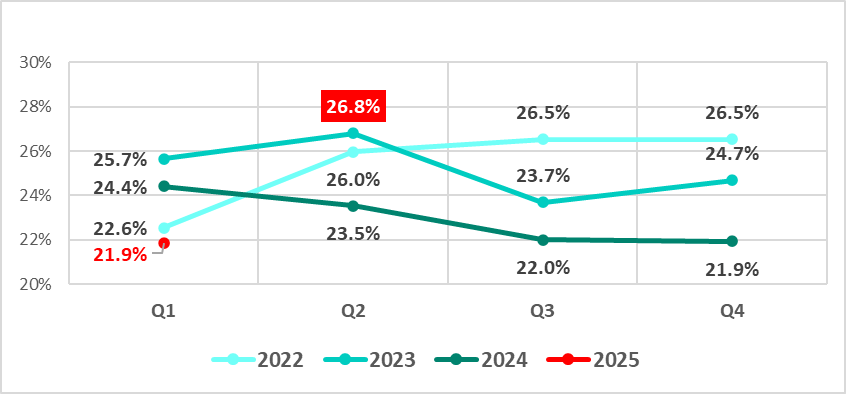
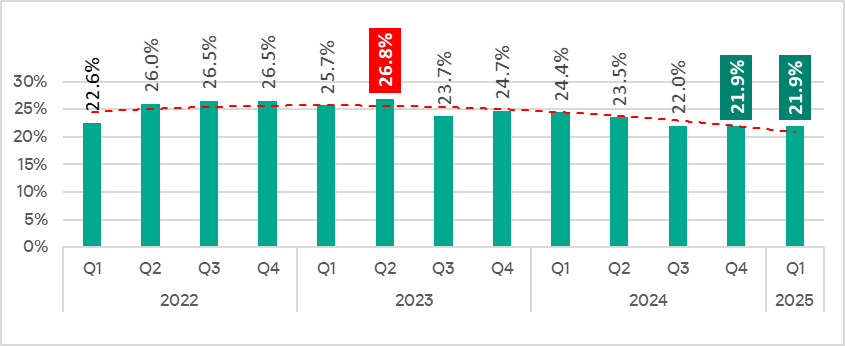
    Relative stability from quarter to quarter. The percentage of ICS computers on which malicious objects were blocked remained unchanged from Q4 2024 at 21.9%. Over the last three quarters, the value has ranged from 22.0% to 21.9%.

    The quarterly figures are decreasing from year to year. Since Q2 2023, the percentage of ICS computers on which malicious objects were blocked has been lower than the indicator of the same quarter of the previous year. Compared to Q1 2024, the figure decreased by 2.5 pp.

    Percentage of ICS computers on which malicious objects were blocked, Q1 2022–Q1 2025

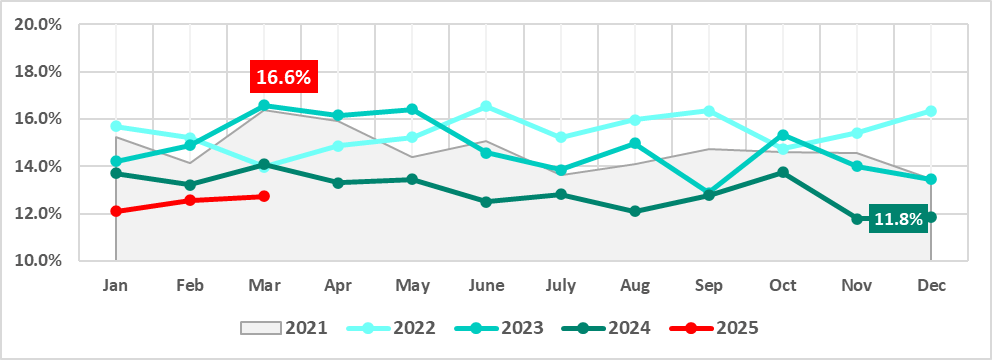
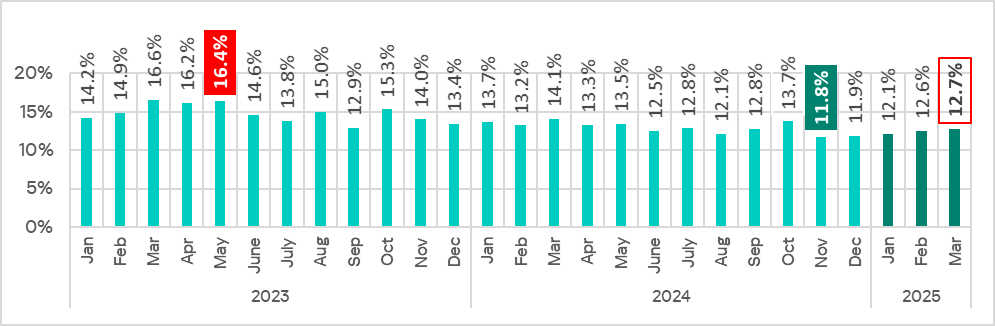
    In January–March 2025, the figures were the lowest compared to the same months of the previous four years.

    Percentage of ICS computers on which malicious objects were blocked, Jan 2021–Mar 2025

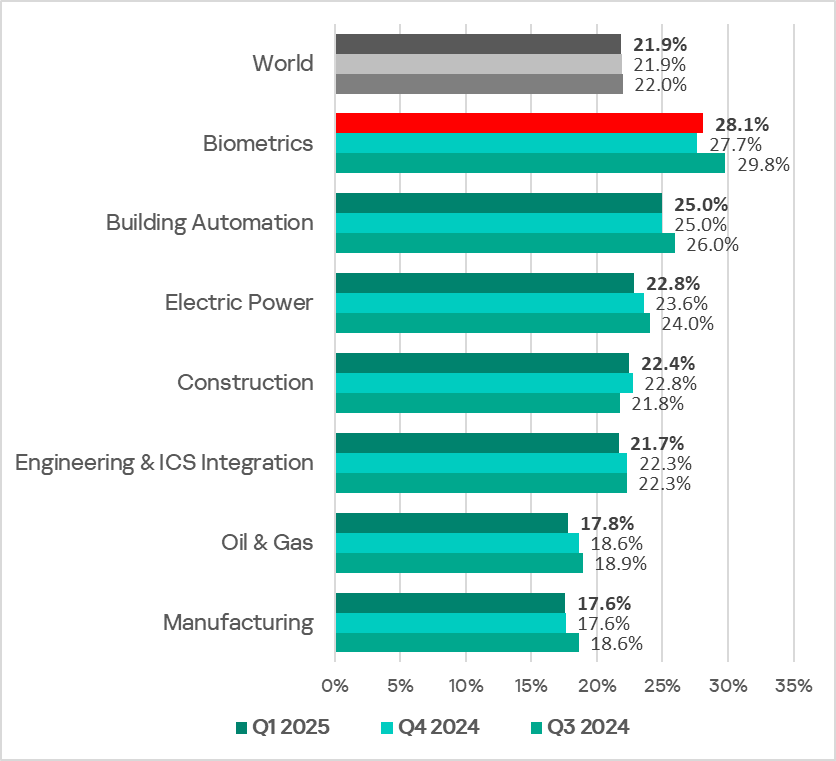
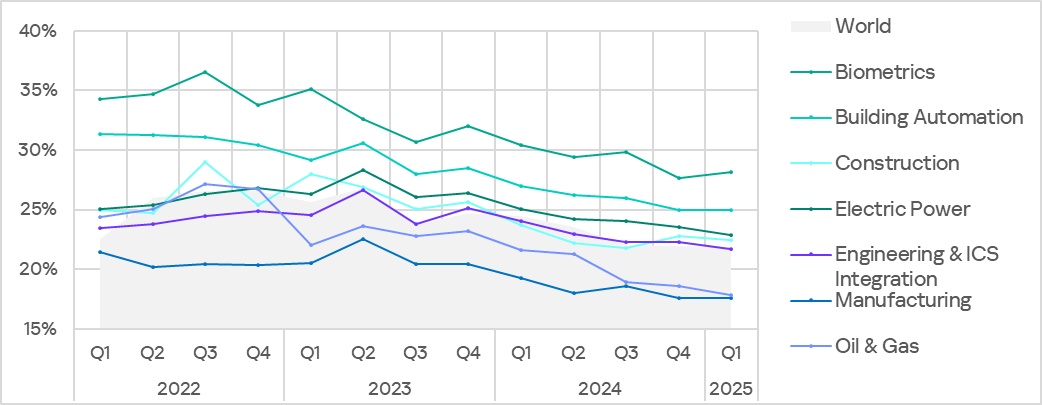
    The biometrics sector continues to lead the selected industries / OT infrastructure types. This is the only OT infrastructure type where the percentage of ICS computers on which malicious objects were blocked increased during the quarter.

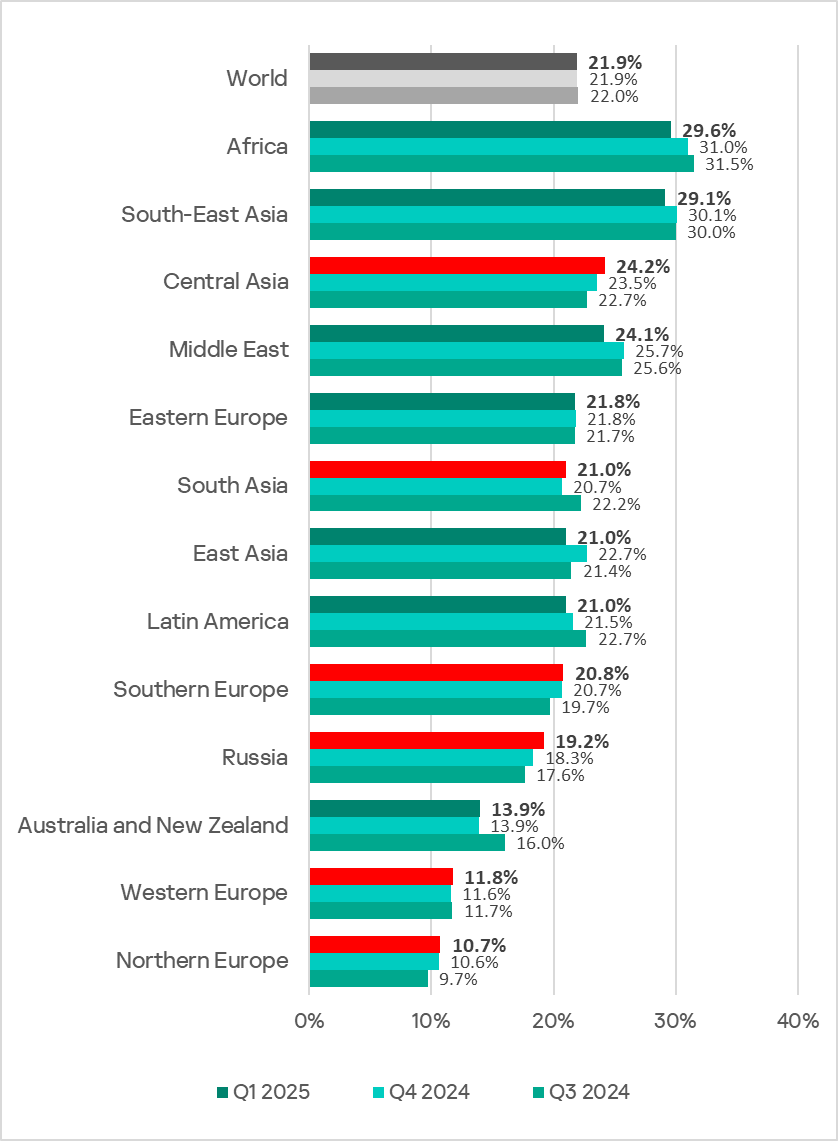
    Threat levels in different regions still vary. In Q1 2025, the percentage of affected ICS computers ranged from 10.7% in Northern Europe to 29.6% in Africa. In eight out of 13 regions, the figures ranged from 19.0% to 25.0%.

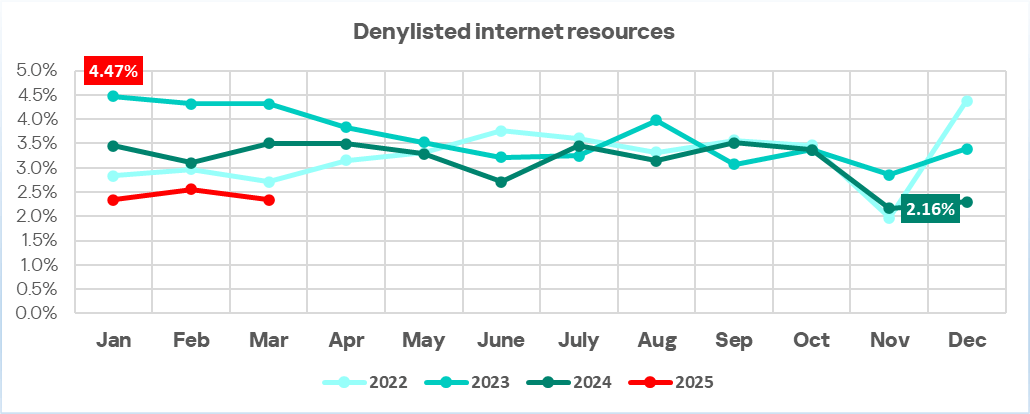
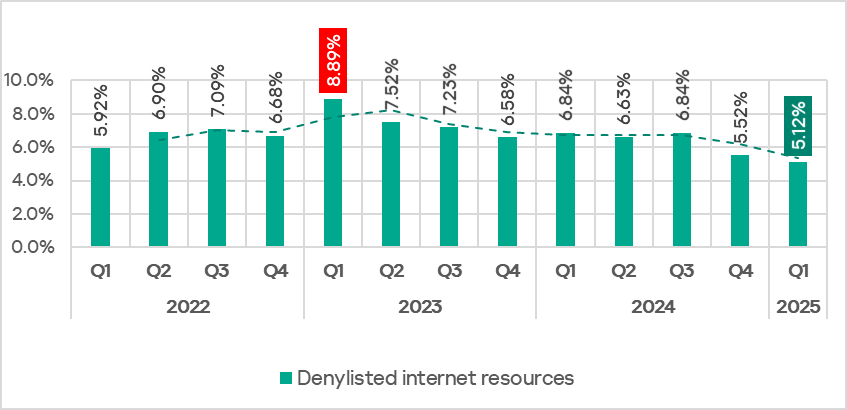
    The percentage of ICS computers on which denylisted internet resources were blocked continues to decrease. It reached its lowest level since the beginning of 2022. In the first three months of 2025, the corresponding figures were lower than those in January–March of the previous three years.

    Percentage of ICS computers on which denylisted internet resources were blocked, Jan 2022–Mar 2025

    Changes in the percentage of ICS computers on which initial-infection malware was blocked lead to changes in the percentage of next-stage malware. In Q1 2025, the percentage of ICS computers on which various types of malware spread via the internet and email were blocked increased for the first time since the beginning of 2023.

    The internet is the primary source of threats to ICS computers. The main categories of threats from the internet are denylisted internet resources, malicious scripts and phishing pages.

    The main categories of threats spreading via email are malicious documents, spyware, malicious scripts and phishing pages.

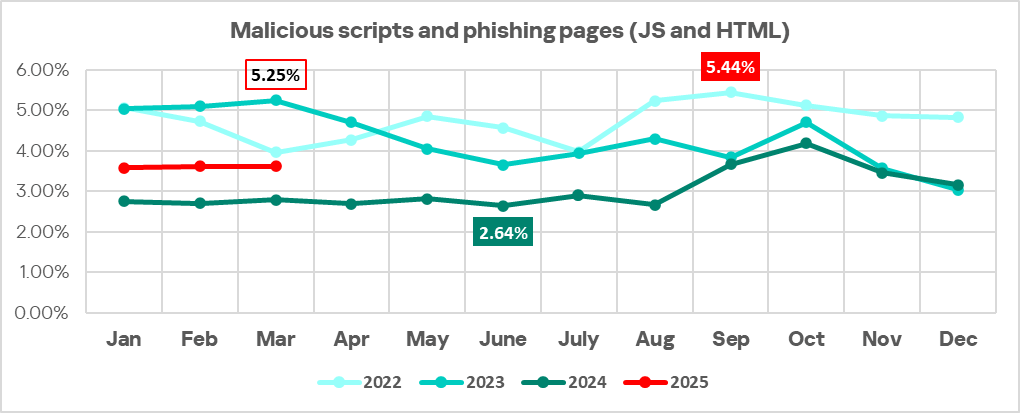
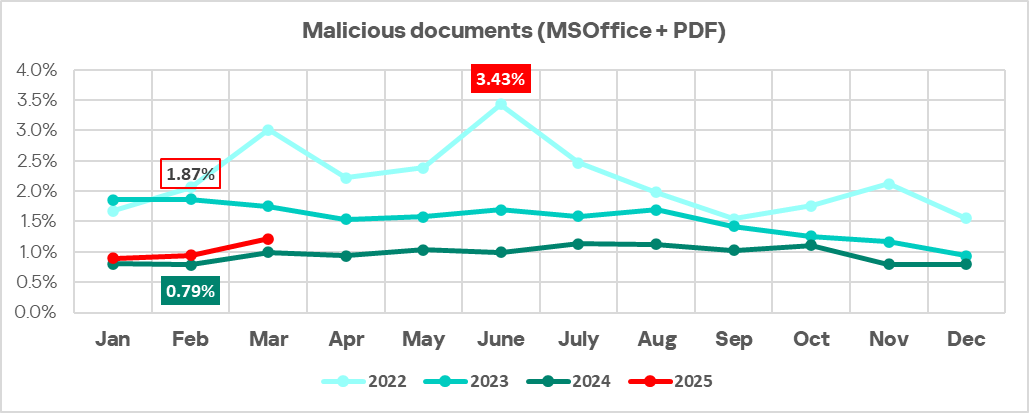
    The percentage of ICS computers on which malicious scripts and phishing pages, and malicious documents were blocked increased in Q1 2025. In January–March, the monthly values in these two categories of threats were higher than in the same months of 2024.

    Percentage of ICS computers on which malicious objects were blocked, Jan 2022–Mar 2025

    The leading category of malware used for initial infection of ICS computers (see below) is malicious scripts and phishing pages.

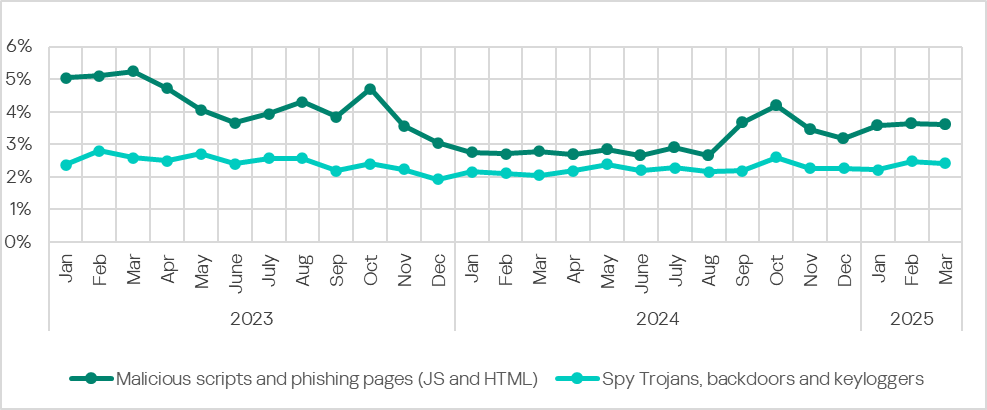
    Most malicious scripts and phishing pages act as droppers or loaders of next-stage malware (spyware, crypto miners and ransomware). The strong correlation between the values for malicious scripts and phishing pages, and spyware is clearly visible in the graph below.

    Percentage of ICS computers on which malicious objects were blocked, Jan 2023–Mar 2025

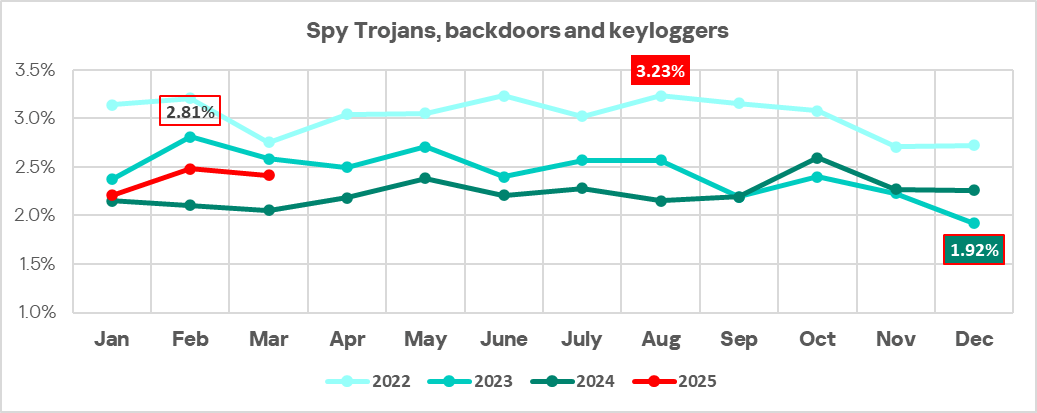
    Similar to malicious scripts and phishing pages, the percentage of ICS computers on which spyware was blocked was higher in the first three months of 2025 than in the same months of 2024.

    Percentage of ICS computers on which spyware was blocked, Jan 2022–Mar 2025

    The percentage of ICS computers on which miners (web miners and miners in the form of executable files for Windows) were blocked in Q1 2025 also increased.

    Statistics across all threats

    In Q1 2025, the percentage of ICS computers on which malicious objects were blocked remained at the same level as in the previous quarter: 21.9%.

    Percentage of ICS computers on which malicious objects were blocked, Q1 2022–Q1 2025

    Compared to Q1 2024, the percentage of ICS computers on which malicious objects were blocked decreased by 2.5 pp. However, it increased from January to March of 2025 when it reached its highest value in the quarter.

    Percentage of ICS computers on which malicious objects were blocked, Jan 2023–Mar 2025

    Regionally, the percentage of ICS computers on which malicious objects were blocked ranged from 10.7% in Northern Europe to 29.6% in Africa.

    Regions ranked by percentage of ICS computers on which malicious objects were blocked, Q1 2025

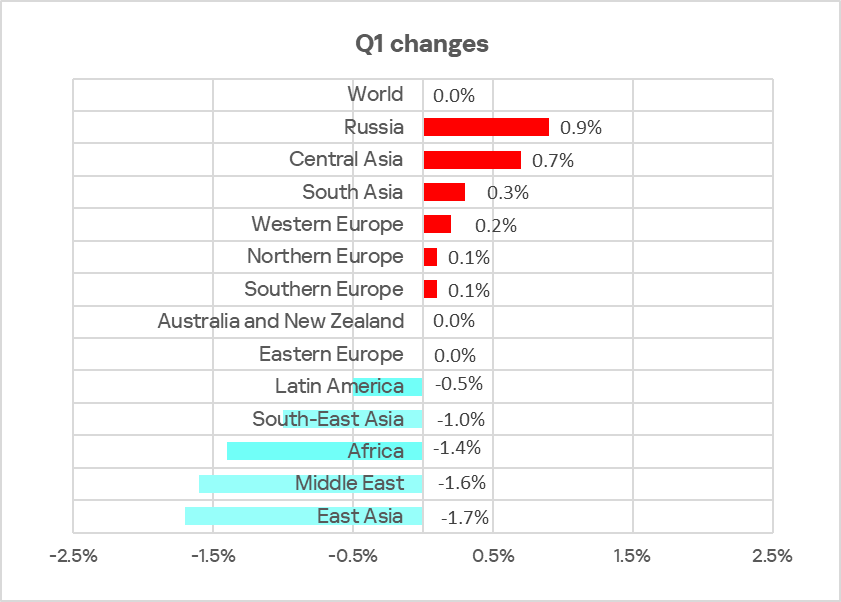
    In six of the 13 regions surveyed in this report, the figures increased from the previous quarter, with the largest change occurring in Russia.

    Changes in percentage of ICS computers on which malicious objects were blocked,
    Q1 2025

    Selected industries

    The biometrics sector led the ranking of the industries and OT infrastructures surveyed in this report in terms of the percentage of ICS computers on which malicious objects were blocked.

    Ranking of industries and OT infrastructures by percentage of ICS computers on which malicious objects were blocked, Q1 2025

    The biometrics sector was also the only OT infrastructure type where the percentage of ICS computers on which malicious objects were blocked increased slightly. Despite this, the long-term trend is clearly downward.

    Percentage of ICS computers on which malicious objects were blocked in selected industries

    Diversity of detected malicious objects

    In Q1 2025, Kaspersky security solutions blocked malware from 11,679 different malware families in various categories on industrial automation systems.

    Percentage of ICS computers on which the activity of malicious objects from various categories was blocked

    The largest proportional increase in Q1 2025 was in the percentage of ICS computers on which web miners (1.4 times more than in the previous quarter) and malicious documents (1.1 times more) were blocked.

    Main threat sources

    Depending on the threat detection and blocking scenario, it is not always possible to reliably identify the source. The circumstantial evidence for a specific source can be the blocked threat’s type (category).

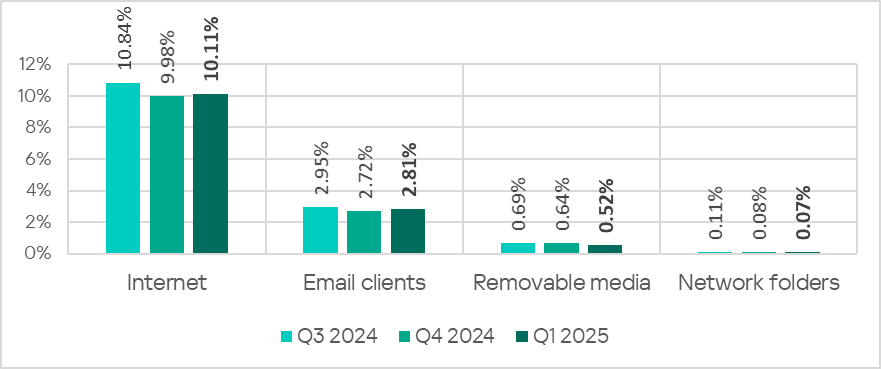
    The internet (visiting malicious or compromised internet resources; malicious content distributed via messengers; cloud data storage and processing services and CDNs), email clients (phishing emails), and removable storage devices remain the primary sources of threats to computers in an organization’s OT infrastructure.

    In Q1 2025, the percentage of ICS computers on which threats from the internet and email clients were blocked increased for the first time since the end of 2023.

    Percentage of ICS computers on which malicious objects from various sources were blocked

    The rates for all threat sources varied across the monitored regions.

    • The percentage of ICS computers on which threats from the internet were blocked ranged from 5.2% in Northern Europe to 12.8% in Africa.
    • The percentage of ICS computers on which threats from email clients were blocked ranged from 0.88% in Russia to 6.8% in Southern Europe.
    • The percentage of ICS computers on which threats from removable media were blocked ranged from 0.06% in Australia and New Zealand to 2.4% in Africa.

    Threat categories

    Typical attacks blocked within an OT network are a multi-stage process, where each subsequent step by the attackers is aimed at increasing privileges and gaining access to other systems by exploiting security flaws in industrial enterprises, including OT infrastructures.

    It is worth noting that during the attack, intruders often repeat the same steps (TTP), especially when they use malicious scripts and established communication channels with the management and control infrastructure (C2) to move laterally within the network and advance the attack.

    Malicious objects used for initial infection

    In Q1 2025, the percentage of ICS computers on which denylisted internet resources were blocked decreased to its lowest value since the beginning of 2022.

    Percentage of ICS computers on which denylisted internet resources were blocked, Q1 2022–Q1 2025

    The decline in the percentage of denylisted internet resources since November 2024 was likely influenced not only by proactive threat mitigation at various levels, but also by techniques used by attackers to circumvent the blocking mechanisms based on the resource’s reputation, thus redistributing the protection burden to other detection technologies.

    A detected malicious web resource may not always be added to a denylist because attackers are increasingly using legitimate internet resources and services such as content delivery network (CDN) platforms, messengers, and cloud storage. These services allow malicious code to be distributed through unique links to unique content, making it difficult to use reputation-based blocking tactics. We strongly recommend that industrial organizations implement policy-based blocking of such services, at least for OT networks where the need for such services is extremely rare for objective reasons.

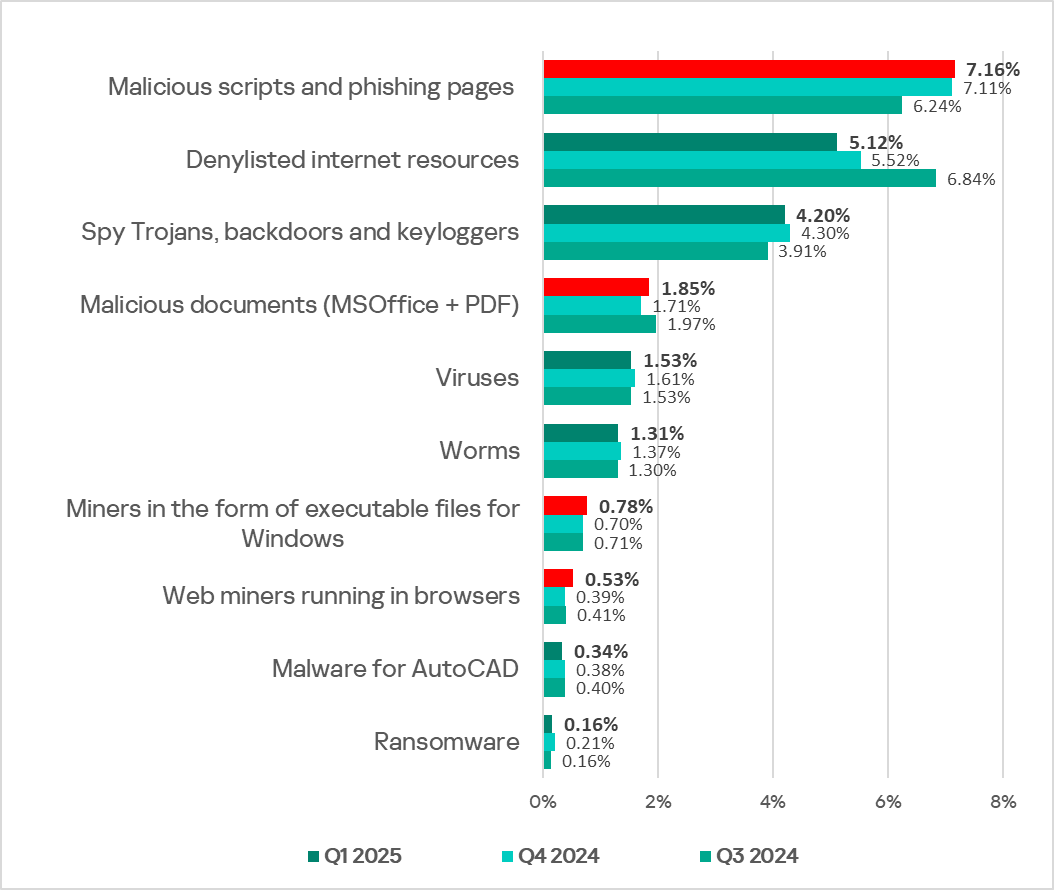
    The percentage of ICS computers on which malicious documents as well as malicious scripts and phishing pages were blocked increased slightly, to 1.85% (by 0.14 pp) and 7.16% (by 0.05 pp) respectively.

    Next-stage malware

    Malicious objects used to initially infect computers deliver next-stage malware – spyware, ransomware, and miners – to victims’ computers. As a rule, the higher the percentage of ICS computers on which the initial infection malware is blocked, the higher the percentage for next-stage malware.

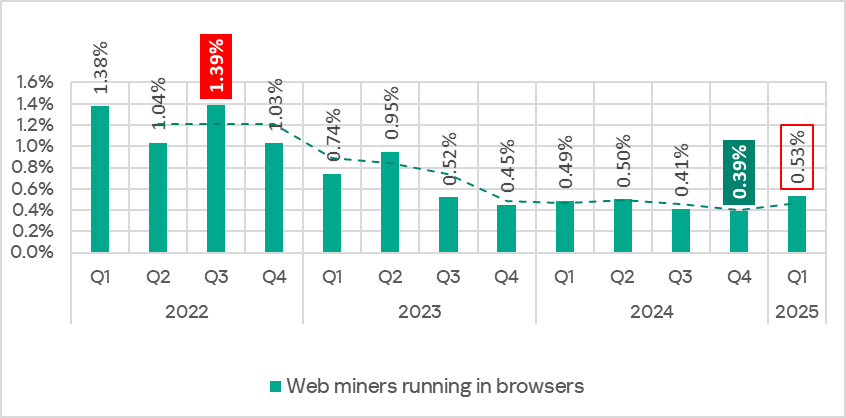
    In Q1 2025, the percentage of ICS computers on which spyware and ransomware were blocked decreased, reaching 4.20% (by losing 0.1 pp) and 0.16% (by losing 0.05 pp) respectively. Conversely, the indicator for miners increased. The percentage of ICS computers on which miners in the form of executable files for Windows and web miners were blocked increased to 0.78% (by 0.08 pp) and 0.53% (by 0.14 pp), respectively. The latter indicator reached its highest value since Q3 2023.

    Percentage of ICS computers on which web miners were blocked, Q1 2022–Q1 2025

    Self-propagating malware

    Self-propagating malware (worms and viruses) is a category unto itself. Worms and virus-infected files were originally used for initial infection, but as botnet functionality evolved, they took on next-stage characteristics.

    To spread across ICS networks, viruses and worms rely on removable media, network folders, infected files including backups, and network attacks on outdated software, such as Radmin2.

    In Q1 2025, the percentage of ICS computers on which worms and viruses were blocked decreased to 1.31% (by losing 0.06 pp) and 1.53% (by losing 0.08 pp), respectively.

    AutoCAD malware

    AutoCAD malware is typically a low-level threat, coming last in the malware category rankings in terms of the percentage of ICS computers on which it was blocked.

    In Q1 2025, the percentage of ICS computers on which AutoCAD malware was blocked continued to decrease (by losing 0.04 pp) and reached 0.034%.

    You can find more information on industrial threats in the full version of the report.

    MIL OSI Economics

  • MIL-OSI Russia: Financial news: 05/15/2025, 14:57 (Moscow time) the values of the upper limit of the price corridor and the range of market risk assessment for the security RU000A0JXSS1 (Akron B1P2) were changed.

    Translation. Region: Russian Federal

    Source: Moscow Exchange – Moscow Exchange –

    05/15/2025 14:57

    In accordance with the Methodology for determining the risk parameters of the stock market and the deposit market of PJSC Moscow Exchange by NCO NCC (JSC) on 15.05.2025, 14-57 (Moscow time), the values of the upper limit of the price corridor (up to 85.05) and the range of market risk assessment (up to 915.51 rubles, equivalent to a rate of 12.5%) of the security RU000A0JXSS1 (Akron B1P2) were changed

    Please note: This information is raw content directly from the source of the information. It is exactly what the source states and does not reflect the position of MIL-OSI or its clients.

    Please Note; This Information is Raw Content Directly from the Information Source. It is access to What the Source Is Stating and Does Not Reflect

    HTTPS: //VVV. MOEX.K.MO/N90254

    MIL OSI Russia News

  • MIL-OSI Russia: Denis Manturov: Russian mechanical engineering sectors demonstrate stability

    Translation. Region: Russian Federal

    Source: Government of the Russian Federation – An important disclaimer is at the bottom of this article.

    Denis Manturov took part in a joint meeting of the bureau of the Union of Mechanical Engineers and the association “League for Assistance to Defense Enterprises”

    First Deputy Prime Minister Denis Manturov took part in a joint meeting of the bureau of the Union of Mechanical Engineers and the League for Assistance to Defense Enterprises association.

    The event was also attended by the Minister of Industry and Trade Anton Alikhanov, the Minister of Science and Higher Education Valery Falkov, the Chairman of the Union of Mechanical Engineers of Russia, General Director of the Rostec State Corporation Sergey Chemezov, the First Deputy Chairman of the Union, Chairman of the State Duma Committee on Industry and Trade Vladimir Gutenev, General Director of the Roscosmos State Corporation Dmitry Bakanov, heads of regions, members of the bureau – heads of corporations and large industrial enterprises.

    Welcoming the participants of the meeting, Denis Manturov noted that today the Russian mechanical engineering industries are demonstrating resilience and readiness to respond to the most difficult challenges.

    “The development of a number of strategic areas depends on the dynamics of qualitative changes in this sector of industry. I mean, first of all, the country’s defense capability, its energy and food security, transport connectivity, and sovereignty in the field of space services. In the same vein, we consider the importance of mechanical engineering for the fundamental renewal of the production base of the entire industrial sector,” the First Deputy Prime Minister noted.

    The implementation of specialized national projects contributes to the enhancement of the technological status of the designated areas. Hundreds of mechanical engineering enterprises participate in them, ensuring the development of components and the supply of finished products, forming new cooperation chains.

    “In the current challenges, Russia continues to demonstrate high resilience. Enterprises are coping with the tasks set by our President. Manufacturing production in the first quarter showed growth of 4.7% in annual terms. The tasks of strengthening the economy, increasing industrial potential, ensuring the country’s defense capability are not just a priority for the near future. These are permanent, strategic goals that determine our development for years to come,” said Sergey Chemezov.

    The report was delivered by the president of the league, Chairman of the State Duma Committee on Industry and Trade Vladimir Gutenev. The parliamentarian emphasized that the union and the league are in constant dialogue with the real sector and the expert community, and the Government is considering initiatives aimed at supporting defense industry enterprises. Among them is a draft law on deferment from military service for graduates who have found jobs in the defense industry in targeted areas, as well as a law on protecting accounts involved in state defense procurement from automatic write-offs based on writs of execution.

    Anton Alikhanov drew attention to the current issues of providing the industries with personnel. “We are well aware of the main obstacle to the rapid replenishment of personnel. This is the extremely low level of employment in the specialty of university graduates and the claims of enterprises to the level of their training. We have well-established work with the Ministry of Education and Science and the Ministry of Education on advanced engineering schools and educational and industrial clusters. Therefore, I propose that those companies that have their own corporate universities and basic departments provide an opportunity to train specialists at the request of the cooperative enterprises. We can consider the possibility of creating industry databases under the wing of Soyuzmash, connecting potential employers and applicants. Such a resource already works well in the military-industrial complex,” the head of the Ministry of Industry and Trade noted.

    The Minister of Education and Science, Valery Falkov, outlined systemic steps aimed at developing engineering education at universities and higher education in general. According to the Minister, today 42% of budget places are allocated for engineering and technical specialties. In order to improve the quality of education, work is underway to revise the list of specialties and areas of training, the mechanism of targeted admission is being improved, and a pilot project for industrial postgraduate studies will begin this year. Also, on the instructions of Russian President Vladimir Putin, the flagship project of the Ministry of Education and Science, Advanced Engineering Schools, has been continued. Valery Falkov noted that from this year, only those applicants who are applying for priority specialties, including engineers, will be able to use a preferential educational loan at a rate of 3%.

    Please note: This information is raw content directly from the source of the information. It is exactly what the source states and does not reflect the position of MIL-OSI or its clients.

    MIL OSI Russia News

  • MIL-OSI Russia: Financial news: 05/15/2025 will be held the deposit auction of the MFI Fund of Financing

    Translation. Region: Russian Federal

    Source: Moscow Exchange – Moscow Exchange –

    Please note: This information is raw content directly from the source of the information. It is exactly what the source states and does not reflect the position of MIL-OSI or its clients.

    Please Note; This Information is Raw Content Directly from the Information Source. It is access to What the Source Is Stating and Does Not Reflect

    HTTPS: //VVV. MOEX.K.M.M.

    Categories24-7, Mil-SOSI, Moscow, Moscow Stock Exchange, Russian Economy, Russian Federal, Russian Language, Russian economy

    Post Navigation


    Archives

    Archives Privacy Policy Proudly Powered by WordPress

    Parameters
    Date of the deposit auction 05/15/2025
    Placement currency Rub
    Maximum amount of funds placed (in placement currency) 40,000,000.00
    Placement period, days 35
    Date of deposit 05/16/2025
    Refund date 06/20/2025
    Minimum placement interest rate, % per annum 21.00
    Conditions of imprisonment, urgent or special Urgent
    Minimum amount of funds placed for one application (in placement currency) 40,000,000.00
    Maximum number of applications from one Participant, pcs. 1
    Auction form, open or closed Open
    Basis of the Treaty General Agreement
     
    Schedule (Moscow time)
    Preliminary applications from 14:10 to 14:20
    Applications in competition mode from 14:20 to 14:30
    Setting a cut-off percentage or declaring the auction invalid until 14:40
       
    Additional terms  

    MIL OSI Russia News

  • MIL-OSI Russia: Financial news: 05/15/2025, 12-17 (Moscow time) the values of the upper limit of the price corridor and the range of market risk assessment for the security RU000A1009L8 (RZhD 1P-15R) were changed.

    Translation. Region: Russian Federal

    Source: Moscow Exchange – Moscow Exchange –

    05/15/2025 12:17

    In accordance with the Methodology for determining the risk parameters of the stock market and the deposit market of PJSC Moscow Exchange by NCO NCC (JSC) on 15.05.2025, 12-17 (Moscow time), the values of the upper limit of the price corridor (up to 100.67) and the range of market risk assessment (up to 1062.32 rubles, equivalent to a rate of 12.5%) of the security RU000A1009L8 (RZhD 1P-15R) were changed

    Please note: This information is raw content directly from the source of the information. It is exactly what the source states and does not reflect the position of MIL-OSI or its clients.

    Please Note; This Information is Raw Content Directly from the Information Source. It is access to What the Source Is Stating and Does Not Reflect

    HTTPS: //VVV. MEEX.MOM/N90248

    MIL OSI Russia News

  • MIL-OSI China: Ukraine, Russia prepare for peace talks in Istanbul as Zelensky meets Erdogan

    Source: People’s Republic of China – State Council News

    Ukrainian and Russian delegations were expected to meet for peace talks on Thursday, as Ukrainian President Volodymyr Zelensky prepared for a meeting with Turkish President Recep Tayyip Erdogan in Ankara.

    Upon arriving in Ankara, Zelensky told reporters that Ukraine’s delegation included top-level representatives from the Foreign Ministry, Defense Ministry, military, and intelligence agencies.

    “We have a top-level delegation,” he said, although he noted that the composition of the Russian delegation had not yet been officially communicated.

    Zelensky also emphasized that decisions on the next steps in the negotiation process would be made after his discussions with Erdogan. “We need to understand what level of the Russian delegation (we’re dealing with) and what mandate they have,” he said.

    The talks followed a proposal from Russian President Vladimir Putin on Sunday to resume direct negotiations with Ukraine in Istanbul on May 15. Zelensky confirmed his participation and expressed hope of meeting with Putin, but the Russian leader has yet to show up.

    Meanwhile, U.S. President Donald Trump, speaking in Doha, Qatar on Thursday, said he might attend the talks in Istanbul on Friday. “If something (a development) happens and it’s appropriate, I might go on Friday,” he said.

    U.S. Secretary of State Marco Rubio, who was in Antalya for a NATO foreign ministers’ meeting, said Trump supports any initiative that could bring about a just peace.

    “There is no military solution to the Russia-Ukraine conflict,” Rubio said. “We want to see progress made in the coming days.”

    MIL OSI China News

  • MIL-OSI USA: ICE arrests Russian national smuggling biological material into Boston

    Source: US Immigration and Customs Enforcement

    BOSTON — U.S. Immigration and Customs Enforcement arrested a Russian national on criminal charges for allegedly attempting to smuggle clawed frog embryos and embryonic samples into the United States.

    Kseniia Petrova, 31, a Russian citizen, was charged by criminal complaint with one count of smuggling goods into the United States. Petrova was taken into immigration custody on Feb. 16, 2025, and arrested May 14 by ICE Homeland Security Investigations special agents on the criminal charge.

    “As alleged in the evidence presented in the charging documents, Petrova was aware of her requirement to declare biological material brought into the United States. These laws aren’t arbitrary, they protect the safety of the public from dangerous and unregulated biological specimens entering the country and posing a threat to public health and agriculture. Nobody is exempt from these regulations, and nobody should be surprised to find these critical laws being enforced when they’re willfully broken,” said ICE HSI New England Special Agent in Charge Michael J. Krol.

    According to the charging documents, on Feb. 16, 2025, Petrova arrived at Logan International Airport in Boston via an inbound flight from Paris. Upon her arrival, Petrova was stopped by U.S. Customs and Border Protection agents after a law enforcement canine allegedly alerted its handler to the defendant’s checked duffel bag on the baggage carousel. Per protocol, law enforcement removed the bag from the carousel and brought it to an agricultural secondary inspection area for further screening. There, an officer inspected the contents of the bag and allegedly discovered the biological items: a foam box containing clawed frog embryos in microcentrifuges, as well as embryonic samples in paraffin well stages and on mounted dyed slides. All biological products require a permit for entry and require the individual to make a declaration to CBP at the port of first arrival.

    It is alleged that, when approached by law enforcement, Petrova initially denied carrying any biological material in her checked baggage. However, when asked again, Petrova allegedly admitted that she was carrying biological material. During an interview under oath, Petrova allegedly claimed to be unsure that she was required to declare biological material when entering the United States.

    According to the charging documents, however, Petrova’s phone revealed text messages from an individual identified as one of Petrova’s colleagues informing Petrova that she was required to declare the biological material:

    “if you bring samples or antibody back, make sure you get the permission etc. Like that link I sent to leon-/group chat about frog embryos because TSA went through my bags at customs in Boston;” and

    “What is your plan to pass the American Customs with samples? This is the most delicate place of the trajectory.”

    It is alleged that in another text message conversation with an individual identified as her principal investigator, Petrova was asked how she planned to get through customs with the biological samples, to which she replied: “No plan yet. I won’t be able to swallow them.”

    Petrova was thereafter advised that she was ineligible for entry to the United States. It is alleged that, when asked if she wished to willingly withdraw her application for admission, Petrova responded in the affirmative before being taken into custody by immigration officials.

    According to the charging documents, the defendant was recently employed by the Institute of Genetic Biology in Moscow from 2023 to 2024 and previously served as a bioinformatician of genetic disorders at the Moscow Center for Genetics from 2016 to 2023.

    The charge of smuggling goods into the United States provides for a sentence of up to 20 years in prison, a term of up to five years of supervised release, and a fine of up to $250,000. Sentences are imposed by a federal district court judge based upon the U.S. Sentencing Guidelines and statutes which govern the determination of a sentence in a criminal case.

    HSI New England’s National Security group and CBP New England led the investigation. Valuable assistance was provided by HSI New Orleans and the U.S. Marshals Service in Louisiana.

    The details contained in the charging documents are allegations. The defendant is presumed innocent unless and until proven guilty beyond a reasonable doubt in a court of law.

    MIL OSI USA News

  • MIL-OSI Russia: Xi Jinping’s article on improving work style will be published in Qiushi magazine

    Translation. Region: Russian Federal

    Source: People’s Republic of China in Russian – People’s Republic of China in Russian –

    Source: People’s Republic of China – State Council News

    BEIJING, May 15 (Xinhua) — An article by General Secretary of the Communist Party of China (CPC) Central Committee Xi Jinping on implementing the spirit of the Eight-Point Guidelines adopted by the CPC Central Committee to improve work style is expected to be released on Friday.

    The article by Xi Jinping, who is also the President of China and Chairman of the Central Military Commission, will be published in the 10th issue of Qiushi magazine in 2025.

    “Qiushi” is the leading journal of the CPC Central Committee. -0-

    MIL OSI Russia News

  • MIL-OSI Russia: Iranian President Condemns Trump’s Anti-Tehran Statements

    Translation. Region: Russian Federal

    Source: People’s Republic of China in Russian – People’s Republic of China in Russian –

    Source: People’s Republic of China – State Council News

    TEHRAN, May 15 (Xinhua) — Iranian President Masoud Pezeshkian has strongly condemned U.S. President Donald Trump’s recent anti-Tehran remarks, calling them evidence of his inability to understand the true character of the Iranian people.

    M. Pezeshkian made this statement on Wednesday evening at a meeting with representatives of the Iranian elite and cultural figures in the province of Kermanshah after D. Trump’s statements in Riyadh the day before. This is stated in a statement published on the website of the Iranian president’s office.

    On Tuesday, Trump called Iran the “most destructive force” in the Middle East and accused it of fomenting regional instability, vowing that the United States would never allow the country to possess nuclear weapons.

    In response, M. Pezeshkian stated that these statements by D. Trump testify to his inability to understand the “truth, honor, generosity and selflessness” of the Iranian people.

    He added that while D. Trump was portraying Iran as a source of regional instability, thousands of women and children were killed as a result of Israeli bombing of the Gaza Strip, whose residents are also deprived of water and medicine.

    According to the Iranian president, over the past 47 years, the United States and its allies have been straining every nerve to bring the Iranian government and people to their knees, but they have not succeeded and will not succeed.

    Expressing confidence in Iran’s resilience, the president said his country would continue to develop, relying on its scientists, intellectuals and entrepreneurs. Although Iran does not seek war, it will never trade its honor and glory for peace, Pezeshkian concluded. –0–

    MIL OSI Russia News

  • MIL-OSI Russia: International Energy Forum of Uzbekistan held in Tashkent

    Translation. Region: Russian Federal

    Source: People’s Republic of China in Russian –

    Source: People’s Republic of China – State Council News

    Tashkent, May 15 /Xinhua/ — The International Energy Forum of Uzbekistan was held in Tashkent on May 13-15.

    As the organizers reported, the forum covered all strategically important sectors of the fuel and energy complex and created a unique platform for dialogue, partnership and implementation of innovative solutions in the fuel and energy complex. The relevant events create unique opportunities for developing partnerships and concluding strategic agreements. –0–

    MIL OSI Russia News

  • MIL-OSI: Marex Group plc announces strong results for first quarter of 2025

    Source: GlobeNewswire (MIL-OSI)

    NEW YORK, May 15, 2025 (GLOBE NEWSWIRE) — Marex Group plc (‘Marex’ or the ‘Group’; Nasdaq: MRX) a diversified global financial services platform, providing essential liquidity, market access and infrastructure services to clients in the energy, commodities and financial markets, today reported financial results for the first quarter (‘Q1 2025’).

    Ian Lowitt, Group Chief Executive Officer, stated, “Robust levels of client activity across our businesses and positive market conditions led to a strong performance in the first quarter of the year. Adjusted profit before tax grew 42% year-on-year, driven by strong revenue growth in all our business segments. This reflects the continued successful execution of our strategy to expand our geographic footprint and product capabilities, growing our client base, increasing diversification and driving greater earnings resilience. In early April, we experienced some very high-volume days which we processed successfully, reflecting the operational resilience of our platform. We maintained record levels of liquidity and remained disciplined in managing our risk while supporting our clients. We were also delighted with the strong demand from investors for our second follow-on equity offering in challenging markets, further increasing our public float, as well as another successful debt issuance, further diversifying our sources of funding and increasing our liquidity position.”

    Financial and Operational Highlights:

    • Strong Q1 performance: Robust client activity and positive market conditions drove 42% growth in Adjusted Profit before Tax1 to $96.3 million
    • Revenue increased by 28% to $467.3m with strong revenue growth across all our business segments
      • Agency and Execution in particular increased revenue by 42% to $239.5m, driven by growth in Securities revenues across asset classes and continued build-out of Prime Services, as well as strong growth in the Energy business
    • April market conditions: At the start of April, we experienced highly elevated volumes which have since returned to more normalised levels. Our ability to process these volumes demonstrates the operational resilience of the firm and scalability of our platform. We also maintained record levels of liquidity and remained disciplined in managing our risk while supporting our clients
    • Executed growth strategy: Aarna Capital acquisition completed at the end of March, growing our Clearing presence in the Middle East, as we continued to diversify our platform and drive greater earnings resilience
    • Successful secondary equity placement: Significantly oversubscribed transaction resulted in existing shareholders placing an upsized 11.8 million shares with institutional investors in April, further increasing public float to approximately 70%
    • Prudent approach to capital and funding: Successfully issued $500 million 3-year senior unsecured notes in May, further diversifying our funding sources while maintaining a strong capital and liquidity position
    • Dividend: Q1 2025 dividend increased to $0.15 per share, to be paid in the second quarter of 2025
    Financial Highlights: ($m)   3 months ended 31 March 2025   3 months ended 31 March 2024   Change
                 
    Revenue   467.3   365.8   28%
    Profit Before Tax   98.0   58.9   66%
    Profit Before Tax Margin (%)   21%   16%   500 bps
    Profit After Tax   72.5   43.6   66%
    Profit After Tax Margin (%)   16%   12%   400 bps
    Return on Equity (%)   29%   23%   600 bps
    Basic Earnings per Share ($)2   0.98   0.60   63%
    Diluted Earnings per Share ($)2   0.92   0.56   64%
                 
    Adjusted Profit Before Tax1   96.3   67.7   42%
    Adjusted Profit Before Tax Margin (%)1   21%   19%   200 bps
    Adjusted Profit after Tax            
    Attributable to Common Equity1   68.2   48.9   39%
    Adjusted Return on Equity (%)1   30%   29%   100 bps
    Adjusted Basic Earnings per Share ($)1,2   0.97   0.74   31%
    Adjusted Diluted Earnings per Share ($)1,2   0.91   0.69   32%
    1. These are non-IFRS financial measures. See Appendix 1 “Non-IFRS Financial Measures and Key Performance Indicators” for additional information and for a reconciliation of each such non-IFRS measure to its most directly comparable IFRS measure. The Group changed the labelling of its non-IFRS measures during 2024 to better align to the equivalent IFRS reported metric and enhance transparency and comparability.
    2. Weighted average number of shares have been restated as applicable for the Group’s reverse share split (refer to Appendix 1 for further detail).
         
      Conference Call Information:
    Marex’s management will host a conference call to discuss the Group’s financial results today, 15 May 2025, at 9am Eastern Time. A live webcast of the call can be accessed from Marex’s Investor Relations website. An archived version will be available on the website after the call. To participate in the Conference Call, please register at the link here: https://edge.media-server.com/mmc/p/zudci4bx/

    Enquiries please contact:
    Marex
    Investors – Adam Strachan
    +1 914 200 2508 / astrachan@marex.com

    Media – Nicola Ratchford, Marex / FTI Consulting US / UK
    +44 7786 548 889 / nratchford@marex.com / +1.716.525.7239/ +44 7976870961
    | marex@fticonsulting.com


    Financial Review

    The following table presents summary financial results and other data as of the dates and for the periods indicated:

    Summary Financial Results

        3 months ended 31 March 2025   3 months ended 31 March 2024    
        $m   $m   Change
    – Net commission income   250.7   218.9   15%
    – Net trading Income   159.1   106.2   50%
    – Net interest income   53.4   35.6   50%
    – Net physical commodities income   4.1   5.1   (20)%
    Revenue   467.3   365.8   28%
                 
    Compensation and benefits   (291.7)   (229.9)   27%
    Depreciation and amortisation   (7.9)   (7.8)   1%
    Other expenses   (73.8)   (69.6)   6%
    Provision for credit losses     0.3   n.m.2
    Bargain purchase gain on acquisitions   3.4     n.m.2
    Other income   0.7   0.1   600%
    Profit Before Tax   98.0   58.9   66%
    Tax   (25.5)   (15.3)   67%
    Profit After Tax   72.5   43.6   66%
    Reconciliation to Adjusted Profit Before Tax1            
    Profit Before Tax   98.0   58.9   66%
    Bargain purchase gain   (3.4)     n.m.2
    Acquisition related costs     0.2   n.m.2
    Amortisation of acquired brands and customer lists   1.3   0.8   63%
    Activities relating to shareholders     2.4   n.m.2
    Owner fees   0.4   1.7   (76)%
    IPO preparation and public offering of ordinary shares     3.7   n.m.2
    Adjusting items   (1.7)   8.8   (119)%
    Adjusted Profit Before Tax1   96.3   67.7   42%
    1. These are non-IFRS financial measures. See Appendix 1 “Non-IFRS Financial Measures and Key Performance Indicators” for additional information and for a reconciliation of each such non-IFRS measure to its most directly comparable IFRS measure.
    2. n.m. = not meaningful to present as a percentage.

    Costs and Group Headcount

    The Board and Senior Management also monitor costs split between Front Office Costs and Control and Support Costs to better understand the Group’s performance. The table below provides the Group’s management view of costs:

        3 months ended 31 March 2025   3 months ended 31 March 2024    
        $m   $m   Change
    Front office costs1   (258.4)   (210.1)   23%
    Control and support costs1   (106.8)   (80.6)   33%
    Total   (365.2)   (290.7)   26%

    1) Management review Front Office Costs and Control and Support Costs when assessing Adjusted Profit Before Tax performance. These costs are included within compensation and benefits, other expenses and depreciation and amortisation in the Statutory Income Statement provided above.

    The following table provides a breakdown of Front Office and Control and Support Headcount

    Full Time Equivalent (‘FTE’) headcount1 31 March 2025   31 March 2024       31 March 2025   31 March 2024    
      Average   Average   Change   End of Period   End of Period   Change
    Front office 1,284   1,236   4%   1,288   1,250   3%
    Control and support 1,183   1,015   17%   1,215   1,030   18%
    Total 2,467   2,251   10%   2,503   2,280   10%

    1) For analysis purposes, average headcount is used in the performance commentary outlined below.

    Performance for the three months ended 31 March 2025

    Revenue grew by 28% to $467.3m (Q1 2024: $365.8m) with strong growth across all business segments, as we continue to diversify our platform and drive greater earnings resilience. This growth was driven by robust client activity and positive market conditions.

    Net commission income increased by 15% to $250.7m (Q1 2024: $218.9m). The growth was driven by Agency and Execution, which grew 22% to $182.9m (Q1 2024: $150.5m) reflecting a strong performance in Securities and Energy, supported by record transaction volumes.

    Net trading income increased by 50% to $159.1m (Q1 2024: $106.2m). The growth was driven by a $40.8m increase in Agency and Execution to $49.9m (Q1 2024: $9.1m), mainly due to Rates, FX and Equities. The most significant contribution came from the continued build-out of our Prime Services capabilities, which grew by $33.4m, including growth in our securities based swaps offering. In addition, Net trading income in our Market Making segment increased by $10.7m to $54.9m (Q1 2024: $44.2m) driven by growth in all asset classes.

    Net interest income increased by 50% to $53.4m (Q1 2024: $35.6m) reflecting $5.8bn growth in average balances to $17.1bn, which more than offset lower average Fed Funds rates compared to Q1 2024.

    Front office costs increased by 23% to $258.4m (Q1 2024: $210.1m), predominantly reflecting higher compensation costs on strong revenue performance across the Group. Front office headcount growth reflected restructuring activity in Agency and Execution and reallocation of FTE from front office to control and support in Q2 2024. Excluding these, average front office FTE headcount grew by 11% year on year.

    Control and support costs increased by 33% to $106.8m (Q1 2024: $80.6m). This was primarily driven by investment in technology to support automation and business growth, as well as investments in our finance, risk, and compliance functions to support our controlled growth and development as a public company. This also included specific investments relating to acquisitions and our compliance with Sarbanes-Oxley.

    Reported Profit Before Tax increased by 66% to $98.0m (Q1 2024: $58.9m), driven by strong revenue growth and improved operating margins.

    Adjusting items reduced by $10.5m to $(1.7)m (Q1 2024: $ 8.8m). These costs are primarily related to corporate activities and are recognised within our Corporate segment. Adjusting items reduced mainly due to IPO-related costs and owner fees in Q1 2024, as well as a bargain purchase gain on an acquisition in Q1 2025.

    As a result of the revenue and cost trends noted above, Adjusted Profit Before Tax1 increased by 42% to $96.3m (Q1 2024: $67.7m) and Adjusted Profit Before Tax Margin1 improved to 21% (Q1 2024: 19%), while Profit After Tax Margin increased to 16% (Q1 2024: 12%).

    1. These are non-IFRS financial measures. See Appendix 1 “Non-IFRS Financial Measures and Key Performance Indicators” for additional information and for a reconciliation of each such non-IFRS measure to its most directly comparable IFRS measure.
        3 months ended 31 March 2025   3 months ended 31 March 2024   Change
    Average Fed Funds rate   4.3%   5.3%   (100)bps
    Average balances ($bn)1   17.1   11.3   5.8
    Interest income ($m)   178.9   147.3   31.6
    Interest paid out ($m)   (59.6)   (60.9)   1.3
    Interest on balances ($m)   119.3   86.4   32.9
    Net yield on balances   2.8%   3.1%   (30)bps
    Average notional debt securities ($bn)   (4.1)   (2.5)   (1.6)
    Yield on debt securities %   6.6%   8.1%   (150)bps
    Interest expense ($m)   (65.9)   (50.8)   (15.1)
    Net Interest Income ($m)   53.4   35.6   17.8
    1. Average balances are calculated using an average of the daily holdings in exchanges, banks and other investments over the period. Previously, average balances were calculated as the average month end amount of segregated and non-segregated client balances that generated interest income over a given period.

    Segmental performance

    Clearing

    Marex provides clearing services across the range of energy, commodity and financial markets. We face the exchange on behalf of our clients providing access to 60 exchanges globally.

    Performance for the three months ended 31 March 2025

    Clearing performed well with revenue increasing 18% to $119.2m (Q1 2024: $100.7m). This was driven by net interest income which rose by $18.2m to $48.4m (Q1 2024: $30.2m) reflecting higher average balances as we continued to add new clients, more than offsetting lower average Fed Funds rates compared to Q1 2024. Net commission income reduced by 2%, $1.7m, as positive performance in energy and metals was offset by lower levels of activity in agriculture, which benefited from higher volatility in Q1 2024 relative to Q1 2025.

    Adjusted Profit Before Tax1 increased by 14% to $56.6m (Q1 2024: $49.8m). Adjusted Profit Before Tax Margin1 decreased by 200 bps to 47% (Q1 2024: 49%).

        3 months ended 31 March 2025   3 months ended 31 March 2024    
        $m   $m   Change
    Net commission income   67.8   69.5   (2%)
    Net interest income   48.4   30.2   60%
    Net trading income   3.0   1.0   200%
    Revenue   119.2   100.7   18%
    Front office costs   (42.2)   (33.5)   26%
    Control and support costs   (20.3)   (17.3)   17%
    Depreciation and amortisation   (0.1)   (0.1)   —%
                 
    Adjusted Profit Before Tax ($m)1   56.6   49.8   14%
    Adjusted Profit Before Tax Margin1   47%   49%   (200)bps
                 
    Front office headcount (No.)2   273   266   3%
                 
        12 months ended 31 March 2025   12 months ended 31 March 2024   Change
    Contracts cleared (m)   1,161   913   27%
    Market volumes (m)3   11,891   10,194   17%
    1. These are non-IFRS financial measures. See Appendix 1 “Non-IFRS Financial Measures and Key Performance Indicators” for additional information and for a reconciliation of each such non-IFRS measure to its most directly comparable IFRS measure.
    2. The headcount is the average for the period. Management have re-assessed headcount for Clearing and Market Making and re-allocated for Q1 25 and Q1 24.
    3. On a twelve month rolling basis.

    Agency and Execution

    Agency and Execution provides essential liquidity and execution services to our clients primarily in the energy and financial securities markets.

    Our energy division provides essential liquidity to clients by connecting buyers and sellers in the OTC energy markets to facilitate price discovery. We have leading positions in many of the markets we operate in, including key gas and power markets in Europe; environmental, petrochemical and crude markets in North America; and fuel oil, LPG (liquefied petroleum gas) and middle distillates globally. We achieve this through the breadth and depth of the service we offer to customers, including market intelligence for each product we transact in, based on the extensive knowledge and experience of our teams.

    Our presence in the financial markets is growing as we integrate and optimise recent acquisitions, enabling Marex to diversify its asset class coverage away from traditional commodity markets. We are starting to see a maturation of our offering across all asset classes, contributing to enhanced revenue growth and margin expansion for the overall business.

    Performance for the three months ended 31 March 2025

    Revenue increased by 42% to $239.5m (Q1 2024: $168.1m). Securities revenues, increased by $56.1m to $151.0m (Q1 2024: $94.9m) driven by growth in all asset classes from a significant increase in transaction volumes. The most significant contribution came from the continued build out of our Prime Services offering, including growth in securities based swaps. This was supplemented further by strong growth in our Energy business where revenues increased by $15.0m to $88.2m (Q1 2024: $73.2m), reflecting a combination of record volumes, good demand for our environmentals offering and the benefit of our bolt-on acquisitions.

    Adjusted Profit Before Tax1 increased by 152% to $56.7m (Q1 2024: $22.5m) while Adjusted Profit Before Tax Margin1 increased to 24% (Q1 2024: 13%) The margin improvement was driven by the benefit from restructuring in the business, as well as growth in higher margin activity, particularly Prime Services.

        3 months ended 31 March 2025   3 months ended 31 March 2024    
        $m   $m   Change
    Securities   151.0   94.9   59%
    Energy   88.2   73.2   20%
    Other revenue   0.3     n.m.3
    Revenue   239.5   168.1   42%
    Front office costs   (161.7)   (131.0)   23%
    Control and support costs   (21.0)   (14.1)   49%
    Provision for credit losses     (0.3)   n.m.3
    Depreciation and amortisation   (0.1)   (0.2)   (50)%
                 
    Adjusted Profit Before Tax ($m)1   56.7   22.5   152%
    Adjusted Profit Before Tax Margin1   24%   13%   1,100 bps
                 
    Front office headcount (No.)2   670   679   (1)%
                 
        12 months ended 31 March 2025   12 months ended 31 March 2024   Change
    Marex volumes: Energy (m)4   60   51   18%
    Marex volumes: Securities (m)4   302   249   21%
    Market volumes: Energy (m)4   1,816   1,477   23%
    Market volumes: Securities (m)4   11,330   9,872   15%
    1. These are non-IFRS financial measures. See Appendix 1 “Non-IFRS Financial Measures and Key Performance Indicators” for additional information and for a reconciliation of each such non-IFRS measure to its most directly comparable IFRS measure.
    2. The headcount is the average for the period.
    3. n.m. = not meaningful to present as a percentage.
    4. On a rolling twelve month basis

    Market Making

    Our Market Making business provides direct liquidity to our clients across a variety of products, primarily in the energy, metals and agriculture markets. This ability to make prices and trade as principal in a wide variety of energy, environmentals and commodity markets differentiates us from many of our competitors.

    Performance for the three months ended 31 March 2025

    Revenue increased by 27% to $52.9m (Q1 2024: $41.8m). This was driven by growth in all asset classes, in particular Securities revenues which increased by $7.2m primarily from growth in stock lending, which complements our Prime Services offering within Agency and Execution. Metals revenues growth was more muted, at 6%, due to the uncertainty arising from the potential implementation of global tariffs on base metals.

    Adjusted Profit Before Tax1 increased by 58% to $16.8m (Q1 2024: $10.6m), while Adjusted Profit Before Tax Margin1 increased to 32% (Q1 2024: 25%).

        3 months ended 31 March 2025   3 months ended 31 March 2024    
        $m   $m   Change
    Metals   22.7   21.4   6%
    Agriculture   7.2   5.6   29%
    Energy   8.6   7.6   13%
    Securities   14.4   7.2   100%
    Revenue   52.9   41.8   27%
    Front office costs   (28.9)   (22.9)   26%
    Control and support costs   (7.1)   (8.2)   (13)%
    Depreciation and amortisation   (0.1)   (0.1)   0%
                 
    Adjusted Profit Before Tax ($m)1   16.8   10.6   58%
    Adjusted Profit Before Tax Margin1   32%   25%   700 bps
                 
    Front office headcount (No.)2   144   125   15%
                 
    1. These are non-IFRS financial measures. See Appendix 1 “Non-IFRS Financial Measures and Key Performance Indicators” for additional information and for a reconciliation of each such non-IFRS measure to its most directly comparable IFRS measure.
    2. The headcount is the average for the period. Management have re-assessed headcount for Clearing and Market Making and re-allocated for Q1 25 and Q1 24.

    Hedging and Investment Solutions

    Our Hedging and Investment Solutions business provides high quality bespoke hedging and investment solutions to our clients.

    Tailored commodity hedging solutions enable corporates to hedge their exposure to movements in energy and commodity prices, as well as currencies and interest rates, across a variety of different time horizons.

    Our financial products offering allows investors to gain exposure to a particular market or asset class, for example equity indices, in a cost-effective manner through a structured product.

    Performance for the three months ended 31 March 2025

    Revenue grew by 9% to $45.0m (Q1 2024: $41.3m) driven by continued strong client demand and as we expanded the sales team which led to the onboarding of new clients. Financial products increased 41% to $30.7m (Q1 2024: $21.8m) as structured notes balances grew 49%. Hedging solutions decreased by 27% to $14.3m (Q1 2024: $19.5m) reflecting higher volatility in agriculture in Q1 2024 relative to Q1 2025.

    Adjusted Profit Before Tax1 decreased by 7% to $11.1m (Q1 2024: $11.9m), while Adjusted Profit Before Tax Margin1 decreased to 25% (Q1 2024: 29%), reflecting investment in our sales team and as a result of ongoing investment in our technology and platform to support future growth.

        3 months ended 31 March 2025   3 months ended 31 March 2024    
        $m   $m   Change
    Hedging solutions   14.3   19.5   (27)%
    Financial products   30.7   21.8   41%
    Revenue   45.0   41.3   9%
    Front office costs   (25.6)   (22.7)   13%
    Control and support costs   (8.1)   (6.6)   23%
    Depreciation and amortisation   (0.2)   (0.1)   100%
                 
    Adjusted Profit Before Tax ($m)1   11.1   11.9   (7)%
    Adjusted Profit Before Tax Margin1   25%   29%   (400 bps)
                 
    Front office headcount (No.)2   197   166   19%
    Structured notes balance ($m)3   3,123.3   2,095.6   49%
    1. These are non-IFRS financial measures. See Appendix 1 “Non-IFRS Financial Measures and Key Performance Indicators” for additional information and for a reconciliation of each such non-IFRS measure to its most directly comparable IFRS measure.
    2. The headcount is the average for the period.
    3. The Structured Notes portfolio consisted of 5,099 notes with an average maturity of 16 months and a total value of $3,123.3m (2024: 2,999 notes with an average maturity of 15 months and a total value of $2,095.6m).

    Corporate

    The Corporate segment includes the Group’s control and support functions. Corporate manages the resources of the Group, makes investment decisions and provides operational support to the business segments. Corporate Net Interest Income is derived through earning interest on house cash balances placed at banks and exchanges.

    Revenue decreased by $3.2m to $10.7m (Q1 2024: $13.9m) driven by lower investment returns on House cash balances from a reduction in the average Fed Funds rate.

        3 months ended 31 March 2025   3 months ended 31 March 2024    
        $m   $m   Change
    Revenue   10.7   13.9   (23%)
    Control and support costs3   (50.3)   (34.4)   46%
    (Provision)/recovery for credit losses     0.6   (100%)
    Depreciation and amortisation   (6.0)   (7.3)   (18%)
    Other income   0.7   0.1   600%
                 
    Adjusted Loss Before Tax ($m)1   (44.9)   (27.1)   66%
                 
    Control and support headcount (No.)2   1,183   1,015   17%
    1. These are non-IFRS financial measures. See Appendix 1 “Non-IFRS Financial Measures and Key Performance Indicators” for additional information and for a reconciliation of each such non-IFRS measure to its most directly comparable IFRS measure.
    2. The headcount is the average for the period.
    3. Control and support costs are presented on an unallocated basis.

    Summary Financial Position

    The Group’s equity base increased during Q1 25 with total equity increasing by $69.3m, 7% to $1,046.2m as a result of strong profitability during the quarter.

    Total assets and total liabilities have been steady during the first quarter. Our balance sheet continues to consist of high-quality liquid assets which underpin client activity on our platform. Total assets increased slightly from $24.3bn as at 31 December 2024 to $24.4bn as at 31 March 2025 with growth in Securities balances broadly offset by a reduction in Trade Receivables.

    Total liabilities remained steady at $23.3bn; an increase of $0.5bn due to issuance of Debt Securities was offset by a $0.5bn reduction in Trade Payables.

        31 March 2025   31 December 2024    
        $m   $m   Change
    Cash & Liquid Assets1   6,200.4   6,213.0   —%
    Trade Receivables   7,225.2   7,553.2   (4%)
    Reverse Repo Agreements   2,499.4   2,490.4   —%
    Securities2   6,749.0   6,459.7   4%
    Derivative Instruments   1,132.4   1,163.5   (3%)
    Other Assets3   268.6   199.7   35%
    Goodwill and Intangibles   279.5   233.0   20%
    Total Assets   24,354.5   24,312.5   —%
    Trade Payables   9,204.0   9,740.4   (6%)
    Repurchase Agreements   2,386.0   2,305.8   3%
    Securities4   6,450.3   6,656.7   (3%)
    Debt Securities   4,072.6   3,604.5   13%
    Derivative Instruments   798.4   751.7   6%
    Other Liabilities5   397.0   276.5   44%
    Total Liabilities   23,308.3   23,335.6   —%
    Total Equity   1,046.2   976.9   7%
    1. Cash & Liquid Assets are cash and cash equivalents, treasury instruments pledged as collateral, treasury instruments unpledged and fixed income securities.
    2. Securities assets are equity instruments and stock borrowing.
    3. Other Assets are inventory, corporate income tax receivable, deferred tax, investments, right-of-use assets, and property plant and equipment.
    4. Securities liabilities are stock lending and short securities.
    5. Other Liabilities are short term borrowings, deferred tax liability, lease liability, provisions and corporation tax.

     Liquidity

        31 March   31 December
        2025   2024
        $m   $m
    Total available liquid resources   2,682.4   2,439.8
    Liquidity headroom   1,217.4   1,060.0

    A prudent approach to capital and liquidity and commitment to maintaining an investment grade credit rating are core principles which underpin the successful delivery of our growth strategy. As at 31 March 2025, the Group held $2,682.4m of total available liquid resources, including the undrawn portion of the RCF (2024: $2,439.8m).

    Group liquidity resources consist of cash and high-quality liquid assets that can be quickly converted to meet immediate and short-term obligations. The resources include non-segregated cash, short-term money market funds and unencumbered securities guaranteed by the U.S. Government. The Group also includes any undrawn portion of its committed revolving credit facility (‘RCF’) in its total available liquid resources. The unsecured revolving credit facility of $150m remains undrawn as at 31 March 2025 (31 December 2024: $150m, undrawn). Facilities held by operating subsidiaries, and which are only available to that relevant subsidiary, have been excluded from these figures as they are not available to the entire Group.

    Liquidity headroom is based on the Group’s Liquid Asset Threshold Requirement, which is prepared according to the principles of the UK Investment Firms Prudential Regime (IFPR). The requirement includes a liquidity stress impact calculated from a combination of systemic and idiosyncratic risk factors.

    Regulatory capital

    The Group is subject to consolidated supervision by the UK Financial Conduct Authority and has regulated subsidiaries in jurisdictions both inside and outside of the UK.

    The Group is regulated as a MIFIDPRU investment firm under IFPR. The minimum capital requirement as at 31 March 2025 was determined by the Own Funds Threshold Requirement (‘OFTR’) set via an assessment of the Group’s capital adequacy and risk assessment conducted annually.

    The Group and its subsidiaries are in compliance with their regulatory requirements and are appropriately capitalised relative to the minimum requirements as set by the relevant competent authority. The Group maintained a capital surplus over its regulatory requirements at all times.

    The Group manages its capital structure in order to comply with regulatory requirements, ensuring its capital base is more than adequate to cover the risks inherent in the business and to maximise shareholder value through the strategic deployment of capital to support the Group’s growth and strategic development. The Group performs business model assessment, business and capital forecasting, stress testing and recovery planning at least annually. The following table summarises the Group’s capital position as at 31 March 2025 and 31 December 2024:

        31 March
    2025
      31 December
    2024
        $m   $m
    Core equity Tier 1 Capital1   652.5   623.9
    Additional Tier 1 Capital (net of issuance costs)   97.6   97.6
    Tier 2 Capital   1.4   1.6
    Total Capital resources   751.5   723.1
             
             
    Own Funds Threshold Requirement2   308.8   308.8
    Total Capital ratio3   243%   234%
    1. Total Capital Resources include unaudited results for the financial period.
    2. Own Funds Requirement presented as Own Funds Threshold Requirement based on the latest ICARA process.
    3. The Group’s Total Capital Resources as a percentage of Own Funds Requirement.

    At 31 March 2025, the Group had a Total Capital Ratio of 243% (31 December 2024: 234%), representing significant capital headroom to minimum requirements. The increase in the Total Capital Ratio resulted from an increase in total capital resources due to profit (unaudited) in 2025.

    Dividend

    The Board of Directors approved an interim dividend of $0.15 per share, expected to be paid on 10 June 2025 to shareholders on record as at close of business on 27 May 2025.

    Forward Looking Statements:

    This press release contains forward-looking statements within the meaning of the Private Securities Litigation Reform Act of 1995. All statements contained in this press release that do not relate to matters of historical fact should be considered forward-looking statements, including expected financial results and dividend payments. In some cases, these forward-looking statements can be identified by words or phrases such as “may,” “will,” “expect,” “anticipate,” “aim,” “estimate,” “intend,” “plan,” “believe,” “potential,” “continue,” “is/are likely to” or other similar expressions.

    These forward-looking statements are subject to risks, uncertainties and assumptions, some of which are beyond our control. In addition, these forward-looking statements reflect our current views with respect to future events and are not a guarantee of future performance. Actual outcomes may differ materially from the information contained in the forward-looking statements as a result of a number of factors, including, without limitation: subdued commodity market activity or pricing levels; the effects of geopolitical events, terrorism and wars, such as the effect of Russia’s military action in Ukraine or the ongoing conflict in the Middle East, on market volatility, global macroeconomic conditions and commodity prices; changes in interest rate levels; the risk of our clients and their related financial institutions defaulting on their obligations to us; regulatory, reputational and financial risks as a result of our international operations; software or systems failure, loss or disruption of data or data security failures; an inability to adequately hedge our positions and limitations on our ability to modify contracts and the contractual protections that may be available to us in OTC derivatives transactions; market volatility, reputational risk and regulatory uncertainty related to commodity markets, equities, fixed income, foreign exchange; the impact of climate change and the transition to a lower carbon economy on supply chains and the size of the market for certain of our energy products; the impact of changes in judgments, estimates and assumptions made by management in the application of our accounting policies on our reported financial condition and results of operations; lack of sufficient financial liquidity; if we fail to comply with applicable law and regulation, we may be subject to enforcement or other action, forced to cease providing certain services or obliged to change the scope or nature of our operations; significant costs, including adverse impacts on our business, financial condition and results of operations, and expenses associated with compliance with relevant regulations; and if we fail to remediate the material weaknesses we identified in our internal control over financial reporting or prevent material weaknesses in the future, the accuracy and timing of our financial statements may be impacted, which could result in material misstatements in our financial statements or failure to meet our reporting obligations and subject us to potential delisting, regulatory investments or civil or criminal sanctions, and other risks discussed under the caption “Risk Factors” in our Annual Report on Form 20-F for the year ended 31 December 2024 filed with the Securities and Exchange Commission (the “SEC”) as updated by our other reports filed with the SEC.

    The forward-looking statements made in this press release relate only to events or information as of the date on which the statements are made in this press release. Except as required by law, we undertake no obligation to update or revise publicly any forward-looking statements, whether as a result of new information, future events or otherwise, after the date on which the statements are made or to reflect the occurrence of unanticipated events.

    In addition, statements that “we believe” and similar statements reflect our beliefs and opinions on the relevant subject. These statements are based upon information available to us as of the date of this press release, and while we believe such information forms a reasonable basis for such statements, such information may be limited or incomplete, and our statements should not be read to indicate that we have conducted an exhaustive inquiry into, or review of, all potentially available relevant information. These statements are inherently uncertain, and investors are cautioned not to unduly rely upon these statements.

    Appendix 1

    Non-IFRS Financial Measures and Key Performance Indicators

    This press release contains non-IFRS financial measures, including Adjusted Profit Before Tax, Adjusted Profit Before Tax Margin, Adjusted Basic Earnings per Share, Adjusted Diluted Earnings per Share, Adjusted Profit After Tax Attributable to Common Equity and Adjusted Return on Equity. These non-IFRS financial measures are presented for supplemental informational purposes only and should not be considered a substitute for profit after tax, profit margin, return on equity or any other financial information presented in accordance with IFRS and may be different from similarly titled non-IFRS financial measures used by other companies. The Group changed the labelling of its non-IFRS measures during 2024 to better align to the equivalent IFRS reported metric and enhance transparency and comparability.

    Adjusted Profit Before Tax (formerly labelled Adjusted Operating Profit)

    We define Adjusted Profit Before Tax as profit after tax adjusted for (i) tax, (ii) goodwill impairment charges, (iii) acquisition costs, (iv) bargain purchase gain, (v) owner fees, (vi) amortisation of acquired brands and customer lists, (vii) activities in relation to shareholders, (viii) employer tax on the vesting of Growth Shares, (ix) IPO preparation costs, (x) fair value of the cash settlement option on the Growth Shares and (xi) public offering of ordinary shares. Items (i) to (xi) are referred to as “Adjusting Items.” Adjusted Profit Before Tax is the primary measure used by our management to evaluate and understand our underlying operations and business trends, forecast future results and determine future capital investment allocations. Adjusted Profit Before Tax is the measure used by our executive board to assess the financial performance of our business in relation to our trading performance. The most directly comparable IFRS Accounting Standards measure is profit after tax. We believe Adjusted Profit Before Tax is a useful measure as it allows management to monitor our ongoing core operations and provides useful information to investors and analysts regarding the net results of the business. The core operations represent the primary trading operations of the business.

    Adjusted Profit Before Tax Margin (formerly labelled Adjusted Operating Profit Margin)

    We define Adjusted Profit Before Tax Margin as Adjusted Profit Before Tax (as defined above) divided by revenue. We believe that Adjusted Profit Before Tax Margin is a useful measure as it allows management to assess the profitability of our business in relation to revenue. The most directly comparable IFRS Accounting Standards measure is profit margin, which is Profit after Tax divided by revenue.

    Adjusted Profit After Tax Attributable to Common Equity (formerly labelled Adjusted Operating Profit after Tax Attributable to Common Equity)

    We define Adjusted Profit After Tax Attributable to Common Equity as profit after tax adjusted for the items outlined in the Adjusted Profit Before Tax paragraph above. Additionally, Adjusted Profit After Tax Attributable to Common Equity is also adjusted for (i) tax and the tax effect of the Adjusting Items to calculate Adjusted Profit Before Tax and (ii) profit attributable to Additional Tier 1 (“AT1”) note holders, net of tax, which is the coupons on the AT1 issuance and accounted for as dividends, adjusted for the tax benefit of the coupons. We define Common Equity as being the equity belonging to the holders of the Group’s share capital. We believe Adjusted Profit After Tax Attributable to Common Equity is a useful measure as it allows management to assess the profitability of the equity belonging to the holders of the Group’s share capital. The most directly comparable IFRS Accounting Standards measure is profit after tax.

    Adjusted Return on Equity (formerly labelled Return on Adjusted Operating Profit after Tax Attributable to Common Equity)

    We define the Adjusted Return on Equity as the Adjusted Profit After Tax Attributable to Common Equity (as defined above) divided by the average Common Equity for the period. Common Equity is defined as being the equity belonging to the holders of the Group’s share capital. Common Equity is calculated as the average balance of total equity minus additional Tier 1 capital. For the period ended 31 March 2025 and 2024, Common Equity is calculated as the average balance of total equity minus additional Tier 1 capital as at 31 December of the prior year and 31 March of the current year. For the three months ended 31 March 2025 and 2024, Adjusted Return on Equity is calculated for comparison purposes on an annualised basis as Adjusted Profit After Tax Attributable to Common Equity for the period multiplied by four and then divided by average Common Equity for the period. It is presented on an annualised basis for comparison purposes.

    We believe Adjusted Return on Equity is a useful measure as it allows management to assess the return on the equity belonging to the holders of the Group’s share capital. The most directly comparable IFRS Accounting Standards measure for Adjusted Return on Equity is Return on Equity, which is calculated as profit after tax for the period divided by average equity. Average Equity for the period ended 31 March 2025 and 2024 is calculated as the average of total equity at 31 December of the prior year and 31 March of the current year. For the three months ended 31 March 2025 and 2024, Return on Equity is calculated for comparison purposes on an annualised basis as Profit After Tax for the period multiplied by four and then divided by Average Equity for the period. It is presented on an annualised basis for comparison purposes.

    Adjusted Basic Earnings per Share and Adjusted Diluted Earnings per Share

    Adjusted Basic Earnings per Share is defined as the Adjusted Profit After Tax Attributable to Common Equity (as defined above) for the period divided by weighted average number of ordinary shares for the period. We believe Adjusted Basic Earnings per Share is a useful measure as it allows management to assess the profitability of our business per share. The most directly comparable IFRS Accounting Standards metric is basic earnings per share. This metric has been designed to highlight the Adjusted Profit After Tax Attributable to Common Equity over the available share capital of the Group. Adjusted Diluted Earnings per Share is defined as the Adjusted Profit After Tax Attributable to Common Equity for the period divided by the diluted weighted average shares for the period. We believe Adjusted Diluted Earnings per Share is a useful measure as it allows management to assess the profitability of our business per share on a diluted basis. Dilution is calculated in the same way as it has been for diluted earnings per share. The most directly comparable IFRS Accounting Standards metric is diluted earnings per share.

    We believe that these non-IFRS financial measures provide useful information to both management and investors by excluding certain items that management believes are not indicative of our ongoing operations. Our management uses these non-IFRS financial measures to evaluate our business strategies and to facilitate operating performance comparisons from period to period. We believe that these non-IFRS financial measures provide useful information to investors because they improve the comparability of our financial results between periods and provide for greater transparency of key measures used to evaluate our performance. In addition these non-IFRS financial measures are frequently used by securities analysts, investors and other interested parties in their evaluation of companies comparable to us, many of which present related performance measures when reporting their results.

    These non-IFRS financial measures are used by different companies for differing purposes and are often calculated in different ways that reflect the circumstances of those companies. In addition, certain judgments and estimates are inherent in our process to calculate such non-IFRS financial measures. You should exercise caution in comparing these non-IFRS financial measures as reported by other companies.

    These non-IFRS financial measures have limitations as analytical tools, and you should not consider them in isolation or as substitutes for analysis of our results as reported under IFRS Accounting Standards. Some of these limitations are:

    • they do not reflect costs incurred in relation to the acquisitions that we have undertaken;
    • they do not reflect impairment of goodwill;
    • other companies in our industry may calculate these measures differently than we do, limiting their usefulness as comparative measures; and
    • the adjustments made in calculating these non-IFRS financial measures are those that management considers to be not representative of our core operations and, therefore, are subjective in nature.

    Accordingly, prospective investors should not place undue reliance on these non-IFRS financial measures.

    We also use key performance indicators (“KPIs”) such as Average Balances, Trades Executed, and Contracts Cleared to assess the performance of our business and believe that these KPIs provide useful information to both management and investors by showing the growth of our business across the periods presented.

    Our management uses these KPIs to evaluate our business strategies and to facilitate operating performance comparisons from period to period. We define certain terms used in this release as follows:

    “FTE” means the number of our full-time equivalents as of the end of a given period, which includes permanent employees and contractors.

    “Average FTE” means the average number of our full-time equivalents over the period, including permanent employees and contractors.

    “Average Balances” means the average of the daily holdings in exchanges, banks and other investments over the period. Previously, average balances were calculated as the average month end amount of segregated and non-segregated client balances that generated interest income over a given period.

    “Trades Executed” means the total number of trades executed on our platform in a given year.

    “Total Capital Ratio” means our total capital resources in a given period divided by the capital requirement for such period under the IFPR.

    “Contracts Cleared” means the total number of contracts cleared in a given period.

    “Market Volumes” are calculated as follows:

    • All volumes traded on Marex key exchanges (CBOT, CME, Eurex, Euronext, ICE, LME, NYMEX COMEX, SGX)
    • Energy volumes on CBOT, Eurex, ICE, NYMEX, SGX
    • Financial securities (corporate bonds, equities, FX, repo, volatility) on CBOE, CBOT, CME, Eurex, Euronext, ICE, SGX
    • Metals, agriculture and energy volumes on CBOT, CME, Eurex, Euronext, ICE, LME, NYMEX COMEX, SGX

    Reconciliation of Non-IFRS Financial Measures and Key Performance Indicators:

        3 months ended 31 March 2025   3 months ended 31 March 2024
             
        $m   $m
    Profit After Tax   72.5   43.6
    Taxation charge   25.5   15.3
    Profit Before Tax   98.0   58.9
    Goodwill impairment charge1    
    Bargain purchase gain (provisional accounting)2   (3.4)  
    Acquisition costs3     0.2
    Amortisation of acquired brands and customer lists4   1.3   0.8
    Activities relating to shareholders5     2.4
    Employer tax on vesting of the growth shares6    
    Owner fees7   0.4   1.7
    IPO preparation costs8     3.7
    Fair value of the cash settlement option on the growth shares9    
    Public offering of ordinary shares10    
    Adjusted Profit Before Tax   96.3   67.7
    Tax and the tax effect on the Adjusting Items11   (24.8)   (15.5)
    Profit attributable to AT1 note holders12   (3.3)   (3.3)
    Adjusted Profit After Tax Attributable to Common Equity   68.2   48.9
             
    Profit after Tax Margin   16%   12%
    Adjusted Profit Before Tax Margin13   21%   19%
             
    Basic Earnings per Share ($)   0.98   0.60
    Diluted Earnings per Share ($)   0.92   0.56
             
    Adjusted Basic Earnings per Share ($)14   0.97   0.74
    Adjusted Diluted Earnings per Share ($)14   0.91   0.69
             
    Weighted average number of shares14   70,541,771   65,683,374
    Period end number of shares14   71,231,706   68,375,690
             
    Common Equity15   913.7   676.0
    Return on Equity   29%   23%
    Adjusted Return on Equity (%)   30%   29%
    1. No goodwill impairment has been booked for either period.
    2. A bargain purchase gain was recognised as a result of the Group’s acquisition of Darton Group Limited (“Darton”) . Provisional accounting under IFRS 3 has been applied as at Q1 ’25.
    3. Acquisition costs are costs, such as legal fees incurred in relation to the business acquisitions of Cowen’s prime services and Outsourced Trading business.
    4. This represents the amortisation charge for the period of acquired brands and customers lists.
    5. Activities in relation to shareholders primarily consist of dividend-like contributions made to participants within certain of our share-based payments schemes.
    6. Employer tax on vesting of the growth shares represents the Group’s tax charge arising from the vesting of the growth shares.
    7. Owner fees relate to management services fees paid to parties associated with the ultimate controlling party based on a percentage of our EBITDA in each year, presented in the income statement within other expenses. This agreement ended once the Group became listed, however as the calculation in based on audited full year EBITDA, the payment in Q1 25 represents the final adjustments to the fees owed.
    8. IPO preparation costs related to consulting, legal and audit fees, presented in the income statement within other expenses.
    9. Fair value of the cash settlement option on the growth shares represents the fair value liability of the growth shares at $2.3m. Subsequent to the initial public offering when the holders of the growth shares elected to settle the awards in ordinary shares, the liability was derecognised.
    10. Costs relating to the public offerings of ordinary shares by certain selling shareholders.
    11. Tax and the tax effect on the Adjusting Items represents the tax for the period and the tax effect of the other Adjusting Items removed from Profit After Tax to calculate Adjusted Profit Before Tax. The tax effect of the other Adjusting Items was calculated at the Group’s effective tax rate for the respective period.
    12. Profit attributable to AT1 note holders are the coupons on the AT1 issuance, which are accounted for as dividends.
    13. Adjusted Profit Before Tax Margin is calculated by dividing Adjusted Profit Before Tax (as defined above) by revenue for the period.
    14. The weighted average numbers of diluted shares used in the calculation for the three months ended 31 March 2025 and 2024 were 74,934,788 and 70,383,309 respectively. Weighted average number of shares have been restated as applicable for the Group’s reverse share split. As at 31 March 2025, the dilution impact was 4,393,017 shares (31 March 2024: 4,699,934 shares).
    15. Common Equity is calculated as the average balance of total equity minus additional Tier 1 capital. For the three months ended 31 March 2025 and 2024, Adjusted Return on Equity is calculated as the average balance of total equity minus additional Tier 1 capital, as at 31 December of the prior year and 31 March of the current year.

    Appendix 2 – Supplementary Financial Information

    Revenue

    The following tables present the Group’s segmental revenue for the periods indicated:

    3 months ended 31 March 2025 Clearing   Agency and Execution   Market Making   Hedging and Investment Solutions   Corporate   Total
      $m   $m   $m   $m   $m   $m
                           
    Net commission income 67.8   182.9         250.7
    Net trading income 3.0   49.9   54.9   51.3     159.1
    Net interest income/(expense) 48.4   5.6   (5.0)   (6.3)   10.7   53.4
    Net physical commodities income   1.1   3.0       4.1
    Revenue 119.2   239.5   52.9   45.0   10.7   467.3
    3 months ended 31 March 2024 Clearing   Agency and Execution   Market Making   Hedging and Investment Solutions   Corporate   Total
      $m   $m   $m   $m   $m   $m
                           
    Net commission income/(expense) 69.5   150.5   (1.1)       218.9
    Net trading income 1.0   9.1   44.2   51.9     106.2
    Net interest income/(expense) 30.2   8.0   (5.9)   (10.6)   13.9   35.6
    Net physical commodities income   0.5   4.6       5.1
    Revenue 100.7   168.1   41.8   41.3   13.9   365.8


    Consolidated Income Statement

    For the Three Months Ended 31 March 2025

        31 March
    2025
      31 March
    2024
        $m   $m
    Commission and fee income   503.7   400.6
    Commission and fee expense   (253.0)   (181.7)
    Net commission income   250.7   218.9
    Net trading income   159.1   106.2
    Interest income   198.8   163.2
    Interest expense   (145.4)   (127.6)
    Net interest income   53.4   35.6
    Net physical commodities income   4.1   5.1
    Revenue   467.3   365.8
             
    Expenses:        
    Compensation and benefits   (291.7)   (229.9)
    Depreciation and amortisation   (7.9)   (7.8)
    Other expenses   (73.8)   (69.6)
    Provision for credit losses     0.3
    Bargain purchase gain on acquisition   3.4  
    Other income   0.7   0.1
    Profit before tax   98.0   58.9
    Tax   (25.5)   (15.3)
    Profit after tax   72.5   43.6
             

    Consolidated Statement of Financial Position

    As at 31 March 2025

        31 March   31 December
        2025   2024
        $m   $m
    Assets        
    Non-current assets        
    Goodwill   225.0   176.5
    Intangible assets   54.5   56.5
    Property, plant and equipment   22.8   20.8
    Right-of-use asset   64.0   59.9
    Investments   25.7   24.0
    Deferred tax   29.5   46.7
    Treasury instruments (unpledged)   3.8   53.5
    Treasury instruments (pledged as collateral)   153.9   46.1
    Total non-current assets   579.2   484.0
             
    Current assets        
    Corporate income tax receivable   22.5   12.5
    Trade and other receivables   7,225.2   7,553.2
    Inventory   104.1   35.8
    Equity instruments (unpledged)   210.2   231.4
    Equity instruments (pledged as collateral)   4,627.2   4,446.6
    Derivative instruments   1,132.4   1,163.5
    Stock borrowing   1,911.6   1,781.7
    Treasury instruments (unpledged)   478.8   556.2
    Treasury instruments (pledged as collateral)   2,827.5   2,912.9
    Fixed income securities (unpledged)   129.7   87.7
    Reverse repurchase agreements   2,499.4   2,490.4
    Cash and cash equivalents   2,606.7   2,556.6
    Total current assets   23,775.3   23,828.5
    Total assets   24,354.5   24,312.5
        31 March   31 December
        2025   2024
        $m   $m
    Liabilities        
    Current liabilities        
    Repurchase agreements   2,386.0   2,305.8
    Trade and other payables   9,204.0   9,740.4
    Stock lending   4,481.3   4,952.1
    Short securities   1,969.0   1,704.6
    Short-term borrowings   271.1   152.0
    Lease liability   9.7   10.5
    Derivative instruments   798.4   751.7
    Corporation tax   39.0   41.9
    Debt securities   2,609.9   2,119.6
    Provisions   0.7   0.6
    Total current liabilities   21,769.1   21,779.2
    Non-current liabilities        
    Lease liability   73.4   67.0
    Debt securities   1,462.7   1,484.9
    Deferred tax liability   3.1   4.5
    Total non-current liabilities   1,539.2   1,556.4
    Total liabilities   23,308.3   23,335.6
    Total net assets   1,046.2   976.9
             
    Equity        
    Share capital   0.1   0.1
    Share premium   220.0   202.6
    Additional Tier 1 capital (AT1)   97.6   97.6
    Retained earnings   775.3   722.4
    Own shares   (48.9)   (23.2)
    Other reserves   2.1   (22.6)
    Total equity   1,046.2   976.9
             

    The MIL Network

  • MIL-OSI Russia: Rosneft held an IT competition for students of Krasnoyarsk universities

    Translation. Region: Russian Federal

    Source: Rosneft – Rosneft – An important disclaimer is at the bottom of this article.

    Rosneft’s Research Institute in Krasnoyarsk organized a hackathon at the Siberian Federal University to develop software for hydrodynamic well studies.

    The participants’ task was to create a prototype of a program that optimizes the processing and analysis of research results by visualizing the entire technological complex of works during well research. Students from the Institute of Oil and Gas, the Institute of Mathematics and Applied Informatics, and the Institute of Space and Information Technologies of the Siberian Federal University took part in the hackathon.

    Eight teams successfully completed the task. According to the decision of the expert jury, which included Rosneft specialists and university teachers, two teams won the hackathon at once, one of which completed the task most accurately, and the second created an effective solution in terms of the structure and organization of software elements and hardware components. Both proposed solutions present broad opportunities for the development and implementation of a digital product within the Company.

    Digitalization of business processes is one of the key objectives of the Rosneft 2030 strategy. The company continuously implements advanced technological solutions for data analysis to improve the efficiency of work processes in all areas of its activities. Conducting specialized hackathons allows Rosneft to solve real production problems and develop the potential of future industry professionals in managing digital projects.

    Reference:

    Rosneft has been cooperating with the Siberian Federal University since 2008. With the financial and organizational assistance of the Company, an educational and laboratory building of the Institute of Oil and Gas, equipped with modern equipment, was built at SFU. This is one of the most popular institutes among applicants.

    Department of Information and Advertising of PJSC NK Rosneft May 15, 2025

    Please note: This information is raw content directly from the source of the information. It is exactly what the source states and does not reflect the position of MIL-OSI or its clients.

    MIL OSI Russia News

  • MIL-OSI Russia: Exclusive: Developing countries should unite against US tariff abuses – think tank

    Translation. Region: Russian Federal

    Source: People’s Republic of China in Russian – People’s Republic of China in Russian –

    Source: People’s Republic of China – State Council News

    GENEVA, May 15 (Xinhua) — The United States uses tariffs as a strategic tool to extract concessions beyond trade, Carlos Correa, executive director of the South Center, said in a recent exclusive interview with Xinhua.

    He warned that such unilateral measures could cause serious harm to developing countries if not met with a strong and coordinated response.

    The South Centre, an intergovernmental think tank of the Global South, is headquartered in Geneva, Switzerland. The organisation seeks to advance the common interests of the countries of the South while respecting their diversity.

    Correa criticized the unilateral imposition of US tariffs, noting that they have caused serious harm to developing economies, especially the least developed countries. “The consequences could be very significant: loss of jobs, even the closure of some industries and farms, rising debts and interest rates if the situation continues,” he added.

    He also refuted the American narrative that the US trade deficit is caused by unfair practices of other countries, pointing to structural problems in the American economy. He warned that the US uses tariffs for selfish purposes, such as preferential access to mineral resources, which undermines the interests of most developing countries.

    No country should ignore the international trading system, Correa stressed, calling on developing countries to strengthen cooperation to solve problems “created by one country.”

    He noted that only through dialogue and collective action can the Global South protect its common interests and contribute to a balanced world economy. “Our advice to developing countries remains: do not avoid dialogue, but protect your interests and support a multilateral system that is effective in ensuring that rules serve not just one large economy, but the economies of all countries within the system,” Correa said.

    Underlining the continued importance of the World Trade Organization (WTO), Correa called it the most comprehensive platform for coordination and dispute resolution. He called on developing countries to actively participate in WTO reforms to enhance the transparency and inclusiveness of the organization, thereby strengthening its legitimacy and effectiveness.

    Correa also praised China’s active role in promoting South-South cooperation. “China has made active efforts to promote South-South cooperation, which has opened up broad opportunities for increasing trade among developing countries,” he said. –0–

    MIL OSI Russia News

  • MIL-OSI Global: Where do cuts to USAID leave the future of foreign aid in Africa? Podcast

    Source: The Conversation – UK – By Gemma Ware, Host, The Conversation Weekly Podcast, The Conversation

    Three months after the Trump administration made drastic cuts to its aid agency, USAID, the effects are being felt across the world, particularly in Africa.

     Donald Trump has long been a critic of foreign aid, arguing that it’s not aligned with American interests. But he is  by no means the first person to criticise the aid industry. Debates about the effectiveness of foreign aid have rumbled on for decades, taking in everything from the way development assistance is distributed, to what happens to countries which become dependent on it.

    In this episode of The Conversation Weekly podcast, we speak to Bright Simons, an African aid expert and visiting senior fellow at ODI Global, about where the decimation of USAID leaves the debate about the future of development assistance.

    Bright Simons tells The Conversation that in broad terms, USAID spending in Africa is pretty small: “It’s about US$12 billion (£9 billion) roughly, so you’re talking about less than 0.5% of GDP in Africa.”

    A lot of the aid spending on the continent was targeted at life-saving programmes in specific programmes, for example HIV programmes in Nigeria and Uganda. At the same time, some countries such as South Sudan or Rwanda rely heavily on aid. “ It’s not the same picture all across the continent, but there were specific spots that were very badly hit,” says Simons.

    The USAID cuts come amid a general reduction in overseas development assistance by 7% in 2024 compared to 2023, the first fall in five years. The UK government has also announced its intention to reduce the percentage of gross national income it spends on aid from 0.5% to 0.3% from 2027.

    No learning curve

    Simons believes the crisis in aid is bigger than Trump. He’s critical of the lack of accountability in the way aid is spent both through the western model of development spending and through the more transactional approach of countries such as Russia, India or the United Arab Emirates. He argues that policies and programmes are often put in place and promoted with little scrutiny on the ground, and weak oversight on the way they’re delivered.

    “ You don’t have a learning curve to get out of aid because you don’t know enough about what is working, what is not working, why it’s working, why it’s not working to chart a path that gets you away from that dependency,” says Simons.

    Simons suggests that aid delivered through multilateral institutions does have advantages over bilateral agreements between countries. “ In theory, there is room for that kind of accountability. Whether or not you are allowed to actually exercise it as a different matter,” he says.

    However, Simons suggests one response to the current reduction in foreign aid could be for multilateral institutions to borrow more money from capital markets and lend it on to low-income countries.

    Listen to Simons talk about the history and future of aid on The Conversation Weekly podcast. The episode also includes an introduction with Adejuwon Soyinka, West Africa editor at The Conversation Africa.


    This episode of The Conversation Weekly was written and produced by Mend Mariwany and Gemma Ware. Mixing and sound design by Eloise Stevens and theme music by Neeta Sarl.

    Newsclips in this episode from CBS News, CBS Evening News and DW News.

    Listen to The Conversation Weekly via any of the apps listed above, download it directly via our RSS feed or find out how else to listen here. A transcript of this episode is available on Apple Podcasts.

    Bright Simons is Honorary Vice-President at IMANI, a think tank in Ghana. He is President of mPedigree, a technology social enterprise.

    ref. Where do cuts to USAID leave the future of foreign aid in Africa? Podcast – https://theconversation.com/where-do-cuts-to-usaid-leave-the-future-of-foreign-aid-in-africa-podcast-256608

    MIL OSI – Global Reports